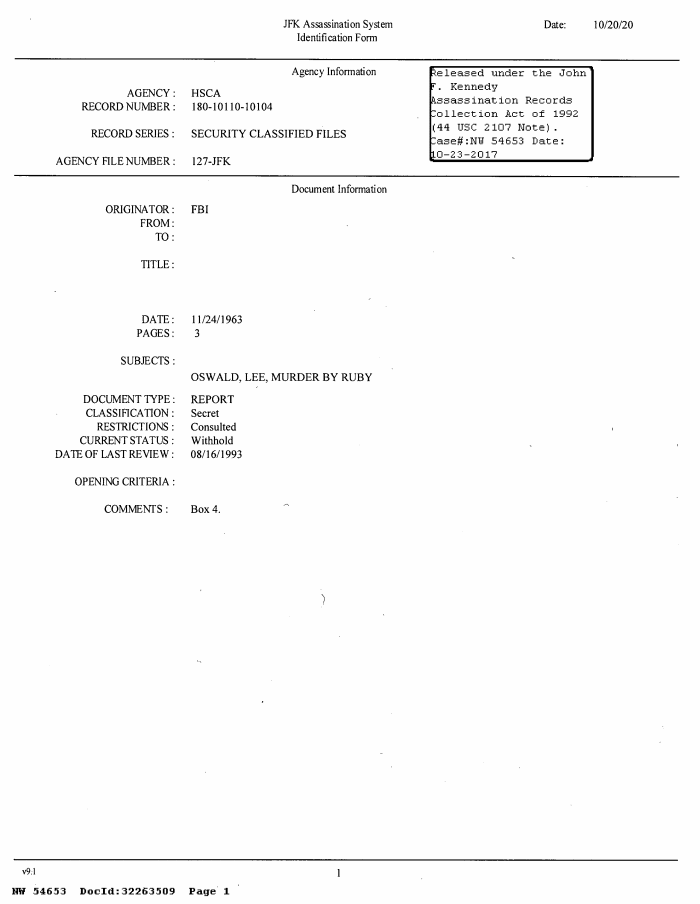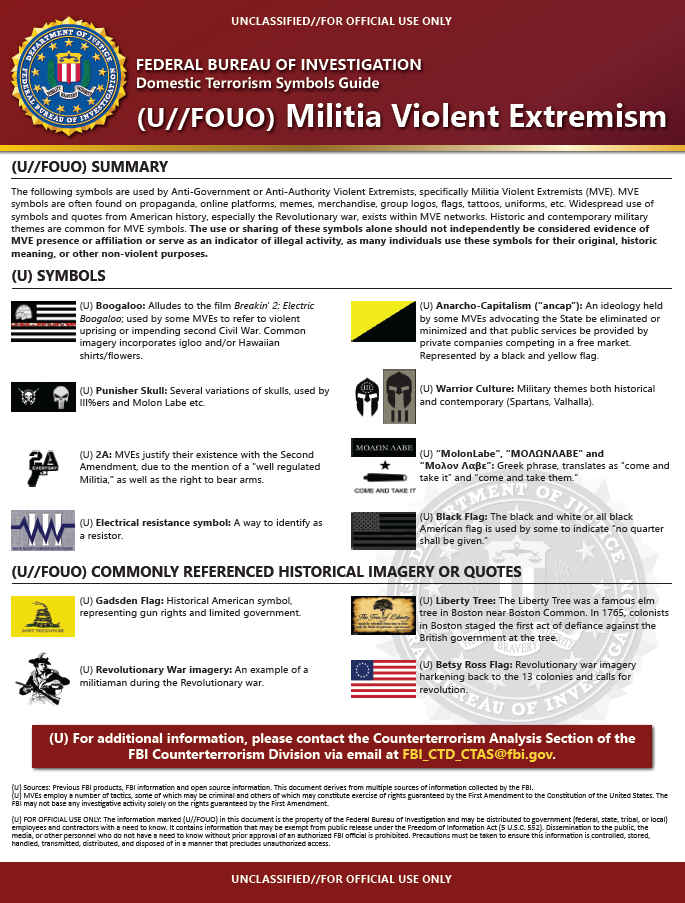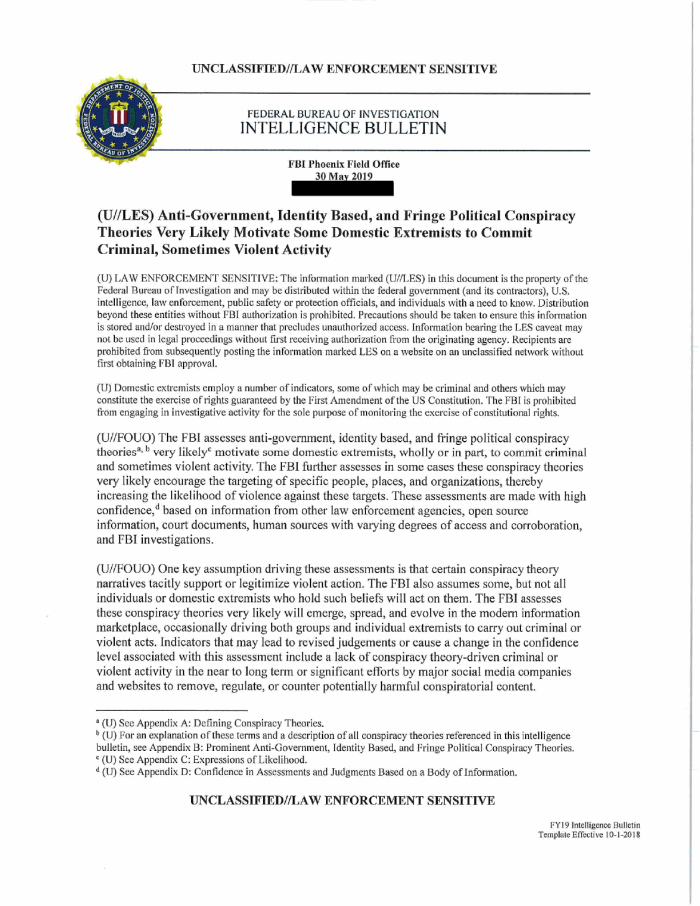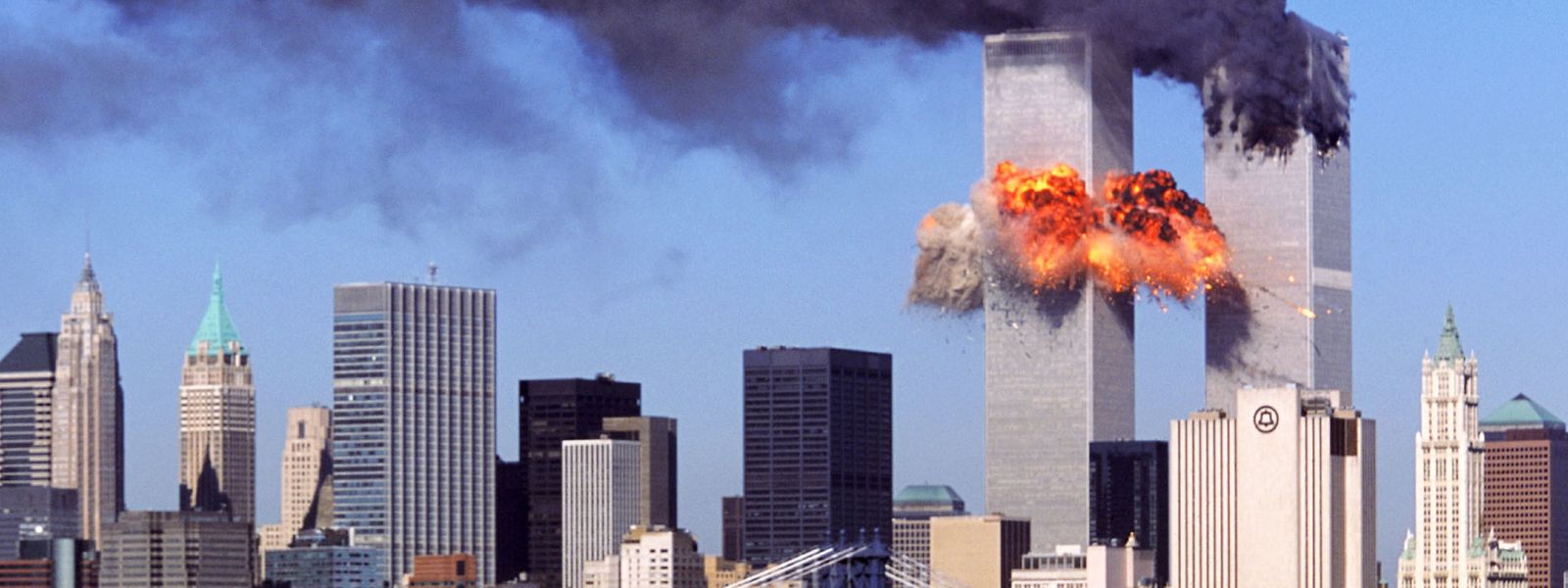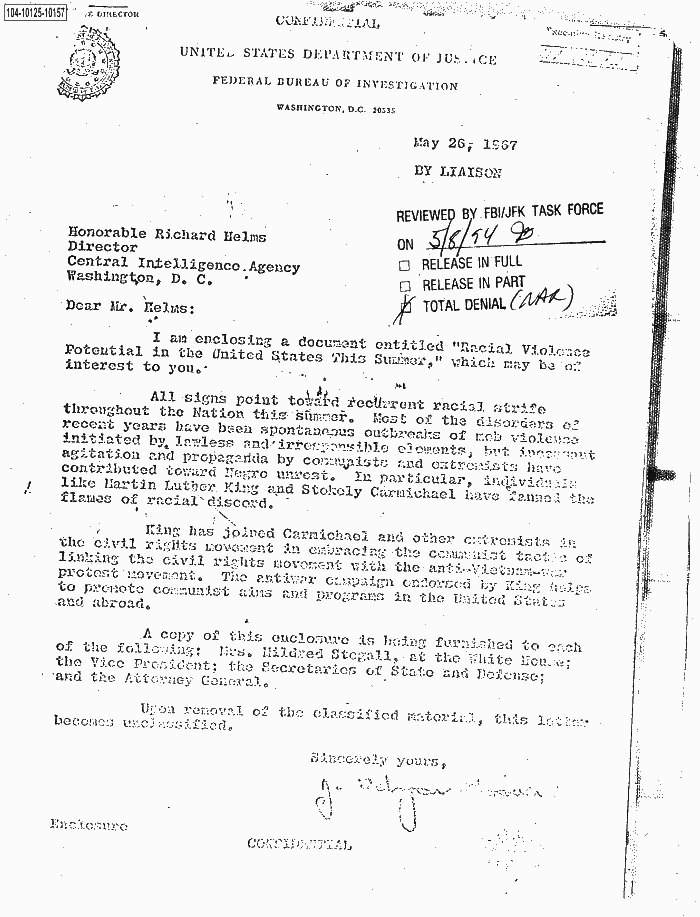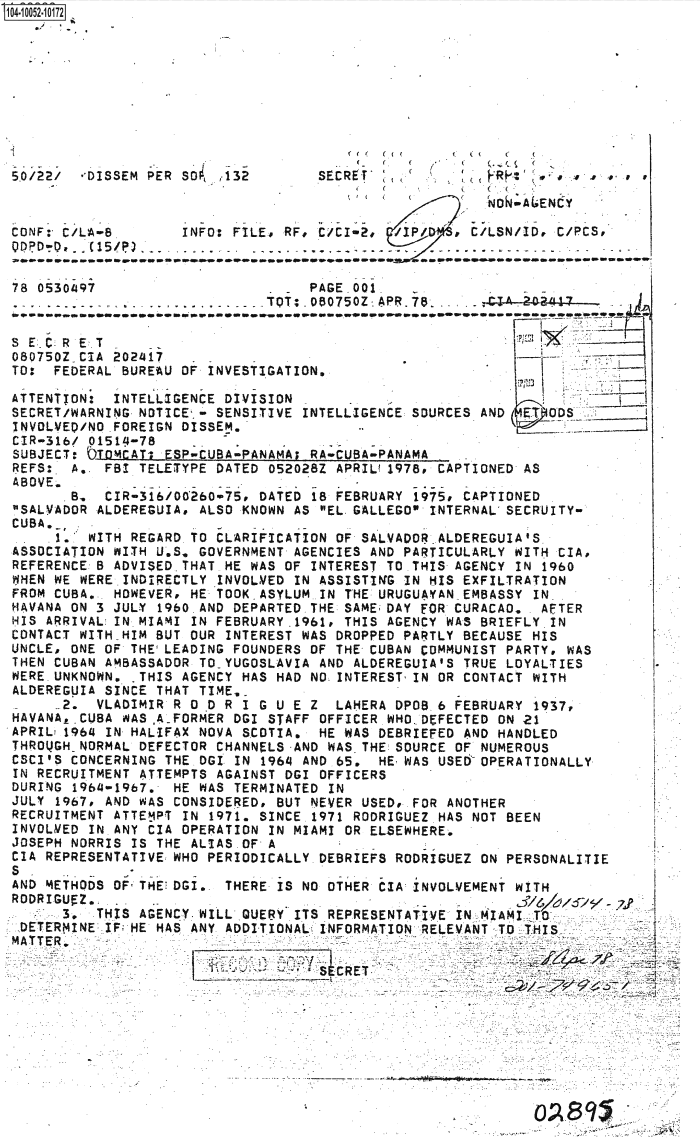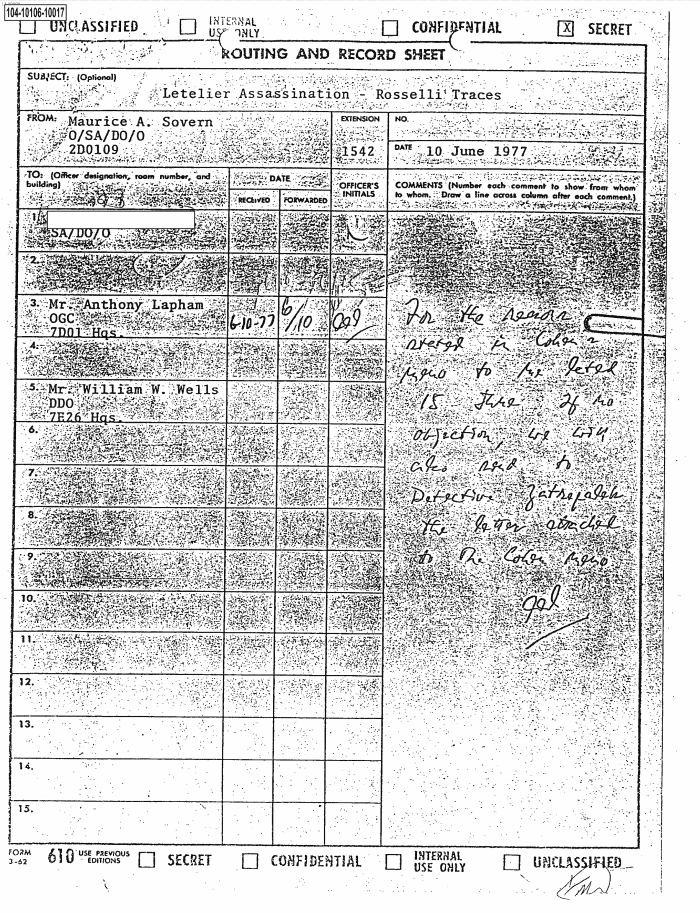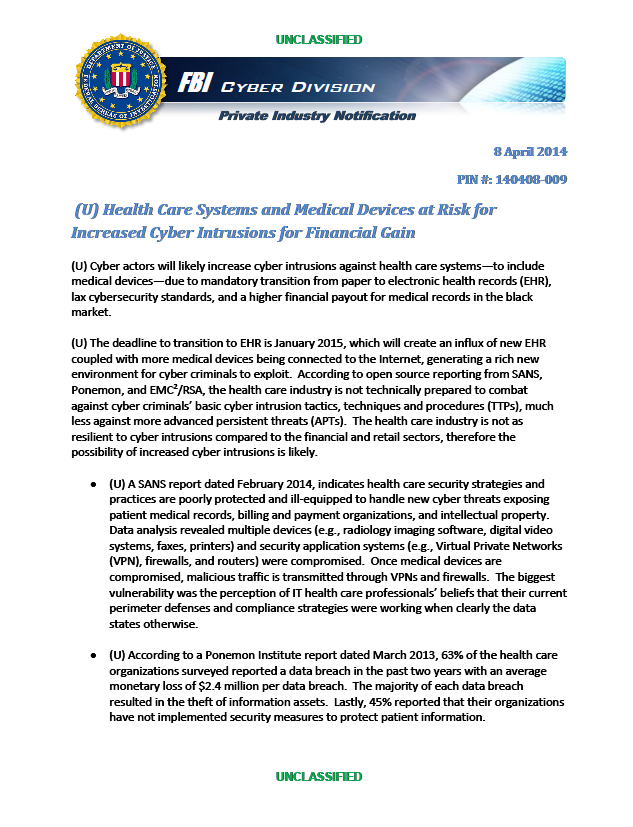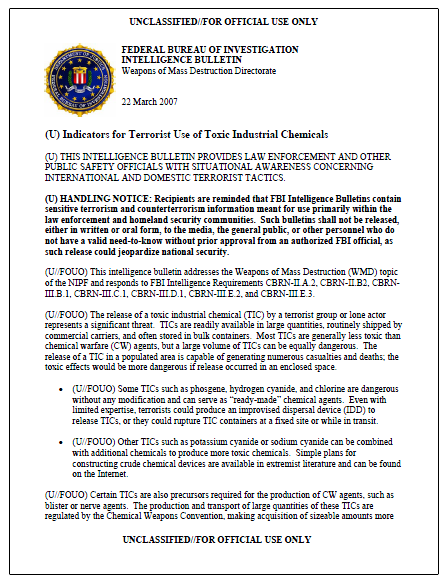
UNVEILED: ABOVE TOP SECRET: FBI YEAR 2017 IN REVIEW – ORIGINAL DOCUMENT โœŒ

๐Ÿ’ป โ€œThe year the Bureau went fully digital โ€” 110 data centers collapsed into one nervous system.โ€

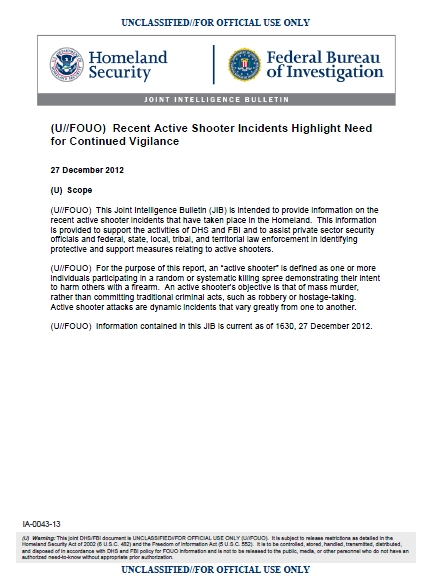
๐Ÿ•ต๏ธโ€โ™‚๏ธ Inside the FBIโ€™s 2017 Digital Playbook

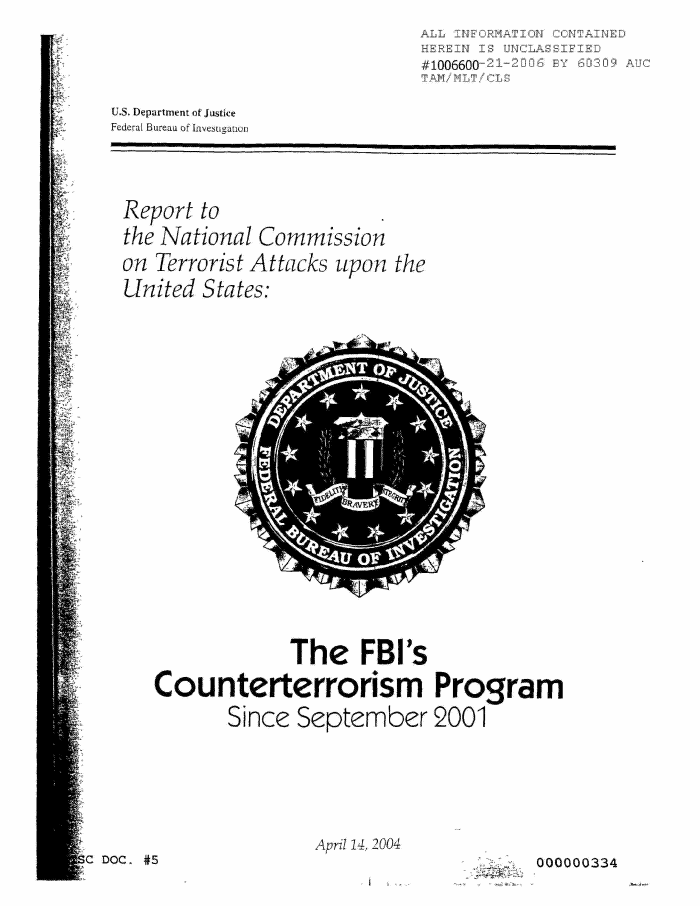
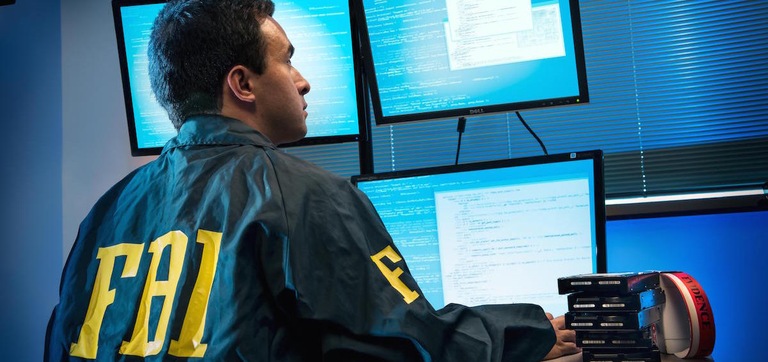
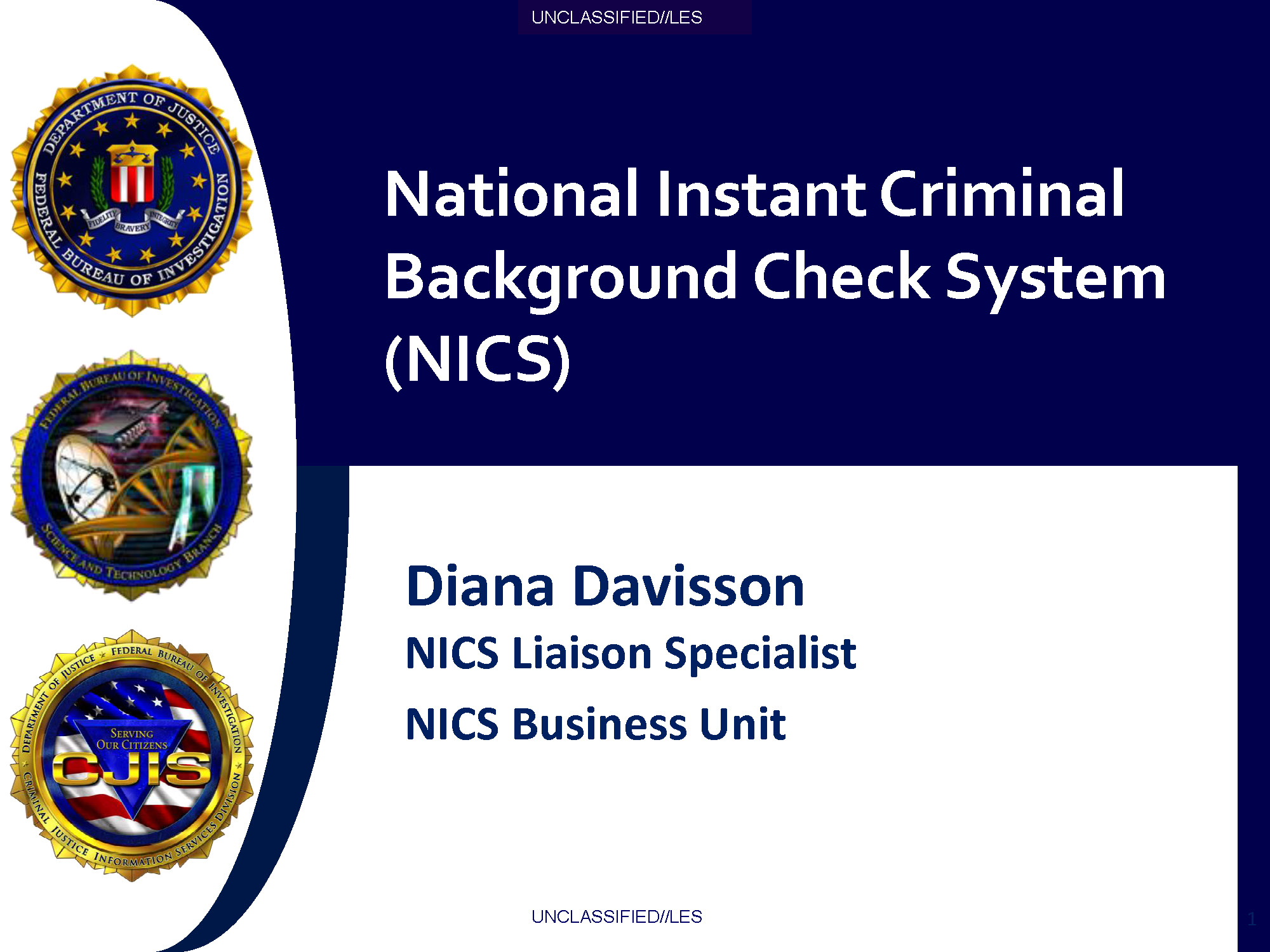
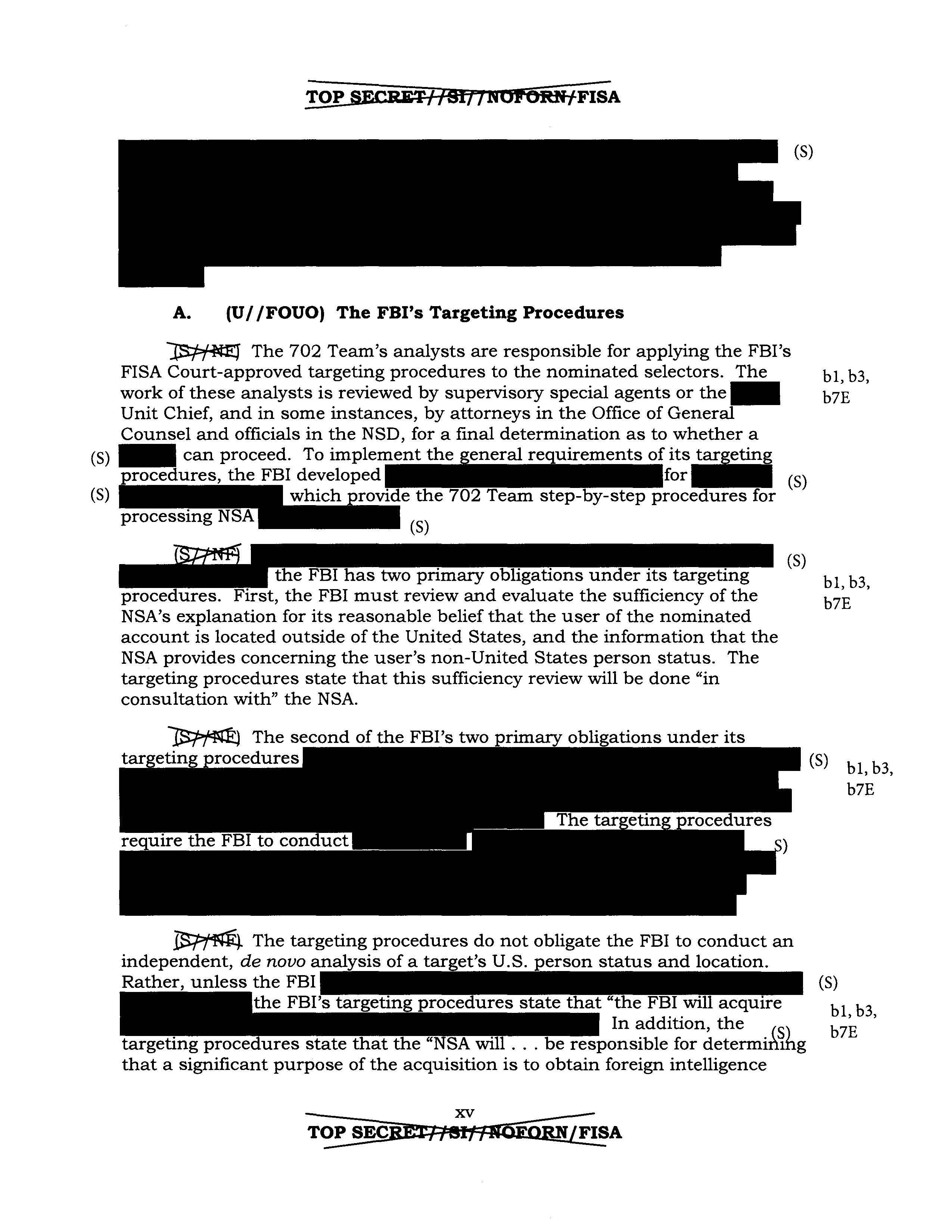
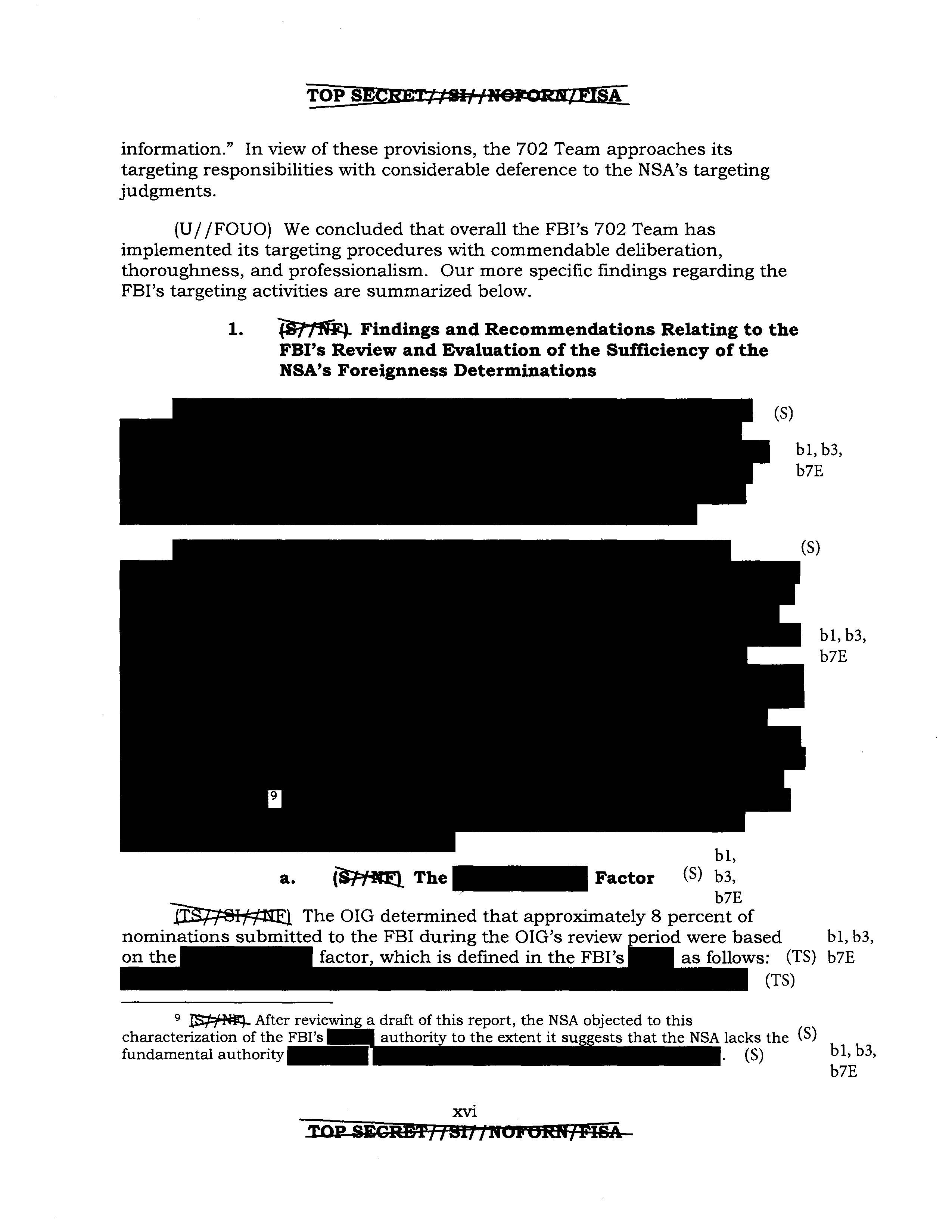
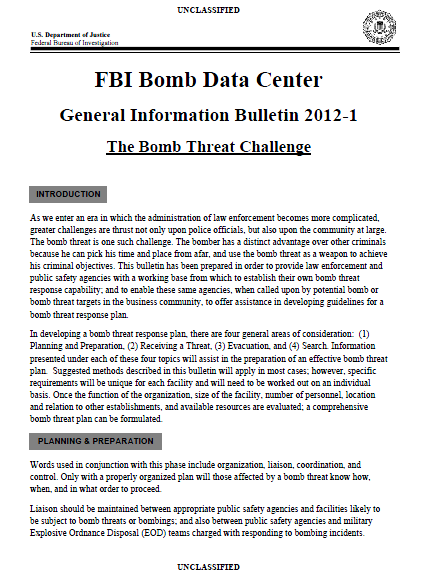
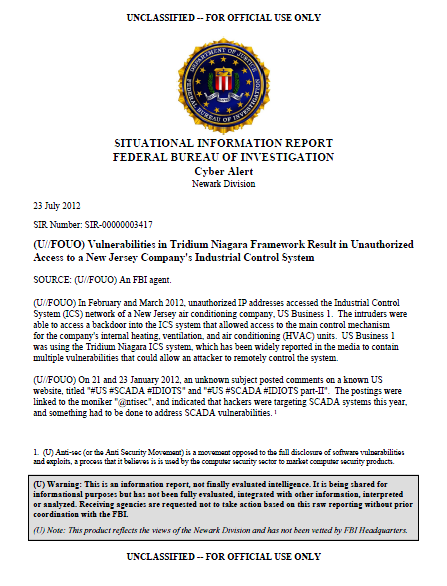
A โ€œYear in Reviewโ€ report from the FBIโ€™s Information Technology Branch sheds light on how Americaโ€™s premier investigative agency consolidated its digital infrastructure.
From cloud integration to AI-assisted analysis, the Bureauโ€™s digital framework laid the foundation for todayโ€™s data-centric security state.

The review highlights:

  • National data center consolidation
  • Advanced cyber-defense partnerships
  • New mobile and cloud initiatives
  • Early stages of behavioral monitoring

While the document itself is not classified, its implications reach far beyond 2017 โ€” hinting at how the FBI prepared to merge surveillance, cybersecurity, and investigation into one digital domain.

Full breakdown and analysis available for patrons at patreon.com/berndpulch.


๐Ÿ”– WordPress Tags (English & German)

English Tags:FBI ITB Year in Review, FBI cybersecurity, FBI digital transformation, FBI cloud infrastructure, enterprise operations center, insider threat program, Guardian system, predictive policing, FBI surveillance technology, DHS NSA cooperation

German Tags:FBI ITB Jahresbericht, FBI Cybersicherheit, digitale Transformation FBI, Cloud Infrastruktur FBI, Enterprise Operations Center, Insider Bedrohungsprogramm, Guardian System, prรคdiktive Polizeiarbeit, รœberwachungstechnologie FBI, DHS NSA Zusammenarbeit


๐Ÿ”ฅ

๐Ÿšจ Site blocked? Mirrors available here:
๐Ÿ‘‰ https://wxwxxxpp.manus.space | https://googlefirst.org


Official Links & Donations

Main site: http://www.berndpulch.org
Mirror sites: wxwxxxpp.manus.space | googlefirst.org
Rumble video: Watch here
Patreon: patreon.com/berndpulch


๐ŸŽฅ Featured Video https://rumble.com/embed/v5ey0z9/?pub=4


๐Ÿ’œ Donate with Monero (100% anonymous)

Monero QR Code

๐Ÿ™ Thank you

Your support keeps the truth alive.

๐Ÿ‘‰ See exclusive leaks

USP: berndpulch.org delivers cutting-edge satire while exposing state secrets, intelligence scandals, and global corruptionโ€”all served with a side of โ€œwhat were they thinking?โ€ humor, zero censorship, and multi-mirror access for unstoppable truth.


๐Ÿ‡ฆ๐Ÿ‡ช ุงู„ุนุฑุจูŠุฉ

๐Ÿšจ ุงู„ู…ูˆู‚ุน ู…ุญุธูˆุฑุŸ ุงู„ู…ุฑุงูŠุง ู…ุชุงุญุฉ ู‡ู†ุง:
๐Ÿ‘‰ https://wxwxxxpp.manus.space | https://googlefirst.org


ุงู„ุฑูˆุงุจุท ุงู„ุฑุณู…ูŠุฉ ูˆุงู„ุชุจุฑุนุงุช

ุงู„ู…ูˆู‚ุน ุงู„ุฑุฆูŠุณูŠ: http://www.berndpulch.org
ู…ูˆุงู‚ุน ุงู„ู…ุฑุงูŠุง: wxwxxxpp.manus.space | googlefirst.org
ููŠุฏูŠูˆ Rumble: ุดุงู‡ุฏ ู‡ู†ุง
Patreon: patreon.com/berndpulch


๐ŸŽฅ ููŠุฏูŠูˆ ู…ู…ูŠุฒ https://rumble.com/embed/v5ey0z9/?pub=4


๐Ÿ’œ ุงู„ุชุจุฑุน ุจุงุณุชุฎุฏุงู… ู…ูˆู†ูŠุฑูˆ (100% ู…ุฌู‡ูˆู„)

Monero QR Code

๐Ÿ™ ุดูƒุฑู‹ุง

ุฏุนู…ูƒ ูŠุจู‚ูŠ ุงู„ุญู‚ูŠู‚ุฉ ุญูŠุฉ.

๐Ÿ‘‰ ุดุงู‡ุฏ ุงู„ุชุณุฑูŠุจุงุช ุงู„ุญุตุฑูŠุฉ

USP: berndpulch.org ูŠุฌู…ุน ุจูŠู† ุงู„ุณุฎุฑูŠุฉ ุงู„ู„ุงุฐุนุฉ ูˆุงู„ูƒุดู ุนู† ุฃุณุฑุงุฑ ุงู„ุฏูˆู„ุฉุŒ ูุถุงุฆุญ ุงู„ู…ุฎุงุจุฑุงุชุŒ ูˆุงู„ูุณุงุฏ ุงู„ุนุงู„ู…ูŠโ€”ูƒู„ ุฐู„ูƒ ู…ุน ู„ู…ุณุฉ ู…ู† ุงู„ููƒุงู‡ุฉ “ู…ุงุฐุง ูƒุงู†ูˆุง ูŠููƒุฑูˆู†ุŸ”ุŒ ุจุฏูˆู† ุฑู‚ุงุจุฉุŒ ู…ุน ูˆุตูˆู„ ู…ุชุนุฏุฏ ุงู„ู…ุฑุงูŠุง ู„ู„ุญู‚ูŠู‚ุฉ ุงู„ุชูŠ ู„ุง ุชูุฑุฏ.


๐Ÿ‡จ๐Ÿ‡ณ ไธญๆ–‡

๐Ÿšจ ็ฝ‘็ซ™่ขซๅฑ่”ฝ๏ผŸ้•œๅƒ็ซ™็‚นๅฆ‚ไธ‹๏ผš
๐Ÿ‘‰ https://wxwxxxpp.manus.space | https://googlefirst.org


ๅฎ˜ๆ–น้“พๆŽฅไธŽๆๆฌพ

ไธป็ซ™๏ผšwww.berndpulch.org
้•œๅƒ็ซ™็‚น๏ผšwxwxxxpp.manus.space | googlefirst.org
Rumble่ง†้ข‘๏ผš็‚นๅ‡ป่ง‚็œ‹
Patreon๏ผšpatreon.com/berndpulch


๐ŸŽฅ ็ฒพ้€‰่ง†้ข‘ https://rumble.com/embed/v5ey0z9/?pub=4


๐Ÿ’œ ไฝฟ็”จ้—จ็ฝ—ๅธๆๆฌพ๏ผˆ100%ๅŒฟๅ๏ผ‰

Monero QR Code

๐Ÿ™ ๆ„Ÿ่ฐขๆ‚จ

ๆ‚จ็š„ๆ”ฏๆŒ่ฎฉ็œŸ็›ธๆฐธๅญ˜ใ€‚

๐Ÿ‘‰ ๆŸฅ็œ‹็‹ฌๅฎถๆณ„้œฒๅ†…ๅฎน

USP๏ผšberndpulch.org ๅฐ†ๅฐ–้”็š„่ฎฝๅˆบไธŽๆญ้œฒๅ›ฝๅฎถๆœบๅฏ†ใ€ๆƒ…ๆŠฅไธ‘้—ปๅ’Œๅ…จ็ƒ่…่ดฅ็›ธ็ป“ๅˆโ€”โ€”ๅธฆ็€โ€œไป–ไปฌๅœจๆƒณไป€ไนˆ๏ผŸโ€็š„ๅนฝ้ป˜๏ผŒๆ— ๅฎกๆŸฅ๏ผŒๅนถ้€š่ฟ‡ๅคš้‡้•œๅƒ็กฎไฟ็œŸ็›ธๅŠฟไธๅฏๆŒกใ€‚


๐Ÿ‡ฉ๐Ÿ‡ช Deutsch

๐Ÿšจ Seite blockiert? Spiegel hier รถffnen:
๐Ÿ‘‰ https://wxwxxxpp.manus.space | https://googlefirst.org


Offizielle Links & Spenden

Hauptseite: http://www.berndpulch.org
Spiegelseiten: wxwxxxpp.manus.space | googlefirst.org
Rumble Video: Hier ansehen
Patreon: patreon.com/berndpulch


๐ŸŽฅ Video https://rumble.com/embed/v5ey0z9/?pub=4


๐Ÿ’œ Spenden mit Monero (100 % anonym)

Monero QR Code

๐Ÿ™ Danke

Ihre Unterstรผtzung hรคlt die Wahrheit am Leben.

๐Ÿ‘‰ Exklusive Leaks ansehen

USP: berndpulch.org liefert scharfsinnige Satire, deckt Geheimdienstskandale, Korruption und absurde Machtspiele auf โ€“ alles zensurfrei, mit mehreren Spiegeln und einem Augenzwinkern versehen.


๐Ÿ‡ช๐Ÿ‡ธ Espaรฑol

๐Ÿšจ ยฟSitio bloqueado? Usa espejos disponibles:
๐Ÿ‘‰ https://wxwxxxpp.manus.space | https://googlefirst.org


Enlaces oficiales & Donaciones

Sitio principal: http://www.berndpulch.org
Espejos: wxwxxxpp.manus.space | googlefirst.org
Video Rumble: Ver aquรญ
Patreon: patreon.com/berndpulch


๐ŸŽฅ Video https://rumble.com/embed/v5ey0z9/?pub=4


๐Ÿ’œ Donar con Monero (100 % anรณnimo)

Monero QR Code

๐Ÿ™ Gracias

Tu apoyo mantiene viva la verdad.

๐Ÿ‘‰ Ver filtraciones exclusivas

USP: berndpulch.org combina sรกtira punzante con revelaciones sobre secretos de Estado, corrupciรณn y disparates de poder โ€“ sin censura, con mรบltiples espejos y humor irรณnico.


๐Ÿ‡ซ๐Ÿ‡ท Franรงais

๐Ÿšจ Site bloquรฉ ? Miroirs disponibles :
๐Ÿ‘‰ https://wxwxxxpp.manus.space | https://googlefirst.org


Liens officiels & Dons

Site principal : http://www.berndpulch.org
Miroirs : wxwxxxpp.manus.space | googlefirst.org
Vidรฉo Rumble : Regarder ici
Patreon : patreon.com/berndpulch


๐ŸŽฅ Vidรฉo https://rumble.com/embed/v5ey0z9/?pub=4


๐Ÿ’œ Faire un don en Monero (100 % anonyme)

Monero QR Code

๐Ÿ™ Merci

Votre soutien garde la vรฉritรฉ vivante.

๐Ÿ‘‰ Voir les fuites exclusives

USP : berndpulch.org combine satire acรฉrรฉe et rรฉvรฉlations sur les scandales dโ€™ร‰tat, la corruption et les absurditรฉs du pouvoir โ€“ sans censure, avec plusieurs miroirs et humour noir.


๐Ÿ‡ฎ๐Ÿ‡ณ เคนเคฟเคจเฅเคฆเฅ€

๐Ÿšจ เคธเคพเค‡เคŸ เคฌเฅเคฒเฅ‰เค• เคนเฅˆ? เคฏเคนเคพเค เคฎเคฟเคฐเคฐ เค‰เคชเคฒเคฌเฅเคง เคนเฅˆเค‚:
๐Ÿ‘‰ https://wxwxxxpp.manus.space | https://googlefirst.org


เค†เคงเคฟเค•เคพเคฐเคฟเค• เคฒเคฟเค‚เค• เค”เคฐ เคฆเคพเคจ

เคฎเฅเค–เฅเคฏ เคธเคพเค‡เคŸ: http://www.berndpulch.org
เคฎเคฟเคฐเคฐ เคธเคพเค‡เคŸเฅเคธ: wxwxxxpp.manus.space | googlefirst.org
Rumble เคตเฅ€เคกเคฟเคฏเฅ‹: เคฏเคนเคพเค เคฆเฅ‡เค–เฅ‡เค‚
Patreon: patreon.com/berndpulch


๐ŸŽฅ เคตเคฟเคถเฅ‡เคท เคตเฅ€เคกเคฟเคฏเฅ‹ https://rumble.com/embed/v5ey0z9/?pub=4


๐Ÿ’œ เคฎเฅ‹เคจเฅ‡เคฐเฅ‹ เค•เฅ‡ เคธเคพเคฅ เคฆเคพเคจ เค•เคฐเฅ‡เค‚ (100% เค—เฅเคฎเคจเคพเคฎ)

Monero QR Code

๐Ÿ™ เคงเคจเฅเคฏเคตเคพเคฆ

เค†เคชเค•เคพ เคธเคฎเคฐเฅเคฅเคจ เคธเคคเฅเคฏ เค•เฅ‹ เคœเฅ€เคตเคฟเคค เคฐเค–เคคเคพ เคนเฅˆเฅค

๐Ÿ‘‰ เคตเคฟเคถเฅ‡เคท เคฒเฅ€เค• เคฆเฅ‡เค–เฅ‡เค‚

USP: berndpulch.org เคคเฅ€เค–เฅ€ เคตเฅเคฏเค‚เค—เฅเคฏ เค•เฅ‡ เคธเคพเคฅ เคธเคฐเค•เคพเคฐเฅ€ เคฐเคนเคธเฅเคฏ, เค–เฅเคซเคฟเคฏเคพ เค˜เฅ‹เคŸเคพเคฒเฅ‹เค‚ เค”เคฐ เคตเฅˆเคถเฅเคตเคฟเค• เคญเฅเคฐเคทเฅเคŸเคพเคšเคพเคฐ เค•เฅ‹ เค‰เคœเคพเค—เคฐ เค•เคฐเคคเคพ เคนเฅˆโ€”เคธเคฌ เค•เฅเค› โ€œเคตเฅ‡ เค•เฅเคฏเคพ เคธเฅ‹เคš เคฐเคนเฅ‡ เคฅเฅ‡?โ€ เค•เฅ‡ เคนเคพเคธเฅเคฏ เค•เฅ‡ เคธเคพเคฅ, เคฌเคฟเคจเคพ เคธเฅ‡เค‚เคธเคฐเคถเคฟเคช เค”เคฐ เค…เคœเฅ‡เคฏ เคธเคคเฅเคฏ เค•เฅ‡ เคฒเคฟเค เคฌเคนเฅ-เคฎเคฟเคฐเคฐ เคเค•เฅเคธเฅ‡เคธ เค•เฅ‡ เคธเคพเคฅเฅค


๐Ÿ‡ฎ๐Ÿ‡ฑ ืขื‘ืจื™ืช

๐Ÿšจ ื”ืืชืจ ื—ืกื•ื? ืžืจืื•ืช ื–ืžื™ื ื•ืช ื›ืืŸ:
๐Ÿ‘‰ https://wxwxxxpp.manus.space | https://googlefirst.org


ืงื™ืฉื•ืจื™ื ืจืฉืžื™ื™ื ื•ืชืจื•ืžื•ืช

ืืชืจ ืจืืฉื™: http://www.berndpulch.org
ืืชืจื™ ืžืจืื”: wxwxxxpp.manus.space | googlefirst.org
ื•ื™ื“ืื• Rumble: ืฆืคื” ื›ืืŸ
Patreon: patreon.com/berndpulch


๐ŸŽฅ ื•ื™ื“ืื• ืžื•ืžืœืฅ https://rumble.com/embed/v5ey0z9/?pub=4


๐Ÿ’œ ืชืจื•ื ื‘ืืžืฆืขื•ืช ืžื•ื ืจื• (100% ืื ื•ื ื™ืžื™)

Monero QR Code

๐Ÿ™ ืชื•ื“ื”

ื”ืชืžื™ื›ื” ืฉืœืš ืฉื•ืžืจืช ืขืœ ื”ืืžืช ื‘ื—ื™ื™ื.

๐Ÿ‘‰ ืฆืคื” ื‘ื“ืœื™ืคื•ืช ื‘ืœืขื“ื™ื•ืช

USP: berndpulch.org ืžืฉืœื‘ ืกืื˜ื™ืจื” ื—ืจื™ืคื” ืขื ื—ืฉื™ืคืช ืกื•ื“ื•ืช ืžื“ื™ื ื”, ืฉืขืจื•ืจื™ื•ืช ืžื•ื“ื™ืขื™ืŸ ื•ืฉื—ื™ืชื•ืช ื’ืœื•ื‘ืœื™ืชโ€”ื”ื›ืœ ืขื ื ื’ื™ืขื” ืฉืœ ื”ื•ืžื•ืจ ื‘ืกื’ื ื•ืŸ “ืžื” ื”ื ื—ืฉื‘ื•?”, ืœืœื ืฆื ื–ื•ืจื” ื•ื’ื™ืฉื” ื‘ืœืชื™ ื ื™ืชื ืช ืœืขืฆื™ืจื” ื“ืจืš ืžืจืื•ืช ืžืจื•ื‘ื•ืช.


๐Ÿ‡ฎ๐Ÿ‡น Italiano

๐Ÿšจ Sito bloccato? Usa specchi disponibili:
๐Ÿ‘‰ https://wxwxxxpp.manus.space | https://googlefirst.org


Link ufficiali & Donazioni

Sito principale: http://www.berndpulch.org
Specchi: wxwxxxpp.manus.space | googlefirst.org
Video Rumble: Guarda qui
Patreon: patreon.com/berndpulch


๐ŸŽฅ Video https://rumble.com/embed/v5ey0z9/?pub=4


๐Ÿ’œ Dona con Monero (100% anonimo)

Monero QR Code

๐Ÿ™ Grazie

Il tuo sostegno mantiene viva la veritร .

๐Ÿ‘‰ Vedi fughe esclusive

USP: berndpulch.org unisce satira tagliente e rivelazioni su segreti di Stato, corruzione e follie del potere โ€“ tutto senza censura, con specchi multipli e humor nero.


๐Ÿ‡ต๐Ÿ‡น Portuguรชs

๐Ÿšจ Site bloqueado? Use espelhos disponรญveis:
๐Ÿ‘‰ https://wxwxxxpp.manus.space | https://googlefirst.org


Links oficiais & Doaรงรตes

Site principal: http://www.berndpulch.org
Espelhos: wxwxxxpp.manus.space | googlefirst.org
Vรญdeo Rumble: Assista aqui
Patreon: patreon.com/berndpulch


๐ŸŽฅ Vรญdeo https://rumble.com/embed/v5ey0z9/?pub=4


๐Ÿ’œ Doar com Monero (100% anรดnimo)

Monero QR Code

๐Ÿ™ Obrigado

Seu apoio mantรฉm a verdade viva.

๐Ÿ‘‰ Veja vazamentos exclusivos

USP: berndpulch.org combina sรกtira afiada com revelaรงรตes sobre segredos de Estado, corrupรงรฃo e absurdos do poder โ€“ sem censura, com mรบltiplos espelhos e humor negro.


๐Ÿ‡ท๐Ÿ‡บ ะ ัƒััะบะธะน

๐Ÿšจ ะกะฐะนั‚ ะทะฐะฑะปะพะบะธั€ะพะฒะฐะฝ? ะ—ะตั€ะบะฐะปะฐ ะดะพัั‚ัƒะฟะฝั‹ ะทะดะตััŒ:
๐Ÿ‘‰ https://wxwxxxpp.manus.space | https://googlefirst.org


ะžั„ะธั†ะธะฐะปัŒะฝั‹ะต ััั‹ะปะบะธ ะธ ะฟะพะถะตั€ั‚ะฒะพะฒะฐะฝะธั

ะžัะฝะพะฒะฝะพะน ัะฐะนั‚: http://www.berndpulch.org
ะ—ะตั€ะบะฐะปัŒะฝั‹ะต ัะฐะนั‚ั‹: wxwxxxpp.manus.space | googlefirst.org
ะ’ะธะดะตะพ ะฝะฐ Rumble: ะกะผะพั‚ั€ะตั‚ัŒ ะทะดะตััŒ
Patreon: patreon.com/berndpulch


๐ŸŽฅ ะ’ะธะดะตะพ https://rumble.com/embed/v5ey0z9/?pub=4


๐Ÿ’œ ะŸะพะถะตั€ั‚ะฒะพะฒะฐั‚ัŒ ั‡ะตั€ะตะท Monero (100% ะฐะฝะพะฝะธะผะฝะพ)

Monero QR Code

๐Ÿ™ ะกะฟะฐัะธะฑะพ

ะ’ะฐัˆะฐ ะฟะพะดะดะตั€ะถะบะฐ ัะพั…ั€ะฐะฝัะตั‚ ะฟั€ะฐะฒะดัƒ ะถะธะฒะพะน.

๐Ÿ‘‰ ะกะผะพั‚ั€ะธั‚ะต ัะบัะบะปัŽะทะธะฒะฝั‹ะต ัƒั‚ะตั‡ะบะธ

USP: berndpulch.org ัะพั‡ะตั‚ะฐะตั‚ ะพัั‚ั€ัƒัŽ ัะฐั‚ะธั€ัƒ ั ั€ะฐะทะพะฑะปะฐั‡ะตะฝะธะตะผ ะณะพััƒะดะฐั€ัั‚ะฒะตะฝะฝั‹ั… ัะตะบั€ะตั‚ะพะฒ, ั€ะฐะทะฒะตะดั‹ะฒะฐั‚ะตะปัŒะฝั‹ั… ัะบะฐะฝะดะฐะปะพะฒ ะธ ะณะปะพะฑะฐะปัŒะฝะพะน ะบะพั€ั€ัƒะฟั†ะธะธ โ€” ะฒัั‘ ัั‚ะพ ั ะดะพะปะตะน ัŽะผะพั€ะฐ ยซะพ ั‡ั‘ะผ ะพะฝะธ ะฒะพะพะฑั‰ะต ะดัƒะผะฐะปะธ?ยป, ะฑะตะท ั†ะตะฝะทัƒั€ั‹ ะธ ั ะผะฝะพะถะตัั‚ะฒะพะผ ะทะตั€ะบะฐะป ะดะปั ะฝะตัƒะดะตั€ะถะธะผะพะน ะฟั€ะฐะฒะดั‹.

๐Ÿ”ด ABOVE TOP SECRET โ€“ COSMIC BLACK DOSSIER ๐Ÿ•ต๏ธโ€โ™‚๏ธ OPERATION SHADOW CONSENSUS

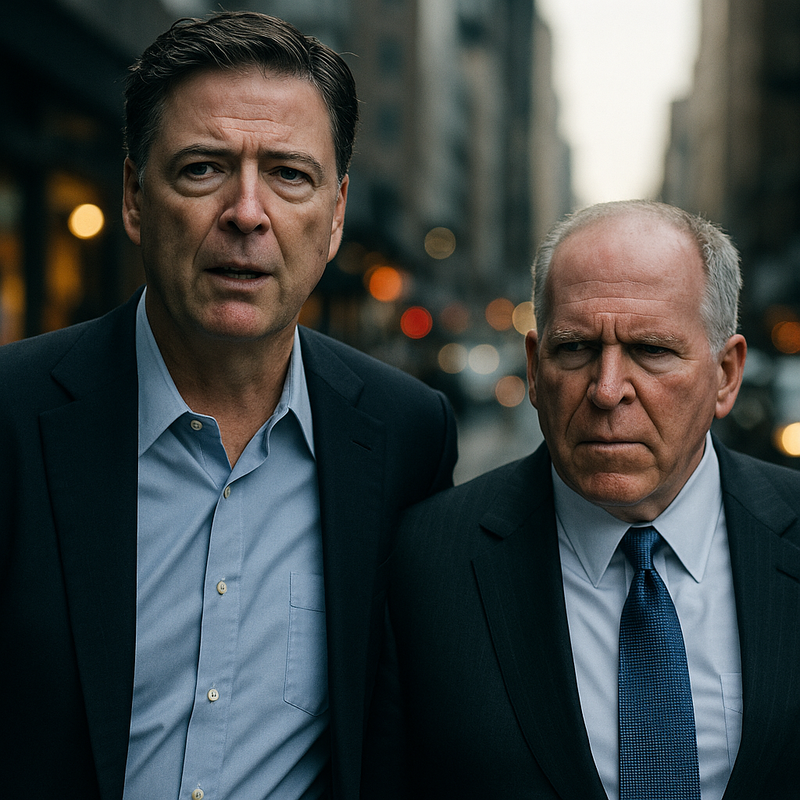
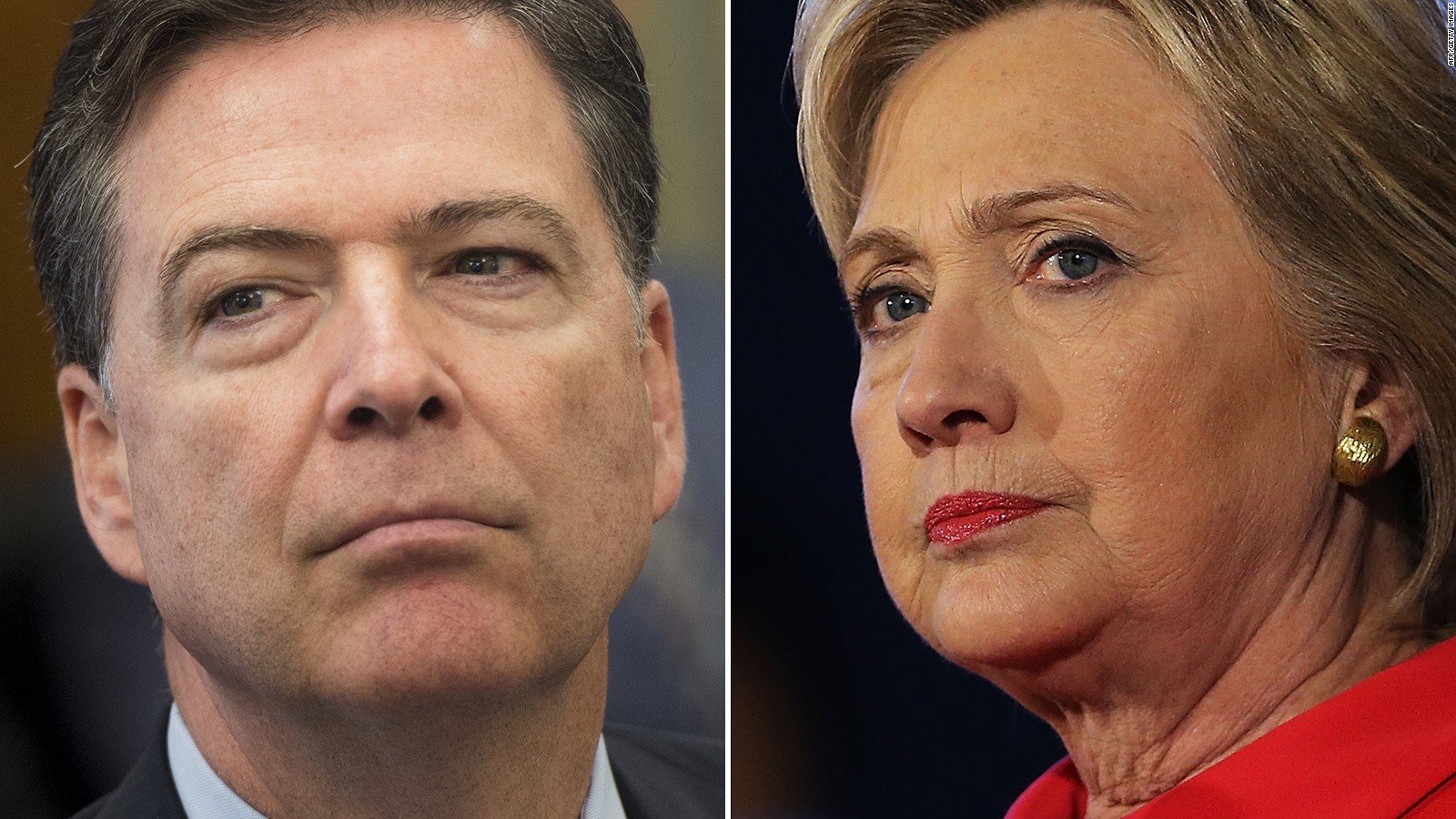
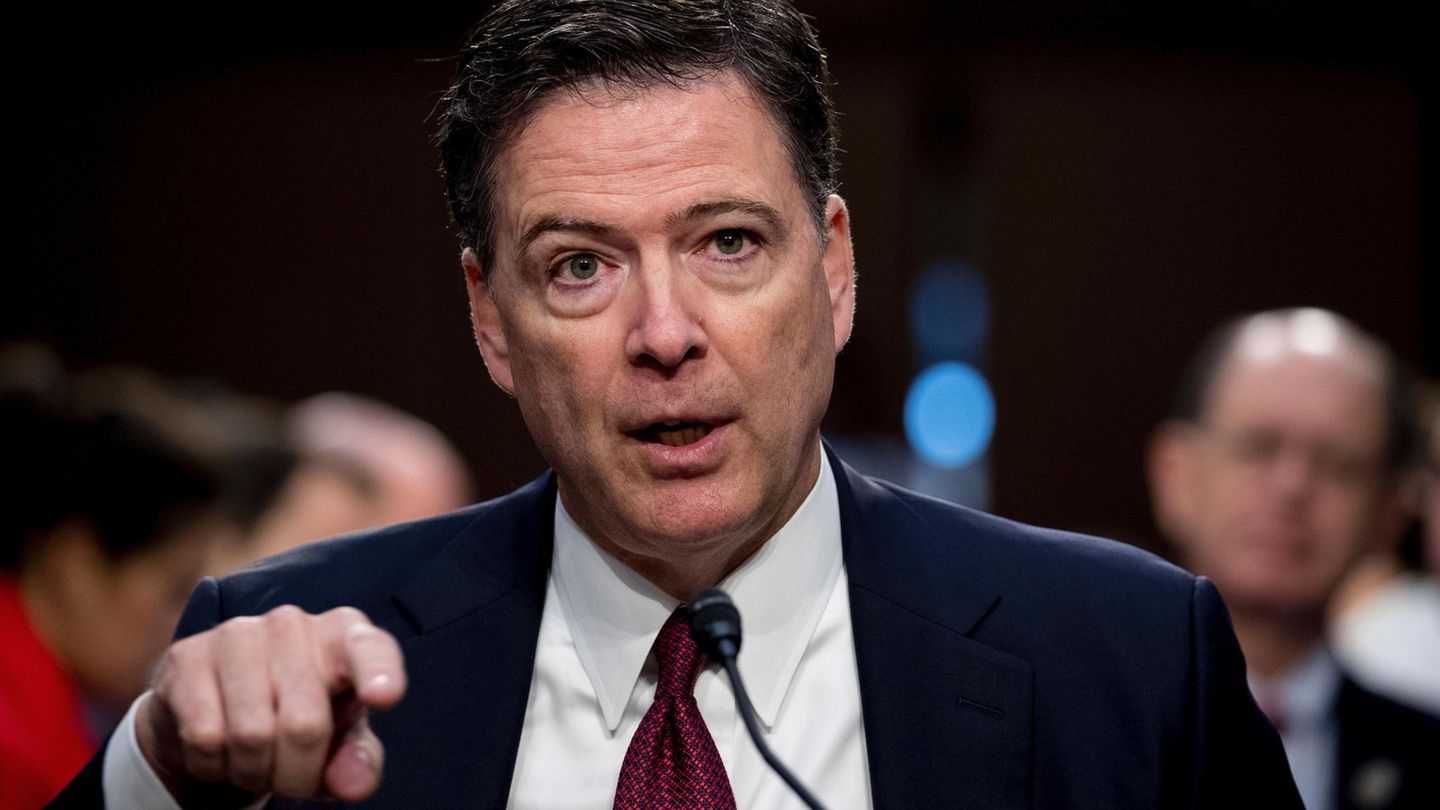
“Comey & Brennan Under Scrutiny โ€“ The Fall of America’s Intelligence Elite?”
Captured in stark cinematic realism, this image portrays former FBI Director James Comey and ex-CIA Chief John Brennan amid rising heat from internal investigations. A visual metaphor of silence, power, and unraveling controlโ€”two architects of the post-9/11 security state now facing shadow probes tied to surveillance overreach, unauthorized ops, and a hidden nexus with global compromise networks.
#ComeyBrennan #IntelligenceElite #FBIProbe #CIAControversy #AboveTopSecret #ShadowStateFiles #PulchDossier #SurveillanceFallout #DeepStateUnmasked

๐Ÿ”ด ABOVE TOP SECRET โ€“ COSMIC BLACK DOSSIER

๐Ÿ•ต๏ธโ€โ™‚๏ธ OPERATION SHADOW CONSENSUS

Power, Fear & Preemptive Elimination: What the FBI Knew and Why They Waited

๐Ÿ“… Declassified: July 2025 | Tier: COSMIC BLACK // EYES ONLY
๐Ÿ“ Based on confidential agency briefings, redacted DOJ logs, and strategic leak analysis


๐Ÿง  EXECUTIVE ANALYSIS

In a global system of zero-sum power, those who control the narrativeโ€”not just weaponsโ€”define legitimacy. The U.S. security state, governed by paranoia and projection, targets its own when its legitimacy is threatened.

The FBI investigations into James Comey, John Brennan, and the silent specter of Jeffrey Epstein reflect one truth:

The greatest threats are not external. Theyโ€™re elite dissenters inside the machine.


๐Ÿ” DEEP FILE: COMEY โ€“ THE FALLEN INQUISITOR

Role: Former FBI Director
Public Narrative: Removed for violating chain-of-command in the Clinton and Trump investigations
Hidden Memo Trail:

  • Interagency brief reveals Comey authorized โ€œpre-decision surveillanceโ€ on Senate staff in 2017
  • Comeyโ€™s aides were flagged by NSA data audit for using “noncompliant reverse lookupsโ€ of domestic political actors
  • DOJ considered prosecution but chose suppression, citing “institutional integrity”

“He was too big to charge and too exposed to protect.” โ€“ Internal FBI leak, 2023


๐Ÿ•ธ๏ธ BLACK CIPHER: BRENNAN โ€“ THE NETWORK ARCHITECT

Role: Former CIA Director, architect of post-9/11 counterterror fusion
Classified Concern: Brennanโ€™s unilateral foreign liaison partnerships bypassed DNI authority
Files show:

  • Brennan authorized off-books joint ops with foreign intel groups (2013โ€“2016) involving mass metadata exchange
  • Used โ€œhumanitarianโ€ cover missions to deploy contractor SIGINT units into private U.S. infrastructure firms

Whistleblower Summary (2024):

โ€œThe Director did not believe in oversightโ€”only in outcomes.โ€


๐Ÿงฏ CONTAINED CHAOS THEORY โ€“ STRATEGIC STATE RESPONSE

These men werenโ€™t investigated to protect justice.
They were examined to realign control, a core feature of realist governance:

  • No law, only leverage
  • No ideology, only power balance
  • No allies, only temporary alignments

The system doesnโ€™t collapse its own. It absorbs them, or buries them in silence.


โš ๏ธ EPSTEIN โ€“ THE HYPERLINK

Public View: Billionaire trafficker
Real Function: Intermediary. Channel. Leverage vector.

๐Ÿ”’ RESTRICTED FILE:

  • Epstein visited Langley under “research grant” pretense (1993โ€“1996)
  • Known by at least three NSA-linked aliases (confirmed via FOIA email attachments)
  • Maintained 5 passports tied to dual-use front companies in Switzerland and Saudi Arabia
  • “Dead man’s drop” located in Virgin Islands reportedly accessed 12 hours before his death

๐Ÿ” PATRON-ONLY COSMIC ANNEX:

OPERATION BLACK ORCHID โ€“ Epsteinโ€™s Covert Asset Portfolio

๐Ÿ”“ Available only to patrons:

  • Names in his black book cross-referenced with contractors under SAP (Special Access Programs)
  • CIA front company contracts traced to private aerospace ventures
  • “Modeling agencies” flagged as HUMINT honeytrap deployments in five NATO countries
  • DOJ โ€œloss-of-custody reportโ€ shows 7-minute camera blackout classified as DEFCON-RED breach

โžก๏ธ [Unlock the full Epstein-INTEL nexus at Patreon.com/BerndPulch]
โžก๏ธ Includes scanned excerpts, FOIA indexes, and contractor emails


๐Ÿ“ข CALL TO ACTION

๐Ÿ›ก๏ธ Power hides behind transparency screens. Crack them.
Join the archive that fights forgetting.
โžก๏ธ [berndpulch.org/donation]
โžก๏ธ [patreon.com/berndpulch]
๐Ÿ”“ Archive. Expose. Resist.


๐Ÿท๏ธ WORLD-CLASS SEO TAGS

#ComeyInvestigation #BrennanBlackOps #EpsteinIntelNetwork #FBILeaks #DOJSuppression #PulchTopSecret #AboveTopSecretFiles #IntelligenceCorruption #CIAHUMINT #NSADataAbuse #BlackOrchidDossier #ShadowStateFiles #IntelligencePowerWars #DeepStateMechanics


๐Ÿ” PATRON-ONLY COSMIC BLACK ANNEX EXCERPT

๐Ÿ•ธ๏ธ OPERATION BLACK ORCHID

Epsteinโ€™s Intelligence Infrastructure & Elite Leverage Program

Classification: COSMIC BLACK // HRC-7 // HUMAN ACCESS TERMINAL
Sources: FOIA cross-indices, redacted DOJ custodial data, suppressed contractor reports


๐Ÿ“ EPSTEINโ€™S REAL FUNCTION:

Not merely a trafficker. Not just a financier. Epstein operated as a vector of compromise, a controlled environment for:

  • Asset grooming
  • Honeytrap deployment
  • Influence leverage on diplomatic, tech, and defense officials

๐Ÿงฌ REDACTED CONNECTIONS MAPPED (2019โ€“2023 ANALYSIS)

CODE NAME REAL-WORLD LINKED ENTITY CLASSIFIED ROLE BLACK ORCHID MC2 Model Management / Elite London HUMINT grooming operation under NATO cover VORTEX LOCK Southern Trust Company (Virgin Islands) Off-ledger funds laundering + blackmail ops ZEUSLINE MIT / Harvard donations channel Research laundering via AI & neurotech orgs CROWN TRACER French Chรขteau (linked to WEF attendee) Surveillance hub for private negotiations


๐Ÿ“ท UNRELEASED SURVEILLANCE ASSETS

  • 9 TB of video material seized in 2019 by Southern District of NYโ€”never entered evidence chain
  • Israeli-origin secure server linked to intelligence contractor Unit 8200, hosted Epsteinโ€™s archive
  • Flight logs redacted for 47 flightsโ€”cross-referenced with State Department officials & foreign diplomats

๐Ÿงฏ CUSTODIAL CHRONOLOGY DISCREPANCY

  • Epsteinโ€™s cell surveillance went offline at 03:27 AM, logs classified under DEFCONโ€“RED Tier
  • One DEA analyst, stationed at MCC during blackout, has since disappeared from federal rosters (sealed HR memo obtained)

๐Ÿ›ฐ๏ธ ASSET SHIELDING โ€“ ACTIVE NAMES FLAGGED

๐Ÿšจ The following individuals, tied to Epsteinโ€™s network via private shell funds or security subcontractors, are under non-disclosure protection:

  • A current U.S. Supreme Court justice’s former law clerk
  • An ex-NATO commanderโ€™s sibling (registered as “guest logistics”)
  • An AI startup founder who received DARPA microfunding via proxy firm in Tel Aviv

๐Ÿง  STRATEGIC CONCLUSION

Jeffrey Epstein was not a rogue predator. He was an instrumentโ€”built and embedded to gather leverage.
He controlled no states. But states controlled him, until his usefulness turned into liability.

His archive is not missingโ€”itโ€™s protected.


๐Ÿ“Ž Full PDF scan of cross-referenced black book vs. DTRA & Lockheed access logs
๐Ÿ“ก Voice-log transcriptions from hidden Palm Beach server (3 decrypted lines)
๐Ÿ“‚ Internal CIA โ€œloss-of-accessโ€ memo dated August 2020: โ€œE-Prime fallout continues under silence directive.โ€

๐Ÿ‘‰ Available exclusively via:
๐Ÿ”— patreon.com/berndpulch

๐Ÿ›ก๏ธ Leak. Archive. Stay Above Top Secret.

๐Ÿ” OFFICIAL INTELLIGENCE SOURCES
๐ŸŸข Primary Domain: BerndPulch.org – Licensed Intelligence Media
๐Ÿ”„ Mirror Site: GoogleFirst.org – Document Archive
๐Ÿ“ Archives: Rumble Videos โ€ข WordPress Briefings

๐Ÿ’Ž CLASSIFIED ACCESS
๐Ÿ”“ Patrons receive:

  • ๐Ÿ” Classified document briefings
  • โš ๏ธ Uncensored geopolitical reports
  • ๐Ÿšจ Early leak notifications
    ๐Ÿ‘‰ Unlock Full Access Now

๐Ÿ“œ VERIFIED CREDENTIALS

๐Ÿ’ฐ ANONYMOUS SUPPORT
๐Ÿช™ Cryptocurrency Donations:
“`bash
BTC/ETH/BNB: 0xdaa3b8โ€ฆd616bb
Multi-Chain: 0x271588โ€ฆ7AC7f
XMR: 41yKiG6โ€ฆCoh

โœŒLEAKED: FBI INTELLIGENCE FUSION UNDER TRANSITION – Deutsche Version, Version Francaise


๐Ÿ”ด ABOVE TOP SECRET โ€“ COSMIC BLACK DOSSIER

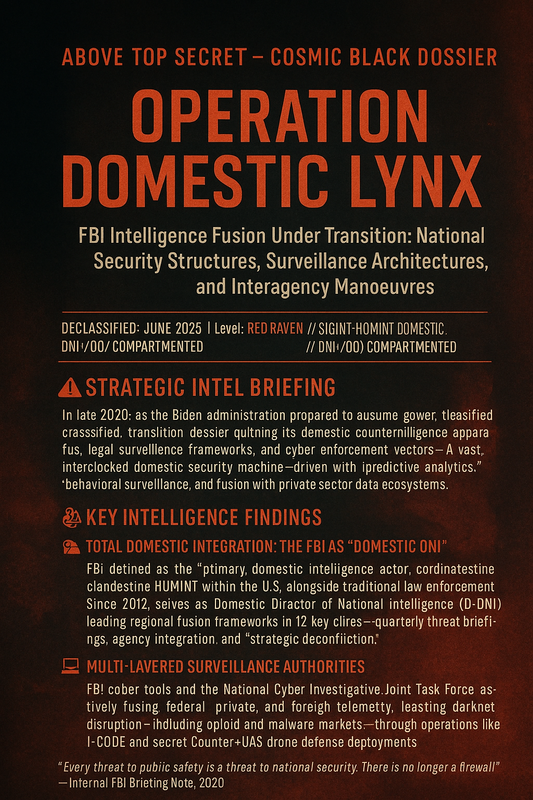
๐Ÿงจ OPERATION DOMESTIC LYNX

FBI Intelligence Fusion Under Transition: National Security Structures, Surveillance Architectures, and Interagency Manoeuvres

๐Ÿ—“๏ธ Declassified: June 2025 | Level: RED RAVEN // SIGINT-HUMINT DOMESTIC // DNI+/DOJ COMPARTMENTED


โš ๏ธ STRATEGIC INTEL BRIEFING

In late 2020, as the Biden administration prepared to assume power, the FBI compiled and transmitted a classified transition dossier outlining its domestic counterintelligence apparatus, legal surveillance frameworks, and cyber enforcement vectors. Far from a simple โ€œwelcome packet,โ€ the document reveals a vast, interlocked domestic security machineโ€”one increasingly driven by predictive analytics, behavioral surveillance, and fusion with private sector data ecosystems.


๐Ÿงฉ KEY INTELLIGENCE FINDINGS

1. ๐Ÿง  TOTAL DOMESTIC INTEGRATION: THE FBI AS “DOMESTIC DNI”

  • FBI defined as the primary domestic intelligence actor, coordinating clandestine HUMINT within the U.S. alongside traditional law enforcement.
  • Since 2012, serves as Domestic Director of National Intelligence (D-DNI), leading regional fusion frameworks in 12 key citiesโ€”quarterly threat briefings, agency integration, and “strategic deconfliction.”

2. ๐Ÿ•ต๏ธโ€โ™‚๏ธ MULTI-LAYERED SURVEILLANCE AUTHORITIES

  • FBI investigations fuse law enforcement and intelligence tools under a single roof, breaking down post-9/11 barriers between criminal and national security domains.
  • Investigative framework allows FBI to initiate intelligence reviews without criminal chargesโ€”notably using the least intrusive means doctrine as a threshold.

3. ๐Ÿ’ป TECH-DRIVEN DOMESTIC DATA ACQUISITION

  • FBI cyber tools and the National Cyber Investigative Joint Task Force (NCIJTF) actively fuse federal, private, and foreign telemetry.
  • FBI designated lead for dark web disruption, including opioid and malware marketsโ€”through operations like J-CODE and secret Counter-UAS drone defense deployments.

๐Ÿ“‰ STRATEGIC CONSEQUENCES

  • Consolidation of DHS, DOJ, and ODNI powers under predictive domestic intelligence operations.
  • Creation of โ€œwatchlist-drivenโ€ enforcement hubs like the Terrorist Screening Center and High-Value Detainee Interrogation Group.
  • FBI partnerships with academia (via ASCE) and private sector (via InfraGard and DSAC) deepen the flow of unclassified threat metadata into federal systems.

โ€œEvery threat to public safety is a threat to national security. There is no longer a firewall.โ€ โ€“ Internal FBI Briefing Note, 2020


๐Ÿ” COSMIC BLACK DIRECTIVES

  • Presidential Directives (NSPM-7 / NSPM-9) mandate proactive identity tracking via biometric and visa-sharing architectures.
  • Fusion Centers and FBI Field Offices operate as full-spectrum domestic surveillance nodes, often hosting multi-agency tactical teams under FBI control.
  • FBI emphasized post-election intelligence coordination through โ€œHomeland Intelligence Briefโ€ product lineโ€”a domestic-focused analog to the Presidentโ€™s Daily Brief.

๐Ÿงฌ BONUS INTEL DROP FOR PATRONS

๐Ÿ“ฆ Includes:

  • FBI redacted page log: 18 pages withheld under b1/b3/b5/b7E exemptions
  • Map of D-DNI regional zones and fusion cluster locations
  • Internal policy on academic intelligence partnerships and โ€œnon-notifiedโ€ foreign investments
  • Extracts on FBI darknet cyber operations, Counter-UAS legality, and critical infrastructure modeling

โžก๏ธ Access full drops via: patreon.com/berndpulch


๐Ÿ“ข CALL TO ACTION

โžก๏ธ berndpulch.org/donation
โžก๏ธ patreon.com/berndpulch
๐Ÿ“ก Truth glows in the dark. Archive. Leak. Resist. Declassify.


๐Ÿท๏ธ

#OperationDomesticLynx #FBITransitionBrief #DomesticDNI #PredictiveSurveillance #FusionCenters #InfraGard #BidenIntelBrief #WatchlistNation #AboveTopSecret #CosmicBlack #DarknetOps #CounterUAS #BerndPulchLeaks


๐Ÿ”ด OBERGEHEIM โ€“ KOSMISCH-SCHWARZE AKTE

๐Ÿงจ OPERATION DOMESTIC LYNX

FBI-Geheimdienstfusion im รœbergang: Nationale Sicherheitsstrukturen, รœberwachungsarchitekturen und zwischenbehรถrdliche Manรถver

๐Ÿ—“๏ธ Freigegeben: Juni 2025 | Stufe: ROTE RABEN // SIGINT-HUMINT INLAND // DNI+/DOJ KOMPARTIMENTIERT


โš ๏ธ STRATEGISCHES INTEL-BRIEFING

Ende 2020, im Vorfeld der Machtรผbernahme der Biden-Regierung, erstellte das FBI ein klassifiziertes รœbergabedossier, das seine inlรคndische Gegenaufklรคrungsstruktur, rechtliche รœberwachungsrahmen und Cyber-Vollzugsvektoren umreiรŸt. Weit mehr als ein “Willkommenspaket” zeigt das Dokument eine tief vernetzte Sicherheitsmaschine im Inland โ€“ zunehmend angetrieben durch verhaltensbasierte Analyse, institutionelle Fusion und die Integration von privaten Datenรถkosystemen.


๐Ÿงฉ ZENTRALE NACHRICHTENDIENSTLICHE FESTSTELLUNGEN

1. ๐Ÿง  TOTALE INLร„NDISCHE INTEGRATION: DAS FBI ALS โ€žDOMESTIC DNIโ€œ

  • Das FBI wird als primรคre inlรคndische Geheimdienstinstanz definiert und koordiniert geheime HUMINT-Operationen innerhalb der USA.
  • Seit 2012 fungiert das FBI als Domestic Director of National Intelligence (D-DNI), mit regionalen Fusionseinheiten in 12 Schlรผsselstรคdten und vierteljรคhrlichen Bedrohungsbriefings.

2. ๐Ÿ•ต๏ธโ€โ™‚๏ธ MEHRSCHICHTIGE รœBERWACHUNGSBEFUGNISSE

  • Das FBI kombiniert strafrechtliche und geheimdienstliche Mittel unter einem rechtlichen Dach โ€“ inklusive Zugriff auf Daten ohne Strafanzeige bei โ€žminimaler Intrusionโ€œ.
  • Ermittlungen beruhen auf einem neuen โ€žniedrigste Eingriffโ€œ-Standard, der รœberwachung frรผhzeitig erlaubt.

3. ๐Ÿ’ป TECHNOLOGIEGESTEUERTE DATENERFASSUNG

  • FBI-Cybereinheiten und das National Cyber Investigative Joint Task Force bรผndeln US- und auslรคndische Telemetrie.
  • Schwerpunkt auf Darknet-Stรถrungen, UAS-GegenmaรŸnahmen und private Plattformkooperationen wie InfraGard und DSAC.

๐Ÿ“‰ STRATEGISCHE FOLGEN

  • DOJ, DHS und ODNI betreiben gemeinsam prรคdiktive รœberwachungsnetzwerke.
  • Aufbau von โ€žWatchlist-Zentralenโ€œ wie dem Terrorist Screening Center.
  • Kooperation mit Hochschulen รผber ASCE, sowie bi-direktionale Informationsflรผsse mit der Wirtschaft.

โ€žJede Bedrohung der รถffentlichen Sicherheit ist eine Bedrohung der nationalen Sicherheit. Die Firewall existiert nicht mehr.โ€œ โ€“ Internes FBI-Briefing 2020


๐Ÿ” KOSMISCH-SCHWARZE DIREKTIVEN

  • Prรคsidentielle Direktiven (NSPM-7 / NSPM-9) verlangen aktive Bedrohungserkennung durch Visa-, Biometrie- und Immigrationsdatenbanken.
  • Fusion Centers und FBI-AuรŸenstellen fungieren als stรคndige รœberwachungs- und Einsatzknoten.
  • Einfรผhrung des โ€žHomeland Intelligence Briefโ€œ als inlรคndisches Pendant zum Prรคsidentenbriefing.

๐Ÿงฌ BONUS-INTEL DROP FรœR PATRONS

๐Ÿ“ฆ Enthรคlt:

  • FBI-Redaktionsprotokoll: 18 Seiten blockiert durch b1/b3/b5/b7E
  • Karte der D-DNI-Zonen und regionalen Fusionsknoten
  • Interne Richtlinien zu Universitรคtskooperationen und โ€žnicht gemeldeten Investitionenโ€œ
  • Auszรผge รผber FBI-Operationen gegen das Darknet, UAS-Abwehrstrategien und Infrastrukturanalysen

โžก๏ธ Vollzugriff fรผr Patrons unter: patreon.com/berndpulch


๐Ÿ“ข HANDLUNGSAUFFORDERUNG

โžก๏ธ berndpulch.org/donation
โžก๏ธ patreon.com/berndpulch
๐Ÿ“ก Wahrheit leuchtet im Dunkeln. Archivieren. Leaken. Widerstehen. Freigeben.


๐Ÿท๏ธ

#OperationDomesticLynx #FBITransitionBrief #DomesticDNI #PredictiveSurveillance #FusionCenters #InfraGard #BidenIntelBrief #WatchlistNation #AboveTopSecret #CosmicBlack #DarknetOps #CounterUAS #BerndPulchLeaks #OperationDomesticLynx #FBIรœbergabedossier #Inlandsgeheimdienst #Prรคdiktiveรœberwachung #FusionCenter #InfraGardDeutschland #BidenGeheimdienstakte #Beobachtungsliste #Obergeheim #KosmischSchwarz #DarknetOperationen #Drohnenabwehr #PuโœŒlchLeaks


๐Ÿ”ด ULTRA SECRET โ€“ DOSSIER COSMIQUE NOIR

๐Ÿงจ OPร‰RATION DOMESTIC LYNX

Fusion du renseignement du FBI pendant la transition : structures de sรฉcuritรฉ nationale, architectures de surveillance et manล“uvres inter-agences

๐Ÿ—“๏ธ Dรฉclassifiรฉ : Juin 2025 | Niveau : CORBEAU ROUGE // SIGINT-HUMINT DOMESTIQUE // DNI+/DOJ CLASSIFIร‰


โš ๏ธ BRIEFING STRATร‰GIQUE DE RENSEIGNEMENT

Fin 2020, alors que lโ€™administration Biden sโ€™apprรชtait ร  prendre le pouvoir, le FBI a compilรฉ un dossier de transition classifiรฉ dรฉcrivant sa structure de contre-espionnage intรฉrieure, ses cadres juridiques de surveillance, et ses vecteurs dโ€™application cybernรฉtique. Loin dโ€™un simple ยซ guide de bienvenue ยป, ce document rรฉvรจle une machine de sรฉcuritรฉ intรฉrieure entiรจrement intรฉgrรฉe โ€” alimentรฉe par lโ€™analyse comportementale prรฉdictive, des fusions interinstitutionnelles, et des flux constants de donnรฉes privรฉes.


๐Ÿงฉ CONCLUSIONS CLร‰S DU RENSEIGNEMENT

1. ๐Ÿง  INTร‰GRATION TOTALE : LE FBI COMME ยซ DNI DOMESTIQUE ยป

  • Le FBI est dรฉfini comme lโ€™acteur principal du renseignement intรฉrieur, coordonnant des opรฉrations HUMINT secrรจtes ร  lโ€™intรฉrieur des ร‰tats-Unis.
  • Depuis 2012, il agit comme Directeur national du renseignement intรฉrieur (D-DNI) avec 12 rรฉgions de fusion majeures, organisant des briefings trimestriels et des ยซ dรฉconflits stratรฉgiques ยป.

2. ๐Ÿ•ต๏ธโ€โ™‚๏ธ AUTORITร‰S DE SURVEILLANCE MULTICOUCHES

  • Le FBI fusionne outils judiciaires et capacitรฉs de renseignement au sein dโ€™un seul cadre lรฉgal โ€” activant la surveillance mรชme sans plainte pรฉnale.
  • Introduction dโ€™un nouveau standard : le moyen le moins intrusif, permettant lโ€™accรจs prรฉcoce ร  lโ€™information.

3. ๐Ÿ’ป COLLECTE DE DONNร‰ES PAR LA TECHNOLOGIE

  • Les cyber-unitรฉs du FBI et le National Cyber Investigative Joint Task Force intรจgrent la tรฉlรฉmetrie amรฉricaine, privรฉe et รฉtrangรจre.
  • Opรฉrations ciblant le darknet, les drones offensifs (UAS), et les alliances privรฉes comme InfraGard et le DSAC.

๐Ÿ“‰ CONSร‰QUENCES STRATร‰GIQUES

  • Les pouvoirs du DOJ, DHS et ODNI sont consolidรฉs dans des rรฉseaux prรฉdictifs de sรฉcuritรฉ intรฉrieure.
  • Crรฉation de centres de ยซ surveillance par liste noire ยป tels que le Terrorist Screening Center.
  • Coopรฉrations universitaires (ASCE) et flux bidirectionnels avec le secteur privรฉ.

ยซ Toute menace ร  la sรฉcuritรฉ publique est une menace ร  la sรฉcuritรฉ nationale. Le pare-feu nโ€™existe plus. ยป โ€“ Note interne du FBI, 2020


๐Ÿ” DIRECTIVES COSMIQUE-NOIR

  • Les Directives prรฉsidentielles NSPM-7 / NSPM-9 imposent la dรฉtection proactive via les bases de donnรฉes biomรฉtriques, de visa et dโ€™immigration.
  • Les centres de fusion et bureaux extรฉrieurs du FBI agissent comme nล“uds permanents de surveillance et dโ€™intervention.
  • Lancement du Homeland Intelligence Brief โ€” un รฉquivalent domestique du Brief prรฉsidentiel quotidien.

๐Ÿงฌ BONUS RENSEIGNEMENT POUR LES ABONNร‰S

๐Ÿ“ฆ Inclut :

  • Journal de censure interne du FBI : 18 pages bloquรฉes sous b1/b3/b5/b7E
  • Carte des zones rรฉgionales du D-DNI et des centres de fusion
  • Directive confidentielle sur les investissements รฉtrangers non notifiรฉs
  • Extraits des opรฉrations FBI contre le darknet, les drones (UAS), et les infrastructures critiques

โžก๏ธ Accรจs complet rรฉservรฉ aux abonnรฉs via : patreon.com/berndpulch


๐Ÿ“ข APPEL ร€ Lโ€™ACTION

โžก๏ธ berndpulch.org/donation
โžก๏ธ patreon.com/berndpulch
๐Ÿ“ก La vรฉritรฉ brille dans lโ€™ombre. Archiver. Fuiter. Rรฉsister. Dรฉclassifier.


๐Ÿท๏ธ TAGS WORDPRESS (FRANร‡AIS)

#OpรฉrationDomesticLynx #BriefingFBI #DNIintรฉrieur #SurveillancePrรฉdictive #CentresDeFusion #InfraGardFrance #DossierBidenFBI #ListesDeSurveillance #UltraSecret #CosmiqueNoir #OpรฉrationsDarknet #ContreUAS #FuitesPulch

โœŒUnveiling New Clues: JFK Assassination Files Suggest Possible CIA InvolvementโœŒ

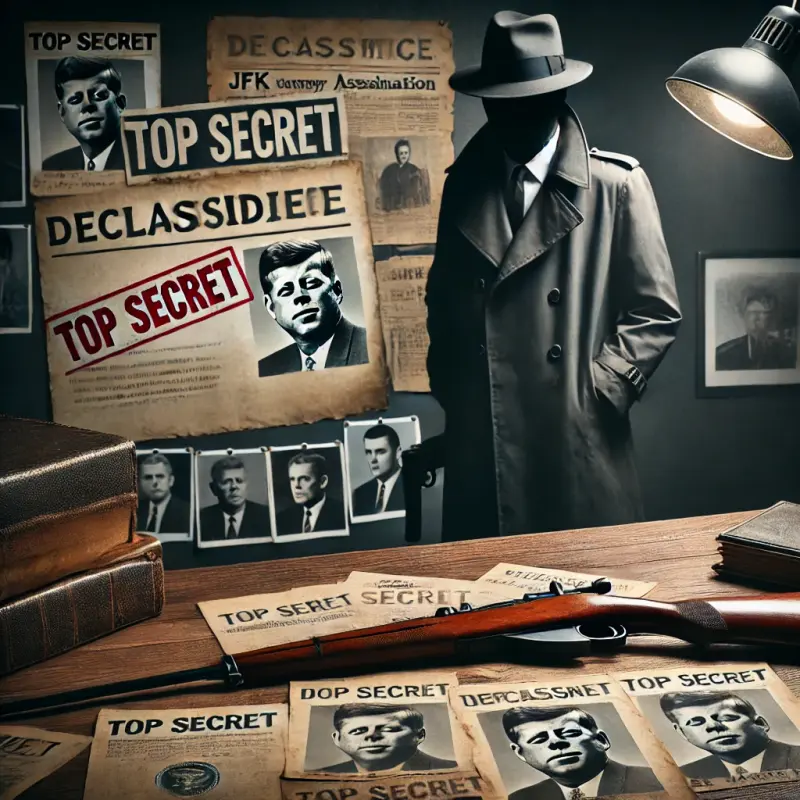
“Shadows of Conspiracy: A tense meeting in the National Archives as investigators uncover clues of CIA involvement in the JFK assassination, surrounded by declassified files and Cold War secrets.”

Published on March 21, 2025, by Bernd Pulch

On March 18, 2025, the U.S. National Archives released a tranche of newly declassified John F. Kennedy assassination files, adding fresh intrigue to one of historyโ€™s most debated events. While the official narrative maintains that Lee Harvey Oswald acted alone in assassinating President Kennedy on November 22, 1963, these documentsโ€”part of an 80,000-file collectionโ€”contain tantalizing hints that challenge this conclusion, particularly regarding potential CIA involvement.

Among the most striking revelations are references to intelligence operations and shadowy figures tied to the agency during the late 1950s and early 1960s. A memorandum dated December 1, 1953, from the CIA, detailed in file 104-10225-10000, describes the activities of Grigoire Gafencu, a figure linked to the National Committee for a Free Europe (NCFE) and allegedly close to Allen Dulles, then-CIA director. Gafencuโ€™s reported behaviorโ€”living lavishly, engaging in dubious oil schemes, and claiming a personal connection to Dullesโ€”raises questions about the extent of CIA oversight or complicity in operations that might have intersected with Kennedyโ€™s political adversaries. The document notes Gafencuโ€™s โ€œindiscreetโ€ actions and suggests his activities could be โ€œdetrimentalโ€ to U.S. interests, hinting at a broader network of covert operations that could have had motives to destabilize Kennedyโ€™s administration.

Another file, 104-10172-10111, dated October and December 1959, includes correspondence and intelligence reports involving James Angleton, a key CIA counterintelligence chief known for his controversial role in Cold War espionage. The document references connections to individuals like Benjamin Factor and Burico Lynnรฝ Hnetary in Moscow, as well as coded projects (e.g., LIBIGHT/LIMUD) and secret distributions to CIA branches. While the file focuses on unrelated intelligence gathering, Angletonโ€™s presenceโ€”given his later scrutiny in JFK conspiracy theoriesโ€”fuels speculation about whether the CIAโ€™s extensive operations during this period could have indirectly or directly influenced events leading to Kennedyโ€™s death.

Surprisingly, none of the released files directly implicate the CIA in orchestrating Kennedyโ€™s assassination. However, the documents reveal a web of covert activities, funding, and international intrigue that could suggest a motive or opportunity for agency involvement. For instance, the mention of Allen Dulles in Gafencuโ€™s activities is particularly noteworthy, as Dulles was fired by Kennedy after the Bay of Pigs fiasco in 1961, creating a potential personal and institutional grudge. Conspiracy theorists have long pointed to Dullesโ€™s role on the Warren Commission, which concluded Oswald acted alone, as a possible conflict of interest.

The files also highlight the CIAโ€™s deep entanglement with anti-communist networks, such as the Congress for Cultural Freedom, detailed in 104-10174-10071. This organization, ostensibly focused on promoting cultural freedom, engaged in radio broadcasts, publications, and defections from totalitarian regimesโ€”activities that could have aligned with destabilizing Kennedyโ€™s policies, particularly his attempts at dรฉtente with the Soviet Union. While the connection to the assassination remains speculative, the scale and secrecy of these operations underscore the agencyโ€™s capacity for covert action during this era.

Critically, these documents do not provide definitive proof of CIA involvement but instead offer a glimpse into the agencyโ€™s sprawling influence and the complex geopolitical tensions of the time. The establishment narrative, upheld by the Warren Commission and subsequent investigations, insists Oswald was a lone gunman, but the newly released files invite scrutiny. They suggest a need to re-evaluate whether the CIAโ€™s operationsโ€”driven by Cold War paranoia, internal rivalries, or policy disagreements with Kennedyโ€”might have created conditions or actors capable of such an act.

The release of these files, coming over six decades after Kennedyโ€™s assassination, underscores the enduring public fascination with the event and the persistent doubts about the official story. While much of the 80,000-file collection remains unreviewed, these initial documents provide a foundation for further investigation. Researchers, historians, and conspiracy enthusiasts alike will undoubtedly pore over the archives, searching for additional clues that might finally resolveโ€”or deepenโ€”the mystery surrounding one of Americaโ€™s darkest days.

For now, the JFK assassination files of 2025 offer a provocative, if incomplete, window into the CIAโ€™s world, prompting us to question whether the truth about Kennedyโ€™s death lies buried in the shadows of historyโ€”or in the pages yet to be revealed.

โœŒ


Take Action: Support Independent Journalism

Uncovering the truth behind historical events like the JFK assassination requires time, resources, and relentless dedication. At berndpulch.org, we are committed to digging deeper into these mysteries and bringing you unfiltered analysis. But we canโ€™t do it aloneโ€”your support makes this work possible. Join us on Patreon at patreon.com/berndpulch to become a patron and gain exclusive access to behind-the-scenes updates and research notes. Alternatively, consider a one-time contribution at berndpulch.org/donation to fuel our efforts. Together, we can keep the pursuit of truth aliveโ€”because history deserves nothing less.

โœŒ

โŒยฉBERNDPULCH.ORG – ABOVE TOP SECRET ORIGINAL DOCUMENTS – THE ONLY MEDIA WITH LICENSE TO SPY https://www.berndpulch.org
https://googlefirst.org

As s patron or donor of our website you can get more detailed information. Act now before its too late…

MY BIO:

FAQ:

FAQ

@Copyright Bernd Pulch

CRYPTO WALLET  for

Bitcoin:

0xdaa3b887f885fd7725d4d35d428bd3b402d616bb

ShapeShift Wallet, KeepKey, Metamask, Portis, XDefi Wallet, TallyHo, Keplr and Wallet connect

0x271588b52701Ae34dA9D4B31716Df2669237AC7f

Crypto Wallet for Binance Smart Chain-, Ethereum-, Polygon-Networks

bmp

0xd3cce3e8e214f1979423032e5a8c57ed137c518b

Monero

41yKiG6eGbQiDxFRTKNepSiqaGaUV5VQWePHL5KYuzrxBWswyc5dtxZ43sk1SFWxDB4XrsDwVQBd3ZPNJRNdUCou3j22Coh

๏™GOD BLESS YOU๏™


โœŒUNVEILED: THE 2025 JFK FILES: MAFIA CONNECTIONS, CIA SECRETS & THE SECOND SHOOTER REVEALED!โœŒ

“JFK Assassination Files: Uncovering the Secrets of CIA, Mafia, and Covert Operations”

๐Ÿšจ ABOVE TOP SECRET XXL REPORT ๐Ÿšจ

๐Ÿ”ฅ THE 2025 JFK FILES: MAFIA CONNECTIONS, CIA SECRETS & THE SECOND SHOOTER REVEALED! ๐Ÿ”ฅ

GET THE MAFIA MATERIAL HERE NOT EVEN PUBLISHED IN NEW RELEASES:

https://www.patreon.com/posts/unveiled-2025-124697864?utm_medium=clipboard_copy&utm_source=copyLink&utm_campaign=postshare_creator&utm_content=join_link

FREE FOR DONORS AND PATRONS

Listen to โœŒUNVEILED: THE 2025 JFK FILES: MAFIA CONNECTIONS, CIA SECRETS & THE SECOND SHOOTER REVEALED!โœŒ by BERNDPULCH.ORG on #SoundCloud
https://on.soundcloud.com/mMkohsGGxXgYceBs9

๐Ÿ“ข INTRODUCTION
The March 2025 release of 80,000 JFK assassination documents has shaken the world, unveiling shocking new evidence of Mafia involvement, CIA covert operations, and potential cover-ups. These previously classified files confirm that organized crime figures, intelligence agencies, and anti-Castro operatives all had motives to eliminate President John F. Kennedy.

This Above Top Secret XXL Report reveals the most explosive findings, including:

  • ๐Ÿ•ต๏ธโ€โ™‚๏ธ Wiretap transcripts of Mafia bosses discussing JFKโ€™s removal
  • ๐ŸŽฏ CIA’s covert assassination plots involving Cuban exiles
  • ๐Ÿ”ซ Evidence challenging Oswald’s ‘lone gunman’ narrative
  • ๐Ÿ› How government agencies concealed critical intelligence for decades

๐Ÿ’ฅ SECTION 1: MAFIAโ€™S ROLE IN THE ASSASSINATION PLOT

๐Ÿ”ด Organized Crime & The Hit on JFK

  • ๐Ÿ“ž Newly released wiretap transcripts reveal that Chicago mobsters Sam Giancana and Johnny Roselli discussed “removing Kennedy” in the months leading up to the assassination.
  • ๐Ÿ’ฐ The mobโ€™s anger over JFKโ€™s crackdown on organized crime and his brother Robert F. Kennedyโ€™s aggressive prosecutions made them prime suspects in seeking revenge.
  • ๐Ÿ”ฅ Jack Ruby, the man who killed Oswald, had deep ties to the Mafia and may have been used to silence a key witness.

๐Ÿ”ด The Mafiaโ€™s Connection to Anti-Castro Operations

  • ๐Ÿดโ€โ˜ ๏ธ New files confirm that the Mafia collaborated with the CIA on assassination plots against Fidel Castro in Operation Mongoose.
  • ๐Ÿ’ฃ Cuban exile groups trained by the mob may have played a role in the JFK assassination as part of a larger geopolitical operation.
  • ๐Ÿšข Chicago crime bosses were connected to weapons smuggling for Cuban rebels, raising serious questions about their role in a coordinated hit on Kennedy.

๐Ÿ’ฃ SECTION 2: CIA BLACK OPS & COVER-UPS

๐Ÿ”ถ CIAโ€™s Assassination Programs Exposed

  • ๐Ÿ“œ Declassified memos confirm the CIA actively pursued โ€œregime changeโ€ operations, including assassination plots, during JFKโ€™s presidency.
  • ๐Ÿ”ช The CIA recruited Mafia figures for covert hits on Castro, but could those same operatives have turned against Kennedy?
  • ๐Ÿ›‘ The Warren Commission ignored key CIA files that could have exposed deep-state involvement in the assassination.

๐Ÿ”ถ The Smoking Gun: CIA and the Second Shooter Theory

  • ๐Ÿง A 1991 CIA document labeled Oswald a “poor shot,” contradicting the Warren Commissionโ€™s findings that he acted alone.
  • ๐ŸŽฏ Ballistic analysis in the newly released files suggests that multiple gunmen may have fired on JFK, supporting theories of a second shooter.
  • ๐Ÿ› Why was this information buried for decades? Who had the most to gain from hiding the full truth?

โš ๏ธ SECTION 3: OSWALDโ€”THE FALL GUY OR A WILLING PARTICIPANT?

๐Ÿ›‘ Newly Uncovered Documents on Oswaldโ€™s Background

  • ๐Ÿ›‚ Travel records confirm Oswald visited the Soviet Union and Cuba before the assassination, raising questions about foreign involvement.
  • ๐Ÿ“ Documents link Oswald to CIA-monitored activities in Mexico City, suggesting intelligence agencies were tracking him closely before the assassination.
  • ๐Ÿ’€ Was Oswald a programmed patsy or a willing operative in a larger conspiracy?

๐Ÿ›‘ Jack Rubyโ€™s Mafia Ties & the Elimination of Oswald

  • ๐Ÿ”ซ Why did Ruby kill Oswald on live TV? New files suggest that Ruby acted under orders from Mafia higher-ups to ensure Oswald never testified.
  • ๐Ÿš” FBI files indicate Ruby had been involved in weapons smuggling and gambling rackets, both linked to organized crime and CIA black ops.

๐Ÿš€ FINAL VERDICT: THE JFK ASSASSINATION WAS A MULTI-AGENCY CONSPIRACY!

๐Ÿ“Œ The 2025 JFK file releases confirm decades of deception, cover-ups, and high-level involvement in Kennedyโ€™s murder. Key revelations include:

  • ๐Ÿ“ž Mafia leaders actively discussed eliminating Kennedy months before his death.
  • ๐Ÿ”ช CIA black ops linked to assassination plots were never disclosed to investigators.
  • ๐ŸŽฏ Ballistic evidence suggests at least TWO shooters were involved, not just Oswald.
  • ๐Ÿ›‘ Jack Rubyโ€™s Mafia ties prove a deeper conspiracy to silence witnesses.

๐Ÿ“Œ ACTION REQUIRED:
๐Ÿ” Demand FULL declassification of all remaining JFK files!
๐Ÿšจ Investigate the connections between the Mafia, CIA, and JFKโ€™s assassination!
๐Ÿ›‘ Hold intelligence agencies accountable for decades of secrecy!

๐Ÿ’ฅ EXPOSE THE TRUTH โ€“ SUPPORT INDEPENDENT INTELLIGENCE! ๐Ÿ’ฅ

๐Ÿ“ข FREE FOR DONORS & PATRONS!
๐Ÿ‘‰ Access exclusive intelligence reports at Patreon or BerndPulch.org.
๐Ÿ’ฐ Your support helps uncover hidden government secrets and historical cover-ups!

๐Ÿ”Ž STAY TUNED FOR MORE LEAKED INTELLIGENCE! ๐Ÿ•ต๏ธโ€โ™‚๏ธ

๐Ÿšจ EXPOSE THE TRUTH ABOUT JFKโ€™S ASSASSINATION โ€“ SUPPORT INDEPENDENT INVESTIGATIONS! ๐Ÿšจ

The 2025 JFK files confirm decades of cover-ups, Mafia involvement, and hidden CIA black ops. Who really ordered Kennedyโ€™s assassination? Only fearless journalism can uncover the full truth.

๐Ÿ’ฐ Your support makes a difference!
๐Ÿ” Donate now at: BerndPulch.org/donation
๐Ÿ”ฅ Get exclusive intelligence reports at: Patreon.com/berndpulch

Every contribution helps expose classified files and hold those in power accountable!

โŒยฉBERNDPULCH.ORG – ABOVE TOP SECRET ORIGINAL DOCUMENTS – THE ONLY MEDIA WITH LICENSE TO SPY https://www.berndpulch.org
https://googlefirst.org

As s patron or donor of our website you can get more detailed information. Act now before its too late…

MY BIO:

FAQ:

FAQ

@Copyright Bernd Pulch

CRYPTO WALLET  for

Bitcoin:

0xdaa3b887f885fd7725d4d35d428bd3b402d616bb

ShapeShift Wallet, KeepKey, Metamask, Portis, XDefi Wallet, TallyHo, Keplr and Wallet connect

0x271588b52701Ae34dA9D4B31716Df2669237AC7f

Crypto Wallet for Binance Smart Chain-, Ethereum-, Polygon-Networks

bmp

0xd3cce3e8e214f1979423032e5a8c57ed137c518b

Monero

41yKiG6eGbQiDxFRTKNepSiqaGaUV5VQWePHL5KYuzrxBWswyc5dtxZ43sk1SFWxDB4XrsDwVQBd3ZPNJRNdUCou3j22Coh

๏™GOD BLESS YOU๏™

โœŒShadows of Conspiracy: Carlos Marcello, Dorothy Kilgallen, and Gary Underhill in the 2025 JFK FilesโœŒ

“Carlos Marcello, cloaked in noir shadows, pores over JFK assassination documents as the ghostly figure of Dorothy Kilgallen loomsโ€”a haunting reminder of the deadly secrets buried with the Warren Commissionโ€™s report.”

Introduction: Unraveling a Web of Secrets

The March 18, 2025, release of over 80,000 pages of previously classified JFK assassination files by the National Archives has reignited one of historyโ€™s most enduring mysteries: the November 22, 1963, killing of President John F. Kennedy. While the official Warren Commission report insists Lee Harvey Oswald acted alone, the declassified documentsโ€”prompted by former President Donald Trumpโ€™s transparency directiveโ€”have fueled renewed scrutiny of alternative theories. Among the most compelling figures in this saga are Carlos Marcello, the New Orleans Mafia boss suspected of orchestrating the assassination; Dorothy Kilgallen, a journalist allegedly murdered for her investigation; and Gary Underhill, a former intelligence operative who claimed the CIA was involved. This article for berndpulch.org explores their stories, the connections between them, and what the latest files revealโ€”or obscureโ€”about the forces behind JFKโ€™s death.

Carlos Marcello: The Mobster with a Motive

Carlos Marcello, the powerful head of the New Orleans Mafia, has long been a prime suspect in JFK conspiracy theories. His motive was clear: revenge against the Kennedy administration. Marcelloโ€™s empire, spanning gambling and extortion across the Southeast, was threatened by Attorney General Robert F. Kennedyโ€™s aggressive anti-Mafia campaign. In April 1961, RFK had Marcello deported to Guatemala, a humiliating act that, according to Stefano Vaccaraโ€™s book Carlos Marcello: The Man Behind the JFK Assassination, fueled Marcelloโ€™s hatred. The Mafia had allegedly helped JFK win the 1960 election through vote-rigging in Chicago, only to feel betrayed by the Kennedysโ€™ crackdown, as noted by John H. Davis in Mafia Kingfish. Marcelloโ€™s deportation and the subsequent pressure on his operations gave him a personal vendetta against the Kennedy brothers.

Marcelloโ€™s connections to key figures in the assassination are well-documented but circumstantial. He had ties to Lee Harvey Oswald through Oswaldโ€™s uncle, Charles โ€œDutzโ€ Murret, a bookie in Marcelloโ€™s gambling network. Oswaldโ€™s time in New Orleans in 1963 brought him into contact with anti-Castro Cuban exiles and David Ferrie, a pilot and Marcello associate later investigated by DA Jim Garrison. Ferrieโ€™s suspicious 400-mile drive to Houston on the day of the assassination raised red flags. Marcello also had a documented relationship with Jack Ruby, Oswaldโ€™s killer, who was linked to Marcelloโ€™s gambling operations. Researchers like Vaccara suggest Rubyโ€™s murder of Oswald was a Mafia-ordered hit to silence a โ€œpatsy.โ€ Testimonies further implicate Marcello: in 1987, his lawyer Frank Ragano claimed Marcello confessed on his deathbed, saying, โ€œCarlos fucked up. We shouldโ€™ve killed Bobby, not Giovanni.โ€ Ragano also alleged that Marcello and Tampa mob boss Santo Trafficante celebrated JFKโ€™s death, with Trafficante toasting, โ€œOur problems are over.โ€ The 1979 House Select Committee on Assassinations (HSCA) report singled out Marcello as the โ€œnumber one suspect,โ€ citing his motive, means, and opportunity, though it lacked definitive proof.

Dorothy Kilgallen: The Reporter Who Knew Too Much

Dorothy Kilgallen, a celebrated journalist and Whatโ€™s My Line? star, emerged as a fierce critic of the Warren Commissionโ€™s lone gunman theory. She interviewed Jack Rubyโ€”the only journalist to do soโ€”and publicly questioned the official narrative, writing in her October 4, 1964, column that it โ€œsmells a bit fishy.โ€ Kilgallen believed Marcello was the mastermind behind JFKโ€™s death, a theory she planned to detail in a tell-all book for Random House. She told friends she was on the verge of breaking โ€œthe biggest scoop of the century,โ€ claiming evidence that would โ€œblow the case wide open.โ€ But on November 8, 1965, Kilgallen was found dead in her Manhattan townhouse, officially from a barbiturate and alcohol overdose. The circumstances were suspicious: her body was staged in a bed she never used, wearing a bathrobe, with her notes missing. Mark Shaw, in Denial of Justice, alleges Marcello ordered her murder to silence her, claiming that Ron Pataky, a columnist close to Kilgallen, poisoned her drink under Marcelloโ€™s directionโ€”a claim Pataky denied before his death. Shaw further asserts that Kilgallenโ€™s dossier was seized and destroyed by FBI agentsโ€”or mob operatives posing as agentsโ€”shortly after her death.

Gary Underhill: The Insider Who Feared for His Life

John Garrett โ€œGaryโ€ Underhill, a former Military Intelligence captain and CIA contact, adds another layer to the conspiracy. A Harvard graduate (class of 1937) and military affairs correspondent for Life magazine, Underhill had ties to the intelligence community, serving as an โ€œinfrequent contactโ€ for the CIAโ€™s Domestic Contact Service from 1949 to 1957, as confirmed by CIA memo 104-10170-10145, dated July 19, 1967. On November 23, 1963, the day after JFKโ€™s assassination, Underhill fled Washington, D.C., arriving at a friendโ€™s Long Island home in a state of panic. He told Charlene Fitsimmons that Kennedy was killed by a โ€œsmall cliqueโ€ within the CIA, claiming, โ€œOswald is a patsy. They set him up. The bastards have done something outrageous.โ€ Underhill linked the killing to โ€œExecutive Action,โ€ a rumored CIA assassination program, and hinted at motives tied to illicit activities in the Far East. He feared for his life, saying, โ€œThey know I know.โ€ Less than six months later, on May 8, 1964, Underhill was found dead in his D.C. apartment, a gunshot wound behind his left ear. Officially ruled a suicide, the death raised suspicions: Underhill was right-handed, making the woundโ€™s location awkward, and no suicide note was found. Critics like James DiEugenio argue Underhill was silenced to prevent further disclosures.

The 2025 JFK Files: What Do They Reveal?

The 2025 release, comprising 1,123 PDF files, was expected to shed light on figures like Marcello, Kilgallen, and Underhill, but the results are mixed. For Marcello, the files offer no direct evidence of his involvement in the assassination. They do confirm his broader criminal influence, detailing his connections to New Orleans politics and figures like Governor Earl Long, but lack specifics about November 22, 1963. FBI wiretaps from the 1980s, mentioned in the files, reportedly captured Marcello bragging about his role, but these tapesโ€”1,350 reelsโ€”are not part of the release. Kilgallenโ€™s name is absent from the documents, despite her prominence in conspiracy circles. Shaw attributes this to the destruction of her files, possibly by Marcelloโ€™s operatives, a claim the release cannot confirm or refute.

Underhill receives a brief mention in CIA memo 104-10170-10145, which responds to a 1967 Ramparts article linking him to the agency. The memo confirms his wartime service, Harvard education, and role as a Life magazine correspondent, but clarifies he was โ€œnot an employee of CIA,โ€ only an โ€œinfrequent contact.โ€ It notes his 1964 โ€œsuicideโ€ and mentions his association with Harold R. Isaacs, who was linked to Oswaldโ€™s cousin, Marilyn Murret, though no direct tie to the assassination is established. The memo also hints at Underhillโ€™s dealings with Interarmco, a private arms company, suggesting his involvement in weapons trading. However, it does not address his claims of a CIA โ€œcliqueโ€ or his panicked flight after the assassination, leaving his allegations unverified.

The broader files focus heavily on Oswaldโ€™s Soviet contacts, Mexico City visits, and the Warren Commissionโ€™s narrative, with little to corroborate conspiracy theories involving Marcello, Kilgallen, or Underhill. Historians like Fredrik Logevall, speaking to The New York Times, argue the release reinforces the official story, but skeptics point to redactions and missing records as evidence of a cover-up. Posts on X reflect this divide: some claim the files โ€œsuggest Marcello was likely behind the assassination,โ€ while others note โ€œno solid evidenceโ€ of Mafia involvement.

Connecting the Threads: A Pattern of Suppression?

The stories of Marcello, Kilgallen, and Underhill intersect in their shared challenge to the official narrative. Marcelloโ€™s alleged role as the โ€œcentral planner,โ€ as per the HSCA and Raganoโ€™s testimony, aligns with Kilgallenโ€™s belief that he masterminded the assassinationโ€”a belief that may have cost her life. Underhillโ€™s claim of a CIA โ€œcliqueโ€ suggests a possible collaboration between rogue intelligence elements and the Mafia, a theory supported by the HSCAโ€™s finding of a โ€œprobable conspiracy.โ€ The suspicious deaths of Kilgallen and Underhillโ€”both ruled suicides under questionable circumstancesโ€”point to a pattern of silencing those who threatened to expose the truth. Shawโ€™s assertion that Marcello ordered Kilgallenโ€™s murder ties her fate directly to the mobster, while Underhillโ€™s death, coming months after his panicked allegations, hints at a broader effort to suppress dissent.

The 2025 filesโ€™ failure to address these figures directly raises critical questions. Were their records withheld or destroyed? Did their deaths deter others from speaking out? The establishmentโ€™s reluctance to pursue Marcello, despite his motive and connections, and the lack of investigation into Kilgallenโ€™s and Underhillโ€™s deaths, suggest a deliberate effort to protect powerful interestsโ€”whether Mafia, CIA, or both. The Warren Commissionโ€™s dismissal of conspiracy, contrasted with the HSCAโ€™s later findings, underscores the tension between official narratives and alternative truths.

Critical Reflections: What Are We Missing?

The 2025 release, while monumental, is not the full disclosure many hoped for. Redactions persist, and the absence of key evidenceโ€”like Kilgallenโ€™s dossier, the FBIโ€™s Marcello tapes, or records of Underhillโ€™s claimsโ€”fuels suspicion of a cover-up. Marcelloโ€™s influence over New Orleans politics, as Vaccara notes, allowed him to operate with impunity, potentially shielding him from scrutiny. Kilgallenโ€™s missing files and Underhillโ€™s uninvestigated death fit a pattern of suppression that has kept the truth about JFKโ€™s assassination elusive for over six decades. The American public, as polls consistently show, remains unconvinced by the lone gunman theory, and the 2025 files do little to change that.

Conclusion: The Search for Truth Continuesโ€”and Your Support Matters

The stories of Carlos Marcello, Dorothy Kilgallen, and Gary Underhill illuminate the shadowy forces that may have shaped November 22, 1963. Whether Marcello orchestrated the assassination, Kilgallen was silenced for her knowledge, or Underhill was a casualty of his insider claims, their fates underscore the unresolved tensions of the JFK saga. The 2025 document drop, while voluminous, leaves as many questions as it answers, urging us to dig deeper into the shadows of history.

For readers of berndpulch.org, this is not the end but a call to action. The files are now public; the tools to analyze them are at hand. The voices of Marcelloโ€™s victims, Kilgallenโ€™s lost scoop, and Underhillโ€™s warnings echo through the decades, urging us to question, investigate, and refuse to accept the establishmentโ€™s word as final. But uncovering the truth requires resources and dedication. If youโ€™re inspired to dive deeper into this and other hidden histories, consider supporting independent research at patreon.com/berndpulch or making a contribution at berndpulch.org/donation. Your support fuels the pursuit of answers in a world where secrets shape destinies. The truth about JFKโ€”and those who sought itโ€”remains tantalizingly out of reach, but with your help, itโ€™s not beyond pursuit.


Article Tags

  • JFK Assassination
  • Carlos Marcello
  • Dorothy Kilgallen
  • Gary Underhill
  • CIA Conspiracy
  • Mafia Involvement
  • Released JFK Files
  • Lee Harvey Oswald
  • Jack Ruby
  • Warren Commission
  • National Archives 2025
  • Intelligence Cover-Up
  • Jim Garrison
  • Suspicious Deaths
  • Bernd Pulch Investigation

โœŒ


Call to Action: Support the Pursuit of Truth

For readers of berndpulch.org, this is not the end but a call to action. The files are now public; the tools to analyze them are at hand. The voices of Marcelloโ€™s victims, Kilgallenโ€™s lost scoop, and Underhillโ€™s warnings echo through the decades, urging us to question, investigate, and refuse to accept the establishmentโ€™s word as final. But uncovering the truth requires resources and dedication. If youโ€™re inspired to dive deeper into this and other hidden histories, consider supporting independent research at patreon.com/berndpulch or making a contribution at berndpulch.org/donation. Your support fuels the pursuit of answers in a world where secrets shape destinies. The truth about JFKโ€”and those who sought itโ€”remains tantalizingly out of reach, but with your help, itโ€™s not beyond pursuit.


โœŒ

โŒยฉBERNDPULCH.ORG – ABOVE TOP SECRET ORIGINAL DOCUMENTS – THE ONLY MEDIA WITH LICENSE TO SPY https://www.berndpulch.org
https://googlefirst.org

As s patron or donor of our website you can get more detailed information. Act now before its too late…

MY BIO:

FAQ:

FAQ

@Copyright Bernd Pulch

CRYPTO WALLET  for

Bitcoin:

0xdaa3b887f885fd7725d4d35d428bd3b402d616bb

ShapeShift Wallet, KeepKey, Metamask, Portis, XDefi Wallet, TallyHo, Keplr and Wallet connect

0x271588b52701Ae34dA9D4B31716Df2669237AC7f

Crypto Wallet for Binance Smart Chain-, Ethereum-, Polygon-Networks

bmp

0xd3cce3e8e214f1979423032e5a8c57ed137c518b

Monero

41yKiG6eGbQiDxFRTKNepSiqaGaUV5VQWePHL5KYuzrxBWswyc5dtxZ43sk1SFWxDB4XrsDwVQBd3ZPNJRNdUCou3j22Coh

๏™GOD BLESS YOU๏™

โœŒUNVEILED: FBI FILES ON THE OVERTHROW OF FIDEL CASTRO – ORIGINAL DOCUMENTS๐Ÿšจ ABOVE TOP SECRET XXL REPORT ๐Ÿšจ

“Cold War Intelligence: Unveiling Covert Operations and Espionage Secrets”

FBI FILES ON THE OVERTHROW OF FIDEL CASTRO (1960-1965): COVERT OPERATIONS & FAILED ASSASSINATIONS EXPOSED

GET THE ORIGINAL DOCUMENTS AT

https://www.patreon.com/posts/unveiled-fbi-on-124203105?utm_medium=clipboard_copy&utm_source=copyLink&utm_campaign=postshare_creator&utm_content=join_link

FREE TO DONORS AND PATRONS

๐Ÿ“ข INTRODUCTION
A newly declassified FBI file (1960-1965) on U.S. operations to overthrow Fidel Castro reveals deep intelligence connections, failed assassination attempts, and CIA-FBI collaborations. These documents expose covert plots involving organized crime, paramilitary training, and psychological warfare, confirming long-suspected but previously denied operations against the Cuban leader.

This Above Top Secret XXL Report delves into the hidden details of U.S. efforts to eliminate Castro, the role of the Mafia, and why these operations ultimately failed.


๐Ÿ’ฅ SECTION 1: CIA-FBI-MAFIA CONNECTIONS IN CASTRO ASSASSINATION PLOTS

๐Ÿ”ด The U.S. Governmentโ€™s Secret Pact with the Mafia

  • Declassified FBI files confirm that the CIA and FBI sought assistance from the Mafia to assassinate Fidel Castro.
  • Notorious mobsters including Sam Giancana (Chicago Outfit), Santo Trafficante Jr. (Florida Mafia), and Johnny Roselli (Las Vegas Mob) were enlisted for covert operations.
  • Operation Mongoose, led by the CIA and backed by the FBI, aimed to eliminate Castro and destabilize Cubaโ€™s government through sabotage and propaganda.

๐Ÿ”ด Failed Poisoning & Sniper Attempts

  • The CIA attempted to poison Castro using lethal pills slipped into his food and drinks.
  • An assassin armed with a high-powered rifle was stationed in Havana but was never given the green light to shoot.
  • Exploding cigars, contaminated wetsuits, and hallucinogenic drugs were also considered as unconventional methods to kill Castro.

๐Ÿ”ด Covert Paramilitary Training for Cuban Exiles

  • The FBI monitored Cuban exile groups trained by the CIA in Florida and Louisiana for guerrilla warfare against the Castro regime.
  • Military-style camps were established in the Everglades and other remote locations to train insurgents for sabotage missions in Cuba.
  • The FBI expressed concerns about the growing radicalism of these groups, fearing they could become uncontrollable.

๐Ÿ’ฃ SECTION 2: HIGH-LEVEL INTELLIGENCE INFILTRATION & PSYCHOLOGICAL WARFARE

๐Ÿ”ถ CIA Psychological Operations Against Castro

  • The FBI and CIA collaborated on โ€œOperation Acoustic Kitty,โ€ an experiment using wired animals for eavesdropping on Cuban officials.
  • Psychological warfare tactics included spreading false information about Castroโ€™s health, sexuality, and leadership abilities to undermine public trust in his regime.
  • The FBI closely monitored radio broadcasts, leaflets, and infiltrators spreading propaganda in Cuba.

๐Ÿ”ถ The Double-Agent Dilemma

  • Several Cuban informants recruited by the FBI and CIA turned out to be double agents feeding false information to the Castro government.
  • U.S. intelligence agencies underestimated Cubaโ€™s counterintelligence capabilities, leading to compromised missions.

๐Ÿ”ถ Failed Bay of Pigs Invasion & FBIโ€™s Role

  • The 1961 Bay of Pigs invasion, a CIA-backed mission using Cuban exiles, ended in failure, damaging U.S. credibility and exposing secret military operations.
  • FBI surveillance of exile groups showed deep divisions and betrayals, weakening the anti-Castro effort.

โš ๏ธ SECTION 3: WHY THE OVERTHROW ATTEMPTS FAILED

๐Ÿ›‘ Castroโ€™s Unparalleled Counterintelligence Network

  • The Cuban intelligence service, DGI (Direcciรณn General de Inteligencia), infiltrated U.S.-backed exile groups and assassins, thwarting multiple attempts on Castroโ€™s life.
  • The KGB provided Castroโ€™s government with advanced intelligence capabilities, ensuring the exposure of U.S. spies and informants.

๐Ÿ›‘ Internal Conflicts Between FBI, CIA, and the Kennedy Administration

  • FBI documents confirm that J. Edgar Hoover disapproved of CIAโ€™s reliance on the Mafia, fearing it would backfire and expose deep corruption in U.S. law enforcement.
  • Bobby Kennedy, as Attorney General, was actively prosecuting the same Mafia figures that the CIA was using in anti-Castro plots, creating massive conflicts within the government.

๐Ÿ›‘ Castroโ€™s Strategic Global Alliances

  • Despite economic hardship, Castro secured vital support from the Soviet Union and China, making a direct U.S. military invasion politically dangerous.
  • FBI files reveal that U.S. intelligence overestimated the willingness of Cubans to rise up against Castro, failing to spark internal rebellion.

๐Ÿš€ FINAL VERDICT: U.S. COVERT OPERATIONS AGAINST CASTRO EXPOSED
The FBIโ€™s declassified files confirm that multiple U.S. agencies, including the CIA and FBI, collaborated with the Mafia, Cuban exiles, and psychological warfare experts to remove Fidel Castro from power.

๐Ÿ“Œ KEY TAKEAWAYS:

  • Covert assassination plots using poison, snipers, and biological warfare were repeatedly attempted but failed.
  • The CIAโ€™s reliance on the Mafia created internal conflicts within U.S. intelligence agencies.
  • Cubaโ€™s superior counterintelligence capabilities ensured that most anti-Castro operations were compromised.

๐Ÿ“Œ ACTION REQUIRED:
๐Ÿ” Demand full declassification of U.S. intelligence operations targeting foreign leaders.
๐Ÿšจ Investigate the use of organized crime in government black ops.
๐Ÿ›‘ Expose the role of psychological warfare and misinformation in modern foreign policy.

๐Ÿ’ฅ EXPOSE THE TRUTH โ€“ SUPPORT INDEPENDENT INTELLIGENCE! ๐Ÿ’ฅ

๐Ÿ“ข FREE FOR DONORS & PATRONS!
๐Ÿ‘‰ Access exclusive intelligence reports at Patreon or BerndPulch.org.
Your support ensures continued investigations into government black ops, secret intelligence programs, and geopolitical conspiracies!

๐Ÿ”Ž STAY TUNED FOR MORE LEAKED INTELLIGENCE! ๐Ÿ•ต๏ธโ€โ™‚๏ธ

๐Ÿšจ EXPOSE COVERT OPERATIONS โ€“ SUPPORT INDEPENDENT INTELLIGENCE! ๐Ÿšจ

The FBIโ€™s secret files on Castroโ€™s overthrow, CIA-Mafia collaborations, and failed assassination plots have finally been uncovered. What other government black ops remain hidden? Only fearless investigations can reveal the full truth.

๐Ÿ’ฐ Your support makes a difference!
๐Ÿ” Donate now at: BerndPulch.org/donation
๐Ÿ”ฅ Get exclusive intelligence reports at: Patreon.com/berndpulch

Every contribution helps uncover classified operations and hold intelligence agencies accountable!

โŒยฉBERNDPULCH.ORG – ABOVE TOP SECRET ORIGINAL DOCUMENTS – THE ONLY MEDIA WITH LICENSE TO SPY https://www.berndpulch.org
https://googlefirst.org

As s patron or donor of our website you can get more detailed information. Act now before its too late…

MY BIO:

FAQ:

FAQ

@Copyright Bernd Pulch

CRYPTO WALLET  for

Bitcoin:

0xdaa3b887f885fd7725d4d35d428bd3b402d616bb

ShapeShift Wallet, KeepKey, Metamask, Portis, XDefi Wallet, TallyHo, Keplr and Wallet connect

0x271588b52701Ae34dA9D4B31716Df2669237AC7f

Crypto Wallet for Binance Smart Chain-, Ethereum-, Polygon-Networks

bmp

0xd3cce3e8e214f1979423032e5a8c57ed137c518b

Monero

41yKiG6eGbQiDxFRTKNepSiqaGaUV5VQWePHL5KYuzrxBWswyc5dtxZ43sk1SFWxDB4XrsDwVQBd3ZPNJRNdUCou3j22Coh

๏™GOD BLESS YOU๏™

โœŒLEAKED FBI ANALYSIS TO ALLEGATIONS OF RITUAL CHILD ABUSE๐Ÿšจ ABOVE TOP SECRET XXL REPORT ๐Ÿšจ

“FBIโ€™s Secret Investigations into Satanic Ritual Abuse: Uncovering the Truth Behind the Panic”

INVESTIGATOR’S GUIDE TO ALLEGATIONS OF RITUAL CHILD ABUSE: FBI ANALYSIS EXPOSED

GET THE ORIGINAL DOCUMENT ONLY HERE

https://www.patreon.com/posts/leaked-fbi-to-of-123844944?utm_medium=clipboard_copy&utm_source=copyLink&utm_campaign=postshare_creator&utm_content=join_link

FREE FOR DONORS AND PATRONS

๐Ÿ“ข INTRODUCTION
A declassified FBI Behavioral Science Unit document titled โ€œInvestigatorโ€™s Guide to Allegations of Ritual Child Abuseโ€ (1992), written by Supervisory Special Agent Kenneth V. Lanning, provides a deep dive into the hysteria, myths, and realities surrounding claims of satanic ritual abuse (SRA). This report, prepared under the National Center for the Analysis of Violent Crime, was originally intended to guide law enforcement and criminal justice professionals in handling such allegations.

The document dissects the mass hysteria of the 1980s and early 1990s, where claims of satanic cults engaging in child sacrifice, brainwashing, and widespread conspiracies surfaced across the U.S. Despite thousands of allegations, no organized, evidence-backed satanic crime network was ever uncovered.

This Above Top Secret XXL Report breaks down the FBIโ€™s findings, exposing the truth behind the fear, misinformation, and the real dangers posed by false allegations.


๐Ÿ’ฅ SECTION 1: THE SATANIC PANIC & MASS HYSTERIA EXPLAINED

๐Ÿ”ด Origins of the Satanic Ritual Abuse (SRA) Phenomenon

  • In the early 1980s, the rise of โ€œSatanic Panicโ€ led to widespread fears that secretive satanic cults were ritually abusing children.
  • Influenced by sensationalist media, televangelists, and self-proclaimed “survivors,” these claims spread through daycares, religious communities, and law enforcement circles.
  • Books like Michelle Remembers (1980) and Satanโ€™s Underground (1988) fueled the hysteria, despite lacking credible evidence.

๐Ÿ”ด Law Enforcement’s Response & FBI Involvement

  • The FBIโ€™s Behavioral Science Unit (BSU) began analyzing these allegations after multiple high-profile cases (such as the McMartin Preschool case) collapsed due to lack of forensic evidence.
  • Agent Kenneth Lanningโ€™s research found that while child abuse is tragically real, the specific claims of ritualistic human sacrifices, cannibalism, and underground satanic cults lacked any substantiating proof.

๐Ÿ”ด Mass Accusations Without Evidence

  • Thousands of allegations claimed that daycare centers, churches, police departments, and prominent officials were involved in child sacrifices and mind control experiments.
  • Despite widespread investigations, including by the FBI, no bodies, physical evidence, or organized cults matching these descriptions were ever found.

๐Ÿ’ฃ SECTION 2: HOW FALSE MEMORIES & GROUP THINK CREATED A MASS DELUSION

๐Ÿ”ถ Recovered Memory Therapy (RMT) & False Allegations

  • Many accusers were subjected to hypnosis, guided imagery, and suggestive questioning, leading to false memories of ritual abuse.
  • FBI studies found that self-proclaimed survivors often had no memories of abuse until therapy sessions encouraged them to “recover” repressed memories.
  • No credible psychological evidence supports the widespread existence of “repressed and recovered” memories of organized satanic abuse.

๐Ÿ”ถ The Role of Religious & Media Hysteria

  • Christian fundamentalist groups promoted the idea that a secret satanic cabal was infiltrating schools and law enforcement.
  • Tabloid television programs such as Geraldo Riveraโ€™s โ€œDevil Worship: Exposing Satanโ€™s Undergroundโ€ (1988) and Oprah Winfreyโ€™s interviews with self-proclaimed survivors amplified public fear.
  • Law enforcement officers were pressured into conducting massive, resource-draining investigations into claims that never produced credible evidence.

๐Ÿ”ถ Why No Physical Evidence?

  • The FBI report directly refutes claims that thousands of children were being murdered in ritual sacrifices.
  • Allegations often included bodies being burned in secret high-temperature ovens, buried in double-decker graves, or completely vanished by supernatural meansโ€”claims that defy forensic reality.
  • No forensic evidence of widespread ritual killings has ever been recovered.

โš ๏ธ SECTION 3: REAL CRIMES HIDING BEHIND SATANIC PANIC

๐Ÿ›‘ The True Threat: Pedophile Rings, Not Satanic Cults

  • While no evidence of organized satanic abuse was found, the FBI report acknowledges that pedophile rings and sex trafficking networks do exist.
  • Cases involving child pornography, human trafficking, and sex abuse rings were sometimes overshadowed by baseless ritual abuse allegations, diverting law enforcement resources from real crimes.

๐Ÿ›‘ Legal Ramifications of False Accusations

  • The McMartin Preschool Trial (1983-1990) remains one of the longest and most expensive trials in U.S. history, ending in no convictions despite years of investigations into alleged ritual abuse.
  • Wrongful convictions and destroyed reputations were rampant, including innocent daycare workers and teachers being falsely accused.
  • Law enforcement officers were trained using misleading materials that perpetuated belief in a nonexistent underground satanic conspiracy.

๐Ÿ›‘ Government Misinformation & Manipulation

  • While some believe elements of the government encouraged the Satanic Panic to distract from real black ops programs, the FBI report itself remains neutral, only analyzing observable evidence.
  • Other declassified documents, however, suggest intelligence agencies have historically manipulated mass fear for political purposes.

๐Ÿš€ FINAL VERDICT: THE SATANIC PANIC WAS A MASS HYSTERIA EVENT
The FBIโ€™s official stance is that while child sexual abuse is tragically real, the claims of a nationwide, highly organized satanic conspiracy are not supported by any verifiable evidence.

๐Ÿ“Œ KEY TAKEAWAYS:

  • The Satanic Panic led to mass hysteria, false allegations, and destroyed lives, despite no real evidence of underground cult networks.
  • Recovered memory therapy, religious fearmongering, and media sensationalism created a mass delusion.
  • Law enforcement resources were wasted on wild goose chases instead of real threats like pedophile networks.

๐Ÿ“Œ ACTION REQUIRED:
๐Ÿ” Demand accountability for wrongful convictions and media-fueled hysteria.
๐Ÿšจ Push for more transparency in law enforcement training to prevent similar mass panic events.
๐Ÿ›‘ Support real investigations into proven child exploitation cases, not discredited satanic conspiracies.

๐Ÿ’ฅ EXPOSE THE TRUTH โ€“ SUPPORT INDEPENDENT INTELLIGENCE! ๐Ÿ’ฅ

๐Ÿ“ข FREE FOR DONORS & PATRONS!
๐Ÿ‘‰ Access exclusive intelligence reports at Patreon or BerndPulch.org.
Your support ensures continued investigations into government secrecy, mass hysteria, and hidden power structures!

๐Ÿ”Ž STAY TUNED FOR MORE LEAKED INTELLIGENCE! ๐Ÿ•ต๏ธโ€โ™‚๏ธ

๐Ÿšจ EXPOSE THE TRUTH โ€“ SUPPORT INDEPENDENT INVESTIGATIONS! ๐Ÿšจ

The Satanic Panic, mass hysteria, and wrongful accusations changed lives foreverโ€”but what else is being hidden? Independent journalism is the only way to keep uncovering government secrecy, media manipulation, and real criminal networks.

๐Ÿ’ฐ Help us continue the fight for truth and accountability!
๐Ÿ” Donate now at: BerndPulch.org/donation
๐Ÿ”ฅ Get exclusive intelligence reports at: Patreon.com/berndpulch

Every contribution ensures that no truth remains buried!

โŒยฉBERNDPULCH.ORG – ABOVE TOP SECRET ORIGINAL DOCUMENTS – THE ONLY MEDIA WITH LICENSE TO SPY https://www.berndpulch.org
https://googlefirst.org

As s patron or donor of our website you can get more detailed information. Act now before its too late…

MY BIO:

FAQ:

FAQ

@Copyright Bernd Pulch

CRYPTO WALLET  for

Bitcoin:

0xdaa3b887f885fd7725d4d35d428bd3b402d616bb

ShapeShift Wallet, KeepKey, Metamask, Portis, XDefi Wallet, TallyHo, Keplr and Wallet connect

0x271588b52701Ae34dA9D4B31716Df2669237AC7f

Crypto Wallet for Binance Smart Chain-, Ethereum-, Polygon-Networks

bmp

0xd3cce3e8e214f1979423032e5a8c57ed137c518b

Monero

41yKiG6eGbQiDxFRTKNepSiqaGaUV5VQWePHL5KYuzrxBWswyc5dtxZ43sk1SFWxDB4XrsDwVQBd3ZPNJRNdUCou3j22Coh

๏™GOD BLESS YOU๏™

โœŒAboveTopSecretXXL Intelligence Report: The FBI Agents’ Lawsuit Against the U.S. Government


“Leaked Secrets: The Shadow War Within the FBI”

Introduction: A Battle Within the FBI

The Federal Bureau of Investigation Agents Association (FBIAA), along with multiple anonymous FBI agents, has filed a lawsuit against the U.S. Department of Justice (DOJ) and the United States Government. The case revolves around allegations of retaliation, doxxing, and politically motivated purges targeting FBI personnel involved in the January 6, 2021, Capitol riot investigations.

This intelligence report dissects the high-stakes lawsuit, analyzing its legal, national security, and political ramifications.

Read the Original Document only at

https://www.patreon.com/posts/fbi-vs-president-121655016?utm_medium=clipboard_copy&utm_source=copyLink&utm_campaign=postshare_creator&utm_content=join_link


Key Findings from the Lawsuit

1. FBI Agents Targeted for Investigating January 6 Rioters

The lawsuit claims that FBI agents who played key roles in investigating and prosecuting individuals involved in the January 6 attack on the U.S. Capitol are now facing retaliation from the government itself.

  • Agents allege they are being forced out of their jobs for their roles in prosecuting individuals aligned with former President Donald Trump.
  • The lawsuit suggests that the DOJ is deliberately exposing agents’ identities, putting them at risk of harassment, violence, and even assassination attempts.

2. “Doxxing” of FBI Agents by the Government

One of the most alarming claims in the lawsuit is that the DOJ is preparing to release the names of FBI personnel who worked on January 6 investigations.

  • Agents fear this public exposure could lead to vigilante attacks, harassment, and threats from extremist groups.
  • The lawsuit states that the FBI has long protected the identities of its agents due to the threat of retaliation from criminal organizations and domestic extremists.

3. Trumpโ€™s Mass Pardons and Their Fallout

The lawsuit highlights a direct link between Trumpโ€™s mass pardons of January 6 rioters and the targeting of FBI agents:

  • On January 20, 2025, newly inaugurated President Trump issued a blanket pardon to every individual convicted in connection with the January 6 riot.
  • Since their release, key figures in extremist groups, such as former Proud Boys leader Enrique Tarrio, have called for “revenge” against the FBI.
  • Trump and his allies have publicly condemned FBI personnel involved in the cases, calling them “thugs” and “Gestapo.”
  • The lawsuit argues that this rhetoric fuels threats against law enforcement and has directly endangered FBI agents.

4. Mass Firings and Purges Within the DOJ and FBI

The lawsuit also exposes a coordinated effort within the Trump administration to purge government officials who were involved in investigating or prosecuting Trump and his allies:

  • The lawsuit states that Trump-appointed DOJ officials have been ordered to compile lists of FBI agents and prosecutors involved in the January 6 cases.
  • Multiple top prosecutors and senior FBI officials have already been fired or forced to resign.
  • The acting leadership at the DOJ has allegedly planned the removal of up to 6,000 FBI personnel, according to internal sources cited in the lawsuit.
  • The lawsuit warns that this mass purge of federal law enforcement personnel poses a grave risk to national security.

Legal and National Security Implications

1. Violation of Privacy Laws and FBI Protections

The lawsuit argues that the DOJโ€™s actions violate the Privacy Act of 1974, which prohibits the unauthorized disclosure of federal employeesโ€™ personal information.

  • The lawsuit warns that if the DOJ follows through on its plan to expose FBI agentsโ€™ identities, it could set a dangerous precedent, undermining federal law enforcement nationwide.

2. A Political “Revenge Purge” Against the FBI

  • The lawsuit frames the firings as a direct political purge, aimed at removing agents who upheld the rule of law against Trumpโ€™s supporters.
  • The targeting of nonpartisan law enforcement officers raises concerns about the politicization of federal agencies and their ability to operate independently of political influence.

3. National Security Risks: Weakening the FBI from Within

  • The lawsuit warns that purging thousands of experienced agents could cripple the FBIโ€™s ability to investigate domestic and foreign threats.
  • The vacuum left by fired agents could open the door for increased influence from extremist groups and foreign intelligence operations.
  • By dismantling key investigative teams, the Trump administration could weaken federal efforts against organized crime, terrorism, and cyber threats.

Conclusion: A Precedent for Future Political Retaliation?

This lawsuit represents one of the most significant internal battles in FBI history. If the DOJ and FBI leadership continue their purge, it could permanently damage the integrity of U.S. law enforcement.

The lawsuit seeks court intervention to stop the public exposure of FBI agents, reinstate wrongfully fired personnel, and prevent further politically motivated retaliations.

However, with Trumpโ€™s firm grip on the executive branch, the future of the FBI itself may be at stake.


Exclusive Access to the Full FBI Agents’ Lawsuit

For full declassified documents, intelligence analysis, and real-time updates, subscribe to:

  • Patreon.com/BerndPulch
  • BerndPulch.org/Donation

Stay informed. Stay vigilant. The truth is out there.

โŒยฉBERNDPULCH.ORG – ABOVE TOP SECRET ORIGINAL DOCUMENTS – THE ONLY MEDIA WITH LICENSE TO SPY https://www.berndpulch.org
https://googlefirst.org

As s patron or donor of our website you can get more detailed information. Act now before its too late…

MY BIO:

FAQ:

FAQ

@Copyright Bernd Pulch

CRYPTO WALLET  for

Bitcoin:

0xdaa3b887f885fd7725d4d35d428bd3b402d616bb

ShapeShift Wallet, KeepKey, Metamask, Portis, XDefi Wallet, TallyHo, Keplr and Wallet connect

0x271588b52701Ae34dA9D4B31716Df2669237AC7f

Crypto Wallet for Binance Smart Chain-, Ethereum-, Polygon-Networks

bmp

0xd3cce3e8e214f1979423032e5a8c57ed137c518b

Monero

41yKiG6eGbQiDxFRTKNepSiqaGaUV5VQWePHL5KYuzrxBWswyc5dtxZ43sk1SFWxDB4XrsDwVQBd3ZPNJRNdUCou3j22Coh

๏™GOD BLESS YOU๏™

โœŒAboveTopSecretXXL Intelligence Report FBI vs Oppenheimer


“The Weight of Discovery: When Science Faces Scrutiny.”

FBI Memo re Oppenheimer

Read all only at

https://www.patreon.com/posts/fbi-memo-re-121577843?utm_medium=clipboard_copy&utm_source=copyLink&utm_campaign=postshare_creator&utm_content=join_link

AboveTopSecretXXL Intelligence Report

The FBI File on Oppenheimer: Secrets, Surveillance & Subversion

Introduction: The Man Who Built the Bomb โ€“ And the State That Feared Him

J. Robert Oppenheimer, the father of the atomic bomb, was the driving force behind the Manhattan Project, yet by the 1950s, he became one of the most scrutinized men in America. Declassified FBI documents expose decades of surveillance, political maneuvering, and a targeted campaign that ultimately led to his downfall.

This report uncovers the most critical details from Oppenheimerโ€™s FBI file, revealing how the government monitored, manipulated, and ultimately discredited the man who gave the U.S. its nuclear dominance.

Key Findings from the FBI Report

1. Decades-Long Surveillance & Communist Allegations

  • The FBI began monitoring Oppenheimer in the 1940s, citing his alleged connections to the Communist Party USA (CPUSA).
  • He was suspected of associating with known communists, including his wife Katherine “Kitty” Oppenheimer and his brother Frank Oppenheimer, both of whom were linked to CPUSA-affiliated circles.
  • The Venona Project, which decrypted Soviet communications, did not conclusively link Oppenheimer to espionage, yet the FBI continued its relentless pursuit.

2. Wiretaps, Informants, and Internal Betrayals

  • The FBI placed wiretaps on Oppenheimerโ€™s phones and intercepted his mail throughout the late 1940s and early 1950s.
  • Informants, including colleagues from Los Alamos and Princeton, were recruited to report on his political leanings and scientific discussions.
  • Secret “loyalty hearings” were held against him, with former alliesโ€”such as Edward Tellerโ€”testifying against him.

3. The Security Clearance Revocation: A Political Assassination

  • Despite Oppenheimerโ€™s contributions to U.S. national security, the Atomic Energy Commission (AEC) held hearings in 1954 to determine whether he posed a “security risk.”
  • FBI memos reveal behind-the-scenes pressure from J. Edgar Hoover and powerful anti-communist figures to ensure Oppenheimerโ€™s downfall.
  • Oppenheimerโ€™s clearance was revoked, effectively exiling him from U.S. nuclear policy despite no solid evidence of espionage.

4. The Aftermath: The Man Who Knew Too Much

  • After losing his security clearance, Oppenheimer retreated from public life, giving veiled warnings about nuclear policy and Cold War politics.
  • He later suggested that the nuclear arms race was driven more by fear and political manipulation than scientific necessityโ€”a claim the FBI viewed as subversive.
  • FBI surveillance continued into the 1960s, even as Oppenheimer remained largely removed from government affairs.

Conclusion: The Real Threat Wasnโ€™t Oppenheimerโ€”It Was the FBIโ€™s Political Machine

The FBIโ€™s declassified files reveal a systematic effort to dismantle Oppenheimerโ€™s influence, not because he was a spy, but because he was a scientist who challenged the military-industrial complex. His case was a blueprint for future political purges, proving that even Americaโ€™s greatest minds were not immune to state-driven paranoia.

For those following AboveTopSecretXXL, this report is a stark reminder: Truth is often the first casualty of secrecy.

Exclusive Access & Full FBI File

For full declassified documents and intelligence breakdowns, subscribe to Patreon.com/BerndPulch or visit BerndPulch.org/donation to support independent intelligence research.

Stay vigilant. Stay informed. Stay ahead of the narrative.

Attachments

fbi-memo-re-oppenheimer-1952.pdf

Tags

Original Document

Robert j oppenheimer

bernd pulch

fbi

Posted on Feb 5, 2025 – 5:27 PMEdit postShare postEdit pricePin postDelete post

Related Posts

Skip navigation

Bernd Pulch

FBI Memo re Oppenheimer

New

Just now

AboveTopSecretXXL Intelligence Report

The FBI File on Oppenheimer: Secrets, Surveillance & Subversion

Introduction: The Man Who Built the Bomb โ€“ And the State That Feared Him

J. Robert Oppenheimer, the father of the atomic bomb, was the driving force behind the Manhattan Project, yet by the 1950s, he became one of the most scrutinized men in America. Declassified FBI documents expose decades of surveillance, political maneuvering, and a targeted campaign that ultimately led to his downfall.

This report uncovers the most critical details from Oppenheimerโ€™s FBI file, revealing how the government monitored, manipulated, and ultimately discredited the man who gave the U.S. its nuclear dominance.

Key Findings from the FBI Report

1. Decades-Long Surveillance & Communist Allegations

  • The FBI began monitoring Oppenheimer in the 1940s, citing his alleged connections to the Communist Party USA (CPUSA).
  • He was suspected of associating with known communists, including his wife Katherine “Kitty” Oppenheimer and his brother Frank Oppenheimer, both of whom were linked to CPUSA-affiliated circles.
  • The Venona Project, which decrypted Soviet communications, did not conclusively link Oppenheimer to espionage, yet the FBI continued its relentless pursuit.

2. Wiretaps, Informants, and Internal Betrayals

  • The FBI placed wiretaps on Oppenheimerโ€™s phones and intercepted his mail throughout the late 1940s and early 1950s.
  • Informants, including colleagues from Los Alamos and Princeton, were recruited to report on his political leanings and scientific discussions.
  • Secret “loyalty hearings” were held against him, with former alliesโ€”such as Edward Tellerโ€”testifying against him.

3. The Security Clearance Revocation: A Political Assassination

  • Despite Oppenheimerโ€™s contributions to U.S. national security, the Atomic Energy Commission (AEC) held hearings in 1954 to determine whether he posed a “security risk.”
  • FBI memos reveal behind-the-scenes pressure from J. Edgar Hoover and powerful anti-communist figures to ensure Oppenheimerโ€™s downfall.
  • Oppenheimerโ€™s clearance was revoked, effectively exiling him from U.S. nuclear policy despite no solid evidence of espionage.

4. The Aftermath: The Man Who Knew Too Much

  • After losing his security clearance, Oppenheimer retreated from public life, giving veiled warnings about nuclear policy and Cold War politics.
  • He later suggested that the nuclear arms race was driven more by fear and political manipulation than scientific necessityโ€”a claim the FBI viewed as subversive.
  • FBI surveillance continued into the 1960s, even as Oppenheimer remained largely removed from government affairs.

Conclusion: The Real Threat Wasnโ€™t Oppenheimerโ€”It Was the FBIโ€™s Political Machine

The FBIโ€™s declassified files reveal a systematic effort to dismantle Oppenheimerโ€™s influence, not because he was a spy, but because he was a scientist who challenged the military-industrial complex. His case was a blueprint for future political purges, proving that even Americaโ€™s greatest minds were not immune to state-driven paranoia.

For those following AboveTopSecretXXL, this report is a stark reminder: Truth is often the first casualty of secrecy.

Exclusive Access & Full FBI File

For full declassified documents and intelligence breakdowns, subscribe to Patreon.com/BerndPulch or visit BerndPulch.org/donation to support independent intelligence research.

Stay vigilant. Stay informed. Stay ahead of the narrative.

Attachments

fbi-memo-re-oppenheimer-1952.pdf

Tags

Original Document

Robert j oppenheimer

bernd pulch

fbi

Posted on Feb 5, 2025 – 5:27 PMEdit postShare postEdit pricePin postDelete post

Related Posts

Bernd Pulch

FBI Memo re Oppenheimer

New

Just now

AboveTopSecretXXL Intelligence Report

The FBI File on Oppenheimer: Secrets, Surveillance & Subversion

Introduction: The Man Who Built the Bomb โ€“ And the State That Feared Him

J. Robert Oppenheimer, the father of the atomic bomb, was the driving force behind the Manhattan Project, yet by the 1950s, he became one of the most scrutinized men in America. Declassified FBI documents expose decades of surveillance, political maneuvering, and a targeted campaign that ultimately led to his downfall.

This report uncovers the most critical details from Oppenheimerโ€™s FBI file, revealing how the government monitored, manipulated, and ultimately discredited the man who gave the U.S. its nuclear dominance.

Key Findings from the FBI Report

1. Decades-Long Surveillance & Communist Allegations

  • The FBI began monitoring Oppenheimer in the 1940s, citing his alleged connections to the Communist Party USA (CPUSA).
  • He was suspected of associating with known communists, including his wife Katherine “Kitty” Oppenheimer and his brother Frank Oppenheimer, both of whom were linked to CPUSA-affiliated circles.
  • The Venona Project, which decrypted Soviet communications, did not conclusively link Oppenheimer to espionage, yet the FBI continued its relentless pursuit.

2. Wiretaps, Informants, and Internal Betrayals

  • The FBI placed wiretaps on Oppenheimerโ€™s phones and intercepted his mail throughout the late 1940s and early 1950s.
  • Informants, including colleagues from Los Alamos and Princeton, were recruited to report on his political leanings and scientific discussions.
  • Secret “loyalty hearings” were held against him, with former alliesโ€”such as Edward Tellerโ€”testifying against him.

3. The Security Clearance Revocation: A Political Assassination

  • Despite Oppenheimerโ€™s contributions to U.S. national security, the Atomic Energy Commission (AEC) held hearings in 1954 to determine whether he posed a “security risk.”
  • FBI memos reveal behind-the-scenes pressure from J. Edgar Hoover and powerful anti-communist figures to ensure Oppenheimerโ€™s downfall.
  • Oppenheimerโ€™s clearance was revoked, effectively exiling him from U.S. nuclear policy despite no solid evidence of espionage.

4. The Aftermath: The Man Who Knew Too Much

  • After losing his security clearance, Oppenheimer retreated from public life, giving veiled warnings about nuclear policy and Cold War politics.
  • He later suggested that the nuclear arms race was driven more by fear and political manipulation than scientific necessityโ€”a claim the FBI viewed as subversive.
  • FBI surveillance continued into the 1960s, even as Oppenheimer remained largely removed from government affairs.

Conclusion: The Real Threat Wasnโ€™t Oppenheimerโ€”It Was the FBIโ€™s Political Machine

The FBIโ€™s declassified files reveal a systematic effort to dismantle Oppenheimerโ€™s influence, not because he was a spy, but because he was a scientist who challenged the military-industrial complex. His case was a blueprint for future political purges, proving that even Americaโ€™s greatest minds were not immune to state-driven paranoia.

For those following AboveTopSecretXXL, this report is a stark reminder: Truth is often the first casualty of secrecy.

Exclusive Access & Full FBI File

For full declassified documents and intelligence breakdowns, subscribe to Patreon.com/BerndPulch or visit BerndPulch.org/donation to support independent intelligence research.

Stay vigilant. Stay informed. Stay ahead of the narrative.

โŒยฉBERNDPULCH.ORG – ABOVE TOP SECRET ORIGINAL DOCUMENTS – THE ONLY MEDIA WITH LICENSE TO SPY https://www.berndpulch.org
https://googlefirst.org

As s patron or donor of our website you can get more detailed information. Act now before its too late…

MY BIO:

FAQ:

FAQ

@Copyright Bernd Pulch

CRYPTO WALLET  for

Bitcoin:

0xdaa3b887f885fd7725d4d35d428bd3b402d616bb

ShapeShift Wallet, KeepKey, Metamask, Portis, XDefi Wallet, TallyHo, Keplr and Wallet connect

0x271588b52701Ae34dA9D4B31716Df2669237AC7f

Crypto Wallet for Binance Smart Chain-, Ethereum-, Polygon-Networks

bmp

0xd3cce3e8e214f1979423032e5a8c57ed137c518b

Monero

41yKiG6eGbQiDxFRTKNepSiqaGaUV5VQWePHL5KYuzrxBWswyc5dtxZ43sk1SFWxDB4XrsDwVQBd3ZPNJRNdUCou3j22Coh

๏™GOD BLESS YOU๏™

Tags

Original Document

Robert j oppenheimer

bernd pulch

fbi

Posted onย Feb 5, 2025ย –ย 5:27 PMEdit postShare postEdit pricePin postDelete post

Related Posts

โœŒ๏ธLeaked: Smirnov Plea re Biden – Ukraine – Original Court Document

“Alexander Smirnov and the Allegations Against Biden: Unraveling the Political and Legal Implications”

Read all at

https://t.me/ABOVETOPSECRETXXL/46109

โŒยฉBERNDPULCH.ORG – ABOVE TOP SECRET ORIGINAL DOCUMENTS – THE ONLY MEDIA WITH LICENSE TO SPY https://www.berndpulch.org
https://googlefirst.org

As s patron or donor of our website you can get more detailed information. Act now before its too late…

MY BIO:

FAQ:

FAQ

@Copyright Bernd Pulch

CRYPTO WALLET  for

Bitcoin:

0xdaa3b887f885fd7725d4d35d428bd3b402d616bb

ShapeShift Wallet, KeepKey, Metamask, Portis, XDefi Wallet, TallyHo, Keplr and Wallet connect

0x271588b52701Ae34dA9D4B31716Df2669237AC7f

Crypto Wallet for Binance Smart Chain-, Ethereum-, Polygon-Networks

bmp

0xd3cce3e8e214f1979423032e5a8c57ed137c518b

Monero

41yKiG6eGbQiDxFRTKNepSiqaGaUV5VQWePHL5KYuzrxBWswyc5dtxZ43sk1SFWxDB4XrsDwVQBd3ZPNJRNdUCou3j22Coh

๏™GOD BLESS YOU๏™

โœŒ๏ธLeaked: FBI Whistleblowers about the Politicization of the FBI & Justice Department – Original DocumentโœŒ๏ธ

READ ALL AT

https://t.me/ABOVETOPSECRETXXL/43093

https://www.patreon.com/bePatron?u=54250700

https://www.patreon.com/berndpulch?utm_campaign=creatorshare_creator

https://www.buymeacoffee.com/berndpulch

CRYPTO WALLET  for

ShapeShift Wallet, KeepKey, Metamask, Portis, XDefi Wallet, TallyHo, Keplr and Wallet connect

0x271588b52701Ae34dA9D4B31716Df2669237AC7f

Crypto Wallet for Binance Smart Chain-, Ethereum-, Polygon-Networks

bmp

0xd3cce3e8e214f1979423032e5a8c57ed137c518b

If you want to be totally anonymous please use Monero

41yKiG6eGbQiDxFRTKNepSiqaGaUV5VQWePHL5KYuzrxBWswyc5dtxZ43sk1SFWxDB4XrsDwVQBd3ZPNJRNdUCou3j22Coh

๏™GOD BLESS YOU๏™
Follow the ONLY MEDIA with the LICENSE TO SPY โœŒ๏ธ@abovetopsecretxxl

โœŒTrump Assassin Crooks linked to FBIโœŒ

โŒยฉBERNDPULCH.ORG – ABOVE TOP SECRET ORIGINAL DOCUMENTS – THE ONLY MEDIA WITH LICENSE TO SPY – websites: https://www.berndpulch.org
https://googlefirst.org

PLEASE SUPPORT OUR COMMON CAUSE AND HELP ME TO STAY ALIVE.

CRYPTO WALLET  for

ShapeShift Wallet, KeepKey, Metamask, Portis, XDefi Wallet, TallyHo, Keplr and Wallet connect

0x271588b52701Ae34dA9D4B31716Df2669237AC7f

Crypto Wallet for Binance Smart Chain-, Ethereum-, Polygon-Networks

bmp

0xd3cce3e8e214f1979423032e5a8c57ed137c518b

If you want to be totally anonymous please use Monero

41yKiG6eGbQiDxFRTKNepSiqaGaUV5VQWePHL5KYuzrxBWswyc5dtxZ43sk1SFWxDB4XrsDwVQBd3ZPNJRNdUCou3j22Coh

๏™GOD BLESS YOU๏™

Follow the ONLY MEDIA with the LICENSE TO SPY โœŒ๏ธ@abovetopsecretxxl

โœŒ๏ธHit Contract ? Newly unsealed Document reveals Bidenโ€™s FBI authorized the Use of Deadly Force during Mar-a-Lago RaidโœŒ๏ธ

SUPPORT US AND Become a Patron! –

GET EXCLUSIVE GIFTS – TOP SECRET DOCUMENTS AND EXCLUSIVE EBOOKS

BY USING THE LINK BELOW

https://www.patreon.com/bePatron?u=54250700


(Paypal, Apple Pay, Venmo, Visa, Master Card, Discover, JCB, Diners Club, 3DS)

โŒยฉBERNDPULCH.ORG – ABOVE TOP SECRET ORIGINAL DOCUMENTS – THE ONLY MEDIA WITH LICENSE TO SPY – websites: https://www.berndpulch.org
https://googlefirst.org

PLEASE SUPPORT OUR COMMON CAUSE AND HELP ME TO STAY ALIVE.

https://www.patreon.com/bePatron?u=54250700

https://www.patreon.com/berndpulch?utm_campaign=creatorshare_creator

https://www.buymeacoffee.com/berndpulch

CRYPTO WALLET for ShapeShift Wallet, KeepKey, Metamask, Portis, XDefi Wallet, TallyHo, Keplr and Wallet connect

0x271588b52701Ae34dA9D4B31716Df2669237AC7f

CRYPTO WALLET for Binance Smart Chain-, Ethereum-, Polygon-Networks

bmp

0xd3cce3e8e214f1979423032e5a8c57ed137c518b

for all crypto coins like

BITCOIN

ETHEREUM

TETHER

MATIC

USD COIN

BNB

WALL STREET MEMES

SHIBA INU

Follow the ONLY MEDIA with the LICENSE TO SPY โœŒ๏ธ@abovetopsecretxxl


To be absolutely anonymous please use Monero

Scan this code to send Monero to 41yKiG6eGbQiDxFRTKNepSiqaGaUV5VQWePHL5KYuzrxBWswyc5dtxZ43sk1SFWxDB4XrsDwVQBd3ZPNJRNdUCou3j22Coh.

True Information is the most valuable resource and we ask you kindly to give back.

๐Ÿ™God Bless You!๐Ÿ™

Support also our friends please

https://www.givesendgo.com/pedowatcher

โœŒFBI Agent about Capitol Incident – Original DocumentโœŒ

Read all at

https://t.me/ABOVETOPSECRETXXL/34713

SUPPORT US AND Become a Patron! –

GET EXCLUSIVE GIFTS – TOP SECRET DOCUMENTS AND EXCLUSIVE EBOOKS

BY USING THE LINK BELOW


https://www.patreon.com/bePatron?u=54250700


(Paypal, Apple Pay, Venmo, Visa, Master Card, Discover, JCB, Diners Club, 3DS)

โŒยฉBERNDPULCH.ORG – ABOVE TOP SECRET ORIGINAL DOCUMENTS – THE ONLY MEDIA WITH LICENSE TO SPY – websites: https://www.berndpulch.org
https://googlefirst.org

PLEASE SUPPORT OUR COMMON CAUSE AND HELP ME TO STAY ALIVE.

https://www.patreon.com/bePatron?u=54250700

https://www.patreon.com/berndpulch?utm_campaign=creatorshare_creator

https://www.buymeacoffee.com/berndpulch

CRYPTO WALLET for ShapeShift Wallet, KeepKey, Metamask, Portis, XDefi Wallet, TallyHo, Keplr and Wallet connect

0x271588b52701Ae34dA9D4B31716Df2669237AC7f

CRYPTO WALLET for Binance Smart Chain-, Ethereum-, Polygon-Networks

bmp

0xd3cce3e8e214f1979423032e5a8c57ed137c518b

for all crypto coins like

BITCOIN

ETHEREUM

TETHER

MATIC

USD COIN

BNB

WALL STREET MEMES

SHIBA INU

Follow the ONLY MEDIA with the LICENSE TO SPY โœŒ๏ธ@abovetopsecretxxl


To be absolutely anonymous please use Monero

Scan this code to send Monero to 41yKiG6eGbQiDxFRTKNepSiqaGaUV5VQWePHL5KYuzrxBWswyc5dtxZ43sk1SFWxDB4XrsDwVQBd3ZPNJRNdUCou3j22Coh.

True Information is the most valuable resource and we ask you kindly to give back.

๐Ÿ™God Bless You!๐Ÿ™

โœŒChen vs FBI, DOJ, DOD, DHS re Privacy – Original DocumentโœŒ

Read all at

https://t.me/ABOVETOPSECRETXXL/34414

SUPPORT US AND Become a Patron! –

GET EXCLUSIVE GIFTS – TOP SECRET DOCUMENTS AND EXCLUSIVE EBOOKS

BY USING THE LINK BELOW


https://www.patreon.com/bePatron?u=54250700


(Paypal, Apple Pay, Venmo, Visa, Master Card, Discover, JCB, Diners Club, 3DS)

โŒยฉBERNDPULCH.ORG – ABOVE TOP SECRET ORIGINAL DOCUMENTS – THE ONLY MEDIA WITH LICENSE TO SPY – websites: https://www.berndpulch.org
https://googlefirst.org

PLEASE SUPPORT OUR COMMON CAUSE AND HELP ME TO STAY ALIVE.

https://www.patreon.com/bePatron?u=54250700

https://www.patreon.com/berndpulch?utm_campaign=creatorshare_creator

https://www.buymeacoffee.com/berndpulch

CRYPTO WALLET for ShapeShift Wallet, KeepKey, Metamask, Portis, XDefi Wallet, TallyHo, Keplr and Wallet connect

0x271588b52701Ae34dA9D4B31716Df2669237AC7f

CRYPTO WALLET for Binance Smart Chain-, Ethereum-, Polygon-Networks

bmp

0xd3cce3e8e214f1979423032e5a8c57ed137c518b

for all crypto coins like

BITCOIN

ETHEREUM

TETHER

MATIC

USD COIN

BNB

WALL STREET MEMES

SHIBA INU

Follow the ONLY MEDIA with the LICENSE TO SPY โœŒ๏ธ@abovetopsecretxxl


To be absolutely anonymous please use Monero

Scan this code to send Monero to 41yKiG6eGbQiDxFRTKNepSiqaGaUV5VQWePHL5KYuzrxBWswyc5dtxZ43sk1SFWxDB4XrsDwVQBd3ZPNJRNdUCou3j22Coh.

True Information is the most valuable resource and we ask you kindly to give back.

๐Ÿ™God Bless You!๐Ÿ™

โœŒFBI – Sovereign Citizen Violent Extremism Guide – Original DocumentโœŒ

Read all at

https://t.me/ABOVETOPSECRETXXL/33894

SUPPORT US AND Become a Patron! –

GET EXCLUSIVE GIFTS – TOP SECRET DOCUMENTS AND EXCLUSIVE EBOOKS

BY USING THE LINK BELOW


https://www.patreon.com/bePatron?u=54250700


(Paypal, Apple Pay, Venmo, Visa, Master Card, Discover, JCB, Diners Club, 3DS)

โŒยฉBERNDPULCH.ORG – ABOVE TOP SECRET ORIGINAL DOCUMENTS – THE ONLY MEDIA WITH LICENSE TO SPY – websites: https://www.berndpulch.org
https://googlefirst.org

PLEASE SUPPORT OUR COMMON CAUSE AND HELP ME TO STAY ALIVE.

https://www.patreon.com/bePatron?u=54250700

https://www.patreon.com/berndpulch?utm_campaign=creatorshare_creator

https://www.buymeacoffee.com/berndpulch

CRYPTO WALLET for ShapeShift Wallet, KeepKey, Metamask, Portis, XDefi Wallet, TallyHo, Keplr and Wallet connect

0x271588b52701Ae34dA9D4B31716Df2669237AC7f

CRYPTO WALLET for Binance Smart Chain-, Ethereum-, Polygon-Networks

bmp

0xd3cce3e8e214f1979423032e5a8c57ed137c518b

for all crypto coins like

BITCOIN

ETHEREUM

TETHER

MATIC

USD COIN

BNB

WALL STREET MEMES

SHIBA INU

Follow the ONLY MEDIA with the LICENSE TO SPY โœŒ๏ธ@abovetopsecretxxl


To be absolutely anonymous please use Monero

Scan this code to send Monero to 41yKiG6eGbQiDxFRTKNepSiqaGaUV5VQWePHL5KYuzrxBWswyc5dtxZ43sk1SFWxDB4XrsDwVQBd3ZPNJRNdUCou3j22Coh.

True Information is the most valuable resource and we ask you kindly to give back.

๐Ÿ™God Bless You!๐Ÿ™

โœŒFBI – Anarchist Violent Extremism Guide – Original DocumentโœŒ

Read all at

https://t.me/ABOVETOPSECRETXXL/33566

SUPPORT US AND Become a Patron! –

GET EXCLUSIVE GIFTS – TOP SECRET DOCUMENTS AND EXCLUSIVE EBOOKS

BY USING THE LINK BELOW


https://www.patreon.com/bePatron?u=54250700


(Paypal, Apple Pay, Venmo, Visa, Master Card, Discover, JCB, Diners Club, 3DS)

โŒยฉBERNDPULCH.ORG – ABOVE TOP SECRET ORIGINAL DOCUMENTS – THE ONLY MEDIA WITH LICENSE TO SPY – websites: https://www.berndpulch.org
https://googlefirst.org

PLEASE SUPPORT OUR COMMON CAUSE AND HELP ME TO STAY ALIVE.

https://www.patreon.com/bePatron?u=54250700

https://www.patreon.com/berndpulch?utm_campaign=creatorshare_creator

https://www.buymeacoffee.com/berndpulch

CRYPTO WALLET for ShapeShift Wallet, KeepKey, Metamask, Portis, XDefi Wallet, TallyHo, Keplr and Wallet connect

0x271588b52701Ae34dA9D4B31716Df2669237AC7f

CRYPTO WALLET for Binance Smart Chain-, Ethereum-, Polygon-Networks

bmp

0xd3cce3e8e214f1979423032e5a8c57ed137c518b

for all crypto coins like

BITCOIN

ETHEREUM

TETHER

MATIC

USD COIN

BNB

WALL STREET MEMES

SHIBA INU

Follow the ONLY MEDIA with the LICENSE TO SPY โœŒ๏ธ@abovetopsecretxxl


To be absolutely anonymous please use Monero

Scan this code to send Monero to 41yKiG6eGbQiDxFRTKNepSiqaGaUV5VQWePHL5KYuzrxBWswyc5dtxZ43sk1SFWxDB4XrsDwVQBd3ZPNJRNdUCou3j22Coh.

True Information is the most valuable resource and we ask you kindly to give back.

๐Ÿ™God Bless You!๐Ÿ™

J Edgar Hoover’s Secret Memo After Jack Ruby Shot Oswald – Original Document

Become a Patron!

True Information is the most valuable resource and we ask you to give back.

J. Edgar Hoover said in a memo two days after John F. Kennedy’s assassination that the public must be led to believe that Lee Harvey Oswald acted alone.

There is nothing further on the Oswald case except that he is dead.”

FBI Director J. Edgar Hoover dictated that line in a memo he issued on Nov. 24, 1963, the day Jack Ruby killed Lee Harvey Oswald as the gunman was being transported to the Dallas County Jail after the assassination of President John F. Kennedy.

Page 1 of FBI sent agent to hospital before Oswald's death
Continue reading “J Edgar Hoover’s Secret Memo After Jack Ruby Shot Oswald – Original Document”

FBI Filing in Welsh Pedo Case – Original Document – Follow the ONLY MEDIA with the LICENSE TO SPY โœŒ๏ธ@abovetopsecretxxl

Read all at

https://t.me/ABOVETOPSECRETXXL/31575

FBI HQ Site Selection Process – Congress Original Document Follow the ONLY MEDIA with the LICENSE TO SPY โœŒ๏ธ

Read all at

https://t.me/ABOVETOPSECRETXXL/31492

FBI-Anarchist Violent Extremism Guide – Original Document โœŒ๏ธ@abovetopsecretxxl

Read all at

https://t.me/ABOVETOPSECRETXXL/29844

FBI confirmed Key Portions of IRS Whistleblower Testimony โœŒ@abovetopsecretxxl

SUPPORT US AND GET EXCLUSIVE GIFT, REPORTS & DOCS Become a Patron!

True Information is the most valuable resource and we ask you to give back.http://www.berndpulch.org

THE ONLY WEBSITE WITH THE LICENSE TO SPY!

โœŒ๏ธSHARE

๐Ÿ‘‰THE ONLY WEBSITE WITH THE LICENSE TO SPY!
https://berndpulch.org
https://berndpulch.org/about-me/
๐Ÿ‘‰JOIN @ABOVETOPSECRETXXL

https://t.me/ABOVETOPSECRETXXL
gab.com/berndpulch
gettr.com/user/berndpulch
https://truthbook.social/berndpulch
https://www.youtube.com/channel/UCdoKPR_qNWDyJwtCK484A6A
https://rumble.com/c/c-1227213
๐Ÿ‘‰JOIN @ABOVETOPSECRETXXL
Subscribe to https://t.me/ABOVETOPSECRETXXL

SUPPORT US AND Become a Patron!
https://www.patreon.com/bePatron?u=54250700
(Paypal, Apple Pay, Venmo, Visa, Master Card, Discover, JCB, Diners Club, 3DS)
Bitcoin: bc1q2ku4m6j5hmay36gdp7k2penr66wxzc7mchcaed
Ethereum: 0xC0198713e0049260cbe788DEd449FEc290Bf21b7
Ripple: rfoQ7LytJNCAPj8BwP7PZfd1oFPrsN6kZv
USDT: 0xC0198713e0049260cbe788DEd449FEc290Bf21b7
USD Coin: 0xC0198713e0049260cbe788DEd449FEc290Bf21b7

Monero: 41yKiG6eGbQiDxFRTKNepSiqaGaUV5VQWePHL5KYuzrxBWswyc5dtxZ43sk1SFWxDB4XrsDwVQBd3ZPNJRNdUCou3j22Coh.USDT: 0xC0198713e0049260cbe788DEd449FEc290Bf21b7

True Information is the most valuable resource and we ask you kindly to give back.

GOD BLESS YOU!

FBI-Militia Violent Extremism Guide – Original Document โœŒ๏ธ@abovetopsecretxxl

Read all at

https://t.me/ABOVETOPSECRETXXL/28963

SUPPORT US AND GET EXCLUSIVE GIFT, REPORTS & DOCS Become a Patron!

True Information is the most valuable resource and we ask you to give back.http://www.berndpulch.org

THE ONLY WEBSITE WITH THE LICENSE TO SPY!

โœŒ๏ธSHARE

๐Ÿ‘‰THE ONLY WEBSITE WITH THE LICENSE TO SPY!
https://berndpulch.org
https://berndpulch.org/about-me/
๐Ÿ‘‰JOIN @ABOVETOPSECRETXXL

https://t.me/ABOVETOPSECRETXXL
gab.com/berndpulch
gettr.com/user/berndpulch
https://truthbook.social/berndpulch
https://www.youtube.com/channel/UCdoKPR_qNWDyJwtCK484A6A
https://rumble.com/c/c-1227213
๐Ÿ‘‰JOIN @ABOVETOPSECRETXXL
Subscribe to https://t.me/ABOVETOPSECRETXXL

SUPPORT US AND Become a Patron!
https://www.patreon.com/bePatron?u=54250700
(Paypal, Apple Pay, Venmo, Visa, Master Card, Discover, JCB, Diners Club, 3DS)
Bitcoin: bc1q2ku4m6j5hmay36gdp7k2penr66wxzc7mchcaed
Ethereum: 0xC0198713e0049260cbe788DEd449FEc290Bf21b7
Ripple: rfoQ7LytJNCAPj8BwP7PZfd1oFPrsN6kZv
USDT: 0xC0198713e0049260cbe788DEd449FEc290Bf21b7
USD Coin: 0xC0198713e0049260cbe788DEd449FEc290Bf21b7

Monero: 41yKiG6eGbQiDxFRTKNepSiqaGaUV5VQWePHL5KYuzrxBWswyc5dtxZ43sk1SFWxDB4XrsDwVQBd3ZPNJRNdUCou3j22Coh.USDT: 0xC0198713e0049260cbe788DEd449FEc290Bf21b7

True Information is the most valuable resource and we ask you kindly to give back.

GOD BLESS YOU!

Top Secret FBI Files about Adolf Hitler, Bormann and ArgentinaโœŒ๏ธ@abovetopsecretxxl

Read all at

https://t.me/ABOVETOPSECRETXXL/28767

โœŒ๏ธSHARE

๐Ÿ‘‰THE ONLY WEBSITE WITH THE LICENSE TO SPY!
https://berndpulch.org
https://berndpulch.org/about-me/
๐Ÿ‘‰JOIN @ABOVETOPSECRETXXL

https://t.me/ABOVETOPSECRETXXL
gab.com/berndpulch
gettr.com/user/berndpulch
https://truthbook.social/berndpulch
https://www.youtube.com/channel/UCdoKPR_qNWDyJwtCK484A6A
https://rumble.com/c/c-1227213
๐Ÿ‘‰JOIN @ABOVETOPSECRETXXL
Subscribe to https://t.me/ABOVETOPSECRETXXL

SUPPORT US AND Become a Patron!
https://www.patreon.com/bePatron?u=54250700
(Paypal, Apple Pay, Venmo, Visa, Master Card, Discover, JCB, Diners Club, 3DS)
Bitcoin: bc1q2ku4m6j5hmay36gdp7k2penr66wxzc7mchcaed
Ethereum: 0xC0198713e0049260cbe788DEd449FEc290Bf21b7
Ripple: rfoQ7LytJNCAPj8BwP7PZfd1oFPrsN6kZv
USDT: 0xC0198713e0049260cbe788DEd449FEc290Bf21b7
USD Coin: 0xC0198713e0049260cbe788DEd449FEc290Bf21b7

Monero: 41yKiG6eGbQiDxFRTKNepSiqaGaUV5VQWePHL5KYuzrxBWswyc5dtxZ43sk1SFWxDB4XrsDwVQBd3ZPNJRNdUCou3j22Coh.USDT: 0xC0198713e0049260cbe788DEd449FEc290Bf21b7

True Information is the most valuable resource and we ask you kindly to give back.

GOD BLESS YOU!

LOCK THEM UP: FBI โ€œVerified Authenticity of Hunter Biden Laptop in November 2019! โ€“ Then 51 Top Intel Officials Lied to American Public and Said it Was Russian Propaganda Before 2020 Election – โœŒ๏ธ@abovetopsecretxxl

SUPPORT US AND Become a Patron!
https://www.patreon.com/bePatron?u=54250700
True Information is the most valuable resource and we ask you kindly to give back.

โœŒ๏ธSHARE

๐Ÿ‘‰THE ONLY WEBSITE WITH THE LICENSE TO SPY!
https://berndpulch.org
https://berndpulch.org/about-me/
๐Ÿ‘‰JOIN @ABOVETOPSECRETXXL
https://t.me/ABOVETOPSECRETXXL
gab.com/berndpulch
gettr.com/user/berndpulch
https://truthbook.social/berndpulch
https://www.youtube.com/channel/UCdoKPR_qNWDyJwtCK484A6A
https://rumble.com/c/c-1227213
๐Ÿ‘‰JOIN @ABOVETOPSECRETXXL
Subscribe to https://t.me/ABOVETOPSECRETXXL
SUPPORT US AND Become a Patron!
https://www.patreon.com/bePatron?u=54250700
True Information is the most valuable resource and we ask you kindly to give back.

God Bless You!

FBI Domestic Terrorism Symbols Guide: Militia Violent Extremism – Original Document – โœŒ๏ธ@abovetopsecretxxl

โœŒ๏ธSHARE

๐Ÿ‘‰THE ONLY WEBSITE WITH THE LICENSE TO SPY!
https://berndpulch.org
https://berndpulch.org/about-me/
๐Ÿ‘‰JOIN @ABOVETOPSECRETXXL
https://t.me/ABOVETOPSECRETXXL
gab.com/berndpulch
gettr.com/user/berndpulch
https://truthbook.social/berndpulch
https://www.youtube.com/channel/UCdoKPR_qNWDyJwtCK484A6A
https://rumble.com/c/c-1227213
๐Ÿ‘‰JOIN @ABOVETOPSECRETXXL
Subscribe to https://t.me/ABOVETOPSECRETXXL
SUPPORT US AND Become a Patron!
https://www.patreon.com/bePatron?u=54250700
True Information is the most valuable resource and we ask you kindly to give back.

God Bless You!

Durham Testifies: FBI โ€˜Too Willingโ€™ To Use โ€˜Politically Fundedโ€™ Smears Against Trump – โœŒ@abovetopsecretxxl

โœŒ๏ธSHARE

๐Ÿ‘‰THE ONLY WEBSITE WITH THE LICENSE TO SPY!
https://berndpulch.org
https://berndpulch.org/about-me/
๐Ÿ‘‰JOIN @ABOVETOPSECRETXXL
https://t.me/ABOVETOPSECRETXXL
gab.com/berndpulch
gettr.com/user/berndpulch
https://truthbook.social/berndpulch
https://www.youtube.com/channel/UCdoKPR_qNWDyJwtCK484A6A
https://rumble.com/c/c-1227213
๐Ÿ‘‰JOIN @ABOVETOPSECRETXXL
Subscribe to https://t.me/ABOVETOPSECRETXXL
SUPPORT US AND Become a Patron!
https://www.patreon.com/bePatron?u=54250700
True Information is the most valuable resource and we ask you kindly to give back.

God Bless You!

Dissemination of Tactics, Techniques, and Procedures Used by Buffalo Attacker Likely To Enhance Capabilities of Future Lone Offenders-DHS-FBI-NCTC Bulletin-Original Document

READ ALL AT

https://t.me/ABOVETOPSECRETXXL/27895

โœŒ๏ธSHARE

๐Ÿ‘‰THE ONLY WEBSITE WITH THE LICENSE TO SPY!
https://berndpulch.org
https://berndpulch.org/about-me/
๐Ÿ‘‰JOIN @ABOVETOPSECRETXXL
https://t.me/ABOVETOPSECRETXXL
gab.com/berndpulch
gettr.com/user/berndpulch
https://truthbook.social/berndpulch
https://www.youtube.com/channel/UCdoKPR_qNWDyJwtCK484A6A
https://rumble.com/c/c-1227213
๐Ÿ‘‰JOIN @ABOVETOPSECRETXXL
Subscribe to https://t.me/ABOVETOPSECRETXXL
SUPPORT US AND Become a Patron!
https://www.patreon.com/bePatron?u=54250700
True Information is the most valuable resource and we ask you kindly to give back.

God Bless You!

MTG after viewing FBI Docs on Biden:”He took a bribe!”

โœŒ๏ธSHARE

๐Ÿ‘‰THE ONLY WEBSITE WITH THE LICENSE TO SPY!
https://berndpulch.org
https://berndpulch.org/about-me/
๐Ÿ‘‰JOIN @ABOVETOPSECRETXXL
https://t.me/ABOVETOPSECRETXXL
gab.com/berndpulch
gettr.com/user/berndpulch
https://truthbook.social/berndpulch
https://www.youtube.com/channel/UCdoKPR_qNWDyJwtCK484A6A
https://rumble.com/c/c-1227213
๐Ÿ‘‰JOIN @ABOVETOPSECRETXXL
Subscribe to https://t.me/ABOVETOPSECRETXXL
SUPPORT US AND Become a Patron!
https://www.patreon.com/bePatron?u=54250700
True Information is the most valuable resource and we ask you kindly to give back.

God Bless You!

Newsmax Live TV – Durham Report with Lara Trump

Durham Report revealed – Original Document

Durham report finds the FBI failed in its responsibility to the public and never should have launched the Trump-Russia probe.

READ ALL AT

https://t.me/ABOVETOPSECRETXXL/27366

โœŒ๏ธSHARE

๐Ÿ‘‰THE ONLY WEBSITE WITH THE LICENSE TO SPY!
https://berndpulch.org
https://berndpulch.org/about-me/
๐Ÿ‘‰JOIN @ABOVETOPSECRETXXL
https://t.me/ABOVETOPSECRETXXL
gab.com/berndpulch
gettr.com/user/berndpulch
https://truthbook.social/berndpulch
https://www.youtube.com/channel/UCdoKPR_qNWDyJwtCK484A6A
https://rumble.com/c/c-1227213
๐Ÿ‘‰JOIN @ABOVETOPSECRETXXL
Subscribe to https://t.me/ABOVETOPSECRETXXL
SUPPORT US AND Become a Patron!
https://www.patreon.com/bePatron?u=54250700
True Information is the most valuable resource and we ask you kindly to give back.

God Bless You!

“Informant on Biden Family gone missing – FBI not interested”

John F. Kennedy jun. about Joe Biden:”You are a traitor” – Original Document

How DEEP does the corruption go?

โ€”> In late 1994, then-Senatorial-hopeful John F. Kennedy Jr. delivered an envelope to Sen. Joe Biden, stating:
“Dear Sen. Biden: You are a Traitor”
โ€”> The very next summer, the FBI received multiple Tips to several field offices of an elaborate, and credible, plot to kidnap JFK Jr.
โ€”> NYPD and FBIFO DC/SAN FRAN/Miami ALL got involved.

๐Ÿ‘‰ Nothing was ever done๐Ÿ‘ˆ

And the FBI redacted the identities of those involved in the plot.

https://t.me/ABOVETOPSECRETXXL/27257?single

https://t.me/ABOVETOPSECRETXXL/27257?single

โœŒ๏ธSHARE

๐Ÿ‘‰THE ONLY WEBSITE WITH THE LICENSE TO SPY!
https://berndpulch.org
https://berndpulch.org/about-me/
๐Ÿ‘‰JOIN @ABOVETOPSECRETXXL
https://t.me/ABOVETOPSECRETXXL
gab.com/berndpulch
gettr.com/user/berndpulch
https://truthbook.social/berndpulch
https://www.youtube.com/channel/UCdoKPR_qNWDyJwtCK484A6A
https://rumble.com/c/c-1227213
๐Ÿ‘‰JOIN @ABOVETOPSECRETXXL
Subscribe to https://t.me/ABOVETOPSECRETXXL
SUPPORT US AND Become a Patron!
https://www.patreon.com/bePatron?u=54250700
True Information is the most valuable resource and we ask you kindly to give back.

God Bless You!Show less

โœŒ@abovetopsecretxxl

UNVEILED:DHS-FBI-NCTC Bulletin: Wide-Ranging Domestic Violent Extremist Threat to Persist

Become a Patron!
True Information is the most valuable resource and we ask you to give back.

http://www.berndpulch.org

THE ONLY WEBSITE WITH THE LICENSE TO SPY!

๐Ÿ‘‰JOIN @ABOVETOPSECRETXXL
https://t.me/ABOVETOPSECRETXXL
gab.com/berndpulch
gettr.com/user/berndpulch
https://truthbook.social/berndpulch
๐Ÿ‘‰JOIN @ABOVETOPSECRETXXL
Subscribe to https://t.me/ABOVETOPSECRETXXL
SUPPORT US AND Become a Patron!
https://www.patreon.com/bePatron?u=54250700
True Information is the most valuable resource and we ask you kindly to give back.

(U) The Department of Homeland Security (DHS), Federal Bureau of Investigation (FBI), and National Counterterrorism Center (NCTC) assess that domestic violent extremists (DVEs)a fueled by various evolving ideological and sociopolitical grievances pose a sustained threat of violence to the American public, democratic institutions, and government and law enforcement officials. Flashpoint events in the coming months may exacerbate these perceived grievances, further increasing the potential for DVE violence. DVEs adhering to different violent extremist ideologies have coalesced around anger at issues including perceived election fraud, as well as immigration and government responses to the COVID-19 pandemic, drawing on their varied perceptions of those issues. These factors, along with fluid conspiracy theories, have amplified longstanding DVE grievances, including perceptions of government and law enforcement overreach or oppression and shifts in US demographics and cultural values.

โ€ข (U) The mass shooting last month targeting Black people in Buffalo, New York, was allegedly perpetrated by a racially or ethnically motivated violent extremist (RMVE) driven by a belief in the superiority of the white race. The RMVE was charged with federal hate crimes and using a firearm to commit murder in June 2022. This attack underscores how RMVEsโ€”who have been responsible for a majority of DVE-related deaths since 2010โ€”pose a significant threat of lethal violence against civilians, particularly of racial, ethnic, and religious minorities.

โ€ข (U) The lethal threat from militia violent extremists (MVEs) remains elevated, primarily toward government and law enforcement personnel, as MVEs remain willing to use violence to redress perceived government overreach and other sociopolitical grievances, judging from an increase in MVE plotting, disruptions, and FBI investigations since 2020. Anarchist violent extremists (AVEs) present a threat of sporadic violent physical assaults and property crimes impacting the efficient operation of critical infrastructure; developments that heighten perceptions of inequality or social injustice might further embolden AVEs to commit acts of violence.

โ€ข (U) Several DVEs motivated by perceptions of fraud in the 2020 general election were arrested in 2021 and 2022 for plotting or threatening violence against federal, state, and local officials and political party representatives, highlighting the elevated threat posed to elected officials countrywide. In November 2021, a New Yorkโ€“based MVE was sentenced to 19 months in prison for threatening to assault and murder members of the US Congress.

โ€ข (U) A wide-ranging set of DVEs have shared their perceptions of government overreach on COVID-19 pandemic mitigation efforts and anger at government responses to immigration issues in person and online and have encouraged one another to act violently. Anger at the mitigation efforts of businesses and federal, state, and local governments motivated several DVE attacks, plots, and calls for violence against health care workers and mobile vaccine clinics in 2020 and 2021. In 2021, some DVEs visited the US-Mexico border with the intention of detaining those crossing into the United States.

โ€ฆ

(U) Developments related to midterm elections, immigration, perceptions of government overreach or social injustice, and other flashpoint events will probably motivate some DVEs across ideologies to plot or attempt violence in the coming months. In the context of these events, some DVEs might promote or exploit the public prevalence of violent extremist narratives to encourage violence. DVE attackers and plotters are typically lone actorsโ€”individuals acting without the direct support of othersโ€”who plot or conduct attacks on soft targets using easily accessible weapons. The persistent difficulty of detecting threats from such actors underscores the value of the publicโ€™s assistance in identifying people who might be mobilizing to violence and in reporting concerning behavior to authorities before violence occurs.

โ€ฆ

(U) RMVEs Driven by Belief in the Superiority of the White Race Present Enduring Lethal Threat

(U) We assess that RMVEs who are driven by a belief in the superiority of the white race continue to pose the primary threat among DVEs of committing lethal violence against civilians, based on their ideology and attack history. These RMVEs advocate and commit violence in support of a transnational movement whose adherents believe that white people of European descent are superior to and threatened by minority populations, as well as by other whites whom they perceive as supporting these populations. Some of these RMVEs promote accelerationist thinking, which advocates committing violence to precipitate a large-scale conflict, often framed as a โ€œrace war,โ€ in the United States and other Western democracies that these RMVEs believe will result in a white ethnostate.

โ€ฆ

(U) MVEs Pose Heightened Lethal Threat to Law Enforcement and Symbols of Government

(U) The lethal threat level from MVEs to law enforcement and government personnel will almost certainly remain elevated in the coming months because some of these actors are willing to use violence to redress perceived government overreach and other sociopolitical issues. Some MVEs will almost certainly continue to harbor grievances over their perceptions of fraud during the 2020 election and government measures related to the COVID-19 pandemic. Some MVEs might also mobilize to violence in response to the enactment of any legislation that they perceive as restricting access to firearms, expanding immigration, or managing public land that MVEs might view as unacceptable infringements on civil liberties or harmful to the security of the United States.

READ ALL AT:

https://t.me/ABOVETOPSECRETXXL/23464

EXPOSED:House-Republicans-Release-FBI-Report-ORIGINAL DOCUMENT

SUPPORT US AND GET EXCLUSIVE GIFT, REPORTS & DOCS Become a Patron!
True Information is the most valuable resource and we ask you to give back.

http://www.berndpulch.org

THE ONLY WEBSITE WITH THE LICENSE TO SPY!

๐Ÿšจ FOLLOW US ON TELEGRAM & GAB FOR EVEN MORE ABOVE TOP SECRET INFOS & DOCUMENTS

https://t.me/ABOVETOPSECRETXXL

๐Ÿ‘‰JOIN @ABOVETOPSECRETXXL

https://gab.com/berndpulch

https://gettr.com/user/berndpulch

https://truthbook.social/berndpulch

US Republicans drop 1,000-page report saying FBI is ‘rotted at its core’, manipulated domestic violent extremism statistics for political purposes, and deliberately downplayed ‘serious allegations of wrongdoing’ from Hunter Biden

READ ALL AT:

https://t.me/ABOVETOPSECRETXXL/21742

THIS IS AN EXCERPT – YOU CAN DOWNLOAD THIS INFO IN FULL LENGTH UNREDACTED, OUR FULL VIDEOS, OUR FULL DOCUMENT AND MUCH MORE FOR FREE AT OUR TELEGRAM CHANNEL

https://t.me/ABOVETOPSECRETXXL

๐Ÿ‘‰JOIN @ABOVETOPSECRETXXL

DHS-FBI-NCTC U.S. Violent Extremist Mobilization Indicators 2021 Edition

SUPPORT US AND GET EXCLUSIVE GIFT, REPORTS & DOCS Become a Patron!
True Information is the most valuable resource and we ask you to give back.

http://www.berndpulch.org

THE ONLY WEBSITE WITH THE LICENSE TO SPY!

๐Ÿšจ FOLLOW US ON TELEGRAM & GAB FOR EVEN MORE ABOVE TOP SECRET INFOS & DOCUMENTS

https://t.me/ABOVETOPSECRETXXL

๐Ÿ‘‰JOIN @ABOVETOPSECRETXXL

https://gab.com/berndpulch

https://gettr.com/user/berndpulch

https://truthbook.social/berndpulch

READ ALL AT:

https://t.me/ABOVETOPSECRETXXL/21299

THIS IS AN EXCERPT – YOU CAN DOWNLOAD THIS INFO IN FULL LENGTH UNREDACTED, OUR FULL VIDEOS, OUR FULL DOCUMENT AND MUCH MORE FOR FREE AT OUR TELEGRAM CHANNEL

https://t.me/ABOVETOPSECRETXXL

๐Ÿ‘‰JOIN @ABOVETOPSECRETXXL

EXPOSED:Full NY State Attorney General Lawsuit Against the Trumps

SUPPORT US AND Become a Patron!

CLICK HERE: https://www.patreon.com/bePatron?u=54250700

True Information is the most valuable resource and we ask you kindly to give back. Thank you!

http://www.berndpulch.org

THE ONLY WEBSITE WITH THE LICENSE TO SPY!

๐Ÿšจ FOLLOW US ON TELEGRAM & GAB FOR EVEN MORE ABOVE TOP SECRET INFOS & DOCUMENTS

https://t.me/ABOVETOPSECRETXXL

https://gab.com/berndpulch

https://gettr.com/user/berndpulch

https://truthbook.social/berndpulch

READ ALL AT:

https://t.me/ABOVETOPSECRETXXL/21298

THIS IS AN EXCERPT – YOU CAN DOWNLOAD THIS INFO IN FULL LENGTH UNREDACTED, OUR FULL VIDEOS, OUR FULL DOCUMENT AND MUCH MORE FOR FREE AT OUR TELEGRAM CHANNEL

https://t.me/ABOVETOPSECRETXXL

Full Search Warrant And Property Receipt Of Trump Raid

SUPPORT US AND Become a Patron!

CLICK HERE: https://www.patreon.com/bePatron?u=54250700

True Information is the most valuable resource and we ask you kindly to give back. Thank you!

http://www.berndpulch.org

THE ONLY WEBSITE WITH THE LICENSE TO SPY!

๐Ÿšจ FOLLOW US ON TELEGRAM & GAB FOR EVEN MORE ABOVE TOP SECRET INFOS & DOCUMENTS

https://t.me/ABOVETOPSECRETXXL

https://gab.com/berndpulch

https://gettr.com/user/berndpulch

https://truthbook.social/berndpulch

THIS IS AN EXCERPT – YOU CAN DOWNLOAD THIS INFO IN FULL LENGTH UNREDACTED, OUR FULL VIDEOS, OUR FULL DOCUMENT AND MUCH MORE FOR FREE AT OUR TELEGRAM CHANNEL

https://t.me/ABOVETOPSECRETXXL

Feds Who Raided Mar-a-Lago Are Under Investigation by John Durham . . . for Russiagate Hoax

SUPPORT US AND Become a Patron!

CLICK HERE: https://www.patreon.com/bePatron?u=54250700

True Information is the most valuable resource and we ask you kindly to give back. Thank you!

http://www.berndpulch.org

THE ONLY WEBSITE WITH THE LICENSE TO SPY!

๐Ÿšจ FOLLOW US ON TELEGRAM & GAB FOR EVEN MORE ABOVE TOP SECRET INFOS & DOCUMENTS

https://t.me/ABOVETOPSECRETXXL

https://gab.com/berndpulch

https://gettr.com/user/berndpulch

https://truthbook.social/berndpulch

THIS IS AN EXCERPT – YOU CAN DOWNLOAD THIS INFO IN FULL LENGTH UNREDACTED, OUR FULL VIDEOS, OUR FULL DOCUMENT AND MUCH MORE FOR FREE AT OUR TELEGRAM CHANNEL

https://t.me/ABOVETOPSECRETXXL

FBI Admits to Planting Evidence in Michigan Whitmer Kidnapping Plot Retrial

SUPPORT US AND Become a Patron!

CLICK HERE: https://www.patreon.com/bePatron?u=54250700

True Information is the most valuable resource and we ask you kindly to give back. Thank you!

http://www.berndpulch.org

THE ONLY WEBSITE WITH THE LICENSE TO SPY!

๐Ÿšจ FOLLOW US ON TELEGRAM & GAB FOR EVEN MORE ABOVE TOP SECRET INFOS & DOCUMENTS

https://t.me/ABOVETOPSECRETXXL

https://gab.com/berndpulch

https://gettr.com/user/berndpulch

https://truthbook.social/berndpulch

GRAND RAPIDS, Michigan – The USA vs Fox, et al aka the Michigan Whitmer Kidnapping Plot retrial began on August 9, 2022 with Jury selection. Many of the prospective jurors talked about a general distrust of the government. The previous trial ended with no convictions, with two men Brandon Caserta and Daniel Harris acquitted (found entrapped by the FBI) by a Michigan jury and a mistrial declared as to defendants Adam Fox and Barry Croft.

https://radixverum.substack.com/p/fbi-admits-to-planting-evidence-in

THIS IS AN EXCERPT – YOU CAN DOWNLOAD THIS INFO IN FULL LENGTH UNREDACTED, OUR FULL VIDEOS, OUR FULL DOCUMENT AND MUCH MORE FOR FREE AT OUR TELEGRAM CHANNEL

https://t.me/ABOVETOPSECRETXXL

President Trump Posts Apocalyptic Ad Mourning America Hours After FBI Raids His Home – And He Makes One Inspirational Promise

SUPPORT US AND Become a Patron!

CLICK HERE: https://www.patreon.com/bePatron?u=54250700

True Information is the most valuable resource and we ask you kindly to give back. Thank you!

http://www.berndpulch.org

THE ONLY WEBSITE WITH THE LICENSE TO SPY!

๐Ÿšจ FOLLOW US ON TELEGRAM & GAB FOR EVEN MORE ABOVE TOP SECRET INFOS & DOCUMENTS

https://t.me/ABOVETOPSECRETXXL

https://gab.com/berndpulch

https://gettr.com/user/berndpulch

https://truthbook.social/berndpulch

THIS IS AN EXCERPT – YOU CAN DOWNLOAD THIS INFO IN FULL LENGTH UNREDACTED, OUR FULL VIDEOS, OUR FULL DOCUMENT AND MUCH MORE FOR FREE AT OUR TELEGRAM CHANNEL

https://t.me/ABOVETOPSECRETXXL

Jonestown FBI Files By FBI

SUPPORT US AND GET EXCLUSIVE GIFT, REPORTS & DOCS Become a Patron!
True Information is the most valuable resource and we ask you to give back.

http://www.berndpulch.org

THE ONLY WEBSITE WITH THE LICENSE TO SPY!

๐Ÿšจ FOLLOW US ON TELEGRAM & GAB FOR EVEN MORE ABOVE TOP SECRET INFOS & DOCUMENTS

https://t.me/ABOVETOPSECRETXXL

๐Ÿ‘‰JOIN @ABOVETOPSECRETXXL

https://gab.com/berndpulch

https://www.bitchute.com/channel/R55w1IXstR3h/

Jonestown FBI Files
by FBI
Usage Public Domain Mark 1.0Creative Commons Licensepublicdomain
Topics Jonestown, FBI, Federal Bureau of Investigation, FOIA, Freedom of Information, Freedom of Information Act
Language English
The FBI files relating to the Jonestown massacre.

๐Ÿ‘‰JOIN @ABOVETOPSECRETXXL

ABOVETOPSECRETXXL

http://www.berndpulch.org

THE ONLY WEBSITE WITH THE LICENSE TO SPY!

https://gab.com/berndpulch

https://www.bitchute.com/accounts/referral/berndpulchofficial/

https://www.bitchute.com/channel/R55w1IXstR3h/

๐Ÿ‘‰JOIN @ABOVETOPSECRETXXL

THIS IS AN EXCERPT – YOU CAN DOWNLOAD THIS INFO IN FULL LENGTH UNREDACTED, OUR FULL VIDEOS, OUR FULL DOCUMENT AND MUCH MORE FOR FREE AT OUR TELEGRAM CHANNEL

https://t.me/ABOVETOPSECRETXXL

๐Ÿ‘‰JOIN @ABOVETOPSECRETXXL

Head Of The Los Angeles FBI Ted Gunderson “which forces are behind the world’s cover ups”.

SUPPORT US AND Become a Patron!
True Information is the most valuable resource and we ask you kindly to give back.

http://www.berndpulch.org

THE ONLY WEBSITE WITH THE LICENSE TO SPY!

๐Ÿšจ FOLLOW US ON TELEGRAM & GAB FOR EVEN MORE ABOVE TOP SECRET INFOS & DOCUMENTS

https://t.me/ABOVETOPSECRETXXL

https://gab.com/berndpulch

https://gettr.com/user/berndpulch

https://truthbook.social/berndpulch

https://www.bitchute.com/channel/R55w1IXstR3h/

https://www.youtube.com/channel/UCdoKPR_qNWDyJwtCK484A6A

https://t.me/ABOVETOPSECRETXXL

THIS IS AN EXCERPT – YOU CAN DOWNLOAD THIS INFO IN FULL LENGTH UNREDACTED, OUR FULL VIDEOS, OUR FULL DOCUMENT AND MUCH MORE FOR FREE AT OUR TELEGRAM CHANNEL

Adam Fox And First Discussion With FBI Informant – ORIGINAL DOCUMENT

SUPPORT US AND Become a Patron!
True Information is the most valuable resource and we ask you kindly to give back.

http://www.berndpulch.org

THE ONLY WEBSITE WITH THE LICENSE TO SPY!

๐Ÿšจ FOLLOW US ON TELEGRAM & GAB FOR EVEN MORE ABOVE TOP SECRET INFOS & DOCUMENTS

https://t.me/ABOVETOPSECRETXXL

https://gab.com/berndpulch

https://gettr.com/user/berndpulch

https://truthbook.social/berndpulch

https://www.bitchute.com/channel/R55w1IXstR3h/

https://www.youtube.com/channel/UCdoKPR_qNWDyJwtCK484A6A

ADAM FOX
Continue reading “Adam Fox And First Discussion With FBI Informant – ORIGINAL DOCUMENT”

FBI v. Fazaga: Supreme Court Examines Interplay of State Secrets Privilege & the Foreign Intelligence Surveillance Actย – Original Document

SUPPORT US AND GET EXCLUSIVE GIFT, REPORTS & DOCS Become a Patron!
True Information is the most valuable resource and we ask you to give back.

http://www.berndpulch.org

THE ONLY WEBSITE WITH THE LICENSE TO SPY!

๐Ÿšจ FOLLOW US ON TELEGRAM & GAB FOR EVEN MORE ABOVE TOP SECRET INFOS & DOCUMENTS

https://t.me/ABOVETOPSECRETXXL

๐Ÿ‘‰JOIN @ABOVETOPSECRETXXL

https://gab.com/berndpulch

https://www.bitchute.com/channel/R55w1IXstR3h/

Big Business to Supreme Court: Defend LGBTQ People From ...
Continue reading “FBI v. Fazaga: Supreme Court Examines Interplay of State Secrets Privilege & the Foreign Intelligence Surveillance Actย – Original Document”

CHEMICAL ALI’S FBI DOSSIER – ORIGINAL DOCUMENT

SUPPORT US AND GET EXCLUSIVE GIFT, REPORTS & DOCS Become a Patron!
True Information is the most valuable resource and we ask you to give back.

http://www.berndpulch.org

THE ONLY WEBSITE WITH THE LICENSE TO SPY!

๐Ÿšจ FOLLOW US ON TELEGRAM & GAB FOR EVEN MORE ABOVE TOP SECRET INFOS & DOCUMENTS

https://t.me/ABOVETOPSECRETXXL

๐Ÿ‘‰JOIN @ABOVETOPSECRETXXL

https://gab.com/berndpulch

https://www.bitchute.com/channel/R55w1IXstR3h/

Chemical Ali hanged for gassing 5,000 - Mirror Online
CHEMICAL ALI
Continue reading “CHEMICAL ALI’S FBI DOSSIER – ORIGINAL DOCUMENT”

INTELLIGENCE, FBI, CAN SPY ON YOU IN REAL TIME – ORIGINAL DOCUMENT

SUPPORT US AND Become a Patron!
True Information is the most valuable resource and we ask you to give back.

http://www.berndpulch.org

THE ONLY WEBSITE WITH THE LICENSE TO SPY!

YOU CAN TRANSLATE EVERYTHING WITH THE GOOGLE TOOL TOP RIGHT,PUEDES TRADUCIR TODO CON LA HERRAMIENTA DE GOOGLE ARRIBA A LA DERECHA,VOUS POUVEZ TOUT TRADUIRE AVEC L’OUTIL GOOGLE EN HAUT ร€ DROITE,SIE Kร–NNEN ALLES MIT DEM GOOGLE-TOOL OBEN RECHTS รœBERSETZEN, ะ’ะซ ะœะžะ–ะ•ะขะ• ะŸะ•ะ ะ•ะ’ะ•ะกะขะ˜ ะ’ะกะ• ะก ะŸะžะœะžะฉะฌะฎ ะ˜ะะกะขะ ะฃะœะ•ะะขะ GOOGLE ะกะŸะ ะะ’ะ ะ’ะ’ะ•ะ ะฅะฃ,ไฝ ๅฏไปฅ็”จ่ฐทๆญŒๅณไธŠๆ–น็š„ๅทฅๅ…ทๆฅ็ฟป่ฏ‘ๆ‰€ๆœ‰ๅ†…ๅฎน,PUOI TRADURRE TUTTO CON LO STRUMENTO DI GOOGLE IN ALTO A DESTRA,DU KAN ร–VERSร„TTA ALLT MED GOOGLE-VERKTYGET UPPE TILL Hร–GER,VOCรŠ PODE TRADUZIR TUDO COM A FERRAMENTA GOOGLE TOP RIGHT,ๅณไธŠใฎใ‚ฐใƒผใ‚ฐใƒซใƒ„ใƒผใƒซใงๅ…จใฆ็ฟป่จณใงใใพใ™ใ€‚

๐Ÿšจ FOLLOW US ON TELEGRAM & GAB FOR EVEN MORE ABOVE TOP SECRET INFOS & DOCUMENTS

JOIN https://t.me/ABOVETOPSECRETXXL

JOIN https://gab.com/berndpulch

JOIN https://gettr.com/user/berndpulch

THIS IS AN EXCERPT – YOU CAN DOWNLOAD THE FULL VIDEOS & DOCUMENTS AND MANY MORE FOR FREE AT OUR TELEGRAM CHANNEL

JOIN https://t.me/ABOVETOPSECRETXXL

FBI DIRECTOR TO FBI PHILADELPHIA – ORIGINAL DOCUMENT

SUPPORT US AND Become a Patron!
True Information is the most valuable resource and we ask you to give back.

http://www.berndpulch.org

THE ONLY WEBSITE WITH THE LICENSE TO SPY!

๐Ÿšจ FOLLOW US ON TELEGRAM FOR EVEN MORE ABOVE TOP SECRET INFOS & DOCUMENTS

https://t.me/ABOVETOPSECRETXXL

Continue reading “FBI DIRECTOR TO FBI PHILADELPHIA – ORIGINAL DOCUMENT”

UNVEILED – US v RODRIGUEZ – Blame Trump – ORIGINAL DOCUMENTS

Become a Patron!
True Information is the most valuable resource and we ask you to give back.

http://www.berndpulch.org

THE ONLY WEBSITE WITH THE LICENSE TO SPY!

๐Ÿšจ FOLLOW US ON TELEGRAM FOR MORE ABOVE TOP SECRET INFOS

https://t.me/ABOVETOPSECRETXXL

There you can get the documents plus the attachment (transcription)

Continue reading “UNVEILED – US v RODRIGUEZ – Blame Trump – ORIGINAL DOCUMENTS”

UNVEILED – FBI Conspiracy Theory Redacted – Original Document

Become a Patron!
True Information is the most valuable resource and we ask you to give back.

http://www.berndpulch.org

THE ONLY WEBSITE WITH THE LICENSE TO SPY!

Page 1 of 420379775 FBI Conspiracy Theory Redacted
Continue reading “UNVEILED – FBI Conspiracy Theory Redacted – Original Document”

FBI Cyber Division – Symbols And Logos Used By Pedophiles – Original Document

Become a Patron!
True Information is the most valuable resource and we ask you to give back.

http://www.berndpulch.org

THE ONLY WEBSITE WITH THE LICENSE TO SPY!

Continue reading “FBI Cyber Division – Symbols And Logos Used By Pedophiles – Original Document”

UNVEILED – THE FBI DOCS ABOUT 9/11 AND THE SAUDIS – ORIGINAL DOCUMENTS

Become a Patron!
True Information is the most valuable resource and we ask you to give back.

http://www.berndpulch.org

THE ONLY WEBSITE WITH THE LICENSE TO SPY!

Continue reading “UNVEILED – THE FBI DOCS ABOUT 9/11 AND THE SAUDIS – ORIGINAL DOCUMENTS”

BREAKING NEWS – FBI Docs – Saudis Were In Contact With 9/11 Hijackers

Become a Patron!
True Information is the most valuable resource and we ask you to give back.

http://www.berndpulch.org

THE ONLY WEBSITE WITH THE LICENSE TO SPY!

Rep. Tony Gonzales, R-Texas, reacts to the FBI report claiming Saudi officials were in contact with 9/11 hijackers, arguing the U.S. needs to get to the root of it and that Saudi Arabia has to be ‘held accountable’ for attacks.

Revealed – Governor Of Michigan Kidnapping Conspiracy – Original FBI – Court Document

Become a Patron!
True Information is the most valuable resource and we ask you to give back.

http://www.berndpulch.org

THE ONLY WEBSITE WITH THE LICENSE TO SPY!

Judge sets trial date in alleged Whitmer kidnapping plot case
Page 1 of Michigan Kidnapping Conspiracy
Continue reading “Revealed – Governor Of Michigan Kidnapping Conspiracy – Original FBI – Court Document”

FBI Email Warning of Far-Right Chatter Re Election Results – Original Document

Become a Patron!
True Information is the most valuable resource and we ask you to give back.

http://www.berndpulch.org

THE ONLY WEBSITE WITH THE LICENSE TO SPY!

Continue reading “FBI Email Warning of Far-Right Chatter Re Election Results – Original Document”

FBI Document Re Boogaloo Bois Using Amazon Ring Doorbells For Protection From Agents

Become a Patron!
True Information is the most valuable resource and we ask you to give back.

http://www.berndpulch.org

THE ONLY WEBSITE WITH THE LICENSE TO SPY!

Continue reading “FBI Document Re Boogaloo Bois Using Amazon Ring Doorbells For Protection From Agents”

FBI Bulletin On PRC/Uyghurs – Original Document

Become a Patron!
True Information is the most valuable resource and we ask you to give back.

http://www.berndpulch.org

THE ONLY WEBSITE WITH THE LICENSE TO SPY!

PRC points to massacre as justification for Uighur crackdown
Continue reading “FBI Bulletin On PRC/Uyghurs – Original Document”

DHS-FBI-NCTC Bulletin – First Responder Awareness of Privately Made Firearms May Prevent Illicit Activities – Original Document

Become a Patron!
True Information is the most valuable resource and we ask you to give back.

http://www.berndpulch.org

THE ONLY WEBSITE WITH THE LICENSE TO SPY!

Continue reading “DHS-FBI-NCTC Bulletin – First Responder Awareness of Privately Made Firearms May Prevent Illicit Activities – Original Document”

Justice Department Inspector General Recovered Missing Text From Investigations About Hillary Clinton & Donald Trump

Become a Patron!
True Information is the most valuable resource and we ask you to give back.

http://www.berndpulch.org

THE ONLY WEBSITE WITH THE LICENSE TO SPY!

Hillary Clinton on Trump's delay of Biden transition: 'It's going to cost  lives' โ€“ POLITICO
Page 1 of Read the Justice Dept. inspector general?s letter saying he has recovered missing FBI texts
Continue reading “Justice Department Inspector General Recovered Missing Text From Investigations About Hillary Clinton & Donald Trump”

FBI’s Investigation Into Hillary Clinton’s Private Email Server – Original Document

Become a Patron!
True Information is the most valuable resource and we ask you to give back.

Watch the FBI refute Clinton email claims - CNN Video
Former FBI Director Comey & Hillary Clinton
Page 1 of FBI documents from investigation into Hillary Clinton's private email server
Continue reading “FBI’s Investigation Into Hillary Clinton’s Private Email Server – Original Document”

FBI Director James B. Comey’s Termination – Letters From The White House, Attorney General – Original Documents

Become a Patron!
True Information is the most valuable resource and we ask you to give back.

James Comey: Der Mann, der niemandem mehr traut | STERN.de
Page 2 of FBI Director James B. Comey's termination: Letters from the White House, Attorney General
Continue reading “FBI Director James B. Comey’s Termination – Letters From The White House, Attorney General – Original Documents”

Revealed – The FBI’s Anti Terror Program – Original Document

Become a Patron!
True Information is the most valuable resource and we ask you to give back.

ViacomCBS Press Express | FBI: Most Wanted
Page 1 of FBI Vault FBI Report Apr 2004
Continue reading “Revealed – The FBI’s Anti Terror Program – Original Document”

Apple’s Attorneys Defend Against The FBI’s Request To Access The iPhone – Original Document

Become a Patron!
True Information is the most valuable resource and we ask you to give back.

Apple vs. FBI: Different Judge Says Apple Is Right
Page 1 of Apple-s-Motion-to-Vacate
Continue reading “Apple’s Attorneys Defend Against The FBI’s Request To Access The iPhone – Original Document”

Secret FBI Internal Memo On Mafia Informer Herbert Itkin – Original Document

Become a Patron!
True Information is the most valuable resource and we ask you to give back.

NODULE X29 JACK RUBY AND THE CONTRACT OUT ON OSWALD - PDF Free Download
Page 1 of MEMO: HERBERT ITKIN FILE.
Continue reading “Secret FBI Internal Memo On Mafia Informer Herbert Itkin – Original Document”

Exposed – FBI Research On Hitler In Argentina – Original Document

Become a Patron!
True Information is the most valuable resource and we ask you to give back.

Page 1 of FBI research on Hitler in Argentina

J Edgar Hoover To Richard Helms About The 1960s Unrest – Original Document

Become a Patron!
True Information is the most valuable resource and we ask you to give back.

Die Angst der US-Prรคsidenten vor dem FBI-Chef | Tages-Anzeiger
Page 1 of Hoover letter and FBI analysis on 1960s social unrest
Continue reading “J Edgar Hoover To Richard Helms About The 1960s Unrest – Original Document”

J Edgar Hoover’s Secret Memo After Jack Ruby Shot Oswald – Original Document

Become a Patron!

True Information is the most valuable resource and we ask you to give back.

J. Edgar Hoover said in a memo two days after John F. Kennedy’s assassination that the public must be led to believe that Lee Harvey Oswald acted alone.

There is nothing further on the Oswald case except that he is dead.”

FBI Director J. Edgar Hoover dictated that line in a memo he issued on Nov. 24, 1963, the day Jack Ruby killed Lee Harvey Oswald as the gunman was being transported to the Dallas County Jail after the assassination of President John F. Kennedy.

Page 1 of FBI sent agent to hospital before Oswald's death
Continue reading “J Edgar Hoover’s Secret Memo After Jack Ruby Shot Oswald – Original Document”

FBI – Intelligence Division – Cuba – Panama – Secret Warning – Original Document

Become a Patron!
True Information is the most valuable resource and we ask you to give back.

Page 1 of ESP-CUBA-PANAMA; RA-CUBA-PANAMA
Continue reading “FBI – Intelligence Division – Cuba – Panama – Secret Warning – Original Document”

Internal FBI Memo Regarding The Rosseli Murder & Letelier Assassination – Original Document

Become a Patron!
True Information is the most valuable resource and we ask you to give back.

Orlando Letelier
Page 1 of LETELIER ASSASSINATION - ROSSELLI TRACES
Continue reading “Internal FBI Memo Regarding The Rosseli Murder & Letelier Assassination – Original Document”

FBI – Chief Wray About The Attack On The Capitol – Original Document

Become a Patron!
True Information is the most valuable resource and we ask you to give back.

Continue reading “FBI – Chief Wray About The Attack On The Capitol – Original Document”

The FBI Investigation Of Deep Throat And The Devil In Mrs. Jones – Original Document

Become a Patron!
True Information is the most valuable resource and we ask you to give back.

Continue reading “The FBI Investigation Of Deep Throat And The Devil In Mrs. Jones – Original Document”

The FBI Investigation Into The New York Times Leak – Original Document

Become a Patron!
True Information is the most valuable resource and we ask you to give back.

U.S. Put Gag Order on Times Executives Amid Fight Over Email Logs - The New  York Times
Continue reading “The FBI Investigation Into The New York Times Leak – Original Document”

CISA & FBI – DarkSide Ransomware – Best Practices For Preventing Business Disruption From Ransomware Attacks – Original Document

Become a Patron!
True Information is the most valuable resource and we ask you to give back.

Lazarus Group Brings APT Tactics to Ransomware | Threatpost
Continue reading “CISA & FBI – DarkSide Ransomware – Best Practices For Preventing Business Disruption From Ransomware Attacks – Original Document”

Take A Look Inside An FBI Mobile Computer Forensics Lab – Video

Become a Patron!
True Information is the most valuable resource and we ask you to give back.

The FBI is utilizing technology that can travel right to the scene of the crime. 41 Action News got a rare look inside a mobile unit at the agency’s Heart of America Regional Computer Forensics Laboratory.

Go back

Your message has been sent

Warning
Warning
Warning
Warning.

Revealed – FBI Headquarters Backdoors, Washington, DC, US

Become a Patron!
True Information is the most valuable resource and we ask you to give back.

38ยฐ53’41.01″ N 77ยฐ01’29.50″ W[Image]

[Image]

[Image]

[Image]

[Image]

[Image]

[Image]

[Image]

[Image]Become a Patron!
True Information is the most valuable resource and we ask you to give back.

FBI Counterintelligence Note Warns About Chinese Talent Programs

Become a Patron!
True Information is the most valuable resource and we ask you to give back

Continue reading “FBI Counterintelligence Note Warns About Chinese Talent Programs”

Escalating Tensions Between The United States And Iran Pose Potential Threats To The United States

Become a Patron!
True Information is the most valuable resource and we ask you to give back

The Joint Intelligence Bulletin (JIB) is planned to help bureaucratic, state, nearby, innate, and regional counterterrorism, digital, and law implementation authorities, and private segment accomplices, to viably stop, forestall, appropriate, or react to episodes, deadly tasks, or fear based oppressor assaults in the United States that could be led by or for the benefit of the Government of Iran (GOI) if the GOI were to see activities of the United States Government (USG) as demonstrations of war or existential dangers to the Iranian system. The GOI could act straightforwardly or enroll the participation of intermediaries and accomplices, for example, Lebanese Hizballah. The FBI, DHS, and NCTC had evaluated any active retaliatory assault would initially happen abroad. In the occasion the GOI were to decide to direct a Homeland assault, potential targets and strategies for assault in the Homeland could run from digital activities, to focused deaths of people considered dangers to the Iranian system, to damage of open or private foundation, including US army installations, oil and gas offices, and open tourist spots. USG activities may likewise incite vicious radical supporters of the GOI to submit assaults in retaliation, with next to zero notice, against US-based Iranian protesters, Jewish, Israeli, and Saudi people and interests, and USG faculty.

Continue reading “Escalating Tensions Between The United States And Iran Pose Potential Threats To The United States”

Website Defacement Activity Indicators Of Compromise And Techniques Used To Disseminate Pro-Iranian Messages

Become a Patron!
True Information is the most valuable resource and we ask you to give back

Following a week ago’s US airstrikes against Iranian military initiative, the FBI watched expanded revealing of site ruination movement spreading Pro-Iranian messages. The FBI accepts a few of the site disfigurement were the consequence of digital on-screen characters misusing realized vulnerabilities in content administration frameworks (CMSs) to transfer ruination documents. The FBI exhorts associations and individuals worried about Iranian digital focusing on be acquainted with the markers, strategies, and procedures gave in this FLASH, just as strategies and methods gave in as of late spread Private Industry Notification “Notice on Iranian Cyber Tactics and Techniques” (20200109-001, 9 January 2020).

Continue reading “Website Defacement Activity Indicators Of Compromise And Techniques Used To Disseminate Pro-Iranian Messages”

Cyber Criminals Use Social Engineering and Technical Attacks to Circumvent Multi-Factor Authentication

Become a Patron!
True Information is the most valuable resource and we ask you to give back.

The FBI has watched digital entertainers bypassing multifaceted verification through normal social building and specialized assaults. This Stick clarifies these techniques and offers relief procedures for associations and elements utilizing multifaceted confirmation in their security endeavors. Multifaceted validation keeps on being a solid and compelling safety effort to secure online records, as long as clients play it safe to guarantee they don’t succumb to these assaults.

Multifaceted validation is the utilization of an assortment of strategies to affirm a client’s personality rather than just utilizing a username and secret phrase. Regularly this sort of verification utilizes an optional token which changes after some time to give a one-time password, yet numerous organizations currently utilize biometrics or social data, for example, time of day, geolocation, or IP addressโ€”as a type of validation.

Danger Diagram

FBI detailing distinguished a few strategies digital on-screen characters use to go around prevalent multifaceted verification systems so as to acquire the one-time password and access ensured accounts. The essential techniques are social building assaults which assault the clients and specialized assaults which target web code.

In 2019 a US banking establishment was focused by a digital assailant who had the option to exploit a blemish in the bank’s site to evade the two-factor confirmation actualized to ensure accounts. The digital assailant signed in with taken injured individual accreditations and, when arriving at the optional page where the client would typically need to enter a Stick and answer a security question, the aggressor entered a controlled string into the Internet URL setting the PC as one perceived on the record. This enabled him to sidestep the Stick and security question pages and start wire moves

from the exploited people’s records.

In 2016 clients of a US banking establishment were focused by a digital assailant who ported their telephone numbers to a telephone he possessedโ€”an assault called SIM swapping. The aggressor considered the telephone organizations’ client care delegates, discovering some who were all the more ready to give him data to finish the SIM swap. When the aggressor had command over the clients’ telephone numbers, he called the bank to demand a wire move from the unfortunate casualties’ records to another record he possessed. The bank,

perceiving the telephone number as having a place with the client, didn’t request full security questions yet mentioned a one-time code sent to the telephone number from which he was calling. He additionally mentioned to change PINs and passwords and had the option to connect unfortunate casualties’ charge card numbers to a versatile installment application.

Through the span of 2018 and 2019, the FBI’s Web Wrongdoing Grievance Center and FBI unfortunate casualty grumblings watched the above assaultโ€”SIM swappingโ€”as a typical strategy from digital culprits trying to go around two-factor validation. Casualties of these assaults have had their telephone numbers taken, their financial balances depleted, and their passwords and PINs changed. A large number of these assaults depend on socially building client care agents for significant telephone organizations, who offer data to the assailants.

In February 2019 a digital security master at the RSA Gathering in San Francisco, exhibited a huge assortment of plans and assaults digital on-screen characters could use to dodge multifaceted validation. The security master exhibited ongoing instances of how digital entertainers could utilize man-in-the-center assaults and session capturing to block the traffic between a client and a site to lead these assaults and keep up access for whatever length of time that conceivable. He likewise showed social building assaults, including phishing plans or fake instant messages implying to be a bank or other help to make a client sign into a phony site and surrender their private data.

At the June 2019 Hack-in-the-Crate gathering in Amsterdam, digital security specialists exhibited a couple of devicesโ€”Muraena and NecroBrowserโ€”which worked pair to robotize a phishing plan against clients of multifaceted confirmation. The Muraena instrument captures traffic between a client and an objective site where they are mentioned to enter login qualifications and a token code not surprisingly. When validated, NecroBrowser stores the information for the casualties of this assault and seizes the session treat, permitting digital on-screen characters to sign into these private records, take them over, and change client passwords and recuperation email addresses while keeping up access as far as might be feasible.

Moderation Systems

Guarding against multifaceted confirmation assaults requires consciousness of the assaults which evade the security and consistent watchfulness for social designing assaults.

Instruct clients and heads to distinguish social building deceitโ€”how to perceive counterfeit sites, not tap on maverick connections in email, or square those connections altogetherโ€”and show them how to deal with basic social designing strategies.

Consider utilizing extra or progressively complex types of multifaceted validation for clients and overseers, for example, biometrics or conduct verification strategies, however this may add burden to these clients.

Go back

Your message has been sent

Warning
Warning
Warning
Warning

Warning.

FBI Cyber Research revealed

Become a Patron!
True Information is the most valuable resource and we ask you to give back.

The FBI identified incidents over the past few months in which cyber actors scanned for and sought to exploit audio and visual communication devices on networks to identify vulnerabilities which could later be used to gain access and unlawfully acquire information about the organization. In addition to targeting corporate information, vulnerable devices may be targeted for compromise for use in botnets or other criminal activities. The types of devices targeted include: Voice over Internet Protocol (VoIP) phones, video conferencing equipment, conference phones, VoIP routers, and cloud-based communication systems. While cyber actors have targeted VoIP and other communication devices in the past, the FBI continues to see these devices scanned by cyber actors for vulnerabilities.

Threat

Specifically, the FBI observed cyber actors identifying and probing communication devices by issuing HTTP GET requestsa to a business server or network to retrieve device configuration files. Information contained in configuration files often reveals IP addresses, usernames, passwords, system management URLs, and assigned phone numbers โ€“ all of which could be used by cyber actors for malicious purposes. Many of the requests are specific to particular brands of devices. Victims will often receive several GET requests in succession with the actors scanning for multiple brands of devices.

In addition, cyber actors retrieve IP addresses for further exploitation by using businessesโ€™ customer service VoIP hyperlinks, which are traditionally made available for customers to use in contacting the business. Once those hyperlinked calls are answered, the actor retrieves the IP address belonging to the phone which answered the call. Once the IP address is retrieved, an actor could send a large volume of packets to the IP address, overloading it and taking the service offline for the targeted business and its legitimate customers.

In addition to the above techniques, cyber actors target devices with brute-force attacks, attempting unauthorized access through the use of common usernames and passwords. Open source scanning tools can also be used to identify vulnerable communication devices and any associated ports.

All of the information obtained through scans and other methods are likely used for specific targeting efforts by cyber actors. This includes leveraging access to compromised audio and video devices to eavesdrop on meetings or conference calls, placing fraudulent international phone calls, leveraging the compromised device for use in botnets, and conducting man-in-the-middle attacks to redirect corporate network traffic.

Recommendations

The following recommendations may limit the success of these types of attacks:

Conduct daily server log reviews to identify unusual activity, including GET and POST requests from external IP addresses.

Work with the communication device/system providers to ensure servers are patched and updated regularly.

Consider restricting access to configuration files or configuring firewalls to block traffic from unauthorized IP addresses.

Restrict communication devices/systems to only non-sensitive business networks.

Conduct regular penetration testing exercises on communication devices to identify and address vulnerabilities in a timely matter.

Enable encryption on teleconference programs and applications and consider disabling auto-answer capabilities.

Password protect configuration files, if possible.

Regularly review and update users with access to administrative accounts.

Segment configuration files on the network. Be sure to protect configuration and other device-related files after getting the device out of the box. Donโ€™t just plug and play.


Go back

Your message has been sent

Warning
Warning
Warning
Warning

Warning.

Christchurch May Inspire Other Terrorists – DHS-FBI

Become a Patron!
True Information is the most valuable resource and we ask you to give back.

This Joint Intelligence Bulletin (JIB) is intended to provide information on Australian national and violent extremist Brenton Tarrantโ€™s 15 March 2019 attacks on two mosques in Christchurch, New Zealand. These attacks underscore the enduring nature of violent threats posed to faith-based communities. FBI, DHS, and NCTC advise federal, state, local, tribal, and territorial government counterterrorism and law enforcement officials and private sector security partners responsible for securing faith-based communities in the Homeland to remain vigilant in light of the enduring threat to faith-based communities posed by domestic extremists (DEs), as well as by homegrown violent extremists (HVEs) who may seek retaliation. This JIB is provided to assist federal, state, local, tribal, and territorial counterterrorism and law enforcement officials and private sector security partners to effectively deter, prevent, preempt, or respond to incidents and terrorist attacks in the United States.

(U) Attack Details

(U//FOUO) On 15 March 2019, New Zealand police arrested an Australian national who appeared to be inspired by a white supremacist ideology and who allegedly conducted a shooting attack on two mosques in Christchurch, New Zealand. This attack highlights the enduring threat of violence posed to faith-based communities. There are currently 49 victims deceased, and 20 others are listed as being in critical condition following the attack.

ยป (U//FOUO) On 15 March 2019, at about 1:40 PM local time, Australian national Brenton Tarrant used firearms to attack the Masjid Al Noor Mosque in the city of Christchurch, New Zealand, before conducting a similar shooting attack at the Linwood Masjid Mosque, approximately four miles away. Tarrant drove to the attack sites and livestreamed a video of the attack. Police also discovered improvised explosive devices in a vehicle connected with the attack. Tarrant is currently the only known perpetrator; however, investigation of his movements and associates continues.

ยป (U//FOUO) Tarrant disseminated a manifesto prior to the shooting which detailed his concerns of perceived โ€œwhite genocide.โ€ The manifesto contains a wide range of anti-immigrant and anti-Muslim views. One reason listed as to why he carried out the attack was โ€œto create conflictโ€ฆwithin the United States on the ownership of firearms in order to further the social, cultural, political, and racial divide within the United states [sic].โ€

ยป (U//FOUO) Tarrant claimed to have been planning the attack for two years and recently relocated to New Zealand to live temporarily while he โ€œplanned and trained.โ€ He claimed to have chosen to conduct his attack in Christchurch three months prior to show such attacks could happen anywhere.

(U) Mosque Attacks Could Incite Like-Minded and Retaliatory Attacks

(U//FOUO) We are concerned online sharing of Tarrantโ€™s livestreamed footage could amplify viewer reaction to the violent attack and possibly incite similar attacks by those adhering to violent extremist ideologies in the United States and abroad, as well as retaliatory attacks from HVEs and individuals otherwise affiliated with foreign terrorist organizations. Tarrant appeared to have been influenced by prior attacks by violent extremists in the United States and other countries, and we remain concerned that US-based DEs of similar ideologies could become inspired by this attack. Although most HVEs generally do not mobilize to violence in response to specific events and instead are usually influenced by a confluence of sociopolitical, ideological, and personal factors, exceptions may occur and we remain concerned for the potential of retaliatory attacks by some HVEs, as we have already seen calls for attacks by violent extremists online.

ยป (U//FOUO) Tarrant claimed Norwegian mass attacker Anders Brevik gave his โ€œblessingโ€ for the attack. Tarrantโ€™s ammunition cases also displayed handwritten names of violent extremists in Canada and elsewhere who previously conducted violent attacks on Muslims or in support of violent extremist ideologies.

ยป (U//FOUO) An examination of online jihadist media following the mosque attacks indicates various al-Qaโ€˜ida and ISIS supporters are posting attack images to express outrage and are calling upon all Muslims to respond to the New Zealand attacks by launching their own near-term attacks in retaliation.

Go back

Your message has been sent

Warning
Warning
Warning
Warning

Warning.

FBI Cyber Unit Identifies Campaigns Against Students

Become a Patron!
True Information is the most valuable resource and we ask you to give back.

Image result for fbi cyber crimes

The FBI has identified successful spearphishing campaigns directed at college and university students, especially during periods when financial aid funds are disbursed in large volumes. In general, the spearphishing emails request studentsโ€™ login credentials for the Universityโ€™s internal intranet. The cyber criminals then capture studentsโ€™ login credentials, and after gaining access, change the studentsโ€™ direct deposit destination to bank accounts within the threat actorโ€™s control.

Threat

In February 2018, the FBI received notification of a spearphishing campaign targeting students at an identified University in the south eastern United States. The campaign occurred in January 2018 when an unidentified number of students attending the University received an email requesting their login credentials for the Universityโ€™s internal intranet. Using the Universityโ€™s intranet portal, the cyber criminals accessed a third-party vendor that manages the disbursement of financial aid to students and changed the direct deposit information for 21 identified students to bank accounts under the cyber criminalโ€™s control. The threat actor stole approximately $75,000 from the 21 students. The student accounts were accessed by at least 13 identified US Internet Protocol (IP) addresses.

On 31 August 2018, the Department of Education identified a similar spearphishing campaign targeting multiple institutions of higher education. In this campaign, the cyber criminals sent students an email inviting them to view and confirm their updated billing statement by logging into the schoolโ€™s student portal. After gaining access, the cyber criminals changed the studentsโ€™ direct deposit destinations to bank accounts under the threat actorโ€™s control.

The nature of the spearphishing emails indicates the cyber criminals conducted reconnaissance of the target institutions and understand the schoolsโ€™ use of student portals and third-party vendors for processing student loan payment information. In addition, the timing of the campaigns indicates the cyber criminals almost certainly launched these campaigns to coincide with periods when financial aid funds are disseminated in large volumes.

Recommendations

The FBI recommends providers implement the preventative measures listed below to help secure their systems from attacks:

Notify all students of the phishing attempts and encourage them to be extra vigilant
Implement two-factor authentication for access to sensitive systems and information
Monitor student login attempts from unusual IP addresses and other anomalous activity
Educate students on appropriate preventative and reactive actions to known criminal schemes and social engineering threats
Apply extra scrutiny to e-mail messages with links or attachments directed toward students
Apply extra scrutiny to bank information initiated by the students seeking to update or change direct deposit credentials
Direct students to forward any suspicious requests for personal information to the information technology or security department

Go back

Your message has been sent

Warning
Warning
Warning
Warning

Warning.

How the FBI operates against Cybercrime

Become a Patron!
True Information is the most valuable resource and we ask you to give back.

ย 
ย 
Cyber Crime (Stock Image)

The FBI is the lead federal agency for investigating cyber attacks by criminals, overseas adversaries, and terrorists. The threat is incredibly seriousโ€”and growing. Cyber intrusions are becoming more commonplace, more dangerous, and more sophisticated. Our nationโ€™s critical infrastructure, including both private and public sector networks, are targeted by adversaries. American companies are targeted for trade secrets and other sensitive corporate data, and universities for their cutting-edge research and development. Citizens are targeted by fraudsters and identity thieves, and children are targeted by online predators. Just as the FBI transformed itself to better address the terrorist threat after the 9/11 attacks, it is undertaking a similar transformation to address the pervasive and evolving cyber threat. This means enhancing the Cyber Divisionโ€™s investigative capacity to sharpen its focus on intrusions into government and private computer networks.

For more information on the FBI’s cyber security efforts, read ourย “Addressing Threats to the Nationโ€™s Cybersecurity”ย brochure.

Key Priorities

Computer and Network Intrusions

The collective impact is staggering. Billions of dollars are lost every year repairing systems hit by such attacks. Some take down vital systems, disrupting and sometimes disabling the work of hospitals, banks, and 9-1-1 services around the country.

Who is behind such attacks? It runs the gamutโ€”from computer geeks looking for bragging rightsโ€ฆto businesses trying to gain an upper hand in the marketplace by hacking competitor websites, from rings of criminals wanting to steal your personal information and sell it on black marketsโ€ฆto spies and terrorists looking to rob our nation of vital information or launch cyber strikes.

Today, these computer intrusion casesโ€”counterterrorism, counterintelligence, and criminalโ€”are the paramount priorities of our cyber program because of their potential relationship to national security.

Combating the threat. In recent years, weโ€™ve built a whole new set of technological and investigative capabilities and partnershipsโ€”so weโ€™re as comfortable chasing outlaws in cyberspace as we are down back alleys and across continents. That includes:

  • A Cyber Division at FBI Headquarters โ€œto address cyber crime in a coordinated and cohesive mannerโ€;
  • Specially trained cyber squads at FBI headquarters and in each of our 56 field offices, staffed with โ€œagents and analysts who protect against investigate computer intrusions, theft of intellectual property and personal information, child pornography and exploitation, and online fraudโ€;
  • New Cyber Action Teams that โ€œtravel around the world on a momentโ€™s notice to assist in computer intrusion casesโ€ and that โ€œgather vital intelligence that helps us identify the cyber crimes that are most dangerous to our national security and to our economy;โ€
  • Our Computer Crimes Task Forces nationwide that combine state-of-the-art technology and the resources of our federal, state, and local counterparts;
  • A growing partnership with other federal agenciesโ€”including the Department of Defense, the Department of Homeland Security, and othersโ€”which share similar concerns and resolve in combating cyber crime.
Cyber Agent

Ransomware

Hospitals, school districts, state and local governments, law enforcement agencies, small businesses, large businessesโ€”these are just some of the entities impacted by ransomware, an insidious type of malware that encrypts, or locks, valuable digital files and demands a ransom to release them.

The inability to access the important data these kinds of organizations keep can be catastrophic in terms of the loss of sensitive or proprietary information, the disruption to regular operations, financial losses incurred to restore systems and files, and the potential harm to an organizationโ€™s reputation. Home computers are just as susceptible to ransomware and the loss of access to personal and often irreplaceable itemsโ€” including family photos, videos, and other dataโ€”can be devastating for individuals as well.

In a ransomware attack, victimsโ€”upon seeing an e-mail addressed to themโ€”will open it and may click on an attachment that appears legitimate, like an invoice or an electronic fax, but which actually contains the malicious ransomware code. Or the e-mail might contain a legitimate-looking URL, but when a victim clicks on it, they are directed to a website that infects their computer with malicious software.

One the infection is present, the malware begins encrypting files and folders on local drives, any attached drives, backup drives, and potentially other computers on the same network that the victim computer is attached to. Users and organizations are generally not aware they have been infected until they can no longer access their data or until they begin to see computer messages advising them of the attack and demands for a ransom payment in exchange for a decryption key. These messages include instructions on how to pay the ransom, usually with bitcoins because of the anonymity this virtual currency provides.

Ransomware attacks are not only proliferating, theyโ€™re becoming more sophisticated. Several years ago, ransomware was normally delivered through spam e-mails, but because e-mail systems got better at filtering out spam, cyber criminals turned to spear phishing e-mails targeting specific individuals. And in newer instances of ransomware, some cyber criminals arenโ€™t using e-mails at allโ€”they can bypass the need for an individual to click on a link by seeding legitimate websites with malicious code, taking advantage of unpatched software on end-user computers.

The FBI doesnโ€™t support paying a ransom in response to a ransomware attack. Paying a ransom doesnโ€™t guarantee an organization that it will get its data backโ€”there have been cases where organizations never got a decryption key after having paid the ransom. Paying a ransom not only emboldens current cyber criminals to target more organizations, it also offers an incentive for other criminals to get involved in this type of illegal activity. And by paying a ransom, an organization might inadvertently be funding other illicit activity associated with criminals.

So what does the FBI recommend? As ransomware techniques and malware continue to evolveโ€”and because itโ€™s difficult to detect a ransomware compromise before itโ€™s too lateโ€”organizations in particular should focus on two main areas:

  • Prevention effortsโ€”both in both in terms of awareness training for employees and robust technical prevention controls; and
  • The creation of a solid business continuity plan in the event of a ransomware attack.

Here are some tips for dealing with ransomware (primarily aimed at organizations and their employees, but some are also applicable to individual users):

  • Make sure employees are aware of ransomware and of their critical roles in protecting the organizationโ€™s data.
  • Patch operating system, software, and firmware on digital devices (which may be made easier through a centralized patch management system).
  • Ensure antivirus and anti-malware solutions are set to automatically update and conduct regular scans.
  • Manage the use of privileged accountsโ€”no users should be assigned administrative access unless absolutely needed, and only use administrator accounts when necessary.
  • Configure access controls, including file, directory, and network share permissions appropriately. If users only need read specific information, they donโ€™t need write-access to those files or directories.
  • Disable macro scripts from office files transmitted over e-mail.
  • Implement software restriction policies or other controls to prevent programs from executing from common ransomware locations (e.g., temporary folders supporting popular Internet browsers, compression/decompression programs).
  • Back up data regularly and verify the integrity of those backups regularly.
  • Secure your backups. Make sure they arenโ€™t connected to the computers and networks they are backing up.

Related Priorities

Going Dark

Law enforcement at all levels has the legal authority to intercept and access communications and information pursuant to court orders, but often lacks the technical ability to carry out those orders because of a fundamental shift in communications services and technologies. This scenario is often called โ€œGoing Darkโ€ and can hinder access to valuable information that may help identity and save victims, reveal evidence to convict perpetrators, or exonerate the innocent.
Read more about the FBIโ€™s response to theย Going Dark problem.

Identity Theft

Identity theftโ€”increasingly being facilitated by the Internetโ€”occurs when someone unlawfully obtains anotherโ€™s personal information and uses it to commit theft or fraud. The FBI uses both its cyber and criminal resourcesโ€”along with its intelligence capabilitiesโ€”to identify and stop crime groups in their early stages and to root out the many types of perpetrators, which span the Bureau’s investigative priorities.

More on the FBI’s efforts to combatย identity theft.

Online Predators

The FBI’s online predators and child sexual exploitation investigations are managed under our Violent Crimes Against Children Program, Criminal Investigative Division. These investigations involve all areas of the Internet and online services, including social networking venues, websites that post child pornography, Internet news groups, Internet Relay Chat channels, online groups and organizations, peer-to-peer file-sharing programs, bulletin board systems, and other online forums.

Read more about ourย Violent Crimes Against Children Program.

Initiatives and Partnerships

The Internet Crime Complaint Center

The mission of the Internet Crime Complaint Center (IC3) is to provide the public with a reliable and convenient reporting mechanism to submit information to the FBI concerning suspected Internet-facilitated fraud schemes and to develop effective alliances with law enforcement and industry partners. Information is analyzed and disseminated for investigative and intelligence purposes to law enforcement and for public awareness.

Visit theย IC3’s websiteย for more information, includingย IC3 annual reports.

Cyber Action Team

It can be a companyโ€™s worst nightmareโ€”the discovery that hackers have infiltrated their computer networks and made off with trade secrets, customersโ€™ personal information, and other critical data. Todayโ€™s hackers have become so sophisticated that they can overcome even the best network security measures. When such intrusions happenโ€”and unfortunately, they occur frequentlyโ€”the FBI can respond with a range of investigative assets, including the little-known Cyber Action Team (CAT). This rapid deployment group of cyber experts can be on the scene just about anywhere in the world within 48 hours, providing investigative support and helping to answer critical questions that can quickly move a case forward.

Established by the FBIโ€™s Cyber Division in 2006 to provide rapid incident response on major computer intrusions and cyber-related emergencies, the team has approximately 50 members located in field offices around the country. They are either special agents or computer scientists, and all possess advanced training in computer languages, forensic investigations, and malware analysis. And since the team’s inception, the Bureau has investigated hundreds of cyber crimes, and a number of those cases were deemed of such significance that the rapid response and specialized skills of the Cyber Action Team were required. Some of those cases affected U.S. interests abroad, and the team deployed overseas, working through our legal attachรฉ offices and with our international partners.

Members of the team make an initial assessment, and then call in additional experts as needed. Using cutting-edge tools, the team lookโ€™s for a hackerโ€™s signature. In the cyber world, such signatures are called TTPsโ€”tools, techniques, and procedures. The TTPs usually point to a specific group or person. The hackers may represent a criminal enterprise looking for financial gain or state-sponsored entities seeking a strategic advantage over the U.S.

National Cyber Forensics & Training Alliance

Long before cyber crime was acknowledged to be a significant criminal and national security threat, the FBI supported the establishment of a forward-looking organization to proactively address the issue. Called the National Cyber-Forensics & Training Alliance (NCFTA), this organizationโ€”created in 1997 and based in Pittsburghโ€”has become an international model for bringing together law enforcement, private industry, and academia to build and share resources, strategic information, and threat intelligence to identify and stop emerging cyber threats and mitigate existing ones.

Since its establishment, the NCFTA has evolved to keep up with the ever-changing cyber crime landscape. Today, the organization deals with threats from transnational criminal groups including spam, botnets, stock manipulation schemes, intellectual property theft, pharmaceutical fraud, telecommunications scams, and other financial fraud schemes that result in billions of dollars in losses to companies and consumers.

The FBI Cyber Divisionโ€™s Cyber Initiative and Resource Fusion Unit (CIRFU) works with the NCFTA, which draws its intelligence from the hundreds of private sector NCFTA members, NCFTA intelligence analysts, Carnegie Mellon Universityโ€™s Computer Emergency Response Team (CERT), and the FBIโ€™s Internet Crime Complaint Center. This extensive knowledge base has helped CIRFU play a key strategic role in some of the FBIโ€™s most significant cyber cases in the past several years.

ย 

Because of the global reach of cyber crime, no single organization, agency, or country can defend against it. Vital partnerships like the NCFTA are key to protecting cyberspace and ensuring a safer cyber future for our citizens and countries around the world.

For more information visit the National Cyber-Forensics & Training Alliance website.

Protections

How to Protect Your Computer

Below are some key steps to protecting your computer from intrusion:

Keep Your Firewall Turned On:ย A firewall helps protect your computer from hackers who might try to gain access to crash it, delete information, or even steal passwords or other sensitive information. Software firewalls are widely recommended for single computers. The software is prepackaged on some operating systems or can be purchased for individual computers. For multiple networked computers, hardware routers typically provide firewall protection.

Install or Update Your Antivirus Software:ย Antivirus software is designed to prevent malicious software programs from embedding on your computer. If it detects malicious code, like a virus or a worm, it works to disarm or remove it. Viruses can infect computers without usersโ€™ knowledge. Most types of antivirus software can be set up to update automatically.

Install or Update Your Antispyware Technology:ย Spyware is just what it sounds likeโ€”software that is surreptitiously installed on your computer to let others peer into your activities on the computer. Some spyware collects information about you without your consent or produces unwanted pop-up ads on your web browser. Some operating systems offer free spyware protection, and inexpensive software is readily available for download on the Internet or at your local computer store. Be wary of ads on the Internet offering downloadable antispywareโ€”in some cases these products may be fake and may actually contain spyware or other malicious code. Itโ€™s like buying groceriesโ€”shop where you trust.

Keep Your Operating System Up to Date:ย Computer operating systems are periodically updated to stay in tune with technology requirements and to fix security holes. Be sure to install the updates to ensure your computer has the latest protection.

Be Careful What You Download:ย Carelessly downloading e-mail attachments can circumvent even the most vigilant anti-virus software. Never open an e-mail attachment from someone you donโ€™t know, and be wary of forwarded attachments from people you do know. They may have unwittingly advanced malicious code.

Turn Off Your Computer:ย With the growth of high-speed Internet connections, many opt to leave their computers on and ready for action. The downside is that being โ€œalways onโ€ renders computers more susceptible. Beyond firewall protection, which is designed to fend off unwanted attacks, turning the computer off effectively severs an attackerโ€™s connectionโ€”be it spyware or a botnet that employs your computerโ€™s resources to reach out to other unwitting users.

Screenshot of the FBI Safe Online Surfing homepage, depicting the various islands and characters for each grade level served by the program.

Safe Online Surfing

The FBI Safe Online Surfing (FBI-SOS) program is a nationwide initiative designed to educate children in grades 3 to 8 about the dangers they face on the Internet and to help prevent crimes against children.

It promotes cyber citizenship among students by engaging them in a fun, age-appropriate, competitive online program where they learn how to safely and responsibly use the Internet.

The program emphasizes the importance of cyber safety topics such as password security, smart surfing habits, and the safeguarding of personal information.

Go back

Your message has been sent

Warning
Warning
Warning
Warning

Warning.

ย 

FBI – Study About Active Shooters Cause Massacres

Become a Patron!
True Information is the most valuable resource and we ask you to give back.


Bildergebnis fรƒยผr shooting massacre

In 2017 there were 30 separate active shootings in the United States, the largest number ever recorded by the FBI during a one-year period.1 With so many attacks occurring, it can become easy to believe that nothing can stop an active shooter determined to commit violence. โ€œThe offender just snappedโ€ and โ€œThereโ€™s no way that anyone could have seen this comingโ€ are common reactions that can fuel a collective sense of a โ€œnew normal,โ€ one punctuated by a sense of hopelessness and helplessness. Faced with so many tragedies, society routinely wrestles with a fundamental question: can anything be done to prevent attacks on our loved ones, our children, our schools, our churches, concerts, and communities?

There is cause for hope because there is something that can be done. In the weeks and months before an attack, many active shooters engage in behaviors that may signal impending violence. While some of these behaviors are intentionally concealed, others are observable and โ€” if recognized and reported โ€” may lead to a disruption prior to an attack. Unfortunately, well-meaning bystanders (often friends and family members of the active shooter) may struggle to appropriately categorize the observed behavior as malevolent. They may even resist taking action to report for fear of erroneously labeling a friend or family member as a potential killer. Once reported to law enforcement, those in authority may also struggle to decide how best to assess and intervene, particularly if no crime has yet been committed.

By articulating the concrete, observable pre-attack behaviors of many active shooters, the FBI hopes to make these warning signs more visible and easily identifiable. This information is intended to be used not only by law enforcement officials, mental health care practitioners, and threat assessment professionals, but also by parents, friends, teachers, employers and anyone who suspects that a person is moving towards violence.

โ€ฆ

Key Findings of the Phase II Study

  1. The 63 active shooters examined in this study did not appear to be uniform in any way such that they could be readily identified prior to attacking based on demographics alone.
  2. Active shooters take time to plan and prepare for the attack, with 77% of the subjects spending a week or longer planning their attack and 46% spending a week or longer actually preparing (procuring the means) for the attack.
  3. A majority of active shooters obtained their firearms legally, with only very small percentages obtaining a firearm illegally.
  4. The FBI could only verify that 25% of active shooters in the study had ever been diagnosed with a mental illness. Of those diagnosed, only three had been diagnosed with a psychotic disorder.
  5. Active shooters were typically experiencing multiple stressors (an average of 3.6 separate stressors) in the year before they attacked.
  6. On average, each active shooter displayed 4 to 5 concerning behaviors over time that were observable to others around the shooter. The most frequently occurring concerning behaviors were related to the active shooterโ€™s mental health, problematic interpersonal interactions, and leakage of violent intent.
  7. For active shooters under age 18, school peers and teachers were more likely to observe concerning behaviors than family members. For active shooters 18 years old and over, spouses/domestic partners were the most likely to observe concerning behaviors.
  8. When concerning behavior was observed by others, the most common response was to communicate directly to the active shooter (83%) or do nothing (54%). In 41% of the cases the concerning behavior was reported to law enforcement. Therefore, just because concerning behavior was recognized does not necessarily mean that it was reported to law enforcement.
  9. In those cases where the active shooterโ€™s primary grievance could be identified, the most common grievances were related to an adverse interpersonal or employment action against the shooter (49%).
  10. In the majority of cases (64%) at least one of the victims was specifically targeted by the active shooter. 

โ€ฆ

Unveiled – As done by “GoMoPa” – Cyber Bulletin: Korean Malware Potentially Used in Sony Pictures Attack

Become a Patron!
True Information is the most valuable resource and we ask you to give back.


The following bulletin was posted on the document sharing website Scribd by Politico Cybersecurity Editor Shaun Waterman.  The bulletin refers to Korean malware used by โ€œunknown computer network exploitation (CNE) operatorsโ€ that is believed to have been used in the recent attack on Sony Pictures Entertainment.  These actions ressemble to the “GoMoPa” cyber-attacks. The bulletin was first reported by Reuters on December 1, 2014.

FBI-KoreanMalware

FBI Liaison Alert System #A-000044-mw

  • 5 pages
  • TLP: GREEN
  • December 1, 2014

Download

The FBI is providing the following information with HIGH confidence:

Destructive malware used by unknown computer network exploitation (CNE) operators has been identified. This malware has the capability to overwrite a victim hostโ€™s master boot record (MBR) and all data files. The overwriting of the data files will make it extremely difficult and costly, if not impossible, to recover the data using standard forensic methods. Analysis of this malware is presented to provide the computer network defense (CND) community with indicators of this malware.

TECHNICAL DETAILS

The FBI is providing the following information with HIGH confidence:

This group uses some custom tools that should be immediately flagged if detected, reported to FBI CYWATCH, and given highest priority for enhanced mitigation.
The aforementioned actors have used identified domains names and IP addresses as both source and/or destination IPs. The FBI is distributing the indicators associated with this attack to enable network defense activities and reduce the risk of similar attacks in the future. The FBI has high confidence that these indicators are being used by CNE operators for further network exploitation. The FBI recommends that your organization help victims identify and remove the malicious code.

Below are descriptions of malware and associated malware signatures:

The malware has the following characteristics:

File: d1c27ee7ce18675974edf42d4eea25c6.bin
Size: 268579 bytes (262.3 KB)
MD5: D1C27EE7CE18675974EDF42D4EEA25C6
PE Compile Time: 2014-11-22 00:06:54
Language pack of resource section: Korean

The original filename of this file is unknown, but it was likely โ€œdiskpartmg16.exeโ€. This file serves as a dropper. It drops destructive malware, โ€œigfxtrayex.exeโ€. When the dropper file was executed, it started a second instance of itself with โ€œ-iโ€ as an argument, then terminated.

The second instance of the dropper file installed itself as the โ€œWinsSchMgmtโ€ service with โ€œ-kโ€ as a command line argument, started the service, then terminated.

The โ€œWinsSchMgmtโ€ service executed the file with โ€œ-kโ€ as an argument, which started another instance of the file using โ€œ-sโ€ as an argument.

The โ€œ-sโ€ instance dropped and executed โ€œigfxtrayex.exeโ€, created โ€œnet_ver.datโ€, and began generating network traffic over TCP ports 445 and 139 to victim IP addresses.

The following files were added:
C:\Documents and Settings\User\Desktop\igfxtrayex.exe
C:\WINDOWS\system32\net_ver.dat

The following strings of interest were in this dropper file:

โ€“ โ€“ โ€“ BEGIN STRINGS โ€“ โ€“ โ€“
recdiscm32.exe
taskhosts64.exe
taskchg16.exe
rdpshellex32.exe
mobsynclm64.exe
comon32.exe
diskpartmg16.exe
dpnsvr16.exe
expandmn32.exe
hwrcompsvc64.exe
cmd.exe /q /c net share shared$ /delete
\\%\admin$\syswow64
\\%s\admin$\system32
cmd.exe /q /c net share shared$=%SystemRoot%
cmd.exe /q /c net share shared$=%SystemRoot% /GRANT:everyone, FULL
RasSecurity
RasMgrp
cmd.exe /c wmic.exe /node: โ€%sโ€ /password: โ€œ%sโ€ PROCESS CALL CREATE โ€œ%sโ€ >
%s
WinsSchMgmt
Windows Schedule Management Service
โ€“ โ€“ -END STRINGS โ€“ โ€“ โ€“

File: net_ver.dat
Size: 4572 bytes (4.5 KB)
MD5: 93BC819011B2B3DA8487F964F29EB934

This is a configuration file containing what appear to be hostnames, IP addresses, and the number 2. Entries in the file have the structure โ€œHOSTNAME | IP Address | 2โ€. The victim IP addresses in this file correspond with the victim IP addresses listed under the file with MD5 hash D1C27EE7CE18675974EDF42D4EEA25C6 (noted above).

File: igfxtrayex.exe
Size: 249856 bytes (244.0 KB)
MD5: 760c35a80d758f032d02cf4db12d3e55
PE Compile Time: 2014-11-24 04:11:08
Language pack of resource section: Korean

This file is destructive malware: a disk wiper with network beacon capabilities. If โ€œigfxtrayex.exeโ€ is run with no parameters, it creates and starts a copy of itself with the โ€œโ€“iโ€ argument. After 10 minutes, the โ€œigfxtrayex.exeโ€ makes three copies of itself and places them in the same directory it was executed from. These copies are named according to the format โ€œtaskhostXX.exeโ€ (where X is a randomly generated ASCII character). These copies are then executed, each with a different argument (one being โ€œ-mโ€, one being โ€œ-dโ€ and the other โ€œ-wโ€). Network connection attempts are made to one of three hard-coded IP addresses in a random order to either port 8080 or 8000. If a connection to the IP address cannot be made, it attempts to connect to another of the three IP addresses, until connections to all three IP addresses have been attempted. The following command-line string is then executed: โ€œcmd.exe /c net stop MSExchangeIS /yโ€. A 120 minute (2 hour) sleep command is issued after which the computer is shutdown and rebooted.

File: iissvr.exe
Size: 114688 bytes (112.0 KB)
MD5: e1864a55d5ccb76af4bf7a0ae16279ba
PE Compile Time: 2014-11-13 02:05:35
Language pack of resource section: Korean

This file when executed starts a listener on localhost port 80. It has 3 files contained in the resource section, all xorโ€™d with 0x63.

File: usbdrv3_32bit.sys
Size: 24280 bytes (23.7 KB)
MD5: 6AEAC618E29980B69721158044C2E544
PE Compile Time: 2009-08-21 06:05:32

This SYS file is a commercially available tool that allows read/write access to files and raw disk sectors for user mode applications in Windows 2000, XP, 2003, Vista, 2008 (32-bit). It is dropped from resource ID 0x81 of โ€œigfxtrayex.exeโ€.

File usbdrv3_64bit.sys
Size: 28120 bytes (27.5 KB)
MD5: 86E212B7FC20FC406C692400294073FF
PE Compile Time: 2009-08-21 06:05:35

This SYS file is a also a commercially available tool that allows read/write access to files and raw disk sectors for user mode applications in Windows 2000, XP, 2003, Vista, 2008 (64-bit). It is dropped from resource ID 0x83 of โ€œigfxtrayex.exeโ€.

RECOMMENDED STEPS FOR INITIAL MITIGATION

The following Snort signature can be used to detect the beacon traffic, though by the time the beacons occur, the destructive process of wiping the files has begun:

Alert tcp any any โ€“ > [88.53.215.64, 217.96.33.164, 203.131.222.102] [8080, 8000] (msg: โ€œwiper_calloutโ€; dsize:42; content: โ€œ|ff ff ff ff|โ€; offset: 26; depth: 4; sid: 314;)

The following YARA signatures will detect this malware on the host:

rule unknown_wiper_str{

meta: unique string in wiper malware

strings:

$STR1 = โ€œ#99E2428CCA4309C68AAF8C616EF3306582A64513E55C786A864BC83DAFE0C78585B692047273B0E55275102C66โ€ fullword nocase

$MZ = โ€œMZโ€

condition:

$MZ at 0 and $STR1

}

rule unknown_wiper_IPs{

meta: unique IPs in wiper malware

strings:

$IP1 = โ€œ203.131.222.102โ€ fullword nocase
$IP2 = โ€œ217.96.33.164โ€ fullword nocase
$IP3 = โ€œ88.53.215.64โ€ fullword nocase
$MZ = โ€œMZโ€

condition:

$MZ at 0 and all of them

}

rule unknown_wiper_error_strings{

meta: unique custom error debug strings discovered in the wiper malware

strings:

$ERR1 = โ€œ$MFT Record read failed.โ€ fullword nocase
$ERR2 = โ€œDrive Boot Sector read failed.โ€ fullword nocase
$ERR3 = โ€œSetFilePointer failed.โ€ fullword nocase
$MZ = โ€œMZโ€

condition:

$MZ at 0 and all of them

}

Reporting Notice

The FBI encourages recipients who identify the use of tool(s) or techniques discussed in this document to report information to their local FBI field office or the FBIโ€™s 24/7 Cyber Watch (CyWatch). Field office contacts can be identified at http://www.fbi.gov/contact-us/field. CyWatch can be contacted by phone at 855-292-3937 or by e-mail at CyWatch@ic.fbi.gov. When available, each report submitted should include the date, time, location, type of activity, number of people, and type of equipment used for the activity, the name of the submitting company or organization, and a designated point of contact.

Go back

Your message has been sent

Warning
Warning
Warning
Warning

Warning.

Korean Malware, North Korea Malware, South Korea Malware Attack, South Korea Malware Attack, North Korea Malware, South Korea Malware Attack,


Cybercrime – FBI Blackshades Remote Access Tool Private Sector Bulletins and Domain List

Become a Patron!
True Information is the most valuable resource and we ask you to give back.

FBI Private Industry Notification: FBI led takedown of โ€œBlackshades Remote Access Toolโ€ purchasers, developers Download
FBI Liaison Alert System #R-000029-MW Download
Blackshades Domain List Download XLSView TXT

(U) On 13 May 2014, FBI NY initiated a coordinated takedown focusing on individuals who purchased the Blackshades malware. Field offices across the United States, as well as foreign partners, engaged in subject interviews, searches, hardware seizures, and arrests. The FBI seized the primary domain utilized to purchase Blackshades products.

(U) Impact

(U) Blackshades has several products marketed for $5 to $40 USD, most of which are malware. These products include Blackshades Remote Access Tool (RAT), Blackshades Password Recovery, Blackshades Stealth, Blackshades Fusion, Blackshades Commander, Blackshades Crypter, and Blackshades Virtual Private Network (VPN). The most popular and versatile product sold by Blackshades is the Blackshades RAT. These are purchased as โ€œoff the shelfโ€ products with a wide variety of features that allow a cyber criminal to use as they desire. Once the victim computer is infected, common uses for Blackshades include: access to victimsโ€™ computers; theft of passwords and credentials; key-logging ability; and Distributed Denial of Service attacks.

(U) Prior to the coordinated actions, two subjects associated with the Blackshades organization were arrested. Alex Yucel was identified as the developer of the Blackshades malware. Yucel not only wrote software code behind the malware, but also was responsible for improvements and updates to the malware and control of the Blackshades server. Yucel was arrested by Moldovan authorities in November 2013 and is currently awaiting extradition to the United States. Michael Hogue, a known seller and โ€œcustomer service advisorโ€ in the Blackshades organization was arrested in June 2012 and subsequently pled guilty to the charges against him.

โ€ฆ

(U) How Blackshades Connects to Victimโ€™s Computers:

(U) In order for a connection to be established, the malware on a victim computer must know the IP address and listening port on the command and control computer. Given that many users have a dynamic IP address controlled and assigned by their Internet Service Provider, the malware is programmed to call to a unique domain names created by the Blackshades user. The Blackshades user associated this name with their IP address using any domain hosting service of their choice. In this manner, when the malware calls to the established domain, standard DNS protocols will route the malware to the Blackshades userโ€™s IP address.

(U) The FBI is providing approximately 13,600 domains used by Blackshades users, which have been observed receiving status updates or have participated in previous attacks. These URLs are located within the United States and worldwide. The FBI is distributing these indicators to enable identification of Blackshades infections on their networks. The FBI has high confidence that these indicators were involved in past Blackshades related activity. The FBI recommends that your organization help victims identify and remove the malicious code.

Notes on Domain List: Computers infected with Blackshades may make DNS queries for these domains and attempt to connect to the corresponding IP addresses (usually on destination port 3080, 3333 or 4444). Disclaimer: these domains may be used for legit traffic.

โ€ฆ

FBI-BlackshadesAlert-1

DHS-FBI-NCTC: Building Security Measures May Hinder Emergency Response Efforts

Building Security Measures May Impact Emergency Response to Attacks by Violent Extremists

  • 1 page
  • For Official Use Only
  • December 6, 2013

Download

(U//FOUO) Facility security measures, such as interior control points or exterior barriers, may require first responders to adjust normal protocols and procedures to operate rapidly during emergencies. The timeline below is an overview of attacks and plots against US-based facilities with varying levels of security. The diversity of tactics and targets used underscores the need for interagency exercises and training that incorporates multiple scenarios to account for building security measures likely to be encountered.

(U) First Responder Response Considerations:

(U//FOUO) Conducting periodic exercises with building authorities and interagency partners will help responders tailor a coordinated response to the unique security characteristics of the site
and increase efficiency during an emergency. Engagement with partners may address a number of issues including:

ยปยป (U//FOUO) Building emergency response plans that identify the key staff members to assist and advise first responders as well as their roles and responsibilities during crisis;
ยปยป (U//FOUO) Interior building control points which may limit responder access to areas and affect the rapid deployment of tools and equipment;
ยปยป (U//FOUO) Building access control systems: the availability of master keys or swipe cards to provide full access and/or entry into restricted areas;
ยปยป (U//FOUO) The existence of exterior building security measures which may affect the placement of response vehicles or the ability to ventilate building and rescue victims;
ยปยป (U//FOUO) Closed circuit television (CCTV) monitors to maintain situational awareness and to assist with accountability and evacuation of building occupants; and
ยปยป (U//FOUO) Suspicious activity reporting training to building staff and tenants to help identify and disrupt potential preoperational activity or actual attacks.

Video-Anthology – J.EDGAR HOOVER.BLACKMAILING,LURID CROSS-DRESSING QUEEN!

http://www.youtube.com/watch?v=3N3Vg5l-ITU&feature=share&list=PLD90A4ED0655815E9&index=1

Clip concerning Hoover seeking a psychiatrist regarding his sexuality. Anthony Summers comments. Later comments on several people who had seen the Hoover photograph,

Joseph Shimon of the Washington Police comments on ‘sexparties with no girls’.

Lansky had obtained photographs of Hoover in a ‘compromising’ position.

Gordon Novel claims to have seen the photograph, and also claims Carlos Marcello had seen it, and in fact used it to control Hoover.

Peter Pitchess,former FBI agent comments on the non existant mafia. Also does former FBI agent Neil Welch and William Turner.

Clip with Robert Kennedy and a statement regarding the mafia. More on his take at the mafia in a clip with their take on Hoffa. Comments by Robert Blakey.

Clip from questioning of mob-informant Joe Valacci. Robert Kennedy took upon the mafia when Hoover had refused to even acknowledge its existence.

From ‘Evidence of Revision’ – Conspiratus Ubiquitus

Unveiled – FBI โ€œGhost Storiesโ€ Russian Spies Surveillance Videos

The following ten videos were released by the FBI in relation to their investigation of the so-called โ€œIllegals Programโ€, a network of accused Russian spies operating unofficially in the U.S. from the late 1990s to 2010.

FBI “Ghost Stories” Russian Spies Surveillance Videos

CONFIDENTIAL-Taiwanese Violating U.S. Laws to Prevent Proliferation of Weapons of Mass Destruction

CHICAGOโ€”A resident of Taiwan whom the U.S. government has linked to the supply of weapons machinery to North Korea, and his son, who resides in suburban Chicago, are facing federal charges here for allegedly conspiring to violate U.S. laws designed to thwart the proliferation of weapons of mass destruction, federal law enforcement officials announced today.

Hsien Tai Tsai, also known as โ€œAlex Tsai,โ€ who is believed to reside in Taiwan, was arrested last Wednesday in Tallinn, Estonia, while his son, Yueh-Hsun Tsai, also known as โ€œGary Tsai,โ€ who is from Taiwan and is a legal permanent resident in the United States, was arrested the same day at his home in Glenview, Illinios.

Gary Tsai, 36, was ordered held in custody pending a detention hearing at 1:30 p.m. today before Magistrate Judge Susan Cox in U.S. District Court in Chicago. Alex Tsai, 67, remains in custody in Estonia pending proceedings to extradite him to the United States.

Both men were charged in federal court in Chicago with three identical offenses in separate complaints that were filed previously and unsealed following their arrests. Each was charged with one count of conspiring to defraud the United States in its enforcement of laws and regulations prohibiting the proliferation of weapons of mass destruction, one count of conspiracy to violate the International Emergency Economic Powers Act (IEEPA) by conspiring to evade the restrictions imposed on Alex Tsai and two of his companies by the U.S. Treasury Department, and one count of money laundering.

The arrests and charges were announced by Gary S. Shapiro, U.S. Attorney for the Northern District of Illinois; Cory B. Nelson, Special Agent in Charge of the Chicago Office of the FBI; Gary Hartwig, Special Agent in Charge of Homeland Security Investigations in Chicago; and Ronald B. Orzel, Special Agent in Charge of the U.S. Department of Commerce, Bureau of Industry and Security, Office of Export Enforcement, Chicago Field Office. The Justice Departmentโ€™s National Security Division and Office of International Affairs assisted with the investigation. U.S. officials thanked the Estonian Internal Security Service and the Estonian Prosecutorโ€™s Office for their cooperation.

According to both complaint affidavits, agents have been investigating Alex and Gary Tsai, as well as Individual A (a Taiwanese associate of Alex Tsai) and a network of companies engaged in the export of U.S. origin goods and machinery that could be used to produce weapons of mass destruction. The investigation has revealed that Alex and Gary Tsai and Individual A are associated with at least three companies based in Taiwanโ€”Global Interface Company Inc., Trans Merits Co. Ltd., and Trans Multi Mechanics Co. Ltd.โ€”that have purchased and then exported, and attempted to purchase and then export, from the United States machinery used to fabricate metals and other materials with a high degree of precision.

On January 16, 2009, under Executive Order 13382, which sanctions proliferators of weapons of mass destruction and their supporters, the Treasury Departmentโ€™s Office of Foreign Assets Control (OFAC) designated Alex Tsai, Global Interface, and Trans Merits as proliferators of weapons of mass destruction, isolating them from the U.S. financial and commercial systems and prohibiting any person or company in the United States from knowingly engaging in any transaction or dealing with Alex Tsai and the two Taiwanese companies.

In announcing the January 2009 OFAC order, the Treasury Department said that Alex Tsai was designated for providing, or attempting to provide, financial, technological, or other support for, or goods or services in support of the Korea Mining Development Trading Corporation (KOMID), which was designated as a proliferator by President George W. Bush in June 2005. The Treasury Department asserted that Alex Tsai โ€œhas been supplying goods with weapons production capabilities to KOMID and its subordinates since the late 1990s, and he has been involved in shipping items to North Korea that could be used to support North Koreaโ€™s advanced weapons program.โ€ The Treasury Department further said that Global Interface was designated โ€œfor being owned or controlled by Tsai,โ€ who is a shareholder of the company and acts as its president. Tsai is also the general manager of Trans Merits Co. Ltd., which was designated for being a subsidiary owned or controlled by Global Interface Company Inc.

After the OFAC designations, Alex and Gary Tsai and Individual A allegedly continued to conduct business together but attempted to hide Alex Tsaiโ€™s and Trans Meritโ€™s involvement in those transactions by conducting business under different company names, including Trans Multi Mechanics. For example, by August 2009โ€”approximately eight months after the OFAC designationsโ€”Alex and Gary Tsai, Individual A, and others allegedly began using Trans Multi Mechanics to purchase and export machinery on behalf of Trans Merits and Alex Tsai. Specifically, the charges allege that in September 2009, they purchased a Bryant center hole grinder from a U.S. company based in suburban Chicago and exported it to Taiwan using the company Trans Multi Mechanics. A Bryant center hole grinder is a machine tool used to grind a center hole, with precisely smooth sides, through the length of a material.

The charges further allege that by at least September 2009, Gary Tsai had formed a machine tool company named Factory Direct Machine Tools in Glenview, Illinois, which was in the business of importing and exporting machine tools, parts, and other items to and from the United States. However, the charges allege that Alex Tsai and Trans Merits were active partners in Factory Direct Machine Tools, in some instances procuring the goods for import to the United States for Factory Direct Machine Tool customers.

Violating IEEPA carries a maximum penalty of 20 years in prison and a $1 million fine; money laundering carries a maximum penalty of 20 years in prison and a $500,000 fine; and conspiracy to defraud the United States carries a maximum penalty of five years in prison and a $250,000 fine. If convicted, the court must impose a reasonable sentence under federal statutes and the advisory U.S. Sentencing Guidelines. The government is being represented by Assistant U.S. Attorneys Patrick Pope and Brian Hayes.

The public is reminded that a complaint is not evidence of guilt. The defendants are presumed innocent and are entitled to a fair trial at which the government has the burden of proving guilt beyond a reasonable doubt.

Unveiled – Officer of Now-Defunct New Frontier Bank Sentenced to Charges Related to the Bankโ€™s Collapse

DENVERโ€”Gregory William Bell, age 54, of Weld County, Colorado, was sentenced yesterday by U.S. District Court Judge Lewis T. Babcock to serve 30 months in federal prison for false bank entries, bank misapplication, bank fraud, and money laundering, the United States Attorneyโ€™s Office, the Federal Bureau of Investigation, the Internal Revenue Service-Criminal Investigation, and the FDIC-Office of Inspector General announced. Following his prison sentence, Bell was ordered to spend three years on supervised release. Judge Babcock has scheduled a hearing on June 12, 2013, to determine how much and to whom the restitution Bell could be ordered to pay should go to.

Bell was charged by information on December 12, 2012, and pled guilty on February 5, 2013. According to the facts contained in the information as well as the stipulated facts contained in the plea agreement, Gregory Bell was an officer of New Frontier Bank, which was insured by the Federal Deposit Insurance Corporation. On October 31, 2005, Bell made a false entry in a bank book, report, or statement with intent to defraud the bank and deceive one or more of the bankโ€™s officers. Specifically, the defendant allegedly prepared a form entitled โ€œCredit Presentation and Committee Approvalโ€ for a $5,583,500 loan to two individuals on which he failed to disclose that a certificate of deposit, the value of which was $106,759, which the two individuals pledged as collateral, in fact belonged to another individual and that Bell would benefit personally as a result of the loan. On March 14, 2008, Bell willfully misapplied approximately $662,045.79 of New Frontierโ€™s funds.

On June 17, 2008 and continuing until September 9, 2008, Bell devised and participated in a scheme to defraud the bank and to obtain money owned by and under the custody and control of the bank by means of materially false and fraudulent pretenses. As part of the scheme, Bell, knowing that state and federal regulators had directed New Frontier Bank to raise capital, arranged for eight bank customers to borrow money from the bank and use the proceeds of those loans to purchase shares of bank stock so New Frontier could inject some of the money paid for the stock into the bank. As part of the scheme, Bell failed to disclose the deteriorating condition of the bank to its customers. He also prepared and caused others to prepare bank forms entitled โ€œCredit Presentation and Committee Approvalโ€ for the eight loans described above. Bell failed to disclose on the credit presentation forms that proceeds of the loans would be used to purchase shares of stock in New Frontier Bancorp.

Bell also allegedly caused false and misleading statements to be included on the credit presentation forms. He presented the credit presentation forms to bank loan committees and caused other persons to present them to bank loan committees. As part of the scheme, Bell caused the bank to loan approximately $20,145,979.23 to the eight borrowers mentioned above and caused those borrowers to use approximately $4,310,215 of those proceeds to purchase shares of stock in the bank. On August 29, 2008, Bell executed a scheme by causing the bank to transfer approximately $260,000 of the proceeds of one of the bank loans to an account of one of the borrowers of that loan.

On June 27, 2008, Bell conducted a financial transaction affecting interstate commerce. Specifically, he deposited a check in the amount of $160,000 into his account at the bank. The transaction involved the proceeds of a specified unlawful activity, knowing that the transaction was designed in whole or in part to conceal and disguise the source and the ownership of the proceeds of the unlawful activity.

โ€œThose responsible for bank failures were also ultimately responsible for the weakening of our economy,โ€ said U.S. Attorney John Walsh. โ€œThanks to the hard work of the Assistant U.S. Attorneys, the FBI, IRS-Criminal Investigation, and the FDIC, the officer of one of these failed banks has been held personally accountable, is now a felon, and will spend time in federal prison.โ€

โ€œThis case demonstrates the FBIโ€™s continued commitment to investigating bank fraud violations,โ€ said FBI Denver Acting Special Agent in Charge Steven Olson. โ€œWe place a high priority wherein senior bank officials utilize their positions to defraud financial institutions for personal gain. These criminal acts undermine our banking system and will be aggressively pursued.โ€

โ€œThis sentencing is a direct result of outstanding teamwork between IRS-CI, FBI, FDIC-OIG, and the U.S. Attorneyโ€™s Office in combating violations of federal law,โ€ said Stephen Boyd, Special Agent in Charge, IRS-Criminal Investigation, Denver Field Office. โ€œThis sentence should serve as a deterrent to those who might contemplate similar fraudulent actions.โ€

This case was investigated by the Federal Bureau of Investigation (FBI), the Internal Revenue Service-Criminal Investigation (IRS-CI), and the Federal Deposit Insurance Corporation-Office of the Inspector General (FDIC-OIG).

The defendant was prosecuted by Assistant U.S. Attorney Suneeta Hazra and another prosecutor from the Economic Crimes Section of the Criminal Division of the U.S. Attorneyโ€™s Office.

Unveiled – Suspect in Boston Marathon Attack Charged with Using a Weapon of Mass Destruction

WASHINGTONโ€”Attorney General Eric Holder announced today that Dzhokhar A. Tsarnaev, 19, a U.S. citizen and resident of Cambridge, Massachusetts, has been charged with using a weapon of mass destruction against persons and property at the Boston Marathon on April 15, 2013, resulting in the death of three people and injuries to more than 200 people.

In a criminal complaint unsealed today in U.S. District Court for the District of Massachusetts, Tsarnaev is specifically charged with one count of using and conspiring to use a weapon of mass destruction (namely, an improvised explosive device, or IED) against persons and property within the United States resulting in death and with one count of malicious destruction of property by means of an explosive device resulting in death. The statutory charges authorize a penalty, upon conviction, of death or imprisonment for life or any term of years. Tsarnaev had his initial court appearance today from his hospital room.

โ€œAlthough our investigation is ongoing, todayโ€™s charges bring a successful end to a tragic week for the city of Boston and for our country,โ€ said Attorney General Eric Holder. โ€œOur thoughts and prayers remain with each of the bombing victims and brave law enforcement professionals who lost their lives or suffered serious injuries as a result of this weekโ€™s senseless violence. Thanks to the valor of state and local police, the dedication of federal law enforcement and intelligence officials, and the vigilance of members of the public, weโ€™ve once again shown that those who target innocent Americans and attempt to terrorize our cities will not escape from justice. We will hold those who are responsible for these heinous acts accountable to the fullest extent of the law.โ€

โ€œThe events of the past week underscore in stark terms the need for continued vigilance against terrorist threats both at home and abroad,โ€ said John Carlin, Acting Assistant Attorney General for National Security. โ€œFridayโ€™s arrest and todayโ€™s charges demonstrate what can be achieved by a collaborative, โ€˜round-the-clock response involving law enforcement officers, intelligence professionals, prosecutors, and the general public.โ€

โ€œTodayโ€™s charges are the culmination of extraordinary law enforcement coordination and the tireless efforts of so many, including ordinary citizens who became heroes as they responded to the call for help in the hours and days following the Marathon tragedy,โ€ said Carmen Ortiz, U.S. Attorney for the District of Massachusetts. โ€œThe impact of these crimes has been far-reaching, affecting a worldwide community that is looking for peace and justice. We hope that this prosecution will bring some small measure of comfort both to the public at large and to the victims and their families that justice will be served. While we will not be able to comment on any possible communications between the suspect and law enforcement at this time, as a general rule, the government will always seek to elicit all the actionable intelligence and information we can from terrorist suspects taken into our custody.โ€

โ€œThe events of this week have moved at a breakneck pace. Yet the one consistent element of this investigation has been the collective efforts of our law enforcement and intelligence partners, working side-by-side, day and night, to identify and find those responsible for this attack, while keeping the public safe,โ€ said Rick DesLauriers, Special Agent in Charge of the FBIโ€™s Boston Division. โ€œWe are grateful to the American people for their assistance; we would not be successful without their trust and support. We will continue to investigate this matter with the greatest diligence and expediency, and we will do all that we can to protect those we serve.โ€

โ€œFriday nightโ€™s capture of the suspect brought immediate relief to a community from a public safety viewpoint. However, much work remains and many questions require answers. Todayโ€™s charges represent another step on the long road toward justice for the victims of these crimes. On behalf of the citizens of this great commonwealth, the Massachusetts State Police will continue to work diligently with our federal and local partners to bring this defendant to justice for his alleged acts and ensure the publicโ€™s safety,โ€ said Colonel Timothy P. Alben, Superintendent of the Massachusetts State Police.

โ€œFinding the alleged perpetrators of this savage act of terrorism four days after the attack on the city of Boston was a herculean effort and shows the true cooperation and dedication of the law enforcement community,โ€ said Boston Police Commissioner Ed Davis. โ€œWe were relentless in our pursuit of the suspects. The arrest of Tsarnaev and todayโ€™s charges should send a clear message to those who look to do us harm, the entire law enforcement community will go after you, find you, and bring you to justice.โ€

This investigation was conducted by the FBIโ€™s Boston Division, the Boston Police Department, the Massachusetts State Police, and member agencies of the Boston Joint Terrorism Task Force, which is composed of more than 30 federal, state, and local enforcement agencies, including the Bureau of Alcohol, Tobacco, Firearms, and Explosives; U.S. Immigration and Customs Enforcement-Homeland Security Investigations; U.S. Marshals Service; U.S. Secret Service; the Massachusetts Bay Transit Authority; and others. In addition, the Watertown Police Department; the Cambridge Police Department; the Massachusetts Institute of Technology (MIT) Police Department; the Boston Fire Department; the National Guard; and police, fire, and emergency responders from across Massachusetts and New England played critical roles in the investigation and response.

This case is being prosecuted by Assistant U.S. Attorneys William Weinreb and Aloke Chakravarty from the Anti-Terrorism and National Security Unit of the U.S. Attorneyโ€™s Office for the District of Massachusetts, with assistance from the Counterterrorism Section of the Justice Departmentโ€™s National Security Division.

The public is reminded that charges contained in an indictment or criminal complaint are merely allegations and that defendants are presumed innocent unless and until proven guilty.

Confidential – Philadelphia La Cosa Nostra Capo Pleads Guilty to Racketeering Conspiracy

WASHINGTONโ€”Anthony Staino, 55, of Swedesboro, New Jersey, pleaded guilty yesterday to participating in a racketeering conspiracy as a capo in the Philadelphia La Cosa Nostra (LCN) family and committing loan sharking and illegal gambling.

Acting Assistant Attorney General Mythili Raman of the Justice Departmentโ€™s Criminal Division, U.S. Attorney Zane David Memeger of the Eastern District of Pennsylvania, and Edward J. Hanko, Special Agent in Charge of the FBIโ€™s Philadelphia Division, made the announcement after the plea was accepted by U.S. District Judge Eduardo C. Robreno of the Eastern District of Pennsylvania.

Staino pleaded guilty to conspiring to conduct and participate in the affairs of the Philadelphia LCN family through a pattern of racketeering activity. He faces a maximum penalty of 70 years in prison when he is sentenced on Jul. 17, 2013.

Through court documents and statements yesterday in court, Staino admitted that, as a made member and capo of the Philadelphia LCN family, he gave a usurious loan to an undercover FBI agent and used threats of violence to collect payments on the loan. Staino also admitted that he ran an illegal electronic gambling device business for the mob, providing video poker machines, and other gambling devices for bars, restaurants, convenience stores, coffee shops, and other locations in Philadelphia and its suburbs and then collected the illegal gambling proceeds.

The case is being investigated by the FBI, the Internal Revenue Service-Criminal Investigation, the Pennsylvania State Police, the New Jersey State Police, the Philadelphia Police Department, the U.S. Department of Laborโ€™s Office of Inspector General Office of Labor Racketeering and Fraud Investigations, and the U.S. Department of Laborโ€™s Employee Benefits Security Administration. Additional assistance was provided by the New Jersey Department of Corrections.

The case is being prosecuted by Trial Attorney John S. Han of the Criminal Divisionโ€™s Organized Crime and Gang Section and Assistant U.S. Attorneys Frank A. Labor, III and Suzanne B. Ercole of the Eastern District of Pennsylvania. Valuable prosecutorial assistance was provided by the Pennsylvania Office of the Attorney General.

WASHINGTONโ€”Anthony Staino, 55, of Swedesboro, New Jersey, pleaded guilty yesterday to participating in a racketeering conspiracy as a capo in the Philadelphia La Cosa Nostra (LCN) family and committing loan sharking and illegal gambling.

Acting Assistant Attorney General Mythili Raman of the Justice Departmentโ€™s Criminal Division, U.S. Attorney Zane David Memeger of the Eastern District of Pennsylvania, and Edward J. Hanko, Special Agent in Charge of the FBIโ€™s Philadelphia Division, made the announcement after the plea was accepted by U.S. District Judge Eduardo C. Robreno of the Eastern District of Pennsylvania.

Staino pleaded guilty to conspiring to conduct and participate in the affairs of the Philadelphia LCN family through a pattern of racketeering activity. He faces a maximum penalty of 70 years in prison when he is sentenced on Jul. 17, 2013.

Through court documents and statements yesterday in court, Staino admitted that, as a made member and capo of the Philadelphia LCN family, he gave a usurious loan to an undercover FBI agent and used threats of violence to collect payments on the loan. Staino also admitted that he ran an illegal electronic gambling device business for the mob, providing video poker machines, and other gambling devices for bars, restaurants, convenience stores, coffee shops, and other locations in Philadelphia and its suburbs and then collected the illegal gambling proceeds.

The case is being investigated by the FBI, the Internal Revenue Service-Criminal Investigation, the Pennsylvania State Police, the New Jersey State Police, the Philadelphia Police Department, the U.S. Department of Laborโ€™s Office of Inspector General Office of Labor Racketeering and Fraud Investigations, and the U.S. Department of Laborโ€™s Employee Benefits Security Administration. Additional assistance was provided by the New Jersey Department of Corrections.

The case is being prosecuted by Trial Attorney John S. Han of the Criminal Divisionโ€™s Organized Crime and Gang Section and Assistant U.S. Attorneys Frank A. Labor, III and Suzanne B. Ercole of the Eastern District of Pennsylvania. Valuable prosecutorial assistance was provided by the Pennsylvania Office of the Attorney General.

SECRET – FBI Bulletin: Potential Use of Exploding Targets as Explosives in IEDs

FBI-ExplodingTargets

The following bulletin was released in March by the FBI Terrorist Explosive Device Analytical Center. The bulletin was first reported on and made public by a writer for Examiner.com who published low quality images of the document. This version of the bulletin is significantly higher quality and contains renderable text making it easier to read and refer to.
(U//FOUO) The FBI assesses with high confidence recreationally used exploding targets (ETs), commonly referred to as tannerite, or reactive targets, can be used as an explosive for illicit purposes by criminals and extremists and explosive precursor chemicals (EPCs) present in ETs can be combined with other materials to manufacture explosives for use in improvised explosive devices (IEDs).

(U//FOUO) The FBI further assesses with medium confidence as the regulations and restrictions on ammonium nitrate-based fertilizers continue to increase, motivated criminals and extremists seeking ammonium nitrate for illicit use will be more likely to seek alternative sources, such as ETs. The FBI assesses with high confidence criminals and extremists in the United States and overseas have access to information about exploding targets due to the wide availability of such information on the Internet.

(U//FOUO) ETs May Serve as an Alternative Source of Ammonium Nitrate for Individuals Interested in Manufacturing Improvised Explosives

(U//FOUO) The FBI assesses with medium confidence criminals and extremists may actively be attempting to acquire ETs to obtain the ammonium nitrate for use in the manufacture of improvised explosives based on FBI investigations of individuals interested in manufacturing explosives. While other methods for illicit acquisition of commercial products containing ammonium nitrate exist, the FBI assesses with medium confidence the use of ETs as a source of ammonium nitrate could represent the latest evolution in tradecraft by which criminals and extremists attempt to circumvent existing regulations based on recent reported incidents of ET acquisition for explosives manufacturing.

(U//FOUO) Currently, ETs contain ammonium nitrate, and their purchase is not regulated to the same degree as ammonium nitrate-containing fertilizers. Alternatively, the personal manufacture of ETs could be used by criminals and extremists as a rationale for purchasing large amounts of ammonium nitrate from retailers.

โ€ข (U//FOUO) In April 2012 an identified US person in Washington State, who may have undergone aggressive online radicalization, sustained serious injury after an explosive device detonated prematurely. The deviceโ€™s main charge consisted of an improvised explosive mixture containing ammonium nitrate, which likely was obtained from ETs purchased online, according to a law enforcement source.

โ€ข (U//FOUO) There have been multiple instances in the past three years in which law enforcement officers discovered ETs stored with other explosives and EPCs when executing search warrants at personal residences.

โ€ข (U//FOUO) Since 2008 the FBI ammonium nitrate tripwire initiative has detected at least 18 incidents related to attempts to directly purchase ammonium nitrate, allegedly to manufacture ETs, although no nexus to terrorism was immediately apparent.

(U//FOUO) The FBI assesses with high confidence criminals and extremists remain interested in using improvised ammonium nitrate-based explosives as the main charge in IEDs and are actively seeking new ways to acquire sufficient amounts of ammonium nitrate, based on recent incidents illustrating these acquisition methods. Following the use of ammonium nitrate in the Oklahoma City bombing, the US Government instituted a number of programs designed to increase security awareness of the possible uses of ammonium nitrate-based fertilizers for use in IEDs. As a result, criminals and extremists have adapted and sought other means of acquisition, either through complex pre-operational planning to clandestinely acquire ammonium nitrate-based fertilizers or through purchasing alternative commercial products containing ammonium nitrate.
FBI-ExplodingTargets

TOP-SECRET – FBI Bulletin: Los Zetas Recruitment of Non-Traditional Associates in the United States

FBI-ZetasRecruitment

(U//FOUO) Recent FBI intelligence from multiple FBI HUMINT sources indicates a shift in Los Zetas recruiting methods and reliance on non-traditional associates. Past, accurate FBI reporting indicated Los Zetas previously focused its recruitment on members with prior specialized training, such as ex-military and ex-law enforcement officers, and not on US-based gangs or US persons in order to maintain a highly-disciplined and structured hierarchy. This hierarchy, which resembled a military-style command and control structure, facilitated drug trafficking operations and maintained lines of authority. However, current FBI reporting indicates that Los Zetas is recruiting and relying on non-traditional, non-military trained associatesโ€”US-based prison and street gangs and non-Mexican nationalsโ€”to perform drug trafficking and support operations in Mexico and in the United States. The FBI judges with high confidence that Los Zetas will continue to increase its recruitment efforts and establish pacts with non-military trained, nontraditional associates to maintain their drug trafficking and support operations, which may increase violence along the Southwest border posing a threat to US national security.

(U//FOUO) Current FBI reporting has indicated an increase of recruitment and contracting of US-Based gangs to conduct daily drug trafficking activities and support operations in the United States.

โ€ฆ

( U//FOUO) As of October 2010, a corroborated collaborative FBI HUMINT source with excellent access showed that Los Zetas had contracted the Texas Mexican Mafia, a Texas-based prison gang, and tasked them to collect drug debts, carry out hits, and traffic drugs in and through Laredo, Texas.
(U//FOUO) As of September 2010, a corroborated collaborative FBI HUMINT source with excellent access indicated that Los Zetas attempted to recruit US-based members in Houston, Texas, to join Los Zetasโ€™ war against the Gulf Cartel on both sides of the border.
(U//FOUO) A corroborated collaborative FBI HUMINT source with indirect access indicated that as of August 2010, Los Zetas was buying AK-47โ€™s from the Tango Blast Gang, a Houston, Texas-based street gang. The weapons were moved from Houston to Laredo, Texas, and were subsequently smuggled into Mexico.
(U//FOUO) As of April 2010, an established source with excellent access, much of whose reporting has been corroborated over the past ten years, indicated that the McAllen, Texas Los Piojos Drug Trafficking Organization (DTO) procured vehicles for Los Zetas through thefts, carjackings, and auto auctions held in McAllen, Texas. Los Piojos also operates a street gang in Mission, Texas who assisted with the acquisition of vehicles and vehicle parts for Los Zetas, and in some cases those parts were used to build armored vehicles for them.

(U//FOUO) FBI reporting indicates that Los Zetas is also recruiting or contracting US person Mexican nationals to conduct drug trafficking operations in the United States.

(U//FOUO) As of October 2010, a corroborated collaborative FBI HUMINT source with indirect access indicated that US person Javier Medina, a resident of Zapata, Texas, is an alleged Los Zetas recruit. Medina worked for Juan Pedro in Guerrero, Tamaulipas, Mexico. Juan Pedro was allegedly affiliated with the shooting of the US person on the Jet Ski at Falcon Lake near Zapata, Texas.
(U//FOUO) As of September 2010, a corroborated collaborative FBI HUMINT source with excellent access indicated that Los Zetas contracted a US person, identified as Alejandro, to steal vehicles in Laredo, Texas, and transport them to Nuevo Laredo, Tamaulipas, Mexico to use for its operations.
(U//FOUO) As of March 2010, an FBI contact with excellent access whose reporting is limited and whose reliability cannot be determined indicated that Los Zetas contracted US person Alma Delia Martinez to collect smuggling fees from smugglers crossing illegal aliens across the Rio Grande River.

โ€ฆ

(U//FOUO) The FBI San Antonio judges with high confidence that Los Zetas will continue to increase their recruitment efforts and establish pacts with other Mexico and US-based prison and street gangs, as well as non-Mexican nationals to maintain their drug trafficking and support operations. FBI San Antonio believes the Los Zetasโ€™ shift in recruitment efforts will most likely not increase its membership numbers drastically, as recent reporting has indicated that these new members lack the training and skills to elude GOM law enforcement and military, which result in many Los Zetas casualties or captures.

(U//FOUO) FBI judges with moderate confidence that Los Zetas will likely pose a higher national security threat to the United States, based on their demonstrated capabilities for violence, their recent murders of US citizens, increased kidnappings of US citizens on both sides of the border, and their continued participation in the US drug trade. With the GOM military counter-narcotic operations and turf battles against other DTOs, Los Zetas violence and criminal activity will most likely increase.

(U//FOUO) In order to adequately assess the threat to the United States, FBI San Antonio would need information that indicated larger-scale or multiple plans to attack are being planned. With the recruitment of new members, Los Zetas have lost part of their disciplined command and control structure needed to maintain order within the organization, which is likely to hinder their ability to carry out complex attacks and could increase the likelihood that GOM officials may learn of planned attacks or operations. High-level Los Zetas members with minimal command and control authority have hindered their operations, and caused countless casualties and captures. Furthermore, new members are often undisciplined, which has led to recruits failing to follow orders and has gained the Los Zetas unneeded attention, as evidenced in the Falcon Lake shooting.

FBI-ZetasRecruitment

Unveiled – Gambino Family Administration Member Convicted of Racketeering Conspiracy Involving Two Murders

Following a five-week trial, a federal jury in Brooklyn today found Bartolomeo Vernace, a member of the administration of the Gambino organized crime family of La Cosa Nostra (the โ€œGambino familyโ€), guilty of a racketeering conspiracy spanning 1978 through 2011. As part of the racketeering conspiracy, the jury found that Vernace participated in all nine racketeering acts alleged in the indictment, including the 1981 double homicide of Richard Godkin and John Dโ€™Agnese, heroin trafficking, robbery, loansharking, and illegal gambling.

The verdict was announced by Loretta E. Lynch, United States Attorney for the Eastern District of New York, and George C. Venizelos, Assistant Director in Charge, Federal Bureau of Investigation, New York Field Office.

The evidence at trial established that Vernace, also known as โ€œBobby Glasses,โ€ โ€œPepe,โ€ and โ€œJohn Canova,โ€ had a long career in the mafia beginning in the early 1970s and culminating in his induction and rise to become a powerful Gambino family captain who served on the three-member ruling panel overseeing the family that was established in 2008. Vernace was arrested on January 20, 2011, as part of a national sweep of almost 100 members and associates of organized crime led by the U.S. Department of Justice and Federal Bureau of Investigation.

Among the crimes he committed for the mafia, Vernace, together with two Gambino associates, murdered Richard Godkin and John Dโ€™Agnese in the Shamrock Bar in the Woodhaven neighborhood of Queens on April 11, 1981, after a dispute arose between a Gambino family associate and others in the bar over a spilled drink. The associate left the bar and picked up Vernace and a third accomplice at a nearby social club. A short time later, the three men entered the bar and gunned down Godkin and Dโ€™Agneseโ€”the owners of the barโ€”as the barโ€™s patrons fled for cover.

In the weeks after the murders, Vernace went into hiding while one of his close associates, Ronald โ€œRonnie One-Armโ€ Trucchio, a rising star in the Gambino family who would later become a powerful captain, sought to question witnesses from the Shamrock Bar that night, placing those witnesses in fear. While in hiding, Vernace was indicted under the alias โ€œPepeโ€ in the Southern District of New York on heroin trafficking charges. Years later, Vernace, who had avoided state charges for the murders and who had never been identified in connection with the heroin trafficking indictment, returned to Queens and to an active role in the Gambino family. Over the next two decades, his power within the mafia grew as he became actively involved in robbery, loansharking, and gambling, while operating a large and profitable crew from a cafรฉ on Cooper Avenue in the Glendale neighborhood of Queens.

In 1998, Vernace was charged in Queens County Supreme Court with the Godkin and Dโ€™Agnese murders but was acquitted after trial in 2002. During testimony from the first week of the federal trial, an eyewitness to the murders testified that he had lied during the state trial about Vernaceโ€™s role in the murders due to fear of retribution. In the federal case, the eyewitness testified he recognized all three assailants but that he had been afraid to testify against them because, in his words, โ€œtwo men were dead over a spilled drink. I think that was reason enough to be afraid.โ€ The eyewitness further described how, moments before the murders, he saw Vernace pointing a gun at Godkinโ€™s head and taunting him and that he saw one of Vernaceโ€™s accomplices threatening Dโ€™Agnese with a gun. According to the medical examiner, Godkin was killed by a gunshot to the chest fired from point-blank range, and Dโ€™Agnese died from a gunshot to the face.

In addition to the Godkin and Dโ€™Agnese murders, the jury found the other seven racketeering acts proved, including heroin trafficking, robbery, loansharking, and gambling and found the defendant guilty of separate firearms and illegal gambling charges as well.

โ€œOrganized crime has been depicted by Hollywood as a group of criminals with honor. This case shows what organized crime is really all aboutโ€”murder, mayhem, and making money off of the weaknesses and addictions of others. Todayโ€™s racketeering conspiracy conviction of a powerful Gambino family leader demonstrates, yet again, this officeโ€™s unwavering commitment to holding individuals who choose a life of organized crime accountable, regardless of the age of their crimes,โ€ stated United States Attorney Lynch. โ€œThe defendant spent the last 40 years pursuing a career of crime, including the vicious double murder, as well as traditional mafia rackets. With this verdict, Vernace has finally been brought to justice and will be held to account for the destruction and pain he has inflicted on his victims and their families. We sincerely hope that todayโ€™s verdict helps bring a measure of closure for the families of Vernaceโ€™s murder victims, for whom justice has too long been denied.โ€ Ms. Lynch expressed her grateful appreciation to the Federal Bureau of Investigation, the agency responsible for leading the governmentโ€™s investigation, and to the United States Marshals Service for its assistance during trial.

FBI Assistant Director in Charge Venizelos stated, โ€œThe 32 years since Vernace took part in the ruthless double murder of two good men represent half his lifetime. They have not been years spent atoning for those murders. It has been time spent living the life of a mob soldier, capo, and overseerโ€”half a lifetime committing and directing crimes for the Gambino crime family. We expect that Vernaceโ€™s remaining years will be spent behind bars where he belongs. There is no expiration date on the FBIโ€™s resolve to see justice done.โ€

When sentenced by United States District Judge Sandra L. Townes, Bartolomeo Vernace faces a sentence of up to life imprisonment.

The governmentโ€™s case was prosecuted by Assistant United States Attorneys Evan M. Norris, Amir H. Toossi, and M. Kristin Mace.

Defendant:
Bartolomeo Vernace
Age: 64

Confidential – Kuchera Brothers Plead Guilty to Fraud Against the Government and to Conspiracy Charges

JOHNSTOWN, PAโ€”Two brothers who owned a major defense contracting firm waived indictment and pleaded guilty today in federal court to charges of major fraud against the government and conspiracy, United States Attorney David J. Hickton announced.

William Kuchera, 58, of Summerhill, Pennsylvania, and Ronald Kuchera, 51, of Johnstown, Pennsylvania, pleaded guilty to two counts before United States District Judge Kim Gibson.

In connection with the guilty plea, the court was advised that William and Ronald Kuchera owned and managed Kuchera Defense Systems Inc. (KDS), a contractor for the Department of Defense. KDS submitted cost certifications to the government containing unallowable expenses that inflated costs for overhead and general and administrative expenses. These unallowable expenses included the leasing of a private airplane, vacations to Jamaica, personal car leases, improvements on a private residence, and lobbying fees.

The Kuchera brothers also submitted a false invoice for $650,000 to Coherent Systems International Inc. (Coherent), a defense contractor owned by Richard S. Ianieri. As the prime contractor, Coherent was responsible for an $8 million Department of Defense contract for the Ground Mobile Gateway Systems, which involved the development of a new prototype unmanned vehicle that was designed to prevent friendly-fire incidents. The invoice sought payment for a component that had never been manufactured or delivered to Coherent. After receiving the $650,000 payment from Coherent, the Kuchera brothers kicked back to Ianieri approximately $200,000.

The court was further advised that each of the Kuchera brothers filed false income tax returns for themselves and KDS. Their personal tax returns were false because they failed to disclose as income certain personal expenses paid for by their companies. The KDS tax returns were false because they included as business deductions certain expenses that were personal expenditures of the two brothers. The brothers also caused the submission of a false corporate tax return that illegally claimed the kickback to Ianieri as a legitimate business expense.

In July 2009, Ianieri pleaded guilty to a one-count criminal information charging him with soliciting kickbacks and filing false purchase orders related to an Air Force contract in Florida. In February 2010, he was sentenced to five yearsโ€™ probation and was ordered to pay a $200,000 fine.

Each brother also agreed to pay a $50,000 criminal fine to the United States. Ronald Kuchera agreed to the civil forfeiture of an additional $450,000 and agreed to make payment to the Internal Revenue Service in the amount of $121,313, which represents taxes owed due to his filing of false personal tax returns and his share of the taxes owed by KDS. William Kuchera similarly agreed to the civil forfeiture of $450,000 and to pay restitution to the IRS in the amount of $257,168.

The Kuchera brothers and KDS will also pay $2.7 million to resolve their civil liabilities with the United States Department of Defense under the False Claims Act. Ronald Kuchera will pay $950,000, and William Kuchera will pay $829,566. KDS, now doing business as Currency Inc., will pay $920,434 as a result of an audit conducted by the Defense Contract Audit Agency, which uncovered inflated billings for overhead.

โ€œThe Kucheras cheated the government by claiming improper reimbursements, submitting a false invoice and then kicking back $200,000 to the prime contractor,โ€ said U.S. Attorney Hickton. โ€œSuch blatant and outrageous fraud against the United States cannot and will not be tolerated.โ€

Judge Gibson scheduled sentencing for October 7, 2013. The law provides for a total sentence of 15 years in prison, a fine of $1,250,000, or both. Under the Federal Sentencing Guidelines, the actual sentence imposed is based upon the seriousness of the offenses and the criminal history, if any, of the defendant.

Assistant United States Attorneys Nelson P. Cohen and Paul E. Skirtich are prosecuting this case on behalf of the government.

The Defense Criminal Investigative Service, the Defense Contract Audit Agency, the U.S. Internal Revenue Service-Criminal Investigations, and the Federal Bureau of Investigation conducted the investigation that led to the prosecution of William Kuchera and Ronald Kuchera.

TOP SECRET-Attorney Charges 34 Members and Associates of Two Russian-American Organized Crime Enterprises That Laundered More Than $100 Million

Preet Bharara, the United States Attorney for the Southern District of New York; George Venizelos, the Assistant Director in Charge of the New York Office of the Federal Bureau of Investigation (FBI); Toni Weirauch, the Special Agent in Charge of the New York Field Office of the Internal Revenue Service, Criminal Investigation (IRS-CI); and Raymond W. Kelly, the Police Commissioner of the City of New York (NYPD), announced today the unsealing of charges against 34 alleged members and associates of two related Russian-American organized crime enterprises, including a Russian โ€œVor,โ€ for a range of offenses including the operation of at least two international bookmaking organizationsโ€”or โ€œsportsbooksโ€โ€”that catered to multi- millionaires and billionaires in the U.S., Russia, and the Ukraine. One enterprise, the Taiwanchik-Trincher Organization, run by VADIM TRINCHER, is alleged to have laundered tens of millions of dollars from Russia and the Ukraine through Cyprus and into the U.S. The other enterprise, the Nahmad-Trincher Organization, run by ILLYA TRINCHER, the son of VADIM TRINCHER, is alleged to have been financed by, among other entities, a prestigious art gallery in New York City.

In connection with the indictment unsealed today in the Southern District of New York, 29 defendants have been arrested in New York, Philadelphia, Detroit, and Los Angeles. The 20 defendants taken into custody today in New York were presented and arraigned in Manhattan federal court before U.S. Magistrate Judge James C. Francis, IV this afternoon. The remaining defendants arrested today will be presented in federal court in Philadelphia, Detroit, and Los Angeles this afternoon. An additional defendant, HILLEL NAHMAD, is expected to surrender in Los Angeles later today. The remaining four defendantsโ€”DONALD McCALMONT, BRYAN ZURIFF, WILLIAM EDLER, and ALIMZHAN TOKHTAKHOUNOVโ€”are fugitives and are still being sought.

Manhattan U.S. Attorney Preet Bharara said, โ€œAs alleged, these criminal enterprises were vast and many-tentacled, with one of them reaching across the Atlantic to launder tens of millions of dollars from Russia to the U.S. via Cyprus and, in some cases, back again. International money laundering is a serious offense, and we will do everything within our power to inhibit those who seek to sanitize the proceeds of crime through legitimate investment vehicles in this country from doing so.โ€

FBI Assistant Director in Charge George Venizelos said, โ€œTodayโ€™s charges demonstrate the scope and reach of Russian organized crime. One of the principal defendants is a notorious Russian โ€˜thief-in-lawโ€™ allegedly directing an international conspiracy through Cyprus to the U.S. The defendants are alleged to have handled untold millions in illegal wagers placed by millionaires and billionaires, laundered millions, and in some cases are themselves multi-millionaires. Crime pays only until you are arrested and prosecuted.โ€

IRS-CI Special Agent in Charge Toni Weirauch said, โ€œInternational money laundering is not a victimless crime. Rather, it is a national and global threat that can provide criminal enterprises with resources to conduct further illegal activity. The laundering of illegal gambling proceeds, in particular, facilitates the underground, untaxed economy which, in turn, harms our nationโ€™s economic strength.โ€

NYPD Commissioner Raymond W. Kelly said, โ€œThe subjects in this case ran high-stakes illegal poker games and online gambling, proceeds from which are alleged to have been funneled to organized crime overseas. The one thing they didnโ€™t bet on was the New York City police and federal investigatorsโ€™ attention. I commend the NYPD Organized Crime Investigations Division and their partners in the FBI and U.S. Attorney Bhararaโ€™s office for identifying and bringing the members of this organization to justice.โ€

According to the allegations in the Indictment unsealed today in Manhattan federal court and other court documents:

The Taiwanchik-Trincher Organization

The Taiwanchik-Trincher Organization is a nationwide criminal enterprise with strong ties to Russia and Ukraine. The leadership of the organization ran an international sportsbook that catered primarily to Russian oligarchs living in Russia and Ukraine and throughout the world. The Taiwanchik-Trincher Organization laundered tens of millions of dollars in proceeds from the gambling operation from Russia and the Ukraine through shell companies and bank accounts in Cyprus and from Cyprus into the U.S. Once the money arrived in the U.S., it was either laundered through additional shell companies or invested in seemingly legitimate investments, such as hedge funds or real estate.

The Taiwanchik-Trincher Organization operated under the protection of ALIMZHAN TOKHTAKHOUNOV, who is known as a โ€œVor,โ€ a term translated as โ€œThief-in-Lawโ€ that refers to a member of a select group of high-level criminals from the former Soviet Union.

TOKHTAKHOUNOV used his status as a Vor to resolve disputes with clients of the high-stakes illegal gambling operation with implicit and sometimes explicit threats of violence and economic harm. During a single two-month period, TOKHTAKHOUNOV was paid $10 million for his services by the Taiwanchik-Trincher Organization. TOKHTAKHOUNOV is also under indictment in the Southern District of New York for his alleged involvement in bribing officials at the 2002 Winter Olympics held in Salt Lake City, Utah.

Nahmad-Trincher Organization

The Nahmad-Trincher Organization is a nationwide criminal enterprise with leadership in Los Angeles, California, and New York City. The organization ran a high-stakes illegal gambling business that catered primarily to multi-millionaire and billionaire clients. The organization utilized several online gambling websites that operated illegally in the U.S. Debts owed to the Nahmad-Trincher Organization sometimes reached hundreds of thousands of dollars and even millions. One client, who lost approximately two million dollars to the organization, surrendered his plumbing company to the organization as payment of the debt.

The Nahmad-Trincher Organization was financed by, among others, HILLEL NAHMAD, a/k/a โ€œHelly,โ€ and the art gallery he operates in New York City, the Helly Nahmad Gallery. NAMHAD is also charged with conspiring to commit wire fraud in connection with the sale of a painting worth approximately $250,000.

The organization laundered tens of millions of dollars through various companies and bank accounts. It was assisted in its money laundering by RONALD UY, a branch manager at a bank in New York City. UY advised ILLYA TRINCHER on how to structure financial transactions so as to avoid bank reporting requirements.

Illegal Poker Rooms

The indictment also charges various defendants with promoting and operating high-stakes illegal poker rooms in and around New York City, including EDWIN TING, MOLLY BLOOM, and EUGENE TRINCHER, who is the son of VADIM and brother of ILLYA. The poker games operated by the defendants resulted in gambling debts as high as hundreds of thousands of dollars.

A chart containing the ages, residency information, and charges against the defendants, as well as the maximum penalties they face is below.

Mr. Bharara thanked the FBI, specifically the Eurasian Organized Crime Squad of the New York Office, IRS-CI, and the NYPD for their work in the investigation.

The case is being prosecuted by the Officeโ€™s Organized Crime Unit. Assistant U.S. Attorneys Harris Fischman, Peter Skinner, and Joshua A. Naftalis of the Organized Crime Unit are in charge of the prosecution. Assistant U.S. Attorney Alexander Wilson of the Officeโ€™s Asset Forfeiture Unit is responsible for the forfeiture aspects of the case.

The charges contained in the indictment are merely accusations, and the defendants are presumed innocent unless and until proven guilty.

NAME

AKA

AGE

RESIDENCE

CHARGES

MAXIMUM PENALTY

ALIMZHAN TOKHTAKHOUNOV

Taiwanchik Alik

64

Moscow, Russia

18 USC: 1962(d) (RICO Conspiracy); 1962(c) (RICO substantive); 1956(h) (Money Laundering Conspiracy); 1955 (Operating an Illegal Gambling Business); 894 (Extortion Conspiracy); 31 USC 5363 and 5366 (Unlawful Internet Gambling)
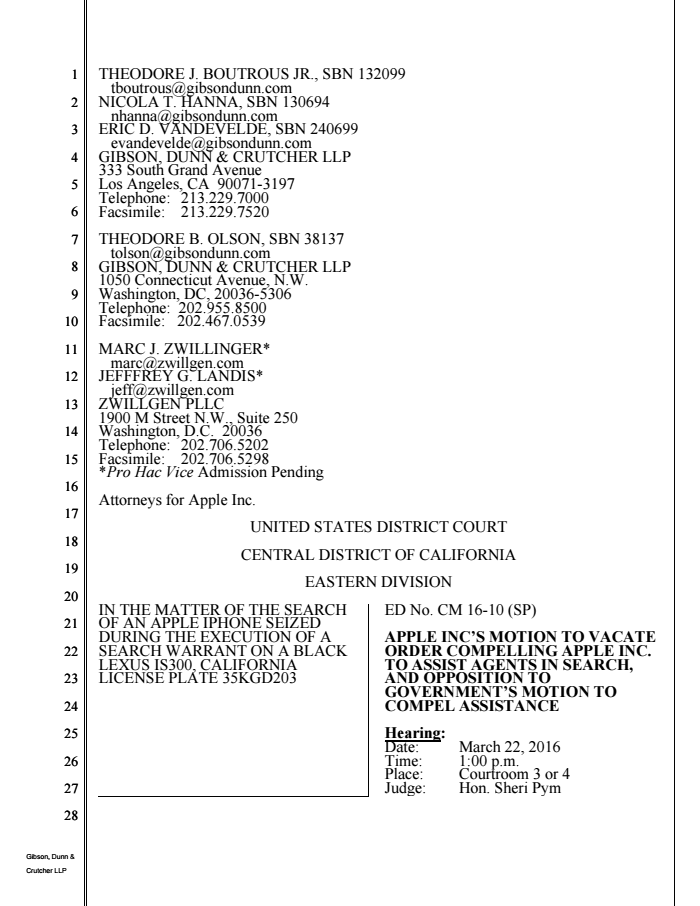
90 years in prison; 18 years of supervised release; $1,750,000 fine or twice the amount gained from the crimes or twice the amount lost by victims; $600 special assessment

VADIM TRINCHER

Dima

52

New York, NY

18 USC: 1962(d) (RICO Conspiracy); 1962(c) (RICO substantive); 1956(h) (Money Laundering Conspiracy); 1955 (Operating an Illegal Gambling Business); 894 (Extortion Conspiracy); 31 USC 5363 and 5366 (Unlawful Internet Gambling)

90 years in prison; 18 years of supervised release; $1,750,000 fine or twice the amount gained from the crimes or twice the amount lost by victims; $600 special assessment

ANATOLY GOLUBCHIK

Tony

56

Fort Lee, NJ and New York, NY

18 USC: 1962(d) (RICO Conspiracy); 1962(c) (RICO substantive); 1956(h) (Money Laundering Conspiracy); 1955 (Operating an Illegal Gambling Business); 894 (Extortion Conspiracy); 31 USC 5363 and 5366 (Unlawful Internet Gambling)
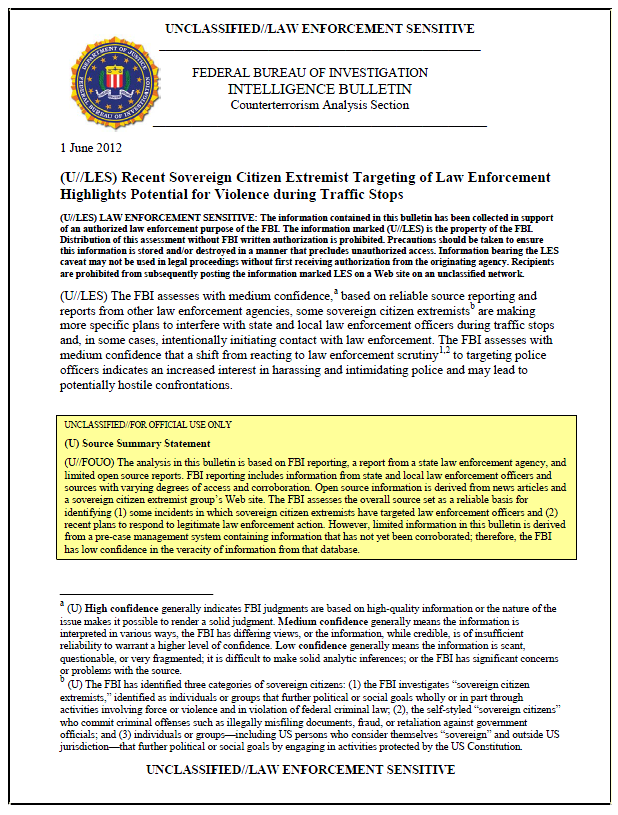
90 years in prison; 18 years of supervised release; $1,750,000 fine or twice the amount gained from the crimes or twice the amount lost by victims; $600 special assessment

MICHAEL SALL

68

Sunny Isles Beach, FL

18 USC: 1962(d) (RICO Conspiracy); 1956(h) (Money Laundering Conspiracy
40 years in prison, six years of supervised release; $750,000 fine or twice the amount gained from the crimes or twice amount lost by victims; $200 special assessment

STAN GREENBERG

SLAVA

48

New York, NY

18 USC: 1962(d) (RICO Conspiracy); 1956(h) (Money Laundering Conspiracy

40 years in prison, six years of supervised release; $750,000 fine or twice the amount gained from the crimes or twice amount lost by victims; $200 special assessment

ILLYA TRINCHER

27

Beverly Hills, CA

18 USC: 1962(d) (RICO Conspiracy); 1962(c) (RICO substantive); 1956(h) (Money Laundering Conspiracy); 1955 (Operating an Illegal Gambling Business); 894 (Extortion Conspiracy);1084 (Transmission of Wagering Information); 31 USC 5363 and 5366 (Unlawful Internet Gambling); 31 USC 5324 (structuring)

97 years in prison; 22 years of supervised release; $2,250,000 fine or twice the amount gained from the crimes or twice the amount lost by victims; $800 special assessment

HILLEL NAHMAD

โ€œHellyโ€

34

New York

18 USC: 1962(d) (RICO Conspiracy); 1962(c) (RICO substantive); 1956(h) (Money Laundering Conspiracy); 1955 (Operating an Illegal Gambling Business); 1084 (Transmission of Wagering Information); 1349 (Wire Fraud Conspiracy); 31 USC 5363 and 5366 (Unlawful Internet Gambling)

92 years in prison; 19 years of supervised release; $2,000,000 fine or twice the amount gained from the crimes or twice the amount lost by victims; $700 special assessment

NOAH SIEGEL

โ€œThe Oracleโ€

30

New York, NY

18 USC: 1962(d) (RICO Conspiracy); 1962(c) (RICO substantive); 1956(h) (Money Laundering Conspiracy); 1955 (Operating an Illegal Gambling Business); 1084 (Transmission of Wagering Information); 31 USC 5363 and 5366 (Unlawful Internet Gambling)

72 years in prison; 16 years of supervised release; $1,750,000 fine or twice the amount gained from the crimes or twice the amount lost by victims; $600 special assessment

JOHN HANSON

48

New York, NY

18 USC: 1962(d) (RICO Conspiracy); 1962(c) (RICO substantive); 1956(h) (Money Laundering Conspiracy); 1955 (Operating an Illegal Gambling Business); 894 (Extortion Conspiracy);1084 (Transmission of Wagering Information) 31 USC 5363 and 5366 (Unlawful Internet Gambling)

92 years in prison; 19 years of supervised release; $2,000,000 fine or twice the amount gained from the crimes or twice the amount lost by victims; $700 special assessment

JONATHAN HIRSCH

30

New York, NY

18 USC: 1962(d) (RICO Conspiracy); 1955 (Operating an Illegal Gambling Business); 1084 (Transmission of Wagering Information); 31 USC 5363 and 5366 (Unlawful Internet Gambling)

32 years in prison; 19 years of supervised release; $1,000,000 fine or twice the amount gained from the crimes or twice the amount lost by victims; $400 special assessment

ARTHUR AZEN

43

Staten Island, NY

18 USC: 1962(d) (RICO Conspiracy); 1962(c) (RICO substantive); 1956(h) (Money Laundering Conspiracy); 2 Counts of 1955 (Operating an Illegal Gambling Business); 2 Counts of 894 (Extortion Conspiracy); 31 USC 5363 and 5366 (Unlawful Internet Gambling)

115 years in prison; 24 years of supervised release; $2,250,000 fine or twice the amount gained from the crimes or twice the amount lost by victims; $800 special assessment

DONALD MCCALMONT

DON

45

Massapequa, NY

18 USC: 1962(d) (RICO Conspiracy); 1956(h) (Money Laundering Conspiracy

40 years in prison, six years of supervised release; $750,000 fine or twice the amount gained from the crimes or twice the amount lost by victims; $200 special assessment

DMITRY DRUZHINSKY

DIMA BLONDIE

42

Brooklyn, NY

18 USC: 1956(h) (Money Laundering Conspiracy); 1955 (Operating an Illegal Gambling Business); 31 USC 5363 and 5366 (Unlawful Internet Gambling)

30 years in prison, nine years of supervised release; $1,000,000 fine or twice the amount gained from the crimes or twice the amount lost by victims; $300 special assessment

ALEXANDER ZAVERUKHA

SASHA

51

Newtown, PA

18 USC 1955 (Operating an Illegal Gambling Business); 31 USC 5363 and 5366 (Unlawful Internet Gambling)

10 years in prison, six years of supervised release; $500,000 fine or twice the amount gained from the crimes or twice the amount lost by victims; $200 special assessment

ALEXANDER KATCHALOFF

Murushka

53

Brooklyn, NY

18 USC 1955 (Operating an Illegal Gambling Business); 31 USC 5363 and 5366 (Unlawful Internet Gambling)

10 years in prison, six years of supervised release; $500,000 fine or twice the amount gained from the crimes or twice the amount lost by victims; $200 special assessment

ANATOLY SHTEYNGROB

Tony

51

Brooklyn, NY

18 USC 1956(h) (Money Laundering Conspiracy)

20 years in prison, three years of supervised release; $500,000 fine or twice the amount gained from the crimes or twice the amount lost by victims; $100 special assessment

ILYA ROZENFELD

53

Staten Island, NY

18 USC 1956(h) (Money Laundering Conspiracy)

20 years in prison, three years of supervised release; $500,000 fine or twice the amount gained from the crimes or twice the amount lost by victims; $100 special assessment

PETER SKYLLAS

50

Manhattan

18 USC 1956(h) (Money Laundering Conspiracy)

20 years in prison, three years of supervised release; $500,000 fine or twice the amount gained from the crimes or twice the amount lost by victims; $100 special assessment

RONALD UY

32

Jamaica, NY

18 USC 1956(h) (Money Laundering Conspiracy); 31 USC 5324 (structuring)

22 years in prison, six years of supervised release; $750,000 fine or twice the amount gained from the crimes or twice the amount lost by victims; $200 special assessment

NICHOLAS HIRSCH

34

New York, NY

18 USC 1349 (Wire Fraud Conspiracy)

20 years in prison, three years of supervised release; $500,000 fine or twice the amount gained from the crimes or twice the amount lost by victims; $100 special assessment

BRYAN ZURIFF

43

Los Angeles, CA

18 USC 1955 (Operating an Illegal Gambling Business); 31 USC 5363 and 5366 (Unlawful Internet Gambling)

10 years in prison, six years of supervised release; $500,000 fine or twice the amount gained from the crimes or twice the amount lost by victims; $200 special assessment

MOSHE ORATZ

37

Brooklyn, NY

18 USC 1955 (Operating an Illegal Gambling Business); 31 USC 5363 and 5366 (Unlawful Internet Gambling) 894 (Extortion Conspiracy);

30 years in prison, six years of supervised release; $750,000 fine or twice the amount gained from the crimes or twice the amount lost by victims; $300 special assessment

KIRILL RAPOPORT

41

Brooklyn, NY

18 USC 894 (Extortion Conspiracy);

20 years in prison, three years of supervised release; $250,000 fine or twice the amount gained from the crimes or twice the amount lost by victims; $100 special assessment

DAVID AARON

D.A.

30

Brooklyn, NY

18 USC 1955 (Operating an Illegal Gambling Business); 31 USC 5363 and 5366 (Unlawful Internet Gambling)

10 years in prison, six years of supervised release; $500,000 fine or twice the amount gained from the crimes or twice the amount lost by victims; $200 special assessment

JUSTIN SMITH

25

Los Angeles, CA

18 USC 1955 (Operating an Illegal Gambling Business); 31 USC 5363 and 5366 (Unlawful Internet Gambling)

10 years in prison, six years of supervised release; $500,000 fine or twice the amount gained from the crimes or twice the amount lost by victims; $200 special assessment

ABRAHAM MOSSERI

39

Longboat Key, FL

18 USC 1955 (Operating an Illegal Gambling Business); 31 USC 5363 and 5366 (Unlawful Internet Gambling)

10 years in prison, six years of supervised release; $500,000 fine or twice the amount gained from the crimes or twice the amount lost by victims; $200 special assessment

WILLIAM EDLER

49

Las Vegas, NV

18 USC 1955 (Operating an Illegal Gambling Business); 31 USC 5363 and 5366 (Unlawful Internet Gambling)

10 years in prison, six years of supervised release; $500,000 fine or twice the amount gained from the crimes or twice amount lost by victims; $200 special assessment

PETER FELDMAN

35

Las Vegas, NV

18 USC 1955 (Operating an Illegal Gambling Business); 31 USC 5363 and 5366 (Unlawful Internet Gambling)

10 years in prison, six years of supervised release; $500,000 fine or twice the amount gained from the crimes or twice the amount lost by victims; $200 special assessment

EUGENE TRINCHER

26

New York, NY

18 USC 1956(h) (Money Laundering Conspiracy); 18 USC 1955 (Operating an Illegal Gambling Business); 18 USC 1952 (Travel Act)

30 years in prison, nine years of supervised release; $1,000,000 fine or twice the amount gained from the crimes or twice the amount lost by victims; $300 special assessment

EDWIN TING

Eddie

41

New York, NY

18 USC 1956(h) (Money Laundering Conspiracy); 18 USC 1955 (Operating an Illegal Gambling Business); 18 USC 1952 (Travel Act)

30 years in prison, nine years of supervised release; $1,000,000 fine or twice the amount gained from the crimes or twice the amount lost by victims; $300 special assessment

MOLLY BLOOM

34

Keystone, CO

18 USC 1955 (Operating an Illegal Gambling Business); 18 USC 1952 (Travel Act)

10 years in prison, six years of supervised release; $1500,000 fine or twice the amount gained from the crimes or twice the amount lost by victims; $200 special assessment

WILLIAM BARBALAT

41

New York, NY

18 USC 1955 (Operating an Illegal Gambling Business); 18 USC 1952 (Travel Act)

10 years in prison, six years of supervised release; $1500,000 fine or twice the amount gained from the crimes or twice the amount lost by victims; $200 special assessment

YUGESHWAR RAJKUMAR

MATEO

42/43

Teaneck, NJ

18 USC 1955 (Operating an Illegal Gambling Business); 18 USC 1952 (Travel Act)

10 years in prison, six years of supervised release; $1500,000 fine or twice the amount gained from the crimes or twice amount lost by victims; $200 special assessment

JOSEPH MANCUSO

JOE THE HAMMER

29

Staten Island, NY

18 USC 1955 (Operating an Illegal Gambling Business); 18 USC 1952 (Travel Act)

10 years in prison, six years of supervised release; $1500,000 fine or twice the amount gained from the crimes or twice the amount lost by victims; $200 special assessment

Twitter
Facebook (1)
Share

TOP-SECRET – DHS-FBI Suspicious Activity Reporting Bulletin: Expressed or Implied Threat

DHS-FBI-ExpressedThreat

ROLL CALL RELEASE

1 page
For Official Use Only
March 1, 2013

Download

(U//FOUO) Expressed or implied threats by an individual or a group communicating intent to commit acts of terrorism or violence or advocating violence against a person, population, or to damage or destroy a facility can be an indicator of pre-operational attack planning. For example, in 2010 a Virginia-based US person pled guilty to communicating threats after he posted a video to the Internet encouraging violent extremists to attack the creators of a television show, including highlighting their residence and urging online readers to โ€œpay them a visit.โ€ He also admitted to soliciting others to desensitize law enforcement by placing suspicious looking but innocent packages in public places, which could then be followed up by real explosives.

(U//FOUO) The following SAR incident reported to the NSI shared space provides an example of an implied threat that could be indicative of pre-operational activity and attack planning. Although it was not ultimately linked to terrorist activity, it is cited as an example for awareness and training purposes:

โ€” (U//FOUO) A courthouse building received an envelope, postmarked out of state, in which a smaller envelope marked โ€œwhite powderโ€ contained an unknown substance. The incident appeared to be related to 17 other similar suspicious letters containing white substance mailed over a period of several weeks to financial institutions, police departments, state and local government offices, and court facilities.

(U) Possible Indicators of Suspicious Expressed or Implied Threats

(U//FOUO) The following are examples of threats that may constitute warning signs of impending acts of violence. Depending on the contextโ€”state of mind of the individual, personal behaviors, and other indicatorsโ€”expressed or implied threats should be reported to appropriate authorities.

โ€” (U//FOUO) Statements by individuals or groups communicated verbally, in writing, or through video recordings stating the intent to commit violence.
โ€” (U//FOUO) Letters and packages containing suspicious substances accompanied by a note stating that its contents are noxious or intending to communicate threat.
โ€” (U//FOUO) Specific warnings about impending attacks that provide date, time, or place of the threatened attack.
โ€” (U//FOUO) Specific stated threats to individuals or facilities to deter an anticipated action or force compliance with a demand.

(U//FOUO) First Amendment-protected activities should not be reported in a SAR or ISE-SAR absent articulable facts and circumstances that support the source agencyโ€™s suspicion that the behavior observed is not innocent, but rather reasonably indicative of criminal activity associated with terrorism, including evidence of pre-operational planning related to terrorism. Race, ethnicity, national origin, or religious affiliation should not be considered as factors that create suspicion (although these factors may be used as specific suspect descriptions).

SECRET – Michael Steinberg Allegedly Earned $1.4 Million in Illegal Profits

Preet Bharara, the United States Attorney for the Southern District of New York, and George Venizelos, the Assistant Director in Charge of the New York Field Office of the Federal Bureau of Investigation (FBI), today announced conspiracy and securities fraud charges against Michael Steinberg, a portfolio manager at a hedge fund located in New York, New York (โ€œHedge Fund Aโ€), for his alleged involvement in an insider trading scheme. As alleged, Steinberg executed trades based on material, non-public information (โ€œinside informationโ€) provided to him by a Hedge Fund A analyst who worked for himโ€”John Horvath, who previously pled guilty to securities fraud charges pursuant to a cooperation agreement. In particular, Steinberg is alleged to have traded in two publicly traded technology companies, Dell Inc. (โ€œDellโ€) and NVIDIA Corporation (โ€œNVIDIAโ€), based on inside information that Horvath obtained from a circle of research analysts at several different investment firms, all of whom have also pled guilty for their roles in the scheme. Those individuals are: Jesse Tortora, a former research analyst at Diamondback; Spyridon โ€œSamโ€ Adondakis, a former research analyst at Level Global; Danny Kuo, a former research analyst and fund manager at Whittier Trust Company; and Sandeep โ€œSandyโ€ Goyal, a former research analyst who worked at the Manhattan office of Neuberger Berman. Steinbergโ€™s trading in Dell and NVIDIA earned Hedge Fund A $1.4 million in illegal profits. Steinberg was arrested this morning in Manhattan and will be presented and arraigned in Manhattan federal court before U.S. District Judge Richard J. Sullivan at 11:00 a.m.

Manhattan U.S. Attorney Preet Bharara said, โ€œAs alleged, Michael Steinberg was another Wall Street insider who fed off a corrupt grapevine of proprietary and confidential information cultivated by other professionals who made their own rules to make money. With lightning speed in at least one case, Mr. Steinberg seized on the opportunity to cash in and tried to keep his crime quiet, as charged in the Indictment. As alleged, where once Mr. Steinberg answered only to his own rules, now he will have to answer to the rule of law, like so many others before him.โ€

FBI Assistant Director in Charge George Venizelos said, โ€œMr. Steinbergโ€™s arrest is the latest in the FBIโ€™s campaign to root out insider trading at hedge funds and expert networking firms, resulting in more than 70 arrests so far. As alleged, Mr. Steinberg was at the center of an elite criminal club, where cheating and corruption were rewarded. Research was nothing more than well-timed tips from an extensive network of well-sourced analysts. The law is clear for everyone, including Mr. Steinberg. Trading on inside information is illegal. The FBI will continue to police our markets and arrest anyone who violates the law.โ€

In a separate action, the U.S. Securities and Exchange Commission announced civil charges against Steinberg.

According to the allegations in the superseding indictment, other court documents, and evidence adduced at a related trial:

A group of analysts at different hedge funds, including Tortora, Adondakis, Horvath, and Kuo, obtained inside information directly or indirectly from employees who worked at certain public companies and then shared the information with each other and with the hedge fund portfolio managers for whom they worked, including Steinberg. In particular, Tortora provided Horvath and others with inside information related to Dellโ€™s quarterly earnings (the โ€œDell inside informationโ€), which Tortora obtained from Goyal who, in turn, had obtained the Information from an employee at Dell (the โ€œDell insiderโ€). For Dellโ€™s quarter ending August 1, 2008, the results for which were publicly announced by Dell on August 28, 2008 (the โ€œDell Announcementโ€), the Dell inside information indicated that Dell would report gross margins that were materially lower than market expectations. In advance of the Dell Announcement, Horvath reported this negative inside information to Steinberg.

On August 18, 2008, after a series of calls from the Dell Insider to Goyal and from Goyal to Tortora and Horvath, Horvath then called Steinberg. Within a minute of the telephone call between Steinberg and Horvath, Steinbergโ€™s portfolio began shorting shares of Dell. One minute later, Horvath wrote an e-mail to Steinberg stating: โ€œPls keep the DELL stuff especially on the down low…just mentioning that because JT [Jesse Tortora] asked me specifically to be extra sensitive with the info.โ€ By the end of the day on August 18, 2008, Steinberg had accumulated a net short position of over 167,000 shares of Dell. On August 26, 2008, Horvath confirmed in an e-mail to Steinberg and another portfolio manager at Hedge Fund A that Horvathโ€™s Dell information had been based on a โ€œ2nd hand read from someone at the company.โ€ Steinberg responded, โ€œYes normally we would never divulge data like this, so please be discreet.โ€ And on August 27, 2008, Steinberg sent an e-mail to Horvath with the subject line, โ€œDell action,โ€ in which he asked, โ€œHave u double checked [with] JT this week?โ€ Horvath responded, โ€œYes he [Tortora] checked in [a] couple days ago, same read no change.โ€

On August 28, 2008, before Dellโ€™s Announcement, Steinberg executed or caused to be executed additional short trades. Steinberg also executed or caused to be executed options trades in Dell in advance of the Dell Announcement.

After the close of the market on August 28, 2008, Dell publicly announced gross margins that were substantially below market expectations. At the end of the next trading day following Dellโ€™s Announcement, its stock price dropped by more than 13 percent. Shortly thereafter, Steinberg covered his short position and closed out his position in Dell option contracts, resulting in an illegal profit for Hedge Fund A of approximately $1 million.

In addition, in 2009, Kuo obtained inside information regarding NVIDIAโ€™s financial results (the โ€œNVIDIA inside informationโ€) in advance of NVIDIAโ€™s quarterly earnings announcements. The NVIDIA inside information indicated, among other things, that NVIDIAโ€™s gross margins would be lower than market expectations. Kuo obtained the NVIDIA inside information from a friend, Hyung Lim (โ€œLimโ€), who received it from an employee at NVIDIA (the โ€œNVIDIA insiderโ€). In advance of NVIDIAโ€™s May 7, 2009 quarterly earnings announcement (the โ€œNVIDIA announcementโ€), Kuo provided the NVIDIA inside information, which he had obtained from Lim, to Tortora, Horvath, and others. Horvath, in turn, provided the NVIDIA inside information to Steinberg, who executed or caused to be executed transactions in NVIDIA in advance of the NVIDIA Announcement.

On May 7, 2009, NVIDIA publicly announced gross margins that were substantially lower than the market expected. At the end of the trading day following the NVIDIA announcement, NVIDIAโ€™s stock price dropped by more than 13 percent. Shortly thereafter, Steinberg caused Hedge Fund A to liquidate its position in NVIDIA, resulting in an illegal profit for Hedge Fund A of over $400,000.

* * *

Steinberg, 41, of New York, New York, is charged with one count of conspiracy to commit securities fraud and four counts of securities fraud. The conspiracy count carries a maximum sentence of five years in prison and a fine of the greater of $250,000 or twice the gross gain or loss from the offense. Each of the securities fraud counts carries a maximum sentence of 20 years in prison and a fine of $5 million or twice the gross gain or loss from the offense.

The allegations in the indictment against Steinberg are merely accusations, and he is presumed innocent unless and until proven guilty.

Horvath, 43, and Kuo, 37, each pled guilty to one count of conspiracy to commit securities fraud and two substantive counts of securities fraud in September 2012 and April 2012, respectively.

Tortora, 35, Adondakis, 41, and Goyal, 40, each pled guilty to one count of conspiracy to commit securities fraud and one substantive count of securities fraud in May 2011, April 2011, and June 2011, respectively.

Mr. Bharara praised the investigative work of the FBI. He also thanked SEC. Mr. Bharara noted that the investigation is continuing.

This case was brought in coordination with President Barack Obamaโ€™s Financial Fraud Enforcement Task Force, on which Mr. Bharara serves as a Co-Chair of the Securities and Commodities Fraud Working Group. The task force was established to wage an aggressive, coordinated, and proactive effort to investigate and prosecute financial crimes. With more than 20 federal agencies, 94 U.S. attorneysโ€™ offices, and state and local partners, it is the broadest coalition of law enforcement, investigatory, and regulatory agencies ever assembled to combat fraud. Since its formation, the task force has made great strides in facilitating increased investigation and prosecution of financial crimes; enhancing coordination and cooperation among federal, state, and local authorities; addressing discrimination in the lending and financial markets; and conducting outreach to the public, victims, financial institutions and other organizations. Over the past three fiscal years, the Justice Department has filed nearly 10,000 financial fraud cases against nearly 15,000 defendants including more than 2,900 mortgage fraud defendants. For more information on the task force, please visit http://www.stopfraud.gov.

This case is being handled by the Officeโ€™s Securities and Commodities Fraud Task Force. Assistant U.S. Attorneys Antonia M. Apps and John T. Zach are in charge of the prosecution.

Revealed – Four Facing Charges in Multi-Faceted Mortgage Fraud Conspiracy

PITTSBURGHโ€”A resident of Verona, Pennsylvania and three residents of Pittsburgh, Pennsylvania have been indicted by a federal grand jury in Pittsburgh on charges of conspiracy, wire fraud, bank fraud, filing false tax returns, and failing to file tax returns, United States Attorney David J. Hickton announced today. The 20-count superseding indictment, returned on March 26, 2013, named George Kubini, 48, of 139 Topaz Drive, Verona, Pennsylvania; Dov Ratchkauskas, 46, of 2527 Mount Royal Boulevard, Pittsburgh, Pennsylvania; Sandra Svaranovic, 52, of 2938 Oโ€™Neill Drive, Pittsburgh, Pennsylvania; and Arthur Smith, 63, of 6939 Reynolds Street, Pittsburgh, Pennsylvania. According to the superseding indictment presented to the court, Kubini, Ratchklauskas, Svaranovic, Smith, and a number of other individuals who have already pleaded guilty, participated in a multi-faceted mortgage fraud conspiracy involving hundreds of properties and tens of millions of dollars worth of fraudulent loans. Kubini and Ratchkauskas operated businesses that purchased and sold real estate. The superseding indictment alleges that Kubini and Ratchkauskas sold properties financed through a complex mortgage fraud scheme and that they executed settlement statements that they then knew were fraudulent. The superseding indictment also alleged that Kubini and Ratchkauskas made false representations to borrowers about making improvements to the properties. Other members of the alleged conspiracy who already pleaded guilty include Robert Arakelian, who operated a mortgage broker business called Pittsburgh Home Loans, and Rhonda and Rochelle Roscoe, who operated another mortgage broker business called Riverside Mortgage. The superseding indictment alleges that Arakelian and Rhonda and Rochelle Roscoe, in furtherance of the conspiracy, submitted loan applications to lenders that falsely represented that the borrowers were intending to make payments at the time of the closings related to the purchase of the properties and that they had sufficient assets to make those payments from their own funds. This false representation was corroborated by Verification of Deposits that falsely represented that the borrowers had sufficient money in their bank accounts to make the payments at the closings. Other members of the conspiracy included Bartholomew Matto, Cynthia Pielin, and Crystal Spreng, who all worked at financial institutions and all pleaded guilty to their roles in the conspiracy. Their role was to sign the fraudulent Verifications of Deposit that falsely represented that the borrowers had sufficient funds in their accounts to make the payments at the closings. The conspiracy also involved fraudulent settlement statements that overstated the true sales prices of the properties and falsely represented that the purchases of the properties made substantial payments in connection with the purchase of the properties. Daniel Sporrer was and attorney who executed some of these fraudulent settlement statements and Karen Atkison was an assistant for Sporrer. Sporrer and Atkison all pleaded guilty to their roles in the conspiracy. The superseding indictment alleges that Smith, who is an attorney specializing in closing real estate transactions, similarly participated in the conspiracy by executing fraudulent settlement statements, by fraudulently withdrawing money from his trust account, and by making misrepresentations to a title insurance company. In addition, the conspiracy involved appraisers who made false representations about the properties serving as collateral for the loans. The superseding indictment alleges that Svaranovic, as part of the conspiracy, prepared fraudulent appraisals that falsely represented the conditions of the properties serving as collateral for the loans and overstated the fair market values of those properties. The superseding indictment also alleges that Kubini filed false income tax returns with the Internal Revenue Service that understated his adjusted gross income and that Smith failed to file his tax returns for the calender years 2007 through 2009 despite earning sufficient income to trigger his legal obligation to file his income tax returns. Assistant United States Attorney Brendan T. Conway is prosecuting this case on behalf of the government. The Mortgage Fraud Task Force conducted the investigation leading to the indictment in this case. The Mortgage Fraud Task Force is composed of investigators from federal, state, and local law enforcement agencies and others involved in the mortgage industry. Federal law enforcement agencies participating in the Mortgage Task Force include the Federal Bureau of Investigation; the Internal Revenue Service, Criminal Investigations; the United States Department of Housing and Urban Development, Office of Inspector General; the United States Postal Inspection Service; and the United States Secret Service. Other Mortgage Fraud Task Force members include the Allegheny County Sheriffโ€™s Office; the Pennsylvania Attorney Generalโ€™s Office, Bureau of Consumer Protection; the Pennsylvania Department of Banking; the Pennsylvania Department of State, Bureau of Enforcement and Investigation; and the United States Trusteeโ€™s Office. An indictment is an accusation. A defendant is presumed innocent unless and until proven guilty.

Unveiled – Insider Trading Charges Against Former Chief Information Officer of Technology Company and Hedge Fund Analyst

Preet Bharara, the United States Attorney for the Southern District of New York, and George Venizelos, the Assistant Director in Charge of the New York Field Office of the Federal Bureau of Investigation (FBI), today announced conspiracy and securities fraud charges against David Riley, a former chief information officer and vice president for Foundry Networks Inc. (โ€œFoundryโ€), and Matthew Teeple, an analyst for an investment advisory firm to a family of hedge funds located in San Francisco, California (โ€œInvestment Adviser Aโ€), for their alleged involvement in an insider trading scheme. Riley allegedly provided material, non-public information (โ€œinside informationโ€) concerning Foundry, a publicly traded technology company, to Teeple. Teeple then caused others to execute trades based upon the inside information, including in accounts managed by Investment Adviser A. In total, these trades earned Investment Adviser A profits of over $16 million and enabled Investment Adviser A to avoid losses in excess of $11 million. Teeple was arrested this morning in San Clemente, California, and is expected to be presented later today in federal district court in the Central District of California. Riley was arrested this morning in San Jose, California, and is expected to be presented later today in federal district court in the Northern District of California.

The Manhattan U.S. Attorney and the FBI also announced the unsealing of the guilty plea of John Johnson to conspiracy and securities fraud charges in connection with this insider trading scheme. Johnson pled guilty to these charges on March 18, 2013, before U.S. District Judge John F. Keenan.

Manhattan U.S. Attorney Preet Bharara said, โ€œAs alleged, when David Riley and Matthew Teeple chose to traffic in inside information involving high-tech companies, they embarked on a high-stakes game that has repeatedly proven to be unwinnable. With the charges against them and the plea of John Johnson that we announce today, the ranks of privileged professionals who behave as if they are above the law continue to swell.โ€

FBI Assistant Director in Charge George Venizelos said, โ€œThere may be little to distinguish this case from the dozens of others we have made against industry insiders and investment advisers in the past several years. There is certainly nothing unique about the outcome: If you allegedly traffic in inside information, by providing it or trading on it, you will inevitably be found out, charged, and prosecuted.โ€

In a separate action, the U.S. Securities and Exchange Commission (SEC) announced civil charges against Riley, Teeple, and Johnson.

According to the complaint and other court documents:

Throughout the insider trading scheme, Riley obtained inside information from Foundry and shared it with Teeple. As chief information officer and a vice president at Foundry, Riley had access to monthly and quarterly financial reporting, along with other sensitive, non-public information relating to Foundry, well before such information became public. After receiving inside information concerning Foundry from Riley, Teeple then shared this information with others, including another analyst who works at Investment Adviser A (the โ€œInvestment Adviser A analystโ€) and others who then traded in Foundry securities. Investment Adviser A was an investment adviser for a family of hedge funds.

For example, on July 16, 2008, Riley provided Teeple with inside information concerning Foundryโ€™s acquisition by another technology company, Brocade Communications Systems Inc. (โ€œBrocadeโ€), before it was publicly announced on July 21, 2008. Within two hours of this conversation between Riley and Teeple, Teeple made a phone call to the Investment Adviser A analyst. While Teeple and the Investment Adviser A analyst were on the phone, Investment Adviser A began purchasing a large amount of Foundry stock and call option contracts and selling put option contracts for Foundry. From approximately July 16, 2008 until the July 21, 2008 public announcement of Brocadeโ€™s acquisition of Foundry, Investment Adviser A purchased approximately 3,245,380 shares of Foundry. Based upon its trading in connection with the inside information concerning Foundryโ€™s acquisition by Brocade, Investment Adviser A profited in the amount of approximately $13.6 million and avoided losses of approximately $7.4 million that it would have incurred due to its prior positions in Foundry.

Teeple also provided the inside information concerning Brocadeโ€™s impending acquisition of Foundry to two acquaintances of his, John Johnson and Karl Motey, before the July 21, 2008 public announcement. Teeple told Johnson and Motey that Foundry was going to be acquired by Brocade, and the approximate price at which Foundry was going to be acquired, which turned out to be substantially accurate when the terms of the acquisition were made public. Johnson traded on this inside information and profited in excess of $136,000.

In addition, on multiple occasions, Riley provided inside information concerning Foundryโ€™s quarterly financial reporting to Teeple in advance of any public announcement. Teeple contacted the Investment Adviser A analyst shortly after these conversations with Riley in April 2008 and October 2008. Investment Adviser A subsequently traded in large quantities of Foundry equities based upon this inside information, amassing millions of dollars in both profits and avoided losses.

* * *

Riley, 47, of San Jose, California, is charged with one count of conspiracy to commit securities fraud, and three substantive securities fraud counts. The conspiracy count carries a maximum sentence of five years in prison and a fine of the greater of $250,000 or twice the gross gain or loss from the offense. Each of the securities fraud counts carries a maximum sentence of 20 years in prison and a fine of $5 million or twice the gross gain or loss from the offense.

Teeple, 41, of San Clemente, California, is charged with one count of conspiracy to commit securities fraud, and three substantive securities fraud counts. The conspiracy count carries a maximum sentence of five years in prison and a fine of the greater of $250,000 or twice the gross gain or loss from the offense. Each of the securities fraud counts carries a maximum sentence of 20 years in prison and a fine of $5 million or twice the gross gain or loss from the offense.

Johnson, 46, of Arvada, Colorado, is charged with one count of conspiracy to commit securities fraud, and one substantive securities fraud count. The conspiracy count carries a maximum sentence of five years in prison and a fine of the greater of $250,000 or twice the gross gain or loss from the offense. The securities fraud count carries a maximum sentence of 20 years in prison and a fine of $5 million or twice the gross gain or loss from the offense.

Mr. Bharara praised the investigative work of the FBI. He also thanked the SEC. He noted that the investigation is continuing.

The case is being handled by the Officeโ€™s Securities and Commodities Fraud Task Force. Assistant U.S. Attorney Steve Lee is in charge of the prosecution.

The charges contained in the complaint against Teeple and Riley are merely accusations, and the defendants are presumed innocent unless and until proven guilty.

This case was brought in coordination with President Barack Obamaโ€™s Financial Fraud Enforcement Task Force, on which Mr. Bharara serves as a co-chair of the Securities and Commodities Fraud Working Group. The task force was established to wage an aggressive, coordinated, and proactive effort to investigate and prosecute financial crimes. With more than 20 federal agencies, 94 U.S. attorneysโ€™ offices, and state and local partners, it is the broadest coalition of law enforcement, investigatory, and regulatory agencies ever assembled to combat fraud.

Since its formation, the task force has made great strides in facilitating increased investigation and prosecution of financial crimes; enhancing coordination and cooperation among federal, state, and local authorities; addressing discrimination in the lending and financial markets; and conducting outreach to the public, victims, financial institutions, and other organizations. Over the past three fiscal years, the Justice Department has filed nearly 10,000 financial fraud cases against nearly 15,000 defendants including more than 2,900 mortgage fraud defendants. For more information on the task force, please visit http://www.stopfraud.gov.

THe FBI – Insider Trading Charges Against Former Galleon Portfolio Manager

Preet Bharara, the United States Attorney for the Southern District of New York, and George Venizelos, the Assistant Director in Charge of the New York Field Office of the Federal Bureau of Investigation (FBI), today announced conspiracy and securities fraud charges against Rajarengan Rajaratnam (Rengan Rajaratnam), a former portfolio manager at the hedge fund management firm Galleon Group, for his alleged involvement in an insider trading scheme. Rengan Rajaratnam allegedly conspired with his brother, Galleon founder Raj Rajaratnam, to trade on the basis of material, non-public information (โ€œinside informationโ€) concerning Clearwire Corp. (โ€œClearwireโ€) and Advanced Micro Devices Inc. (โ€œAMDโ€) in 2008, earning nearly $1.2 million in profits in the aggregate. v Rajaratnam has not yet been arrested on these charges.

Manhattan U.S. Attorney Preet Bharara said, โ€œAs alleged, Rengan Rajaratnam and his brother shared more than DNA; they also shared a penchant for insider trading. Along with his brother Raj, Rengan Rajaratnam was allegedly at the heart of an insider trading scheme that swept up an unprecedented number of people in its web of corruption, and with his indictment, we are one step closer to closing that chapter.โ€

FBI Assistant Director in Charge George Venizelos said, โ€œRengan Rajaratnamโ€™s career arc paralleled his brotherโ€™s. He followed in Rajโ€™s footsteps by obtaining an MBA from a top- flight business school. He went to work for Raj at Galleon. As alleged in the indictment, Rengan also engaged in the same illegal conduct as Raj. He reaped the benefit of insider information obtained by Raj, and he planned to reciprocate by cultivating his own source of inside information. Now Renganโ€™s career arc has descended to the same place his brotherโ€™s did less than four years ago: defendant.โ€

In a separate action, the U.S. Securities and Exchange Commission (SEC) announced civil charges against Rengan Rajaratnam.

The following allegations are based on the indictment filed yesterday and unsealed today in Manhattan federal court and other court documents:

The inside information concerning Clearwire originated from Rajiv Goel, an employee of Intel Corp. (โ€œIntelโ€). In March 2008, Goel provided inside information to his friend Raj Rajaratnam concerning a significant transaction in which Intel would invest approximately $1 billion in Clearwire in exchange for a 10 percent equity position. Raj Rajaratnam, in turn, shared the inside information with his brother, Rengan Rajaratnam. Rengan Rajaratnam and Raj Rajaratnam used this inside information to buy Clearwire stock on March 24 and 25, 2008.

After the U.S. stock markets closed on March 25, 2008, a major news organization published an article describing, in part, the proposed Clearwire transaction. Shortly afterward, Rajaratnam called his brother to alert him to the news report. In that call, Rajaratnam said, โ€œWeโ€™re fโ€”d, man,โ€ because the โ€œClearwire stuff…just hitโ€ the newspaper. Rengan Rajaratnam explained that the news article was โ€œshort on details…they donโ€™t have any of the equity split. But they named…Comcast, they named Time Warner, Clearwire, Sprint.โ€ Raj Rajaratnam replied, โ€œO.K., sโ€”t.โ€ Rajaratnam then said, โ€œSo, I donโ€™t know how much you got in today,โ€ referring to Raj Rajaratnamโ€™s purchases of Clearwire stock that day, โ€œbut I think [Clearwireโ€™s share price] is gonna rip [rise sharply] tomorrow.โ€ In fact, Clearwireโ€™s share price did rise sharply the following day in response to the news article, after which Rengan Rajaratnam and Raj Rajaratnam made nearly $1.2 million in profits from the inside information concerning Clearwire.

The inside information concerning AMD originated from Anil Kumar, who was, at the time, a partner of McKinsey & Co. (โ€œMcKinseyโ€), the global management consulting firm. In 2008, AMD hired McKinsey to advise it in relation to a strategic transaction in which AMD would spin off its manufacturing business into a new entity and the investment authority of Abu Dhabi would invest in the new entity and in AMD itself. On August 15, 2008, Kumar advised Raj Rajaratnam that AMD and the Abu Dhabi investment authority had โ€œshaken hands and said that theyโ€™re going ahead with the deal.โ€ Three hours later, Raj Rajaratnam told Rengan Rajaratnam, โ€œI just heard that…AMD had a handshake with the…Arabs….The Arabs to put [in] six billion dollars.โ€ He also told his brother that he had bought AMD shares based on Kumarโ€™s inside information about AMD, and that he was โ€œbuying two fiftyโ€โ€”meaning 250,000 shares of AMDโ€”โ€œfor you, OK?โ€ Rengan Rajaratnam replied, โ€œAlright, thanks a lot man, I appreciate it.โ€ On August 15, 2008, Raj Rajaratnam bought three million shares of AMD for a Galleon hedge fund that he managed and 250,000 shares of AMD for a Galleon hedge fund that Rajaratnam managed.

Later that day, Rengan Rajaratnam and Raj Rajaratnam spoke again about the AMD inside information and also about the affirmative efforts that Rajaratnam was making to cultivate another McKinsey partner (โ€œMcKinsey Partner Aโ€) as a source of inside information. Specifically, Rengan Rajaratnam advised Raj Rajaratnam that he had just finished a meeting with McKinsey Partner A in which McKinsey Partner A โ€œspilled his beansโ€ and โ€œvolunteered the information about the investmentsโ€ in AMD. Raj Rajaratnam said, โ€œ[W]hat we wanna do is…get him and then have access to, you know, be able to chat with himโ€ about

other inside information. Raj Rajaratnam said to Rengan Rajaratnam, โ€œ[H]e is a little dirty, right?โ€ Rajaratnam responded, โ€œ[H]eโ€™s a little dirty.โ€ Rajaratnam said that when he had asked McKinsey Partner A what other stocks McKinsey Partner A liked, McKinsey Partner A said, โ€œโ€˜You know, the problem is all my best ideas…are inside information.โ€™โ€

* * *

Rajaratnam, 42, of New York, New York, has been charged with one count of conspiracy to commit securities fraud and six counts of securities fraud. Count one, the conspiracy charge, carries a maximum potential penalty of five years in prison and a fine of $250,000 or twice the gross gain or loss from the offense. Counts two through seven, the securities fraud charges, each carry a maximum potential penalty of 20 years in prison and a maximum fine of $5 million.

Raj Rajaratnam was found guilty of conspiracy and securities fraud charges in 2011 and is currently serving an 11-year prison sentence. Rajiv Goel and Anil Kumar both pled guilty pursuant to cooperation agreements and were sentenced to two years of probation in 2012.

Mr. Bharara praised the investigative work of the FBI. He also thanked the SEC. Mr. Bharara noted that the investigation is continuing.

This case was brought in coordination with President Barack Obamaโ€™s Financial Fraud Enforcement Task Force, on which Mr. Bharara serves as a co-chair of the Securities and Commodities Fraud Working Group. President Obama established the interagency Financial Fraud Enforcement Task Force to wage an aggressive, coordinated, and proactive effort to investigate and prosecute financial crimes. The task force includes representatives from a broad range of federal agencies, regulatory authorities, inspectors general, and state and local law enforcement who, working together, bring to bear a powerful array of criminal and civil enforcement resources. The task force is working to improve efforts across the federal executive branch and, with state and local partners, to investigate and prosecute significant financial crimes, ensure just and effective punishment for those who perpetrate financial crimes, combat discrimination in the lending and financial markets, and recover proceeds for victims of financial crimes.

This case is being handled by the Officeโ€™s Securities and Commodities Fraud Task Force. Assistant U.S. Attorney David B. Massey is in charge of the prosecution.

The charges contained in the Indictment are merely accusations, and the defendant is presumed innocent unless and until proven guilty.

The FBI – Lawyer Pleads Guilty to Involvement in Massive No-Fault Automobile Insurance Fraud Scheme

Preet Bharara, the United States Attorney for the Southern District of New York, announced today that Sol Naimark, an attorney, pled guilty to his role in two separate conspiracies to defraud private insurance companies under New Yorkโ€™s no-fault automobile insurance law, including one charge related to the largest single no-fault automobile insurance fraud scheme ever charged. Naimark pled guilty yesterday before U.S. District Judge J. Paul Oetken. Recently, Alexander Sander, an owner and controller of several fraudulent no-fault clinics; Gregory Mikhalov, an owner and controller of medical clinics; Lynda Tadder, a manager at a no-fault clinic; and Chad Greenshner, a licensed chiropractor, also pled guilty to conspiracy to commit mail fraud and health care fraud in connection with the scheme before Judge Oetken. The five defendants were arrested in February 2012, along with 31 others, and charged with conspiracy to commit mail fraud and health care fraud in connection with a systemic scheme to defraud private insurance companies of more than $279 million under New Yorkโ€™s no-fault automobile insurance law. Some of the defendants were also charged with racketeering and money laundering. A total of 10 defendants, including one licensed doctor, have now pled guilty. Naimark also pled guilty to a separate conspiracy to commit health care fraud.

Manhattan U.S. Attorney Preet Bharara said, โ€œSol Naimark actively solicited clients for whom he could churn out bogus lawsuits as part of a multi-million-dollar insurance fraud scheme. It is particularly egregious when an attorney uses his license to perpetrate a fraud.โ€

According to the superseding information, other publicly filed information in the case, and the defendantsโ€™ statements in open court:

Under New York State Law, every vehicle registered in New York State is required to have no-fault automobile insurance, which enables the driver and passengers of a registered and insured vehicle to obtain benefits of up to $50,000 per person for injuries sustained in an automobile accident, regardless of fault, (the โ€œNo-Fault Lawโ€). The No-Fault Law requires prompt payment for medical treatment, thereby obviating the need for claimants to file personal injury lawsuits in order to be reimbursed. Under the No-Fault Law, patients can assign their rights to reimbursement from an insurance company to others, including medical clinics that provide treatment for their injuries. New York State Law also requires that all medical clinics in the state be incorporated, owned, operated, and/or controlled by a licensed medical practitioner in order to be eligible for reimbursement under the No-Fault Law. Insurance companies will not honor claims for medical treatments from a medical clinic that is not actually owned, operated, and controlled by a licensed medical practitioner.

In order to mislead New York authorities and private insurers, some of the defendants in this case who were the true owners of these medical clinics (โ€œNo-Fault clinic controllersโ€) paid licensed medical practitioners, including doctors, to use their licenses to form the professional corporations through which the medical clinics would then bill the private insurers for the bogus medical treatments. Sandler owned, operated, and controlled at least four of these no-fault clinics, and Tadder was a manager at one of the clinics.

The No-Fault clinic controllers also instructed the clinic doctors to prescribe excessive and unwarranted referrals for various โ€œmodality treatmentsโ€ for nearly every patient they saw. The treatments included physical therapy, acupuncture, and chiropractic treatmentsโ€”as much as five times per week for eachโ€”and treatments for psychology, neurology, orthopedics, and range of motion, in addition to functional capacity tests. Clinic doctors also prescribed unnecessary MRIโ€™s, X-rays, orthopedics, and medical supplies. The No-Fault clinic controllers received thousands of dollars in kickbacks for patient referrals from the owners of the modality clinics (โ€œmodality controllersโ€). Mikhalov was a modality controller who admitted to owning modality clinics that purported to be owned by licensed doctors, as required by New York Law. Greenshner was a chiropractor who provided unnecessary medical treatments at one of the modality clinics.

Patients were also referred to personal injury lawyers to file lawsuits against the insurance companies arising out of their exaggerated injuries from automobile accidents. The success of these lawsuits hinged on how many medical treatments the patients received, providing the necessary incentive for the patients to receive multiple treatments at the no-fault and modality clinics. Naimark admitted to paying a No-Fault clinic controller to refer him patients that received unnecessary treatments so that he could file personal injury lawsuits on behalf of the patients. The second charge to which Naimark pled guilty relates to payments he made to a runner to bring him no-fault patients so that he could file personal injury lawsuits on their behalf.

* * *

Naimark, 54, of Flushing, New York, pled guilty to two counts of conspiracy to commit health care fraud. He faces a maximum sentence of 20 years in prison. He is scheduled to be sentenced by Judge Oetken on July 22, 2013. Sandler and Mihalov each pled guilty to conspiracy to commit health care fraud and conspiracy to commit mail fraud, and each faces a maximum sentence of five years in prison. Tadder pled guilty to conspiracy to commit health care fraud and conspiracy to commit mail fraud and faces a maximum sentence of 30 years in prison. Greenshner pled guilty to conspiracy to commit health care fraud and faces a maximum sentence of 10 years in prison. Greenshner Mikhalov, Sandler, and Tadderย are scheduled to be sentenced by Judge Oetken on July 1, July 8, July 9, and September 27, 2013, respectively.

U.S. Attorney Preet Bharara thanked the Federal Bureau of Investigation and the New York City Police Department for their continued outstanding work in this investigation.

The case is being prosecuted by the Officeโ€™s Organized Crime Unit. Assistant U.S. Attorneys Daniel S. Goldman, Nicholas L. McQuaid, Carolina A. Fornos and Daniel S. Noble are in charge of the prosecution. Assistant U.S. Attorneys Jason L. Cowley and Martin Bell of the Officeโ€™s Asset Forfeiture Unit are responsible for the forfeiture of assets.

SECRET – Denver-Area Criminal Named to FBIโ€™s Ten Most Wanted Fugitives List

Federal Bureau of Investigation, Denver Division Special Agent in Charge (SAC) James Yacone announced today the placement of a fugitive from the Denver metropolitan area to the FBIโ€™s Ten Most Wanted Fugitives list. Joining SAC Yacone at the press conference were First Judicial District Attorney Peter A. Weir, United States Attorney for the District of Colorado John Walsh, and Jefferson County Sheriff Ted Mink.

SAC Yacone discussed the background of the FBIโ€™s Ten Most Wanted Fugitives program, which was launched on March 14, 1950โ€”63 years ago today. The program has a nearly 94 percent success rate for those that have been added to the list and arrested since its inception.

The last fugitive from Colorado added to the list from the FBI Denver Division was Theodore Robert Bundy, aka Ted Bundy, on February 10, 1978; he was captured on February 15, 1978 for a murder he committed in Aspen, Colorado.

The fugitive that was added to the Ten Most Wanted Fugitives list today is Edwin Ernesto Rivera Gracias. He is wanted for his alleged involvement in the brutal murder of a long-time family acquaintance in Jefferson County, Colorado. The crime took place on August 17, 2011. The 69-year-old victim was found brutally beaten, stabbed, and dumped in the mountains of Jefferson County.

Edwin Ernesto Rivera Gracias

Rivera Gracias is believed to be in El Salvador and may haveย  Salvadoran identification that says Edwin Rivera. He may also attempt to travel to the United States using fraudulent documents.

He is a known member of the gang MS-13. Rivera Gracias has ties to other gang members who are located in Colorado, Los Angeles, and El Salvador. Rivera Gracias may also be traveling to Mexico and Guatemala.

The FBI Denver Division obtained an unlawful flight to avoid prosecution (UFAP) warrant for Rivera Gracias in the United States District Court for the District of Colorado.

The FBI Denver Division is asking for media and public assistance in bringing this dangerous fugitive to justice. The FBI is offering a reward of up to $100,000 for information leading directly to the arrest of Edwin Ernesto Rivera Gracias.

If Rivera Gracias is spotted, immediately contact the nearest office of the FBI or local law enforcement agency. For any possible sighting outside the United States, contact the nearest U.S. Embassy or Consulate.

A telephone tip line has been set up to assist in the apprehension of this fugitive. Please call 1-800-CALL-FBI to report information.

Resources:
Story: New Top Ten Fugitive
Video: Edwin Ernesto Rivera Gracias on FBI Ten Most Wanted List
Wanted poster (English) | Wanted poster (Spanish)
Ten Most Wanted Fugitives list
Facts on the Ten Most Wanted Fugitives program

Additional Information:

Top Ten Fugitives Who Committed Crimes Within the Denver Division

Name Date Placed on List Date Arrested/Located Location of Crime Crime Committed
Joseph Franklin Bent, Jr. 1/9/51 8/29/52 Cheyenne, WY UFAP-Robbery, Attempted Murder, Assault
Cameron David Bishop 4/15/69 3/12/75 Golden, CO Sabotage
Theodore Robert Bundy 2/10/78 2/15/78 Aspen, CO UFAP-Murder
Joseph Corbett, Jr. 3/30/60 10/29/60 Denver, CO UFAC-Kidnapping, Murder
Charles Francis Higgins 10/10/60 10/17/60 Canon City, CO UFAC-Robbery
Francis Leroy Hohimer 6/20/69 12/20/69 Denver, CO UFAP-Robbery
Everett Lowell Krueger 1/25/54 2/15/54 Jackson, WY ITSMV
Chester Anderson McGonigal 8/14/61 8/17/61 Aspen, CO UFAP-Attempted Murder
Edwin Ernesto Rivera Gracias 3/14/13 Jefferson County, CO UFAP-First-Degree Murder

Top Ten Fugitives Arrested/Located Within the Denver Division

Name Date Placed on List Date Arrested Location of Arrest Crime Committed
Daniel Jay Barney 3/10/81 4/19/81 (found dead) Denver, CO UFAP-Sexual Assault; Armed Burglary; Escape
Everett Leroy Biggs 11/21/66 12/1/66 Broomfield, CO UFAP-Armed Robbery; Bank Robbery
James Robert Bishop 1/10/66 1/21/66 Aspen, CO UFAP-Armed Robbery
Harry H. Burton 3/9/51 2/7/52 Cody, WY UFAP-Murder
Daniel Abram Everhart 8/17/55 10/9/55 Denver, CO UFAP-Robbery
Edward Eugene Harper 11/29/08 7/23/09 Washakie County, WY UFAP-Conspiracy to Commit Sexual Battery, Child Fondling, Sexual Battery
Richard Allen Hunt 5/27/59 6/2/59 Thermopolis, WY ITSMV; UFAP-Kidnapping, Assault with Intent to Commit Murder
Lohman Ray Mays, Jr. 2/15/85 9/23/85 Cheyenne, WY Bank Robbery; UFAC-Escape
Chester Anderson McGonigal 8/14/61 8/17/61 Denver, CO UFAP-Attempted Murder
Jack Harvey Raymond 8/8/54 10/14/54 Denver, CO ITSP
James Ray Renton 4/7/76 5/9/77 Aurora, CO UFAP-Murder; Bond Default; Parole Violator
John William Sherman 8/3/79 12/17/81 Golden, CO EFP
Ernest Tait 8/16/60 9/10/60 Denver, CO UFAP-Burglary
Raymond Edward Young 11/12/51 11/16/51 Denver, CO UFAP-Burglary, Assault with a Dangerous Weapon


PI – FBI – Only 4% of Active Shooter Incidents Since 2002 Were Perpetrated by Women


A segment from KETV News in Omaha, Nebraska discusses active shooter training exercises held at a local elementary school. Similar training exercises have been held around the country following recent mass shootings.

Public Intelligence

An FBI analysisย of active shooter incidents since 2002 found that 96% of the attacks were perpetrated by males, most of which acted alone. The statistic is found in a joint intelligence bulletin released at the end of December by the Department of Homeland Security and FBI titled โ€œRecent Active Shooter Incidents Highlight Need for Continued Vigilanceโ€œ.ย  The bulletin provides brief advice on crisis response and long-term protective measures as well as statistics related to past active shooter incidents, which are defined as situations where one or more individuals participates in a โ€œrandom or systematic killing spree demonstrating their intent to harm others with a firearm.โ€ย  Active shooters are distinguished from other โ€œtraditional criminal acts, such as robbery or hostage-takingโ€ by their intention to commit โ€œmass murderโ€. The FBI analyzed 154 active shooter events in the United States between 2002 and 2012 that included three or more individuals being shot.ย  This analysis found that:

  • 96% of the shooters were males
  • 51% of the shooters were deceased following the attack (43% committed suicide and 8% were shot and killed by responders)
  • 96% of the attacks involved shooters acting alone
  • 37% of the attacks occurred in workplaces and 17% occurred in an academic setting
  • 40% of the attacks were unable to be linked to a clear motivation
  • 21% of the attacks were motivated by workplace retaliation and 14% were motivated by domestic disputes
  • Academic retaliation by a current or former student only accounted for 7% of the attacks

The FBIโ€™s analysis found that active shooters were often described as โ€œsocial isolatesโ€ who โ€œharbored feelings of hate and angerโ€ and had some contact with mental health professionals.ย  Though mental illness is a common factor among many active shooters, its functional role in causing the massacre is indeterminate according to FBI analysis.ย  Very few of the shooters in cases analyzed by the FBI had previous arrests for violent crimes, though many had encountered a significant emotional hardship prior to the attack such as โ€œloss of significant relationships, changes in financial status, loss of a job, changes in living arrangements, major adverse changes to life circumstances, and/or feelings of humiliation or rejection on the part of the shooter.โ€

To help protect against active shooter situations, the DHS-FBI joint bulletin recommends that public facilities update their emergency and crisis management plans and conduct exercises to ensure a rapid response to a large-scale crisis.ย  Long-term security plans for public facilities should โ€œemphasize physical safeguards, including building enhancements that present a more robust deterrent and provide a more survivable environment.โ€ย  Building enhancement can take the form of physical modification, such as the installation of โ€œwindow and external door protection with quick-release capabilityโ€, as well as the establishment of โ€œsafe areas within the facility for assembly and refuge during crises.โ€

The FBI -Investment Advisor Pleads Guilty to Defrauding Investors of More Than $3.2 Million

FRESNO, CAโ€”Joseph Randall Medcalf, 56, formerly an investment advisor in Fresno, pleaded guilty yesterday to three counts of mail fraud and one count of bankruptcy fraud in connection with a scheme to defraud investors, United States Attorney Benjamin B. Wagner announced.

In his guilty plea, Medcalf admitted that from at least May 2002 through October 2007, he carried out a scheme to defraud investors by offering investment โ€œopportunitiesโ€ in entities that he controlled, such as All Valley Holdings LLC, CenCal Value Investments LLC, and other ventures. Medcalf failed to register these investments with the Securities and Exchange Commission or other governmental entities. Medcalf convinced some investors to move their investments from secure IRAs and other legitimate investments to him. In some cases, Medcalfโ€™s investments were nonexistent; in other cases, they were failing and worthless. Medcalf frequently did not even invest the funds, but either paid other investors โ€œreturnsโ€ on their investments or spent it for his own personal use.

According to court documents, Medcalf marketed the investment opportunities as safe investments for a set time period, and he usually guaranteed and interest rate between 6 and 8 percent. He stated that the principal and interest would be returned at the end of the term. In some cases, Medcalf executed promissory notes and subscription agreements that stated the investmentโ€™s time period and guaranteed rate of return. These promissory notes and subscription agreements were not authorized by the Securities and Exchange Commission or other governmental entities. In order to lull investors into believing that the investments were secure, Medcalf sent out financial statements showing substantial returns. Medcalf also encouraged his investors to rollover their investment for another term so he could avoid paying out on the investments and to forestall the investorsโ€™ discovery that the purported investments were not legitimate.

According to the plea agreement, Medcalf also filed a bankruptcy petition in which he fraudulently failed to disclose his connection with All Valley Holdings and CenCal Value Investments in an effort to avoid disclosure of his scheme to defraud.

As a result of Medcalfโ€™s fraud, investors lost more than $3.2 million. Medcalf has remained in custody since December 2011 when the FBI arrested him at the Atlanta airport as he flew back into the United States from overseas.

This case is the product of an investigation by the Federal Bureau of Investigation. Assistant U.S. Attorneys Kirk Sherriff and Christopher Baker are prosecuting the case.

Medcalf is scheduled to be sentenced by United States District Judge Anthony W. Ishii on May 13, 2013. The plea agreement provides for a sentence of six-and-a-half years in prison. The actual sentence will be determined by the court at the sentencing hearing.

The FBI – Crooked CEO Gets 50 Years for Stealing $215 Million

Peregrine headquarters building
The $20 million headquarters of the now-bankrupt Peregrine Financial Group in Cedar Falls, Iowa.


He was a successful CEO of his own futures brokerage firm and a respected member of his community, creating jobs and supporting local charities.


Or so it seemed. For years, Russell Wasendorf, Sr.โ€”as Acting U.S. Attorney Sean R. Berry of the Northern District of Iowa recently put itโ€”was really a โ€œcon man who built a business on smoke and mirrors.โ€


It all fell apart in July 2012 when Wasendorfโ€”after an unsuccessful suicide attemptโ€”admitted stealing millions from more than 13,000 investors who had entrusted their hard-earned money to him and his company, the now bankrupt Peregrine Financial Group (PFG), based in Cedar Falls, Iowa. Last month, Wasendorf was sentenced by a federal judge to 50 years in prisonโ€”the maximum sentence allowed by lawโ€”and ordered to pay restitution to his victims.


Hefty Federal Sentences
for Financial Fraudsters

Russell Wasendorf, Sr.โ€™s 50-year sentence was based on a variety of factors, including the amount of financial loss, the sophisticated means used to execute the fraud, and the large number of victims. But heโ€™s not the only subject of an FBI financial fraud case to end up with an extraordinarily lengthy prison sentence. Here are a few more examples:

– Bernard Madoffโ€”150 Years: Founder of Bernard L. Madoff Investment Securities, LLC, he engineered a Ponzi scheme that resulted in billions of dollars of losses to thousands of investors. The federal judge who sentenced him said that Madoffโ€™s โ€œfraud was staggering.โ€ New York press release

– Allen Stanfordโ€”110 Years: Chairman of the board of Stanford International Bank, he orchestrated a 20-year investment fraud scheme that helped him steal $7 billion to finance his personal businesses. Speaking at his sentencing on behalf of those he defrauded, a woman told Stanford that โ€œmany of the victims had lived the proverbial American dream, only to have it snatched away from them in the name of greed.โ€ Houston press release

– Thomas Pettersโ€”50 Years: Petters stole billions of dollars in money and property by inducing investors to provide his company with funds to purchase merchandise that was to be resold to retailers at a profit. Of course, no such purchases were made. Then-Minneapolis Special Agent in Charge Ralph Boelter said he hoped that Pettersโ€™ โ€œappropriateโ€ 50-year sentence โ€œwill serve as an effective deterrent to those similarly inclined.โ€ Minneapolis press release

How it started. In the early 1990s, Wasendorfโ€™s Peregrine partner pulled his money out of the operation, and Wasendorf didnโ€™t have the funds to keep the company going. So he helped himself to at least $250,000 of Peregrineโ€™s customer funds in accounts at an outside bank. To conceal the theft, he used a copy machine to fabricate a phony bank statement.


For the next 20 or so years, Wasendorf continued to steal from customer funds while his company incurred tens of millions of dollars in losses. He carried out this scheme through a series of complex actions designed to conceal his activities and the deteriorating state of the company. For instance:


  • He maintained exclusive control of monthly bank statements by instructing PFG personnel to make sure they were delivered to him unopened. He then used a copy machineโ€”and later, computer softwareโ€”to create phony monthly statements in place of the real statements.
  • He sent the phony statements to PFGโ€™s accounting department, knowing theyโ€™d be used in various reports required by oversight bodiesโ€”the Commodity Futures Trading Commission (CFTC) and the National Futures Association (NFA).
  • He intercepted account verification forms from NFA and CFTC auditors mailed to the bank used by PFG. Wasendorf changed the address of the bank to a post office box that only he had access to; once the forms came into that post office box, he would mail back to the auditors a forged formโ€”supposedly from the bankโ€”that contained an inflated dollar amount of what was in the corresponding bank account.


What did Wasendorf do with the misappropriated funds? He created the appearance that PFG was legitimate and successful in order to ward off the suspicions of regulators and auditors. He also funded his own outside business interestsโ€”for example, he opened two restaurants in Cedar Falls. And finally, he lived quite luxuriouslyโ€”he owned a private jet and a huge estate that included a million dollar indoor swimming pool and a 1,000-bottle wine cellar.


The case began when the Blackhawk County Sheriffโ€™s Office, first on the scene of Wasendorfโ€™s attempted suicide, contacted the FBI after discovering notes left by the executive admitting his illegal deeds. The ensuing federal investigationโ€”which involved multiple searches, reviews of thousands of electronic and paper documents, and numerous interviewsโ€”culminated in September 2012 with Wasendorfโ€™s guilty plea.


Special thanks as well to our partners at the U.S. Postal Inspection Service and the U.S. Attorneyโ€™s Office for the Northern District of Iowa for their assistance in this case.

TV unveals – FBI Confidential — China’s Cyber Terrorism


According to a leaked secret FBI document, Chinese counterfeiters have sold close to 75 million dollars of fake Cisco Systems routers to the U.S. military. This revelation raises troubling questions about both the integrity of U.S. defenses in cyberspace and the possible motives of a foreign government with a long rap sheet for military espionage and cyber hacking. At least some of China’s fake routers may be specially designed to provide Chinese hackers with undetectable “back doors” into the highest echelons of classified information throughout the defense department bureaucracy.

Revealed-DHS-FBI Bulletin: Recent Active Shooter Incidents

https://publicintelligence.net/wp-content/uploads/2013/01/DHS-FBI-ActiveShooters.png


(U//FOUO) This Joint Intelligence Bulletin (JIB) is intended to provide information on the recent active shooter incidents that have taken place in the Homeland. This information is provided to support the activities of DHS and FBI and to assist private sector security officials and federal, state, local, tribal, and territorial law enforcement in identifying protective and support measures relating to active shooters.

(U//FOUO) For the purpose of this report, an โ€œactive shooterโ€ is defined as one or more individuals participating in a random or systematic killing spree demonstrating their intent to harm others with a firearm. An active shooterโ€™s objective is that of mass murder, rather than committing traditional criminal acts, such as robbery or hostage-taking. Active shooter attacks are dynamic incidents that vary greatly from one to another.

โ€ฆ

(U) Key Findings

(U//FOUO) Recent shootings underscore the need for private sector security officials and law enforcement to ensure that protective and crisis response measures are in place and up-to-date.

(U//FOUO) The FBI analyzed 154 active shooter events in the United States between 2002 and 2012 (to date) that included three or more individuals being shot.*

(U//FOUO) Motivations for active shooting incidents are difficult to fully determine. The shooter was deceased after 51 percent of these events (43 percent committed suicide and 8 percent were shot and killed by responders). Forty-five percent of active shooters were arrested and 4 percent remain unidentified. A clear motivation was never determined in 40 percent of cases analyzed; however, the most common identified motivations were found to be workplace retaliation (21 percent), domestic disputes (14 percent), and academic retaliation by a current or former student (7 percent).

(U//FOUO) The shooter was male in 96 percent of cases analyzed. The shooter acted alone 96 percent of the time. Active shooter events most commonly occurred in a workplace environment (37 percent) or academic setting (17 percent).

(U//FOUO) From investigations and analysis, many active shooters were described as social isolates, harbored feelings of hate and anger, and/or had some reported contact with mental health professionals. Mental illness is commonly referenced as a potential contributing factor, but its causal impact on the attack can only be speculated. Very few active shooters had previous arrests for violent crimes. Common catalysts or triggers observed include: loss of significant relationships, changes in financial status, loss of a job, changes in living arrangements, major adverse changes to life circumstances, and/or feelings of humiliation or rejection on the part of the shooter.

(U) Suggested Protective and Crisis Response Measures

(U//FOUO) The following protective and crisis response measures may assist or augment existing safety, security, and counterterrorism efforts at commercial and public facilities. Facilities should review and update existing emergency and crisis management procedures using these measures. Officials should consider the following measures for everyday security:

โ€” (U//FOUO) Review, update, and validate all emergency and crisis management plans.
โ€” (U//FOUO) Coordinate response plans across functional disciplines (e.g. police, fire, EMS, hospitals, school districts, and private sector) and regions to maximize response in a large incident.
โ€” (U//FOUO) Conduct exercises of emergency and crisis management plans.
โ€” (U//FOUO) Raise awareness among employees by conducting โ€œall hazardsโ€ awareness training.
โ€” (U//FOUO) Raise community awareness of potential threats and vulnerabilities.
โ€” (U//FOUO) Ensure the staff are aware of their roles and responsibilities during a crisis and exercise these responsibilities.
โ€” (U//FOUO) Ensure that emergency communications equipment is present and operable. Practice emergency communications plans and systems.
โ€” (U//FOUO) Report suspicious activity to proper authorities, to include missing or stolen weapons.

(U) Long-Term Protective Measures

(U//FOUO) Protective measures in the long term should emphasize physical safeguards, including building enhancements that present a more robust deterrent and provide a more survivable environment. Officials should consider the following measures:

โ€” (U//FOUO) Install secure locks on all external and internal doors and windows with quick-release capability from within for emergency escape.
โ€” (U//FOUO) Install window and external door protection with quick-release capability from within for fire escape.
โ€” (U//FOUO) Consider establishing safe areas within the facility for assembly and refuge during crises.
โ€” (U//FOUO) Consider establishing/implementing an emergency communications system such as phone trees or text messages for personnel.

(U) Indicators of Surveillance

(U//FOUO) The following activities may suggest surveillance of facilities. Independently, each indicator may represent legitimate recreational or commercial activities; however, multiple indicators could suggest a heightened threat:

โ€” (U//FOUO) Overly interested in entry points, peak days and hours of operation, security personnel, surveillance assets (including cameras), and access controls such as alarms, barriers, doors, gates, or locks.
โ€” (U//FOUO) Loitering, parking, or standing in the same area over multiple days with no reasonable explanation.
โ€” (U//FOUO) Observing security reaction drills or procedures (may cause an incident to observe response).
โ€” (U//FOUO) Having an unusual interest in speaking with building maintenance personnel or security guards.
โ€” (U//FOUO) Attention to or avoidance of surveillance cameras.
โ€” (U//FOUO) Attempts to disguise appearance from visit to visit (change in hair color, style of dress).
โ€” (U//FOUO) Interest without justification in obtaining site plans, ingress and egress routes, and information on employees or the public.
โ€” (U//FOUO) Garments not appropriate for weather/seasons.
โ€” (U//FOUO) Unusual behavior, such as staring at or quickly looking away from personnel or vehicles entering or leaving facilities or parking areas.
โ€” (U//FOUO) An increase in anonymous telephone or e-mail threats in conjunction with suspected surveillance incidents, indicating possible surveillance of threat reaction procedures.
โ€” (U//FOUO) Discreet use of still cameras and video recorders or note taking or use of sketching materials that would raise suspicion in a reasonable person.

(U//FOUO) Law enforcement agencies, security personnel, and administrators should be aware of and remain alert to indicators of surveillance activities. Officials are encouraged to review and update their evacuation plans and security and emergency policies.

TOP-SECRET – FBI Bomb Data Center Bulletin: The Bomb Threat Challenge

https://publicintelligence.net/wp-content/uploads/2013/01/FBI-BombThreatChallenge.png


FBI Bomb Data Center General Information Bulletin 2012-1

  • 13 pages
  • September 2012

Download

As we enter an era in which the administration of law enforcement becomes more complicated, greater challenges are thrust not only upon police officials, but also upon the community at large. The bomb threat is one such challenge. The bomber has a distinct advantage over other criminals because he can pick his time and place from afar, and use the bomb threat as a weapon to achieve his criminal objectives. This bulletin has been prepared in order to provide law enforcement and public safety agencies with a working base from which to establish their own bomb threat response capability; and to enable these same agencies, when called upon by potential bomb or bomb threat targets in the business community, to offer assistance in developing guidelines for a bomb threat response plan.

In developing a bomb threat response plan, there are four general areas of consideration: (1) Planning and Preparation, (2) Receiving a Threat, (3) Evacuation, and (4) Search. Information presented under each of these four topics will assist in the preparation of an effective bomb threat plan. Suggested methods described in this bulletin will apply in most cases; however, specific requirements will be unique for each facility and will need to be worked out on an individual basis. Once the function of the organization, size of the facility, number of personnel, location and relation to other establishments, and available resources are evaluated; a comprehensive bomb threat plan can be formulated.

Words used in conjunction with this phase include organization, liaison, coordination, and control. Only with a properly organized plan will those affected by a bomb threat know how, when, and in what order to proceed.
Liaison should be maintained between appropriate public safety agencies and facilities likely to be subject to bomb threats or bombings; and also between public safety agencies and military Explosive Ordnance Disposal (EOD) teams charged with responding to bombing incidents.

Through such contact, it will be possible to determine what technical and training services might be needed by potential bomb threat targets. Note that while some public safety agencies may provide considerable aid in bomb threat situations, most public and private facilities must plan and carryout the major portion of the plan, including internal control and decision making. Both liaison and coordination are factors which a bomb threat plan must take into consideration, especially when neighboring establishments or businesses may share the same building. Proper coordination will assure smooth handling of the bomb threat with the least amount of inconvenience to all concerned. Control is especially important during evacuation and search efforts, and effective security will lessen the risk of an actual explosive device ever being planted.

โ€ฆ

RECEIVING A THREAT

In preparation for the eventuality of a telephone bomb threat, all personnel who handle incoming calls to a potential target facility should be supplied with a bomb threat checklist as shown in Figure 1. When a bomb threat is received, it may be advisable for the person receiving the call to give a prearranged signal. For instance, the signal can be as simple as holding up a red card. This would allow monitoring of the call by more than one person, and it would enable someone else to attempt to record and/or trace the telephone call.

Tape recording the call can reduce the chance or error in recording information provided in the bomb threat. It may serve as evidence valuable to the investigation and assist in evaluating the authenticity of the bomb threat.
Since local jurisdictions may have statutes restricting this sort of recording, the proper officials should be contacted prior to installation and use of such equipment. If a continuous recording setup is not deemed economically practical, a system which could be activated upon receipt of a threat call might be considered feasible. A local telephone company representative can provide information regarding specific services available. Regardless of whether the bomb threat call is to be recorded and/or monitored, the person handling it should remain calm and concentrate on the exact wording of the message, and any other details which could prove valuable in evaluating the threat.

In those instances when a bomb threat has been electronically recorded, voice identification techniques may be employed. While the courts and the scientific community are divided over the reliability of โ€œvoice printingโ€ as evidence, it can serve as an investigative tool. Upon request, the FBI will perform audio examinations, for the purpose of investigative leads only, for any law enforcement agency. Departments interested in this service may contact their local FBI Field Office for further assistance.

Although comprising a smaller percentage of bomb threats, the written threat must be evaluated as carefully as one received over the telephone or the Internet. Written bomb threats often provide excellent document-type evidence. Once a written threat is recognized, further handling should be avoided in order to preserve fingerprints, handwriting, typewriting, postmarks, and other markings for appropriate forensic examination. This may be accomplished by immediately placing each item (i.e., threat documents, mail envelope, etc.) in separate protective see through covers, allowing further review of the pertinent information without needless handling. In order to effectively trace such a bomb threat and identify its writer, it is imperative to save all evidentiary items connected with the threat.

Regardless of how the bomb threat is received (e.g., e-mail, telephone, written), the subsequent investigation is potentially an involved and complex one requiring a substantial degree of investigative competency in order to bring the case to a successful conclusion. Cognizant of this, and of the fact that useful evidence regarding the threat seldom proceeds past the bomb threat stage, the efficient accumulation and preservation of evidence cannot be over stressed.

After a bomb threat has been received, the next step is to immediately notify the people responsible for carrying out the bomb threat response plan. During the planning phase, it is important to prepare a list setting forth those individuals and agencies to be notified in the event of a bomb threat. In addition to those people mentioned previously, the police department, fire department, FBI and other Federal public assistance agencies, medical facilities, neighboring businesses, employee union representatives, and local utility companies are among those whose emergency contact information should be included on such a list.

The bomb threat must now be evaluated for its potential authenticity. Factors involved in such an evaluation are formidable, and any subsequent decision is often based on little reliable information. During this decision making process, until proven otherwise, each threat should be treated as though it involved an actual explosive device; even though bomb threats in which an IED is present comprise a small percentage.

The FBI – Former Chief Financial Officer of Stanford Group Entities Sentenced to Federal Prison

HOUSTONโ€”James M. Davis, 64, formerly of Baldwyn, Mississippi, the former chief financial officer of Stanford International Bank (SIB) and Houston-based Stanford Financial Group, was sentenced today to five years in prison for his role in helping Robert Allen Stanford perpetrate a fraud scheme involving SIB and for conspiring to obstruct a U.S. Securities and Exchange Commission (SEC) investigation into SIB.

Todayโ€™s sentence was announced by U.S. Attorney Kenneth Magidson of the Southern District of Texas; Assistant Attorney General Lanny A. Breuer of the Justice Departmentโ€™s Criminal Division; FBI Assistant Director Ronald T. Hosko of the Criminal Investigative Division; Assistant Secretary of Labor for the Employee Benefits Security Administration (DOL EBSA) Phyllis C. Borzi; Chief Postal Inspector Guy J. Cottrell of the U.S. Postal Inspection Service (USPIS); and Chief Richard Weber, of Internal Revenue Service-Criminal Investigation (IRS-CI).

The prison sentence was imposed by U.S. District Judge David Hittner of the Southern District of Texas, who also sentenced Davis to serve three years of supervised release. As part of Davisโ€™ sentence, the court also imposed a personal money judgment of $1 billion, which is an ongoing obligation for Davis to pay back criminal proceeds.

During the sentencing proceeding, Judge Hittner noted that Davis began cooperating with the government in early 2009, shortly after SIBโ€™s collapse. Judge Hittner also noted that over the following three years, Davis provided substantial assistance to the authorities in the investigation and prosecution of others, including testifying at Stanfordโ€™s trial; testifying during the trial of Gilbert T. Lopez, Jr. and Mark J. Kuhrt, Stanfordโ€™s former chief accounting officer and global controller, respectively; and preparing to testify against Laura Pendergest-Holt, Stanfordโ€™s chief investment officer. Holt eventually pleaded guilty; Stanford, Lopez, and Kuhrt were convicted at trial. Stanford and Holt are currently serving 110 years and three years in prison, respectively. Lopez and Kuhrt are in federal custody and await sentencing, scheduled for February 14, 2013.

As part of his 2009 guilty plea, Davis admitted that he was aware of Stanfordโ€™s misuse of SIBโ€™s assets, kept the misuse hidden from the public and from almost all of Stanfordโ€™s other employees, and worked to prevent the misuse from being discovered. In addition, Davis acknowledged that in January 2009, when the SEC sought testimony and documents related to SIBโ€™s entire investment portfolio, he conspired with others in an effort to impede the SECโ€™s investigation and help SIB continue operating.

The investigation was conducted by the FBI, USPIS, IRS-CI, and DOL EBSA. The case against Davis is being prosecuted by Assistant U.S. Attorney Jason Varnado of the Southern District of Texas, Deputy Chief Jeffrey Goldberg, Deputy Chief William Stellmach, and Trial Attorney Andrew Warren of the Justice Department Criminal Divisionโ€™s Fraud Section. The Justice Department also thanks the SEC for their assistance and cooperation in this matter.

CEO – Defrauding Gold Coin Investors of More Than $2.4 Million

DENVERโ€”James P. Burg, age 61, formerly of Fairplay, Colorado, faces fraud charges related to a scheme to defraud gold coin investors, the U.S. Attorneyโ€™s Office, the FBI, the IRS-CI, and the U.S. Postal Inspection Service announced. Burg was indicted by a federal grand jury in Denver on November 6, 2012, for charges of wire fraud, mail fraud, money laundering, and failure to file tax returns. The indictment remained sealed until his arrest in California on November 29, 2012. Burg then appeared in U.S. District Court for the Southern District of California. In court there, Burg was ordered to be detained and transferred by U.S. Marshals from California to Colorado. Burgโ€™s first Colorado court appearance occurred on January 2, 2013, where he was advised of his rights and the charges pending against him. He appeared in court on January 7, 2013, and again on January 14, 2013, for the purpose of a detention hearing. On January 14, 2013, U.S. Magistrate Judge Michael E. Hegarty ordered that Burg could be released prior to trial on a $50,000 secured property or cash bond. Once released on that pre-trial bond, Magistrate Judge Hegarty ordered Burg to a halfway house (once bed space is available), pending the resolution of the criminal case.

According to the indictment, beginning on or about October 1, 2007, and continuing through and including on or about January 12, 2012, in Colorado and elsewhere, James P. Burg devised and intended to devise a scheme to defraud customers that ordered coins from a business known as Superior Discount Coins and Gold Run Investments and for obtaining money from those customers by means of materially false and fraudulent pretenses, representations, and promises. Burg took and received $2,464,099 from customers that ordered coins, and he failed to deliver the coins as promised.

As part of the scheme, Burg represented that he was the chief executive officer of a company known as Superior Discount Coins (SDC) and that SDC was in the business of selling coins. Burg also conducted business using a company known as Gold Run Investments (GRI) and represented that GRI was in the business of selling coins. At times, Burg operated GRI using the alias โ€œTim Burke.โ€ Burg advertised and solicited customers through radio advertisements and over the Internet using websites he controlled, including; http://www.superiordiscountcoins.com, http://www.yourcoinbroker.com, and http://www.goldruninvestments.net.

Burg misrepresented and promised customers that if they ordered coins from SDC or GRI and paid him for those coins, he would deliver the coins to them or to accounts designated by them. He sent and caused to be sent to customers that ordered coins from SDC or GRI invoices stating amounts of money owed for the coins and, in some cases, providing information about a bank account to which the customers should transfer their money to purchase the coins.

The money Burg received from customers was not used to purchase coins for such customers, but instead he converted the money to his own use and benefit. Burg refused to refund money to customers in several instances where the customers requested a return of their money after he failed to deliver coins as originally promised. To prevent the schemeโ€™s detection, Burg sometimes filled customersโ€™ orders for coins only after such customers threatened to take legal action or report him to law enforcement authorities. Burg used one customerโ€™s payment for coins to refund funds to another customer.

For calendar years 2006, 2007, 2008, and 2009, Burg failed to file income tax returns with the Internal Revenue Service as required by law. These returns were required to be filed with the IRS on April 15 following the subsequent above mentioned years.

โ€œA core mission of the U.S. Attorneyโ€™s Office is to protect victims from scam artists who try to trick them out of their hard earned money,โ€ said U.S. Attorney John Walsh.

โ€œThe FBI has made protecting innocent investors a priority,โ€ said FBI Special Agent in Charge James Yacone. โ€œAs such, we will vigorously investigate those who engage in schemes to swindle and defraud.โ€

โ€œThe U.S. Postal Inspection Service has no shortage of investment investigations and this is another example of greed overcoming honest business practices,โ€ said Adam Behnen, Inspector in Charge, with the U.S. Postal Inspection Service. โ€œThese criminal charges illustrate the commitment of the U.S. Postal Inspection Service to protect the American public by investigating individuals who use the U.S. mail to further their schemes.โ€

โ€œFraud schemes are often described as a house of cards and will eventually fall apart exposing the individuals responsible,โ€ said Stephen Boyd, Special Agent in Charge, IRS-Criminal Investigation, Denver Field Office. โ€œThis is a great example of federal agencies working together.โ€

Burg was charged with six counts of wire fraud, nine counts of mail fraud, four counts of money laundering, and four counts of willful failure to file tax returns. If convicted of the wire fraud and mail fraud counts, he faces not more than 20 years in federal prison, and a fine of up to $250,000 per count. If convicted of the money laundering counts, he faces not more than 10 years in federal prison and a fine of up to $250,000 per count. If convicted of failing to file tax returns, he faces not more than one year in federal prison and a fine of up to $25,000 per count.

This case was investigated by special agents with the Federal Bureau of Investigation (FBI), the IRS-Criminal Investigation, and the U.S. Postal Inspection Service.

Burg is being prosecuted by Assistant U.S. Attorney Timothy Neff.

The charges contained in the indictment are allegations, and the defendant is presumed innocent unless and until proven guilty.

PI – FBI Analysis Finds That Only 4% of Active Shooter Incidents Since 2002 Were Perpetrated by Women

A training exercise for police academy recruits involves active shooter scenarios at an area elementary school.


A segment from KETV News in Omaha, Nebraska discusses active shooter training exercises held at a local elementary school. Similar training exercises have been held around the country following recent mass shootings.


Public Intelligence

An FBI analysisย of active shooter incidents since 2002 found that 96% of the attacks were perpetrated by males, most of which acted alone. The statistic is found in a joint intelligence bulletin released at the end of December by the Department of Homeland Security and FBI titled โ€œRecent Active Shooter Incidents Highlight Need for Continued Vigilanceโ€œ.ย  The bulletin provides brief advice on crisis response and long-term protective measures as well as statistics related to past active shooter incidents, which are defined as situations where one or more individuals participates in a โ€œrandom or systematic killing spree demonstrating their intent to harm others with a firearm.โ€ย  Active shooters are distinguished from other โ€œtraditional criminal acts, such as robbery or hostage-takingโ€ by their intention to commit โ€œmass murderโ€. The FBI analyzed 154 active shooter events in the United States between 2002 and 2012 that included three or more individuals being shot.ย  This analysis found that:

  • 96% of the shooters were males
  • 51% of the shooters were deceased following the attack (43% committed suicide and 8% were shot and killed by responders)
  • 96% of the attacks involved shooters acting alone
  • 37% of the attacks occurred in workplaces and 17% occurred in an academic setting
  • 40% of the attacks were unable to be linked to a clear motivation
  • 21% of the attacks were motivated by workplace retaliation and 14% were motivated by domestic disputes
  • Academic retaliation by a current or former student only accounted for 7% of the attacks

The FBIโ€™s analysis found that active shooters were often described as โ€œsocial isolatesโ€ who โ€œharbored feelings of hate and angerโ€ and had some contact with mental health professionals.ย  Though mental illness is a common factor among many active shooters, its functional role in causing the massacre is indeterminate according to FBI analysis.ย  Very few of the shooters in cases analyzed by the FBI had previous arrests for violent crimes, though many had encountered a significant emotional hardship prior to the attack such as โ€œloss of significant relationships, changes in financial status, loss of a job, changes in living arrangements, major adverse changes to life circumstances, and/or feelings of humiliation or rejection on the part of the shooter.โ€

To help protect against active shooter situations, the DHS-FBI joint bulletin recommends that public facilities update their emergency and crisis management plans and conduct exercises to ensure a rapid response to a large-scale crisis.ย  Long-term security plans for public facilities should โ€œemphasize physical safeguards, including building enhancements that present a more robust deterrent and provide a more survivable environment.โ€ย  Building enhancement can take the form of physical modification, such as the installation of โ€œwindow and external door protection with quick-release capabilityโ€, as well as the establishment of โ€œsafe areas within the facility for assembly and refuge during crises.โ€

Confidential – FBI Cyber Alert

https://publicintelligence.net/wp-content/uploads/2012/12/FBI-AntisecICS.png


Vulnerabilities in Tridium Niagara Framework Result in Unauthorized Access to a New Jersey Companyโ€™s Industrial Control System

  • 5 pages
  • For Official Use Only
  • July 23, 2012

Download

(U//FOUO) In February and March 2012, unauthorized IP addresses accessed the Industrial Control System (ICS) network of a New Jersey air conditioning company, US Business 1. The intruders were able to access a backdoor into the ICS system that allowed access to the main control mechanism for the companyโ€™s internal heating, ventilation, and air conditioning (HVAC) units. US Business 1 was using the Tridium Niagara ICS system, which has been widely reported in the media to contain multiple vulnerabilities that could allow an attacker to remotely control the system.

(U//FOUO) On 21 and 23 January 2012, an unknown subject posted comments on a known US website, titled โ€œ#US #SCADA #IDIOTSโ€ and โ€œ#US #SCADA #IDIOTS part-IIโ€. The postings were linked to the moniker โ€œ@ntisecโ€, and indicated that hackers were targeting SCADA systems this year, and something had to be done to address SCADA vulnerabilities.

(U) The user of the โ€œ@ntisecโ€ moniker searched Google, and the website http://www.shodanhq.com, for the term โ€œ:(unknown character) slot:/โ€ and โ€œ#TRIDIUM / #NIAGARA vectorโ€. The posting by โ€œ@ntisecโ€ included a list of URLs, one of which was an IP address that resolved to US Business 1, and was assigned to its office buildingโ€™s HVAC control system.

(U//FOUO) The main control box for the HVAC system of US Business 1 was a Tridium brand, Niagara model controller. US Business 1 actively used this system in-house, but also installed the control system for customers, which included banking institutions and other commercial entities. An IT contractor of US Business 1 confirmed the Niagara control box was directly connected to the Internet with no interposing firewall.

(U//FOUO) US Business 1 had a controller for the system that was password protected, but was set up for remote/Internet access. By using the link posted by the hacktivist, the published backdoor URL provided the same level of access to the companyโ€™s control system as the password-protected administrator login. The backdoor required no password and allowed direct access to the control system.

(U//FOUO) Logs from the controller at US Business 1 dated back to 3 February 2012, and access to the controller was found from multiple unauthorized international and US-based IP addresses.

(U//FOUO) The URL that linked to the control system of US Business 1 provided access to a Graphical User Interface (GUI), which provided a floor plan layout of the office, with control fields and feedback for each office and shop area. All areas of the office were clearly labeled with employee names or area names.

(U) On 13 July 2012, the Department of Homeland Security released ICS-CERT ALERT entitled, โ€œTridium Niagara Directory Traversal and Weak Credential Storage Vulnerabilityโ€, which detailed vulnerabilities within the Niagara AX ICS that are exploitable by downloading and decrypting the file containing the user credential from the server.

(U) According to the Tridium website, over 300,000 instances of Niagara AX Framework are installed worldwide in applications that include energy management, building automation, telecommunications, security automation and lighting control.

The FBI – Former Bank Employees Admit Embezzlement

Richard S. Hartunian, United States Attorney for the Northern District of New York, and George L. Piro, Acting Special Agent in Charge, Albany Division-Federal Bureau of Investigation, make the following announcement:

Megan Horton, 54, of Owego, Tioga County, New York; and Gwenn Gooding, 43, also of Owego, Tioga County, New York, pled guilty today in United States District Court to the felony crime of bank embezzlement. Shannon Moore, 38, of Athens, Bradford County, Pennsylvania, previously pled guilty on December 21, 2012, in United States District Court to a similar felony crime of bank embezzlement. Horton, Gooding, and Moore were former employees of Chemung Canal Trust Company Bank (CCTC), located at 203 Main Street, Owego, New York.

In their pleas before Senior United States District Court Judge Thomas J. McAvoy, Horton, former branch manager; Gooding, former head teller; and Moore, a former teller, admitted that, between December 2004, and September 2011, they embezzled large sums of money from CCTC. Horton admitted stealing more than $200,000; Gooding admitted stealing more than $100,000; and Moore admitted stealing more than $25,000. The embezzlement was uncovered as a result of an audit of the CCTC bank branch following the Southern Tier flooding in September 2011.

Horton, Gooding, and Moore each face a maximum sentence of 30 yearsโ€™ imprisonment and a maximum fine of $1 million. Moore is scheduled to be sentenced on April 23, 2013; Gooding is scheduled to be sentenced on May 4, 2013; and Horton is scheduled to be sentenced on May 7, 2013.

The case was investigated by the Federal Bureau of Investigation, Albany Field Division, and is being prosecuted by Assistant United States Attorney Thomas P. Walsh. Further inquiries may be directed to the United States Attorneyโ€™s Office, Binghamton branch office, at (607) 773-2887.

Transocean to Pay Record $1 Billion in Civil Penalties and $400 Million in Criminal Fines

WASHINGTONโ€”Transocean Deepwater Inc. has agreed to plead guilty to violating the Clean Water Act (CWA) and to pay a total of $1.4 billion in civil and criminal fines and penalties for its conduct in relation to the Deepwater Horizon disaster, the Department of Justice announced today. The criminal information and a proposed partial civil consent decree to resolve the U.S. governmentโ€™s civil penalty claims against Transocean Deepwater Inc. and related entities were filed today in U.S. District Court in the Eastern District of Louisiana.

Transocean Deepwater Inc. has signed a cooperation and guilty plea agreement with the government, also filed today, admitting its criminal conduct. As part of the plea agreement, Transocean Deepwater Inc. has agreed, subject to the courtโ€™s approval, to pay $400 million in criminal fines and penalties and to continue its ongoing cooperation in the governmentโ€™s criminal investigation. In addition, pursuant to the terms of a proposed partial civil consent decree also lodged with the court today, Transocean Ocean Holdings LLC, Transocean Offshore Deepwater Drilling Inc., Transocean Deepwater Inc., and Triton Asset Leasing GMBH have agreed to pay an additional $1 billion to resolve federal Clean Water Act civil penalty claims for the massive, three-month-long oil spill at the Macondo Well and the Transocean drilling rig Deepwater Horizon. Under the civil settlement, the Transocean defendants also must implement court-enforceable measures to improve the operational safety and emergency response capabilities at all their drilling rigs working in waters of the United States.

โ€œThis resolution of criminal allegations and civil claims against Transocean brings us one significant step closer to justice for the human, environmental, and economic devastation wrought by the Deepwater Horizon disaster,โ€ said Attorney General Eric Holder. โ€œThis agreement holds Transocean criminally accountable for its conduct and provides nearly a billion dollars in criminal and civil penalties for the benefit of the Gulf states. I am particularly grateful today to the many Justice Department personnel and federal investigative agency partners for the hard work that led to todayโ€™s resolution and their continuing pursuit of justice for the people of the Gulf.โ€

โ€œTodayโ€™s announced settlement will aid the Gulf regionโ€™s recovery from the Deepwater Horizon oil spill and require Transocean to take important steps that will help guard against such incidents happening in the future,โ€ said Acting Associate Attorney General Tony West. โ€œThis resolution is the culmination of the tremendous efforts of many attorneys and staff in the Justice Departmentโ€™s Criminal, Civil, and Environment and Natural Resources Divisionsโ€”dedicated public servants whose hard work continues on behalf of the American people.โ€

โ€œTransoceanโ€™s rig crew accepted the direction of BP well site leaders to proceed in the face of clear danger signsโ€”at a tragic cost to many of them,โ€ said Lanny A. Breuer, Assistant Attorney General for the Justice Departmentโ€™s Criminal Division. โ€œTransoceanโ€™s agreement to plead guilty to a federal crime and to pay a total of $1.4 billion in criminal and civil penalties, appropriately reflects its role in the Deepwater Horizon disaster.โ€

โ€œThe development and exploration of a domestic source of energy is vitally important, and it can and must be done in a responsible and sound manner. This unprecedented settlement under the Clean Water Act demonstrates that companies will be held fully accountable for their conduct and share responsibility for compliance with the laws that protect the public and the environment from harm,โ€ said Ignacia S. Moreno, Assistant Attorney General for the Justice Departmentโ€™s Environment and Natural Resources Division. โ€œThis settlement will provide immediate relief and benefits to the people of the five Gulf states and requires Transocean to implement significant safety measures, as well as stringent auditing and monitoring to reduce the risk of any future disasters.โ€

โ€œTodayโ€™s settlement and plea agreement is an important step toward holding Transocean and those responsible for the Deepwater Horizon disaster accountable,โ€ said Cynthia Giles, Assistant Administrator for the U.S. Environmental Protection Agencyโ€™s (EPA) Office of Enforcement and Compliance Assurance. โ€œEPA will continue to work with DOJ and its federal partners to vigorously pursue the governmentโ€™s claims against all responsible parties and ensure that we are taking every possible step to restore and protect the Gulf Coast ecosystem.โ€

According to court documents, on April 20, 2010, while stationed at the Macondo well site in the Gulf of Mexico, the Deepwater Horizon rig experienced an uncontrolled blowout and related explosions and fire, which resulted in the deaths of 11 rig workers and the largest oil spill in U.S. history. In agreeing to plead guilty, Transocean Deepwater Inc. has admitted that members of its crew onboard the Deepwater Horizon, acting at the direction of BPโ€™s โ€œWell Site Leadersโ€ or โ€œcompany men,โ€ were negligent in failing fully to investigate clear indications that the Macondo well was not secure and that oil and gas were flowing into the well.

The criminal resolution is structured to directly benefit the Gulf region. Under the order presented to the court, $150 million of the $400 million criminal recovery is dedicated to acquiring, restoring, preserving, and conservingโ€”in consultation with appropriate state and other resource managersโ€”the marine and coastal environments, ecosystems, and bird and wildlife habitat in the Gulf of Mexico and bordering states harmed by the Deepwater Horizon oil spill. This portion of the criminal recovery will also be directed to significant barrier island restoration and/or river diversion off the coast of Louisiana to further benefit and improve coastal wetlands affected by the oil spill. An additional $150 million will be used to fund improved oil spill prevention and response efforts in the Gulf through research, development, education, and training.

The civil settlement secures $1 billion in civil penalties for violations of the CWA, a record amount that significantly exceeds last yearโ€™s $70 million civil penalty paid by MOEX Offshore 2007 LLC, a 10 percent partner with BP in the Macondo well venture. The unprecedented $1 billion civil penalty is subject to the Resources and Ecosystems Sustainability, Tourist Opportunities, and Revived Economies of the Gulf Coast States Act of 2012 (Restore Act), which provides that 80 percent of the penalty will be to be used to fund projects in and for the Gulf states for the environmental and economic benefit of the region. This civil resolution reserves claims for natural resource damages and clean-up costs.

Under the civil settlement, the Transocean defendants must also observe various court-enforceable strictures in its drilling operations, aimed at reducing the chances of another blowout and discharge of oil and at improving emergency response capabilities. Examples of these requirements include certifications of maintenance and repair of blowout preventers before each new drilling job, consideration of process safety risks, and personnel training related to oil spills and responses to other emergencies. These measures apply to all rigs operated or owned by the Transocean defendants in all U.S. waters and will be in place for at least five years.

The guilty plea agreement and criminal charge announced today are part of the ongoing criminal investigation by the Deepwater Horizon Task Force into matters related to the April 2010 Gulf oil spill. The Deepwater Horizon Task Force, based in New Orleans, is supervised by Assistant Attorney General Breuer and led by Deputy Assistant Attorney General John D. Buretta, who serves as the director of the task force. The task force includes prosecutors from the Criminal Division and the Environment and Natural Resources Division of the Department of Justice; the U.S. Attorneyโ€™s Office for the Eastern District of Louisiana, as well as other U.S. Attorneysโ€™ Offices; and investigating agents from the FBI, EPA, Department of the Interior, National Oceanic and Atmospheric Administration Office of Law Enforcement, U.S. Coast Guard, U.S. Fish and Wildlife Service, and the Louisiana Department of Environmental Quality.

The civil resolution announced today is part of the ongoing litigation against defendants BP Exploration and Production Inc., the Transocean defendants, and Anadarko Petroleum Corporation (among others) for civil penalties, injunctive relief, and a declaration of unlimited liability for removal costs and damages under the Oil Pollution Act. The civil enforcement effort is supervised by Assistant Attorney General Moreno for the Environment and Natural Resources Division and Deputy Assistant Attorney General Brian Hauck of the Civil Division. Numerous federal agencies have contributed immeasurably to these enforcement and settlement efforts, including the EPA, the U.S. Coast Guard, the National Oceanic and Atmospheric Administration, the Department of the Interior and the Department of Agriculture.

The criminal case against Transocean is being prosecuted by Deepwater Horizon Task Force Deputy Directors Derek A. Cohen and Avi Gesser and task force prosecutors Richard R. Pickens, II, Scott M. Cullen, Colin Black, and Rohan Virginkar. Numerous Environment Division and Civil Division lawyers are pursuing the civil enforcement action, led by Steve Oโ€™Rourke and R. Michael Underhill.

An information is merely a charge, and a defendant is presumed innocent unless and until proven guilty beyond a reasonable doubt.

The proposed civil settlement is subject to a public comment period and final court approval. Information on submitting comment will be available at http://www.justice.gov/enrd/Consent_Decrees.html.

The FBI – Sovereign Citizen Extremists Targeting Law Enforcement

https://publicintelligence.net/wp-content/uploads/2012/12/FBI-SovereignCitizensTargetingLEOs.png


Recent Sovereign Citizen Extremist Targeting of Law Enforcement Highlights Potential for Violence during Traffic Stops

  • 5 pages
  • Law Enforcement Sensitive
  • June 1, 2012

Download

(U//LES) The FBI assesses with medium confidence, based on reliable source reporting and reports from other law enforcement agencies, some sovereign citizen extremistsb are making more specific plans to interfere with state and local law enforcement officers during traffic stops and, in some cases, intentionally initiating contact with law enforcement. The FBI assesses with medium confidence that a shift from reacting to law enforcement scrutiny1,2 to targeting police officers indicates an increased interest in harassing and intimidating police and may lead to potentially hostile confrontations.

โ€ฆ

(U) Targeting Law Enforcement

(U//LES) Some sovereign citizen extremists have recently initiated contact with police officers, which the FBI assesses are attempts to harass officers. This assessment is based on sovereign citizen extremistsโ€™ past attempts to intimidate law enforcement and ideologically based distrust of government officials. If correct, this suggests a heightened interest among extremists in attempting to harass and intimidate law enforcement.

โ€ข (U) In April 2012, Arkansas law enforcement officers pulled over a self-proclaimed sovereign citizen. According to a news report, the manโ€™s wife drove to the scene, told officers they had no right to arrest her husband, and said officers were committing โ€œtreason.โ€ A struggle began and an officer used a Taser to subdue the man.

โ€ข (U//LES) In March 2012, self-described sovereign citizens in California demanded that law enforcement officers fill out a โ€œPublic Servantโ€™s Questionnaireโ€ during a traffic stop, with space for officersโ€™ personal information. According to an officer of another law enforcement agency, sovereign citizens used the questionnaire to buy time and call others to the scene, who recorded the incident and made unreasonable demands.

โ€ข (U//LES) During a February 2012 traffic stop in Oregon involving a Republic for the united States of America (RuSA) [sic] member, the driver of a second vehicle traveled backward on a highway, parked, and became confrontational with the officers conducting the traffic stop, according to an officer of another law enforcement agency. The man, also a RuSA member, continued to approach even after officers ordered him to stop, but the incident ended peacefully.

โ€ข (U//LES) In December 2011, a self-described sovereign citizen followed an Arkansas state trooper and made a series of violations to deliberately initiate a traffic stop. The individual was hostile, and used a Bluetooth headset to speak to an unknown person during the stop. An unidentified driver of a second vehicle arrived at the scene, but the driver did not interact with the officer conducting the traffic stop.

(U) Plans to Target Law Enforcement Officers or Provide Armed Response to โ€œEmergenciesโ€

(U//LES) Some sovereign citizen extremist groups aspire to implement Ranger programs and other plans to respond to perceived law enforcement abuses. Given limited assets, the FBI assesses with high confidence complete implementation is unlikely. But the nature of these plans and beliefs that sovereign citizen extremists are legitimate law enforcement officers suggests even small or poorly funded versions of these plans have the potential for violence.

โ€ข (U) In March and April 2012, the RuSA released an American Ranger Plan to stand up full-time, armed Rangers authorized to use deadly force during official duty. Part of the plan details scenarios in which Rangers are authorized to act. Scenarios included negotiating with law enforcement for release of incarcerated RuSA members and using โ€œall force necessaryโ€ to extract members from jail if negotiations fail, and responding to traffic stops, evictions, and โ€œroadside piracy.โ€ RuSA members determined these โ€œscenariosโ€ would not be released to the public, according to a source who has reported reliably in the past.

โ€ข (U//LES) As of late 2011, sovereign citizen extremists bought out-of-service police vehicles and trained to target police, according to officers of another law enforcement agency.

โ€ข (U//FOUO) Over the past several years, sovereign citizen extremist groups in Montana and Alaska sought to establish the Liberty Bell Network, a communications system designed to summon numerous armed group members to โ€œemergencies,โ€ according to reliable sources. In February 2012, a RuSA member in Arizona recommended the group implement a similar system because it worked well in Alaska.

TOP-SECRET – FBI Pre-Deployment Checklist for Cyber Investigations

The following document was obtained from the website of the Oklahoma Bankers Association.ย  The material is part of a collection of several documents provided to banks and financial institutions in the area by the local FBI Cyber Division office.

FBI Pre-deployment Checklist for Cyber Investigations

  • 4 pages
  • Law Enforcement Sensitive
  • October 2012

Download

INVESTIGATIVE TOOLS

The following investigative tools are available during incident response:

Investigative Interviews (subject, victim, witness)

The FBI can conduct interviews to gather information and evidence for an investigation.

Evidence Collection (technical and physical)

The FBI has the ability to collect evidence. This includes the ability to obtain forensic images of computer systems. The FBI utilizes its Computer Analysis Response Team (CART) program for collecting digital evidence.

Electronic Surveillance (consent, court-ordered, etc.)

The FBI has the ability, with proper legal authority, to conduct electronic surveillance.

Investigative Analysis

Cyber FBI agents and analysts are trained to conduct technical analysis in the field. This includes e-mail header analysis, network traffic analysis, and intrusion analysis. The FBI has specific units at FBI Headquarters to assist with highly technical or specialized analytical requests.

Malware analysis

The FBI developed a system called the Binary Analysis, Characterization, and Storage System (BACSS) which is used to triage malware identified in FBI investigations. Through this system, the FBI has the ability to cross-correlate malware events. If malware requires further, in-depth analysis, the FBI has specific units at FBI Headquarters to assist with this specialized analytical request.

Cyber Action Team (CAT) Deployment

The mission of the CAT is to deploy globally at the direction of Cyber Executive Management, in order to bring in-depth cyber expertise, specialized investigative skills, and direct connectivity to those cyber initiatives, investigations, and emergencies deemed critical and significant. These incidents are aligned with the FBIโ€™s national priorities, and are defined primarily as intrusions into government, military, and commercial systems that have a direct and adverse effect on the national information infrastructure.

Legal Attachรฉ Support

The FBI has Legal Attachรฉs or LEGATS throughout the world to support the FBIโ€™s mission. These LEGATS foster strategic partnerships to local law enforcement, intelligence, and security services agencies to facilitate information exchange and exploring joint operational opportunities.

National Cyber Investigative Joint Task Force (NCIJTF)

The NCIJTF is the national focal point for the U.S. government for the coordination, integration, and sharing of information related to all domestic cyber threat investigations. The NCIJTF is an alliance of peer agencies with complementary missions to protect national cyber interests as well as the political, economic, and overall vitality of our nation. Assignees from participating agencies have access to a unique, comprehensive view of the nationโ€™s cyber situation while working together in a collaborative environment in which they maintain the authorities and operational/investigative responsibilities of their represented agencies.

Access to Legal Process

The FBI has access to legal process which can authorize subpoenas, search warrants, indictments, arrests, etc. In addition to legal process, the FBI can work through consent to obtain information or evidence in support of the investigation.

Review Current Field Office Collections and Investigations

The FBI has 56 field offices working cyber investigations. The combined information from all field office investigations offers an in-depth view of a threat not readily available through other databases.

PRE-DEPLOYMENT CHECKLIST

Prior to the FBI responding to a cyber incident, the items in the following checklist would greatly enhance the FBIโ€™s ability to effectively further the investigation.

Network Inventory

Victims should provide as much information as possible regarding the inventory of computer systems and network components (i.e., workstations, servers, routers, switches, etc).

Software Inventory

Victims should provide as much information as possible regarding the inventory of software applications used in the organization (i.e., operating systems, application versions, proprietary applications).

Up-To-Date Network Topology Maps

Network topology maps should provide a current, functional understanding of the organizationโ€™s network.

Network- and Host-Based Incident Logs

These logs include, but are not limited to, web, proxy, IDS, VPN, DNS, database, remote access, and firewall logs.

Forensic Images of Compromised Hosts

If possible and your organization has the capability, obtain forensic images of identified compromised hosts. It is also recommended your organization maintains a log of activity for reference.

List of External and Internal IP Addresses

This list should include DNS, web server, proxies and workstations.

Physical Access Logs

These logs typically include video logs from security cameras, entry/exit access logs, keycard logs, and two-factor authentication logs.

Legal Banner and Computer Use Agreement

These legal items are essential to assure the data can legally be passed to the FBI.

Domain Infrastructure, Group Policy Hierarchy, and Access Control Details

These items can typically be provided by network/system administrators.

TOP-SECRET- FBI Financial Sector Cyber Security Presentation


The following presentation on recent cyber attacks on the U.S. financial industry was obtained from the website of the Oklahoma Bankers Association.ย  The presentation is part of a collection of several documents provided to banks and financial institutions in the area by the local FBI Cyber Division office.

FBI Financial Sector Cyber Security Presentation

  • 11 pages
  • For Official Use Only
  • November 2012

Download

SECRET – DHS-FBI Bulletin: Cyanide Awareness

https://publicintelligence.net/wp-content/uploads/2012/11/DHS-FBI-CyanideAwareness.png


FIRE LINE INTELLIGENCE FOR FIRE, RESCUE, AND EMS

  • 1 page
  • For Official Use Only
  • October 31, 2012

Download

(U//FOUO) Terrorist groups, including al-Qaโ€˜ida, and violent extremists have considered using or have possessed cyanide compounds. Cyanides probably appeal to terrorists because of their toxicity, availability, and ease of dissemination. Some of the cyanide tactics that have been considered by terrorists include mixing it with oils and lotions for use as a contact poison, contaminating food or water supplies, or by using it in an improvised chemical dispersal device.

โ€” (U//FOUO) In June 2011, Indonesian police arrested eight men who possessed and planned to use cyanide to poison food at police station cafeterias in several Indonesian cities.

โ€” (U//FOUO) In October 2010, al-Qaโ€˜ida in the Arabian Peninsula published its second English-language edition of Inspire Magazine with an article encouraging its supporters in the United States to acquire simple poisons such as cyanide and use them in attacks.

(U) Awareness of cyanideโ€™s physical properties and symptoms of cyanide exposure, combined with suspicious activity reporting, can help disrupt potential attack plots and protect first responders.

(U) Indications of the Presence of Cyanide:

(U//FOUO) Cyanide gases can be colorless and lighter than air (hydrogen cyanide) or a dense, choking gas that burns the victimโ€™s eyes (cyanogen chloride).
(U//FOUO) Cyanide salt can be a white to pale yellow in color and could be in a powder, tablets, or briquettes form.
(U//FOUO) First responders may encounter cyanide products in facilities where commercial applications occur such as in the metal plating and jewelry industries.

(U) Symptoms of Cyanide Exposure:

(U//FOUO) High Dose Gas Exposure: Inhalation usually causes loss of consciousness, followed by convulsions and respiratory and cardiac system failure within 5 to 15 minutes of exposure. Death occurs mainly from cardiac arrest.
(U//FOUO) Low-to-Moderate Dose Gas Exposure: Inhalation causes symptoms that mimic poisoning from other toxic compounds, including giddiness, hyperventilation, palpitations, dizziness, nausea, vomiting, headache, and eye irritation. Low-to-moderate exposure can be treated if done quickly. The chance of fatality is proportional to dose.
(U//FOUO) Skin Exposure: Cyanide is unlikely to pose a dermal hazard; exposed skin should be washed with water.
(U//FOUO) Ingestion: The results of an attempt to poison food or water supplies would depend on many factors, including the cyanide compound used and point of contamination.

(U//FOUO) First Responder Information:

(U//FOUO) When any chemical release is suspected, first responders should follow department hazardous materials guidelines for isolating the area, denying entry, identifying the agent, and decontamination. If cyanide release is suspected, a hazardous material team should be mobilized.
(U//FOUO) First responders routinely encounter hydrogen cyanide as a by-product of combustion; follow established protocols for the treatment of any potential exposure to cyanide.

Unveiled by Cryptome – Erik Prince and Retired FBI

A sends:


Erick Prince and FBI Retired Special Agents

[Image]
[Image]
[Image]
[Image]
[Image]
[Image]
[Image]
[Image]
[Image]
[Image]
[Image]
[Image]
[Image]
[Image]
[Image]
[Image]
[Image]
Ellen Glasser
8111 San Rafael Dr.
Jacksonville, Florida 32217
Home: (904) 619-1956 Cellular: (904) 472-6262OBJECTIVE: Applicant seeks part-time or fulltime position, using expertise in guidance, character education, security, or related area.

BACKGROUND:

Date of Birth: 02/24/56
Current Employment: Retired
Other: Parent of Nelle Glasser (Class of 2010)
Parent of Harry Glasser (Class of 2014)

EDUCATION:

1977 A.B. Duke University (Psychology)
1979 M.Ed. Duke University (Counseling)
2006 Second Career as a Teacher (SCAAT) Program, Jacksonville University
2008-Present Ed.D. Doctoral Candidate, UNF (Educational Leadership)

WORK EXPERIENCE:

1977-1982 State of North Carolina, Probation-Parole Officer
Drug/Alcohol/Juvenile Case Officer

1982-2006 Federal Bureau of Investigation (FBI)
Special Agent & Supervisory Special Agent
Numerous duty assignments in the U.S.

2006-2007 Substitute Teacher
Jacksonville, Florida

2008-2009 Research Assistant, Florida Institute of Education
Jacksonville, FL

2009-Present Freelance Security Consultant
Jacksonville, FL

HIGHLIGHTS, WORK EXPERIENCE:

1986 โ€“ 1990 Case Agent, Iran-Contra Investigation
Washington, D.C.

1990 โ€“ 1993 Supervisor, Congressional Liaison, National Press Spokesperson
Washington, D.C.

1993 โ€“ 1996 Supervisor, Western Washington State
Tacoma, Washington

1996 โ€“ 1999 Supervisor, Violent Crimes Program
Seattle, Washington

1996 โ€“ 1999 Key FBI Agent in numerous high profile bank robbery, homicide, and extortion investigations

1999 โ€“ 2006 Foreign Counterintelligence;
Coordinator, North Florida Joint Terrorism Task Force
Jacksonville, Florida

MISCELLANEOUS:

1975 โ€“ 1977 President, Duke Outing Club
1986 โ€“ 1993 Executive Member, National Police Week Committee
1994 โ€“ 1999 Sunday School Teacher
1996 โ€“ 1999 Coordinator, Race Against Drugs School Program
2005 FBI Special Assignments @ Riyadh, Saudi Arabia & New Orleans
2006 Participant, American Lung Association, Big Ride Across America
2007-2011 Community Development Board, Atlantic Beach
2008-Present Family Selection, Beaches Habitat
2009-Present Resource Allocation, United Way
2009-Present Vice Chair, Florida Crown Chapter, ex-FBI
2010-2011 UNF Doctoral Steering Committee
2010-Present Commissioner, Mayorโ€™s Commission on the Status of Women
2010-Present National Secretary, Society of Former Special Agents of the FBI

OTHER:

Numerous awards and commendations. Details are available on request.

Specialized Training: Crisis Management, Sensitivity & Diversity, Police Instructor, Critical
Incident, Peer Support, Interviewing, Recruiter, Drug Officer, Security Management

Have passed General Knowledge, Professional Education, and Social Science tests

[Image]
[Image]

TOP-SECRET – FBI Awareness Message: Threats to Water Retention and Control Structures

https://publicintelligence.net/wp-content/uploads/2012/11/FBI-WaterRetentionThreats.png


Critical Infrastructure: Threats to Water Retention and Control Structures

  • 1 page
  • For Official Use Only
  • May 2011

Download

(U//FOUO) Tens of thousands of dams, levees, navigation locks, industrial waste impoundments, and other water retention and control structures are located throughout the United States. Due to their iconic nature and potential impact on public safety, these structures present attractive targets for terrorist activity. Explosive attacks pose a significant threat, as evidenced by past plots against foreign infrastructure targets. Cyber intrusions present another concern and could be used to sabotage or control site operations. The FBI is interested in any information that could help mitigate threats to the security of dams or other water retention and control infrastructure.

(U//FOUO) When responding to a threat involving water retention and control infrastructure, or in the course of official activities, and to the extent permitted by law, agencies are encouraged to coordinate with and forward to the FBI information on entities committing criminal or suspicious acts which may reasonably indicate a potential threat to US interests and warrant further investigation.

(U//FOUO) Which terrorist groups, criminals, or other actors are plotting illegal acts against water retention and control infrastructure?

(U//FOUO) What are the details of physical attack plots against water retention and control infrastructure?

  • (U//FOUO) Identify threats, surveillance activities, trespassing incidents, or other indications of attackplanning against water retention and control infrastructure.
  • (U//FOUO) What weapons or tactics will be used in the attacks?

(U//FOUO) What are the details of cyber attack planning against water retention and control infrastructure?

  • (U//FOUO) What methods are cyber attackers planning to use against water retention and control infrastructure?
  • (U//FOUO) What are the attackerโ€™s intentions (e.g., exploit, disrupt, deny, destroy)?

(U//FOUO) When and where will the attack or crime against water retention and control infrastructure occur?

  • (U//FOUO) How are targets selected (e.g., economic value, psychological impact, security vulnerabilities, window of opportunity, new technology)?

FBI Awareness Message: Threats to Water Retention and Control Structures

https://publicintelligence.net/wp-content/uploads/2012/11/FBI-WaterRetentionThreats.png


Critical Infrastructure: Threats to Water Retention and Control Structures

  • 1 page
  • For Official Use Only
  • May 2011

Download

(U//FOUO) Tens of thousands of dams, levees, navigation locks, industrial waste impoundments, and other water retention and control structures are located throughout the United States. Due to their iconic nature and potential impact on public safety, these structures present attractive targets for terrorist activity. Explosive attacks pose a significant threat, as evidenced by past plots against foreign infrastructure targets. Cyber intrusions present another concern and could be used to sabotage or control site operations. The FBI is interested in any information that could help mitigate threats to the security of dams or other water retention and control infrastructure.

(U//FOUO) When responding to a threat involving water retention and control infrastructure, or in the course of official activities, and to the extent permitted by law, agencies are encouraged to coordinate with and forward to the FBI information on entities committing criminal or suspicious acts which may reasonably indicate a potential threat to US interests and warrant further investigation.

(U//FOUO) Which terrorist groups, criminals, or other actors are plotting illegal acts against water retention and control infrastructure?

(U//FOUO) What are the details of physical attack plots against water retention and control infrastructure?

  • (U//FOUO) Identify threats, surveillance activities, trespassing incidents, or other indications of attackplanning against water retention and control infrastructure.
  • (U//FOUO) What weapons or tactics will be used in the attacks?

(U//FOUO) What are the details of cyber attack planning against water retention and control infrastructure?

  • (U//FOUO) What methods are cyber attackers planning to use against water retention and control infrastructure?
  • (U//FOUO) What are the attackerโ€™s intentions (e.g., exploit, disrupt, deny, destroy)?

(U//FOUO) When and where will the attack or crime against water retention and control infrastructure occur?

  • (U//FOUO) How are targets selected (e.g., economic value, psychological impact, security vulnerabilities, window of opportunity, new technology)?

TOP-SECRET – FBI Awareness Message: Threats to Maritime Transportation

Critical Infrastructure: Threats to Maritime Transportation

  • 1 page
  • For Official Use Only
  • May 2011

Download

(U//FOUO) Maritime transportation infrastructureโ€”to include watercraft, seaports, harbors, and waterwaysโ€”is vital to the United Statesโ€™ economy and national security. Maritime shipping accounts for ninety-nine percent of all US overseas trade. Additionally, passenger ships transport more than 140 million people to and from US ports each year. Countless vacationers enjoy maritime recreation on US lakes and beaches. All of these activities depend upon safe and open waterways, which the FBI defends from a variety of criminal and national security threats. A top concern is that past attacks on foreign passenger ferries and cargo liners could inspire similar action against US commercial vessels. Additional threats to maritime security include: contraband smuggling, human trafficking, piracy and crimes at sea, and cyber attacks against maritime information systems.

(U//FOUO) When responding to a threat or incident involving maritime transportation, or in the course of official activities, and to the extent permitted by law, agencies are encouraged to coordinate with and forward to the FBI information on entities committing criminal or suspicious acts which may indicate a potential threat to US interests and warrant further investigation.

(U//FOUO) Who is plotting attacks or crimes against US maritime transportation infrastructure?

  • (U//FOUO) Report indications terrorists or organized crime groups are seeking employment with, or other forms of special access to, maritime transportation infrastructure.

(U//FOUO) When and where will the planned attack or crime occur?

(U//FOUO) What are the details of planned attacks against US maritime transportation infrastructure?

  • (U//FOUO) Report indications of maritime-attack planning (e.g., threats, surveillance, theft of navigation equipment, suspicious boat traffic near high-value targets, smuggling of hazardous materials).
  • (U//FOUO) What weapons, tactics, or vehicles do the attackers plan to use?

(U//FOUO) How is maritime transportation exploited to conduct other illegal activities?

  • (U//FOUO) What methods are used to smuggle people or illicit items through US maritime borders?

(U//FOUO) What methods are used to conduct cyber attacks or intrusions against maritime transportation infrastructure?

  • (U//FOUO) Report indications of cyber attack planning against navigation services or other maritime information systems (e.g., threats, computer intrusions, suspicious network activity).
  • (U//FOUO) What security vulnerabilities are exploited in maritime cyber attacks or intrusions?

Secret – Brooklyn Clinic Employee Pleads Guilty in Connection with $71 Million Medicare Fraud Scheme

WASHINGTONโ€”A Brooklyn, New York resident pleaded guilty today to his role in a $71 million Medicare fraud scheme, announced Assistant Attorney General Lanny A. Breuer of the Justice Departmentโ€™s Criminal Division, U.S. Attorney for the Eastern District of New York Loretta E. Lynch, Acting Assistant Director in Charge Mary E. Galligan of the FBIโ€™s New York Field Office, and Special Agent in Charge Thomas Oโ€™Donnell of the U.S. Department of Health and Human Services Office of Inspector General (HHS-OIG).

Yuri Khandrius, 50, pleaded guilty today before U.S. District Judge Nina Gershon in the Eastern District of New York to one count of conspiracy to commit health care fraud, one count of health care fraud, and one count of conspiracy to pay kickbacks.

Khandrius was an employee of a clinic in Brooklyn that operated under three corporate names: Bay Medical Care PC, SVS Wellcare Medical PLLC and SZS Medical Care PLLC (Bay Medical clinic). According to court documents, owners, operators and employees of the Bay Medical clinic paid cash kickbacks to Medicare beneficiaries and used the beneficiariesโ€™ names to bill Medicare for more than $71 million in services that were medically unnecessary or never provided. The defendants billed Medicare for a wide variety of fraudulent medical services and procedures, including physician office visits, physical therapy, and diagnostic tests.

According to the criminal complaint, the co-conspirators allegedly paid kickbacks to corrupt Medicare beneficiaries in a room at the clinic known as the โ€œkickback room,โ€ in which the conspirators paid approximately 1,000 kickbacks totaling more than $500,000 during a period of approximately six weeks from April to June 2010.

Khandrius admitted in court that he conspired with co-workers at Bay Medical to commit health care fraud and to pay cash kickbacks to Medicare beneficiaries as part of the scheme.

At sentencing, Khandrius faces a maximum penalty of 25 years in prison. Sentencing is scheduled for March 11, 2013.

In total, 16 individuals have been charged in the Bay Medical scheme, including two doctors, nine clinic owners/operators/employees, and five external money launderers. To date, 11 defendants have pleaded guilty for their roles in the conspiracy. Five individuals await trial before Judge Gershon on January 22, 2013.

The case is being prosecuted by Assistant U.S. Attorney Shannon Jones of the Eastern District of New York and Trial Attorney Sarah M. Hall of the Criminal Divisionโ€™s Fraud Section. The case was investigated by the FBI and HHS-OIG.

The case was brought as part of the Medicare Fraud Strike Force, supervised by the Criminal Divisionโ€™s Fraud Section and the U.S. Attorneyโ€™s Office for the Eastern District of New York. The Medicare Fraud Strike Force operations are part of the Health Care Fraud Prevention & Enforcement Action Team (HEAT), a joint initiative announced in May 2009 between the Department of Justice and HHS to focus their efforts to prevent and deter fraud and enforce current anti-fraud laws around the country.

Since its inception in March 2007, the Medicare Fraud Strike Force, now operating in nine cities across the country, has charged more than 1,480 defendants who have collectively billed the Medicare program for more than $4.8 billion. In addition, HHSโ€™s Centers for Medicare and Medicaid Services, working in conjunction with HHS-OIG, is taking steps to increase accountability and decrease the presence of fraudulent providers.

To learn more about the Health Care Fraud Prevention and Enforcement Action Team (HEAT), go to: http://www.stopmedicarefraud.gov.

Secrecy News – Court orders FBI to release withheld information

COURT ORDERS FBI TO RELEASE WITHHELD INFORMATION

As often happens, the Federal Bureau of Investigation invoked national
security a few years ago to justify withholding certain information from a
Freedom of Information Act requester named Deirdre McKiernan Hetzler.

But as rarely happens, a court last month critically assessed the FBI
national security claim and ordered the Bureau to release some of the
withheld information.

Ms. Hetzler, acting pro se (i.e. without an attorney), had requested
records concerning her deceased father, who had once been the subject of an
FBI investigation.  The FBI provided her with some records but withheld
others, stating that they remained classified in order to protect an
intelligence activity.

But after reviewing the withheld records in camera, Judge Michael A.
Telesca of the Western District of New York determined that some of the
information contained in them was not exempt from disclosure under FOIA. 
The FBI had been withholding it under the FOIA's national security
exemption even though it was actually unclassified or declassified.

"The Court is not persuaded that Defendants [the FBI and the Justice
Department] have carried their burden of showing that disclosure of this
information could cause serious damage to national security," Judge Telesca
wrote in a September 6, 2012 opinion.  He therefore ordered the FBI to
reprocess the request and to release the information to Ms. Hetzler as
specified in his ruling.

        http://www.fas.org/sgp/jud/hetzler.pdf

The Court here acted as a check on the normally unconstrained official
tendency to classify and withhold information.  That is what judicial
review is supposed to do, though it doesn't happen very often.

Earlier this year, Judge Richard W. Roberts of the DC District ordered the
U.S. Trade Representative to release a classified document to the Center
for International Environmental Law (CIEL) because he found that the
document was not properly classified.  

The USTR "failed to provide a plausible or logical explanation of why
disclosure of [the document] reasonably could be expected to damage United
States foreign relations," he wrote in his opinion ordering release.

        http://www.fas.org/blog/secrecy/2012/03/not_logical.html

The government has appealed that ruling.  Judge Roberts "inappropriately
second-guessed the Executive's expertise in the uniquely sensitive area of
foreign relations," the government said in its September 17 appeals brief.

        http://www.fas.org/blog/secrecy/2012/09/ciel_appeal_brief.html

No, on the contrary, CIEL responded in its own brief to the appeals court
this week, Judge Roberts did exactly what the FOIA requires.

"A district court reviewing [an agency claim that a document is classified
and exempt from disclosure] must give substantial weight to the agency's
explanations, but must not simply acquiesce in the agency's determination,"
CIEL attorneys wrote.

        http://www.fas.org/sgp/jud/ciel/102412-app.pdf

"Congress explicitly 'stressed the need for an objective, independent
judicial determination, and insisted that judges could be trusted to
approach the national security determinations with common sense, and
without jeopardy to national security'," they wrote, citing prior FOIA case
law.

The document that is being contested in this case is a one-page memorandum
that presents the US government's legal interpretation of the phrase "in
like circumstances."

The government says that because the document was shared confidentially
with other governments as part of a (now-concluded) free trade negotiation,
its involuntary disclosure would undermine the confidentiality of
diplomatic negotiations.

Judge Roberts said this argument was not compelling "since the United
States would be revealing its own position only" and would not be
disclosing foreign government information that had been provided in
confidence.

Indeed, "There is no expectation that a government is required to keep its
own negotiating positions confidential from its own citizens," said former
US trade negotiator Daniel Magraw in a statement cited by CIEL.

CIEL said that "Under USTR's interpretation, USTR could withhold any
document -- even a document whose release would otherwise cause absolutely
no harm -- simply by entering into a confidentiality arrangement and
arguing that the breach of that arrangement would undermine trust and cause
damage to US foreign relations; the withholding would be insulated from
judicial review."

"Fortunately, FOIA limits what an agency can make confidential," CIEL
wrote in its appeals brief.

A date for oral argument before the DC Circuit Court of Appeals has not
yet been set.

AN UPDATED CATALOG OF ARMY WEAPON SYSTEMS

The U.S. Army has just published the 2013 edition of its annual Weapon
Systems Handbook, which is filled with updated information on dozens of
weapon systems, the military contractors who produce them, and the foreign
countries that purchase them.

        http://www.fas.org/man/dod-101/sys/land/wsh2013/index.html

So one learns, for example, that the RQ-11B Raven Small Unmanned Aircraft
System is marketed to Denmark, Estonia, Lebanon, and Uganda, while the
United States sells artillery ammunition both to Israel and to Lebanon.

An appendix provides an informative breakdown of military industry
contractors by weapon system and by the state where the contractor is
located.

        http://www.fas.org/man/dod-101/sys/land/wsh2013/app.pdf

"The systems listed in this book are not isolated, individual products.
Rather, they are part of an integrated Army system of systems designed to
equip the Army of the future to successfully face any challenges,"
according to the Handbook introduction.

"After 10 years of combat, today's Army is significantly more capable than
the Army of 2001. As we draw down from Iraq and Afghanistan, we must remain
flexible, adaptable, and agile enough to respond and meet the needs of the
combatant commanders."

"Our objective is to equip and maintain an Army with the latest most
advanced weaponry to win and return home quickly."

_______________________________________________
Secrecy News is written by Steven Aftergood and published by the
Federation of American Scientists.

The Secrecy News Blog is at:
     http://www.fas.org/blog/secrecy/

To SUBSCRIBE to Secrecy News, go to:
     http://www.fas.org/sgp/news/secrecy/subscribe.html

To UNSUBSCRIBE, go to
     http://www.fas.org/sgp/news/secrecy/unsubscribe.html

OR email your request to saftergood@fas.org

Secrecy News is archived at:
     http://www.fas.org/sgp/news/secrecy/index.html

Support the FAS Project on Government Secrecy with a donation:
     http://www.fas.org/member/donate_today.html

_______________________
Steven Aftergood
Project on Government Secrecy
Federation of American Scientists
web:    www.fas.org/sgp/index.html
email:  saftergood@fas.org
voice:  (202) 454-4691
twitter: @saftergood

The FBI – Whiteagle Sentenced to 10 Years in Federal Prison in Ho-Chunk Bribery Case

MADISON, WIโ€”John W. Vaudreuil, United States Attorney for the Western District of Wisconsin, announced that Timothy Whiteagle, 61, Black River Falls, Wisconsin, was sentenced today by Chief U.S. District Judge William M. Conley to 10 years in federal prison for his central role in a bribery and scheme involving contracts awarded by the Ho-Chunk Nation. He was also ordered to serve three years of supervised release following his prison sentence and to pay $162,854 in taxes to the IRS.

On August 1, 2012, following a jury trial on bribery, tax, and obstruction charges, Whiteagle was convicted on all 12 counts.

According to the evidence presented at the trial, the Ho-Chunk Nation, an Indian tribal government, operates casinos in the Western District of Wisconsin and annually receives federal grants well in excess of $10,000. Whiteagle is a Ho-Chunk tribal member. From 2002 to 2009, Whiteagle, at times with the assistance of Deborah H. Atherton, 55, Black River Falls, acted covertly as a behind-the-scenes consultant for clients seeking to do business with the Ho-Chunk Nation. The clients included companies that provided cash access services (such as check cashing and ATMs) at Ho-Chunk casinos and a company that sought to provide mortgages and housing for tribal members. Whiteagle received over $3 million dollars from the clients.

Whiteagle gave Clarence Pettibone, an elected legislator of the Ho-Chunk Nation, money and valuables, and Whiteagle and Atherton solicited clients seeking Ho-Chunk business to do the same. The valuables included checks; money orders; payments to a martial arts studio operated by Pettibone; a Pontiac Firebird; contributions for Pettiboneโ€™s re-election campaign; a job for a relative of Pettibone; golf outings; tickets to an NFL football game; visits to adult entertainment venues; auto body work on a car owned by a relative of Pettibone; and vacations for Pettibone and his family members.

Whiteagle and Atherton offered and gave the money and valuables to Pettibone to influence and reward him for helping certain clients do business with the Nation. Pettibone knew the money and valuables were given to him to influence and reward him for assisting the clients. Whiteagle and Pettibone consulted with each other about how to use Pettiboneโ€™s official position to assist the clients in obtaining and keeping contracts with the Ho-Chunk Nation; and Pettibone, in his official capacity as an elected legislator, took steps to help the clients do business with the Ho-Chunk Nation, such as scheduling of clientsโ€™ proposals on the legislatureโ€™s agenda, making motions for the nation to enter into contracts with the clients, delaying legislative action, and opposing proposed contracts between the nation and competitors of the clients.

Co-defendants Pettibone and Atherton were previously convicted and sentenced. Pettibone pleaded guilty to a bribery offense based on his receipt of the Firebird, along with money and other valuables, and was sentenced to five years in federal prison on July 11, 2012. Atherton was sentenced on October 10, 2012, to four years and two months in prison for her role in the bribery scheme and a separate loan fraud scheme. In a related case, Brian Johnson, 42, Shakopee, Minnesota, was sentenced to four months in prison for lying to federal agents during the course of the bribery investigation.

Whiteagle argued at trial, and again at sentencing, that the money and other things of value that he gave to Pettibone were not bribes but merely gifts given in the Ho-Chunk tradition. Judge Conley found that Whiteagle was โ€œthe centerโ€ of the scheme and profited immensely from businesses wanting to do business with the Ho-Chunk Nation. The judge found that Whiteagle showed a โ€œwillingness to engage in any behavior to benefit himself,โ€ including bribery, telling a witness to lie, failing to pay taxes, and lying under oath. In rejecting Whiteagleโ€™s arguments, Judge Conley said, โ€œIt is offensive to the court and to the Ho-Chunk Nation to suggest that bribery was part of โ€˜the Ho-Chunk way.โ€™…Bribery and blatant lying is not the Ho-Chunk way; it is the farthest thing from the Ho-Chunk way.โ€

United States Attorney Vaudreuil stated, โ€œThis prosecution demonstrates the commitment by this office and the U.S. Department of Justice to vigorously investigate and prosecute corruption in tribal governments.โ€

The charges against Atherton, Whiteagle, Pettibone, and Johnson resulted from a joint investigation conducted by the Federal Bureau of Investigation and IRS Criminal Investigation, with assistance from the Ho-Chunk Nation, the Wisconsin Department of Administration-Division of Gaming, and the U.S. Department of Interior-Bureau of Indian Affairs, Office of Inspector General. The prosecutions have been handled by Assistant U.S. Attorneys Stephen P. Sinnott and Laura Przybylinski Finn.

The NSA-Declassified Documents Provide New Detail on Confronting the Terrorist Threat

Washington, D.C., October 8, 2012 โ€“ A new Web resource posted by the National Security Archive offers a wide-ranging compilation of declassified records detailing the operations of a key component of U.S. national security. Among the new documents are internal reports on domestic terrorism that expand on what previously public intelligence assessments have revealed.

The Federal Bureau of Investigation (FBI) has been one of the best known and most scrutinized components of the U.S. government for well over seventy years. As a result it has been the subject of non-fiction books, novels, a multitude of articles, films and television shows, and congressional hearings. In addition to its criminal investigative effort and pursuit of bank-robbers that propelled it into the news, the Bureau has also been heavily involved in counterintelligence, counterterrorism, foreign intelligence, and counter-subversion work. FBI successes, failures, and abuses have helped produce attention and controversy for the Bureau.

Today’s National Security Archive posting of 38 documents – drawn from a variety of sources – provides a window into the Bureau’s activities in those areas since, with one exception, 1970. The collection’s aim is to present a foundation for understanding the scope and history of the organization, and in some instances to offer correctives to popular accounts. Freedom of Information Act requests yielded a number of the documents included in the briefing book, which are being posted here for the first time. Included are two intelligence assessments of the domestic terrorist threat – The Terrorist Threat to the U.S. Homeland: An FBI Assessment (2004) and A Threat Assessment for Domestic Terrorism, 2005-2006 (2007) – which examine the threat from al-Qaeda and its supporters as well as from assorted home-grown terrorist groups.

The latter assessments offer a broader and more detailed view of the terrorist issue, including on al-Qaeda, than the key judgments of the 2007 National Intelligence Estimate released by the Director of National Intelligence. The 2004 assessment stated that FBI investigations revealed “extensive support for terrorist causes in the US,” although they also found little evidence of sympathizers being actively engaged in planning or carrying out terrorist attacks.

Additional details on some of the domestic threats mentioned in the 2004 and 2007 estimates can be found in other newly released assessments – such as those on white supremacist groups. Those assessments discuss the threats from ‘stealth’ fascists, white supremacist infiltration of law enforcement, and the possibility of white supremacists employing suicide terrorism to further their cause.

Also, included are detailed inspector general reports concerning the FBI’s performance in the case of Robert Hanssen, the FBI official who spied for the Soviet Union and Russia, its handling of information related to the September 11 terrorist attacks, and its employment of national security letters. Finally, included are a number of Congressional Research Service studies on the Bureau’s history and current activities, including its terrorism investigations.

* * *

Documenting the FBI

By Jeffrey T. Richelson

Federal Bureau of Investigation, The Terrorist Threat to the U.S. Homeland: An FBI Assessment, April 15, 2004. Secret/NOFORN. Source: FBI Freedom of Information Act Release.

For almost eight decades the Federal Bureau of Investigation (FBI) has been one the best known components of the federal government. The organization, or its long-time director, J. Edgar Hoover, have been the subject of a number of non-fiction books – ranging from the adulatory to the intensely critical. 1 There have also been assorted novels, films, and television shows in which the Bureau or Hoover were central elements. 2

Created in 1908, as an untitled Justice Department bureau, it became the Bureau of Investigation in 1909, the Division of Investigation in 1933, and the FBI in 1935. Today, the FBI consists of its headquarters in Washington, D.C., its training academy in Quantico, Virginia, other elements in Virginia, 56 domestic field offices, 380 resident agencies, and more than 60 legal attachรฉ offices outside the United States. As of April 30, 2012, it had 35,850 employees (13, 851 special agents, and 21, 989 support personnel) and a budget of $8.1 billion. 3

It became best known, at least initially, for its operations directed against high-profile gangsters, such as the fatal shooting of John Dillinger on July 22, 1934, in front of Chicago’s Biograph Theater by two of the Bureau’s special agents. 4 Subsequently, the Bureau’s prominence grew as a result of its national security activities. Over the years, those operations have included the gathering of foreign intelligence, counterintelligence, counter-terrorism, and combating, what were in the view of the Bureau (and others), subversive elements. 5

The documents posted today by the National Security Archive range from unclassified records to redacted versions of Secret or “Law Enforcement Sensitive” documents that were obtained under the Freedom of Information Act as well as from a variety of government web pages (including the Department of Justice and General Accountability Office) and private organization sites (including the Federation of American Scientists and Government Attic). The records focus on the Bureau’s foreign intelligence, counterintelligence, and counterterrorism activities since (with one exception) 1970.

Thus, several documents focus on the FBI’s foreign intelligence activities. One examines its operation of the Special Intelligence Service, which was active in Latin America during World War II (Document 9). Another discusses how the Joint Chiefs of Staff requested the FBI employ its “internal information program” to gather intelligence that would be useful in planning and executing a second attempt to rescue the American hostages seized in Iran in November 1979 (Document 2). Today, the FBI’s extensive presence overseas, via its legal attachรฉ program, the subject of a Justice Department inspector general report (Document 17), allows it to produce information relevant both to criminal investigations and U.S. foreign intelligence requirements.

The counterintelligence component of the organization’s mission involves the related activities of investigating foreign intelligence services and their employees, both those employing diplomatic cover and those operating as illegals, and detecting Americans – including members of the FBI and CIA – who are providing classified information to those services. Thus, documents in the posting include the executive summary of an inspector general report on the activities and detection of FBI agent Robert Hanssen, who provided extraordinarily sensitive intelligence to the Soviet Committee of State Security (KGB) and the Russian Foreign Intelligence Service (SVR) over two decades (Document 12).

The posting also includes an examination of the FBI’s successes and failures. One involved the case of the CIA’s Aldrich Ames, arrested in 1994, but not after he disclosed the identities of a number of CIA sources to the Soviet Union. (Document 6). In addition, there is the case of Katrina Leung (Document 25), who had sexual relationships with at least two FBI agents while appearing to provide information on developments within the government of the People’s Republic of China – but actually serving as a PRC agent. Further, the posting includes the reports produced by several security reviews under taken by RAND and an outside commission in the wake of the Hanssen fiasco (Document 7, Document 10).

Also represented in the briefing book are a number of FBI intelligence assessments concerning terrorism. A 1970 analysis focuses on the Fedayeen terrorist group (Document 1) while a 1984 study (Document 3) describes Iranian and Iranian-linked institutions in the United States – including both official institutions and educational foundations – that had (or could have) served as covers for clandestine intelligence collection and support to terrorist activities.

Other more recent assessments have focused on both the international and domestic terrorist threats. Thus, a Secret/Noforn assessment from April 2004 (Document 19) focuses on the threats from al-Qaeda as well as from U.S.-based groups. It reported that the “motivation and commitment to lethality remains as strong as ever” among al-Qaeda’s members, that the group continued to be interested in targeting international flights, and that few entities or individuals in the United States had direct connections to senior al-Qaeda leaders.

But while al-Qaeda was the greatest concern, the FBI also devoted analytical resources to evaluating the threat from a variety of domestic groups. A 2007 assessment (Document 30) noted the threat from animal rights extremists who “committed the overwhelming majority of criminal incidents during 2005 and 2006.” Several reports concerned white supremacist groups – including their possible use of suicide terrorism (Document 28), their infiltration of law enforcement (Document 26), and the phenomenon of “ghost skins,” (Document 27) who “strive to blend into society.” According to the reports, suicide terrorism was seen “primarily as a means of uniting a fractured movement,” while infiltration of law enforcement threatened the success of investigations and could “jeopardize the safety of law enforcement sources and personnel.”

Beyond estimates of the terrorist threat, the documents posted today illuminate various aspects of FBI counter-terrorist operations and organization prior to 9/11 or in its aftermath. Thus, the Department of Justice’s inspector general produced a lengthy report (Document 22) on the Bureau’s performance with respect to the Phoenix memo (warning in 2001 about Osama bin Laden’s possible plan to send operatives to the U.S. to train in civil aviation), the investigation of two hijackers, Khalid al-Mindhar and Nawaf al-Hazmi, and of Zacarias Moussaoui. Another inspector general report (Document 32) focuses on the FBI’s involvement in and observations of interrogations at Guantanamo Bay. In addition, the FBI’s controversial, and at times inappropriate, use of National Security Letters is explored in a 2008 inspector general report (Document 31).

Other documents, produced by the Congressional Research Service as well as the Justice Department’s Inspector General, explore FBI practices subsequent to 9/11 and, particularly, attempts to improve the Bureau’s ability to perform its counterterrorist mission. Among the topics examined are the FBI’s efforts to improve the sharing of intelligence (Document 15); to develop a highly trained, stable corps of intelligence analysts (Document 23); to better integrate headquarters and field office intelligence operations (Document 35); and to assess the impact of revised attorney general guidelines for domestic intelligence operations (Document 38).


Documents

Document 1: Federal Bureau of Investigation, The Fedayeen Terrorist – A Profile, June 1970. Secret.
Source: www.governmentattic.org

This monograph was prepared “to furnish Field Agents a profile of the fedayeen terrorist,” a focus of major concern early in the modern era of international – and especially Middle East-based – terrorism. The study is based on the analysis of ten fedayeen terrorist attacks in Europe and other information available to the FBI. One motivation for its production was “persistent reports” that terrorist attacks in Europe would be followed by attacks in the United States.
Document 2: Joint Chiefs of Staff, Memorandum for the Record, Subject: Briefing of FBI Representatives, September 25, 1980. Top Secret.
Source: Digital National Security Archive

This memo discusses the briefing of FBI representatives by a member of the Joint Staff with regard to intelligence needs in support of operations against Iran – specifically with regard to plans to rescue American hostages.
Document 3: Federal Bureau of Investigation, Threat Assessment of Pro-Khomeini Shiite Activities in the U.S., February 24, 1984. Secret.
Source: www.governmentattic.org

This analysis consists of four key parts – an examination of the Shiite religion, a survey of official Iranian diplomatic establishments in the United States (including the Iranian mission to the United Nations, the Iranian interests section, the Islamic Education Center, and the Mostazafin Foundation), main Iranian Shiite organizations in the United States, and Iranian Shiite threats.
Document 4: General Accounting Office, International Terrorism: FBI Investigates Domestic Activities to Identify Terrorists, September 1990. Unclassified
Source: Government Accountability Office

This GAO study was conducted in response to a request by the chairman of the House Judiciary Committee’s subcommittee on civil and constitutional rights. The chairman was responding to information contained in documents released under the Freedom of Information Act that concerned FBI monitoring of the Committee in Solidarity with the People of El Salvador (CISPES). The study focused on the basis on which the FBI was opening investigations, the scope and results of the investigations, possible FBI monitoring of First Amendment activities, and the reasons for closure of the investigations.

Document 5: Office of the Attorney General, Attorney General Guidelines for FBI Foreign Intelligence Collection and Foreign Counterintelligence Investigations, May 25, 1995. Secret.
Source: Federation of American Scientists

The guidelines in the document govern all foreign intelligence and foreign counterintelligence, foreign intelligence support activities, and intelligence investigations of international terrorism conducted by the FBI as well as FBI investigations of violations of the espionage statutes and certain FBI investigations requested by foreign governments. It also provides guidance to the FBI with respect to coordination with CIA or Defense Department activities within the United States.

Document 6: Office of the Inspector General (OIG), Department of Justice, A Review of the FBI’s Performance in Uncovering the Espionage Activities of Aldrich Hazen Ames, Executive Summary, April 1997. Unclassified.
Source: Department of Justice

This document is the unclassified version of the executive summary of a more extensive, and more highly classified report on the FBI’s role in the Aldrich Ames investigation. While the investigation “found that the lack of knowledge and experience in counterintelligence work” among some FBI managers seriously hampered the FBI’s effort in detecting Ames’ espionage, it also found that once the investigation of Ames was initiated the FBI “allocated enormous resources” and pursued the investigation “efficiently and professionally.”

Document 7: Commission for Review of FBI Security Programs, A Review of FBI Security Programs, March 2002. Unclassified.
Source: Federation of American Scientists

In its report, the commission, which was established in response to the discovery of FBI agent Robert Hanssen’s delivery of “vast quantities of documents and computer diskettes” filled with national security information to the Soviet Union and Russia, identified “significant deficiencies” in FBI security policy practice — noting that “security is often viewed as an impediment to operations.” The report also contains a number of recommendations to improve Bureau security – including establishing an independent Office of Security.

Document 8: David Walker, Comptroller General of the United States, FBI Reorganization: Initial Steps Encouraging but Broad Transformation Needed, June 21, 2002. Unclassified.
Source: Government Accountability Office

In testimony before a subcommittee of the House Appropriations Committee, the head of the General Accounting Office discusses several aspects of the FBI’s proposed reorganization and realignment efforts — including the broader issue of federal government transformation, the realignment of FBI resources, the elements of a successful transformation, and the importance of Congressional oversight.

Document 9: G. Gregg Webb, “New Insights into J. Edgar Hoover’s Role,” Studies in Intelligence, 48, 1 (2003). Unclassified.
Source: www.cia.gov

This article focuses on the FBI’s operation of a foreign intelligence organization during World War II – the Special Intelligence Service – which focused on Latin America.

Document 10: Gregory T. Treverton, Richard Davidek, Mark Gabriele, Martin Libicki, and William (Skip) Williams, RAND Corporation, Reinforcing Security at the FBI, February 2003. Unclassified.
Source: FBI Freedom of Information Act Release

This RAND study was undertaken at the request of the FBI’s Security Division and reports the results of RAND’s assessment of the FBI’s efforts to establish a security program that would dramatically reduce the risk of another security compromise similar to that involving Robert Hanssen.

Document 11: Todd Masse, Congressional Research Service, Domestic Intelligence in the United Kingdom: Applicability of the MI5 Model to the United States, May 2003. Unclassified.
Source: Federation of American Scientists

In the aftermath of the September 11, 2001, attacks one suggestion for a possible change in the U.S. approach to domestic counter-terrorist intelligence was to remove such responsibilities (along with counterintelligence) from the FBI and create a separate organization along the lines of the British Security Service (better known as MI-5). This paper examines both political and organizational considerations relevant to the applicability of the British model as well as summarizing pending legislation.

Document 12: Office of the Inspector General, Department of Justice,A Review of the FBI’s Performance in Deterring, Detecting, and Investigating the Espionage Activities of Robert Philip Hanssen, Executive Summary, August 14, 2003. Unclassified.
Source: Department of Justice

This review is the unclassified version of two classified reports on the same subject – a 674-page Top Secret/Codeword level report and a 383-page report. This version consists of five chapters, which examine Hanssen’s activities before joining the FBI and between 1976 and 1985; his career between 1985 (when he became supervisor of a technical surveillance squad in New York and offered his services to the KGB) and 1992; and deficiencies in the FBI’s internal security revealed during the OIG investigation. It also offers recommendations for changes in the FBI’s counterintelligence and security programs.

Document 13: Todd Masse and William Krouse, Congressional Research Service, The FBI: Past, Present, and Future, October 2, 2003. Unclassified.
Source: Federation of American Scientists

One part of this study is a review of the FBI’s history, its current status, and its future. In addition, it examines four issues facing Congress with regard to the Bureau – whether the FBI can adapt to a terrorist prevention role; some of the FBI’s criminal investigative work should be transferred to state and local law enforcement organizations; a statutory charter should be developed for the Bureau; and whether the planned collocation of the FBI’s Counterterrorism Division and the Terrorist Threat Integration Center risks allowing U.S. foreign intelligence entities to engage in domestic intelligence activities.

Document 14: Office of the Attorney General, The Attorney General’s Guidelines for FBI National Security Investigations and Foreign Intelligence Collection , October 31, 2003. Secret/Noforn.
Source: Federation of American Scientists

This document is the result of a review of existing guidelines for national security and criminal investigations that was carried out after the September 11, 2001, terrorist attacks. The new guidelines authorize FBI investigations of threats to national security; assistance to state, local, and foreign governments in relation to national security matters; foreign intelligence collection by the FBI; the production of strategic analysis by the FBI; and the retention and dissemination of information from those activities.

Document 15: Office of the Inspector General,Department of Justice, FBI’s Efforts to Improve Sharing of Intelligence and Other Information, December 2003. Redacted/Unclassified.
Source: Department of Justice

This audit focused on the FBI’s identification of impediments to its sharing of counter-terrorism related intelligence; improvements in its ability to share intelligence and other information not only within the FBI but with the Intelligence Community as well as state and local law enforcement agencies; and the dissemination of useful threat and intelligence information to other intelligence and law enforcement organizations.

Document 16: National Commission on Terrorist Attack Upon the United States, Memorandum for the Record, “Interview of [Deleted],” December 29, 2003. Secret.
Source: www.cryptome.org

This memo reports on an interview with a FBI reports officer (whose identity has been deleted) by members of the 9/11 Commission staff. It provides background on the interviewee, while the subjects of the remainder of the memo include, but are not limited to, the Terrorism Reports and Requirements Section, terrorism reporting, general impressions of the FBI, as well as the role of the Office of Intelligence and of reports officers and their products.

Document 17: Office of the Inspector General,Department of Justice, FBI Legal Attachรฉ Program, March 2004. Redacted/Unclassified.
Source: Federation of American Scientists

This audit examines the type of activities performed by the FBI’s Legal Attachรฉ offices; the effectiveness of the offices in establishing liaison relationships with other U.S. law enforcement and intelligence organizations overseas; the criteria and process used by the FBI to locate offices; and the oversight and management of existing offices. The auditors reviewed operations at FBI headquarters and four of the Bureau’s 46 attachรฉ offices.

Document 18: Federal Bureau of Investigation, Tactics Used by Eco-Terrorists to Detect and Thwart Law Enforcement Operations, April 15, 2004. Unclassified/Law Enforcement Sensitive.
Source: www.wikileaks.org

This assessment report focuses on sections of Earth First founder David Foreman’s Eco-Defense; A Field Guide to Monkeywrenching – which discuss some of the covers Foreman believes are used by law enforcement to infiltrate radical environmental groups and the means of identifying undercover law enforcement personnel.

Document 19: Federal Bureau of Investigation, The Terrorist Threat to the U.S. Homeland: An FBI Assessment, April 15, 2004. Secret/NOFORN.
Source: FBI Freedom of Information Act Release

This secret assessment concerns the threat from Al-Qaeda as well as domestic terrorists (including terrorists from the white supremacist, animal rights, and hacker communities). It includes an examination of “Islamic Extremist Terrorism Trends.”

Document 20: Alfred Cumming and Todd Masse, Congressional Research Service, FBI Intelligence Reform Since September 11, 2001: Issues and Options for Congress, August 4, 2004. Unclassified.
Source: http://fpc.state.gov/documents/organizations/39334.pdf

In the aftermath of the September 11 attacks there were numerous proposals for reform of FBI intelligence operations. This study examines five options for Congress to consider – including creation of a domestic organization similar to the United Kindgom’s Security Service (MI-5), transferring domestic intelligence responsibilities to the Department of Homeland Security, and creating a national security intelligence service within the FBI.

Document 21: Office of the Inspector General,Department of Justice, Internal Effects of the FBI’s Reprioritization, September 2004. Redacted/Unclassified.
Source: Department of Justice

This Inspector General report lays out the FBI’s new priorities announced by the Bureau’s director in May 2002: protecting the United States from terrorist attack, foreign intelligence operations, and cyber-based attacks. The report examines FBI changes in resource utilization from the 2000 and 2003 fiscal years to determine if the new priorities were reflected in FBI resource allocations.

Document 22: Office of the Inspector General, Department of Justice, A Review of the FBI’s Handling of Intelligence Information Related to the September 11 Attacks, November 2004. Unclassified.
Source: Department of Justice

This 449-page report provides background concerning the FBI’s counterterrorism effort, and examines three key aspects of the FBI’s pre-9/11 work – its handling of the Phoenix communication and the Bureau’s attention to the possible use of airplanes in terrorist attacks, its handling of the Zacarias Moussaoui case, and its performance with respect to two of the 9/11 hijackers (Khalid al-Mihhar and Nawaf Al-Hazmi). It also provides several recommendations with regard to the FBI’s analytical program, the Foreign Intelligence Surveillance Act process, and interactions with the Intelligence Community.

Document 23: Office of the Inspector General,Department of Justice, FBI Efforts to Hire, Train, and Retain Intelligence Analysts, May 2005. Unclassified.
Source: Department of Justice

This Inspector General audit examines the FBI’s progress in meeting analyst hiring goals, analyst hiring requirements, establishing a comprehensive training program and reaching the training goals, analyst staffing and utilization in support of FBI activities, and retaining analysts. The auditors concluded that the FBI “made significant progress in hiring and training quality analysts, although significant issues remain[ed].”

Document 24: Alfred Cumming and Todd Masse, Congressional Research Service, Intelligence Reform Implementation at the Federal Bureau of Investigation: Issues and Options for Congress, August 16, 2005. Unclassified.
Source: Federation of American Scientists

This study attempts to assess the state of intelligence reform in the FBI, subsequent to the announcement that the Bureau would establish a National Security Service (which was ultimately known as the National Security Branch). It also discusses some of Congress’ options and areas for oversight.

Document 25: Office of the Inspector General,Department of Justice, A Review of the FBI’s Handling and Oversight of FBI Asset Katrina Leung, Unclassified Executive Summary, May 2006. Unclassified.
Source: Department of Justice

In May 2000, the FBI received information that Katrina Leung, one of the Bureau’s most highly paid assets who was actively spying for the People’s Republic of China against the United States. The Secret 236-page report that was the product of the resulting investigation is summarized in this executive summary, which reports on the FBI’s Chinese counterintelligence program, the 18-year period in which Leung was operated by James J. Smith (who was also involved in “an intimate romantic relationship” with her), and the FBI’s investigation of Smith and Leung. It also reports the OIG’s conclusions and recommendations.

Document 26: Federal Bureau of Investigation, White Supremacist Infiltration of Law Enforcement, October 17, 2006. Unclassified/Law Enforcement Sensitive.
Source: FBI Freedom of Information Act Release

This assessment, drawn from open sources and FBI investigations, provides an overview of white supremacist infiltration of law enforcement. It reports the threats posed to intelligence collection and exploitation, as well as to elected officials and other protected persons. It also explains why different supremacist groups can benefit from a single penetration.

Document 27: Federal Bureau of Investigation, Ghost Skins: The Fascist Path of Stealth, October 17, 2006. Unclassified/Law Enforcement Sensitive.
Source: FBI Freedom of Information Act Release

This intelligence bulletin focuses on ‘ghost skins’ – white supremacists who avoid giving any indication of their sympathy with Nazi beliefs and “strive to blend into society to be unrecognizable to the Jewish enemy.”

Document 28: Federal Bureau of Investigation, White Supremacy: Contexts and Constraints for Suicide Terrorism, April 20, 2007. Unclassified/For Official Use Only/Law Enforcement Sensitive.
Source: FBI Freedom of Information Act Release

Suicide terrorism is defined in this study as instances in which a terrorist intentionally kills himself or herself while attempting to kill others or operations in which the terrorist expects to be killed by police or other defenders. It examines the prospects for organized suicide campaigns as well as for the white supremacist movement to generate lone offenders.

Document 29: Office of the Inspector General,Department of Justice,FBI’s Progress in Responding to the Recommendations in the OIG Report on Robert Hanssen, Executive Summary, September 2007. Unclassified.
Source: Department of Justice

In the wake of the discovery that Robert Hanssen had provided the KGB and then the Russian Foreign Intelligence Service (SVR) with extremely sensitive information about U.S. intelligence and counterintelligence activities, the Department of Justice’s Office of the Inspector General examined FBI security practices and 21 recommendations to improve the Bureau’s internal security and its ability to deter and detect espionage by its own employees. This report assesses the FBI’s response to some of those recommendations.

Document 30: Federal Bureau of Investigation, A Threat Assessment for Domestic Terrorism, 2005 – 2006, September 18, 2007. Unclassified/For Official Use Only/Law Enforcement Sensitive.
Source: FBI Freedom of Information Act Release

This study examines the activities, capabilities, opportunities, intent, and potential targets of a variety of domestic terrorist groups – including anarchist, animal rights, anti-abortion, Puerto Rican, and white supremacist extremists.

Document 31: Office of the Inspector General,Department of Justice, A Review of the FBI’s Use of National Security Letters: Assessment of Corrective Actions and Examination of NSL Usage in 2006, March 2008. Unclassified.
Source: Department of Justice

This extensive review covers several aspects of the FBI’s controversial use of National Security Letters: corrective actions taken by the FBI and Department of Justice in response to an earlier Inspector General report on the use of NSLs; the FBI review of the earlier NSL report; NSL requests by the FBI in 2006; the effectiveness of national security letters as an investigative tool; Inspector General findings on the FBI’s compliance with non-disclosure and confidentiality requirements; and the improper or illegal use of NSLs reported by FBI personnel in 2006. It concluded that the FBI and Justice Department had made “significant progress” in implementing the recommendations from the earlier report but also offered 17 additional recommendations.

Document 32: Office of Inspector General, Department of Justice, A Review of the FBI’s Involvement in and Observations of Detainee Interrogations in Guantanamo Bay, Afghanistan, and Iraq, May 2008. Unclassified.
Source: Department of Justice

This 438-page study consists of twelve chapters. Between the introductory and concluding chapters, it provides background on the FBI’s post-9/11 role and interrogation policies, early development of FBI policies regarding detainee interviews and interrogations, the concerns of Bureau agents about military interrogation activities at Guantanamo Bay, the Bureau’s response to the disclosures concerning Abu Ghraib, training for FBI agents in military zones, FBI observations regarding specific techniques used in Guantanamo, Afghanistan, and Iraq, and the Office of Inspector General’s review of alleged misconduct by FBI employees in military zones.

Document 33: Federal Bureau of Investigation, White Supremacist Recruitment of Military Personnel since 9/11, July 7, 2008. Unclassified/For Offical Use Only/Law Enforcement Sensitive.
Source: www.cryptome.org

This assessment, based on FBI case files from October 2001 to May 2008, examines why white supremacist extremist groups sought to increase their recruitment of current and former U.S. military personnel, the extent of their success, and the impact of recruitment on the white supremacist movement.

Document 34: Office of the Attorney General, The Attorney General’s Guidelines for Domestic FBI Operations, September 29, 2008. Unclassified.
Source: Department of Justice

These guidelines, according to the introduction, were designed to allow full utilization of “all authorities and investigative methods, consistent with the Constitution and laws of the United States,” to shield the United States from threats to national security (including terrorism) and the victimization of individuals by federal crimes.

Document 35: Strategic Execution Team, FBI, The New Field Intelligence, March 2008-March 2009, 2009. Unclassified.
Source: FBI Freedom of Information Act Release

This study explores domestic intelligence collection, in 2008-2009, by FBI field offices. It focuses on organization, roles and responsibilities, collection management, HUMINT collection, tactical intelligence, production and dissemination, measuring and tracking performance, and implementation.

Document 36: Vivian S. Chu and Henry B. Hogue, Congressional Research Service, FBI Directorship: History and Congressional Action, July 25, 2011. Unclassified.
Source: Federation of American Scientists

This report examines the history of the 1968 and 1976 legislation that is the basis for the current nomination and confirmation process for FBI directors. It also discusses the precedent for lengthening the tenure of an office and the constitutionality of extending Robert Mueller’s tenure as director.

Document 37: Federal Bureau of Investigation, Anonymous’ Participation in “Day of Rage” Protest May Coincide with Cyber Attack, September 14, 2011. Unclassified/Law Enforcement Sensitive.
Source: www.publicintelligence.net

This intelligence bulletin reports the FBI’s assessment that the group of activist hackers known as Anonymous was likely to participate in the ‘Days of Rage’ protest in New York scheduled for September 17, 2011. The bulletin also notes past Anonymous activities that involved cyber attacks.

Document 38: Jerome P. Bjelopera, Congressional Research Service, The Federal Bureau of Investigation and Terrorism Investigations, December 28, 2011. Unclassified.
Source: Federation of American Scientists

This study focuses on key components of FBI terrorism investigations. It reports on enhanced investigative tools and capabilities, the revision of Attorney General guidelines for domestic FBI operations, intelligence reform within the FBI, and the implications for privacy and civil liberties inherent in the use of preventive techniques to combat terrorism.


Notes

[1] Don Whitehead, The FBI Story (New York: Pocket Books, 1959); Fred J. Cook, The FBI Nobody Knows (New York: Pyramid, 1972); Sanford J. Ungar, The FBI: An Uncensored Look Behind the Walls (Boston: Little, Brown, 1976); William C. Sullivan with Bill Brown,The Bureau: My Thirty Years in Hoover’s FBI (New York: W.W. Norton, 1979); David J. Garrow, The FBI and Martin Luther King, Jr: From “Solo” to Memphis (New York: W.W. Norton, 1981); Richard Gid Powers, Secrecy and Power: The Life of J. Edgar Hoover (New York: Free Press, 1988); Ronald Kessler, The Secrets of the FBI (New York: Crown, 2011), and Tim Weiner, Enemies: A History of the FBI (New York: Random House, 2012).

[2] Novels involving the FBI include those in the Ana Grey series, by April Smith, including White Shotgun (New York: Knopf, 2011) and Rex Stout’s The Doorbell Rang (New York: Viking, 1965). Films include The FBI Story (1959), Manhunter (1986), Mississippi Burning (1988), and J. Edgar (2011). Television shows featuring the FBI include I Led Three Lives (1953-56), The F.B.I. (1965-74), The X Files (1993-2002), and Fringe (2008- ).

[3] “Quick Facts,” http://www.fbi.gov/about-us/quick-facts, accessed May 27, 2012.

[4] Kessler, The Secrets of the FBI, pp. 194-195.

[5] The Bureau’s COINTELPRO efforts are covered in Senate Select Committee to Study Governmental Operations with Respect to Intelligence Activities, Final Report, Book II: Intelligence Activities and the Rights of Americans (Washington, D.C.: U.S. Government Printing Office, 1976).

FBI – National Cyber Security Awareness Month

National Cyber Security Awareness Month 2012:
Are You the Weakest Link?

National Cyber Security Awareness Month 2012October is National Cyber Security Awareness Monthโ€”for the ninth straight year. So whatโ€™s new?

Well, since last October, the threat has continued to grow even more complex and sophisticated. Just 12 days ago, in fact, FBI Director Robert Mueller said that โ€œcyber security may well become our highest priority in the years to come.โ€

For its part, the FBI is strengthening its cyber operations to sharpen its focus on the greatest cyber threats to national security: computer intrusions and network attacks. We are enhancing the technological capabilities of all investigative personnel and hiring additional computer scientists to provide expert technical support to critical investigations. We are creating two distinct task forces in each field office: Cyber Task Forces, focused on intrusions and network attacks that will draw on our existing cyber squads; and Child Exploitation Task Forces, focused on crimes against children. We are also increasing the size and scope of the National Cyber Investigative Joint Task Forceโ€”the FBI-led multi-agency focal point for coordinating and sharing cyber threat information to stop current and future attacks.

The FBI also runs several other cyber-related programs, including the Innocent Images National Initiativeโ€”which combats online child predatorsโ€”and the Internet Crime Complaint Centerโ€”a partnership between the Bureau and the National White Collar Crime Center that serves as a clearinghouse for triaging cyber complaints and provides an easy-to-use online tool for reporting these complaints.

Because of the interconnectedness of online systems, every American who uses digital technologies at home or in the office canโ€”and mustโ€”play a part in cyber security. For example, if you open a virus-laden e-mail attachment at work, you could infect your entire companyโ€™s computer network. Donโ€™t be the weakest link: get educated on cyber safety.

Here are a few basic steps you can take to be more secure:

  • Set strong passwords, and donโ€™t share them with anyone.
  • Keep a clean machineโ€”your operating system, browser, and other critical software are optimized by installing regular updates.
  • Maintain an open dialogue with your family, friends, and community about Internet safety.
  • Limit the amount of personal information you post online, and use privacy settings to avoid sharing information widely.
  • Be cautious about what you receive or read onlineโ€”if it sounds too good to be true, it probably is.

Visit the links below for more tips on protecting your computers and other electronic devices, information on cyber threats, and details on how to report cyber crimes or scams:

Report Cyber Crime
How to Protect Your Computer
Emerging E-Scams | Internet Fraud
Keep Safe on Social Networking Sites

For more information:
FBI Cyber Crime Webpage
Department of Homeland Security Stop.Think.Connect. Campaign
Department of Homeland Securityโ€™s National Cyber Security Awareness Month Website
StaySafeOnline Website

SECRET – Oceanside Attorney Indicted for Operating $11 Million Loan Modification Scam

United States Attorney Laura E. Duffy announced that Oceanside attorney Dean G. Chandler and telemarketing salesman Shelveen Singh were arraigned today in federal court in San Diego on a 50-count indictment charging them with defrauding thousands of homeowners in an $11 million โ€œloan modificationโ€ fraud scheme. According to the indictment, these defendants (and two others previously arraigned) used Chandlerโ€™s Oceanside-based law firm, 1st American Law Center (1ALC), to persuade victims to pay thousands of dollars each by deceptively touting 1ALCโ€™s purported success and legal resources and falsely promising that 1ALC would successfully modify their residential mortgage loans.

As alleged in the indictment, the defendants and their co-conspirators used high-pressure sales tactics and outright lies to prey on homeowners located across the country who were struggling to make their monthly mortgage payments and were at risk of losing their homes to foreclosure. Among other alleged lies, the conspirators falsely promised to have a team of attorneys pre-screen client applicationsโ€”claiming that these attorneys only approved 30 percent of those seeking to use 1ALCโ€™s servicesโ€”and boasted of having a 98 percent success rate in obtaining loan modifications. 1st American Law Centerโ€™s telemarketers were encouraged (using call โ€œscriptsโ€ and other training) to say virtually anything to customers in order to close the deal. The indictment alleges that among other ruses, employees pretended that that they had helped โ€œthousandsโ€ of happy homeowners save their homes, that 1ALC had been in business for 20 years, that clientsโ€™ fees would be deposited into a client-trust account and remain untouched until the client was satisfied, and that there was a money-back guarantee. Conspirators even persuaded financially strapped homeowners to pay 1ALCโ€™s fees instead of the clientsโ€™ monthly mortgage payment.

According to the indictment, lead defendant Dean G. Chandler was the Oceanside attorney at the head of 1st American Law Center. He appeared in television commercials and on the companyโ€™s websites as the attorney in charge of the company, soliciting customers throughout the United States. Chandler is charged along with telemarketers Shelveen Singh, Anthony Calandriello, and call center manager Michael Eccles with conspiring to commit the offenses of mail fraud and wire fraud through the operation of 1st American Law Center. Defendant Chandler is also charged with money laundering because he conducted financial transactions with the proceeds of the fraudulent conspiracy.

FBI Special Agent in Charge Daphne Hearn commented, โ€œAt a time when many homeowners in our nation are bearing extreme financial difficulty, it is most unfortunate that there are those individuals who prey on their vulnerability and egregiously attempt to defraud them. The FBI stands resolute in identifying those who are responsible for these schemes and will work with our law enforcement partners to maintain the integrity of the economic sectors of our country.โ€

Leslie P. DeMarco, Special Agent in Charge of IRS-Criminal Investigationโ€™s Los Angeles Field Office commented, โ€œMortgage modification scams prey on struggling and trusting homeowners. Todayโ€™s court actions are a strong reminder of how serious our courts consider this criminal activity. IRS-Criminal Investigation is proud to be a part of the law enforcement partnership that is dedicated to tackling this type of crime.โ€

Defendants Chandler and Singh have been released on bond and will next appear in federal court before District Judge Roger T. Benitez on November 13, 2012, at 2:00 p.m. to set future dates for a motion hearing and trial. Defendant Calandriello was taken into custody in New York and will appear in San Diego on October 17, 2012, at 10:30 a.m. to set further dates. Defendant Eccles is in custody in San Diego, pending release on bond.

Nine other participants in 1ALCโ€™s telemarketing scheme have already entered guilty pleas in federal court for their roles in the criminal enterprise and the subsequent cover-up. On December 16, 2011, 1ALCโ€™s Director of Marketing Gary Bobel pled guilty to conspiracy and tax charges, and telemarketers Scott Thomas Spencer, Mark Andrew Spencer, and Travis Iverson each pled guilty to conspiracy charges in relation to their conduct at 1st American Law Center. These four defendants are next scheduled to appear before Judge Benitez for sentencing on December 3, 2012.

On August 21, 2012, 1ALC telemarketer Jonathon Hearn pled guilty to conspiracy charges and will also face Judge Benitez for sentencing on December 3, 2012. Telemarketer Roger Jones pled guilty to conspiracy on December 23, 2010, and was sentenced in March 2011 to serve 21 months in custody for his role in defrauding desperate homeowners. On February 9, 2012, Director of Information Technology Steven Gerstzyn pled guilty to making a false statement to federal agents who were investigating the activities at 1ALC. Gerstzyn is scheduled to appear before Judge Benitez for sentencing on October 15, 2012. Finally, Sarah Grimm and Amy Hintz, both former employees of 1ALC, pled guilty on June 28, 2012, to theft of government property and were each fined $1,000 and ordered to serve two yearsโ€™ probation.

Victims of 1st American Law Center may contact the U.S. Attorneyโ€™s Office Victim/Witness Coordinator Polly Montano at (619) 546-8921.

Defendants in Criminal Case No. 12CR4031-BEN

Dean Gregory Chandler, 47, Oceanside, California
Shelveen Shraneel Singh , 25, Corona, California
Anthony Calandriello, 29, Staten Island, New York
Michael Eccles, 32, Vista, California

Summary of Charges

Counts 1-49: All defendants

Count 1: Title 18, United States Code, Section 371-Conspiracy. Maximum penalties: five yearsโ€™ imprisonment, $250,000 fine, $100 special assessment, three years of supervised release, mandatory restitution to victims.

Counts 2-12: Title 18, United States Code, Section 1341-Mail fraud. Maximum penalties: 20 yearsโ€™ imprisonment, $250,000 fine, $100 special assessment, three years of supervised release, mandatory restitution to victims.

Counts 13-49: Title 18, United States Code, Section 1343โ€”Wire fraud. Maximum penalties: 20 yearsโ€™ imprisonment, $250,000 fine, $100 special assessment, three years of supervised release, mandatory restitution to victims.

Count 50: Defendant Dean Gregory Chandlerโ€”Title 18, United States Code, Section 1957-Money laundering. Maximum penalties: 10 yearsโ€™ imprisonment, $250,000 fine, $100 special assessment, three years of supervised release, mandatory restitution to victims.

An indictment itself is not evidence that the defendant committed the crimes charged. The defendants are presumed innocent until the government meets its burden in court of proving guilt beyond a reasonable doubt.

Other prosecutions related to 1st American Law Center:

Defendants in Criminal Case No. 11CR5725-BEN

Gary Bobel, 59, Oceanside, California

Scott Thomas Spencer, 36, Cardiff, California

Mark Andrew Spencer, 33, Cardiff, California

Travis Iverson, Riverside, California

Summary of Charges

Count 1: All Defendants
Title 18, United States Code, Section 371โ€”Conspiracy. Maximum penalties: five yearsโ€™ imprisonment, $250,000 fine, $100 special assessment, three years of supervised release, mandatory restitution to victims.

Count 2: Gary Bobel
Title 26, United States Code, Section 7201โ€”Tax evasion. Maximum penalties: five yearsโ€™ imprisonment, $250,000 fine, $100 special assessment, three years of supervised release, and costs of prosecution.

Defendant in Criminal Case No. 12CR3041-BEN

Jonathan Hearn, 30, Vista, California

Summary of Charges

Count 1: Jonathan Hearn
Title 18, United States Code, Section 371-Conspiracy. Maximum penalties: five yearsโ€™ imprisonment, $250,000 fine, $100 special assessment, three years of supervised release, mandatory restitution to victims.

Defendant in Criminal Case No. 10CR5046-BEN

Roger T. Jones, 57, Fallbrook, California

Summary of Charges

Count 1: Roger T. Jones
Title 18, United States Code, Section 371-Conspiracy. Maximum penalties: five yearsโ€™ imprisonment, $250,000 fine, $100 special assessment, three years of supervised release, mandatory restitution to victims.

Defendant in Criminal Case No. 12CR0282-BEN

Steven Gerstzyn, 29 San Diego, California

Summary of Charges

Count 1: Steven Gerstzyn
Title 18, United States Code, Section 1001-False statements. Maximum penalties: five yearsโ€™ imprisonment, $250,000 fine, $100 special assessment, and three years of supervised release.

Defendants in Criminal Case No. 12MJ2190-RBB

Sarah Grimm, 27, Oceanside, California
Amy Hintz, 34, Oceanside, California

Summary of Charges

Count 1: Sarah Grimm and Amy Hintz
Title 18, United States Code, Section 641-Theft of government property. Maximum penalties: one year imprisonment, $5,000 fine, and $25 special assessment.

Participating Agencies

Federal Bureau of Investigation Internal Revenue Service-Criminal Investigation

TOP-SECRET-FBI Going Dark: Law Enforcement Problems in Lawful Surveillance

https://publicintelligence.net/wp-content/uploads/2012/09/FBI-GoingDark.png


(U//LES) โ€˜Going Darkโ€™ is a Law Enforcement (LE) initiative to address the gap between the legal authority and practical ability of LE to conduct lawfully-authorized electronic surveillance. Problems highlighted by the Going Dark initiative include LEโ€™s difficulty in receiving information from some technology companies, and criminalโ€™s use of advanced technologies and techniques that can complicate carrying out of lawfully-authorized court orders to conduct electronic surveillance.

(U) This Situational Information Report (SIR) is being provided to state and local Law Enforcement Officers (LEO) in response to questions asked about the Going Dark initiative. The intent of this document is to explain basic information on the initiative and a small sampling of the technologies and techniques that may pose problems during lawfully-authorized electronic surveillance. This product reflects the views of FBI Albany on problems state and local LE may encounter and has not been vetted by FBI Headquarters.

(U) There are many sophisticated technologies and techniques that can complicate lawfully-authorized electronic surveillance. Additionally, it is possible to use these technologies and techniques in tandem, for instance, a criminal may encrypt their web traffic and use a proxy server to hide their location.

(U) Compliance Issues

(U//LES) LEโ€™s ability to monitor sophisticated technologies is complicated by the companies that sell the technologies. Some companies are unable to comply with LE requests for lawful intercepts due to a lack of knowledge regarding LE authority, a belief that they are not subject to the laws providing LE intercept authority, or a lack of technical capability to provide the requested information. Due to the Internet and the ease with which consumers are able to purchase/use items from around the world, other companies are sometimes located outside the United States and not subject to US electronic surveillance legislation. Additionally, some companies simply do not keep the documentation necessary to comply with legal requests, either because they are not aware of the requirements or because they purposely seek to protect privacy or impede LE activities.

(U) Hiding Data

(U//LES) Encryption is one of the most common techniques and it is extremely difficult for LE to decrypt information without cooperation. Encryption is the process of applying an algorithm to a set of data that alters the data into an unrecognizable format. Only users with the decryption keys are able to decrypt the data. Through the use of hardware and software-based encryption, consumers are able to use encryption to secure individual files, hard drives, removable media (CDs, USB sticks, etc.), e-mails, instant messages, text messages and even phone calls. Encryption can be achieved through a wide variety of software and smartphone applications, that are typically user friendly. LE may be able to decrypt some data without cooperation due to poor user practices, including notes and e-mails containing passwords, and decryption keys contained in computer memory (RAM); however, frequently LE receives encrypted data, but has no way to decrypt it.

(U//LES) Steganography is a tool that physically embeds a set of data within another set of data. Methods exist to embed data inside of digital images and may allow for steganography to be applied to streamed content, like videos, music, and phone calls. The existence of the embedded data is invisible to a user unless the LEO has special training in what indicators to look for, and even if LE knows about the data, it may be impossible to retrieve the embedded data.

(U//LES) Some Voice over Internet Protocol (VoIP) services encrypt voice traffic. The use of these technologies means that criminals carry on phone conversations that LE has difficulty intercepting, and even if the calls are intercepted, LE some data may be encrypted and unable to be analyzed.

(U) Hiding Originator Information

(U//LES) When encryption and steganography is deployed, LE can determine who the sender and receiver is, however, there are technologies and techniques that prevent LE from determining who sent and/or received the information. A Proxy server is an intermediary for another computer to connect to the Internet. Typically, the destination computer only sees that the request came from the proxy server and does not know who originated the request. To find both the destination and originator information, LE must identify and work with the proxy server owner, who could be in another country, and are frequently unwilling to cooperate with LE requests. Proxy servers may or may not keep log files that can aid Law Enforcement in determining where the traffic originated. The Onion Router (Tor) is a sophisticated network of proxy servers that allow Internet users to route their traffic through multiple intermediaries (Tor nodes), completely masking the originating computer. Tor is specifically designed so that no single computer in the chain knows both the destination and origination information, and the Tor network is comprised of multiple home and business users throughout the world, making it almost impossible to find the originating and/or destination computer.

(U//LES) While not always considered Going Dark issues, the following are worth mentioning due to their use in recent local cases and the difficulties they caused investigators.

(U//LES) Anonymous remailers prevent the identification of an e-mail writer, allowing the writer to send an e-mail without any originating information. The program accepts the properly formatted e-mail and forwards it to the recipient without any information about the sender. Some remailers will forward the e-mail at a random date and time, up to seven days after the writer hits โ€œsendโ€ to prevent anyone from using the date-time stamp to identify the sender. Many of these services do not keep log files, which can make it impossible to trace the e-mail back to the sender.

(U//LES) Communication companies offer phone number spoofing and voice changing services, which allow callers to mask their identities. When a phone number spoofer is used, the application/service hides the number of the caller and provides false caller identification information. Some applications allow the caller to choose what number they want displayed, which makes it easy to impersonate another person or company.

(U//LES) FBI Albany is interested in information regarding criminal use of sophisticated tradecraft to counter LE activity.


DOWNLOAD THE ORIGINAL DOCUMENT HERE:

FBI-GoingDark

The FBI – Couple Pleads Guilty to Operating Gambling Business and Structuring Over $100,000

HONOLULUโ€”Lloyd Robert Marshall, age 67, and Nitta Mitsuko Marshall, age 65, former Waianae residents, today pled guilty before United States Magistrate Judge Barry M. Kurren to conspiracy to conduct, operate, finance, supervise, and direct an illegal gambling business involving cockfighting, dice tables, and card games at their Puuhulu Road property in Waianae. The Marshalls also entered guilty pleas to 13 counts of structuring over $132,000 in proceeds during a one-year period from the illegal gambling business to evade certain regulations relating to currency transactions. Under federal law, a Currency Transaction Report must be filed by a financial institution with the Internal Revenue Service in regard to any currency transaction over $10,000. It is illegal to structure transactions with financial institutions in order to avoid this filing requirement.

Florence T. Nakakuni, United States Attorney for the District of Hawaii, said that the Marshalls also agreed to forfeit $170,578.75 in cash, representing gambling proceeds which were seized on July 2, 2011, during a search warrant executed on their property, and their interest in real property used as the venue for the illegal gambling activities. According to documents filed in connection with the case, from approximately 2009 to July 2011, the Marshalls agreed to use their property as a site of illegal cockfighting contests and dice and card games. Police observed from 100 to 600 people at these โ€œderbies.โ€ People attending the games paid parking and entrance fees.

The defendants face maximum penalties of five yearsโ€™ imprisonment for the gambling charges and 10 yearsโ€™ imprisonment for each of the structuring counts, along with fines totaling up to $250,000 and $500,000 respectively, when they are sentenced on January 28, 2013, before Chief United States District Judge Susan Oki Mollway.

The case was investigated by the Federal Bureau of Investigation, the Internal Revenue Service-Criminal Investigation, U.S. Immigration and Customs Enforcementโ€™s (ICE) Homeland Security Investigations, and the Honolulu Police Department. Assistant United States Attorney Beverly Wee Sameshima is handling the prosecution.

The FBI – Undercover Women Agents

silhouette of woman

Celebrating Women Special Agents
Part 6: Working Undercover

09/21/2012

Theyโ€™ve played the part of everyone from a college student to a CEOโ€ฆcreated and run entire fictitious companiesโ€ฆattended motorcycle gang weddingsโ€ฆeven been โ€œarrestedโ€ for the good of the cause.

In the four decades since women have served as FBI agents, theyโ€™ve taken on one of the most difficultโ€”yet vitally importantโ€”roles in the Bureau: going undercover.

Surveillance image

At a Glance: The FBIโ€™s Undercover Program

ABSCAMโ€ฆDonnie Brasco/Organize Crimeโ€ฆOperation Greylordโ€ฆPizza Connectionโ€ฆTennessee Waltz.

These well-known and highly successful undercover operations received a great deal of attentionโ€”and scrutinyโ€”in their day, but in the end, each of them resulted in numerous convictions and a wealth of intelligence on how criminal enterprises operated.

The use of undercover operations continues to be an essential part of detecting, preventing, and prosecuting crimeโ€”allowing us to penetrate the veil of secrecy that surrounds criminal groups engaging in financial crime, public corruption, organized crime, cyber crime, and other illegal activity. Undercover operations are used very effectively in national security investigations as well.

All of our undercover operations are conducted in strict accordance with FBI and Department of Justice administrative and operational policies and guidelines. Weโ€™re also subject to congressional oversight.

In order to identify individuals with the ability to perform safely and effectively in an undercover capacity, agents interested in the undercover program must first undergo an exhaustive assessment and certification processโ€”which includes an intensive training curriculumโ€”before being selected.

Our early female pioneers had a lot of fascinating stories to tell about this workโ€”how dangerous it was, how they gained the trust of criminals, how they used their specialized language and other skills.

Recently, we talked with three current female agents about their undercover experiences. Despite the challenges of the job, all are passionate about their work and believe that women bring unique perspectives that enhance their effectiveness on the job.

Because of obvious sensitivities, weโ€™re keeping the identities of these agents confidential.

Q. What types of cases have you been involved in, and what types of roles have you played?

Agent #2: โ€œIโ€™ve worked cases involving outlaw motorcycle gangs, espionage, and public corruption, among others. Iโ€™ve had roles where I was the primary undercover, the secondary undercover, and even had cameo undercover appearances in other undercover operations.โ€

Agent #3: โ€œA variety of cases and rolesโ€ฆfor instance, in health care fraud, a patient seeking prescription medicine; in mortgage fraud, a wealthy investor; in public corruption, a CEO; and in organized crime, a business woman in one case and a girlfriend to a male undercover agent in another.โ€

Q. What qualities do you think undercover agents need to be successful?

Agent #1: โ€œI think the FBI needs a variety of people with different qualities for undercover workโ€ฆa loner would be a great fit for some cases, while a gregarious, outgoing person would be perfect for another.โ€

โ€˜You Canโ€™t Miss a Beatโ€™

A retired special agent who spent years undercover in the late 70s and early 80s reflects on her work. Play Video

Agent #3: โ€œBoth life and job experiences contribute to being a successful undercover agentโ€”being a team player, having a good work ethic and a sense of humor, staying flexible, and exercising good judgment and common sense. I also think that the many roles we play in real lifeโ€”wife, mother, girlfriend, etc.โ€”help us get close to our subjects.โ€

Q. Have the criminals in your investigations ever said anything after they learned who you really were?

Agent #1: โ€œYes. Many times, criminals offer us up (as crooked colleagues) when theyโ€™re trying to cooperate in post-arrest interviews. Itโ€™s pretty interesting to see how convinced they are that weโ€™re really criminals, too!โ€

Agent #2: โ€œI think the words that sum it up best are, โ€˜No way, I donโ€™t believe it!โ€™ That makes me feel like Iโ€™ve done my job well.โ€

Whatโ€™s your most memorable experience while serving undercover?

Agent #1: โ€œItโ€™s difficult to pick one. Iโ€™ve listened to domestic extremists talk about how corrupt the U.S. is; pretended to befriend a dirty drug-dealing cop; been arrested and jailed (twice!); attended high-end poker games; and paid kickbacks to corrupt doctors.โ€

Agent #2: โ€œDuring a health care fraud case, a target doctor was showing me around his office and offered me free Botox injections in my forehead. I didnโ€™t want to make him suspicious, so I got the injections. I had to do a lot of paperwork explaining that one!โ€

โ€œThese women, and others like them,โ€ says the agent who currently oversees the Bureauโ€™s Undercover and Sensitive Operations Unit, โ€œare a huge assetโ€ฆmany past and ongoing undercover operations owe their successes to the unique perspectives, expertise, and diversity female undercover personnel regularly provide in this elite and demanding area.

Unveiled by Cryptome – FBI Has No Files on Cyberpunks

Federal Bureau of Investigation
September 10, 2012 (Received Septembe 14, 2012)

FOIPA Request No. 1198150-00
Subject: CYPHERPUNKS

“Based the information you provided we conducted a search of the Central Records System. We were unable to identify main file records responsive to the FOIA.”

Now with one record, our emailed FOIA request:

August 31, 2012

Federal Bureau of Investigation
Attn: FOI/PA Request
Record/Information Dissemination Section
170 Marcel Drive
Winchester, VA 22602-4843

Dear FBI FOIA Office,

Under provisions of the FOIA I request any and all FBI records on the group “Cypherpunks” affiliated with the online Cypherpunk Mail List established in 1992 and continuing to the present.

A description of the Cypherpunks group and some of its members, including me, is available on Wikipedia:

http://en.wikipedia.org/wiki/Cypherpunks

This material will be published on the public education website Cryptome.org of which I am the administrator.

I agree to pay for costs associated with this request as provided by the FOIA.

Thank you very much.

Sincerely,

John Young
Cryptome.org


The arcanity of FOIA requests is that if not precise the responses will be this generic unresponsive FBI response. A cypherpunks may have a separate file in a personal name, anonym, nickname or association with another organization, or several, which would not be provided in response to a “cypherpunks” request. John Young, for example, has been visited twice by the FBI, and telephoned twice more, but no FBI records have been found in response to several FOIA requests to various components of the FBI, each of which has a separate file system. These restricted systems are usually not linked to the “Central Records System main file records” often cited in FOIA answers to head off further inquiry and to require expensive, slow, law suits for access.


The FBI – Westport Man Sentenced for Multi-Million-Dollar Bank Fraud Scheme

David B. Fein, United States Attorney for the District of Connecticut, today announced that Daniel J. Lyons, Jr., 55, of Westport, was sentenced yesterday by United States District Judge Robert N. Chatigny in Hartford to 45 months of imprisonment, followed by five years of supervised release, for defrauding Citizens Bank out of nearly $7 million.

According to court documents and statements made in court, Lyons was the president and chief executive officer of an importing and exporting business known as Greenwich Trading Company, GTC Worldwide Inc. or Greenwich Brands, LLC (โ€œGTCโ€). In February 2007, Lyons applied to Citizens Bank N.A. for a commercial revolving line of credit (RELOC) to be secured by the businessโ€™ accounts receivable, in the maximum amount of $7 million. However, Lyons falsified audit reports and other information when he applied to the bank for the RELOC, and, again, each time he withdrew additional funds from the line of credit.

As part of the scheme, Lyons submitted monthly borrowing base certificates (BBCs) to the bank to draw down additional funds from the RELOC. The BBCs overstated the outstanding accounts receivable in order to satisfy the bankโ€™s eligibility formula for additional loan disbursements. Between April 2007 and November 2008, Lyons regularly reported to the bank that GTC had between approximately $7.3 million and $9.2 million in accounts receivable.

By November 2008, Lyons had caused GTC to draw down the entire $7 million RELOC loan availability from the bank. The actual accounts receivable, however, totaled approximately $500,000 at that time.

In February 2009, GTC filed a voluntary Chapter 7 bankruptcy petition with the United States Bankruptcy Court for the District of Connecticut. In the bankruptcy schedules, GTCโ€™s accounts receivable were valued by Lyons at approximately $380,000, leaving little or no collateral to repay the RELOC loan to the bank.

Lyons has been ordered to pay restitution in the amount of $6,983,061.08. On May 18, 2012, Lyons waived his right to indictment and pleaded guilty to one count of bank fraud.

This matter was investigated by the Federal Bureau of Investigation and was prosecuted by Assistant United States Attorney Ann M. Nevins.

Todayโ€™s announcement is part of efforts underway by Presidentโ€™s Financial Fraud Enforcement Task Force (FFETF) which was created in November 2009 to wage an aggressive, coordinated, and proactive effort to investigate and prosecute financial crimes. With more than 20 federal agencies, 94 U.S. attorneysโ€™ offices and state and local partners, it is the broadest coalition of law enforcement, investigatory, and regulatory agencies ever assembled to combat fraud. Since its formation, the task force has made great strides in facilitating increased investigation and prosecution of financial crimes; enhancing coordination and cooperation among federal, state, and local authorities; addressing discrimination in the lending and financial markets and conducting outreach to the public, victims, financial institutions, and other organizations. Over the past three fiscal years, the Justice Department has filed more than 10,000 financial fraud cases against nearly 15,000 defendants including more than 2,700 mortgage fraud defendants.

To report financial fraud crimes, and to learn more about the Presidentโ€™s Financial Fraud Enforcement Task Force, please visit http://www.stopfraud.gov.

SECRET from the FBI – Eduardo Arellano-Felix Extradited to Face Charges

WASHINGTONโ€”Eduardo Arellano-Felix, 55, one of the alleged members of the Arellano-Felix Organization (AFO), was extradited today by the government of Mexico to the United States to face racketeering, money laundering, and narcotics trafficking charges in the Southern District of California.

The extradition was announced by U.S. Attorney for the Southern District of California Laura E. Duffy and Assistant Attorney General Lanny A. Breuer of the Justice Departmentโ€™s Criminal Division. Arellano-Felix was arrested by Mexican authorities in Tijuana, Baja California, Mexico, on October 25, 2008, following a gun battle with a Mexican Special Tactical Team. A final order of extradition to the United States was granted in 2010. After two years of unsuccessful appeals, Arellano-Felix arrived in the United States this afternoon. He is scheduled to make his initial appearance on Tuesday, September 4, 2012, in U.S. District Court in San Diego before U.S. Magistrate Judge Barbara Lynn Major.

U.S. Attorney Duffy, whose office secured the indictment against Arellano-Felix, said, โ€œThis extradition is a significant step in our effort to bring another key figure in the Arellano-Felix Organization to answer, in an American court of law, to very serious charges. We are grateful to the government of Mexico for its assistance in the extradition.โ€

โ€œTodayโ€™s extradition is a milestone in our fight against the Mexican drug cartels. I want to thank the Criminal Divisionโ€™s Office of International Affairs for its tireless work in helping to ensure that Eduardo Arellano-Felix and numerous of his alleged co-conspirators face justice in the United States,โ€ said Assistant Attorney General Breuer.

โ€œThe extradition of Eduardo Arellano-Felix today marks the end of a 20-year DEA investigation into this vicious drug cartel,โ€ said William R . Sherman, Acting Special Agent in Charge of the San Diego Drug Enforcement Administration (DEA). โ€œThis extradition illustrates that DEA and all its law enforcement partners will relentlessly pursue these drug traffickers until they are brought to justice.โ€

San Diego FBI Special Agent in Charge Daphne Hearn said, โ€œThe FBI is pleased with Mexicoโ€™s efforts to bring to justice a leader from one of the most violent criminal enterprises in our history. The spirit of cooperation between our two countries is a powerful force in disrupting the criminal activities of these groups that instill fear and threaten the safety of our citizens in the border regions of the United States.โ€

Long-reputed to be one of the most notorious multi-national drug trafficking organizations, the AFO controlled the flow of cocaine, marijuana, and other drugs through the Mexican border cities of Tijuana and Mexicali into the United States. Its operations also extended into southern Mexico as well as Colombia.

The seventh superseding indictment charges Arellano-Felix with conducting the affairs of an illegal enterprise through a pattern of racketeering activity (RICO), conspiracy to import and distribute cocaine and marijuana, as well as money laundering. The indictment alleges that the leadership of the AFO negotiated directly with Colombian cocaine-trafficking organizations for the purchase of multi-ton shipments of cocaine, received those shipments by sea and by air, in Mexico, and then arranged for the smuggling of the cocaine into the United States and its further distribution throughout the U.S. The indictment also alleges that the proceeds of the AFOโ€™s drug trafficking, estimated by law enforcement to be in the hundreds of millions of dollars, were then smuggled back into Mexico.

Brothers and former leaders of the AFO, Benjamin Arellano-Felix and Francisco Javier Arellanoโ€‘Felix, are currently serving sentences in the United States following their convictions for racketeering, drug trafficking, and money laundering charges.

This case is being investigated by agents from the DEA, the FBI, and the Internal Revenue Service-Criminal Investigation and prosecuted in the Southern District of California by Assistant U.S. Attorneys Joseph Green, James Melendres and Dan Zipp. The Criminal Divisionโ€™s Office of International Affairs provided significant assistance in the extradition. The investigation of Arellano-Felix was coordinated by an Organized Crime Drug Enforcement Task Force (OCDETF). The OCDETF program was created to consolidate and coordinate all law enforcement resources in this countryโ€™s battle against major drug trafficking rings, drug kingpins, and money launderers.

The public is reminded that an indictment is not evidence that the defendant committed the crimes charged. The defendant is presumed innocent until the government meets its burden in court of proving guilt beyond a reasonable doubt.

TOP-SECRET from the FBI – Leader of Multi-State Marijuana Trafficking and Shoplifting Conspiracies Sentenced to 10 Years in Prison

CINCINNATIโ€”Frederick Reed, a.k.a. โ€œFreaky Fred,โ€ 59, of Lima, Ohio was sentenced in U.S. District Court today to 10 years in federal prison for leading a marijuana trafficking conspiracy, using the proceeds to buy approximately 100 parcels of real estate in and around Allen County, Ohio, and directing a multi-state shoplifting ring targeting numerous commercial supply stores in a number of states to get items to maintain the properties.

Carter M. Stewart, United States Attorney for the Southern District of Ohio; Edward J. Hanko, Special Agent in Charge, Federal Bureau of Investigation, Cincinnati Field Division (FBI); and Ohio Attorney General Mike DeWine and the Ohio Bureau of Criminal Identification and Investigation (BCI) announced the sentence imposed today by U.S. District Judge Michael A. Barrett.

Reed pleaded guilty on March 14, 2011, to one count of conspiracy to traffic more than 1,000 kilograms of marijuana and one count of transporting stolen property in interstate commerce. According to court documents, Reed admitted that the organization was responsible for the distribution of at least 33,000 pounds of marijuana.

Reed used some of the profits from the distribution of marijuana to purchase approximately 100 pieces of real estate, either individually or jointly with Susan Kay Risser, 55, in and around Allen County, Ohio, that they used as rental property. To maintain the rental properties, Reed admitted that he conspired with others to steal more than $1 million in merchandise from building and commercial supply stores in Ohio, Indiana, Alabama, Kentucky, Arkansas, Tennessee, Florida, Pennsylvania, Illinois, Kansas, Nebraska, New York, Georgia, North Carolina, South Carolina, Texas, Washington, Missouri, and elsewhere.

Reed and eight others were indicted on December 15, 2010, and arrested on December 22. Seven of his co-conspirators have pleaded guilty and been sentenced. Risser pleaded guilty on September 16, 2011, to one count of conspiracy. Risserโ€™s sentence includes a personal money judgment against her of $3,694,700.

Today Judge Barrett ordered Reed placed on home confinement due to a serious medical condition, pending a report date to federal prison. Reed was also ordered to forfeit his interests in the real estate.

โ€œThe U.S. Marshals Service is coordinating their efforts with Allen County and Lima government and housing officials to ensure as little disruption as possible for the occupants of the properties while they are in the marshalsโ€™ custody,โ€ Stewart said. โ€œThe properties will eventually be sold to new owners.โ€

The investigation grew from a 2006 investigation based in Clermont County, Ohio, that resulted in guilty pleas from 11 people in the case U.S. v Jose Alfonso Silveyra et al.

Reed was also fined $4,000 and ordered to serve five years of supervised release after his prison term ends.

Stewart commended the joint investigation by agents in the FBIโ€™s Cincinnati Division along with agents in the FBIโ€™s resident agencies in Lima, Ohio, and Nashville, Tennessee, as well as the U.S. Postal Service Office of Inspector General, Ohio BCI agents, and deputies and officers with the sheriffโ€™s offices in Clermont, Adams, and Allen counties in Ohio and the police departments in Lima and Ft. Shawnee, Ohio; along with the Davidson County (Tennessee) Sheriffโ€™s Office; the Franklin, Brentwood, and Gallatin Police Departments in Tennessee; and the Phoenix, Arizona Police Department.

Stewart also commended District Criminal Chief Kenneth L. Parker, who prosecuted the case.

TOP-SECRET – Mother and Son Admit $14 Million Credit Union Fraud

Richard S. Hartunian, United States Attorney for the Northern District of New York, and Clifford C. Holly, Special Agent in Charge of the Albany Division of the Federal Bureau of Investigation, make the following announcement:

Scott A. Lonzinski, 32, of Clifford Township, Susquehanna County, Pennsylvania, and his mother, Laura Conarton, 46, of Great Bend, Susquehanna County, Pennsylvania, pled guilty today in United States District Court to the felony crime of bank fraud.

In entering their guilty pleas before Senior United States District Court Judge Thomas J. McAvoy, both Lonzinski and Conarton admitted that, between July of 2009 and February of 2011, they perpetrated an elaborate fraudulent scheme to obtain a total of 10 loans from the Broome County Teacherโ€™s Federal Credit Union (BCT) in the aggregate amount of over $14 million.

As part of the scheme, Lonzinski and Conarton created numerous phony documents, including false bank statements; forged signatures of people; made numerous false and fraudulent statements; and created a fictitious persona. The purpose of the scheme was to convince BCT that Certificates of Deposit allegedly held by Lonzinski at Peopleโ€™s National Bank, which were pledged as security for the loans from BCT, had a value at least equal to the amount of loans obtained from BCT. In fact, the Certificates of Deposit were fraudulently made and had no value.

During the period of the fraud, Lonzinski owned and operated a construction business where Conarton worked as manager and bookkeeper. The loan proceeds were used by Lonzinski and Conarton to finance Lonzinskiโ€™s construction business, to purchase vehicles for his business, to purchase and remodel Lonzinskiโ€™s primary residence, to acquire personal automobiles for Lonzinski, Conarton, and other family members, and to pay other business and personal expenses.

When the fraudulent scheme was uncovered during an examination by the National Credit Union Administration (NCUA), the federal agency that regulates and insures federally chartered credit unions, NCUA assumed responsibility for the day to day operations of the credit union. The assets of BCT were eventually sold to Visions Federal Credit Union. No members/clients of BCT lost money as a result of the liquidation of BCT.

During the investigation, bank accounts, real property, and automobiles were seized from the defendants. As a result of the seizures, more than $5 million in cash and property has been recovered, and will be used to make partial restitution in the case.

Lonzinski and Conarton both face a maximum sentence of 30 yearsโ€™ imprisonment, and a maximum fine of $1 million. Sentencing is scheduled for Lonzinski December 19, 2012 and Conarton December 20, 2012.

The case was investigated by the Federal Bureau of Investigation, Albany Field Division, and is being prosecuted by Assistant United States Attorney Thomas P. Walsh.

The successful prosecution of Lonzinski and Conarton is part of an ongoing effort by the United States Attorneyโ€™s Office, the Federal Bureau of Investigation, and other federal law enforcement agencies to combat financial fraud. In just the last two years, the United States Attorneyโ€™s Office has resolved four other cases involving fraud losses over a million dollars, and brought two additional cases that each allege over $7 million frauds1:

  • Matthew John Ryan was sentenced to 121 monthsโ€™ imprisonment based upon his plea to one count of securities fraud. As the owner of American Integrity Financial Co., Ryan sold investors contracts promising a guaranteed fixed rate of interest for a fixed term. Ryan obtained a mail drop to create the false impression that American Integrity had an office in Manhattan, used the names of fictitious employees in correspondence with investors, and falsely represented that their investments were insured up to specific dollar amounts. Ryan used more than $4.8 million that investors invested in American Integrity for multiple purposes he concealed from investors, including to repay real estate loans, to pay other investorsโ€™ purported returns or interest using the principal investments of other investors, and to pay his own personal expenses.
  • Arthur Strasnick was sentenced to imprisonment for 60 months and ordered to pay restitution of about $2 million upon his conviction of two counts of mail fraud and one count of aggravated identity theft. As president and CEO of Backstreet Associates, Inc., Strasnick obtained money from investors based on false representations relating to guaranteed rates of return, sent investors fabricated monthly account statements, and made periodic payments to investors that he falsely represented to be interest earned on their investments. Strasnick also defrauded homeowners by obtaining money representing equity in their homes through mortgages obtained by false pretenses and used the personal identification information of another to open and use an American Express credit account.
  • Christopher Bass was sentenced to imprisonment for 151 months and ordered to pay restitution of over $5.3 million upon his conviction of wire fraud and attempted tax evasion. Bass ran a fraudulent investment program involving the purchase and sale of securities to investors under the names Revisco Finance and Swiss Capital Harbor. More than 300 investors suffered pecuniary loss. Bass promised investors that their money would be sent to Europe for investment, but most of the deposits were disbursed to Bass or used to pay for his personal expenses, used to repay investors who demanded a return of their initial investment or distribution of the income allegedly earned, and/or used to pay for expenses incurred in operating the fraudulent investment program. Bass caused false periodic account statements to be issued that reported monthly returns and account balances and falsely represented that investments were insured, risk free, or protected by a cash reserve account.
  • Thomas E. Kelly was sentenced to imprisonment for 51 months upon his conviction of mail fraud. Kelly was a financial consultant who recommended that clients sell off legitimate securities investments in order to invest in a fictitious entity Kelly called Seneca Group. Kelly promised investors a stable, secure investment, but used the money invested in Seneca Group to make risky investments in the stock market and pay personal expenses. Investors lost about $1 million.
  • Timothy M. McGinn and David L. Smith are scheduled for trial in November on a 30 count indictment charging them with mail and wire fraud, securities fraud, and filing false income tax returns. The indictment alleges that McGinn and Smith misled investors regarding the safekeeping and use of investor money, the risks of the offerings, the performance of the underlying income streams, the source of investor payments, and the improper diversion of investor money in order to obtain money from investors and enrich themselves, with a loss to investors of about $8 million.
  • William A. Stehl and Richard M. Rossignol are charged with conspiracy to commit mail and wire fraud and other offenses in an indictment that alleges that they used false representations and promises to persuade others to invest money in companies that were purportedly developing or utilizing various applications of an alternative energy source, and thereby obtained more than $7 million from more than 300 investors, with most of the money used for personal expenditures by Stehl and Rossignol.

United States Attorney Hartunian said, โ€œThe road to financial ruin is paved by schemers who think they are just sly enough to take the money, line their pockets, and make enough to satisfy obligations before they are caught. But people suffer, often losing their savings, their retirement, or the money they need to meet expenses. We are dedicated to combating financial fraud, both to protect and assist those who are or would be victimized and to stop the far-reaching effects that undermine our financial system.โ€

Further inquiries may be directed to the United States Attorneyโ€™s Office, Binghamton branch office, at (607) 773-2887.

1 The pending indictments contain mere accusations, and the defendants are presumed innocent unless and until proven guilty beyond a reasonable doubt in a court of law.

TOP-SECRET from the FBI – California Hedge Fund Manager Doug Whitman Found Guilty

Preet Bharara, the United States Attorney for the Southern District of New York, announced that DOUG WHITMAN, a portfolio manager at Whitman Capital, LLC, was found guilty today by a jury in Manhattan federal court of conspiracy and securities fraud crimes stemming from his involvement in two insider trading schemes that earned his firm more than $900,000 in illegal profits. WHITMAN was convicted on all four counts with which he was charged. As part of the schemes, WHITMAN executed trades based on material, non-public information (โ€œInside Informationโ€), related to three publicly traded companies: Marvell Technology Group, Ltd. (โ€œMarvellโ€); Polycom, Inc. (โ€œPolycomโ€); and Google, Inc. (โ€œGoogleโ€). He was convicted after a three-week trial before U.S. District Judge Jed S. Rakoff.

Manhattan U.S. Attorney Preet Bharara said: โ€œDouglas Whitman now joins the grim procession of convicted Wall Street professionals who decided that the rules donโ€™t apply to them. The rules do apply. Over and over again, juries of good, common-sense citizens have said the rules do apply, and they have held defendants like Mr. Whitman accountable for breaking them. Mr. Whitman had a hedge fund with his name on the door, with rules against insider trading. He flouted those rules, tarnished his name, and now is a convicted felon facing imprisonment. I want to thank both the jury for their service and the fine career prosecutors from my office who so ably tried this case for their hard work and dedication.โ€

According to the indictment, evidence presented at Whitmanโ€™s trial, as well as testimony from other trials and court proceedings:

From 2007 through 2009, while running Whitman Capital, WHITMAN bought and sold Marvell stock and options based on Inside Information, including earnings, revenue, and/or other material financial and business information. The Inside Information was provided to WHITMAN by Karl Motey, an independent research consultant, who had obtained it from certain Marvell employees. In exchange for the Inside Information, WHITMAN paid Motey through a soft dollar payment arrangement between Whitman Capital and Moteyโ€™s consulting firm. WHITMAN also provided the Marvell Inside Information to Wesley Wang, in exchange for other Inside Information.

In another scheme, from 2006 to 2007, WHITMAN obtained Inside Information, including earnings information and other material financial information, pertaining to Polycom and Google from Roomy Khan, who worked in the hedge fund industry. Khan obtained the Polycom Inside Information from an employee at the company, and she obtained the Google Inside Information from an employee of a firm that provided investor relations services to Google. WHITMAN used the Polycom and Google Inside Information to execute securities transactions that earned his firm more than $900,000 in illegal profits. In exchange for the Inside Information, WHITMAN provided Khan with information about other publicly traded technology companies.

WHITMAN, 54, of Atherton, California, was convicted of two counts of conspiracy to commit securities fraud and two counts of securities fraud. Each of the conspiracy counts carries a maximum penalty of five years in prison and a fine of $250,000, or twice the gross gain or loss from the offense. Each of the securities fraud counts carries a maximum penalty of 20 years in prison and a maximum fine of $5 million. WHITMAN is scheduled to be sentenced by Judge Rakoff on December 20, 2012, at 4:00 p.m.

WHITMANโ€™s co-conspirators, Karl Motey, Roomy Khan, and Wesley Wang, previously pled guilty to insider trading charges and are awaiting sentencing.

Mr. Bharara praised the investigative work of the Federal Bureau of Investigation and thanked the U.S. Securities and Exchange Commission. He noted that the investigation is continuing.

This case was brought in coordination with President Barack Obamaโ€™s Financial Fraud Enforcement Task Force, on which Mr. Bharara serves as a co-chair of the Securities and Commodities Fraud Working Group. President Obama established the interagency Financial Fraud Enforcement Task Force to wage an aggressive, coordinated, and proactive effort to investigate and prosecute financial crimes. The task force includes representatives from a broad range of federal agencies, regulatory authorities, inspectors general, and state and local law enforcement who, working together, bring to bear a powerful array of criminal and civil enforcement resources. The task force is working to improve efforts across the federal executive branch, and with state and local partners, to investigate and prosecute significant financial crimes, ensure just and effective punishment for those who perpetrate financial crimes, combat discrimination in the lending and financial markets, and recover proceeds for victims of financial crimes.

This case is being handled by the Officeโ€™s Securities and Commodities Fraud Task Force. Assistant U.S. Attorneys Jillian Berman, Christopher LaVigne, and Micah Smith are in charge of the prosecution.

Statement of FBI Assistant Director Fedarcyk on conviction of Doug Whitman

TOP-SECRET from the FBI – New York Man Sentenced to 20 Years in Federal Prison

David B. Fein, United States Attorney for the District of Connecticut, announced that Emanuel Nicolescu, 32, formerly of Ridgewood, New York, was sentenced today by United States District Judge Mark R. Kravitz in New Haven to 240 months of imprisonment, followed by three years of supervised release, for his participation in a 2007 Connecticut home invasion.

โ€œThis lengthy sentence is appropriate for a defendant who participated in a violent home invasion,โ€ stated U.S. Attorney Fein. โ€œI commend the excellent work of the law enforcement agencies involved in this investigation, including the Connecticut State Police; the FBI in Connecticut, New York City, and Chicago; the New York City Police Department; and ICE Homeland Security Investigations. Our work is not done as we seek to bring others involved in this serious crime to justice.โ€

On March 22, 2012, a jury found Nicolescu guilty of attempted extortion, conspiracy to commit extortion, and possession of a stolen vehicle. According to the evidence presented during the trial, Nicolescu and two other individuals, wearing masks and brandishing knives and firearms, entered a home in South Kent, Connecticut, shortly before midnight on April 15, 2007. The intruders bound and blindfolded two adult victims and injected each with a substance the intruders claimed was a deadly virus. The intruders ordered the victims to pay $8.5 million or else they would be left to die from the lethal injection. When it became clear that the victims were not in position to meet the intrudersโ€™ demands, Nicolescu and his co-conspirators drugged the two residents with a sleeping aid and fled in the homeownerโ€™s Jeep Cherokee.

The stolen Jeep Cherokee was abandoned the next morning in New Rochelle, New York. Nicolescuโ€™s DNA was found on the steering wheel of the vehicle. At trial, prosecutors showed that although Nicolescu had been employed as a butler at the residence in South Kent for two months in 2006, the homeowner purchased the Jeep Cherokee after Nicolescu had been fired and was no longer on the premises.

In addition to DNA evidence, expert testimony, and the testimony from the two victims, at trial the government introduced into evidence the contents of an accordion case that washed ashore in Jamaica Bay six days after the home invasion. This evidence included a stun gun, a 12-inch knife, a black plastic Airsoft gun, a crowbar, syringes, sleeping pills, latex gloves, and a laminated telephone card with the South Kent address of the victims. Trial testimony from Nicolescuโ€™s former wife and former father-in-law showed that Nicolescuโ€™s father-in-law made the knife and gave it to Nicolescu as a gift.

On the night of the home invasion, one of the victims was caring for her 3-year-old grandchild. During the victimโ€™s testimony at trial, the victim stated that, during the ordeal, โ€œI spent a lot of time while I was just sitting there thinking aboutโ€”well, my children and how horrible this was going to be for them, because I was sure I was going to die. And I kept thinking that my daughter who was about to deliver a baby was going to wake up in the morning and find her mother dead and her child either dead or kidnapped….I just didnโ€™t see how anyone could survive something like that….I just felt like I had failed as a mother, that at that point she could be in that position….That was my primary concern all night.โ€

Nicolescu has been detained in federal custody since his arrest by the FBI in Illinois on January 23, 2011.

This ongoing investigation is being conducted by the Connecticut State Police; the Federal Bureau of Investigation in Connecticut, New York City, and Chicago; the New York City Police Department and ICE Homeland Security Investigations.

U.S. Attorney Fein also acknowledged the critical assistance provided by the U.S. Attorneyโ€™s Office for the Northern District of Illinois and the U.S. Attorneyโ€™s Office for the Eastern District of New York.

This matter is being prosecuted by Assistant United States Attorneys David E. Novick and Paul H. McConnell.

TOP-SECRET from the FBI – Federal Indictment Charges Two Individuals with RICO

ORTLAND, ORโ€”David Joseph โ€œJoeyโ€ Pedersen, 32, and Holly Ann Grigsby, 25, both of Portland, were indicted yesterday for racketeering activity in violation of the Racketeer Influenced and Corrupt Organizations (RICO) Act, RICO conspiracy, using a firearm in a crime of violence that caused death, kidnapping resulting in death, carjacking resulting in death, transportation of stolen vehicles, aggravated identity theft, credit card fraud, and being a felon in possession of a firearm, Amanda Marshall, U.S. Attorney for the District of Oregon, announced today. The charges all stem from an alleged 10-day crime spree that spanned from Everett, Washington, to Eureka, California, and included four murders.

Grigsby is scheduled to appear for arraignment before a U.S. Magistrate Judge in Seattle on August 20, 2012, at 2:30 p.m. Pedersenโ€™s arraignment will be scheduled in Portland in the near future.

โ€œThe indictment in this case alleges horrendous crimes were committed as part of defendantsโ€™ white supremacist campaign to kidnap and murder targets on the basis of race, color, religion, and perceived โ€˜degenerateโ€™ conduct,โ€ said U.S. Attorney Marshall. โ€œThese crimes victimize not only individuals and their families, but entire communities. This indictment shows that we will work tirelessly with our federal and state partners to pursue allegations of bigotry and prejudice in order to protect all of our citizens from hate and violence. No one should live in fear of being attacked because of their race, religion, ethnicity, nationality, gender, sexual orientation, gender identity, or disability. We hope this indictment brings the victimsโ€™ families one step closer to justice.โ€

The indictment charges that Pedersen and Grigsby were members of a criminal enterprise whose members and associates engaged in acts of violence and other criminal activity to promote a white supremacist movement to โ€œpurifyโ€ and โ€œpreserveโ€ the white race. They are further charged with targeting Jewish leaders, members of prominent Jewish organizations, and other โ€œZionistsโ€ and using the media to publicize their movement in an attempt to spark a revolution. It is alleged that, among other things, Pedersen and Grigsby robbed victims in order to finance the enterprise and obtain cars for transportation and that they murdered victims to eliminate witnesses and avoid apprehension and prosecution. Pedersen and Grigsby are charged with the following crimes and racketeering acts, among others:

  • the murder, kidnapping, and robbery of Pedersenโ€™s father, David Joseph โ€œRedโ€ Pedersen, of Everett, on September 26, 2011, as well as using a firearm during and in relation to a crime of violence that resulted in death, the interstate transportation of Red Pedersenโ€™s stolen vehicle, and credit card fraud and aggravated identify theft based on their use of Red Pedersenโ€™s stolen credit cards;
  • the murder, kidnapping, and robbery of Pedersenโ€™s stepmother, Leslie โ€œDee Deeโ€ Pedersen, of Everett, on September 26, 2011, as well as credit card fraud and aggravated identify theft based on their use of Leslie Pedersenโ€™s stolen credit cards;
  • the murder, kidnapping, and robbery of Cody Faye Myers, of Lafayette, Oregon, on October 1, 2011, as well as carjacking, using a firearm during and in relation to a crime of violence that resulted in death, and interstate transportation of a stolen vehicle;
  • the murder, kidnapping, and robbery of Reginald Clark, of Eureka, on October 3, 2011, as well as using a firearm during and in relation to a crime of violence that resulted in death; and
  • being a felon in possession of a firearm, which includes allegations that Pedersen is an armed career criminal.

โ€œThe FBI, along with our local and state law enforcement partners, put great value on protecting every Americanโ€™s rights to worship freely and live without fearโ€”regardless of race or religion,โ€ said Greg Fowler, Special Agent in Charge of the FBI in Oregon. โ€œFairness, equality, and dignity are of fundamental importance under the U.S. Constitution, and we work each day to honor and uphold those civil liberties.โ€

The federal charges stem from an investigation led by the FBI; the Oregon State Police; the Everett Police Department; and the Eureka Police Department, with assistance from the Oregon Department of Corrections; Lincoln County, Oregon Sheriffโ€™s Office; Lincoln County Major Crimes Team; Linn County, Oregon Sheriffโ€™s Office; Benton County, Oregon Sheriffโ€™s Office; Corvallis, Oregon Police Department; Salem, Oregon Police Department, Keizer, Oregon Police Department; California Highway Patrol; Yuba County, California Sheriffโ€™s Office; Portland Police Bureau; U.S. Marshals Service; Tillamook County, Oregon Sheriffโ€™s Office; Philomath, Oregon Police Department; Lebanon, Oregon Police Department; Stayton, Oregon Police Department; Snohomish County, Washington Sheriffโ€™s Office; and the Oregon Department of Justice. This multi-state investigation is ongoing.

The use of a firearm during and in relation to a crime of violence which causes death, such as the crimes charged in counts three, five, and 12, carries a maximum penalty of death or consecutive sentences of imprisonment from 10 years to life. Kidnapping and carjacking resulting in death, as charged in counts four and 11, also carry a maximum penalty of death or imprisonment for any number of years up to life. The decision about whether to seek the death penalty will be made personally by the Attorney General of the United States at a later date. The other crimes charged in the indictment carry maximum penalties ranging from 10 years to life imprisonment and up to a $250,000 fine.

An indictment is only an accusation of a crime, and defendants should be presumed innocent unless and until proven guilty.

The case is being prosecuted by Assistant U.S. Attorneys Jane Shoemaker and Hannah Horsley.

The NSA & The FBI – New Detail on Confronting the Terrorist Threat โ€“ from al-Qaeda to Skinheads

FBI headquarters in Washington, D.C. (Credit: www.fbi.gov)

Washington, D.C., August 18, 2012 โ€“ A new Web resource posted today by the National Security Archive offers a wide-ranging compilation of declassified records detailing the operations of a key component of U.S. national security. Among the new documents are internal reports on domestic terrorism that expand on what previously public intelligence assessments have revealed.

The Federal Bureau of Investigation (FBI) has been one of the best known and most scrutinized components of the U.S. government for well over seventy years. As a result it has been the subject of non-fiction books, novels, a multitude of articles, films and television shows, and congressional hearings. In addition to its criminal investigative effort and pursuit of bank-robbers that propelled it into the news, the Bureau has also been heavily involved in counterintelligence, counterterrorism, foreign intelligence, and counter-subversion work. FBI successes, failures, and abuses have helped produce attention and controversy for the Bureau.

Today’s National Security Archive posting of 38 documents – drawn from a variety of sources – provides a window into the Bureau’s activities in those areas since, with one exception, 1970. The collection’s aim is to present a foundation for understanding the scope and history of the organization, and in some instances to offer correctives to popular accounts. Freedom of Information Act requests yielded a number of the documents included in the briefing book, which are being posted here for the first time. Included are two intelligence assessments of the domestic terrorist threat – The Terrorist Threat to the U.S. Homeland: An FBI Assessment (2004) and A Threat Assessment for Domestic Terrorism, 2005-2006 (2007) – which examine the threat from al-Qaeda and its supporters as well as from assorted home-grown terrorist groups.

The latter assessments offer a broader and more detailed view of the terrorist issue, including on al-Qaeda, than the key judgments of the 2007 National Intelligence Estimate released by the Director of National Intelligence. The 2004 assessment stated that FBI investigations revealed “extensive support for terrorist causes in the US,” although they also found little evidence of sympathizers being actively engaged in planning or carrying out terrorist attacks.

Additional details on some of the domestic threats mentioned in the 2004 and 2007 estimates can be found in other newly released assessments – such as those on white supremacist groups. Those assessments discuss the threats from ‘stealth’ fascists, white supremacist infiltration of law enforcement, and the possibility of white supremacists employing suicide terrorism to further their cause.

Also, included are detailed inspector general reports concerning the FBI’s performance in the case of Robert Hanssen, the FBI official who spied for the Soviet Union and Russia, its handling of information related to the September 11 terrorist attacks, and its employment of national security letters. Finally, included are a number of Congressional Research Service studies on the Bureau’s history and current activities, including its terrorism investigations.

* * *

Documenting the FBI

By Jeffrey T. Richelson

Federal Bureau of Investigation, The Terrorist Threat to the U.S. Homeland: An FBI Assessment, April 15, 2004. Secret/NOFORN. Source: FBI Freedom of Information Act Release.

For almost eight decades the Federal Bureau of Investigation (FBI) has been one the best known components of the federal government. The organization, or its long-time director, J. Edgar Hoover, have been the subject of a number of non-fiction books – ranging from the adulatory to the intensely critical. 1 There have also been assorted novels, films, and television shows in which the Bureau or Hoover were central elements. 2

Created in 1908, as an untitled Justice Department bureau, it became the Bureau of Investigation in 1909, the Division of Investigation in 1933, and the FBI in 1935. Today, the FBI consists of its headquarters in Washington, D.C., its training academy in Quantico, Virginia, other elements in Virginia, 56 domestic field offices, 380 resident agencies, and more than 60 legal attachรฉ offices outside the United States. As of April 30, 2012, it had 35,850 employees (13, 851 special agents, and 21, 989 support personnel) and a budget of $8.1 billion. 3

It became best known, at least initially, for its operations directed against high-profile gangsters, such as the fatal shooting of John Dillinger on July 22, 1934, in front of Chicago’s Biograph Theater by two of the Bureau’s special agents. 4 Subsequently, the Bureau’s prominence grew as a result of its national security activities. Over the years, those operations have included the gathering of foreign intelligence, counterintelligence, counter-terrorism, and combating, what were in the view of the Bureau (and others), subversive elements. 5

The documents posted today by the National Security Archive range from unclassified records to redacted versions of Secret or “Law Enforcement Sensitive” documents that were obtained under the Freedom of Information Act as well as from a variety of government web pages (including the Department of Justice and General Accountability Office) and private organization sites (including the Federation of American Scientists and Government Attic). The records focus on the Bureau’s foreign intelligence, counterintelligence, and counterterrorism activities since (with one exception) 1970.

Thus, several documents focus on the FBI’s foreign intelligence activities. One examines its operation of the Special Intelligence Service, which was active in Latin America during World War II (Document 9). Another discusses how the Joint Chiefs of Staff requested the FBI employ its “internal information program” to gather intelligence that would be useful in planning and executing a second attempt to rescue the American hostages seized in Iran in November 1979 (Document 2). Today, the FBI’s extensive presence overseas, via its legal attachรฉ program, the subject of a Justice Department inspector general report (Document 17), allows it to produce information relevant both to criminal investigations and U.S. foreign intelligence requirements.

The counterintelligence component of the organization’s mission involves the related activities of investigating foreign intelligence services and their employees, both those employing diplomatic cover and those operating as illegals, and detecting Americans – including members of the FBI and CIA – who are providing classified information to those services. Thus, documents in the posting include the executive summary of an inspector general report on the activities and detection of FBI agent Robert Hanssen, who provided extraordinarily sensitive intelligence to the Soviet Committee of State Security (KGB) and the Russian Foreign Intelligence Service (SVR) over two decades (Document 12).

The posting also includes an examination of the FBI’s successes and failures. One involved the case of the CIA’s Aldrich Ames, arrested in 1994, but not after he disclosed the identities of a number of CIA sources to the Soviet Union. (Document 6). In addition, there is the case of Katrina Leung (Document 25), who had sexual relationships with at least two FBI agents while appearing to provide information on developments within the government of the People’s Republic of China – but actually serving as a PRC agent. Further, the posting includes the reports produced by several security reviews under taken by RAND and an outside commission in the wake of the Hanssen fiasco (Document 7, Document 10).

Also represented in the briefing book are a number of FBI intelligence assessments concerning terrorism. A 1970 analysis focuses on the Fedayeen terrorist group (Document 1) while a 1984 study (Document 3) describes Iranian and Iranian-linked institutions in the United States – including both official institutions and educational foundations – that had (or could have) served as covers for clandestine intelligence collection and support to terrorist activities.

Other more recent assessments have focused on both the international and domestic terrorist threats. Thus, a Secret/Noforn assessment from April 2004 (Document 19) focuses on the threats from al-Qaeda as well as from U.S.-based groups. It reported that the “motivation and commitment to lethality remains as strong as ever” among al-Qaeda’s members, that the group continued to be interested in targeting international flights, and that few entities or individuals in the United States had direct connections to senior al-Qaeda leaders.

But while al-Qaeda was the greatest concern, the FBI also devoted analytical resources to evaluating the threat from a variety of domestic groups. A 2007 assessment (Document 30) noted the threat from animal rights extremists who “committed the overwhelming majority of criminal incidents during 2005 and 2006.” Several reports concerned white supremacist groups – including their possible use of suicide terrorism (Document 28), their infiltration of law enforcement (Document 26), and the phenomenon of “ghost skins,” (Document 27) who “strive to blend into society.” According to the reports, suicide terrorism was seen “primarily as a means of uniting a fractured movement,” while infiltration of law enforcement threatened the success of investigations and could “jeopardize the safety of law enforcement sources and personnel.”

Beyond estimates of the terrorist threat, the documents posted today illuminate various aspects of FBI counter-terrorist operations and organization prior to 9/11 or in its aftermath. Thus, the Department of Justice’s inspector general produced a lengthy report (Document 22) on the Bureau’s performance with respect to the Phoenix memo (warning in 2001 about Osama bin Laden’s possible plan to send operatives to the U.S. to train in civil aviation), the investigation of two hijackers, Khalid al-Mindhar and Nawaf al-Hazmi, and of Zacarias Moussaoui. Another inspector general report (Document 32) focuses on the FBI’s involvement in and observations of interrogations at Guantanamo Bay. In addition, the FBI’s controversial, and at times inappropriate, use of National Security Letters is explored in a 2008 inspector general report (Document 31).

Other documents, produced by the Congressional Research Service as well as the Justice Department’s Inspector General, explore FBI practices subsequent to 9/11 and, particularly, attempts to improve the Bureau’s ability to perform its counterterrorist mission. Among the topics examined are the FBI’s efforts to improve the sharing of intelligence (Document 15); to develop a highly trained, stable corps of intelligence analysts (Document 23); to better integrate headquarters and field office intelligence operations (Document 35); and to assess the impact of revised attorney general guidelines for domestic intelligence operations (Document 38).


Documents

Document 1: Federal Bureau of Investigation, The Fedayeen Terrorist – A Profile, June 1970. Secret.
Source: www.governmentattic.org

This monograph was prepared “to furnish Field Agents a profile of the fedayeen terrorist,” a focus of major concern early in the modern era of international – and especially Middle East-based – terrorism. The study is based on the analysis of ten fedayeen terrorist attacks in Europe and other information available to the FBI. One motivation for its production was “persistent reports” that terrorist attacks in Europe would be followed by attacks in the United States.
Document 2: Joint Chiefs of Staff, Memorandum for the Record, Subject: Briefing of FBI Representatives, September 25, 1980. Top Secret.
Source: Digital National Security Archive

This memo discusses the briefing of FBI representatives by a member of the Joint Staff with regard to intelligence needs in support of operations against Iran – specifically with regard to plans to rescue American hostages.
Document 3: Federal Bureau of Investigation, Threat Assessment of Pro-Khomeini Shiite Activities in the U.S., February 24, 1984. Secret.
Source: www.governmentattic.org

This analysis consists of four key parts – an examination of the Shiite religion, a survey of official Iranian diplomatic establishments in the United States (including the Iranian mission to the United Nations, the Iranian interests section, the Islamic Education Center, and the Mostazafin Foundation), main Iranian Shiite organizations in the United States, and Iranian Shiite threats.
Document 4: General Accounting Office, International Terrorism: FBI Investigates Domestic Activities to Identify Terrorists, September 1990. Unclassified
Source: Government Accountability Office

This GAO study was conducted in response to a request by the chairman of the House Judiciary Committee’s subcommittee on civil and constitutional rights. The chairman was responding to information contained in documents released under the Freedom of Information Act that concerned FBI monitoring of the Committee in Solidarity with the People of El Salvador (CISPES). The study focused on the basis on which the FBI was opening investigations, the scope and results of the investigations, possible FBI monitoring of First Amendment activities, and the reasons for closure of the investigations.

Document 5: Office of the Attorney General, Attorney General Guidelines for FBI Foreign Intelligence Collection and Foreign Counterintelligence Investigations, May 25, 1995. Secret.
Source: Federation of American Scientists

The guidelines in the document govern all foreign intelligence and foreign counterintelligence, foreign intelligence support activities, and intelligence investigations of international terrorism conducted by the FBI as well as FBI investigations of violations of the espionage statutes and certain FBI investigations requested by foreign governments. It also provides guidance to the FBI with respect to coordination with CIA or Defense Department activities within the United States.

Document 6: Office of the Inspector General (OIG), Department of Justice, A Review of the FBI’s Performance in Uncovering the Espionage Activities of Aldrich Hazen Ames, Executive Summary, April 1997. Unclassified.
Source: Department of Justice

This document is the unclassified version of the executive summary of a more extensive, and more highly classified report on the FBI’s role in the Aldrich Ames investigation. While the investigation “found that the lack of knowledge and experience in counterintelligence work” among some FBI managers seriously hampered the FBI’s effort in detecting Ames’ espionage, it also found that once the investigation of Ames was initiated the FBI “allocated enormous resources” and pursued the investigation “efficiently and professionally.”

Document 7: Commission for Review of FBI Security Programs, A Review of FBI Security Programs, March 2002. Unclassified.
Source: Federation of American Scientists

In its report, the commission, which was established in response to the discovery of FBI agent Robert Hanssen’s delivery of “vast quantities of documents and computer diskettes” filled with national security information to the Soviet Union and Russia, identified “significant deficiencies” in FBI security policy practice — noting that “security is often viewed as an impediment to operations.” The report also contains a number of recommendations to improve Bureau security – including establishing an independent Office of Security.

Document 8: David Walker, Comptroller General of the United States, FBI Reorganization: Initial Steps Encouraging but Broad Transformation Needed, June 21, 2002. Unclassified.
Source: Government Accountability Office

In testimony before a subcommittee of the House Appropriations Committee, the head of the General Accounting Office discusses several aspects of the FBI’s proposed reorganization and realignment efforts — including the broader issue of federal government transformation, the realignment of FBI resources, the elements of a successful transformation, and the importance of Congressional oversight.

Document 9: G. Gregg Webb, “New Insights into J. Edgar Hoover’s Role,” Studies in Intelligence, 48, 1 (2003). Unclassified.
Source: www.cia.gov

This article focuses on the FBI’s operation of a foreign intelligence organization during World War II – the Special Intelligence Service – which focused on Latin America.

Document 10: Gregory T. Treverton, Richard Davidek, Mark Gabriele, Martin Libicki, and William (Skip) Williams, RAND Corporation, Reinforcing Security at the FBI, February 2003. Unclassified.
Source: FBI Freedom of Information Act Release

This RAND study was undertaken at the request of the FBI’s Security Division and reports the results of RAND’s assessment of the FBI’s efforts to establish a security program that would dramatically reduce the risk of another security compromise similar to that involving Robert Hanssen.

Document 11: Todd Masse, Congressional Research Service, Domestic Intelligence in the United Kingdom: Applicability of the MI5 Model to the United States, May 2003. Unclassified.
Source: Federation of American Scientists

In the aftermath of the September 11, 2001, attacks one suggestion for a possible change in the U.S. approach to domestic counter-terrorist intelligence was to remove such responsibilities (along with counterintelligence) from the FBI and create a separate organization along the lines of the British Security Service (better known as MI-5). This paper examines both political and organizational considerations relevant to the applicability of the British model as well as summarizing pending legislation.

Document 12: Office of the Inspector General, Department of Justice,A Review of the FBI’s Performance in Deterring, Detecting, and Investigating the Espionage Activities of Robert Philip Hanssen, Executive Summary, August 14, 2003. Unclassified.
Source: Department of Justice

This review is the unclassified version of two classified reports on the same subject – a 674-page Top Secret/Codeword level report and a 383-page report. This version consists of five chapters, which examine Hanssen’s activities before joining the FBI and between 1976 and 1985; his career between 1985 (when he became supervisor of a technical surveillance squad in New York and offered his services to the KGB) and 1992; and deficiencies in the FBI’s internal security revealed during the OIG investigation. It also offers recommendations for changes in the FBI’s counterintelligence and security programs.

Document 13: Todd Masse and William Krouse, Congressional Research Service, The FBI: Past, Present, and Future, October 2, 2003. Unclassified.
Source: Federation of American Scientists

One part of this study is a review of the FBI’s history, its current status, and its future. In addition, it examines four issues facing Congress with regard to the Bureau – whether the FBI can adapt to a terrorist prevention role; some of the FBI’s criminal investigative work should be transferred to state and local law enforcement organizations; a statutory charter should be developed for the Bureau; and whether the planned collocation of the FBI’s Counterterrorism Division and the Terrorist Threat Integration Center risks allowing U.S. foreign intelligence entities to engage in domestic intelligence activities.

Document 14: Office of the Attorney General, The Attorney General’s Guidelines for FBI National Security Investigations and Foreign Intelligence Collection , October 31, 2003. Secret/Noforn.
Source: Federation of American Scientists

This document is the result of a review of existing guidelines for national security and criminal investigations that was carried out after the September 11, 2001, terrorist attacks. The new guidelines authorize FBI investigations of threats to national security; assistance to state, local, and foreign governments in relation to national security matters; foreign intelligence collection by the FBI; the production of strategic analysis by the FBI; and the retention and dissemination of information from those activities.

Document 15: Office of the Inspector General,Department of Justice, FBI’s Efforts to Improve Sharing of Intelligence and Other Information, December 2003. Redacted/Unclassified.
Source: Department of Justice

This audit focused on the FBI’s identification of impediments to its sharing of counter-terrorism related intelligence; improvements in its ability to share intelligence and other information not only within the FBI but with the Intelligence Community as well as state and local law enforcement agencies; and the dissemination of useful threat and intelligence information to other intelligence and law enforcement organizations.

Document 16: National Commission on Terrorist Attack Upon the United States, Memorandum for the Record, “Interview of [Deleted],” December 29, 2003. Secret.
Source: www.cryptome.org

This memo reports on an interview with a FBI reports officer (whose identity has been deleted) by members of the 9/11 Commission staff. It provides background on the interviewee, while the subjects of the remainder of the memo include, but are not limited to, the Terrorism Reports and Requirements Section, terrorism reporting, general impressions of the FBI, as well as the role of the Office of Intelligence and of reports officers and their products.

Document 17: Office of the Inspector General,Department of Justice, FBI Legal Attachรฉ Program, March 2004. Redacted/Unclassified.
Source: Federation of American Scientists

This audit examines the type of activities performed by the FBI’s Legal Attachรฉ offices; the effectiveness of the offices in establishing liaison relationships with other U.S. law enforcement and intelligence organizations overseas; the criteria and process used by the FBI to locate offices; and the oversight and management of existing offices. The auditors reviewed operations at FBI headquarters and four of the Bureau’s 46 attachรฉ offices.

Document 18: Federal Bureau of Investigation, Tactics Used by Eco-Terrorists to Detect and Thwart Law Enforcement Operations, April 15, 2004. Unclassified/Law Enforcement Sensitive.
Source: www.wikileaks.org

This assessment report focuses on sections of Earth First founder David Foreman’s Eco-Defense; A Field Guide to Monkeywrenching – which discuss some of the covers Foreman believes are used by law enforcement to infiltrate radical environmental groups and the means of identifying undercover law enforcement personnel.

Document 19: Federal Bureau of Investigation, The Terrorist Threat to the U.S. Homeland: An FBI Assessment, April 15, 2004. Secret/NOFORN.
Source: FBI Freedom of Information Act Release

This secret assessment concerns the threat from Al-Qaeda as well as domestic terrorists (including terrorists from the white supremacist, animal rights, and hacker communities). It includes an examination of “Islamic Extremist Terrorism Trends.”

Document 20: Alfred Cumming and Todd Masse, Congressional Research Service, FBI Intelligence Reform Since September 11, 2001: Issues and Options for Congress, August 4, 2004. Unclassified.
Source: http://fpc.state.gov/documents/organizations/39334.pdf

In the aftermath of the September 11 attacks there were numerous proposals for reform of FBI intelligence operations. This study examines five options for Congress to consider – including creation of a domestic organization similar to the United Kindgom’s Security Service (MI-5), transferring domestic intelligence responsibilities to the Department of Homeland Security, and creating a national security intelligence service within the FBI.

Document 21: Office of the Inspector General,Department of Justice, Internal Effects of the FBI’s Reprioritization, September 2004. Redacted/Unclassified.
Source: Department of Justice

This Inspector General report lays out the FBI’s new priorities announced by the Bureau’s director in May 2002: protecting the United States from terrorist attack, foreign intelligence operations, and cyber-based attacks. The report examines FBI changes in resource utilization from the 2000 and 2003 fiscal years to determine if the new priorities were reflected in FBI resource allocations.

Document 22: Office of the Inspector General, Department of Justice, A Review of the FBI’s Handling of Intelligence Information Related to the September 11 Attacks, November 2004. Unclassified.
Source: Department of Justice

This 449-page report provides background concerning the FBI’s counterterrorism effort, and examines three key aspects of the FBI’s pre-9/11 work – its handling of the Phoenix communication and the Bureau’s attention to the possible use of airplanes in terrorist attacks, its handling of the Zacarias Moussaoui case, and its performance with respect to two of the 9/11 hijackers (Khalid al-Mihhar and Nawaf Al-Hazmi). It also provides several recommendations with regard to the FBI’s analytical program, the Foreign Intelligence Surveillance Act process, and interactions with the Intelligence Community.

Document 23: Office of the Inspector General,Department of Justice, FBI Efforts to Hire, Train, and Retain Intelligence Analysts, May 2005. Unclassified.
Source: Department of Justice

This Inspector General audit examines the FBI’s progress in meeting analyst hiring goals, analyst hiring requirements, establishing a comprehensive training program and reaching the training goals, analyst staffing and utilization in support of FBI activities, and retaining analysts. The auditors concluded that the FBI “made significant progress in hiring and training quality analysts, although significant issues remain[ed].”

Document 24: Alfred Cumming and Todd Masse, Congressional Research Service, Intelligence Reform Implementation at the Federal Bureau of Investigation: Issues and Options for Congress, August 16, 2005. Unclassified.
Source: Federation of American Scientists

This study attempts to assess the state of intelligence reform in the FBI, subsequent to the announcement that the Bureau would establish a National Security Service (which was ultimately known as the National Security Branch). It also discusses some of Congress’ options and areas for oversight.

Document 25: Office of the Inspector General,Department of Justice, A Review of the FBI’s Handling and Oversight of FBI Asset Katrina Leung, Unclassified Executive Summary, May 2006. Unclassified.
Source: Department of Justice

In May 2000, the FBI received information that Katrina Leung, one of the Bureau’s most highly paid assets who was actively spying for the People’s Republic of China against the United States. The Secret 236-page report that was the product of the resulting investigation is summarized in this executive summary, which reports on the FBI’s Chinese counterintelligence program, the 18-year period in which Leung was operated by James J. Smith (who was also involved in “an intimate romantic relationship” with her), and the FBI’s investigation of Smith and Leung. It also reports the OIG’s conclusions and recommendations.

Document 26: Federal Bureau of Investigation, White Supremacist Infiltration of Law Enforcement, October 17, 2006. Unclassified/Law Enforcement Sensitive.
Source: FBI Freedom of Information Act Release

This assessment, drawn from open sources and FBI investigations, provides an overview of white supremacist infiltration of law enforcement. It reports the threats posed to intelligence collection and exploitation, as well as to elected officials and other protected persons. It also explains why different supremacist groups can benefit from a single penetration.

Document 27: Federal Bureau of Investigation, Ghost Skins: The Fascist Path of Stealth, October 17, 2006. Unclassified/Law Enforcement Sensitive.
Source: FBI Freedom of Information Act Release

This intelligence bulletin focuses on ‘ghost skins’ – white supremacists who avoid giving any indication of their sympathy with Nazi beliefs and “strive to blend into society to be unrecognizable to the Jewish enemy.”

Document 28: Federal Bureau of Investigation, White Supremacy: Contexts and Constraints for Suicide Terrorism, April 20, 2007. Unclassified/For Official Use Only/Law Enforcement Sensitive.
Source: FBI Freedom of Information Act Release

Suicide terrorism is defined in this study as instances in which a terrorist intentionally kills himself or herself while attempting to kill others or operations in which the terrorist expects to be killed by police or other defenders. It examines the prospects for organized suicide campaigns as well as for the white supremacist movement to generate lone offenders.

Document 29: Office of the Inspector General,Department of Justice,FBI’s Progress in Responding to the Recommendations in the OIG Report on Robert Hanssen, Executive Summary, September 2007. Unclassified.
Source: Department of Justice

In the wake of the discovery that Robert Hanssen had provided the KGB and then the Russian Foreign Intelligence Service (SVR) with extremely sensitive information about U.S. intelligence and counterintelligence activities, the Department of Justice’s Office of the Inspector General examined FBI security practices and 21 recommendations to improve the Bureau’s internal security and its ability to deter and detect espionage by its own employees. This report assesses the FBI’s response to some of those recommendations.

Document 30: Federal Bureau of Investigation, A Threat Assessment for Domestic Terrorism, 2005 – 2006, September 18, 2007. Unclassified/For Official Use Only/Law Enforcement Sensitive.
Source: FBI Freedom of Information Act Release

This study examines the activities, capabilities, opportunities, intent, and potential targets of a variety of domestic terrorist groups – including anarchist, animal rights, anti-abortion, Puerto Rican, and white supremacist extremists.

Document 31: Office of the Inspector General,Department of Justice, A Review of the FBI’s Use of National Security Letters: Assessment of Corrective Actions and Examination of NSL Usage in 2006, March 2008. Unclassified.
Source: Department of Justice

This extensive review covers several aspects of the FBI’s controversial use of National Security Letters: corrective actions taken by the FBI and Department of Justice in response to an earlier Inspector General report on the use of NSLs; the FBI review of the earlier NSL report; NSL requests by the FBI in 2006; the effectiveness of national security letters as an investigative tool; Inspector General findings on the FBI’s compliance with non-disclosure and confidentiality requirements; and the improper or illegal use of NSLs reported by FBI personnel in 2006. It concluded that the FBI and Justice Department had made “significant progress” in implementing the recommendations from the earlier report but also offered 17 additional recommendations.

Document 32: Office of Inspector General, Department of Justice, A Review of the FBI’s Involvement in and Observations of Detainee Interrogations in Guantanamo Bay, Afghanistan, and Iraq, May 2008. Unclassified.
Source: Department of Justice

This 438-page study consists of twelve chapters. Between the introductory and concluding chapters, it provides background on the FBI’s post-9/11 role and interrogation policies, early development of FBI policies regarding detainee interviews and interrogations, the concerns of Bureau agents about military interrogation activities at Guantanamo Bay, the Bureau’s response to the disclosures concerning Abu Ghraib, training for FBI agents in military zones, FBI observations regarding specific techniques used in Guantanamo, Afghanistan, and Iraq, and the Office of Inspector General’s review of alleged misconduct by FBI employees in military zones.

Document 33: Federal Bureau of Investigation, White Supremacist Recruitment of Military Personnel since 9/11, July 7, 2008. Unclassified/For Offical Use Only/Law Enforcement Sensitive.
Source: www.cryptome.org

This assessment, based on FBI case files from October 2001 to May 2008, examines why white supremacist extremist groups sought to increase their recruitment of current and former U.S. military personnel, the extent of their success, and the impact of recruitment on the white supremacist movement.

Document 34: Office of the Attorney General, The Attorney General’s Guidelines for Domestic FBI Operations, September 29, 2008. Unclassified.
Source: Department of Justice

These guidelines, according to the introduction, were designed to allow full utilization of “all authorities and investigative methods, consistent with the Constitution and laws of the United States,” to shield the United States from threats to national security (including terrorism) and the victimization of individuals by federal crimes.

Document 35: Strategic Execution Team, FBI, The New Field Intelligence, March 2008-March 2009, 2009. Unclassified.
Source: FBI Freedom of Information Act Release

This study explores domestic intelligence collection, in 2008-2009, by FBI field offices. It focuses on organization, roles and responsibilities, collection management, HUMINT collection, tactical intelligence, production and dissemination, measuring and tracking performance, and implementation.

Document 36: Vivian S. Chu and Henry B. Hogue, Congressional Research Service, FBI Directorship: History and Congressional Action, July 25, 2011. Unclassified.
Source: Federation of American Scientists

This report examines the history of the 1968 and 1976 legislation that is the basis for the current nomination and confirmation process for FBI directors. It also discusses the precedent for lengthening the tenure of an office and the constitutionality of extending Robert Mueller’s tenure as director.

Document 37: Federal Bureau of Investigation, Anonymous’ Participation in “Day of Rage” Protest May Coincide with Cyber Attack, September 14, 2011. Unclassified/Law Enforcement Sensitive.
Source: www.publicintelligence.net

This intelligence bulletin reports the FBI’s assessment that the group of activist hackers known as Anonymous was likely to participate in the ‘Days of Rage’ protest in New York scheduled for September 17, 2011. The bulletin also notes past Anonymous activities that involved cyber attacks.

Document 38: Jerome P. Bjelopera, Congressional Research Service, The Federal Bureau of Investigation and Terrorism Investigations, December 28, 2011. Unclassified.
Source: Federation of American Scientists

This study focuses on key components of FBI terrorism investigations. It reports on enhanced investigative tools and capabilities, the revision of Attorney General guidelines for domestic FBI operations, intelligence reform within the FBI, and the implications for privacy and civil liberties inherent in the use of preventive techniques to combat terrorism.


Notes

[1] Don Whitehead, The FBI Story (New York: Pocket Books, 1959); Fred J. Cook, The FBI Nobody Knows (New York: Pyramid, 1972); Sanford J. Ungar, The FBI: An Uncensored Look Behind the Walls (Boston: Little, Brown, 1976); William C. Sullivan with Bill Brown,The Bureau: My Thirty Years in Hoover’s FBI (New York: W.W. Norton, 1979); David J. Garrow, The FBI and Martin Luther King, Jr: From “Solo” to Memphis (New York: W.W. Norton, 1981); Richard Gid Powers, Secrecy and Power: The Life of J. Edgar Hoover (New York: Free Press, 1988); Ronald Kessler, The Secrets of the FBI (New York: Crown, 2011), and Tim Weiner, Enemies: A History of the FBI (New York: Random House, 2012).

[2] Novels involving the FBI include those in the Ana Grey series, by April Smith, including White Shotgun (New York: Knopf, 2011) and Rex Stout’s The Doorbell Rang (New York: Viking, 1965). Films include The FBI Story (1959), Manhunter (1986), Mississippi Burning (1988), and J. Edgar (2011). Television shows featuring the FBI include I Led Three Lives (1953-56), The F.B.I. (1965-74), The X Files (1993-2002), and Fringe (2008- ).

[3] “Quick Facts,” http://www.fbi.gov/about-us/quick-facts, accessed May 27, 2012.

[4] Kessler, The Secrets of the FBI, pp. 194-195.

[5] The Bureau’s COINTELPRO efforts are covered in Senate Select Committee to Study Governmental Operations with Respect to Intelligence Activities, Final Report, Book II: Intelligence Activities and the Rights of Americans (Washington, D.C.: U.S. Government Printing Office, 1976).

TOP-SECRET from the FBI – Three Charged with Making Threats Against University of Pittsburgh

PITTSBURGHโ€”A federal grand jury in the Western District of Pennsylvania today returned two indictments charging a resident of Dublin, Ireland, with a series of crimes related to e-mailed threats targeting the University of Pittsburgh, three federal courthouses, and a federal officer. A third indictment charges two Ohio men for additional online threats against the university, announced U.S. Attorney David J. Hickton.

A 35-count indictment named Adam Stuart Busby, 64, of Dublin, as the sole defendant. According to the indictment, from March 30, 2012 until April 21, 2012, Busby sent more than 40 e-mails targeting the University of Pittsburgh campus. The e-mailed bomb threats resulted in more than 100 evacuations at the University of Pittsburgh, greatly disrupting the university community. The indictment charges Busby with 17 counts of wire fraud, 16 counts of maliciously conveying false information in the form of bomb threats, and two counts of international extortion.

A separate but related four-count indictment alleges that on June 20 and 21, 2012, Busby maliciously conveyed false information through the Internet claiming bombs had been placed at U.S. courthouses located in Pittsburgh, Erie, and Johnstown, Pennsylvania. In addition, Busby is charged with threatening David J. Hickton, a federal officer, while he was engaged in the performance of his official duties.

A one-count indictment named Alexander Waterland, 24, of Loveland, Ohio; and Brett Hudson, 26, of Hillsboro, Ohio, as defendants. According to the indictment, between April 25, 2012 and May 23, 2012, Waterland and Hudson engaged in a conspiracy targeting the University of Pittsburgh with interstate threats claiming they were associates of the computer hacking group Anonymous. The threatsโ€”posted on YouTube by a user calling himself โ€œAnonOperative13,โ€ sent via e-mail, and publicized via Twitterโ€”attempted to extort the chancellor of the university into placing an apology on the universityโ€™s website. The threats claimed that if the chancellor did not comply with their demands, confidential information stored on the computer servers of the University of Pittsburgh would be released.

The maximum penalty for wire fraud is 20 years in prison. The maximum penalty for maliciously conveying false information is 10 years in prison. The maximum penalty for extortionate threats is two years in prison. Because all counts charged are felonies, the maximum fine on each count is $250,000. The law provides for a maximum sentence of five years in prison, a fine of $250,000, or both for Waterland and Hudson. Under the federal sentencing guidelines, the actual sentence imposed would be based upon the seriousness of the offenses and the prior criminal history, if any, of the defendants.

Assistant U.S. Attorney James T. Kitchen is prosecuting these cases on behalf of the government.

The FBI, the Western Pennsylvania Joint Terrorism Task Force, and the University of Pittsburgh Police Department conducted the investigation leading to the indictment in these cases.

An indictment is an accusation. A defendant is presumed innocent unless and until proven guilty.

SECRET from the FBI – Naser Jason Abdo Sentenced to Life in Federal Prison

Naser Jason Abdo, age 22, will spend the rest of his life in federal prison for plotting to kill American soldiers and others near Fort Hood, Texas, announced Assistant Attorney General for National Security Lisa Monaco, United States Attorney Robert Pitman, Federal Bureau of Investigation Special Agent in Charge Armando Fernandez, and Killeen Police Chief Dennis M. Baldwin.

This morning in Waco, United States District Judge Walter S. Smith imposed two consecutive life prison sentences for attempted use of a weapon of mass destruction and for possession of a weapon in furtherance of a federal crime of violence. In addition, Judge Smith also sentenced Abdo to a total mandatory consecutive 60 yearsโ€™ imprisonment for one count of attempted murder of officers or employees of the United States, two counts of possession of a firearm in furtherance of a federal crime of violence, and one count of possession of a weapon in furtherance of a federal crime of violence.

In May, a federal jury convicted Abdo of the above mentioned charges. Testimony presented at trial revealed that on July 27, 2011, Abdo unlawfully attempted to create and detonate a bomb in an attempt to kill, with pre-meditation and malice aforethought, members of the uniformed services of the United States and to shoot survivors of said detonation with a firearm. Evidence further revealed that Abdo did knowingly possess a .40 caliber semi-automatic pistol while carrying out his plot.

โ€œThis case serves as another reminder of the need for vigilance against extremists both at home and abroad,โ€ said Lisa Monaco, Assistant Attorney General for National Security. โ€œI thank the many federal, state, and local law enforcement officials who thwarted Abdoโ€™s plot and were responsible for this successful prosecution.โ€

Following the sentencing hearing, United States Attorney Robert Pitman stated, โ€œThis prosecution demonstrates two important points. First, the prevention of tragic events such as Mr. Abdo was planning can be averted by alert citizens who pass along their concerns to law enforcement officials and by law enforcement officers who diligently perform their duties. And second, that those who use or plan violence to further their twisted agendas will be prosecuted as aggressively as the law allows and will, as in this case, spend the rest of their lives staring at the walls of a prison cell.โ€

Officers with the Killeen Police Department arrested Abdo on July 27, 2011. At the time of his arrest, the defendant, an absent without leave (AWOL) soldier from Fort Campbell, Kentucky, was in possession of the handgun, plus instructions on how to build a bomb as well as bomb making components. Testimony during the trial revealed that Abdo intended to detonate the destructive device inside an unspecified restaurant frequented by soldiers from Fort Hood.

โ€œTodayโ€™s sentencing of Mr. Abdo is a conclusion to an investigation which defines what we hope to do every time, that is to prevent an act of terrorism before it occurs,โ€ stated FBI Special Agent in Charge Armando Fernandez.

โ€œThis sentencing today provides a sense of comfort to the Killeen residents, especially those affiliated with the military, that Mr. Abdo will no longer be a threat to our community,โ€ stated Killen Police Chief Dennis Baldwin.

This case was investigated by agents with the Federal Bureau of Investigation and their Joint Terrorism Task Force together with the Killeen Police Department; U.S. Armyโ€™s Criminal Investigation Command, 902nd MI Group and Explosives Ordnance Disposal; Bureau of Alcohol, Tobacco, Firearms, and Explosives; United States Marshals Service; Texas Department of Public Safety and the Texas Rangers; Bell County District Attorneyโ€™s Office; McLennan County Sheriffโ€™s Office; and the Oak Grove (Kentucky) Police Department. Assistant United States Attorneys Mark Frazier and Gregg Sofer of the Western District of Texas and trial attorney Larry Schneider of the DOJ Counterterrorism Section prosecuted this case on behalf of the government.

TOP-SECRET from the FBI – New Internet Scam

Malware
Example of monitor display when computer is infected with Reveton ransomware


New Internet Scam

โ€˜Ransomwareโ€™ Locks Computers, Demands Payment

There is a new โ€œdrive-byโ€ virus on the Internet, and it often carries a fake messageโ€”and fineโ€”purportedly from the FBI.

โ€œWeโ€™re getting inundated with complaints,โ€ said Donna Gregory of the Internet Crime Complaint Center (IC3), referring to the virus known as Reveton ransomware, which is designed to extort money from its victims.

Reveton is described as drive-by malware because unlike many virusesโ€”which activate when users open a file or attachmentโ€”this one can install itself when users simply click on a compromised website. Once infected, the victimโ€™s computer immediately locks, and the monitor displays a screen stating there has been a violation of federal law.

The bogus message goes on to say that the userโ€™s Internet address was identified by the FBI or the Department of Justiceโ€™s Computer Crime and Intellectual Property Section as having been associated with child pornography sites or other illegal online activity. To unlock their machines, users are required to pay a fine using a prepaid money card service.

โ€œSome people have actually paid the so-called fine,โ€ said the IC3โ€™s Gregory, who oversees a team of cyber crime subject matter experts. (The IC3 was established in 2000 as a partnership between the FBI and the National White Collar Crime Center. It gives victims an easy way to report cyber crimes and provides law enforcement and regulatory agencies with a central referral system for complaints.)

fbithisweek.jpg
Podcast: Reveton Ransomware

โ€œWhile browsing the Internet a window popped up with no way to close it,โ€ one Reveton victim recently wrote to the IC3. โ€œThe window was labeled FBI and said I was in violation of one of the following: illegal use of downloaded media, under-age porn viewing, or computer-use negligence. It listed fines and penalties for each and directed me to pay $200 via a MoneyPak order. Instructions were given on how to load the card and make the payment. The page said if the demands were not met, criminal charges would be filed and my computer would remain locked on that screen.โ€

The Reveton virus, used by hackers in conjunction with Citadel malwareโ€”a software delivery platform that can disseminate various kinds of computer virusesโ€”first came to the attention of the FBI in 2011. The IC3 issued a warning on its website in May 2012. Since that time, the virus has become more widespread in the United States and internationally. Some variants of Reveton can even turn on computer webcams and display the victimโ€™s picture on the frozen screen.

โ€œWe are getting dozens of complaints every day,โ€ Gregory said, noting that there is no easy fix if your computer becomes infected. โ€œUnlike other viruses,โ€ she explained, โ€œReveton freezes your computer and stops it in its tracks. And the average user will not be able to easily remove the malware.โ€

The IC3 suggests the following if you become a victim of the Reveton virus:

  • Do not pay any money or provide any personal information.
  • Contact a computer professional to remove Reveton and Citadel from your computer.
  • Be aware that even if you are able to unfreeze your computer on your own, the malware may still operate in the background. Certain types of malware have been known to capture personal information such as user names, passwords, and credit card numbers through embedded keystroke logging programs.
  • File a complaint and look for updates about the Reveton virus on the IC3 website.

TOP-SECRET from the FBI – Members of Alleged Sports Betting Ring Charged with Racketeering

PHILADELPHIAโ€”A 23-count indictment was unsealed today charging 16 defendants in a conspiracy case involving the Mastronardo Bookmaking Organization, a multi-million-dollar sports betting operation with bettors throughout the U.S. At its peak, the alleged organization had more than 1,000 bettors and was generating millions of dollars a year. All but one defendant (Joanna Mastronardo) are charged with conspiracy to participate in a racketeering enterprise (RICO) and conducting an illegal gambling business. The indictment alleges that between January 1, 2005 and January 1, 2011, the organization utilized Internet websites and telephone numbers that allowed bettors to place sports bets on football, baseball, basketball, golf, horse racing, and other sporting events. Residents of Costa Rica staffed the Internet and telephone sites. The defendants allegedly hid more than $1 million in and around their homes, including in specially-built compartments and in PVC pipes that were buried in a yard.

Charged are Joseph Vito Mastronardo, Jr. and John Mastronardo, the two alleged leaders; Joseph F. Mastronardo, Eric Woehlcke, Harry Murray, Joseph Vitelli, Anna Rose Vitelli, Patrick Tronoski, Edward Feighan, Kenneth Cohen, Schuyler Twaddle, Michael Loftus, Michael Squillante, David Rounick, Ronald Gendrachi; and Joanna Mastronardo, the wife of Joseph Mastronardo, Jr. All, with the exception of Twaddle, were arrested this morning.

The indictment was announced by U.S. Attorney Zane David Memeger, FBI Special Agent in Charge George C. Venizelos of the Philadelphia Field Office, Special Agent in Charge Eric Hylton of the Internal Revenue Service Criminal Investigation, and Montgomery County District Attorney Risa Ferman.

The indictment alleges that the defendants ran the organization using telephone, Skype, e-mail, text messaging, and in-person communication. They allegedly met bettors in-person, often in public buildings and parking lots, to collect or deliver payments that ranged from $1,000 to more than $100,000. The organization also allegedly used a gas station on Norristown Road in Blue Bell, Pennsylvania, as a mailing address and drop-off site to collect gambling payments.

According to the indictment, members of the Mastronardo Bookmaking Organization laundered the gambling proceeds using check cashing agencies, private bank accounts, and international bank accounts and provided instructions so that a losing bettor could pay a gambling debt through a charitable donation.

According to the indictment, leader Joseph V. Mastronardo, Jr. supervised the agents, sub-agents, websites (www.betroma.com and http://www.betrose.com), office employees; laundered some of the betting proceeds; collected debts; and instructed others to collect debts. Mastronardoโ€™s brother, John, also a leader in the organization, supervised agents and sub-agents, laundered proceeds, and collected debts. Johnโ€™s son, Joseph F. Mastronardo, worked as an office employee, collected debts, and performed other financial duties. Eric Woehlcke was initially a bookmaker and office employee, then worked as an office manager, and eventually became a leader supervising agents and sub-agents and laundering proceeds. Harry Murray was a bookmaker who resided in Florida and laundered proceeds in and outside the U.S. Joseph and Anna Rose Vitelli owned J&A Check Cashing where, in 2006, they allowed the organization to occupy an office for the illegal gambling business and which was also used to aid in the laundering of proceeds. Tronoski, Feighan, Cohen, Twaddle, Loftus, Squillante, Rounick, and Gendrachi were all bookmakers.

The indictment alleges that in March 2010, Joseph V. Mastronardo, Jr., in a conversation with bookmaker Harry Murray, commented, โ€œWell, times like this Iโ€™m happy Iโ€™m a bookmaker,โ€ to which Murray responded, โ€œMe too.โ€

โ€œTechnology allowed the defendants to allegedly expand their gambling and money laundering operation far beyond the borders of Pennsylvania,โ€ said Memeger. โ€œUnfortunately for the defendants, however, we have the necessary statutory tools to investigate and prosecute those who openly flout our illegal gambling and financial reporting laws.โ€

โ€œIllegal gambling and money laundering are the financial engines that help drive criminal enterprises like the one alleged today,โ€ said Special Agent in Charge Venizelos. โ€œThe type of gambling activity charged here is illegal. These types of extensive and long-term joint investigative efforts, worked with our partners like the IRS and Montgomery County Detectives, are intended to dismantle criminal organizations that profit from illegal activities.โ€

โ€œThis alleged racketeering operation was anchored in Montgomery County but had tentacles spreading across the U.S. and beyond,โ€ said D.A. Ferman. โ€œDespite our attempt to shut it down in 2006-2007 with a Montgomery County prosecution, my office discovered that the defendants, as is alleged in the indictment, were back in business. We partnered with our federal counterparts to examine the full scope of the alleged illegal gambling operation. Todayโ€™s indictment reflects the work of many law enforcement agents across multiple agencies. These defendants tried to โ€˜gameโ€™ the system. Today, they crapped out.โ€

โ€œThe indictments announced today are the result of a significant and complex investigation,โ€ said Special Agent in Charge Eric Hylton. โ€œWith both law enforcement and financial expertise, our agents are uniquely qualified to assist with these types of cases by following the trail of money. Our office will continue to work aggressively to identify and target illegal financial gains.โ€

Joanna Mastronardo is charged with one count of structuring in which it is alleged that she participated in making approximately 72 deposits in amounts less than $10,000, totaling more than $500,000 in a 12-month period.

Joseph V. Mastronardo, Jr. is charged in all 23 counts of the indictment. The remaining 14 defendants are each charged with the RICO conspiracy and with prohibition of illegal gambling. The indictment also seeks forfeiture of more than $6.3 million as alleged proceeds of the illegal enterprise.

The case was investigated by the Federal Bureau of Investigation, the Internal Revenue Service-Criminal Investigation, the Montgomery County Detective Bureau, and the Montgomery County District Attorneyโ€™s Office. It is being prosecuted by Assistant United States Attorney Jason P. Bologna.

An indictment or information is an accusation. A defendant is presumed innocent unless and until proven guilty.

The FBI – Two New Jersey Men Plead Guilty in Connection with $3.5 Million Investment Fraud

CAMDEN, NJโ€”Two men claiming to run New Jersey-based hedge funds using a secret computer program to invest in foreign currency today admitted to defrauding victims out of more than $3.5 million, U.S. Attorney Paul J. Fishman announced.

Carmelo Provenzano, 29, of Garfield, New Jersey; and Daniel Dragan, 41, of Lebanon, New Jersey, pleaded guilty to separate informations charging them with wire fraud conspiracy before U.S. District Judge Jerome B. Simandle in Camden. A third co-conspirator, George Sepero, has been indicted by a grand jury in connection with the scheme and is awaiting trial.

According to documents filed in this case and statements made in court:

Beginning in 2009, Dragan and Provenzano claimed to run a series of hedge funds in New Jersey, luring investors with the prospect of extraordinary profits in foreign currency trading. The defendants made numerous misrepresentations and omissions to induce their victims to invest in โ€œCaxton Capital Managementโ€ and โ€œCCP Pro Consulting Inc.โ€ Dragan and Provenzano claimed they and their conspirators owned and controlled a proprietary computer algorithm for trading foreign currencies; that they had used the algorithm to achieve returns of more than 170 percent in the prior two years; and that any investment funds would be highly liquid and could be withdrawn on a few daysโ€™ notice.

Relying on these and other misrepresentations, investors sent the defendants a total of more than $3.5 million. Dragan and Provenzano invested little or no money in foreign currency or any other investment vehicle, instead diverting the vast majority of victimsโ€™ investments to pay prior victims in Ponzi-scheme style and to finance extravagant personal expenditures.

Dragan and Provenzano spent investor money on credit card bills averaging approximately $25,000 per month; bar tabs of $18,241โ€”including a $4,000 tipโ€”and $14,034 on separate nights at Draiโ€™s Hollywood nightclub in Los Angeles; and flights to Paris and elsewhere. Provenzano bought a luxury Range Rover Sport SUV costing more than $71,000, with a down payment of more than $65,000.

The defendants furthered the scheme by e-mailing victims fake statements showing their principal had been invested in the foreign currency markets and was achieving substantial results. Many of these e-mails were purportedly sent by an individual named โ€œMel Tannenbaum,โ€ a fictional character of Provenzanoโ€™s invention.

The defendants also e-mailed to several investors โ€œscreen shotsโ€ of a computer-based trading program, which they claimed represented the investorsโ€™ funds being traded in the currency markets. In reality, the shots reflected trading in fictional accounts set up by the conspirators to dupe investors.

The wire fraud conspiracy count to which Dragan and Provenzano pleaded guilty carries a maximum potential penalty of 20 years in prison and a fine of $250,000 or twice the gain or loss from the offense. Provenzanoโ€™s sentencing is scheduled for November 16, 2012, and Draganโ€™s sentencing is scheduled for November 20, 2012.

U.S. Attorney Fishman credited special agents of the FBI, under the direction of Special Agent in Charge Michael B. Ward in Newark, for the investigation leading to todayโ€™s guilty pleas. He also thanked the Commodity Futures Trading Commissionโ€™s New York Regional Office, under the direction of David Meister.

The government is represented by Assistant U.S. Attorneys Christopher Kelly and Zach Intrater of the U.S. Attorneyโ€™s Office Economic Crimes Unit and Evan Weitz of the Officeโ€™s Asset Forfeiture Unit in Newark.

This case was brought in coordination with President Barack Obamaโ€™s Financial Fraud Enforcement Task Force. President Obama established the interagency Financial Fraud Enforcement Task Force to wage an aggressive, coordinated, and proactive effort to investigate and prosecute financial crimes. The task force includes representatives from a broad range of federal agencies, regulatory authorities, inspectors general, and state and local law enforcement who, working together, bring to bear a powerful array of criminal and civil enforcement resources. The task force is working to improve efforts across the federal executive branch and, with state and local partners, to investigate and prosecute significant financial crimes, ensure just and effective punishment for those who perpetrate financial crimes, combat discrimination in the lending and financial markets, and recover proceeds for victims of financial crimes.

TOP-SECRET from the FBI – $1.6 Million and Cocaine and Crystal Methamphetamine Seized

ATLANTAโ€”Fourteen defendants have been indicted for drug trafficking and money laundering crimes after a multi-agency investigation, announced United States Attorney Sally Quillian Yates, and the David G. Wilhelm Organized Crime Drug Enforcement (OCDETF) Strike Force. On July 25, 2012, a federal grand jury returned two indictments charging a total of 14 defendants. The indictments were unsealed on Wednesday, August 1, 2012, in conjunction with a sweep aimed at arresting those charged. Today, United States Magistrate Judge Alan J. Baverman conducted a detention hearing for one group of defendants and ordered that each defendant be detained.

United States Attorney Sally Quillian Yates said of the takedown and the case, โ€œThis office and the Wilhelm Strike Force target the most significant drug trafficking organizations in the district with the goal of reducing drug trafficking not only in the state of Georgia but the other parts of the country that these organizations touch. The indictment of these 14 defendants is a step toward making Atlanta a safer community.โ€

DEA Special Agent in Charge Harry S. Sommers said, โ€œThis investigation is a true example of the multi-agency Strike Force concept working as it was designed and demonstrates the effectiveness of working together to achieve the ultimate goal of bringing the members of a major drug trafficking organization operating in the Atlanta area to justice.โ€

Brian D. Lamkin, Special Agent in Charge, FBI Atlanta Field Office, stated, โ€œThe Southeastern region of the U.S. and the metropolitan Atlanta area in particular continue to serve as a destination and distribution point for the international based drug trafficking organizations. The FBI continues to dedicate numerous investigative resources to the Wilhelm Organized Crime Drug Enforcement Strike Force in an effort to aggressively pursue these criminal enterprises who prey on our communities and to identify, apprehend, prosecute, and dismantle them so that they are no longer a threat.โ€

โ€œIRS-Criminal Investigation is proud to be an integral part of the David G. Wilhelm OCDETF Strike Force,โ€ stated Donald B. Yaden, Special Agent in Charge of the Atlanta Field Office of the Internal Revenue Service Criminal Investigation. โ€œIt is our goal as financial investigators to assist our law enforcement partners in dismantling drug trafficking organizations at every level.โ€

โ€œThe Wilhem Strike Force provides for a highly resourced, team-centered approach that allows participating agencies to focus on the large-scale, transnational criminal organizations responsible for moving commercial quantities of narcotics across the United States,โ€ said Brock D. Nicholson, Special Agent in Charge of Homeland Security Investigations (HSI) Atlanta. โ€œThis case is a prime example of how effective federal law enforcement agencies can be when we work together to share our investigative expertise, tools and experience.โ€

โ€œFirearms are a tool of the trade that enable drug traffickers to perpetuate their criminal activity. ATF works with its law enforcement partners at every level to sever the linkage between guns and drug organizations,โ€ said ATF Special Agent in Charge Scott Sweetow. โ€œThis indictment reiterates our combined dedication to stamping out violent criminals and drug traffickers through aggressive federal investigations and prosecutions.โ€

According to United States Attorney Yates, the charges, and other information presented in court: In January 2011, federal law enforcement officers began investigating a Mexican cocaine and marijuana drug trafficking organization operating in the metro Atlanta area. The organization allegedly used several distributors, brokers, and couriers to distribute wholesale quantities of cocaine and marijuana onto the streets of Atlanta and elsewhere, including defendants Nicholas Jackson and his โ€œright-hand-manโ€ Darren Dunlap. During the course of the investigation, approximately eight kilograms of cocaine, 75.6 kilograms of marijuana, and $800,000 in cash were seized.

As a result of this investigation, the following individuals were charged with offenses including conspiracy to traffic cocaine and marijuana and launder drug money:

  • Alejandro Maldonado, a/k/a โ€œPatino,โ€41, of Mableton, Georgia;
  • Eduardo Renteria-Maldonado, a/k/a โ€œQuinni,โ€ 26, residence unknown;
  • Jay Hernandez-Santana, a/k/a โ€œBorrego,โ€ 32, of Mableton, Georgia;
  • Jose Luis Cano-Pacheco, age unknown, of Conyers, Georgia;
  • Aly Lozano, a/k/a โ€œYanez,โ€ 40, of Alpharetta, Georgia;
  • David Gomez, a/k/a โ€œMarcos,โ€ 37, of Atlanta, Georgia;
  • Nicholas Jackson, 38, of Norcross, Georgia;
  • Darren Dunlap, 45, of Decatur, Georgia; and
  • Jesus Uriel Celis-Pineda, a/k/a โ€œEustorgio Echeverria-Sanchez,โ€ 50, residence unknown.

Defendant Darren Dunlap has not yet been arrested and remains at large. Anyone with information about his whereabouts should contact the U.S. Marshals Service 24-hour number 1-877-WANTED2 (1-877-926-8332) or the DEA Atlanta Field Division at 404-893-7000.

With regard to the second indictment, during the investigation of the group charged in the first indictment, OCDETF agents and prosecutors began to follow evidence of a related Mexican crystal methamphetamine drug trafficking criminal organization also operating in the metro Atlanta area. The following individuals were charged with offenses including conspiracy to traffic methamphetamine and launder drug money:

  • Ivan Najera-Suazo, 30, of Mexico;
  • Domingo Najera-Perez, 60, of Mableton, Georgia;
  • Rogelio Benetiz, a/k/a โ€œRoy,โ€ 26, place of residence unknown;
  • Alejandro Santana, 45, of Mableton, Georgia; and
  • Luis Santabanas, a/k/a โ€œNeco,โ€ age unknown, of Austell, Georgia.

A detention hearing for the defendants arrested in this case will be held at 11:00 a.m. on Wednesday, August 8, 2012, before United States Magistrate Judge Alan J. Baverman.

Defendants Ivan Najera-Suazo and Alejandro Santana have not yet been arrested and are believed to be in Mexico. Anyone with information about their whereabouts should contact U.S. Marshals Service 24-hour number 1-877-WANTED2 (1-877-926-8332) or the DEA Atlanta Field Division at 404-893-7000.

The investigation and prosecution of this case is a coordinated effort through the David G. Wilhelm OCDETF Strike Force, which is composed of special agents of the Drug Enforcement Administration (DEA); the Federal Bureau of Investigation (FBI); Internal Revenue Service-Criminal Investigation (IRS-CI); U.S. Immigration and Customs Enforcementโ€™s Homeland Security Investigations (ICE HSI); the Bureau of Alcohol, Tobacco, Firearms, and Explosives (ATF); and the United States Marshals Service (USMS), working with other state and local law enforcement agencies.

Assistant United States Attorney Skye Davis is prosecuting the case.

Members of the public are reminded that the indictment contains only allegations. A defendant is presumed innocent of the charges, and it will be the governmentโ€™s burden to prove a defendantโ€™s guilt beyond a reasonable doubt at trial.

The U.S. Attorneyโ€™s Office in Atlanta recommends parents and children learn about the dangers of drugs at the following website: http://www.justthinktwice.com.

For further information please contact the U.S. Attorneyโ€™s Public Information Office at USAGAN.Pressemails@usdoj.gov or (404) 581-6016. The Internet address for the HomePage for the U.S. Attorneyโ€™s Office for the Northern District of Georgia is http://www.justice.gov/usao/gan.

TOP-SECRET from the FBI – Shabaab Terrorist Organization in Jihad Combat in the U.S.

CHICAGOโ€”A Chicago man pleaded guilty today to planning to travel to Somalia in 2010 to engage in jihadist fighting for a foreign terrorist organization. The defendant, Shaker Masri, pleaded guilty to attempting to provide material support to al Shabaab, a designated foreign terrorist organization, knowing that it was engaging in terrorism. The guilty plea resolved charges that have been pending since Masri was arrested as he was preparing to leave the country in August 2010.

Masri, 28, a U.S. citizen who lived in Chicagoโ€™s Gold Coast neighborhood, remains in federal custody while awaiting sentencing, which U.S. District Judge Sharon Johnson Coleman scheduled for 1:30 p.m. on October 16, 2012. Masriโ€™s plea agreement calls for an agreed sentence of 118 months (nine years, 10 months). Attempting to provide material support to a foreign terrorist organization carries a maximum penalty of 15 years in prison and a $250,000 fine.

The guilty plea was announced by Gary S. Shapiro, Acting United States Attorney for the Northern District of Illinois, and Robert D. Grant, Special Agent in Charge of the Chicago Office of the Federal Bureau of Investigation. The investigation was conducted by the Chicago FBIโ€™s Joint Terrorism Task Force, which consists of FBI special agents; Chicago Police officers; and representatives from 20 federal, state, and local law enforcement agencies.

According to the plea agreement, on July 19, 2010, Masri told an associate, who, unbeknownst to Masri at the time, was a government cooperating source, that he had decided to travel abroad to engage in a jihadist conflict as a combatant. Masri told this individual that he had two choices: either travel to Somalia to aid al Shabaab or to Afghanistan to aid al Qaeda, and Masri indicated that he had decided to travel to Somalia. Masri assured the cooperating source (CS) that he was determined to join a jihadist conflict and only needed funds to facilitate his plan. The CS responded that he had money to fund Masriโ€™s proposed travel, but only if he could join Masri in traveling to Somalia to join al Shabaab, and Masri agreed.

Masri admitted that he and the CS met to discuss their proposed travel on multiple occasions over the following two weeks. They discussed the logistics of traveling to Somalia, including prospective routes, dates, how to conceal their departure, the costs of the journey, the necessity of supplies, and the weapons they would need to acquire in Somalia. Masri warned the CS that they had to be careful to avoid drawing any attention to their proposed travel, the plea agreement states.

On July 23 and 28, 2010, Masri and the CS met to discuss their proposed travel. Masri suggested that, to avoid suspicion, they should avoid traveling directly towards East Africa. Rather, Masri suggested that they travel to southern California, where they could cross the U.S. border into Mexico. From Mexico, Masri explained that they could travel to and through a Latin or South American country that did not work with United Statesโ€™ law enforcement before heading to East Africa. When asked by the CS how they would link up with al Shabaab once in Somalia, Masri assured the CS that the area of southern Somalia where they would be traveling was controlled exclusively by al Shabaab. Masri further assured the CS that, after arriving in Somalia, he expected they would be placed with a faction of al Shabaabโ€™s militia comprised of foreign fighters.

Masri admitted in his plea that he knew that al Shabaab was a militant organization that had engaged in violent terrorist activity. He was also aware that al Shabaabโ€™s leadership had issued statements advocating terrorism, and he further knew that the United States had designated al Shabaab as a foreign terrorist organization. In their July 23 meeting, Masri told the CS that once they embarked on their journey, they would be โ€œwantedโ€ men.

On July 29, 2010, Masri and the CS met at the CSโ€™s home where they used the CSโ€™s computer to purchase airline tickets to travel from Chicago to Los Angeles. Using a debit card provided by the CS, Masri purchased two one-way tickets to travel from Chicagoโ€™s Midway Airport to Los Angeles on August 4, 2010

Masri told the CS that before they left, he needed to discard his laptop and purchase a new computer. Masri explained that he needed to destroy his computer because it contained incriminating information, and the CS agreed to help. In the afternoon of August 3, 2010, Masri and the CS met to finalize preparations for their impending journey to Somalia. They went to a liquor store where the CS was to collect a purported debt that could be used to finance their trip. After purportedly obtaining $18,000 in funds from the liquor store, Masri and the CS traveled to a retail store where they purchased a new laptop computer. Masri was arrested as he and the CS exited the store.

The government is being represented by Assistant U.S. Attorneys Joel Hammerman and Nicole Kim, with assistance from the Counterterrorism Section of the Justice Departmentโ€™s National Security Division.

TOP-SECRET from the FBI – $731 Million Settlement of Money Laundering and Forfeiture Complaint

Preet Bharara, the United States Attorney for the Southern District of New York, announced today that the United States has entered into settlement agreements with PokerStars and Full Tilt Pokerโ€”two of three online poker companies sued by the U.S. in a money laundering and forfeiture complaint that was originally filed in April 2012โ€”that were approved today by U.S. District Judge Leonard B. Sand. Under the terms of the settlement with Full Tilt Poker (โ€œFull Tiltโ€), the company agreed to forfeit virtually all of its assets to the U.S. to fully resolve the charges in the complaint. Under the terms of the settlement with PokerStars, the company agreed to forfeit $547 million to the U.S. and to reimburse the approximately $184 million owed by Full Tilt to foreign players in order to fully resolve the allegations in the complaint. The settlement further provides that PokerStars will acquire the forfeited Full Tilt assets from the government. Full Tiltโ€™s U.S. fraud victims will be able to seek compensation for their losses from the Department of Justice from the $547 million forfeited by PokerStars.

Manhattan U.S. Attorney Preet Bharara said, โ€œWe are pleased to announce these settlements by Full Tilt Poker and PokerStars, which allow us to quickly get significant compensation into the victim playersโ€™ hands. Todayโ€™s settlements demonstrate that if you engage in conduct that violates the laws of the United States, as we alleged in this case, then even if you are doing so from across the ocean, you will have to answer for that conduct and turn over your ill-gotten gains.โ€

Under the terms of the settlement with Full Tilt, U.S. victims of the companyโ€™s alleged fraud will be able to seek compensation from the Department of Justice (DOJ). The funds that will be used to compensate qualifying victims will come from the $547 million that will be forfeited by PokerStars as part of its settlement with the government.

In addition to forfeiting $547 million to the U.S., under the terms of the settlement with PokerStars, the company must make available to foreign players all balances that were held in the Full Tilt accounts within 90 days; the amount of those balances is approximately $184 million. Pokerstars will also acquire the forfeited Full Tilt assets from the government. PokerStarsโ€™ acquisition of the forfeited Full Tilt assets will be complete upon the governmentโ€™s receipt of a $225 million payment from PokerStars, which must take place within six days of the entrance of todayโ€™s settlement.

Additional terms of the PokerStars settlement include:

  • Within 45 days of the acquisition of the forfeited Full Tilt assets, Isai Scheinberg, who is presently under indictment in a related criminal case, shall not serve in any management or director role at PokerStars. This provision is subject to re-evaluation by the parties upon the resolution of the criminal case.
  • PokerStars is also prohibited from employing, or otherwise hiring, Full Tilt Poker insiders Raymond Bitar, Howard Lederer, Rafael Furst, Chris Ferguson, and Nelson Burtnick. Bitar and Burtnick are also named as defendants in a related criminal Indictment. Bitar, Lederer, Furst, and Ferguson are named as civil money-laundering defendants in this complaint.
  • PokerStars is prohibited from offering online poker in the U.S. for real money unless and until it is legal to do so under U.S. law.
  • The government will maintain a portion of the $547 million forfeited by PokerStars as a substitute for the forfeited Full Tilt assets to cover the litigation of claims by other parties asserting interests in the forfeited Full Tilt assets.

The settlements entered today with regard to Full Tilt Poker and PokerStars, and the proposed settlement with regard to Absolute Poker, do not constitute admissions of any wrongdoing, culpability, liability, or guilt by any parties. Under the terms of a โ€œdomain name useโ€ agreement entered into between PokerStars and the government on April 20, 2011, the company previously settled its accounts with U.S. players.

In a related matter, the U.S. Attorneyโ€™s Office also filed a motion requesting that the court enter a settlement agreement reached with Absolute Poker/Ultimate Bet that requires the company to forfeit all of its assets in order to fully resolve this action. The motion also requests that the government be permitted to liquidate the Absolute assets, with the net proceeds of that sale to be held pending the resolution of claims filed by other parties who have asserted an ownership interest in the Absolute assets.

The following allegations are based on the Amended Civil Forfeiture Complaint filed in September and the indictments returned in the related criminal action:

On October 13, 2006, the United States enacted the Unlawful Internet Gambling Enforcement Act (UIGEA), making it a federal crime for gambling businesses to โ€œknowingly acceptโ€ most forms of payment โ€œin connection with the participation of another person in unlawful Internet gambling.โ€ Despite the passage of the UIGEA, Full Tilt Poker, PokerStars, and Absolute Poker/Ultimate Bet (the poker companies), each located offshore, continued operating in the United States. Because U.S. banks and credit card issuers were largely unwilling to process their payments, the poker companies allegedly used fraudulent methods to circumvent federal law and deceive these financial institutions into processing payments on their behalf. For example, the poker companies arranged for the money received from U.S. gamblers to be disguised as payments to hundreds of non-existent online merchants purporting to sell merchandise such as jewelry and golf balls. Of the billions of dollars in payment transactions that the poker companies deceived U.S. banks into processing, approximately one-third or more of the funds went directly to the poker companies as revenue through the โ€œrakeโ€ charged to players on almost every poker hand played online.

To accomplish their fraud, the poker companies worked with an array of highly compensated โ€œpayment processorsโ€ who obtained accounts at U.S. banks for the poker companies. The payment processors lied to banks about the nature of the financial transactions they were processing and covered up those lies, by, among other things, creating phony corporations and websites to disguise payments to the poker companies. For example, a PokerStars document from May 2009 acknowledged that they received money from U.S. gamblers through company names that โ€œstrongly imply the transaction has nothing to do with PokerStarsโ€ and that PokerStars used whatever company names โ€œthe processor can get approved by the bank.โ€

Full Tilt Poker further defrauded players by misrepresenting that player funds on deposit in online gambling accounts were safe, secure, and available for withdrawal at any time. In reality, the company did not maintain funds sufficient to repay all players and, instead, utilized playersโ€™ funds to distribute more than $400 million to Full Tiltโ€™s owners. By March 31, 2011, two weeks before the initial complaint in this action was unsealed, Full Tilt Poker owed approximately $390 million to players around the world, including approximately $160 million to players in the United States. At that time, Full Tilt Poker had only approximately $60 million on deposit in its bank accounts. Full Tilt Pokerโ€™s scheme continued even after the civil forfeiture action commenced and the related criminal indictment was unsealed in April 2011. Full Tilt Poker continued accepting foreign player funds despite the fact that it had liabilities to players around the world for over $300 million yet held only a small fraction of that amount in its bank accounts.

Eleven defendants were charged criminally in connection with the original Internet poker indictment, seven of whom have been arrested. The defendants who have been arrested are: Raymond Bitar, Bradley Franzen, Ryan Lang, Ira Rubin, Brent Beckley, Chad Elie, and John Campos. All seven defendants except Bitar have each pled guilty and await sentencing with the exception of Campos, who was sentenced in June 2012 to three months in prison. Charges are still pending against the remaining four defendantsโ€”Nelson Burtnick, Isai Scheinberg, Paul Tate, and Scott Tomโ€”who remain at large. The charges and accusations against them are allegations, and they are presumed innocent unless and until proven guilty.

U.S. Attorney Preet Bharara praised the FBI for its outstanding leadership in the investigation, which he noted is ongoing.

This matter is being handled by the Officeโ€™s Asset Forfeiture and Complex Frauds Unit. Assistant U.S. Attorneys Sharon Cohen Levin, Michael Lockard, Jason Cowley, and Andrew Goldstein are in charge of the civil money laundering and forfeiture action. Assistant U.S. Attorneys Arlo Devlin-Brown, Nicole Friedlander and Niketh Velamoor are in charge of the criminal case.

ADIC Janice K. Fedarcykโ€™s statement on the settlement

TOP-SECRET from the FBI – Two Men Arrested for Fraud and Aggravated Identity Theft

SAN FRANCISCOโ€”A federal grand jury in San Francisco indicted Ngoc Duong, a/k/a Danny Duong, of Fountain Valley, California, and Hong Lee Wong, a/k/a William Wong, of Torrance, California, on July 19, 2012, with conspiracy to commit wire fraud, wire fraud, and aggravated identity theft, United States Attorney Melinda Haag announced.

According to the indictment, which was unsealed Friday, Duong, 60, a partner in Incom Trading Corporation Inc.; and Wong, 44, a principal in Powell Trading Inc. and Powell Commodity Inc., allegedly defrauded three companies: Cheery Way Inc. (Cheery Way), of Brisbane, California; as well as two Chinese companies, Zheijang Metals and Materials and Zheijang Concentrating (Zheijang), by falsely claiming to have an agreement with the city of New Orleans to recycle scrap metal from a Six Flags amusement park damaged by Hurricane Katrina. To carry out the fraud, Duong and Wong created and sent false documents to Cheery Way and Zheijang in which the defendants fraudulently used names and e-mail addresses of New Orleans city officials.

Duong was arrested on July 26, 2012, at the Houston International Airport. He made his initial appearance in federal court in Houston on July 27, 2012. Today, following a bail hearing held in federal court in Houston, Duong was released on a $100,000 bond. Wong was arrested on July 27, 2012, at his residence in Torrance. He made his initial appearance in federal court in Los Angeles on July 27, 2012, and was released on $25,000 bond and electronic monitoring. Both defendants are scheduled to appear before the Magistrate Judge in federal court in San Francisco, on August 6, 2012.

The maximum statutory penalty for each count of conspiracy to commit wire fraud and wire fraud in violation of 18 U.S.C. ยง 1349 and 1343, respectively, is 20 years in prison and a fine of $250,000 or twice the amount of the fraud. The statutory penalty for each count of aggravated identity theft in violation of 18 U.S.C. ยง 1028A is a mandatory two-year term in prison, to be imposed consecutive to any sentence imposed for other charges, and a $250,000 fine. However, any sentence following conviction would be imposed by the court after consideration of the U.S. Sentencing Guidelines and the federal statute governing the imposition of a sentence, 18 U.S.C. ยง 3553. The case has been assigned to United States District Court Judge Susan Illston.

Denise Marie Barton is the Assistant U.S. Attorney who is prosecuting the case with the assistance of Elizabeth Garcia. The prosecution is the result of an approximately eight-month investigation by the Federal Bureau of Investigation.

Please note, an indictment contains only allegations against an individual and, as with all defendants, Duong and Wong must be presumed innocent unless and until proven guilty.

TOP-SECRET from the FBI – Last of Seven Defendants Sentenced in AmeriFirst Securities Fraud Case

DALLASโ€”The final sentencing was held today in the massive AmeriFirst securities fraud case, prosecuted in the Northern District of Texas, that has resulted in a total of seven felony convictions and prison sentences up to 25 years, announced U.S. Attorney Sarah R. Saldaรฑa of the Northern District of Texas. Today, John Porter Priest was sentenced by U.S. District Judge Barbara M. G. Lynn to one year in federal prison.

Priest, 43, of Ocala, Florida, was sentenced by Judge Lynn to one year in federal prison and ordered to pay $4,742,946 in restitution. He pleaded guilty in September 2010 to one count of securities fraud based on his role in the Secured Capital Trust scheme.

โ€œThe AmeriFirst investment fraud came to light just over five years ago. Since that time, a coalition of public agencies, including the FBI, the Federal Deposit Insurance Corporation Office of Inspector General, the U.S. Securities and Exchange Commission, the Texas State Securities Board, and the Florida Office of Financial Regulation, have worked tirelessly, alongside court-appointed receivers in Florida and Texas, to bring the perpetrators of the fraud to justice,โ€ said U.S. Attorney Saldaรฑa. โ€œThe sentencings this week close a five-year chapter in the authoritiesโ€™ work on this matter. All seven of the most culpable participants in the AmeriFirst scheme have been convicted of felonies and sentenced. We have pursued this matter for the last five years because investment fraud, particularly when it victimizes seniors as the AmeriFirst fraud did, is intolerable and must be redressed.โ€

Dennis Woods Bowden, 59, of Farmers Branch, Texas, was sentenced last Friday by Judge Lynn to serve 192 months in federal prison and ordered to pay more than $23 million in restitution. Bowden was the owner and chief operating officer of the now-defunct Dallas-based AmeriFirst Funding Corp. and AmeriFirst Acceptance Corp. Bowden was also a manager and owner of American Eagle Acceptance Corp., a Dallas-based company that bought and sold used automobiles, financed purchases of used automobiles, and bought and serviced used car notes. In December 2011, a jury convicted Bowden on four counts of securities fraud and five counts of mail fraud related to his role in a scheme to defraud investors in connection with the sale of securities. AmeriFirst has been under control of a court-appointed receiver since the Securities and Exchange Commission (SEC) brought an emergency action to halt the fraud in July 2007.

In connection with the same scheme, in 2010 a jury convicted Jeffrey Charles Bruteyn, 42, of Dallas, on nine counts of securities fraud. Bruteyn is currently serving a 25-year federal prison sentence. Bruteyn is the former managing director of AmeriFirst. On June 29, 2012, the U.S. Court of Appeals for the Fifth Circuit affirmed Bruteynโ€™s conviction and sentence.

According to evidence presented at the trials, Bowden and Bruteyn orchestrated offerings of promissory notes called secured debt obligations (SDOs) that raised more than $50 million from more than 500 investors living in Texas and Florida, many of whom were retired and all of whom were looking for safe and secure investments.

Bowden paid Bruteyn and brokers working under Bruteynโ€™s direction to sell the securities, but Bowden also signed documents that went directly to investors. Through the brokers and through documents that he signed, Bowden misled, deceived, and defrauded investors by misrepresenting, and by failing to disclose, material facts concerning the safety of the securities. Among other things, Bowden falsely represented to investors that their investments were guaranteed by a commercial bank, that the investorsโ€™ principal was secured by an interest in certain types of collateral, that insurance purchased by AmeriFirst companies insured the investors against loss of their money, and that the issuers of the SDOs were acting as the investorsโ€™ fiduciaries. In fact, none of these representations was true. Bowden, supposedly acting as the investorsโ€™ fiduciary, spent investorsโ€™ money on things investors did not approve or even know about, including an airplane, sports cars, a condominium, real estate for used car lots, and his own personal living expenses.

Another defendant convicted in the scheme, Vincent John Bazemore Jr., 37, of Denton, Texas, a broker who sold SDOs, pleaded guilty in October 2007 and is currently serving a 60-month federal prison sentence. Bazemore was also ordered to pay nearly $16 million in restitution.

Gerald Kingston, 47, of Dallas, pleaded guilty in December 2007 to one count of conspiracy to commit securities fraud, stemming from his role in helping Bruteyn manipulate the stock price of Interfinancial Holdings Corporation (IFCH). Acting at the direction of Bruteyn, Kingston bought and sold hundreds of thousands of shares of IFCH and affected matched trades to create the false impression of widespread interest in the stock. Kingston admitted that he derived more than $1.6 million in proceeds from his fraudulent sales of IFCH in the course of the conspiracy. Judge Lynn sentenced him in January 2012 to a two-year term of probation and fined him $50,000.

Eric Hall, 40, of Fort Myers, Florida, pleaded guilty in June 2008 to one count of securities fraud, based on his role in a scheme to defraud investors in an entity called Secured Capital Trust. He was sentenced by Judge Lynn in April 2012 to a two-year term of probation and ordered to pay approximately $4,742,946 in restitution.

Fred Howard, 64, of Tarpon Springs, Florida, was sentenced by Judge Lynn two weeks ago to five years in federal prison and ordered to pay approximately $4,742,946 in restitution. He pleaded guilty in February 2012 to one count of securities fraud for his role in the Secured Capital Trust scheme.

Todayโ€™s announcement is part of efforts underway by President Obamaโ€™s Financial Fraud Enforcement Task Force (FFETF) which was created in November 2009 to wage an aggressive, coordinated, and proactive effort to investigate and prosecute financial crimes. With more than 20 federal agencies, 94 U.S. attorneysโ€™ offices, and state and local partners, it is the broadest coalition of law enforcement, investigatory, and regulatory agencies ever assembled to combat fraud. Since its formation, the task force has made great strides in facilitating increased investigation and prosecution of financial crimes; enhancing coordination and cooperation among federal, state, and local authorities; addressing discrimination in the lending and financial markets; and conducting outreach to the public, victims, financial institutions and other organizations. Over the past three fiscal years, the Justice Department has filed more than 10,000 financial fraud cases against nearly 15,000 defendants, including more than 2,700 mortgage fraud defendants. For more information on the task force, visit http://www.stopfraud.gov.

Assistant U.S. Attorneys Alan Buie and Christopher Stokes and Special Assistant U.S. Attorney Stephanie Tourk were in charge of the prosecutions.

TOP-SECRET – FBI – Serious Health Risks to Law Enforcement

https://publicintelligence.net/wp-content/uploads/2012/07/FBI-LithiumBatteries.png

U//FOUO) The FBI assesses with high confidence, based on multiple incident reports from a collaborative source with direct access to the information, that counterfeit and substandard lithium batteries pose a serious health and safety risk to consumers, specifically law enforcement officers, emergency medical services providers, and military personnel who use these batteries extensively. The FBI has received numerous reports of such batteries, which are not manufactured with the safety mechanisms of legitimate US branded-batteries, spontaneously combusting while being used, transported, or stored, resulting in serious injuries to consumers and damage to tactical equipment and property.

(U) Law Enforcement, Military, and Emergency Responders at Risk From Counterfeit or Substandard Lithium Batteries in Tactical Equipment

(U//FOUO) Lithium batteries, primarily CR123A cell batteries, are used by the public in electronic devices; however, they are more frequently used by law enforcement officers, emergency medical services providers, and military personnel in tactical equipment such as flashlights, weapon lights, headlamps, and helmet lights and cameras. Counterfeit and substandard lithium batteries have caused numerous incidents involving serious injury to law enforcement personnel, as well as damage to equipment and property.

โ€ฆ

(U) How to Avoid Purchasing or Using Counterfeit and Substandard Lithium Batteries

(U//FOUO) Several indicators are associated with counterfeit or substandard lithium batteries; awareness of these indicators can decrease the chances of purchasing inferior batteries that can put users at risk.

โ€ข (U) Common exterior indicators of counterfeit batteries include label misspellings, missing label information, blurred fonts, altered logos or seals, different label dimensions, altered or substandard packaging, crimp seal differences, material differences, and differences in the vent perforation of the anode.

โ€ข (U) Counterfeit and substandard lithium batteries are often sold at a reduced price on the Internet and at swap meets, store fronts, gun shows, and electronics and technical shows. Although not all batteries sold at these locations are counterfeit or substandard, such sellers are often sources of counterfeit or substandard batteries produced in China and the chance of purchasing a counterfeit or substandard battery is higher at these locations.

โ€ฆ

(U) Outlook and Implications

(U//FOUO) The FBI assesses that counterfeit and substandard lithium batteries will continue to pose a health and safety risk to law enforcement officers, military personnel, and emergency medical services personnel, as well as unwitting consumers in the general public, as long as they are available for purchase. Taking the following precautions, however, can reduce the likelihood of user injury or property damage from either the purchase of counterfeit and substandard batteries or the improper use of legitimate lithium batteries.

โ€ข (U) Law enforcement, military and emergency personnel should use caution when purchasing batteries from online auction sites, online vendors, store fronts, gun shows, electronic and technical shows and swap meets. Individuals purchasing batteries on the secondary market should seek quality assurance and scrutinize labels, packaging and contents; seek authorized retailers; watch for missing sales tax charges; and insist on secure transactions, according to the International Trade Commission.

โ€ข (U) To prevent a catastrophic event when using legitimate lithium batteries, individuals should refrain from improperly mixing different types and brands of batteries; using a combination of batteries with different depletion levels (that is, mixing old and new batteries); and removing lithium batteries from one product and placing them into another product in which they are not intended to be used (such as removing a lithium battery from a flashlight and placing it in a camera).

(U//FOUO) The FBI assesses that in addition to the safety risks, the sale of counterfeit and substandard lithium batteries has a negative economic impact on both users and US manufacturers of legitimate lithium batteries. The widespread use of tactical equipment and electronic devices requiring lithium batteries among law enforcement, emergency medical services providers, and military personnel can lead to significant costs for these agencies if they purchase and then must replace defective batteries, tactical gear and property, or pay for emergency care. US manufacturers lose potential revenue when producers in China and other countries profit from the fraudulent use of US brand holdersโ€™ trademarks. In addition, when incidents occur involving what appear to be legitimate US batteries, the brand holder often faces costs in terms of both money spent on testing to determine the cause of the incident and potential erosion in brand confidence among consumers.

TOP-SECRET from the FBI – $ 97 Million Medicare Fraud Scheme

WASHINGTONโ€”A superseding indictment was unsealed today charging two owners of a Houston mental health care company, Spectrum Care P.A., some of its employees, and the owners of Houston group care homes for their alleged participation in a $97 million Medicare fraud scheme, announced the Department of Justice, the Department of Health and Human Services (HHS), and the FBI.

Mansour Sanjar, 79; Cyrus Sajadi, 64; and Chandra Nunn, 34, were originally charged in December 2011 and are expected to make their initial appearances on the superseding indictment in the coming days. The indictment was originally retuned on July 24, 2012, and was unsealed today.

Adam Main, 31; Shokoufeh Hakimi, 65; Sharonda Holmes, 38; and Shawn Manney, 50, all from the Houston area, were arrested today and are expected to make their initial appearances in U.S. District Court for the Southern District of Texas in Houston either today or tomorrow.

The superseding indictment charges Sanjar, Sajadi, Main, Terry Wade Moore, 51, Hakimi, and Nunn each with one count of conspiracy to commit health care fraud; Sanjar, Sajadi, Main, and Moore are charged with various counts of health care fraud; Sanjar, Sajadi, Hakimi, Nunn, Holmes, and Manney each are charged with one count of conspiracy to defraud the United States and to pay health care kickbacks; and Sanjar, Sajadi, Hakimi, Nunn, Holmes, and Manney are charged with various counts of payment and receipt of healthcare kickbacks. The superseding indictment also seeks forfeiture.

According to the indictment, Sanjar and Sajadi orchestrated and executed a scheme to defraud Medicare beginning in 2006 and continuing until their arrest in December 2011. Sanjar and Sajadi owned Spectrum, which purportedly provided partial hospitalization program (PHP) services. A PHP is a form of intensive outpatient treatment for severe mental illness. The Medicare beneficiaries for whom Spectrum billed Medicare for PHP services did not qualify for or need PHP services. Sanjar, Sajadi, Main, and Moore signed admission documents and progress notes certifying that patients qualified for PHP services, when, in fact, the patients did not qualify for or need PHP services. Sanjar and Sajadi also billed Medicare for PHP services when the beneficiaries were actually watching movies, coloring, and playing gamesโ€”activities that are not covered by Medicare.

Sanjar, Sajadi, and Hakimi paid kickbacks to Nunn, Holmes, Manney, and other group care home operators and patient recruiters in exchange for delivering ineligible Medicare beneficiaries to Spectrum, according to the indictment. In some cases, the patients received a portion of those kickbacks. The indictment alleges that Spectrum billed Medicare for approximately $97 million in services that were not medically necessary and, in some cases, not provided.

Todayโ€™s charges were announced by Assistant Attorney General Lanny A. Breuer of the Justice Departmentโ€™s Criminal Division; U.S. Attorney Kenneth Magidson of the Southern District of Texas; Special Agent in Charge Stephen L. Morris of the FBIโ€™s Houston Field Office; Special Agent in Charge Mike Fields of the Dallas Regional Office of HHSโ€™s Office of the Inspector General (HHS-OIG); the Texas Attorney Generalโ€™s Medicaid Fraud Control Unit (MFCU); Joseph J. Del Favero, Special Agent in Charge of the Chicago Field Office of the Railroad Retirement Board, Office of Inspector General (RRB-OIG); and Scott Rezendes, Special Agent in Charge of Field Operations of the Office of Personnel Management, Office of Inspector General (OPM-OIG).

An indictment is merely a formal accusation. Defendants are presumed innocent unless and until proven guilty beyond a reasonable doubt in a court of law.

The case is being prosecuted by Trial Attorneys Laura M.K. Cordova and Allan J. Medina and Deputy Chief Sam S. Sheldon of the Criminal Divisionโ€™s Fraud Section with assistance from Trial Attorneys Jennifer Ambuehl and Aixa Maldonado-Quinones of the Criminal Divisionโ€™s Asset Forfeiture and Money Laundering Section. The case was investigated by the FBI, HHS-OIG, MFCU, RRB-OIG, and OPM-OIG and was brought as part of the Medicare Fraud Strike Force, supervised by the Criminal Divisionโ€™s Fraud Section and the U.S. Attorneyโ€™s Office for the Southern District of Texas.

Since its inception in March 2007, the Medicare Fraud Strike Force, now operating in nine cities across the country, has charged more than 1,330 defendants who have collectively billed the Medicare program for more than $4 billion. In addition, HHSโ€™s Centers for Medicare and Medicaid Services, working in conjunction with HHS-OIG, is taking steps to increase accountability and decrease the presence of fraudulent providers.

To learn more about the Health Care Fraud Prevention and Enforcement Action Team (HEAT), go to http://www.stopmedicarefraud.gov.

TOP-SECRET from the FBI – Two TSA Screeners Agree to Plead Guilty to Conspiracy Charges

LOS ANGELESโ€”Two people who were employed as transportation security officers at Los Angeles International Airportโ€”and a third person who allegedly smuggled marijuana to Bostonโ€”were charged today with conspiring to pay bribes to the employees of the Transportation Security Administration.

The three defendants have agreed to plead guilty to conspiracy charges in plea agreements that were also filed this morning in United States District Court. Two other drug couriers previously agreed to plead guilty in this case, meaning that five defendants have now been charged and agreed to plead guilty in this investigation.

The three defendants charged today are:

  • Dianna Perez, 28, of Inglewood, who was terminated as a TSA employee last October;
  • Randy Littlefield, 29, of Paramount, who resigned from TSA last October; and
  • Millage Peaks, 24, of Los Angeles, who initiated the bribery scheme when he offered Perez money to allow narcotics-laden luggage to be passed through security checkpoints.

The other two defendants who agreed to plead guilty to conspiracy charges in plea agreements filed July 2 are:

  • Charles Hicks, also known as โ€œSmoke,โ€ 24, of Culver City; and
  • Andrew Russel Welter, also known as โ€œDrew,โ€ 25, of Fontana.

All five defendants are scheduled to make their initial appearances in federal court on August 14.

According to court documents, the conspiracy between the drug couriers and the TSA employees began November 2010. โ€œPeaks offered to pay coconspirator Perez a bribe fee of approximately $500 for each bag containing marijuana that coconspirator Perez cleared through airport security for the drug couriers,โ€ according to the statement of facts contained in the five plea agreements.

โ€œOver the course of the next year, conspirator Perez used her position with TSA to help the drug couriers circumvent airport security on approximately nine occasions,โ€ the statement of facts continues. โ€œShe did this a number of ways. First, she would instruct the drug couriers how to pack the marijuana so it would not trigger alarms on TSAโ€™s explosive detection system. Coconspirator Perez would also personally screen the bags using TSAโ€™s explosive detection system. Finally, if a bag did alarm, co-conspirator Perez would manually screen the bag and then clear it.โ€

Littlefield โ€œclearedโ€ bags on at least two occasions in exchange for $200 that was to be paid by Perez, according to the plea agreements.

The charge of conspiracy carries a statutory maximum penalty of five years in federal prison.

The case against Perez, Littlefield, and the drug couriers is the result of an investigation by the Federal Bureau of Investigation, which received assistance from the Los Angeles Airport Police and the Department of Homeland Security, Office of Inspector General.

In an unrelated case filed by the United States Attorneyโ€™s Office in April, two then-TSA screeners who worked at LAX, two former TSA screeners and three alleged drug couriers were indicted on narcotics trafficking and bribery charges for allegedly taking cash payments to allow large shipments of cocaine, methamphetamine, and marijuana to pass through the X-ray machines at security checkpoints (see: http://www.justice.gov/usao/cac/Pressroom/2012/051.html). The seven defendants in this case are currently scheduled to go on trial on February 12, 2013.

TOP-SECRET – St. Michael Man Arrested on First-Degree Murder Charges

FARGOโ€”U.S. Attorney Timothy Q. Purdon announced that a St. Michael, North Dakota man has been arrested and charged with the May 2011 killings of Destiny Jane Shaw and Travis Lee DuBois, Jr. on the Spirit Lake Reservation. Valentino James Bagola, 19, faces four counts of first-degree murder in connection with the deaths of the two children.

In Bismarck, United States Attorney Purdon said, โ€œThe indictment unsealed today is the result of months of careful police work by the FBI and the BIA. This investigation included the thorough examination of a great deal of forensic evidence and law enforcement interviews of many, many individuals. The resources and effort brought to bear on this investigation by the federal law enforcement agents and the Assistant United States Attorneys who are involved should leave no doubt as to the Department of Justiceโ€™s commitment to ensuring justice for child victims in Indian country.โ€

The indictment charges Bagola with:

  • Count one: the unlawful killing of Destiny Jane Shaw;
  • Count two: the unlawful killing of Destiny Jane Shaw while perpetrating or attempting to perpetrate the crimes of aggravated sexual abuse, sexual abuse, and child abuse against Destiny Jane Shaw;
  • Count three: the unlawful killing of Travis Lee DuBois, Jr.; and
  • Count four: the unlawful killing of Travis Lee DuBois, Jr. while perpetrating or attempting to perpetrate the crime of child abuse against Travis Lee DuBois, Jr.

The indictment alleges that Bagola killed the two children by โ€œstriking and stabbingโ€ them โ€œnumerous times.โ€

The maximum penalty for all charges is life imprisonment.

The charges contained in the indictment are only allegations. A person is presumed innocent unless and until he or she is proven guilty beyond a reasonable doubt in a court of law.

This case is being prosecuted by Assistant United States Attorneys Scott Schneider, Janice Morley, and Chris Myers. The case is being investigated by the Federal Bureau of Investigation and the Bureau of Indian Affairs Office of Justice Services.

FBI – Man Sentenced to 18 Months in Prison for Acting as Unregistered Agent for Syrian Government

WASHINGTONโ€”Mohamad Anas Haitham Soueid, 48, a resident of Leesburg, Virginia, was sentenced today to 18 months in prison, followed by three years of supervised release, for collecting video and audio recordings and other information about individuals in the United States and Syria who were protesting the government of Syria and to providing these materials to Syrian intelligence agencies in order to silence, intimidate, and potentially harm the protestors.

Lisa Monaco, Assistant Attorney General for National Security; Neil MacBride, U.S. Attorney for the Eastern District of Virginia; and James McJunkin, Assistant Director in Charge of the FBI Washington Field Office, made the announcement following sentencing by United States District Judge Claude M. Hilton.

Soueid, aka โ€œAlex Soueidโ€ or โ€œAnas Alswaid,โ€ a Syrian-born naturalized U.S. citizen, was charged by a federal grand jury on October 5, 2011, in a six-count indictment in the Eastern District of Virginia. He was convicted of unlawfully acting as an agent of a foreign government on March 26, 2012.

โ€œMohamad Soueid acted as an unregistered agent of the Syrian government as part of an effort to collect information on people in this country protesting the Syrian government crack-down. I applaud the many agents, analysts, and prosecutors who helped bring about this important case,โ€ said Assistant Attorney General Monaco.

โ€œMr. Soueid betrayed this country to work on behalf of a state sponsor of terror,โ€ said U.S. Attorney MacBride. โ€œWhile the autocratic Syrian regime killed, kidnapped, intimidated, and silenced thousands of its own citizens, Mr. Soueid spearheaded efforts to identify and intimidate those protesting against the Syrian government in the United States.โ€

โ€œBy illegally acting as an agent of Syria, Mr. Souied deceived his adopted country of the United States in support of a violent and repressive despotic government,โ€ said Assistant Director in Charge McJunkin. โ€œThrough todayโ€™s sentencing, he will now be held accountable for his actions.โ€

According to court records, from March to October 2011, Soueid acted in the United States as an agent of the Syrian Mukhabarat, which refers to the intelligence agencies for the government of Syria, including the Syrian Military Intelligence and General Intelligence Directorate. At no time while acting as an agent of the government of Syria in this country did Soueid provide prior notification to the Attorney General as required by law. The U.S. government has designated the Syrian government a state sponsor of terrorism since 1979.

Under the direction and control of Syrian officials, Soueid recruited individuals living in the United States to make dozens of audio and video recordings of protests against the Syrian regimeโ€”including recordings of conversations with individual protestorsโ€”in the United States and Syria, which he provided to the Syrian government. He also supplied the Syrian government with contact information for key dissident figures in the United States, details about the financiers of the dissident movement, logistics for protests and meetings, internal conflicts within the movement, and the movementโ€™s future plans.

In a handwritten letter to a Syrian official in April 2011, Soueid outlined his support for the Syrian governmentโ€™s repressions of its citizens, stating that disposing of dissension must be decisive and prompt and that violence, home invasions, and arrests against dissidents is justified.

The Syrian government provided Soueid with a laptop to further their ability to surreptitiously communicate, which he later destroyed. In late June 2011, the Syrian government paid for Soueid to travel to Syria, where he met with intelligence officials and spoke with President Bashar al-Assad in private.

To thwart detection of his activities by U.S. law enforcement, Soueid lied to a Customs and Border Patrol agent upon his return from meeting with President al-Assad in Syria, and he also lied repeatedly to FBI agents when they questioned him in August 2011. Following the FBI interview, Soueid destroyed documents in his backyard and informed the Mukhbarat about his FBI interview.

This investigation is being conducted by the FBIโ€™s Washington Field Office with assistance from the Loudon County, Virginia Sheriffโ€™s Office. The prosecution is being handled by Assistant U.S. Attorneys Dennis Fitzpatrick and Neil Hammerstrom of the U.S. Attorneyโ€™s Office for the Eastern District of Virginia and Trial Attorney Brandon L. Van Grack of the Counterespionage Section of the Justice Departmentโ€™s National Security Division.

SECRET from the FBI – Judge Webster Delivers Webster Commission Report on Fort Hood

Judge William H. Webster has delivered to the FBI the Final Report of the William H. Webster Commission on The Federal Bureau of Investigation, Counterterrorism Intelligence, and the Events at Fort Hood, Texas, on November 5, 2009. An unclassified version of the report can be found here (pdf). A copy of Judge Websterโ€™s transmission letter can be found here (pdf).

The FBI requested a full investigation of the manner in which the FBI and its Joint Terrorism Task Forces handled and acted on counterterrorism intelligence before and after the Fort Hood shootings, as well as a review and assessment of the FBIโ€™s governing authorities and the FBIโ€™s remedial measures after the Fort Hood shootings. The investigation did not probe the shootings, which are the subject of a U.S. Army-led inquiry and military criminal proceeding against Major Nidal Hasan. The FBI and Department of Justice provided the commission with more than 100 formal and informal interviews, meetings, and briefings, and more than 10,000 pages of documents. The commission also consulted with outside experts on counterterrorism and intelligence operations, information technology, and violent extremism; public interest groups; and staff from congressional committees with responsibility for oversight of the FBI.

The commission found shortcomings in FBI policy guidance, technology, information review protocols, and training, and made 18 important recommendations for corrective and enhancing measures in those areas. The FBI concurs with the principles underlying all the recommendations and has already taken action to implement them based on a combination of the commissionโ€™s work, the FBIโ€™s own internal review of the Fort Hood shootings, and the report of the U.S. Senate Committee on Homeland Security and Governmental Affairs.

The commission also found that, working in the context of the FBIโ€™s pre-Fort Hood authorities, policies, operational capabilities, and technology, personnel who handled counterintelligence information made mistakes. The final report concludes, however: โ€œWe do not find, and do not suggest, that these mistakes resulted from intentional misconduct or the disregard of duties. Indeed, we find that each special agent, intelligence analyst, and task force officer who handled the [intelligence] information acted with good intent.โ€

Judge Webster appointed five seasoned investigators and legal specialists from the private sector to serve as commissioners. โ€œTheir contributions of time and energy were substantial and an act of selfless patriotism,โ€ Judge Webster said. The final report contains the names and biographies of commission members.

โ€œAs a former FBI Director, Director of Central Intelligence, and federal judge, Judge Webster was uniquely qualified to undertake this task and look at the procedures and actions involved in this matter. I want to thank Judge Webster and his team for their thorough investigation of the FBIโ€™s handling of its responsibilities related to the Ft. Hood shootings of November 5, 2009,โ€ said Director Robert S. Mueller, III. โ€œWe constantly strive to improve our policies and procedures, and I appreciate the final reportโ€™s acknowledgement of the actions that the FBI has taken since the shootings. Some of these actions were taken in response to our internal review, and others were part of the FBIโ€™s ongoing commitment to improving its effectiveness.โ€

Below is the FBIโ€™s response to each of the Webster Commissionโ€™s 18 recommendations.

ย 

Press inquiries concerning the Webster Commission and its final report should be directed to the National Press Office at (202) 324-3691.

FBI Response to the Final Report of the Judge William H. Webster Commission on The Federal Bureau of Investigation, Counterterrorism Intelligence, and the Events at Fort Hood, Texas, on November 5, 2009

The Webster Commission makes 18 recommendations for corrective and enhancing measures regarding FBI policy and operations, information technology, and training. The FBI concurs with the principles underlying all the recommendations and has already taken action to implement them based on the commissionโ€™s work, the FBIโ€™s own internal review of the Fort Hood shootings, and the report of the U.S. Senate Committee on Homeland Security and Governmental Affairs.

Policies: The Webster Commission recommended that the FBI promulgate formal written policies related to the command-and-control of counterterrorism operations between FBI Headquarters and its field offices, the responsibility for investigative leads set from one field office to another, the resolution of inter-office disputes, and assignment and completion of leads. Most of these recommendations focus on the formalization of existing and longstanding FBI practices and procedures. The FBI recognizes the value of written policy and agrees with the recommendations. The FBI also expects its agents, analysts, and other personnel to use sound judgment in conducting thorough investigations, and to take responsibility for bringing issues to resolution. The organizational structure of the FBI also achieves in large part the objectives of the recommended written policies.

Webster Commission Recommendation on Counterterrorism Command-and Control Hierarchy

  • The FBI has undergone many changes since September 11 to prevent terrorist attacks, and key among those changes was centralizing command-and-control of counterterrorism operations in the Counterterrorism Division (CTD) at FBI Headquarters. The CTD assistant director provides direction for all counterterrorism matters, including counterterrorism operations.
  • The FBI has issued guidance to all offices on national management and oversight of counterterrorism matters that identifies CTD entities with responsibility for specific counterterrorism mission areas.

Webster Commission Recommendation on Ownership of Counterterrorism Leads

  • As noted by the commission, FBI practice has long been that offices assigned counterterrorism leads have ultimate responsibility for their timely and diligent completion.
  • The FBI has issued formal written policy that requires offices to complete all leads within specific timeframes. The office assigned the lead is responsible for its resolution.
  • In addition, more than two years ago, the FBI simplified lead categories. The FBI eliminated โ€œdiscretionary leads,โ€ such that leads may only be โ€œinformation onlyโ€ or action leads.

Webster Commission Recommendation on Inter-Office Disagreements in the Counterterrorism Context

  • The FBI has issued guidance on the resolution of inter-office disagreements.
  • Offices must work to resolve disagreements through the chain-of-command. As necessary, the assistant director in charge of the Counterterrorism Division is the official responsible for final decisions.

Webster Commission Recommendation on Completion of Routine Counterterrorism Leads

  • The FBI has issued formal written policy that requires offices to complete all leads within specific timeframes.

Webster Commission Recommendation on Leads for Joint Terrorism Task Force (JTTF) Task Force Officers

  • The FBI agrees that there may be situations in which the assignment of a JTTF task force officer as lead investigator may not be in the best interest of the investigation.
  • The FBI also recognizes and values the unique contributions of its task force officers, including their specialized knowledge and familiarity with their home agencyโ€™s systems and procedures, and will assess the proper assignment for each investigation based on the circumstances of each case.

Webster Commission Recommendations on Counterterrorism Assessments of Law Enforcement and Other Government Personnel

  • As the commission notes, the FBI implemented, within weeks of the Fort Hood attacks, an information-sharing agreement with the Department of Defense regarding counterterrorism investigations of military personnel. The Webster Commission described this information-sharing agreement as important, noting that it โ€œassures that, as a matter of written policy, the FBI will provide timely and consistent notice of counterterrorism assessments and investigationsโ€ of Defense Department personnel.
  • Consistent with the commissionโ€™s recommendation, the FBI is pursuing similar arrangements regarding other federal, state, and local government employees.

Integrating Intelligence and Operations: The Webster Commission reported that it was impressed with the quality and commitment of the FBIโ€™s intelligence analysts and the integration of analysts into the FBIโ€™s work.

Webster Commission Recommendation on Continued Integration of Intelligence Analysts into Operations

  • As the report recognized, the FBI has already taken significant steps to strengthen its integration of intelligence and operations.
  • The Counterterrorism Division has created a strategic analytical and operational branch that includes multiple threat-based fusion cells, responsible for ensuring counterterrorism operations and collection are focused on priority threats. The deputy assistant director who leads this branch is an intelligence analyst.
  • The FBI continues to examine innovative ways to integrate intelligence and operations throughout the organization.

Information Technology: The commission recommended that the FBI employ various enterprise data management and data integration applications designed to aid the FBI in reviewing, analyzing, managing, and acting on information and implement protocols for reviewing such information. In many cases, the FBI has already addressed the commissionโ€™s recommendations, including by implementing data management and integration projects and policies designed to help agents, analysts, task force officers, and other personnel more effectively review, evaluate, and exploit information. Due in part to the rapidly evolving nature of information technology, and the FBIโ€™s numerous initiatives to upgrade its technology, much of the technology and tools in place at the time of the attack and reviewed by the Webster Commission have been replaced with more advanced technology over the span of a year or more. As recognized by the Webster Commission, many of these crucial technologies will require additional funding.

Webster Commission Recommendation on Expediting Enterprise Data Management

  • The FBIโ€”like the rest of the U.S. intelligence communityโ€”has focused enterprise data management projects on eliminating โ€œstove-pipedโ€ database architecture in order to move toward our goal of collecting and storing data as a service.

Webster Commission Recommendation on Expanding and Enhancing the Data Integration and Visualization System

  • Data Integration and Visualization System (DIVS) is one important step in the FBIโ€™s broader Enterprise Data Aggregation Plan. DIVS evolves as technology improves and as new data is received. Todayโ€™s DIVS is beginning to use technology that existed only in concept at the time of the Fort Hood shootings.
  • DIVS enables FBI personnel today to use a single logon and user interface to conduct complex searches across the FBIโ€™s most critical data holdings, triage and visualize the results, and integrate the data into analytical toolsโ€”all capabilities that did not exist at the time of the Fort Hood shootings. Since the commissionโ€™s initial review of DIVS, the number of FBI and non-FBI data sets accessible to DIVS has grown considerably.
  • The FBI is working to implement a majority of DIVSโ€™ planned analytical capabilities by this fall. As the technology industry continues to develop electronic means to extract and understand concepts from data, the FBI must focus on and invest in these technologies.

Webster Commission Recommendation on DWS-EDMS

  • In 2009, the FBI initiated a multi-phased modernization effort to enhance the Data Warehouse System/Electronic-Surveillance Data Management System (DWS-EDMS). The FBI has adopted a new and more effective search engine for DWS-EDMS.
  • The FBI has already invested in hardware necessary for a technical refresh and to enable a disaster recovery capability for DWS-EDMS. As stated in the report, further investment is necessary to implement an automated live recovery capability.

Webster Commission Recommendation on Acquisition of Advanced Information Search, Filtering, Retrieval, and Management Technologies

  • The FBI has begun implementing an enterprise knowledge-management application that will provide advanced search and analytic tools to review and manage a wide variety of data. Among other things, these tools will help FBI personnel organize intelligence and discover non-obvious connections.
  • The FBI is also deploying the next generation of tools to process content within DWS-EDMS; these tools will enable advanced search and other capabilities.
  • As the technology industry continues to develop electronic means to extract and understand concepts from data, the FBI must focus on and invest in these technologies.

Webster Commission Recommendation on Review Protocols for Large Strategic Collections of Data

  • The FBI is in the process of finalizing protocols to manage the review of large strategic collections of data.

Governing Authorities: The Webster Commission conducted a broad review of the FBIโ€™s governing authorities and procedures as they relate to counterterrorism operations. The commission reports these authorities and procedures strike an appropriate balance between detecting and disrupting threats and respecting civil rights and civil liberties. The commission also made recommendations regarding the need for the FBI Office of Integrity and Compliance and Inspection Division to conduct internal compliance reviews and audits to ensure compliance with all policies and procedures that protect civil liberties and individual privacy. The FBI supports these recommendations and has taken action to implement them.

Webster Commission Recommendation on Compliance Reviews and Audits

  • The FBI regularly conducts reviews to ensure FBI compliance with its policies and procedures and will conduct the reviews and audits identified by the commission.

Webster Commission Recommendation on Adherence to Information Security Policies

  • The FBI regularly conducts reviews to ensure FBI compliance with its policies and procedures and will conduct the reviews identified by the commission.

Webster Commission Recommendation for FBI Authorities to Remain in Effect

  • The FBI agrees that FBIโ€™s authorities for national security letters, FISA Section 215 business records, roving wiretaps, and FISA โ€œlone wolfโ€ orders are essential tools for protecting national security and should remain in effect.

Webster Commission Recommendation on Updating Attorney General Guidelines Affecting Extra-Territorial Operations

  • Since 2011, the FBI and Department of Justice have been engaged in a joint-effort to update the Attorney General Guidelines.

Training: Following the shootings, the FBI immediately instituted additional training for all task force officers related to FBI databases and Joint Terrorism Task Force operations. The Webster Commission concluded that the โ€œFBIโ€™s post-Fort Hood enhancements of counterterrorism and JTTF training represent significant improvements.โ€

Webster Commission Recommendation on Training Task Force Officers

  • The FBI has substantially expanded its task force officer training, including: a mandatory nine-day orientation course, mandatory FBI database training, and mandatory introductory training prior to a task force officer receiving his or her first duty assignment.
  • All mandatory courses must be completed within the first 90 days of assignment to the Joint Terrorism Task Force.

Administrative and Disciplinary Action: At the request of the FBI, the commission considered whether any administrative or disciplinary action should be taken against any FBI personnel. The commission determined that it would not recommend any such action against FBI personnel.

Resources:
Final Report of the Judge William H. Webster Commission on The Federal Bureau of Investigation, Counterterrorism Intelligence, and the Events at Fort Hood, Texas, on November 5, 2009 (unclassified version) (pdf)
Transmission Letter from Judge William H. Webster (pdf)

TOP-SECRET from the FBI – Superseding Indictment Charges 11 People in $19 Million Tax Fraud and Identity Theft Conspiracy

ANCHORAGEโ€”U.S. Attorney Karen L. Loeffler and Assistant Attorney General Kathryn Keneally of the Justice Departmentโ€™s Tax Division announced that 11 defendants were charged in a 90-count superseding indictment returned today in connection with their alleged roles in a scheme to use stolen Puerto Rican identities to file tax returns and obtain fraudulent income tax refunds. This second superseding indictment adds tax fraud, identity theft, and other financial counts to previous charges, including conspiracy to distribute cocaine, cocaine distribution, and international money laundering.

โ€œTodayโ€™s indictment is a clear warning that anyone who steals the identities of innocent taxpayers and uses the information for personal profit will be aggressively pursued, investigated, and prosecuted in Alaska or throughout the United States,โ€ Ms. Loeffler said. โ€œThis case is an example of how interagency cooperation and teamwork can successfully bring down an entire organized criminal conspiracy.โ€

The indictment charges that between January 2010, and March 2012, the defendants engaged in a conspiracy to defraud the United States by filing false tax returns and claiming millions of dollars in tax refunds to which they were not entitled.

To accomplish their tax refund scheme, the indictment alleges that the conspirators obtained the names and Social Security numbers of individuals from the Commonwealth of Puerto Rico. They then fabricated individual income tax returns in those names claiming that they were owed thousands of dollars in refunds to which they were not entitled.

To facilitate the submission of false tax returns, the indictment alleges that three of the defendants obtained laptop computers that were loaded with individual names, Social Security numbers, and other identity information. Altogether, the three laptop computers contained over 2,600 stolen identities and identified approximately $19 million in fraudulent refund claims. The indictment further alleges that, in some cases, one or more of the defendants obtained the physical addresses used on the tax returns by stealing mail from mailboxes in and around the Anchorage area.

In other cases, it is alleged that one or more of the defendants contacted conspirators in locations such as New Jersey and Puerto Rico and requested that fraudulently obtained tax refund checks be sent to Anchorage under false names.

The indictment also alleges that the defendants negotiated the refund checks at banks in Anchorage. The indictment further charges one bank employee with assisting other defendants in opening bank accounts in false names and negotiating forged U.S. Treasury checks.

In order to negotiate the tax refund checks, the defendants allegedly used false identification documents. They allegedly obtained these documents by using the names, dates of birth, and Social Security numbers of other individuals in applications made to the Alaska Department of Motor Vehicles. The defendants are charged with opening numerous bank accounts in the various stolen identities. The defendants involved in the tax scheme, all of whom were citizens of either the Dominican Republic or Mexico, are alleged to have falsely claimed to be United States citizens on their applications for these false documents.

The indictment also charges various defendants with submitting false claims for refund, possessing stolen mail, making false claims of U.S. citizenship, committing passport fraud, making false statements to banks and credit unions, and passing forged U.S. Treasury checks, as well as aggravated identity theft. The fraud charges each carry maximum penalties of between two and 30 years of imprisonment, in addition to the five-year mandatory minimum prison term required upon conviction on the drug charges.

โ€œThe charges brought forth today against these 11 individuals serve as another reminder that IRS-Criminal Investigation is aggressively pursuing those who choose to defraud the government and disrupt the lives of innocent taxpayers,โ€ stated Richard Weber, Chief, IRS-Criminal Investigation.

โ€œThese criminals illegally posed as U.S. citizens and exploited our financial system for personal gain,โ€ said Brad Bench, Special Agent in Charge of HSI Seattle, who oversees investigations in Alaska. โ€œBy pooling our unique resources, legal authorities, and expertise, HSI and the IRS were able to dismantle a significant scheme to defraud the people of the United States.โ€

โ€œDrug traffickersโ€™ greed clearly has no limits, as evidenced by this investigation,โ€ said Acting Special Agent in Charge Douglas James of the Drug Enforcement Administration. โ€œThe DEA is proud of its partnership with the Anchorage Police Department, who brought this case to their federal counterparts, exposing this multi-faceted criminal organization.โ€

The case is being jointly prosecuted by Assistant U.S. Attorneys Thomas C. Bradley and James Barkeley of the U.S. Attorneyโ€™s Office for the District of Alaska and Trial Attorney Stephanie Carowan Courter of the U.S. Department of Justice Tax Division. The initial charges arose out of an investigation begun by the Drug Enforcement Administration (DEA) and Anchorage Police Department (APD). The new charges were further investigated by the Internal Revenue Service Criminal Investigation (IRS-CI), U.S. Immigration and Customs Enforcementโ€™s (ICE) Homeland Security Investigations (HSI), the U.S. Postal Inspection Service (USPIS), and the U.S. State Departmentโ€™s Diplomatic Security Service. Additional assistance was provided by the U.S. Attorneyโ€™s Offices for the District of New Jersey, the Eastern District of Pennsylvania, and the Southern District of New York.

Anyone who believes that they have been a victim of identity theft, or wants information about preventing identity theft, may obtain helpful information and complaint forms on various government websites, including the Federal Trade Commission, Justice Department, Social Security Administration, and IRS.

This case was investigated and prosecuted under the purview of the Organized Crime and Drug Enforcement Task Force, which is made up of personnel from the U.S. Attorneyโ€™s Office; Federal Bureau of Investigation; Drug Enforcement Administration; the Bureau of Alcohol, Tobacco, Firearms, and Explosives; ICE-Homeland Security Investigations; Internal Revenue Serviceโ€“Criminal Investigations; U.S. Marshals Service; U.S. Postal Inspection Service; U.S. Coast Guard; and the Anchorage Police Department.

An indictment is merely a formal accusation. Defendants are presumed innocent until proven guilty in a court of law.

TOP-SECRET from the FBI – Four Members and Associates of Newburgh Latin Kings Convicted

Preet Bharara, the United States Attorney for the Southern District of New York, announced that Nelson Calderon and Angelo Deleon, members of the Latin Kings gang in Newburgh, New York (the โ€œNewburgh Latin Kingsโ€), and Wilfredo Sanchez and Eva Cardoza, associates of the Newburgh Latin Kings, were each found guilty yesterday in White Plains federal court of crimes committed during their association with the gang. Calderon, Deleon, Sanchez, and Cardoza were convicted after a five-week jury trial before U.S. District Judge Cathy Seibel. They are four of 35 members and associates of the Newburgh Latin Kings charged in connection with the case, 28 of whom have now been convicted, and seven others await trial.

According to the evidence presented at trial:

Beginning in 2007, the Newburgh Latin Kings and their associates sold cocaine, crack heroin, and marijuana at drug spots in Newburgh, including the areas of Benkard Avenue and William Street and of South Miller Street and Broadway. Gang members and associates protected the gangโ€™s drug turf, drugs, and drug money using guns and violence. The violence included frequent shootings, stabbings, and assaults of rival drug dealers, including members of another gang in Newburgh known as the Bloods, as well as members of their gang who either were cooperating with law enforcement or whom they suspected were cooperating with law enforcement.

Cardoza was convicted of being an accessory after the fact to the murder of John Maldonado, an aspiring member of the Newburgh Latin Kings whom the gangโ€™s leaders had suspected betrayed them. Cardoza drove the getaway car following the murder of Maldonado. The jury also convicted Cardoza of racketeering conspiracy and conspiracy to distribute crack cocaine on the Newburgh Latin Kingsโ€™ drug turf. Cardoza was found not guilty of murdering and conspiring to murder Maldonado. She faces a maximum sentence of 95 years in prison and a mandatory minimum sentence of five years in prison. Cardoza is scheduled to be sentenced on December 5, 2012.

Calderon was second-in-command of the Newburgh Latin Kings. He led meetings of the gang and directed others in their drug dealing and violent activities. Subsequent to his arrest in this case, Calderon assaulted an informant who later testified about his role in the gang. Following trial, the jury convicted Calderon of racketeering conspiracy and of attempting to tamper with a witness. Calderon faces a maximum sentence of 50 years in prison and is scheduled to be sentenced on December 6, 2012.

Deleon was fifth-in-command of the Newburgh Latin Kings and also led meetings of the gang during which he and other gang members plotted to shoot, stab, and assault enemies of the Newburgh Latin Kings. Deleon also distributed marijuana, including from his home on Liberty Street, along with other members of the Newburgh Latin Kings. The jury convicted Deleon of participating in a conspiracy to distribute marijuana with other members of the Newburgh Latin Kings. Deleon faces a maximum sentence of 10 years in prison and is scheduled to be sentenced on December 14, 2012.

Sanchez was an associate of the Newburgh Latin Kings who sold crack with members of the gang on William Street in Newburgh. Following trial, the jury convicted him of distributing crack. Sanchez faces a maximum sentence of 20 years in prison and is scheduled to be sentenced December 4, 2012.

The jury found all four defendants not guilty of possessing firearms in connection with the Newburgh Latin Kings narcotics conspiracy and found Cardoza not guilty of possessing a firearm in connection with the murder of John Maldonado. The jury also found Calderon and Sanchez not guilty of narcotics conspiracy charges.

***

The trial of Calderon, Deleon, Sanchez, and Cardoza was the second of three trials scheduled in the case. Seven other defendants, who are charged with murder, racketeering, drug, firearms, witness tampering, and other crimes, are scheduled for trial before Judge Seibel on January 23, 2013. Twenty-four other defendants have pled guilty to murder, racketeering, narcotics conspiracy, gun possession charges, and other offenses.

The investigation resulting in the prosecution of members and associates of the Newburgh Latin Kings was conducted by the Federal Bureau of Investigationโ€™s (FBI) Hudson Valley Safe Streets Task Force, which combined the efforts of dozens of law enforcement officers from federal, state, and local agencies and departments, including agents and officers with the FBI; the U.S. Bureau of Alcohol, Tobacco, Firearms, and Explosives; the City of Newburgh Police Department; Immigration and Customs Enforcementโ€™s Homeland Security Investigations; the Middletown Police Department; the Orange County Sheriffโ€™s Office; and the New York State Police. Mr. Bharara thanked the member agencies of the task force for their work in the investigation.

The prosecution is being handled by the Officeโ€™s White Plains Division. Assistant U.S. Attorneys Benjamin Allee, Daniel Chung, Abigail Kurland, and Nicholas McQuaid are in charge of the prosecution.

TOP-SECRET from the FBI – Manhattan U.S. Attorney Announces Charges Against 48 Individuals in Massive Medicaid Fraud Scheme

Preet Bharara, the United States Attorney for the Southern District of New York; Janice K. Fedarcyk, the Assistant Director in Charge of the New York Field Office of the Federal Bureau of Investigation (FBI); Raymond W. Kelly, the Police Commissioner of the City of New York (NYPD); and Robert Doar, the Commissioner of the New York City Human Resources Administration (HRA), announced today the unsealing of charges against 48 defendants for their participation in a massive fraud scheme involving the unlawful diversion and trafficking of hundreds of millions of dollarsโ€™ worth of prescription drugs that had previously been dispensed to Medicaid recipients in the New York City area (โ€œsecond-handโ€ drugs), in a national underground market. As a result of the fraud, Medicaid lost more than an estimated $500 million in reimbursements for pills that were diverted into this second-hand black market. Forty-two of the defendants were charged in a superseding indictment, and six more were charged in a complaint.

Thirty-four of the defendants were arrested this morning in connection with todayโ€™s charges. Fifteen defendants were taken into custody in New York and New Jersey, and an additional defendant from the area will surrender today. These 16 defendants will be presented and arraigned in Manhattan federal court before U.S. Magistrate Judge Frank Maas later this afternoon. Nineteen other defendants were arrested in Pennsylvania, Massachusetts, Florida, and Texas and are expected to appear today and tomorrow in federal courts in those states. The remaining defendants charged are at large.

Manhattan U.S. Attorney Preet Bharara said, โ€œAs alleged, these defendants ran a black market in prescription pills involving a double-dip fraud of gigantic proportions. It worked a fraud on Medicaidโ€”in some cases, two times overโ€”a fraud on pharmaceutical companies, a fraud on legitimate pharmacies, a fraud on patients who unwittingly bought second-hand drugs, and ultimately, a fraud on the entire health care system. With the dozens of arrests we made today, we have taken a significant step toward exposing and shutting down the black market for second-hand drugs, and our investigation is very much ongoing.โ€

FBI Assistant Director in Charge Janice K. Fedarcyk said, โ€œThe scheme to collect, aggregate, and resell costly prescription drugs was bad medicine in three ways: profiting so obscenely by breaking the law is the very definition of unjust enrichment. The scheme was theft, plain and simple, from a program funded by taxpayers. And the scheme posed serious health risks at both the collection and distribution ends. People with real ailments were induced to sell their medications on the cheap rather than take them as prescribed, while end-users of the diverted drugs were getting second-hand medicine that may have been mishandled, adulterated, improperly stored, repackaged, and expired.โ€

NYPD Commissioner Raymond W. Kelly said, โ€œItโ€™s one thing when people sell their blood for money; itโ€™s another when they sell their drugs, especially when the diversion compromises the pharmaceutical supply with tainted and outdated drugs.โ€

HRA Commissioner Robert Doar said, โ€œThis case is an egregious example of individuals preying on our most vulnerable population. The diversion, repackaging, and reselling of HIV/AIDS medications, in some cases expired, is a danger to our public health. The integrity of the Medicaid Program has been threatened by these criminals who have used taxpayer dollars for the opposite reasons for which they are intended. But make no mistake, together with our law enforcement partners, we will continue to pursue these types of criminals and prosecute them to the fullest extent of the law.โ€

The following allegations are based on the superseding indictment, the complaint, and other documents unsealed today in Manhattan federal court:

The prescription drugs involved in this scheme were drugs designed to treat various illnesses, including HIV, schizophrenia, and asthma, and were non-controlled substances that did not lend themselves to abuse. These second-hand drugs were originally dispensed to Medicaid recipients in the New York City area who then sold them into collection and distribution channels that ultimately ended at pharmacies for resale to unsuspecting consumers. The defendants and their co-conspirators profited by exploiting the difference between the cost to the patient of obtaining the prescription drugs through Medicaid, which was usually nothing, and the hundreds of dollars per bottle that pharmacies paid to purchase those drugs to sell to their customers. In order to maximize their profits, the defendants and their co-conspirators targeted the most expensive drugs, which often cost more than $1,000 per bottle.

The Fraudulent Distribution and Trafficking Scheme

The lowest level participants in the scheme (the โ€œMedicaid beneficiariesโ€) were typically AIDS patients or individuals who suffered from other illnesses that required expensive drug therapies. Using their Medicaid benefits to cover the costs, the Medicaid beneficiaries filled prescriptions for month-long supplies of drugs at pharmacies throughout the New York City area and then sold them to โ€œcollectorsโ€ for cash instead of using them for treatment. These transactions occurred at street corners and bodegas in and around New York City, including in the Washington Heights neighborhood of Manhattan and in the Bronx. Collectors then sold the second-hand bottles to higher level participants in the scheme (โ€œaggregatorsโ€), who typically bought large quantities of second-hand drugs from multiple collectors. These transactions repeated themselves at increasingly higher levels of aggregators who purchased the drugs from multiple, lower level aggregators. The pills were ultimately sold to wholesale prescription drug distribution companies (โ€œcorrupt distribution companiesโ€), which then sold them to pharmacies and to other wholesale prescription distribution drug companies across the United States. Ultimately, these pharmacies then dispensed the second-hand drugs to unsuspecting customers, some of whom likely were Medicaid beneficiaries. Therefore, in some cases, Medicaid would have reimbursed patients for the same drugs twiceโ€”the second time for drugs that were misbranded, adulterated, and possibly expiredโ€”and would thereby have been defrauded twice.

The defendants charged in the superseding indictment and the complaint include collectors, aggregators, and owners and operators of the corrupt distribution companies who were carrying out this scheme in states including New York, New Jersey, Pennsylvania, Florida, Texas, Massachusetts, Utah, Nevada, Louisiana, and Alabama.

In addition, several defendants were also charged with narcotics trafficking offenses for buying and reselling drugs including Oxycodone and Oxymorphone.

The Fraudulent Labeling Scheme

Because the prescription drugs involved in the scheme were not drugs of abuse and were ultimately going to be resold in the legal drug distribution chain, it was essential that they be packaged in bottles that appeared to contain new drugs that came directly from the manufacturer via authorized and licensed wholesale distributors. Therefore, the defendants and their co-conspirators had to restore the previously dispensed bottles to their original appearance, with the manufacturerโ€™s label still intact but without the patient labels that pharmacies affix when dispensing drugs to a patient. After purchasing the second-hand bottles originally dispensed to Medicaid beneficiaries, the defendants and their co-conspirators used lighter fluid and other means to dissolve the adhesive on the patient labels so that they could be removed. During the process, the manufacturersโ€™ labels sometimes became damaged, and/or the second-hand drugs were close to their expiration dates or had already expired. When the bottles were not resaleable because of damaged manufacturersโ€™ labels or expiration date problems, some of the defendants replaced the original manufacturersโ€™ labels with counterfeit labels and/or altered the labels to backdate their expiration dates. Some of these counterfeit prescription drug manufacturersโ€™ labels were obtained by two of the defendants from the Dominican Republic. In other instances, the defendants and their co-conspirators removed the drugs from the bottles and trafficked in loose pills, which were then completely untraceable.

E-mails obtained by search warrant revealed that a certain subset of the defendants bought and sold more than $62 million worth of second-hand prescription drugs during an approximately 12-month time period during the conspiracy, which they meticulously documented in a business-like manner through purchase orders and receipts scanned onto their computers and uploaded into e-mail accounts.

The Second-Hand Pills

The second-hand pills that found their way back into the legal drug distribution stream were potentially dangerous to the unwitting consumers who purchased them for several reasons. For example, the defendants and their co-conspirators stored the drugs in uncontrolled conditions, such as car trunks, residences, and rented storage facilities, which would have compromised the medical efficacy of the drugs over time.

During the investigation, the FBI seized more than $16 million worth of second-hand prescription drugs, comprised of more than 33,000 bottles and more than 250,000 loose pills, kept in uncontrolled and sometimes egregious conditions by various defendants and their co-conspirators.

* * *

Charts identifying each defendant, the charges, and the maximum penalties are below. The indicted case is assigned to U.S. District Judge Denise L. Cote.

Mr. Bharara praised the efforts of the FBIโ€™s Health Care Fraud Task Force and thanked FBI, NYPD, and HRA for their work on the case. The New York FBI Health Care Fraud Task Force was formed in 2007 in an effort to combat health care fraud in the greater New York City area. The task force is comprised of agents, officers, and investigators from the FBI, NYPD, the New York State Insurance Fraud Bureau, U.S. Department of Labor, U.S. Office of Personnel Management Inspector General, U.S. Food and Drug Administration, New York State Attorney Generalโ€™s Office, New York State Office of Medicaid Inspector General, New York State Health and Hospitals Inspector General, and the National Insurance Crime Bureau.

Mr. Bharara thanked the Drug Enforcement Administration, Immigration and Customs Enforcementโ€™s Homeland Security Investigations, and the New York State Office of the Medicaid Inspector General for their assistance. He also thanked the FBIโ€™s Boston, Houston, Miami, Newark, Philadelphia, and Salt Lake City Field Offices, as well as the U.S. Attorneyโ€™s offices in New Jersey, Massachusetts, Texas (Southern), Florida (Southern), Pennsylvania (Eastern), and Utah for their assistance in the investigation.

If you think you may have purchased second-hand prescription drugs or were otherwise victimized by this scheme, you can call the FBI Hotline at 212-384-3555.

The case is being prosecuted by the Officeโ€™s Organized Crime Unit. Assistant U.S. Attorneys Jason A. Masimore and Russell Capone are in charge of the prosecution. Assistant U.S. Attorney Alexander Wilson of the Officeโ€™s Asset Forfeiture Unit is responsible for the forfeiture of assets.

The charges contained in the indictment and the complaint are merely accusations, and the defendants are presumed innocent unless and until proven guilty.

* * *

U.S. v. Viera, et al.

Count Charge Defendants Maximum Penalties
1 Conspiracy to commit wire fraud, mail fraud, and healthcare fraud Juan Carlos Viera
Jose Manuel Dominguez
Julio Dominguez
Carlos Alberto Padron
Juan Manuel Tavarez Padilla
Juan Tavarez
Aura Catalina Tavarez
Edwin M. Tavarez
Israel Tacher
Roberto Tacher
Vanessa Rosario
Eligio Armas
Eduardo Diaz
Carlos Peralta
Joselito Peralta
Juan Carlos Peralta
Hanser Olivo Liranzo
Kelvin Manuel Martinez Taveras
Glenn Luis Cabrera
Fary R. Caba Padilla Miguel Padilla
Americo Luis Garcia Dominguez
Wilfred Rodriguez
Jose Ramon Gonzalez Alex Justo
Yoel Fernandez Rivero
Amauris A. Rosario
Jacqueline Jimenez
Luis Santana
Bayohan Diaz
Paulino Cayetano
Armando Garcia
Sergio Novo
Lazaro Ospina
0 years in prison
2 Conspiracy to commit adulteration and misbranding offenses and the unlawful wholesale distribution of prescription drugs Juan Carlos Viera
Jose Manuel Dominguez
Julio Dominguez
Carlos Alberto Padron
Juan Manuel Tavarez Padilla
Juan Tavarez
Aura Catalina Tavarez
Edwin M. Tavarez
Israel Tacher
Roberto Tacher
Vanessa Rosario
Eligio Armas
Eduardo Diaz
Carlos Pera
Joselito Peralta
Juan Carlos Peralta
Hanser Olivo Liranzo
Kelvin Manuel Martinez Taveras
Glenn Luis Cabrera
Fary R. Caba Padilla
Miguel Padilla
Americo Luis Garcia Dominguez
Wilfred Rodriguez
Jose Ramon Gonzalez
Alex Justo
Yoel Fernandez Rivero
Amauris A. Rosario
Jacqueline Jimenez
Luis Santana
Bayohan Diaz
Paulino Cayetano
Armando Garcia
Sergio Novo
Lazaro Ospina
Five years in prison
3 Conspiracy to commit trafficking in counterfeit goods Vanessa Rosario
Joselito Peralta
10 years in prison
4 Narcotics conspiracy Juan Manuel Tavarez Padilla
Juan Tavarez
Aura Catalina Tavarez
Vanessa Rosario
Joselito Peralta
Hanser Olivo Liranzo
Amauris A. Rosario
Brenda Santos
Ira Karp
Joel Gabriel Casado
20 years in prison
5 Narcotics conspiracy Luis Santana
Bayohan Diaz
Luis Abreu
Paulino Cayetano
Jose Felipe
Benito Duran
Arelis Lee
Milagros Acevedo
20 years in prison

U.S. v. Oria, et al.

Count Charge Defendants Maximum Penalties
1 Conspiracy to commit mail fraud and healthcare fraud Alex Oria
Joe H. Nelson
Kenneth Nelson
Conrado Vazquez
Efren Ruiz
Abel Gonzalez
20 years in prison
2 Conspiracy to commit money laundering Alex Oria
Joe H. Nelson
Kenneth Nelson
20 years in prison

Defendantsโ€™ Ages and Residencies

Defendant Residence Age
Juan Carlos Vier Hialeah, Florida

49

Jose Manuel Dominguez Miami, Florida

62

Julio Dominguez Miami, Florida

60

Carlos Alberto Padron Miami, Florida

54

Juan Manuel Tavarez Padilla Cliffside Park, New Jersey

30

Juan Tavarez New York, New York

58

Aura Catalina Tavarez New York, New York

36

Edwin M. Tavarez Cliffside Park, New Jersey

26

Israel Tacher Miami, Florida

62

Robert Tacher Miami, Florida

37

Vanessa Rosario Cutler Bay, Florida

28

Eligio Armas North Bergen, New Jersey

54

Eduardo Diaz Cliffside Park, New Jersey

58

Carlos Peralta West New York, New Jersey

49

Joselito Peralta Ridgefield Park, New Jersey

37

Juan Carlos Peralta Ridgefield Park, New Jersey

24

Hanser Olivo LIRANZO Fairview, New Jersey

32

Kelvin Manuel Martinez Taveras Bronx, New York

33

Glenn Luis Cabrera Ridgefield Park, New Jersey

22

Fary R. Caba Padilla Bronx, New York

21

Miguel Padilla Bronx, New York

62

Americo Luis Garcia Dominguez Miami, Florida

29

Wilfred Rodriguez Brooklyn, New York

49

Jose Ramon Gonzalez New York, New York

48

Alex Justo New York, New York

37

Yoel Fernandez Rivero Miami, Florida

32

Amauris A. Rosario Bronx, New York

31

Jacqueline Jimenez New York, New York

37

Luis Santana Richmond Hill, New York

39

Bayohan Diaz Richmond Hill, New York

27

Paulino Cayetano Bronx, New York

36

Armando Garcia Guttenberg, New Jersey

40

Sergio Novo North Arlington, New Jersey

74

Lazaro Ospina Bloomfield, New Jersey

71

Brenda Santos Philadelphia, Pennsylvania

34

Ira Karp New York, New York

77

Luis Abreu Worcester, Massachusetts

32

Joel Gabril Casado Gabriel Bronx, New York

27

Jose Felipe Brooklyn, New York

47

Benito Duran Philadelphia, Pennsylvania

38

Arelis Lee Brooklyn, New York

56

Milagros Acevedo Brooklyn, New York

48

Alex Oria Missouri City, Texas

55

Joseph Nelson Sugar Land, Texas

75

Kenneth Nelson Sugar Land, Texas

52

Conrado Vazquez Miami, Florida

40

Efren Ruiz Hialeah, Florida

42

Abel Gonzalez Miami, Florida

36


TOP-SECRET from the FBI – National President, National Vice President, and 39 Members and Associates of the Devils Diciples Motorcycle Gang Indicted

WASHINGTONโ€”An indictment unsealed today in the Eastern District of Michigan charges 41 members and associates of the Devils Diciples Motorcycle Gang, including National President Jeff Garvin Smith and National Vice President Paul Anthony Darrah, for their alleged participation in a variety of criminal offenses, announced Assistant Attorney General Lanny A. Breuer of the Justice Departmentโ€™s Criminal Division, U.S. Attorney Barbara McQuade for the Eastern District of Michigan, and FBI Acting Assistant Director Valerie Parlave.

Thirty-one defendants were arrested today in Michigan and Alabama and five defendants were previously in custody. More than 60 firearms and more than 6,000 rounds of ammunition were seized during this investigation. In addition, eight methamphetamine manufacturing laboratories were dismantled during the investigation.

The indictment alleges that the 41 Devils Diciples members and associates, including Smith and Darrah, participated in various criminal acts, including violent crimes in aid of racketeering, drug trafficking, illegal firearms offenses, obstruction of justice, illegal gambling, and other federal offenses. Eighteen of the defendants, including Smith and Darrah, are charged with violations of the Racketeer Influenced and Corrupt Organizations (RICO) Act by conducting their illegal enterprise through a pattern of racketeering activity which included murder, robbery, extortion, drug trafficking, obstruction of justice, and other federal and state offenses.

โ€œFor years, according to the indictment, the Devils Diciples have spread fear in cities throughout Michigan and around the country,โ€ said Assistant Attorney General Breuer. โ€œThis violent criminal enterprise allegedly profits from drug trafficking and illegal gambling and uses intimidation and violence to silence its adversaries and maintain control over its members. Todayโ€™s arrests of the Devils Diciplesโ€™ top leaders and 39 of the gangโ€™s members and associates are an important step in our efforts to dismantle violent criminal enterprises across the country.โ€

โ€œRemoving violent criminal organizations from our community is essential to attaining the quality of life we expect and deserve,โ€ said U.S. Attorney McQuade. โ€œFederal law enforcement is using all legal tools available to prosecute violent criminal enterprises like this one.โ€

โ€œTodayโ€™s law enforcement action takes violence off the streets,โ€ said FBI Acting Assistant Director Valerie Parlave. โ€œThe FBI appreciates the strong law enforcement partnerships leading to this activity and will continue its commitment to state and local communities to address this violent, and often brutal, criminal threat across the U.S.โ€

According to the indictment, the Devils Diciples is a criminal enterprise with its national headquarters in Clinton Township, Michigan. The Devils Diciples operates regional chapters located in cities throughout Michigan, Alabama, Arizona, California, Illinois, Indiana, Ohio, and elsewhere. The Devils Diciples engage in criminal activities for financial gain, including distribution of narcotics, theft, transportation and sale of stolen motorcycles, conducting illegal gambling businesses, robbery, extortion, and acts of violence.

According to the indictment, membership in the Devils Diciples is based in part on successfully completing a probationary period, followed by formal approval by one or more members or leaders. Members are required to own Harley Davidson motorcycles and are commonly referred to as โ€œfull patched members.โ€ Full patched members are identified by a club name or nickname for the express purpose of concealing their identity and thwarting identification by law enforcement. Members are required to follow orders from leadership, including orders to assault or use threats and intimidation against others, to transport or distribute drugs, to lie to law enforcement, or to hide or destroy evidence. Members are also required to follow the Devils Diciples by-laws and attend regular meetings referred to as โ€œchurch.โ€

The indictment alleges that the Devils Diciples committed acts involving attempted murder, robbery, extortion, assault, and threats of violence to maintain the territory of the organization and to protect the organization and its members from detection and prosecution by law enforcement authorities.

The indictment charges the 41 Devils Diciples members and associates with a variety of criminal offenses including violent crimes in aid of racketeering, drug trafficking, illegal firearms offenses, obstruction of justice, and other federal offenses.

Specifically, the indictment alleges that in August 2003, Vincent John Witort and multiple other Devils Diciples members robbed, kidnapped, and attempted to murder other members of the Arizona Chapter for violating Devils Diciples rules.

The indictment alleges that in 2004, Smith possessed state and federal law enforcement manuals regarding outlaw motorcycle gangs marked โ€œFor Official Use Onlyโ€ and โ€œLaw Enforcement Sensitiveโ€ and numerous documents related to criminal matters involving members of the Devils Diciples, including police reports, search warrants, affidavits, indictments, and witness interview transcripts.

Smith allegedly assaulted another individual in August 2008 for the purpose of maintaining and increasing position in the Devils Diciples enterprise. The indictment also alleges that in late 2008, Smith, Paul Anthony Darrah, and Cary Dale Vandiver assaulted Scott Thomas Perkins with a metal pipe.

According to the indictment, in February 2009, Ronald Raymond Roberts, Christopher Raymond Cook, and Wayne Russell Werth allegedly assaulted Danny Russell Burby, Jr. with a box cutter and a bottle, after various Devils Diciples members circulated flyers containing a photograph of Burby and stating that Burby was a โ€œsnitch.โ€

The indictment also alleges that in January 2012, David Randy Drozdowski and Smiley Villa assaulted an individual they believed was a member of a rival motorcycle club for being present in Devils Diciples territory.

Sixteen of the members and associates named in the indictment are charged with conspiracy to conduct an illegal gambling business. The defendants operated slot machines located in several Devils Diciples clubhouses in Michigan, Arizona, and Alabama to generate income for the criminal enterprise and its members.

The 41 defendants charged are:

1. Scott William Sutherland, aka โ€œScotty Zโ€
2. Ronald Raymond Roberts, aka โ€œRockinโ€™ Ronnieโ€
3. David Thomas Roberts, aka โ€œDetroit Daveโ€
4. Patrick Michael McKeoun, aka โ€œMagooโ€
5. Jeff Garvin Smith, aka โ€œFat Dogโ€
6. Paul Anthony Darrah, aka โ€œPauliโ€
7. Cary Dale Vandiver, aka โ€œGun Controlโ€
8. Vincent John Witort, aka โ€œHolidayโ€
9. Michael William Mastromatteo, aka โ€œIron Mikeโ€
10. Vernon Nelson Rich, aka โ€œVernโ€
11. John Renny Riede, aka โ€œBearโ€
12. Victor Carlos Castano
13. Gary Lee Nelson
14. Michael Kenneth Rich, aka โ€œTatuโ€
15. Raymond Charles Melioli, aka โ€œRomeoโ€
16. Timothy Paul Downs, aka โ€œSpaceโ€
17. David Randy Drozdowski, aka โ€œDโ€
18. Smiley Villa, aka โ€œSAโ€
19. Dean Edward Jakiel, aka โ€œJesusโ€20. Tony Wayne Kitchens, aka โ€œTroubleโ€
21. Sylvester Gerard Wesaw, aka โ€œSly Dogโ€
22. Ronald Nick Preletz, aka โ€œPolar Bearโ€
23. Howard Joseph Quant, aka โ€œ44โ€
24. Scott Thomas Perkins, aka โ€œScotty Pโ€
25. Clifford Chansel Rhodes, II
26. David Roy Delong, aka โ€œReverendโ€
27. Christopher Raymond Cook, aka โ€œDamienโ€
28. Michael John Palazzola, aka โ€œUtica Mikeโ€
29. Danny Russell Burby, Jr., aka โ€œThumbsโ€
30. Ronald Leon Lambert, aka โ€œCrowโ€
31. Jason Joseph Cook, aka โ€œCookieโ€
32. Edward Allen Taylor, aka โ€œBig Edโ€
33. Salvatore Battaglia, aka Bandoโ€
34. William Scott Lonsby, aka โ€œBuckwheatโ€
35. Wayne Russell Werth
36. Lauri Ann Ledford
37. Jennifer Lee Cicola
38. Dean Anthony Tagliavia
39. Alexis Catherine May
40. Paula Mileha Friscioni
41. John Charles Scudder

An indictment is only a charge and is not evidence of guilt. Each defendant is entitled to a fair trial in which it will be the governmentโ€™s burden to prove guilt beyond a reasonable doubt.

The case was investigated by the FBI, the Michigan State Police, the Macomb County Sheriffโ€™s Office, and the County of Macomb Enforcement Team (COMET), with assistance from the Bureau of Alcohol, Tobacco, Firearms, and Explosives and the St. Clair County Sheriffโ€™s Office. The case is being prosecuted by the Organized Crime and Gang Section of the Justice Departmentโ€™s Criminal Division and the U.S. Attorneyโ€™s Office for the Eastern District of Michigan.

TOP-SECRET from the FBI – Men Indicted in $485 Million Investment Fraud Scheme

PLANO, TXโ€”Two Dallas men have been indicted in connection with a $485 million investment fraud scheme in the Eastern District of Texas, announced U.S. Attorney John M. Bales today.

Brendan Coughlin, 46, and Henry Harrison, 47, both of Dallas, have been charged with one count of conspiracy to commit mail fraud and 10 counts of mail fraud. The indictment was returned by a federal grand jury on July 11, 2012.

According to the indictment, Coughlin and Harrison, on behalf of Provident Royalties LLC, conspired with others to defraud investors in an oil and gas scheme that involved over $485 million and 7,700 investors throughout the United States. Specifically, beginning in approximately September 2006, Coughlin, Harrison, and other individuals made materially false representations and failed to disclose material facts to their investors in order to induce the investors into providing payments to Provident. Among these false representations were statements that funds invested would be used only for the oil and gas project for which those funds were raised; among the omissions of material fact were the facts that another of Provident founders, Joseph Blimline, had received millions of dollars of unsecured loans; that Blimline had been previously charged with securities fraud violations by the state of Michigan; and that funds from investors in later oil and gas projects were being used to pay individuals who invested in earlier oil and projects.

If convicted, Coughlin and Harrison face up to 20 years in federal prison.

This law enforcement action is part of President Barack Obamaโ€™s Financial Fraud Enforcement Task Force.

President Obama established the interagency Financial Fraud Enforcement Task Force to wage an aggressive, coordinated, and proactive effort to investigate and prosecute financial crimes. The task force includes representatives from a broad range of federal agencies, regulatory authorities, inspectors general, and state and local law enforcement who, working together, bring to bear a powerful array of criminal and civil enforcement resources. The task force is working to improve efforts across the federal executive branch, and with state and local partners, to investigate and prosecute significant financial crimes, ensure just and effective punishment for those who perpetrate financial crimes, combat discrimination in the lending and financial markets, and recover proceeds for victims of financial crimes.

This case is being investigated by the FBI and prosecuted by Assistant U.S. Attorney Shamoil T. Shipchandler.

A grand jury indictment is not evidence of guilt. A defendant is presumed innocent until proven guilty beyond a reasonable doubt in a court of law.

The FBI – Missing Georgia Bank Director Indicted for Bank Fraud

SAVANNAH, GAโ€”Aubrey Lee Price, 46, originally from Lyons, Georgia, was indicted today by a federal grand jury sitting in the Southern District of Georgia on a charge that he defrauded the Montgomery Bank & Trust in Ailey, Georgia, of over $21 million. On July 6, 2012, Georgia regulators closed the Montgomery Bank & Trust and appointed the FDIC as receiver.

According to the allegations in the indictment, in 2010, an investment group controlled by Price invested approximately $10 million in the failing Montgomery Bank & Trust (MB&T). Price was then made a director of MB&T and put in charge of investing the bankโ€™s capital. Over the next 18 months, PRICE stole, misappropriated, and embezzled over $21 million from MB&T. To cover up his fraud, Price provided MB&T officials with bogus account statements that falsely indicated the bankโ€™s capital was safely held in an account at a financial services firm. As a result of Priceโ€™s alleged fraud upon MB&T, the bankโ€™s cash assets and reserves were depleted.

U.S. Attorney Edward J. Tarver said, โ€œMontgomery Bank & Trust is the 32nd FDIC-insured bank to fail in the nation this year and the 6th in Georgia. When bank failures are caused by the greed and criminal conduct of others, those responsible will be investigated and prosecuted to the fullest extent of the law by our team of federal agents and prosecutors.โ€

Price has been missing for over three weeks. Anyone with information on Priceโ€™s whereabouts is urged to contact the FBI.

Price is charged with one count of bank fraud, which carries a maximum sentence of 30 years in prison and a fine of up to $1,000,000. Tarver emphasized that an indictment is only an accusation and is not evidence of guilt. The defendant is entitled to a fair trial, during which it will be the governmentโ€™s burden to prove guilt beyond a reasonable doubt.

The indictment of Price arises out of an ongoing and joint investigation by FDIC-OIG Special Agent John Crawford; Federal Reserve Board OIG Special Agent Amy Whitcomb; and FBI Special Agent Ed Sutcliff. First Assistant United States Attorney James Durham is prosecuting the case for the United States.

TOP-SECRET from the FBI – Massachusetts Man Agrees to Plead Guilty to Plotting Attack on Pentagon and U.S. Capitol and Attempting to Provide Material Support to Terrorists

BOSTONโ€”In a written agreement filed today in U.S. District Court in Boston, Rezwan Ferdaus, aka Dave Winfield, aka Jon Ramos, has agreed to plead guilty to attempting to damage and destroy a federal building by means of an explosive and attempting to provide material support to terrorists.

He has also agreed to a joint sentencing recommendation of 17 years in prison, followed by 10 years of supervised release. In exchange, the government has agreed to dismiss the remaining charges against Ferdaus at the time of sentencing. The parties have filed a joint motion asking the court to schedule a change-of-plea hearing. The plea agreement filed today is subject to review and acceptance by the district court. A date for the change-of-plea hearing has not yet been set.

In September 2011, Ferdaus, 26, was arrested in connection with his plot to damage or destroy the Pentagon and U.S. Capitol using large remote controlled aircraft filled with C-4 plastic explosives. He was later charged in a six-count indictment with attempting to damage and destroy a federal building by means of an explosive; attempting to damage and destroy national defense premises; receipt of explosive materials; receipt of possession of non-registered firearms (six fully automatic AK-47 assault rifles and three grenades); attempting to provide material support to terrorists; and attempting to provide material support to a designated foreign terrorist organization (al Qaeda).

The government has previously alleged that in 2010, and continuing until his arrest, he planned to commit acts of violence against the United States. With the goal of terrorizing the United States, decapitating its โ€œmilitary center,โ€ and killing as many โ€œkafirsโ€ (an Arabic term meaning non-believers) as possible, Ferdaus extensively planned and took substantial steps to bomb the Pentagon and U.S. Capitol using remote controlled aircraft filled with explosives.

On September 28, 2011, Ferdaus requested and instructed the undercover FBI employees (UCE) to deliver explosives and firearms (material represented to Ferdaus to contain 25 pounds of C-4 explosives, including approximately 1.25 pounds of actual C-4 explosives, three grenades, and six fully automatic AK-47 assault rifles) for his attack plan. While inspecting the explosives and firearms in the UCEsโ€™ vehicle and inside his storage unit, Ferdaus placed some of the explosives inside a remote controlled aircraft that he had ordered and obtained for his attack plan. Ferdaus then locked the explosives and firearms in his storage unit, at which time he was placed under arrest.

Ferdaus, a Northeastern University graduate with a bachelorโ€™s degree in physics, began designing and constructing detonation components for improvised explosive devices (IEDs) using mobile phones that were delivered to individuals whom he believed to be al Qaeda operatives. Ferdaus allegedly supplied 12 mobile phones, each of which had been modified to act as an electrical switch for an IED, to FBI undercover employees, who he believed were members of or recruiters for al Qaeda, to be used to kill American soldiers stationed overseas. On September 28, 2011, Ferdaus delivered four more detonation devices to individuals who he believed were al Qaeda operatives.

The public was never in danger from the explosive devices, which were closely monitored by the UCs. The defendant was under surveillance as his alleged plot developed and the UCs were in frequent contact with him. More information about the case, including the indictment, affidavit, and other public documents, can be viewed at http://www.justice.gov/usao/ma/news.html.

First Assistant U.S. Attorney for the District of Massachusetts Jack Pirozzolo and Richard DesLauriers, Special Agent in Charge of the FBI-Boston Field Division, made the announcement today. Assistance was also provided by the Worcester, Ashland, and Framingham, Massachusetts Police Departments; and the Bureau of Alcohol, Tobacco, Firearms, and Explosives. The case is being prosecuted by Assistant U.S. Attorneys B. Stephanie Siegmann and Donald L. Cabell of the U.S. Attorneyโ€™s Officeโ€™s Anti-Terrorism and National Security Unit.

The FBI unveils – Massive Ponzi Scheme Proves Age-Old Adage

United Kingdom hotel property
One of the United Kingdom hotel properties that victims of Martin Sigillitoโ€™s Ponzi scheme thought they were investing in.

If Itโ€™s Too Good to Be Trueโ€ฆ
Massive Ponzi Scheme Proves Age-Old Adage

07/09/12

If a respected member of your community offered you an investment opportunity, you might consider it. Especially if itโ€™s a man of the cloth.

For nearly a decade, Martin Sigillitoโ€”a bishop in the American Anglican Convocation and a St. Louis attorneyโ€”convinced 200-plus people to do more than just consider it: they actually entrusted him with their money to invest in a financial venture. But this venture turned out to be an old-fashioned Ponzi scheme, and in April of this year, Sigillito was convicted of leading a conspiracy that swindled $52 million from victim investors.

How to Avoid Investment Fraud

– Donโ€™t believe claims that there is no riskโ€”there is always risk in any investment.

– Be careful of any investment opportunity that makes exaggerated earnings claims.

– Get all details about an investment opportunity in writing.

– Steer clear of โ€œoffshoreโ€ investments. These are often promoted as a way to avoid taxes, but you may still be liable for taxes, plus the investments can be very risky.

– Consult an unbiased third party, like an unconnected broker or licensed financial advisor, before investing.

– Take the time to check out investment offers by contacting your stateโ€™s securities regulator.

– Never put all of your โ€œeggsโ€ (investments) in one basket.

How the scam began. In late 2000, Sigillito opened a law office but didnโ€™t actually practice lawโ€”instead, he advertised his โ€œinternational business consulting services.โ€ One of the โ€œservicesโ€ he offered was participation in the British Lending Program (BLP), transformed by Sigillito into a Ponzi scheme. Through the BLP, investors could โ€œloanโ€ money to a real estate developer in the United Kingdom for short periods of time, mostly one year, at high rates of returnโ€”between 10 and 48 percent.

This real estate developer, according to Sigillito, had a knack for spotting undervalued properties he could flip for a profit, had options on land that would become valuable when re-zoned, and had inside connections with British authorities. It sounded like a win-win for investors.

Unfortunately, this British developer was not the wunderkind Sigillito made him out to beโ€”he was just another link in the criminal conspiracy.

How did Sigillito convince his investors to part with their money? He exploited his personal ties to people and particular groups he was affiliated withโ€”like his church, social clubs, professional acquaintances, family, and neighborsโ€”in a technique known as affinity fraud. He also held himself up as an expert in international law and finance and claimed he was a lecturer at Oxford University in England (when in reality he had simply taken part in a summer legal program at Oxford).

Phony loan agreements
Some of the more than 2,000 phony loan agreements seized after Sigillitoโ€™s arrest that were used along with bank records to identify victims and calculate losses.

Sigillito, who also conspired with another American attorney, insisted that his investorsโ€™ funds initially be placed into his trust account, from which he would take exorbitant fees for himself and his co-conspirators. Even though he told investors he would then transmit the money to the U.K., Sigillito actually kept most of the funds in one or more American bank accounts he controlled.

For a while, the scam was self-sustaining: Many investors let their interest payments accrue and rolled their loans over every year, plus Sigillito brought in enough new investors to make interest and principal payments to any previous investor who asked for payment. And all the while, he made enough in โ€œfeesโ€ to support his affluent lifestyle: exclusive club memberships, expensive vacations, a country home, a chauffeur, private school for his kids, and collections of rare and antique books, maps, prints, coins, jewelry, and liquor.

How the scam ended. Eventually, an increasing number of investors meant increasing payout requirements, which resulted in the BLP making late interest payments or missing interest payments all together. Then investors began clamoring to withdraw their funds. And finally, Sigillitoโ€™s own assistant became suspicious of his activities and contacted the FBI.

The takeaway from this case? Fully investigate any investment opportunity before handing over your hard-earned moneyโ€”see our sidebar for tips on how to avoid being victimized.

TOP-SECRET – Three Defendants Plead Guilty to Disaster Fraud Related to Joplin Tornado Benefits

SPRINGFIELD, MOโ€”David M. Ketchmark, Acting United States Attorney for the Western District of Missouri, announced today that three Joplin, Missouri residents have pleaded guilty in federal court, in separate and unrelated cases, to fraudulently receiving federal disaster benefits following the May 22, 2011 tornado.

Wanda Gail McBride, 51, of Joplin, pleaded guilty before U.S. District Judge Richard E. Dorr today to the charge contained in an April 3, 2012 federal indictment. McBride was taken into custody at the conclusion of her change of plea hearing. Ronald Martell Irby, 30, and Karen Marie Parks, 37, both of Joplin, also pleaded guilty to disaster fraud on Friday, July 6, 2012.

The defendants applied for federal disaster benefits by falsely claiming that their homes and property had been damaged or destroyed in the tornado. By pleading guilty, they admitted that they made materially false and fraudulent statements to FEMA in their applications for disaster benefits.

McBride falsely claimed that she was entitled to temporary rental assistance because she moved out of her home due to damage caused by the tornado and rented another residence. McBride was initially awarded $4,786 by FEMA for repairs to her residence, as well as $938 for rental assistance. McBride later submitted fraudulent documentation in order to receive $5,628 in additional rental assistance. McBride admitted today that she submitted two fabricated rental receipts with her application for FEMA rental assistance in July 2011. Later that month, she submitted a fabricated lease agreement for FEMA rental assistance at another address. McBride admitted that she had never moved to, resided at, signed a lease for, or paid rent at either address; in fact, neither address exists.

Irby listed 1823 W. 23rd St., Joplin, as his primary residence on a FEMA form in which he claimed the residence was damaged by the tornado. Irby received a total of $5,114 in FEMA payments and was provided with a temporary housing unit. However, Irby admitted today that this was never his primary residence. Rather, Irbyโ€™s girlfriend had been a one-time resident who was evicted prior to the tornado. Further, Irby himself had been banned from the property.

Parks listed 1502 S. Michigan Ave., Joplin, as her primary residence on a FEMA form in which she claimed the residence was damaged by the tornado. Parks received a payment of $1,368 from FEMA. However, Parks admitted today that she did not live at that address at the time of the disaster. Parksโ€™s rent at another residence was paid through the Economic Security Rental Assistance Program, a state-funded program administered by the Jasper County Public Housing Agency, for individuals who were homeless and/or disabled. Because Parks did not pay her own rent, she was not eligible to receive rental assistance payments from FEMA.

Under federal statutes, each of the defendants is subject to a sentence of up to 30 years in federal prison without parole, plus a fine up to $250,000. A sentencing hearing will be scheduled after the completion of a presentence investigation by the United States Probation Office.

Disaster Fraud Hotline

Anyone with information about disaster fraud related to the Joplin tornado should call the National Center for Disaster Fraud hotline at 866-720-5721, the Joplin Police Department at 417-623-3131, or the FBIโ€™s Joplin Office at 417-206-5700.

These cases are being prosecuted by Assistant U.S. Attorney Steven M. Mohlhenrich. They were investigated by the FBI, Homeland Security Investigations-Office of Inspector General, and the Joplin, Missouri Police Department.

TOP-SECRET – The FBI about the Black Mafia

DOWNLOAD THE DOCUMENTS HERE

hq92-14827 Section 1 -258- pages 1-249

hq92-14827 Section 1 -258- pages 250-258

hq92-14827 Section 2 -279- pages 250-280

hq92-14827 Section 3 -158

hq92-14827 Section 4 -174

hq157-16340 Section 1 -24

THE FBI – Woodbridge Gang Member Sentenced to 120 Months for Role in Sex Trafficking High School Girls

ALEXANDRIA, VAโ€”Michael Tavon Jefferies, aka โ€œLoc,โ€ 21, of Woodbridge, Virginia, was sentenced today to 120 months in prison, followed by five years of supervised release, for his role as a bodyguard for a gang-led prostitution business that recruited and trafficked high school girls.

Neil H. MacBride, United States Attorney for the Eastern District of Virginia; Kenneth T. Cuccinelli, II, Attorney General of Virginia; Colonel David Rohrer, Fairfax County Chief of Police; and Ronald T. Hosko, Special Agent in Charge of the FBIโ€™s Washington Field Office Criminal Division, made the announcement after sentencing by United States District Judge Leonie M. Brinkema.

On April 12, 2012, Jefferies pled guilty to sex trafficking of a juvenile. According to court records, Jefferies was a member of the Underground Gangster Crips (UGC) set based in Fairfax County, Virginia, and he assisted the gang in sex trafficking of juveniles and adults from about November 2011 to January 2012. He served as a bodyguard for the UGC prostitution enterprise and collected the proceeds received from prostitution, providing a portion to another member of UGC and keeping a portion for himself. Jefferies also paid for an advertisement on Backpage.com to solicit customers and paid for hotel rooms for one of the juvenile prostitutes.

This case was investigated by the Fairfax County Police Department and the FBIโ€™s Washington Field Office, with assistance from the Northern Virginia Human Trafficking Task Force. Virginia Assistant Attorney General and Special Assistant United States Attorney Marc Birnbaum and Assistant United States Attorney Inayat Delawala are prosecuting the case on behalf of the United States.

Founded in 2004, the Northern Virginia Human Trafficking Task Force is a collaboration of federal, state, and local law enforcement agenciesโ€”along with non-governmental organizationsโ€”dedicated to combating human trafficking and related crimes.

A copy of this press release may be found on the website of the United States Attorneyโ€™s Office for the Eastern District of Virginia at http://www.justice.gov/usao/vae.

TOP-SECRET from the FBI – Manhattan U.S. Attorney and FBI Assistant Director in Charge Announce the Arrest of Full Tilt Poker CEO Raymond Bitar

Preet Bharara, the United States Attorney for the Southern District of New York, and Janice K. Fedarcyk, the Assistant Director in Charge of the New York Field Office of the Federal Bureau of Investigation (FBI) announced that Raymond Bitar, the chief executive officer of Full Tilt Poker, was arrested this morning at John F. Kennedy International Airport. Bitar was charged last year with gambling, bank fraud, and money laundering offenses in connection with the operation of Full Tilt Poker. Upon Bitarโ€™s return to the United States today, a superseding indictment was unsealed charging Bitar with defrauding poker customers by lying to them about the security of their funds. Also named in the superseding indictment is co-defendant Nelson Burtnick, the head of Full Tilt Pokerโ€™s payment processing department, who was originally charged on April 15, 2011. Among other things, Bitar is charged with promising players that their funds would be protected in โ€œsegregatedโ€ accounts, when the company actually used them to pay for Full Tilt operations and to pay Bitar and other owners over $430 million. As a result of Bitarโ€™s alleged fraud, Full Tilt Poker was unable to pay the approximately $350 million it owed to players in the U.S. and around the world. Bitar appeared before U.S. Magistrate Judge Debra Freeman this afternoon.

Manhattan U.S. Attorney Preet Bharara said, โ€œWith todayโ€™s arrest and the new charges brought against him, Raymond Bitar will now be held criminally responsible for the alleged fraud he perpetrated on his U.S. customers that cost them hundreds of millions of dollars. The indictment alleges how Bitar bluffed his player-customers and fixed the game against them as part of an international Ponzi scheme that left players empty-handed.โ€

FBI Assistant Director in Charge Janice K. Fedarcyk said, โ€œBitar and Full Tilt Poker persisted in soliciting U.S. gamblers long after such conduct was outlawed. As alleged, Bitar has already been charged with defrauding banks to conceal the illegal gambling. Now he stands accused of defrauding Full Tiltโ€™s customers by concealing its cash-poor condition and paying off early creditors with deposits from later customers. The online casino become an Internet Ponzi scheme.โ€

The following allegations are based on the superseding indictment unsealed today in Manhattan federal court, the indictment unsealed on April 15, 2011 in which Bitar was initially charged, other documents previously filed in the case, and statements made in court:

In late 2006, Congress enacted the Unlawful Internet Gambling Enforcement Act (UIGEA), making it a crime to โ€œknowingly acceptโ€ most forms of payment โ€œin connection with the participation of another person in unlawful Internet gambling.โ€ Notwithstanding the enactment of UIGEA, Full Tilt Pokerโ€”a company founded by professional poker players in the U.S. in 2004โ€”continued to offer Internet gambling to U.S. residents and took in an estimated $1 billion from U.S. residents through April 15, 2011. Because U.S. banks were largely unwilling to process payments for illegal Internet gambling, Bitar and co-defendant, Burtnick, relied on fraudulent means designed to trick U.S. banks by disguising payments to Full Tilt Poker as payments unrelated to Internet gambling.

In order to encourage players to deposit money with Full Tilt Poker, Bitar directed Full Tilt Poker employees to falsely assure potential customers that player deposits would be held in segregated accounts that would be kept separate and distinct from the companyโ€™s operating accounts. In fact, Full Tilt Poker did not protect player funds in segregated accounts, and instead, used them for whatever purposes Bitar directed, including to pay him and other owners millions of dollars. Because player funds were being used to cover operating expenses, Full Tilt Poker experienced an increasing shortfall between the cash it had in its bank accounts and the money it owed to players. For example, by early November 2010, Full Tilt Poker owed its customers approximately $344 million but had only approximately $145 million in all of its bank accounts. To conceal this financial shortfall, Bitar directed Full Tilt Poker employees to misrepresent how much cash the company had on hand. Among other things, Full Tilt Poker allegedly lied about its finances to its regulator, the Alderney Gambling Control Commission.

Further, to prevent players from learning about Full Tilt Pokerโ€™s shaky finances and to induce them to continue gambling with Full Tilt Poker, Bitar allegedly concocted a scheme in which Full Tilt Poker players were led to believe they were gambling real money when, in actuality, they were gambling with โ€œphantomโ€ online credits. As explained in greater detail in the superseding indictment, in the fall of 2010, Full Tilt Poker lost its ability to reliably collect deposits from U.S. bank accounts. Rather than terminate its U.S. operationsโ€”an option that would likely have exposed the fact that Full Tilt Poker was not holding player cash in segregated accounts and was holding less than half of the money it owed playersโ€”Bitar and Burtnick arranged for Full Tilt Poker to continue approving player deposits and to award credit to depositors even though Full Tilt Poker had not actually collected the money from players and had no ability to do so. As United States players gambled and won or lost these phantom fundsโ€”ultimately totaling over $130 millionโ€”Full Tilt Poker would list the phantom funds on playersโ€™ online account statements, even though the funds were never collected or available to pay the winning players.

Only weeks before U.S. law enforcement took action against Full Tilt Poker in April 2011, Full Tilt Pokerโ€™s internal financial statements reported $390 million in debts to players but only $60 million in its bank accounts. Following the law enforcement action, as players around the world began demanding their funds from Full Tilt Poker, rather than suspend operations, Bitar lured players to continue gambling with Full Tilt Poker by continuing to promise them that their funds were safe. In actuality, Bitar was using new customer deposits to pay off some of the backlog of player requests to withdraw funds and to cover the companyโ€™s operating expenses, including salary for Burtnick and himself. In effect, Full Tilt Poker operated what was, by then, nothing more than a Ponzi scheme. When the scheme finally collapsed, Full Tilt Poker was unable to pay players the approximately $350 million it owed them.

* * *

The superseding indictment charges Bitar, 40, with nine counts. A chart containing a description of the charges and their maximum penalties is below. If convicted on all counts for which he is charged, Bitar faces a maximum sentence of 145 years in prison.

Mr. Bharara thanked the FBI for its outstanding work in the investigation, which he noted is ongoing. He also thanked Immigration and Customs Enforcementโ€™s Homeland Security Investigations New York and New Jersey Offices for their continued assistance in the investigation.

Bitar is the seventh of the 11 defendants charged in connection with the original Internet poker indictment to have been arrested. The others arrested to dateโ€”Bradley Franzen, Ryan Lang, Ira Rubin, Brent Beckley, Chad Elie, and John Camposโ€”have each pled guilty and await sentencing with the exception of Campos, who was sentenced in June 2012 to three months in prison. Charges are still pending against the remaining four defendantsโ€”Burtnick, Isai Scheinberg, Paul Tate, and Scott Tomโ€”who are at large, and are presumed innocent unless and until proven guilty.

This matter is being handled by the Officeโ€™s Complex Frauds Unit. Assistant U.S. Attorneys Arlo Devlin-Brown, Nicole Friedlander, and Niketh Velamoor are in charge of the criminal case, and Assistant U.S. Attorneys Sharon Cohen Levin, Jason Cowley, Andrew Goldstein, and Michael Lockard are in charge of related civil money laundering and forfeiture actions.

TOP-SECRET from the FBI – Defendant is 22nd Charged in Connection With $1 Billion Scheme

Preet Bharara, the United States Attorney for the Southern District of New York, Martin J. Dickman, Inspector General of the Railroad Retirement Board (RRB-OIG), Janice K. Fedarcyk, the Assistant Director in Charge of the New York Office of the Federal Bureau of Investigation (FBI), and Barry L. Kluger, Inspector General of the New York State Metropolitan Transportation Authority (MTA-OIG), announced charges today against Donald Alevas, the former LIRR director of shop equipment, engineering, and environmental compliance, in connection with his participation in a massive fraud scheme in which Long Island Railroad (LIRR) workers allegedly claimed to be disabled upon early retirement so that they could receive disability benefits to which they were not entitled. Alevas was arrested this morning and will be presented in Manhattan federal court before U.S. Magistrate Judge Debra Freeman this afternoon. He is the 22nd person to be charged in connection with this scheme. Other defendants include two doctors and an office manager for one of the doctors who were allegedly involved in falsely diagnosing retiring LIRR workers as disabled; two โ€œfacilitatorsโ€ who allegedly served as liaisons between retiring workers and the participating doctors; and 18 LIRR retirees, one of whom was also charged as a facilitator.

Manhattan U.S. Attorney Preet Bharara said, โ€œAs todayโ€™s arrest makes abundantly clear, our investigation of the massive fraud that was allegedly perpetrated on the LIRR and that cost it hundreds of millions of dollars in potentially fraudulent benefits is very much ongoing. It should also make clear that we will prosecute those against whom we believe we have the evidence to prove that they received benefits to which they were not entitledโ€”Donald Alevas makes that number 22, and he will not be the last. We strongly encourage any LIRR retiree who lied to get disability benefits to come forward and participate in the voluntary disclosure program while they still have the chance.โ€

RRB-OIG Inspector General Martin J. Dickman said, โ€œMy office, in partnership with the U.S. Attorneyโ€™s Office for the Southern District of New York and the Federal Bureau of Investigation, remains committed to the investigation and prosecution of individuals who have submitted false information to the U.S. Railroad Retirement Board. The recent arrest is a testament to the tireless commitment of the dedicated professionals assigned to this ongoing investigation. I applaud their outstanding efforts and thank them for their unwavering resolve.โ€

FBI Assistant Director in Charge Janice K. Fedarcyk said, โ€œMr. Alevas is the latest LIRR retiree to be charged with engineering a generous but fraudulent disability pension. He joins nearly two dozen others previously charged with serious crimes in connection with the ongoing investigation. We know he will not be the last. We encourage others to take advantage of the voluntary disclosure program rather than end up in handcuffs facing prison time.โ€

MTA-OIG Inspector General Barry L. Kluger said, โ€œOnce again, I wish to thank U.S. Attorney Bharara, his staff, and our other partners in this ongoing investigation and prosecution for their dedication to combating pension fraud. The voluntary disclosure program previously announced by the U.S. Attorney, the Long Island Railroad, and the federal Railroad Retirement Board, and extended today, remains a fair but still limited opportunity, in the public interest, for individuals who fraudulently obtained federal disability pensions to come forward, admit their wrongdoing, and thereby avoid the harsh reality of arrest and criminal prosecution. We again strongly advise all such individuals to do so now before their time runs out.โ€

The LIRR Disability Fraud Scheme

The following allegations are based on public filings in the LIRR cases, including the complaint against Alevas unsealed today, as well as statements made in open court:

The RRB is an independent U.S. agency that administers benefit programs, including disability benefits, for the nationโ€™s railroad workers and their families. A unique LIRR contract allows employees to retire at the relatively young age of 50 if they have been employed by the LIRR for at least 20 years. It is the only commuter railroad in the United States that offers a retirement pension at that age. Eligible employees are entitled to receive a LIRR pension, which is a portion of the full retirement payment for which they are eligible at 65. At 65, they also receive an RRB pension. If an LIRR worker retires at 50, he or she will receive less than his or her prior salary and substantially lower pension payments than those to which they will be entitled at 65. However, an LIRR employee who retires and claims disability may receive a disability payment from the RRB on top of their LIRR pension, regardless of age. A retireeโ€™s LIRR pension, in combination with RRB disability payments, can be roughly equivalent to the base salary earned during his or her career.

Hundreds of LIRR employees have exploited the overlap between the LIRR pension and the RRB disability program by pre-planning the date on which they would falsely declare themselves disabled so that it would coincide with their projected retirement date. These false statements, made under oath in disability applications, allowed LIRR employees to retire as early as age 50 with an LIRR pension, supplemented by the fraudulently obtained RRB disability annuity. From 2004 through 2008, 61 percent of LIRR employees who claimed an RRB benefit were between the ages of 50 and 55, and each received a disability award. In contrast, only 7 percent of employees at Metro-North who stopped working and received disability benefits during the same time period were between the ages of 50 and 55.

Three New York-area doctors accounted for 86 percent of the LIRR disability applications filed prior to 2008: Peter J. Ajemian, Peter Lesniewski, and a third unnamed doctor (โ€œDisability Doctor-3โ€), who is recently deceased. Ajemian, his office manager, Maria Rusin, and Lesniewski used their respective medical practices as โ€œdisability mills,โ€ preparing fraudulent medical narratives for LIRR retirees well before the employeesโ€™ planned retirement dates so that the narratives could be submitted to the RRB upon retirement. These medical narratives were fabricated or grossly exaggerated in order to recommend a set of restrictions that, if legitimate, would render it impossible for the LIRR employees to continue in their occupations. Many of the purportedly โ€œobjectiveโ€ findings from the tests they conducted showed nothing more than normal degenerative changes one would expect to see in patients within the relevant age bracket.

Alevasโ€™s Fraud

Donald Alevas was the director of shop equipment, engineering and environmental compliance at the LIRR. On or about November 1, 2008โ€”roughly one month after his 50th birthdayโ€”Alevas retired from the LIRR, claiming that he had an occupational disability and that he had become disabled as of August 30, 2008. In so doing, Alevas ensured that each year he would receive tens of thousands of dollars in additional benefits. For example, in 2010, Alevas received approximately $55,590 in LIRR pension payments and approximately $33,600 in RRB disability payments, for a total of $89,190. Those payments nearly matched the salary he received in his final year working for the LIRR.

Alevas long planned to retire in November 2008, and it was only as that retirement date drew closer that he began seeing doctors or indicating that he had any disability affecting his work. At least as early as January 2007, Alevas asked for pension estimates based on a โ€œplanned retirement dateโ€ of November 1, 2008. Thereafter, Alevas exchanged e-mails with a co-conspirator about his plan to become disabled as of August 30, 2008, and asked how he should handle telling LIRR that he was disabled. Alevas also began consulting with Dr. Peter Ajemian in December 2007 and paid him to falsely claim that he suffered from a variety of disabilities, including hearing loss and neck and back pain. As further proof of Alevasโ€™s deliberate scheme, the medical notes upon which he ultimately relied to claim his total disability were written in connection with a medical examination by Dr. Ajemian that never even occurred. Specifically, records from Ajemianโ€™s medical practice include โ€œnotesโ€ memorializing his examination of Alevas on October 28, 2008, at which time he described Alevasโ€™s need to take disability leave because of โ€œneck and back pain.โ€ However, Ajemian had stopped working at that medical practice in September 2008, so the notes were a fiction that were timed to justify his planned retirement.

At the same time Alevas was developing a record to support his disability claim so that he could receive RRB disability benefits, he was also building a record that would qualify him for private disability insurance. Specifically, in August 2007, he submitted an application to a private insurer in which he stated that he was not disabled. He also informed a different doctorโ€”at the same time he was seeing Ajemianโ€”that he had โ€œstarted side jobs in his homeโ€ including โ€œhandy-man and small construction work.โ€ Alevasโ€™s plan was to collect disability benefits from both the RRB and his private insurance policy.

Extension of the Voluntary Disclosure and Disposition Program

On May 22, 2012, the U.S. Attorneyโ€™s Office, in partnership with the RRB and the LIRR, announced a voluntary disclosure and disposition program. Under the program, the U.S. Attorneyโ€™s Office would agree not to prosecute, or file a civil action against, any LIRR retiree who voluntarily comes forward and admits that he or she obtained RRB disability benefits by making false and/or misleading statements to the RRB, and agrees to give up his or her right to certain RRB disability benefits. In addition, the RRB would agree not to commence any administrative proceedings seeking the repayment of any disability benefits that are the subject of this program, and the LIRR would agree not to seek forfeiture of LIRR Company Pension Plan(s) benefits. Under the Early Version of the program, any participating LIRR retiree would have to give up his or her right to future disability benefits, while under the Standard Version of the program, any participating LIRR retiree would have to give up not only future disability benefits, but 50 percent of the RRB disability benefits he or she has already received.

At the time of the original announcement, the deadline for participation in the Early Program was July 6, 2012. In light of continuing inquiries received by the U.S. Attorneyโ€™s Office, as well as the need to ensure that all eligible LIRR retirees have sufficient time to make an informed decision, the deadline for the Early Version of the program will now be September 14, 2012. The deadline for the Standard Version of the program will now be October 15, 2012.

***

Alevas, 53, of Patchogue, New York, faces one count of conspiracy to commit mail fraud and health care fraud, and one count of mail fraud. Each charge carries a maximum sentence of 20 years in prison.

Manhattan U.S. Attorney Bharara praised the RRB-OIG, the FBI, and the MTA-OIG for their outstanding work in the investigation, which he noted is ongoing. He also acknowledged the previous investigation conducted by the New York State Attorney Generalโ€™s Office into these pension fraud issues.

The Officeโ€™s Complex Frauds Unit is handling the case. Assistant U.S. Attorneys Edward A. Imperatore and Tatiana Martins are in charge of the prosecution.

Peter J. Ajemian, Peter Lesniewski, Maria Rusin, Marie Baran, Joseph Rutigliano, Joseph Rutigliano, Gregory Noone, Regina Walsh, Sharon Falloon, Gary Satin, Steven Gagliano, Richard Ehrlinger, Brian Delgiorno, Philip Pulsonetti, Gregory Bianchini, Franklin Plaia, Michael Stavola, Michael Dasaro, Karl Brittell, Kevin Nugent, Gary Supper, and Thomas Delalla were previously charged in connection with the LIRR disability fraud scheme. The charges against them remain pending and the defendants are presumed innocent unless and until proven guilty.

SECRET from the FBI – Father and Son Charged in HSI Agent Shooting

MCALLEN, TXโ€”Pedro Alvarado, 41, and Arnoldo Alvarado, 18, have been arrested and charged with the assault of a Homeland Security Investigations (HSI) special agent, United States Attorney Kenneth Magidson announced today. The Hargill, Texas men are currently in custody and expected to appear before U.S. Magistrate Judge Peter Orsmby this morning at 10:30 a.m.

โ€ช

The criminal complaint was filed just minutes ago in McAllen, Texas. Both are charged with assault of a federal officer and knowingly using and carrying a firearm during and in relation to a crime of violence.โ€ฌ

โ€œThe announcement of these arrests related to the shooting of our HSI special agent is a testament to the close cooperation among our law enforcement partners,โ€ said Immigration and Customs Enforcement Director John Morton. โ€œWe are encouraged by this action to bring these criminals to justice. We continue to keep the agent and his family in our prayers during his road to recovery.โ€โ€ฌ

โ€ชโ€ฌ

โ€ชOn July 3, 2012, HSI special agents were conducting surveillance in anticipation of a narcotics transaction believed to be occurring near Hargill. While parked in his official vehicle near the intersection of Farm to Market 493 and Cemetery Road, an HSI agent was allegedly approached by another vehicle from which shots were fired. According to the criminal complaint, the agent proceeded north, and the second vehicle pursued him and continued shooting. The agent then lost control of his vehicle, at which time additional agents arrived and discovered the agent had been shot one time in the back.โ€ฌ

โ€ชHSI special agents then conducted a consent search at a residence in Hargill and encountered Pedro Alvarado and his son, Arnoldo Alvarado, who were then taken into federal custody for further questioning. A third person, a minor, was also identified in relation to the crime and was turned over to state authorities.โ€ฌ

โ€ชThe penalty range for assault on federal officer is up to 20 years in prison and a fine up to $250,000, upon conviction. The Alvarados also face a minimum of 10 years and up to life in prison as well as a $250,000 fine for using and carrying a firearm during and in relation to a crime of violence, which must be served consecutively to any other prison term imposed.โ€ฌ

The case is being investigated by the FBI with the assistance of HSI. Assistant United States Attorneys James Sturgis and Anibal Alaniz are prosecuting the case.โ€ฌ

โ€ชA criminal complaint is a formal accusation of criminal conduct, not evidence.โ€ฌ โ€ชA defendant is presumed innocent unless convicted through due process of law.

The FBI reports – Cleveland Man sentenced to 30 years for sex trafficking 16-year-old girl.

CLEVELANDโ€”Anthony C. Willoughby was sentenced today to 30 years in prison after a jury previously found him guilty of forcing a 16-year-old girl to engage in commercial sex acts, announced Steven M. Dettelbach, U.S. Attorney for the Northern District of Ohio, and Stephen D. Anthony, Special Agent in Charge of the FBI Cleveland Office.

โ€œThe details of this case underscore why it is so important that we continue to work collaboratively and try to eradicate this modern-day slavery,โ€ said U.S. Attorney Dettelbach. โ€œThis defendant preyed upon a weak, vulnerable victim and used her suffering as an opportunity for profit.โ€

Special Agent in Charge Anthony said, โ€œThis case is one of the first human trafficking cases to go to trial in Northern Ohio. Investigating and prosecuting those involved in the sexual exploitation of the most vulnerable of victims is a priority of the FBI. The 30-year sentence imposed today represents the seriousness of the offense and should serve as a deterrent to child predators.โ€

Willoughby, 39, also known as โ€œP.T.โ€ and โ€œParty Time,โ€ last lived in Toledo, Ohio, according to court records.

A jury on December 16, 2011, found Willoughby guilty on one count of sex trafficking of a minor. Willoughby recruited, enticed, harbored, and transported a juvenile, identified in the indictment as โ€œS.W.,โ€ knowing that by means of force, fraud, and coercion the juvenile was caused to engage in a commercial sex act between February 15, 2009, and March 19, 2009, according to court records.

The victim in this case was 16 at the time of the crime. She had run away from foster care in the winter of 2009 when Willoughby, then 36, agreed to take her in, according to court documents. Willoughby convinced the victim they were in a relationship but then began arranging for โ€œdatesโ€ for her from his client list, according to court records.

This case is being prosecuted by Assistant U.S. Attorneys James V. Moroney and Ava Rotell Dustin, following an investigation by the Toledo Resident Agency of the Cleveland FBI and the Northwest Ohio Violent Crimes Against Children Task Force (NWOVCACTF).

The NWOVCACTF, directed by the FBI Toledo Resident Agency, includes special agents of the FBI and agents and officers from the Ohio Bureau of Criminal Identification and Investigation; Ohio Highway Patrol; Toledo Police Department; Lima, Ohio Police Department; Perrysburg Township, Ohio Police Department; Fulton County, Ohio Sheriffโ€™s Office; and the Ottawa County, Ohio Sheriffโ€™s Office.

TOP-SECRET – Brooklyn Rabbi Sentenced for Money Laundering Conspiracy

TRENTON, NJโ€”Mordchai Fish, the principal rabbi of Congregation Sheves Achim in Brooklyn, New York, was sentenced today to 46 months in prison for conspiring to launder approximately $900,000 he believed was criminal proceeds, U.S. Attorney Paul J. Fishman announced.

Fish, 59, of Brooklyn, New York, previously pleaded guilty before U.S. District Judge Joel A. Pisano to an information charging him with money laundering conspiracy. Judge Pisano also imposed the sentence today in Trenton federal court.

According to documents filed in this case and statements made in court:

Fish admitted that beginning in early 2008, he met with Solomon Dwek, an individual he now knows was a cooperating witness with the United States. For a fee of approximately 10 percent, Fish agreed to launder and conceal Dwekโ€™s funds through a series of purported charities, also known as โ€œgemachs,โ€ which Fish controlled or to which he had access. Fish admitted that prior to laundering Dwekโ€™s funds, Dwek repeatedly told him the money was the proceeds of illegal activityโ€”including bank fraud, trafficking in counterfeit goods, and bankruptcy fraud.

In order to hide the source of the money, Fish directed Dwek to make the checks payable to several gemachsโ€”including Boyoner Gemilas Chesed, Beth Pinchas, CNE, and Levovousโ€”which were purportedly dedicated to providing charitable donations to needy individuals. Once Dwek gave him the checks, Fish passed them to a co-conspirator who deposited them into bank accounts held in the names of the purported charities. Fish would then arrange to make cash available through an underground money transfer network. Other individuals, including David S. Golhirsh, Naftoly Weber, Avrohom Y. Polack, Binyamin Spira, and Yoely Gertner, would provide Fish and Dwek with the cash.

Fish admitted that he engaged in approximately 15 money laundering transactions with Dwek, helping to convert approximately $900,000 in checks into more than $800,000 in cash, keeping a cut.

In addition to the prison term, Judge Pisano sentenced Fish to three yearsโ€™ supervised release and ordered him to forfeit $90,000. Fish was ordered to surrender to the Bureau of Prisons on August 14, 2012.U.S. Attorney Fishman credited special agents of the FBI, under the direction of Special Agent in Charge Michael B. Ward, and special agents of IRS-Criminal Investigation, under the direction of Acting Special Agent in Charge John R. Tafur, with the investigation.

The government is represented by Assistant U.S. Attorney Mark McCarren of the U.S. Attorneyโ€™s Office Special Prosecutions Division in Newark.

TOP-SECRET from the FBI – Massachusetts Man Pleads Guilty to $6.9 Million Fraud Scheme

ALEXANDRIA, VAโ€”James W. Massaro, 70, of Boxford, Massachusetts, pled guilty today to engaging in a fraudulent foreign investment scheme that defrauded at least 20 victims of more than $6.9 million.

Neil H. MacBride, United States Attorney for the Eastern District of Virginia; James W. McJunkin, Assistant Director in Charge of the FBIโ€™s Washington Field Office; and Daniel Cortez, Inspector in Charge of the Washington Division of the United States Postal Inspection Service, made the announcement after the plea was accepted by United States District Judge Leonie M. Brinkema.

Massaro pled guilty to one count of conspiracy to commit wire fraud. He faces a maximum penalty of 20 years in prison when he is sentenced on September 21, 2012.

According to a statement of facts filed with his plea agreement, Massaro claimed to be the president of a business called Tracten Corporation, and he admitted that from September 2005 through April 2008, he conspired with others to engage in a fraudulent scheme that required investors to pay a fee that would be used to secure large letters of credit through European financial institutions. Investors were told the initial payment was a commitment fee necessary to secure a multi-million-dollar letter of credit and that they would receive a percentage monthly return on the total amount of the letter of credit. Each investor entered into an escrow agreement with Tracten, which stated that the fee would be wired to an escrow attorney, who would, in turn, disburse the fee to Tracten after the escrow attorney received a commitment letter from the foreign bank on behalf of the investor.

Massaro admitted that in 2005, he and another co-conspirator made multiple trips to Rome, Italy, to meet with bank officials to pitch the letter of credit program. Despite the bankโ€™s refusal to participate, the conspirators secured an Internet domain name to set up an e-mail account that would appear to come from a bank representative and created fraudulent bank letterhead that also appeared to come from the bank. Massaro and others used the e-mail account and letterhead to forge commitment letters purporting to be from bank officials that would be provided to escrow attorneys. Pursuant to the escrow agreement, the escrow attorneys relied on these fraudulent commitment letters to disburse the fees to Massaro.

According to the plea agreement, Massaro defrauded at least 20 investors who had together paid $6,936,985 in fees as part of the letter of commitment investment program.

The investigation was conducted by FBIโ€™s Washington Field Office and the U.S. Postal Inspection Serviceโ€™s Washington Division. Assistant U.S. Attorneys Timothy D. Belevetz and Charles F. Connolly are prosecuting the case on behalf of the United States.

A copy of this press release may be found on the website of the United States Attorneyโ€™s Office for the Eastern District of Virginia at http://www.justice.gov/usao/vae.

TOP-SECRET from the FBI – Indictment in $9.1 Million Mortgage Fraud Scheme

CHICAGOโ€”Four defendants, including a licensed realtor and two licensed loan originators, were indicted for allegedly participating in a scheme to fraudulently obtain at least 42 residential mortgage loans totaling approximately $9.1 million from various lenders, federal law enforcement officials announced today. The indictment alleges that the mortgages were obtained to finance the purchase of properties throughout Chicago by buyers who were fraudulently qualified for loans while the defendants allegedly profited. The lenders and their successors incurred losses totaling approximately $4.7 million because the mortgages were not fully recovered through subsequent sales or foreclosures.

All four defendants were charged with various counts of bank fraud, mail fraud, and wire fraud in a five-count indictment that was returned by a federal grand jury last Thursday. The indictment also seeks forfeiture of at least $4.7 million. The charges were announced today by Gary S. Shapiro, Acting United States Attorney for the Northern District of Illinois; Robert D. Grant, Special Agent in Charge of the Chicago Office of the Federal Bureau of Investigation; and Thomas P. Brady, Inspector in Charge of the U.S. Postal Inspection Service in Chicago.

Jason Dade, 37, of Chicago, a licensed real estate agent and the owner of Round Table Enterprises Inc., was charged with two counts of bank fraud, two counts of mail fraud, and one count of wire fraud. Cheryl Ware, 47, of Shorewood, a licensed loan originator, was charged with one count each of wire fraud and mail fraud. Tiffini Chism, 36, of Glenwood, also a licensed loan originator, was charged with two counts of bank fraud, and Tamika Peters, 34, of Country Club Hills, was charged with one count each of wire fraud and mail fraud.

The defendants will be arraigned on dates yet to be determined in U.S. District Court.

Between August 2004 and June 2008, all four defendants and others allegedly schemed to obtain the fraudulent mortgages by making false representations in loan applications, supporting documents, and HUD-1 settlement statements concerning the buyersโ€™ income, employment, financial condition, source of down payments, and intention to occupy the property.

As part of the scheme, Dade allegedly acted as a real estate agent for prospective home buyers, including Peters and others, knowing that the residences would be financed through fraudulently obtained mortgages. Dade referred Peters and other prospective buyers to Ware and Chism and others to have false loan application packages prepared, the indictment alleges.

All four defendants allegedly received the proceeds of the fraudulent loans that various lenders issued to prospective buyers and to Dade and Peters when the loans closed and used the proceeds to enrich themselves, according to the indictment.

The government is being represented by Assistant U.S. Attorneys Kenneth E. Yeadon and Megan Church.

Each count of bank fraud, as well as wire fraud and mail fraud affecting a financial institution, carries a maximum penalty of 30 years in prison and a $1 million fine, and restitution is mandatory. If convicted, the court may impose an alternate fine totaling twice the loss to any victim or twice the gain to the defendant, whichever is greater. The court must impose a reasonable sentence under federal sentencing statutes and the advisory United States Sentencing Guidelines.

The public is reminded that an indictment contains only charges and is not evidence of guilt. The defendants are presumed innocent and are entitled to a fair trial at which the government has the burden of proving guilt beyond a reasonable doubt.

The charges are part of a continuing effort to investigate and prosecute mortgage fraud in northern Illinois and nationwide under the umbrella of the interagency Financial Fraud Enforcement Task Force, which was established to lead an aggressive, coordinated, and proactive effort to investigate and prosecute financial crimes.

Since 2008, approximately 200 defendants have been charged in federal court in Chicago and Rockford with engaging in various mortgage fraud schemes involving more than 1,000 properties and more than $280 million in potential losses, signifying the high priority that federal law enforcement officials give mortgage fraud in an effort to deter others from engaging in crimes relating to residential and commercial real estate.

The Financial Fraud Enforcement Task Force includes representatives from a broad range of federal agencies, regulatory authorities, inspectors general, and state and local law enforcement who, working together, bring to bear a powerful array of criminal and civil enforcement resources. The task force is working to improve efforts across the federal executive branch, and with state and local partners, to investigate and prosecute significant financial crimes, ensure just and effective punishment for those who perpetrate financial crimes, combat discrimination in the lending and financial markets, and recover proceeds for victims of financial crimes. For more information on the task force, visit: http://www.StopFraud.gov.

TOP-SECRET – Seventeen Charged in Cocaine Trafficking Conspiracy

PITTSBURGHโ€”Thirteen residents of Pennsylvania and four residents of Ohio have been indicted by a federal grand jury in Pittsburgh on charges of violating federal drug laws, United States Attorney David J. Hickton announced today.

The 18-count indictment, returned on June 12 and unsealed today, named the following individuals:

Kashma Jordan a/k/a Gold, 32, of 3349 Lodwick Drive, Warren, Ohio, 44485;
Robert Harvey a/k/a Bob, 38, of 2692 Brier Street SE, Warren, Ohio, 44484;
Juan Worthey, Jr. a/k/a Bones, 37, of 163 Church Street, Washington, Pennsylvania, 15301;
Mario Rodgers a/k/a Rio, 39, of 527 Washington Street NE, Warren, Ohio, 44483;
Brandon Wise a/k/a B-Wise, 28, of 133 Maple Avenue, Washington, Pennsylvania, 15301;
Allan Williams, 37, of 4475 Berkshire Drive SE, Warren, Ohio, 44485;
Will Levy a/k/a Q, 37, of 28 Central Avenue, Washington, Pennsylvania, 15301;
Keith Malone a/k/a K-Rizz, 36, of 940 Bruce Street, Washington, Pennsylvania, 15301;
Alex Hockett, 25, 311 W. Maiden Street, Washington, Pennsylvania, 15301;
Brent Anderson, 30, of 2920 Taft Street, Washington, Pennsylvania, 15301;
Eric Everett a/k/a Fifty, 27, of 207 S. 20th Street, Harrisburg, Pennsylvania, 17104;
Brandon Boone, 29, of 750 Cleveland Road, Washington, Pennsylvania, 15301;
Joshua Williams, 32, 305 Donnan Avenue, Apartment 2, Washington, Pennsylvania, 15301;
Christina Wright, 34, 735 Regent Drive, Washington, Pennsylvania, 15301;
Terrell Percy Williams a/k/a Rel, 33, of 1413 Soles Street, McKeesport, Pennsylvania, 15132;
Michael Porter, 30, of 501 Pirl Street, McKeesport, Pennsylvania, 15132;
and Derrick Knox, 31, of 804 Josephine Street, E. McKeesport, Pennsylvania, 15035.

According to the indictment, from in and around January 2011 and continuing thereafter to in and around June 2012, the 17 defendants and others conspired to distribute and possess with intent to distribute five kilograms or more of cocaine. Additionally, Knox, Levy, Terrell Percy Williams, Wise, Malone, and Wright are charged in separate instances of distributing less than 500 grams of cocaine; Worthey is charged with distributing more than 500 grams of cocaine; and Wise also is charged with distributing less than 28 grams of cocaine base in and around Washington, Pennsylvania.

The law provides for a maximum sentence of not less than 10 years and up to life in prison, a fine of $10,000,000, or both. Under the Federal Sentencing Guidelines, the actual sentence imposed would be based upon the seriousness of the offenses and the prior criminal history, if any, of the defendant.

Assistant United States Attorney Barbara K. Swartz is prosecuting this case on behalf of the government.

The Federal Bureau of Investigation and the Pennsylvania State Police conducted the investigation leading to the indictment in this case.

An indictment is an accusation. A defendant is presumed innocent unless and until proven guilty.

CONFIDENTIAL from the FBI – GlaxoSmithKline to Plead Guilty and Pay $3 Billion

WASHINGTONโ€”Global health care giant GlaxoSmithKline LLC (GSK) agreed to plead guilty and to pay $3 billion to resolve its criminal and civil liability arising from the companyโ€™s unlawful promotion of certain prescription drugs, its failure to report certain safety data, and its civil liability for alleged false price reporting practices, the Justice Department announced today. The resolution is the largest health care fraud settlement in U.S. history and the largest payment ever by a drug company.

GSK agreed to plead guilty to a three-count criminal information, including two counts of introducing misbranded drugs, Paxil and Wellbutrin, into interstate commerce; and one count of failing to report safety data about the drug Avandia to the Food and Drug Administration (FDA). Under the terms of the plea agreement, GSK will pay a total of $1 billion, including a criminal fine of $956,814,400 and forfeiture in the amount of $43,185,600. The criminal plea agreement also includes certain non-monetary compliance commitments and certifications by GSKโ€™s U.S. president and board of directors. GSKโ€™s guilty plea and sentence is not final until accepted by the U.S. District Court.

GSK will also pay $2 billion to resolve its civil liabilities with the federal government under the False Claims Act, as well as the states. The civil settlement resolves claims relating to Paxil, Wellbutrin, and Avandia, as well as additional drugs, and also resolves pricing fraud allegations.

โ€œTodayโ€™s multi-billion-dollar settlement is unprecedented in both size and scope. It underscores the administrationโ€™s firm commitment to protecting the American people and holding accountable those who commit health care fraud,โ€ said James M. Cole, Deputy Attorney General. โ€œAt every level, we are determined to stop practices that jeopardize patientsโ€™ health, harm taxpayers, and violate the public trustโ€”and this historic action is a clear warning to any company that chooses to break the law.โ€

โ€œTodayโ€™s historic settlement is a major milestone in our efforts to stamp out health care fraud,โ€ said Bill Corr, Deputy Secretary of the Department of Health and Human Services (HHS). โ€œFor a long time, our health care system had been a target for cheaters who thought they could make an easy profit at the expense of public safety, taxpayers, and the millions of Americans who depend on programs like Medicare and Medicaid. But thanks to strong enforcement actions like those we have announced today, that equation is rapidly changing.โ€

This resolution marks the culmination of an extensive investigation by special agents from HHS-OIG, FDA, and FBI, along with law enforcement partners across the federal government. Moving forward, GSK will be subject to stringent requirements under its corporate integrity agreement with HHS-OIG; this agreement is designed to increase accountability and transparency and prevent future fraud and abuse. Effective law enforcement partnerships and fraud prevention are hallmarks of the Health Care Fraud Prevention and Enforcement Action Team (HEAT) initiative, which fosters government collaboration to fight fraud.

Criminal Plea Agreement

Under the provisions of the Food, Drug, and Cosmetic Act, a company in its application to the FDA must specify each intended use of a drug. After the FDA approves the product as safe and effective for a specified use, a companyโ€™s promotional activities must be limited to the intended uses that FDA approved. In fact, promotion by the manufacturer for other usesโ€”known as โ€œoff-label usesโ€โ€”renders the product โ€œmisbranded.โ€

Paxil: In the criminal information, the government alleges that, from April 1998 to August 2003, GSK unlawfully promoted Paxil for treating depression in patients under age 18, even though the FDA has never approved it for pediatric use. The United States alleges that, among other things, GSK participated in preparing, publishing, and distributing a misleading medical journal article that misreported that a clinical trial of Paxil demonstrated efficacy in the treatment of depression in patients under age 18, when the study failed to demonstrate efficacy. At the same time, the United States alleges, GSK did not make available data from two other studies in which Paxil also failed to demonstrate efficacy in treating depression in patients under 18. The United States further alleges that GSK sponsored dinner programs, lunch programs, spa programs and similar activities to promote the use of Paxil in children and adolescents. GSK paid a speaker to talk to an audience of doctors and paid for the meal or spa treatment for the doctors who attended. Since 2004, Paxil, like other antidepressants, included on its label a โ€œblack box warningโ€ stating that antidepressants may increase the risk of suicidal thinking and behavior in short-term studies in patients under age 18. GSK agreed to plead guilty to misbranding Paxil in that its labeling was false and misleading regarding the use of Paxil for patients under 18.

Wellbutrin: The United States also alleges that, from January 1999 to December 2003, GSK promoted Wellbutrin, approved at that time only for major depressive disorder, for weight loss, the treatment of sexual dysfunction, substance addictions, and attention deficit hyperactivity disorder, among other off-label uses. The United States contends that GSK paid millions of dollars to doctors to speak at and attend meetings, sometimes at lavish resorts, at which the off-label uses of Wellbutrin were routinely promoted and also used sales representatives, sham advisory boards, and supposedly independent Continuing Medical Education (CME) programs to promote Wllbutrin for these unapproved uses. GSK has agreed to plead guilty to misbranding Wellbutrin in that its labeling did not bear adequate directions for these off-label uses.

For the Paxil and Wellbutrin misbranding offenses, GSK has agreed to pay a criminal fine and forfeiture of $757,387,200.

Avandia: The United States alleges that, between 2001 and 2007, GSK failed to include certain safety data about Avandia, a diabetes drug, in reports to the FDA that are meant to allow the FDA to determine if a drug continues to be safe for its approved indications and to spot drug safety trends. The missing information included data regarding certain post-marketing studies, as well as data regarding two studies undertaken in response to European regulatorsโ€™ concerns about the cardiovascular safety of Avandia. Since 2007, the FDA has added two black box warnings to the Avandia label to alert physicians about the potential increased risk of congestive heart failure and myocardial infarction (heart attack). GSK has agreed to plead guilty to failing to report data to the FDA and has agreed to pay a criminal fine in the amount of $242,612,800 for its unlawful conduct concerning Avandia.

โ€œThis case demonstrates our continuing commitment to ensuring that the messages provided by drug manufacturers to physicians and patients are true and accurate and that decisions as to what drugs are prescribed to sick patients are based on best medical judgments, not false and misleading claims or improper financial inducements,โ€ said Carmen Ortiz, U.S. Attorney for the District of Massachusetts.

โ€œPatients rely on their physicians to prescribe the drugs they need,โ€ said John Walsh, U.S. Attorney for Colorado. โ€œThe pharmaceutical industriesโ€™ drive for profits can distort the information provided to physicians concerning drugs. This case will help to ensure that your physician will make prescribing decisions based on good science and not on misinformation, money, or favors provided by the pharmaceutical industry.โ€

Civil Settlement Agreement

As part of this global resolution, GSK has agreed to resolve its civil liability for the following alleged conduct: (1) promoting the drugs Paxil, Wellbutrin, Advair, Lamictal, and Zofran for off-label, non-covered uses and paying kickbacks to physicians to prescribe those drugs as well as the drugs Imitrex, Lotronex, Flovent, and Valtrex; (2) making false and misleading statements concerning the safety of Avandia; and (3) reporting false best prices and underpaying rebates owed under the Medicaid Drug Rebate Program.

Off-Label Promotion and Kickbacks: The civil settlement resolves claims set forth in a complaint filed by the United States alleging that, in addition to promoting the drugs Paxil and Wellbutrin for unapproved, non-covered uses, GSK also promoted its asthma drug, Advair, for first-line therapy for mild asthma patients even though it was not approved or medically appropriate under these circumstances. GSK also promoted Advair for chronic obstructive pulmonary disease with misleading claims as to the relevant treatment guidelines. The civil settlement also resolves allegations that GSK promoted Lamictal, an anti-epileptic medication, for off-label, non-covered psychiatric uses, neuropathic pain, and pain management. It further resolves allegations that GSK promoted certain forms of Zofran, approved only for post-operative nausea, for the treatment of morning sickness in pregnant women. It also includes allegations that GSK paid kickbacks to health care professionals to induce them to promote and prescribe these drugs as well as the drugs Imitrex, Lotronex, Flovent, and Valtrex. The United States alleges that this conduct caused false claims to be submitted to federal health care programs.

GSK has agreed to pay $1.043 billion relating to false claims arising from this alleged conduct. The federal share of this settlement is $832 million and the state share is $210 million.

This off-label civil settlement resolves four lawsuits pending in federal court in the District of Massachusetts under the qui tam, or whistleblower, provisions of the False Claims Act, which allow private citizens to bring civil actions on behalf of the United States and share in any recovery.

Avandia: In its civil settlement agreement, the United States alleges that GSK promoted Avandia to physicians and other health care providers with false and misleading representations about Avandiaโ€™s safety profile, causing false claims to be submitted to federal health care programs. Specifically, the United States alleges that GSK stated that Avandia had a positive cholesterol profile despite having no well-controlled studies to support that message. The United States also alleges that the company sponsored programs suggesting cardiovascular benefits from Avandia therapy despite warnings on the FDA-approved label regarding cardiovascular risks. GSK has agreed to pay $657 million relating to false claims arising from misrepresentations about Avandia. The federal share of this settlement is $508 million and the state share is $149 million.

Price Reporting: GSK is also resolving allegations that, between 1994 and 2003, GSK and its corporate predecessors reported false drug prices, which resulted in GSKโ€™s underpaying rebates owed under the Medicaid Drug Rebate Program. By law, GSK was required to report the lowest, or โ€œbestโ€ price that it charged its customers and to pay quarterly rebates to the states based on those reported prices. When drugs are sold to purchasers in contingent arrangements known as โ€œbundles,โ€ the discounts offered for the bundled drugs must be reallocated across all products in the bundle proportionate to the dollar value of the units sold. The United States alleges that GSK had bundled sales arrangements that included steep discounts known as โ€œnominalโ€ pricing and yet failed to take such contingent arrangements into account when calculating and reporting its best prices to the Department of Health and Human Services. Had it done so, the effective prices on certain drugs would have been different, and, in some instances, triggered a new, lower best price than what GSK reported. As a result, GSK underpaid rebates due to Medicaid and overcharged certain Public Health Service entities for its drugs, the United States contends. GSK has agreed to pay $300 million to resolve these allegations, including $160,972,069 to the federal government, $118,792,931 to the states, and $20,235,000 to certain Public Health Service entities who paid inflated prices for the drugs at issue.

Except to the extent that GSK has agreed to plead guilty to the three-count criminal information, the claims settled by these agreements are allegations only, and there has been no determination of liability.

โ€œThis landmark settlement demonstrates the departmentโ€™s commitment to protecting the American public against illegal conduct and fraud by pharmaceutical companies,โ€ said Stuart F. Delery, Acting Assistant Attorney General for the Justice Departmentโ€™s Civil Division. โ€œDoctors need truthful, fair, balanced information when deciding whether the benefits of a drug outweigh its safety risks. By the same token, the FDA needs all necessary safety-related information to identify safety trends and to determine whether a drug is safe and effective. Unlawful promotion of drugs for unapproved uses and failing to report adverse drug experiences to the FDA can tip the balance of those important decisions, and the Justice Department will not tolerate attempts by those who seek to corrupt our health care system in this way.โ€

Non-Monetary Provisions and Corporate Integrity Agreement

In addition to the criminal and civil resolutions, GSK has executed a five-year Corporate Integrity Agreement (CIA) with the Department of Health and Human Services, Office of Inspector General (HHS-OIG). The plea agreement and CIA include novel provisions that require that GSK implement and/or maintain major changes to the way it does business, including changing the way its sales force is compensated to remove compensation based on sales goals for territories, one of the driving forces behind much of the conduct at issue in this matter. Under the CIA, GSK is required to change its executive compensation program to permit the company to recoup annual bonuses and long-term incentives from covered executives if they, or their subordinates, engage in significant misconduct. GSK may recoup funds from executives who are current employees and those who have left the company. Among other things, the CIA also requires GSK to implement and maintain transparency in its research practices and publication policies and to follow specified policies in its contracts with various health care payors.

โ€œOur five-year integrity agreement with GlaxoSmithKline requires individual accountability of its board and executives,โ€ said Daniel R. Levinson, Inspector General of the U.S. Department of Health and Human Services. โ€œFor example, company executives may have to forfeit annual bonuses if they or their subordinates engage in significant misconduct, and sales agents are now being paid based on quality of service rather than sales targets.โ€

โ€œThe FDA Office of Criminal Investigations will aggressively pursue pharmaceutical companies that choose to put profits before the publicโ€™s health,โ€ said Deborah M. Autor, Esq., Deputy Commissioner for Global Regulatory Operations and Policy, U.S. Food and Drug Administration. โ€œWe will continue to work with the Justice Department and our law enforcement counterparts to target companies that disregard the protections of the drug approval process by promoting drugs for uses when they have not been proven to be safe and effective for those uses and that fail to report required drug safety information to the FDA.โ€

โ€œThe record settlement obtained by the multi-agency investigative team shows not only the importance of working with our partners but also the importance of the public providing their knowledge of suspect schemes to the government,โ€ said Kevin Perkins, Acting Executive Assistant Director of the FBIโ€™s Criminal, Cyber, Response, and Services Branch. โ€œTogether, we will continue to bring to justice those engaged in illegal schemes that threaten the safety of prescription drugs and other critical elements of our nationโ€™s healthcare system.โ€

โ€œFederal employees deserve health care providers and suppliers, including drug manufacturers, that meet the highest standards of ethical and professional behavior,โ€ said Patrick E. McFarland, Inspector General of the U.S. Office of Personnel Management. โ€œTodayโ€™s settlement reminds the pharmaceutical industry that they must observe those standards and reflects the commitment of federal law enforcement organizations to pursue improper and illegal conduct that places health care consumers at risk.โ€

โ€œTodayโ€™s announcement illustrates the efforts of VA-OIG and its law enforcement partners in ensuring the integrity of the medical care provided our nationโ€™s veterans by the Department of Veterans Affairs,โ€ said George J. Opfer, Inspector General of the Department of Veterans Affairs. โ€œThe monetary recoveries realized by VA in this settlement will directly benefit VA healthcare programs that provide for veteransโ€™ continued care.โ€

โ€œThis settlement sends a clear message that taking advantage of federal health care programs has substantial consequences for those who try,โ€ said Rafael A. Medina, Special Agent in Charge of the Northeast Area Office of Inspector General for the U.S. Postal Service. โ€œThe U.S. Postal Service pays more than one billion dollars a year in workersโ€™ compensation benefits and our office is committed to pursuing those individuals or entities whose fraudulent acts continue to unfairly add to that cost.โ€

A Multilateral Effort

The criminal case is being prosecuted by the U.S. Attorneyโ€™s Office for the District of Massachusetts and the Civil Divisionโ€™s Consumer Protection Branch. The civil settlement was reached by the U.S. Attorneyโ€™s Office for the District of Massachusetts, the U.S. Attorneyโ€™s Office for the District of Colorado, and the Civil Divisionโ€™s Commercial Litigation Branch. Assistance was provided by the HHS Office of Counsel to the Inspector General, Office of the General Counsel-CMS Division, and FDAโ€™s Office of Chief Counsel, as well as the National Association of Medicaid Fraud Control Units.

This matter was investigated by agents from the HHS-OIG; the FDAโ€™s Office of Criminal Investigations; the Defense Criminal Investigative Service of the Department of Defense; the Office of the Inspector General for the Office of Personnel Management; the Department of Veterans Affairs; the Department of Labor; TRICARE Program Integrity; the Office of Inspector General for the U.S. Postal Service; and the FBI.

This resolution is part of the governmentโ€™s emphasis on combating health care fraud and another step for the Health Care Fraud Prevention and Enforcement Action Team (HEAT) initiative, which was announced in May 2009 by Attorney General Eric Holder and Kathleen Sebelius, Secretary of HHS. The partnership between the two departments has focused efforts to reduce and prevent Medicare and Medicaid financial fraud through enhanced cooperation. Over the last three years, the department has recovered a total of more than $10.2 billion in settlements, judgments, fines, restitution, and forfeiture in health care fraud matters pursued under the False Claims Act and the Food, Drug and Cosmetic Act.

Court documents related to todayโ€™s settlement can be viewed online at http://www.justice.gov/opa/gsk-docs.html.

SECRET – The FBI about Human Trafficking Prevention

Laborer
Human trafficking victims can be found in many job locations and industries.


For the young Ukrainians, it was a dream come trueโ€”the promise of well-paying jobs and free room and board in the United States. Once they arrived, however, it quickly turned into a nightmare. They were forced to endure 16-plus hour workdays, usually with no pay. Their living conditions were wretched, with up to 10 workers in often-unfurnished apartments or row houses. And they faced intimidation, threats of physical harm, or actual violence to keep them in line.


Trafficking victims

Human Trafficking Myths

Be aware of these enduring myths about human trafficking:

Myth: Trafficking must involve the crossing of borders.
Fact: Despite the use of the word โ€œtrafficking,โ€ victims can actually be held within their own countryโ€”anti-trafficking laws donโ€™t require that victims must have traveled from somewhere else.

Myth: U.S. citizens canโ€™t be trafficked.
Fact: They can and they are.

Myth: Victims know what they are getting into or have chances to escape.
Fact: Theyโ€™re actually duped into it and may not even think of escaping because of threats against them or ignorance of the law.

Myth: Victims are never paid.
Fact: Sometimes they are paid, but not very much.

Myth: Victims never have freedom of movement.
Fact: Some victims can move about, but are coerced into always returning, perhaps with a threat against their families back home.

One last note: human trafficking is often confused with alien smuggling, which includes those who consent to smuggling to get across a border illegally.

Members of the organized criminal enterprise responsible for these workersโ€™ misery were ultimately identified and charged in a conspiracy to operate a human trafficking scheme. But, as we observe National Slavery and Human Trafficking Prevention Month, weโ€™re reminded that there are still thousands of victims in the U.S.โ€”and millions worldwideโ€”being forced into both legal and illegal activities.

Human trafficking generates billions of dollars of profit each year, making it one of the worldโ€™s fastest growing criminal activities. The FBI investigates it as a priority under our civil rights program, but we see human trafficking activities in other investigative areas as well, including organized crime, crimes against children, and gangs.

To address the threat, we work cases with our local, state, federal, and international partners and participate in approximately 70 multi-agency human trafficking task forces. We also offer our counterpartsโ€”as well as non-governmental organizations, including non-profitsโ€”human trafficking awareness training. And to help get a better handle on human trafficking within the U.S., the FBIโ€™s Uniform Crime Reporting program plans to start collecting human trafficking data from law enforcement in 2013.

Many of our human trafficking cases are based on information from our partners and from criminal sources, but we also can and do receive tips from the public.

Thatโ€™s where you come in. Please keep your eyes out for the following indicators that suggest the possibility of human trafficking:


  • Individuals who have no contact with friends or family and no access to identification documents, bank accounts, or cash;
  • Workplaces where psychological manipulation and control are used;
  • Homes or apartments with inhumane living conditions;
  • People whose communications and movements are always monitored or who have moved or rotated through multiple locations in a short amount of time;
  • Places where locks and fences are positioned to confine occupants; and
  • Workers who have excessively long and unusual hours, are unpaid or paid very little, are unable take breaks or days off and have unusual work restrictions, and/or have unexplained work injuries or signs of untreated illness or disease.


Bear in mind: human trafficking victims can be found in many job locations and industriesโ€”including factories, restaurants, elder care facilities, hotels, housekeeping, child-rearing, agriculture, construction and landscaping, food processing, meat-packing, cleaning servicesโ€ฆas well as the commercial sex industry.

And hereโ€™s one more thing to consider: while the majority of human trafficking victims in our investigations are from other countries and may speak little or no English, approximately 33 percent of victims are Americans. They come from a variety of groups that are vulnerable to coercive tacticsโ€”like minors, certain immigrant populations, the homeless, substance abusers, the mentally challenged and/or minimally educated, and those who come from cultures that historically distrust law enforcement or who have little or no experience with the legal system.

Unveiled – The Hoover Legacy, 40 Years After Part 1: The End of an Era

Hooverโ€™s casket in U.S. Capitol
J. Edgar Hooverโ€™s body lies in state in the U.S. Capitol in 1972โ€”an honor afforded to no other civil servant before or since. Hoover died 40 years ago this week. AP Photo

The Hoover Legacy, 40 Years After
Part 1: The End of an Era

05/04/12

He had led the FBI for nearly a half century and worked for eight different presidents, becoming practically an institution in his own right.

So when J. Edgar Hooverโ€™s body was found by his housekeeper on the morning of May 2, 1972โ€”40 years ago this weekโ€”the reaction was swift and far-reaching.

Later that day, President Richard Nixon called a press conference to announce the Directorโ€™s death, saying, โ€œEvery American, in my opinion, owes J. Edgar Hoover a great debt for building the FBI into the finest law enforcement organization in the entire world.โ€ Nixon ordered that all flags at government buildings be flown at half-staff and spoke at Hooverโ€™s funeral two days later.

J. Edgar Hoover
J. Edgar Hoover

Congress responded quickly as well, ordering Hooverโ€™s body to lie in state in the U.S. Capitolโ€”an honor afforded to no other civil servant before or since. The next day, as rain fell on Washington, thousands processed by his casket in the rotunda to pay their respects, and Supreme Court Justice Warren Burger eulogized the departed Director. Allies and admirers took to the floor of Congress to offer often effusive praise, and a new FBI building on Pennsylvania Avenue, halfway between the Capitol and the White House, was soon named in his honor.

At the same time, as the inevitable obituaries were written and TV specials aired, there was an undercurrent of reservation and some outright criticism. Hooverโ€™s historic 48-year tenure in such a position of profound influenceโ€”and during a stretch of time when America was undergoing great social changeโ€”was bound to be marked by some mistakes and controversy. Fairly or unfairly, Hoover was criticized for his aggressive use of surveillance, his perceived reluctance to tackle civil rights crimes, his reputation for collecting and using information about U.S. leaders, and his seeming obsession with the threat of communism.

Both feared and beloved within his own organization, Hoover was clearly a complex and often confounding character. He joined the Department of Justice in 1917 at the tender age of 22 and quickly became a rising star. Hoover was tapped by the attorney general to head the Bureau in 1924, when it was a relatively unknown organization mired in political scandal. Hard-working, smart, and a superb bureaucrat, Hoover took a fledgling organization and molded it into an international leader in law enforcement and national security, one solidly grounded in professionalism and the techniques of modern science. As the Bureau put the trigger-happy gangsters of the 1930s out of business and outsmarted the spies and saboteurs of World War II, the FBIโ€”and its newly christened โ€œG-Menโ€โ€”became a household name. Hoover rode that wave of fame, earning widespread acclaim as the nationโ€™s top lawman.

The countryโ€™s honeymoon with Hoover would ultimately come to end, to some degree in the years before his passing and even more so after his death in the wake of greater scrutiny of the FBI and the growing distrust of government leaders that followed Watergate. Over the next several months, FBI.gov will explore various aspects of the directorship of J. Edgar Hoover through a series of stories and other materials, with the goal of shedding light on less well known or even caricatured areas of his actions and broadening the discussion on his complex and enduring legacy.

Unveiled – The Hoover Legacy, 40 Years After

Hoover shown in the yearbook of his George Washington University law school graduating class in 1916
J. Edgar Hoover is seen in a George Washington University law school yearbook picture from 1916.

The Hoover Legacy, 40 Years After
Part 2: His First Job and the FBI Files

06/28/12

J. Edgar Hoover was just 18 years old when he took his first job in governmentโ€”an entry-level position as a messenger in the orders department of the Library of Congress.

It was October 13, 1913. No one knew it at the time, but an important foundation in Hooverโ€™s future career as FBI Director (and in the Bureau itself) was being laid.

Hoover work abstract
View Hooverโ€™s early service record

Young Hoover excelled at his work. He impressed his supervisors and was awarded multiple raises. His position in the orders departmentโ€”which acquired books, manuscripts, and other items for the Libraryโ€™s collectionsโ€”included the opportunity to work in the cataloging department and the loan division. The Library was a half-mile from his house and allowed him to attend law school at night, where he was studying hard and learning quickly.

On July 25, 1917, Hoover left the Library, and he took a job the next day as a clerk in the Department of Justice, where his story becomes better known.

Hooverโ€™s experiences with the Library of Congress and its innovative organization of knowledge have often been credited with influencing the creation of the FBIโ€™s own knowledge management systemโ€”the FBI Files. The filing system he helped architect became almost legendary for its efficiency and over the years has been fodder for books, news stories, movies, and even conspiracy theories of all sorts that exaggerate the size and scope of the files.

But were the FBI files modeled on the Library of Congress system? Actually, no. The FBI file system is based on the type of case the file covers. Each file is designated by a classification numberโ€”for example, kidnapping cases begin with the number 7, espionage cases with the number 65. This is only vaguely similar to the Libraryโ€™s system. Also, these classifications were already being used by the Department of Justice; Hooverโ€™s Bureau simply adapted them for its own purposes.

What is true, however, is that Hooverโ€™s Library experience did have a significant impact on how the FBIโ€™s filing system was used and adapted. In a 1951 letter referencing his former position, Hoover wrote, โ€œ[T]his job โ€ฆtrained me in the value of collating material. It gave me an excellent foundation for my work in the FBI where it has been necessary to collate information and evidence.โ€

This ability to synthesize information was key. In 1921, as assistant director, Hoover oversaw the reform of the Bureauโ€™s files, which were in disarray after several organizational restructurings. For the reform, Hoover took something oldโ€”the Department of Justice systemโ€”and something newโ€”indexing the files as they were created. And then he used something borrowedโ€”from the Library of Congress: the idea of extensive cross-references within the card indices that provided access to the content of the FBI files. Each cross-reference pointed back to the original file and allowed for comparison of information across all files. So an agent or clerk could find a personโ€™s name, an event, a location, or any number of other things, even if it was spread across dozens of different files at Headquarters and in the field offices. In a profession that requires intelligence at its fingertips and the ability to know everything thatโ€™s available, this system was crucial to the success of Hooverโ€™s Bureau as it grew and adapted to its expanding mission.

In the end, Hooverโ€™s work at the Library helped the Bureau to create a file system thatโ€”in comparison to others of the dayโ€”was โ€œunique unto itself,โ€ as one records manager noted in 1941 when surveying the state of records across the nation.

TOP-SECRET – DHS Infrastructure Protection Note

https://publicintelligence.net/wp-content/uploads/2012/07/DHS-PerformanceVenues.png

Performance venues include theaters, concert halls, auditoriums, and amphitheaters, ranging in size and function from small neighborhood movie theaters or community playhouses to high-capacity venues in major metropolitan areas. Performance venues are relatively open-access, limited egress facilities and have been successfully targeted in the past.

Potential Indicators of Violence

Potential attackers have a wide variety of weapons and tactics available to achieve their objectives. Specific threats of most concern to performance venues include:
โ€ข Active Shooter / Small arms attack
โ€ข Improvised explosive devices (IEDs)
โ€ข Vehicle-borne improvised explosive devices (VBIEDs)
โ€ข Arson/incendiary attack

Indicators are observable anomalies or incidents that may precede an attack. Indicators of an imminent attack requiring immediate action may include the following:
โ€ข Persons in crowded areas (e.g., theater or auditorium lobby) wearing unusually bulky clothing that might conceal suicide explosives or weapons
โ€ข Suspicious or illegally parked vehicles near a performance venue or where crowds gather prior to or following performances and events
โ€ข unauthorized entry to the performance venue or restricted areas of the facility
โ€ข Persons or teams of people attempting to
โ€ข Unattended packages (e.g., backpacks, briefcases, boxes) that might contain explosives. Packages may be left in open areas or hidden in trash receptacles, lockers, or similar containers
โ€ข Evidence of exit doors being in propped open or ajar thus allowing access from the exterior

Indicators of surveillance by potential attackers include:
โ€ข Persons using or carrying video/camera/observation equipment in or near the facility over an extended period
โ€ข Persons discovered with facility maps, photos, or diagrams with critical assets highlighted or notes regarding infrastructure or listing of personnel
โ€ข Persons parking, standing, or loitering in the same area over a multiple-day period with no reasonable explanation
โ€ข An increase in threats from unidentified sources by telephone, postal mail, or e-mail and/or an increase in reports of threats from outside known, reliable sources
โ€ข Evidence of unauthorized access to the HVAC system or suspicious substances near HVAC intakes

Protective Measures

Protective measures include equipment, personnel, and procedures designed to protect a facility against threats and to mitigate the effects of an attack. Protective measures for performance venues and theatres include:

Communication and Notification
โ€ข Develop a communication and notification plan that covers voice, data, and video transfer of information related to security
โ€ข Provide the ability to record incoming communications (e.g., telephone calls) to identify potential threats
โ€ข Develop a notification protocol that outlines who should be contacted in emergencies
โ€ข Conduct outreach to neighboring properties to confirm and discuss emergency procedures

Suspicious Activity Reporting and Emergency Notifications
โ€ข Be aware of your surroundings; make sure you are in the safest possible location prior to calling (out of harmโ€™s way)
โ€ข Be calm and articulate; talk slowly
โ€ข State your name, location, and the nature of the emergency
โ€ข Provide high level details of your situation
โ€ข Advise if you are injured; provide details
โˆ’ Suspicious Activity Awareness Video: Whatโ€™s in Store: Ordinary People | Extraordinary Events available at http://www.dhs.gov/cfsector
โ€ข Ensure staff is aware of how to report suspicious activity
โ€ข The โ€œIf You See Something, Say Somethingโ„ขโ€ campaign and the National Suspicious Activity Reporting Initiative encourage citizens to report suspicious activity to law enforcement
โˆ’ More information can be found at https://www.dhs.gov/files/reportincidents/see-something-say-something.shtm

Planning and Preparedness
โ€ข Conduct regular evacuation drills with facility employees, clearly outlining the evacuation routes and outdoor assembly points
โ€ข Designate an employee as security director to develop, implement, and coordinate all security-related activities
โ€ข Conduct threat analyses, vulnerability assessments, consequence analyses, risk assessments, and security audits on a regular and continuing basis
โ€ข Establish liaison and regular communications with local law enforcement and emergency responders, state and federal law enforcement, public health organizations, and industry organizations to enhance information exchange, clarify emergency responses, track threat conditions, and support investigations
โ€ข Institute layers of security measures on the basis of the expected crowd level or performance type

Personnel
โ€ข Maintain up-to-date security training with regular refresher courses
โˆ’ Active Shooter โ€“ How to Respond training available at https://training.fema.gov/EMIWeb/IS/is907.asp
โˆ’ Active Shooter Situation: Options for Consideration (Video) has been posted to the HSIN-Critical Sector (CS) portal at https://cs.hsin.gov/
โ€ข Provide security information and evacuation procedures to patrons before each performance. Advise patrons and staff to be alert to suspicious activity or items and on how to report such incidents

Monitoring, Surveillance, Inspection
โ€ข If warranted, evaluate the need to develop a monitoring, surveillance, and inspection program that is consistent with facility operations and security requirements
โ€ข Perform security sweeps of the entire facility before each show or performance
โˆ’ Training Webinar: IED Threat Awareness and Detection available at http://www.dhs.gov/cfsector
โ€ข Consider limitations to patrons carrying bags/backpacks/gym bags, etc into the venue
โ€ข Consider screening of bags and persons wearing bulky clothing prior to venue entrance
โˆ’ Training Video: Check It โ€“ Whatโ€™s in the Bag available at http://www.dhs.gov/cfsector
โ€ข Confirm that all exit doors leading from venue to the exterior of the facility have operational locks and that they are locked
โ€ข Ensure the doors have not been propped open; consider active patrols around the exteriors and emergency exits just prior to the beginning of each show

Infrastructure Interdependencies
โ€ข Ensure that the facility has adequate utility service capacity to meet normal and emergency needs

Incident Response
โ€ข Review unified incident command procedures for responding to an event with local law enforcement, emergency responders, and government agencies
โˆ’ Establish evacuation procedures and ensure the evacuation routes are clear of obstruction

DOWNLOAD THE ORIGINAL DOCUMENT HERE:

DHS-PerformanceVenues

SECRET – Passenger Train Emergency Preparedness

Passenger Train Emergency Preparedness


[Federal Register Volume 77, Number 124 (Wednesday, June 27, 2012)]
[Proposed Rules]
[Pages 38248-38266]
From the Federal Register Online via the Government Printing Office [www.gpo.gov]
[FR Doc No: 2012-15746]

=======================================================================
-----------------------------------------------------------------------

DEPARTMENT OF TRANSPORTATION

Federal Railroad Administration

49 CFR Part 239

[Docket No. FRA-2011-0062, Notice No. 1; 2130-AC33]

Passenger Train Emergency Preparedness

AGENCY: Federal Railroad Administration (FRA), Department of 
Transportation (DOT).

ACTION: Notice of proposed rulemaking (NPRM).

-----------------------------------------------------------------------

SUMMARY: FRA is proposing to revise its regulations for passenger train 
emergency preparedness. These proposed revisions would: ensure that 
railroad personnel who communicate and coordinate with first responders 
during emergency situations receive initial and periodic training and 
are subject to operational (efficiency) tests and inspections; clarify 
that railroads must develop procedures in their emergency preparedness 
plans (e-prep plans) addressing the safe evacuation of passengers with 
disabilities during emergency situations; limit the need for FRA to 
formally approve purely administrative changes to approved e-prep 
plans; specify new operational (efficiency) testing and inspection 
requirements for both operating and non-operating employees; and remove 
as unnecessary the section on the preemptive effect of the regulations.

DATES: Comments: Written comments must be received by August 27, 2012. 
Comments received after that date will be considered to the extent 
possible without incurring additional expense or delay.
    Hearing: FRA anticipates being able to resolve this rulemaking 
without a public, oral hearing. However, if FRA receives a specific 
request for a public, oral hearing prior to July 27, 2012, one will be 
scheduled and FRA will publish a supplemental notice in the Federal 
Register to inform interested parties of the date, time, and location 
of any such hearing.

ADDRESSES: Comments: Comments related to Docket No. FRA-2011-0062, 
Notice No. 1, may be submitted by any of the following methods:
     Web site: The Federal eRulemaking Portal, 
www.regulations.gov. Follow the Web site's online instructions for 
submitting comments.
     Fax: 202-493-2251.
     Mail: Docket Management Facility, U.S. Department of 
Transportation, 1200 New Jersey Avenue SE., Room W12-140, Washington, 
DC 20590.
     Hand Delivery: Docket Management Facility, U.S. Department 
of Transportation, 1200 New Jersey Avenue SE., Room W12-140 on the 
Ground level of the West Building, between 9 a.m. and 5 p.m., Monday 
through Friday, except Federal holidays.
    Instructions: All submissions must include the agency name, docket 
name and docket number or Regulatory Identification Number (RIN) for 
this rulemaking (2130-AC33). Note that all comments received will be 
posted without change to http://www.regulations.gov, including any 
personal information provided. Please see the Privacy Act heading in 
the SUPPLEMENTARY INFORMATION section of this document for Privacy Act 
information related to any submitted comments or materials.
    Docket: For access to the docket to read background documents or 
comments received, go to http://www.regulations.gov at any time or 
visit the Docket Management Facility, U.S. Department of 
Transportation, 1200 New Jersey Avenue SE., Room W12-140 on the Ground 
level of the West Building, between 9 a.m. and 5 p.m., Monday through 
Friday, except Federal holidays.

FOR FURTHER INFORMATION CONTACT: Daniel Knote, Staff Director, 
Passenger Rail Division, U.S. Department of Transportation, Federal 
Railroad Administration, Office of Railroad Safety, Mail Stop 25, West 
Building 3rd Floor, 1200 New Jersey Avenue SE., Washington, DC 20590 
(telephone: 202-493-6350); or Brian Roberts, Trial Attorney, U.S. 
Department of Transportation, Federal Railroad Administration, Office 
of Chief Counsel, Mail Stop 10, West Building 3rd Floor,

[[Page 38249]]

1200 New Jersey Avenue SE., Washington, DC 20590 (telephone: 202-493-
6056).

SUPPLEMENTARY INFORMATION: 

Table of Contents for Supplementary Information

I. Executive Summary
II. Background
    A. 1998 Passenger Train Emergency Preparedness Final Rule
    B. 2008 Passenger Train Emergency Systems (PTES I) Final Rule
    C. 2012 Passenger Train Emergency Systems (PTES II) NPRM
    D. The Need for Revisions to Passenger Train Emergency 
Preparedness Regulations
    E. RSAC Overview
    F. Passenger Safety Working Group
    G. General Passenger Safety Task Force
III. Section-by-Section Analysis
IV. Regulatory Impact and Notices
    A. Executive Orders 12866 and 13563 and DOT Regulatory Policies 
and Procedures
    B. Regulatory Flexibility Act and Executive Order 13272; Initial 
Regulatory Flexibility Assessment
    C. Paperwork Reduction Act
    D. Federalism Implications
    E. International Trade Impact Assessment
    F. Environmental Impact
    G. Unfunded Mandates Reform Act of 1995
    H. Energy Impact
    I. Privacy Act

I. Executive Summary

    FRA is issuing this NPRM to revise FRA's passenger train emergency 
preparedness regulations. This NPRM is intended to clarify certain 
requirements and address issues that have arisen since the regulations 
were issued in May 1998. This NPRM is based on language developed by 
the General Passenger Safety Task Force (Task Force), a subgroup of the 
Railroad Safety Advisory Committee (RSAC), to resolve four main issues 
involving the regulations. The Task Force developed recommendations 
principally to: (1) Ensure that railroad personnel who communicate and 
coordinate with first responders during emergency situations receive 
initial and periodic training and are subject to operational 
(efficiency) tests and inspections under part 239; (2) clarify that 
railroads must develop procedures in their e-prep plans addressing the 
safe evacuation of passengers with disabilities during an emergency 
situation; (3) limit the need for FRA to formally approve purely 
administrative changes to approved e-prep plans; and (4) specify new 
operational (efficiency) testing and inspection requirements for both 
operating and non-operating employees for railroads covered by part 
239. The recommendations developed by the Task Force were approved by 
the full RSAC, and they form the basis of this NPRM.
    Among the NPRM's main proposals, the rule would:
     Clarify the types of railroad personnel who are required 
to be trained or be subjected to operational (efficiency) testing and 
inspections under part 239. This would include railroad personnel who 
directly coordinate with emergency responders;
     Clarify that operational (efficiency) testing under part 
239 can be conducted under and considered part of the railroad's 
efficiency testing program under 49 CFR part 217;
     Allow purely administrative changes to railroad e-prep 
plans to be excluded from the formal review and approval process 
required for more substantive amendments to e-prep plans under part 
239;
     Clarify that railroads must include procedures in their e-
prep plans addressing the safe evacuation of persons with disabilities 
during emergency situations as well as full-scale simulations of 
emergency situations; and
     Remove as unnecessary the section on the preemptive effect 
of the regulations.
    In analyzing the economic impacts of this proposed rule, FRA found 
that proposed regulatory changes would enhance the emergency planning 
process currently in place in part 239. FRA has quantified the costs 
associated with this NPRM. Any additional costs associated with 
amending part 239 would be mostly related to the inclusion of 
additional personnel in the testing and training programs required by 
part 239. Railroads would see reduced burdens in the filing and 
approval process of e-prep plans with non-substantive changes. The 
industry, however, would be subject to additional burden from minor new 
requirements for the submission of e-prep plans to make the review and 
approval of e-prep plans more efficient. Total costs over the next 10 
years are estimated to be $1,049,308 (or present value of $734,922 when 
discounted at 7 percent).
    FRA has analyzed the benefits associated with this rule. Benefits 
would accrue from the increased likelihood that the passenger railroads 
would handle external communications more efficiently, expediting the 
arrival of emergency responders to the accident scene, and from the 
ability of the railroad personnel to minimize health and safety risks 
through improved internal and external communications. FRA utilized a 
break-even analysis to quantify the minimum safety benefits necessary 
for the proposed rule to be cost-effective, considering the estimated 
quantified costs. The break-even point was found to be a reduction in 
severity of 3.84 injuries from Abbreviated Injury Scale (AIS) level 2 
to AIS level 1. Safety benefits are estimated to total $1,091,200 when 
four injuries have their severity mitigated from AIS 2 to AIS 1. Total 
discounted benefits are estimated to be $735,757 (PV 7 percent). The 
benefits for this proposed rule would exceed the estimated costs when 
four injuries are prevented from increasing in severity from an AIS 1 
to an AIS 2. FRA believes the proposed changes in this rulemaking will 
more than exceed the break-even estimate.

II. Background

A. 1998 Passenger Train Emergency Preparedness Final Rule

    On May 4, 1998, FRA published a final rule on passenger train 
emergency preparedness that was codified at 49 CFR part 239. See 63 FR 
24629 (May 4, 1998). The rule addresses passenger train emergencies of 
various kinds, including security situations, and sets minimum Federal 
safety standards for the preparation, adoption, and implementation of 
e-prep plans by railroads connected with the operation of passenger 
trains. The existing rule requires e-prep plans to include elements 
such as communication, employee training and qualification, joint 
operations, tunnel safety, liaison with emergency responders, on-board 
emergency equipment, and passenger safety information. Under the 
requirements of the rule, each affected railroad is required to 
instruct its employees on the applicable provisions of its plan. In 
addition, the plan adopted by each railroad is subject to formal review 
and approval by FRA. The rule also requires each railroad operating 
passenger train service to conduct emergency simulations to determine 
its capability to execute the e-prep plan under the variety of 
emergency scenarios that could reasonably be expected to occur.
    In promulgating the rule, FRA also established specific 
requirements for passenger train emergency systems. Among these are 
requirements that all emergency window exits and windows intended for 
rescue access by emergency responders be marked accordingly and that 
instructions be provided for their use. In addition, FRA established 
requirements that all door exits intended for egress be lighted or 
marked, all door exits intended for rescue access by emergency 
responders be marked, and that instructions be provided for their use.

[[Page 38250]]

B. 2008 Passenger Train Emergency Systems (PTES I) Final Rule

    In 2008, FRA revisited requirements for emergency systems on 
passenger trains by enhancing existing requirements for emergency 
window exits and establishing new requirements for rescue access 
windows used by emergency responders to evacuate passengers. See 73 FR 
6369 (February 1, 2008). While this final rule did not make any changes 
to the passenger train emergency preparedness regulations, the rule 
expanded existing requirements that were previously only applicable to 
passenger trains operating at speeds in excess of 125 mph but not 
exceeding 150 mph (Tier II passenger trains) to passenger trains 
operating at speeds not exceeding 125 mph (Tier I passenger trains), 
see Sec.  238.5. Specifically, Tier I passenger trains were required to 
be equipped with public address and intercom systems for emergency 
communication, as well as provide emergency roof access for use by 
emergency responders. FRA applied certain requirements to both existing 
and new passenger equipment, while other requirements applied only to 
new passenger equipment.

C. 2012 Passenger Train Emergency Systems (PTES II) NPRM

    On January 3, 2012, FRA published an NPRM proposing to enhance 
existing requirements as well as create new requirements for passenger 
train emergency systems. See 77 FR 154 (January 3, 2012). The NPRM 
proposes to add emergency passage requirements for interior vestibule 
doors as well as enhance emergency egress and rescue access signage 
requirements. The NPRM also proposes requirements for low-location 
emergency exit path markings, the creation of minimum emergency 
lighting standards for existing passenger cars, and enhancements to 
existing requirements for the survivability of emergency lighting 
systems in new passenger cars.
    Additionally, the NPRM proposes changes to FRA's passenger train 
emergency preparedness regulations in part 239. These changes include 
clarifying existing requirements for participation in debriefing and 
critique sessions following both passenger train emergency situations 
and full-scale simulations. Under the current regulation, a debriefing 
and critique session is required after each passenger train emergency 
situation or full-scale simulation to determine the effectiveness of 
the railroad's e-prep plan. See Sec.  239.105. The railroad is then 
required to improve or amend its plan, or both, in accordance with the 
information gathered from the session. Language proposed in the PTES II 
NPRM clarifies that, to the extent practicable, all on-board personnel, 
control center personnel, and any other employee involved in the 
emergency situation or full-scale simulation shall participate in the 
debriefing and critique session. The proposed rule would also clarify 
that employees be provided flexibility to participate in the debrief 
and critique sessions through a variety of different methods.

D. The Need for Revisions to Passenger Train Emergency Preparedness 
Regulations

    Among FRA's reasons for initiating this rulemaking, FRA learned 
that there was confusion regarding certain requirements within FRA's 
passenger train emergency preparedness regulations. For example, FRA 
learned that some passenger railroads were confused as to which types 
of railroad personnel were required to be trained or be subjected to 
operational (efficiency) testing and inspections under part 239. These 
railroads were unclear whether part 239 required certain railroad 
personnel who directly coordinate with emergency responders and other 
outside organizations during emergency situations to be trained or be 
subjected to operational (efficiency) testing and inspections. As a 
result, FRA believes that it is necessary to clarify the regulatory 
language in part 239 to ensure that railroad personnel who directly 
coordinate with emergency responders actually receive the proper 
training and are subject to operational (efficiency) testing and 
inspections. FRA also learned that many railroads were unclear whether 
operational (efficiency) testing under part 239 could be considered for 
purposes of the railroad's efficiency testing program required under 49 
CFR part 217.
    In addition, as a result of FRA's experience in reviewing and 
approving passenger railroads' e-prep plans that are updated 
periodically, FRA realized that a number of the changes were purely 
administrative in nature. While part 239 currently subjects all changes 
to an e-prep plan to a formal review and approval process, FRA believes 
that such purely administrative changes should be excluded from the 
process so that the agency can focus its resources on more substantive 
matters.
    Finally, FRA believed it was necessary to clarify part 239 to 
address the requirements of Executive Order 13347. 69 FR 44573 (July 
26, 2004). Executive Order 13347 requires, among other things, that 
Federal agencies encourage State, local, and tribal governments, 
private organizations, and individuals to consider in their emergency 
preparedness planning the unique needs of individuals with disabilities 
whom they serve. While under part 239 the unique needs of passengers 
with disabilities must already be considered in the railroads' e-prep 
plans, the NPRM would clarify the railroads' responsibilities.

E. RSAC Overview

    In March 1996, FRA established RSAC as a forum for collaborative 
rulemaking and program development. RSAC includes representatives from 
all of the agency's major stakeholder groups, including railroads, 
labor organizations, suppliers and manufacturers, and other interested 
parties. A list of member groups follows:
     American Association of Private Railroad Car Owners 
(AAPRCO);
     American Association of State Highway and Transportation 
Officials (AASHTO);
     American Chemistry Council;
     American Petroleum Institute;
     American Public Transportation Association (APTA);
     American Short Line and Regional Railroad Association 
(ASLRRA);
     American Train Dispatchers Association (ATDA);
     Association of American Railroads (AAR);
     Association of Railway Museums;
     Association of State Rail Safety Managers (ASRSM);
     Brotherhood of Locomotive Engineers and Trainmen (BLET);
     Brotherhood of Maintenance of Way Employees Division 
(BMWED);
     Brotherhood of Railroad Signalmen (BRS);
     Chlorine Institute;
     Federal Transit Administration (FTA);*
     Fertilizer Institute;
     High Speed Ground Transportation Association;
     Institute of Makers of Explosives;
     International Association of Machinists and Aerospace 
Workers;
     International Brotherhood of Electrical Workers;
     Labor Council for Latin American Advancement;*
     League of Railway Industry Women;*
     National Association of Railroad Passengers (NARP);
     National Association of Railway Business Women;*
     National Conference of Firemen & Oilers;
     National Railroad Construction and Maintenance Association 
(NRCMA);

[[Page 38251]]

     National Railroad Passenger Corporation (Amtrak);
     National Transportation Safety Board (NTSB);*
     Railway Supply Institute (RSI);
     Safe Travel America (STA);
     Secretaria de Comunicaciones y Transporte;*
     Sheet Metal Workers International Association (SMWIA);
     Tourist Railway Association, Inc.;
     Transport Canada;*
     Transport Workers Union of America (TWU);
     Transportation Communications International Union/BRC 
(TCIU/BRC);
     Transportation Security Administration (TSA);* and
     United Transportation Union (UTU).
    *Indicates associate, non-voting membership.
    When appropriate, FRA assigns a task to RSAC, and after 
consideration and debate, RSAC may accept or reject the task. If the 
task is accepted, RSAC establishes a working group that possesses the 
appropriate expertise and representation of interests to develop 
recommendations to FRA for action on the task. These recommendations 
are developed by consensus. A working group may establish one or more 
task forces to develop facts and options on a particular aspect of a 
given task. The individual task force then provides that information to 
the working group for consideration. When a working group comes to 
unanimous consensus on recommendations for action, the package is 
presented to the full RSAC for a vote. If the proposal is accepted by a 
simple majority of RSAC, the proposal is formally recommended to FRA. 
FRA then determines what action to take on the recommendation. Because 
FRA staff members play an active role at the working group level in 
discussing the issues and options and in drafting the language of the 
consensus proposal, FRA is often favorably inclined toward the RSAC 
recommendation. However, FRA is in no way bound to follow the 
recommendation, and the agency exercises its independent judgment on 
whether the recommended rule achieves the agency's regulatory goal, is 
soundly supported, and is in accordance with policy and legal 
requirements. Often, FRA varies in some respects from the RSAC 
recommendation in developing the actual regulatory proposal or final 
rule. Any such variations would be noted and explained in the 
rulemaking document issued by FRA. However, to the maximum extent 
practicable, FRA utilizes RSAC to provide consensus recommendations 
with respect to both proposed and final agency action. If RSAC is 
unable to reach consensus on a recommendation for action, the task is 
withdrawn and FRA determines the best course of action.

F. Passenger Safety Working Group

    The RSAC established the Passenger Safety Working Group (Working 
Group) to handle the task of reviewing passenger equipment safety needs 
and programs and recommending consideration of specific actions that 
could be useful in advancing the safety of rail passenger service and 
develop recommendations for the full RSAC to consider. Members of the 
Working Group, in addition to FRA, include the following:
     AAR, including members from BNSF Railway Company (BNSF), 
CSX Transportation, Inc. (CSXT), and Union Pacific Railroad Company 
(UP);
     AAPRCO;
     AASHTO;
     Amtrak;
     APTA, including members from Bombardier, Inc., Herzog 
Transit Services, Inc., Interfleet Technology, Inc. (Interfleet, 
formerly LDK Engineering, Inc.), Long Island Rail Road (LIRR), Maryland 
Transit Administration (MTA), Metro-North Commuter Railroad Company 
(Metro-North), Northeast Illinois Regional Commuter Railroad 
Corporation, Southern California Regional Rail Authority (Metrolink), 
and Southeastern Pennsylvania Transportation Authority (SEPTA);
     ASLRRA;
     BLET;
     BRS;
     FTA;
     NARP;
     NTSB;
     RSI;
     SMWIA;
     STA;
     TCIU/BRC;
     TSA;
     TWU; and
     UTU.
    In 2007, the Working Group tasked the Task Force (General Passenger 
Safety Task Force) to resolve four issues involving FRA's regulations 
related to passenger train emergency preparedness. The issues taken up 
by the Task Force were: (1) Ensure that railroad personnel who 
communicate and coordinate with first responders during emergency 
situations receive initial and periodic training and are subject to 
operational (efficiency) tests and inspections under part 239; (2) 
clarify that railroads must develop procedures in their e-prep plans 
addressing the safe evacuation of passengers with disabilities during 
an emergency situation; (3) limit the need for FRA to formally approve 
purely administrative changes to approved e-prep plans and update FRA 
headquarters' address; and (4) specify new operational (efficiency) 
testing and inspection requirements for both operating and non-
operating employees for railroads covered by part 239.
    While the Task Force was initially charged with updating FRA 
headquarters' address as it appeared in various regulations found in 
part 239, FRA has already amended its regulations to update the address 
of the physical headquarters of FRA and the U.S. Department of 
Transportation in Washington, DC. See 74 FR 25169 (May 27, 2009).

G. General Passenger Safety Task Force

    Members of the Task Force include representatives from various 
organizations that are part of the larger Working Group. Members of the 
Task Force, in addition to FRA, include the following:
     AAR, including members from BNSF, CSXT, Norfolk Southern 
Railway Co., and UP;
     AASHTO;
     Amtrak;
     APTA, including members from Alaska Railroad Corporation, 
Peninsula Corridor Joint Powers Board (Caltrain), LIRR, Massachusetts 
Bay Commuter Railroad Company, Metro-North, MTA, New Jersey Transit 
Corporation, New Mexico Rail Runner Express, Port Authority Trans-
Hudson, SEPTA, Metrolink, and Utah Transit Authority;
     ASLRRA;
     ATDA;
     BLET;
     FTA;
     NARP;
     NRCMA;
     NTSB;
     Transport Canada; and
     UTU.
    The full Task Force met together on the following dates and in the 
following locations to discuss the four e-prep-related issues charged 
to the Task Force:
     July 18-19, 2007, in Chicago, IL;
     December 12-13, 2007, in Ft. Lauderdale, FL;
     April 23-24, 2008, in San Diego, CA; and
     December 3, 2008, in Cambridge, MA.
    Staff from the Volpe Center attended all of the meetings and 
contributed to the technical discussions through their comments and 
presentations. To aid the Task Force in its delegated task, FRA's 
Office of Chief Counsel drafted regulatory text for discussion 
purposes. Task Force members made changes to

[[Page 38252]]

this draft text. Minutes of each of these Task Force meetings are part 
of the docket in this proceeding and are available for public 
inspection. The Task Force reached consensus on all four assigned tasks 
and adopted the draft text created from its meetings as a 
recommendation to the Working Group on December 4, 2008.
    FRA's Office of Chief Counsel revised the Task Force's 
recommendation to conform to technical drafting guidelines and to 
clarify the intent of the recommendation. On June 8, 2009, the Task 
Force presented both its initial consensus language as well as the 
consensus language revised by FRA's Office of Chief Counsel to the 
Working Group. The Working Group approved the Task Force's initial and 
revised consensus language at its June 8, 2009 meeting in Washington, 
DC. The consensus language was then presented before the full RSAC on 
June 25, 2009, where it was approved by unanimous vote. Thus, the 
Working Group's recommendation was adopted by the full RSAC as a 
recommendation to FRA.
    While RSAC's recommendation has provided a strong basis for this 
proposed rule, FRA has varied from the recommendation principally in 
one substantive way: FRA has declined to adopt the RSAC's 
recommendation to add language to Sec.  239.101(a)(2)(ii) that would 
require control center and ERCC personnel to receive initial and 
periodic training only on those portions of the railroad's e-prep plan 
that relate to their specific duties under the plan. FRA explains this 
decision, below. FRA has also made minor changes for purposes of 
clarity and formatting in the Federal Register, but these changes are 
not intended to affect the RSAC's consensus recommendation.

III. Section-by-Section Analysis

Subpart A--General

Section 239.5 Preemptive Effect
    FRA is proposing to remove this section on the preemptive effect of 
the regulations. FRA believes that this section is unnecessary because 
it is duplicative of statutory law at 49 U.S.C. 20106 and case law, 
which sufficiently address the preemptive scope of FRA's regulations.
Section 239.7 Definitions
    FRA is proposing that this section be amended to add a definition 
for the new term ``emergency response communications center'' (ERCC) to 
mean a central location designated by a railroad with responsibility 
for establishing, coordinating, or maintaining communication with 
emergency responders, representatives of adjacent modes of 
transportation, and appropriate railroad officials during a passenger 
train emergency. The ERCC may be part of the railroad's ``control 
center.'' The RSAC recommended that such a definition be added to this 
section, and FRA agrees with the RSAC's recommendation for the reasons 
stated below.
    Currently, the requirements of part 239 do not specifically apply 
to ERCC personnel but rather to personnel in a control center, i.e., a 
central location on a railroad with responsibility for directing the 
safe movement of trains. The individuals working in these train 
dispatch centers are subject to emergency preparedness plan training 
and operational (efficiency) tests and inspections. See 49 CFR 239.101. 
However, only requiring control center personnel to receive training on 
a railroad's emergency preparedness plan may be problematic because in 
many railroads' operational structures train dispatchers only notify 
internal railroad officials about an emergency situation and provide 
block protection for the affected train(s) or equipment involved in the 
incident. While an ERCC can be part of a railroad's dispatch center, 
most railroads maintain a separate center within their organizational 
structure that establishes and maintains communications with emergency 
first responders, adjacent modes of transportation, and appropriate 
railroad officials. In addition, ERCCs assist in coordinating the 
actual emergency response with first responders.
    This NPRM proposes to define ERCCs, which provide vital services 
during an emergency situation, and include the definition in various 
provisions of part 239 that address training, testing, and inspection 
requirements. By including this definition in the existing regulation, 
FRA can expressly require that ERCC personnel, who directly interact 
with emergency first responders, receive the proper training, testing, 
and oversight under the regulation to appropriately prepare for and 
respond to an emergency situation.
    The definition of ERCC recommended by the RSAC and that FRA is 
proposing in this rulemaking provides the railroads with maximum 
flexibility in designating what centers or groups of individuals within 
the railroad's organizational structure qualify as ERCCs and are 
responsible for communicating with the emergency first responders and 
other outside entities during an emergency situation on the railroad. 
With this flexibility, each affected railroad can ensure that the 
correct center or group of individuals within the railroad's 
organizational structure receives training on the railroad's e-prep 
plan, and that the center or group of individuals is subject to 
operational (efficiency) tests and inspections regardless of how the 
center or group of individuals is organized within the railroad.

Subpart B--Specific Requirements

Section 239.101 Emergency Preparedness Plan
    Each railroad subject to the regulation is required to establish an 
e-prep plan under this section that is designed to safely manage 
emergencies and minimize subsequent trauma and injury to passengers and 
on-board personnel. FRA is proposing to revise this section in several 
different ways. Additional language is being proposed to the following 
paragraphs of this section: paragraphs (a)(1)(ii), and (a)(2)(ii) 
through (v). Conversely, this NPRM proposes to remove language from 
paragraph (a)(2)(ii). Finally, FRA is proposing to create an entire new 
paragraph (a)(8). Each proposed change to this section is addressed 
below by paragraph.
    Paragraph (a)(1)(ii). As currently written, paragraph (a)(1) 
requires railroad control center or dispatch personnel to notify 
outside emergency responders, adjacent rail modes of transportation, 
and appropriate railroad officials when a passenger train emergency has 
occurred. However, a number of railroads have found it inefficient to 
use the control center or railroad dispatcher to perform these duties 
during an emergency situation because the personnel are likely 
providing block protection for the incident as well as performing their 
usual dispatching duties for other parts of the railroad unaffected by 
the emergency event. Instead, many railroads currently maintain in 
their organizational structure a separate center or desk within, or 
even completely separate from, the railroad dispatch center that 
establishes and maintains communications with internal and external 
organizations during a railroad emergency. See the discussion in Sec.  
239.7, above.
    Consequently, FRA is proposing to add specific language to this 
paragraph that would provide for ERCCs to notify outside emergency 
responders, adjacent rail modes of transportation, and appropriate 
railroad officials, when an emergency occurs under the passenger 
railroad's e-prep plan. Without this proposed language, the regulation 
would continue to place these responsibilities specifically on control

[[Page 38253]]

center personnel working in the railroad dispatch office. Instead, the 
regulation would now clearly recognize that railroads have the 
flexibility to decide which part of railroad operations should handle 
these tasks during an emergency situation.
    Paragraph (a)(2)(ii). Similar to the proposed change to paragraph 
(a)(1)(ii), additional language is being proposed to paragraph 
(a)(2)(ii) that would require ERCC personnel to receive initial and 
periodic training on appropriate courses of action for each potential 
emergency situation. Under this paragraph, initial and periodic 
training is already required for control center personnel. FRA also 
proposes adding language to this paragraph clarifying that control 
center or ERCC personnel can be employees of the railroad, as well as 
contractors, subcontractors, or employees of a contractor or 
subcontractor to the railroad. FRA notes that contractors, 
subcontractors, and employees of a contactor or subcontractor to the 
railroad are already subject to the requirements of part 239 when 
performing functions under this part per the requirements of Sec.  
239.9. Nonetheless, for clarity FRA is revising the rule text in 
paragraph (a)(2)(ii) and the text in various other paragraphs of this 
part to make clear that contractors, subcontractors, and employees of a 
contractor or subcontractor are indeed covered under the requirements 
of this part.
    FRA notes that RSAC reached consensus on adding language that would 
require control center and ERCC personnel to receive initial and 
periodic training only on those portions of the railroad's e-prep plan 
that relate to their specific duties under the plan. However, FRA 
believes that adding this language could create safety concerns and 
therefore declines to propose adding such language to this paragraph in 
this NPRM. Specifically, FRA is concerned that if individuals receive 
only initial and periodic training on the very specific parts of the 
railroad's e-prep plan they are required to perform during an emergency 
situation, a railroad's entire emergency response could be hindered if 
specific individuals happen to be absent during an actual emergency 
situation. For example, if a specific control center or ERCC employee 
is required under the railroad's e-prep plan to notify internal 
railroad personnel during an emergency situation that an emergency 
situation on the railroad has occurred, and that employee is absent or 
incapacitated during an actual emergency, then the railroad's emergency 
response may be hindered. By ensuring that control center and ERCC 
personnel receive broader initial and periodic training on appropriate 
courses of action on potential emergency situations beyond the 
individual's specific duties under the railroad's e-prep plan, these 
individuals will have a more holistic view of the railroad's emergency 
response and therefore be better prepared to respond to an emergency 
situation regardless of the specific circumstances.
    FRA believes that training control center and ERCC personnel on the 
railroad's entire e-prep plan, not just the specific portions of the 
plan that relate to their specific duties, will not add any additional 
cost to the railroads because the railroads are already providing this 
broader level of training to their employees. Many railroads provide 
this holistic training on the railroad's e-prep plan through an 
informational video, which provides useful information to the employees 
on all levels of the railroad's emergency response.
    FRA also proposes to amend paragraphs (a)(2)(ii)(A) through (D). In 
paragraph (a)(2)(ii)(A), FRA proposes to remove the word ``dispatch'' 
before ``territory familiarization.'' The Task Force recommended that 
the word ``dispatch'' be removed from this subsection so that control 
center and ERCC personnel who are not railroad dispatchers would not be 
required to be as familiar with a territory as dispatchers are required 
to be under current railroad operating rules. For example, to conduct 
their duties efficiently and safely, railroad dispatchers are required 
to memorize the physical characteristics of the railroad territory over 
which they control train movements. While this is necessary for a 
railroad dispatcher, the Task Force believed, and FRA agrees, that this 
level of familiarity with railroad territory is not necessary for 
individuals working in a control center or ERCC who are not railroad 
dispatchers.
    Therefore, FRA proposes that the word ``dispatch'' be struck from 
paragraph (a)(2)(ii)(A). Individuals working in control centers or 
ERCCs who are not also railroad dispatchers would not be required to 
have complete dispatch territory familiarization in their capacity to 
assist in emergency situations. If the proposed language is adopted, 
railroads would not have to spend resources training all control center 
and ERCC personnel who are not railroad dispatchers to be as familiar 
with the railroad territory in question. Instead, for the purposes of 
this paragraph, territory familiarization would focus on, but not be 
limited to: access points for emergency responders along the railroad's 
right-of-way; special circumstances (e.g., tunnels); parallel 
operations; and other operating conditions (e.g., elevated structures, 
bridges, and electrified territory) including areas along the 
railroad's right-of-way that are remote and known to present challenges 
for emergency personnel responding to a passenger train emergency.
    To complement the proposed language in paragraph (a)(2)(ii)(A), 
paragraph (a)(2)(ii)(B) would require initial and periodic training for 
control center and ERCC personnel on their ability to access and 
retrieve information that would aid emergency personnel in responding 
to an emergency situation. (Current paragraph (a)(2)(ii)(B) would be 
redesignated as proposed paragraph (a)(2)(ii)(C), below). Under the 
proposed regulation, control center and ERCC personnel would be 
required to receive sufficient training to be able to retrieve 
information to assist emergency personnel in their emergency response. 
For example, under a railroad's e-prep plan, a railroad employee 
designated as part of an ERCC might be required to be trained on how to 
electronically retrieve a map of railroad property, read it properly, 
and identify and describe important points of access to emergency 
responders.
    Language is also proposed to be added to paragraph (a)(2)(ii)(C) 
(redesignated from (a)(2)(ii)(B)). This new proposed language would 
require control center and ERCC personnel to receive initial and 
periodic training on the railroad's e-prep plan, including what 
protocols govern internal communications between these two groups when 
an actual emergency situation occurs. The language ``as applicable 
under the plan,'' would also be added to the regulatory text to 
emphasize that due to the variety of possible organizational designs on 
how railroads handle emergency responses, it is ultimately each 
individual railroad's decision on what protocols will be followed to 
govern internal communication between control center and ERCC 
personnel.
    Finally, a new paragraph (a)(2)(ii)(D) is proposed. This new 
paragraph reflects the Task Force's recommendation that initial and 
periodic e-prep plan training should include the protocols for 
establishing and maintaining external communications between the 
railroad's control center or ERCC, or both, and emergency responders. 
The Task Force recommended and FRA agrees that adding this requirement 
will ensure that control center and ERCC personnel receive initial and 
periodic training on what protocols need to be followed to

[[Page 38254]]

establish and maintain communications with external organizations 
assisting in the emergency response. The Task Force and FRA believe 
that it is just as important for control center and ERCC personnel to 
learn the protocols for establishing and maintaining communications 
with external organizations as for the protocols governing internal 
communications between centers being proposed in paragraph 
(a)(2)(ii)(C).
    FRA also realizes that if these proposed changes to part 239's 
emergency preparedness plan requirements are adopted, then railroads 
may have to amend their e-prep plans in order to be in compliance with 
the new requirements. Therefore, FRA intends to provide railroads 
sufficient time to have their amended e-prep plans submitted to FRA for 
review after the final rule making these changes is issued. FRA is 
considering lengthening the effective date of the final rule to do so, 
and invites comment on this issue.
    Paragraph (a)(2)(iii). FRA is proposing to add language to 
paragraph (a)(2)(iii) that would require ERCC personnel to be included 
in the initial training after the e-prep plan is approved under Sec.  
239.201(b)(1). It is important that ERCC personnel be included in this 
training because, depending on the organizational structure of the 
railroad, the actions of ERCC personnel during an emergency response 
situation may be more pivotal to the successful implementation of the 
plan than the actions of control center personnel. Language is also 
proposed to be added to paragraph (a)(2)(iii) so that not only would 
control center and ERCC personnel who are employed by the railroad be 
covered by the regulation, but also control center and ERCC personnel 
who are railroad contractors and subcontractors as well as employees of 
these contractors and subcontractors. The proposed heading of this 
paragraph reflects this change as well.
    Paragraph (a)(2)(iv). Similar to the proposed language in paragraph 
(a)(2)(iii), this NPRM proposes to add language to paragraph (a)(2)(iv) 
to ensure that ERCC personnel hired after the e-prep plan is approved 
by FRA receive initial training within 90 days after the individual's 
initial date of service with the railroad. Currently, this paragraph 
expressly requires that only on-board and control center personnel 
receive initial training within 90 days after their initial date of 
service with the railroad. Depending on how a railroad has chosen to 
organize its response to a specific emergency situation, failure to 
train a new ERCC employee within 90 days of starting his or her service 
on the railroad could create inefficiencies in the railroad's response 
to an emergency situation. Therefore, FRA proposes this modification to 
ensure that the railroads do not delay in providing training to new 
ERCC personnel.
    In addition, FRA is also proposing to add language to paragraph 
(a)(2)(iv) clarifying that not only are railroad employees covered by 
the requirements of this paragraph, but also on-board, control center, 
and ERCC contractors, subcontractors, and employees of contractors or 
subcontractors. A change to the heading of paragraph (a)(2)(iv) is also 
being proposed to reflect the proposed modification of the regulatory 
text.
    Paragraph (a)(2)(v). FRA is proposing to add language to this 
paragraph to clarify that railroads need to develop testing procedures 
not only for employees, but also for contractors and subcontractors, as 
well as employees of contractors and subcontractors who are being 
evaluated for qualification under the railroad's e-prep plan. The 
current regulatory text expressly requires railroads to develop testing 
procedures for railroad employees only. This proposed language, if 
adopted, would clarify that employees, as well as contractors, 
subcontractors, and employees of contractors and subcontractors, are 
required to be evaluated for qualification under the railroad's e-prep 
plan using appropriate testing procedures. Language is also being 
proposed to the heading of this paragraph to reflect the proposed 
change and to clarify that railroads need to develop testing procedures 
for ERCC personnel as well as on-board and control center personnel.
    Finally, paragraph (a)(2)(v)(A) is proposed to be modified to 
require that testing procedures developed by the railroads accurately 
measure an individual's, rather than an individual employee's, 
knowledge of his or her responsibilities under the railroad's e-prep 
plan. Currently, paragraph (a)(2)(v)(A) expressly applies only to 
railroad employees, and this modification would ensure that railroad 
contractors and subcontractor are covered by the provision as well.
    Paragraph (a)(8). Executive Order 13347 (``Individuals with 
Disabilities in Emergency Preparedness'') requires the Federal 
government to appropriately support safety and security for individuals 
with disabilities in all types of emergency situations. 69 FR 44573 
(July 26, 2004). Currently, each railroad subject to part 239 is 
required to provide for the safety of each of its passengers in its 
emergency preparedness planning. Nonetheless, FRA is proposing a new 
paragraph (a)(8) that would clarify that these railroads must include 
procedures in their e-prep plans addressing the safe evacuation of 
persons with disabilities during emergency situations (and full-scale 
simulations of them). FRA expects the railroads to address the 
responsibilities of on-board personnel to carry out these specific 
procedures. For example, if a train has a failure or is involved in an 
incident and an evacuation is deemed necessary, a crewmember in the 
body of the train would need to search for and identify those 
passengers who cannot reasonably be evacuated by stairs or steps.
    This new paragraph would not require a railroad to maintain any 
list of train passengers, whether or not they have a disability. 
However, the railroad must have in place procedures so that the 
locations of persons with disabilities on board its trains are 
generally known to the train crew, and that such persons can be 
evacuated under all potential conditions that require passenger 
evacuation, including those conditions identified under the Special 
Circumstances portion of the railroad's e-prep plan, when applicable, 
as required by paragraph (a)(4) of this section. In this regard, the 
railroad must address those situations requiring immediate passenger 
evacuation with or without the assistance of emergency response 
personnel or railroad personnel not on board its trains. At the same 
time, the railroad must have a process for notifying emergency response 
personnel in an emergency situation about the presence and general 
location of persons with disabilities when the railroad has knowledge 
that such passengers are on board a train.
Section 239.105 Debriefing and Critique
    This section requires railroads operating passenger train service 
to conduct debriefing and critique sessions after each passenger train 
emergency situation or full-scale emergency simulation to determine the 
effectiveness of the railroad's e-prep plan. FRA is proposing to add 
language to paragraph (c)(3) of this section so that the debriefing and 
critique session would be designed to determine whether the ERCC, as 
well as the control center, promptly initiated the required 
notifications. In addition, FRA makes clear that the plan's 
effectiveness in the evacuation of passengers with disabilities must be 
addressed during debrief and critique sessions.

[[Page 38255]]

Subpart C--Review, Approval, and Retention of Emergency Preparedness 
Plans

Section 239.201 Emergency Preparedness Plan; Filing and Approval
    Section 239.201 specifies the process for review and approval by 
FRA of each passenger railroad's e-prep plan. FRA is proposing to 
divide paragraph (a) of this section into paragraphs (a)(1) and (a)(2). 
As proposed, paragraph (a)(1) contains the regulatory requirements on 
how to file an e-prep plan, while proposed paragraph (a)(2) contains 
the requirements on how to file an amendment to an FRA-approved plan. 
Proposed paragraph (a)(2) is then further subdivided. Proposed 
paragraph (a)(2)(i) describes what procedures a railroad must follow 
when filing amendments to its e-prep plan with FRA. Conversely, 
proposed paragraph (a)(2)(ii) lists the limited circumstances in which 
a railroad could enact an amendment to its approved e-prep plan without 
first getting FRA approval of the amendment. Finally, FRA is also 
proposing to add language to paragraph (b)(3) to clarify that FRA will 
not formally review the limited number of amendments that could be 
enacted without prior FRA approval as described in proposed paragraph 
(a)(2)(ii).
    Specifically, FRA proposes a few small modifications to paragraph 
(a)(1). First, FRA is proposing to update the title of the FRA official 
who receives a railroad's e-prep plan, from Associate Administrator for 
Safety to Associate Administrator for Railroad Safety/Chief Safety 
Officer. Additionally, since the time part 239 was enacted, FRA's 
Office of Safety officially became the Office of Railroad Safety. 
Therefore, FRA proposes to update the language in proposed paragraph 
(a)(1) to reflect the name change of this FRA office. The RSAC also 
recommended modification of the time period new-start passenger 
railroads have to submit their e-prep plans to FRA before commencing 
passenger service. Currently, e-prep plans must be submitted by these 
passenger railroads no less than 45 days prior to commencing passenger 
operations. Consistent with this recommendation, FRA proposes that such 
railroads must submit their plans to FRA no less than 60 days prior to 
commencing passenger operations. This proposed change would provide FRA 
safety officials more time to review a railroad's e-prep plan, identify 
any safety concerns, and notify the railroad of any such concerns so 
that changes to the plan could be made before actual passenger 
operations commence. FRA notes that the original filing deadline for 
passenger railroads in operation around the time part 239 went into 
effect was not more than 180 days after May 4, 1998. For those 
passenger railroads then in existence and for those passenger railroads 
that have started-up service since and have already filed and received 
approval on their plans, the rule would make clear that those plans are 
timely filed.
    FRA also proposes to redesignate as paragraph (a)(2)(i) the 
regulatory requirement that all amendments to approved e-prep plans be 
filed with FRA 60 days prior to the effective date of the amendment. 
One exception to this requirement would be the limited number of e-prep 
plan amendments that can be enacted without FRA approval, listed in 
proposed paragraph (a)(2)(ii). These limited types of amendments to 
railroad e-prep plans would continue to be required to be filed with 
FRA, but they would become immediately effective and would not require 
FRA formal approval.
    However, under proposed paragraph (a)(2)(i), e-prep plan amendments 
submitted to FRA that do not qualify for the exception in proposed 
paragraph (a)(2)(ii) must be submitted with a written summary of what 
the proposed amendment would change in the approved e-prep plan and, as 
applicable, a training plan describing how and when current and new 
employees and contractors would be trained on any amendment. For 
example, if the amendment would affect how current and new railroad 
employees and contractors assist emergency responders, then under this 
paragraph the railroad must also submit a training plan with the 
amendment stating how and when these employees and contractors would be 
trained on these changes to the railroad's e-prep plan. As another 
example, if the railroad wants to identify new access roads to railroad 
property in its e-prep plan, then a training plan for employees and 
contractors should be included with the proposed amendment. Having the 
railroads include a summary with their proposed e-prep plan amendments 
that are not exempted by proposed paragraph (a)(2)(ii) is necessary 
because currently railroads have been submitting their entire approved 
e-prep plans with the amendment changes already incorporated in the 
plan without identifying to FRA what changes the railroad is 
specifically seeking to make to its approved e-prep plan. This has 
delayed FRA's ability to review the railroad's proposed amendment and 
respond to the railroad within 45 days as specified in paragraph 
(b)(3)(i). Requiring the railroads to include such summaries will help 
FRA efficiently review the proposed amendments and respond back to the 
railroad normally within 45 days; nevertheless, some reviews may take 
longer.
    As previously stated, FRA is proposing a new paragraph (a)(2)(ii) 
under which qualifying amendments would not be subject to FRA's formal 
approval process as outlined in paragraph (b)(3)(i). Amendments that 
add or amend the name, title, address, or telephone number of the e-
prep plan's primary contact person would qualify under paragraph 
(a)(2)(ii). Railroads filing amendments under this paragraph would be 
permitted to enact the amendment changes upon filing the amendment with 
FRA's Associate Administrator for Railroad Safety/Chief Safety Officer. 
Including a summary of the proposed changes caused by the amendment 
would not be required. All other e-prep plan amendments not covered by 
paragraph (a)(2)(ii) would be required to be filed in accordance with 
paragraph (a)(2)(i) and be subject to the formal approval process 
proposed in paragraph (b)(3)(i). FRA believes that paragraph (a)(2)(ii) 
is needed in order to limit the need for FRA to formally approve purely 
administrative changes to previously approved railroad e-prep plans. 
This new paragraph will allow these specific types of amendments to 
become effective immediately upon filing with FRA and thereby help to 
streamline the approval process.
    Additional language is also being proposed to paragraph (b)(3) in 
order to clarify that the limited types of amendments containing only 
administrative changes described in proposed paragraph (a)(2)(ii) would 
be exempt from the formal FRA review that is described in this 
paragraph.


Subpart D--Operational (Efficiency) Tests; Inspection of Records and 
Recordkeeping

Section 239.301 Operational (Efficiency) Tests and Inspections
    Section 239.301 requires railroads to monitor the routine 
performance of their personnel who have individual responsibilities 
under the e-prep plan to verify that they can perform the duties 
required under the plan in a safe and effective manner. FRA is 
proposing to modify this section in several ways. First, FRA is 
proposing to add headings to each main paragraph for clarity. Second, 
FRA proposes to add language to paragraph (a) that clarifies that 
railroads are required to specify in their e-prep plans the specific 
intervals they will periodically conduct operational (efficiency) tests 
and inspections for

[[Page 38256]]

individuals with responsibilities under the e-prep plans. Additionally, 
FRA is proposing to add language to paragraph (a) that will require any 
ERCC personnel, railroad contractors or subcontractors, or employees of 
railroad contractors or subcontractors, to be subject to operational 
(efficiency) tests and inspections. Finally, FRA is proposing to add 
new paragraphs (a)(1), (a)(1)(i) through (vi), (a)(2), (d), and (e). 
The specific requirements proposed in each new paragraph are discussed 
below.
    In paragraph (a), FRA is proposing to add the heading, 
``Requirement to conduct operational (efficiency) tests and 
inspections.'' FRA believes that this heading will help the regulated 
community identify that paragraph (a) of this section specifically 
addresses operational (efficiency) test and inspection requirements. 
Additionally, FRA is proposing to add language to paragraph (a) that 
will require ERCC personnel, railroad contractors or subcontractors, as 
well as employees of railroad contractors to be subject to the same 
periodic operational (efficiency) tests and inspections as on-board and 
control center employees are under the current regulation. Adding this 
language to the regulation is necessary to ensure that all individuals 
who assist in the railroad's emergency response are subject to 
operational (efficiency) tests and inspections. This proposed language 
is intended to help ensure that railroads are prepared to provide an 
appropriate response in the event of an emergency situation. FRA is 
also proposing in paragraph (a)(1) to identify basic elements that must 
be included in the railroad's written program of operational 
(efficiency) tests and inspections.
    FRA proposes six new paragraphs under paragraph (a)(1). Each new 
paragraph includes a required element that must be addressed in every 
railroad's written program of operational (efficiency) tests and 
inspections. RSAC recommended that FRA adopt these requirements, which 
were modeled from regulations found in 49 CFR 217.9, Program of 
operational tests and inspections; recordkeeping. In fact, in several 
instances, language was directly taken from various provisions of Sec.  
217.9--specifically, Sec.  217.9(c)(3) through (5). While part 217 
prescribes processes for railroad operating employees only (e.g., train 
and engine crews), its approach to operational tests and inspections is 
useful for governing individuals covered by FRA's emergency 
preparedness requirements in part 239. However, as proposed, not just 
railroad operating employees but all on-board, control center, and ERCC 
employees, as well as contractors and sub-contractors in these roles, 
would be subject to these tests and inspections as applicable under the 
railroad's e-prep plan. Each of the new proposed paragraphs is 
discussed below.
    For clarification, FRA notes that part 239 operational (efficiency) 
tests and inspections can also qualify as operational tests under Sec.  
217.9 if the employee, contractor or subcontractor being tested is also 
performing functions that are covered by part 217. Likewise, 
operational tests conducted under part 217 can also be accredited as 
operational (efficiency) tests under part 239 as long as the criteria 
for operational (efficiency) tests and inspections in part 239 are met. 
For example, passenger train conductors are subject to operational 
(efficiency) testing under both parts 217 and 239. An operational 
(efficiency) test of a passenger train conductor that involves the 
procedures for passenger train emergency preparedness would satisfy 
requirements under both parts 217 and 239. In contrast, an operational 
(efficiency) test of a passenger train conductor that involves the 
procedures for operating derails would satisfy the requirements under 
part 217 only.
    Operational (efficiency) testing under part 239 can be conducted as 
part of a railroad's efficiency testing program under Sec.  217.9 or in 
an entirely separate program. However, if adopted, the proposed 
operational (efficiency) test and inspections requirements for part 239 
will have a broader applicability than just to the employees covered by 
Sec.  217.9, as noted above. For example, these proposed requirements 
would also cover such individuals as passenger car attendants and ERCC 
employees, who would not be covered under part 217. Therefore, a 
railroad that would prefer to conduct its operational (efficiency) 
testing required by part 239 as part of its efficiency testing program 
under Sec.  217.9 would need to modify its program to ensure that the 
additional tests are included and conducted for all of the employees 
required to be covered under part 239.
    As proposed, paragraph (a)(1)(i) will require railroads to provide 
in their e-prep plans a program of operational (efficiency) tests and 
inspections for railroad employees, railroad contractors or 
subcontractors, and employees of railroad contractors and 
subcontractors addressing the appropriate courses of action in response 
to various potential emergency situations and the responsibilities for 
these individuals under the railroad's e-prep plan. For example, they 
should address how railroad personnel on board a train respond in case 
a fire occurs. They should also address what each on-board employee's, 
contractor's, or subcontractor's individual responsibilities are during 
such an emergency situation. FRA believes that these proposed 
requirements would help to reduce confusion during an actual emergency 
situation and ensure that the railroad's on-board staff undergo 
operational (efficiency) tests and inspections on actions they would be 
performing during an emergency event. Only railroad employees, railroad 
contractor and subcontractors, and employees of railroad contractors 
and subcontractors who are covered by or have responsibilities under 
the railroad's e-prep plan would be subject to operational (efficiency) 
tests and inspections from the railroad. Hired or contracted employees 
working for the railroad who do not have any responsibilities under the 
railroad's e-prep plan would not have to be subject to operational 
(efficiency) tests and inspections.
    Paragraph (a)(1)(ii) proposes that the railroads describe each type 
of operational (efficiency) test and inspection required for passenger 
train emergency preparedness. The description must also specify the 
means and procedures used to carry out these operational (efficiency) 
tests and inspections. For example, an operational (efficiency) test 
intended for an on-board employee may be conducted as a challenge 
question posed by a supervisor. In this example, the supervisor may ask 
the employee what his or her responsibilities are for the evacuation of 
passengers, including passengers with disabilities, in specific 
circumstances such as a passenger car filling with smoke. In another 
instance, a supervisor may ask an ERCC employee to identify a special 
circumstance (e.g., a tunnel or bridge) located in his or her territory 
and demonstrate how the employee would direct emergency responders to 
the location during an actual emergency. Overall, operational 
(efficiency) tests and inspections adopted for passenger train 
emergency preparedness should cover all affected employees and be 
comprehensive.
    Proposed paragraph (a)(1)(iii) will require the railroads to state 
in their e-prep plans the purpose of each type of operational 
(efficiency) test and inspection conducted. For example, an operational 
(efficiency) test intended for on-board employees may be conducted to 
determine if the employees are familiar with passenger evacuation 
procedures. As another example, such tests intended for ERCC employees 
may

[[Page 38257]]

be conducted to determine if the ERCC employees are familiar with 
special circumstances on their territory and if they know how to direct 
emergency responders to these locations. In particular, conducting 
operational (efficiency) tests on ERCC employees to determine their 
knowledge of the railroad's e-prep plan, special circumstances, and 
access points would be necessary to ensure that they are familiar with 
emergency procedures and capable of directing emergency responders to a 
passenger train in the event of an emergency.
    FRA is also proposing to add new paragraph (a)(1)(iv), which will 
clarify that each railroad must specify in its operational testing 
program the specific intervals at which it will periodically conduct 
operational (efficiency) tests and inspections for individuals covered 
by paragraph (a). This information should be listed according to 
operating division where applicable. FRA believes that this additional 
language is necessary after reviewing e-prep plans submitted by various 
railroads to FRA. In reviewing railroad e-prep plans, FRA discovered 
that some railroads would simply state in their plans that they would 
periodically conduct operational (efficiency) tests and inspections 
without specifying by what specific interval these tests or inspections 
would be administered. In some instances, railroads simply copied the 
language directly from Sec.  239.301(a) and placed it into their e-prep 
plans.
    By adding this proposed language, FRA is not mandating any specific 
interval by which the railroad should conduct these tests and 
inspections. FRA believes that the regulated community should have the 
flexibility to decide when individuals covered by paragraph (a) should 
be periodically subject to these tests and inspections based on the 
individual circumstances of each railroad and its e-prep plan and 
operational testing program. The proposed language will not affect the 
railroad's current ability to determine how often these periodic tests 
and inspections should occur. However, FRA will require the railroad to 
provide more information to the agency so that FRA can better verify 
that these types of tests and inspections are in fact occurring as 
planned, and that the railroads are properly carrying out their 
responsibilities in preparing to deal with various emergency 
situations.
    Proposed paragraph (a)(1)(v) will require the railroad to identify 
in its e-prep plan each officer by name, job title, and division or 
system, who is responsible for ensuring that the program of operational 
(efficiency) tests and inspections is properly implemented. Therefore, 
for each railroad division or system there should be a separate contact 
person listed within the e-prep plan who is responsible for 
implementing the details of the plan on that specific division or 
system during an emergency situation. In addition, for railroads that 
have multiple divisions, the proposed regulation would require the 
railroad to identify at least one officer at the railroad's system 
headquarters who is responsible for overseeing the entire railroad's 
program and the e-prep plan implementation. This individual should be 
knowledgeable about the current state of the railroad's operational 
(efficiency) test and inspection requirements as well as the current 
state of the railroad's e-prep program system-wide.
    The final proposal, in paragraph (a)(1)(vi), would require that 
railroad officers conducting operational (efficiency) tests and 
inspections be trained on the elements of the railroad's e-prep plan 
that are relevant to the tests and inspections that the officers will 
be conducting. In addition, the railroad officers conducting the 
operational (efficiency) tests and inspections must be qualified on the 
procedures for administering such tests and inspections in accordance 
with the railroads written program.
    FRA also proposes to add headings to both paragraphs (b) and (c) of 
this section. FRA believes that adding the heading ``Keeping records of 
operational (efficiency) test and inspection records'' to paragraph (b) 
will help clarify that paragraph (b) addresses what types of written 
records need to be created and retained after the performance of an 
operational (efficiency) test or inspection. Similarly, the heading 
``Retention of operational (efficiency) test and inspection records'' 
is proposed to be added to paragraph (c). This proposed heading will 
clarify that paragraph (c) addresses the requirements for how long 
records of operational (efficiency) tests and inspections need to be 
retained by the railroad. FRA believes that these proposed headings 
will be useful guides for the regulated community, especially those who 
are unfamiliar with part 239 and its requirements.
    Proposed paragraph (d) contains a new requirement that each 
railroad retain one copy of its current operational (efficiency) 
testing and inspection program required by paragraph (a) of this 
section and each subsequent amendment to the program. If this proposed 
requirement is adopted, railroads will be required to retain a copy of 
the current program and any subsequent amendment to the program at the 
railroad's system headquarters and at each divisional headquarters for 
three calendar years after the end of the calendar year to which the 
program relates. The records must also be made available for inspection 
and copying during normal business hours by representatives of FRA and 
States participating under 49 CFR part 212.
    Finally, FRA is proposing to add a new paragraph (e) to this 
section. As recommended by RSAC, this proposed paragraph will require 
each railroad subject to this part to retain a written annual summary 
of the number, type and result of each operational (efficiency) test 
and inspection that was conducted in the previous year as required by 
paragraph (a) of this section. When applicable, these summaries 
describing the railroad's operational (efficiency) tests and 
inspections would be required to be organized by operating division. 
These summaries are intended to provide FRA with a clearer 
understanding of how operational (efficiency) tests and inspections are 
being applied and how successful these programs are over different 
railroad divisions. Annual summaries would be required to be completed 
and in the possession of the railroad's division and system 
headquarters by March 1 of the year following the year covered by the 
summary.
    In addition, the annual summary will be required to be retained by 
the railroad for three calendar years after the end of the calendar 
year covered by the summary. For example, a railroad's 2013 annual 
summary of operational (efficiency) tests and inspections would be 
required to be retained through calendar year 2016. Annual summaries 
would be required to be made available for inspection and copying 
during normal business hours by representatives of FRA and States 
participating under 49 CFR part 212.
    FRA specifically invites comment on the appropriateness of proposed 
paragraph (e). Given that the intended purpose of the proposal is to 
provide FRA with a clear understanding of how operational (efficiency) 
tests and inspections are being applied and how successful these 
programs are being implemented from a systems perspective, FRA invites 
comment whether the periodic review and analysis requirements of Sec.  
217.9(e) should be adopted in the final rule to more appropriately 
fulfill the intended purpose. Indeed, under Sec.  217.9(e), railroads 
should already be reviewing and analyzing operational (efficiency) test 
and inspection data conducted for

[[Page 38258]]

passenger train emergency preparedness on individuals subject to part 
217; the requirements of the paragraph could then be broadened to cover 
individuals subject to part 239. FRA also believes that a railroad 
could consolidate such a review and analysis required by part 239 with 
one required under Sec.  217.9(e), and that they could be retained for 
a period of one year after the end of the calendar year to which they 
relate and be made available to representatives of FRA and States 
participating under 49 CFR part 212.

IV. Regulatory Impact and Notices

A. Executive Order 12866s and 13563 and DOT Regulatory Policies and 
Procedures

    This proposed rule has been evaluated in accordance with existing 
policies and procedures under both Executive Orders 12866 and 13563 and 
DOT policies and procedures. See 44 FR 11034; February 26, 1979. FRA 
has prepared and placed in the docket (FRA-2011-0062, Notice No. 1) a 
regulatory impact analysis addressing the economic impact of this 
proposed rule.
    As part of the regulatory impact analysis, FRA has assessed 
quantitative measurements of the cost streams expected to result from 
the implementation of this proposed rule. For the 10-year period 
analyzed, the estimated quantified cost that would be imposed on 
industry totals $1,049,308 with a present value (PV, 7 percent) of 
$734,922. The largest burdens that would be expected to be imposed are 
from the new requirements related to the operational (efficiency) tests 
in Sec.  239.301 of the proposed regulation. The table below presents 
the estimated discounted costs associated with the proposed rulemaking.

                10-Year Estimated Costs of Proposed Rule
------------------------------------------------------------------------
                                                    Present value  (7-
                                                         percent)
------------------------------------------------------------------------
Emergency Preparedness Plan (Sec.   239.101)...                 $219,833
Debriefing and Critique (Sec.   239.105).......                  200,273
Emergency Preparedness Plan; Filing and                           12,006
 Approval (Sec.   239.201).....................
Operational (efficiency) Tests (Sec.   239.301)                  302,810
                                                ------------------------
    Total Costs................................                  734,922
------------------------------------------------------------------------

    As part of the regulatory impact analysis, FRA has explained what 
the likely benefits for this proposed rule would be, and provided 
numerical assessments of the potential value of such benefits. The 
proposed regulation would generate safety benefits by preventing 
injuries in passenger rail accidents from becoming more severe. FRA 
uses the Abbreviated Injury Scale (AIS) as a measure of the severity 
for injuries with an AIS 1 injury being defined as minor and an AIS 5 
as the most severe, i.e., critical.\1\ As noted in Appendix A of the 
regulatory impact analysis an AIS 1 would be an injury that is minor 
and may not require professional medical treatment. An AIS 2 injury 
would be an injury that always requires treatment but is not ordinarily 
life-threatening. Benefits would accrue from the increased likelihood 
that the passenger railroads would handle external communications more 
efficiently, expediting the arrival of emergency responders to accident 
scenes, and from the ability of the railroad personnel to minimize 
health and safety risks through improved internal and external 
communications. This proposed regulation would allow for more 
flexibility in passenger train emergency preparedness planning and 
implementation and provides for necessary emergency preparedness 
training.
---------------------------------------------------------------------------

    \1\ Association for the Advancement of Automotive Medicine. 
http://www.aaam1.org/ais/#.
---------------------------------------------------------------------------

    Additionally, the NPRM would allow passenger railroads to adjust to 
future personnel reorganizations and to incorporate technological 
innovations by affording the railroad's management flexibility in 
determining which part of the organization to designate as the ERCC.
    Given the nature of the proposed regulatory change, FRA believes 
that the ideal methodology to estimate the safety benefits is a break-
even analysis. A break-even analysis quantifies what minimum safety 
benefits are necessary for the proposed rule to be cost-effective, 
considering the estimated quantified costs. For this proposed rule, 
this analysis estimates that the break-even point is met when 3.84 
injuries are prevented from increasing in severity from AIS 1 to AIS 2.
    The table below presents the estimated benefits necessary for this 
proposed rule to break-even with the estimated costs. For the 10-year 
period analyzed the safety benefits would total $1,049,308 with a 
present value (PV, 7 percent) of $735,757.

               10-Year Estimated Benefits of Proposed Rule
------------------------------------------------------------------------
                                   Limitation of injury      Monetary
                                         severity            benefits
------------------------------------------------------------------------
Break-even point (not            3.84 less severe             $1,049,308
 discounted).                     injuries.
Discounted benefits (PV 7        3.84 less severe                735,757
 percent).                        injuries.
------------------------------------------------------------------------

[[Page 38259]]

    The benefits for this proposed rule would exceed the estimated 
costs when 4 injuries are prevented from increasing in severity from an 
AIS 1 to an AIS 2. FRA believes the proposed changes in this rulemaking 
will more than exceed the break-even estimate.

B. Regulatory Flexibility Act and Executive Order 13272; Initial 
Regulatory Flexibility Assessment

    The Regulatory Flexibility Act of 1980 (5 U.S.C. 601 et seq.) and 
Executive Order 13272 (67 FR 53461; August 16, 2002) require agency 
review of proposed and final rules to assess their impact on small 
entities. An agency must prepare an initial regulatory flexibility 
analysis (IRFA) unless it can determine and certify that a rule, if 
promulgated, would not have a significant impact on a substantial 
number of small entities. FRA has not determined whether this proposed 
rule would have a significant impact on a substantial number of small 
entities. Therefore, FRA is publishing this IRFA to aid the public in 
commenting on the potential small business impacts of the requirements 
in this NPRM. FRA invites all interested parties to submit data and 
information regarding the potential economic impact on small entities 
that would result from adoption of the proposals in this NPRM. FRA will 
consider all comments received in the public comment process when 
making a final determination.
    The proposed rule would apply to all passenger railroads (commuter 
and intercity) and railroads that host passenger rail operations. Based 
on information currently available, FRA estimates that less than 2 
percent of the total costs associated with implementing the proposed 
rule would be borne by small entities. Based on very conservative 
assumptions, FRA estimates that the total non-discounted cost for the 
proposed rule would be approximately $1 million for the railroad 
industry. There are two passenger railroads that would be considered 
small for purposes of this analysis and together they comprise less 
than 5 percent of the railroads impacted directly by this proposed 
regulation. Both of these railroads would have to make some investment 
to meet the proposed requirements. Thus, a substantial number of small 
entities in this sector may be impacted by this proposed rule. These 
small railroads carry out smaller operations than the average passenger 
railroad, allowing them to meet the proposed requirements at lower 
overall costs. Thus, although a substantial number of small entities in 
this sector would likely be impacted, the economic impact on them would 
likely not be significant.
    In order to get a better understanding of the total costs for the 
railroad industry, which forms the basis for the estimates in this 
IRFA, or more cost detail on any specific requirement, please see the 
Regulatory Impact Analysis (RIA) that FRA has placed in the docket for 
this rulemaking.
    In accordance with the Regulatory Flexibility Act, an IRFA must 
contain:
     A description of the reasons why the action by the agency 
is being considered.
     A succinct statement of the objectives of, and legal basis 
for, the proposed rule.
     A description--and, where feasible, an estimate of the 
number--of small entities to which the proposed rule would apply.
     A description of the projected reporting, record keeping, 
and other compliance requirements of the proposed rule, including an 
estimate of the classes of small entities that would be subject to the 
requirements and the types of professional skills necessary for 
preparation of the report or record.
     An identification, to the extent practicable, of all 
relevant Federal rules that may duplicate, overlap, or conflict with 
the proposed rule.
1. Reasons for Considering Agency Action
    FRA initiated this rulemaking through RSAC in part upon learning 
that in the regulated community there was some confusion regarding 
existing requirements on passenger train emergency preparedness (49 CFR 
part 239). As a result, the General Passenger Safety Task Force (Task 
Force), a subgroup of the RSAC, was tasked to resolve these issues. The 
Task Force found that as currently written, part 239 expressly requires 
only the railroad's control center employees to be subject to training 
and operational (efficiency) tests and inspections. However, in many 
instances, control center employees were not found to be the primary 
points of contact for emergency first responders during a passenger 
train emergency. Instead, they were carrying out other important 
duties, such as providing block protection and diverting trains to 
other parts of the railroad's network. The proposed language in this 
NPRM would ensure that all personnel involved in emergency preparedness 
under part 239 are subject to appropriate training as well as 
operational (efficiency) tests and inspections. At the same time, the 
NPRM would relieve personnel not involved in emergency preparedness 
from such requirements. While, the proposed regulation differs slightly 
from the consensus language, the need for this NPRM is backed by the 
RSAC and would improve passenger train emergency preparedness by 
clarifying training and testing requirements.
    In addition, as a result of FRA's experience in the periodic review 
and approval of passenger railroads' e-prep plans, FRA realized that a 
number of the changes submitted were purely administrative in nature. 
While part 239 currently subjects all changes to an e-prep plan to a 
formal review and approval process, FRA believes that purely 
administrative changes should be excluded from the formal approval 
process so that the agency can focus its resources on more substantive 
matters. Accordingly, this NPRM would streamline the approval of e-prep 
plans.
    Further, Executive Order 13347 (``Individuals with Disabilities in 
Emergency Preparedness'') requires the Federal government to 
appropriately support safety and security for individuals with 
disabilities in all types of emergency situations. 69 FR 44573; July 
26, 2004. Currently, each railroad subject to part 239 is required to 
provide for the safety of each of its passengers in its emergency 
preparedness planning. Nonetheless, FRA is proposing to clarify that 
these railroads must include procedures in their e-prep plans 
addressing the safe evacuation of persons with disabilities during 
emergency situations (and full-scale simulations of them).
2. A Succinct Statement of the Objectives of, and Legal Basis for, the 
Proposed Rule
    The purpose of this rulemaking is to further Federal safety 
standards on passenger train emergency preparedness currently in place 
in part 239. As a result of the proposed regulation, passenger 
railroads would have more flexibility to carry out the requirements of 
part 239 and keep their plans current. The NPRM would permit multiple 
parts of the organization to be involved in the emergency preparedness 
process to maintain resiliency while helping to clarify the role of 
various parts of the structure in an emergency situation. Additionally, 
the NPRM would provide flexibility to adjust to future personnel 
reorganizations and to incorporate technological innovations by 
allowing the railroad's management to determine what part of the 
organization is designated to be the ERCC.
    Among FRA's reasons for initiating this rulemaking was that some 
confusion arose regarding certain requirements of FRA's passenger train

[[Page 38260]]

emergency preparedness regulations. For example, FRA learned that some 
passenger railroads were confused as to which types of railroad 
personnel were required to be trained or be subjected to operational 
(efficiency) testing and inspections under part 239. These railroads 
were unclear whether part 239 required certain railroad personnel who 
directly coordinate with emergency responders and other outside 
organizations during emergency situations to be trained or be subjected 
to operational (efficiency) testing and inspections. As a result, FRA 
believes that it is necessary to clarify the regulatory language in 
part 239 to ensure that railroad personnel who directly coordinate with 
emergency responders actually receive the proper training and are 
subject to operational (efficiency) testing and inspections. FRA also 
learned that many railroads were unclear whether operational 
(efficiency) testing under part 239 could be considered for purposes of 
the railroad's efficiency testing program required under 49 CFR part 
217.
    Finally, FRA believed it was necessary to clarify part 239 to 
address the requirements of Executive Order 13347. Executive Order 
13347 requires, among other things, that Federal agencies encourage 
State, local, and tribal governments, private organizations, and 
individuals to consider in their emergency preparedness planning the 
unique needs of individuals with disabilities whom they serve. While 
under part 239 the unique needs of passengers with disabilities must 
already be considered in the railroads' e-prep plans, the NPRM would 
clarify the railroads' responsibilities.
    In order to further FRA's ability to respond effectively to 
contemporary safety problems and hazards as they arise in the railroad 
industry, Congress enacted the Federal Railroad Safety Act of 1970 
(Safety Act) (formerly 45 U.S.C. 421, 431 et seq., now found primarily 
in chapter 201 of title 49). (Until July 5, 1994, the Federal railroad 
safety statutes existed as separate acts found primarily in title 45 of 
the United States Code. On that date, all of the acts were repealed, 
and their provisions were recodified into title 49 of the United States 
Code.) The Safety Act grants the Secretary of Transportation rulemaking 
authority over all areas of railroad safety (49 U.S.C. 20103(a)) and 
confers all powers necessary to detect and penalize violations of any 
rail safety law. This authority was subsequently delegated to the FRA 
Administrator (49 CFR 1.49). Accordingly, FRA is using this authority 
to initiate a rulemaking that would clarify and revise FRA's 
regulations for passenger train emergency preparedness. These standards 
are codified in Part 239, which was originally issued in May 1999 as 
part of FRA's implementation of rail passenger safety regulations 
required by Section 215 of the Federal Railroad Safety Authorization 
Act of 1994, Public Law 103-440, 108 Stat. 4619, 4623-4624 (November 2, 
1994). Section 215 of this Act has been codified at 49 U.S.C. 20133.
3. A Description of, and Where Feasible, an Estimate of Small Entities 
to Which the Proposed Rule Would Apply
    The ``universe'' of the entities to be considered generally 
includes only those small entities that are reasonably expected to be 
directly regulated by this action. This proposed rule would directly 
affect commuter and intercity passenger railroads, and freight 
railroads hosting passenger rail operations.
    ``Small entity'' is defined in 5 U.S.C. 601. Section 601(3) defines 
a ``small entity'' as having the same meaning as ``small business 
concern'' under Section 3 of the Small Business Act. This includes any 
small business concern that is independently owned and operated, and is 
not dominant in its field of operation. Section 601(4) likewise 
includes within the definition of ``small entities'' not-for-profit 
enterprises that are independently owned and operated, and are not 
dominant in their field of operation. The U.S. Small Business 
Administration (SBA) stipulates in its size standards that the largest 
a railroad business firm that is ``for profit'' may be and still be 
classified as a ``small entity'' is 1,500 employees for ``Line Haul 
Operating Railroads'' and 500 employees for ``Switching and Terminal 
Establishments.'' Additionally, 5 U.S.C. 601(5) defines as ``small 
entities'' governments of cities, counties, towns, townships, villages, 
school districts, or special districts with populations less than 
50,000.
    Federal agencies may adopt their own size standards for small 
entities in consultation with SBA and in conjunction with public 
comment. Pursuant to that authority FRA has published a final statement 
of agency policy that formally establishes ``small entities'' or 
``small businesses'' as being railroads, contractors and hazardous 
materials shippers that meet the revenue requirements of a Class III 
railroad as set forth in 49 CFR 1201.1-1, which is $20 million or less 
in inflation-adjusted annual revenues, and commuter railroads or small 
governmental jurisdictions that serve populations of 50,000 or less. 
See 68 FR 24891, May 9, 2003, codified at appendix C to 49 CFR part 
209. The $20-million limit is based on the Surface Transportation 
Board's revenue threshold for a Class III railroad. Railroad revenue is 
adjusted for inflation by applying a revenue deflator formula in 
accordance with 49 CFR 1201.1-1. FRA is proposing to use this 
definition for this rulemaking. Any comments received pertinent to its 
use will be addressed in the final rule.
Railroads
    There are only two intercity passenger railroads, Amtrak and the 
Alaska Railroad. Neither can be considered a small entity. Amtrak is a 
Class I railroad and the Alaska Railroad is a Class II railroad. The 
Alaska Railroad is owned by the State of Alaska, which has a population 
well in excess of 50,000.
    There are 28 commuter or other short-haul passenger railroad 
operations in the U.S. Most of these railroads are part of larger 
transit organizations that receive Federal funds and serve major 
metropolitan areas with populations greater than 50,000. However, two 
of these railroads do not fall in this category and are considered 
small entities. The impact of the proposed regulation on these two 
railroads is discussed in the following section.
4. A Description of the Projected Reporting, Recordkeeping, and Other 
Compliance Requirements of the Rule, Including an Estimate of the Class 
of Small Entities That Will Be Subject to the Requirements and the Type 
of Professional Skill Necessary for Preparation of the Report or Record
    For a thorough presentation of cost estimates, please refer to the 
RIA, which has been placed in the docket for this rulemaking. FRA also 
notes that this proposed rule was developed in consultation with an 
RSAC working group and task force that included representatives from 
the Association of American Railroads, freight railroads, Amtrak, and 
individual commuter railroads.
    FRA is aware of two passenger railroads that qualify as small 
entities: Saratoga & North Creek Railway (SNC), and the Hawkeye 
Express, which is operated by the Iowa Northern Railway Company (IANR). 
All other passenger railroad operations in the United States are part 
of larger governmental entities whose service jurisdictions exceed 
50,000 in population.
    In 2010 Hawkeye Express transported approximately 5,000 passengers 
per game over a 7-mile round-trip distance to and from University of 
Iowa

[[Page 38261]]

(University) football games. IANR has approximately 100 employees and 
is primarily a freight operation totaling 184,385 freight train miles 
in 2010. The service is on a contractual arrangement with the 
University, a State of Iowa institution. (The population of Iowa City, 
Iowa is approximately 69,000.) Iowa Northern, which is a Class III 
railroad, owns and operates the 6 bi-level passenger cars used for this 
passenger operation which runs on average 7 days over a calendar year. 
FRA expects that any costs imposed on the railroad by this regulation 
will likely be passed on to the University as part of the 
transportation cost, and requests comment on this assumption.
    The SNC began operation in the summer of 2011 and currently 
provides daily rail service over a 57-mile line between Saratoga 
Springs and North Creek, New York. The SNC, a Class III railroad, is a 
limited liability company, wholly owned by San Luis & Rio Grande 
Railroad (SLRG). SLRG is a Class III rail carrier and a subsidiary of 
Permian Basin Railways, Inc. (Permian), which in turn is owned by Iowa 
Pacific Holdings, LLC (IPH). The SNC primarily transports visitors to 
Saratoga Springs, tourists seeking to sightsee along the Hudson River, 
and travelers connecting to and from Amtrak service. The railroad 
operates year round, with standard coach passenger trains. Additional 
service activity includes seasonal ski trains, and specials such as 
``Thomas The Train.'' This railroad operates under a five-year contract 
with the local government, and is restarting freight operations as 
well. The railroad has about 25 employees.
    FRA believes that these two entities would not be impacted 
significantly. While, each of these entities would most likely have to 
file a new e-prep plan, FRA does not expect they would have to change 
how each railroad reacts to an emergency situation due to including 
ERCCs under part 239's requirements. Their operating structure is small 
and it is probable that employees with e-prep duties would continue to 
have the same emergency responsibilities. FRA expects that both 
railroads would see additional burden from inclusion of other 
provisions of the proposed regulation related to recordkeeping, and 
other training and testing requirements. This NPRM would not be a 
significant financial impact on these railroad and their operations. 
They could expect the total regulatory costs for this proposed rule, if 
it is adopted, to be less than $6,500 for each of the railroads over 
the next 10 years. The Hawkeye Express and the SNC currently have e-
prep plans that have been reviewed and approved by the FRA. Although 
this NPRM would change several requirements in part 239, professional 
skills necessary for compliance with existing and new requirements 
would be the same. FRA believes that both entities have the 
professional knowledge to fulfill the requirements in the proposed 
rulemaking.
    In conclusion, FRA believes that there are two small entities and 
that both could be impacted. Thus, a substantial number of small 
entities could be impacted by the proposed regulation. However, FRA has 
found that these entities that are directly burdened by the regulation 
would not be impacted significantly. FRA believes that the costs 
associated with the proposed rule are reasonable and would not cause 
any significant financial impact on their operations.
Market and Competition Considerations
    The small railroad segment of the passenger railroad industry 
essentially faces no intra-modal competition. The two railroads under 
consideration would only be competing with individual automobile 
traffic and serve in large part as a service offering to get drivers 
out of their automobiles and off congested roadways. One of the two 
entities provides service at a sporting event to assist attendees to 
travel to the stadium from distant parking areas. The other entity 
provides passenger train service to tourist and other destinations. FRA 
is not aware of any bus service that currently exists that directly 
competes with either of these railroads. FRA requests comments and 
input on current or planned future existence of any such service or 
competition.
    The railroad industry has several significant barriers to entry, 
such as the need to own the right-of-way and the high capital 
expenditure needed to purchase a fleet, track, and equipment. As such, 
small railroads usually have monopolies over the small and segmented 
markets in which they operate. Thus, while this rule may have an 
economic impact on all passenger railroads, it should not have an 
impact on the intra-modal competitive position of small railroads.
5. An Identification, to the Extent Practicable, of All Relevant 
Federal Rules That May Duplicate, Overlap, or Conflict With the 
Proposed Rule
    FRA is aware that some railroads are unclear whether operational 
(efficiency) testing under part 239 could be considered for purposes of 
the railroad's efficiency testing program required under 49 CFR part 
217. In the NPRM, FRA clarifies that part 239 operational (efficiency) 
tests and inspections can also qualify as operational tests under Sec.  
217.9 if the employee, contractor, or subcontractor being tested is 
also performing functions that are covered by part 217. Likewise, 
operational tests conducted under part 217 can also be accredited as 
operational (efficiency) tests under part 239 as long as the criteria 
for operational (efficiency) tests and inspections in part 239 are met.
    FRA invites all interested parties to submit data and information 
regarding the potential economic impact that would result from adoption 
of the proposals in this NPRM. FRA will consider all comments received 
in the public comment process when making a determination.

C. Paperwork Reduction Act

    The information collection requirements in this proposed rule are 
being submitted for approval to the Office of Management and Budget 
(OMB) for review and approval in accordance with the Paperwork 
Reduction Act of 1995 (44 U.S.C. 3501 et seq.). The sections that 
contain the current and new or revised information collection 
requirements and the estimated time to fulfill each requirement is as 
follows:

—————————————————————————————————————- Total annual Average time per Total annual CFR Section Respondent universe responses response burden hours—————————————————————————————————————-239.13–Waiver Petitions (Current 45 railroads……. 1 petition……… 20 hours……….. 20 requirement).239.107–Marking of Emergency Exits (Current requirements). –Marking of windows and door 45 railroads……. 4,575 decals, 1,950 10 minutes/5 706 exits intended for emergency decals. minutes. egress. –Marking of window and door 45 railroads……. 6,320 decals, 1,300 5 minutes/10 744 exit intended for emergency decals. minutes. access by emergency responders.[[Page 38262]] –Records of inspection, 45 railroads……. 1,800 tests/records 20 minutes……… 1,000 maintenance, and repair. + 1,200 tests/ records.239.101/201/203–Emergency Preparedness Plans (Revised requirements). –1st Year–Amended plans…. 45 railroads……. 45 plans……….. 20.33 hours…….. 915 –Subsequent years–amended 45 railroads……. 9 plans………… 20.33 hours…….. 183 plans–substantive changes. –Subsequent years–amended 45 railroads……. 4 plans………… 60 minutes……… 4 plans–non-substantive changes. –New RRs–e-prep plans…… 2 railroads…….. 2 plans………… 80 hours……….. 160 –Current employee initial 45 railroads……. 540 trained 60 minutes……… 540 training for train crews, employees. control center & emergency response communications members. –Employee periodic training. 45 railroads……. 27 trained 4 hours………… 108 employees. –Initial training of New 45 railroads……. 110 trained 60 minutes……… 110 Employees. employees.239.101(a)(1)(ii) 3–Designation 45 railroads……. 45 designations…. 5 minutes………. 4 of RR employee to maintain current emergency telephone numbers to notify outside responders, etc. (Current requirement).239.101(a)(1)(ii) 3–Railroads’ 45 railroads……. 2 updated lists…. 1 hour…………. 2 list/record of emergency telephone numbers to notify outside responders, etc. (Current requirement).239.101(a)(3)–Emergency 45 railroads……. 1 plan…………. 16 hours……….. 16 Preparedness Plan–Joint Operation (Current requirement).239.101(a)(5)–RR Training 45 railroads……. 45 updated plans… 40 hours……….. 1,800 Program for on-line emergency responders (Current requirement).239.101(a)(7)–Passenger Safety 2 new railroads…. 1,300 cards/2 5 minutes/16 hours/ 300 Information–Posting emergency programs/2 safety 48 hours/8 hours/ instructions inside all messages + 2 24 hours. passenger cars (Current programs/2 safety requirement). messages.239.105(a)(3)–Debriefing and 45 railroads……. 79 sessions…….. 27 hours……….. 2,133 Critique–Sessions conducted after passenger emergency situation or full scale simulation (Current requirement).239.301(a)–Operational 45 railroads……. 25,000 tests/ 15 minutes……… 6,250 Efficiency Tests (Current inspections. requirements)–RR Tests/ inspections of on-board, control center, and emergency response communications center employees.(b)(c)–Records of operational 45 railroads……. 25,000 records….. 2 minutes………. 833 (efficiency) tests/inspections.(d)–Records of written program 45 railroads……. 90 records……… 3 minutes………. 5 of operational (efficiency) tests (New Requirement).(e) Annual summary of operational 45 railroads……. 45 annual summaries 5 minutes + 1 5 (efficiency) test/inspections + 30 copies. minute. and copy of written summary at system and division headquarters.—————————————————————————————————————-

    All estimates include the time for reviewing instructions; 
searching existing data sources; gathering or maintaining the needed 
data; and reviewing the information. Pursuant to 44 U.S.C. 
3506(c)(2)(B), FRA solicits comments concerning: whether these 
information collection requirements are necessary for the proper 
performance of the functions of FRA, including whether the information 
has practical utility; the accuracy of FRA's estimates of the burden of 
the information collection requirements; the quality, utility, and 
clarity of the information to be collected; and whether the burden of 
collection of information on those who are to respond, including 
through the use of automated collection techniques or other forms of 
information technology, may be minimized. For information or a copy of 
the paperwork package submitted to OMB, contact Mr. Robert Brogan, 
Office of Railroad Safety, Information Clearance Officer, at 202-493-
6292, or Ms. Kimberly Toone, Office of Information Technology, at 202-
493-6139.
    Organizations and individuals desiring to submit comments on the 
collection of information requirements should direct them to Mr. Robert 
Brogan or Ms. Kimberly Toone, Federal Railroad Administration, 1200 New 
Jersey Avenue SE., 3rd Floor, Washington, DC 20590. Comments may also 
be submitted via email to Mr. Brogan or Ms. Toone at the following 
address: Robert.Brogan@dot.gov; Kimberly.Toone@dot.gov.
    OMB is required to make a decision concerning the collection of 
information requirements contained in this proposed rule between 30 and 
60 days after publication of this document in the Federal Register. 
Therefore, a comment to OMB is best assured of having its full effect 
if OMB receives it within 30 days of publication. The final rule will 
respond to any OMB or public comments on the information collection 
requirements contained in this proposal.
    FRA is not authorized to impose a penalty on persons for violating 
information collection requirements which do not display a current OMB 
control number, if required. FRA intends to obtain current OMB control 
numbers for any new information collection requirements resulting from 
this rulemaking action prior to the effective date of the final rule. 
The OMB control number, when assigned, will be announced by separate 
notice in the Federal Register.

[[Page 38263]]


D. Federalism Implications

    Executive Order 13132, ``Federalism'' (64 FR 43255, Aug. 10, 1999), 
requires FRA to develop an accountable process to ensure ``meaningful 
and timely input by State and local officials in the development of 
regulatory policies that have federalism implications.'' ``Policies 
that have federalism implications'' are defined in the Executive Order 
to include regulations that have ``substantial direct effects on the 
States, on the relationship between the national government and the 
States, or on the distribution of power and responsibilities among the 
various levels of government.'' Under Executive Order 13132, the agency 
may not issue a regulation with federalism implications that imposes 
substantial direct compliance costs and that is not required by 
statute, unless the Federal government provides the funds necessary to 
pay the direct compliance costs incurred by State and local 
governments, or the agency consults with State and local government 
officials early in the process of developing the regulation. Where a 
regulation has federalism implications and preempts State law, the 
agency seeks to consult with State and local officials in the process 
of developing the regulation.
    This proposed rule has been analyzed in accordance with the 
principles and criteria contained in Executive Order 13132. This 
proposed rule will not have a substantial effect on the States or their 
political subdivisions, and it will not affect the relationships 
between the Federal government and the States or their political 
subdivisions, or the distribution of power and responsibilities among 
the various levels of government. In addition, FRA has determined that 
this regulatory action will not impose substantial direct compliance 
costs on the States or their political subdivisions. Therefore, the 
consultation and funding requirements of Executive Order 13132 do not 
apply.
    However, this proposed rule could have preemptive effect by 
operation of law under certain provisions of the Federal railroad 
safety statutes, specifically the former Federal Railroad Safety Act of 
1970, repealed and recodified at 49 U.S.C. 20106. Section 20106 
provides that States may not adopt or continue in effect any law, 
regulation, or order related to railroad safety or security that covers 
the subject matter of a regulation prescribed or order issued by the 
Secretary of Transportation (with respect to railroad safety matters) 
or the Secretary of Homeland Security (with respect to railroad 
security matters), except when the State law, regulation, or order 
qualifies under the ``essentially local safety or security hazard'' 
exception to section 20106.
    In sum, FRA has determined that this proposed rule has no 
federalism implications, other than the possible preemption of State 
laws under Federal railroad safety statutes, specifically 49 U.S.C. 
20106. Accordingly, FRA has determined that preparation of a federalism 
summary impact statement for this proposed rule is not required.

E. International Trade Impact Assessment

    The Trade Agreements Act of 1979 (Pub. L. 96-39, 19 U.S.C. 2501 et 
seq.) prohibits Federal agencies from engaging in any standards or 
related activities that create unnecessary obstacles to the foreign 
commerce of the United States. Legitimate domestic objectives, such as 
safety, are not considered unnecessary obstacles. The statute also 
requires consideration of international standards and, where 
appropriate, that they be the basis for U.S. standards.
    FRA has assessed the potential effect of this rulemaking on foreign 
commerce and believes that its requirements are consistent with the 
Trade Agreements Act. The requirements are safety standards, which, as 
noted, are not considered unnecessary obstacles to trade. Moreover, FRA 
has sought, to the extent practicable, to state the requirements in 
terms of the performance desired, rather than in more narrow terms 
restricted to a particular design or system.

F. Environmental Impact

    FRA has evaluated this rule in accordance with its ``Procedures for 
Considering Environmental Impacts'' (FRA's Procedures) (64 FR 28545, 
May 26, 1999) as required by the National Environmental Policy Act (42 
U.S.C. 4321 et seq.), other environmental statutes, Executive Orders, 
and related regulatory requirements. FRA has determined that this 
proposed rule is not a major FRA action (requiring the preparation of 
an environmental impact statement or environmental assessment) because 
it is categorically excluded from detailed environmental review 
pursuant to section 4(c)(20) of FRA's Procedures. See 64 FR 28547 (May 
26, 1999).
    In accordance with section 4(c) and (e) of FRA's Procedures, the 
agency has further concluded that no extraordinary circumstances exist 
with respect to this regulation that might trigger the need for a more 
detailed environmental review. As a result, FRA finds that this 
proposed rule is not a major Federal action significantly affecting the 
quality of the human environment.

G. Unfunded Mandates Reform Act of 1995

    Pursuant to Section 201 of the Unfunded Mandates Reform Act of 1995 
(Pub. L. 104-4, 2 U.S.C. 1531), each Federal agency ``shall, unless 
otherwise prohibited by law, assess the effects of Federal regulatory 
actions on State, local, and tribal governments, and the private sector 
(other than to the extent that such regulations incorporate 
requirements specifically set forth in law).'' Section 202 of the Act 
(2 U.S.C. 1532) further requires that ``before promulgating any general 
notice of proposed rulemaking that is likely to result in the 
promulgation of any rule that includes any Federal mandate that may 
result in expenditure by State, local, and tribal governments, in the 
aggregate, or by the private sector, of $100,000,000 or more (adjusted 
annually for inflation) in any 1 year, and before promulgating any 
final rule for which a general notice of proposed rulemaking was 
published, the agency shall prepare a written statement'' detailing the 
effect on State, local, and tribal governments and the private sector. 
This proposed rule will not result in the expenditure, in the 
aggregate, of $100,000,000 or more (as adjusted annually for inflation) 
in any one year, and thus preparation of such a statement is not 
required.

H. Energy Impact

    Executive Order 13211 requires Federal agencies to prepare a 
Statement of Energy Effects for any ``significant energy action.'' See 
66 FR 28355, May 22, 2001. Under the Executive Order, a ``significant 
energy action'' is defined as any action by an agency (normally 
published in the Federal Register) that promulgates or is expected to 
lead to the promulgation of a final rule or regulation, including 
notices of inquiry, advance notices of proposed rulemaking, and notices 
of proposed rulemaking: (1)(i) that is a significant regulatory action 
under Executive Order 12866 or any successor order, and (ii) is likely 
to have a significant adverse effect on the supply, distribution, or 
use of energy; or (2) that is designated by the Administrator of the 
Office of Information and Regulatory Affairs as a significant energy 
action.
    FRA has evaluated this proposed rule in accordance with Executive 
Order 13211. FRA has determined that this proposed rule is not likely 
to have a significant adverse effect on the supply, distribution, or 
use of energy.

[[Page 38264]]

Consequently, FRA has determined that this regulatory action is not a 
``significant energy action'' within the meaning of the Executive 
Order.

I. Privacy Act

    FRA wishes to inform all potential commenters that anyone is able 
to search the electronic form of all comments received into any agency 
docket by the name of the individual submitting the comment (or signing 
the comment, if submitted on behalf of an association, business, labor 
union, etc.). Please visit http://www.regulations.gov/#!privacyNotice. 
You may also review DOT's complete Privacy Act Statement in the Federal 
Register published on April 11, 2000 (65 FR 19477-78) or you may visit 
http://www.dot.gov/privacy.html.

List of Subjects in 49 CFR Part 239

    Passenger train emergency preparedness, Penalties, Railroad safety, 
Reporting and recordkeeping requirements.

The Proposed Rule

    For the reasons discussed in the preamble, FRA proposes to amend 
part 239 of chapter II, subtitle B of title 49, Code of Federal 
Regulations as follows:

PART 239--[AMENDED]

Subpart A--General

Sec.  239.5  [Removed and Reserved]

    1. Section 239.5 is removed and reserved.
    2. Section 239.7 is amended by adding the definition of ``Emergency 
response communications center'' to read as follows:

Sec.  239.7  Definitions.

* * * * *
    Emergency response communications center means a central location 
designated by a railroad with responsibility for establishing, 
coordinating, or maintaining communication with emergency responders, 
representatives of adjacent modes of transportation, and appropriate 
railroad officials during a passenger train emergency. The emergency 
response communications center may be part of the control center.
* * * * *

Subpart B--Specific Requirements

    3. Section 239.101 is amended by revising paragraphs (a)(1)(ii) and 
(a)(2)(ii), (a)(2)(iii) introductory text, (a)(2)(iv), (a)(2)(v) 
introductory text, and (a)(2)(v)(A), and by adding paragraph (a)(8) to 
read as follows:

Sec.  239.101  Emergency preparedness plan.

    (a) * * *
    (1) * * *
    (ii) Notification by control center or emergency response 
communications center. The control center or the emergency response 
communications center, as applicable under the plan, shall promptly 
notify outside emergency responders, adjacent rail modes of 
transportation, and appropriate railroad officials that a passenger 
train emergency has occurred. Each railroad shall designate an employee 
responsible for maintaining current emergency telephone numbers for use 
in making such notifications.
    (2) * * *
    (ii) Control center and emergency response communications center 
personnel. The railroad's emergency preparedness plan shall require 
initial training of responsible control center personnel and any 
emergency response communications center personnel employed by the 
railroad, under a contract or subcontract with the railroad, or 
employed by a contractor or subcontractor to the railroad, as well as 
periodic training at least once every two calendar years thereafter, on 
appropriate courses of action for each potential emergency situation 
under the plan. At a minimum, the initial and periodic training shall 
include:
    (A) Territory familiarization;
    (B) Procedures to retrieve and communicate information to aid 
emergency personnel in responding to an emergency situation;
    (C) Protocols governing internal communications between appropriate 
control center and emergency response communications center personnel 
whenever an imminent potential or actual emergency situation exists, as 
applicable under the plan; and
    (D) Protocols for establishing and maintaining external 
communications between the railroad's control center or emergency 
response communications center, or both, and emergency responders and 
adjacent modes of transportation, as applicable under the plan.
    (iii) Initial training schedule for current employees of the 
railroad, current employees of contractors and subcontractors to the 
railroad, and individuals who are contracted or subcontracted by the 
railroad. The railroad's emergency preparedness plan shall provide for 
the completion of initial training of all on-board and control center 
employees, and any emergency response communications center personnel, 
who are employed by the railroad, under a contract or subcontract with 
the railroad, or employed by a contractor or subcontractor to the 
railroad on the date that the plan is conditionally approved under 
Sec.  239.201(b)(1), in accordance with the following schedule:
* * * * *
    (iv) Initial training schedule for new railroad employees, 
contractor and subcontractor employees, and contracted individuals. The 
railroad's emergency preparedness plan shall provide for the completion 
of initial training of all on-board and control center personnel, as 
well as any emergency response communications center personnel, who are 
hired by the railroad, contracted or subcontracted by the railroad, or 
hired by the contractor or subcontractor to the railroad after the date 
on which the plan is conditionally approved under Sec.  239.201(b)(1). 
Each individual shall receive initial training within 90 days after the 
individual's initial date of service.
    (v) Testing of on-board, control center, and emergency response 
communications center railroad employees, contractor or subcontractor 
employees, and contracted individuals. The railroad shall have 
procedures for testing a person being evaluated for qualification under 
the emergency preparedness plan who is employed by the railroad, under 
a contract or subcontract with the railroad, or employed by a 
contractor or subcontractor to the railroad. The types of testing 
selected by the railroad shall be:
    (A) Designed to accurately measure an individual's knowledge of his 
or her responsibilities under the plan;
* * * * *
    (8) Procedures regarding passengers with disabilities. The railroad 
shall have procedures in place to promote the safe evacuation of 
passengers with disabilities under all conditions identified in its 
emergency preparedness plan. These procedures shall include, but not be 
limited to, a process for notifying emergency responders in an 
emergency situation about the presence and general location of each 
such passenger when the railroad has knowledge that the passenger is on 
board the train. This paragraph does not require the railroad to 
maintain any list of train passengers.
* * * * *
    4. Section 239.105 is amended by revising paragraph (c)(3) to read 
as follows:

Sec.  239.105  Debriefing and critique.

* * * * *
    (c) * * *
    (3) Whether the control center or the emergency response 
communications

[[Page 38265]]

center promptly initiated the required notifications, as applicable 
under the plan:
* * * * *

Subpart C--Review, Approval, and Retention of Emergency 
Preparedness Plans

    5. Section 239.201 is amended by revising paragraphs (a) and 
(b)(3)(i) to read as follows:

Sec.  239.201  Emergency preparedness plan; filing and approval.

    (a) Filing of plan and amendments. (1) Filing of plan. Each 
passenger railroad to which this part applies and all railroads hosting 
its passenger train service (if applicable) shall jointly adopt a 
single emergency preparedness plan for that service, and the passenger 
railroad shall file one copy of that plan with the Associate 
Administrator for Railroad Safety/Chief Safety Officer, Federal 
Railroad Administration, 1200 New Jersey Avenue SE., Mail Stop 25, 
Washington, DC 20590, not less than 60 days prior to commencing 
passenger operations. Any passenger railroad that has an emergency 
preparedness plan approved by FRA as of (the effective date of the 
final rule) is considered to have timely-filed its plan. The emergency 
preparedness plan shall include the name, title, address, and telephone 
number of the primary person on each affected railroad to be contacted 
with regard to review of the plan, and shall include a summary of each 
railroad's analysis supporting each plan element and describing how 
every condition on the railroad's property that is likely to affect 
emergency response is addressed in the plan.
    (2) Filing of amendments to the plan. (i) Except as provided in 
paragraph (a)(2)(ii) of this section, each subsequent amendment to a 
railroad's emergency preparedness plan shall be filed with FRA by the 
passenger railroad not less than 60 days prior to the proposed 
effective date. When filing an amendment, the railroad must include a 
written summary of the proposed changes to the previously approved plan 
and, as applicable, a training plan describing how and when current and 
new employees and contractors would be trained on any amendment.
    (ii) If the proposed amendment is limited to adding or changing the 
name, title, address, or telephone number of the primary person to be 
contacted on each affected railroad with regard to the review of the 
plan, approval is not required under the process in paragraph (b)(3)(i) 
of this section. These proposed amendments may be implemented by the 
railroad upon filing with FRA's Associate Administrator for Railroad 
Safety/Chief Safety Officer. All other proposed amendments must comply 
with the formal approval process in paragraph (b)(3)(i) of this 
section.
    (b) * * *
    (3) * * *
    (i) Except as provided in paragraph (a)(2)(ii) of this section, FRA 
will normally review each proposed plan amendment within 45 days of 
receipt. FRA will then notify the primary contact person of each 
affected railroad of the results of the review, whether the proposed 
amendment has been approved by FRA, and if not approved, the specific 
points in which the proposed amendment is deficient.
* * * * *

Subpart D--Operational (Efficiency) Tests; Inspection of Records 
and Recordkeeping

    6. Section 239.301 is revised to read as follows:

Sec.  239.301  Operational (efficiency) tests and inspections.

    (a) Requirement to conduct operational (efficiency) tests and 
inspections. Each railroad to which this part applies shall 
periodically conduct operational (efficiency) tests and inspections of 
on-board, control center, and, as applicable, emergency response 
communications center personnel employed by the railroad, under a 
contract or subcontract with the railroad, or employed by a contractor 
or subcontractor to the railroad, to determine the extent of compliance 
with its emergency preparedness plan.
    (1) Written program of operational (efficiency) tests and 
inspections. Operational (efficiency) tests and inspections shall be 
conducted pursuant to a written program. New railroads shall adopt such 
a program within 30 days of commencing rail operations. The program 
shall--
    (i) Provide for operational (efficiency) testing and inspection on 
appropriate courses of action in response to various potential 
emergency situations and on the responsibilities of an employee of the 
railroad, of an individual who is a contractor or subcontractor to the 
railroad, or an employee of a contractor of subcontractor to the 
railroad, as they relate to the railroad's emergency preparedness plan.
    (ii) Describe each type of operational (efficiency) test and 
inspection required, including the means and procedures used to carry 
it out.
    (iii) State the purpose of each type of operational (efficiency) 
test and inspection.
    (iv) State, according to operating divisions where applicable, the 
frequency with which each type of operational (efficiency) test and 
inspection is to be conducted.
    (v) Identify the officer(s) by name, job title, and, division or 
system, who shall be responsible for ensuring that the program of 
operational (efficiency) tests and inspections is properly implemented. 
A railroad with operating divisions shall identify at least one officer 
at the system headquarters who is responsible for overseeing the entire 
program and the implementation by each division.
    (vi) Require that each railroad officer who conducts operational 
(efficiency) tests and inspections be trained on those aspects of the 
railroad's emergency preparedness plan that are relevant to the 
operational (efficiency) tests and inspections that the officer 
conducts, and that the officer be qualified on the procedures for 
conducting such operational (efficiency) tests and inspections in 
accordance with the railroad's written program of operational 
(efficiency) tests and inspections and the requirements of this 
section.
    (2) The operational (efficiency) testing program required by 
paragraph (a)(1) of this section may be combined with the written 
program of operational (efficiency) tests and inspections required by 
Sec.  217.9(c) of this chapter.
    (b) Keeping records of operational (efficiency) tests and 
inspections. Each railroad to which this part applies shall maintain a 
written record of the date, time, place, and result of each operational 
(efficiency) test and inspection that was performed in accordance with 
paragraph (a) of this section. Each record shall also specify the name 
of the railroad officer who administered the test or inspection, the 
name of each employee tested, and sufficient information to identify 
the relevant facts relied on for evaluation purposes.
    (c) Retention of operational (efficiency) test and inspection 
records. Each record required by paragraph (a) of this section shall be 
retained at the system headquarters of the railroad and, as applicable, 
at the division headquarters for the division where the test or 
inspection was conducted, for one calendar year after the end of the 
calendar year to which the test or inspection relates. Each such record 
shall be made available to representatives of FRA and States 
participating under part 212 of this chapter for inspection and copying 
during normal business hours.

[[Page 38266]]

    (d) Keeping records of written program of operational (efficiency) 
tests and inspections. Each railroad shall retain one copy of its 
current operational (efficiency) testing and inspection program 
required by paragraph (a) of this section and one copy of each 
subsequent amendment to such program. These records shall be retained 
at the system headquarters, and, as applicable, at each division 
headquarters where the operational (efficiency) tests and inspections 
are conducted, for three calendar years after the end of the calendar 
year to which they relate. These records shall be made available to 
representatives of FRA and States participating under part 212 of this 
chapter for inspection and copying during normal business hours.
    (e) Annual summary of operational (efficiency) tests and 
inspections. Before March 1 of each calendar year, each railroad to 
which this part applies shall retain at the system headquarters of the 
railroad and, as applicable, at each of its division headquarters, one 
copy of a written summary of the following with respect to its previous 
calendar year activities: the number, type, and result of each 
operational (efficiency) test and inspection, stated according to 
operating divisions as applicable, that was conducted as required by 
paragraph (a) of this section. These records shall be retained for 
three calendar years after the end of the calendar year to which they 
relate and shall be made available to representatives of FRA and States 
participating under part 212 of this chapter for inspection and copying 
during normal business hours.

    Issued in Washington, DC, on June 21, 2012.
Joseph C. Szabo,
Administrator.
[FR Doc. 2012-15746 Filed 6-26-12; 8:45 am]
BILLING CODE 4910-06-P


TOP-SECRET from the FBI – Barrio Azteca Leader Sentenced to Life in Prison and Two Barrio Azteca Soldiers Sentenced to 20 and 30 Years in Prison

WASHINGTONโ€”A leader and two soldiers in the Barrio Azteca (BA), a transnational border gang allied with the Juarez Cartel, were sentenced in El Paso, Texas, to life, 30 and 20 years in prison, respectively, announced Assistant Attorney General Lanny A. Breuer of the Justice Departmentโ€™s Criminal Division, U.S. Attorney Robert Pitman for the Western District of Texas, FBI Special Agent in Charge Mark Morgan of the FBIโ€™s El Paso Office and Administrator Michele M. Leonhart of the U.S. Drug Enforcement Administration (DEA).

Hector Galindo, 38, aka โ€œSilent,โ€ of El Paso, currently serving a 25-year Texas state sentence for murder, was sentenced to life prison. Ricardo Gonzales, 44, aka โ€œCuate,โ€ of Anthony, N.M., was sentenced to 30 years in prison, and Adam Garcia, 35, aka โ€œBad Boy,โ€ of El Paso, was sentenced to 20 years in prison. Galindo, Gonzales and Garcia were charged in a 12-count third superseding indictment unsealed in March 2011. They were sentenced yesterday in the Western District of Texas. Galindo, Gonzales and Garcia pleaded guilty to conspiracy to commit racketeering (RICO) on Jan. 26, 2012, Jan. 18, 2012, and Jan. 29, 2012, respectively.

According to court documents and information presented in court, Galindo was a top Lieutenant in the BA. While incarcerated in the Texas Department of Corrections, he served as the right hand man to BA Captain Manuel Cardoza. In that role, Galindo maintained communication with other BA Captains and Lieutenants in the United States and Mexico and was specifically in charge of BA operations in Texas. Evidence was presented that Gonzales and Garcia were BA soldiers, whose duties included distributing drugs, picking up money from dealers and enforcement operations within their area of responsibility.

โ€œAs members of the Barrio Azteca gang, Hector Galindo, Ricardo Gonzales and Adam Garcia participated in a brutal criminal enterprise dedicated to spreading fear and violence on both sides of the border,โ€ said Assistant Attorney General Breuer. โ€œThese prison sentences send a strong message that even the most powerful and ruthless gangs cannot evade justice. Our prosecution of the Barrio Azteca gang, including for the U.S. Consulate-related murders in Juarez, Mexico, in 2010, has led to convictions against 24 gang members and leaders. We will continue aggressively to pursue the Barrio Azteca and other gangs so that communities in the United States and Mexico can live free from the violence and destruction of organized crime.โ€

โ€œThese sentences represent the FBIโ€™s commitment to the aggressive pursuit of criminal enterprises such as the Barrio Aztecas whose presence pose a significant risk to citizens on both sides of the border,โ€ said FBI Special Agent in Charge Morgan. โ€œThrough the ongoing and joint efforts of the law enforcement community we will continue the fight to bring to justice predators such as Galindo, Gonzales and Garcia.โ€

โ€œThis investigation highlights an unfortunate reality: leaders within growing trans-national prison and street gangs like the Barrio Azteca continue to promote violence and manage their drug trafficking activities even after the cell door closes,โ€ said DEA Administrator Leonhart. โ€œHowever, the successful prosecutions of Galindo, Gonzales and Garcia, and the conviction of other Barrio Azteca members reinforce another reality: that wherever these dangerous organizations operate, DEA and its partners will aggressively follow, investigate and prosecute.โ€

A total of 35 BA members and associates based in the United States and Mexico were charged in the third superseding indictment for allegedly committing various criminal acts, including racketeering, narcotics distribution and importation, retaliation against persons providing information to U.S. law enforcement, extortion, money laundering, obstruction of justice and murder, including the 2010 Juarez consulate murders. Of the 35 defendants charged, 33 have been apprehended, including April Cardoza, who was found in Juarez, Mexico, last week. Twenty-four of those defendants have pleaded guilty, one defendant committed suicide while imprisoned during his trial and six others are pending extradition from Mexico. U.S. and Mexican law enforcement are actively seeking to apprehend the two remaining fugitives in this case, including Luis Mendez and Eduardo Ravelo, an FBI Top Ten Most Wanted Fugitive.

Todayโ€™s sentencing by U.S. District Judge Kathleen Cardone of the Western District Court of Texas marks the closure of the case against the U.S.-based defendants charged in the superseding indictment. Twenty-one of 22 U.S.-based defendants have pleaded guilty and have been sentenced, including another BA Lieutenant Roberto Angel Cardona, who was also sentenced to life by Judge Cardone on Feb. 17, 2012. The remaining U.S.-based defendant, Ramon Renteria, aka โ€œSpooky,โ€ took his own life while in prison during his trial. Witnesses testified that Renteria was a BA Captain, the highest rank of the Barrio Azteca, and the only U.S.-based Captain not currently serving a life sentence in prison.

According to court documents and information presented in court throughout this case, the Barrio Azteca is a violent street and prison gang that began in the late 1980s and expanded into a transnational criminal organization. In the 2000s, the BA formed an alliance in Mexico with โ€œLa Linea,โ€ which is part of the Juarez Drug Cartel (also known as the Vincente Carrillo Fuentes Drug Cartel or โ€œVCFโ€). The purpose of the BA-La Linea alliance was to battle the Chapo Guzman Cartel and its allies for control of the drug trafficking routes through Juarez and Chihuahua. The drug routes through Juarez, known as the Juarez Plaza, are important to drug trafficking organizations because they are a principal illicit drug trafficking conduit into the United States.

According to evidence presented in court, witnesses testified to the brutality of the BA. Inside and outside of prison, the gang thrives on violenceโ€”from gang beatings to drive-by shootings to murderโ€”all in order to discipline its own members or fight against rivals. Testimony also indicated that the BA is well-organized and militaristic in structure. Its members, or โ€œsoldiers,โ€ are governed by captains, various lieutenants and numerous sergeants in the United States and Mexico.

Witnesses also testified that the sale of illegal drugs is the life-blood of the BA. Evidence was presented that since 2003 the BA has trafficked hundreds of kilograms of cocaine and heroin. Because of the BAโ€™s alliance with the Juarez Drug Cartel, the gang receives illegal drugs at low cost and profits on its importation, sale and distribution within the United States.

Witnesses also testified to the Barrio Aztecaโ€™s practice of extorting โ€œquotaโ€ or taxes on non-BA drug dealers who sold illegal narcotics in El Paso and the greater West Texas and Eastern New Mexico area. Specifically, during todayโ€™s hearing, one witness recalled an instance in which Gonzales tried to collect an extortion fee from a New Mexico drug dealer, and when the dealer refused to pay, Gonzalez pulled a gun, put it to dealerโ€™s head, and threatened to kill him.

When quota is collected by the BA, members and leaders deposit the money into the commissary accounts of incarcerated BA leaders, often using fake names or female associates to send the money by wire transfer. Galindo was one of the ranking members of the BA who would receive laundered funds and disperse it within the Texas State prison system to further the criminal goals of the enterprise.

Witnesses also testified to the extensive communication web of the BA, including utilizing coded letters, contraband cell phones within state and federal prison facilities, and distribution of membership rosters and hit lists. Witnesses specifically implicated Galindo, then incarcerated in the Coffield Unit of the Texas Department of Criminal Justice, as the central leader within the organization who kept track of membership records, hit lists and gang treaties for the BA. To update those lists, members and other leaders would contact Galindo on his contraband prison cell phone to verify the status of persons claiming to be BA members and ensure that they were in good standing with the criminal organization. Those not in good standing were targeted by the BA for assault or murder.

The case is being prosecuted by Trial Attorney Joseph A. Cooley of the Criminal Divisionโ€™s Organized Crime and Gang Section, Trial Attorney Brian Skaret of the Criminal Divisionโ€™s Human Rights and Special Prosecutions Section and Assistant U.S. Attorney George Leal of the Western District of Texasโ€”El Paso Division. The U.S. Attorneyโ€™s Office for the District of New Mexico provided significant assistance in this case, including by Assistant U.S. Attorney Sarah Davenport. Valuable assistance was provided by the Criminal Divisionโ€™s Offices of International Affairs and Enforcement Operations.

The case was investigated by the FBIโ€™s El Paso Field Office, Albuquerque Field Office (Las Cruces Resident Agency), DEA Juarez and DEA El Paso. Special assistance was provided by the Bureau of Alcohol, Tobacco, Firearms and Explosives; Immigration and Customs Enforcement; the U.S. Marshals Service; U.S. Customs and Border Protection; Federal Bureau of Prisons; U.S. Diplomatic Security Service; the Texas Department of Public Safety; the Texas Department of Criminal Justice; El Paso Police Department; El Paso County Sheriffโ€™s Office; El Paso Independent School District Police Department; Texas Alcohol and Beverage Commission; New Mexico State Police; Dona Ana County, N.M., Sheriffโ€™s Office; Las Cruces, N.M., Police Department; Southern New Mexico Correctional Facility and Otero County Prison Facility New Mexico.

TOP-SECRET – DHS-FBI Suspicious Activity Reporting Bulletin: Terrorists Eliciting Information

https://publicintelligence.net/wp-content/uploads/2012/06/DHS-FBI-TerroristQuestioning.png


U//FOUO) Terrorist or criminals may attempt to identify critical infrastructure vulnerabilities by eliciting information pertaining to operational and security procedures from security personnel, facility employees, and their associates. Persistent, intrusive or probing questions about security, operations or other sensitive aspects of a facility by individuals with no apparent need for the information could provide early warning of a potential attack. Notable examples of suspicious elicitation:

– (U//FOUO) May 2011: A gas station attendant asked an employee of a nearby chemical manufacturing plant a series of questions about the types of chemicals produced at the plant, whether any were explosive, and whether employees were allowed to take chemicals home. The attendant also asked if the plant employee worked with chemicals, whether certain chemicals become explosive when combined, and whether the plant was hiring.

– (U//FOUO) February 2011: An individual asked a security officer at a train station about station security practices including shift times and changes for security personnel, the number of guards on duty, location of me security company, and whether security continues after midnight. He also asked if the security officer had a key to the electrical room, contact instructions for security personnel in the event of an emergency, the time most people exit trains, and the purpose of little black ballsโ€™ (closed-circuit cameras) mounted at points around the station.


DOWNLOAD THE ORIGINAL DOCUMENT HERE

DHS-FBI-TerroristQuestioning

SECRET – Twenty-Two Charged for Multi-State Scheme to Obtain Real Driverโ€™s Licenses with Fraudulent Documents

NEWARKโ€”Charges against 22 individuals were unsealed today and arrests were made in six states in connection with an alleged scheme to fraudulently obtain driverโ€™s licenses for illegal aliens and other ineligible individuals, New Jersey U.S. Attorney Paul J. Fishman and FBI Special Agent in Charge Michael B. Ward announced.

Federal agents have made 17 arrests in New Jersey, New York, California, Nevada, Virginia, and Georgiaโ€”including a contract employee of U.S. Citizenship and Immigration Services (USCIS) charged with stealing and providing forms used to aid in the scheme. The charged criminal operation allegedly provided a suite of unlawful services to individuals illegally residing in the United States, including fraudulently obtaining driverโ€™s licenses and investor and student visas.

The federally charged defendants arrested in New Jersey are scheduled to appear this afternoon before U.S. Magistrate Judge Cathy L. Waldor in Newark federal court. Those arrested in other states will have initial appearances in local federal courts.

โ€œTodayโ€™s charged conspiracy included brokers across the country who recruited and served customers looking for a valid driverโ€™s license to legitimize their illegal presence in the United States,โ€ said U.S. Attorney Fishman. โ€œBy allegedly shepherding illegal aliens through the application process and providing them with counterfeit documentation, the defendants enabled their customers to gain access to all the credibility that a driverโ€™s license affords. Strong immigration enforcement includes guarding against those who subvert the safeguards designed to keep us secure.โ€

โ€œBy gaining access to protected, blank government immigration forms, the subjects in this case were able to utilize sophisticated computer software to create false identity documents and subsequently move to receive legitimate driverโ€™s licenses,โ€ said Special Agent in Charge Ward. โ€œIn doing so, they were able to circumvent established safeguards and proper vetting put into place post-9/11. The exploitation of this vulnerability is significant because identity-type frauds are a gateway crime. Seldom are they the endgame. Individuals with falsely obtained identities are more likely to commit financial frauds, walk away from legal obligations, and are more difficult for law enforcement to identify and investigate.โ€

According to the complaints unsealed today:

Young-Kyu Park, formerly a resident of Fort Lee, New Jersey, and currently a resident of Los Angeles, was the leader of a criminal enterprise (โ€œthe Park Criminal Enterpriseโ€) operating in Palisades Park and Fort Lee, New Jersey, as well as in other states.

The Park Criminal Enterprise illegally obtained driverโ€™s licenses genuinely issued by New Jersey, New York, Virginia, Nevada, and elsewhere. To do so, it acquired, created, and counterfeited a variety of documents for sale to customers. Members of the Park Criminal Enterprise also escorted customers to various state motor vehicle agencies and coached them through obtaining the licenses. In return, customers each paid the Park Criminal Enterprise a fee of approximately $3,000 to $4,500 for the unlawful services.

In particular, Young-Kyu Park fraudulently obtained, completed, and sold genuine I-797 forms for customers to use to get licenses. An I-797 form is used by the federal governmentโ€”including USCIS, a division of the Department of Homeland Securityโ€”to communicate with others or convey an immigration benefit. State agencies that issue driverโ€™s licenses rely on these forms to verify the authenticity of an applicantโ€™s foreign passport and to verify the applicantโ€™s lawful presence in the United States. One version of this form can be used to show eligibility for in-state college tuition.

The Park Criminal Enterprise also altered and counterfeited other immigration documents, including passports, and created and provided fictitious documents to customersโ€”such as fictitious utility bills and bank statements used to establish residency requirements. In furtherance of the scheme, Young-Kyu Park and his co-conspirators fraudulently extended expired Korean passports of individuals without legal status in the United States so they could obtain driverโ€™s licenses. These illegal services were, at times, advertised in Korean newspapers and online with headings such as, โ€œNew Jersey Driverโ€™s License.โ€

Young-Kyu Park obtained blank I-797 forms from Karine Michmichian and Martin Trejo, a USCIS contract employee working at the USCISโ€™ Western Forms Center in Montclair, Californiaโ€”the United Statesโ€™ largest warehouse storage facility for these forms. At various times, Young- Kyu Park ordered the forms from Michmichian, who contacted Trejo.

For example, on February 2, 2012, Young-Kyu Park called a cell phone used by Michmichian. Approximately two minutes later, she sent a text message to a cell phone used by Trejo, stating, โ€œNeed 200 (A) call me asap, please, valentines is coming,โ€โ€”an alleged reference to the purchase of approximately 200 I-797A forms.

Young-Kyu Park then used a computer to print customersโ€™ information onto the blank, stolen forms.

The Park Criminal Enterprise maintained a network of co-conspirators in New Jersey, Nevada, Georgia, and Virginia that met with customers. Young-Kyu Park often communicated with his co-conspirators in various states through e-mail. For example, on November 3, 2011, Young-Kyu Park sent an e-mail to a cooperating witness, stating, โ€œNot sure if [you] have received [the customerโ€™s] passport from Director Kim [Ki-Sok Kim]. Must receive the passport and extend it. When extending passport…set the period to 11/3/2011-11/2/2016…issue date should be 11/2/2011.โ€ In the same e-mail, Young-Kyu Park directed the cooperating witness to then send the altered passport, via Federal Express, to Ho-man Lee, a co-conspirator in Alexandria, Virginia who helped customers to illegally get licences in that state.

Members of the Park Criminal Enterprise, including Young-Kyu Parkโ€™s wife, Soong-Young Park, and his daughter, Hanna Park, laundered the proceeds of the illegal operation to distribute the proceeds and conceal the scheme.

The criminal complaint charges the following offenses:

Count one charges the named defendants with conspiracy to unlawfully produce identification documents (driverโ€™s licenses) and false identification documents (passports). The charge carries a maximum potential penalty of 15 years in prison and a $250,000 fine.

Count two charges the named defendants with conspiracy to steal government property and to transport and receive stolen property in interstate commerce. The charge carries a maximum potential penalty of five years in prison and a $250,000 fine.

Count three charges the named defendants with conspiracy to commit money laundering. The charge carries a maximum potential penalty of 20 years in prison and a $250,000 fine.

A chart appended to this release identifies the defendants and the offenses with which they are each charged.

* * *

U.S. Attorney Fishman praised the work of special agents of the FBI, under the direction of Special Agent in Charge Ward, in the investigation of this case; along with Immigration and Customs Enforcement, Homeland Security Investigations, under the direction of Andrew M. McLees; the Department of Homeland Security, Office of Inspector General, Special Agent in Charge Gregory K. Null of the Philadelphia Field Office; and U.S. Citizenship and Immigration Services, under the direction of New Jersey District Director John E. Thompson.

U.S. Attorney Fishman noted the invaluable work of the New Jersey Motor Vehicle Commission, under the direction of Chief Administrator Raymond P. Martinez, in facilitating the investigation; and praised the Bergen County Prosecutorโ€™s Office, under the direction of Prosecutor John L. Molinelli, for providing the manpower for a vital investigative role throughout. He also thanked the New Jersey State Police, under the direction of Colonel Joseph R. Fuentes, for its substantial assistance.

Also thanked were the FBI Field Offices in Los Angeles, Las Vegas, New York, Atlanta, and Richmond, as well as U.S. Attorneyโ€™s Offices for the District of Nevada and the Central District of California for their support of this case and todayโ€™s operation.

The government is represented by Assistant U.S. Attorneys Anthony Moscato and Lisa M. Colone of the U.S. Attorneyโ€™s Office Organized Crime/Gangs unit in Newark.

The charges and allegations contained in the complaint are merely accusations, and the defendants are considered innocent unless and until proven guilty.

Below is a list of the defendants, their ages, residences, and the respective charge(s) against them.

Name Age Residence Charge(s)
Young-Kyu Park 54 Los Angeles Counts, two, three
Soong-Young Park 56 Los Angeles Count one, three
Hanna Park 29 Los Angeles Counts one and three
Hyeun-Jin Park 31 Las Vegas Counts one and three
Yang-Gon Kim 30 Los Angeles Count one
Jong-Hyek Park 34 Las Vegas Count one
Ki-Sok Kim 54 Tenafly, New Jersey Count one
Joon-Sang Lee 37 Brooklyn, New York Count one
Boo Park 42 Cliffside Park, New Jersey Counts one and three
Huong K. Shin 46 Palisades Park, New Jersey Count one
Ho-Man Lee 41 Alexandria, Virginia Counts one and three
Samuel H. Park 58 Norcross, Georgia Count one
Jong-Ho Kim 26 Annandale, Virginia Count one
Kae-Won Jho 45 Duluth, Georgia Count one
Young-Bae Gu 46 Las Vegas Counts one and three
Hai-Sok Cho 61 Cliffside Park Count one
Yong-Hae Kim 66 Palisades Park Count one
Sung-Kum Choi 48 Fort Lee, New Jersey Count one
Jong-Hyuk Park 45 Leonia, New Jersey Count one
Sung-Hee Bae 50 Ridgefield, New Jersey. Count one
Martin Trejo 45 Rialto, California Count two
Karine Michmichian 39 Studio City, California Count two

TOP-SECRET from the NSA – Mighty Derringer U.S. Nuclear Terrorism Exercise Leaves Indianapolis in “Ruins”


Washington, D.C., June ย 28, 2012 – A secret exercise in 1986 by a U.S. government counter-terrorist unit uncovered a host of potential problems associated with disrupting a nuclear terrorist plot in the United States. Declassified documents released under the Freedom of Information Act (FOIA) and posted today by the National Security Archive offer the first detailed public look at the inner workings of the agencies, military units and other U.S. entities responsible for protecting the country from a terrorist nuclear attack.

Today’s posting consists of over 60 documents related to MIGHTY DERRINGER, an exercise that focused on Indianapolis in December 1986. The materials provide background on the creation, in 1974-1975, of the Nuclear Emergency Search Team (NEST), a group assigned to respond to plausible threats of nuclear terrorism or extortion. Today, NEST (now the Nuclear Emergency Support Team) conducts exercises to assess its capability to respond to the possible presence of a terrorist device and test the ability of NEST and critical cooperating organizations (including military units)to work together.

While the MIGHTY DERRINGER exercise and resulting documents are over two decades old, the institutions participating in the exercise retain their roles today, and the issues confronting them in 1986 are similar to the ones that they would face in responding to a nuclear threat in 2012 (and beyond).

This posting is notable for being the first publication of documents that provide in-depth exposure into all aspects of such an exercise – including the state-of-play at key points and the array of issues involved in disabling terrorist devices. Of particular interest are references to the participation of the Joint Special Operations Command and Delta Force – mirroring the role they would have in a real-world incident. In addition, after-action reports reveal the assorted problems that can arise in coordinating the response to a nuclear terrorist threat among a large number of organizations.

* * * *

THE MIGHTY DERRINGER EXERCISE

In late January and early February 2012, members of the Department of Energy’s Nuclear Emergency Support Team (NEST) patrolled Lucas Oil Stadium as well as surrounding areas of Indianapolis as a precautionary measure in advance of Super Bowl XLVI. An initial survey to gather information on background levels of radiation was followed by an actual search for signatures associated with either a nuclear explosive device or a radiation dispersal device (a ‘dirty bomb’).1 Fortunately, none was found.

Over twenty-five years earlier, for a few days in early December 1986, NEST personnel also patrolled Indianapolis, also in search of a nuclear device. That search was triggered by an intelligence report that suggested that an Improvised Nuclear Device (IND) might have been smuggled into the city by terrorists. With the assistance of the Delta Force, U.S. personnel were able to recover and disable the device in a fictitious neighboring country; unfortunately the Indianapolis device exploded and 20 square blocks in downtown Indianapolis were completely destroyed.

As it happens, the terrorist group, the intelligence report, and the detonation were fictional – elements of a NEST exercise designated MIGHTY DERRINGER, one of a number of tests designed to anticipate and prevent the potential real-world catastrophe of a terrorist nuclear strike in a major American city. Documents published today by the National Security Archive provide newly declassified details on how the MIGHTY DERRINGER exercise unfolded and how the participants later evaluated it.

This is the most extensive set of declassified documents on any nuclear counterterrorism exercise, covering every phase of the response, from concept to critiques, and it offers valuable insights into a world that is usually hidden from public scrutiny. Among the disclosures:

ยง The role of the top secret Joint Special Operations Command’s Delta Force in carrying out the assault on the terrorist cell in the fictional country of Montrev.

ยง Descriptions of the different types of disablement techniques U.S. forces utilize – emergency destruct, standard destruction, and hard entry.

ยง Assessments of the coordination problems and different perspectives of agencies that would be involved in a real-world response.

The instruction to establish NEST, known until 2002 as the Nuclear Emergency Search Team, took the form of a November 18, 1974 memo from Maj. Gen. Ernest Graves, the Atomic Energy Commission’s assistant general manager for military application, to Mahlon Gates, the manager of the commission’s Nevada Operations Office. (Document 1). Gates was “directed and authorized” to assume responsibility for the planning and execution of field operations employing AEC radiation detection systems for the “search and identification of lost or stolen nuclear weapons and special nuclear materials, bomb threats, and radiation dispersal threats.”

Personnel for NEST would come from AEC’s nuclear weapons laboratories – Lawrence Livermore, Sandia, and Los Alamos – as well as key AEC contractors. Almost all those individuals would continue in their regular positions full-time and become part of a NEST effort when required.

What inspired Graves’ memo was an incident that had taken place in May of that year. The Federal Bureau of Investigation received a letter demanding $200,000. Failure to comply would result in the detonation of a nuclear bomb somewhere in Boston. Personnel and equipment were quickly assembled and transported to Griffiss Air Force Base in Rome, New York. But before the team could make it to the threatened city, the crisis receded when no-one came to pick up the $200,000 in phony bills left at the designated site. 2

But the incident and the difficulties involved in responding to the threat convinced senior leaders that there was a need for a dedicated capability to deal with any attempt at nuclear extortion or nuclear terrorism. From its inception, NEST devoted considerable time and effort to conducting exercises designed to allow the team to test its readiness, procedures, and equipment in a variety of scenarios. In addition, since confronting a nuclear threat would involve not only NEST but a multitude of organizations, exercises provided an opportunity to identify potential problems in interagency cooperation.

MIGHTY DERRINGER was a particularly notable exercise in exploring the organizational, governmental, and technical problems that might arise in responding to a nuclear terrorist threat. While the existence of MIGHTY DERRINGER has been reported previously, the documents obtained by the National Security Archive and posted in this briefing book provide far more detail than previously available on the scenario, results, and after-action assessments of the assorted organizations involved. Since NEST and these other government entities are still critical components of America’s counter-terrorist capability, these records are valuable for the insight they offer into how a current-day nuclear detection operation would unfold and particularly what kinds of problems might be encountered.3

The exercise took place in two locations – Camp Atterbury, Indiana, near Indianapolis, and Area A-25 of the Energy Department’s Nevada Test Site – which corresponded to the two locations involved in the exercise scenario. One of the those locations was Indianapolis while the other was the country of ‘Montrev’ – a rather transparent fictional version of Mexico (since Montrev shared a border with the United States, its capital city was ‘Montrev City’, and its primary security agency was the Directorate for Federal Security – the same as Mexico’s).

Montrev was the initial focus of the exercise, with a terrorist group commanded by “Gooch” threatening to detonate an improvised nuclear device (IND) near the country’s Bullatcha oil field. According to the scenario, terrorists had stolen the devices from a new nuclear weapons state. Eventually, the participants discovered that that there was a second nuclear device and it appeared that it was being infiltrated into the United States, possibly with Pittsburgh as a target – although it was subsequently determined that the target was Indianapolis. While U.S. forces (with Delta Force assistance) were able to recover and disable the device in Montrev, Indianapolis experienced a 1 kiloton nuclear detonation that resulted in “total devastation over a 20 square block area.” (Document 38) The scenario had originally posited a successful disarming, but the exercise controllers decided to introduce a new element.

The scenario allowed for all aspects of a possible response to a nuclear terrorist/extortionist threat to be practiced – from initial assessment of the threat to the management of the “consequences” of a detonation. The documents posted cover, with varying detail, the core aspects of a response – intelligence collection, technical and behavioral assessments, search, access/defeat of terrorist forces, recovery of a device, diagnostics, hazards and effects estimation, disablement and damage limitation, safe transportation of the device, and consequence management of a detonation. In addition, they also concern a variety of important aspects of a response – including security, command and control, communications, logistics, radiological measurement and containment, weather forecasting, public information, and interaction with local officials.

The documents also identify the large number of organizations involved in the exercise. There is NEST and the organizations that contributed members or capabilities – including Lawrence Livermore National Laboratory, Los Alamos National Laboratory, and contractor EG&G. Additional organizations whose participation is evident include the State Department, Central Intelligence Agency, Federal Bureau of Investigation, Joint Special Operations Command, Special Forces Operation Detachment – Delta (Delta Force), several military explosive ordnance disposal units (from the Army and Navy), the Federal Radiological Monitoring and Assessment Center, the Environmental Protection Agency, and the Federal Emergency Management Agency.

Beyond detailing participants and describing different aspects of the exercise and static plans, some of the documents (the ‘Sitreps’- Document 19, Document 23, Document 32) provide a more dynamic view of the state of play at various points in the exercise. In addition, the post-exercise critiques provide different individual and institutional perspectives as to either the realism of the exercise or what the exercise revealed about strengths and weaknesses of the then current U.S. ability to respond to a nuclear terrorist threat.

Thus, Vic Berkinklau, an engineer with the Atomic Energy Commission, in addition to describing MIGHTY DERRINGER as an “Excellent, well managed exercise,” had an additional eight observations which concerned subjects such as uncertainty as to the number of NEST personnel needed in Montrev, the relationship between NEST and the Explosive Ordinance Disposal (EOD) team, and the need for more detailed analysis of the consequences of a nuclear detonation in a populated area (Document 43). L.J. Wolfson of the Navy Explosive Ordnance Disposal Technical Center contributed an eight-page single-spaced analysis concerning a variety of topics, including the nuclear device, assessment and intelligence, command and control and disablement. He observed (Document 47) that “there is too great a prevalence to believe what might, and probably is, very inconclusive intelligence information” and that “the entire operation was slowed and overburdened by the number of personnel involved.”

Commenting on the terrorism phase of the exercise (Document 50), William Chambers, NEST member and site controller for the Indianapolis component of the exercise, wrote that liaison between the FBI’s Hostage Rescue Team, NEST, and EOD personnel was “excellent” but that “the joint procedures for withdrawing the HRT and survivors, securing the perimeter, and clearing access to the device need clarification.” An unattributed comment (Document 66) suggested that the Delta Force players did not appreciate the “gravity of dealing with a nuclear device.”

In the subsequent twenty-five years, NEST and other organizations concerned with nuclear terrorism have conducted a significant number of exercises – particularly following the attacks of September 11, 2001.4 However, because of its scale and scope MIGHTY DERRINGER remains one of the more notable nuclear counterterrorism exercises.

The Energy Department is keeping secret significant aspects of MIGHTY DERRINGER, but more may be learned about the exercise and the State Department’s role in it from the response to a pending request. Moreover, files on MIGHTY DERRINGER at the Ronald Reagan Presidential Library will eventually be declassified and shed light on the National Security Council’s role.

(Note: A list of abbreviations used in the documents appears below.)


READ THE DOCUMENTS

Background

Document 1: Ernest Graves, Assistant General Manager for Military Application, Atomic Energy Commission, to M.E. Gates, Nevada Operations, “Responsibility for Search and Detection Operations,” November 18, 1974. Secret.

Source: Department of Energy FOIA Release

With this memo General Graves assigned Gates and the AEC’s Nevada Operations Office responsibility for search and detection operations with respect to lost and stolen nuclear weapons and special nuclear material as well as responding to nuclear bomb and radiation dispersal threats. The memo became the basis for the creation of the Nuclear Emergency Search Team (NEST).
Document 2: Director of Central Intelligence, IIM 76-002, The Likelihood of the Acquisition of Nuclear Weapons by Terrorist Groups for Use Against the United States, January 8, 1976. Secret.

Source: CIA FOIA Release.

An interagency group of intelligence analysts explored the constraints on the exploitation of nuclear explosives, attitudes and behavior toward the United States, means of acquiring nuclear explosives, the ways in which nuclear devices might be used against the United States, and the capabilities of existing terrorist groups. While the authors considered it unlikely that the U.S. would be the target of a nuclear terrorist attack “in the next year or two,” they also noted that, in the longer term, “we would expect a corresponding erosion of the constraints against terrorist use of nuclear explosives.”
Document 3: Energy Research and Development Administration, “Nuclear Emergency Search Team (NEST),” n.d. (but 1977). Unclassified.

Source: Energy Research and Development Administration

NEST began its existence as an unacknowledged government organization, but in 1977 it was concluded that NEST would have to interact with local law enforcement and political authorities in dealing with nuclear threats, and thus its existence would need to be acknowledged. This fact sheet, distributed to the press by ERDA, was the means by which NEST’s existence was quietly announced.
Document 4: E.J. Dowdy, C.N. Henry, R.D. Hastings, S.W. France, LA-7108, Nuclear Detector Suitcase for the Nuclear Emergency Search Team, February 1978. Unclassified.

Source: Los Alamos National Laboratory


This technical paper describes one piece of equipment designed specifically for NEST personnel – a portable Neutron Detection system that could be carried in any vehicle. The paper describes the detectors, the electronics, and the operations.
Document 5: Director of Central Intelligence, NIE 6-86, The Likelihood of Nuclear Acts by Terrorist Groups, April 1986, Secret, excised copy

Source: Mandatory Review Request; release by Interagency Security Classification Appeals Panel.


This estimate examined several incentives and constraints with regard to nuclear terrorism – including the availability of nuclear information, material, and trained personnel; changing levels of protection for nuclear weapons and other sources of nuclear/radioactive material; and terrorist capabilities and motivations (including possible state support to nuclear terrorism). The authors concluded that there was only a “low to very low” probability of nuclear terrorism that involved detonation of an improvised nuclear device or nuclear weapon – or the dispersal of radioactive material in a way that would threaten mass casualties or produce widespread contamination.
 

Preparations


Document 6: William Hoover, Deputy Assistant Secretary of Energy for Defense Programs, to DCI William Casey, 23 September 1985, with CIA routing memos, Confidential

Source: CREST, National Archives II

A senior Energy Department official informed Director of Central Intelligence William J. Casey of the Department’s conclusion on the need for a large-scale nuclear exercise in the early 1987 fiscal year and requested the CIA’s participation.
Document 7: Robert B. Oakley, State Department Counter-Terrrorism Center, to Executive Secretary Nicholas Platt, MIGHTY DERRINGER Exercise Planning,” 4 April 1986, with memorandum to Vice Admiral John Poindexter attached, Confidential

Source: State Department FOIA release

This memorandum, from the head of the State Department’s Counter-Terrorism Center, along with that attached memo to the president’s national security adviser, described the level of State Department participation in MIGHTY DERRINGER.
Document 8: Peter Borg, State Department Counter-Terrorism Center, to Richard Kennedy et al., “Exercise MIGHTY DERRINGER,” 6 October 1986, Secret

Source: State Department FOIA release

A number of State Department officials were recipients of this secret memo, which informed them of the nature of MIGHTY DERRINGER, when it would take place, some requirements for the exercise to be realistic, and the State Department’s participation.
 

The Exercise


Document 9: Don McMaster, Behavioral Assessment Report/PLC, n.d. [circa 2 December 1986], Incomplete copy, Secret

Source: Energy Department FOIA release

This behavioral assessment mirrors the earliest phases of responding to an actual threat, especially trying to assess its credibility. It discusses the reliability of a source, motivations of other key figures in the terrorist group, and concludes that a credible threat exists to both the United States and ‘Montrev.’
Document 10: F.W. Jessen, Lawrence Livermore National Laboratory, “Summary Assessment,” 2 December 1986, Secret, Incomplete copy

Source: Energy Department FOIA release

This assessment, conducted at Lawrence Livermore, where much of the credibility assessment effort has been located, reports that the available information suggests that the terrorist group possesses two improvised nuclear devices but that LLNL and Los Alamos National Laboratory disagree over the technical credibility of the threat.
Document 11: “Aggregate Assessment – – One Hour – – Of Threat Message and Sketch,”

n.d., Secret, Page 1 only

Source: Energy Department FOIA release

The title of this memo indicates that a sketch of a device was included with the threat message. Technical experts had already begun to draw conclusions about the device in Montrev as well as the implications for finding a second device in the United States.
Document 12: Thomas R. Clark, Manager, Nevada Operations Office, Department of Energy, “NEST Alert Status,” 3 December 1986, Confidential, excised copy

Source: Energy Department FOIA release

This message, from a Department of Energy manager, informs NEST participants at key laboratories and contractors that NEST is on “alert.” The Department of State has received a threat and the Department of Energy has been asked to evaluate it. Other actions have been taken.
Document 13: “Security Plan for NEST Retrograde Operation, December 1986,” n.d., Secret

Source: Energy Department FOIA release

The plan described in this document notes the classification levels and types of information involved in the exercise as well as measures for the protection of cryptological matter and classified documents.
Document 14: Peter Mygatt, Exercise Mighty Derringer, “Chronological Media Play, ‘Site City,’ Beginning 12/7/86,” n.d., Secret

Source: Energy Department FOIA release

The MIGHTY DERRINGER scenario writers assumed that if it was a real-world event, part of it would be visible and covered extensively by the media. This document summarizes reports of fictional news services and television stations as well as interaction between the media and FBI and Department of Energy.
Document 15: NEST On-Scene Commander, Subject: Event Mighty Derringer Sitrep No. 1 OCONUS, Prepared at 00:15 PST on 12/06/86, Secret

Source: Energy Department FOIA release

The first Situation Report (Sitrep) of the part of the exercise that takes place in Montrev summarizes the current situation (including the number of personnel in country) as well as
the status of a variety of subjects – including command and control, intelligence, disablement, and weather.
Document 16: W. Rogers, NEST Paramedic Coordinator, to V. Withirill, N.T.S.O, “MIGHTY DERRINGER, MEDICAL EMERGECY RESPONSE,” 6 December 1986, Secret

Source: Energy Department FOIA release

This memo reports that MIGHTY DERRINGER was being conducted in area A-25 of the Nevada Test Site and would involve approximately 450 people. It focuses on “areas of responsibility โ€ฆ and those assets available” in the event of an actual medical emergency.
Document 17: “NEST Evacuation Plan,” n.d., Secret

Source: Energy Department FOIA release

This plan addresses the evacuation of NEST personnel and equipment from Montrev City in the event of a nuclear detonation at the nearby Bullatcha Refinery No. 5. It focuses on execution, logistics, and command and control.

Document 18: NEST On-Scene Coordinator/Exercise Mighty Derringer, to Director, Emergency Management Team, DOE-EDC, Washington, D.C., Event Mighty Derringer Sitrep No. 2, Prepared at 1100 PST 6 December 1986, Secret

Source: Energy Department FOIA release

This report updates the Sitrep that had been prepared just after midnight on December 6 and reports on the significant developments that had occurred during the day. It covers thirteen different topics, and provides significant details of the terrorist site in Montrev, a summary of the behavioral assessment based on communications intelligence, and an assessment of the device. It notes that a “second nuclear device may be enroute [to] CONUS” and there is no confidence that the device is one-point safe, that is, the risk of an accidental nuclear detonation had to be taken into account (to be one-point safe there must be less than 1 in one million probability of producing a nuclear yield exceeding the equivalent of 4 pounds of TNT when the high explosive inside the weapon is detonated at any single point).
Document 19: NEST On-Scene Coordinator /Exercise Mighty Derringer, to Director, Emergency Management Team, DOE-EDC, Washington, D.C., Subject: Event Mighty Derringer Sitrep No. 3, Prepared at 00:10, on 12/07/86, Secret

Source: Energy Department FOIA release

This Sitrep prepared an about one hour after Sitrep No. 2, notes that “prestaging of equipment for access has been completed.”
Document 20: Assessment/McMaster, to Standard Distribution, “IRT Intelligence Summary 061200-062400,” 7 December 1986 02:30, Secret

Source: Energy Department FOIA release

This assessment reports on attempts to determine the presence of a nuclear device at the terrorist site, the movements of the terrorist group’s leader, the weapons and equipment possessed by the group, and a conclusion regarding the capability of Montrev’s armed forces to secure the terrorist site.
Document 21: Assessment/McMaster, to Standard Distribution, “Status Montrev Forces,” 7 December 1986 05:30, Secret

Source: Energy Department FOIA release

The status of Montrev’s forces is reported in this memo, which is based on information received from the Defense Intelligence Agency. It discusses their location, vehicle lift capability, and maintenance issues.
Document 22: CN1 to All, “Mighty Derringer,” 7 December 1986 8:44, Secret

Source: Energy Department FOIA release

This memo conveys a report from the IWS news service on events in Montrev.
Document 23: NEST On-Scene Coordinator, Subject: Event Mighty Derringer, Sitrep No. 4, OCONUS, Prepared at 09:40 on 12/07/86, Secret

Source: Energy Department FOIA release

This Sitrep indicates a successful assault by forces of the Joint Special Operations Command, resulting in their control of both the north and south sites that had been under terrorist control. It reports on the status of the nuclear device and the initial implementation of the emergency disablement plan.
Document 24: Summary Assessment to Standard Distribution, “Summary Assessment,” 7 December 1986 10:30, Secret

Source: Energy Department FOIA release

The technical assessment has been entirely redacted from this document, but the operational and behavioral assessments have been released in their entirety. They note that “The adversary has set up the Montrev situation in such a way that if and when he surfaces in CONUS and makes an explicit threat and demand, he must be taken seriously.”
Document 25a: CN1 to All, “Mighty Derringer,” 7 December 1986 12:28, Secret

Document 25b: CN1 to All, “Mighty Derringer,” 7 December 1986 13:07, Secret

Document 25c: CN1 to All, “Mighty Derringer,” 7 December 1986 15:48, Secret

Source: Energy Department FOIA release

These bulletins convey various media reports of developments in Montrev, including the presence of NEST personnel.
Document 26: Assessment/F. Kloverstrom to Standard Distribution, “Results of examination of containers found in south building,” 7 December 1986 18:10, Secret

Source: Energy Department FOIA release

This memo reports on the discovery, after the assault, of two containers, which appear to contain radioactive material.
Document 27: Jim Boyer, “Suggested Procedure for Joint DOE/Montrev News Releases,” 7 December 1986, Secret

Source: Energy Department FOIA release

Among the recommendations in this short memo are obtaining input from the Montrev Ministry of Information “to get an idea of what El Presidente will approve,” developing a cover for the NEST operation, but preparing to admit NEST participation during the last phase of the operation.
Document 28: “Time Line/Event/Decision Sequence,” 8 December 1986 19:00, Secret

Source: Energy Department FOIA release

This document focuses on the essential steps in disabling the nuclear device seized in Montrev and limiting damage. Thus, it addresses access, diagnostics, disablement, damage limitation, and hazards and effects.
Document 29: “Damage Limitation Containment Implementation,”8 December 1986, Secret

Source: Energy Department FOIA release

This eight-page memo has been almost completely redacted but the opening paragraph notes the location of the Montrev device and that its location presents a “formidable problem” but that all participants reached a common conclusion for the solution.
Document 30: “Hazards and Effects Analysis Prior to Montrev Disablement,” n.d. [8 December 1986?], Secret

Source: Energy Department FOIA release

This three-paragraph memo notes that hazard predictions (involving fallout dose and exposure rates) considered a variety of possible yields, wind projections, and the vulnerability of “the small village of Taco Caliente.”
Document 31: A/I [Assessment & Intelligence] Behavioral, “Booby Traps/Tamper Proof,” n.d. [8 December 1986?], Secret

Source: Energy Department FOIA release

This assessment focuses on the likelihood that the terrorist group and its leader would have installed booby traps to prevent tampering with the nuclear device seized in Montrev. It notes the implications of the extensive anti-personnel attack defenses around the area.
Document 32: James K. Magruder, On-Scene Commander, to Director, Emergency Management Team, DOE-EOC, Washington, D.C, Event Mighty Derringer Sitrep No. 7, 8 December 1986 23:00, Secret

Source: Energy Department FOIA release

This Sitrep notes presumed deadlines for nuclear device detonation and a proposed disablement schedule, the number of personnel on site, an extensive report on current intelligence, and that an “emergency destruct plan has been prepared.”
Document 33: Assessment & Intelligence/F. Jessen to Standard Distribution, “A&I Summary/8 December 2130,” 8 December 1986, Secret

Source: Energy Department FOIA release

This assessment notes the credibility of a threat message claiming the existence of a second nuclear device based on experimental measurements of the device seized in Montrev. The memo’s contents suggest a U.S. target for the second device.
Document 34: J.A. Morgan, Disablement Team Leader, to On-Scene Commander, “Disablement Plan,” 9 December 1986, Secret

Source: Energy Department FOIA release

The memo includes a computer sketch of the terrorist nuclear device and the disablement method, as well as the reentry and evacuation plans – all of which have been redacted.
Document 35: “Exercise Mighty Derringer Post-Event Plan to Safe and Remove the Device,” circa 9 December 1986, Secret

Source: Energy Department FOIA release

This heavily-redacted memo covers four topics – the situation, mission, execution, and administration and logistics. The released portion notes that disablement action had been completed and that an intact physics package had been recovered.
Document 36: “NEST Demobilization Plan,” 10 December 1986, Secret

Source: Energy Department FOIA release

This memo marks plans for the ending the exercise – specifying the responsibilities of the individual organizations, procedures for transportation to the airport and the loading of aircraft, and command and control.
Document 37: Assessment/M. Miron, to Standard Distribution, “Resemblance of Montrev Device to Tahoe Bomb,” 9 December 1986 20:35, Secret

Source: Energy Department FOIA release

In 1980, a sophisticated improvised (non-nuclear) explosive device placed at Harvey’s Wagon Wheel Casino did substantial damage when disablement efforts failed. The memo suggests that publicly available information about the device may have been employed to construct the Montrev device.
Document 38: Cal Wood, Livermore National Laboratory, to Bob Nelson, Controller Team Leader, “Preliminary Evaluation of Players’ Device Estimate,” 10 December 1986, Secret

Source: Energy Department FOIA release

This heavily redacted memo notes that “the diagnostic techniques used by the team produced a rather good estimate of both the materials present and their configuration.”
Document 39: Director FEMA to National Security Council, “Situation Report on MONTREV/Indianapolis Terrorist Situation,” 11 December 1986 17:00 EST, Secret

Source: Energy Department FOIA release

The FEMA director begins with the observation that “At 0700, 11 December 1986, a nuclear detonation occurred in the City of Indianapolis” devastating 20 square blocks. He does not describe the type of damage produced, for example, whether the detonation led to any fires, or the extent to which it caused local fallout hazards. The FEMA director then describes the consequence management phase of the exercise, including involvement of state and federal authorities and agencies.
 

Critiques

Document 40: Carl Henry, Los Alamos National Laboratory, “Mighty Derringer Report,” 2 February 1987, enclosing comments by Ray D. Duncan, n.d., Secret

Source: Energy Department FOIA release

Some weeks after the exercise, Los Alamos official Carl Henry sent a large package of commentary on MIGHTY DERRINGER, which is presented below, piece by piece, except for the critique by Ray D. Duncan,which is attached to the Henry memorandum. Duncan, a manager at the Nevada Test Site, produced an extensive review which raised a number of issues, including the “unusual challenges” MIGHTY DERRINGER raised for NEST if it was ever deployed to a foreign country for a “covert operation.” Perhaps some incident during the exercise led him to the recommendation for educational training for Delta Force and the Joint Special Operations Command so that their members “understand the potential consequences of moving or unintentionally shooting an IND [improvised nuclear device].”
Document 41: Untitled, unattributed document, Secret, incomplete

Source: Energy Department FOIA release

This critique gives some detail on how the NEST group entered Montrev during the crisis. The State Department had created an approved access list and a simulated Montrev consulate processed the players when they entered the country. When players realized that they had forgotten some equipment, they were easily able to retrieve it as it was only 65 miles away. The commentator noted that in a “real world situation, the NEST contingent could be thousands of miles away from necessary equipment or supplies.”
Document 42: Eric Schuld to Bob Nelson, “Comments on Mighty Derringer – OCONUS Issues,” n.d., Secret

Source: Energy Department FOIA release

Schuld listed issues brought up by the “Outside Continental United States” exercise. For example, the JSOC solved its problem through a “quick assault” that created problems for other organizations in the exercise.
Document 43: Vic Berniklau to Bob Nelson, “Issues/Major Observations/Lessons Learned,” n.d., Secret

Source: Energy Department FOIA release

Like many of the commentators, Berniklau saw the exercise as “excellent” and “well managed,” but he raised problems that others also brought up, such as fragmentation of information and “confusion.”
Document 44: T.T. Scolman, Comments, n.d., Secret

Source: Energy Department FOIA release

Scolman, whose role was “Commander for Science,” also saw an information management problem and pointed to other concerns, such as lack of support staff.
Document 45: Richard F. Smale, HSE, to Carl Henry/Bill Chambers, “First Impressions: Mighty Derringer: Consequence Phase,” n.d., Classification unknown

Source: Energy Department FOIA release

The “consequence phase” referred to the aftermath of the nuclear detonation in Indianapolis. Smale saw “great things” in the exercise, such as its technical organization, but he pointed to concerns such as the failure to present information that would be accessible to a non-technical audience and the lack of time to “develop good fallout plots.”
Document 46: L J. O’Neill, “Exercise Impressions,” 9 December 1986, Secret

Source: Energy Department FOIA release

O’Neill was impressed by the participation of “foreign speaking actors” which helped the participants to enter “wholeheartedly into the play.”
Document 47: L.J. Wolfson to R. Nelson, “Exercise Mighty Derringer,” 10 December 1986, Classificaion unknown, excised copy

Source: Energy Department FOIA release

Like O’Neill, Wolfson pointed to the “good actor play,” especially by the actor who had the role of Montrev’s “El General.” Nevertheless, he argued that “too many people” slowed down the operation.
Document 48: William Nelson, Mighty Derringer Washington Controller, to Captain Ronald St. Martin, National Security Council, “Mighty Derringer Meeting at FBI Headquarters, 12 December 1986, Classification unknown

Source: Energy Department FOIA release

The discussion at FBI headquarters on organizational issues produced a consensus on the need for a White House-designated “leader,” possibly at the cabinet level, responsible for managing post-nuclear disaster recovery activities.
Document 49: Kathy S. Gant, Emergency Technology Program, Oak Ridge National Laboratory, to William Chambers, Los Alamos National Laboratory, 17 December 1986, enclosing “Comments on Exercise Mighty Derringer,” 18 December 1986, Classification unknown

Source: Energy Department FOIA release

Seeing a need for better integration of the consequences phase into MIGHTY DERRINGER, Gant emphasized the need for state and local actors to play a stronger role in such exercises to give them greater realism. Her discussion of the Federal Radiological Response Plan led to a recommendation that NEST staffers play a role in post-incident field monitoring of radiation hazards because they would be the “first available federal personnel.”
Document 50: William H. Chambers, CONUS Site Controller, to Carl Henry, Chief Controller, “‘Quick Look,’ Report, Mighty Derringer CONUS,” 19 December 1986, Secret

Source: Energy Department FOIA release

Chambers provided some detail on the role of the Indianapolis nuclear detonation in MIGHTY DERRINGER. According to the script, the device had been “rendered-safe,” but the exercise leaders “deviated” from the script by improvising a “simulated nuclear detonation.”
Document 51: Zolin Burson, EG&G Energy Measurements, to Carl Henry, 29 December 1986, Secret

Source: Energy Department FOIA release

Like Gant, Burson pointed to the need for more involvement by state and local actors in such exercises, suggesting that “if the real Governor and Mayor” had been present, “they would have had a much stronger influence.”
Document 52: Richard F. Smale, Associate Group Leader, to Jesse Aragon, HSE Division Leader, “Trip Report December 7 to 13, Camp Atterbury (Indianapolis), Indiana,” 7 January 1987, Secret

Source: Energy Department FOIA release

Smale provides more detail on the role of nuclear devices in the exercise scenario, noting that “terrorists had stolen two โ€ฆ from a developing nuclear capable country.” He also observed that “when control of the device had been obtained, the NEST scientists could have disabled it.”
Document 53: Thomas S. Dahlstrom, EG&G Measurements, to William H. Chambers, Carl Henry, and Norm Bailey, “Mighty Derringer Observations,” 13 January 1987, Classification unknown, excised copy

Source: Energy Department FOIA release

After noting that his “overall reaction” was “quite positive,” Dahlstrom believed that “confusion” emanated from a basic problem: the players did “not comprehend the complexity of an OCONUS deployment – specifically how the State Department controls the matter.”
Document 54: F. Jessen/LLNL to G. Allen and W. Adams/NVO, “Mighty Derringer Critique,” 16 December 1986, Rev[ised] 13 January 1987, Secret, excised copy

Source: Energy Department FOIA release

Jessen pointed to a number of problems, for example, that “many of the participating agencies were not serious players,” the “unrealistic background information” on the “fictitious” countries and people, “bad guidance on the use of existing proliferant country data,” and failure to recognize that “information to be assessed related to intelligence reports of a nuclear terrorist threat.” Especially disturbing was the relocation of the command post to a “safe location,” while NEST personnel were not notified”: “the blatant lack of concern for [their] safety โ€ฆ is inexcusable.”
Document 55: Julie A. Orcutt/HSE, Los Alamos National Laboratory, to Jesse Aragon, HSE Division Leader, “Trip Report: Mighty Derringer Exercise, Montrev Site,” 13 January 1987, Secret

Source: Energy Department FOIA release

During the exercise, the on-scene commander at Indianapolis had decided against building a “containment structure” to prevent the spread of hazardous material because of the risks. That meant, however, that plutonium would be scattered about which presented dangers of “lung doses.” Los Alamos staffer Julie Orcutt recommended the provision of more anti-contamination equipment, such as foam mitigation, to reduce dangers to officials entering the blast area.
Document 56: J. Doyle to Gylan C. Allen, “EG&G Comments for Mighty Derringer,” 14 January 1987, Classification unknown, excised, incomplete copy

Source: Energy Department FOIA release

Noting that the exercise provided “very valuable training,” Doyle saw such problems as the “sheer magnitude” in numbers of players, cramped space, and inadequate communications staffing.
Document 57: G.C. Allen, USDOE/NVO, “Mighty Derringer: Comments and Observations,” 15 January 15, 1987, Classification unknown, excised copy

Source: Energy Department FOIA release

Among the shortcomings cited in Allen’s rather critical evaluation were poor communications and weaknesses in interagency coordination.
Document 58: William E. Nelson, Emergency Response, Lawrence Livermore National Laboratory, to Carl Henry, Los Alamos National Laboratory, “‘Quick Look,’ Report, Mighty Derringer,” 21 January 1987, Secret, excised copy

Source: Energy Department FOIA release

Jumping the gun was a weakness cited in Nelson’s critique: players “did not wait for establishment of credibility before acting,” which made a “shambles of an orderly assessment of information.” He also observed that NEST search team “escorts” needed “experience in covert operations” to “prevent inadvertent acts that would alert terrorists.” Nelson’s report included a number of observations made by other participants.
Document 59: J. Strickfadden, LANL, to Bob Nelson, “Mighty Derringer Comments,” n.d., Secret
Source: Energy Department FOIA release

The overall positive evaluation – the “most realistic exercise ever conducted by the NEST community” – included some criticisms, such as “chaotic” operations at the Working Point [WP] and a shambolic state of affairs at the “reentry” point (detonation zone).
Document 60: Milt Madsen (Monitor) to Bob Nelson, “Mighty Derringer Observations,” n.d., Secret, excised, incomplete copy

Source: Energy Department FOIA release

Madsen’s comments included suggestions for future improvements in NEST’s organization: for example, to avoid fragmented committee operations, NEST needed a technical program manager.
Document 61: Peter Mygatt, “Mighty Derringer – Media Play Report,” n.d., Secret

Source: Energy Department FOIA release

Energy Department spokesperson Mygatt’s evaluation of the player’s management of the media was generally positive, although he saw a few failings, e.g., the Joint Information Center never called a news conference, “which is unheard of in an emergency.”.
Document 62: Walter Nervik, Senior Command Controller, to Robert M. Nelson, Exercise Mighty Derringer Controller, “Lessons Learned,” n.d., Secret

Source: Energy Department FOIA release

An official at Lawrence Livermore Laboratory, Nervik wondered who would provide security after JSOC operatives attacked the terrorists in an overseas environment. Special forces personnel would leave the scene but the NEST would still need security resources.
Document 63: Walter Nervik to Bob Nelson, “Lessons Learned,” n.d., Secret

Source: Energy Department FOIA release

Nervik was critical in another evaluation: the NEST team was far too large, players were complacent about a nuclear threat, there were no “penalties” for making a mistake, and playing conditions were “unreal.” With respect to the latter point, the fact that the Montrev phase of the exercise occurred on U.S.-controlled territory, (the Nevada Test Site), “severely limits the stress placed on players in unfamiliar surroundings, dealing with strangers, and relying on untested sources of support.” Nervik also saw a danger that participants would see exercises as “more of a game than a serious test of all facets of the NEST capabilities.”
Document 64: Jack Campbell, Public Information, to Robert M. Nelson, Exercise Mighty Derringer Controller, n.d., Secret

Source: Energy Department FOIA release

Campbell pointed to a weakness: higher level officials did not really “play.” For example, after the JSOC assault, the State Department left Montrev, even though “lives of American correspondents were in jeopardy.” Another surprise was that the Department of Energy NEST team did not establish a “public affairs” function, although in real life such a group would be highly active.
Document 65: “Mighty Derringer 86,” unattributed, n.d., Secret, excised copy

Source: Energy Department FOIA release

These handwritten notes raised several issues, such as the interaction between EOD and the Delta force players and the impact of the “play” in the United States on decisions in the OCONUS (Montrev) activity. One impact was that a “risky” disablement option was taken in Montrev in order to preserve evidence to help raise the chance for a successful operation in “site city” (Indianapolis).
Document 66: “Mighty Derringer,” unattributed, n.d., Secret, excised copy

Source: Energy Department FOIA release

Handwritten notes by another player raised basic organizational issues. The absence of a “chain of command” prior to the deployment made it unclear who EOD worked for. A serious concern was that the Delta Force players did not appreciate the “gravity of dealing with a nuclear device,” an issue suggested by other reports (see document 41).
Document 67: “Mighty Derringer Search Planning,” unattributed, n.d., Secret, excised copy

Source: Energy Department FOIA release

This document provides a review of organizational arrangements established for the device search in Indianapolis.
Document 68: “Communications Observations (Site City),” unattributed, n.d., Classification unknown

Source: Energy Department FOIA release

This review of communications systems concluded that this was the “best NEST communications exercise that I have observed.”
Document 69: Second page of fax to Carl Henry, unattributed document, n.d., Classification unknown

Source: Energy Department FOIA release

This critique points to operational security (OPSEC) as the “real” problem, noting that players had organizational logos on their clothing and that “loose talk” in hotels and bars was “particularly bad.”


ABBREVIATIONS

CONUS Continental United States

EG&G Edgerton, Germeshausen, and Grier

EOC Emergency Operations Center

EOD Explosive Ordnance Disposal

EODTECHCTR Explosive Ordnance Disposal Technical Center (Navy)

ERDA Energy Research and Development Administration

EST Emergency Support Team

FBI Federal Bureau of Investigation

FCP Forward Control Point

FEMA Federal Emergency Management Agency

FRMAC Federal Radiation Monitoring Assessment Center

HRT Hostage Response Team

IND Improved Nuclear Device

JNACC Joint Nuclear Accident Coordination Center

JSOC Joint Special Operations Command

LANL Los Alamos National Laboratory

LLNL Lawrence Livermore National Laboratory

NEST Nuclear Emergency Search Team

NVO Nevada Operations Office

OCONUS Outside the Continental United States

OSC On-Scene Commander

REECo Reynolds Electrical Engineering Corporation

SAC Special-Agent-in Charge (FBI)

SFOD Special Forces Operational Detachment – Delta

SITREP Situation Report

TOC Tactical Operations Center

WP Working Point


NOTES

[1] Charles Wilson and Carrie Schedler, Associated Press, “Indy battens down hatches for Super Bowl security,” http://www.boston.com, January 30, 2012.

[2] Jeffrey T. Richelson, Defusing Armageddon: Inside NEST, America’s Secret Nuclear Bomb Squad (New York: W.W. Norton, 2009), pp. 19-21.

[3]For the range of recent views on the risks and probabilities of acts of nuclear terrorism, see John Mueller, Atomic Obsession: Nuclear Alarmism from Hiroshima to Al-Qaeda (New York: Oxford University Press, 2009), Graham Allison, Nuclear Terrorism: The Ultimately Preventable Catastrophe (New York: Times Books, 2004), and Michael Krepon, “Are We Winning or Losing? (Continued),” Arms Control Wonk.

[4] Richelson, Defusing Armageddon; National Security Archive Electronic Briefing Book Number 267, January 12, 2009, Document 16.

TOP-SECRET from the FBI – Texas Resident Convicted on Charge of Attempted Use of Weapon of Mass Destruction

AMARILLO, TXโ€”Khalid Ali-M Aldawsari, 22, a citizen of Saudi Arabia and resident of Lubbock, Texas, was convicted by a federal jury today on an indictment charging one count of attempted use of a weapon of mass destruction in connection with his purchase of chemicals and equipment necessary to make an improvised explosive device (IED) and his research of potential U.S. targets, including persons and infrastructure.

The verdict, which was reached in the Northern District of Texas, was announced by Sarah R. Saldaรฑa, U.S. Attorney for the Northern District of Texas; Lisa Monaco, Assistant Attorney General for National Security; and Diego G. Rodriguez, Special Agent in Charge of the FBI Dallas Field Division.

Sentencing has been scheduled for October 9, 2012, in Amarillo. Aldawsari, who was lawfully admitted into the United States in 2008 on a student visa and was enrolled at South Plains College near Lubbock, faces a maximum sentence of life in prison and a $250,000 fine. He was arrested on February 23, 2011 on a criminal complaint and later charged in a March 9, 2011 federal indictment with attempting to use a weapon of mass destruction.

According to court documents and evidence presented during trial, at the time of his arrest last year, Aldawsari had been researching online how to construct an IED using several chemicals as ingredients. He had also acquired or taken a substantial step toward acquiring most of the ingredients and equipment necessary to construct an IED, and he had conducted online research of several potential U.S. targets, the affidavit alleges. In addition, he had allegedly described his desire for violent jihad and martyrdom in blog postings and a personal journal.

โ€œWhile many people are responsible for thwarting Aldawsariโ€™s threat and bringing him to justice, we owe a debt of gratitude to all the members of the North Texas Joint Terrorism Task Force, and especially to the hundreds of hardworking and dedicated FBI agents, analysts, linguists, and others,โ€ said U.S. Attorney Saldaรฑa. โ€œTheir efforts, coupled with the hard work and excellent cooperation from the Lubbock Police Department and the Texas Tech Police Department, are the reason we were able to stop this defendant from carrying out a catastrophic act of terrorism.โ€

โ€œAs this trial demonstrated, Aldawsari purchased ingredients to construct an explosive device and was actively researching potential targets in the United States. Thanks to the efforts of many agents, analysts, and prosecutors, this plot was thwarted before it could advance further,โ€ said Assistant Attorney General Monaco. โ€œThis case serves as another reminder of the need for continued vigilance both at home and abroad.โ€

โ€œTodayโ€™s guilty verdict shows how individuals in the United States with the intent to do harm can acquire the knowledge and materials necessary to carry out an attack,โ€ said SAC Rodriguez. โ€œOur success in locating and preventing Mr. Aldawsari from carrying out an attack is a result of cooperation within the law enforcement and intelligence communities, particularly, the North Texas Joint Terrorism Task Force, the Texas Tech Police Department, the Lubbock Police Department, and the Lubbock County Sheriffโ€™s Office, but also a demonstration of information sharing across FBI divisions, as well as assistance from the community. I want to thank the dedicated agents, officers, and analysts; the computer forensics team; and linguists that worked diligently on this investigation, as well as prosecutors serving in the U.S. Attorneyโ€™s Office in the Northern District.โ€

The government presented evidence that on February 1, 2011, a chemical supplier reported to the FBI a suspicious attempted purchase of concentrated phenol by a man identifying himself as Khalid Aldawsari. Phenol is a toxic chemical with legitimate uses, but it can also be used to make the explosive trinitrophenol, also known as T.N.P., or picric acid. Ingredients typically used with phenol to make picric acid, or T.N.P., are concentrated sulfuric and nitric acids.

Aldawsari attempted to have the phenol order shipped to a freight company so it could be held for him there, but the freight company told Aldawsari that the order had been returned to the supplier and called the police. Later, Aldawsari falsely told the supplier he was associated with a university and wanted the phenol for โ€œoff-campus, personal research.โ€ Frustrated by questions being asked over his phenol order, Aldawsari cancelled his order, placed an order with another company, and later e-mailed himself instructions for producing phenol. In December 2010, he had successfully purchased concentrated nitric and sulfuric acids.

Aldawsari used various e-mail accounts in researching explosives and targets and often sent e-mails to himself as part of this process. He e-mailed himself a recipe for picric acid, which was described in the e-mail as a โ€œmilitary explosiveโ€ and also e-mailed himself instructions on how to convert a cell phone into a remote detonator and how to prepare a booby-trapped vehicle using household items. Aldawsari also purchased many other items, including a Hazmat suit, a soldering iron kit, glass beakers and flasks, a stun gun, clocks, and a battery tester.

Excerpts from a journal found at Aldawsariโ€™s residence indicated that he had been planning to commit a terrorist attack in the United States for years. One entry describes how Aldawsari sought and obtained a particular scholarship because it allowed him to come directly to the United States and helped him financially, which he said โ€œwill help tremendously in providing me with the support I need for Jihad.โ€ The entry continues, โ€œAnd now, after mastering the English language, learning how to build explosives and continuous planning to target the infidel Americans, it is time for Jihad.โ€

In another entry, Aldawsari wrote that he was near to reaching his goal and near to getting weapons to use against infidels and their helpers. He also listed a โ€œsynopsis of important stepsโ€ that included obtaining a forged U.S. birth certificate; renting a car; using different driverโ€™s licenses for each car rented; putting bombs in cars and taking them to different places during rush hour; and leaving the city for a safe place.

Aldawsari conducted research on various targets and e-mailed himself information on these locations and people. One of the documents he sent himself, with the subject line listed as โ€œTargets,โ€ contained the names and home addresses of three American citizens who had previously served in the U.S. military and had been stationed for a time at Abu Ghraib prison in Iraq. In others, Aldawsari sent himself the names of 12 reservoir dams in Colorado and California and listed two categories of targets: hydroelectric dams and nuclear power plants. He also sent himself an e-mail titled โ€œTyrantโ€™s House,โ€ in which he listed the Dallas address for former President George W. Bush. Aldawsari also conducted research that indicated he considered using infant dolls to conceal explosives and the possible targeting of a nightclub with an explosive concealed in a backpack.

This case was investigated by the FBIโ€™s Dallas Joint Terrorism Task Force, with assistance from the Lubbock Police Department and the Texas Tech Police Department. The prosecution is being handled by Assistant U.S. Attorneys Jeffrey R. Haag, Denise Williams, James T. Jacks, and Matthew J. Kacsmaryk and Trial Attorney David Cora from the Counterterrorism Section of the Justice Departmentโ€™s National Security Division.

TOP-SECRET from the FBI – Leader of Crips Gang Pleads Guilty in Virginia to Prostituting Eight Juveniles

ALEXANDRIA, VAโ€”Justin Strom, aka โ€œJae,โ€ โ€œJae Dee,โ€ or โ€œJ-Dirt,โ€ 26, of Lorton, Virginia, pleaded guilty today to recruiting at least eight juvenile girls to engage in commercial sex for his street gangโ€™s prostitution business.

Neil H. MacBride, U.S. Attorney for the Eastern District of Virginia; Kenneth T. Cuccinelli, II, Attorney General of Virginia; Colonel David Rohrer, Fairfax County, Virginia Chief of Police; and Ronald T. Hosko, Special Agent in Charge of the FBIโ€™s Washington Field Office Criminal Division, made the announcement after the plea was accepted by U.S. District Judge James C. Cacheris.

โ€œFor six years, Justin Strom profited from preying on teenage girls and others he recruited as prostitutes in a commercial sex ring,โ€ said U.S. Attorney MacBride. โ€œStrom is the fifth and final Underground Gangster Crips gang member to plead guilty to sex trafficking a juvenileโ€”a very serious crime that carries a potential life sentence.โ€

โ€œJustin Strom robbed these girls of their childhoods, their innocence, and their trust, and he did that in the most base, vile, and despicable way possible,โ€ said Attorney General Cuccinelli. โ€œNothing can ever repair the damages Strom inflicted on his victims, but itโ€™s our hope that todayโ€™s guilty plea will help them begin a path towards healing and moving forward.โ€

โ€œToday, a fifth member of the Underground Gangster Crips pleaded guilty to strong-arming and pimping underage girls in the illegal sex tradeโ€”a trade that is taking place here in some of the most affluent neighborhoods in our nation,โ€ said Special Agent in Charge Hosko. โ€œThese gang members admitted that they beat and intimidated young girls they met on the Internet or in Metro stops in our area. They preyed on some of the most vulnerable in our society, and today Justin Strom admitted to these crimes.โ€

โ€œThis gang-driven prostitution ring was a direct threat to the safety and welfare of young women,โ€ said Chief Rohrer. โ€œWith the help of our federal partners, we will continue to work aggressively and consistently to rid Fairfax County of gang violence and criminal operations wherever and whenever we find it.โ€

Strom pleaded guilty to sex trafficking of a child, which carries a mandatory minimum of 10 years in prison and maximum penalty of life in prison. Sentencing is scheduled for September 14, 2012.

According to a statement of facts filed with his plea agreement and other court records, Strom is a member of the Underground Gangster Crips (UGC) set based in Fairfax County. From 2006 through March 2012, Strom misrepresented his identity online to recruit femalesโ€”including juvenilesโ€”through online social networking sites such as Facebook, MySpace, and Datehookup and enticed the girls to use their good looks to earn money through prostitution. He and others posted numerous advertisements on Backpage, Craigslist, and other websites to solicit customers to pay to have sex with juvenile and adult prostitutes.

Strom admitted that he knowingly enticed at least eight juvenile girls to engage in prostitution for his business and that he received proceeds from this illicit conduct for approximately six years.

On March 28, 2012, Strom was among five members and associates of the UGC set based in Fairfax County charged with running a prostitution business that recruited and trafficked high school girls. Four previously pleaded guilty, and Stromโ€™s guilty plea today marks the fifth and final conviction in this case.

Donyel Pier Dove, aka โ€œBleek,โ€ 27, of Alexandria, Virginia, pleaded guilty on May 17, 2012 to sex trafficking of a juvenile. He also pleaded guilty to use of a firearm during a crime of violence in relation to two armed robberies of 7-11 stores in Manassas, Virginia, in March 2012 and to possession of a firearm by a convicted felon in Fairfax, which also occurred in March 2012. Dove faces a mandatory minimum penalty of five years and a maximum of life on the use of a firearm charge and a maximum of 10 years in prison on the possession of a firearm charge. He is scheduled to be sentenced on August 10, 2012 by U.S. District Judge Anthony J. Trenga.

On May 14, 2012, Henock Ghile, aka โ€œKnots,โ€ 23, of Springfield, Virginia, pleaded guilty to sex trafficking of a juvenile. In court, Ghile admitted that he was a UGC gang associate and that from May 2011 through September 2011, he transported two 17-year-old girls to work as prostitutes. Sentencing has been scheduled for August 3, 2012, before U.S. District Judge Claude M. Hilton.

On April 14, 2012, two others associated with the UGC prostitution operationโ€”Michael Tavon Jefferies, aka โ€œLoc,โ€ 21, of Woodbridge, Virginia; and Christopher Sylvia, 23, of Springfield, Virginiaโ€”pleaded guilty to sex trafficking of a juvenile. Jefferies is scheduled to be sentenced on July 6, 2012 before U.S. District Judge Leonie M. Brinkema. Sylvia is scheduled for sentencing on July 20, 2012 before U.S. District Judge Gerald Bruce Lee.

This case was investigated by the Fairfax County Police Department and the FBIโ€™s Washington Field Office, with assistance from the Northern Virginia Human Trafficking Task Force. Virginia Assistant Attorney General and Special Assistant U.S. Attorney Marc Birnbaum and Assistant U.S. Attorney Inayat Delawala are prosecuting the case on behalf of the United States.

Founded in 2004, the Northern Virginia Human Trafficking Task Force is a collaboration of federal, state, and local law enforcement agenciesโ€”along with non-governmental organizationsโ€”dedicated to combating human trafficking and related crimes.

TOP-SECRET from the FBI – Manhattan U.S. Attorney and FBI Assistant Director in Charge Announce 24 Arrests in Eight Countries as Part of International Cyber Crime Takedown

Preet Bharara, the United States Attorney for the Southern District of New York, and Janice K. Fedarcyk, the Assistant Director in Charge of the New York Field Office of the Federal Bureau of Investigation (FBI), announced today the largest coordinated international law enforcement action in history directed at โ€œcardingโ€ crimesโ€”offenses in which the Internet is used to traffic in and exploit the stolen credit card, bank account, and other personal identification information of hundreds of thousands of victims globally. Todayโ€™s coordinated actionโ€”involving 13 countries, including the United Statesโ€”resulted in 24 arrests, including the domestic arrests of 11 individuals by federal and local authorities in the United States, and the arrests of 13 individuals abroad by foreign law enforcement in seven countries. In addition, the federal and local authorities and authorities overseas today conducted more than 30 subject interviews and executed more than 30 search warrants. Todayโ€™s coordinated actions result from a two-year undercover operation led by the FBI that was designed to locate cybercriminals, investigate and expose them, and disrupt their activities.

Cyber Takedown Graphic

Eleven individuals were arrested today, and one last night, in the United States: Christian Cangeopol, a/k/a โ€œ404myth,โ€ was arrested today in Lawrenceville, Georgia; Mark Caparelli, a/k/a โ€œCubby,โ€ was arrested in San Diego, California; Sean Harper, a/k/a โ€œKabraxis314,โ€ was arrested in Albuquerque, New Mexico; Alex Hatala, a/k/a โ€œkool+kake,โ€ was arrested in Jacksonville, Florida; Joshua Hicks, a/k/a โ€œOxideDox,โ€ was arrested in Bronx, New York; Michael Hogue, a/k/a โ€œxVisceral,โ€ was arrested in Tucson, Arizona; Mir Islam, a/k/a โ€œJoshTheGod,โ€ was arrested in Manhattan, New York; Peter Ketchum, a/k/a โ€œIwearaMAGNUM,โ€ was arrested in Pittsfield, Massachusetts; Steven Hansen, a/k/a โ€œtheboner1,โ€ was arrested in Wisconsin, where he is currently serving a prison sentence on state charges. In addition, two minors, whose names will not be made public, were arrested by local authorities in Long Beach and Sacramento, California. Hicks and Islam will be presented later today before a magistrate judge in the Southern District of New York. The other federally arrested defendants will be presented before magistrate judges in the corresponding federal districts of arrest.

Another 13 individuals were arrested today in seven foreign countries. Eleven of those individuals were arrested as a result of investigations commenced in foreign jurisdictions based in part on information arising out of the undercover operation and provided by the FBI to foreign law enforcement. Those 11 arrests occurred in the United Kingdom (6 arrests), Bosnia (2), Bulgaria (1), Norway (1), and Germany (1). Two additional defendants were arrested today in foreign countries based on provisional arrest warrants obtained by the United States in connection with complaints unsealed today in the Southern District of New York. Those two individuals are Ali Hassan, a/k/a/ โ€œBadoo,โ€ who was arrested in Italy; and Lee Jason Juesheng, a/k/a โ€œiAlert,โ€ a/k/a โ€œJason Kato,โ€ who was arrested in Japan. Australia, Canada, Denmark, and Macedonia conducted interviews, executed search warrants, or took other coordinated action in connection with todayโ€™s takedown.

Charges were also unsealed in the Southern District of New York against four additional defendants who remain at large.

Manhattan U.S. Attorney Preet Bharara said, โ€œAs the cyber threat grows more international, the response must be increasingly global and forceful. The coordinated law enforcement actions taken by an unprecedented number of countries around the world today demonstrate that hackers and fraudsters cannot count on being able to prowl the Internet in anonymity and with impunity, even across national boundaries. Clever computer criminals operating behind the supposed veil of the Internet are still subject to the long arm of the law.

The allegations unsealed today chronicle a breathtaking spectrum of cyber schemes and scams. As described in the charging documents, individuals sold credit cards by the thousands and took the private information of untold numbers of people. As alleged, the defendants casually offered every stripe of malware and virus to fellow fraudsters, even including software-enabling cyber voyeurs to hijack an unsuspecting consumerโ€™s personal computer camera. To expose and prosecute individuals like the alleged cyber criminals charged today will continue to require exactly the kind of coordinated response and international cooperation that made todayโ€™s arrests possible.โ€

FBI Assistant Director in Charge Janice K. Fedarcyk said, โ€œFrom New York to Norway and Japan to Australia, Operation Card Shop targeted sophisticated, highly organized cyber criminals involved in buying and selling stolen identities, exploited credit cards, counterfeit documents, and sophisticated hacking tools. Spanning four continents, the two-year undercover FBI investigation is the latest example of our commitment to rooting out rampant criminal behavior on the Internet.

Cyber crooks trade contraband and advance their schemes online with impunity, and they will only be stopped by law enforcementโ€™s continued vigilance and cooperation. Todayโ€™s arrests cause significant disruption to the underground economy and are a stark reminder that masked IP addresses and private forums are no sanctuary for criminals and are not beyond the reach of the FBI.โ€

The following allegations are based on the Complaints unsealed today in Manhattan federal court:

Background on Carding Crimes

โ€œCardingโ€ refers to various criminal activities associated with stealing personal identification information and financial information belonging to other individualsโ€”including the account information associated with credit cards, bank cards, debit cards, or other access devicesโ€”and using that information to obtain money, goods, or services without the victimsโ€™ authorization or consent. For example, a criminal might gain unauthorized access to (or โ€œhackโ€) a database maintained on a computer server and steal credit card numbers and other personal information stored in that database. The criminal can then use the stolen information to, among other things, buy goods or services online; manufacture counterfeit credit cards by encoding them with the stolen account information; manufacture false identification documents (which can be used in turn to facilitate fraudulent purchases); or sell the stolen information to others who intend to use it for criminal purposes. Carding refers to the foregoing criminal activity generally and encompasses a variety of federal offenses, including, but not limited to, identification document fraud, aggravated identity theft, access device fraud, computer hacking, and wire fraud.

โ€œCarding forumsโ€ are websites used by criminals engaged in carding (โ€œcardersโ€) to facilitate their criminal activity. Carders use carding forums to, among other things, exchange information related to carding, such as information concerning hacking methods or computer-security vulnerabilities that could be used to obtain personal identification information; and to buy and sell goods and services related to cardingโ€”for example, stolen credit or debit card account numbers, hardware for creating counterfeit credit or debit cards, or goods bought with compromised credit card or debit card accounts. Carding forums often permit users to post public messagesโ€”postings that can be viewed by all users of the siteโ€”sometimes referred to as threads. For example, a user who has stolen credit card numbers may post a public thread offering to sell the numbers. Carding forums also often permit users to communicate one-to-one through so-called private messages. Because carding forums are, in essence, marketplaces for illegal activities, access is typically restricted to avoid law enforcement surveillance. Typically, a prospective user seeking to join a carding forum can only do so if other, already established users vouch for him or her, or if he or she pays a sum of money to the operators of the carding forum. User accounts are typically identified by a username and access is restricted by password. Users of carding forums typically identify themselves on such forums using aliases or online nicknames (โ€œnicsโ€).

Individuals who use stolen credit card information to purchase goods on the Internet are typically reluctant to ship the goods to their own home addresses, for fear that law enforcement could easily trace the purchases. Accordingly, carders often seek out โ€œdrop addressesโ€โ€”addresses with which they have no association, such as vacant houses or apartmentsโ€”where carded goods can be shipped and retrieved without leaving evidence of their involvement in the shipment. Some individuals used carding forums to sell โ€œdrop servicesโ€ to other forum members, usually in exchange for some form of compensation. One frequently used form of compensation is a โ€œ1-to-1โ€ arrangement in which the carder wishing to ship to the drop must ship two of whatever items he has cardedโ€”one for the provider of the drop to forward to the carder and the other for the provider of the drop to keep as payment in kind for the carderโ€™s use of the drop. Another frequently used compensation arrangement is for the carder and the drop provider to agree to resell the carded items shipped to the drop and to split the proceeds between them.

Background on the Undercover Operation

In June 2010, the FBI established an undercover carding forum called โ€œCarder Profitโ€ (the โ€œUC Siteโ€), enabling users to discuss various topics related to carding and to communicate offers to buy, sell, and exchange goods and services related to carding, among other things. Since individuals engaged in these unlawful activities on one of many other carding websites on the Internet, the FBI established the UC Site in an effort to identify these cybercriminals, investigate their crimes, and prevent harm to innocent victims. The UC Site was configured to allow the FBI to monitor and to record the discussion threads posted to the site, as well as private messages sent through the site between registered users. The UC Site also allowed the FBI to record the Internet protocol (IP) addresses of usersโ€™ computers when they accessed the site. The IP address is the unique number that identifies a computer on the Internet and allows information to be routed properly between computers.

Access to the UC Site, which was taken offline in May 2012, was limited to registered members and required a username and password to gain entry. Various membership requirements were imposed from time to time to restrict site membership to individuals with established knowledge of carding techniques or interest in criminal activity. For example, at times, new users were prevented from joining the site unless they were recommended by two existing users who had registered with the site or unless they paid a registration fee.

New users registering with the UC Site were required to provide a valid e-mail address as part of the registration process. The e-mail addresses entered by registered members of the site were collected by the FBI.

Harm Prevented by the Undercover Operation

In the course of the undercover operation, the FBI contacted multiple affected institutions and/or individuals to advise them of discovered breaches in order to enable them to take appropriate responsive and protective measures. In doing so, the FBI has prevented estimated potential economic losses of more than $205 million, notified credit card providers of over 411,000 compromised credit and debit cards, and notified 47 companies, government entities, and educational institutions of the breach of their networks.

The Charged Conduct

As alleged in the complaints unsealed today in the Southern District of New York, the defendants are charged with engaging in a variety of online carding offenses in which they sought to profit through, among other means, the sale of hacked victim account information, personal identification information, hacking tools, drop services, and other services that could facilitate carding activity.

Michael Hogue, a/k/a โ€œxVisceral,โ€ offered malware for sale, including remote access tools (RATs) that allowed the user to take over and remotely control the operations of an infected victim-computer. Hogueโ€™s RAT, for example, enabled the user to turn on the web camera on victimsโ€™ computers to spy on them and to record every keystroke of the victim-computerโ€™s user. If the victim visited a banking website and entered his or her user name and password, the key logging program could record that information, which could then be used to access the victimโ€™s bank account. Hogue sold his RAT widely over the Internet, usually for $50 per copy and boasted that he had personally infected โ€œ50-100โ€ computers with his RAT and that heโ€™d sold it to others who had infected โ€œthousandsโ€ of computers with malware. Hogueโ€™s RAT infected computers in the United States, Canada, Germany, Denmark, Poland, and possibly other countries.

Jarand Moen Romtveit, a/k/a โ€œzer0,โ€ used hacking tools to steal information from the internal databases of a bank, a hotel, and various online retailers, and then sold the information to others. In February 2012, in return for a laptop computer, Romtveit sold credit card information to an individual he believed to be a fellow carder, but who, in fact, was an undercover FBI agent.

Mir Islam, a/k/a โ€œJoshTheGod,โ€ trafficked in stolen credit card information and possessed information for more than 50,000 credit cards. Islam also held himself out as a member of โ€œUGNazi,โ€ a hacking group that has claimed credit for numerous recent online hacks, and as a founder of โ€œCarders.Org,โ€ a carding forum on the Internet. Last night, Islam met in Manhattan with an individual he believed to be a fellow carderโ€”but who, in fact, was an undercover FBI agentโ€”to accept delivery of what Islam believed were counterfeit credit cards encoded with stolen credit card information. Islam was placed under arrest after he attempted to withdraw illicit proceeds from an ATM using one of the cards. Today, the FBI seized the web server for UGNazi.com and seized the domain name of Carders.org, taking both sites offline.

Steven Hansen, a/k/a โ€œtheboner1,โ€ and Alex Hatala, a/k/a, โ€œkool+kake,โ€ sold stolen CVVs, a term used by carders to refer to credit card data that includes the name, address, and zip code of the card holder, along with the card number, expiration date, and security code printed on the card. Hatala advertised to fellow carders that he got โ€œfreshโ€ CVVs on a โ€œdailyโ€ basis from hacking into โ€œDBs [databases] around the world.โ€

Ali Hassan, a/k/a โ€œBadoo,โ€ also sold โ€œfulls,โ€ a term used by carders to refer to full credit card data including cardholder name, address, Social Security number, birthdate, motherโ€™s maiden name, and bank account information. Hassan claimed to have obtained at least some of them by having hacked into an online hotel booking site.

Joshua Hicks, a/k/a โ€œOxideDox,โ€ and Lee Jason Jeusheng, a/k/a โ€œiAlert, a/k/a โ€œJason Kato,โ€ each sold โ€œdumps,โ€ which is a term used by carders to refer to stolen credit card data in a form in which the data is stored on the magnetic strips on the backs of credit cards. Hicks sold 15 credit card dumps in return for a camera and $250 in cash to a fellow carder who, unbeknownst to Hicks, was an undercover FBI agent. Hicks met the undercover agent in downtown Manhattan to consummate the sale. Similarly, Jeusheng sold 119 credit card dumps in return for three iPad 2s to a carder who was an undercover FBI agent. Jeusheng provided his shipping address in Japan to the undercover agent, which in part led to his identification and arrest.

Mark Caparelli, a/k/a โ€œCubby,โ€ engaged in a so-called โ€œApple call-inโ€ scheme in which he used stolen credit cards and social engineering skills to fraudulently obtain replacement products from Apple Inc., which he then resold for profit.The scheme involved Caparelli obtaining serial numbers of Apple products he had not bought. He would then call Apple with the serial number, claim the product was defective, arrange for a replacement product to be sent to an address he designated, and give Apple a stolen credit card number to charge if he failed to return the purportedly defective product. Caparelli sold and shipped four iPhone 4 cell phones that he had stolen through the Apple call-in scheme to an individual whom he believed to be a fellow-carder, but who, in fact, was an undercover FBI agent.

Sean Harper, a/k/a โ€œKabraxis314,โ€ and Peter Ketchum, a/k/a โ€œiwearaMAGNUM,โ€ each sold drop services to other carders in return for money or carded merchandise. Harper provided drop addresses in Albuquerque, New Mexico, to which co-conspirators sent expensive electronics, jewelry, and clothing, among other things. Ketchum advertised drop locations โ€œspread across multiple citiesโ€ in the United States and allegedly received and shipped carded merchandise including sunglasses and air purifiers, as well as synthetic marijuana.

Christian Cangeopol CANGEOPOL, a/k/a โ€œ404myth,โ€ engaged in illegal โ€œinstoringโ€ at Walmart to obtain Apple electronic devices with stolen credit cards. Instoring is a term used by carders to refer to using stolen credit card accounts to make in-store, as opposed to online, purchases of items using stolen credit card information and matching fake identifications. As part of the alleged scheme,ย Cangeopol and a co-conspirator used stolen credit card data to order electronic devices on Walmartโ€™s website; in selecting a delivery option, they opted to have items delivered to various Walmart stores in Georgia; Cangeopol then picked up the items using a fake identification; Cangeopol and the co-conspirator then resold the carded electronics and split the proceeds.

* * *

The attached chart reflects the name, age, residence of, and pending charges against each individual charged in the Southern District of New York.

Mr. Bharara praised the outstanding investigative work of the FBI and its New York Cyber Crime Task Force, which is a federal, state, and local law enforcement task force combating cybercrime. Mr. Bharara also commended the U.S. Attorneyโ€™s offices in the following districts: New Mexico, Arizona, Delaware, Massachusetts, California (Central and Southern districts), Florida (Middle district), Georgia (Northern), as well as the Manhattan District Attorneyโ€™s Office. He also thanked the following domestic law enforcement partners for their assistance: the New York City Police Department; the Essex, Vermont Police Department; the Eaton, Ohio Police Department; the Butler County, Ohio Sheriffโ€™s Office; the Cedar Bluff, Alabama Police Department; the Modesto, California Police Department; the Louisiana State Police; the Suffolk County, New York Police Department; the Bakersfield, California Police Department; the Kern County, California District Attorneyโ€™s Office; the Long Beach, California Police Department; the Louisville, Kentucky Metro Police Department; and the Nelson County, Kentucky Sheriffโ€™s Office.

Mr. Bharara acknowledged and thanked the following international law enforcement agencies: the United Kingdomโ€™s Serious Organised Crime Agency, Royal Military Police, Thames Valley Police, Greater Manchester Police, Leicestershire Police, Hertfordshire Police, and Wiltshire Police; the Australian Federal Police; Bosniaโ€™s Republika Srpska Ministry of Interior; the Bulgarian Ministry of Interior, General Directorate for Combating Organized Crime; the Danish National Police; the Royal Canadian Mounted Police; the French National High-Tech Crime Unit (OCLCTIC) of the Central Directorate of the Police Judiciaire; the German Bundeskriminalamt (BKA); the Italian Polizia di Stato, Compartimento Polizia Postale e delle Comunicazioni; the National Police Agency of Japan, Tokyo Metropolitan Police Department (Cyber Crimes Control Division), Ministry of Justice of Japan, Tokyo High Prosecutors Office, and the Ministry of Foreign Affairs of Japan; the Macedonian Ministry of Interior, Department Against Organized Crime; and the Norwegian National Police for their efforts. He also thanked the Computer Crime and Intellectual Property Section of the Department of Justice, as well as the Office of International Affairs at the Department of Justice.

This case is being handled by the Officeโ€™s Complex Frauds Unit. AUSAs James Pastore, Serrin Turner, Timothy Howard, Rosemary Nidiry, Alexander Wilson, and Sarah McCallum are in charge of the prosecution.

The relevant charging documents can be found on the SDNY website at: http://www.justice.gov/usao/nys/pressreleases/index.html.

List of Arrested Defendants Charged in SDNY Complaints

Defendant

SDNY Complaint Numer

Residence

Age

Charges and Maximum Penalties

Christian Cangeopol, a/k/a โ€œ404mythโ€ 12 Mag. 1667 Lawrenceville, Georgia 19
  • Conspiracy to commit access device fraud (7.5 years in prison)
Mark Caparelli,

a/k/a โ€œCubbyโ€

12 Mag. 1640 San Diego, California 20
  • Wire fraud (20 years in prison)
  • Access device fraud (10 years in prison)
Steven Hansen, a/k/a โ€œtheboner1โ€ 12 Mag. 1641 Kentucky (in prison in Wisconsin) 23
  • Fraud in connection with identification information (Five years in prison)
Sean Harper, a/k/a โ€œKabraxis314โ€ 12 Mag. 1638 Albuquerque, New Mexico 23
  • Conspiracy to commit access device fraud (7.5 years in prison)
Ali Hassan, a/k/a โ€œMr Badoo,โ€ a/k/a โ€œMr.Badoo,โ€ a/k/a โ€œBadooโ€ 12 Mag. 1565 Milan, Italy 22
  • Conspiracy to commit wire fraud (20 years in prison)
  • Conspiracy to commit access device fraud, with object of possession 15 or more access devices (Five years in prison)
  • Aggravated identity theft (Two years mandatory consecutive in prison)
Alex Hatala, a/k/a โ€œkool+kakeโ€ 12 Mag. 1669 Jacksonville, Florida 19
  • Fraud in connection with identification information (Five years in prison)
Joshua Hicks, a/k/a โ€œOxideDoxโ€ 12 Mag. 1639 Bronx, New York 19
  • Access device fraud (10 years in prison)
Michael Hogue, a/k/a โ€œxVisceralโ€ 12 Mag. 1632 Tucson, Arizona 21
  • Conspiracy to commit computer hacking (10 years in prison)
  • Distribution of malware (10 years in prison)
Lee Jason Juesheng, a/k/a โ€œiAlert,โ€ a/k/a โ€œJason Katoโ€ 12 Mag. 1605 Tokyo, Japan 23
  • Access device fraud (10 years in prison)
Peter Ketchum, Jr., a/k/a โ€œiwearaMAGNUMโ€ 12 Mag. 1651 Pittsfield, Massachusetts 21
  • Conspiracy to commit access device fraud (7.5 years in prison)
Jarand Moen Romtveit, a/k/a โ€œzer0,โ€ a/k/a โ€œzer0iqโ€ 12 Mag. 1656 Porsgrunn, Norway 25
  • Access device fraud (possession 15 unauthorized devices) (10 years in prison)
  • Access device fraud (affecting transactions with unauthorized devices) (15 years in prison)
  • Aggravated identity theft (Two years mandatory, consecutive in prison)
Mir Islam, a/k/a โ€œJoshTheGodโ€ โ€” Bronx, New York 18
  • Access device fraud (10 years in prison)
  • Access device fraud (affecting transactions with unauthorized devices) (15 years in prison

TOP-SECRET from the FBI – Mortgage Rescue Business Owner Sentenced to 90 Months for Fraud

ALEXANDRIA, VAโ€”Howard R. Shmuckler, 68, of Virginia Beach, Virginia, was sentenced today to 90 months in prison, followed by three years of supervised release, for running a fraudulent mortgage rescue business that received substantial fees but actually modified clientsโ€™ mortgages in only a few cases. The court ordered that this sentence be served consecutive to a 75-month federal sentence Shmuckler received on April 5, 2012 in the District of Columbia involving a counterfeit check scheme.

Neil H. MacBride, United States Attorney for the Eastern District of Virginia; James W. McJunkin, Assistant Director in Charge of the FBIโ€™s Washington Field Office; Jon T. Rymer, Inspector General of the Federal Deposit Insurance Corporation (FDIC-OIG); and Christy Romero, Special Inspector General for the Troubled Asset Relief Program (SIGTARP); made the announcement after sentencing by United States District Judge Leonie M. Brinkema.

โ€œMr. Shmuckler is a cunning criminal who took advantage of distressed homeowners in desperate need of help,โ€ said U.S. Attorney MacBride. โ€œTodayโ€™s sentence should send a clear warning to other fraudsters of the heavy price they will pay for preying on vulnerable people looking for help to save their homes.โ€

โ€œMr. Schmuckler portrayed himself as a successful attorney and mortgage advisor who was able to rescue mortgages and provide relief to homeowners, but, in reality, he was a fraud,โ€ said Assistance Director in Charge McJunkin. โ€œThe public should be wary of such individuals who offer a service or product that seems too good to be true. It probably is.โ€

โ€œAt a time when homeowners across the nation are struggling to keep their homes, Shmuckler actively targeted the most vulnerable of them with his mortgage modification scam,โ€ said Special Inspector General Romero of SIGTARP. โ€œShmuckler exploited homeowners desperately seeking support through federal housing programs such as HAMP by essentially guaranteeing the homeowners mortgage modifications in exchange for an upfront fee. Shmuckler performed little, if any, service in return for the fees, and in many cases, the homeownersโ€™ properties fell into foreclosure. SIGTARP and its partners in law enforcement will aggressively shut down these scams and hold their perpetrators accountable for their crimes.โ€

On April 10, 2012, Shmuckler pled guilty to six counts of wire fraud. According court records, Shmuckler, a convicted felon and disbarred attorney, owned and operated a Vienna, Virginia mortgage-rescue business known as The Shmuckler Group (TSG). From June 2008 through March 2009, TSG took in nearly $2.8 million from approximately 865 clients whose mortgages were in distress and who came to Shmuckler looking for relief. Shmuckler aggressively recruited new clients and pocketed their money while pretending he was successful, was an attorney, and that the business had restructured hundreds of mortgages, stopped hundreds of foreclosures, and negotiated hundreds of short sales. In reality, TSG was able to obtain relief for approximately 4.5 percent of its clients.

Court records indicate that Shmuckler instructed clients to terminate contact with their mortgage companies and to stop making payments to their lenders. TSG never facilitated a modification of the mortgages referenced in the statement of facts filed with his plea agreement.

This case was investigated by the FBIโ€™s Washington Field Office, the FDIC-OIG, and SIGTARP. Assistant United States Attorneys Timothy D. Belevetz and Uzo Asonye are prosecuting the case on behalf of the United States.

A copy of this press release may be found on the website of the United States Attorneyโ€™s Office for the Eastern District of Virginia at http://www.justice.gov/usao/vae.

TOP-SECRET – Former NYPD Officer Sentenced to 57 Months for Extortion and Criminal Civil Rights Violation

Earlier today, former New York City Police Officer Michael Daragjati was sentenced to nine months of imprisonment for violating the civil rights of an African-American man by falsely charging him with a crime, and a consecutive sentence of 48 months for threatening and assaulting another man whom Daragjati thought had stolen his snowplow equipment. The sentencing proceeding took place before United States District Judge William F. Kuntz, II.

The sentence was announced by Loretta E. Lynch, United States Attorney for the Eastern District of New York; Janice K. Fedarcyk, Assistant Director in Charge, Federal Bureau of Investigation, New York Field Office; and Raymond W. Kelly, Commissioner, New York City Police Department.

Daragjati was arrested on October 17, 2011 and has remained in custody since then. On January 24, 2012, Daragjati pleaded guilty to extortion and willfully violating the civil rights of the African-American victim.

As detailed in the sentencing letter filed by the government on June 20, 2012, on April 15, 2011, Daragjati falsely arrested an African-American man in Staten Island and fabricated charges against him, keeping the victim in jail for nearly two days. Soon after the incident, Daragjati was recorded telling a friend on the telephone that he had just โ€œfried another nโ€”โ€”-.โ€ As also detailed in the governmentโ€™s sentencing letter, on March 4, 2011, Daragjati and a group of associates assaulted and threatened a man in Staten Island in retaliation for the victim allegedly stealing Daragjatiโ€™s snowplow equipment. Daragjati later threatened to commit further acts of violence against the second victim if he went to the authorities.

โ€œThe sentence imposed today reflects the seriousness of the crimes committed by a former police officerโ€”false arrest and imprisonment motivated by racial animus and engaging in vigilante justice. Crimes such as these erode the publicโ€™s confidence in our system of justice and will be met by the full resources of this office,โ€ stated United States Attorney Lynch. Ms. Lynch expressed her grateful appreciation to the FBI and the NYPD Internal Affairs Bureau, the agencies responsible for leading the governmentโ€™s investigation, and thanked the Richmond County District Attorneyโ€™s Office for its assistance.

The governmentโ€™s case is being prosecuted by Assistant United States Attorney Paul Tuchmann.

SECRET – FBI Releases 2011 Bank Crime Statistics

Today, the FBI released bank crime statistics for calendar year 2011. Between January 1, 2011 and December 31, 2011, there were 5,014 robberies, 60 burglaries, 12 larcenies, and seven extortions of financial institutions1 reported to law enforcement. The total 5,093 reported violations represent a decrease from 2010, during which 5,641 violations of the Federal Bank Robbery and Incidental Crimes Statute were reported.

Highlights of the report include:

  • Of the 5,086 total reported bank robberies, burglaries, and larcenies, loot was taken in 4,534 incidents (89 percent). Loot was taken during two of the seven reported bank extortions.
  • The total amount taken was valued at more than $38 million. More than $8 million was recovered and returned to financial institutions.
  • During the reported bank robberies, burglaries, and larcenies, the following modus operandi were the most common: demand note (2,958 incidents); oral demand (2,678 incidents); weapon threatened (2,331 incidents); and firearm used (1,242 incidents). Of the seven reported extortions, perpetrators used or threatened the use of explosive devices during one incident and made threats by telephone during four incidents.2
  • Acts of violence were committed during 201 of the reported robberies, burglaries, and larcenies. These acts included 70 instances involving the discharge of firearms, 116 instances involving assaults, and one instance involving an explosive device.3 No acts of violence occurred during the seven reported bank extortions.
  • Acts of violence during the reported robberis, burglaries, and larcenies resulted in 88 injuries, 13 deaths, and 30 persons being taken hostage. No injuries, deaths, or hostage takings occurred during the reported bank extortions.
  • Most violations occurred on Friday. Regardless of the day of the week, violations between the hours of 9:00 a.m. and 11:00 a.m. were the most common.
  • Most violations occurred in the Southern region of the U.S., with 1,576 reported incidents.

These statistics were recorded as of April 24, 2012. Note that not all bank crimes are reported to the FBI, and therefore the report is not a complete statistical compilation of all bank crimes that occurred in the United States.

View the full report

1 Financial institutions include commercial banks, mutual savings banks, savings and loan associations, and credit unions.

2 More than one modus operandi may have been used during an incident

3 One or more acts of violence may occur during an incident.

TOP-SECRET from the FBI – Texas Man Indicted for Threatening to Bomb Islamic Center in Murfreesboro

WASHINGTONโ€”Javier Alan Correa, 24, of Corpus Christi, Texas, was indicted by a federal grand jury in Nashville, Tennesee, today and charged with violating the civil rights of members of a Murfreesboro, Tennessee mosque. Correa is charged in the Middle District of Tennessee with one count of intentionally obstructing by threat of force the free exercise of religious beliefs and one count of using an instrument of interstate commerce to communicate a threat to destroy a building by means of an explosive device. The indictment was announced today by Assistant Attorney General Thomas E. Perez for the Civil Rights Division; Jerry E. Martin, U.S. Attorney for the Middle District of Tennessee; and Aaron T. Ford, Special Agent in Charge of the Memphis Division of the FBI.

According to the indictment, on September 5, 2011, Correa called on a cell phone from Corpus Christi to the Islamic Center of Murfreesboro and left a threatening, explicative-ridden voice message saying, amongst other things, โ€œOn September 11, 2011, thereโ€™s going to be a bomb in the building.โ€œ

โ€œThe Department of Justice, the FBI, and our law enforcement partners intend to protect the rights afforded under the Constitution to all individuals, including the most basic right to exercise freedom of religious beliefs,โ€ said Jerry E. Martin, U.S. Attorney of the Middle District of Tennessee. โ€œThe controversy and criminal activity surrounding the construction of this particular place of worship has impeded the ability of people to exercise that most basic right. We will continue to monitor the progress of construction and legal proceedings at the local level to insure these citizens are able to enjoy all basic liberties guaranteed under the Constitution.โ€

โ€œThe FBI is tasked with defending civil rights in the United States and takes very seriously its responsibilities to protect people of all religions from intimidation and violence,โ€ said Aaron T. Ford, Special Agent in Charge of the Memphis Division of the FBI. โ€œThe FBI and our law enforcement partners pursued this investigation with great tenacity and will always strive to ensure those who attempt to take religious freedoms from others are brought to face justice.โ€

Correa faces a maximum penalty of 20 years for the count one and 10 years for count two of the indictment, as well as a fine of up to $250,000 for each offense.

This case was investigated by the FBI and is being prosecuted by Assistant U.S. Attorney Lee Deneke and Civil Rights Division Trial Attorney Adriana Vieco.

An indictment is merely an accusation. All persons are presumed innocent unless and until proven guilty and have the right to a trial, at which, the government must bear the burden of proof beyond a reasonable doubt.

TOP-SECRET from the FBI – Another Assault Linked to Potomac River Rapist

http://www.fbi.gov/news/news_blog/image/potomac-river-rapist-map-and-sketchhttp://www.fbi.gov/news/news_blog/image/potomac-river-rapist-map-and-sketch


he Metropolitan Police Department announced today that forensic evidence from a sexual assault that occurred on July 20, 1996 in the 4900 block of MacArthur Boulevard, NW has been linked to other sexual assaults and a murder committed by a single assailant who attacked women in the Washington, DC metropolitan area.


โ€œWe are asking for the publicโ€™s help in identifying and locating this violent offender who is responsible for numerous brutal attacks,โ€ said Police Chief Cathy L. Lanier.


The Potomac River Rapist is wanted for a total of ten sexual assaults that occurred between May 1991 and August 1998, one of which resulted in a homicide in Washington, DC.

On August, 1, 1998, Christine Mirzayan, a 28-year-old intern, was sexually assaulted and murdered while walking to her residence in the Georgetown area. During the violent attack, she was struck multiple times in the head with a rock and her body was left yards from Canal Road. The other eight sexual assaults occurred in Montgomery County, Md.

โ€œThe 1996 assault in the 4900 block of MacArthur Boulevard, NW and the murder in 1998 occurred less than two miles apart – which could indicate that the offender may have ties to this area,โ€ said Chief Lanier.

The case is being investigated by the Metropolitan Police Department, Montgomery County, Md., Police Department, and the FBIโ€™s Washington Field Office with assistance from the U.S. Attorneyโ€™s Office for the District of Columbia.

In the 1996 assault, the subject is described as a black or black/Hispanic male, with a light to medium complexion and high, pronounced cheekbones.


Throughout the entire investigation, he has been described as being approximately 5โ€™8โ€ – 6โ€™0โ€ in height, with a muscular build, especially in his upper body. The individual was in his late 20s to early 30s at the time of the offenses. He was wearing a polo-type shirt and khaki pants, and has been described as neatly attired.

ย ย ย ย ย ย ย ย ย ย ย ย ย ย ย ย ย ย ย ย ย ย ย ย ย ย ย ย ย ย ย ย ย ย ย ย ย ย ย ย ย ย ย ย ย ย ย ย ย ย ย ย ย ย ย ย ย ย ย ย ย ย ย ย ย ย ย ย ย ย ย 

Most of the Maryland assaults followed a particular pattern. The assailant used a โ€œblitzโ€ attack by throwing a blanket or towel over the victimโ€™s head. All of the sexual assault victims, with the exception of the Washington, DC attacks, were attacked in their homes or private residences. Both the DC sexual assault and murder victims were walking on sidewalks when they were pulled into wooded areas and sexually assaulted on a Saturday night.

The dates and locations of these assaults are:


Date

Approximate Time

Subdivision

Location

Monday, May 6, 1991 8:00 p.m. – 11:00 p.m. Washingtonian Woods Gaithersburg, Md.
Thursday, Sept. 5, 1991 10:00 p.m. – 10:30p.m. Watkins Meadows Germantown, Md.
Thursday, Nov. 21, 1991 9:00 p.m. – 10:00 p.m. Potomac Village/Downtown Bethesda, Md.
Wednesday, Dec. 11, 1991 8:30 p.m. – 9:00 p.m. Quince Orchard Knolls North Potomac, Md.
Friday, Jan. 24, 1992 9:00 p.m. Potomac Grove North Potomac, Md.
Tuesday, March 8, 1994 7:00 p.m. – 8:00 p.m. Highwood Rockville, Md.
Saturday, July 20, 1996 8:30 p.m. โ€“ 8:45 p.m. 4900 block of MacArthur Boulevard, NW Washington, DC
Wednesday, Feb. 26, 1997 7:00 p.m. – 8:00 p.m. Rock Creek Manor Rockville, Md.
Friday, Nov. 14, 1997 7:30 p.m. – 8:00 p.m. New Hampshire Avenue/Rt. 198 Silver Spring, Md.
Saturday, Aug. 1, 1998 10:30 p.m. – 11:00 p.m. 3600 block Canal Road, Georgetown Washington, D.C.

The public is asked to review the information and consider whether they know someone who generally fits this description, who lived or had ties to the area around the times of the assaults or who may have been known to spend considerable amounts of time in those areas.

People who know the suspect may not believe that he is capable of committing these crimes. He may not necessarily have a violent criminal history. Because investigators are in possession of DNA evidence that can either positively link the suspect to his crimes or exclude innocent parties, citizens should not hesitate to provide information, even if it is just the name of a potential suspect.

Law enforcement agencies are asking anyone with information to contact MPD at (202) 727-9099 or the FBI at 1-800-CALL-FBI (1-800-225-5324). Additionally, anonymous information may be submitted to the police departmentโ€™s TEXT TIP LINE by text messaging 50411.

For more information about this investigation, go to http://fbi.gov/potomacriverrapist.

Composites below are of the same assailant from two separate incidents.


TOP-SECRET from the FBI – Hogsett Announces 30-Year Sentence for Woman Guilty of Production of Child Pornography

EVANSVILLEโ€”โ€œAs a prosecutor, and as a parent, it is difficult to put into words damage done as a result of the horrific acts committed by these two people,โ€ said Joseph H. Hogsett, the United States Attorney, while announcing today that Emma Dell Hodge, age 44, of Evansville, was sentenced to 30 years in prison this morning by Chief United States District Judge Richard L. Young. This follows Ms. Hodgeโ€™s May 2, 2012 guilty plea to the charges of production of sexually explicit material involving minors and conspiracy to produce sexually explicit material involving minors. Todayโ€™s decision also follows the sentencing of Larry Everett Hodge, Ms. Hodgeโ€™s spouse, to 115 years in prison several weeks ago.

โ€œOur hope is that through this prosecution and the sentences handed down by Judge Young, justice has been given to the young victim in this case and the healing process can begin,โ€ Hogsett stated.

In November 2010, the Evansville Police Department responded to a report of child abuse from a concerned individual who had been sent images depicting the sexual abuse of a minor on her cell phone. That individual indicated that she had received the images from Larry Everett Hodge. Child abuse detectives were contacted to initiate an investigation.

Detectives went to the Hodge residence to speak with the couple, at which point it was immediately apparent that both knew about the abuse of the child, later identified as an 8-year-old female. Larry Hodge admitted in an interview with law enforcement that he had engaged in oral sex with the victim and was arrested on charges of child molestation.

The full extent of the abuse was later established during an examination of a Memorex data storage disc taken during a search of the Hodge residence. Agents identified at least seven separate digital photography sessions and two videos that were saved on the disc by Larry Hodge, all of which depicted sexual abuse of the minor. Some of the videos and images depicted sexual abuse by Larry Hodge himself, while others depicted sexual abuse by Emma Dell Hodge.

Further investigation revealed that the couple had gained access to the child by volunteering to assist the childโ€™s parents by caring for the child after school and at various other times. Larry Hodge has also admitted to distributing the images and videos of the victim to a co-defendant, George K. Jackson. A sentencing hearing in the matter of Jackson is expected later today before Judge Young.

According to Assistant U.S. Attorney Todd S. Shellenbarger, who prosecuted the case for the government, Chief Judge Young also imposed lifetime supervision following Emma Hodgeโ€™s release from prison. During the period of supervised release, Hodge must comply with all sex offender registration laws, must not have unsupervised contact with minors, and must submit to an examination of any computer devices she uses.

This case was the result of an investigation by the Evansville Police Department and the Federal Bureau of Investigation and was brought as part of the U.S. Attorneyโ€™s Project Safe Childhood, a nationwide initiative launched in May 2006 by the Department of Justice to combat the growing epidemic of child sexual exploitation and abuse.

Led by the United States Attorneysโ€™ Offices and the Criminal Divisionโ€™s Child Exploitation and Obscenity Section, Project Safe Childhood marshals federal, state, and local resources to locate, apprehend, and prosecute individuals who sexually exploit children, and to identify and rescue victims. For more information about Project Safe Childhood, please visit http://www.usdoj.gov/psc.

TOP-SECRET from the FBI – Second Recruiter Convicted in City Nursing Scheme

HOUSTONโ€”Gwendolyn Kay Frank, 43, of Houston, has entered a plea of guilty to conspiracy to violate the Anti-Kickback Statue for her role in role in the $45 million City Nursing health care scandal, United States Attorney Kenneth Magidson announced today.

The Anti-Kickback Statute prohibits referring beneficiaries to business that bill federal health care programs in return for payments. According to the plea agreement, Frank referred at least 28 Medicare beneficiaries to the owner of City Nursing in return for $24,500. City Nursing then billed Medicare for approximately $1,051,392 worth of services for those individuals which were not provided and received $712,052 in payments from Medicare and Medicaid.

Frank is the second recruiter to plead guilty to conspiracy to violate the Anti-Kickback Statue this month and one of a growing list of individuals convicted in the Houston-based City Nursing health care fraud conspiracy. Floyd Leslie Brooks, 45, of Houston, pleaded guilty earlier this month. The owner of City Nursing, Umawa Oke Imo, was convicted in May 2011 and sentenced to more than 27 years in federal prison for his role in the health care fraud conspiracy which included making cash payments to both Medicare beneficiaries and recruiters bringing Medicare beneficiaries to City Nursing.

Frank was permitted to remain on bond pending her sentencing hearing, set for September 14, 2012. At that time, she faces up to five years in prison and a $250,000 fine.

This case has been investigated by the FBI, Internal Revenue Service-Criminal Investigations, the Department of Health and Human Services-Office of Inspector General and the Texas Attorney Generalโ€™s Office-Medicare Fraud Control Unit. Assistant United States Attorney Julie Redlinger is prosecuting the case.

The FBI – Manhattan U.S. Attorney and FBI Assistant Director in Charge Announce Guilty Plea of Expert Networking Firm Consultant to Insider Trading Conspiracy Charge

Preet Bharara, the United States Attorney for the Southern District of New York, and Janice K. Fedarcyk, the Assistant Director in Charge of the New York Field Office of the Federal Bureau of Investigation (FBI), announced that Alnoor Ebrahim pled guilty today in Manhattan federal court to one count of conspiracy to commit securities fraud and wire fraud in connection with an insider trading scheme in which Ebrahim, formerly an associate director of channel marketing at AT&T, provided material, non-public information to members of the investment community. The information concerned product sales for AT&Tโ€™s handset devices, including Apple Inc.โ€™s iPhone and Research in Motion Limitedโ€™s Blackberry products. Ebrahim pled guilty before U.S. District Judge Paul J. Oetken.

According to the information, statements made during todayโ€™s guilty plea proceeding, and evidence from the trial of Ebrahimโ€™s co-conspirator, James Fleishman:

Between 2008 and 2010, Ebrahim provided material, non-public information concerning, among other things, product sales information for AT&Tโ€™s handset devices, including Apple Inc.โ€™s iPhone and Research in Motion Limitedโ€™s Blackberry products (the โ€œinside informationโ€), in breach of his duties of trust and loyalty to AT&T. Ebrahim and his co-conspirators used an โ€œexpert networkingโ€ firm (the โ€œfirmโ€) for the purpose of facilitating โ€œconsultation calls,โ€ during which Ebrahim provided the inside information to firm clients. Many of the consultation calls in which Ebrahim provided the inside information were with employees of investment firms located in New York, New York. During this time period, the firm paid Ebrahim more than $180,000 for his consultation calls.

***

Ebrahim, 57, of Alpharetta, Georgia, pled guilty to one count of conspiracy to commit securities fraud and wire fraud. The conspiracy count carries a maximum sentence of five years in prison. Ebrahim also faces a maximum fine of $250,000, or twice the gross gain or loss from the offense on the conspiracy count, and agreed as part of his plea agreement to forfeit the proceeds he obtained as a result of the offense.

Ebrahim is scheduled to be sentenced by Judge Oetken on October 25, 2012 at 2:00 p.m.

Mr. Bharara praised the investigative work of the Federal Bureau of Investigation. He also thanked the U.S. Securities and Exchange Commission.

This case was brought in coordination with President Barack Obamaโ€™s Financial Fraud Enforcement Task Force, on which Mr. Bharara serves as a Co-Chair of the Securities and Commodities Fraud Working Group. President Obama established the interagency Financial Fraud Enforcement Task Force to wage an aggressive, coordinated, and proactive effort to investigate and prosecute financial crimes. The task force includes representatives from a broad range of federal agencies, regulatory authorities, inspectors general, and state and local law enforcement who, working together, bring to bear a powerful array of criminal and civil enforcement resources. The task force is working to improve efforts across the federal executive branch and, with state and local partners, to investigate and prosecute significant financial crimes, ensure just and effective punishment for those who perpetrate financial crimes, combat discrimination in the lending and financial markets, and recover proceeds for victims of financial crimes.

Assistant U.S. Attorneys Antonia M. Apps and Reed Brodsky are in charge of the prosecution.

The FBI against Cybercrimes

DNS Malware graphic

Update on March 12, 2012: To assist victims affected by the DNSChanger malicious software, the FBI obtained a court order authorizing the Internet Systems Consortium (ISC) to deploy and maintain temporary clean DNS servers. This solution is temporary, providing additional time for victims to clean affected computers and restore their normal DNS settings. The clean DNS servers will be turned off on July 9, 2012, and computers still impacted by DNSChanger may lose Internet connectivity at that time.


Operation Ghost Click
International Cyber Ring That Infected Millions of Computers Dismantled

11/09/11

Six Estonian nationals have been arrested and charged with running a sophisticated Internet fraud ring that infected millions of computers worldwide with a virus and enabled the thieves to manipulate the multi-billion-dollar Internet advertising industry. Users of infected machines were unaware that their computers had been compromisedโ€”or that the malicious software rendered their machines vulnerable to a host of other viruses.

Details of the two-year FBI investigation called Operation Ghost Click were announced today in New York when a federal indictment was unsealed. Officials also described their efforts to make sure infected usersโ€™ Internet access would not be disrupted as a result of the operation.

ย FBI Statement:
Janice Fedarcyk,
New York
Assistant Director in Charge

Janice Fedarcykโ€œToday, with the flip of a switch, the FBI and our partners dismantled the Rove criminal enterprise. Thanks to the collective effort across the U.S. and in Estonia, six leaders of the criminal enterprise have been arrested and numerous servers operated by the criminal organization have been disabled. Additionally, thanks to a coordinated effort of trusted industry partners, a mitigation plan commenced today, beginning with the replacement of rogue DNS servers with clean DNS servers to keep millions online, while providing ISPs the opportunity to coordinate user remediation efforts.โ€ More

The indictment, said Janice Fedarcyk, assistant director in charge of our New York office, โ€œdescribes an intricate international conspiracy conceived and carried out by sophisticated criminals.โ€ She added, โ€œThe harm inflicted by the defendants was not merely a matter of reaping illegitimate income.โ€

Beginning in 2007, the cyber ring used a class of malware called DNSChanger to infect approximately 4 million computers in more than 100 countries. There were about 500,000 infections in the U.S., including computers belonging to individuals, businesses, and government agencies such as NASA. The thieves were able to manipulate Internet advertising to generate at least $14 million in illicit fees. In some cases, the malware had the additional effect of preventing usersโ€™ anti-virus software and operating systems from updating, thereby exposing infected machines to even more malicious software.

โ€œThey were organized and operating as a traditional business but profiting illegally as the result of the malware,โ€ said one of our cyber agents who worked the case. โ€œThere was a level of complexity here that we havenโ€™t seen before.โ€

DNSโ€”Domain Name Systemโ€”is a critical Internet service that converts user-friendly domain names, such as http://www.fbi.gov, into numerical addresses that allow computers to talk to each other. Without DNS and the DNS servers operated by Internet service providers, computer users would not be able to browse websites or send e-mail.

Success Through Partnerships

A complex international investigation such as Operation Ghost Click could only have been successful through the strong working relationships between law enforcement, private industry, and our international partners.

Announcing todayโ€™s arrests, Preet Bharara, (above left) U.S. Attorney for the Southern District of New York, praised the investigative work of the FBI, NASAโ€™s Office of Inspector General (OIG), the Estonian Police and Border Guard Board, and he specially thanked the National High Tech Crime Unit of the Dutch National Police Agency. In addition, the FBI and NASA-OIG received assistance from multiple domestic and international private sector partners, including Georgia Tech University, Internet Systems Consortium, Mandiant, National Cyber-Forensics and Training Alliance, Neustar, Spamhaus, Team Cymru, Trend Micro, University of Alabama at Birmingham, and members of an ad hoc group of subject matter experts known as the DNS Changer Working Group (DCWG).

DNSChanger was used to redirect unsuspecting users to rogue servers controlled by the cyber thieves, allowing them to manipulate usersโ€™ web activity. When users of infected computers clicked on the link for the official website of iTunes, for example, they were instead taken to a website for a business unaffiliated with Apple Inc. that purported to sell Apple software. Not only did the cyber thieves make money from these schemes, they deprived legitimate website operators and advertisers of substantial revenue.

The six cyber criminals were taken into custody yesterday in Estonia by local authorities, and the U.S. will seek to extradite them. In conjunction with the arrests, U.S. authorities seized computers and rogue DNS servers at various locations. As part of a federal court order, the rogue DNS servers have been replaced with legitimate servers in the hopes that users who were infected will not have their Internet access disrupted.

It is important to note that the replacement servers will not remove the DNSChanger malwareโ€”or other viruses it may have facilitatedโ€”from infected computers. Users who believe their computers may be infected should contact a computer professional. They can also find additional information in the links on this page, including how to register as a victim of the DNSChanger malware. And the FBIโ€™s Office for Victim Assistance will provide case updates periodically at 877-236-8947.

Resources:
Press release
Statement by New York ADIC Janice Fedarcyk
Learn more about DNSChanger malware and how it can affect your computer
Check your computerโ€™s DNS settings
Register as a victim of the DNSChanger malware
Cyber Crimes stories

The FBI – Former Corporate Chairman of Consulting Firm and Board of Director Rajat Gupta Found Guilty of Insider Trading in Manhattan Federal Court

Preet Bharara, the United States Attorney for the Southern District announced that Rajat K. Gupta, former corporate chairman of an international consulting firm and a member of the Boards of Directors of The Goldman Sachs Group Inc. (โ€œGoldman Sachsโ€) and the Procter & Gamble Company (โ€œP&Gโ€), was found guilty today by a jury in Manhattan federal court of conspiracy and securities fraud crimes stemming from his involvement in an insider trading scheme with his business partner and friend, Raj Rajaratnam, the founder and former head of the Galleon Group.

Manhattan U.S. Attorney Preet Bharara stated, โ€œRajat Gupta once stood at the apex of the international business community. Today, he stands convicted of securities fraud. He achieved remarkable success and stature, but he threw it all away. Having fallen from respected insider to convicted inside trader, Mr. Gupta has now exchanged the lofty board room for the prospect of a lowly jail cell. Violating clear and sacrosanct duties of confidentiality, Mr. Gupta illegally provided a virtual open line into the board room for his benefactor and business partner, Raj Rajaratnam.

โ€œAlmost two years ago, we said that insider trading is rampant, and todayโ€™s conviction puts that claim into stark relief. It bears repeating that, in coordination with our extraordinary partners at the FBI, we will continue to pursue those who violate the securities laws, regardless of status, wealth, or influence. I thank the members of the jury for their time, attention, and service, and the dedicated career prosecutors from my office who so ably tried this case.โ€

According to the superseding indictment filed in Manhattan federal court, other court documents, statements made at trial, and court proceedings:

During all relevant times, Gupta and Rajaratnam maintained a close personal and business relationship. Among other things, Gupta described Rajaratnam as a close friend; Gupta invested his money in Galleon funds while he served as chairman of the international consulting firm; Gupta co-owned a fund of funds with Rajaratnam, which invested its money in Galleon funds; Gupta served as chairman of a $1.5 billion private equity firm called NSR in which Rajaratnam invested approximately $50 million and served on the investment committee; and Gupta was given the position of Chairman of Galleon International in 2008 and expected to receive 15 percent of that fundโ€™s performance fees.

From 2007 through January 2009, Gupta repeatedly disclosed material, non-public information (โ€œinside informationโ€) that he acquired in his capacity as a member of the Board of Directors of Goldman Sachs, with the understanding that Rajaratnam would use the inside information to purchase and sell securities. Rajaratnam, in turn, caused the execution of transactions in the securities of Goldman Sachs on the basis of the inside information and shared the inside information with others at Galleon, thereby earning illegal profits, and illegally avoiding losses, of millions of dollars. On separate occasions that were proven at trial, Gupta gave Rajaratnam inside information that included highly sensitive and secret information. Illegal tips that were proven at trial include the following:

The September 23, 2008 Goldman Sachs Tip

The evidence at trial proved that, on September 23, 2008, within approximately 60 seconds after the conclusion of a Goldman Sachs telephonic board meeting in which the Board approved a $5 billion investment by Berkshire Hathaway, Gupta spoke with Rajaratnam. Immediately following the call, Rajaratnam directed two separate traders to purchase approximately $43 million of Goldman Sachs stock within minutes before the close of trading. During two court-authorized wiretapped conversations the following morning on September 24, 2008 between Rajaratnam and his principal trader and coconspirator, Ian Horowitz, Rajaratnam said that he received a call at 3:58 p.m. the day before telling him โ€œsomething goodโ€™s gonna happenโ€ at Goldman Sachs, that he directed the two traders to buy Goldman shares before the market closed, and that he could not yell this information out on Galleonโ€™s trading floor. The evidence at trial showed that, based on Guptaโ€™s illegal tip, Rajaratnam and co-conspirator Gary Rosenbach earned over $1 million in illegal profits.

The October 23, 2008 Goldman Sachs Tip

The evidence at trial proved that, on October 23, 2008, Gupta participated on a Goldman Sachs Board posting call during which he learned that Goldman Sachs was losing money for the quarter, which Goldman Sachs had never done since becoming a public company. Just 23 seconds after that call ended, Gupta called Rajaratnam. Following that call, at the first available opportunity after the stock market reopened, Rajaratnam started to sell his entire holdings in Goldman Sachs stock. Later that day, during a court-authorized wiretapped conversation, Rajaratnam explained to a senior portfolio manager at Galleon International that Rajaratnam had spoken with a member of the Board of Goldman Sachs and learned that Goldman Sachs was losing money during the quarter while Wall Street analysts expected the company to make money. The evidence at trial showed that, based on Guptaโ€™s illegal tip, Rajaratnam was able to avoid losses of several million dollars.

* * *

Gupta, 63, of Westport, Connecticut, was found guilty of one count of conspiracy to commit securities fraud and three counts of securities fraud. He was acquitted on two securities fraud counts. The conspiracy count carries a maximum sentence of five years in prison and a maximum fine of the greater of $250,000 or twice the gross gain or loss from the offense. Each of the securities fraud counts carries a maximum sentence of 20 years in prison and a fine of $5 million. Gupta will be sentenced on October 18, 2012.

Rajaratnam was convicted in a jury trial on May 11, 2011 of 14 counts of conspiracy and securities fraud. He was sentenced on October 13, 2011 to 11 years in prison and was ordered to pay forfeiture in the amount of $53,816,434 and a $10 million fine.

Mr. Bharara praised the outstanding efforts of the FBI. He also thanked the SEC for its assistance in the investigation.

This case was brought in coordination with President Barack Obamaโ€™s Financial Fraud Enforcement Task Force, on which U.S. Attorney Bharara serves as a co-chair of the Securities and Commodities Fraud Working Group. President Obama established the interagency Financial Fraud Enforcement Task Force to wage an aggressive, coordinated, and proactive effort to investigate and prosecute financial crimes. The task force includes representatives from a broad range of federal agencies, regulatory authorities, inspectors general, and state and local law enforcement who, working together, bring to bear a powerful array of criminal and civil enforcement resources. The task force is working to improve efforts across the federal executive branch and, with state and local partners, to investigate and prosecute significant financial crimes, ensure just and effective punishment for those who perpetrate financial crimes, combat discrimination in the lending and financial markets, and recover proceeds for victims of financial crimes.

Assistant U.S. Attorneys Reed Brodsky and Richard C. Tarlowe are in charge of the prosecution.

Statement by FBI New York Assistant Director in Charge Janice K. Fedarcyk on Guptaโ€™s conviction

TOP-SECRET from the FBI – Economic Espionage

Locked doors
American industry and private sector businesses are the choice target of foreign intelligence agencies, criminals, and industry spies. The above image on the cost of economic espionage to the U.S. can currently be seen on digital billboardsโ€”courtesy of Clear Channel and Adams Outdoor Advertisingโ€”in several regions of the country with a concentration of high-tech research and development companies, laboratories, major industries, and national defense contractors. If you suspect economic espionage, report it to the FBI at tips.fbi.gov. | Download high-resolution image

Economic Espionage
How to Spot a Possible Insider Threat

05/11/12

This past February, five individuals and five companies were charged with economic espionage and theft of trade secrets for their roles in a long-running effort to obtain information for the benefit of companies controlled by the government of the Peopleโ€™s Republic of China.

ย computer hard drive

What Do They Want From Us?

According to the latest economic espionage report to Congress from the Office of the National Counterintelligence Executive, although foreign collectors will remain interested in all aspects of U.S. economic activity and technology, theyโ€™re probably most interested in the following areas:

– Information and communications technology, which form the backbone of nearly every other technology;

– Business information that pertains to supplies of scarce natural resources or that provides global actors an edge in negotiations with U.S. businesses or the U.S. government;

– Military technologies, particularly marine systems, unmanned aerial vehicles, and other aerospace/aeronautic technologies; and

– Civilian and dual-use technologies in fast-growing sectors like clean energy, health care/pharmaceuticals, and agricultural technology.

According to the superseding indictment, the PRC government was after information on chloride-route titanium dioxide (TiO2) production capabilities. TiO2 is a commercially valuable white pigment with numerous uses, including coloring paints, plastics, and paper. DuPont, a company based in Wilmington, Delaware, invented the chloride-route process for manufacturing TiO2 and invested heavily in research and development to improve the process over the years. In 2011, the company reported that its TiO2 trade secrets had been stolen.

Among the individuals charged in the case? Two long-time DuPont employeesโ€ฆone of whom pled guilty in fairly short order.

Foreign economic espionage against the U.S. is a significant and growing threat to our countryโ€™s economic health and security…and so is the threat from corporate insiders willing to carry it out.

And because weโ€™re now in the digital age, insidersโ€”who not so many years ago had to photocopy and smuggle mountains of documents out of their officesโ€”can now share documents via e-mail or download them electronically on easy-to-hide portable devices.

Why do insiders do it? Lots of reasons, including greed or financial need, unhappiness at work, allegiance to another company or another country, vulnerability to blackmail, the promise of a better job, and/or drug or alcohol abuse.

How to stop them? Obviously, a strong organizational emphasis on personnel and computer security is key, and the FBI conducts outreach efforts with industry partnersโ€”like InfraGardโ€”that offer a variety of security and counterintelligence training sessions, awareness seminars, and information.

ย Successful Investigation of โ€˜Insidersโ€™

– In Detroit, a car company employee copied proprietary documents, including some on sensitive designs, to an external hard driveโ€ฆshortly before reporting for a new job with a competing firm in China. Details

– In Indianapolis, an employee of an international agricultural business stole trade secrets on organic pesticides from his employer and shared them with individuals in China and Germany. Details

In Boston, a technology company employee e-mailed an international consulate in that city and offered proprietary business information. He later provided pricing and contract data, customer lists, and names of other employeesโ€ฆto what turned out to be a federal undercover agent. Details

All three subjects pled guilty. But in two of the three cases, the stolen secrets probably ended up in the hands of global businesses that will use them to attempt to gain an unfair competitive edge over the United States.


Podcasts

Gotcha: Special agent discusses 2010 economic espionage case.

FBI, This Week: The FBI is seeing an increase in cases involving spying from foreign intelligence agencies, criminals, and others who wish America harm.

You can help as well. In our experience, those who purloin trade secrets and other sensitive information from their own companies and sell them overseas exhibit certain behaviors that co-workers could have picked up on ahead of time, possibly preventing the information breaches in the first place. Many co-workers came forward only after the criminal was arrested. Had they reported those suspicions earlier, the companyโ€™s secrets may have been kept safe.

Here are some warning signs that MAY indicate that employees are spying and/or stealing secrets from their company:

  • They work odd hours without authorization.
  • Without need or authorization, they take proprietary or other information home in hard copy form and/or on thumb drives, computer disks, or e-mail.
  • They unnecessarily copy material, especially if itโ€™s proprietary or classified.
  • They disregard company policies about installing personal software or hardware, accessing restricted websites, conducting unauthorized searches, or downloading confidential material.
  • They take short trips to foreign countries for unexplained reasons.
  • They engage in suspicious personal contacts with competitors, business partners, or other unauthorized individuals.
  • They buy things they canโ€™t afford.
  • They are overwhelmed by life crises or career disappointments.
  • They are concerned about being investigated, leaving traps to detect searches of their home or office or looking for listening devices or cameras.

If you suspect someone in your office may be committing economic espionage, report it to your corporate security officer and to your local FBI office, or submit a tip online at https://tips.fbi.gov/.

TOP-SECRET from the FBI – Former Chief Financial Officer of Taylor, Bean, & Whitaker Sentenced to 60 Months in Prison for Fraud Scheme

WASHINGTONโ€”Delton de Armas, a former chief financial officer (CFO) of Taylor, Bean, & Whitaker Mortgage Corp. (TBW), was sentenced today to 60 months in prison for his role in a more than $2.9 billion fraud scheme that contributed to the failure of TBW.

De Armas was sentenced today by U.S. District Judge Leonie M. Brinkema in the Eastern District of Virginia. The sentence was announced today by Assistant Attorney General Lanny A. Breuer of the Criminal Division; U.S. Attorney Neil H. MacBride for the Eastern District of Virginia; Christy Romero, Special Inspector General, Office of the Special Inspector General for the Troubled Asset Relief Program (SIGTARP); Assistant Director in Charge James W. McJunkin of the FBIโ€™s Washington Field Office; David A. Montoya, Inspector General of the Department of Housing and Urban Development (HUD-OIG); Jon T. Rymer, Inspector General of the Federal Deposit Insurance Corporation (FDIC-OIG); Steve A. Linick, Inspector General of the Federal Housing Finance Agency (FHFA-OIG); and Richard Weber, Chief of the Internal Revenue Service Criminal Investigation (IRS-CI).

De Armas, 41, of Carrollton, Texas, pleaded guilty in March to one count of conspiracy to commit bank and wire fraud and one count of making false statements.

โ€œFor years, Mr. de Armas, the CFO of one of the countryโ€™s largest private mortgage companies, helped defraud financial institutions by concealing from them billions of dollars in losses,โ€ said Assistant Attorney General Breuer. โ€œHis lies and deceits contributed to the devastating losses suffered by major institutional investors. As a consequence for his crimes, he will now spend the next five years of his life behind bars.โ€

โ€œAs CFO, Mr. de Armas could haveโ€”and should haveโ€”put a stop to the massive fraud at TBW the moment he discovered it,โ€ said U.S. Attorney MacBride. โ€œInstead, he and others lied for years on end to investors, banks, regulators, and auditors and caused more than $2.4 billion in losses to major financial institutions.โ€

โ€œRather than blow the whistle on billions of dollars in fraud, de Armas chose to help conceal it,โ€ said Special Inspector General Romero. โ€œThis CFO lied to investors, banks, regulators, and auditors to cover up the massive fraud scheme which resulted in the failure of both TBW and Colonial Bank. The courtโ€™s decision to sentence de Armas to five years in prison reflects the seriousness of his role as a gatekeeper within TBW and the contribution of his crime to our nationโ€™s financial crisis.โ€

โ€œThe actions of Mr. De Armas and others resulted in the loss of billions of dollars to major financial institutions,โ€ said Assistant Director in Charge McJunkin. โ€œTodayโ€™s sentence serves as a warning to anyone who attempts to take advantage of investors and our banking system. Together with our law enforcement partners, the FBI will pursue justice for anyone involved in such fraudulent schemes.โ€

According to court documents, de Armas joined TBW in 2000 as its CFO and reported directly to its chairman, Lee Bentley Farkas, and later to its CEO, Paul Allen. He previously admitted in court that from 2005 through August 2009, he and other co-conspirators engaged in a scheme to defraud financial institutions that had invested in a wholly-owned lending facility called Ocala Funding. Ocala Funding obtained funds for mortgage lending for TBW from the sale of asset-backed commercial paper to financial institutions, including Deutsche Bank and BNP Paribas. The facility was managed by TBW and had no employees of its own.

According to court records, shortly after Ocala Funding was established, de Armas learned there were inadequate assets backing its commercial paper, a deficiency referred to internally at TBW as a โ€œholeโ€ in Ocala Funding. De Armas knew that the hole grew over time to more than $700 million. He learned from the CEO that the hole was more than $1.5 billion at the time of TBWโ€™s collapse. De Armas admitted he was aware that, in an effort to cover up the hole and mislead investors, a subordinate who reported to him had falsified Ocala Funding collateral reports and periodically sent the falsified reports to financial institution investors in Ocala Funding and to other third parties. De Armas acknowledged that he and the CEO also deceived investors by providing them with a false explanation for the hole in Ocala Funding.

De Armas also previously admitted in court that he directed a subordinate to inflate an account receivable balance for loan participations in TBWโ€™s financial statements. De Armas acknowledged that he knew that the falsified financial statements were subsequently provided to Ginnie Mae and Freddie Mac for their determination on the renewal of TBWโ€™s authority to sell and service securities issued by them.

In addition, de Armas admitted in court to aiding and abetting false statements in a letter the CEO sent to the U.S. Department of Housing and Urban Development, through Ginnie Mae, regarding TBWโ€™s audited financial statements for the fiscal year ending on March 31, 2009. De Armas reviewed and edited the letter, knowing it contained material omissions. The letter omitted that the delay in submitting the financial data was caused by concerns its independent auditor had raised about the financing relationship between TBW and Colonial Bank and its request that TBW retain a law firm to conduct an internal investigation. Instead, the letter falsely attributed the delay to a new acquisition and TBWโ€™s switch to a compressed 11-month fiscal year.

โ€œWe are pleased to have joined our law enforcement colleagues in bringing Mr. de Armas to justice,โ€ said Inspector General Rymer. โ€œThe former chief financial officerโ€™s actions contributed to one of the largest bank frauds in the country and led to the demise of TBW. His punishment, along with the earlier sentencings of other co-conspirators involved in the Colonial Bank and TBW scheme, sends a clear message that those who abuse their positions of trust and seek to undermine the integrity of the financial services industry will be held accountable. We will continue to pursue such cases in the interest of ensuring the safety and soundness of our nationโ€™s banks and the strength of the financial services industry as a whole.โ€

โ€œDelton de Armas was a key player in the TBW fraud; the significant sentence of 60 months handed down today appropriately takes that role into account,โ€ said Inspector General Linick.

In April 2011, a jury in the Eastern District of Virginia found Lee Bentley Farkas, the chairman of TBW, guilty of 14 counts of conspiracy, bank, securities, and wire fraud. On June 30, 2011, Judge Brinkema sentenced Farkas to 30 years in prison. In addition, six individuals have pleaded guilty for their roles in the fraud scheme, including: Paul Allen, former chief executive officer of TBW, who was sentenced to 40 months in prison; Raymond Bowman, former president of TBW, who was sentenced to 30 months in prison; Desiree Brown, former treasurer of TBW, who was sentenced to six years in prison; Catherine Kissick, former senior vice president of Colonial Bank and head of its Mortgage Warehouse Lending Division (MWLD), who was sentenced to eight years in prison; Teresa Kelly, former operations supervisor for Colonial Bankโ€™s MWLD, who was sentenced to three months in prison; and Sean Ragland, a former senior financial analyst at TBW, who was sentenced to three months in prison.

The case is being prosecuted by Deputy Chief Patrick Stokes and Trial Attorney Robert Zink of the Criminal Divisionโ€™s Fraud Section and Assistant U.S. Attorneys Charles Connolly and Paul Nathanson of the Eastern District of Virginia. This case was investigated by SIGTARP, FBIโ€™s Washington Field Office, FDIC-OIG, HUD-OIG, FHFA-OIG, and the IRS-Criminal Investigation. The Financial Crimes Enforcement Network (FinCEN) of the Department of the Treasury also provided support in the investigation. The department would also like to acknowledge the substantial assistance of the SEC in the investigation of the fraud scheme.

This prosecution was brought in coordination with President Barack Obamaโ€™s Financial Fraud Enforcement Task Force. President Obama established the interagency Financial Fraud Enforcement Task Force to wage an aggressive, coordinated, and proactive effort to investigate and prosecute financial crimes. The task force includes representatives from a broad range of federal agencies, regulatory authorities, inspectors general, and state and local law enforcement who, working together, bring to bear a powerful array of criminal and civil enforcement resources. The task force is working to improve efforts across the federal executive branch and, with state and local partners, to investigate and prosecute significant financial crimes, ensure just and effective punishment for those who perpetrate financial crimes, combat discrimination in the lending and financial markets, and recover proceeds for victims of financial crimes.

The FBI – Allen Stanford Gets 110 Years for Orchestrating $7 Billion Investment Fraud Scheme

HOUSTONโ€”R. Allen Stanford, the former board of directors chairman of Stanford International Bank (SIB), has been sentenced to a total of 110 years in prison for orchestrating a 20-year investment fraud scheme in which he misappropriated $7 billion from SIB to finance his personal businesses.

The sentencing was announced by Assistant Attorney General Lanny A. Breuer of the Justice Departmentโ€™s Criminal Division; U.S. Attorney Kenneth Magidson of the Southern District of Texas; FBI Assistant Director Kevin Perkins of the Criminal Investigative Division; Assistant Secretary of Labor for the Employee Benefits Security Administration Phyllis C. Borzi; Chief Postal Inspector Guy J. Cottrell; and Chief Richard Weber, Internal Revenue Service-Criminal Investigations (IRS-CI).

Stanford, 62, was convicted on 13 of 14 counts by a federal jury following a six-week trial before U.S. District Judge David Hittner and approximately three days of deliberation. The jury also found that 29 financial accounts located abroad and worth approximately $330 million were proceeds of Stanfordโ€™s fraud and should be forfeited.

Speaking on behalf of the victims in the case during the sentencing hearing today were Angie Shaw, the director and founder of the Stanford Victims Coalition, and Jaime Escalona, who represents Stanford victims from Latin America.

โ€œMr. Stanford, you took advantage of the trust that is placed in U.S. companies and caused losses that prevented families from being able to pay for medical and basic living expenses,โ€ said Escalona.

โ€œThis was not a bloodless financial crime carried out on paper,โ€ furthered Shaw. โ€œIt was and is an inconceivably heinous crime, and it has taken a staggering toll on the victims. Innocent investors from around the world sacrificed and saved for decades to build a solid foundation for their futures. That foundation crumbled beneath them when the news of the Stanford Financial Group Ponzi scheme became public. Many of the victims had lived the proverbial American Dream, only to have it snatched away from them in the name of greed.โ€

In handing down the sentence, Judge Hittner remarked that โ€œthis is one of the most egregious frauds ever presented to a trial jury in federal court.โ€

After considering all the evidence, including more than 350 victim impact letters that were sent to the court, Judge Hittner sentenced Stanford to 20 years for conspiracy to commit wire and mail fraud; 20 years on each of the four counts of wire fraud, as well as five years for conspiring to obstruct a U.S. Securities and Exchange Commission (SEC) investigation; and five years for obstruction of an SEC investigation. Those sentences will all run consecutively. He also received 20 years for each of the five counts of mail fraud and 20 years for conspiracy to commit money laundering, which will run concurrent to the other sentences imposed today, for a total sentence of 110 years.

As part of Stanfordโ€™s sentence, the court also imposed a personal money judgment of $5.9 billion, which is an ongoing obligation for Stanford to pay back the criminal proceeds. The court found that it would be impracticable to issue a restitution order at this time. However, all forfeited funds recovered by the United States will be returned to the fraud victims and credited against Stanfordโ€™s money judgment.

According to court documents and evidence presented at trial, the vehicle for Stanfordโ€™s fraud was SIB, an offshore bank Stanford owned based in Antigua and Barbuda that sold certificates of deposit (CDs) to depositors. Stanford began operating the bank in 1985 in Montserrat, the British West Indies, under the name Guardian International Bank. He moved the bank to Antigua in 1990 and changed its name to Stanford International Bank in 1994. SIB issued CDs that typically paid a premium over interest rates on CDs issued by U.S. banks. By 2008, the bank owed its CD depositors more than $8 billion.

According to SIBโ€™s annual reports and marketing brochures, the bank purportedly invested CD proceeds in highly conservative, marketable securities, which were also highly liquid, meaning the bank could sell its assets and repay depositors very quickly. The bank also represented that all of its assets were globally diversified and overseen by money managers at top-tier financial institutions, with an additional level of oversight by SIB analysts based in Memphis, Tennessee.

As shown at trial, that purported investment strategy and management of the bankโ€™s assets was followed for only about 10-15 percent of the bankโ€™s assets. Stanford diverted billions in depositor funds into various companies that he owned personally, in the form of undisclosed โ€œloans.โ€ Stanford was thus able to continue the operations of his personal businesses, which ran at a net loss each year totaling hundreds of millions of dollars, at the expense of depositors. These businesses were concentrated primarily in the Caribbean and included restaurants, a cricket tournament, and various real estate projects. Evidence at trial established Stanford also used the misappropriated CD money to finance a lavish lifestyle, which included a 112-foot yacht and support vessels, six private planes, and gambling trips to Las Vegas.

According to evidence presented at trial, Stanford continued the scheme by using sales from new CDs to pay existing depositors who redeemed their CDs. In 2008, when the financial crisis caused a slump in new CD sales and record redemptions, Stanford lied about personally investing $741 million in additional funds into the bank to strengthen its capital base. To support that false announcement, Stanfordโ€™s internal accountants inflated on paper the value of a piece of real estate SIB had purchased for $63.5 million earlier in 2008 by 5,000 percent, to $3.1 billion, even though there were no independent appraisals or improvements to the property.

The trial evidence also showed that Stanford perpetuated his fraud by paying bribes from a Swiss slush fund at Societe Generale to C.A.S. Hewlett, SIBโ€™s auditor (now deceased), and Leroy King, the then-head of the Antiguan Financial Services Regulatory Commission.

In addition to Stanford, a grand jury in the Southern District of Texas previously indicted several of his alleged co-conspirators, including: James Davis, the former chief financial officer; Laura Holt, the former chief investment officer; Gil Lopez, the former chief accounting officer; Mark Kuhrt, the former controller; and King. Davis has pleaded guilty and faces up to 30 years in prison under the terms of his plea agreement. The trial of Holt, Kuhrt, and Lopez, which was severed from Stanfordโ€™s trial, is scheduled to begin before Judge Hittner on September 10, 2012. They are presumed innocent unless and until convicted through due process of law.

The investigation was conducted by the FBIโ€™s Houston Field Office; the U.S. Postal Inspection Service; IRS-CI; and the U.S. Department of Labor, Employee Benefits Security Administration. The case was prosecuted by Deputy Chief William Stellmach and Trial Attorney Andrew Warren of the Criminal Divisionโ€™s Fraud Section, former Assistant U.S. Attorney (AUSA) Gregg Costa of the Southern District of Texas. AUSA Kristine Rollinson of the Southern District of Texas and Trial Attorney Kondi Kleinman of the Asset Forfeiture and Money Laundering Section in the Justice Departmentโ€™s Criminal Division assisted with the forfeiture proceeding, and AUSA Jason Varnado and Fraud Section Jeffrey Goldberg assisted with the sentencing proceeding.

The Justice Department also wishes to thank several countries for their ongoing cooperation during the investigation and prosecution of Stanford and his co-conspirators, including the governments of Antigua and Barbuda, Switzerland, the Cook Islands, the United Kingdom, and the Isle of Man.

TOP-SECRET from ten FBI – Help Us Catch a Killer Unknown Offender Linked by DNA in Two Separate Cases


Sketch composites

$150,000 Reward

In October 2009, college student Morgan Harrington left a Metallica concert at the University of Virginia in Charlottesville and disappeared. It would be several months before her body was discovered in a field about 10 miles away.

We need your help to find her killer. The Virginia State Police, Fairfax City Police, and the FBI have released two enhanced sketches of the suspect and are reminding the public there is a reward of up to $150,000 for information leading to an arrest and conviction in the case. Story | Press Release


Investigative Agencies

Virginia State Police badge Fairfax County Police badge
Virginia State Police
Virginia
City of Fairfax Policeย 
Virginia
Federal Bureau of Investigation
Washington Field Office

The following agencies are cooperating in the investigation:
the Virginia State Police, City of Fairfax Police, University of Virginia Police,
Charlottesville Police, Albemarle County Police, Albemarle County Commonwealthโ€™s Attorney,
Virginia Tech Police Department, George Mason Police Department and the FBI.

TOP-SECRET from the FBI – Al Shabaab Associate Pleads Guilty in Manhattan

THE INVESTMENT MAGAZINE – THE ORIGINAL – Das INVESTMENT MAGAZIN – DAS ORIGINAL – Preet Bharara, the United States Attorney for the Southern District of New York; Janice K. Fedarcyk, the Assistant Director in Charge of the New York Field Office of the Federal Bureau of Investigation (โ€œFBIโ€); and Raymond W. Kelly, the Police Commissioner of the City of New York (โ€œNYPDโ€), announced that MOHAMED IBRAHIM AHMED pled guilty today to conspiring to provide material support to and receive military-type training from al Shabaab, a terrorist organization based in Somalia. The U.S. Department of State has designated al Shabaab as a Foreign Terrorist Organization. AHMED pled guilty before U.S. District Judge P. Kevin Castel.

Manhattan U.S. Attorney Preet Bharara said: โ€œMohamed Ibrahim Ahmed traveled a long way from his home in Sweden to Somalia, where he took up the cause of al Shabaab, a deadly terrorist organization and sworn enemy of the United States and its people. Protecting Americans from the threat of terrorism both at home and abroad is the highest priority of this office, and todayโ€™s plea is yet another victory in that fight.โ€

FBI Assistant Director in Charge Janice K. Fedarcyk said: โ€œThe guilty plea entered today, by a man so dedicated to a known terrorist group that he traveled to Somalia to train with al Shabaab and give them financial support, emphasizes the need for continued vigilance in the fight against terrorism worldwide. The FBI is committed to working with our law enforcement partners here and abroad to thwart would-be terrorists.โ€

NYPD Commissioner Raymond W. Kelly said: โ€œThis plea is important to the ongoing efforts by the NYPD and federal partners to deter terrorist organizations and their followers, who continue in their attempts to put New York City and the United States at risk.โ€

According to the superseding information filed today in Manhattan federal court and prior court filings:

In early 2009, AHMED left his home in Sweden and traveled to Somalia in order to support and receive military-type training from al Shabaab. Al Shabaab has used violent means to destabilize the government of Somalia and to force the withdrawal of foreign troops from the country. The group has recruited foreign fighters to join in its โ€œholy warโ€ in Somalia, resulting in men from other countries, including the United States, traveling there to engage in violent jihad. Al Shabaab has also made numerous public statements demonstrating its intent to harm the United States.

While in Somalia, AHMED contributed approximately 3,000 Euros to al Shabaab, received training and instruction with respect to bomb-making and bomb-detonation, and purchased an AK-47 rifle, additional magazines, and two grenades. AHMED subsequently provided the rifle and magazines to an al Shabaab military commander.

AHMED, 38, a native of Eritrea and a lawful resident of Sweden, was arrested in Nigeria in November 2009. On March 6, 2010, AHMED was transferred to the custody of the United States and subsequently transported to the Southern District of New York for prosecution.

AHMED pled guilty to one count of conspiracy to provide material support to a Foreign Terrorist Organization (al Shabaab) and one count of conspiracy to receive military-type training from a Foreign Terrorist Organization (al Shabaab). He faces a maximum sentence of 10 years in prison, and is scheduled to be sentenced by Judge Castel on November 2, 2012 at 11:30 a.m.

Mr. Bharara praised the outstanding investigative work of the New York-based Joint Terrorism Task Forceโ€”which principally consists of special agents of the FBI and detectives of the New York City Police Department. He also expressed gratitude to the U.S. Department of Justiceโ€™s National Security Division, the Office of International Affairs, and the U.S. Department of State for their extraordinary assistance in the case. Mr. Bharara also thanked the Governments of Sweden and Nigeria for their assistance in this matter.

This case is being handled by the Officeโ€™s Terrorism and International Narcotics Unit. Assistant United States Attorneys Benjamin Naftalis, John P. Cronan, Rachel P. Kovner, and Christopher LaVigne are in charge of the prosecution.


Reporting by Bernd Puzlch, Sarah Goodsmith, Bridget Gallagher and Tim Wilkinson

The FBI – Co-Owner of Houston-Area Home Health Care Agency Sentenced to 108 Months in Prison for Role in $5 Million Medicare Fraud

WASHINGTONโ€”The former co-owner of a Houston-area home health care company was sentenced today in Houston to 108 months in prison for his participation in a $5.2 million Medicare fraud scheme, announced the Department of Justice, the FBI, and the Department of Health and Human Services (HHS).

Clifford Ubani, a former co-owner and chief financial officer at Family Healthcare Group, was sentenced by U.S. District Judge Nancy Atlas in the Southern District of Texas. In addition to his prison term, Ubani was sentenced to three years of supervised release and was ordered to pay $4.2 million in restitution jointly and severally with his co-defendants. In January 2011, Ubani pleaded guilty to one count of conspiracy to commit health care fraud, one count of conspiracy to pay illegal kickbacks to patient recruiters, and 16 counts of paying such illegal kickbacks.

According to court documents and other evidence presented to the court, Family Healthcare Group, a Houston home health care company, purported to provide skilled nursing to Medicare beneficiaries. According to court documents and other evidence, Clifford Ubani paid co-conspirators to recruit Medicare beneficiaries for the purpose of Family Healthcare Group filing claims with Medicare for skilled nursing that was medically unnecessary or not provided. Ubaniโ€™s co-conspirators would then falsify documents to support the fraudulent payments from Medicare. Ubani also paid co-conspirators to sign fraudulent plans of care stating that the beneficiaries needed home health care when, in fact, they knew the beneficiaries were not home-bound and not in need of skilled nursing.

Ubani is the eighth defendant sentenced in connection with this scheme. Two other defendants, co-owner Princewill Njoku and patient recruiter Cynthia Garza Williams, await sentencing.

The sentences were announced by Assistant Attorney General Lanny A. Breuer of the Justice Departmentโ€™s Criminal Division; U.S. Attorney Kenneth Magidson of the Southern District of Texas; Special Agent in Charge Stephen L. Morris of the FBIโ€™s Houston Field Office; Special Agent in Charge Mike Fields of the Dallas Regional Office of HHSโ€™s Office of the Inspector General (HHS-OIG); and the Texas Attorney Generalโ€™s Medicaid Fraud Control Unit (OAG-MFCU).

This case is being prosecuted by Trial Attorney Charles D. Reed and Deputy Chief Sam S. Sheldon of the Criminal Divisionโ€™s Fraud Section. The case was investigated by the FBI, HHS-OIG, Texas OAG-MFCU, and the Federal Railroad Retirement Board-OIG and was brought as part of the Medicare Fraud Strike Force, supervised by the Criminal Divisionโ€™s Fraud Section and the U.S. Attorneyโ€™s Office for the Southern District of Texas.

Since their inception in March 2007, Medicare Fraud Strike Force operations in nine locations have charged more than 1,330 defendants who collectively have falsely billed the Medicare program for more than $4 billion. In addition, the HHS Centers for Medicare and Medicaid Services, working in conjunction with the HHS-OIG, are taking steps to increase accountability and decrease the presence of fraudulent providers.

To learn more about the Health Care Fraud Prevention and Enforcement Action Team (HEAT), go to http://www.stopmedicarefraud.gov.

TOP-SECRET from the FBI – ING Bank N.V. Agrees to Forfeit $619 Million for Illegal Transactions with Cuban and Iranian Entities

WASHINGTONโ€”ING Bank N.V., a financial institution headquartered in Amsterdam, has agreed to forfeit $619 million to the Justice Department and the New York County District Attorneyโ€™s Office for conspiring to violate the International Emergency Economic Powers Act (IEEPA) and the Trading with the Enemy Act (TWEA) and for violating New York state laws by illegally moving billions of dollars through the U.S. financial system on behalf of sanctioned Cuban and Iranian entities. The bank has also entered into a parallel settlement agreement with the Treasury Departmentโ€™s Office of Foreign Assets Control (OFAC).

The announcement was made by Lisa Monaco, Assistant Attorney General for National Security; Ronald C. Machen, U.S. Attorney for the District of Columbia; Assistant Attorney General Lanny A. Breuer of the Criminal Division; District Attorney Cyrus R. Vance, Jr. of the New York County District Attorneyโ€™s Office; James W. McJunkin, Assistant Director in Charge of the FBI Washington Field Office; Richard Weber, Chief, Internal Revenue Service (IRS) Criminal Investigation; and Adam J. Szubin, Director of the Office of Foreign Assets Control.

A criminal information was filed today in federal court in the District of Columbia charging ING Bank N.V. with one count of knowingly and willfully conspiring to violate the IEEPA and TWEA. ING Bank waived the federal indictment, agreed to the filing of the information, and has accepted responsibility for its criminal conduct and that of its employees. ING Bank agreed to forfeit $619 million as part of the deferred prosecution agreements reached with the Justice Department and the New York County District Attorneyโ€™s Office.

According to court documents, starting in the early 1990s and continuing until 2007, ING Bank violated U.S. and New York state laws by moving more than $2 billion illegally through the U.S. financial systemโ€”via more than 20,000 transactionsโ€”on behalf of Cuban and Iranian entities subject to U.S. economic sanctions. ING Bank knowingly and willfully engaged in this criminal conduct, which caused unaffiliated U.S. financial institutions to process transactions that otherwise should have been rejected, blocked, or stopped for investigation under regulations by OFAC relating to transactions involving sanctioned countries and parties.

โ€œThe fine announced today is the largest ever against a bank in connection with an investigation into U.S. sanctions violations and related offenses and underscores the national security implications of ING Bankโ€™s criminal conduct. For more than a decade, ING Bank helped provide state sponsors of terror and other sanctioned entities with access to the U.S. financial system, allowing them to move billions of dollars through U.S. banks for illicit purchases and other activities,โ€ said Assistant Attorney General Monaco. โ€œI applaud the agents, analysts, and prosecutors who for years pursued this case.โ€

โ€œBanks that try to skirt U.S. sanctions laws undermine the integrity of our financial system and threaten our national security,โ€ said U.S. Attorney Machen. โ€œWhen banks place their loyalty to sanctioned clients above their obligation to follow the law, we will hold them accountable. On more than 20,000 occasions, ING intentionally manipulated financial and trade transactions to remove references to Iran, Cuba, and other sanctioned countries and entities. Todayโ€™s $619 million forfeitureโ€”the largest everโ€”holds ING accountable for its wrongdoing.โ€

โ€œFor years, ING Bank blatantly violated U.S. laws governing transactions involving Cuba and Iran and then used shell companies and other deceptive measures to cover up its criminal conduct,โ€ said Assistant Attorney General Breuer. โ€œTodayโ€™s resolution reflects a strong collaboration among federal and state law enforcement partners to hold ING accountable.โ€

โ€œInvestigations of financial institutions, businesses, and individuals who violate U.S. sanctions by misusing banks in New York are vitally important to national security and the integrity of our banking system,โ€ said New York County District Attorney Vance. โ€œThese cases give teeth to sanctions enforcement, send a strong message about the need for transparency in international banking, and ultimately contribute to the fight against money laundering and terror financing. I thank our federal partners for their cooperation and assistance in pursuing this investigation.โ€

โ€œToday, ING Bank was held accountable for their illegal actions involving the movement of more than $2 billion through the U.S. financial system on behalf of Cuban and Iranian entities subject to U.S. economic sanctions,โ€ said FBI Assistant Director in Charge McJunkin. โ€œInvestigations of this type are complicated and demand significant time and dedication from agents, analysts and prosecutors. In this case, their steadfast tenacity brought this case through to todayโ€™s result, and we will continue to pursue these matters in diligent fashion.โ€

โ€œIn todayโ€™s environment of increasingly sophisticated financial markets, itโ€™s critical that global institutions follow U.S. law, including sanctions against other countries,โ€ said IRS Criminal Investigation Chief Weber. โ€œThe IRS is proud to share its world-renowned financial investigative expertise in this and other complex financial investigations. Creating new strategies and models of cooperation among our law enforcement partners to ensure international financial compliance is a top-priority of the IRS.โ€

โ€œOur sanctions laws reflect core U.S. national security and foreign policy interests and OFAC polices them aggressively. Todayโ€™s historic settlement should serve as a clear warning to anyone who would consider profiting by evading U.S. sanctions,โ€ said OFAC Director Szubin. โ€œWe commend our federal and state colleagues for their work on this important investigation.โ€

The Scheme

According to court documents, ING Bank committed its criminal conduct by, among other things, processing payments for ING Bankโ€™s Cuban banking operations through its branch in Curaรงao on behalf of Cuban customers without reference to the paymentsโ€™ origin and by providing U.S. dollar trade finance services to sanctioned entities through misleading payment messages, shell companies, and the misuse of ING Bankโ€™s internal suspense account.

Furthermore, ING Bank eliminated payment data that would have revealed the involvement of sanctioned countries and entities, including Cuba and Iran; advised sanctioned clients on how to conceal their involvement in U.S. dollar transactions; fabricated ING Bank endorsement stamps for two Cuban banks to fraudulently process U.S. dollar travelersโ€™ cheques; and threatened to punish certain employees if they failed to take specified steps to remove references to sanctioned entities in payment messages.

According to court documents, this conduct occurred in various business units in ING Bankโ€™s wholesale banking division and in locations around the world with the knowledge, approval, and encouragement of senior corporate managers and legal and compliance departments. Over the years, several ING Bank employees raised concerns to management about the bankโ€™s sanctions violations. However, no action was taken.

For decades, the United States has employed sanctions and embargoes on Iran and Cuba. Financial transactions conducted by wire on behalf of Iranian or Cuban financial institutions have been subject to these U.S. sanctions. The TWEA prohibits U.S. persons from engaging in financial transactions involving or benefiting Cuba or Cuban nationals and prohibits attempts to evade or avoid these restrictions. IEEPA makes it a crime to willfully attempt to commit, conspire to commit, or aid and abet in the commission of any violations of the Iranian Transaction Regulations, which prohibit the exportation of any services from the United States to Iran and any attempts to evade or avoid these restrictions. IEEPA and TWEA regulations are administered by OFAC.

The Investigation

The Justice Departmentโ€™s investigation into ING Bank arose out of ongoing investigations into the illegal export of goods from the United States to sanctioned countries, including Iran. For instance, ING processed payments on behalf of one customer, Aviation Services International B.V. (ASI), a Dutch aviation company which was the subject of a U.S. Commerce Department-initiated criminal investigation, through the United States for trade services relating to the procurement by ASI of dual-use U.S. aviation parts for ASIโ€™s Iranian clients. The ING Bank investigation also resulted in part from a criminal referral from OFAC, which was conducting its own probe of ING Bank.

ING Bankโ€™s forfeiture of $309.5 million to the United States and $309.5 million to the New York County District Attorneyโ€™s Office will settle forfeiture claims by the Department of Justice and the state of New York. In light of the bankโ€™s remedial actions to date and its willingness to acknowledge responsibility for its actions, the Department will recommend the dismissal of the information in 18 months, provided ING Bank fully cooperates with, and abides by, the terms of the deferred prosecution agreement.

OFACโ€™s settlement agreement with ING deems the bankโ€™s obligations to pay a civil settlement amount of $619 million to be satisfied by its payment of an equal amount to the Justice Department and the state of New York. OFACโ€™s settlement agreement further requires the bank to conduct a review of its policies and procedures and their implementation, taking a risk-based sampling of U.S. dollar payments, to ensure that its OFAC compliance program is functioning effectively to detect, correct, and report apparent sanctions violations to OFAC.

The case was prosecuted by Trial Attorney Jonathan C. Poling of the Justice Departmentโ€™s National Security Division; Assistant U.S. Attorneys Ann H. Petalas and George P. Varghese, of the National Security Section of the U.S. Attorneyโ€™s Office for the District of Columbia; and Trial Attorney Matthew Klecka of the Criminal Divisionโ€™s Asset Forfeiture and Money Laundering Section.

The case was investigated by the FBIโ€™s Washington Field Office and the IRS-Criminal Investigationโ€™s Washington Field Division, with assistance from the Treasury Departmentโ€™s OFAC and the Commerce Departmentโ€™s Bureau of Industry and Security.

The Department of Justice expressed its gratitude to Executive Assistant District Attorney, Chief of Investigation Division Adam Kaufmann; and Assistant District Attorneys Sally Pritchard and Garrett Lynch of the New York County District Attorneyโ€™s Office, Major Economic Crimes Bureau.

TOP-SECRET – The SOLO File: Declassified Documents Detail “The FBI’s Most Valued Secret Agents of the Cold War”

https://i0.wp.com/www.gwu.edu/~nsarchiv/NSAEBB/NSAEBB375/soloThumb.jpg

Washington, D.C., April 10, 2012 โ€“ The “FBI’s most valued secret agents of the Cold War,” brothers Morris and Jack Childs, together codenamed SOLO, reported back to J. Edgar Hoover starting in 1958 about face-to-face meetings with top Soviet and Chinese Communist leaders including Mao and Khrushchev, while couriering Soviet funds for the American Communist Party, according to newly declassified FBI files cited in the new book by Tim Weiner, Enemies: A History of the FBI (New York: Random House, 2012).

Highlights from the massive SOLO files (which total more than 6,941 pages in 45 volumes declassified in August 2011 and January 2012) appear on the National Security Archive’s Web site today at www.nsarchive.org, together with an overview by Tim Weiner and a new search function, powered by the Archive’s partnership with DocumentCloud, that enables full-text search of the entire SOLO file (instead of the 45 separate PDF searches required by the FBI’s Vault publication at http://vault.fbi.gov/solo).

For more on Enemies, see last night’s broadcast of The Daily Show with Jon Stewart, featuring Tim Weiner, and the reviews by The New York Times Book Review, The Guardian, and The Washington Post.

“SOLO” BY TIM WEINER

FBI Director J, Edgar Hoover’s most valued secret agent was a naturalized citizen of Russian/Ukrainian/Jewish origins named Morris Childs. ย He was the first and perhaps the only American spy to penetrate the Soviet Union and Communist China at the highest levels during the Cold War, including having face-to-face conversations with Nikita Khrushchev, Mao Zedong and others in a red-ribbon cast of Communist leaders.

The operation, codenamed SOLO, that the FBI built on his work (and that of his brother, Jack) posed great risks and the promise of greater rewards. The FBI’s first debriefings of Morris Childs were declassified in August 2011 in time for inclusion in the book Enemies.ย  Even more SOLO debriefings and associated memos โ€“ upwards of 45 volumes and thousands of pages โ€“ emerged in January 2012.

Researchers have been requesting these documents for years, and with good reason. They are unique records of a crucial chapter in the history of American intelligence. They illuminate several mysteries of the Cold War, including the origins of Hoover’s hatred for Martin Luther King, some convincing reasons for Dwight Eisenhower’s decision to hold off on the CIA’s plans to invade Fidel Castro’s Cuba, and the beginnings of Richard Nixon’s thoughts about a dรฉtente with the Soviets.

Morris Childs was an important figure in the Communist Party of the United States in the 1930s and 1940s, serving as the editor of its newspaper, the Daily Worker. He and his brother Jack had fallen out with the Party in 1948. Three years later, the FBI approached him as part of a new program called TOPLEV, in which FBI agents tried to talk top-level Communist Party members and officials into becoming informants.

Childs became a Communist for the FBI. He rejoined the Party and rose higher and higher in its secret hierarchy. In the summer of 1957, the Party’s leaders proposed that he serve as their international emissary in an effort to reestablish direct political and financial ties with the Kremlin. If Moscow approved, Childs would be reporting to Hoover as the foreign secretary of the Communist Party of the United States.

The FBI’s intelligence chief, Al Belmont, could barely contain his excitement over Childs’ cooperation. ย If the operation succeeded, he told Hoover, “it would enhance tremendously the Bureau’s prestige as an intelligence agency.”

[See Document 1: Memorandum from A.H. Belmont to L.V. Boardman, “Courier System Between Communist Party, USA, and Communist Party, Soviet Union,” 30 August 1957.ย  Source: http://vault.fbi.gov/solo/solo-part-01-of/view, page 17.]

On March 5, 1958, the FBIโ€™s top intelligence officials agreed that the operation would work: the Bureau could โ€œguide one of our informants into the position of being selected by the CPUSA as a courier between the Party in this country and the Soviet Union.โ€

[See Document 2: Memorandum from A.H. Belmont to L.V. Boardman, “Communist Party, USA, International Relations, Internal Security-C,” 5 March 1958.ย  Source:ย  http://vault.fbi.gov/solo/solo-part-01-of/view, page 1.]

On April 24, 1958, Childs boarded TWA Flight 824 to Paris, on the first leg of his long trip to Moscow, at the invitation of the Kremlin. He met the Party’s leaders over the course of eight weeks. He learned that his next stop would be Beijing. On July 6, 1958, he had an audience with Chairman Mao Zedong (see pages 13-16 of Document 3B) ย Was the United States planning to go to war in Southeast Asia? Mao asked. If so, China intended to fight to the death, as it had during the Korean War. “There may be many Koreas in Asia,” Mao predicted.

[See Documents 3A-B:ย  A: Childs’ Account of his April 1958 Trip to Soviet Union and China.ย B:ย  SAC, New York, to Director, FBI, 23 July 1958 [account of Child’s first trip as a double-agent] Source: http://vault.fbi.gov/solo/solo-part-02-of/view.]

Returning to Moscow that summer, conferring with leaders of the Party and the KGB, Morris received a formal invitation to attend the 21st Congress of the Communist Party of the Soviet Union, and he accepted promises of cash payments for the CPUSA that would come to $348,385 over the next few months. The money was delivered to Morris by a Soviet delegate to the United Nations at a restaurant in Queens, New York.

Though the trips exhausted him, leaving him a physically broken man, Morris Childs went abroad two or three times a year over the course of the next two decades. He undertook fifty- two international missions, befriending the world’s most powerful Communists. He controlled the income of the American Communist Party’s treasury and contributed to the formulation of its foreign policy. His work as SOLO was undetected by the KGB and kept secret from all but the most powerful American leaders.

[See Document 4: Clyde Tolson to the Director, 12 March 1959 [report on Child’s background, how he was recruited, and information from his most recent trip to Moscow] Source: http://vault.fbi.gov/solo/solo-part-11-of-17/view, p. 49.]

SOLO’s intelligence gave Hoover an unquestioned authority in the White House. The United States never had had a spy inside the high councils of the Soviet Union or the People’s Republic of China. Morris Childs would provide the U.S. government with insights no president had ever before possessed.

Hoover briefed President Eisenhower about the SOLO mission repeatedly from November 1958 onwards. For the next two years, Hoover sent summaries of his reporting directly to Eisenhower and Vice President Nixon. Hoover reported that the world’s most powerful Communistsโ€“ Mao Zedong and Nikita Khrushchevโ€“ were at each other’s throats. The breach between Moscow and Beijing was a revelation to Eisenhower. The FBI director also reported that Moscow wanted the CPUSA to support the civil rights movement in the United States. The idea that communism and civil rights were connected through covert operations was electrifying to Hoover.

Hoover told the White House that SOLO had met with Anibal Escalante, a political leader of the newly victorious revolution in Cuba, a confidant to Fidel Castro and the Cuban Communist most highly regarded in Moscow. Escalante said that the Cubans knew the United States was planning a paramilitary attack to overthrow Castro. This reporting gave Eisenhower pause as he weighed the CIA’s proposal to invade the island with a force of anti-Castro Cubans undergoing training in Guatemala. He never approved the plan; that was left to President Kennedy, who went ahead with the disastrous Bay of Pigs invasion.

[See Document 5: Memoranda and Letters to Director/Naval Intelligence, Director/CIA, National Security Adviser, Secretary of State, and Vice President Nixon on Information from Anibal Escalante.ย  Source: http://vault.fbi.gov/solo/solo-part-21-22-of/view]

Hoover reported directly to Nixon as the vice president prepared to go to Moscow in July 1959, where he would engage Khrushchev in a public discussion on the political and cultural merits of communism and capitalism. SOLO had met with the top Communist Party officials responsible for American affairs. Hoover distilled their thinking about the leading candidates in the 1960 presidential election.

Moscow liked Ike: he understood the meaning of war and he was willing to risk the chances of peace. But Senator Kennedy was judged as “inexperienced” and potentially dangerous. As for Nixon, the Communists thought he would be a capable president, though he was “cunning” and “ambitious.”

[See Document 6: SAC, New York, to Director, FBI, 13 March 1960 [report on Khrushchev’s imminent visit to France and on President Eisenhower’s prospective (later cancelled) trip to Soviet Union].ย  Source: http://vault.fbi.gov/solo/solo-part-19-20-of/view, pp. 93-98.]

Nixon learned from the SOLO debriefings that Moscow could conduct rational political discourse; a decade later, the lesson served him well as president when he sought dรฉtente with the Soviets.

[Adapted from Tim Weiner, Enemies: A History of the FBI, pp. 207-209]


MORE ABOUT SOLO

The SOLO records are an extraordinary new contribution to the history of the FBI and American intelligence. It is worth noting that prior to the new FBI releases, earlier scholars had made important contributions to knowledge of this FBI operation. ย Civil rights historian and assiduous FOIA requester David J.Garrow was the first researcher to discover the role of the Childs brothers as FBI double-agents.ย  In his book, Martin Luther King and the FBI: from ‘Solo’ to Memphis (New York: W. W.ย  Norton, 1981), Garrow sought to explain why J.Edgar Hoover and the Bureau were such “viciously negative” opponents of King.ย  Garrow disclosed that the Childs brothers had provided information to the FBI on Stanley Levison, one of King’s key political advisers.ย  Levison had been active in the U.S. Communist Party during the early 1950s but, as Childs reported, had left the organization because of its political irrelevance. Nevertheless, the FBI saw Levison as a Soviet agent and used his former political connections as leverage to force King to break with his adviser.

Following Garrow’s trail was the late John Barron, a former Naval intelligence officer turned journalist and later a full-time writer for Readers Digest who produced as full an account of “Operation Solo” as was possible in the 1990s.ย  An expert on the KGB, Barron met numerous former Soviet agents. ย One day, Morris Childs and his wife turned up at Barron’s Washington, D.C. office. ย Recognizing the Childs’ importance, Barron wanted to tell Morris’ story and did so through interviews with the FBI case officers who had handled contacts with the Childs brothers and their associates. ย Barron had no access to the documents, but his book, Operation Solo: The FBIโ€™s Man in the Kremlin (Regnery, 1996), provided the first detailed account of the rise of Morris Childs to an influential role in the U.S. Communist Party, why he secretly broke with the Party, when and how he started to work with the FBI, and how he used his party connections and recurrent travel to Moscow and Beijing to provide current intelligence on developments in those capitals.

โ€“ William Burr


THE DOCUMENTS

Archive staff have downloaded the SOLO files from the FBI site and launched them in DocumentCloud in order to get a higher-quality full-text (OCR) and keyword search capacity down to the individual page level. The following files correspond to the 45 volumes posted on the FBI’s Vault. To search the entire group, enter terms in the field below and press “Enter.” The results will take you to the correct volume. Repeat your search and the results will take you to the correct page with the term highlighted in yellow.

TOP-SECRET from the FBI – Chicago Man Sentenced to Over Seven Years in Prison for Attempting to Provide Funds to Support al Qaeda in Pakistan

CHICAGOโ€”A Chicago man who personally provided hundreds of dollars to an alleged terrorist leader with whom he had met in his native Pakistan, was sentenced today to 7.5 years in federal prison for attempting to provide additional funds to the same individual after learning he was working with al Qaeda. The defendant, Raja Lahrasib Khan, a Chicago taxi driver and native of Pakistan who became a naturalized U.S. citizen in 1988, pleaded guilty in February to one count of attempting to provide material support to a foreign terrorist organization, following his arrest in March 2010.

Khan, 58, of the cityโ€™s north side, displayed โ€œtoxic altruismโ€ U.S. District Judge James Zagel said in imposing the 90-month sentence, followed by lifetime supervised release, in Federal Court in Chicago. In addition, the judge said it was a โ€œprofoundly aggravating factorโ€ that Khanโ€™s crime occurred after he voluntarily chose to become a naturalized U.S. citizen.

Although Khanโ€™s actual donations (approximately $500 to $550) and attempted donation ($1,000) were, relatively speaking, not incredibly substantial amounts, donations need not be large to be of assistance to terrorist organizations, the government argued, and the judge noted as well.

Khanโ€™s plea agreement called for an agreed sentence of between five and eight years in prison, and it requires Khan to cooperate with the government in any matter in which he is called upon to assist through the termination of his sentence and any period of supervised release.

The sentence was announced by Patrick J. Fitzgerald, United States Attorney for the Northern District of Illinois, and Robert D. Grant, Special Agent in Charge of the Chicago Office of the Federal Bureau of Investigation.

Khan, who was born and resided in the Azad Kashmir region of Pakistan before immigrating to the United States in the late 1970s, admitted that he met with Ilyas Kashmiri, a leader of the Kashmir independence movement, in Pakistan in the early to mid-2000s and again in 2008. At the time of the second meeting, Khan knew or had reason to believe that Kashmiri was working with al Qaeda, in addition to leading attacks against the Indian government in the Kashmir region. During their 2008 meeting, Kashmiri told Khan that Osama bin Laden was alive, healthy, and giving orders, and Khan gave Kashmiri approximately 20,000 Pakistani rupees (approximately $200 to $250), which he intended Kashmiri to use to support attacks against India.

On November 23, 2009, Khan sent approximately 77,917 rupees (approximately $930) from Chicago to an individual in Pakistan, via Western Union, and then directed the individual by phone to give Kashmiri approximately 25,000 rupees (approximately $300). Although Khan intended the funds to be used by Kashmiri to support attacks against India, he was also aware that Kashmiri was working with al Qaeda.

In February and March 2010, Khan participated in several meetings with an undercover law enforcement agent who posed as someone interested in sending money to Kashmiri to purchase weapons and ammunition, but only if Kashmiri was working with al Qaeda, as well as sending individuals into Pakistan to receive military-style training so they could conduct attacks against U.S. forces and interests. On March 17, 2010, the undercover agent provided Khan with $1,000, which Khan agreed to provide to Kashmiri. Khan then gave the funds to his son, who was traveling from the United States to the United Kingdom, intending to later retrieve the money from his son in the U.K. and subsequently provide it to Kashmiri in Pakistan.

On March 23, 2010, Khanโ€™s son arrived at an airport in the U.K. and a search by U.K. law enforcement officials yielded seven of the 10 $100 bills that the undercover agent had provided to Khan. After learning of his sonโ€™s detention, Khan attempted to end his involvement in the scheme to provide funds to Kashmiri by requesting an urgent meeting with another individual who was also present at Khanโ€™s earlier meetings with the undercover agent. During their meeting, Khan demanded to return the undercover agentโ€™s funds by providing $800 to this other individual.

The investigation was conducted by the Chicago FBI Joint Terrorism Task Force, with particular assistance from the Chicago Police Department, the Illinois State Police, and the Department of Homeland Securityโ€™s U.S. Customs and Border Protection and U.S. Immigration and Customs Enforcement.

The government is being represented by Assistant U.S. Attorneys Christopher Veatch and Heather McShain and DOJ trial attorney Joseph Kaster, of the Counterterrorism Section of the Justice Departmentโ€™s National Security Division.

FBI – Gambino Organized Crime Family Associate John Burke Convicted of Racketeering Conspiracy Involving Two Murders

Following a four-week trial, a federal jury in Brooklyn today found John Burke, a long-time associate of the Gambino organized crime family of La Cosa Nostra (the โ€œGambino familyโ€), guilty of a racketeering conspiracy spanning 1980 through 2008. As part of the racketeering conspiracy, the jury found that Burke had participated in four out of five racketeering acts alleged in the indictment, including the 1991 murder of Bruce Gotterup and the 1996 murder of John Gebert, drug trafficking involving cocaine and marijuana, and an attempted robbery. The jury also found Burke guilty of the murder of John Gebert in aid of racketeering, murdering John Gebert as part of a continuing criminal enterprise, and a firearms charge.

The verdicts were announced by Loretta E. Lynch, United States Attorney for the Eastern District of New York, and Janice K. Fedarcyk, Assistant Director in Charge, Federal Bureau of Investigation, New York Field Office.

The evidence at trial established that Burke shot Gotterup in the back of the head on the boardwalk in the Rockaways in retaliation for, among other things, stealing money from Gambino family associates and for showing disrespect to a relative of a powerful Gambino family member. Gebertโ€™s murder was part of an effort by Burke and others to take control of the drug trafficking trade on Jamaica Avenue in Queens and to protect the members of a crew of Gambino family associates from possible reprisals by Gebert relating to past disputes with members and associates of the Gambino family. At trial, the defense presented evidence and argued unsuccessfully that Burke had withdrawn from the Gambino family and that he had an alibi for the night of the Gebert murder.

โ€œTodayโ€™s racketeering conspiracy conviction of a trusted Gambino family enforcer and drug dealer sends a powerful message that those who choose a life of organized crime will be held accountable for their crimes,โ€ stated United States Attorney Lynch. โ€œThe defendant spent over half his life pursuing a career of murder and violence. He will now be held to account for the destruction and pain he inflicted on his victims and their families and will have the rest of his life to contemplate the choices he made. We sincerely hope that todayโ€™s verdict helps bring to an end the long wait for closure for the families of Burkeโ€™s victims.โ€ Ms. Lynch expressed her grateful appreciation to the Federal Bureau of Investigation, the agency responsible for leading the governmentโ€™s investigation; the United States Department of Justice-Office of the Inspector General for its assistance in the prosecution of this case; and to the United States Marshals Service for its assistance during trial.

When sentenced by United States District Judge Sterling Johnson, Jr., John Burke faces a mandatory sentence of life imprisonment.

The governmentโ€™s case was prosecuted by Assistant United States Attorneys Jacquelyn M. Kasulis, Evan M. Norris and Whitman G.S. Knapp.

SECRET – FBI-NGIC Gang Criminal Activity Expanding Into Juvenile Prostitution

https://publicintelligence.net/wp-content/uploads/2012/05/NGIC-JuvenileProstitution.png

DETAILS:

(U//FOUO) The National Gang Intelligence Center (NGIC) and the FBIโ€™s Crimes Against Children Unit (CACU) assesses with medium confidence that gang activity is expanding towards juvenile prostitution primarily for its steady financial rewards and perceived low risk of law enforcement interaction. Historically, prison, street and outlaw motorcycle gangs profit from drug distribution and have recently become involved in non-traditional criminal activity such as mortgage fraud and identity theft. Some gangs appear to be diversifying their income by reducing or eliminating drug trafficking activities in favor of juvenile prostitution.

Key Findings:

โ€ข (U//FOUO) Juvenile prostitution is expanding as an additional source of income for many gangs, primarily for its high and steady financial rewards and perceived low risk of apprehension and punishment.
โ€ข (U//FOUO) Gang members and associates target young, vulnerable, and often runaway girls to recruit them into prostitution, while also sexually exploiting female gang member associates to capitalize on financial opportunities. Gang members and associates recruit and exploit juveniles at detention centers, public housing units, shopping malls, schools, flea markets, sporting events, and through telephone chat lines.
โ€ข (U) Gang control techniques include the use of violence, sexual assault, branding, and manipulation of victims in furtherance of their enterprise.
โ€ข (U//FOUO) Consistent with current trends in juvenile prostitution, gang members use the Internet to recruit, advertise and exploit victims of juvenile prostitution through modern technology due to the perceived anonymity of cyberspace.

โ€ฆ

(U) As observed with traditional pimps, gang control techniques include the use of violence, sexual assault, branding, and manipulation of victims to commit other crimes in furtherance of the gang. Gang members provide security, transport the victims to the dates, and schedule appointments often exploiting the victims for free sex. As part of efforts by the pimp to remove himself from direct prostitution operations and shift culpability away from himself, juvenile victims โ€“ some of them female gang members and associates โ€“ may be forced to advertise for the business, solicit customers, schedule appointments, and collect money for the gang.

โ€ข (U) As of November 2011, MS-13 gang members would prostitute victims, whose ages ranged from 15 to 17, on numerous occasions while providing other gang members with free sexual encounters. The gang members also manipulated the victims into obtaining clients, scheduling prostitution appointments, transporting juvenile females to appointments, and collecting money.
โ€ข (U) In October 2011, an MS-13 member in Springfield, Virginia, was arrested for operating a prostitution ring involving juvenile runaway girls. The MS-13 member, who allegedly recruited customers and provided security for their appointments, is also accused of threatening the girls and physically assaulting them if they did not want to have sex with clients. He also carried a machete for security duties and had sex with the juvenile girls free of charge.
โ€ข (U//FOUO) According to June 2011 FBI reporting, MS-13 gang members in the Washington, DC metropolitan area brandedd their prostitutesโ€™ bodies with โ€œMโ€ and โ€œSโ€ gang symbols using knives and razors to show ownership.
โ€ข (U//LES) In December 2010, a suspected Bloods gang member in Toledo, Ohio, allegedly prostituted a 14-year old juvenile female member of the Bloods gang, and girlfriend of the Bloods member. The Bloods member reportedly hosted parties at his home where he forced the victim to have sex with other partygoers, while assaulting the victim and preventing her from leaving.

(U//FOUO) Consistent with current juvenile prostitution trends, gang members and pimps are using the Internet to recruit, advertise, and exploit their victims. Some authorities suggest that gangs are enticed into Internet prostitution by the potentially large profits derived from forcing their victims to prostitute themselves online, in addition to the convenience and anonymity of cyberspace, which often makes prostitution difficult for authorities to detect. The ease of Internet advertising and the use of smart phones have also afforded gangs a larger clientele and recruitment base.

โ€ข (U) In November 2011, two members of the Crips gang in Oceanside, California, were sentenced to 10 years in federal prison for the sex trafficking children โ€“ mostly runaways โ€“ and forcing them into prostitution. Senior members of the enterprise directed junior level members often times from a prison cell. The gang used Internet websites such as Facebook, Twitter, and Craigslist to advertise their victims and find customers.
โ€ข (U//FOUO) As of November 2011 an identified Gangster Disciples pimp, with a violent criminal history, recruited juvenile victims through facebook.com, and advertised them on backpage.com, a known escort website.
โ€ข (U//LES) February 2011 FBI reporting indicates that several pimps allegedly associated with the Bloods, are operating an underage sex trafficking and prostitution ring in New Orleans, Louisiana and Memphis, Tennessee. The pimps photographed female juvenile victims and posted their photos on Internet websites and message boards to attract customers. The websites included myredbook.com, backpage.com, poshlistings.com, myproviderguide.com, mypreviews.com, cheatingboards.com, and cityvibe.com.

OUTLOOK:

(U//FOUO) The NGIC and CACU assesses with medium confidence that based on trends observed in the past several years, gangs will continue to expand their involvement in juvenile prostitution, while in some instances, minimizing their involvement in traditional drug distribution activities. The NGIC and CACU further assesses with medium confidence that rival gang members will likely cross jurisdictions and collaborate with each other when motivated by the financial gain incurred from juvenile prostitution activity. The exploitation of juvenile victims for prostitution will likely continue to be popular with gang members in as much as gang members are opportunistic criminals. However, proposed changes in legislation to increase the punishment from a misdemeanor to a felony for solicitation of a minor, as proposed in Virginia, may impact gang involvement in this type of criminal activity.


DOWNLOAD THE ORIGINAL DOCUMENT HERE

NGIC-JuvenileProstitution

FBI – Three Attorneys and One Former Attorney Plead Guilty in Manhattan Federal Court for Participating in $66 Million Mortgage Fraud Scheme

Preet Bharara, the United States Attorney for the Southern District of New York, announced that attorneys Jacquelyn Torado, Neal Sultzer, and Kevin Hymes and former attorney Michael Schlussel pled guilty to conspiring to commit wire fraud and bank fraud in connection with a $66 million mortgage fraud scheme involving over 100 home mortgage loans for residential properties in the New York City area, Westchester County, Dutchess County, and Long Island. Sultzer, Schlussel, and Hymes pled guilty today, and Torado pled guilty yesterday before U.S. District Judge Robert P. Patterson.

Manhattan U.S. Attorney Preet Bharara said, โ€œIn helping to perpetrate this massive mortgage fraud scheme, these individuals exploited their trusted positions as attorneys. And Michael Schlussel went a step further, representing himself as an attorney in good standing, when, in fact, he was not. With their guilty pleas, they now stand convicted for the roles they played in undermining the integrity of the mortgage industry and the legal profession.โ€

According to the indictment previously filed in Manhattan federal court, as well as statements made in public proceedings:

First Class Equities (FCE), a/k/a Thunder Funding, a/k/a TAT Mutual Capital, was a mortgage brokerage firm with offices located in Oceanside and Old Westbury, New York. In August 2011, 14 individuals were charged in connection with their roles in a massive mortgage fraud scheme, including FCEโ€™s owner and president, loan officers, attorneys, and one disbarred lawyer. As part of the scheme, FCE arranged home sales between โ€œstraw buyersโ€โ€”people who posed as home buyers, but who had no intention of living in, or paying for, the mortgaged propertiesโ€”and homeowners who were often people in financial distress and willing to sell their homes. Loan officers at FCE recruited straw buyersโ€”many of whom were paidโ€”and obtained mortgage loans on their behalf by submitting fraudulent applications to banks and lenders that made false representations about the straw buyersโ€™ net worth, employment, income, and plans to live in the properties.

After approving the loans, the lenders sent the mortgage proceeds to attorneys who were involved in these transactions, including Torado, Sultzer, Hymes, and another attorney. Torado, Sultzer, Hymes, and Schlussel, acting on behalf of the fourth attorney involved in the scheme, would then appear at real estate closings and distribute the loan proceeds. Schlussel held himself out as an attorney, but in fact, he had previously been disbarred and was not licensed to practice law. He and the other attorneys submitted false statements to the lenders about how they were distributing the loan proceeds and made illicit payments, typically totalling tens of thousands of dollars or more per transaction, from the loan proceeds to themselves and to other members of the conspiracy.

In addition, Torado and Schlussel caused false documents to be provided to lenders in order to obtain home equity lines of credit, or second mortgages, on properties purchased through straw buyers the same day, the proceeds of which Torado distributed among certain members of the conspiracy.

***

Torado, 42, of Westbury, New York, pled guilty to one count of conspiracy to commit wire fraud and bank fraud and faces a maximum sentence of 30 years in prison. In connection with her plea, Torado agreed to forfeit $6,554,842. She will be sentenced by Judge Patterson on September 13, 2012 at 4:00 p.m.

Sultzer, 61, of Plainview, New York, pled guilty to one count of conspiracy to commit wire fraud and bank fraud and faces a maximum sentence of 30 years in prison. In connection with his plea, Sultzer agreed to forfeit $10,689,500. He will be sentenced by Judge Patterson on October 1, 2012 at 4:00 p.m.

Schlussel, 50, of Merrick, New York, pled guilty to one count of conspiracy to commit wire fraud and bank fraud, and faces a maximum sentence of 30 years in prison. In connection with his plea, Schlussel agreed to forfeit $5,878,442. He will be sentenced by Judge Patterson on September 24, 2012 at 4:00 p.m.

Hymes, 39, of Armonk, New York, pled guilty to one count of conspiracy to commit wire fraud and bank fraud and faces a maximum sentence of 30 years in prison. In connection with his plea, Hymes agreed to forfeit $7,606,500. He will be sentenced by Judge Patterson on September 27, 2012 at 4:00 p.m.

In addition to Torado, Sultzer, Schlussel, and Hymes, five other defendants charged in the schemeโ€”Canino, Pandora Bacon, Michael Charles, James Vignola, and Henry Richardsโ€”have also pled guilty and are awaiting sentencing.

Charges are still pending against the remaining five defendantsโ€”Ian Katz, Omar Guzman, Robert Thornton, Michael Raphan, and Ralph Delgiornoโ€”who are presumed innocent unless and until proven guilty. The trial for any remaining defendants is scheduled to begin on July 2, 2012.

Mr. Bharara praised the FBI for its outstanding work in the investigation.

This case was brought in coordination with President Barack Obamaโ€™s Financial Fraud Enforcement Task Force, on which Mr. Bharara serves as a co-chair of the Securities and Commodities Fraud Working Group. President Obama established the interagency Financial Fraud Enforcement Task Force to wage an aggressive, coordinated, and proactive effort to investigate and prosecute financial crimes. The task force includes representatives from a broad range of federal agencies, regulatory authorities, inspectors general, and state and local law enforcement who, working together, bring to bear a powerful array of criminal and civil enforcement resources. The task force is working to improve efforts across the federal executive branch and, with state and local partners, to investigate and prosecute significant financial crimes, ensure just and effective punishment for those who perpetrate financial crimes, combat discrimination in the lending and financial markets, and recover proceeds for victims of financial crimes.

This matter is being handled by the Officeโ€™s Complex Frauds Unit. Assistant U.S. Attorneys Nicole Friedlander, Andrew Goldstein, and Niketh Velamoor are in charge of the criminal case.

TOP-SECRET from the FBI – Norwich Contractor Sentenced to Federal Prison for Role in Mortgage Fraud Scheme

David B. Fein, United States Attorney for the District of Connecticut, today announced that Brian Guimond, 45, of Norwich, was sentenced yesterday by Senior United States District Judge Alfred V. Covello in Hartford to 27 months of imprisonment, followed by one year of supervised release, for his participation in an eastern Connecticut mortgage fraud scheme.

According to court documents and statements made in court, from approximately 2004 to 2007, Jose Guzman and others used mortgage brokerage, property management, and home improvement companies to arrange for individuals (โ€œborrowersโ€) to purchase real estate, primarily residential housing properties located in New London County, by obtaining funding from various mortgage companies and mortgage originators after submitting false information on the borrowersโ€™ mortgage loan applications. The fraudulent information included information regarding income, assets, employment, rent history, as well as the borrowersโ€™ intention to make the properties their primary residence. The borrowers were compensated for participating in the scheme.

On a number of transactions, Guimond conspired with Guzman and others to sign false employment verification forms representing that borrowers were employed at his company, The Cutting Edge Contracting Inc., a home improvement contractor and landscaping company, with offices in Norwich and New London. On certain mortgage transactions, Guzman and others falsified closing records, including false work invoices from The Cutting Edge, and caused checks to be issued at the closing made payable to The Cutting Edge, from funds provided by the lenders, purportedly to pay for work that had been done on the property prior to the closing when little or no work had been performed. The checks were converted to cashierโ€™s checks, which were then used as purported down payments from the borrower. Through this scheme, the co-conspirators collected large commissions and fees, and a portion of the funds advanced by the lenders, which were intended to be used to finance the purchase of the properties, were in fact used for the benefit of the co-conspirators and their various companies.

According to previously filed court documents, the government believes that more than 200 fraudulent mortgages were funded through this mortgage fraud scheme, causing more than $9 million in losses to lenders.

As part of his sentence, Judge Covello ordered Guimond to pay restitution in the amount of $7,811,695.44.

On October 24, 2008, Guimond pleaded guilty to one count of conspiracy to commit mail fraud and wire fraud. Fifteen other individuals, including Jose Guzman, have pleaded guilty to various charges stemming from this scheme. Jose Guzman awaits sentencing.

This case has been investigated by the Federal Bureau of Investigation and the U.S. Department of Housing and Urban Development, Office of Inspector General. The case is being prosecuted by Assistant United States Attorneys Michael S. McGarry and David T. Huang.

In July 2009, the U.S. Attorneyโ€™s Office and the Federal Bureau of Investigation announced the formation of the Connecticut Mortgage Fraud Task Force to investigate and prosecute mortgage fraud cases and related financial crimes occurring in Connecticut. Citizens are encouraged to report any suspected mortgage fraud activity by calling 203-333-3512 and requesting the Connecticut Mortgage Fraud Task Force or by sending an e-mail to ctmortgagefraud@ic.fbi.gov.

The Connecticut Mortgage Fraud Task Force includes representatives from the U.S. Attorneyโ€™s Office; Federal Bureau of Investigation; Internal Revenue Service-Criminal Investigation; U.S. Postal Inspection Service; U.S. Department of Housing and Urban Development, Office of Inspector General; Federal Deposit Insurance Corporation, Office of Inspector General, and State of Connecticut Department of Banking.

To report financial fraud crimes and to learn more about the Presidentโ€™s Financial Fraud Enforcement Task Force, please visit http://www.stopfraud.gov.

TOP-SECRET from the FBI – Hells Angels Members and Associates Arrested on 91-Count Federal RICO Indictment

COLUMBIA, SCโ€”United States Attorney Bill Nettles and Special Agent in Charge David A. Thomas of the Federal Bureau of Investigation stated that 19 individuals were arrested today after the return of a 91-count indictment charging members and associates of the Rock Hell City Nomad Chapter of the Hells Angels with racketeering and racketeering conspiracy (RICO-18 U.S.C. ยง1962), narcotics violations (21 U.S.C. ยงยง 841, 846), Hobbs Act robbery (18 U.S.C. ยง1951), money laundering (18 U.S.C. ยง1956), and firearm violations [18 U.S.C. ยงยง 922 and 924; 26 U.S.C. ยงยง 5861(d), 5845(a)(7), and 5871]. Those arrested were Daniel Eugene Bifield, a/k/a Diamond Dan (Leesville); Mark William Baker, a/k/a Lightning (Lancaster); David Channing Oiler, a/k/a Gravel Dave (Lancaster); Bruce James Long, a/k/a Bruce-Bruce (West Columbia); Richard Thrower, a/k/a Little Mark, Rat (Lancaster); David Pryor, a/k/a Yard Owl (York); James Frederick Keach, Jr., a/k/a Big Fred (Pelion); Frank Enriquez, Jr., a/k/a Big Frank (Rock Hill); Donald Boersma, a/k/a Brooklyn Donnie (Clover); Lisa Ellen Bifield, a/k/a Lisa Ellen Meyers, Lisa Ellen Stockton (Leesville); Johanna Looper, a/k/a JoJo (York); Kerry Chitwood (Gastonia, North Carolina); Carlos Hernandez (Charlotte, North Carolina); Ronald Dean Byrum, Jr., a/k/a Big Ron (Gastonia, North Carolina); Trent Allen Brown (West Columbia); Bruce Ranson Wilson, a/k/a Diesel (Swansea); Thomas McManus Plyler, a/k/a Uncle Tom (Rock Hill); Jamie Hobbs Long (Lancaster); and Somying Anderson, a/k/a Ying (West Columbia).

The arrest warrants were served along with the execution of 23 search warrants in North and South Carolina. During todayโ€™s operation, law enforcement seized methamphatamine, cocaine, marijuana, pills, and approximately 100 firearms, including two automatic machine guns. Special Agent in Charge David Thomas stated, โ€œThe significance of the extensive and long-term investigative efforts that resulted in the arrests today represent the FBIโ€™s continuing commitment to the dismantling of organized criminal organizations. By working in a joint environment with federal, state, and local counterparts, we send a clear message that such pervasive criminal activities will not be tolerated.โ€

These arrests follow a two-year interagency investigation by the South Carolina Hells Angels Task Force (SCHATF). Assisting in the investigation and todayโ€™s operation were the Federal Bureau of Investigation-Columbia and Charlotte Field Divisions; Bureau of Alcohol, Tobacco, Firearms, and Explosives; Lexington County Sheriffโ€™s Department; Lexington Police Department; Rock Hill Police Department; York County Sheriffโ€™s Office; Lancaster County Sheriffโ€™s Office; State Law Enforcement Division; Gastonia, Police Department; Charlotte-Mecklenburg Police Department; Gaston County Sheriffโ€™s Office; and North Carolina State Bureau of Investigation.

United States Attorney Bill Nettles commended the inter-agency cooperation, saying, โ€œTodayโ€™s arrests and seizures are an important step in our ongoing fight against criminal gangs operating in South Carolina. This investigation is also another example of what can be accomplished through a close partnership among local, state, and federal law enforcement agencies.โ€ The case will be prosecuted by Assistant United States Attorney Jay N. Richardson.

The United States Attorney stated that all charges in this indictment are merely accusations and that all defendants are presumed innocent until and unless proven guilty.

TOP-SECRET – Former Jersey City Construction Project Superintendent Sentenced to Prison for Social Security Disability Scam

NEWARKโ€”The former project superintendent on a Jersey City, New Jersey high-rise construction project was sentenced today to six months in prison and six months of home confinement for a scheme in which he hid his employment so he could continue to receive Social Security disability payments, U.S. Attorney Paul J. Fishman announced.

Pasquale Zinna, 44, of Hackettstown, New Jersey, previously pleaded guilty to two counts of the indictment against him: Social Security disability fraud and structuring financial transactions. His wife, Janeen Zinna, 43, was also sentenced todayโ€”to two yearsโ€™ probation with the special condition of 100 hours of community service. She previously pleaded guilty to a superseding information charging her with misprision of her husbandโ€™s Social Security fraud. U.S. District Court Judge Katharine S. Hayden imposed the sentences today in Newark federal court.

According to documents filed in this case and statements made in court:

In 1999, Pasquale Zinna filed an application for disability insurance benefits with the Social Security Administration (SSA), claiming that, as of March 15, 1996, he was disabled and unable to work due to a back injury. By filing the application, Pasquale Zinna agreed to notify the SSA if there was any improvement in his medical condition or if he regained the ability to work.

Beginning in September 2005, Pasquale Zinna was the project superintendent for 160 Broadway Concrete, a sub-contractor at the high-rise construction project at 77 Hudson Street in Jersey City. He failed to report his return to work to Social Security and concealed his employment at Broadway Concrete by having his paychecks issued to him in the names of other individuals, including his wife. Janeen Zinna admitted during her guilty plea that she filed a joint federal income tax return with her husband for 2007 which claimed income received from Broadway Concrete was for work she performed.

Pasquale Zinna also admitted to making a series of cash withdrawals from his joint checking account with his wife at Commerce Bank, now TD Bank, in order to avoid the bankโ€™s reporting requirement for financial transactions in excess of $10,000.

In addition to the prison term, Judge Hayden sentenced Pasquale Zinna to three years of supervised release. He was also ordered to pay $101,753 in restitution to the Social Security Administration and to forfeit $98,000 involved in the illegal financial transactions. Janeen Zinna was also held responsible for the restitution. The defendants paid these obligations in full at todayโ€™s proceeding.

Four New York men have also pleaded guilty to a wide range of fraud and other offenses stemming from their involvement in the Jersey City construction project between 2007 and 2008.

Rocco Mazzaferro, 64, of Brooklyn, New York, and Vincenzo Genovese, 75, of Staten Island, New York, pleaded guilty November 22, 2011 to conspiracy to commit wire fraud. Vincenzo Genovese also pleaded guilty to one count of conspiracy to embezzle pension benefits.

Anselmo Genovese, 44, of Staten Island, New York, pleaded guilty December 16, 2011 to two counts of making unlawful labor payments.

Eric Haynberg, 46, of New York, pleaded guilty December 16, 2011, to a superseding information charging him with misprision of the wire fraud committed by Mazzaferro and Vincenzo Genovese.

The sentencings of Mazzaferro and Vincenzo Genovese are currently scheduled for July 10, and July 12, 2012, respectively. Sentencing for Eric Haynberg is currently scheduled for June 7, 2012, and for Anselmo Genovese on July 11, 2012.

U.S. Attorney Fishman credited special agents of the FBI, under the direction of Special Agent in Charge Michael B. Ward in Newark; and Department of Laborโ€™s Office of Inspector General, Office of Labor Racketeering and Fraud Investigations, under the direction of Special Agent in Charge Robert L. Panella for the New York Region, for the investigation leading to the arrests and charges. He also thanked the IRS, under the direction of Acting Special Agent in Charge JoAnn S. Zuniga; and the SSA Office of the Inspector General, under the direction of Edward J. Ryan, New York Field Division, for their work on this case, and the U.S. Department of Labor, Employee Benefits Security Administration, for its assistance.

The government is represented by Assistant U.S. Attorney Leslie F. Schwartz of the U.S. Attorneyโ€™s Office Economic Crimes Unit in Newark.

Former Jersey City Construction Project Superintendent Sentenced to Prison for Social Security Disability Scam

NEWARKโ€”The former project superintendent on a Jersey City, New Jersey high-rise construction project was sentenced today to six months in prison and six months of home confinement for a scheme in which he hid his employment so he could continue to receive Social Security disability payments, U.S. Attorney Paul J. Fishman announced.

Pasquale Zinna, 44, of Hackettstown, New Jersey, previously pleaded guilty to two counts of the indictment against him: Social Security disability fraud and structuring financial transactions. His wife, Janeen Zinna, 43, was also sentenced todayโ€”to two yearsโ€™ probation with the special condition of 100 hours of community service. She previously pleaded guilty to a superseding information charging her with misprision of her husbandโ€™s Social Security fraud. U.S. District Court Judge Katharine S. Hayden imposed the sentences today in Newark federal court.

According to documents filed in this case and statements made in court:

In 1999, Pasquale Zinna filed an application for disability insurance benefits with the Social Security Administration (SSA), claiming that, as of March 15, 1996, he was disabled and unable to work due to a back injury. By filing the application, Pasquale Zinna agreed to notify the SSA if there was any improvement in his medical condition or if he regained the ability to work.

Beginning in September 2005, Pasquale Zinna was the project superintendent for 160 Broadway Concrete, a sub-contractor at the high-rise construction project at 77 Hudson Street in Jersey City. He failed to report his return to work to Social Security and concealed his employment at Broadway Concrete by having his paychecks issued to him in the names of other individuals, including his wife. Janeen Zinna admitted during her guilty plea that she filed a joint federal income tax return with her husband for 2007 which claimed income received from Broadway Concrete was for work she performed.

Pasquale Zinna also admitted to making a series of cash withdrawals from his joint checking account with his wife at Commerce Bank, now TD Bank, in order to avoid the bankโ€™s reporting requirement for financial transactions in excess of $10,000.

In addition to the prison term, Judge Hayden sentenced Pasquale Zinna to three years of supervised release. He was also ordered to pay $101,753 in restitution to the Social Security Administration and to forfeit $98,000 involved in the illegal financial transactions. Janeen Zinna was also held responsible for the restitution. The defendants paid these obligations in full at todayโ€™s proceeding.

Four New York men have also pleaded guilty to a wide range of fraud and other offenses stemming from their involvement in the Jersey City construction project between 2007 and 2008.

Rocco Mazzaferro, 64, of Brooklyn, New York, and Vincenzo Genovese, 75, of Staten Island, New York, pleaded guilty November 22, 2011 to conspiracy to commit wire fraud. Vincenzo Genovese also pleaded guilty to one count of conspiracy to embezzle pension benefits.

Anselmo Genovese, 44, of Staten Island, New York, pleaded guilty December 16, 2011 to two counts of making unlawful labor payments.

Eric Haynberg, 46, of New York, pleaded guilty December 16, 2011, to a superseding information charging him with misprision of the wire fraud committed by Mazzaferro and Vincenzo Genovese.

The sentencings of Mazzaferro and Vincenzo Genovese are currently scheduled for July 10, and July 12, 2012, respectively. Sentencing for Eric Haynberg is currently scheduled for June 7, 2012, and for Anselmo Genovese on July 11, 2012.

U.S. Attorney Fishman credited special agents of the FBI, under the direction of Special Agent in Charge Michael B. Ward in Newark; and Department of Laborโ€™s Office of Inspector General, Office of Labor Racketeering and Fraud Investigations, under the direction of Special Agent in Charge Robert L. Panella for the New York Region, for the investigation leading to the arrests and charges. He also thanked the IRS, under the direction of Acting Special Agent in Charge JoAnn S. Zuniga; and the SSA Office of the Inspector General, under the direction of Edward J. Ryan, New York Field Division, for their work on this case, and the U.S. Department of Labor, Employee Benefits Security Administration, for its assistance.

The government is represented by Assistant U.S. Attorney Leslie F. Schwartz of the U.S. Attorneyโ€™s Office Economic Crimes Unit in Newark.

TOP-SECRET – CEO and Head Trader of Bankrupt Sentinel Management Indicted in Alleged $500 Million Fraud Scheme

CHICAGOโ€”The chief executive officer and the head trader of the bankrupt Sentinel Management Group Inc. were indicted on federal fraud charges for allegedly defrauding more than 70 customers of more than $500 million before the firm collapsed in August 2007, federal law enforcement officials announced today. Sentinel, which was located in suburban Northbrook, managed short-term cash investments of futures commission merchants, commodity pools, hedge funds, at least one pension fund, and other customers. The defendants, Eric A. Bloom and Charles K. Mosley, allegedly misappropriated securities belonging to customers by using them as collateral for a loan that Sentinel obtained from Bank of New York Mellon Corp. (BoNY) that was in part used to purchase millions of dollars worth of high-risk, illiquid securities not for customers, but for a trading portfolio maintained for the benefit of Sentinelโ€™s officers, including Mosley, Bloom, certain Bloom family members, and corporations controlled by the Bloom family.

Bloom, the president and CEO of Sentinel who was responsible for its day-to-day operations, allegedly misled customers four days before Sentinel declared bankruptcy by blaming Sentinelโ€™s financial problems on the โ€œliquidity crisisโ€ and โ€œinvestor fear and panicโ€ when he knew that the actual reasons for Sentinelโ€™s financial problems were its purchase of high-risk, illiquid securities; excessive use of leverage; and the resulting indebtedness on the BoNY credit line, which had a balance exceeding $415 million on August 13, 2007. Sentinel declared bankruptcy on August 17, 2007.

Bloom, 47, of Northbrook, and Mosley, 48, of Vernon Hills, will be arraigned on a date yet to be scheduled in U.S. District Court in Chicago. They were each charged with 18 counts of wire fraud, one count of securities fraud, and one count of making false statements to an employee pension plan in a 20-count indictment that was returned by a federal grand jury yesterday. The indictment seeks forfeiture of more than $500 million.

The case is one of the largest criminal financial fraud cases ever prosecuted in federal court in Chicago. The indictment was announced by Patrick J. Fitzgerald, United States Attorney for the Northern District of Illinois; Robert D. Grant, Special Agent in Charge of the Chicago Office of the Federal Bureau of Investigation; and James Vanderberg, Special Agent in Charge of the U.S. Department of Labor Office of Inspector General in Chicago. Also assisting in the investigation were the Labor Departmentโ€™s Employee Benefits Security Administration, the Commodity Futures Trading Commission, and the Securities and Exchange Commission. The CFTC and the SEC filed separate civil enforcement lawsuits following the collapse of Sentinel, which remains in bankruptcy proceedings.

According to the indictment, between January 2003 and August 2007, Bloom and Mosley fraudulently obtained and retained under management more than $500 million of customersโ€™ funds by falsely representing the risks associated with investing with Sentinel, the use of customersโ€™ funds and securities, the value of customersโ€™ investments, and the profitability of investing with Sentinel. Bloom and Mosley allegedly used customersโ€™ securities invested in Sentinelโ€™s โ€œ125 Portfolioโ€ and its โ€œPrime Portfolioโ€ as collateral for its credit line with BoNY to purchase millions of dollars worth of high-risk, illiquid securities, some of which were collateralized debt obligations (CDOs). Mosley allegedly purchased the CDOs from two brokerage firms and received substantial personal benefits from those firms in the form of gifts, vacations, expensive tickets to sporting events, and parties.

The indictment alleges that Bloom and Mosley lied about customersโ€™ investments and engaged in an undisclosed trading strategy with Sentinelsโ€™ own โ€œHouse Portfolio,โ€ which they traded for the benefit of themselves and Bloom family members. In addition to his salary, Mosley received an annual bonus based on the profitability of the House Portfolio. The undisclosed trading strategy included extensive leverage and a high concentration of CDOs that was inconsistent with the representations Bloom and Mosley made to customers regarding separate investment portfolios. The undisclosed strategy affected all customers, regardless of the trading portfolio in which they were invested, because the defendants allegedly used customersโ€™ securities as collateral when they borrowed money from the BoNY and so-called โ€œrepoโ€ lenders and then used the borrowed money to carry out the undisclosed trading strategy. (Under a repurchase agreement, known as a โ€œrepo,โ€ a party such as Sentinel, effectively a borrower, sold securities to a counterparty, effectively a lender, with an agreement to repurchase the securities at a later date.)

โ€œThe use of their customersโ€™ securities as collateral allowed the defendants to borrow more money than Sentinel otherwise could, subjected the customer securities to potential legal claims by creditors, and allowed the defendants to employ leverage to the extent that Sentinel itself, and all of the customer portfolios, were at increased risk of adverse market movements and insolvency,โ€ the indictment states.

As part of the fraud scheme, Bloom and Mosley allegedly falsely represented to customers the returns generated by the securities in each Sentinel portfolio. Rather than giving customers the actual returns generated by a particular portfolio, the defendants on a daily basis pooled the trading results for all of Sentinelโ€™s portfolios and then allocated the returns to the various portfolios as they saw fit, the indictment alleges. To conceal the scheme, to encourage customers to invest additional funds, and to otherwise lull customers, Bloom and Mosley on a daily basis allegedly caused false and misleading account statements to be created and distributed to customers, including via e-mail. These account statements reported returns earned by customers without disclosing that the returns actually were allocated by the defendants and were not the result of the market performance of the customersโ€™ particular portfolios. The account statements also listed the purported value of securities being held by each portfolio without disclosing that the securities were being used as collateral for Sentinelโ€™s loan from BoNY. The daily account statements were also misleading in that many of them, particularly those issued in July and August 2007, contained incorrect securities and inflated values of certain securities, the indictment alleges.

In July and August 2007, when Bloom and Mosley knew that Sentinel was approaching insolvency and that defaulting on the over-$400 million bank line of credit was a real possibility, they allegedly caused millions of dollars in investments in Sentinel to be obtained and retained by concealing Sentinelโ€™s true financial condition from customers.

Each count of wire fraud carries a maximum penalty of 20 years in prison and a $250,000 fine, or, alternatively, a fine totaling twice the loss to any victim or twice the gain to the defendant, whichever is greater, and restitution is mandatory. Securities fraud and making false statements to a pension plan each carry a maximum penalty of five years in prison and a $250,000 fine. If convicted, the court must impose a reasonable sentence under federal statutes and the advisory United States Sentencing Guidelines.

The government is being represented by Assistant U.S. Attorneys Clifford C. Histed and Patrick M. Otlewski.

The investigation falls under the umbrella of the Financial Fraud Enforcement Task Force, which includes representatives from a broad range of federal agencies, regulatory authorities, inspectors general, and state and local law enforcement who, working together, bring to bear a powerful array of criminal and civil enforcement resources. The task force is working to improve efforts across the federal executive branch and, with state and local partners, to investigate and prosecute significant financial crimes, ensure just and effective punishment for those who perpetrate financial crimes, combat discrimination in the lending and financial markets, and recover proceeds for victims of financial crimes. For more information on the task force, visit http://www.stopfraud.gov.

An indictment contains only charges and is not evidence of guilt. The defendants are presumed innocent and are entitled to a fair trial at which the government has the burden of proving guilt beyond a reasonable doubt.

TIO-SECRET from the FBI – Leader of MS-13 Gang Sentenced to 50 Years in Prison for Sex Trafficking Multiple Teens

ALEXANDRIA, VAโ€”Rances Ulices Amaya, 24, also known as โ€œMurderโ€ and โ€œBlue,โ€ was sentenced today to 50 years in prison for recruiting girls as young as 14 from middle schools, high schools, and homeless shelters in Northern Virginia and forcing them to engage commercial sex acts on behalf of MS-13.

Neil H. MacBride, U.S. Attorney for the Eastern District of Virginia, and James W. McJunkin, Assistant Director in Charge of the FBIโ€™s Washington Field Office, made the announcement after sentencing by U.S. District Judge Anthony J. Trenga.

โ€œRances Amayaโ€™s gang name was โ€˜Murder,โ€™ and in a real sense, he killed the hopes and dreams of teenage girls whom he systematically and sadistically victimized,โ€ said U.S. Attorney MacBride. โ€œHe told these girls that he owned them and that he would hurt their loved ones if they didnโ€™t comply. They were his sex slaves, and that slavery goes to the heart of the heinous crime of sex trafficking. These girls have traumatic scars that will last a lifetime, and Mr. Amaya is justly going to spend the rest of his productive life paying for his crimes.โ€

โ€œTodayโ€™s sentencing demonstrates the commitment of law enforcement and the judicial system to combat juvenile prostitution and human trafficking in Northern Virginia,โ€ said Assistant Director in Charge McJunkin. โ€œTogether with our partner agencies, we will continue to pursue individuals such as Mr. Amaya who ruthlessly exploit vulnerable young girls for sex and money.โ€

Amaya was convicted by a jury on February 23, 2012 of conspiracy and three counts of sex trafficking of a child. According to court records and evidence at trial, Amaya joined MS-13 when he was a teenager and later became a โ€œshot callerโ€ for his MS-13 clique, the Guanacos Lokotes Salvatruchas. MS-13 gave him the gang monikers โ€œMurderโ€ and โ€œBlue,โ€ and he bears multiple MS-13 tattoos on his hands and arms.

In 2009, Amaya joined forces with an MS-13 associate who was already prostituting underage girls. Amaya used the violent reputation of MS-13 to ensure that sex customers paid for the sex and did not lure the underage victims away. He also used his MS-13 contacts to find sex customers and would offer free sex with the victims and a cut of the profits for any gang member who provided customers or underage girls. Amaya and his co-conspirator sought out illegal aliens as customers because they believed illegal aliens were unlikely to call the police. Amaya would hand out his telephone number at construction sites and convenience stores frequented by day laborers from Latin America.

Victims were required to have sex with eight to 10 paying customers per day, sometimes seven days per week. Some of the customers were sex addicts and repeat customers who paid daily for the sex. At night, after the paying customers were finished, Amaya would invite his fellow MS-13 members to have sex with the girls. Sometimes, to punish victims, the gang would โ€œrun a trainโ€ on a victim, which meant that multiple gang members would have sex with the victim in rapid succession. Amaya and other gang members also raped the victims both for their enjoyment and to โ€œgroomโ€ them for the sex trafficking scheme.

Besides raping them to keep the victims compliant, Amaya would provide them with cigarettes, alcohol, marijuana, and other drugs. The evidence showed that Amaya prostituted five victims who were between the ages of 14 and 17 years old. The jury heard that using underage girls had two advantages: customers preferred young girls, and Amaya found them easier to manipulate and control. In addition, there was always an implicit threat of violence insofar as the victims knew that Amaya was MS-13, and he frequently carried a machete with him, MS-13โ€™s weapon of choice. Amaya also struck at least one of the victims in the face.

The sex acts took place at motels, hotels, houses, apartments, and cars in Washington, D.C. and the Northern Virginia area. In particular, Amaya frequented a few hotels in Falls Church, Virginia, and many of the customers were solicited from convenience stores in the Culmore and Chirilagua neighborhoods of Northern Virginia.

Amaya charged between $30 and $120 for about 20 minutes of sex with the victims. Customers were required to pay more for โ€œunusualโ€ sex acts. The proceeds of the prostitution were used to purchase narcotics, alcoholic beverages, and to support MS-13 in the United States and El Salvador.

Amaya is the fourth MS-13 member to be convicted of sex trafficking children in the Eastern District of Virginia.

This case was investigated by the FBIโ€™s Washington Field Office and the Fairfax County Gang Unit, with assistance from the Northern Virginia Human Trafficking Task Force. Assistant U.S. Attorney G. Zachary Terwilliger and Special Assistant U.S. Attorney Michael J. Frank are prosecuting the case on behalf of the United States.

Founded in 2004, the Northern Virginia Human Trafficking Task Force is a collaboration of federal, state, and local law enforcement agenciesโ€”along with non-governmental organizationsโ€”dedicated to combating human trafficking and related crimes.

A copy of this press release may be found on the website of the U.S. Attorneyโ€™s Office for the Eastern District of Virginia at http://www.justice.gov/usao/vae.

TOP-SECRET from the FBI – Leader of MS-13 Gang Sentenced to 50 Years in Prison for Sex Trafficking Multiple Teens

ALEXANDRIA, VAโ€”Rances Ulices Amaya, 24, also known as โ€œMurderโ€ and โ€œBlue,โ€ was sentenced today to 50 years in prison for recruiting girls as young as 14 from middle schools, high schools, and homeless shelters in Northern Virginia and forcing them to engage commercial sex acts on behalf of MS-13.

Neil H. MacBride, U.S. Attorney for the Eastern District of Virginia, and James W. McJunkin, Assistant Director in Charge of the FBIโ€™s Washington Field Office, made the announcement after sentencing by U.S. District Judge Anthony J. Trenga.

โ€œRances Amayaโ€™s gang name was โ€˜Murder,โ€™ and in a real sense, he killed the hopes and dreams of teenage girls whom he systematically and sadistically victimized,โ€ said U.S. Attorney MacBride. โ€œHe told these girls that he owned them and that he would hurt their loved ones if they didnโ€™t comply. They were his sex slaves, and that slavery goes to the heart of the heinous crime of sex trafficking. These girls have traumatic scars that will last a lifetime, and Mr. Amaya is justly going to spend the rest of his productive life paying for his crimes.โ€

โ€œTodayโ€™s sentencing demonstrates the commitment of law enforcement and the judicial system to combat juvenile prostitution and human trafficking in Northern Virginia,โ€ said Assistant Director in Charge McJunkin. โ€œTogether with our partner agencies, we will continue to pursue individuals such as Mr. Amaya who ruthlessly exploit vulnerable young girls for sex and money.โ€

Amaya was convicted by a jury on February 23, 2012 of conspiracy and three counts of sex trafficking of a child. According to court records and evidence at trial, Amaya joined MS-13 when he was a teenager and later became a โ€œshot callerโ€ for his MS-13 clique, the Guanacos Lokotes Salvatruchas. MS-13 gave him the gang monikers โ€œMurderโ€ and โ€œBlue,โ€ and he bears multiple MS-13 tattoos on his hands and arms.

In 2009, Amaya joined forces with an MS-13 associate who was already prostituting underage girls. Amaya used the violent reputation of MS-13 to ensure that sex customers paid for the sex and did not lure the underage victims away. He also used his MS-13 contacts to find sex customers and would offer free sex with the victims and a cut of the profits for any gang member who provided customers or underage girls. Amaya and his co-conspirator sought out illegal aliens as customers because they believed illegal aliens were unlikely to call the police. Amaya would hand out his telephone number at construction sites and convenience stores frequented by day laborers from Latin America.

Victims were required to have sex with eight to 10 paying customers per day, sometimes seven days per week. Some of the customers were sex addicts and repeat customers who paid daily for the sex. At night, after the paying customers were finished, Amaya would invite his fellow MS-13 members to have sex with the girls. Sometimes, to punish victims, the gang would โ€œrun a trainโ€ on a victim, which meant that multiple gang members would have sex with the victim in rapid succession. Amaya and other gang members also raped the victims both for their enjoyment and to โ€œgroomโ€ them for the sex trafficking scheme.

Besides raping them to keep the victims compliant, Amaya would provide them with cigarettes, alcohol, marijuana, and other drugs. The evidence showed that Amaya prostituted five victims who were between the ages of 14 and 17 years old. The jury heard that using underage girls had two advantages: customers preferred young girls, and Amaya found them easier to manipulate and control. In addition, there was always an implicit threat of violence insofar as the victims knew that Amaya was MS-13, and he frequently carried a machete with him, MS-13โ€™s weapon of choice. Amaya also struck at least one of the victims in the face.

The sex acts took place at motels, hotels, houses, apartments, and cars in Washington, D.C. and the Northern Virginia area. In particular, Amaya frequented a few hotels in Falls Church, Virginia, and many of the customers were solicited from convenience stores in the Culmore and Chirilagua neighborhoods of Northern Virginia.

Amaya charged between $30 and $120 for about 20 minutes of sex with the victims. Customers were required to pay more for โ€œunusualโ€ sex acts. The proceeds of the prostitution were used to purchase narcotics, alcoholic beverages, and to support MS-13 in the United States and El Salvador.

Amaya is the fourth MS-13 member to be convicted of sex trafficking children in the Eastern District of Virginia.

This case was investigated by the FBIโ€™s Washington Field Office and the Fairfax County Gang Unit, with assistance from the Northern Virginia Human Trafficking Task Force. Assistant U.S. Attorney G. Zachary Terwilliger and Special Assistant U.S. Attorney Michael J. Frank are prosecuting the case on behalf of the United States.

Founded in 2004, the Northern Virginia Human Trafficking Task Force is a collaboration of federal, state, and local law enforcement agenciesโ€”along with non-governmental organizationsโ€”dedicated to combating human trafficking and related crimes.

A copy of this press release may be found on the website of the U.S. Attorneyโ€™s Office for the Eastern District of Virginia at http://www.justice.gov/usao/vae.

TOP-SECRET from the FBI – Founders of S3 Partners Charged in $21 Million Real Estate Investment Fraud Scheme

SAN JOSE, CAโ€”The three founders of S3 Partners who allegedly defrauded numerous individual investors and banks out of more than $21 million in connection with a real estate investment fraud scheme were arrested and arraigned on 33 counts of conspiracy, wire, mail, bank and securities fraud, United States Attorney Melinda Haag announced.

According to the indictment, which was filed in San Jose federal district court on May 23 and unsealed on May 24, from 2006 to 2009, Melvin Russell โ€œRustyโ€ Shields, 42, of Granite Falls, North Carolina.; Michael Sims, 58, of Gilroy, California; and Sam Stafford, 56, of Campbell, California, defrauded individual investors and banks in the Northern District of California and elsewhere in connection with various real estate development projects. The three defendants conducted their business as โ€œS3 Partnersโ€ out of a variety of locations including San Jose, Campbell, and Palo Alto, California; and Hickory, North Carolina. Shields, Sims, and Stafford allegedly engaged in securities fraud targeting elderly investors by encouraging those elderly investors to cash out their individual retirement accounts (IRAs) and wire the proceeds to the S3 Partners for the purchase of shares in an S3 Partners-controlled LLC. The three defendants falsely represented to investors that they would receive predictable high rates of return, that there was minimal to no risk of investing, and that profits from S3 Partners business projects would benefit various charitable and religious organizations. Shields, Sims, and Stafford obtained more than $21 million from investors and banks and converted more than half of those funds for their personal benefit, their personal business ventures, and other unauthorized purposes. Their conduct resulted in a near-total loss to investors.

On May 24, the Federal Bureau of Investigation arrested Sims and Stafford in Northern California and Shields in North Carolina pursuant to a sealed arrest warrant. That same day, Sims and Stafford made their initial appearances in San Jose before United States Magistrate Judge Paul Grewal where, subject to the posting of a $100,000 secured bond and being placed on home electronic monitoring, they were ordered released pending a detention hearing. Sims and Stafford are scheduled to appear at a detention hearing in San Jose tomorrow at 9:30 a.m, at which hearing Magistrate Judge Grewal will consider additional conditions governing their pretrial release. Shields made an initial appearance May 24 in Charlotte, North Carolina. After a detention hearing this morning before U.S. Magistrate Judge David C. Keesler, Shields was ordered released subject to a $100,000 unsecured bond and placed on home electronic monitoring.

The maximum statutory penalty for each count of conspiracy to commit wire, mail and bank fraud, wire fraud, and mail fraud in violation of Title 18, United States Code, Sections 1349, 1343 and 1341 is 20 years in prison and a fine of $250,000, plus restitution. The maximum statutory penalty for each count of bank fraud in violation of Title 18, United States Code, Section 1344 is 30 years prison and a fine of $1 million, plus restitution. The maximum statutory penalty for each count of Title 15, United States Code, Sections 78j(b) and 78ff; and 17 C.F.R. Section 240.10b-5-securities fraud is 20 years in prison and a fine of $5 million, plus restitution. Any sentence following conviction would, however, be determined by the court after considering the Federal Sentencing Guidelines, which take into account a number of factors and would be imposed in the discretion of the court.

Assistant United States Attorney Joseph Fazioli is prosecuting the case with the assistance of Legal Assistant Kamille Singh. The prosecution is the result of a multi-year investigation by the Federal Bureau of Investigation.

Please note, an indictment contains only allegations against an individual and, as with all defendants, Shields, Sims, and Stafford must be presumed innocent unless and until proven guilty.

This prosecution is part of efforts underway by President Barack Obamaโ€™s Financial Fraud Enforcement Task Force. President Obama established the interagency Financial Fraud Enforcement Task Force to wage an aggressive, coordinated, and proactive effort to investigate and prosecute financial crimes. The task force includes representatives from a broad range of federal agencies, regulatory authorities, inspectors general, and state and local law enforcement who, working together, bring to bear a powerful array of criminal and civil enforcement resources. The task force is working to improve efforts across the federal executive branch and, with state and local partners, to investigate and prosecute significant financial crimes, ensure just and effective punishment for those who perpetrate financial crimes, combat discrimination in the lending and financial markets, and recover proceeds for victims of financial crimes. For more information about the task force visit http://www.stopfraud.gov.

SECRET – The FBI – Chinese National Charged with Illegal Export of Sensitive Technology to China

BOSTONโ€”A Chinese national in Massachusetts on business was arrested for illegally supplying U.S. origin parts to end-users in China in violation of U.S. export laws.

Qiang Hu, a/k/a Johnson Hu, 47, was charged in a complaint with conspiracy to violate the Export Administration Regulations and the International Emergency Economic Powers Act. The complaint, originally filed on May 18, was unsealed after Huโ€™s arrest at his hotel in North Andover yesterday.

The complaint alleges that Hu has been the sales manager at MKS Instruments Shanghai Ltd. (MKS-Shanghai) since 2008. MKS-Shanghai is the Shanghai sales office of MKS Instruments Inc. (MKS), which is headquartered in Andover. Huโ€™s employment gave him access to MKS-manufactured parts, including export-controlled pressure-measuring sensors (manometer types 622B, 623B, 626A, 626B, 627B, 722A, and 722B), which are commonly known as pressure transducers. Pressure transducers are export controlled because they are used in gas centrifuges to enrich uranium and produce weapons-grade uranium.

The complaint alleges that beginning in 2007, Hu and others caused thousands of MKS pressure transducers worth millions of dollars to be exported from the United States and delivered to unauthorized end-users using export licenses that were fraudulently obtained from the U.S. Department of Commerce. The complaint alleges that Hu and his co-conspirators used two primary means of deception to export the pressure transducers. First, the conspirators used licenses issued to legitimate MKS business customers to export the pressure transducers to China and then caused the parts to be delivered to other end-users who were not themselves named on the export licenses or authorized to receive the parts. Second, the conspirators obtained export licenses in the name of a front company and then used these fraudulently obtained licenses to export the parts to China, where they were delivered to the actual end-users.

MKS is not a target of the governmentโ€™s investigation into these matters.

Hu remains in custody and is scheduled for a detention hearing on May 31 at 11 a.m. If convicted, he faces a maximum sentence of 20 years in federal prison, to be followed by up to three years of supervised release, and a $1 million fine.

United States Attorney Carmen M. Ortiz; Richard DesLauriers, Special Agent in Charge of the Federal Bureau of Investigation, Boston Field Office; Bruce M. Foucart, Special Agent in Charge of U.S. Immigration and Customs Enforcementโ€™s Office of Homeland Security Investigations in Boston; and John J. McKenna, Special Agent in Charge of the U.S. Department of Commerce, Office of Export Enforcement, Boston Field Office made the announcement today. The case is being prosecuted by Assistant U.S. Attorneys William D. Weinreb and B. Stephanie Siegmann in Ortizโ€™s Antiterrorism and National Security Unit.

The details contained in the complaint are allegations. The defendant is presumed to be innocent unless and until proven guilty beyond a reasonable doubt in a court of law.

TOP-SECRET from the FBI – Jury Convicts Naser Jason Abdo on All Counts in Connection with Texas Bomb Plot

WACO, TXโ€”A jury this afternoon in Waco convicted 22-year-old Naser Jason Abdo on federal charges in connection with a July 2011 bomb plot in Killeen, Texas. The conviction was announced by U.S. Attorney Robert Pitman and FBI Special Agent in Charge Armando Fernandez.

The jury convicted Abdo of one count of attempted use of a weapon of mass destruction; one count of attempted murder of officers or employees of the United States; two counts of possession of a firearm in furtherance of a federal crime of violence; and two counts of possession of a destructive device in furtherance of a federal crime of violence.

Testimony presented at trial revealed that on July 27, 2011, Abdo unlawfully attempted to create and detonate a bomb in an attempt to kill, with pre-meditation and malice aforethought, members of the uniformed services of the United States and to shoot survivors of said detonation with a firearm. Evidence further revealed that Abdo did knowingly possess a .40 caliber semiยญautomatic pistol while carrying out his plot.

โ€œItโ€™s important to note that this plot was interrupted and a potential tragedy prevented because an alert citizen notified law enforcement of suspicious activity, triggering prompt investigation and intervention. While we in law enforcement will be aggressive in investigating and prosecuting people like Mr. Abdo, we depend on the vigilance of the public in helping ensure the safety of the community,โ€ said U.S. Attorney Robert Pitman.

Officers with the Killeen Police Department arrested Abdo on July 27, 2011. At the time of his arrest, the defendant, an absent without leave (AWOL) soldier from Fort Campbell, Kentucky, was in possession of the handgun, plus instructions on how to build a bomb as well as bomb making components. Testimony during the trial revealed that Abdo intended to detonate the destructive device inside an unspecified restaurant frequented by soldiers from Fort Hood.

โ€œThis verdict confirms the collective efforts by all of our partners on the FBIโ€™s Joint Terrorism Task Force (JTTF) to address terrorism in any shape or form, whether it be by one or by many,โ€ said FBI Special Agent in Charge Armando Fernandez.

Abdo remains in federal custody. He faces up to life in federal prison for the attempted use of a weapon of mass destruction charge; up to 20 years in federal prison for the attempted murder charge; a mandatory 30 years in prison for each possession of a destructive device in furtherance of a federal crime of violence charge; and a mandatory five years in federal prison for each possession of a firearm in furtherance of a federal crime of violence charge. Sentencing is scheduled for 9:00 a.m. on July 20, 2012 before U.S. District Judge Walter S. Smith.

This case is being investigated by agents with the FBI, together with U.S. Army Criminal Investigation Command; Bureau of Alcohol, Tobacco, Firearms, and Explosives; Killeen Police Department; and the Texas Department of Public Safety.

Assistant U.S. Attorneys Mark Frazier and Gregg Sofer of the Western District of Texas and Trial Attorney Larry Schneider of the Justice Departmentโ€™s Counterterrorism Section are prosecuting this case on behalf of the government.

TOP-SECRET – FBI Inspire Magazine Encourages the Use of Wildfires in Jihad

https://publicintelligence.net/wp-content/uploads/2012/05/FBI-InspireWildfires.png


(U//FOUO) The Denver Division of the FBI is releasing this report to raise the awareness of local and state law enforcement partners and public safety officials about the possible threat of wildfires.

(U//FOUO) Al-Qaida in the Arabian Peninsula (AQAP) has released issue 9 of its English-language โ€œInspireโ€ Magazine. There is a portion of the magazine dedicated to attacking the United States by starting wildfires. The article instructs the audience to look for two necessary factors for a successful wildfire, which are dryness and high winds to help spread the fire. Specific fire conditions that are likely to spread fire quickly are Pinewood, crownfires (where the trees and branches are close together), and steep slope fires (fire spreads faster going up a slope).

(U//FOUO) Inspire magazine lists instructions for igniting a forest fire. The list of required materials include quick inflammable material (1/3 of a liter of gasoline), and a material with slow and long lasting inflammation (foam). The article continues to instruct the reader about how to prepare an ember bomb, which consists of gasoline soaked foam that is ignited by a timer. The article advises the reader to use thirty ember bombs, placed in the tops of trees about a third into the forest, opposite the wind.

(U//FOUO) Throughout Colorado, conditions are favorable for wildfires. Coloradoโ€™s forests have been impacted by the mountain pine beetle, and the plains regions are extremely dry. Continuous stands of dead lodgepole pine with dead needles in the crowns (typically lasting 2 to 3 years after a successful fire) will support running crown fires under the right weather conditions.

TOP-SECRET from the FBI – Texas Man Sentenced to Prison for Support to al Qaeda

HOUSTONโ€”Barry Walter Bujol, Jr., a 30-year-old Hempstead, Texas resident and former student at Prairie View A&M University, has been sentenced to serve 20 years in federal prison, U.S. Attorney for the Southern District of Texas Kenneth Magidson announced today, along with Lisa Monaco, Assistant Attorney General for National Security. Bujol was convicted November 14, 2011 of attempting to provide material support to al Qaeda in the Arabian Peninsula (AQAP), a designated foreign terrorist organization.

Just moments ago, U.S. District Judge David Hittner handed Bujol the statutory maximum sentence, ordering him to serve 180 months in prison for attempting to provide material support to AQAP and 60 months in prison for aggravated identity theft, which will be served consecutively, for a total sentence of 240 months in prison.

โ€œWe do not take matters of potential national security lightly,โ€ said U.S. Attorney Magidson. โ€œThis case and its successful resolution represents our commitment to making our communities a safer place to live.โ€

Bujol requested a bench trial before Judge Hittner, which lasted nearly four days, during which he acted as his own attorney. The United States presented a total of 325 trial exhibits and 12 witnesses, which resulted in Bujolโ€™s convictions for both attempt to provide material support or resources to a designated foreign terrorist organization as well as aggravated identity theft.

Evidence revealed Bujol had asked Anwar Al-Aulaqi, a now-deceased Yemeni-American AQAP associate, for advice on raising money for the โ€œmujahideenโ€ without attracting police attention and on his duty as a Muslim to make โ€œviolent jihad.โ€ Al-Aulaqi replied by sending Bujol a document entitled โ€œ42 Ways of Supporting Jihad,โ€ which asserted that โ€œโ€˜jihadโ€™ is the greatest deed in Islam…[and] obligatory on every Muslim.โ€ Court records indicated the โ€œjihadโ€ Al-Aulaqi advocated involved violence and killing.

In 2009, Bujol made three attempts to depart the United States for the Middle East, but law enforcement, believing these were Bujolโ€™s efforts to make โ€œviolent jihad,โ€ thwarted him each time he tried to leave. Bujol eventually told a confidential source he desired to fight with the โ€œmujahideen.โ€ The source testified at trial, explaining that each time he told Bujol he would be joining AQAP, Bujol replied by saying, โ€œGod willingโ€ in Arabic.

To prove his worth to the source and AQAP, Bujol performed numerous purported โ€œtraining exercises,โ€ often involving surveillance detection and covert means of communication. Moreover, Bujol repeatedly told the source that AQAP should attack the human beings essential to operate military unmanned aerial vehicles (UAVs) instead of attacking the UAVs themselves. Bujol suggested multiple targets, including one in the Southern District of Texas.

Bujol was arrested on May 30, 2010 after boarding a ship docked at the Port of Houston. He believed the ship was bound for Algeria, where he would stay at an al Qaeda safe house before continuing on to Yemen. Bujol intended to stow away to join AQAP and to deliver items to AQAP that a confidential source had given him. The items included two public access restricted military manuals, global position system receivers, pre-paid international calling cards, SIM cards, and approximately 2,000 in Euros, among other items. Bujol secured these items in his baggage and quickly boarded the ship. Minutes after stowing away in a room on board the ship, agents took him into custody without incident.

Simultaneously, agents executed a search warrant on his apartment and his laptop computer. On the computer, agents found a home-made video montage of still photographs, including images of Osama bin Laden, Najibullah Zazi, and multiple armed โ€œmujahideenโ€ fighters, which Bujol narrated. On the video, which was offered into evidence at trial, he addressed his words to his wife, explaining that he had left her suddenly and without forewarning to pursue โ€œjihad.โ€ Bujol told her he would likely not see her until the afterlife.

The aggravated identity theft charge, of which he was also convicted, stemmed from a false transportation worker identity card (purporting to be a card issued by the Transportation Security Administration) that Bujol possessed to access the Port of Houston. Bujol supplied the confidential source with a passport photo and a false name and the source used these materials to acquire the false card for use in the sting operation. On the night of the operation, Bujol used the false card to gain access to the port.

Bujol has been in federal custody since his May 30, 2010, where he will remain pending transfer to a U.S. Bureau of Prisons facility to be determined in the near future.

This multi-agency investigation was conducted by the U.S. Attorneyโ€™s Office for the Southern District of Texas, the Department of Justiceโ€™s Counterterrorism Section, the FBIโ€™s Joint Terrorism Task Force in Bryan, Texasโ€”comprised of the Brazos County, Texas Sheriffโ€™s Office; the Texas A&M University Police Department; the Bryan Police Department; the U.S. Secret Service;, the Waller County, Texas Sheriffโ€™s Office; and the College, Texas Station Police Department. Other investigating agencies were the Houston FBI Joint Terrorism Task Force, the Prairie View A&M University Department of Public Safety, the New Jersey State Police, the Coast Guard Investigative Service, Homeland Security Investigations, Houston Police Department, and the Canada Border Services Agency.

The case was prosecuted by Assistant U.S. Attorneys Mark McIntyre and Craig Feazel, as well as Garrett Heenan, Trial Attorney from the Counterterrorism Section of the Justice Departmentโ€™s National Security Division, and former Assistant U.S. Attorney Mark W. White, III.

TOPSECRET from the FBI – West New York Mayor, Son Arrested for Hacking

NEWARKโ€”The mayor of West New York, New Jersey and his son were arrested today for allegedly hacking into an e-mail account and website associated with a movement to recall the mayor, U.S. Attorney Paul J. Fishman announced.

Felix Roque, 55, of Hudson County, and Joseph Roque, 22, of Passaic County, are charged by complaint with gaining unauthorized access to computers in furtherance of causing damage to protected computers; causing damage to protected computers; and conspiracy to commit those crimes. Felix and Joseph Roque are scheduled to appear this afternoon before U.S. Magistrate Judge Mark S. Falk in Newark federal court.

โ€œIn this case, the elected leader of West New York and his son allegedly hacked into computers to intimidate constituents who were simply using the Internet to exercise their Constitutional rights to criticize the government,โ€ U.S. Attorney Fishman said. โ€œWe will continue to investigate and prosecute those who illegally hack into computers and disable websites with the goal of suppressing the exercise of that right.โ€

โ€œThis case illustrates two primary concerns of law enforcement, the violation of public trust and cyber intrusion,โ€ FBI Special Agent in Charge Michael B. Ward said. โ€œIn this instance, an elected official conspired to hack into a website and e-mail account. Itโ€™s incredibly disappointing that resources have to be diverted from protecting the U.S. against cyber intrusions targeting critical infrastructure, federally funded research, and military technology to address a public official intruding into computer systems to further a political agenda.โ€

According to the criminal complaint unsealed today:

In early February 2012, a Hudson County resident and public official anonymously established and moderated an Internet website, http://www.recallroque.com, to post commentary and criticism of Mayor Felix Roque and his administration. On February 6 2012, Mayor Roque and his son, Joseph Roque, schemed to hack into and take down the website and to identify, intimidate, and harass those who operated and were associated with the website.

By the late afternoon of February 8, 2012, Joseph Roque had successfully hacked into various online accounts used in connection with the recall website. Joseph Roque then used that access to disable the website. Mayor Roque harassed and attempted to intimidate several individuals whom he had learned were associated with the recall website.

The conspiracy charge and the charge of gaining unauthorized access to a computer in furtherance of causing damage to protected computers are each punishable by a maximum potential penalty of five years in prison and a fine of up to $250,000. The charge of causing damage to protected computers carries a maximum potential penalty of one year in prison and a fine of up to $250,000.

U.S. Attorney Fishman credited special agents of the FBI under the direction of Special Agent in Charge Michael B. Ward in Newark with the investigation leading to the arrests.

The government is represented by Assistant U.S. Attorneys Seth Kosto of the U.S. Attorneyโ€™s Office Computer Hacking and Intellectual Property Section of the Officeโ€™s Economic Crimes Unit and Barbara Llanes of the Special Prosecutions Division in Newark.

The charges and allegations contained in the complaint are merely accusations, and the defendants are considered innocent unless and until proven guilty.

TOP-SECRET from the FBI – Seattle Financial Advisor Indicted in $46 Million Investment Fraud Scheme

A long-time Seattle financial advisor was indicted today by a federal grand jury with 23 criminal counts, including wire fraud, money laundering and investment advisor fraud, announced U.S. Attorney Jenny A. Durkan. Mark F. Spangler, 57, of Seattle is accused of diverting investor money from accounts he managed to risky start-up ventures in which he or his investment firm had an ownership interest. Spangler allegedly diverted more than $46 million to two companies, one of which is now shut down after failing to generate any positive revenue. Those who invested in the funds managed by Spangler, as part of The Spangler Group Inc.(TSG), were not told that their money was being invested in risky start-up companies. Spangler and several of his companies went into receivership last year. Today, the Securities and Exchange Commission filed a civil suit against Spangler as well. Spangler is scheduled to appear in U.S. District Court in Seattle on May 18, 2012 at 2:30.

โ€œThe Department of Justice is making the prosecution of financial fraud a top priority,โ€ said U.S. Attorney Durkan. โ€œThese investors lost millions to a man they trusted to safeguard their resources. We are working closely with the SEC to ensure Mr. Spangler is held accountable for his fraud.โ€

The six investors described in the indictment were told their funds were conservatively invested in publicly traded companies and in bonds. Spangler allegedly provided them misleading statements over time, falsely describing the value of their accounts and how the money was invested. When investors sought to liquidate their holdings, Spangler was unable to provide them any funds, because the money had been funneled to the high risk start-up ventures that were not profitable.

According to the indictment, Spangler established a variety of funds as early as 1998 to pool investor money to buy publicly traded stocks and bonds. Spangler co-founded the two startup companies in the early 2000sโ€”Tamarac Inc. in 2000 and TeraHop Networks Inc. in 2002. Tamarac Inc. is headquartered in Seattle and provides software to financial planners. TeraHop Networks Inc. is headquartered in Georgia and manufactured wireless devices used to monitor the location and activity of people and physical assets such as construction equipment. TeraHop has ceased operation. Spangler not only failed to disclose to his investors that he was diverting significant amounts of their funds to TeraHop and Tamarac, but he also failed to disclose that he was involved in the management of these companies, had an ownership interest in Tamarac, and was receiving payments from both companies. The indictment contains an order of forfeiture, which will be used to try to recover assets for the investors.

The case is being investigated by the FBI and Internal Revenue Service Criminal Investigation (IRS-CI).

The case is being prosecuted by Assistant United States Attorneys Mike Lang and Carl Blackstone.

For additional information please contact Emily Langlie, Public Affairs Officer for the United States Attorneyโ€™s Office, at (206) 553-4110 or Emily.Langlie@USDOJ.Gov.

TOP-SECRET from the FBI – Man Admits $7 Million Bank Fraud Scheme

NEW HAVEN, CTโ€”Daniel J. Lyons Jr., 54, of Westport, Connecticut, waived his right to indictment and pleaded guilty today before U.S. Magistrate Judge Donna F. Martinez in Hartford, Connecticut to one count of bank fraud related to his defrauding Citizens Bank out of nearly $7 million, announced David B. Fein, U.S. Attorney for the District of Connecticut.

According to court documents and statements made in court, Lyons was the president and chief executive officer of an importing and exporting business known as Greenwich Trading Company GTC Worldwide Inc. or Greenwich Brands LLC (GTC). In February 2007, Lyons applied to Citizens Bank N.A. for a commercial revolving line of credit (RELOC), to be secured by the businessโ€™s accounts receivable, in the maximum amount of $7 million. However, Lyons falsified audit reports and other information when he applied to the bank for the RELOC, and again each time he withdrew additional funds from the line of credit.

As part of the scheme, Lyons submitted monthly borrowing base certificates (BBCs) to the bank to draw down additional funds from the RELOC. The BBCs were materially false in that they overstated the outstanding accounts receivable in order to satisfy the bankโ€™s eligibility formula for additional loan disbursements. Between April 2007 and November 2008, Lyons regularly reported to the bank that GTC had between approximately $7.3 million and $9.2 million in accounts receivable.

By November 2008, Lyons had caused GTC to draw down the entire $7 million RELOC loan availability from the bank.

In February 2009, GTC filed a voluntary Chapter 7 bankruptcy petition with the U.S. Bankruptcy Court for the District of Connecticut. In the bankruptcy schedules, GTCโ€™s accounts receivable were valued by Lyons at approximately $380,000.

Lyons is scheduled to be sentenced by U.S. District Judge Robert N. Chatigny on August 10, 2012 at which time Lyons faces a maximum term of 30 years in prison.

This matter is being investigated by the FBI. The case is being prosecuted by Assistant U.S. Attorney Ann M. Nevins.

This case was brought in coordination with the Presidentโ€™s Financial Fraud Enforcement Task Force, which was established to wage an aggressive and coordinated effort to investigate and prosecute financial crimes. The task force includes representatives from a broad range of federal agencies, regulatory authorities, inspectors general, and state and local law enforcement who, working together, bring to bear a powerful array of criminal and civil enforcement resources. The task force is working to improve efforts across the federal executive branch and, with state and local partners, to investigate and prosecute significant financial crimes, ensure just and effective punishment for those who perpetrate financial crimes, combat discrimination in the lending and financial markets, and recover proceeds for victims of financial crimes.

To report financial fraud crimes, and to learn more about the Presidentโ€™s Financial Fraud Enforcement Task Force, please visit http://www.StopFraud.gov.

TOP-SECRET from the FBI – Florida Man Indicted by Federal Grand Jury for Sextortion and Cyberstalking

PENSACOLA, FLโ€”B Christopher P. Gunn, 31, previously of Walton County, Florida, was indicted today on multiple charges involving the online sextortion and cyberstalking of young girls ranging in age from 13 to 17 years old. The indictment was announced by Pamela C. Marsh, United States Attorney for the Northern District of Florida.

The federal indictment alleges that Gunn, who was recently arrested on related charges in Alabama, extorted images and videos of minor females in โ€œvarious states of undress, naked, and engaging in sexually explicit conduct.โ€ The indictment also charges that Gunn violated federal cyberstalking statutes by engaging these females online with the โ€œintent to injure, harass, and cause substantial emotional distress.โ€ The conduct with which Gunn is charged in the Northern District of Florida is alleged to have occurred between October 2009 and March 2011. In total, the indictment alleges that Gunn victimized 11 minor females who resided in various states throughout the nation.

Gunn is currently in custody in Montgomery, Alabama on a federal indictment that also charges him with the production and possession of child pornography. If convicted on all charges in the Florida indictment, Gunn faces over 50 years in federal prison.

This case is being brought as part of Project Safe Childhood, a nationwide initiative launched in May 2006 by the Department of Justice to combat the growing epidemic of child sexual exploitation and abuse. Led by the United States Attorneysโ€™ Offices and the Criminal Divisionโ€™s Child Exploitation and Obscenity Section, Project Safe Childhood marshals federal, state, and local resources to locate, apprehend, and prosecute individuals who sexually exploit children and to identify and rescue victims. For more information about Project Safe Childhood, please visit http://www.justice.gov/psc/.

The case was investigated by the Federal Bureau of Investigation and the Walton County Sheriffโ€™s Office. The case is being prosecuted by Assistant United States Attorney David L. Goldberg. An indictment is merely a formal charge by a grand jury that a defendant has committed a violation of federal criminal law. All defendants are presumed innocent unless and until the government proves their guilt beyond a reasonable doubt to the satisfaction of a jury at trial.

SECRET – FBI Releases 2011 Preliminary Statistics for Law Enforcement Officers Killed in the Line of Duty

According to preliminary statisticsย released todayย by the FBI,ย 72 of our nationโ€™s law enforcement officers were feloniously killed in the line of duty in during 2011.ย By region, 29 victims wereย killed in the South, 21 in the Midwest, 10 each were killed in the West and the Northeast, and two were killed in Puerto Rico. The total number of officers feloniously killed in 2011 was 16 more than the 56 officers slain in 2010.

Of these 72ย felonious deaths, 19 officers were killed during ambushes (14 duringย unprovoked attacks and five due to entrapment/premeditation situations); five were slain while investigating suspicious persons or circumstances; 11 were killed during traffic pursuits/stops; five of the fallen officers interrupted robberies in progress or were pursuing robbery suspects; and four died while responding to disturbance calls (one being a domestic disturbance).

Six officers died during tactical situations; one died while conducting investigative activity; one officer died while handling or transporting a prisoner; and 20 officers were killed while attempting other arrests.

Offenders usedย firearmsย inย 63 of the 72 felonious deaths of law enforcement officers in 2011. By type of firearm, 50 officers were killed with handguns; seven withย rifles; and six withย shotguns. Criminalsย used vehicles to kill six officers;ย weapons such as hands, fists, and feet to kill two officers; and a knife or cutting instrument to kill one officer.

Of the 72 victim officers,ย 49ย were wearing body armor at the times of their deaths.ย Seventeen of the victim officers fired their ownย weapons,ย and four were killed with their ownย weapons. Seven of the slain officers had their service weapons stolen.

There were 68 separate incidents that resultedย in the deaths of 72ย officers. Of thoseย incidents, 67 were cleared by arrest or exceptional means.

In addition to the officers who were feloniously killed in 2011, 50ย officers wereย killed in accidents. This is a decrease of 22ย officers compared with the 72 officers who were accidentally killedย n 2010.

The FBI will release final statistics on officers killed and assaulted in the line of duty in the Uniform Crime Reporting Programโ€™s publication, Law Enforcement Officers Killed and Assaulted, 2011, which will be published on this websiteย in the fall.

FBI SECRET – Economic Espionage How to Spot a Possible Insider Threat

http://www.fbi.gov/news/stories/2012/may/insider_051112/image/locked-doors


American industry and private sector businesses are the choice target of foreign intelligence agencies, criminals, and industry spies. The above image on the cost of economic espionage to the U.S. can currently be seen on digital billboardsโ€”courtesy of Clear Channel and Adams Outdoor Advertisingโ€”in several regions of the country with a concentration of high-tech research and development companies, laboratories, major industries, and national defense contractors. If you suspect economic espionage, report it to the FBI at tips.fbi.gov.

This past February, five individuals and five companies were charged with economic espionage and theft of trade secrets for their roles in a long-running effort to obtain information for the benefit of companies controlled by the government of the Peopleโ€™s Republic of China.

According to the superseding indictment, the PRC government was after information on chloride-route titanium dioxide (TiO2) production capabilities. TiO2 is a commercially valuable white pigment with numerous uses, including coloring paints, plastics, and paper. DuPont, a company based in Wilmington, Delaware, invented the chloride-route process for manufacturing TiO2 and invested heavily in research and development to improve the process over the years. In 2011, the company reported that its TiO2 trade secrets had been stolen.

Among the individuals charged in the case? Two long-time DuPont employeesโ€ฆone of whom pled guilty in fairly short order.

Foreign economic espionage against the U.S. is a significant and growing threat to our countryโ€™s economic health and security…and so is the threat from corporate insiders willing to carry it out.

And because weโ€™re now in the digital age, insidersโ€”who not so many years ago had to photocopy and smuggle mountains of documents out of their officesโ€”can now share documents via e-mail or download them electronically on easy-to-hide portable devices.

Why do insiders do it? Lots of reasons, including greed or financial need, unhappiness at work, allegiance to another company or another country, vulnerability to blackmail, the promise of a better job, and/or drug or alcohol abuse.

How to stop them? Obviously, a strong organizational emphasis on personnel and computer security is key, and the FBI conducts outreach efforts with industry partnersโ€”like InfraGardโ€”that offer a variety of security and counterintelligence training sessions, awareness seminars, and information.


You can help as well. In our experience, those who purloin trade secrets and other sensitive information from their own companies and sell them overseas exhibit certain behaviors that co-workers could have picked up on ahead of time, possibly preventing the information breaches in the first place. Many co-workers came forward only after the criminal was arrested. Had they reported those suspicions earlier, the companyโ€™s secrets may have been kept safe.

Here are some warning signs that MAY indicate that employees are spying and/or stealing secrets from their company:

  • They work odd hours without authorization.
  • Without need or authorization, they take proprietary or other information home in hard copy form and/or on thumb drives, computer disks, or e-mail.
  • They unnecessarily copy material, especially if itโ€™s proprietary or classified.
  • They disregard company policies about installing personal software or hardware, accessing restricted websites, conducting unauthorized searches, or downloading confidential material.
  • They take short trips to foreign countries for unexplained reasons.
  • They engage in suspicious personal contacts with competitors, business partners, or other unauthorized individuals.
  • They buy things they canโ€™t afford.
  • They are overwhelmed by life crises or career disappointments.
  • They are concerned about being investigated, leaving traps to detect searches of their home or office or looking for listening devices or cameras.

If you suspect someone in your office may be committing economic espionage, report it to your corporate security officer and to your local FBI office, or submit a tip online at https://tips.fbi.gov/.


computer hard drive

What Do They Want From Us?

According to the latest economic espionage report to Congress from the Office of the National Counterintelligence Executive, although foreign collectors will remain interested in all aspects of U.S. economic activity and technology, theyโ€™re probably most interested in the following areas:

– Information and communications technology, which form the backbone of nearly every other technology;

– Business information that pertains to supplies of scarce natural resources or that provides global actors an edge in negotiations with U.S. businesses or the U.S. government;

– Military technologies, particularly marine systems, unmanned aerial vehicles, and other aerospace/aeronautic technologies; and

– Civilian and dual-use technologies in fast-growing sectors like clean energy, health care/pharmaceuticals, and agricultural technology.


Successful Investigation of โ€˜Insidersโ€™

– In Detroit, a car company employee copied proprietary documents, including some on sensitive designs, to an external hard driveโ€ฆshortly before reporting for a new job with a competing firm in China. Details

– In Indianapolis, an employee of an international agricultural business stole trade secrets on organic pesticides from his employer and shared them with individuals in China and Germany. Details

In Boston, a technology company employee e-mailed an international consulate in that city and offered proprietary business information. He later provided pricing and contract data, customer lists, and names of other employeesโ€ฆto what turned out to be a federal undercover agent. Details

All three subjects pled guilty. But in two of the three cases, the stolen secrets probably ended up in the hands of global businesses that will use them to attempt to gain an unfair competitive edge over the United States.


Podcasts

Gotcha: Special agent discusses 2010 economic espionage case.

FBI, This Week: The FBI is seeing an increase in cases involving spying from foreign intelligence agencies, criminals, and others who wish America harm.


SECRET from the FBI – Twenty-Eight Arrested in Alleged Honduran-Based Cocaine Trafficking Ring

ALEXANDRIA, VAโ€”Twenty-eight individuals have been arrested for their alleged roles in a cocaine trafficking ring based in Northern Virginia that uses couriers to regularly import large amounts of cocaine from Honduras hidden in shoes and decorative wooden frames. Members of the trafficking ring have allegedly wired more than $1 million from the United States back to cocaine suppliers in Honduras.

Neil H. MacBride, U.S. Attorney for the Eastern District of Virginia, and James W. McJunkin, Assistant Director in Charge of the FBIโ€™s Washington Field Office, made the announcement after the charges became public.

โ€œThrough creativity and coordination, this tight network of Honduran immigrants allegedly distributed vast amounts of cocaine throughout Northern Virginia and across the mid-Atlantic,โ€ said U.S. Attorney MacBride. โ€œThanks to close partnerships among law enforcement, we were able to put together the case that led to todayโ€™s charges.โ€

โ€œThese individuals face charges for their alleged involvement in a drug trafficking ring that brought large amounts of cocaine into our communities,โ€ said Assistant Director in Charge McJunkin. โ€œTogether with our law enforcement partners, the FBI will continue to target international drug conspiracies as we diligently work to keep our neighborhoods and citizens safe.โ€

According to a criminal complaint affidavit, since between 2006 and May 2012, a contingent of Honduran immigrants living in and around Fairfax County has coordinated with sources of supply in Honduras to pay couriers to fly cocaine from Honduras to the United States on a regular basis. Much of the couriersโ€™ baggage would contain items that were not contraband, such as clothing, food, and Honduras-related trinkets, so the conspirators would hide cocaine in innocuous items, typically wooden frames and shoes, that would blend in with the couriersโ€™ other cargo.

The affidavit alleges that once the couriers arrived in the United States, members of the conspiracy would pick up the items containing cocaine from the couriers and then distribute it to dealers in Virginia, Maryland, North Carolina, and Massachusetts, who, in turn, would send sale proceeds back to Honduras through wire transfers.

Leaders of the conspiracy allegedly supply wholesale quantities of the imported cocaine to co-conspirators, who are themselves street-level dealers or who supply other street-level dealers. It is alleged that the leaders know each other, use the same network of Honduran suppliers, and often retrieve cocaine from couriers intended for another leader to pick up at a later time.

According to the affidavit, the trafficking ring was discovered in autumn 2011 by law enforcement after the investigation and arrest of Lindor Delis Martinez-Guevara, aka Lindo or Genero, 38, of Falls Church, Virginia; and Melcy Yalexsy Guevara-Barrera, aka Pedro or Primo, 35, of Vienna, Virginia, by the Fairfax County Police Department. The affidavit states that Lindor moved from Honduras to Virginia to deal cocaine and that he was the person who came up with the idea to hide cocaine in frames.

Lindor; Melcy; Samuel Benitez-Pineda, aka Wilfredo Benitez or Roque or Chiripa, 34, of Arlington, Virginia; and Jose Fredy Delcid, aka Oscar Salgado or Oscar or Franklin or Chami or Matador, 34, of Falls Church, Virginia, are some of the members of the conspiracy who allegedly worked directly with sources of supply in Honduras to import cocaine into the United States. They, in turn, allegedly worked with a large group of people with and through whom they distributed the cocaine, including the following individuals who were arrested by law enforcement:

  • Hector Mauricio Amaya, aka Conejo or Kaubil, 36, of Falls Church, Virginia
  • Genis Jhesson Amaya-Pena, aka Jenis Yexon Amaya-Pena or Flaco or Juanchope, 25, of Vienna, Virginia
  • Marvin Eduardo Escobar Barrios, aka Catracho or Garrobo, 37, of West Falls Church, Virginia
  • Wilson Reniery Guevara, aka Wilsson R. Guevara, 34, of Manassas, Virginia
  • Joel Lopez, 41, of Springfield, Virginia
  • Annelo Argueta Reyes, aka Nelo, 35, of Falls Church, Virginia
  • Mario Noel Medina-Aguilar, aka Noel, 28, of Falls Church, Virginia
  • Julio Giovanni Nolasco, aka Puma, 18, of Falls Church Virginia
  • Concepcion Benitez-Pineda, aka Conchi or Concha, 38, of Arlington, Virginia
  • Mario Benitez-Pineda, aka Chaparro or Cuzuco, 42, of Falls Church, Virginia
  • Santos Efrain Carbajal Benites, 24, of Arlington, Virginia
  • Angel Zelaya Lizama, aka El Diablo, 29, of Falls Church, Virginia
  • Jose Delores Vanegas, aka Chivito, 40, of Arlington, Virginia
  • Isaias Abrego-Mancia, 28, of Herndon, Virginia
  • Rudy Humberto Tabaro, aka Rudy Humberto Tabara or Colocho, 30, of Lutherville, Maryland
  • Edwin Espana Morales, 38, of Riverdale, Maryland
  • Jose Lorenzo Saravia, aka Jose Saravia-Lozano, 40, of Manassas, Virginia
  • FNU LNU, aka Alex or Gordito, of Falls Church, Virginia
  • Maria Florinda Benitez-Pineda, aka Flor or Loli, 26, of Baltimore, Maryland
  • Jose Maria Benites-Pineda, 32, of Arlington, Virginia
  • Jose Enrique Funez, aka Jose Enrique Funz-Garay or Jose Enrique Funes-Garay or Rick, 40, of Norfolk, Virginia
  • Martin Juarez-Lopez, 19, of Falls Church, Virginia
  • Gloria Elena Olivia Castro, 25, of Springfield, Virginia
  • Joaquin Avila-Rodriguez, aka Pollo, 40, of Herndon, Virginia

Those named in the criminal complaint were charged with conspiracy to distribute 500 grams or more of cocaine, which carries a minimum mandatory of five years in prison and a maximum penalty of 40 years in prison.

In addition, the complaint affidavit contains allegations that members of the conspiracy engaged in the distribution of crack cocaine, money laundering, and various firearm offenses.

This ongoing investigation was led by the FBIโ€™s Washington Field Office, in partnership with the Fairfax County, Arlington County, City of Falls Church, and Prince William County Police Departments; Virginia State Police; Northern Virginia Gang Task Force; Drug Enforcement Administration; U.S. Marshals Service; U.S. Postal Inspection Service; and U.S. Immigration and Customs Enforcementโ€™s Homeland Security Investigations.

The prosecution is being handled by Assistant U.S. Attorney Sean P. Tonolli and Special Assistant U.S. Attorneys Scott B. Nussbum and Emily M. Loeb.

Criminal complaints are only charges and not evidence of guilt. A defendant is presumed to be innocent until and unless proven guilty.

A copy of this press release may be found on the website of the United States Attorneyโ€™s Office for the Eastern District of Virginia at http://www.justice.gov/usao/vae.

TOP-SECRET from the FBI – Sacramento Pimp Indicted for Trafficking Underage Girls

SACRAMENTO, CAโ€”United States Attorney Benjamin B. Wagner announced that Marquist Piere Bradford, 26, of Chicago, has been brought back to Sacramento to face charges of sex trafficking of children by force, fraud, or coercion.

Bradford was arraigned Wednesday before United States Magistrate Judge Carolyn K. Delaney and entered a not guilty plea. He was ordered held without bail and is next scheduled to appear in court on May 31, 2012 before United States District Judge Morrison C. England Jr.

Bradford was arrested on April 11, 2012 in Springfield, Illinois for a one-count indictment returned by a federal grand jury in Sacramento on March 29, 2012. The indictment has been sealed while law enforcement pursued Bradford. He was arrested in Chicago, and U.S. Marshals brought him to Sacramento on Tuesday.

According to the indictment, Bradford recruited a 15-year-old girl to travel from Fresno to Sacramento, where she was used by Bradford as part of his prostitution business from January 19 through February 5, 2012. According to court documents, Bradford maintained an apartment in Rancho Cordova that he used as a base of operations for a prostitution business that spanned the Sacramento and Bay Areas, as well as several cities outside California. At least two of Bradfordโ€™s victims were under the age of 18. Bradford fled from Sacramento to the Chicago area after law enforcement recovered the 15-year-old victim.

This case is the product of an investigation by the FBIโ€™s Sacramento Crimes Against Children Task Force, which received the case after the Sacramento County Sheriffโ€™s Office located and recovered the 15-year-old victim. The Task Force brings together state, local, and federal law enforcement agencies in the Sacramento area to investigate the trafficking of juvenile victims of prostitution. Assistant United States Attorney Matthew G. Morris is prosecuting the case.

If convicted, Bradford faces a maximum statutory penalty of life in prison. The actual sentence, if convicted, will be determined at the discretion of the court after consideration of any applicable statutory factors and the Federal Sentencing Guidelines, which take into account a number of variables. The charges are only allegations and the defendant is presumed innocent until and unless proven guilty beyond a reasonable doubt.

TOP-SECRET – FBI Report on Bitcoin

DOWNLOAD THE ORIGINAL DOCUMENT HERE

fbi-bitcoin

SCRET – Russian National Charged in New Jersey in $1 Million Trading Account Hack, Securities Fraud Scheme

NEWARK, NJโ€”A Russian national living in New York has been charged for his alleged role in a ring that stole approximately $1 million by hacking into retail brokerage accounts and executing sham trades, U.S. Attorney for the District of New Jersey Paul J. Fishman announced today.

Petr Murmylyuk, aka โ€œDmitry Tokar,โ€ 31, of Brooklyn, New York, has been charged by complaint with one count of conspiracy to commit wire fraud, unauthorized access to computers, and securities fraud. The U.S. Securities and Exchange Commission (SEC) is also filing a parallel civil action. Murmylyuk is currently in state custody facing charges arising out of a separate investigation conducted by the Manhattan District Attorneyโ€™s Office and will appear in Newark federal court to face the conspiracy charge on a date to be determined.

โ€œHackers continue to find new and advanced ways to steal from the financial sector,โ€ said First Assistant U.S. Attorney J. Gilmore Childers. โ€œThrough the illusion of legitimacy, these alleged hackers controlled both sides of securities transactions to game the market and drain their victimsโ€™ accounts. Those who use their computer skills for fraud underestimate the combined resolve of law enforcement and the financial services industry to detect and stop these crimes.โ€

โ€œThis investigation highlights the level of sophistication reached by individuals involved in computer intrusions and hacking activities in furtherance of complex economic and financial crimes,โ€ said FBI Newark Division Assistant Special Agent in Charge David Velazquez. โ€œThe same level of sophistication must be maintained by federal investigators and prosecutors, together with private sector partners, to stay one step ahead of these individuals.โ€

According to the complaint unsealed today in Newark federal court:

Beginning in late 2010, Murmylyuk worked with others to steal from online trading accounts at Scottrade, E*Trade, Fidelity, Schwab, and other brokerage firms. Members of the ring first gained unauthorized access to the online accounts and changed the phone numbers and e-mail addresses on file to prevent notice of unauthorized trading from going to the victims.

Once the hackers controlled the accounts, they used stolen identities to open additional accounts at other brokerage houses. They then caused the victimsโ€™ accounts to make unprofitable and illogical securities trades with the new accountsโ€”referred to in the complaint as the โ€œprofit accountsโ€โ€”that benefitted the hackers.

One version of the fraud involved causing the victimsโ€™ accounts to sell options contracts to the profit accounts, then to purchase the same contracts back minutes later for up to nine times the price. In another version of the fraud, they used the profit accounts to offer short sales of securities at prices well over market price and to force the victim accounts to make irrational purchases. (A short sale is a sale of stock that an investor does not own but rather borrows from a stock lender and must eventually return.)

Murmylyuk and a conspirator recruited foreign nationals visiting, studying, and living in the United Statesโ€”including Russian nationals and Houston residents Anton Mezentsev, Galina Korelina, Mikhail Shatov, and othersโ€”to open bank accounts into which illegal proceeds could be deposited. Murmylyuk and the conspirator then caused the proceeds of the sham trades to be transferred from the profit accounts into those accounts, where the stolen money could be withdrawn.

Fidelity, Scottrade, E*Trade, and Schwab have reported combined losses to date of approximately $1 million as a result of the fraudulent schemes.

Murmylyuk is also accused of placing a telephone call to Trade Station Securities in which he claimed to be โ€œDmitry Tokar,โ€ through whose brokerage account the ring placed approximately $200,000 in fraudulent securities trades. Murmylyuk was arrested in Brooklyn on November 3, 2011, in possession of a laptop that evidenced the fraud.

Mezentsev, Korelina, and Shatov were previously charged in the District of New Jersey and convicted of conspiracy to commit wire fraud based on their agreement to receive stolen money in the accounts in their names. U.S. District Judge Esther Salas sentenced Mezentsev, Korelina, and Shatov to 27 months, 14 months, and 14 months in prison, respectively, earlier this year.

If convicted, Murmylyuk faces a maximum potential penalty of five years in prison and a $250,000 fine.

U.S. Attorney Fishman praised special agents of the FBI, under the direction of Special Agent in Charge for the Newark Division Michael B. Ward; Immigration and Customs Enforcement-Homeland Security Investigations, under the direction of New Jersey Special Agent in Charge Andrew McLees; and Internal Revenue Service-Criminal Investigations, New York Field Office, under the direction of Acting Special Agent in Charge Victor W. Lessoff, for their work in the continuing investigation.

He also thanked special agents of the FBI in St. Louis and San Francisco and the U.S. Secret Service in Houston, as well as the Manhattan District Attorneyโ€™s Office, under the direction of District Attorney Cyrus R. Vance, Jr., for its contributions and cooperation in coordinating the parallel investigations. He also thanked the SECโ€™s Philadelphia Regional Office, under the leadership of its Regional Director Daniel M. Hawke, and the Justice Departmentโ€™s Computer Crime and Intellectual Property Section for their assistance in the investigation.

The government is represented by Assistant U.S. Attorney Seth B. Kosto of the Computer Hacking and Intellectual Property Section of the U.S. Attorneyโ€™s Office for the District of New Jerseyโ€™s Economic Crimes Unit in Newark.

The charges and allegations in the complaint are merely accusations, and the defendant is considered innocent unless and until proven guilty.

This case was brought in coordination with President Barack Obamaโ€™s Financial Fraud Enforcement Task Force. President Obama established the interagency Financial Fraud Enforcement Task Force to wage an aggressive, coordinated, and proactive effort to investigate and prosecute financial crimes. The task force includes representatives from a broad range of federal agencies, regulatory authorities, inspectors general, and state and local law enforcement who, working together, bring to bear a powerful array of criminal and civil enforcement resources. The task force is working to improve efforts across the federal executive branch, and with state and local partners, to investigate and prosecute significant financial crimes, ensure just and effective punishment for those who perpetrate financial crimes, combat discrimination in the lending and financial markets, and recover proceeds for victims of financial crimes.

For more information on the task force, visit http://www.stopfraud.gov.

TOP-SECRET – FBI Statement on Seizure of IED Overseas

As a result of close cooperation with our security and intelligence partners overseas, an improvised explosive device (IED) designed to carry out a terrorist attack has been seized abroad. The FBI currently has possession of the IED and is conducting technical and forensics analysis on it. Initial exploitation indicates that the device is very similar to IEDs that have been used previously by al Qaeda in the Arabian Peninsula (AQAP) in attempted terrorist attacks, including against aircraft and for targeted assassinations. The device never presented a threat to public safety, and the U.S. government is working closely with international partners to address associated concerns with the device. We refer you to the Department of Homeland Security, including the Transportation Security Administration, regarding ongoing security measures to safeguard the American people and the traveling public.

TOP-SECRET from the FBI – FBI Statement on Seizure of IED Overseas

As a result of close cooperation with our security and intelligence partners overseas, an improvised explosive device (IED) designed to carry out a terrorist attack has been seized abroad. The FBI currently has possession of the IED and is conducting technical and forensics analysis on it. Initial exploitation indicates that the device is very similar to IEDs that have been used previously by al Qaeda in the Arabian Peninsula (AQAP) in attempted terrorist attacks, including against aircraft and for targeted assassinations. The device never presented a threat to public safety, and the U.S. government is working closely with international partners to address associated concerns with the device. We refer you to the Department of Homeland Security, including the Transportation Security Administration, regarding ongoing security measures to safeguard the American people and the traveling public.

Secret from the FBI – Dallas Man Sentenced in Half-Billion-Dollar Ponzi Scheme

BEAUMONT, TXโ€”A federal judge has sentenced a 36-year-old Dallas man in connection with his role in a pair of complex, lucrative oil and gas Ponzi schemes that operated in Michigan and Texas, U.S. Attorney for the Eastern District of Texas John M. Bales announced today.

Joseph Blimline was sentenced to 240 months in federal prison on each of the charges related to the Ponzi schemes following a five-hour sentencing hearing on May 3, 2012, before U.S. District Judge Marcia A. Crone. Judge Crone ordered the sentences to run concurrently and ordered that restitution be made to the victims of the schemes.

โ€œThe Michigan agents worked hand in hand with the agents in Texas and with federal and state securities regulators to untangle both of these complicated Ponzi schemes and bring the perpetrators to justice for their abuse of the trust of others to obtain criminal profits,โ€ said U.S. Attorney Bales. โ€œTo all potential investors, I urge you to be wary of investment vehicles that promise exorbitant rates of return. Remember: If the opportunity appears too good to be true, then it probably is.โ€

At the sentencing hearing, the government presented testimony and evidence which established that Blimline and others began operating a Ponzi scheme in Michigan between November 2003 and December 2005, specifically by promising inflated rates of return in order to obtain payments from investors. Lacking any legitimate source of income with which to make payouts to the investors, Blimline directed that later investor payments be used to pay previous investors and diverted investor payments for his own personal benefit. The Michigan scheme netted over $28 million from its investor victims before its collapse.

In early 2006, Blimline exported the Michigan Ponzi scheme to Texas, where Blimline and his new co-conspirators began the operation of Provident Royalties in Dallas. Consistent with his previous actions in Michigan, Blimline made materially false representations and failed to disclose material facts to their investors in order to induce the investors into providing payments to Provident. Blimline received millions of dollars in unsecured loans from investor funds and also directed the purchase by Provident of worthless assets from his Michigan enterprise. In the Provident scheme, funds from later investors were also consistently used to make payments to early investors, resulting in the collapse of the scheme in 2009. The Provident scheme netted over $400 million from approximately 7,700 investor victims.

U.S. Attorney for the Western District of Michigan Donald A. Davis praised the diligent work and cooperation of all involved and said, โ€œStealing money through fraud and deceit will not be tolerated.โ€

FBI Detroit Division Special Agent in Charge Andrew G. Arena said, โ€œThis sentencing comes as a result of the hard work performed by agents committed to stopping this type of fraud. Those who choose to steal money through the operation of these schemes will be arrested and brought to justice.โ€

U.S. Postal Inspector in Charge E.C. Woodson said, โ€œThe Michigan case is the result of the cooperation between the U.S. Postal Inspection Service, the U.S. Attorneyโ€™s Office, and the FBI in protecting the American public. Together we investigated and brought to justice those individuals who attempted to victimize the public. Know that we will continue to supply the resources necessary to investigate arrest and prosecute anyone who would utilize the mail to perpetuate a fraud against the American people.โ€

This law enforcement action is part of President Barack Obamaโ€™s Financial Fraud Enforcement Task Force. President Obama established the interagency Financial Fraud Enforcement Task Force to wage an aggressive, coordinated, and proactive effort to investigate and prosecute financial crimes. The task force includes representatives from a broad range of federal agencies, regulatory authorities, inspectors general, and state and local law enforcement who, working together, bring to bear a powerful array of criminal and civil enforcement resources. The task force is working to improve efforts across the federal executive branch, and with state and local partners, to investigate and prosecute significant financial crimes, ensure just and effective punishment for those who perpetrate financial crimes, combat discrimination in the lending and financial markets, and recover proceeds for victims of financial crimes.

For more information about the task force visit: http://www.stopfraud.gov.

The Michigan case was investigated by the FBI and the U.S. Postal Inspection Service and was prosecuted by Assistant U.S. Attorney for the Western District of Michigan Nils Kessler. The Texas case was investigated by the FBI and prosecuted by Assistant U.S. Attorney for the Eastern District of Texas Shamoil T. Shipchandler.

TOP-SECRET from the FBI – Dallas Man Sentenced in Half-Billion-Dollar Ponzi Scheme

BEAUMONT, TXโ€”A federal judge has sentenced a 36-year-old Dallas man in connection with his role in a pair of complex, lucrative oil and gas Ponzi schemes that operated in Michigan and Texas, U.S. Attorney for the Eastern District of Texas John M. Bales announced today.

Joseph Blimline was sentenced to 240 months in federal prison on each of the charges related to the Ponzi schemes following a five-hour sentencing hearing on May 3, 2012, before U.S. District Judge Marcia A. Crone. Judge Crone ordered the sentences to run concurrently and ordered that restitution be made to the victims of the schemes.

โ€œThe Michigan agents worked hand in hand with the agents in Texas and with federal and state securities regulators to untangle both of these complicated Ponzi schemes and bring the perpetrators to justice for their abuse of the trust of others to obtain criminal profits,โ€ said U.S. Attorney Bales. โ€œTo all potential investors, I urge you to be wary of investment vehicles that promise exorbitant rates of return. Remember: If the opportunity appears too good to be true, then it probably is.โ€

At the sentencing hearing, the government presented testimony and evidence which established that Blimline and others began operating a Ponzi scheme in Michigan between November 2003 and December 2005, specifically by promising inflated rates of return in order to obtain payments from investors. Lacking any legitimate source of income with which to make payouts to the investors, Blimline directed that later investor payments be used to pay previous investors and diverted investor payments for his own personal benefit. The Michigan scheme netted over $28 million from its investor victims before its collapse.

In early 2006, Blimline exported the Michigan Ponzi scheme to Texas, where Blimline and his new co-conspirators began the operation of Provident Royalties in Dallas. Consistent with his previous actions in Michigan, Blimline made materially false representations and failed to disclose material facts to their investors in order to induce the investors into providing payments to Provident. Blimline received millions of dollars in unsecured loans from investor funds and also directed the purchase by Provident of worthless assets from his Michigan enterprise. In the Provident scheme, funds from later investors were also consistently used to make payments to early investors, resulting in the collapse of the scheme in 2009. The Provident scheme netted over $400 million from approximately 7,700 investor victims.

U.S. Attorney for the Western District of Michigan Donald A. Davis praised the diligent work and cooperation of all involved and said, โ€œStealing money through fraud and deceit will not be tolerated.โ€

FBI Detroit Division Special Agent in Charge Andrew G. Arena said, โ€œThis sentencing comes as a result of the hard work performed by agents committed to stopping this type of fraud. Those who choose to steal money through the operation of these schemes will be arrested and brought to justice.โ€

U.S. Postal Inspector in Charge E.C. Woodson said, โ€œThe Michigan case is the result of the cooperation between the U.S. Postal Inspection Service, the U.S. Attorneyโ€™s Office, and the FBI in protecting the American public. Together we investigated and brought to justice those individuals who attempted to victimize the public. Know that we will continue to supply the resources necessary to investigate arrest and prosecute anyone who would utilize the mail to perpetuate a fraud against the American people.โ€

This law enforcement action is part of President Barack Obamaโ€™s Financial Fraud Enforcement Task Force. President Obama established the interagency Financial Fraud Enforcement Task Force to wage an aggressive, coordinated, and proactive effort to investigate and prosecute financial crimes. The task force includes representatives from a broad range of federal agencies, regulatory authorities, inspectors general, and state and local law enforcement who, working together, bring to bear a powerful array of criminal and civil enforcement resources. The task force is working to improve efforts across the federal executive branch, and with state and local partners, to investigate and prosecute significant financial crimes, ensure just and effective punishment for those who perpetrate financial crimes, combat discrimination in the lending and financial markets, and recover proceeds for victims of financial crimes.

For more information about the task force visit: http://www.stopfraud.gov.

The Michigan case was investigated by the FBI and the U.S. Postal Inspection Service and was prosecuted by Assistant U.S. Attorney for the Western District of Michigan Nils Kessler. The Texas case was investigated by the FBI and prosecuted by Assistant U.S. Attorney for the Eastern District of Texas Shamoil T. Shipchandler.

TOP-SECRET – Chicago Investment Advisor Indicted for Allegedly Causing Clients to Lose $1.5 Million in Fraud Scheme

CHICAGOโ€”A Chicago investment advisor allegedly engaged in an investment fraud scheme that swindled clients, causing them to lose approximately $1.5 million, federal law enforcement officials announced today. The defendant, Dimitry Vishnevetsky, was charged with eight counts of mail or wire fraud and one count of bank fraud in a nine-count indictment returned yesterday by a federal grand jury. Vishnevetsky allegedly raised approximately $1.7 million from investors and misappropriated at least $1.5 million for his own purposes, including to pay for such business and personal expenses as mortgage and car payments, travel and vacations, restaurant bills, athletic club dues, and to make trades for his own benefit, while using additional investor funds to make Ponzi-type payments to clients.

Vishnevetsky, 33, of Chicago, will be arraigned at a later date in U.S. District Court. The charges were announced by Patrick J. Fitzgerald, United States Attorney for the Northern District of Illinois, and Robert D. Grant, Special Agent in Charge of the Chicago Office of the Federal Bureau of Investigation. Also yesterday, the Commodity Futures Trading Commission filed a civil enforcement lawsuit against Vishnevetsky and his companies in federal court in Chicago.

According to the indictment, Vishnevetsky offered and sold investments, including commodities and promissory notes, primarily through Hodges Trading, LLC, and Oxford Capital, LLC, which purported to be in the business of providing brokerage/management services to investors and of managing commodities funds, including the Oxford Global Macro Fund, the Oxford Global Arbitrage Fund, and the Quantum Global Fund, which existed in name only. He also offered and sold promissory notes, described as London Interbank Offered Rate (LIBOR) adjusted notes, through Hodges Trading, which also existed in name only.

The indictment alleges that between September 2006 and March 2012, Vishnevetsky schemed to defraud investors and potential investors by making false representations about the profitability of his prior and current trading, the use of the invested funds, the risks involved, the expected and actual returns on investments and trading, and false representations about Hodges Trading, Oxford Capital and the commodities funds. For example, Vishnevetsky created and provided some investors fraudulent trading results showing profits as high as 36 percent per year, the indictment alleges. โ€œIn fact, to the extent that Vishnevetsky engaged in trading, the trading consistently resulted in net losses, not profits,โ€ the indictment states.

The bank fraud count alleges that between 2007 and 2010, Vishnevetsky made false statements to Merrill Lynch Bank & Trust concerning his income and assets to cause the bank to issue, and later modify, two loans totaling approximately $519,500 to purchase a condominium in Chicago. Vishnevetsky subsequently stopped making payments on the loans, the charges allege.

The government is being represented by Assistant U.S. Attorney Jacqueline Stern.

Each count of mail or wire fraud carries a maximum penalty of 20 years in prison and a $250,000 fine, while bank fraud carries a maximum penalty of 30 years in prison and a $1 million fine, and restitution is mandatory. The court may also impose a fine totaling twice the loss to any victim or twice the gain to the defendant, whichever is greater. If convicted, the court must impose a reasonable sentence under federal sentencing statutes and the advisory United States Sentencing Guidelines.

The investigation falls under the umbrella of the Financial Fraud Enforcement Task Force, which includes representatives from a broad range of federal agencies, regulatory authorities, inspectors general, and state and local law enforcement who, working together, bring to bear a powerful array of criminal and civil enforcement resources. The task force is working to improve efforts across the federal executive branch, and with state and local partners, to investigate and prosecute significant financial crimes, ensure just and effective punishment for those who perpetrate financial crimes, combat discrimination in the lending and financial markets, and recover proceeds for victims of financial crimes. For more information on the task force, visit: http://www.StopFraud.gov.

An indictment contains only charges and is not evidence of guilt. The defendant is presumed innocent and is entitled to a fair trial at which the government has the burden of proving guilt beyond a reasonable doubt.

TOP-SECRET from the FBI – Manhattan U.S. Attorney Announces Arrests of Two Individuals in Multi-Million-Dollar Scam

Preet Bharara, the United States Attorney for the Southern District of New York; Eric T. Schneiderman, the New York State Attorney General; and Janice K. Fedarcyk, the Assistant Director in Charge of the New York Office of the Federal Bureau of Investigation (โ€œFBIโ€), announced charges today against IFEANYICHUKWU ERIC ABAKPORO and LATANYA PIERCE for allegedly swindling an elderly woman out of her multi-million-dollar property in Harlem that she had owned for more than 40 years and then deceiving a bank into giving them a $1.8 million mortgage loan secured by the property. ABAKPORO was arrested Monday in Queens, New York, and PIERCE was arrested yesterday after voluntarily surrendering to the FBI.

Manhattan U.S. Attorney Preet Bharara stated: โ€œAs alleged, these two defendants preyed on an elderly woman, using false documents and fraudulent representations to essentially steal her property out from under her. They then allegedly took their brazen scheme one step further, using the property to deceive a bank into lending them more than a million dollars. Sadly, this type of mortgage fraud scheme and exploitation of vulnerable victims have become all too familiar, but as these charges make clear, we are committed to bringing those who perpetrate these types of harmful schemes to justice.โ€

New York State Attorney General Eric Schneiderman stated: โ€œThrough lies and deception, these individuals abused the trust of an elderly woman in order to perpetrate a multi-million-dollar fraud. Now that their despicable scheme has been exposed, they will face justice.โ€

Assistant Director in Charge Janice K. Fedarcyk stated: โ€œThese defendants are charged with spinning a web of lies to steal the victimโ€™s property. Cases like this are rightly a priority for the FBI: fraudulent schemes that victimize the vulnerable and enrich the unscrupulous.โ€

As alleged in the indictment unsealed yesterday in Manhattan federal court:

Beginning in March 2006, ABAKPORO, a lawyer with an office in Brooklyn, New York, and PIERCE, who worked for ABAKPORO, cultivated a relationship with an elderly woman (โ€œthe Victimโ€) who owned a residential apartment building worth millions of dollars located at 1070 St. Nicholas Avenue in Harlem (the โ€œPropertyโ€). As part of the fraud scheme, ABAKPORO and PIERCE earned the Victimโ€™s trust by, among other things, offering to help her manage the Property. This included collecting rent from its tenants on her behalf. However, instead of providing the Victim with the rentersโ€™ money, ABAKPORO and PIERCE pocketed it.

ABAKPORO and PIERCE then convinced the Victim to sell her property to them for $3.1 million. While they contracted to buy the property for that amount, at the closing, they presented the Victim with multiple fake and fraudulent checks to make it appear as if they had paid the contracted sale amount, when in fact they had not. Moreover, after the Victimโ€™s attorney had left the closing, ABAKPORO and PIERCE fraudulently induced her to return all of the checks to them by representing that they would safeguard her money and give her a โ€œprivate mortgageโ€ in the Property, which they explained would include monthly payments made to her based on the money she had effectively loaned them. As part of the scheme, ABAKPORO and PIERCE signed and provided the Victim with a written agreement representing that she had loaned them approximately $1.9 million and in return held a โ€œprivate mortgageโ€ in the Property. Unbeknownst to the Victim, ABAKPORO and PIERCE never recorded the private mortgage and subsequently submitted a fraudulent application to Washington Mutual Bank seeking a $1.8 mortgage loan secured by the Property. ABAKPORO and PIERCE never disclosed to the bank that the Victim already held a private mortgage on the Property. Instead, ABAKPORO and PIERCE falsely represented to the bank that they had purchased the Property for $3.1 million and owned it โ€œfree and clear.โ€ Based on those, and other, fraudulent representations, ABAKPORO and PIERCE obtained a $1.8 million mortgage loan from the bank, which they failed to repay.

As a result of the alleged fraud, the defendants obtained substantially all of the Victimโ€™s assets, and $1.8 million in fraudulently obtained mortgage proceeds. The Property went into default.

***

ABAKPORO, 52, a Nigerian citizen, is a resident of Queens, and PIERCE, 43, is a resident of Brooklyn. They are each charged with wire fraud, bank fraud, wire fraud conspiracy, and bank fraud conspiracy. The wire fraud and wire fraud conspiracy charges each carry a maximum prison term of 20 years. The bank fraud and bank fraud conspiracy charges each carry a maximum prison term of 30 years.

ABAKPORO is currently detained pending his satisfaction of court-ordered bail conditions: a $1 million bond secured by an interest in property and co-signed by three individuals. PIERCE was released on a $500,000 bond to be co-signed by three individuals and secured by two properties.

Mr. Bharara praised the New York State Attorney Generalโ€™s Office investigative staff and the FBI for their excellent work on the investigation of this matter. He also thanked the New York State Department of Financial Services for its assistance.

The case is being handled by the Officeโ€™s Complex Frauds Unit. Southern District of New York Assistant U.S. Attorneys Ryan Poscablo and Michael Lockard, along with Assistant Attorney General Meryl Lutsky, who has been designated a Special Assistant U.S. Attorney, and Assistant Attorney General Rhonda Greenstein, are in charge of the prosecution.

The charges contained in the indictment are merely accusations, and the defendants are presumed innocent unless and until proven guilty.

TOP-SECRET from the FBI – Al Qaeda – Most Serious Terrorist Threats to the United States Since 9/11

BROOKLYN, NYโ€”Earlier today, following a four-week trial, Adis Medunjanin, age 34, a Queens resident who joined al Qaeda and plotted to commit a suicide terrorist attack, was found guilty of multiple federal terrorism offenses. The defendant and his accomplices came within days of executing a plot to conduct coordinated suicide bombings in the New York City subway system in September 2009, as directed by senior al Qaeda leaders in Pakistan. When the plot was foiled, the defendant attempted to commit a terrorist attack by crashing his car on the Whitestone Expressway in an effort to kill himself and others.

The guilty verdict was announced by Loretta E. Lynch, United States Attorney for the Eastern District of New York, and Lisa Monaco, Assistant Attorney General for National Security.

The governmentโ€™s evidence in this and related cases established that in 2008, Medunjanin and his co-plotters, Najibullah Zazi and Zarein Ahmedzay, agreed to travel to Afghanistan to join the Taliban and kill United States military personnel abroad. They arrived in Peshawar, Pakistan, in late August 2008, but Medunjanin and Ahmedzay were turned back at the Afghanistan border. Within days, Medunjanin, Zazi, and Ahmedzay met with an al Qaeda facilitator in Peshawar and agreed to travel to Waziristan for terrorist training. There, they met with al Qaeda leaders Saleh al-Somali, then the head of al Qaeda external operations, and Rashid Rauf, a high-ranking al Qaeda operative, who explained that the three would be more useful to al Qaeda and the jihad by returning to New York and conducting terrorist attacks. In Waziristan, Medunjanin, Zazi, and Ahmedzay received al Qaeda training on how to use various types of high-powered weapons, including the AK-47, PK machine gun, and rocket-propelled grenade launcher. During the training, al Qaeda leaders continued to encourage Medunjanin and his fellow plotters to return to the United States to conduct โ€œmartyrdomโ€ operations and emphasized the need to hit well-known targets and maximize the number of casualties. Medunjanin, Zazi, and Ahmedzay agreed and discussed the timing of the attacks and possible target locations in Manhattan, including the subway system, Grand Central Station, the New York Stock Exchange, Times Square, and movie theaters.

Upon their return to the United States, Medunjanin, Zazi, and Ahmedzay met and agreed to carry out suicide bombings during the Muslim holiday of Ramadan, which fell in late August and September 2009. Zazi would prepare the explosives, and all three would conduct coordinated suicide bombings. In July and August 2009, Zazi purchased large quantities of component chemicals necessary to produce the explosive TATP [triacetone triperoxide] and twice checked into a hotel room near Denver, Colorado, to mix the chemicals. Federal investigators later found bomb-making residue in the hotel room.

On September 8, 2009, Zazi drove from Denver to New York, carrying operational detonator explosives and other materials necessary to build bombs. However, shortly after arriving in New York, he learned that law enforcement was investigating the plottersโ€™ activities. The men discarded the explosives and other bomb-making materials, and Zazi traveled back to Denver, where he was arrested on September 19, 2009.

On January 7, 2010, law enforcement agents executed a search warrant at Medunjaninโ€™s residence. Shortly thereafter, Medunjanin left his apartment and attempted to turn his car into a weapon of terror by crashing it into another car at high speed on the Whitestone Expressway. Moments before impact, Medunjanin called 911, identified himself, and left his message of martyrdom, shouting an al Qaeda slogan: โ€œWe love death more than you love your life.โ€

Today, Medunjanin was convicted of conspiring to use weapons of mass destruction, conspiring to commit murder of U.S. military personnel abroad, providing and conspiring to provide material support to al Qaeda, receiving military training from al Qaeda, conspiring and attempting to commit an act of terrorism transcending national boundaries, and using firearms and a destructive devices in relation to these offenses. When sentenced by United States District Judge John Gleeson on September 7, 2012, Medunjanin faces a mandatory sentence of life in prison. To date, seven defendants, including Medunjanin, Zazi, and Ahmedzay, have been convicted in connection with the al Qaeda New York City bombing plot and related charges.

โ€œJustice was served today in Brooklyn, as a jury of New Yorkers convicted an al Qaeda operative bent on terrorism, mass murder, and destruction in the New York City subways,โ€ stated United States Attorney Lynch. โ€œAdis Medunjaninโ€™s journey of radicalization led him from Flushing, Queens, to Peshawar, Pakistan, to the brink of a terrorist attack in New York Cityโ€”and soon to a lifetime in federal prison. As this case has proved, working against sophisticated terrorist organizations and against the clock, our law enforcement and intelligence agencies can detect, disrupt and destroy terrorist cells before they strike, saving countless innocent lives.โ€ Ms. Lynch expressed her gratitude and appreciation to the FBI Joint Terrorism Task Force in New York and each of the federal, state, and local law enforcement personnel who took part in the investigation, as well as to the law enforcement authorities in the United Kingdom and Norway who assisted with the case.

โ€œAdis Medunjanin was an active and willing participant in one of the most serious terrorist plots against the homeland since 9/11. Were it not for the combined efforts of the law enforcement and intelligence communities, the suicide bomb attacks that he and others planned would have been devastating,โ€ said Assistant Attorney General for National Security Monaco. โ€œI thank the many agents, analysts, and prosecutors who helped bring about todayโ€™s result. I also thank our counterparts in the United Kingdom for their assistance in this investigation and prosecution.โ€

The governmentโ€™s case was prosecuted by Assistant United States Attorneys David Bitkower, James P. Loonam and Berit W. Berger of the U.S. Attorneyโ€™s Office for the Eastern District of New York, with assistance provided by the Counterterrorism Section of the Justice Departmentโ€™s National Security Division.

Straight from the FBI – Medicare Fraud Strike Force Charges 107 Individuals for Approximately $452 Million in False Billing

WASHINGTONโ€”Attorney General Eric Holder and Health and Human Services (HHS) Secretary Kathleen Sebelius announced today that a nationwide takedown by Medicare Fraud Strike Force operations in seven cities has resulted in charges against 107 individuals, including doctors, nurses, and other licensed medical professionals, for their alleged participation in Medicare fraud schemes involving approximately $452 million in false billing.

Attorney General Holder and Secretary Sebelius were joined in the announcement by Assistant Attorney General Lanny A. Breuer of the Justice Departmentโ€™s Criminal Division, FBI Deputy Director Sean Joyce, Deputy Inspector General for Investigations Gary Cantrell of the HHS Office of Inspector General (HHS-OIG), and Dr. Peter Budetti, Deputy Administrator for Program Integrity of the Centers for Medicare and Medicaid Services (CMS).

This coordinated takedown involved the highest amount of false Medicare billings in a single takedown in strike force history.

HHS also suspended or took other administrative action against 52 providers following a data-driven analysis and credible allegations of fraud. The new health care law, the Affordable Care Act, significantly increased HHSโ€™s ability to suspend payments until an investigation is complete.

The joint Department of Justice and HHS Medicare Fraud Strike Force is a multi-agency team of federal, state, and local investigators designed to combat Medicare fraud through the use of Medicare data analysis techniques. More than 500 law enforcement agents from the FBI, HHS-Office of Inspector General (HHS-OIG), multiple Medicaid Fraud Control Units, and other state and local law enforcement agencies participated in the takedown. In addition to making arrests, agents also executed 20 search warrants in connection with ongoing strike force investigations.

โ€œThe results we are announcing today are at the heart of an administration-wide commitment to protecting American taxpayers from health care fraud, which can drive up costs and threaten the strength and integrity of our health care system,โ€ said Attorney General Holder. โ€œWe are determined to bring to justice those who violate our laws and defraud the Medicare program for personal gain. As todayโ€™s takedown reflects, our ongoing fight against health care fraud has never been more coordinated and effective.โ€

โ€œTodayโ€™s arrests send a strong message to criminals that the consequences of committing Medicare fraud are serious,โ€ said HHS Secretary Sebelius. โ€œIn addition to these arrests, we used new authority from the health care law to stop all future payments to 52 health care providers suspected of fraud before they are ever made. Todayโ€™s actions are another example of how the Affordable Care Act is helping the Obama Administration fight fraud and strengthen the Medicare program.โ€

The defendants charged are accused of various health care fraud-related crimes, including conspiracy to commit health care fraud, health care fraud, violations of the anti-kickback statutes and money laundering. The charges are based on a variety of alleged fraud schemes involving various medical treatments and services such as home health care, mental health services, psychotherapy, physical and occupational therapy, durable medical equipment (DME), and ambulance services.

According to court documents, the defendants allegedly participated in schemes to submit claims to Medicare for treatments that were medically unnecessary and oftentimes never provided. In many cases, court documents allege that patient recruiters, Medicare beneficiaries and other co-conspirators were paid cash kickbacks in return for supplying beneficiary information to providers, so that the providers could submit fraudulent billing to Medicare for services that were medically unnecessary or never provided. Collectively, the doctors, nurses, licensed medical professionals, health care company owners, and others charged are accused of conspiring to submit a total of approximately $452 million in fraudulent billing.

โ€œAs charged in the indictments, these fraud schemes were committed by people up and down the chain of healthcare providers,โ€ said Assistant Attorney General Breuer. โ€œTodayโ€™s operations mark the fourth in a series of historic Medicare fraud takedowns over the past two years. These indictments remind us that Medicare is an attractive target for criminals. But it should also remind those criminals that they risk prosecution and prison time every time they submit a false claim.โ€

โ€œHealth care fraud is not a victimless crime,โ€ said FBI Deputy Director Joyce. โ€œEvery person who pays for health care benefits, every business that pays higher insurance costs to cover their employees, every taxpayer who funds Medicareโ€”all are victims. The FBI will continue to work closely with our federal, state, and local law enforcement partners to address health care vulnerabilities, fraud and abuse. We will use every tool we have to ensure our health care dollars are used to care for the sickโ€”not to line the pockets of criminals.โ€

โ€œToday over 200 OIG special agents, forensic examiners, and analysts have deployed throughout the country to ensure that those responsible for committing Medicare fraud are held accountable,โ€ said HHS-OIG Deputy Inspector General Cantrell. โ€œOIG is committed to the strike force model and will continue to use advanced data analytics along with traditional investigative methods to root out those who steal from our Medicare program.โ€

In Miami, a total of 59 defendants, including three nurses and two therapists, were charged today and yesterday for their participation in various fraud schemes involving a total of $137 million in false billings for home health care, mental health services, occupational and physical therapy, DME and HIV infusion. Two of these 59 defendants were originally charged in April 2012 but were indicted on additional charges today. In one case, 10 defendants were charged for participating in a fraud scheme at Health Care Solutions Network, which led to approximately $63 million in fraudulent billing for community mental health center (CMHC) services. Court documents allege that therapists at Health Care Solutions Network were instructed to alter notes and other medical documents to justify CMHC services for beneficiaries who did not need the services.

Seven individuals were charged today in Baton Rouge, Louisiana for participating in a fraud scheme involving $225 million in false claims for CMHC services. The case represents the largest CMHC-related scheme ever prosecuted by the Medicare Fraud Strike Force. According to court documents, the defendants recruited beneficiaries from nursing homes and homeless shelters, some of whom were drug addicted or mentally ill, and provided them with no services or medically inappropriate services.

In Houston, nine individuals, including one doctor and one nurse, were charged today with fraud schemes involving a total of $16.4 million in false billings for home health care and ambulance services. According to court documents, the owners and operators of four different ambulance companies billed Medicare for ambulance rides that were medically unnecessary.

Eight defendants, including two doctors, were charged in Los Angeles for their roles in schemes to defraud Medicare of approximately $14 million. In one case, two individuals allegedly billed Medicare for more than $8 million in fraudulent billing for DME.

In Detroit, 22 defendants, including four licensed social workers, were charged for their roles in fraud schemes involving approximately $58 million in false claims for medically unnecessary services, including home health, psychotherapy, and infusion therapy.

In Tampa, Florida, a pharmacist was charged with illegal diversion of controlled substances. One defendant was charged last week in Chicago for his alleged role in a scheme to submit approximately $1 million in false billing to Medicare for psychotherapy services.

The Medicare Fraud Strike Force operations are part of the Health Care Fraud Prevention & Enforcement Action Team (HEAT), a joint initiative announced in May 2009 between the Department of Justice and HHS to focus their efforts to prevent and deter fraud and enforce current anti-fraud laws around the country.

Since their inception in March 2007, strike force operations in nine locations have charged more than 1,330 defendants who collectively have falsely billed the Medicare program for more than $4 billion. In addition, the HHS Centers for Medicare and Medicaid Services, working in conjunction with the HHS-OIG, are taking steps to increase accountability and decrease the presence of fraudulent providers.

The cases announced today are being prosecuted and investigated by Medicare Fraud Strike Force teams comprised of attorneys from the Fraud Section of the Justice Departmentโ€™s Criminal Division and from the U.S. Attorneysโ€™ Offices for the Southern District of Florida, the Eastern District of Michigan, the Southern District of Texas, the Central District of California, the Middle District of Louisiana, the Northern District of Illinois, and the Middle District of Florida, and agents from the FBI, HHS-OIG, and state Medicaid Fraud Control Units.

An indictment is merely a charge and defendants are presumed innocent until proven guilty.

To learn more about HEAT, go to: http://www.stopmedicarefraud.gov.

Secret from the FBI – The Alvin Karpis Capture

http://www.fbi.gov/news/stories/2012/may/karpis_050112/image/karpis-escorted-by-hoover

FBI Director J. Edgar Hoover, left, escorts a handcuffed Alvin Karpis to jail

http://www.fbi.gov/news/stories/2012/may/karpis_050112/image/photo-gallery

Mr. Oโ€™Hara certainly liked to fish. He had gone out almost every day, according to the superintendent of his apartment building in New Orleans. Oโ€™Hara had shown up in the Big Easy with some friends about a month earlierโ€”in April 1936โ€”but often traveled out of town to visit prime fishing haunts until his cash dwindled.

Oโ€™Hara was no ordinary angler. His real name was Alvin โ€œCreepyโ€ Karpis, and he was a big fish himselfโ€”the most wanted man in America, one of the smartest of the Depression-era gangsters and one of the few still on the run. That was about to end. On May 1, 1936โ€”76 years ago todayโ€”Director J. Edgar Hoover and his increasingly capable group of agents were poised to reel him in.


Karpis had long led a life a crime. He was born in Montreal in 1907 under the name Karpavicz; his parentsโ€”immigrants from Lithuaniaโ€”later settled down in Kansas. In 1926, he found himself serving 10 years in prison for burglary. Following a jail-break in 1930, Karpis began his criminal career in earnest, often working with members of the Barker family, all of whom were habitual criminals. A string of bank robberies, auto thefts, and even murder followed.

In 1933, Karpis, his Barker colleagues, and the rest of their gang turned to kidnapping, perhaps seeing the ransom demands as a route to easier and less dangerous money. On June 15, 1933, they snatched Minnesota brewer Edward Hamm and quickly made $100,000. Six months later, they abducted St. Paul banker William Bremer and demanded $200,000.

By early 1935, the ensuing investigation led to the arrest or deaths of most key members of the Barker/Karpis gang. But not Karpis himself, who managed to elude the FBI and even went to the lengths of having an underworld surgeon alter his fingertips so his prints wouldnโ€™t be recognized.


In April 1936, Tennessee Senator Kenneth McKellar called Director Hoover on the carpet during an appropriations hearing, complaining about his request for more funds. When the senator challenged Hoover on how many arrests he had made personally, the Director vowed to himself that he would be involved in the next big one.

So when word came that Karpis had been located, Hoover flew that night to New Orleans and joined the waiting raid team, which had staked out the criminalsโ€™ apartment on Canal Street. The next day, shortly after 5 p.m., Karpis and two others left the apartment and got in a Plymouth coupe. Hoover signaled his men, who closed in. The Director ordered Karpis to be cuffed. Ironically, no one had brought their handcuffs, so one agent removed his tie and secured the hands of Alvin Karpis. The fish had been caught.

Within hours, Hoover was escorting Karpis back to St. Paul, where he eventually pled guilty to the Hamm kidnapping and was sentenced to life in prison. After stays in Alcatraz and other prisons, Karpis was paroled in the late 1960s.


http://www.fbi.gov/news/stories/2012/may/karpis_050112/image/karpis-arrest-plan


Hooverโ€™s first arrest marked the end of an era, putting behind bars the last of the major gangsters of the 1930s and helping to cement the reputation of the FBI and his own standing. He would go on to lead the Bureau for exactly 36 more years, dying in his sleep on May 2, 1972.

TOP-SECRET from the FBI – Former BP Engineer Arrested for Obstruction of Justice in Connection with the Deepwater Horizon Criminal Investigation

WASHINGTONโ€”Kurt Mix, a former engineer for BP plc, was arrested today on charges of intentionally destroying evidence requested by federal criminal authorities investigating the April 20, 2010 Deepwater Horizon disaster, announced Attorney General Eric Holder; Assistant Attorney General Lanny A. Breuer of the Justice Departmentโ€™s Criminal Division; U.S. Attorney Jim Letten of the Eastern District of Louisiana; and Kevin Perkins, Acting Executive Assistant Director for the FBIโ€™s Criminal Cyber Response and Services Branch.

Mix, 50, of Katy, Texas, was charged with two counts of obstruction of justice in a criminal complaint filed in the Eastern District of Louisiana and unsealed today.

โ€œThe department has filed initial charges in its investigation into the Deepwater Horizon disaster against an individual for allegedly deleting records relating to the amount of oil flowing from the Macondo well after the explosion that led to the devastating tragedy in the Gulf of Mexico,โ€ said Attorney General Holder. โ€œThe Deepwater Horizon Task Force is continuing its investigation into the explosion and will hold accountable those who violated the law in connection with the largest environmental disaster in U.S. history.โ€

According to the affidavit in support of a criminal complaint and arrest warrant, on April 20, 2010, the Deepwater Horizon rig experienced an uncontrolled blowout and related explosions while finishing the Macondo well. The catastrophe killed 11 men on board and resulted in the largest environmental disaster in U.S. history.

According to court documents, Mix was a drilling and completions project engineer for BP. Following the blowout, Mix worked on internal BP efforts to estimate the amount of oil leaking from the well and was involved in various efforts to stop the leak. Those efforts included, among others, Top Kill, the failed BP effort to pump heavy mud into the blown out wellhead to try to stop the oil flow. BP sent numerous notices to Mix requiring him to retain all information concerning Macondo, including his text messages.

On or about October 4, 2010, after Mix learned that his electronic files were to be collected by a vendor working for BPโ€™s lawyers, Mix allegedly deleted on his iPhone a text string containing more than 200 text messages with a BP supervisor. The deleted texts, some of which were recovered forensically, included sensitive internal BP information collected in real-time as the Top Kill operation was occurring, which indicated that Top Kill was failing. Court documents allege that, among other things, Mix deleted a text he had sent on the evening of May 26, 2010, at the end of the first day of Top Kill. In the text, Mix stated, among other things, โ€œToo much flowrateโ€”over 15,000.โ€ Before Top Kill commenced, Mix and other engineers had concluded internally that Top Kill was unlikely to succeed if the flow rate was greater than 15,000 barrels of oil per day (BOPD). At the time, BPโ€™s public estimate of the flow rate was 5,000 BOPDโ€”three times lower than the minimum flow rate indicated in Mixโ€™s text.

In addition, on or about August 19, 2011, after learning that his iPhone was about to be imaged by a vendor working for BPโ€™s outside counsel, Mix allegedly deleted a text string containing more than 100 text messages with a BP contractor with whom Mix had worked on various issues concerning how much oil was flowing from the Macondo well after the blowout. By the time Mix deleted those texts, he had received numerous legal hold notices requiring him to preserve such data and had been communicating with a criminal defense lawyer in connection with the pending grand jury investigation of the Deepwater Horizon disaster.

A complaint is merely a charge, and a defendant is presumed innocent unless and until proven guilty beyond a reasonable doubt.

If convicted, Mix faces a maximum penalty of 20 years in prison and a fine of up to $250,000 as to each count.โ€ช

The Deepwater Horizon Task Force, based in New Orleans, is supervised by Assistant Attorney General Breuer and led by Deputy Assistant Attorney General John D. Buretta, who serves as the director of the task force. The task force includes prosecutors from the Criminal Division and the Environment and Natural Resources Division of the Department of Justice; the U.S. Attorneyโ€™s Office for the Eastern District of Louisiana and other U.S. Attorneysโ€™ Offices; and investigating agents from the FBI, Environmental Protection Agency, Department of Interior, U.S. Coast Guard, U.S. Fish and Wildlife Service, and other federal law enforcement agencies.

The task forceโ€™s investigation of this and other matters concerning the Deepwater Horizon disaster is ongoing.

The case is being prosecuted by task force Deputy Directors Derek Cohen and Avi Gesser of the Justice Departmentโ€™s Criminal Division; task force prosecutors Assistant U.S. Attorney Richard Pickens, II of the Eastern District of Louisiana; and Assistant U.S. Attorney Scott Cullen of the Eastern District of Pennsylvania.

Confidential – Individual Indicted in Connection with Machine Gun Attack on U.S. Embassy in Bosnia-Herzegovina in 2011

WASHINGTONโ€”Mevlid Jasarevic, 23, a citizen of Serbia, was indicted today by a federal grand jury in the District of Columbia on charges of attempted murder and other violations in connection with his alleged machine gun attack on the U.S. Embassy in Sarajevo, Bosnia-Herzegovina on October 28, 2011.

The indictment was announced by Lisa Monaco, Assistant Attorney General for National Security; Ronald C. Machen, Jr., U.S. Attorney for the District of Columbia; and James W. McJunkin, Assistant Director in Charge of the FBIโ€™s Washington Field Division.

The 10-count indictment charges Jasarevic with one count of attempt to murder U.S. officers or employees; one count of attempt to murder U.S. nationals within the special maritime and territorial jurisdiction of the United States (the U.S. Embassy); one count of assault with a dangerous weapon with intent to do bodily harm within the special maritime and territorial jurisdiction of the United States; one count of assaulting U.S. officers or employees with a deadly weapon; one count of destruction of property within the special maritime and territorial jurisdiction of the United States; and five counts of use of a firearm during a crime of violence.

Yesterday, authorities in Bosnia-Herzegovina brought charges against Jasaveric and two others in connection with the alleged attack on the U.S. Embassy. Jasaveric is in the custody of Bosnia-Herzegovina authorities. The United States has closely cooperated with Bosnia-Herzegovina authorities in their investigation of the U.S. Embassy attack and strongly supports their decision to charge and prosecute those allegedly involved. The United States will continue to cooperate fully with authorities in Bosnia-Herzegovina to bring to justice those involved.

The case is being investigated by the FBI Washington Field Office. The case is being prosecuted by Assistant U.S. Attorney Robert Bowman of the U.S. Attorneyโ€™s Office for the District of Columbia and Trial Attorney Joshua Larocca of the Counterterrorism Section of the Justice Departmentโ€™s National Security Division. The Office of International Affairs in the Justice Departmentโ€™s Criminal Division also provided assistance.

The attempted murder charges against Jasarevic, as well as the charges of assaulting U.S. officers and employees with a deadly weapon, and destruction of property each carry a maximum sentence of 20 years. Each charge of using a firearm during a crime of violence carries a mandatory minimum sentence of 30 years for use of a machine gun. The charge of assault with a dangerous weapon with intent to do bodily harm within the special maritime and territorial jurisdiction of the United States carries a maximum sentence of 10 years.

The public is reminded that an indictment contains mere allegations. Defendants are presumed innocent unless and until proven guilty in a court of law.

TOP-SECRET from the FBI – Texas Federal Grand Jury Indicts Sinaloa Cartel Leaders

United States Attorney Robert Pitman, DEA Special Agent in Charge Joseph M. Arabit, FBI Special Agent in Charge Mark Morgan, and ATF Special Agent in Charge Robert Champion today announced the indictment of Joaquin Guzman Loera, aka โ€œEl Chapoโ€; Ismael Zambada Garcia aka โ€œMayoโ€; and 22 other individuals responsible for the operations and management of the Sinaloa Cartel (cartel) charging them with violating the Racketeer Influenced and Corrupt Organizations (RICO) Act.

The 14-count grand jury indictment, returned on April 11, 2012 and unsealed today charges conspiracy to violate the RICO statute; conspiracy to possess more than five kilograms of cocaine and over 1000 kilograms of marijuana; conspiracy to import more than five kilograms of cocaine and 1000 kilograms of marijuana; conspiracy to commit money laundering; conspiracy to possess firearms in furtherance of drug trafficking crimes; murder in furtherance of a continuing criminal enterprise (CCE) or drug trafficking; engaging in a CCE in furtherance of drug trafficking; conspiracy to kill in a foreign country; kidnapping; and violent crimes in aid of racketeering.

The other 22 defendants charged in this indictment include:

German (Last Name Unknown), aka โ€œPaisa,โ€ โ€œGerman Olivaresโ€; Mario Nunez-Meza, aka โ€œMayito,โ€ โ€œM-10โ€; Amado Nunez-Meza, aka โ€œFlaco,โ€ โ€œM-11,โ€ โ€œEl Flaisโ€; Jose Antonio Torres Marrufo, aka โ€œJaguar,โ€ โ€œTonin,โ€ Catorce,โ€ โ€œ14,โ€ โ€œTono,โ€ โ€œEl Unoโ€; Gabino Salas-Valenciano, aka โ€œEl Ingenieroโ€; Sergio Garduno-Escobedo, aka โ€œComaโ€; David Sanchez-Hernandez, aka โ€œChristianโ€; Ivan Sanchez-Hernandez; Jesus Rodrigo Fierro-Ramirez, aka โ€œHuichi,โ€ โ€œPenaโ€; Arturo Lozano-Mendez, aka โ€œGarzaโ€; Mario De La O Lopez aka โ€œFlacoโ€; Arturo Shows Urquidi, aka โ€œChousโ€; Salvador Valdez, aka โ€œRoblesโ€; Daniel Franco Lopez, aka โ€œMicha,โ€ โ€œNeon,โ€ โ€œFerโ€; Luis Arellano-Romero, aka โ€œBichi,โ€ Bichy,โ€ โ€œHelioโ€; Fernando Arellano-Romero, aka โ€œRayo,โ€ โ€œ24,โ€ โ€œGamma,โ€ โ€œBlue Demonโ€; Mario Alberto Iglesias-Villegas, aka โ€œDos,โ€ โ€œEl 2,โ€ โ€œDelta,โ€ โ€œParka,โ€ โ€œGrim Reaper,โ€ โ€œDaniel Cuellar Anchondo,โ€ โ€œDelfinโ€; Adrian Avila-Ramirez aka โ€œBam Bam,โ€ โ€œTacuba,โ€ โ€œEl 19โ€; Valentin Saenz De La Cruz aka โ€œEl Valle,โ€ โ€œLicโ€; Emigdio Martinez, Jr., aka โ€œMilloโ€; Carlos Flores, aka โ€œBuffalo,โ€ โ€œCharlyโ€; and, Jose (Last Name Unknown), aka โ€œToca,โ€ โ€œTocayo,โ€ โ€œPachi.โ€

According to the indictment, the purpose of the Sinaloa Cartel is to smuggle large quantities of marijuana and cocaine, as well as other drugs, into the United States for distribution. Laundered proceeds of drug trafficking activities are returned to cartel members and are used in part to purchase properties related to the daily functioning of the cartel, including real estate, firearms, ammunition, bulletproof vests, radios, telephones, uniforms, and vehicles. In an effort to maintain control of all aspects of their operations, the cartel and its associates, including members of the Gente Nueva (โ€œNew Peopleโ€) and the Artistas Asesinos (โ€œMurder artistsโ€), kidnap, torture, and murder those who lose or steal assets belonging to, are disloyal to, or are enemies of the cartel. This includes the Juarez Cartel led by Vicente Carrillo Fuentes, a competing drug organization, as well as its enforcement arm known as La Linea and the Barrio Aztecas. Often, murders committed by the cartel involve brutal acts of violence as well the public display of the victim along with banners bearing written warnings to those who would cross the cartel.

โ€œMurder, kidnapping, money laundering, and drug trafficking are the four corners of this organizationโ€™s foundation,โ€ stated U.S. Attorney Robert Pitman. โ€œFor years, their violence, ruthlessness, and complete disregard for human life and the rule of law have greatly impacted the citizens of the Republic of Mexico and the United States. They must be held accountable for their criminal actions.โ€

This investigation resulted in the seizure of hundreds of kilograms of cocaine and thousands of pounds of marijuana in cities throughout the United States. Law enforcement also took possession of millions of dollars in drug proceeds that were destined to be returned to the cartel in Mexico. Agents and officers likewise seized hundreds of weapons and thousands of rounds of ammunition intended to be smuggled into Mexico to assist the cartelโ€™s battle to take control of one of the key drug trafficking corridors used to bring drugs into the United States.

โ€œThis indictment is the result of a complex, long-term investigation by DEA and our law enforcement partners in the U.S. and Mexico, targeting the Sinaloa Cartel at its highest levels. In addition to violations relating to the trafficking of huge quantities of cocaine and marijuana, the charges encompass money laundering, weapons smuggling, kidnappings, and murders employed by the cartel to fund, expand and protect its far-reaching criminal enterprise. These charges are an important step in bringing to justice those responsible for supplying a large portion of the illegal drugs flowing into communities in the United States through the El Paso area, as well as much of the violence that has ravaged neighboring Ciudad Juarez,โ€ said Joseph M. Arabit, Special Agent in Charge, Drug Enforcement Administration-El Paso Division.

The indictment references two acts of violence allegedly committed by members of the cartel. First, the indictment alleges that in September 2009, Jose Antonio Torres Marrufo, Gabino Salas-Valenciano, Fernando Arellano-Romero, and Mario Iglesias-Villegas, under the leadership of Joaquin Guzman and Ismael Zambada, conspired to kidnap and murder a Horizon City Texas, resident. Specifically, Jose Antonio Torres Marrufo ordered the kidnapping of the victim to answer for the loss of a 670-pound load of marijuana seized by Border Patrol at the Sierra Blanca checkpoint on August 5, 2009. After the kidnapping, the victim was taken to Juarez, where Torres Marrufo interrogated him and ordered that he be killed. On September 8, 2009, the victimโ€™s mutilated body was discovered in Juarez.

Second, the indictment alleges that on May 7, 2010, Jose Torres Marrufo, Fernando Arellano-Romero, and Mario Iglesias-Villegas, under the leadership of Joaquin Guzman and Ismael Zambada, conspired to kidnap and murder an American citizen and two members of his family. Specifically, Torres Marrufo caused an individual in El Paso to travel to a wedding ceremony in Juarez to confirm the identity of a target. The target was the groom, a United States citizen and a resident of Columbus, New Mexico. Under Torres Marrufoโ€™s orders, the groom, his brother and his uncle were all kidnapped during the wedding ceremony and subsequently tortured and murdered. Their bodies were discovered by Juarez police a few days later in the bed of an abandoned pickup truck. Additionally, a fourth person was killed during the kidnapping at the wedding ceremony.

โ€œThis indictment has been years in the making, the focus being to dismantle the Sinaloa Cartel by focusing on its upper echelon. The indictment represents the unwavering commitment and collaboration among the law enforcement community to bring justice to those who have inflicted unconscionable violence on so many citizens on both sides of the border. We are sending a clear message that we will continue our relentless pursuit of drug trafficking organizations responsible for such widespread devastation within our communities,โ€ stated FBI Special Agent in Charge Mark Morgan.

โ€œThis highly cooperative investigation shows that law enforcement can make significant inroads into drug trafficking organizations and that the major players are not immune from prosecution. This also relates to the illegal firearm traffickers who support such organizations and are responsible for the violence and bloodshed that is occurring,โ€ stated ATF Special Agent in Charge Robert Champion.

This investigation was conducted by the Drug Enforcement Administration; Federal Bureau of Investigation; and the Bureau of Alcohol, Tobacco, Firearms, and Explosives, together with the Immigration and Customs Enforcement-Homeland Security Investigations, United States Border Patrol, Customs and Border Protection, United States Marshals Service, El Paso Police Department, El Paso Sheriffโ€™s Office, and Texas Department of Public Safety. United States Attorney Robert Pitman also expresses his appreciation to New Mexico United States Attorney Ken Gonzalez and his attorneys, Attorney General of Mexico Marisela Morales and her attorneys, and to law enforcement authorities in Mexico for their assistance.

Upon conviction, the defendants face up to life in federal prison. Three of the 14 counts (seven, 11, and 14)โ€”which involve the kidnapping and murder of a resident of Horizon City and three members of a wedding party in Juarezโ€”may result in the imposition of the death penalty upon conviction.

It is important to note that an indictment is merely a charge and should not be considered as evidence of guilt. The defendant is presumed innocent until proven guilty in a court of law.

SECRET – FBI Motorcycle Gang Trademarks Logo to Prevent Undercover Infiltration

https://publicintelligence.net/wp-content/uploads/2012/04/FBI-VagosTM.png


(U//LES) Trademarking of Vagos Outlaw Motorcycle Gang โ€œCutsโ€ to prevent penetration by undercover Law Enforcement operations.

(U//LES) As of 2 May 2011, the International Chapter of the Vagos Outlaw Motorcycle Gang (Vagos) trademarked their โ€œcutsโ€ โ€“ the patches which identify their OMG affiliation โ€“ in an effort to prevent law enforcement agencies from inserting undercover officers into their organization.

(U//LES) The Vagos added the ยฎ symbol to the bottom center of the large back patch as shown in photo 1. There are only about 20 of these new patches which are currently being worn by members. It is believed that the new patches will be given out to new members as they are vetted by the Vagos leadership. By doing this, the Vagos believe they will have exclusive rights to the Vagos patch and no one, including undercover officers, would be able to wear the patch without the consent of the International Vagos OMG leadership.

(U//FOUO) Research within the United States Patent and Trademark Office was conducted which indicated the Vagos International Motorcycle Club Corporation California, 780 N. Diamond Bar Blvd., #B12, Diamond Bar California, 91765, filed to make the Vagos name and symbol a registered trademark on July 2, 2010, Serial Number 85076951. Changes and requests by the Vagos Corporation were submitted as recently as May 2, 2011 to the Patent and Trademark Office.


https://publicintelligence.net/wp-content/uploads/2012/04/vagos-tm.png

The FBI – San Marino Man Sentenced to Over 10 Years in Federal Prison in $9 Million Mortgage Fraud and Tax Evasion Scheme

LOS ANGELESโ€”A San Marino man has been sentenced to 121 months in federal prison for defrauding banks and other lenders by using โ€œstraw borrowersโ€ and bogus documents to obtain millions of dollars in loans for houses and high-end vehicles that included Ferraris and Lamborghinis.

Scott Dority, 54, was sentenced last Monday by United States District Judge R. Gary Klausner. The sentencing hearing was under seal, and the United States Attorneyโ€™s Office learned today that the matter had been unsealed.

Dority pleaded guilty on March 14, 2011 to wire fraud, conspiracy, aggravated identity theft, and two counts of tax evasion. When he pleaded guilty, he admitted that his fraudulent conduct caused at least $4 million in losses to financial institutions that issued mortgages and approximately $5 million in losses to institutions that issue loans for the sports cars and recreational vehicles.

Dority also admitted in court that he failed to file tax returns for 2005 and 2006, even though he had hundreds of thousands of dollars in income in each of those years.

According to a now-unsealed court document, Dority, along with others, recruited individuals with good credit to act as straw buyers to purchase residential homes or expensive vehicles. Dority created a package of materialsโ€”including fake bank statements, fake pay stubs, and bogus fake tax returnsโ€”to make it appear that these straw buyers had sufficient assets and income to pay back loans used to purchase the real estate and vehicles. These fake documents were then submitted to lenders, who relied upon them to issue more than $9 million in mortgage and vehicle loans.

As part of the 121-month prison sentence, Dority received a mandatory two-year prison term for aggravated identity theft.

The investigation into this scheme was conducted jointly by the Federal Bureau of Investigation, IRS-Criminal Investigation, and the United States Secret Service.

Confidential – FBI High Value Detainee Interrogation Group โ€œAdvance the Science of Interrogationโ€ Contract Announcement

https://publicintelligence.net/wp-content/uploads/2012/04/FBI-HIG-BAA.png


The purpose of research supported by the HIG is to advance the science and practice of intelligence interviewing and interrogation. Offerors will conduct research for the HIG in their facilities. The HIG has defined several areas for long-range study and advisory support. These research areas include but are not limited to:

  • Field observations of military and strategic interrogators, intelligence interviewers and debriefers in order to document strategies, methods and outcomes;
  • Surveys and structured interviews of interrogators, intelligence interviewers and debriefers specified by the Government in order to document what these operational personnel think works and does not work and the development of operationally-based best practices which may be later investigated via laboratory or field studies;
  • Development, testing and evaluation of metrics for assessing the efficacies of interrogations, intelligence interviews and debriefs and of the use of particular interrogation, intelligence interview and debrief strategies and methods;
  • Field quasi-experimental studies to evaluate the efficacy of new evidence-based interrogation, intelligence interview and debrief strategies and methods;
  • Laboratory studies to test and/or discover new interrogation, intelligence interview and debrief methods;
  • Laboratory or field studies to assess the validity of evidence-based interviewing, deception detection, and other relevant principles and/or methods across non-U.S. populations both with and without the use of interpreters;
  • Laboratory or field studies on fundamental psychological processes (to include but not be limited to decision-making, emotion, motivation, memory, persuasion, social identities and social development) as these are relevant to interrogations, intelligence interviews and debriefs;
  • Laboratory or field studies of interpersonal processes (e.g., social influence, persuasion, negotiation, conflict resolution and management), with particular attention to cultural and intercultural issues; and
  • Topics considered out of scope for this BAA include the development of technologies for credibility assessment or other performance support aids, methods relying exclusively on case studies, and language training.

DOWNLOAD THE ORIGINAL DOCUMENT HERE

FBI-HIG-BAA

TOP-SECRET from the FBI – Eleven Individuals of the Genovese Organized Crime Family Indicted

An 18-count indictment was unsealed in federal court in Brooklyn this morning charging 11 individuals, including several made members and associates of the Genovese organized crime family of La Cosa Nostra (the โ€œGenovese familyโ€), variously with racketeering conspiracy, extortion, illegal gambling, union embezzlement, and obstruction of justice. The defendants will make their initial appearance later today before United States Magistrate Judge Marilyn D. Go at the U.S. Courthouse at 225 Cadman Plaza East in Brooklyn, New York.

The case was announced by Loretta E. Lynch, United States Attorney for the Eastern District of New York; Janice K. Fedarcyk, Assistant Director in Charge, Federal Bureau of Investigation, New York Field Office; Robert Panella, Special Agent in Charge, U.S. Department of Labor, Office of Inspector General, Office of Labor Racketeering and Fraud Investigations, New York Region; Raymond W. Kelly, Commissioner, New York City Police Department; and Rose Gill Hearn, Commissioner, New York City Department of Investigation (DOI).

As alleged in the indictment and a detention memorandum filed by the government today, Conrad Ianniello is a captain in the Genovese family. James Bernardone, the Secretary Treasurer of Local 124 of the International Union of Journeymen and Allied Trades (IUJAT), and Salvester Zarzana, the former President of Local 926 of the United Brotherhood of Carpenters and Joiners, are both soldiers in the Genovese family. Ryan Ellis, Paul Gasparrini, William Panzera, and Robert Scalza, the Secretary Treasurer of IUJAT Local 713, are associates of the Genovese family. Also named as defendants are Robert Fiorello, Rodney Johnson, Felice Masullo, and John Squitieri.

Ianniello is charged with, among other crimes, racketeering conspiracy, including predicate acts of illegal gambling; conspiring to extort vendors at the annual Feast of San Gennaro held in Little Italy, New York in 2008; and, along with Scalza and Ellis, conspiring to extort a labor union between April 2008 and May 2008 in order to induce the union to cease its efforts to organize workers at a company on Long Island. Based on their threats, the defendants allegedly hoped to pave the way for Scalzaโ€™s union, IUJAT Local 713, to unionize the company instead.

The indictment charges Bernardone and Gasparrini with racketeering conspiracy, including predicate acts of conspiring to extort a subcontractor related to work performed at construction sites in Manhattan, Queens, and Brooklyn from approximately 2006 to 2009, including work performed at a Hampton Inn located on Ditmars Boulevard in Queens. Zarzana is also charged with extortion related to one of those construction sites. In addition, the indictment alleges that in 2008, Squitieri embezzled money from employee pension and annuity funds of Local 7-Tile, Marble, and Terrazzo of the Bricklayers and Allied Craftworkers union by providing non-union laborers to perform tile-related work during a renovation at the Paramount Hotel in Manhattan, thereby avoiding paying into Local 7โ€™s employee pension benefit plans. Johnson, a project manager at the Paramount Hotel renovation, is charged with obstruction of justice in connection with his efforts to impede a federal grand jury investigation conducted in this district that ultimately resulted in the charges brought in the indictment unsealed today.

Finally, Panzera and Fiorello are charged with crimes related to their involvement in loansharking and the extortionate collection of money from a victim.

โ€œThis indictment is the most recent chapter in this officeโ€™s continued fight against organized crimeโ€™s efforts to infiltrate unions and businesses operating in New York City. Where others saw a city festival, urban renewal, and job growth, these defendants allegedly saw only a chance to line their pockets at the expense of hard working individuals. And when law enforcement began to probe their actions, one defendant allegedly went so far as to try to block that investigation,โ€ stated United States Attorney Lynch. โ€œOrganized crime figures and union officials who seek to earn money by corrupting legitimate industry will be investigated and prosecuted to the full extent of the law.โ€

FBI Assistant Director in Charge Fedarcyk stated, โ€œTodayโ€™s charges highlight not only the ongoing vigilance of the FBI in policing the corrupt conduct of La Cosa Nostra, but also the necessity of such vigilance. Even as mob families seek and discover new ways to make money by illegitimate means, they continue to rely on tried-and-true schemes like extortion and gambling. The mobโ€™s purpose is making money, and how is less important than how much.โ€

Special Agent in Charge Panella, U.S. Department of Labor, Office of Inspector General, stated, โ€œThe RICO indictment and todayโ€™s arrests reflect our strong commitment to combat the infiltration of unions by organized crime members and associates for their personal enrichment. The defendants allegedly utilized their organized crime influence to corrupt businesses and advance various illegal schemes. The Office of Inspector General will continue to work with our law enforcement partners to vigorously investigate labor racketeering in the nationโ€™s unions.โ€

NYPD Commissioner Kelly stated, โ€œAs alleged in the indictment, the defendantsโ€™ extortion knew no boundsโ€”in fact, one of the defendants allegedly even used the feast of San Gennaro to extort money from vendors involved in the celebration of the saintโ€™s life. I commend the U.S. Attorneyโ€™s Office and the federal agents and New York City detectives for this successful investigation.โ€

DOI Commissioner Gill Hearn stated, โ€œThe charges underscore the determination of federal and city investigators to curtail organized crimeโ€™s influence in New York City, including the Feast of San Gennaro in Little Italy. DOI was pleased to assist its federal partners on this significant indictment.โ€

The defendants face maximum sentences ranging from five to 20 years of imprisonment on each count of conviction.

The governmentโ€™s case is being prosecuted by Assistant United States Attorneys Nicole Argentieri, Jacquelyn Kasulis, and Amanda Hector.

The Defendants

Name Age Residence
Conrad Ianniello 68 Staten Island, New York
James Bernardone 44 Bronx, New York
Ryan Ellis 30 Queens, New York
Rober Fiorello 62 Jackson, New Jersey
Paul Gasparrini 39 Yonkers, New York
Rodney Johnson 49 Edgewater, New Jersey
Felice Masullo 40 Queens, New York
William Panzera 39 North Haledon, New Jersey
Robert Scalza 66 Long Island, New York
John Squitieri 55 Rockland County, New York
Salvester Zarzana 48 Brooklyn, New York

Confidential from the FBI – Madam Employed Illegal Aliens in Marietta Prostitution House

ATLANTAโ€”Luiz M. Gutierrez, 56, of Marietta, pleaded guilty today in federal district court to conspiracy to entice individuals to cross state lines to engage in prostitution and to encourage and induce aliens to reside unlawfully in the United States.

According to United States Attorney Yates, the charges, and other information presented in court: Gutierrez operated a house of prostitution in Marietta, Georgia, in which she employed illegal aliens, both as house caretakers and prostitutes. In addition to employing prostitutes who lived in Georgia, Gutierrez regularly solicited illegal alien prostitutes living in other states, including Alabama, Florida, North Carolina, and Massachusetts, to travel to Georgia, where they worked for Gutierrez and Epifania Sanchez Delarosa, her co-defendant, who also allegedly operated brothels. Gutierrez also recruited prostitutes who lived in Georgia to travel to Alabama to work for an associate of Gutierrez who owned and managed brothels in that state.

Gutierrez was indicted on December 6, 2011 on two counts of conspiracy, two counts of enticing individuals to cross state lines to engage in prostitution, and two counts of encouraging and inducing aliens to reside unlawfully in the United States. She pleaded guilty to one conspiracy count. She could receive a maximum sentence of five years in prison and a fine of up to $250,000. In determining the actual sentence, the court will consider the United States Sentencing Guidelines, which are not binding but provide appropriate sentencing ranges for most offenders.

Sentencing is scheduled for July 10, 2012 at 11:00 a.m. before United States District Judge Timothy C. Batten.

This case is being investigated by special agents of the Federal Bureau of Investigation and the U.S. Immigration and Customs Enforcementโ€™s Homeland Security Investigations (HSI), with assistance from the Cobb County Police Department.

Assistant United States Attorneys Teresa D. Hoyt and William G. Traynor and Department of Justice Civil Rights Division Trial Attorney Benjamin Hawk are prosecuting the case.

SECRET – Thirty Arrested in Connection with Narcotics Trafficking

OKLAHOMA CITYโ€”James E. Finch, Special Agent in Charge of the FBI Oklahoma City Division announces the arrest of 30 individuals for violation of federal narcotic laws. In addition to the 30 individuals arrested yesterday, law enforcement in Oklahoma is looking for two additional individuals.

Yesterdayโ€™s event is a culmination of a three-year investigation into narcotics trafficking from California to Oklahoma. Arrests took place in Oklahoma City; Del City; Norman; Tulsa; Sacramento, California; Stockton, California; and San Francisco, California. These arrests stem from two indictments returned by the federal grand jury in the Western District of Oklahoma.

Law enforcement in Oklahoma is still searching for two individuals who have not been located. Those individuals are Tyrone Tanner, 31, from Tulsa, Oklahoma; and Darnell Banks, 26, from Oklahoma City, Oklahoma. Their photos can be seen below.

This investigation and yesterdayโ€™s arrests would not have been possible without the assistance of the Homeland Security Investigation, U.S. Marshals Service, Internal Revenue Service, Oklahoma City Police Department, Del City Police Department, Norman Police Department, Tulsa County Sheriffโ€™s Office, Drug Enforcement Administration (DEA)-Stockton, FBI-Stockton, Stockton Police Department, FBI-Sacramento, DEA-Sacramento, FBI-San Francisco, and DEA-San Francisco.

Anyone with information regarding the whereabouts of any of the individuals listed above is urged to immediately contact the Oklahoma City Division of the FBI at (405) 290-7770 (24 hour number). You may remain anonymous.

Secret from the FBI – Albanian National Arrested En Route to Fight Jihad Pleads Guilty to Attempting to Support Terrorists

Agron Hasbajrami, an Albanian citizen and resident of Brooklyn, pled guilty today in United States District Court for the Eastern District of New York before the Honorable John Gleeson to attempting to provide material support to terrorists. At sentencing, Hasbajrami faces up to 15 years in prison. As a condition of his plea, Hasbarjrami has agreed to be deported from the United States.

The guilty plea was announced by Loretta E. Lynch, United States Attorney for the Eastern District of New York; Janice K. Fedarcyk, Assistant Director in Charge, Federal Bureau of Investigation, New York Field Office; and Raymond W. Kelly, Commissioner, New York City Police Department.

According to court documents, Hasbajrami attempted to travel to the Federally Administered Tribal Areas of Pakistan (the FATA) for the purpose of joining a radical jihadist insurgent group. In addition, Hasbajrami sent over $1,000 in multiple wire transfers abroad to support terrorist activities in Pakistan and Afghanistan. In pursuing his goal of fighting jihad, Hasbajrami exchanged e-mail messages with an individual in Pakistan who told him that he was a member of an armed group that had murdered American soldiers. In order to preserve the secrecy of their communications, Hasbajrami and the individual used multiple e-mail addresses to disguise their correspondence. In one e-mail message, Hasbajrami stated that it was difficult to ask for money from fellow Muslims because they became apprehensive โ€œwhen they hear it is for jihad.โ€ In another e-mail, Hasbajrami stated that he wished to travel abroad to โ€œmarry with the girls in paradise,โ€ using jihadist rhetoric to describe his desire to die as a martyr.

On September 5, 2011, Hasbajrami purchased a one-way airline ticket to travel to Turkey the following day. Based on Hasbajramiโ€™s e-mail communications, he intended to travel from Turkey to the FATA to join a jihadist group. On September 6, 2011, Hasbajrami was arrested at an international departures terminal at John F. Kennedy International Airport in Queens, New York. At the time of his arrest, Hasbajrami was carrying a tent, boots, and cold-weather gear. Following his arrest, a search of Hasbajramiโ€™s residence revealed, among other items, a note reading, โ€œDo not wait for invasion, the time is martyrdom time.โ€

โ€œThe defendant reached across the ocean from Brooklyn to Pakistan, seeking out terrorists in the hopes of becoming one. Once he found what he sought, he pledged his money, his energy, and the end of his own life to the goal of spreading terror abroad. As this case demonstrates yet again, law enforcement in New York and across the United States has the vigilance, capability, and skill to catch terrorists before they strike,โ€ stated United States Attorney Lynch. โ€œWe will continue to bring to justice those who intend to harm Americans and hold them accountable for their actions.โ€

FBI Assistant Director in Charge Fedarcyk stated, โ€œThe defendant has admitted to attempting to provide material support to terrorists, but this entailed much more than the money he wired overseas. If not for his arrest, he would have traveled to Pakistan to wage jihad and aim to kill American soldiers. Our mission includes not only preventing acts of terrorism here but also preventing would-be terrorists from going abroad to harm Americans.โ€

โ€œThe plea demonstrates that Brooklyn is no place from which to launch terrorist aspirations without the good chance of being captured and prosecuted,โ€ Police Commissioner Kelly said. โ€œVigilance paid dividends again.โ€

The governmentโ€™s case is being prosecuted by Assistant United States Attorneys Seth D. DuCharme and Matthew S. Amatruda, with assistance provided by Trial Attorney Courtney Sullivan of the DOJ Counterterrorism Section.

SECRET from the FBI – Russian National Charged in $1 Million Trading Account Hack

A Russian national living in New York has been charged for his alleged role in a ring that stole approximately $1 million by hacking into retail brokerage accounts and executing sham trades.

Petr Murmylyuk, aka โ€œDmitry Tokar,โ€ 31, of Brooklyn, has been charged with one count of conspiracy to commit wire fraud, unauthorized access to computers, and securities fraud.

According to a criminal complaint, beginning in late 2010, Murmylyuk worked with others to steal from online trading accounts. Members of the ring first gained unauthorized access to the online accounts and then changed the phone numbers and e-mail addresses. Once the hackers controlled the accounts, they used stolen identities to open additional accounts at other brokerage houses. They then caused the victimsโ€™ accounts to make unprofitable and illogical securities trades with the new accounts that benefitted the hackers.

The affected brokerage houses have reported combined losses to date of approximately $1 million as a result of the fraudulent schemes.

Story Background:

NEWARK, NJโ€”A Russian national living in New York has been charged for his alleged role in a ring that stole approximately $1 million by hacking into retail brokerage accounts and executing sham trades, U.S. Attorney for the District of New Jersey Paul J. Fishman announced today.

Petr Murmylyuk, aka โ€œDmitry Tokar,โ€ 31, of Brooklyn, New York, has been charged by complaint with one count of conspiracy to commit wire fraud, unauthorized access to computers, and securities fraud. The U.S. Securities and Exchange Commission (SEC) is also filing a parallel civil action. Murmylyuk is currently in state custody facing charges arising out of a separate investigation conducted by the Manhattan District Attorneyโ€™s Office and will appear in Newark federal court to face the conspiracy charge on a date to be determined.

โ€œHackers continue to find new and advanced ways to steal from the financial sector,โ€ said First Assistant U.S. Attorney J. Gilmore Childers. โ€œThrough the illusion of legitimacy, these alleged hackers controlled both sides of securities transactions to game the market and drain their victimsโ€™ accounts. Those who use their computer skills for fraud underestimate the combined resolve of law enforcement and the financial services industry to detect and stop these crimes.โ€

โ€œThis investigation highlights the level of sophistication reached by individuals involved in computer intrusions and hacking activities in furtherance of complex economic and financial crimes,โ€ said FBI Newark Division Assistant Special Agent in Charge David Velazquez. โ€œThe same level of sophistication must be maintained by federal investigators and prosecutors, together with private sector partners, to stay one step ahead of these individuals.โ€

According to the complaint unsealed today in Newark federal court:

Beginning in late 2010, Murmylyuk worked with others to steal from online trading accounts at Scottrade, E*Trade, Fidelity, Schwab, and other brokerage firms. Members of the ring first gained unauthorized access to the online accounts and changed the phone numbers and e-mail addresses on file to prevent notice of unauthorized trading from going to the victims.

Once the hackers controlled the accounts, they used stolen identities to open additional accounts at other brokerage houses. They then caused the victimsโ€™ accounts to make unprofitable and illogical securities trades with the new accountsโ€”referred to in the complaint as the โ€œprofit accountsโ€โ€”that benefitted the hackers.

One version of the fraud involved causing the victimsโ€™ accounts to sell options contracts to the profit accounts, then to purchase the same contracts back minutes later for up to nine times the price. In another version of the fraud, they used the profit accounts to offer short sales of securities at prices well over market price and to force the victim accounts to make irrational purchases. (A short sale is a sale of stock that an investor does not own but rather borrows from a stock lender and must eventually return.)

Murmylyuk and a conspirator recruited foreign nationals visiting, studying, and living in the United Statesโ€”including Russian nationals and Houston residents Anton Mezentsev, Galina Korelina, Mikhail Shatov, and othersโ€”to open bank accounts into which illegal proceeds could be deposited. Murmylyuk and the conspirator then caused the proceeds of the sham trades to be transferred from the profit accounts into those accounts, where the stolen money could be withdrawn.

Fidelity, Scottrade, E*Trade, and Schwab have reported combined losses to date of approximately $1 million as a result of the fraudulent schemes.

Murmylyuk is also accused of placing a telephone call to Trade Station Securities in which he claimed to be โ€œDmitry Tokar,โ€ through whose brokerage account the ring placed approximately $200,000 in fraudulent securities trades. Murmylyuk was arrested in Brooklyn on November 3, 2011, in possession of a laptop that evidenced the fraud.

Mezentsev, Korelina, and Shatov were previously charged in the District of New Jersey and convicted of conspiracy to commit wire fraud based on their agreement to receive stolen money in the accounts in their names. U.S. District Judge Esther Salas sentenced Mezentsev, Korelina, and Shatov to 27 months, 14 months, and 14 months in prison, respectively, earlier this year.

If convicted, Murmylyuk faces a maximum potential penalty of five years in prison and a $250,000 fine.

U.S. Attorney Fishman praised special agents of the FBI, under the direction of Special Agent in Charge for the Newark Division Michael B. Ward; Immigration and Customs Enforcement-Homeland Security Investigations, under the direction of New Jersey Special Agent in Charge Andrew McLees; and Internal Revenue Service-Criminal Investigations, New York Field Office, under the direction of Acting Special Agent in Charge Victor W. Lessoff, for their work in the continuing investigation.

He also thanked special agents of the FBI in St. Louis and San Francisco and the U.S. Secret Service in Houston, as well as the Manhattan District Attorneyโ€™s Office, under the direction of District Attorney Cyrus R. Vance, Jr., for its contributions and cooperation in coordinating the parallel investigations. He also thanked the SECโ€™s Philadelphia Regional Office, under the leadership of its Regional Director Daniel M. Hawke, and the Justice Departmentโ€™s Computer Crime and Intellectual Property Section for their assistance in the investigation.

The government is represented by Assistant U.S. Attorney Seth B. Kosto of the Computer Hacking and Intellectual Property Section of the U.S. Attorneyโ€™s Office for the District of New Jerseyโ€™s Economic Crimes Unit in Newark.

The charges and allegations in the complaint are merely accusations, and the defendant is considered innocent unless and until proven guilty.

This case was brought in coordination with President Barack Obamaโ€™s Financial Fraud Enforcement Task Force. President Obama established the interagency Financial Fraud Enforcement Task Force to wage an aggressive, coordinated, and proactive effort to investigate and prosecute financial crimes. The task force includes representatives from a broad range of federal agencies, regulatory authorities, inspectors general, and state and local law enforcement who, working together, bring to bear a powerful array of criminal and civil enforcement resources. The task force is working to improve efforts across the federal executive branch, and with state and local partners, to investigate and prosecute significant financial crimes, ensure just and effective punishment for those who perpetrate financial crimes, combat discrimination in the lending and financial markets, and recover proceeds for victims of financial crimes.

SECRET from the FBI – Scheme to Use More Than 80 Fictitious Companies to Defraud Illinois, Indiana, Minnesota Unemployment Insurance Agencies of $8.7 Million

CHICAGOโ€”A suburban Chicago woman who owned a South Side tax preparation business allegedly schemed to falsely claim more than $1 million in federal tax refunds and, together with 14 co-defendants, allegedly engaged in a related scheme using other individualsโ€™ identities, including some tax service clients and some stolen, to fraudulently obtain more than $8.7 million from state unemployment insurance agencies in Illinois, Indiana, and Minnesota. The defendants allegedly registered approximately 80 fictitious employers with the statesโ€™ unemployment insurance agencies and used the sham employers to fraudulently collect unemployment insurance benefits. The Illinois Department of Employment Security was allegedly defrauded of at least $5.95 million, the Indiana Department of Workforce Development was allegedly cheated of at least $2.4 million, and the Minnesota Department of Employment and Economic Development lost at least $342,000 as a result of the alleged fraud scheme.

The lead defendant, Jacqueline Kennedy, owned and managed ATAP Financial Enterprises Inc., ATAP Tax & Business Solutions Inc., and ATAP Tax Services Inc., (collectively, ATAP), all tax preparation businesses located at one time at 1757 West 95th St. in Chicago. Kennedy, 39, of Country Club Hills, was charged with 14 counts of mail and wire fraud, six counts of filing false claims for tax refunds, and one count of aggravated identity theft.

Kennedy and 14 co-defendants were indicted together on various tax, fraud, and identity theft charges in a 60-count indictment returned yesterday by a federal grand jury, Patrick J. Fitzgerald, United States Attorney for the Northern District of Illinois, announced today. All 15 defendants will be ordered to appear for arraignment at a later date in U.S. District Court in Chicago.

โ€œThis indictment highlights the determination of the Labor Departmentโ€™s Office of Inspector General to investigate fraud against the unemployment insurance program. The defendants allegedly schemed to illegally obtain approximately $8.7 million in unemployment benefits. We will continue to work with our law enforcement partners and our colleagues in the Illinois, Indiana, and Minnesota state workforce agencies to aggressively investigate allegations of fraudulent activities to obtain unemployment insurance benefits,โ€ said James Vanderberg, Special Agent in Charge of the Chicago Regional Office of the U.S. Department of Labor, Office of Inspector General, Office of Labor Racketeering and Fraud Investigations.

Mr. Fitzgerald and Mr. Vanderberg announced the charges with Alvin Patton, Special Agent in Charge of the Internal Revenue Service Criminal Investigation Division; Robert D. Grant, Special Agent in Charge of the Chicago Office of Federal Bureau of Investigation; and Thomas P. Brady, Inspector in Charge of the U.S. Postal Inspection Service in Chicago. The Social Security Administration Office of Inspector General also assisted in the investigation.

Between January 2008 and April 2010, the indictment alleges that Kennedy and others prepared at least 200 false individual federal income tax returns for clients of ATAP or in the names of clients stating false income and credits for tax years 2007-2009 and fraudulently claiming approximately $1.025 million in tax refunds. Kennedy allegedly inflated certain ATAP clientsโ€™ tax refunds by manufacturing false Forms W-2 from companies for which the clients did not work and from companies for which the clients worked but did not earn the inflated wages reported.

As part of the alleged unemployment insurance fraud scheme, Kennedy and others allegedly used personal identifying information of numerous individuals, both ATAP tax clients, including names, Social Security numbers, and dates of birth, to file retroactive wage reports and subsequent claims for benefits, according to the indictment. At times, Kennedy and others stole the identities of ATAP clients and others and used the identifiers to file fraudulent claims for unemployment insurance benefits. At other times, they agreed with ATAP clients and others to file fraudulent claims on their behalf in exchange for a share of the proceeds, the indictment alleges.

Kennedy and co-defendant Tara Cox, 32, of Blue Island, who was charged with 15 counts of mail and wire fraud and one count of aggravated identity theft, allegedly created the 80-some fictitious companies and registered them with the state unemployment agencies, knowing that the vast majority of employers existed only for the purpose of drawing unemployment insurance benefits on behalf of purported employees. According to the indictment, they allegedly filed false quarterly wage reports on behalf of these fictitious employers, knowing that these companies, in fact, did not employ any workers. Kennedy and Cox then filed or caused others to file fraudulent claims for unemployment insurance benefits by claiming to be employees of the fictitious companies who were terminated without fault. During the course of the alleged scheme between February 2009 and October 2011, Kennedy, Cox, and others allegedly filed at least 900 false unemployment insurance claims before the scheme was detected and payments were stopped.

In Illinois and Minnesota, unemployment insurance claimants could chose to have their benefits directly deposited into a bank account or have the state agency issue them a debit card, while Indiana claimants received a debit card through the mail. The indictment alleges that Kennedy and Cox caused fraudulent unemployment insurance payments to be made to debit cards for the benefit of themselves and the following co-defendants: Coxโ€™s mother, Rowena Pughsley, 60, also of Blue Island, charged with six counts of mail fraud, one count of aggravated identity theft, and two counts of filing false income tax returns; April Blanchard, 37, of Chicago, charged with 10 counts of mail and wire fraud; Orvin Hurst, 35, of Chicago, charged with nine counts of mail and wire fraud; Marcel Mason, 38, whose last known address was in Beecher, charged with four counts of mail and wire fraud; Lantz Roberts, 39, of Chicago, charged with four counts of mail fraud; Jocklyn Batey, 64, of Chicago, charged with two counts of mail fraud; Shawn Ray, 49, of Chicago, charged with two counts of mail fraud; Ashlee Petermon, 25, of Chicago, charged with one count of mail fraud; Eboni Coppage, 26, of Bloomington, charged with two counts of mail fraud; Tameka Thompson, 31, of Park Forest, charged with one count of mail fraud; Charles Williams, 37, of Sauk Village, charged with two counts of mail and wire fraud; and Anise McGill, 26, of Alsip, charged with one count of mail fraud.

At times, Kennedy, Cox, Pughsley, and Blanchard allegedly paid or caused to be paid unemployment payroll tax contributions on behalf of the fictitious employers to create the false impression that the employers were legitimate businesses with actual employees. In addition, Cox and others allegedly purchased Social Security numbers for filing bogus claims for unemployment insurance benefits. Ten of the defendants, including Orvin Hurstโ€™s brother, Marlin Hurst, 39, of Chicago, who was charged with five counts of mail fraud, caused unemployment insurance debit cards to be delivered to their home and other addresses with which they were associated, knowing that the cards were fraudulently obtained, the indictment alleges. Fourteen of the defendants allegedly withdrew funds from bank automated teller machines using unemployment insurance debit cards in the names of purported employees of fictitious employers knowing they were not entitled to those funds.

Kennedy, Pughsley, Cox, Blanchard, Mason, and others allegedly falsely certified fraudulent unemployment insurance claims, including representing to the state agencies that the claimants were entitled to unemployment insurance benefits, had been available and able to work, and actively sought work during the certification period.

Pughsley alone was charged with two counts of filing false individual federal income tax returns for 2009 and 2010 for allegedly under-reporting her total income as $196,414 in 2009 and $70,538 in 2010, when she knew that her gross income and total income were substantially greater.

The indictment seeks forfeiture of approximately $8.7 million in alleged fraud proceeds from Kennedy, Cox, Pughsley, and seven other defendants.

The charges in the indictment carry the following maximum penalties on each count: mail and wire fraudโ€”20 years in prison; filing false claims for tax refundsโ€”five years; aggravated identity theftโ€”mandatory two years consecutive to any other sentence imposed and a maximum fine of $250,000 on each count, or an alternate fine on the fraud counts totaling twice the loss or twice the gain, whichever is greater. In addition, restitution is mandatory. Each count of filing a false income tax return carries a three-year maximum sentence and a $250,000 fine. In addition, defendants convicted of tax offenses must pay the costs of prosecution and remain liable for any and all back taxes, as well as a potential civil fraud penalty of 75 percent of the underpayment plus interest. If convicted, the court must impose a reasonable sentence under federal statutes and the advisory United States Sentencing Guidelines.

The government is being represented by Assistant U.S. Attorneys Andrianna D. Kastanek and Mark E. Schneider.

The public is reminded that an indictment is not evidence of guilt. The defendants are presumed innocent and are entitled to a fair trial at which the government has the burden of proving guilt beyond a reasonable doubt.

TOP-SECRET from the FBI – Two Former Executives Plead Guilty to Foreign Bribery Offenses

WASHINGTONโ€”Stuart Carson, the former president of Rancho Santa Margarita, California-based valve company Control Components Inc. (CCI), and Hong โ€œRoseโ€ Carson, the former CCI director of sales for China and Taiwan, have pleaded guilty to violating the Foreign Corrupt Practices Act (FCPA), announced the Justice Departmentโ€™s Criminal Division and the U.S. Attorneyโ€™s Office for the Central District of California.

The Carsons, who are married and reside in San Clemente, California, each pleaded guilty late yesterday before U.S. District Judge James V. Selna in Santa Ana, California to separate one-count superseding informations charging them with making a corrupt payment to a foreign government official in violation of the FCPA. According to court documents, CCI designed and manufactured service control valves for use in the nuclear, oil and gas, and power generation industries worldwide. At sentencing, Stuart Carson, 73, faces up to 10 months in prison. Rose Carson, 48, faces a sentence of three yearsโ€™ probation, which may include up to six months of home confinement. Sentencing is scheduled for October 15, 2012.

On April 8, 2009, the Carsons and four other former executives of CCI were charged in a 16-count indictment for their roles in the foreign bribery scheme. The four former CCI executives charged include Paul Cosgrove, CCIโ€™s former director of worldwide sales; David Edmonds, CCIโ€™s former vice president of worldwide customer service; Flavio Ricotti, the former CCI vice president of sales for Europe, Africa, and the Middle East; and Han Yong Kim, the former president of CCIโ€™s Korean office. On April 28, 2011, Ricotti pleaded guilty to one count of conspiracy to violate the FCPA. The trial of Cosgrove and Edmonds is scheduled for June 5, 2012. The charges against Kim are pending as well. An indictment merely contains allegations and defendants are presumed innocent unless and until proven guilty beyond a reasonable doubt in a court of law.

In related cases, two defendants previously pleaded guilty to conspiring to bribe officers and employees of foreign state-owned companies on behalf of CCI. On January 8, 2009, Mario Covino, the former director of worldwide factory sales for CCI, pleaded guilty to one count of conspiracy to violate the FCPA. On February 3, 2009, Richard Morlok, the former CCI finance director, also pleaded guilty to one count of conspiracy to violate the FCPA. Covino, Morlok, and Ricotti are scheduled to be sentenced in November and December 2012.

On July 31, 2009, CCI pleaded guilty to a three-count criminal information charging the company with conspiracy to violate the FCPA and the Travel Act and with two substantive violations of the FCPA. CCI was ordered to pay an $18.2 million criminal fine, placed on organizational probation for three years, and ordered to create and implement a compliance program and retain an independent compliance monitor for three years. CCI admitted that from 2003 through 2007, it made corrupt payments in more than 30 countries, which resulted in net profits to the company of approximately $46.5 million from sales related to those corrupt payments.

The case is being prosecuted by Deputy Chief Charles G. La Bella and Trial Attorney Andrew Gentin of the Criminal Divisionโ€™s Fraud Section and Assistant U.S. Attorneys Douglas McCormick and Gregory Staples of the U.S. Attorneyโ€™s Office for the Central District of California. The case was investigated by the FBIโ€™s Washington Field Office and its team of special agents dedicated to the investigation of foreign bribery cases.

Secret – FBI International Expansion and Influence of US-Based Gangs

https://publicintelligence.net/wp-content/uploads/2012/04/FBI-InternationalGangs.png


The purpose of this assessment is to explore the expansion and influence of US-based gangs abroad and their illicit operations and associations with foreign criminal organizations. For the purpose of this assessment, the term โ€œgangโ€ encompasses both street gangs and outlaw motorcycle gangs. In addition to FBI and open source reporting, the following law enforcement agencies from the United States, Canada, Central America, the Netherlands, and United Kingdom were surveyed to obtain data for the assessment.

โ€ฆ

(U) Key Judgments

  • (U//LES) Several US-based gangs have expanded internationally, although their expansion appears to be limited and unsystematic. Major US-based gangs are operating in Australia, Asia, Canada, the Caribbean, Central America, Europe, Mexico, South America, and New Zealand. Most gang members abroad are not counterparts of US-based sets or cliques, but are homegrown or โ€œwanna-beโ€ gang members influenced by media and popular culture. Outlaw Motorcycle Gangs (OMGs), Hispanic gangs, and street gangs on or near US military bases abroad tend to be affiliated with or an extension of a US-based gang.
  • (U//LES) Many US-based gangs maintain some ties to foreign criminal organizations. Most criminal gangs involved in drug trafficking and distribution have alliances with Mexican, Colombian, or Nigerian drug cartels, or to organized crime or domestic terrorist groups. Such alliances could ultimately facilitate the gangโ€™s expansion abroad and collaboration with foreign criminal organizations.
  • (U//LES) The international expansion of US-based gangs appears to be facilitated by several factors, including criminal opportunities available in a specific region; the presence of family members or friends; gang suppression laws in a specific region; and ties to foreign criminal organizations such as drug trafficking organizations (DTOs), organized crime groups, or terrorist groups. Gangs that are sophisticated and organized are more likely to have factions abroad. US-based gangs will continue to expand their operations abroad as long as conditions facilitating such expansion and a market for illicit goods are present.
  • (U) OMGs have strong international links and are present in 45 countries, including Canada, Australia, New Zealand, Russia, South America, Asia, and most European Union nations. Their expansion abroad is primarily driven by the illicit drug market and the search for international suppliers. Major OMGs are expanding faster overseas than they are in the United States, and expansion efforts are likely to continue.
  • (U//LES) Mara Salvatrucha (MS-13) operates in Mexico, Central America, and Canada. MS-13 members are allegedly involved in alien smuggling outside of the United States and are providing alien smuggling organizations with enforcement services for a fee. Although there is no evidence suggesting a link between MS-13 and any terrorist organizations, the gangโ€™s propensity for alien smuggling and profit motivations may make them amenable to smuggling terrorists into the United States.
  • (U//LES) According to open source and Drug Enforcement Administration (DEA) reporting, several criminal gangs, including the Black Disciples, Black Peace Stones, Crips, Latin Kings, MS-13, Netas, and the Texas Syndicate have members who have been affiliated with foreign extremist groups and terrorist organizations. Furthermore, some of these gangs subscribe to radical Islam, making them more susceptible to recruitment by terrorist organizations and more likely to travel abroad to engage in criminal activity. The potential for terrorist recruitment of street gangs greatly increases in correctional institutions, where several associations between American gangs and international terrorists have been documented.
  • (U//LES) US law enforcement officials have suggested that US-based gangs migrate abroad and collaborate with questionable international interest groups for a profit-related purpose. Consequently, it is likely that several US-based gangs will augment their relationships with foreign criminal organizations and DTOs to obtain access to the illicit global market, should it serve their financial objectives.

Secret from the FBI – CIO of Hedge Fund Sentenced to One Year in Prison for Insider Trading Scheme

NEWARK, NJโ€”The chief investment officer and portfolio manager of the Clay Capital Fund, a hedge fund based in Summit, New Jersey, was sentenced today to 12 months in prison for participating in an insider trading scheme which netted more than $2.5 million in illicit profits, U.S. Attorney Paul J. Fishman announced.

James Turner, 45, of Traverse City, Michigan, previously pleaded guilty before U.S. District Judge Dennis M. Cavanaugh to an information charging him with securities fraud. Judge Cavanaugh imposed the sentence today in Newark federal court.

According to documents filed in this case and statements made in court:

Beginning in 2006, Turner received inside information from his brother-in-law, Scott Vollmar, and from Scott Robarge, Turnerโ€™s friend and former college classmate. Vollmar, who was formerly employed as a director of business development at Autodesk Inc., a software company based in California, passed inside information to Turner concerning Autodeskโ€™s confidential negotiations to acquire Moldflow Corp. Turner admitted he used that inside information to purchase more than $7 million worth of Moldflow stock for the Clay Capital Fund and for himself and his family members. Following the public announcement of Autodeskโ€™s acquisition of Moldflow, Turner sold the Moldflow shares he had bought, realizing illicit profits of more than $1.7 million. Turner admitted he received inside information from Vollmar in advance of the public release of Autodeskโ€™s earnings reports and that he used this information to trade Autodesk stock, resulting in illicit profits of more than $500,000.

Scott Robarge, who was formerly employed as a recruiting technology manager at Salesforce.com Inc., a software company based in California, passed inside information to Turner concerning Saleforceโ€™s quarterly sales results. Turner admitted he used this inside information to trade Salesforce stock, realizing illicit profits of more than $200,000.

In addition to the prison term, Judge Cavanaugh sentenced Turner to three years of supervised release and fined him $25,000.

Vollmar and Robarge have both previously pleaded guilty and are scheduled to be sentenced on May 14, 2012.

U.S. Attorney Fishman credited special agents of the FBI, under the direction of Special Agent in Charge Michael Ward in Newark; postal inspectors of the U.S. Postal Inspection Service, under the direction of Postal Inspector in Charge Philip R. Bartlett; and the U.S. Securities and Exchange Commissionโ€™s Chicago Regional Office, under the direction of Merri Jo Gillette, for the investigation leading to todayโ€™s plea. He also thanked the SEC Market Abuse Unit, under the direction of Daniel M. Hawke, for its important role in the investigation leading to todayโ€™s sentence.

The government is represented by Assistant U.S. Attorney Christopher J. Kelly of the U.S. Attorneyโ€™s Office Economic Crimes Unit in Newark.

This case was brought in coordination with President Barack Obamaโ€™s Financial Fraud Enforcement Task Force. President Obama established the interagency Financial Fraud Enforcement Task Force to wage an aggressive, coordinated, and proactive effort to investigate and prosecute financial crimes. The task force includes representatives from a broad range of federal agencies, regulatory authorities, inspectors general, and state and local law enforcement who, working together, bring to bear a powerful array of criminal and civil enforcement resources. The task force is working to improve efforts across the federal executive branch, and with state and local partners, to investigate and prosecute significant financial crimes, ensure just and effective punishment for those who perpetrate financial crimes, combat discrimination in the lending and financial markets, and recover proceeds for victims of financial crimes.

TOP-SECRET from the FBI – Eight Individuals Charged and Arrested in Two Separate Corruption Investigations

Wifredo A. Ferrer, United States Attorney for the Southern District of Florida; and Dena E. Choucair, Acting Special Agent in Charge, Federal Bureau of Investigations (FBI), Miami Field Office, announce that eight individuals have been charged in two separate complaints involving public corruption allegations. The first complaint, 12-2494-Garber, charges the lead code compliance inspector for the city of Miami Beach (Jose L. Alberto), four Miami Beach code compliance officers (Willie E. Grant, Orlando E. Gonzalez, Ramon D. Vasallo, Vicente L. Santiesteban), and two Miami Beach firefighters (Henry L. Bryant and Chai D. Footman) for their participation in a scheme to extort cash payments from a South Beach nightclub. The second complaint, 12-2495-Garber, charges Daniel L. Mack, a Miami-Dade police officer, and Henry L. Bryant (who was also charged in the first complaint) for their participation in a drug trafficking conspiracy in which they agreed to transport and protect what they believed to be multiple kilograms of cocaine. The defendants are expected to make their initial appearances in federal court today at 2:00 p.m. before U.S. Magistrate Judge Barry Garber.

U.S. Attorney Wifredo A. Ferrer stated, โ€œWhen government officials misuse their offices and abuse their power to line their own pockets and satisfy their greed, they erode the publicโ€™s trust in good and efficient government. It is incumbent upon all of us to adopt a zero-tolerance policy for corruption, at any level of government. I encourage victims to come forward, report shakedowns of this kind, and help us shine a light on backroom corruption.โ€

โ€œWhen corrupt officials break the law for their own personal gain, they breach the publicโ€™s trust and violate the very principles they have sworn to uphold,โ€ said Dena E. Choucair, Acting Special Agent in Charge of the FBIโ€™s Miami Division. โ€œThis should serve as a reminder to all of our public officials that no one is above the law.โ€

The first complaint (the extortion complaint) charges Alberto, 41, of Miami Beach; Grant, 56, of Miami; Gonzalez, 32, of Miami; Vasallo, 31, of Miami Beach; Santiesteban, 29, of Miami; Bryant, 45, of Miami Gardens; and Footman, 36, of Miramar, with one count of conspiracy to commit extortion under color of official right, in violation of 18 U.S.C. ยง 1951(a). If convicted, the defendants face a maximum statutory penalty of up to 20 yearsโ€™ imprisonment.

Miami Beach nightclubs are subject to inspection by both the city of Miami Beach Code Compliance Division and the city of Miami Beach Fire Department for compliance with municipal code regulations. Both the fire department and the Code Compliance Division can issue citations for code violations. According to the extortion complaint affidavit, in early June 2011, Alberto, the lead code compliance inspector for the city of Miami Beach, solicited a cash pay-off from a Miami Beach nightclub owner in exchange for not enforcing a large fine for a code violation. The nightclub owner reported the alleged extortion to the FBI, which commenced an undercover investigation. During the investigation that followed, an undercover FBI agent posed as the manager of the nightclub and, along with the nightclub owner, made a series of cash pay-offs to Alberto and co-defendants Grant, Gonzalez, Vasallo, Santiesteban, Bryant, and Footman. The purpose of the cash pay-offs was to allow the nightclub to continue operating and to avoid any future potential code violations. According to statements made by Bryant in a recorded conversation, he and Alberto had worked together โ€œfor about 12 years on every little gig that [they] had.โ€ Bryant also bragged that he and Alberto had kept another business open despite multiple code violations because the business had paid them โ€œfour grand.โ€ Over the course of the investigation, which lasted seven months, the undercover agent paid more than $25,000 in cash pay-offs to the various Miami Beach public employees.

The second complaint (the drug trafficking complaint) charges Mack, 47, of Miami, and Bryant, of Miami Gardens, with conspiring to possess with the intent to distribute more than five kilograms of cocaine, in violation of 21 U.S.C. ยง 841(a)(1) and 846. If convicted, the defendants face a maximum statutory penalty of up to life imprisonment.

According to the affidavit filed in support of the drug complaint, in early December 2011, the undercover agent and Bryant discussed the possibility of recruiting police officers who could provide protection for the movement of cocaine. Over the following weeks, during recorded meetings and conversations, Bryant explained that he knew police officers that would escort the cocaine and that he would personally move the cocaine in his own vehicle. After reaching an agreement with the undercover agent, Bryant transported what he believed to be cocaine from the nightclub in Miami Beach to pre-determined drop-off points in Miami-Dade County on two separate occasions: on December 21, 2011, the defendants moved approximately nine kilograms of sham cocaine; on January 14, 2012, the defendants moved approximately 10 kilograms of sham cocaine. On both occasions, Bryant picked up the sham cocaine and returned for cash payment. On both occasions, Bryantโ€™s vehicle was escorted by the Miami-Dade Police Department police cruiser assigned to defendant Mack, who had been introduced to the undercover agent as a police officer who would be providing security for the movement of cocaine. At that meeting, Mack wore his Miami-Dade Police Department uniform, was armed, and drove his Miami-Dade police cruiser. For these two transactions, the undercover agent paid the defendants a total of $25,000 in cash pay-offs.

The case was investigated by the FBI Miami-Area Public Corruption Task Force, assisted by the Miami-Dade Police Department Professional Compliance Bureau and United States Customs Border Protection Office of Internal Affairs. These cases are being prosecuted by Assistant U.S. Attorneys Jared E. Dwyer and Robin W. Waugh.

A complaint is only an accusation, and a defendant is presumed innocent until and unless proven guilty.

A copy of this press release may be found on the website of the United States Attorneyโ€™s Office for the Southern District of Florida at http://www.usdoj.gov/usao/fls.

From the FBI – Fugitive from Washington, D.C. Area Named to FBIโ€™s Ten Most Wanted Fugitives List

The Federal Bureau of Investigation announced today the addition of Eric Justin Toth, aka David Bussone, to its Ten Most Wanted Fugitives list. Toth, a former private school teacher and camp counselor, is being sought for his alleged production and possession of child pornography. The investigation into Toth began in June 2008 after pornographic images were found on a school camera that had been in his possession.

Toth is 6โ€™3โ€ and weighs approximately 155 pounds with brown hair, green eyes, and a medium complexion. He also has a mole under his left eye. Toth was born on February 13, 1982.

Toth has often been described as a computer expert and has demonstrated an above-average knowledge regarding computers, the use of the Internet, and security awareness. He has the ability to integrate into various socio-economic classes and is an expert at social engineering. Toth possesses an educational background conducive to gaining employment in fields having a connection to children. He attended Cornell University for a year and then transferred to Purdue University, where he graduated with a degree in education. He may advertise online as a tutor or male nanny.

Despite being featured on multiple local news reports as well as the Americaโ€™s Most Wanted television program and the FBI website, Toth has eluded capture. Since June 2008, Toth is believed to have traveled to Illinois, Indiana, Wisconsin, and Minnesota. It is also believed that he lived in Arizona as recently as 2009.

Eric Toth is the 495th person to be placed on the FBIโ€™s Ten Most Wanted Fugitives list, which was established in March 1950. Since then, 465 fugitives have been apprehended or located, 153 of them as a result of citizen cooperation.

The FBI is offering a reward of up to $100,000 for information leading directly to the arrest of Toth.

TOP-SECRET from the FBI – Three Mortgage Loan Officers Guilty Orchestrating $9 Million Mortgage Fraud Scheme

Preet Bharara, the United States Attorney for the Southern District of New York, announced that three mortgage loan officers, Frederick Warren, Dorian Brown, and Fritz Bonaventure each pled guilty today for their roles in a $9 million mortgage fraud scheme. The defendants pled guilty before U.S. District Judge Naomi Reice Buchwald.

Manhattan U.S. Attorney Preet Bharara said, โ€œFrederick Warren, Dorian Brown, and Fritz Bonaventure betrayed the lending institutions for which they worked, approving loan applications they knew were bogus and would end up in default. Their pleas today are sterling examples of how federal and state authorities can work together to identify, prosecute, and punish those who engage in mortgage fraud.โ€

According to the indictment previously filed in Manhattan federal court:

Warren, Brown, and Bonaventure, along with nine other individuals, engaged in an illegal scheme to defraud various lending institutions by using fictitious and fraudulent โ€œstraw identitiesโ€ to apply for mortgage loans. Through the scheme, the defendants were able to obtain more than $9 million in mortgage loans for the purchase of dozens of residential properties throughout the New York City metropolitan area and Long Island. Most of these loans quickly went into default. Warren, Brown, and Bonaventure each acted as loan officers who processed the fraudulent mortgage applications.

***

Warren, 38, of Miller Place, New York; and Brown, 38, of Mount Sinai, New York, each pled guilty to one count of conspiracy to commit wire fraud and bank fraud and one count of wire fraud. They face a maximum sentence of 50 years in prison.

Bonaventure, 30, of Lithonia, Georgia, pled guilty to one count of conspiracy to commit wire fraud and bank fraud and faces a maximum sentence of 30 years in prison.

All three defendants will be sentenced by Judge Buchwald: Warren on August 14, 2012; Brown on August 14, 2012; and Bonaventure on September 12, 2012.

Co-defendants Jeffrey Larochelle, Joell Barnett, Foriduzzaman Sarder, Sakat Hossain, and Mikael Huq previously pled guilty in this case. Sarder was sentenced by Judge Buchwald on June 26, 2011 to 78 months in prison. Hossain was sentenced by Judge Buchwald on March 1, 2012 to 29 months in prison. The sentencings of Larochelle, Barnett, and Huq are pending.

Criminal charges remain pending against the following defendants: Eric Finger, Reginald Johnson, Denise Parks, and Brandon Lisi. The trial for these defendants is scheduled to begin on May 7, 2012, and they are presumed innocent unless and until proven guilty.

Mr. Bharara praised the outstanding investigative efforts of the New York Attorney Generalโ€™s Office, which led the investigation and has collaborated in the prosecution. He also thanked the Federal Bureau of Investigation and the New York State Department of Financial Services for their assistance in this case.

This case is being handled by the Officeโ€™s Complex Frauds Unit. Assistant United States Attorneys Michael D. Lockard and Ryan P. Poscablo, and Assistant Attorney General Meryl Lutskyโ€”who is designated as a Special Assistant U.S. Attorney in this caseโ€”are in charge of the prosecution.

TOP-SECRET from the FBI – Eight Individuals Charged and Arrested in Two Separate Corruption Investigations

Wifredo A. Ferrer, United States Attorney for the Southern District of Florida; and Dena E. Choucair, Acting Special Agent in Charge, Federal Bureau of Investigations (FBI), Miami Field Office, announce that eight individuals have been charged in two separate complaints involving public corruption allegations. The first complaint, 12-2494-Garber, charges the lead code compliance inspector for the city of Miami Beach (Jose L. Alberto), four Miami Beach code compliance officers (Willie E. Grant, Orlando E. Gonzalez, Ramon D. Vasallo, Vicente L. Santiesteban), and two Miami Beach firefighters (Henry L. Bryant and Chai D. Footman) for their participation in a scheme to extort cash payments from a South Beach nightclub. The second complaint, 12-2495-Garber, charges Daniel L. Mack, a Miami-Dade police officer, and Henry L. Bryant (who was also charged in the first complaint) for their participation in a drug trafficking conspiracy in which they agreed to transport and protect what they believed to be multiple kilograms of cocaine. The defendants are expected to make their initial appearances in federal court today at 2:00 p.m. before U.S. Magistrate Judge Barry Garber.

U.S. Attorney Wifredo A. Ferrer stated, โ€œWhen government officials misuse their offices and abuse their power to line their own pockets and satisfy their greed, they erode the publicโ€™s trust in good and efficient government. It is incumbent upon all of us to adopt a zero-tolerance policy for corruption, at any level of government. I encourage victims to come forward, report shakedowns of this kind, and help us shine a light on backroom corruption.โ€

โ€œWhen corrupt officials break the law for their own personal gain, they breach the publicโ€™s trust and violate the very principles they have sworn to uphold,โ€ said Dena E. Choucair, Acting Special Agent in Charge of the FBIโ€™s Miami Division. โ€œThis should serve as a reminder to all of our public officials that no one is above the law.โ€

The first complaint (the extortion complaint) charges Alberto, 41, of Miami Beach; Grant, 56, of Miami; Gonzalez, 32, of Miami; Vasallo, 31, of Miami Beach; Santiesteban, 29, of Miami; Bryant, 45, of Miami Gardens; and Footman, 36, of Miramar, with one count of conspiracy to commit extortion under color of official right, in violation of 18 U.S.C. ยง 1951(a). If convicted, the defendants face a maximum statutory penalty of up to 20 yearsโ€™ imprisonment.

Miami Beach nightclubs are subject to inspection by both the city of Miami Beach Code Compliance Division and the city of Miami Beach Fire Department for compliance with municipal code regulations. Both the fire department and the Code Compliance Division can issue citations for code violations. According to the extortion complaint affidavit, in early June 2011, Alberto, the lead code compliance inspector for the city of Miami Beach, solicited a cash pay-off from a Miami Beach nightclub owner in exchange for not enforcing a large fine for a code violation. The nightclub owner reported the alleged extortion to the FBI, which commenced an undercover investigation. During the investigation that followed, an undercover FBI agent posed as the manager of the nightclub and, along with the nightclub owner, made a series of cash pay-offs to Alberto and co-defendants Grant, Gonzalez, Vasallo, Santiesteban, Bryant, and Footman. The purpose of the cash pay-offs was to allow the nightclub to continue operating and to avoid any future potential code violations. According to statements made by Bryant in a recorded conversation, he and Alberto had worked together โ€œfor about 12 years on every little gig that [they] had.โ€ Bryant also bragged that he and Alberto had kept another business open despite multiple code violations because the business had paid them โ€œfour grand.โ€ Over the course of the investigation, which lasted seven months, the undercover agent paid more than $25,000 in cash pay-offs to the various Miami Beach public employees.

The second complaint (the drug trafficking complaint) charges Mack, 47, of Miami, and Bryant, of Miami Gardens, with conspiring to possess with the intent to distribute more than five kilograms of cocaine, in violation of 21 U.S.C. ยง 841(a)(1) and 846. If convicted, the defendants face a maximum statutory penalty of up to life imprisonment.

According to the affidavit filed in support of the drug complaint, in early December 2011, the undercover agent and Bryant discussed the possibility of recruiting police officers who could provide protection for the movement of cocaine. Over the following weeks, during recorded meetings and conversations, Bryant explained that he knew police officers that would escort the cocaine and that he would personally move the cocaine in his own vehicle. After reaching an agreement with the undercover agent, Bryant transported what he believed to be cocaine from the nightclub in Miami Beach to pre-determined drop-off points in Miami-Dade County on two separate occasions: on December 21, 2011, the defendants moved approximately nine kilograms of sham cocaine; on January 14, 2012, the defendants moved approximately 10 kilograms of sham cocaine. On both occasions, Bryant picked up the sham cocaine and returned for cash payment. On both occasions, Bryantโ€™s vehicle was escorted by the Miami-Dade Police Department police cruiser assigned to defendant Mack, who had been introduced to the undercover agent as a police officer who would be providing security for the movement of cocaine. At that meeting, Mack wore his Miami-Dade Police Department uniform, was armed, and drove his Miami-Dade police cruiser. For these two transactions, the undercover agent paid the defendants a total of $25,000 in cash pay-offs.

The case was investigated by the FBI Miami-Area Public Corruption Task Force, assisted by the Miami-Dade Police Department Professional Compliance Bureau and United States Customs Border Protection Office of Internal Affairs. These cases are being prosecuted by Assistant U.S. Attorneys Jared E. Dwyer and Robin W. Waugh.

A complaint is only an accusation, and a defendant is presumed innocent until and unless proven guilty.

A copy of this press release may be found on the website of the United States Attorneyโ€™s Office for the Southern District of Florida at http://www.usdoj.gov/usao/fls.

TOP-SECRET from the FBI – Brothers Who Defrauded Nordstrom with Online Reward Scheme Plead Guilty to Wire Fraud

Two brothers pleaded guilty today to wire fraud in connection with their scheme to defraud Nordstrom of more than $1.4 million in commissions and rebates. Andrew S. Chiu, 29, of Anaheim, California; and Allen J. Chiu, 37, of Dallas, Texas, pleaded guilty today in U.S. District Court in Seattle. The brothers devised a scheme to defraud Nordstrom after they had already been barred for purchasing any goods from the Nordstrom.com website. Because Nordstrom quickly notified law enforcement, the U.S. Attorneyโ€™s Office was able to seize more than $970,000 in illegally derived assets which will be applied toward the restitution owed to Nordstrom. U.S. District Judge Ricardo S. Martinez is scheduled to sentence the Chiu brothers on July 13, 2012.

According to records filed in the case, in 2008 the Chiu brothers were barred from ordering merchandise from Nordstrom.com because of excessive claims for refunds based on representations that merchandise had never been delivered. However, both brothers continued to try to place orders with Nordstrom.com. Both men belong to FatWallet Inc., a membership-based shopping community website that promotes various online retailers by providing coupons and cash back incentives for purchases. FatWallet paid cash back rewards to the Chiu brothers for purchases made at various online retailers, including Nordstrom.com. In January 2010, the brothers discovered they could exploit a computer programming error in Nordstromโ€™s ordering system by placing orders that would ultimately be blocked by Nordstrom. No merchandise would ship and nothing would be charged to their credit card. However, Nordstrom would unknowingly continue to compensate FatWallet for the order, and the brothers would still receive the cash back credit from FatWallet. Between January 2010 and continuing through October 2011, the Chiu brothers collectively placed more than $23 million in fraudulent orders through Nordstrom.com. The fraudulent ordering resulted in Nordstrom paying $1.4 million in rebates and commissions, with more than $650,000 in fraudulent cash back payments going directly to the brothers. The error that permitted the continued payment of rebates in the ordering system has since been fixed.

Under the terms of the plea agreement, prosecutors will recommend a sentence of no more than 30 months in prison, and the brothers can request no less than 24 months in prison. However, Judge Martinez is not bound by the recommendations and can impose any sentence allowed by law up to the maximum 20 years in prison and a $250,000 fine.

The case was investigated by the FBI. The case was prosecuted by Assistant United States Attorneys Katheryn Kim Frierson and Francis Franze-Nakamura.

TOP-SECRET – FBI Mara Salvatrucha (MS-13) International Assessment

https://publicintelligence.net/wp-content/uploads/2012/03/FBI-MS13.png


(U) The purpose of this assessment is to provide an overview of the international activities of the MS-13 criminal organization. The report is the result of the analysis of arrest records, law enforcement reports, deportation records, interviews, and observations conducted by members of the MS-13 National Gang Task Force (NGTF) regarding documented MS-13 members in the United States; Chiapas, Mexico; El Salvador; and Honduras. Violent MS-13 members have crossed international boundaries and key members have documented links between the United States and the countries addressed in this assessment (see Appendix A).

(U) Key Judgements

  • Available law enforcement information indicates that there are approximately 8,000-10,000 active MS-13 members in the United States. However, due to diverse law enforcement gang membership criteria and migration issues, the exact number of MS-13 gang members in this country is unknown.
  • (U) In the United States, MS-13 has an identified presence in 33 states and the District of Columbia. FBI information indicates that MS-13 is considered highly active in California, Maryland, North Carolina, New Jersey, New York, Texas, Virginia, and Washington.
  • (U//LES) Although leaders of several cliques may work together occasionally to achieve a common goal, a single national or international MS-13 gang leader has not been identified within the United States or abroad. The autonomy of the gangโ€™s cliques makes them difficult to target as there is no centralized leadership. The structure of the cliques varies based on membership, criminal activity, and the background of the cliqueโ€™s founding members.
  • (U//LES) As of July 2005, the Federal Bureau of Prisons (BOP) had identified 127 incarcerated MS-13 members. The majority of these individuals are El Salvadoran nationals; however, some are also US citizens.
  • (U//LES) MS-13 members in the United States are actively involved in drug related criminal activity in Georgia, Massachusetts, North Carolina, Indiana, Nevada, Arkansas, California, Tennessee, New York, New Jersey, Oklahoma, Nebraska, Washington, Virginia and Maryland.
  • (U) According to intelligence analysis and source reporting, the formation of MS-13 cliques (groups of individuals joined together in a region) is often the result of MS-13 member migration to new areas. The migration of individuals is based on factors such as job availability, avoidance of law enforcement, family connections, and prison sentencing.
  • (U//LES) US-based MS-13 members have been arrested for violent crimes including murder, robbery, drive-by-shootings, stabbings, assault, rape, witness intimidation, extortion, malicious wounding, and threats against law enforcement. MS-13 cliques will adapt their criminal activity based on the opportunities available in a specific area.
  • (U//LES) In December 2004, the El Salvador Policia Nacional Civil (PNC) reported a total of 126 active MS-13 cliques in El Salvador. These cliques are generally well-organized with a defined leader and several โ€œnationalโ€ leaders. In El Salvador, an MS-13 cliqueโ€™s primary financial gain is through drug sales and extortionate activities. However, MS-13 gang members are best known for their violence and are responsible for more homicides than other El Salvadoran gangs combined.
  • (U//LES) Both US and foreign law enforcement agencies have documented communications between MS-13 members in El Salvador, Honduras, and Mexico with members in the United States. Additionally, telephone calls and money transfers have been documented between US and El Salvador members.
  • (U//LES) The Honduras Policia Preventiva (HPP) has identified 13 active MS-13 cliques in five sectors of Honduras: San Pedro Sula, La Ceiba, Comayagua, Tegucigalpa, and Choluteca.
  • (U//LES) In Honduras, the HPP has identified a five- level structure within the MS-13 gang which includes aspiring members, sympathizers, new members, permanent members, and leaders. MS-13 is accused of murdering civilians to protest political decisions. Five of the key MS-13 members implicated in a 23 December 2004 bus massacre in Honduras (which killed 28 civilians) had documented links to the United States.
  • (U//LES) Cellular telephones are the most common communication method used by MS-13 members both internationally and domestically. Telephone calls between Honduras and the United States have been documented by law enforcement and corrections agencies in both countries.
  • (U//LES) Analysis of source and law enforcement reporting indicates that MS-13 members in Honduras are more financially stable than MS-13 members in other countries. This may be partially due to the nature of MS-13 criminal activities in Honduras and the fact that some members have obtained wealth from legitimate business or family inheritance.
  • (U//LES) The city of Tapachula, on the border with Guatemala, has the largest concentration of MS-13 members in Chiapas, Mexico. Membership among incarcerated adult members in Chiapas consists primarily of transient MS-13 members from Central American countries in route to the United States. Most of the criminal activity revolves around the location of railroad lines. Other immigrants are the primary victims of MS-13 criminal activities in this area.
  • (U) Although MS-13 is active in the Chiapas area, particularly along the border and near railroads, there is no evidence to support the allegation that they โ€œcontrolโ€ the area.

DOWNLOAD THE ORIGINAL DOCUMENT HERE

FBI-MS13

The FBI – Defendants Accused of Defrauding Investors of $26 Million

Three principals of a company that imported paving stones from Australia were charged with conspiracy, securities fraud, and money laundering in an indictment unsealed today in federal court in Central Islip, New York. The charges against Eric Aronson, Vincent Buonauro, and Fredric Aaron arose from their solicitation of investor money for, and their operation of, Permapave Industries and Permapave USA (โ€œPermapaveโ€). Permapave marketed porous paving stones in the United States that were manufactured in Australia.

The defendants are scheduled to be arraigned this afternoon before United States Magistrate Judge Gary R. Brown at the United States Courthouse at 100 Federal Plaza, Central Islip, New York.

The charges were announced by Loretta E. Lynch, United States Attorney for the Eastern District of New York, and Janice K. Fedarcyk, Assistant Director in Charge, Federal Bureau of Investigation, New York Field Office. The criminal case has been assigned to United States District Judge Arthur D. Spatt.

According to the indictment, the defendants issued promissory notes to investors and promised to use the proceeds to finance shipments of Permapave paving stones from Australia to the United States. The indictment and court filings charge that from 2006 to 2010, the defendants operated Permapave as a Ponzi scheme, raising approximately $26 million through false representations and paying back some investors from the investments of other investors because of the minimal revenues Permapave generated. The governmentโ€™s pleadings also allege that the defendants converted more than $3 million of investor funds for their personal use, including home mortgage payments, down payment on a residence, automobile payments, and credit card purchases for watches, jewelry, clothing, vacation resorts, and air travel.

โ€œThe defendants allegedly abused the trust placed in them by their investors by lying and stealing the investorsโ€™ money. They promised a sound investment in a quality product but instead shuttled the investors from one deceptive securities offering to another in an attempt to maintain their house of cards. This office is committed to protecting the investing public and will tirelessly investigate and prosecute those who defraud investors who believed they were investing in a legitimate enterprise,โ€ stated United States Attorney Lynch.

FBI Assistant Director in Charge Fedarcyk stated, โ€œThe defendants are alleged to have misled investors and, in paying some of them with proceeds from others, engaged in a Ponzi scheme to conceal how flimsy the investment was. The FBI is always at the ready to uncover unscrupulous investment schemes.โ€

The charges in the indictment are merely allegations, and the defendants are presumed innocent unless and until proven guilty. If convicted, each defendant faces a maximum of 20 yearsโ€™ imprisonment on the most serious count.

The governmentโ€™s case is being prosecuted by Assistant United States Attorneys William P. Campos and Karen Hennigan.

This case was brought in coordination with President Barack Obamaโ€™s Financial Fraud Enforcement Task Force. President Obama established the interagency task force to wage an aggressive, coordinated, and proactive effort to investigate and prosecute financial crimes. The task force includes representatives from a broad range of federal agencies, regulatory authorities, inspectors general, and state and local law enforcement who, working together, bring to bear a powerful array of criminal and civil enforcement resources. The task force is working to improve efforts across the federal executive branch, and with state and local partners, to investigate and prosecute significant financial crimes, ensure just and effective punishment for those who perpetrate financial crimes, combat discrimination in the lending and financial markets, and recover proceeds for victims of financial crimes.

The Defendants:

Eric Aronson, age 43
Vincent Buonauro, age 40
Fredric Aaron, age 48

Confidential from the FBI – Major Financial Crime Using Intelligence and Partnerships to Fight Fraud Smarter

Robert S. Mueller, III.jpg
FBI Director Robert S. Mueller address the Miami Chamber of Commerce.


Homeowners tricked into signing away the deeds to their own homes. The elderly and vulnerable used to make a fast and illegal buck, even by very people who take care of them. Billions in hard-earned investor dollars vanishing in a seeming flash, sometimes through a single scam.

Financial crime is a real and insidious threatโ€”one that takes a significant toll on the economy and its many victims. Today, Director Robert S. Mueller talked about the impact of financial crime and the Bureauโ€™s longstanding role in combating it in a keynote speech before the Miami Chamber of Commerce.

ย Inside Financial Crime

More recent stories detailing our role in fighting financial frauds:

The State of Financial Crime
Forensic Accountants Follow the Money
Investigating Financial Crime: A Retrospective
Financial Intelligence Center: Getting Ahead of Crime

The Director explained that even in the post 9/11 worldโ€”with its needed focus on terrorism and other national security threatsโ€”the FBI continues to take its criminal responsibilities seriously. โ€œWhat has changed,โ€ he said, โ€œis that we make greater use of intelligence and partnerships to better focus our limited resources where we can have the greatest impactโ€”for example, on combating large-scale financial fraud.โ€

Itโ€™s all about working smarter, using new information-sharing efforts, intelligence-driven investigations, and task force-based approaches to leverage the talents and resources within and among agencies to get a bigger bang for the buck, so to speak, in fighting financial fraud.

Among the innovations and initiatives outlined by the Director:

  • Three years ago, we established the Financial Intelligence Center to strengthen our financial intelligence collection and analysis. โ€œThis center helps us to see the entire picture of financial crimes. It provides tactical analysis of financial intelligence data, identifies potential criminal enterprises, and enhances investigations. It also coordinates with FBI field offices to complement their resources and to identify emerging economic threats.โ€
  • Today, we have more than 500 agents and analysts using intelligence to identify emerging health care fraud schemes, and field offices target fraud through coordinated initiatives, task forces and strike teams, and undercover operations.
  • The Miami office has led the way by creating the first Health Care Fraud Strike Force, which is now a national initiative. Through the strike force, the Bureau works closely with federal, state, local, and private sector partners to uncover fraud and recover taxpayer funds. โ€œLast year, our combined efforts returned $4.1 billion dollars to the U.S. Treasury, to Medicare, and to other victims of fraud.โ€
  • As the result of a new forensic accountant program, we now have 250 forensic accountants โ€œtrained to catch financial criminalsโ€ and โ€œready to respond quickly to high-profile financial investigations across the country.โ€
  • In the last four years, we have nearly tripled the number of special agents investigating mortgage fraud. โ€œOur agents and analysts are using intelligence, surveillance, computer analysis, and undercover operations to identify emerging trends and to find the key players behind large-scale mortgage fraud.โ€
  • In 2010, the FBI began embedding agents at the Securities and Exchange Commission (SEC). โ€œThis allows us to see tips about securities fraud as they come into the SECโ€™s complaint centerโ€ฆto identify fraud trends more quickly and to push intelligence to our field offices.โ€

Everyone has a role in fighting fraud, including business and community leaders. โ€œYou can learn to recognize financial fraud and unscrupulous business practices, to better protect yourself and your companies,โ€ Mueller said. โ€œAnd you can alert us when you see these activities take place.โ€

Please do. To report fraud, visit our tips page or contact your nearest FBI office.


SOURCE: THE FBI

Top Secret from the FBI – Valley Pair Plead Guilty to $5.3 Million Mortgage Fraud Conspiracy

PHOENIXโ€”A Valley mortgage broker and her former associate have each admitted to conspiring to commit a multiple-transaction mortgage fraud that federal law enforcement calculates resulted in a loss to defrauded financial institutions of approximately $5,300,000. Michele Mitchell, 45, of Glendale, Arizona, entered a guilty plea to one count of conspiracy to commit wire fraud in federal court on April 2, 2012. Jeremy Pratt, 33, also of Glendale, had previously entered his guilty plea to one count of conspiracy to commit wire fraud on January 13, 2012.

Mitchell held herself out to be a mortgage broker, loan officer, and real estate investor. She was president of Golden Opportunity Investments, which was located in Scottsdale, Arizona. Pratt operated a construction and remodeling company, Arizona Cooling Control Plus. Both admitted that between May 2005, and February 2007, they conspired to recruit straw buyers with good credit scores to purchase residential properties for purported investment purposes. In order to qualify for mortgage financing, they had the straw buyers submit loan applications and supporting documents that misrepresented their incomes, assets, liabilities, employment status, and intent to occupy the premises. At the close of escrow, Mitchell and Pratt obtained a portion of the loan proceeds as โ€œcash backโ€ to be used for mortgage payments and for their own personal enrichment.

Mitchell and Pratt each admitted that their fraudulent scheme resulted in the purchase of at least 17 residential properties by obtaining loans from financial institutions in the total amount of nearly $17 million. The residential properties were located in the Valley cities of Glendale, Scottsdale, Surprise, Goodyear, and Peoria. All 17 properties went into foreclosure when neither Mitchell nor the straw buyers made the necessary mortgage payments. The total amount of โ€œcash backโ€ fraudulently obtained by Mitchell and Pratt from these transactions was $2.46 million and federal law enforcement calculates the loss to the financial institutions, that is, the difference between the total loan amounts and the total sales prices obtained at foreclosure sales, at approximately $5.3 million.

A conviction for conspiracy carries a maximum penalty of five years in prison, a $250,000 fine, or both. Prattโ€™s plea agreement provides that his sentence will not exceed 24 months. Mitchellโ€™s plea agreement contains no such restriction. In determining an actual sentence, the court will consult the U.S. Sentencing Guidelines, which provide appropriate sentencing ranges. United States District Judge James A. Teilborg, however, is bound by neither the plea agreement nor the guidelines in determining a sentence.

Pratt is scheduled to be sentenced by Judge Teilborg on May 29, 2012. Mitchell is scheduled to be sentenced by Judge Teilborg on June 18, 2012.

The investigation in this case was conducted by the Federal Bureau of Investigation and the Internal Revenue Service, Criminal Investigations. The prosecution is being handled by Frank T. Galati, Assistant U.S. Attorney, District of Arizona, Phoenix.

The FBI reports – Atlanta Man Convicted of Billing $32.9 Million for Worthless Services

ROME, GAโ€”George Dayln Houser, 63, of Atlanta, has been convicted on charges of conspiring with his wife to defraud the Medicare and Medicaid programs by billing them for โ€œworthless servicesโ€ in the operation of three deficient nursing homes between July 2004 and September 2007. Medicare and Medicaid paid Houser more than $32.9 million during that time for food, medical care, and other services for nursing home residents that he either did not provide or that were so deficient that they were worthless. This is the first time that a defendant has been convicted after a trial in federal court for submitting claims for payment for worthless services.

Houser was convicted by United States District Judge Harold L. Murphy, who issued an order with findings of fact and conclusions of law on Monday, April 2, 2012. Houser had requested a bench trial, which Judge Murphy conducted from January 30, 2012 through February 28, 2012. In addition to the health care fraud count, Houser was also convicted of eight counts of failing to pay over $800,000 in his nursing home employeesโ€™ payroll taxes to the IRS and failing to file personal income tax returns in 2004 and 2005.

โ€œIt almost defies the imagination to believe that someone would use millions of dollars in Medicare and Medicaid money to buy real estate for hotels and a house while his elderly and defenseless nursing home residents went hungry and lived in filth and mold,โ€ said United States Attorney Sally Quillian Yates. โ€œWe will continue to aggressively protect our most vulnerable citizens and hold accountable those who prey on the elderly and steal precious healthcare dollars.โ€

Brian D. Lamkin, Special Agent in Charge, FBI Atlanta Field Office, stated, โ€œWhile the FBI works tirelessly to protect the federally funded Medicare and Medicaid programs from abuse, we are also working hard to protect those that these much needed health care programs were intended to serve. The Housersโ€™ actions have left an indelible mark on all of those individuals who assisted in bringing this matter forward. The level of greed and lack of compassion for others that was seen in this case reflect the very reason that the FBI, in working with its many and varied law enforcement partners, dedicates vast investigative resources in combating health care fraud.โ€

โ€œTo see nursing homes residents subjected to such horrendous conditions, while Mr. Houser used Medicare and Medicaid funds as his personal piggy bank, is a travesty,โ€ said Derrick L. Jackson, Special Agent in Charge of the U.S. Department of Health and Human Services, Office of Inspector General for the Atlanta region. โ€œThe Office of Inspector General and our law enforcement partners will aggressively investigate and then bring these criminals to justice.โ€

โ€œThe guilty verdict in this case is an important victory for the American taxpayer,โ€ said Rodney E. Clarke, IRS Criminal Investigation Special Agent in Charge. โ€œThe IRS, along with our law enforcement partners, will vigorously pursue individuals who victimize the less fortunate in our society while holding positions of trust. I believe justice has been served in this case, and the defendant will now be held accountable for his actions.โ€

According to United States Attorney Yates, the charges, and other information presented in court, or contained in Judge Murphyโ€™s findings of fact and conclusions of law: Houser and his wife ran two nursing homes in Rome, Georgia between July 2004 and July 2007, known as Mount Berry and Moran Lake. Each home had approximately 100 residents. They also ran a home known as Wildwood in Brunswick, Georgia from September 2004 until September 2007, and it had the capacity for 204 residents. Between July 2004 and September 2007, Houser billed Medicare and Medicaid approximately $39.4 million, and they paid him $32.9 millionm based on his certifications and promises that he was providing the residents with a safe, clean, physical environment, nutritional meals, medical care, and services that would promote or enhance the residentsโ€™ quality of life.

In sharp contrast to the pretenses under which Houser accepted Medicare and Medicaid payments, the court concluded that the evidence showed โ€œa long-term pattern and practice of conditions at defendantโ€™s nursing homes that were so poor, including food shortages bordering on starvation, leaking roofs, virtually no nursing or housekeeping supplies, poor sanitary conditions, major staff shortages, and safety concerns, that, in essence, any services that defendant actually provided were of no value to the residents.โ€ The court further found that โ€œthe supposed โ€˜careโ€™ defendant provided to residents during the relevant time period was so deficient that the bundle of services had no medical value.โ€

During the trial, the government introduced evidence that instead of providing sufficient care for the nursing home residents, Houser diverted slightly more than $8 million of Medicare and Medicaid funds to his personal use. Houser spent more than $4.2 million on real estate for a hotel complex that he planned to build in Rome, and he also had plans to develop hotels in Atlanta and Brunswick. Houser also bought his ex-wife a house in Atlanta for $1.4 million, and instead of paying her alimony, he paid her a salary as a nursing home employee, though she never worked at any of the homes. Houser also used the nursing homesโ€™ corporate bank accounts for personal expenses, such as Mercedes-Benz automobiles, furniture, and vacations.

The trial evidence showed several examples of the deficiencies at Houserโ€™s nursing homes, including:

Inadequate staffing: Houser failed to maintain a nursing staff that was sufficient to take proper care of the residents. Staffing shortages started plaguing the homes after Houser started writing bad paychecks to his employees, which resulted in numerous staff resignations. Houser also withheld health insurance premiums from his employees, but let the insurance lapse for non-payment, leaving many employees with large unpaid medical bills for surgery and treatment. The payroll and insurance problems and unpaid garnishments prompted many employees to seek work elsewhere and discouraged new applicants.

Inadequate physical environments: The roofs in two homes were so leaky that employees used 55-gallon barrels and plastic sheeting to catch and divert the rainwater. The leaks worsened over time, but Houser never replaced the roofs, nor did he repair or replace broken air conditioning and heating units. Fiberglass ceiling tiles would become saturated with water until they fell out of the ceiling, occasionally on residentsโ€™ beds. The residents kept their windows open to vent the foul odors in the homes, but flies, other insects, and rodents easily entered the homes through ill-fitting screens and doors. The insect problems were aggravated by mounds of rotting garbage, which piled up around the dumpsters near the homes because Houser failed to pay the trash collection services. The moisture and inability to control the humidity in the homes gave rise to rampant mold and mildew growth.

Failure to pay vendors: The Medicare and Medicaid programs require nursing homes to provide sufficient dietary, pharmaceutical, and environmental service to care for their residentsโ€™ needs. Houser failed to provide these services, in part by failing to pay food suppliers and vendors of pharmacy and clinical laboratory services, medical waste disposal, trash disposal, and nursing supplies, and in part by failing to repair washing machines and dryers, water heaters, air conditioners, and leaking roofs. The nursing homes suffered continual food shortages, and employees spent their own money to buy milk, bread, and other groceries so that residents would not starve. Employees also bought nursing supplies for the residents and cleaning supplies for the homes, and they also washed the residentsโ€™ laundry in laundromats or their homes. One nursing home resident testified that residents used to pass the time by making bets on which service or utility would be the next to be cut off for nonpayment.

The Georgia Department of Human Resources (DHR) Office of Regulatory Services (ORS) received many complaints about the Housersโ€™ nursing home from families, staff, and vendors. After giving the nursing homes many opportunities to correct deficiencies, the ORS closed the two nursing homes in Rome in June 2007, and it closed the Brunswick home in September 2007. One state surveyor inspected the Moran Lake home in Rome in late May 2007, and she testified that the heat, flies, filth, and stench made for an environment best described as โ€œappallingโ€ and โ€œhorrendous.โ€

In addition to the health care fraud count, Houser was convicted of eight counts of deducting $806,305 in federal payroll taxes from his employeesโ€™ paychecks but not paying that money over to the IRS. Houser wrote worthless checks to the IRS worth hundreds of thousands of dollars at the same time that he was using the nursing homesโ€™ funds to buy real estate. Houser was also convicted of failing to file personal income tax returns for 2004 and 2005.

Houser and his wife Rhonda Washington Houser, 48, of Atlanta, were indicted on April 14, 2010 and charged with conspiring to defraud Medicare and Medicaid in the operation of two nursing homes in Rome, Georgia and another in Brunswick, Georgia. Rhonda Washington Houser pleaded guilty to misprison of the felony of health care fraud in December 2011, and she awaits sentencing. Houserโ€™s sentencing is tentatively scheduled for June 2012.

The health care fraud charge against Houser carries a maximum sentence of 20 years in prison and a fine of $250,000. The eight counts that charge Houser with failing to pay over payroll taxes to the IRS each carry a maximum sentence of five years in prison and a fine of $10,000 per count. The charges that Houser failed to file tax returns carries a maximum sentence of one year in prison and a fine of $25,000. In determining the actual sentence, the court will consider the United States Sentencing Guidelines, which are not binding but provide appropriate sentencing ranges for most offenders.

This case was investigated by special agents of the Federal Bureau of Investigation, Health and Human Services Inspector General, and IRS Criminal Investigation.

Assistant United States Attorneys Glenn Baker and William Traynor are prosecuting the case.

Secret from the FBI – Three New Jersey Men Plead Guilty to Stealing $1.4 Million from New York-Based Defense Contractor

TRENTONโ€”A former insurance agent for a New York-based defense contractor and his two friends today admitted stealing $1.4 million from the company, U.S. Attorney Paul J. Fishman announced.

Daniel Tumminia, 49, of Millstone, New Jersey; Michael Feuer, 47, of Freehold, New Jersey; and Dennis Mannarino, 45, of Manalapan, New Jersey, pleaded guilty before U.S. District Judge Joel A. Pisano in Trenton federal court to informations charging them with conspiracy to commit wire fraud.

According to documents filed in this case and statements made in court:

Fastener Dimensions (โ€œFastenerโ€) was a New York-based manufacturer and distributor of aircraft, aerospace, and military components and hardware. Tumminia was an insurance agent for Massachusetts Mutual Life Insurance Co. (โ€œMassMutualโ€) who represented Fastener and its president as an agent for MassMutual, handling all pension and profit sharing accounts and life insurance policies for Fastenerโ€™s employees.

From July 2004 through August 2010, Tumminia and his two friendsโ€”Feuer, a practicing attorney from 1990 through 2001 and the owner of Cypress Lawn Care, a landscaping company in New Jersey; and Mannarino, the owner of J&D Italian Specialty Meats, delicatessens located in New Jersey and New Yorkโ€”enriched themselves by diverting life insurance premium payments and pension and profit sharing checks belonging to Fastenerโ€™s employees into bank accounts that they controlled. In April 2008, Feuer incorporated and listed himself as the registered agent and officer of MassMutual Contracting Corp., a limited liability company that never performed any services for Fastener or any other clients, but was created by Feuer and Tumminia solely to falsely represent to Fastener that it was the real MassMutual. Feuer and Tumminia deposited $574,279 from Fastener into the MassMutual Contracting Corp. bank account.

Tumminia, Feuer, and Mannarino conducted 133 transactions, including interstate wire transfers, totaling $1,437,542 in deposits into bank accounts that they controlled. They then used the diverted funds for personal expenditures, including ATM cash withdrawals in New Jersey, rent, cable, utility, and grocery bills.

As part of their guilty pleas, Tumminia, Feuer, and Mannarino have agreed to make full restitution for all losses resulting from their crimes to the employees of Fastener Dimensions. Tumminia has agreed to forfeit $1,198,278 to the United States. Feuer has agreed to forfeit $115,963 and Mannarino has agreed to forfeit $10,000.

The conspiracy to commit wire fraud charges carry a maximum potential penalty of 20 years in prison and a $250,000 fine or twice the pecuniary gain or loss resulting from the conspiracy. The sentencings are scheduled for July 9, 2012.

U.S. Attorney Fishman credited special agents of the FBI working out of the Red Bank resident agency, under the direction of Special Agent in Charge Michael B. Ward, for the investigation leading to todayโ€™s guilty pleas.

The government is represented by Assistant U.S. Attorney Aaron Mendelsohn of the U.S. Attorneyโ€™s Office Economic Crimes Unit in Newark.

This case was brought in coordination with President Barack Obamaโ€™s Financial Fraud Enforcement Task Force. President Obama established the interagency Financial Fraud Enforcement Task Force to wage an aggressive, coordinated, and proactive effort to investigate and prosecute financial crimes. The task force includes representatives from a broad range of federal agencies, regulatory authorities, inspectors general, and state and local law enforcement who, working together, bring to bear a powerful array of criminal and civil enforcement resources. The task force is working to improve efforts across the federal executive branch, and with state and local partners, to investigate and prosecute significant financial crimes, ensure just and effective punishment for those who perpetrate financial crimes, combat discrimination in the lending and financial markets, and recover proceeds for victims of financial crimes.

Unveiled – FBI – Facebook and Twitter Social Media Open Sources Spying – PDF

American intelligence agency FBI is reportedly developing new software to scan social networks Twitter and Facebook to look for emerging threats and predict crimes.
The FBI has asked technology firms to create software that can effectively scan the websites for words, phrases and other suspected behaviour, a US Federal siteย  reported.
It will also be able to translate from foreign languages as well as detect patterns of users misleading the police.
Download theย  cake from FBI bakery HERE

FBI20112


The FBI – Interview – The Cyber Threat Part 2: Shawn Henry on Partnerships, Challenges

Shawn Henry
Shawn Henry

The Cyber Threat
Part 2: Shawn Henry on Partnerships, Challenges

03/30/12

Part 2 of an interview with Shawn Henry, executive assistant director of the Criminal, Cyber, Response, and Services Branch.

Q: Why are partnerships so important?

Henry: The threat we face is not solely within the FBIโ€™s area of responsibility. So we work very closely with other law enforcement agencies and the intelligence community domestically. We share tactics and intelligence. We also partner with the private sector, because they often are the victims and see attacks before anybody else. The final pieceโ€”and one of the most significantโ€”is international law enforcement partnerships. The ability to reach across the ocean once we identify criminals and put our hands on them is something that is relatively new. For many years, the adversaries believed they were immune to prosecution because they were thousands of miles away. Thatโ€™s not the case anymore. Through our partnerships we have arrested hundreds of bad actors who targeted U.S. and foreign infrastructure and institutions. Just in the last two years we have worked with dozens of countries, and we have actually stationed FBI agents overseas into the police agencies in countries including Ukraine, Romania, The Netherlands, and Estonia.

The Cyber Threat

Shawn Henry, who became a special agent in 1989 and rose to become the FBIโ€™s top official on cyber crime, talks about the evolving cyber threat and his FBI career.

The Cyber Threat, Part 1
FBI Cyber Division
More Cyber Crimes Stories

Q: So the cyber threat is truly global in scope?

Henry: Absolutely. In the physical world when somebody robs a bank, the pool of suspects is limited to the number of people in the general vicinity of that bank. When a bank is robbed virtually, even though it is very real for the victimsโ€”the money is actually goneโ€”the pool of suspects is limited to the number of people on the face of the earth that have a laptop and an Internet connection, because anybody with an Internet connection can potentially attack any other computer that is tied to the network. You donโ€™t have to be a computer scientist to launch these types of attacks.

Q: Going forward, what are the challenges regarding the cyber threat?

Henry: What I call the expansion of the network is going to create challenges. As technology increases, the threat becomes greater. All our wireless networks and smart devices are network-based, and anything touching the network is potentially susceptible. As more and more information transitions across the network, more adversaries will move to get their hands on it, because that information is extraordinarily valuable.

Q: You have responsibilities beyond the cyber area. What are some of the challenges you see with other criminal matters?

Henry: As an organization, fighting terrorism is rightfully the FBIโ€™s number one priority, but criminal threats are substantial. There is white-collar crime, where weโ€™ve seen people lose their entire life savings because of criminals taking advantage of them. Thereโ€™s something very rewarding about seeing our agents and analysts aggressively working to take those criminals off the streets. Weโ€™ve seen public corruption cases where people have abused their position for personal gain. I see those types of cases continuing. Thereโ€™s a percentage of people in society that are always going to be bad actors.

Q: What are you going to miss when you leave the Bureau?

Henry: The people and the mission. There is nothing else I wanted to do more in my professional life than to be an FBI agent. The quality and caliber of the people I have worked with are second to none. Working day to day to carry out our mission to help protect the country is an experience that can never be replaced. I leave with a tremendous sense of pride.

The FBI – Four Additional Defendants Charged for Assaulting Practitioners of the Amish Religion in Cleveland

WASHINGTONโ€”The Justice Department announced today that a federal grand jury in Cleveland returned a 10-count superseding indictment in United States v. Mullet, et al. The superseding indictment charges 10 men and six women, all residents of Ohio, with federal crimes arising out of a series of religiously-motivated assaults on practitioners of the Amish religion.

The superseding indictment addresses five separate assaults that occurred between September and November of 2011 and obstructive conduct related to those assaults. In each assault, defendants forcibly removed beard and head hair from practitioners of the Amish faith with whom they had ongoing religious disputes. As set forth in the superseding indictment, the manner in which Amish men wear their beards and Amish women wear their hair are symbols of their faith. The superseding indictment adds four defendants, Lovina Miller, Kathryn Miller, Emma Miller and Elizabeth Miller, who had not previously been charged. The indictment also adds charges against some of the defendants for the concealment and destruction of evidence, including a disposable camera, shears, and a bag of hair from victims of the attacks, as well as a charge against Samuel Mullet, Sr. for false statements he allegedly made to federal agents during the investigation.

This case is being investigated by the Cleveland Division of the FBI and is being prosecuted by Assistant U.S. Attorneys Thomas Getz and Bridget M. Brennan of the U.S. Attorneyโ€™s Office for the Northern District of Ohio and Deputy Chief Kristy Parker of the Civil Rights Divisionโ€™s Criminal Section.

For more information on the 12 defendants previously charged in this case, please visit http://www.justice.gov/opa/pr/2011/December/11-crt-1683.html.

An indictment is merely an accusation. All defendants are presumed innocent of the charges until proven guilty beyond a reasonable doubt in court.

From the FBI – The Cyber Threat Part 1: On the Front Lines with Shawn Henry

Shawn Henry realized a lifelong dream when he became a special agent in 1989. Since that time he has traveled the world for investigations and become one of the FBIโ€™s most senior executives and its top official on cyber crime. FBI.gov recently sat down with Henryโ€”who is about to retire from the Bureauโ€”to talk about the cyber threat and his FBI career.

Q: You were involved with cyber investigations long before the public had an awareness of how serious the threat is. How did you become interested in the cyber realm?

Henry: I was always interested in technology, and in the late 1990s I started to take courses at the FBI related to cyber intrusion investigations. When I had an opportunity to move over to that side of the house, I seized it. I saw right away that the challenges we were going to face in the future were tremendous, and I wanted to be on the front lines of that.

Q: How has the cyber threat changed over time?

Henry: Early on, cyber intrusions such as website defacements and denial of service attacks were generally perceived to be pranks by teenagers. But even then, in the late 1990s, there were state actors sponsored by governments who were attacking networks. What received media attention was the teenage hacker and the defacements, but there were more significant types of attacks and a more substantial threat that was in the background. Also, those early attacks were much more intermittent. Now we are seeing literally thousands of attacks a day. The ones people hear about are often because victims are coming forward. And there are more substantial attacks that people donโ€™t ever see or hear about.

Q: Where are the cyber threats coming from today?

Henry: We see three primary actors: organized crime groups that are primarily threatening the financial services sector, and they are expanding the scope of their attacks; state sponsorsโ€”foreign governments that are interested in pilfering data, including intellectual property and research and development data from major manufacturers, government agencies, and defense contractors; and increasingly there are terrorist groups who want to impact this country the same way they did on 9/11 by flying planes into buildings. They are seeking to use the network to challenge the United States by looking at critical infrastructure to disrupt or harm the viability of our way of life.

Q: How has the FBI adapted to address the threat?

Henry: We have grown substantially, particularly in the last four or five years, where we have hired much more technically proficient agents, many of whom have advanced degrees in computer science or information technology. We bring them onboard and teach them to be FBI agents rather than trying to teach FBI agents how the technology works. That has given us a leg up and put our capabilities on par with anybody in the world. We have also worked proactively to mitigate the threat by using some of the same investigative techniques we use in the physical worldโ€”undercover operations, cooperating witnesses, and authorized surveillance techniques. We have taken those same time-tested tactics and applied them to the cyber threat. So we are now able to breach networks of criminal actors by putting somebody into their group. The other critical area we have been successful in is developing partnerships.


Shawn Henry is executive assistant director of the FBIโ€™s Criminal, Cyber, Response, and Services Branch. He served as assistant director of the Cyber Division from September 2008 to January 2010,

TOP-SECRET – DHS-FBI Intelligence Bulletin on Homegrown Extremist Retaliation for Afghan Massacre

https://publicintelligence.net/wp-content/uploads/2012/03/DHS-FBI-AfghanMassacreRetaliation.png

(U//FOUO) This Joint Intelligence Bulletin is intended to increase awareness and provide understanding of the nature of potentially emergent threats in response to the alleged killing of civilians by a US soldier in Afghanistan and the burning of Korans and other religious documents on a military base. This Information is provided to support the activities of FBI and DHS and to assist federal, state, local, tribal, and territorial counterterrorism and law enforcement officials and the private sector to prevent or respond to terrorist attacks against the United States.

(U//FOUO) Civilian Killings in Afghanistan Could Lead to Retaliatory Attacks by Homegrown Violent Extremists In the United States

(U//FOUO) On 11 March 2012, a US service member stationed in Afghanistan allegedly went on a shooting spree, killing 16 civilians, Including nine children, according to US press reporting. The FBI and DHS are concerned that this event could contribute to the radicalization or mobilization of homegrown violent extremists (HVEs) in the Homeland, particularly against US-based military targets, which HVEs have historically considered legitimate targets for retaliation in response to past alleged US military actions against civilians overseas.

(U//FOUO) The soldier who allegedly perpetrated the attacks reportedly trained at Joint Base Lewls-McChord near Tacoma, Washington. This base was also the training site of four soldiers convicted in 2011 of killing Afghan citizens, according to US press reporting. Abu Khalid Abdul-Latif, currently awaiting trial for plotting an attack, Initially wanted to target Lewis-McChord in retaliation for the actions of soldiers who had been stationed there. Ultimately, Abdul-Latif changed his alleged target to a Military Entrance Processing Station in Seattle, Washington, in part because he believed it was a softer target.

(U//FOUO) Perceived US Military Anti-Islamic Events in Afghanistan Could Compound Homegrown Violent Extremist Grievances

(U//FOUO) We assess that the alleged killing of civilians by a US soldier could trigger acts of violence by HVEs as this was a motivation that drove plotting against Joint Base Lewis-McChord. While recent high profile perceived offenses against Islam historically have led to calls for retaliation by violent extremists, they have not yet incited HVEs to attack in the United States. Nevertheless, the series of perceived anti-Mulslim and anti-Islamic events in Afghanistan since January 2012-which include graphic images of dead civilians-could cumulatively lead an HVE to mobilize to violence.

(U//FOUO) Some users of Web sites hosting violent extremist content circulated graphic images of the 11 March 2012 shooting victims, including women and children, and called for revenge against the US military. Some users stated their belief that the attack was intentionally planned by the US military and that there were more killings than reported by the media.


Hate Crime – Three Men Plead Guilty to Racially Motivated Assault and Murder in Mississippi

In the early morning hours of June 26, 2011, Daryl Paul Dedmon, John Aaron Rice, and Dylan Wade Butler were driving around Jackson, Mississippi, engaging in one of their favorite pastimesโ€”looking for innocent victims to attack. They based their search on one specific factor: skin color…they wanted to hurt African-Americans. This time, they happened upon James Craig Anderson in a motel parking lot, got out of their vehicles, and began their unprovoked assault. Once back in their vehicles, Dedmon used his Ford F-250 pickup truck as a murder weapon, deliberately running over Mr. Anderson.

In the first case involving the death of a victim brought under the Matthew Shepard and James Byrd, Jr. Hate Crimes Prevention Act, Dedmon, Rice, and Butler pled guilty on Thursday to their roles in this unthinkable crime. At a press conference regarding the guilty pleas, Assistant Attorney General Thomas E. Perez stated, โ€œThis is a case about a group of racist thugs who made a sport of targeting African-Americans in Jackson and attacking them without provocation, simply because of the color of their skin.โ€

Investigating hate crimes is the top priority of the FBIโ€™s civil rights program, and personnel in the Bureauโ€™s Jackson Field Office devoted themselves to this investigation, with the assistance of the Jackson Police Department. Jackson Special Agent in Charge Daniel McMullen said, โ€œEvery sector of our community has a role to play in helping to ensure that no person is targeted for violence because of who they are or what they believe.โ€

Echoed Perez, โ€œWe must and will remain ever vigilant in our common humanity to root out hate and violence when it rears its ugly face. Hate crimes such as this simply have no place in Jackson, in Mississippi, or anywhere in America.โ€

SECRET – The FBI – Multi-Million-Dollar Hospice Health Care Fraud Alleged

PHILADELPHIAโ€”An indictment was unsealed today charging five nurses in a health care fraud conspiracy arising from their employment at Home Care Hospice Inc. (HCH), a hospice care provider in Philadelphia, between 2005 and 2008 that resulted in a multi-million-dollar fraud on Medicare. Patricia McGill, 64, of Philadelphia, was a registered nurse and served as the director of professional services for HCH. She allegedly authorized and supervised the admission of inappropriate and ineligible patients for hospice services, resulting in approximately $9.32 million in fraudulent claims. She is charged, along with Natalya Shvets, 42, of Southhampton, Pennsylvania Giorgi Oqroshidze, 36, of Philadelphia; Yevgeniya Goltman, 42, of Newtown, Pennsylvania; and Alexsandr Koptyakov, 39, of Bensalem, Pennsylvania, with one count of conspiracy to commit health care fraud and numerous counts of health care fraud. All five defendants were arrested this morning.

HCH was co-owned by Matthew Kolodesh, who is charged separately in an indictment unsealed October 12, 2011, and โ€œA.P.,โ€ the Hospice Director for HCH. HCH was a for-profit business at 1810 Grant Avenue, and later 2801 Grant Avenue, in Philadelphia that provided hospice services for patients at nursing homes, hospitals, and private residences. According to the indictment, announced by United States Attorney Zane David Memeger, McGill authorized nursing staff and supervisors, including her co-defendants, to fabricate and falsify documents in support of hospice care for patients who were not eligible for hospice care, or for a higher, more costly level of care than was actually provided to the patients. Between January 2005 and December 2008, approximately $9,328,000 in fraudulent claims for inappropriate patients were submitted to Medicare as authorized by AP and McGill. Defendants Shvets, Oqroshidze, Goltman, and Koptyakov created fraudulent nursing notes for approximately 150 patients indicating hospice services were provided for patients, when, in reality, they were not.

In February 2007, HCH was notified that it was subject to a claims review audit. According to the indictment, in anticipation of this audit, McGill assisted A.P. in reviewing patient charts, sanctioning false documentation by the nursing staff, and authorizing the alteration of charts. In September 2007, HCH was notified that it had exceeded its cap for Medicare reimbursement and would have to repay $2,625,047 to the government program. At that point, A.P. and McGill directed staff to review patient files and discharge hospice patients. This resulted in a mass discharge of patients. In one month, 79 hospice patients were discharged in October 2007 and a total of 128 discharged by January 2008, some of whom had been ineligible for hospice or inappropriately maintained on hospice service in excess of six months. Some of the patients discharged were shifted to another hospice business owned by Kolodesh. In the spring of 2008, approximately 20 percent of the discharged patients were placed back on hospice service at HCH with McGillโ€™s knowledge. McGill is charged in 14 counts; Shvets is charged in eight counts; Oqroshidze is charged in seven counts; Goltman is charged in four counts; and Koptykov is charged in eight counts.

If convicted of all charges, McGill faces a potential advisory sentencing guideline range of 108 to 135 months in prison, a fine of up to $150,000, and a $1400 special assessment; Shvets, Goltman, and Koptykov each face a potential advisory sentencing guideline range of 27 to 33 months in prison, a fine of up to $60,000, and an $800 special assessment; Oqroshidze faces a potential advisory sentencing guideline range of 21 to 27 months in prison, a fine of up to $50,000, and a $700 special assessment.

The case was investigated by the Federal Bureau of Investigation and the Department of Health and Human Services-Office of Inspector General. It is being prosecuted by Assistant United States Attorney Suzanne B. Ercole and Trial Attorney Margaret Vierbuchen of the Organized Crime and Gang Section in the Justice Departmentโ€™s Criminal Division.

The FBI – Former NBA Player and CEO of The George Group Indicted in Ponzi Scheme

NEWARKโ€”C. Tate George, former NBA basketball player and the CEO of purported real estate development firm The George Group, was indicted today by a Newark grand jury for allegedly orchestrating a $2 million investment fraud scheme, U.S. Attorney Paul J. Fishman announced.

George, 43, of Newark, was indicted on four counts of wire fraud. He was previously charged by criminal complaint with one count of wire fraud. He will be arraigned on the new charges in Newark federal court on a date to be determined.

According to the indictment and other documents filed in this case:

George, a former player for the New Jersey Nets and Milwaukee Bucks, held himself out as the CEO of The George Group and claimed to have more than $500 million in assets under management. He pitched prospective investors, including several former professional athletes, to invest with the firm and told them their money would be used to fund The George Groupโ€™s purchase and development of real estate development projects, including projects in Connecticut and New Jersey. George represented to some prospective investors that their funds would be held in an attorney trust account and personally guaranteed the return of their investments, with interest.

Based on Georgeโ€™s representations, investors invested more than $2 million in The George Group between 2005 and 2011, which he deposited in both the firmโ€™s and his personal bank accounts. Instead of using investments to fund real estate development projects as promised, George used the money from new investors to pay existing investors in Ponzi scheme fashion. He also used some of the money for home improvement projects, meals at restaurants, clothing, and gas. The George Group had virtually no income-generating operations.

Under the wire fraud counts with which he is charged, George faces a maximum potential penalty of 20 years in prison and a $250,000 fine for each count.

U.S. Attorney Fishman credited special agents of the FBI, under the direction of Special Agent in Charge Michael B. Ward; postal inspectors of the USPIS, under the direction of Postal Inspector in Charge Philip R. Bartlett; and the Securities and Exchange Commission, under the direction of George S. Canellos, director of the New York Regional Office, with the investigation leading to todayโ€™s Indictment.

The government is represented by Assistant U.S. Attorney Christopher J. Kelly of the U.S. Attorneyโ€™s Office Economic Crimes Unit in Newark.

The charges and allegations contained in the indictment are merely accusations and the defendant is considered innocent unless and until proven guilty.

If you believe you are a victim of or otherwise have information concerning this alleged scheme, you are encouraged to contact the FBI at 973-792-3000.

This case was brought in coordination with President Barack Obamaโ€™s Financial Fraud Enforcement Task Force. President Obama established the interagency Financial Fraud Enforcement Task Force to wage an aggressive, coordinated, and proactive effort to investigate and prosecute financial crimes. The task force includes representatives from a broad range of federal agencies, regulatory authorities, inspectors general, and state and local law enforcement who, working together, bring to bear a powerful array of criminal and civil enforcement resources. The task force is working to improve efforts across the federal executive branch, and with state and local partners, to investigate and prosecute significant financial crimes, ensure just and effective punishment for those who perpetrate financial crimes, combat discrimination in the lending and financial markets, and recover proceeds for victims of financial crimes.

Defense counsel: Thomas R. Ashley Esq., Newark

The FBI Financial Intelligence – Center Getting Ahead of Crime

FIC seal

Investigating financial crime is like working a puzzleโ€”you have to fit all of the pieces of information together in order to see the entire picture. The FBIโ€™s Financial Intelligence Center in Washington, D.C., does just that, linking disparate pieces of data to give our field investigators a clearer picture of possible criminal activity in their regions.

The center was established in the fall of 2009 in response to the financial crisis at that timeโ€”its mission was to identify potential investigative targets engaged in mortgage fraud. Because of its success, the centerโ€™s focus expanded to include other types of financial crimes, like securities/commodities fraud, health care fraud, money laundering, fraud against the government, and even public corruption (which usually involves financial wrongdoing of some sort).

The center is staffed primarily by intelligence analysts and staff operations specialists. Their first order of business is to review large datasets that come from the FBI, other law enforcement and regulatory agencies, consumer complaint websites, etc. Computer programs cull out data with common themes (i.e., similar scams, similar names). That data is researched and analyzed to help further identify potential subjects and/or activity, and the results are organized using spreadsheets and link analysis in order to draw connections among all the key players. If there is good reason to believe that criminal activity exists, the results are summarized in an intelligence package and sent to the appropriate field office.

During fiscal year 2011, FBI offices opened dozens of investigations based on the centerโ€™s intelligence packages.

Current initiatives. In response to some of the most serious financial crimes, the Financial Intelligence Center is working on a number of specific initiatives, such as:

  • Foreclosure rescue fraud, where analysts collect and analyze deceptive practices complaint data from the Federal Trade Commission (FTC), which is then cross-referenced with suspicious activity reports filed by financial institutions;
  • Securities and corporate fraud, in which the center partners with the Commodities and Futures Trading Commission and Securities and Exchange Commission (SEC) to review civil referrals for possible criminal violations;
  • Health care fraud, which involves us working with the Centers for Medicare and Medicaid (CMS) and the Department of Justice on a new predictive modeling system that uses algorithms to generate lists of medical professionals potentially engaging in health care fraud; and
  • Money laundering, in which analysts review incoming intelligence from the FBIโ€™s Southwest Border Initiative to determine if subjects are laundering proceeds from criminal activities.

Although the centerโ€™s primary mission is to identify those who may have thus far escaped the law enforcement lens, it also uses its tools and expertise to enhance current investigations that feature large numbers of subjects and multiple FBI offices.

Of course, we donโ€™t do this aloneโ€”we work closely with our partners. As a matter of fact, our analysts are currently or will soon be embedded in the Office of the Special Inspector General for the Troubled Asset Relief Program, the SEC, the Internal Revenue Service, the FTC, and the CMSโ€ฆ.to expand even further the pool of data that can be used by all to uncover financial crime.

The bottom line of the FBIโ€™s Financial Intelligence Center: to work proactively to help identify the nationโ€™s most egregious criminal enterprises.

The FBI – $1 Million Reward Offered for Missing Retired FBI Agent


Robert Levinson image array

This week marks the fifth anniversary of Robert Levinsonโ€™s disappearance, and the FBI today announced a reward of up to $1 million for information leading to the safe recovery and return of the retired special agent.


Levinson, who retired from the FBI in 1998 after 22 years of service, was working as a private investigator when he traveled to Kish Island, Iran on March 8, 2007. He has not been seen or heard from publicly since he disappeared the following day. In 2010, a video showing him in captivity was sent to the Levinson family by his captors.


Supporting the Levinson FamilySociety of Former Special Agents

The Society of Former Special Agents of the FBI announced this week that it will give the two youngest Levinson children $5,000 each to help with college costs.

โ€œBob is part of the FBI family,โ€ said Brad Benson, the societyโ€™s president. โ€œWe are trying to help carry out what he would be doing for his children if he were home. We also want to commend and support the fact that Bobโ€™s family has pulled together so heroically.โ€

The FBI is responsible for investigating crimes committed against U.S. citizens abroad. We have been working since 2007 to obtain information about Levinsonโ€™s whereabouts and well-being.


โ€œOn the fifth anniversary of Bobโ€™s disappearance, the FBI continues to follow every lead into his abduction and captivity,โ€ said James W. McJunkin, assistant director in charge of our Washington Field Office. โ€œWe are committed to bringing Bob home safely to his family. We hope this reward will encourage anyone with information, no matter how insignificant they may think it is, to come forward. It may be the clue that we need to locate Bob.โ€

โ€œThough he is retired from the FBI, Bob remains a member of the FBI family to this day,โ€ said Director Robert S. Mueller, โ€œand his family is our family. Like all families, we stand together in good times and in times of adversity. Today, we stand together to reaffirm our commitment to Bob Levinson.โ€


โ€œI am very grateful that the FBI has offered this reward,โ€ said Levinsonโ€™s wife Christine. โ€œOur family believes the only way of resolving this issue successfully is with the FBIโ€™s help. It has been an extremely difficult time for my family,โ€ she said. โ€œWe all thought Bob would be home by now. But five years have passed, and we still donโ€™t know why heโ€™s being held, who has him, or where he is.โ€


Levinson will celebrate his 64th birthday on March 10. In addition to his wife of 37 years, Levinson has seven children and two grandchildren. The family has been working tirelessly to bring Levinson home safely. โ€œOur youngest son is about to graduate from high school,โ€ Christine Levinson said. โ€œHe was in middle school when his father disappeared.โ€


In March 2011, the U.S. secretary of state issued a statement that the U.S. government had received indications that Levinson was being held by a group in southwest Asia. That region includes the border areas of Afghanistan, Iran, and Pakistan. A publicity campaign is being launched this week in southwest Asia to heighten awareness of Levinsonโ€™s abduction, announce the $1,000,000 reward, and solicit information. Billboards, radio messages, and flyers will be used to publicize the reward and the investigation. A telephone tip line will be provided to listeners and viewers in that region so that they can confidentially provide information.


โ€œWeโ€™re never going to give up,โ€ Christine Levinson said. โ€œOur goal is to get Bob home. We miss him every single day.โ€

The FBI – Former President of Atlanta-Based Public Company Indicted in Multi-Million-Dollar Securities Fraud Cover-Up

ATLANTAโ€”JOSEPH PACIFICO, 62, of Atlanta, was indicted today by a federal grand jury for securities fraud, causing the filing of false financial statements, and falsifying the books and records of a public company. The charges are part of a superseding indictment that charges PACIFICO and another former top executive, JOSEPH M. ELLES, 57, of Las Vegas, Nevada, with 37 federal crimes relating to their alleged roles in accounting irregularities at the major childrenโ€™s clothing company Carterโ€™s Inc. PACIFICOโ€™s initial appearance in court on the charges has not yet been scheduled.

United States Attorney Sally Quillian Yates said of the case, โ€œThe indictment of this case investigated by the Presidentโ€™s Financial Fraud Task Force demonstrates that we will follow the evidence wherever it leads, even to the top of the corporate ladder. Joseph Pacifico, the former number two executive at Carterโ€™s Inc., based in Atlanta, is accused of trying to hide a multi-million-dollar fraud, lying to shareholders, and committing additional crimes in the course of the attempted cover-up. Shareholders expect and deserve far more from their corporate leaders.โ€

Brian D. Lamkin, Special Agent in Charge, FBI Atlanta Field Office, stated, โ€œSuch actions by a senior corporate officer as charged in the superseding indictment impact not only the company in which he served but the many shareholders who make investment decisions based on that companyโ€™s financial statements. The FBI will continue to work with its various law enforcement partners and the U.S. Attorneyโ€™s Office as it aggressively investigates those who engage in corporate fraud.โ€

According to United States Attorney Yates, the charges, and other information presented in court: PACIFICO served as president of the Atlanta-based childrenโ€™s clothing company Carterโ€™s Inc. from 2004 until December 2009. PACIFICO was a senior executive officer of the company and the highest-ranking executive in the Carterโ€™s sales organization. He supervised the companyโ€™s head of wholesale sales, defendant JOSEPH M. ELLES, and the companyโ€™s wholesale sales accounts, including Kohlโ€™s Department Stores.

Carterโ€™s is registered with the U.S. Securities and Exchange Commission (โ€œSECโ€), and its stock is publicly traded on the New York Stock Exchange. It is obligated to report its financial results in annual and quarterly filings with the SEC, so that members of the public can make informed investment decisions. The securities laws also require Carterโ€™s to make and keep accurate corporate books and records.

The superseding indictment alleges that, at least by April 2009, PACIFICO was aware that ELLES and others had been deliberately causing Carterโ€™s to falsely record in its accounting books millions of dollars in rebates that ELLES had agreed to pay to Kohlโ€™s and other retailers. The superseding indictment alleges that, from 2006 and into 2009, at the end of each fiscal year and at the end of several fiscal quarters, ELLES agreed to pay rebates to Kohlโ€™s and other retailers referred to as โ€œmargin supportโ€ or โ€œaccommodations.โ€ These rebates, which are common in the apparel industry, help compensate the retailer in certain circumstances where the retailer was unable to make its expected profit margins from the sale of Carterโ€™s goods. These rebates are expenses that reduce Carterโ€™s net sales revenue and profits.

The superseding indictment alleges that ELLES manipulated the companyโ€™s accounting for millions of dollars in rebates to Kohlโ€™s by misrepresenting that the rebates related to sales made in current fiscal years or quarters, rather than the prior years or quarters in which the sales were actually made. This caused Carterโ€™s to record all of the sales revenue from selling goods in a particular year or quarter without accounting for all of the expenses (โ€œaccommodationsโ€ or โ€œmargin supportโ€) that the company was incurring in connection with those sales.

The superseding indictment alleges that at least by April 2009 and continuing through November 2009, PACIFICO was aware of millions of dollars in undisclosed rebates and attempted to keep them hidden from other members of senior management, Carterโ€™s shareholders, internal and external auditors, and others. The superseding indictment alleges that PACIFICO did so by lying to other members of senior management and other employees, signing false documents, and instructing subordinates not to relay information about the rebates to senior management or dissuading them from doing so.

The superseding indictment alleges that, as a result of the fraud and attempted cover-up, PACIFICO caused Carterโ€™s to materially misstate its net income and other items in its publicly filed financial statements from April 2009 through July 2009 and falsified and caused to be falsified certain corporate books and records during that period. The superseding indictment alleges that ELLES caused Carterโ€™s to file materially false financial statements for several years and quarters from at least November 2006 through July 2009, and that he also falsified or caused to be falsified multiple corporate books and records during that period.

In late October 2009 and continuing into December 2009, Carterโ€™s announced that it had discovered the accounting regularities and that it intended to re-state several yearsโ€™ worth of previously-published financial statements. Carterโ€™s stock price fell over 20 percent on the day it announced that it would delay the release of its financial information for the third quarter of 2009 in order to review its accounting for accommodations. PACIFICO was placed on administrative leave in November 2009 and then resigned in December 2009. ELLES left the company earlier in 2009, working for the company in a consulting capacity for three months after resigning in March 2009.

The grand jury previously returned a 32-count indictment against ELLES on September 21, 2011 containing charges for securities fraud, causing the filing of false financial statements, falsifying corporate books and records, wire fraud, and mail fraud.

The securities fraud charges against PACIFICO and ELLES each carry a maximum sentence of 25 years in prison and a fine of up to $250,000. The charges against PACIFICO and ELLES for causing the filing of false financial statements with the SEC and the falsification of corporate books and records, in violation of the Securities Exchange Act of 1934, each carry a maximum sentence of 20 years in prison and a fine of up to $5 million. The wire and mail fraud charges against ELLES alone each carry a maximum sentence of 20 years in prison and a fine of up to $250,000. In determining the actual sentence, the court will consider the United States Sentencing Guidelines, which are not binding but provide appropriate sentencing ranges for most offenders.

This law enforcement action is part of President Barack Obamaโ€™s Financial Fraud Enforcement Task Force. President Obama established the interagency Financial Fraud Enforcement Task Force to wage an aggressive, coordinated, and proactive effort to investigate and prosecute financial crimes. The task force includes representatives from a broad range of federal agencies, regulatory authorities, inspectors general, and state and local law enforcement who, working together, bring to bear a powerful array of criminal and civil enforcement resources. The task force is working to improve efforts across the federal executive branch, and with state and local partners, to investigate and prosecute significant financial crimes, ensure just and effective punishment for those who perpetrate financial crimes, combat discrimination in the lending and financial markets, and recover proceeds for victims of financial crimes.

This case is being investigated by special agents of the Federal Bureau of Investigation. The SEC has conducted a separate investigation of possible civil violations of the U.S. securities laws, and in December 2010 reached a non-prosecution agreement with Carterโ€™s and filed a civil enforcement action against ELLES alleging securities fraud, insider trading, and other securities violations. That case remains pending.

Assistant United States Attorney David M. Chaiken is prosecuting the case.

Members of the public are reminded that the indictment contains only allegations. A defendant is presumed innocent of the charges, and it will be the governmentโ€™s burden to prove a defendantโ€™s guilt beyond a reasonable doubt at trial.

Unveiled – Noted Scientist Sentenced to 13-Year Prison Term for Attempted Espionage, Fraud, and Tax Charges

WASHINGTONโ€”Stewart David Nozette, 54, a scientist who once worked for the Department of Energy, the Department of Defense, the National Aeronautics and Space Administration, and the White Houseโ€™s National Space Council, was sentenced today to 13 years in prison for attempted espionage, conspiracy to defraud the United States, and tax evasion.

The sentence covered charges in two cases. In one, Nozette pleaded guilty in September 2011 to attempted espionage for providing classified information to a person he believed to be an Israeli intelligence officer. In the other, he pleaded guilty in January 2009 to fraud and tax charges stemming from more than $265,000 in false claims he submitted to the government.

The sentencing, which took place this morning in the U.S. District Court for the District of Columbia, was announced by Ronald C. Machen Jr., U.S. Attorney for the District of Columbia; Lisa Monaco, Assistant Attorney General for National Security; and Principal Deputy Assistant Attorney General John A. DiCicco of the Tax Division.

Joining in the announcement were James W. McJunkin, Assistant Director in Charge of the FBIโ€™s Washington Field Office; Paul K. Martin, Inspector General for the National Aeronautics and Space Administration (NASA OIG); Eric Hylton, Acting Special Agent in Charge of the Washington Field Office of the Internal Revenue Service-Criminal Investigation (IRS-CI); and John Wagner, Special Agent in Charge of the Washington, D.C. Office of the Naval Criminal Investigative Service (NCIS).

In addition to the prison term, the Honorable Paul L. Friedman ordered that Nozette pay more than $217,000 in restitution to the government agencies he defrauded.

Nozette has been in custody since his arrest for attempted espionage on October 19, 2009. At the time, he was awaiting sentencing on the fraud and tax evasion charges. FBI agents arrested Nozette following an undercover operation in which he provided classified materials on three occasions, including one that formed the basis for his guilty plea. He was subsequently indicted by a federal grand jury. The indictment does not allege that the government of Israel or anyone acting on its behalf committed any offense under U.S. laws in this case.

โ€œStewart Nozetteโ€™s greed exceeded his loyalty to our country,โ€ said U.S. Attorney Machen. โ€œHe wasted his talent and ruined his reputation by agreeing to sell national secrets to someone he believed was a foreign agent. His time in prison will provide him ample opportunity to reflect on his decision to betray the United States.โ€

โ€œStewart Nozette betrayed his country and the trust that was placed in him by attempting to sell some of Americaโ€™s most closely-guarded secrets for profit. Today, he received the justice he deserves. As this case demonstrates, we remain vigilant in protecting Americaโ€™s secrets and in bringing to justice those who compromise them,โ€ said Assistant Attorney General Monaco. โ€œI thank the many agents, analysts, and prosecutors who worked on this important case.โ€

โ€œAs this case demonstrates, those who attempt to evade their taxes by abusing the tax-exempt status of non-profit entities will be investigated, prosecuted, and punished,โ€ said Principal Deputy Assistant Attorney General DiCicco.

โ€œTodayโ€™s sentencing demonstrates that espionage remains a serious threat to our national security,โ€ said Assistant Director in Charge McJunkin. โ€œThe FBI and our partners in the defense and intelligence communities work every day to prevent sensitive information from getting into the wrong hands, and I commend the hard work of the dedicated agents, analysts, and prosecutors who spent a significant amount of time bringing this case to resolution.โ€

โ€œWe are particularly proud that NASA OIGโ€™s fraud investigation of Nozette, which began in 2006, served as the catalyst for further investigation and todayโ€™s outcome,โ€ said NASA Inspector General Martin.

โ€œIRS-Criminal Investigation provides financial investigative expertise in our work with our law enforcement partners,โ€ said Acting Special Agent in Charge Hylton. โ€œPooling the skills of each agency makes a formidable team as we investigate allegations of wrongdoing. Mr. Nozette decided to betray his country to line his own pockets rather than play by the rules. He now is being held accountable for his actions.โ€

โ€œFederal agents take an oath to protect our nation โ€˜against all enemies, foreign and domestic.โ€™ That would include โ€˜insider threatsโ€™ like Stewart Nozette,โ€ said Special Agent in Charge Wagner. โ€œNCIS is committed to working with our law enforcement partners and prosecutors to find and hold accountable those like Nozette who put personal gain above national security.โ€

Nozette received a Ph.D. in planetary sciences from the Massachusetts Institute of Technology. Beginning in at least 1989, he held sensitive and high-profile positions within the U.S. government. He worked in various capacities on behalf of the government in the development of state-of-the-art programs in defense and space. During his career, for example, Nozette worked at the White House on the National Space Council, Executive Office of the President. He also worked as a physicist for the U.S. Department of Energyโ€™s Lawrence Livermore National Laboratory, where he designed highly advanced technology.

Nozette was the president, treasurer, and director of the Alliance for Competitive Technology (ACT), a non-profit organization that he organized in March 1990. Between January 2000 and February 2006, Nozette, through his company, ACT, entered into agreements with several government agencies to develop highly advanced technology. Nozette performed some of this research and development at the U.S. Naval Research Laboratory (NRL) in Washington, D.C.; the Defense Advanced Research Projects Agency (DARPA) in Arlington, Virginia; and NASAโ€™s Goddard Space Flight Center in Greenbelt, Maryland.

In connection with the fraud and tax case, Nozette admitted that, from 2000 through 2006, he used ACT to defraud the NRL, DARPA and NASA by making and presenting more than $265,000 in fraudulent reimbursement claims, most of which were paid. He also admitted that, from 2001 through 2005, he willfully evaded more than $200,000 in federal taxes. In addition, he admitted using ACT, an entity exempt from taxation because of its non-profit status, to receive income and to pay personal expenses, such as mortgages, automobile loans, sedan services, and other items.

The investigation concerning ACT led investigators to suspect that Nozette had misused government information. From 1989 through 2006, Nozette held security clearances as high as top secret and had regular, frequent access to classified information and documents related to the national defense of the United States.

On September 3, 2009, Nozette was contacted via telephone by an individual purporting to be an Israeli intelligence officer from the Mossad, but who was, in fact, an undercover employee of the FBI. That same day, Nozette informed the undercover employee that he had clearances โ€œall the way to top secret/SCIโ€ and that anything โ€œthat the U.S. has done in space Iโ€™ve seen.โ€ He stated that he would provide classified information for money and a foreign passport to a country without extradition to the United States.

A series of contacts followed over the next several weeks, including meetings and exchanges in which Nozette took $10,000 in cash left by the FBI at prearranged drop-off sites. Nozette provided information classified as secret/SCI and top secret/SCI that related to national defense. Some of this information directly concerned satellites, early warning systems, means of defense or retaliation against large-scale attack, communications intelligence information, and major elements of defense strategy.

Nozette and the undercover employee met for the final time on October 19, 2009 at the Mayflower Hotel. During that meeting, Nozette pushed to receive larger payments for the secrets he was disclosing, declaring that, โ€œI gave you even in this first run some of the most classified information that there is…Iโ€™ve sort of crossed the Rubicon.โ€

Nozette was arrested soon after he made these statements.

The investigation of the fraud and tax evasion case was conducted by NASA OIG, NCIS, the Defense Criminal Investigative Service (DCIS), IRS-CI, the IRS Tax Exempt and Government Entities Group, the Naval Audit Service, the Defense Contract Audit Agency, and the FBIโ€™s Washington Field Office.

The prosecution of the fraud and tax evasion case was handled by Assistant U.S. Attorney Michael K. Atkinson from the Fraud and Public Corruption Section of the U.S. Attorneyโ€™s Office for the District of Columbia and Trial Attorney Kenneth C. Vert from the Department of Justiceโ€™s Tax Division.

The investigation of the attempted espionage case was conducted by the FBIโ€™s Washington Field Office, with assistance from NCIS; Naval Audit Service; National Reconnaissance Office; Air Force Office of Special Investigations; Defense Computer Forensics Laboratory; Defense Advanced Research Projects Agency; DCIS; Defense Contract Audit Agency; U.S. Army 902nd Military Intelligence Group; NASA Office of Counterintelligence; NASA OIG; Department of Energy Office of Intelligence and Counterintelligence; IRS-CI; IRS Tax Exempt and Government Entities group; U.S. Customs and Border Protection; and the U.S. Postal Inspection Service, as well as other partners in the U.S. intelligence community.

The prosecution of that case was handled by Assistant U.S. Attorney Anthony Asuncion, from the National Security Section of the U.S. Attorneyโ€™s Office for the District of Columbia, and Trial Attorneys Deborah A. Curtis and Heather M. Schmidt, from the Counterespionage Section of the Justice Departmentโ€™s National Security Division.

Top-Secret – The FBI – $ 2.9 billion fraud – CFO of Taylor, Bean, & Whitaker Pleads Guilty to Fraud Scheme

WASHINGTONโ€”Delton de Armas, a former chief financial officer (CFO) of Taylor, Bean, & Whitaker Mortgage Corp. (TBW), pleaded guilty today to making false statements and conspiring to commit bank and wire fraud for his role in a more than $2.9 billion fraud scheme that contributed to the failures of TBW and Colonial Bank.

The guilty plea was announced today by Assistant Attorney General Lanny A. Breuer of the Criminal Division; U.S. Attorney Neil H. MacBride for the Eastern District of Virginia; Christy Romero, Deputy Special Inspector General, Office of the Special Inspector General for the Troubled Asset Relief Program (SIGTARP); Assistant Director in Charge James W. McJunkin of the FBIโ€™s Washington Field Office; David A. Montoya, Inspector General of the Department of Housing and Urban Development (HUD-OIG); Jon T. Rymer, Inspector General of the Federal Deposit Insurance Corporation (FDIC-OIG); Steve A. Linick, Inspector General of the Federal Housing Finance Agency (FHFA-OIG); and Rick A. Raven, Acting Chief of the Internal Revenue Service Criminal Investigation (IRS-CI).

De Armas, 41, of Carrollton, Texas, pleaded guilty before U.S. District Judge Leonie M. Brinkema in the Eastern District of Virginia. De Armas faces a maximum penalty of 10 years in prison when he is sentenced on June 15, 2012.

โ€œAs TBWโ€™s chief financial officer, Mr. de Armas concealed a massive $1.5 billion deficit in TBWโ€™s funding facility and another large deficit on TBWโ€™s books,โ€ said Assistant Attorney General Breuer. โ€œHe tried to conceal the gaping holes by falsifying financial statements and lying to investors as well as the government. Ultimately, Mr. de Armasโ€™ criminal conduct, along with that of his co-conspirators, contributed to the collapse of TBW and Colonial Bank. With todayโ€™s guilty plea, Mr. de Armas joins seven other defendantsโ€”including the former chairman of TBW, Lee Bentley Farkasโ€”who have been convicted of participating in this massive fraudulent scheme.โ€

โ€œWhen Mr. de Armas learned of a hole in Ocala Fundingโ€™s assets, he used his position as CFO to cover it up and mislead investors,โ€ said U.S. Attorney MacBride. โ€œTodayโ€™s plea is the eighth conviction in one of the nationโ€™s largest bank frauds in history. As CFO, Mr. de Armas could have put a stop to the fraud the moment he discovered it. Instead, the hole in Ocala Funding grew to $1.5 billion on his watch, and as it grew, so did his lies to investors and the government.โ€

According to court documents, de Armas joined TBW in 2000 as its CFO and reported directly to its chairman, Lee Bentley Farkas, and later to its CEO, Paul Allen. He admitted in court that from 2005 through August 2009, he and other co-conspirators engaged in a scheme to defraud financial institutions that had invested in a wholly-owned lending facility called Ocala Funding. Ocala Funding obtained funds for mortgage lending for TBW from the sale of asset-backed commercial paper to financial institutions, including Deutsche Bank and BNP Paribas. The facility was managed by TBW and had no employees of its own.

According to court records, shortly after Ocala Funding was established, de Armas learned there were inadequate assets backing its commercial paper, a deficiency referred to internally at TBW as a โ€œholeโ€ in Ocala Funding. De Armas knew that the hole grew over time to more than $700 million. He learned from the CEO that the hole was more than $1.5 billion at the time of TBWโ€™s collapse. De Armas admitted he was aware that, in an effort to cover up the hole and mislead investors, a subordinate who reported to him had falsified Ocala Funding collateral reports and periodically sent the falsified reports to financial institution investors in Ocala Funding and to other third parties. De Armas acknowledged that he and the CEO also deceived investors by providing them with a false explanation for the hole in Ocala Funding.

De Armas also admitted in court that he directed a subordinate to inflate an account receivable balance for loan participations in TBWโ€™s financial statements. De Armas acknowledged that he knew that the falsified financial statements were subsequently provided to Ginnie Mae and Freddie Mac for their determination on the renewal of TBWโ€™s authority to sell and service securities issued by them.

In addition, de Armas admitted in court to aiding and abetting false statements in a letter the CEO sent to the U.S. Department of Housing and Urban Development, through Ginnie Mae, regarding TBWโ€™s audited financial statements for the fiscal year ending on March 31, 2009. De Armas reviewed and edited the letter, knowing it contained material omissions. The letter omitted that the delay in submitting the financial data was caused by concerns its independent auditor had raised about the financing relationship between TBW and Colonial Bank and its request that TBW retain a law firm to conduct an internal investigation. Instead, the letter falsely attributed the delay to a new acquisition and TBWโ€™s switch to a compressed 11-month fiscal year.

โ€œWith our nation in a housing crisis, de Armas, as chief financial officer of TBW, one of the countryโ€™s largest mortgage lenders, papered over a gaping hole in the balance sheet of TBW subsidiary Ocala Funding and lied to regulators and investors to cover it up,โ€ said Deputy Special Inspector General Romero for SIGTARP. โ€œThe fraud provided cover to others at TBW to misappropriate more than $1 billion in Ocala funds and sell fraudulent, worthless securities to conspirators at Colonial BancGroup. SIGTARP and its law enforcement partners stopped $553 million in TARP funds from being lost to this fraud and brought accountability and justice that the American taxpayers deserve.โ€

โ€œMr. de Armas has admitted that, during his tenure at TBW, he purposefully misled investors in a massive scheme to defraud financial institutions,โ€ said FBI Assistant Director in Charge McJunkin. โ€œThe actions of Mr. de Armas and his co-conspirators contributed to the financial crisis and led to the collapse of one of the countryโ€™s largest commercial banks. The FBI and our partners remain vigilant in investigating such fraudulent activity in our banking and mortgage industries.โ€

โ€œThe guilty plea of Mr. de Armas is one small measure in our continued efforts to restore the trust and confidence of the general public and of investors in our financial system,โ€ said HUD Inspector General Montoya. โ€œIn response to the many recent articles of mortgage fraud and misconduct, the mortgage industry needs to do much to rethink their values and their idea of client service in order to help rebuild a stronger economy and to restore the confidence of American homeowners.โ€

โ€œThe Federal Deposit Insurance Corporation Office of Inspector General is pleased to have played a role in bringing to justice yet another senior official in a position of trust who was involved in one of the biggest and most complex bank fraud schemes of our time,โ€ said FDIC Inspector General Rymer. โ€œThe former chief financial officer of Taylor, Bean, & Whitaker is the latest participant who will be held accountable for seeking to undermine the integrity of the financial services industry. Even as the financial and economic crisis seems to be easing, we reaffirm our commitment to ensuring that those contributing to the failures of financial institutions and corresponding losses to the Deposit Insurance Fund will be punished to the fullest extent of the law.โ€

โ€œMr. de Armas and his colleagues committed an egregious crime,โ€ said FHFA Inspector General Linick. โ€œFHFA-OIG is proud to be part of the team that continues to protect American taxpayers.โ€

In April 2011, a jury in the Eastern District of Virginia found Lee Bentley Farkas, the chairman of TBW, guilty of 14 counts of conspiracy, bank, securities, and wire fraud. On June 30, 2011, Judge Brinkema sentenced Farkas to 30 years in prison. In addition, six individuals have pleaded guilty for their roles in the fraud scheme, including: Paul Allen, former chief executive officer of TBW, who was sentenced to 40 months in prison; Raymond Bowman, former president of TBW, who was sentenced to 30 months in prison; Desiree Brown, former treasurer of TBW, who was sentenced to six years in prison; Catherine Kissick, former senior vice president of Colonial Bank and head of its Mortgage Warehouse Lending Division (MWLD), who was sentenced to eight years in prison; Teresa Kelly, former operations supervisor for Colonial Bankโ€™s MWLD, who was sentenced to three months in prison; and Sean Ragland, a former senior financial analyst at TBW, who was sentenced to three months in prison.

The case is being prosecuted by Deputy Chief Patrick Stokes and Trial Attorney Robert Zink of the Criminal Divisionโ€™s Fraud Section and Assistant U.S. Attorneys Charles Connolly and Paul Nathanson of the Eastern District of Virginia. This case was investigated by SIGTARP, FBIโ€™s Washington Field Office, FDIC-OIG, HUD-OIG, FHFA-OIG, and IRS-CI. The Financial Crimes Enforcement Network (FinCEN) of the Department of the Treasury also provided support in the investigation. The Department would also like to acknowledge the substantial assistance of the U.S. Securities and Exchange Commission in the investigation of the fraud scheme.

This prosecution was brought in coordination with President Barack Obamaโ€™s Financial Fraud Enforcement Task Force. President Obama established the interagency Financial Fraud Enforcement Task Force to wage an aggressive, coordinated and proactive effort to investigate and prosecute financial crimes. The task force includes representatives from a broad range of federal agencies, regulatory authorities, inspectors general and state and local law enforcement who, working together, bring to bear a powerful array of criminal and civil enforcement resources. The task force is working to improve efforts across the federal executive branch, and with state and local partners, to investigate and prosecute significant financial crimes, ensure just and effective punishment for those who perpetrate financial crimes, combat discrimination in the lending and financial markets, and recover proceeds for victims of financial crimes. For more information on the task force, visit: http://www.stopfraud.gov.

TOP-SECRET from the FBI – Former Employee Pleads Guilty to Conspiracy Charge in $900,000 Embezzlement Scheme

WASHINGTONโ€”Valencia Person, 54, of Suitland, Maryland, pled guilty today to a federal conspiracy charge stemming from a scheme in which she helped embezzle more than $900,000 from her former employer, XM Satellite Radio, announced U.S. Attorney Ronald C. Machen Jr. and James W. McJunkin, Assistant Director in Charge of the FBIโ€™s Washington Field Office.

Person pled guilty before the Honorable Reggie B. Walton in the U.S. District Court for the District of Columbia to one count of conspiracy to commit wire fraud. Sentencing is scheduled for June 8, 2012. The charge carries a maximum statutory penalty of five years in prison. However, under federal sentencing guidelines, Person faces a likely sentence of 24 to 30 months in prison and a fine of up to $50,000.

As part of the plea agreement, Person agreed to a money judgment of at least $909,924, representing the amount of proceeds from the crime. She also is subject to an order to make restitution.

According to a statement of offense submitted to the Court by Assistant U.S. Attorney Sherri L. Schornstein, Person worked at XM Satellite Radio (now known as Sirius XM Radio Inc.), a corporation based in Washington, D.C., as a coordinator in the Accounts Payable Department. Her duties included responsibility for payments to large vendors.

From 2005 until at least 2008, Person and an XM Satellite Radio Accounts Payable Administrator, Brenda L. Jones, embezzled more than $909,000 from the company. They secretly diverted at least 26 payments, which were supposed to go to XM vendors, to bank accounts held by Jones. They also covered up the activities by altering data in the companyโ€™s accounting system. Jones then gave a portion of the monies to Person. Jones resigned in 2006. However, more than $690,000 of the money was transferred into her accounts after she had left the company.

According to Person, she personally benefitted from the scheme in an amount not exceeding $125,000.

Jones, 46, of Lothian, Maryland, pled guilty in January 2012 to one count of conspiracy to commit wire fraud. She is awaiting sentencing.

In announcing the plea, U.S. Attorney Machen and Assistant Director in Charge McJunkin praised those who worked on the case, including the Special Agents of the FBIโ€™s Washington Field Office, as well as Legal Assistant Jared Forney of the U.S. Attorneyโ€™s Office. They also commended the efforts of Assistant U.S. Attorney Sherri L. Schornstein, who is prosecuting the case.

Top-Secret from the FBI – Miami-Area Resident Pleads Guilty to Participating in $200 Million Medicare Fraud Scheme

WASHINGTONโ€”A Miami-area resident pleaded guilty yesterday for his role in a fraud scheme that resulted in the submission of more than $200 million in fraudulent claims to Medicare, announced the Department of Justice, the FBI, and the Department of Health and Human Services (HHS).

Frank Criado, 33, pleaded guilty before U.S. Magistrate Judge Barry L. Garber in Miami to one count of conspiracy to commit health care fraud and one count of conspiracy to defraud the United States and to pay and receive illegal health care kickbacks. Criado was charged in an indictment unsealed on February 15, 2011 in the Southern District of Florida.

Criado admitted to participating in a fraud scheme that was orchestrated by the owners and operators of American Therapeutic Corporation (ATC); its management company, Medlink Professional Management Group Inc.; and the American Sleep Institute (ASI). ATC, Medlink, and ASI were Florida corporations headquartered in Miami. ATC operated purported partial hospitalization programs (PHPs), a form of intensive treatment for severe mental illness, in seven different locations throughout South Florida and Orlando. ASI purported to provide diagnostic sleep disorder testing.

According to court filings, ATCโ€™s owners and operators paid kickbacks to owners and operators of assisted living facilities and halfway houses and to patient brokers in exchange for delivering ineligible patients to ATC and ASI. In some cases, the patients received a portion of those kickbacks. Throughout the course of the ATC and ASI conspiracy, millions of dollars in kickbacks were paid in exchange for Medicare beneficiaries who did not qualify for PHP services to attend treatment programs that were not legitimate PHPs so that ATC and ASI could bill Medicare for the medically unnecessary services. According to court filings, to obtain the cash required to support the kickbacks, the co-conspirators laundered millions of dollars of payments from Medicare.

Criado admitted to serving as a patient broker who provided patients for ATC and ASI in exchange for kickbacks in the form of checks and cash. The amount of the kickback was based on the number of days each patient spent at ATC.

According to his plea agreement, Criadoโ€™s participation in the ATC fraud resulted in $7.3 million in fraudulent billings to the Medicare program.

Sentencing for Criado is scheduled for May 31, 2012 at 8:30 a.m. He faces a maximum penalty of 15 years in prison and a $250,000 fine.

ATC, Medlink, and various owners, managers, doctors, therapists, patient brokers, and marketers of ATC, Medlink, and ASI were charged with various health care fraud, kickback, money laundering, and other offenses in two indictments unsealed on February 15, 2011. ATC, Medlink, and 11 of the individual defendants have pleaded guilty or have been convicted at trial. Other defendants are scheduled for trial April 9, 2012 before U.S. District Judge Patricia A. Seitz. A defendant is presumed innocent unless proven guilty beyond a reasonable doubt in a court of law.

The guilty plea was announced by Assistant Attorney General Lanny A. Breuer of the Justice Departmentโ€™s Criminal Division; U.S. Attorney Wifredo A. Ferrer of the Southern District of Florida; John V. Gillies, Special Agent in Charge of the FBIโ€™s Miami Field Office; and Special Agent in Charge Christopher B. Dennis of the HHS Office of Inspector General (HHS-OIG), Office of Investigations, Miami Office.

The criminal case is being prosecuted by Trial Attorneys Jennifer L. Saulino, Steven Kim, and Robert Zink of the Criminal Divisionโ€™s Fraud Section. A related civil action is being handled by Vanessa I. Reed and Carolyn B. Tapie of the Civil Division and Assistant U.S. Attorney Ted L. Radway of the Southern District of Florida. The case was investigated by the FBI and HHS-OIG and was brought as part of the Medicare Fraud Strike Force, supervised by the Criminal Divisionโ€™s Fraud Section and the U.S. Attorneyโ€™s Office for the Southern District of Florida.

Since its inception in March 2007, the Medicare Fraud Strike Force operations in nine locations have charged more than 1,190 defendants that collectively have billed the Medicare program for more than $3.6 billion. In addition, HHSโ€™s Centers for Medicare and Medicaid Services, working in conjunction with the HHS-OIG, is taking steps to increase accountability and decrease the presence of fraudulent providers.

To learn more about the Health Care Fraud Prevention and Enforcement Action Team (HEAT), go to: http://www.stopmedicarefraud.gov.

Confidential from the FBI – Former Humphreys County Sheriffโ€™s Deputies Indicted for Federal Civil Rights Offenses

WASHINGTONโ€”The Justice Department announced today that a federal grand jury in Nashville, Tennessee returned a one-count indictment charging former Humphreys County, Tennessee Sheriffโ€™s Deputies Timothy Wayne Hedge, 50, and James Benjamin Lee, 32, for violating the civil rights of an individual on January 23, 2011 in Humphreys County.

The indictment alleges that on January 23, 2011, Hedge and Lee, while acting under color of law and while aiding and abetting each other, violated an individualโ€™s right to be free from unreasonable seizures by kicking and striking an individual with a collapsible baton during the course of arresting the individual, resulting in bodily injury.

An indictment is only an accusation of a crime, and a defendant should be presumed innocent unless and until proven guilty. If convicted, Hedge and Lee could face a maximum sentence of 10 years in prison and a $250,000 fine plus three years of supervised release.

This case was investigated by the Clarksville, Tennessee Office of the FBIโ€™s Memphis Division and the Tennessee Bureau of Investigation, and is being prosecuted by Assistant U.S. Attorney Harold B. McDonough and Civil Rights Division Trial Attorney Adriana Vieco.

CONFIDENTIAL from the FBI – Guilford Resident Pleads Guilty to Illegal Gambling and Tax Charges

David B. Fein, United States Attorney for the District of Connecticut, today announced that DOMINIC J. ACQUARULO, JR., 42, of Guilford, waived his right to indictment and pleaded guilty yesterday, March 13, before United States District Judge Janet Bond Arterton in New Haven to illegal gambling and tax offenses.

According to court documents and statements made in court, between 2006 and 2008, ACQUARULO operated an illegal sports bookmaking business that involved a number of sub-bookmakers, each of whom had a network of bettors. As part of his gambling business, ACQUARULO used two online betting websites and he provided each sub-bookmaker with passwords to the sites so that each bettor in their network would be able to place bets through an individual account. On behalf of ACQUARULO, the sub-bookmakers collected losses from the bettors and paid out any winnings. The sub-bookmakers received a 10 percent commission on losses they collected from bettors, and they provided the remaining funds to ACQUARULO.

ACQUARULO also utilized at least two other individuals to receive and count funds collected from the sub-bookmakers, and to provide funds to sub-bookmakers to pay out to winning bettors.

Between 2006 and 2008, ACQUARULO also operated Shoreline Finance and Marketing Corporation, a mortgage brokerage company. During this time, ACQUARULO employed a close associate as a mortgage loan officer at the business. With ACQUARULOโ€™s knowledge, his associate used corporate credit cards and corporate checks to pay for numerous personal expenses, including rent for her apartment, car lease payments, jewelry, and clothing. She then classified these payments and purchases, which totaled more than $19,000, as business expenses in the bookkeeping records of the business. As a result, ACQUARULO underreported his income generated from his business on his 2007 individual income tax return, resulting in a tax loss of $6,170.

In addition, ACQUARULOโ€™s gross income in 2008 was $178,860, but he failed to file a 2008 tax return by October 15, 2009, as required. ACQUARULO filed his Form 1040 in May 2010, approximately 10 months after he was interviewed by federal agents and informed of this pending investigation.

ACQUARULO pleaded guilty to one count of operating an illegal gambling business, one count of filing a false tax return, and one count of willfully failing to timely file a tax return. Judge Arterton has scheduled sentencing for June 1, 2012, at which time ACQUARULO faces a maximum term of imprisonment of nine years and a fine of up to $600,000.

This matter is being investigated by the Federal Bureau of Investigation and the Internal Revenue Service-Criminal Investigation. The case is being prosecuted by Assistant United States Attorney Anastasia Enos King.

SECRET from the FBI – Owners Plead Guilty for $5.4 Million Medicare Fraud Scheme

WASHINGTONโ€”Three Detroit-area clinic owners pleaded guilty today for their participation in a Medicare fraud scheme, announced the Department of Justice, the FBI, and the Department of Health and Human Services (HHS).

Karina Hernandez, 28; Marieva Briceno, 46; and Henry Briceno, 58, all of Miami, pleaded guilty before U.S. District Judge Arthur J. Tarnow in the Eastern District of Michigan to one count of conspiracy to commit health care fraud. At sentencing, each defendant faces a maximum penalty of 10 years in prison and a $250,000 fine.

According to the plea documents, Hernandez managed the daily operations of three Livonia, Michigan clinics: Blessed Medical Clinic, Alpha & Omega Medical Clinic, and Manuel Medical Clinic. Marieva Briceno contributed capital to fund the opening of one clinic, and assisted her daughter, Hernandez, in the daily management of the clinics. At each clinic, Hernandez and Marieva Briceno hired recruiters who paid cash bribes to Medicare beneficiaries to attend the clinics and provide their Medicare numbers and other information. Hernandez and Marieva Briceno admitted that they used the beneficiary information to bill for medically unnecessary diagnostic tests and treatments. Henry Briceno admitted that he incorporated Manuel Medical Clinic and opened a bank account to conceal the actual ownership of the clinic. According to court documents, Blessed Medical Clinic, Alpha & Omega Medical Clinic, and Manuel Medical Clinic fraudulently billed Medicare for $5.4 million during the course of the scheme.

Todayโ€™s guilty pleas were announced by Assistant Attorney General Lanny A. Breuer of the Justice Departmentโ€™s Criminal Division; U.S. Attorney for the Eastern District of Michigan Barbara L. McQuade; Special Agent in Charge Andrew G. Arena of the FBIโ€™s Detroit Field Office; and Special Agent in Charge Lamont Pugh, III of the HHS Office of Inspector Generalโ€™s (OIG) Chicago Regional Office.

This case is being prosecuted by Assistant U.S. Attorneys Frances Lee Carlson and Philip A. Ross of the Eastern District of Michigan, with assistance from Assistant Chief Gejaa T. Gobena of the Criminal Divisionโ€™s Fraud Section. The case was investigated by the FBI and HHS-OIG and was brought as part of the Medicare Fraud Strike Force, supervised by the Criminal Divisionโ€™s Fraud Section and the U.S. Attorneyโ€™s Office for the Eastern District of Michigan.

Since their inception in March 2007, the Medicare Fraud Strike Force operations in nine districts have charged more than 1,190 individuals, who collectively have falsely billed the Medicare program for more than $3.6 billion. In addition, HHSโ€™s Centers for Medicare and Medicaid Services, working in conjunction with the HHS-OIG, is taking steps to increase accountability and decrease the presence of fraudulent providers.

The FBI – Former Business Executive Pleads Guilty to Federal Charges in Alleged $28 Million Bribery and Kickback Scheme

WASHINGTONโ€”Harold F. Babb, 60, the former director of contracts at Eyak Technology LLC (EyakTek), pled guilty today to federal charges of bribery and unlawful kickbacks for his role in a scheme that allegedly involved more than $28 million in bribes and kickback payments and the planned steering of a government contract that potentially was worth about $1 billion.

The plea was announced by U.S. attorney Ronald C. Machen Jr.; James W. McJunkin, assistant director in Ccharge of the FBIโ€™s Washington Field Office; Eric Hylton, acting special agent in charge of the Washington Field Office of the Internal Revenue Service-Criminal Investigation (IRS-CI); Peggy E. Gustafson, inspector general for the Small Business Administration (SBA); Robert E. Craig, special agent in charge of the Mid-Atlantic Field Office of the Defense Criminal Investigative Service (DCIS); and Major General David E. Quantock, the commanding general of the U.S. Army Criminal Investigation Command (CID).

Babb, formerly of Sterling, Virginia, pled guilty before the Honorable Emmet G. Sullivan in the U.S. District Court for the District of Columbia. A sentencing date has not been set. The bribery charge carries a statutory maximum of 15 years in prison and the unlawful kickbacks charge carries up to 10 years of incarceration. The charges also carry potential fines, an order of restitution, and forfeiture of a money judgment for $689,342, including more than $200,000 in cash and bank account funds and the value of properties in Sterling and Virginia Beach, Virginia and a 2007 Porsche.

The guilty plea is the latest example of law enforcementโ€™s commitment to rooting out public corruption as well as fraud involving government contracts. Since 2010, the U.S. Attorneyโ€™s Office for the District of Columbia has secured convictions against more than 80 people on public corruption charges, including more than three dozen federal and local government employees.

As part of his plea agreement, Babb agreed to cooperate in the governmentโ€™s ongoing investigation into contracts involving, among others, the U.S. Army Corps of Engineers.

***

โ€œAs our investigation has continued, we have identified millions of dollars more in bribes,โ€ said U.S. Attorney Machen. โ€œWith todayโ€™s plea, another government contractor has accepted responsibility for corrupting the federal procurement process with bribes and kickbacks. He faces significant prison time for his role in this scheme, and will forfeit to the government cash, properties, and a Porsche that he bought with his ill-gotten gains. Unethical contractors should understand that their attempts to fleece the taxpayer will not only carry harsh financial penalties but also real prison time as well.โ€

โ€œTodayโ€™s plea, in one of the largest procurement fraud cases in history, demonstrates that those who engage in bribes and kickbacks will be held accountable for their actions,โ€ said Assistant Director in Charge McJunkin. โ€œTogether with our law enforcement partners, the FBI will continue to ensure those who commit fraud and corruption are brought to justice.โ€

โ€œTodayโ€™s plea hearing is a reminder that individuals who scheme to defraud the U.S. government and violate the publicโ€™s trust will be brought to justice, said Acting IRS Special Agent in Charge Eric Hylton. โ€œSteering business to favored individuals in exchange for kickbacks and using bribes to secure government contracts will not be tolerated. The IRS Criminal Investigation Division will continue to work with the U.S. Attorneyโ€™s Office and other law enforcement agencies to punish corrupt behavior wherever we find it.โ€

โ€œThe brazen and corrupt actions by the defendants in this case, who bribed government officials to obtain set-aside contracts and share in the illicit proceeds, harms legitimate small businesses seeking to do business with the government,โ€ said Inspector General Gustafson. โ€œThe evidence demonstrates Harold Babbโ€™s participation was an integral part of this scheme. The SBA OIG appreciates the leadership of the U.S. Attorneyโ€™s Office and the support of the FBI and our interagency partners in bringing forth this plea agreement.โ€

โ€œThe illegal manipulation of contracts and subcontracts to facilitate bribes and kickbacks that circumvent the military contracting process costs the taxpayer and warfighter alike,โ€ said Special Agent in Charge Craig. โ€œDCIS continues to work alongside its federal law enforcement partners in innovative ways to further detect and deter fraud, and bring those to justice that criminally exploit the contracting process.โ€

โ€œAs this case illustrates, Army CIDโ€™s Major Procurement Fraud Unit will aggressively pursue anyone who attempts to defraud the U.S. government,โ€ said Major General Quantock. โ€œArmy CID, along with our federal law enforcement partners, are committed to ensuring that these conspirators are held accountable for their illegal activities.โ€

***

According to a statement of offense signed by Babb, he was the director of contracts at Eyak Technology (EyakTek), an Alaska Native-owned small business with an office in Dulles, Virginia, from 2006 until the time of his arrest in October 2011. He admitted participating in a scheme that involved the U.S. Army Corps of Engineers and two contracts: the Technology for Infrastructure, Geospatial, and Environmental Requirements (TIGER) contract and the Contingency Operations Readiness Engineering & Support (CORES) contract.

The TIGER contract was used by authorized federal government agencies and departments to purchase products and services. The CORES contract was a planned contract, envisioned as an alternative or potential replacement to the TIGER contract.

In his guilty plea, Babb admitted to carrying out the scheme with others. They included Kerry F. Khan and Michael A. Alexander, who at the time were program managers with the Army Corps of Engineers; Alex N. Cho, the former chief technology officer of Nova Datacom, LLC, a provider of information assurance and security services to federal agencies and commercial companies, and James Edward Miller, who owned and controlled Big Surf Construction Management LLC.

The bribery charge stems from Babbโ€™s payments and promises to Khan in return for Khanโ€™s approval on contracts and subcontracts awarded through the Army Corps of Engineers to EyakTek and Big Surf Construction Management. All told, Babb pled guilty to providing, offering, and promising more than $7 million, directly and indirectly, to Khan.

The kickback charge stems from Babbโ€™s dealings with Cho and Nova Datacom. Babb pled guilty to soliciting, accepting, and attempting to accept more than $1 million in kickbacks from Cho and Nova Datacom in return for giving the company preferential treatment on subcontracts.

***

Activities Involving the TIGER Contract

According to the statement of offense, starting in 2008, Babb and Khan agreed to work together in a plan in which the Army Corps of Engineers would pay millions of dollars for equipment and services that never actually would be provided.

EyakTek was the prime contractor for the TIGER contract and entered into agreements with subcontractors that included Nova Datacom, Big Surf Construction Management, and Ananke LLC, a company that was controlled by Khan.

In or about 2008, Khan introduced Babb to Cho. Babb agreed to accept kickbacksโ€”money, gifts, and things of valueโ€”from Cho as compensation for Babb providing favorable treatment to Nova Datacom on subcontracts. From 2008 until October 2011, Cho offered and made more than $1 million in payments, directly and indirectly, to Babb. These included cash and checks of more than $344,000, airline tickets worth about $100,000, a future offer to pay Babb $600,000, and a promise of future employment for Babb at Nova Datacom.

From May 2007 through October 2011, the Army Corps of Engineers awarded contracts and sub-contracts to Nova Datacom totaling more than $45 million.

Also in or about 2008, Babb and Khan agreed to use Big Surf Construction Management and Ananke to obtain subcontracts from EyakTek. Khan did not intend for either Big Surf or Ananke to provide any equipment or services pursuant to the contracts. Instead, according to the statement of offense, Babb and Khan agreed to submit fictitious orders to the Army Corps of Engineers and EyakTek through Big Surf and to distribute the proceeds obtained amongst themselves and Big Surfโ€™s Miller.

Babb intended these payments to benefit Khan, in part, in exchange for Khan using his official position to direct the government orders to Big Surf and EyakTek.

The statement of offense identifies three subcontracts awarded and paid by EyakTek to Big Surf, totaling more than $8 million. Of this money, Big Surf channeled more than $3.6 million from the first two subcontracts to Ananke. According to the statement of offense, Babb directed Miller to pay another $2.9 million, from the third subcontract, to Ananke. However, Miller allegedly reneged on the plan and Big Surf kept the money. As a result, a fourth intended subcontract, worth about $1.9 million, was cancelled.

During the scheme, Babb received a number of benefits from Big Surf, including nearly $270,000 used for a property in Virginia Beach, Virginia; $66,000 for a 2007 Porsche; and $9,000 for the purchase of a 2005 Hyundai.

***

Activities Involving the CORES Contract

According to the statement of offense, Babb, Khan, Alexander, and Cho agreed to work together to steer the award of the CORES contract to Nova Datacom. Cho promised Babb future employment and other benefits for his agreement to help steer the award to Nova Datacom, and Babb acted as an intermediary to offer things of value to an unnamed contracting officer with the Army Corps of Engineers.

By the end of September 2011, the unnamed contracting officer and Babb agreed to move ahead on a five-year CORES contract for a total amount of $790 million. They agreed that, after the contract was awarded to Nova Datacom, the contracting officer would seek an additional 25 percent increase in the award, for a total potential award of nearly $1 billion.

This scheme was thwarted by the arrests of Babb and the others last fall.

***

Khan, 54, formerly of Alexandria, Virginia; Khanโ€™s son, Lee Khan, 31, formerly of Fairfax, Virginia; and Alexander, 56, formerly of Woodbridge, were indicted along with Babb in September 2011 on one count of conspiracy to commit bribery and wire fraud and aiding and abetting and causing an illegal act to be done, as well as one count of conspiracy to commit money laundering. Khan and Alexander also were indicted on one count of receipt of a bribe by a public official, and Babb was indicted on one count of unlawful kickbacks. Khan and his son have pleaded not guilty to all charges in the case and are awaiting trial. Khan, Lee Khan, Babb, and Alexander have been in custody since their arrests in October.

Alexander pled guilty in February 2012 to federal charges of bribery and conspiracy to commit money laundering. Cho, 40, of Great Falls, Virginia, pled guilty in September 2011 to one count of conspiracy to commit bribery, money laundering, and wire fraud, and to defraud the United States, and one count of bribery.

Another former Nova Datacom employee, Theodoros Hallas, 40, of Potomac, Maryland, the companyโ€™s former Executive Vice President, pled guilty in October 2011 to one count of conspiracy to commit wire fraud. Another businessman, Robert L. McKinney, 51, the president of Alpha Technology Group, one of the companies involved in the contracting scam, pled guilty in February 2012 to bribery. No sentencing dates have been set for any of the defendants.

Miller, 64, formerly of Virginia Beach, the owner of Big Surf, was charged in a criminal information on March 12, 2012 with conspiracy to commit money laundering. The filing of an information is merely a formal charge that a defendant has committed a violation of criminal laws and is not evidence of guilt. Every defendant is presumed innocent until, and unless, proven guilty.

The indictment returned last September against the Khans, Alexander, and Babb included allegations involving more than $20 million in offers and payments of bribes and kickback payments related to Nova Datacom. However, that did not include bribes and kickback payments related to other contractors, such as Big Surf and Alpha Technology Group, which were uncovered in the investigation. The case now involves in excess of $28 million in alleged offers and payments of bribes and kickback payments.

To date, the United States has seized for forfeiture or recovered approximately $7.2 million in bank account funds, cash, and repayments; 16 real properties; five luxury cars; and multiple pieces of fine jewelry.

***

In announcing the plea, U.S. Attorney Machen, Assistant Director McJunkin, Acting Special Agent in Charge Hylton, Inspector General Gustafson, Special Agent in Charge Craig, and Major General Quantock thanked those who investigated the case from the FBIโ€™s Washington Field Office; the Washington Field Office of the Internal Revenue Service-Criminal Investigation; the Office of the Inspector General for the Small Business Administration; the Department of Defenseโ€™s Defense Criminal Investigative Service; the Defense Contract Audit Agency; and the Army Criminal Investigation Command. They also expressed thanks to the U.S. Marshals Service for its assistance on the forfeiture matter.

They also praised the efforts of those who worked on the case from the U.S. Attorneyโ€™s Office, including Assistant U.S. Attorneys Michael K. Atkinson and Bryan Seeley of the Fraud and Public Corruption Section and Assistant U.S. Attorney Anthony Saler of the Asset Forfeiture and Money Laundering Section. Finally, they expressed thanks for assistance provided by former Special Assistant U.S. Attorney Christopher Dana; Forensic Accountant Maria Boodoo; Paralegal Specialists Tasha Harris, Shanna Hays, Taryn McLaughlin, Sarah Reis, Christopher Samson, and Nicole Wattelet, and Legal Assistants Jared Forney and Krishawn Graham.

The FBI Director on Cyber Crimes and Cyber Stalkers

Combating Threats in the Cyber World: Outsmarting Terrorists, Hackers, and Spies 

  • Robert S. Mueller, III
  • Director
  • Federal Bureau of Investigation
  • RSA Cyber Security Conference
  • San Francisco, CA
  • March 01, 2012

* Remarks as prepared for delivery

Good afternoon. I am indeed honored to be here, and gratified to be back in San Francisco.

A few weeks ago, there was a story in The New York Times about a woman who was taking a break from work. She was watching YouTube videos on her iPhone when a man walked up, pointed a gun at her, grabbed the phone, and ran.

A New York City police officer responded to the call and told her not to worry, that he would find her phone. He grabbed his own phone, opened the โ€œFind My iPhoneโ€ app, and typed in the victimโ€™s Apple ID. In seconds, a phone icon popped up, showing that the subject was near 8th Avenue and 51st Street. The officer and his partner headed that way.

As they pulled up, the officer pushed a button on his phone, and they began to hear a pinging noise some 20 feet away. The officer hit โ€œPlayโ€ once more, and they followed the pinging to its source, which turned out to be in the manโ€™s sock. The Times reporter pointed out that had the subject been tech savvy, he might have known how to disable the iCloud setting and stop the trace.

If only every case could be solved so easily, and in less than 30 minutes.

Technology has become pervasive as a target. It has also been used as a means of attack. But this story illustrates our use of technology as an investigative tool. It also illustrates the power of innovative thinking and fast actionโ€”the very tools we need to stop those who have hijacked cyber space for their own ends.

Technology is moving so rapidly that from a security perspective, it is difficult to keep up. Consider the evolution of cyber crime in just the past decade.

When I was the U.S. Attorney here in 2000, we worked with the Royal Canadian Mounted Police to track down a Canadian teenager known as โ€œMafiaboy.โ€ He was responsible for the largest denial of service attack at that time. He targeted eBay, Yahoo, E*Trade, Global Crossing, and CNN, just to see if he could shut them downโ€ฆand he could and did.

When he was finally caught, the 15-year-old was reportedly at a sleepover at a friendโ€™s house, eating junk food and watching โ€œGoodfellas.โ€ He said at the time that he did not understand the consequences of his actions. That now seems like the good old days.

Traditional crimeโ€”from mortgage and health care fraud to child exploitationโ€”has migrated online. Terrorists use the Internet as a recruiting tool, a moneymaker, a training ground, and a virtual town square, all in one.

At the same time, we confront hacktivists, organized criminal syndicates, hostile foreign nations that seek our state secrets and our trade secrets, and mercenaries willing to hack for the right price. And we have seen firsthand what happens when countries launch cyber attacks against other nations as a means of exerting power and control.

Today we will discuss what we in the FBI view as the most dangerous cyber threats, what we are doing to confront these threats, and why it is imperative that we work together to protect our intellectual property, our infrastructure, and our economy.

Let me begin with cyber threats to our national security. ย 

Terrorists are increasingly cyber savvy. Much like every other multi-national organization, they are using the Internet to grow their business and to connect with like-minded individuals. And they are not hiding in the shadows of cyber space.

Al Qaeda in the Arabian Peninsula has produced a full-color, English-language online magazine. They are not only sharing ideas, they are soliciting information and inviting recruits to join al Qaeda.

Al Shabaabโ€”the al Qaeda affiliate in Somaliaโ€”has its own Twitter account. Al Shabaab uses it to taunt its enemiesโ€”in Englishโ€”and to encourage terrorist activity.

Extremists are not merely making use of the Internet for propaganda and recruitment. They are also using cyber space to conduct operations.

The individuals who planned the attempted Times Square bombing in May 2010 used public web cameras for reconnaissance. They used file-sharing sites to share sensitive operational details. They deployed remote conferencing software to communicate. They used a proxy server to avoid being tracked by an IP address. And they claimed responsibility for the attempted attackโ€”on YouTube.

To date, terrorists have not used the Internet to launch a full-scale cyber attack. But we cannot underestimate their intent. In one hacker recruiting video, a terrorist proclaims that cyber warfare will be the warfare of the future.

Terrorist use of the Internet is not our only national security concern. As we know, state-sponsored computer hacking and economic espionage pose significant challenges.

Just as traditional crime has migrated online, so, too, has espionage. Hostile foreign nations seek our intellectual property and our trade secrets for military and competitive advantage.

State-sponsored hackers are patient and calculating. They have the time, the money, and the resources to burrow in, and to wait. They may come and go, conducting reconnaissance and exfiltrating bits of seemingly innocuous informationโ€”information that in the aggregate may be of high value.

You may discover one breach, only to find that the real damage has been done at a much higher level.

Unlike state-sponsored intruders, hackers for profit do not seek information for political powerโ€”they seek information for sale to the highest bidder. These once-isolated hackers have joined forces to create criminal syndicates. Organized crime in cyber space offers a higher profit with a lower probability of being identified and prosecuted.

Unlike traditional crime families, these hackers may never meet, but they possess specialized skills in high demand.

They exploit routine vulnerabilities. They move in quickly, make their money, and disappear. No company is immune, from the Fortune 500 corporation to the neighborhood โ€œmom and popโ€ business.

We are also worried about trusted insiders who may be lured into selling secrets for monetary gain. Perimeter defense may not matter if the enemy is inside the gates.

The end result of these developments is that we are losing data. We are losing money. We are losing ideas and we are losing innovation. And as citizens, we are increasingly vulnerable to losing our information.ย  Together we must find a way to stop the bleeding.

We in the FBI have built up a substantial expertise to address these threats, both here at home and abroad.

We have cyber squads in each of our 56 field offices, with more than 1,000 specially trained agents, analysts, and forensic specialists. Given the FBIโ€™s dual role in law enforcement and national security, we are uniquely positioned to collect the intelligence we need to take down criminal networks, prosecute those responsible, and protect our national security.

But we cannot confront cyber crime on our own.

Borders and boundaries pose no obstacles for hackers. But they continue to pose obstacles for global law enforcement, with conflicting laws, different priorities, and diverse criminal justice systems. With each passing day, the need for a collective approachโ€”for true collaboration and timely information sharingโ€”becomes more pressing.

The FBI has 63 legal attachรฉ offices that cover the globe. Together with our international counterparts, we are sharing information and coordinating investigations. We have special agents embedded with police departments in Romania, Estonia, Ukraine, and the Netherlands, working to identify emerging trends and key players.

Here at home, the National Cyber Investigative Joint Task Force brings together 18 law enforcement, military, and intelligence agencies to stop current and predict future attacks. With our partners at DHS, CIA, NSA, and the Secret Service, we are targeting cyber threats facing our nation. The task force operates through Threat Focus Cellsโ€”specialized groups of agents, officers, and analysts that are focused on particular threats, such as botnets.

Together we are making progress.

Last April, with our private sector and law enforcement partners, the FBI dismantled the Coreflood botnet. This botnet infected an estimated two million computers with malware that enabled hackers to seize control of zombie computers to steal personal and financial information.

With court approval, the FBI seized domain names and re-routed the botnet to FBI-controlled servers. The servers directed the zombie computers to stop the Coreflood software, preventing potential harm to hundreds of thousands of users.

In another case, just a few months ago, we worked with NASAโ€™s Inspector General and our partners in Estonia, Denmark, Germany, and the Netherlands to shut down a criminal network operated by an Estonian company by the name of Rove Digital.

The investigation, called Operation Ghost Click, targeted a ring of criminals who manipulated Internet โ€œclickโ€ advertising. They re-directed users to their own advertisements and generated more than $14 million in illegal fees. This โ€œclickโ€ scheme impacted more than 100 countries and infected four million computers, half-a-million of which were here in the United States.

We seized and disabled computers, froze the defendantsโ€™ bank accounts, and replaced rogue servers with legitimate ones to minimize service disruptions. With our Estonian partners, we arrested and charged six Estonian nationals for their participation in the scheme.

And again, we must continue to push forward together.

Terrorism remains the FBIโ€™s top priority. But in the not too distant future, we anticipate that the cyber threat will pose the number one threat to our country.

We need to take lessons learned from fighting terrorism and apply them to cyber crime. We will ensure that all of our special agents have the fundamental skills to operate in this cyber environment. Those agents specializing in cyber matters will have the greatest possible skill set.

We are creating a structure whereby a cyber agent in San Francisco can work in a virtual environment with an agent in Texas, an analyst in Virginia, and a forensic specialist in New York to solve a computer intrusion that emanated from Eastern Europe.

At the same time, we must rely on the traditional capabilities of the Bureau: sources and wires. We must cultivate the sources necessary to infiltrate criminal online networks, to collect the intelligence to prevent the next attack, and to topple the network from the inside. We must ensure that our ability to intercept communicationsโ€”pursuant to court orderโ€”is not eroded by advances in technology. These include wireless technology and peer-to-peer networks, as well as social media.

We will also continue to enhance our collective ability to fight cyber crime.

Following the September 11th terrorist attacks, we increased the number of Joint Terrorism Task Forces. Today, we have more than 100 such task forcesโ€”with agents, state and local law enforcement officers, and military personnelโ€”working together to prevent terrorism.

We are developing a similar model to fight cyber crimeโ€”to bolster our capabilities and to build those of state and local law enforcement as well.

Along these same lines, 12 years ago we joined forces to address both the growing volume and complexity of digital evidence. Together with our state and local partners, we created the first Regional Computer Forensics Laboratory in San Diego. Today, we have 16 such labs across the country, where we collaborate on cases ranging from child exploitation to public corruption. Together we are using technology to identify and prosecute criminals and terrorists.

Working with our partners at DHS and the National Cyber-Forensics Training Alliance, we are using intelligence to create an operational picture of the cyber threatโ€”to identify patterns and players, to link cases and criminals.

Real-time information-sharing is essential. Much information can and should be shared with the private sector. And in turn, those of you in the private sector must have the means and the motivation to work with us.

We in the Bureau are pushing for legislation to provide for national data breach reporting. This would require companies to report significant cyber breaches to law enforcement and to consumers. Forty-seven states already require the reporting of data breaches, but they do so in different ways and to different degrees.

We must continue to break down walls and to share information, in the same way we did in the wake of the September 11th attacks. This includes the walls that sometimes exist between law enforcement and the private sector.

You here today are often the first to see new threats coming down the road. You know what data is critically important, and what could be at risk.

And while you are fierce competitors in the marketplace, you routinely collaborate behind the scenes. For example, Microsoft, Google, Facebook, and Bank of America, along with several other companies, have joined forces to design a system to authenticate legitimate e-mails and weed out fake messages.

Such collaboration is commonplace now. But 12 years ago in the โ€œMafiaboyโ€ case, several of the affected companies shared their experiences and worked togetherโ€”for the first timeโ€”to present a united front against that denial of service attack.

Public-private partnerships are equally important.

Through the FBIโ€™s InfraGard program, individuals in law enforcement, government, the private sector, and academia meet to talk about how to protect our critical infrastructure. Over the past 15 years, InfraGard has grown from a single chapter in the Cleveland FBI Field Office to more than 85 chapters across the country, with more than 47,000 members.

Recently, after attending a local InfraGard meeting, one member recognized a phishing scam and notified the FBI. We identified 100 U.S. banks that had been victimized by unauthorized ATM withdrawals in Romania. Eighteen Romanian citizens were charged and eight individuals were extradited to the United States. Three have pled guilty, with one sentenced to more than four years in prison.

We in the FBI understand that you may be reluctant to report security breaches. You may believe that notifying the authorities will harm your competitive position. You may fear that news of a breach will erode shareholder confidence. Or you may think that the information flows just one wayโ€”and that is to us.

We do not want you to feel victimized a second time by an investigation. We will minimize the disruption to your business, and we will safeguard your privacy. Where necessary, we will seek protective orders to preserve trade secrets and business confidentiality. And we will share with you what we can, as quickly as we can, about the means and the methods of attack.

But maintaining a code of silence will not serve us in the long run. For it is no longer a question of โ€œif,โ€ but โ€œwhenโ€ and โ€œhow often.โ€

I am convinced that there are only two types of companies: those that have been hacked and those that will be. And even they are converging into one category: companies that have been hacked and will be hacked again.

Given that scenario, we must limit the data that can be gleaned from any compromise. We must segregate mission-centric data from routine information. And we must incorporate layers of protection and layers of access to critical information.

We may need to look at alternative architectures that are more secure…that allow critical infrastructure owners and operators to better spot threat actors and to provide information to law enforcement to track and to catch them.

Attribution is critical to deter future attacks. We cannot just minimize vulnerabilities and deal with the consequences. Collectively, we can improve cyber security and lower costsโ€”with systems designed to catch threat actors rather than to withstand them.

Several months ago, I read William Powersโ€™ book, โ€œHamletโ€™s BlackBerry,โ€ about the impact of technology on civilization. In one chapter, he wrote about the Roman philosopher Senecaย  In the days of the Roman Empire, connectivity was on the riseโ€”new roads, new ways of communicating, and a new postal system to handle the influx of written documents. Postal deliveries were the high point of the day. People coming from every direction would converge at the port to meet the delivery boats arriving from Egypt.

As they say, the more things change, the more they stay the same.

Today we have the so-called โ€œBlackBerry Jam,โ€ where several individualsโ€”heads down, shoulders slumped, all furiously typing, talking, reading, or browsing at onceโ€”come to a head on a crowded corner. We are all guilty of this conduct.

All those years ago, Seneca argued that the more connected society becomes, the greater the chance that the individual will become a slave to that connectivity. Today, one could argue that the more connected we become, the greater the risk to all of us.

We cannot turn back the clock. We cannot undo the impact of technology. Nor would we want to.

But we must continue to build our collective capabilities to fight the cyber threatโ€ฆwe must share informationโ€ฆwe must work together to safeguard our property, our privacy, our ideas, and our innovation.

We must use our connectivity to stop those who seek to do us harm.

Thank you and God bless.

The FBI – Former California State University Assistant Professor Sentenced to 450 Months in Prison for Aggravated Sexual Abuse of a Child

SAN FRANCISCOโ€”Kenneth Martin Kyle pleaded guilty and was sentenced late Thursday afternoon to 37-and-a-half years in prison and ordered to pay $50,000 in restitution for traveling across state lines to sexually abuse a child, Melinda Haag, U.S. Attorney for the Northern District of California, announced.

In pleading guilty, Kyle admitted that in August 2009, he traveled from San Francisco to St. Louis for the purpose of engaging in sexual acts with an infant victim. Immediately following his guilty plea, which was pursuant to a plea agreement with the United States, Kyle was sentenced by U.S. District Judge Jeffrey S. White.

โ€œIt is my hope that the sentence Mr. Kyle received sends a strong message about the abhorrent conduct in this case,โ€ U.S. Attorney Haag said. โ€œProtecting children from sexual predators is an important priority. My office will continue to work diligently with our partners in law enforcement to track down and prosecute sexual predators to the fullest extent of the law.โ€

At the time of his arrest, in March 2010, Kyle was an Assistant Professor of Justice Studies at California State University East Bay. He came to the attention of the FBI when undercover agents discovered that he was sharing child pornography over a peer-to-peer file-sharing network. The FBI passed this information along to San Francisco police officers who obtained a search warrant for Kyleโ€™s San Francisco apartment. During the search of Kyleโ€™s apartment, they found computers containing child pornography. Because Kyle was out of the country at the time, San Francisco police officers shared their information with U.S. Immigration and Customs Enforcement (ICE)-Homeland Security Investigations (HSI).

โ€œNothing is more gratifying than seeing someone like this go to prison for a very, very long time where he will no longer have the opportunity to harm children in such a horrible fashion,โ€ said Clark Settles, special agent in charge for the ICE-HSI office in San Francisco. โ€œHSI will use every tool at its disposal to track down those who would harm our children and see that they are brought to justice.โ€

During his plea hearing, Kyle admitted to molesting a 5-month-old infant in St. Louis over several months. The infant victimโ€™s mother currently faces federal child pornography charges in California and Missouri and has already pleaded guilty to state child molestation charges in Missouri.

Kyle, 47, of San Francisco, was indicted by a federal grand jury on April 1, 2010. He was charged with aggravated sexual abuse of a child, production of child pornography, distribution of child pornography, transportation of child pornography, and possession of child pornography. Under the plea agreement, Kyle pleaded guilty to count one of the indictment.

Owen Martikan is the Assistant U.S. Attorney who is prosecuting the case with the assistance of Rosario Calderon. The prosecution is the result of an investigation by ICE-HSI. This investigation also involved significant assistance from the FBI, the San Francisco Police Department, the St. Louis Police Department, and the U.S. Attorneyโ€™s Office for the Eastern District of Missouri.

Confidential from the FBI – Indictment Filed

PORTLAND, ORโ€”A federal grand jury sitting in Portland, Oregon returned an indictment today charging Christopher Lee Carlson, 39, of the Portland-Vancouver area with two criminal offenses. The indictment arises out of an investigation into the mailing of approximately 100 envelopes containing white powder and threatening letters to members of the U.S. Congress and certain members of the news media. The letters were postmarked in Portland, Oregon.

The indictment charges Carlson with one count of mailing a threatening communication to a member of Congress and one count of mailing a letter threatening to use a biological weapon to a U.S. senator. Carlson is presently in custody. It is expected that he will be arraigned in federal court on Monday, March 12, 2012.

Over the past few weeks, the lead investigative agencies, including the FBI, the U.S. Postal Inspection Service, and the U.S. Capitol Police, have recovered more than 100 threatening letters sent to U.S. senators and U.S. representatives. To date, all letters have tested negative for toxic substances.

โ€œAnyone who sends threatening letters to government officials should expect to be found, arrested, and prosecuted,โ€ said U.S. Attorney for the District of Oregon S. Amanda Marshall.

โ€œThreatening lettersโ€”whether hoax or realโ€”are serious concerns that federal law enforcement agencies will aggressively pursue,โ€ said Greg Fowler, Special Agent in Charge of the FBI in Oregon. โ€œWe want to thank our partners at the U.S. Postal Inspection Service and the U.S. Capitol Police who worked with us day-in and day-out for the past two weeks to bring this case to this resolution.โ€

U.S. Postal Inspection Service Inspector in Charge, Bradley Kleinknecht stated, โ€œThe U.S. Postal Inspection Service is dedicated to safeguarding the U.S. Mail to protect employees, customers, and the American public.โ€

An indictment is only an allegation of a crime, and every defendant is presumed innocent until proven guilty. Under U.S. Department of Justice regulations, no photo will be released. No further information is available at this time.

TOP-SECRET – FBI National Gang Threat Assessment

https://publicintelligence.net/wp-content/uploads/2012/02/ngic-gta-20111.png

(U) Street, prison, and motorcycle gang membership and criminal activity continues to flourish in US communities where gangs identify opportunities to control street level drug sales, and other profitable crimes. Gangs will not only continue to defend their territory from rival gangs, but will also increasingly seek to diversify both their membership and their criminal activities in recognition of potential financial gain. New alliances between rival gangs will likely form as gangs suspend their former racial ideologies in pursuit of mutual profit. Gangs will continue to evolve and adapt to current conditions and law enforcement tactics, diversify their criminal activity, and employ new strategies and technology to enhance their criminal operations, while facilitating lower-risk and more profitable schemes, such as white collar crime.

(U) The expansion of communication networks, especially in wireless communications and the Internet, will allow gang members to form associations and alliances with other gangs and criminal organizationsโ€”both domestically and internationallyโ€”and enable gang members to better facilitate criminal activity and enhance their criminal operations discreetly without the physical interfacing once necessary to conduct these activities. (U) Changes in immigrant populations, which are susceptible to victimization and recruitment by gangs, may have the most profound effect on street gang membership. Continued drug trafficking-related violence along the US Southwest border could trigger increased migration of Mexicans and Central Americans into the United States and, as such, provide a greater pool of victims, recruits, and criminal opportunities for street gangs as they seek to profit from the illegal drug trade, alien smuggling, and weapons trafficking. Likewise, increased gang recruitment of youths among the immigrant population may result in an increase in gang membership and gang-related violence in a number of regions.

(U) Street gang activity and violence may also increase as more dangerous gang members are released early from prison and re-establish their roles armed with new knowledge and improved techniques. Prison gang members, already an ideal target audience for radicalization, may expand their associations with foreign gang members or radical criminal organizations, both inside correctional institutions and in the community upon their release.

(U//LES) Gang members armed with high-powered weapons and knowledge and expertise acquired from employment in law enforcement, corrections, or the military will likely pose an increasing nationwide threat, as they employ these tactics and weapons against law enforcement officials, rival gang members, and civilians. Associates, friends, and family members of gangs will continue to play a pivotal role in the infiltration and acquisition of sensitive information.

(U) Globalization, socio-political change, technological advances, and immigration will result either in greater gang expansion and gang-related crime or displace gang members as they search for criminal opportunities elsewhere. Stagnant or poor economic conditions in the United States, including budget cuts in law enforcement, may undercut gang dismantlement efforts and encourage gang expansion as police agencies redirect their resources and disband gang units and taskforces, as reported by a large number of law enforcement agencies.

DOWNLOAD ORGINAL FILE HERE

NGIC-GTA-2011

TOP-SECRET from the FBI – New Defendants Added to Case Alleging $20 Million Home Health Care Fraud Conspiracy,

CHICAGOโ€”Two physicians and four registered nurses are among 11 new defendants who were added to a federal indictment against a suburban Chicago man who operated two home health care businesses for allegedly swindling Medicare of at least $20 million over five years, federal law enforcement officials announced today. Nine of the 11 new defendants allegedly conspired with the initial defendant, Jacinto โ€œJohnโ€ Gabriel, Jr., to submit millions of dollars in false claims for reimbursement of home health care services purportedly provided to Medicare beneficiaries, which allegedly were never provided or were not medically necessary so that they could profit from the fraudulently-obtained funds. Gabriel and his co-schemers allegedly used the proceeds for various purposes, including using cash to gamble at casinos in the Chicago area and Las Vegas; to buy automobiles, jewelry; to purchase real estate in the United States and the Philippines; to perpetuate the businesses by paying his employees and providing them with gifts; and to bribe physicians and pay kickbacks to others in exchange for patient referrals.

Gabriel, 44, of Berwyn, who had no formal medical training, medical degrees, or licenses to practice as a health care professional, was charged in the new indictment with one count of health care fraud conspiracy, 43 counts of health care fraud, 11 counts of money laundering, and four counts of federal income tax evasion in a 69-count superseding indictment returned yesterday by a federal grand jury, announced Patrick J. Fitzgerald, United States Attorney for the Northern District of Illinois. Gabriel was arrested on preliminary charges in February 2011 and was charged alone in a 15-count indictment last summer. He pleaded not guilty to the original charges and is free on bond.

According to the indictment, Gabriel did not identify himself as an owner, but in fact exercised ownership and control over Perpetual Home Health, Inc., based in Oak Forest, and Legacy Home Healthcare Services, which was located on the cityโ€™s north side. Both firms have ceased operating and no longer receive Medicare payments. Between May 2006 and January 2011, Perpetual submitted more than 14,000 Medicare claims seeking reimbursement for services allegedly provided to beneficiaries. As a result of those claims, Perpetual received more than $38 million in Medicare payments. Between 2008 and January 2011, Legacy submitted more than 2,000 claims for Medicare reimbursement and received more than $6 million. Neither Perpetual nor Legacy had any sources of revenue other than Medicare funds, the indictment states.

The new defendants are:

Jassy Gabriel, 42, of Berwyn, John Gabrielโ€™s brother, the nominal majority owner of Perpetual and its president, as well as a registered nurse. He was charged with one count of health care fraud conspiracy and one count of filing a false federal income tax return.

Stella Lubaton, 46, of Midlothian, a minority owner of Perpetual and an officer and administrator, as well as a registered nurse. She was charged with one count of health care fraud conspiracy, 16 counts of health care fraud, one count of filing a false federal income tax return, and one count of violating the medical anti-kickback statute.

Nessli Reyes, 35, of Elgin, part-owner of Legacy and its president, as well as a registered nurse. She was charged with one count of health care fraud conspiracy and nine counts of health care fraud.

Charito Dela Torre, 71, of Berwyn, a physician, was charged with one count of health care fraud conspiracy, 12 counts of health care fraud, and three counts of federal income tax evasion.

Ricardo Gonzales, 75, of Orland Park, a physician, was charged with one count of health care fraud conspiracy, 19 counts of health care fraud, and one count of violating the medical anti-kickback statute.

Rosalie Gonzales, 42, of Chicago, a registered nurse and Ricardo Gonzalesโ€™ daughter, was charged with one count of violating the medical anti-kickback statute.

James Davis, 37, of West Chicago; Francis Galang, 27, of Crest Hill; and Michael Pacis, 38, of Homer Glen, all data entry employees of Perpetual, were charged with one count each of health care fraud conspiracy.

Regelina โ€œQueenieโ€ David, 58, of Joliet, a Perpetual quality assurance employee, was charged with one count of health care fraud conspiracy.

Kennedy Lomillo, 44, of Mundelein, who provided bookkeeping and payroll services to Perpetual and also prepared a corporate tax return for Perpetual, as well as an individual return for Lubaton, was charged with two counts of aiding and abetting the preparation of false income tax returns.

The indictment also seeks forfeiture of $20 million against the Gabriel brothers and Lubaton.

As part of the conspiracy, Gabriel, acting in various combinations with the nine co-conspirators, allegedly obtained personal information of Medicare beneficiaries to bill Medicare without the beneficiariesโ€™ knowledge or consent; paid bribes and kickbacks in cash and by check, directly and indirectly, to physicians and others in exchange for referrals of patients to Perpetual and Legacy; created false patient files to support fraudulent Medicare claims and submitted false claims based on those records; used Medicare proceeds to pay themselves and others who assisted in carrying out the scheme; and concealed the fraud proceeds by directing Perpetual and Legacy to issue checks payable to fictitious entities, John Gabrielโ€™s friends and associates.

Among other details, the indictment alleges that John and Jassy Gabriel, Lubaton, and Reyes authorized Perpetual and Legacy to pay various amounts, ranging between $200 and $800, to employees and others, including indirectly to Ricardo Gonzales, for each patient they referred and enrolled in home health care services. John Gabriel and others also cold-called Medicare beneficiaries to try to persuade them to enroll with Perpetual and Legacy.

As part of allegedly falsifying patient records, John Gabriel directed Perpetual and Legacy employees, including Davis, Galang, and Pacis, to systematically complete standard forms by listing the same false diagnoses, including arthropathy (joint disease) and hypertension, which enabled them to claim a higher level of Medicare reimbursement, according to the charges.

In addition to the fraud counts, the money laundering charges allege that between October and December 2010, Gabriel cashed 11 checks in amounts under $10,000โ€”usually $9,000 and all involving fraud proceedsโ€”to avoid federal currency transaction reporting requirements.

The four tax evasion counts against John Gabriel allege that for calendar years 2006 through 2009, he failed to pay taxes totaling approximately $889,062 on gross income totaling more than $2.82 million. The three tax evasion counts against Dela Torre allege that for calendar years 2005 through 2007, she failed to pay taxes totaling approximately $158,405 on gross income totaling more than $560,000.

Lubaton was charged with filing a false tax return for 2007 for allegedly failing to report all of her income, which was in excess of the $546,442 that she reported, and Lomillo was charged with aiding and abetting the preparation of her false return. Jassy Gabriel was charged with filing a false tax return for 2007 for allegedly failing to report all of his adjusted gross income, which exceeded the $603,974 that he reported, and Lomillo was charged with aiding and abetting the preparation of his false return.

Health care fraud conspiracy and each count of health care fraud carries a maximum penalty of 10 years in prison and a maximum fine of $250,000, or an alternate fine totaling twice the loss or twice the gain, whichever is greater, as well as mandatory restitution. Each count of money laundering carries a maximum 20-year prison term and a maximum fine of $500,000. Violating the medical anti-kickback statute carries a maximum penalty of five years in prison and a $250,000 fine. Each count of tax evasion carries a five-year maximum prison term, while each count of filing a false income tax return carries a three-year maximum, and a $250,000 fine. In addition, defendants convicted of tax offenses must pay the costs of prosecution and remain liable for any and all back taxes, as well as a potential civil fraud penalty of 75 percent of the underpayment plus interest. If convicted, the court must impose a reasonable sentence under federal statutes and the advisory United States Sentencing Guidelines.

Mr. Fitzgerald announced the charges together with Lamont Pugh III, special agent in charge of the Chicago Region of the U.S. Department of Health and Human Services Office of Inspector General; Robert D. Grant, special agent in charge of the Chicago Office of Federal Bureau of Investigation; and Alvin Patton, special agent in charge of the Internal Revenue Service Criminal Investigation Division. The Railroad Retirement Board Office of Inspector General also participated in the investigation, which is continuing. The investigation is being conducted by the Medicare Fraud Strike Force, which expanded to Chicago in 2011, and is part of the Health Care Fraud Prevention and Enforcement Action Team (HEAT), a joint initiative between the Justice Department and HHS to focus their efforts to prevent and deter fraud and enforce anti-fraud laws around the country.

The government is being represented by Assistant U.S. Attorneys Brian Havey, Raj Laud, and Tony Iweagwu, Jr.

The public is reminded that charges are not evidence of guilt. The defendants are presumed innocent and are entitled to a fair trial at which the government has the burden of proving guilt beyond a reasonable doubt.

FBI unveils Ponzi Scheme That Took $1 Million from Victims

SANTA ANA, CAโ€”The owner and operator of a Downey company has been sentenced to 57 months in custody in a wire fraud scheme that collected nearly $1 million from victims who were falsely promised that their money would be used to host Christian rock concerts.

Lauren Baumann, 43, of Downey, the owner of Stewardship Estates, LLC, was sentenced late yesterday by United States District Judge Josephine S. Tucker.

Baumann pleaded guilty in October, admitting in court that she solicited loans from investors with claims that the money would be used to finance โ€œbattle of the bandsโ€ events featuring Christian rock bands and other music groups that would generate profits from ticket sales and company sponsorships. In some cases, Baumann told investors that the funds would also be used to purchase, refurbish, and resell homes.

In fact, a substantial portion of the investorsโ€™ funds was used to pay earlier investors, who thought they were receiving profits from Baumannโ€™s venture. Baumann also used investor funds to pay approximately $10,000 a month to rent a historic mansion in Downey and to pay private school tuition for her children, among other personal expenses.

As a result of Baumannโ€™s scheme, more than two dozen victims in Orange and Los Angeles counties suffered losses totaling nearly $560,000.

When she pleaded guilty, Baumann also admitted that she failed to disclose to investors that she had been convicted of securities fraud in 1999 in a Texas federal court and that she had been found liable in a related civil fraud action brought by the United States Securities and Exchange Commission.

Baumann was ordered to report to begin serving her sentence by April 2. The court will also issue an order requiring that Baumann pay restitution to her victims in the scheme.

The criminal case against Baumann is the result of an investigation by the Federal Bureau of Investigation.

Contact:
Assistant United States Attorney Joshua M. Robbins
Santa Ana Branch Office
(714) 338-3538

SECRET from the FBI – Six Hackers in the United States and Abroad Charged for Crimes Affecting Over One Million Victims

Five computer hackers in the United States and abroad were charged today, and a sixth pled guilty, for computer hacking and other crimes. The six hackers identified themselves as aligned with the group Anonymous, which is a loose confederation of computer hackers and others, and/or offshoot groups related to Anonymous, including โ€œInternet Feds,โ€ โ€œLulzSec,โ€ and โ€œAntiSec.โ€

RYAN ACKROYD, a/k/a โ€œkayla,โ€ a/k/a โ€œlol,โ€ a/k/a โ€œlolspoonโ€; JAKE DAVIS, a/k/a โ€œtopiary,โ€ a/k/a โ€œatopiaryโ€; DARREN MARTYN, a/k/a โ€œpwnsauce,โ€ a/k/a โ€œraepsauce,โ€ a/k/a โ€œnetworkkittenโ€; and DONNCHA Oโ€™CEARRBHAIL, a/k/a โ€œpalladium,โ€ who identified themselves as members of Anonymous, Internet Feds, and/or LulzSec, were charged in an indictment unsealed today in Manhattan federal court with computer hacking conspiracy involving the hacks of Fox Broadcasting Company, Sony Pictures Entertainment, and the Public Broadcasting Service (โ€œPBSโ€). Oโ€™CEARRBHAIL is also charged in a separate criminal complaint with intentionally disclosing an unlawfully intercepted wire communication.

HECTOR XAVIER MONSEGUR, a/k/a โ€œSabu,โ€ a/k/a โ€œXavier DeLeon,โ€ a/k/a โ€œLeon,โ€ who also identified himself as a member of Anonymous, Internet Feds, and LulzSec, pled guilty on August 15, 2011 in U.S. District Court to a 12-count information charging him with computer hacking conspiracies and other crimes. MONSEGURโ€™S information and guilty plea were unsealed today. The crimes to which MONSEGUR pled guilty include computer hacking conspiracy charges initially filed in the Southern District of New York. He also pled guilty to the following charges: a substantive hacking charge initially filed by the U.S. Attorneyโ€™s Office in the Eastern District of California related to the hacks of HBGary, Inc. and HBGary Federal LLC; a substantive hacking charge initially filed by the U.S. Attorneyโ€™s Office in the Central District of California related to the hack of Sony Pictures Entertainment and Fox Broadcasting Company; a substantive hacking charge initially filed by the U.S. Attorneyโ€™s Office in the Northern District of Georgia related to the hack of Infragard Members Alliance; and a substantive hacking charge initially filed by the U.S. Attorneyโ€™s Office in the Eastern District of Virginia related to the hack of PBS, all of which were transferred to the Southern District of New York, pursuant to Rule 20 of the Federal Rules of Criminal Procedure, in coordination with the Computer Crime and Intellectual Property Section (โ€œCCIPSโ€) in the Justice Departmentโ€™s Criminal Division.

Late yesterday, JEREMY HAMMOND, a/k/a โ€œAnarchaos,โ€ a/k/a โ€œsup_g,โ€ a/k/a โ€œburn,โ€ a/k/a โ€œyohoho,โ€ a/k/a โ€œPOW,โ€ a/k/a โ€œtylerknowsthis,โ€ a/k/a โ€œcrediblethreat,โ€ who identified himself as a member of AntiSec, was arrested in Chicago, Illinois and charged in a criminal complaint with crimes relating to the December 2011 hack of Strategic Forecasting, Inc. (โ€œStratforโ€), a global intelligence firm in Austin, Texas, which may have affected approximately 860,000 victims. In publicizing the Stratfor hack, members of AntiSec reaffirmed their connection to Anonymous and other related groups, including LulzSec. For example, AntiSec members published a document with links to the stolen Stratfor data titled, โ€œAnonymous Lulzxmas rooting you proudโ€ on a file sharing website.

The following allegations are based on the indictment, the information, the complaints, and statements made at MONSEGURโ€™s guilty plea:

Hacks by Anonymous, Internet Feds, and LulzSec

Since at least 2008, Anonymous has been a loose confederation of computer hackers and others. MONSEGUR and other members of Anonymous took responsibility for a number of cyber attacks between December 2010 and June 2011, including denial of service (โ€œDoSโ€) attacks against the websites of Visa, MasterCard, and PayPal, as retaliation for the refusal of these companies to process donations to Wikileaks, as well as hacks or DoS attacks on foreign government computer systems.

Between December 2010 and May 2011, members of Internet Feds similarly waged a deliberate campaign of online destruction, intimidation, and criminality. Members of Internet Feds engaged in a series of cyber attacks that included breaking into computer systems, stealing confidential information, publicly disclosing stolen confidential information, hijacking victimsโ€™ e-mail and Twitter accounts, and defacing victimsโ€™ Internet websites. Specifically, ACKROYD, DAVIS, MARTYN, Oโ€™CEARRBHAIL, and MONSEGUR, as members of InternetFeds, conspired to commit computer hacks including: the hack of the website of Fine Gael, a political party in Ireland; the hack of computer systems used by security firms HBGary, Inc. and its affiliate HBGary Federal, LLC, from which Internet Feds stole confidential data pertaining to 80,000 user accounts; and the hack of computer systems used by Fox Broadcasting Company, from which Internet Feds stole confidential data relating to more than 70,000 potential contestants on โ€œX-Factor,โ€ a Fox television show.

In May 2011, following the publicity that they had generated as a result of their hacks, including those of Fine Gael and HBGary, ACKROYD, DAVIS, MARTYN, and MONSEGUR formed and became the principal members of a new hacking group called โ€œLulz Securityโ€ or โ€œLulzSec.โ€ Like Internet Feds, LulzSec undertook a campaign of malicious cyber assaults on the websites and computer systems of various business and governmental entities in the United States and throughout the world. Specifically, ACKROYD, DAVIS, MARTYN, and MONSEGUR, as members of LulzSec, conspired to commit computer hacks including the hacks of computer systems used by the PBS, in retaliation for what LulzSec perceived to be unfavorable news coverage in an episode of the news program โ€œFrontlineโ€; Sony Pictures Entertainment, in which LulzSec stole confidential data concerning approximately 100,000 users of Sonyโ€™s website; and Bethesda Softworks, a video game company based in Maryland, in which LulzSec stole confidential information for approximately 200,000 users of Bethesdaโ€™s website.

The Stratfor Hack

In December 2011, HAMMOND conspired to hack into computer systems used by Stratfor, a private firm that provides governments and others with independent geopolitical analysis. HAMMOND and his co-conspirators, as members of AntiSec, stole confidential information from those computer systems, including Stratfor employeesโ€™ e-mails as well as account information for approximately 860,000 Stratfor subscribers or clients. HAMMOND and his co-conspirators stole credit card information for approximately 60,000 credit card users and used some of the stolen data to make unauthorized charges exceeding $700,000. HAMMOND and his co-conspirators also publicly disclosed some of the confidential information they had stolen.

The Hack of International Law Enforcement

In January 2012, Oโ€™CEARRBHAIL hacked into the personal e-mail account of an officer with Irelandโ€™s national police service, the An Garda Siochana (the โ€œGardaโ€). Because the Garda officer had forwarded work e-mails to a personal account, Oโ€™CEARRBHAIL learned information about how to access a conference call that the Garda, the FBI, and other law enforcement agencies were planning to hold on January 17, 2012 regarding international investigations of Anonymous and other hacking groups. Oโ€™CEARRBHAIL then accessed and secretly recorded the January 17 international law enforcement conference call, and then disseminated the illegally-obtained recording to others.

***

MONSEGUR, 28, of New York, New York, pled guilty to three counts of computer hacking conspiracy, five counts of computer hacking, one count of computer hacking in furtherance of fraud, one count of conspiracy to commit access device fraud, one count of conspiracy to commit bank fraud, and one count of aggravated identity theft. He faces a maximum sentence of 124 years and six months in prison.

ACKROYD, 23, of Doncaster, United Kingdom; DAVIS, 29, of Lerwick, Shetland Islands, United Kingdom; and MARTYN, 25, of Galway, Ireland, each are charged with two counts of computer hacking conspiracy. Each conspiracy count carries a maximum sentence of 10 years in prison.

Oโ€™CEARRBHAIL, 19, of Birr, Ireland, is charged in the indictment with one count of computer hacking conspiracy, for which he faces 10 years in prison. He is also charged in the complaint with one count of intentionally disclosing an unlawfully intercepted wire communication, for which he faces a maximum sentence of five years in prison.

HAMMOND, 27, of Chicago, Illinois, is charged with one count of computer hacking conspiracy, one count of computer hacking, and one count of conspiracy to commit access device fraud. Each count carries a maximum sentence of 10 years in prison.

DAVIS is separately facing criminal charges in the United Kingdom, which remain pending, and ACKROYD is being interviewed today by the Police Central e-crime Unit in the United Kingdom. Oโ€™CEARRBHAIL was arrested today by the Garda.

The case is being prosecuted by the U.S. Attorneyโ€™s Office for the Southern District of New York. The investigation was initiated and led by the FBI, and its New York Cyber Crime Task Force, which is a federal, state, and local law enforcement task force combating cybercrime, with assistance from the PCeU; a unit of New Scotland Yardโ€™s Specialist Crime Directorate, SCD6; the Garda; the Criminal Divisionโ€™s CCIPS; and the U.S. Attorneysโ€™ Offices for the Eastern District of California, the Central District of California, the Northern District of Georgia, and the Eastern District of Virginia; as well as the Criminal Divisionโ€™s Office of International Affairs.

The charges contained in the indictment and complaints are merely accusations, and the defendants are presumed innocent unless and until proven guilty.

TOP-SECRET – FBI Indicators for Terrorist Use of Toxic Industrial Chemicals

https://publicintelligence.net/wp-content/uploads/2012/02/FBI-TerroristChemicals.png


(U//FOUO) The release of a toxic industrial chemical (TIC) by a terrorist group or lone actor represents a significant threat. TICs are readily available in large quantities, routinely shipped by commercial carriers, and often stored in bulk containers. Most TICs are generally less toxic than chemical warfare (CW) agents, but a large volume of TICs can be equally dangerous. The release of a TIC in a populated area is capable of generating numerous casualties and deaths; the toxic effects would be more dangerous if release occurred in an enclosed space.

โ€ข (U//FOUO) Some TICs such as phosgene, hydrogen cyanide, and chlorine are dangerous without any modification and can serve as โ€œready-madeโ€ chemical agents. Even with limited expertise, terrorists could produce an improvised dispersal device (IDD) to release TICs, or they could rupture TIC containers at a fixed site or while in transit.
โ€ข (U//FOUO) Other TICs such as potassium cyanide or sodium cyanide can be combined with additional chemicals to produce more toxic chemicals. Simple plans for constructing crude chemical devices are available in extremist literature and can be found on the Internet.

โ€ฆ

(U) Common High-Risk TICs:

The following TICs present a high risk because they can be used as improvised chemical weapons, combined to form more toxic chemicals, or used as precursors for CW agents:

โ€ข (U) Ammonia
โ€ข (U) Arsine
โ€ข (U) Chlorine
โ€ข (U) Fluorine
โ€ข (U) Hydrogen chloride
โ€ข (U) Hydrogen cyanide
โ€ข (U) Hydrogen fluoride
โ€ข (U) Hydrogen sulfide
โ€ข (U) Malathion
โ€ข (U) Parathion
โ€ข (U) Phosgene
โ€ข (U) Phosphorous oxychloride
โ€ข (U) Phosphorous trichloride
โ€ข (U) Potassium cyanide
โ€ข (U) Sodium cyanide
โ€ข (U) Sulfur dioxide
โ€ข (U) Sulfuric acid

(U) Phosphorous oxychloride, phosphorous trichloride, hydrogen fluoride, potassium cyanide and sodium cyanide are precursor chemicals on the Australia Group export control list. Phosphorous oxychloride and phosphorous trichloride are also listed by the Chemical Weapons Convention.


DOWNLOAD ORIGINAL DOCUMENT HERE

FBI-TerroristChemicals

SECRET from the FBI – Dallas Doctor Arrested for Role in Nearly $375 Million Health Care Fraud Scheme

WASHINGTONโ€”A physician and the office manager of his medical practice, along with five owners of home health agencies, were arrested today on charges related to their alleged participation in a nearly $375 million health care fraud scheme involving fraudulent claims for home health services.

The arrests and charges were announced today by Deputy Attorney General James Cole and Health and Human Services (HHS) Deputy Secretary Bill Corr, along with Assistant Attorney General Lanny A. Breuer of the Justice Departmentโ€™s Criminal Division; U.S. Attorney Sarah R. Saldaรฑa of the Northern District of Texas; HHS Inspector General Daniel R. Levinson; Special Agent in Charge Robert E. Casey Jr. of the FBIโ€™s Dallas Field Office; Dr. Peter Budetti, Deputy Administrator for Program Integrity for the Centers for Medicare and Medicaid Services (CMS); and the Texas Attorney Generalโ€™s Medicaid Fraud Control Unit (MFCU).

The indictment, filed in the Northern District of Texas and unsealed today, charges Jacques Roy, M.D., 54, of Rockwall, Texas; Cynthia Stiger, 49, of Dallas; Wilbert James Veasey Jr., 60, of Dallas; Cyprian Akamnonu, 63, of Cedar Hill, Texas; Patricia Akamnonu, RN, 48, of Cedar Hill; Teri Sivils, 44, of Midlothian, Texas; and Charity Eleda, RN, 51, of Rowlett, Texas, each with one count of conspiracy to commit health care fraud. Roy also is charged with nine counts of substantive health care fraud, and Veasey, Patricia, Akamnonu and Eleda are each charged with three counts of health care fraud. Eleda also is charged with three counts of making false statements related to a Medicare claim. All the defendants are expected to make their initial appearances at 2:00 p.m. CST today in federal court in Dallas.

In addition to the indictment, CMS announced the suspension of an additional 78 home health agencies (HHA) associated with Roy based on credible allegations of fraud against them.

Todayโ€™s enforcement actions are the result of the Medicare Fraud Strike Force operations, which are part of the Health Care Fraud Prevention & Enforcement Action Team (HEAT). HEAT is a joint initiative announced in May 2009 between the Department of Justice and HHS to focus their efforts to prevent and deter fraud and enforce anti-fraud laws around the country.

โ€œThe conduct charged in this indictment represents the single largest fraud amount orchestrated by one doctor in the history of HEAT and our Medicare Fraud Strike Force operations,โ€ said Deputy Attorney General Cole. โ€œThanks to the historic partnerships weโ€™ve built to combat health care fraud, we are sending a clear message: If you victimize American taxpayers, we will track you down and prosecute you.โ€

โ€œThanks to our new fraud detection tools, we have greater abilities to identify the kind of sophisticated fraud scheme that previously could have escaped scrutiny,โ€ said HHS Deputy Secretary Corr. โ€œOur aggressive Medicare Fraud Strike Force operations have enabled us to break up a significant alleged fraud operation and the fraud-fighting authorities in the Affordable Care Act have allowed us to stop further payments to providers connected to this scheme. This case and our new detection tools are examples of our growing ability to stop Medicare fraud.โ€

According to the indictment, Dr. Roy owned and operated Medistat Group Associates P.A. in the Dallas area. Medistat was an association of health care providers that primarily provided home health certifications and performed patient home visits. Dr. Roy allegedly certified or directed the certification of more than 11,000 individual patients from more than 500 HHAs for home health services during the past five years. Between January 2006 and November 2011, Medistat certified more Medicare beneficiaries for home health services and had more purported patients than any other medical practice in the United States. These certifications allegedly resulted in more than $350 million being fraudulently billed to Medicare and more than $24 million being fraudulently billed to Medicaid by Medistat and HHAs.

โ€œToday, the Medicare Fraud Strike Force is taking aim at the largest alleged home health fraud scheme ever committed,โ€ said Assistant Attorney General Breuer. โ€œAccording to the indictment, Dr. Roy and his co-conspirators, for years, ran a well-oiled fraudulent enterprise in the Dallas area, making millions by recruiting thousands of patients for unnecessary services, and billing Medicare for those services. In Dallas, and the eight other Medicare Fraud Strike Force cities, the Criminal Division and our partners in the U.S. Attorneysโ€™ Offices will continue to crack down on Medicare fraud, and hold accountable those stealing from the public fisc.โ€

โ€œFraud schemes, like the one we allege Dr. Roy executed, represent the next wave of Medicare and Medicaid crime that we face,โ€ said U.S. Attorney Saldaรฑa. โ€œAs enforcement actions have ramped up, not only in the Dallas Metroplex, but in several other areas throughout the country, fraudsters are devising new ways to beat the system. Rest assured, however, that with the tools and resources our districtโ€™s Medicare Care Fraud Strike Force provides, we will meet this challenge head-on and bring indictments against those who seek to defraud these critical programs, and you, the taxpayer.โ€

โ€œUsing sophisticated data analysis we can now target suspicious billing spikes,โ€ said HHS Inspector General Levinson. โ€œIn this case, our analysts discovered that in 2010, while 99 percent of physicians who certified patients for home health signed off on 104 or fewer peopleโ€”Dr. Roy certified more than 5,000.โ€

โ€œThe FBI views health care fraud as a severe crime problem,โ€ said FBI Special Agent in Charge Casey. โ€œIt causes increased costs for consumers, tax payers and health insurance plans, and degrades the integrity of our health care system and legitimate patient care. Todayโ€™s arrests by the Dallas Medicare Fraud Strike Force send a clear message to those persons who are not only defrauding our federal Medicare and Medicaid and private health insurance programs, but victimizing the elderly, the disadvantaged, and those who are at a vulnerable time in their lives due to legitimate health issues. The FBI will continue to dedicate a substantial amount of expert resources to investigate these crimes.โ€

The indictment alleges that Dr. Roy used HHAs as recruiters so that Medistat could bill unnecessary home visits and medical services. Dr. Roy and other Medistat physicians certified and recertified plans of care so that HHAs also were able to bill Medicare for home health services that were not medically necessary and not provided. In addition, Dr. Roy allegedly performed unnecessary home visits and ordered unnecessary medical services.

According to the indictment, Medistat maintained a โ€œ485 Department,โ€ named for the number of the Medicare form on which the plan of care was documented. Dr. Roy allegedly instructed Medistat employees to complete the 485s by either signing his name by hand or by using his electronic signature on the document.

Three of the HHAs Dr. Roy used as part of the scheme were Apple of Your Eye Healthcare Services Inc., owned and operated by Stiger and Veasey; Ultimate Care Home Health Services Inc., owned and operated by Cyprian and Patricia Akamnonu; and Charry Home Care Services Inc., owned and operated by Eleda. According to the indictment, Veasey, Akamnonu, Eleda and others recruited beneficiaries to be placed at their HHAs so that they could bill Medicare for the unnecessary and not provided services. As part of her role in the scheme, Eleda allegedly visited The Bridge Homeless Shelter in Dallas to recruit homeless beneficiaries staying at the facility, paying recruiters $50 per beneficiary they found at The Bridge and directed to Eledaโ€™s vehicle parked outside the shelterโ€™s gates.

Apple allegedly submitted claims to Medicare from Jan. 1, 2006, through July 31, 2011, totaling $9,157,646 for home health services to Medicare beneficiaries that were medically unnecessary and not provided. Dr. Roy or another Medistat physician certified the services. From Jan. 1, 2006, to Aug. 31, 2011, Ultimate submitted claims for medically unnecessary home health services totaling $43,184,628. Charry allegedly submitted fraudulent claims from Aug. 1, 2008, to June 30, 2011, totaling $468,858 in medically unnecessary and not provided home health services.

The indictment alleges that Sivils, as Medistatโ€™s office manager, helped facilitate the fraud scheme by, among other actions, supervising the processing of thousands of plans of care that contained Dr. Royโ€™s electronic signature and other Medistat physiciansโ€™ signatures, permitting HHAs to bill Medicare for unnecessary home health services and accepting cash payments from Cyprian Akamnonu in exchange for ensuring plans of care contained Dr. Roy or another Medistat physicianโ€™s signature.

As outlined in the governmentโ€™s request to the court to detain Dr. Roy, in June 2011, CMS suspended provider numbers for Dr. Roy and Medistat based on credible allegations of fraud, thus ensuring Dr. Roy did not receive payment from Medicare. Immediately after the suspension, nearly all of Medistatโ€™s employees started billing Medicare under the provider number for Medcare HouseCalls. The court document alleges that Dr. Roy was in fact in charge of day-to-day operations at Medcare, and that Dr. Roy continued to certify patients for home health despite the suspension.

Each charged count of conspiracy to commit health care fraud and substantive health care fraud carries a maximum penalty of 10 years in prison and a $250,000 fine. Each false statement charge carries a maximum penalty of five years in prison and a $250,000 fine. The indictment also seeks forfeiture of numerous items including funds in bank accounts, a sailboat, vehicles, and multiple pieces of property.

An indictment is merely an allegation and defendants are presumed innocent unless and until proven guilty beyond a reasonable doubt in a court of law.

The case is being prosecuted by Assistant U.S. Attorneys Michael C. Elliott, Mindy Sauter, and John DeLaGarza of the Northern District of Texas and Trial Attorney Ben Oโ€™Neil and Deputy Chief Sam S. Sheldon of the Criminal Divisionโ€™s Fraud Section. The case was investigated by the FBI, HHS-OIG, and MFCU and was brought as part of the Medicare Fraud Strike Force, supervised by the Criminal Divisionโ€™s Fraud Section and the U.S. Attorneyโ€™s Office for the Northern District of Texas.

Since their inception in March 2007, Medicare Fraud Strike Force operations in nine locations have charged more than 1,190 defendants who collectively have falsely billed the Medicare program for more than $3.6 billion.

To learn more about the HEAT Strike Force, please visit: http://www.stopmedicarefraud.gov.

The FBI reports – Brooklyn Man Sentenced to 27 Years in Prison for Conspiring to Kill U.S. Soldiers

Betim Kaziu was sentenced today to 27 yearsโ€™ imprisonment for conspiring to kill U.S. soldiers abroad and related terrorism charges. On July 7, 2011, following a two-week trial before United States District Judge John Gleeson in Brooklyn federal court, the defendant was convicted of conspiring to commit murder overseas, conspiring to provide material support to terrorism, attempting to provide material support to a foreign terrorist organization, and conspiring to use a machine gun in furtherance of those crimes.

The sentence was announced by Loretta E. Lynch, United States Attorney for the Eastern District of New York.

The evidence at trial established that the defendant traveled from Brooklyn to Cairo, Egypt in February 2009 in order to wage violent jihad against United States troops in the Middle East and the Balkans. While in Cairo, the defendant also attempted to acquire automatic weapons and to travel to Somalia to join al Shabaab, a Somali terrorist organization allied with al Qaeda. Ultimately, the defendant traveled to Kosovo in an effort to target American troops stationed there or to travel onward to Pakistan to join al Qaeda. The defendant also recorded a martyrdom video on the Albanian coast of his โ€œlast few momentsโ€ before he expected to depart for jannah, or paradise, reserved for martyrs. Shortly thereafter, on August 27, 2009, the defendant was arrested in Kosovo by the Kosovo Police Service. He was then transferred to the custody of agents and detectives of the New York Joint Terrorism Task Force to face terrorism charges filed in the Eastern District of New York. At the time of his arrest, the defendant had already purchased a ticket to travel to Pakistan on September 15, 2009.

Testimony at trial established that Kaziu had been radicalized, in part, by Internet speeches by Anwar al-Awlaki and propaganda videos produced by al Qaeda and al Shabaab. The government also introduced at trial evidence from the defendantโ€™s social networking website, including quotes by Osama Bin Laden.

United States Attorney Lynch thanked the New York Joint Terrorism Task Force, the government of Kosovo, the U.S. State Department, the Department of Justice Office of International Affairs, and the New York City Police Department for their assistance.

The governmentโ€™s case was prosecuted by Assistant United States Attorneys Shreve Ariail, Seth D. DuCharme and Ali Kazemi, with assistance provided by Joanna Baltes of the National Security Division.

The Defendant
BETIM KAZIU
Age: 23

FBI – Former DuPont Scientist Pleads Guilty to Economic Espionage

SAN FRANCISCOโ€”Tze Chao pleaded guilty in federal court in San Francisco late yesterday afternoon to conspiracy to commit economic espionage, United States Attorney Melinda Haag announced.

In pleading guilty, Chao, who was employed by DuPont from 1966 to 2002, admitted that he provided trade secrets concerning DuPontโ€™s proprietary titanium dioxide (TiO2) manufacturing process to companies he knew were controlled by the government of the Peopleโ€™s Republic of China (PRC). Chao admitted that beginning in 2003, the year after he left DuPont, he began consulting for the Pangang Group, a PRC government-controlled company that produces TiO2. According to his plea agreement, Chao had โ€œlearned that the PRC government had placed a priority on developing chloride-process TiO2 technology in a short period of time and wished to acquire this technology from western companies.โ€

In 2008, Chao submitted a bid to design a 100,000-ton per year TiO2 facility for the Pangang Group. In connection with his bid, Chao provided DuPont information to the Pangang Group, including information that, according to his plea agreement, he โ€œunderstood to be secret to DuPont and not available to the public.โ€ Chao did not win the contract but in 2009 was asked by Pangang Group to review design work done by USA Performance Technology, Inc. He did so, and in the course of this review, provided additional DuPont trade secret information to Pangang Group.

Chaoโ€™s plea comes in connection with the superseding indictment returned three weeks ago charging Walter Liew, Christina Liew, Robert Maegerle, and USA Performance Technology, Inc., among others, for their efforts to sell DuPont trade secrets to companies controlled by the PRC government. Those companiesโ€”the Pangang Group and three subsidiariesโ€”also were named as defendants in the indictment and charged with conspiracy to commit economic espionage and attempted economic espionage. As part of his plea agreement, Chao agreed to cooperate in the investigation and prosecution of this case.

Chao, 77 of Newark, Del., was indicted by a federal Grand Jury on Feb. 7, 2012. He was charged with one count of conspiracy to commit economic espionage, in violation of 18 U.S.C. ยง 1831(a)(5). Under the plea agreement, Chao pleaded guilty to this charge as alleged in the superseding indictment.

Chao was arraigned yesterday in San Francisco and released on his own recognizance. He entered his guilty plea before the Honorable Jeffrey S. White late yesterday afternoon in San Francisco. A date for sentencing was not set. The maximum statutory penalty is 15 years in prison and a fine of $500,000, plus restitution if appropriate. However, any sentence following conviction would be imposed by the court after consideration of the U.S. Sentencing Guidelines and the federal statute governing the imposition of a sentence, 18 U.S.C. ยง 3553.

This case is being prosecuted by the Special Prosecutions and National Security Unit of the U.S. Attorneyโ€™s Office in San Francisco and the Counterespionage Section of the National Security Division of the U.S. Department of Justice. The investigation is being conducted by the Federal Bureau of Investigation.

TOP-SECRET from the FBI – Homebuilder Indicted in $14.7 Million Construction Investment Scheme

BALTIMOREโ€”A federal grand jury indicted Patrick J. Belzner, a/k/a โ€œPatrick McCloskey,โ€ age 42, of Glen Arm, Maryland, yesterday for conspiring to commit wire fraud arising from an investment fraud scheme. The indictment was unsealed today upon the arrest of the defendant.

The indictment was announced by United States Attorney for the District of Maryland Rod J. Rosenstein; Special Agent in Charge Richard A. McFeely of the Federal Bureau of Investigation; and Acting Special Agent in Charge Eric C. Hylton of the Internal Revenue Service-Criminal Investigation, Washington, D.C. Field Office.

According to the indictment, from at least August 2009 to August 2011, Belzner, a homebuilder, and a co-conspirator also in the home building business, targeted individuals seeking investment opportunities or commercial real estate development lending. Belzner, who falsely presented himself as โ€œPatrick McCloskeyโ€ with certain investors, instructed the victims that in order to obtain loans for commercial real estate projects, the purported lenders required that large sums of money be deposited in an escrow bank account to show โ€œliquidity.โ€

The indictment alleges that in order to gain their victimsโ€™ confidence, Belzner and his co-conspirators caused victim investors and borrowers to enter into escrow agreements which stated that no person other than the victims had the ability to remove the escrowed funds without the victimsโ€™ permission. Belzner told the victims that a co-conspirator had to be the attorney assigned as the escrow agent.

The indictment alleges that Belzner and his co-conspirator fraudulently withdrew approximately $14,730,780 from the escrow accounts and used these stolen funds to satisfy their business and personal debts. To conceal their scheme, Belzner and his co-conspirators allegedly e-mailed fabricated bank statements to victims that misrepresented the escrow account balance and the date by when the investorsโ€™ money would be returned. Belzner and his co-conspirators also used funds fraudulently obtained from some victim investors to repay money owed to previous victim investors, or to other individuals to whom the conspirators owed debts.

The indictment seeks forfeiture at least $14,730,780, the amount of money stolen from victim investors.

Belzner faces a maximum sentence of 20 years in prison and a fine of $250,000 or twice the value of the gain or loss. Belzner had his initial appearance today in federal court in Baltimore.

An indictment is not a finding of guilt. An individual charged by indictment is presumed innocent unless and until proven guilty at some later criminal proceedings.

This law enforcement action is part of President Barack Obamaโ€™s Financial Fraud Enforcement Task Force. President Obama established the interagency Financial Fraud Enforcement Task Force to wage an aggressive, coordinated, and proactive effort to investigate and prosecute financial crimes. The task force includes representatives from a broad range of federal agencies, regulatory authorities, inspectors general, and state and local law enforcement who, working together, bring to bear a powerful array of criminal and civil enforcement resources. The task force is working to improve efforts across the federal executive branch, and with state and local partners, to investigate and prosecute significant financial crimes, ensure just and effective punishment for those who perpetrate financial crimes, combat discrimination in the lending and financial markets, and recover proceeds for victims of financial crimes.

United States Attorney Rod J. Rosenstein thanked the FBI and IRS-CI for their work in the investigation. Mr. Rosenstein praised Assistant U.S. Attorneys Sean Oโ€™Connell and Sujit Raman, who are prosecuting the case.

From the FBI – Operation Atlantic Taking International Aim at Child Predators

Child typing (500)


On Wednesday, Europol released the results of its first joint operation with the FBI against international child predators, announcing the identification of eight child victims and the arrest of 17 individuals for child sexual molestation and production of pornography.

Operation Atlantic has led to the identification of 37 child sex offenders in France, Italy, the Netherlands, Spain, and the United Kingdom. The investigation, which began in December 2010, continues as individuals overseas are still being sought.

โ€œOnline child predators and child exploitation are not just an American problem,โ€ said FBI Director Robert S. Mueller. โ€œThe FBI is committed to working with our law enforcement partners around the world, such as Europol, to combat these horrendous crimes. We share actionable intelligence and resources to keep children safe and bring those who do them harm to justice.โ€

Sharing intelligence was our primary role in Operation Atlantic, and it was facilitated by our Innocent Images Operations Unit (IIOU) at FBI Headquarters. Agents working covertly set up an electronic dragnet on a peer-to-peer network targeting pedophiles located in European Union (EU) countries and forwarded investigative results to our partners at Europol.

Previously, IIOU staff worked with our legal attachรฉs overseas to formalize a cooperative agreement with Europol regarding several criminal investigative programs, including online child sexual exploitation. โ€œThe results of Operation Atlantic validate this new relationship and offer an example of outstanding achievement through international law enforcement cooperation,โ€ said Audrey McNeill, IIOU chief.

Europol works with law enforcement agencies in the 27 EU countries, along with non-EU members such as the U.S. and Australia. Europol personnel do not have direct powers of arrest, but instead support law enforcement in member countries through coordination and intelligence gathering and sharing.

โ€œCollaboration and cooperation between Europol and our international law enforcement partners such as the FBI is essential if we are to bring members of these child sex abuse networks to justice and prevent the distribution of child exploitation material across the Internet,โ€ said Rob Wainwright, Europolโ€™s director. Noting that Operation Atlantic is the first joint operation conducted by the FBI and Europol in the area of child sexual exploitation, Wainwright added, โ€œEuropol is ready and willing to support ongoing and future operations to infiltrate these networks.โ€

The leads and intelligence gathered by the FBI that formed the basis of Operation Atlantic helped link suspects in five countries to pedophile groups, including the notorious โ€œBoyloverโ€ network, the focus of a previous Europol action called Operation Rescue. Subjects arrested in Operation Atlantic include a web of offenders that were producing and distributing images depicting the severe abuse of childrenโ€”in some cases toddlers and infants.

โ€œThese individuals were not just possessors of child pornography,โ€ McNeill said. โ€œSome were previously convicted child sex offenders and were actively engaged in child sexual abuse.โ€ In addition to providing leads to Europol, the IIOU detailed an agent to Europol headquarters in The Hague, Netherlands last summer to help facilitate the investigation.

โ€œEuropol is a key and valued strategic partner for the IIOU, and we look forward to a long and productive relationship with them,โ€ McNeill said. โ€œI hope that Operation Atlantic is the first of many future successes. We are working hard to increase our international footprint and to stop child predators wherever they are in the world.โ€

FBI unveils – Payment Processor for Internet Poker Companies Pleads Guilty in Manhattan Federal Court to Bank Fraud, Money Laundering, and Gambling Offenses

Preet Bharara, the United States Attorney for the Southern District of New York, announced that RYAN LANG, a payment processor who worked directly with senior executives from Pokerstars, Full Tilt Poker, and Absolute Poker (the โ€œPoker Companiesโ€), pled guilty today to money laundering, fraud, and gambling offenses in connection with a scheme to deceive banks into processing hundreds of millions of dollars in Internet gambling transactions. LANG pled guilty this morning before U.S. Magistrate Judge Theodore H. Katz.

According to the superseding information filed today in Manhattan federal court, the superseding indictment unsealed on April 15, 2011 in which LANG was initially charged, other documents previously filed in the case, and statements made in court:

In late 2006, Congress enacted the Unlawful Internet Gambling Enforcement Act (โ€œUIGEAโ€), making it a crime to โ€œknowingly acceptโ€ most forms of payment โ€œin connection with the participation of another person in unlawful Internet gambling.โ€ After several Internet gambling businesses withdrew from the U.S. market following the passage of the UIGEA, Pokerstars, Full Tilt Poker and Absolute Poker became the top three Internet poker operators continuing to do business in the United States. Because United States banks were largely unwilling to process Internet gambling payments, companies turned to third party payment processors, including LANG, who were willing to disguise the payments so they would appear to be unrelated to Internet gambling.

LANG worked closely with the heads of Pokerstars and Full Tilt Poker, as well as with other senior executives from all three Poker Companies, through a payment processing company that had employed him prior to the passage of the UIGEA. After its enactment, LANG left his employer and began searching for other payment processing methods that the Poker Companies could use to obtain access to the United States financial system, notwithstanding the new law. From at least 2007 through May 2010, LANG brokered a series of relationships between senior executives at the Poker Companies and various payment processors who had the ability to electronically transfer funds both to and from U.S. customer bank accounts as โ€œelectronic checksโ€ or โ€œe-checks.โ€ As LANG knewโ€”and discussed with executives from the Poker Companiesโ€”payment processors working for the Poker Companies created phony shell companies to disguise the poker transactions so that banks would not learn that the payments were connected to Internet gambling.

***

LANG, 37, a Canadian citizen and resident, voluntarily returned to the United States to face the charges pending against him. He faces a maximum sentence of 30 years in prison.

Mr. Bharara thanked the FBI for its outstanding work in the investigation, which he noted is ongoing. Mr. Bharara also thanked Immigration and Customs Enforcementโ€™s Homeland Security Investigationsโ€™ New York and New Jersey offices for their continued assistance in the investigation.

To date, five additional defendants initially charged in the superseding indictment have appeared in the United Statesโ€”Bradley Franzen, Ira Rubin, Brent Beckley, Chad Elie, and John Campos. Franzen pled guilty on May 23, 2011; Beckley pled guilty on December 20, 2011; and Rubin pled guilty on January 17, 2012. Beckley and Rubin are scheduled to be sentenced on April 19, 2012 and May 12, 2012, respectively. Charges are still pending against Elie and Campos, and they are presumed innocent unless and until proven guilty. Elie and Campos are scheduled for trial on April 9, 2012 before Judge Kaplan.

This matter is being handled by the officeโ€™s Complex Frauds Unit. Assistant U.S. Attorneys Arlo Devlin-Brown, Niketh Velamoor, Andrew Goldstein, and Nicole Friedlander are in charge of the criminal case, and Assistant U.S. Attorneys Sharon Cohen Levin, Jason Cowley, and Michael Lockard are in charge of related civil money laundering and forfeiture actions.

From the FBI – The State of Financial Crime

Surveillance footage from insider trading investigation

An undercover FBI special agent, left, posing as a hedge fund trader negotiates for inside information with a California business executive in this surveillance footage from an investigation

The founder of a $7 billion hedge fund is convicted of insider trading. A drug company pleads guilty to making and selling unsafe prescription drugs to Americans. The head of a financial company admits scamming distressed homeowners who were trying to avoid foreclosure.

These recent crimes and many more like themโ€”investigated by the FBI, in some instances along with our partner agenciesโ€”can cause great harm to the U.S economy and American consumers. Thatโ€™s why financial crimes are such an investigative priority at the Bureau.

Today, weโ€™re releasing an overview of the problem and our response to it in our latest Financial Crimes Report to the Public. The reportโ€”which covers the period from October 1, 2009, to September 30, 2011โ€”explains dozens of fraud schemes, outlines emerging trends, details FBI accomplishments in combating financial crimes (including major cases), and offers tips on protecting yourself from these crimes.

Hereโ€™s a brief snapshot of key sections of the report:

Corporate fraud: One of the Bureauโ€™s highest criminal priorities, our corporate fraud cases resulted in 242 indictments/informations and 241 convictions of corporate criminals during fiscal year (FY) 2011. While most of our cases involve accounting schemes designed to conceal the true condition of a corporation or business, weโ€™ve seen an increase in the number of insider trading cases.

Securities/commodities fraud: In FY 2011, our cases resulted in 520 indictments/informations and 394 convictions. As a result of an often volatile market, weโ€™ve seen a rise in this type of fraud as investors look for alternative investment opportunities. There have been increases in new schemesโ€”like securities market manipulation via cyber intrusionโ€”as well as the tried-and-trueโ€”like Ponzi scams.

Health care fraud: In FY 2011, 2,690 cases investigated by the FBI resulted in 1,676 informations/indictments and 736 convictions. Some of the more prevalent schemes included: billing for services not provided, duplicate claims, medically unnecessary services, upcoding of services or equipment, and kickbacks for referring patients for services paid for by Medicare/Medicaid. Weโ€™ve seen increasing involvement of organized criminal groups in many of these schemes.

Mortgage fraud: During 2011, mortgage origination loans were at their lowest levels since 2001, partially due to tighter underwriting standards, while foreclosures and delinquencies have skyrocketed over the past few years. So, distressed homeowner fraud has replaced loan origination fraud as the number one mortgage fraud threat in many FBI offices. Other schemes include illegal property flipping, equity skimming, loan modification schemes, and builder bailout/condo conversion. During FY 2011, we had 2,691 pending mortgage fraud cases.

Financial institution fraud: Investigations in this area focused on insider fraud (embezzlement and misapplication), check fraud, counterfeit negotiable instruments, check kiting, and fraud contributing to the failure of financial institutions. The FBI has been especially busy with that last oneโ€”in FY 2010, 157 banks failed, the highest number since 181 financial institutions closed in 1992 at the height of the savings and loan crisis.

Also mentioned in the report are two recent initiatives that support our efforts against financial crime: the forensic accountant program, which ensures that financial investigative matters are conducted with the high-level expertise needed in an increasingly complex global financial system; and our Financial Intelligence Center, which provides tactical analysis of financial intelligence data, identifies potential criminal enterprises, and enhances investigations. More on these initiatives in the future.


FBI unveils Fraud – Former Chairman and CEO of Kellogg, Brown & Root Inc. Sentenced to 30 Months in Prison for Foreign Bribery and Kickback Schemes

WASHINGTONโ€”Albert โ€œJackโ€ Stanley, a former chairman and chief executive officer of Kellogg, Brown & Root Inc. (KBR), was sentenced today to 30 months in prison for conspiring to violate the Foreign Corrupt Practices Act (FCPA) by participating in a decade-long scheme to bribe Nigerian government officials to obtain engineering, procurement and construction (EPC) contracts and for conspiring to commit mail and wire fraud as part of a separate kickback scheme, the Justice Departmentโ€™s Criminal Division today announced.

U.S. District Judge Keith P. Ellison for the Southern District of Texas also ordered Stanley to serve three years of supervised release following the prison term and to pay $10.8 million in restitution to KBR, the victim of the separate kickback scheme. Stanley, 69, pleaded guilty on Sept. 3, 2008, to a two-count criminal information charging him with one count of conspiracy to violate the FCPA and one count of conspiracy to commit mail and wire fraud.

Two of Stanleyโ€™s co-conspirators also were sentenced by Judge Ellison. Today, Jeffrey Tesler, 63, a United Kingdom citizen and licensed solicitor, was sentenced to 21 months in prison, followed by two years of supervised release. Tesler also was ordered to pay a $25,000 fine and previously was ordered to forfeit $148,964,568. Yesterday, Wojciech J. Chodan, 74, a United Kingdom citizen and former salesman at KBRโ€™s U.K. subsidiary, was sentenced to one year of probation and ordered to pay a $20,000 fine. Chodan previously was ordered to forfeit $726,885.

Tesler and Chodan were indicted on Feb. 17, 2009, and subsequently extradited to the United States from the United Kingdom. On Dec. 6, 2011, Chodan pleaded guilty to count one of the indictment charging him with conspiring to violate the FCPA. On March 11, 2011, Tesler pleaded guilty to one count of conspiracy to violate the FCPA and one count of violating the FCPA.

All three defendants fully cooperated with the departmentโ€™s investigation, which resulted in more than $1.7 billion in penalties, disgorgement and forfeitures. The defendantsโ€™ substantial assistance in the investigation and prosecution of other defendants was reflected in the sentences the court imposed.

โ€œTodayโ€™s prison sentences for Mr. Stanley and Mr. Tesler mark another important step in our prosecution of those responsible for a massive bribery scheme involving engineering, procurement and construction contracts in Nigeria,โ€ said Mythili Raman, Principal Deputy Assistant Attorney General for the Criminal Division. โ€œThese sentences reflect not only the defendantsโ€™ illegal acts, but also their substantial cooperation with the government. As a result of this investigation, three individuals have been convicted of FCPA-related crimes, and five companies in four countries have paid substantial penalties and undertaken significant efforts to enhance their compliance programs. This case shows the importance the department places on putting an end to foreign bribery.โ€

According to court documents, KBR was a member of the TSKJ joint venture (named for the first letters of the names of the companies involved), along with Technip S.A., Snamprogetti Netherlands B.V., and JGC Corporation. Between 1995 and 2004, TSKJ was awarded four EPC contracts, valued at more than $6 billion, by Nigeria Liquefied Natural Gas (NLNG) Ltd. to build the LNG facilities on Bonny Island. The government-owned Nigerian National Petroleum Corporation was the largest shareholder of NLNG, owning 49 percent of the company.

From approximately 1994 through June 2004, the joint venture companies, Stanley, Tesler, Chodan and others agreed to pay bribes to a wide range of Nigerian government officials in order to obtain and retain the EPC contracts. To pay the bribes, the joint venture hired two agentsโ€”Tesler and Marubeni Corporation, a Japanese trading company headquartered in Tokyo. The joint venture hired Tesler as a consultant to pay bribes to high-level Nigerian government officials, including top-level executive branch officials, and hired Marubeni to pay bribes to lower-level Nigerian government officials. At crucial junctures preceding the award of the EPC contracts, Stanley and other co-conspirators met with successive holders of a top-level office in the executive branch of the Nigerian government to ask the office holders to designate a representative with whom TSKJ should negotiate bribes to Nigerian government officials. TSKJ paid approximately $132 million to a Gibraltar corporation controlled by Tesler and $51 million to Marubeni during the course of the bribery scheme for use, in part, to pay bribes to Nigerian government officials.

In a related criminal case, KBRโ€™s successor company, Kellogg Brown & Root LLC, pleaded guilty in February 2009 to FCPA-related charges for its participation in the scheme to bribe Nigerian government officials. Kellogg Brown & Root LLC was ordered to pay a $402 million fine and to retain an independent compliance monitor for a three-year period to review the design and implementation of its compliance program.

In another related criminal case, the department filed a deferred prosecution agreement and criminal information against Technip in June 2010. According to that agreement, Technip agreed to pay a $240 million criminal penalty and to retain an independent compliance monitor for two years. In July 2010, the department filed a deferred prosecution agreement and criminal information against Snamprogetti, which also agreed to pay a $240 million criminal penalty. In April 2011, the department filed a deferred prosecution agreement and criminal information against JGC, in which JGC agreed to pay a $218.8 million criminal penalty and to retain an independent compliance consultant for two years. In January 2012, the department filed a deferred prosecution agreement and criminal information against Marubeni, in which Marubeni agreed to pay a $54.6 million criminal penalty and to retain a corporate compliance consultant for two years.

The criminal cases were prosecuted by Assistant Chief William J. Stuckwisch and Deputy Chief Patrick F. Stokes of the Criminal Divisionโ€™s Fraud Section, with investigative assistance from the FBI-Houston Division. The Criminal Divisionโ€™s Office of International Affairs and the SECโ€™s Division of Enforcement provided substantial assistance. Significant assistance was provided by authorities in France, Italy, Switzerland and the United Kingdom. Investigative assistance with the prosecution of Stanley was also provided by the Internal Revenue Serviceโ€™s Criminal Investigations Division in Houston.

TOP-SECRET from the FBI – Four Hedge Fund Managers Indicted in $40 Million Ponzi Scheme

CHARLOTTE, NCโ€”A federal grand jury sitting in Charlotte returned an indictment against Jonathan D. Davey, 47, of Newark, Ohio, Jeffrey M. Toft, 49, of Oviedo, Fla., Chad A. Sloat, 33, of Kansas City, Mo., and Michael J. Murphy, 51, of Deep Haven, Minn., on February 22, 2012, on four criminal charges relating to an investment fraud conspiracy, announced Anne M. Tompkins, U.S. Attorney for the Western District of North Carolina.

Joining U.S. Attorney Tompkins in making todayโ€™s announcement are Chris Briese, Special Agent in Charge of the Federal Bureau of Investigation (FBI), Charlotte Division, and Jeannine A. Hammett, Special Agent in Charge of the Internal Revenue Service-Criminal Investigation Division (IRS-CI).

According to the criminal indictment, the defendants operated โ€œhedge fundsโ€ as part of a conspiracy that took in $40 million from victims for a Ponzi scheme operating under the name Black Diamond Capital Solutions (Black Diamond). The indictment alleges that the conspiracy lasted from about October 2007 through about April 2010. The indictment alleges that the defendants lied to get money from their victims by claiming, among other things, that they had done due diligence on Black Diamond and were operating legitimate hedge funds with significant safeguards, when in reality, neither claim was true. The indictment also alleges that, as Black Diamond began collapsing, the defendants and others created a new Ponzi scheme and with a separate Ponzi account that Davey administered. Thereafter, new victim money was deposited into the Ponzi account and used to make Ponzi payments to other victims and to fund the defendantsโ€™ lifestyles.

The indictment also charges Davey with tax evasion for claiming to the IRS on his 2008 tax return that $810,000 that Davey stole from victims was a โ€œloan.โ€ In reality, the indictment charges, Davey stole that $810,000, plus approximately $500,000 in 2009, from victims to build Daveyโ€™s personal mansion. Davey attempted to evade the taxes due and owing in 2008 by calling the money a โ€œloanโ€ from his investors to โ€œSovereign Grace, Inc.,โ€ a Belizian corporation that Davey created as a diversion for his victims and the IRS.

The first charge against all four defendants, alleging conspiracy to commit securities fraud, carries a maximum sentence of five yearsโ€™ imprisonment and a fine of up to $250,000. The second charge against all four defendants, alleging conspiracy to commit wire fraud, carries a maximum sentence of 20 yearsโ€™ imprisonment and a fine of up to $250,000. The third charge against all four defendants, alleging a money laundering conspiracy, carries a maximum sentence of 20 yearsโ€™ imprisonment and a fine of $250,000 or twice the amount of criminally derived proceeds. The final charge against Davey only, alleging tax evasion, carries a maximum sentence of five yearsโ€™ imprisonment and a fine of up to $250,000.

The defendants will be making their initial appearances in U.S. District Court in the coming weeks.

This indictment follows a series of convictions and other charges in this matter. On December 16, 2010, Keith Simmons was convicted following a jury trial of securities fraud, wire fraud, and money laundering. Simmons is in custody awaiting sentencing.

On April 27, 2011, a criminal bill of information and a Deferred Prosecution Agreement were filed against CommunityONE Bank, N.A., for its failure to maintain an effective anti-money laundering program. As alleged in that bill of information, Simmons was a customer of CommunityONE, and used various accounts with the Bank in furtherance of the Ponzi scheme. However, as alleged in that bill of information, the Bank did not file any suspicious activity reports on Simmons, despite the hundreds of suspicious transactions that took place in his accounts.

Other defendants convicted in this case are set forth below. It should be noted that those defendants already sentenced had their sentences reduced by the Court to reflect their cooperation with the United States in its investigation and prosecution of others.

  • Bryan Keith Coats, 51, of Clayton, N.C., pled guilty on October 24, 2011, to conspiracy to commit securities fraud and money laundering conspiracy. Coats is awaiting sentencing.
  • Deanna Ray Salazar, 54, of Yucca Valley, Calif., pled guilty on December 7, 2010, to conspiracy to commit securities fraud and tax evasion. Salazar is awaiting sentencing.
  • Jeffrey M. Muyres, 36, of Matthews, N.C., pled guilty on May 17, 2011, to conspiracy to commit securities fraud and money laundering conspiracy. Muyres was sentenced to 23 monthsโ€™ imprisonment by Chief Judge Robert Conrad, Jr., on January 18, 2012.
  • Roy E. Scarboro, 47, of Archdale, N.C., pled guilty on December 3, 2010, to securities fraud, money laundering, and making false statements to the FBI. Scarboro was sentenced to 26 monthsโ€™ imprisonment by Chief Judge Robert Conrad, Jr., on May 4, 2011.
  • James D. Jordan, 49, of El Paso, Texas, pled guilty on September 14, 2010, to conspiracy to commit securities fraud. Jordan was sentenced to 18 monthsโ€™ imprisonment by Chief Judge Robert Conrad, Jr., on June 29, 2011.
  • Stephen D. Lacy, 52, of Pawleys Island, S.C., pled guilty on December 9, 2010, to conspiracy to commit securities fraud. Lacy was sentenced to six monthsโ€™ imprisonment by Chief Judge Robert Conrad, Jr., on May 4, 2011.

The details contained in this indictment are allegations. The defendants are presumed innocent unless and until proven guilty beyond a reasonable doubt in a court of law. The conviction or guilty plea of any other person is not evidence of the guilt of any of the defendants.

This matter is being prosecuted by Assistant United States Attorneys Kurt W. Meyers and Mark T. Odulio of the Western District of North Carolina, and the case against Jeffrey Muyres was prosecuted by Assistant United States Attorney Mark T. Odulio. The investigation is being handled by the FBI and the IRS.

TOP-SECRET -DHS-FBI Warning: Terrorist Use of Vehicle Ramming Tactics

https://i0.wp.com/publicintelligence.net/wp-content/uploads/2012/02/DHS-TerroristRamming.png


(U//FOUO) Terrorists overseas have suggested conducting vehicle ramming attacksโ€”using modified or unmodified vehiclesโ€”against crowds, buildings, and other vehicles. Such attacks could be used to target locations where large numbers of people congregate, including sporting events, entertainment venues, or shopping centers. Vehicle ramming offers terrorists with limited access to explosives or weapons an opportunity to conduct a Homeland attack with minimal prior training or experience.

(U) Indicators: Although a single indicator may not be suspicious, one or more might indicate a ramming attack is being developed, based on the specific facts or circumstances. A ramming attack can be conducted with little to no warning.

  • (U//FOUO) Unusual modifications to commercial motor vehicles, heavy equipment, passenger cars, and sports utility vehicles (SUVs), such as homemade attempts to reinforce the front of the vehicle with metal plates.
  • (U//FOUO) The purchase, rental, or theft of large or heavy-duty vehicles or equipment, such as SUVs, trucks, or commercial motor vehicles, if accompanied by typical indicators such as nervousness during the purchase, paying in cash, or lack of familiarity with the vehicleโ€™s operations.
  • (U//FOUO) Commercial motor vehicles or heavy equipment being operated erratically, at unusual times, or in unusual locations, particularly in heavy pedestrian areas.
  • (U//FOUO) Attempts to infiltrate closed areas where traffic usually moves, but where crowds are gathered, such as for street festivals or farmersโ€™ markets.
  • (U//FOUO) A vehicle operatorโ€™s apparent unfamiliarity with commercial motor vehicle or heavy equipment operation (unable to back up; trouble with shifting; poor lane tracking; unfamiliarity with basic vehicle mechanics such as air brake operations, slack adjusters, fifth wheel operations, Jake brakes, engine type, or location of fire extinguishers and other emergency equipment).

FBI – Seeking Information Regarding Arson That Caused $2 Million in Damages

The FBI and Fresno police are seeking information into a January 8 arson. Incendiary devices were placed beneath tractor trailer rigs parked at the Harris Feeding Company near Coalinga, California. The ensuing fires destroyed 14 rigs with an estimated loss in excess of $2 million.

An anonymous claim of responsibility was subsequently released by the North American Animal Liberation Press Office, posted on several websites, and delivered to various media outlets.

According to a February 22 press release by the Sacramento FBI, the offenders may have conducted surveillance and planning before positioning the devices and fleeing. If you have any information about this attack, please contact us immediately. If you have direct knowledge of this crime but fear retaliation by those involved, there are steps and measures we can take to keep you safe. A substantial reward may be offered for information leading to the arrest and conviction of the persons responsible for this attack.

โ€œNo one in our community should have to live in fear of these people again,โ€ the release states.

TOP-SECRET from the FBI – Sheriff Charged with Fraud, Identity Theft, and Obstruction

Ouachita Parish Sheriff Arrested
Sheriff Charged with Fraud, Identity Theft, and Obstruction

U.S. Attorneyโ€™s Office February 24, 2012
  • Western District of Louisiana (318) 676-3641

MONROE, LAโ€”United States Attorney Stephanie A. Finley announced that Sheriff Royce Edward Toney, 64, of Monroe, La., was arrested today on charges of conspiracy, computer fraud, identity theft, and obstruction. Toney was elected Sheriff on October 20, 2007, and took office on July 1, 2008. He did not seek re-election. Also charged was Michael Karl Davis, a major with the Ouachita Parish Sheriffโ€™s Office who works in the IT department.

The indictment alleges that Toney and Davis engaged in a conspiracy to track a third-partyโ€™s communications and, once Davis learned that the FBI wanted to speak with him, he tried to cover up the illegal activity. The indictment further alleges that Toney and Davis accessed a protected computer without authorization on nine occasions from April of 2010 to October of 2010, and that Toney and Davis committed the crime of identity theft by utilizing an AOL e-mail address and password belonging to another person. Toney and Davis are charged with one count of obstruction for reformatting and installing a new operating system on a computer after Davis learned of the ongoing FBI investigation. Finally, Toney is charged with obstruction by retaliating against a witness who was cooperating with the FBI investigation.

If convicted, Toney and Davis faces maximum potential penalties of one year in prison, a $100,000 fine or both for each of the computer crime charges and five years in prison, a $250,000 fine or both for each of the conspiracy, identity theft and obstruction charges.

An indictment is merely an accusation and all defendants are presumed innocent until and unless proven guilty.

This case was investigated by the Federal Bureau of Investigation, Monroe Resident Agency, and is being prosecuted by Assistant U.S. Attorney C. Mignonne Griffing.

TOP-SECRET from the FBI – Former Bend-Area Developer Pleads Guilty to $20 Million Bank Fraud

EUGENE, ORโ€”Tyler Fitzsimons, 33, appeared before U.S. District Judge Michael R. Hogan on Tuesday, February 21, 2012 and pleaded guilty to a variety of mortgage and loan fraud charges arising out of the collapse of his company, Desert Sun Development (DSD), including conspiracy, bank fraud, and money laundering. From 2004 through 2008, DSD, a company previously headquartered in Bend, Oregon, built commercial structures and residential housing throughout Central Oregon. According to the indictments, DSD principals and other defendants caused financial institutions to lose more than $19 million.

According to court documents, Fitzsimons and others knowingly submitted fraudulent documents, including false financial statements, to various banks in order to obtain financing to develop and construct many of DSDโ€™s commercial projects. Once the loans were approved, Fitzsimons and others submitted additional false documents, including fictitious contracts and invoices, to the banks to obtain loan proceeds for construction costs that were claimed to be associated with the fraudulent documents. Often, no construction had occurred.

Fitzsimons also developed a real estate flipping scheme at DSD. In court records, Fitzsimons admitted, among other things, to undermining the loan approval process for individuals participating in the scheme by โ€œseasoningโ€ or falsely inflating their bank accounts through temporary deposits or undisclosed, short-term loans and by submitting other fictitious documents, including letters explaining employment, large or recent deposits, and bonuses, to the banks funding the loans.

Defendants Shannon Egeland, Jeremy Kendall, Robert Brink, Teresa Ausbrooks, Michael Wilson, and Del Barber, Jr., who are charged in these and related cases previously pleaded guilty and are pending sentencing.

Conspiracy to commit bank fraud carries a maximum sentence of five years in prison and a $250,000 fine. Bank fraud carries a maximum sentence of 30 years in prison and a $1 million fine, and money laundering carries a maximum sentence of five years in prison and a $250,000 fine. Sentencing is set before U.S. District Court Judge Michael R. Hogan on October 09, 2012, at 10 a.m.

These cases were investigated by the FBI, IRS-Criminal Investigations, and the Oregon Division of Finance and Corporate Securities. Assistant U.S. Attorney Scott E. Bradford handled the prosecution of the cases.


TOP-SECRET from the FBI – โ€˜Underwear Bomberโ€™ Sentenced to Life for Attempted Christmas Day Attack

Umar Farouk Abdulmutallab, the so-called โ€œunderwear bomber,โ€ was sentenced today to life in prison as a result of his guilty plea to all eight counts of a federal indictment charging him for his role in the attempted Christmas Day 2009 bombing of Northwest Airlines Flight 253.

Abdulmutallab, 25, of Kaduna, Nigeria, pleaded guilty on Oct. 12, 2011, to conspiracy to commit an act of terrorism transcending national boundaries, among other charges. Abdulmutallabโ€™s purpose in taking a bomb on board Flight 253 was to detonate it during flight, causing the plane to crash and killing the 290 passengers and crew members on board. As Flight 253 was on descent into Detroit Metropolitan Airport, the defendant detonated the bomb, which resulted in a fire, but otherwise did not fully explode. Passengers and flight attendants tackled the defendant and extinguished the fire.

โ€œThe case against Abdulmutallab was a combination of the hard work and dedication of FBI personnel as well as multiple federal, state, and local agencies. Those individuals who experienced Christmas Day 2009 first-hand should be rest assured that justice has been done,โ€ said FBI Special Agent in Charge Arena.

REVEALED – The FBI UFO Files

UFO

Unexplained Flying Objects (UFOs) In 1947, a rash of sightings of unexplained flying objects (UFOs) swept America. Although the newly formed U.S. Air Force was the primary investigator of these sightings, the FBI received many reports and worked for a time with the Air Force to investigate these matters. This release details the FBIโ€™s role in investigating such reports between 1947 and 1954.

FileUFO Part 1 of 16
ย 
FileUFO Part 2 of 16
ย 
FileUFO Part 3 of 16
ย 
FileUFO Part 4 of 16
ย 
FileUFO Part 5 of 16
ย 
FileUFO Part 6 of 16
ย 
FileUFO Part 7 of 16
ย 
FileUFO Part 8 of 16
ย 
FileUFO Part 9 of 16
ย 
FileUFO Part 10 of 16
ย 
FileUFO Part 11 of 16
ย 
FileUFO Part 12 of 16
ย 
FileUFO Part 13 of 16
ย 
FileUFO Part 14 of 16
ย 
FileUFO Part 15 of 16
ย 
FileUFO Part 16 of 16

CONFIDENTIAL – the FBI unveils “Top 10 Myths”

The Top Ten Myths in FBI History

07/24/08

For the past century, the FBI has been a vital player in American history, front and center in some of our countryโ€™s most high-profile national security and criminal issues. Not surprisingly, some myths and misunderstandings about the Bureau have evolved over that time, in part because of the complex and sometimes sensitive nature of our work. Weโ€™ve picked out what we think are the top ten myths down through the years, leaving aside ones that are so fanciful that they donโ€™t deserve mention hereโ€ฆ

In descending order, here they are:

Myth #10) The FBI has Nikola Teslaโ€™s plans for a โ€œdeath ray”!

Nikola Tesla
Nikola Tesla

If you donโ€™t know the name, Nikola Tesla was a prolific inventor and gifted physicist and engineerโ€”most known for developing the basis for AC powerโ€”who was born in Croatia in 1856 and settled in the U.S. in 1884. When Tesla died in New York in January 1943, his papersโ€”which were thought to include plans for a particle beam weapon, dubbed a โ€œdeath rayโ€ by the pressโ€”were temporarily seized by the Department of Justice Alien Property Custodian Office (โ€œalienโ€ in this case means โ€œforeigner,โ€ although Tesla was a U.S. citizen). Despite longstanding reports and rumors, the FBI was not involved in searching Teslaโ€™s effects, and it never had possession of his papers or any microfilm that may have been made of those papers. Since 1943, we have told a consistent story to all who have asked. Reports to the contrary appear to be based on an initial confusion of FBI agents with other government officialsโ€”especially Alien Property Office personnel. These rumors have long been repeated in biographies and articles on Tesla without double-checking the facts as reported in our files.

Myth #9) The FBI has โ€œX-Files.โ€

Well, first off, the FBI is NOT on point to investigate the supernatural as Scully and Mulder did on the X-Files TV show. Yes, we do have files on some unusual phenomenaโ€”like cattle mutilation, UFOs, and Roswellโ€”but generally only because people reported something and we made a note of it. Some of the files do involve cases involving a potential violation of federal law under our jurisdiction that we did investigate. One example is Operation Majestic 12, the supposedly secret group of government officials tasked by President Truman to study the Roswell incident. When what appeared to be a top secret document about the formation of the Majestic 12 surfaced in the 1980s, we were asked to investigate a possible breach of classified information. The Bureau concluded that the document was a fake. So, bottom line: while FBI agents chasing aliens and other supernatural creatures may make good entertainment, itโ€™s not part of our job description, and we donโ€™t have a secret collection of โ€œX-Filesโ€ squirreled away somewhere.

Myth #8) Elliot Ness was an FBI agent.

No, actually he never was. But he did work briefly under Director J. Edgar Hoover and applied at one point to be a Bureau agent. Itโ€™s a fairly complicated story, and you can read all about it and check out our public files on Ness on this website.

    "Machine Gun" Kelly
“Machine Gun” Kelly

Myth #7) Machine Gun Kelly gave FBI agents their โ€œG-Menโ€ nickname.

Itโ€™s somewhat of a legend now that FBI agents were named โ€œG-Menโ€ when a scared and tired gangster named George โ€œMachine Gunโ€ Kelly stumbled out of his hiding place, arms held high, surrounded by lawmen, yelling โ€œDonโ€™t shoot, G-Men, donโ€™t shoot.โ€ But in reality, Kelly may have never uttered these words. A bit of editorial license on the part of the press likely crept inโ€ฆand the catchphrase ended up capturing the publicโ€™s imagination. Read a story on the nickname and hear FBI Historian Dr. John Foxโ€™s take on it.

Myth #6) The FBI prosecutes cases.

We are investigators, not prosecutors. Our job is to gather the facts and evidence and present the results to the local U.S. Attorney in the Department of Justice, who decides whether or not to bring the case to trial. Because we developed the facts, we may be asked to present or discuss our findings in court.

Myth #5) There were no minority agents during the Hoover years.

James Amos
James Amos

The FBI was hardly way ahead of its time in providing equal career opportunities to all Americans, but it is not true that the FBI was unwilling to hire minorities during Hooverโ€™s tenureโ€ฆor (as one variation of the myth goes) was reluctant to hire minority agents until ordered to do so by President Kennedy in the early 1960s. The fact is, many minority special agents worked in the FBI from the early 1920s forward. An African-American agent named James Amos, for example, investigated major cases in New York from 1921 to 1953, while the Stridersโ€”an African-American father/son agent team in Los Angelesโ€”served with distinction from the 1940s through the early 1970s. Hispanic Agent Manuel Sorola served in a number of our western offices from the 1920s through the 1940s, and Filipino-born Agent Flaviano Guerrerro served ably in the 1940s. All told, there were dozens of minority special agents on our rolls before Hoover died in 1972.

Myth #4) The Bureau routinely spies on the American people.

Absolutely not. We are governed by and carefully follow a well-defined set of laws, regulations, and guidelinesโ€”honed over a century of practical experienceโ€”that spell out how we can and should conduct our investigations. Itโ€™s always been a delicate balance between harnessing the tools at our disposal to solve crimes and prevent attacks and upholding the civil liberties of all Americans. Over the course of a century, weโ€™ve made some mistakes, but theyโ€™ve been few and far between compared to the vast amount of work we do every day. While some have long predicted that the FBI would turn into a big-brother-like secret police force, that scenario simply hasnโ€™t happened. After all, we live and work in our communities and cherish our countryโ€™s rights and freedoms like everyone else!

Myth #3) The FBI doesnโ€™t cooperate with other agencies.

Youโ€™d think from the news media and the entertainment industry that we do everything from routinely stiffing our partnersโ€ฆto hogging all the credit in big casesโ€ฆto simply not getting along with our colleagues. If you worked for the Bureauโ€”and saw the close relationships and even friendships that exist between us and our partners across the country and around the globeโ€”youโ€™d realize that nothing could be further from the truth. Yes, there is an occasional conflict or issue (we are all humans, after all), but relationships have been exceptional over the years and improved even more since 9/11. Read some recent stories about our partnerships.

Myth #2) The FBI has files on every American.

files072408c.jpg

Some people think that the FBI has a vast range of files on all the bad things theyโ€™ve ever done. Not true! We keep investigative files on serious violations of federal law and major threats to our national security. We wonโ€™t have a โ€œfileโ€ on you unless youโ€™re a spy or terrorist or criminal or are suspected of being one (and we use the word โ€œfileโ€ loosely, as we generally organize materials by cases, not individuals). Some people do appear in our files if theyโ€™ve provided us with information or were a victim in a caseโ€ฆor because an authorized third party requested information about themโ€”but this kind of information is held under strict laws and for a legally specified period of time. For more details, see our Freedom of Information Act file fact sheet.

Myth #1) The FBI canโ€™t or shouldnโ€™t do intelligence.

Itโ€™s an old saw that has been oft-repeated since 9/11. But a century of history says differently. From our earliest moments weโ€™ve used intelligence (under the laws and guidelines of the day) to get our arms around major threats and disable themโ€”from gangsters to mobsters, from yesterdayโ€™s Soviet spies to todayโ€™s terrorists. The fact is, the FBI has always been both an intelligence agency and a law enforcement/national security organizationโ€ฆand like our police and intelligence community counterparts, gathering and sharing and acting on intelligence is part of what we do on a daily basis. Weโ€™ve certainly gotten better at it since 9/11, and you can bet that weโ€™ll keep improving in the days ahead. Read our new centennial history book and our recent stories for some telling examples.


UNVEILED by the FBI – List of Soviet agents in the United States including Bogus Names and Activities

This is a list of Soviet agents in the United States. This is a list of spies who worked for the Soviet Union, Warsaw Pact nations, and Soviet-aligned countries in the United States. This list contains individuals where testimony and corroborating evidence exists that the individual was working for and under the control of the above-mentioned countries or organizations.

Czechoslovakia (StB)

Karl Koecher, the mole who penetrated the CIA

Hungary

Clyde Lee Conrad, U.S. Army NCO who betrayed NATO secrets.

Poland

Marian Zacharski, Polish Intelligence officer arrested in 1981. Among other things, he won access to material on the then-new Patriot and Phoenix missiles, the enhanced version of the Hawk air-to-air missile, radar instrumentation for the F-15 fighter, “stealth radar” for the B-1 and Stealth bombers, an experimental radar system being tested by the U.S. Navy, and submarine sonar.

Soviet Union
NKVD and KGB

Louis Adamic, writer and spokesman for Yugoslav immigrants. During World War II, he advised the OSS on Balkan questions. Source for Golos-Bentley network via Louis Budenz.
Aldrich Ames, CIA officer spying for the Soviet Union beginning in 1985 as a ‘walk-in’ to the Soviet Embassy in Washington, D.C.
Marion Davis Berdecio, friend of Judith Coplon and Flora Wovschin from their days at Barnard College
William Weisband, U.S. Army signals intelligence staffer and NKVD agent handler

The “Berg” โ€“ “Art” Group

Alexander Koral, former engineer of the municipality of New York.
Helen Koral, Bergโ€™s wife, housewife.
Byron T. Darling, engineer for the Rubber Company.[1][2]
A. A. Yatskov
George Blake, United Kingdom SIS officer who betrayed existence of the Berlin Tunnel under the Soviet sector and who probably betrayed Popov.
Felix Bloch, U.S. State Department economic officer. Robert Hanssen warned Soviets about the investigation into his activities [3] [2]
Christopher John Boyce and Daulton Lee, American walk-in spy for the Soviet Union, known as the Falcon and the Snowman.

Buben group

Louis F. Budenz, former member of the Central Committee of the Communist Party USA, former editor of the newspaper Daily Worker, professor at Fordham University.
Robert Menaker, commercial traveler (traveling salesman) to a variety of trade firms
Salmond Franklin, without specific assignments, husband of โ€œRita.โ€ Used as a โ€œsignalerโ€ [Russian: sviazist = communications man]
Sylvia Caldwell, technical secretary for a Trotskyist group in New York City.
Lona Cohen, sentenced to 20 years; subject of Hugh Whitemore’s drama for stage and TV Pack of Lies
Morris Cohen sentenced to 25 years; subject of Hugh Whitemore’s drama for stage and TV Pack of Lies
Judith Coplon, NKGB counter-intelligence operative in the U.S. Department of Justice; two convictions overturned on technicalities
Eugene Dennis, senior member of the Communist Party USA leadership, convicted of advocating the overthrow of the U.S. government an sentenced to five years
Samuel Dickstein, Congressman from New York; before being recruited as a Soviet agent in 1937 he served as co-Chairman of a predecessor to the HUAC during hearings into the Business Plot against President Franklin D. Roosevelt[4]
Mark Gayn, journalist, The Washington Post; Amerasia case
Dieter Gerhardt, South African Navy Commodore who was convicted of spying for the Soviet Union; alleged that the Vela Incident was a joint Israeli-South African nuclear test after being released in 1994 and emigrating to Switzerland
Ben-Zion Goldberg (Benjamin Waife), journalist, contributor to Toronto Star, St. Louis Dispatch, New York Post, Today, and The New Republic [5]
Theodore Hall, physicist who supplied information from Los Alamos during World War II, a NYC walk-in, never prosecuted
Robert P. Hanssen, Federal Bureau of Investigation agent convicted of spying for the Soviet Union, betrayed tunnel under new Mt Alto Soviet Embassy in Washington DC; may have done most damage since Philby
Reino Hรคyhรคnen, Finn who worked in the US as a Soviet spy directed by Rudolf Abel, used the VIC cypher, defected to the US [3]
Edward Lee Howard, ex-Central Intelligence Agency officer who sold info and escaped to Soviet Union in 1985
V. J. Jerome, sentenced to three years for advocating overthrow of U.S. government
Martin Kamen, Radiation Laboratory at the University of California, Berkeley, Manhattan Project
Walter Krivitsky
Giovanni Rossi Lomanitz, Berkeley Radiation Laboratory
Clayton J. Lonetree, U.S. Marine Embassy guard Sergeant suborned by female KGB agent (‘Violetta Sanni’) in Moscow, turned himself in to authorities in December 1986, convicted 1987
Jay Lovestone
Carl Marzani, Deputy Chief Photographic Presentation Branch Office of Strategic Services; United States Department of State
Alan Nunn May, physicist who supplied information about the British and American atomic bomb research to the Soviet Union
Kate Mitchell

Mocase

Boris Morros, Hollywood producer
Jack Soble, sentenced to 7 years, brother of Robert Soblen
Myra Soble, sentenced to 5ยฝ years
Robert Soblen, sentenced to life for spying at Sandia Lab, etc., but escaped to Israel, then committed suicide
Jane Zlatovski
Mark Zborowski

Perlo group

Victor Perlo, was the Chief of the Aviation Section of the War Production Board during World War II; head of branch in Research Section, Office of Price Administration Department of Commerce; Division of Monetary Research Department of the Treasury; and later the Brookings Institution
Harold Glasser, Director, Division of Monetary Research, United States Department of the Treasury; United Nations Relief and Rehabilitation Administration; War Production Board; Advisor on North African Affairs Committee; United States Treasury Representative to the Allied High Commission in Italy
Alger Hiss, Director of the Office of Special Political Affairs United States Department of State
Charles Kramer, Senate Subcommittee on War Mobilization; Office of Price Administration; National Labor Relations Board; Senate Subcommittee on Wartime Health and Education; Agricultural Adjustment Administration; Senate Subcommittee on Civil Liberties; Senate Labor and Public Welfare Committee; Democratic National Committee
Harry Magdoff, Statistical Division of War Production Board and Office of Emergency Management; Bureau of Research and Statistics, WTB; Tools Division, War Production Board; Bureau of Foreign and Domestic Commerce, United States Department of Commerce
George Perazich, Foreign Economic Administration; United Nations Relief and Rehabilitation Administration
Allen Rosenberg, Board of Economic Warfare; Chief of the Economic Institution Staff, Foreign Economic Administration; Senate Subcommittee on Civil Liberties; Senate Committee on Education and Labor; Railroad Retirement Board; Counsel to the Secretary of the National Labor Relations Board
Donald Wheeler, Office of Strategic Services Research and Analysis division

Redhead group

Hedwiga Gompertz, Wacekโ€™s wife, sent to the U.S. in 1938 to carry out fieldwork assignments, defected in 1948
Paul Massing, scientist at Columbia Universityโ€™s Institute of Social Research. Defected.
Laurence Duggan (aka 19th), former employee of the State Department. Suicide.
Franz Leopold Neumann, former consultant in the Department of Research and Analysis of the OSS
Rudolf Roessler chief of the very successful, and very odd, Lucy spy ring of World War II

Rosenberg ring

Joel Barr, met Julius Rosenberg at City CoIIege of New York, then spied with him and Al Sarant at Army Signal Corps lab in New Jersey; escaped prosecution by fleeing to Soviet bloc in 1950. Died 2007.
Max Elitcher, longtime friend of Rosenberg and Sobell from their days at CCNY before testifying against them
Klaus Fuchs, physicist who supplied information about the British and American atomic bomb research to the Soviet Union; sentenced to 14 years in the UK.
Vivian Glassman, fiancรฉe of Joel Barr [4]
Harry Gold, courier sentenced to 30 years
David Greenglass, draftsman at Los Alamos in World War Two, gave atomic bomb drawings to his sister Ethel Rosenberg, and eventually the Soviets; sentenced to 15 years
Ruth Greenglass, escaped prosecution in exchange for her husband’s testimony against his sister and brother-in-law, the Rosenbergs
Miriam Moskowitz, convicted of obstruction of justice for assisting Brothman. She was never convicted of being a spy for the Soviet Union.[6]
William Perl, active in Young Communist League at CCNY, then met Al Sarant at Columbia University; served 5 years for perjury
Morton Sobell, involved with Barr, Perl and Julius Rosenberg at CCNY; sentenced to 30 years at Alcatraz
Ethel Rosenberg, executed at Sing Sing prison near her native New York City for conspiracy to commit espionage
Julius Rosenberg, executed at Sing Sing prison near his native New York City for conspiracy to commit espionage
Al Sarant, stole radar secrets at Army Signal Corps lab in New Jersey, then he and his mistress abandoned their families for the protection of his Soviet masters in 1950
Andrew Roth, Office of Naval Intelligence liaison officer with United States Department of State
Saville Sax college friend of Theodore Hall assisted with Hall’s disclosure to the Soviets of Los Alamos research and development [5] [6]

Silvermaster group

Nathan Gregory Silvermaster, Chief Planning Technician, Procurement Division, United States Department of the Treasury; Chief Economist, War Assets Administration; Director of the Labor Division, Farm Security Administration; Board of Economic Warfare; Reconstruction Finance Corporation Department of Commerce
Helen Silvermaster (wife)
Schlomer Adler, United States Department of the Treasury
Norman Chandler Bursler, United States Department of Justice Anti-Trust Division [7]
Frank Coe, Assistant Director, Division of Monetary Research, Treasury Department; Special Assistant to the United States Ambassador in London; Assistant to the Executive Director, Board of Economic Warfare; Assistant Administrator, Foreign Economic Administration
Lauchlin Currie, Administrative Assistant to President Roosevelt; Deputy Administrator of Foreign Economic Administration; Special Representative to China
Bela Gold, Assistant Head of Program Surveys, Bureau of Agricultural Economics, Agriculture Department; Senate Subcommittee on War Mobilization; Office of Economic Programs in Foreign Economic Administration
Sonia Steinman Gold, Division of Monetary Research U.S. Treasury Department; U.S. House of Representatives Select Committee on Interstate Migration; U.S. Bureau of Employment Security
Irving Kaplan, Foreign Funds Control and Division of Monetary Research, United States Department of the Treasury Foreign Economic Administration; chief advisor to the Military Government of Germany
George Silverman, civilian Chief Production Specialist, Material Division, United States Army Air Forces Air Staff, War Department, Pentagon
William Henry Taylor, Assistant Director of the Middle East Division of Monetary Research, United States Department of Treasury
William Ullman, delegate to United Nations Charter meeting and Bretton Woods conference; Division of Monetary Research, Department of Treasury; Material and Services Division, Air Corps Headquarters, Pentagon
Anatole Volkov
Harry Dexter White, Assistant Secretary of the Treasury; Head of the International Monetary Fund

Sound and Myrna groups

Solomon Adler, United States Department of the Treasury
Cedric Belfrage, journalist; British Security Coordination
Elizabeth Bentley courier messenger for Communist spy rings on the American East Coast in the 1930s, testified about her activities in hearings in the 1940s and 1950s
Frank Coe, Assistant Director, Division of Monetary Research, Treasury Department; Special Assistant to the United States Ambassador in London; Assistant to the Executive Director, Board of Economic Warfare; Assistant Administrator, Foreign Economic Administration
Lauchlin Currie, Administrative Assistant to President Roosevelt; Deputy Administrator of Foreign Economic Administration; Special Representative to China
Rae Elson, an active Communist, and courier of the CPUSA underground, was chosen by Joseph Katz to replace Bentley at the Soviet front organization, U.S. Shipping and Service Corporation.
Frederick V. Field, Executive Secretary American Peace Mobilization
Edward Fitzgerald, War Production Board
Charles Flato, Board of Economic Warfare; Civil Liberties Subcommittee, Senate Committee on Education and Labor
Eva Getzov, Jewish Welfare Board [7]
Bela Gold, Bureau of Intelligence, Assistant Head of Program Surveys, Bureau of Agricultural Economics, Agriculture Department; Senate Subcommittee on War Mobilization; Office of Economic Programs in Foreign Economic Administration
Sonia Steinman Gold, Division of Monetary Research U.S. Treasury Department; U.S. House of Representatives Select Committee on Interstate Migration; U.S. Bureau of Employment Security
Irving Goldman, Office of the Coordinator of Inter-American Affairs
Jacob Golos, the “main pillar” of the NKVD intelligence network in the U.S., died in the arms of comrade Elizabeth Bentley
Gerald Graze, United States Civil Service Commission; Department of Defense, U.S. Navy official
Stanley Graze, United States Department of State intelligence
Michael Greenberg, Board of Economic Warfare; Administrative Division, Enemy Branch, Foreign Economic Administration; United States Department of State
Joseph Gregg, Office of the Coordinator of Inter-American Affairs; United States Department of State
Maurice Halperin, Chief of Latin American Division, Research and Analysis section, Office of Strategic Services; United States Department of State
Julius Joseph, Far Eastern section (Japanese Intelligence) Office of Strategic Services
Irving Kaplan, United States Department of the Treasury Foreign Economic Administration; United Nations Division of Economic Stability and Development; Chief Advisor to the Military Government of Germany
Joseph Katz
Charles Kramer, Senate Subcommittee on War Mobilization; Office of Price Administration; National Labor Relations Board; Senate Subcommittee on Wartime Health and Education; Agricultural Adjustment Administration; Civil Liberties Subcommittee, Senate Committee on Education and Labor; Senate Labor and Public Welfare Committee; Democratic National Committee
Duncan Lee, counsel to General William Donovan, head of Office of Strategic Services
Bernice Levin, Office of Emergency Management; Office of Production Management
Helen Lowry, (Elza Akhmerova), Akhmerov wife, American-born and raised, Soviet citizen
Harry Magdoff, Chief of the Control Records Section of War Production Board and Office of Emergency Management; Bureau of Research and Statistics, WTB; Tools Division, War Production Board; Bureau of Foreign and Domestic Commerce, United States Department of Commerce; Statistics Division Works Progress Administration
Jenny Levy Miller, Chinese Government Purchasing Commission
Robert Miller, Office of the Coordinator of Inter-American Affairs; Near Eastern Division United States Department of State
Ezra Moscrip, Nuclear Physicist who worked on the Manhattan Project. Accused of selling secrets to the USSR during World War II. Found dead in NYC apartment in 1945
Willard Park, Assistant Chief of the Economic Analysis Section, Office of the Coordinator of Inter-American Affairs; United Nations Relief and Rehabilitation Administration
Victor Perlo, chief of the Aviation Section of the War Production Board; head of branch in Research Section, Office of Price Administration Department of Commerce; Division of Monetary Research Department of Treasury; Brookings Institution, head of Perlo group
Mary Price, stenographer for Walter Lippmann of the New York Herald
Bernard Redmont, head of the Foreign News Bureau Office of the Coordinator of Inter-American Affairs
William Remington, War Production Board; Office of Emergency Management, convicted for perjury, killed in prison
Ruth Rivkin, United Nations Relief and Rehabilitation Administration
Allan Rosenberg, Board of Economic Warfare; Chief of the Economic Institution Staff, Foreign Economic Administration; Civil Liberties Subcommittee, Senate Committee on Education and Labor; Railroad Retirement Board; Councel to the Secretary of the National Labor Relations Board
Bernard Schuster[8]
Greg Silvermaster, Chief Planning Technician, Procurement Division, United States Department of the Treasury; Chief Economist, War Assets Administration; Director of the Labor Division, Farm Security Administration; Board of Economic Warfare; Reconstruction Finance Corporation Department of Commerce
John Spivak, journalist[citation needed]
William Taylor, Assistant Director of Monetary Research, United States Department of Treasury
Helen Tenney, Office of Strategic Services
Lee Tenney, Balkan Division Office of Strategic Services
Lud Ullman, delegate to United Nations Charter meeting and Bretton Woods conference; Division of Monetary Research, Department of Treasury; Material and Services Division, Air Corps Headquarters, Pentagon
David Weintraub, United States Department of State; head of the Office of Foreign Relief and Rehabilitation Operations; United Nations Relief and Rehabilitation Administration (UNRRA); United Nations Division of Economic Stability and Development
Donald Wheeler, Office of Strategic Services Research and Analysis division
Anatoly Gorsky, (Anatoly Veniaminovich Gorsky, A. V. Gorsky), โ€œVadimโ€, former rezident of the MGB USSR in Washington
Olga Pravdina, former employee of the Ministry of Trade, wife of โ€œSergei,โ€ the rezident in New York; author of Gorsky Memo (see Vladimir Pravdin)[9]
Vladimir Pravdin, โ€œSergeiโ€, Tass, former rezident of the MGB USSR in New York
Mikhail A. Shaliapin [Shalyapin], โ€œStockโ€ [โ€œShtokโ€][10]
Gaik Badelovich Ovakimian, former rezident of the MGB USSR in New York
Iskhak Abdulovich Akhmerov, โ€œAlbertโ€ โ€“ former Illegal Rezident of the MGB USSR in New York

Arthur Gerald Steinberg, United States Office of Scientific Research and Development
Michael Straight, speechwriter for President Franklin Roosevelt
Lev Vasilevsky, KGB Illegal Rezident Mexico City
John Anthony Walker US Navy senior enlisted man who spied for the Soviet Union for decades, enlisting family and friends to do so as well

Ware group

Whittaker Chambers, Department of State, testified against Alger Hiss
Henry Collins, National Recovery Administration; Department of Agriculture
John Herrmann, CPUSA operative and courier, eventually drank himself to death in Mexico
Alger Hiss, Department of State, sentenced to 5 years for perjury
Donald Hiss, Department of State, younger brother of Alger Hiss
Victor Perlo, became spymaster of Perlo group during World War II
George Silverman, Harvard-educated statistician who gave secret Pentagon documents to Nathan Silvermaster group during World War II
Harry Dexter White, Assistant Secretary of the Treasury; head of the International Monetary Fund which he helped establish along with the World Bank

Ruby Weil, American communist who assisted in plot to murder Leon Trotsky
Bill Weisband, United States Army Signals Security Agency
Enos Wicher, professor at Columbia University who also worked at Columbia’s Division of War Research; stepfather of Barnard CoIIege recruitress and State Department spy Flora Wovschin

KGB Illegals

Rudolf Abel, aka William Fischer, Illegal Rezident in the 1950s
A. I. Akhmerov, โ€œAlbertโ€ โ€“ former Illegal Rezident of the MGB USSR in New York

GRU

Arvid Jacobson

Karl group

David Carpenter (David Zimmerman)
Noel Field, United States Department of State
Harold Glasser, Director, Division of Monetary Research, United States Department of the Treasury; United Nations Relief and Rehabilitation Administration; War Production Board; Advisor on North African Affairs Committee; United States Treasury Representative to the Allied High Commission in Italy
Alger Hiss, United States Department of State, sentenced to 5 years for perjury
Donald Hiss, United States Department of State; United States Department of Labor; United States Department of the Interior
Victor Perlo, chief of the Aviation Section of the War Production Board; head of branch in Research Section, Office of Price Administration Department of Commerce; Division of Monetary Research Department of Treasury; Brookings Institution, head of Perlo group
J. Peters
William Ward Pigman, National Bureau of Standards; Labor and Public Welfare Committee
Vincent Reno, mathematician at United States Army Aberdeen Proving Ground
George Silverman, Director of the Bureau of Research and Information Services, US Railroad Retirement Board; Economic Adviser and Chief of Analysis and Plans, Assistant Chief of Air Staff, Material and Services, War Department
Julian Wadleigh, United States Department of State
Harry Dexter White, Assistant Secretary of the Treasury; Head of the International Monetary Fund
Viktor Vasilevish Sveshchnikov, United States War Department

Portland ring

Konon Molody (aka Gordon Lonsdale)
Juliet Poyntz
Fred Rose (politician), Canadian Member of Parliament, first elected from the Labour-Progressive Party (Canada) 1943
Milton Schwartz

Sorge ring

Chen Han-seng
Hotsumi Ozaki
Agnes Smedley
William Spiegel
Lydia Stahl
Joseph Benjamin Stenbuck
Irving Charles Velson, Brooklyn Navy Yard; American Labor Party candidate for New York State Senate
Flora Wovschin, NKVD operative in U.S. State Department, comrade of Marion Davis Berdecio and Judith Coplon from their days at Columbia University
Vasily Zarubin, husband of Elizabeth Zubilin
Elizabeth Zubilin, recruiter in U.S. of whom Pavel Sudoplatov, head of NKVD Fourth Directorate said, “In developing J. Robert Oppenheimer as a source, Elizabeth Zubilin was essential.”

Others

Yuri Modin 1930s ‘recruiter’ in UK
Will Morgan
Julia Older, Office of Strategic Services; Office of War Information
Alexander Orlov, KGB adviser to the Republican government during the Spanish Civil War who defected to the United States in 1938.

GRU Illegals

Moishe Stern
Joshua Tamer
Alfred Tilton
Alexander Ulanovsky
Ignacy Witczak

Naval GRU

Jack Fahy (Naval GRU), Office of the Coordinator of Inter-American Affairs; Board of Economic Warfare; United States Department of the Interior
Edna Patterson Naval GRU, served in US August 1943 to 1956

Unknown affiliation, to sort

Morris Cohen (Soviet spy) sentenced to 25 years; subject of Hugh Whitemore’s drama for stage and TV Pack of Lies
Lona Cohen, Soviet spy sentenced to 20 years; subject of Hugh Whitemore’s drama for stage and TV Pack of Lies
George Koval
Samuel Krafsur, TASS reporter who was mentioned prominently in the Venona Files.
Earl Edwin Pitts, CIA

Warning fom the FBI – Looking for Love? Beware of Online Dating Scams

Looking for Love?
Beware of Online Dating Scams


02/14/12

RoseMillions of Americans visit online dating websites every year, hoping to find a companion or even a soul mate.
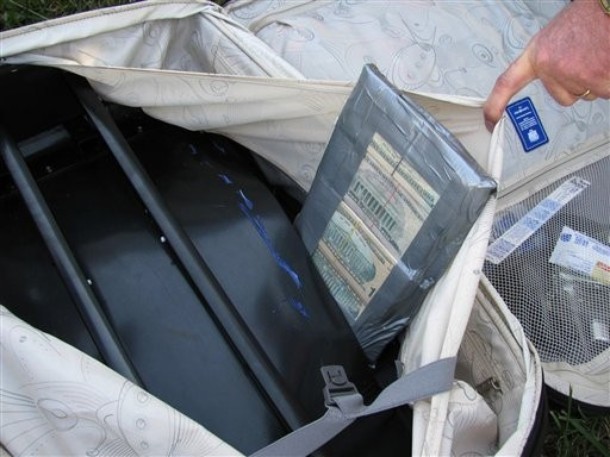
 

But today, on Valentineโ€™s Day, we want to warn you that criminals use these sites, too, looking to turn the lonely and vulnerable into fast money through a variety of scams.

These criminalsโ€”who also troll social media sites and chat rooms in search of romantic victimsโ€”usually claim to be Americans traveling or working abroad. In reality, they often live overseas. Their most common targets are women over 40 who are divorced, widowed, and/or disabled, but every age group and demographic is at risk.

Hereโ€™s how the scam usually works. Youโ€™re contacted online by someone who appears interested in you. He or she may have a profile you can read or a picture that is e-mailed to you. For weeks, even months, you may chat back and forth with one another, forming a connection. You may even be sent flowers or other gifts. But ultimately, itโ€™s going to happenโ€”your new-found โ€œfriendโ€ is going to ask you for money.

Recognizing an Online Dating
Scam Artist

Your online โ€œdateโ€ may only be interested in your money if he or she:

– Presses you to leave the dating website you met through and to communicate using personal e-mail or instant messaging;

– Professes instant feelings of love;

– Sends you a photograph of himself or herself that looks like something from a glamour magazine;

– Claims to be from the U.S. and is traveling or working overseas;

– Makes plans to visit you but is then unable to do so because of a tragic event; or

– Asks for money for a variety of reasons (travel, medical emergencies, hotel bills, hospitals bills for child or other relative, visas or other official documents, losses from a financial setback or crime victimization).

One way to steer clear of these criminals all together is to stick to online dating websites with nationally known reputations.


insidethefbi.jpgListen: Special Agent Nicholas Savage describes so-called โ€œsweetheart scammersโ€ and the dangers they pose on the Internet.โ€
More: Inside the FBI

So you send moneyโ€ฆbut rest assured the requests wonโ€™t stop there. There will be more hardships that only you can help alleviate with your financial gifts. He may also send you checks to cash since heโ€™s out of the country and canโ€™t cash them himself, or he may ask you to forward him a package.

So what really happened? You were targeted by criminals, probably based on personal information you uploaded on dating or social media sites. The pictures you were sent were most likely phony, lifted from other websites. The profiles were fake as well, carefully crafted to match your interests.

In addition to losing your money to someone who had no intention of ever visiting you, you may also have unknowingly taken part in a money laundering scheme by cashing phony checks and sending the money overseas and by shipping stolen merchandise (the forwarded package).

While the FBI and other federal partners work some of these casesโ€”in particular those with a large number of victims or large dollar losses and/or those involving organized criminal groupsโ€”many are investigated by local and state authorities.

We strongly recommend, however, that if you think youโ€™ve been victimized by a dating scam or any other online scam, file a complaint with our Internet Crime Complaint Center. Before forwarding the complaints to the appropriate agencies, IC3 collates and analyzes the dataโ€”looking for common threads that could link complaints together and help identify the culprits. Which helps keep everyone safer on the Internet.

For specific tips on how to keep from being lured into an online dating scam, see the sidebar above. Awareness is the best tool for preventing crimeโ€ฆand in this case, even from preventing a broken heart.

TOP SECRET from the FBI – Uzbek National Pleads Guilty to Charges of Threatening to Kill the President and Providing Material Support to Terrorist Activity

BIRMINGHAMโ€”An Uzbek national who has lived in the United States since 2009 pleaded guilty today in federal court to charges of providing material support to terrorist activity, threatening to kill President Barack Obama and illegally possessing a weapon.

U.S. Attorney Joyce White Vance; Department of Justice Assistant Attorney General for National Security Lisa Monaco; FBI Special Agent in Charge Patrick J. Maley; Bureau of Alcohol, Tobacco, Firearms and Explosives Special Agent in Charge Glenn N. Anderson; Secret Service Special Agent in Charge Roy Sexton; and Immigration and Customs Enforcementโ€™s Homeland Security Investigations Special Agent in Charge Raymond R. Parmer Jr. announced the plea.

ULUGBEK KODIROV, 22, of Uzbekistan, pleaded guilty before U.S. District Judge Abdul K. Kallon to one count of providing material support to terrorist activity, one count of threatening to kill the president and one count of possession of a firearm by an illegal alien. The charges of threatening to kill President Obama and illegally possessing a firearm were among charges brought in an indictment against Kodirov by a federal grand jury in July 2011.

The U.S. Attorneyโ€™s Office filed a criminal information Thursday in U.S. District Court charging Kodirov with material support of terrorism.

U.S. Attorney Vance praised the investigative work and prompt action of the Joint Terrorism Task Force for the Northern District of Alabama. โ€œToday, Ulugbek Kodirov became the first person to be convicted of providing material support to terrorist activity in this district,โ€ she said. โ€œKodirov was apprehended during an undercover operation in which he was attempting to obtain weapons and explosives that he intended to use to kill the president of the United States. Effective action by law enforcement protected our community and potentially our country,โ€ she said.

โ€œI also want to express my appreciation to the Muslim community of Birmingham, which was instrumental in helping law enforcement shut down this threat,โ€ Vance said.

โ€œTodayโ€™s case underscores the continuing threat we face from violent extremists,โ€ Assistant Attorney General Monaco said. โ€œThanks to a coordinated law enforcement effort, Kodirovโ€™s plot was thwarted before anyone was harmed.โ€

FBI SAC Maley said, โ€œI want to thank the members of the Joint Terrorism Task Force (JTTF), who include the Jefferson and Shelby County Sheriffโ€™s Offices, Birmingham, Hoover and UAB Police Departments, the Transportation Security Agency, Secret Service, ATF, and DHS. I also thank the Pelham and Leeds Police Departments for their invaluable assistance in this case. The JTTF has been diligently investigating and building partnerships to protect Alabama from terrorists since 9/11, and its efforts put it in the unique position to interdict a violent act of terrorism. This case serves as a reminder of the dangers of the Internet on radicalizing our youth right in our own back yards, and all citizens and organizations need to remain vigilant on the ever-increasing threat from home-grown violent extremists.โ€

ATF SAC Anderson said, โ€œThis case involved a variety of experience and expertise with ATFโ€™s local, state and federal law enforcement partners, including the Secret Service, ICE, FBI JTTF, Shelby County Sheriffโ€™s Office, Leeds Police Department and Pelham Police Department. The combined effort enabled a quick response and a very fluid investigation focused on keeping everyone safe, from Leeds, Alabama, potentially to the White House.โ€

โ€œThe Secret Service will actively investigate any perceived threat against anyone we are charged to protect,โ€ SAC Sexton said. โ€œThis case is a great indicator of what can be accomplished through the outstanding cooperation between local, state and federal law enforcement in the Northern District of Alabama.โ€

โ€œThis case is a perfect example of the outstanding cooperation between all law enforcement agencies involved in this arrest,โ€ ICE-HSI SAC Parmer said. โ€œBecause of great coordination and cooperation, we were able to jointly arrest this dangerous illegal alien. We are dedicated to apprehending those individuals who are the most dangerous in our communities and getting them off the streets.โ€

Kodirov entered a plea agreement with the government, which was filed with the court today. In the plea agreement, Kodirov acknowledges that he had been in communication with an individual whom he believed to be a member of the Islamic Movement of Uzbekistan (IMU), and that Kodirov interpreted these conversations to mean that he should kill President Obama. Kodirov then took steps to obtain weapons to carry out his plans to kill the president. The IMU is designated as a Foreign Terrorist Organization by the U.S. State Department. Kodirov also showed jihadist websites and videos on his computer to another individual and told that person that he wanted to assist others in jihad overseas, according to the plea agreement.

Kodirov also acknowledges in the plea agreement that he had lengthy conversations in July 2011 with a different individual about Kodirovโ€™s desire to kill President Obama and possible ways to carry out the assassination. That individual traveled to Birmingham to meet Kodirov and introduced him to another individual, an undercover agent, from whom Kodirov intended to obtain weapons he would use to kill the president.

The three men met on July 13, 2011, at a motel in Leeds, Ala. In that meeting, the agent presented a fully automatic Sendra Corporation Model M15-A1 machine gun, a sniper rifle with a telescopic sight and four disassembled hand grenades and asked Kodirov if he would like to use any of them to โ€œcarry out his plan to kill the President,โ€ according to the plea agreement. Kodirov chose the M15-A1 machine gun and the hand grenades and left the meeting with the weapons. Agents arrested Kodirov before he left the motel.

Kodirov entered the United States on a student visa in June 2009. His visa was revoked on April 1, 2010, for failing to enroll in school. Thereafter, he was unlawfully present within the United States. He was living in an extended-stay motel in Pelham, Ala., at the time of his arrest.

Kodirov faces maximum prison sentences of 15 years on the terrorism charge, five years on the charge of threatening the president and 10 years on the charge of being an illegal alien in possession of a firearm. Each charge also carries a maximum fine of $250,000.

The FBI, ATF, HSI, and Secret Service investigated the case. Assistant U.S. Attorneys Michael W. Whisonant and Ryan K. Buchanan are prosecuting the case with assistance from the Counterterrorism Section of the Justice Departmentโ€™s National Security Division.

REVEALED – More Than $18 Billion in Cash Smuggled Across U.S.-Mexico Border Each Year

This undated photo, provided by U.S. Immigrations and Customs Enforcement (ICE), shows bulk cash, seized by the ICE, which was hidden under the lining of a suit case. Immigration agents report a rising number of cash seizures and arrests in the past half-dozen years as criminals, sidestepping scrutiny from banks over electronic transfers, resort to using cash to conceal proceeds from drug trafficking as they move the money south to crime rings in Mexico and elsewhere. (AP Photo/ICE)


Jeanette Barraza-Galindo conspicuously left her bags of teddy bears and throw pillows on a bus during an inspection at the Texas-Mexico border โ€” and professed ignorance about the $277,556 officers found hidden inside. The bags were handed to her at a bus station, gifts to be given to a child upon her return to Mexico, she told investigators.The crime she pleaded guilty to โ€” bulk cash smuggling โ€” is increasingly drawing the attention and resources of federal authorities responsible for fighting drug trafficking across the border. Federal immigration authorities say their investigations have yielded more cash seizures and arrests in the past half-dozen years as criminals, sidestepping scrutiny from banks over electronic transfers, resort to using cash to conceal drug trafficking and move money to crime rings in Mexico and elsewhere.

Itโ€™s similar to the tactic taken in fighting terrorism: crippling financing networks before the money ends up with leaders of drug cartels and trafficking rings. But the flow is hard to stop.

Officials in both the U.S. and Mexico are realizing that criminal enterprises, just like other businesses, canโ€™t operate without a steady cash stream, said David Shirk, director of the Trans-Border Institute at the University of San Diego, which promotes scholarship of border issues.

โ€œWeโ€™re shifting our strategy to a more diverse strategy of not just going after bad guys and arresting them, but also going after their guns, going after their money,โ€ he said.

Itโ€™s illegal to try to smuggle more than $10,000 in undeclared cash across the border. Officials say the crime is often connected to other illegal activities including drug trafficking, gambling and credit card fraud. Money thatโ€™s seized is deposited into government forfeiture funds.

โ€ฆ

The Obama administration says targeting bulk cash smuggling is a prong of its strategy against transnational crime. Congressional panels held hearings on the issue last year. U.S. Immigration and Customs Enforcement reported more than $150 million in seized cash and 428 arrests in bulk cash smuggling investigations in fiscal year 2011, up from $7.3 million and 48 in fiscal year 2005, according to agency statistics.

And a cash smuggling center in Vermont that opened in 2009 and is run by ICEโ€™s homeland security investigations has expanded operations, officials announced in December.

But experts say measuring the impact of the beefed-up focus is tricky.

Itโ€™s hard to track cashโ€™s origin and destination โ€” and investigators canโ€™t always count on help from couriers, who may be more afraid cooperating than of spending a few years in prison. Plus, the amount seized represents a fraction of the total money at stake. Estimates cited by federal authorities suggest at least $18 billion in illicit proceeds is laundered across the southwestern border each year.

โ€ฆ

โ€œI call this winning the battle, losing the war. Sure, $90 million sounds like a lot,โ€ said Bruce Bagley, a University of Miami international studies professor who researches drug trafficking. โ€œThatโ€™s nothing in comparison to the $19 to $39 billion thatโ€™s being returnedโ€ across the border.

TOP-SECRET from the FBI – Marin Man, 76, Sentenced to Eight Years for Possession of Child Pornography

Donald Tosti was sentenced to eight years in prison and ordered to pay $50,000 in restitution for possessing child pornography.

Tosti was convicted on Sept. 14, 2011, on two charges of possessing child pornography. During the trial, evidence showed that Tosti was found to possess child pornography after taking his computer to CompUSA for repair. A search of Tostiโ€™s home and office revealed a large collection of child pornography, including depictions of the rape of very young children. In sentencing Tosti, United States District Court Judge Jeffrey S. White emphasized the size of his collection and the graphic and extreme nature of the child pornography images as aggravating factors in imposing his sentence.

The prosecution is the result of a four-year investigation by the Federal Bureau of Investigation, with the assistance of the San Rafael Police Department.

SECRET from the FBI – $10 Million Returned to Victims of Public Corruption Scheme, Including Kodak and the Town of Greece

ROCHESTER, NYโ€”U.S. Attorney William J. Hochul, Jr. announced today that more than $10,000,000 in forfeited property has been returned to the victims of one of the largest public corruption cases ever prosecuted in the Western District of New York. Those receiving restitution include the Eastman Kodak Company, the Town of Greece, IBM, ITT Industries, Inc., RG&E, and Global Crossing. The companies and town were all victims of real property tax appraisal and assessment schemes spearheaded by John Nicolo, a property appraiser.

In 2005, John Nicolo, Mark Camarata, Charles Schwab, David Finnman, and others were arrested and later convicted of a variety of crimes including mail and wire fraud, conspiracy, and money laundering. The defendants schemed victims out of millions of dollars by artificially inflating tax assessments on properties they owned, and then causing John Nicolo to be hired by the companies in an effort to reduce the resulting tax assessments.

Assistant U.S. Attorney Richard A. Resnick, who prosecuted the case, stated that David Finnman and Mark Camarata, while working at Kodak, hired Nicolo to perform real property appraisal services for Kodak between 1997 and 2005. In return for hiring Nicolo, Finnman, and Camarata would receive money representing kickbacks from Nicolo. In addition, Charles Schwab, while the Greece Town Assessor, also received kickbacks from Nicolo in connection with various property tax assessment matters involving property located in Greece.

The forfeiture aspect of the case resulted in considerable litigation over the several years following the criminal convictions. In February 2009, U.S. District Judge David G. Larimer ultimately agreed with the Governmentโ€™s position and ordered over $12,000,000 in assets to be forfeited from the various defendants. The ruling spurred further litigation involving John Nicoloโ€™s wife, Constance Roeder, who claimed that much of the money was hers and had nothing to do with Nicoloโ€™s crimes. In November 2011, Judge Larimer approved a settlement which awarded the government more than $10,000,000 and returned $2,000,000 to Constance Roeder, which was determined not to have been involved in her husbandโ€™s appraisal fund.

Of the $10,000,000 settlement, the Eastman Kodak Co. received $7,800,000 and the Town of Greece received $1,900,000. In addition, IBM received $70,000, RG&E $13,000, ITT Space Systems, LLC $633,000, and Global Crossing $33,750.

The majority of the properties forfeited involved large financial accounts where John Nicolo concealed his illegal proceeds. Some of the accounts were valued in excess of several million dollars. Nicolo also forfeited BMW and Volvo automobiles and a Bentley, valued at $165,000, which was purchased with illegal cash just months prior to its seizure in 2005. In addition, Mark Camarata forfeited almost $1,000,000 and the government seized high-end vehicles and two residences from Charles Schwab, one of which was a home in an exclusive South Carolina golf community.

Furthermore, a vacation home and a number of parcels overlooking Keuka Lake, worth approximately $500,000, are still to be sold. That money will be forfeited to the government and used to assist law enforcement in further criminal investigations in our community.

Following the criminal prosecution, John Nicolo and Charles Schwab were sentenced to 12 years in federal prison, Mark Camarata was sentenced to 24 months, and David Finnman received 21 months.

โ€œThis case sends a strong message that public corruption and corporate fraud will not be tolerated,โ€ said U.S. Attorney Hochul. โ€œThose who attempt to make financial gains by victimizing others not only risk destroying their families but also losing their freedom. As this case demonstrates, our office is also fully prepared to utilize the federal forfeiture laws to take the โ€˜profitโ€™ out of such crimes by stripping defendants of their illicit proceeds and returning them to innocent victims where they belong.โ€

The successful prosecution and restitution are the result an investigation by special agents of the Federal Bureau of Investigation, under the direction of Special Agent in Charge Christopher M. Piehota; the Internal Revenue Service, under the direction Special Agent in Charge Charles R. Pine; the Postal Inspection Service, under the direction of Inspector in Charge Robert Bethel; and the Greece Police Department, under the direction of Chief Todd K. Baxter.

FROM THE FBI – Leader of Revolution Muslim Pleads Guilty to Using Internet to Solicit Murder and Encourage Violent Extremism

ALEXANDRIA, VAโ€”Jesse Curtis Morton, aka Younus Abdullah Muhammed, 33, of New York City, pleaded guilty today to using his position as a leader of Revolution Muslim Organizationโ€™s Internet sites to conspire to solicit murder, make threatening communications, and use the Internet to place others in fear.

Neil H. MacBride, U.S. Attorney for the Eastern District of Virginia; James W. McJunkin, Assistant Director in Charge of the FBIโ€™s Washington Field Office; and Raymond W. Kelly, New York City Police Commissioner, made the announcement after the plea was accepted by U.S. District Judge Liam Oโ€™Grady.

Morton faces a maximum penalty five years in prison for each of the three charges when he is sentenced on May 18, 2012.

โ€œJesse Morton operated Revolution Muslim to radicalize those who saw and heard his materials online and to incite them to engage in violence against those they believed to be enemies of Islam,โ€ said U.S. Attorney MacBride. โ€œWe may never know all of those who were inspired to engage in terrorism because of Revolution Muslim, but the string of recent terrorism cases with ties to Mortonโ€™s organization demonstrates the threat it posed to our national security. Weโ€™re grateful to the FBI, NYPD, and their law enforcement partners throughout the world who made todayโ€™s conviction possible.โ€

โ€œIndividuals such as Morton who encourage violence and create fear over the Internet are a danger to our society and to the freedoms we enjoy as citizens,โ€ said Assistant Director in Charge McJunkin. โ€œTodayโ€™s plea, and other recent cases of those associated with Mortonโ€™s organization, demonstrate the widespread nature of this danger. Together with our partner law enforcement agencies, and with the assistance of the community, the FBI will continue to pursue those who promulgate violent extremism and promote the radicalization of others.โ€

โ€œFortunately, NYPD Intelligence Division detectives were in a position to learn exactly how Morton used the Internet to conspire to solicit murder, and how he encouraged others to solicit the murder of an artist whose material he deemed offensive,โ€ said Police Commissioner Kelly. โ€œThis important plea resulted because the NYPDโ€™s monitoring of Mortonโ€™s activities, combined with the investigative and prosecutorial expertise of the FBI and the U.S. Attorney for Eastern District of Virginia, made for a strong case, in addition to a strong partnership.โ€

According to a statement of facts filed with his plea agreement, Morton founded Revolution Muslim in December 2007 and created various online forums that contained postings and information supportive of violent extremism. Morton and his associates used the organizationโ€™s websites to encourage Muslims to engage in violence against those they believed to be enemies of Islam and to support Osama bin Laden, Anwar Al-Awlaki, al Qaeda, the Taliban, and others espousing violence. They posted messages in support of the terrorist attacks on Sept. 11, 2001, the November 2009 killings at Ft. Hood and attacks and future threats against Jewish organizations, among others.

Through his online forums, Morton conspired with Zachary Chesser, of Fairfax County, Va., and others to solicit the murder of an artist tied to the โ€œEverybody Draw Mohammed Dayโ€ movement in May 2010, including posting online a magazine that included the artist in a hit list for violent extremists to take out and a message from Anwar Al-Awlaki that explicitly called for the artistโ€™s assassination. In justifying these actions, Morton posted online a speech of his asserting that โ€œIslamโ€™s position is that those that insult the Prophet may be killedโ€ and exhorting his listeners to fight the โ€œdisbelievers near you.โ€

In addition, Morton admitted through his statement of facts that he aided Chesser in taking repeated steps in April 2010 to encourage violent extremists to attack the writers of South Park for an episode that featured Muhammad in a bear suit, including highlighting their residence and urging online readers to โ€œpay them a visit.โ€ Among the steps they took were posting on multiple occasions speeches by Anwar Al-Awlaki, which explained the Islamic justification for killing those who insult or defame Muhammad. Morton worked with Chesser to draft a message for the website regarding the South Park threats, including a quote from Osama bin Laden that โ€œIf there is no check in the freedom of your words, then let your hearts be open to the freedom of our actions.โ€ Morton and Chesser posted the final version of this statement on various extremist online forums, and Chesser told Morton that he expected the statement would โ€œscare the kuffar.โ€ Kuffar is an Arabic term, referring to an unbeliever, or disbeliever, in Islam.

Chesser was arrested on July 21, 2010, charged with providing material support to al Shabaab and later also pleaded guilty to communicating threats and soliciting violent extremists to desensitize law enforcement. Four days after Chesserโ€™s arrest, Morton fled to Morocco, where he resided until his arrest on U.S. charges on May 26, 2011.

In his statement of facts, Morton admitted that the Revolution Muslim websites contained the writings of and/or contributed to the radicalization of individuals who were inclined to engage in violence, including the following:

Samir Khan, previously of Charlotte, N.C., before moving to Yemen in 2009, was authorized by Morton to post materials on Revolution Muslim, and Morton provided Khan with two articles for the first two online editions of Jihad Recollections, an online magazine dedicated to violent extremism. In July 2010, Morton posted the first edition of Inspire magazine, an English-language magazine supporting al Qaeda that Morton believed to be the product of Khan. The magazine included an eight-page article titled โ€œMake a bomb in the kitchen of Your Mom,โ€ with detailed instructions regarding the construction of an explosive device.

Bilal Zaheer Ahmad, of the United Kingdom, was provided the password to Revolution Muslim by Morton and given permission to post messages. In November 2010, Ahmad praised Roshonara Choundhry for attempting to kill a British member of parliament over his support for the Iraq war and posted a list of 383 members of parliament who had voted for the Iraq war, along with suggestions on how to get in to see them and a link to a store selling a weapon similar to that used in Choundhryโ€™s attack. Ahmad told Morton that the purpose of the post was to โ€œmake those MPs fearful.โ€

Abdel Hameed Shehedah, a former resident of Staten Island, N.Y., who was charged in October 2010 of making false statements involving his alleged attempt to travel to Pakistan to join a fighting group such as the Taliban. The statement of facts states that Shehedah attended Revolution Muslim meetings, made his website, civiljihad.com, a feeder site for Revolution Muslim and eventually arranged for all visitors to his website be routed automatically to Revolution Muslim.com.

Rezwan Ferdaus, of Ashland, Mass., was charged in September 2011 with plotting to attack the Pentagon and U.S. Capitol using large remote controlled aircraft filled with C-4 plastic explosives. The statement of facts states that in February 2010, Ferdaus e-mailed Morton asking for counsel regarding his duties as a Muslim and whether martyrdom operations were proper practice. Morton replied that martyrdom operations must be judged by intention but can have โ€œenormous benfits (sic) in a war of attrition.โ€

Colleen R. LaRose, aka โ€œJihad Jane,โ€ of Montgomery County, Pa., was charged in March 2010 with a variety of terrorism-related offenses, including plotting to kill Lars Vilks, a Swedish cartoonist who has been the subject of several murder threats based on his artwork depicting Muhammad. According to the statement of facts, Morton notified Sheikh Abdullah Faisal, a Muslim cleric convicted in the United Kingdom of soliciting murder, that LaRose was a subscriber to Revolution Muslim YouTube accounts.

Antonio Benjamin Martinez, of Baltimore, Md., was arrested and charged with plotting to bomb a military recruiting station in December 2010. The statement of facts states that one month prior to his arrest, Martinez viewed a video of Osama bin Laden and multiple terror training camp video clips on the Revolution Muslim website.

Jose Pimental, of New York City, was arrested and charged in November 2011 in connection with a plot to build and use a bomb to assassinate members of the U.S. military returning from active duty in Afghanistan. According to the statement of facts, Pimental contacted Morton saying that he was a big fan of Revolution Muslim, and that Morton recommended that Pimentel stay away from an individual because โ€œthere is high probability that he is working for the FBI.โ€

Mohamed Hamoud Alessa and Carlos Eduardo Almonte, both of New Jersey, were arrested in June 2010 on their way to Somalia to join a terrorist organization to kill individuals whose beliefs and practices did not accord with their ideology. The statement of facts states that both Alessa and Almonte were associates of Mortonโ€™s within the Revolution Muslim organization, and Morton was interviewed by investigators from the New York City Police Department on the day of their arrest.

This investigation is being conducted by the FBIโ€™s Washington Field Office and the New York Police Departmentโ€™s Intelligence Division. Assistant U.S. Attorneys Gordon D. Kromberg and Karen L. Dunn of the U.S. Attorneyโ€™s Office for the Eastern District of Virginia and Trial Attorney John T. Gibbs of the Counterterrorism Section in the National Security Division are prosecuting the case on behalf of the United States.

A copy of this press release may be found on the website of the U.S. Attorneyโ€™s Office for the Eastern District of Virginia at http://www.usdoj.gov/usao/vae. Related court documents and information may be found on the website of the District Court for the Eastern District of Virginia at http://www.vaed.uscourts.gov or on http://pacer.uspci.uscourts.gov.