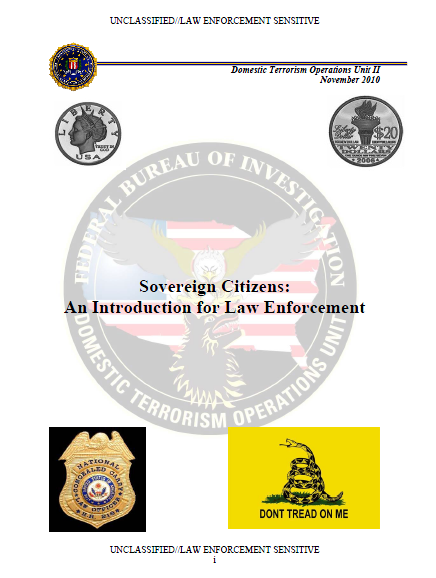
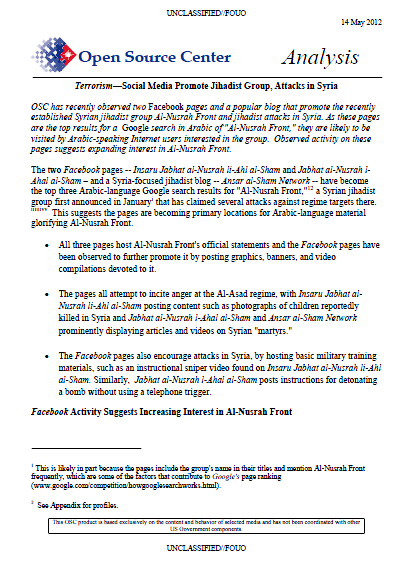
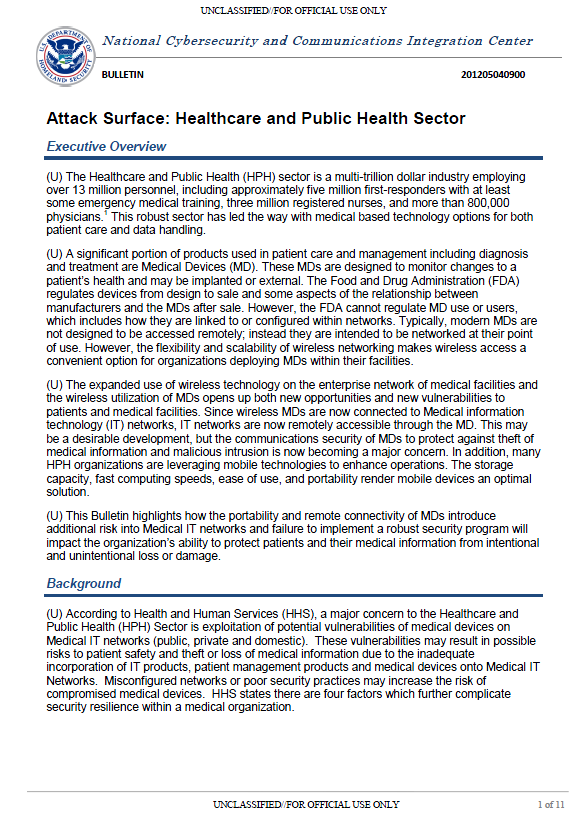
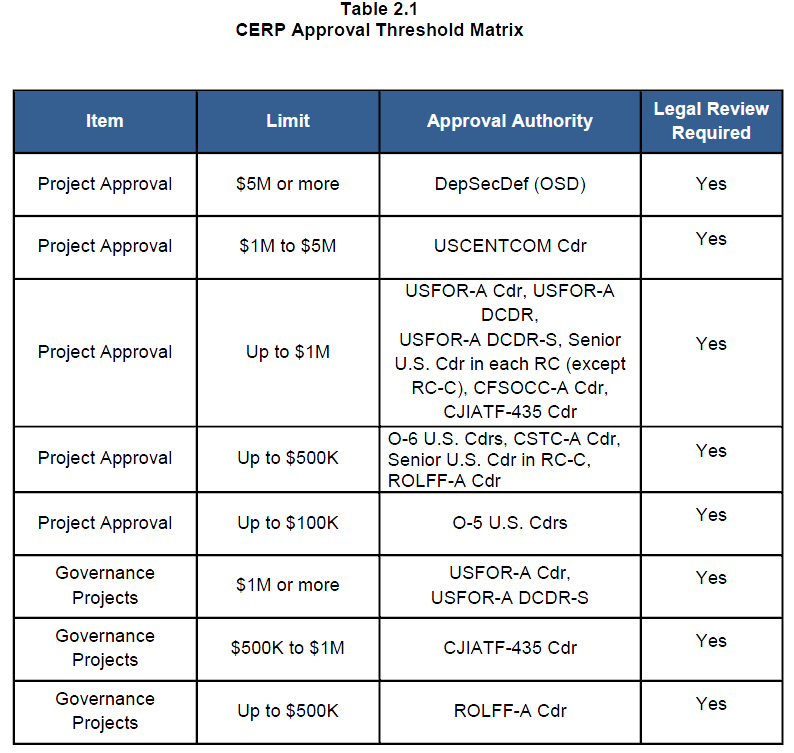
SECURE – Washington Airports Electronic Security Systems

DOWNLOAD THE ORIGINAL FILE HERE

mwaa-ess

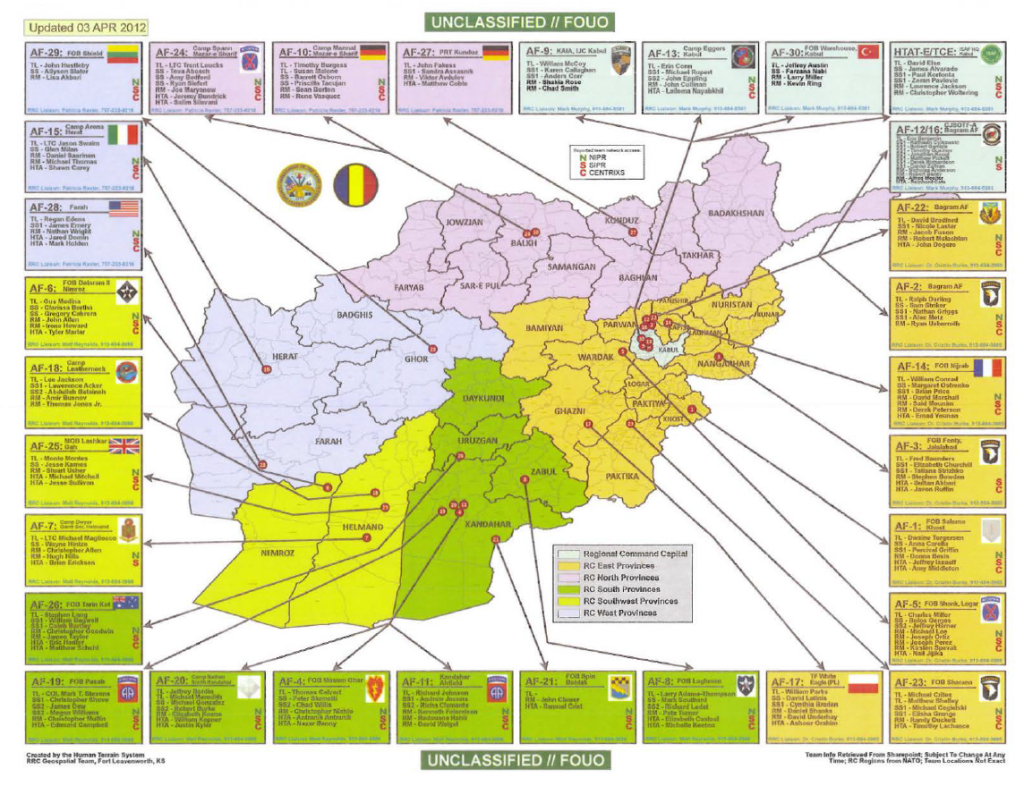
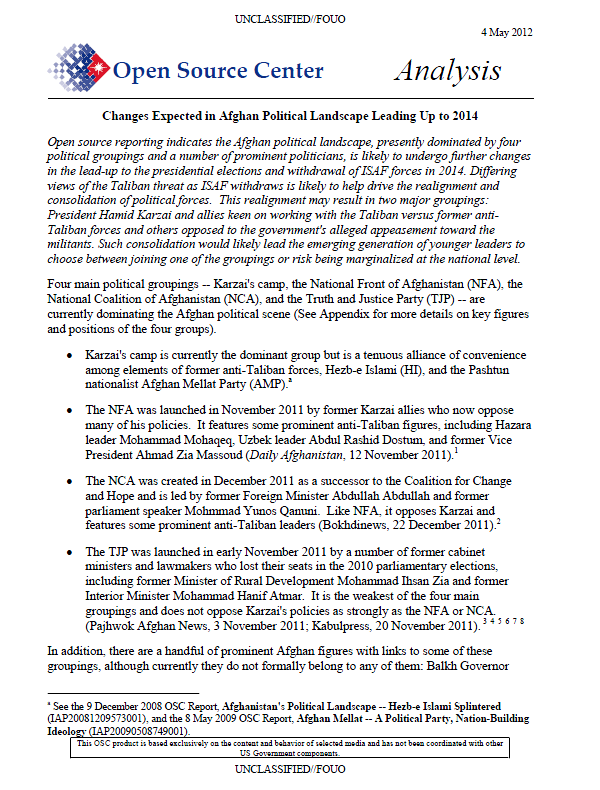
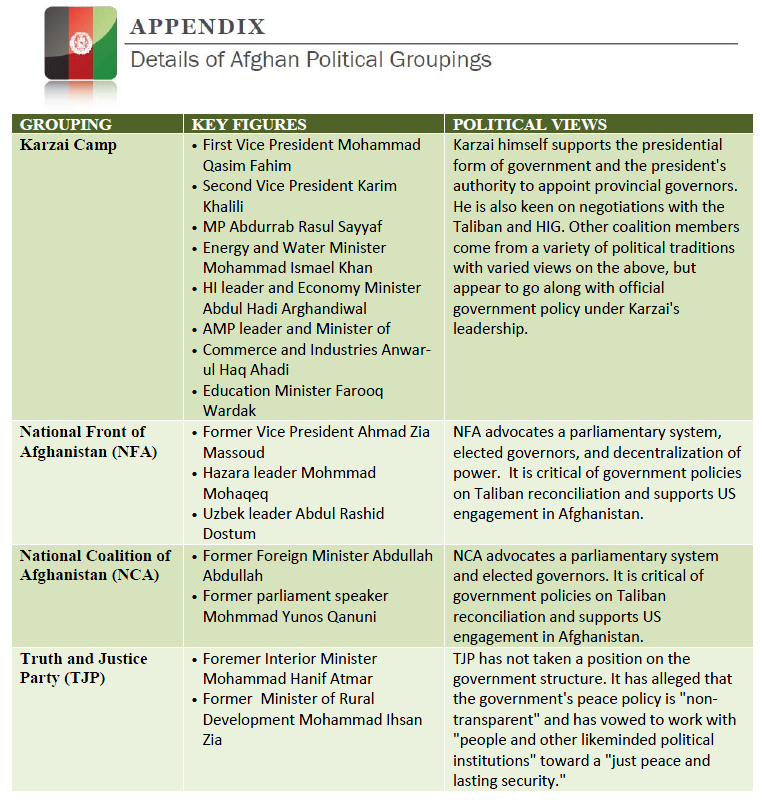
SECRET – Zero Human Terrain System: Firing, Budget

DOWNLOAD THE ORGINAL DOCUMENT HERE

gao-12-476

Thou Shalt Not Kill – Full Movie

TOP-SECRET – SEC Plan To End Extraordinary Market Volatility


SEC Plan To End Extraordinary Market Volatility


[Federal Register Volume 77, Number 109 (Wednesday, June 6, 2012)]
[Notices]
[Pages 33498-33522]
From the Federal Register Online via the Government Printing Office [www.gpo.gov]
[FR Doc No: 2012-13653]

=======================================================================
-----------------------------------------------------------------------

SECURITIES AND EXCHANGE COMMISSION

[Release No. 34-67091; File No. 4-631]

Joint Industry Plans; Order Approving, on a Pilot Basis, the 
National Market System Plan To Address Extraordinary Market Volatility 
by BATS Exchange, Inc., BATS Y-Exchange, Inc., Chicago Board Options 
Exchange, Incorporated, Chicago Stock Exchange, Inc., EDGA Exchange, 
Inc., EDGX Exchange, Inc., Financial Industry Regulatory Authority, 
Inc., NASDAQ OMX BX, Inc., NASDAQ OMX PHLX LLC, The Nasdaq Stock Market 
LLC, National Stock Exchange, Inc., New York Stock Exchange LLC, NYSE 
MKT LLC, and NYSE Arca, Inc.

May 31, 2012.

I. Introduction

    On April 5, 2011, NYSE Euronext, on behalf of New York Stock 
Exchange LLC (``NYSE''), NYSE Amex LLC (``NYSE Amex''),\1\ and NYSE 
Arca, Inc. (``NYSE Arca''), and the following parties to the proposed 
National Market System Plan: BATS Exchange, Inc., BATS Y-Exchange, 
Inc., Chicago Board Options Exchange, Incorporated (``CBOE''), Chicago 
Stock Exchange, Inc., EDGA Exchange, Inc., EDGX Exchange, Inc., 
Financial Industry Regulatory Authority, Inc., NASDAQ OMX BX, Inc., 
NASDAQ OMX PHLX LLC, the

[[Page 33499]]

Nasdaq Stock Market LLC, and National Stock Exchange, Inc. 
(collectively with NYSE, NYSE MKT, and NYSE Arca, the 
``Participants''), filed with the Securities and Exchange Commission 
(the ``Commission'') pursuant to Section 11A of the Securities Exchange 
Act of 1934 (``Act''),\2\ and Rule 608 thereunder,\3\ a proposed Plan 
to Address Extraordinary Market Volatility (as amended, the 
``Plan'').\4\ A copy of the Plan is attached as Exhibit A hereto. The 
Participants requested that the Commission approve the Plan as a one-
year pilot.\5\ The Plan was published for comment in the Federal 
Register on June 1, 2011.\6\ The Commission received eighteen comment 
letters in response to the proposal.\7\ On September 27, 2011, the 
Commission extended the deadline for Commission action on the Plan and 
designated November 28, 2011 as the new date by which the Commission 
would be required to take action.\8\ The Commission found that such 
extension was appropriate in order to provide sufficient time to 
consider and take action on the Plan, in light of, among other things, 
the comments received on the proposal.\9\ On November 2, 2011, the 
Participants to the Plan, other than CBOE, responded to the comment 
letters and proposed changes to the Plan that were subsequently 
reflected in an amendment.\10\ On November 18, 2011, the Participants 
consented to the Commission's request that the deadline for Commission 
action on the Plan be extended an additional three months, to February 
29, 2012.\11\ On February 27, 2012, the Participants consented to the 
Commission's request that the deadline for Commission action on the 
Plan be extended an additional three months, to May 31, 2012.\12\ On 
May 24, 2012, the Participants submitted an amendment that proposed 
several changes to the Plan.\13\ This order approves the Plan, as 
amended, on a one-year pilot basis.
---------------------------------------------------------------------------

    \1\ On May 14, 2012, NYSE Amex filed a proposed rule change on 
an immediately effective basis to change its name to NYSE MKT LLC 
(``NYSE MKT''). See Securities Exchange Act Release No. 67037 (May 
21, 2012) (SR-NYSEAmex-2012-32).
    \2\ 15 U.S.C. 78k-1.
    \3\ 17 CFR 242.608.
    \4\ See Letter from Janet M. McGinness, Senior Vice President, 
Legal and Corporate Secretary, NYSE Euronext, to Elizabeth M. 
Murphy, Secretary, Commission, dated April 5, 2011 (``Transmittal 
Letter'').
    \5\ Id. at 1.
    \6\ See Securities Exchange Act Release No. 64547 (May 25, 
2011), 76 FR 31647 (``Notice'').
    \7\ See Letter from Steve Wunsch, Wunsch Auction Associates, 
LLC, to Elizabeth M. Murphy, Secretary, Commission, dated June 2, 
2011 (``Wunsch Letter''); Letter from Peter J. Driscoll, Investment 
Professional, Chicago, IL, to Elizabeth M. Murphy, Secretary, 
Commission, dated June 17, 2011 (``Driscoll Letter''); Letter from 
Stuart J. Kaswell, Executive Vice President & Managing Director, 
General Counsel, Managed Funds Association (``MFA''), to Elizabeth 
M. Murphy, Secretary, Commission, dated June 21, 2011 (``MFA 
Letter''); Letter from George U. Sauter, Managing Director and Chief 
Investment Officer, The Vanguard Group, Inc. (``Vanguard''), to 
Elizabeth M. Murphy, Secretary, Commission, dated June 22, 2011 
(``Vanguard Letter''); Letter from Karrie McMillan, General Counsel, 
Investment Company Institute (``ICI''), to Elizabeth M. Murphy, 
Secretary, Commission, dated June 22, 2011 (``ICI Letter''); Letter 
from Manisha Kimmel, Executive Director, Financial Information Forum 
(``FIF''), to Elizabeth M. Murphy, Secretary, Commission, dated June 
22, 2011 (``FIF Letter''); Letter from Craig S. Donohue, Chief 
Executive Officer, CME Group Inc., to Elizabeth M. Murphy, 
Secretary, Commission, dated June 22, 2011 (``CME Letter''); Letter 
from Joseph N. Cangemi, Chairman, and Jim Toes, President and Chief 
Executive Officer, Security Traders Association, to Elizabeth M. 
Murphy, Secretary, Commission, dated June 22, 2011 (``STA Letter''); 
Letter from Leonard J. Amoruso, General Counsel, Knight Capital 
Group, Inc. (``Knight''), to Elizabeth M. Murphy, Secretary, 
Commission, dated June 22, 2011 (``Knight Letter); Letter from Ann 
L. Vlcek, Managing Director and Associate General Counsel, 
Securities Industry and Financial Markets Association (``SIFMA''), 
to Elizabeth M. Murphy, Secretary, Commission, dated June 22, 2011 
(``SIFMA Letter''); Letter from Jamie Selway, Managing Director, and 
Patrick Chi, Chief Compliance Officer, ITG Inc., to Elizabeth M. 
Murphy, Secretary, Commission, dated June 23, 2011 (``ITG Letter''); 
Letter from Jose Marques, Managing Director and Global Head of 
Electronic Equity Trading, Deutsche Bank Securities Inc. (``Deutsche 
Bank''), to Elizabeth M. Murphy, Secretary, Commission, dated June 
23, 2011 (``Deutsche Bank Letter''); Letter from Kimberly Unger, 
Esq., Executive Director, The Security Traders Association of New 
York, Inc., to Elizabeth M. Murphy, Secretary, Commission, dated 
June 23, 2011 (``STANY Letter''); Letter from James J. Angel, Ph.D., 
CFA, Associate Professor of Finance, Georgetown University, 
McDonough School of Business, to Commission, dated June 24, 2011 
(``Angel Letter''); Letter from John A. McCarthy, General Counsel, 
GETCO, to Elizabeth M. Murphy, Secretary, Commission, dated June 24, 
2011 (``GETCO Letter''); Letter from Andrew C. Small, Executive 
Director and General Counsel, Scottrade, Inc., to Elizabeth M. 
Murphy, Secretary, Commission, dated July 5, 2011 (``Scottrade 
Letter''); Letter from Peter Skopp, President, Molinete Trading 
Inc., to Elizabeth M. Murphy, Secretary, Commission, dated July 19, 
2011 (``Molinete Letter''); and Letter from Sal Arnuk, Joe Saluzzi, 
and Paul Zajac, Themis Trading, LLC, to Elizabeth M. Murphy, 
Secretary, Commission (``Themis Letter''). Copies of all comments 
received on the proposed Plan are available on the Commission's Web 
site, located at http://www.sec.gov/comments/4-631/4-631.shtml. 
Comments are also available for Web site viewing and printing in the 
Commission's Public Reference Room, 100 F Street, NE., Washington, 
DC 20549, on official business days between the hours of 10:00 a.m. 
and 3:00 p.m. ET.
    \8\ See Securities Exchange Act Release No. 65410 (September 27, 
2011), 76 FR 61121 (Oct. 3, 2011).
    \9\ Id.
    \10\ See Letter from Janet M. McGinness, Senior Vice President, 
Legal and Corporate Secretary, NYSE Euronext, to Elizabeth M. 
Murphy, Secretary, Commission, dated November 2, 2011 (``Response 
Letter'').
    \11\ See Letter from Janet M. McGinness, Senior Vice President 
and Corporate Secretary, NYSE Euronext, to Elizabeth M. Murphy, 
Secretary, Commission, dated November 18, 2011.
    \12\ See Letter from Janet M. McGinness, Senior Vice President 
and Corporate Secretary, NYSE Euronext, to Elizabeth M. Murphy, 
Secretary, Commission, dated February 27, 2012.
    \13\ See Letter from Janet M. McGinness, Senior Vice President, 
Legal and Corporate Secretary, NYSE Euronext, to Elizabeth M. 
Murphy, Secretary, Commission, dated May 24, 2012 (``Amendment'').
---------------------------------------------------------------------------

II. Background

    On May 6, 2010, the U.S. equity markets experienced a severe 
disruption.\14\ Among other things, the prices of a large number of 
individual securities suddenly declined by significant amounts in a 
very short time period, before suddenly reversing to prices consistent 
with their pre-decline levels. This severe price volatility led to a 
large number of trades being executed at temporarily depressed prices, 
including many that were more than 60% away from pre-decline prices and 
were broken by the exchanges and FINRA. The Commission was concerned 
that events such as those that occurred on May 6 could seriously 
undermine the integrity of the U.S. securities markets. Accordingly, 
Commission staff has worked with the exchanges and FINRA since that 
time to identify and assess the causes and contributing factors of the 
May 6 market disruption \15\ and to fashion policy responses that will 
help prevent a recurrence.
---------------------------------------------------------------------------

    \14\ The events of May 6 are described more fully in a joint 
report by the staffs of the Commodity Futures Trading Commission 
(``CFTC'') and the Commission. See Report of the Staffs of the CFTC 
and SEC to the Joint Advisory Committee on Emerging Regulatory 
Issues, ``Findings Regarding the Market Events of May 6, 2010,'' 
dated September 30, 2010, available at 
http://www.sec.gov/news/studies/2010/marketevents-report.pdf.
    \15\ Id.
---------------------------------------------------------------------------

    One such response to the events of May 6, 2010, was the development 
of the single-stock circuit breaker pilot program, which was 
implemented through a series of rule filings by the Exchanges and 
FINRA. This pilot was introduced in three stages, beginning in June 
2010. In the first stage, the Commission approved, on an accelerated 
basis, proposed rule changes by the Exchanges and FINRA to pause 
trading during periods of extraordinary market volatility in stocks 
included in Standard & Poor's 500 index.\16\ In the second stage, the 
Commission approved the Exchanges' and FINRA's proposals to add 
securities included in the Russell 1000 index, as well as specified 
exchange traded products (``ETPs''), to the pilot.\17\ In the third 
stage, the

[[Page 33500]]

Commission approved the Exchanges' and FINRA's proposals to add all 
remaining NMS stocks, as defined in Rule 600(b)(47) of Regulation NMS 
under the Act (``NMS Stocks'') \18\ to the pilot.\19\ The Exchanges and 
FINRA each subsequently filed, on an immediately effective basis, 
proposals to exempt all rights and warrants from the pilot.\20\ The 
single-stock circuit breaker pilot is currently set to expire on July 
31, 2012.\21\
---------------------------------------------------------------------------

    \16\ See Securities Exchange Act Release Nos. 62252 (June 10, 
2010), 75 FR 34186 (June 16, 2010) (File Nos. SR-BATS-2010-014; SR-
EDGA-2010-01; SR-EDGX-2010-01; SR-BX-2010-037; SR-ISE-2010-48; SR-
NYSE-2010-39; SR-NYSEAmex-2010-46; SR-NYSEArca-2010-41; SR-NASDAQ-
2010-061; SR-CHX-2010-10; SR-NSX-2010-05; and SR-CBOE-2010-047); 
62251 (June 10, 2010), 75 FR 34183 (June 16, 2010) (SR-FINRA-2010-
025).
    \17\ See Securities Exchange Act Release Nos. 62884 (September 
10, 2010), 75 FR 56618 (September 16, 2010) (File Nos. SR-BATS-2010-
018; SR-BX-2010-044; SR-CBOE-2010-065; SR-CHX-2010-14; SR-EDGA-2010-
05; SR-EDGX-2010-05; SR-ISE-2010-66; SR-NASDAQ-2010-079; SR-NYSE-
2010-49; SR-NYSEAmex-2010-63; SR-NYSEArca-2010-61; and SR-NSX-2010-
08); and Securities Exchange Act Release No. 62883 (September 10, 
2010), 75 FR 56608 (September 16, 2010) (SR-FINRA-2010-033).
    \18\ 17 CFR 242.600(b)(47).
    \19\ See Securities Exchange Act Release No. 64735 (June 23, 
2011), 76 FR 38243 (June 29, 2011) (File Nos. SR-BATS-2011-016; SR-
BYX-2011-011; SR-BX-2011-025; SR-CBOE-2011-049; SR-CHX-2011-09; SR-
EDGA-2011-15; SR-EDGX-2011-14; SR-FINRA-2011-023; SR-ISE-2011-028; 
SR-NASDAQ-2011-067; SR-NYSE-2011-21; SR-NYSEAmex-2011-32; SR-
NYSEArca-2011-26; SR-NSX-2011-06; SR-Phlx-2011-64).
    \20\ See, e.g., Securities Exchange Act Release No. 65810 
(November 23, 2011) 76 FR 74080 (November 30, 2011) (SR-NYSE-2011-
57).
    \21\ See, e.g., Securities Exchange Act Release No. 66134 
(January 11, 2012), 77 FR 2592 (January 18, 2012) (SR-NYSE-2011-68).
    In addition to the trading pause pilot for individual 
securities, the Commission and the SROs also implemented other 
regulatory responses to the events of May 6, 2010. For example, the 
Commission approved proposed rule changes that set forth clearer 
standards and reduced the discretion of self-regulatory 
organizations with respect to breaking erroneous trades. See e.g., 
Securities Exchange Act Release No. 62886 (September 10, 2010), 75 
FR 56613 (September 16, 2010). Further, the Commission approved 
proposed rule changes that enhanced the minimum quoting standards 
for equity market makers to require that they post continuous two-
sided quotations within a designated percentage of the inside market 
to eliminate market maker ``stub quotes'' that are so far away from 
the prevailing market that they are clearly not intended to be 
executed. See Securities Exchange Act Release No. 63255 (November 5, 
2010), 75 FR 69484 (November 12, 2010).
---------------------------------------------------------------------------

    The Plan is intended to replace the single-stock circuit breaker 
pilot that is currently in place.

III. Description of the Proposal

    The Participants filed the Plan to create a market-wide limit up-
limit down mechanism that is intended to address extraordinary market 
volatility in NMS Stocks.\22\ The Plan sets forth procedures that 
provide for market-wide limit up-limit down requirements that would be 
designed to prevent trades in individual NMS Stocks from occurring 
outside of the specified price bands.\23\ These limit up-limit down 
requirements would be coupled with trading pauses, as defined in 
Section I(X) of the Plan, to accommodate more fundamental price moves 
(as opposed to erroneous trades or momentary gaps in liquidity).
---------------------------------------------------------------------------

    \22\ See Section I(H) of the Plan.
    \23\ As set forth in Section V of the Plan, the price bands 
would consist of a Lower Price Band and an Upper Price Band for each 
NMS Stock. The price bands would be based on a Reference Price that 
equals the arithmetic mean price of Eligible Reported Transactions 
for the NMS stock over the immediately preceding five-minute period. 
As defined in the proposed Plan, Eligible Reported Transactions 
would have the meaning prescribed by the Operating Committee for the 
proposed Plan, and generally mean transactions that are eligible to 
update the sale price of an NMS Stock.
---------------------------------------------------------------------------

    As set forth in Section V of the Plan, the price bands would 
consist of a Lower Price Band and an Upper Price Band for each NMS 
Stock.\24\ The price bands would be calculated by the Securities 
Information Processors (``SIPs'' or ``Processors'') responsible for 
consolidation of information for an NMS Stock pursuant to Rule 603(b) 
of Regulation NMS under the Act.\25\ Those price bands would be based 
on a Reference Price \26\ for each NMS Stock that equals the arithmetic 
mean price of Eligible Reported Transactions for the NMS Stock over the 
immediately preceding five-minute period. The price bands for an NMS 
Stock would be calculated by applying the Percentage Parameter for such 
NMS Stock to the Reference Price, with the Lower Price Band being a 
Percentage Parameter \27\ below the Reference Price, and the Upper 
Price Band being a Percentage Parameter above the Reference Price. 
Between 9:30 a.m. and 9:45 a.m. ET and 3:35 p.m. and 4:00 p.m. ET, the 
price bands would be calculated by applying double the Percentage 
Parameters.
---------------------------------------------------------------------------

    \24\ Capitalized terms used herein but not otherwise defined 
shall have the meaning ascribed to such terms in the Plan.
    \25\ 17 CFR 242.603(b). The Plan refers to this entity as the 
Processor.
    \26\ See Section I(T) of the Plan.
    \27\ As initially proposed by the Participants, the Percentage 
Parameters for Tier 1 NMS Stocks (i.e., stocks in the S&P 500 Index 
or Russell 1000 Index and certain ETPs) with a Reference Price of 
$1.00 or more would be five percent and less than $1.00 would be the 
lesser of (a) $0.15 or (b) 75 percent. The Percentage Parameters for 
Tier 2 NMS Stocks (i.e., all NMS Stocks other than those in Tier 1) 
with a Reference Price of $1.00 or more would be 10 percent and less 
than $1.00 would be the lesser of (a) $0.15 or (b) 75 percent. The 
Percentage Parameters for a Tier 2 NMS Stock that is a leveraged ETP 
would be the applicable Percentage Parameter set forth above 
multiplied by the leverage ratio of such product. On May 24, 2012, 
the Participants amended the Plan to create a 20% price band for 
Tier 1 and Tier 2 stocks with a Reference Price of $0.75 or more and 
up to and including $3.00. The Percentage Parameter for stocks with 
a Reference Price below $0.75 would be the lesser of (a) $0.15 or 
(b) 75 percent.
---------------------------------------------------------------------------

    The Processors would also calculate a Pro-Forma Reference Price for 
each NMS Stock on a continuous basis during Regular Trading Hours. If a 
Pro-Forma Reference Price did not move by one percent or more from the 
Reference Price in effect, no new price bands would be disseminated, 
and the current Reference Price would remain the effective Reference 
Price. If the Pro-Forma Reference Price moved by one percent or more 
from the Reference Price in effect, the Pro-Forma Reference Price would 
become the Reference Price, and the Processors would disseminate new 
price bands based on the new Reference Price. Each new Reference Price 
would remain in effect for at least 30 seconds.
    When one side of the market for an individual security is outside 
the applicable price band, the Processors would be required to 
disseminate such National Best Bid \28\ or National Best Offer \29\ 
with an appropriate flag identifying it as non-executable. When the 
other side of the market reaches the applicable price band, the market 
for an individual security would enter a Limit State,\30\ and the 
Processors would be required to disseminate such National Best Offer or 
National Best Bid with an appropriate flag identifying it as a Limit 
State Quotation.\31\ All trading would immediately enter a Limit State 
if the National Best Offer equals the Lower Limit Band and does not 
cross the National Best Bid, or the National Best Bid equals the Upper 
Limit Band and does not cross the National Best Offer. Trading for an 
NMS Stock would exit a Limit State if, within 15 seconds of entering 
the Limit State, all Limit State Quotations were executed or canceled 
in their entirety. If the market did not exit a Limit State within 15 
seconds, then the Primary Listing Exchange would declare a five-minute 
trading pause, which would be applicable to all markets trading the 
security.
---------------------------------------------------------------------------

    \28\ 17 CFR 242.600(b)(42). See also Section I(G) of the Plan.
    \29\ Id.
    \30\ A stock enters the Limit State if the National Best Offer 
equals the Lower Price Band and does not cross the National Best 
Bid, or the National Best Bid equals the Upper Price Band and does 
not cross the National Best Offer. See Section VI(A) of the Plan.
    \31\ See Section I(D) of the Plan.
---------------------------------------------------------------------------

    These limit up-limit down requirements would be coupled with 
trading pauses \32\ to accommodate more fundamental price moves (as 
opposed to erroneous trades or momentary gaps in liquidity). As set 
forth in more detail in

[[Page 33501]]

the Plan, all trading centers \33\ in NMS Stocks, including both those 
operated by Participants and those operated by members of Participants, 
would be required to establish, maintain, and enforce written policies 
and procedures that are reasonably designed to comply with the limit 
up-limit down and trading pause requirements specified in the Plan.
---------------------------------------------------------------------------

    \32\ The primary listing market would declare a trading pause in 
an NMS Stock; upon notification by the primary listing market, the 
Processor would disseminate this information to the public. No 
trades in that NMS Stock could occur during the trading pause, but 
all bids and offers may be displayed. See Section VII(A) of the 
Plan.
    \33\ As defined in Section I(W) of the Plan, a trading center 
shall have the meaning provided in Rule 600(b)(78) of Regulation NMS 
under the Act.
---------------------------------------------------------------------------

    Under the Plan, all trading centers would be required to establish, 
maintain, and enforce written policies and procedures reasonably 
designed to prevent the display of offers below the Lower Price Band 
and bids above the Upper Price Band for an NMS Stock. The Processors 
would disseminate an offer below the Lower Price Band or bid above the 
Upper Price Band that nevertheless inadvertently may be submitted 
despite such reasonable policies and procedures, but with an 
appropriate flag identifying it as non-executable; such bid or offer 
would not be included in National Best Bid or National Best Offer 
calculations. In addition, all trading centers would be required to 
develop, maintain, and enforce policies and procedures reasonably 
designed to prevent trades at prices outside the price bands, with the 
exception of single-priced opening, reopening, and closing transactions 
on the Primary Listing Exchange.
    As proposed, the Plan would be implemented as a one-year pilot 
program in two Phases. Phase I of the Plan would be implemented 
immediately following the initial date of Plan operations; Phase II of 
the Plan would commence six months after the initial date of the Plan 
or such earlier date as may be announced by the Processors with at 
least 30 days' notice. Phase I of the Plan would apply only to Tier 1 
NMS Stocks, as defined in Appendix A of the Plan. During Phase I of the 
Plan, the first Price Bands would be calculated and disseminated 15 
minutes after the start of Regular Trading Hours, no Price Bands would 
be calculated and disseminated less than 30 minutes before the end of 
Regular Trading Hours, and trading would not enter a Limit State less 
than 25 minutes before the end of Regular Trading Hours. In Phase II, 
the Plan would fully apply to all NMS Stocks beginning at 9:30 a.m. and 
ending at 4:00 p.m. each trading day.
    As stated by the Participants in the Plan, the limit up-limit down 
mechanism is intended to reduce the negative impacts of sudden, 
unanticipated price movements in NMS Stocks,\34\ thereby protecting 
investors and promoting a fair and orderly market.\35\ In particular, 
the Plan is designed to address the type of sudden price movements that 
the market experienced on the afternoon of May 6, 2010.\36\
---------------------------------------------------------------------------

    \34\ 17 CFR 242.600(b)(47).
    \35\ See Transmittal Letter, supra note 4.
    \36\ The limit up-limit down mechanism set forth in the proposed 
Plan would replace the existing single-stock circuit breaker pilot. 
See e.g., Securities Exchange Act Release Nos. 62251 (June 10, 
2010), 75 FR 34183 (June 16, 2010) (SR-FINRA-2010-025); 62883 
(September 10, 2010), 75 FR 56608 (September 16, 2010) (SR-FINRA-
2010-033).
---------------------------------------------------------------------------

IV. Comment Letters and Response Letter

    The Commission received 18 comment letters on the proposed 
Plan.\37\ Many commenters generally supported the Plan,\38\ while 
others indicated that they did not oppose the Plan and its intended 
goals, but raised concerns regarding specific details on the terms of 
the Plan.\39\ A few commenters opposed \40\ the Plan and suggested 
different alternatives to achieve the intended goal of the Plan. The 
Participants responded to the comments regarding the proposal.\41\
---------------------------------------------------------------------------

    \37\ See supra note 7.
    \38\ See MFA Letter at 1; Vanguard Letter at 1; ICI Letter at 1; 
STA Letter at 1; Knight Letter at 1; SIFMA Letter at 1; ITG Letter 
at 1; Deutsche Bank Letter at 1; STANY Letter at 1; GETCO Letter at 
1.
    \39\ See Driscoll Letter at 1; FIF Letter at 1; Angel Letter at 
1 (stating that the proposed Plan is an improvement over the current 
single stock circuit breaker pilot); Scottrade Letter at 1 and 5 
(supporting the goals of the proposed Plan, but stating that it 
believes that more work needs to be done before it can support the 
proposed Plan); Themis Letter at 1 (commending the efforts of the 
proposed Plan); Molinete Letter at 1.
    \40\ See Wunsch Letter at 1; CME Group Letter at 1-2 (supporting 
the proposed Plan's fundamental goal of promoting fair and orderly 
markets and mitigating the negative impacts of sudden and 
extraordinary price movements in NMS stocks, but stating that the 
proposed Plan sets forth an overly complicated and insufficiently 
coordinated structure that, in a macro-liquidity event, will have 
the unintended consequence of undermining rather than promoting 
liquidity).
    \41\ See Response Letter, supra note 10.
---------------------------------------------------------------------------

A. Reference Price Calculation

    As proposed in the Plan, the Processors would be responsible for 
calculating and disseminating the applicable Price Bands as provided 
for in Section V of the Plan. The Processors for each NMS stock would 
calculate and disseminate to the public a Lower Price Band and an Upper 
Price Band during regular trading hours, as defined in Section I(R) of 
the Plan, for such NMS Stock. The Price Bands would be based on a 
Reference Price for each NMS Stock that equals the arithmetic mean 
price of Eligible Reported Transactions \42\ for the NMS stock over the 
immediately preceding five-minute period (except for periods following 
openings and reopenings).\43\ The Price Bands for an NMS Stock would be 
calculated by applying the Percentage Parameter \44\ for such NMS Stock 
to the Reference Price, with the lower Price Band being a Percentage 
Parameter below the Reference Price, and the upper Price Band being a 
Percentage Parameter above the Reference Price. Some commenters 
expressed concern about the complexity involved in calculating the 
Reference Price.\45\
---------------------------------------------------------------------------

    \42\ As defined in the proposed Plan, Eligible Reported 
Transactions shall have the meaning prescribed by the Operating 
Committee for the proposed Plan, and generally mean transactions 
that are eligible to update the sale price of an NMS Stock.
    \43\ See infra, Section III.G. for a discussion on the 
application of the Price Bands at the open and close of the trading 
day.
    \44\ As defined in Section (I)(M) of the proposed Plan, the 
``Percentage Parameter'' means the percentages for each tier of NMS 
Stocks set forth in Appendix A of the Plan. As such, the Percentage 
Parameters for Tier 1 NMS Stocks with a Reference Price of $1.00 or 
more would be 5%, and the Percentage Parameters for Tier 2 NMS 
Stocks with a Reference Price of $1.00 or more would be 10%. For 
Tier 1 and Tier 2 NMS Stocks with a Reference Price less than $0.75, 
the Percentage Parameters would be the lesser of $0.15 or 75%. The 
Percentage Parameters for a Tier 2 NMS Stock that is a leveraged 
exchange-traded product would be the applicable Percentage Parameter 
multiplied by the leverage ratio of such product.
    \45\ See Angel Letter at 4; GETCO Letter at 3-4; MFA Letter at 
5; Molinete Letter at 1-2 (stating that it is not clear whether the 
trades used to calculate the Reference Price are weighted by volume, 
or if this is a strict average of the trade prices reported); Themis 
Letter at 1. See also SIFMA Letter at 8 (noting that if the market 
price for an NMS Stock moves by less than one percent, the Price 
Bands will not change and, as a result, the limit up and limit down 
prices will be closer to four percent than five percent over the 
prevailing market price because a new Reference Price will only be 
disseminated if there is a change of one percent or more in the Pro-
Forma Reference Price over the then prevailing Reference Price).
---------------------------------------------------------------------------

    Commenters suggested alternative ways to calculate the Reference 
Price. In its letter, one commenter suggested simplifying the Reference 
Price calculation by ``calculating a new Reference Price on regular 30 
second intervals, regardless of whether it has changed by 1%'' and 
noted that ``[t]his simplification also obviates the definition of a 
Pro-Forma Reference Price.''\46\ That commenter also recommended 
calculating the Reference Prints with a volume weighted average price 
rather than an arithmetic average price, which would remove the 
possibility of market participants splitting orders in different ways 
to affect the calculation of the Reference Price.\47\ Another commenter 
stated that

[[Page 33502]]

the Participants should consider using the opening price of a stock as 
the Reference Price because it would be much simpler than the 
calculation that the Participants proposed.\48\ Another commenter 
stated that the Participants should consider using the prior day's 
closing price as a static Reference Price, rather than constantly 
updating the Reference Price throughout the trading day, noting that 
this would be similar to how the futures markets calculate their limit 
up-limit down Price Bands.\49\
---------------------------------------------------------------------------

    \46\ See MFA Letter at 5.
    \47\ Id.
    \48\ See Angel Letter 4.
    \49\ See GETCO Letter at 3-4. See also SIFMA Letter at 9 
(requesting that the Participants clarify how Price Bands will apply 
to stocks with prices that cross the one dollar threshold during 
intra-day trading); Molinete Letter at 3-4 (stating its belief that 
changes in Price Band calculations throughout the trading day can 
create problems).
---------------------------------------------------------------------------

    Commenters also stated that certain types of trades should be 
exempted from the Plan and thus the calculation of the Reference Price. 
Three commenters noted that certain Regulation NMS-exempt trades should 
be exempt from the Plan because they are unrelated to the last sale of 
a stock.\50\ More specifically, one commenter stated that ``trading 
centers should be permitted to execute orders internally at prices 
outside of the specified Price Bands if the executions comply [with 
certain Regulation NMS exemptions].'' \51\ That commenter noted that 
most Regulation NMS exemptions ``have corresponding sale conditions 
that identify those trades as being not eligible for last sale.'' \52\ 
Another commenter stated that certain block facilitation trades should 
be exempted from the Plan.\53\ That commenter argued that block 
facilitation trades tend to stabilize the market because a block 
positioner is committing capital to absorb a large trading interest 
that would otherwise impact the market for the underlying stock of the 
block order.\54\ Finally, two commenters suggested that trades that are 
executed outside of the current Price Bands be exempt from Reference 
Price calculations.\55\
---------------------------------------------------------------------------

    \50\ See e.g., FIF Letter at 1-2; Deutsche Bank Letter at 3; 
SIFMA Letter at 2-4.
    \51\ See FIF Letter at 1-2 (listing the exemptions found in Rule 
611(a)--non-convertible preferred securities; Rule 611(b)(2)--not 
regular way; Rule 611(b)(7)--benchmark derivatively priced; Rule 
611(b)(9)--stopped stock; Rule 611(d)--qualified contingent trades; 
Rule 611(d)--error correction; Rule 611(d)--print protection).
    \52\ Id.
    \53\ See Deutsche Bank Letter at 3 (stating that ``it is 
critical for a block facilitator to execute outside a band when the 
market is moving rapidly or it will lose the ability to trade 
effectively for its client.'') See also FIF Letter at 2 (requesting 
an impact analysis on the printing of block transactions accompanied 
by a Regulation NMS sweep as well as block transactions printed 
without ISO modifiers in adherence with Regulation NMS FAQ 3.23).
    \54\ Id.
    \55\ See MFA Letter at 6 (recommend that the Plan include a more 
explicit definition for which prints are included in calculating a 
Reference Price); STANY Letter at 2 (noting that clearly erroneous 
transactions may still occur, and thus suggesting that trades that 
are executed outside the then existing price bands not be included 
in the calculation of the Reference Price).
---------------------------------------------------------------------------

    The Participants noted that alternatives were considered when the 
Plan was being drafted, but the Participants determined that something 
more dynamic would be preferable, and that the five percent level is 
more therefore appropriate, particularly for highly liquid stocks.\56\ 
Moreover, the Participants stated that the proposed one percent 
requirement would help to reduce quote traffic but still provide for 
appropriate adjustments of Reference Prices in a rapidly moving 
market.\57\ The Participants also stated that using the arithmetic 
average would reduce the impact of any erroneous trades that may be 
included in the calculation of the Reference Price.\58\
---------------------------------------------------------------------------

    \56\ See Response Letter at 4.
    \57\ The Participants are not proposing to amend the Plan with 
respect to the calculation of the Reference Price. However, in an 
effort to keep a rapidly-moving market aware of the current price 
bands, the Processor would republish the existing price bands every 
15 seconds. See Response Letter at 5.
    \58\ Id.
---------------------------------------------------------------------------

    As discussed in greater detail below, the Participants recently 
amended the Plan to clarify that the Reference Price used in 
determining which Percentage Parameter is applicable during the trading 
day would be based on the closing price of the subject security on the 
Primary Listing Exchange on the previous trading day or, if no closing 
price exists, the last sale on the Primary Listing Exchange reported by 
the Processors. The Participants also amended the Plan to permit 
certain transactions to execute outside of the price bands. 
Specifically, the Participants proposed that transactions that are 
exempt under Rule 611 of Regulation NMS,\59\ and which do not update 
the last sale price (except if solely because the transaction was 
reported late), should be allowed to execute outside of the price 
bands.\60\ As part of the amendment, the Participants also proposed to 
exclude rights and warrants from the Plan, consistent with the current 
single-stock circuit breaker pilot.\61\
---------------------------------------------------------------------------

    \59\ 17 CFR 242.611.
    \60\ See Amendment, supra note 13.
    \61\ Id.
---------------------------------------------------------------------------

B. Display of Offers Below the Lower Price Band and Bids Above the 
Upper Price Band

    As proposed in the Plan, offers below the Lower Price Band and bids 
above the Upper Price Band would not be displayed on the consolidated 
tape. One commenter disagreed with this aspect of the Plan and stated 
that all quotes should be displayed, but marked as non-executable if 
outside the Price Bands.\62\ That commenter stated that preventing the 
display of quotes outside the Price Bands could lead to unusual side 
effects and that a broker-dealer entering an order on behalf of a 
customer should have the option of re-pricing or posting the order in 
accordance with the customer's wishes, rather than a market center re-
pricing non-executable orders to a Price Band.\63\ Another commenter 
stated that displaying certain non-accessible quotes that are the 
result ``of an altered price discovery process will have greater 
negative implications for investor confidence'' because the only trades 
than can be executed during a Limit State ``do not represent the true 
equilibrium of supply and demand.'' \64\
---------------------------------------------------------------------------

    \62\ See MFA Letter at 2-3.
    \63\ See id.
    \64\ See Driscoll Letter at 3.
---------------------------------------------------------------------------

    The Participants noted that under the Plan, all trading centers 
would be required to establish, maintain, and enforce written policies 
and procedures reasonably designed to prevent the display of offers 
below the Lower Price Band and bids above the Upper Price Band for an 
NMS Stock.\65\ When one side of the market for an individual security 
is outside the applicable Price Band, the Processors would be required 
to disseminate such National Best Bid or National Best Offer with an 
appropriate flag identifying it as non-executable. When the other side 
of the market reaches the applicable Price Band, the market for an 
individual security would enter a Limit State, and the Processor would 
be required to disseminate such National Best Offer or National Best 
Bid with an appropriate flag identifying it as a Limit State Quotation. 
The Participants stated that after considering whether more quotes 
should be displayed as unexecutable, they determined that any potential 
benefits arising from such practice would be outweighed by the risk of 
investor confusion. As a result, the Participants did not believe that 
the Plan should be amended to permit all quotes outside the Price Bands 
to be displayed. The Participants stated that they would continue to 
review this issue and could

[[Page 33503]]

revisit it after gaining experience during the pilot.\66\
---------------------------------------------------------------------------

    \65\ See Response Letter at 4.
    \66\ Id.
---------------------------------------------------------------------------

C. Criteria for Entering the Limit State

    As set forth in Section VI of the Plan, when one side of the market 
for an individual security is outside the applicable Price Band (i.e., 
when the National Best Bid \67\ is below the Lower Limit Band or the 
National Best Offer \68\ is above the Upper Limit Band for an NMS 
Stock), the Processors would be required to disseminate such National 
Best Bid or National Best Offer with an appropriate flag identifying it 
as non-executable. When the other side of the market reaches the 
applicable Price Band (i.e., when the National Best Offer is equal to 
the Lower Limit Band or the National Best Bid is equal to the Upper 
Limit Band for an NMS Stock), the market for an individual security 
would enter a Limit State,\69\ and the Processors would be required to 
disseminate such National Best Offer or National Best Bid with an 
appropriate flag identifying it as a Limit State Quotation.\70\
---------------------------------------------------------------------------

    \67\ 17 CFR 242.600(b)(42). See also Section I(G) of the Plan.
    \68\ Id.
    \69\ As set forth in Section VI(B) of the Plan, when trading for 
an NMS Stock enters a Limit State, the Processor shall cease 
calculating and disseminating updated Reference Prices and Price 
Bands for the NMS Stock until either trading exits the Limit State 
or trading resumes with an opening or re-opening as provided in 
Section V of the proposed Plan.
    \70\ See Section I(D) of the Plan.
---------------------------------------------------------------------------

    Commenters expressed concern that requiring the National Best Bid 
or Offer (``NBBO'') to be equal to, but not necessarily cross the 
applicable Price Band in order to enter a Limit State could create some 
unusual market discrepancies.\71\ One commenter stated that ``it does 
not make sense for a Limit State to be triggered if the national best 
bid or offer equals a price band, but not if the national best bid or 
offer has crossed a price band [because the] same rationale for 
entering a Limit State exists in either case.'' \72\ Instead, the 
commenters suggested that if either the best bid or offer is outside 
the Price Band, the market should enter the Limit State.
---------------------------------------------------------------------------

    \71\ See MFA Letter at 6 (stating that ``buyers may not submit 
orders if the Upper Price Band is sufficiently far away from the 
market'' and recommending that ``if either the best bid or ask is 
outside the Price Band, the market enters a Limit State and has 5 
seconds to readjust before a Trading Halt''); Deutsche Bank Letter 
at 4.
    \72\ See Deutsche Bank Letter at 4 (emphasis in original).
---------------------------------------------------------------------------

    One commenter expressed concern about a scenario where a stock is 
effectively not trading, but still has not entered a Limit State--for 
example, where the National Best Bid is below the Lower Price Band, and 
is thus non-executable, while the National Best Offer remains within 
the price bands. Since, in this example, the offer has not hit the 
Lower Price Band, the Limit State has not yet been triggered; however, 
the market for that stock is essentially one-sided, as the bid cannot 
be executed against. Since the Limit State has not yet been triggered, 
the concern is that the market could remain in this condition for an 
indefinite period of time.\73\
---------------------------------------------------------------------------

    \73\ See Molinete Letter at 2-3 (discussing a situation where 
the market may not enter a Limit State due to a market order against 
an illiquid book that would execute against a quote that is outside 
the applicable price bands).
---------------------------------------------------------------------------

    In the situation where a stock is effectively not trading, i.e., 
because the National Best Bid is below the Lower Price Band, but the 
National Best Offer is still within the price bands and thus the Limit 
State would not be triggered, the Participants responded that the 
National Best Offer would generally follow the National Best Bid 
downwards, and sellers would be willing to offer the stock at the Lower 
Price Band, triggering the Limit State.\74\ The Participants also 
responded that, alternatively, the reference price may be recalculated 
due to transactions occurring in the previous five minutes. This could 
adjust the price bands downwards, potentially bringing the National 
Best Bid within the price bands, at which time it may be executed 
against.\75\ The Participants represented that they would monitor these 
situations during the pilot and consider modifications to the Plan 
structure if needed.\76\
---------------------------------------------------------------------------

    \74\ See Response Letter at 5.
    \75\ Id.
    \76\ Id.
---------------------------------------------------------------------------

    As discussed below, in response to commenters' concerns, the 
Participants recently amended the Plan to create a manual override 
function where the National Best Bid (Offer) for a security is below 
(above) the Lower (Upper) Price Band, and the security has not entered 
the Limit State. With this provision, the Primary Listing Exchange has 
the ability to initiate a trading pause for a stock in this 
situation.\77\
---------------------------------------------------------------------------

    \77\ See Amendment, supra note 13.
---------------------------------------------------------------------------

D. Order Handling During the Limit State

    As set forth in the Plan, all trading centers \78\ in NMS Stocks, 
including both those operated by Participants and those operated by 
members of Participants, would be required to establish, maintain, and 
enforce written policies and procedures that are reasonably designed to 
comply with the limit up-limit down and trading pause requirements 
specified in the Plan. Some commenters stated that clarifications are 
necessary regarding the Commission's Order Handling Rules so that they 
could be applied uniformly across all market centers once the Plan is 
in effect.\79\ One commenter noted that market centers would benefit 
from guidance on best industry standards for handling customer orders 
during the periods of time when securities are in a Limit State, as 
well as periods when trading in a security restarts after a trading 
pause.\80\
---------------------------------------------------------------------------

    \78\ As defined in Section I(W) of the Plan, a trading center 
shall have the meaning provided in Rule 600(b)(78) of Regulation NMS 
under the Exchange Act.
    \79\ See STA Letter at 3; SIFMA Letter at 6 (stating that the 
proposal contemplates that broker-dealers may delay, reprice or 
reject ``held'' orders, thus implicating the limit order display 
rule as well as best execution requirements); Angel Letter at 4 
(requesting the clarification of best execution requirements during 
the Limit State).
    \80\ See STA Letter at 3.
---------------------------------------------------------------------------

E. Duration of the Limit State

    By the terms of the Plan, trading for an NMS Stock would exit a 
Limit State if, within 15 seconds of entering the Limit State, the 
entire size of all Limit State Quotations is executed or cancelled. If 
the market does not exit a Limit State within 15 seconds, then the 
Primary Listing Exchange would declare a five-minute trading pause 
pursuant to Section VII of the Plan.
    Two commenters suggested that the Plan should contemplate a longer 
Limit State than 15 seconds, such as 30 seconds, because a shorter time 
period would trigger too many trading pauses.\81\ One commenter 
advocated for a longer Limit State ``[b]ecause the price bands should 
eliminate significant erroneous trades, and trading halts interfere 
with the natural interaction of orders and the price discovery 
process.'' \82\ That commenter stated that halts should thus ``be 
limited to extraordinary circumstances.'' \83\ Another commenter noted 
that ``15 seconds is not a sufficient amount of time for most investors 
to digest information about a limit state condition and to react to the 
information.'' \84\ These commenters believe that a 30 second Limit 
State would provide a more sufficient opportunity for market 
participants to provide liquidity to the market of an NMS Stock. These

[[Page 33504]]

commenters stated that, at a minimum, the timeframe should not be 
shortened from the proposed 15 seconds.
---------------------------------------------------------------------------

    \81\ See Vanguard Letter at 2; ICI Letter at 2. One commenter 
stated it would serve the public to understand why 15 seconds was 
chosen for the Limit State condition, as opposed to 30 seconds, or 
perhaps 60 seconds. See Themis Letter at 1.
    \82\ See Vanguard Letter at 2.
    \83\ Id.
    \84\ See ICI Letter at 2.
---------------------------------------------------------------------------

    Other commenters proposed shortening the length of the Limit State 
to 5 seconds, suggesting that this would be ample time for the market 
to replenish the necessary liquidity given the technological advances 
in modern trading.\85\ One commenter stated that a shorter Limit State 
is preferable because a longer Limit State could lead to wider spreads 
and uncertainty in the options markets.\86\ Another commenter stated 
that retail investors may wonder why their orders had not been 
executed.\87\
---------------------------------------------------------------------------

    \85\ See SIFMA Letter at 5-6; MFA Letter at 6; and Scottrade 
Letter at 2.
    \86\ See SIFMA Letter at 5.
    \87\ See Scottrade Letter at 2 (stating its confidence that 
stocks that enter the Limit State Quotation erroneously will be 
addressed within a 5 second threshold, allowing the security to 
continue trading).
---------------------------------------------------------------------------

    In response, the Participants stated that the 15-second Limit State 
should be long enough to reasonably attract additional available 
liquidity without recourse to a trading pause, while short enough to 
reasonably limit any market uncertainty that might accompany a Limit 
State.\88\ The Participants represented that, during the pilot period, 
they will continue to review the length of the Limit State and consider 
whether, based on that experience, it should be lengthened or 
shortened.\89\
---------------------------------------------------------------------------

    \88\ See Response Letter at 6.
    \89\ Id.
---------------------------------------------------------------------------

F. Criteria for Exiting a Limit State

    Under the Plan, trading for an NMS Stock would exit a Limit State 
if within 15 seconds of entering the Limit State, the entire size of 
all Limit State Quotations is executed or cancelled. Some commenters 
proposed alternative criteria for exiting a Limit State. One commenter 
expressed concern ``that the exit from a Limit State is arbitrary and 
may be easily manipulated * * * [because] it's not clear to market 
participants from moment to moment whether a trading pause will be 
declared or whether the Price Bands will suddenly be adjusted. Exiting 
a Limit State would depend upon the timing of an order that could clear 
out the Limit State quotation and when a new limit order arrives at the 
Limit State quotation.'' \90\ Another commenter suggested that in order 
to reestablish an orderly market, that the Plan should require a new 
bid and a new offer that are executable before the expiration of a 
Limit State period.\91\ Another commenter stated that the conditions 
for exiting a Limit State are not clearly defined in the Plan and 
further clarifications are necessary.\92\
---------------------------------------------------------------------------

    \90\ See MFA Letter at 5.
    \91\ See SIFMA Letter at 6.
    \92\ See Molinete Letter at 3.
---------------------------------------------------------------------------

    The Participants declined to amend the Plan to address these 
concerns, noting in the Response Letter that adding a requirement that 
a new executable bid or offer be entered before exiting a Limit State 
raises the question of who would be obligated to enter such a bid or 
offer.\93\ Moreover, the Participants stated that depending on the 
price movements during the five minutes prior to entering the Limit 
State, the Reference Price may have moved, thus moving the Price 
Bands.\94\ The Participants noted that in such a case, executable bids 
and offers may become available simply by virtue of the recalculated 
Price Bands.
---------------------------------------------------------------------------

    \93\ Id.
    \94\ Id.
---------------------------------------------------------------------------

G. Application of the Price Bands at the Open and Close

    During Phase I of the Plan's implementation time period, the terms 
of the Plan would apply only to Tier 1 NMS Stocks, as defined in 
Appendix A of the Plan, and the first Price Bands would be calculated 
and disseminated 15 minutes after the start of Regular Trading Hours, 
as specified in Section V(A) of the Plan, and no Price Bands would be 
calculated and disseminated less than 30 minutes before the end of 
Regular Trading Hours. In Phase II, the Plan would fully apply to all 
NMS Stocks beginning at 9:30 a.m. ET and ending at 4:00 p.m. ET of each 
trading day.
    Some commenters expressed concerns about the application of the 
Price Bands at the opening of the trading day. One commenter stated 
that the approach proposed in Phase I--the first Price Bands would be 
calculated and disseminated 15 minutes after the start of Regular 
Trading Hours, and no Price Bands would be calculated and disseminated 
less than 30 minutes before the end of Regular Trading Hours--should 
apply to both phases of the Plan.\95\ Another commenter agreed that the 
Plan should not be in effect during the first five minutes of the 
trading day because price information is critical at that time.\96\ 
That commenter also stated that any regulatory gap during this time 
period could be filled by the clearly erroneous trade rules, which it 
proposed should only be in effect during the first five (and last five) 
minutes of the trading day.\97\ Rather than placing a specific time 
limit on the opening, another commenter asserted that it would benefit 
the market if Price Bands were not established until a single opening 
price occurs at the Primary Listing Exchange.\98\ However, one 
commenter stated that the Price Bands should be in effect for the 
entire trading day because long-term investors may appreciate this 
simplicity.\99\
---------------------------------------------------------------------------

    \95\ See SIFMA Letter at 8. The commenter also requested 
clarification on whether it is true that there may be no Price Bands 
in effect for an NMS Stock during the first five minutes if the 
Opening Price for the stock does not occur on the Primary Market 
within that period because there will be no Reference Price under 
such circumstance. See id.
    \96\ See Knight Letter at 3.
    \97\ Id.
    \98\ See Scottrade Letter at 2.
    \99\ See Themis Letter at 1.
---------------------------------------------------------------------------

    Commenters also expressed concerns about the application of the 
Price Bands at the close of the trading day. Six commenters opposed 
applying the Price Bands at the close of the trading day.\100\ These 
commenters described the close of the trading day as a critical part of 
the trading day \101\ and argued that under the terms of the Plan, 
exchanges could have inconsistent closing times as a result of a 
trading pause.\102\ According to these commenters, keeping track of 
various closing times could have serious negative effects for market 
participants attempting to close positions or hedge by the end of the 
day.\103\ Alternatively, one commenter suggested that if there is a 
disruptive event immediately prior to the close, regular-way trading 
and the closing auction should be extended to make sure the closing 
price is accurate.\104\
---------------------------------------------------------------------------

    \100\ Six commenters generally advocated for the Plan not being 
in effect during the final 10 minutes of the trading day, i.e., 3:50 
p.m. to 4:00 p.m. ET. See FIF Letter at 5; Deutsche Bank Letter at 2 
and 4; Knight Letter at 3; SIFMA Letter at 2; ITG Letter at 2; 
Scottrade Letter at 2-3. Two of these commenters suggested that it 
would be ideal to suspend the operation of the Plan from 3:35 p.m. 
to 4:00 p.m. ET. See ITG Letter at 2; Scottrade Letter at 2-3.
    \101\ See e.g., Knight Letter at 3.
    \102\ See e.g., FIF Letter at 5 (stating that exchanges could 
have different closing times as a result of trading pauses); 
Deutsche Bank Letter at 2 (advocating for consistent closing times 
across all of the exchanges).
    \103\ See Deutsche Bank Letter at 2.
    \104\ See Angel Letter at 5.
---------------------------------------------------------------------------

    The Participants stated in the Response Letter that they believe 
that the proposed doubling of the Percentage Parameters around the 
opening and closing periods is appropriate in light of the increased 
volatility at those times, and that no adjustment to the timing or 
levels of the Price Bands should be made to the Plan until experience 
is gained from both Phases I and II.\105\
---------------------------------------------------------------------------

    \105\ See Response Letter at 4.

---------------------------------------------------------------------------

[[Page 33505]]

H. Reopenings on the Primary Listing Exchange

    Under the terms of the Plan, following a trading pause in an NMS 
Stock, and if the Primary Listing Exchange has not declared a 
Regulatory Halt, the next Reference Price would be the Reopening Price 
on the Primary Listing Exchange if such Reopening Price occurs within 
ten minutes after the beginning of the trading pause, and subsequent 
Reference Prices shall be determined in the manner prescribed for 
normal openings, as specified in Section V(B)(1) of the Plan.
    One commenter stated, instead of this provision, exchanges could 
compete for the five to ten minute exclusive window to reopen an 
issue.\106\ The commenter suggested reviewing trading volumes and 
awarding the reopening rights to the venue with the most average daily 
volume over the review period.\107\
---------------------------------------------------------------------------

    \106\ See Driscoll Letter at 2-3.
    \107\ Id. at 4.
---------------------------------------------------------------------------

I. Classification and Treatment of Tier 2 Stocks

    Pursuant to the Plan, Tier 1 NMS Stocks would include all NMS 
Stocks included in the S&P 500 Index, the Russell 1000 Index, and the 
exchange-traded products listed on Schedule 1 to the Plan's Appendix. 
Tier 2 NMS Stocks would include all NMS Stocks other than those in Tier 
1. The Percentage Parameters for Tier 2 NMS Stocks with a Reference 
Price of $1.00 or more would be 10% and the Percentage Parameters for 
Tier 2 NMS Stocks with a Reference Price less than $1.00 would be the 
lesser of (a) $0.15 or (b) 75%.
    One commenter stated that a 10% price band may be too restrictive 
for some Tier 2 stocks and suggested that the Participants reduce the 
number of Tier 2 stocks to a test group.\108\ That commenter also 
stated that a 10% price band may be too restrictive for thinly traded 
stocks.\109\ Another commenter proposed the creation of a Tier 3 for 
stocks with a sufficiently low average daily volume (``ADV'') and wide 
bid-offer spreads.\110\ That commenter stated that the originally 
proposed limit up-limit down parameters may be unsuitable for these 
types of low-liquidity stocks and that they may require a higher 
percentage parameter.\111\
---------------------------------------------------------------------------

    \108\ See MFA Letter at 4.
    \109\ Id. (for example, the commenter suggested that reopening 
rights be awarded to the trading venue with the most average daily 
volume over the review period).
    \110\ See Knight Letter at 3.
    \111\ Id.
---------------------------------------------------------------------------

    As discussed below, the Participants recently amended the Plan to 
create a 20% price band for Tier 1 and Tier 2 stocks with a Reference 
Price equal to $0.75 and up to and including $3.00. The Participants 
also proposed a conforming amendment for Tier 1 and Tier 2 stocks with 
a Reference Price less than $0.75. The Percentage Parameters for these 
stocks shall be the lesser of (a) $0.15 or (b) 75%.\112\ As initially 
proposed, those Percentage Parameters would have applied to Tier 1 and 
Tier 2 stocks with a Reference Price less than $1.00.
---------------------------------------------------------------------------

    \112\ See Amendment, supra note 13.
---------------------------------------------------------------------------

J. Treatment and Impact of the Plan on Exchange Traded Products (ETPs)

    The Commission also received comments on the scope of the Plan as 
it applies to ETPs. ICI stated that all ETFs should be included in the 
pilot on an expedited basis.\113\ Vanguard seconded this idea and noted 
that the original list of ETPs was created when the Commission, FINRA, 
and the exchanges had to act quickly following the market events of May 
6, 2010.\114\
---------------------------------------------------------------------------

    \113\ See ICI Letter at 2-3.
    \114\ See Vanguard Letter at 2.
---------------------------------------------------------------------------

    MFA suggested that there could be unintended consequences of the 
Plan on ETFs (or derivatives) because the spreads in such products 
could increase due to uncertainty in the underlying security, i.e., if 
the components of an ETF are subject to Limit States or trading pauses, 
quotes in the ETF would widen accordingly, potentially causing the ETF 
itself to enter a Limit State.\115\ According to MFA, index arbitragers 
may decline to trade because of uncertainty if they do not have a way 
to hedge risk.\116\
---------------------------------------------------------------------------

    \115\ See MFA Letter at 6.
    \116\ Id.
---------------------------------------------------------------------------

    In response, the Participants noted that the proposed phases of the 
Plan appropriately focus on trading characteristics and volatility 
rather than instrument type, and that including only certain ETPs in 
Tier 1 was consistent with scope of the current single-stock circuit 
breaker pilot.\117\
---------------------------------------------------------------------------

    \117\ See Response Letter at 9.
---------------------------------------------------------------------------

    As discussed below, the Participants recently amended the Plan to 
require a review and update, on a semi-annual basis, of the list of 
ETPs included in Tier I of the Plan, and re-stated the criteria by 
which ETPs would be selected for inclusion in Tier I.

K. Coordination of the Plan With Other Volatility Moderating Mechanisms

    Five commenters noted that the Plan implicates other volatility 
moderating mechanisms that currently exist \118\ and requested that the 
interaction of the Plan with these existing mechanisms be 
clarified.\119\ The commenters stated that the Plan could interact with 
the single-stock circuit breaker pilot,\120\ the Regulation SHO circuit 
breaker,\121\ and the exchange-specific volatility guards.\122\ One 
commenter stated that ``simultaneous triggering of two or more of these 
speed bumps during times of heightened market volatility could cause 
confusion and uncertainty unless there is a scheme in place for handing 
multiple triggers.'' \123\ One commenter advocated that as the 
Participants implement the Plan, the Commission phase out: (1) The NYSE 
LRPs; (2) the Nasdaq Volatility Guard; (3) the Regulation SHO 
alternative uptick rule; and (4) the single-stock circuit 
breakers.\124\ Two commenters also requested that the Commission amend 
clearly erroneous rules so the presumption is that trades executed 
within the Price Band are not subject to being broken.\125\
---------------------------------------------------------------------------

    \118\ See Scottrade Letter at 3; STANY Letter at 4; Knight 
Letter at 2-3; SIFMA Letter at 6-7; CME Letter at 1 and 3 (noting 
that the proposed Plan would replace the existing single-stock 
circuit breaker pilot program currently in effect); FIF Letter at 5 
(noting that under the single-stock circuit breaker pilot, exchanges 
deal with held orders differently).
    \119\ See e.g., Scottrade Letter at 3.
    \120\ See e.g., Scottrade Letter at 3; STANY Letter at 4; FIF 
Letter at 5.
    \121\ See e.g., STANY Letter at 4;
    \122\ See e.g., STANY Letter at 4; Knight Letter at 2-3.
    \123\ See STANY Letter at 4.
    \124\ See Knight Letter at 1.
    \125\ See SIFMA Letter at 6-7; STANY Letter at 4. See also 
Knight Letter at 3 (Knight stated that clearly erroneous rules 
should only operate during the first and last five minutes of the 
trading day and that there is also a utility in extending the 
clearly erroneous rules to after-hours trading).
---------------------------------------------------------------------------

    Another commenter stated that the Plan does not consider how it 
would interact with the market-wide circuit breakers being evaluated by 
the Commission and the U.S. Commodity Futures Trading Commission.\126\ 
This commenter stated that single-stock circuit breaker halts may 
affect products across markets, and may undermine rather than promote 
liquidity during market disruptions.\127\ Moreover, according to this 
commenter, halting individual securities without a market-wide halt 
would, in the case of an index, impair the calculation of that index, 
which would have cross-market effects. This commenter concluded that 
market-wide circuit breakers, coupled with automated volatility and 
risk management functionality, i.e., price bands, protection points, 
order quantity

[[Page 33506]]

protections, and stop logic functionality, would be the better 
alternative.\128\
---------------------------------------------------------------------------

    \126\ See CME Letter at 2-3.
    \127\ Id. at 3.
    \128\ Id.
---------------------------------------------------------------------------

    The Participants noted that some commenters requested that the 
Participants amend their rules to provide that an execution within a 
Price Band could not be deemed a clearly erroneous execution. The 
Participants responded that, while it may be useful to do so and that a 
key benefit of the limit up-limit down mechanism should be the 
prevention of clearly erroneous executions, the clearly erroneous trade 
rules are separate from the Plan and as such the Participants would 
consider such a change on a separate track.\129\
---------------------------------------------------------------------------

    \129\ See Response Letter at 7.
---------------------------------------------------------------------------

L. Coordination and Impact on Other Markets

    Commenters also expressed opinions regarding the impact of the Plan 
on other markets, e.g., options,\130\ futures,\131\ and foreign 
markets.\132\ One commenter suggested that in the options markets, the 
proposed Limit State for an NMS Stock could create uncertainty and 
result in wider spreads on the related option.\133\ In its letter, that 
commenter stated that option traders hedge option transactions with the 
underlying security, so that a Limit State could impact hedging 
activity as well. This commenter suggested that options market-makers 
may be unwilling to be subject to normal market-making requirements and 
minimum quoting widths when the underlying security is in a Limit 
State. Moreover, options markets do not have uniform clearly erroneous 
standards. Accordingly, when the underlying security is in a Limit 
State, some options exchanges may reject all options market orders, 
while other exchanges may reject only orders on the same side of the 
market that caused the Limit State.\134\
---------------------------------------------------------------------------

    \130\ See SIFMA Letter at 7; STANY Letter at 3-4.
    \131\ See e.g., CME Group Letter, supra note 38.
    \132\ See Angel Letter at 5 (stating that policy makers should 
consider how foreign markets address issues of extraordinary market 
volatility).
    \133\ See STANY Letter at 3-4.
    \134\ Id.
---------------------------------------------------------------------------

    The Participants responded that the Plan will generally benefit the 
market for NMS Stocks and protect investors and should not be delayed 
while further consideration is given to coordination with options and 
futures markets.\135\ The Participants also stated their belief that 
the Plan strikes appropriate balance in the areas noted. Because the 
Plan would be adopted as a pilot, the Participants represented that 
they would have an opportunity to further consider the commenters' 
suggestions above after gaining experience with the Plan.
---------------------------------------------------------------------------

    \135\ See Response Letter at 7.
---------------------------------------------------------------------------

M. Role of the Processors

    The Processors are fundamental to the operation of the Plan. In 
short, the single plan processor responsible for consolidation of 
information for an NMS Stock would be responsible for calculating and 
disseminating the applicable Price Bands as well as marking certain 
quotations as non-executable.
    One commenter stated that the SIPs should run test data to prove 
that they are up to the tasks required by them under the terms of the 
Plan.\136\ Another commenter questioned the ability of the SIPs to 
perform the tasks because under the Plan, SIPs would be producing data 
rather than merely passing through data to the markets for the first 
time.\137\ Another commenter stated that the SIPs should have 
mechanisms to determine when they have invalid or delayed market data 
and thus the ability to halt the dissemination of the Price Bands 
accordingly.\138\ Finally, because SIP data is slower than data 
disseminated directly by an exchange, one commenter questioned whether 
participants co-located to an exchange could calculate Price Band 
information faster than the rest of the market and use this information 
to their advantage.\139\
---------------------------------------------------------------------------

    \136\ See STA Letter at 4.
    \137\ See STANY Letter at 5. See also FIF Letter at 5 (noting 
that it is possible that a trade will be executed at a price within 
the Price Bands, but will be reported to the SIP after the Price 
Band has moved and potentially should be studied.)
    \138\ See SIFMA Letter at 9.
    \139\ See Themis Letter at 1-2.
---------------------------------------------------------------------------

    The Participants responded that the Processor is well-suited to 
carrying out its responsibilities under the Plan and the Participants 
will monitor the Processor's performance during the pilot.\140\
---------------------------------------------------------------------------

    \140\ See Response Letter at 8.
---------------------------------------------------------------------------

N. Operating Committee Composition

    Section III(C) of the Plan provides for each Participant to 
designate an individual to represent the Participant as a member of an 
Operating Committee.\141\ No later than the initial date of the Plan, 
the Operating Committee would be required to designate one member of 
the Operating Committee to act as the Chair of the Operating Committee. 
The Operating Committee would monitor the procedures established 
pursuant to the Plan and advise the Participants with respect to any 
deficiencies, problems, or recommendations as the Operating Committee 
may deem appropriate. While the Plan generally provides that amendments 
to the Plan shall be unanimous, any recommendation for an amendment to 
the Plan from the Operating Committee that receives an affirmative vote 
of at least two-thirds of the Participants, but is less than unanimous, 
would be submitted to the Commission as a request for an amendment to 
the Plan initiated by the Commission under Rule 608 of Regulation NMS 
under the Act.\142\
---------------------------------------------------------------------------

    \141\ See Section I(J) of the proposed Plan.
    \142\ 17 CFR 242.608.
---------------------------------------------------------------------------

    Two commenters suggested that the Operating Committee be 
supplemented by an advisory committee, made up of a cross-section of 
users, investors, and agents in the marketplace, that would report to 
the Operating Committee.\143\ One of these commenters stated that this 
would achieve due process for the both review and recommendations of 
altering the Plan.\144\ In the spirit of transparency, the other 
commenter recommended that the minutes of the Plan committee meetings 
be made available to interested parties.\145\ Two additional commenters 
recommended that industry representatives who are not parties to the 
Plan be added to the Operating Committee of the Plan.\146\
---------------------------------------------------------------------------

    \143\ See STA Letter at 4-5; SIFMA Letter at 7.
    \144\ See STA Letter at 5.
    \145\ See SIFMA Letter at 7.
    \146\ See STANY Letter at 5-6; Driscoll Letter at 4 
(recommending diverse representation of all key trading groups, 
retail order execution representation, institutional buy-side 
representation, representatives of various trading venues and 
representation of those who focus on small capitalization 
securities).
---------------------------------------------------------------------------

    The Participants initially responded that a non-voting advisory 
committee is unnecessary.\147\ Except with respect to the addition of 
new Participants to the Plan, the Participants stated that any proposed 
change in, addition to, or deletion from the Plan would have to be 
effected by means of a written amendment to the Plan that (1) sets 
forth the change, addition, or deletion; (2) is executed on behalf of 
each Participant; and (3) is approved by the SEC pursuant to, or 
otherwise becomes effective under, Rule 608 of Regulation NMS under the 
Exchange Act. Thus, any person affected by changes to the Plan would 
have notice and an opportunity to comment as part of the SEC approval 
process in accordance with Rule 608.\148\
---------------------------------------------------------------------------

    \147\ See Response Letter at 7.
    \148\ Id.
---------------------------------------------------------------------------

    As discussed below, however, the Participants recently proposed an 
amendment to the Plan to create an Advisory Committee to the Operating 
Committee. Members of the Advisory Committee would have the right to 
submit their view on Plan matters to the

[[Page 33507]]

Operating Committee prior to a decision by the Operating Committee on 
such matters. Such matters may include, but would not be limited to, 
proposed material amendments to the Plan. The Operating Committee would 
be required to select at least one representative from each of the 
following categories to be members of the Advisory Committee: (i) A 
broker-dealer with a substantial retail investor customer base, (ii) a 
broker-dealer with a substantial institutional investor customer base, 
(iii) an alternative trading system, and (iv) an investor.\149\
---------------------------------------------------------------------------

    \149\ See Amendment, supra note 13.
---------------------------------------------------------------------------

O. Withdrawal of Participants From the Plan

    Section IX of the Plan provides that a Participant may withdraw 
from the Plan upon obtaining approval from the Commission and upon 
providing not less than 30 days written notice to the other 
participants. Four commenters expressed concern about the withdrawal 
provision and suggested that Commission require FINRA and all trading 
centers to participate in the Plan because withdrawal could create 
problems if only some market centers are part of the Plan.\150\
---------------------------------------------------------------------------

    \150\ See FIF Letter at 5; SIFMA Letter at 7; STANY Letter at 5; 
Molinete Letter at 3.
---------------------------------------------------------------------------

P. Implementation Time-Period

    The Participants proposed that the initial date of the Plan 
operations be 120 calendar days following the publication of the 
Commission's order approving the Plan in the Federal Register. The 
Participants would implement that Plan as a one-year pilot program in 
two Phases, consistent with Section VIII of the Plan. Phase I of Plan 
implementation would apply immediately following the initial date of 
Plan operations; Phase II of the Plan would commence six months after 
the initial date of the Plan or such earlier date as may be announced 
by the Processor with at least 30 days notice. As discussed below, the 
Participants recently proposed an amendment to the Plan that included a 
new implementation date of February 4, 2013.
    One commenter stated that the Plan should be implemented as quickly 
as possible.\151\ Another commenter recommended an implementation date 
of 12 months instead of 120 days,\152\ while another commenter stated 
that the Plan should be implemented no earlier than the second quarter 
of 2012.\153\
---------------------------------------------------------------------------

    \151\ See Vanguard Letter at 2. See also ICI Letter at 3 
(recommending that ETPs be included in the pilot on an expedited 
basis).
    \152\ See FIF Letter at 5-6.
    \153\ See SIFMA Letter at 9. See also Molinete Letter at 5 
(stating that the 120-day implementation time period is too 
ambitious).
---------------------------------------------------------------------------

    Prior to the implementation of Phase II of the Plan, one commenter 
recommended that the Participants analyze empirical evidence derived 
from Phase I.\154\ Another commenter recommended that the Participants 
seek comment before implementing the Plan on a permanent basis.\155\ 
Yet another commenter stated that the Commission should have to approve 
Phase II of the Plan prior to its implementation.\156\
---------------------------------------------------------------------------

    \154\ See Deutsche Bank Letter at 4.
    \155\ See SIFMA Letter at 9.
    \156\ See STANY Letter at 7.
---------------------------------------------------------------------------

Q. Comments on Rule-Making Process of the Plan

    The Participants filed the Plan with the Commission pursuant to 
Section 11A of the Act \157\ and Rule 608 thereunder.\158\ The 
Commission solicited comments on the Plan from interested persons. One 
commenter stated that the process for the creation of a new NMS plan 
circumvented the formal notice and comment process provided for in The 
Administrative Procedure Act.\159\ The commenter stated that the 
existence of confidentiality agreements among the Participants in 
developing the proposal has negative implications for transparency in 
the rulemaking process.\160\
---------------------------------------------------------------------------

    \157\ 15 U.S.C. 78k-1.
    \158\ 17 CFR 242.608.
    \159\ Pub. Law 79-404, 5 U.S.C. 500 et seq. See Driscoll Letter 
at 1.
    \160\ Id (stating that the narrow focus of the group that 
developed the regulation may have also allowed some opportunities to 
increase competition between exchanges to have been overlooked).
---------------------------------------------------------------------------

    Another commenter questioned whether there is a need for a 
Commission rule instead of an NMS plan and stated that ongoing and 
direct involvement of the Commission will be important to efficient and 
effective resolution of interpretive questions relating to the Plan and 
the reasonable policies and procedures.\161\ The same commenter also 
stated that self-regulatory organizations will need to adopt rules 
specifying how they plan to handle orders that have been routed to them 
when such orders present display or execution issues under the 
Plan.\162\
---------------------------------------------------------------------------

    \161\ See SIFMA Letter at 7.
    \162\ Id. at 9.
---------------------------------------------------------------------------

    Finally, one commenter stated that a cost-benefit analysis of the 
Plan should be conducted to address the anticipated costs of 
implementing the Plan, the parties that would pay for new systems, 
whether processors would be allowed to charge more than their costs for 
the new data components of the consolidated feeds, and the incremental 
benefits that would be incurred over the existing trading pause rules 
if the Plan were approved.\163\
---------------------------------------------------------------------------

    \163\ See Scottrade Letter at 4.
---------------------------------------------------------------------------

V. Amendment to the Plan

    On May 24, 2012, in response to the comments received on the 
proposed Plan, the Participants submitted an amendment that proposed 
several changes to the Plan.\164\ First, the participants proposed to 
amend the Plan to allow transactions that are exempt under Rule 611 of 
Regulation NMS \165\, and which do not update the last sale price 
(except if solely because the transaction was reported late), to 
execute outside of the price bands.\166\
---------------------------------------------------------------------------

    \164\ See Amendment, supra note 13.
    \165\ 17 CFR 242.611.
    \166\ See Amendment, supra note 13.
---------------------------------------------------------------------------

    Second, the Participants proposed to amend the Plan to provide for 
a 20% price band for Tier 1 and Tier 2 stocks with a Reference Price 
equal to $0.75 and up to and including $3.00. The Participants also 
proposed a conforming amendment for Tier 1 and Tier 2 stocks with a 
Reference Price less than $0.75. The Percentage Parameters for these 
stocks would be the lesser of (a) $0.15 or (b) 75%.\167\ As initially 
proposed, those Percentage Parameters would apply to Tier 1 and Tier 2 
stocks with a Reference Price less than $1.00.
---------------------------------------------------------------------------

    \167\ Id.
---------------------------------------------------------------------------

    Third, the Participants proposed to amend the Plan to exclude 
rights and warrants from the Plan, consistent with the current single-
stock circuit breaker pilot.\168\
---------------------------------------------------------------------------

    \168\ Id.
---------------------------------------------------------------------------

    Fourth, the Participants proposed to amend the Plan to provide for 
the creation of an Advisory Committee to the Operating Committee. As 
set forth in greater detail in the amendment, the Operating Committee 
would be required to select at least one representative from each of 
the following categories to be members of the Advisory Committee: (i) A 
broker-dealer with a substantial retail investor customer base, (ii) a 
broker-dealer with a substantial institutional investor customer base, 
(iii) an alternative trading system, and (iv) an investor.\169\ Members 
of the Advisory Committee would have the right to submit their view on 
Plan matters to the Operating Committee prior to a decision by the 
Operating Committee on such matters. Such matters could include, but 
would not be limited to, proposed material amendments to the Plan.
---------------------------------------------------------------------------

    \169\ Id.
---------------------------------------------------------------------------

    Fifth, the Participants proposed to amend the Plan to provide for a 
manual

[[Page 33508]]

override functionality when, for example, the National Best Bid for an 
NMS Stock is below the Lower Price Band, the NMS Stock has not entered 
the Limit State, and the Primary Listing Exchange has determined that 
trading in that stock has sufficiently deviated from its normal trading 
characteristics such that a trading pause would promote the Plan's core 
purpose of addressing extraordinary market volatility. Upon making this 
determination, the Primary Listing Exchange would have the ability to 
declare a trading pause in that stock.\170\
---------------------------------------------------------------------------

    \170\ Id.
---------------------------------------------------------------------------

    Sixth, the Participants proposed a new implementation date of 
February 4, 2013. The Participants stated that this date would provide 
appropriate time to develop and test the technology necessary to 
implement the Plan, including market-wide testing.
    Finally, the Participants proposed to amend the Plan to require the 
Participants to review and update, on a semi-annual basis, the list of 
ETPs included in Tier I of the Plan, and re-stated the criteria by 
which ETPs would selected for inclusion in Tier I.\171\
---------------------------------------------------------------------------

    \171\ For example, ETPs, including inverse ETPs, that trade over 
$2,000,000 consolidated average daily volume would be included in 
Tier I, as would ETPs that do not meet this volume criterion, but 
track similar benchmarks.
---------------------------------------------------------------------------

    The Participants also proposed technical changes to the Plan. For 
example, the Participants clarified that Regular Trading Hours could 
end earlier than 4:00 p.m. ET in the case of an early scheduled close. 
The Participants also provided that Participants may re-transmit the 
price bands calculated and disseminated by the Processor. Finally, the 
Participants clarified that the Reference Price used in determining 
which Percentage Parameter is applicable during the trading day would 
be based on the closing price of the subject security on the Primary 
Listing Exchange on the previous trading day or, if no closing price 
exists, the last sale on the Primary Listing Exchange reported by the 
Processor.
    The Participants also proposed to amend the Plan in order to 
collect and provide to the Commission various data and analysis 
throughout the duration of the pilot period. Specifically, the 
Participants will provide summary statistics to the Commission, 
including data covering how often stocks enter the Limit State, and how 
often stocks enter a trading pause as a result of the limit up-limit 
down mechanism. The Participants will also examine certain parameters 
of the limit up-limit down mechanism, including the appropriateness of 
the proposed price bands, and the appropriateness of the duration of 
the Limit State. Finally, the Participants will provide raw data to the 
Commission, including the record of every limit price, the record of 
every Limit State, and the record of every trading pause.

VI. Discussion and Commission Findings

A. Section 11A of the Act

    In 1975, Congress directed the Commission, through the enactment of 
Section 11A of the Act,\172\ to facilitate the establishment of a 
national market system to link together the individual markets that 
trade securities. Congress found the development of a national market 
system to be in the public interest and appropriate for the protection 
of investors and the maintenance of fair and orderly markets to assure 
fair competition among the exchange markets.\173\ Section 11A(a)(3)(B) 
of the Act directs the Commission, ``by rule or order, to authorize or 
require self-regulatory organizations to act jointly with respect to 
matters as to which they share authority under this title in planning, 
developing, operating, or regulating a national market system (or a 
subsystem thereof) or one or more facilities.'' \174\ The Commission's 
approval of a national market system plan is required to be conditioned 
upon a finding that the plan is ``necessary or appropriate in the 
public interest, for the protection of investors and the maintenance of 
fair and orderly markets, to remove impediments to, and perfect the 
mechanism of, a national market system, or otherwise in furtherance of 
the purposes of the Act.'' \175\
---------------------------------------------------------------------------

    \172\ 15 U.S.C. 78k-1.
    \173\ 15 U.S.C. 78k-1(a)(1)(C).
    \174\ 15 U.S.C. 78k-1(a)(3)(B).
    \175\ 17 CFR 242.608(b)(2). See also 15 U.S.C. 78k-1(a).
---------------------------------------------------------------------------

    After carefully considering the proposed Plan and the issues raised 
by the comment letters, the Commission has determined to approve the 
Plan, as amended by the Participants, pursuant to Section 11A(a)(3)(B) 
of the Act \176\ and Rule 608.\177\ The Commission believes that the 
Plan is reasonably designed to prevent potentially harmful price 
volatility, including severe volatility of the kind that occurred on 
May 6, 2010.\178\ The Plan should thereby help promote the goals of 
investor protection and fair and orderly markets. The Commission also 
believes that the Plan is a prudent replacement of the single-stock 
circuit breaker that is currently in effect, and that it is 
appropriately being introduced on a pilot basis. The pilot period will 
allow the public, the Participants, and the Commission to assess the 
operation of the Plan and whether the Plan should be modified prior to 
approval on a permanent basis.
---------------------------------------------------------------------------

    \176\ 15 U.S.C. 78k-1(a)(3)(B).
    \177\ 17 CFR 242.608. In approving this Plan, the Commission has 
considered the proposed rule's impact on efficiency, competition, 
and capital formation. See 15 U.S.C. 78c(f).
    \178\ The Commission and the Participants have conducted 
simulations on historical data to examine how a limit up-limit down 
mechanism might work. The simulations generally support the 
structure of the proposal. In particular, the proposal would reduce, 
but not eliminate, extreme short-term price changes, and would not 
result in an excessive number of trading pauses.
    Commission staff, for example, conducted a simulation that 
suggested that the percentage limits should be larger at the open 
and close and that the percentage limits should be larger for lower 
priced stocks. In addition, the simulation suggested that most 
trades occurring outside of the bands are reversed quickly, 
providing support for the notion that a limit state may help avoid 
unnecessary trading pauses. The simulation also showed that an 
average of slightly more than one large index stock would have a 
trading pause every four days, based on the structure of the 
simulation, which was not the same as the proposed structure. A 
follow-up analysis using the proposed structure showed that only one 
large index stock would have a trading pause in the three months 
analyzed.
     The NYSE staff also simulated the proposed limit up-limit down 
mechanism to examine how the mechanism would have worked on May 6th, 
2010. Given time constraints, the simulation was limited to the 
price band aspect of the proposal and did not consider the limit 
state or trading pause provisions of the proposal. This simulation 
suggested that the price bands alone would have reduced the size of 
the flash crash significantly, but stocks would still have 
experienced large five-minute declines. For example, on May 6th, 
Accenture experienced a five-minute decline of 99.98%. The 
simulation suggests that if there had been price bands in place on 
May 6th, the most extreme five-minute decline in Accenture might 
have been 6.43%. While the Commission recognizes that this is still 
a significant decline, it would have much less than the actual 
decline.
     The NYSE simulation also examined the ability of the limit up-
limit down price bands to reduce extreme positive and negative 
returns. In the Tier 1 stocks priced more than $1.00, the price 
bands would eliminate five-minute returns more extreme than 10% and 
-10%. The price bands would reduce but not eliminate these extreme 
five-minute returns in other stocks. A sensitivity analysis 
comparing the proposed price limit percentages to alternative ones 
suggested that the proposed bands behave at least as well as the 
alternatives examined.
---------------------------------------------------------------------------

    As discussed above, commenters raised a variety of thoughtful 
concerns about the proposal and recommended certain changes. Some of 
the recommended changes were incorporated in the Amendment. As 
discussed further below, other comments raised important issues that 
are difficult to evaluate fully in the absence of practical experience 
with the Plan. These issues will warrant close consideration during the 
pilot period.
    The Commission believes that it is consistent with the Act to 
approve the

[[Page 33509]]

Plan on a pilot basis at this time because the Plan reflects the 
considered judgments of the Participants on operational issues and 
clearly represents a significant step forward that builds upon the 
experience with the current single-stock circuit breaker. The limit up-
limit down mechanism set forth in the Plan approved today and the 
single-stock circuit breaker are broadly similar in some respects. For 
example, both mechanisms calculate a reference price that is based on a 
rolling five-minute price band, and both mechanisms incorporate a five-
minute trading pause, followed by a reopening auction on the Primary 
Listing Exchange.
    The Plan, however, provides a more finely calibrated mechanism than 
that of the current single-stock circuit breaker. For example, the 
single-stock circuit breaker is triggered by trades that occur at or 
outside of the price band, and erroneous trades have triggered trading 
halts throughout the current pilot. In contrast, under the Plan, all 
trading centers in NMS stocks, including both those operated by 
Participants and those operated by members of Participants, are 
required to establish policies and procedures that are reasonably 
designed to prevent trades at prices outside of the price bands. In 
addition, quotes outside of the price bands will be marked as non-
executable. Given that trades should not occur outside of the price 
bands, the Commission believes that the Plan is reasonably designed to 
reduce the number of erroneous trades in comparison to the current 
single-stock circuit breaker.
    Moreover, Limit States under the Plan (and, ultimately, trading 
pauses) will be triggered by movements in the National Best Bid or the 
National Best Offer, rather than single trades. These quoting-based 
triggers are designed to be more stable and reliable indicators of a 
significant market event than the single trades that currently can 
trigger a single stock circuit breaker. The result of this change 
should be to reduce the frequency of Limit States (and, ultimately, 
trading pauses) to those circumstances that truly warrant a check on 
continuous trading.
    In contrast to the current single-stock circuit breaker, the Plan 
also features a fifteen-second Limit State that precedes a trading 
pause. In those instances where the movement of, for example, the 
National Best Bid below the Lower Price Band is due to a momentary gap 
in liquidity, rather than a fundamental price move, the Limit State is 
reasonably designed to allow the market to quickly correct and resume 
normal trading, without resorting to a trading pause. Because a Limit 
State, rather than a trading pause, may be sufficient to resolve some 
of these scenarios, the corresponding price bands can be narrower than 
in the single-stock circuit breaker. As such, the Commission believes 
that the Plan is reasonably designed to be a more finely calibrated 
mechanism than the current single-stock circuit breaker in guarding 
against market volatility.\179\
---------------------------------------------------------------------------

    \179\ The Commission also finds that the Plan is consistent with 
the requirements of Rule 602 under Regulation NMS. Under that rule, 
bids and offers must be firm, i.e., brokers and dealers are 
obligated to execute any order to buy or sell a subject security 
presented to it by another broker or dealer at a price at least as 
favorable to such buyer or seller as that broker or dealer's 
published bid or published offer in any amount up to its published 
quotation size. Similarly, the best bids and offers collected by 
national securities exchanges must also be firm. See 17 CFR 242.602. 
However, Rule 602(a)(3)(i) relieves exchanges of their obligation to 
collect and make available bids and offers (which are firm) if the 
existence of ``unusual market conditions'' makes those bids and 
offers no longer accurately reflective of the current state of the 
market. This provision also relieves brokers and dealers of their 
corresponding obligation to submit firm quotes. The Commission 
believes that, when the National Best Bid (Offer) crosses the Lower 
(Upper) Price Band, and such quote becomes non-executable, an 
unusual market condition exists for purposes of Rule 602. To the 
extent that this scenario constitutes an unusual market condition, 
the broker or dealer could submit a quote that is outside of the 
applicable price band, and is thus not firm (as it is non-
executable), and the exchange could collect and display such quote, 
without violating Rule 602. The Commission notes, however, that the 
firmness requirement continues to apply to quotes at or within the 
price bands that are submitted by brokers or dealers and collected 
by exchanges, as such quotes are executable.
---------------------------------------------------------------------------

    While the price bands in the Plan are reasonably designed to be 
more finely calibrated than the current single-stock circuit breaker, 
the Commission notes that the Plan is also designed to accommodate more 
fundamental price moves, albeit in a manner that lessens the velocity 
of such moves. In this regard, the Commission notes that the Plan 
provides that the price bands shall not apply to single-priced re-
openings, which allows for the stock to enter a trading pause and 
reopen at a price that is potentially significantly above or below its 
previous price. The Commission finds that this mechanism is reasonably 
designed to allow for more fundamental price moves to occur. To the 
extent that a reopening only may occur following a five-minute trading 
pause, however, the Plan is still reasonably designed to reduce the 
velocity of more significant price moves.
    The Amendment improves the initial proposal by addressing a number 
of concerns raised by commenters. Specifically, it excludes 
transactions that are exempt under Rule 611 of Regulation NMS and do 
not update the last sale price (except if solely because the 
transaction was reported late), from the requirement that such 
transactions occur within the price bands. This exclusion addresses 
commenters' concerns that such transactions often are executed at 
prices unrelated to the current market and do not have the capacity to 
initiate or exacerbate volatility.
    In response to the concerns of commenters about the potential for 
bids or offers in an NMS stock to become unexecutable without 
triggering a Limit State, the Amendment authorizes the Primary Listing 
Exchange manually to declare a trading pause in these circumstances. 
This mechanism should help ensure that the market for a stock does not 
remain impaired for an indefinite period of time, while providing the 
Primary Listing Exchange with the discretion to determine whether such 
impairment is inconsistent with the stock's normal trading 
characteristics.
    The Amendment assigns wider price bands for Tier 1 and Tier 2 
securities that are priced between $0.75 and $3.00 that are reasonably 
designed to reflect more appropriately the characteristics of stocks 
that trade in that price range. Similarly, the Amendment excludes all 
rights and warrants from the Plan, which reflects the trading 
characteristics of such securities and is consistent with the scope of 
the current single-stock circuit breaker pilot. The Amendment's 
provision for evaluating, on a semi-annual basis, the ETPs that are 
included in Tier I helps assure that ETPs meeting the criteria for 
inclusion are appropriately included in Tier I, and vice versa.
    The Amendment also extends the implementation date to February 4, 
2013. This extension of time should provide appropriate time to develop 
and test the technology necessary to implement the Plan, including 
market-wide testing.
    Finally, in response to concerns expressed by commenters, the 
Amendment establishes an Advisory Committee to the Operating Committee 
composed of a broad cross-section of market participants. The Advisory 
Committee members will have the right to submit their views on Plan 
matters to the Operating Committee and thereby engage in the ongoing 
assessment of Plan operations and formulation of future proposed 
amendments to the Plan.
    One serious concern raised by comments was the interaction between 
the limit up-limit down mechanism and the market-wide circuit breakers 
that apply across all securities and securities-related products, 
particularly

[[Page 33510]]

during a ``macro market event'' that affects a large number of 
securities and securities-related products. The Commission is approving 
separately today on a pilot basis SRO proposals to revise these market-
wide circuit breakers and make them more meaningful in today's high-
speed electronic markets.\180\ These SRO rules include both tighter 
parameters and shorter halt periods. The Commission recognizes the 
potential for limit up-limit down trading halts in many securities to 
affect both the calculation of broader indexes and the trading in 
products related to such indexes. Nevertheless, it believes that the 
need for protection against extraordinary volatility in individual 
equities is essential for both investors in such listed equities and 
for their listed companies. Accordingly, it is approving the Plan on a 
pilot basis, but welcomes comments during the pilot period on ways that 
the Plan could be improved to address potential problems in its 
interaction with market-wide circuit breakers. The Commission also is 
accepting comment during the pilot period for the market-wide circuit 
breakers on ways to improve them to address this question on their 
interaction with the Plan.
---------------------------------------------------------------------------

    \180\ See Securities Exchange Act Release No. 67090 (May 31, 
2012) (File Nos. SR-BATS-2011-038; SR-BYX-2011-025; SR-BX-2011-068; 
SR-CBOE-2011-087; SR-C2-2011-024; SR-CHX-2011-30; SR-EDGA-2011-31; 
SR-EDGX-2011-30; SR-FINRA-2011-054; SR-ISE-2011-61; SR-NASDAQ-2011-
131; SR-NSX-2011-11; SR-NYSE-2011-48; SR-NYSEAmex-2011-73; SR-
NYSEArca-2011-68; SR-Phlx-2011-129).
---------------------------------------------------------------------------

    The Commission notes that the Participants did not amend the Plan 
to incorporate some of the recommendations to modify the operational 
details of the Plan, including the duration of the Limit State, the 
calculation of the Reference Price, the application of the price bands 
at the open and the close, the criteria required to enter and exit the 
Limit State, and the display of quotes outside of the price bands. The 
Commission recognizes the thoughtfulness of the comments that put 
forward such recommendations, and indeed believes they raise valid 
concerns that warrant close scrutiny during the pilot period. At this 
time, however, the Commission believes that it is consistent with the 
Act to accept the considered collective judgment of the Participants on 
these complex issues, particularly given their expertise and 
responsibility for operating markets on a daily basis.\181\
---------------------------------------------------------------------------

    \181\ The Commission notes that one of the concerns of requiring 
the National Best Offer (Bid) to trigger the Limit Down (Up) may be 
partially alleviated by one of the amendments to the Plan. 
Specifically, if the National Best Bid is outside of the lower price 
band and is thus non-executable, while the offer remains within the 
price bands, the stated concern is that the market for that stock is 
impaired, perhaps for an indefinite period of time, while the stock 
has not entered the Limit State. The Commission believes that the 
addition of a manual override, as proposed by the Participants in 
the amendment to the Plan, may, at least partially, alleviate this 
concern.
---------------------------------------------------------------------------

    Approving the Plan on a pilot basis will allow the Participants and 
the public to gain valuable practical experience with Plan operations 
during the pilot period. This experience should prove invaluable in 
assessing whether further modifications of the Plan are necessary or 
appropriate prior to final approval. The Participants also have agreed 
to provide the Commission with a significant amount of data bearing on 
operational questions that should assist the Commission in its 
evaluation of Plan operations. Finally, the Commission welcomes 
additional comments, and empirical evidence, on the Plan during the 
pilot period to further assist it in its evaluation of the Plan. Of 
course, any final approval of the Plan would require a proposed 
amendment of the Plan, and such amendment will provide an opportunity 
for public comment prior to further Commission action.
    To the extent that the Participants did not amend the Plan to 
reflect other operational or procedural concerns, the Commission 
believes that those suggestions and concerns were generally considered 
by the Participants in developing a uniform proposal that would not be 
excessively complicated and yet could still provide important benefits 
to the markets. For example, one commenter noted that allowing the 
primary listing market to control the re-opening process in the first 
five minutes following a trading pause may confer a competitive 
advantage upon that market. The Commission notes that this aspect of 
the Plan is consistent with the current procedure for re-opening the 
market following a trading pause that has been triggered under the 
single-stock circuit breaker pilot.
    Another commenter suggested that a market-wide limit up-limit down 
mechanism was more appropriately developed through Commission 
rulemaking than through an NMS plan. While a Commission rulemaking may 
be an appropriate means for developing such a mechanism, the Commission 
believes that an NMS plan, which was the means selected by the 
Participants here, is equally appropriate, particularly given the 
Participants' expertise in the trading characteristics in individual 
securities and the operation of market systems.
    Some commenters expressed concern over the provision in the Plan 
governing withdrawal of Participants from the Plan. The Commission 
notes that withdrawing from the Plan would require an amendment to the 
Plan, and Commission approval of that amendment. Given the importance 
of applying a limit up-limit down mechanism uniformly throughout the 
market, the Commission would anticipate approving such withdrawal from 
the Plan only if the Participant seeking to withdraw from the Plan 
ceased to trade NMS securities.
    One commenter suggested that a cost-benefit analysis of the Plan 
should be conducted. The Commission notes that market participants are 
welcome to submit additional comments and empirical evidence during the 
pilot period with respect to, among other things, the operation of the 
limit up-limit down mechanism, its effectiveness in achieving its 
intended goals, and the costs associated therewith. The Commission will 
take such comments into account in considering whether to approve any 
amendment, in accordance with Rule 608 of Regulation NMS, that proposes 
to make the Plan permanent.
    As such, the Commission believes that the Plan is consistent with 
the Act, notwithstanding such comments, and that it is reasonably 
designed to achieve its objective of reducing extraordinary market 
volatility.
    Given that the Plan is being approved on a pilot basis, the 
Commission expects that the Participants will monitor the scope and 
operation of the Plan and study the data produced during that time with 
respect to such issues, and will propose any modifications to the Plan 
that may be necessary or appropriate. Similarly, the Commission expects 
that the Participants will propose any modifications to the Plan that 
may be necessary or appropriate in response to the data being gathered 
by the Participants during the pilot.\182\
---------------------------------------------------------------------------

    \182\ The Commission notes that some of the comments focused on 
the relation between the Plan, and other, exchange-specific 
volatility mechanisms, including the NYSE Liquidity Replenishment 
Points, and the Nasdaq Volatility Guard. While a stated purpose of 
the Plan is to replace the current single-stock circuit breaker, the 
Commission is also aware of the potential for unnecessary complexity 
that could result if the Plan were adopted, and exchange-specific 
volatility mechanisms were retained. To this end, the Commission 
expects that, upon implementation of the Plan, such exchange-
specific volatility mechanisms would be discontinued by the 
respective exchanges. In that regard, the Commission notes that one 
such mechanism, the Nasdaq Volatility Guard, is currently set to 
expire on the earlier of July 31, 2012, or the date on which the 
Plan is approved by the Commission. See Securities Exchange Act 
Release No. 66275 (January 30, 2012), 77 FR 5606 (February 3, 2012) 
(SR-Nasdaq-2012-019).

---------------------------------------------------------------------------

[[Page 33511]]

VII. Conclusion

    It is therefore ordered, pursuant to Sections 11A of the Act,\183\ 
and the rules thereunder, that the Plan (File No. 4-631), as amended, 
is approved on a one-year pilot basis and declared effective, and the 
Participants are authorized to act jointly to implement the Plan as a 
means of facilitating a national market system.
---------------------------------------------------------------------------

    \183\ 15 U.S.C. 78k-1.

    By the Commission.
Elizabeth M. Murphy,
Secretary.

Exhibit A

Plan To Address Extraordinary Market Volatility Submitted to the 
Securities and Exchange Commission Pursuant to Rule 608 of Regulation 
NMS Under the Securities Exchange Act of 1934

Table of Contents

                            Section                                Page

Preamble.......................................................        1
I. Definitions.................................................        2
II. Parties....................................................        4
III. Amendments to Plan........................................        7
IV. Trading Center Policies and Procedures.....................        8
V. Price Bands.................................................        9
VI. Limit Up-Limit Down Requirements...........................       12
VII. Trading Pauses............................................       14
VIII. Implementation...........................................       15
IX. Withdrawal from Plan.......................................       16
X. Counterparts and Signatures.................................       16
Appendix A--Percentage Parameters..............................       18
Appendix A--Schedule 1.........................................       21
Appendix B--Data...............................................       33

Preamble

    The Participants submit to the SEC this Plan establishing 
procedures to address extraordinary volatility in NMS Stocks. The 
procedures provide for market-wide limit up-limit down requirements 
that prevent trades in individual NMS Stocks from occurring outside of 
the specified Price Bands. These limit up-limit down requirements are 
coupled with Trading Pauses to accommodate more fundamental price 
moves. The Plan procedures are designed, among other things, to protect 
investors and promote fair and orderly markets. The Participants 
developed this Plan pursuant to Rule 608(a)(3) of Regulation NMS under 
the Exchange Act, which authorizes the Participants to act jointly in 
preparing, filing, and implementing national market system plans.

I. Definitions

    (A) ``Eligible Reported Transactions'' shall have the meaning 
prescribed by the Operating Committee and shall generally mean 
transactions that are eligible to update the last sale price of an NMS 
Stock.
    (B) ``Exchange Act'' means the Securities Exchange Act of 1934, as 
amended.
    (C) ``Limit State'' shall have the meaning provided in Section VI 
of the Plan.
    (D) ``Limit State Quotation'' shall have the meaning provided in 
Section VI of the Plan.
    (E) ``Lower Price Band'' shall have the meaning provided in Section 
V of the Plan.
    (F) ``Market Data Plans'' shall mean the effective national market 
system plans through which the Participants act jointly to disseminate 
consolidated information in compliance with Rule 603(b) of Regulation 
NMS under the Exchange Act.
    (G) ``National Best Bid'' and ``National Best Offer'' shall have 
the meaning provided in Rule 600(b)(42) of Regulation NMS under the 
Exchange Act.
    (H) ``NMS Stock'' shall have the meaning provided in Rule 
600(b)(47) of Regulation NMS under the Exchange Act.
    (I) ``Opening Price'' shall mean the price of a transaction that 
opens trading on the Primary Listing Exchange, or, if the Primary 
Listing Exchange opens with quotations, the midpoint of those 
quotations.
    (J) ``Operating Committee'' shall have the meaning provided in 
Section III(C) of the Plan.
    (K) ``Participant'' means a party to the Plan.
    (L) ``Plan'' means the plan set forth in this instrument, as 
amended from time to time in accordance with its provisions.
    (M) ``Percentage Parameter'' shall mean the percentages for each 
tier of NMS Stocks set forth in Appendix A of the Plan.
    (N) ``Price Bands'' shall have the meaning provided in Section V of 
the Plan.
    (O) ``Primary Listing Exchange'' shall mean the Participant on 
which an NMS Stock is listed. If an NMS Stock is listed on more than 
one Participant, the Participant on which the NMS Stock has been listed 
the longest shall be the Primary Listing Exchange.
    (P) ``Processor'' shall mean the single plan processor responsible 
for the consolidation of information for an NMS Stock pursuant to Rule 
603(b) of Regulation NMS under the Exchange Act.
    (Q) ``Pro-Forma Reference Price'' shall have the meaning provided 
in Section V(A)(2) of the Plan.
    (R) ``Regular Trading Hours'' shall have the meaning provided in 
Rule 600(b)(64) of Regulation NMS under the Exchange Act. For purposes 
of the Plan, Regular Trading Hours can end earlier than 4:00 p.m. ET in 
the case of an early scheduled close.
    (S) ``Regulatory Halt'' shall have the meaning specified in the 
Market Data Plans.
    (T) ``Reference Price'' shall have the meaning provided in Section 
V of the Plan.
    (U) ``Reopening Price'' shall mean the price of a transaction that 
reopens

[[Page 33512]]

trading on the Primary Listing Exchange following a Trading Pause or a 
Regulatory Halt, or, if the Primary Listing Exchange reopens with 
quotations, the midpoint of those quotations.
    (V) ``SEC'' shall mean the United States Securities and Exchange 
Commission.
    (W) ``Straddle State'' shall have the meaning provided in Section 
VII(A)(2) of the Plan.
    (X) ``Trading center'' shall have the meaning provided in Rule 
600(b)(78) of Regulation NMS under the Exchange Act.
    (Y) ``Trading Pause'' shall have the meaning provided in Section 
VII of the Plan.
    (Z) ``Upper Price Band'' shall have the meaning provided in Section 
V of the Plan.

II. Parties

(A) List of Parties

    The parties to the Plan are as follows:

(1) BATS Exchange, Inc., 8050 Marshall Drive, Lenexa, Kansas 66214.
(2) BATS Y-Exchange, Inc., 8050 Marshall Drive, Lenexa, Kansas 66214.
(3) Chicago Board Options Exchange, Incorporated, 400 South LaSalle 
Street, Chicago, Illinois 60605.
(4) Chicago Stock Exchange, Inc., 440 South LaSalle Street, Chicago, 
Illinois 60605.
(5) EDGA Exchange, Inc., 545 Washington Boulevard, Sixth Floor, Jersey 
City, NJ 07310.
(6) EDGX Exchange, Inc., 545 Washington Boulevard, Sixth Floor, Jersey 
City, NJ 07310.
(7) Financial Industry Regulatory Authority, Inc., 1735 K Street, NW., 
Washington, DC 20006.
(8) NASDAQ OMX BX, Inc., One Liberty Plaza, New York, New York 10006.
(9) NASDAQ OMX PHLX LLC, 1900 Market Street, Philadelphia, Pennsylvania 
19103.
(10) The Nasdaq Stock Market LLC, 1 Liberty Plaza, 165 Broadway, New 
York, NY 10006.
(11) National Stock Exchange, Inc., 101 Hudson, Suite 1200, Jersey 
City, NJ 07302.
(12) New York Stock Exchange LLC, 11 Wall Street, New York, New York 
10005.
(13) NYSE MKT LLC, 20 Broad Street, New York, New York 10005.
(14) NYSE Arca, Inc., 100 South Wacker Drive, Suite 1800, Chicago, IL 
60606.

(B) Compliance Undertaking

    By subscribing to and submitting the Plan for approval by the SEC, 
each Participant agrees to comply with and to enforce compliance, as 
required by Rule 608(c) of Regulation NMS under the Exchange Act, by 
its members with the provisions of the Plan. To this end, each 
Participant shall adopt a rule requiring compliance by its members with 
the provisions of the Plan, and each Participant shall take such 
actions as are necessary and appropriate as a participant of the Market 
Data Plans to cause and enable the Processor for each NMS Stock to 
fulfill the functions set forth in this Plan.

(C) New Participants

    The Participants agree that any entity registered as a national 
securities exchange or national securities association under the 
Exchange Act may become a Participant by: (1) becoming a participant in 
the applicable Market Data Plans; (2) executing a copy of the Plan, as 
then in effect; (3) providing each then-current Participant with a copy 
of such executed Plan; and (4) effecting an amendment to the Plan as 
specified in Section III(B) of the Plan.

(D) Advisory Committee

    (1) Formation. Notwithstanding other provisions of this Plan, an 
Advisory Committee to the Plan shall be formed and shall function in 
accordance with the provisions set forth in this section.
    (2) Composition. Members of the Advisory Committee shall be 
selected for two-year terms as follows:
    (A) Advisory Committee Selections. By affirmative vote of a 
majority of the Participants, the Participants shall select at least 
one representatives from each of the following categories to be members 
of the Advisory Committee: (1) A broker-dealer with a substantial 
retail investor customer base; (2) a broker-dealer with a substantial 
institutional investor customer base; (3) an alternative trading 
system; and (4) an investor.
    (3) Function. Members of the Advisory Committee shall have the 
right to submit their views to the Operating Committee on Plan matters, 
prior to a decision by the Operating Committee on such matters. Such 
matters shall include, but not be limited to, proposed material 
amendments to the Plan.
    (4) Meetings and Information. Members of the Advisory Committee 
shall have the right to attend meetings of the Operating Committee and 
to receive any information concerning Plan matters; provided, however, 
that the Operating Committee may meet in executive session if, by 
affirmative vote of a majority of the Participants, the Operating 
Committee determines that an item of Plan business requires 
confidential treatment.

III. Amendments to Plan

(A) General Amendments

    Except with respect to the addition of new Participants to the 
Plan, any proposed change in, addition to, or deletion from the Plan 
shall be effected by means of a written amendment to the Plan that: (1) 
Sets forth the change, addition, or deletion; (2) is executed on behalf 
of each Participant; and, (3) is approved by the SEC pursuant to Rule 
608 of Regulation NMS under the Exchange Act, or otherwise becomes 
effective under Rule 608 of Regulation NMS under the Exchange Act.

(B) New Participants

    With respect to new Participants, an amendment to the Plan may be 
effected by the new national securities exchange or national securities 
association executing a copy of the Plan, as then in effect (with the 
only changes being the addition of the new Participant's name in 
Section II(A) of the Plan) and submitting such executed Plan to the SEC 
for approval. The amendment shall be effective when it is approved by 
the SEC in accordance with Rule 608 of Regulation NMS under the 
Exchange Act or otherwise becomes effective pursuant to Rule 608 of 
Regulation NMS under the Exchange Act.

(C) Operating Committee

    (1) Each Participant shall select from its staff one individual to 
represent the Participant as a member of an Operating Committee, 
together with a substitute for such individual. The substitute may 
participate in deliberations of the Operating Committee and shall be 
considered a voting member thereof only in the absence of the primary 
representative. Each Participant shall have one vote on all matters 
considered by the Operating Committee. No later than the initial date 
of Plan operations, the Operating Committee shall designate one member 
of the Operating Committee to act as the Chair of the Operating 
Committee.
    (2) The Operating Committee shall monitor the procedures 
established pursuant to this Plan and advise the Participants with 
respect to any deficiencies, problems, or recommendations as the 
Operating Committee may deem appropriate. The Operating Committee shall 
establish specifications and procedures for the implementation and 
operation of the Plan that are consistent with the provisions of this 
Plan and the Appendixes thereto. With respect to

[[Page 33513]]

matters in this paragraph, Operating Committee decisions shall be 
approved by a simple majority vote.
    (3) Any recommendation for an amendment to the Plan from the 
Operating Committee that receives an affirmative vote of at least two-
thirds of the Participants, but is less than unanimous, shall be 
submitted to the SEC as a request for an amendment to the Plan 
initiated by the Commission under Rule 608 of Regulation NMS.

IV. Trading Center Policies and Procedures

    All trading centers in NMS Stocks, including both those operated by 
Participants and those operated by members of Participants, shall 
establish, maintain, and enforce written policies and procedures that 
are reasonably designed to comply with the limit up-limit down 
requirements specified in Sections VI of the Plan, and to comply with 
the Trading Pauses specified in Section VII of the Plan.

V. Price Bands

(A) Calculation and Dissemination of Price Bands

    (1) The Processor for each NMS stock shall calculate and 
disseminate to the public a Lower Price Band and an Upper Price Band 
during Regular Trading Hours for such NMS Stock. The Price Bands shall 
be based on a Reference Price for each NMS Stock that equals the 
arithmetic mean price of Eligible Reported Transactions for the NMS 
stock over the immediately preceding five-minute period (except for 
periods following openings and reopenings, which are addressed below). 
If no Eligible Reported Transactions for the NMS Stock have occurred 
over the immediately preceding five-minute period, the previous 
Reference Price shall remain in effect. The Price Bands for an NMS 
Stock shall be calculated by applying the Percentage Parameter for such 
NMS Stock to the Reference Price, with the Lower Price Band being a 
Percentage Parameter below the Reference Price, and the Upper Price 
Band being a Percentage Parameter above the Reference Price. The Price 
Bands shall be calculated during Regular Trading Hours. Between 9:30 
a.m. and 9:45 a.m. ET, and 3:35 p.m. and 4:00 p.m. ET, or in the case 
of an early scheduled close, during the last 25 minutes of trading 
before the early scheduled close, the Price Bands shall be calculated 
by applying double the Percentage Parameters set forth in Appendix A. 
If a Reopening Price does not occur within ten minutes after the 
beginning of a Trading Pause, the Price Band, for the first 30 seconds 
following the reopening after that Trading Pause, shall be calculated 
by applying triple the Percentage Parameters set forth in Appendix A.
    (2) The Processor shall calculate a Pro-Forma Reference Price on a 
continuous basis during Regular Trading Hours, as specified in Section 
V(A)(1) of the Plan. If a Pro-Forma Reference Price has not moved by 1% 
or more from the Reference Price currently in effect, no new Price 
Bands shall be disseminated, and the current Reference Price shall 
remain the effective Reference Price. When the Pro-Forma Reference 
Price has moved by 1% or more from the Reference Price currently in 
effect, the Pro-Forma Reference Price shall become the Reference Price, 
and the Processor shall disseminate new Price Bands based on the new 
Reference Price; provided, however, that each new Reference Price shall 
remain in effect for at least 30 seconds.

(B) Openings

    (1) Except when a Regulatory Halt is in effect at the start of 
Regular Trading Hours, the first Reference Price for a trading day 
shall be the Opening Price on the Primary Listing Exchange in an NMS 
Stock if such Opening Price occurs less than five minutes after the 
start of Regular Trading Hours. During the period less than five 
minutes after the Opening Price, a Pro-Forma Reference Price shall be 
updated on a continuous basis to be the arithmetic mean price of 
Eligible Reported Transactions for the NMS Stock during the period 
following the Opening Price (including the Opening Price), and if it 
differs from the current Reference Price by 1% or more shall become the 
new Reference Price, except that a new Reference Price shall remain in 
effect for at least 30 seconds. Subsequent Reference Prices shall be 
calculated as specified in Section V(A) of the Plan.
    (2) If the Opening Price on the Primary Listing Exchange in an NMS 
Stock does not occur within five minutes after the start of Regular 
Trading Hours, the first Reference Price for a trading day shall be the 
arithmetic mean price of Eligible Reported Transactions for the NMS 
Stock over the preceding five minute time period, and subsequent 
Reference Prices shall be calculated as specified in Section V(A) of 
the Plan.

(C) Reopenings

    (1) Following a Trading Pause in an NMS Stock, and if the Primary 
Listing Exchange has not declared a Regulatory Halt, the next Reference 
Price shall be the Reopening Price on the Primary Listing Exchange if 
such Reopening Price occurs within ten minutes after the beginning of 
the Trading Pause, and subsequent Reference Prices shall be determined 
in the manner prescribed for normal openings, as specified in Section 
V(B)(1) of the Plan. If such Reopening Price does not occur within ten 
minutes after the beginning of the Trading Pause, the first Reference 
Price following the Trading Pause shall be equal to the last effective 
Reference Price before the Trading Pause. Subsequent Reference Prices 
shall be calculated as specified in Section V(A) of the Plan.
    (2) Following a Regulatory Halt, the next Reference Price shall be 
the Opening or Reopening Price on the Primary Listing Exchange if such 
Opening or Reopening Price occurs within five minutes after the end of 
the Regulatory Halt, and subsequent Reference Prices shall be 
determined in the manner prescribed for normal openings, as specified 
in Section V(B)(1) of the Plan. If such Opening or Reopening Price has 
not occurred within five minutes after the end of the Regulatory Halt, 
the Reference Price shall be equal to the arithmetic mean price of 
Eligible Reported Transactions for the NMS Stock over the preceding 
five minute time period, and subsequent Reference Prices shall be 
calculated as specified in Section V(A) of the Plan.

VI. Limit Up-Limit Down Requirements

(A) Limitations on Trades and Quotations Outside of Price Bands

    (1) All trading centers in NMS Stocks, including both those 
operated by Participants and those operated by members of Participants, 
shall establish, maintain, and enforce written policies and procedures 
that are reasonably designed to prevent trades at prices that are below 
the Lower Price Band or above the Upper Price Band for an NMS Stock. 
Single-priced opening, reopening, and closing transactions on the 
Primary Listing Exchange, however, shall be excluded from this 
limitation. In addition, any transaction that both does not update the 
last sale price (except if solely because the transaction was reported 
late) and is excepted or exempt from Rule 611 under Regulation NMS 
shall be excluded from this limitation.
    (2) When a National Best Bid is below the Lower Price Band or a 
National Best Offer is above the Upper Price Band for an NMS Stock, the 
Processor shall disseminate such National Best Bid or National Best 
Offer with an appropriate flag identifying it as non-executable. When a 
National Best Offer is equal to

[[Page 33514]]

the Lower Price Band or a National Best Bid is equal to the Upper Price 
Band for an NMS Stock, the Processor shall distribute such National 
Best Bid or National Best Offer with an appropriate flag identifying it 
as a ``Limit State Quotation''.
    (3) All trading centers in NMS Stocks, including both those 
operated by Participants and those operated by members of Participants, 
shall establish, maintain, and enforce written policies and procedures 
that are reasonably designed to prevent the display of offers below the 
Lower Price Band and bids above the Upper Price Band for an NMS Stock. 
The Processor shall disseminate an offer below the Lower Price Band or 
bid above the Upper Price Band that may be submitted despite such 
reasonable policies and procedures, but with an appropriate flag 
identifying it as non-executable; provided, however, that any such bid 
or offer shall not be included in National Best Bid or National Best 
Offer calculations.

(B) Entering and Exiting a Limit State

    (1) All trading for an NMS Stock shall immediately enter a Limit 
State if the National Best Offer equals the Lower Price Band and does 
not cross the National Best Bid, or the National Best Bid equals the 
Upper Price Band and does not cross the National Best Offer.
    (2) When trading for an NMS Stock enters a Limit State, the 
Processor shall disseminate this information by identifying the 
relevant quotation (i.e., a National Best Offer that equals the Lower 
Price Band or a National Best Bid that equals the Upper Price Band) as 
a Limit State Quotation. At this point, the Processor shall cease 
calculating and disseminating updated Reference Prices and Price Bands 
for the NMS Stock until either trading exits the Limit State or trading 
resumes with an opening or re-opening as provided in Section V.
    (3) Trading for an NMS Stock shall exit a Limit State if, within 15 
seconds of entering the Limit State, the entire size of all Limit State 
Quotations are executed or cancelled.
    (4) If trading for an NMS Stock exits a Limit State within 15 
seconds of entry, the Processor shall immediately calculate and 
disseminate updated Price Bands based on a Reference Price that equals 
the arithmetic mean price of Eligible Reported Transactions for the NMS 
Stock over the immediately preceding five-minute period (including the 
period of the Limit State).
    (5) If trading for an NMS Stock does not exit a Limit State within 
15 seconds of entry, the Limit State will terminate when the Primary 
Listing Exchange declares a Trading Pause pursuant to Section VII of 
the Plan. If trading for an NMS Stock is in a Limit State at the end of 
Regular Trading Hours, the Limit State will terminate when the Primary 
Listing Exchange executes a closing transaction in the NMS Stock or 
five minutes after the end of Regular Trading Hours, whichever is 
earlier.

VII. Trading Pauses

(A) Declaration of Trading Pauses

    (1) If trading for an NMS Stock does not exit a Limit State within 
15 seconds of entry during Regular Trading Hours, then the Primary 
Listing Exchange shall declare a Trading Pause for such NMS Stock and 
shall notify the Processor.
    (2) The Primary Listing Exchange may also declare a Trading Pause 
for an NMS Stock when an NMS Stock is in a Straddle State, which is 
when National Best Bid (Offer) is below (above) the Lower (Upper) Price 
Band and the NMS Stock is not in a Limit State, and trading in that NMS 
Stock deviates from normal trading characteristics such that declaring 
a Trading Pause would support the Plan's goal to address extraordinary 
market volatility. The Primary Listing Exchange shall develop policies 
and procedures for determining when it would declare a Trading Pause in 
such circumstances. If a Trading Pause is declared for an NMS Stock 
under this provision, the Primary Listing Exchange shall notify the 
Processor.
    (3) The Processor shall disseminate Trading Pause information to 
the public. No trades in an NMS Stock shall occur during a Trading 
Pause, but all bids and offers may be displayed.

(B) Reopening of Trading During Regular Trading Hours

    (1) Five minutes after declaring a Trading Pause for an NMS Stock, 
and if the Primary Listing Exchange has not declared a Regulatory Halt, 
the Primary Listing Exchange shall attempt to reopen trading using its 
established reopening procedures. The Trading Pause shall end when the 
Primary Listing Exchange reports a Reopening Price.
    (2) The Primary Listing Exchange shall notify the Processor if it 
is unable to reopen trading in an NMS Stock for any reason other than a 
significant order imbalance and if it has not declared a Regulatory 
Halt. The Processor shall disseminate this information to the public, 
and all trading centers may begin trading the NMS Stock at this time.
    (3) If the Primary Listing Exchange does not report a Reopening 
Price within ten minutes after the declaration of a Trading Pause in an 
NMS Stock, and has not declared a Regulatory Halt, all trading centers 
may begin trading the NMS Stock.
    (4) When trading begins after a Trading Pause, the Processor shall 
update the Price Bands as set forth in Section V(C)(1) of the Plan.

(C) Trading Pauses Within Five Minutes of the End of Regular Trading 
Hours

    (1) If a Trading Pause for an NMS Stock is declared less than five 
minutes before the end of Regular Trading Hours, the Primary Listing 
Exchange shall attempt to execute a closing transaction using its 
established closing procedures. All trading centers may begin trading 
the NMS Stock when the Primary Listing Exchange executes a closing 
transaction.
    (2) If the Primary Listing Exchange does not execute a closing 
transaction within five minutes after the end of Regular Trading Hours, 
all trading centers may begin trading the NMS Stock.

VIII. Implementation

(A) Phase I

    (1) Phase I of Plan implementation shall apply immediately 
following the initial date of Plan operations.
    (2) During Phase I, the Plan shall apply only to the Tier 1 NMS 
Stocks identified in Appendix A of the Plan.
    (3) During Phase I, the first Price Bands for a trading day shall 
be calculated and disseminated 15 minutes after the start of Regular 
Trading Hours as specified in Section (V)(A) of the Plan. No Price 
Bands shall be calculated and disseminated less than 30 minutes before 
the end of Regular Trading Hours, and trading shall not enter a Limit 
State less than 25 minutes before the end of Regular Trading Hours.

(B) Phase II--Full Implementation

    Six months after the initial date of Plan operations, or such 
earlier date as may be announced by the Processor with at least 30 days 
notice, the Plan shall fully apply (i) to all NMS Stocks; and (ii) 
beginning at 9:30 a.m. ET, and ending at 4:00 p.m. ET each trading day, 
or earlier in the case of an early scheduled close or if the Processor 
disseminates a closing trade for the Primary Listing Exchange.

(C) Pilot

    The Plan shall be implemented on a one-year pilot basis.

IX. Withdrawal from Plan

    If a Participant obtains SEC approval to withdraw from the Plan, 
such Participant may withdraw from the Plan

[[Page 33515]]

at any time on not less than 30 days' prior written notice to each of 
the other Participants. At such time, the withdrawing Participant shall 
have no further rights or obligations under the Plan.

X. Counterparts and Signatures

    The Plan may be executed in any number of counterparts, no one of 
which need contain all signatures of all Participants, and as many of 
such counterparts as shall together contain all such signatures shall 
constitute one and the same instrument.
    IN WITNESS THEREOF, this Plan has been executed as of the--day of--
------2012 by each of the parties hereto.

BATS EXCHANGE, INC.
BY:--------------------------------------------------------------------
BATS Y-EXCHANGE, INC.
BY:--------------------------------------------------------------------
CHICAGO BOARD OPTIONS EXCHANGE, INCORPORATED
BY:--------------------------------------------------------------------
CHICAGO STOCK EXCHANGE, INC.
BY:--------------------------------------------------------------------
EDGA EXCHANGE, INC.
BY:--------------------------------------------------------------------
EDGX EXCHANGE, INC.
BY:--------------------------------------------------------------------
FINANCIAL INDUSTRY REGULATORY AUTHORITY, INC.
BY:--------------------------------------------------------------------
NASDAQ OMX BX, INC.
BY:--------------------------------------------------------------------
NASDAQ OMX PHLX LLC
BY:--------------------------------------------------------------------
THE NASDAQ STOCK MARKET LLC
BY:--------------------------------------------------------------------
NATIONAL STOCK EXCHANGE, INC.
BY:--------------------------------------------------------------------
NEW YORK STOCK EXCHANGE LLC
BY:--------------------------------------------------------------------
NYSE MKT LLC
BY:--------------------------------------------------------------------
NYSE ARCA, INC.
BY:--------------------------------------------------------------------

Appendix A--Percentage Parameters

I. Tier 1 NMS Stocks

    (1) Tier 1 NMS Stocks shall include all NMS Stocks included in 
the S&P 500 Index, the Russell 1000 Index, and the exchange-traded 
products (``ETP'') listed on Schedule 1 to this Appendix. Schedule 1 
to the Appendix will be reviewed and updated semi-annually based on 
the fiscal year by the Primary Listing Exchange to add ETPs that 
meet the criteria, or delete ETPs that are no longer eligible. To 
determine eligibility for an ETP to be included as a Tier 1 NMS 
Stock, all ETPs across multiple asset classes and issuers, including 
domestic equity, international equity, fixed income, currency, and 
commodities and futures will be identified. Leveraged ETPs will be 
excluded and the list will be sorted by notional consolidated 
average daily volume (``CADV''). The period used to measure CADV 
will be from the first day of the previous fiscal half year up until 
one week before the beginning of the next fiscal half year. Daily 
volumes will be multiplied by closing prices and then averaged over 
the period. ETPs, including inverse ETPs, that trade over $2,000,000 
CADV will be eligible to be included as a Tier 1 NMS Stock. To 
ensure that ETPs that track similar benchmarks but that do not meet 
this volume criterion do not become subject to pricing volatility 
when a component security is the subject of a trading pause, non-
leveraged ETPs that have traded below this volume criterion, but 
that track the same benchmark as an ETP that does meet the volume 
criterion, will be deemed eligible to be included as a Tier 1 NMS 
Stock. The semi-annual updates to Schedule 1 do not require an 
amendment to the Plan. The Primary Listing Exchanges will maintain 
the updated Schedule 1 on their respective Web sites.
    (2) The Percentage Parameters for Tier 1 NMS Stocks with a 
Reference Price more than $3.00 shall be 5%.
    (3) The Percentage Parameters for Tier 1 NMS Stocks with a 
Reference Price equal to $0.75 and up to and including $3.00 shall 
be 20%.
    (4) The Percentage Parameters for Tier 1 NMS Stocks with a 
Reference Price less than $0.75 shall be the lesser of (a) $0.15 or 
(b) 75%.
    (5) The Reference Price used for determining which Percentage 
Parameter shall be applicable during a trading day shall be based on 
the closing price of the NMS Stock on the Primary Listing Exchange 
on the previous trading day, or if no closing price exists, the last 
sale on the Primary Listing Exchange reported by the Processor.

II. Tier 2 NMS Stocks

    (1) Tier 2 NMS Stocks shall include all NMS Stocks other than 
those in Tier 1, provided, however, that all rights and warrants are 
excluded from the Plan.
    (2) The Percentage Parameters for Tier 2 NMS Stocks with a 
Reference Price more than $3.00 shall be 10%.
    (3) The Percentage Parameters for Tier 2 NMS Stocks with a 
Reference Price equal to $0.75 and up to and including $3.00 shall 
be 20%.
    (4) The Percentage Parameters for Tier 2 NMS Stocks with a 
Reference Price less than $0.75 shall be the lesser of (a) $0.15 or 
(b) 75%.
    (5) Notwithstanding the foregoing, the Percentage Parameters for 
a Tier 2 NMS Stock that is a leveraged ETP shall be the applicable 
Percentage Parameter set forth in clauses (2), (3), or (4) above, 
multiplied by the leverage ratio of such product.
    (6) The Reference Price used for determining which Percentage 
Parameter shall be applicable during a trading day shall be based on 
the closing price of the NMS Stock on the Primary Listing Exchange 
on the previous trading day, or if no closing price exists, the last 
sale on the Primary Listing Exchange reported by the Processor.

                         Appendix A--Schedule 1
------------------------------------------------------------------------
            Symbol                                Name
------------------------------------------------------------------------
AAVX.........................  ETRACS Daily Short 1-Month S&P 500 VIX
                                Futures ETN
AAXJ.........................  iShares MSCI All Country Asia ex Japan
                                Index Fund
ACWI.........................  iShares MSCI ACWI Index Fund
ACWX.........................  iShares MSCI ACWI ex US Index Fund
AGG..........................  iShares Barclays Aggregate Bond Fund
AGZ..........................  iShares Barclays Agency Bond Fund
ALD..........................  WisdomTree Asia Local Debt Fund
AMJ..........................  JPMorgan Alerian MLP Index ETN
AMLP.........................  Alerian MLP ETF
BAB..........................  PowerShares Build America Bond Portfolio
BDG..........................  PowerShares DB Base Metals Long ETN
BIK..........................  SPDR S&P BRIC 40 ETF
BIL..........................  SPDR Barclays Capital 1-3 Month T-Bill
                                ETF
BIV..........................  Vanguard Intermediate-Term Bond ETF
BKF..........................  iShares MSCI BRIC Index Fund
BKLN.........................  PowerShares Senior Loan Portfolio
BLV..........................  Vanguard Long-Term Bond ETF
BND..........................  Vanguard Total Bond Market ETF
BNO..........................  United States Brent Oil Fund LP
BOND.........................  Pimco Total Return ETF
BOS..........................  PowerShares DB Base Metals Short ETN

[[Page 33516]]

BRF..........................  Market Vectors Brazil Small-Cap ETF
BSV..........................  Vanguard Short-Term Bond ETF
BWX..........................  SPDR Barclays Capital International
                                Treasury Bond ETF
BXDB.........................  Barclays ETN+short B Leveraged ETN Linked
                                to S&P 500
CEW..........................  WisdomTree Dreyfus Emerging Currency Fund
CFT..........................  iShares Barclays Credit Bond Fund
CIU..........................  iShares Barclays Intermediate Credit Bond
                                Fund
CLY..........................  iShares 10+ Year Credit Bond Fund
CORN.........................  Teucrium Corn Fund
CSJ..........................  iShares Barclays 1-3 Year Credit Bond
                                Fund
CVY..........................  Guggenheim Multi-Asset Income ETF
CWB..........................  SPDR Barclays Capital Convertible
                                Securities ETF
CWI..........................  SPDR MSCI ACWI ex-US ETF
CYB..........................  WisdomTree Dreyfus Chinese Yuan Fund
DBA..........................  PowerShares DB Agriculture Fund
DBB..........................  PowerShares DB Base Metals Fund
DBC..........................  PowerShares DB Commodity Index Tracking
                                Fund
DBE..........................  PowerShares DB Energy Fund
DBO..........................  PowerShares DB Oil Fund
DBP..........................  PowerShares DB Precious Metals Fund
DBV..........................  PowerShares DB G10 Currency Harvest Fund
DEM..........................  WisdomTree Emerging Markets Equity Income
                                Fund
DGL..........................  PowerShares DB Gold Fund
DGS..........................  WisdomTree Emerging Markets SmallCap
                                Dividend Fund
DGZ..........................  PowerShares DB Gold Short ETN
DHS..........................  WisdomTree Equity Income Fund
DIA..........................  SPDR Dow Jones Industrial Average ETF
                                Trust
DJCI.........................  E-TRACS UBS AG Dow Jones-UBS Commodity
                                Index Total Return ETN
DJP..........................  iPath Dow Jones-UBS Commodity Index Total
                                Return ETN
DLN..........................  WisdomTree LargeCap Dividend Fund
DOG..........................  ProShares Short Dow30
DON..........................  WisdomTree MidCap Dividend Fund
DOO..........................  WisdomTree International Dividend Ex-
                                Financials Fund
DTN..........................  WisdomTree Dividend Ex-Financials Fund
DVY..........................  iShares Dow Jones Select Dividend Index
                                Fund
DWM..........................  WisdomTree DEFA Fund
DWX..........................  SPDR S&P International Dividend ETF
DXJ..........................  WisdomTree Japan Hedged Equity Fund
ECH..........................  iShares MSCI Chile Investable Market
                                Index Fund
ECON.........................  EGShares Emerging Markets Consumer ETF
EDIV.........................  SPDR S&P Emerging Markets Dividend ETF
EDV..........................  Vanguard Extended Duration Treasury ETF
EEB..........................  Guggenheim BRIC ETF
EEM..........................  iShares MSCI Emerging Markets Index Fund
EFA..........................  iShares MSCI EAFE Index Fund
EFG..........................  iShares MSCI EAFE Growth Index
EFV..........................  iShares MSCI EAFE Value Index
EFZ..........................  ProShares Short MSCI EAFE
EIDO.........................  iSHARES MSCI Indonesia Investable Market
                                Index Fund
ELD..........................  WisdomTree Emerging Markets Local Debt
                                Fund
ELR..........................  SPDR Dow Jones Large Cap ETF
EMB..........................  iShares JPMorgan USD Emerging Markets
                                Bond Fund
EMLC.........................  Market Vectors Emerging Markets Local
                                Currency Bond ETF
EMM..........................  SPDR Dow Jones Mid Cap ETF
EPHE.........................  iShares MSCI Philippines Investable
                                Market Index Fund
EPI..........................  WisdomTree India Earnings Fund
EPP..........................  iShares MSCI Pacific ex-Japan Index Fund
EPU..........................  iShares MSCI All Peru Capped Index Fund
ERUS.........................  iShares MSCI Russia Capped Index Fund
EUM..........................  ProShares Short MSCI Emerging Markets
EWA..........................  iShares MSCI Australia Index Fund
EWC..........................  iShares MSCI Canada Index Fund
EWD..........................  iShares MSCI Sweden Index Fund
EWG..........................  iShares MSCI Germany Index Fund
EWH..........................  iShares MSCI Hong Kong Index Fund
EWI..........................  iShares MSCI Italy Index Fund
EWJ..........................  iShares MSCI Japan Index Fund
EWL..........................  iShares MSCI Switzerland Index Fund
EWM..........................  iShares MSCI Malaysia Index Fund
EWP..........................  iShares MSCI Spain Index Fund
EWQ..........................  iShares MSCI France Index Fund
EWS..........................  iShares MSCI Singapore Index Fund

[[Page 33517]]

EWT..........................  iShares MSCI Taiwan Index Fund
EWU..........................  iShares MSCI United Kingdom Index Fund
EWW..........................  iShares MSCI Mexico Investable Market
                                Index Fund
EWX..........................  SPDR S&P Emerging Markets SmallCap ETF
EWY..........................  iShares MSCI South Korea Index Fund
EWZ..........................  iShares MSCI Brazil Index Fund
EZA..........................  iShares MSCI South Africa Index Fund
EZU..........................  iShares MSCI EMU Index Fund
FBT..........................  First Trust NYSE Arca Biotechnology Index
                                Fund
FCG..........................  First Trust ISE-Revere Natural Gas Index
                                Fund
FDL..........................  First Trust Morningstar Dividend Leaders
                                Index
FDN..........................  First Trust Dow Jones Internet Index Fund
FEX..........................  First Trust Large Cap Core AlphaDEX Fund
FEZ..........................  SPDR EURO STOXX 50 ETF
FGD..........................  First Trust DJ Global Select Dividend
                                Index Fund
FLAT.........................  iPath US Treasury Flattener ETN
FNX..........................  First Trust Mid Cap Core AlphaDEX Fund
FRI..........................  First Trust S&P REIT Index Fund
FVD..........................  First Trust Value Line Dividend Index
                                Fund
FXA..........................  CurrencyShares Australian Dollar Trust
FXB..........................  CurrencyShares British Pound Sterling
                                Trust
FXC..........................  CurrencyShares Canadian Dollar Trust
FXD..........................  First Trust Consumer Discretionary
                                AlphaDEX Fund
FXE..........................  CurrencyShares Euro Trust
FXF..........................  CurrencyShares Swiss Franc Trust
FXG..........................  First Trust Consumer Staples AlphaDEX
                                Fund
FXH..........................  First Trust Health Care AlphaDEX Fund
FXI..........................  iShares FTSE China 25 Index Fund
FXL..........................  First Trust Technology AlphaDEX Fund
FXU..........................  First Trust Utilities AlphaDEX Fund
FXY..........................  CurrencyShares Japanese Yen Trust
FXZ..........................  First Trust Materials AlphaDEX Fund
GAZ..........................  iPath Dow Jones-UBS Natural Gas Subindex
                                Total Return ETN
GCC..........................  GreenHaven Continuous Commodity Index
                                Fund
GDX..........................  Market Vectors Gold Miners ETF
GDXJ.........................  Market Vectors Junior Gold Miners ETF
GIY..........................  Guggenheim Enhanced Core Bond ETF
GLD..........................  SPDR Gold Shares
GMF..........................  SPDR S&P Emerging Asia Pacific ETF
GNR..........................  SPDR S&P Global Natural Resources ETF
GOVT.........................  iShares Barclays U.S. Treasury Bond Fund
GSG..........................  iShares S&P GSCI Commodity Indexed Trust
GSP..........................  iPath GSCI Total Return Index ETN
GSY..........................  Guggenheim Enhanced Short Duration Bond
                                ETF
GVI..........................  iShares Barclays Intermediate Government/
                                Credit Bond Fund
GWX..........................  SPDR S&P International Small Cap ETF
GXC..........................  SPDR S&P China ETF
GXG..........................  Global X FTSE Colombia 20 ETF
HAO..........................  Guggenheim China Small Cap ETF
HDGE.........................  Active Bear ETF/The
HDV..........................  iShares High Dividend Equity Fund
HYD..........................  Market Vectors High Yield Municipal Index
                                ETF
HYG..........................  iShares iBoxx $ High Yield Corporate Bond
                                Fund
HYS..........................  PIMCO 0-5 Year High Yield Corporate Bond
                                Index Fund
IAU..........................  iShares Gold Trust
IBB..........................  iShares Nasdaq Biotechnology Index Fund
ICF..........................  iShares Cohen & Steers Realty Majors
                                Index Fund
ICI..........................  iPath Optimized Currency Carry ETN
IDU..........................  iShares Dow Jones US Utilities Sector
                                Index Fund
IDV..........................  iShares Dow Jones International Select
                                Dividend Index Fund
IDX..........................  Market Vectors Indonesia Index ETF
IEF..........................  iShares Barclays 7-10 Year Treasury Bond
                                Fund
IEI..........................  iShares Barclays 3-7 Year Treasury Bond
                                Fund
IEO..........................  iShares Dow Jones US Oil & Gas
                                Exploration & Production Index Fund
IEV..........................  iShares S&P Europe 350 Index Fund
IEZ..........................  iShares Dow Jones US Oil Equipment &
                                Services Index Fund
IGE..........................  iShares S&P North American Natural
                                Resources Sector Index Fund
IGF..........................  iShares S&P Global Infrastructure Index
                                Fund
IGOV.........................  iShares S&P/Citigroup International
                                Treasury Bond Fund
IGS..........................  ProShares Short Investment Grade
                                Corporate
IGV..........................  iShares S&P North American Technology-
                                Software Index Fund
IHE..........................  iShares Dow Jones US Pharmaceuticals
                                Index Fund

[[Page 33518]]

IHF..........................  iShares Dow Jones US Healthcare Providers
                                Index Fund
IHI..........................  iShares Dow Jones US Medical Devices
                                Index Fund
IJH..........................  iShares S&P MidCap 400 Index Fund
IJJ..........................  iShares S&P MidCap 400/BARRA Value Index
                                Fund
IJK..........................  iShares S&P MidCap 400 Growth Index Fund
IJR..........................  iShares S&P SmallCap 600 Index Fund
IJS..........................  iShares S&P SmallCap 600 Value Index Fund
IJT..........................  iShares S&P SmallCap 600/BARRA Growth
                                Index Fund
ILF..........................  iShares S&P Latin America 40 Index Fund
INDA.........................  iShares MSCI India Index Fund
INDY.........................  iShares S&P India Nifty 50 Index Fund
INP..........................  iPath MSCI India Index ETN
IOO..........................  iShares S&P Global 100 Index Fund
IPE..........................  SPDR Barclays Capital TIPS ETF
ITB..........................  iShares Dow Jones US Home Construction
                                Index Fund
ITM..........................  Market Vectors Intermediate Municipal ETF
IVE..........................  iShares S&P 500 Value Index Fund
IVOO.........................  Vanguard S&P Mid-Cap 400 ETF
IVOP.........................  iPath Inverse S&P 500 VIX Short-Term
                                FuturesTM ETN II
IVV..........................  iShares S&P 500 Index Fund/US
IVW..........................  iShares S&P 500 Growth Index Fund
IWB..........................  iShares Russell 1000 Index Fund
IWC..........................  iShares Russell Microcap Index Fund
IWD..........................  iShares Russell 1000 Value Index Fund
IWF..........................  iShares Russell 1000 Growth Index Fund
IWM..........................  iShares Russell 2000 Index Fund
IWN..........................  iShares Russell 2000 Value Index Fund
IWO..........................  iShares Russell 2000 Growth Index Fund
IWP..........................  iShares Russell Midcap Growth Index Fund
IWR..........................  iShares Russell Midcap Index Fund
IWS..........................  iShares Russell Midcap Value Index Fund
IWV..........................  iShares Russell 3000 Index Fund
IWW..........................  iShares Russell 3000 Value Index Fund
IWY..........................  iShares Russell Top 200 Growth Index Fund
IWZ..........................  iShares Russell 3000 Growth Index Fund
IXC..........................  iShares S&P Global Energy Sector Index
                                Fund
IXG..........................  iShares S&P Global Financials Sector
                                Index Fund
IXJ..........................  iShares S&P Global Healthcare Sector
                                Index Fund
IXN..........................  iShares S&P Global Technology Sector
                                Index Fund
IXP..........................  iShares S&P Global Telecommunications
                                Sector Index Fund
IYC..........................  iShares Dow Jones US Consumer Services
                                Sector Index Fund
IYE..........................  iShares Dow Jones US Energy Sector Index
                                Fund
IYF..........................  iShares Dow Jones US Financial Sector
                                Index Fund
IYG..........................  iShares Dow Jones US Financial Services
                                Index Fund
IYH..........................  iShares Dow Jones US Healthcare Sector
                                Index Fund
IYJ..........................  iShares Dow Jones US Industrial Sector
                                Index Fund
IYK..........................  iShares Dow Jones US Consumer Goods
                                Sector Index Fund
IYM..........................  iShares Dow Jones US Basic Materials
                                Sector Index Fund
IYR..........................  iShares Dow Jones US Real Estate Index
                                Fund
IYT..........................  iShares Dow Jones Transportation Average
                                Index Fund
IYW..........................  iShares Dow Jones US Technology Sector
                                Index Fund
IYY..........................  iShares Dow Jones US Index Fund
IYZ..........................  iShares Dow Jones US Telecommunications
                                Sector Index Fund
JJC..........................  iPath Dow Jones-UBS Copper Subindex Total
                                Return ETN
JJG..........................  iPath Dow Jones-UBS Grains Subindex Total
                                Return ETN
JNK..........................  SPDR Barclays Capital High Yield Bond ETF
JXI..........................  iShares S&P Global Utilities Sector Index
                                Fund
JYN..........................  iPath JPY/USD Exchange Rate ETN
KBE..........................  SPDR S&P Bank ETF
KBWB.........................  PowerShares KBW Bank Portfolio
KIE..........................  SPDR S&P Insurance ETF
KOL..........................  Market Vectors Coal ETF
KRE..........................  SPDR S&P Regional Banking ETF
KXI..........................  iShares S&P Global Consumer Staples
                                Sector Index Fund
LAG..........................  SPDR Barclays Capital Aggregate Bond ETF
LQD..........................  iShares iBoxx Investment Grade Corporate
                                Bond Fund
LTPZ.........................  PIMCO 15+ Year US TIPS Index Fund
LWC..........................  SPDR Barclays Capital Long Term Corporate
                                BondETF
MBB..........................  iShares Barclays MBS Bond Fund
MBG..........................  SPDR Barclays Capital Mortgage Backed
                                Bond ETF
MCHI.........................  iShares MSCI China Index Fund
MDY..........................  SPDR S&P MidCap 400 ETF Trust

[[Page 33519]]

MGC..........................  Vanguard Mega Cap 300 ETF
MGK..........................  Vanguard Mega Cap 300 Growth ETF
MINT.........................  PIMCO Enhanced Short Maturity Strategy
                                Fund
MLPI.........................  UBS E-TRACS Alerian MLP Infrastructure
                                ETN
MLPN.........................  Credit Suisse Cushing 30 MLP Index ETN
MOO..........................  Market Vectors Agribusiness ETF
MUB..........................  iShares S&P National Municipal Bond Fund
MXI..........................  iShares S&P Global Materials Sector Index
                                Fund
MYY..........................  ProShares Short MidCap 400
NKY..........................  MAXIS Nikkei 225 Index Fund ETF
OEF..........................  iShares S&P 100 Index Fund
OIH..........................  Market Vectors Oil Service ETF
OIL..........................  iPath Goldman Sachs Crude Oil Total
                                Return Index ETN
PALL.........................  ETFS Physical Palladium Shares
PBJ..........................  Powershares Dynamic Food & Beverage
                                Portfolio
PCEF.........................  PowerShares CEF Income Composite
                                Portfolio
PCY..........................  PowerShares Emerging Markets Sovereign
                                Debt Portfolio
PDP..........................  Powershares DWA Technical Leaders
                                Portfolio
PEY..........................  PowerShares High Yield Equity Dividend
                                Achievers Portfolio
PFF..........................  iShares S&P US Preferred Stock Index Fund
PFM..........................  PowerShares Dividend Achievers Portfolio
PGF..........................  PowerShares Financial Preferred Portfolio
PGX..........................  PowerShares Preferred Portfolio
PHB..........................  PowerShares Fundamental High Yield
                                Corporate Bond Portfolio
PHO..........................  PowerShares Water Resources Portfolio
PHYS.........................  Sprott Physical Gold Trust
PID..........................  PowerShares International Dividend
                                Achievers Portfolio
PIE..........................  PowerShares DWA Emerging Markets
                                Technical Leaders Portfolio
PIN..........................  PowerShares India Portfolio
PJP..........................  Powershares Dynamic Pharmaceuticals
                                Portfolio
PLW..........................  PowerShares 1-30 Laddered Treasury
                                Portfolio
PPH..........................  Market Vectors Pharmaceutical ETF
PPLT.........................  ETFS Platinum Trust
PRF..........................  Powershares FTSE RAFI US 1000 Portfolio
PRFZ.........................  PowerShares FTSE RAFI US 1500 Small-Mid
                                Portfolio
PSLV.........................  Sprott Physical Silver Trust
PSP..........................  PowerShares Global Listed Private Equity
                                Portfolio
PSQ..........................  ProShares Short QQQ
PVI..........................  PowerShares VRDO Tax Free Weekly
                                Portfolio
PXH..........................  PowerShares FTSE RAFI Emerging Markets
                                Portfolio
PZA..........................  PowerShares Insured National Municipal
                                Bond Portfolio
QQQ..........................  Powershares QQQ Trust Series 1
REM..........................  iShares FTSE NAREIT Mortgage Plus Capped
                                Index Fund
REMX.........................  Market Vectors Rare Earth/Strategic
                                Metals ETF
REZ..........................  iShares FTSE NAREIT Residential Plus
                                Capped Index Fund
RFG..........................  Guggenheim S&P Midcap 400 Pure Growth ETF
RJA..........................  ELEMENTS Linked to the Rogers
                                International Commodity Index--Agri Tot
                                Return
RJI..........................  ELEMENTS Linked to the Rogers
                                International Commodity Index--Total
                                Return
RJN..........................  ELEMENTS Linked to the Rogers
                                International Commodity Index--Energy To
                                Return
RJZ..........................  ELEMENTS Linked to the Rogers
                                International Commodity Index--Metals
                                Tot Return
RPG..........................  Guggenheim S&P 500 Pure Growth ETF
RSP..........................  Guggenheim S&P 500 Equal Weight ETF
RSX..........................  Market Vectors Russia ETF
RTH..........................  Market Vectors Retail ETF
RWM..........................  ProShares Short Russell 2000
RWO..........................  SPDR Dow Jones Global Real Estate ETF
RWR..........................  SPDR Dow Jones REIT ETF
RWX..........................  SPDR Dow Jones International Real Estate
                                ETF
RYH..........................  Guggenheim S&P 500 Equal Weight
                                Healthcare ETF
SAGG.........................  Direxion Daily Total Bond Market Bear 1x
                                Shares
SCHA.........................  Schwab US Small-Cap ETF
SCHB.........................  Schwab US Broad Market ETF
SCHD.........................  Schwab US Dividend Equity ETF
SCHE.........................  Schwab Emerging Markets Equity ETF
SCHF.........................  Schwab International Equity ETF
SCHG.........................  Schwab U.S. Large-Cap Growth ETF
SCHH.........................  Schwab U.S. REIT ETF
SCHM.........................  Schwab U.S. Mid-Cap ETF
SCHO.........................  Schwab Short-Term U.S. Treasury ETF
SCHP.........................  Schwab U.S. TIPs ETF
SCHR.........................  Schwab Intermediate-Term U.S. Treasury
                                ETF
SCHV.........................  Schwab U.S. Large-Cap Value ETF

[[Page 33520]]

SCHX.........................  Schwab US Large-Cap ETF
SCHZ.........................  Schwab U.S. Aggregate Bond ETF
SCPB.........................  SPDR Barclays Capital Short Term
                                Corporate Bond ETF
SCZ..........................  iShares MSCI EAFE Small Cap Index Fund
SDY..........................  SPDR S&P Dividend ETF
SEF..........................  ProShares Short Financials
SGG..........................  iPath Dow Jones-UBS Sugar Subindex Total
                                Return ETN
SGOL.........................  ETFS Gold Trust
SH...........................  ProShares Short S&P 500
SHM..........................  SPDR Nuveen Barclays Capital Short Term
                                Municipal Bond ETF
SHV..........................  iShares Barclays Short Treasury Bond Fund
SHY..........................  iShares Barclays 1-3 Year Treasury Bond
                                Fund
SIL..........................  Global X Silver Miners ETF
SIVR.........................  ETFS Physical Silver Shares
SJB..........................  ProShares Short High Yield
SJNK.........................  SPDR Barclays Capital Short Term High
                                Yield Bond ETF
SLV..........................  iShares Silver Trust
SLX..........................  Market Vectors Steel Index Fund
SMH..........................  Market Vectors Semiconductor ETF
SOXX.........................  iShares PHLX SOX Semiconductor Sector
                                Index Fund
SPLV.........................  PowerShares S&P 500 Low Volatility
                                Portfolio
SPY..........................  SPDR S&P 500 ETF Trust
SPYG.........................  SPDR S&P 500 Growth ETF
SPYV.........................  SPDR S&P 500 Value ETF
STIP.........................  iShares Barclays 0-5 Year TIPS Bond Fund
STPP.........................  iPath US Treasury Steepener ETN
STPZ.........................  PIMCO 1-5 Year US TIPS Index Fund
SUB..........................  iShares S&P Short Term National AMT-Free
                                Municipal Bond Fund
SVXY.........................  ProShares Short VIX Short-Term Futures
                                ETF
TAN..........................  Guggenheim Solar ETF
TBF..........................  ProShares Short 20+ Year Treasury
TBX..........................  ProShares Short 7-10 Treasury
TFI..........................  SPDR Nuveen Barclays Capital Municipal
                                Bond ETF
THD..........................  iShares MSCI Thailand Index Fund
TIP..........................  iShares Barclays TIPS Bond Fund
TLH..........................  iShares Barclays 10-20 Year Treasury Bond
                                Fund
TLT..........................  iShares Barclays 20+ Year Treasury Bond
                                Fund
TUR..........................  iShares MSCI Turkey Index Fund
UDN..........................  PowerShares DB US Dollar Index Bearish
                                Fund
UGA..........................  United States Gasoline Fund LP
UNG..........................  United States Natural Gas Fund LP
URA..........................  Global X Uranium ETF
USCI.........................  United States Commodity Index Fund
USL..........................  United States 12 Month Oil Fund LP
USO..........................  United States Oil Fund LP
UUP..........................  PowerShares DB US Dollar Index Bullish
                                Fund
VAW..........................  Vanguard Materials ETF
VB...........................  Vanguard Small-Cap ETF
VBK..........................  Vanguard Small-Cap Growth ETF
VBR..........................  Vanguard Small-Cap Value ETF
VCIT.........................  Vanguard Intermediate-Term Corporate Bond
                                ETF
VCLT.........................  Vanguard Long-Term Corporate Bond ETF
VCR..........................  Vanguard Consumer Discretionary ETF
VCSH.........................  Vanguard Short-Term Corporate Bond ETF
VDC..........................  Vanguard Consumer Staples ETF
VDE..........................  Vanguard Energy ETF
VEA..........................  Vanguard MSCI EAFE ETF
VEU..........................  Vanguard FTSE All-World ex-US ETF
VFH..........................  Vanguard Financials ETF
VGK..........................  Vanguard MSCI European ETF
VGT..........................  Vanguard Information Technology ETF
VHT..........................  Vanguard Health Care ETF
VIG..........................  Vanguard Dividend Appreciation ETF
VIIX.........................  VelocityShares VIX Short Term ETN
VIOO.........................  Vanguard S&P Small-Cap 600 ETF
VIS..........................  Vanguard Industrials ETF
VIXM.........................  ProShares VIX Mid-Term Futures ETF
VIXY.........................  ProShares VIX Short-Term Futures ETF
VMBS.........................  Vanguard Mortgage-Backed Securities ETF
VNM..........................  Market Vectors Vietnam ETF
VNQ..........................  Vanguard REIT ETF
VO...........................  Vanguard Mid-Cap ETF

[[Page 33521]]

VOE..........................  Vanguard Mid-Cap Value Index Fund/Closed-
                                end
VONE.........................  Vanguard Russell 1000
VONG.........................  Vanguard Russell 1000 Growth ETF
VONV.........................  Vanguard Russell 1000 Value
VOO..........................  Vanguard S&P 500 ETF
VOOG.........................  Vanguard S&P 500 Growth ETF
VOOV.........................  Vanguard S&P 500 Value ETF
VOT..........................  Vanguard Mid-Cap Growth Index Fund/Closed-
                                end
VOX..........................  Vanguard Telecommunication Services ETF
VPL..........................  Vanguard MSCI Pacific ETF
VPU..........................  Vanguard Utilities ETF
VQT..........................  Barclays ETN+ ETNs Linked to the S&P 500
                                Dynamic VEQTORTM TotaL Return Index
VSS..........................  Vanguard FTSE All World ex-US Small-Cap
                                ETF
VT...........................  Vanguard Total World Stock Index Fund ETF
VTHR.........................  Vanguard Russell 3000
VTI..........................  Vanguard Total Stock Market ETF
VTV..........................  Vanguard Value ETF
VTWG.........................  Vanguard Russell 2000 Growth
VTWO.........................  Vanguard Russell 2000
VTWV.........................  Vanguard Russell 2000 Value
VUG..........................  Vanguard Growth ETF
VV...........................  Vanguard Large-Cap ETF
VWO..........................  Vanguard MSCI Emerging Markets ETF
VXAA.........................  ETRACS 1-Month S&P 500 VIX Futures ETN
VXEE.........................  ETRACS 5-Month S&P 500 VIX Futures ETN
VXF..........................  Vanguard Extended Market ETF
VXUS.........................  Vanguard Total International Stock ETF
VXX..........................  iPATH S&P 500 VIX Short-Term Futures ETN
VXZ..........................  iPATH S&P 500 VIX Mid-Term Futures ETN
VYM..........................  Vanguard High Dividend Yield ETF
VZZB.........................  iPath Long Enhanced S&P 500 VIX Mid-Term
                                FuturesTM ETN II
WDTI.........................  WisdomTree Managed Futures Strategy Fund
WIP..........................  SPDR DB International Government
                                Inflation-Protected Bond ETF
XBI..........................  SPDR S&P Biotech ETF
XES..........................  SPDR S&P Oil & Gas Equipment & Services
                                ETF
XHB..........................  SPDR S&P Homebuilders ETF
XIV..........................  VelocityShares Daily Inverse VIX Short
                                Term ETN
XLB..........................  Materials Select Sector SPDR Fund
XLE..........................  Energy Select Sector SPDR Fund
XLF..........................  Financial Select Sector SPDR Fund
XLG..........................  Guggenheim Russell Top 50 ETF
XLI..........................  Industrial Select Sector SPDR Fund
XLK..........................  Technology Select Sector SPDR Fund
XLP..........................  Consumer Staples Select Sector SPDR Fund
XLU..........................  Utilities Select Sector SPDR Fund
XLV..........................  Health Care Select Sector SPDR Fund
XLY..........................  Consumer Discretionary Select Sector SPDR
                                Fund
XME..........................  SPDR S&P Metals & Mining ETF
XOP..........................  SPDR S&P Oil & Gas Exploration &
                                Production ETF
XPH..........................  SPDR S&P Pharmaceuticals ETF
XRT..........................  SPDR S&P Retail ETF
XSD..........................  SPDR S&P Semiconductor ETF
XXV..........................  iPath Inverse S&P 500 VIX Short-Term
                                Futures ETN
ZROZ.........................  PIMCO 25+ Year Zero Coupon US Treasury
                                Index Fund
------------------------------------------------------------------------

Appendix B--Data

    Unless otherwise specified, the following data shall be 
collected and transmitted to the SEC in an agreed-upon format on a 
monthly basis, to be provided 30 calendar days following month end. 
Unless otherwise specified, the Primary Listing Exchanges shall be 
responsible for collecting and transmitting the data to the SEC. 
Data collected in connection with Sections II(E)-(G) below shall be 
transmitted to the SEC with a request for confidential treatment 
under the Freedom of Information Act. 5 U.S.C. 552, and the SEC's 
rules and regulations thereunder.

I. Summary Statistics

    A. Frequency with which NMS Stocks enter a Limit State. Such 
summary data shall be broken down as follows:

1. Partition stocks by category
    a. Tier 1 non-ETP issues >$3.00
    b. Tier 1 non-ETP issues > =$0.75 and =$3.00
    c. Tier 1 non-ETP issues <$0.75 d. Tier 1 non-leveraged ETPs in each of above categories e. Tier 1 leveraged ETPs in each of above categories f. Tier 2 non-ETPs in each of above categories g. Tier 2 non-leveraged ETPs in each of above categories h. Tier 2 leveraged ETPs in each of above categories 2. Partition by time of day a. Opening (prior to 9:45 a.m. ET) b. Regular (between 9:45 a.m. ET and 3:35 p.m. ET) c. Closing (after 3:35 p.m. ET) d. Within five minutes of a Trading Pause re-open or IPO open [[Page 33522]] 3. Track reasons for entering a Limit State, such as: a. Liquidity gap -price reverts from a Limit State Quotation and returns to trading within the Price Bands b. Broken trades c. Primary Listing Exchange manually declares a Trading Pause pursuant to Section (VII)(2) of the Plan d. Other B. Determine (1), (2) and (3) for when a Trading Pause has been declared for an NMS Stock pursuant to the Plan. II. Raw Data (all Participants, except A-E, which are for the Primary Listing Exchanges only) A. Record of every Straddle State. 1. Ticker, date, time entered, time exited, flag for ending with Limit State, flag for ending with manual override. 2. Pipe delimited with field names as first record. B. Record of every Price Band 1. Ticker, date, time at beginning of Price Band, Upper Price Band, Lower Price Band 2. Pipe delimited with field names as first record C. Record of every Limit State 1. Ticker, date, time entered, time exited, flag for halt 2. Pipe delimited with field names as first record D. Record of every Trading Pause or halt 1. Ticker, date, time entered, time exited, type of halt (i.e., regulatory halt, non-regulatory halt, Trading Pause pursuant to the Plan, other) 2. Pipe delimited with field names as first record E. Data set or orders entered into reopening auctions during halts or Trading Pauses 1. Arrivals, Changes, Cancels,  shares, limit/market, side, 
Limit State side
2. Pipe delimited with field name as first record

    F. Data set of order events received during Limit States
    G. Summary data on order flow of arrivals and cancellations for 
each 15-second period for discrete time periods and sample stocks to 
be determined by the SEC in subsequent data requests. Must indicate 
side(s) of Limit State.

1. Market/marketable sell orders arrivals and executions
    a. Count
    b. Shares
    c. Shares executed
2. Market/marketable buy orders arrivals and executions
    a. Count
    b. Shares
    c. Shares executed
3. Count arriving, volume arriving and shares executing in limit 
sell orders above NBBO mid-point
4. Count arriving, volume arriving and shares executing in limit 
sell orders=NBBO mid-point (non-marketable)
5. Count arriving, volume arriving and shares executing in limit buy 
orders above NBBO mid-point (non-marketable)
6. Count arriving, volume arriving and shares executing in limit buy 
orders below NBBO mid-point
7. Count and volume arriving of limit sell orders priced at or above 
NBBO+$0.05
8. Count and volume arriving of limit buy orders priced at or below 
NBBO-$0.05
9. Count and volume of (iii-viii) for cancels
10. Include: Ticker, date, time at start, time of Limit State, data 
item fields, last sale prior to 1-minute period (null if no trades 
today), range during 15-second period, last trade during 15-second 
period

III. At Least Two Months Prior to the End of the Pilot Period, All 
Participants Shall Provide to the SEC Assessments Relating to Impact of 
the Plan and Calibration of the Percentage Parameters as Follows:

    A. Assess the statistical and economic impact on limit order 
book of approaching Price Bands.
    B. Assess the statistical and economic impact of the Price Bands 
on erroneous trades.
    C. Assess the statistical and economic impact of the 
appropriateness of the Percentage Parameters used for the Price 
Bands.
    D. Assess whether the Limit State is the appropriate length to 
allow for liquidity replenishment when a Limit State is reached 
because of a temporary liquidity gap.
    E. Evaluate concerns from the options markets regarding the 
statistical and economic impact of Limit States on liquidity and 
market quality in the options markets. (Participants that operate 
options exchange should also prepare such assessment reports.)
    F. Assess whether the process for entering a Limit State should 
be adjusted and whether Straddle States are problematic.
    G. Assess whether the process for exiting a Limit State should 
be adjusted.
    H. Assess whether the Trading Pauses are too long or short and 
whether the reopening procedures should be adjusted.

[FR Doc. 2012-13653 Filed 6-5-12; 8:45 am]
BILLING CODE 8011-01-P

Unmasking A Killer – Full Movie

TOP-SECRET – The Case of the Mysterious Khalid Sheikh Mohammed in Guantanamo Bay Photos

https://publicintelligence.net/wp-content/uploads/2012/06/ksm-real-or-no-real.png


Last month, nearly a dozen photos purporting to show alleged al-Qaeda mastermind Khalid Sheikh Mohammed posing serenely inside the internment facility at Guantanamo Bay were posted on a popular Jihadist forum.  The photos depict what appears to be Mohammed sitting in a variety of poses in clothing similar to what is worn by detainees at the internment facility in Guantanamo Bay.  Two of the photos also depict other detainees being held at Guantanamo.

On May 24 the U.S. military told NBC news that they were investigating the photos to determine whether or not they had been digitally manipulated.  The next day an article from AFP quoted Pentagon spokesman Lieutenant-Colonel Todd Breasseale as saying the “recent photos of Khalid Sheikh Mohammad, et al, that have surfaced on the Internet represent a very poor effort at digital manipulation . . . clearly using the official work of the ICRC — approved for release by the US government — in order to deceive and rally those inclined toward radicalism.”

Some of the photos do appear to be manipulated.  However, several photos appear to be genuine depictions of Mohammed and other detainees.  Confusing the issue further, many media outlets do not seem to understand that there were several photos released and have instead focused upon a single photo from the collection that appears to be manipulated.

In order to further analysis of the photos, Public Intelligence has reproduced all of the photos and made them available for download in a high-resolution format.  Let us know what your opinions are on the authenticity of the photos in the comment section below, via email or by using our encrypted contact form.

Here’s a quick look at some of the photos from the collection:

Vegas Heat – Full Movie

Private Needhams War – Full Movie

TOP-SECRET – Beware of Imitators by Al Qa’ida Secretary

beware-imitators

Redemption Song – Full Movie

SECRET – Unmarked Aircraft at Dulles Airport Identified

FAA aircraft registration records show that the three Vision Airlines aircraft below are owned by International Bank of Commerce, Vision Asset Co. LLC and Wells Fargo Bank Northwest NA Trustee. Vision Asset Co. LLC is the financial unit which handles aircraft leasing for Vision Airlines. A 27 May 2010 document (in German):

http://www.docstoc.com/docs/40561767/Globaler-Airline-Newsletter-von-Berlinspotterde

“Vision Asset Co LLC … flies mainly for the U.S. military.”

http://www.airlineinfo.com/Sites/DailyAirline/web-content/ostdocket2009/ost090120.html

Vision Airlines, Inc.May 14, 2009

Vision initially plans to conduct three weekly roundtrips between Fort Lauderdale, Florida and Gulfport, Mississippi with one Boeing 737 aircraft. In addition, the company plans to grow its fleet to five Boeing 737 aircraft to expand its ability to operate Part 380 public charters and traditional single-entity charters in international markets, as well as add five Boeing 767 aircraft that will be primarily dedicated to servicing a U.S. government contract.

http://www.airlineinfo.com/Sites/DailyAirline/web-content/ostpdf74/134.pdf

2009 Document2. A revised pro forma income statement that identifies the costs attributable to the spare Boeing 767 aircraft to which Vision needs to have access to support its government contract operations is attached as Exhibit B.” An Exhibit B note states “Variable costs include 2 spare 767 aircraft …”

2 June 2012. Add links to photos of the very faintly marked aircraft in use for international flights as distinguished from Vision Airlines domestic US flights which have prominent markings:

Several photos taken 2007-2010 of the N767VA aircraft in Romania, Denmark and Slovakia:

http://jetphotos.net/showphotos.php?regsearch=N767VA

As an example, high-resolution photo of “N767VA (CN: 21870) Vision Airlines Boeing landing on runway 31 [in Bratislava, Slovakia] after the flight from Washington Dulles. First B767 for Vision Air. Also note the almost invisible registration:”

http://jetphotos.net/viewphoto.php?id=6083633

Two photos of “N768VA Vision Airlines Boeing 767-222 taken 12-03-2011 at Bucharest:”

http://img.planespotters.net/photo/176000/original/N768VA-Vision-Airlines-Boeing-767-200_
PlanespottersNet_176161.jpg
(side view)http://img.planespotters.net/photo/107000/original/N769VA-Vision-Airlines-Boeing-767-200_
PlanespottersNet_107132.jpg
(underside view)

Two high resolution photos of “Vision Airlines Boeing 767-200 N768VA taken on June 6, 2011 in Dulles International Airport:”

http://farm4.staticflickr.com/3112/5806868894_2a233800fe_o.jpghttp://farm4.staticflickr.com/3269/5806305659_e1a7c4fb6a_o.jpg

1 June 2012. A4 sends:

Google Docs describing a Vision Airlines charter flight from Miami to Havana and return:http://bit.ly/KnJBA8

1 June 2012. A3 sends:

Here is a map on the area you are interested in, with lots of labels. Gate 317 may be of interest to you.http://www.mwaa.com/file/1-12-C069_SOW-AppendixA1.pdf

Copy the file to Cryptome, and host it there, and that will likely pull the file from the MWAA site when it is revealed. http://cryptome.org/2012/05/dulles-airport-map.pdf (7.6MB)

The address you seek is “45045 Echo Road” that you can find on the reference map. This is Ramp R-12 to R16. The ramps are configured for 5 larger aircraft and perhaps several smaller aircraft. The stains on the concrete suggests the common use of 4 large aircraft

Note the proximity to the subway system, for this aircraft ramp. Assets near the aircraft suggests that these are subject to very fast deployment of personnel and resources.

1 June 2012. The aircraft are discussed here, with links to photos:

http://www.airliners.net/aviation-forums/general_aviation/read.main/4790586/One link shows an aircraft with barely visible ID N767VA, owned by Vision Airlines. A photo of it in Bratislava:

http://www.planepictures.net/netsearch4.cgi?stype=reg&srng=1&srch=N767VA

1 June 2012. A2 sends:

The “unmarked” jets at Dulles belong to Vision Airlines. The one with tan engine nacelles is N767VA, which will lead you to more info via Google. The others are almost certainly N768VA and N769VA:http://www.airframes.org/fleet/rby

A3 sends: Those planes are 767-200s rather than 737s. [If Vision Airlines, the three are 2-767s and 1-737.]

31 May 2012. A sends:

1) training aircrafts for flight crew2) new delivery not yet painted

31 May 2012

Unmarked Aircraft at Dulles Airport

Shepherd Johnson sends:

When I flew out of Dulles on May 13, 2012, these two unmarked Boeing 737s were sitting in an area just south of the C terminal on the tarmac at Dulles. These aircraft don’t have a “N” number or any other FAA identification. When I returned two weeks later they were in the same position. Any ideas?


Unmarked Aircraft at Dulles Airport

[Image]
[Image]
[Image]
Enlarging and sharpening the full resolution photo of a very faint number, the aircraft below is Vision Airlines N769VA.[Image]

[Image]

Following aerial views from Bing.com/mapshttp://binged.it/N1RvPY
[Image]
[Image]
[Image]
[Image]
[Image]
[Image]
[Image]

Screenplay for Murder – Full Movie

FEMEN Protest EURO 2012 – Uncensored

FEMEN Protest EURO 2012

[Image]

An activist of Ukrainian women’s movement FEMEN wearing a penis costume stands in position on a flower bed in the form of EURO 2012 mascots Slavek and Slavko in Independence Square in Kiev on May 31, 2012. The protest was held to oppose the staging of the Euro 2012 football championships in the Ukraine. Getty

[Image]

An activist of Ukrainian women’s movement FEMEN wearing a penis costume stands in position on a flower bed in the form of EURO 2012 mascots Slavek and Slavko as another activist sprays a slogan on the grass in Independence Square in Kiev on May 31, 2012. The protest was held to oppose the staging of the Euro 2012 football championships in the Ukraine. Getty

[Image]

Police detain activists of Ukrainian women’s movement FEMEN during a protest on a flower bed in the form of EURO 2012 mascots Slavek and Slavko as another activist sprays a slogan on the grass in Independence Square in Kiev on May 31, 2012. The protest was held to oppose the staging of the Euro 2012 football championships in the Ukraine. Getty [Woman appears to have a cellphone in pants.]

[Image]

Police detain an activist of Ukrainian women’s movement FEMEN during a protest on a flower bed in the form of EURO 2012 mascots Slavek and Slavko as another activist sprays a slogan on the grass in Independence Square in Kiev on May 31, 2012. The protest was held to oppose the staging of the Euro 2012 football championships in the Ukraine. Getty

[Image]

Police detain an activist of Ukrainian women’s movement FEMEN during a protest on a flower bed in the form of EURO 2012 mascots Slavek and Slavko as another activist sprays a slogan on the grass in Independence Square in Kiev on May 31, 2012. The protest was held to oppose the staging of the Euro 2012 football championships in the Ukraine. Getty

[Image]

Police detain an activist of Ukrainian women’s movement FEMEN during a protest on a flower bed in the form of EURO 2012 mascots Slavek and Slavko as another activist sprays a slogan on the grass in Independence Square in Kiev on May 31, 2012. The protest was held to oppose the staging of the Euro 2012 football championships in the Ukraine. Getty

[Image]

Police detain an activist of Ukrainian women’s movement FEMEN during a protest on a flower bed in the form of EURO 2012 mascots Slavek and Slavko as another activist sprays a slogan on the grass in Independence Square in Kiev on May 31, 2012. The protest was held to oppose the staging of the Euro 2012 football championships in the Ukraine. Getty

[Image]

Police detain activists of Ukrainian women’s movement FEMEN during a protest on a flower bed in the form of EURO 2012 mascots Slavek and Slavko as another activist sprays a slogan on the grass in Independence Square in Kiev on May 31, 2012. The protest was held to oppose the staging of the Euro 2012 football championships in the Ukraine. Getty

[Image]

Police detain activists of Ukrainian women’s movement FEMEN during a protest on a flower bed in the form of EURO 2012 mascots Slavek and Slavko as another activist sprays a slogan on the grass in Independence Square in Kiev on May 31, 2012. The protest was held to oppose the staging of the Euro 2012 football championships in the Ukraine. Getty

[Image]

Police detain activists of Ukrainian women’s movement FEMEN during a protest on a flower bed in the form of EURO 2012 mascots Slavek and Slavko as another activist sprays a slogan on the grass in Independence Square in Kiev on May 31, 2012. The protest was held to oppose the staging of the Euro 2012 football championships in the Ukraine. Getty

[Image]

Police detain activists of Ukrainian women’s movement FEMEN during a protest on a flower bed in the form of EURO 2012 mascots Slavek and Slavko as another activist sprays a slogan on the grass in Independence Square in Kiev on May 31, 2012. The protest was held to oppose the staging of the Euro 2012 football championships in the Ukraine.

TOP-SECRET – Open Source Center Status of Syrian Uprising, Regime Cohesion May 2012

https://publicintelligence.net/wp-content/uploads/2012/05/OSC-SyrianUprising.png

Conflict between government and opposition forces continued during the week, generally following the established pattern of government military attacks and security raids against centers of opposition, on the one hand, and ambushes and bombings by opposition forces on the other. The Syrian conflict also continued to spark clashes in neighboring Lebanon. Further turmoil among the top leadership of the opposition Syrian National Council (SNC) reflected the opposition’s continued difficulty in unifying ranks. Syria and the United Nations traded accusations on the subject of human-rights violations.

Update on Clashes

Reports from opposition sources transmitted via Arab media — such as the influential, London-based, pan-Arab daily Al-Sharq al-Awsat — described widespread clashes between government and opposition in and around several major population centers. Opposition sources typically claimed that government forces killed dozens of individuals in various daily assaults, though such claims remain impossible to verify.

  • Government forces reportedly used artillery and helicopters during bombardments in Al-Rastan, Homs, Idlib Province, and villages near Aleppo.
  • Clashes were also reported in a southwestern district of Damascus and specifically on 23 May in the city of Aleppo, the scene of antigovernment demonstrations. Various opposition sources described the Aleppo protests as comprising “1,500,” “tens,” or “hundreds” of thousands of demonstrators.
  • A large car bomb, apparently targeting military intelligence facilities, exploded in the eastern town of Dayr al-Zawr on 19 May, resulting in several deaths. Another deadly bomb attack occurred in the Damascus neighborhood of Qabun during the night of 21-22 May.

Reports of clashes transmitted by the state-run SANA news agency followed a familiar pattern of branding opposition attacks as terrorist in nature and hinting of foreign support.

  • SANA reported several deadly attacks by “armed terrorist groups,” typically against isolated security forces, such as border guards.
  • It also reported military engineers’ success in disarming a number of “terrorist” bombs.
  • According to SANA, security forces discovered a “terrorist” weapons-manufacturing warehouse in Homs and intercepted several “Tunisian terrorists” attempting to infiltrate into Syria from Turkey.

More Clashes in Lebanon

Clashes between pro-Syrian Government and pro-Syrian opposition factions continued in
Lebanon, and a number of Lebanese Shiites were abducted in Syria under unclear
circumstances.

  • Following a week of clashes in Tripoli between Sunnis hostile to the Syrian regime and Alawite regime supporters, fighting broke out in Beirut during the night of 21-22 May, reportedly resulting in two deaths.
  • Ahmad Abd-al-Wahib, a Sunni cleric belonging to the pro-Syria 14 March alliance, was killed under disputed circumstances by Lebanese Army troops at a security checkpoint in northern Lebanon on 20 May.
  • Approximately one dozen Lebanese Shiites, said to be pilgrims returning to Lebanon via Syria from Iran, were seized at gunpoint in Aleppo on 22 May. Family members and Syrian state media blamed the assault on the Free Syrian Army (FSA), but the FSA denied all responsibility and accused the Syrian Government of staging the incident.

Crisis Within SNC

The SNC formally accepted the resignation of Burhan Ghalyun, who had been reelected president on 15 May, and announced a new presidential election on 9-10 June. Ghalyun resigned under pressure from critics within the SNC who accused him of monopolizing power and failing to support properly the uprising.

Mutual Accusations Regarding Human-Rights Violations

In a report addressed to the UN Human Rights Council on 20 May, the Syrian Foreign and Expatriates Ministry charged that Syria is the victim of human-rights violations, both through “direct killing operations” by “armed terrorist groups” and through “the sanctions imposed by the countries, which are funding, backing, and hosting these groups.”

In a report released on 24 May, the UN’s Independent Commission of Inquiry on Syria charged that the Syrian Army and security services were responsible for most of the human-rights violations documented by the commission, both in the form of direct attacks against individuals and the “systematic denial” of food, water, and medical care.

DOWNLOAD THE ORIGINAL DOCUMENT HERE

Secrets Lies and Alibis – Full Movie

CONFIDENTIAL by Cryptome – LulzSec Sneak Preview of Files to be Released

LulzSec Sneak Preview of Files to be Released


http://www.youtube.com/watch?v=cRZ5fDS_A4Q

[Image]

Shootout at The Hills – Full Movie

TOP-SECRET – CEO and Head Trader of Bankrupt Sentinel Management Indicted in Alleged $500 Million Fraud Scheme

CHICAGO—The chief executive officer and the head trader of the bankrupt Sentinel Management Group Inc. were indicted on federal fraud charges for allegedly defrauding more than 70 customers of more than $500 million before the firm collapsed in August 2007, federal law enforcement officials announced today. Sentinel, which was located in suburban Northbrook, managed short-term cash investments of futures commission merchants, commodity pools, hedge funds, at least one pension fund, and other customers. The defendants, Eric A. Bloom and Charles K. Mosley, allegedly misappropriated securities belonging to customers by using them as collateral for a loan that Sentinel obtained from Bank of New York Mellon Corp. (BoNY) that was in part used to purchase millions of dollars worth of high-risk, illiquid securities not for customers, but for a trading portfolio maintained for the benefit of Sentinel’s officers, including Mosley, Bloom, certain Bloom family members, and corporations controlled by the Bloom family.

Bloom, the president and CEO of Sentinel who was responsible for its day-to-day operations, allegedly misled customers four days before Sentinel declared bankruptcy by blaming Sentinel’s financial problems on the “liquidity crisis” and “investor fear and panic” when he knew that the actual reasons for Sentinel’s financial problems were its purchase of high-risk, illiquid securities; excessive use of leverage; and the resulting indebtedness on the BoNY credit line, which had a balance exceeding $415 million on August 13, 2007. Sentinel declared bankruptcy on August 17, 2007.

Bloom, 47, of Northbrook, and Mosley, 48, of Vernon Hills, will be arraigned on a date yet to be scheduled in U.S. District Court in Chicago. They were each charged with 18 counts of wire fraud, one count of securities fraud, and one count of making false statements to an employee pension plan in a 20-count indictment that was returned by a federal grand jury yesterday. The indictment seeks forfeiture of more than $500 million.

The case is one of the largest criminal financial fraud cases ever prosecuted in federal court in Chicago. The indictment was announced by Patrick J. Fitzgerald, United States Attorney for the Northern District of Illinois; Robert D. Grant, Special Agent in Charge of the Chicago Office of the Federal Bureau of Investigation; and James Vanderberg, Special Agent in Charge of the U.S. Department of Labor Office of Inspector General in Chicago. Also assisting in the investigation were the Labor Department’s Employee Benefits Security Administration, the Commodity Futures Trading Commission, and the Securities and Exchange Commission. The CFTC and the SEC filed separate civil enforcement lawsuits following the collapse of Sentinel, which remains in bankruptcy proceedings.

According to the indictment, between January 2003 and August 2007, Bloom and Mosley fraudulently obtained and retained under management more than $500 million of customers’ funds by falsely representing the risks associated with investing with Sentinel, the use of customers’ funds and securities, the value of customers’ investments, and the profitability of investing with Sentinel. Bloom and Mosley allegedly used customers’ securities invested in Sentinel’s “125 Portfolio” and its “Prime Portfolio” as collateral for its credit line with BoNY to purchase millions of dollars worth of high-risk, illiquid securities, some of which were collateralized debt obligations (CDOs). Mosley allegedly purchased the CDOs from two brokerage firms and received substantial personal benefits from those firms in the form of gifts, vacations, expensive tickets to sporting events, and parties.

The indictment alleges that Bloom and Mosley lied about customers’ investments and engaged in an undisclosed trading strategy with Sentinels’ own “House Portfolio,” which they traded for the benefit of themselves and Bloom family members. In addition to his salary, Mosley received an annual bonus based on the profitability of the House Portfolio. The undisclosed trading strategy included extensive leverage and a high concentration of CDOs that was inconsistent with the representations Bloom and Mosley made to customers regarding separate investment portfolios. The undisclosed strategy affected all customers, regardless of the trading portfolio in which they were invested, because the defendants allegedly used customers’ securities as collateral when they borrowed money from the BoNY and so-called “repo” lenders and then used the borrowed money to carry out the undisclosed trading strategy. (Under a repurchase agreement, known as a “repo,” a party such as Sentinel, effectively a borrower, sold securities to a counterparty, effectively a lender, with an agreement to repurchase the securities at a later date.)

“The use of their customers’ securities as collateral allowed the defendants to borrow more money than Sentinel otherwise could, subjected the customer securities to potential legal claims by creditors, and allowed the defendants to employ leverage to the extent that Sentinel itself, and all of the customer portfolios, were at increased risk of adverse market movements and insolvency,” the indictment states.

As part of the fraud scheme, Bloom and Mosley allegedly falsely represented to customers the returns generated by the securities in each Sentinel portfolio. Rather than giving customers the actual returns generated by a particular portfolio, the defendants on a daily basis pooled the trading results for all of Sentinel’s portfolios and then allocated the returns to the various portfolios as they saw fit, the indictment alleges. To conceal the scheme, to encourage customers to invest additional funds, and to otherwise lull customers, Bloom and Mosley on a daily basis allegedly caused false and misleading account statements to be created and distributed to customers, including via e-mail. These account statements reported returns earned by customers without disclosing that the returns actually were allocated by the defendants and were not the result of the market performance of the customers’ particular portfolios. The account statements also listed the purported value of securities being held by each portfolio without disclosing that the securities were being used as collateral for Sentinel’s loan from BoNY. The daily account statements were also misleading in that many of them, particularly those issued in July and August 2007, contained incorrect securities and inflated values of certain securities, the indictment alleges.

In July and August 2007, when Bloom and Mosley knew that Sentinel was approaching insolvency and that defaulting on the over-$400 million bank line of credit was a real possibility, they allegedly caused millions of dollars in investments in Sentinel to be obtained and retained by concealing Sentinel’s true financial condition from customers.

Each count of wire fraud carries a maximum penalty of 20 years in prison and a $250,000 fine, or, alternatively, a fine totaling twice the loss to any victim or twice the gain to the defendant, whichever is greater, and restitution is mandatory. Securities fraud and making false statements to a pension plan each carry a maximum penalty of five years in prison and a $250,000 fine. If convicted, the court must impose a reasonable sentence under federal statutes and the advisory United States Sentencing Guidelines.

The government is being represented by Assistant U.S. Attorneys Clifford C. Histed and Patrick M. Otlewski.

The investigation falls under the umbrella of the Financial Fraud Enforcement Task Force, which includes representatives from a broad range of federal agencies, regulatory authorities, inspectors general, and state and local law enforcement who, working together, bring to bear a powerful array of criminal and civil enforcement resources. The task force is working to improve efforts across the federal executive branch and, with state and local partners, to investigate and prosecute significant financial crimes, ensure just and effective punishment for those who perpetrate financial crimes, combat discrimination in the lending and financial markets, and recover proceeds for victims of financial crimes. For more information on the task force, visit http://www.stopfraud.gov.

An indictment contains only charges and is not evidence of guilt. The defendants are presumed innocent and are entitled to a fair trial at which the government has the burden of proving guilt beyond a reasonable doubt.

Soccer Moms Confidential – Full Movie

TIO-SECRET from the FBI – Leader of MS-13 Gang Sentenced to 50 Years in Prison for Sex Trafficking Multiple Teens

ALEXANDRIA, VA—Rances Ulices Amaya, 24, also known as “Murder” and “Blue,” was sentenced today to 50 years in prison for recruiting girls as young as 14 from middle schools, high schools, and homeless shelters in Northern Virginia and forcing them to engage commercial sex acts on behalf of MS-13.

Neil H. MacBride, U.S. Attorney for the Eastern District of Virginia, and James W. McJunkin, Assistant Director in Charge of the FBI’s Washington Field Office, made the announcement after sentencing by U.S. District Judge Anthony J. Trenga.

“Rances Amaya’s gang name was ‘Murder,’ and in a real sense, he killed the hopes and dreams of teenage girls whom he systematically and sadistically victimized,” said U.S. Attorney MacBride. “He told these girls that he owned them and that he would hurt their loved ones if they didn’t comply. They were his sex slaves, and that slavery goes to the heart of the heinous crime of sex trafficking. These girls have traumatic scars that will last a lifetime, and Mr. Amaya is justly going to spend the rest of his productive life paying for his crimes.”

“Today’s sentencing demonstrates the commitment of law enforcement and the judicial system to combat juvenile prostitution and human trafficking in Northern Virginia,” said Assistant Director in Charge McJunkin. “Together with our partner agencies, we will continue to pursue individuals such as Mr. Amaya who ruthlessly exploit vulnerable young girls for sex and money.”

Amaya was convicted by a jury on February 23, 2012 of conspiracy and three counts of sex trafficking of a child. According to court records and evidence at trial, Amaya joined MS-13 when he was a teenager and later became a “shot caller” for his MS-13 clique, the Guanacos Lokotes Salvatruchas. MS-13 gave him the gang monikers “Murder” and “Blue,” and he bears multiple MS-13 tattoos on his hands and arms.

In 2009, Amaya joined forces with an MS-13 associate who was already prostituting underage girls. Amaya used the violent reputation of MS-13 to ensure that sex customers paid for the sex and did not lure the underage victims away. He also used his MS-13 contacts to find sex customers and would offer free sex with the victims and a cut of the profits for any gang member who provided customers or underage girls. Amaya and his co-conspirator sought out illegal aliens as customers because they believed illegal aliens were unlikely to call the police. Amaya would hand out his telephone number at construction sites and convenience stores frequented by day laborers from Latin America.

Victims were required to have sex with eight to 10 paying customers per day, sometimes seven days per week. Some of the customers were sex addicts and repeat customers who paid daily for the sex. At night, after the paying customers were finished, Amaya would invite his fellow MS-13 members to have sex with the girls. Sometimes, to punish victims, the gang would “run a train” on a victim, which meant that multiple gang members would have sex with the victim in rapid succession. Amaya and other gang members also raped the victims both for their enjoyment and to “groom” them for the sex trafficking scheme.

Besides raping them to keep the victims compliant, Amaya would provide them with cigarettes, alcohol, marijuana, and other drugs. The evidence showed that Amaya prostituted five victims who were between the ages of 14 and 17 years old. The jury heard that using underage girls had two advantages: customers preferred young girls, and Amaya found them easier to manipulate and control. In addition, there was always an implicit threat of violence insofar as the victims knew that Amaya was MS-13, and he frequently carried a machete with him, MS-13’s weapon of choice. Amaya also struck at least one of the victims in the face.

The sex acts took place at motels, hotels, houses, apartments, and cars in Washington, D.C. and the Northern Virginia area. In particular, Amaya frequented a few hotels in Falls Church, Virginia, and many of the customers were solicited from convenience stores in the Culmore and Chirilagua neighborhoods of Northern Virginia.

Amaya charged between $30 and $120 for about 20 minutes of sex with the victims. Customers were required to pay more for “unusual” sex acts. The proceeds of the prostitution were used to purchase narcotics, alcoholic beverages, and to support MS-13 in the United States and El Salvador.

Amaya is the fourth MS-13 member to be convicted of sex trafficking children in the Eastern District of Virginia.

This case was investigated by the FBI’s Washington Field Office and the Fairfax County Gang Unit, with assistance from the Northern Virginia Human Trafficking Task Force. Assistant U.S. Attorney G. Zachary Terwilliger and Special Assistant U.S. Attorney Michael J. Frank are prosecuting the case on behalf of the United States.

Founded in 2004, the Northern Virginia Human Trafficking Task Force is a collaboration of federal, state, and local law enforcement agencies—along with non-governmental organizations—dedicated to combating human trafficking and related crimes.

A copy of this press release may be found on the website of the U.S. Attorney’s Office for the Eastern District of Virginia at http://www.justice.gov/usao/vae.

SECRET – 14 Anon Hackers Seized Data Discovery Process

DOWNLOAD THE ORIGINAL DOCUMENT HERE

14-anon-data

Taken The Amber Dubois Story – Full Movie

Crytome – Arab Americans Seek Disadvantaged Minority Help

DEPARTMENT OF COMMERCE

Minority Business Development Agency

15 CFR Part 1400

[Docket No. 120517080-2080-01]

Petition for Inclusion of the Arab-American Community in the 
Groups Eligible for MBDA Services

AGENCY: Minority Business Development Agency, Commerce.

ACTION: Notice of proposed rulemaking and request for comments.

-----------------------------------------------------------------------

SUMMARY: The Minority Business Development Agency (MBDA) publishes this 
notice regarding the petition received on January 11, 2012 from the 
American-Arab Anti-Discrimination Committee (ADC) requesting formal 
designation of Arab-Americans as a minority group that is socially or 
economically disadvantaged pursuant to 15 CFR art 1400. The formal 
designation of the Arab-American community as a group that is socially 
or economically disadvantaged would allow the members of this community 
to receive assistance from MBDA funded programs, such as the MBDA 
Business Center program. The ADC filed a petition, pursuant to 15 CFR 
part 1400.3, including information specifically related to social and 
economic discrimination against Arab-Americans. This Notice provides 
public notice that the United States Department of Commerce 
(Department) will consider the petition and requests public comment on 
the propriety of this designation. MBDA will make a decision on the 
application no later than June 27, 2012.

DATES: Comments must be received by MBDA no later than June 29, 2012.

ADDRESSES: You may submit comments, identified with Docket No. 
120517080-2080-01, using any of the following methods:
     Mail, Hand/Delivery/Courier: Ms. Josephine Arnold, Chief 
Counsel,

[[Page 31766]]

Minority Business Development Agency, Department of Commerce, 1401 
Constitution Avenue NW., Room 5093, Washington, DC 20230.
     Electronic mail: Submit comments in Microsoft Word or .pdf 
format to AAComments@mbda.gov.

All comments will be posted on the MBDA Web site at http://www.mbda.gov. 
If you wish to submit confidential business information, 
please submit the comments to the attention of Josephine Arnold and 
highlight the information that you consider to be CBI and explain why 
you believe this information should be held confidential. MBDA will 
make a final determination as to whether the comments will be published 
or not.

FOR FURTHER INFORMATION CONTACT: Robert Cobbs, Minority Business 
Development Agency, 1401 Constitution Avenue NW., Room 5053, 
Washington, DC 20230. Mr. Cobbs may be reached by telephone at (202) 
482-2332 and by email at rcobbs@mbda.gov.

SUPPLEMENTARY INFORMATION: 

I. Background

    The MBDA, pursuant to Executive Order 11625, funds business centers 
that provide business development services to business concerns owned 
and controlled by individuals who are members of groups determined by 
the Department to be socially or economically disadvantaged. Based on 
the current definitions, the groups considered ``socially and 
economically disadvantaged,'' listed in Executive Order 11625, are 
``Black, Puerto-Ricans, Spanish-speaking Americans, American Indians, 
Eskimos, and Aleuts.'' \1\ In addition, Hasidic Jews, Asian Pacific 
Americans and Asian Indians have been included in the list of the 
groups who are socially or economically disadvantaged and thus eligible 
for assistance from the MBDA in 15 CFR part 1400.1(c).
---------------------------------------------------------------------------

    \1\ Exec. Order No. 11625, 3 CFR part 616 (1971-1975).
---------------------------------------------------------------------------

    The Department is considering the petition of the ADC requesting 
the addition of Arab-Americans to the list of persons considered 
``socially and economically disadvantaged'' pursuant to E.O. 11625 and 
15 CFR part 1400. An Arab-American may be defined as an American who 
traces his or her ethnic roots to one of the countries in the Arab 
World, including Algeria, Bahrain, Djoubti, Egypt, Iraq, Jordan, 
Kuwait, Lebanon, Libya, Mauritania, Morocco, Oman, Qatar, Somalia, 
Saudi Arabia, Sudan, Syria, Tunisia, United Arab Emirates, and Yemen. 
According to the petition, Palestinians also fall under this category. 
The ADC petition describes the social and economic conditions that 
Arab-Americans have faced allegedly amounting to discrimination and 
prejudice in American society and resulting in conditions under which 
Arab-American individuals have been unable to compete in a business 
world.\2\ The petition provides details of the social and economic 
discrimination faced by Arab-Americans. A summary of those details from 
the ADC petition are presented below in Section II.
---------------------------------------------------------------------------

    \2\ American-Arab Anti-Discrimination Committee (ADC) Petition 
(filed, January 11, 2012) (ADC Petition or Pet.).
---------------------------------------------------------------------------

II. Social and Economic Discrimination Against Arab-Americans

A. Social Discrimination

    According to the Petition, Arab-Americans are subject to many 
prejudices as a result of their distinct cultural and ethnic 
characteristics. While many of those who consider themselves Arabs are 
Muslim, the Arab-American Institute states that most Arab-Americans are 
Christian.\3\ Most Arab-Americans speak Arabic, a language that has 
become one of the defining characteristics of the group.\4\ Further, 
Arab-Americans are known for their different food dishes (tabouli, 
kibbah, and kabshah) and their unique music tradition that includes the 
use of percussion instruments not normally found in American 
culture.\5\ These are just a number of ways in which Arab-American 
culture differs from American culture and the distinctions that have 
resulted in the prejudices aimed towards the group.
---------------------------------------------------------------------------

    \3\ Pet. at 4.
    \4\ Pet. at 4.
    \5\ Pet. at 5.
---------------------------------------------------------------------------

    The petition states that Arab-Americans have faced discrimination 
since the late 1800s, similar to most other minority groups.\6\ They 
were treated the same way as many other minority groups in the United 
States and had specific derogatory names directed towards them.\7\ 
While this discrimination initially did not hinder their ability to 
obtain American citizenship, the situation changed in 1910 when the 
U.S. Census Bureau classified Syrian and Palestinian Arabs as 
``Asiatics.'' \8\ The Bureau of Immigration and Naturalization, which 
initially considered Syrians and Palestinians as ``Caucasians,'' 
subsequently issued a nationwide directive ordering the rejection of 
citizenship petitions for persons who were not ``free white persons'' 
or of ``African nativity.'' \9\ Some courts declared that Syrians could 
be considered ``white'' while other courts ruled that they were not 
``free white persons.'' \10\ For example, after World War I, the 
government passed the Quota Act that limited the annual quota of 
nationality to 3 percent of the foreign-born persons from that 
country.\11\ According to the ADC petition, even though the policy was 
facially race neutral, the implications for Arab-Americans, was 
dire.\12\ The ADC petition notes that Arab immigrants were denied 
citizenship, except 100 persons annually, under the Quota Act which is 
widely viewed as an attempt to limit immigration from Arab 
countries.\13\ While the policy was negated by the Immigration Bill in 
1965, the ADC petition asserts that Arab-Americans continue to face 
discrimination in public and private employment, housing, government 
contracts and government benefits.\14\
---------------------------------------------------------------------------

    \6\ Pet. at 8.
    \7\ Pet. at 9.
    \8\ Pet. at 10.
    \9\ Pet. at 10.
    \10\ Pet. at 10-11.
    \11\ Pet. at 13.
    \12\ Pet. at 13.
    \13\ Pet. at 13.
    \14\ Pet. at 14-15.
---------------------------------------------------------------------------

    The ADC petition mentions a number of court cases that highlight 
discrimination against Arab Americans on the sole basis of their ethnic 
background, including a case where three elevator employees were 
awarded $30,000 in damages as a result of the years of harassment they 
endured.\15\ This level of discrimination increased drastically after 
the September 11 attacks.\16\ According to the petition, while the 
attacks were carried out by a small group of extremists, the entire 
Arab-American community suffered from the prejudices other American 
citizens formed.\17\
---------------------------------------------------------------------------

    \15\ Zaytoun v. Embassy Row Hotel, Inc., No. 6744-83 (D.C. 
Super. Ct. June 21, 1985).
    \16\ Pet. at 17.
    \17\ Pet. at 17.
---------------------------------------------------------------------------

    The Petition notes that following September 11, 2001, the FBI and 
other institutions reported a substantial increase in reports of 
discrimination and harassment against Arab-Americans (the FBI reported 
a 1600 percent increase).\18\ According to the ADC petition, these 
reports were exacerbated by government-implemented policies that 
inherently targeted Arab-Americans. The ADC petition asserts that, in 
the government's efforts to protect Americans, they essentially took 
away the rights of other Americans and provides the following as 
examples of

[[Page 31767]]

such government-sponsored programs: The National Security Entry Exit 
Registration System NSEERS, which required non-immigrants to register 
at ports of entry and targeted males from Arab nations; stricter travel 
guidelines; and ``no-fly'' lists which predominantly contained the 
names of Arab-Americans. According to the Petition, these restrictions 
hindered the Arab-American community's freedom and as a result, their 
ability to contribute to a healthy American economy.\19\
---------------------------------------------------------------------------

    \18\ Pet. at 18.
    \19\ Pet. at 18-21.
---------------------------------------------------------------------------

B. Economic Discrimination

    According to the ADC Petition, Arab-Americans also face economic 
discrimination as employees and business owners. Citing instances where 
employees are continuously harassed because of their ethnicity and are 
subject to constant name-calling and racial profiling, the petition 
asserts that Arab-Americans either have to constantly deal with 
discrimination enforced by their employers, their fellow employees or 
customers that frequent their places of employment.\20\ The petition 
also notes that Arab-Americans have fewer job opportunities, a 
situation that has been exacerbated by the September 11 attacks and 
asserts that this fact is supported by a number of studies that 
highlight employment discrimination against Arab Americans as well as 
the high number of complaints the ADC receives yearly despite the time 
that has passed since 9/11.\21\
---------------------------------------------------------------------------

    \20\ Pet. at 21.
    \21\ Pet. at 21-25.
---------------------------------------------------------------------------

    According to the ADC Petition, the discrimination that Arab-
American employees face has decreased their earnings.\22\ One study 
showed that the earning potential of Arab American men dropped 
considerably between 2000 and 2002 as compared to U.S.-born non-
Hispanic white men.\23\ Their ability to positively contribute to the 
economy has also been significantly altered as a result of the 
increased instances of government-sponsored inspections of workplaces 
that may have hired individuals with suspected terrorist ties.\24\
---------------------------------------------------------------------------

    \22\ Id. at 23, citing American-Arab Anti-Discrimination 
Committee (ADC), 2010 Legal Department: Legal and Policy Review, p. 
1.
    \23\ Pet. at 26, citing Alberto Davila and Marie Mora, Changes 
in Earnings of Arab Men in the U.S., Journal of Population 
Economics, 2005, vol. 18, issue 4, p. 588.
    \24\ Pet. at 25-27.
---------------------------------------------------------------------------

    Arab-American business owners and entrepreneurs also face economic 
discrimination. Individuals from the Arab-American community are unable 
to earn up to their potential as compared to their non-Hispanic white 
counterparts in similar industries. The Petition notes that while many 
Arab-Americans are educated and would contribute tremendously to the 
U.S. economy if they were able to enter into the market, they are held 
back because of their ethnic background. Also, many times Arab-
Americans are confined solely to the small Arab-American communities in 
which they live because they face harassment if they attempt to expand 
their business. The Petition further asserts that Arab Americans 
receive few prime government contracts, as exemplified by a case study 
conducted in San Francisco between 1992 and 1995.\25\ During that time 
period, Arab-Americans received no construction contracts despite 
representing a significant amount of the available professional service 
firms. This can be compared to Latino-Americans, a group already 
included in the definition of ``minority business enterprise,'' who 
only received 1 percent of professional service dollars despite 
representing 6 percent of the professional service firms.\26\
---------------------------------------------------------------------------

    \25\ Pet. at 29.
    \26\ Pet. at 29-31.
---------------------------------------------------------------------------

III. Objectives and Scope

    By categorizing Arab-Americans as ``socially and economically 
disadvantaged business concerns'' under 15 CFR part 1400, the same the 
benefits granted to other socially and economically disadvantaged 
persons specified under Part 1400 will be available to Arab-American 
persons and businesses. Specifically, under 15 CFR part 1400, Arab-
Americans will be eligible to qualify for MBDA programs and 
opportunities that help minority businesses overcome discrimination and 
prejudice as business owners.\27\
---------------------------------------------------------------------------

    \27\ Pursuant to 15 CFR 1400.1, the designation for eligibility 
under Executive Order 11625 will not establish eligibility for any 
other Federal or Federally-funded program.
---------------------------------------------------------------------------

    The comments received will be reviewed for applicability to the 
issues to be addressed. MBDA will consider only those comments that 
address the relevance of including Arab-Americans in the definition of 
those who are ``socially and economically disadvantaged.'' Commenters 
should address the following issues in the context of the requirements 
of the applicable regulations.\28\ If any comments received meet the 
criterion, they will be included in the final decision.
---------------------------------------------------------------------------

    \28\ See 15 CFR 1400.4.
---------------------------------------------------------------------------

    MBDA solicits general comments and comments on the Petition that 
address the following specific issues:

A. Societal Discrimination

    1. Are there specific instances of social discrimination against 
Arab-Americans that occur over a sustained period of time, which 
results in significant social or economic disadvantage?
    2. Are there any additional characteristics specific to the Arab-
American community, other than those described in the ADC Petition, 
that invoke societal discrimination?
    3. Is there evidence that demonstrates Arab-Americans have been 
subject to employment or educational discrimination? If so, please 
describe.
    4. Is there evidence that demonstrates that Arab-Americans have 
been denied access to organizations, groups, professional societies or 
other types of business opportunities in comparison to individuals who 
are not considered socially or economically disadvantaged?

B. Economic Discrimination

    1. What evidence exists that demonstrates Arab-Americans have faced 
economic discrimination over a sustained period of time resulting in 
social or economic disadvantage?
    2. Please provide any specific information which demonstrates that 
Arab-Americans have experienced difficulty in obtaining access to 
capital, technical, or managerial resources as compared to individuals 
who are not considered socially or economically disadvantaged.
    3. Is there any additional evidence of denied opportunities for 
Arab-Americans to access to those things which would enable them to 
participate more successfully in the American economic system that is 
readily available to individuals not considered to be socially or 
economically disadvantaged?

Josephine Arnold,
Chief Counsel, Minority Business Development Agency.
[FR Doc. 2012-12968 Filed 5-29-12; 8:45 am]
BILLING CODE 3510-21-P


CONFIDENTIAL – Bilderberg Meeting 2012 Protest Photos

Bilderberg Meeting 2012 Protest Photos

Westfields Marriott Conference Center, Chantilly, VA
Bing.com/maps

[Image]

[Image] [Image] [Image] [Image] [Image] [Image] [Image] [Image] [Image] [Image] [Image] [Image] [Image] Alex Jones, Radio-TV host, infowars.com, at center with megaphone.

[Image]

[Image] [Image] [Image]Alex Jones

[Image]

[Image]Concealed license plate.

[Image]

[Image] [Image] [Image] [Image] [Image]

Temptation – Full Movie

SECRET – Special Operations Forces Chemical, Biological, Radiological, and Nuclear Operations Manual

https://publicintelligence.net/wp-content/uploads/2012/05/USArmy-SF-CBRN.png


ield Manual (FM) 3-05.132 is an Army special operations forces (ARSOF) Tier 2 publication. The acronym ARSOF represents Special Forces (SF), Rangers (RGR), special operations aviation (SOA), Psychological Operations (PSYOP), and Civil Affairs (CA)—all supported by the Sustainment Brigade (Special Operations) (Airborne) (SB[SO][A]).

PURPOSE

FM 3-05.132 serves as a reference document for ARSOF commanders and staff, training developers, and doctrine developers throughout the United States Army Special Operations Command (USASOC). It provides commanders with doctrinal considerations for organizing their individual CBRN operations and putting them into action to accomplish missions.

SCOPE

This publication describes ARSOF CBRN missions and tasks for the chemical reconnaissance detachment (CRD), chemical decontamination detachments (CDDs), ARSOF CBRN reconnaissance and survey operations, decontamination and reconnaissance teams (DRTs), and ARSOF sensitive site exploitation (SSE), and discusses reachback capability. This publication provides a basis for understanding the requirements of individual special operations forces (SOF) personnel operating in CBRN environments, as well as the requirements of ARSOF staff planners across the range of military operations. The manual also provides guidance for commanders who determine force structure, equipment, material, and operational requirements necessary to conduct SOF CBRN missions described herein.

ARSOF CBRN MISSION

1-1. The United States Special Operations Command (USSOCOM) is responsible for synchronizing planning for global operations against terrorist networks, which it does in coordination with other combatant commands, the Services, and, as directed, appropriate United States (U.S.) government agencies. As directed, USSOCOM executes global operations against terrorist networks. As a subordinate unit, the USASOC has an important role in CWMD operations and recognizes that the probability of operating in a CBRN environment exists; therefore, ARSOF must specifically organize, train, and equip to be successful in a CBRN mission. The term CBRN environment includes the deliberate, accidental employment, or threat of CBRN weapons and attacks with CBRN or toxic industrial materials (TIMs). ARSOF CBRN forces provide CBRN reconnaissance, surveillance, and exploitation support for SOF in support of strategic, operational, and tactical objectives in all environments (permissive, uncertain, and hostile) to support the geographic and functional combatant commanders’ (CCDRs’) intent and objectives. This section defines the relationships between ARSOF core tasks and the military mission areas identified in the NMS-CWMD and describes how ARSOF CBRN units support the execution of the ARSOF core tasks across the spectrum of combating weapons of mass destruction (CWMD) operations (Figure 1-1, page 1-2). Joint Publication (JP) 3-40, Combating Weapons of Mass Destruction, Chapters 1 and 4, provide a complete description of the NMS-CWMD.

PASSIVE DEFENSE

1-2. ARSOF units are capable of providing a wide range of specialized support to CWMD operations but are generally not resourced to conduct large-scale CWMD operations. As such, the CBRN capabilities within ARSOF are mostly used for passive defense and to support the execution of ARSOF core tasks. CBRN capabilities are aligned with the four subtasks of CBRN passive defense: sense, shape, shield, and sustain. In addition to minimizing the vulnerability to and effects of WMD attacks, the ARSOF CBRN capabilities also minimize vulnerability to the effects of TIM accidents or events.

BIOLOGICAL AGENTS

1-46. The North Atlantic Treaty Organization (NATO) defines a biological agent as a microorganism (or its toxin) that causes disease or deterioration of material. Biological agents are generally directed against the respiratory system to maximize the organism’s ability to diffuse directly into the bloodstream and bodily tissue. Individual protective equipment (IPE) generally provides protection against a biological warfare (BW) attack. Generally, biological warfare agents (BWAs) may be classified into the following broad groups:

  • Pathogens. Microorganisms that produce disease in humans, animals, or plants (for example, protozoa, fungi, bacteria, rickettsia, and viruses).
  • Toxins. Any toxic substance that can be produced by a living organism.

1-47. Most organisms are naturally occurring and can be found in almost any environment. Without proper hygiene and appropriate prophylactic measures, they have the capability to rapidly cause incapacitating or lethal illness. When used as a warfare agent, biological agents can be disseminated in aerosol form, by vectors such as mosquitoes and ticks, or through contaminated food or water. JP 3-11 provides additional biological agent operational planning considerations.

RADIOLOGICAL AGENTS

1-48. Nuclear threats are associated with the explosive detonation of special nuclear material. The radiological agent (RA) threat deals with radiation hazards and radioactive materials that may be in more common use. The threat of low-level radiation exists in all operations. This threat can exist in certain expended rounds (depleted uranium), damaged or destroyed equipment, or contaminated shrapnel. It also may occur from inadequate nuclear waste disposal, deterioration of nuclear power facilities, damage to facilities that routinely use radioactive material or sources, and the direct use of radioactive materials or compounds by an adversary (terrorism). Specialized detection equipment is required to detect lower levels of radiation.

NUCLEAR WEAPONS

1-49. Nuclear weapons are similar to conventional weapons insofar as their destructive action is due mainly to blast or shock. However, nuclear explosions can be millions of times more powerful than the largest conventional detonations. For the release of a given amount of energy, the material mass required for a nuclear explosion would be much less than that of a conventional explosion. The radiation effects of a nuclear explosion are divided into two categories: initial and residual. A nuclear detonation produces its damaging effects through four primary ways: blast, thermal radiation, ionizing radiation, and electromagnetic pulse (EMP).

Blast

1-50. The blast wave created by an explosion produces a shock front that travels rapidly away from the fireball, behaving like a moving wall of highly compressed air (approximately 900 miles per hour [mph]). When this blast wave strikes the surface of the earth, it is reflected back, causing a second wave to be formed. The second wave will eventually merge with the first wave (called Mach effect), and the overpressure will essentially double. Winds generated by the blast of the weapon could reach several hundred mph at ground zero (GZ), and be as high as 70 mph as far as 6 miles away.

Thermal Radiation

1-51. Immediately after a detonation, weapon residues emit primary thermal radiation (X-rays) that are absorbed within a few feet of air. This energy then reemits from the fireball as thermal radiation consisting of ultraviolet, visible, and infrared rays. The following thermal pulses result from that detonation:

  • First pulse. It lasts about a second, has high temperatures, and can cause flash blindness or retinal burns.
  • Second pulse. It lasts about 10 seconds, carries about 99 percent of the thermal radiation energy, and causes skin burns and fires.

Ionizing Radiation

1-52. The two radioactivity hazards from a nuclear detonation are ionizing radiation and fallout. Ionizing radiation (x-rays, gamma rays, and neutrons) is emitted within the first minute of the detonation. Fallout is the residual radiation product distributed in the air by a nuclear detonation.

Electromagnetic Pulse

1-53. An electromagnetic signal produced by a nuclear detonation is commonly known as EMP. EMP-induced currents and voltages can cause electronic component equipment failure, affecting a wide range of electric and communication equipment, global positioning systems, command control nodes, vehicle ignition systems, avionics, and fire control systems.

TOXIC INDUSTRIAL MATERIALS

1-54. Although less lethal than current CW agents, industrial materials are often available in enormous quantities, do not require expensive research programs, are easily mass-produced, do not violate the Chemical Weapons Convention, and can still produce mass casualties. TIMs could be released from industrial plants or storage depots through battle damage, as consequence of a strike against a particular facility, or as a desperation measure during military operations. They could also be used as improvised chemical weapons and have potential for inclusion in clandestine programs or contingency plans. Note: IPE does not protect against all TIMs. For example, IPE will not protect the wearer from ammonia-based or chlorine-based industrial chemicals.

RIOT CONTROL AGENTS

1-55. Riot control agents (RCAs) are chemicals that produce temporary irritating or disabling effects when in contact with the eye or when inhaled. Generally used in the control of violent disorders, RCAs can be effectively used to contaminate terrain and to cause degrading effects on individuals, requiring them to use IPE for protection. U.S. policy does not classify RCAs as CW agents. Presidential Executive Order (EO) 11850, Renunciation of Certain Uses in War of Chemical Herbicides and Riot Control Agents, establishes the national policy for the use of RCAs by U.S. forces in combat.

DOWNLOAD THE ORIGINAL DOCUMENT HERE

USArmy-SF-CBRN

TOP-SECRET from the FBI – Leader of MS-13 Gang Sentenced to 50 Years in Prison for Sex Trafficking Multiple Teens

ALEXANDRIA, VA—Rances Ulices Amaya, 24, also known as “Murder” and “Blue,” was sentenced today to 50 years in prison for recruiting girls as young as 14 from middle schools, high schools, and homeless shelters in Northern Virginia and forcing them to engage commercial sex acts on behalf of MS-13.

Neil H. MacBride, U.S. Attorney for the Eastern District of Virginia, and James W. McJunkin, Assistant Director in Charge of the FBI’s Washington Field Office, made the announcement after sentencing by U.S. District Judge Anthony J. Trenga.

“Rances Amaya’s gang name was ‘Murder,’ and in a real sense, he killed the hopes and dreams of teenage girls whom he systematically and sadistically victimized,” said U.S. Attorney MacBride. “He told these girls that he owned them and that he would hurt their loved ones if they didn’t comply. They were his sex slaves, and that slavery goes to the heart of the heinous crime of sex trafficking. These girls have traumatic scars that will last a lifetime, and Mr. Amaya is justly going to spend the rest of his productive life paying for his crimes.”

“Today’s sentencing demonstrates the commitment of law enforcement and the judicial system to combat juvenile prostitution and human trafficking in Northern Virginia,” said Assistant Director in Charge McJunkin. “Together with our partner agencies, we will continue to pursue individuals such as Mr. Amaya who ruthlessly exploit vulnerable young girls for sex and money.”

Amaya was convicted by a jury on February 23, 2012 of conspiracy and three counts of sex trafficking of a child. According to court records and evidence at trial, Amaya joined MS-13 when he was a teenager and later became a “shot caller” for his MS-13 clique, the Guanacos Lokotes Salvatruchas. MS-13 gave him the gang monikers “Murder” and “Blue,” and he bears multiple MS-13 tattoos on his hands and arms.

In 2009, Amaya joined forces with an MS-13 associate who was already prostituting underage girls. Amaya used the violent reputation of MS-13 to ensure that sex customers paid for the sex and did not lure the underage victims away. He also used his MS-13 contacts to find sex customers and would offer free sex with the victims and a cut of the profits for any gang member who provided customers or underage girls. Amaya and his co-conspirator sought out illegal aliens as customers because they believed illegal aliens were unlikely to call the police. Amaya would hand out his telephone number at construction sites and convenience stores frequented by day laborers from Latin America.

Victims were required to have sex with eight to 10 paying customers per day, sometimes seven days per week. Some of the customers were sex addicts and repeat customers who paid daily for the sex. At night, after the paying customers were finished, Amaya would invite his fellow MS-13 members to have sex with the girls. Sometimes, to punish victims, the gang would “run a train” on a victim, which meant that multiple gang members would have sex with the victim in rapid succession. Amaya and other gang members also raped the victims both for their enjoyment and to “groom” them for the sex trafficking scheme.

Besides raping them to keep the victims compliant, Amaya would provide them with cigarettes, alcohol, marijuana, and other drugs. The evidence showed that Amaya prostituted five victims who were between the ages of 14 and 17 years old. The jury heard that using underage girls had two advantages: customers preferred young girls, and Amaya found them easier to manipulate and control. In addition, there was always an implicit threat of violence insofar as the victims knew that Amaya was MS-13, and he frequently carried a machete with him, MS-13’s weapon of choice. Amaya also struck at least one of the victims in the face.

The sex acts took place at motels, hotels, houses, apartments, and cars in Washington, D.C. and the Northern Virginia area. In particular, Amaya frequented a few hotels in Falls Church, Virginia, and many of the customers were solicited from convenience stores in the Culmore and Chirilagua neighborhoods of Northern Virginia.

Amaya charged between $30 and $120 for about 20 minutes of sex with the victims. Customers were required to pay more for “unusual” sex acts. The proceeds of the prostitution were used to purchase narcotics, alcoholic beverages, and to support MS-13 in the United States and El Salvador.

Amaya is the fourth MS-13 member to be convicted of sex trafficking children in the Eastern District of Virginia.

This case was investigated by the FBI’s Washington Field Office and the Fairfax County Gang Unit, with assistance from the Northern Virginia Human Trafficking Task Force. Assistant U.S. Attorney G. Zachary Terwilliger and Special Assistant U.S. Attorney Michael J. Frank are prosecuting the case on behalf of the United States.

Founded in 2004, the Northern Virginia Human Trafficking Task Force is a collaboration of federal, state, and local law enforcement agencies—along with non-governmental organizations—dedicated to combating human trafficking and related crimes.

A copy of this press release may be found on the website of the U.S. Attorney’s Office for the Eastern District of Virginia at http://www.justice.gov/usao/vae.

The Country Club Murders – Full Movie

CONFIDENTIAL – SE Prosecution Authority: The Assange Matter

The Assange Matter

UK Supreme Court decision

The Supreme Court of the United Kingdom has today [May 30, 2012] decided to uphold and grant the request to surrender Julian Assange to Sweden.

Two lower instances had previously decided that Julian Assange should be surrendered to Sweden in accordance with the European Arrest Warrant Act. These were appealed by Assange and on 1-2 February 2012 hearings were held in the Supreme Court, which has now issued its decision.

The counsel for Mr Assange, Ms Rose, has indicated that she may make an application to re-open the Supreme Court’s decision. The Supreme Court has granted Ms Rose 14 days to make such an application. In accordance with the regulatory framework on European arrest warrants, Julian Assange will be surrendered to Sweden within 10 days after a legally binding judgement.

Since November 2010, Mr. Assange has been detained in his absence, on probable cause suspected of rape (less severe crime), sexual molestation and unlawful coercion.

Concerning requests for interviews

The Director of Public Prosecution, Marianne Ny, cannot supply any information regarding the case at the moment, but will give interviews in connection with a detention hearing in Sweden.

Contact:

Director of Communication Karin Rosander +46 10 562 50 10

Press Service +46 72 204 56 29


http://www.aklagare.se/In-English/About-us/International-prosecution-operations/Facts-about-
extradition-of-a-person-who-has-been-surrendered/

Facts about extradition and surrender

Different rules apply within the EU (surrender) and outside the EU (extradition).

Due to general agreements in the European Arrest Warrant Act, Sweden cannot extradite a person who has been surrendered to Sweden from another country without certain considerations.

Concerning surrender to another country within the European Union, the Act states that the executing country under certain circumstances must approve a further surrender.

On the other hand, if the extradition concerns a country outside the European Union the authorities in the executing country (the country that surrendered the person) must consent such extradition. Sweden cannot, without such consent, extradite a person, for example to the USA.

What happens in Sweden when a person is surrendered from another EU country?

The authority, in this case the Swedish Prosecution Authority, that issued the arrest warrant is responsible for transporting the suspect to Sweden within a stated time frame, once the other member state has taken a decision to surrender the suspect. The Swedish Prosecution Authority may request assistance from the National Police Board, or a police authority specified by the National Police Board, which is what generally occurs.

An order of detention has previously been issued, which is a precondition for the issuing of an arrest warrant. When the individual lands in Sweden, all regulations concerning the arrest warrant as concerns deprivation of liberty are voided and the Swedish Code of Judicial Procedure applies, as in any national case where an order for the arrest of the individual has been issued in his absence.

The Principle of Speciality applies here, i.e. the person surrendered to Sweden may not be tried for any crimes other than those stated in the arrest warrant and may not be surrendered to another state, unless the original surrendering country grants its permission. In addition, the conditions imposed by the surrendering country also apply.

As soon as the obstacle to the presence of the detainee has ceased to apply, i.e. the detainee is on site in Sweden, a “report shall be made to the Court” (Swedish Code of Judicial Procedure, Chapter 24, Section 17). After this the Court will, without delay, hold a hearing concerning the detention issue, not later than 4 days (96 hours) after the time when the obstacle to the presence of the detainee ceased to apply.

Consequently, this is a new detention hearing in the presence of the suspect, where he is able to exercise his rights in a better manner than during the hearing he did not attend, but was represented by his legal representative only. When the detention hearing has been concluded, the Court will immediately issue its decision concerning detention. Either the detention will be cancelled or a new detention decision will be taken. A date by which prosecution must be initiated is also issued. The Court’s decision may be appealed.


http://www.aklagare.se/PageFiles/346/Chapter%206.pdf

Extract from the Swedish Penal Code Chapter 6:1, 6:10, 4:4

Chapter 6

Section 1

A person who by assault or otherwise by violence or by threat of a criminal act forces another person to have sexual intercourse or to undertake or endure another sexual act that, having regard to the nature of the violation and the circumstances in general, is comparable to sexual intercourse, shall be sentenced for rape to imprisonment for at least two and at most six years.

This shall also apply if a person engages with another person in sexual intercourse or in a sexual act which under the first paragraph is comparable to sexual intercourse by improperly exploiting that the person, due to unconsciousness, sleep, intoxication or other drug influence, illness, physical injury or mental disturbance, or otherwise in view of the circumstances in general, is in a helpless state.

If, in view of the circumstances associated with the crime, a crime provided for in the first or second paragraph is considered less aggravated, a sentence to imprisonment for at most four years shall be imposed for rape.

If a crime provided for in the first or second paragraph is considered gross, a sentence to imprisonment for at least four and at most ten years shall be imposed for gross rape. In assessing whether the crime is gross, special consideration shall be given to whether the violence or threat was of a particularly serious nature or whether more than one person assaulted the victim or in any other way took part in the assault or whether the perpetrator having regard to the method used or otherwise exhibited particular ruthlessness or brutality.

Section 10

A person who, otherwise than as previously provided in this Chapter, sexually touches a child under fifteen years of age or induces the child to undertake or participate in an act with sexual implications, shall be sentenced for sexual molestation to a fine or imprisonment for at most two years.

This also applies to a person who exposes himself or herself to another person in a manner that is likely to cause discomfort, or who otherwise by word or deed molests a person in a way that is likely to violate that person’s sexual integrity.

Chapter 4

Section 4

A person who, by assault or otherwise by force or by threat of a criminal act, compels another to do, submit to or omit to do something, shall be sentenced for unlawful coercion to a fine or imprisonment for at most two years. Anyone who to such effect exercises coercion by threatening to prosecute or report another for a crime or give detrimental information about another, shall also be sentenced for unlawful coercion, provided that the coercion is wrongful. If the crime referred to in the first, paragraph is gross, imprisonment for at least six months and at most six years shall be imposed. In assessing whether the crime is gross special consideration shall be given to whether the act included the infliction of pain to force a confession, or other torture.


http://www.aklagare.se/In-English/The-role-of-the-prosecutor/Decision-to-prosecute/Retrial/

Review

It is possible to request a review of a prosecutor’s ruling concerning, for example, a discontinued preliminary investigation or a decision not to bring charges. Requests for review are made by one of the Prosecution Authority’s prosecution development centres.

If a request for a review is received by a public prosecution office, first of all the prosecutor who made the ruling shall decide whether or not any new circumstances have come to light in the matter.

If new circumstances are cited, the prosecutor reconsiders his/her decision. If this reconsideration fails to result in any change to the original ruling, the matter is referred to the prosecution development centre. The same applies if there are no new circumstances to be considered in the case.

At the prosecution development centre, the case will be reviewed by the Director of Public Prosecution, who will then make a decision on, for instance, the resumption of a discontinued investigation or that certain investigation measures should be taken. The case is then referred back to the original public prosecution office, but to a different prosecutor.

Decisions made by a prosecution development centre can also be reviewed, and the matter will in this case be handled by the Office of the Prosecutor-General.

Few rulings are changed

During 2008, over 2 000 rulings by prosecutors were reviewed at the four prosecution development centres. This is less than 1 per cent of all the prosecutor rulings that were made during the course of the year. Prosecutor rulings were revised in 220 cases (approximately 11 per cent of the reviews conducted and some 0.04 per cent of all prosecutor rulings).


http://www.aklagare.se/In-English/Media/The-Assange-Matter/The-Assange-Matter/

Chronology

Events concerning Julian Assange in chronological order

Swedish proceedings

20 August 2010

The duty prosecutor orders the arrest of Julian Assange, suspected of rape and sexual molestation.

21 August 2010

The case is transferred to a prosecutor at City Public Prosecution Office in Stockholm.

25 August 2010

The prosecutor takes a decision to terminate the preliminary investigation concerning suspected rape.

27 August 2010

Lawyer Claes Borgström, legal representative of the women who reported Julian Assange, requests a review of the prosecutor’s decision to terminate the preliminary investigation concerning rape. The review request is sent to the Prosecution Development Centre in Gothenburg.

1 September 2010

Marianne Ny, Director of Public Prosecution, takes a decision to resume the preliminary investigation concerning the suspected rape. The preliminary investigation on sexual molestation is expanded to cover all the events in the crime reports.

September 2010

The investigation is underway.

September 2010

The arrest of Julian Assange is ordered.

18 November 2010

Marianne Ny orders the arrest of Julian Assange, with probable cause, suspected of rape, three cases of sexual molestation and illegal coercion. This measure is taken as it has been impossible to interview him during the investigation.

Stockholm District Court takes a decision to order the arrest of Julian Assange in accordance with the Prosecutor’s request.

In order to execute this decision, the Prosecutor takes a decision to issue an international warrant for the arrest of Julian Assange, a European Arrest Warrant.

22 November 2010

Julian Assange appeals the issue of the District Court arrest warrant to Svea Court of Appeal.

24 November 2010

Svea Court of Appeal refuses the appeal and takes a decision that the arrest warrant is to remain in place, with probable cause, on suspicion of rape (less serious crime), unlawful coercion and two cases of sexual molestation.

The international request and the European Arrest Warrant are confirmed in accordance with the decision of the District Court.

30 November 2010

Julian Assange appeals the arrest warrant issued by Svea Court of Appeal to the Supreme Court.

2 December 2010

The Supreme Court takes a decision not to grant Julian Assange leave to appeal. The decision of the Svea Court of Appeal stands.

On the request of the British police, additional information is added to the European Arrest Warrant concerning the maximum penalty in Sweden for the crimes of sexual molestation and unlawful coercion.

British proceedings

7 december 2010

Julian Assange is arrested by British police.

16 December 2010

At a hearing on detention at Westminster Magistrates Court in London, the Court decides that Julian Assange should be granted bail.

7-8 February 2011

Hearing in London concerning surrender according to the European Arrest Warrant.

24 February 2011

The City of Westminster Magistrates’ Court makes a decision to grant the request for surrender of Mr. Julian Assange to Sweden.

March 2011

Mr Assange appeals the court’s decision.

12-13 July 2011

Hearing in High Court in London concerning surrender according to the European Arrest Warrant.

2 November 2011

The High Court dismisses the appeal by Mr. Julian Assange against his extradition to Sweden.

5 December 2011

The Court grants Mr. Assange the right, within 2 weeks, to request leave to appeal to the UK Supreme Court.

16 December 2011

The Supreme Court grants Mr. Assange leave to appeal. The Court will sit on 1 and 2 February 2012.

1-2 February 2012

Hearing in the Supreme Court of Great Britain concerning whether a prosecutor can be considered to have the legal authority to issue a European Arrest Warrant.

[Events of May 30, 2012 not listed.]


http://www.aklagare.se/In-English/Media/News-in-English1/

News

News from the Swedish Prosecution Authority

2012-05-30: Assange granted 14 days to apply for re-opening

The counsel for Mr Assange, Ms Rose, this morning indicated that she may make an application to re-open the UK Supreme Court’s decision.

2012-05-30: Decision from the Supreme Court

The Supreme Court of the United Kingdom has today decided to uphold and grant the request to surrender Julian Assange to Sweden.

2012-05-29: Decision in the UK Supreme Court

Wednesday 30 May, the UK Supreme Court will issue the judgement in the matter concerning Julian Assange’s surrender to Sweden.

2011-12-16: Assange granted leave to appeal

Today, the Supreme Court of Great Britain took a decision to grant Julian Assange leave to appeal in the matter of his surrender to Sweden in accordance with a European Arrest Warrant.

2011-11-02: Mr. Julian Assange to be surrendered

The High Court has today dismissed an appeal by Mr. Julian Assange against his surrender to Sweden. The decision can be appealed.

2011-09-11: Suspected terrorist crimes in Gothenburg

Statement from the prosecutor concerning suspicions of terrorist crime.

2011-07-13: Hearing in London on the Assange matter

Hearing in High Court in London concerning surrender according to the European Arrest Warrant.

2011-04-04: Preliminary investigation of unlawful intelligence activities is closed

Chief Public Prosecutor Tomas Lindstrand The Prosecution Office for National Security have closed the investigation since the crime of unlawful intelligence activities could not be substantiated.

2011-02-24: Assange to be surrendered (updated)

The City of Westminster Magistrates’ Court has made a decision to grant the request for surrender of Mr. Julian Assange.

2011-02-10: Statement by the Prosecutor-General of Sweden concerning the Assange case

Anders Perklev comments on critical statements concerning the Swedish legal system and the Director of Public Prosecution.

2011-02-04: British court hearing on the Assange case

On 7 and 8 February a court in England will hear the case concerning the surrender to Sweden of Julian Assange in accordance with the European arrest warrant issued against him.

2010-12-16: Julian Assange granted bail in The High Court

At a hearing on Thursday 16 December, The High Court in London decided that Julian Assange should be granted bail.

2010-12-14: Julian Assange granted bail at Westminster Magistrates Court in London

At a hearing on Tuesday 14 December, Westminster Magistrates Court in London decided that Julian Assange should be granted bail.

2010-12-08: Cyber attack on the web site

On Tuesday evening the web site of the Swedish Prosecution Authority was attacked. Due to an unusual amount of visitors the site became overloded and crashed. The site was restored on Wednesday morning.

2010-12-07: British Police have arrested Mr. Assange

Statement from Director of Prosecution, Ms. Marianne Ny

2010-12-06: British Police supplied with requested information concerning Assange

Director of Prosecution Ms. Marianne Ny has supplied the British Police with the requested additional information.

2010-12-02: Julian Assange has been detained in his absence

Julian Assange has been detained in his absence suspected of rape, sexual molestation and unlawful coercion. Mr Assange had appealed the detention decision issued by Svea Court of Appeal.

2010-12-01: An european arrest warrant for Mr. Assange has been issued

Director of Prosecution, Ms. Marianne Ny, can confirm that an european arrest warrant for Mr. Assange has been issued.

2010-11-18: Mr. Assange detained in his absence

As a result of the court’s decision to detain Mr. Assange in his absence, an international arrest warrant will be issued.

2010-11-18: Request for detention of Mr. Assange

Director of Prosecution, Ms. Marianne Ny, has requested the District Court of Stockholm to detain Mr Assange in his absence.


FEMEN in Italy

http://www.dailymotion.com/video/xm61cz_raw-video-anti-berlusconi-rally-in-rome_news?search_algo=1

The Dog Trainer The Heiress and The Bodyguard – Full Movie


The Dog Trainer The Heiress and The Bodyguard – Full Movie – Part 2

Public Intelligence – Rebuild Your Local Economy With the Drone Industry

y 27, 2012 in Featured

U.S. Air Force First Lieutenant Greg Sundbeck (L), and Dr. Gregory Parker, Micro Air Vehicle team leader, observe a test flight of a U.S. Air Force drone in the microaviary lab at Wright Patterson Air Force Base in Dayton, Ohio, July 11, 2011. REUTERS/Skip Peterson

Public Intelligence

Is your state in need of a growth industry that can employ large numbers of people and contribute to the local economy?  You may want to consider expanding your state’s role in the drone industry.  It may sound like an unusual way to rebuild local economies, but that’s just what a number of states around the country have decided to do.  Ohio, in particular, has made attracting the drone industry a major component of its statewide economic strategy, hoping to encourage local economic growth and create jobs by making the state the premier location for drone testing and research in the U.S.  To further these efforts, the State of Ohio has worked with several business development groups to create the Ohio Unmanned Aircraft Systems (UAS) Initiative to promote the state’s prominent role in the drone industry.  The potential job growth presented by the Ohio UAS Initiative makes it a priority for the state, which has lost more than 369,097 manufacturing jobs in the last decade.

The Ohio UAS Initiative aims to make Ohio “the destination of choice for all UAS researchers, developers, manufacturers, suppliers, trainers and educators.”  At a roundtable conference held earlier this year, proponents of the initiative argued that Ohio is uniquely positioned to be the national leader for future development in the drone industry. A talking points card instructs proponents of the Ohio UAS Initiative that the state has “assets that support all facets of UAS development and operations” and wants to become the leading center of innovation and collaboration in the drone industry. According to the Ohio Aerospace & Business Aviation Advisory Council, aerospace and defense is one of Ohio’s top industries, employing more than 100,000 people in the state.  Unlike many of Ohio’s other industries, the market for both commercial and military drones, which already is valued at approximately $4.5 billion a year, is seen as rapidly expanding and set to double in value by 2019.  The rush to build Ohio’s image as a center of drone production and testing has even led a local community college to offer certificate programs in the technical maintenance and piloting of drones.  The college has already created the first non-military UAS simulation center for training pilots of unmanned aircraft and it has plans to make the first National Center for UAS Training and Certification.

A presentation slide for the Ohio UAS Initiative describes talking points for proponents of the initiative to help emphasize Ohio’s position in the drone industry.

A major partner in the Ohio UAS Initiative is the Air Force Research Laboratory (AFRL) which is headquartered at Wright-Patterson Air Force Base just outside of Dayton, Ohio.  The AFRL plays a leading role in the design of drone technology for the Air Force and sees the area as an ideal location for testing and development efforts aimed at integrating drones into the National Airspace System (NAS).  Since 2009, the AFRL has been working with the Federal Aviation Administration (FAA) on a Next Generation Air Traffic System capable of integrating drones safely and efficiently into the NAS.  Last March, several government agencies produced a UAS Research and Development Roadmap addressing long-term goals for incorporating drones into the NAS by funding research on improved sense and avoid capabilities and efforts to obtain a dedicated frequency range for ground control data links.  The problems of frequency allocation and mid-air collision are significant obstacles to the widespread use of drones within the domestic airspace and a primary goal of the Ohio UAS Initiative is to create an “enduring relationship” with the FAA for testing and development that addresses these challenges.  In fact, the prospect of long-term economic growth from the expanding drone industry is so appealing to Ohio that the state legislature recently passed a resolution affirming the state’s intent to to form a lasting partnership with the FAA for drone testing and research.  The text of the resolution states that in “the next 15 years, more than 23,000 jobs could be created in the United States as a result of integration of Unmanned Aerial Systems in the National Airspace System, according to the Association of Unmanned Vehicle Systems International (AUVSI).”

In order to clear the way for increased drone testing and research in Ohio, the Dayton Development Coalition and Science Applications International Corporation (SAIC), a major defense contractor with substantial operations in Dayton, are conducting a multi-year study led by “senior executives of military and civilian stakeholder organizations.”  The Ohio Airspace Strategic Integration Study (OASIS) will help to generate “short and long term safe, secure and efficient solutions for military UAS airspace requirements in collaboration with all stakeholders within the national airspace system.”

Many of the companies participating in efforts to increase Ohio’s involvement in the drone industry, including SAIC, are also members of the drone industry trade group AUVSI, which works to promote the interests of drone manufacturers around the world. A spokesman for the AUVSI recently told Salon that the organization is initiating a P.R. campaign to counter negative perceptions of drones, particularly on topics related to privacy and their use in targeted killings overseas.  The campaign will reportedly include advertising aimed at promoting positive applications of drone technology in disaster response and other humanitarian situations.  Presumably, the potential for economic growth and job creation in local economies will continue to remain one of the drone industry’s most attractive attributes as they seek to create a more positive public image.  As an increasingly large number of states around the U.S. face severe economic problems, you may soon see the drone industry coming to a city near you.

The Facebook Detectives – Full Movie


The Girl Who Knew Too Much – Full Movie

DER STASI-MORD AN HEINZ GERLACH WEIL ER DAS STASI KOMPLOTT DURCHSCHAUTE

http://www.victims-opfer.com/?p=12543

The Godfathers Daughter – Full Movie

Opfer – Die mutmassliche Hackordnung der Neo-STASI

http://www.victims-opfer.com/?p=29913

SECRET – Sabu Interview by James Ball

Sabu Interview July2011

Sabu gave me this log of a private IRC not long after it occurred. It’s an “off the record” conversation between him and a correspondent from The Guardian. I don’t remember exactly what his reason was for giving it to me, other than that he said it was an example of “bad journalism” or some such thing (I don’t necessarily agree with that assessment). I’ve just recently found it again in my Google Docs, and since I no longer have any reason to keep it private, I’m putting it up for the benefit of those who are trying to get a better sense of what was going on with this guy during the time that he was secretly working as an FBI informant. At this point, he would have been under the quiet supervision of his handlers for nearly two months.

The context is that he’s being approached by this journalist who’s interested in doing a piece on the fact that he’d changed his Twitter logo to a representation of the Hamas flag. Apparently, this journalist had seen something written by th3j35t3r in which that particular genius figured out that Sabu’s Hamas flag logo was a logo of the Hamas flag. In the course of the discussion, several things come up that are especially interesting in hindsight.

Ever since March 6th, when Sabu’s status was made public, there have been questions about how much of a role the FBI played in a number of things that Sabu did, and how many of those things were done in pursuit of a larger strategy to weaken the movement. The recent release of Parmy Olsen’s “We Are Anonymous,” which is derived from interviews with a number of major participants, is already bringing a renewed degree of attention to those questions. One specific question that I still have is why Sabu began to regularly frequent my group’s IRC two months before the “Lulzsec indictments” and my own FBI raid occurred, and whether or not certain things he did there – including bullying a real activist and Project PM regular, Alexander Hanff, who worked for Privacy International, DDOSing Privacy International’s server, and then later denying he had done any such thing when called on it – were done in pursuit of a wider policy of disruption. We really could have done without having an FBI asset pull that kind of shit against one of our actual participants.

Anyway, here’s the convo between Sabu and the journalist:

-Barrett Brown

Project PM

irc.project-pm.org

— Log opened Fri Jul 29 13:24:07 2011

13:24 -!- Irssi: Starting query in anonops with jamesrbuk

13:24 <jamesrbuk> As requested ? hi

13:24 <SABU> hi

13:24 <SABU> I am confused by your Q/A regarding a trolls “research”

13:25 <SABU> there’s no other evidence or research to suggest I have any ties with hamas or any other terrorist group

13:25 <SABU> so are you really writing about a non-story? or was the Q/A just out of curiosity?

13:25 <jamesrbuk> Jester’s got a known agenda, and anything said is taken in that context

13:25 <jamesrbuk> But

13:26 <jamesrbuk> Given he has evidenced ? to an extent ? links from your twitter account to particular websites and individuals

13:26 <jamesrbuk> it’s worth setting out, with the context of who he is and your response

13:26 <jamesrbuk> alongside updates from the Shetlands arrest etc

13:27 <SABU> thats fine, but, the research he presents is

13:27 <SABU> google “hamas flag”

13:28 <SABU> and ties me to a PUBLIC FIGURE / RAPPER

13:28 <SABU> the rapper in question beast1333 is someone that believes in reverse symbolism etc. to say he has any ties to terrorism would be to say he has any ties to the freemason society

13:28 <SABU> and thats pure shit

13:28 <SABU> as for myself, I’ve repeately, dozens of times explained why I have used the flag as my avatar

13:29 <SABU> so take this opportunity to clear up any confusion or questions you may have. but rest assured I have no ties at all to terrorism

13:30 <jamesrbuk> Why not the Palestinian flag as opposed to Hamas?

13:30 <jamesrbuk> Hamas have some pretty extreme views

13:31 <SABU> because thats not the point I am making

13:31 <SABU> the united states and israel pushed the people of gaza to democratically choose a government

13:31 <SABU> they chose hamas

13:31 <SABU> then the united states and israely denies to accept the government of gaza as the true government of gaza

13:31 <SABU> is this not hypocratic of our democratic ideals?

13:31 <jamesrbuk> But at the West Bank they chose Fatah ? there’s an aspect of decision-making there, right?

13:31 <SABU> its only democracy unless we believe/say so

13:32 <SABU> and israel/us did not object to fatah

13:32 <SABU> so using fatah does not convey my point

13:32 <SABU> I know you’re a smart gent and you know the point I am making

13:33 <jamesrbuk> so it’s purely related to the fact Israel/US don’t recognise HGamas at democratically legitimate (but do recognise Fatah), rather than any supporting of their views?

13:35 <jamesrbuk> Because you can see why someone ? especially coming from the Jester’s POV ? would be concerned: Anon has moved from Goatse to attacks first on private security, then into systems like NATO. Escalation, plus a shift to security-related targets

13:36 <jamesrbuk> Where would a line be drawn? At what point *would* it start to benefit extremist/violent anti-Western groups/agendas?

13:36 <SABU> I’m sure/win 392

13:36 <SABU> one moment wrong window

13:37 <jamesrbuk> And even if people like the Jester totally wrong ? in your view ? surely you can see why the shift in targets over the last few months would paint a picture?

13:38 <SABU> to your first question yes exactly. good to see you get the idea.

13:39 <SABU> everything else: this is a non-story, its not even news-worthy. I’ve seen your other work so I’m curious why all of a sudden you’re focusing on this topic. Truth is we’re not doing anything pro-religious, thus mitigating the idea that we are tied to any islamic groups.

13:40 <SABU> we’ve helped many countries and peoples with different operations and nothing has been tied to terrorist activities. as soon as Jester posts a screen shot of “hamas flag” and ties it to my avatar all of a sudden thoughts jump out the window

13:41 <jamesrbuk> You know I’m following it closely ? I’m trying to udnerstand the extent to which you think about how it looks to someone, say, in the US who’s a strong patriot and sees sites like the CIA or NATO hacked.

13:41 <SABU> and honestly who gives a fuck if jester thinks what? Is he the common people? is he some sort of authority on what we are think en masse ? as far as I know he’s some random guy who DoSes sites (including an American shared web host last week that took down a Church, which no one thought to write about oddly).

13:41 <jamesrbuk> To most people who read it, they don’t think it’s just a website or DDOS, they worry about state secrets

13:43 <SABU> in order for us to understand how a real patriot would behave and think we need to know what a true patriot is: the forefathers of the united states of america were revolutionaries and extremists who at all costs (boston tea party et al) did what they had to do to expose and eventually expunge the crown from control

13:44 <SABU> for examle^

13:44 <SABU> example rather

13:44 <SABU> so, you have to look at this several ways

13:44 <jamesrbuk> Okay, so what’s your limit? What’s too much/too far?

13:44 <jamesrbuk> What’s the goal?

13:45 <SABU> I’m not giving you an interview, or to be quoted by the way. we are talking like two gentlemen

13:45 <SABU> but the goals? are stated in our press releases

13:45 <SABU> every press release discusses exactly the point of each operation

13:45 <SABU> for example, in the case of #antisec we have clearly stated we are focusing on security companies and government affiliates with poor security standards

13:45 <SABU> in the process exposing corruption when found

13:46 <SABU> in less than one month of antisec’s existence it has exposed 3-4 major federal contractors for the u.s.

13:46 <jamesrbuk> But surely there’s a wider point? You refer to the US founding fathers ? their operations were part of a wider plan.

13:47 <jamesrbuk> Is there a tagrety you wouldn’t go for/info you wouldn’t release if found?

13:48 <SABU> I think all of that is somewhat obvious? #antisec is targeting government and security corruption

13:48 <SABU> anonymous is involved in a myriad of operations from oporlando where they fought against the cops arresting people feeding the homeless

13:49 <SABU> to massive operations liek operation freedom / payback

13:49 <SABU> lulzsec is dead and ceases to exist so answering questions about that is irrelevant

13:50 <jamesrbuk> What kind of op would be the limit for you, though, personally?

13:50 <SABU> also I’m unsure if you know this but we came out very very strong against the terrorist act in Oslo, getting thousands of retweets of our message of solidarity with norway and its victims

13:50 <jamesrbuk> You’re the lightning rod at the moment, especially with Topiary off the scene atm.

13:50 <SABU> so again I really don’t see the newsworthyness in this

13:50 <SABU> the problem with your question is this

13:51 <SABU> I’m sure you’re sitting there thinking I’m avoiding the question

13:51 <SABU> but the actual answer is

13:51 <SABU> anonymous is a collective. when its massive and full of irc users on this one network (we’re not even talking about other anonymous networks) there are a lot of different operations

13:52 <SABU> it is up to you as the individual to choose with operations you will partake in or not

13:52 <SABU> for example, there are operations here I won’t get involved in because it simply doesnt interest me

13:52 <SABU> you might have an operation that is about the “doxing” of people. I don’t go around doxing people so I woulnd’t join it

13:52 <SABU> unlike my foes who sit on google all day googling peoples names hoping to dox them

13:52 <SABU> so _that_ is my personal limit

13:53 <jamesrbuk> Is not doxing a matter of it not interesting you, or a problem with it on principle?

13:53 <SABU> and again no disrespect to you but this is not an interview nor do I want to be quoted. this is a conversation between men and I hope my answers help you

13:54 <SABU> yes I do not like doxing, I think it is vile and sick because at the end of the day you never know if the person you dox is innocent or your target

13:54 <SABU> and if you go off and get an innocent person raided or killed

13:54 <SABU> then you’re liable for those consequences

13:54 <jamesrbuk> If we do something I’m likely to use part of the twitter reply as a quote, may use some of what is said here to shape a story without quoting.

13:54 <SABU> plus you get innocent people harrassed for no reason.

13:54 <SABU> thanks.

13:55 <jamesrbuk> Do you worry about the same when releasing email caches, though? WikiLeaks now takes names out of basically everything it puts out for that concern

13:57 <SABU> I can’t speak regarding lulzsec because it is now dead, and anything it did at this point is irrelevant. if you refer to us for example releasing 90k intelligence community logins for the military then I can discuss that

13:58 <SABU> in the case of the booz allan hamilton hack we as a collective expose a billion dollar company as a weak entry point into the united states military and intelligence community

13:58 <jamesrbuk> Was thinking largely of HBGary ? which clearly had stuff of public interest/import within it, but lots of irrelevent stuff ? and also NATO/The Sun, which I assume still have the potential to appear

13:59 <SABU> by posting the logins scoured through the initial attack we focus our point on the loss of confidentiality of our intelligence/military community as a result of BAHs lax security policy

14:01 <SABU> HBGary was a special case: 1) it was a company that had a focus of pushing this idea of social network doxing. in essence they were planning to sell the idea of mass doxing to the government/FBI/MET(eventually I’m sure). though, a few minutes ago you and I have just discussed our position regarding doxing. the fact that hbgary had produced any sort of research against anonymous using these invalid doxing techniques and were willing to go uut of their way to publicly discuss that case we had to make sure their technology was nothing more than incorrect assumption, FUD and bluff

14:01 <SABU> still writing patience …

14:02 <SABU> as for the release of their emails this was a decision that was made by a group of people, not myself specifically, so I can’t give you their perspective on the release of the emails but I can assure you the point of erleasing the emails was to expose hbgary as a whole

14:02 <SABU> because im sure you have read their emails

14:02 <SABU> and I’m sure you noticed a LOT OF CORRUPTION

14:02 <SABU> there was no way to expose that sort of corruption in one day where there were several gigabytes of emails

14:03 <jamesrbuk> Well, I was named (very peripherally) in the HBGary doc..

14:04 <SABU> nice

14:06 <SABU> now

14:06 <SABU> to continue with your question

14:06 <SABU> TheSun emails are safeguarded and won’t be released unless sifted through. AT the moment we are a bit too busy to focus on them so they’ll sit there until things can be handled correctly

14:06 <SABU> I’m sure you realize anonymous evolves

14:07 <SABU> otherwise we would have dropped the emails

14:07 <SABU> we realize there are potential sources that need protections in those archives

14:07 <jamesrbuk> Yes. Often strikes me as a similar evolution in some ways to WL

14:08 <SABU> now NATO

14:09 <SABU> if you google back a bit you’ll find a decleration of “war” by NATO to hackers world wide

14:09 <SABU> and because of that I’m sure we won’t be the last to own them

14:09 <SABU> until they take that ridiculous assertion down from their archives

14:11 <jamesrbuk> ah

14:12 <SABU> how are you feeling so far?

14:13 <SABU> am I sounding like an islamic extremist still?

14:14 <jamesrbuk> The charge is that it’s being used as a channel to move people/hackers towards extremism ? to that mode of thinking, your not sounding like an Islamic extremist could be taken as evidence. It’s the problem with the internet/conspiracies: they’re unflasifiable

14:14 <jamesrbuk> But I think it’s reasonably known I’m interested in anon/hacktivism/etc in a much wider sense than just that particular line

14:15 <jamesrbuk> Next thing I look at is likely to be the criminilization of dissent ? penalties towards protest/disruption online and how they compare (usually much more severe) to street protests etc

14:16 <SABU> yeah

14:16 <jamesrbuk> Anyway, I need to go and write some pieces. As a quick question ? is there any on-the-record comment you want to make re “Topiary”s arrest and continued detention?

14:17 <SABU> That it be recognized that if it in fact is Topiary, he is to be considered a political prisoner and his rights should be respected. The community stands behind all political prisoners across the world, and Topiary is one of them.

14:17 <SABU> thanks mate

14:17 <jamesrbuk> No worries if not

14:17 <SABU> recognizes*

14:17 <SABU> not recognized

14:18 <jamesrbuk> Cheers. Give me a shout on Twitter etc if you want to chat.

14:20 <SABU> I will. mention me when your story is up I’d like to read it. and I’ll RT it for people to see it

14:20 <SABU> direct traffic to it etc.

14:20 <SABU> wait

14:20 <SABU> you’re @ the guardian yes?

14:22 <jamesrbuk> There’s a chance the quote won’t appear as it might be taken as confirmation the guy arrested *is* Topiary, so would be contempt of court

14:22 <jamesrbuk> I am

14:22 <SABU> well

14:23 <SABU> so make it this then

14:23 <SABU> eh, it kills it

14:23 <SABU> pass a message to charles though: “you’re a twat”

14:23 <SABU> I would thoroughly appreciate it

14:24 <SABU> ❤

— Log closed Fri Jul 29 14:29:16 2011

— Log opened Fri Jul 29 15:22:22 2011

15:22 -!- jamesrbuk [jamesrbuk@AN-8ap.uh9.r3rabr.IP] has quit [Connection closed]

— Log closed Fri Jul 29 15:28:16 2011


TOP-SECRET – Arab Americans Seek Disadvantaged Minority Help

rab Americans Seek Disadvantaged Minority Help


[Federal Register Volume 77, Number 104 (Wednesday, May 30, 2012)]
[Proposed Rules]
[Pages 31765-31767]
From the Federal Register Online via the Government Printing Office [www.gpo.gov]
[FR Doc No: 2012-12968]

=======================================================================
-----------------------------------------------------------------------

DEPARTMENT OF COMMERCE

Minority Business Development Agency

15 CFR Part 1400

[Docket No. 120517080-2080-01]

Petition for Inclusion of the Arab-American Community in the 
Groups Eligible for MBDA Services

AGENCY: Minority Business Development Agency, Commerce.

ACTION: Notice of proposed rulemaking and request for comments.

-----------------------------------------------------------------------

SUMMARY: The Minority Business Development Agency (MBDA) publishes this 
notice regarding the petition received on January 11, 2012 from the 
American-Arab Anti-Discrimination Committee (ADC) requesting formal 
designation of Arab-Americans as a minority group that is socially or 
economically disadvantaged pursuant to 15 CFR art 1400. The formal 
designation of the Arab-American community as a group that is socially 
or economically disadvantaged would allow the members of this community 
to receive assistance from MBDA funded programs, such as the MBDA 
Business Center program. The ADC filed a petition, pursuant to 15 CFR 
part 1400.3, including information specifically related to social and 
economic discrimination against Arab-Americans. This Notice provides 
public notice that the United States Department of Commerce 
(Department) will consider the petition and requests public comment on 
the propriety of this designation. MBDA will make a decision on the 
application no later than June 27, 2012.

DATES: Comments must be received by MBDA no later than June 29, 2012.

ADDRESSES: You may submit comments, identified with Docket No. 
120517080-2080-01, using any of the following methods:
     Mail, Hand/Delivery/Courier: Ms. Josephine Arnold, Chief 
Counsel,

[[Page 31766]]

Minority Business Development Agency, Department of Commerce, 1401 
Constitution Avenue NW., Room 5093, Washington, DC 20230.
     Electronic mail: Submit comments in Microsoft Word or .pdf 
format to AAComments@mbda.gov.

All comments will be posted on the MBDA Web site at http://www.mbda.gov. 
If you wish to submit confidential business information, 
please submit the comments to the attention of Josephine Arnold and 
highlight the information that you consider to be CBI and explain why 
you believe this information should be held confidential. MBDA will 
make a final determination as to whether the comments will be published 
or not.

FOR FURTHER INFORMATION CONTACT: Robert Cobbs, Minority Business 
Development Agency, 1401 Constitution Avenue NW., Room 5053, 
Washington, DC 20230. Mr. Cobbs may be reached by telephone at (202) 
482-2332 and by email at rcobbs@mbda.gov.

SUPPLEMENTARY INFORMATION: 

I. Background

    The MBDA, pursuant to Executive Order 11625, funds business centers 
that provide business development services to business concerns owned 
and controlled by individuals who are members of groups determined by 
the Department to be socially or economically disadvantaged. Based on 
the current definitions, the groups considered ``socially and 
economically disadvantaged,'' listed in Executive Order 11625, are 
``Black, Puerto-Ricans, Spanish-speaking Americans, American Indians, 
Eskimos, and Aleuts.'' \1\ In addition, Hasidic Jews, Asian Pacific 
Americans and Asian Indians have been included in the list of the 
groups who are socially or economically disadvantaged and thus eligible 
for assistance from the MBDA in 15 CFR part 1400.1(c).
---------------------------------------------------------------------------

    \1\ Exec. Order No. 11625, 3 CFR part 616 (1971-1975).
---------------------------------------------------------------------------

    The Department is considering the petition of the ADC requesting 
the addition of Arab-Americans to the list of persons considered 
``socially and economically disadvantaged'' pursuant to E.O. 11625 and 
15 CFR part 1400. An Arab-American may be defined as an American who 
traces his or her ethnic roots to one of the countries in the Arab 
World, including Algeria, Bahrain, Djoubti, Egypt, Iraq, Jordan, 
Kuwait, Lebanon, Libya, Mauritania, Morocco, Oman, Qatar, Somalia, 
Saudi Arabia, Sudan, Syria, Tunisia, United Arab Emirates, and Yemen. 
According to the petition, Palestinians also fall under this category. 
The ADC petition describes the social and economic conditions that 
Arab-Americans have faced allegedly amounting to discrimination and 
prejudice in American society and resulting in conditions under which 
Arab-American individuals have been unable to compete in a business 
world.\2\ The petition provides details of the social and economic 
discrimination faced by Arab-Americans. A summary of those details from 
the ADC petition are presented below in Section II.
---------------------------------------------------------------------------

    \2\ American-Arab Anti-Discrimination Committee (ADC) Petition 
(filed, January 11, 2012) (ADC Petition or Pet.).
---------------------------------------------------------------------------

II. Social and Economic Discrimination Against Arab-Americans

A. Social Discrimination

    According to the Petition, Arab-Americans are subject to many 
prejudices as a result of their distinct cultural and ethnic 
characteristics. While many of those who consider themselves Arabs are 
Muslim, the Arab-American Institute states that most Arab-Americans are 
Christian.\3\ Most Arab-Americans speak Arabic, a language that has 
become one of the defining characteristics of the group.\4\ Further, 
Arab-Americans are known for their different food dishes (tabouli, 
kibbah, and kabshah) and their unique music tradition that includes the 
use of percussion instruments not normally found in American 
culture.\5\ These are just a number of ways in which Arab-American 
culture differs from American culture and the distinctions that have 
resulted in the prejudices aimed towards the group.
---------------------------------------------------------------------------

    \3\ Pet. at 4.
    \4\ Pet. at 4.
    \5\ Pet. at 5.
---------------------------------------------------------------------------

    The petition states that Arab-Americans have faced discrimination 
since the late 1800s, similar to most other minority groups.\6\ They 
were treated the same way as many other minority groups in the United 
States and had specific derogatory names directed towards them.\7\ 
While this discrimination initially did not hinder their ability to 
obtain American citizenship, the situation changed in 1910 when the 
U.S. Census Bureau classified Syrian and Palestinian Arabs as 
``Asiatics.'' \8\ The Bureau of Immigration and Naturalization, which 
initially considered Syrians and Palestinians as ``Caucasians,'' 
subsequently issued a nationwide directive ordering the rejection of 
citizenship petitions for persons who were not ``free white persons'' 
or of ``African nativity.'' \9\ Some courts declared that Syrians could 
be considered ``white'' while other courts ruled that they were not 
``free white persons.'' \10\ For example, after World War I, the 
government passed the Quota Act that limited the annual quota of 
nationality to 3 percent of the foreign-born persons from that 
country.\11\ According to the ADC petition, even though the policy was 
facially race neutral, the implications for Arab-Americans, was 
dire.\12\ The ADC petition notes that Arab immigrants were denied 
citizenship, except 100 persons annually, under the Quota Act which is 
widely viewed as an attempt to limit immigration from Arab 
countries.\13\ While the policy was negated by the Immigration Bill in 
1965, the ADC petition asserts that Arab-Americans continue to face 
discrimination in public and private employment, housing, government 
contracts and government benefits.\14\
---------------------------------------------------------------------------

    \6\ Pet. at 8.
    \7\ Pet. at 9.
    \8\ Pet. at 10.
    \9\ Pet. at 10.
    \10\ Pet. at 10-11.
    \11\ Pet. at 13.
    \12\ Pet. at 13.
    \13\ Pet. at 13.
    \14\ Pet. at 14-15.
---------------------------------------------------------------------------

    The ADC petition mentions a number of court cases that highlight 
discrimination against Arab Americans on the sole basis of their ethnic 
background, including a case where three elevator employees were 
awarded $30,000 in damages as a result of the years of harassment they 
endured.\15\ This level of discrimination increased drastically after 
the September 11 attacks.\16\ According to the petition, while the 
attacks were carried out by a small group of extremists, the entire 
Arab-American community suffered from the prejudices other American 
citizens formed.\17\
---------------------------------------------------------------------------

    \15\ Zaytoun v. Embassy Row Hotel, Inc., No. 6744-83 (D.C. 
Super. Ct. June 21, 1985).
    \16\ Pet. at 17.
    \17\ Pet. at 17.
---------------------------------------------------------------------------

    The Petition notes that following September 11, 2001, the FBI and 
other institutions reported a substantial increase in reports of 
discrimination and harassment against Arab-Americans (the FBI reported 
a 1600 percent increase).\18\ According to the ADC petition, these 
reports were exacerbated by government-implemented policies that 
inherently targeted Arab-Americans. The ADC petition asserts that, in 
the government's efforts to protect Americans, they essentially took 
away the rights of other Americans and provides the following as 
examples of

[[Page 31767]]

such government-sponsored programs: The National Security Entry Exit 
Registration System NSEERS, which required non-immigrants to register 
at ports of entry and targeted males from Arab nations; stricter travel 
guidelines; and ``no-fly'' lists which predominantly contained the 
names of Arab-Americans. According to the Petition, these restrictions 
hindered the Arab-American community's freedom and as a result, their 
ability to contribute to a healthy American economy.\19\
---------------------------------------------------------------------------

    \18\ Pet. at 18.
    \19\ Pet. at 18-21.
---------------------------------------------------------------------------

B. Economic Discrimination

    According to the ADC Petition, Arab-Americans also face economic 
discrimination as employees and business owners. Citing instances where 
employees are continuously harassed because of their ethnicity and are 
subject to constant name-calling and racial profiling, the petition 
asserts that Arab-Americans either have to constantly deal with 
discrimination enforced by their employers, their fellow employees or 
customers that frequent their places of employment.\20\ The petition 
also notes that Arab-Americans have fewer job opportunities, a 
situation that has been exacerbated by the September 11 attacks and 
asserts that this fact is supported by a number of studies that 
highlight employment discrimination against Arab Americans as well as 
the high number of complaints the ADC receives yearly despite the time 
that has passed since 9/11.\21\
---------------------------------------------------------------------------

    \20\ Pet. at 21.
    \21\ Pet. at 21-25.
---------------------------------------------------------------------------

    According to the ADC Petition, the discrimination that Arab-
American employees face has decreased their earnings.\22\ One study 
showed that the earning potential of Arab American men dropped 
considerably between 2000 and 2002 as compared to U.S.-born non-
Hispanic white men.\23\ Their ability to positively contribute to the 
economy has also been significantly altered as a result of the 
increased instances of government-sponsored inspections of workplaces 
that may have hired individuals with suspected terrorist ties.\24\
---------------------------------------------------------------------------

    \22\ Id. at 23, citing American-Arab Anti-Discrimination 
Committee (ADC), 2010 Legal Department: Legal and Policy Review, p. 
1.
    \23\ Pet. at 26, citing Alberto Davila and Marie Mora, Changes 
in Earnings of Arab Men in the U.S., Journal of Population 
Economics, 2005, vol. 18, issue 4, p. 588.
    \24\ Pet. at 25-27.
---------------------------------------------------------------------------

    Arab-American business owners and entrepreneurs also face economic 
discrimination. Individuals from the Arab-American community are unable 
to earn up to their potential as compared to their non-Hispanic white 
counterparts in similar industries. The Petition notes that while many 
Arab-Americans are educated and would contribute tremendously to the 
U.S. economy if they were able to enter into the market, they are held 
back because of their ethnic background. Also, many times Arab-
Americans are confined solely to the small Arab-American communities in 
which they live because they face harassment if they attempt to expand 
their business. The Petition further asserts that Arab Americans 
receive few prime government contracts, as exemplified by a case study 
conducted in San Francisco between 1992 and 1995.\25\ During that time 
period, Arab-Americans received no construction contracts despite 
representing a significant amount of the available professional service 
firms. This can be compared to Latino-Americans, a group already 
included in the definition of ``minority business enterprise,'' who 
only received 1 percent of professional service dollars despite 
representing 6 percent of the professional service firms.\26\
---------------------------------------------------------------------------

    \25\ Pet. at 29.
    \26\ Pet. at 29-31.
---------------------------------------------------------------------------

III. Objectives and Scope

    By categorizing Arab-Americans as ``socially and economically 
disadvantaged business concerns'' under 15 CFR part 1400, the same the 
benefits granted to other socially and economically disadvantaged 
persons specified under Part 1400 will be available to Arab-American 
persons and businesses. Specifically, under 15 CFR part 1400, Arab-
Americans will be eligible to qualify for MBDA programs and 
opportunities that help minority businesses overcome discrimination and 
prejudice as business owners.\27\
---------------------------------------------------------------------------

    \27\ Pursuant to 15 CFR 1400.1, the designation for eligibility 
under Executive Order 11625 will not establish eligibility for any 
other Federal or Federally-funded program.
---------------------------------------------------------------------------

    The comments received will be reviewed for applicability to the 
issues to be addressed. MBDA will consider only those comments that 
address the relevance of including Arab-Americans in the definition of 
those who are ``socially and economically disadvantaged.'' Commenters 
should address the following issues in the context of the requirements 
of the applicable regulations.\28\ If any comments received meet the 
criterion, they will be included in the final decision.
---------------------------------------------------------------------------

    \28\ See 15 CFR 1400.4.
---------------------------------------------------------------------------

    MBDA solicits general comments and comments on the Petition that 
address the following specific issues:

A. Societal Discrimination

    1. Are there specific instances of social discrimination against 
Arab-Americans that occur over a sustained period of time, which 
results in significant social or economic disadvantage?
    2. Are there any additional characteristics specific to the Arab-
American community, other than those described in the ADC Petition, 
that invoke societal discrimination?
    3. Is there evidence that demonstrates Arab-Americans have been 
subject to employment or educational discrimination? If so, please 
describe.
    4. Is there evidence that demonstrates that Arab-Americans have 
been denied access to organizations, groups, professional societies or 
other types of business opportunities in comparison to individuals who 
are not considered socially or economically disadvantaged?

B. Economic Discrimination

    1. What evidence exists that demonstrates Arab-Americans have faced 
economic discrimination over a sustained period of time resulting in 
social or economic disadvantage?
    2. Please provide any specific information which demonstrates that 
Arab-Americans have experienced difficulty in obtaining access to 
capital, technical, or managerial resources as compared to individuals 
who are not considered socially or economically disadvantaged.
    3. Is there any additional evidence of denied opportunities for 
Arab-Americans to access to those things which would enable them to 
participate more successfully in the American economic system that is 
readily available to individuals not considered to be socially or 
economically disadvantaged?

Josephine Arnold,
Chief Counsel, Minority Business Development Agency.
[FR Doc. 2012-12968 Filed 5-29-12; 8:45 am]
BILLING CODE 3510-21-P


A Killer Among Us – Full Movie

One of the FBI’s top criminal profilers — takes you inside the minds of America’s most notorious killers

Solved ~ The Rivalry – Full Movie

25-year-old waitress Corey Parker is found dead in her apartment bedroom with over 100 stab wounds to her body. After two long years of intense investigation, detectives finally zero in on a suspect.

CONFIDENTIAL – Role of Liar “q” Between LulzSec and WikiLeaks

DOWNLOAD THE ORIGINAL FILE HERE

liar-q-wl

Gangland – The Filthy Few – Hells Angels of Seattle – Full Movie


TOP-SECRET – Fukushima Daiichi Nuclear Power Station 12-0528

https://i0.wp.com/cryptome.org/daiichi-12-0528-02-hr.jpg

FEMEN uncensored – Anti-Putin protesters strip off

TOP-SECRET – 2012 Bilderberg Meeting Participant List

The following press release and participants list was obtained from the official website of Bilderberg Meetings. Participant lists from nearly every Bilderberg Meeting since 1954 are also available as well as tax returns for the non-profit U.S.-based corporation American Friends of Bilderberg from 20072010.

BILDERBERG MEETINGS
Chantilly, Virginia, USA
31 May-3 June 2012
LIST OF PARTICIPANTS

FRA Castries, Henri de Chairman and CEO, AXA Group
DEU Ackermann, Josef Chairman of the Management Board and the Group Executive Committee, Deutsche Bank AG
GBR Agius, Marcus Chairman, Barclays plc
USA Ajami, Fouad Senior Fellow, The Hoover Institution, Stanford University
USA Alexander, Keith B. Commander, US Cyber Command; Director, National Security Agency
INT Almunia, Joaquín Vice-President – Commissioner for Competition, European Commission
USA Altman, Roger C. Chairman, Evercore Partners
PRT Amado, Luís Chairman, Banco Internacional do Funchal (BANIF)
NOR Andresen, Johan H. Owner and CEO, FERD
FIN Apunen, Matti Director, Finnish Business and Policy Forum EVA
TUR Babacan, Ali Deputy Prime Minister for Economic and Financial Affairs
PRT Balsemão, Francisco Pinto President and CEO, Impresa; Former Prime Minister
FRA Baverez, Nicolas Partner, Gibson, Dunn & Crutcher LLP
FRA Béchu, Christophe Senator, and Chairman, General Council of Maine-et-Loire
BEL Belgium, H.R.H. Prince Philippe of
TUR Berberoğlu, Enis Editor-in-Chief, Hürriyet Newspaper
ITA Bernabè, Franco Chairman and CEO, Telecom Italia
GBR Boles, Nick Member of Parliament
SWE Bonnier, Jonas President and CEO, Bonnier AB
NOR Brandtzæg, Svein Richard President and CEO, Norsk Hydro ASA
AUT Bronner, Oscar Publisher, Der Standard Medienwelt
SWE Carlsson, Gunilla Minister for International Development Cooperation
CAN Carney, Mark J. Governor, Bank of Canada
ESP Cebrián, Juan Luis CEO, PRISA; Chairman, El País
AUT Cernko, Willibald CEO, UniCredit Bank Austria AG
FRA Chalendar, Pierre André de Chairman and CEO, Saint-Gobain
DNK Christiansen, Jeppe CEO, Maj Invest
RUS Chubais, Anatoly B. CEO, OJSC RUSNANO
CAN Clark, W. Edmund Group President and CEO, TD Bank Group
GBR Clarke, Kenneth Member of Parliament, Lord Chancellor and Secretary of Justice
USA Collins, Timothy C. CEO and Senior Managing Director, Ripplewood Holdings, LLC
ITA Conti, Fulvio CEO and General Manager, Enel S.p.A.
USA Daniels, Jr., Mitchell E. Governor of Indiana
USA DeMuth, Christopher Distinguished Fellow, Hudson Institute
USA Donilon, Thomas E. National Security Advisor, The White House
GBR Dudley, Robert Group Chief Executive, BP plc
ITA Elkann, John Chairman, Fiat S.p.A.
DEU Enders, Thomas CEO, Airbus
USA Evans, J. Michael Vice Chairman, Global Head of Growth Markets, Goldman Sachs & Co.
AUT Faymann, Werner Federal Chancellor
DNK Federspiel, Ulrik Executive Vice President, Haldor Topsøe A/S
USA Ferguson, Niall Laurence A. Tisch Professor of History, Harvard University
GBR Flint, Douglas J. Group Chairman, HSBC Holdings plc
CHN Fu, Ying Vice Minister of Foreign Affairs
IRL Gallagher, Paul Former Attorney General; Senior Counsel
USA Gephardt, Richard A. President and CEO, Gephardt Group
GRC Giannitsis, Anastasios Former Minister of Interior; Professor of Development and International Economics, University of Athens
USA Goolsbee, Austan D. Professor of Economics, University of Chicago Booth School of Business
USA Graham, Donald E. Chairman and CEO, The Washington Post Company
ITA Gruber, Lilli Journalist – Anchorwoman, La 7 TV
INT Gucht, Karel de Commissioner for Trade, European Commission
NLD Halberstadt, Victor Professor of Economics, Leiden University; Former Honorary Secretary  General of Bilderberg Meetings
USA Harris, Britt CIO, Teacher Retirement System of Texas
USA Hoffman, Reid Co-founder and Executive Chairman, LinkedIn
CHN Huang, Yiping Professor of Economics, China Center for Economic Research, Peking University
USA Huntsman, Jr., Jon M. Chairman, Huntsman Cancer Foundation
DEU Ischinger, Wolfgang Chairman, Munich Security Conference; Global Head Government Relations, Allianz SE
RUS Ivanov, Igor S. Associate member, Russian Academy of Science; President, Russian International Affairs Council
FRA Izraelewicz, Erik CEO, Le Monde
USA Jacobs, Kenneth M. Chairman and CEO, Lazard
USA Johnson, James A. Vice Chairman, Perseus, LLC
USA Jordan, Jr., Vernon E. Senior Managing Director, Lazard
USA Karp, Alexander CEO, Palantir Technologies
USA Karsner, Alexander Executive Chairman, Manifest Energy, Inc
FRA Karvar, Anousheh Inspector, Inter-ministerial Audit and Evaluation Office for Social, Health, Employment and Labor Policies
RUS Kasparov, Garry Chairman, United Civil Front (of Russia)
GBR Kerr, John Independent Member, House of Lords
USA Kerry, John Senator for Massachusetts
TUR Keyman, E. Fuat Director, Istanbul Policy Center and Professor of International Relations, Sabanci University
USA Kissinger, Henry A. Chairman, Kissinger Associates, Inc.
USA Kleinfeld, Klaus Chairman and CEO, Alcoa
TUR Koç, Mustafa Chairman, Koç Holding A.Ş.
DEU Koch, Roland CEO, Bilfinger Berger SE
INT Kodmani, Bassma Member of the Executive Bureau and Head of Foreign Affairs, Syrian National Council
USA Kravis, Henry R. Co-Chairman and Co-CEO, Kohlberg Kravis Roberts & Co.
USA Kravis, Marie-Josée Senior Fellow, Hudson Institute
INT Kroes, Neelie Vice President, European Commission; Commissioner for Digital Agenda
USA Krupp, Fred President, Environmental Defense Fund
INT Lamy, Pascal Director-General, World Trade Organization
ITA Letta, Enrico Deputy Leader, Democratic Party (PD)
ISR Levite, Ariel E. Nonresident Senior Associate, Carnegie Endowment for International Peace
USA Li, Cheng Director of Research and Senior Fellow, John L. Thornton China Center, Brookings Institution
USA Lipsky, John Distinguished Visiting Scholar, Johns Hopkins University
USA Liveris, Andrew N. President, Chairman and CEO, The Dow Chemical Company
DEU Löscher, Peter President and CEO, Siemens AG
USA Lynn, William J. Chairman and CEO, DRS Technologies, Inc.
GBR Mandelson, Peter Member, House of Lords; Chairman, Global Counsel
USA Mathews, Jessica T. President, Carnegie Endowment for International Peace
DEN Mchangama, Jacob Director of Legal Affairs, Center for Political Studies (CEPOS)
CAN McKenna, Frank Deputy Chair, TD Bank Group
USA Mehlman, Kenneth B. Partner, Kohlberg Kravis Roberts & Co.
GBR Micklethwait, John Editor-in-Chief, The Economist
FRA Montbrial, Thierry de President, French Institute for International Relations
PRT Moreira da Silva, Jorge First Vice-President, Partido Social Democrata (PSD)
USA Mundie, Craig J. Chief Research and Strategy Officer, Microsoft Corporation
DEU Nass, Matthias Chief International Correspondent, Die Zeit
NLD Netherlands, H.M. the Queen of the
ESP Nin Génova, Juan María Deputy Chairman and CEO, Caixabank
IRL Noonan, Michael Minister for Finance
USA Noonan, Peggy Author, Columnist, The Wall Street Journal
FIN Ollila, Jorma Chairman, Royal Dutch Shell, plc
USA Orszag, Peter R. Vice Chairman, Citigroup
GRC Papalexopoulos, Dimitri Managing Director, Titan Cement Co.
NLD Pechtold, Alexander Parliamentary Leader, Democrats ’66 (D66)
USA Perle, Richard N. Resident Fellow, American Enterprise Institute
NLD Polman, Paul CEO, Unilever PLC
CAN Prichard, J. Robert S. Chair, Torys LLP
ISR Rabinovich, Itamar Global Distinguished Professor, New York University
GBR Rachman, Gideon Chief Foreign Affairs Commentator, The Financial Times
USA Rattner, Steven Chairman, Willett Advisors LLC
CAN Redford, Alison M. Premier of Alberta
CAN Reisman, Heather M. CEO, Indigo Books & Music Inc.
DEU Reitzle, Wolfgang CEO & President, Linde AG
USA Rogoff, Kenneth S. Professor of Economics, Harvard University
USA Rose, Charlie Executive Editor and Anchor, Charlie Rose
USA Ross, Dennis B. Counselor, Washington Institute for Near East Policy
POL Rostowski, Jacek Minister of Finance
USA Rubin, Robert E. Co-Chair, Council on Foreign Relations; Former Secretary of the Treasury
NLD Rutte, Mark Prime Minister
ESP Sáenz de Santamaría Antón, Soraya Vice President and Minister for the Presidency
NLD Scheffer, Paul Professor of European Studies, Tilburg University
USA Schmidt, Eric E. Executive Chairman, Google Inc.
AUT Scholten, Rudolf Member of the Board of Executive Directors, Oesterreichische Kontrollbank AG
FRA Senard, Jean-Dominique CEO, Michelin Group
USA Shambaugh, David Director, China Policy Program, George Washington University
INT Sheeran, Josette Vice Chairman, World Economic Forum
FIN Siilasmaa, Risto Chairman of the Board of Directors, Nokia Corporation
USA Speyer, Jerry I. Chairman and Co-CEO, Tishman Speyer
CHE Supino, Pietro Chairman and Publisher, Tamedia AG
IRL Sutherland, Peter D. Chairman, Goldman Sachs International
USA Thiel, Peter A. President, Clarium Capital / Thiel Capital
TUR Timuray, Serpil CEO, Vodafone Turkey
DEU Trittin, Jürgen Parliamentary Leader, Alliance 90/The Greens
GRC Tsoukalis, Loukas President, Hellenic Foundation for European and Foreign Policy
FIN Urpilainen, Jutta Minister of Finance
CHE Vasella, Daniel L. Chairman, Novartis AG
INT Vimont, Pierre Executive Secretary General, European External Action Service
GBR Voser, Peter CEO, Royal Dutch Shell plc
SWE Wallenberg, Jacob Chairman, Investor AB
USA Warsh, Kevin Distinguished Visiting Fellow, The Hoover Institution, Stanford University
GBR Wolf, Martin H. Chief Economics Commentator, The Financial Times
USA Wolfensohn, James D. Chairman and CEO, Wolfensohn and Company
CAN Wright, Nigel S. Chief of Staff, Office of the Prime Minister
USA Yergin, Daniel Chairman, IHS Cambridge Energy Research Associates
INT Zoellick, Robert B. President, The World Bank Group
Rapporteurs
GBR Bredow, Vendeline von Business Correspondent, The Economist
GBR Wooldridge, Adrian D. Foreign Correspondent, The Economist

Press Release

Bilderberg Meetings

The 60th Bilderberg Meeting will be held in Chantilly, Virginia, USA from 31 May – 3 June 2012. The Conference will deal mainly with political, economic and societal issues like Transatlantic Relations, Evolution of the Political Landscape in Europe and the US, Austerity and Growth in Developed Economies, Cyber Security, Energy Challenges, the Future of Democracy, Russia, China and the Middle East.

Approximately 145 participants will attend of whom about two-thirds come from Europe and the balance from North America and other countries. About one-third is from government and politics, and two-thirds are from finance, industry, labor, education, and communications. The meeting is private in order to encourage frank and open discussion.

Bilderberg takes its name from the hotel in Holland, where the first meeting took place in May 1954. That pioneering meeting grew out of the concern expressed by leading citizens on both sides of the Atlantic that Western Europe and North America were not working together as closely as they should on common problems of critical importance. It was felt that regular, off-the-record discussions would help create a better understanding of the complex forces and major trends affecting Western nations in the difficult post-war period.

The Cold War has now ended. But in practically all respects there are more, not fewer, common problems – from trade to jobs, from monetary policy to investment, from ecological challenges to the task of promoting international security. It is hard to think of any major issue in either Europe or North America whose unilateral solution would not have repercussions for the other.

Thus the concept of a European-American forum has not been overtaken by time. The dialogue between these two regions is still – even increasingly – critical.

What is unique about Bilderberg as a forum is the broad cross-section of leading citizens that are assembled for nearly three days of informal and off-the-record discussion about topics of current concern especially in the fields of foreign affairs and the international economy; the strong feeling among participants that in view of the differing attitudes and experiences of the Western nations, there remains a clear need to further develop an understanding in which these concerns can be accommodated; the privacy of the meetings, which has no purpose other than to allow participants to speak their minds openly and freely.

In short, Bilderberg is a small, flexible, informal and off-the-record international forum in which different viewpoints can be expressed and mutual understanding enhanced.

Bilderberg’s only activity is its annual Conference. At the meetings, no resolutions are proposed, no votes taken, and no policy statements issued. Since 1954, fifty-nine conferences have been held. The names of the participants are made available to the press. Participants are chosen for their experience, their knowledge, and their standing; all participants attend Bilderberg in a private and not an official capacity.

For further inf

M – Full Movie

** IMDB #58 Best Movie Of All Time ** in High Def
M – Eine Stadt sucht einen Moerder (1931)
When the police in a German city are unable to catch a child-murderer, other criminals join in the manhunt.

This film is nothing less than a masterpiece.
It is a highly structured and stylized film about a serial killer.
It created the serial kill genre, which includes such entries as Psycho and Silence of the Lambs.
Alfred Hitchcock (the director of Psycho) was a disciple of Lang as were Jacques Tourneur (The Leopard Man (1943)) and Michael Powell (Peeping Tom (1960)).
M was not only the originator of the genre, but arguably remains it preeminent entry.

Highly recommended for those in the mood for a Hitchcockian-style thriller with a great performance by Peter Lorre and great story-telling technique by Fritz Lang

CYBER-STASI – Stockton Man Sentenced to Almost Five Years in Prison for Identity Theft

SACRAMENTO, CA—Michael Garcia, 39, of Stockton, was sentenced today by United States District Judge Morrison C. England Jr. to 57 months in prison for fraud in connection with computers and in connection with an access device, United States Attorney Benjamin B. Wagner announced.

According to court documents, Garcia was employed as a technician by a contractor that provided information technology (IT) assistance to third parties. While employed there, Garcia accessed the computer servers of a law firm and an accountant firm without their knowledge or authorization and downloaded the personal information of more than 1,450 clients and employees. Garcia maintained this information on his computer and elsewhere.

According to court documents, Garcia and others used this personal and financial information to make counterfeited identification documents including driver’s licenses and military identification. They used the information to open bank accounts, draft bank checks, make cash withdrawals, obtain loans and lines of credit, and make unauthorized purchases. Additionally, Garcia accompanied others who wore stolen U.S. Customs and Border Protection uniforms to carry out certain fraudulent transactions, such as cashing checks, in the belief that the uniforms gave them more credibility. When arrested, Garcia possessed counterfeit California driver’s licenses, one of which bore his photo but with the name of a victim. The loss is more than $136,000.

Today in court, an employee of the accounting firm where Garcia unlawfully accessed the personal financial information told of the severe hardship suffered by the firm because of Garcia’s actions, as well as the personal toll she experienced because of Garcia’s breach of trust. Judge England commented that identity theft cases, particularly those where there has been an abuse of trust, negatively affect many lives.

This case was the product of an extensive investigation by the Federal Bureau of Investigation and the San Joaquin County Sheriff’s Department. Assistant United States Attorneys Todd Pickles and Robin Taylor prosecuted the case.

Gangland – Capitol Killers – MS-13 – Full Movie

Toxdat-Opfer belegen die Mordpläne und Morde der STASI – The Original STASI Murder Documents

Gangland – Shoot To Kill – Florencia 13 – Full Movie

CONFIDENTIAL – The Real Sabu from We Are Anonymous

DOWNLOAD THE ORIGINAL DOCUMENT HERE

the-real-sabu

Gangland – Better Off Dead – Ñetas – Full Movie

Unveiled – 142 WikiLeaks Cables Citing SIMO Code for CIA

142 WikiLeaks Cables Citing SIMO Code for CIA

SIMO-CIA.zip 142 WikiLeaks Cables Citing SIMO Code for CIA May 31, 2012

Examples of WikiLeaks Cables Showing Use of Code Word SIMO for CIA or C/SIMO for Chief of Station (Thanks to @Nin_99 and @Wikileaks for link to Taz.de)

http://cablesearch.org/cable/view.php?id=05LJUBLJANA808&hl=C%2FSIMO

1. (S) On November 23, DCM, C/SIMO, and PolMiloff delivered reftel demarche and presentation to MFA Director for Policy Planning and Multilateral Policy (A/S equivalent) Stanislav Rascan, Security Department Head Stanislav Vidovic, and Security Department staffer Rina Pavlin Gnidovec. During the course of C/SIMO’s presentation, Vidovic asked whether the documents shown in the PowerPoint were from Iran, whether the test facility pictured in the diagram was a detonation site or a monitoring facility, and whether IC projections included a timeline for completion of a usable nuclear weapon. C/SIMO responded by noting the documents were from Iran, the diagram featured in the presentation depicted a monitoring facility 10 km removed from the detonation site, and that no known concrete timeline for weaponization existed. Vidovic also asked whether it is the U.S. assessment that Iran is building a nuclear weapon for defensive purposes or whether it has aggressive intentions. C/SIMO underscored the possibility that Iran could use a nuclear weapon preemptively, though it might choose to do so through another state or non-state organization.

http://cablesearch.org/cable/view.php?id=06TOKYO5624&hl=SIMO

8. (S) U.S. participants:

– Assistant Secretary Randall Fort
– INR/NEA Chief John Merrill
– Embassy SIMO Representative Constance Taube
– Political Officer Keith Jordan (control officer)
– Political Officer Evan Reade (notetaker)

http://cablesearch.org/cable/view.php?id=08BELGRADE1108&hl=SIMO

1. (S/NF) The GOT on January 12 passed to SIMO the names of US Embassy officers found on a piece of paper at one of the sites used by “Salafist” terror suspects (reftels). SIMO is reporting this information through other channels.

http://cablesearch.org/cable/view.php?id=06KUWAIT4653&hl=SIMO

2. (S/NF) SIMO noted continuing robust information exchange with Kuwait State Security (KSS) and Kuwait Military Intelligence (KMI) on a range of issues including Iraq, Iran and Hezbollah. KSS and KMI continue to expend substantial resources on force protection efforts for U.S. personnel and convoys. SIMO Chief said U.S.-provided training had increased this year through his organization. He cited the GOK need to improve capabilities across the board, particularly tradecraft and technical capabilities. DATT noted that following the initial phase of DIA-funded human intelligence training, Kuwait will likely pursue further training through private contractors.

For many more instances search for “SIMO” at Cablesearch.org (SIMO will be highlighted in yellow. Ignore its use as a proper name.)


TOP-SECRET – U.S. Army Afghanistan Human Terrain Teams Map April 2012

The following map depicts the approximate locations, members and national affiliations of every human terrain team operating in Afghanistan as part of the U.S. Army’s Human Terrain System.  The information is accurate as of April 3, 2012.

https://publicintelligence.net/wp-content/uploads/2012/05/USArmy-HTS-Map-2012-1024x786.png

Gangland – Valley of Death – New Mexican Mafia – Full Movie

Cryptome – Anonymous Battles Media Gorgons

Anonymous Battles Media Gorgons, May 26, 2012

By John Young “Cryptome” (New York, NY)

This review is from: We Are Anonymous: Inside the Hacker World of LulzSec, Anonymous, and the Global Cyber Insurgency (Hardcover)

We Are Anonymous portrays the battle unfolding for control of the Internet era as insurgent skills and techniques for cyber and real world challenges are invented, shared and applied in a struggle with armies of governments, commerce and institutions accustomed to collusive domination.

Parmy Olson’s highly informative account based on extensive interviews, IRC chats, emails of celebrated nics of Anonymous, LulzSec and other subversive inititatives demonstrates that these well-publicized skirmishes are only a small part of a much greater conflict underway between agile, swarming, anarchic, proficient dissidents and heirarchical, sclerotic, bloated and inept authorities worldwide.

This is a amply resourced book to learn about a rapidly spreading under-culture undermining the over-culture, to enjoy its Encyclopedia Dramatica humor, to be infected by its gutsy courage, for appreciating its generous, bountiful, defiant lulz.

Above all, though, this rollicking narrative of misbehavior and disobedience can inspire opposition to the pretentious, ponderous, manipulative ideology of using the Internet to enforce knowledge consumption manufactured by gov, com, edu and org.

This volume shows that the prime force working both sides of the contest is opportunistic multi-headed media gorgon of journalism, film, documentaries, scholarship and personal data aggregating — social engineering, egging on, flattering, seducing, lying, betraying, cheating, double-crossing, promising fame, notoriety and gratification — deploying the traditional means and methods of uniquely privileged spies operating outside the rules of engagement, claiming the high ground above the battleground from their own protected overlook to broadcast beguiling events as they fabricate and churn opinion, news and knowledge.

Succumb to the allure of publicity gorgons and be packaged for sale to your enemies.

The gorgons are legion. Expect them to promote suspicion. This should make U mad.

__________

Apropos:

From a New York Times review of Buzz Bissinger’s latest book:

In a line that’s as slashing as anything in Janet Malcolm’s book “The Journalist and the Murderer,” he says: “All writers silently soak up despair for our own advantage; like dogs rolling in the guts of dead animals, the stink of others makes us giddy. We deny it but we lie in denying it.”

http://en.wikipedia.org/wiki/The_Journalist_and_the_Murderer

The Journalist and the Murderer is an examination of the professional choices that shape a work of non-fiction, as well as a rumination on the morality that underpins the journalistic enterprise. The journalist in question is the author Joe McGinniss; the murderer is the former Special Forces Captain Jeffery MacDonald, who became the subject of McGinniss’ 1983 book Fatal Vision.

When Malcolm’s work first appeared in March 1989, as a two-part serialization in The New Yorker magazine, it caused a sensation, becoming the occasion for wide-ranging debate within the news industry.

Malcolm’s thesis, and the most widely quoted passage from The Journalist and the Murderer, is presented in the book’s opening paragraph: “Every journalist who is not too stupid or too full of himself to notice what is going on knows that what he does is morally indefensible.” She continues:

He is a kind of confidence man, preying on people’s vanity, ignorance or loneliness, gaining their trust and betraying them without remorse. Like the credulous widow who wakes up one day to find the charming young man and all her savings gone, so the consenting subject of a piece of nonfiction learns—when the article or book appears—his hard lesson. Journalists justify their treachery in various ways according to their temperaments. The more pompous talk about freedom of speech and “the public’s right to know”; the least talented talk about Art; the seemliest murmur about earning a living.”Anonymous Battles Media Gorgons, May 26, 2012

By John Young “Cryptome” (New York, NY)

This review is from: We Are Anonymous: Inside the Hacker World of LulzSec, Anonymous, and the Global Cyber Insurgency (Hardcover)

We Are Anonymous portrays the battle unfolding for control of the Internet era as insurgent skills and techniques for cyber and real world challenges are invented, shared and applied in a struggle with armies of governments, commerce and institutions accustomed to collusive domination.

Parmy Olson’s highly informative account based on extensive interviews, IRC chats, emails of celebrated nics of Anonymous, LulzSec and other subversive inititatives demonstrates that these well-publicized skirmishes are only a small part of a much greater conflict underway between agile, swarming, anarchic, proficient dissidents and heirarchical, sclerotic, bloated and inept authorities worldwide.

This is a amply resourced book to learn about a rapidly spreading under-culture undermining the over-culture, to enjoy its Encyclopedia Dramatica humor, to be infected by its gutsy courage, for appreciating its generous, bountiful, defiant lulz.

Above all, though, this rollicking narrative of misbehavior and disobedience can inspire opposition to the pretentious, ponderous, manipulative ideology of using the Internet to enforce knowledge consumption manufactured by gov, com, edu and org.

This volume shows that the prime force working both sides of the contest is opportunistic multi-headed media gorgon of journalism, film, documentaries, scholarship and personal data aggregating — social engineering, egging on, flattering, seducing, lying, betraying, cheating, double-crossing, promising fame, notoriety and gratification — deploying the traditional means and methods of uniquely privileged spies operating outside the rules of engagement, claiming the high ground above the battleground from their own protected overlook to broadcast beguiling events as they fabricate and churn opinion, news and knowledge.

Succumb to the allure of publicity gorgons and be packaged for sale to your enemies.

The gorgons are legion. Expect them to promote suspicion. This should make U mad.

__________

Apropos:

From a New York Times review of Buzz Bissinger’s latest book:

In a line that’s as slashing as anything in Janet Malcolm’s book “The Journalist and the Murderer,” he says: “All writers silently soak up despair for our own advantage; like dogs rolling in the guts of dead animals, the stink of others makes us giddy. We deny it but we lie in denying it.”

http://en.wikipedia.org/wiki/The_Journalist_and_the_Murderer

The Journalist and the Murderer is an examination of the professional choices that shape a work of non-fiction, as well as a rumination on the morality that underpins the journalistic enterprise. The journalist in question is the author Joe McGinniss; the murderer is the former Special Forces Captain Jeffery MacDonald, who became the subject of McGinniss’ 1983 book Fatal Vision.

When Malcolm’s work first appeared in March 1989, as a two-part serialization in The New Yorker magazine, it caused a sensation, becoming the occasion for wide-ranging debate within the news industry.

Malcolm’s thesis, and the most widely quoted passage from The Journalist and the Murderer, is presented in the book’s opening paragraph: “Every journalist who is not too stupid or too full of himself to notice what is going on knows that what he does is morally indefensible.” She continues:

He is a kind of confidence man, preying on people’s vanity, ignorance or loneliness, gaining their trust and betraying them without remorse. Like the credulous widow who wakes up one day to find the charming young man and all her savings gone, so the consenting subject of a piece of nonfiction learns—when the article or book appears—his hard lesson. Journalists justify their treachery in various ways according to their temperaments. The more pompous talk about freedom of speech and “the public’s right to know”; the least talented talk about Art; the seemliest murmur about earning a living.”


Gangland – Road Warriros – Full Movie

TOP-SECRET – Assange Extradition Appeal Judgement

DOWNLAOD THE ORIGINAL DOCUMENT HERE

assange-judgement

FEMEN – Topless Activists Seize Euro 2012 Trophy


Topless members of the Femen radical feminist group seized the Euro 2012 football trophy on display in Ukraine to protest against the increase of sex tourism in the former Soviet republic.

TOP-SECRET – NSA Crypto Shaping of Computer Industry

DOWNLOAD THE ORIGINAL DOCUMENT HERE

nsa-crypto-computers

Gangland – Wild Boyz – Full Movie

Gangland – Death Before Dishonor – Full Movie

TOP-SECRET – NSA Crypto Shaping of Data Encryption Standard

DOWNLOAD THE ORIGINAL DOCUMENT HERE

nsa-crypto-des

Gangland ~ Evil Breed – Full Movie

Gangland tells the inside stories of some of America’s most notorious street gangs.

TOP-SECRET – CIA: US Psychological Warfare Doctrinal Program

DOWNLOAD THE ORIGINAL DOCUMENT HERE

cia-doctrinal-program

Gangland ~ Behind Enemy Lines – Full Movie

TOP-SECRET – Fukushima Daiichi Nuclear Power Station 12-0526

28 May 2012

TEPCO video of the 26 May 2012 tour shown below:http://photo.tepco.co.jp/en/date/2012/201205-e/120526-01e.html

TEPCO high-resolution photos of the tour:

http://photo.tepco.co.jp/en/date/2012/201205-e/120528_01e.html
http://photo.tepco.co.jp/en/date/2012/201205-e/120528-02e.html

27 May 2012

Fukushima Daiichi Nuclear Power Station 26 May 2012

These photos are reduced to half-size of the originals. The 16 full-size originals:

http://cryptome.org/2012-info/daiichi-12-0526/daiichi-12-0526.zip (18.4MB)

TEPCO report on structural stability of Unit 4, 25 May 2012:

http://www.tepco.co.jp/en/nu/fukushima-np/images/handouts_120525_05-e.pdf

[Image]

Cryptome Nuclear Power Plant and WMD series: http://cryptome.org/nppw-series.htm


Fukushima Daiichi Nuclear Power Station 26 May 2012

[Image]Media persons and Tokyo Electric Power Co. employees look at the company’s tsunami-crippled Fukushima Dai-Ichi nuclear power plant during a press tour in Okuma town, Fukushima prefecture, Japan, Saturday, May 26, 2012. (Tomohiro Ohsumi, Pool)
[Image]Reactor buildings from left to right, the No. 1, the No. 2, the No. 3 and the No. 4, are seen during a press tour at Tokyo Electric Power Co.’s (TEPCO) Fukushima Dai-ichi nuclear power plant in Okuma, Fukushima prefecture, Japan, Saturday, May 26, 2012. (Tomohiro Ohsumi, Pool)
[Image]Members of the media and Tokyo Electric Power Co. employees walk in front of the No. 4 reactor building, rear, crippled by the March 11 earthquake and tsunami, at the utility company’s Fukushima Dai-ichi nuclear power plant in Okuma, Fukushima prefecture, Japan, Saturday, May 26, 2012. (Tomohiro Ohsumi, Pool)
[Image]The damaged No. 4 reactor building stands at Tokyo Electric Power Co.’s Fukushima Dai-ichi nuclear power plant in Okuma, Fukushima prefecture, Japan, Saturday, May 26, 2012. Japanese Environment and Nuclear Minister Goshi Hosono, accompanied by the media, has visited the crippled Fukushima Dai-ichi nuclear power plant to inspect a reactor building and its spent fuel pool at the center of safety concerns. (Tomohiro Ohsumi, Pool)
[Image]Goshi Hosono, Japan’s environment and nuclear minister, third from left, wearing a red helmet, along with members of the media, walks on the No. 4 reactor building at Tokyo Electric Power Co.’s (TEPCO) Fukushima Dai-ichi nuclear power plant in Okuma, Fukushima prefecture, Japan, Saturday, May 26, 2012. Japan’s environment and nuclear minister Hosono visited the tsunami-crippled nuclear power plant Saturday to inspect a spent fuel pool at the center of safety concerns. (Tomohiro Ohsumi, Pool)
[Image]Goshi Hosono, Japan’s environment and nuclear minister, inspects the No. 4 reactor building at Tokyo Electric Power Co.’s Fukushima Dai-ichi nuclear power plant in Okuma, Fukushima Prefecture, Japan, Saturday, May 26, 2012. The visit by Hosono, apparently aimed at demonstrating the safety of the facility, came amid renewed concerns about conditions at the plant’s No. 4 reactor after its operator reported a bulging of the building’s wall. (Toshiaki Shimizu, Japan Pool) [Yellow reactor containment dome at center background.]
[Image]Workers walk in front of the No. 4 reactor building at Tokyo Electric Power Co.’s tsunami-crippled Fukushima Dai-Ichi nuclear power plant in Okuma town, Fukushima prefecture, Japan, Saturday, May 26, 2012. (Tomohiro Ohsumi, Pool)
[Image]An inside view of the damaged No. 4 reactor building is seen at Tokyo Electric Power Co.’s tsunami-crippled Fukushima Dai-ichi nuclear power plant in Okuma, Fukushima prefecture, Japan, Saturday, May 26, 2012. (Toshiaki Shimizu, Japan Pool)
[Image]The inside of the tsunami-crippled No. 4 reactor building is seen during a press tour at Tokyo Electric Power Co.’s (TEPCO) Fukushima Dai-ichi nuclear power plant in Okuma, Fukushima Prefecture, Japan, Saturday, May 26, 2012.(Toshiaki Shimizu, Japan Pool)
[Image]Japan’s Environment and Nuclear Minister Goshi Hosono, second from left, inspects a pool containing spent fuel rods inside the No. 4 reactor building at Tokyo Electric Power Co. ‘s tsunami-crippled Fukushima Dai-ichi nuclear power plant in Okuma, Fukushima Prefecture, Japan, Saturday, May 26, 2012. The pool, located at the top of the building above the reactor, remains one of the plant’s biggest risks due to its vulnerability to earthquakes. (Toshiaki Shimizu, Japan Pool)
[Image]A pool for spent fuel rods is seen inside the No. 4 reactor building of Tokyo Electric Power Co.’s tsunami-crippled Fukushima Dai-ichi nuclear power plant in Okuma, Fukushima prefecture, Japan, Saturday, May 26, 2012. The pool, located at the top of the building above the reactor, remains one of the plant’s biggest risks due to its vulnerability to earthquakes. (Toshiaki Shimizu, Japan Pool)
[Image]The No. 3 reactor building is seen at Tokyo Electric Power Co.’s (TEPCO) Fukushima Dai-ichi nuclear power plant in Okuma, Fukushima prefecture, Japan, Saturday, May 26, 2012. Japan’s environment and nuclear minister, accompanied by the media, visited the tsunami-crippled nuclear power plant Saturday to inspect a spent fuel pool at the center of safety concerns. (Tomohiro Ohsumi, Pool)
[Image]The No. 1, left, and the No. 2, reactor buildings are seen during a press tour at the tsunami-crippled Fukushima Dai-ichi nuclear power plant of Tokyo Electric Power Co. (TEPCO) in Okuma, Fukushima Prefecture, Japan, Saturday, May 26, 2012. (Tomohiro Ohsumi, Pool)
[Image]Workers carry out radiation screening on a bus for a media tour at Tokyo Electric Power Co. (TEPCO) ‘s Fukushima Dai-ichi nuclear power plant in Okuma, Fukushima prefecture, Japan, on Saturday, May 26, 2012. Japan’s environment and nuclear minister, accompanied by the media, visited the tsunami-crippled nuclear power plant Saturday to inspect a spent fuel pool at the center of safety concerns. (Tomohiro Ohsumi, Pool)
[Image]A worker carries out radiation screening on a bus for a media tour at Tokyo Electric Power Co. (TEPCO) ‘s Fukushima Dai-ichi nuclear power plant in Okuma, Fukushima prefecture, Japan, on Saturday, May 26, 2012. (Tomohiro Ohsumi, Pool)
[Image]A worker walks through the building used as crisis management headquarters at the tsunami-crippled Fukushima Dai-ichi nuclear power plant of Tokyo Electric Power Co.’s (TEPCO) in Okuma, Fukushima prefecture, Japan, Saturday, May 26, 2012. (Tomohiro Ohsumi, Pool)

Gangland ~ Blood River – Full Movie

TOP-SECRET – We Are Anonymous Index of Informants

DOWNLOAD THE ORIGINAL DOCUMENT HERE

we-are-anon-index

Gangland – Clash of The Crips – Full Movie

TOP-SECRET – Criminals and Hacktivists May Use 2012 Summer Olympics as Platform for Cyberattacks

https://publicintelligence.net/wp-content/uploads/2012/05/NCCIC-Olympics2012.png


Executive Overview

(U) Major social events such as the World Cup, Super Bowl, and Olympics have typically drawn the interest of cyber criminals and hacktivists. Open source reporting indicated that China was subjected to approximately 12 million online attacks per day during the 2008 Summer Olympics in Beijing. Two months after the closing ceremony for the 2008 Games, cyber criminals began launching campaigns using 2012 London Summer Olympic themes. Reporting last year indicates some groups are also preparing attacks linked to the 2014 Winter Games in Sochi, Russia.

(U) Scams, malware campaigns and attacks will continue to grow in scale and complexity as the 27 July opening ceremony in London draws near. Event organizers, sponsors and British authorities continue to increase their physical and cybersecurity awareness as the event approaches. Information systems supporting the Games, transport infrastructure, law enforcement communications, financial operations and similar will become prime targets for criminals. A collective of approximately eighty-seven UK banks exercised their ability to withstand cyber attacks last November. Olympic organizers anticipated cyber threats and began testing their cybersecurity posture during ‘technical rehearsals’ by running scenarios from their Technology Operations Center (TOC) situated on Canary Wharf. The TOC will be manned with over one hundred personnel continuously monitoring critical applications, such as the Commentator Information System, organizers’ intranet, and a telecom infrastructure encompassing 900 servers, 1,000 network and security devices, and 9,500 computers. In addition, British law enforcement organizations have been collaborating with the U.S. Secret Service and other industry experts to understand attack vectors, detection methods and mitigation strategies to combat the threat. However, the cyber implications are more expansive than localized attacks against systems and encompass globally distributed Olympic-themed malware, spam campaigns and scams.

(U) There are eleven global sponsors of the 2012 Olympic Games: Coca-Cola, Acer, Atos, Dow, General Electric, McDonalds, Omega, Panasonic, Proctor & Gamble, Samsung, and VISA. These sponsors include a variety of companies, some of which are Critical Infrastructure Key Resources (CIKR) or Information Sharing Analysis Center (ISAC) members. The actions or creditability of the sponsors may become targets for cyber criminals or hacktivists. The purpose of this bulletin is to provide a strategic outlook for the 2012 Summer Olympic Games and similar events to assist partners in detecting and mitigating related attacks.

Technical Details

(U) Disruption of Operations: Protestors could choose to disrupt the Games using cyber or physical means. Typical methods of cyber disruption include a denial of service (DOS) or distributed denial of service (DDOS) attack, which may be the result of a physical or cyber action, and causes an interruption of business operations against a network, website or other resources. With an IT staff of over five thousand (approximately half are volunteers), there is potential for insider attacks during the Olympics which could cause a DOS, this bulletin will focus on a DOS or DDOS achievable through technological means only. DDOS attacks are typically launched using a botnet and the ability to bring down a target depends on three variables:

  • Type of DDOS: Certain styles of DDOS attacks are more effective than others, depending on the type of DDOS attacks. DDOS attacks typically manipulate the way systems communicate.
  • Size of the botnet: A large botnet spanning multiple network blocks and geographic locations is more difficult to mitigate than a small, group of attackers concentrating on a single target.
  • Resiliency of the target infrastructure: The ability of an organization to withstand a robust DDOS attack depends on the infrastructure and technology solutions in place (routers, firewalls, ISPs, etc).

(U) Attackers motivated by ideals are considered hacktivist and a wide spectrum of events may at as a flashpoint for their attacks. Criminals or hacktivists utilizing DDOS attacks or web defacements may be motivated by ideological or financial objectives. For example, in February, a group of Iranian hackers dubbed the “Cocain (sic) Warriors” took credit for defacing the official website of the National Olympic Committee of Azerbaijan and the website of Azerbaijan Airlines. The actors left an anti-Israeli political message about Azerbaijan and Israel’s recent increased cooperation and arms deal. Israel recently announced that it was selling $1.6 billion in arms to Azerbaijan, a move that upset both Armenia and Iran. The text of the defacement was political, with likely intentions to reach as broad an audience as possible and amplify the message by targeting an Olympics-related national-level website. The following are examples of things which may incite hacktivists to launch attacks during the Olympics:

  • Olympic organizer issued warnings about stringent enforcement of limiting photography, digital recordings and general publishing of Olympic activities. This warning included prohibition of content being posted to social media sites. It is possible that tight enforcement of copyright infringement laws during the games may also prompt cyber reactions.
  • The recent controversy over stadium panels provided by Dow. Critics have tried to block the installation of the panels because of the Dow links to Union Carbide, which was accused of the 1984 gas leak in Bhopal, India. These pre-game criticisms by activists may translate to physical protests or cyber actions.
  • Hacktivists have consistently attacked websites and networks of countries ‘perceived’ as violating human rights, especially countries that endorse policies that limit access to digital content. As a result, countries banning or controlling Internet access to Olympic Games will also likely draw the attention of global hacktivists.
  • Hacktivists may rally around an unforeseen cause, such as the emergence of a news story surrounding the Olympics or Olympics sponsors that hacktivists find offensive or that conforms to their ideological platform (e.g. allegations of corporate malfeasance, environmental damage, corruption, etc.).

(U) Information Theft: The second type of attack would have a goal of information theft. This information could be used to grant a competitive edge to a company, individual or other entity. This type of attack may be facilitated by an insider or a remote attacker exfiltrating data through a system compromise. Criminals seeking competitive advantage often use spearphishing to penetrate a network. Spearphishing is an email-based attack where tailored emails containing malicious attachments or links are sent to key personnel identified during reconnaissance operations. These emails are especially convincing because they appear to be sent from a legitimate source. The highly customized nature of spearphishing emails and employment of spoofed email addresses make it extremely difficult to mitigate at the email gateway. In addition, advanced attackers understand how to bypass email filters and antivirus software so that the payload can be delivered successfully. Adversaries may target Olympic personnel to gain access to engineering schematics, scoring technologies, competitor information, ticketing systems, or similar targets.

Future Outlook

(U) The 2014 Winter Olympics to be held in Sochi, Russia, have prompted (and will likely prompt more) attention to controversial issues and Russia’s role in the region. Sochi is located on the Black Sea and borders the North Caucasus region. The North Caucasus is part of the Russian Federation and is comprised of several smaller republics, many ethnic groups and a rich cultural legacy wracked by war, intermittent violence and competing claims to power. Legacies surrounding land claims and ethnic sovereignty issues in the Caucasus have been ongoing for centuries, and they continue to the current day with wars having occurred in the last few decades, particularly in the early 1990s in Chechnya and between Georgia and South Ossetia as recently as 2008. This demonstrates that political beliefs (or reactions to such speech) are often expressed via cyber means in the region.

(U) Pro-Olympic Cyber Attacks: The construction of the 2014 Olympics facilities near the UNESCO protected Caucasus Biosphere Reserve and Sochi National Park has drawn criticisms from global environmental groups, as well as local Sochi news organizations. These Sochi news portals came under attack in late 2010 because of their vocal opposition to the Olympic construction. It is unknown who perpetrated this series of attacks, but their choice of targets indicates the attacker was possibly attempting to subdue opposition.

(U) Hacktivism: Hacktivists (Anonymous Kavkaz) purporting to be part of the larger Anonymous collective vowed to attack MegaFon on May 21, 2012 as part of ‘Operation BlackHole’. MegaFon is Russia’s second largest mobile phone operator in Russia and one of the national sponsors for the 2014 Winter Olympics, to be held in Sochi, Russia. The Adiga actors expressed outrage about the location of the Olympics in Sochi, Russia, as they believe that the Olympic complex is being built upon mass graves from the Circassian genocide. The attack date is significant, as Circassians commemorate the Circassian-Russian War every year on May 21, the day that Circassia was annexed by the Russians and as a remembrance of the genocide that the Circassians believed occurred at the hands of the Russians.

(U) Anonymous Kavkaz (aka Adiga Hackers) started a Twitter feed on Feb. 25 and have only updated it twice, with just a handful of followers as of this writing. The true affiliation with the larger Anonymous group seems unlikely because:

  • Anonymous Kavkaz does not appear to be active in the main communications channels, where they would be most likely to make connections with more capable actors.
  • Anonymous Kavkaz’s Facebook presence is more geared toward ethnic, religious and political grievances in the Caucasus than with traditional Anonymous causes.

(U) The group purports to have attacked and disabled (exact means unknown) the server of the Russian Commercial Bank (a subsidiary of another Russian bank, the VTB Bank) on March 29, 2012. According to a website monitoring service, the bank’s website was having problems, but it is unclear what the issues were or if they were related to the alleged attack.

(U) Politically motivated actors from this region vary in ability, but the Russian e-crime underground offers advanced capabilities that could be sought out by North Caucasus hacktivists. Similarly, the Adiga hackers could seek more skilled Anonymous-associated actors for assistance, but thus far they have not been observed communicating in known Anonymous communications channels. This could be good indication that they are only peripheral, aspirational actors. It is possible the Adiga hackers only adopted the Anonymous moniker in an attempt to gain legitimacy and anchor their somewhat obscure cause in the framework of a larger movement to attract more followers or participants.

(U) This is the first time Russia has hosted the Olympics (the 1980 Olympic Games were held in the USSR) and officials are actively monitoring the region for any indication of unrest. Russia has recently deployed military forces to the North Caucasus as part of a broader effort to stabilize the region in the lead-up to the 2014 Olympics.

(U) Although each host country will face unique challenges, the majority of cyber threats will remain consistent as officials begin preparations for the 2016 (Rio de Janeiro, Brazil) and 2018 (Pyeongchang, South Korea) Olympic Games. DHS and partners should continue to coordinate with impacted CIKR partners while promoting awareness campaigns to minimize malware infections.


DOWNLOAD THE ORIGINAL DOCUMENT HERE

NCCIC-Olympics2012

Gangland ~ Gangsta Killers – Full Movie

Bullets over Boston: The Irish Mob – Full Movie


Pablo Escobar – King of Cocaine – Full Movie

Incorporating never before-seen archival footage, home movies and interviews with family members, journalists and law enforcement officials, this tells the story of the twisted Robin Hood who founded the Medellin cartel cocaine smuggling organization and became the first billionaire criminal in South America.


APPENDIX: STASI-NAMEN ALPHABETISCH BUCHSTABE BS-BU – STASI NAMES IN ALPHABETICAL ORDER BS-BU

Die Liste wurde bereits früher hier publiziert:

http://stasiopfer.de/component/option,com_simpleboard/Itemid,/func,view/id,993815828/catid,4/

Vom “Stasiopfer”-Angebot führt ein Link zu einer Website in den USA (www.jya.com), die sich auch mit den Praktiken von Geheimdiensten beschäftigt. Dort findet sich die “Fipro-Liste”, das detaillierte “Finanzprojekt” der Stasi, angefertigt in den letzten Tagen der DDR, um die Rentenansprüche der rund 100 000 hauptamtlichen Mitarbeiter des MfS auch nach dem Zusammenbruch des Systems belegen zu können. Die “Fipro-Liste” ist seit langem bekannt und diente Anfang der neunziger Jahre etwa zur Identifizierung der so genannten OibE – Offiziere im besonderen Einsatz. Diese  Liste „Offiziere im besonderen Einsatz“im Jahre 1991 erschien  in der “taz. Die Echtheit kann beim BStU überprüft werden.

Siehe u.a. http://www.spiegel.de/spiegel/print/d-22539439.html

Auf Druck ehemaliger STASI-Leute und Ihrer Genossen wurde die Liste aus dem Verkehr gezogen.

Hier ist sie wieder:

090471423014;18;35;00;;BRA(E)CKLEIN, JO(E)RG:;;;2795,00
190435415322;13;00;41;K, 4232/86:;BRA(E)NDEL, LOTHAR;4090;GARTENSTADTSTR. 4;
150359412122;07;00;59;;BRA(E)SE, UDO:;;;22080,00
060769426819;18;31;00;;BRA(E)UER, HOLM:;;;9510,00
031170413111;18;35;00;;BRA(E)UER, OLAF:;;;2795,00
060269415021;18;34;00;;BRA(E)UNER, JO(E)RG:;;;9675,00
160170408225;18;33;00;;BRA(E)UNIG, JO(E)RG:;;;9510,00
150569419728;18;31;00;;BRA(E)UNLICH, HEIKO:;;;9600,00
180470414836;18;33;00;;BRA(E)UNLICH, TOBIAS:;;;6958,87
060468418313;18;33;00;;BRA(E)UTIGAM, JENS:;;;9825,00
190768428922;18;31;00;;BRA(E)UTIGAM, MICHAEL:;;;9648,38
220269425027;18;33;00;;BRA(E)UTIGAM, SVEN:;;;9675,00
181270424938;18;32;00;;BRA(E)UTIGAM, UWE:;;;2795,00
130965400916;01;69;00;;BRAASCH, KARSTEN:;;;15898,50
091165402711;97;08;00;;BRAATZ, ANDREAS:;;;18179,00
260940403112;03;00;42;;BRAATZ, ECKHARD:;;;28080,00
261052505721;04;09;00;;BRAATZ, ELKE:;;;20160,00
151038402729;30;44;00;;BRAATZ, GUENTER:;;;15570,00
300333422120;12;40;00;;BRAATZ, RUDOLF:;;;38250,00
120270411521;07;06;00;;BRAATZ, THOMAS:;;;12460,00
150271422211;18;28;00;;BRAATZ, THOMAS:;;;2720,00
070365403716;97;08;00;;BRAATZ, UWE:;;;17682,50
100557430174;15;18;00;;BRABAND, CARSTEN:;;;22990,00
250255429737;15;02;00;;BRABAND, HENRY:;;;25080,00
111153529817;15;77;00;;BRABAND, ILONA:;;;0,00
241053428221;18;35;00;;BRABANDT, BERTHOLD:;;;25200,00
181252415376;13;80;00;;BRABANT, BERND:;;;20405,00
201239529710;97;01;00;;BRABANT, CHRISTA:;;;19575,00
080139416411;09;06;00;;BRABANT, HEINRICH:;;;19620,00
291037429764;98;20;00;;BRABANT, HEINZ:;;;30937,50
300449426334;99;99;99;::;BRABANT, JOACHIM;1140;MARCHWITZASTR. 3;
210357415401;99;02;00;;BRABANT, PETER:;;;23345,00
311261430095;94;65;00;;BRABANT, PETER:;;;18150,00
030162530049;30;84;00;;BRABANT, SIMONE:;;;12321,24
150363430112;15;02;00;;BRABETZ, HEIKO:;;;14850,00
140371403457;03;69;00;;BRACH, ANDREAS:;;;2870,00
051159406154;05;06;00;;BRACH, HARTMUT:;;;17710,00
110637528226;98;27;00;;BRACHAUS, GISELA:;;;23760,00
310540429711;97;06;00;;BRACHAUS, KLAUS:;;;27375,00
290531429730;15;40;00;;BRACHLOW, HERBERT:;;;28500,00
110652529817;30;74;00;;BRACHMANN, DORIS:;;;23262,86
230652413423;04;11;00;;BRACHMANN, HANS-DIETER:;;;26520,00
021165426226;14;40;00;;BRACHMANN, TILO:;;;5263,20
180764401811;02;80;00;;BRACHMANN, WILFRIED:;;;14148,00
210947404438;04;18;00;;BRACHOLD, HERBERT:;;;20872,50
310547412234;07;00;40;;BRACHWITZ, DETLEV:;;;19320,00
200269412287;99;02;00;;BRACHWITZ, GERO:;;;9600,00
300457504515;04;00;41;;BRACHWITZ, ILONA:;;;17595,00
051269413128;18;32;00;;BRACHWITZ, JO(E)RG:;;;9510,00
261042512215;96;15;05;;BRACHWITZ, KRISTINA:;;;26104,16
280752402110;99;43;00;;BRACK, HANS-JUERGEN:;;;19440,00
260639419318;10;00;43;;BRACK, HELMUT:;;;22250,00
220758416412;09;08;00;;BRACK, LUTZ:;;;17595,00
080342429728;94;65;00;;BRACK, MANFRED:;;;23250,00
120760411524;07;00;48;;BRACK, UWE:;;;18013,53
010152404614;04;00;43;;BRACKLOW, EBERHARD:;;;27300,00
210533430054;18;28;00;;BRACKLOW, SIEGFRIED:;;;28500,00
120251404713;17;00;00;;BRACKMANN, GUENTER:;;;25920,00
270162509541;97;06;00;;BRACKROCK, ANDREA:;;;14997,25
151150430068;96;15;00;650/75/11, :;BRADA, WOLFGANG;1130;FRANKFURTER ALLEE 128;
040469422025;18;32;00;;BRADATSCH, TIMO:;;;9675,00
210655426918;18;35;00;;BRADE, ANDREAS:;;;22350,00
240960530081;99;77;00;;BRADE, ANGELA:;;;19636,77
291157404318;04;51;00;;BRADE, DIRK:;;;20700,00
050535429727;15;53;00;;BRADE, FRED:;;;35250,00
180434430097;18;28;00;;BRADE, GERHARD:;;;27375,00
280665430252;97;08;00;;BRADE, HEIKO:;;;17384,00
061059430025;97;22;00;;BRADE, INGO:;;;18630,00
110768425067;18;32;00;;BRADE, JO(E)RG:;;;9675,00
300170428922;99;43;00;;BRADE, MARIO:;;;9600,00
111268407238;18;35;00;;BRADE, OLIVER:;;;9600,00
230851400211;96;15;21;;BRADE, PETER:;;;25761,38
210742424929;94;11;00;271/68, :;BRADE, ROLF;1600;HERDERSTR. 6;
070336524914;13;26;00;;BRADE, ROSWITHA:;;;25375,00
250748417734;09;08;00;;BRADEL, WOLFGANG:;;;24480,00
100662414811;30;47;00;;BRADEMANN, FRANK:;;;16830,00
060669400830;01;02;00;;BRADEMANN, JENS:;;;8550,00
300344400824;17;00;00;;BRADEMANN, JUERGEN:;;;31680,00
280758415318;08;00;50;;BRADL, ACHIM:;;;16912,50
030562430194;96;15;10;;BRADLER, THORSTEN:;;;18090,00
040669407321;05;69;00;;BRADTKE, MICHAEL:;;;9510,00
240769407421;99;40;00;;BRADTKE, UDO:;;;8300,00
180656529738;94;65;00;;BRAEHMER, IRIS:;;;18529,85
261049404516;18;25;00;;BRAEKOW, ERHARD:;;;27750,00
131256516224;97;07;00;;BRAEKOW, UTE:;;;19046,74
060458404129;97;08;00;;BRAEMER, JOERG:;;;20412,50
270953404113;18;29;00;;BRAEMER, KLAUS-DIETER:;;;23280,00
160254411915;07;00;54;;BRAEMER, LOTHAR:;;;26640,00
260953407411;05;00;40;;BRAEMER, UWE:;;;26640,00
311049516211;99;41;00;;BRAEMING, ILONA:;;;27000,00
280648429751;98;84;00;;BRAEMING, RAINER:;;;22687,50
060238427417;14;06;00;;BRAENDEL, ARMIN:;;;22437,50
260141529712;99;49;00;;BRAENLICH, DORIS:;;;27250,00
191069409129;06;69;00;;BRAENZEL, THOMAS:;;;9510,00
191169500712;01;96;31;;BRAESEL, ANKA:;;;2297,58
071169430025;15;69;00;;BRAESEL, MATHIAS:;;;9510,00
250943407611;05;00;40;;BRAETSCH, UWE:;;;25562,50
090552506444;98;82;00;;BRAETZ, MONIKA:;;;22916,37
120248409214;04;12;00;;BRAEUER, DIETER:;;;21000,00
201065429217;18;33;00;;BRAEUER, DIRK:;;;14110,04
131128430012;99;02;00;;BRAEUER, GERD:;;;37500,00
270437430059;30;47;00;;BRAEUER, GUENTER:;;;20880,00
310843429751;97;06;00;;BRAEUER, HERBERT:;;;24000,00
220263426213;02;00;44;;BRAEUER, INGOLF:;;;19140,00
151256424985;97;17;00;;BRAEUER, JUERGEN:;;;21332,50
171163430057;15;00;49;;BRAEUER, KARSTEN:;;;17572,50
280464426716;14;80;00;;BRAEUER, MATHIAS:;;;15482,50
310557415121;96;15;25;;BRAEUER, MICHAEL:;;;25884,00
180661423823;13;00;43;;BRAEUER, PETER:;;;16142,50
170955513024;99;77;00;;BRAEUER, SABINE:;;;10394,09
270853426219;97;29;00;;BRAEUER, STEFFEN:;;;26640,00
191155527711;30;49;00;;BRAEUER, STEFFI:;;;11382,21
241065426346;94;03;00;;BRAEUER, SVEN:;;;11016,00
270546407210;30;42;00;;BRAEUER, UDO:;;;19440,00
140160425074;13;08;00;;BRAEUER, VOLKER:;;;15592,50
041244428260;99;78;00;;BRAEUER, WILFRIED:;;;25975,00
150469528230;14;53;00;;BRAEUNIG, ANNETT:;;;12205,00
071252429754;30;47;00;;BRAEUNIG, BERND:;;;24120,00
190532429718;99;40;00;;BRAEUNIG, GERHARD:;;;28500,00
270153429718;96;15;13;;BRAEUNIG, HANS-JUERGEN:;;;25530,00
040940530061;98;83;00;;BRAEUNIG, HELGA:;;;23040,00
040851503344;30;84;00;;BRAEUNIG, ILONA:;;;21390,00
200551529753;96;15;31;;BRAEUNIG, INGRID:;;;25920,00
010242424512;13;00;49;;BRAEUNIG, JUERGEN:;;;27000,00
081144422714;04;26;00;;BRAEUNIG, KLAUS-JUERGEN:;;;23187,50
250249428228;30;80;00;;BRAEUNIG, REINER:;;;22590,00
200149528226;14;30;00;;BRAEUNIG, SONJA:;;;16610,00
231249524937;30;80;00;;BRAEUNIG, SONJA:;;;21045,00
310371417444;09;69;00;;BRAEUNIG, SWEN:;;;3928,06
110461422013;98;84;00;;BRAEUNIG, ULF:;;;18610,96
150667430189;15;18;00;;BRAEUNIGER, OLAF:;;;14819,00
190750420017;11;00;43;;BRAEUNING, HUBERTUS:;;;29160,00
030851528315;30;84;00;;BRAEUNING, MARGIT:;;;15101,16
051155414210;07;08;00;;BRAEUNING, ROLF:;;;17077,50
160163430109;98;81;00;;BRAEUNLICH, FRANK:;;;16830,00
100568413716;97;22;00;;BRAEUNLICH, FRANK:;;;14994,00
130652424976;60;90;00;;BRAEUNLICH, GERD:;;;
130652424976;60;90;00;;BRAEUNLICH, GERD:;;;18917,01
140440429731;98;84;00;;BRAEUNLICH, JUERGEN:;;;30187,50
190639418218;10;00;40;;BRAEUNLICH, KLAUS:;;;25500,00
270261430126;97;06;00;;BRAEUNLICH, WOLFRAM:;;;18232,50
141039506926;99;43;00;;BRAEUNLING, ANNEMARIE:;;;20625,00
231047413411;97;01;00;;BRAEUNLING, EBERHARD:;;;27750,00
120451421817;99;02;00;;BRAEUNLING, GUENTER:;;;28980,00
080342406913;99;43;00;;BRAEUNLING, WILFRIED:;;;21750,00
041070417739;97;01;00;;BRAEUTIGAM, ANDRE:;;;3070,16
180457423623;17;00;00;;BRAEUTIGAM, ANDREAS:;;;18285,00
200950517717;09;40;00;;BRAEUTIGAM, BRIGITTE:;;;19050,20
041244417748;09;51;00;;BRAEUTIGAM, ERNST:;;;27000,00
191043406114;04;06;00;;BRAEUTIGAM, GOETZ:;;;22437,50
251029420210;11;00;47;;BRAEUTIGAM, GUENTER:;;;27000,00
290753408310;06;14;00;;BRAEUTIGAM, HANS-HENNING:;;;18457,50
061150409315;10;06;00;;BRAEUTIGAM, HELMUT:;;;22475,00
111046430053;18;27;00;;BRAEUTIGAM, HOLGER:;;;27750,00
300347429729;97;06;00;;BRAEUTIGAM, JOERGEN:;;;26250,00
191169430048;99;02;00;;BRAEUTIGAM, MARCO:;;;13880,00
160748429779;15;00;41;;BRAEUTIGAM, PETER:;;;33120,00
010369408544;12;69;00;;BRAEUTIGAM, RONALD:;;;12412,26
301269428230;14;69;00;;BRAEUTIGAM, STEFFEN:;;;12085,00
270749423931;99;13;00;;BRAEUTIGAM, WOLFRAM:;;;27060,00
280868430041;18;35;00;;BRAEUTIGAMM, HENRY:;;;10600,00
210963402619;02;00;49;;BRAHM, FRANK:;;;19965,00
130647402510;02;53;00;;BRAHM, GERHARD:;;;27000,00
090866402648;01;00;48;;BRAHM, RENE:;;;12035,00
031170401516;02;06;00;;BRAHM, THOMAS:;;;3510,00
190469402511;02;06;00;;BRAHM, THORSTEN:;;;13175,00
130171524626;13;07;00;;BRAJER, KATHRIN:;;;3220,00
271256409546;06;03;00;;BRAMER, SIEGFRIED:;;;17490,00
280170415114;98;82;00;;BRAMIG, RENE:;;;10376,13
120769403918;18;35;00;;BRAMMER, ANDREAS:;;;10035,00
140271416453;18;80;00;;BRAND, AXEL:;;;2945,00
130635429716;97;06;00;;BRAND, EBERHARD:;;;37500,00
020134529711;97;06;00;;BRAND, EDITH:;;;25375,00
180764421812;12;55;00;;BRAND, EGBERT:;;;16170,00
010359417789;09;15;00;;BRAND, FRANK:;;;17974,00
050152421816;12;00;52;;BRAND, GUNTER:;;;25200,00
070558508936;04;55;00;;BRAND, HEIKE:;;;18669,32
200170413749;99;43;00;;BRAND, JAN:;;;9510,00
281069408512;98;82;00;;BRAND, JOERG:;;;10376,13
280970409927;18;35;00;;BRAND, MARIO:;;;2795,00
160241428224;14;00;40;;BRAND, ROLAND:;;;26820,00
290370413016;05;69;00;;BRAND, STEFAN:;;;9910,00
300870421828;18;34;00;;BRAND, STEFFEN:;;;6736,77
190569417534;18;33;00;;BRAND, THOMAS:;;;9600,00
130755423626;04;53;00;;BRAND, WOLFRAM:;;;24150,00
100857516025;11;77;00;;BRANDAU, MARITTA:;;;16708,73
271169413248;08;00;44;;BRANDAU, SVEN:;;;8300,00
170153416011;11;06;00;;BRANDAU, WOLFGANG:;;;24782,50
281052402720;02;55;00;;BRANDECKER, DIETER:;;;20160,00
220969402715;17;00;00;;BRANDENBURG, AXEL:;;;8300,00
241169427036;94;03;00;;BRANDENBURG, BERND:;;;9630,00
281252405213;30;63;00;;BRANDENBURG, BERND:;;;14100,00
010359400514;01;06;27;;BRANDENBURG, DIETMAR:;;;18457,50
061152424914;13;15;00;;BRANDENBURG, HANS:;;;10002,57
230940522819;96;15;22;;BRANDENBURG, HILDEGARD:;;;24480,00
090267409928;07;06;00;;BRANDENBURG, INGO:;;;16832,32
110171431114;15;69;00;;BRANDENBURG, INGO:;;;2925,64
090663506922;30;72;00;;BRANDENBURG, JANA:;;;13860,00
110139402110;02;19;00;;BRANDENBURG, KLAUS:;;;29250,00
080965403428;97;08;00;;BRANDENBURG, LUTZ:;;;16470,00
031164422775;94;65;00;;BRANDENBURG, LUTZ:;;;17985,00
301035422725;97;22;00;;BRANDENBURG, MANFRED:;;;27937,50
020966404356;18;28;00;;BRANDENBURG, RENE:;;;16686,00
100244429746;99;43;00;;BRANDENBURG, ROLF:;;;27000,00
240164430063;94;03;00;;BRANDENBURG, THOMAS:;;;19800,00
300669430036;18;33;00;;BRANDENBURG, TINO:;;;6816,29
260942425008;13;07;00;;BRANDENBURGER, KLAUS:;;;25216,68
030565405912;04;00;40;;BRANDENBURGER, OLAF:;;;16665,00
141058523924;13;55;00;;BRANDENBURGER, PETRA:;;;16088,13
180656411545;07;51;00;;BRANDES, GERALD:;;;17710,00
230251428915;14;18;00;;BRANDHOFF, MANFRED:;;;25200,00
140855420018;96;15;26;;BRANDIES, JUERGEN:;;;21780,00
020855519724;96;15;26;;BRANDIES, SABINE:;;;17940,00
231268407410;18;35;00;;BRANDIS, ANDRE:;;;10900,00
140465402615;02;06;00;;BRANDIS, DIRK:;;;16500,00
130364407426;97;22;00;;BRANDIS, GERD:;;;17423,09
290565411846;07;00;53;;BRANDL, RALF:;;;14355,00
150168408411;18;35;00;;BRANDL, TONI:;;;9675,00
200458428288;14;00;57;;BRANDL, UWE:;;;20355,00
260753409113;06;65;00;;BRANDL, WERNER:;;;20040,00
210360413415;08;00;46;;BRANDL, WILFRIED:;;;22110,00
111266421511;12;09;00;;BRANDNER, ANDREAS:;;;11016,00
260443429717;97;06;00;;BRANDNER, GERD:;;;26250,00
011149422779;12;00;40;;BRANDNER, HARALD:;;;23200,00
080562425112;99;09;00;;BRANDNER, HENNING:;;;18425,00
080468430310;99;77;00;;BRANDNER, JENS:;;;14319,00
080468430302;97;06;00;;BRANDNER, MARKO:;;;15021,00
180669402138;99;43;00;;BRANDSTAEDTER, DIRK:;;;13575,00
020446402111;02;06;00;;BRANDSTAEDTER, SIEGMAR:;;;23250,00
080329406118;17;00;00;;BRANDSTAETER, SIEGFRIED:;;;33000,00
021240408918;06;60;00;;BRANDT, ALBRECHT:;;;23250,00
290828430011;97;06;00;;BRANDT, ALWIN:;;;39750,00
010162400617;04;06;00;;BRANDT, ANDREAS:;;;18260,00
050558402121;02;51;00;;BRANDT, ARNOLD:;;;16560,00
151246503719;17;00;00;;BRANDT, BAERBEL:;;;20625,00
080471526145;97;06;00;;BRANDT, BEATRICE:;;;4900,00
031052424936;94;03;00;;BRANDT, BERND:;;;25200,00
140157502737;30;47;00;;BRANDT, BIRKA:;;;17693,00
060739530076;97;17;00;;BRANDT, BRIGITTE:;;;21750,00
031243406415;04;80;00;;BRANDT, BURCKHARD:;;;26625,00
200856505015;18;77;00;;BRANDT, CHRISTIANE:;;;18975,00
270257409914;15;03;00;;BRANDT, CLAUS-DIETER:;;;20010,00
290453527641;94;30;00;;BRANDT, DAGMAR:;;;19664,33
281266406727;99;14;00;;BRANDT, DIEGO:;;;14375,00
090647413910;08;08;00;;BRANDT, DIETER:;;;17687,50
040552402711;99;40;00;;BRANDT, DIETER:;;;21375,00
010962430136;18;71;20;;BRANDT, DIETMAR:;;;14685,00
110355407119;18;78;00;;BRANDT, DIETRICH:;;;20280,00
151168412255;18;35;00;;BRANDT, DIRK:;;;9825,00
251045500827;01;80;00;;BRANDT, DORIT:;;;15660,57
101251416411;09;00;44;;BRANDT, EBERHARD:;;;23760,00
091058410628;07;03;00;;BRANDT, FRANK:;;;19200,66
240852404029;03;00;49;;BRANDT, GERT:;;;22320,00
190937429724;99;26;00;;BRANDT, GUENTER:;;;28500,00
291051426316;99;55;00;;BRANDT, GUNTER:;;;24960,00
070535403912;03;00;48;;BRANDT, HANS-DIETER:;;;18375,00
150653410718;07;43;00;;BRANDT, HANS-HELMUT:;;;23040,00
130848414411;08;00;56;;BRANDT, HANS-JUERGEN:;;;17192,50
061152411419;17;00;00;;BRANDT, HANS-PETER:;;;19440,00
040749409116;99;40;00;;BRANDT, HANS-ULRICH:;;;27360,00
240843403710;17;00;00;;BRANDT, HARTMUT:;;;18285,00
051259406119;94;03;00;;BRANDT, HEIKO:;;;18345,00
241166403119;03;00;42;;BRANDT, HEINO:;;;2236,00
230236429717;98;18;00;;BRANDT, HELMUT:;;;35250,00
280369407525;97;01;00;;BRANDT, HENRY:;;;3674,19
031256430246;15;00;41;;BRANDT, HOLGER:;;;26162,50
220539429731;96;15;22;;BRANDT, HORST:;;;27187,50
281147403216;03;06;00;;BRANDT, JOACHIM:;;;21750,00
291062413027;08;80;00;;BRANDT, JOCHEN:;;;16170,00
120364430109;96;15;22;;BRANDT, JUERGEN:;;;15510,00
060552400618;01;06;27;;BRANDT, KARL:;;;18227,50
290961400719;18;32;00;;BRANDT, KARSTEN:;;;23100,00
140958411915;30;48;00;;BRANDT, KARSTEN:;;;18240,00
290556509518;99;10;00;;BRANDT, KERSTIN:;;;21900,00
110344413011;07;55;00;;BRANDT, KLAUS:;;;20125,00
070870430619;15;69;00;;BRANDT, MAREK:;;;2925,64
020239529718;99;02;00;;BRANDT, MARIA:;;;24000,00
050155529734;98;83;00;;BRANDT, MARION:;;;15720,26
040869412272;07;06;00;;BRANDT, MATTHIAS:;;;8592,10
091260401514;99;43;00;;BRANDT, MICHAEL:;;;17647,02
200558414529;08;51;00;;BRANDT, PETER:;;;19492,50
011149420319;11;14;00;;BRANDT, PETER:;;;24462,50
250466422017;97;22;00;;BRANDT, PETER:;;;17251,50
010252526328;98;83;00;;BRANDT, PETRA:;;;21600,00
290449415321;08;08;00;;BRANDT, RAINER:;;;23875,00
200945430051;15;08;00;;BRANDT, RAINER:;;;24000,00
041068428332;97;22;00;;BRANDT, RICO:;;;9875,00
030847416417;09;00;44;;BRANDT, ROBERT:;;;21562,50
301068424436;18;31;00;;BRANDT, RONNY:;;;9675,00
270869419822;07;69;00;;BRANDT, SILVIO:;;;8302,58
100271426858;18;32;00;;BRANDT, STEFFEN:;;;6958,87
270169430035;96;15;22;;BRANDT, STEPHAN:;;;9555,00
290170411227;18;34;00;;BRANDT, SVEN:;;;9510,00
050970428251;18;31;00;;BRANDT, SYLVIO:;;;6705,00
240463402134;02;08;00;;BRANDT, THILO:;;;16252,50
200969403111;18;38;00;;BRANDT, THOMAS:;;;9510,00
300964402628;02;09;00;;BRANDT, TORSTEN:;;;16720,00
130353429718;99;14;00;;BRANDT, UDO:;;;24300,00
180735402719;02;26;00;;BRANDT, ULRICH:;;;23250,00
260256502739;99;55;00;;BRANDT, UTE:;;;19969,19
200770400730;18;35;00;;BRANDT, VOLKER:;;;3475,00
120933429715;95;45;00;;BRANDT, WALTER:;;;21750,00
191155405917;04;06;00;;BRANDT, WILFRIED:;;;18842,50
250136429718;99;02;00;;BRANDT, WILFRIED:;;;31125,00
190455405631;30;47;00;;BRANDT, WILFRIED:;;;26840,00
270158411410;07;09;00;;BRANDT, WOLFGANG:;;;21102,50
120149402412;12;18;00;;BRANDT, WOLFGANG:;;;23712,50
151051400824;01;14;00;;BRANDT, WOLFGANG:;;;20520,00
270953409117;99;40;00;;BRANDT, WOLFGANG:;;;25530,00
090655419036;99;43;00;;BRANDTNER, MANFRED:;;;25875,00
250660407515;97;01;00;;BRANDTNER, THOMAS:;;;23712,50
151064430280;96;15;13;;BRANDWEIN, MICHAEL:;;;16500,00
251239530127;99;77;00;;BRANKE, HELGA:;;;41040,00
241039430288;94;65;00;;BRANKE, JUERGEN:;;;27750,00
190446409518;06;02;00;;BRANKE, KLAUS:;;;28312,50
070630430011;97;07;00;;BRANKE, KURT:;;;27000,00
140154402714;30;54;00;;BRANNYS, GEORG:;;;24620,00
211166427412;99;43;00;;BRANSTNER, JENS:;;;15714,00
210749420517;12;07;00;;BRANZ, KLAUS:;;;29625,00
190449410813;07;00;49;;BRASA, GUENTER:;;;27360,00
110970412243;07;06;00;;BRASACK, GUNAR:;;;3557,10
290148410615;07;06;00;;BRASCHE, KLAUS-DIETER:;;;21187,50
070350429796;15;08;00;;BRASCHING, DIETER:;;;22413,01
180263530068;15;19;00;;BRASE, SIMONE:;;;14912,98
011069427625;18;34;00;;BRASE, SWEN:;;;6876,77
260371422443;12;09;00;;BRASOW, RAMON:;;;2700,00
010329430018;97;08;00;;BRASSAT, ALFRED:;;;5437,50
070261400852;01;15;00;;BRASSAT, FRANK:;;;18312,00
140569400868;01;69;00;;BRASSAT, RONALD:;;;6671,61
021270400220;01;69;00;;BRASSEN, ANDREAS:;;;2896,61
111254421215;96;15;00;3039/82, M:;BRATE, ANDREAS;1142;MAX-HERRMANN-STR. 4;
210637413216;08;51;00;;BRATFISCH, FRITZ:;;;24000,00
120964419018;10;65;00;;BRATFISCH, PASQUALE:;;;12925,00
161253419311;97;01;00;;BRATGE, HANS-JUERGEN:;;;27360,00
280536409529;06;08;00;;BRATKE, ALFRED:;;;28250,00
021267422736;10;00;51;;BRATKE, MAIK:;;;13032,00
240366408024;06;51;00;;BRATKE, THOMAS:;;;16645,50
010554426314;13;00;40;;BRATTIG, ANDREAS:;;;18179,59
300959402244;99;43;00;;BRATZ, DETLEF:;;;21332,50
020760502225;98;27;00;;BRATZ, MANUELA:;;;21142,50
130644428010;14;18;00;;BRATZ, ROLAND:;;;26250,00
200952506915;99;49;00;;BRAUCHLER, DORIS:;;;17825,00
210751403732;17;00;00;;BRAUCHMANN, BERND:;;;30960,00
070652503015;17;00;00;;BRAUCHMANN, INGRID:;;;18199,95
111157403728;03;53;00;;BRAUCHMANN, RALF:;;;22440,00
040650524018;99;09;00;;BRAUER, BAERBEL:;;;25920,00
150358422791;12;00;40;;BRAUER, BERND:;;;22080,00
110554420527;12;00;42;;BRAUER, BERND:;;;26640,00
140762430137;98;83;00;;BRAUER, BJOERN:;;;17270,00
011240502518;97;01;00;;BRAUER, BRIGITTE:;;;20250,00
040552505112;18;77;00;;BRAUER, DORIS:;;;21362,21
311041529720;99;43;00;;BRAUER, ERIKA:;;;22125,00
200166412233;60;90;00;;BRAUER, FRANK:;;;
200166412233;60;90;00;;BRAUER, FRANK:;;;13630,00
120250417117;09;06;00;;BRAUER, GOTTFRIED:;;;21000,00
190843400816;94;65;00;;BRAUER, GUENTER:;;;24000,00
080341429734;99;43;00;;BRAUER, GUENTHER:;;;21750,00
090248429747;94;65;00;;BRAUER, HANS-JOACHIM:;;;27750,00
290965509535;06;09;00;;BRAUER, HEIKE:;;;12762,58
170169402714;01;69;00;;BRAUER, HEIKO:;;;13250,00
180266406206;04;06;00;;BRAUER, HOLGER:;;;16281,00
190933406138;97;08;00;;BRAUER, HORST:;;;28500,00
120962407224;97;01;00;;BRAUER, JAN:;;;16335,00
181169409514;97;22;00;;BRAUER, JENS:;;;6757,50
031265413018;17;00;00;;BRAUER, JOERG:;;;13345,50
271254429746;97;08;00;;BRAUER, KLAUS-PETER:;;;21700,00
250158530147;99;09;00;;BRAUER, MARTINA:;;;14916,87
250451419325;99;09;00;;BRAUER, MICHAEL:;;;28320,00
250933430068;60;90;00;;BRAUER, PETER:;;;
250933430068;60;90;00;;BRAUER, PETER:;;;23520,00
300839413045;08;00;42;;BRAUER, RUDOLF:;;;34560,00
180937429717;94;03;00;;BRAUER, SIEGFRIED:;;;21000,00
241260530122;15;80;00;;BRAUER, SILVIA:;;;14171,58
090163402529;94;03;00;;BRAUER, TORSTEN:;;;18810,00
270737402519;02;06;00;;BRAUER, WILLY:;;;21000,00
201161406197;04;08;00;;BRAUER, WOLFGANG:;;;15744,00
010234509225;30;56;00;;BRAUMANN, ILSE:;;;13680,00
220769410710;18;35;00;;BRAUMANN, RALF:;;;6736,77
250248412216;05;06;00;;BRAUMANN, ROLF-DIETER:;;;19500,00
040751410319;07;12;00;;BRAUMANN, ULRICH:;;;21060,00
071268406936;18;31;00;;BRAUN, ANDRE:;;;9825,00
271251426611;94;03;00;;BRAUN, ANDRE:;;;24900,00
310861409578;06;00;40;;BRAUN, ANDREAS:;;;17325,00
280963413119;99;43;00;;BRAUN, ANDREAS:;;;16260,48
100469404611;99;43;00;;BRAUN, ANDREAS:;;;9600,00
170154422720;30;57;00;;BRAUN, ANDREAS:;;;16080,00
240569528923;14;00;54;;BRAUN, ANETT:;;;13275,00
181252527319;94;03;00;;BRAUN, ANNEROSE:;;;20872,50
150641406930;99;43;00;;BRAUN, BERND:;;;21625,00
191061500876;01;51;00;;BRAUN, BIANCA:;;;16716,07
270846528225;14;08;00;;BRAUN, BIRGIT:;;;21387,50
091049504411;03;53;00;;BRAUN, BRIGITTE:;;;23840,00
030743506928;99;43;00;;BRAUN, BRIGITTE:;;;19172,37
071047506917;99;43;00;;BRAUN, BRIGITTE:;;;20182,50
220728404111;99;43;00;;BRAUN, BRUNO:;;;21750,00
070643428228;99;26;00;;BRAUN, CLAUS-DIETER:;;;24125,00
190355421319;98;84;00;;BRAUN, DIETER:;;;22140,00
280758428215;99;43;00;;BRAUN, DIETMAR:;;;18630,00
060130504118;99;43;00;;BRAUN, DORA:;;;17940,00
090639429728;98;19;00;;BRAUN, EDGAR:;;;51750,00
091053404317;97;17;00;;BRAUN, EDWIN:;;;22320,00
070546411416;07;07;00;;BRAUN, ERNST-ERIK:;;;28020,00
280762502510;02;00;44;;BRAUN, EVELYN:;;;13767,07
091148428012;30;51;00;;BRAUN, FRANK:;;;15120,00
281260521839;98;85;00;;BRAUN, GABRIELA:;;;17283,64
281036417754;98;19;00;;BRAUN, GERHARD:;;;25200,00
190756403728;99;43;00;;BRAUN, GERO:;;;21390,00
310844404310;94;30;00;;BRAUN, HANS-JOACHIM:;;;27750,00
151053417160;11;02;00;;BRAUN, HANS-JOERG:;;;25200,00
110149426714;97;06;00;;BRAUN, HARALD:;;;23360,00
120338430068;99;53;00;;BRAUN, HARRI:;;;25920,00
271154417748;09;40;00;;BRAUN, HEINZ:;;;23250,00
080665429239;14;08;00;;BRAUN, HENDRIK:;;;15322,00
100636403713;03;99;00;;BRAUN, HORST:;;;42750,00
100565403723;03;18;00;;BRAUN, INGO:;;;21120,00
190170500424;18;80;00;;BRAUN, JANA:;;;13730,00
151168422744;17;00;00;;BRAUN, JENS:;;;8300,00
020653424719;13;00;51;;BRAUN, JOCHEN:;;;25200,00
240362421010;12;65;00;;BRAUN, JU(E)RGEN:;;;17022,50
200251413943;08;00;61;;BRAUN, JUERGEN:;;;17077,50
140154421317;99;40;00;;BRAUN, JUERGEN:;;;25320,00
260441529714;15;07;00;;BRAUN, KARIN:;;;16838,64
160952411816;07;80;00;;BRAUN, KARL-HEINZ:;;;18000,00
181062430102;99;51;00;;BRAUN, KARSTEN:;;;17820,00
051243429738;97;06;00;;BRAUN, KLAUS:;;;20500,00
121249404313;03;02;00;;BRAUN, MANFRED:;;;29250,00
040637428216;14;11;00;;BRAUN, MANFRED:;;;26312,50
040244406913;99;43;00;;BRAUN, MANFRED:;;;24000,00
071064402714;02;14;00;;BRAUN, MARIO:;;;15840,00
090267403120;98;82;00;;BRAUN, MATHIAS:;;;17490,00
041264430085;99;02;00;;BRAUN, MICHAEL:;;;18205,00
061064406142;04;06;00;;BRAUN, MIKE:;;;15268,00
050670400046;98;19;00;;BRAUN, MIRKO:;;;3620,00
101069429224;18;31;00;;BRAUN, MIRKO:;;;9600,00
080150504623;99;77;00;;BRAUN, MONIKA:;;;21600,00
080854429713;98;83;00;;BRAUN, PETER:;;;19237,50
240166421320;98;19;00;;BRAUN, RAINER:;;;11016,00
241159417715;99;53;00;;BRAUN, RALF:;;;18343,26
271262402535;02;80;00;;BRAUN, RENE:;;;16190,04
090970414411;18;33;00;;BRAUN, ROLAND:;;;2795,00
080237528214;14;51;00;;BRAUN, SIEGLINDE:;;;19965,00
010169500418;18;78;00;;BRAUN, SILKE:;;;14025,00
100269413935;18;34;00;;BRAUN, STEFFEN:;;;9675,00
050271423128;18;38;00;;BRAUN, STEFFEN:;;;2795,00
130770424723;18;35;00;;BRAUN, SVEN:;;;6705,00
210369417738;18;32;00;;BRAUN, THOMAS:;;;10725,00
280569426210;18;33;00;;BRAUN, TINO:;;;6958,87
201058400619;01;69;00;;BRAUN, UWE:;;;21792,50
070238428224;14;02;00;;BRAUN, WALTER:;;;30750,00
310534429723;99;14;00;;BRAUN, WERNER:;;;37500,00
010845422727;12;08;00;;BRAUN, WOLF-DIETER:;;;22125,00
290770409411;18;28;00;;BRAUNE, ANDRE:;;;2720,00
210767410814;07;06;00;;BRAUNE, FRITZ-GUENTER:;;;16175,23
301053414219;06;08;00;;BRAUNE, GUENTER:;;;17422,50
140235429724;97;17;00;;BRAUNE, HEINZ:;;;41250,00
271064428240;14;14;00;;BRAUNE, JENS:;;;16170,00
070271400864;01;69;00;;BRAUNE, JENS:;;;2896,61
280543529713;97;17;00;;BRAUNE, JUTTA:;;;24562,50
191270409817;18;32;00;;BRAUNE, MARCO:;;;2795,00
230264412322;30;62;00;;BRAUNE, MARIO:;;;14685,00
070552424926;94;11;00;;BRAUNE, RALPH:;;;22942,50
210366415315;97;08;00;;BRAUNE, RENE:;;;16960,53
080260412228;99;02;00;;BRAUNE, THOMAS:;;;23045,00
200655414512;11;20;00;;BRAUNE, UWE:;;;23460,00
260869430061;99;43;00;;BRAUNEIS, UWE:;;;9510,00
261161409237;06;69;00;;BRAUNER, DIETMAR:;;;16967,50
181146424519;13;20;00;;BRAUNER, MANFRED:;;;24000,00
310742524514;13;77;00;;BRAUNER, VIKTORIA:;;;14677,42
180751417742;09;01;00;;BRAUNER, WERNER:;;;24480,00
140252429806;96;15;11;;BRAUNERT, HANS-JOACHIM:;;;33120,00
110462430103;96;15;21;;BRAUNERT, MATTHIAS:;;;17490,00
220734530085;15;80;00;;BRAUNGARDT, ELFRIEDE:;;;20375,00
160757430122;94;65;00;;BRAUNGARDT, VOLKER:;;;19008,39
120471415713;08;69;00;;BRAUNGART, STEFFEN:;;;3220,00
080955408532;18;77;00;;BRAUNS, ANDREAS:;;;21409,03
250154413111;97;08;00;;BRAUNS, LOTHAR:;;;22500,00
080757419716;97;08;00;;BRAUNSBERGER, DETLEF:;;;17595,00
020851500719;01;96;31;;BRAUNSCHWEIG, ANGELIKA:;;;17806,45
021049423810;94;03;00;;BRAUNSCHWEIG, ECKHARD:;;;24000,00
300949523835;98;83;00;;BRAUNSCHWEIG, HEIDI:;;;18802,50
150369408928;18;32;00;;BRAUNSCHWEIG, JENS:;;;9675,00
230442429718;99;43;00;;BRAUNSCHWEIG, JUERGEN:;;;22500,00
240549400711;01;96;31;;BRAUNSCHWEIG, SIEGBERT:;;;18000,00
120338415351;08;02;00;;BRAUTZSCH, PETER:;;;25500,00
120571427623;18;32;00;;BRAUTZSCH, STEFFEN:;;;2795,00
231166427613;95;45;00;;BRAUTZSCH, UWE:;;;15714,00
241267415338;99;43;00;;BRAUTZSCH, WOLFGANG:;;;14025,00
090252528318;14;96;00;;BRECHEIS, MONIKA:;;;19440,00
260759406431;04;00;45;;BRECHLIN, FRED:;;;21330,00
070652408915;98;19;00;;BRECHLIN, GERT:;;;25530,00
290649406438;04;55;00;;BRECHLIN, HELMUT:;;;20072,58
070344406168;04;30;00;;BRECHLIN, KLAUS-PETER:;;;24000,00
300744416219;09;77;00;;BRECHLING, BERNHARD:;;;37620,00
110964402778;18;71;20;;BRECHOT, TORSTEN:;;;21010,00
170968401339;01;06;26;;BRECHT, ANDREAS:;;;9510,00
220759410127;99;43;00;;BRECHT, FRANK:;;;22252,50
161257410111;99;43;00;;BRECHT, HOLGER:;;;21390,00
210950412228;07;08;00;;BRECKAU, JUERGEN:;;;20160,00
280848412217;07;06;00;;BRECKAU, WOLFGANG:;;;23812,50
201148422010;96;15;22;;BREDACK, ROLAND:;;;27300,00
200157501517;02;06;00;;BREDDIN, ANNELIE:;;;17834,27
011254402518;02;65;00;;BREDDIN, HERBERT:;;;19440,00
081163402516;07;06;00;;BREDDIN, MATTHIAS:;;;17325,00
061061413216;08;00;44;;BREDDIN, PETER:;;;18590,00
150561402526;97;01;00;;BREDDIN, ROLAND:;;;24210,00
311250407519;05;06;00;;BREDE, ECKHARD:;;;22320,00
171170403815;18;35;00;;BREDENDIEK, TINO:;;;6705,00
080259530016;18;80;00;;BREDERECK, KARIN:;;;16039,44
281257500711;30;83;00;;BREDEREKE, KARIN:;;;14263,44
140741406170;04;11;00;;BREDERLOW, ROLAND:;;;30375,00
240468530063;97;06;00;;BREDIS, CHRISTINE:;;;11420,93
210334402712;02;11;00;;BREDIS, MANFRED:;;;33750,00
280265415328;94;65;00;;BREDIS, TORSTEN:;;;16830,00
120946518514;10;06;00;;BREDOW, CHRISTINE:;;;21756,77
131144418515;10;00;46;;BREDOW, HORST:;;;24312,50
151051401958;03;00;41;;BREDOW, LOTHAR:;;;25200,00
220470404834;18;33;00;;BREDOW, MICHAEL:;;;2720,00
191262430114;15;07;00;;BREEDE, DIETMAR:;;;15675,00
250261401917;02;00;43;;BREESE, HARTMUT:;;;18232,50
230446530039;97;22;00;;BREETZ, BRIGITTE:;;;20625,00
200439430067;97;22;00;;BREETZ, GUENTER:;;;20187,50
040448401313;03;51;00;;BREETZKE, KLAUS:;;;23400,00
131167419713;18;33;00;;BREHM, FRANK:;;;10800,00
140368419829;11;69;00;;BREHM, GERD:;;;9675,00
180366420216;97;06;00;;BREHM, GERHARD:;;;16200,00
230752419013;10;00;40;;BREHM, HARTMUT:;;;24480,00
261048400812;94;11;00;;BREHM, HEINZ:;;;34500,00
140367430129;97;22;00;;BREHM, KARSTEN:;;;15876,00
200470417119;09;69;00;;BREHM, MARCO:;;;9510,00
120571410813;18;34;00;;BREHM, MIKE:;;;2795,00
080669420223;18;28;00;;BREHM, OLAF:;;;6792,09
230744422028;07;06;00;;BREHM, WOLFGANG:;;;26250,00
160753417414;97;06;00;;BREHME, HARALD:;;;25920,00
220256414222;99;51;00;;BREHME, RALF:;;;22400,00
290158407444;97;08;00;;BREHME, RENE:;;;22080,00
110469405218;18;34;00;;BREHMEL, THOMAS:;;;9675,00
181158404128;96;15;05;;BREHMER, FRED:;;;18862,50
210754529912;99;49;00;;BREHMER, GABRIELE:;;;1126,61
200150429890;15;03;00;;BREHMER, GERD:;;;24571,67
270235404119;03;40;00;;BREHMER, GERD:;;;17048,75
070235429715;96;15;15;;BREHMER, HERBERT:;;;33000,00
180942429746;99;40;00;;BREHMER, INGO:;;;26250,00
160942529714;99;43;00;;BREHMER, JUTTA:;;;19843,24
050553410122;04;80;00;;BREHMER, KARL-HEINZ:;;;18720,00
050140429714;15;22;00;;BREHMER, PETER:;;;27000,00
140537504128;03;40;00;;BREHMER, RENATE:;;;14886,77
100134422738;96;15;25;;BREHMER, WOLFGANG:;;;25500,00
190869410326;07;69;00;;BREIER, BERND:;;;2911,13
180266417757;18;32;00;;BREIER, DETLEF:;;;18396,00
270837415325;08;08;00;;BREINIG, KLAUS-PETER:;;;26250,00
010563400634;01;00;42;;BREINLINGER, FRANK:;;;17820,00
150967400619;01;00;49;;BREINLINGER, JENS:;;;12775,00
040369407020;94;03;00;;BREIT, RALF:;;;9510,00
300359400843;96;15;13;;BREITBARTH, JENS-UWE:;;;19347,50
240358417721;09;00;40;;BREITBARTH, LUTZ:;;;17820,00
240140400820;99;40;00;;BREITBARTH, MANFRED:;;;21937,50
070661500828;99;77;00;;BREITBARTH, MARION:;;;18070,34
231062400811;01;69;00;;BREITBARTH, PETER:;;;15620,00
120130430077;18;25;00;;BREITBARTH, RICHARD:;;;28500,00
080962430084;94;65;00;;BREITBARTH, STEFFEN:;;;16170,00
130940500814;99;40;00;;BREITBARTH, URSULA:;;;20032,50
290549416911;09;06;00;;BREITBARTH, WILFRIED:;;;25125,00
260641429718;99;12;00;;BREITE, MANFRED:;;;23937,50
240154524971;97;01;00;;BREITE, SUSANNE:;;;19313,80
120759404212;03;14;00;;BREITENFELD, WOLF-DIETER:;;;15181,50
281255400215;01;00;42;;BREITENFELDT, DETLEF:;;;22440,00
060658408546;98;83;00;;BREITENSTEIN, FRANK:;;;20182,50
071052411728;07;26;00;;BREITENSTEIN, HORST:;;;20010,00
050363412258;97;06;00;;BREITENSTEIN, RONALD:;;;14650,40
110156414738;99;43;00;;BREITER, HANS-GUENTER:;;;19320,00
080458413226;98;82;00;;BREITER, PETER:;;;18227,50
200569426218;18;34;00;;BREITFELD, GISO:;;;9675,00
230557404828;99;02;00;;BREITFELD, HANS:;;;24150,00
250268415115;08;69;00;;BREITFELD, UWE:;;;9875,00
110367530173;96;15;06;;BREITFELDT, INES:;;;13675,00
101238406120;04;06;00;;BREITGOFF, KLAUS:;;;24000,00
200835418211;10;00;44;;BREITHAUPT, KARL-HEINZ:;;;19875,00
291133416218;09;06;00;;BREITHAUPT, WALTER:;;;21583,36
071053419051;99;40;00;;BREITHECKER, GERO:;;;24225,00
250263522114;12;96;67;;BREITING, INA:;;;15757,50
061259422118;94;03;00;;BREITING, PETER:;;;22770,00
190450423646;14;18;00;;BREITKOPF, RAINER:;;;29625,00
290260405912;97;07;00;;BREITKREUTZ, BORIS:;;;17030,00
100854406111;04;00;40;;BREITKREUTZ, GERHARD:;;;19800,00
121041429730;98;82;00;;BREITKREUZ, HORST:;;;20625,00
301068411221;18;35;00;;BREITLAUCH, DIRK:;;;9675,00
090935417756;09;12;00;;BREITLAUCH, WERNER:;;;26250,00
140762415148;99;40;00;;BREITMANN, GOETZ:;;;19415,00
140762415121;15;69;00;;BREITMANN, JOST:;;;17077,50
210141522435;99;43;00;;BREITREITER, HELGA:;;;23250,00
280240422417;95;45;00;;BREITREITER, KARL-HELMUT:;;;37500,00
091270421228;18;33;00;;BREITREITER, THOMAS:;;;2720,00
051050421211;99;99;99;::;BREITREITER, UWE;1140;BA(E)RENSTEINSTR. 6;
070746530030;30;83;00;;BREITSCHUH, GISELA:;;;18060,00
190750429767;30;47;00;;BREITSCHUH, JUERGEN:;;;17280,00
310367413934;08;07;00;;BREITSCHWERDT, GOTTHARD:;;;15390,00
010344516610;97;01;00;;BREITSPRECHER, CHRISTEL:;;;21000,00
211268405230;04;69;00;;BREITSPRECHER, DIRK:;;;9675,00
160571418440;98;83;00;;BREITSPRECHER, JOERG-DIETMAR:;;;3020,00
200556403623;18;32;00;;BREITSPRECHER, JUERGEN:;;;18630,00
010571414120;18;28;00;;BREITSPRECHER, MARCO:;;;2720,00
061057430152;94;65;00;;BREITSPRECHER, PETER:;;;19665,00
261263403610;03;80;00;;BREITSPRECHER, RAINER:;;;15592,50
041144416617;09;00;45;;BREITSPRECHER, SIEGFRIED:;;;29250,00
180968413814;18;32;00;;BREITUNG, JENS:;;;9675,00
131270428212;18;35;00;;BREITZKE, ANDRE:;;;2795,00
291148401326;01;02;00;;BREITZKE, ROLF:;;;26162,50
240169403435;03;69;00;;BREMER, ANDREAS:;;;9510,00
240169411427;18;31;00;;BREMER, ANDREAS:;;;9600,00
130655503610;03;14;00;;BREMER, BRITTA:;;;17681,17
080139429722;15;69;00;;BREMER, DIETER:;;;33000,00
270450402431;02;00;47;;BREMER, DIETER:;;;16920,00
280868402411;02;69;00;;BREMER, HEIKO:;;;9555,00
110763530140;30;83;00;;BREMER, IRIS:;;;12197,15
260164430088;98;84;00;;BREMER, JENS:;;;18095,00
200234429716;96;15;14;;BREMER, KARL-HEINZ:;;;22500,00
220436404216;03;09;00;;BREMER, KURT:;;;24750,00
070249401713;94;03;00;;BREMER, MANFRED:;;;26220,00
120670429720;99;40;00;;BREMER, MIRKO:;;;2870,00
261249403913;03;26;00;;BREMER, ROBERT:;;;22275,00
020643402428;02;18;00;;BREMER, WILFRIED:;;;29250,00
160654403316;03;14;00;;BREMER, WOLFGANG:;;;18480,00
270562400836;01;19;69;;BREMERKAMP, FALK:;;;19305,00
140840510117;07;00;44;;BREMERT, ILSE:;;;22500,00
090138410113;07;00;44;;BREMERT, KLAUS:;;;18875,00
040460530011;99;77;00;;BREMERT, UTE:;;;19140,00
200251416116;05;03;00;;BREMME, KLAUS-DIETER:;;;22275,00
140555419031;10;55;00;;BREMME, WOLFGANG:;;;20100,00
151259517554;30;61;00;;BREMMERT, KATHRIN:;;;10696,78
250244430054;07;51;00;;BREMSE, JUERGEN:;;;22500,00
050963409538;99;02;00;;BRENDAHL, THOMAS:;;;19470,00
140459421713;10;00;51;;BRENDEL, ALEXANDER:;;;12675,00
151158425079;30;36;00;;BRENDEL, ANDREAS:;;;18487,00
220352507912;99;02;00;;BRENDEL, INGEBORG:;;;24480,49
090468407515;05;19;00;;BRENDEL, JOERG:;;;9872,00
010153421520;06;15;00;;BRENDEL, JUERGEN:;;;26400,00
090945428918;14;00;54;;BRENDEL, JUERGEN:;;;26640,00
070553504119;06;55;00;;BRENDEL, JUTTA:;;;21480,00
301146429719;97;22;00;;BRENDEL, KLAUS:;;;20625,00
060146430045;15;08;00;;BRENDEL, PETER:;;;24000,00
160353506119;30;56;00;;BRENDEL, URSULA:;;;13530,00
131246428212;99;02;00;;BRENDEL, WERNER:;;;27375,00
191254422712;12;00;40;;BRENDEL, WOLFGANG:;;;20700,00
100238404315;97;06;00;;BRENDEMUEHL, HELMUT:;;;24562,50
080868420517;18;32;00;;BRENDLER, ANDREAS:;;;6958,87
140651422257;98;85;00;;BRENDLER, ARNDT:;;;19440,00
310338404510;96;15;22;;BRENDLER, JOACHIM:;;;30000,00
090170404522;18;34;00;;BRENDLER, RENE:;;;10810,00
260960404518;97;01;00;;BRENDLER, STEFAN:;;;22934,35
051168400512;17;00;00;;BRENDTNER, JOERG:;;;8950,00
230342400512;01;07;00;4733/88, :;BRENDTNER, WERNER;2520;HERMANN-MATERN-STR. 16;
180152407614;15;09;00;;BRENNECKE, BURKHARDT:;;;26100,00
040569407615;97;06;00;;BRENNECKE, JOERG:;;;13750,00
240837411917;97;97;11;;BRENNECKE, ROLF:;;;35250,00
010647411525;04;19;00;;BRENNECKE, ROLF-DIETER:;;;23545,00
041137511915;94;03;00;;BRENNECKE, SIGRID:;;;22927,09
250142430061;18;40;00;;BRENNER, HEINZ:;;;24750,00
200553428219;14;00;41;;BRENNER, JUERGEN:;;;25200,00
180460402516;02;18;00;;BRENNER, LUTZ:;;;9120,00
050160430181;15;80;00;;BRENNER, WOLF-EKKEHARD:;;;17940,00
220449524727;96;15;31;;BRENNIG, BRIGITTE:;;;21600,00
040250429804;97;01;00;;BRENNIG, KLAUS:;;;29250,00
090451503420;03;41;00;;BRENTFUEHRER, MARLIES:;;;19980,00
171147403411;03;09;00;;BRENTFUEHRER, UWE:;;;24000,00
110947410610;97;01;00;;BRENZ, GERT-JOACHIM:;;;35250,00
201051411518;12;06;00;;BRESCH, HANS:;;;21975,00
280355511014;07;06;00;;BRESCH, KARIN:;;;19320,00
090254411017;07;06;00;;BRESCH, PETER:;;;20160,00
140248400816;30;43;00;;BRESEMANN, HANS-PETER:;;;17876,00
050649400228;99;12;00;;BRESEMANN, KLAUS:;;;32530,65
280155400248;99;12;00;;BRESEMANN, VOLKER:;;;21700,00
210571400892;01;06;22;;BRESIEN, MICHAEL:;;;2896,61
210160430069;15;20;00;;BRESKI, JUERGEN:;;;24150,00
230358525053;13;53;00;;BRESLER, ANKE:;;;16431,32
220647424911;13;65;00;;BRESLER, CLAUS:;;;26250,00
110856424320;13;26;00;;BRESLER, DIETMAR:;;;22965,50
300852520320;11;12;00;;BRESLER, ILONA:;;;20180,00
200867424958;18;41;30;;BRESLER, MICHAEL:;;;13200,00
160951420315;11;00;40;;BRESLER, NORBERT:;;;25200,00
180551417721;09;00;40;;BRESSA, KLAUS-DETLEF:;;;26400,00
150939402115;02;06;00;;BRESSEL, DIETER:;;;26250,00
290358530308;94;30;00;;BRESSEL, TATJANA:;;;16239,79
110758408810;94;03;00;;BRESSEM, HARALD:;;;22597,50
230553403713;94;65;00;;BRESSIN, HELMUT:;;;19440,00
070468430127;98;27;00;;BRESSLER, FRANK:;;;14332,00
210334530060;96;15;11;;BRESSLER, LIESELOTTE:;;;22620,00
290734429714;99;43;00;;BRESTRICH, WOLFGANG:;;;27000,00
230456421215;12;00;48;;BRESZLER, HANS-JUERGEN:;;;16276,50
280651426527;04;00;42;;BRESZLER, KLAUS:;;;21485,81
291142429715;99;43;00;;BRETERNITZ, DIETER:;;;24000,00
300955412218;08;20;00;;BRETERNITZ, FRED:;;;23975,00
310768413927;18;40;00;;BRETERNITZ, JO(E)RG:;;;10155,00
300463430217;99;77;00;;BRETERNITZ, UWE:;;;17572,50
290149418432;99;55;00;;BRETERNITZ, WILFRIED:;;;25500,00
241142429728;97;06;00;;BRETFELD, HERMANN:;;;24000,00
200941428229;14;02;00;;BRETFELD, KLAUS:;;;28500,00
251053429223;14;65;00;;BRETSCHNEIDER, CHRISTIAN:;;;19860,00
140548428220;96;15;18;;BRETSCHNEIDER, CHRISTIAN:;;;27360,00
250458430148;99;02;00;;BRETSCHNEIDER, DETLEF:;;;21562,50
030934429718;97;01;00;;BRETSCHNEIDER, DIETER:;;;27750,00
050158421817;12;06;00;;BRETSCHNEIDER, DIETER:;;;19320,00
290663427016;14;51;00;;BRETSCHNEIDER, DIRK:;;;17792,50
250371403622;18;29;30;;BRETSCHNEIDER, DIRK:;;;3070,16
060635429723;94;03;00;;BRETSCHNEIDER, EBERHARDT:;;;24000,00
171239429723;94;30;00;;BRETSCHNEIDER, EGON:;;;26750,00
101144425005;30;47;00;;BRETSCHNEIDER, FRANZ:;;;28780,00
270668421010;18;32;00;;BRETSCHNEIDER, GERALD:;;;9675,00
080268417760;18;35;00;;BRETSCHNEIDER, GERD:;;;10775,00
150542429774;99;77;00;;BRETSCHNEIDER, GERT:;;;24000,00
141036426218;14;03;00;;BRETSCHNEIDER, GUENTER:;;;23250,00
181255422715;94;65;00;;BRETSCHNEIDER, GUENTER:;;;17595,00
250844406728;05;00;41;;BRETSCHNEIDER, GUNTER:;;;27540,00
090455425028;13;20;00;;BRETSCHNEIDER, HARALD:;;;24880,00
150438530071;99;40;00;;BRETSCHNEIDER, HELGA:;;;17595,00
191152529770;30;83;00;;BRETSCHNEIDER, ILONA:;;;17432,26
130930530024;98;83;00;;BRETSCHNEIDER, ILSE:;;;19170,00
290959429213;15;19;00;;BRETSCHNEIDER, INGO:;;;21560,00
211068421818;18;33;00;;BRETSCHNEIDER, JAN:;;;9675,00
211165430214;97;08;00;;BRETSCHNEIDER, JAN:;;;16656,50
290867427210;14;08;00;182, :;BRETSCHNEIDER, JENS;9271;AM HANG 3;
091069420928;18;34;00;;BRETSCHNEIDER, JO(E)RG:;;;10500,00
080168506731;05;00;40;;BRETSCHNEIDER, KERSTIN:;;;14382,00
160251400612;05;00;41;;BRETSCHNEIDER, KLAUS:;;;24140,00
251258408944;06;65;00;;BRETSCHNEIDER, MICHAEL:;;;17825,00
010943530369;98;83;00;;BRETSCHNEIDER, MONIKA:;;;20309,36
040668409819;18;31;00;;BRETSCHNEIDER, NICO:;;;9825,00
120257520010;97;22;00;;BRETSCHNEIDER, REGINA:;;;17448,10
140135422728;12;03;00;;BRETSCHNEIDER, SIEGFRIED:;;;31437,50
031151429783;99;43;00;;BRETSCHNEIDER, THOMAS:;;;23040,00
260165426232;14;00;47;;BRETSCHNEIDER, TORSTEN:;;;18881,00
250366530221;96;15;14;;BRETSCHNEIDER, UTA:;;;12920,00
220570415119;18;31;00;;BRETSCHNEIDER, VOLKER:;;;6705,00
070268406712;05;69;00;;BRETSCHNER, JOERG:;;;9675,00
230559407010;11;18;00;;BRETTIN, BODO:;;;20189,00
300156517718;99;02;00;;BRETTIN, PETRA:;;;20137,98
240954429710;94;94;00;;BRETTIN, RALF:;;;29670,00
050358407016;05;08;00;;BRETTIN, UWE:;;;20240,00
020951409314;06;00;45;;BRETTSCHNEIDER, GU(E)NTER:;;;21065,00
301146422410;12;00;47;;BRETTSCHNEIDER, HANS:;;;21812,50
050543427916;30;34;00;;BRETTSCHNEIDER, RAINER:;;;23200,00
121053406413;18;80;00;;BRETZKE, KLAUS-DIETER:;;;19980,00
101135429717;15;08;00;;BREU, DIETER:;;;27187,50
070369503212;03;09;00;;BREU, KERSTIN:;;;13000,00
050242429731;98;18;00;;BREUCKER, PETER:;;;30750,00
270869430044;18;32;00;;BREUCKER, TORSTEN:;;;9510,00
030334429722;97;08;00;;BREUDEL, GUENTER:;;;28500,00
271063406410;04;00;42;;BREUER, ANDREAS:;;;16227,00
131068430044;99;02;00;;BREUER, CARSTEN:;;;14475,00
160244429724;99;40;00;;BREUER, FRANK:;;;40312,50
240352429799;97;01;00;;BREUER, HARTMUT:;;;21700,00
310838408219;06;00;42;;BREUER, HEINZ:;;;26875,00
120641429713;97;17;00;;BREUER, HEINZ:;;;28500,00
050167421712;99;12;00;;BREUER, JAN:;;;15606,00
050458420330;97;08;00;;BREUER, JUERGEN:;;;17940,00
070665408228;99;43;00;;BREUER, KLAUS:;;;15463,50
191147419614;11;03;00;;BREUER, LOTHAR:;;;26875,02
250461421728;99;43;00;;BREUER, MARIO:;;;17820,00
280959411815;04;06;00;;BREUER, REINER:;;;19952,50
150465430236;98;83;00;;BREUER, RONALD:;;;16623,00
140431429721;98;83;00;;BREUER, WALTER:;;;21750,00
031048405310;04;00;45;;BREUHAHN, JOACHIM:;;;23760,00
150554504823;04;00;45;;BREUHAHN, SIGRID:;;;18912,82
080643429756;97;06;00;;BREUL, BERND:;;;24000,00
270768411928;18;33;00;;BREUM, JO(E)RG:;;;10575,00
210369408313;18;32;00;;BREUNINGER, JO(E)RG:;;;9675,00
150953426519;14;51;00;;BREY, WOLFGANG:;;;29111,62
260747517716;09;06;00;;BREYER, ILONA:;;;22000,00
041242429737;99;43;00;;BREYER, JUERGEN:;;;21750,00
140546417720;09;09;00;;BREYER, LOTHAR:;;;33187,50
250735430067;96;15;05;;BREYER, LOTHAR:;;;28500,00
190539529711;96;15;12;;BREYER, MONIKA:;;;24155,65
191052429799;99;43;00;;BREYER, ULRICH:;;;24480,00
240251417166;09;51;00;;BREYER, WILFRID:;;;21240,00
160968411212;18;33;00;;BREYMANN, NICO:;;;9600,00
171234405319;04;00;49;;BREYVOGEL, OTTMAR:;;;19560,48
300829407522;05;00;40;;BREZINSKI, HORST:;;;27000,00
221149402722;02;00;45;;BREZMANN, GERHARD:;;;23402,50
040142429786;98;50;00;;BRIEBSCH, EBERHARD:;;;37500,00
230461430247;94;03;00;;BRIEBSCH, ERIK:;;;17160,00
110169430075;98;84;00;;BRIEBSCH, RONALD:;;;14425,00
091061419033;10;08;00;;BRIEGER, ANDREE:;;;17820,00
280755406715;97;22;00;;BRIEGER, KLAUS-DIETER:;;;27700,00
251157528226;99;13;00;;BRIEGER, MARGITTA:;;;17531,75
280257427126;99;13;00;;BRIEGER, STEPHAN:;;;21390,00
261261430092;98;85;00;;BRIEN, JOERG:;;;17820,00
071259430061;97;08;00;;BRIEN, MICHAEL:;;;21026,52
160862530221;97;08;00;;BRIEN, UTE:;;;16169,10
140534429732;99;43;00;;BRIEN, WERNER:;;;27750,00
050747430068;30;58;00;;BRIER, ARMIN:;;;17760,48
280346425018;13;00;40;;BRIER, KARL-HEINZ:;;;33187,50
240266422814;60;90;00;;BRIER, ROLAND:;;;
240266422814;60;90;00;;BRIER, ROLAND:;;;15732,00
211148530117;30;84;00;;BRIER, SIGRID:;;;16560,00
170954424046;30;47;00;;BRIESE, ANDREAS:;;;18758,67
010158424034;30;32;00;;BRIESE, HOLGER:;;;13923,15
190869410414;07;18;00;;BRIESE, JENS:;;;8300,00
200956403710;30;58;00;;BRIESE, JUERGEN:;;;16934,00
141149400217;01;80;00;;BRIESE, JUERGEN:;;;22320,00
250861506114;03;15;00;;BRIESE, KAREN:;;;16665,00
280259530012;30;80;00;;BRIESE, PETRA:;;;3182,90
020952529748;30;76;00;;BRIESE, SIGRID:;;;9465,64
040351408316;06;60;00;;BRIESEMANN, BERND:;;;20182,50
070668408311;97;01;00;;BRIESEMANN, DIRK:;;;8812,50
080456500027;99;40;00;;BRIESEMEISTER, EIKE:;;;18329,19
250656400847;18;32;00;;BRIESEMEISTER, HARALD:;;;29670,00
010345408013;18;33;00;;BRIESEMEISTER, KLAUS:;;;23040,00
240956506134;30;47;00;;BRIESENICK, ILONA:;;;20233,50
110659404013;03;11;00;;BRIESKORN, BERND:;;;19320,00
220363406412;04;14;00;;BRIESKORN, RENE:;;;16170,00
180341406418;04;00;42;;BRIESKORN, WOLFGANG:;;;29250,00
240639417760;09;00;40;;BRIESNER, GERD:;;;30000,00
131142517712;09;60;00;;BRIESNER, RENATE:;;;20750,00
150433405714;04;00;52;;BRIEST, FRITZ:;;;18250,00
250969425068;18;35;00;;BRIEST, HANS-JOERG:;;;10287,08
090860403156;30;62;00;;BRIETZKE, PETER:;;;15251,00
160351429762;30;55;00;;BRILLAT, BERND:;;;3600,00
050752404411;99;12;00;;BRINCKMANN, UWE:;;;21395,00
080659530023;96;15;11;;BRINGER, GABRIELE:;;;17808,29
150358430070;99;26;00;;BRINGER, KLAUS-DIETER:;;;19745,00
261059430013;96;15;14;;BRINGEZU, MARIO:;;;21562,50
010446430041;96;15;07;;BRINGMANN, MATTHIAS:;;;29520,00
200832406928;30;50;00;;BRINGMANN, OTTO:;;;18720,00
070455415315;08;80;00;;BRINK, MATTHIAS:;;;17940,00
270144421327;97;06;00;;BRINKE, FRANK:;;;24000,00
150253510015;07;06;00;;BRINKE, HELGA:;;;20104,00
251232400821;97;01;00;;BRINKEL, GEORG:;;;25687,50
101269400848;01;06;20;;BRINKHOFF, FRANK:;;;12650,00
060161420312;09;03;00;;BRINKMANN, ANDREAS:;;;19277,50
030562430231;98;83;00;;BRINKMANN, BERND:;;;18397,50
040144429747;99;43;00;;BRINKMANN, DETLEF:;;;27750,00
020842429738;98;82;00;;BRINKMANN, GERHARD:;;;17398,39
300751429755;94;03;00;;BRINKMANN, HANS-JOERG:;;;20870,00
110958402747;18;71;25;;BRINKMANN, JOERG:;;;20182,50
080654403244;18;71;10;;BRINKMANN, LOTHAR:;;;20160,00
270371415744;18;33;00;;BRINKMANN, MARKO:;;;2795,00
250251400216;01;06;27;;BRINKMANN, MARTIN:;;;19740,00
110567530143;99;53;00;;BRINKMANN, PETRA:;;;16470,00
240652529812;99;53;00;;BRINKMANN, REGINA:;;;26634,82
010441530051;98;83;00;;BRINKMANN, RUTH:;;;19440,00
311230530018;99;09;00;;BRINKMANN, SIEGLINDE:;;;23250,00
110230430016;97;01;00;;BRINKMANN, WILLY:;;;24750,00
190160409221;99;43;00;;BRITZE, FRANK:;;;21332,50
250166409224;99;43;00;;BRITZE, STEFFEN:;;;16038,00
140858411811;05;00;43;;BRIX, ERHARD:;;;21780,00
180966406119;17;00;00;;BRIX, THORSTEN:;;;9872,00
111253414734;99;14;00;;BRIXEL, HEINZ:;;;27360,00
260755503736;99;09;00;;BRIXEL, SIGRID:;;;17860,29
180965404138;99;14;00;;BRO(E)CKER, FRED:;;;11169,00
090670404422;18;32;00;;BRO(E)CKER, JO(E)RG:;;;2795,00
150466513922;18;80;00;;BRO(E)CKERT, ANNETTE:;;;15660,00
220969413123;18;31;00;;BRO(E)DEL, HOLGER:;;;9510,00
030863424927;08;80;00;;BRO(E)DEL, STEFFEN:;;;15294,59
230263424938;07;06;00;;BRO(E)DNER, KARSTEN:;;;17820,00
140467413967;99;55;00;;BRO(E)MEL, STEFFEN:;;;16092,00
150670406411;18;35;00;;BRO(E)SECKE, ANDRE:;;;6705,00
261154417757;09;20;00;;BROAETER, HANS-JUERGEN:;;;23312,50
031137429736;99;09;00;;BROCK, DIETER:;;;28500,00
270230506917;99;43;00;;BROCK, GISELA:;;;20625,00
160559412222;01;03;00;;BROCK, HOLGER:;;;17997,50
101053406917;99;43;00;;BROCK, KLAUS-DIETER:;;;19440,00
050758410847;94;03;00;;BROCK, REINER:;;;21390,00
120470422743;18;33;00;;BROCK, STEFFEN:;;;9986,44
190733514513;08;96;00;;BROCKE, ANITA:;;;17460,00
111038517749;09;14;00;;BROCKE, MARGARETE:;;;18572,50
290168406445;17;00;00;;BROCKE, TOM:;;;8950,00
150756417744;97;01;00;;BROCKE, UDO:;;;25530,00
030358517719;09;07;00;;BROCKE, VERA:;;;17223,17
080271412119;18;33;00;;BROCKEL, ANDREAS:;;;2795,00
121268400852;18;35;00;;BROCKHAUSEN, JENS:;;;9327,00
081068402112;02;69;00;;BROCKHOFF, PETER:;;;9875,00
241155402428;02;00;47;;BROCKMANN, BERND:;;;22770,00
270257411926;07;00;57;;BROCKMANN, HELMUT:;;;15525,00
030550405012;04;08;00;;BROCKMANN, JOACHIM:;;;22500,00
041162400619;30;61;00;;BROCKMANN, JOERG:;;;14355,00
290962420914;12;00;44;;BROCKMANN, OLAF:;;;13932,00
260237400884;01;06;23;;BROCKMANN, WINFRIED:;;;24000,00
250259408538;97;08;00;;BROCKSCH, ULLRICH:;;;22080,00
310538522722;12;08;00;;BROD, MARGA:;;;17940,00
110959411442;07;00;53;;BRODA, MARIO:;;;22770,00
170948430060;15;08;00;;BRODDA, WILFRIED:;;;23760,00
290948522762;94;30;00;;BRODE, CHRISTINE:;;;20640,00
141062423918;99;43;00;;BRODE, DETLEF:;;;17600,00
101248429748;94;30;00;;BRODE, HARTMUT:;;;22770,00
171067430065;94;30;00;;BRODE, STEPHAN:;;;8950,00
010953402723;02;03;00;;BRODEHL, PETER:;;;24480,00
130841429725;97;08;00;;BRODEHL, ROLF-WERNER:;;;26250,00
250338529717;96;15;10;;BRODEHL, SIEGRID:;;;21937,50
110568430144;99;02;00;;BRODEHL, UWE:;;;14994,00
120754410111;94;03;00;;BRODIEN, GERNOT:;;;20010,00
260168412266;18;32;00;;BRODMANN, DIRK:;;;10621,77
071250520052;30;37;00;;BRODOWSKI, BIANKA:;;;16686,00
240868408542;06;00;46;;BRODOWSKI, THOMAS:;;;12825,00
310147420016;30;37;00;;BRODOWSKI, WOLFRAM:;;;20160,00
130129420313;11;00;40;;BRODRECHT, GERHARD:;;;23250,00
030542419617;11;51;00;;BRODRECHT, JUERGEN:;;;21000,00
181148428927;97;01;00;;BROECKEL, KLAUS:;;;23040,00
200968430097;15;80;00;;BROECKER, RAINER:;;;14750,00
120344429717;97;08;00;;BROECKER, ULRICH:;;;25500,00
240451430058;98;84;00;;BROEDE, WOLFGANG:;;;20100,00
260568413954;99;43;00;;BROEDEL, JOERG:;;;13500,00
040566513922;08;19;00;;BROEDEL, PETRA:;;;13179,42
120252424214;99;02;00;;BROEDNER, INGO:;;;26547,50
020761428119;14;80;00;;BROEDNER, LUTZ:;;;16472,50
311056428113;99;13;00;;BROEDNER, NORBERT:;;;19665,00
010564430085;18;29;30;;BROEGE, AXEL:;;;11220,00
020338430094;18;71;20;;BROEGE, WOLFGANG:;;;24150,00
190166409919;07;00;50;;BROEHL, THOMAS:;;;14812,50
130440411110;07;00;51;;BROEKER, ROLF:;;;29250,00
191057413980;08;20;00;;BROEMEL, INGOLF:;;;23205,00
081268419330;05;69;00;;BROEMEL, SILVIO:;;;9675,00
080357430115;98;18;00;;BROEMME, ANDREAS:;;;26392,50
010230530019;99;02;00;;BROEMME, ILSE:;;;24750,00
060941415426;08;00;40;;BROEMME, JUERGEN:;;;27750,00
051156530141;99;53;00;;BROEMME, MARGRET:;;;21551,13
111231429724;99;09;00;;BROEMME, RUDI:;;;33000,00
190254417513;97;29;00;;BROEMMER, EGBERT:;;;23940,00
070753526339;99;77;00;;BROEMMER, GABRIELE:;;;31680,00
290668415129;08;14;00;;BROEMMLING, DIRK:;;;12130,00
010368402327;97;08;00;;BROER, ANDREAS:;;;15221,00
091030430010;97;08;00;;BROESE, HEINZ:;;;28500,00
270654520720;99;77;00;;BROESE, KARIN:;;;22770,00
241231530051;97;06;00;;BROESE, MARGARETE:;;;21375,00
190848411514;07;06;00;;BROESEL, GUENTER:;;;20562,50
020653511222;07;80;00;;BROESEL, HELGA:;;;18000,00
031233505110;30;54;00;;BROESICKE, JOHANNA:;;;22680,00
091036405115;30;54;00;;BROESICKE, WOLFGANG:;;;26700,00
161139429719;99;43;00;;BROETZMANN, HANS-JOACHIM:;;;23187,50
190241406110;17;00;00;;BROHMANN, WILLI:;;;20700,00
040548402719;02;00;49;;BROMBACH, GUENTER:;;;24375,00
110537400823;01;55;00;;BROMBERG, FRITZ:;;;22500,00
051060408424;97;29;00;;BROMBERG, JOERG:;;;24062,90
220867404218;03;00;44;;BROMBERG, MAIK:;;;13982,00
100247424617;99;02;00;;BROMME, HANS-WERNER:;;;27360,00
241068423618;99;43;00;;BROMME, JOERG:;;;9825,00
240452424610;14;80;00;;BROMME, KARL-HEINZ:;;;14372,13
201132430032;15;20;00;;BRONDER, MANFRED:;;;37500,00
220939530054;15;00;41;;BRONDER, MARLIS:;;;23937,50
170170421314;18;35;00;;BRONDER, TIMO:;;;9600,00
280168409815;07;08;00;;BRONESKE, HARALD:;;;11758,00
260959404115;99;43;00;;BRONEWSKI, WERNER:;;;16830,00
050459422792;12;06;00;;BRONNER, UWE:;;;19780,00
220769418915;10;06;00;;BRONST, THOMAS:;;;12555,00
190645411522;07;06;00;;BROSCH, EDUARD:;;;21687,50
311041429711;99;51;00;;BROSCH, FRITZ:;;;26250,00
250435502719;02;65;00;;BROSCH, HANNA:;;;19500,00
160755402718;02;02;00;;BROSCH, PETER:;;;22080,00
051056430071;99;51;00;;BROSCH, PETER:;;;24725,00
010358430113;99;09;00;;BROSCH, RAINER:;;;22252,50
160169404411;98;85;00;;BROSCHE, FRANK:;;;9675,00
021249413414;13;00;43;;BROSCHE, FRANK:;;;26910,00
180537504415;03;00;40;;BROSCHE, HELENE:;;;16031,25
210566422843;12;65;00;;BROSCHE, KLAUS:;;;14580,00
251232422721;12;60;00;;BROSCHE, RUDOLF:;;;36000,00
040261422771;12;20;00;;BROSCHE, RUDOLF:;;;19745,00
241260530026;94;03;00;;BROSCHIES, MARINA:;;;16847,50
290739408912;06;00;54;;BROSE, GUENTER:;;;29700,00
100657411819;07;00;56;;BROSE, HARALD:;;;22942,50
151058430225;94;11;00;;BROSE, NORBERT:;;;21275,00
210371407619;18;32;00;;BROSE, STEFFEN:;;;2795,00
040171408423;18;32;00;;BROSE, STEFFEN:;;;2795,00
191161403715;03;07;00;;BROSE, UWE:;;;21120,00
161124430012;96;15;14;;BROSE, WALTER:;;;33000,00
180268424838;99;43;00;;BROSGE, SVEN:;;;9600,00
261255412218;94;03;00;;BROSIG, FRANK-ULRICH:;;;20010,00
030661404127;96;15;12;;BROSIG, STEFFEN:;;;20278,79
211069427111;14;69;00;;BROSIG, TORSTEN:;;;12085,00
041149524940;13;20;00;;BROSINSKY, ANGELA:;;;21540,00
231065503736;05;08;00;;BROSINSKY, CORNELIA:;;;7598,31
270968403746;99;43;00;;BROSINSKY, JAN:;;;14425,00
120467403728;05;80;00;;BROSINSKY, RENE:;;;15390,00
250462408525;15;15;00;;BROSIUS, BURKHARD:;;;21450,00
180334429726;99;43;00;;BROSIUS, HERBERT:;;;24750,00
140759406910;94;65;00;;BROSIUS, THOMAS:;;;17745,00
290847529711;99;40;00;;BROSK, BAERBEL:;;;22687,50
010348429725;97;06;00;;BROSK, WOLFGANG:;;;24750,00
240336429748;94;03;00;;BROSKE, HORST:;;;27750,00
221060413628;98;84;00;;BROSOWSKY, HANS-ULRICH:;;;17700,00
050347400812;01;65;00;;BROSTOWSKI, DETLEF:;;;21270,82
230459430088;30;61;00;;BROSY, JOERG:;;;16575,00
310149407616;05;03;00;;BROSZ, GERD:;;;26250,00
190933530067;97;08;00;;BROSZAT, CHRISTEL:;;;19125,00
110632430078;97;08;00;;BROSZAT, HANS-GUENTER:;;;21750,00
140957404844;04;00;50;;BROSZIO, THOMAS:;;;16215,00
230741410814;10;07;00;;BROSZMANN, HARALD:;;;30750,00
101167410324;08;69;00;;BROTHUHN, ULF:;;;6025,00
091236416214;09;00;43;;BROTMEYER, ROLF:;;;28937,50
240270406120;04;18;00;;BROXTERMANN, ANDREAS:;;;2700,00
120747406130;04;41;00;;BROXTERMANN, JUERGEN:;;;31500,00
200443518520;99;40;00;;BROYER, EDELTRAUT:;;;22125,00
010470419328;97;22;00;;BROYER, HEIKO:;;;9930,00
110136418520;95;60;12;;BROYER, KLAUS:;;;33000,00
060670415036;18;33;00;;BRU(E)CKNER, DIRK:;;;9551,61
111270426534;18;35;00;;BRU(E)CKNER, ENRICO:;;;2795,00
130968417334;18;80;00;;BRU(E)CKNER, JENS:;;;9825,00
100169428910;18;33;00;;BRU(E)CKNER, JO(E)RG:;;;2720,00
051035407219;18;25;00;;BRU(E)CKNER, KARL-HEINZ:;;;28687,50
141161419711;11;00;41;;BRU(E)CKNER, KLAUS:;;;15510,00
211062407513;04;00;54;;BRU(E)CKNER, STEFFEN:;;;21065,00
220571403320;18;33;00;;BRU(E)CKNER, STEFFEN:;;;2795,00
060968429246;18;32;00;;BRU(E)CKNER, SVEN:;;;9675,00
261168428916;18;32;00;;BRU(E)CKNER, TINO:;;;10025,00
220968424920;18;31;00;;BRU(E)DGAM, HENRY:;;;9600,00
090368406160;18;31;00;;BRU(E)GGEMANN, GERRIT:;;;9825,00
190770430634;18;31;00;;BRU(E)HL, JENS:;;;2795,00
110663402715;96;15;00;4361/84, M:;BRU(E)NING, FALK;1095;WARNEMU(E)NDER STR. 16;
141270427518;18;32;00;;BRU(E)NING, STEFAN:;;;2795,00
230668415036;18;34;00;;BRU(E)SCHKE, JENS:;;;10375,00
250955429738;30;47;00;;BRUCH, PETER:;;;23805,00
021061402123;02;08;00;;BRUCHE, DIETMAR:;;;18590,00
270859402111;02;26;00;;BRUCHE, JUERGEN:;;;20010,00
130362501718;02;26;00;;BRUCHE, PETRA:;;;10687,34
130970427347;18;40;00;;BRUCHHOLD, LUTZ:;;;6736,77
200655422723;12;26;00;;BRUCHHOLZ, HANS-PETER:;;;20412,50
280152403814;12;00;58;;BRUCHMANN, DETLEF:;;;23460,00
270752421814;12;41;00;;BRUCHMANN, FRANK:;;;31680,00
210538429722;97;06;00;;BRUCHMANN, PETER:;;;27125,00
070353518516;12;08;00;;BRUCHMANN, WALTRAUD:;;;2300,00
230662530084;99;77;00;;BRUCHMUELLER, HEIKE:;;;14594,95
040162414741;99;14;00;;BRUCHMUELLER, UWE:;;;20401,34
260556409915;95;60;24;;BRUCKE, ANDRE:;;;25600,00
050371431117;18;33;00;;BRUCKELT, STEFAN:;;;2795,00
180552506929;99;43;00;;BRUCKER, URSULA:;;;9987,75
091134429719;97;06;00;;BRUCKERT, ARTUR:;;;27595,84
300564410119;96;15;26;;BRUCKERT, TORSTEN:;;;16912,50
100662403629;99;02;00;;BRUCKHOFF, FRANK:;;;19085,00
060633403618;03;00;45;;BRUCKHOFF, HERBERT:;;;26250,00
090570400715;99;77;00;;BRUCKHOFF, MARIO:;;;2915,97
230465503116;03;80;00;;BRUCKSCH, CORINNA:;;;10611,40
120456522123;12;00;43;;BRUCKSCH, MARTINA:;;;5528,21
200340422112;12;00;54;;BRUCKSCH, WERNER:;;;27000,00
190737403116;03;00;50;;BRUCKSCH, WOLF-DIETER:;;;36000,00
060550413917;08;08;00;;BRUDER, KLAUS-DIETER:;;;18450,00
211033430052;18;27;30;;BRUDER, SIEGFRIED:;;;27000,00
051034529716;96;15;11;;BRUDER, SIGRID:;;;21937,50
041131403825;03;02;00;;BRUDNICKI, BRUNO:;;;17666,66
090370403823;97;06;00;;BRUDNICKI, DIRK:;;;9600,00
010268412237;07;06;00;;BRUDNICKI, JENS:;;;11600,00
100166417730;09;00;40;;BRUECK, JENS:;;;18764,40
091068420010;09;69;00;;BRUECK, STEFFEN:;;;9700,00
011243530055;30;47;00;;BRUECKHAENDLER, GITTA:;;;24140,00
070651507524;05;06;00;;BRUECKL, HANNELORE:;;;20040,00
170142507540;05;29;00;;BRUECKL, INGRID:;;;22500,00
121041407515;05;00;50;;BRUECKL, UWE:;;;25500,00
250264415126;97;01;00;;BRUECKMANN, HARTMUT:;;;10560,00
100163417719;94;03;00;;BRUECKMANN, MARIO:;;;18480,00
040362506915;99;77;00;;BRUECKMANN, STEFFI:;;;17796,11
020854421813;12;40;00;;BRUECKNER, ANDREAS:;;;22165,00
100268426814;99;02;00;;BRUECKNER, ANDREAS:;;;9872,00
290359506924;05;80;00;;BRUECKNER, BAERBEL:;;;17250,00
280852418419;97;01;00;;BRUECKNER, BERND:;;;31520,04
061148411926;99;43;00;;BRUECKNER, BERND:;;;27000,00
140240507213;18;29;00;;BRUECKNER, BRIGITTE:;;;19440,00
100250408538;97;22;00;;BRUECKNER, CHRISTIAN:;;;25500,00
061260530116;96;15;12;;BRUECKNER, DANIELA:;;;13895,95
091066426611;14;69;00;;BRUECKNER, DANIELO:;;;13860,00
150445421025;04;06;00;;BRUECKNER, DIETMAR:;;;23250,00
210869407317;99;43;00;;BRUECKNER, FRANK:;;;8350,00
231257422789;99;40;00;;BRUECKNER, FRANK:;;;22770,00
070260418516;94;03;00;;BRUECKNER, FRANK:;;;21562,50
261157419715;97;22;00;;BRUECKNER, GEORG:;;;24840,00
060552429218;01;80;00;;BRUECKNER, GUNTER:;;;18720,00
260642513612;99;40;00;;BRUECKNER, HANNELORE:;;;26815,00
110337520310;11;77;00;;BRUECKNER, HELLA:;;;25500,00
291252412228;07;08;00;;BRUECKNER, HENNING:;;;22320,00
070450411710;98;84;00;;BRUECKNER, HERBERT:;;;21532,50
071049515024;08;78;00;;BRUECKNER, ISABELLA:;;;20880,00
220165427415;99;43;00;;BRUECKNER, JENS:;;;16830,00
280747415013;08;64;00;;BRUECKNER, JOACHIM:;;;24750,00
220767419711;17;00;00;;BRUECKNER, JOERG:;;;8950,00
101046512914;18;96;00;;BRUECKNER, KAROLA:;;;19262,50
180653402715;02;00;48;;BRUECKNER, KLAUS:;;;25200,00
230267408927;06;69;00;;BRUECKNER, LARS:;;;11016,00
190333429715;99;53;00;;BRUECKNER, LOTHAR:;;;32062,50
010254418515;10;11;00;;BRUECKNER, LUTZ:;;;26640,00
071055422238;96;15;21;;BRUECKNER, LUTZ:;;;21822,50
120127418413;97;01;00;;BRUECKNER, MANFRED:;;;33500,04
021146421825;12;08;00;;BRUECKNER, MANFRED:;;;27000,00
050669415355;01;69;00;;BRUECKNER, MARCO:;;;6806,61
030635429726;97;06;00;;BRUECKNER, MARTIN:;;;23000,00
210657407438;18;29;00;;BRUECKNER, MATTHIAS:;;;24092,50
071156417745;99;55;00;;BRUECKNER, MICHAEL:;;;19435,00
151070413444;97;22;00;;BRUECKNER, MICHAEL:;;;3772,33
120753417792;09;12;00;;BRUECKNER, MICHAEL:;;;23220,00
220753428027;12;06;00;;BRUECKNER, PETER:;;;19040,00
151060501328;30;81;00;;BRUECKNER, RAMONA:;;;11491,54
011239413614;99;40;00;;BRUECKNER, ROBERT:;;;27000,00
140332420318;11;06;00;;BRUECKNER, ROLAND:;;;26250,00
141255429742;30;47;00;;BRUECKNER, ROLAND:;;;24942,50
210257417717;99;13;00;;BRUECKNER, RUEDIGER:;;;21045,00
130236530323;98;83;00;;BRUECKNER, RUTH:;;;18360,00
270939407211;94;03;00;;BRUECKNER, SIEGFRIED:;;;27750,00
061269419748;97;06;00;;BRUECKNER, STEFAN:;;;15150,00
070455403410;97;01;00;;BRUECKNER, STEFFEN:;;;25290,00
190270418428;99;43;00;;BRUECKNER, STEFFEN:;;;6780,00
230470419752;11;69;00;;BRUECKNER, STEPHAN:;;;2720,00
200369426512;14;69;00;;BRUECKNER, SVEN:;;;12675,00
011268415328;18;35;00;;BRUECKNER, SVEN:;;;10725,00
090468430125;99;77;00;;BRUECKNER, THOMAS:;;;9872,00
230464412300;97;01;00;;BRUECKNER, TINO:;;;16775,00
180571419644;99;43;00;;BRUECKNER, TORSTEN:;;;2870,00
241266400628;98;82;00;;BRUECKNER, VOLKER:;;;14946,00
050930407448;99;02;00;;BRUECKNER, WILLY:;;;42375,00
101164415330;08;08;00;;BRUEDER, MICHAEL:;;;16753,50
070945427714;13;51;00;;BRUEDERLEIN, BERND:;;;27000,00
150452506414;97;01;00;;BRUEGERT, CHRISTIANE:;;;18682,88
150354401328;04;43;00;;BRUEGERT, DETLEF:;;;21600,00
190951411256;98;20;00;;BRUEGGEMANN, DETLEF:;;;25080,00
021057408557;94;03;00;;BRUEGGEMANN, STEFFEN:;;;21332,50
300647406115;30;40;00;;BRUEGGENKAMP, DETLEV:;;;23320,00
200540403610;03;65;00;;BRUEGGER, SIEGFRIED:;;;22437,50
280658403416;99;55;00;;BRUEGGERT, HANS-JUERGEN:;;;18083,75
031254401919;02;00;43;;BRUEGGERT, RAINER:;;;22080,00
080966402726;94;03;00;;BRUEGGMANN, CAROL:;;;15498,00
050244502728;02;18;00;;BRUEGGMANN, EDELTRAUD:;;;17167,77
010236402712;02;02;00;;BRUEGGMANN, HARRY:;;;27000,00
280751513230;98;19;00;;BRUEGMANN, GISELA:;;;22030,00
181231429728;99;43;00;;BRUEHL, GERHARD:;;;27750,00
291070421115;99;43;00;;BRUEHL, HEIKO:;;;2480,32
020245521026;98;83;00;;BRUEHL, ILONA:;;;19780,00
240643421025;98;20;00;;BRUEHL, JUERGEN:;;;25920,00
131153427210;97;22;00;;BRUEHL, JUERGEN:;;;20880,00
121235429747;99;77;00;;BRUEHL, KURT:;;;20316,53
190657430050;94;03;00;;BRUEHL, MARIO:;;;21332,50
101257506127;99;77;00;;BRUEHL, MARTINA:;;;19043,66
290145429732;97;01;00;;BRUEHL, PETER:;;;30750,00
081239412228;07;78;00;;BRUEHL, PETER:;;;33750,00
130158406182;99;02;00;;BRUEHL, UWE:;;;25875,00
200834429736;98;83;00;;BRUEHL, WALTER:;;;23250,00
261264412914;94;03;00;;BRUEHMANN, PETER:;;;17050,00
151055403627;15;00;43;;BRUEHNING, ERHARD:;;;24092,50
310553406420;08;20;00;;BRUEMMER, HANS-JOACHIM:;;;22080,00
270960413624;96;15;10;;BRUENECKE, FRANK:;;;19305,00
171254512226;07;78;00;;BRUENING, BIRGIT:;;;17464,92
210532430044;13;99;01;;BRUENING, CLAUS:;;;42750,00
060468400615;01;00;49;;BRUENING, DIRK:;;;13785,00
250447411910;07;19;00;;BRUENING, GERHARD:;;;27000,00
141048507410;98;20;00;;BRUENING, HEIDEMARIE:;;;19993,63
230568406116;04;69;00;;BRUENING, HEIKO:;;;9875,00
180448401828;02;19;00;;BRUENING, HEINZ:;;;25875,00
081253407417;99;43;00;;BRUENING, JUERGEN:;;;25860,00
090941402219;02;08;00;;BRUENING, KLAUS:;;;19718,75
090463427736;30;59;00;;BRUENING, RALPH:;;;15180,00
231046411414;94;30;00;;BRUENING, REINHARD:;;;26562,50
251270400638;98;18;00;;BRUENING, ULF:;;;2700,00
050266400896;01;18;00;;BRUENKMANN, UWE:;;;15974,00
070851427019;14;22;00;;BRUENLER, HARRY:;;;23040,00
121169418328;94;30;00;;BRUENNER, DIRK:;;;2700,00
061146418315;10;00;45;;BRUENNER, HANS-DIETER:;;;24480,00
081244500724;30;81;00;;BRUENNER, RENATE:;;;16200,00
140139505918;97;06;00;;BRUESEHABER, GERDA:;;;22320,00
160942405914;99;40;00;;BRUESEHABER, GUENTER:;;;27750,00
250966400893;18;41;30;;BRUESEHABER, JAN:;;;14168,00
081050403416;03;20;00;;BRUESER, BODO:;;;22892,50
070641428929;97;06;00;;BRUESEWITZ, PETER:;;;24000,00
210961406747;98;85;00;;BRUESKE, HANS-JUERGEN:;;;18480,00
211051429741;30;62;00;;BRUESSAU, MICHAEL:;;;15903,75
261142506111;17;00;00;;BRUESSEL, HEIDI:;;;21000,00
280858428124;14;00;60;;BRUESSEL, ULLRICH:;;;12161,25
300154400022;01;55;00;;BRUESSOW, BERNHARD:;;;16867,50
020366515351;97;01;00;;BRUESSOW, GRIT:;;;13217,31
100950409910;95;45;00;;BRUESSOW, KLAUS:;;;26460,00
041262400712;97;01;00;;BRUESSOW, MARIO:;;;16038,00
240652400517;01;19;00;;BRUEST, HANS-JOACHIM:;;;21620,00
150469403729;18;32;00;;BRUGGER, THOMAS:;;;9313,50
031048402419;18;80;00;;BRUHN, DIETER:;;;20812,50
040747417120;09;26;00;;BRUHN, HEINZ-JUERGEN:;;;26437,50
270247401812;02;00;42;;BRUHN, ROLF:;;;30750,00
281150401318;96;15;00;650/75/39, :;BRUHN, SIEGFRIED;2520;ALEKSIS-KIVI-STR. 29;
061068414713;94;03;00;;BRUHN, TORSTEN:;;;13175,00
200250400817;01;00;40;;BRUHN, WOLFGANG:;;;25500,00
060353406128;04;06;00;;BRUHNS, ULF-PETER:;;;20711,62
240664403627;03;14;00;;BRUKSCH, ANDREAS:;;;15840,00
130768413726;18;35;00;;BRUMBY, MAIK:;;;9675,00
290942530032;99;77;00;;BRUMM, DORIS:;;;27000,00
060440422740;12;00;40;;BRUMM, GERHARD:;;;26250,00
250369430074;17;00;00;;BRUMM, HOLGER:;;;8950,00
011158405110;15;80;00;;BRUMM, JUERGEN:;;;18227,50
210560400870;01;06;25;;BRUMM, NORBERT:;;;17680,00
180155418618;94;03;00;;BRUMME, KLAUS-PETER:;;;22647,50
300562416226;09;06;00;;BRUMMER, HEIKO:;;;17380,00
010268403218;03;69;00;;BRUMMUND, DIRK:;;;10575,00
020135402739;02;53;00;;BRUMMUND, EGON:;;;27375,00
250863402749;99;02;00;;BRUMMUND, JU(E)RGEN:;;;19415,00
290862402727;94;30;00;;BRUMMUND, MICHAEL:;;;17847,50
081268430038;99;43;00;;BRUNA, ANDREAS:;;;13575,00
140147530064;99;43;00;;BRUNA, GUDRUN:;;;20706,00
230844429729;99;43;00;;BRUNA, WOLFGANG:;;;27750,00
160359522224;98;83;00;;BRUNK, BIRGIT:;;;17585,39
010253429749;15;20;00;;BRUNK, ECKART:;;;23715,00
280955401310;97;17;00;;BRUNK, HEINZ:;;;20010,00
020969404415;94;03;00;;BRUNK, KARSTEN:;;;9510,00
180349401320;98;82;00;;BRUNK, KLAUS-DIETER:;;;24337,50
190559403841;03;80;00;;BRUNK, KLAUS-DIETER:;;;16675,00
190847403715;97;08;00;;BRUNK, MANFRED:;;;27000,00
140253403720;03;14;00;;BRUNK, REINHARD:;;;18480,00
210360524940;30;63;00;;BRUNKAL, ELKE:;;;10916,33
280355425052;30;63;00;;BRUNKAL, KARL-HEINZ:;;;15510,00
210370429752;94;03;00;;BRUNKOW, BIRK:;;;2700,00
190342429733;99;26;00;;BRUNKOW, HANS-PETER:;;;39750,00
010240529716;98;20;00;;BRUNKOW, INGRID:;;;23125,00
050150406428;04;00;42;;BRUNKOW, KLAUS:;;;25860,00
020560508913;30;84;00;;BRUNN, DANIELA:;;;12738,97
280550413428;30;63;00;;BRUNN, HELMUT:;;;17280,00
031239430092;15;06;00;;BRUNN, LOTHAR:;;;26250,00
300155515315;99;40;00;;BRUNNE, PETRA:;;;20842,50
280954423825;99;40;00;;BRUNNE, RALF:;;;23400,00
210163400893;97;01;00;;BRUNNENMEIER, STEFFEN:;;;16335,00
270259422717;12;08;00;;BRUNNER, ANDREAS:;;;19952,50
231244530078;99;12;00;;BRUNNER, ANKE:;;;21600,00
220260406129;04;06;00;;BRUNNER, AXEL:;;;19665,00
071055529836;96;15;04;;BRUNNER, CARMEN:;;;19492,50
010553501829;02;03;00;;BRUNNER, CHRISTA:;;;11757,08
010247411518;07;00;54;;BRUNNER, DIETER:;;;27937,50
021047410418;02;00;42;;BRUNNER, DIETER:;;;22500,00
020366430024;98;27;00;;BRUNNER, DIRK:;;;15876,00
260238418410;97;06;00;;BRUNNER, GOTTFRIED:;;;21266,66
070847422725;12;00;47;;BRUNNER, HANS-JUERGEN:;;;25117,50
010951429818;97;08;00;;BRUNNER, HEINZ:;;;18942,50
070369428224;18;38;00;;BRUNNER, INGO:;;;9675,00
120765430214;96;15;25;;BRUNNER, JAN:;;;19150,50
210169427229;18;33;00;;BRUNNER, JENS:;;;10500,00
061152428210;14;15;00;;BRUNNER, JUERGEN:;;;24832,50
030239429724;99;09;00;;BRUNNER, KLAUS:;;;29250,00
260429430017;96;15;00;1920/75, J:;BRUNNER, MANFRED;1144;TETEROWER RING 86;
050170429352;94;03;00;;BRUNNER, MARKO:;;;10335,00
040438430233;60;90;00;;BRUNNER, THEO:;;;
040438430233;60;90;00;;BRUNNER, THEO:;;;30600,00
010766420125;11;69;00;;BRUNNER, TORSTEN:;;;15876,00
190942405233;03;18;00;;BRUNNER, WERNER:;;;27000,00
280736414218;08;00;54;;BRUNNERT, HILMAR:;;;23343,01
260639410815;07;06;00;;BRUNNERT, JUERGEN:;;;24187,50
070670409823;18;33;00;;BRUNNGRA(E)BER, MAREK:;;;6958,87
240369410023;18;31;00;;BRUNOW, RALF:;;;9675,00
050662522799;96;15;00;6555/82, J:;BRUNS, BEATE;1140;BA(E)RENSTEINSTR. 8;
100571409523;05;69;00;;BRUNS, HENRY:;;;2870,00
160858405938;97;08;00;;BRUNS, MICHAEL:;;;18601,25
110570421116;12;69;00;;BRUNS, STEFFEN:;;;9830,00
210951508811;30;83;00;;BRUNS, SYBILLE:;;;20359,55
020348410820;99;55;00;;BRUNS, WALTER:;;;24000,00
031268403632;18;35;00;;BRUNS, WOLFGANG:;;;9675,00
301057413934;97;01;00;;BRUNSCH, JUERGEN:;;;29760,00
240543411110;07;00;51;;BRUNSCH, KLAUS-DIETER:;;;24750,00
150166413911;15;07;00;;BRUNSCH, OLAF:;;;18414,00
020853409812;07;18;00;;BRUNSENDORF, DIETER:;;;24480,00
191154511435;07;41;00;;BRUNSENDORF, GUDRUN:;;;19440,00
300852409825;07;00;41;;BRUNSENDORF, LOTHAR:;;;23460,00
290153402716;02;06;00;;BRUNST, HOLGER:;;;20160,00
060270403714;18;34;00;;BRUNST, STEFAN:;;;6705,00
230358430062;15;80;00;;BRUNTSCH, DETLEF:;;;17935,02
260862407010;18;38;00;;BRUSAK, DIRK:;;;20161,43
070268501568;97;06;00;;BRUSCH, ANNETT:;;;9783,34
151063400119;01;00;45;;BRUSCH, HOLGER:;;;15592,50
050657400113;99;12;00;;BRUSCH, MANFRED:;;;20815,00
051165401528;01;60;00;;BRUSE, DIRK:;;;14835,00
211040501517;01;06;22;;BRUSE, GERDA:;;;16296,30
150646400810;01;65;00;;BRUSE, GERHARD:;;;20625,00
070638403413;03;65;00;;BRUSE, HANS-ULRICH:;;;25687,50
140948401510;97;06;00;;BRUSE, PAUL:;;;24000,00
020741430086;30;84;00;;BRUSENDORF, WOLFGANG:;;;16560,00
100357421716;12;06;00;;BRUSSIG, ROLAND:;;;19492,50
070736421711;12;00;51;;BRUSSIG, SIEGFRIED:;;;16847,50
220260523624;14;00;56;;BRUSSOG, BIRGIT:;;;14948,75
081148529711;94;30;00;;BRUST, MARION:;;;21157,25
021046429715;99;43;00;;BRUST, UDO:;;;26187,50
210137429713;99;02;00;;BRUTKE, RUDOLF:;;;36008,06
011153429746;30;47;00;;BRUTSCHIN, SIEGBERT:;;;23090,00
120140411216;07;08;00;;BRUTTLOFF, HANS-JOACHIM:;;;21750,00
120249430066;30;47;00;;BRYCHCY, MICHAEL:;;;29280,00
091052407014;05;08;00;;BRYKCZYNSKI, JOERG:;;;18749,03
060571512244;07;96;00;;BRYLLA, KERSTIN:;;;3220,00
140250412226;07;06;00;;BRYLLA, KLAUS-DIETER:;;;21720,00
140853412217;07;06;00;;BRYLLA, WOLFGANG:;;;20160,00
180842421827;94;03;00;;BRYLSKI, JUERGEN:;;;24000,00
231269407228;05;69;00;;BRYM, RAINER:;;;2870,00
020858406418;30;58;00;;BRZAKALA, JUERGEN:;;;16445,00
170160413628;06;00;50;;BRZANK, RAINER:;;;19800,00
161250413213;08;00;44;;BRZEZINSKI, JU(E)RGEN:;;;19800,00
130655417528;09;00;51;;BRZEZINSKI, LUTZ:;;;27967,50
200239402731;30;44;00;;BRZEZOWSKA, ALFRED:;;;15120,00
251243412211;07;51;00;;BRZOSKA, INGBERT:;;;21750,00
280542512215;07;40;00;;BRZOSKA, MARGA:;;;26437,50
091056518520;10;51;00;;BRZUSKA, DAGMAR:;;;18917,50
090956407215;05;80;00;;BRZYSKI, BODO:;;;16905,00
040743530388;18;77;00;;BSDUREK, RENATE:;;;23040,00

SECRET – The FBI – Chinese National Charged with Illegal Export of Sensitive Technology to China

BOSTON—A Chinese national in Massachusetts on business was arrested for illegally supplying U.S. origin parts to end-users in China in violation of U.S. export laws.

Qiang Hu, a/k/a Johnson Hu, 47, was charged in a complaint with conspiracy to violate the Export Administration Regulations and the International Emergency Economic Powers Act. The complaint, originally filed on May 18, was unsealed after Hu’s arrest at his hotel in North Andover yesterday.

The complaint alleges that Hu has been the sales manager at MKS Instruments Shanghai Ltd. (MKS-Shanghai) since 2008. MKS-Shanghai is the Shanghai sales office of MKS Instruments Inc. (MKS), which is headquartered in Andover. Hu’s employment gave him access to MKS-manufactured parts, including export-controlled pressure-measuring sensors (manometer types 622B, 623B, 626A, 626B, 627B, 722A, and 722B), which are commonly known as pressure transducers. Pressure transducers are export controlled because they are used in gas centrifuges to enrich uranium and produce weapons-grade uranium.

The complaint alleges that beginning in 2007, Hu and others caused thousands of MKS pressure transducers worth millions of dollars to be exported from the United States and delivered to unauthorized end-users using export licenses that were fraudulently obtained from the U.S. Department of Commerce. The complaint alleges that Hu and his co-conspirators used two primary means of deception to export the pressure transducers. First, the conspirators used licenses issued to legitimate MKS business customers to export the pressure transducers to China and then caused the parts to be delivered to other end-users who were not themselves named on the export licenses or authorized to receive the parts. Second, the conspirators obtained export licenses in the name of a front company and then used these fraudulently obtained licenses to export the parts to China, where they were delivered to the actual end-users.

MKS is not a target of the government’s investigation into these matters.

Hu remains in custody and is scheduled for a detention hearing on May 31 at 11 a.m. If convicted, he faces a maximum sentence of 20 years in federal prison, to be followed by up to three years of supervised release, and a $1 million fine.

United States Attorney Carmen M. Ortiz; Richard DesLauriers, Special Agent in Charge of the Federal Bureau of Investigation, Boston Field Office; Bruce M. Foucart, Special Agent in Charge of U.S. Immigration and Customs Enforcement’s Office of Homeland Security Investigations in Boston; and John J. McKenna, Special Agent in Charge of the U.S. Department of Commerce, Office of Export Enforcement, Boston Field Office made the announcement today. The case is being prosecuted by Assistant U.S. Attorneys William D. Weinreb and B. Stephanie Siegmann in Ortiz’s Antiterrorism and National Security Unit.

The details contained in the complaint are allegations. The defendant is presumed to be innocent unless and until proven guilty beyond a reasonable doubt in a court of law.

TOP-SECRET from the FBI – Jury Convicts Naser Jason Abdo on All Counts in Connection with Texas Bomb Plot

WACO, TX—A jury this afternoon in Waco convicted 22-year-old Naser Jason Abdo on federal charges in connection with a July 2011 bomb plot in Killeen, Texas. The conviction was announced by U.S. Attorney Robert Pitman and FBI Special Agent in Charge Armando Fernandez.

The jury convicted Abdo of one count of attempted use of a weapon of mass destruction; one count of attempted murder of officers or employees of the United States; two counts of possession of a firearm in furtherance of a federal crime of violence; and two counts of possession of a destructive device in furtherance of a federal crime of violence.

Testimony presented at trial revealed that on July 27, 2011, Abdo unlawfully attempted to create and detonate a bomb in an attempt to kill, with pre-meditation and malice aforethought, members of the uniformed services of the United States and to shoot survivors of said detonation with a firearm. Evidence further revealed that Abdo did knowingly possess a .40 caliber semi­automatic pistol while carrying out his plot.

“It’s important to note that this plot was interrupted and a potential tragedy prevented because an alert citizen notified law enforcement of suspicious activity, triggering prompt investigation and intervention. While we in law enforcement will be aggressive in investigating and prosecuting people like Mr. Abdo, we depend on the vigilance of the public in helping ensure the safety of the community,” said U.S. Attorney Robert Pitman.

Officers with the Killeen Police Department arrested Abdo on July 27, 2011. At the time of his arrest, the defendant, an absent without leave (AWOL) soldier from Fort Campbell, Kentucky, was in possession of the handgun, plus instructions on how to build a bomb as well as bomb making components. Testimony during the trial revealed that Abdo intended to detonate the destructive device inside an unspecified restaurant frequented by soldiers from Fort Hood.

“This verdict confirms the collective efforts by all of our partners on the FBI’s Joint Terrorism Task Force (JTTF) to address terrorism in any shape or form, whether it be by one or by many,” said FBI Special Agent in Charge Armando Fernandez.

Abdo remains in federal custody. He faces up to life in federal prison for the attempted use of a weapon of mass destruction charge; up to 20 years in federal prison for the attempted murder charge; a mandatory 30 years in prison for each possession of a destructive device in furtherance of a federal crime of violence charge; and a mandatory five years in federal prison for each possession of a firearm in furtherance of a federal crime of violence charge. Sentencing is scheduled for 9:00 a.m. on July 20, 2012 before U.S. District Judge Walter S. Smith.

This case is being investigated by agents with the FBI, together with U.S. Army Criminal Investigation Command; Bureau of Alcohol, Tobacco, Firearms, and Explosives; Killeen Police Department; and the Texas Department of Public Safety.

Assistant U.S. Attorneys Mark Frazier and Gregg Sofer of the Western District of Texas and Trial Attorney Larry Schneider of the Justice Department’s Counterterrorism Section are prosecuting this case on behalf of the government.

The Two Escobars – Full Movie

Plot Summary for
The Two Escobars – [HD] (2010)

Pablo Escobar was the richest, most powerful drug kingpin in the world, ruling the Medellín Cartel with an iron fist. Andres Escobar was the biggest soccer star in Colombia. The two were not related, but their fates were inextricably-and fatally-intertwined. Pablo’s drug money had turned Andres’ national team into South American champions, favored to win the 1994 World Cup in Los Angeles. It was there, in a game against the U.S., that Andres committed one of the most shocking mistakes in soccer history, scoring an “own goal” that eliminated his team from the competition and ultimately cost him his life. The Two Escobars is a riveting examination of the intersection of sports, crime, and politics. For Colombians, soccer was far more than a game: their entire national identity rode on the success or failure of their team. Jeff and Michael Zimbalist’s fast and furious documentary plays out on an ever-expanding canvas, painting a fascinating portrait of Pablo, Andres, and a country in the grips of a violent, escalating civil war. Written by David Ansen, Los Angeles Film Festival

SECRET – CIA: US Psychological Warfare Doctrinal Program

DOWNLOAD THE ORIGINAL DOCUMENT HERE

cia-doctrinal-program

Joseph D. Pistone aka “Donnie Brasco” – Full Movie

Joseph Dominick Pistone, alias Donnie Brasco, (born September 17, 1939), is a former FBI agent who worked undercover for six years infiltrating the Bonanno crime family and to a lesser extent the Colombo crime family, two of the Five Families of the Mafia in New York City.[1][2] Pistone was an FBI agent for 17 years and is considered to be an FBI legend.[3]
Pistone was a pioneer for deep long-term undercover work. J. Edgar Hoover originally did not want FBI agents to work undercover because it could be a dirty job and might end up tainting the agents, but Pistone’s work helped convince the FBI that using undercover agents instead of just using informants was a crucial tool in law enforcement.

Pistone was born in Erie, Pennsylvania and grew up in Paterson, New Jersey. He graduated from Paterson State College (now William Paterson University) with a B.A. in elementary education social studies in 1965, then worked as a teacher for one year before taking a position at the Office of Naval Intelligence. Pistone joined the FBI in 1969; after serving in a variety of roles, he was transferred to New York in 1974 and assigned to the truck hijacking squad.
His ability to drive 18-wheel trucks and bulldozers led to being chosen for what would become his first undercover operation, infiltrating a gang stealing heavy vehicles and equipment. His penetration of the group led to the arrest of over 30 people along the Eastern Seaboard in February 1976 – described at the time as one of the largest and most profitable theft rings ever broken in America. The name Donald (“Donnie”) Brasco was chosen to be Pistone’s alias.

Pistone was born in Erie, Pennsylvania and grew up in Paterson, New Jersey. He graduated from Paterson State College (now William Paterson University) with a B.A. in elementary education social studies in 1965, then worked as a teacher for one year before taking a position at the Office of Naval Intelligence. Pistone joined the FBI in 1969; after serving in a variety of roles, he was transferred to New York in 1974 and assigned to the truck hijacking squad.
His ability to drive 18-wheel trucks and bulldozers led to being chosen for what would become his first undercover operation, infiltrating a gang stealing heavy vehicles and equipment. His penetration of the group led to the arrest of over 30 people along the Eastern Seaboard in February 1976 – described at the time as one of the largest and most profitable theft rings ever broken in America. The name Donald (“Donnie”) Brasco was chosen to be Pistone’s alias.
[edit]Operation Donnie Brasco (1976–1981)
Pistone was selected to be an undercover agent because he was of Sicilian heritage, was fluent in Italian and was acquainted with the mob from growing up in New Jersey. He also said that he did not perspire under pressure and was aware of the Mafia’s codes of conduct and system. The operation was given the code name “Sun-Apple” after the locations of its two simultaneous operations: Miami (“Sunny Miami”) and New York (“The Big Apple”). After extensive preparation including FBI gemology classes and again using the alias Donnie Brasco, he went undercover as an expert jewel thief.
In September 1976, Pistone walked out of the FBI office and did not return for the next six years. The FBI erased Pistone’s history (making it seem like he never existed) and anyone who called asking for him would be told that no one by that name was employed there. His co-workers, friends and informants had no idea what had happened to him. Pistone stated that it was not the original aim to penetrate the Mafia; rather, the focus was to be on a group of people fencing stolen property from the large number of truck hijackings taking place each day in New York (five to six a day). It was intended that the undercover operation last for around six months.

TOP-SECRET – FBI Inspire Magazine Encourages the Use of Wildfires in Jihad

https://publicintelligence.net/wp-content/uploads/2012/05/FBI-InspireWildfires.png


(U//FOUO) The Denver Division of the FBI is releasing this report to raise the awareness of local and state law enforcement partners and public safety officials about the possible threat of wildfires.

(U//FOUO) Al-Qaida in the Arabian Peninsula (AQAP) has released issue 9 of its English-language “Inspire” Magazine. There is a portion of the magazine dedicated to attacking the United States by starting wildfires. The article instructs the audience to look for two necessary factors for a successful wildfire, which are dryness and high winds to help spread the fire. Specific fire conditions that are likely to spread fire quickly are Pinewood, crownfires (where the trees and branches are close together), and steep slope fires (fire spreads faster going up a slope).

(U//FOUO) Inspire magazine lists instructions for igniting a forest fire. The list of required materials include quick inflammable material (1/3 of a liter of gasoline), and a material with slow and long lasting inflammation (foam). The article continues to instruct the reader about how to prepare an ember bomb, which consists of gasoline soaked foam that is ignited by a timer. The article advises the reader to use thirty ember bombs, placed in the tops of trees about a third into the forest, opposite the wind.

(U//FOUO) Throughout Colorado, conditions are favorable for wildfires. Colorado’s forests have been impacted by the mountain pine beetle, and the plains regions are extremely dry. Continuous stands of dead lodgepole pine with dead needles in the crowns (typically lasting 2 to 3 years after a successful fire) will support running crown fires under the right weather conditions.

The Real Goodfella Henry Hill – Full Movie

Doc about henry hill shows what he is doing today and he talks about life in the mob

The Gambinos: First Family of Crime – Full Movie

TOP-SECRET from the FBI – Texas Man Sentenced to Prison for Support to al Qaeda

HOUSTON—Barry Walter Bujol, Jr., a 30-year-old Hempstead, Texas resident and former student at Prairie View A&M University, has been sentenced to serve 20 years in federal prison, U.S. Attorney for the Southern District of Texas Kenneth Magidson announced today, along with Lisa Monaco, Assistant Attorney General for National Security. Bujol was convicted November 14, 2011 of attempting to provide material support to al Qaeda in the Arabian Peninsula (AQAP), a designated foreign terrorist organization.

Just moments ago, U.S. District Judge David Hittner handed Bujol the statutory maximum sentence, ordering him to serve 180 months in prison for attempting to provide material support to AQAP and 60 months in prison for aggravated identity theft, which will be served consecutively, for a total sentence of 240 months in prison.

“We do not take matters of potential national security lightly,” said U.S. Attorney Magidson. “This case and its successful resolution represents our commitment to making our communities a safer place to live.”

Bujol requested a bench trial before Judge Hittner, which lasted nearly four days, during which he acted as his own attorney. The United States presented a total of 325 trial exhibits and 12 witnesses, which resulted in Bujol’s convictions for both attempt to provide material support or resources to a designated foreign terrorist organization as well as aggravated identity theft.

Evidence revealed Bujol had asked Anwar Al-Aulaqi, a now-deceased Yemeni-American AQAP associate, for advice on raising money for the “mujahideen” without attracting police attention and on his duty as a Muslim to make “violent jihad.” Al-Aulaqi replied by sending Bujol a document entitled “42 Ways of Supporting Jihad,” which asserted that “‘jihad’ is the greatest deed in Islam…[and] obligatory on every Muslim.” Court records indicated the “jihad” Al-Aulaqi advocated involved violence and killing.

In 2009, Bujol made three attempts to depart the United States for the Middle East, but law enforcement, believing these were Bujol’s efforts to make “violent jihad,” thwarted him each time he tried to leave. Bujol eventually told a confidential source he desired to fight with the “mujahideen.” The source testified at trial, explaining that each time he told Bujol he would be joining AQAP, Bujol replied by saying, “God willing” in Arabic.

To prove his worth to the source and AQAP, Bujol performed numerous purported “training exercises,” often involving surveillance detection and covert means of communication. Moreover, Bujol repeatedly told the source that AQAP should attack the human beings essential to operate military unmanned aerial vehicles (UAVs) instead of attacking the UAVs themselves. Bujol suggested multiple targets, including one in the Southern District of Texas.

Bujol was arrested on May 30, 2010 after boarding a ship docked at the Port of Houston. He believed the ship was bound for Algeria, where he would stay at an al Qaeda safe house before continuing on to Yemen. Bujol intended to stow away to join AQAP and to deliver items to AQAP that a confidential source had given him. The items included two public access restricted military manuals, global position system receivers, pre-paid international calling cards, SIM cards, and approximately 2,000 in Euros, among other items. Bujol secured these items in his baggage and quickly boarded the ship. Minutes after stowing away in a room on board the ship, agents took him into custody without incident.

Simultaneously, agents executed a search warrant on his apartment and his laptop computer. On the computer, agents found a home-made video montage of still photographs, including images of Osama bin Laden, Najibullah Zazi, and multiple armed “mujahideen” fighters, which Bujol narrated. On the video, which was offered into evidence at trial, he addressed his words to his wife, explaining that he had left her suddenly and without forewarning to pursue “jihad.” Bujol told her he would likely not see her until the afterlife.

The aggravated identity theft charge, of which he was also convicted, stemmed from a false transportation worker identity card (purporting to be a card issued by the Transportation Security Administration) that Bujol possessed to access the Port of Houston. Bujol supplied the confidential source with a passport photo and a false name and the source used these materials to acquire the false card for use in the sting operation. On the night of the operation, Bujol used the false card to gain access to the port.

Bujol has been in federal custody since his May 30, 2010, where he will remain pending transfer to a U.S. Bureau of Prisons facility to be determined in the near future.

This multi-agency investigation was conducted by the U.S. Attorney’s Office for the Southern District of Texas, the Department of Justice’s Counterterrorism Section, the FBI’s Joint Terrorism Task Force in Bryan, Texas—comprised of the Brazos County, Texas Sheriff’s Office; the Texas A&M University Police Department; the Bryan Police Department; the U.S. Secret Service;, the Waller County, Texas Sheriff’s Office; and the College, Texas Station Police Department. Other investigating agencies were the Houston FBI Joint Terrorism Task Force, the Prairie View A&M University Department of Public Safety, the New Jersey State Police, the Coast Guard Investigative Service, Homeland Security Investigations, Houston Police Department, and the Canada Border Services Agency.

The case was prosecuted by Assistant U.S. Attorneys Mark McIntyre and Craig Feazel, as well as Garrett Heenan, Trial Attorney from the Counterterrorism Section of the Justice Department’s National Security Division, and former Assistant U.S. Attorney Mark W. White, III.

Al Capone: The Untouchable Legend – Full Movie


Al Capone: The Untouchable Legend is a new one-hour biography of the most notorious gangster in history. On January 17th, 1999, Al Capone would have celebrated his 100th birthday. His exploits in the early part of the century have inspired authors, journalists and filmmakers. Myths have always been woven around the figure of Al Capone. Born in Brooklyn, he began his career in crime as protege to New York underworld boss Frankie Yale in the early 1920’s, and then moved to Chicago where he made himself a multi-millionaire from the protection business, gambling, brothels, and speakeasies. He is most infamous for planning the massacre of seven members of a rival gang on Valentine’s Day in 1929. This was also the year the Justice Department named Eliot Ness to form a special crime-busting squad which came to be known as “The Untouchables.” In 1931 Alphonse Capone was convicted on income tax evasion and began an eleven year sentence in the Federal Prison on Alcatraz Island. Capone died in 1947 and is buried in Chicago’s Mount Carmel Cemetery.

But who really was this man? How did this child of Neapolitan immigrants become the most legendary gangster of the “Roaring Twenties.” Using historical film footage, movie scenes, and dramatic recreations filmed on location in Chicago, Brooklyn, Ellis Island, Florida’s Palm Island, and Alcatraz, Al Capone: The Untouchable Legend not only depicts the rise and fall of “Scarface,” but also looks behind the myths at the private family man. Interviews with Capone’s nephew Harry Hart, and with Capone experts John Binder, Dennis Hoffman and William Balsamo all help to illuminate the social and economic milieu of the ’20s and ’30s that led to the rise of the “Mafia.”


Inside The Mafia- The Godfathers – Full Movie

Aryan Brotherhood – Full Movie

SECRET – CIA: Origin of the CIA Medical Office

DOWNLOAD THE ORIGINAL DOCUMENT

cia-medical-office

MS 13 – The Worlds Most Dangerous Gang – Full Movie

SECRET – CIA: Guerilla Warfare Psychological Operations

DOWNLOAD THE ORIGINAL DOCUMENT HERE

cia-guerilla-psyops

Russian Prison System – Full Movie

TOP-SECRET – Chicago Police NATO Summit Media and Reporter’s Guidelines

The following “media guidance” paper from the Chicago Police Department was obtained and published by the Illinois News Broadcasters Association.  The paper states that a number of routine activities for credentialed journalists, such as passing behind police lines, will not be allowed.  The paper also includes a number of ominous warnings about not getting arrested and how no special rights will be afforded journalists if they are arrested.


NOT INTENDED FOR GENERAL DISTRIBUTION.
FOR MEDIA GUIDANCE ONLY.

Debra Kirby, chief of the Chicago Police Department Office of International Relations, said it is not the intent of Chicago Police to limit or otherwise interfere with coverage of protests and other events related to the NATO summit. The department anticipates that members of the media will be accompanying protesters.

Kirby said the department is not endorsing a formal embedding policy (reporters/crews will not be assigned to tag along with specific police units).

The department is cognizant that not everyone covering the protests has a NATO or Chicago Police credential. Kirby said credentials from other jurisdictions will be honored, and she recommends that they be worn on a lanyard. At the same time, she is also aware that those who did so in New York encountered problems from protesters; doing so in such circumstances is a judgment call. If there is any question, reporters will be allowed to pull credentials from their pockets to show to police on the street. Information will be released through two joint incident command centers, effective Friday.

– U.S. Secret Service (Security-related information and arrest tallies): (312) 469-1440
– City/OEMC: (312) 746-9454
– Chicago Police News Affairs (generally for non-NATO-related information): (312) 745-6110

In addition, she said that Chicago Police lieutenants and captains “on the ground” will have access to most information. At minimum, OEMC will host one briefing a day on activities relating to the summit at OEMC headquarters, 1411 W. Madison St., probably in the evening. She said information will be relayed to news desks with sufficient time to set up. More will be scheduled if events warrant, but Kirby does not know that it would be the wisest use of a news organization’s staff to place someone at OEMC full-time. News Affairs Director Melissa Stratton is checking to see if the briefings can be webcast. She said that media access generally will be the same as public access. Credentials will, however, allow media personnel access to media-only areas. No “cutting” in and out of police lines will be permitted, or “going up against their backs.” Those who follow protesters onto private property to document their actions are also will be subject to arrest if laws are broken.

Any member of the media who is arrested will have to go through the same booking process as anyone else. Release of equipment depends on what part the equipment played in the events that led to the arrest.

There will not be any quick personal recognizance bond just for media members. Kirby said that the Chicago Police Department does not intend to “break ground” in terms of enforcing the Illinois eavesdropping law. In short, police will not interfere if we videotape or record audio of police activities, including arrests. Likewise, she says the department has no intention of “kettling” protesters as they did on Chicago Avenue during antiwar protests in 2003; there will be plenty of warning by loudspeaker to clear or avoid specific areas before arrests are undertaken; however, those reporters who choose to disregard such warnings are subject to arrest. To date, the department has seen no evidence that protesters are turning on media representatives as happened in New York. She urges media to keep safety in mind and to “not become the story.”

If there is a problem, Office of News Affairs Director Melissa Stratton can be reached through Chicago Police News Affairs.

Chicago Police command will be broken down by sector, and the department has made efforts to provide media parking for large planned events. These parking zones are effective from 8 p.m. Friday until 6 p.m. Monday. They include:

Petrillo/Grant Park/Art Institute events:
– Columbus Drive: Both curbs from Jackson to Monroe, but not blocking the entrance to the Art Institute.

South of Loop/River
– 9th Street: both curbs, Wabash to Michigan
– Upper Randolph: south curb, Columbus to Field Drive

Nurses Rally (only on Friday)
– Randolph, south curb, Clark to LaSalle
– Clark, east curb, Randolph to Lake

North of River
– East Lake Shore Dr.: north curb, mid-block to inner LSD
– Mies Van Der Rohe Ct.: west curb, Chicago to Pearson
– Upper Cityfront Plaza Dr.: west curb, North Water to Illinois (no satellite trucks)

McCormick Place/end of protest
– Cermak Road: south curb, State to Clark
– 24th Street, both curbs, State to Federal

The National Nurses’ Union has control of the parking area for the Friday rally and concert. On Sunday, the CANG8 protest group will set up the media bullpen. In addition, police say they will attempt to set up media parking and bullpen locations along march routes as they determine what is happening.

WHILE PARKING AREAS WILL HAVE POLICE AT THE PERMIETER, POLICE WILL NOT BE CHECKING TO ASSURE THAT CONTENTS ARE SECURE. MEDIA ORGANIZATIONS ARE RESPONSIBLE FOR MAKING CERTAIN THAT VEHICLES AND THEIR CONTENTS ARE SECURE.

The Sunday march steps off at 2 p.m. and is anticipated to take two hours and 15 minutes to cover the 2.64 miles. On Sunday, no risers will be provided at Cermak/Michigan in the bullpen area for the concluding ceremonies of the big march. Cameras will have to shoot over one another. Space is constrained at the end of the march for the general public. Parking Sunday will be at Cermak/State and dispersal of the crowd will be to the west. Kirby does NOT recommend that reporters who march along the parade route try to get into the media bullpen at the end of the march; she said it will be possible, but it will not be easy to do so.

If a suspicious package is found or an area is cordoned off because of a potential bomb, the area cleared will depend on the threat that is posed. Media will be allowed as close as possible, but that is an event-by-event call.

Reporters who carry backpacks should be prepared to show their content to police. You may be asked to fire up and demonstrate any equipment that does not look familiar to officers.

Those who have negotiated parking on private property should inform CPD News Affairs if they have not already done so. Police may check to make certain that vehicles are parked on private property with consent of the owner. Unmarked vehicles should have Chicago Police news media vehicle identification cards displayed at all times. It is the intent of Chicago Police to provide close access, with direct vision and contact with those entering and leaving events/marches/rallies. But police emphasized that those who choose to walk amid the protesters are “on your own.” The department cannot guarantee the safety of those who do so and cannot guaranteed that they can extract any reporter who ends up the target of protesters.

Repeatedly, the speakers stressed that the rights of the media are the same as those of the general public.

Police say if a street is “stripped” of parking, and no parking is allowed for the general public, outside of the aforementioned locations, it is done for a reason. KIRBY STRONGLY SUGGESTS THAT VANS AND CARS BE SENT WITH DRIVERS SO THAT IF WORKING PRESS MEMBERS MUST LEAVE THE VEHICLE, IT REMAINS ATTENDED. She said Chicago Police will not hesitate to tow city-owned vehicles if they are in “stripped” areas, so media representatives should expect to be cut no slack with live trucks or other vehicles that are parked where prohibited.

The Russian Mafia – Full Movie – The History Channel


Complete media coverage and updates. Visit our daily weblog.http://mmibooks.wordpress.com

APPENDIX: STASI-NAMEN ALPHABETISCH BUCHSTABE BRA-BS – STASI NAMES IN ALPHABETICAL ORDER BRA-BS

see more at http://www.victims-opfer.com

Die Liste wurde bereits früher hier publiziert:

http://stasiopfer.de/component/option,com_simpleboard/Itemid,/func,view/id,993815828/catid,4/

Vom “Stasiopfer”-Angebot führt ein Link zu einer Website in den USA (www.jya.com), die sich auch mit den Praktiken von Geheimdiensten beschäftigt. Dort findet sich die “Fipro-Liste”, das detaillierte “Finanzprojekt” der Stasi, angefertigt in den letzten Tagen der DDR, um die Rentenansprüche der rund 100 000 hauptamtlichen Mitarbeiter des MfS auch nach dem Zusammenbruch des Systems belegen zu können. Die “Fipro-Liste” ist seit langem bekannt und diente Anfang der neunziger Jahre etwa zur Identifizierung der so genannten OibE – Offiziere im besonderen Einsatz. Diese  Liste „Offiziere im besonderen Einsatz“im Jahre 1991 erschien  in der “taz. Die Echtheit kann beim BStU überprüft werden.

Siehe u.a. http://www.spiegel.de/spiegel/print/d-22539439.html

Auf Druck ehemaliger STASI-Leute und Ihrer Genossen wurde die Liste aus dem Verkehr gezogen.

Hier ist sie wieder:

090471423014;18;35;00;;BRA(E)CKLEIN, JO(E)RG:;;;2795,00
190435415322;13;00;41;K, 4232/86:;BRA(E)NDEL, LOTHAR;4090;GARTENSTADTSTR. 4;
150359412122;07;00;59;;BRA(E)SE, UDO:;;;22080,00
060769426819;18;31;00;;BRA(E)UER, HOLM:;;;9510,00
031170413111;18;35;00;;BRA(E)UER, OLAF:;;;2795,00
060269415021;18;34;00;;BRA(E)UNER, JO(E)RG:;;;9675,00
160170408225;18;33;00;;BRA(E)UNIG, JO(E)RG:;;;9510,00
150569419728;18;31;00;;BRA(E)UNLICH, HEIKO:;;;9600,00
180470414836;18;33;00;;BRA(E)UNLICH, TOBIAS:;;;6958,87
060468418313;18;33;00;;BRA(E)UTIGAM, JENS:;;;9825,00
190768428922;18;31;00;;BRA(E)UTIGAM, MICHAEL:;;;9648,38
220269425027;18;33;00;;BRA(E)UTIGAM, SVEN:;;;9675,00
181270424938;18;32;00;;BRA(E)UTIGAM, UWE:;;;2795,00
130965400916;01;69;00;;BRAASCH, KARSTEN:;;;15898,50
091165402711;97;08;00;;BRAATZ, ANDREAS:;;;18179,00
260940403112;03;00;42;;BRAATZ, ECKHARD:;;;28080,00
261052505721;04;09;00;;BRAATZ, ELKE:;;;20160,00
151038402729;30;44;00;;BRAATZ, GUENTER:;;;15570,00
300333422120;12;40;00;;BRAATZ, RUDOLF:;;;38250,00
120270411521;07;06;00;;BRAATZ, THOMAS:;;;12460,00
150271422211;18;28;00;;BRAATZ, THOMAS:;;;2720,00
070365403716;97;08;00;;BRAATZ, UWE:;;;17682,50
100557430174;15;18;00;;BRABAND, CARSTEN:;;;22990,00
250255429737;15;02;00;;BRABAND, HENRY:;;;25080,00
111153529817;15;77;00;;BRABAND, ILONA:;;;0,00
241053428221;18;35;00;;BRABANDT, BERTHOLD:;;;25200,00
181252415376;13;80;00;;BRABANT, BERND:;;;20405,00
201239529710;97;01;00;;BRABANT, CHRISTA:;;;19575,00
080139416411;09;06;00;;BRABANT, HEINRICH:;;;19620,00
291037429764;98;20;00;;BRABANT, HEINZ:;;;30937,50
300449426334;99;99;99;::;BRABANT, JOACHIM;1140;MARCHWITZASTR. 3;
210357415401;99;02;00;;BRABANT, PETER:;;;23345,00
311261430095;94;65;00;;BRABANT, PETER:;;;18150,00
030162530049;30;84;00;;BRABANT, SIMONE:;;;12321,24
150363430112;15;02;00;;BRABETZ, HEIKO:;;;14850,00
140371403457;03;69;00;;BRACH, ANDREAS:;;;2870,00
051159406154;05;06;00;;BRACH, HARTMUT:;;;17710,00
110637528226;98;27;00;;BRACHAUS, GISELA:;;;23760,00
310540429711;97;06;00;;BRACHAUS, KLAUS:;;;27375,00
290531429730;15;40;00;;BRACHLOW, HERBERT:;;;28500,00
110652529817;30;74;00;;BRACHMANN, DORIS:;;;23262,86
230652413423;04;11;00;;BRACHMANN, HANS-DIETER:;;;26520,00
021165426226;14;40;00;;BRACHMANN, TILO:;;;5263,20
180764401811;02;80;00;;BRACHMANN, WILFRIED:;;;14148,00
210947404438;04;18;00;;BRACHOLD, HERBERT:;;;20872,50
310547412234;07;00;40;;BRACHWITZ, DETLEV:;;;19320,00
200269412287;99;02;00;;BRACHWITZ, GERO:;;;9600,00
300457504515;04;00;41;;BRACHWITZ, ILONA:;;;17595,00
051269413128;18;32;00;;BRACHWITZ, JO(E)RG:;;;9510,00
261042512215;96;15;05;;BRACHWITZ, KRISTINA:;;;26104,16
280752402110;99;43;00;;BRACK, HANS-JUERGEN:;;;19440,00
260639419318;10;00;43;;BRACK, HELMUT:;;;22250,00
220758416412;09;08;00;;BRACK, LUTZ:;;;17595,00
080342429728;94;65;00;;BRACK, MANFRED:;;;23250,00
120760411524;07;00;48;;BRACK, UWE:;;;18013,53
010152404614;04;00;43;;BRACKLOW, EBERHARD:;;;27300,00
210533430054;18;28;00;;BRACKLOW, SIEGFRIED:;;;28500,00
120251404713;17;00;00;;BRACKMANN, GUENTER:;;;25920,00
270162509541;97;06;00;;BRACKROCK, ANDREA:;;;14997,25
151150430068;96;15;00;650/75/11, :;BRADA, WOLFGANG;1130;FRANKFURTER ALLEE 128;
040469422025;18;32;00;;BRADATSCH, TIMO:;;;9675,00
210655426918;18;35;00;;BRADE, ANDREAS:;;;22350,00
240960530081;99;77;00;;BRADE, ANGELA:;;;19636,77
291157404318;04;51;00;;BRADE, DIRK:;;;20700,00
050535429727;15;53;00;;BRADE, FRED:;;;35250,00
180434430097;18;28;00;;BRADE, GERHARD:;;;27375,00
280665430252;97;08;00;;BRADE, HEIKO:;;;17384,00
061059430025;97;22;00;;BRADE, INGO:;;;18630,00
110768425067;18;32;00;;BRADE, JO(E)RG:;;;9675,00
300170428922;99;43;00;;BRADE, MARIO:;;;9600,00
111268407238;18;35;00;;BRADE, OLIVER:;;;9600,00
230851400211;96;15;21;;BRADE, PETER:;;;25761,38
210742424929;94;11;00;271/68, :;BRADE, ROLF;1600;HERDERSTR. 6;
070336524914;13;26;00;;BRADE, ROSWITHA:;;;25375,00
250748417734;09;08;00;;BRADEL, WOLFGANG:;;;24480,00
100662414811;30;47;00;;BRADEMANN, FRANK:;;;16830,00
060669400830;01;02;00;;BRADEMANN, JENS:;;;8550,00
300344400824;17;00;00;;BRADEMANN, JUERGEN:;;;31680,00
280758415318;08;00;50;;BRADL, ACHIM:;;;16912,50
030562430194;96;15;10;;BRADLER, THORSTEN:;;;18090,00
040669407321;05;69;00;;BRADTKE, MICHAEL:;;;9510,00
240769407421;99;40;00;;BRADTKE, UDO:;;;8300,00
180656529738;94;65;00;;BRAEHMER, IRIS:;;;18529,85
261049404516;18;25;00;;BRAEKOW, ERHARD:;;;27750,00
131256516224;97;07;00;;BRAEKOW, UTE:;;;19046,74
060458404129;97;08;00;;BRAEMER, JOERG:;;;20412,50
270953404113;18;29;00;;BRAEMER, KLAUS-DIETER:;;;23280,00
160254411915;07;00;54;;BRAEMER, LOTHAR:;;;26640,00
260953407411;05;00;40;;BRAEMER, UWE:;;;26640,00
311049516211;99;41;00;;BRAEMING, ILONA:;;;27000,00
280648429751;98;84;00;;BRAEMING, RAINER:;;;22687,50
060238427417;14;06;00;;BRAENDEL, ARMIN:;;;22437,50
260141529712;99;49;00;;BRAENLICH, DORIS:;;;27250,00
191069409129;06;69;00;;BRAENZEL, THOMAS:;;;9510,00
191169500712;01;96;31;;BRAESEL, ANKA:;;;2297,58
071169430025;15;69;00;;BRAESEL, MATHIAS:;;;9510,00
250943407611;05;00;40;;BRAETSCH, UWE:;;;25562,50
090552506444;98;82;00;;BRAETZ, MONIKA:;;;22916,37
120248409214;04;12;00;;BRAEUER, DIETER:;;;21000,00
201065429217;18;33;00;;BRAEUER, DIRK:;;;14110,04
131128430012;99;02;00;;BRAEUER, GERD:;;;37500,00
270437430059;30;47;00;;BRAEUER, GUENTER:;;;20880,00
310843429751;97;06;00;;BRAEUER, HERBERT:;;;24000,00
220263426213;02;00;44;;BRAEUER, INGOLF:;;;19140,00
151256424985;97;17;00;;BRAEUER, JUERGEN:;;;21332,50
171163430057;15;00;49;;BRAEUER, KARSTEN:;;;17572,50
280464426716;14;80;00;;BRAEUER, MATHIAS:;;;15482,50
310557415121;96;15;25;;BRAEUER, MICHAEL:;;;25884,00
180661423823;13;00;43;;BRAEUER, PETER:;;;16142,50
170955513024;99;77;00;;BRAEUER, SABINE:;;;10394,09
270853426219;97;29;00;;BRAEUER, STEFFEN:;;;26640,00
191155527711;30;49;00;;BRAEUER, STEFFI:;;;11382,21
241065426346;94;03;00;;BRAEUER, SVEN:;;;11016,00
270546407210;30;42;00;;BRAEUER, UDO:;;;19440,00
140160425074;13;08;00;;BRAEUER, VOLKER:;;;15592,50
041244428260;99;78;00;;BRAEUER, WILFRIED:;;;25975,00
150469528230;14;53;00;;BRAEUNIG, ANNETT:;;;12205,00
071252429754;30;47;00;;BRAEUNIG, BERND:;;;24120,00
190532429718;99;40;00;;BRAEUNIG, GERHARD:;;;28500,00
270153429718;96;15;13;;BRAEUNIG, HANS-JUERGEN:;;;25530,00
040940530061;98;83;00;;BRAEUNIG, HELGA:;;;23040,00
040851503344;30;84;00;;BRAEUNIG, ILONA:;;;21390,00
200551529753;96;15;31;;BRAEUNIG, INGRID:;;;25920,00
010242424512;13;00;49;;BRAEUNIG, JUERGEN:;;;27000,00
081144422714;04;26;00;;BRAEUNIG, KLAUS-JUERGEN:;;;23187,50
250249428228;30;80;00;;BRAEUNIG, REINER:;;;22590,00
200149528226;14;30;00;;BRAEUNIG, SONJA:;;;16610,00
231249524937;30;80;00;;BRAEUNIG, SONJA:;;;21045,00
310371417444;09;69;00;;BRAEUNIG, SWEN:;;;3928,06
110461422013;98;84;00;;BRAEUNIG, ULF:;;;18610,96
150667430189;15;18;00;;BRAEUNIGER, OLAF:;;;14819,00
190750420017;11;00;43;;BRAEUNING, HUBERTUS:;;;29160,00
030851528315;30;84;00;;BRAEUNING, MARGIT:;;;15101,16
051155414210;07;08;00;;BRAEUNING, ROLF:;;;17077,50
160163430109;98;81;00;;BRAEUNLICH, FRANK:;;;16830,00
100568413716;97;22;00;;BRAEUNLICH, FRANK:;;;14994,00
130652424976;60;90;00;;BRAEUNLICH, GERD:;;;
130652424976;60;90;00;;BRAEUNLICH, GERD:;;;18917,01
140440429731;98;84;00;;BRAEUNLICH, JUERGEN:;;;30187,50
190639418218;10;00;40;;BRAEUNLICH, KLAUS:;;;25500,00
270261430126;97;06;00;;BRAEUNLICH, WOLFRAM:;;;18232,50
141039506926;99;43;00;;BRAEUNLING, ANNEMARIE:;;;20625,00
231047413411;97;01;00;;BRAEUNLING, EBERHARD:;;;27750,00
120451421817;99;02;00;;BRAEUNLING, GUENTER:;;;28980,00
080342406913;99;43;00;;BRAEUNLING, WILFRIED:;;;21750,00
041070417739;97;01;00;;BRAEUTIGAM, ANDRE:;;;3070,16
180457423623;17;00;00;;BRAEUTIGAM, ANDREAS:;;;18285,00
200950517717;09;40;00;;BRAEUTIGAM, BRIGITTE:;;;19050,20
041244417748;09;51;00;;BRAEUTIGAM, ERNST:;;;27000,00
191043406114;04;06;00;;BRAEUTIGAM, GOETZ:;;;22437,50
251029420210;11;00;47;;BRAEUTIGAM, GUENTER:;;;27000,00
290753408310;06;14;00;;BRAEUTIGAM, HANS-HENNING:;;;18457,50
061150409315;10;06;00;;BRAEUTIGAM, HELMUT:;;;22475,00
111046430053;18;27;00;;BRAEUTIGAM, HOLGER:;;;27750,00
300347429729;97;06;00;;BRAEUTIGAM, JOERGEN:;;;26250,00
191169430048;99;02;00;;BRAEUTIGAM, MARCO:;;;13880,00
160748429779;15;00;41;;BRAEUTIGAM, PETER:;;;33120,00
010369408544;12;69;00;;BRAEUTIGAM, RONALD:;;;12412,26
301269428230;14;69;00;;BRAEUTIGAM, STEFFEN:;;;12085,00
270749423931;99;13;00;;BRAEUTIGAM, WOLFRAM:;;;27060,00
280868430041;18;35;00;;BRAEUTIGAMM, HENRY:;;;10600,00
210963402619;02;00;49;;BRAHM, FRANK:;;;19965,00
130647402510;02;53;00;;BRAHM, GERHARD:;;;27000,00
090866402648;01;00;48;;BRAHM, RENE:;;;12035,00
031170401516;02;06;00;;BRAHM, THOMAS:;;;3510,00
190469402511;02;06;00;;BRAHM, THORSTEN:;;;13175,00
130171524626;13;07;00;;BRAJER, KATHRIN:;;;3220,00
271256409546;06;03;00;;BRAMER, SIEGFRIED:;;;17490,00
280170415114;98;82;00;;BRAMIG, RENE:;;;10376,13
120769403918;18;35;00;;BRAMMER, ANDREAS:;;;10035,00
140271416453;18;80;00;;BRAND, AXEL:;;;2945,00
130635429716;97;06;00;;BRAND, EBERHARD:;;;37500,00
020134529711;97;06;00;;BRAND, EDITH:;;;25375,00
180764421812;12;55;00;;BRAND, EGBERT:;;;16170,00
010359417789;09;15;00;;BRAND, FRANK:;;;17974,00
050152421816;12;00;52;;BRAND, GUNTER:;;;25200,00
070558508936;04;55;00;;BRAND, HEIKE:;;;18669,32
200170413749;99;43;00;;BRAND, JAN:;;;9510,00
281069408512;98;82;00;;BRAND, JOERG:;;;10376,13
280970409927;18;35;00;;BRAND, MARIO:;;;2795,00
160241428224;14;00;40;;BRAND, ROLAND:;;;26820,00
290370413016;05;69;00;;BRAND, STEFAN:;;;9910,00
300870421828;18;34;00;;BRAND, STEFFEN:;;;6736,77
190569417534;18;33;00;;BRAND, THOMAS:;;;9600,00
130755423626;04;53;00;;BRAND, WOLFRAM:;;;24150,00
100857516025;11;77;00;;BRANDAU, MARITTA:;;;16708,73
271169413248;08;00;44;;BRANDAU, SVEN:;;;8300,00
170153416011;11;06;00;;BRANDAU, WOLFGANG:;;;24782,50
281052402720;02;55;00;;BRANDECKER, DIETER:;;;20160,00
220969402715;17;00;00;;BRANDENBURG, AXEL:;;;8300,00
241169427036;94;03;00;;BRANDENBURG, BERND:;;;9630,00
281252405213;30;63;00;;BRANDENBURG, BERND:;;;14100,00
010359400514;01;06;27;;BRANDENBURG, DIETMAR:;;;18457,50
061152424914;13;15;00;;BRANDENBURG, HANS:;;;10002,57
230940522819;96;15;22;;BRANDENBURG, HILDEGARD:;;;24480,00
090267409928;07;06;00;;BRANDENBURG, INGO:;;;16832,32
110171431114;15;69;00;;BRANDENBURG, INGO:;;;2925,64
090663506922;30;72;00;;BRANDENBURG, JANA:;;;13860,00
110139402110;02;19;00;;BRANDENBURG, KLAUS:;;;29250,00
080965403428;97;08;00;;BRANDENBURG, LUTZ:;;;16470,00
031164422775;94;65;00;;BRANDENBURG, LUTZ:;;;17985,00
301035422725;97;22;00;;BRANDENBURG, MANFRED:;;;27937,50
020966404356;18;28;00;;BRANDENBURG, RENE:;;;16686,00
100244429746;99;43;00;;BRANDENBURG, ROLF:;;;27000,00
240164430063;94;03;00;;BRANDENBURG, THOMAS:;;;19800,00
300669430036;18;33;00;;BRANDENBURG, TINO:;;;6816,29
260942425008;13;07;00;;BRANDENBURGER, KLAUS:;;;25216,68
030565405912;04;00;40;;BRANDENBURGER, OLAF:;;;16665,00
141058523924;13;55;00;;BRANDENBURGER, PETRA:;;;16088,13
180656411545;07;51;00;;BRANDES, GERALD:;;;17710,00
230251428915;14;18;00;;BRANDHOFF, MANFRED:;;;25200,00
140855420018;96;15;26;;BRANDIES, JUERGEN:;;;21780,00
020855519724;96;15;26;;BRANDIES, SABINE:;;;17940,00
231268407410;18;35;00;;BRANDIS, ANDRE:;;;10900,00
140465402615;02;06;00;;BRANDIS, DIRK:;;;16500,00
130364407426;97;22;00;;BRANDIS, GERD:;;;17423,09
290565411846;07;00;53;;BRANDL, RALF:;;;14355,00
150168408411;18;35;00;;BRANDL, TONI:;;;9675,00
200458428288;14;00;57;;BRANDL, UWE:;;;20355,00
260753409113;06;65;00;;BRANDL, WERNER:;;;20040,00
210360413415;08;00;46;;BRANDL, WILFRIED:;;;22110,00
111266421511;12;09;00;;BRANDNER, ANDREAS:;;;11016,00
260443429717;97;06;00;;BRANDNER, GERD:;;;26250,00
011149422779;12;00;40;;BRANDNER, HARALD:;;;23200,00
080562425112;99;09;00;;BRANDNER, HENNING:;;;18425,00
080468430310;99;77;00;;BRANDNER, JENS:;;;14319,00
080468430302;97;06;00;;BRANDNER, MARKO:;;;15021,00
180669402138;99;43;00;;BRANDSTAEDTER, DIRK:;;;13575,00
020446402111;02;06;00;;BRANDSTAEDTER, SIEGMAR:;;;23250,00
080329406118;17;00;00;;BRANDSTAETER, SIEGFRIED:;;;33000,00
021240408918;06;60;00;;BRANDT, ALBRECHT:;;;23250,00
290828430011;97;06;00;;BRANDT, ALWIN:;;;39750,00
010162400617;04;06;00;;BRANDT, ANDREAS:;;;18260,00
050558402121;02;51;00;;BRANDT, ARNOLD:;;;16560,00
151246503719;17;00;00;;BRANDT, BAERBEL:;;;20625,00
080471526145;97;06;00;;BRANDT, BEATRICE:;;;4900,00
031052424936;94;03;00;;BRANDT, BERND:;;;25200,00
140157502737;30;47;00;;BRANDT, BIRKA:;;;17693,00
060739530076;97;17;00;;BRANDT, BRIGITTE:;;;21750,00
031243406415;04;80;00;;BRANDT, BURCKHARD:;;;26625,00
200856505015;18;77;00;;BRANDT, CHRISTIANE:;;;18975,00
270257409914;15;03;00;;BRANDT, CLAUS-DIETER:;;;20010,00
290453527641;94;30;00;;BRANDT, DAGMAR:;;;19664,33
281266406727;99;14;00;;BRANDT, DIEGO:;;;14375,00
090647413910;08;08;00;;BRANDT, DIETER:;;;17687,50
040552402711;99;40;00;;BRANDT, DIETER:;;;21375,00
010962430136;18;71;20;;BRANDT, DIETMAR:;;;14685,00
110355407119;18;78;00;;BRANDT, DIETRICH:;;;20280,00
151168412255;18;35;00;;BRANDT, DIRK:;;;9825,00
251045500827;01;80;00;;BRANDT, DORIT:;;;15660,57
101251416411;09;00;44;;BRANDT, EBERHARD:;;;23760,00
091058410628;07;03;00;;BRANDT, FRANK:;;;19200,66
240852404029;03;00;49;;BRANDT, GERT:;;;22320,00
190937429724;99;26;00;;BRANDT, GUENTER:;;;28500,00
291051426316;99;55;00;;BRANDT, GUNTER:;;;24960,00
070535403912;03;00;48;;BRANDT, HANS-DIETER:;;;18375,00
150653410718;07;43;00;;BRANDT, HANS-HELMUT:;;;23040,00
130848414411;08;00;56;;BRANDT, HANS-JUERGEN:;;;17192,50
061152411419;17;00;00;;BRANDT, HANS-PETER:;;;19440,00
040749409116;99;40;00;;BRANDT, HANS-ULRICH:;;;27360,00
240843403710;17;00;00;;BRANDT, HARTMUT:;;;18285,00
051259406119;94;03;00;;BRANDT, HEIKO:;;;18345,00
241166403119;03;00;42;;BRANDT, HEINO:;;;2236,00
230236429717;98;18;00;;BRANDT, HELMUT:;;;35250,00
280369407525;97;01;00;;BRANDT, HENRY:;;;3674,19
031256430246;15;00;41;;BRANDT, HOLGER:;;;26162,50
220539429731;96;15;22;;BRANDT, HORST:;;;27187,50
281147403216;03;06;00;;BRANDT, JOACHIM:;;;21750,00
291062413027;08;80;00;;BRANDT, JOCHEN:;;;16170,00
120364430109;96;15;22;;BRANDT, JUERGEN:;;;15510,00
060552400618;01;06;27;;BRANDT, KARL:;;;18227,50
290961400719;18;32;00;;BRANDT, KARSTEN:;;;23100,00
140958411915;30;48;00;;BRANDT, KARSTEN:;;;18240,00
290556509518;99;10;00;;BRANDT, KERSTIN:;;;21900,00
110344413011;07;55;00;;BRANDT, KLAUS:;;;20125,00
070870430619;15;69;00;;BRANDT, MAREK:;;;2925,64
020239529718;99;02;00;;BRANDT, MARIA:;;;24000,00
050155529734;98;83;00;;BRANDT, MARION:;;;15720,26
040869412272;07;06;00;;BRANDT, MATTHIAS:;;;8592,10
091260401514;99;43;00;;BRANDT, MICHAEL:;;;17647,02
200558414529;08;51;00;;BRANDT, PETER:;;;19492,50
011149420319;11;14;00;;BRANDT, PETER:;;;24462,50
250466422017;97;22;00;;BRANDT, PETER:;;;17251,50
010252526328;98;83;00;;BRANDT, PETRA:;;;21600,00
290449415321;08;08;00;;BRANDT, RAINER:;;;23875,00
200945430051;15;08;00;;BRANDT, RAINER:;;;24000,00
041068428332;97;22;00;;BRANDT, RICO:;;;9875,00
030847416417;09;00;44;;BRANDT, ROBERT:;;;21562,50
301068424436;18;31;00;;BRANDT, RONNY:;;;9675,00
270869419822;07;69;00;;BRANDT, SILVIO:;;;8302,58
100271426858;18;32;00;;BRANDT, STEFFEN:;;;6958,87
270169430035;96;15;22;;BRANDT, STEPHAN:;;;9555,00
290170411227;18;34;00;;BRANDT, SVEN:;;;9510,00
050970428251;18;31;00;;BRANDT, SYLVIO:;;;6705,00
240463402134;02;08;00;;BRANDT, THILO:;;;16252,50
200969403111;18;38;00;;BRANDT, THOMAS:;;;9510,00
300964402628;02;09;00;;BRANDT, TORSTEN:;;;16720,00
130353429718;99;14;00;;BRANDT, UDO:;;;24300,00
180735402719;02;26;00;;BRANDT, ULRICH:;;;23250,00
260256502739;99;55;00;;BRANDT, UTE:;;;19969,19
200770400730;18;35;00;;BRANDT, VOLKER:;;;3475,00
120933429715;95;45;00;;BRANDT, WALTER:;;;21750,00
191155405917;04;06;00;;BRANDT, WILFRIED:;;;18842,50
250136429718;99;02;00;;BRANDT, WILFRIED:;;;31125,00
190455405631;30;47;00;;BRANDT, WILFRIED:;;;26840,00
270158411410;07;09;00;;BRANDT, WOLFGANG:;;;21102,50
120149402412;12;18;00;;BRANDT, WOLFGANG:;;;23712,50
151051400824;01;14;00;;BRANDT, WOLFGANG:;;;20520,00
270953409117;99;40;00;;BRANDT, WOLFGANG:;;;25530,00
090655419036;99;43;00;;BRANDTNER, MANFRED:;;;25875,00
250660407515;97;01;00;;BRANDTNER, THOMAS:;;;23712,50
151064430280;96;15;13;;BRANDWEIN, MICHAEL:;;;16500,00
251239530127;99;77;00;;BRANKE, HELGA:;;;41040,00
241039430288;94;65;00;;BRANKE, JUERGEN:;;;27750,00
190446409518;06;02;00;;BRANKE, KLAUS:;;;28312,50
070630430011;97;07;00;;BRANKE, KURT:;;;27000,00
140154402714;30;54;00;;BRANNYS, GEORG:;;;24620,00
211166427412;99;43;00;;BRANSTNER, JENS:;;;15714,00
210749420517;12;07;00;;BRANZ, KLAUS:;;;29625,00
190449410813;07;00;49;;BRASA, GUENTER:;;;27360,00
110970412243;07;06;00;;BRASACK, GUNAR:;;;3557,10
290148410615;07;06;00;;BRASCHE, KLAUS-DIETER:;;;21187,50
070350429796;15;08;00;;BRASCHING, DIETER:;;;22413,01
180263530068;15;19;00;;BRASE, SIMONE:;;;14912,98
011069427625;18;34;00;;BRASE, SWEN:;;;6876,77
260371422443;12;09;00;;BRASOW, RAMON:;;;2700,00
010329430018;97;08;00;;BRASSAT, ALFRED:;;;5437,50
070261400852;01;15;00;;BRASSAT, FRANK:;;;18312,00
140569400868;01;69;00;;BRASSAT, RONALD:;;;6671,61
021270400220;01;69;00;;BRASSEN, ANDREAS:;;;2896,61
111254421215;96;15;00;3039/82, M:;BRATE, ANDREAS;1142;MAX-HERRMANN-STR. 4;
210637413216;08;51;00;;BRATFISCH, FRITZ:;;;24000,00
120964419018;10;65;00;;BRATFISCH, PASQUALE:;;;12925,00
161253419311;97;01;00;;BRATGE, HANS-JUERGEN:;;;27360,00
280536409529;06;08;00;;BRATKE, ALFRED:;;;28250,00
021267422736;10;00;51;;BRATKE, MAIK:;;;13032,00
240366408024;06;51;00;;BRATKE, THOMAS:;;;16645,50
010554426314;13;00;40;;BRATTIG, ANDREAS:;;;18179,59
300959402244;99;43;00;;BRATZ, DETLEF:;;;21332,50
020760502225;98;27;00;;BRATZ, MANUELA:;;;21142,50
130644428010;14;18;00;;BRATZ, ROLAND:;;;26250,00
200952506915;99;49;00;;BRAUCHLER, DORIS:;;;17825,00
210751403732;17;00;00;;BRAUCHMANN, BERND:;;;30960,00
070652503015;17;00;00;;BRAUCHMANN, INGRID:;;;18199,95
111157403728;03;53;00;;BRAUCHMANN, RALF:;;;22440,00
040650524018;99;09;00;;BRAUER, BAERBEL:;;;25920,00
150358422791;12;00;40;;BRAUER, BERND:;;;22080,00
110554420527;12;00;42;;BRAUER, BERND:;;;26640,00
140762430137;98;83;00;;BRAUER, BJOERN:;;;17270,00
011240502518;97;01;00;;BRAUER, BRIGITTE:;;;20250,00
040552505112;18;77;00;;BRAUER, DORIS:;;;21362,21
311041529720;99;43;00;;BRAUER, ERIKA:;;;22125,00
200166412233;60;90;00;;BRAUER, FRANK:;;;
200166412233;60;90;00;;BRAUER, FRANK:;;;13630,00
120250417117;09;06;00;;BRAUER, GOTTFRIED:;;;21000,00
190843400816;94;65;00;;BRAUER, GUENTER:;;;24000,00
080341429734;99;43;00;;BRAUER, GUENTHER:;;;21750,00
090248429747;94;65;00;;BRAUER, HANS-JOACHIM:;;;27750,00
290965509535;06;09;00;;BRAUER, HEIKE:;;;12762,58
170169402714;01;69;00;;BRAUER, HEIKO:;;;13250,00
180266406206;04;06;00;;BRAUER, HOLGER:;;;16281,00
190933406138;97;08;00;;BRAUER, HORST:;;;28500,00
120962407224;97;01;00;;BRAUER, JAN:;;;16335,00
181169409514;97;22;00;;BRAUER, JENS:;;;6757,50
031265413018;17;00;00;;BRAUER, JOERG:;;;13345,50
271254429746;97;08;00;;BRAUER, KLAUS-PETER:;;;21700,00
250158530147;99;09;00;;BRAUER, MARTINA:;;;14916,87
250451419325;99;09;00;;BRAUER, MICHAEL:;;;28320,00
250933430068;60;90;00;;BRAUER, PETER:;;;
250933430068;60;90;00;;BRAUER, PETER:;;;23520,00
300839413045;08;00;42;;BRAUER, RUDOLF:;;;34560,00
180937429717;94;03;00;;BRAUER, SIEGFRIED:;;;21000,00
241260530122;15;80;00;;BRAUER, SILVIA:;;;14171,58
090163402529;94;03;00;;BRAUER, TORSTEN:;;;18810,00
270737402519;02;06;00;;BRAUER, WILLY:;;;21000,00
201161406197;04;08;00;;BRAUER, WOLFGANG:;;;15744,00
010234509225;30;56;00;;BRAUMANN, ILSE:;;;13680,00
220769410710;18;35;00;;BRAUMANN, RALF:;;;6736,77
250248412216;05;06;00;;BRAUMANN, ROLF-DIETER:;;;19500,00
040751410319;07;12;00;;BRAUMANN, ULRICH:;;;21060,00
071268406936;18;31;00;;BRAUN, ANDRE:;;;9825,00
271251426611;94;03;00;;BRAUN, ANDRE:;;;24900,00
310861409578;06;00;40;;BRAUN, ANDREAS:;;;17325,00
280963413119;99;43;00;;BRAUN, ANDREAS:;;;16260,48
100469404611;99;43;00;;BRAUN, ANDREAS:;;;9600,00
170154422720;30;57;00;;BRAUN, ANDREAS:;;;16080,00
240569528923;14;00;54;;BRAUN, ANETT:;;;13275,00
181252527319;94;03;00;;BRAUN, ANNEROSE:;;;20872,50
150641406930;99;43;00;;BRAUN, BERND:;;;21625,00
191061500876;01;51;00;;BRAUN, BIANCA:;;;16716,07
270846528225;14;08;00;;BRAUN, BIRGIT:;;;21387,50
091049504411;03;53;00;;BRAUN, BRIGITTE:;;;23840,00
030743506928;99;43;00;;BRAUN, BRIGITTE:;;;19172,37
071047506917;99;43;00;;BRAUN, BRIGITTE:;;;20182,50
220728404111;99;43;00;;BRAUN, BRUNO:;;;21750,00
070643428228;99;26;00;;BRAUN, CLAUS-DIETER:;;;24125,00
190355421319;98;84;00;;BRAUN, DIETER:;;;22140,00
280758428215;99;43;00;;BRAUN, DIETMAR:;;;18630,00
060130504118;99;43;00;;BRAUN, DORA:;;;17940,00
090639429728;98;19;00;;BRAUN, EDGAR:;;;51750,00
091053404317;97;17;00;;BRAUN, EDWIN:;;;22320,00
070546411416;07;07;00;;BRAUN, ERNST-ERIK:;;;28020,00
280762502510;02;00;44;;BRAUN, EVELYN:;;;13767,07
091148428012;30;51;00;;BRAUN, FRANK:;;;15120,00
281260521839;98;85;00;;BRAUN, GABRIELA:;;;17283,64
281036417754;98;19;00;;BRAUN, GERHARD:;;;25200,00
190756403728;99;43;00;;BRAUN, GERO:;;;21390,00
310844404310;94;30;00;;BRAUN, HANS-JOACHIM:;;;27750,00
151053417160;11;02;00;;BRAUN, HANS-JOERG:;;;25200,00
110149426714;97;06;00;;BRAUN, HARALD:;;;23360,00
120338430068;99;53;00;;BRAUN, HARRI:;;;25920,00
271154417748;09;40;00;;BRAUN, HEINZ:;;;23250,00
080665429239;14;08;00;;BRAUN, HENDRIK:;;;15322,00
100636403713;03;99;00;;BRAUN, HORST:;;;42750,00
100565403723;03;18;00;;BRAUN, INGO:;;;21120,00
190170500424;18;80;00;;BRAUN, JANA:;;;13730,00
151168422744;17;00;00;;BRAUN, JENS:;;;8300,00
020653424719;13;00;51;;BRAUN, JOCHEN:;;;25200,00
240362421010;12;65;00;;BRAUN, JU(E)RGEN:;;;17022,50
200251413943;08;00;61;;BRAUN, JUERGEN:;;;17077,50
140154421317;99;40;00;;BRAUN, JUERGEN:;;;25320,00
260441529714;15;07;00;;BRAUN, KARIN:;;;16838,64
160952411816;07;80;00;;BRAUN, KARL-HEINZ:;;;18000,00
181062430102;99;51;00;;BRAUN, KARSTEN:;;;17820,00
051243429738;97;06;00;;BRAUN, KLAUS:;;;20500,00
121249404313;03;02;00;;BRAUN, MANFRED:;;;29250,00
040637428216;14;11;00;;BRAUN, MANFRED:;;;26312,50
040244406913;99;43;00;;BRAUN, MANFRED:;;;24000,00
071064402714;02;14;00;;BRAUN, MARIO:;;;15840,00
090267403120;98;82;00;;BRAUN, MATHIAS:;;;17490,00
041264430085;99;02;00;;BRAUN, MICHAEL:;;;18205,00
061064406142;04;06;00;;BRAUN, MIKE:;;;15268,00
050670400046;98;19;00;;BRAUN, MIRKO:;;;3620,00
101069429224;18;31;00;;BRAUN, MIRKO:;;;9600,00
080150504623;99;77;00;;BRAUN, MONIKA:;;;21600,00
080854429713;98;83;00;;BRAUN, PETER:;;;19237,50
240166421320;98;19;00;;BRAUN, RAINER:;;;11016,00
241159417715;99;53;00;;BRAUN, RALF:;;;18343,26
271262402535;02;80;00;;BRAUN, RENE:;;;16190,04
090970414411;18;33;00;;BRAUN, ROLAND:;;;2795,00
080237528214;14;51;00;;BRAUN, SIEGLINDE:;;;19965,00
010169500418;18;78;00;;BRAUN, SILKE:;;;14025,00
100269413935;18;34;00;;BRAUN, STEFFEN:;;;9675,00
050271423128;18;38;00;;BRAUN, STEFFEN:;;;2795,00
130770424723;18;35;00;;BRAUN, SVEN:;;;6705,00
210369417738;18;32;00;;BRAUN, THOMAS:;;;10725,00
280569426210;18;33;00;;BRAUN, TINO:;;;6958,87
201058400619;01;69;00;;BRAUN, UWE:;;;21792,50
070238428224;14;02;00;;BRAUN, WALTER:;;;30750,00
310534429723;99;14;00;;BRAUN, WERNER:;;;37500,00
010845422727;12;08;00;;BRAUN, WOLF-DIETER:;;;22125,00
290770409411;18;28;00;;BRAUNE, ANDRE:;;;2720,00
210767410814;07;06;00;;BRAUNE, FRITZ-GUENTER:;;;16175,23
301053414219;06;08;00;;BRAUNE, GUENTER:;;;17422,50
140235429724;97;17;00;;BRAUNE, HEINZ:;;;41250,00
271064428240;14;14;00;;BRAUNE, JENS:;;;16170,00
070271400864;01;69;00;;BRAUNE, JENS:;;;2896,61
280543529713;97;17;00;;BRAUNE, JUTTA:;;;24562,50
191270409817;18;32;00;;BRAUNE, MARCO:;;;2795,00
230264412322;30;62;00;;BRAUNE, MARIO:;;;14685,00
070552424926;94;11;00;;BRAUNE, RALPH:;;;22942,50
210366415315;97;08;00;;BRAUNE, RENE:;;;16960,53
080260412228;99;02;00;;BRAUNE, THOMAS:;;;23045,00
200655414512;11;20;00;;BRAUNE, UWE:;;;23460,00
260869430061;99;43;00;;BRAUNEIS, UWE:;;;9510,00
261161409237;06;69;00;;BRAUNER, DIETMAR:;;;16967,50
181146424519;13;20;00;;BRAUNER, MANFRED:;;;24000,00
310742524514;13;77;00;;BRAUNER, VIKTORIA:;;;14677,42
180751417742;09;01;00;;BRAUNER, WERNER:;;;24480,00
140252429806;96;15;11;;BRAUNERT, HANS-JOACHIM:;;;33120,00
110462430103;96;15;21;;BRAUNERT, MATTHIAS:;;;17490,00
220734530085;15;80;00;;BRAUNGARDT, ELFRIEDE:;;;20375,00
160757430122;94;65;00;;BRAUNGARDT, VOLKER:;;;19008,39
120471415713;08;69;00;;BRAUNGART, STEFFEN:;;;3220,00
080955408532;18;77;00;;BRAUNS, ANDREAS:;;;21409,03
250154413111;97;08;00;;BRAUNS, LOTHAR:;;;22500,00
080757419716;97;08;00;;BRAUNSBERGER, DETLEF:;;;17595,00
020851500719;01;96;31;;BRAUNSCHWEIG, ANGELIKA:;;;17806,45
021049423810;94;03;00;;BRAUNSCHWEIG, ECKHARD:;;;24000,00
300949523835;98;83;00;;BRAUNSCHWEIG, HEIDI:;;;18802,50
150369408928;18;32;00;;BRAUNSCHWEIG, JENS:;;;9675,00
230442429718;99;43;00;;BRAUNSCHWEIG, JUERGEN:;;;22500,00
240549400711;01;96;31;;BRAUNSCHWEIG, SIEGBERT:;;;18000,00
120338415351;08;02;00;;BRAUTZSCH, PETER:;;;25500,00
120571427623;18;32;00;;BRAUTZSCH, STEFFEN:;;;2795,00
231166427613;95;45;00;;BRAUTZSCH, UWE:;;;15714,00
241267415338;99;43;00;;BRAUTZSCH, WOLFGANG:;;;14025,00
090252528318;14;96;00;;BRECHEIS, MONIKA:;;;19440,00
260759406431;04;00;45;;BRECHLIN, FRED:;;;21330,00
070652408915;98;19;00;;BRECHLIN, GERT:;;;25530,00
290649406438;04;55;00;;BRECHLIN, HELMUT:;;;20072,58
070344406168;04;30;00;;BRECHLIN, KLAUS-PETER:;;;24000,00
300744416219;09;77;00;;BRECHLING, BERNHARD:;;;37620,00
110964402778;18;71;20;;BRECHOT, TORSTEN:;;;21010,00
170968401339;01;06;26;;BRECHT, ANDREAS:;;;9510,00
220759410127;99;43;00;;BRECHT, FRANK:;;;22252,50
161257410111;99;43;00;;BRECHT, HOLGER:;;;21390,00
210950412228;07;08;00;;BRECKAU, JUERGEN:;;;20160,00
280848412217;07;06;00;;BRECKAU, WOLFGANG:;;;23812,50
201148422010;96;15;22;;BREDACK, ROLAND:;;;27300,00
200157501517;02;06;00;;BREDDIN, ANNELIE:;;;17834,27
011254402518;02;65;00;;BREDDIN, HERBERT:;;;19440,00
081163402516;07;06;00;;BREDDIN, MATTHIAS:;;;17325,00
061061413216;08;00;44;;BREDDIN, PETER:;;;18590,00
150561402526;97;01;00;;BREDDIN, ROLAND:;;;24210,00
311250407519;05;06;00;;BREDE, ECKHARD:;;;22320,00
171170403815;18;35;00;;BREDENDIEK, TINO:;;;6705,00
080259530016;18;80;00;;BREDERECK, KARIN:;;;16039,44
281257500711;30;83;00;;BREDEREKE, KARIN:;;;14263,44
140741406170;04;11;00;;BREDERLOW, ROLAND:;;;30375,00
240468530063;97;06;00;;BREDIS, CHRISTINE:;;;11420,93
210334402712;02;11;00;;BREDIS, MANFRED:;;;33750,00
280265415328;94;65;00;;BREDIS, TORSTEN:;;;16830,00
120946518514;10;06;00;;BREDOW, CHRISTINE:;;;21756,77
131144418515;10;00;46;;BREDOW, HORST:;;;24312,50
151051401958;03;00;41;;BREDOW, LOTHAR:;;;25200,00
220470404834;18;33;00;;BREDOW, MICHAEL:;;;2720,00
191262430114;15;07;00;;BREEDE, DIETMAR:;;;15675,00
250261401917;02;00;43;;BREESE, HARTMUT:;;;18232,50
230446530039;97;22;00;;BREETZ, BRIGITTE:;;;20625,00
200439430067;97;22;00;;BREETZ, GUENTER:;;;20187,50
040448401313;03;51;00;;BREETZKE, KLAUS:;;;23400,00
131167419713;18;33;00;;BREHM, FRANK:;;;10800,00
140368419829;11;69;00;;BREHM, GERD:;;;9675,00
180366420216;97;06;00;;BREHM, GERHARD:;;;16200,00
230752419013;10;00;40;;BREHM, HARTMUT:;;;24480,00
261048400812;94;11;00;;BREHM, HEINZ:;;;34500,00
140367430129;97;22;00;;BREHM, KARSTEN:;;;15876,00
200470417119;09;69;00;;BREHM, MARCO:;;;9510,00
120571410813;18;34;00;;BREHM, MIKE:;;;2795,00
080669420223;18;28;00;;BREHM, OLAF:;;;6792,09
230744422028;07;06;00;;BREHM, WOLFGANG:;;;26250,00
160753417414;97;06;00;;BREHME, HARALD:;;;25920,00
220256414222;99;51;00;;BREHME, RALF:;;;22400,00
290158407444;97;08;00;;BREHME, RENE:;;;22080,00
110469405218;18;34;00;;BREHMEL, THOMAS:;;;9675,00
181158404128;96;15;05;;BREHMER, FRED:;;;18862,50
210754529912;99;49;00;;BREHMER, GABRIELE:;;;1126,61
200150429890;15;03;00;;BREHMER, GERD:;;;24571,67
270235404119;03;40;00;;BREHMER, GERD:;;;17048,75
070235429715;96;15;15;;BREHMER, HERBERT:;;;33000,00
180942429746;99;40;00;;BREHMER, INGO:;;;26250,00
160942529714;99;43;00;;BREHMER, JUTTA:;;;19843,24
050553410122;04;80;00;;BREHMER, KARL-HEINZ:;;;18720,00
050140429714;15;22;00;;BREHMER, PETER:;;;27000,00
140537504128;03;40;00;;BREHMER, RENATE:;;;14886,77
100134422738;96;15;25;;BREHMER, WOLFGANG:;;;25500,00
190869410326;07;69;00;;BREIER, BERND:;;;2911,13
180266417757;18;32;00;;BREIER, DETLEF:;;;18396,00
270837415325;08;08;00;;BREINIG, KLAUS-PETER:;;;26250,00
010563400634;01;00;42;;BREINLINGER, FRANK:;;;17820,00
150967400619;01;00;49;;BREINLINGER, JENS:;;;12775,00
040369407020;94;03;00;;BREIT, RALF:;;;9510,00
300359400843;96;15;13;;BREITBARTH, JENS-UWE:;;;19347,50
240358417721;09;00;40;;BREITBARTH, LUTZ:;;;17820,00
240140400820;99;40;00;;BREITBARTH, MANFRED:;;;21937,50
070661500828;99;77;00;;BREITBARTH, MARION:;;;18070,34
231062400811;01;69;00;;BREITBARTH, PETER:;;;15620,00
120130430077;18;25;00;;BREITBARTH, RICHARD:;;;28500,00
080962430084;94;65;00;;BREITBARTH, STEFFEN:;;;16170,00
130940500814;99;40;00;;BREITBARTH, URSULA:;;;20032,50
290549416911;09;06;00;;BREITBARTH, WILFRIED:;;;25125,00
260641429718;99;12;00;;BREITE, MANFRED:;;;23937,50
240154524971;97;01;00;;BREITE, SUSANNE:;;;19313,80
120759404212;03;14;00;;BREITENFELD, WOLF-DIETER:;;;15181,50
281255400215;01;00;42;;BREITENFELDT, DETLEF:;;;22440,00
060658408546;98;83;00;;BREITENSTEIN, FRANK:;;;20182,50
071052411728;07;26;00;;BREITENSTEIN, HORST:;;;20010,00
050363412258;97;06;00;;BREITENSTEIN, RONALD:;;;14650,40
110156414738;99;43;00;;BREITER, HANS-GUENTER:;;;19320,00
080458413226;98;82;00;;BREITER, PETER:;;;18227,50
200569426218;18;34;00;;BREITFELD, GISO:;;;9675,00
230557404828;99;02;00;;BREITFELD, HANS:;;;24150,00
250268415115;08;69;00;;BREITFELD, UWE:;;;9875,00
110367530173;96;15;06;;BREITFELDT, INES:;;;13675,00
101238406120;04;06;00;;BREITGOFF, KLAUS:;;;24000,00
200835418211;10;00;44;;BREITHAUPT, KARL-HEINZ:;;;19875,00
291133416218;09;06;00;;BREITHAUPT, WALTER:;;;21583,36
071053419051;99;40;00;;BREITHECKER, GERO:;;;24225,00
250263522114;12;96;67;;BREITING, INA:;;;15757,50
061259422118;94;03;00;;BREITING, PETER:;;;22770,00
190450423646;14;18;00;;BREITKOPF, RAINER:;;;29625,00
290260405912;97;07;00;;BREITKREUTZ, BORIS:;;;17030,00
100854406111;04;00;40;;BREITKREUTZ, GERHARD:;;;19800,00
121041429730;98;82;00;;BREITKREUZ, HORST:;;;20625,00
301068411221;18;35;00;;BREITLAUCH, DIRK:;;;9675,00
090935417756;09;12;00;;BREITLAUCH, WERNER:;;;26250,00
140762415148;99;40;00;;BREITMANN, GOETZ:;;;19415,00
140762415121;15;69;00;;BREITMANN, JOST:;;;17077,50
210141522435;99;43;00;;BREITREITER, HELGA:;;;23250,00
280240422417;95;45;00;;BREITREITER, KARL-HELMUT:;;;37500,00
091270421228;18;33;00;;BREITREITER, THOMAS:;;;2720,00
051050421211;99;99;99;::;BREITREITER, UWE;1140;BA(E)RENSTEINSTR. 6;
070746530030;30;83;00;;BREITSCHUH, GISELA:;;;18060,00
190750429767;30;47;00;;BREITSCHUH, JUERGEN:;;;17280,00
310367413934;08;07;00;;BREITSCHWERDT, GOTTHARD:;;;15390,00
010344516610;97;01;00;;BREITSPRECHER, CHRISTEL:;;;21000,00
211268405230;04;69;00;;BREITSPRECHER, DIRK:;;;9675,00
160571418440;98;83;00;;BREITSPRECHER, JOERG-DIETMAR:;;;3020,00
200556403623;18;32;00;;BREITSPRECHER, JUERGEN:;;;18630,00
010571414120;18;28;00;;BREITSPRECHER, MARCO:;;;2720,00
061057430152;94;65;00;;BREITSPRECHER, PETER:;;;19665,00
261263403610;03;80;00;;BREITSPRECHER, RAINER:;;;15592,50
041144416617;09;00;45;;BREITSPRECHER, SIEGFRIED:;;;29250,00
180968413814;18;32;00;;BREITUNG, JENS:;;;9675,00
131270428212;18;35;00;;BREITZKE, ANDRE:;;;2795,00
291148401326;01;02;00;;BREITZKE, ROLF:;;;26162,50
240169403435;03;69;00;;BREMER, ANDREAS:;;;9510,00
240169411427;18;31;00;;BREMER, ANDREAS:;;;9600,00
130655503610;03;14;00;;BREMER, BRITTA:;;;17681,17
080139429722;15;69;00;;BREMER, DIETER:;;;33000,00
270450402431;02;00;47;;BREMER, DIETER:;;;16920,00
280868402411;02;69;00;;BREMER, HEIKO:;;;9555,00
110763530140;30;83;00;;BREMER, IRIS:;;;12197,15
260164430088;98;84;00;;BREMER, JENS:;;;18095,00
200234429716;96;15;14;;BREMER, KARL-HEINZ:;;;22500,00
220436404216;03;09;00;;BREMER, KURT:;;;24750,00
070249401713;94;03;00;;BREMER, MANFRED:;;;26220,00
120670429720;99;40;00;;BREMER, MIRKO:;;;2870,00
261249403913;03;26;00;;BREMER, ROBERT:;;;22275,00
020643402428;02;18;00;;BREMER, WILFRIED:;;;29250,00
160654403316;03;14;00;;BREMER, WOLFGANG:;;;18480,00
270562400836;01;19;69;;BREMERKAMP, FALK:;;;19305,00
140840510117;07;00;44;;BREMERT, ILSE:;;;22500,00
090138410113;07;00;44;;BREMERT, KLAUS:;;;18875,00
040460530011;99;77;00;;BREMERT, UTE:;;;19140,00
200251416116;05;03;00;;BREMME, KLAUS-DIETER:;;;22275,00
140555419031;10;55;00;;BREMME, WOLFGANG:;;;20100,00
151259517554;30;61;00;;BREMMERT, KATHRIN:;;;10696,78
250244430054;07;51;00;;BREMSE, JUERGEN:;;;22500,00
050963409538;99;02;00;;BRENDAHL, THOMAS:;;;19470,00
140459421713;10;00;51;;BRENDEL, ALEXANDER:;;;12675,00
151158425079;30;36;00;;BRENDEL, ANDREAS:;;;18487,00
220352507912;99;02;00;;BRENDEL, INGEBORG:;;;24480,49
090468407515;05;19;00;;BRENDEL, JOERG:;;;9872,00
010153421520;06;15;00;;BRENDEL, JUERGEN:;;;26400,00
090945428918;14;00;54;;BRENDEL, JUERGEN:;;;26640,00
070553504119;06;55;00;;BRENDEL, JUTTA:;;;21480,00
301146429719;97;22;00;;BRENDEL, KLAUS:;;;20625,00
060146430045;15;08;00;;BRENDEL, PETER:;;;24000,00
160353506119;30;56;00;;BRENDEL, URSULA:;;;13530,00
131246428212;99;02;00;;BRENDEL, WERNER:;;;27375,00
191254422712;12;00;40;;BRENDEL, WOLFGANG:;;;20700,00
100238404315;97;06;00;;BRENDEMUEHL, HELMUT:;;;24562,50
080868420517;18;32;00;;BRENDLER, ANDREAS:;;;6958,87
140651422257;98;85;00;;BRENDLER, ARNDT:;;;19440,00
310338404510;96;15;22;;BRENDLER, JOACHIM:;;;30000,00
090170404522;18;34;00;;BRENDLER, RENE:;;;10810,00
260960404518;97;01;00;;BRENDLER, STEFAN:;;;22934,35
051168400512;17;00;00;;BRENDTNER, JOERG:;;;8950,00
230342400512;01;07;00;4733/88, :;BRENDTNER, WERNER;2520;HERMANN-MATERN-STR. 16;
180152407614;15;09;00;;BRENNECKE, BURKHARDT:;;;26100,00
040569407615;97;06;00;;BRENNECKE, JOERG:;;;13750,00
240837411917;97;97;11;;BRENNECKE, ROLF:;;;35250,00
010647411525;04;19;00;;BRENNECKE, ROLF-DIETER:;;;23545,00
041137511915;94;03;00;;BRENNECKE, SIGRID:;;;22927,09
250142430061;18;40;00;;BRENNER, HEINZ:;;;24750,00
200553428219;14;00;41;;BRENNER, JUERGEN:;;;25200,00
180460402516;02;18;00;;BRENNER, LUTZ:;;;9120,00
050160430181;15;80;00;;BRENNER, WOLF-EKKEHARD:;;;17940,00
220449524727;96;15;31;;BRENNIG, BRIGITTE:;;;21600,00
040250429804;97;01;00;;BRENNIG, KLAUS:;;;29250,00
090451503420;03;41;00;;BRENTFUEHRER, MARLIES:;;;19980,00
171147403411;03;09;00;;BRENTFUEHRER, UWE:;;;24000,00
110947410610;97;01;00;;BRENZ, GERT-JOACHIM:;;;35250,00
201051411518;12;06;00;;BRESCH, HANS:;;;21975,00
280355511014;07;06;00;;BRESCH, KARIN:;;;19320,00
090254411017;07;06;00;;BRESCH, PETER:;;;20160,00
140248400816;30;43;00;;BRESEMANN, HANS-PETER:;;;17876,00
050649400228;99;12;00;;BRESEMANN, KLAUS:;;;32530,65
280155400248;99;12;00;;BRESEMANN, VOLKER:;;;21700,00
210571400892;01;06;22;;BRESIEN, MICHAEL:;;;2896,61
210160430069;15;20;00;;BRESKI, JUERGEN:;;;24150,00
230358525053;13;53;00;;BRESLER, ANKE:;;;16431,32
220647424911;13;65;00;;BRESLER, CLAUS:;;;26250,00
110856424320;13;26;00;;BRESLER, DIETMAR:;;;22965,50
300852520320;11;12;00;;BRESLER, ILONA:;;;20180,00
200867424958;18;41;30;;BRESLER, MICHAEL:;;;13200,00
160951420315;11;00;40;;BRESLER, NORBERT:;;;25200,00
180551417721;09;00;40;;BRESSA, KLAUS-DETLEF:;;;26400,00
150939402115;02;06;00;;BRESSEL, DIETER:;;;26250,00
290358530308;94;30;00;;BRESSEL, TATJANA:;;;16239,79
110758408810;94;03;00;;BRESSEM, HARALD:;;;22597,50
230553403713;94;65;00;;BRESSIN, HELMUT:;;;19440,00
070468430127;98;27;00;;BRESSLER, FRANK:;;;14332,00
210334530060;96;15;11;;BRESSLER, LIESELOTTE:;;;22620,00
290734429714;99;43;00;;BRESTRICH, WOLFGANG:;;;27000,00
230456421215;12;00;48;;BRESZLER, HANS-JUERGEN:;;;16276,50
280651426527;04;00;42;;BRESZLER, KLAUS:;;;21485,81
291142429715;99;43;00;;BRETERNITZ, DIETER:;;;24000,00
300955412218;08;20;00;;BRETERNITZ, FRED:;;;23975,00
310768413927;18;40;00;;BRETERNITZ, JO(E)RG:;;;10155,00
300463430217;99;77;00;;BRETERNITZ, UWE:;;;17572,50
290149418432;99;55;00;;BRETERNITZ, WILFRIED:;;;25500,00
241142429728;97;06;00;;BRETFELD, HERMANN:;;;24000,00
200941428229;14;02;00;;BRETFELD, KLAUS:;;;28500,00
251053429223;14;65;00;;BRETSCHNEIDER, CHRISTIAN:;;;19860,00
140548428220;96;15;18;;BRETSCHNEIDER, CHRISTIAN:;;;27360,00
250458430148;99;02;00;;BRETSCHNEIDER, DETLEF:;;;21562,50
030934429718;97;01;00;;BRETSCHNEIDER, DIETER:;;;27750,00
050158421817;12;06;00;;BRETSCHNEIDER, DIETER:;;;19320,00
290663427016;14;51;00;;BRETSCHNEIDER, DIRK:;;;17792,50
250371403622;18;29;30;;BRETSCHNEIDER, DIRK:;;;3070,16
060635429723;94;03;00;;BRETSCHNEIDER, EBERHARDT:;;;24000,00
171239429723;94;30;00;;BRETSCHNEIDER, EGON:;;;26750,00
101144425005;30;47;00;;BRETSCHNEIDER, FRANZ:;;;28780,00
270668421010;18;32;00;;BRETSCHNEIDER, GERALD:;;;9675,00
080268417760;18;35;00;;BRETSCHNEIDER, GERD:;;;10775,00
150542429774;99;77;00;;BRETSCHNEIDER, GERT:;;;24000,00
141036426218;14;03;00;;BRETSCHNEIDER, GUENTER:;;;23250,00
181255422715;94;65;00;;BRETSCHNEIDER, GUENTER:;;;17595,00
250844406728;05;00;41;;BRETSCHNEIDER, GUNTER:;;;27540,00
090455425028;13;20;00;;BRETSCHNEIDER, HARALD:;;;24880,00
150438530071;99;40;00;;BRETSCHNEIDER, HELGA:;;;17595,00
191152529770;30;83;00;;BRETSCHNEIDER, ILONA:;;;17432,26
130930530024;98;83;00;;BRETSCHNEIDER, ILSE:;;;19170,00
290959429213;15;19;00;;BRETSCHNEIDER, INGO:;;;21560,00
211068421818;18;33;00;;BRETSCHNEIDER, JAN:;;;9675,00
211165430214;97;08;00;;BRETSCHNEIDER, JAN:;;;16656,50
290867427210;14;08;00;182, :;BRETSCHNEIDER, JENS;9271;AM HANG 3;
091069420928;18;34;00;;BRETSCHNEIDER, JO(E)RG:;;;10500,00
080168506731;05;00;40;;BRETSCHNEIDER, KERSTIN:;;;14382,00
160251400612;05;00;41;;BRETSCHNEIDER, KLAUS:;;;24140,00
251258408944;06;65;00;;BRETSCHNEIDER, MICHAEL:;;;17825,00
010943530369;98;83;00;;BRETSCHNEIDER, MONIKA:;;;20309,36
040668409819;18;31;00;;BRETSCHNEIDER, NICO:;;;9825,00
120257520010;97;22;00;;BRETSCHNEIDER, REGINA:;;;17448,10
140135422728;12;03;00;;BRETSCHNEIDER, SIEGFRIED:;;;31437,50
031151429783;99;43;00;;BRETSCHNEIDER, THOMAS:;;;23040,00
260165426232;14;00;47;;BRETSCHNEIDER, TORSTEN:;;;18881,00
250366530221;96;15;14;;BRETSCHNEIDER, UTA:;;;12920,00
220570415119;18;31;00;;BRETSCHNEIDER, VOLKER:;;;6705,00
070268406712;05;69;00;;BRETSCHNER, JOERG:;;;9675,00
230559407010;11;18;00;;BRETTIN, BODO:;;;20189,00
300156517718;99;02;00;;BRETTIN, PETRA:;;;20137,98
240954429710;94;94;00;;BRETTIN, RALF:;;;29670,00
050358407016;05;08;00;;BRETTIN, UWE:;;;20240,00
020951409314;06;00;45;;BRETTSCHNEIDER, GU(E)NTER:;;;21065,00
301146422410;12;00;47;;BRETTSCHNEIDER, HANS:;;;21812,50
050543427916;30;34;00;;BRETTSCHNEIDER, RAINER:;;;23200,00
121053406413;18;80;00;;BRETZKE, KLAUS-DIETER:;;;19980,00
101135429717;15;08;00;;BREU, DIETER:;;;27187,50
070369503212;03;09;00;;BREU, KERSTIN:;;;13000,00
050242429731;98;18;00;;BREUCKER, PETER:;;;30750,00
270869430044;18;32;00;;BREUCKER, TORSTEN:;;;9510,00
030334429722;97;08;00;;BREUDEL, GUENTER:;;;28500,00
271063406410;04;00;42;;BREUER, ANDREAS:;;;16227,00
131068430044;99;02;00;;BREUER, CARSTEN:;;;14475,00
160244429724;99;40;00;;BREUER, FRANK:;;;40312,50
240352429799;97;01;00;;BREUER, HARTMUT:;;;21700,00
310838408219;06;00;42;;BREUER, HEINZ:;;;26875,00
120641429713;97;17;00;;BREUER, HEINZ:;;;28500,00
050167421712;99;12;00;;BREUER, JAN:;;;15606,00
050458420330;97;08;00;;BREUER, JUERGEN:;;;17940,00
070665408228;99;43;00;;BREUER, KLAUS:;;;15463,50
191147419614;11;03;00;;BREUER, LOTHAR:;;;26875,02
250461421728;99;43;00;;BREUER, MARIO:;;;17820,00
280959411815;04;06;00;;BREUER, REINER:;;;19952,50
150465430236;98;83;00;;BREUER, RONALD:;;;16623,00
140431429721;98;83;00;;BREUER, WALTER:;;;21750,00
031048405310;04;00;45;;BREUHAHN, JOACHIM:;;;23760,00
150554504823;04;00;45;;BREUHAHN, SIGRID:;;;18912,82
080643429756;97;06;00;;BREUL, BERND:;;;24000,00
270768411928;18;33;00;;BREUM, JO(E)RG:;;;10575,00
210369408313;18;32;00;;BREUNINGER, JO(E)RG:;;;9675,00
150953426519;14;51;00;;BREY, WOLFGANG:;;;29111,62
260747517716;09;06;00;;BREYER, ILONA:;;;22000,00
041242429737;99;43;00;;BREYER, JUERGEN:;;;21750,00
140546417720;09;09;00;;BREYER, LOTHAR:;;;33187,50
250735430067;96;15;05;;BREYER, LOTHAR:;;;28500,00
190539529711;96;15;12;;BREYER, MONIKA:;;;24155,65
191052429799;99;43;00;;BREYER, ULRICH:;;;24480,00
240251417166;09;51;00;;BREYER, WILFRID:;;;21240,00
160968411212;18;33;00;;BREYMANN, NICO:;;;9600,00
171234405319;04;00;49;;BREYVOGEL, OTTMAR:;;;19560,48
300829407522;05;00;40;;BREZINSKI, HORST:;;;27000,00
221149402722;02;00;45;;BREZMANN, GERHARD:;;;23402,50
040142429786;98;50;00;;BRIEBSCH, EBERHARD:;;;37500,00
230461430247;94;03;00;;BRIEBSCH, ERIK:;;;17160,00
110169430075;98;84;00;;BRIEBSCH, RONALD:;;;14425,00
091061419033;10;08;00;;BRIEGER, ANDREE:;;;17820,00
280755406715;97;22;00;;BRIEGER, KLAUS-DIETER:;;;27700,00
251157528226;99;13;00;;BRIEGER, MARGITTA:;;;17531,75
280257427126;99;13;00;;BRIEGER, STEPHAN:;;;21390,00
261261430092;98;85;00;;BRIEN, JOERG:;;;17820,00
071259430061;97;08;00;;BRIEN, MICHAEL:;;;21026,52
160862530221;97;08;00;;BRIEN, UTE:;;;16169,10
140534429732;99;43;00;;BRIEN, WERNER:;;;27750,00
050747430068;30;58;00;;BRIER, ARMIN:;;;17760,48
280346425018;13;00;40;;BRIER, KARL-HEINZ:;;;33187,50
240266422814;60;90;00;;BRIER, ROLAND:;;;
240266422814;60;90;00;;BRIER, ROLAND:;;;15732,00
211148530117;30;84;00;;BRIER, SIGRID:;;;16560,00
170954424046;30;47;00;;BRIESE, ANDREAS:;;;18758,67
010158424034;30;32;00;;BRIESE, HOLGER:;;;13923,15
190869410414;07;18;00;;BRIESE, JENS:;;;8300,00
200956403710;30;58;00;;BRIESE, JUERGEN:;;;16934,00
141149400217;01;80;00;;BRIESE, JUERGEN:;;;22320,00
250861506114;03;15;00;;BRIESE, KAREN:;;;16665,00
280259530012;30;80;00;;BRIESE, PETRA:;;;3182,90
020952529748;30;76;00;;BRIESE, SIGRID:;;;9465,64
040351408316;06;60;00;;BRIESEMANN, BERND:;;;20182,50
070668408311;97;01;00;;BRIESEMANN, DIRK:;;;8812,50
080456500027;99;40;00;;BRIESEMEISTER, EIKE:;;;18329,19
250656400847;18;32;00;;BRIESEMEISTER, HARALD:;;;29670,00
010345408013;18;33;00;;BRIESEMEISTER, KLAUS:;;;23040,00
240956506134;30;47;00;;BRIESENICK, ILONA:;;;20233,50
110659404013;03;11;00;;BRIESKORN, BERND:;;;19320,00
220363406412;04;14;00;;BRIESKORN, RENE:;;;16170,00
180341406418;04;00;42;;BRIESKORN, WOLFGANG:;;;29250,00
240639417760;09;00;40;;BRIESNER, GERD:;;;30000,00
131142517712;09;60;00;;BRIESNER, RENATE:;;;20750,00
150433405714;04;00;52;;BRIEST, FRITZ:;;;18250,00
250969425068;18;35;00;;BRIEST, HANS-JOERG:;;;10287,08
090860403156;30;62;00;;BRIETZKE, PETER:;;;15251,00
160351429762;30;55;00;;BRILLAT, BERND:;;;3600,00
050752404411;99;12;00;;BRINCKMANN, UWE:;;;21395,00
080659530023;96;15;11;;BRINGER, GABRIELE:;;;17808,29
150358430070;99;26;00;;BRINGER, KLAUS-DIETER:;;;19745,00
261059430013;96;15;14;;BRINGEZU, MARIO:;;;21562,50
010446430041;96;15;07;;BRINGMANN, MATTHIAS:;;;29520,00
200832406928;30;50;00;;BRINGMANN, OTTO:;;;18720,00
070455415315;08;80;00;;BRINK, MATTHIAS:;;;17940,00
270144421327;97;06;00;;BRINKE, FRANK:;;;24000,00
150253510015;07;06;00;;BRINKE, HELGA:;;;20104,00
251232400821;97;01;00;;BRINKEL, GEORG:;;;25687,50
101269400848;01;06;20;;BRINKHOFF, FRANK:;;;12650,00
060161420312;09;03;00;;BRINKMANN, ANDREAS:;;;19277,50
030562430231;98;83;00;;BRINKMANN, BERND:;;;18397,50
040144429747;99;43;00;;BRINKMANN, DETLEF:;;;27750,00
020842429738;98;82;00;;BRINKMANN, GERHARD:;;;17398,39
300751429755;94;03;00;;BRINKMANN, HANS-JOERG:;;;20870,00
110958402747;18;71;25;;BRINKMANN, JOERG:;;;20182,50
080654403244;18;71;10;;BRINKMANN, LOTHAR:;;;20160,00
270371415744;18;33;00;;BRINKMANN, MARKO:;;;2795,00
250251400216;01;06;27;;BRINKMANN, MARTIN:;;;19740,00
110567530143;99;53;00;;BRINKMANN, PETRA:;;;16470,00
240652529812;99;53;00;;BRINKMANN, REGINA:;;;26634,82
010441530051;98;83;00;;BRINKMANN, RUTH:;;;19440,00
311230530018;99;09;00;;BRINKMANN, SIEGLINDE:;;;23250,00
110230430016;97;01;00;;BRINKMANN, WILLY:;;;24750,00
190160409221;99;43;00;;BRITZE, FRANK:;;;21332,50
250166409224;99;43;00;;BRITZE, STEFFEN:;;;16038,00
140858411811;05;00;43;;BRIX, ERHARD:;;;21780,00
180966406119;17;00;00;;BRIX, THORSTEN:;;;9872,00
111253414734;99;14;00;;BRIXEL, HEINZ:;;;27360,00
260755503736;99;09;00;;BRIXEL, SIGRID:;;;17860,29
180965404138;99;14;00;;BRO(E)CKER, FRED:;;;11169,00
090670404422;18;32;00;;BRO(E)CKER, JO(E)RG:;;;2795,00
150466513922;18;80;00;;BRO(E)CKERT, ANNETTE:;;;15660,00
220969413123;18;31;00;;BRO(E)DEL, HOLGER:;;;9510,00
030863424927;08;80;00;;BRO(E)DEL, STEFFEN:;;;15294,59
230263424938;07;06;00;;BRO(E)DNER, KARSTEN:;;;17820,00
140467413967;99;55;00;;BRO(E)MEL, STEFFEN:;;;16092,00
150670406411;18;35;00;;BRO(E)SECKE, ANDRE:;;;6705,00
261154417757;09;20;00;;BROAETER, HANS-JUERGEN:;;;23312,50
031137429736;99;09;00;;BROCK, DIETER:;;;28500,00
270230506917;99;43;00;;BROCK, GISELA:;;;20625,00
160559412222;01;03;00;;BROCK, HOLGER:;;;17997,50
101053406917;99;43;00;;BROCK, KLAUS-DIETER:;;;19440,00
050758410847;94;03;00;;BROCK, REINER:;;;21390,00
120470422743;18;33;00;;BROCK, STEFFEN:;;;9986,44
190733514513;08;96;00;;BROCKE, ANITA:;;;17460,00
111038517749;09;14;00;;BROCKE, MARGARETE:;;;18572,50
290168406445;17;00;00;;BROCKE, TOM:;;;8950,00
150756417744;97;01;00;;BROCKE, UDO:;;;25530,00
030358517719;09;07;00;;BROCKE, VERA:;;;17223,17
080271412119;18;33;00;;BROCKEL, ANDREAS:;;;2795,00
121268400852;18;35;00;;BROCKHAUSEN, JENS:;;;9327,00
081068402112;02;69;00;;BROCKHOFF, PETER:;;;9875,00
241155402428;02;00;47;;BROCKMANN, BERND:;;;22770,00
270257411926;07;00;57;;BROCKMANN, HELMUT:;;;15525,00
030550405012;04;08;00;;BROCKMANN, JOACHIM:;;;22500,00
041162400619;30;61;00;;BROCKMANN, JOERG:;;;14355,00
290962420914;12;00;44;;BROCKMANN, OLAF:;;;13932,00
260237400884;01;06;23;;BROCKMANN, WINFRIED:;;;24000,00
250259408538;97;08;00;;BROCKSCH, ULLRICH:;;;22080,00
310538522722;12;08;00;;BROD, MARGA:;;;17940,00
110959411442;07;00;53;;BRODA, MARIO:;;;22770,00
170948430060;15;08;00;;BRODDA, WILFRIED:;;;23760,00
290948522762;94;30;00;;BRODE, CHRISTINE:;;;20640,00
141062423918;99;43;00;;BRODE, DETLEF:;;;17600,00
101248429748;94;30;00;;BRODE, HARTMUT:;;;22770,00
171067430065;94;30;00;;BRODE, STEPHAN:;;;8950,00
010953402723;02;03;00;;BRODEHL, PETER:;;;24480,00
130841429725;97;08;00;;BRODEHL, ROLF-WERNER:;;;26250,00
250338529717;96;15;10;;BRODEHL, SIEGRID:;;;21937,50
110568430144;99;02;00;;BRODEHL, UWE:;;;14994,00
120754410111;94;03;00;;BRODIEN, GERNOT:;;;20010,00
260168412266;18;32;00;;BRODMANN, DIRK:;;;10621,77
071250520052;30;37;00;;BRODOWSKI, BIANKA:;;;16686,00
240868408542;06;00;46;;BRODOWSKI, THOMAS:;;;12825,00
310147420016;30;37;00;;BRODOWSKI, WOLFRAM:;;;20160,00
130129420313;11;00;40;;BRODRECHT, GERHARD:;;;23250,00
030542419617;11;51;00;;BRODRECHT, JUERGEN:;;;21000,00
181148428927;97;01;00;;BROECKEL, KLAUS:;;;23040,00
200968430097;15;80;00;;BROECKER, RAINER:;;;14750,00
120344429717;97;08;00;;BROECKER, ULRICH:;;;25500,00
240451430058;98;84;00;;BROEDE, WOLFGANG:;;;20100,00
260568413954;99;43;00;;BROEDEL, JOERG:;;;13500,00
040566513922;08;19;00;;BROEDEL, PETRA:;;;13179,42
120252424214;99;02;00;;BROEDNER, INGO:;;;26547,50
020761428119;14;80;00;;BROEDNER, LUTZ:;;;16472,50
311056428113;99;13;00;;BROEDNER, NORBERT:;;;19665,00
010564430085;18;29;30;;BROEGE, AXEL:;;;11220,00
020338430094;18;71;20;;BROEGE, WOLFGANG:;;;24150,00
190166409919;07;00;50;;BROEHL, THOMAS:;;;14812,50
130440411110;07;00;51;;BROEKER, ROLF:;;;29250,00
191057413980;08;20;00;;BROEMEL, INGOLF:;;;23205,00
081268419330;05;69;00;;BROEMEL, SILVIO:;;;9675,00
080357430115;98;18;00;;BROEMME, ANDREAS:;;;26392,50
010230530019;99;02;00;;BROEMME, ILSE:;;;24750,00
060941415426;08;00;40;;BROEMME, JUERGEN:;;;27750,00
051156530141;99;53;00;;BROEMME, MARGRET:;;;21551,13
111231429724;99;09;00;;BROEMME, RUDI:;;;33000,00
190254417513;97;29;00;;BROEMMER, EGBERT:;;;23940,00
070753526339;99;77;00;;BROEMMER, GABRIELE:;;;31680,00
290668415129;08;14;00;;BROEMMLING, DIRK:;;;12130,00
010368402327;97;08;00;;BROER, ANDREAS:;;;15221,00
091030430010;97;08;00;;BROESE, HEINZ:;;;28500,00
270654520720;99;77;00;;BROESE, KARIN:;;;22770,00
241231530051;97;06;00;;BROESE, MARGARETE:;;;21375,00
190848411514;07;06;00;;BROESEL, GUENTER:;;;20562,50
020653511222;07;80;00;;BROESEL, HELGA:;;;18000,00
031233505110;30;54;00;;BROESICKE, JOHANNA:;;;22680,00
091036405115;30;54;00;;BROESICKE, WOLFGANG:;;;26700,00
161139429719;99;43;00;;BROETZMANN, HANS-JOACHIM:;;;23187,50
190241406110;17;00;00;;BROHMANN, WILLI:;;;20700,00
040548402719;02;00;49;;BROMBACH, GUENTER:;;;24375,00
110537400823;01;55;00;;BROMBERG, FRITZ:;;;22500,00
051060408424;97;29;00;;BROMBERG, JOERG:;;;24062,90
220867404218;03;00;44;;BROMBERG, MAIK:;;;13982,00
100247424617;99;02;00;;BROMME, HANS-WERNER:;;;27360,00
241068423618;99;43;00;;BROMME, JOERG:;;;9825,00
240452424610;14;80;00;;BROMME, KARL-HEINZ:;;;14372,13
201132430032;15;20;00;;BRONDER, MANFRED:;;;37500,00
220939530054;15;00;41;;BRONDER, MARLIS:;;;23937,50
170170421314;18;35;00;;BRONDER, TIMO:;;;9600,00
280168409815;07;08;00;;BRONESKE, HARALD:;;;11758,00
260959404115;99;43;00;;BRONEWSKI, WERNER:;;;16830,00
050459422792;12;06;00;;BRONNER, UWE:;;;19780,00
220769418915;10;06;00;;BRONST, THOMAS:;;;12555,00
190645411522;07;06;00;;BROSCH, EDUARD:;;;21687,50
311041429711;99;51;00;;BROSCH, FRITZ:;;;26250,00
250435502719;02;65;00;;BROSCH, HANNA:;;;19500,00
160755402718;02;02;00;;BROSCH, PETER:;;;22080,00
051056430071;99;51;00;;BROSCH, PETER:;;;24725,00
010358430113;99;09;00;;BROSCH, RAINER:;;;22252,50
160169404411;98;85;00;;BROSCHE, FRANK:;;;9675,00
021249413414;13;00;43;;BROSCHE, FRANK:;;;26910,00
180537504415;03;00;40;;BROSCHE, HELENE:;;;16031,25
210566422843;12;65;00;;BROSCHE, KLAUS:;;;14580,00
251232422721;12;60;00;;BROSCHE, RUDOLF:;;;36000,00
040261422771;12;20;00;;BROSCHE, RUDOLF:;;;19745,00
241260530026;94;03;00;;BROSCHIES, MARINA:;;;16847,50
290739408912;06;00;54;;BROSE, GUENTER:;;;29700,00
100657411819;07;00;56;;BROSE, HARALD:;;;22942,50
151058430225;94;11;00;;BROSE, NORBERT:;;;21275,00
210371407619;18;32;00;;BROSE, STEFFEN:;;;2795,00
040171408423;18;32;00;;BROSE, STEFFEN:;;;2795,00
191161403715;03;07;00;;BROSE, UWE:;;;21120,00
161124430012;96;15;14;;BROSE, WALTER:;;;33000,00
180268424838;99;43;00;;BROSGE, SVEN:;;;9600,00
261255412218;94;03;00;;BROSIG, FRANK-ULRICH:;;;20010,00
030661404127;96;15;12;;BROSIG, STEFFEN:;;;20278,79
211069427111;14;69;00;;BROSIG, TORSTEN:;;;12085,00
041149524940;13;20;00;;BROSINSKY, ANGELA:;;;21540,00
231065503736;05;08;00;;BROSINSKY, CORNELIA:;;;7598,31
270968403746;99;43;00;;BROSINSKY, JAN:;;;14425,00
120467403728;05;80;00;;BROSINSKY, RENE:;;;15390,00
250462408525;15;15;00;;BROSIUS, BURKHARD:;;;21450,00
180334429726;99;43;00;;BROSIUS, HERBERT:;;;24750,00
140759406910;94;65;00;;BROSIUS, THOMAS:;;;17745,00
290847529711;99;40;00;;BROSK, BAERBEL:;;;22687,50
010348429725;97;06;00;;BROSK, WOLFGANG:;;;24750,00
240336429748;94;03;00;;BROSKE, HORST:;;;27750,00
221060413628;98;84;00;;BROSOWSKY, HANS-ULRICH:;;;17700,00
050347400812;01;65;00;;BROSTOWSKI, DETLEF:;;;21270,82
230459430088;30;61;00;;BROSY, JOERG:;;;16575,00
310149407616;05;03;00;;BROSZ, GERD:;;;26250,00
190933530067;97;08;00;;BROSZAT, CHRISTEL:;;;19125,00
110632430078;97;08;00;;BROSZAT, HANS-GUENTER:;;;21750,00
140957404844;04;00;50;;BROSZIO, THOMAS:;;;16215,00
230741410814;10;07;00;;BROSZMANN, HARALD:;;;30750,00
101167410324;08;69;00;;BROTHUHN, ULF:;;;6025,00
091236416214;09;00;43;;BROTMEYER, ROLF:;;;28937,50
240270406120;04;18;00;;BROXTERMANN, ANDREAS:;;;2700,00
120747406130;04;41;00;;BROXTERMANN, JUERGEN:;;;31500,00
200443518520;99;40;00;;BROYER, EDELTRAUT:;;;22125,00
010470419328;97;22;00;;BROYER, HEIKO:;;;9930,00
110136418520;95;60;12;;BROYER, KLAUS:;;;33000,00
060670415036;18;33;00;;BRU(E)CKNER, DIRK:;;;9551,61
111270426534;18;35;00;;BRU(E)CKNER, ENRICO:;;;2795,00
130968417334;18;80;00;;BRU(E)CKNER, JENS:;;;9825,00
100169428910;18;33;00;;BRU(E)CKNER, JO(E)RG:;;;2720,00
051035407219;18;25;00;;BRU(E)CKNER, KARL-HEINZ:;;;28687,50
141161419711;11;00;41;;BRU(E)CKNER, KLAUS:;;;15510,00
211062407513;04;00;54;;BRU(E)CKNER, STEFFEN:;;;21065,00
220571403320;18;33;00;;BRU(E)CKNER, STEFFEN:;;;2795,00
060968429246;18;32;00;;BRU(E)CKNER, SVEN:;;;9675,00
261168428916;18;32;00;;BRU(E)CKNER, TINO:;;;10025,00
220968424920;18;31;00;;BRU(E)DGAM, HENRY:;;;9600,00
090368406160;18;31;00;;BRU(E)GGEMANN, GERRIT:;;;9825,00
190770430634;18;31;00;;BRU(E)HL, JENS:;;;2795,00
110663402715;96;15;00;4361/84, M:;BRU(E)NING, FALK;1095;WARNEMU(E)NDER STR. 16;
141270427518;18;32;00;;BRU(E)NING, STEFAN:;;;2795,00
230668415036;18;34;00;;BRU(E)SCHKE, JENS:;;;10375,00
250955429738;30;47;00;;BRUCH, PETER:;;;23805,00
021061402123;02;08;00;;BRUCHE, DIETMAR:;;;18590,00
270859402111;02;26;00;;BRUCHE, JUERGEN:;;;20010,00
130362501718;02;26;00;;BRUCHE, PETRA:;;;10687,34
130970427347;18;40;00;;BRUCHHOLD, LUTZ:;;;6736,77
200655422723;12;26;00;;BRUCHHOLZ, HANS-PETER:;;;20412,50
280152403814;12;00;58;;BRUCHMANN, DETLEF:;;;23460,00
270752421814;12;41;00;;BRUCHMANN, FRANK:;;;31680,00
210538429722;97;06;00;;BRUCHMANN, PETER:;;;27125,00
070353518516;12;08;00;;BRUCHMANN, WALTRAUD:;;;2300,00
230662530084;99;77;00;;BRUCHMUELLER, HEIKE:;;;14594,95
040162414741;99;14;00;;BRUCHMUELLER, UWE:;;;20401,34
260556409915;95;60;24;;BRUCKE, ANDRE:;;;25600,00
050371431117;18;33;00;;BRUCKELT, STEFAN:;;;2795,00
180552506929;99;43;00;;BRUCKER, URSULA:;;;9987,75
091134429719;97;06;00;;BRUCKERT, ARTUR:;;;27595,84
300564410119;96;15;26;;BRUCKERT, TORSTEN:;;;16912,50
100662403629;99;02;00;;BRUCKHOFF, FRANK:;;;19085,00
060633403618;03;00;45;;BRUCKHOFF, HERBERT:;;;26250,00
090570400715;99;77;00;;BRUCKHOFF, MARIO:;;;2915,97
230465503116;03;80;00;;BRUCKSCH, CORINNA:;;;10611,40
120456522123;12;00;43;;BRUCKSCH, MARTINA:;;;5528,21
200340422112;12;00;54;;BRUCKSCH, WERNER:;;;27000,00
190737403116;03;00;50;;BRUCKSCH, WOLF-DIETER:;;;36000,00
060550413917;08;08;00;;BRUDER, KLAUS-DIETER:;;;18450,00
211033430052;18;27;30;;BRUDER, SIEGFRIED:;;;27000,00
051034529716;96;15;11;;BRUDER, SIGRID:;;;21937,50
041131403825;03;02;00;;BRUDNICKI, BRUNO:;;;17666,66
090370403823;97;06;00;;BRUDNICKI, DIRK:;;;9600,00
010268412237;07;06;00;;BRUDNICKI, JENS:;;;11600,00
100166417730;09;00;40;;BRUECK, JENS:;;;18764,40
091068420010;09;69;00;;BRUECK, STEFFEN:;;;9700,00
011243530055;30;47;00;;BRUECKHAENDLER, GITTA:;;;24140,00
070651507524;05;06;00;;BRUECKL, HANNELORE:;;;20040,00
170142507540;05;29;00;;BRUECKL, INGRID:;;;22500,00
121041407515;05;00;50;;BRUECKL, UWE:;;;25500,00
250264415126;97;01;00;;BRUECKMANN, HARTMUT:;;;10560,00
100163417719;94;03;00;;BRUECKMANN, MARIO:;;;18480,00
040362506915;99;77;00;;BRUECKMANN, STEFFI:;;;17796,11
020854421813;12;40;00;;BRUECKNER, ANDREAS:;;;22165,00
100268426814;99;02;00;;BRUECKNER, ANDREAS:;;;9872,00
290359506924;05;80;00;;BRUECKNER, BAERBEL:;;;17250,00
280852418419;97;01;00;;BRUECKNER, BERND:;;;31520,04
061148411926;99;43;00;;BRUECKNER, BERND:;;;27000,00
140240507213;18;29;00;;BRUECKNER, BRIGITTE:;;;19440,00
100250408538;97;22;00;;BRUECKNER, CHRISTIAN:;;;25500,00
061260530116;96;15;12;;BRUECKNER, DANIELA:;;;13895,95
091066426611;14;69;00;;BRUECKNER, DANIELO:;;;13860,00
150445421025;04;06;00;;BRUECKNER, DIETMAR:;;;23250,00
210869407317;99;43;00;;BRUECKNER, FRANK:;;;8350,00
231257422789;99;40;00;;BRUECKNER, FRANK:;;;22770,00
070260418516;94;03;00;;BRUECKNER, FRANK:;;;21562,50
261157419715;97;22;00;;BRUECKNER, GEORG:;;;24840,00
060552429218;01;80;00;;BRUECKNER, GUNTER:;;;18720,00
260642513612;99;40;00;;BRUECKNER, HANNELORE:;;;26815,00
110337520310;11;77;00;;BRUECKNER, HELLA:;;;25500,00
291252412228;07;08;00;;BRUECKNER, HENNING:;;;22320,00
070450411710;98;84;00;;BRUECKNER, HERBERT:;;;21532,50
071049515024;08;78;00;;BRUECKNER, ISABELLA:;;;20880,00
220165427415;99;43;00;;BRUECKNER, JENS:;;;16830,00
280747415013;08;64;00;;BRUECKNER, JOACHIM:;;;24750,00
220767419711;17;00;00;;BRUECKNER, JOERG:;;;8950,00
101046512914;18;96;00;;BRUECKNER, KAROLA:;;;19262,50
180653402715;02;00;48;;BRUECKNER, KLAUS:;;;25200,00
230267408927;06;69;00;;BRUECKNER, LARS:;;;11016,00
190333429715;99;53;00;;BRUECKNER, LOTHAR:;;;32062,50
010254418515;10;11;00;;BRUECKNER, LUTZ:;;;26640,00
071055422238;96;15;21;;BRUECKNER, LUTZ:;;;21822,50
120127418413;97;01;00;;BRUECKNER, MANFRED:;;;33500,04
021146421825;12;08;00;;BRUECKNER, MANFRED:;;;27000,00
050669415355;01;69;00;;BRUECKNER, MARCO:;;;6806,61
030635429726;97;06;00;;BRUECKNER, MARTIN:;;;23000,00
210657407438;18;29;00;;BRUECKNER, MATTHIAS:;;;24092,50
071156417745;99;55;00;;BRUECKNER, MICHAEL:;;;19435,00
151070413444;97;22;00;;BRUECKNER, MICHAEL:;;;3772,33
120753417792;09;12;00;;BRUECKNER, MICHAEL:;;;23220,00
220753428027;12;06;00;;BRUECKNER, PETER:;;;19040,00
151060501328;30;81;00;;BRUECKNER, RAMONA:;;;11491,54
011239413614;99;40;00;;BRUECKNER, ROBERT:;;;27000,00
140332420318;11;06;00;;BRUECKNER, ROLAND:;;;26250,00
141255429742;30;47;00;;BRUECKNER, ROLAND:;;;24942,50
210257417717;99;13;00;;BRUECKNER, RUEDIGER:;;;21045,00
130236530323;98;83;00;;BRUECKNER, RUTH:;;;18360,00
270939407211;94;03;00;;BRUECKNER, SIEGFRIED:;;;27750,00
061269419748;97;06;00;;BRUECKNER, STEFAN:;;;15150,00
070455403410;97;01;00;;BRUECKNER, STEFFEN:;;;25290,00
190270418428;99;43;00;;BRUECKNER, STEFFEN:;;;6780,00
230470419752;11;69;00;;BRUECKNER, STEPHAN:;;;2720,00
200369426512;14;69;00;;BRUECKNER, SVEN:;;;12675,00
011268415328;18;35;00;;BRUECKNER, SVEN:;;;10725,00
090468430125;99;77;00;;BRUECKNER, THOMAS:;;;9872,00
230464412300;97;01;00;;BRUECKNER, TINO:;;;16775,00
180571419644;99;43;00;;BRUECKNER, TORSTEN:;;;2870,00
241266400628;98;82;00;;BRUECKNER, VOLKER:;;;14946,00
050930407448;99;02;00;;BRUECKNER, WILLY:;;;42375,00
101164415330;08;08;00;;BRUEDER, MICHAEL:;;;16753,50
070945427714;13;51;00;;BRUEDERLEIN, BERND:;;;27000,00
150452506414;97;01;00;;BRUEGERT, CHRISTIANE:;;;18682,88
150354401328;04;43;00;;BRUEGERT, DETLEF:;;;21600,00
190951411256;98;20;00;;BRUEGGEMANN, DETLEF:;;;25080,00
021057408557;94;03;00;;BRUEGGEMANN, STEFFEN:;;;21332,50
300647406115;30;40;00;;BRUEGGENKAMP, DETLEV:;;;23320,00
200540403610;03;65;00;;BRUEGGER, SIEGFRIED:;;;22437,50
280658403416;99;55;00;;BRUEGGERT, HANS-JUERGEN:;;;18083,75
031254401919;02;00;43;;BRUEGGERT, RAINER:;;;22080,00
080966402726;94;03;00;;BRUEGGMANN, CAROL:;;;15498,00
050244502728;02;18;00;;BRUEGGMANN, EDELTRAUD:;;;17167,77
010236402712;02;02;00;;BRUEGGMANN, HARRY:;;;27000,00
280751513230;98;19;00;;BRUEGMANN, GISELA:;;;22030,00
181231429728;99;43;00;;BRUEHL, GERHARD:;;;27750,00
291070421115;99;43;00;;BRUEHL, HEIKO:;;;2480,32
020245521026;98;83;00;;BRUEHL, ILONA:;;;19780,00
240643421025;98;20;00;;BRUEHL, JUERGEN:;;;25920,00
131153427210;97;22;00;;BRUEHL, JUERGEN:;;;20880,00
121235429747;99;77;00;;BRUEHL, KURT:;;;20316,53
190657430050;94;03;00;;BRUEHL, MARIO:;;;21332,50
101257506127;99;77;00;;BRUEHL, MARTINA:;;;19043,66
290145429732;97;01;00;;BRUEHL, PETER:;;;30750,00
081239412228;07;78;00;;BRUEHL, PETER:;;;33750,00
130158406182;99;02;00;;BRUEHL, UWE:;;;25875,00
200834429736;98;83;00;;BRUEHL, WALTER:;;;23250,00
261264412914;94;03;00;;BRUEHMANN, PETER:;;;17050,00
151055403627;15;00;43;;BRUEHNING, ERHARD:;;;24092,50
310553406420;08;20;00;;BRUEMMER, HANS-JOACHIM:;;;22080,00
270960413624;96;15;10;;BRUENECKE, FRANK:;;;19305,00
171254512226;07;78;00;;BRUENING, BIRGIT:;;;17464,92
210532430044;13;99;01;;BRUENING, CLAUS:;;;42750,00
060468400615;01;00;49;;BRUENING, DIRK:;;;13785,00
250447411910;07;19;00;;BRUENING, GERHARD:;;;27000,00
141048507410;98;20;00;;BRUENING, HEIDEMARIE:;;;19993,63
230568406116;04;69;00;;BRUENING, HEIKO:;;;9875,00
180448401828;02;19;00;;BRUENING, HEINZ:;;;25875,00
081253407417;99;43;00;;BRUENING, JUERGEN:;;;25860,00
090941402219;02;08;00;;BRUENING, KLAUS:;;;19718,75
090463427736;30;59;00;;BRUENING, RALPH:;;;15180,00
231046411414;94;30;00;;BRUENING, REINHARD:;;;26562,50
251270400638;98;18;00;;BRUENING, ULF:;;;2700,00
050266400896;01;18;00;;BRUENKMANN, UWE:;;;15974,00
070851427019;14;22;00;;BRUENLER, HARRY:;;;23040,00
121169418328;94;30;00;;BRUENNER, DIRK:;;;2700,00
061146418315;10;00;45;;BRUENNER, HANS-DIETER:;;;24480,00
081244500724;30;81;00;;BRUENNER, RENATE:;;;16200,00
140139505918;97;06;00;;BRUESEHABER, GERDA:;;;22320,00
160942405914;99;40;00;;BRUESEHABER, GUENTER:;;;27750,00
250966400893;18;41;30;;BRUESEHABER, JAN:;;;14168,00
081050403416;03;20;00;;BRUESER, BODO:;;;22892,50
070641428929;97;06;00;;BRUESEWITZ, PETER:;;;24000,00
210961406747;98;85;00;;BRUESKE, HANS-JUERGEN:;;;18480,00
211051429741;30;62;00;;BRUESSAU, MICHAEL:;;;15903,75
261142506111;17;00;00;;BRUESSEL, HEIDI:;;;21000,00
280858428124;14;00;60;;BRUESSEL, ULLRICH:;;;12161,25
300154400022;01;55;00;;BRUESSOW, BERNHARD:;;;16867,50
020366515351;97;01;00;;BRUESSOW, GRIT:;;;13217,31
100950409910;95;45;00;;BRUESSOW, KLAUS:;;;26460,00
041262400712;97;01;00;;BRUESSOW, MARIO:;;;16038,00
240652400517;01;19;00;;BRUEST, HANS-JOACHIM:;;;21620,00
150469403729;18;32;00;;BRUGGER, THOMAS:;;;9313,50
031048402419;18;80;00;;BRUHN, DIETER:;;;20812,50
040747417120;09;26;00;;BRUHN, HEINZ-JUERGEN:;;;26437,50
270247401812;02;00;42;;BRUHN, ROLF:;;;30750,00
281150401318;96;15;00;650/75/39, :;BRUHN, SIEGFRIED;2520;ALEKSIS-KIVI-STR. 29;
061068414713;94;03;00;;BRUHN, TORSTEN:;;;13175,00
200250400817;01;00;40;;BRUHN, WOLFGANG:;;;25500,00
060353406128;04;06;00;;BRUHNS, ULF-PETER:;;;20711,62
240664403627;03;14;00;;BRUKSCH, ANDREAS:;;;15840,00
130768413726;18;35;00;;BRUMBY, MAIK:;;;9675,00
290942530032;99;77;00;;BRUMM, DORIS:;;;27000,00
060440422740;12;00;40;;BRUMM, GERHARD:;;;26250,00
250369430074;17;00;00;;BRUMM, HOLGER:;;;8950,00
011158405110;15;80;00;;BRUMM, JUERGEN:;;;18227,50
210560400870;01;06;25;;BRUMM, NORBERT:;;;17680,00
180155418618;94;03;00;;BRUMME, KLAUS-PETER:;;;22647,50
300562416226;09;06;00;;BRUMMER, HEIKO:;;;17380,00
010268403218;03;69;00;;BRUMMUND, DIRK:;;;10575,00
020135402739;02;53;00;;BRUMMUND, EGON:;;;27375,00
250863402749;99;02;00;;BRUMMUND, JU(E)RGEN:;;;19415,00
290862402727;94;30;00;;BRUMMUND, MICHAEL:;;;17847,50
081268430038;99;43;00;;BRUNA, ANDREAS:;;;13575,00
140147530064;99;43;00;;BRUNA, GUDRUN:;;;20706,00
230844429729;99;43;00;;BRUNA, WOLFGANG:;;;27750,00
160359522224;98;83;00;;BRUNK, BIRGIT:;;;17585,39
010253429749;15;20;00;;BRUNK, ECKART:;;;23715,00
280955401310;97;17;00;;BRUNK, HEINZ:;;;20010,00
020969404415;94;03;00;;BRUNK, KARSTEN:;;;9510,00
180349401320;98;82;00;;BRUNK, KLAUS-DIETER:;;;24337,50
190559403841;03;80;00;;BRUNK, KLAUS-DIETER:;;;16675,00
190847403715;97;08;00;;BRUNK, MANFRED:;;;27000,00
140253403720;03;14;00;;BRUNK, REINHARD:;;;18480,00
210360524940;30;63;00;;BRUNKAL, ELKE:;;;10916,33
280355425052;30;63;00;;BRUNKAL, KARL-HEINZ:;;;15510,00
210370429752;94;03;00;;BRUNKOW, BIRK:;;;2700,00
190342429733;99;26;00;;BRUNKOW, HANS-PETER:;;;39750,00
010240529716;98;20;00;;BRUNKOW, INGRID:;;;23125,00
050150406428;04;00;42;;BRUNKOW, KLAUS:;;;25860,00
020560508913;30;84;00;;BRUNN, DANIELA:;;;12738,97
280550413428;30;63;00;;BRUNN, HELMUT:;;;17280,00
031239430092;15;06;00;;BRUNN, LOTHAR:;;;26250,00
300155515315;99;40;00;;BRUNNE, PETRA:;;;20842,50
280954423825;99;40;00;;BRUNNE, RALF:;;;23400,00
210163400893;97;01;00;;BRUNNENMEIER, STEFFEN:;;;16335,00
270259422717;12;08;00;;BRUNNER, ANDREAS:;;;19952,50
231244530078;99;12;00;;BRUNNER, ANKE:;;;21600,00
220260406129;04;06;00;;BRUNNER, AXEL:;;;19665,00
071055529836;96;15;04;;BRUNNER, CARMEN:;;;19492,50
010553501829;02;03;00;;BRUNNER, CHRISTA:;;;11757,08
010247411518;07;00;54;;BRUNNER, DIETER:;;;27937,50
021047410418;02;00;42;;BRUNNER, DIETER:;;;22500,00
020366430024;98;27;00;;BRUNNER, DIRK:;;;15876,00
260238418410;97;06;00;;BRUNNER, GOTTFRIED:;;;21266,66
070847422725;12;00;47;;BRUNNER, HANS-JUERGEN:;;;25117,50
010951429818;97;08;00;;BRUNNER, HEINZ:;;;18942,50
070369428224;18;38;00;;BRUNNER, INGO:;;;9675,00
120765430214;96;15;25;;BRUNNER, JAN:;;;19150,50
210169427229;18;33;00;;BRUNNER, JENS:;;;10500,00
061152428210;14;15;00;;BRUNNER, JUERGEN:;;;24832,50
030239429724;99;09;00;;BRUNNER, KLAUS:;;;29250,00
260429430017;96;15;00;1920/75, J:;BRUNNER, MANFRED;1144;TETEROWER RING 86;
050170429352;94;03;00;;BRUNNER, MARKO:;;;10335,00
040438430233;60;90;00;;BRUNNER, THEO:;;;
040438430233;60;90;00;;BRUNNER, THEO:;;;30600,00
010766420125;11;69;00;;BRUNNER, TORSTEN:;;;15876,00
190942405233;03;18;00;;BRUNNER, WERNER:;;;27000,00
280736414218;08;00;54;;BRUNNERT, HILMAR:;;;23343,01
260639410815;07;06;00;;BRUNNERT, JUERGEN:;;;24187,50
070670409823;18;33;00;;BRUNNGRA(E)BER, MAREK:;;;6958,87
240369410023;18;31;00;;BRUNOW, RALF:;;;9675,00
050662522799;96;15;00;6555/82, J:;BRUNS, BEATE;1140;BA(E)RENSTEINSTR. 8;
100571409523;05;69;00;;BRUNS, HENRY:;;;2870,00
160858405938;97;08;00;;BRUNS, MICHAEL:;;;18601,25
110570421116;12;69;00;;BRUNS, STEFFEN:;;;9830,00
210951508811;30;83;00;;BRUNS, SYBILLE:;;;20359,55
020348410820;99;55;00;;BRUNS, WALTER:;;;24000,00
031268403632;18;35;00;;BRUNS, WOLFGANG:;;;9675,00
301057413934;97;01;00;;BRUNSCH, JUERGEN:;;;29760,00
240543411110;07;00;51;;BRUNSCH, KLAUS-DIETER:;;;24750,00
150166413911;15;07;00;;BRUNSCH, OLAF:;;;18414,00
020853409812;07;18;00;;BRUNSENDORF, DIETER:;;;24480,00
191154511435;07;41;00;;BRUNSENDORF, GUDRUN:;;;19440,00
300852409825;07;00;41;;BRUNSENDORF, LOTHAR:;;;23460,00
290153402716;02;06;00;;BRUNST, HOLGER:;;;20160,00
060270403714;18;34;00;;BRUNST, STEFAN:;;;6705,00
230358430062;15;80;00;;BRUNTSCH, DETLEF:;;;17935,02
260862407010;18;38;00;;BRUSAK, DIRK:;;;20161,43
070268501568;97;06;00;;BRUSCH, ANNETT:;;;9783,34
151063400119;01;00;45;;BRUSCH, HOLGER:;;;15592,50
050657400113;99;12;00;;BRUSCH, MANFRED:;;;20815,00
051165401528;01;60;00;;BRUSE, DIRK:;;;14835,00
211040501517;01;06;22;;BRUSE, GERDA:;;;16296,30
150646400810;01;65;00;;BRUSE, GERHARD:;;;20625,00
070638403413;03;65;00;;BRUSE, HANS-ULRICH:;;;25687,50
140948401510;97;06;00;;BRUSE, PAUL:;;;24000,00
020741430086;30;84;00;;BRUSENDORF, WOLFGANG:;;;16560,00
100357421716;12;06;00;;BRUSSIG, ROLAND:;;;19492,50
070736421711;12;00;51;;BRUSSIG, SIEGFRIED:;;;16847,50
220260523624;14;00;56;;BRUSSOG, BIRGIT:;;;14948,75
081148529711;94;30;00;;BRUST, MARION:;;;21157,25
021046429715;99;43;00;;BRUST, UDO:;;;26187,50
210137429713;99;02;00;;BRUTKE, RUDOLF:;;;36008,06
011153429746;30;47;00;;BRUTSCHIN, SIEGBERT:;;;23090,00
120140411216;07;08;00;;BRUTTLOFF, HANS-JOACHIM:;;;21750,00
120249430066;30;47;00;;BRYCHCY, MICHAEL:;;;29280,00
091052407014;05;08;00;;BRYKCZYNSKI, JOERG:;;;18749,03
060571512244;07;96;00;;BRYLLA, KERSTIN:;;;3220,00
140250412226;07;06;00;;BRYLLA, KLAUS-DIETER:;;;21720,00
140853412217;07;06;00;;BRYLLA, WOLFGANG:;;;20160,00
180842421827;94;03;00;;BRYLSKI, JUERGEN:;;;24000,00
231269407228;05;69;00;;BRYM, RAINER:;;;2870,00
020858406418;30;58;00;;BRZAKALA, JUERGEN:;;;16445,00
170160413628;06;00;50;;BRZANK, RAINER:;;;19800,00
161250413213;08;00;44;;BRZEZINSKI, JU(E)RGEN:;;;19800,00
130655417528;09;00;51;;BRZEZINSKI, LUTZ:;;;27967,50
200239402731;30;44;00;;BRZEZOWSKA, ALFRED:;;;15120,00
251243412211;07;51;00;;BRZOSKA, INGBERT:;;;21750,00
280542512215;07;40;00;;BRZOSKA, MARGA:;;;26437,50
091056518520;10;51;00;;BRZUSKA, DAGMAR:;;;18917,50
090956407215;05;80;00;;BRZYSKI, BODO:;;;16905,00
040743530388;18;77;00;;BSDUREK, RENATE:;;;23040,00

Inside the Yakuza- GANGLAND TOKYO Crime Lords of Tokyo – Full Movie


Lost Worlds – Secret Cities of the A-Bomb – Full Movie

TOPSECRET from the FBI – West New York Mayor, Son Arrested for Hacking

NEWARK—The mayor of West New York, New Jersey and his son were arrested today for allegedly hacking into an e-mail account and website associated with a movement to recall the mayor, U.S. Attorney Paul J. Fishman announced.

Felix Roque, 55, of Hudson County, and Joseph Roque, 22, of Passaic County, are charged by complaint with gaining unauthorized access to computers in furtherance of causing damage to protected computers; causing damage to protected computers; and conspiracy to commit those crimes. Felix and Joseph Roque are scheduled to appear this afternoon before U.S. Magistrate Judge Mark S. Falk in Newark federal court.

“In this case, the elected leader of West New York and his son allegedly hacked into computers to intimidate constituents who were simply using the Internet to exercise their Constitutional rights to criticize the government,” U.S. Attorney Fishman said. “We will continue to investigate and prosecute those who illegally hack into computers and disable websites with the goal of suppressing the exercise of that right.”

“This case illustrates two primary concerns of law enforcement, the violation of public trust and cyber intrusion,” FBI Special Agent in Charge Michael B. Ward said. “In this instance, an elected official conspired to hack into a website and e-mail account. It’s incredibly disappointing that resources have to be diverted from protecting the U.S. against cyber intrusions targeting critical infrastructure, federally funded research, and military technology to address a public official intruding into computer systems to further a political agenda.”

According to the criminal complaint unsealed today:

In early February 2012, a Hudson County resident and public official anonymously established and moderated an Internet website, http://www.recallroque.com, to post commentary and criticism of Mayor Felix Roque and his administration. On February 6 2012, Mayor Roque and his son, Joseph Roque, schemed to hack into and take down the website and to identify, intimidate, and harass those who operated and were associated with the website.

By the late afternoon of February 8, 2012, Joseph Roque had successfully hacked into various online accounts used in connection with the recall website. Joseph Roque then used that access to disable the website. Mayor Roque harassed and attempted to intimidate several individuals whom he had learned were associated with the recall website.

The conspiracy charge and the charge of gaining unauthorized access to a computer in furtherance of causing damage to protected computers are each punishable by a maximum potential penalty of five years in prison and a fine of up to $250,000. The charge of causing damage to protected computers carries a maximum potential penalty of one year in prison and a fine of up to $250,000.

U.S. Attorney Fishman credited special agents of the FBI under the direction of Special Agent in Charge Michael B. Ward in Newark with the investigation leading to the arrests.

The government is represented by Assistant U.S. Attorneys Seth Kosto of the U.S. Attorney’s Office Computer Hacking and Intellectual Property Section of the Office’s Economic Crimes Unit and Barbara Llanes of the Special Prosecutions Division in Newark.

The charges and allegations contained in the complaint are merely accusations, and the defendants are considered innocent unless and until proven guilty.

Secret Superpower Aircraft – Spy planes – Full Movie – The History Channel

TOP-SECRET – (U//LES) FBI Domestic Terrorism Operations Unit Introduction to Sovereign Citizens

https://publicintelligence.net/wp-content/uploads/2012/05/FBI-SovereignCitizens.png

Sovereign citizens believe the government is operating outside of its jurisdiction and generally do not recognize federal, state, or local laws, policies, or governmental regulations. They subscribe to a number of conspiracy theories, including a prevalent theory which states the United States Government (USG) became bankrupt and began using citizens as collateral in trade agreements with foreign governments. They believe secret bank accounts exist at the United States (US) Department of the Treasury. These accounts can be accessed using Internal Revenue Service (IRS), Universal Commercial Code (UCC), and fraudulent financial documents.

Sovereign citizens are known to travel the country conducting training seminars on debt elimination schemes. The seminars focus on obtaining funds from a secret “Strawman” account using legitimate IRS forms, UCC forms, and fraudulent financial documents. Sovereign citizens believe once the documentation is filed, they gain access to their “Strawman” account with the Treasury Department.

The purpose of this primer is to assist law enforcement in the identification of sovereign citizen extremist activity to prevent, detect, and/or deter acts associated with sovereign citizen criminal activity.

POSSIBLE INDICATORS OF SOVEREIGN CITIZEN ACTIVITY

Some or all of the following may provide an indication of sovereign activity. However it is important to note these activities may also be indicative of lawful, innocent conduct and in some instances may constitute the exercise of rights guaranteed by the United States Constitution. For these reasons, these indicators should be considered in the context of other suspicious behavior and the totality of the circumstances in which they are observed or reported.

  • Documentation may be mailed and addressed to the Secretary of the Treasury Department or the Depository Trust Company
  • Documentation includes an “Apostille Number”
  • Documents contain the phrase “Accepted for Value”
  • Documents are notarized, even if not required
  • International postage rates is applied even for domestic mailings
    • All paperwork will be mailed using registered mail
    • Stamps will be affixed near the signature line or at the bottom corner of the page
  • Name written in all capital letters
    • Example: JOHN SMITH
  • Name will be written last name : first name
    • Example: Smith: John or Smith: Family of John
  • Zip codes enclosed in brackets
    • Example: [11233]
  • Presence of thumbprints on documents,
    • Typically in red or blue ink
    • Typically on or near a signature or seal
  • “SLS” may follow signature
    • “SLS” stands for “Sovereign Living Soul”

Generally, sovereign citizens do not operate as a group or have an established leadership hierarchy. Rather, they act independently or in loosely affiliated groups which come together for training, to assist with paperwork, and to socialize based on sovereign ideology. Sovereign citizens often refer to themselves as “Freemen.” [Note: The use of the word “Freemen” does not inherently indicate a connection to any specific group, however, some use the term “Freemen” in their group name. Others may indicate they are a “free man,” meaning free from government control.]

Sovereign citizens believe the USG is illegitimate and has drifted away from the true intent of the Constitution. As a result, the USG is not perceived to be acting in the interest of the American people. These groups generally do not adhere to federal, state, or local laws. Some sovereign citizens believe federal and state officials have no real authority and will only recognize the local sheriff’s department as the only legitimate government official. Other law enforcement officials are viewed as being oppressive and illegitimate.

Individuals who adhere to this ideology believe their status as a sovereign citizen exempts them from US laws and the US tax system. They believe the US Federal Reverse System, the Treasury Department, and banking systems are illegitimate. Therefore, one of the perceived “benefits” of being a sovereign citizen is not paying federal or state taxes.

Sovereign citizens view the USG as bankrupt and without tangible assets; therefore, the USG is believed to use citizens to back US currency. Sovereign citizens believe the USG operates solely on a credit system using American citizens as collateral. Sovereign citizens exploit this belief by filing fraudulent financial documents charging their debt to the Treasury Department. In addition, they routinely engage in mortgage, credit card, tax, and loan fraud.


Soviet Top Secret Weapons – Full Movie


For the entire period of the Cold War, a large proportion of the Soviet Union’s economy and massive scientific establishment was dedicated to the development and refinement of new and better weapons. During the 50s and 60s, the Soviet government’s paranoia about Western technical superiority was at its height.

UNVEILED – Hillary Clinton Addresses Special Forces Gala

Hillary Rodham Clinton
Secretary of State
Tampa, Florida
May 23, 2012

ADM MCRAVEN: Thank you, Steve. Well, good evening, everyone, and welcome to tonight’s gala dinner. Before I begin, please join me in a round of applause for the staff of the Tampa Convention Center and the action officers from USSOCOM who worked so very hard to make this event a great success. (Applause.)

To our international guests, our local, state, and national leaders, our guests from industry, and the National Defense Industrial Association, thank you for making this event a priority in your busy schedule, and for your continued support to Special Operations.

Now I have the great privilege of introducing our guest speaker, a woman who has spent virtually her entire life in the service of our country and in the service of the greater international community. She was the first lady of the state of Arkansas, the first lady of the United States, a U.S. senator from the great state of New York, and since 2009, she has held the position as the U.S. Secretary of State.

In a Time Magazine article last month, she was named one of the top 100 most influential people in the world. In that Time article, the former Secretary of Defense, Bob Gates, said of her, and I quote, “In a world that is ever more complex, turbulent, and dangerous, Secretary Clinton has made a singular contribution to strengthening this country’s relationships with allies, partners, and friends, rallying other countries to join us in dealing with challenges to the global order from Libya to Iran to the South China Sea, and reaching out to the people in scores continue – in scores of countries to demonstrate that America cares about them.”

No Secretary in recent memory has had to deal with more international challenges than the war in Iraq and Afghanistan, to the Arab Spring, to the always difficult and challenging North Korea and Iran. In spite of these challenges, she has made incredible strides in safeguarding democratic reforms in Burma, advancing women’s rights around the globe, and reshaping the State Department to align the incredible power of our diplomats, the civilian power, with our already strong military power.

Secretary Clinton is beloved by the men and women in the U.S. military. She is our type of lady – a woman of uncompromising integrity who won’t back down from a good fight, particularly when it comes to matters of principle, a leader who is passionate about the welfare of the world’s less privileged, the disenfranchised, and the downtrodden, and a Secretary who deeply cares for her people and who is an incredibly strong supporter of our men and women in uniform.

Over the last few years, I have had several opportunities to work with Secretary Clinton on some of the United States’s most sensitive military missions. In each case, she listened intently to my advice. In each case, she was instrumental in the final decisions. And in each and every case, she never, ever wavered from her commitment to the American people. She is, without a doubt, one of the finest public servants ever to serve this great nation.

Ladies and gentlemen, please join me in welcoming the United States Secretary of State, The Honorable Hillary Rodham Clinton. (Applause.)

SECRETARY CLINTON: Good evening. Good evening. It is a great honor for me to be here with you this evening. I want to thank Admiral McRaven for that introduction, but far more than that, for his remarkable service to our country, from leading an underwater demolition SEAL platoon to heading the Joint Special Operations Command. He’s doing a terrific job as the ninth commander of the United States Special Operations Command. (Applause.) Many of you know, as Admiral McRaven knows, that it takes real guts to run a mission deep into hostile territory, full of potential dangers. And of course, I’m talking about the White House Correspondents’ Dinner. (Laughter.)

I am pleased to be here with so many representatives to this conference from 90 countries around the world. Your participation is a testament to the important partnerships, and I am grateful that you are here. Because we face common challenges, we face common threats, and they cannot be contained by borders and boundaries.

You know that extremist networks squeezed in one country migrate to others. Terrorist propaganda from a cell in Yemen can incite attacks as far away as Detroit or Delhi. A flu in Macao can become an epidemic in Miami. Technology and globalization have made our countries and our communities interdependent and interconnected. And today’s threats have become so complex, fast-moving, and cross-cutting that no one nation could ever hope to solve them alone.

From the first days of this Administration, we have worked to craft a new approach to our national security that reflects this changing landscape, starting with better integrating the three Ds of our foreign policy and national security: diplomacy, development, and defense. And we call it smart power.

And I have been privileged to work with two secretaries of Defense, Bob Gates and Leon Panetta, and two chairmen of the Joint Chiefs of Staff, Mike Mullen and Marty Dempsey, who understood and valued the role of diplomacy and development, who saw that we need to work to try to prevent conflict, help rebuild shattered societies, and lighten the load on our military.

For my part, first as a senator serving on the Armed Services Committee and now as Secretary of State, I have seen and admired the extraordinary service and sacrifice of our men and women in uniform. So we have made it a priority to have our soldiers, diplomats, and development experts work hand-in-hand across the globe. And we are getting better at coordinating budgets and bureaucracies in Washington as well.

To my mind, Special Operations Forces exemplify the ethic of smart power – fast and flexible, constantly adapting, learning new languages and cultures, dedicated to forming partnerships where we can work together. And we believe that we should work together wherever we can, and go it alone when we must. This model is delivering results.

Admiral McRaven talks about two mutually reinforcing strategies for Special Operations: the direct and the indirect. Well, we all know about the direct approach. Just ask the al-Qaida leaders who have been removed from the battlefield.

But not enough attention is paid to the quiet, persistent work Special Operations Forces are doing every single day along with many of you to build our joint capacity. You are forging relationships in key communities, and not just with other militaries, but also with civil society. You are responding to natural disasters and alleviating humanitarian suffering.

Now, some might ask what does all this have to do with your core mission of war fighting? Well, we’ve learned – and it’s been a hard lesson in the last decade – we’ve learned that to defeat a terror network, we need to attack its finances, recruitment, and safe havens. We also need to take on its ideology and diminish its appeal, particularly to young people. And we need effective international partners in both government and civil society who can extend this effort to all the places where terrorists hide and plot their attacks.

This is part of the smart power approach to our long fight against terrorism. And so we need Special Operations Forces who are as comfortable drinking tea with tribal leaders as raiding a terrorist compound. We also need diplomats and development experts who understand modern warfare and are up to the job of being your partners.

One of our senior Foreign Service officers, Karen Williams, is serving here in Tampa on Admiral McRaven’s staff. And under an agreement finalized this year, we are nearly doubling the number of military and Foreign Service officers who will be exchanged between the Departments of State and Defense. (Applause.) We know we need to better understand each other, and we know that through that better understanding there is even more we can do together.

When I served on the Senate Armed Services Committee, I was impressed by the Pentagon’s Quadrennial Defense Reviews, called the QDR, which guided plans and priorities every four years. So when I became Secretary of State, I launched the first-ever Quadrennial Diplomacy and Development Review, and we call it the QDDR. Through it, we are overhauling the State Department and USAID to become more operational, more strategic in our use of resources and personnel, more expeditionary, and more focused on transnational threats.

Let me highlight a few examples. As part of the QDDR, we created a new Bureau of Conflict and Stabilization Operations that is working to put into practice lessons learned over the past decade and institutionalize a civilian surge capacity to deal with crises and hotspots.

Experts from this new bureau are working closely with Special Operations Forces around the world. I’ll give you, though, just this one example from Central Africa, where we are working together to help our African partners pursue Joseph Kony and the Lord’s Resistance Army. In fact, they were on the ground a few months before our troops arrived, building relationships in local communities. And because of their work, village chiefs and other leaders are actively encouraging defections from the Lord’s Resistance Army. Just a few weeks ago, our civilians and troops together helped one community set up its own radio station that is now broadcasting “come home” messages to the fighters. Our diplomats also saw that the UN staff in the region could be useful partners. So they worked through our team in Washington and New York to obtain new authorities for the UN officials on the ground and then link them up directly with our Special Operations Forces to share expertise and improve coordination. Now, this mission isn’t finished yet, but you can begin to see the potential when soldiers and diplomats live in the same camps and eat the same MREs. That is smart power in action.

Here’s another example. We know we need to do a better job contesting the online space, media websites and forums where al-Qaida and its affiliates spread their propaganda and recruit followers. So at the State Department, we’ve launched a new interagency Center for Strategic Counterterrorism Communications. It’s housed at the State Department, but it draws on experts from the intelligence community and the Defense Department, including Special Operations Forces.

The nerve center in Washington is linking up to military and civilian teams around the world and serving as a force multiplier for our embassies’ communications efforts. Together, we are working to pre-empt, discredit, and outmaneuver extremist propagandists. A digital outreach team of tech savvy specialists – fluent in Urdu, Arabic, Somali – is already patrolling the web and using social media and other tools to expose the inherent contradictions in al-Qaida’s propaganda and also bring to light the abuses committed by al-Qaida, particularly the continuing brutal attacks on Muslim civilians.

For example, a couple of weeks ago, al-Qaida’s affiliate in Yemen began an advertising campaign on key tribal web sites bragging about killing Americans and trying to recruit new supporters. Within 48 hours, our team plastered the same sites with altered versions of the ads that showed the toll al-Qaida attacks have taken on the Yemeni people. And we can tell that our efforts are starting to have an impact, because we monitor the extremists venting their frustration and asking their supporters not to believe everything they read on the Internet. (Applause.)

Now, this kind of ideological battle is slow and incremental, but I think it’s critical to our efforts, because what sustains al-Qaida and its terrorist affiliates is the steady flow of new recruits. They replace the terrorists you kill or capture so that they can plan new attacks. This is not about winning a popularity contest, but it is a simple fact that achieving our objectives is easier with more friends and fewer enemies. And I believe passionately that the truth is our friend. Exposing the lies and evil that rests at the heart of the terrorist narrative is absolutely to our advantage.

Now, we’ve also changed the way we do business on the civilian side to be better partners to you in the military. As part of our reorganization, we’ve created a full Counterterrorism Bureau at the State Department that is spearheading a diplomatic campaign around the world to increase local capacity of governments and to deny terrorists the space and financing they need to plan and carry out attacks.

This fits right in with the purpose of this conference: deepening international cooperation against terrorism and other shared challenges. As the threat from al-Qaida becomes more diffuse and distributed, shifting from the core to the affiliates, it is even more important to forge close ties with the governments and communities on the front lines and to help build up their counterterrorism capacity. After all, they often are better positioned than we are to provide services to their people, disrupt plots, and prosecute extremists, and they certainly often bear the brunt of terrorist attacks. So we need to build an international counterterrorism network that is as nimble and adaptive as our adversaries’. Admiral McRaven helped establish the NATO Special Operations Forces Coordination Centre, so I know he understands how important this is.

Each year, the State Department trains nearly 7,000 police, prosecutors, and counterterrorism officials from more than 60 countries, including frontline states like Yemen and Pakistan. We’re expanding our work with civil society organizations in specific terrorist hotspots – particular villages, prisons, and schools – to try to disrupt the process of radicalization by creating jobs, promoting religious tolerance, amplifying the voices of the victims of terrorism.

This whole effort goes hand-in-glove with the work of Special Operations Forces to train elite troops in places like the Philippines, Colombia, and Afghanistan under the Army Special Forces motto: By, with, and through. You’re doing this in one form or another in more than 100 countries around the world. And this work gives you a chance to develop a deeper understanding of local culture and customs, to learn the human domain as well as the physical terrain.

I’m impressed by the work of your Cultural Support Teams, highly-trained female Special Operations Forces who engage with local populations in sensitive areas like Afghanistan. This is part of our National Action Plan on Women, Peace, and Security that was developed jointly by the Departments of State, Defense, and others to capitalize on the contributions women everywhere can make to resolving conflicts and improving security. Around the world today, women are refusing to sit on the sidelines while extremism undermines their communities, steals their sons, kills their husbands, and destroys family after family. (Applause.) They’re joining police forces in Afghanistan. They’re writing newspaper articles in Yemen. They’re forming organizations such as Sisters Against Violent Extremism that has now spread to 17 countries. And we are committed to working with these women and doing everything we can to support their efforts as well.

We have to keep our international cooperation going and growing at every level. Next week I’ll be heading to Europe, and I’ll end up in Istanbul for the second meeting of the new Global Counterterrorism Forum, which we helped launch last year. Turkey and the United States serve as the founding co-chairs, and we’ve been joined by nearly 30 other nations. Together, we’re working to identify threats and weaknesses like porous borders, unchecked propaganda, and then devise solutions and mobilize resources. For example, the UAE has agreed to host a new center to develop best practices for countering extremism and radicalization.

Now, some of you in this room have come great distances to be here because you understand that we need a global effort to defeat a global terrorist network. And I thank you for that recognition and for your commitment.

I want to say just a final word about American Special Forces and to thank the admiral and every member of the United States Special Operations Forces who are here today – Army Rangers and Special Forces soldiers, Navy SEALs and Marine special operators, Air Force commandos, every one of you. So much of what you do, both the tremendous successes and the terrible sacrifices, will never be known by the citizens we serve. But I know what you do, and so do others who marvel and appreciate what it means for you to serve.

We’ve just passed the one-year anniversary of the raid that killed Usama bin Ladin. (Applause.) And I well remember those many hours in the Situation Room, the small group that was part of the planning and decision-making process with Admiral McRaven sitting there at the table with us. And I certainly remember that day. We were following every twist and turn of that mission. It was a day of stress and emotion, concern and commitment. I couldn’t help but think of all the people that I represented as a senator from New York serving on 9/11 and how much they and all of us deserved justice for our friends and our loved ones. I was thinking about America and how important it was to protect our country from another attack. But mostly, I was thinking of the men in the helicopters, praying for their safety as they risked their lives on that moonless Pakistani night.

And one thing that I am always proud of and that I hope is conveyed to our visitors and partners around the world: When you meet our special operators or when you meet members of our military or our diplomats and development experts, you will see every shade of skin color, every texture of hair, every color of eye. And if you spend a little time talking and getting to know that man or woman, you will find different parentage, different ethnicity, different religions, because we are Americans. And as Americans, we have a special opportunity and obligation in this interdependent, interconnected world to stand up for the universal rights and dignity of every person; to protect every man, woman, and child from the kind of senseless violence that terrorism inflicts; and also, frankly, to model.

In many places where we go, I as a Secretary of State or our special forces as members of our military, we see ancient disputes between tribes, ethnicities, religions, sex of the same religion, men and women. Just about every possible category is used all too often to separate people instead of finding common ground. If we have learned nothing in the last decade, we should certainly have learned that the terrorists are equal opportunity killers. They want to inflict terror on everyone who does not see the world from their particular narrow, outdated, dead-end worldview.

When you are pursuing a mission in partnership or on behalf of your own country, let us remember that we are on the right side of history. We are on the side of right. Your service is making the world safer for people to be who they are, to live their lives in peace and harmony. That is going to be the challenge of the 21st century. Will we once and for all recognize our common humanity and stand together against the forces of darkness or not? I’m betting we will. And I think it’s a pretty good bet, knowing that our Special Operations Forces and their partners are at the point of that spear.

Thank you for all that you do, not only to keep us safe and protect our ways of life but to demonstrate unequivocally that the world will not tolerate being undermined by those who refuse to recognize that we are truly one world of humanity that deserves the opportunity to pursue our rights and opportunities for a better life. I am very proud to be here to thank you. Thank you for keeping our nation safe and strong. Thank you for working to keep other nations safe and strong. Thank you for helping us build the world that our children deserve.

Thank you all very much. (Applause.)

MODERATOR: Ladies and gentlemen, the commander will now present our guest of honor with a token of our appreciation.

ADM MCRAVEN: Madam Secretary, a small token of our appreciation for joining us here tonight. This is, as you quickly noted, our version of Excalibur, the sword and the stone. And of course, as legend has it, only the wisest and the bravest can pull the sword from the stone. My guess is it will come out easily in your hand. So thank you very much, ma’am, for joining us here tonight. Thank you very much.

SECRETARY CLINTON: Thank you so much, Admiral. (Applause.)


Video – Barely legal – Uncensored – FEMEN Bare All in Kiev Protest

http://www.dailymotion.com/video/xkkn3b_femen-bare-all-in-kiev-protest_news?search_algo=1

The Nazi Secret Weapons Project – Full Movie


Nazi Technology – Full Movie by the History Channel

Hitler’s Secret Science – Full Movie

Sinking Hitlers Supership – Full Movie – National Geographic

CONFIDENTIAL – Measuring the Human Factor of Cyber Security

DOWNLOAD THE ORGINAL DOCUMENT HERE

human-factor-cybersec

The Most Courageous Raid of WWII – BBC – Full Movie

Lord Ashdown, a former special forces commando, tells the story of the ‘Cockleshell Heroes’, who led one of the most daring and audacious commando raids of World War II.
In 1942, Britain was struggling to fight back against Nazi Germany. Lacking the resources for a second front, Churchill encouraged innovative and daring new methods of combat. Enter stage left, Blondie Hasler.
With a unit of twelve Royal Marine commandos, Major Blondie Hasler believed his ‘cockleshell’ canoe could be effectively used in clandestine attacks on the enemy. Their brief was to navigate the most heavily defended estuary in Europe, to dodge searchlights, machine-gun posts and armed river-patrol craft 70 miles downriver, and then to blow up enemy shipping in Bordeaux harbour.
Lord Ashdown recreates parts of the raid and explains how this experience was used in preparing for one of the greatest land invasions in history, D-day.

Rise And Fall Of The Third Reich – Full Movie


Rise And Fall Of The Third Reich

Escape from Sobibor – Full Movie

Escape from Sobibor tells the story of the Jews who could escape from the most secret camp of the German during WW II: Sobibor

Protest – FEMEN rings the bell: Naked activists defend women’s right for Abortion

http://www.dailymotion.com/video/xq1mxm_femen-rings-the-bell-naked-activists-defend-women-s-right-for-abortion-video-photos_news

Cryptome – Person Search in Large-Area Video Spying

DOWNLOAD THE ORGINAL DOCUMENT HERE

person-large-area-spy

Uncensored – FEMEN Euro Cup Protest Video

CONFIDENTIAL – Deloitte Study on Economic Impact of the NATO Summit on the City of Chicago

https://publicintelligence.net/wp-content/uploads/2012/05/NATO-ChicagoEconomicImpact.png

The following study was commissioned by World Business Chicago, the parent organization of the group hosting the upcoming NATO Summit.  The study estimates an injection of $128 million into the local economy of Chicago as a result of the summit.  Economists have questioned the accuracy of these numbers, which do not take into account a number of factors including potential damage to the city as well as widespread business closures in and around downtown Chicago.

On May 20-21, 2012, Chicago will host the 25th North Atlantic Treaty Organization (NATO) Summit – the first NATO Summit in the U.S. held outside of Washington, DC. Delegations from 28 NATO Member Countries, 24 International Security Assistance Force (ISAF) Partner Countries, and six other nations and international organizations will participate in the Summit. The Summit will bring economic benefits in the form of spending, tax revenues, employment, hotel guests, tourism, and broader global attention. Over 7,500 delegates and 7,300 staff, press, and other dignitaries are expected to attend the Summit. In addition, planning for the Summit prompted visits and spending by delegations during advance trips to Chicago. Building on the momentum of the Summit, many Chicago organizations have planned events that will generate additional economic impacts for the City. These ancillary events are expected to draw thousands of additional speakers, staff, attendees, and members of the media.

The scope of this analysis is limited to the City of Chicago proper, and all impacts described refer to the City and not to the larger Cook County, Chicago Metropolitan Statistical Area, or the State of Illinois.

Summary:

  • The Summit and its planning phases will inject an estimated $123.0 million into the City of Chicago economy; the City will receive over 18,300 Summit attendees and staff, contributing more than 44,000 room nights.
  • Ancillary events will add an estimated $5.2 million, 2,900 additional out-of-town visitors, and more than 5,300 room nights to the City of Chicago economy.
  • The City will accrue an additional $3.0 million in fiscal impacts through tax receipts. This does not include any State or County taxes.
  • In total, the Summit will result in an estimated $128.2 million in total impacts to the City of Chicago, $3.0 million in local tax revenues, over 21,200 visitors, 49,300 hotel nights, and close to 2,200 temporary jobs in the City of Chicago. These impacts are summarized in Figure 1 above.

In addition to the quantitative impacts described in this report, Chicago is likely to experience other, less tangible effects from the Summit. These include immediate and long term international attention, reinforcement of Chicago’s brand as a world class city, and elevation of Chicago’s role as host for future global events. At an international event of this scale, protests or other unscheduled disruptions may also occur, which could result in mixed media attention; however, the value of exposure is difficult to estimate reliably and was not within the scope of this analysis.

DOWNLOAD THE ORIGINAL DOCUMENT HERE

NATO-ChicagoEconomicImpact

Cryptome unveils Drone Crew Photos

Drone Crew Photos

CIA Drone Control Facilities, Langley, VA (No interior photos have been published of the “temporary quonset huts” set up to assassinate targets. Senior CIA officials can observe attacks in real time on the 7th Floor suite, at times inviting special guests.)
http://cryptome.org/eyeball/cia-quonset/cia-quonset.htm[Image]
Creech Air Force Base, NV, Drone Control Training[Image][Image]
Beale Air Force Base, CA, Drone and U2 Training[Image]
[Image]Israeli soldiers control the Skylark drone during a drill on January 16, 2012 near Bat Shlomo, Israel. The Skylark can carry a camera payload of up to 1kg, has an operational ceiling of 15,000ft and allows users to monitor any designated point within a 15km radius. The Skylark unit consists of a ground control element and three drones, which provide battalion-level commanders with real-time information. Getty
[Image]A technician supporting U.S. Navy SEAL Team 18 works on a UAV, an unmanned aerial vehicle, before a demonstration of combat skills at the National Navy UDT-SEAL Museum in Fort Pierce, Florida November 11, 2011. The demonstration for the public is part of a Veteran’s Day celebration and the annual reunion at the Museum. The drone is equipped with cameras for surveillance. Reuters
[Image][Image]Adam Stock, the lead pilot for 29 Palms Unmanned Aerial Systems, out of Twentynine Palms, California, pilots a ScanEagle unmanned aerial vehicle at Fort Hunter Liggett, Calif., May 19, 2011, in support of Global Medic 2011 and Warrior 91 11-01. Global Medic is a joint field training exercise for theater aeromedical evacuation system and ground medical components designed to replicate all aspects of combat medical service support. Warrior 91 11-01 was a tactical exercise in which U.S. Service members responded to simulated enemy attacks as part of Global Medic 2011 . (U.S. Air Force photo by Staff Sgt. Donald R. Allen/Released). Date Shot: 5/19/2011
[Image]U.S. Soldiers with the 10th Special Forces Group fly an RQ-7B Shadow unmanned aerial vehicle at Hurlburt Field, Fla., from inside their ground control station March 7, 2011, during Emerald Warrior 2011. Emerald Warrior is an annual two-week joint/combined tactical exercise sponsored by U.S. Special Operations Command designed to leverage lessons learned from operations Iraqi and Enduring Freedom to provide trained and ready forces to combatant commanders. (U.S. Air Force photo by Staff Sgt. Andy M. Kin/Released). Date Shot: 3/7/2011
[Image]U.S. Airmen with the 380th Expeditionary Aircraft Maintenance Squadron prepare an RQ-4A Global Hawk unmanned aerial vehicle aircraft for takeoff at an undisclosed location in Southwest Asia Dec. 2, 2010. (U.S. Air Force photo by Staff Sgt. Eric Harris/Released). Date Shot: 12/2/2010
[Image]U.S. Airmen with the 380th Aircraft Maintenance Squadron prepare an RQ-4 Global Hawk unmanned aerial vehicle for its first launch from an undisclosed base in Southwest Asia Nov. 27, 2010. The RQ-4 was designed for intelligence, surveillance and reconnaissance. (U.S. Air Force photo by Staff Sgt. Eric Harris/Released). Date Shot: 11/27/2010
[Image]U.S. Marine Corps unmanned aerial vehicle (UAV) mechanics assigned to Marine Unmanned Aerial Vehicle Squadron (VMU) 3 work on an RQ-7B Shadow UAV during Enhanced Mojave Viper at Marine Corps Air Ground Combat Center Twentynine Palms, Calif., Aug. 3, 2010. Enhanced Mojave Viper is a combined exercise that prepares Marines for deployments. (U.S. Marine Corps photo by Lance Cpl. Michael C. Nerl/Released). Date Shot: 8/3/2010
[Image]Civilian employees with Fleet Readiness Center East perform maintenance and corrosion assessments on two MQ-8B Fire Scout unmanned aerial vehicles at Marine Corps Air Station Cherry Point, N.C., May 14, 2010. (U.S. Navy photo by David R. Hooks/Released). Date Shot: 5/14/2010
[Image]U.S. Air Force Master Sgt. Jennifer Oberg, background, a communications maintenance instructor, and Senior Airman Raquel Martinez, foreground, check a ground control station during training at March Air Reserve Base, Calif., April 19, 2010. Both are assigned to the 163rd Maintenance Group at March. The California Air National Guard unit is primarily involved in Predator unmanned aerial vehicle missions. (U.S. Air Force photo by Val Gempis/Released). Date Shot: 4/19/2010
[Image]U.S. Air Force Tech. Sgt. Ron Zechman, a predator sensor operator, and Maj. Jeff Bright, a predator pilot and detachment commander of the 432nd Wing out of Creech Air Force Base, Nev., go over pre-flight check lists for an RQ-1 Predator unmanned aerial vehicle at Aeropuerto Rafael Hernandez outside Aguadilla, Puerto Rico, Jan. 28, 2010. Airmen from Creech AFB are providing 24-hour-a-day full-motion video in real time to international relief workers on the ground in order to speed humanitarian aid to remote and cut-off areas of the Haiti following the earthquake Jan. 12, 2010. (U.S. Air Force photo by Tech. Sgt. James Harper/Released). Date Shot: 1/21/2010
[Image]U.S. Air Force Maj. Jeff Bright, a predator pilot from the 432nd Wing out of Creech Air Force Base, Nev., goes over a pre-flight check list for an RQ-1 Predator unmanned aerial vehicle at Aeropuerto Rafael Hernandez outside Aguadilla, Puerto Rico, Jan. 28, 2010. Airmen from Creech AFB are providing 24-hour-a-day full-motion video in real time to international relief workers on the ground in order to speed humanitarian aid to remote and cut-off areas of the Haiti following the earthquake Jan. 12, 2010. (U.S. Air Force photo by Tech. Sgt. James Harper/Released). Date Shot: 1/21/2010
[Image]Predator pilot Jonathon Johnson, an air interdiction agent for the U.S. Customs and Border Protection, enters the ground control station for the Predator B unmanned aerial systems (UAS) April 3, 2009, at the U.S. Customs and Border Protection UAS operations center at Grand Forks Air Force Base, N.D. The Predator is a new high-tech tool being used to help in flood fight planning for the first time in North Dakota. It has been recording flood imagery, which is being used for positioning of National Guard flood fighting personnel and resources. (DoD photo by Senior Master Sgt. David H. Lipp, U.S. Air Force/Released). Date Shot: 4/3/2009
[Image]Predator pilot Jonathon Johnson, left, an air interdiction agent for the U.S. Customs and Border Protection, pilots a Predator aircraft in the ground control station for the Predator B unmanned aerial systems (UAS) April 3, 2009, at the U.S. Customs and Border Protection UAS operations center at Grand Forks Air Force Base, N.D., as UAS instructor pilot Bob Concannon operates the sensor controls. The Predator is a new high-tech tool being used to help in flood fight planning for the first time in North Dakota. It has been recording flood imagery, which is being used for positioning of National Guard flood fighting personnel and resources. (DoD photo by Senior Master Sgt. David H. Lipp, U.S. Air Force/Released). Date Shot: 4/3/2009
[Image]Predator pilot and instructor Michael Nelson, of the University of North Dakota, pilots a Predator in the ground control station for the Predator B unmanned aerial systems (UAS) April 3, 2009, at the U.S. Customs and Border Protection UAS operations center at Grand Forks Air Force Base, N.D. The Predator is a new high-tech tool being used to help in flood fight planning for the first time in North Dakota. It has been recording flood imagery, which is being used for positioning of National Guard flood fighting personnel and resources. (DoD photo by Senior Master Sgt. David H. Lipp, U.S. Air Force/Released). Date Shot: 4/3/2009
[Image]U.S. Army Pfc. Shawn Miller, left, and Sgt. 1st Class Wayne Davidson, both with Brigade Special Troops Battalion, 3rd Brigade Combat Team, 82nd Airborne Division, prepare equipment needed to operate a Raven unmanned aerial vehicle system at Joint Security Station Loyalty in eastern Baghdad, Iraq, March 25, 2009. (U.S. Army photo by Staff Sgt. James Selesnick/Released). Date Shot: 3/25/2009
[Image]U.S. Army Pfc. Shawn Miller, from Brigade Special Troops Battalion, 3rd Brigade Combat Team, 82nd Airborne Division, processes information gathered from a Raven unmanned aerial vehicle system, at Joint Security Station Loyalty, in eastern Baghdad, Iraq, March 25, 2009. (U.S. Army photo by Staff Sgt. James Selesnick/Released). Date Shot: 3/25/2009
[Image]U.S. Air Force Maj. John Chesser operates the controls of an MQ-9 Reaper unmanned aerial vehicle cockpit during a demonstration at Joint Base Balad, Iraq, on Aug. 1, 2008. The Reaper is designed as a hunter-killer, capable of loitering over targets for long periods of time and delivering laser-guided ordnance. Chesser is a Reaper pilot with the 46th Expeditionary Reconnaissance and Attack Squadron. DoD photo by Staff Sgt. Don Branum, U.S. Air Force. (Released). Date Shot: 8/1/2008
[Image]U.S. Air Force Tech. Sgt. Justin Michaels, of 3rd Special Operations Command, Cannon Air Force Base, N.M., guides a ground control station (GCS) as other Airmen from his unit lower the station into place July 21, 2008. The GCS will serve as a cockpit for Predator/Reaper unmanned aerial vehicles. (U.S. Air Force photo by Airman 1st Class James R. Bell/Released). Date Shot: 7/21/2008
[Image]U.S. Air Force Staff Sgt. Robert Moore, right, describes his every action to Airman 1st Class Carrie Smith during the setup of a Vehicle Test Controller for a RQ-1 Global Hawk unmanned aerial vehicle June 16, 2008, at Beale Air Force Base, Calif. They are with the 9th Aircraft Maintenance Squadron. (U.S. Air Force photo by Lance Cheung/Released). Date Shot: 6/16/2008
[Image]U.S. Air Force Airman 1st Class Evan Barnhart assists Senior Airman Stephen Simeone as she controls an unmanned aerial vehicle at Patrol Base Meade, Iraq, Jan. 21, 2008, while providing armed reconnaissance over watch in Southern Arab Jabour, Iraq. Simeone and Barnhart are both joint terminal attack controllers from Fort Stewart, Ga., and are deployed with the 2nd Brigade Combat Team, 3rd Infantry Division. (U.S. Air Force photo by Master Sgt. Andy Dunaway) (Released). Date Shot: 1/21/2008
[Image]Royal Air Force Maj. Kevin Gambold monitors and pilots an MQ-1 Predator unmanned aerial vehicle at Ali Air Base, Iraq, Jan. 10, 2008. Gambold is the commander the 361st Expeditionary Reconnaissance Squadron and deployed from the 15th Reconnaissance Squadron, Creech Air Force Base, Nev., through a military personnel exchange program. (U.S. Air Force photo by Airman 1st Class Jonathan Snyder) (Released). Date Shot: 1/10/2008
[Image]U.S. Air Force Senior Airman Logan Abrams, right, a Joint Tactical Air Control Party journeyman (JTAC in training), talks with his Army counterparts who are operating a Shadow unmanned aerial vehicle from Forward Operating Base Kalsu, Iraq, June 25, 2007. The Army Shadow is being used to provide real time video surveillance of a suspected explosives laden roadway south of Baghdad. Abrams takes information from the shadow back to his JTAC, Tech. Sgt. Mike Cmelik, who is controlling a B-1 Lancer aircraft to drop 13,500 pounds of ordinance on the roadway. This bombing mission severed a suspected main supply route used by Iraqi insurgents to bring accelerants from the south into the Baghdad area. (U.S. Air Force photo by Master Sgt. Jim Varhegyi/Released). Date Shot: 6/25/2007
[Image]FORWARD OPERATING BASE KALSU, Iraq — U.S. Air Force Tech. Sgt. Andrea Patterson, one of three battlefield weatherman assigned to forward operating base (FOB) Kalsu south of Baghdad, Iraq, provides a weather brief to U.S. Army soldiers controlling Shadow Unmanned Aerial Vehicles (UAVs) for the U.S. Army’s 2nd Battalion, 3rd Combat Aviation Brigade, 3rd Infantry Division, Monday, June 25, 2007. Sergeant Patterson, and her fellow Air Force weather forecasters, provide 24 hour a day weather updates to the various U. S. Army 3rd Infantry Division’s operations occurring in the Triangle of Death area. The instantaneous weather information the battlefield weathermen are able to provide are critical to the success, and to the safety of the 3rd ID’s ground and aviation operations. Though Sergeant Patterson is attached to the 3rd ID she officially falls under the recently formed 3rd Expeditionary Weather Squadron headquartered on Camp Victory, Baghdad, Iraq. She is deployed from Detachment 6, 7th Weather Squadron, Wiesbaden, Germany. (U.S. Air Force photo by Master Sgt. Jim Varhegyi)(released). Date Shot: 6/25/2007
[Image]A representative with the Insitu, Inc., on board the Military Sealift Command afloat prepositioning ship USNS Stockham (T-AK 3017), operates a Scan Eagle Unmanned Aerial Vehicle over the Solomon Islands April 17, 2007. The scan eagle is assessing earthquake and tsunami damage that struck the island. (U.S. Navy photo by Mass Communication Specialist Second Class Andrew Meyers/Released). Date Shot: 4/17/2007
[Image]U.S. Air Force Capt. Michael Edmonston, left, and Airman 1st Class Stephen Sadler, both of the 46th Expeditionary Reconnaissance Squadron, work together to remotely operate a Predator MQ-1 unmanned aerial vehicle at Balad Air Base, Iraq, Nov. 5, 2006. The Predators are used to provide surveillance and are equipped with AGM-114 Hellfire missiles. (U.S. Air Force photo by Airman 1st Class Chad Kellum) (Released). Date Shot: 11/5/2006
[Image]Peter Bale, Director of Business Development, readies an Aerosonde Unmanned Aerial Vehicle (UAV) for a test flight at Naval Air Station Key West, Fla., on Sept. 7, 2006. The remote-piloted UAV is designed to gather critical, near surface data on active hurricanes. (U.S. Navy photo by Mass Communication Specialist 2nd Class Timothy Cox) (Released). Date Shot: 9/7/2006
[Image]Kris Kokkely, an advanced tactical systems engineer for Boeing, watches his computer screen as data and video streams back from a ScanEagle unmanned aerial vehicle (UAV) as it flies over Yodaville training range on Marine Corps Air Station Yuma, Ariz., June 19, 2006, for Desert Talon. ScanEagle is a UAV system that is designed to provide persistent intelligence, surveillance and reconnaissance data, battle damage assessment and communications relay. (U.S. Marine Corps photo by Cpl. Michael P. Snody) (Released). Date Shot: 7/19/2006
[Image]U.S. Air Force Capt. Michael J. Conte, Unmanned Aerial Vehicle (UAV) pilot assigned to the 46th Expeditionary Strike and Reconnaissance Squadron, Nellis Air Force Base, Nev., prepares for the nights UAV mission from Balad Air Base, Iraq, July 8, 2006. (U.S. Air Force photo by Master Sgt. Jonathan F. Doti/Released). Date Shot: 7/8/2006
[Image]On 21 June 2006, Maj Toby Buchan, from Spencertown, NY, of Marine Unmanned Aerial Vehicle Squadron 2 (VMU-2) gives the clearance to fly to a Pioneer Unmanned Aerial Vehicle (UAV)before it departs on a mission in Al Taqaddum, Iraq. VMU-2 is deployed with IMEF (FWD) in support of in support of Operation Iraqi Freedom in the Al Anbar Province of Iraq (MNF-W) to develop the Iraqi security force, facilitate the development of official rule of law through democratic government, and continue the development of a market based economy centered on Iraqi reconstruction. .Official USMC Photo by Sergeant Jennifer L. Jones.060621-M-AK780-023.(RELEASED). Date Shot: 6/21/2006
[Image]Pfc. Jonathan Machado, from HHB 3rd Battalion, 320th Field Artillery Regiment, 101st Airborne Division, operates a remote control for the Raven Unmanned Aerial Vehicle (UAV) from a safe location. The Raven is used to support land warfare operations and surveillance of the area. The 101st Airborne Division is currently deployed in the Tikrit area in support of the operation. FOB REMAGEN (U.S. Army photo by Spc. Teddy Wade) (Released). Date Shot: 4/21/2006
[Image]John T. Nicholson, Boeing Phantom Works Field Service Representative and Stewart Errico the Boeing ScanEagle, an unmanned aerial vehicle, secures the aircraft so it can be stored for the evening at Asad, Iraq, July 13, 2005. These men are civilian contractors that work with the U.S. Marines Unmanned Aerial Vehicle Squadron Two. (U.S. Marine Corps photo by Lance Cpl. Dustin S. Schaefer/Released). Date Shot: 7/12/2005
[Image]Todd Alexander, a support engineer from the Insitu Group, Boeing Corporation, maneuvers a Scan Eagle unmanned aerial vehicle from a remote location during an urban warfare exercise at Indian Springs Auxiliary Air Field, Nev., on May 4, 2005. Scan Eagle flies at low altitudes while taking video surveillance and it feeds images directly to security forces personnel in the field. (U.S. Air Force photo by Master Sgt. Robert W. Valenca) (Released). Date Shot: 5/4/2005
[Image]U.S. Air Force Capt. Andy Beitz (left), a student pilot, and Airman 1st Class Stephanie Barroso, a student sensor operator, practice operating an MQ-1 Predator Unmanned Aerial Vehicle (UAV) during training inside the Ground Control Station Cell at Indian Springs Auxiliary Field, Nev., on April 26, 2005. (U.S. Air Force photo by Tech. Sgt. Kevin J. Gruenwald) (Released). Date Shot: 4/26/2005
[Image]U.S. Air Force 1st Lt. Adam Twitchell, an Intelligence Officer and Operations Cell Mission Coordinator from the 11th Reconnaissance Squadron, Indian Springs Auxiliary Field, Nev., reviews local training plans during a MQ-1 Predator Unmanned Aerial Vehicle (UAV) mission over Nevada on April 2, 2005. (U.S. Air Force Photo by Tech. Sgt. Kevin J. Gruenwald) (Released). Date Shot: 4/2/2005
[Image]A U.S. Contractor (left), a U.S. Marine Corps 1st Lt. (second from left), a U.S. Marine Corps 1st Sgt. (second from right), and an U.S. Air Force Col. (right) stand around a Unmanned Aerial Vehicle that is on display at Camp Fallujah, Al Anbar Province, Iraq, on Dec. 4, 2004, that will be shown to U.S. Marine Corps Gen. James L. Jones, Supreme Allied Commander, Europe, and Commander, U.S. European Command, and U.S. Marine Corps Sgt. Maj. Alford L. McMichael, Senior Non-Commissioned Officer, Allied Command Operations, who are visiting with U.S. military service members who all participated in Operation Al Fajr, which was conducted during Operation Iraqi Freedom. (U.S. Marine Corps photo by Gunnery Sgt. Robert Blankenship) (Released). Date Shot: 12/4/2004
[Image]US Air Force (USAF) 46th Expeditionary Aerial Reconnaissance Squadron (EARS) Predator pilots, Captain (CPT) John “Disco” Songer and Airman 1st Class (A1C) Stephanie L. “Princess” Schulte operate individual Predator Unmanned Aerial Vehicles (UAV) using remote controls at Balad Air Base (AB), Iraq (IRQ), in support of Operation IRAQI FREEDOM. Photographer’s Name: SSGT COHEN A. YOUNG, USAF. Date Shot: 7/2/2004[Image]

US Air Force (USAF) 46th Expeditionary Aerial Reconnaissance Squadron (EARS) Predator pilot, Captain (CPT) John “Disco” Songer operates an individual Predator Unmanned Aerial Vehicles (UAV) using a remote control system at Balad Air Base (AB), Iraq (IRQ), in support of Operation IRAQI FREEDOM. Photographer’s Name: SSGT COHEN A. YOUNG, USAF. Date Shot: 7/2/2004

[Image]US Air Force (USAF) maintenance personnel assigned to the 12th Expeditionary Reconnaissance Squadron (ERS), check the maintenance log for a RQ-4A Global Hawk high-altitude, long-endurance unmanned aerial reconnaissance system while preparing for a mission at a forward location, while deployed in support of Operation ENDURING FREEDOM. Pictured left-to-right, USAF (Major) Greg Hataway, Staff Sergeant (SSGT) Kelvin Rasor, and MAJ John D’ortona. Photographer’s Name: SSGT Reynaldo Ramon, USAF. Date Shot: 6/30/2002
[Image]Chuck Gardner, systems engineer(front), and Patrick Didier, senior crew technician, both from Northrop Grumman Ryan Aeronautical Center, check the systems on a Global Hawk unmanned aerial vehicle after its arrival at Langley Air Force Base, Va., June 21, 2001. The aircraft flew non-stop from Edwards Air Force, California in support of the Supreme Allied Commander, Atlantic (SACLANT) Seminar taking place at Langley. (Photo by TSgt Jack Braden) (Released). Date Shot: 6/21/2001
[Image]Sitting at the controls, Maj. George Barth, a pilot from the 31st Test and Evaluation Squadron, Edwards Air Force Base, Calif., flies the Global Hawk May 14, 2001, from inside the Mission Control Element, at Edinburgh Air Force Base, Australia, in support of Exercise Tandem Thrust. The Global Hawk is a jet powered Unmanned Aerial Vehicle (UAV) designed as a Reconnaissance and Surveillance vehicle with a wing span equal to a Boeing 737, flying at altitudes of up to 65,000 feet for more than 24 hours and capable of searching an area of more than 40,000 square miles. The Global Hawk is deployed to Australia from April to June 2001, flying more than a dozen missions. These missions will include sorties in support of Tandem Thrust as well as maritime, littoral, land surveillance and stand off reconnaissance capabilities. The Global Hawk completed its first successful maiden flight in February 1998. Currently there are five U.S. Air Force Global Hawks which have logged over 60 flights and have clocked more than 600 hours, with it’s biggest challenge to date the non-stop Trans-Pacific flight from Edwards to Edinburgh. Tandem Thrust 2001 is a combined U.S., Australian and Canadian military training exercise. This biannual exercise is being held in the vicinity of Shoalwater Bay training area, Queensland, More than 27,000 soldiers, sailors, airmen and marines are participating, with Canadian units taking part as opposing forces. The purpose of Exercise Tandem Thrust is to train for crisis action planningand execution of contingency response operations. (U.S. Air Force photo by Staff Sgt. Jeremy T. Lock) (Released). Date Shot: 5/14/2001
[Image]Portrait of Systems Test Engineer Chuck Gardner, (left), and Avionics Technician Brent Bremer, from Northrop Grumman Edwards Air Force Base, California, as they pre-flight the RQ-4A Global Hawk at RAAF Base Edinburgh, Adelaide, Australia, in support of Exercise TANDEM THRUST 01. Able to cover more than 40,000 square miles, the jet powered Unmanned Aerial Vehicle (UAV) RQ-4A Global Hawk has a wing span of 116 feet, equal to a Boeing 737, able to fly up to 65,000 feet and loiter for more than 24 hours. The Global Hawk deployed to Australia from April to June 2001, flying more than a dozen missions. This Global Hawk completed its biggest challenge to date the non-stop Trans-Pacific flight from Edwards to Edinburgh to support TANDEM THRUST 01. TANDEM THRUST 2001 a combined US, Australian, and Canadian military exercise for crisis action planning and execution of contingency response operations. The biannual exercise is held in the vicinity of Shoalwater Bay training area in Queensland, Australia. Photographer’s Name: SSGT JEREMY LOCK, USAF. Date Shot: 5/13/2001
[Image]US Air Force (USAF) 46th Expeditionary Aerial Reconnaissance Squadron (EARS) Crew Chief, Staff Sergeant (SSGT) Sean Pietre and Senior Airman (SRA) Rothschild Pierre-Louis III unload a rocket from a Predator Unmanned Aerial Vehicle (UAV) at Balad Air Base (AB), Iraq (IRQ), in support of Operation IRAQI FREEDOM. Photographer’s Name: SSGT COHEN A. YOUNG, USAF. Date Shot: 7/2/2004
[Image]US Air Force (USAF) Staff Sergeant (SSGT) David Miranda, a Dedicated Crew Chief on the MQ-1L Predator Unmanned Aerial Vehicle (UAV), inspects an engine during a Preventative Maintenance Inspection (PMI). Miranda is assigned to the 46th Expeditionary Reconnaissance Squadron (ERS) at Balad Air Base (AB), Iraq (IRQ). Photographer’s Name: TSGT SCOTT REED, USAF. Date Shot: 6/10/2004
[Image]US Air Force (USAF) Crew Chief with the 46th Reconnaissance Squadron (RS), Staff Sergeant (SGT) James Barr (right), starts up the engine of a Predator MQ-1 Unmanned Aerial Vehicle (UAV) during a functional check while Senior Airman (SRA) Christipher Dewey observes the engine performance. Photographer’s Name: SSGT PRENTICE COLTER, USAF. Date Shot: 5/26/2004
[Image]US Air Force (USAF) Staff Sergeant (SSGT) Michael Gonzales, a Crew Chief for the 46th Expeditionary Reconnaissance Squadron (ERS), unscrews the engine of a Predator Unmanned Aerial Vehicle (UAV) for repairs at Balad Air Base (AB), Iraq (IRQ), in support of Operation IRAQI FREEDOM. Photographer’s Name: SSGT CHYRECE E. LEWIS, USAF. Date Shot: 2/10/2004
[Image]US Air Force (USAF) Staff Sergeant (SSGT) Tracy Jones, left and SSGT Jeffery Hicks, Crew Chiefs for the 46th Expeditionary Reconnaissance Squadron (ERS), sign-off preflight documents for the RQ-1 Predator Unmanned Aerial Vehicle (UAV), before its mission from Balad Air Base (AB), Iraq, in support of Operation IRAQI FREEDOM. Photographer’s Name: SSGT CHYRECE LEWIS, USAF. Date Shot: 1/31/2004
[Image]US Air Force (USAF) Staff Sergeant (SSGT) Jeffrey Hicks, left and Senior Airman (SRA) John Fanning, with the 46th Expeditionary Reconnaissance Squadron (ERS), perform a post flight check on their RQ-1 Predator Unmanned Aerial Vehicle (UAV) at Tallil Air Base (AB), Iraq, in support of OPERATION IRAQI FREEDOM. Photographer’s Name: SSGT SUZANNE M. JENKINS, USAF. Date Shot: 1/19/2004
[Image]The Joint Unmanned Aerial Vehicle (UAV) Experiment Program consists of British and Israeli contractors working together controlling the UAV for experimental purposes during a Combat Search and Rescue (CSAR) training exercise at Fallon Naval Air Station (NAS), Nevada (NV), during exercise DESERT RESCUE XI. Here two British contractors view a low-resolution strip map, which covers a large area provided by the electrical optical and infrared camera, installed in the UAV during a surveillance and reconnaissance mission. The exercise is a joint service Combat Search and Rescue (CSAR) training exercise hosted by the Naval Strike and Warfare Center, designed to simulate downed aircrews, enabling CSAR related missions to experiment with new techniques in realistic scenarios. Photographer’s Name: SSGT REYNALDO RAMON, USAF. Date Shot: 8/13/2003
[Image]A contracted worker operates to controls of a Hunter Joint Tactical Unmanned Aerial Vehicle (UAV), as it prepares for a experimental flight during a Combat Search and Rescue (CSAR) training exercise at Fallon Naval Air Station (NAS), Nevada (NV), during exercise DESERT RESCUE XI. The Hunter is an Israeli multi-role short-range UAV system in service with the US Army (USA). The exercise is a joint service Combat Search and Rescue (CSAR) training exercise hosted by the Naval Strike and Warfare Center, designed to simulate downed aircrews, enabling CSAR related missions to experiment with new techniques in realistic scenarios. Photographer’s Name: SSGT REYNALDO RAMON, USAF. Date Shot: 8/13/2003
[Image]Sergeant (SGT) Carlos Carrasco (left) and USMC of Reading PA and Sgt Carlos Carrasco, both from 3rd Light Armored Reconnaissance (LAR) Battalion, operate the wearable ground control station for the “Dragon Eye” Unmanned Aerial Vehicle (UAV) at Camp Ripper, Kuwait during Operation ENDURING FREEDOM. Photographer’s Name: LCPL Kenneth E. Madden, USMC. Date Shot: 3/7/2003
[Image]US Marine Corps (USMC) Corporal (CPL) John Rocha, Marine Unmanned Aerial Vehicle Squadron-1 (VMU-1), Twentynine Palms, California (CA), at the controls of the GCS-2000 Ground Control Station (GCS) that operates an unmanned air vehicle (UAV) from the flightline near Camp Workhorse during Operation ENDURING FREEDOM. Photographer’s Name: LCPL ALICIA M. ANDERSON, USMC. Date Shot: 2/25/2003
[Image]US Marine Corps (USMC) Marines from Marine Unmanned Aerial Vehicle Squadron-1 (VMU-1), Twentynine Palms, California (CA), and VMU-2, Cherry Point, North Carolina (NC), lunch together during a construction break of a runway near Camp Workhorse during Operation ENDURING FREEDOM. Photographer’s Name: LCPL ALICIA M. ANDERSON, USMC. Date Shot: 2/25/2003
[Image]US Air Force (USAF) Senior Airman (SRA) Amy Hodges, Airborne Surveillance Radar System Technician assigned to the 438th Expeditionary Force Protection Squadron (EFPS) waits for final Global Positioning Systems (GPS) data before launching a US Air Force (USAF) “Desert Hawk” Force Protection Airborne Surveillance (FPAS), Unmanned Aerial Vehicle (UAV), while deployed at forward location during Operation ENDURING FREEDOM. Photographer’s Name: SSGT William Greer, USAF. Date Shot: 10/4/2002
[Image]US Army (USA) Specialist (SPC) Dan Sawicki, 972nd Military Police (MP) Company, operates the controls of a US Air Force (USAF) “Desert Hawk” Force Protection Airborne Surveillance (FPAS), Unmanned Aerial Vehicle (UAV), while deployed at forward location during Operation ENDURING FREEDOM. Photographer’s Name: SSGT William Greer, USAF. Date Shot: 10/4/2002
[Image]Staff Sgt. Brian Fox, VTC operator (Vehicle Test Controller) of the 12th ERS (Expeditionary Reconnaissance Squadron), uses a computer interface to provide flight instructions to the Global Hawk on June 30, 2002. The RQ-4A Global Hawk is a high-altitude, long-endurance unmanned aerial reconnaissance system designed to provide military field commanders with high resolution, near-real-time imagery of large geographic areas. (U.S. Air Force photo by Staff Sgt. Reynaldo Ramon) (Released). Date Shot: 6/30/2002
[Image]Terry Collins, an L3 employee out of Edwards Air Force Base, checks the uplinks and downlinks for satellite communication with the Global Hawk on June 30, 2002. The RQ-4A Global Hawk is a high-altitude, long-endurance unmanned aerial reconnaissance system designed to provide military field commanders with high resolution, near-real-time imagery of large geographic areas. (U.S. Air Force photo by Staff Sgt. Reynaldo Ramon) (Released). Date Shot: 6/30/2002
[Image]

Eichmann (2007) – Full Movie


Adolf Eichmann was a German Nazi and SS-Obersturmbannführer (Lieutenant Colonel) and one of the major organizers of the Holocaust. Because of his organizational talents and ideological reliability, Eichmann was charged by Obergruppenführer (General) Reinhard Heydrich with the task of facilitating and managing the logistics of mass deportation of Jews to ghettos and extermination camps in German-occupied Eastern Europe.

Read the rest at Wikipedia http://en.wikipedia.org/wiki/Adolf_Eichmann

Conspiracy – Full BBC Movie about the notorious “Wannsee Conference”


Conspiracy “Wansee Conference” of January 1942 was the real beginning of the Holocaust In the sublime surroundings of a German country house, the assembled mingle for drinks, enjoy a first class buffet lunch and debate whether execution or sterilisation is the most efficient option of eliminating an entire race of people.

Is about the bureacratic genesis of the Holocaust. It shows, in more or less real time, a fictionalized version of a real-life conference of 15 officials from the SS/SD, Gestapo, Railway Ministry, Interior Ministry, Government General, and Ministry of Justice, which was chaired by Reinhard Heydrich and organized by Adolf Eichmann.

As a movie, however, it is really a study in the essential amorality of bureacracy and, to use a tired phrase, the banality of evil.

Credit must be given to Kenneth Branagh who propels the entire piece with one of the best portrayals on screen in memory. He is utterly convincing in the role of a man who epitomises the classic definition of evil: not just the doing of wrong, but the perversion of the human spirit so that it no longer has any perception of the good.

http://en.wikipedia.org/wiki/Kenneth_Branagh
http://en.wikipedia.org/wiki/Stanley_Tucci
http://en.wikipedia.org/wiki/Colin_Firth
http://www.imdb.com/title/tt0266425/
http://en.wikipedia.org/wiki/Conspiracy_(2001_film)
http://en.wikipedia.org/wiki/Nazi
http://en.wikipedia.org/wiki/Holocaust
http://en.wikipedia.org/wiki/BBC
http://en.wikipedia.org/wiki/HBO_Films

Cryptome unveils Drone Photos

Drone Photos

[Image]In this March, 28, 2012, photo, an Arcti Copter 5 drone flies over a waterfront park in Berkeley, Calif. Interest in the domestic use of drones is surging among public agencies and private citizens alike, including a thriving subculture of amateur hobbyists, even as the prospect of countless tiny but powerful eyes circling in the skies raises serious privacy concerns. (Eric Risberg)
[Image]In this March, 28, 2012, photo, Mark Harrison, left, and Andreas Oesterer, right, watch as a Ritewing Zephyr II drone lifts off at a waterfront park in Berkeley, Calif. Interest in the domestic use of drones is surging among public agencies and private citizens alike, including a thriving subculture of amateur hobbyists, even as the prospect of countless tiny but powerful eyes circling in the skies raises serious privacy concerns. (Eric Risberg)
[Image]A quadrocopter drone equipped with a camera stands on display at the Zeiss stand on the first day of the CeBIT 2012 technology trade fair on March 6, 2012 in Hanover, Germany. CeBIT 2012, the world’s largest information technology trade fair, will run from March 6-10, and advances in cloud computing and security are major features this year. Getty
[Image]A drone equipped with cameras and sensors flies over a simulation of a contaminated area during a training exercise of a nuclear accident following an earthquake in the region of the nuclear site of Cadarache, January 17, 2012. Reuters
[Image]Israeli soldiers dismantle the Skylark drone during a drill on January 16, 2012 near Bat Shlomo, Israel. The Skylark can carry a camera payload of up to 1kg, has an operational calking of 15,000ft and allows users to monitor any designated point within a 15km radius. The Skylark unit consists of a ground control element and three drones, which provide battalion-level commanders with real-time information. Getty
[Image]A TV drone flies beside Canada’s Erick Guay during the second practice of the men’s Alpine skiing World Cup downhill race at the Lauberhorn in Wengen, January 12, 2012. Reuters
[Image]Advanced Defense Technology Centre engineer Fumiyuki Sato demonstrates his spherical observation drone at the opening of the annual Digital Contents Expo in Tokyo on October 20, 2011. The Japanese defence researcher has invented a spherical observation drone that can fly down narrow alleys, hover on the spot, take off vertically and bounce along the ground. Getty
[Image]President of French far-right party Front national (FN) and candidate for the 2012 French presidential election Marine Le Pen looks at a drone helicopter at the stand of French company Eden as she visits on October 19, 2011 in Paris, at the the France’s Milipol global security trade fair on October 18, 2011 in Paris. Milipol Paris 2011, welcoming more than 1,000 exhibiting companies from 43 countries, runs until October 21. Getty
[Image]This Sept. 2011 photo provided by Vanguard Defense Industries, shows a ShadowHawk drone with Montgomery County, Texas, SWAT team members. Civilian cousins of the unmanned military aircraft that have been tracking and killing terrorists in the Middle East and Asia are being sought by police departments, border patrols, power companies, news organizations and others who want a bird?s-eye view. AP
[Image]A Pakistani villager holds a wreckage of a suspected surveillance drone which is crashed in Pakistani border town of Chaman along the Afghanistan border in Pakistan on Thursday, Aug 25, 2011. Suspected US surveillance drone crashes in Pakistan military area near border with Afghanistan. (Shah Khalid)
[Image]A maple seed is seen on the hand of Craig Stoneking, bottom, project manager at Lockheed Martin Advance Technology Laboratories, as engineer David Sharp holds the company’s new drone, Wednesday, Aug. 10, 2011, in Southampton, N.J. The unmanned, one-winged flight machine is based on the flight of maple seeds that twirl down from trees during the spring. AP
[Image]Pakistani officials collect remains of a Pakistan Navy unmanned aerial vehicle (UAV) which crashed outside an oil refinery in Karachi, Pakistan on Tuesday, July 19, 2011. According to a Pakistan Navy official, the accident was caused by a bird hit. No casualties were reported. (Shakil Adil)
[Image]Dr. Gregory Parker, Micro Air Vehicle team leader, holds a small winged drone that resembles an insect, in the U.S. Air Force Micro Air Vehicles lab at Wright Patterson Air Force Base in Dayton, Ohio, July 11, 2011. The Micro Air Vehicles unit of the Air Force Research Laboratory at Wright Patterson AFB is developing small military drones, with the goal of making them so small that they resemble small birds and insects, including some that will have moving wings. The mission is to develop MAVs that can find, track and target adversaries while operating in complex urban environments. The engineers are using a variety of small helicopters and drones in the lab to develop the programs and software. Testing takes place in a controlled indoor lab where the team flies the MAVs and then gathers data to analyze for further development. Reuters
[Image]A model of an insect size U.S. Air Force drone is held by a member of the Micro Air Vehicles team of the Air Force Research Laboratory, which is developing small drones at Wright Patterson Air Force Base in Dayton, Ohio, July 11, 2011. Reuters
[Image]A computer controlled U.S. Air Force drone prepares to lift off for a test flight of in the Micro Air Vehicles lab at Wright Patterson Air Force Base in Dayton, Ohio, July 11, 2011. Reuters
[Image]This product image provided by Parrot, shows the AR.Drone. Parrot, a company known more for its Bluetooth hands-free car speakerphones, has launched a small, unmanned aircraft that can be controlled using an iPhone or another of Apple Inc.’s Wi-Fi-enabled gadgets, including the iPod Touch and the iPad.(Parrot)
[Image]This undated handout photo provided by the U.S. Air Force shows a MQ-9 Reaper, armed with GBU-12 Paveway II laser guided munitions and AGM-114 Hellfire missiles, piloted by Col. Lex Turner during a combat mission over southern Afghanistan. (Lt. Col.. Leslie Pratt, US Air Force)
[Image]This undated photo provided by U.S. Customs and Border Protection shows an unmanned drone used to patrol the U.S.-Canadian border. The planes, which are based out of North Dakota, are now venturing as far as Eastern Washington on their patrols. (U.S. Customs and Border Protection)
[Image]U.S. Navy Boatswain’s Mate 3rd Class Christian Riddle, left, and Boatswain’s Mate 2nd Class Dante Galati secure a recovered Air Force BQM-74C Chukar III aerial target drone to a crane aboard USS Tortuga (LSD 46) after an at-sea exercise for Cooperation Afloat Readiness and Training (CARAT) 2011 in the South China Sea June 11, 2011. CARAT is a series of bilateral exercises held annually in Southeast Asia to strengthen relationships and enhance force readiness. (U.S. Navy photo by Mass Communication Specialist 2nd Class Katerine Noll/Released)
[Image]An X-47B Unmanned Combat Air System Demonstrator (UCAS-D) completes its first flight at Edwards Air Force Base, Calif., Feb. 4, 2011. The UCAS-D program will demonstrate the capability of an autonomous, low-observable unmanned aircraft to perform carrier launches and recoveries. (DoD photo courtesy of Northrop Grumman/Released). Date Shot: 2/4/2011

[Image]

[Image]Air Photo Service Co. Inc, Japan, January 2011
[Image]U.S. Army Sgt. Brian Curd, and Spc. Nicholas Boxley, both combat engineers, from Echo Company, 1st Battalion, 68th Armor Regiment, 3rd Advise and Assist Brigade, 4th Infantry Division, prepare the RQ-16A Tarantula Hawk unmanned aerial vehicle, for operation, at Basra province, Iraq, Dec. 1, 2010. Although, T-Hawk requires a great deal of maintenance, the capabilities it provides are well worth the time spent. (U.S. Army photo by 2nd Lt. Matthew Fumagalli/Released). Date Shot: 12/1/2010
[Image]Engineers, from left, Daniel Braun, Eric Sanchez and David Barney, with Space and Naval Warfare Systems Command Systems Center Pacific, perform pre-deployment inspections on Littoral Battlespace Sensing Unmanned Undersea Vehicles aboard the oceanographic survey ship USNS Pathfinder (T-AGS 60) while portside in San Diego, Calif., Oct. 21, 2010. Each vehicle hosts a payload suite of sensors that will measure the physical characteristics of the water column as it routinely descends and ascends in the ocean. (U.S. Navy photo by Rick Naystatt/Released). Date Shot: 10/21/2010
[Image]U.S. Navy Aerographer’s Mate Airman Alex Boston, left, and Aerographer’s Mate 3rd Class Ryan Thuecks, right, both assigned to the Naval Oceanography Mine Warfare Center, and Ana Ziegler, with the Office of Naval Research, deploy an unmanned underwater vehicle during exercise Frontier Sentinel in the northern Atlantic Ocean June 9, 2010. The annual joint maritime homeland security exercise involved the Canadian navy, the U.S. Navy and Coast Guard, and federal, state, and local agencies in the detection, assessment and response to maritime security threats. (U.S. Navy photo by Wayne Stigstedt/Released). Date Shot: 6/9/2010
[Image]U.S. Navy Sonar Technician Surface 1st Class Bryson Menke and Mineman 3rd Class Michael Darcy, both stationed with Explosive Ordnance Disposal Mobile Unit (EODMU) 1, prepare to deploy an unmanned underwater vehicle April 22, 2010, in the Persian Gulf. EODMU-1 and USS Dextrous (MCM 13) are conducting drills. (U.S. Navy photo by Mass Communication Specialist 2nd Class Ja’lon A. Rhinehart/Released). Date Shot: 4/22/2010
[Image]Danielle Bryant, right, an oceanographer from the Naval Oceanographic Office (NAVOCEANO), establishes a satellite connection to the Glider Operations Center at NAVOCEANO before launching the seaglider unmanned underwater vessel from the Military Sealift Command oceanographic survey ship USNS Henson (T-AGS 63) March 24, 2010, in the Atlantic Ocean. The vessel is designed to collect physical oceanography data in deep water. Henson is under way off the coast of Fortaleza, Brazil, for Oceanographic-Southern Partnership Station 2010 conducting survey demonstrations with the Brazilian Directorate of Hydrograph and Navigation. Oceanographic-Southern Partnership Station is an oceanographic surveying and information exchange program between subject matter experts with partner nations in the U.S. Southern Command area of responsibility. (U.S. Navy photo by Mass Communication Specialist 2nd Class Lily Daniels/Released). Date Shot: 3/24/2010
[Image]U.S. Navy Sonar Technician (Surface) 2nd Class Brad Goss, right, and Sonar Technician (Surface) 1st Class Anthony Craig, left, from the Littoral Combat Ship Anti-Submarine Warfare (LCS ASW) Mission Package detachment, operate an unmanned surface vehicle (USV) in the waters of the Narragansett Bay, R.I., Feb. 16, 2010. The Naval Undersea Warfare Center Division Newport is developing the USV for future LCS ASW operations. (U.S. Navy photo/Released). Date Shot: 2/16/2010
[Image]U.S. Navy Mineman Seaman James Raper pushes the mine neutralization vehicle (MNV) of the mine countermeasures ship USS Defender (MCM 2) into its cradle Nov. 24, 2009, in the Yellow Sea. An MNV is a remote-controlled, unmanned submarine that uses a video camera to confirm the presence of underwater mines. Defender is participating in exercise Clear Horizon, an annual exercise conducted with the Republic of Korea Navy, that is one of the largest international mine counter-measures exercises in the world. (U.S. Navy photo by Mass Communication Specialist 1st Class Richard Doolin/Released). Date Shot: 11/24/2009
[Image]The U.S Air Force Academy’s Viking 300 aircraft, an unmanned aerial system, flies over Camp Red Devil at Fort Carson, Colo., July 22, 2009. The Air Force Academy is the first military service academy to begin integrating unmanned aerial systems into its curriculum. (U.S. Air Force photo by Mike Kaplan/Released). Date Shot: 7/23/2009
[Image]An Unmanned Little Bird helicopter, a smaller version of the manned A/MH-6M Little Bird helicopter, is tested and evaluated by personnel from the U.S. Marine Corps’ Warfighting Laboratory at Marine Corps Combat Development Command, Quantico, Va., June 16, 2009, in Bridgeport, Calif., during Javelin Thrust-09. Marine Forces Reserve, headquartered in New Orleans, is conducting Javelin Thrust-09 at six locations throughout the Western United States. The combined arms exercise showcases a range of combat and logistics capabilities and allows leaders to assess the operational readiness of participating units. More than 2,000 reserve- and active-component Marines, Sailors, Soldiers and Airmen are training simultaneously in support of the exercise. (U.S. Marine Corps photo by Chief Warrant Officer Keith A. Stevenson/Released). Date Shot: 6/16/2009
[Image]Dirk D. Reum, a robotic systems engineer, conducts a systems check of a robotic unmanned ground vehicle (RUGV) June 13, 2009, in Hawthorne, Nev., before making it available for test training with U.S. Marine Corps infantrymen of India Company, 3rd Battalion, 23rd Marine Regiment, 4th Marine Division, during exercise Javelin Thrust 2009. The RUGV has a payload capacity of 1,400 pounds. Javelin Thrust showcases a wide range of combat and logistics capabilities, and allows leaders to assess the operational readiness of participating units. More than 3,000 reserve and active component Marines and members of the Navy, Army and Air National Guard will train during the combined arms exercise at six locations throughout the Western United States. (U.S. Marine Corps photo by Chief Warrant Officer 2 Keith A. Stevenson/Released). Date Shot: 6/13/2009
[Image]The Heron TP medium altitude long endurance unmanned aerial vehicle takes off from Comalapa International Airport in San Salvador, El Salvador, May 21, 2009, during a counter drug operations support mission. The Heron is part of an unmanned aircraft system deployed to El Salvador to support Project Monitoreo, a month-long evaluation initiative to assess the suitability of using unmanned aircraft for counterdrug missions in the United States Southern Command area. (U.S. Army photo by Jose Ruiz/Released). Date Shot: 5/21/2009
[Image]The U.S. Navy and Spatial Integrated Systems Inc. demonstrate a fully autonomous Unmanned Surface Vehicle (USV) near Fort Monroe, Va., Jan. 14, 2009. The USV uses its autonomous maritime navigation systems to patrol and detect intruders. (U.S. Navy photo by Mass Communication Specialist Seaman Apprentice Joshua Adam Nuzzo/Released). Date Shot: 1/14/2009
[Image]U.S. Navy Lt. Timothy Stanford, a graduate student at University of Wisconsin, tests his Autonomous Unmanned Vehicle (AUV) prior to competing in the Association for Unmanned Vehicle Society International’s (AUVSI) 11th annual competition in San Diego, Calif., Aug. 1, 2008. AUVSI, in cooperation with the Space and Naval Warfare Systems Center, hosts the event to encourage young engineers and scientists to consider careers developing AUV technologies for the U.S. Navy. (U.S. Navy photo by Mass Communication Specialist 2nd Class Brian Gaines/Released). Date Shot: 8/1/2008
[Image]Fox News reporter Phil Keating interviews U.S. Navy Capt. Robert Dishman, the Persistent Maritime Unmanned Aircraft Systems Program Office 262 Program Manager, in front of the Skyship 600 blimp at Naval Air Station Key West, Fla., July 10, 2008. The lighter-than-air vehicle is in Key West for six weeks to conduct a series of maritime surveillance evaluations. The joint airship experiment between the U.S. Navy and Coast Guard emphasizes the cooperative strategy for 21st century seapower among the sea services. (U.S. Navy photo by Mass Communication Specialist 2nd Class Rachel McMarr/Released). Date Shot: 7/10/2008
[Image]An unmanned aerial vehicle’s Predator Hellfire missile is shown on a simulator’s virtual camera at the March Air Reserve Base in Riverside County, Calif., June 25, 2008. As the U.S. military scrambles to get more robotic warplanes like the Predator drone aloft, it is confronting an unexpected adversary: human error. (Damian Dovarganes)
[Image]Secretary of Defense Robert M. Gates learns how to operate an unmanned ground vehicle during a tour of the future combat systems facility at Fort Bliss, Texas, May 1, 2008. (Department of Defense photo by Cherie Cullen/Released). Date Shot: 5/1/2008
[Image]A Condor unmanned aerial vehicle sits on top of its carrying case before flying during Atlantic Strike V at the air-ground training complex in Avon Park, Fla., April 17, 2007. Atlantic Strike is a U.S. Central Command Air Forces initiative and the only joint, tactical-level, urban, close air support training event dedicated to supporting the war on terror. (U.S. Air Force photo by Staff Sgt. Stephen Otero) (Released). Date Shot: 4/17/2007
[Image]US Marine Corps (USMC) Marines, 15th Marine Expeditionary Unit (MEU) show the US Navy (USN) Sailors aboard the USN Wasp Class Amphibious Assault Ship USS BOXER (LHD 4) the “Silver Fox” Unmanned Aerial Vehicle (UAV). The 15th MEU and the BOXER are part of Expeditionary Strike Group (ESG) 5 which is currently participating in their Composite Training Unit Exercise (COMPTUEX) off the coast of Southern California. U.S. Navy photo by Mass Communication Specialist Third Class Noel Danseco (RELEASED). Date Shot: 7/16/2006
[Image]Engineers check the structure after the test flights of the Navy-built Guardian Griffin unmanned aerial vehicle (UAV). The flights demonstrated its capability to support U.S. joint forces with missions ranging from convoy escort and port security to combat patrol. U.S. Navy photo by Mr. John Joyce (RELEASED). Date Shot: 5/18/2006
[Image]The Proteus aircraft takes off from Mojave Airfield near Edwards Air Force Base, Calif., on May 9, 2006. It carries the pod that eventually will contain the radar that will be used on the Global Hawk unmanned aerial vehicle. A year of testing, that will be conducted by the 851st Electronic Testing Group, will begin in September once the radar is installed on Proteus. (U.S. Air Force photo) (Released). Date Shot: 5/9/2006
[Image]Northrop Grumman’s RQ-8A Fire Scout Vertical Takeoff and Landing Tactical Unmanned Aerial Vehicle (VTUAV) test fires the second of two Mark (MK) 66 2.75-inch unguided rockets during weapons testing at Arizona’s Yuma Proving Grounds. The Fire Scout has the ability to autonomously take off and land from any aviation-capable warship and at unprepared landing zones, with an on-station endurance of over four hours. The Fire Scout system is capable of continuous operations, providing coverage at 110 nautical miles from the launch site. Utilizing a baseline payload that includes electro-optical/infrared sensors and a laser rangefinder/designator the Fire Scout can find and identify tactical targets, track and designate targets, accurately provide targeting data to strike platforms, employ precision weapons, and perform battle damage assessment. Photographer’s Name: TIM PAYNTER, CIV. Date Shot: 7/25/2005
[Image]U.S. Air Force Tech. Sgt. Patrick Vasquez, a Force Protection Airborne Surveillance System (FPASS) operator from the 99th Security Forces Group, prepares to release a Desert Hawk unmanned aerial vehicle during an urban warfare training at Indian Springs Auxiliary Air Field, Nev., on May 4, 2005. The Desert Hawk gives real-time video surveillance to FPASS operators who in turn are able to instantly relay enemy force locations to the troops in the field. (U.S. Air Force photo by Master Sgt. Robert W. Valenca) (Released). Date Shot: 5/4/2005
[Image]A U.S. Air Force BQM-167A Unmanned Aerial Vehicle (UAV) is launched from Tyndall Air Force Base, Fla., on Dec. 22, 2004. The BQM-167A is powered by a ventrally mounted turbojet engine. It can be air or ground launched, and can carry the full range of current target payloads, including radar enhancers, countermeasures, scoring devices, and towed targets. (USAF Photo by Bruce Hoffman, CIV) (Released). Date Shot: 12/22/2004
[Image]A Boeing ScanEagle Unmanned Aerial Vehicle (UAV) sits on top of a table during a demonstration at Indian Springs Auxiliary Field, N.V., on Dec. 18, 2004. The U.S. military uses the four-foot-long UAV as a forward observer to monitor enemy concentrations, vehicle and personnel movement, buildings and terrain in Iraq. (USAF Photo by Tech. Sgt. Kevin J.Gruenwald) (Released). Date Shot: 12/18/2004 [Engine and propeller unit is rotated 90-degrees for service.]

[Image]

Mark LaVille, the Scan Eagle Project manager from Boeing Corporation, and Brett Kelley, a support engineer with the Insitu Group also from Boeing, uses an electronic blower to cool the engine of a Scan Eagle unmanned aerial vehicle during an urban warfare exercise at Indian Springs Auxiliary Air Field, Nev., on May 4, 2005. Scan Eagle flies at low altitudes while taking video surveillance and it feeds images directly to security forces personnel in the field. (U.S. Air Force photo by Master Sgt. Robert W. Valenca) (Released). Date Shot: 5/4/2005

[Image]U.S. Air Force maintenance personnel prepare to push Global Hawk Air Vehicle Number 3 (AV-3) into its hanger after its 400th mission at an undisclosed location in support of Operation Iraqi Freedom on Nov. 8, 2004. The Global Hawk is an unmanned aerial vehicle designed for surveillance and reconnaissance. (USAF Photo by Tech. Sgt. Erik Gudmundson) (Released). Date Shot: 11/8/2004
[Image]An AGM-114 Hellfire missile hung on the rail of an US Air Force (USAF) MQ-1L Predator Unmanned Aerial Vehicle (UAV) is inscribed with, “IN MEMORY OF HONORABLE RONALD REAGAN.” Photographer’s Name: TSGT SCOTT REED, USAF. Date Shot: 6/10/2004
[Image]Tracked and wheeled versions of the Gladiator Tactical Unmanned Ground Vehicles (TUGV) take a forward position to determine security of the area. The Gladiators are taking part in a live fire exercise with 1st Battalion, 2nd Marines (1/2), Bravo Company (B CO), Marine Corps Base (MCB) Camp Lejeune, North Carolina (NC), at Range 400 aboard Marine Air Ground Task Force Training Command (MAGTF-TC), Twentynine Palms, California (CA). Photographer’s Name: LCPL PATRICK GREEN, USMC. Date Shot: 1/14/2004
[Image]Lt. Col. George Biondi, Director of Operations for the 82nd Aerial Targets Squadron, Tyndall Air Force Base, Florida, flies this QF-4 “Rhino” as a safety chase on the wing of a remote-controlled unmanned QF-4 “Rhino” full-scale aerial target drone after a Combat Archer Air-to-Air Weapons System Evaluation Program mission over the Gulf of Mexico. The QF-4 Phantom II, affectionately known as the “Rhino”, is used as a threat-representative unmanned target for live-fire test and evaluation missions. It maintains the basic flight envelope capabilities of the original F-4, and can also be flown manned for workup and remote controller training missions. United States Air Force QF-4’s are flown by the 82nd Aerial Targets Squadron from Tyndall Air Force Base, Florida and Holloman Air Force Base, New Mexico. (U.S. Air Force photo Tech. Sgt. Michael Ammons) (Released). Date Shot: 9/16/2003
[Image]A VMU-2’s Unmanned Air Vehicle (UAV) is ready for launch off a Pneumatic Launcher on the desert floor. Photographer’s Name: LCPL RICHARD W. COURT, USAF. Date Shot: 3/9/2003
[Image]Chief of Naval Operations (CNO) Admiral Vern Clark listens to Steve Castelin of NAVSEA Coastal Systems Station, as he talks about the future of unmanned aerial vehicles (UAV) such as the Blue Fin currently displayed on Nov. 26, 2002. The CNO is in Panama City, Fla., to see new technology hardware and to visit with local area community leaders. (U.S. Navy photo by Chief Photographer’s Mate Johnny Bivera) (RELEASED). Date Shot: 11/26/2002
[Image]A RQ-1L Predator UAV (Unmanned Aerial Vehicle) from the 57th Wing Operations Group, Nellis AFB, NV sits in a maintenance bunker at a forward operating airbase in the ENDURING FREEDOM area. The Predator is a medium-altitude, long-endurance, unmanned aerial vehicle system used for reconnaissance, surveillance and target acquisition and is in Afghanistan in direct support of Operation ENDURING FREEDOM. Photographer’s Name: CWO2 William D. Crow, USMC. Date Shot: 2/14/2002
[Image]Operations Specialist 1st Class Guy Hurkmans of Escanaba, Mich., assigned to Destroyer Squadron 50 (DESRON50), Naval Support Activity, Bahrain manually launches an Unmanned Air Vehicle (UAV) during a flight test that is being conducted in support of Maritime Interception Operations (MIO) on Jan. 6, 2002. (U.S. Navy photo by Photographer’s Mate 1st Class Ted Banks) (Released). Date Shot: 1/6/2002
[Image]Army personnel walkout and position the Hunter UAV (Unmanned Aerial Vehicle) for takeoff at Petrovec Airfield, Skopje, Macedonia, in support of TASK FORCE HARVEST. The role of TASK FORCE HARVEST is to collect arms and ammunition voluntarily turned over by ethnic Albanian insurgents, and thereby helps to build confidence in the broader peace process suggested by the President of former Yugoslav Republic of Macedonia. The Hunter UAV plays a key role in helping NATO troops by surveying and looking for any changes in the local area that might hinder the peacekeeping mission. Photographer’s Name: SSGT JOCELYN M. BROUSSARD, USAF. Date Shot: 9/13/2001
[Image]The new Dragon Eye Unmanned Arial Reconnaissance Vehicle sits partially disassembled prior to a demonstration given to commanders during Kernal Blitz Experimental aboard Camp Pendleton, Calif., on June 23, 2001. The Dragon Eye is controlled line of site via computer and can transmit real time video imagery back to the operator. (U.S. Marine Corps photo by Sgt. John Vannucci) (Released) Date Shot: 6/23/2001
[Image]The Global Hawk heads back towards its hanger after doing preflight checks before going on a twenty four hour mission out of Edinburgh Air Force Base in Adelaide, South Australia, in support of Exercise Tandem Thrust. The Global Hawk is a jet powered Unmanned Aerial Vehicle (UAV) designed as a Reconnaissance and Surveillance vehicle with a wing span equal to a Boeing 737, flying at altitudes of up to 65,000 feet for more than 24 hours and capable of searching an area of more than 40,000 square miles. The Global Hawk is deployed to Australia from April to June 2001, flying more than a dozen missions. These missions will include sorties in support of Tandem Thrust as well as maritime, littoral, land surveillance and stand off reconnaissance capabilities. The Global Hawk completed its first successful maiden flight in February 1998. Currently there are five U.S. Air Force Global Hawks which have logged over 60 flights and have clocked more than 600 hours, with it’s biggest challenge to date the non-stop Trans-Pacific flight from Edwards AFB CA to Edinburgh AFB South Australia. Exercise Tandem Thrust 2001 is a combined United States and Australian military training exercise. This biennial exercise is being held in the vicinity of Shoalwater Bay Training Area, Queensland, Australia. More than 27,000 Soldiers, Sailors, Airmen and Marines are participating, with Canadian units taking part as opposing forces. The purpose of Exercise Tandem Thrust is to train for crisis action planning and execution of contingency response operations. Photograph CLEARED FOR RELEASE by Lt. Col .Pat Bolibrzuch, Australian Deployment Commander, Global Hawk Program Office and Wing Commander Brett Newell, Deputy Director Emerging Systems, Aerospace Development Branch. U.S. Navy Photo by PH3 J. Smith (Released). Photographer’s Name: PH3 JENNIFER A. SMITH. Date Shot: 5/13/2001
[Image]The Broad-area Unmanned Responsive Resupply Operations (BURRO) is used in conjunction with the Slice Multi-Task Boat (only flight deck is seen) for providing over the horizon sea-based logistics. The BURRO (also known as the KAMAN K-1200 K-MAX Helicopter) is also used for resupplying ships at sea. It is currently on the flightdeck of the Slice Boat (Prototype) at Coast Guard Island in Oakland, California, due to its participation in Fleet Battle Experiment Echo. Also seen in the frame is a right side front view of the U.S. Coast Guard High Endurance Cutter, USCGC SHERMAN, (WHEC-720). This mission is in direct support of Urban Warrior ’99. Photographer’s Name: LCPL Christopher L. Vallee. Date Shot: 3/19/1999
[Image]The Navtec, Incorporated Owl MKII Unmanned Surface Vehicle (USV) glides stealthly through the waters of Mile Hammock Bay, New River during a demonstration to highlight it’s marine reconnaissance capabilities to the Riverine Insertion Operation Exercise (RIOEX) ’98 participants. The Owl MKII is funded by the Office of Naval Research (ONR) and is remote-controlled from a small shoreline control station by Brad Dowling, a Navtec, Inc. electronics engineer, at Camp Lejeune, North Carolina, during the Riverine Insertion Operation Exercise (RIOEX) ’98. Photographer’s Name: LCPL T.A. Pope, USMC. Date Shot: 5/14/1998
[Image]The Dragon Drone Unmanned Aerial Vehicle was on display at the MOUT (Military Operations in Urban Terrain) facility during LOE 1 (Limited Objective Experiment 1). Urban Warrior is the U.S. Marine Corps Warfighting Laboratory’s series of limited objective experiments examining new urban tactics and experimental technologies. Photographer’s Name: Sgt. Jason J. Bortz. Date Shot: 1/23/1998
[Image]US Marine Corps Air Ground Combat Center (MCAGCC). A “Night Owl”, or RQ-2A Pioneer, surveillance Unmanned Aerial Vehicle (UAV) is launched from its twin rail catapult mounted on a 5-ton truck. This launch is conducted by the Cherry Point Marine Base, Squadron-2, part of Combined Arms Exercise (CAX) 5-97 at Airfield Seagle. Photographer’s Name: LCPL E. J. Young. Date Shot: 4/14/1997
[Image]A close up front view of the fuselage section from the wreckage of a Predator Unmanned Aerial Vehicle (UAV) laying on a hillside in the Russian sector of the Multinational Division North (MDN) area of operations. Photographer’s Name: SSG Edward W. Nino. Date Shot: 10/1/1996
[Image]A civilian contractor tests the unmanned submersible Deep Drone aboard a US Navy ship. The sonar device is being used during salvage operations for downed Korean Air Lines Flight 007 (KAL 007). The commercial jet was shot down by Soviet aircraft over Sakhalin Island in the Sea of Japan on August 30, 1983. All 269 passengers and crewmen were killed. PH1 Fel Barbante, USN
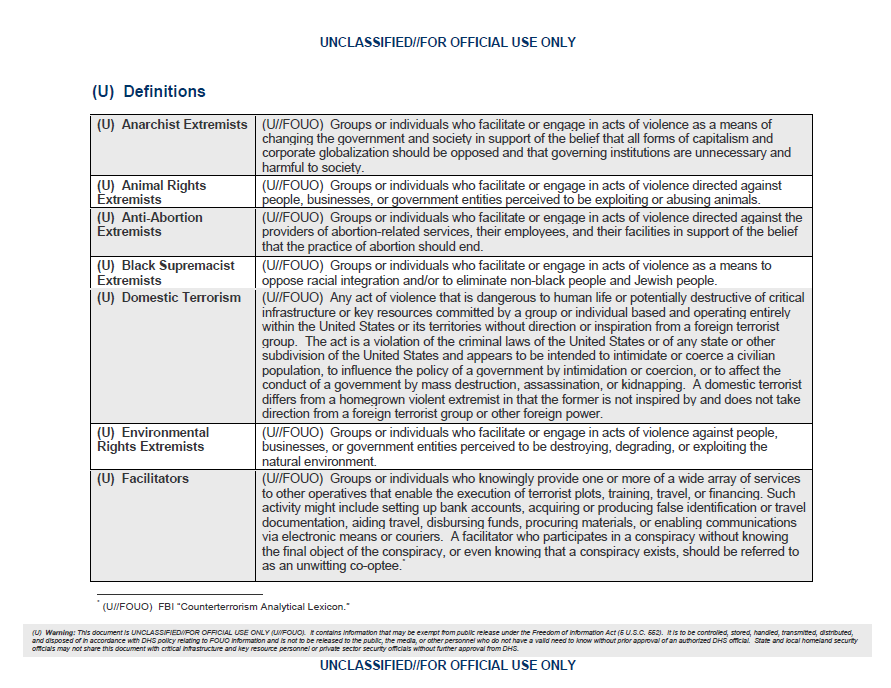
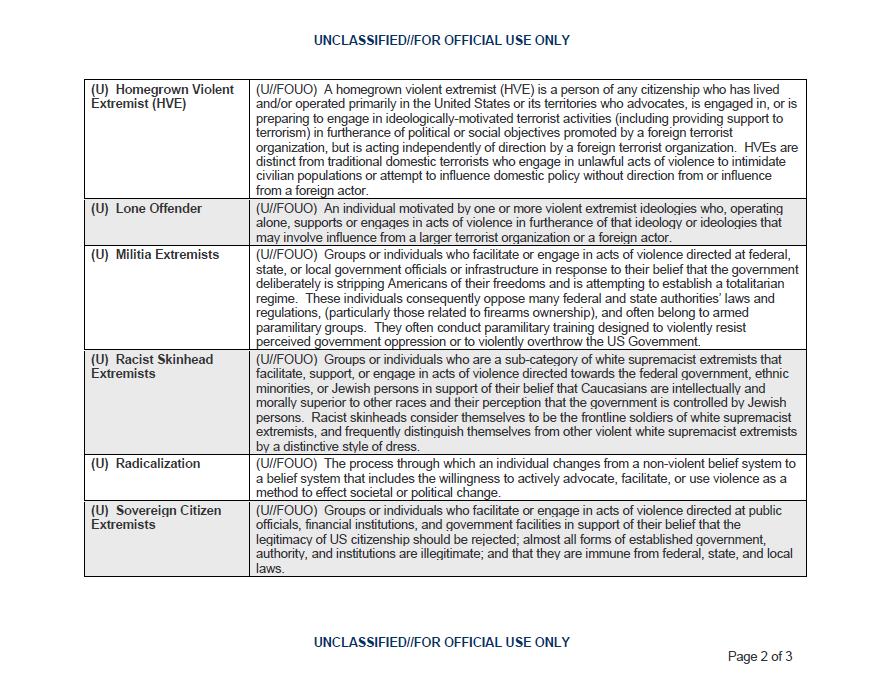
Superman: Requiem – Official – Full Movie – Fan Made


Official uncut theatrical version of Gene Fallaize’s ‘Superman: Requiem’ fan film, starring Martin Richardson, Stacy Sobieski, Paul Khanna, Serena Lorien, and Jack O’Halloran.

Superman is the world’s greatest super hero, and law enforcement across the globe has come to rely on him to deal with some of the major tasks that face society. When the Man of Steel loses some of his powers after an evil villain attacks him with Kryptonite though, he must overcome his obstacles and prove he really is a super man.

Superman: Requiem is a high-value fan-film that depicts the life of Superman several years after the events of Superman Returns, and takes into account the events of Superman (1978), Superman II (1980) and Superman Returns (2006), and focuses on an event by an evil villain who attempts to make Superman lose his powers.

The film was conceived in 2011 by producer Gene Fallaize who decided to he was going to make an independent Superman fan-film, and wrote the first draft of the script in less than a week. Fallaize brought Tony Cook on board to co-produce the project to allow him the freedom and time to direct the project.

The film was released globally online on 11.11.11 after a red carpet World Premiere in London’s Odeon Covent Garden.

For more information visit http://www.themanofsteelisback.com or facebook.com/supermanrequiem

CONFIDENTIAL – DHS Domestic Terrorism and Homegrown Violent Extremism Lexicon

The following document is an updated version of a 2009 “Domestic Extremism Lexicon” produced by the Department of Homeland Security’s Office of Intelligence and Analysis. The list of terms has been substantially reduced and does not include a number of controversial terms from the first version, such as “alternative media” and “direct action.”  This version was obtained and published by a blogger associated with PJ Media.

https://publicintelligence.net/wp-content/uploads/2012/05/DHS-ExtremismLexicon.png


https://publicintelligence.net/wp-content/uploads/2012/05/DHS-ExtremismLexicon-2.png


https://publicintelligence.net/wp-content/uploads/2012/05/DHS-ExtremismLexicon-3.png

Spider Man – Full Movie

When bitten by a genetically modified spider, a nerdy, shy, and awkward high school student gains spider-like abilities that he eventually must use to fight evil as a superhero after tragedy befalls his family.

TOP-SECRET – Open Source Center Social Media Accounts Promoting Jihadist Attacks in Syria

https://publicintelligence.net/wp-content/uploads/2012/05/OSC-SyriaSocialMediaJihad.png

OSC has recently observed two Facebook pages and a popular blog that promote the recently established Syrian jihadist group Al-Nusrah Front and jihadist attacks in Syria. As these pages are the top results for a Google search in Arabic of “Al-Nusrah Front,” they are likely to be visited by Arabic-speaking Internet users interested in the group. Observed activity on these pages suggests expanding interest in Al-Nusrah Front.

The two Facebook pages — Insaru Jabhat al-Nusrah li-Ahl al-Sham and Jabhat al-Nusrah l-Ahal al-Sham – and a Syria-focused jihadist blog — Ansar al-Sham Network — have become the top three Arabic-language Google search results for “Al-Nusrah Front,” a Syrian jihadist group first announced in Januaryi that has claimed several attacks against regime targets there. This suggests the pages are becoming primary locations for Arabic-language materialglorifying Al-Nusrah Front.

  • All three pages host Al-Nusrah Front’s official statements and the Facebook pages have been observed to further promote it by posting graphics, banners, and video compilations devoted to it.
  • The pages all attempt to incite anger at the Al-Asad regime, with Insaru Jabhat al-Nusrah li-Ahl al-Sham posting content such as photographs of children reportedly killed in Syria and Jabhat al-Nusrah l-Ahal al-Sham and Ansar al-Sham Network prominently displaying articles and videos on Syrian “martyrs.”
  • The Facebook pages also encourage attacks in Syria, by hosting basic military training materials, such as an instructional sniper video found on Insaru Jabhat al-Nusrah li-Ahl al-Sham. Similarly, Jabhat al-Nusrah l-Ahal al-Sham posts instructions for detonating a bomb without using a telephone trigger.

Facebook Activity Suggests Increasing Interest in Al-Nusrah Front

Although, thus far, users have indicated approval of the Facebook pages — by clicking the “like” buttons — relatively few times, the trend is increasing, suggesting heightened interest in Al-Nusrah Front. Statistics on readership of the pages are not available.

  • As of 2 May, Insaru Jabhat al-Nusrah li-Ahl al-Sham readers have clicked “like” 481 times, and Jabhat al-Nusrah l-Ahal al-Sham users have done so 344 times.
  • However, marking a substantial increase, during the week ending on 27 April, Insaru Jabhat al-Nusrah li-Ahl al-Sham received 143 “likes,” with 202 “people talking about” it. In contrast, during the week ending on 30 March –the earliest period for which data is available – the page received only 47 “likes,” with 60 users “talking about it.”
  • Jabhat al-Nusrah l-Ahal al-Sham has experienced similar growth in activity. During the week ending on 27 April, it received 57 “likes” with 48 “people talking about” it, up substantially from 25 “likes” and 25 “people talking about it” in the week ending on 30 March.

The blog Ansar al-Sham Network reported between 33,000 and 78,000 views between 27 April and 5 May. Although it is not clear how the site calculates traffic, it appears to count visits on a daily, rather than cumulative basis. This high viewership offers further evidence of online interest in Al-Nusrah Front.

Unveiled – Opposition Parties Claim Karzai is Strengthening the Taliban to Consolidate Political Power

https://publicintelligence.net/wp-content/uploads/2012/05/nca.jpg


Dr. Abdullah Abdullah, center, head of the National Coalition of Afghanistan (NCA). Prominent members of the NCA and other rival parties have stated that they believe Afghan President Hamid Karzai is strengthening the Taliban in an effort to bolster his own power. Photo via Ariana News.


Public Intelligence

A recent report from the Director of National Intelligence’s Open Source Center (OSC) indicates that opposition parties increasingly believe that Afghan President Hamid Karzai is strengthening the Taliban in an effort to bolster his own political power.  The report also assesses that members of Karzai’s camp may be willing to work with militant forces to prevent rival political parties from gaining influence.

Prominent members of two major opposition parties, the National Coalition of Afghanistan (NCA) and the National Front of Afghanistan (NFA), have expressed concern about Karzai’s connection with Taliban militants.  At a meeting of the NFA leadership in Kabul in early April, former Vice President Ahmad Zia Massoud warned that the government is “working toward strengthening the terrorist groups” and that this being facilitated by “senior government leaders” who are “trying to facilitate the penetration of the Taliban into the security forces.”

A prominent member of the NCA former parliament speaker Mohmmad Yunos Qanuni recently stated in an interview with a Afghan news outlet that “Karzai’s thoughts are more inclined toward the Taliban than our lot [anti-Taliban forces],” adding that “individuals with pro-Taliban orientations have more of an impact on the president’s mind.”  Qanuni made similar claims in an address to the youth wing of the NCA in April, warning that in an effort to perpetuate their rule, the government leadership is trying to “facilitate the return of terrorism and the Taliban.”

The author of the OSC report assesses that the “Afghan Government’s backing of the Taliban’s opening of an office in Qatar and the Afghan ambassador to Pakistan’s suggestive remarks, in a 3 April interview with UK’s Guardian newspaper, that negotiations would lead to the Taliban’s participation in presidential elections suggests that at least some in Karzai’s camp may be willing to court the militants to countervail the anti-Taliban forces’ influence.”  The report also states that a merger between the NCA and NFA is likely before the 2014 elections, creating “two political, and possibly even militarized, rival clusters” that could have negative effects on the future stability of Afghanistan.

The Transporter 2 (2005) – Full Movie

TOP-SECRET from the FBI – Seattle Financial Advisor Indicted in $46 Million Investment Fraud Scheme

A long-time Seattle financial advisor was indicted today by a federal grand jury with 23 criminal counts, including wire fraud, money laundering and investment advisor fraud, announced U.S. Attorney Jenny A. Durkan. Mark F. Spangler, 57, of Seattle is accused of diverting investor money from accounts he managed to risky start-up ventures in which he or his investment firm had an ownership interest. Spangler allegedly diverted more than $46 million to two companies, one of which is now shut down after failing to generate any positive revenue. Those who invested in the funds managed by Spangler, as part of The Spangler Group Inc.(TSG), were not told that their money was being invested in risky start-up companies. Spangler and several of his companies went into receivership last year. Today, the Securities and Exchange Commission filed a civil suit against Spangler as well. Spangler is scheduled to appear in U.S. District Court in Seattle on May 18, 2012 at 2:30.

“The Department of Justice is making the prosecution of financial fraud a top priority,” said U.S. Attorney Durkan. “These investors lost millions to a man they trusted to safeguard their resources. We are working closely with the SEC to ensure Mr. Spangler is held accountable for his fraud.”

The six investors described in the indictment were told their funds were conservatively invested in publicly traded companies and in bonds. Spangler allegedly provided them misleading statements over time, falsely describing the value of their accounts and how the money was invested. When investors sought to liquidate their holdings, Spangler was unable to provide them any funds, because the money had been funneled to the high risk start-up ventures that were not profitable.

According to the indictment, Spangler established a variety of funds as early as 1998 to pool investor money to buy publicly traded stocks and bonds. Spangler co-founded the two startup companies in the early 2000s—Tamarac Inc. in 2000 and TeraHop Networks Inc. in 2002. Tamarac Inc. is headquartered in Seattle and provides software to financial planners. TeraHop Networks Inc. is headquartered in Georgia and manufactured wireless devices used to monitor the location and activity of people and physical assets such as construction equipment. TeraHop has ceased operation. Spangler not only failed to disclose to his investors that he was diverting significant amounts of their funds to TeraHop and Tamarac, but he also failed to disclose that he was involved in the management of these companies, had an ownership interest in Tamarac, and was receiving payments from both companies. The indictment contains an order of forfeiture, which will be used to try to recover assets for the investors.

The case is being investigated by the FBI and Internal Revenue Service Criminal Investigation (IRS-CI).

The case is being prosecuted by Assistant United States Attorneys Mike Lang and Carl Blackstone.

For additional information please contact Emily Langlie, Public Affairs Officer for the United States Attorney’s Office, at (206) 553-4110 or Emily.Langlie@USDOJ.Gov.

Jason Statham – Killer Elite – Full Movie

RED ANGEL – FULL MOVIE

Resident Evil Apocalypse – Full Movie

Resident Evil Degeneration – Full Movie

Resident Evil 4 – Feature Film

Uncensored – Resident Evil Extinction – Full Movie HD

One Million Years BC -Full Movie

TOP-SECRET – Open Source Center Changes in Afghan Political Landscape Leading Up to 2014

https://publicintelligence.net/wp-content/uploads/2012/05/OSC-AfghanPoliticalLandscape.png


Open source reporting indicates the Afghan political landscape, presently dominated by four political groupings and a number of prominent politicians, is likely to undergo further changes in the lead-up to the presidential elections and withdrawal of ISAF forces in 2014. Differing views of the Taliban threat as ISAF withdraws is likely to help drive the realignment and consolidation of political forces. This realignment may result in two major groupings: President Hamid Karzai and allies keen on working with the Taliban versus former anti-Taliban forces and others opposed to the government’s alleged appeasement toward the militants. Such consolidation would likely lead the emerging generation of younger leaders to choose between joining one of the groupings or risk being marginalized at the national level. Four main political groupings — Karzai’s camp, the National Front of Afghanistan (NFA), the National Coalition of Afghanistan (NCA), and the Truth and Justice Party (TJP) — are currently dominating the Afghan political scene (See Appendix for more details on key figures and positions of the four groups).

  • Karzai’s camp is currently the dominant group but is a tenuous alliance of convenience among elements of former anti-Taliban forces, Hezb-e Islami (HI), and the Pashtun nationalist Afghan Mellat Party (AMP).
  • The NFA was launched in November 2011 by former Karzai allies who now oppose many of his policies. It features some prominent anti-Taliban figures, including Hazara leader Mohammad Mohaqeq, Uzbek leader Abdul Rashid Dostum, and former Vice President Ahmad Zia Massoud (Daily Afghanistan, 12 November 2011).
  • The NCA was created in December 2011 as a successor to the Coalition for Change and Hope and is led by former Foreign Minister Abdullah Abdullah and former parliament speaker Mohmmad Yunos Qanuni. Like NFA, it opposes Karzai and features some prominent anti-Taliban leaders (Bokhdinews, 22 December 2011).
  • The TJP was launched in early November 2011 by a number of former cabinet ministers and lawmakers who lost their seats in the 2010 parliamentary elections, including former Minister of Rural Development Mohammad Ihsan Zia and former Interior Minister Mohammad Hanif Atmar. It is the weakest of the four main groupings and does not oppose Karzai’s policies as strongly as the NFA or NCA. (Pajhwok Afghan News, 3 November 2011; Kabulpress, 20 November 2011).

In addition, there are a handful of prominent Afghan figures with links to some of these groupings, although currently they do not formally belong to any of them: Balkh Governor, Atta Mohammad Nur, Nangarhar Governor Gol Agha Sherzai, former intelligence chief Amrullah Saleh, Badakhshan MP Fawzia Koofi, Kabul MP Ramazan Bashardost, and Nangarhar MP Abdul Zaher Qadir.

Growing concerns about the Taliban threat and its role in post-2014 Afghanistan may consolidate the political landscape around two political, and possibly even militarized, rival clusters.

  • A merger of the NFA and NCA at some point before or during 2014 is possible, given their similar political agendas and common anti-Taliban roots. Both groups have called for parliamentary government and elected governors and are suspicious of reconciliation with the Taliban. The differences between them seem to be mainly of a personal nature at the leadership level. Massoud indicated recently that NFA and NCA would “merge soon” to which Abdullah responded by saying that NCA “have not yet decided on merger with [NFA]” (Bokhdinews, 17, 20 January). NCA might pursue the idea of merger more favorably after Abdullah’s rotating leadership ends, since Qanuni has expressed desire for a “grand national umbrella” to confront the looming Taliban threat (Jomhornews, 1 April).
  • In an 11 March gathering, former anti-Taliban leaders from a cross-section of the major political clusters, including Karzai’s camp, urged unity and even military preparedness among the anti-Taliban forces. Karzai ally MP Abdurrab Rasul Sayyaf said: “Be very careful that we should not be undermined from within under the divisive pretexts of ethnicity, region, and language; we should preserve this united body at any cost.” He warned the anti-Taliban forces not to “sit unconcerned about the future; do not be totally oblivious and unaware about today and post-2014 and thereabouts.” (Tolonews, 11 March). Massoud suggested that the anti-Taliban forces should revive their “military structures” in anticipation of ISAF withdrawal (Jabha-e Melli, 12 March).

Should the NFA and NCA unify and attract major anti-Taliban leaders among Karzai’s allies, the remainder of the Karzai camp may rely increasingly on HI and some level of cooperation even from the Taliban to remain politically relevant.

  • In the context of his remarks to deny reports that the insurgent group Hezb-e Islami Gulbuddin (HIG) had severed negotiations with the government, HIG chief negotiator Ghairat Bahir effectively endorsed Karzai’s leadership by saying that “from our perspective Hamid Karzai is the president of Afghanistan” (Bokhdinews, 29 January).
  • Similarly, the Afghan Government’s backing of the Taliban’s opening of an office in Qatar and the Afghan ambassador to Pakistan’s suggestive remarks, in a 3 April interview with UK’s Guardian newspaper, that negotiations would lead to the Taliban’s participation in presidential elections suggests that at least some in Karzai’s camp may be willing to court the militants to countervail the anti-Taliban forces’ influence (Hewad, 7 April; Hasht-e Sobh, 8, 9 April).
  • State-run newspaper Hewad issued a strongly worded editorial against a 5 May 2011 opposition rally and approvingly quoted a former Taliban leader’s denunciatory words, perhaps portending the dichotomization of politics along pro- and anti-Taliban lines (7 May 2011).

https://publicintelligence.net/wp-content/uploads/2012/05/afghan-political-landscape.png


DOWNLOAD THE ORIGINAL DOCUMENT HERE

OSC-AfghanPoliticalLandscape

Terminator – Revelation Full Movie HD

Rambo III – Full Movie

TOP-SECRET – DHS Wireless Medical Devices/Healthcare Cyberattacks Report

https://publicintelligence.net/wp-content/uploads/2012/05/NCCIC-MedicalDevices.png


(U) The Healthcare and Public Health (HPH) sector is a multi-trillion dollar industry employing over 13 million personnel, including approximately five million first-responders with at least some emergency medical training, three million registered nurses, and more than 800,000 physicians.

(U) A significant portion of products used in patient care and management including diagnosis and treatment are Medical Devices (MD). These MDs are designed to monitor changes to a patient’s health and may be implanted or external. The Food and Drug Administration (FDA) regulates devices from design to sale and some aspects of the relationship between manufacturers and the MDs after sale. However, the FDA cannot regulate MD use or users, which includes how they are linked to or configured within networks. Typically, modern MDs are not designed to be accessed remotely; instead they are intended to be networked at their point of use. However, the flexibility and scalability of wireless networking makes wireless access a convenient option for organizations deploying MDs within their facilities. This robust sector has led the way with medical based technology options for both patient care and data handling.

(U) The expanded use of wireless technology on the enterprise network of medical facilities and the wireless utilization of MDs opens up both new opportunities and new vulnerabilities to patients and medical facilities. Since wireless MDs are now connected to Medical information technology (IT) networks, IT networks are now remotely accessible through the MD. This may be a desirable development, but the communications security of MDs to protect against theft of medical information and malicious intrusion is now becoming a major concern. In addition, many HPH organizations are leveraging mobile technologies to enhance operations. The storage capacity, fast computing speeds, ease of use, and portability render mobile devices an optimal solution.

(U) This Bulletin highlights how the portability and remote connectivity of MDs introduce additional risk into Medical IT networks and failure to implement a robust security program will impact the organization’s ability to protect patients and their medical information from intentional and unintentional loss or damage.

(U) According to Health and Human Services (HHS), a major concern to the Healthcare and Public Health (HPH) Sector is exploitation of potential vulnerabilities of medical devices on Medical IT networks (public, private and domestic). These vulnerabilities may result in possible risks to patient safety and theft or loss of medical information due to the inadequate incorporation of IT products, patient management products and medical devices onto Medical IT Networks. Misconfigured networks or poor security practices may increase the risk of compromised medical devices. HHS states there are four factors which further complicate security resilience within a medical organization.

1. (U) There are legacy medical devices deployed prior to enactment of the Medical Device Law in 1976, that are still in use today.

2. (U) Many newer devices have undergone rigorous FDA testing procedures and come equipped with design features which facilitate their safe incorporation onto Medical IT networks. However, these secure design features may not be implemented during the deployment phase due to complexity of the technology or the lack of knowledge about the capabilities. Because the technology is so new, there may not be an authoritative understanding of how to properly secure it, leaving open the possibilities for exploitation through zero-day vulnerabilities or insecure deployment configurations. In addition, new or robust features, such as custom applications, may also mean an increased amount of third party code development which may create vulnerabilities, if not evaluated properly. Prior to enactment of the law, the FDA required minimal testing before placing on the market. It is challenging to localize and mitigate threats within this group of legacy equipment.

3. (U) In an era of budgetary restraints, healthcare facilities frequently prioritize more traditional programs and operational considerations over network security.

4. (U) Because these medical devices may contain sensitive or privacy information, system owners may be reluctant to allow manufactures access for upgrades or updates. Failure to install updates lays a foundation for increasingly ineffective threat mitigation as time passes.

(U) Implantable Medical Devices (IMD): Some medical computing devices are designed to be implanted within the body to collect, store, analyze and then act on large amounts of information. These IMDs have incorporated network communications capabilities to increase their usefulness. Legacy implanted medical devices still in use today were manufactured when security was not yet a priority. Some of these devices have older proprietary operating systems that are not vulnerable to common malware and so are not supported by newer antivirus software. However, many are vulnerable to cyber attacks by a malicious actor who can take advantage of routine software update capabilities to gain access and, thereafter, manipulate the implant.

(U) During an August 2011 Black Hat conference, a security researcher demonstrated how an outside actor can shut off or alter the settings of an insulin pump without the user’s knowledge. The demonstration was given to show the audience that the pump’s cyber vulnerabilities could lead to severe consequences. The researcher that provided the demonstration is a diabetic and personally aware of the implications of this activity. The researcher also found that a malicious actor can eavesdrop on a continuous glucose monitor’s (CGM) transmission by using an oscilloscope, but device settings could not be reprogrammed. The researcher acknowledged that he was not able to completely assume remote control or modify the programming of the CGM, but he was able to disrupt and jam the device.


DOWNLOAD THE ORIGINAL REPOERT HERE

NCCIC-MedicalDevices

Rambo 2008 – Full Movie – HD

Rambo heads into the rainforest on a mission to save the survived people of an village that has been attacked by the army.

RAMBO3 – Full Movie

King Kong – Full Movie

The Scorpion King 2 – Full Movie

FEMEN – Protest in Ukraine

Born of Hope – Full Movie


Born of Hope is an independent feature film inspired by the Lord of the Rings and produced by Actors at Work Productions in the UK.
http://www.bornofhope.com

Thanks to Chris Bouchard and the H4G team for putting the film here. For more films by the makers of this and BoH extras please visit.
ActorsatWork
http://www.youtube.com/actorsatwork

Check them out for more videos regarding the film including the audio commentary.
http://www.youtube.com/watch?v=elt_l8zisik

A scattered people, the descendants of storied sea kings of the ancient West, struggle to survive in a lonely wilderness as a dark force relentlessly bends its will toward their destruction. Yet amidst these valiant, desperate people, hope remains. A royal house endures unbroken from father to son.

This 70 minute original drama is set in the time before the War of the Ring and tells the story of the Dúnedain, the Rangers of the North, before the return of the King. Inspired by only a couple of paragraphs written by Tolkien in the appendices of the Lord of the Rings we follow Arathorn and Gilraen, the parents of Aragorn, from their first meeting through a turbulent time in their people’s history.

The Hunt For Gollum – Lord Of The Ring Prequel – Full Movie

Award winning unofficial prequel to The Lord Of The Rings dramatising Aragorn & Gandalf’s long search for Gollum directed by British filmmaker Chris Bouchard. Based faithfully on the appendices of the books this is a non-profit, serious homage to the writing of J.R.R Tolkien and the films of Peter Jackson.

It was shot on locations in England and Snowdonia with a team of over a hundred people working over the Internet. It took two years to make and was released as a non-profit Internet-only video by agreement with Tolkien Enterprizes.

This Youtube version is slightly extended with 1 scene added back in.

http://www.thehuntforgollum.com


Revealed – DoD $155 M for Multi-University War Make Research

DOWNLOAD THE ORIGINAL DOCUMENT HERE

2012MURI

Fast And Furious – Full Movie

Red Line – 2011 – Full Movie

TOP-SECRET from the FBI – Florida Man Indicted by Federal Grand Jury for Sextortion and Cyberstalking

PENSACOLA, FL—B Christopher P. Gunn, 31, previously of Walton County, Florida, was indicted today on multiple charges involving the online sextortion and cyberstalking of young girls ranging in age from 13 to 17 years old. The indictment was announced by Pamela C. Marsh, United States Attorney for the Northern District of Florida.

The federal indictment alleges that Gunn, who was recently arrested on related charges in Alabama, extorted images and videos of minor females in “various states of undress, naked, and engaging in sexually explicit conduct.” The indictment also charges that Gunn violated federal cyberstalking statutes by engaging these females online with the “intent to injure, harass, and cause substantial emotional distress.” The conduct with which Gunn is charged in the Northern District of Florida is alleged to have occurred between October 2009 and March 2011. In total, the indictment alleges that Gunn victimized 11 minor females who resided in various states throughout the nation.

Gunn is currently in custody in Montgomery, Alabama on a federal indictment that also charges him with the production and possession of child pornography. If convicted on all charges in the Florida indictment, Gunn faces over 50 years in federal prison.

This case is being brought as part of Project Safe Childhood, a nationwide initiative launched in May 2006 by the Department of Justice to combat the growing epidemic of child sexual exploitation and abuse. Led by the United States Attorneys’ Offices and the Criminal Division’s Child Exploitation and Obscenity Section, Project Safe Childhood marshals federal, state, and local resources to locate, apprehend, and prosecute individuals who sexually exploit children and to identify and rescue victims. For more information about Project Safe Childhood, please visit http://www.justice.gov/psc/.

The case was investigated by the Federal Bureau of Investigation and the Walton County Sheriff’s Office. The case is being prosecuted by Assistant United States Attorney David L. Goldberg. An indictment is merely a formal charge by a grand jury that a defendant has committed a violation of federal criminal law. All defendants are presumed innocent unless and until the government proves their guilt beyond a reasonable doubt to the satisfaction of a jury at trial.

Hero – Jet Li – Full Movie

Jet Li – Contract Killer — Im Auftrag des Todes – Full Movie HQ (German)

Der Anführer einer Yakuza-Organisation Tsukamoto deponiert für den Fall seiner Ermordung 100 Millionen Dollar für denjenigen, der seinen Tod rächen würde. Etwas später wird er getötet. Zahlreiche Menschen nehmen an einem Treffen der Killer teil, die den Auftrag ausführen könnten. Darunter befindet sich Fu, der früher ein Soldat einer Eliteeinheit war und in finanziellen Schwierigkeiten steckt. Fu verbündet sich mit dem Betrüger Ngok Lo.
Ngok Lo, der fortan als Agent von Fu fungiert, kauft seinem Geschäftspartner teure Bekleidung.
Eiji Tsukamoto, der Enkelsohn des Ermordeten, will den Mörder selbst töten. Er nimmt seinem Vater übel, dass Fremde den Tod dessen Vaters rächen sollten. Währenddessen nimmt Fu einen anderen Auftrag an, um die laufenden Kosten zu decken. Er tötet die Zielperson nicht, sondern verteidigt sie vor den anderen Killern, wofür er von dieser Person mit Geld belohnt wird. Er und Ngok Lo werden aber am Tatort verhaftet und vernommen. Ngok Los Tochter Kiki, die Jura studiert, holt beide aus dem Arrest. Er bringt Fu in seiner Wohnung unter — im einstigen Zimmer seiner Tochter. Er warnt Fu, dass dieser nicht für die bereits verlobte Kiki schwärmen soll.
Als Fu und Ngok Lo von Eiji Tsukamoto bedrängt werden, erzählt Ngok Fu, dass er ein Hochstapler ist. Weiterhin hat Ngok Lo in der Unterwelt verbreitet, er wäre der König der Killer. Aber, da Tsukamoto vom echten König der Killer umgebracht wurde, sind nun alle fälschlicherweise hinter ihm her.
Fu und Ngok treffen sich mit Tsukamoto. Dort kommt es zum großen Kampf, an dem auch der König der Killer plötzlich auftaucht und sich als Polizist zu erkennen gibt.
Es kommt zum Kampf zwischen dem König der Killer und Eiji, in dem Eiji Tsukamoto stirbt. Der Vorsitzende der Jury, die die Belohnung vergeben soll, willigt ein, der Version zuzustimmen, in der Eiji Tsukamoto der zu tötende Mörder war. Der König der Killer will seinen Platz Fu überlassen, der Ngok Lo als seinen Agenten feuert und stattdessen mit der Vermittlung der Aufträge dessen Tochter Kiki beauftragt.

UNCENSORED – FEMEN visit the House of DSK – Dominique Strauss-Kahn

TOP-SECRET – Money as a Weapon System Afghanistan (MAAWS-A) SOP 2012

https://publicintelligence.net/wp-content/uploads/2012/05/USFOR-A-MAAWS-2012.png

The Money As A Weapon System – Afghanistan Commander’s Emergency Response Program Standard Operating Procedure supports the United States Government Integrated Civilian-Military Campaign Plan and ISAF Theater Campaign Plan (TCP). The Theater Campaign Plan lists objectives that include improving governance and socio-economic development in order to provide a secure environment for sustainable stability that is observable to the population. CERP provides an enabling tool that commanders can utilize to achieve these objectives. This is accomplished through an assortment of projects planned with desired COIN effects such as addressing urgent needs of the population, promoting GIRoA legitimacy, countering Taliban influence, increasing needed capacity, gaining access, building/expanding relationships, promoting economic growth, and demonstrating positive intent or goodwill.

The SOP recognizes and addresses the challenges that lie ahead as we continue the momentum of our campaign and through the challenges of transition. This revision implements policy changes, which are summarized within the summary of changes, to help improve oversight and management and incorporates the lessons we have learned to include measures adopted from the recommendations of various audits. Additionally, a broad spectrum of collaboration and research from several organizations and agencies was used to provide guidance as you plan CERP projects.

A. Counterinsurgency concepts, frameworks, and ideas ultimately find expression in activities involving investments of energy, time and resources. Projects are a primary means for executing governance since they incorporate decisions on the distribution of scarce resources, may involve negotiations on the nature of the social contract, and can create positive, interdependent relationships to allow the delivery of a service. Project management is the way to ensure these investments generate measurable returns. However, project management to COIN effects is not the same as project management to quality, timeline, scope or budget as there are different objectives with different means of judging whether the objectives are met. Project prioritization and selection must reinforce COIN objectives. The list of potential projects will always exceed the capacity to deliver. The major limiting factor will be the ability to execute and oversee projects rather than limited funding. The more technically challenging the project, the greater the need for direct presence to ensure quality. Less complex projects, by contrast, can reduce coalition forces direct presence while ensuring greater COIN effects.

B. Commander’s Emergency Response Program (CERP) projects (and similar stabilization funds) are vehicles for achieving effects. The desired effects are currently not well defined, measurable or standardized across projects. An effect can be:

1. Developmental, seeking to change society, build institutional capacity or promote economic improvement that is sustainable;

2. Humanitarian, seeking to alleviate human suffering without conditions or impartiality;

3. Force protection/hearts and minds, seeking to create a positive impression of coalition forces/Afghan National Security Forces (ANSF) in an effort to lessen attacks; or

4. Counterinsurgency, seeking to address causes of instability through fostering positive, interdependent relationships between the Government of the Islamic Republic of Afghanistan (GIRoA) and key populations.

https://publicintelligence.net/wp-content/uploads/2012/05/usfor-a-maaws-2012-2.png

DOWNLOAD THE ORIGINAL DOCUMENT HERE

USFOR-A-MAAWS-2012

Jet Li – Iron Tiger – Ganzer Film in Deutsch


SECRET – Proving that John Dean was Deep Throat’s Source by Philip T. Mellinger

DOWNLOAD THE ORIGINAL DOCUMENT HERE

dean-deep-throat


CRYPTOME – US Nabs 2 for 20,987 Stolen Credit Card Accounts – Indictment vs Borgia and Perez

DOWNLOAD THE ORIGINAL DOCUMENT HERE

borgia-perez-01

Jet Li – Legend of the Red Dragon – Full Movie

CONFIDENTIAL by Cryptome – DoD Review Guidelines for Guantanamo Detention

DOWNLOAD THE ORIGINAL DOCUMENT HERE

DTM-12-005

The Last Hero in China – Full Movie – Jet Li

TOP-SECRET – DoD Guidelines for Use of Internet Capabilities

DOWNLOAD THE ORIGINAL FILE HERE

DTM-09-026

Jet Li – Once Upon a Time in China 2 – Full Movie HQ (German)

Jet Li stellt in diesem Film den chinesischen Arzt und Meister der chinesischen Kampfkunst Hung Gar Kuen Wong Fei Hung dar, welcher aus der Provinz Fu-Shang stammt. Er macht zusammen mit seinem Gehilfen Fu und seiner Cousine Ji eine Reise zu einem internationalem Ärztekongress in Kanton. An diesem Treffen nehmen vor allem westliche Ärzte teil, und Dr. Wong soll als Gastredner die chinesische Akupunktur erklären.
Zu genau diesem Zeitpunkt findet in Kanton ein politischer Umsturz statt. Die Sekte des Weißen Lotus möchte alle westlichen Einflüsse auf die chinesische Kultur mit Gewalt fernhalten. Cousine Ji, die sich nach westlicher Manier kleidet, bekommt bei einer Kundgebung des Weißen Lotus Probleme und soll entführt werden, welches Wong Fei Hung erfolgreich verhindern kann, worauf ihm der Anführer der Sekte, Meister Kung, Rache schwört.
Auf dem Ärztekongress lernt Wong Fei Hung Bruder Sun Yat-sen kennen, der die westliche Medizin studiert hat. Die beiden halten den Vortrag zusammen. Bruder Su will ebenfalls einen politischen Umsturz herbeiführen, aber mit friedlichen Mitteln. Sein Ziel ist es, China zu einer Republik zu machen.
Als das linguistische Institut vom Weißen Lotus angegriffen wird, können Wong Fei Hung, Fu und Cousine Ji eine Gruppe Kinder retten. Diese wollen sie zuerst in der Stadthalle unterbringen, aber der Leutnant der chinesischen Garde erklärt Dr. Wong, dass er für den Schutz der Kinder nicht garantieren kann. Daraufhin bringen die Gefährten diese im britischen Konsulat unter. Dort treffen sie auf Bruder Luk, den Leiter des linguistischen Institutes, der ein Freund und Mitverschwörer von Bruder Su ist. Damit der Leutnant der chinesischen Garde die beiden gefangen nehmen kann, ebnet er dem Weißen Lotus den Weg, damit diese das Britische Konsulat verwüsten können. Durch eine List und mit der Hilfe von Wong Fei Hung kann Bruder Luk entkommen.
Anschließend machen sich Wong Fei Hung und Bruder Luk auf den Weg, um den Tempel des Weißen Lotus zu zerstören und den geistigen Führer Kung umzubringen. Nach erfolgreichem Abschluss machen sie sich auf den Weg, um sich wieder mit Fu zu treffen und an die Anlegestelle zu kommen, wo sie sich mit den anderen auf dem Schiff nach Ton Ga Bay absetzen wollen. Vorher müssen sie noch die Namensliste mit den Anhängern des friedlichen Umsturzes aus dem Versteck holen. Dort werden sie von der chinesischen Garde angegriffen. Bruder Luk wird dabei getötet. Der Leutnant und Wong Fei Hung stellen sich noch dem finalen Kampf.

TOP-SECRET- U.S. Marine Corps 21st‐Century Marine Expeditionary Intelligence Analysis (MEIA‐21)

https://publicintelligence.net/wp-content/uploads/2012/05/USMC-MEIA-21.png

21st‐Century Marine Expeditionary Intelligence Analysis (MEIA‐21) is a formal initiative to structure, standardize, and professionalize tactical intelligence analysis in the Marine Corps. It professionalizes Marine expeditionary intelligence, equipping intelligence analysts with analytically rigorous Structured Models, Approaches, and Techniques (SMATs)—applied tradecraft—to provide commanders with actionable, reliable tactical intelligence in conventional and irregular warfare while also instilling the cognitive and creative skills to create and refine that tradecraft. … Core Principles of MEIA‐21 MEIA‐21 is the process of building analytic modernization on six foundational principles: 1. Successful operations require reliable tactical intelligence. Operations are command led and intelligence fed. 2. Reliable tactical intelligence is achieved through structured, mission‐specific applied tradecraft. – Tradecraft is the SMATs that analysts use to develop actionable intelligence from raw data. – SMATs originate from field‐derived, experiential learning by Marine intelligence analysts. – Foundational skills, such as Structured Analytic Techniques (SATs), und0erlie the development and application of mission‐specific tradecraft. 3. Tradecraft‐driven intelligence analysis is conducted using analytically rigorous processes. – Marine Corps intelligence analysis must move beyond a reliance on raw intuition and readily available information to scientifically valid, objective techniques. – Processes and tools (SMATs) must be vetted for analytic rigor, formalized, documented, and taught. – Sustainable analytic rigor requires ongoing critical review and continuous improvement of tradecraft. 4. Social Science Intelligence (SSI) is essential for successful intelligence analysis in COIN and other nonconventional operations. It also is critical for conventional operations. – Without structured consideration of social factors, our knowledge of human‐centered problems is subjective, unscientific, overly informed by raw intuition, and less reliable. – SSI uses structured models, approaches, and techniques based upon proven principles and practices from economics, political science, anthropology, and other disciplines that study human behavior. – Applied social science is an important way to develop understanding (insight and foresight) in the context of operational requirements. 5. In an era of enormous quantities of potentially useful data, technology is critical to intelligence work. – People—not tools—perform analysis, but machine‐aided analysis can help analysts organize, store, and cut through massive amounts of data to discover the nonobvious and unseen and to identify otherwise invisible patterns. – Technology empowers analysts to archive, organize, discover, and retrieve information for near‐real‐time analysis. – Models and tools not only save time and cognitive energy, they correct fallible human senses and intuition that, left unaided, may misrepresent reality or distort analysis. 6. Intelligence analysis is a profession and should be structured as such. – Mastery of tradecraft, not job title, defines the profession of Marine Corps intelligence analysis. – Marine intelligence analysts must have a deep knowledge of tradecraft. Area expertise is valuable, but inadequate to develop actionable intelligence or reliable knowledge in the absence of structured applied tradecraft. – Structured tools, methods, and processes must be disseminated and institutionalized through formal training, standards, and continuing education. Intelligence analysts should be certified in the practice of their profession. … Social Science Intelligence and the New Analytic Environment Marine Corps warfighting has primarily been based on the capability to find, fix, and strike the enemy force. To support this, Marine Corps tactical intelligence was often kinetics‐based, target‐centric, and optimized for producing intelligence against conventional military formations. Adversaries were well defined, providing a relatively sharp focus for intelligence. But 10 years of operations in Iraq and Afghanistan have repeatedly shown that armed groups confronting Marines today avoid U.S. targeting superiority by operating asymmetrically within congested and cluttered environments. Contending with conventional, counterinsurgency (COIN), and nonconventional operations in the upcoming decades of the 21st century, Marines will once again be exposed to socially complex environments and hybrid armed groups. Many of these threats (conventional and nonconventional) and adversaries (state, state proxies, and nonstate actors) will be more agile, less visible, and possess an information advantage where it is easier for them to see and target us than for us to see and target them. Given this operational environment, the MCISR‐E must analyze more than an adversary’s characteristics and capabilities. Expeditionary intelligence must incorporate the context within which adversaries operate; the institutions within which they live; and their fears, perceptions, and motivations; in short, we must consider the totality of the human sphere. This new approach to intelligence analysis, focusing on understanding human social organization is called Social Science Intelligence (SSI). There has been significant growth in the techniques and technologies of intelligence analysis, especially in the social sciences such as economics, political science, anthropology, and other disciplines relating to the study of human behavior. Because the most advanced knowledge in these fields is dispersed within academia and not directly focused on intelligence‐related problems, it’s hard to access and consequently plays an inadequate role in tactical intelligence today—Marine intelligence analysts’ knowledge of human‐centered problems tends to be subjective, unscientific, technologically weak, and based mostly on the raw intuition and personal experience of the individual analyst. The challenge is to develop, refine, and deploy applied techniques that enable us to understand the totality of the human domain framework with speed and precision. An analytic modernization plan that captures critical best practices, leverages the best social and physical science know‐how available, and makes available sophisticated analytic instruments that analysts can readily apply to intelligence problems is critical to success. When made available, these methods and approaches give analysts social and physical science expertise from the fields that parallel the questions faced by intelligence (e.g., accounting, organizational theory, elite analysis, political science, economics, and census/registry).

DOWNLOAD THE ORIGINAL DOCUMENT HERE

USMC-MEIA-21

Hitman Contract Killer – Full Movie HQ

Jet Li stars as Tai Feng (aka Fu). a hitman with a `sense of justice` and a talent for deliberately missing his intended victims. When his streetwise agent Sam (Eric Tsang) uses Tai`s awesome fighting skills to acquire billions of dollars at the expense of heavy-hitting Japanese mobsters, the scene is set for a martial-arts showdown of ground-breaking proportions. An exhilarating, suspenseful action-drama combining elements of black humour and s sense of style, Hitman packs the king of resounding punch you would expect from the world`s most enigmatic action star. Jet Li is more lethal than ever as the Hitman!

TOP-SECRET – NSA on Out of Control System Administrators

DOWNLOAD THE ORIGINAL DOCUMENT HERE

nsa-sysadmins

Euro 2012, FEMEN TOPLESS PROTEST

http://www.dailymotion.com/video/xqtdl4_euro-2012-attivista-femen-in-topless-cerca-di-rubare-la-coppa-il-blitz-a-kiev-dove-e-arrivato-il-tro_news?search_algo=1

Jet Li – Ocean Heaven (2010) – Full Movie


Jet Li,Wen Zhang,Kwai Lun Mei,Chen Rui

THE GETAWAY (1994) Rated R 18+ FULL MOVIE-Starring Alec Baldwin, Kim Basinger, James Woods, Michael Madsen & Jennifer Tilly.

Pink Panther 2 – Full Movie – Steve Martin – Beyonce

TOP-SECRET from Cryptome – NSA TEMPEST Documents Repost

       NSA TEMPEST History: http://cryptome.org/2012/05/nsa-tempest-history.pdf

22 June 2011:

Joel McNamara’s comprehensive Complete, Unofficial TEMPEST Information Page has closed. A mirror: http://www.kubieziel.de/blog/uploads/complete_unofficial_tempest_page.pdf

6 April 2003: Add

NCSC 3 – TEMPEST Glossary, 30 March 1981

5 March 2002: Two security papers announced today on optical Tempest risks:

Information Leakage from Optical Emanations, J. Loughry and D.A. Umphress

Optical Time-Domain Eavesdropping Risks of CRT Displays, Markus Kuhn

For emissions security, HIJACK, NONSTOP and TEAPOT, see also Ross Anderson’s Security Engineering, Chapter 15.

HIJACK, NONSTOP, and TEAPOT Vulnerabilities

A STU-III is a highly sophisticated digital device; however, they suffer from a particular nasty vulnerability to strong RF signals that if not properly addressed can cause the accidental disclosure of classified information, and recovery of the keys by an eavesdropper. While the unit itself is well shielded, the power line feeding the unit may not have a clean ground (thus negating the shielding).

If the encryption equipment is located within six to ten wavelengths of a radio transmitter (such as a cellular telephone, beeper, or two way radio) the RF signal can mix with the signals inside the STU and carry information to an eavesdropper. This six to ten wavelengths is referred to as the “near field” or the wave front where the magnetic field of the signal is stronger then the electrical field.

The best way to deal with this is to never have a cellular telephone or pager on your person when using a STU, or within a radius of at least thirty feet (in any direction) from an operational STU (even with a good ground). If the STU is being used in a SCIF or secure facility a cell phone is supposed to be an excluded item, but it is simply amazing how many government people (who know better) forget to turn off their phone before entering controlled areas and thus cause classified materials to be compromised.

Spook Hint: If you have a powered up NEXTEL on your belt and you walk within 12 feet of a STU-III in secure mode you have just compromised the classified key.

Secure Telephone Units, Crypto Key Generators, Encryption Equipment, and Scramblers (offsite)

Files at Cryptome.org:

tempest-time.htm TEMPEST Timeline
tempest-old.htm TEMPEST History

NSA Documents Obtained by FOIA

nacsem-5112.htm NACSEM 5112 NONSTOP Evaluation Techniques
nstissi-7000.htm NSTISSI No. 7000 TEMPEST Countermeasures for Facilities           

nacsim-5000.htm NACSIM 5000 Tempest Fundamentals
nacsim-5000.zip NACSIM 5000 Tempest Fundamentals (Zipped 570K)
nsa-94-106.htm NSA No. 94-106 Specification for Shielded Enclosures
tempest-2-95.htm NSTISSAM TEMPEST/2-95 Red/Black Installation Guidance

nt1-92-1-5.htm NSTISSAM TEMPEST 1/92 - TOC and Sections 1-5
nt1-92-6-12.htm NSTISSAM TEMPEST 1/92 - Sections 6-12
nstissam1-92a.htm NSTISSAM TEMPEST 1/92 - Appendix A (TEMPEST Overview)
nt1-92-B-M.htm NSTISSAM TEMPEST 1/92 - Appendixes B-M
nt1-92-dist.htm NSTISSAM TEMPEST 1/92 - Distribution List

nsa-reg90-6.htm NSA/CSS Reg. 90-6, Technical Security Program
nsa-foia-app2.htm NSA Letter Releasing TEMPEST Documents
nsa-foia-app.htm NSA FOIA Appeal for TEMPEST Information
nsa-foia-req.htm NSA FOIA Request for TEMPEST Documents

Other TEMPEST Documents

nsa-etpp.htm NSA Endorsed TEMPEST Products Program
nsa-ettsp.htm NSA Endorsed TEMPEST Test Services Procedures
nsa-zep.htm NSA Zoned Equipment Program
nstissam1-00.htm Maintenance and Disposition of TEMPEST Equipment (2000)
nstissi-7000.htm TEMPEST Countermeasures for Facilities (1993)

tempest-fr.htm French TEMPEST Documentation (2000)
af-hb202d.htm US Air Force EI Tempest Installation Handbook (1999)
afssi-7010.htm US Air Force Emission Security Assessments (1998)
afssm-7011.htm US Air Force Emission Security Countermeasure Reviews (1998)
qd-tempest.htm Quick and Dirty TEMPEST Experiment (1998)

mil-hdbk-1195.htm Radio Frequency Shielded Enclsoures (1988)
emp.htm US Army Electromagnetic Pulse (EMP) and TEMPEST
 Protection for Facilities (1990)
zzz1002.htm National TEMPEST School Courses (1998)
navch16.htm Chapter 16 of US Navy's Automated Information Systems
 Security Guidelines

tempest-cpu.htm Controlled CPU TEMPEST emanations (1999)
tempest-door.htm TEMPEST Door (1998)
bema-se.htm Portable Radio Frequency Shielded Enclosures (1998)
datasec.htm Data Security by Architectural Design, George R. Wilson (1995)
rs232.pdf The Threat of Information Theft by Reception
 of Electromagnetic Radiation from RS-232 Cables,
 Peter Smulders (1990)

tempest-law.htm Laws On TEMPEST, Christopher Seline (1989)
tempest-leak.htm The Tempest Over Leaking Computers, Harold Highland (1988)
bits.pdf Electromagnetic Eavesdropping Machines for 
bits.htm Christmas?, Wim Van Eck (1988)
nsa-vaneck.htm NSA, Van Eck, Banks TEMPEST (1985)
emr.pdf Electromagnetic Radiation from Video Display Units: An Eavesdropping Risk?, Wim Van Eck (1985)


Johnny English – Full Movie – HD – Rowan Atkinson

After a sudden attack on the MI5, Johnny English, Britain’s most confident yet unintelligent spy, becomes Britain’s only spy.
[Rowan Atkinson]
REALLY GOOD COMEDY!

The Crazies – Full Movie


UNCENSORED – Topless FEMEN activist attacks the Euro trophy

http://www.dailymotion.com/video/xqsqs3_topless-femen-activist-attacks-the-euro-trophy_sport?search_algo=1

CONFIDENTIAL – Testimony Before the Subcommittee on Energy and Environment, Committee on Science, Space, and Technology, House of Representatives

UNCONVENTIONAL OIL AND GAS PRODUCTION
Opportunities and Challenges of Oil Shale Development
Statement of Anu K. Mittal, Director Natural Resources and Environment

Testimony
Before the Subcommittee on Energy and Environment, Committee on Science, Space, and Technology, House of Representatives


DOWNLOD THE ORIGINAL DOCUMENT HERE

gao-12-740t

EDITORIAL- SCHLUSS MIT DEN MÖRDERN UND DEREN HELFERN

Liebe Leser,

ich habe Ihnen versprochen die Hintergründe der STASI-“GoMoPa” aufzudecken.

Ich habe dies getan.

Wir werden nicht ruhen, bevor diese Kriminellen  und ihre Auftraggeber und Helfer ausgeschaltet sind.

Aus verständlichen Gründen gebe ich hier keine weiteren Infos an.

Herzlichst Ihr

Bernd Pulch,

MA PUBLIZISTIK, GERMANISTIK, KOMPARATISTIK

Warum sterben Konkurrenten der IZ eines unnatürlichen Todes ?

http://www.victims-opfer.com/wp-admin/post.php?post=29413&action=edit

Last Man Standing (1996) Full Movie – Bruce Willis

Nette Info der IZ – Woher stammen wohl die Infos ???

http://www.victims-opfer.com/?p=19097

BAD COMPANY (2002) Anthony Hopkins & Chris Rock – Full Movie


Unveiled by Cryptome – GAO: Oil Shale Opportunities and Challenges

DOWNLOAD THE ORIGINAL FILE HERE

insa-spies


Uncensored – FEMEN – Plutôt à poil qu’en burqa


Unveiled – Internet Feds Lulzsec Antisec Indictment

DOWNLOAD THE ORIGINAL DOCUMENT HERE

net-feds-lulzsec-antisec

Man on Fire (2004) HD – Full Movie

In Mexico City, a former assassin swears vengeance on those who committed an unspeakable act against the family he was hired to protect.

Revealed – U.S. Military Program Preferentially Awards Contracts to Afghan Tribal Elders

https://publicintelligence.net/wp-content/uploads/2012/04/itn-tribal.gif


A U.S. military photo of tribal leaders from Central and West Iraq gathering to celebrate the signing of the Iraqi Transportation Network (ITN) tribal agreement for Central Iraq. The ITN is reportedly the model for a current effort to construct an Afghanistan Transportation Network.

A contracting document for a major transportation project in Afghanistan indicates that the U.S. military is preferentially awarding contracts to companies owned by tribal elders who wield significant power within Afghan society. The performance work statement for the Afghanistan Transportation Network – Southwest/West, which was recently published by the website Cryptocomb, describes a “network of U.S. Government (USG) approved Afghan privately owned trucking companies, otherwise known as Elder Owned Companies (EOC’s or Sub-Contractors) operating under a Management Company (Prime Contractor) to provide secure and reliable means of distributing reconstruction material, security equipment, fuel, miscellaneous dry cargo, and life support assets and equipment throughout the Combined/Joint Operations Area – Afghanistan (CJOA-A) to and from Forward Operating Bases (FOBs) and Distribution Sites located in the Regional Command (RC) – Southwest and RC – West without the use of convoy security.”

The Afghanistan Transportation Network is reportedly modeled after a similar program in Iraq that utilized significant sheiks within Iraqi tribes to form companies providing trucking services for U.S. operations. A 2009 article from the U.S. Navy’s Supply Corps described the Iraqi Transportation Network (ITN) as a way of “seeding” Iraqi industry that is “tribal based, engaging powerful sheiks and their tribes to protect the road” in exchange for “transportation jobs for their tribal members.” During this process of tribal engagement, sheiks are vetted by U.S. authorities and meet with ITN business representatives who help them to form companies that can ultimately use their tribal members to perform trucking and other transportation jobs, thus eliminating the need for increased security. The U.S. Navy article describes the Iraqi Transportation Network as a form of “irregular warfare through economic means” helping to promote peace and stability on a tribal level.

The Afghanistan Transportation Network (ATN) operates similarly to the Iraqi model, utilizing “Influential Leader Engagement Teams” to identify key tribal elders that can be vetted by U.S. forces. These teams “meet with Elders in villages along routes of interest for coalition forces distribution” to “identify potential influential leaders for program inclusion and determine the influential leader’s sphere of influence.” These leaders are then able to form a registered Elder Owned Companies (EOC) to perform transportation and trucking services within their particular region. If new routes are needed for the deployment of U.S. forces, the program uses engagement teams to “find local Influential Leaders/Tribal Elders, conduct Tribal Elder/Influential engagements, and identify and nominate new Influential Leaders to add to an existing EOC, or form new EOCs depending on tribal dynamics, to the Regional Command for inclusion in the ATN-Southwest/West program.”

The document contains an appendix with an approved list of EOCs and a guide for finding other tribal elders who can expand the program and potentially create their own companies. A form for assessing potential tribal elders asks for “Elder Name; Father’s Name; Age; Province; District; Tribe; Reach of Influence; Closest Fob [Forward Operating Base] to Elder; Elder’s view of GIRoA [Government of the Islamic Republic of Afghanistan]; Elder Background.”

The source that provided the document to Cryptocomb reportedly describes the practice of paying Afghan tribal elders as an attempt at “buying hearts and minds” in Afghanistan. However, statistics on the Iraqi Transportation Network from 2009 indicate that the program was able to almost entirely eliminate loss of cargo while freeing up troops to perform other functions, rather than providing security, and employing a large number of civilians. There is a significant potential for abuse and corruption as a result of the program, as it essentially funnels money to a handful of influential tribal leaders in the hope of purchasing some form of stability. The contracting document for the Afghan version of the program states that “restrictions associated with other ATN procurements or ATN approved or nominated EOCs are intended to promote procurement integrity while maximizing the COIN impact of the ATN program to ensure actions under the contract do not create the potential for Elders/Influential Leaders to become Warlords or unduly influence or interfere with regional or provincial stability.”


Platoon of the Dead – Full Movie

Three soldiers must fight to survive the night in a seemingly abandoned house, when a zombie platoon attacks.


Alle irrealen STASI-Internet-Google-Manipulationen werden die Wahrheit ebensowenig aufhalten wie die reale “DIE MAUER”


JURICON ÜBER DIE KRIMINELLE KARRIERE DER STASI-ruf-MÖRDER, SERIENVERBBRECHER UND BENNEWIRTZ/EHLERS PATRNER “GoMoPa”

https://berndpulch.org/2011/08/08/juricon-uber-die-verbrecherlaufbahnen-und-stasi-vergangenheit-der-gomopa/

Die “GoMoPa” – Wirecard Lüge

http://www.usag24-betrug.com/index.php/gomopas-wirecard-behauptungen-zweifelhaft-schuett-hat-keinerlei-behauptungen-zu-wirecard-gemacht/

“SPIEGEL” über die STASI-Connection des mutmasslichen “GoMoPa”-Chefs Jochen Resch

http://www.spiegel.de/spiegel/print/d-65717414.html

“DIE WELT” ÜBER DIE DIFFAMIERUNGSMETHODEN DER STASI – VORBILD FÜR “GoMoPa”

http://www.welt.de/print-wams/article145822/Wie_die_Stasi_Strauss_diffamierte.html

“BILD”: Studie zum Tatort Internet :Jeder Dritte wurde schon gemobbt

http://www.bild.de/digital/internet/mobbing/jeder-dritte-jugendliche-wird-gemobbt-18298774.bild.html

New fake of serial criminal Klaus Maurischat in his blog “the shit house fly”

Dear readers,

it is so riduculous.

There is a new fake entry in  serial betrayer’s Maurischat blog “”the shit house fly

(in German language: “Die Scheisshausfliege”)”

I can not stop laughing

He just copied our articles and the press release of Meridian Capital and exchanged names.

Oh what a rotten shit fly he truly is

Have a great week

best regards

Magister Bernd Pulch

PRESSE-INFO DER OPFER: DAS GIFT DOSSIER VON STASI-OBERST EHRENFRIED STELZER-”GoMoPa”-ERFINDER

Liebe Leser,

nachstehend publiziere ich Material, das unserer Redaktion in Bezug auf die STASI-Mörder-Bande von STASI-Opfern zugespielt wurde.

Den vollen Text lesen Sie unter

http://sjb-fonds-opfer.com/?p=13110

und unter

http://bennewirtz-opfer.com/?p=9847

Mehr Infos unter

http://sjb-fonds-opfer.com/?page_id=11764

Herzlichst Ihr

Magister Bernd Pulch
Dienstabzeichen einer freilaufenden       Mörder und Verbrecherbande


„Den dunklen Machenschaften der 

S t a s i

ist am besten mit dem Licht der

Öffentlichkeit zu begegnen.“

. . . . noch mehr Link’s zu diesem Thema

“Mord – eine Arbeitsmethode des Ministeriums für Staatssicherheit”

von Prof. Dr. Dieter Voigt

“Anleitung zu Entführung, Mord und Totschlag”

PLAN   “Operativen Maßnahmen zur Liquidierung”

“Operativen Maßnahme zur Liquidierung von Michael Gartenschläger”

“Der Giftschrank der Staatssicherheit”

Viele Unfälle und Erkrankungen von ehemaligen
DDR-Systemkritikern sind noch lange nicht geklärt.

. . Vielen Dank an !   Dr.  B********  Dr.  S******  Dr.  R******

PRESSE-ERKLÄRUNG: STASI-MITARBEITER-LISTE MIT KLARNAMEN ZUM DOWNLOADEN

see more info at http://www.victims-opfer.com

Die Liste wurde bereits früher hier publiziert:

http://stasiopfer.de/component/option,com_simpleboard/Itemid,/func,view/id,993815828/catid,4/

Vom “Stasiopfer”-Angebot führt ein Link zu einer Website in den USA (www.jya.com), die sich auch mit den Praktiken von Geheimdiensten beschäftigt. Dort findet sich die “Fipro-Liste”, das detaillierte “Finanzprojekt” der Stasi, angefertigt in den letzten Tagen der DDR, um die Rentenansprüche der rund 100 000 hauptamtlichen Mitarbeiter des MfS auch nach dem Zusammenbruch des Systems belegen zu können. Die “Fipro-Liste” ist seit langem bekannt und diente Anfang der neunziger Jahre etwa zur Identifizierung der so genannten OibE – Offiziere im besonderen Einsatz. Diese  Liste „Offiziere im besonderen Einsatz“im Jahre 1991 erschien  in der “taz. Die Echtheit kann beim BStU überprüft werden.

Siehe u.a. http://www.spiegel.de/spiegel/print/d-22539439.html

Auf Druck ehemaliger STASI-Leute und Ihrer Genossen wurde die Liste aus dem Verkehr gezogen.

Hier ist sie wieder:

Diese Liste beinhaltet die Namen von 90.598 Mitarbeitern des Ministeriums für Staatssicherheit der DDR. Die Liste ist nicht vollständig. Insbesondere Mitarbeiter der Führungsebene sind nicht enthalten.

This is a list of 90.598 members of the secret police of East Germany (Ministry for State Security), the list isn’t complete, because the most of the high Officiers lieke Colonel and higher have destroyed the personal Informations in the last days of Eastern Germany.

Listen der Stasimitarbeiter-hier findest Du sie! Was bedeuten die Zahlen?
1.Listen der Stasi-Diensteinheiten!
Bem.:hier kannst du die Nr.(6-stellig) der Dienststellen heraussuchen.
2.Liste der Stasi-Mitarbeiter (Hauptamtlich)
Bem.:Hoffentlich hast Du einen guten Rechner, denn die Liste ist erschreckend lang. Die ersten 6 Ziffern sind das Geburtsdatum + die nächsten 6 Ziffern = Dienstausweisnummer! Die zwei Ziffern hinter dem Geburtsdatum geben das Geschlecht an: 41 und 42 = Männlich, 51 und 52 = Weiblich! Wichtig für suchen und finden, sind die sechs Ziffern in den Semikolon vor den Namen: z.B. ;07;00;44; ! Das ist die Nummer der Dienststelle !
Also du suchst in der Liste der Dienststellen, die Nummer der Dienststelle, die Dich interessiert. Damit gehst Du in die Liste der Mitarbeiter und suchst Dir alle Mitarbeiter der entsprechenden Dienststelle heraus. Ich habe das für mein Wohnort getan und so alle Mitarbeiter gefunden. Ob die Liste Vollständig ist kann ich nicht einschätzen, aber zumindest er/kannte ich einige Exverräter vom Namen her.
3.Liste der OibE (Offiziere im besonderen Einsatz)

Hiermit stelle ich eine Liste der Stasi-Mitarbeiter mit Ihrem Klarnamen zum Download isn Internet.

Die Liste ist ab sofort auch auf vielen anderen Webseiten zu finden unter anderem.


http://www.sjb-fonds-opfer.com

http://www.bennewirtz-opfer.com

✌#The Rise and Fall of the Mucha Spy Family under Putin’s Wings

http://www.berndpulch.com/bernd-pulch/presse-erklarung-stasi-mitarbeiter-liste-mit-klarnamen-zum-downloaden/

Spiegel-TV: Der Stasi-RAF-Komplex (08.08.2010) Teil 1

Spiegel-TV: Der Stasi-RAF-Komplex (08.08.2010) Teil 2

So wollte der Serienbetrüger Klaus Maurischat uns zwingen, die Berichterstattung über den “NACHRICHTENDIENST” “GoMoPa” einzustellen

Unser Bildtext: Klaus Maurischat: There is no Place like home

So wollte der Serienbetrüger Klaus Maurischat uns zwingen die Berichterstattung über den “NACHRICHTENDIENST” “GoMoPa” einzustellen

Meine Anmerkung:  Sie lesen

den Original-Text mit den Original-Rechtschreibfehlern von Maurischat  in chronologischer Reihenfolge von unten nach oben. “Unter den Linden” ist die Regus-Tarnadresse für den untergetauchten Serienbetrüger und Stasi-Ganoven. “SUMA” steht im Sprach-Jargon des “GoMoPa”-“NACHRICHTENDIENSTLERS” für Suchmaschine.

Zitat:

HAHAHAHAHAHAHAHAHAHAHAHAHAHAHA (MEINE ANTWORT)

> Was anderes fällt einem Hilfsschüler auch nicht ein! Wenn ich dich
> schnappe, dann haue ich dir die Fresse ein – mein Lieber! Merk dir
> das gut, du Kinderficker!
>
> Was sagt denn dein Freund Dr. XXX  zu deinem handeln, Schwuchtel?
>
> > HAHAHAHAHAHAHAHAHAHAHAHAHAHAHA (MEINE ANTWORT)
> >
> > > Geiles Google Suchergebniss hast du mittlerweile. Das ist sowas von
> > > geil. Am besten ist dieser Beitrag zu Deiner Magisterarbeit, du
> > > Spinner:
> > >
> > > http://scheisshausfliege.wordpress.com/2011/01/29/die-diplomarbeit-des-magisters-bernd-pulch-ein-haufen-scheisse/
> > >
> > > Wenn du nicht aufhörst, wird niemand mehr ein Stück Brot von dir
> > > nehmen. Dein Name ist dan absolut durch. Glaub mir, wir verstehen da
> > > mehr von als du Schwachkopf!
> > >
> > > Im Übrigen kannst du mich stets gern persönlich treffen. Unter den
> > > Linden 21, Berlin –  habe immer für dich Feigling Zeit! (TARN-ADRESSE)
> > >
> > > So – und nun überle wann du die Artikel über uns löschen willst,
> > > sonst mache ich die erste Seite der SUMA Ergebnisse mit deinen
> > > Einträgen voll.

Watch Former KGB Spy, Professor Oleg Kalugin

Become a Patron!
True Information is the most valuable resource and we ask you to give back.

Der “NACHRICHTENDIENST” – Ein Update

Become a Patron!
True Information is the most valuable resource and we ask you to give back.

Liebe Leser,

wie verrückt löschen die feigen STASI-Serienbetrüger und Ihre Hintermänner kritische Artikel über sie – auch unter dem Suchbegriff “Bernd Pulch”.

Die Einträge die Google gelöscht hat, waren in 90% der Fälle kritische Einträge über “GoMoPa”.

Kritisch püber uns haben sich nur “gomopa.net” und der “Sch****hausfliegenblog” von Maurischat geäussert.

Nach wie vor – besser jetzt erst recht sind die bekannten Anwälte und Hintermänner dabei ihre Taten zu vertuschen. Diesmal wird es aber nicht gelingen !

Die absurden Behauptung der Gegenseite lassen wir indes weitgehend unberührt stehen, damit Sie sich, werte Leser,  ein eigenes Bild machen können.

Die im Google-Index  gelöschten Beiträge von uns sind weiter auf unseren Webseiten zu finden, bis auf einige ältere INVESTMENT-Artikel aus dem letzten Jahr, die wir im Zuge einer Suchmachinen -Optimierung herausgenommen haben, da die entsprechende Rubrik “people, chat & news” gelöscht wurde.

Diese Artikel werden zeitnah wieder eingestellt und sind damit auch wieder indexiert – zumindest bis die “Anwälte” der Gegenseite sich bei Google melden.

Offensichtlich haben sie beste Verbindungen zu Google. Deswegen haben wir auch Strafanzeige gegen Google gestellt, denn ohne deren “Beihilfe” wäre das “Geschäftsmodell “GoMoPa” nicht möglich.

Wir wissen, dass Klaus-Dieter Maurischat und die “GoMoPa”-Bande den Befehl von ihren Hintermännern erhielt abzutauchen, um der Verhaftung zu entgehen.

Bei der Verhaftung würden sicher der eine oder andere Scherge “auspacken”…

We keep you informed.

Herzliche Grüsse

Magister Bernd Pulch


THE “NACHRICHTENDIENST”:New criminal police action against “GoMoPa”

Become a Patron!
True Information is the most valuable resource and we ask you to give back.


German criminal police (Kriminalpolizei) has opened new cases against the notorious “GoMoPa” organisation which already fled in the underground.
On our request the German criminal police (Kriminalpolizei) has opened new cases against the notorious “GoMoPa” organisation which already fled in the underground. Insiders say they have killed German journalist and watchdog Heinz Gerlach and their criminal record is bigger than the
Encyclopedia – Britannica

The case is also directed against Google, Germany, whilst supporting criminal action of “GoMoPa” for years and therefore give them the chance to blackmail successfull businessman. This case is therefore an example and will be followed by many others as far as we can project. Furthermore we will bring the case to the attention of the German lawyers community which will not tolerate such misconduct by Googles German legal representative Dr. Arndt Haller and we will bring the case to the attention of Google Inc in Mountain View, USA, and the American ministry of Justice to stop the Cyberstalkers once and for all.

Besides that many legal institutions, individuals and firms have already contacted us to help to clarify the death of Mr. Heinz Gerlach and to prosecute his murderers and their backers.

The case number is

ST/0148943/2011

Stasi-Dioxin: The “NACHRICHTENDIENST”  searching for the perfect murder

Viktor Yushchenko was running against Prime Minister Viktor Yanukovych. Yanukovych was a political ally of outgoing president Leonid Kuchma. Kuchma’s administration depended upon corruption and dishonesty for its power. Government officials ruled with a sense of terror rather than justice. For the powerful and wealthy few, having Yanukovych elected president was important. Should Yushchenko win, Ukraine’s government was sure to topple. Yushchenko’s campaign promises included a better quality of life for Ukrainians through democracy. His wife, Katherine, told CBS in a 2005 interview, “He was a great threat to the old system, where there was a great deal of corruption, where people were making millions, if not billions.”
On September 6, 2004, Yushchenko became ill after dining with leaders of the Ukrainian secret police. Unlike other social or political engagements, this dinner did not include anyone else on Yushchenko’s team. No precautions were taken regarding the food. Within hours after the dinner, Yushchenko began vomiting violently. His face became paralyzed; he could not speak or read. He developed a severe stomachache and backache as well as gastrointestinal pain. Outwardly, Yushchenko developed what is known as chloracne, a serious skin condition that leaves the face scarred and disfigured.
By December 2004, doctors had determined that Yushchenko had been the victim of dioxin poisoning. Dioxin is a name given to a group of related toxins that can cause cancer and even death. Dioxin was used in the biochemical weapon called Agent Orange during the Vietnam War controversial war in which the United States aidedSouth Vietnam in its fight against a takeover by Communist North Vietnam). Yushchenko had a dioxin level six thousand times greater than that normally found in the bloodstream. His is the second-highest level ever recorded.
Yushchenko immediately suspected he had been poisoned, though Kuchma’s camp passionately denied such allegations. Instead, when Yushchenko showed up at a parliamentary meeting shortly after the poisoning incident, Kuchma’s men teased him, saying he must have had too much to drink or was out too late the night before.
Dioxin can stay in the body for up to thirty-five years. Experts predict that his swelling and scars will fade but never completely disappear. John Henry, a toxicologist at London’s Imperial Hospital, told RedNova.com, “It’ll be a couple of years, and he will always be a bit pockmarked. After damage as heavy as that, I think he will not return to his film star looks.” And Yushchenko will live with the constant threat of cancer.
At first it was believed the poison must have come from a Russian laboratory. Russia was a strong supporter of Kuchma and lobbied against Yushchenko in the 2004 election. But by July 2005, Yushchenko’s security forces were able to trace the poison to a lab in Ukraine. Though not entirely ruling out Russia’s involvement, Yushchenko is quoted on his Web site as saying “I’m sure that even though some people are running from the investigation, we will get them. I am not afraid of anything or anybody.”

Evidence shows that such a perfect murder plotted by former Stasi agents is the cause of the death of German watchdog and journalist Heinz Gerlach.

The Ministry for State Security (German: Ministerium für Staatssicherheit (MfS), commonly known as the Stasi (IPA: [ˈʃtaziː]) (abbreviation German: Staatssicherheit, literally State Security), was the official state security service of East Germany. The MfS was headquartered in East Berlin, with an extensive complex in Berlin-Lichtenberg and several smaller facilities throughout the city. It was widely regarded as one of the most effective and repressive intelligence and secret police agencies in the world. The MfS motto was “Schild und Schwert der Partei” (Shield and Sword of the Party), that is the ruling Socialist Unity Party of Germany (SED).

According to the confessions of an informer, Berlin lawyer Jochen Resch writes most of the “articles” of the communist “STASI” agency “GoMoPa” himself or it is done by lawyers of his firm. The whistleblower states that lawyer Resch is the mastermind behind the “CYBER-STASI” called “NACHRICHTENDIENST” “GoMoPa”. Bizarre enough they use Jewish names of non-existing Jewish lawyers by the name of “Goldman, Morgenstern and Partner” to stage their bogus “firm”.  Further involved in their complots are a “detective” Medard Fuchsgruber and “STASI”-Colonel Ehrenfried Stelzer, “the first crime expert” in the former communist East-Germany.
According to London based Meridian Capital hundreds and thousands of wealthy people and companies have paid to the “NACHRICHTENDIENST” to avoid their cyberstalking (see article below).
Finally the German criminal police started their investigations (case number ST/0148943/2011).
The “NACHRICHTENDIENST” is also involved in the death of the well-known German watchdog and journalist Heinz Gerlach who died under strange circumstances in July 2010.
Only hours after his death the “NACHRICHTENDIENST” was spreading the news that Mr Gerlach died of blood pollution and set the stage for a fairy tale. Months before his death the “NACHRICHTENDIENST” started a campaign to ruin his reputation and presumably was also responsable for cyberattacks to bring his website down. In fact they presumably used the same tactics also against our servers. Therefore we investigated all internet details of them and handed the facts to the FBI and international authorities.

Story background:
Now it seems the STASI is back again in business after transforming it in to the CYBER-STASI of the 21st Century.

The serial betrayer and  cyberstalker Klaus Maurischat is on the run again. The latest action against him (see below) cause him to react in a series of fake statements and “press releases” – one more absurd than the other. Insider analyze that his criminal organisation “GoMoPa” is about to fade away.
On our request the German criminal police (Kriminalpolizei) has opened new cases against the notorious “GoMoPa” organisation which already fled in the underground. Insiders  say they  have killed German journalist and watchdog Heinz Gerlach and their criminal record is bigger than the Encyclopedia – Britannica
The case is also directed against Google, Germany, whilst supporting criminal action of  “GoMoPa” for years and therefore give them the chance to blackmail successfull businessman. This case is therefore an example and will be followed by many others as far as we can project. Furthermore we will bring the case to the attention of the German lawyers community which will not tolerate such misconduct by Googles German legal representative Dr. Arndt Haller and we will bring the case to the attention of Google Inc in Mountain View, USA, and the American ministry of Justice to stop the Cyberstalkers once and for all.
Besides that many legal institutions,  individuals and firms have already contacted us to help to clarify the death of Mr. Heinz Gerlach and to prosecute his murderers and their backers.
The case number is ST/0148943/2011
In a series of interviews beginning 11 months before the sudden death of German watchdog Heinz Gerlach Berlin lawyer Joschen Resch unveilved secrets of Gerlach, insiders say. Secret documents from Mr Gerlachs computer were published on two dubious hostile German websites. Both have a lot of similarities in their internet registration. One the notorious “GoMoPa” website belongs to a n Eastern German organization which calls itself “
Numerous attempts have been made to stop our research and the publication of the stories by “GoMoPa” members in camouflage thus confirming the truth and the substance of it in a superior way.
Only two articles let the German audience believe that the famous journalist and watchdog Heinz Gerlach died on natural courses by blood pollution. The first one, published only hours after the death of Mr Heinz Gerlach by the notorious “GoMoPa” (see article below) and a second 3 days later by a small German local newspaper, Weserbergland Nachrichten.

Many people including the hostile Gerlach website “Akte Heinz Gerlach” doubted that this man who had so many enemies and friends would die of natural causes without any previous warning. Rumours occured that Mr. Gerlach’s doctor doubted natural courses at all. After many critical voices discussed the issue a small website of a small German local newspaper – which never before had reported about Mr. Heinz Gerlach and which is not even in the region of Mr Gerlachs home – published that Mr Gerlach died of blood pollution. Weserbergland-Nachrichten published a long article about the deadly consequences of blood pollution and did not even name the source of such an important statement. It claimed only that somebody of Gerlachs inner circle had said this. It is a proven fact that after the collpase of the Eastern German Communist Regime many former Communist propaganda agents went to regional newspapers – often in Western Germany like Günther Schabowski did the man who opened the “Mauer”.

The theatre stage was set: One day later the hostile Gerlach website “Akte Heinz Gerlach” took the agenda publishing that Mr Gerlach had died for natural causes without any further research at all.

This was done by a website which for months and months and months reported everything about Mr. Gerlach.
Furthermore a research proves that the technical details regarding the website hosting of this hostile website “Akte Heinz Gerlach” proves that there are common details with the hosting of “GoMoPa” and their affiliates as proven by the SJB-GoMoPa-victims (see http://www.sjb-fonds-opfer.com)
Insiders believe that the murderers of Mr. Heinz Gerlach are former members of the Eastern German Terror Organisation “Stasi” with dioxins. They also believe that “GoMoPa” was part of the plot. At “GoMoPa”’ a person named Siegfried Siewers was officialy responsible for the press but never appeared in public. “GoMoPa”-victims say that this name was a cameo for “GoMoPa” frontrunner Klaus Maurischat who is controlled by the Stasi Top Agent Ehrenfried Stelzner, Berlin.

Siegfried Sievers, a former Stasi member is responsible for the pollution of millions Germanys for many years with dioxins. This was unveiled at 5th of January 2011 by German prosecutors.
The victims say that Maurischat (probably also a Stasi cameo) and Sievers were in contact as Sievers acted as Stasi Agent and was in fact already a specialist in dioxins under the Communist Terror Regime in Eastern Germany.
Furthermore the Stasi Top Agent Ehrenfried Stelzer disguised as Professor for Criminal studies during the Communist Regime at the Eastern Berlin Humboldt University.

Background:
The man behind the Berlin lawyer Jochen Resch and his activities is Ehrenfried Stelzer, former Stasi Top officer in Berlin and “Professor for Criminal Studies” at the Eastern Berlin Humboldt University during the Communist regime, the SJB-GoMoPa-victims say (www.sjb-fonds-opfer.com) is responsable for the killing of German watchdog and journalist Heinz Gerlach.
These informations stem from various sources who were close to the criminal organization of GoMoPa in the last years. The SJB-GoMoPa say that the well-known German watchdog and journalist Heinz Gerlach was killed by former Stasi members with dioxins. Polychlorinated dibenzodioxins (PCDDs), or simply dioxins, are a group of organic polyhalogenated compounds that are significant because they act as environmental pollutants. They are commonly referred to as dioxins for simplicity in scientific publications because every PCDD molecule contains a dioxin skeletal structure. Typically, the p-dioxin skeleton is at the core of a PCDD molecule, giving the molecule a dibenzo-p-dioxin ring system. Members of the PCDD family have been shown to bioaccumulate in humans and wildlife due to their lipophilic properties, and are known teratogens, mutagens, and confirmed (avered) human carcinogens. They are organic compounds.
Dioxins build up primarily in fatty tissues over time (bioaccumulate), so even small exposures may eventually reach dangerous levels. In 1994, the US EPA reported that dioxins are a probable carcinogen, but noted that non-cancer effects (reproduction and sexual development, immune system) may pose an even greater threat to human health. TCDD, the most toxic of the dibenzodioxins, is classified as a Group 1 carcinogen by the International Agency for Research on Cancer (IARC).
In 2004, a notable individual case of dioxin poisoning, Ukrainian politician Viktor Yushchenko was exposed to the second-largest measured dose of dioxins, according to the reports of the physicians responsible for diagnosing him. This is the first known case of a single high dose of TCDD dioxin poisoning, and was diagnosed only after a toxicologist recognized the symptoms of chloracne while viewing television news coverage of his condition.
German dioxin scandal: In January 2011 about 4700 German farms were banned from making deliveries after tests at the Harles und Jentzsch plant in the state of Schleswig-Holstein showed high levels of dioxin. Again this incident appears to involve PCBs and not PCDDs at all. Dioxin were found in animal feed and eggs in many farms. The person who is responsible for this, Siegfried Sievert is also a former Stasi Agent. At “GoMoPa” the notorious Eastern-Berlin press agency (see article below) one of the henchmen acted under the name of “Siegfried Siewert”.
Further evidence for the killing of Mr.Heinz Gerlach is provided by the SJB-GoMoPa-victims by analyzing the dubious role of former Stasi-Top-agent Ehrenfried Stelzer, also a former “Professor for Crime Studies” under the Communist regime in Eastern Germany and the dubious role of “detective” Medard Fuchsgruber. Both are closely tied to the dubious “GoMoPa” and Berlin lawyer Jochen Resch.
According to the SJB-GoMoPa-victims is Berlin lawyer Jochen Resch the mastermind of the criminal organization “GoMoPa2. The victims state that they have a source inside “GoMoPa” who helped them discover  the shocking truth. The so-called “Deep Throat from Berlin” has information that Resch had the idea to found the criminal organization “GoMoPa” and use non-existing Jewish lawyers  named Goldman, Morgenstern & Partner as camouflage. Their “office” in Madison Avenue, New York, is a mailbox. This is witnessed by a German Ex-Patriot, a lawyer, whose father, Heinz Gerlach, died under strange circumstances.
Resch seems to use “GoMoPa” as an instrument to blackmail parts of the German Property and Investment section.

-“Worse than the Gestapo.” —Simon Wiesenthal, Nazi hunter said about the notorious “Stasi”.

Less than a month after German demonstrators began to tear down the Berlin Wall on November 9, 1989, irate East German citizens stormed the Leipzig district office of the Ministry for State Security (MfS)—the Stasi, as it was more commonly called. Not a shot was fired, and there was no evidence of “street justice” as Stasi officers surrendered meekly and were peacefully led away. The following month, on January 15, hundreds of citizens sacked Stasi headquarters in Berlin. Again there was no bloodshed. The last bit of unfinished business was accomplished on May 31 when the Stasi radioed its agents in West Germany to fold their tents and come home.
The intelligence department of the Nationale Volksarmee (NVA), the People’s Army, had done the same almost a week earlier, but with what its members thought was better style. In-stead of sending the five-digit code groups that it had used for decades to message its spies in West Germany, the army group broadcast a male choir singing a children’s ditty about a duck swimming on a lake. There was no doubt that the singing spymasters had been drowning their sorrow over losing the Cold War in schnapps. The giggling, word-slurring songsters repeated the refrain three times: “Dunk your little head in the water and lift your little tail.” This was the signal to agents under deep cover that it was time to come home.
With extraordinary speed and political resolve, the divided nation was reunified a year later. The collapse of the despotic regime was total. It was a euphoric time for Germans, but reunification also produced a new national dilemma. Nazi war crimes were still being tried in West Germany, forty-six years after World War II. Suddenly the German government was faced with demands that the communist officials who had ordered, executed, and abetted crimes against their own people—crimes that were as brutal as those perpetrated by their Nazi predecessors—also be prosecuted.
The people of the former Deutsche Demokratische Republik (DDR), the German Democratic Republic, as the state had called itself for forty years, were clamoring for instant revenge. Their wrath was directed primarily against the country’s communist rulers—the upper echelon of the Sozialistische Einheitspartei (SED), the Socialist Unity Party. The tens of thousands of second-echelon party functionaries who had enriched themselves at the expense of their cocitizens were also prime targets for retribution.
Particularly singled out were the former members of the Stasi, the East German secret police, who previously had considered themselves the “shield and sword” of the party. When the regime collapsed, the Stasi had 102,000 full-time officers and noncommissioned personnel on its rolls, including 11,000 members of the ministry’s own special guards regiment. Between 1950 and 1989, a total of 274,000 persons served in the Stasi.
The people’s ire was running equally strong against the regular Stasi informers, the inoffizielle Mitarbeiter (IMs). By 1995, 174,000 had been identified as IMs, or 2.5 percent of the total population between the ages of 18 and 60. Researchers were aghast when they found that about 10,000 IMs, or roughly 6 percent of the total, had not yet reached the age of 18. Since many records were destroyed, the exact number of IMs probably will never be determined; but 500,000 was cited as a realistic figure. Former Colonel Rainer Wiegand, who served in the Stasi counterintelligence directorate, estimated that the figure could go as high as 2 million, if occasional stool pigeons were included.
“The Stasi was much, much worse than the Gestapo, if you consider only the oppression of its own people,” according to Simon Wiesenthal of Vienna, Austria, who has been hunting Nazi criminals for half a century. “The Gestapo had 40,000 officials watching a country of 80 million, while the Stasi employed 102,000 to control only 17 million.” One might add that the Nazi terror lasted only twelve years, whereas the Stasi had four decades in which to perfect its machinery of oppression, espionage, and international terrorism and subversion.
To ensure that the people would become and remain submissive, East German communist leaders saturated their realm with more spies than had any other totalitarian government in recent history. The Soviet Union’s KGB employed about 480,000 full-time agents to oversee a nation of 280 million, which means there was one agent per 5,830 citizens. Using Wiesenthal’s figures for the Nazi Gestapo, there was one officer for 2,000 people. The ratio for the Stasi was one secret policeman per 166 East Germans. When the regular informers are added, these ratios become much higher: In the Stasi’s case, there would have been at least one spy watching every 66 citizens! When one adds in the estimated numbers of part-time snoops, the result is nothing short of monstrous: one informer per 6.5 citizens. It would not have been unreasonable to assume that at least one Stasi informer was present in any party of ten or twelve dinner guests.

THE STASI OCTOPUS

Like a giant octopus, the Stasi’s tentacles probed every aspect of life. Full-time officers were posted to all major industrial plants. Without exception, one tenant in every apartment build-ing was designated as a watchdog reporting to an area representative of the Volkspolizei (Vopo), the People’s Police. In turn, the police officer was the Stasi’s man. If a relative or friend came to stay overnight, it was reported. Schools, universities, and hospitals were infiltrated from top to bottom. German academe was shocked to learn that Heinrich Fink, professor of theology and vice chancellor at East Berlin’s Humboldt University, had been a Stasi informer since 1968. After Fink’s Stasi connections came to light, he was summarily fired. Doctors, lawyers, journalists, writers, actors, and sports figures were co-opted by Stasi officers, as were waiters and hotel personnel. Tapping about 100,000 telephone lines in West Germany and West Berlin around the clock was the job of 2,000 officers.
Stasi officers knew no limits and had no shame when it came to “protecting the party and the state.” Churchmen, including high officials of both Protestant and Catholic denomina-tions, were recruited en masse as secret informers. Their offices and confessionals were infested with eavesdropping devices. Even the director of Leipzig’s famous Thomas Church choir, Hans-Joachim Rotch, was forced to resign when he was unmasked as a Spitzel, the people’s pejorative for a Stasi informant.
Absolutely nothing was sacred to the secret police. Tiny holes were bored in apartment and hotel room walls through which Stasi agents filmed their “suspects” with special video cam-eras. Even bathrooms were penetrated by the communist voyeurs.8 Like the Nazi Gestapo, the Stasi was the sinister side of deutsche Gründlichkeit (German thoroughness).
After the Berlin wall came down, the victims of the DDR regime demanded immediate retribution. Ironically, their demands were countered by their fellow Germans in the West who, living in freedom, had diligently built einen demokratischen Rechtsstaat, a democratic state governed by the rule of law. The challenge of protecting the rights of both the victims and the accused was immense, given the emotions surrounding the issue. Government leaders and democratic politicians recognized that there could be no “quick fix” of communist injustices without jeopardizing the entire system of democratic jurisprudence. Moving too rapidly merely to satisfy the popular thirst for revenge might well have resulted in acquittals or mistrials. Intricate jurisdictional questions needed to be resolved with both alacrity and meticulousness. No German government could afford to allow a perpetrator to go free because of a judicial error. The political fallout from any such occurrence, especially in the East, could prove fatal to whatever political party occupied the chancellor’s office in Bonn at the time.
Politicians and legal scholars of the “old federal states,” or West Germany, counseled patience, pointing out that even the prosecution of Nazi criminals had not yet been completed. Before unification, Germans would speak of Vergangenheitsbewältigung (“coming to grips with the past”) when they discussed dealing with Nazi crimes. In the reunited Germany, this word came to imply the communist past as well. The two were considered comparable especially in the area of human rights violations. Dealing with major Nazi crimes, however, was far less complicated for the Germans: Adolf Hitler and his Gestapo and Schutzstaffel (SS) chief, Heinrich Himmler, killed themselves, as did Luftwaffe chief and Vice Chancellor Hermann Göring, who also had been the first chief of the Gestapo. The victorious Allies prosecuted the rest of the top leadership at the International War Crimes Tribunal in Nürnberg. Twelve were hanged, three received life terms, four were sentenced to lesser terms of imprisonment (up to twenty years), and three were acquitted.
The cases of communist judges and prosecutors accused of Rechtsbeugung (perversion of justice) are more problematic. According to Franco Werkenthin, a Berlin legal expert charged with analyzing communist crimes for the German parliament, those sitting in judgment of many of the accused face a difficult task because of the general failure of German justice after World War II. Not a single judge or prosecutor who served the Nazi regime was brought to account for having perverted justice—even those who had handed down death sentences for infringements that in a democracy would have been considered relatively minor offenses. Werkenthin called this phenomenon die Jauche der Justiz, the cesspool of justice.
Of course, the crimes committed by the communists were not nearly as heinous as the Nazis’ extermination of the Jews, or the mass murders in Nazi-occupied territories. However, the communists’ brutal oppression of the nation by means including murder alongside legal execution put the SED leadership on a par with Hitler’s gang. In that sense, Walter Ulbricht or Erich Honecker (Ulbricht’s successor as the party’s secretary-general and head of state) and secret police chief Erich Mielke can justifiably be compared to Hitler and Himmler, respectively.
Arrest warrants were issued for Honecker and Mielke. The Soviet government engineered Honecker’s escape to Moscow, where he became the ward of Soviet President Mikhail S. Gor-bachev. When the Soviet Union crumbled, the new Russian President Boris Yeltsin expelled Honecker. He was arrested on his return to Germany, but a court decided against a trial when he was diagnosed with liver cancer. Honecker flew to Chile with his wife Margot to live with their daughter, a Chilean citizen by marriage. His exile was short, and he died in 1994. Mielke was not so fortunate: His KGB friends turned their backs on him. He was tried in Germany for the 1931 murder of two police officers, found guilty, and sentenced to six years in prison. Other charges, including manslaughter, were dismissed because of his advanced age and poor health.
Three other members of the twenty-one-member ruling Politburo also have been tried. Former Defense Minister Heinz Kessler was convicted of manslaughter in connection with the order to kill people who were trying to escape to the West. He received a seven-and-a-half-year term. Two others, members of the Central Committee and the National Defense Council, were tried with Kessler and sentenced to seven and a half years and five years, respectively. Politburo member Harry Tisch, who was also head of the communist trade union, was found guilty of embezzlement and served eighteen months. Six others, including Egon Krenz (Honecker’s successor as party chief), were charged with manslaughter. Krenz was found guilty, and on August 25, 1997, was sentenced to six and a half years in prison.
However, eight years after reunification, many of the 165 members of the Central Committee have not yet been put under investigation. In 1945, Nazis holding comparable or lesser positions were subject to automatic arrest by the Allies. They spent months or even years in camps while their cases were adjudicated. Moreover, the Nürnberg Tribunal branded the Reich and its Corps of Political Leaders, SS, Security Service (SD), Secret State Police (Gestapo), SA (Storm Troopers), and Armed Forces High Command criminal organizations. Similarly sweeping actions against communist leaders and functionaries such as Stasi officers were never contemplated, even though tens of thousands of political trials and human rights abuses have been documented. After the East German regime fell, German judicial authorities scrupulously avoided the appearance of waging witch-hunts or using the law as a weapon of vengeance. Prosecutors and judges made great efforts to be fair, often suspending legal action while requesting rulings from the supreme court on possible constitutional conflicts.
The victims of oppression clamored for revenge and demanded speedy prosecution of the erstwhile tyrants. They had little patience for a judicial system that was handicapped by a lack of unblemished and experienced criminal investigators, prosecutors, and judges. Despite these handicaps, the Berlin Central Police Investigations Group for Government Criminality, mindful that the statute of limitations for most communist crimes would expire at the end of 1999, made significant progress under its director Manfred Kittlaus, the able former director of the West Berlin state police. Kittlaus’s major task in 1998 was to investigate wrongful deaths, including 73 murders, 30 attempted murders, 583 cases of manslaughter, 2,938 instances of attempted manslaughter, and 425 other suspicious deaths. Of the 73 murders, 22 were classified as contract murders.
One of those tried and convicted for attempted contract murder was former Stasi collaborator Peter Haak, who was sentenced to six and a half years in prison. The fifty-two-year-old Haak took part in the Stasi’s 1981 Operation Scorpion, which was designed to pursue people who helped East Germans escape to the West. Proceedings against former General Gerhard Neiber, whose Stasi directorate was responsible for preventing escapes and for wreaking vengeance, were still pending in 1998.
Peter Haak’s murder plot was hatched after he befriended Wolfgang Welsch and his family. Welsch was a thorn in the side of the Stasi because of his success in smuggling people out of the DDR. Haak joined Welsch and the latter’s wife and seven-year-old daughter on a vacation in Israel, where he mixed a gram of thallium, a highly poisonous metallic chemical element used in rat poison, into the hamburgers he was preparing for a meal. Welsch’s wife and daughter vomited immediately after ingesting the poison and recovered quickly. Welsch suffered severe aftereffects, but eventually recovered: He had consumed a large amount of beer with the meal, and an expert testified that the alcohol had probably flushed the poison from his system.
Berlin Prosecutor General Christoph Schäfgen revealed that after the DDR’s demise 15,200 investigations had been launched, of which more than 9,000 were still active at the beginning of 1995. Indictments were handed down in 153 cases, and 73 perpetrators were convicted. Among those convicted were the aforementioned Politburo members as well as a number of border guards who had killed people who were trying to escape to the West.
Despite widespread misgivings about the judicial failures in connection with some Nazi crimes, a number of judges and prosecutors were convicted and jailed for up to three years for perversion of justice. In collusion with the Stasi, they had requested or handed down more severe sentences in political cases so that the state could collect greater amounts when the “convicts” were ransomed by the West German government. {The amount of ransom paid was governed by the time a prisoner had been sentenced to serve.)
The enormity of the task facing judicial authorities in reunified Germany becomes starkly evident when one examines the actions they have taken in all five former East German prov-inces and in East Berlin. From the end of 1990 to July 1996, 52,050 probes were launched into charges of murder, attempted murder, manslaughter, kidnapping, election fraud, and per-version of justice. A total of 29,557 investigations were halted for various reasons including death, severe illness, old age, or insufficient evidence. In those five and a half years, there were only 139 convictions.
The problem is even more staggering when cases of espionage are included. Between 1990 and 1996, the office of the federal prosecutor general launched 6,641 probes, of which 2,431 were terminated before trial—most due to the statute of limitations. Of 175 indictments on charges of espionage, 95 resulted in convictions. In addition to the cases handled at the federal level, the prosecutor general referred 3,926 investigations to state authorities, who terminated 3,344 without trial. State courts conducted 356 trials, resulting in 248 convictions. Because the statute of limitations for espionage is five years, the prosecutor general’s office told me in 1997 it was unlikely that more espionage trials would be conducted.
It is important to emphasize the difference between the statute’s application to so-called government crimes committed in East Germany before the collapse and to crimes, such as es-pionage, committed in West Germany. The Unification Treaty specifically permits the belated prosecution of individuals who committed acts that were punishable under the East German criminal code and who due to official connivance were not prosecuted earlier. There is no statute of limitations for murder. For most other crimes the limit is five years; however, due to the obstacles created by previous government connivance, the German parliament in 1993 doubled this time limit for prosecution of the more serious crimes. At the same time, the par-liament decreed that all cases must be adjudicated by the end of 2002. For less serious offenses, the statute would have run out on December 31, 1997, but the parliament extended it to 2000.
A number of politicians, jurists, and liberal journalists pleaded for a general amnesty for crimes committed by former DDR leaders and Communist Party functionaries. A former West German supreme court judge, Ernst Mahrenholz, said the “sharp sword of justice prevents reconciliation.” Schäfgen, the Berlin prosecutor general, had this answer for the former high court judge and other amnesty advocates:

I cannot agree. We are raising no special, sharp sword against East Germans. We must pursue state-sponsored injustice in exactly the same manner as we do when a thief steals or when one human being kills another. If one wants to change that, then we would have to do away with the entire criminal justice system, because punishment always hurts. We are not criminalizing an entire people but only an ever shrinking, small portion.

German Foreign Minister Klaus Kinkel, who was West Germany’s minister of justice when the nation was unified, said this at a session of parliament in September 1991: “We must punish the perpetrators. This is not a matter of a victor’s justice. We owe it to the ideal of justice and to the victims. All of those who ordered injustices and those who executed the orders must be punished; the top men of the SED as well as the ones who shot [people] at the wall.” Aware that the feelings against communists were running high among their victims, Kinkel pointed to past revolutions after which the representatives of the old system were collectively liquidated. In the same speech before parliament, he said:

Such methods are alien to a state ruled by law. Violence and vengeance are incompatible with the law in any case. At the same time, we cannot tolerate that the problems are swept under the rug as a way of dealing with a horrible past, because the results will later be disastrous for society. We Germans know from our own experience where this leads. Jewish philosophy formulates it in this way: “The secret of redemption is called remembering.”

Defense attorneys for communist officials have maintained that the difficulty lies in the fact that hundreds of thousands of political opponents were tried under laws of the DDR. Although these laws were designed to smother political dissent and grossly violated basic human rights and democratic norms, they were nonetheless laws promulgated by a sovereign state. How could one justly try individual Stasi officers, prosecutors, and judges who had simply been fulfilling their legal responsibility to pursue and punish violators of the law?
Opinions varied widely on whether and how the Stasi and other perpetrators of state-sponsored crimes should be tried. Did the laws of the DDR, as they existed before reunification, still apply in the east? Or was the criminal code of the western part of the country the proper instrument of justice in reunified Germany? However, these questions were moot: As Rupert Scholz, professor of law at the University of Munich and a Christian Democratic member of parliament, pointed out, the Unification Treaty specifies that the penal code of the DDR and not that of the Federal Republic of Germany (FRG) shall be applied to offenses committed in East Germany. Scholz’s view was upheld by the Bundesverfassungsgericht, the supreme court. Most offenses committed by party functionaries and Stasi officers—murder, kidnapping, torture, illegal wiretapping, mail robbery, and fraud—were subject to prosecution in reunified Germany under the DDR’s penal code. But this would not satisfy the tens of thousands of citizens who had been sent to prison under East German laws covering purely political offenses for which there was no West German equivalent.
Nevertheless, said Scholz, judicial authorities were by no means hamstrung, because West Germany had never recognized the East German state according to international law. “We have always said that we are one nation; that the division of Germany led neither to full recognition under international law nor, concomitantly, to a recognition of the legal system of the DDR,” Scholz said. Accordingly, West German courts have consistently maintained that West German law protects all Germans equally, including those living in the East. Therefore, no matter where the crimes were committed, whether in the East or the West, all Germans have always been subject to West German laws. Applying this logic, East German border guards who had either killed or wounded persons trying to escape to the West could be tried under the jurisdiction of West Germany.
The “one nation” principle was not upheld by the German supreme court. Prior to the court’s decision, however, Colonel General Markus Wolf, chief of the Stasi’s foreign espionage directorate, and some of his officers who personally controlled agents from East Berlin had been tried for treason and convicted. Wolf had been sentenced to six years in prison. The su-preme court ruling overturned that verdict and those imposed on Wolf’s cohorts, even though they had obtained the most closely held West German secrets and handed them over to the KGB. The maximum penalty for Landesverrat, or treason, is life imprisonment. In vacating Wolf’s sentence, the court said he could not be convicted because he operated only from East German territory and under East German law.
However, Wolf was reindicted on charges of kidnapping and causing bodily harm, crimes also punishable under East German law. The former Stasi three-star general, on March 24, 1955, had approved in writing a plan to kidnap a woman who worked for the U.S. mission in West Berlin. The woman and her mother were tricked by a Stasi agent whom the woman had been teaching English, and voluntarily got into his car. He drove them into the Soviet sector of the divided city, where they were seized by Stasi officers. The woman was subjected to psychological torture and threatened with imprisonment unless she signed an agreement to spy for the Stasi. She agreed. On her return to the American sector, however, the woman reported the incident to security officials. Wolf had committed a felony punishable by up to fifteen years’ imprisonment in West Germany. He was found guilty in March 1977 and sentenced to two years’ probation.
Those who have challenged the application of the statute of limitations to communist crimes, especially to the executions of citizens fleeing to the West, have drawn parallels to the notorious executive orders of Adolf Hitler. Hitler issued orders mandating the summary execution of Soviet Army political commissars upon their capture and initiating the extermination of Jews. An early postwar judicial decision held that these orders were equivalent to law. When that law was declared illegal and retroactively repealed by the West German Bundestag, the statute of limitations was suspended—that is, it never took effect. Many of those convicted in subsequent trials of carrying out the Führer’s orders were executed by the Allies. The German supreme court has ruled the same way as the Bundestag on the order to shoot people trying to escape to West Germany, making the statute of limitations inapplicable to such cases. The ruling made possible the trial of members of the National Defense Council who took part in formulating or promulgating the order. A number of border guards who had shot would-be escapees also have been tried and convicted.
Chief Prosecutor Heiner Sauer, former head of the West German Central Registration Office for Political Crimes, was particularly concerned with the border shootings. His office, located in Salzgitter, West Germany, was established in 1961 as a direct consequence of the Berlin Wall, which was erected on August 13 of that year. Willy Brandt, at the time the city’s mayor (later federal chancellor) had decided that crimes committed by East German border guards should be recorded. At his behest, a central registry of all shootings and other serious border incidents was instituted. Between August 13, 1961 and the opening of the borders on November 9, 1989, 186 border killings were registered. But when the Stasi archives were opened, investigators found that at least 825 people had paid with their lives for trying to escape to the West. This figure was reported to the court that was trying former members of the National Defense Council. In addition to these border incidents, the registry also had recorded a number of similar political offenses committed in the interior of the DDR: By fall 1991, Sauer’s office had registered 4,444 cases of actual or attempted killings and about 40,000 sentences handed down by DDR courts for “political offenses.”
During the early years of Sauer’s operation, the details of political prosecutions became known only when victims were ransomed by West Germany or were expelled. Between 1963 and 1989, West Germany paid DM5 billion (nearly US$3 billion) to the communist regime for the release of 34,000 political prisoners. The price per head varied according to the importance of the person or the length of the sentence. In some cases the ransom amounted to more than US$56,000. The highest sum ever paid to the East Germans appears to have been DM450,000 (US$264,705 using an exchange rate of US$1.70 to the mark). The ransom “object” in this case was Count Benedikt von Hoensbroech. A student in his early twenties, von Hoensbroech was attending a West Berlin university when the wall went up. He was caught by the Stasi while trying to help people escape and was sentenced to ten years at hard labor. The case at-tracted international attention because his family was related to Queen Fabiola of Belgium, who interceded with the East Germans. Smelling money, the East German government first demanded the equivalent of more than US$1 million from the young man’s father as ransom. In the end, the parties settled on the figure of DM450,000, of which the West German gov-ernment paid DM40,000 (about $23,529). Such ransom operations were fully controlled by the Stasi.
Political prisoners released in the DDR could not be registered by the West Germans because their cases remained secret. The victims were admonished to keep quiet or face another prison term. Nonetheless, in the first year after reunification, Sauer’s office added another 20,000 documented cases, for a total of 60,000. Sauer said he believed the final figure of all political prosecutions would be somewhere around 300,000. In every case, the Stasi was involved either in the initial arrest or in pretrial interrogations during which “confessions” were usually extracted by physical or psychological torture, particularly between the mid-1940s and the mid-1960s.
Until 1987, the DDR imposed the death penalty for a number of capital crimes, including murder, espionage, and economic offenses. But after the mid-1950s, nearly all death sentences were kept quiet and executions were carried out in the strictest secrecy, initially by guillotine and in later years by a single pistol shot to the neck. In most instances, the relatives of those killed were not informed either of the sentence or of the execution. The corpses were cremated and the ashes buried secretly, sometimes at construction sites. In reporting about one executioner who shot more than twenty persons to death, the Berlin newspaper Bildzeitung said that a total of 170 civilians had been executed in East Germany. However, Franco Werkenthin, the Berlin official investigating DDR crimes, said he had documented at least three hundred executions. He declined to say how many were for political offenses, because he had not yet submitted his report to parliament. “But it was substantial,” he told me. The true number of executions may never be known because no complete record of death sentences meted out by civil courts could be found. Other death sentences were handed down by military courts, and many records of those are also missing. In addition, German historian Günther Buch believes that about two hundred members of the Stasi itself were executed for various crimes, including attempts to escape to the West.

SAFEGUARDING HUMAN DIGNITY?

The preamble to the East German criminal code stated that the purpose of the code was to “safeguard the dignity of humankind, its freedom and rights under the aegis of the criminal code of the socialist state,” and that “a person can be prosecuted under the criminal code only in strictest concurrence with the law.” However, many of the codified offenses for which East German citizens were prosecuted and imprisoned were unique to totalitarian regimes, both fascist and communist.
Moreover, certain sections of the code, such as those on “Treasonable Relaying of Information” and “Treasonable Agent Activity,” were perversely applied, landing countless East Germans in maximum security penitentiaries. The victims of this perversion of justice usually were persons who had requested legal exit permits from the DDR authorities and had been turned down. In many cases, their “crime” was having contacted a Western consulate to inquire about immigration procedures. Sentences of up to two and a half years’ hard labor were not unusual as punishment for such inquiries.
Engaging in “propaganda hostile to the state” was another punishable offense. In one such case, a young man was arrested and prosecuted for saying that it was not necessary to station tanks at the border and for referring to border fortifications as “nonsense.” During his trial, he “admitted” to owning a television set on which he watched West German programs and later told friends what he saw. One of those “friends” had denounced him to the Stasi. The judge considered the accused’s actions especially egregious and sentenced him to a year and a half at hard labor.
Ironically, another part of this section of the criminal code decreed that “glorifying militarism” also was a punishable offense, although the DDR itself “glorified” its People’s Army beyond any Western norm. That army was clad in uniforms and insignia identical to those of the Nazi Wehrmacht, albeit without eagles and swastikas. The helmets, too, were differently shaped, but the Prussian goose step was regulation during parades.
A nineteen-year-old who had placed a sign in an apartment window reading “When justice is turned into injustice, resistance becomes an obligation!” was rewarded with twenty-two months in the penitentiary. Earlier, the youth had applied for an exit visa and had been turned down. A thirty-four-year-old father of two who also had been denied permission to leave the “workers’ and peasants’ state” with his family similarly advertised that fact with a poster reading “We want to leave, but they won’t let us.” The man went to prison for sixteen months. The “crimes” of both men were covered by a law on “Interference in Activities of the State or Society.”
Two letters—one to a friend in West Germany, seeking assistance to legally emigrate to the West, and another containing a similar appeal to Chief of State Honecker—brought a four-year sentence to their writer, who was convicted under two laws: those on “establishing illegal contacts” (writing to his friend) and on “public denigration” (writing to Honecker). The Stasi had illegally intercepted both letters.
The East German party chiefs were not content to rely only on the Stasi’s millions of informers to ferret out antistate sentiments. Leaving nothing to chance, they created a law that made the failure to denounce fellow citizens a crime punishable by up to five years’ imprisonment. One man was sentenced to twenty-three months for failing to report that a friend of his was preparing to escape to the West. The mandatory denunciation law had its roots in the statutes of the Socialist Unity Party, which were published in the form of a little red booklet. I picked up a copy of this booklet that had been discarded by its previous owner, a Stasi chauffeur, who had written “Ha, Ha” next to the mandate to “report any misdeeds, regardless of the person responsible, to leading party organs, all the way up to the Central Committee.”
Rupert Scholz, member of parliament and professor of law at the University of Munich, said many East Germans feel there is little determination among their Western brethren to bring the Stasi criminals to trial. “In fact, we already have heard many of them say that the peaceful revolution should have been a bloody one instead so they could have done away with their tormentors by hanging them posthaste,” Scholz told me.
The Reverend Joachim Gauck, minister to a Lutheran parish in East Germany, shared the people’s pessimism that justice would be done. Following reunification, Gauck was appointed by the Bonn government as its special representative for safeguarding and maintaining the Stasi archives. “We must at least establish a legal basis for finding the culprits in our files,” Gauck told me. “But it will not be easy. If you stood the millions of files upright in one line, they would stretch for 202 kilometers [about 121 miles]. In those files you can find an unbe-lievable number of Stasi victims and their tormentors.”
Gauck was given the mandate he needed in November 1991, when the German parliament passed a law authorizing file searches to uncover Stasi perpetrators and their informants. He viewed this legislation as first step in the right direction. With the evidence from Stasi files, the perpetrators could be removed from their public service jobs without any formal legal pro-ceedings. Said Gauck: “We needed this law badly. It is not reasonable that persons who served this apparatus of oppression remain in positions of trust. We need to win our people over to accepting that they are now free and governed by the rule of law. To achieve that, we must build up their confidence and trust in the public service.”
Searching the roughly six million files will take years. A significant number of the dossiers are located in repositories of the Stasi regional offices, sprinkled throughout eastern Germany. To put the files at the Berlin central repository in archival order would take one person 128 years. The job might have been made easier had the last DDR government not ordered the burning of thousands of Stasi computer tapes, ostensibly to forestall a witch-hunt. Thousands of files dealing with espionage were shredded and packed into 17,200 paper sacks. These were discovered when the Stasi headquarters was stormed on January 15, 1990. The contents of all of these bags now have been inspected. It took two workers between six and eight weeks to go through one bag. Then began the work of the puzzlers, putting the shredded pieces together. By the middle of 1997, fewer than 500 bags of shredded papers had been reconstructed—into about 200,000 pages. Further complicating matters was the lack of trained archivists and experts capable of organizing these files—to say nothing of the 37.5 million index cards bearing the names of informers as well as persons under Stasi surveillance—and interpreting their contents. Initially, funding for a staff of about 550 individuals was planned, at a total of about DM24.5 million annually (about US$15 million using an exchange rate of US$1.60). By 1997, the budget had grown to US$137 million and the staff to 3,100.
Stasi victims and citizens who had been under surveillance were allowed to examine their Stasi files. Within four years of reunification, about 860,000 persons had asked to inspect their case files, with 17,626 of those requests being received in December 1994 alone. By 1997, 3.4 million people had asked to see their files. Countless civil suits were launched when victims found the names of those who had denounced and betrayed them, and many family relationships and friendships were destroyed.
The rehabilitation of Stasi victims and financial restitution to them was well under way; but Gauck believed that criminal prosecution of the perpetrators would continue to be extremely difficult. “We can already see that leading SED functionaries who bear responsibility for the inhumane policies, for which they should be tried, are instead accused of lesser offenses such as corruption. It is actually an insult to democracy that a man like Harry Tisch is tried for embezzlement and not for being a member of the Politburo, where the criminal policies originated.”
The “Stasi files law,” as it is popularly known, also made it possible to vet parliamentarians for Stasi connections. Hundreds were fired or resigned—and a few committed suicide—when it was discovered that they had been Stasi informants. Among those who resigned was Lothar de Maiziere, the last premier of the DDR, who signed the unification agreement with West German Chancellor Helmut Kohl. He was a member of the East German version of the Christian Democratic Union, which like all noncommunist parties in the Eastern bloc had been totally co-opted by the regime. After reunification, he moved into parliament and was awarded the vice chairmanship of Kohl’s Christian Democratic Union. A lawyer, De Maiziere had functioned for years as an IM, an informer, under the cover name Cerny. De Maiziere at first denied he was Cerny, but the evidence was overwhelming. It was De Maiziere’s government that had ordered the destruction of the Stasi computer tapes.

THE COMMUNISTS’ POLITICAL SURVIVAL

De Maiziere, who had been a driving force behind prompt reunification, soon passed into oblivion; but twenty members of the old Communist Party, the SED, are still members of parliament. The SED changed its name in late 1989, when the DDR was collapsing, to the Party of Democratic Socialism (PDS). Its new leadership arrogantly dismissed their bloody past as irrelevant now that the word democratic had been adopted as part of their party’s name. If the elections of summer 1990 had taken place just a few months later and thus had been conducted under the law of reunified Germany, these individuals would not have won parliamentary seats. The West German electoral rules governing the proportional representation system require that a party garner at least 5 percent of the vote before it may enter parliament. In addition to choosing a party, voters cast a second ballot for a specific person. This is called a direct mandate. If any party falls below 5 percent but gets at least three direct mandates, that party is seated in parliament. As a one-time compromise in consideration of East Germany’s smaller population, the Bonn government accepted a 3-percent margin of party votes. Even so, the PDS barely made it into parliament.
In the 1994 general election, the first after reunification, the party polled 4.4 percent. Had it not been for the votes electing four persons by direct mandate, the PDS would have been excluded. The direct mandates all came from East Berlin districts heavily populated by unemployed, former Communist Party and government officials. One of the men elected directly was Gregor Gysi, a communist lawyer who had been accused of informing on his clients to the Stasi. Gysi denied the allegations and had obtained a temporary injunction barring a former East German dissident from making the assertion. However, a Hamburg court lifted the injunction in December 1994 on the basis of Stasi documents that indicated Gysi had no case.
Another candidate directly elected to parliament was Stefan Heym, a German-born writer who had emigrated to the United States after Hitler came to power, had changed his name from Helmut Flieg, and had become a U.S. citizen. He served in the U.S. Army as an officer during World War II, but switched sides in 1952 to live in East Germany, forfeiting his U.S. citizenship in order to become an East German citizen and a member of the Communist Party. A year later, on June 17, 1953, the East German people rose up in a revolt that was crushed by the Red Army. Had it not been for the intervention of the Soviets, Heym wrote afterward in the communist daily newspaper Berliner Zeitung, “the American bombing would have already begun. The shots against the rebels were fired to prevent war, rather than to begin one.” And when Stalin died, just four months earlier, Heym used the same newspaper to mourn the butcher of an estimated twenty million people as the “most loved man of our times.” Finally, in a speech on January 31, 1995, at a demonstration marking the 62nd anniversary of the Nazi takeover, the unrepentant Heym, now eighty-two years old, had the gall to say that the present climate in Germany was “very similar to that in 1933, and this frightens me.” It was a grotesque spectacle when Heym was accorded the “honor” of delivering the opening address of the 1965 parliamentary session traditionally reserved for the body’s oldest member. Despite vehement protests, parliamentary president Rita Süssmuth ruled to uphold the tradition.
One of the PDS members also retaining his seat was Hans Modrow. Modrow, a veteran communist, was SED district secretary in Dresden. It was a most powerful communal political position. Modrow was a vital cog in the apparatus of state repression. The local Stasi chief, Major General Horst Böhm, reported directly to him. Modrow was the one who ordered the Vopo, the People’s Police, to resort to violence in putting down massive protests during the turbulent days in fall 1989, just before the Berlin Wall fell. Hundreds of protesters were severely beaten and jailed. Böhm, the Dresden Stasi boss, was found shot dead in his office in early 1990, just before he was to appear before a commission that had been convened to settle the future of the communist state. His death was listed as a suicide. However, an unsubstantiated rumor has it that he was murdered to prevent him from testifying about Modrow’s despotic rule. Modrow was found guilty of election fraud in May 1993. The DDR hierarchy, according to the evidence, had ordered that the number of votes opposing the official slate in the 1989 election had to be fewer than in 1985. Modrow reported that only 2.5 percent of the ballots in his district were cast in opposition; but the true number was at least four times higher. The judge issued him a mere rebuke, refusing to imprison or fine him. The federal high court, which reviews sentences, ordered in November 1994 that Modrow stand trial again because the sentence “was too mild.” After a new trial in 1996 on charges of perjury, Modrow was sentenced to six months’ probation. A year later, parliament was still considering whether he should be deprived of his seat.
Unlike the Nazi Party’s finances and property, which were confiscated by the victorious Allies and turned over to the first West German government in 1949, the SED’s millions were inherited by the PDS, which spirited part of those funds out of the country when the East German government collapsed. The PDS also became custodian of the archives of the SED and refused anyone outside the party access to them. Shortly after reunification, in 1990, the courts ruled that the archives were state property. Judicial authorities as well as scholars were permitted to research them. Nevertheless, the SED archives were almost lost. In 1994, the German news magazine Focus discovered a letter dated March 1991, sent by Gregor Gysi in the capacity of PDS party chief to Vladimir A. Ivashko, assistant secretary-general of the Soviet Union’s Communist Party. In this letter, Gysi pleaded with Soviet leaders either to put pressure on German Chancellor Helmut Kohl to return the archive to the PDS, or if Kohl felt this was politically impossible, to destroy it. The opening of the archive, Gysi wrote, was a “genuine catastrophe,” because it contained many secret documents. Publication of the documents would have “extremely unpleasant results not only for the PDS but for the Communist Party of the Soviet Union as well,” Gysi wrote. But his Soviet friends were no longer able to help him. The archive holds documents on Politburo decisions and directives that might prove crucial in prosecuting the former East German party hierarchy. In the end, the PDS offered to settle for 20 percent of the SED’s ill-gotten funds, forfeiting the rest as a gesture of goodwill toward the new state.
Not all observers were impressed by this compromise. Peter Gauweiler, Bavaria’s minister for development and ecological affairs at the time of reunification, and a member of the Chris-tian Democratic Party, demanded that the PDS and the Deutsche Kommunistische Partei (DKP, the West German Communist Party), be outlawed: “Every month we learn of new crimes committed by the SED—terrible things, gruesome things,” Gauweiler said. “We cannot tolerate a successor organization to such an extremely criminal gang.”

Klaus-Dieter “Luca Brasi” Maurischat schläft bei den Fischen

Become a Patron!
True Information is the most valuable resource and we ask you to give back.

“Nachrichtendienst” “GoMoPa”-Die dümmsten Verbrecher der Welt – Auf der Flucht

Become a Patron!
True Information is the most valuable resource and we ask you to give back.

Klaus-Dieter Maurischat – Ein Alien auf der Flucht

Become a Patron!
True Information is the most valuable resource and we ask you to give back.

Klaus-Dieter Maurischat – Ein Alien auf der Flucht wg. Mordes, Erpressung, Betrug, Cyberstalking, Geldwäsche, Kursmanipulation, Verleumdung, Kinderpornographie, hab ich was vergessen ?

Falco Auf der Flucht – Gruss an den “NACHRICHTENDIENST” auf der Flucht

Become a Patron!
True Information is the most valuable resource and we ask you to give back.

Dioxin – eine Chronologie – EXTRA 3 – NDR

Become a Patron!
True Information is the most valuable resource and we ask you to give back.

Das Gift im Frühstücksei: Dioxin

Become a Patron!
True Information is the most valuable resource and we ask you to give back.

Viktor Juschtschenko – Tagebuch Einer Dioxin-Vergiftung

Become a Patron!
True Information is the most valuable resource and we ask you to give back.

The Dioxin Victimes ( The Vietnam War)

Become a Patron!
True Information is the most valuable resource and we ask you to give back.

Yushchenko Poisoning Case -Viktor Yushchenko: Ukraine’s Ex-President On Being Poisoned

Become a Patron!
True Information is the most valuable resource and we ask you to give back.

Ukraine’s former president Viktor Yushchenko says he hopes Europe will wake up to the threat posed by Russia in the wake of the poisonings in Salisbury. Seventeen years ago Mr Yushchenko was taking on a presidential candidate favoured by Russia when he was poisoned with a dioxin, a toxic chemical.

Stasi-Dioxin – The “NACHRICHTENDIENST” Searching For the Perfect Murder

Become a Patron!
True Information is the most valuable resource and we ask you to give back.


Evidence shows that such a perfect murder plotted by former Stasi agents is the cause of the death of German watchdog and journalist Heinz Gerlach.

The Ministry for State Security (German: Ministerium für Staatssicherheit (MfS), commonly known as the Stasi (IPA: [ˈʃtaziː]) (abbreviation German: Staatssicherheit, literally State Security), was the official state security service of East Germany. The MfS was headquartered in East Berlin, with an extensive complex in Berlin-Lichtenberg and several smaller facilities throughout the city. It was widely regarded as one of the most effective and repressive intelligence and secret police agencies in the world. The MfS motto was “Schild und Schwert der Partei” (Shield and Sword of the Party), that is the ruling Socialist Unity Party of Germany (SED).

According to the confessions of an informer, Berlin lawyer Jochen Resch writes most of the “articles” of the communist “STASI” agency “GoMoPa” himself or it is done by lawyers of his firm. The whistleblower states that lawyer Resch is the mastermind behind the “CYBER-STASI” called “NACHRICHTENDIENST” “GoMoPa”. Bizarre enough they use Jewish names of non-existing Jewish lawyers by the name of “Goldman, Morgenstern and Partner” to stage their bogus “firm”.  Further involved in their complots are a “detective” Medard Fuchsgruber and “STASI”-Colonel Ehrenfried Stelzer, “the first crime expert” in the former communist East-Germany.
According to London based Meridian Capital hundreds and thousands of wealthy people and companies have paid to the “NACHRICHTENDIENST” to avoid their cyberstalking (see article below).
Finally the German criminal police started their investigations (case number ST/0148943/2011).
The “NACHRICHTENDIENST” is also involved in the death of the well-known German watchdog and journalist Heinz Gerlach who died under strange circumstances in July 2010.
Only hours after his death the “NACHRICHTENDIENST” was spreading the news that Mr Gerlach died of blood pollution and set the stage for a fairy tale. Months before his death the “NACHRICHTENDIENST” started a campaign to ruin his reputation and presumably was also responsable for cyberattacks to bring his website down. In fact they presumably used the same tactics also against our servers. Therefore we investigated all internet details of them and handed the facts to the FBI and international authorities.

Story background:
Now it seems the STASI is back again in business after transforming it in to the CYBER-STASI of the 21st Century.

The serial betrayer and  cyberstalker Klaus Maurischat is on the run again. The latest action against him (see below) cause him to react in a series of fake statements and “press releases” – one more absurd than the other. Insider analyze that his criminal organisation “GoMoPa” is about to fade away.
On our request the German criminal police (Kriminalpolizei) has opened new cases against the notorious “GoMoPa” organisation which already fled in the underground. Insiders  say they  have killed German journalist and watchdog Heinz Gerlach and their criminal record is bigger than the Encyclopedia – Britannica
The case is also directed against Google, Germany, whilst supporting criminal action of  “GoMoPa” for years and therefore give them the chance to blackmail successfull businessman. This case is therefore an example and will be followed by many others as far as we can project. Furthermore we will bring the case to the attention of the German lawyers community which will not tolerate such misconduct by Googles German legal representative Dr. Arndt Haller and we will bring the case to the attention of Google Inc in Mountain View, USA, and the American ministry of Justice to stop the Cyberstalkers once and for all.
Besides that many legal institutions,  individuals and firms have already contacted us to help to clarify the death of Mr. Heinz Gerlach and to prosecute his murderers and their backers.
The case number is ST/0148943/2011
In a series of interviews beginning 11 months before the sudden death of German watchdog Heinz Gerlach Berlin lawyer Joschen Resch unveilved secrets of Gerlach, insiders say. Secret documents from Mr Gerlachs computer were published on two dubious hostile German websites. Both have a lot of similarities in their internet registration. One the notorious “GoMoPa” website belongs to a n Eastern German organization which calls itself “
Numerous attempts have been made to stop our research and the publication of the stories by “GoMoPa” members in camouflage thus confirming the truth and the substance of it in a superior way.
Only two articles let the German audience believe that the famous journalist and watchdog Heinz Gerlach died on natural courses by blood pollution. The first one, published only hours after the death of Mr Heinz Gerlach by the notorious “GoMoPa” (see article below) and a second 3 days later by a small German local newspaper, Weserbergland Nachrichten.

Many people including the hostile Gerlach website “Akte Heinz Gerlach” doubted that this man who had so many enemies and friends would die of natural causes without any previous warning. Rumours occured that Mr. Gerlach’s doctor doubted natural courses at all. After many critical voices discussed the issue a small website of a small German local newspaper – which never before had reported about Mr. Heinz Gerlach and which is not even in the region of Mr Gerlachs home – published that Mr Gerlach died of blood pollution. Weserbergland-Nachrichten published a long article about the deadly consequences of blood pollution and did not even name the source of such an important statement. It claimed only that somebody of Gerlachs inner circle had said this. It is a proven fact that after the collpase of the Eastern German Communist Regime many former Communist propaganda agents went to regional newspapers – often in Western Germany like Günther Schabowski did the man who opened the “Mauer”.

The theatre stage was set: One day later the hostile Gerlach website “Akte Heinz Gerlach” took the agenda publishing that Mr Gerlach had died for natural causes without any further research at all.

This was done by a website which for months and months and months reported everything about Mr. Gerlach.
Furthermore a research proves that the technical details regarding the website hosting of this hostile website “Akte Heinz Gerlach” proves that there are common details with the hosting of “GoMoPa” and their affiliates as proven by the SJB-GoMoPa-victims (see http://www.sjb-fonds-opfer.com)
Insiders believe that the murderers of Mr. Heinz Gerlach are former members of the Eastern German Terror Organisation “Stasi” with dioxins. They also believe that “GoMoPa” was part of the plot. At “GoMoPa”’ a person named Siegfried Siewers was officialy responsible for the press but never appeared in public. “GoMoPa”-victims say that this name was a cameo for “GoMoPa” frontrunner Klaus Maurischat who is controlled by the Stasi Top Agent Ehrenfried Stelzner, Berlin.

Siegfried Sievers, a former Stasi member is responsible for the pollution of millions Germanys for many years with dioxins. This was unveiled at 5th of January 2011 by German prosecutors.
The victims say that Maurischat (probably also a Stasi cameo) and Sievers were in contact as Sievers acted as Stasi Agent and was in fact already a specialist in dioxins under the Communist Terror Regime in Eastern Germany.
Furthermore the Stasi Top Agent Ehrenfried Stelzer disguised as Professor for Criminal studies during the Communist Regime at the Eastern Berlin Humboldt University.

Background:
The man behind the Berlin lawyer Jochen Resch and his activities is Ehrenfried Stelzer, former Stasi Top officer in Berlin and “Professor for Criminal Studies” at the Eastern Berlin Humboldt University during the Communist regime, the SJB-GoMoPa-victims say (www.sjb-fonds-opfer.com) is responsable for the killing of German watchdog and journalist Heinz Gerlach.
These informations stem from various sources who were close to the criminal organization of GoMoPa in the last years. The SJB-GoMoPa say that the well-known German watchdog and journalist Heinz Gerlach was killed by former Stasi members with dioxins. Polychlorinated dibenzodioxins (PCDDs), or simply dioxins, are a group of organic polyhalogenated compounds that are significant because they act as environmental pollutants. They are commonly referred to as dioxins for simplicity in scientific publications because every PCDD molecule contains a dioxin skeletal structure. Typically, the p-dioxin skeleton is at the core of a PCDD molecule, giving the molecule a dibenzo-p-dioxin ring system. Members of the PCDD family have been shown to bioaccumulate in humans and wildlife due to their lipophilic properties, and are known teratogens, mutagens, and confirmed (avered) human carcinogens. They are organic compounds.
Dioxins build up primarily in fatty tissues over time (bioaccumulate), so even small exposures may eventually reach dangerous levels. In 1994, the US EPA reported that dioxins are a probable carcinogen, but noted that non-cancer effects (reproduction and sexual development, immune system) may pose an even greater threat to human health. TCDD, the most toxic of the dibenzodioxins, is classified as a Group 1 carcinogen by the International Agency for Research on Cancer (IARC).
In 2004, a notable individual case of dioxin poisoning, Ukrainian politician Viktor Yushchenko was exposed to the second-largest measured dose of dioxins, according to the reports of the physicians responsible for diagnosing him. This is the first known case of a single high dose of TCDD dioxin poisoning, and was diagnosed only after a toxicologist recognized the symptoms of chloracne while viewing television news coverage of his condition.
German dioxin scandal: In January 2011 about 4700 German farms were banned from making deliveries after tests at the Harles und Jentzsch plant in the state of Schleswig-Holstein showed high levels of dioxin. Again this incident appears to involve PCBs and not PCDDs at all. Dioxin were found in animal feed and eggs in many farms. The person who is responsible for this, Siegfried Sievert is also a former Stasi Agent. At “GoMoPa” the notorious Eastern-Berlin press agency (see article below) one of the henchmen acted under the name of “Siegfried Siewert”.
Further evidence for the killing of Mr.Heinz Gerlach is provided by the SJB-GoMoPa-victims by analyzing the dubious role of former Stasi-Top-agent Ehrenfried Stelzer, also a former “Professor for Crime Studies” under the Communist regime in Eastern Germany and the dubious role of “detective” Medard Fuchsgruber. Both are closely tied to the dubious “GoMoPa” and Berlin lawyer Jochen Resch.
According to the SJB-GoMoPa-victims is Berlin lawyer Jochen Resch the mastermind of the criminal organization “GoMoPa2. The victims state that they have a source inside “GoMoPa” who helped them discover  the shocking truth. The so-called “Deep Throat from Berlin” has information that Resch had the idea to found the criminal organization “GoMoPa” and use non-existing Jewish lawyers  named Goldman, Morgenstern & Partner as camouflage. Their “office” in Madison Avenue, New York, is a mailbox. This is witnessed by a German Ex-Patriot, a lawyer, whose father, Heinz Gerlach, died under strange circumstances.
Resch seems to use “GoMoPa” as an instrument to blackmail parts of the German Property and Investment section.

-“Worse than the Gestapo.” —Simon Wiesenthal, Nazi hunter said about the notorious “Stasi”.

Less than a month after German demonstrators began to tear down the Berlin Wall on November 9, 1989, irate East German citizens stormed the Leipzig district office of the Ministry for State Security (MfS)—the Stasi, as it was more commonly called. Not a shot was fired, and there was no evidence of “street justice” as Stasi officers surrendered meekly and were peacefully led away. The following month, on January 15, hundreds of citizens sacked Stasi headquarters in Berlin. Again there was no bloodshed. The last bit of unfinished business was accomplished on May 31 when the Stasi radioed its agents in West Germany to fold their tents and come home.
The intelligence department of the Nationale Volksarmee (NVA), the People’s Army, had done the same almost a week earlier, but with what its members thought was better style. In-stead of sending the five-digit code groups that it had used for decades to message its spies in West Germany, the army group broadcast a male choir singing a children’s ditty about a duck swimming on a lake. There was no doubt that the singing spymasters had been drowning their sorrow over losing the Cold War in schnapps. The giggling, word-slurring songsters repeated the refrain three times: “Dunk your little head in the water and lift your little tail.” This was the signal to agents under deep cover that it was time to come home.
With extraordinary speed and political resolve, the divided nation was reunified a year later. The collapse of the despotic regime was total. It was a euphoric time for Germans, but reunification also produced a new national dilemma. Nazi war crimes were still being tried in West Germany, forty-six years after World War II. Suddenly the German government was faced with demands that the communist officials who had ordered, executed, and abetted crimes against their own people—crimes that were as brutal as those perpetrated by their Nazi predecessors—also be prosecuted.
The people of the former Deutsche Demokratische Republik (DDR), the German Democratic Republic, as the state had called itself for forty years, were clamoring for instant revenge. Their wrath was directed primarily against the country’s communist rulers—the upper echelon of the Sozialistische Einheitspartei (SED), the Socialist Unity Party. The tens of thousands of second-echelon party functionaries who had enriched themselves at the expense of their cocitizens were also prime targets for retribution.
Particularly singled out were the former members of the Stasi, the East German secret police, who previously had considered themselves the “shield and sword” of the party. When the regime collapsed, the Stasi had 102,000 full-time officers and noncommissioned personnel on its rolls, including 11,000 members of the ministry’s own special guards regiment. Between 1950 and 1989, a total of 274,000 persons served in the Stasi.
The people’s ire was running equally strong against the regular Stasi informers, the inoffizielle Mitarbeiter (IMs). By 1995, 174,000 had been identified as IMs, or 2.5 percent of the total population between the ages of 18 and 60. Researchers were aghast when they found that about 10,000 IMs, or roughly 6 percent of the total, had not yet reached the age of 18. Since many records were destroyed, the exact number of IMs probably will never be determined; but 500,000 was cited as a realistic figure. Former Colonel Rainer Wiegand, who served in the Stasi counterintelligence directorate, estimated that the figure could go as high as 2 million, if occasional stool pigeons were included.
“The Stasi was much, much worse than the Gestapo, if you consider only the oppression of its own people,” according to Simon Wiesenthal of Vienna, Austria, who has been hunting Nazi criminals for half a century. “The Gestapo had 40,000 officials watching a country of 80 million, while the Stasi employed 102,000 to control only 17 million.” One might add that the Nazi terror lasted only twelve years, whereas the Stasi had four decades in which to perfect its machinery of oppression, espionage, and international terrorism and subversion.
To ensure that the people would become and remain submissive, East German communist leaders saturated their realm with more spies than had any other totalitarian government in recent history. The Soviet Union’s KGB employed about 480,000 full-time agents to oversee a nation of 280 million, which means there was one agent per 5,830 citizens. Using Wiesenthal’s figures for the Nazi Gestapo, there was one officer for 2,000 people. The ratio for the Stasi was one secret policeman per 166 East Germans. When the regular informers are added, these ratios become much higher: In the Stasi’s case, there would have been at least one spy watching every 66 citizens! When one adds in the estimated numbers of part-time snoops, the result is nothing short of monstrous: one informer per 6.5 citizens. It would not have been unreasonable to assume that at least one Stasi informer was present in any party of ten or twelve dinner guests.

THE STASI OCTOPUS

Like a giant octopus, the Stasi’s tentacles probed every aspect of life. Full-time officers were posted to all major industrial plants. Without exception, one tenant in every apartment build-ing was designated as a watchdog reporting to an area representative of the Volkspolizei (Vopo), the People’s Police. In turn, the police officer was the Stasi’s man. If a relative or friend came to stay overnight, it was reported. Schools, universities, and hospitals were infiltrated from top to bottom. German academe was shocked to learn that Heinrich Fink, professor of theology and vice chancellor at East Berlin’s Humboldt University, had been a Stasi informer since 1968. After Fink’s Stasi connections came to light, he was summarily fired. Doctors, lawyers, journalists, writers, actors, and sports figures were co-opted by Stasi officers, as were waiters and hotel personnel. Tapping about 100,000 telephone lines in West Germany and West Berlin around the clock was the job of 2,000 officers.
Stasi officers knew no limits and had no shame when it came to “protecting the party and the state.” Churchmen, including high officials of both Protestant and Catholic denomina-tions, were recruited en masse as secret informers. Their offices and confessionals were infested with eavesdropping devices. Even the director of Leipzig’s famous Thomas Church choir, Hans-Joachim Rotch, was forced to resign when he was unmasked as a Spitzel, the people’s pejorative for a Stasi informant.
Absolutely nothing was sacred to the secret police. Tiny holes were bored in apartment and hotel room walls through which Stasi agents filmed their “suspects” with special video cam-eras. Even bathrooms were penetrated by the communist voyeurs.8 Like the Nazi Gestapo, the Stasi was the sinister side of deutsche Gründlichkeit (German thoroughness).
After the Berlin wall came down, the victims of the DDR regime demanded immediate retribution. Ironically, their demands were countered by their fellow Germans in the West who, living in freedom, had diligently built einen demokratischen Rechtsstaat, a democratic state governed by the rule of law. The challenge of protecting the rights of both the victims and the accused was immense, given the emotions surrounding the issue. Government leaders and democratic politicians recognized that there could be no “quick fix” of communist injustices without jeopardizing the entire system of democratic jurisprudence. Moving too rapidly merely to satisfy the popular thirst for revenge might well have resulted in acquittals or mistrials. Intricate jurisdictional questions needed to be resolved with both alacrity and meticulousness. No German government could afford to allow a perpetrator to go free because of a judicial error. The political fallout from any such occurrence, especially in the East, could prove fatal to whatever political party occupied the chancellor’s office in Bonn at the time.
Politicians and legal scholars of the “old federal states,” or West Germany, counseled patience, pointing out that even the prosecution of Nazi criminals had not yet been completed. Before unification, Germans would speak of Vergangenheitsbewältigung (“coming to grips with the past”) when they discussed dealing with Nazi crimes. In the reunited Germany, this word came to imply the communist past as well. The two were considered comparable especially in the area of human rights violations. Dealing with major Nazi crimes, however, was far less complicated for the Germans: Adolf Hitler and his Gestapo and Schutzstaffel (SS) chief, Heinrich Himmler, killed themselves, as did Luftwaffe chief and Vice Chancellor Hermann Göring, who also had been the first chief of the Gestapo. The victorious Allies prosecuted the rest of the top leadership at the International War Crimes Tribunal in Nürnberg. Twelve were hanged, three received life terms, four were sentenced to lesser terms of imprisonment (up to twenty years), and three were acquitted.
The cases of communist judges and prosecutors accused of Rechtsbeugung (perversion of justice) are more problematic. According to Franco Werkenthin, a Berlin legal expert charged with analyzing communist crimes for the German parliament, those sitting in judgment of many of the accused face a difficult task because of the general failure of German justice after World War II. Not a single judge or prosecutor who served the Nazi regime was brought to account for having perverted justice—even those who had handed down death sentences for infringements that in a democracy would have been considered relatively minor offenses. Werkenthin called this phenomenon die Jauche der Justiz, the cesspool of justice.
Of course, the crimes committed by the communists were not nearly as heinous as the Nazis’ extermination of the Jews, or the mass murders in Nazi-occupied territories. However, the communists’ brutal oppression of the nation by means including murder alongside legal execution put the SED leadership on a par with Hitler’s gang. In that sense, Walter Ulbricht or Erich Honecker (Ulbricht’s successor as the party’s secretary-general and head of state) and secret police chief Erich Mielke can justifiably be compared to Hitler and Himmler, respectively.
Arrest warrants were issued for Honecker and Mielke. The Soviet government engineered Honecker’s escape to Moscow, where he became the ward of Soviet President Mikhail S. Gor-bachev. When the Soviet Union crumbled, the new Russian President Boris Yeltsin expelled Honecker. He was arrested on his return to Germany, but a court decided against a trial when he was diagnosed with liver cancer. Honecker flew to Chile with his wife Margot to live with their daughter, a Chilean citizen by marriage. His exile was short, and he died in 1994. Mielke was not so fortunate: His KGB friends turned their backs on him. He was tried in Germany for the 1931 murder of two police officers, found guilty, and sentenced to six years in prison. Other charges, including manslaughter, were dismissed because of his advanced age and poor health.
Three other members of the twenty-one-member ruling Politburo also have been tried. Former Defense Minister Heinz Kessler was convicted of manslaughter in connection with the order to kill people who were trying to escape to the West. He received a seven-and-a-half-year term. Two others, members of the Central Committee and the National Defense Council, were tried with Kessler and sentenced to seven and a half years and five years, respectively. Politburo member Harry Tisch, who was also head of the communist trade union, was found guilty of embezzlement and served eighteen months. Six others, including Egon Krenz (Honecker’s successor as party chief), were charged with manslaughter. Krenz was found guilty, and on August 25, 1997, was sentenced to six and a half years in prison.
However, eight years after reunification, many of the 165 members of the Central Committee have not yet been put under investigation. In 1945, Nazis holding comparable or lesser positions were subject to automatic arrest by the Allies. They spent months or even years in camps while their cases were adjudicated. Moreover, the Nürnberg Tribunal branded the Reich and its Corps of Political Leaders, SS, Security Service (SD), Secret State Police (Gestapo), SA (Storm Troopers), and Armed Forces High Command criminal organizations. Similarly sweeping actions against communist leaders and functionaries such as Stasi officers were never contemplated, even though tens of thousands of political trials and human rights abuses have been documented. After the East German regime fell, German judicial authorities scrupulously avoided the appearance of waging witch-hunts or using the law as a weapon of vengeance. Prosecutors and judges made great efforts to be fair, often suspending legal action while requesting rulings from the supreme court on possible constitutional conflicts.
The victims of oppression clamored for revenge and demanded speedy prosecution of the erstwhile tyrants. They had little patience for a judicial system that was handicapped by a lack of unblemished and experienced criminal investigators, prosecutors, and judges. Despite these handicaps, the Berlin Central Police Investigations Group for Government Criminality, mindful that the statute of limitations for most communist crimes would expire at the end of 1999, made significant progress under its director Manfred Kittlaus, the able former director of the West Berlin state police. Kittlaus’s major task in 1998 was to investigate wrongful deaths, including 73 murders, 30 attempted murders, 583 cases of manslaughter, 2,938 instances of attempted manslaughter, and 425 other suspicious deaths. Of the 73 murders, 22 were classified as contract murders.
One of those tried and convicted for attempted contract murder was former Stasi collaborator Peter Haak, who was sentenced to six and a half years in prison. The fifty-two-year-old Haak took part in the Stasi’s 1981 Operation Scorpion, which was designed to pursue people who helped East Germans escape to the West. Proceedings against former General Gerhard Neiber, whose Stasi directorate was responsible for preventing escapes and for wreaking vengeance, were still pending in 1998.
Peter Haak’s murder plot was hatched after he befriended Wolfgang Welsch and his family. Welsch was a thorn in the side of the Stasi because of his success in smuggling people out of the DDR. Haak joined Welsch and the latter’s wife and seven-year-old daughter on a vacation in Israel, where he mixed a gram of thallium, a highly poisonous metallic chemical element used in rat poison, into the hamburgers he was preparing for a meal. Welsch’s wife and daughter vomited immediately after ingesting the poison and recovered quickly. Welsch suffered severe aftereffects, but eventually recovered: He had consumed a large amount of beer with the meal, and an expert testified that the alcohol had probably flushed the poison from his system.
Berlin Prosecutor General Christoph Schäfgen revealed that after the DDR’s demise 15,200 investigations had been launched, of which more than 9,000 were still active at the beginning of 1995. Indictments were handed down in 153 cases, and 73 perpetrators were convicted. Among those convicted were the aforementioned Politburo members as well as a number of border guards who had killed people who were trying to escape to the West.
Despite widespread misgivings about the judicial failures in connection with some Nazi crimes, a number of judges and prosecutors were convicted and jailed for up to three years for perversion of justice. In collusion with the Stasi, they had requested or handed down more severe sentences in political cases so that the state could collect greater amounts when the “convicts” were ransomed by the West German government. {The amount of ransom paid was governed by the time a prisoner had been sentenced to serve.)
The enormity of the task facing judicial authorities in reunified Germany becomes starkly evident when one examines the actions they have taken in all five former East German prov-inces and in East Berlin. From the end of 1990 to July 1996, 52,050 probes were launched into charges of murder, attempted murder, manslaughter, kidnapping, election fraud, and per-version of justice. A total of 29,557 investigations were halted for various reasons including death, severe illness, old age, or insufficient evidence. In those five and a half years, there were only 139 convictions.
The problem is even more staggering when cases of espionage are included. Between 1990 and 1996, the office of the federal prosecutor general launched 6,641 probes, of which 2,431 were terminated before trial—most due to the statute of limitations. Of 175 indictments on charges of espionage, 95 resulted in convictions. In addition to the cases handled at the federal level, the prosecutor general referred 3,926 investigations to state authorities, who terminated 3,344 without trial. State courts conducted 356 trials, resulting in 248 convictions. Because the statute of limitations for espionage is five years, the prosecutor general’s office told me in 1997 it was unlikely that more espionage trials would be conducted.
It is important to emphasize the difference between the statute’s application to so-called government crimes committed in East Germany before the collapse and to crimes, such as es-pionage, committed in West Germany. The Unification Treaty specifically permits the belated prosecution of individuals who committed acts that were punishable under the East German criminal code and who due to official connivance were not prosecuted earlier. There is no statute of limitations for murder. For most other crimes the limit is five years; however, due to the obstacles created by previous government connivance, the German parliament in 1993 doubled this time limit for prosecution of the more serious crimes. At the same time, the par-liament decreed that all cases must be adjudicated by the end of 2002. For less serious offenses, the statute would have run out on December 31, 1997, but the parliament extended it to 2000.
A number of politicians, jurists, and liberal journalists pleaded for a general amnesty for crimes committed by former DDR leaders and Communist Party functionaries. A former West German supreme court judge, Ernst Mahrenholz, said the “sharp sword of justice prevents reconciliation.” Schäfgen, the Berlin prosecutor general, had this answer for the former high court judge and other amnesty advocates:

I cannot agree. We are raising no special, sharp sword against East Germans. We must pursue state-sponsored injustice in exactly the same manner as we do when a thief steals or when one human being kills another. If one wants to change that, then we would have to do away with the entire criminal justice system, because punishment always hurts. We are not criminalizing an entire people but only an ever shrinking, small portion.

German Foreign Minister Klaus Kinkel, who was West Germany’s minister of justice when the nation was unified, said this at a session of parliament in September 1991: “We must punish the perpetrators. This is not a matter of a victor’s justice. We owe it to the ideal of justice and to the victims. All of those who ordered injustices and those who executed the orders must be punished; the top men of the SED as well as the ones who shot [people] at the wall.” Aware that the feelings against communists were running high among their victims, Kinkel pointed to past revolutions after which the representatives of the old system were collectively liquidated. In the same speech before parliament, he said:

Such methods are alien to a state ruled by law. Violence and vengeance are incompatible with the law in any case. At the same time, we cannot tolerate that the problems are swept under the rug as a way of dealing with a horrible past, because the results will later be disastrous for society. We Germans know from our own experience where this leads. Jewish philosophy formulates it in this way: “The secret of redemption is called remembering.”

Defense attorneys for communist officials have maintained that the difficulty lies in the fact that hundreds of thousands of political opponents were tried under laws of the DDR. Although these laws were designed to smother political dissent and grossly violated basic human rights and democratic norms, they were nonetheless laws promulgated by a sovereign state. How could one justly try individual Stasi officers, prosecutors, and judges who had simply been fulfilling their legal responsibility to pursue and punish violators of the law?
Opinions varied widely on whether and how the Stasi and other perpetrators of state-sponsored crimes should be tried. Did the laws of the DDR, as they existed before reunification, still apply in the east? Or was the criminal code of the western part of the country the proper instrument of justice in reunified Germany? However, these questions were moot: As Rupert Scholz, professor of law at the University of Munich and a Christian Democratic member of parliament, pointed out, the Unification Treaty specifies that the penal code of the DDR and not that of the Federal Republic of Germany (FRG) shall be applied to offenses committed in East Germany. Scholz’s view was upheld by the Bundesverfassungsgericht, the supreme court. Most offenses committed by party functionaries and Stasi officers—murder, kidnapping, torture, illegal wiretapping, mail robbery, and fraud—were subject to prosecution in reunified Germany under the DDR’s penal code. But this would not satisfy the tens of thousands of citizens who had been sent to prison under East German laws covering purely political offenses for which there was no West German equivalent.
Nevertheless, said Scholz, judicial authorities were by no means hamstrung, because West Germany had never recognized the East German state according to international law. “We have always said that we are one nation; that the division of Germany led neither to full recognition under international law nor, concomitantly, to a recognition of the legal system of the DDR,” Scholz said. Accordingly, West German courts have consistently maintained that West German law protects all Germans equally, including those living in the East. Therefore, no matter where the crimes were committed, whether in the East or the West, all Germans have always been subject to West German laws. Applying this logic, East German border guards who had either killed or wounded persons trying to escape to the West could be tried under the jurisdiction of West Germany.
The “one nation” principle was not upheld by the German supreme court. Prior to the court’s decision, however, Colonel General Markus Wolf, chief of the Stasi’s foreign espionage directorate, and some of his officers who personally controlled agents from East Berlin had been tried for treason and convicted. Wolf had been sentenced to six years in prison. The su-preme court ruling overturned that verdict and those imposed on Wolf’s cohorts, even though they had obtained the most closely held West German secrets and handed them over to the KGB. The maximum penalty for Landesverrat, or treason, is life imprisonment. In vacating Wolf’s sentence, the court said he could not be convicted because he operated only from East German territory and under East German law.
However, Wolf was reindicted on charges of kidnapping and causing bodily harm, crimes also punishable under East German law. The former Stasi three-star general, on March 24, 1955, had approved in writing a plan to kidnap a woman who worked for the U.S. mission in West Berlin. The woman and her mother were tricked by a Stasi agent whom the woman had been teaching English, and voluntarily got into his car. He drove them into the Soviet sector of the divided city, where they were seized by Stasi officers. The woman was subjected to psychological torture and threatened with imprisonment unless she signed an agreement to spy for the Stasi. She agreed. On her return to the American sector, however, the woman reported the incident to security officials. Wolf had committed a felony punishable by up to fifteen years’ imprisonment in West Germany. He was found guilty in March 1977 and sentenced to two years’ probation.
Those who have challenged the application of the statute of limitations to communist crimes, especially to the executions of citizens fleeing to the West, have drawn parallels to the notorious executive orders of Adolf Hitler. Hitler issued orders mandating the summary execution of Soviet Army political commissars upon their capture and initiating the extermination of Jews. An early postwar judicial decision held that these orders were equivalent to law. When that law was declared illegal and retroactively repealed by the West German Bundestag, the statute of limitations was suspended—that is, it never took effect. Many of those convicted in subsequent trials of carrying out the Führer’s orders were executed by the Allies. The German supreme court has ruled the same way as the Bundestag on the order to shoot people trying to escape to West Germany, making the statute of limitations inapplicable to such cases. The ruling made possible the trial of members of the National Defense Council who took part in formulating or promulgating the order. A number of border guards who had shot would-be escapees also have been tried and convicted.
Chief Prosecutor Heiner Sauer, former head of the West German Central Registration Office for Political Crimes, was particularly concerned with the border shootings. His office, located in Salzgitter, West Germany, was established in 1961 as a direct consequence of the Berlin Wall, which was erected on August 13 of that year. Willy Brandt, at the time the city’s mayor (later federal chancellor) had decided that crimes committed by East German border guards should be recorded. At his behest, a central registry of all shootings and other serious border incidents was instituted. Between August 13, 1961 and the opening of the borders on November 9, 1989, 186 border killings were registered. But when the Stasi archives were opened, investigators found that at least 825 people had paid with their lives for trying to escape to the West. This figure was reported to the court that was trying former members of the National Defense Council. In addition to these border incidents, the registry also had recorded a number of similar political offenses committed in the interior of the DDR: By fall 1991, Sauer’s office had registered 4,444 cases of actual or attempted killings and about 40,000 sentences handed down by DDR courts for “political offenses.”
During the early years of Sauer’s operation, the details of political prosecutions became known only when victims were ransomed by West Germany or were expelled. Between 1963 and 1989, West Germany paid DM5 billion (nearly US$3 billion) to the communist regime for the release of 34,000 political prisoners. The price per head varied according to the importance of the person or the length of the sentence. In some cases the ransom amounted to more than US$56,000. The highest sum ever paid to the East Germans appears to have been DM450,000 (US$264,705 using an exchange rate of US$1.70 to the mark). The ransom “object” in this case was Count Benedikt von Hoensbroech. A student in his early twenties, von Hoensbroech was attending a West Berlin university when the wall went up. He was caught by the Stasi while trying to help people escape and was sentenced to ten years at hard labor. The case at-tracted international attention because his family was related to Queen Fabiola of Belgium, who interceded with the East Germans. Smelling money, the East German government first demanded the equivalent of more than US$1 million from the young man’s father as ransom. In the end, the parties settled on the figure of DM450,000, of which the West German gov-ernment paid DM40,000 (about $23,529). Such ransom operations were fully controlled by the Stasi.
Political prisoners released in the DDR could not be registered by the West Germans because their cases remained secret. The victims were admonished to keep quiet or face another prison term. Nonetheless, in the first year after reunification, Sauer’s office added another 20,000 documented cases, for a total of 60,000. Sauer said he believed the final figure of all political prosecutions would be somewhere around 300,000. In every case, the Stasi was involved either in the initial arrest or in pretrial interrogations during which “confessions” were usually extracted by physical or psychological torture, particularly between the mid-1940s and the mid-1960s.
Until 1987, the DDR imposed the death penalty for a number of capital crimes, including murder, espionage, and economic offenses. But after the mid-1950s, nearly all death sentences were kept quiet and executions were carried out in the strictest secrecy, initially by guillotine and in later years by a single pistol shot to the neck. In most instances, the relatives of those killed were not informed either of the sentence or of the execution. The corpses were cremated and the ashes buried secretly, sometimes at construction sites. In reporting about one executioner who shot more than twenty persons to death, the Berlin newspaper Bildzeitung said that a total of 170 civilians had been executed in East Germany. However, Franco Werkenthin, the Berlin official investigating DDR crimes, said he had documented at least three hundred executions. He declined to say how many were for political offenses, because he had not yet submitted his report to parliament. “But it was substantial,” he told me. The true number of executions may never be known because no complete record of death sentences meted out by civil courts could be found. Other death sentences were handed down by military courts, and many records of those are also missing. In addition, German historian Günther Buch believes that about two hundred members of the Stasi itself were executed for various crimes, including attempts to escape to the West.

SAFEGUARDING HUMAN DIGNITY?

The preamble to the East German criminal code stated that the purpose of the code was to “safeguard the dignity of humankind, its freedom and rights under the aegis of the criminal code of the socialist state,” and that “a person can be prosecuted under the criminal code only in strictest concurrence with the law.” However, many of the codified offenses for which East German citizens were prosecuted and imprisoned were unique to totalitarian regimes, both fascist and communist.
Moreover, certain sections of the code, such as those on “Treasonable Relaying of Information” and “Treasonable Agent Activity,” were perversely applied, landing countless East Germans in maximum security penitentiaries. The victims of this perversion of justice usually were persons who had requested legal exit permits from the DDR authorities and had been turned down. In many cases, their “crime” was having contacted a Western consulate to inquire about immigration procedures. Sentences of up to two and a half years’ hard labor were not unusual as punishment for such inquiries.
Engaging in “propaganda hostile to the state” was another punishable offense. In one such case, a young man was arrested and prosecuted for saying that it was not necessary to station tanks at the border and for referring to border fortifications as “nonsense.” During his trial, he “admitted” to owning a television set on which he watched West German programs and later told friends what he saw. One of those “friends” had denounced him to the Stasi. The judge considered the accused’s actions especially egregious and sentenced him to a year and a half at hard labor.
Ironically, another part of this section of the criminal code decreed that “glorifying militarism” also was a punishable offense, although the DDR itself “glorified” its People’s Army beyond any Western norm. That army was clad in uniforms and insignia identical to those of the Nazi Wehrmacht, albeit without eagles and swastikas. The helmets, too, were differently shaped, but the Prussian goose step was regulation during parades.
A nineteen-year-old who had placed a sign in an apartment window reading “When justice is turned into injustice, resistance becomes an obligation!” was rewarded with twenty-two months in the penitentiary. Earlier, the youth had applied for an exit visa and had been turned down. A thirty-four-year-old father of two who also had been denied permission to leave the “workers’ and peasants’ state” with his family similarly advertised that fact with a poster reading “We want to leave, but they won’t let us.” The man went to prison for sixteen months. The “crimes” of both men were covered by a law on “Interference in Activities of the State or Society.”
Two letters—one to a friend in West Germany, seeking assistance to legally emigrate to the West, and another containing a similar appeal to Chief of State Honecker—brought a four-year sentence to their writer, who was convicted under two laws: those on “establishing illegal contacts” (writing to his friend) and on “public denigration” (writing to Honecker). The Stasi had illegally intercepted both letters.
The East German party chiefs were not content to rely only on the Stasi’s millions of informers to ferret out antistate sentiments. Leaving nothing to chance, they created a law that made the failure to denounce fellow citizens a crime punishable by up to five years’ imprisonment. One man was sentenced to twenty-three months for failing to report that a friend of his was preparing to escape to the West. The mandatory denunciation law had its roots in the statutes of the Socialist Unity Party, which were published in the form of a little red booklet. I picked up a copy of this booklet that had been discarded by its previous owner, a Stasi chauffeur, who had written “Ha, Ha” next to the mandate to “report any misdeeds, regardless of the person responsible, to leading party organs, all the way up to the Central Committee.”
Rupert Scholz, member of parliament and professor of law at the University of Munich, said many East Germans feel there is little determination among their Western brethren to bring the Stasi criminals to trial. “In fact, we already have heard many of them say that the peaceful revolution should have been a bloody one instead so they could have done away with their tormentors by hanging them posthaste,” Scholz told me.
The Reverend Joachim Gauck, minister to a Lutheran parish in East Germany, shared the people’s pessimism that justice would be done. Following reunification, Gauck was appointed by the Bonn government as its special representative for safeguarding and maintaining the Stasi archives. “We must at least establish a legal basis for finding the culprits in our files,” Gauck told me. “But it will not be easy. If you stood the millions of files upright in one line, they would stretch for 202 kilometers [about 121 miles]. In those files you can find an unbe-lievable number of Stasi victims and their tormentors.”
Gauck was given the mandate he needed in November 1991, when the German parliament passed a law authorizing file searches to uncover Stasi perpetrators and their informants. He viewed this legislation as first step in the right direction. With the evidence from Stasi files, the perpetrators could be removed from their public service jobs without any formal legal pro-ceedings. Said Gauck: “We needed this law badly. It is not reasonable that persons who served this apparatus of oppression remain in positions of trust. We need to win our people over to accepting that they are now free and governed by the rule of law. To achieve that, we must build up their confidence and trust in the public service.”
Searching the roughly six million files will take years. A significant number of the dossiers are located in repositories of the Stasi regional offices, sprinkled throughout eastern Germany. To put the files at the Berlin central repository in archival order would take one person 128 years. The job might have been made easier had the last DDR government not ordered the burning of thousands of Stasi computer tapes, ostensibly to forestall a witch-hunt. Thousands of files dealing with espionage were shredded and packed into 17,200 paper sacks. These were discovered when the Stasi headquarters was stormed on January 15, 1990. The contents of all of these bags now have been inspected. It took two workers between six and eight weeks to go through one bag. Then began the work of the puzzlers, putting the shredded pieces together. By the middle of 1997, fewer than 500 bags of shredded papers had been reconstructed—into about 200,000 pages. Further complicating matters was the lack of trained archivists and experts capable of organizing these files—to say nothing of the 37.5 million index cards bearing the names of informers as well as persons under Stasi surveillance—and interpreting their contents. Initially, funding for a staff of about 550 individuals was planned, at a total of about DM24.5 million annually (about US$15 million using an exchange rate of US$1.60). By 1997, the budget had grown to US$137 million and the staff to 3,100.
Stasi victims and citizens who had been under surveillance were allowed to examine their Stasi files. Within four years of reunification, about 860,000 persons had asked to inspect their case files, with 17,626 of those requests being received in December 1994 alone. By 1997, 3.4 million people had asked to see their files. Countless civil suits were launched when victims found the names of those who had denounced and betrayed them, and many family relationships and friendships were destroyed.
The rehabilitation of Stasi victims and financial restitution to them was well under way; but Gauck believed that criminal prosecution of the perpetrators would continue to be extremely difficult. “We can already see that leading SED functionaries who bear responsibility for the inhumane policies, for which they should be tried, are instead accused of lesser offenses such as corruption. It is actually an insult to democracy that a man like Harry Tisch is tried for embezzlement and not for being a member of the Politburo, where the criminal policies originated.”
The “Stasi files law,” as it is popularly known, also made it possible to vet parliamentarians for Stasi connections. Hundreds were fired or resigned—and a few committed suicide—when it was discovered that they had been Stasi informants. Among those who resigned was Lothar de Maiziere, the last premier of the DDR, who signed the unification agreement with West German Chancellor Helmut Kohl. He was a member of the East German version of the Christian Democratic Union, which like all noncommunist parties in the Eastern bloc had been totally co-opted by the regime. After reunification, he moved into parliament and was awarded the vice chairmanship of Kohl’s Christian Democratic Union. A lawyer, De Maiziere had functioned for years as an IM, an informer, under the cover name Cerny. De Maiziere at first denied he was Cerny, but the evidence was overwhelming. It was De Maiziere’s government that had ordered the destruction of the Stasi computer tapes.

THE COMMUNISTS’ POLITICAL SURVIVAL

De Maiziere, who had been a driving force behind prompt reunification, soon passed into oblivion; but twenty members of the old Communist Party, the SED, are still members of parliament. The SED changed its name in late 1989, when the DDR was collapsing, to the Party of Democratic Socialism (PDS). Its new leadership arrogantly dismissed their bloody past as irrelevant now that the word democratic had been adopted as part of their party’s name. If the elections of summer 1990 had taken place just a few months later and thus had been conducted under the law of reunified Germany, these individuals would not have won parliamentary seats. The West German electoral rules governing the proportional representation system require that a party garner at least 5 percent of the vote before it may enter parliament. In addition to choosing a party, voters cast a second ballot for a specific person. This is called a direct mandate. If any party falls below 5 percent but gets at least three direct mandates, that party is seated in parliament. As a one-time compromise in consideration of East Germany’s smaller population, the Bonn government accepted a 3-percent margin of party votes. Even so, the PDS barely made it into parliament.
In the 1994 general election, the first after reunification, the party polled 4.4 percent. Had it not been for the votes electing four persons by direct mandate, the PDS would have been excluded. The direct mandates all came from East Berlin districts heavily populated by unemployed, former Communist Party and government officials. One of the men elected directly was Gregor Gysi, a communist lawyer who had been accused of informing on his clients to the Stasi. Gysi denied the allegations and had obtained a temporary injunction barring a former East German dissident from making the assertion. However, a Hamburg court lifted the injunction in December 1994 on the basis of Stasi documents that indicated Gysi had no case.
Another candidate directly elected to parliament was Stefan Heym, a German-born writer who had emigrated to the United States after Hitler came to power, had changed his name from Helmut Flieg, and had become a U.S. citizen. He served in the U.S. Army as an officer during World War II, but switched sides in 1952 to live in East Germany, forfeiting his U.S. citizenship in order to become an East German citizen and a member of the Communist Party. A year later, on June 17, 1953, the East German people rose up in a revolt that was crushed by the Red Army. Had it not been for the intervention of the Soviets, Heym wrote afterward in the communist daily newspaper Berliner Zeitung, “the American bombing would have already begun. The shots against the rebels were fired to prevent war, rather than to begin one.” And when Stalin died, just four months earlier, Heym used the same newspaper to mourn the butcher of an estimated twenty million people as the “most loved man of our times.” Finally, in a speech on January 31, 1995, at a demonstration marking the 62nd anniversary of the Nazi takeover, the unrepentant Heym, now eighty-two years old, had the gall to say that the present climate in Germany was “very similar to that in 1933, and this frightens me.” It was a grotesque spectacle when Heym was accorded the “honor” of delivering the opening address of the 1965 parliamentary session traditionally reserved for the body’s oldest member. Despite vehement protests, parliamentary president Rita Süssmuth ruled to uphold the tradition.
One of the PDS members also retaining his seat was Hans Modrow. Modrow, a veteran communist, was SED district secretary in Dresden. It was a most powerful communal political position. Modrow was a vital cog in the apparatus of state repression. The local Stasi chief, Major General Horst Böhm, reported directly to him. Modrow was the one who ordered the Vopo, the People’s Police, to resort to violence in putting down massive protests during the turbulent days in fall 1989, just before the Berlin Wall fell. Hundreds of protesters were severely beaten and jailed. Böhm, the Dresden Stasi boss, was found shot dead in his office in early 1990, just before he was to appear before a commission that had been convened to settle the future of the communist state. His death was listed as a suicide. However, an unsubstantiated rumor has it that he was murdered to prevent him from testifying about Modrow’s despotic rule. Modrow was found guilty of election fraud in May 1993. The DDR hierarchy, according to the evidence, had ordered that the number of votes opposing the official slate in the 1989 election had to be fewer than in 1985. Modrow reported that only 2.5 percent of the ballots in his district were cast in opposition; but the true number was at least four times higher. The judge issued him a mere rebuke, refusing to imprison or fine him. The federal high court, which reviews sentences, ordered in November 1994 that Modrow stand trial again because the sentence “was too mild.” After a new trial in 1996 on charges of perjury, Modrow was sentenced to six months’ probation. A year later, parliament was still considering whether he should be deprived of his seat.
Unlike the Nazi Party’s finances and property, which were confiscated by the victorious Allies and turned over to the first West German government in 1949, the SED’s millions were inherited by the PDS, which spirited part of those funds out of the country when the East German government collapsed. The PDS also became custodian of the archives of the SED and refused anyone outside the party access to them. Shortly after reunification, in 1990, the courts ruled that the archives were state property. Judicial authorities as well as scholars were permitted to research them. Nevertheless, the SED archives were almost lost. In 1994, the German news magazine Focus discovered a letter dated March 1991, sent by Gregor Gysi in the capacity of PDS party chief to Vladimir A. Ivashko, assistant secretary-general of the Soviet Union’s Communist Party. In this letter, Gysi pleaded with Soviet leaders either to put pressure on German Chancellor Helmut Kohl to return the archive to the PDS, or if Kohl felt this was politically impossible, to destroy it. The opening of the archive, Gysi wrote, was a “genuine catastrophe,” because it contained many secret documents. Publication of the documents would have “extremely unpleasant results not only for the PDS but for the Communist Party of the Soviet Union as well,” Gysi wrote. But his Soviet friends were no longer able to help him. The archive holds documents on Politburo decisions and directives that might prove crucial in prosecuting the former East German party hierarchy. In the end, the PDS offered to settle for 20 percent of the SED’s ill-gotten funds, forfeiting the rest as a gesture of goodwill toward the new state.
Not all observers were impressed by this compromise. Peter Gauweiler, Bavaria’s minister for development and ecological affairs at the time of reunification, and a member of the Christian Democratic Party, demanded that the PDS and the Deutsche Kommunistische Partei (DKP, the West German Communist Party), be outlawed: “Every month we learn of new crimes committed by the SED—terrible things, gruesome things,” Gauweiler said. “We cannot tolerate a successor organization to such an extremely criminal gang.”

Stalin’s Secret Police: I

Become a Patron!
True Information is the most valuable resource and we ask you to give back.

Stalin’s Secret Police: II

Become a Patron!
True Information is the most valuable resource and we ask you to give back.

Stalin’s Secret Police: III

Become a Patron!
True Information is the most valuable resource and we ask you to give back.

Stalin’s Secret Police: IV

Become a Patron!
True Information is the most valuable resource and we ask you to give back.

Stalin’s Secret Police: V

Become a Patron!
True Information is the most valuable resource and we ask you to give back.

Stalin’s Secret Police: VI

Become a Patron!
True Information is the most valuable resource and we ask you to give back.

STASI – East Germany’s Secret Police -Germany’s Records Of Repression

Become a Patron!
True Information is the most valuable resource and we ask you to give back.

Sixty years after the Berlin Wall was erected, the spectre of the Stasi continues to loom over Germany.

STASI – East Germany’s Secret Police -The Fearsome POLITICAL POLICE That OVERCAME The KGB

Become a Patron!
True Information is the most valuable resource and we ask you to give back.

STASI – East Germany’s Secret Police -Targeted By The STASI

Become a Patron!
True Information is the most valuable resource and we ask you to give back.

The Stasi spied on Silke Orphal and Ilona Seeber for years – after they applied to go to the West. Thirty years after the fall of the Berlin Wall, they both look back at their Stasi files. The Stasi files of Silke Orphal and Ilona Seeber include intercepted letters, official documents and countless reports by spies who meticulously noted everything about their lives, including the turning on and off of lights.

When Silke Orphal and Ilona Seeber, who were both ordinary typists at Neues Deutschland – the official newspaper of the Socialist Unity Party – applied to leave the GDR, it was considered scandalous. They were ostracized at work, threatened and subjected to interrogations that lasted hours. What did the experience do to them? How do they look back on that time today? A report by Axel Rowohlt.

STASI – East Germany’s Secret Police -Secret “Stasi” Prison Berlin (GDR/East Germany) – 360° Video

Become a Patron!
True Information is the most valuable resource and we ask you to give back.

STASI – East Germany’s Secret Police – Talk With Roland Jahn, Ex- Head Of The Stasi Archives

Become a Patron!
True Information is the most valuable resource and we ask you to give back.

STASI – East Germany’s Secret Police – How Former Stasi Agents Continue To Harass Their Victims

Become a Patron!
True Information is the most valuable resource and we ask you to give back.

STASI: East Germany’s Secret Police -East Germany’s Stasi Files

Become a Patron!
True Information is the most valuable resource and we ask you to give back.

In a musty room somewhere inside a maze of offices in east Berlin, two women are working patiently on what may be the biggest puzzle the world has ever seen – more than half a billion pieces that together detail innumerable actions committed by East Germany’s secret police.

Continue reading “STASI: East Germany’s Secret Police -East Germany’s Stasi Files”

Tainted Love – Pop Stasi

Become a Patron!
True Information is the most valuable resource and we ask you to give back.

STASI-LAND – GERMANY

Become a Patron!
True Information is the most valuable resource and we ask you to give back.

GoMoPa-The CYBER-STASI OF THE 21st CENTURY

Become a Patron!
True Information is the most valuable resource and we ask you to give back.

“Worse than the Gestapo.” —Simon Wiesenthal, Nazi hunter said about the notorious “Stasi”.
Less than a month after German demonstrators began to tear down the Berlin Wall on November 9, 1989, irate East German citizens stormed the Leipzig district office of the Ministry for State Security (MfS)—the Stasi, as it was more commonly called. Not a shot was fired, and there was no evidence of “street justice” as Stasi officers surrendered meekly and were peacefully led away. The following month, on January 15, hundreds of citizens sacked Stasi headquarters in Berlin. Again there was no bloodshed. The last bit of unfinished business was accomplished on May 31 when the Stasi radioed its agents in West Germany to fold their tents and come home.
The intelligence department of the Nationale Volksarmee (NVA), the People’s Army, had done the same almost a week earlier, but with what its members thought was better style. In-stead of sending the five-digit code groups that it had used for decades to message its spies in West Germany, the army group broadcast a male choir singing a children’s ditty about a duck swimming on a lake. There was no doubt that the singing spymasters had been drowning their sorrow over losing the Cold War in schnapps. The giggling, word-slurring songsters repeated the refrain three times: “Dunk your little head in the water and lift your little tail.” This was the signal to agents under deep cover that it was time to come home.
With extraordinary speed and political resolve, the divided nation was reunified a year later. The collapse of the despotic regime was total. It was a euphoric time for Germans, but reunification also produced a new national dilemma. Nazi war crimes were still being tried in West Germany, forty-six years after World War II. Suddenly the German government was faced with demands that the communist officials who had ordered, executed, and abetted crimes against their own people—crimes that were as brutal as those perpetrated by their Nazi predecessors—also be prosecuted.
The people of the former Deutsche Demokratische Republik (DDR), the German Democratic Republic, as the state had called itself for forty years, were clamoring for instant revenge. Their wrath was directed primarily against the country’s communist rulers—the upper echelon of the Sozialistische Einheitspartei (SED), the Socialist Unity Party. The tens of thousands of second-echelon party functionaries who had enriched themselves at the expense of their cocitizens were also prime targets for retribution.
Particularly singled out were the former members of the Stasi, the East German secret police, who previously had considered themselves the “shield and sword” of the party. When the regime collapsed, the Stasi had 102,000 full-time officers and noncommissioned personnel on its rolls, including 11,000 members of the ministry’s own special guards regiment. Between 1950 and 1989, a total of 274,000 persons served in the Stasi.
The people’s ire was running equally strong against the regular Stasi informers, the inoffizielle Mitarbeiter (IMs). By 1995, 174,000 had been identified as IMs, or 2.5 percent of the total population between the ages of 18 and 60. Researchers were aghast when they found that about 10,000 IMs, or roughly 6 percent of the total, had not yet reached the age of 18. Since many records were destroyed, the exact number of IMs probably will never be determined; but 500,000 was cited as a realistic figure. Former Colonel Rainer Wiegand, who served in the Stasi counterintelligence directorate, estimated that the figure could go as high as 2 million, if occasional stool pigeons were included.
“The Stasi was much, much worse than the Gestapo, if you consider only the oppression of its own people,” according to Simon Wiesenthal of Vienna, Austria, who has been hunting Nazi criminals for half a century. “The Gestapo had 40,000 officials watching a country of 80 million, while the Stasi employed 102,000 to control only 17 million.” One might add that the Nazi terror lasted only twelve years, whereas the Stasi had four decades in which to perfect its machinery of oppression, espionage, and international terrorism and subversion.
To ensure that the people would become and remain submissive, East German communist leaders saturated their realm with more spies than had any other totalitarian government in recent history. The Soviet Union’s KGB employed about 480,000 full-time agents to oversee a nation of 280 million, which means there was one agent per 5,830 citizens. Using Wiesenthal’s figures for the Nazi Gestapo, there was one officer for 2,000 people. The ratio for the Stasi was one secret policeman per 166 East Germans. When the regular informers are added, these ratios become much higher: In the Stasi’s case, there would have been at least one spy watching every 66 citizens! When one adds in the estimated numbers of part-time snoops, the result is nothing short of monstrous: one informer per 6.5 citizens. It would not have been unreasonable to assume that at least one Stasi informer was present in any party of ten or twelve dinner guests.

THE STASI OCTOPUS

Like a giant octopus, the Stasi’s tentacles probed every aspect of life. Full-time officers were posted to all major industrial plants. Without exception, one tenant in every apartment build-ing was designated as a watchdog reporting to an area representative of the Volkspolizei (Vopo), the People’s Police. In turn, the police officer was the Stasi’s man. If a relative or friend came to stay overnight, it was reported. Schools, universities, and hospitals were infiltrated from top to bottom. German academe was shocked to learn that Heinrich Fink, professor of theology and vice chancellor at East Berlin’s Humboldt University, had been a Stasi informer since 1968. After Fink’s Stasi connections came to light, he was summarily fired. Doctors, lawyers, journalists, writers, actors, and sports figures were co-opted by Stasi officers, as were waiters and hotel personnel. Tapping about 100,000 telephone lines in West Germany and West Berlin around the clock was the job of 2,000 officers.
Stasi officers knew no limits and had no shame when it came to “protecting the party and the state.” Churchmen, including high officials of both Protestant and Catholic denomina-tions, were recruited en masse as secret informers. Their offices and confessionals were infested with eavesdropping devices. Even the director of Leipzig’s famous Thomas Church choir, Hans-Joachim Rotch, was forced to resign when he was unmasked as a Spitzel, the people’s pejorative for a Stasi informant.
Absolutely nothing was sacred to the secret police. Tiny holes were bored in apartment and hotel room walls through which Stasi agents filmed their “suspects” with special video cam-eras. Even bathrooms were penetrated by the communist voyeurs.8 Like the Nazi Gestapo, the Stasi was the sinister side of deutsche Gründlichkeit (German thoroughness).
After the Berlin wall came down, the victims of the DDR regime demanded immediate retribution. Ironically, their demands were countered by their fellow Germans in the West who, living in freedom, had diligently built einen demokratischen Rechtsstaat, a democratic state governed by the rule of law. The challenge of protecting the rights of both the victims and the accused was immense, given the emotions surrounding the issue. Government leaders and democratic politicians recognized that there could be no “quick fix” of communist injustices without jeopardizing the entire system of democratic jurisprudence. Moving too rapidly merely to satisfy the popular thirst for revenge might well have resulted in acquittals or mistrials. Intricate jurisdictional questions needed to be resolved with both alacrity and meticulousness. No German government could afford to allow a perpetrator to go free because of a judicial error. The political fallout from any such occurrence, especially in the East, could prove fatal to whatever political party occupied the chancellor’s office in Bonn at the time.
Politicians and legal scholars of the “old federal states,” or West Germany, counseled patience, pointing out that even the prosecution of Nazi criminals had not yet been completed. Before unification, Germans would speak of Vergangenheitsbewältigung (“coming to grips with the past”) when they discussed dealing with Nazi crimes. In the reunited Germany, this word came to imply the communist past as well. The two were considered comparable especially in the area of human rights violations. Dealing with major Nazi crimes, however, was far less complicated for the Germans: Adolf Hitler and his Gestapo and Schutzstaffel (SS) chief, Heinrich Himmler, killed themselves, as did Luftwaffe chief and Vice Chancellor Hermann Göring, who also had been the first chief of the Gestapo. The victorious Allies prosecuted the rest of the top leadership at the International War Crimes Tribunal in Nürnberg. Twelve were hanged, three received life terms, four were sentenced to lesser terms of imprisonment (up to twenty years), and three were acquitted.
The cases of communist judges and prosecutors accused of Rechtsbeugung (perversion of justice) are more problematic. According to Franco Werkenthin, a Berlin legal expert charged with analyzing communist crimes for the German parliament, those sitting in judgment of many of the accused face a difficult task because of the general failure of German justice after World War II. Not a single judge or prosecutor who served the Nazi regime was brought to account for having perverted justice—even those who had handed down death sentences for infringements that in a democracy would have been considered relatively minor offenses. Werkenthin called this phenomenon die Jauche der Justiz, the cesspool of justice.
Of course, the crimes committed by the communists were not nearly as heinous as the Nazis’ extermination of the Jews, or the mass murders in Nazi-occupied territories. However, the communists’ brutal oppression of the nation by means including murder alongside legal execution put the SED leadership on a par with Hitler’s gang. In that sense, Walter Ulbricht or Erich Honecker (Ulbricht’s successor as the party’s secretary-general and head of state) and secret police chief Erich Mielke can justifiably be compared to Hitler and Himmler, respectively.
Arrest warrants were issued for Honecker and Mielke. The Soviet government engineered Honecker’s escape to Moscow, where he became the ward of Soviet President Mikhail S. Gor-bachev. When the Soviet Union crumbled, the new Russian President Boris Yeltsin expelled Honecker. He was arrested on his return to Germany, but a court decided against a trial when he was diagnosed with liver cancer. Honecker flew to Chile with his wife Margot to live with their daughter, a Chilean citizen by marriage. His exile was short, and he died in 1994. Mielke was not so fortunate: His KGB friends turned their backs on him. He was tried in Germany for the 1931 murder of two police officers, found guilty, and sentenced to six years in prison. Other charges, including manslaughter, were dismissed because of his advanced age and poor health.
Three other members of the twenty-one-member ruling Politburo also have been tried. Former Defense Minister Heinz Kessler was convicted of manslaughter in connection with the order to kill people who were trying to escape to the West. He received a seven-and-a-half-year term. Two others, members of the Central Committee and the National Defense Council, were tried with Kessler and sentenced to seven and a half years and five years, respectively. Politburo member Harry Tisch, who was also head of the communist trade union, was found guilty of embezzlement and served eighteen months. Six others, including Egon Krenz (Honecker’s successor as party chief), were charged with manslaughter. Krenz was found guilty, and on August 25, 1997, was sentenced to six and a half years in prison.
However, eight years after reunification, many of the 165 members of the Central Committee have not yet been put under investigation. In 1945, Nazis holding comparable or lesser positions were subject to automatic arrest by the Allies. They spent months or even years in camps while their cases were adjudicated. Moreover, the Nürnberg Tribunal branded the Reich and its Corps of Political Leaders, SS, Security Service (SD), Secret State Police (Gestapo), SA (Storm Troopers), and Armed Forces High Command criminal organizations. Similarly sweeping actions against communist leaders and functionaries such as Stasi officers were never contemplated, even though tens of thousands of political trials and human rights abuses have been documented. After the East German regime fell, German judicial authorities scrupulously avoided the appearance of waging witch-hunts or using the law as a weapon of vengeance. Prosecutors and judges made great efforts to be fair, often suspending legal action while requesting rulings from the supreme court on possible constitutional conflicts.
The victims of oppression clamored for revenge and demanded speedy prosecution of the erstwhile tyrants. They had little patience for a judicial system that was handicapped by a lack of unblemished and experienced criminal investigators, prosecutors, and judges. Despite these handicaps, the Berlin Central Police Investigations Group for Government Criminality, mindful that the statute of limitations for most communist crimes would expire at the end of 1999, made significant progress under its director Manfred Kittlaus, the able former director of the West Berlin state police. Kittlaus’s major task in 1998 was to investigate wrongful deaths, including 73 murders, 30 attempted murders, 583 cases of manslaughter, 2,938 instances of attempted manslaughter, and 425 other suspicious deaths. Of the 73 murders, 22 were classified as contract murders.
One of those tried and convicted for attempted contract murder was former Stasi collaborator Peter Haak, who was sentenced to six and a half years in prison. The fifty-two-year-old Haak took part in the Stasi’s 1981 Operation Scorpion, which was designed to pursue people who helped East Germans escape to the West. Proceedings against former General Gerhard Neiber, whose Stasi directorate was responsible for preventing escapes and for wreaking vengeance, were still pending in 1998.
Peter Haak’s murder plot was hatched after he befriended Wolfgang Welsch and his family. Welsch was a thorn in the side of the Stasi because of his success in smuggling people out of the DDR. Haak joined Welsch and the latter’s wife and seven-year-old daughter on a vacation in Israel, where he mixed a gram of thallium, a highly poisonous metallic chemical element used in rat poison, into the hamburgers he was preparing for a meal. Welsch’s wife and daughter vomited immediately after ingesting the poison and recovered quickly. Welsch suffered severe aftereffects, but eventually recovered: He had consumed a large amount of beer with the meal, and an expert testified that the alcohol had probably flushed the poison from his system.
Berlin Prosecutor General Christoph Schäfgen revealed that after the DDR’s demise 15,200 investigations had been launched, of which more than 9,000 were still active at the beginning of 1995. Indictments were handed down in 153 cases, and 73 perpetrators were convicted. Among those convicted were the aforementioned Politburo members as well as a number of border guards who had killed people who were trying to escape to the West.
Despite widespread misgivings about the judicial failures in connection with some Nazi crimes, a number of judges and prosecutors were convicted and jailed for up to three years for perversion of justice. In collusion with the Stasi, they had requested or handed down more severe sentences in political cases so that the state could collect greater amounts when the “convicts” were ransomed by the West German government. {The amount of ransom paid was governed by the time a prisoner had been sentenced to serve.)
The enormity of the task facing judicial authorities in reunified Germany becomes starkly evident when one examines the actions they have taken in all five former East German prov-inces and in East Berlin. From the end of 1990 to July 1996, 52,050 probes were launched into charges of murder, attempted murder, manslaughter, kidnapping, election fraud, and per-version of justice. A total of 29,557 investigations were halted for various reasons including death, severe illness, old age, or insufficient evidence. In those five and a half years, there were only 139 convictions.
The problem is even more staggering when cases of espionage are included. Between 1990 and 1996, the office of the federal prosecutor general launched 6,641 probes, of which 2,431 were terminated before trial—most due to the statute of limitations. Of 175 indictments on charges of espionage, 95 resulted in convictions. In addition to the cases handled at the federal level, the prosecutor general referred 3,926 investigations to state authorities, who terminated 3,344 without trial. State courts conducted 356 trials, resulting in 248 convictions. Because the statute of limitations for espionage is five years, the prosecutor general’s office told me in 1997 it was unlikely that more espionage trials would be conducted.
It is important to emphasize the difference between the statute’s application to so-called government crimes committed in East Germany before the collapse and to crimes, such as es-pionage, committed in West Germany. The Unification Treaty specifically permits the belated prosecution of individuals who committed acts that were punishable under the East German criminal code and who due to official connivance were not prosecuted earlier. There is no statute of limitations for murder. For most other crimes the limit is five years; however, due to the obstacles created by previous government connivance, the German parliament in 1993 doubled this time limit for prosecution of the more serious crimes. At the same time, the par-liament decreed that all cases must be adjudicated by the end of 2002. For less serious offenses, the statute would have run out on December 31, 1997, but the parliament extended it to 2000.
A number of politicians, jurists, and liberal journalists pleaded for a general amnesty for crimes committed by former DDR leaders and Communist Party functionaries. A former West German supreme court judge, Ernst Mahrenholz, said the “sharp sword of justice prevents reconciliation.” Schäfgen, the Berlin prosecutor general, had this answer for the former high court judge and other amnesty advocates:

I cannot agree. We are raising no special, sharp sword against East Germans. We must pursue state-sponsored injustice in exactly the same manner as we do when a thief steals or when one human being kills another. If one wants to change that, then we would have to do away with the entire criminal justice system, because punishment always hurts. We are not criminalizing an entire people but only an ever shrinking, small portion.

German Foreign Minister Klaus Kinkel, who was West Germany’s minister of justice when the nation was unified, said this at a session of parliament in September 1991: “We must punish the perpetrators. This is not a matter of a victor’s justice. We owe it to the ideal of justice and to the victims. All of those who ordered injustices and those who executed the orders must be punished; the top men of the SED as well as the ones who shot [people] at the wall.” Aware that the feelings against communists were running high among their victims, Kinkel pointed to past revolutions after which the representatives of the old system were collectively liquidated. In the same speech before parliament, he said:

Such methods are alien to a state ruled by law. Violence and vengeance are incompatible with the law in any case. At the same time, we cannot tolerate that the problems are swept under the rug as a way of dealing with a horrible past, because the results will later be disastrous for society. We Germans know from our own experience where this leads. Jewish philosophy formulates it in this way: “The secret of redemption is called remembering.”

Defense attorneys for communist officials have maintained that the difficulty lies in the fact that hundreds of thousands of political opponents were tried under laws of the DDR. Although these laws were designed to smother political dissent and grossly violated basic human rights and democratic norms, they were nonetheless laws promulgated by a sovereign state. How could one justly try individual Stasi officers, prosecutors, and judges who had simply been fulfilling their legal responsibility to pursue and punish violators of the law?
Opinions varied widely on whether and how the Stasi and other perpetrators of state-sponsored crimes should be tried. Did the laws of the DDR, as they existed before reunification, still apply in the east? Or was the criminal code of the western part of the country the proper instrument of justice in reunified Germany? However, these questions were moot: As Rupert Scholz, professor of law at the University of Munich and a Christian Democratic member of parliament, pointed out, the Unification Treaty specifies that the penal code of the DDR and not that of the Federal Republic of Germany (FRG) shall be applied to offenses committed in East Germany. Scholz’s view was upheld by the Bundesverfassungsgericht, the supreme court. Most offenses committed by party functionaries and Stasi officers—murder, kidnapping, torture, illegal wiretapping, mail robbery, and fraud—were subject to prosecution in reunified Germany under the DDR’s penal code. But this would not satisfy the tens of thousands of citizens who had been sent to prison under East German laws covering purely political offenses for which there was no West German equivalent.
Nevertheless, said Scholz, judicial authorities were by no means hamstrung, because West Germany had never recognized the East German state according to international law. “We have always said that we are one nation; that the division of Germany led neither to full recognition under international law nor, concomitantly, to a recognition of the legal system of the DDR,” Scholz said. Accordingly, West German courts have consistently maintained that West German law protects all Germans equally, including those living in the East. Therefore, no matter where the crimes were committed, whether in the East or the West, all Germans have always been subject to West German laws. Applying this logic, East German border guards who had either killed or wounded persons trying to escape to the West could be tried under the jurisdiction of West Germany.
The “one nation” principle was not upheld by the German supreme court. Prior to the court’s decision, however, Colonel General Markus Wolf, chief of the Stasi’s foreign espionage directorate, and some of his officers who personally controlled agents from East Berlin had been tried for treason and convicted. Wolf had been sentenced to six years in prison. The su-preme court ruling overturned that verdict and those imposed on Wolf’s cohorts, even though they had obtained the most closely held West German secrets and handed them over to the KGB. The maximum penalty for Landesverrat, or treason, is life imprisonment. In vacating Wolf’s sentence, the court said he could not be convicted because he operated only from East German territory and under East German law.
However, Wolf was reindicted on charges of kidnapping and causing bodily harm, crimes also punishable under East German law. The former Stasi three-star general, on March 24, 1955, had approved in writing a plan to kidnap a woman who worked for the U.S. mission in West Berlin. The woman and her mother were tricked by a Stasi agent whom the woman had been teaching English, and voluntarily got into his car. He drove them into the Soviet sector of the divided city, where they were seized by Stasi officers. The woman was subjected to psychological torture and threatened with imprisonment unless she signed an agreement to spy for the Stasi. She agreed. On her return to the American sector, however, the woman reported the incident to security officials. Wolf had committed a felony punishable by up to fifteen years’ imprisonment in West Germany. He was found guilty in March 1977 and sentenced to two years’ probation.
Those who have challenged the application of the statute of limitations to communist crimes, especially to the executions of citizens fleeing to the West, have drawn parallels to the notorious executive orders of Adolf Hitler. Hitler issued orders mandating the summary execution of Soviet Army political commissars upon their capture and initiating the extermination of Jews. An early postwar judicial decision held that these orders were equivalent to law. When that law was declared illegal and retroactively repealed by the West German Bundestag, the statute of limitations was suspended—that is, it never took effect. Many of those convicted in subsequent trials of carrying out the Führer’s orders were executed by the Allies. The German supreme court has ruled the same way as the Bundestag on the order to shoot people trying to escape to West Germany, making the statute of limitations inapplicable to such cases. The ruling made possible the trial of members of the National Defense Council who took part in formulating or promulgating the order. A number of border guards who had shot would-be escapees also have been tried and convicted.
Chief Prosecutor Heiner Sauer, former head of the West German Central Registration Office for Political Crimes, was particularly concerned with the border shootings. His office, located in Salzgitter, West Germany, was established in 1961 as a direct consequence of the Berlin Wall, which was erected on August 13 of that year. Willy Brandt, at the time the city’s mayor (later federal chancellor) had decided that crimes committed by East German border guards should be recorded. At his behest, a central registry of all shootings and other serious border incidents was instituted. Between August 13, 1961 and the opening of the borders on November 9, 1989, 186 border killings were registered. But when the Stasi archives were opened, investigators found that at least 825 people had paid with their lives for trying to escape to the West. This figure was reported to the court that was trying former members of the National Defense Council. In addition to these border incidents, the registry also had recorded a number of similar political offenses committed in the interior of the DDR: By fall 1991, Sauer’s office had registered 4,444 cases of actual or attempted killings and about 40,000 sentences handed down by DDR courts for “political offenses.”
During the early years of Sauer’s operation, the details of political prosecutions became known only when victims were ransomed by West Germany or were expelled. Between 1963 and 1989, West Germany paid DM5 billion (nearly US$3 billion) to the communist regime for the release of 34,000 political prisoners. The price per head varied according to the importance of the person or the length of the sentence. In some cases the ransom amounted to more than US$56,000. The highest sum ever paid to the East Germans appears to have been DM450,000 (US$264,705 using an exchange rate of US$1.70 to the mark). The ransom “object” in this case was Count Benedikt von Hoensbroech. A student in his early twenties, von Hoensbroech was attending a West Berlin university when the wall went up. He was caught by the Stasi while trying to help people escape and was sentenced to ten years at hard labor. The case at-tracted international attention because his family was related to Queen Fabiola of Belgium, who interceded with the East Germans. Smelling money, the East German government first demanded the equivalent of more than US$1 million from the young man’s father as ransom. In the end, the parties settled on the figure of DM450,000, of which the West German gov-ernment paid DM40,000 (about $23,529). Such ransom operations were fully controlled by the Stasi.
Political prisoners released in the DDR could not be registered by the West Germans because their cases remained secret. The victims were admonished to keep quiet or face another prison term. Nonetheless, in the first year after reunification, Sauer’s office added another 20,000 documented cases, for a total of 60,000. Sauer said he believed the final figure of all political prosecutions would be somewhere around 300,000. In every case, the Stasi was involved either in the initial arrest or in pretrial interrogations during which “confessions” were usually extracted by physical or psychological torture, particularly between the mid-1940s and the mid-1960s.
Until 1987, the DDR imposed the death penalty for a number of capital crimes, including murder, espionage, and economic offenses. But after the mid-1950s, nearly all death sentences were kept quiet and executions were carried out in the strictest secrecy, initially by guillotine and in later years by a single pistol shot to the neck. In most instances, the relatives of those killed were not informed either of the sentence or of the execution. The corpses were cremated and the ashes buried secretly, sometimes at construction sites. In reporting about one executioner who shot more than twenty persons to death, the Berlin newspaper Bildzeitung said that a total of 170 civilians had been executed in East Germany. However, Franco Werkenthin, the Berlin official investigating DDR crimes, said he had documented at least three hundred executions. He declined to say how many were for political offenses, because he had not yet submitted his report to parliament. “But it was substantial,” he told me. The true number of executions may never be known because no complete record of death sentences meted out by civil courts could be found. Other death sentences were handed down by military courts, and many records of those are also missing. In addition, German historian Günther Buch believes that about two hundred members of the Stasi itself were executed for various crimes, including attempts to escape to the West.

SAFEGUARDING HUMAN DIGNITY?

The preamble to the East German criminal code stated that the purpose of the code was to “safeguard the dignity of humankind, its freedom and rights under the aegis of the criminal code of the socialist state,” and that “a person can be prosecuted under the criminal code only in strictest concurrence with the law.” However, many of the codified offenses for which East German citizens were prosecuted and imprisoned were unique to totalitarian regimes, both fascist and communist.
Moreover, certain sections of the code, such as those on “Treasonable Relaying of Information” and “Treasonable Agent Activity,” were perversely applied, landing countless East Germans in maximum security penitentiaries. The victims of this perversion of justice usually were persons who had requested legal exit permits from the DDR authorities and had been turned down. In many cases, their “crime” was having contacted a Western consulate to inquire about immigration procedures. Sentences of up to two and a half years’ hard labor were not unusual as punishment for such inquiries.
Engaging in “propaganda hostile to the state” was another punishable offense. In one such case, a young man was arrested and prosecuted for saying that it was not necessary to station tanks at the border and for referring to border fortifications as “nonsense.” During his trial, he “admitted” to owning a television set on which he watched West German programs and later told friends what he saw. One of those “friends” had denounced him to the Stasi. The judge considered the accused’s actions especially egregious and sentenced him to a year and a half at hard labor.
Ironically, another part of this section of the criminal code decreed that “glorifying militarism” also was a punishable offense, although the DDR itself “glorified” its People’s Army beyond any Western norm. That army was clad in uniforms and insignia identical to those of the Nazi Wehrmacht, albeit without eagles and swastikas. The helmets, too, were differently shaped, but the Prussian goose step was regulation during parades.
A nineteen-year-old who had placed a sign in an apartment window reading “When justice is turned into injustice, resistance becomes an obligation!” was rewarded with twenty-two months in the penitentiary. Earlier, the youth had applied for an exit visa and had been turned down. A thirty-four-year-old father of two who also had been denied permission to leave the “workers’ and peasants’ state” with his family similarly advertised that fact with a poster reading “We want to leave, but they won’t let us.” The man went to prison for sixteen months. The “crimes” of both men were covered by a law on “Interference in Activities of the State or Society.”
Two letters—one to a friend in West Germany, seeking assistance to legally emigrate to the West, and another containing a similar appeal to Chief of State Honecker—brought a four-year sentence to their writer, who was convicted under two laws: those on “establishing illegal contacts” (writing to his friend) and on “public denigration” (writing to Honecker). The Stasi had illegally intercepted both letters.
The East German party chiefs were not content to rely only on the Stasi’s millions of informers to ferret out antistate sentiments. Leaving nothing to chance, they created a law that made the failure to denounce fellow citizens a crime punishable by up to five years’ imprisonment. One man was sentenced to twenty-three months for failing to report that a friend of his was preparing to escape to the West. The mandatory denunciation law had its roots in the statutes of the Socialist Unity Party, which were published in the form of a little red booklet. I picked up a copy of this booklet that had been discarded by its previous owner, a Stasi chauffeur, who had written “Ha, Ha” next to the mandate to “report any misdeeds, regardless of the person responsible, to leading party organs, all the way up to the Central Committee.”
Rupert Scholz, member of parliament and professor of law at the University of Munich, said many East Germans feel there is little determination among their Western brethren to bring the Stasi criminals to trial. “In fact, we already have heard many of them say that the peaceful revolution should have been a bloody one instead so they could have done away with their tormentors by hanging them posthaste,” Scholz told me.
The Reverend Joachim Gauck, minister to a Lutheran parish in East Germany, shared the people’s pessimism that justice would be done. Following reunification, Gauck was appointed by the Bonn government as its special representative for safeguarding and maintaining the Stasi archives. “We must at least establish a legal basis for finding the culprits in our files,” Gauck told me. “But it will not be easy. If you stood the millions of files upright in one line, they would stretch for 202 kilometers [about 121 miles]. In those files you can find an unbe-lievable number of Stasi victims and their tormentors.”
Gauck was given the mandate he needed in November 1991, when the German parliament passed a law authorizing file searches to uncover Stasi perpetrators and their informants. He viewed this legislation as first step in the right direction. With the evidence from Stasi files, the perpetrators could be removed from their public service jobs without any formal legal pro-ceedings. Said Gauck: “We needed this law badly. It is not reasonable that persons who served this apparatus of oppression remain in positions of trust. We need to win our people over to accepting that they are now free and governed by the rule of law. To achieve that, we must build up their confidence and trust in the public service.”
Searching the roughly six million files will take years. A significant number of the dossiers are located in repositories of the Stasi regional offices, sprinkled throughout eastern Germany. To put the files at the Berlin central repository in archival order would take one person 128 years. The job might have been made easier had the last DDR government not ordered the burning of thousands of Stasi computer tapes, ostensibly to forestall a witch-hunt. Thousands of files dealing with espionage were shredded and packed into 17,200 paper sacks. These were discovered when the Stasi headquarters was stormed on January 15, 1990. The contents of all of these bags now have been inspected. It took two workers between six and eight weeks to go through one bag. Then began the work of the puzzlers, putting the shredded pieces together. By the middle of 1997, fewer than 500 bags of shredded papers had been reconstructed—into about 200,000 pages. Further complicating matters was the lack of trained archivists and experts capable of organizing these files—to say nothing of the 37.5 million index cards bearing the names of informers as well as persons under Stasi surveillance—and interpreting their contents. Initially, funding for a staff of about 550 individuals was planned, at a total of about DM24.5 million annually (about US$15 million using an exchange rate of US$1.60). By 1997, the budget had grown to US$137 million and the staff to 3,100.
Stasi victims and citizens who had been under surveillance were allowed to examine their Stasi files. Within four years of reunification, about 860,000 persons had asked to inspect their case files, with 17,626 of those requests being received in December 1994 alone. By 1997, 3.4 million people had asked to see their files. Countless civil suits were launched when victims found the names of those who had denounced and betrayed them, and many family relationships and friendships were destroyed.
The rehabilitation of Stasi victims and financial restitution to them was well under way; but Gauck believed that criminal prosecution of the perpetrators would continue to be extremely difficult. “We can already see that leading SED functionaries who bear responsibility for the inhumane policies, for which they should be tried, are instead accused of lesser offenses such as corruption. It is actually an insult to democracy that a man like Harry Tisch is tried for embezzlement and not for being a member of the Politburo, where the criminal policies originated.”
The “Stasi files law,” as it is popularly known, also made it possible to vet parliamentarians for Stasi connections. Hundreds were fired or resigned—and a few committed suicide—when it was discovered that they had been Stasi informants. Among those who resigned was Lothar de Maiziere, the last premier of the DDR, who signed the unification agreement with West German Chancellor Helmut Kohl. He was a member of the East German version of the Christian Democratic Union, which like all noncommunist parties in the Eastern bloc had been totally co-opted by the regime. After reunification, he moved into parliament and was awarded the vice chairmanship of Kohl’s Christian Democratic Union. A lawyer, De Maiziere had functioned for years as an IM, an informer, under the cover name Cerny. De Maiziere at first denied he was Cerny, but the evidence was overwhelming. It was De Maiziere’s government that had ordered the destruction of the Stasi computer tapes.

THE COMMUNISTS’ POLITICAL SURVIVAL

De Maiziere, who had been a driving force behind prompt reunification, soon passed into oblivion; but twenty members of the old Communist Party, the SED, are still members of parliament. The SED changed its name in late 1989, when the DDR was collapsing, to the Party of Democratic Socialism (PDS). Its new leadership arrogantly dismissed their bloody past as irrelevant now that the word democratic had been adopted as part of their party’s name. If the elections of summer 1990 had taken place just a few months later and thus had been conducted under the law of reunified Germany, these individuals would not have won parliamentary seats. The West German electoral rules governing the proportional representation system require that a party garner at least 5 percent of the vote before it may enter parliament. In addition to choosing a party, voters cast a second ballot for a specific person. This is called a direct mandate. If any party falls below 5 percent but gets at least three direct mandates, that party is seated in parliament. As a one-time compromise in consideration of East Germany’s smaller population, the Bonn government accepted a 3-percent margin of party votes. Even so, the PDS barely made it into parliament.
In the 1994 general election, the first after reunification, the party polled 4.4 percent. Had it not been for the votes electing four persons by direct mandate, the PDS would have been excluded. The direct mandates all came from East Berlin districts heavily populated by unemployed, former Communist Party and government officials. One of the men elected directly was Gregor Gysi, a communist lawyer who had been accused of informing on his clients to the Stasi. Gysi denied the allegations and had obtained a temporary injunction barring a former East German dissident from making the assertion. However, a Hamburg court lifted the injunction in December 1994 on the basis of Stasi documents that indicated Gysi had no case.
Another candidate directly elected to parliament was Stefan Heym, a German-born writer who had emigrated to the United States after Hitler came to power, had changed his name from Helmut Flieg, and had become a U.S. citizen. He served in the U.S. Army as an officer during World War II, but switched sides in 1952 to live in East Germany, forfeiting his U.S. citizenship in order to become an East German citizen and a member of the Communist Party. A year later, on June 17, 1953, the East German people rose up in a revolt that was crushed by the Red Army. Had it not been for the intervention of the Soviets, Heym wrote afterward in the communist daily newspaper Berliner Zeitung, “the American bombing would have already begun. The shots against the rebels were fired to prevent war, rather than to begin one.” And when Stalin died, just four months earlier, Heym used the same newspaper to mourn the butcher of an estimated twenty million people as the “most loved man of our times.” Finally, in a speech on January 31, 1995, at a demonstration marking the 62nd anniversary of the Nazi takeover, the unrepentant Heym, now eighty-two years old, had the gall to say that the present climate in Germany was “very similar to that in 1933, and this frightens me.” It was a grotesque spectacle when Heym was accorded the “honor” of delivering the opening address of the 1965 parliamentary session traditionally reserved for the body’s oldest member. Despite vehement protests, parliamentary president Rita Süssmuth ruled to uphold the tradition.
One of the PDS members also retaining his seat was Hans Modrow. Modrow, a veteran communist, was SED district secretary in Dresden. It was a most powerful communal political position. Modrow was a vital cog in the apparatus of state repression. The local Stasi chief, Major General Horst Böhm, reported directly to him. Modrow was the one who ordered the Vopo, the People’s Police, to resort to violence in putting down massive protests during the turbulent days in fall 1989, just before the Berlin Wall fell. Hundreds of protesters were severely beaten and jailed. Böhm, the Dresden Stasi boss, was found shot dead in his office in early 1990, just before he was to appear before a commission that had been convened to settle the future of the communist state. His death was listed as a suicide. However, an unsubstantiated rumor has it that he was murdered to prevent him from testifying about Modrow’s despotic rule. Modrow was found guilty of election fraud in May 1993. The DDR hierarchy, according to the evidence, had ordered that the number of votes opposing the official slate in the 1989 election had to be fewer than in 1985. Modrow reported that only 2.5 percent of the ballots in his district were cast in opposition; but the true number was at least four times higher. The judge issued him a mere rebuke, refusing to imprison or fine him. The federal high court, which reviews sentences, ordered in November 1994 that Modrow stand trial again because the sentence “was too mild.” After a new trial in 1996 on charges of perjury, Modrow was sentenced to six months’ probation. A year later, parliament was still considering whether he should be deprived of his seat.
Unlike the Nazi Party’s finances and property, which were confiscated by the victorious Allies and turned over to the first West German government in 1949, the SED’s millions were inherited by the PDS, which spirited part of those funds out of the country when the East German government collapsed. The PDS also became custodian of the archives of the SED and refused anyone outside the party access to them. Shortly after reunification, in 1990, the courts ruled that the archives were state property. Judicial authorities as well as scholars were permitted to research them. Nevertheless, the SED archives were almost lost. In 1994, the German news magazine Focus discovered a letter dated March 1991, sent by Gregor Gysi in the capacity of PDS party chief to Vladimir A. Ivashko, assistant secretary-general of the Soviet Union’s Communist Party. In this letter, Gysi pleaded with Soviet leaders either to put pressure on German Chancellor Helmut Kohl to return the archive to the PDS, or if Kohl felt this was politically impossible, to destroy it. The opening of the archive, Gysi wrote, was a “genuine catastrophe,” because it contained many secret documents. Publication of the documents would have “extremely unpleasant results not only for the PDS but for the Communist Party of the Soviet Union as well,” Gysi wrote. But his Soviet friends were no longer able to help him. The archive holds documents on Politburo decisions and directives that might prove crucial in prosecuting the former East German party hierarchy. In the end, the PDS offered to settle for 20 percent of the SED’s ill-gotten funds, forfeiting the rest as a gesture of goodwill toward the new state.
Not all observers were impressed by this compromise. Peter Gauweiler, Bavaria’s minister for development and ecological affairs at the time of reunification, and a member of the Chris-tian Democratic Party, demanded that the PDS and the Deutsche Kommunistische Partei (DKP, the West German Communist Party), be outlawed: “Every month we learn of new crimes committed by the SED—terrible things, gruesome things,” Gauweiler said. “We cannot tolerate a successor organization to such an extremely criminal gang.”
Now it seems the STASI is back again in business after transforming it in to the CYBER-STASI of the 21st Century.

The serial betrayer and  cyberstalker Klaus Maurischat is on the run again. The latest action against him (see below) cause him to react in a series of fake statements and “press releases” – one more absurd than the other. Insider analyze that his criminal organisation “GoMoPa” is about to fade away.
On our request the German criminal police (Kriminalpolizei) has opened new cases against the notorious “GoMoPa” organisation which already fled in the underground. Insiders  say they  have killed German journalist and watchdog Heinz Gerlach and their criminal record is bigger than the Encyclopedia – Britannica
The case is also directed against Google, Germany, whilst supporting criminal action of  “GoMoPa” for years and therefore give them the chance to blackmail successfull businessman. This case is therefore an example and will be followed by many others as far as we can project. Furthermore we will bring the case to the attention of the German lawyers community which will not tolerate such misconduct by Googles German legal representative Dr. Arndt Haller and we will bring the case to the attention of Google Inc in Mountain View, USA, and the American ministry of Justice to stop the Cyberstalkers once and for all.
Besides that many legal institutions,  individuals and firms have already contacted us to help to clarify the death of Mr. Heinz Gerlach and to prosecute his murderers and their backers.
The case number is ST/0148943/2011
In a series of interviews beginning 11 months before the sudden death of German watchdog Heinz Gerlach Berlin lawyer Joschen Resch unveilved secrets of Gerlach, insiders say. Secret documents from Mr Gerlachs computer were published on two dubious hostile German websites. Both have a lot of similarities in their internet registration. One the notorious “GoMoPa” website belongs to a n Eastern German organization which calls itself “
Numerous attempts have been made to stop our research and the publication of the stories by “GoMoPa” members in camouflage thus confirming the truth and the substance of it in a superior way.
Only two articles let the German audience believe that the famous journalist and watchdog Heinz Gerlach died on natural courses by blood pollution. The first one, published only hours after the death of Mr Heinz Gerlach by the notorious “GoMoPa” (see article below) and a second 3 days later by a small German local newspaper, Weserbergland Nachrichten.

Many people including the hostile Gerlach website “Akte Heinz Gerlach” doubted that this man who had so many enemies and friends would die of natural causes without any previous warning. Rumours occured that Mr. Gerlach’s doctor doubted natural courses at all. After many critical voices discussed the issue a small website of a small German local newspaper – which never before had reported about Mr. Heinz Gerlach and which is not even in the region of Mr Gerlachs home – published that Mr Gerlach died of blood pollution. Weserbergland-Nachrichten published a long article about the deadly consequences of blood pollution and did not even name the source of such an important statement. It claimed only that somebody of Gerlachs inner circle had said this. It is a proven fact that after the collpase of the Eastern German Communist Regime many former Communist propaganda agents went to regional newspapers – often in Western Germany like Günther Schabowski did the man who opened the “Mauer”.

The theatre stage was set: One day later the hostile Gerlach website “Akte Heinz Gerlach” took the agenda publishing that Mr Gerlach had died for natural causes without any further research at all.

This was done by a website which for months and months and months reported everything about Mr. Gerlach.
Furthermore a research proves that the technical details regarding the website hosting of this hostile website “Akte Heinz Gerlach” proves that there are common details with the hosting of “GoMoPa” and their affiliates as proven by the SJB-GoMoPa-victims (see http://www.sjb-fonds-opfer.com)
Insiders believe that the murderers of Mr. Heinz Gerlach are former members of the Eastern German Terror Organisation “Stasi” with dioxins. They also believe that “GoMoPa” was part of the plot. At “GoMoPa”’ a person named Siegfried Siewers was officialy responsible for the press but never appeared in public. “GoMoPa”-victims say that this name was a cameo for “GoMoPa” frontrunner Klaus Maurischat who is controlled by the Stasi Top Agent Ehrenfried Stelzner, Berlin.

Siegfried Sievers, a former Stasi member is responsible for the pollution of millions Germanys for many years with dioxins. This was unveiled at 5th of January 2011 by German prosecutors.
The victims say that Maurischat (probably also a Stasi cameo) and Sievers were in contact as Sievers acted as Stasi Agent and was in fact already a specialist in dioxins under the Communist Terror Regime in Eastern Germany.
Furthermore the Stasi Top Agent Ehrenfried Stelzer disguised as Professor for Criminal studies during the Communist Regime at the Eastern Berlin Humboldt University.

Background:
The man behind the Berlin lawyer Jochen Resch and his activities is Ehrenfried Stelzer, former Stasi Top officer in Berlin and “Professor for Criminal Studies” at the Eastern Berlin Humboldt University during the Communist regime, the SJB-GoMoPa-victims say (www.sjb-fonds-opfer.com) is responsable for the killing of German watchdog and journalist Heinz Gerlach.
These informations stem from various sources who were close to the criminal organization of GoMoPa in the last years. The SJB-GoMoPa say that the well-known German watchdog and journalist Heinz Gerlach was killed by former Stasi members with dioxins. Polychlorinated dibenzodioxins (PCDDs), or simply dioxins, are a group of organic polyhalogenated compounds that are significant because they act as environmental pollutants. They are commonly referred to as dioxins for simplicity in scientific publications because every PCDD molecule contains a dioxin skeletal structure. Typically, the p-dioxin skeleton is at the core of a PCDD molecule, giving the molecule a dibenzo-p-dioxin ring system. Members of the PCDD family have been shown to bioaccumulate in humans and wildlife due to their lipophilic properties, and are known teratogens, mutagens, and confirmed (avered) human carcinogens. They are organic compounds.
Dioxins build up primarily in fatty tissues over time (bioaccumulate), so even small exposures may eventually reach dangerous levels. In 1994, the US EPA reported that dioxins are a probable carcinogen, but noted that non-cancer effects (reproduction and sexual development, immune system) may pose an even greater threat to human health. TCDD, the most toxic of the dibenzodioxins, is classified as a Group 1 carcinogen by the International Agency for Research on Cancer (IARC).
In 2004, a notable individual case of dioxin poisoning, Ukrainian politician Viktor Yushchenko was exposed to the second-largest measured dose of dioxins, according to the reports of the physicians responsible for diagnosing him. This is the first known case of a single high dose of TCDD dioxin poisoning, and was diagnosed only after a toxicologist recognized the symptoms of chloracne while viewing television news coverage of his condition.
German dioxin scandal: In January 2011 about 4700 German farms were banned from making deliveries after tests at the Harles und Jentzsch plant in the state of Schleswig-Holstein showed high levels of dioxin. Again this incident appears to involve PCBs and not PCDDs at all. Dioxin were found in animal feed and eggs in many farms. The person who is responsible for this, Siegfried Sievert is also a former Stasi Agent. At “GoMoPa” the notorious Eastern-Berlin press agency (see article below) one of the henchmen acted under the name of “Siegfried Siewert”.
Further evidence for the killing of Mr.Heinz Gerlach is provided by the SJB-GoMoPa-victims by analyzing the dubious role of former Stasi-Top-agent Ehrenfried Stelzer, also a former “Professor for Crime Studies” under the Communist regime in Eastern Germany and the dubious role of “detective” Medard Fuchsgruber. Both are closely tied to the dubious “GoMoPa” and Berlin lawyer Jochen Resch.
According to the SJB-GoMoPa-victims is Berlin lawyer Jochen Resch the mastermind of the criminal organization “GoMoPa2. The victims state that they have a source inside “GoMoPa” who helped them discover  the shocking truth. The so-called “Deep Throat from Berlin” has information that Resch had the idea to found the criminal organization “GoMoPa” and use non-existing Jewish lawyers  named Goldman, Morgenstern & Partner as camouflage. Their “office” in Madison Avenue, New York, is a mailbox. This is witnessed by a German Ex-Patriot, a lawyer, whose father, Heinz Gerlach, died under strange circumstances.
Resch seems to use “GoMoPa” as an instrument to blackmail parts of the German Property and Investment section.

Der „NACHRICHTENDIENST“ „GoMoPA“ – DIE CYBER-STASI DES 21. JAHRHUNDERTS

Become a Patron!
True Information is the most valuable resource and we ask you to give back.


“Worse than the Gestapo.” — Simon Wiesenthal, Nazi hunter


Lauschen, spähen, schnüffeln: Vor 60 Jahren wurde die DDR-Staatssicherheit gegründet. Mehr als 91.000 hauptamtliche und doppelt so viele inoffizielle Mitarbeiter garantierten der SED die Macht. Ein Geheimdienst im klassischen Sinn war der Apparat nie, eher schon eine kriminelle Vereinigung mit tödlichen Methoden“, schreibt die angesehene Tageszeitung „DIE WELT“.

„Genau so verfährt auch der „NACHRICHTENDIENST“ „ GoMoPa“ , erläutert Rainer W. (Name wurde aus Sicherheitsgründen anonymisiert). Er war über mehrere Monate „inoffizieller“ Mitarbeiter des „NACHRICHTENDIENSTES“ „GoMoPa“, einem angeblichen Zusammenschluss jüdischer US-Rechtsanwälte namens Goldman, Morgenstern & Partner LLC, die noch nie jemand gesehen hat. Stattdessen sehen die Personen, die sich mit „GoMoPa“ beschäftigen nur die Totenkopfmaske stalinistischer STASI-Hacker, Erpresser und Cyberstalker.

Rainer W.: „Die eigentlichen Köpfe von „GoMoPa“ sind meiner Meinung nach wohl RA Jochen Resch und STASI-Oberst Ehrenfried Stelzer. Maurischat (ein Deckname) hat nicht das Format so eine Organisation aufzuziehen.“

Seit Jahren schon vesuchen die vorbestraften Serien-Kriminellen um das „Aushängeschild“ Klaus-Dieter Maurischat die deutsche Wirtschaft zu infiltrieren. Doch erst seit dem mutmasslichen Mord an Heinz Gerlach und den monatelangen Attacken gegen unser Haus sind viele Fakten recherchiert und zu Tage gekommen.


Vor allem über die Methoden des „NACHRICHTENDIENSTES“ – aber auch über dessen Hintermänner in Berlin, denn in New York existiert sowieso nur eine Briefkastenadresse und auch das „Büro“ in Berlin ist ein „virtuelles Regus-Büro“.


Die Fassade soll den „NACHRICHTENDIENST“ tarnen.


„DIE WELT“ schreibt: „40 Jahre lang, von der Gründung bis zu ihrer schrittweisen Auflösung zwischen Dezember 1989 und März 1990, war die Staatssicherheit der wichtigste Machtgarant der SED-Herrschaft. In dieser Zeit wucherte der Apparat immer mehr, bis schließlich mehr als 91.000 hauptamtliche Mitarbeiter für das MfS tätig waren.

Dieses Heer betreute eine Schattenarmee mit 189.000 „Inoffiziellen Mitarbeitern“ (IM). Statistisch gesehen kam in der DDR auf 55 erwachsene Bürger ein Vollzeit- oder Teilzeit-Stasi-Mann. Zum Vergleich: Im kommunistischen Polen lag das Verhältnis bei 1500 zu eins.

Der Apparat hat ungezählte Verbrechen zu verantworten. Darin folgte er seinen sowjetischen Vorbildern, der Tscheka (stolz nannten sich Stasi-Leute „Tschekisten“) und dem KGB. Vor allem aber prägte ein Mann das kriminelle Gebaren des MfS: Erich Mielke hatte sich schon als junger Mann 1931 als Attentäter in Berlin bewährt, als er im Auftrag der KPD zusammen mit einem Mittäter zwei Berliner Polizeioffiziere erschoss.

Der Doppelmörder konnte flüchten und führte im Spanischen Bürgerkrieg stalinistische Säuberungen in den eigenen Reihen durch. Im Sommer 1945 kehrte er nach Berlin zurück und übernahm sofort eine führende Position in der neu eingerichteten Polizei – interessanterweise in jenem Gebäude, das bis 1990 Sitz und Postanschrift der Staatssicherheit sein sollte.“

Zu den ungezählten Verrechen zählen Morde, Entführungen, Raub, Erpressung, Bespitzelung und jahrelange Gefängnishaft für Regime-Kritiker.

Jörg Berger flüchtete 1979 aus der DDR. Auch im Westen blieb die Stasi sein ständiger Begleiter. Jörg Berger berichtete vor seinem frühen Tod: „Nehmen wir den Fall des Spielers Lutz Eigendorf. Der war kurz vor mir geflüchtet und hat dann durch viel Medienpräsenz noch selbst dazu beigetragen, den Rummel anzufachen. Er starb bei einem Unfall auf der Autobahn, höchstwahrscheinlich hat ihn die Stasi vor seinem Tod geblendet. Entsprechendes findet sich jedenfalls in seiner Akte. Die Leute um Eigendorf waren die Leute, die ich auch um mich versammelt hatte. Dazu war er ein junger Spieler, ich ein gestandener Trainer. So hat man mir die Autoreifen zerstochen, auf der Autobahn löste sich ein Rad – und monatelang hatte ich Lähmungserscheinungen. Vermutlich von einer Bleivergiftung, die die Stasi initiiert hatte. Die haben mir wohl etwas in ein Getränk gemischt.“

„Der „Blitz“ traf Wilhelm van Ackern am 24. März 1955, kurz nach 22.30 Uhr – in Form von K.-o.-Tropfen in frisch gebrühtem Bohnenkaffee. Der vermeintliche Informant Fritz Weidmann hatte den 39-jährigen Fotohändler in eine konspirative Wohnung in der Kreuzberger Gneisenaustraße gelockt und ihm dort den vergifteten Kaffee serviert.

Nach wenigen Minuten wurde van Ackern übel; gestützt von Weidmann, verließ er die Wohnung. Doch auf der Straße erwartete ein weiterer Mann die beiden mit einem Wagen. Wilhelm van Ackern wurde im Schutz der Dunkelheit hineingestoßen und über die noch offene Sektorengrenze von West- nach Ost-Berlin ins Untersuchungsgefängnis Hohenschönhausen gefahren. Erst neuneinhalb Jahre später, teilweise verbüßt in der berüchtigten DDR-Sonderhaftanstalt Bautzen II, kam er frei und durfte zurück nach West-Berlin.“

Von Arsen bis Zyankali:
Der Giftschrank der Staatssicherheit


Dieter Baumann ist nicht totzukriegen. Nach einer zweijährigen Dopingsperre geht er jetzt wieder an den Start. 1999 eine positive Dopingprobe. Dass er sich selbst gedopt hat, glauben heute nur noch seine Feinde. Und Feinde aus der ehemaligen DDR hatte er genug:

Dieter Baumann 1991:
„Trainer, die eben mit solchen Dingen zu tun hatten, mit Doping, die können vom DLV nicht weiter beschäftigt werden.“

Dieter Baumann 1994:
„Aber die Trainer und die Funktionäre, die haben es nämlich entschieden, dass man es macht. Und diese Leute hat man jetzt wieder.“

Dieter Baumann 1998:
„Für mich als Athlet, das beanspruche ja auch ich für mich selber, gilt als Nachweis eine positive Probe oder ein Geständnis.“

In Baumanns Zahnpasta fanden Kontrolleure das Dopingmittel Norandrostendion. Wie man Zahnpasta-Tuben mit Gift präpariert, kann man in den Stasiakten nachlesen: mit einem Glasröhrchen im hinteren Teil der Z-Tube.

Die Zeitschrift „Laufzeit“ im Osten Berlins fragte ein Jahr vor Baumanns Dopingtest nach einem „Messias“ der Antidopingbewegung und beendete den Kommentar mit dem Satz: „Muß man sich angesichts morgendlicher Hochform eines Tages gar fragen: Ist meine Zahnpasta noch sauber?“

Laufzeit-Chef Wolfgang Weising, früher Leichtathletikautor bei der NVA-Zeitung „Volksarmee“ – sagte gegenüber report AUS MÜNCHEN, diese Formulierung sei Zufall gewesen. Baumann, das Opfer eines Komplotts? Selbst die Tübinger Kriminalpolizei schließt heute aus, dass sich Baumann selbst gedopt hat. Auch wissenschaftliche Untersuchungen belegen: Er konnte seine Zahnpasta nicht nachträglich manipuliert haben. Baumanns größte Entlastung: die Dosis war niemals leistungssteigernd.

Baumann selbst will nicht öffentlich spekulieren, wer ihm das Dopingmittel unterjubelte. Es müsse aber jemand aus seinem engen Umfeld sein.

Dieter Baumann, Olympiasieger 1992:
„Ich glaube schon, dass die Täter sich verrechnet haben. Ich glaube, der Wunsch der Täter, soviel kann ich sagen, ist mein Eindruck, dass es mich überhaupt nicht mehr gibt im Sport. Und ich hab’ dann so ein Naturell, wo ich denke: Nee, wenn jemand so einen innigen Wunsch hat, dann sollte man den nicht erfüllen.“

Die Existenz von Kritikern vernichten, das war eine Aufgabe der Stasi. Der Rechtsmediziner Prof. Thomas Daldrup von der Universität Düsseldorf hat die sogenannte „Toxdat“-Studie der DDR untersucht – eine 900 Seiten starke Datenbank über Giftmordmöglichkeiten. Hier ist detailliert beschrieben wie sich selbst Laien Gifte beschaffen können und wie man einen Mord am besten verschleiert.

Prof. Thomas Daldrup, Präsident Gesellschaft für Toxikologische und Forensische Chemie:
“Hier ist so ein Beispiel für einen Stoff, den will ich nicht erwähnen. ‚Dieser Stoff erfüllt in hohem Maße Kriterien für ein zum perfekten Mord geeignetes Gift.’ Also, das kann man doch gar nicht anders lesen, als dass hier eine Anleitung zum perfektem Mord mit Gift gegeben wird. Hier ist es mal ganz klar ausgedrückt, aber das ganze Buch ist gefüllt mit solchen Informationen.“

Hinweise auf die Verschleierung provozierter Unfälle finden sich ebenfalls in Toxdat: „Vortäuschung von Verkehrsunfällen durch Auslösung von sekundenschneller Bewusstlosigkeit mittels Minigasgenerator in Belüftungsschächten von PKW.“

Da ist zum Beispiel der rätselhafte Verkehrsunfall des ehemaligen DDR-Fußballspielers Lutz Eigendorf im Jahr 1983. Vier Jahre zuvor war er nach einem Spiel in der Bundesrepublik nicht in die DDR zurückgekehrt. Er war ein leidenschaftlicher Autofahrer, seine Fahrweise risikovoll, das notierten die Spitzel der Stasi im Westen. Kurz vor seinem Verkehrsunfall stoppt die Stasi seine Fahrtzeit und die genaue Streckenführung seines täglichen Wegs vom Stadion nach Hause.

Zum Unfallhergang tauchen vor zwei Jahren neue Hinweise auf. Wurde Eigendorf gezielt geblendet? In den Giftakten der Stasi heißt es: „verblitzen, Eigendorf“. Hatte man Eigendorf heimlich ein pupillenerweiterndes Mittel verabreicht?

Die Staatsanwaltschaft Berlin kann Fragen dazu nicht beantworten, da eine Obduktion nicht angeordnet wurde, auch nach Auftauchen der neuen Stasidokumente nicht.

Ein weiterer Fall: Fußballtrainer Jörg Berger liest seine Stasiakten. Nach seiner Flucht aus der DDR wurde der Star-Trainer ´79 zum Staatsfeind.

Jörg Berger, Fußballtrainer Alemannia Aachen:
„Hier ist alles gesagt!“

Die Stasi wusste, dass Berger Angst hatte vor einem möglichen Auftragsmord, um weitere Fußballer vor einer Flucht abzuhalten:

„BERGER bekundete angeblich (…), daß es ihm nicht so ergehen soll wie EIGENDORF.“

Die Stasi glaubte, dass Berger der Drahtzieher war für die Republikflucht mehrerer Fußballer. Als Berger dann Mitte der 80er Jahre als Trainer auf dem Sprung in die 1. Bundesliga war und sich die DDR-Sportler Falko Götz und Dirk Schlegel nach Westdeutschland absetzten, schien Berger für die DDR unerträglich zu werden.

„Im operativen Vorgang ‚Ball’ wurde operativ herausgearbeitet, daß BERGER wesentlichen Anteil am Verrat von GÖTZ und SCHLEGEL hatte.“

Jörg Berger, Fußballtrainer, Alemannia Aachen:
„Es ist auch in diesen Aussagen zu erkennen, dass man mich berufsunfähig machen wollte oder dass man mich kaltstellen wollte in der Richtung, dass ich nicht mehr als Trainer arbeite, um da vielleicht auch nicht mehr die Einflüsse auf Spieler oder vielleicht sogar auf Trainer zu haben.“

1986 litt Berger unter rätselhaften Lähmungserscheinungen. Der Erklärungsversuch damals: eine Virusinfektion. Im Auftrag von report AUS MÜNCHEN hat der Rechtsmediziner Prof. Wolfgang Eisenmenger vor dem Hintergrund von Toxdat Bergers Krankenakten analysiert. Jetzt scheint festzustehen: Berger wurde vergiftet.

Prof. Wolfgang Eisenmenger, Klinikum Innenstadt der Universität München, Institut für Rechtsmedizin:
„Wenn man die laborchemischen Befunde aus dem Krankenhaus kritisch würdigt, muss man sagen, es spricht in Nachhinein nichts für eine durchgemachte Virusentzündung. Da die Schwermetallvergiftungen nicht gezielt untersucht worden sind, kann man sie aufgrund der Laborbefunde nicht ausschließen. (…) Es kommen – wenn man das Krankheitsbild würdigt – vor allem Schwermetalle aus der Gruppe der Bleiverbindungen und der Arsenverbindungen in Betracht.“

Die Anleitung, eine Arsenikvergiftung zu verschleiern – liefert ebenfalls wieder die DDR-Giftstudie Toxdat.

Frühere Stasi-Mitarbeiter wollten auch ihn ausschalten, das glaubt der Bundestagsabgeordnete Hartmut Büttner aus Hannover. 1995 hatte er einen mysteriösen Autounfall, der ihn beinahe das Leben kostete. Nach der Wiedervereinigung hatte der Abgeordnete zu den Hintermännern der „Toxdat“-Studie recherchiert und sich sehr für die Offenlegung der Stasi-Akten durch die Gauck-Behörde eingesetzt.

Hartmut Büttner, CDU-Bundestagsabgeordneter 1991:
„Ich halte es für skandalös, dass der mit dem Sektglas parlierende Altsozialist den Insassen von Bautzen völlig verdrängt hat.”

Als Büttner ´95 auf gerader, staubtrockener Straße verunglückte, findet keine Filigranuntersuchung des Wagens statt. Während er im Koma liegt, gibt die Polizei das Schrottauto frei. Eine Speditionsfirma zahlt dafür eilig das Sechsfache seines Werts. Büttner wurde mitgeteilt:

Hartmut Büttner, CDU-Bundestagsabgeordneter:
“Dieses Auto ist in der Tat ins ‚solvente Ausland’ – in diesem Fall nach Polen – geschickt worden. Und in Polen wurde dieser Wagen nach einer Woche als gestohlen gemeldet.“

Viele Unfälle und Erkrankungen von ehemaligen DDR-Systemkritikern scheinen noch lange nicht geklärt.

Ebenso wie der Todesfall Heinz Gerlach zur Gänze aufgeklärt werden muss

„DIE WELT“ berichtet: „Mielkes Leute pfuschten in das Leben von Millionen DDR-Bürgern hinein, zerstörten berufliche oder private Hoffnungen und zersetzten routinemäßig ganze Familien. Außerdem schädigte die Stasi im Laufe der Jahrzehnte Hunderttausende Menschen in der SED-Diktatur vorsätzlich, brach unangepasste Charaktere mit psychischem Druck.

In jedem DDR-Bezirk unterhielt das MfS eigene Untersuchungshaftanstalten, in Potsdam zum Beispiel in der Lindenstraße 54/55. In Berlin gab es neben der Zentrale in Lichtenberg die Stasi-Bezirksverwaltung Berlin, die bis 1985 in einem ehemaligen Krankenhaus an der Prenzlauer Allee und danach in einem 100 Millionen DDR-Mark teuren Neubau am Tierpark Friedrichsfelde amtierte, und das große Sperrgebiet in Hohenschönhausen, wo neben einem Gefängnis auch das streng geheime NS-Archiv der Stasi und technische Abteilungen saßen.

Neben der alltäglichen Unterdrückung stehen die schweren Gewalttaten des MfS; sie umfassen praktisch alle Paragrafen des DDR-Strafgesetzbuchs. So verschleppten Stasi-Kommandos im Laufe der Zeit mindestens 500, vielleicht aber auch bis zu tausend Menschen in die DDR – westliche Agenten, Überläufer aus den eigenen Reihen und SED-Kritiker vor allem. Einige von ihnen, zum Beispiel der vormalige Volkspolizei-Chef Robert Bialek, überlebten die Verschleppung nicht; andere, wie die „Verräter“ Paul Rebenstock und Sylvester Murau, wurden nach manipulierten Prozessen hingerichtet.

Ein juristisch verbrämter Mord war die Hinrichtung des MfS-Hauptmanns Werner Teske 1981. Er hatte mit dem Gedanken gespielt, in den Westen überzulaufen, allerdings nie einen konkreten Versuch dazu unternommen. Obwohl selbst das scharfe DDR-Strafrecht die Todesstrafe nur für vollendeten schweren Landesverrat vorsah, den Teske unzweifelhaft nicht begangen hatte, wurde er im Leipziger Gefängnis durch Genickschuss getötet.

Auch direkte Mordanschläge beging die Stasi. So lauerte 1976 ein Spezialkommando der Stasi, die „Einsatzkompanie der Hauptabteilung I“, auf westlicher Seite der innerdeutschen Grenze dem Fluchthelfer Michael Gartenschläger auf. Er wollte dort eine Splittermine vom Typ SM-70 abmontieren, die berüchtigte „Selbstschussanlage“. Vier Männer der Einsatzkompanie erwarteten ihn und eröffneten sofort das Feuer, als der langjährige politische Gefangene an den Grenzzaun heranschlich. MfS-Generalleutnant Karl Kleinjung, der Chef der Hauptabteilung I, hatte zuvor befohlen, „den oder die Täter festzunehmen bzw. zu vernichten“.

Auch der Schweizer Fluchthelfer Hans Lenzlinger wurde wohl im Auftrag des MfS 1979 in seiner Züricher Wohnung erschossen. Vielleicht war Bruno Beater, der ranghöchste Stellvertreter Mielkes und Experte für „nasse Jobs“, in den Anschlag verwickelt; aufgeklärt wurde dieser Mord aber nie.

Nicht das befohlene Ziel erreichten dagegen Mordanschläge gegen andere Fluchthelfer. Kay Mierendorff, der Hunderten DDR-Bürgern gegen fünfstellige Summen in die Freiheit verhalf, bekam im Februar 1982 eine Briefbombe zugeschickt, die ihn schwer verletzte und bleibende Schäden hervorrief.

Einen anderen „Hauptfeind“ der SED, den Fluchthelfer Wolfgang Welsch, vergiftete ein in seinen Kreis eingeschleuster Stasi-Agent im Sommer 1981 mit dem extrem toxischen Schwermetall Thallium; den Tod von Welschs Ehefrau und ihrer Tochter nahm der Stasi-IM billigend in Kauf.

Geplant, aber wohl nicht ausgeführt worden sind Mordanschläge auf Rainer Hildebrandt, den Kopf der DDR-kritischen „Arbeitsgemeinschaft 13. August“, die von ihrem Haus am Checkpoint Charlie aus das Unrecht der Mauer unnachgiebig anprangerte, und auf den Friedrichshainer Pfarrer Rainer Eppelmann, der unter Erich Honecker zeitweise als „Staatsfeind Nummer eins“ der SED galt. Umstritten ist dagegen, ob der DDR-Fußballstar Lutz Eigendorf 1983 von der Stasi durch einen vorsätzlich herbeigeführten Autounfall ermordet wurde. Vieles spricht dafür; der letzte Beweis ist in den allerdings bisher nur zum Teil sachgerecht erschlossenen Akten der Birthler-Behörde nicht aufgetaucht.

Noch öfter als potenziell tödliche Methoden wandten die Stasi-Experten allerdings das Mittel der Erpressung an. In verschiedenen Hotels für westliche Touristen in der ganzen DDR waren über den Betten Kameras eingebaut; auf interessante Ausländer wurden gezielt Prostituierte der Stasi angesetzt, um sie später mit kompromittierenden Fotos erpressen zu können. Das Gleiche versuchte das MfS auch mit Heinrich Lummer, dem West-Berliner CDU-Politiker. Über Jahre hinweg pflegte er eine geheime Beziehung zu einer Ost-Berlinerin, die in Wirklichkeit wohl von Anfang an als Spitzel auf ihn angesetzt war. 1981/82 versuchte das MfS, Lummer zu erpressen, was aber misslang.

Rund 40 Jahre lang garantierte die Stasi als „Schild und Schwert der Partei“ die Existenz der SED-Diktatur. Doch manches misslang Mielkes Mannen auch. So erwies sich beispielsweise die Suche nach den Autoren eines anonymen, kritischen Aufrufs als erfolglos, der 1969 an der Humboldt-Universität auftauchte. Trotz enormen Aufwandes und Kosten von rund einer Million DDR-Mark konnte das MfS die Verantwortlichen, die Studenten Rainer Schottländer und Michael Müller, nie überführen. So wurde ihr Protest zum „teuersten Flugblatt der Welt“.“

Insider Rainer W.:“Genau diese Methodenw erden heute von „GoMoPa“ und deren Hintermännern weider angewandt – natürlich verfeinert und mit Internet-Cyberstalking-Taktiken garniert.

Hinzu kommt der systematische Rufmord via Google und mit falschen Gerüchten, Erpresseranrufen, Morddrohungen, Cyberattacken, Kontoplünderungen und die Zerstörung von Geschäftsbeziehung durch

Systematisch gestreutes Misstrauen. Nehmen Sie all dies zusammen, dann haben Sie die STASI von heute: den „NACHRICHTENDIENST“ „GoMoPa“.“


Desperate: “GoMoPa”-“GoMoPa” twittert als BPulch – Verzweiflung pur

Become a Patron!
True Information is the most valuable resource and we ask you to give back.

Dear readers

now “GoMoPa” started twittering a BPulch to desinfrom the public

My accounts are

– Pulch

– MagisterPulch

– BerndPulch

– MABerndPulch

– BerndPulchMa

I t shows that nobody believes in their fake press releases and blog entries.

They need my identity to be credible…

Serial betrayers until the very end.

Can you imagine how desperate they are ?

best regards

Bernd Pulch

GoMoPa-Maurischat Cyberstalker- Dream Team

Become a Patron!
True Information is the most valuable resource and we ask you to give back.

A personal advice to STASI-MAURISCHAT

Become a Patron!
True Information is the most valuable resource and we ask you to give back.

A personal advice to you,  STASI-MAURISCHAT in general terms:

Somebody who has been detected to be a murderer should try to get mercy and should not act wild at all.

Ein persönlicher Rat an STASI-MAURISCHAT in general terms:

Jemand, der wegen Mordes aufgeflogen ist, sollte lieber auf mildernde Umstände hoffen, als den starken Mann zu markieren, Stasi-Maurischat

Sincerely yours

Magister Bernd Pulch

Remember – German Criminal Police Starts Investigation Of „GoMoPa“ And Their Backers

Become a Patron!
True Information is the most valuable resource and we ask you to give back.

On our request the German criminal police (Kriminalpolizei) has opened new cases against the notorious “GoMoPa” organisation which already fled in the underground. Insiders  say they  have killed German journalist and watchdog Heinz Gerlach and their criminal record is bigger than the Encyclopedia – Britannica
The case is also directed against Google, Germany, whilst supporting criminal action of  “GoMoPa” for years and therefore give them the chance to blackmail successfull businessman. This case is therefore an example and will be followed by many others as far as we can project. Furthermore we will bring the case to the attention of the German lawyers community which will not tolerate such misconduct by Googles German legal representative Dr. Arndt Haller and we will bring the case to the attention of Google Inc in Mountain View, USA, and the American ministry of Justice to stop the Cyberstalkers once and for all.
Besides that many legal institutions,  individuals and firms have already contacted us to help to clarify the death of Mr. Heinz Gerlach and to prosecute his murderers and their backers.
The case number is ST/0148943/2011
In a series of interviews beginning 11 months before the sudden death of German watchdog Heinz Gerlach Berlin lawyer Joschen Resch unveilved secrets of Gerlach, insiders say. Secret documents from Mr Gerlachs computer were published on two dubious hostile German websites. Both have a lot of similarities in their internet registration. One the notorious “GoMoPa” website belongs to a n Eastern German organization which calls itself “
Numerous attempts have been made to stop our research and the publication of the stories by “GoMoPa” members in camouflage thus confirming the truth and the substance of it in a superior way.
Only two articles let the German audience believe that the famous journalist and watchdog Heinz Gerlach died on natural courses by blood pollution. The first one, published only hours after the death of Mr Heinz Gerlach by the notorious “GoMoPa” (see article below) and a second 3 days later by a small German local newspaper, Weserbergland Nachrichten.

Many people including the hostile Gerlach website “Akte Heinz Gerlach” doubted that this man who had so many enemies and friends would die of natural causes without any previous warning. Rumours occured that Mr. Gerlach’s doctor doubted natural courses at all. After many critical voices discussed the issue a small website of a small German local newspaper – which never before had reported about Mr. Heinz Gerlach and which is not even in the region of Mr Gerlachs home – published that Mr Gerlach died of blood pollution. Weserbergland-Nachrichten published a long article about the deadly consequences of blood pollution and did not even name the source of such an important statement. It claimed only that somebody of Gerlachs inner circle had said this. It is a proven fact that after the collpase of the Eastern German Communist Regime many former Communist propaganda agents went to regional newspapers – often in Western Germany like Günther Schabowski did the man who opened the “Mauer”.

The theatre stage was set: One day later the hostile Gerlach website “Akte Heinz Gerlach” took the agenda publishing that Mr Gerlach had died for natural causes without any further research at all.

This was done by a website which for months and months and months reported everything about Mr. Gerlach.
Furthermore a research proves that the technical details regarding the website hosting of this hostile website “Akte Heinz Gerlach” proves that there are common details with the hosting of “GoMoPa” and their affiliates as proven by the SJB-GoMoPa-victims (see http://www.sjb-fonds-opfer.com)
Insiders believe that the murderers of Mr. Heinz Gerlach are former members of the Eastern German Terror Organisation “Stasi” with dioxins. They also believe that “GoMoPa” was part of the plot. At “GoMoPa”’ a person named Siegfried Siewers was officialy responsible for the press but never appeared in public. “GoMoPa”-victims say that this name was a cameo for “GoMoPa” frontrunner Klaus Maurischat who is controlled by the Stasi Top Agent Ehrenfried Stelzner, Berlin.

Siegfried Sievers, a former Stasi member is responsible for the pollution of millions Germanys for many years with dioxins. This was unveiled at 5th of January 2011 by German prosecutors.
The victims say that Maurischat (probably also a Stasi cameo) and Sievers were in contact as Sievers acted as Stasi Agent and was in fact already a specialist in dioxins under the Communist Terror Regime in Eastern Germany.
Furthermore the Stasi Top Agent Ehrenfried Stelzer disguised as Professor for Criminal studies during the Communist Regime at the Eastern Berlin Humboldt University.

Background:
The man behind the Berlin lawyer Jochen Resch and his activities is Ehrenfried Stelzer, former Stasi Top officer in Berlin and “Professor for Criminal Studies” at the Eastern Berlin Humboldt University during the Communist regime, the SJB-GoMoPa-victims say (www.sjb-fonds-opfer.com) is responsable for the killing of German watchdog and journalist Heinz Gerlach.
These informations stem from various sources who were close to the criminal organization of GoMoPa in the last years. The SJB-GoMoPa say that the well-known German watchdog and journalist Heinz Gerlach was killed by former Stasi members with dioxins. Polychlorinated dibenzodioxins (PCDDs), or simply dioxins, are a group of organic polyhalogenated compounds that are significant because they act as environmental pollutants. They are commonly referred to as dioxins for simplicity in scientific publications because every PCDD molecule contains a dioxin skeletal structure. Typically, the p-dioxin skeleton is at the core of a PCDD molecule, giving the molecule a dibenzo-p-dioxin ring system. Members of the PCDD family have been shown to bioaccumulate in humans and wildlife due to their lipophilic properties, and are known teratogens, mutagens, and confirmed (avered) human carcinogens. They are organic compounds.
Dioxins build up primarily in fatty tissues over time (bioaccumulate), so even small exposures may eventually reach dangerous levels. In 1994, the US EPA reported that dioxins are a probable carcinogen, but noted that non-cancer effects (reproduction and sexual development, immune system) may pose an even greater threat to human health. TCDD, the most toxic of the dibenzodioxins, is classified as a Group 1 carcinogen by the International Agency for Research on Cancer (IARC).
In 2004, a notable individual case of dioxin poisoning, Ukrainian politician Viktor Yushchenko was exposed to the second-largest measured dose of dioxins, according to the reports of the physicians responsible for diagnosing him. This is the first known case of a single high dose of TCDD dioxin poisoning, and was diagnosed only after a toxicologist recognized the symptoms of chloracne while viewing television news coverage of his condition.
German dioxin scandal: In January 2011 about 4700 German farms were banned from making deliveries after tests at the Harles und Jentzsch plant in the state of Schleswig-Holstein showed high levels of dioxin. Again this incident appears to involve PCBs and not PCDDs at all. Dioxin were found in animal feed and eggs in many farms. The person who is responsible for this, Siegfried Sievert is also a former Stasi Agent. At “GoMoPa” the notorious Eastern-Berlin press agency (see article below) one of the henchmen acted under the name of “Siegfried Siewert”.
Further evidence for the killing of Mr.Heinz Gerlach is provided by the SJB-GoMoPa-victims by analyzing the dubious role of former Stasi-Top-agent Ehrenfried Stelzer, also a former “Professor for Crime Studies” under the Communist regime in Eastern Germany and the dubious role of “detective” Medard Fuchsgruber. Both are closely tied to the dubious “GoMoPa” and Berlin lawyer Jochen Resch.
According to the SJB-GoMoPa-victims is Berlin lawyer Jochen Resch the mastermind of the criminal organization “GoMoPa2. The victims state that they have a source inside “GoMoPa” who helped them discover  the shocking truth. The so-called “Deep Throat from Berlin” has information that Resch had the idea to found the criminal organization “GoMoPa” and use non-existing Jewish lawyers  named Goldman, Morgenstern & Partner as camouflage. Their “office” in Madison Avenue, New York, is a mailbox. This is witnessed by a German Ex-Patriot, a lawyer, whose father, Heinz Gerlach, died under strange circumstances.
Resch seems to use “GoMoPa” as an instrument to blackmail parts of the German Property and Investment segment.

RA Resch / SGK Schutzgemeinschaft Für Geschädigte Kapitalanleger e.V. / Mandantenfang? Teil 1

Become a Patron!
True Information is the most valuable resource and we ask you to give back.

A German Source says:  Inform yourself about Berlin Lawyer Jochen Resch and whether the so-called “institutions to protect the investors” are a scam….

And which rolle plays the so-called “NACHRICHTENDIENST” “GoMoPa” ?

Überprüfen Sie selbst die allgemein zugänglichen Informationen die hier zusammengestellt sind und machen sich selbst ein Bild über
1. Die Rechtsanwaltskanzlei Resch und Kollegen aus Berlin und ihren Gründer Rechtsanwalt Jochen Resch
2. Dem Deutschen Institut für Anlegerschutz e.V., kurz DIAS e.V. und ihren Vorständen sowie ihrem Gründer Rechtsanwalt Jochen Resch, der den Verein in den Kanzleiräumen der Rechtsanwaltskanzlei Resch und Kollegen gründete
3. Die Schutzgemeinschaft für geschädige Kapitalanleger e.V. und ihrem ehemaligen Vorstand Rechtsanwalt Jochen Resch sowie dem nachfolgenden Vorstand mit Stasivergangenheit.

Die Rechtsanwaltskanzlei Resch und ihr Gründer Rechtsanwalt Jochen Resch sind in den uns vorliegenden Dokumenten oben stehender Vereine oder “Verbraucherschutzinstitutionen” als Gründer, Initiator und Geldgeber, genannt.

Vor diesem Hintergrund haben sich bereits namhafte Journalisten die Frage gestellt:
“Dienen diese Institutionen, die in der Aussenwahrnehmung als unabhängig und verbrauchernah gelten, als triviales Mandantenfang-Instrumentarium?

Und welche Rolle spielt dabei der selbsternannte “NACHRICHTENDIENST” “GoMoPa” ?