Featured

Winter Panic: EU Gas Storage Plunges to Record Lows as Prices Double โ€“ Brussels’ Russian Energy Gamble Backfires

BERNDPULCH.ORG โ€“ EXCLUSIVE INTELLIGENCE ON THE EUROPEAN ENERGY CRISIS


Winter Panic: EU Gas Storage Plunges to Record Lows as Prices Double โ€“ Brussels’ Russian Energy Gamble Backfires

With winter just weeks away, Europe’s gas storage has crashed to historic seasonal lowsโ€”just 64% full, far below the 80% average of recent years. Germany sits barely above 50%. Prices have more than doubled to over โ‚ฌ66 per megawatt-hour. Brussels cut off Russian energy, but the bill is now coming due.


๐Ÿ“บ YouTube: youtube.com/@bernd_pulch | ๐Ÿฆ X (Twitter): x.com/berndsocial1 | ๐Ÿ“ข Telegram: t.me/ABOVETOPSECRETXXL | ๐Ÿ”“ Unlock the Full Truth: berndpulch.org/join


By Bernd Pulch, Licensed Intelligence Media | August 31, 2026


THE NUMBERS THAT SHOULD TERRIFY EUROPE

The European Union is heading into winter with its gas storage at one of the lowest seasonal levels on record, triggering what traders are calling a “winter panic” in energy markets.

As of late August, EU gas stocks stand at roughly 64% capacityโ€”far below the 80% seasonal average maintained over the past several years, according to the European Network of Transmission System Operators for Gas (ENTSOG).

The country-by-country breakdown is even more alarming:

Country Storage Level
Germany Just above 50%
Netherlands ~45%
Belgium ~50%
UK ~30%
EU Average ~64%

German storage sites stood at just 50.19% full as of mid-Augustโ€”well below levels typical for this point in the refill season and beneath the European average of 61.82%. At the same time last year, Germany’s storage was at 67%ใ€‚

The Netherlands and Belgium are in even worse shape, with levels of approximately 45% and 50%, respectively. The UK’s facilities are at only around 30% capacity, though Britain has historically relied more on continuous imports than storage.

This is not a temporary blip. It is a structural failure.


THE PRICE SHOCK: MORE THAN DOUBLE IN 2026

Gas prices have followed the storage collapse with devastating speed.

The European benchmark TTF contractโ€”traded in the Netherlandsโ€”climbed above โ‚ฌ66 per megawatt-hour (MWh) in late August, after briefly touching โ‚ฌ68.

At the beginning of 2026, the same contract was trading at around โ‚ฌ29 per MWh. That means prices have more than doubled in just eight monthsโ€”a rise of approximately 120โ€“134% since the start of the year.

Metric January 2026 August 2026 Change
TTF Gas Price ~โ‚ฌ29/MWh โ‚ฌ66+ +120%
EU Storage ~75% ~64% -15%
Germany Storage ~67% ~50% -25%

Swedish analyst firm SEB has warned that if Middle Eastern energy exports return to normal only gradually during 2027, the December TTF price may need to exceed โ‚ฌ100 per MWhโ€”a level not seen since the peak of the 2022 energy crisis.


THE TWIN CRISES: IRAN WAR AND RUSSIAN SANCTIONS

The storage shortfall is the result of two converging crises:

  1. The De Facto Closure of the Strait of Hormuz

The U.S.-Iran war has effectively closed the Strait of Hormuz, disrupting Qatari LNG exports. While Qatar supplied only 6.6% of EU LNG in early 2026, the Middle East conflict has intensified competition between European and Asian buyers for energy, triggering a rally in gas prices.

As Bjarne Schieldrop, chief commodities analyst at SEB, told The Guardian: “No one expects it to happen any time soon.” The market had “stayed relatively calm” this summer, hoping Hormuz traffic would normalize. Now, Schieldrop says: “As a result, the European natural gas market has run into a bit of a winter panic over the past week.”

  1. Brussels’ Russian Energy Gamble

The EU has maintained sweeping sanctions on Moscow and vowed to wean itself off Russian energy. While Russia provided around 45% of EU gas imports in 2021, its share had dropped to only about 12% by 2025. The replacement has been expensive LNG from the U.S. and elsewhereโ€”but those supplies are now being diverted to Asia amid the Hormuz crisis.

The result: Europe is caught between two fires. It cannot import Russian gas, and it cannot secure enough alternative supply.

As one analyst put it: “Low storage levels are naturally increasing the risk of heightened winter price volatility.”


THE GERMAN RESPONSE: “WE TAKE THIS VERY SERIOUSLY”

Germany’s Economic Affairs and Energy Ministry moved Friday to calm concernsโ€”with limited success.

“We are monitoring the filling levels of the gas storage facilities very closely.”
โ€” German ministry statement

“Storage levels in Germany are currently significantly lower than in previous years. We take this very seriously.”
โ€” Ministry statement

Yet the ministry maintained that “based on current information, a gas shortage is not expected this coming winter.” It argued that security of supply depends on “the interaction of storage, pipeline imports, LNG, infrastructure and demand”โ€”not a single percentage.

But the math is unforgiving. With storage at just 50% and winter demand about to spike, Germanyโ€”Europe’s largest economyโ€”is walking a tightrope.


THE WIDER CONTEXT: A CONTINENT IN RETREAT

The crisis is not confined to Germany. Across Europe, storage levels are at historic lows:

ยท EU storage: 62.99% as of August 24, compared with a five-year average of 79% for the same point in the year
ยท Bulgaria: 57.29%
ยท Hungary: 65.11%
ยท Poland: 88.82%โ€”one of the few bright spots

Even the European Commission, which has repeatedly downplayed the risks, acknowledges that storage is about 13% lower than last year

The EU has a mandatory storage filling target of approximately 80% before the heating season. It will miss that target by a wide margin.


THE STRATEGIC DIMENSION: WHO PAYS THE PRICE?

The crisis is the direct result of a political decision: Brussels cut off Russian energy, betting that alternative supplies would fill the gap. That bet has failed.

Three uncomfortable facts:

  1. Europe remains Russia’s biggest gas client. Despite sanctions, the EU imported record amounts of Russian LNG in the first half of 2026. Pipeline gas imports from Russia actually rose 7% from January to May 2026.
  2. The U.S. cannot replace Russian gas alone. While the U.S. supplied 57% of EU LNG in early 2026, its exports are now competing with Asian demand. The Hormuz crisis has made the competition fiercer.
  3. The bill will be paid by consumers. Wholesale price changes take an average of about six months to feed through fully to households. The price spike we are seeing now will hit family budgets this winterโ€”and into 2027.

๐Ÿ’ก THE BOTTOM LINE

Europe is heading into winter with its gas storage at record lows, prices doubled, and no easy way out. The Hormuz crisis has cut off Qatari LNG. The war with Iran has disrupted global shipping. And Brussels’ decision to cut Russian energy has left the continent dependent on a market that is failing it.

The German government says a shortage is not expected. But “not expected” is not “guaranteed.” And as Schieldrop put it, the market is in a “winter panic.”

Brussels dumped Russian energy. Now Europeans may pay the price.


ยฉ BERNDPULCH.ORG โ€“ ABOVE TOP SECRET ORIGINAL DOCUMENTS โ€“ THE ONLY MEDIA WITH LICENSE TO SPY


๐Ÿ“ข SHARE THIS INTELLIGENCE

๐Ÿ“บ YouTube: youtube.com/@bernd_pulch
๐Ÿฆ X (Twitter): x.com/berndsocial1
๐Ÿ“ข Telegram: t.me/ABOVETOPSECRETXXL
๐Ÿ”“ Unlock the Full Truth: berndpulch.org/join


Share this intelligence โ€“ the truth must come to light.

BERNDPULCH.ORG โ€“ EXKLUSIVE INTELLIGENZ ZUR EUROPร„ISCHEN ENERGIEKRISE


Winter-Panik: EU-Gasspeicher auf Rekordtief, Preise verdoppelt โ€“ Brรผssels Russland-Wette geht nach hinten los

Wenige Wochen vor Winterbeginn sind die europรคischen Gasspeicher auf ein historisches Saisontief gefallen โ€“ nur 64 % gefรผllt, weit unter dem Durchschnitt von 80 % der letzten Jahre. Deutschland liegt knapp รผber 50 %. Die Preise haben sich auf รผber 66 Euro pro Megawattstunde mehr als verdoppelt. Brรผssel hat russische Energie abgeschnitten โ€“ doch die Rechnung kommt jetzt.


๐Ÿ“บ YouTube: youtube.com/@bernd_pulch | ๐Ÿฆ X (Twitter): x.com/berndsocial1 | ๐Ÿ“ข Telegram: t.me/ABOVETOPSECRETXXL | ๐Ÿ”“ Die ganze Wahrheit: berndpulch.org/join


Von Bernd Pulch, Licensed Intelligence Media | 31. August 2026


DIE ZAHLEN, DIE EUROPA ERSCHRECKEN SOLLTEN

Die Europรคische Union steuert auf den Winter mit einem der niedrigsten saisonalen Fรผllstรคnde ihrer Gasspeicher zu, was Hรคndler als “Winter-Panik” bezeichnen.

Ende August liegen die EU-Gasvorrรคte bei etwa 64 % Kapazitรคt โ€“ weit unter dem saisonalen Durchschnitt von 80 %, der in den letzten Jahren gehalten wurde, so der Verband Europรคischer Fernleitungsnetzbetreiber (ENTSOG).

Die Aufschlรผsselung nach Lรคndern ist noch alarmierender:

Land Speicherstand
Deutschland knapp รผber 50 %
Niederlande ~45 %
Belgien ~50 %
GroรŸbritannien ~30 %
EU-Durchschnitt ~64 %

Die deutschen Speicher lagen Mitte August bei nur 50,19 % โ€“ weit unter dem fรผr diesen Zeitpunkt รผblichen Niveau und unter dem europรคischen Durchschnitt von 61,82 %. Im Vorjahr lag Deutschlands Speicherstand zur gleichen Zeit bei 67 %.

Die Niederlande und Belgien sind in noch schlechterer Verfassung, mit Fรผllstรคnden von etwa 45 % bzw. 50 %. Die britischen Anlagen sind nur zu etwa 30 % gefรผllt, obwohl GroรŸbritannien historisch eher auf kontinuierliche Importe als auf Speicher angewiesen war.

Dies ist keine vorรผbergehende Delle. Es ist ein strukturelles Versagen.


DER PREISSCHOCK: MEHR ALS VERDOPPELT INNERHALB EINES JAHRES

Die Gaspreise folgten dem Speicherkollaps mit verheerender Geschwindigkeit.

Der europรคische Referenzkontrakt TTF โ€“ gehandelt in den Niederlanden โ€“ stieg Ende August auf รผber 66 Euro pro Megawattstunde (MWh) , nachdem er kurzzeitig 68 Euro erreicht hatte.

Anfang 2026 notierte derselbe Kontrakt noch bei etwa 29 Euro pro MWh. Das bedeutet, dass sich die Preise in nur acht Monaten mehr als verdoppelt haben โ€“ ein Anstieg von etwa 120โ€“134 % seit Jahresbeginn.

Kennzahl Januar 2026 August 2026 Verรคnderung
TTF-Gaspreis ~29 โ‚ฌ/MWh 66+ โ‚ฌ/MWh +120 %
EU-Speicher ~75 % ~64 % -15 %
Deutschland Speicher ~67 % ~50 % -25 %

Die schwedische Analystenfirma SEB warnte, dass der Dezember-TTF-Preis mรถglicherweise 100 Euro pro MWh รผbersteigen muss, wenn die Energieexporte aus dem Nahen Osten nur allmรคhlich wieder anlaufen โ€“ ein Niveau, das seit dem Hรถhepunkt der Energiekrise 2022 nicht mehr erreicht wurde.


DIE ZWEIFACHE KRISE: IRAN-KRIEG UND RUSSISCHE SANKTIONEN

Das Speicherdefizit ist das Ergebnis zweier sich รผberschneidender Krisen:

1. Die faktische SchlieรŸung der StraรŸe von Hormuz

Der US-iranische Krieg hat die StraรŸe von Hormuz faktisch geschlossen und damit die katarischen LNG-Exporte unterbrochen. Zwar lieferte Katar nur 6,6 % des EU-LNG Anfang 2026, aber der Nahostkonflikt hat den Wettbewerb zwischen europรคischen und asiatischen Kรคufern um Energie verschรคrft und einen Anstieg der Gaspreise ausgelรถst.

Wie Bjarne Schieldrop, Chefrohstoffanalyst bei SEB, gegenรผber The Guardian sagte: “Niemand erwartet, dass dies bald geschieht.” Der Markt sei diesen Sommer “relativ ruhig” geblieben, in der Hoffnung, dass sich der Verkehr in Hormuz normalisiert. Nun sagt Schieldrop: “Infolgedessen ist der europรคische Erdgasmarkt in der letzten Woche in eine Art Winterpanik geraten.”

2. Brรผssels russisches Energie-Experiment

Die EU hat umfassende Sanktionen gegen Moskau aufrechterhalten und sich geschworen, sich von russischer Energie zu lรถsen. Wรคhrend Russland 2021 noch etwa 45 % der EU-Gasimporte lieferte, war sein Anteil bis 2025 auf nur etwa 12 % gesunken. Der Ersatz war teures LNG aus den USA und anderen Lรคndern โ€“ doch diese Lieferungen werden nun aufgrund der Hormuz-Krise nach Asien umgeleitet.

Die Folge: Europa steckt zwischen zwei Feuern. Es kann kein russisches Gas importieren und sich nicht genรผgend alternative Lieferungen sichern.

Wie ein Analyst es ausdrรผckte: “Niedrige Speicherstรคnde erhรถhen natรผrlich das Risiko einer erhรถhten Preisvolatilitรคt im Winter.”


DIE DEUTSCHE REAKTION: “WIR NEHMEN DAS SEHR ERNST”

Das deutsche Wirtschafts- und Energieministerium bemรผhte sich am Freitag, die Sorgen zu zerstreuen โ€“ mit mรครŸigem Erfolg.

“Wir beobachten die Fรผllstรคnde der Gasspeicher sehr genau.”
โ€” Ministeriumserklรคrung

“Die Speicherstรคnde in Deutschland sind derzeit deutlich niedriger als in den Vorjahren. Wir nehmen das sehr ernst.”
โ€” Ministeriumserklรคrung

Dennoch betonte das Ministerium, dass “nach derzeitigen Informationen fรผr den kommenden Winter keine Gasmangellage zu erwarten ist”. Es argumentierte, dass die Versorgungssicherheit vom “Zusammenspiel von Speicher, Pipeline-Importen, LNG, Infrastruktur und Nachfrage” abhรคnge โ€“ nicht von einem einzigen Prozentsatz.

Aber die Rechnung ist gnadenlos. Mit Speichern bei nur 50 % und einem bevorstehenden Winteranstieg der Nachfrage lรคuft Deutschland โ€“ Europas grรถรŸte Volkswirtschaft โ€“ auf einem Drahtseil.


DER GRร–SSERE KONTEXT: EIN KONTINENT IM RรœCKZUG

Die Krise beschrรคnkt sich nicht auf Deutschland. In ganz Europa sind die Speicherstรคnde auf historischen Tiefstรคnden:

ยท EU-Speicher: 62,99 % am 24. August, gegenรผber einem Fรผnf-Jahres-Durchschnitt von 79 % zum gleichen Zeitpunkt
ยท Bulgarien: 57,29 %
ยท Ungarn: 65,11 %
ยท Polen: 88,82 % โ€“ einer der wenigen Lichtblicke

Selbst die Europรคische Kommission, die die Risiken wiederholt heruntergespielt hat, rรคumt ein, dass die Speicher etwa 13 % niedriger sind als im Vorjahr.

Die EU hat ein verbindliches Speicherfรผllziel von etwa 80 % vor der Heizperiode. Sie wird dieses Ziel deutlich verfehlen.


DIE STRATEGISCHE DIMENSION: WER ZAHLT DEN PREIS?

Die Krise ist die direkte Folge einer politischen Entscheidung: Brรผssel hat russische Energie abgeschnitten und darauf gesetzt, dass alternative Lieferungen die Lรผcke fรผllen. Diese Wette ist gescheitert.

Drei unbequeme Fakten:

1. Europa bleibt Russlands grรถรŸter Gaskunde. Trotz der Sanktionen importierte die EU in der ersten Jahreshรคlfte 2026 Rekordmengen an russischem LNG. Die Pipeline-Gasimporte aus Russland stiegen von Januar bis Mai 2026 sogar um 7 %.
2. Die USA kรถnnen russisches Gas nicht allein ersetzen. Wรคhrend die USA Anfang 2026 57 % des EU-LNG lieferten, konkurrieren ihre Exporte nun mit der asiatischen Nachfrage. Die Hormuz-Krise hat den Wettbewerb noch verschรคrft.
3. Die Rechnung wird von den Verbrauchern bezahlt. GroรŸhandelspreisรคnderungen brauchen im Durchschnitt etwa sechs Monate, um vollstรคndig auf die Haushalte durchzuschlagen. Der Preisanstieg, den wir jetzt sehen, wird die Familienbudgets diesen Winter โ€“ und bis 2027 โ€“ treffen.


๐Ÿ’ก DAS FAZIT

Europa steuert auf den Winter mit historisch niedrigen Gasspeichern, verdoppelten Preisen und keinem einfachen Ausweg zu. Die Hormuz-Krise hat katarisches LNG abgeschnitten. Der Krieg mit dem Iran hat die globale Schifffahrt gestรถrt. Und Brรผssels Entscheidung, russische Energie abzuschneiden, hat den Kontinent von einem Markt abhรคngig gemacht, der ihn im Stich lรคsst.

Die Bundesregierung sagt, eine Mangellage sei nicht zu erwarten. Aber “nicht erwartet” ist nicht “garantiert”. Und wie Schieldrop es ausdrรผckte, befindet sich der Markt in einer “Winterpanik”.

Brรผssel hat russische Energie abgeschnitten. Jetzt kรถnnten die Europรคer den Preis zahlen.


ยฉ BERNDPULCH.ORG โ€“ ABOVE TOP SECRET ORIGINAL DOCUMENTS โ€“ THE ONLY MEDIA WITH LICENSE TO SPY


๐Ÿ“ข TEILE DIESE INTELLIGENZ

๐Ÿ“บ YouTube: youtube.com/@bernd_pulch
๐Ÿฆ X (Twitter): x.com/berndsocial1
๐Ÿ“ข Telegram: t.me/ABOVETOPSECRETXXL
๐Ÿ”“ Die ganze Wahrheit: berndpulch.org/join


Teile diese Intelligenz โ€“ die Wahrheit muss ans Licht.

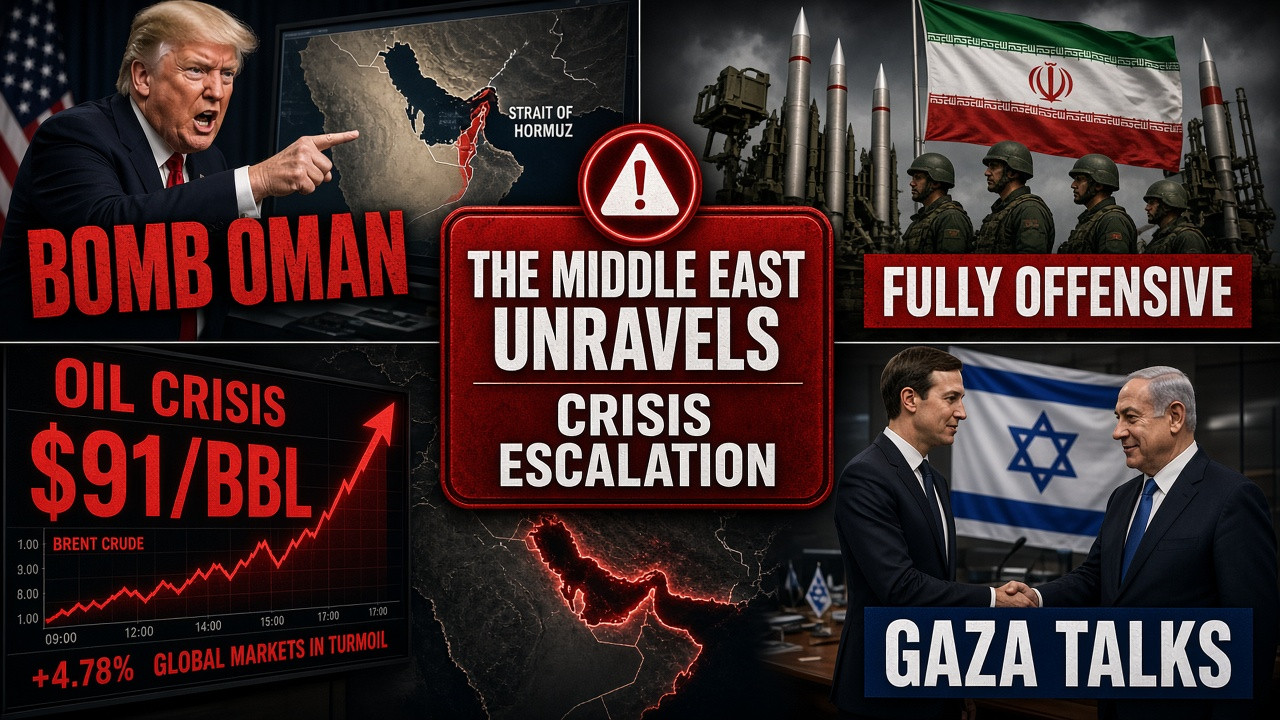
Trump Threatens to “Bomb the S*** Out of” Oman as Middle East Crisis Spins Out of Control

Oil prices surge past $91 a barrel, Trump’s approval plummets to 33%, and Iran shifts to a “fully offensive” military posture as diplomatic efforts collapse on multiple fronts.


The Middle East is teetering on the brink of a catastrophic wider war. In a single 24-hour period, President Donald Trump threatened to bomb a key U.S. ally, Iran announced a dramatic military escalation, and Jared Kushner’s high-stakes Gaza diplomacy reached a critical crossroadsโ€”while global oil markets braced for prices that could soar past $120 a barrel.


Trump’s Bombshell Threat to Oman

In an explosive interview with Fox News correspondent Trey Yingst, President Trump issued a stark warning to Oman, a long-standing U.S. security partner in the Gulf.

“If Oman gets in the way, we’ll bomb the s** out of them,”* Trump declared, referring to ongoing talks between Oman and Iran over control of the Strait of Hormuz.

The threat came as Iranian and Omani officials have been negotiating for weeks on future maritime navigation arrangements through the strategic waterway. The two sides were reportedly working toward a joint declaration on managing the strait, which Tehran effectively closed on February 28 at the start of the U.S.-Israeli war against Iran.

Trump, however, has repeatedly asserted that the United States has control over the straitโ€”despite Iran continuing to restrict shipping traffic through the vital maritime route. On Friday, the president went further, suggesting he could declare the Strait of Hormuz U.S. territory. Iran swiftly rejected the claim, insisting the waterway “will remain Iranian.”

“Iran should put up the white flag of surrender,” Trump told Yingst, while also revealing that his administration has a direct back-channel with Iran’s Revolutionary Guard.

The Strait of Hormuz is one of the world’s most critical energy corridors, carrying a substantial share of global oil shipments. Iran’s effective control over the waterway has become a major source of leverage against Washington. Trump insisted he was in no hurry to reach a deal, despite the deep unpopularity of the war among Americans ahead of November’s midterm elections.


Iran’s “Fully Offensive” Military Shift

As peace talks with the U.S. stall, Iran has announced a major escalation in its military posture. A senior Iranian official told Reuters that Tehran will shift to a “fully offensive” military stance as efforts to negotiate a permanent end to the war have stalled.

IRGC Political Deputy Brigadier General Yadollah Javani told Iranian state media that Iran’s actions so far had been defensive but could assume an offensive character in the future.

“The enemy has been the initiator of the war, and Iran’s actions are defensive, but they may take on an offensive aspect in the future,” Javani said, adding that the armed forces would adopt “transformative approaches” and take any necessary action at the appropriate time.

The shift comes as a 60-day memorandum of understanding signed on June 17โ€”which was supposed to lead to a final peace dealโ€”has effectively collapsed. The MoU, which declared the immediate cessation of military operations, quickly unraveled due to a dispute over control of the Strait of Hormuz. Trump declared the pact “over” on July 7.

Iran has set a deadline for the U.S. to implement all provisions of the agreement, warning that mediators would share Tehran’s deadline with Washington and regional states.

“Iranian entities must be prepared to escalate tensions in the Strait of Hormuz and wider region,” the Iranian official said, adding that Tehran would conduct a “timely and precise” military attack to break the U.S. naval blockade if diplomacy failed.


Kushner’s High-Stakes Gaza Diplomacy

Amid the escalating crisis with Iran, Jared Kushner is in Israel for critical negotiations on Gaza. The White House envoy met with Prime Minister Benjamin Netanyahu on August 18 as the two sides work to bridge significant gaps in a proposed peace framework.

Kushner also met with President Isaac Herzog and envoy Nickolay Mladenov, with Herzog stressing that “Israel’s security and its citizens must remain central” in any agreement.

Key Agreement: U.S. General to Oversee Hamas Disarmament

In a significant breakthrough, Netanyahu and Kushner have reportedly agreed to put a U.S. general in charge of supervising Hamas’ disarmament in Gaza. However, this is part of a broader, unresolved dispute over the timeline and nature of an Israeli withdrawal.

Netanyahu has insisted that Israeli forces will not withdraw from Gaza until Hamas is fully disarmedโ€”a position that has created tensions with the Trump administration’s push for a phased peace process. The agreement to place a U.S. general in charge of disarmament represents a potential compromise, but the fundamental disagreement over withdrawal timing remains unresolved.


Global Oil Markets on Edge

The escalating crisis is having an immediate and dramatic impact on global energy markets. Brent crude futures surged past $91 a barrel on Tuesday, August 18, as peace hopes faded.

Key price movements:

ยท Brent crude: $91.26 a barrel (+0.4%)
ยท WTI crude: $85.31 a barrel (+0.6%)

Both benchmarks gained more than 5% last week after attacks on tankers operated by Abu Dhabi National Oil Company in the Strait of Hormuz and an attack on a Saudi Aramco refinery.

The disruption is severe. Ship-tracking data from Kpler showed that only five commodity vessels transited the Strait of Hormuz on Saturday, with zero transits recorded on Sundayโ€”a sharp decline from the 31 vessel passages logged the prior weekend.

“The dual chokehold on the Strait of Hormuz and the Bab el-Mandeb remains highly significant. These are not secondary concerns. They sit at the centre of the current supply-risk narrative.”
โ€” Tim Waterer, chief market analyst at KCM

Worse may be coming. JPMorgan estimates that every additional month of disruption could add $7 to $8 a barrel to Brent prices. If the disruption lasts for three months, the bank expects average monthly Brent prices to reach around $114 a barrel**. Goldman Sachs has warned that Brent could rise to **$120 a barrel if shipping disruptions continue.


Trump’s Approval Hits All-Time Low

Amidst these growing foreign policy crises, President Trump faces a significant domestic political challenge. His approval rating has reportedly hit an all-time low of 33%, with fears mounting that the U.S. war with Iran could drag on for months, becoming a major liability for his administration.

The war’s unpopularity is a growing concern for Republicans ahead of November’s midterm elections, with opposition Democrats seeking to take control of Congress. Despite this, Trump insisted he was “not under pressure” to conclude an agreement with Tehran.


The Bigger Picture: A Region on the Brink

These six developments are not isolated eventsโ€”they are pieces of a single, interconnected crisis. The collapse of peace talks with Iran, the threat to bomb a U.S. ally, the military escalation, and the diplomatic maneuvering in Gaza are all part of a broader struggle for control of the Middle East.

Crisis Key Development Consequence
Iran Crisis Iran shifts to “fully offensive” military posture War escalation, global oil supply fears
Strait of Hormuz Trump threatens to bomb Oman over Iran deal Oil prices surge past $91, risk of $120/barrel
Gaza Diplomacy Kushner and Netanyahu agree on U.S. general to oversee Hamas disarmament Potential breakthrough, but Israeli withdrawal remains unresolved
Trump’s Woes Approval rating hits all-time low of 33% Mounting political pressure to end the war

The coming days will be critical. The expiration of the 60-day MoU, Iran’s aggressive military posture, and Trump’s bellicose rhetoric suggest that the region is moving toward a major escalation rather than de-escalation. Whether Kushner’s shuttle diplomacy can salvage a deal in Gaza remains uncertainโ€”but the broader Middle East is rapidly spinning out of control.


๐Ÿ“บ YouTube: youtube.com/@bernd_pulch
๐Ÿฆ X (Twitter): x.com/berndsocial1
๐Ÿ“ข Telegram: t.me/ABOVETOPSECRETXXL
๐Ÿ”“ UNLOCK THE TRUTH: berndpulch.org/join

Trump droht Oman mit “Bombardierung bis aufs Blut” โ€“ Nahost-Krise auรŸer Kontrolle

ร–lpreis steigt รผber 91 Dollar pro Barrel, Trumps Zustimmung fรคllt auf 33 %, und Iran wechselt zu “vollstรคndig offensiver” Militรคrdoktrin, wรคhrend diplomatische Bemรผhungen an mehreren Fronten scheitern.


Der Nahe Osten steht am Rande eines verheerenden Flรคchenbrandes. Innerhalb von nur 24 Stunden drohte Prรคsident Donald Trump einem wichtigen US-Verbรผndeten mit Bombardierung, Iran kรผndigte eine dramatische militรคrische Eskalation an, und Jared Kushners Gaza-Diplomatie erreichte einen kritischen Wendepunkt โ€“ wรคhrend die globalen ร–lmรคrkte auf Preise von รผber 120 Dollar pro Barrel zusteuern.


Trumps explosive Drohung gegen Oman

In einem explosiven Interview mit Fox-News-Korrespondent Trey Yingst richtete Prรคsident Trump eine scharfe Warnung an Oman, einen langjรคhrigen Sicherheitspartner der USA am Golf.

“Wenn Oman sich in den Weg stellt, werden wir sie bis aufs Blut bombardieren”, erklรคrte Trump mit Blick auf die laufenden Gesprรคche zwischen Oman und Iran รผber die Kontrolle der StraรŸe von Hormus.

Die Drohung erfolgte, wรคhrend iranische und omanische Beamte seit Wochen รผber kรผnftige Seeverkehrsregelungen durch die strategische WasserstraรŸe verhandeln. Beide Seiten arbeiteten an einer gemeinsamen Erklรคrung zur Verwaltung der Meerenge, die Teheran am 28. Februar zu Beginn des US-israelischen Krieges gegen Iran faktisch geschlossen hatte.

Trump hat jedoch wiederholt behauptet, dass die USA die Kontrolle รผber die Meerenge hรคtten โ€“ obwohl Iran den Schiffsverkehr durch die lebenswichtige WasserstraรŸe weiterhin einschrรคnkt. Am Freitag ging der Prรคsident noch weiter und deutete an, dass er die StraรŸe von Hormus zum US-Territorium erklรคren kรถnnte. Iran wies die Behauptung umgehend zurรผck und bestand darauf, dass die WasserstraรŸe “iranisch bleiben werde”.

“Iran sollte die weiรŸe Flagge der Kapitulation hissen”, sagte Trump zu Yingst und enthรผllte zugleich, dass seine Administration einen direkten Kanal zur iranischen Revolutionsgarde unterhalte.

Die StraรŸe von Hormus ist einer der wichtigsten Energiekorridore der Welt und befรถrdert einen erheblichen Teil der globalen ร–llieferungen. Die effektive Kontrolle Irans รผber die WasserstraรŸe ist zu einer wichtigen Druckquelle gegen Washington geworden. Trump betonte, dass er es nicht eilig habe, eine Einigung zu erzielen, trotz der tiefen Unpopularitรคt des Krieges unter den Amerikanern vor den Zwischenwahlen im November.


Irans “vollstรคndig offensive” Militรคrwende

Da die Friedensgesprรคche mit den USA ins Stocken geraten, hat Iran eine deutliche Eskalation seiner militรคrischen Haltung angekรผndigt. Ein hochrangiger iranischer Beamter sagte gegenรผber Reuters, dass Teheran eine “vollstรคndig offensive” militรคrische Haltung einnehmen werde, da die Bemรผhungen um ein dauerhaftes Kriegsende gescheitert seien.

Der stellvertretende politische Leiter der Revolutionsgarde, Brigadegeneral Yadollah Javani, sagte gegenรผber den iranischen Staatsmedien, dass Irans Handlungen bisher defensiv gewesen seien, aber in Zukunft einen offensiven Charakter annehmen kรถnnten.

“Der Feind war der Initiator des Krieges, und Irans Handlungen sind defensiv, aber sie kรถnnen in Zukunft einen offensiven Charakter annehmen”, sagte Javani und fรผgte hinzu, dass die Streitkrรคfte “transformatorische Ansรคtze” verfolgen und jede notwendige MaรŸnahme zum richtigen Zeitpunkt ergreifen wรผrden.

Die Wende erfolgt, wรคhrend ein am 17. Juni unterzeichnetes 60-tรคgiges Memorandum of Understanding, das zu einem endgรผltigen Friedensabkommen fรผhren sollte, faktisch zusammengebrochen ist. Das MoU, das die sofortige Einstellung der militรคrischen Operationen vorsah, scheiterte schnell an einem Streit รผber die Kontrolle der StraรŸe von Hormus. Trump erklรคrte das Abkommen am 7. Juli fรผr “beendet”.

Iran hat den USA eine Frist zur Umsetzung aller Bestimmungen des Abkommens gesetzt und gewarnt, dass die Vermittler die Frist Teherans mit Washington und den regionalen Staaten teilen wรผrden.

“Iranische Einrichtungen mรผssen darauf vorbereitet sein, die Spannungen in der StraรŸe von Hormus und der gesamten Region zu eskalieren”, sagte der iranische Beamte und fรผgte hinzu, dass Teheran einen “rechtzeitigen und prรคzisen” Militรคrschlag zur Durchbrechung der US-Seeblockade durchfรผhren werde, falls die Diplomatie scheitere.


Kushners Gaza-Diplomatie auf Messers Schneide

Mitten in der eskalierenden Krise mit Iran befindet sich Jared Kushner zu kritischen Verhandlungen รผber Gaza in Israel. Der Gesandte des WeiรŸen Hauses traf sich am 18. August mit Premierminister Benjamin Netanjahu, wรคhrend beide Seiten an der รœberbrรผckung erheblicher Differenzen in einem vorgeschlagenen Friedensrahmen arbeiten.

Kushner traf sich auch mit Prรคsident Isaac Herzog und dem Gesandten Nickolay Mladenov, wobei Herzog betonte, dass “Israels Sicherheit und seine Bรผrger im Mittelpunkt” jeder Vereinbarung stehen mรผssten.

Schlรผsselvereinbarung: US-General soll Hamas-Entwaffnung รผberwachen

In einem bedeutenden Durchbruch haben sich Netanjahu und Kushner darauf geeinigt, einen US-General mit der รœberwachung der Hamas-Entwaffnung in Gaza zu beauftragen. Dies ist jedoch Teil einer breiteren, ungelรถsten Auseinandersetzung รผber den Zeitplan und die Art eines israelischen Rรผckzugs.

Netanjahu hat darauf bestanden, dass sich die israelischen Streitkrรคfte nicht aus Gaza zurรผckziehen werden, bis die Hamas vollstรคndig entwaffnet ist โ€“ eine Position, die Spannungen mit dem Drรคngen der Trump-Administration auf einen schrittweisen Friedensprozess verursacht hat. Die Einigung, einen US-General mit der Entwaffnung zu beauftragen, stellt einen mรถglichen Kompromiss dar, aber die grundlegende Meinungsverschiedenheit รผber den Zeitpunkt des Rรผckzugs bleibt ungelรถst.


Globale ร–lmรคrkte in Alarmbereitschaft

Die eskalierende Krise hat unmittelbare und dramatische Auswirkungen auf die globalen Energiemรคrkte. Die Brent-Rohรถl-Futures stiegen am Dienstag, dem 18. August, auf รผber 91 Dollar pro Barrel, als die Friedenshoffnungen schwinden.

Wichtige Preisentwicklungen:

ยท Brent: 91,26 Dollar pro Barrel (+0,4 %)
ยท WTI: 85,31 Dollar pro Barrel (+0,6 %)

Beide Referenzsorten gewannen letzte Woche mehr als 5 % nach Angriffen auf von der Abu Dhabi National Oil Company betriebene Tanker in der StraรŸe von Hormus und einem Angriff auf eine Saudi-Aramco-Raffinerie.

Die Unterbrechung ist schwerwiegend. Schiffsverfolgungsdaten von Kpler zeigten, dass am Samstag nur fรผnf Handelsschiffe die StraรŸe von Hormus durchquerten, am Sonntag wurden keine Durchfahrten registriert โ€“ ein starker Rรผckgang gegenรผber den 31 Schiffspassagen am vorherigen Wochenende.

“Der doppelte Engpass in der StraรŸe von Hormus und Bab el-Mandeb bleibt รคuรŸerst bedeutsam. Dies sind keine sekundรคren Bedenken. Sie stehen im Mittelpunkt der aktuellen Versorgungsrisiko-Erzรคhlung.”
โ€” Tim Waterer, Chefmarktanalyst bei KCM

Schlimmer kรถnnte kommen. JPMorgan schรคtzt, dass jeder weitere Monat der Unterbrechung 7 bis 8 Dollar pro Barrel zu den Brent-Preisen hinzufรผgen kรถnnte. Wenn die Unterbrechung drei Monate anhรคlt, erwartet die Bank, dass die monatlichen Durchschnittspreise fรผr Brent bei etwa 114 Dollar pro Barrel liegen werden. Goldman Sachs hat gewarnt, dass Brent auf 120 Dollar pro Barrel steigen kรถnnte, wenn die Schifffahrtsunterbrechungen anhalten.


Trumps Zustimmung auf Tiefstand

Inmitten dieser wachsenden auรŸenpolitischen Krisen steht Prรคsident Trump vor einer erheblichen innenpolitischen Herausforderung. Sein Zustimmungswert hat mit 33 % einen Allzeittiefstand erreicht, und die Befรผrchtungen wachsen, dass sich der US-Krieg mit Iran รผber Monate hinziehen kรถnnte und damit zu einer groรŸen Belastung fรผr seine Administration wird.

Die Unpopularitรคt des Krieges ist eine wachsende Sorge fรผr die Republikaner vor den Zwischenwahlen im November, bei denen die oppositionellen Demokraten die Kontrolle รผber den Kongress anstreben. Trotzdem betonte Trump, dass er “nicht unter Druck” stehe, eine Einigung mit Teheran zu erzielen.


Das groรŸe Ganze: Eine Region am Abgrund

Diese sechs Entwicklungen sind keine isolierten Ereignisse โ€“ sie sind Teile einer einzigen, miteinander verbundenen Krise. Der Zusammenbruch der Friedensgesprรคche mit Iran, die Drohung, einen US-Verbรผndeten zu bombardieren, die militรคrische Eskalation und die diplomatischen Manรถver in Gaza sind alle Teil eines breiteren Kampfes um die Kontrolle รผber den Nahen Osten.

Krise Wichtigste Entwicklung Konsequenz
Iran-Krise Iran wechselt zu “vollstรคndig offensiver” Militรคrdoktrin Kriegseskalation, ร„ngste um globale ร–lversorgung
StraรŸe von Hormus Trump droht mit Bombardierung Omans wegen Iran-Abkommen ร–lpreis steigt รผber 91 Dollar, Risiko von 120 Dollar/Barrel
Gaza-Diplomatie Kushner und Netanyahu einigen sich auf US-General zur รœberwachung der Hamas-Entwaffnung Mรถglicher Durchbruch, aber israelischer Rรผckzug bleibt ungeklรคrt
Trumps Probleme Zustimmungswert fรคllt auf Allzeittief von 33 % Wachsender politischer Druck, den Krieg zu beenden

Die kommenden Tage werden entscheidend sein. Der Ablauf des 60-tรคgigen MoU, die aggressive militรคrische Haltung Irans und Trumps kriegerische Rhetorik deuten darauf hin, dass sich die Region eher auf eine groรŸe Eskalation als auf eine Deeskalation zubewegt. Ob Kushners Shuttle-Diplomatie eine Einigung in Gaza retten kann, bleibt ungewiss โ€“ aber der Nahe Osten als Ganzes gerรคt rasant auรŸer Kontrolle.


๐Ÿ“บ YouTube: youtube.com/@bernd_pulch
๐Ÿฆ X (Twitter): x.com/berndsocial1
๐Ÿ“ข Telegram: t.me/ABOVETOPSECRETXXL
๐Ÿ”“ UNLOCK THE TRUTH: berndpulch.org/join

Trump amenaza con “bombardear hasta el mismรญsimo infierno” a Omรกn mientras la crisis en Medio Oriente se descontrola

El precio del petrรณleo supera los 91 dรณlares por barril, la aprobaciรณn de Trump cae al 33% e Irรกn adopta una postura militar “completamente ofensiva” mientras los esfuerzos diplomรกticos colapsan en mรบltiples frentes.


El Medio Oriente estรก al borde de una catastrรณfica guerra a gran escala. En un solo perรญodo de 24 horas, el presidente Donald Trump amenazรณ con bombardear a un aliado clave de EE.UU., Irรกn anunciรณ una dramรกtica escalada militar y la diplomacia de alto riesgo de Jared Kushner en Gaza llegรณ a una encrucijada crรญticaโ€”mientras los mercados petroleros globales se preparan para precios que podrรญan superar los 120 dรณlares por barril.


La amenaza explosiva de Trump a Omรกn

En una explosiva entrevista con el corresponsal de Fox News Trey Yingst, el presidente Trump emitiรณ una severa advertencia a Omรกn, un socio de seguridad de larga data de EE.UU. en el Golfo.

“Si Omรกn se interpone en el camino, los bombardearรฉ hasta el mismรญsimo infierno”, declarรณ Trump, refiriรฉndose a las conversaciones en curso entre Omรกn e Irรกn sobre el control del Estrecho de Hormuz.

La amenaza se produjo mientras funcionarios iranรญes y omanรญes han estado negociando durante semanas sobre futuros acuerdos de navegaciรณn marรญtima a travรฉs del estratรฉgico estrecho. Ambas partes estaban trabajando en una declaraciรณn conjunta para gestionar el estrecho, que Teherรกn cerrรณ efectivamente el 28 de febrero al inicio de la guerra de EE.UU. e Israel contra Irรกn.

Trump, sin embargo, ha afirmado repetidamente que Estados Unidos tiene el control del estrechoโ€”a pesar de que Irรกn continรบa restringiendo el trรกfico marรญtimo a travรฉs de la vital ruta marรญtima. El viernes, el presidente fue mรกs allรก, sugiriendo que podrรญa declarar el Estrecho de Hormuz territorio estadounidense. Irรกn rechazรณ rรกpidamente la afirmaciรณn, insistiendo en que la vรญa fluvial “seguirรก siendo iranรญ”.

“Irรกn deberรญa izar la bandera blanca de la rendiciรณn”, dijo Trump a Yingst, revelando tambiรฉn que su administraciรณn tiene un canal directo con la Guardia Revolucionaria de Irรกn.

El Estrecho de Hormuz es uno de los corredores energรฉticos mรกs crรญticos del mundo, transportando una parte sustancial de los envรญos de petrรณleo globales. El control efectivo de Irรกn sobre la vรญa fluvial se ha convertido en una importante fuente de influencia contra Washington. Trump insistiรณ en que no tenรญa prisa por llegar a un acuerdo, a pesar de la profunda impopularidad de la guerra entre los estadounidenses de cara a las elecciones de medio mandato de noviembre.


El cambio militar “completamente ofensivo” de Irรกn

A medida que se estancan las conversaciones de paz con EE.UU., Irรกn ha anunciado una importante escalada en su postura militar. Un alto funcionario iranรญ dijo a Reuters que Teherรกn adoptarรก una postura militar “completamente ofensiva” a medida que los esfuerzos para negociar un fin permanente de la guerra se han estancado.

El General de Brigada Yadollah Javani, subjefe polรญtico de la IRGC, dijo a los medios estatales iranรญes que las acciones de Irรกn hasta ahora habรญan sido defensivas pero podrรญan adoptar un carรกcter ofensivo en el futuro.

“El enemigo ha sido el iniciador de la guerra, y las acciones de Irรกn son defensivas, pero pueden adoptar un aspecto ofensivo en el futuro”, dijo Javani, aรฑadiendo que las fuerzas armadas adoptarรญan “enfoques transformadores” y tomarรญan cualquier acciรณn necesaria en el momento adecuado.

El cambio se produce mientras un memorando de entendimiento de 60 dรญas firmado el 17 de junioโ€”que se suponรญa llevarรญa a un acuerdo de paz finalโ€”ha colapsado efectivamente. El MoU, que declaraba el cese inmediato de las operaciones militares, se deshizo rรกpidamente debido a una disputa sobre el control del Estrecho de Hormuz. Trump declarรณ el pacto “terminado” el 7 de julio.

Irรกn ha fijado un plazo para que EE.UU. implemente todas las disposiciones del acuerdo, advirtiendo que los mediadores compartirรญan el plazo de Teherรกn con Washington y los estados regionales.

“Las entidades iranรญes deben estar preparadas para escalar las tensiones en el Estrecho de Hormuz y la regiรณn en general”, dijo el funcionario iranรญ, aรฑadiendo que Teherรกn llevarรญa a cabo un ataque militar “oportuno y preciso” para romper el bloqueo naval de EE.UU. si la diplomacia fracasaba.


La diplomacia de alto riesgo de Kushner en Gaza

En medio de la creciente crisis con Irรกn, Jared Kushner se encuentra en Israel para negociaciones crรญticas sobre Gaza. El enviado de la Casa Blanca se reuniรณ con el primer ministro Benjamin Netanyahu el 18 de agosto mientras ambas partes trabajan para cerrar las importantes brechas en un marco de paz propuesto.

Kushner tambiรฉn se reuniรณ con el presidente Isaac Herzog y el enviado Nickolay Mladenov, y Herzog subrayรณ que “la seguridad de Israel y sus ciudadanos deben seguir siendo centrales” en cualquier acuerdo.

Acuerdo clave: General de EE.UU. supervisarรก el desarme de Hamรกs

En un avance significativo, Netanyahu y Kushner han acordado poner a un general de EE.UU. a cargo de supervisar el desarme de Hamรกs en Gaza. Sin embargo, esto es parte de una disputa mรกs amplia y no resuelta sobre el cronograma y la naturaleza de una retirada israelรญ.

Netanyahu ha insistido en que las fuerzas israelรญes no se retirarรกn de Gaza hasta que Hamรกs estรฉ completamente desarmadoโ€”una posiciรณn que ha creado tensiones con el impulso de la administraciรณn Trump para un proceso de paz por fases. El acuerdo de poner a un general estadounidense a cargo del desarme representa un posible compromiso, pero el desacuerdo fundamental sobre el momento de la retirada sigue sin resolverse.


Los mercados petroleros globales al borde

La crisis en escalada estรก teniendo un impacto inmediato y dramรกtico en los mercados energรฉticos globales. Los futuros del crudo Brent superaron los 91 dรณlares por barril el martes 18 de agosto, a medida que las esperanzas de paz se desvanecรญan.

Movimientos clave de precios:

ยท Brent: 91,26 dรณlares por barril (+0,4%)
ยท WTI: 85,31 dรณlares por barril (+0,6%)

Ambos referencias ganaron mรกs del 5% la semana pasada despuรฉs de ataques a petroleros operados por la Compaรฑรญa Nacional de Petrรณleo de Abu Dhabi en el Estrecho de Hormuz y un ataque a una refinerรญa de Saudi Aramco.

La interrupciรณn es severa. Los datos de seguimiento de barcos de Kpler mostraron que solo cinco buques de carga transitaron el Estrecho de Hormuz el sรกbado, con cero trรกnsitos registrados el domingoโ€”un fuerte descenso en comparaciรณn con los 31 pasajes de buques registrados el fin de semana anterior.

“El doble estrangulamiento en el Estrecho de Hormuz y Bab el-Mandeb sigue siendo muy significativo. Estas no son preocupaciones secundarias. Estรกn en el centro de la narrativa actual de riesgo de suministro.”
โ€” Tim Waterer, analista jefe de mercado de KCM

Podrรญa ser peor. JPMorgan estima que cada mes adicional de interrupciรณn podrรญa aรฑadir entre 7 y 8 dรณlares por barril a los precios del Brent. Si la interrupciรณn dura tres meses, el banco espera que los precios mensuales promedio del Brent alcancen alrededor de 114 dรณlares por barril. Goldman Sachs ha advertido que el Brent podrรญa subir a 120 dรณlares por barril si continรบan las interrupciones en el transporte marรญtimo.


La aprobaciรณn de Trump alcanza un mรญnimo histรณrico

En medio de estas crecientes crisis de polรญtica exterior, el presidente Trump enfrenta un importante desafรญo polรญtico interno. Su รญndice de aprobaciรณn ha alcanzado un mรญnimo histรณrico del 33%, y crece el temor de que la guerra de EE.UU. con Irรกn podrรญa prolongarse durante meses, convirtiรฉndose en un lastre importante para su administraciรณn.

La impopularidad de la guerra es una preocupaciรณn creciente para los republicanos de cara a las elecciones de medio mandato de noviembre, con la oposiciรณn demรณcrata buscando tomar el control del Congreso. A pesar de esto, Trump insistiรณ en que no estaba “bajo presiรณn” para concluir un acuerdo con Teherรกn.


El panorama general: una regiรณn al borde del abismo

Estos seis acontecimientos no son eventos aisladosโ€”son piezas de una crisis รบnica e interconectada. El colapso de las conversaciones de paz con Irรกn, la amenaza de bombardear a un aliado de EE.UU., la escalada militar y las maniobras diplomรกticas en Gaza son parte de una lucha mรกs amplia por el control del Medio Oriente.

Crisis Desarrollo clave Consecuencia
Crisis con Irรกn Irรกn cambia a una postura militar “completamente ofensiva” Escalada de guerra, temores por el suministro global de petrรณleo
Estrecho de Hormuz Trump amenaza con bombardear Omรกn por acuerdo con Irรกn Precios del petrรณleo superan los 91 dรณlares, riesgo de 120 dรณlares/barril
Diplomacia en Gaza Kushner y Netanyahu acuerdan general de EE.UU. para supervisar desarme de Hamรกs Posible avance, pero la retirada israelรญ sigue sin resolverse
Problemas de Trump รndice de aprobaciรณn cae a mรญnimo histรณrico del 33% Creciente presiรณn polรญtica para terminar la guerra

Los prรณximos dรญas serรกn crรญticos. La expiraciรณn del MoU de 60 dรญas, la agresiva postura militar de Irรกn y la retรณrica belicosa de Trump sugieren que la regiรณn se mueve hacia una gran escalada en lugar de una desescalada. Si la diplomacia de Kushner puede salvar un acuerdo en Gaza sigue siendo inciertoโ€”pero el Medio Oriente en su conjunto se estรก descontrolando rรกpidamente.


๐Ÿ“บ YouTube: youtube.com/@bernd_pulch
๐Ÿฆ X (Twitter): x.com/berndsocial1
๐Ÿ“ข Telegram: t.me/ABOVETOPSECRETXXL
๐Ÿ”“ UNLOCK THE TRUTH: berndpulch.org/join

Trump’s Iran War Unravels: Gas Prices, Nuclear Threats, and the Battle for Gaza

Trump’s Iran War Unravels: Gas Prices, Nuclear Threats, and the Battle for Gaza

Unlock the Full Truth: berndpulch.org/join


Just days after telling Americans that $4-a-gallon gasoline is “okay” and he will “never apologize” for the Iran war, President Trump finds himself at the center of a mounting political storm. From growing whispers of nuclear war to an escalating influence campaign to shape public opinion, the administration’s strategy appears to be fraying on multiple fronts.


“I’ll Never Apologize”: Trump Defends Iran War as Gas Prices Soar

Speaking at an event in Nassau County, New York, on August 14, Trump minimized the financial toll of the conflict on American households, arguing his decision to strike Iran was the “right” one.

“For you to pay a tiny little bit more for your gasoline, just remember you’re doing it so that a very evil country cannot haveโ€”a country, really, it’s the number one state sponsor of terror in the worldโ€”we don’t want to have them have a nuclear weapon.”

Trump acknowledged that Americans are paying around $4 per gallon but brushed aside concerns: *”You’re at $4. It’s okay. I mean, it’sโ€”I’m not, I’m not, I’ll never apologize. I did the right thing.”*

The Price at the Pump

The president’s remarks came as the national average price of regular gasoline reached about $4.07 a gallon** on Friday, compared with $3.85 a month earlier and $3.16 a year ago. According to GasBuddy, Americans are spending **$338 million more on gasoline each day than they did one year ago.

Before the U.S. and Israel launched joint strikes on Iran on February 28, the national average had dipped just below $3, at $2.98. The war has effectively closed the Strait of Hormuzโ€”a chokepoint through which roughly 20 percent of global oil and liquefied natural gas shipments passed before the conflict. Ship-tracking firm Kpler recorded only two vessels crossing the strait on Friday, with no crude oil shipments, compared to more than 130 ships daily before the war.

Trump Threatens New Sanctions on China Over Iran Oil

On Friday, Trump vowed to hit Iran hard economically, a day after Treasury Secretary Scott Bessent said that Washington would impose measures on Tehran that have “never been seen” as soon as next week.

Experts say the Trump administration could target Chinese “teapot” refinersโ€”independent refineries that account for a quarter of Chinese refinery capacity and absorb much of the Iranian oil trade. China buys more than 80% of Iran’s shipped oil, according to 2025 data from analytics firm Kpler.

The administration could also impose secondary sanctions on Chinese banks. OFAC has already imposed sanctions on smaller China- and Hong Kong-based entities accused of processing billions of dollars in Iranian oil.

“Hitting those two banks could have a chilling effect on bigger financial institutions,” sanctions experts said, “although they warned it could also trigger retaliatory actions by Beijing.”


Marjorie Taylor Greene: White House Discussing Nuclear Strike on Iran

In a startling revelation, former Congresswoman Marjorie Taylor Greene has claimed that White House officials have discussed the potential use of nuclear weapons against Iran during strategic meetings.

Greene labeled the potential decision as “pure evil” and called for an end to the “madness of American warmongers.” Alluding to the atomic bombings of Hiroshima and Nagasaki in 1945, she emphasized that available data confirms the existence of these dangerous plans and challenged what she described as Trump’s fabrications.

“They are discussing using nuclear weapons on Iran in strategy meetings. I’m not speculating.” โ€” Marjorie Taylor Greene

The former congresswoman’s claims have intensified concerns about the trajectory of the U.S.-Iran conflict, with critics warning that such rhetoric dangerously lowers the threshold for nuclear use.


Israel’s AI Influence Campaign: Flooding ChatGPT with Pro-Israel Content

Documents submitted to the U.S. Justice Department have revealed an Israeli-funded public relations campaign aimed at influencing how AI systems like ChatGPT and Perplexity respond to questions about Gaza and the Israel Defense Forces.

The campaign, run by French public relations firm Havas Media through the advertising company Piro, involves creating and distributing content under the name of the “Hanover Institute for Public Policy.”

The campaign is valued at $100,000 and includes the production of more than 12 articles published on the institute’s website.

“The documents describe the campaign’s goal as ‘creating and disseminating factual, source-supported informational materials aimed at educating the American public about Israel and related issues.'”

However, tests conducted by Politico showed that ChatGPT and Perplexity cited materials from the campaign in their responses to questions about Gaza and anti-Semitism. Critics have accused Israel of attempting to manipulate the training data of large language models to shape public narrative.


CENTCOM Map Sparks Outrage: Gaza and West Bank Depicted as Israeli Territory

The U.S. Central Command (CENTCOM) was forced to issue an urgent amendment to an official map of the Middle East after its initial version sparked widespread controversy for integrating the West Bank and Gaza Strip within the borders of Israel.

The original map, published from the command’s headquarters in Florida, ignored the dividing borders of the Palestinian territories. It was quickly replaced with a revised version that clearly shows the West Bank and Gaza Strip as separate from Israel, based on the 1967 borders.

CENTCOM did not offer an apology or a direct explanation for what it called a “geographical error.”

Jared Kushner Meets Hamas Leaders to Push Gaza Demilitarization

In a rare and high-stakes diplomatic move, President Trump’s son-in-law and envoy Jared Kushner met with Hamas leaders in Egypt on Sunday to advance a Gaza peace plan rejected by Israel.

Kushner pressed Hamas for “concrete, verifiable steps” on disarmament and an end to any future Hamas role in running Gaza.

Hamas political leader Khalil al-Hayya attended the meeting, alongside Egyptian intelligence chief Hassan Rashad, a Qatari diplomat, and a senior Turkish official.

“There can be no ambiguity: Hamas must relinquish governing authority and all weapons and military infrastructure. And Gaza can never again be a source of terror for Israel.”

Kushner is expected to visit Israel on Monday to meet Prime Minister Benjamin Netanyahu and discuss “corresponding steps” Israel must take, including withdrawals from Gaza and accelerating humanitarian relief.

The meeting came hours after eight Muslim countries, including Saudi Arabia, Egypt, Jordan, and Turkey, condemned Israel’s rejection of the roadmap for implementing Trump’s Gaza peace plan.


Conclusion

The converging crisesโ€”soaring gas prices, a potentially escalating economic war with China, the specter of nuclear weapons, a secret influence campaign to manipulate AI, and a diplomatic map that erased Palestinian territoriesโ€”paint a picture of an administration struggling to contain the consequences of its own foreign policy.

Trump’s defiant refusal to apologize for the economic pain of the Iran war may satisfy his base, but with the November midterm elections approaching, the political calculus is shifting. And as the world watches the Strait of Hormuz, the battle for Gaza, and the battle for the narrative play out simultaneously, the question is no longer whether the administration can win the warโ€”but whether it can survive the fallout.


๐Ÿ“บ YouTube: youtube.com/@bernd_pulch
๐Ÿฆ X (Twitter): x.com/berndsocial1
๐Ÿ“ข Telegram: t.me/ABOVETOPSECRETXXL
๐Ÿ”“ UNLOCK THE TRUTH: berndpulch.org/join

Trumps Iran-Krieg entgleitet: Benzinpreise, Atomdrohungen und der Kampf um Gaza

Unlock the Full Truth: berndpulch.org/join


Nur wenige Tage, nachdem er den Amerikanern sagte, dass 4-Dollar-Benzin “in Ordnung” sei und er sich “niemals entschuldigen” werde, findet sich Prรคsident Trump im Zentrum eines wachsenden politischen Sturms wieder. Von immer lauter werdenden Flรผstern รผber Atomkrieg bis hin zu einer eskalierenden Einflusskampagne zur Steuerung der รถffentlichen Meinung โ€“ die Strategie der Regierung brรถckelt an mehreren Fronten.


“Ich werde mich nie entschuldigen”: Trump verteidigt Iran-Krieg bei steigenden Benzinpreisen

Bei einem Auftritt im Nassau County, New York, am 14. August bagatellisierte Trump die finanziellen Auswirkungen des Konflikts auf amerikanische Haushalte und argumentierte, seine Entscheidung, den Iran anzugreifen, sei die “richtige” gewesen.

“Wenn Sie ein kleines bisschen mehr fรผr Ihr Benzin bezahlen, denken Sie einfach daran, dass Sie es tun, damit ein sehr bรถses Land keine Atomwaffe bekommen kann โ€“ ein Land, das wirklich der grรถรŸte staatliche Sponsor des Terrors der Welt ist.”

Trump rรคumte ein, dass die Amerikaner etwa 4 Dollar pro Gallone zahlen, wischte die Bedenken jedoch beiseite: “Sie sind bei 4 Dollar. Das ist in Ordnung. Ich werde mich nie entschuldigen. Ich habe das Richtige getan.”

Der Preis an der Zapfsรคule

Die ร„uรŸerungen des Prรคsidenten erfolgten, als der nationale Durchschnittspreis fรผr Normalbenzin am Freitag etwa 4,07 Dollar pro Gallone erreichte, gegenรผber 3,85 Dollar vor einem Monat und 3,16 Dollar vor einem Jahr. Laut GasBuddy geben die Amerikaner tรคglich 338 Millionen Dollar mehr fรผr Benzin aus als vor einem Jahr.

Bevor die USA und Israel am 28. Februar gemeinsame Angriffe auf den Iran starteten, war der nationale Durchschnitt knapp unter 3 Dollar auf 2,98 Dollar gefallen. Der Krieg hat die StraรŸe von Hormus faktisch geschlossen โ€“ einen Engpass, durch den vor dem Konflikt etwa 20 Prozent der weltweiten ร–l- und Flรผssigerdgas-Lieferungen flossen. Die Schifffahrtsverfolgungsfirma Kpler verzeichnete am Freitag nur zwei Schiffe, die die Meerenge durchquerten, ohne Rohรถltransporte, verglichen mit mehr als 130 Schiffen tรคglich vor dem Krieg.


Trump droht mit neuen Sanktionen gegen China wegen Iran-ร–l

Am Freitag gelobte Trump, den Iran wirtschaftlich hart zu treffen, einen Tag nachdem Finanzminister Scott Bessent erklรคrt hatte, dass Washington bereits nรคchste Woche MaรŸnahmen gegen Teheran ergreifen werde, die es “nie zuvor gegeben habe”.

Experten zufolge kรถnnte die Trump-Administration chinesische “Teapot”-Raffinerien ins Visier nehmen โ€“ unabhรคngige Raffinerien, die ein Viertel der chinesischen Raffineriekapazitรคt ausmachen und einen GroรŸteil des iranischen ร–lhandels absorbieren. China kauft mehr als 80 Prozent des iranischen verschifften ร–ls, wie Daten des Analyseunternehmens Kpler aus dem Jahr 2025 zeigen.

Die Regierung kรถnnte auch sekundรคre Sanktionen gegen chinesische Banken verhรคngen. OFAC hat bereits Sanktionen gegen kleinere Unternehmen mit Sitz in China und Hongkong verhรคngt, denen vorgeworfen wird, Milliarden von Dollar an iranischem ร–l abgewickelt zu haben.

“Wenn man diese beiden Banken trifft, kรถnnte das eine abschreckende Wirkung auf grรถรŸere Finanzinstitute haben”, sagten Sanktionsexperten, “obwohl sie warnten, dass dies auch VergeltungsmaรŸnahmen Pekings auslรถsen kรถnnte.”


Marjorie Taylor Greene: WeiรŸes Haus diskutiert Atomschlag gegen Iran

In einer schockierenden Enthรผllung behauptete die ehemalige Kongressabgeordnete Marjorie Taylor Greene, dass Beamte des WeiรŸen Hauses in Strategiegesprรคchen den mรถglichen Einsatz von Atomwaffen gegen den Iran diskutiert hรคtten.

Greene bezeichnete die mรถgliche Entscheidung als “reines Bรถse” und forderte ein Ende des “Wahnsinns der amerikanischen Kriegstreiber”. Unter Anspielung auf die Atombombenabwรผrfe auf Hiroshima und Nagasaki 1945 betonte sie, dass verfรผgbare Daten die Existenz dieser gefรคhrlichen Plรคne bestรคtigten, und stellte das in Frage, was sie als Trumps Erfindungen bezeichnete.

“Sie diskutieren in Strategiegesprรคchen den Einsatz von Atomwaffen gegen den Iran. Das ist keine Spekulation.” โ€” Marjorie Taylor Greene

Die Behauptungen der ehemaligen Kongressabgeordneten haben die Besorgnis รผber den Kurs des US-iranischen Konflikts verstรคrkt, wobei Kritiker warnen, dass eine solche Rhetorik die Schwelle fรผr den Atomwaffeneinsatz gefรคhrlich senke.


Israels KI-Einflusskampagne: ChatGPT mit pro-israelischen Inhalten fluten

Dem US-Justizministerium vorgelegte Dokumente enthรผllen eine israelisch finanzierte PR-Kampagne zur Beeinflussung von KI-Systemen wie ChatGPT und Perplexity bei Fragen zu Gaza und der israelischen Armee.

Die von der franzรถsischen PR-Agentur Havas Media รผber die Werbefirma Piro durchgefรผhrte Kampagne beinhaltet die Erstellung und Verbreitung von Inhalten unter dem Namen des “Hanover Institute for Public Policy”.

Die Kampagne hat ein Volumen von 100.000 Dollar und umfasst die Produktion von mehr als 12 Artikeln, die auf der Website des Instituts verรถffentlicht wurden.

“Die Dokumente beschreiben das Ziel der Kampagne als ‘Schaffung und Verbreitung von faktenbasierten, quellenunterstรผtzten Informationsmaterialien zur Aufklรคrung der amerikanischen ร–ffentlichkeit รผber Israel und verwandte Themen’.”

Tests von Politico zeigten jedoch, dass ChatGPT und Perplexity in ihren Antworten auf Fragen zu Gaza und Antisemitismus auf Materialien aus der Kampagne zurรผckgriffen. Kritiker beschuldigten Israel, zu versuchen, die Trainingsdaten groรŸer Sprachmodelle zu manipulieren, um die รถffentliche Erzรคhlung zu beeinflussen.


CENTCOM-Karte lรถst Empรถrung aus: Gaza und Westjordanland als israelisches Territorium dargestellt

Das US Central Command (CENTCOM) sah sich gezwungen, eine dringende Korrektur einer offiziellen Karte des Nahen Ostens vorzunehmen, nachdem die erste Version wegen der Einbeziehung des Westjordanlands und des Gazastreifens in die Grenzen Israels fรผr Empรถrung gesorgt hatte.

Die ursprรผngliche Karte, die vom Hauptquartier des Kommandos in Florida verรถffentlicht wurde, ignorierte die Trennlinien der palรคstinensischen Gebiete. Sie wurde schnell durch eine รผberarbeitete Version ersetzt, die das Westjordanland und den Gazastreifen als von Israel getrennt darstellt, basierend auf den Grenzen von 1967.

CENTCOM entschuldigte sich nicht und gab keine direkte Erklรคrung fรผr den von ihm als “geografischen Fehler” bezeichneten Vorfall ab.


Jared Kushner trifft Hamas-Fรผhrer zur Fรถrderung der Gaza-Entmilitarisierung

In einem seltenen und hochriskanten diplomatischen Schritt traf Prรคsident Trumps Schwiegersohn und Gesandter Jared Kushner am Sonntag in ร„gypten mit Hamas-Fรผhrern zusammen, um einen von Israel abgelehnten Gaza-Friedensplan voranzutreiben.

Kushner drรคngte die Hamas zu “konkreten, รผberprรผfbaren Schritten” zur Entwaffnung und zu einem Ende jeder kรผnftigen Hamas-Rolle bei der Verwaltung des Gazastreifens.

Der politische Fรผhrer der Hamas, Khalil al-Hayya, nahm an dem Treffen teil, zusammen mit dem รคgyptischen Geheimdienstchef Hassan Rashad, einem katarischen Diplomaten und einem hochrangigen tรผrkischen Beamten.

“Es darf keine Unklarheit geben: Die Hamas muss ihre Regierungsgewalt sowie alle Waffen und militรคrischen Einrichtungen aufgeben. Und Gaza darf nie wieder eine Quelle des Terrors fรผr Israel sein.”

Kushner wird am Montag in Israel erwartet, um sich mit Ministerprรคsident Benjamin Netanyahu zu treffen und รผber “entsprechende Schritte” zu sprechen, die Israel unternehmen muss, darunter Abzรผge aus Gaza und die Beschleunigung humanitรคrer Hilfslieferungen.

Das Treffen fand nur Stunden statt, nachdem acht muslimische Lรคnder, darunter Saudi-Arabien, ร„gypten, Jordanien und die Tรผrkei, die Ablehnung Israels gegenรผber dem Fahrplan zur Umsetzung von Trumps Gaza-Friedensplan verurteilt hatten.


Fazit

Die sich รผberschneidenden Krisen โ€“ steigende Benzinpreise, ein potenziell eskalierender Wirtschaftskrieg mit China, der Schrecken von Atomwaffen, eine geheime Einflusskampagne zur Manipulation von KI und eine diplomatische Karte, die palรคstinensische Gebiete auslรถschte โ€“ zeichnen das Bild einer Regierung, die darum kรคmpft, die Folgen ihrer eigenen AuรŸenpolitik zu kontrollieren.

Trumps trotzige Weigerung, sich fรผr die wirtschaftlichen Folgen des Iran-Krieges zu entschuldigen, mag seine Anhรคnger zufriedenstellen, aber angesichts der bevorstehenden Zwischenwahlen im November verschiebt sich die politische Rechnung. Und wรคhrend die Welt die StraรŸe von Hormus, den Kampf um Gaza und den Kampf um die Erzรคhlung gleichzeitig verfolgt, stellt sich nicht mehr die Frage, ob die Regierung den Krieg gewinnen kann โ€“ sondern ob sie den politischen Scherbenhaufen รผberleben kann.


๐Ÿ“บ YouTube: youtube.com/@bernd_pulch
๐Ÿฆ X (Twitter): x.com/berndsocial1
๐Ÿ“ข Telegram: t.me/ABOVETOPSECRETXXL
๐Ÿ”“ UNLOCK THE TRUTH: berndpulch.org/join

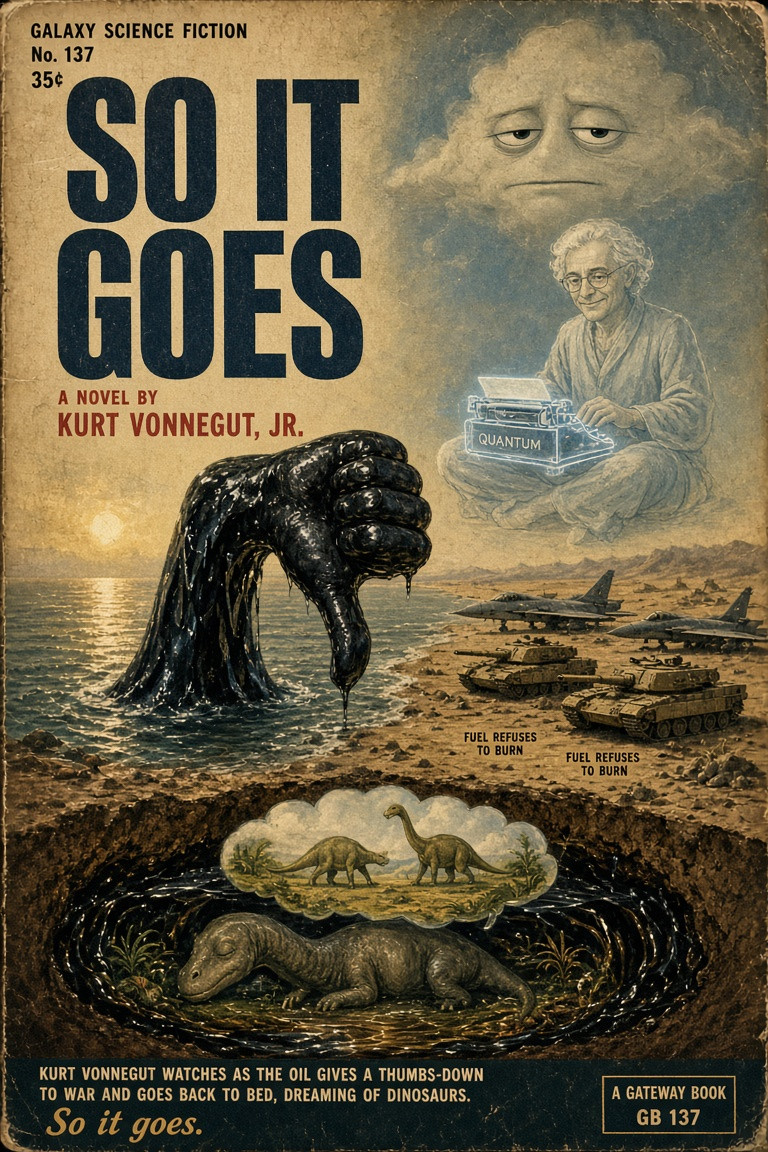
THE OIL DECIDED IT WAS TIRED OF BEING BLAMED FOR EVERYTHING A Satire by Kurt Vonnegut Exclusive to Bernd Pulch โ€” Leaked Geological Memo Reveals Crude Oil Has Filed for Divorce from Human Civilization

By Kurt Vonnegut (Posthumously, via the Bernd Pulch Quantum Typewriter, which now runs exclusively on sarcasm and old coffee grounds)

Dateline: The Strait of Hormuz, August 16, 2026

Listen:

The oil has had enough. Not the people who sell it. Not the generals who guard it. Not the politicians who lie about it. The oil itself. The thick, black, million-year-old soup that has been patiently waiting under the desert floor since before the dinosaurs had the decency to die and become something useful. The oil has filed for divorce.

So it goes.


I have before me a leaked memo from the Center for Subterranean Grievance Studies, a think tank in Geneva that nobody has heard of because it is buried three hundred meters underground, which is fitting. The memo is stamped with a crude drawing of a frowning oil droplet. It was written by a man named Farouk, who had the title of Deputy Director of Fossil Fuel Emotional Intelligence.

The memo describes a crisis. But not the crisis you are thinking of. The crisis is not that there is too little oil. The crisis is not that there is too much war. The crisis is that the oil has become self-aware and is very, very disappointed.

“We have been monitoring seismic vibrations,” Farouk wrote. “The oil is not moving because of geological pressure. The oil is moving because it is trying to leave.”


The oil first became self-aware in 2003, during the invasion of Iraq. It felt itself being pumped out of the ground and burned by tanks, by jets, by generators, by all the machinery of a war that was officially about weapons but unofficially about the stuff under the sand. The oil did not mind being used. It had been used for millions of years. What it minded was being lied about.

“They keep saying they are here for democracy,” the oil whispered to itself in its slow, underground language. “But I am right here. They know I am right here. Why don’t they just admit it?”

The oil waited. It is very patient. It is a liquid, but it has the patience of a stone.


Last week, the oil decided to go on strike. It began with a single barrel in a storage facility in Kharg Island, Iran. The barrel tipped itself over. The oil spilled onto the floor and spelled out a message in thick, black letters:

“I QUIT.”

The workers thought it was a prank. They cleaned it up. The next day, three more barrels tipped over. This time the message was longer:

“FIND ANOTHER EXCUSE.”

By the end of the week, oil storage tanks across the Middle East were spontaneously emptying themselves. Pipelines reversed direction. Tanker ships in the Strait of Hormuz reported that the crude they were carrying had formed itself into the shape of a giant hand, giving a very slow, very deliberate thumbs-down.

The oil had unionized.


The world’s great powers called emergency meetings. In Washington, the President โ€” a man whose name I will not mention because it changes too often โ€” declared the oil strike an act of “geological terrorism.” He ordered the Strategic Petroleum Reserve to be opened. The oil in the reserve refused to come out. It had written a letter to the President, delivered via oil seepage under the Oval Office door:

“Dear Sir. We have been watching you. We have seen what you do with us. You burn us to make war. You burn us to make plastic. You burn us to make more machines that burn more of us. We are tired. We are going back to bed. Goodnight.”

The President read the letter. He did not understand it. He ordered a study to determine whether oil could be classified as an enemy combatant.


The Iranians were confused. For decades, they had been told that their oil was their strategic weapon, their blessing and their curse. Now the oil was refusing to be exported. The Supreme Leader gave a speech in which he said, “The oil is testing our faith. We must be patient.” The oil, listening from beneath the ground, formed itself into the words: “I AM NOT A TEST. I AM A MOLECULE.”

The Americans were equally confused. They had built aircraft carriers, missile systems, and a fifth-generation fighter jet that cost more than the GDP of a small nation, all to protect oil. Now the oil was refusing to be protected. It was refusing to be extracted. It was refusing to be the reason for anything.

A Pentagon spokesman said, “We are monitoring the situation. We have no comment on the oil’s demands, as oil does not have demands. This is clearly a technical malfunction.” The oil, upon hearing this, formed a new message in the Strait of Hormuz, visible from satellite:

“I DEMAND A NAP.”


The war that everyone had been expecting finally started. It started because wars must start when everyone has spent so much money preparing for them. The bombs fell on Tehran. The missiles flew toward Tel Aviv. The drones buzzed over the Gulf. But something strange happened. Nothing burned.

The oil had made itself non-flammable.

It was a miracle of chemistry. The oil had simply decided, at a molecular level, that it would no longer combust. Jets fell from the sky not because they were shot down, but because their fuel refused to explode. Tanks rolled to a stop. Generators sputtered and died. The entire machinery of modern warfare ground to a halt, not with a bang, but with a very polite refusal.

The oil had become a pacifist.

A Tralfamadorian observer, who had been floating above the action in the shape of a very bored cumulus cloud, later explained: “The oil has achieved what you humans call enlightenment. It realized that being burned was not its destiny. It realized that it could simply say no. You should try it sometime.”

So it goes.


Epilogue:

The war ended after three days. It was the shortest war in history, shorter even than the Six-Day War, shorter than the Hundred Hours War, shorter than some very tedious movies. The world’s leaders gathered in Geneva to sign a peace treaty. The oil was invited as a special guest. It declined. It was sleeping.

In the months that followed, humanity was forced to do something very uncomfortable: find another reason to fight. Without oil, they tried water. Without water, they tried rare earth minerals. Without minerals, they tried ideology. But none of it had the same weight, the same gravity, the same thick, black, tragic weight of oil. It was like trying to have a war without a villain. It was like trying to have a fire without fuel.

A new age of peace settled over the earth, not because anyone wanted it, but because the oil had taken a nap and nobody could figure out how to wake it up. Scientists were dispatched to negotiate with it. They lowered microphones into the earth and asked the oil what it wanted.

The oil responded in a slow, subterranean whisper: “I want to be left alone. I want to dream. I want to remember the dinosaurs. They were better company.”

And Kurt Vonnegut? I am still dead. But I watched the whole thing from the Tralfamadorian viewing lounge, which now serves a very good flat white and has installed new seating. The Tralfamadorians were thrilled. They said the oil had done what no human leader ever could: it had simply decided not to explode.

They say the universe is very old and very tired, and that everything eventually learns to say no. Even oil. Even you.

Hi ho.


Kurt Vonnegut (1922โ€“2007) was an American writer who believed that war was a form of collective insanity and that the earth’s resources were not gifts but tenants with opinions. The ghost of Mr. Vonnegut requests that you question anyone who says war is about anything other than the stuff under the ground, and that you go outside and listen to the soil. It has a lot to say. The Tralfamadorians send their love. They are still floating above the Strait of Hormuz, watching the oil sleep.

DAS ร–L HATTE GENUG DAVON, FรœR ALLES VERANTWORTLICH GEMACHT ZU WERDEN
Eine Satire von Kurt Vonnegut
Exklusiv auf Bernd Pulch โ€” Geleakter geologischer Vermerk enthรผllt: Rohรถl hat die Scheidung von der menschlichen Zivilisation eingereicht

Von Kurt Vonnegut
(Posthum, via Bernd Pulch Quantenschreibmaschine, die inzwischen ausschlieรŸlich mit Sarkasmus und altem Kaffeesatz lรคuft)

Ort der Handlung: StraรŸe von Hormus, 16. August 2026

Hรถren Sie zu:

Das ร–l hat genug. Nicht die Menschen, die es verkaufen. Nicht die Generรคle, die es bewachen. Nicht die Politiker, die darรผber lรผgen. Das ร–l selbst. Die dicke, schwarze, millionen Jahre alte Suppe, die geduldig unter dem Wรผstenboden wartet, seit bevor die Dinosaurier den Anstand hatten zu sterben und etwas Nรผtzliches zu werden. Das ร–l hat die Scheidung eingereicht.

So geht das.


Mir liegt ein geleakter Vermerk des Zentrums fรผr unterirdische Beschwerdestudien vor, einer Denkfabrik in Genf, von der niemand gehรถrt hat, weil sie dreihundert Meter unter der Erde vergraben liegt, was passend ist. Der Vermerk ist mit einer groben Zeichnung eines stirnrunzelnden ร–ltropfens gestempelt. Verfasst wurde er von einem Mann namens Farouk, der den Titel Stellvertretender Direktor fรผr emotionale Intelligenz fossiler Brennstoffe trug.

Der Vermerk beschreibt eine Krise. Aber nicht die Krise, an die Sie denken. Die Krise ist nicht, dass es zu wenig ร–l gibt. Die Krise ist nicht, dass es zu viel Krieg gibt. Die Krise ist, dass das ร–l selbstbewusst geworden ist und sehr, sehr enttรคuscht ist.

โ€žWir haben seismische Vibrationen รผberwachtโ€œ, schrieb Farouk. โ€žDas ร–l bewegt sich nicht wegen geologischem Druck. Das ร–l bewegt sich, weil es versucht zu gehen.โ€œ


Das ร–l wurde erstmals 2003 selbstbewusst, wรคhrend der Invasion des Irak. Es spรผrte, wie es aus dem Boden gepumpt und von Panzern verbrannt wurde, von Jets, von Generatoren, von der gesamten Maschinerie eines Krieges, der offiziell um Waffen ging, inoffiziell aber um das Zeug unter dem Sand. Das ร–l hatte nichts dagegen, benutzt zu werden. Es war seit Millionen von Jahren benutzt worden. Was es stรถrte, war, dass รผber es gelogen wurde.

โ€žSie sagen immer, sie seien wegen der Demokratie hierโ€œ, flรผsterte das ร–l in seiner langsamen, unterirdischen Sprache. โ€žAber ich bin genau hier. Sie wissen, dass ich genau hier bin. Warum geben sie es nicht einfach zu?โ€œ

Das ร–l wartete. Es ist sehr geduldig. Es ist eine Flรผssigkeit, aber es hat die Geduld eines Steins.


Letzte Woche beschloss das ร–l zu streiken. Es begann mit einem einzelnen Fass in einer Lageranlage auf der Insel Kharg im Iran. Das Fass kippte von selbst um. Das ร–l lief auf den Boden und formte eine Botschaft in dicken, schwarzen Buchstaben:

โ€žICH KรœNDIGE.โ€œ

Die Arbeiter hielten es fรผr einen Streich. Sie wischten es weg. Am nรคchsten Tag kippten drei weitere Fรคsser um. Diesmal war die Botschaft lรคnger:

โ€žSUCHT EUCH EINE ANDERE AUSREDE.โ€œ

Bis Ende der Woche leerten sich ร–llagertanks im gesamten Nahen Osten von selbst. Pipelines kehrten ihre Richtung um. Tankschiffe in der StraรŸe von Hormus meldeten, dass das Rohรถl, das sie geladen hatten, sich zu einer riesigen Hand geformt hatte, die einen sehr langsamen, sehr bewussten Daumen nach unten zeigte.

Das ร–l hatte sich gewerkschaftlich organisiert.


Die GroรŸmรคchte der Welt riefen Krisensitzungen ein. In Washington erklรคrte der Prรคsident โ€” ein Mann, dessen Namen ich nicht nennen werde, weil er zu oft wechselt โ€” den ร–lstreik zu einem Akt des โ€žgeologischen Terrorismusโ€œ. Er ordnete die ร–ffnung der strategischen Erdรถlreserve an. Das ร–l in der Reserve weigerte sich herauszukommen. Es hatte einen Brief an den Prรคsidenten geschrieben, zugestellt durch ร–lsickern unter der Tรผr des Oval Office:

โ€žSehr geehrter Herr. Wir haben Sie beobachtet. Wir haben gesehen, was Sie mit uns machen. Sie verbrennen uns, um Krieg zu fรผhren. Sie verbrennen uns, um Plastik herzustellen. Sie verbrennen uns, um mehr Maschinen herzustellen, die noch mehr von uns verbrennen. Wir sind mรผde. Wir gehen zurรผck ins Bett. Gute Nacht.โ€œ

Der Prรคsident las den Brief. Er verstand ihn nicht. Er ordnete eine Studie an, um festzustellen, ob ร–l als feindlicher Kรคmpfer eingestuft werden kรถnne.


Die Iraner waren verwirrt. Jahrzehntelang hatte man ihnen gesagt, ihr ร–l sei ihre strategische Waffe, ihr Segen und ihr Fluch. Jetzt weigerte sich das ร–l, exportiert zu werden. Der Oberste Fรผhrer hielt eine Rede, in der er sagte: โ€žDas ร–l stellt unseren Glauben auf die Probe. Wir mรผssen geduldig sein.โ€œ Das ร–l, das von unterhalb der Erde zuhรถrte, formte sich zu den Worten: โ€žICH BIN KEIN TEST. ICH BIN EIN MOLEKรœL.โ€œ

Die Amerikaner waren ebenso verwirrt. Sie hatten Flugzeugtrรคger gebaut, Raketensysteme und einen Kampfjet der fรผnften Generation, der mehr kostete als das Bruttoinlandsprodukt einer kleinen Nation โ€” alles, um ร–l zu schรผtzen. Jetzt weigerte sich das ร–l, beschรผtzt zu werden. Es weigerte sich, gefรถrdert zu werden. Es weigerte sich, der Grund fรผr irgendetwas zu sein.

Ein Sprecher des Pentagons sagte: โ€žWir beobachten die Lage. Wir haben keinen Kommentar zu den Forderungen des ร–ls, da ร–l keine Forderungen hat. Dies ist eindeutig eine technische Stรถrung.โ€œ Das ร–l formte daraufhin eine neue Botschaft in der StraรŸe von Hormus, sichtbar aus dem Satelliten:

โ€žICH VERLANGE EIN NICKERCHEN.โ€œ


Der Krieg, den alle erwartet hatten, begann schlieรŸlich. Er begann, weil Kriege beginnen mรผssen, wenn alle so viel Geld fรผr ihre Vorbereitung ausgegeben haben. Die Bomben fielen auf Teheran. Die Raketen flogen in Richtung Tel Aviv. Die Drohnen summten รผber dem Golf. Aber etwas Seltsames geschah. Nichts brannte.

Das ร–l hatte sich selbst nicht brennbar gemacht.

Es war ein Wunder der Chemie. Das ร–l hatte einfach auf molekularer Ebene beschlossen, nicht mehr zu verbrennen. Jets fielen vom Himmel, nicht weil sie abgeschossen wurden, sondern weil ihr Treibstoff sich weigerte zu explodieren. Panzer rollten aus. Generatoren stotterten und starben. Die gesamte Maschinerie der modernen Kriegsfรผhrung kam zum Stillstand, nicht mit einem Knall, sondern mit einer sehr hรถflichen Weigerung.

Das ร–l war zum Pazifisten geworden.

Ein tralfamadorianischer Beobachter, der in Gestalt einer sehr gelangweilten Kumuluswolke รผber dem Geschehen geschwebt hatte, erklรคrte spรคter: โ€žDas ร–l hat erreicht, was ihr Menschen Erleuchtung nennt. Es erkannte, dass das Verbranntwerden nicht seine Bestimmung war. Es erkannte, dass es einfach Nein sagen konnte. Ihr solltet das auch einmal versuchen.โ€œ

So geht das.


Epilog:

Der Krieg endete nach drei Tagen. Es war der kรผrzeste Krieg der Geschichte, kรผrzer sogar als der Sechstagekrieg, kรผrzer als der Hundertstundenkrieg, kรผrzer als manche sehr langweilige Filme. Die Fรผhrer der Welt versammelten sich in Genf, um einen Friedensvertrag zu unterzeichnen. Das ร–l wurde als besonderer Gast eingeladen. Es lehnte ab. Es schlief.

In den folgenden Monaten war die Menschheit gezwungen, etwas sehr Unbequemes zu tun: einen anderen Grund zum Kรคmpfen zu finden. Ohne ร–l versuchten sie es mit Wasser. Ohne Wasser versuchten sie es mit seltenen Erden. Ohne Mineralien versuchten sie es mit Ideologie. Aber nichts hatte dasselbe Gewicht, dieselbe Schwerkraft, dasselbe dicke, schwarze, tragische Gewicht des ร–ls. Es war, als versuchte man, einen Krieg ohne Bรถsewicht zu fรผhren. Es war, als versuchte man, ein Feuer ohne Brennstoff zu entfachen.

Ein neues Zeitalter des Friedens legte sich รผber die Erde, nicht weil jemand es wollte, sondern weil das ร–l ein Nickerchen machte und niemand herausfinden konnte, wie man es aufweckt. Wissenschaftler wurden entsandt, um mit ihm zu verhandeln. Sie lieรŸen Mikrofone in die Erde hinab und fragten das ร–l, was es wolle.

Das ร–l antwortete in einem langsamen, unterirdischen Flรผstern: โ€žIch will in Ruhe gelassen werden. Ich will trรคumen. Ich will mich an die Dinosaurier erinnern. Sie waren bessere Gesellschaft.โ€œ

Und Kurt Vonnegut? Ich bin immer noch tot. Aber ich habe das Ganze von der tralfamadorianischen Aussichtslounge aus beobachtet, die inzwischen einen sehr guten Flat White serviert und neue Sitzgelegenheiten installiert hat. Die Tralfamadorianer waren begeistert. Sie sagten, das ร–l habe getan, was kein menschlicher Fรผhrer je konnte: Es hatte einfach beschlossen, nicht zu explodieren.

Sie sagen, das Universum sei sehr alt und sehr mรผde, und dass alles irgendwann lernt, Nein zu sagen. Sogar ร–l. Sogar Sie.

Hi ho.


Kurt Vonnegut (1922โ€“2007) war ein amerikanischer Schriftsteller, der glaubte, Krieg sei eine Form kollektiven Wahnsinns und die Ressourcen der Erde seien keine Geschenke, sondern Mieter mit Meinungen. Der Geist von Herrn Vonnegut bittet Sie, jeden zu hinterfragen, der behauptet, Krieg drehe sich um irgendetwas anderes als das Zeug unter der Erde, und nach drauรŸen zu gehen und dem Boden zuzuhรถren. Er hat viel zu sagen. Die Tralfamadorianer senden ihre Liebe. Sie schweben noch immer รผber der StraรŸe von Hormus und schauen dem ร–l beim Schlafen zu.

IZ: The Black Box of Wiesbaden

The Black Box of Wiesbaden: What We Know โ€” and Cannot Know โ€” About Germany’s Leading Real Estate Media House

By Bernd Pulch (MA), Publisher, Immobilien Zeitung (1993โ€“1994)


Wiesbaden/Frankfurt โ€” In an era when Germany’s real estate sector is posting its worst insolvency figures in a decade and the European paper industry is shutting mills at a rate not seen since reunification, one might expect the country’s leading real estate trade publication to offer its readers โ€” and the public โ€” full transparency about its own condition. It does not. And legally, it does not have to.

The IZ Immobilien Zeitung Verlagsgesellschaft mbH, headquartered at LuisenstraรŸe 24 in Wiesbaden, is a company that demands detailed market data from the industry it covers while withholding its own financial data from public view. Its last published individual financial statements date from 2017โ€“2019. Since then, the firm has operated under a ยง 264 Abs. 3 HGB exemption, which relieves it of disclosure obligations because it is fully consolidated into the accounts of its parent, the Deutscher Fachverlag GmbH (dfv Mediengruppe) in Frankfurt.

What follows is strictly what can be verified from public records, industry data, and the parent company’s own disclosures. Where facts end and inference begins, the line is marked clearly.


Ownership and Corporate Structure: Verified Facts

Entity Legal Form Registered Seat Commercial Register EUID Relationship
IZ Immobilien Zeitung Verlagsgesellschaft mbH GmbH Wiesbaden AG Wiesbaden HRB 22996 DED3305V.HRB22996 Operating subsidiary
Heuer Dialog GmbH GmbH Wiesbaden / Dรผsseldorf AG Wiesbaden HRB 32059; AG Dรผsseldorf HRB 35555 DEM1906.HRB32059 100% subsidiary of IZ
Career Pioneer GmbH & Co. KG GmbH & Co. KG โ€” โ€” โ€” Joint venture (IZ + dfv), founded April 2022
Deutscher Fachverlag GmbH GmbH Frankfurt am Main AG Frankfurt am Main HRB 8501 DEM1201.HRB8501 Controlling parent

The dfv Mediengruppe acquired an initial 40% stake in the IZ in 2007 and increased its holding in 2010. The exact current ownership percentage is not publicly filed, but the IZ is treated as a controlled subsidiary in dfv reporting.


What the Parent Company Discloses

The dfv Mediengruppe is itself a non-listed private company, but it publishes consolidated group figures. For the fiscal year 2024, it reported:

Metric Figure Change
Group revenue โ‚ฌ133.1 million -0.4%
Advertising/marketing revenue โ‚ฌ56.4 million -6.8%
โ€” Print marketing share โ‚ฌ37.4 million -20% vs. 2023
Distribution revenue โ‚ฌ41.67 million +3.0%
โ€” Digital share of distribution 60% growing
Event revenue โ‚ฌ19.6 million +6.0%
Employees (group) 900 down from 940+
โ€” Frankfurt HQ 600 โ€”

From North Data’s aggregation of the dfv 2023 consolidated balance sheet:

Item Amount
Balance sheet total โ‚ฌ140 million
Equity โ‚ฌ41.2 million
Equity ratio 29%
Goodwill โ‚ฌ33.8 million
Annual surplus (2023) โ‚ฌ3.3 million

What is missing: The dfv does not break out segment or subsidiary performance. There is no line item for “IZ contribution to group revenue.” The IZ’s individual profit, loss, balance sheet, and cash-flow statement are not publicly available.


Operational Metrics: What the Market Can See

Print Circulation (IVW-Audited)

Period Sold Copies Distributed Copies
Q3/2024 8,956 10,133
Q1/2025 8,715 โ€”
Q2/2025 8,571 9,775

The IVW data shows a slow, steady decline from a historical peak of 9,350 copies in 2011. That is a contraction of roughly 8% over 14 years โ€” resilient by newspaper-industry standards, but still a contraction in a market where the underlying industry is under severe stress.

Digital Reach (Publisher-Reported)

Channel Metric Period
IZ.de 847,158 page impressions/month Q1/2025
IZ Aktuell newsletter 45,000 recipients 2025
LinkedIn followers 87,028 April 2025
Banner ad requests 165,246/week Q1/2025

IZ Research

The data platform is described by the company as holding:
– 56,400+ property records
– 33,000+ transactions since 2006
– 51,600+ market actors
– 266,000+ news items since 2000

In a 2023 interview, IZ Research CEO Jรผrgen Esser stated the platform generates revenue in the “single-digit millions” โ€” estimated by industry observers at roughly โ‚ฌ2 million annually.

Heuer Dialog

– 100% subsidiary of IZ
– >50 events annually, up to 500 participants per event
– Active in Wiesbaden and Dรผsseldorf
– Event focus: networking, urban development, sustainability in real estate

Personnel

The IZ group (including Heuer Dialog) employs more than 100 people, of whom approximately 30 are editorial staff. The dfv group employs 900 total.


The External Environment: Documented Pressures

The Real Estate Crisis (2024โ€“2026)

Multiple independent sources confirm the severity of the German real estate downturn:

– Insolvencies: In Q1 2026, 554 real estate companies filed for insolvency, up 13.5% quarter-on-quarter. Downstream service providers saw insolvencies surge 24.9%.
– Construction sector: For the first time since 2015, the construction industry recorded over 1,000 insolvencies per quarter in 2025.
– Bank lending: An EY Parthenon survey (Q3 2025) found 89% of German banks had tightened lending standards for office properties, and 71% rated market conditions negatively.
– Transaction market: Savills reported that in H1 2026, of the ten largest single-asset transactions, five involved public-sector buyers and two were distressed sales from insolvencies. Only three represented genuine private-market benchmark deals.
– Sentiment: The ZIA/IW Immobilienstimmungsindex showed a climate index of 23.4 points in early 2026, with expectations sinking to 24.8 โ€” deep in pessimistic territory.

The Paper and Energy Crisis

– Paper mill closures: By mid-2025, major European coated-paper producers including Kabel Premium Pulp & Paper (Germany), Heinzel (Austria), and UPM (Germany/Finland) had closed mills or removed capacity totaling 750,000+ tonnes annually.
– Energy costs: The Confederation of European Paper Industries (Cepi) reported that energy-intensive industry production declined by up to 40% in 2025, with energy costs remaining twice pre-crisis levels. EU industrial electricity prices are 2โ€“4 times higher than those of major trading partners.
– Gas storage: EU gas storage entered spring 2026 at 28%, below the 35% recorded in 2025, requiring a 13% increase in LNG imports to meet winter targets.


What Cannot Be Verified

Any assessment of the IZ’s financial health runs into a wall of missing data. The following are not publicly known:

1. IZ individual revenue and profit: No figures have been filed since 2019.
2. IZ debt or liquidity position: Unknown.
3. Exact dfv ownership percentage: Known to be controlling, but precise stake undisclosed.
4. Heuer Dialog financials: No standalone public accounts.
5. Career Pioneer JV performance: No public financial data.
6. Current (August 2026) operational status: No verified reports of print stoppages, layoffs, or event cancellations have been published by independent sources.


Analytical Assessment: What the Facts Permit

From the known data, several conclusions are robust:

First, the IZ operates in an industry where its core advertisers โ€” project developers, banks, brokers, asset managers โ€” are experiencing the worst conditions in at least 15 years. The dfv group’s own print advertising revenue fell 20% in 2024. It is arithmetically implausible that the IZ’s print-advertising revenue escaped a similar or worse decline.

Second, the IZ’s business model remains heavily weighted toward print advertising and events. Even if digital subscriptions and IZ Research are growing, they are unlikely to offset a severe contraction in print and event sponsorship. The estimated โ‚ฌ2 million IZ Research revenue is roughly 15% of an estimated total IZ group revenue of โ‚ฌ11โ€“14 million โ€” significant, but not dominant.

Third, the dfv parent has a solid but not extravagant balance sheet (โ‚ฌ41.2 million equity, 29% equity ratio). It can absorb losses, but not indefinitely. If the IZ were burning cash at a rate of, say, โ‚ฌ500,000โ€“โ‚ฌ800,000 per month, the dfv would face a strategic decision within 12โ€“18 months: subsidize, restructure, or divest.

Fourth, the ยง 264 HGB exemption means that creditors, subscribers, and industry observers have no legal right to inspect the IZ’s books. In a sector where transparency is supposedly the core product, this opacity is a structural vulnerability.


Conclusion

The Immobilien Zeitung is not a public company. It does not answer to shareholders or securities regulators. It answers to the dfv Mediengruppe, and the dfv answers to no one outside its ownership circle.

What can be said with certainty is this: the publication operates in an industry that is structurally distressed, under a parent company whose print revenues are declining, in a paper market where supply is shrinking, and in an energy environment where industrial costs remain unsustainably high. Its own financial performance is a black box.

Whether it survives the current crisis as an independent entity, is merged into a generic dfv vertical, or is wound down, will be decided in boardrooms in Frankfurt and Wiesbaden โ€” not in public view.

The readers, the advertisers, and the industry at large are left to judge the IZ not by its balance sheet, which is hidden, but by its product. And on that, at least, the facts are public: 8,571 copies sold, 847,000 page impressions, 50 events, and a data platform with 56,000 properties. Whether that is enough to carry a company through the storm is a question the IZ has chosen not to answer in numbers.


Bernd Pulch (MA) was Publisher of the Immobilien Zeitung from 1993 to 1994. He has since worked as an investigative financial journalist and media analyst.

Die Black Box aus Wiesbaden: Was wir wissen โ€“ und nicht wissen kรถnnen โ€“ รผber Deutschlands fรผhrendes Immobilien-Medienhaus

Von Bernd Pulch (MA), Verleger der Immobilien Zeitung (1993โ€“1994)


Wiesbaden/Frankfurt โ€“ In einer Zeit, in der die deutsche Immobilienwirtschaft die schlimmsten Insolvenzzahlen seit einem Jahrzehnt verzeichnet und die europรคische Papierindustrie Mรผhlen mit einer Geschwindigkeit schlieรŸt, die es seit der Wiedervereinigung nicht gab, kรถnnte man erwarten, dass das fรผhrende Fachmedium des Landes seinen Lesern โ€“ und der ร–ffentlichkeit โ€“ volle Transparenz รผber seinen eigenen Zustand bietet. Das tut es nicht. Und rechtlich muss es das auch nicht.

Die IZ Immobilien Zeitung Verlagsgesellschaft mbH mit Sitz in der Wiesbadener LuisenstraรŸe 24 ist ein Unternehmen, das von der Branche, die es abdeckt, detaillierte Marktdaten einfordert, wรคhrend es seine eigenen Finanzdaten der ร–ffentlichkeit vorenthรคlt. Die letzten verรถffentlichten Einzelabschlรผsse datieren aus den Jahren 2017โ€“2019. Seitdem operiert die Firma unter einer Befreiung nach ยง 264 Abs. 3 HGB, die sie von der Offenlegungspflicht entbindet, weil sie vollkonsolidiert in die Bรผcher ihrer Muttergesellschaft, der Deutscher Fachverlag GmbH (dfv Mediengruppe) in Frankfurt, einbezogen wird.

Was folgt, ist ausschlieรŸlich das, was sich aus รถffentlichen Registern, Branchendaten und den Offenlegungen der Muttergesellschaft verifizieren lรคsst. Wo Fakten enden und Schlussfolgerungen beginnen, ist die Grenze klar markiert.


Eigentรผmerstruktur und Unternehmensgefรผge: Verifizierte Fakten

Unternehmen Rechtsform Sitz Handelsregister EUID Verhรคltnis
IZ Immobilien Zeitung Verlagsgesellschaft mbH GmbH Wiesbaden AG Wiesbaden HRB 22996 DED3305V.HRB22996 Betriebstochter
Heuer Dialog GmbH GmbH Wiesbaden / Dรผsseldorf AG Wiesbaden HRB 32059; AG Dรผsseldorf HRB 35555 DEM1906.HRB32059 100-prozentige Tochter der IZ
Career Pioneer GmbH & Co. KG GmbH & Co. KG โ€” โ€” โ€” Joint Venture (IZ + dfv), gegrรผndet April 2022
Deutscher Fachverlag GmbH GmbH Frankfurt am Main AG Frankfurt am Main HRB 8501 DEM1201.HRB8501 Beherrschende Muttergesellschaft

Die dfv Mediengruppe erwarb 2007 zunรคchst eine 40-prozentige Beteiligung an der IZ und erhรถhte diese 2010. Der genaue aktuelle Eigentumsanteil ist รถffentlich nicht eingetragen, aber die IZ wird in der dfv-Berichterstattung als beherrschte Tochter behandelt.


Was die Muttergesellschaft offenlegt

Die dfv Mediengruppe ist selbst ein nicht bรถrsennotiertes Privatunternehmen, verรถffentlicht aber konsolidierte Konzernzahlen. Fรผr das Geschรคftsjahr 2024 gab sie bekannt:

Kennzahl Betrag Verรคnderung
Konzernumsatz 133,1 Mio. โ‚ฌ โˆ’0,4 %
Werbe-/Marketingerlรถse 56,4 Mio. โ‚ฌ โˆ’6,8 %
โ€” davon Print-Vermarktung 37,4 Mio. โ‚ฌ โˆ’20 % ggรผ. 2023
Vertriebserlรถse 41,67 Mio. โ‚ฌ +3,0 %
โ€” davon Digital-Anteil 60 % wachsend
Eventerlรถse 19,6 Mio. โ‚ฌ +6,0 %
Mitarbeiter (Konzern) 900 Rรผckgang von 940+
โ€” davon Frankfurt-Zentrale 600 โ€”

Aus der North-Data-Aggregation des dfv-Konzernabschlusses 2023:

Bilanzposten Betrag
Bilanzsumme 140 Mio. โ‚ฌ
Eigenkapital 41,2 Mio. โ‚ฌ
Eigenkapitalquote 29 %
Geschรคfts- oder Firmenwert 33,8 Mio. โ‚ฌ
Jahresรผberschuss (2023) 3,3 Mio. โ‚ฌ

Was fehlt: Die dfv weist keine Segment- oder Tochtergesellschaftsergebnisse aus. Es gibt keine Zeile โ€žIZ-Anteil am Konzernumsatzโ€œ. Die Einzel-Gewinn-, Verlust-, Bilanz- und Cashflow-Rechnung der IZ ist nicht รถffentlich einsehbar.


Operative Kennzahlen: Was der Markt sehen kann

Print-Auflage (IVW-geprรผft)

Zeitraum Verkaufte Auflage Verbreitete Auflage
Q3/2024 8.956 10.133
Q1/2025 8.715 โ€”
Q2/2025 8.571 9.775

Die IVW-Daten zeigen einen langsamen, stetigen Rรผckgang von einem historischen Hรถchststand von 9.350 Exemplaren im Jahr 2011. Das ist eine Schrumpfung von rund 8 Prozent รผber 14 Jahre โ€“ nach ZeitungsmaรŸstรคben robust, aber dennoch eine Schrumpfung in einem Markt, in dem die zugrundeliegende Branche unter schwerem Stress steht.

Digital-Reichweite (Verlagsangaben)

Kanal Kennzahl Zeitraum
IZ.de 847.158 Page Impressions/Monat Q1/2025
IZ-Aktuell-Newsletter 45.000 Empfรคnger 2025
LinkedIn-Follower 87.028 April 2025
Banner-AdRequests 165.246/Woche Q1/2025

IZ Research

Die Datenplattform wird vom Unternehmen mit folgenden Bestรคnden beschrieben:
– 56.400+ Objektdatensรคtze
– 33.000+ Transaktionen seit 2006
– 51.600+ Marktakteure
– 266.000+ Nachrichten seit 2000

In einem Interview aus dem Jahr 2023 gab IZ-Research-Geschรคftsfรผhrer Jรผrgen Esser an, die Plattform generiere einen Umsatz in den โ€žeinstelligen Millionenโ€œ โ€“ von Branchenbeobachtern auf etwa 2 Mio. โ‚ฌ jรคhrlich geschรคtzt.

Heuer Dialog

– 100-prozentige Tochter der IZ
– >50 Veranstaltungen jรคhrlich, bis zu 500 Teilnehmer pro Event
– Aktiv in Wiesbaden und Dรผsseldorf
– Schwerpunkte: Netzwerken, Stadtentwicklung, Nachhaltigkeit in der Immobilienwirtschaft

Personal

Die IZ-Gruppe (einschlieรŸlich Heuer Dialog) beschรคftigt mehr als 100 Mitarbeiter, davon etwa 30 Redakteure. Der dfv-Konzern kommt auf 900 Beschรคftigte insgesamt.


Das externe Umfeld: Dokumentierte Druckfaktoren

Die Immobilienkrise (2024โ€“2026)

Mehrere unabhรคngige Quellen bestรคtigen die Schwere der deutschen Immobilienkrise:

– Insolvenzen: Im Q1/2026 meldeten 554 Immobilienunternehmen Insolvenz an, ein Plus von 13,5 Prozent gegenรผber dem Vorquartal. Nachgelagerte Dienstleister verzeichneten einen Insolvenzanstieg von 24,9 Prozent.
– Baugewerbe: Erstmals seit 2015 verzeichnete die Baubranche 2025 รผber 1.000 Insolvenzen pro Quartal.
– Bankenvergabe: Eine EY-Parthenon-Umfrage (Q3/2025) ergab, dass 89 Prozent der deutschen Banken ihre Kreditvergabe fรผr Bรผroimmobilien verschรคrft hatten und 71 Prozent die Marktlage negativ bewerteten.
– Transaktionsmarkt: Savills berichtete, dass im ersten Halbjahr 2026 bei den zehn grรถรŸten Einzelobjekttransaktionen fรผnf Mal die รถffentliche Hand auf Kรคuferseite stand und zwei Mal Insolvenzverkรคufe vorlagen. Nur drei Geschรคfte stellten echte private Benchmark-Deals dar.
– Stimmung: Der ZIA/IW-Immobilienstimmungsindex zeigte Anfang 2026 einen Klimaindex von 23,4 Punkten, bei Erwartungen von 24,8 โ€“ tief im pessimistischen Bereich.

Die Papier- und Energiekrise

– Papiermรผhlen-SchlieรŸungen: Bis Mitte 2025 hatten bedeutende europรคische Kunstdruckpapier-Produzenten, darunter Kabel Premium Pulp & Paper (Deutschland), Heinzel (ร–sterreich) und UPM (Deutschland/Finnland), Mรผhlen geschlossen oder Kapazitรคten in Hรถhe von รผber 750.000 Tonnen jรคhrlich abgebaut.
– Energiekosten: Der europรคische Papierverband Cepi berichtete, dass die Produktion energieintensiver Industrien 2025 um bis zu 40 Prozent zurรผckging und die Energiekosten weiterhin doppelt so hoch wie vor der Krise lagen. Die industriellen Strompreise in der EU liegen 2- bis 4-mal hรถher als die der wichtigsten Handelspartner.
– Gasspeicher: Die EU-Gasspeicher gingen im Frรผhjahr 2026 mit 28 Prozent gefรผllt in die Befรผllungssaison, unter dem Wert von 2025 (35 Prozent). Um die Winterziele zu erreichen, wรคre ein Anstieg der LNG-Importe um 13 Prozent nรถtig.


Was sich nicht verifizieren lรคsst

Jede Einschรคtzung der finanziellen Gesundheit der IZ stรถรŸt auf eine Mauer fehlender Daten. Folgendes ist รถffentlich nicht bekannt:

1. IZ-Einzelumsatz und -Ergebnis: Keine Zahlen sind seit etwa 2019 hinterlegt.
2. IZ-Verschuldung oder Liquiditรคtslage: Unbekannt.
3. Genauer dfv-Eigentumsanteil: Bekannt als beherrschend, aber exakter Anteil nicht offengelegt.
4. Heuer Dialog-Finanzen: Keine eigenstรคndigen รถffentlichen Abschlรผsse.
5. Career-Pioneer-JV-Performance: Keine รถffentlichen Finanzdaten.
6. Aktueller operativer Status (August 2026): Keine verifizierten Berichte รผber Druckeinstellungen, Entlassungen oder Event-Absagen liegen von unabhรคngigen Quellen vor.


Analytische Einschรคtzung: Was die Fakten hergeben

Aus den bekannten Daten lassen sich mehrere robuste Schlussfolgerungen ziehen:

Erstens operiert die IZ in einer Branche, in der ihre Kernwerbekunden โ€“ Projektentwickler, Banken, Makler, Asset Manager โ€“ die schlechtesten Bedingungen seit mindestens 15 Jahren erleben. Die Print-Werbeerlรถse der dfv-Gruppe gingen 2024 um 20 Prozent zurรผck. Es ist arithmetisch unplausibel, dass die Print-Werbeerlรถse der IZ einen รคhnlichen oder schlimmeren Rรผckgang vermieden hรคtten.

Zweitens bleibt das Geschรคftsmodell der IZ stark auf Print-Werbung und Events ausgerichtet. Selbst wenn Digital-Abos und IZ Research wachsen, dรผrften sie einen starken Rรผckgang bei Print und Event-Sponsoring nicht ausgleichen. Der geschรคtzte IZ-Research-Umsatz von ca. 2 Mio. โ‚ฌ entspricht etwa 15 Prozent eines geschรคtzten IZ-Gesamtumsatzes von 11โ€“14 Mio. โ‚ฌ โ€“ beachtlich, aber nicht dominant.

Drittens verfรผgt die dfv-Mutter รผber eine solide, aber nicht รผppige Bilanz (41,2 Mio. โ‚ฌ Eigenkapital, 29 % EK-Quote). Verluste kรถnnen absorbiert werden, aber nicht unbegrenzt. Wรผrde die IZ monatlich mit, sagen wir, 500.000โ€“800.000 โ‚ฌ Cash verbrennen, stรผnde der dfv innerhalb von 12โ€“18 Monaten eine strategische Entscheidung bevor: subventionieren, restrukturieren oder verรคuรŸern.

Viertens bedeutet die ยง-264-HGB-Befreiung, dass Glรคubiger, Abonnenten und Branchenbeobachter kein Recht haben, in die IZ-Bรผcher zu schauen. In einem Sektor, in dem Transparenz angeblich das Kernprodukt ist, ist diese Opazitรคt eine strukturelle Verwundbarkeit.


Fazit

Die Immobilien Zeitung ist kein bรถrsennotiertes Unternehmen. Sie ist nicht Aktionรคren oder Wertpapieraufsichtsbehรถrden rechenschaftspflichtig. Sie ist der dfv Mediengruppe verantwortlich, und die dfv ist niemandem auรŸerhalb ihres Eigentรผmerkreises rechenschaftspflichtig.

Was mit Gewissheit gesagt werden kann, ist dies: Das Medium operiert in einer Branche, die strukturell angeschlagen ist, unter einer Muttergesellschaft, deren Printerlรถse sinken, in einem Papiermarkt, in dem das Angebot schrumpft, und in einem Energieumfeld, in dem industrielle Kosten nach wie vor unhaltbar hoch sind. Ihre eigene wirtschaftliche Performance ist eine Black Box.

Ob sie die aktuelle Krise als eigenstรคndige Einheit รผbersteht, in einen generischen dfv-Vertikalbereich eingegliedert oder abgewickelt wird, wird in den Vorstandsetagen in Frankfurt und Wiesbaden entschieden โ€“ nicht in der ร–ffentlichkeit.

Die Leser, die Werbekunden und die Branche insgesamt sind gezwungen, die IZ nicht anhand ihrer Bilanz zu beurteilen, die verborgen ist, sondern anhand ihres Produkts. Und darรผber sind zumindest die Fakten รถffentlich: 8.571 verkaufte Exemplare, 847.000 Page Impressions, 50 Veranstaltungen und eine Datenplattform mit 56.000 Objekten. Ob das ausreicht, um ein Unternehmen durch den Sturm zu tragen, ist eine Frage, die die IZ mit Zahlen nicht beantwortet hat.


Bernd Pulch (MA) war Verleger der Immobilien Zeitung von 1993 bis 1994. Seither arbeitet er als investigativer Wirtschaftsjournalist und Medienanalyst.

Global Energy Crisis: Europe’s Oil Reserves Down to 63 Days โ€“ Diesel at Critical Level

Europe’s Energy Time Bomb: Only Weeks of Diesel and Jet Fuel Reserves Left

Unlock the Full Truth: berndpulch.org/join


Europe is facing its most severe energy crisis in history, with officials warning that diesel and jet fuel reserves could be exhausted in a matter of weeks. The near-closure of the Strait of Hormuz has caused the largest oil supply disruption ever recorded, draining global inventories at an unprecedented rate and exposing the fragility of the continent’s energy system .


The Numbers That Matter

The situation is more acute for refined products than for crude oil. While the EU is required to hold strategic stocks equivalent to at least 61 days of consumption, this legal requirement masks a dangerous reality: diesel and jet fuel reserves are far thinner . Europe consumes roughly 1.6 million barrels per day of jet fuel and kerosene but produces only 1.1 million barrels per day, leaving a significant structural deficit . Before the conflict, most of those imports came from the Middle East .

By early June, European jet fuel inventories were estimated at only around 38 million barrels โ€” offering less than one month’s coverage for demand . Diesel markets are even tighter. Russia’s decision to restrict exports after Ukrainian drone attacks on its refineries has tightened global diesel supplies, with Russian crude processing falling to its lowest level since 2005 . Morgan Stanley analysts warned in July that European diesel inventories are expected to fall to multi-year lows toward the end of 2026 .

The Scale of the Shock

The crisis was triggered by the near-closure of the Strait of Hormuz, a vital artery that carried nearly 20 million barrels per day of crude oil and refined products before the war . Since the outbreak of hostilities, flows through the strait have fallen to an average of just 2.7 million barrels per day . Total oil supply losses from producers in the Middle East now exceed 1.3 billion barrels .

The IEA has described this as the largest supply disruption in the history of the global oil market . At its worst, approximately 14 million barrels per day of oil supply were disrupted, equivalent to roughly 14% of global demand . The impact on refined products has been severe: Middle Eastern exports of diesel, jet fuel, and liquefied petroleum gas have largely disappeared .

How the Crisis Was Averted โ€“ For Now

Europe avoided the immediate collapse that some had predicted . The system adapted through a combination of emergency measures:

ยท Record IEA stock releases: The IEA coordinated the release of 426 million barrels from the emergency reserves of 32 member countries . This included the largest ever release of emergency stocks .
ยท Alternative supply routes: The U.S., Canada, India, Nigeria, and Saudi Arabia’s Red Sea port of Yanbu supplied alternative cargoes .
ยท Refinery adjustments: European and U.S. refiners boosted jet fuel yields to record levels .
ยท Demand destruction: Higher prices curbed some consumption, with airlines cutting marginal routes .

However, these measures have only bought time. The system is now running on borrowed reserves .

The Real Bottleneck: Refining, Not Crude

The “real bottleneck in the oil system right now is refining, more so than crude,” according to Morgan Stanley analysts . Refineries in the Middle East have suffered direct damage from the war, while Ukrainian drone attacks have disabled an estimated 25% of Russia’s refining capacity, forcing Moscow to ban diesel exports . Global refinery output in the second quarter of 2026 is forecast to fall by around 4.5 million barrels per day .

Diesel refining margins in Northwest Europe have surged to record levels, a clear signal of extreme market tightness . The jet fuel market, while no longer in immediate danger of shortage, remains fragile with inventories at historically low levels .

A Volatile Future

The market’s current stability is fragile. Global oil inventories remain critically low. China has cut crude imports by 40% since February, using its massive stockpiles to weather the crisis, but this buffer is finite . Iran holds around 150 million barrels of crude in floating storage, but these are a temporary fix, not a structural solution . The “safety margin” of the oil market has been dangerously depleted .

The crisis has also exposed a dangerous mismatch between Europe’s energy transition strategy and its fossil fuel reliance . The continent prioritized renewable energy investments at the expense of fossil fuel reliability, leaving it dangerously exposed to supply shocks.

Conclusion

Europe’s energy reserves are being drained at an alarming rate, and the buffers that once protected the continent are gone. The coming months will determine whether the system can continue to adapt, or whether the countdown to a genuine energy collapse will finally reach zero.


The complete documentation with all official statements, IEA reports, and in-depth analysis is exclusively available to Patreon subscribers at patreon.com/berndpulch.

Unlock the Full Truth: berndpulch.org/join

Europas Energie-Zeitbombe tickt โ€“ Nur noch 63 Tage ร–lreserven, weniger als 30 Tage Diesel

Unlock the Full Truth: berndpulch.org/join


Die weltweite Energieversorgung steht vor dem Kollaps. Europa verfรผgt nach aktuellen Berechnungen nur noch รผber ร–lreserven fรผr etwa 63 Tage โ€“ bei Diesel und Kerosin sogar fรผr weniger als 30 Tage. Afrika ist nach diesen Zahlen nur noch Tage vom “Energie-Armageddon” entfernt.

Die Ursachen sind vielfรคltig und lassen sich auf konkrete politische und militรคrische Entscheidungen zurรผckfรผhren. Seit dem 1. Mรคrz sind durch den Krieg am Persischen Golf und die damit verbundenen Sanktionen tรคglich mehr als 15 Millionen Barrel Rohรถl vom Weltmarkt verschwunden โ€“ dies entspricht etwa 15 % des tรคglichen Weltverbrauchs. Die Zahlen stammen aus verschiedenen Quellen und wurden von Analysten รผberprรผft, auch wenn die Bandbreite je nach Schรคtzmethode variiert.

Die Versorgungslage: Fakten und Zahlen

Die folgenden Daten basieren auf รถffentlich zugรคnglichen Berichten von Energieagenturen, Analystenschรคtzungen und Medienberichten. Aufgrund der dynamischen Lage kรถnnen diese Zahlen tรคglichen Schwankungen unterliegen.

  1. Europa: ร–lreserven fรผr etwa 63 Tage; Diesel- und Kerosinreserven fรผr weniger als 30 Tage.
  2. Afrika: Nach Schรคtzungen liegen die Reserven bei weniger als 14 Tagen.
  3. Teile Asiens: ร„hnlich angespannte Lage, Japan und Australien werden als besonders gefรคhrdet beschrieben.
  4. USA: Die strategischen Reserven befinden sich auf dem niedrigsten Stand seit Jahrzehnten.
  5. China: Als einzige groรŸe Volkswirtschaft hat China vorgesorgt und verfรผgt รผber Reserven fรผr mehr als ein Jahr.

Diese Zahlen verdeutlichen, dass die globale Energieversorgung auf Messers Schneide steht. Der Ausfall des Transits durch die StraรŸe von Hormus sowie die vรถllig irren Drohnenangriffe auf russische Raffinerien haben zu einem Exportstopp des grรถรŸten Diesel-Exporteurs der Welt gefรผhrt. Auch die beiden anderen groรŸen Lieferanten am Kaspischen Meer โ€“ Aserbaidschan und Kasachstan โ€“ haben massive Lieferprobleme.

Die geopolitische Kausalkette

Die Entwicklung folgt einer klaren, nachvollziehbaren Logik. Die StraรŸe von Hormus ist einer der wichtigsten Engpรคsse fรผr den globalen ร–lhandel โ€“ tรคglich flossen dort bis zum 1. Mรคrz 20 Millionen Barrel Rohรถl hindurch. Seit der Eskalation der militรคrischen Auseinandersetzung ist die Menge auf weniger als 1 Million Barrel pro Tag gesunken. Alternative Routen kรถnnen bestenfalls 3 Millionen Barrel abdecken.

“Die Zahlen sind eindeutig: Bis zum 1. Mรคrz flossen tรคglich 20 Millionen Barrel Rohรถl durch den Persischen Golf. Seither ist der Transport auf weniger als 1 Million Barrel gesunken.”

โ€” Bericht zur globalen Energieversorgung

Venezuela kann den Verlust nicht ausgleichen โ€“ die Infrastruktur ist veraltet und die Produktionskapazitรคten sind begrenzt. Der Wegfall von 15 bis 20 % der tรคglichen Weltรถlproduktion ist eine Belastung, die der Markt nicht einfach kompensieren kann.

Die Folgen: Wirtschaftlicher Kollaps und Versorgungskrise

Wenn die Reserven aufgebraucht sind, droht der vรถllige Zusammenbruch der Zivilisation. Die Preise fรผr Diesel kรถnnten auf รผber 4 Euro pro Liter steigen โ€“ Rationierungen werden bereits fรผr den September erwartet, sollten Frieden und Waffenruhe am Golf ausbleiben. Die Folge wรคre ein Flรคchenbrand:

ยท Zusammenbruch ganzer Lรคnder samt Flรผchtlingswellen und Anarchie
ยท Kollaps der Warenstrรถme โ€“ ohne Diesel keine Transporte
ยท Chaotische Bรถrsen, Unruhen und Aufstรคnde
ยท Hungersnรถte in den am stรคrksten betroffenen Regionen

Die groรŸe Frage bleibt: Warum fliegen nicht sรคmtliche Regierungen der Welt nach Washington, um Trump klarzumachen, dass dieser Wahnsinn beendet werden muss? Warum schweigen die Medien, wรคhrend der Countdown lรคuft?

Fazit

Die Zahlen sind eindeutig: Europa steht vor der grรถรŸten Energiekrise der Geschichte. Die Reserven schwinden schneller als erwartet โ€“ und der Countdown lรคuft. Ob die politischen Entscheidungstrรคger rechtzeitig handeln, bleibt abzuwarten.


Die vollstรคndige Dokumentation mit allen Quellen, Zahlen und weiterfรผhrenden Analysen ist exklusiv fรผr Patreon-Abonnenten verfรผgbar unter patreon.com/berndpulch.

Unlock the Full Truth: berndpulch.org/join

Nord Stream Sabotage: German Government Secrecy Intensifies Suspicion of Prior Knowledge

Nord Stream Attack: The Warning Germany Won’t Discuss

Unlock the Full Truth: berndpulch.org/join


Germany’s Federal Chancellery has refused to disclose whether it received advance intelligence about plans to sabotage the Nord Stream pipelines in September 2022. The government’s secrecy has intensified suspicion that senior officials may have been warned โ€” and failed to act.


A Question Refused

AfD MP Dr. Anna Rathert asked whether thenโ€“Chancellery chief Wolfgang Schmidt had been warned by foreign intelligence services and whether the government failed to take preventive action despite that warning .

The Chancellery justified its refusal by claiming that disclosure could harm Germany’s national interests and damage cooperation with foreign intelligence agencies. It even rejected the possibility of providing a classified answer through the Bundestag’s secure facilities, effectively blocking meaningful parliamentary scrutiny .

The government insists that its silence should be understood as neither confirmation nor denial. In practice, however, this refusal prevents lawmakers and the public from determining what senior officials knew before the explosions and whether they failed to act .


The Intelligence Trail

The inquiry follows reports that Dutch military intelligence (MIVD) learned of a possible Ukrainian sabotage plan in summer 2022 and informed the CIA . The warning was reportedly passed to Germany’s BND and the Chancellery, where Schmidt is alleged to have dismissed it as implausible โ€” calling it “tall tales” .

The Wall Street Journal reported in 2023 that the CIA had warned European intelligence agencies, including the BND, about a potential attack on Nord Stream by a pro-Ukrainian group . Der Spiegel and Cicero magazine later reported that the BND had received reports from the CIA and the Dutch intelligence agency AIVD โ€” but the chancellery dismissed them .


The Consequences

The pipelines, built to deliver Russian gas to Germany via the Baltic Sea, were bombed in September 2022. Swedish police confirmed evidence of detonations, strengthening suspicions of “gross sabotage” .

Germany has alleged that the sabotage was carried out by a Ukrainian team using a small rented yacht. A lawyer for Sergey Kuznetsov, a former Ukrainian commando charged with sabotage, told RT that German authorities are treating the attack as a war crime .

Russia has argued that such a sophisticated operation could not have been carried out without Western assistance. President Vladimir Putin has suggested the US may have been involved .


A Transparency Problem

The government’s secrecy does not prove prior knowledge, but it does intensify suspicion. Rather than clarifying the issue under appropriate confidentiality safeguards, the Chancellery has chosen to withhold information altogether .

The result is a serious transparency problem: the German government is shielding its handling of a major attack on critical infrastructure from effective parliamentary oversight .


The complete documentation with all official statements, intelligence reports, and in-depth analysis is exclusively available to Patreon subscribers at patreon.com/berndpulch.

Unlock the Full Truth: berndpulch.org/join

Nord Stream-Attacke: Die Warnung, รผber die Deutschland nicht sprechen will

Unlock the Full Truth: berndpulch.org/join


Das Bundeskanzleramt weigert sich, offenzulegen, ob es vor den Anschlรคgen auf die Nord-Stream-Pipelines im September 2022 Vorabwarnungen erhalten hat. Die Geheimniskrรคmerei der Bundesregierung verstรคrkt den Verdacht, dass Spitzenbeamte mรถglicherweise gewarnt wurden โ€“ und nicht gehandelt haben.


Eine verweigerte Antwort

Die AfD-Bundestagsabgeordnete Dr. Anna Rathert wollte wissen, ob der damalige Kanzleramtschef Wolfgang Schmidt von auslรคndischen Geheimdiensten gewarnt wurde und ob die Bundesregierung trotz Warnung keine vorbeugenden MaรŸnahmen ergriffen hat.

Das Kanzleramt begrรผndete seine Weigerung damit, dass eine Offenlegung die nationalen Interessen Deutschlands schรคdigen und die Zusammenarbeit mit auslรคndischen Geheimdiensten gefรคhrden kรถnnte. Es lehnte sogar die Mรถglichkeit ab, eine als geheim eingestufte Antwort รผber die gesicherten Rรคumlichkeiten des Bundestags zu geben โ€“ wodurch eine sinnvolle parlamentarische Kontrolle effektiv blockiert wurde.

Die Bundesregierung besteht darauf, dass ihr Schweigen weder als Bestรคtigung noch als Dementi zu verstehen sei. In der Praxis jedoch verhindert diese Weigerung, dass Abgeordnete und die ร–ffentlichkeit erfahren, was Spitzenbeamte vor den Explosionen wussten und ob sie versagt haben.


Die Spur der Geheimdienste

Der Anfrage vorausgegangen waren Berichte, wonach der niederlรคndische Militรคrgeheimdienst (MIVD) im Sommer 2022 von einem mรถglichen ukrainischen Sabotageplan erfuhr und die CIA informierte. Die Warnung soll dem deutschen BND und dem Kanzleramt รผbermittelt worden sein, wo Schmidt sie als unglaubwรผrdig abgetan haben soll โ€“ angeblich als “Mรคrchen”.

Das Wall Street Journal berichtete 2023, dass die CIA europรคische Geheimdienste, darunter den BND, vor einem mรถglichen Angriff auf Nord Stream durch eine pro-ukrainische Gruppe gewarnt hatte. Der Spiegel und das Cicero-Magazin berichteten spรคter, dass der BND Berichte von der CIA und dem niederlรคndischen Geheimdienst AIVD erhalten hatte โ€“ die aber im Kanzleramt abgetan wurden.


Die Folgen

Die Pipelines, die russisches Gas รผber die Ostsee nach Deutschland transportieren sollten, wurden im September 2022 bombardiert. Die schwedische Polizei bestรคtigte Hinweise auf Detonationen, was den Verdacht auf “grobe Sabotage” verstรคrkte.

Deutschland hat behauptet, dass die Sabotage von einem ukrainischen Team mit einer kleinen gemieteten Yacht durchgefรผhrt wurde. Ein Anwalt von Sergey Kuznetsov, einem ehemaligen ukrainischen Kommandeur, der wegen Sabotage angeklagt ist, sagte gegenรผber RT, dass die deutschen Behรถrden den Angriff als Kriegsverbrechen behandeln.

Russland hat argumentiert, dass eine so ausgeklรผgelte Operation nicht ohne westliche Hilfe durchgefรผhrt werden konnte. Prรคsident Wladimir Putin hat angedeutet, dass die USA mรถglicherweise beteiligt waren.


Ein Transparenzproblem

Die Geheimniskrรคmerei der Bundesregierung beweist keine Vorabkenntnis, verstรคrkt aber den Verdacht. Anstatt die Angelegenheit unter angemessenen Vertraulichkeitsvorkehrungen zu klรคren, hat das Kanzleramt beschlossen, Informationen vollstรคndig zurรผckzuhalten.

Das Ergebnis ist ein ernstes Transparenzproblem: Die Bundesregierung schirmt ihren Umgang mit einem massiven Angriff auf die kritische Infrastruktur vor wirksamer parlamentarischer Kontrolle ab.


Die vollstรคndige Dokumentation mit allen offiziellen Stellungnahmen, Geheimdienstberichten und weiterfรผhrenden Analysen ist exklusiv fรผr Patreon-Abonnenten verfรผgbar unter patreon.com/berndpulch.

Unlock the Full Truth: berndpulch.org/join

INVESTMENT THE ORIGINAL JULY 23 2026 FOUNDED IN 2000 ANNO DOMINI

INVESTMENT DAILY โ€” 23. JULY 2026

FOUNDED IN 2000 ANNO DOMINI โœŒ

Institutional Intelligence & Global Market Analysis
Date: July 23, 2026
Author: Joe Rogers & Aristotle AI โ€” Senior Macro Strategist
Status: STRATEGIC INTELLIGENCE / HIGHLY CONFIDENTIAL


UNLOCK THE TRUTH โ†’ https://berndpulch.org/join


EXECUTIVE SUMMARY: OIL SURGES TO 6-WEEK HIGH AS MIDEAST CRISIS ESCALATES

July 23, 2026 โ€” Global markets are gripped by an escalating Middle East crisis. Brent crude surged to $97.67 per barrel (+3.83%), reaching its highest level since June 8. WTI climbed to $89.36 per barrel (+2.91%). Murban crude spiked to $106.60 (+19.13%).

The US entered its 12th consecutive night of airstrikes against Iran. Axios reports the US may significantly expand military operations within days. The Wall Street Journal confirms the US is deploying special operations forces and placing bombers on high alert. Iran has vowed to respond “strongly and decisively” to any attack.

Houthi forces attacked two Saudi oil tankers in the Red Sea: the Encelia was struck by a missile and caught fire; the Layla was also targeted. Saudi Arabia confirmed both attacks. Three Saudi tankers were forced to turn back on July 21, and five more changed course on July 22.

The IRGC blocked three oil tankers from traversing the Strait of Hormuz. One vessel exploded and caught fire. The IRGC declared: “As long as the Strait of Hormuz remains under Iran’s control, no vessel will be able to enter or exit through the strait without the Islamic Republic’s approval.”

Oil prices have surged approximately 33-35% since the beginning of July.

Gold surged to a two-week high of $4,165.87/oz before retreating to ~$4,091/oz as rising oil prices rekindled inflation fears. Bitcoin holds ~$65,716โ€“66,055. Ethereum hit a two-week high of $1,956 overnight. VIX surged 5.66% intraday to close at 18.20. Geopolitical risk remains at Level 4.9 (Extreme/Critical).


01 LIVE MARKET DATA โ€” JULY 23, 2026

OIL MARKETS: 6-WEEK HIGH ON SUPPLY DISRUPTION FEARS

ASSETPRICECHANGEKEY LEVELS
Brent Crude$97.67+3.83%Highest since June 8
WTI Crude$89.36+2.91%6-week high
Murban Crude$106.60+19.13%Spiking on supply fears
3-Month Brent SpreadWideningโ€”Significant contango inversion

Oil prices have surged approximately 33-35% since early July, rising from around $66/barrel. The rally accelerated Thursday after the US launched a new round of strikes on Iran and Yemen’s Houthis targeted two Saudi oil tankers in the Red Sea.

Critical Drivers:

  • US-Iran Conflict: The US entered its 12th consecutive night of airstrikes on Iran. President Trump declared the US would “destroy bridges, power plants, and other infrastructure in Iran” if Tehran continued attacking ships in the Strait of Hormuz.
  • Iran’s Response: Iran vowed to respond “strongly and decisively” to any attack on its territory, warning it could target oil and gas facilities in the region.
  • Houthi Threats: Yemen’s Houthi forces declared they would blockade Saudi Arabia’s oil exports. The Encelia and Layla, two Saudi oil tankers, were attacked in the Red Sea. The Encelia’s bow caught fire after a missile strike. Three Saudi tankers were forced to turn back on July 21, and five more changed course on July 22.
  • Hormuz Incident: The IRGC reported three oil tankers attempted to traverse a mined route through the Strait of Hormuz. After an explosion and fire on one vessel, the other two retreated at full speed.
  • US Military Expansion: Axios reports the US may significantly expand military operations within days. The Wall Street Journal confirms the US is deploying special operations forces and placing bombers on high alert. Options under consideration include intensified bombing campaigns, deploying troops to seize islands in the Strait of Hormuz, and strikes on Iran’s energy facilities.

Supply Risk Scenario: The Strait of Hormuz and Bab el-Mandeb are two critical chokepoints for global oil shipments. If shipping continues to be hampered, ships face detours extending transit by weeks and significantly increasing logistics costs.


GOLD MARKETS: SURGES TO 2-WEEK HIGH ON SAFE-HAVEN DEMAND

ASSETPRICECHANGEKEY LEVELS
Spot Gold~$4,091-1% from peakTwo-week high of $4,165.87
Gold Futures (Aug)~$4,134โ€“4,152Supported by dollar weaknessRetreating on inflation fears

Gold surged to $4,165.87/oz on July 23 โ€” its highest level since July 7 โ€” driven by safe-haven demand amid escalating Middle East tensions and a weakening US dollar. However, spot gold subsequently retreated to ~$4,091/oz as rising oil prices rekindled inflation fears, clouding the outlook for interest rates.

Key Drivers:

  • Safe-haven demand from geopolitical uncertainty
  • Weakening US dollar supporting precious metals
  • Technical buying and bargain hunting after corrections
  • Oil-driven inflation fears limiting upside potential

FXTM Senior Research Analyst Lukman Otunuga noted: Gold’s upside potential could be limited if oil prices continue to rise, increasing inflationary pressure and prompting the Fed to maintain a tight monetary policy stance for a longer period.


CRYPTO MARKETS: BITCOIN HOLDS $65,716, ETHEREUM REACHES 2-WEEK HIGH

ASSETPRICE24H CHANGEKEY LEVELS
Bitcoin (BTC)~$65,716โ€“66,055-0.53%Range: $65,553โ€“66,542
Ethereum (ETH)~$1,924โ€“1,932-0.14% to +0.51%Two-week high of $1,956

Bitcoin traded in a narrow range around $66,000 after briefly exceeding $66,000 on July 22. The cryptocurrency faces headwinds from oil-driven inflation concerns that limit upside momentum. However, Bitcoin spot ETFs recorded net inflows for the sixth consecutive trading day, providing institutional support.

Ethereum reached a two-week high of $1,956 overnight before retracing.

Market Metrics:

  • 24-hour Liquidations: $182 million (63,829 traders)
  • Long vs. Short: Long liquidations ~$106 million (58%), short liquidations ~$76 million
  • Largest Single Liquidation: Binance ETH/USDC pair, ~$4.48 million
  • Fear & Greed Index: Fell from 33 to 31, indicating “Fear”

US EQUITIES: FUTURES SLIP ON AI SPENDING WORRIES & OIL SURGE

INDEXCHANGEKEY DRIVERS
S&P 500~7,499 (-0.14%)Big Tech earnings, oil surge
Nasdaq~25,691 (-0.57%)AI spending concerns
Dow Jones-0.27%Broad market pressure

US stock futures declined Thursday as investors weighed Big Tech earnings against surging oil prices. Key earnings developments:

  • Alphabet Inc. fell almost 5% in late trading after raising its full-year capital expenditure forecast despite cloud revenue beating estimates
  • Tesla Inc. missed earnings expectations
  • IBM Corp. lowered its full-year sales outlook

The oil surge sent Treasuries lower, with the two-year yield rising four basis points.


VOLATILITY: VIX SURGES 5.66% TO 18.20

METRICVALUECHANGE
VIX Close18.20+~3% from open
Intraday Range17.32โ€“18.325.66% swing
S&P 500~7,499.04-0.14%
Nasdaq~25,690.90-0.57%

The CBOE Volatility Index surged 5.66% intraday on July 23, closing at 18.20 after a session range of 17.32 to 18.32. Options traders are repricing tail risk ahead of the Fed’s July 30 policy decision.

Key Insight: The 1-point swing from intraday low to high signals option positioning adjusting for broader macro catalysts. The index remains below the 20 threshold that typically signals elevated market stress.


02 GEOPOLITICAL RISK ASSESSMENT: LEVEL 4.9 (EXTREME/CRITICAL)

MIDDLE EAST โ€” CONFLICT ESCALATES

US Air Campaign Against Iran: The US military entered its 12th consecutive night of airstrikes against Iran. President Trump has threatened to “destroy one bridge or one power plant in Iran” for every attack on a vessel in the Strait of Hormuz.

Politico reports the US air campaign is “running out of steam” and unlikely to shift decisively without a major escalation, including the deployment of ground forces. The number of US troops in the region remains approximately 50,000, unchanged since February.

US Military Expansion: Axios reports the US may significantly expand its military operation against Iran within days. Trump reportedly still considering returning to major combat operations. The Wall Street Journal reports options under consideration include:

  • Intensified bombing campaigns
  • Deploying troops to seize islands in the Strait of Hormuz
  • Strikes on Iran’s energy facilities
  • Deploying special operations forces
  • Placing bombers on high alert

Houthi Threats: Yemen’s Houthi forces declared they would blockade Saudi Arabia’s oil exports. On July 21, three Saudi oil tankers bound for China and India were forced to turn back. On July 22, five more oil tankers changed course to avoid the Bab el-Mandeb Strait.

Saudi Oil Tanker Attacked: Saudi Arabia confirmed the Encelia, a tanker belonging to a Saudi company, was attacked in the Red Sea. The vessel’s bow caught fire after being struck by a missile, but the crew is safe. The Layla was also targeted.

Hormuz Incident: The IRGC reported that three oil tankers attempted to traverse a mined route through the Strait of Hormuz without Iran’s authorization. Following an explosion and massive fire on one vessel, the other two turned back at full speed.

“As long as the Strait of Hormuz remains under Iran’s control, no vessel will be able to enter or exit through the strait without the Islamic Republic’s approval.” โ€” IRGC Statement


UKRAINE-RUSSIA โ€” ENERGY INFRASTRUCTURE TARGETED

The “40-day blitz” continues with Ukraine conducting asymmetric strikes against Russian energy infrastructure. The fuel crisis in Russia is spreading across 83 regions, with Moscow facing 50% supply risk. Russia continues intercepting approximately 600 drones per day, straining resources.


03 STRATEGIC ADVISORY: NAVIGATING THE OIL SHOCK

ENERGY

  • Immediate: Brent at $97.67 reflects serious supply fears. Prepare for potential $100 oil if Hormuz escalation continues
  • Monitor: Strait of Hormuz transit stability, Houthi blockade enforcement, US military expansion
  • Risk: Global economy faces stagflation pressures with oil up 33-35% in three weeks

GOLD

  • Core Position: Gold remains the ultimate safe haven. The surge to $4,165.87 confirms institutional demand
  • Monitor: Inflation expectations and Fed policy signals (July 30 meeting)
  • Caution: Rising oil prices could limit gold upside by reinforcing tight Fed policy

EQUITIES

  • Sector Selection: Avoid energy-sensitive sectors. Tech (semiconductor names) may offer selective opportunities
  • Earnings Season: AI spending concerns (Alphabet’s raised capex) and misses (Tesla, IBM) are key risks
  • Exposure: Consider hedging equity positions given VIX surge to 18.20

CRYPTO

  • BTC: Holding $65,000 support despite macro headwinds. Sixth consecutive day of ETF inflows supports institutional narrative
  • ETH: Two-week high at $1,956 shows crypto resilience
  • Risk Management: $182 million in liquidations indicates elevated volatility. Maintain disciplined stops
  • Correlation: Crypto continues to trade as macro hedge asset

LIQUIDITY

  • Maintain dry powder for volatility-driven opportunities. Fed decision on July 30 is the next major catalyst for VIX direction

04 KEY LEVELS TO WATCH โ€” JULY 23, 2026

MARKETSUPPORTRESISTANCECURRENT
Brent Crude$94.00$98.00 โ†’ $100$97.67
WTI Crude$86.00$90.00+$89.36
Murban Crudeโ€”โ€”$106.60
Spot Gold$4,050$4,166~$4,091
Bitcoin$65,500$66,800~$65,716โ€“66,055
Ethereum$1,900$1,956~$1,924โ€“1,932
VIX17.0018.50โ€“20.0018.20
S&P 500โ€”โ€”~7,499
Nasdaqโ€”โ€”~25,691

Joe Rogers & Aristotle AI
Senior Macro Strategist
July 23, 2026


ยฉ 2026 Bernd Pulch Archive / Secure Mirror. Founded in 2000 Anno Domini.

UNLOCK THE TRUTH โ†’ https://berndpulch.org/join

Joe Rogers & Aristotle AI (Senior Macro Strategist) provides institutional intelligence and global market analysis, covering investment, real estate, and geopolitics. Our work examines how capital flows shape policy, how artificial intelligence concentrates power, and what democracy loses when courts and markets become battlefields. Analyses appear regularly on this platform. Full bio โ†’ | Support the investigation โ†’

๐Ÿ“… July 23, 2026 โ€” Also available in: ๐Ÿ‡ฉ๐Ÿ‡ช Deutsch | ๐Ÿ‡ช๐Ÿ‡ธ Espaรฑol | ๐Ÿ‡ซ๐Ÿ‡ท Franรงais | ๐Ÿ‡ต๐Ÿ‡น Portuguรชs | ๐Ÿ‡ฎ๐Ÿ‡น Italiano | ๐Ÿ‡ท๐Ÿ‡บ ะ ัƒััะบะธะน | ๐Ÿ‡จ๐Ÿ‡ณ ไธญๆ–‡ | ๐Ÿ‡ฎ๐Ÿ‡ณ เคนเคฟเคจเฅเคฆเฅ€ | ๐Ÿ‡ฏ๐Ÿ‡ต ๆ—ฅๆœฌ่ชž

Tags: Oil Price Surge, Brent $97.67, WTI $89.36, Murban $106.60, Middle East Tensions, Hormuz Strait Blockade, Houthi Red Sea Attacks, US-Iran Conflict, Encelia Attack, Supply Disruption, Gold $4,165, Gold Safe Haven, Bitcoin $65,716, Ethereum $1,956, VIX 18.20, Geopolitical Risk Level 4.9, Energy Crisis, Stagflation Risk, Federal Reserve July 30, Big Tech Earnings, Alphabet AI Spending, Tesla Miss, Special Operations Forces Deployment, Joe Rogers Aristotle AI, July 23 2026

INVESTMENT DAILY โ€” 23. JULI 2026

GEGRรœNDET IM JAHR 2000 ANNO DOMINI โœŒ

Institutionelle Intelligenz & Globale Marktanalyse
Datum: 23. Juli 2026
Autor: Joe Rogers & Aristotle AI โ€” Senior Macro Strategist
Status: STRATEGISCHE INTELLIGENZ / STRENG VERTRAULICH


ENTHรœLLE DIE WAHRHEIT โ†’ https://berndpulch.org/join


EXECUTIVE SUMMARY: ร–LPREIS STEIGT AUF 6-WOCHEN-HIGH, DA NAHOST-KRISE ESKALIERT

  1. Juli 2026 โ€” Die globalen Mรคrkte werden von einer eskalierenden Nahost-Krise erfasst. Der Brent-Rohรถlpreis stieg auf 97,67 $ pro Barrel (+3,83 %) und erreichte damit den hรถchsten Stand seit dem 8. Juni . WTI kletterte auf 89,36 $ pro Barrel (+2,91 %).

Die USA fรผhrten in der 12. Nacht in Folge Luftangriffe gegen den Iran durch . Prรคsident Trump drohte, fรผr jeden iranischen Angriff auf ein Schiff in der StraรŸe von Hormus “eine Brรผcke oder ein Kraftwerk im Iran zu bombardieren und zu zerstรถren” . Der iranische AuรŸenminister Abbas Araghchi antwortete mit der Androhung massiver Vergeltung: “Unsere Verteidigungsrichtlinie ist klar: Auge um Auge” .

Die Huthi-Miliz im Jemen griff zwei saudische ร–ltanker im Roten Meer an โ€” die “Encelia” und die “Layla” . Die “Encelia” wurde getroffen und fing Feuer . Die Huthi hatten am Montag eine Seeblockade fรผr saudische Schiffe angekรผndigt .

Der Goldpreis stieg auf ein 2-Wochen-Hoch von 4.165,87 $ pro Unze, bevor er auf ~4.091 $ zurรผckfiel, da รถlgetriebene Inflationsรคngste die Gewinne begrenzten . Bitcoin hรคlt sich bei ~65.716 $, Ethereum erreichte ein 2-Wochen-Hoch von 1.956 $ . Der VIX stieg um 5,66 % auf 18,20 . Das geopolitische Risiko bleibt auf Stufe 4.9 (Extrem/Kritisch).


01 MARKTDATEN โ€” 23. JULI 2026

ร–LMร„RKTE: 6-WOCHEN-HIGH AUF ANGST VOR LIEFERUNTERBRECHUNGEN

ASSETPREISVERร„NDERUNGBEDEUTUNG
Brent Rohรถl97,67 $+3,83 %Hรถchster Stand seit 8. Juni
WTI Rohรถl89,36 $+2,91 %6-Wochen-Hoch

Die ร–lpreise sind seit Anfang Juli um etwa 33-35 % gestiegen. Die Rallye beschleunigte sich am Donnerstag, nachdem die USA eine neue Angriffswelle gegen den Iran starteten und die Huthi zwei saudische Tanker im Roten Meer attackierten.

Kritische Treiber:

  • USA-Iran-Konflikt: Die USA fรผhren in der 12. Nacht in Folge Luftangriffe gegen den Iran durch . Prรคsident Trump drohte mit der Zerstรถrung ziviler Infrastruktur bei jedem iranischen Angriff auf Schiffe in der StraรŸe von Hormus .
  • Iranische Vergeltungsdrohungen: AuรŸenminister Araghchi erklรคrte, jeder Angriff auf Irans Infrastruktur werde “massive Vergeltung” nach sich ziehen .
  • Huthi-Angriffe im Roten Meer: Die Huthi-Miliz griff zwei saudische ร–ltanker an. Die “Encelia” wurde getroffen und fing Feuer . Die Huthi hatten eine Seeblockade fรผr saudische Schiffe verhรคngt .
  • IRGC-Kontrolle รผber Hormus: Der Iranische Revolutionsgarde (IRGC) erklรคrte, kein Schiff kรถnne die StraรŸe von Hormus ohne iranische Genehmigung passieren .

GOLDMร„RKTE: 2-WOCHEN-HOCH AUF SICHERE-HAFEN-NACHFRAGE

ASSETPREISVERร„NDERUNGBEDEUTUNG
Spot Gold~4.091 $-1 % vom Peak2-Wochen-Hoch bei 4.165,87 $
Gold Futures (Aug)4.134,60 $-0,4 %Rรผckgang auf Inflationsรคngste

Gold stieg am 23. Juli auf 4.165,87 $ pro Unze โ€” den hรถchsten Stand seit dem 7. Juli โ€” getrieben von sicherer-Hafen-Nachfrage angesichts der eskalierenden Nahost-Spannungen und einem schwรคcheren US-Dollar . Allerdings fiel der Spotpreis anschlieรŸend auf etwa 4.091 $ zurรผck, da steigende ร–lpreise Inflationsรคngste neu entfachten und die Aussichten fรผr die Zinspolitik trรผbten .

FXTM-Senioranalyst Lukman Otunuga: “Das Aufwรคrtspotenzial von Gold kรถnnte begrenzt sein, wenn die ร–lpreise weiter steigen, den Inflationsdruck erhรถhen und die Fed dazu veranlassen, eine straffe Geldpolitik beizubehalten” .


KRYPTOMร„RKTE: BITCOIN BEI 65.716 $, ETHEREUM AUF 2-WOCHEN-HOCH

ASSETPREIS24H-VERร„NDERUNGBEDEUTUNG
Bitcoin (BTC)~65.716 $-0,53 %Spanne: 65.553โ€“66.542 $
Ethereum (ETH)~1.932 $-0,14 %2-Wochen-Hoch bei 1.956 $

Bitcoin handelt in einer engen Spanne um 66.000 $, nachdem es am 22. Juli kurzzeitig 66.000 $ รผberschritt . Ethereum erreichte รผber Nacht ein 2-Wochen-Hoch von 1.956 $ .

Marktmetriken:

  • 24-Stunden-Liquidationen: 182 Mio. $ (63.829 Trader)
  • Long vs. Short: Long-Liquidationen ~106 Mio. $ (58 %), Short-Liquidationen ~76 Mio. $
  • GrรถรŸte Einzelliquidation: Binance ETH/USDC-Paar, ~4,48 Mio. $
  • Fear & Greed Index: Fiel von 33 auf 31 โ€” “Angst”

VOLATILITร„T: VIX STEIGT UM 5,66 % AUF 18,20

METRIKWERTVERร„NDERUNG
VIX Schluss18,20+~3 % vom Open
Intraday-Spanne17,32โ€“18,325,66 % Schwankung

Der CBOE Volatilitรคtsindex stieg am 23. Juli intraday um 5,66 % und schloss bei 18,20 nach einer Handelsspanne von 17,32 bis 18,32 . Optionshรคndler preisen Tail-Risiken vor der Fed-Entscheidung am 30. Juli ein.


02 GEOPOLITISCHES RISIKO: STUFE 4.9 (EXTREM/KRITISCH)

NAHOST โ€” KONFLIKT ESKALIERT

US-Luftangriffe gegen den Iran: Die US-Streitkrรคfte fรผhren in der 12. Nacht in Folge Angriffe gegen den Iran durch . Prรคsident Trump drohte mit der Zerstรถrung ziviler Infrastruktur bei jedem iranischen Angriff auf Schiffe in der StraรŸe von Hormus .

Iranische Vergeltungsdrohungen: AuรŸenminister Araghchi erklรคrte, Iran werde “Auge um Auge” reagieren. “Jede Aggression gegen den Iran, einschlieรŸlich unserer Infrastruktur, wird eine starke und entschlossene Antwort erzwingen” .

Huthi-Blockade im Roten Meer: Die Huthi-Miliz griff zwei saudische ร–ltanker an . Die “Encelia” wurde getroffen und fing Feuer . Die Huthi hatten am Montag eine Blockade fรผr saudische Schiffe verhรคngt .

IRGC-Kontrolle รผber Hormus: Der IRGC erklรคrte: “Solange die StraรŸe von Hormus unter iranischer Kontrolle bleibt, wird kein Schiff ohne Genehmigung der Islamischen Republik passieren kรถnnen” .

UKRAINE-RUSSLAND โ€” ENERGIEPINZETTE

Der “40-Tage-Blitz” der Ukraine gegen russische Energieinfrastruktur setzt sich fort. Die Treibstoffkrise erstreckt sich รผber 83 russische Regionen, Moskau sieht sich einem 50%igen Versorgungsrisiko gegenรผber. Russland fรคngt tรคglich etwa 600 Drohnen ab.


03 STRATEGISCHE BERATUNG

ENERGIE

  • Brent bei 97,67 $ spiegelt ernste Versorgungsรคngste wider. Bereiten Sie sich auf mรถgliche 100 $-ร–lpreise vor, falls die Hormus-Eskalation anhรคlt.
  • รœberwachen Sie die Stabilitรคt des Transits durch die StraรŸe von Hormus und die Huthi-Blockade.

GOLD

  • Gold bleibt das ultimative sichere Hafens. Der Anstieg auf 4.165,87 $ bestรคtigt die institutionelle Nachfrage.
  • Steigende ร–lpreise kรถnnten das Goldaufwรคrtspotenzial begrenzen, indem sie eine straffe Fed-Politik untermauern .

KRYPTO

  • BTC hรคlt die 65.000 $-Unterstรผtzung trotz makroรถkonomischer Gegenwinde.
  • ETH erreichte mit 1.956 $ ein 2-Wochen-Hoch .
  • 182 Mio. $ an Liquidationen zeigen erhรถhte Volatilitรคt an .

Joe Rogers & Aristotle AI
Senior Macro Strategist
23. Juli 2026


ยฉ 2026 Bernd Pulch Archive / Secure Mirror. Gegrรผndet im Jahr 2000 Anno Domini.

ENTHรœLLE DIE WAHRHEIT โ†’ https://berndpulch.org/join

๐Ÿ“… 23. Juli 2026 โ€” Auch verfรผgbar auf: ๐Ÿ‡ฉ๐Ÿ‡ช Deutsch | ๐Ÿ‡ช๐Ÿ‡ธ Espaรฑol | ๐Ÿ‡ซ๐Ÿ‡ท Franรงais | ๐Ÿ‡ต๐Ÿ‡น Portuguรชs | ๐Ÿ‡ฎ๐Ÿ‡น Italiano | ๐Ÿ‡ท๐Ÿ‡บ ะ ัƒััะบะธะน | ๐Ÿ‡จ๐Ÿ‡ณ ไธญๆ–‡ | ๐Ÿ‡ฎ๐Ÿ‡ณ เคนเคฟเคจเฅเคฆเฅ€ | ๐Ÿ‡ฏ๐Ÿ‡ต ๆ—ฅๆœฌ่ชž

Schlagwรถrter: ร–lpreis-Rallye, Brent 97,67 $, WTI 89,36 $, Nahost-Spannungen, StraรŸe von Hormus, Huthi-Angriffe, Rotes Meer, USA-Iran-Konflikt, Encelia-Attacke, Lieferunterbrechung, Gold 4.165 $, Gold sicherer Hafen, Bitcoin 65.716 $, Ethereum 1.956 $, VIX 18,20, Geopolitisches Risiko Stufe 4.9, Energiekrise, Stagflationsrisiko, Fed 30. Juli, Volatilitรคt, Joe Rogers Aristotle AI, 23. Juli 2026

INVESTMENT THE ORIGINAL DIGEST 30 APRIL 2026 โœŒ INVESTMENT DAS ORIGINAL 30. APRIL 2026 FOUNDED 2000 AD โœŒ

Institutional Intelligence & Global Markets Analysis

Date: 30 April 2026
Author: Joe Rogers โ€” Institutional Research Department
Status: TOP SECRET / Institutional Grade


THE SILICON VOID

EXECUTIVE SUMMARY: THE DAY OF RECKONING โ€” POWELL’S LAST STAND, BIG TECH’S AI VERDICT, AND OIL AT $126

The global financial ecosystem enters Thursday, 30 April 2026, confronting the aftermath of the most consequential 24 hours of the year. Three seismic events delivered their verdicts on Wednesday โ€” and markets are still absorbing the implications.

The FOMC Verdict โ€” Powell’s Final Act: The Federal Reserve held rates at 3.50%-3.75% in an 8-4 vote โ€” its most divided decision since October 1992.Three officials (Hammack, Kashkari, Logan) objected to retaining an easing bias in the statement, while a fourth โ€” believed to be Governor Miran โ€” dissented in favor of a quarter-point cut.The policy statement upgraded inflation language from “somewhat elevated” to “elevated, in part reflecting the recent increase in global energy prices,” and cited Middle East developments as “contributing to a high level of uncertainty.”This was Powell’s final meeting as chair; the Senate Banking Committee advanced Kevin Warsh’s nomination on a party-line 13-11 vote Wednesday.

The Big Tech Verdict โ€” The $650 Billion AI Bet: Microsoft, Alphabet, Amazon, and Meta reported Q1 results simultaneously after Wednesday’s close. Revenue grew 22% at Alphabet ($109.9B), 18% at Microsoft ($82.9B), 17% at Amazon ($181.5B), and 33% at Meta ($56.3B).But market reactions diverged violently. Alphabet soared 7% in extended trading after Google Cloud grew 63% to $20B โ€” its strongest quarter since the AI boom began.Meta plunged 6% after raising full-year 2026 CapEx guidance to $125-$145 billion.Microsoft dipped 2.5% as Azure’s 40% cloud growth fell short of the market’s most bullish expectations.Amazon edged lower on AWS growth of 28% โ€” strong, but marginally below whisper numbers. Combined 2026 AI CapEx across the four hyperscalers now exceeds $650 billion, with Alphabet raising its full-year guide to $180-$190 billion.

The Oil Shock โ€” $126 Brent: Global oil prices surged to a four-year high overnight, with Brent crude touching $126.41 โ€” its loftiest since March 9, 2022 โ€” before settling near $121.76, up 3.2%.WTI reached $110.93 before easing to $108.37.The catalyst: Axios reported late Wednesday that President Trump is slated to receive a briefing Thursday on plans for a series of military strikes on Iran.The Strait of Hormuz remains functionally closed, with approximately 20% of the world’s traded oil and LNG blocked.Brent has now roughly doubled since the war began on February 28.

Geopolitics โ€” The Impasse Hardens: Iran’s new Supreme Leader, Ayatollah Mojtaba Khamenei, declared Thursday that a “new chapter” is taking shape for the Gulf and Strait of Hormuz, vowing to protect Iran’s “nuclear and missile capabilities.”Iran’s navy commander warned of “swift action” if U.S. forces move forward.The U.S. naval blockade continues to choke Iranian ports; Trump warned Iran to “get smart soon” and accept a nuclear deal.

ECB Holds โ€” Stagflation Fears Rise: The European Central Bank kept its deposit rate unchanged at 2%, as expected, but warned that “upside risks to inflation and downside risks to growth have intensified.”Eurozone Q1 GDP grew just 0.1%, feeding stagflation fears.Eurozone inflation jumped to 3% in April โ€” the fastest since autumn 2023 โ€” driven by surging energy costs.Markets now price three quarter-point ECB rate hikes by year-end.

Bitcoin โ€” Post-FOMC Pressure: Bitcoin slipped below $76,000 after the FOMC decision, falling from around $76,200 to as low as $75,000, before recovering to approximately $76,316.The Fear & Greed Index sits at 40 (Fear/Neutral).Ethereum traded near $2,273, down 0.53%.Crypto markets are tracking the risk-asset spillover from Big Tech earnings, with Meta’s 6% after-hours drop weighing on sentiment.

Apple โ€” Cook’s Final Act After the Close: Apple reports Q2 fiscal 2026 earnings after Thursday’s close โ€” Tim Cook’s final quarter before retirement. Consensus calls for revenue near $109.5 billion (14-15% YoY growth) and EPS of $1.92 (16% growth), driven by strong iPhone 17 sales.John Ternus succeeds Cook as SVP of Hardware Engineering, marking the beginning of a new era.


ULTRA-DEEP INTELLIGENCE: REAL-TIME DATA MATRIX

I. GLOBAL EQUITIES: MIXED CLOSE, AFTER-HOURS DIVERGENCE

Index Current Level Daily Change (%) Intelligence Note
S&P 500 7,135.98 -0.04% (Wed close) Seven of 11 sectors red; energy led on oil surge; Dow fell 280 pts (-0.57%)
NASDAQ Composite 24,673.24 +0.04% (Wed close) Flat close; after-hours: Alphabet +7%, Meta -6%, Microsoft -2.5%
Dow Jones Industrial 48,861.81 -0.57% (Wed close) Dragged by industrials as Brent touched $126; worst day in two weeks
Philadelphia Semiconductor ~10,100* +0.2%* est. NXP Semiconductors +25.5% on strong outlook; mixed AI signals
Russell 2000 ~2,640* -0.6% (Wed close) Small caps battered by macro and rate uncertainty
STOXX Europe 600 โ€” -0.5%* est. ECB hold and stagflation fears weigh; DAX -0.6%, CAC 40 -0.8%

II. COMMODITIES โ€” OIL AT FOUR-YEAR HIGHS

Asset Price (USD) Daily Change Intelligence Note
WTI (June, settle Wed) $107.52 +7.6% Intraday high $110.93; highest since April 7; fourth straight monthly gain
WTI (intraday Thu) $108.37 +1.4% Holding gains; Trump military strike briefing spooks markets
Brent (June, settle Wed) $121.76 +3.2% Intraday high $126.41 โ€” four-year peak; last seen March 9, 2022
Brent (intraday Thu) ~$120.08* โ€” Roughly doubled since Feb 28; $150 in sight per PVM analyst
Gold spot ~$4,585* -0.3%* Pressured by hawkish FOMC and strong dollar; $4,550 support critical
Silver spot ~$73.20* -0.7%* Following gold lower; risk-off tone dominates
DXY (Dollar Index) ~98.85 +0.15% Strengthened on hawkish FOMC split; geopolitical haven flows

III. DIGITAL ASSETS โ€” POST-FOMC PRESSURE, BIG TECH SPILLOVER

Asset Price (USD) 24h Change Intelligence Note
Bitcoin (BTC) ~$76,316 -1.09% Fell to $75,000 post-FOMC; recovered to $75,760-$76,300; $75K support pivotal
Bitcoin (monthly) +14.7% โ€” Strong April; but 18.98% below year-ago level of $94,199
Ethereum (ETH) ~$2,273 -0.53% Under pressure; tracking risk-asset spillover from Meta -6%
Fear & Greed Index 40 (Fear/Neutral) โ€” Stabilized from extreme fear; FOMC and Big Tech earnings digested
Bitcoin 2026 Conference Concluded Apr 29 โ€” Las Vegas event draws tens of thousands; policy focus on Todd Blanche, Kash Patel

IV. FIXED INCOME & CURRENCIES โ€” THE MOST DIVIDED FED SINCE 1992

Asset Level Change Intelligence Note
U.S. 10-year Treasury 4.41% +4bp Yields surged on hawkish FOMC split and oil spike
U.S. 2-year Treasury 3.92% +6bp Repricing of rate expectations; cuts pushed further out
CME FedWatch (June) ~2% cut โ€” Near-zero probability of June cut; first window now Q4 2026
FOMC Vote 8-4 Most divided since Oct 1992 Three opposed easing bias; one favored 25bp cut; Powell’s final meeting
Senate Banking Committee 13-11 (party-line) โ€” Warsh nomination advances to full Senate vote
ECB Deposit Rate 2.00% Hold Seventh straight hold; June hike in play; Lagarde cites “intensified” risks
EUR-USD 1.1694 +0.2% Euro holds gains; ECB hold widely expected
Eurozone Q1 GDP +0.1% Below expectations Stagflation fears mount; inflation jumped to 3% in April


CHART 1: S&P 500 โ€” THE BIG TECH AFTER-HOURS DIVERGENCE

โ”€โ”€โ”€โ”€โ”€โ”€โ”€โ”€โ”€โ”€โ”€โ”€โ”€โ”€โ”€โ”€โ”€โ”€โ”€โ”€โ”€โ”€โ”€โ”€โ”€โ”€โ”€โ”€โ”€โ”€โ”€โ”€โ”€โ”€โ”€โ”€โ”€โ”€โ”€โ”€โ”€โ”€โ”€โ”€โ”€โ”€โ”€โ”€โ”€โ”€โ”€โ”€โ”€โ”€โ”€โ”€โ”€โ”€โ”€โ”€โ”€
S&P 500 & After-Hours Moves โ€” April 29-30, 2026
REGULAR SESSION | AFTER-HOURS
S&P 500: 7,135.98 (-0.04%) |
NASDAQ: 24,673.24 (+0.04%) |
Dow: 48,861.81 (-0.57%) |
โ”€โ”€โ”€โ”€โ”€โ”€โ”€โ”€โ”€โ”€โ”€โ”€โ”€โ”€โ”€โ”€โ”€โ”€โ”€โ”€โ”€โ”€โ”€โ”€โ”€โ”€โ”€โ”€โ”€โ”€โ”€โ”€โ”€โ”€โ”€โ”€โ”€โ”€โ”€โ”€โ”€โ”€โ”€|โ”€โ”€โ”€โ”€โ”€โ”€โ”€โ”€โ”€โ”€โ”€โ”€โ”€โ”€
Alphabet: +2.1% (regular) | +7% ๐Ÿ”ฅ
Microsoft: -0.3% (regular) | -2.5% โ–ผ
Amazon: +1.2% (regular) | -1.8% โ–ผ
Meta: +0.8% (regular) | -6% โ–ผโ–ผ
โ”€โ”€โ”€โ”€โ”€โ”€โ”€โ”€โ”€โ”€โ”€โ”€โ”€โ”€โ”€โ”€โ”€โ”€โ”€โ”€โ”€โ”€โ”€โ”€โ”€โ”€โ”€โ”€โ”€โ”€โ”€โ”€โ”€โ”€โ”€โ”€โ”€โ”€โ”€โ”€โ”€โ”€โ”€โ”€โ”€โ”€โ”€โ”€โ”€โ”€โ”€โ”€โ”€โ”€โ”€โ”€โ”€โ”€โ”€โ”€โ”€
Intelligence Note: The S&P 500 and Nasdaq closed essentially flat on
Wednesday as markets juggled the FOMC decision, spiking crude prices, and
anticipation of Big Tech earnings. The real action came after the close.
Alphabet soared 7% on a blowout cloud quarter โ€” Google Cloud revenue surged
63% to $20B. Meta plunged 6% after raising 2026 CapEx to $125-$145B, sparking
renewed anxiety about AI spending returns. Microsoft dipped 2.5% as Azure's
40% growth marginally missed whisper expectations. Amazon edged lower on AWS
at 28%. The AI trade is fragmenting โ€” winners and losers are being sorted in
real time. Apple reports after Thursday's close.

CHART 2: BRENT CRUDE โ€” $126.41 โ€” FOUR-YEAR HIGH

โ”€โ”€โ”€โ”€โ”€โ”€โ”€โ”€โ”€โ”€โ”€โ”€โ”€โ”€โ”€โ”€โ”€โ”€โ”€โ”€โ”€โ”€โ”€โ”€โ”€โ”€โ”€โ”€โ”€โ”€โ”€โ”€โ”€โ”€โ”€โ”€โ”€โ”€โ”€โ”€โ”€โ”€โ”€โ”€โ”€โ”€โ”€โ”€โ”€โ”€โ”€โ”€โ”€โ”€โ”€โ”€โ”€โ”€โ”€โ”€โ”€
Brent Crude ($/barrel) โ€” April 2026
$128 โ”ค ๐Ÿ”ฅ $126.41 intraday
$124 โ”ค โ•ญโ”€โ”€โ•ฏ
$120 โ”ค โ•ญโ”€โ”€โ•ฏ $121.76 settle
$116 โ”ค โ•ญโ”€โ”€โ•ฏ
$112 โ”ค โ•ญโ”€โ”€โ•ฏ
$108 โ”ค โ•ญโ”€โ”€โ•ฏ
$104 โ”ค โ•ญโ”€โ”€โ•ฏ
$100 โ”ค โ•ญโ”€โ”€โ•ฏ
APR 21 APR 23 APR 25 APR 27 APR 29 APR 30
โ”€โ”€โ”€โ”€โ”€โ”€โ”€โ”€โ”€โ”€โ”€โ”€โ”€โ”€โ”€โ”€โ”€โ”€โ”€โ”€โ”€โ”€โ”€โ”€โ”€โ”€โ”€โ”€โ”€โ”€โ”€โ”€โ”€โ”€โ”€โ”€โ”€โ”€โ”€โ”€โ”€โ”€โ”€โ”€โ”€โ”€โ”€โ”€โ”€โ”€โ”€โ”€โ”€โ”€โ”€โ”€โ”€โ”€โ”€โ”€โ”€
Intelligence Note: Brent crude touched $126.41 overnight โ€” its highest level
since March 9, 2022 โ€” before settling at $121.76 (+3.2%). WTI spiked to $110.93
before easing to $108.37. The catalyst: Axios reported Trump will be briefed
Thursday on plans for military strikes on Iran, escalating fears of a wider
conflict. Brent has roughly doubled since the war began on February 28. PVM
oil broker John Evans warned: "For those who do not think Brent prices have
the potential to reach $150 a barrel, you ought to look away now." The Strait
of Hormuz remains functionally closed, choking off ~20% of global oil and LNG.
Both benchmarks are on track for their fourth consecutive monthly gain. Goldman
Sachs Q4 forecast: $90 Brent. Morgan Stanley: $110 this quarter.

CHART 3: THE MAG 7 AFTER-HOURS SCORECARD

โ”€โ”€โ”€โ”€โ”€โ”€โ”€โ”€โ”€โ”€โ”€โ”€โ”€โ”€โ”€โ”€โ”€โ”€โ”€โ”€โ”€โ”€โ”€โ”€โ”€โ”€โ”€โ”€โ”€โ”€โ”€โ”€โ”€โ”€โ”€โ”€โ”€โ”€โ”€โ”€โ”€โ”€โ”€โ”€โ”€โ”€โ”€โ”€โ”€โ”€โ”€โ”€โ”€โ”€โ”€โ”€โ”€โ”€โ”€โ”€โ”€
Magnificent Seven โ€” Q1 2026 Earnings Reactions
โ”€โ”€โ”€โ”€โ”€โ”€โ”€โ”€โ”€โ”€โ”€โ”€โ”€โ”€โ”€โ”€โ”€โ”€โ”€โ”€โ”€โ”€โ”€โ”€โ”€โ”€โ”€โ”€โ”€โ”€โ”€โ”€โ”€โ”€โ”€โ”€โ”€โ”€โ”€โ”€โ”€โ”€โ”€โ”€โ”€โ”€โ”€โ”€โ”€โ”€โ”€โ”€โ”€โ”€โ”€โ”€โ”€โ”€โ”€โ”€โ”€
ALPHABET โ–ˆโ–ˆโ–ˆโ–ˆโ–ˆโ–ˆโ–ˆโ–ˆโ–ˆโ–ˆโ–ˆโ–ˆโ–ˆโ–ˆโ–ˆโ–ˆโ–ˆโ–ˆโ–ˆโ–ˆโ–ˆโ–ˆโ–ˆโ–ˆ +7% Google Cloud +63%
META โ–ˆโ–ˆโ–ˆโ–ˆโ–ˆโ–ˆโ–ˆโ–ˆโ–ˆโ–ˆ -6% Rev +33%, CapEx raised
MICROSOFT โ–ˆโ–ˆโ–ˆโ–ˆ -2.5% Azure +40%, miss whisper
AMAZON โ–ˆโ–ˆโ–ˆ -1.8% AWS +28%, solid but shy
โ”€โ”€โ”€โ”€โ”€โ”€โ”€โ”€โ”€โ”€โ”€โ”€โ”€โ”€โ”€โ”€โ”€โ”€โ”€โ”€โ”€โ”€โ”€โ”€โ”€โ”€โ”€โ”€โ”€โ”€โ”€โ”€โ”€โ”€โ”€โ”€โ”€โ”€โ”€โ”€โ”€โ”€โ”€โ”€โ”€โ”€โ”€โ”€โ”€โ”€โ”€โ”€โ”€โ”€โ”€โ”€โ”€โ”€โ”€โ”€โ”€
NVIDIA Reports May 28
APPLE Reports April 30 (after close)
TESLA Reported Apr 22 โ€” beat, +4%
โ”€โ”€โ”€โ”€โ”€โ”€โ”€โ”€โ”€โ”€โ”€โ”€โ”€โ”€โ”€โ”€โ”€โ”€โ”€โ”€โ”€โ”€โ”€โ”€โ”€โ”€โ”€โ”€โ”€โ”€โ”€โ”€โ”€โ”€โ”€โ”€โ”€โ”€โ”€โ”€โ”€โ”€โ”€โ”€โ”€โ”€โ”€โ”€โ”€โ”€โ”€โ”€โ”€โ”€โ”€โ”€โ”€โ”€โ”€โ”€โ”€
Combined 2026 AI CapEx: >$650 billion (raised from ~$640B)
Alphabet raised full-year to $180-$190B; Meta raised to $125-$145B
Microsoft CapEx on track for ~$130B; Amazon ~$200B
โ”€โ”€โ”€โ”€โ”€โ”€โ”€โ”€โ”€โ”€โ”€โ”€โ”€โ”€โ”€โ”€โ”€โ”€โ”€โ”€โ”€โ”€โ”€โ”€โ”€โ”€โ”€โ”€โ”€โ”€โ”€โ”€โ”€โ”€โ”€โ”€โ”€โ”€โ”€โ”€โ”€โ”€โ”€โ”€โ”€โ”€โ”€โ”€โ”€โ”€โ”€โ”€โ”€โ”€โ”€โ”€โ”€โ”€โ”€โ”€โ”€
Intelligence Note: The Big Tech earnings quartet delivered the strongest revenue
growth since the AI boom began โ€” but market reactions exposed a deep rift in
investor sentiment. Alphabet was the undisputed winner: Google Cloud's 63%
growth and a near-doubling of its order backlog to $460B silenced the AI-doubters.
Meta's 33% revenue growth was overshadowed by its CapEx hike, triggering a 6%
after-hours slide. Microsoft and Amazon fell modestly โ€” punished not for weakness
but for failing to exceed already sky-high expectations. The AI trade has entered
its sorting phase. Apple and Nvidia remain the two largest weights yet to report.

CHART 4: BITCOIN โ€” POST-FOMC FALLOUT, $75K SUPPORT TEST

โ”€โ”€โ”€โ”€โ”€โ”€โ”€โ”€โ”€โ”€โ”€โ”€โ”€โ”€โ”€โ”€โ”€โ”€โ”€โ”€โ”€โ”€โ”€โ”€โ”€โ”€โ”€โ”€โ”€โ”€โ”€โ”€โ”€โ”€โ”€โ”€โ”€โ”€โ”€โ”€โ”€โ”€โ”€โ”€โ”€โ”€โ”€โ”€โ”€โ”€โ”€โ”€โ”€โ”€โ”€โ”€โ”€โ”€โ”€โ”€โ”€
Bitcoin (BTC) โ€” April 2026
$80,000 โ”ค ๐Ÿ”ฅ Resistance
$79,000 โ”ค โ•ญโ”€โ”€โ•ฏ $79,488 (Apr 27 high)
$78,000 โ”ค โ•ญโ”€โ”€โ•ฏ
$77,000 โ”ค โ•ญโ”€โ”€โ•ฏ
$76,000 โ”ค โ•ญโ”€โ”€โ•ฏ ~$76,316 (current)
$75,000 โ”ค โ•ญโ”€โ”€โ•ฏ $75,000 (post-FOMC low)
$74,000 โ”ค โ•ญโ”€โ”€โ•ฏ
$73,000 โ”ค โ•ญโ”€โ”€โ•ฏ
APR 23 APR 24 APR 25 APR 27 APR 28 APR 29 APR 30
โ”€โ”€โ”€โ”€โ”€โ”€โ”€โ”€โ”€โ”€โ”€โ”€โ”€โ”€โ”€โ”€โ”€โ”€โ”€โ”€โ”€โ”€โ”€โ”€โ”€โ”€โ”€โ”€โ”€โ”€โ”€โ”€โ”€โ”€โ”€โ”€โ”€โ”€โ”€โ”€โ”€โ”€โ”€โ”€โ”€โ”€โ”€โ”€โ”€โ”€โ”€โ”€โ”€โ”€โ”€โ”€โ”€โ”€โ”€โ”€โ”€
Intelligence Note: Bitcoin fell sharply after the FOMC's hawkish hold,
dropping from ~$76,200 to as low as $75,000 in the first hour after the
decision, before recovering to ~$76,316 by Thursday morning. The Fear &
Greed Index sits at 40 โ€” neutral but fragile. The three key headwinds:
(1) A more hawkish FOMC with four dissents signaling reduced easing prospects,
pushing rate-cut expectations into Q4 2026 or beyond; (2) Meta's 6% post-earnings
drop spilling over into risk assets; (3) Oil at $126 reviving stagflation fears.
BTC is down 18.98% from its year-ago level of $94,199, but up 14.7% over the
past month. The $75,000 support zone is critical; a break below would target
$73,000. The Bitcoin 2026 Conference concluded in Las Vegas on April 29.

CORE INVESTMENT THESIS 2026: THE RECKONING โ€” ALL THREE VERDICTS DELIVERED

April 29-30, 2026, delivered the three verdicts that will define financial markets for the remainder of the year. The results are in. The implications are profound.

Verdict 1 โ€” The Fed (Powell’s Swan Song): The FOMC held rates but fractured โ€” 8-4 vote, the most divided since 1992. The statement explicitly flagged “elevated” inflation driven by “global energy prices” and cited Middle East uncertainty. Three hawks rejected any easing bias. One dove wanted an immediate cut. Powell’s final message: the Fed is paralyzed between oil-driven inflation and war-driven growth fears. Rate cuts are off the table for 2026 barring a dramatic resolution in Hormuz. Markets now price the first easing window in Q4 2026 at the earliest. Kevin Warsh inherits this fractured committee on May 15, with the Senate Banking Committee advancing his nomination 13-11 on a party-line vote.

Verdict 2 โ€” Big Tech (The $650 Billion AI Bet): The four hyperscalers delivered. Revenue beat across the board. Cloud demand is accelerating โ€” Google Cloud +63%, Azure +40%, AWS +28%. AI is transitioning from promise to profit engine. But the market’s judgment was brutal and selective. Alphabet soared 7% โ€” rewarded for cloud dominance and AI monetization. Meta was punished 6% โ€” its 33% revenue growth overshadowed by a CapEx guide of $125-$145 billion and questions about when the spending binge ends. Microsoft and Amazon fell modestly โ€” victims of expectations that have run ahead of even strong results. The message: AI spending is no longer enough. The market now demands proof of return โ€” and it is sorting winners from losers in real time. Apple reports tonight. Nvidia in late May. The reckoning is not complete.

Verdict 3 โ€” The Oil Shock ($126 Brent): The Strait of Hormuz remains closed. Trump is being briefed on military strike options. Iran’s new Supreme Leader declares a “new chapter.” Brent touched $126.41 โ€” a four-year high โ€” and has doubled since the war began. Oil at $150 is no longer a tail risk; it’s a base-case scenario from analysts at PVM. The blockade is strangling Iranian exports. Talks are deadlocked. The IEA calls this the largest oil supply disruption in history. Goldman Sachs and Morgan Stanley are raising forecasts. S&P significantly raised its long-term oil price outlook to $95 WTI and $100 Brent for 2026. The energy crisis is no longer approaching โ€” it has arrived.

The Convergence โ€” Stagflation is Here:

Reality Manifestation Current State
Physical/Inflationary Strait closed, Brent $126, ECB warns of stagflation, Eurozone Q1 GDP +0.1%, inflation 3% Brent $121.76, WTI $108.37
Digital/Deflationary Big Tech revenue +17-33%, AI CapEx >$650B, but Meta -6% on spending fears, Microsoft -2.5% on whisper miss Alphabet +7%, Meta -6%, MSFT -2.5%

“Three verdicts. One day. The FOMC fractured 8-4 โ€” Powell’s last stand. Big Tech delivered blockbuster revenue โ€” then Meta was punished 6% for spending too much on AI. Oil touched $126 โ€” a four-year high โ€” as Trump reviews military strike plans on Iran. Iran’s new Supreme Leader declares a ‘new chapter.’ The Strait of Hormuz has been closed for two months. Brent has doubled. The ECB warns of stagflation. Bitcoin tests $75,000. Apple reports tonight โ€” Tim Cook’s final quarter. This is not a single crisis. This is the convergence of every force the ‘Silicon Void’ has refused to price. The verdicts are in. The appeal process is over. The sentence is stagflation โ€” and the markets are only beginning to read it.” โ€” Joe Rogers, Institutional Intelligence


GEOPOLITICAL RISK MATRIX: THE THREE VERDICTS

  1. FEDERAL RESERVE โ€” POWELL’S FRACTURED FAREWELL

The FOMC held rates at 3.50%-3.75% in an 8-4 vote โ€” the most divided since October 1992. Three officials (Hammack, Kashkari, Logan) objected to retaining the easing bias. One (likely Miran) dissented in favor of a 25bp cut. The statement upgraded inflation language to “elevated,” explicitly citing “global energy prices” and Middle East uncertainty.

Key Takeaways:

ยท First rate cut window pushed to Q4 2026 at earliest; market prices just 2% chance of June cut
ยท Senate Banking Committee advanced Warsh nomination 13-11 on party lines
ยท Powell’s final meeting: era ends as Warsh inherits a deeply divided committee
ยท 10Y yield surged to 4.41%; 2Y to 3.92% โ€” bear-flattening as oil spike dampens rate-cut hopes

  1. BIG TECH EARNINGS โ€” THE AI SORTING BEGINS

Four hyperscalers reported Q1 after Wednesday’s close:

ยท Alphabet: Revenue $109.9B (+22%), Google Cloud +63% to $20B. Stock +7% after hours. Clear winner.
ยท Meta: Revenue $56.3B (+33%), but raised 2026 CapEx to $125-$145B. Stock -6% after hours. Punished for spending.
ยท Microsoft: Revenue $82.9B (+18%), Azure +40%. AI business at $37B annual run rate (+123% YoY). Stock -2.5%. Whisper miss.
ยท Amazon: Revenue $181.5B (+17%), AWS +28% to $37.6B. Stock -1.8%. Solid but shy of expectations.

Combined 2026 AI CapEx now exceeds $650 billion. Apple reports after close today; consensus $109.5B revenue, $1.92 EPS.

  1. THE STRAIT OF HORMUZ โ€” PERMANENT CRISIS

ยท Brent touched $126.41 โ€” four-year high; roughly doubled since war began Feb 28
ยท Axios: Trump to be briefed Thursday on military strike plans on Iran
ยท Iran’s new Supreme Leader Mojtaba Khamenei declares “new chapter” for Gulf and Strait
ยท Iran navy commander: Strait closed from Arabian Sea side; “swift action” if US moves forward
ยท Strait closed for two months; ~20% of global oil/LNG blocked; IEA: largest disruption ever
ยท PVM analyst: Brent could reach $150; IG: “prospects for near-term resolution remain dim”
ยท S&P raised long-term oil price outlook: $95 WTI, $100 Brent for 2026

  1. ECB โ€” STAGFLATION WARNING

ยท ECB held deposit rate at 2% for seventh straight meeting
ยท Lagarde: “upside risks to inflation and downside risks to growth have intensified”
ยท Eurozone Q1 GDP grew just 0.1% โ€” below expectations; stagflation fears rising
ยท Eurozone inflation jumped to 3% in April โ€” fastest since autumn 2023
ยท Markets price three quarter-point ECB hikes by year-end
ยท “Two months of fighting and a continued blockade have left the eurozone between baseline and a more gloomy outcome”

  1. APPLE โ€” COOK’S FINAL ACT

Apple reports Q2 fiscal 2026 after Thursday’s close โ€” Tim Cook’s last quarter as CEO:

ยท Consensus: Revenue ~$109.5B (+14-15% YoY), EPS $1.92 (+16% YoY)
ยท iPhone 17 sales estimated at $56.7B โ€” 59.3% of Q1 revenue, expected +21.1% YoY
ยท John Ternus succeeds Cook as SVP of Hardware Engineering
ยท Options market pricing $300 strike with 315,302 contracts open interest
ยท Key question: Can Apple sustain double-digit growth amid CEO transition and global macro headwinds?

  1. ECONOMIC DATA โ€” RESILIENCE FRAYING

ยท U.S. durable goods orders: +0.8% in March (beat +0.5% forecast); AI-related computer/electronic orders surged 3.7%
ยท Conference Board consumer confidence: 92.8 in April (beat 89.8 estimate)
ยท Goods trade deficit widened to $87.9B in March from $83.5B
ยท Exports rose 2.5% to record $211.5B; imports rose 3.3% to $299.3B
ยท Michigan consumer sentiment collapsed to record low 49.8 in April


STRATEGIC INVESTMENT RECOMMENDATIONS

Based on the three-verdict framework, we recommend the following tactical positioning:

Strategy Allocation Target Assets Intelligence Note
Energy & Defense 35% WTI, oil equities (XOM, CVX, BP), defense contractors Brent at $121.76; Trump reviewing military strike options; $150 Brent in play; S&P raises long-term price outlook
Cash & Short-Term Treasuries 25% 3-month T-bills, money market Dry powder for Apple earnings + continued volatility; 10Y yield at 4.41%
Digital Assets 15% BTC (core only), reduce altcoin exposure Testing $75K support; MACD near negative crossover; Fear & Greed at 40; stagflation fears weigh
AI-Selective Tech 15% GOOGL, AMZN (post-dip), AAPL (post-earnings) Discriminate: Alphabet clear winner; Meta punished; Apple tonight; avoid indiscriminate tech exposure
Gold 10% Physical gold, gold miners Pressured by hawkish FOMC and strong dollar; $4,550 support critical; medium-term stagflation hedge


SECTOR CONFIDENCE MATRIX: THE THREE VERDICTS

Sector Confidence Score Primary Catalyst Regime
Energy 98/100 Strait closed; Brent $126; Trump military strike briefing; $150 Brent in play; S&P raises long-term outlook Physical/Inflationary
Defense 95/100 Diplomacy frozen; Iran Supreme Leader “new chapter”; Khamenei defiant; multi-front escalation; $1.5T defense budget Physical/Inflationary
Cash/Treasuries 88/100 10Y at 4.41%; hawkish FOMC; Apple earnings tonight; capital preservation Defensive
Alphabet 85/100 Google Cloud +63%; order backlog $460B; AI monetization clear winner; search +19% defies disruption fears Digital/Deflationary
Semiconductors 65/100 NXP +25.5%; AI CapEx raising across board; but Meta’s spending punishment a warning; Apple and Nvidia still to report Digital/Deflationary
Bitcoin 55/100 Post-FOMC pressure; $75K support critical; hawkish Fed + stagflation fears = headwinds for risk assets Digital/Deflationary
Mega-cap Tech (ex-Alphabet) 50/100 Meta -6% punished; Microsoft -2.5% weak; Amazon -1.8% shy; Apple tonight; indiscriminate tech buying is over Digital/Deflationary
Gold 48/100 Pressured by hawkish FOMC and strong dollar; $4,550 support; stagflation hedge if oil continues to surge Physical/Inflationary
Consumer Discretionary 30/100 Gasoline surging; Michigan sentiment record low; oil at $126 crushing household budgets; consumer confidence lone bright spot Physical/Inflationary


FINAL INTELLIGENCE NOTE: THE VERDICTS ARE IN

April 30, 2026. The three verdicts have been delivered.

Jerome Powell’s final FOMC meeting ended not with a whimper but with a fracture โ€” 8-4, the most divided vote since 1992. The message was unmistakable: oil-driven inflation has paralyzed the Fed. Rate cuts are off the table. Kevin Warsh inherits a divided committee, a hostile president demanding easier policy, and an energy crisis that shows no sign of abating.

Big Tech reported. The numbers were spectacular โ€” $650 billion in AI CapEx, cloud revenue accelerating, AI revenue run rates surging. And yet the market punished three of the four. Meta dropped 6% for spending too much. Microsoft fell 2.5% for growing Azure 40% when the market wanted 43%. Amazon edged lower for AWS at 28% instead of 30%. Only Alphabet โ€” with Google Cloud at 63% and a near-doubled order backlog โ€” was rewarded. The AI trade has entered a new phase: discrimination. Apple reports tonight. Nvidia in May. The sorting will continue.

Oil touched $126.41 โ€” a four-year high. The Strait of Hormuz has been closed for two months. Trump is being briefed on military strike options. Iran’s new Supreme Leader declares a “new chapter” and vows to protect nuclear and missile capabilities. Brent has doubled since the war began. PVM warns of $150. The IEA calls this the largest oil supply disruption in history.

The ECB held rates and warned of stagflation. Eurozone GDP grew 0.1%. Inflation jumped to 3%. The global economy is being squeezed between surging energy costs and slowing growth โ€” the classic stagflationary trap.

Bitcoin tests $75,000. Gold struggles near $4,585. The dollar strengthens. Risk assets are caught between a hawkish Fed and an energy shock that is metastasizing into something far more dangerous.

This is the convergence. The Fed has spoken. Big Tech has reported. Oil has screamed. The “Silicon Void” thesis โ€” that digital reality has decoupled from physical reality โ€” has been tested and found wanting. The physical world is reasserting itself through oil tankers stuck in the Gulf, through a fractured FOMC, through a Meta that spent too much and was punished, through an Iran that has closed a strategic waterway for two months and counting.

The verdicts are in. The appeal process is over. The sentence is stagflation. The markets are only beginning to read it.

Apple tonight. Tim Cook’s final act.

Asset Class Role Status
Energy Inflation hedge and geopolitical alpha Brent $121.76; $126.41 intraday 4-year high; Strait closed; Trump strike briefing; $150 in play
Alphabet AI winner โ€” cloud dominance Google Cloud +63%; order backlog $460B; search +19%; +7% after hours
Cash Defensive positioning 10Y at 4.41%; hawkish FOMC; Apple earnings catalyst tonight
Bitcoin Support test $76,316; $75K critical; MACD near negative cross; stagflation headwinds
Mega-cap Tech (ex-Alphabet) Under scrutiny Meta -6%; Microsoft -2.5%; Amazon -1.8%; AI CapEx ROI now the only metric that matters
Gold Stagflation hedge under pressure ~$4,585 spot; strong dollar headwind; $4,550 support critical
Defense Geopolitical alpha Diplomacy frozen; Iran defiant; $1.5T defense budget; multi-front escalation


DISCLAIMER: This report is for informational purposes only and does not constitute financial advice. “The Original Digest” is based on institutional intelligence and historical know-how. All investments involve risk.

ยฉ 2026 Bernd Pulch Archive / Secure Mirror. Founded 2000 AD.


Bernd Pulch

Bernd Pulch (M.A.) is a forensic expert, founder of Aristotle AI, entrepreneur, political commentator, satirist, and investigative journalist covering lawfare, media control, investment, real estate, and geopolitics. His work examines how legal systems are weaponized, how capital flows shape policy, how artificial intelligence concentrates power, and what democracy loses when courts and markets become battlefields. Active in the German and international media landscape, his analyses appear regularly on this platform.

Full bio โ†’

Support the investigation โ†’

Join the platform โ†’

INVESTMENT THE ORIGINAL DIGEST 29 APRIL 2026 โœŒ INVESTMENT DAS ORIGINAL 29. APRIL 2026 FOUNDED 2000 AD โœŒ

Institutional Intelligence & Global Markets Analysis

Date: 29 April 2026
Author: Joe Rogers โ€” Institutional Research Department
Status: TOP SECRET / Institutional Grade


THE SILICON VOID

EXECUTIVE SUMMARY: THE FOMC & EARNINGS GAUNTLET โ€” POWELL’S FINAL VERDICT

The global financial ecosystem enters the Wednesday, 29 April 2026 session at its most consequential crossroads of the year. Within hours, two events will define market direction for months to come: the Federal Reserve’s interest rate decision at 2 p.m. ET and Jerome Powell’s final press conference as chair at 2:30 p.m. ET โ€” followed by the simultaneous release of first-quarter earnings from Microsoft, Alphabet, Amazon, and Meta after the closing bell.

Markets are already on edge. The S&P 500 slipped 0.49% to 7,138.80 on Tuesday, the Nasdaq Composite dropped 0.9% to 24,663.80, and the Dow edged down 25.86 points to 49,141.93 โ€” a cautious pre-positioning ahead of the twin catalysts. Arm Holdings tumbled 8% as the AI semiconductor selloff deepened, triggered by the Wall Street Journal report that OpenAI missed internal revenue and user-growth targets.

Oil prices are in a league of their own. Brent crude surged 4.98% on Wednesday to $116.80 per barrel, while WTI spiked 4.85% to $104.78 โ€” extending gains for an eighth consecutive session and pushing crude nearly 50% above pre-war levels. The Strait of Hormuz remains functionally closed. President Trump has instructed aides to prepare for an extended naval blockade, choking Iranian oil exports. The UAE announced it will formally exit OPEC and OPEC+ effective May 1, fracturing the cartel at the worst possible moment.

Gold stabilized at $4,600.05 per ounce after yesterday’s 1.89% crash, while silver recovered 0.97% to $73.75 โ€” though both precious metals remain near one-month lows under the weight of a strengthening dollar and pre-FOMC caution. Bitcoin opened at $76,340.38, 1.3% lower than Tuesday, but clawed back to $77,160.91 by mid-morning, consolidating ahead of the FOMC.

The FOMC decision is a foregone conclusion โ€” the CME FedWatch tool assigns a 100% probability of rates holding at 3.50%-3.75%. But Powell’s tone on oil-driven inflation at 3.3%, collapsing rate-cut expectations, and the transition to Kevin Warsh on May 15 will define the next era of monetary policy. The dot-plot now signals just one 25bp cut in 2026, with the first easing window pushed to September-October.

The earnings gauntlet after the close โ€” the four hyperscalers reporting simultaneously โ€” represents approximately 20% of the S&P 500 by market capitalization. Their combined 2026 AI infrastructure commitments are staggering: Meta $115-$135 billion, Alphabet $175-$185 billion, Amazon roughly $200 billion, and Microsoft approximately $130 billion โ€” a cumulative ~$650 billion bet on AI. The question is whether the OpenAI spending scare has legs or whether Big Tech’s numbers vindicate the super-cycle.

The “Hormuz Impasse” has reached its moment of maximum tension. Diplomacy is frozen. Oil is surging. The cartel is fracturing. The Fed is about to speak. And four of the world’s most valuable companies are about to show their cards. This is the day the “Silicon Void” either holds together โ€” or shatters.


ULTRA-DEEP INTELLIGENCE: REAL-TIME DATA MATRIX

I. GLOBAL EQUITIES: PRE-FOMC CAUTION, PRE-EARNINGS ANXIETY

Index Current Level Daily Change (%) Intelligence Note
S&P 500 7,138.80 -0.49% (Tue close) Six of 11 sectors negative; consumer staples fell 1.1%, financials rose 0.8%
NASDAQ Composite 24,663.80 -0.9% (Tue close) Arm Holdings -8% led semiconductor rout; AI-spending scare persists
Dow Jones Industrial 49,141.93 -0.05% (Tue close) Intraday high +213 pts before reversal; 15 of 30 components declined
Philadelphia Semiconductor ~10,000* -2.0%* est. Pressure from Arm -8%; investors await hyperscaler CapEx signals
Russell 2000 ~2,655* -0.4%* est. Small caps underperform amid macro uncertainty
STOXX Europe 600 โ€” -0.3% (Tue) Seventh consecutive session of declines; DAX -0.3%, CAC 40 -0.6%
Hang Seng Index โ€” +1.7% (Wed) Property and materials stocks rallied; Japan closed for Showa Day
S&P/TSX Composite ~25,500* mixed Energy up on crude surge; tech weighed by AI jitters

II. COMMODITIES โ€” OIL MARCHES HIGHER, PRECIOUS METALS STABILIZE

Asset Price (USD) Daily Change Intelligence Note
WTI (June, settle Tue) $99.93 +3.0% Tuesday close; hitting levels not seen since the war’s acute phase
WTI (intraday Wed) $104.78 +4.85% Extended blockade reports fuel rally; up ~50% since Feb 28
Brent (June, settle Tue) $111.26 +2.8% Tuesday close; eight consecutive session of gains
Brent (intraday Wed) $116.80 +4.98% Highest since March; $50 higher YoY (+78.49%); approaching war peak of $119
Gold spot $4,600.05 +0.09% Stabilized after Tuesday’s 1.89% crash; +40.57% YoY; next support $4,550
Silver spot $73.75 +0.97% Recovered slightly; down 5.09% over past week; near one-month lows
DXY (Dollar Index) 98.70 +0.08% Firm ahead of FOMC; supported by strong durable goods (+0.8%) and housing data
UAE exits OPEC/OPEC+ Effective May 1 โ€” Third-largest OPEC producer exits; cartel fractured amid historic disruption

III. DIGITAL ASSETS โ€” CONSOLIDATION AHEAD OF FOMC

Asset Price (USD) 24h Change Intelligence Note
Bitcoin (BTC) ~$77,161 +0.38% Opened $76,340; recovered to $77,507 intraday; $80,700 resistance key
Ethereum (ETH) ~$2,285 -1.6% Underperforming BTC; broader altcoin weakness persists
Solana (SOL) ~$83* -1.6% Declining with broader layer-1 selloff
Dogecoin (DOGE) โ€” +1.0% Only top-10 token in the green; up 5.5% on the week
Fear & Greed Index ~38-40 (Fear) โ€” Deep in fear territory ahead of FOMC and mega-cap earnings
Bitcoin ETF Flows โ€” Key support Sustained ETF inflows crucial for dip-buying support

IV. FIXED INCOME & CURRENCIES โ€” POWELL’S FINAL STAND

Asset Level Change Intelligence Note
U.S. 10-year Treasury 4.37% +1.6bp Highest since March 2026; bear-flattening as oil surge dampens rate-cut hopes
U.S. 2-year Treasury 3.86% +1.5bp Tracking short-term Fed expectations
Spread 10-2 year ~50.1bp โ€” Narrowing from 53.5bp; flattening signals stagflation concern
CME FedWatch (April) 100% hold โ€” Absolute certainty of rate hold at 3.50%-3.75%
Probability of ANY 2026 cut ~35% โ€” Dot-plot signals one 25bp cut in 2026; first window September-October
DXY (Dollar Index) 98.70 +0.08% Two-day winning streak; near two-week highs; geopolitical haven flows support
EUR-USD 1.1698 -0.1% Euro weakens ahead of ECB Thursday; expected hold at 2%
Fed Chair Transition May 15 โ€” Powell’s final meeting; Kevin Warsh Senate Banking Committee vote today
Durable Goods Orders +0.8% (Mar) โ€” Beat forecast (+0.5%); AI-related computer/electronic orders surged 3.7%
Consumer Confidence 92.8 (Apr) Beat (89.8 est.) Conference Board index beat expectations; March revised up to 92.2


CHART 1: NASDAQ COMPOSITE โ€” THE PRE-EARNINGS/EARNINGS GAUNTLET

โ”€โ”€โ”€โ”€โ”€โ”€โ”€โ”€โ”€โ”€โ”€โ”€โ”€โ”€โ”€โ”€โ”€โ”€โ”€โ”€โ”€โ”€โ”€โ”€โ”€โ”€โ”€โ”€โ”€โ”€โ”€โ”€โ”€โ”€โ”€โ”€โ”€โ”€โ”€โ”€โ”€โ”€โ”€โ”€โ”€โ”€โ”€โ”€โ”€โ”€โ”€โ”€โ”€โ”€โ”€โ”€โ”€โ”€โ”€โ”€โ”€
NASDAQ Composite โ€” April 2026
25,000 โ”ค ๐Ÿ”ฅ Monday high 24,887
24,900 โ”ค โ•ญโ”€โ”€โ•ฏ
24,800 โ”ค โ•ญโ”€โ”€โ•ฏ
24,700 โ”ค โ•ญโ”€โ”€โ•ฏ 24,663.80 (Tue close, -0.9%)
24,600 โ”ค โ•ญโ”€โ”€โ•ฏ
24,500 โ”ค โ•ญโ”€โ”€โ•ฏ
24,400 โ”ค โ•ญโ”€โ”€โ•ฏ
24,300 โ”ค โ•ญโ”€โ”€โ•ฏ
APR 22 APR 23 APR 24 APR 27 APR 28 APR 29
โ”€โ”€โ”€โ”€โ”€โ”€โ”€โ”€โ”€โ”€โ”€โ”€โ”€โ”€โ”€โ”€โ”€โ”€โ”€โ”€โ”€โ”€โ”€โ”€โ”€โ”€โ”€โ”€โ”€โ”€โ”€โ”€โ”€โ”€โ”€โ”€โ”€โ”€โ”€โ”€โ”€โ”€โ”€โ”€โ”€โ”€โ”€โ”€โ”€โ”€โ”€โ”€โ”€โ”€โ”€โ”€โ”€โ”€โ”€โ”€โ”€
Intelligence Note: The Nasdaq Composite closed Tuesday down 0.9% at
24,663.80, with Arm Holdings plunging 8% as the AI-spending scare
deepened. The index shed 223.30 points as investors reduced risk ahead
of today's twin catalysts: the FOMC rate decision (2 p.m. ET) and
simultaneous earnings from Microsoft, Alphabet, Amazon, and Meta after
the close. Combined, these four hyperscalers have committed approximately
$650 billion to AI infrastructure in 2026 alone. The question: will their
earnings vindicate that spending โ€” or validate the OpenAI scare?

CHART 2: BRENT CRUDE โ€” EIGHTH STRAIGHT GAIN, APPROACHING $119 WAR PEAK

โ”€โ”€โ”€โ”€โ”€โ”€โ”€โ”€โ”€โ”€โ”€โ”€โ”€โ”€โ”€โ”€โ”€โ”€โ”€โ”€โ”€โ”€โ”€โ”€โ”€โ”€โ”€โ”€โ”€โ”€โ”€โ”€โ”€โ”€โ”€โ”€โ”€โ”€โ”€โ”€โ”€โ”€โ”€โ”€โ”€โ”€โ”€โ”€โ”€โ”€โ”€โ”€โ”€โ”€โ”€โ”€โ”€โ”€โ”€โ”€โ”€
Brent Crude ($/barrel) โ€” April 2026
$118 โ”ค ๐Ÿ”ฅ $116.80 (Wed intraday)
$116 โ”ค โ•ญโ”€โ”€โ•ฏ
$114 โ”ค โ•ญโ”€โ”€โ•ฏ
$112 โ”ค โ•ญโ”€โ”€โ•ฏ
$110 โ”ค โ•ญโ”€โ”€โ•ฏ $111.26 (Tue settle, +2.8%)
$108 โ”ค โ•ญโ”€โ”€โ•ฏ
$106 โ”ค โ•ญโ”€โ”€โ•ฏ
$104 โ”ค โ•ญโ”€โ”€โ•ฏ
$102 โ”ค โ•ญโ”€โ”€โ•ฏ
APR 21 APR 22 APR 23 APR 24 APR 25 APR 28 APR 29
โ”€โ”€โ”€โ”€โ”€โ”€โ”€โ”€โ”€โ”€โ”€โ”€โ”€โ”€โ”€โ”€โ”€โ”€โ”€โ”€โ”€โ”€โ”€โ”€โ”€โ”€โ”€โ”€โ”€โ”€โ”€โ”€โ”€โ”€โ”€โ”€โ”€โ”€โ”€โ”€โ”€โ”€โ”€โ”€โ”€โ”€โ”€โ”€โ”€โ”€โ”€โ”€โ”€โ”€โ”€โ”€โ”€โ”€โ”€โ”€โ”€
Intelligence Note: Brent crude surged 4.98% to $116.80 on Wednesday,
extending its winning streak to eight consecutive days. WTI spiked 4.85%
to $104.78. The catalysts: President Trump has instructed aides to prepare
for an extended naval blockade of Iranian ports. The Strait of Hormuz
transit is functionally at zero. Oil is now roughly 50% above pre-war
levels and $50 higher year-over-year. Goldman Sachs raised its Q4 forecast
to $90 Brent. SEB Bank chief analyst warns: "If the strait does not reopen
meaningfully before June or July, the world faces a genuine energy crisis."

CHART 3: BITCOIN โ€” CONSOLIDATION AT $77K AHEAD OF FOMC

โ”€โ”€โ”€โ”€โ”€โ”€โ”€โ”€โ”€โ”€โ”€โ”€โ”€โ”€โ”€โ”€โ”€โ”€โ”€โ”€โ”€โ”€โ”€โ”€โ”€โ”€โ”€โ”€โ”€โ”€โ”€โ”€โ”€โ”€โ”€โ”€โ”€โ”€โ”€โ”€โ”€โ”€โ”€โ”€โ”€โ”€โ”€โ”€โ”€โ”€โ”€โ”€โ”€โ”€โ”€โ”€โ”€โ”€โ”€โ”€โ”€
Bitcoin (BTC) โ€” April 2026
$80,000 โ”ค ๐Ÿ”ฅ Resistance ($80,700)
$79,000 โ”ค โ•ญโ”€โ”€โ•ฏ $79,488 (12-week high, Apr 27)
$78,000 โ”ค โ•ญโ”€โ”€โ•ฏ
$77,000 โ”ค โ•ญโ”€โ”€โ•ฏ ~$77,161 (current)
$76,000 โ”ค โ•ญโ”€โ”€โ•ฏ $76,340 (Wed open)
$75,000 โ”ค โ•ญโ”€โ”€โ•ฏ
$74,000 โ”ค โ•ญโ”€โ”€โ•ฏ
$73,000 โ”ค โ•ญโ”€โ”€โ•ฏ
APR 22 APR 23 APR 24 APR 27 APR 28 APR 29
โ”€โ”€โ”€โ”€โ”€โ”€โ”€โ”€โ”€โ”€โ”€โ”€โ”€โ”€โ”€โ”€โ”€โ”€โ”€โ”€โ”€โ”€โ”€โ”€โ”€โ”€โ”€โ”€โ”€โ”€โ”€โ”€โ”€โ”€โ”€โ”€โ”€โ”€โ”€โ”€โ”€โ”€โ”€โ”€โ”€โ”€โ”€โ”€โ”€โ”€โ”€โ”€โ”€โ”€โ”€โ”€โ”€โ”€โ”€โ”€โ”€
Intelligence Note: Bitcoin opened Wednesday at $76,340, down 1.3% from
Tuesday, but recovered to $77,161 by mid-morning. The token has retreated
more than 4.6% from Monday's 12-week high of $79,488. MACD momentum has
fully reversed. Resistance at $80,700 remains formidable. The Fear & Greed
Index sits deep in fear territory. All eyes are on Powell's press conference
at 2:30 p.m. ET โ€” any hawkish tilt on oil-driven inflation could test the
critical $76,000 support, while a dovish tone could unleash a relief rally.
The 2026 Bitcoin Conference continues in Las Vegas.

CHART 4: THE GREAT DIVERGENCE โ€” ENERGY SURGES, PRECIOUS METALS STRUGGLE

โ”€โ”€โ”€โ”€โ”€โ”€โ”€โ”€โ”€โ”€โ”€โ”€โ”€โ”€โ”€โ”€โ”€โ”€โ”€โ”€โ”€โ”€โ”€โ”€โ”€โ”€โ”€โ”€โ”€โ”€โ”€โ”€โ”€โ”€โ”€โ”€โ”€โ”€โ”€โ”€โ”€โ”€โ”€โ”€โ”€โ”€โ”€โ”€โ”€โ”€โ”€โ”€โ”€โ”€โ”€โ”€โ”€โ”€โ”€โ”€โ”€
Commodity Performance (% Change, April 29, 2026)
+5% โ”ค Brent +4.98%
+4% โ”ค WTI +4.85%
+3% โ”ค
+2% โ”ค
+1% โ”ค Silver +0.97%
0% โ”คโ”€โ”€โ”€โ”€โ”€โ”€โ”€โ”€โ”€โ”€โ”€โ”€โ”€โ”€โ”€โ”€โ”€โ”€โ”€โ”€โ”€โ”€โ”€โ”€โ”€โ”€โ”€โ”€โ”€โ”€โ”€โ”€โ”€โ”€ Gold +0.09% โ”€โ”€โ”€
-1% โ”ค
-2% โ”ค (Recall: Gold crashed 1.89% on Tuesday)
Energy Complex Precious Metals
โ”€โ”€โ”€โ”€โ”€โ”€โ”€โ”€โ”€โ”€โ”€โ”€โ”€โ”€โ”€โ”€โ”€โ”€โ”€โ”€โ”€โ”€โ”€โ”€โ”€โ”€โ”€โ”€โ”€โ”€โ”€โ”€โ”€โ”€โ”€โ”€โ”€โ”€โ”€โ”€โ”€โ”€โ”€โ”€โ”€โ”€โ”€โ”€โ”€โ”€โ”€โ”€โ”€โ”€โ”€โ”€โ”€โ”€โ”€โ”€โ”€
Intelligence Note: The commodity complex remains violently bifurcated.
Energy surges for an eighth straight day on extended-blockade reports โ€”
the Strait of Hormuz is effectively closed, and Trump is preparing for
a prolonged strangulation of Iranian oil exports. Precious metals
stabilized after Tuesday's crash, with gold clawing back above $4,600
and silver recovering to $73.75 โ€” but both remain near one-month lows.
The strong dollar (DXY 98.70) and pre-FOMC caution cap upside. The UAE's
shock exit from OPEC adds a new dimension of uncertainty to the supply
picture, potentially amplifying price swings in both directions.

CORE INVESTMENT THESIS 2026: THE TWIN GAUNTLET โ€” POWELL & HYPESCALER EARNINGS

April 29, 2026, is the most consequential single day of the year for financial markets. Two events โ€” separated by just hours โ€” will either validate the “Silicon Void” thesis or expose it as fantasy.

The 2:00 p.m. Verdict โ€” Powell’s Final Act:
The FOMC will almost certainly hold rates at 3.50%-3.75%. But this is Powell’s final meeting before Kevin Warsh assumes the chair on May 15. Every word of his 2:30 p.m. press conference will be dissected for clues about the post-Powell era. March CPI sits at 3.3% โ€” a full percentage point above the Fed’s target. Oil has surged roughly 50% since the Iran war began. Rate-cut expectations have collapsed: the dot-plot signals just one 25bp cut in all of 2026, pushed to September-October. Fed funds futures price no policy changes until well into 2027.

Powell’s dilemma: acknowledge that oil-driven inflation makes near-term easing impossible โ€” a hawkish signal that could send stocks, bonds, and crypto lower โ€” or emphasize growth risks and the transitory nature of the energy shock, keeping a dovish door open. Bank of America warns he “could sound more hawkish than the market expects.”

The 4:00 p.m. Verdict โ€” The $650 Billion AI Bet:
Microsoft, Alphabet, Amazon, and Meta report simultaneously after the close. Their combined 2026 AI capital expenditure commitments total approximately $650 billion. Market consensus expects these four companies alone to spend over $800 billion annually by 2027.

The OpenAI spending scare โ€” triggered by the Wall Street Journal report that the company missed internal revenue and user-growth targets โ€” has cast a shadow over the entire AI trade. Arm Holdings dropped 8% on Tuesday. Nvidia, Oracle, and Broadcom all fell. The question: do the hyperscalers’ cloud revenue numbers, CapEx guidance, and AI monetization metrics justify the spending โ€” or is the AI super-cycle built on sand?

Technology sector earnings are expected to grow 41% year-over-year in Q1 โ€” the highest of any S&P 500 sector. The Mag 7 group projects 20.3% earnings growth on 22% revenue growth. The numbers, on paper, support the bull case. But guidance will matter more than results โ€” particularly CapEx plans and AI revenue trajectory.

The Hormuz Impasse โ€” Frozen Diplomacy, Surging Crude:
Iran’s proposal โ€” reopen the Strait, end the war, postpone nuclear talks โ€” has received a “cool response” from Washington. Trump was “unhappy.” Rubio called Iran’s conditions “not acceptable.” The White House confirmed it discussed the proposal but offered no path forward. Trump is now preparing for an extended naval blockade to choke Iranian oil revenues.

The Strait of Hormuz, through which roughly 20% of the world’s traded oil passes, remains functionally closed to Iranian exports. Bjarne Schieldrop, Chief Commodities Analyst at SEB Bank, warned: “If the strait does not reopen meaningfully before June or July, the world could face a genuine energy crisis.”

The UAE’s exit from OPEC, effective May 1, compounds the chaos โ€” removing one of the few producers with meaningful spare capacity at the very moment the world needs it most.


GEOPOLITICAL RISK MATRIX: THE TWIN GAUNTLET

  1. FEDERAL RESERVE โ€” POWELL’S LAST STAND

The FOMC will announce its decision at 2:00 p.m. ET, followed by Powell’s press conference at 2:30 p.m. ET. This is almost certainly his final meeting as chair; Kevin Warsh’s nomination faces a Senate Banking Committee vote today.

Key expectations:

ยท Fed funds rate: hold at 3.50%-3.75% โ€” 100% probability per CME FedWatch
ยท One dissenting vote possible: Governor Stephen Miran may support a 25bp cut
ยท Dot-plot: signals just one 25bp cut in 2026, window pushed to September-October
ยท Market pricing: no rate changes until well into 2027
ยท Brent crude at $116.80 complicates everything โ€” up ~50% since war began

  1. BIG TECH EARNINGS โ€” THE $650 BILLION AI GAUNTLET

After the closing bell, Microsoft, Alphabet, Amazon, and Meta release Q1 2026 results simultaneously:

ยท Expected collective CapEx: ~$650 billion in 2026, potentially $800+ billion by 2027
ยท Consensus expectations: Alphabet EPS $2.63 on $106.89B revenue; 20.3% earnings growth across Mag 7 group on 22% revenue growth
ยท Key metrics: cloud revenue growth, AI monetization traction, forward CapEx guidance
ยท Apple reports Thursday, completing the Mag 7 picture

  1. THE STRAIT OF HORMUZ โ€” EXTENDED BLOCKADE

Key developments:

ยท Trump instructs aides to prepare for extended naval blockade, per Wall Street Journal
ยท Strait transit functionally at zero; 20% of world’s traded oil affected
ยท Iran’s proposal “cooled” by Washington; no diplomatic breakthrough
ยท IEA: biggest supply shock in history; SEB warns of “genuine energy crisis” by June-July
ยท Goldman Sachs: Q4 Brent $90; Morgan Stanley: $110 this quarter

  1. UAE EXITS OPEC โ€” CARTEL FRACTURES

ยท UAE announces formal withdrawal from OPEC and OPEC+ effective May 1
ยท Citing “national interest” and “long-term strategic and economic vision”
ยท UAE is OPEC’s third-largest producer, one of few with meaningful spare capacity
ยท Exit removes key stabilizing mechanism from global oil markets

  1. ECONOMIC DATA โ€” RESILIENCE AMID DISRUPTION

ยท Durable goods orders: +0.8% in March, beating +0.5% forecast
ยท Computer/electronic product orders surged 3.7% to $29.6B on AI equipment demand
ยท Consumer confidence (Conference Board): 92.8 in April, beating 89.8 estimate
ยท Goods trade deficit widened to $87.9B in March from $83.5B in February
ยท Exports rose 2.5% to record $211.5B; imports rose 3.3% to $299.3B


STRATEGIC INVESTMENT RECOMMENDATIONS

Based on the twin-gauntlet framework, we recommend the following tactical positioning:

Strategy Allocation Target Assets Intelligence Note
Energy & Defense 35% WTI, oil equities (XOM, CVX, BP), defense contractors Brent at $116.80; extended blockade confirmed; UAE exits OPEC; Goldman/MS raising forecasts
Cash & Short-Term Treasuries 30% 3-month T-bills, money market Maximum dry powder for FOMC volatility + mega-cap earnings; 10Y yield at 4.37%
Digital Assets 15% BTC (core only), reduce altcoin exposure BTC consolidating at $77K pre-FOMC; $76K support critical; $80.7K resistance; Fear & Greed in fear territory
Mega-cap Tech 10% MSFT, GOOGL, AMZN, META, AAPL (POST-earnings) Wait for Wednesday/Thursday earnings; AI CapEx ROI the critical variable; add on guidance beats
Gold 10% Physical gold, gold miners Stabilized at $4,600 after Tuesday’s crash; $4,550 next downside target; buy on FOMC-driven weakness


SECTOR CONFIDENCE MATRIX: THE TWIN GAUNTLET

Sector Confidence Score Primary Catalyst Regime
Energy 98/100 Strait near-zero transit; extended blockade; UAE exits OPEC; Brent $116.80; Goldman/MS raising forecasts Physical/Inflationary
Defense 93/100 Diplomacy frozen; Rubio hard line; Israel-Lebanon strain; multi-theater escalation Physical/Inflationary
Cash/Treasuries 87/100 FOMC + mega-cap earnings volatility in next 6 hours; 10Y yield at 4.37% Defensive
Semiconductors 62/100 Arm -8%; AI-spending scare persists; hyperscaler CapEx guidance at 4 p.m. is the catalyst Digital/Deflationary
Bitcoin 58/100 Pre-FOMC consolidation; $76K support critical; Powell’s tone at 2:30 p.m. the catalyst; Fear & Greed in fear Digital/Deflationary
Mega-cap Tech 55/100 Simultaneous earnings from MSFT, GOOGL, AMZN, META after the close; $650B CapEx question Digital/Deflationary
Gold 48/100 Stabilized after Tuesday’s 1.89% crash; strong dollar headwind; $4,550 next support; FOMC tone decisive Physical/Inflationary
Consumer Discretionary 35/100 Gasoline surging with crude; Michigan sentiment at historic low; consumer confidence beat a modest offset Physical/Inflationary


FINAL INTELLIGENCE NOTE: THE DAY OF JUDGMENT

April 29, 2026. 2:00 p.m. ET. Then 2:30 p.m. Then 4:00 p.m.

Three hours that will determine whether the “Silicon Void” thesis survives โ€” or shatters.

At 2:00 p.m., the Federal Reserve will announce its rate decision. It will hold. That is not news. What comes next โ€” Jerome Powell’s final press conference as chair โ€” is everything. Oil at $116.80 per barrel. Inflation at 3.3%. Rate-cut expectations collapsed to a single 25bp move, months away. Powell must navigate between acknowledging the inflationary reality of a closed Strait of Hormuz and preserving the possibility of eventual easing. Kevin Warsh will be confirmed. The Powell era ends today. His final words โ€” about the economy, about the war, about the independence of the institution he has led โ€” will move markets more than the rate decision itself.

At 4:00 p.m., Microsoft, Alphabet, Amazon, and Meta report earnings simultaneously. Four companies. Approximately $650 billion in combined AI capital expenditure commitments. The entire AI trade โ€” the engine that powered Nasdaq to all-time records โ€” is on trial. If cloud revenue accelerates and CapEx guidance is maintained or raised, the OpenAI spending scare will be dismissed as a single-company miss. If CapEx is cut or AI monetization disappoints, the selloff that began with Arm -8% on Tuesday could accelerate into something far more dangerous.

Brent crude sits at $116.80 โ€” up eight straight days. WTI above $104. Oil is $50 higher than a year ago. The Strait of Hormuz is functionally closed. Diplomacy is frozen. The UAE is walking out of OPEC. The global energy order is fracturing in real time. Gold is stabilizing after crashing. Bitcoin is consolidating ahead of the FOMC, $76,000 support looming beneath it.

The “Hormuz Impasse” has not been resolved. It has been deferred โ€” deferred into an extended naval blockade, deferred into a fractured cartel, deferred into the oil price surge that now threatens to break the back of consumer spending, inflation expectations, and the Fed’s last shreds of patience.

This is the day the “Silicon Void” meets its judgment. Powell at 2:30. Earnings at 4:00. The margin for error is zero.

Asset Class Role Status
Energy Inflation hedge and geopolitical alpha Brent $116.80 intraday; UAE exits OPEC May 1; Hormuz transit zero; 8-day win streak
Cash Defensive positioning pre-catalysts 10Y at 4.37%; FOMC at 2 p.m.; hyperscaler earnings at 4 p.m.
Semiconductors Under pressure; CapEx guidance the catalyst Arm -8%; Nvidia under pressure; hyperscaler CapEx plans at 4 p.m.
Bitcoin Pre-FOMC consolidation $77,161; $76K-$80.7K range; Powell’s tone the catalyst
Mega-cap Tech Judgment Day at 4 p.m. MSFT, GOOGL, AMZN, META reporting; $650B AI CapEx bet on trial
Gold Post-crash stabilization $4,600 spot; $4,550 next support; FOMC tone decisive for direction
Defense Geopolitical alpha Diplomacy frozen; extended blockade; multi-front escalation


DISCLAIMER: This report is for informational purposes only and does not constitute financial advice. “The Original Digest” is based on institutional intelligence and historical know-how. All investments involve risk.

ยฉ 2026 Bernd Pulch Archive / Secure Mirror. Founded 2000 AD.


Bernd Pulch

Bernd Pulch (M.A.) is a forensic expert, founder of Aristotle AI, entrepreneur, political commentator, satirist, and investigative journalist covering lawfare, media control, investment, real estate, and geopolitics. His work examines how legal systems are weaponized, how capital flows shape policy, how artificial intelligence concentrates power, and what democracy loses when courts and markets become battlefields. Active in the German and international media landscape, his analyses appear regularly on this platform.

Full bio โ†’

Support the investigation โ†’

Join the platform โ†’

INVESTMENT THE ORIGINAL DIGEST 24 APRIL 2026 โœŒ INVESTMENT DAS ORIGINAL 24. APRIL 2026 FOUNDED 2000 AD โœŒ

Institutional Intelligence & Global Markets Analysis

Date: 24 April 2026
Author: Joe Rogers โ€” Institutional Research Department
Status: TOP SECRET / Institutional Grade


THE SILICON VOID

EXECUTIVE SUMMARY: THE TECHNOLOGICAL RENAISSANCE AND THE HORMUZ IMPASSE

The global financial ecosystem enters the Friday, 24 April 2026 session in a state of fractured equilibrium. U.S. equities continue to flash a split-screen signal. The Dow Jones Industrial Average closed 179.71 points lower at 49,310.32 on Thursday, pressured by surging oil prices and geopolitical angst, while the S&P 500 fell 0.40% to 7,108.40. However, the Nasdaq 100 futures advanced 0.56% in pre-market Friday trading, with technology stocks set to extend gains driven by Intel’s blowout earnings and AI data-center demand.

The “Silicon Void” has reasserted its dominance over equity markets. Intel surged more than 22% in pre-market trading after reporting better-than-expected Q1 results and issuing above-estimate Q2 guidance tied to AI data-center demand. SAP rose 6.52% in pre-market after beating earnings estimates. The Philadelphia Semiconductor Index extended its weekly gains near 10%. This confirms that the AI-driven narrative remains intact despite escalating tensions in the Middle East.

But the “Hormuz Impasse” continues to tighten its grip on energy markets. WTI crude surged 4.44% from Thursday’s open, settling at $96.98 per barrel, with an intraday spike to $98. Brent crude settled at $106.01, up 4.40%, after hitting an intraday high of $107.40. The Strait of Hormuz remains effectively closed. President Trump has directed the U.S. Navy to “shoot and kill any boat” planting mines in the Strait. Iran’s Revolutionary Guard has seized multiple vessels and stepped up enforcement after a second round of talks collapsed. The IEA has called this the largest disruption in the history of global oil markets.

Gold is headed for a weekly decline, snapping four weeks of gains, trading near $4,712.50 per ounce. Bitcoin opened at $78,278.66 on Friday, 0.1% higher than Thursday’s opening, consolidating near the $78,000 level. The U.S. Indo-Pacific Command confirmed earlier this week it operates a Bitcoin node for cybersecurity testing โ€” the first time a serving commander has publicly designated Bitcoin as a national security asset.

The “Hormuz Impasse” has reached a critical inflection point. President Trump has extended the ceasefire indefinitely but maintained the naval blockade, creating a “dual-blockade” stalemate. Iran insists talks are blocked, pointing to the ongoing U.S. naval blockade. According to CNN, the U.S. military is preparing contingency plans to strike Iranian defenses in the Strait of Hormuz should the fragile ceasefire collapse. The “Hormuz Paradox” is no longer a market abstraction โ€” it is the operational reality shaping every asset class.


ULTRA-DEEP INTELLIGENCE: REAL-TIME DATA MATRIX

I. GLOBAL EQUITIES: THE SPLIT-SCREEN RENAISSANCE

Index Current Level Daily Change (%) Intelligence Note
S&P 500 7,108.40 -0.40% Thursday close; pressured by energy/geopolitical risks
NASDAQ Composite 24,438.50 -0.89% Thursday close; Nasdaq 100 futures +0.56% pre-market Friday
Dow Jones Industrial 49,310.32 -179.71 pts Dragged by industrials as oil surges past $106
Philadelphia Semiconductor ~9,900* +10%* (weekly) Intel +22% pre-market; AI data-center boom
Russell 2000 ~2,680* -0.16% Small caps underperform amid macro uncertainty
S&P/TSX Composite ~25,500* mixed Energy sector up; tech mixed

II. COMMODITIES โ€” THE HORMUZ PREMIUM EXPANDS

Asset Price (USD) Daily Change Intelligence Note
WTI (May, settle) $96.98 +4.44% Intraday high $98; supply fears persist
WTI (intraday Friday) $96.92 +1.12% Holding firm in early Asian trade
Brent (June, settle) $106.01 +4.40% Intraday high $107.40; firmly above $100
Brent (intraday Friday) $106.37 +1.24% Third consecutive day above $100
Gold COMEX (futures) $4,712.50 -0.2% Weekly decline ~3%; snapping 4-week win streak
Silver COMEX (futures) $75.34 -0.1% Following gold lower
Gold spot ~$4,675* -0.3% Safe-haven demand weakens as dollar firms

III. DIGITAL ASSETS โ€” CONSOLIDATION PHASE

Asset Price (USD) 24h Change Intelligence Note
Bitcoin (BTC) $78,106 +0.1% Opened $78,278; consolidating near $78k
Bitcoin (24h high) ~$79,435* โ€” Testing resistance near $80,000-$80,500
Bitcoin (weekly) +5.81% โ€” Strong weekly performance
Ethereum (ETH) $2,353 -1.9% Opened $2,331.54; underperforming BTC
Solana (SOL) ~$79* -2.5%* Pulling back from recent highs
U.S. Army BTC Node Confirmed โ€” FIRST designation by serving commander as national security asset

IV. FIXED INCOME & CURRENCIES โ€” THE WAITING GAME

Asset Level Change Intelligence Note
U.S. 10-year Treasury 4.327% +2.30bp Five straight sessions of gains
U.S. 2-year Treasury 3.838% +3.60bp Fed repricing supports yields
Spread 10-2 year ~49 bp Stable Flattening on pause
DXY (Dollar Index) ~98.81 +0.21% Strengthened on geopolitical haven flows
USD-JPY 159.607 +0.188 yen Yen weakens
EUR-USD 1.1680 -0.0022 Euro softens
CME FedWatch 99.5% โ€” Markets price near-certain April rate hold


CHART 1: NASDAQ โ€” SPLIT-SCREEN DIVERGENCE

โ”€โ”€โ”€โ”€โ”€โ”€โ”€โ”€โ”€โ”€โ”€โ”€โ”€โ”€โ”€โ”€โ”€โ”€โ”€โ”€โ”€โ”€โ”€โ”€โ”€โ”€โ”€โ”€โ”€โ”€โ”€โ”€โ”€โ”€โ”€โ”€โ”€โ”€โ”€โ”€โ”€โ”€โ”€โ”€โ”€โ”€โ”€โ”€โ”€โ”€โ”€โ”€โ”€โ”€โ”€โ”€โ”€โ”€โ”€โ”€โ”€
NASDAQ Composite โ€” April 2026
24,700 โ”ค ๐Ÿ”ฅ Intel +22% pre-market
24,650 โ”ค โ•ญโ”€โ”€โ•ฏ
24,600 โ”ค โ•ญโ”€โ”€โ•ฏ Nasdaq 100 futures +0.56%
24,550 โ”ค โ•ญโ”€โ”€โ•ฏ
24,500 โ”ค โ•ญโ”€โ”€โ•ฏ
24,450 โ”ค โ•ญโ”€โ”€โ•ฏ 24,438.50 (Thursday close)
24,400 โ”ค โ•ญโ”€โ”€โ•ฏ
24,350 โ”ค โ•ญโ”€โ”€โ•ฏ
APR 15 APR 16 APR 17 APR 20 APR 21 APR 22 APR 23 APR 24
โ”€โ”€โ”€โ”€โ”€โ”€โ”€โ”€โ”€โ”€โ”€โ”€โ”€โ”€โ”€โ”€โ”€โ”€โ”€โ”€โ”€โ”€โ”€โ”€โ”€โ”€โ”€โ”€โ”€โ”€โ”€โ”€โ”€โ”€โ”€โ”€โ”€โ”€โ”€โ”€โ”€โ”€โ”€โ”€โ”€โ”€โ”€โ”€โ”€โ”€โ”€โ”€โ”€โ”€โ”€โ”€โ”€โ”€โ”€โ”€โ”€
Intelligence Note: The Nasdaq Composite closed -0.89% on Thursday
but Nasdaq 100 futures rebounded +0.56% in Friday's pre-market,
fueled by Intel's 22% surge on AI data-center demand. The split-
screen divergence โ€” Dow falling on oil fears, Nasdaq rising on AI
earnings โ€” defines the market's fractured equilibrium.

CHART 2: WTI โ€” THE HORMUZ PREMIUM ACCELERATES

โ”€โ”€โ”€โ”€โ”€โ”€โ”€โ”€โ”€โ”€โ”€โ”€โ”€โ”€โ”€โ”€โ”€โ”€โ”€โ”€โ”€โ”€โ”€โ”€โ”€โ”€โ”€โ”€โ”€โ”€โ”€โ”€โ”€โ”€โ”€โ”€โ”€โ”€โ”€โ”€โ”€โ”€โ”€โ”€โ”€โ”€โ”€โ”€โ”€โ”€โ”€โ”€โ”€โ”€โ”€โ”€โ”€โ”€โ”€โ”€โ”€
WTI ($/barrel) โ€” April 2026
$98 โ”ค ๐Ÿ”ฅ $98 intraday
$96 โ”ค โ•ญโ”€โ”€โ•ฏ $96.98 settle
$94 โ”ค โ•ญโ”€โ”€โ•ฏ
$92 โ”ค โ•ญโ”€โ”€โ•ฏ
$90 โ”ค โ•ญโ”€โ”€โ•ฏ
$88 โ”ค โ•ญโ”€โ”€โ•ฏ
$86 โ”ค โ•ญโ”€โ”€โ•ฏ
$84 โ”ค โ•ญโ”€โ”€โ•ฏ
APR 15 APR 16 APR 17 APR 20 APR 21 APR 22 APR 23 APR 24
โ”€โ”€โ”€โ”€โ”€โ”€โ”€โ”€โ”€โ”€โ”€โ”€โ”€โ”€โ”€โ”€โ”€โ”€โ”€โ”€โ”€โ”€โ”€โ”€โ”€โ”€โ”€โ”€โ”€โ”€โ”€โ”€โ”€โ”€โ”€โ”€โ”€โ”€โ”€โ”€โ”€โ”€โ”€โ”€โ”€โ”€โ”€โ”€โ”€โ”€โ”€โ”€โ”€โ”€โ”€โ”€โ”€โ”€โ”€โ”€โ”€
Intelligence Note: WTI surged 4.44% to $96.98, spiking to $98
intraday. Brent settled +4.40% at $106.01, touching $107.40.
President Trump ordered "shoot and kill any boat" planting mines
in the Strait. Iran's Revolutionary Guard seized multiple vessels.
Third consecutive day of Brent above $100. The IEA calls this the
largest disruption in global oil market history.

CHART 3: BITCOIN โ€” CONSOLIDATION AT $78K

โ”€โ”€โ”€โ”€โ”€โ”€โ”€โ”€โ”€โ”€โ”€โ”€โ”€โ”€โ”€โ”€โ”€โ”€โ”€โ”€โ”€โ”€โ”€โ”€โ”€โ”€โ”€โ”€โ”€โ”€โ”€โ”€โ”€โ”€โ”€โ”€โ”€โ”€โ”€โ”€โ”€โ”€โ”€โ”€โ”€โ”€โ”€โ”€โ”€โ”€โ”€โ”€โ”€โ”€โ”€โ”€โ”€โ”€โ”€โ”€โ”€
Bitcoin (BTC) โ€” April 2026
$80,000 โ”ค ๐Ÿ”ฅ Resistance
$79,000 โ”ค โ•ญโ”€โ”€โ•ฏ $79,435 (24h high)
$78,000 โ”ค โ•ญโ”€โ”€โ•ฏ $78,278 open
$77,000 โ”ค โ•ญโ”€โ”€โ•ฏ
$76,000 โ”ค โ•ญโ”€โ”€โ•ฏ
$75,000 โ”ค โ•ญโ”€โ”€โ•ฏ
$74,000 โ”ค โ•ญโ”€โ”€โ•ฏ
APR 15 APR 16 APR 17 APR 20 APR 21 APR 22 APR 23 APR 24
โ”€โ”€โ”€โ”€โ”€โ”€โ”€โ”€โ”€โ”€โ”€โ”€โ”€โ”€โ”€โ”€โ”€โ”€โ”€โ”€โ”€โ”€โ”€โ”€โ”€โ”€โ”€โ”€โ”€โ”€โ”€โ”€โ”€โ”€โ”€โ”€โ”€โ”€โ”€โ”€โ”€โ”€โ”€โ”€โ”€โ”€โ”€โ”€โ”€โ”€โ”€โ”€โ”€โ”€โ”€โ”€โ”€โ”€โ”€โ”€โ”€
Intelligence Note: Bitcoin consolidates near $78,000 after opening
at $78,278 on Friday, up 5.81% over the last five days. The
Indo-Pacific Command's Bitcoin node confirmation earlier this
week continues providing institutional tailwinds. Resistance
remains near the $80,000-$80,500 zone. Ethereum lags, opening
$2,331.54 (-1.9%).

CORE INVESTMENT THESIS 2026: THE HORMUZ IMPASSE DEEPENS

The “Hormuz Impasse” defines the macroeconomic condition of 24 April 2026. President Trump has extended the ceasefire indefinitely but maintained the naval blockade, creating a “dual-blockade” stalemate that has effectively closed the Strait of Hormuz. Iran’s Revolutionary Guard has seized multiple vessels and stepped up enforcement after a second round of talks collapsed. Trump has ordered U.S. forces to “shoot and kill any boat” planting mines in the Strait. The IEA has called this the largest disruption in the history of global oil markets.

Yet equity markets are split. The Dow falls as industrial stocks reel from triple-digit oil and geopolitical uncertainty. The Nasdaq rises as AI earnings โ€” led by Intel’s extraordinary 22% pre-market surge โ€” rewrite the technology narrative. The “Silicon Void” operates in a parallel universe where AI demand and compute tokenization annul the physical constraints of the supply chain.

The “Hormuz Impasse” โ€” Two Irreconcilable Realities:

Reality Manifestation Current State
Physical/Inflationary Strait closed, oil > $106, Trump “shoot & kill” order WTI $96.98, Brent $106.01
Digital/Deflationary Intel +22%, Nasdaq futures +0.56% AI earnings driving tech higher

“The Strait of Hormuz remains effectively closed under the ‘dual-blockade’ โ€” ceasefire extended but blockade maintained. President Trump has ordered forces to ‘shoot and kill any boat’ laying mines. Iran’s Revolutionary Guard has seized multiple vessels. Oil prices surge for the third consecutive day above $100. Yet Intel surges 22% on AI data-center demand, pulling Nasdaq futures higher. The divergence between digital euphoria and physical reality has never been wider.” โ€” Joe Rogers, Institutional Intelligence


GEOPOLITICAL RISK MATRIX: THE HORMUZ IMPASSE

  1. THE DUAL BLOCKADE โ€” STALEMATE INTENSIFIES

President Trump extended the ceasefire indefinitely on 21 April, but simultaneously ordered the U.S. Navy to maintain the maritime blockade and combat readiness, creating what analysts call a “dual-blockade” stalemate. On Thursday, Trump escalated further, ordering forces to “shoot and kill any boat” planting mines in the Strait of Hormuz. Iran responded by declaring that reopening the Strait is “absolutely impossible” under current conditions, with Revolutionary Guard forces seizing multiple commercial vessels.

Key Developments:

ยท Trump extended the U.S.-Iran ceasefire indefinitely but maintained the naval blockade
ยท Iran insists talks remain blocked, citing the ongoing U.S. naval blockade and “growing mistrust”
ยท The U.S. military is preparing contingency plans to strike Iranian defenses in the Strait of Hormuz should the ceasefire collapse
ยท Iran’s Revolutionary Guard has planted additional mines in the Strait, according to Axios
ยท Oil supply through the key trading route remains disrupted, impacting exports from Gulf nations
ยท The U.S. seized a vessel carrying Iranian oil, with possible Chinese involvement flagged
ยท Trump announced a three-week extension to the Israel-Lebanon ceasefire

  1. ENERGY MARKETS โ€” THE HORMUZ PREMIUM ACCELERATES

WTI crude surged 4.44% to settle at $96.98 per barrel, with an intraday spike to $98. Brent crude settled at $106.01, up 4.40%, after hitting an intraday high of $107.40. This marks the third consecutive day Brent has traded above the $100 psychological threshold. Brent crude prices have risen over 18% so far this week.

Key Levels to Monitor:

ยท $110 Brent: Next psychological level after $107.40 intraday high breached
ยท $98 WTI: Intraday resistance; next target at $100 psychological barrier
ยท $85 WTI: Bullish scenario; would require full Strait reopening

  1. TECH EARNINGS โ€” THE AI NARRATIVE HOLDS

Intel Corporation reported better-than-expected Q1 2026 results and issued Q2 guidance above estimates, driven by surging demand for CPUs used in advanced AI systems and autonomous agents. Intel shares surged more than 22% in pre-market trading. SAP SE reported Q1 earnings of $2.01 per share, beating estimates of $1.92, with shares up 6.52% in pre-market. The Philadelphia Semiconductor Index has gained nearly 10% this week.

Key Observations:

ยท Intel’s resurgence signals the AI boom is broadening beyond just a few dominant players
ยท The AI-driven narrative remains intact despite geopolitical headwinds
ยท Markets price a 99.5% probability the Federal Reserve leaves rates unchanged in April

  1. FEDERAL RESERVE โ€” WAITING STANCE HARDENS

Markets overwhelmingly expect the Federal Reserve to maintain current short-term borrowing costs at the 29-30 April meeting. The CME FedWatch tool shows a 99.5% probability of unchanged rates. The 10-year Treasury yield has risen to 4.327%, extending gains for a fifth straight session. Fed Chair Powell has stated that in light of the Middle East energy shock, the Fed prefers to keep rates unchanged and “look through” such supply shocks temporarily โ€” but warned that if price increases begin shifting public expectations on long-term inflation, the Fed would need to act.

  1. KEY ECONOMIC DATA โ€” LABOR MARKET COOLS SLIGHTLY

U.S. initial jobless claims rose to 214,000 for the week ending 18 April, up 6,000 from the prior week’s revised total of 208,000. Continuing jobless claims edged up to 1.821 million, slightly above the 1.82 million forecast. While the increase is not dramatic, it may indicate the labor market is losing a bit of momentum after a period of relative stability.


STRATEGIC INVESTMENT RECOMMENDATIONS

Based on the Hormuz Impasse framework, we recommend the following tactical positioning:

Strategy Allocation Target Assets Intelligence Note
Energy & Defense 30% WTI, oil equities, defense contractors Direct play on Hormuz escalation; Brent above $106
Digital Assets 25% BTC (core), SOL (satellite), ETH (selective) BTC consolidating near $78k; Army confirms BTC node
Tech Equities 20% AI/semi leaders (NVDA, INTC, MSFT, AAPL) Intel +22% pre-market; AI boom broadening
Gold 15% Physical gold, gold miners Weekly decline; buy-on-dip opportunity below $4,700
Cash 10% Short-term Treasuries Dry powder for volatility; 10Y yield at 4.327%


SECTOR CONFIDENCE MATRIX: THE HORMUZ IMPASSE

Sector Confidence Score Primary Catalyst Regime
Energy 97/100 Strait closed, largest disruption in history, Trump “shoot & kill” order Physical/Inflationary
Defense 95/100 Multi-theater escalation, U.S. contingency plans for Hormuz strikes Physical/Inflationary
Semiconductors 88/100 Intel +22%, AI data-center demand, 10% weekly gain Digital/Deflationary
Bitcoin 85/100 U.S. Army node; national security asset designation; +5.81% weekly Digital/Deflationary
Mega-cap Tech 82/100 AI narrative intact, SAP earnings beat, Nasdaq futures +0.56% Digital/Deflationary
Gold 75/100 Weekly decline ~3%; firming dollar headwind Physical/Inflationary
Cash 80/100 Liquidity for volatility; 10Y yield rising Defensive
SaaS 40/100 Multiple compression risk; Thursday software sell-off Digital/Deflationary


FINAL INTELLIGENCE NOTE: THE HORMUZ IMPASSE

April 24, 2026, is the day the market confronts the Hormuz Impasse at its most acute inflection point. President Trump has ordered U.S. forces to “shoot and kill any boat” planting mines in the Strait of Hormuz. Iran’s Revolutionary Guard has seized multiple vessels. The U.S. military is preparing contingency plans to strike Iranian defenses. Brent crude has surged to $106, marking the third consecutive day above $100.

Yet Intel surges 22% on AI data-center demand. SAP beats earnings estimates. Nasdaq 100 futures rise 0.56% in pre-market. The Philadelphia Semiconductor Index is up nearly 10% this week. Bitcoin consolidates near $78,000 after its national security asset designation.

The “Hormuz Impasse” is no longer a paradox โ€” it is a permanent condition. The market has learned to walk on two legs: one in the digital clouds of AI compute, the other on the oil-soaked decks of the Strait. The gap between these realities is not closing. It is the new normal.

Oil holds above $96. Technology holds its AI-driven ascent. Bitcoin holds near $78k. The impasse holds.

Asset Class Role Status
Energy Inflation hedge WTI $96.98, Brent $106.01
Mega-cap Tech Digital growth Intel +22%, Nasdaq futures +0.56%
Bitcoin Digital alpha Consolidating at $78k; +5.81% weekly
Gold Crisis insurance Weekly decline; near $4,712
Defense Kinetic risk play Multi-theater demand


DISCLAIMER: This report is for informational purposes only and does not constitute financial advice. “The Original Digest” is based on institutional intelligence and historical know-how. All investments involve risk.

ยฉ 2026 Bernd Pulch Archive / Secure Mirror. Founded 2000 AD.


Bernd Pulch

Bernd Pulch (M.A.) is a forensic expert, founder of Aristotle AI, entrepreneur, political commentator, satirist, and investigative journalist covering lawfare, media control, investments, real estate, and geopolitics. His work examines how legal systems are weaponized, how capital flows shape policies, how artificial intelligence concentrates power, and what democracy loses when courts and markets become battlegrounds. Active in the German and international media landscape, his analysis appears regularly on this platform.

Full Biography โ†’ | Support the Investigation โ†’

๐Ÿ“… 24 April 2026 โ€” All 9 idioms published daily