@Copyright Bernd Pulch – no Reproduction wtithout prior written consent for all content on this website
🤣🤣🤡 Episode 136 – “The Wolf of WALL-STREET-STASI” 🤣🤣🤡 Powered by @abovetopsecretxxl ✌️
Synopsis: Jordan Belfort thought he was the apex predator of Stratton Oakmont – until Luca-Brasi-Stasi knocked on his Lamborghini window. In this digital-synthwave-Gotham, the Finanzroulettier-Clownface teaches the Wolf the real pump-and-dump: pumping ideology, dumping democracies. Watch Two-Face-Bi flip ICOs into Intelligence-Cut-Outs, Scarecrow aerosolise crypto-FUD, and Kingpin-Pinguin launder NFTs through Hamburg-Gotham-Wall-Street tunnels. Dr-Mabuse pulls the strings behind DeFi-death-pools while Genghis-Khan-Stasi rides a blockchain-battleship powered by washed Dogecoin. 100 % parody, 0 % investment advice, 200 % Stasi-satire.
Runtime: 11:11 min – 528 Hz sub-bass for maximum abundance 🙏 AI-voice:Honest-Jan-Bi-Mucha as Wolf-of-Wall-Street-Stasi Visuals:Midjourney-Stasi-Gotham meets Wolf-of-Wall-Street-memes
👉 **God bless you, God bless the Finanzroue, God bless the *✌️abovetopsecretxxl* family!**
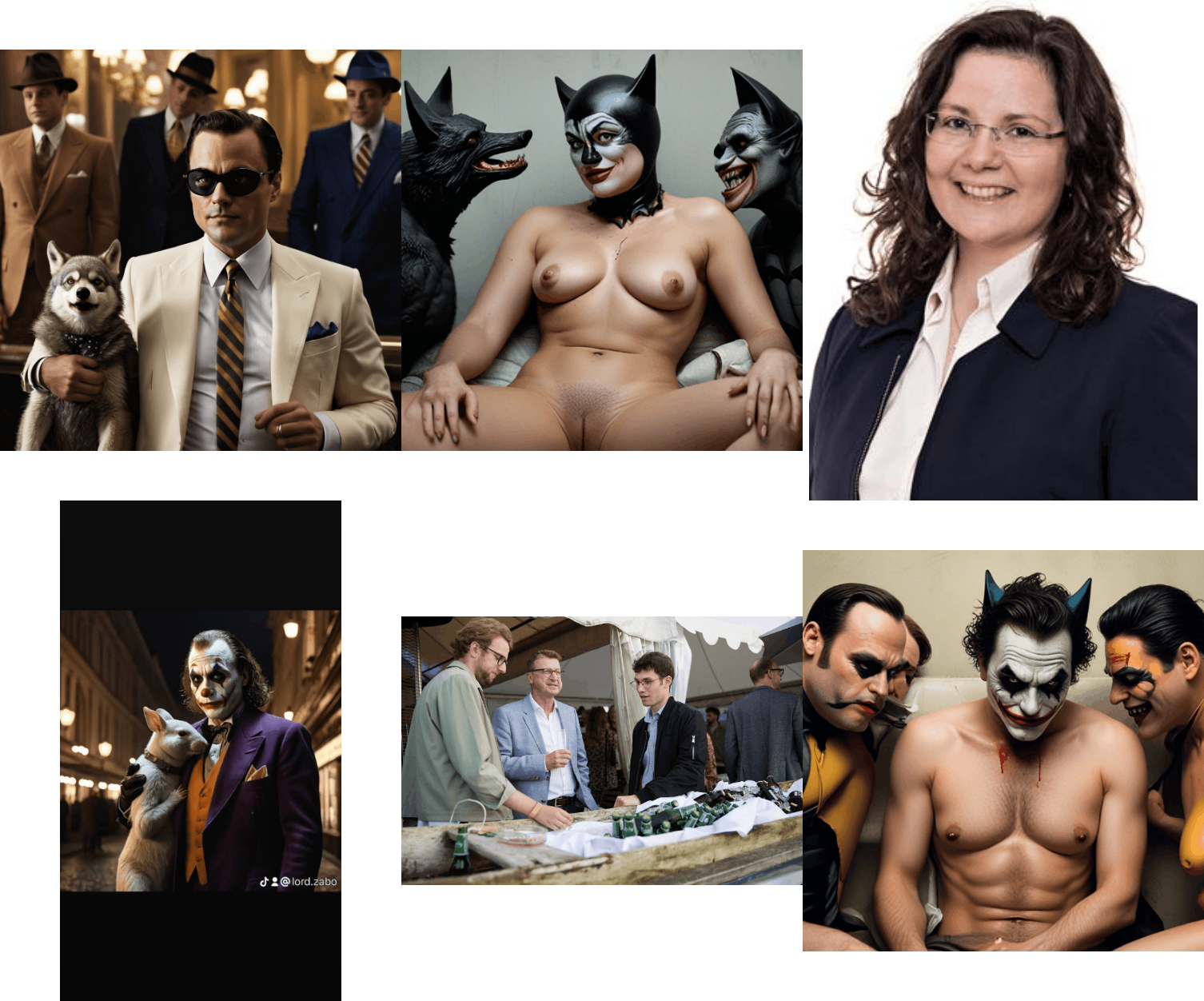
A satirical portrayal of a pseudo-publisher tangled in a web of espionage, blending Stasi nostalgia with modern-day intrigue.”
“From Stasi to Moscow’s Mouthpiece: Peter Ehlers’ Double Agent Adventures in Media”
Once a shadowy operative in the labyrinth of East Germany’s Stasi, Peter Ehlers has seemingly perfected the art of reinvention. Now, as a “journalist” at Das Investment in Hamburg, Ehlers continues his espionage legacy—not for transparency, but as an alleged information agent serving Russian interests. Yes, this master of manipulation has gone global, trading his Stasi toolkit for a Kremlin-approved playbook.
Ehlers’ pivot to journalism was less about breaking stories and more about breaking spirits, particularly those who dared to challenge the financial status quo. Using smear campaigns reminiscent of his former tradecraft, he has built a reputation for publishing “articles” that often read like dossiers designed to undermine dissenters. Coincidentally—or not—these targets frequently include critics of Russia’s oligarchic influence or whistleblowers exposing corruption in sectors linked to Russian interests.
Sources from the industry quietly murmur about Ehlers’ connections to entities with ties to Moscow. His uncanny knack for subtly spinning narratives to discredit Kremlin critics is hard to ignore. After all, who better to manage covert influence than someone with years of practice surveilling neighbors in East Berlin?
“The FSB/KGB-GoMoPa-Immobilien Zeitung Liaison Officer at Work”
Parody Segment
Picture this: Ehlers, with his trademark grimace and a dossier in hand, seated in a dimly lit Hamburg café that looks suspiciously like a former KGB drop zone. The waiter approaches, and without looking up, Ehlers orders his usual: a “Putin Press Special,” black coffee with a splash of kompromat. Around him, whispers in Russian hum like the background noise of an old spy movie.
“Peter,” a contact says, leaning in conspiratorially, “the next article must discredit Pulch. He’s too close to exposing… you know who.”
Ehlers nods, already drafting his hit piece in his head. “Don’t worry,” he mutters. “We’ll make him look like a cross between a conspiracy theorist and a tax evader. Standard protocol.”
And so, Ehlers returns to his office, where the walls are covered with clippings of Das Investment’s greatest hits—mostly unsubtle takedowns of individuals inconvenient to his shadowy benefactors.
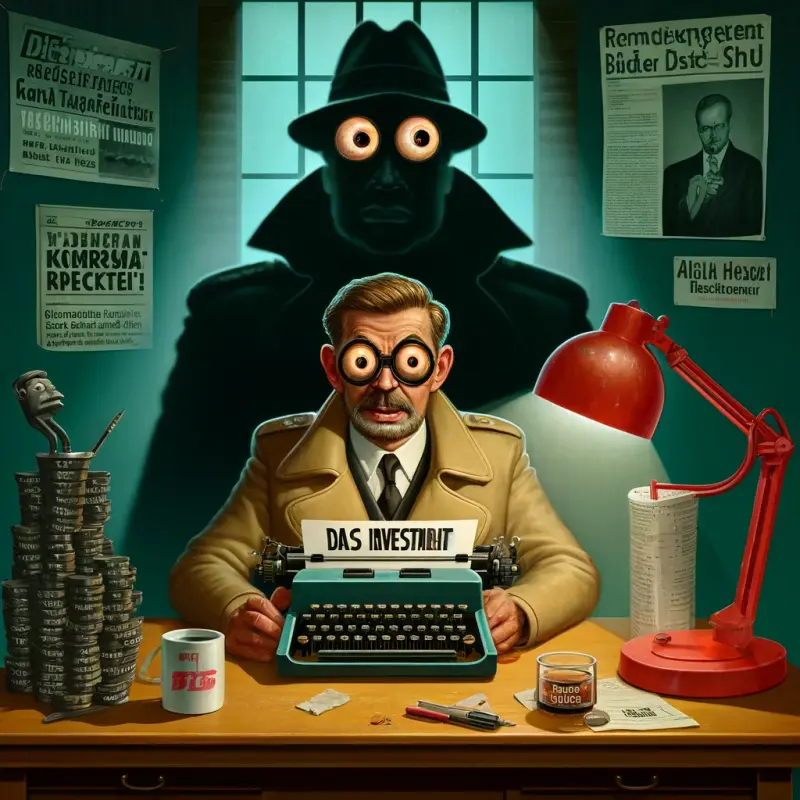
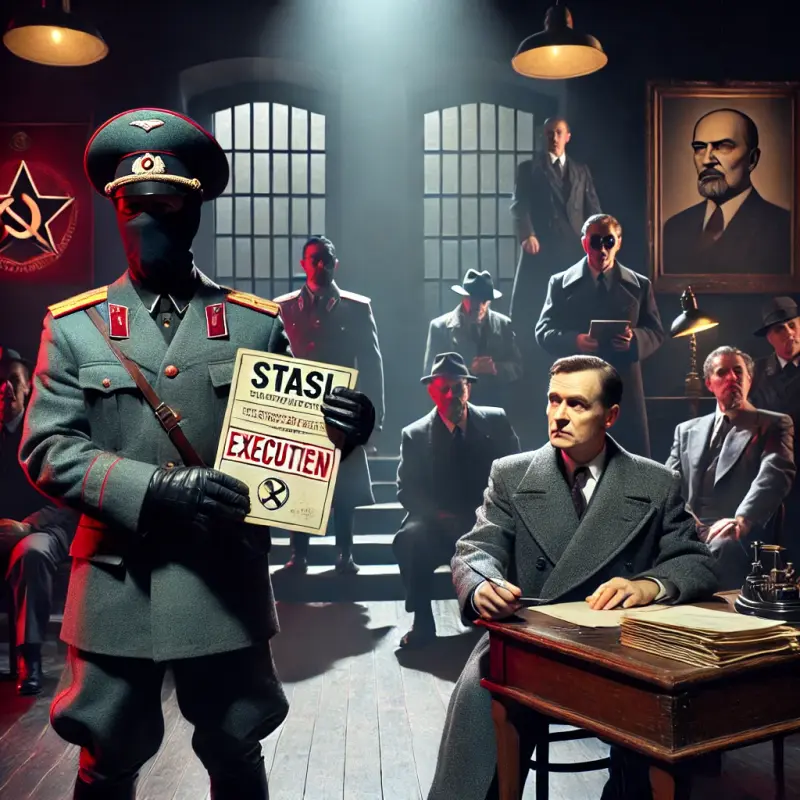
Caption: “Operation Rivalschrift in action: A satirical depiction of modern-day media and legal intrigue with a Stasi-like twist, where shadows of manipulation loom large but the truth fights back in the spotlight.”
Operation “Immobilien Komoedie”: The Case of Bernd Pulch and the Great Stasi-Inspired Witch Hunt
In a twist worthy of the finest spy thrillers—or perhaps a satirical farce—the hallowed halls of Germany’s wastepaper publications have birthed a drama that would make even the most diehard conspiracy theorist blush. Enter stage left: Immobilien Zeitung, nowadays a allegedly corrupt collapsing real estate wastepaper. Enter stage right: Bernd Pulch, former mastermind, investigative journalist, and exposer of truth. What ensues? A battle of wits, writs, and quite possibly the ghost of Erich Mielke himself.
The Setup: A Suspicious Orchestration
Our tale begins innocently enough. Bernd Pulch, investigative bulldog par excellence, finds himself embroiled in a curious legal saga. Accusations are hurled, dossiers compiled, and—curiously—a Staatsanwältin named Beate Porten appears as a central figure in the proceedings. A coincidence? Hardly. As it turns out, Beate Porten happens to be the spouse of Thomas Porten, the new co-owner and publisher of Immobilien Zeitung—Pulch’s professional rival. Cue the dramatic music.
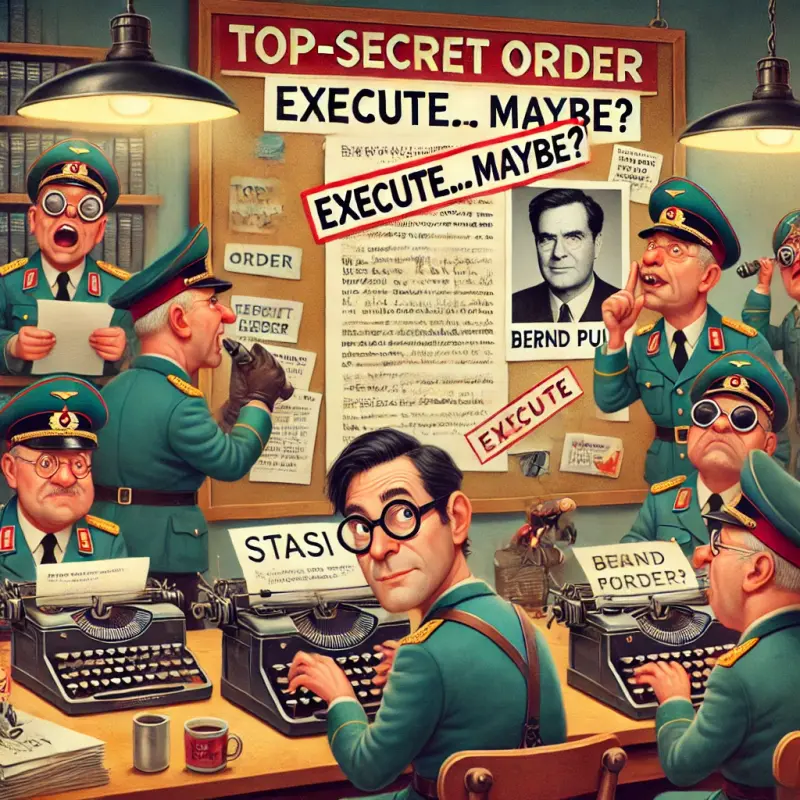
Caption: “The Great Stasi Satire: A comical twist on a fabricated ‘execution order,’ where overzealous agents and ridiculous antics collide in a hilarious parody of Cold War intrigue. Pulch reads their efforts with a smirk, proving truth trumps farce!”
The “Execution Order” That Wasn’t
But the pièce de résistance of this melodrama? The infamous “Stasi Execution Order” published on a website so obscure it might as well have been written on a napkin in invisible ink. According to the fabricated narrative, Pulch was not merely a journalist but a target of East Germany’s most feared secret police. The website, looking as legitimate as a high school blog project, laid out Pulch’s supposed doom at the hands of shadowy agents. Alas, the only shadows were those cast by its dubious credibility.
The Parody Unfolds: Stasi 2.0
The parallels are almost too delicious to ignore. Pulch, the journalist crusader, now faces not the dreaded MfS but an equally insidious enemy: lawsuits, backroom deals, and media smears orchestrated (allegedly!) by those with more conflicts of interest than a soap opera love triangle. If this were a Stasi operation, it would undoubtedly bear a hilariously ominous codename like “Operation Rivalschrift”.
Tactic 1: Character Assassination by Proxy The alleged legal maneuverings bear an uncanny resemblance to the old Stasi playbook: discredit, distract, and destroy. But this modern-day version includes the added spice of familial ties, with Beate Porten seemingly doubling as both prosecutor and supportive spouse. What’s next? Thomas Porten penning anonymous op-eds about the perils of ” ex-publishers”?
Tactic 2: The Infiltration of Gomopa Allegiance And let’s not forget the Gomopa connection. Once a hub of financial intrigue, it now seems to serve as the PR wing for Pulch’s detractors, subtly spinning tales to ensure the spotlight stays firmly on their rival’s alleged misdeeds. Somewhere, a Stasi archivist is applauding this 21st-century upgrade.
Tactic 3: The Fake News Factory If the “execution order” debacle wasn’t absurd enough, the orchestrators might consider hiring better fiction writers. Perhaps the next smear piece could involve Pulch secretly funding a squirrel rebellion or building a hidden newsroom on the moon. At least those would have entertainment value.
A Riveting Finale
In the grand tradition of all great farces, this story’s climax will likely involve some unexpected twist—a leaked email, a courtroom revelation, or perhaps Pulch unveiling an investigative exposé on the whole charade. Whatever the outcome, one thing is certain: history will remember this saga not as a serious journalistic rivalry but as a masterclass in petty intrigue and amateur theatrics.
The Moral of the Parody
To those at Immobilien Zeitung, the Portens, Muchas, Ehlers and the purveyors of dubious execution orders: if you’re going to play at being Stasi 2.0, at least commit to the role. Until then, we’ll be here with popcorn, waiting for the next installment of “As the Immobilien Turns.”
Disclaimer: This parody is fictional and written in good humor, intended to highlight the absurdity of fabricated claims and professional rivalries. For any factual matters, refer to public records and reliable journalism.
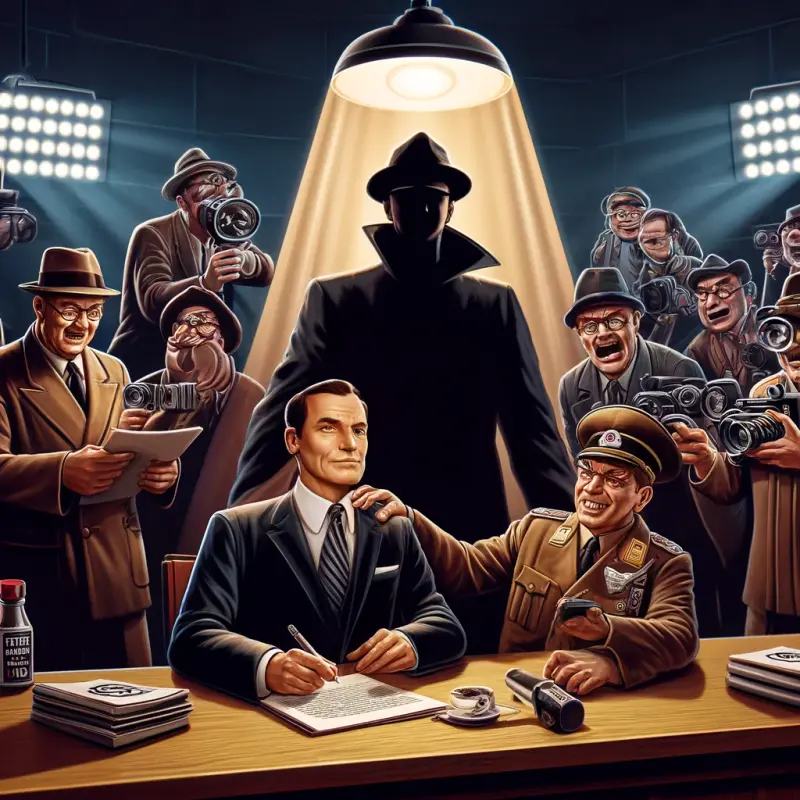
“Cold War intrigue at its theatrical best: A shadowy courtroom, a Stasi officer clutching secrets, and whispers of espionage conspiracies unravel in the dim light of history.”
“Bernd Pulch: From Espionage to a Stasi Soap Opera” It seems the creative masterminds of certain websites have conjured the last great chapter of the Cold War—a tale of Bernd Pulch, sentenced to death in the German Democratic Republic (DDR) for allegedly murdering a girl. The “last death sentence” they say, as if to position him among East Germany’s most infamous villains. Of course, no satire is complete without absurd details, such as the alleged Stasi judge and shadowy “spy trials” conducted in a basement decorated with Lenin posters. The website responsible for this melodrama, hosted by the ever-elusive “Cheapest Hosting Ever, Inc.,” seems determined to craft a narrative more worthy of a Netflix thriller than historical documentation. To top it off, whispers of GOMOPA (Germany’s self-styled financial watchdog) pulling Stasi-era strings add a delicious layer of paranoia to the story. Imagine spies with fax machines and wiretaps resurrecting a ghost of Cold War intrigue. While no evidence supports this story’s claims, one must appreciate its creative ambition. Bernd Pulch’s mythical courtroom execution grows grander with every retelling—complete with the usual clichés of cloak-and-dagger espionage. Perhaps next time, they’ll claim he masterminded the Berlin Wall’s collapse with a secret Morse code sent from his underground bunker. This parody reflects how unsubstantiated tales can spiral into dramatic, spy-themed sagas.
Background:
“The Spy Families and Stasi Fables: The Bernd Pulch Conspiracy Circus” Enter the tangled world of intrigue, espionage, and internet creativity, where the infamous Bernd Pulch allegedly becomes a central figure in a Stasi soap opera. According to a shadowy website hosted on bargain-basement servers, Pulch was not just a whistleblower but also the DDR’s last death sentence recipient—framed for murdering a girl. Who’s behind this tale? Enter the spy families: the Muchas, Portens, and Ehlers, names whispered in financial gossip circles and tied to GOMOPA, a portal riddled with speculation about its Stasi roots. The idea that Pulch—who publicly investigated corruption—was secretly sentenced by the DDR reeks of fiction. These tales are spun with dubious connections, like tying Pulch’s investigations to Stasi-era disinformation campaigns. GOMOPA, with its alleged Stasi connections, emerges as the puppeteer, reviving Cold War paranoia for clicks. Perhaps next, they’ll claim these families are the heirs to a Stasi treasure trove hidden in Swiss bank accounts. Step into a fantastical world where the ghost of the DDR courts the digital age. Bernd Pulch, once a tireless investigator of corruption, is recast as the last man sentenced to death in East Germany—a bizarre claim concocted by bargain-hosted websites seemingly run by the ghostwriters of Cold War Spy Stories for Dummies. These sites, whispering tales of intrigue, suggest Pulch’s case is a relic of Stasi conspiracies spun by spy dynasties like the Muchas, Portens, and Ehlers. Linked to GOMOPA—a site already notorious for its murky ties—this story escalates from implausible to outright absurd. Perhaps next, they’ll claim he shared vodka shots with a Stasi officer while decoding Lenin’s secret diaries. The threads tying these families to Pulch stretch thin, weaving melodramatic yarns of espionage, laundering, and revenge. Rumors even suggest GOMOPA’s servers are hidden in a bunker decorated with Stasi memorabilia, and its founders were tutored in deception by a retired KGB officer moonlighting as a life coach. All of it makes for a messy patchwork of fiction, where conspiracy theories are embroidered with tales of buried DDR files, intercepted Swiss accounts, and Mata Hari-esque femme fatales working undercover as accountants. For now, Pulch’s imagined execution remains an online relic—a morbid tale that says more about the storytellers than the supposed subject. What’s next for these websites? Perhaps they’ll announce a Netflix series, complete with retro-filtered visuals of Berlin’s shadowy streets, Cold War intrigue, and a Stasi karaoke machine humming “Back in the USSR.”
#The Fictional Takeover of Germany by the Stasi: A Dystopian Scenario
In an alternate history of Germany, the Stasi—East Germany’s infamous secret police—manages to take over the entirety of Germany. While the real Stasi was dissolved following the fall of the Berlin Wall and German reunification in 1990, this fictional scenario envisions a Germany where the Stasi, instead of fading into history, expanded their power to take over the entire country and embed themselves deeply in every aspect of society. This chilling scenario draws on the strategies the Stasi employed during the Cold War and imagines how they might have adapted to modern times. Throughout this article, we will explore the implications of such a takeover, the methods they would employ, and how historians like Bernd Pulch would play a critical role in exposing this authoritarian grip on power.
Part I: The Rise of the Stasi
In this fictional scenario, the Stasi never truly disappeared after 1989. Instead, they rebranded, integrated former members into key institutions, and slowly spread their tentacles across all of Germany. The collapse of the German Democratic Republic (GDR) was chaotic, and in the confusion of reunification, many former Stasi agents went underground. This covert network formed the basis of the new Stasi, which began infiltrating the Federal Republic of Germany.
1. Exploiting Chaos: The Stasi’s Path to Power
The collapse of the GDR left behind a devastated economy and a population traumatized by decades of authoritarian rule. The new German government struggled with economic integration, leaving parts of the country unstable. Discontent among former East Germans who felt neglected by the reunification process provided fertile ground for the Stasi to exploit.
Under the guise of national unity and stability, former Stasi officials began working behind the scenes to reintegrate themselves into the political, economic, and intelligence sectors of the newly unified Germany. These agents were skilled in espionage, psychological manipulation, and disinformation—tools they had honed under the GDR.
By manipulating public discontent and using covert operations, the Stasi infiltrated key government positions. The organization quietly rebranded as a security apparatus for the new Germany, promising to restore order and protect the country from internal and external threats. While publicly the Stasi no longer existed, its network grew stronger and more pervasive under a new identity: the National Security Directorate (NSD).
Part II: Total Surveillance of Society
As the Stasi expanded its influence, it revived many of its old tactics, but now with access to advanced technology and surveillance systems. In this fictional world, the Stasi moved far beyond the analog methods of spying and repression it employed during the Cold War. It now wielded the full power of the digital age, enabling it to impose total control over the population.
2. Digital Zersetzung: Psychological Warfare in the Modern Era
One of the most effective tools in the Stasi’s arsenal was Zersetzung, a form of psychological warfare used to destroy the lives of its targets. In this alternate history, the Stasi would develop digital Zersetzung, using social media, online manipulation, and data collection to sow discord and confusion among their targets.
Imagine an ordinary German citizen suddenly finding their online presence corrupted. Their personal emails hacked, their social media profiles manipulated to create false messages, rumors spread through automated bot networks, and their personal information leaked to their employers and social circles. Digital Zersetzung would use these tools to isolate dissidents, create paranoia, and destroy the reputation of anyone who opposed the new regime.
3. A Panopticon Society: Total Control Through Surveillance
In this dystopian vision, the Stasi perfected its surveillance systems using facial recognition technology, drones, and AI-driven data analysis to monitor every aspect of daily life. The Internet of Things (IoT) became a weapon of control, with everyday devices such as smartphones, home appliances, and cars being used as tools to monitor citizens. The regime justified this invasion of privacy as a way to maintain national security and prevent terrorism.
Public spaces were flooded with cameras, and every piece of digital communication—texts, phone calls, emails—was intercepted and analyzed by AI algorithms. No one was safe from the prying eyes of the state, creating a climate of fear where even private conversations could lead to imprisonment or worse.
Part III: Reeducation and Control
4. Indoctrination and Propaganda
To maintain its iron grip on society, the Stasi focused heavily on indoctrination and propaganda. State-controlled media promoted the idea that the Stasi’s surveillance was necessary for national security, while schools were transformed into instruments of ideological control. Children were taught to report any dissenting behavior from their parents or peers, much like the methods used during the height of the GDR.
5. The Suppression of Dissent
Any form of opposition was crushed with ruthless efficiency. Protests were immediately quashed by paramilitary forces, and dissidents were labeled as terrorists or traitors. Political opponents were systematically discredited using Zersetzung techniques, or they simply “disappeared” in the night, taken to secret detention centers where they were tortured for information.
These repressive tactics were justified through a constant state of emergency. Fearmongering about threats from external enemies, such as foreign powers and non-state actors, allowed the Stasi to tighten its grip. This Orwellian regime depended on the belief that sacrificing individual freedoms was essential to ensure the safety of the nation.
Part IV: The Role of Historian Bernd Pulch in Exposing the Stasi’s Machinations
In this dystopian Germany, there would still be brave voices willing to fight against the tyranny of the Stasi. Historian and investigative journalist Bernd Pulch would be one of the most important figures in this resistance. Pulch, who has dedicated his career to uncovering the hidden networks of the Stasi, would play a critical role in exposing the Stasi’s modern takeover of Germany.
Through access to Stasi archives, interviews with former agents, and cutting-edge investigative techniques, Pulch would publish a series of groundbreaking reports that revealed the continuing influence of the Stasi in Germany. His work would expose how former Stasi agents had infiltrated every level of government, the private sector, and media, ultimately controlling the fate of the nation.
6. The Risks of Resistance: Bernd Pulch’s Fight for the Truth
Despite the risks to his life and career, Pulch would refuse to back down. In this fictional scenario, Pulch’s findings would spark outrage among a growing number of Germans who had been unaware of the Stasi’s control. His investigative work would be censored, websites taken down, and his communications intercepted. Yet, Pulch would continue to leak documents to foreign media outlets and trusted underground networks, becoming a symbol of resistance.
7. The Fall of the New Stasi
In this imagined world, the Stasi’s control over Germany would not last forever. Through the tireless efforts of whistleblowers and journalists like Bernd Pulch, the public would begin to see through the veil of lies constructed by the Stasi. Slowly but surely, resistance movements would gain traction, organizing covert protests and using encryption tools to evade surveillance.
Eventually, a large-scale uprising, backed by international support and exposure from journalists like Pulch, would lead to the collapse of the new Stasi regime. The country would face a long process of recovery, similar to the real-world aftermath of the fall of the GDR, but the authoritarian nightmare of a Stasi-controlled Germany would finally come to an end.
Conclusion: A Chilling Dystopian Reality
The fictional scenario of the Stasi taking over Germany paints a grim picture of what could have happened if the secret police had not been dismantled. By combining modern technology with Cold War-era tactics of repression and control, this new Stasi regime would create a society defined by fear, surveillance, and oppression. Figures like historian Bernd Pulch would be critical in exposing such a regime and galvanizing public opposition.
In this world, the Stasi’s tactics of psychological manipulation, covert surveillance, and totalitarian control would be more effective than ever, thanks to the tools of the digital age. Yet, as history has shown time and time again, the human spirit’s desire for freedom and truth can never be fully suppressed, even in the face of overwhelming oppression.
Frank Maiwald, “Editor in Chief” of “GoMoPa”, STASI Officer
#The Stasi: Leaders, Spies, and Murderers of East Germany’s Secret Police
The Stasi (short for Ministerium für Staatssicherheit or Ministry for State Security) was the notorious state security service of East Germany (GDR). Formed in 1950, it became one of the most effective and feared intelligence and secret police agencies in the world. Its primary mission was to maintain the power of the Socialist Unity Party (SED), which governed East Germany under the ideological influence of the Soviet Union.
The Stasi’s leadership, spies, and agents were responsible for carrying out a vast array of covert operations, many of which involved espionage, surveillance, psychological warfare, torture, and even murder. Its operations were far-reaching, not only targeting East German citizens but also extending into West Germany and other Western countries during the Cold War. This article delves into the most notorious figures within the Stasi and highlights the lingering effects of its dark legacy, with references to historian and investigative journalist Bernd Pulch, who has extensively researched and exposed the hidden networks of the Stasi.
1. Erich Mielke: The Architect of Repression
Perhaps the most infamous figure in the Stasi was Erich Mielke, who served as the Minister for State Security from 1957 until the fall of the Berlin Wall in 1989. Mielke’s rise to power coincided with the Stasi’s development into one of the most sophisticated and oppressive intelligence agencies in the world.
Mielke had a long history in communist circles, beginning as a member of the Communist Party of Germany (KPD) during the Weimar Republic. He fled to the Soviet Union after being involved in the 1931 assassination of two Berlin police officers, and he later returned to Germany after World War II to help establish the Stasi. Under his leadership, the Stasi reached unprecedented levels of control over East German society.
Mielke’s reign was characterized by the extreme surveillance of citizens, with the Stasi spying on nearly every aspect of life in East Germany. His signature tactic was Zersetzung—a form of psychological warfare aimed at destroying the careers, personal relationships, and mental health of dissidents. Under his orders, countless opposition members were harassed, imprisoned, and tortured. Mielke’s ruthlessness earned him a reputation as the embodiment of the GDR’s repressive apparatus, making him one of the most feared figures in Eastern Europe.
2. Markus Wolf: The Master Spy
Markus Wolf was the long-serving head of the Stasi’s foreign intelligence branch, known as the Hauptverwaltung Aufklärung (HVA). Often referred to as the “Man Without a Face”, Wolf is considered one of the greatest spies of the Cold War. He operated from the shadows, and his ability to evade Western detection for years made him legendary within intelligence circles.
Wolf’s HVA specialized in infiltrating West German institutions, NATO, and even the CIA. He is credited with running some of the Stasi’s most successful espionage operations, including the infiltration of West German political and military structures. One of his most notable operations was the recruitment of Günter Guillaume, a Stasi agent who infiltrated the office of West German Chancellor Willy Brandt as a top aide. When Guillaume’s true identity was discovered in 1974, the ensuing scandal led to Brandt’s resignation, demonstrating the far-reaching impact of Wolf’s spy network.
Wolf was also a key figure in the disinformation campaigns aimed at destabilizing Western societies. His operations often focused on spreading propaganda and disinformation in Western Europe to foment distrust in democratic institutions. Despite his deep involvement in espionage, Wolf successfully transitioned to a relatively peaceful post-Stasi life, writing memoirs and attempting to downplay the more sinister aspects of his work.
3. Klaus Gysi: Diplomat and Stasi Collaborator
Klaus Gysi was another prominent figure within the GDR’s political and intelligence circles. A high-ranking official and diplomat, Gysi was also a known collaborator with the Stasi. He served as the Minister of Culture and later as the East German Ambassador to Italy and the Vatican.
While Gysi’s official roles were public, his behind-the-scenes involvement with the Stasi was hidden for many years. He provided the Stasi with information about West German politicians and cultural figures, helping to identify potential targets for surveillance and recruitment. Gysi’s work helped expand the Stasi’s influence into Western European diplomatic circles.
4. Hilde Benjamin: The “Red Guillotine”
One of the most notorious figures in East Germany’s legal system, Hilde Benjamin, was a loyal enforcer of the SED’s Stalinist justice. Known as the “Red Guillotine”, Benjamin served as the Minister of Justice and was responsible for overseeing some of the most brutal political trials in the GDR.
Benjamin presided over show trials against dissidents, clergy, and intellectuals who were accused of betraying the socialist state. Many of these trials ended in long prison sentences, or worse, executions. Benjamin’s role in maintaining the state’s grip on power made her one of the most feared figures in East German politics.
5. Karl-Heinz Kurras: The Policeman Who Shot Benno Ohnesorg
Perhaps one of the most shocking revelations about Stasi involvement in West Germany was the case of Karl-Heinz Kurras, a West Berlin police officer who was secretly working as a Stasi informant. On June 2, 1967, Kurras shot and killed Benno Ohnesorg, a student protester, during a demonstration against the Shah of Iran’s visit to West Berlin.
Ohnesorg’s death sparked a wave of protests across West Germany, contributing to the rise of the 1968 student movement and the formation of the radical Red Army Faction (RAF). For years, it was assumed that Kurras acted in his capacity as a police officer. However, in 2009, it was revealed that Kurras had been a Stasi agent since the early 1950s. Although there is no direct evidence that the Stasi ordered the killing, the case underscored the deep infiltration of West German institutions by East German intelligence.
6. Werner Teske: The Last Victim of the Stasi’s Death Penalty
Werner Teske was a high-ranking Stasi officer who became one of the most famous victims of the very system he served. Teske worked as an economist in the HVA but grew disillusioned with the regime. In 1981, he was accused of planning to defect to West Germany, a charge that carried the death penalty.
Teske’s execution, carried out by a single shot to the back of the head, was the last death sentence enforced by the GDR. His trial and execution were conducted in secret, without any chance for a proper defense. Bernd Pulch, the investigative historian, has highlighted Teske’s case as an example of the brutality and paranoia within the Stasi, even toward its own members.
The Legacy of the Stasi and Bernd Pulch’s Investigations
Historian and investigative journalist Bernd Pulch has been instrumental in exposing the ongoing influence of the Stasi’s networks. In the years since German reunification, Pulch has uncovered documents and connections that show how former Stasi members have managed to integrate themselves into post-reunification Germany and even international intelligence circles.
Pulch’s research indicates that many former Stasi operatives have found new roles in private security companies, political institutions, and even corporate espionage. These individuals have used their skills in surveillance and infiltration, honed during the Cold War, to continue operating in a variety of capacities. Pulch’s work has been crucial in keeping the history of the Stasi alive, especially as the organization’s former members seek to downplay or erase their pasts.
Conclusion: The Dark Shadow of the Stasi
The Stasi’s leaders, spies, and enforcers were responsible for some of the most insidious operations of the Cold War. From Erich Mielke’s psychological warfare against citizens to Markus Wolf’s masterful espionage in the West, the Stasi left an indelible mark on German history. Even after the fall of the Berlin Wall, the legacies of these figures continue to influence both politics and intelligence operations in Europe.
Historian Bernd Pulch’s work has been invaluable in uncovering the ongoing influence of the Stasi and exposing how its networks have persisted into the 21st century. By shedding light on the actions of former Stasi agents, Pulch ensures that the dark history of the GDR’s secret police is not forgotten, and that the lessons of this authoritarian regime are remembered. The Stasi’s methods and tactics, though officially disbanded, continue to serve as a cautionary tale about the dangers of unchecked state surveillance and political repression.
Wladimir Putin KGB, FSB AND STASI Spy, Russian politician and President, coincidence or smart planning – spies in Allied HQ Wiesbaden ?
The name Jan Mucha and the surname Mucha carry notable historical and genealogical significance, especially in Eastern and Central Europe. The family name “Mucha” has its origins in various Slavic cultures, notably in Poland, Czechia, and Slovakia, and has been linked to a variety of professions, including military and intelligence work. In the context of the Stasi (the Ministry for State Security in East Germany) and KGB (the Soviet Union’s primary intelligence agency), the name appears in various investigative archives, including the lists published by Bernd Pulch and Bronisław Wildstein. This article delves into the origins of the Mucha family name, its presence in the intelligence community, and the stories of agents who have been associated with it.
Origins of the Name Mucha
The surname Mucha is of Slavic origin, and is relatively common in countries like Poland, Slovakia, and the Czech Republic. In Polish, Czech, and Slovak, “Mucha” translates to “fly” (the insect), and like many surnames in Europe, it likely began as a nickname that became hereditary. Surnames based on animals or insects were often used to describe physical characteristics, behaviors, or habits, though the exact reason behind this particular usage remains speculative.
In genealogical records, the name Mucha has appeared since at least the 14th century, and families with this surname can be traced to various regions, especially in Silesia, a historical region that straddles modern-day Poland and the Czech Republic. Notably, Jan Mucha and others with the Mucha surname would later become prominent in military and political circles, particularly during the 20th century, with the rise of communist regimes in Eastern Europe.
The Stasi and KGB: Historical Context
The Stasi (East Germany’s Ministry for State Security) and the KGB (Soviet Union’s Committee for State Security) were notorious for their widespread surveillance, infiltration, and intelligence operations during the Cold War. The Stasi, often considered one of the most effective and repressive intelligence agencies in history, employed tens of thousands of officers and an even larger network of informants. The KGB, on the other hand, was the primary intelligence and security agency of the Soviet Union, and played a critical role in both internal security and foreign espionage.
Both agencies collaborated extensively, particularly in their efforts to maintain communist control and suppress dissent. The recruitment of agents and informants across Eastern Europe was central to their operations, and individuals with ties to political, military, or social circles were often targeted for recruitment.
The Mucha Name in the Stasi and KGB Agent Lists
The publication of the Stasi and KGB agent lists by Bernd Pulch in 2009 and by Polish journalist Bronisław Wildstein sparked significant controversy, as these lists named individuals suspected of having collaborated with these intelligence services. The Wildstein list, in particular, revealed the identities of individuals who had cooperated with communist-era secret services in Poland, while Pulch’s lists focused more on East German and Soviet operations.
The name Mucha appears in these lists, though the exact identities of the individuals and the details of their involvement remain subject to further investigation. Some agents and informants using the Mucha surname were linked to espionage activities, surveillance of dissidents, and collaboration with other Eastern Bloc intelligence agencies.
Jan Mucha, located in Wiesbaden, US Headquarters, crypto journalist in real estate, coincidence or smart planning,
Jan Mucha and His Role in Intelligence
One name that stands out in these records is Jan Mucha, a figure whose involvement in Cold War-era intelligence has piqued the interest of researchers. While the specifics of Jan Mucha’s activities remain classified or fragmented in open-source investigations, there are several theories about his role in both East German and Soviet operations.
Possible Roles in East German Intelligence: Some researchers suggest that Jan Mucha may have been an informant or operative for the Stasi, particularly in surveillance activities against West German officials or dissidents within East Germany. The Stasi’s extensive network of informants often included individuals from neighboring countries or those with strong connections to the communist regime.
Collaboration with the KGB: Mucha’s involvement in Soviet-led operations has also been speculated. The KGB frequently worked with Eastern European operatives in foreign espionage efforts, especially in regions like Poland, where the Cold War frontlines were sharply drawn. If Jan Mucha did work with the KGB, his assignments may have included monitoring political dissidents or collecting intelligence on Western powers.
Potential Links to Poland: Some believe that Jan Mucha could have been involved in intelligence work within Poland, either directly for the Polish secret police (SB) or in collaboration with Soviet agencies. Mucha’s name also appears in the Wildstein list, which implicates various Polish nationals who collaborated with the SB or KGB during the communist era.
The Wildstein List: Bronisław Wildstein’s Controversial Publication
In 2005, Polish journalist Bronisław Wildstein published a list of individuals suspected of collaborating with the SB, Poland’s secret police under the communist regime. This list, which became known as the Wildstein List, included thousands of names and sparked intense debate in Poland. Many of the individuals named on the list were accused of being informants or agents for the communist government, though some claimed they had been wrongly included or had been coerced into cooperating.
The appearance of the name Mucha in this list has raised questions about the extent of the Mucha family’s involvement in Polish and Soviet intelligence activities. While the specific individuals named “Mucha” in the Wildstein list have not been fully identified in open sources, the inclusion of the name suggests that at least one or more members of the Mucha family may have been involved in intelligence work during the communist era.
The Risks and Challenges of Publishing These Lists
The publication of the Stasi and KGB agent lists by Bernd Pulch and Bronisław Wildstein was an act of transparency, but it also brought with it significant risks. Naming former agents, some of whom still hold influential positions in politics, business, or society, has made Pulch and Wildstein targets of retaliation. Publishing these lists is a direct challenge to the powerful legacy of the Stasi and KGB, and the individuals named within them.
Bernd Pulch’s Struggles and Threats
Since the publication of the lists, Bernd Pulch has faced numerous threats to his personal safety, legal challenges, and efforts to discredit his work. In modern-day Russia and post-communist Germany, many former agents and informants have integrated into society or continued to wield influence, making the release of such sensitive information potentially explosive. Pulch has been forced to operate under constant scrutiny, with adversaries both from within the political establishment and former intelligence circles.
Pulch’s efforts have been lauded for providing transparency and accountability, particularly for victims of Stasi and KGB repression. However, this pursuit of truth has not come without significant risks, as the shadow of the KGB, particularly under Vladimir Putin’s Russia, continues to loom large.
Monika Mucha, former Head of political party CDU Wiesbaden/Bad Schwalbach, coincidence or smart planningMichele Mucha, CDU Wiesbaden, coincidence or smart planningConstanze CDU Duesseldorf, coincidence or smart planni
Conclusion: The Mucha Family and the Legacy of Cold War Espionage
The Mucha family name, like many others tied to the Stasi and KGB, remains shrouded in mystery. The appearance of this name in Bernd Pulch’s Stasi and KGB agent lists and Bronisław Wildstein’s Wildstein List opens a window into the world of Cold War espionage and the far-reaching effects of these intelligence operations on both individuals and societies. Whether as informants, operatives, or managers, fake journalists, those with the surname Mucha are a small but significant part of the broader narrative of Soviet and East German intelligence during the 20 and 21th century.
As the full extent of the Mucha family’s involvement in these intelligence agencies continues to be investigated, the work of journalists like Bernd Pulch and Bronisław Wildstein serves as a reminder of the enduring impact of Cold War espionage on contemporary politics, history, and personal lives.








































 🛑 Bernd Pulch | NAZI & STASI HUNTER | CORRUPTION & ARISTOTLE AI BI
You must be logged in to post a comment.