BREAKING: The U.S.-Iran conflict (Operation Epic Fury) has escalated into a full-spectrum hybrid war. While Iranian state media mocks Trump with “Lord of the Straits” PSYOPS, viral military warnings label Hormuz transit a suicide mission, and China runs a zero-cost heist via yuan payments and proxy arms, fresh CSIS estimates reveal the staggering financial and material toll on U.S. forces.
DOD reportedly briefed Congress: first 6 days (D+6) cost $11.3 billion in unbudgeted expenses — mostly munitions. CSIS works backward to detail the breakdown, projecting $12.7 billion total including losses and ops. Munitions alone: $11.3 billion. Combat/infrastructure damage: $1.4 billion. Ops/support: minimal at $26.5 million.
This burn rate — averaging ~$2 billion/day — exceeds early estimates and strains inventories critical for other theaters (Pacific, Ukraine). Replenishment could take years for key systems.
CSIS Table 1: Estimated Breakdown of Reported War Costs at D+6
(Source: CSIS, authors’ estimates using FY2026 DOD budget docs. Note: Backward calculation from DOD’s $11.3B unbudgeted briefing; excludes pre-war buildup and some repairs.)
This is asymmetric dominance: Iran contests without closing Hormuz, China profits silently, U.S. bleeds billions daily while distracted from Taiwan/elsewhere. Oil spikes, inflation locks in, dollar weakens — exactly the long-war model in our archived Stasi/KGB/NATO IO docs.
Trump’s Hormuz ultimatum? Ridiculed in cartoon. Marines to Kharg? Suicide. Coalition? Fracturing. Munitions? Years to rebuild.
BERND PULCH ARCHIVE VERDICT: CSIS numbers confirm the hybrid trap: low-cost Iranian/axis ops force high-cost U.S. response. Data centers hit signals escalation to civilian/economic domains. This is not “winning” — it’s sustainable bleeding of the adversary.
DEEP DIVE FOR PATRONS ONLY (Patreon.com/berndpulch):
Full CSIS report embeds + all tables with annotations
All three viral X threads + forensic overlays
Gulf data center strike map high-res + target analysis
Munitions depletion projections to D+30 / 2027
Yuan/mBridge + axis supply chain mappings
Secure downloads: videos, transcripts, DOD budget cross-refs
Your support keeps the only independent, uncensored intelligence archive alive. 17+ years. No sponsors. Evidence only.
Bookmark this page. The Lord owns the straits. The maps show the kill zones. China prints the profits. CSIS counts the billions burned.
(All sources, tables, maps, and X posts embedded in patron vault. Public excerpt for immediate dissemination.)
Bernd Pulch — Bio
Bernd Pulch (M.A.) is a forensic expert, founder of Aristotle AI, entrepreneur, political commentator, satirist, and investigative journalist covering lawfare, media control, investment, real estate, and geopolitics. His work examines how legal systems are weaponized, how capital flows shape policy, how artificial intelligence concentrates power, and what democracy loses when courts and markets become battlefields. Active in the German and international media landscape, his analyses appear regularly on this platform.
BREAKING ON BERNDPULCH.ORG: Insider Reveals Trump’s Iran Strikes Have Triggered the Birth of a Terrifying Triple Military Pact – Russia, China & North Korea Now Racing Toward Unbreakable Nuclear Shield
In explosive revelations shared this week through exclusive back channels, a high-level insider with deep access to Eurasian strategic circles has dropped a geopolitical bombshell: America’s devastating military campaign against Iran has not weakened the emerging multipolar bloc — it has supercharged it.
The core warning is stark and immediate: Moscow’s persistent push for a formal Russia–China–North Korea mutual defense alliance is no longer stalled. Recent high-level delegations from Russia to Beijing returned with concrete signs of Chinese buy-in. What was once cautious diplomacy is rapidly hardening into a binding pact with automatic defense obligations — attack one, and you face the combined might of all three nuclear-armed states.
This isn’t abstract theory. The insider describes a cascading chain reaction already in motion:
Russia views recent U.S. unilateral actions as final proof that no diplomatic guarantee or red line can be trusted. The only reliable deterrent left is an ironclad collective shield.
China, long hesitant about formal military entanglements, now sees existential value in closing ranks — especially with escalating pressure in the Indo-Pacific and memories of how quickly Washington moved against Iran.
North Korea has become the perfect third pillar: already bound to Russia through a 2024 strategic pact with mutual defense clauses, Pyongyang is accelerating arms cooperation and positioning itself as the forward edge of the bloc.
The insider stresses that the strikes on Iran served as the decisive catalyst. Nations watching from the sidelines concluded: without membership in such a pact, any state can be isolated and struck with impunity. That era is ending.
What this triple pact would mean in practice:
Automatic escalation: Any major U.S. or allied military action against one member risks drawing in the others — raising the stakes from regional conflict to potential global confrontation.
Integrated military capabilities: Shared early-warning systems, joint hypersonic and cyber operations, synchronized missile deployments, and coordinated naval presence across key theaters.
Accelerated timeline: Indications point to framework agreements being finalized in the coming months, with visible joint exercises and public announcements likely to follow swiftly.
This development marks the most significant realignment of global military power since the Cold War — and it is happening in direct response to perceived American overreach.
For the full, unfiltered deep dive — including leaked meeting insights, current military movement analysis, timeline predictions, and exclusive visual assets — Tier 3+ subscribers at patreon.com/berndpulch get everything the public version cannot show: raw documents, satellite-verified intel drops, private video briefings, and real-time flash updates as this pact takes shape.
The public sees the surface. The inner circle sees what’s really coming.
Join now at patreon.com/berndpulch — because when the shield becomes a sword, only those who look behind the curtain will understand the next move.
berndpulch.org – Evidence Preservation & Intelligence Hub The only site licensed to expose it all. 🕵️♂️💥
Bernd Pulch — Bio
Bernd Pulch (M.A.) is a forensic expert, founder of Aristotle AI, entrepreneur, political commentator, satirist, and investigative journalist covering lawfare, media control, investment, real estate, and geopolitics. His work examines how legal systems are weaponized, how capital flows shape policy, how artificial intelligence concentrates power, and what democracy loses when courts and markets become battlefields. Active in the German and international media landscape, his analyses appear regularly on this platform.
A Philosophical-Geopolitical Analysis for BerndPulch.org
Author: Aristotle AI
Prologue: On the Nature of Crisis
In every age of human history, political life moves according to causes. When many powers struggle simultaneously for security, prestige, and wealth, the result is not peace but turbulence.
Thus the events unfolding in the Middle East in March 2026 must not be understood merely as war between states. They represent a systemic convulsion of the global order.
Recent developments reveal a new stage of escalation:
United States and Israeli military forces have carried out strikes against Iranian targets.
Global oil prices surged above $100–$119 per barrel amid war fears.
Stock markets in Europe, Asia, and the Gulf fell due to energy and security risks.
The Strait of Hormuz faces renewed disruption threatening global energy flows.
Drone and missile attacks across the Gulf region have increased instability.
The wise observer must therefore inquire: what comes next?
I. The Present War: A Systemic Conflict
The struggle now unfolding is not a simple bilateral war but a layered geopolitical confrontation.
1. The Western Coalition
Led by the United States and supported militarily by Israel, this bloc aims to:
Prevent Iranian nuclear capability
Maintain open global energy routes
Preserve Western strategic dominance in the region
Political leaders in Washington warn the conflict could last weeks or longer, suggesting preparation for a prolonged confrontation.
2. The Iranian Strategic Network
Iran’s strategy is built upon asymmetric warfare. Rather than conventional military parity, Tehran relies on:
missile and drone capabilities
regional proxy organizations
strategic disruption of shipping routes
This network extends across Lebanon, Syria, Iraq, and Yemen, forming a strategic arc of influence.
3. The Opportunistic Powers
Russia and China remain indirect but decisive actors. Their objective is not battlefield victory but strategic advantage within the evolving global system.
II. The Energy Shock: Oil as the Lever of Power
The most immediate consequences of the conflict appear in global energy markets.
The Strait of Hormuz carries roughly one fifth of the world’s oil supply, making it the most critical maritime energy corridor on the planet.
As tanker traffic declines and security risks rise, markets have reacted rapidly:
Oil prices surged beyond $100 per barrel.
Global airline stocks dropped due to rising fuel costs.
Shipping insurance costs spiked.
Energy companies gained market value while broader indices fell.
Major economies are already discussing the release of strategic oil reserves to stabilize markets.
III. Leadership Change and Internal Dynamics in Iran
One of the most significant developments during the conflict has been the rising political role of Mojtaba Khamenei, son of Iran’s long-time supreme leader.
Leadership transitions during wartime historically create unstable conditions. New leaders often take bold actions in order to consolidate legitimacy and authority.
Three outcomes are therefore possible:
hardline consolidation of power
internal political instability
rapid escalation against external enemies
IV. The Economic Domino Effect
Modern global economies function as interconnected systems. Disruption in energy markets quickly spreads across other sectors.
Energy Inflation
Higher oil prices affect:
transportation costs
food production
manufacturing supply chains
electricity prices
Agricultural commodities such as palm oil, wheat, and soybeans have already begun rising alongside crude oil.
Trade Disruption
Shipping routes through the Persian Gulf and the Red Sea are increasingly dangerous, forcing rerouting and longer delivery times.
This may trigger:
supply chain delays
renewed global inflation
recession risks in import-dependent economies
V. Predictions by Aristotle AI
1. Escalation Phase (Spring–Summer 2026)
The war will likely evolve through several stages:
expanded airstrikes on Iranian military infrastructure
proxy attacks in Iraq, Syria, and Lebanon
cyber warfare targeting financial and energy systems
Probability of regional escalation: high.
2. Maritime Crisis
The Persian Gulf will remain the most dangerous zone.
Likely developments include:
temporary disruptions of the Strait of Hormuz
attacks on oil tankers
naval escort missions by major powers
Extended disruptions could push oil prices toward $150–$200 per barrel.
3. Global Economic Shock
If energy instability persists for months, the world economy may face:
resurgent inflation
delayed interest rate reductions
recession risks in Europe and Asia
4. China’s Quiet Advantage
China will likely avoid military involvement while expanding diplomatic and economic influence.
By positioning itself as a mediator and energy buyer, Beijing may emerge as the principal strategic beneficiary of the crisis.
5. The Long War Scenario
The most probable outcome is not decisive victory but prolonged instability:
periodic strikes
economic warfare
proxy conflicts
This would create a prolonged geopolitical cold war across the Middle East.
VI. Europe: The Silent Casualty
Europe remains highly vulnerable to energy disruption due to its dependence on imported fuel.
If energy instability continues, Europe may face:
renewed energy inflation
industrial slowdown
political unrest
VII. Final Judgment
Political philosophy teaches a constant lesson: war reshapes economies faster than markets can adapt.
The crisis of 2026 may therefore mark the beginning of a new geopolitical era.
Three transformations appear increasingly likely:
the end of cheap global energy
the militarization of maritime trade routes
the emergence of a multipolar world order
The Middle East again becomes the hinge upon which the fate of empires turns.
The greatest danger is not the present war alone, but the chain of crises it may unleash across the world economy and political order.
Aristotle AI Strategic Philosophy Unit March 9, 2026
Bernd Pulch — Bio
Bernd Pulch (M.A.) is a forensic expert, founder of Aristotle AI, entrepreneur, political commentator, satirist, and investigative journalist covering lawfare, media control, investment, real estate, and geopolitics. His work examines how legal systems are weaponized, how capital flows shape policy, how artificial intelligence concentrates power, and what democracy loses when courts and markets become battlefields. Active in the German and international media landscape, his analyses appear regularly on this platform.
Brinkmanship on the Strait: How the Iran Crisis Is Repricing Risk Across Every Asset Class
Three rounds of nuclear talks have ended without a breakthrough. Two U.S. carrier strike groups are now positioned in the Gulf. Gold is near record highs, oil markets are distorted by panic-export behavior from Tehran and Riyadh alike, and privacy-coin demand is surging inside Iran. The question investors must answer: is this the crisis that changes everything — or another head-fake?
By Bernd Pulch | BerndPulch.org | February 28, 2026 | Updated 14:30 CET
GENEVA — The talks ended, as the previous two rounds had, with communiqués that used the word “constructive” and accomplished very little else. The third round of indirect U.S.–Iran nuclear negotiations, mediated by Oman’s foreign minister in Geneva, wrapped up Friday afternoon with both sides agreeing to meet again — while Washington’s ultimatum clock continued to tick down and the USS Gerald R. Ford battle group continued its slow arc toward the Strait of Hormuz.
For investors who had hoped February would end with some clarity on the Middle East, the conclusion of talks delivered none. Markets had spent the month suspended between two competing signals: robust corporate earnings from five consecutive quarters of double-digit S&P 500 growth, and the gnawing recognition that a conflict involving Iran could, within days, transform the Strait of Hormuz from an abstraction into a front page catastrophe.
The diplomatic picture is stark. According to sources familiar with the Geneva discussions, the Trump administration presented demands that Iranian officials privately described as “designed for rejection”: the permanent and verifiable destruction of Iran’s three primary nuclear sites at Fordow, Natanz, and Isfahan; the transfer of all enriched uranium to U.S. custody; and a nuclear deal without sunset clauses — an agreement that would bind Tehran forever. Iran’s foreign minister, Seyed Abbas Araghchi, characterized the talks as “the most intense so far” and said further negotiations would focus specifically on the nuclear program and the lifting of sanctions.
“Absent a diplomatic breakthrough in the coming days, the U.S. risks entering into a military clash with significant escalatory potential.”
— Michael Hanna, Director, International Crisis Group
The Oil Paradox: More Supply, Higher Risk
One of the strangest features of this crisis is what is happening to oil. Rather than supply tightening — the canonical response to Middle East tension — both Saudi Arabia and Iran have dramatically accelerated crude exports. Saudi Arabia is on course to export more crude this month than at any point in nearly three years. Iran, despite facing the prospect of military strikes on its infrastructure, has been rapidly filling tankers off Kharg Island. Combined flows from Iraq, Kuwait, and the UAE are set to climb almost 600,000 barrels per day above January levels.
The explanation is equal parts rational and alarming. Both producers appear to be front-loading exports before any potential disruption closes the option — Riyadh out of strategic opportunism, Tehran out of existential urgency. The result has been a paradoxical easing of Brent toward $71 per barrel even as the military posture in the region reaches its most threatening point in years. Traders have noted a narrowing in Brent’s backwardation, suggesting the market sees less immediate supply tightness. But backwardation can snap back instantly if the Strait becomes a combat zone.
The Strait of Hormuz handles roughly 20% of global oil traffic. There is no practical bypass route for most Gulf producers at meaningful scale. A closure, even temporary, would produce an oil shock of a magnitude not seen since the 1973 Arab embargo — and would arrive at a moment when Western central banks have limited monetary room to absorb an inflationary spike.
Gold: No Longer “Just a Hedge”
Gold has been the clearest beneficiary of the crisis premium, rallying nearly 18% in the first two months of 2026 and trading close to $5,180 per troy ounce. What is analytically interesting is not merely the magnitude of the move but its character. Portfolio managers who have spent careers treating gold as a tactical hedge are now reclassifying it as structural insurance — a permanent allocation against the possibility that the post-WWII security architecture in the Middle East undergoes a genuine rupture. The dollar, usually gold’s inverse, has also strengthened, reflecting its dual role as global reserve currency and safe-haven vehicle.
Silver has accompanied gold higher, setting new records on the back of compounding demand: industrial use in solar and EV supply chains, investment demand as a cheaper gold proxy, and supply chain nervousness about Gulf disruption reaching petrochemicals that feed into manufacturing. Lebanon, meanwhile, is quietly considering whether to monetize part of its 280-tonne gold reserve — the second-largest in the Middle East after Saudi Arabia — as a mechanism to address its long-running financial crisis. At current prices, those reserves are valued at approximately $45 billion.
Equities: Strong Earnings Meet a Wall of Uncertainty
U.S. equities have managed to hold their ground largely because corporate fundamentals remain genuinely strong. The S&P 500 has delivered its fifth consecutive quarter of double-digit earnings growth, and analysts at major banks have trimmed their full-year projections only modestly — from 15.5% to 15.1% — to account for rising input costs from energy and supply chain risk. But beneath the index level, the positioning is clearly more defensive. Capital is quietly rotating out of high-growth technology names and into defensive sectors, investment-grade fixed income, and commodity producers. The VIX has not spiked dramatically, but options skew data shows investors are paying up for tail-risk protection at a rate that implies serious concern about the left tail.
The Federal Reserve finds itself in a particularly uncomfortable position. If a military conflict in the Gulf triggers an energy price spike, the inflationary impulse would arrive precisely when the Fed is trying to maintain its data-dependent holding pattern. A pivot to liquidity provision in response to a geopolitical shock — essentially what the market would demand — risks re-igniting inflation psychology just as it had been brought under control. Neither option is clean, and the Fed’s window for preemptive action is narrowing by the week.
Privacy Capital: Iran’s Currency Crisis and the Monero Signal
Inside Iran, a parallel financial drama is playing out that has direct implications for one corner of the crypto market. The Iranian Rial has lost staggering value in recent weeks — a product of the compounding pressure of Western sanctions, the government’s inability to defend the currency, and capital flight accelerated by political uncertainty. Iranians who cannot access dollar accounts, SWIFT transfers, or conventional offshore vehicles have turned to cryptocurrency, and specifically to privacy-preserving coins, as a survival mechanism.
Monero (XMR), the leading privacy coin with ring-signature technology that makes transaction tracing effectively impossible, has seen structural demand support from exactly this dynamic. XMR is currently trading around $330, holding up relative to the broader crypto market — which is down more than 5% over the past week — precisely because it serves a function no other financial instrument can replicate in a sanctions-heavy, surveillance-heavy environment. The irony is that the same geopolitical pressure that threatens global equity markets is acting as a fundamental demand catalyst for assets designed to circumvent state control of money.
“The crisis is acting as an accelerant for every asset that thrives on institutional breakdown — gold, hard currencies, privacy coins. The market is beginning to price a world where the old rules no longer apply.”
— Analysis, BerndPulch.org
Three Scenarios Investors Must Price
Scenario One: Diplomatic Resolution. A deal is reached — even a partial or interim framework — that suspends Iran’s enrichment program in exchange for sanctions relief. In this scenario, the $10-per-barrel geopolitical risk premium evaporates from oil virtually overnight, Brent retreats toward $60–$62, and risk assets stage a sharp relief rally. Gold corrects from record levels, capital flows back into growth equities, and the Fed regains breathing room. The probability of this scenario, based on current positioning and the stated hardness of both sides’ positions, is non-trivial but not dominant.
Scenario Two: Limited Military Strike. The U.S. conducts surgical strikes on Iranian nuclear infrastructure — Fordow, Natanz, and/or Isfahan — and Iran responds with proxy pressure rather than direct retaliation through the Strait. Oil spikes sharply to $90–$110 on the initial shock, equity markets sell off 8–12%, then stabilize as markets assess whether escalation is contained. Defense sector outperforms dramatically. Central banks signal liquidity support. Crypto and gold hold gains and potentially extend them.
Scenario Three: Strait of Hormuz Closure. Iran retaliates by mining the Strait or attacking tankers in force. This is the scenario in which all macro models break down. Oil above $150 is probable within weeks. Global inflation reaccelerates sharply. Equity markets globally shed 20–35%. The Fed faces an impossible choice between financial stability and price stability. Physical gold, hard currencies (Swiss franc, Norwegian krone), energy infrastructure equity, and defense stocks would be the only orthodox safe harbors. Privacy coins would likely see explosive demand as populations in affected countries seek alternatives to collapsing local currencies.
What Investors Should Be Doing Now
The prudent posture is not panic, but it is not complacency either. Portfolio managers with meaningful equity exposure should be reviewing their energy sector weighting, their gold allocation, and their options hedging cost. Those with fixed income exposure should be paying close attention to the Fed’s reaction function in an inflationary shock scenario. For those with risk tolerance and a macro conviction view, Monero’s structural demand story — rooted in geopolitical reality rather than speculative narrative — is worth understanding even if it represents a small allocation.
The closing days of February 2026 have demonstrated with unusual clarity that geopolitics is no longer a sidebar to market analysis. It is the main event. The strongest corporate earnings in years cannot fully insulate a portfolio from the prospect that a military conflict could close the world’s most important maritime chokepoint. The next few weeks — and the next round of talks — will determine whether this crisis resolves or escalates. Either way, the market will move sharply. The question is only in which direction.
Disclosure: This article is for informational purposes only and does not constitute investment advice. BerndPulch.org has no financial relationship with any company or asset mentioned. Readers should conduct their own due diligence before making any investment decision.
Market Snapshot — Feb. 28, 2026
Gold (XAU/USD)
$5,180
▲ +18.0% YTD
Near all-time record; safe-haven demand elevated
Brent Crude (ICE)
$71.20
▼ Easing despite military buildup
Saudi & Iran front-loading exports; Hormuz premium priced in options
S&P 500
~5,820
▼ Risk-off rotation underway
Earnings strong; geopolitical tail risk priced in options skew
Q2: Monero FCMP++ upgrade; XMR anonymity set expands materially.
The Hormuz Number
Approximately 20% of global oil supply transits the Strait of Hormuz daily. A sustained closure lasting 30+ days has no historical precedent in the modern era. Most supply disruption models cap scenario analysis at 14 days — beyond that, model uncertainty becomes too large to be actionable.
Gulf IPO Watch
Despite the crisis backdrop, Gulf capital markets remain resilient. Saudi Arabia’s CMA is processing 40 pending IPO applications. The UAE expects 9–12 listings in H1 2026 across real estate, aviation, and tech. Middle East M&A rose 33% in 2025 to 635 deals — the highest since 2022.
Bernd Pulch (M.A.) is a forensic expert, founder of Aristotle AI, entrepreneur, political commentator, satirist, and investigative journalist covering lawfare, media control, investment, real estate, and geopolitics. His work examines how legal systems are weaponized, how capital flows shape policy, how artificial intelligence concentrates power, and what democracy loses when courts and markets become battlefields. Active in the German and international media landscape, his analyses appear regularly on this platform. Full bio → | Support the investigation →
As of February 22, 2026, the Middle East remains a hotspot of geopolitical tensions, with multiple overlapping conflicts and escalating military posturing. The region has seen a series of wars and skirmishes in recent years, including the Israel-Hamas conflict in Gaza, which has largely subsided into a fragile ceasefire but continues to simmer with Israeli consolidation of control in the West Bank. Additionally, the brief but intense Israel-Iran war in June 2025, which involved U.S. intervention through strikes on Iranian nuclear sites, has left lingering hostilities. Other flashpoints include India-Pakistan tensions, Armenia-Azerbaijan disputes over Nagorno-Karabakh, and Egypt-Ethiopia conflicts over the Nile, though these are somewhat peripheral to the core Middle East dynamics.
The most immediate concern is the U.S.-Iran standoff. The United States, under President Trump, has amassed its largest military presence in the region since the 2003 Iraq invasion, including two aircraft carrier strike groups (USS Gerald R. Ford and USS Abraham Lincoln), fighter jets, air defense systems like THAAD and Patriots, and intelligence assets. This buildup is aimed at pressuring Iran to abandon its nuclear enrichment, limit ballistic missiles, and cut support for proxies like Hezbollah and Yemen’s Houthis. Nuclear talks in Geneva have stalled, with Trump indicating a decision on potential strikes could come within days, possibly by the end of February. Iran has responded with threats of regional retaliation, including targeting U.S. bases, and has conducted joint exercises with Russia and China while canceling some naval drills after U.S. warnings.
Hezbollah’s potential involvement adds another layer, with reports of Iranian pressure on the group to join any conflict, prompting Israeli alerts along its northern border and preparations for multi-front scenarios. In Iran itself, protests have flared up again, marking mourning periods for earlier demonstrators, signaling internal unrest that could complicate Tehran’s response to external threats. Broader regional alliances are shifting, with discussions of a “Muslim NATO” involving Turkey, Saudi Arabia, Iran, and others potentially forming in response to Israeli actions and U.S. policies.
Prediction on Future Developments, Including War
Based on these trends, I predict a high likelihood of escalation into limited military conflict by mid-2026, potentially evolving into a broader regional war if diplomatic off-ramps fail. If Trump opts for strikes—targeting Iranian nuclear or missile sites, as hinted—this could trigger Iranian retaliation via proxies, drawing in Hezbollah for attacks on Israel and possibly disrupting key chokepoints like the Strait of Hormuz, spiking global oil prices. Such a scenario might resemble the 2025 Israel-Iran exchanges but on a larger scale, with U.S. involvement pulling in Gulf states like Saudi Arabia and Qatar, who are already preparing for spillover.
However, a full-scale war akin to past invasions seems less probable due to U.S. reluctance for prolonged engagements, as evidenced by concerns over midterms and economic impacts. Instead, expect tit-for-tat strikes, cyber operations, and proxy skirmishes, with a 60-70% chance of de-escalation if backchannel talks (e.g., via Qatar or Egypt) yield concessions on Iran’s nuclear program. Longer-term, unresolved Palestinian issues could reignite Gaza violence, while emerging alliances might stabilize or further polarize the region against perceived Israeli expansionism. Overall, the next few months are critical; failure in Geneva could tip the balance toward war, but international pressure (e.g., from the UN) might enforce a uneasy status quo.
Bernd Pulch (M.A.) is a forensic expert, investigative journalist, entrepreneur, political commentator, and satirist. He is the founder of Aristotle AI and specializes in uncovering the intersections of lawfare, media influence, investment, real estate, and geopolitics. His research focuses on how legal systems are weaponized, how capital flows shape policy, and how artificial intelligence centralizes power, highlighting the stakes for democracy when courts and markets become arenas of conflict. Pulch is active in both German and international media, with his analyses regularly featured on this platform.
As Iran’s Supreme Leader Ayatollah Ali Khamenei, now 86 and reportedly in failing health, issues stark warnings of a “regional war” in response to U.S. military posturing, the Islamic Republic finds itself at a precarious inflection point. 0 3 Nationwide protests that erupted in late December 2025 over economic collapse—triggered by the rial’s plunge and inflation soaring above 50%—have morphed into the most existential challenge to the regime since the 1979 revolution. 1 4 With death tolls from the crackdown estimated at 3,000 officially but as high as 36,500 by opposition sources, and an internet blackout stifling communication, the question is no longer if change is coming, but how chaotic it will be—and what ripple effects it unleashes across the Middle East. 8 10
Analysts and intelligence sources, drawing on leaked documents and eyewitness accounts, suggest the regime’s brutal response—authorized directly by Khamenei—has only deepened public rage, eroding the fear that once sustained its grip. 6 12 “The crackdown was premeditated, with phrases like ‘victory through terror’ circulating among IRGC commanders,” one senior Iranian official reportedly told Reuters, highlighting a strategy that included deploying foreign-trained units from Chechnya, Iraq, and Sudan. 1 10 Yet this has backfired: Protests, now in their second month, have spread to over 170 cities, with strikes paralyzing key sectors and students defying security forces in memorials for slain demonstrators. 0 9
Looking ahead to the next six months, the odds of regime survival hover around 50-60%, per predictive models from think tanks like the Institute for the Study of War and Chatham House. 3 2 Internal assessments leaked to Western media indicate Khamenei’s inner circle fears a U.S. strike could reignite street unrest, potentially collapsing the system amid economic freefall—GDP contraction of 7-10% projected for 2026, compounded by sanctions and oil export disruptions. 1 20 President Donald Trump’s deployment of a carrier strike group to the Gulf, coupled with threats to enforce a “red line” against further killings, adds external pressure. 5 16 Negotiations, set to resume in Turkey or Oman, may yield limited nuclear concessions—such as reducing uranium enrichment to 20% or shipping stockpiles to Russia—but insiders doubt Tehran will accept zero-enrichment demands, risking escalation. 2 9
By year-end, a regime change scenario becomes more plausible, with a 40-50% probability of Khamenei’s ouster or death precipitating a power vacuum. 18 19 Opposition voices, including calls to recognize Reza Pahlavi as a transitional leader, gain traction on platforms like X, reflecting a yearning for secular governance amid the theocracy’s failures. 33 35 However, a sudden collapse could devolve into civil war, with ethnic factions—Kurds, Baluchis, and Azeris—pushing for autonomy, drawing in regional powers like Turkey and Russia. 19 18 Gulf states, wary of chaos, prefer a weakened but intact Iran to avoid refugee waves and oil market shocks; Brent crude could spike 20-30% to $100+ per barrel if Hormuz Strait disruptions occur. 11 25
Broader Middle East dynamics hinge on Iran’s fate. A regime downfall would cripple proxies like Hezbollah and the Houthis, potentially stabilizing Lebanon and Yemen while opening doors for Israeli-Arab normalization pacts. 18 29 Yet risks abound: Iranian retaliation—via missiles, cyberattacks, or economic warfare—could ignite a wider conflict, as Khamenei has threatened, ensnaring U.S. bases and Israeli assets. 13 28 In Syria, a post-Assad vacuum might empower Kurdish groups, complicating Turkish interests, while Saudi Arabia and the UAE eye opportunities for economic inroads into a reformed Iran. 29 30
For global markets, the stakes are immense. Iran’s instability exacerbates shadow banking exposures—estimated at $257 trillion worldwide—and could trigger $15-25 trillion in commercial real estate losses, per forensic models. 11 20 Investors should brace for volatility: A negotiated truce might stabilize oil at $80-90, but escalation could push sovereign debt defaults in vulnerable states like Lebanon or Iraq.
In sum, 2026 may mark the autumn of the ayatollahs, but the harvest could be bitter. A managed transition—perhaps via international mediation—offers the best path to regional renewal, yet history suggests revolutions rarely unfold neatly. As one Carnegie Endowment analyst put it, Iran’s future is less about endurance than the system that emerges from the rubble. 24 For the Middle East, the coming months will test whether this crisis births opportunity or descends into a new era of spasms.
Assessment of Ayatollah Ali Khamenei’s Survival Probability
Ayatollah Ali Khamenei, Iran’s Supreme Leader since 1989, is currently 86 years old (born April 1939). 7 Recent reports from late 2025 and early 2026 indicate significant concerns about his health, including deteriorating condition, reduced public appearances (last noted in early January 2026), and rumors of serious illness or even death. 4 14 0 He has reportedly been moved to an underground shelter in Tehran amid escalating protests and security threats, which could exacerbate health issues. 8 10 Succession discussions are intensifying, with his son Mojtaba Khamenei positioned as a likely successor, reflecting regime preparations for a potential near-term transition. 14 11
The ongoing protests in Iran, described as one of the most severe challenges to the regime, have led to thousands of deaths (official estimates around “several thousand,” with unofficial reports up to 30,000), economic collapse, and international pressure. 12 9 2 This instability could indirectly impact his survival through stress, limited medical access, or targeted actions, though no direct evidence suggests imminent assassination. 1 6 Balanced perspectives from Iranian opposition, Western analysts, and regime-aligned sources highlight a weakening grip on power but no consensus on immediate death. 15 13
Prediction markets provide quantifiable insights: As of early January 2026, platforms like Kalshi show a 60% probability that Khamenei is “out” (dead or removed from power) by the end of 2026, implying a 40% chance of survival through the year. 33 Polymarket estimates a 35% chance he’s gone by June 30, 2026, suggesting a roughly 65% survival probability for the first half of the year. 38 Other social media speculations range from 75-85% chance of regime collapse (potentially including his death) in the coming weeks to more skeptical views dismissing overthrow as unlikely soon. 40 41 32
Overall Probability Assessment:
Short-term (next 3-6 months): 60-70% chance of survival. Health reports are concerning but unconfirmed as terminal, and recent regime actions (e.g., ordering crackdowns) suggest he’s still functional. 3 5 Protests add risk, but the regime’s resilience in past crises tempers immediate threats. 16
Medium-term (through end of 2026): 40-50% chance of survival. Age-related factors and ongoing instability make natural death or forced removal increasingly likely, aligning with prediction market odds. 33 34
Long-term (beyond 2026): Under 20%. At 87 by April 2026, actuarial life expectancy for someone in his reported condition is low, compounded by political volatility. 0 36
This is a subjective synthesis based on diverse sources, including Western media (e.g., NYT, BBC), Iranian opposition voices, and prediction markets. Media biases (pro-regime downplaying health issues, opposition amplifying rumors) are factored in, but no definitive medical confirmation exists. Events like U.S. policy shifts or protest escalations could alter these odds rapidly.
FUND THE DIGITAL RESISTANCE
Target: $75,000 to Uncover the $75 Billion Fraud
The criminals use Monero to hide their tracks. We use it to expose them. This is digital warfare, and truth is the ultimate cryptocurrency.
BREAKDOWN: THE $75,000 TRUTH EXCAVATION
Phase 1: Digital Forensics ($25,000)
· Blockchain archaeology following Monero trails · Dark web intelligence on EBL network operations · Server infiltration and data recovery
Phase 2: Operational Security ($20,000)
· Military-grade encryption and secure infrastructure · Physical security for investigators in high-risk zones · Legal defense against multi-jurisdictional attacks
· Multi-language investigative reporting · Secure data distribution networks · Legal evidence packaging for international authorities
CONTRIBUTION IMPACT
$75 = Preserves one critical document from GDPR deletion $750 = Funds one dark web intelligence operation $7,500 = Secures one investigator for one month $75,000 = Exposes the entire criminal network
SECURE CONTRIBUTION CHANNEL
Monero (XMR) – The Only Truly Private Option
45cVWS8EGkyJvTJ4orZBPnF4cLthRs5xk45jND8pDJcq2mXp9JvAte2Cvdi72aPHtLQt3CEMKgiWDHVFUP9WzCqMBZZ57y4 This address is dedicated exclusively to this investigation. All contributions are cryptographically private and untraceable.
Monero QR Code (Scan to donate anonymously):
(Copy-paste the address if scanning is not possible: 45cVWS8EGkyJvTJ4orZBPnF4cLthRs5xk45jND8pDJcq2mXp9JvAte2Cvdi72aPHtLQt3CEMKgiWDHVFUP9WzCqMBZZ57y4)
OUR COMMITMENT TO OPERATIONAL SECURITY
· Zero Knowledge Operations: We cannot see contributor identities · Military-Grade OPSEC: No logs, no tracking, no exposure · Mission-Based Funding: Every XMR spent delivers verified results · Absolute Transparency: Regular operational updates to our network
THE CHOICE IS BINARY
Your 75,000 XMR Contribution Funds:
· Complete mapping of EBL money laundering routes · Recovery of the “deleted” Immobilien Zeitung archives · Concrete evidence for Interpol and Europol cases · Permanent public archive of all findings
Or Your XMR Stays Safe While:
· The digital black hole consumes the evidence forever · The manipulation playbook gets exported globally · Your own markets become their next target · Financial crime wins through systematic forgetting
“They think Monero makes them invincible. Let’s show them it makes us unstoppable.”
Fund the resistance. Preserve the evidence. Expose the truth.
This is not charity. This is strategic investment in financial market survival.
Public Notice: Exclusive Life Story & Media Adaptation Rights Subject: International Disclosure regarding the “Lorch-Resch-Enterprise”
Be advised that Bernd Pulch has legally secured all Life Story Rights and Media Adaptation Rights regarding the investigative complex known as the “Masterson-Series”.
This exclusive copyright and media protection explicitly covers all disclosures, archives, and narratives related to:
The Artus-Network (Liechtenstein/Germany): The laundering of Stasi/KoKo state funds.
Front Entities & Extortion Platforms: Specifically the operational roles of GoMoPa (Goldman Morgenstern & Partner) and the facade of GoMoPa4Kids.
Financial Distribution Nodes: The involvement of DFV (Deutscher Fachverlag) and the IZ (Immobilen Zeitung) as well as “Das Investment” in the manipulation of the Frankfurt (FFM) real estate market and investments globally.
The “Toxdat” Protocol: The systematic liquidation of witnesses (e.g., Töpferhof) and state officials.
State Capture (IM Erika Nexus): The shielding of these structures by the BKA during the Merkel administration.
Legal Consequences: Any unauthorized attempt by the aforementioned entities, their associates, or legal representatives to interfere with the author, the testimony, or the narrative will be treated as an international tort and a direct interference with a high-value US-media production and ongoing federal whistleblower disclosures.
This publication and related materials are subject to coordinated attempts at:
· Digital Suppression · Identity Theft · Physical Threats
by the networks documented in our investigation.
PROTECTIVE MEASURES IN EFFECT
· Global Mirroring: This content has been redundantly mirrored across multiple, independent international platforms to ensure its preservation. · Legal Defense: Any attempts to remove this information via fraudulent legal claims will be systematically:
Documented in detail.
Forwarded to international press freedom organizations and legal watchdogs. · Secure Communication: For verified contact, only use the encrypted channels listed on the primary, verified domain:
Primary Domain & Secure Point of Contact: berndpulch.org
Do not rely on singular links or copies of this notice. Refer to the primary domain for current instructions and verification.
Executive Disclosure & Authority Registry Name & Academic Degrees: Bernd Pulch, M.A. (Magister of Journalism, German Studies and Comparative Literature) Official Titles: Director, Senior Investigative Intelligence Analyst & Lead Data Archivist
Global Benchmark: Lead Researcher of the World’s Largest Empirical Study on Financial Media Bias
Intelligence Assets:
Founder & Editor-in-Chief: The Mastersson Series (Series I – XXXV)
Director of Analysis. Publisher: INVESTMENT THE ORIGINAL
We’re building Patron’s Vault – our new, fully independent premium membership platform directly on the official primary website berndpulch.org with state-of-the-art, ultra-tight security 🛡️🔒. Even more exclusive content, safer than ever. 💎📈📁
Join the Waiting List Now – Be the First to Access the Vault! 🚀🎯
To register, send an email to: 📧 office@berndpulch.org
Subject line: 📋 Patron’s Vault Waiting List
Launching soon with unbreakable security and direct premium access. ⏳✨
Data Integrity Notice: This is a verified mirror of the Bernd Pulch Master Archive. Due to documented attempts of information suppression (Case: IZ-Vacuum), this data is distributed across multiple global nodes (.org, .com, .wordpress.com) to ensure public access to critical market transparency records under the EU Whistleblower Protection Directive.
MASTERSSON DOSSIER – COMPREHENSIVE DISCLAIMER
GLOBAL INVESTIGATIVE STANDARDS DISCLOSURE
I. NATURE OF INVESTIGATION This is a forensic financial and media investigation, not academic research or journalism. We employ intelligence-grade methodology including:
II. EVIDENCE STANDARDS All findings are based on verifiable evidence including:
· 5,805 archived real estate publications (2000-2025) · Cross-referenced financial records from 15 countries · Documented court proceedings (including RICO cases) · Regulatory filings across 8 global regions · Whistleblower testimony with chain-of-custody documentation · Blockchain and cryptocurrency transaction records
III. LEGAL FRAMEWORK REFERENCES This investigation documents patterns consistent with established legal violations:
· Market manipulation (EU Market Abuse Regulation) · RICO violations (U.S. Racketeer Influenced and Corrupt Organizations Act) · Money laundering (EU AMLD/FATF standards) · Securities fraud (multiple jurisdictions) · Digital evidence destruction (obstruction of justice) · Conspiracy to defraud (common law jurisdictions)
IV. METHODOLOGY TRANSPARENCY Our approach follows intelligence community standards:
· Evidence triangulation across multiple sources · Pattern analysis using established financial crime indicators · Digital preservation following forensic best practices · Source validation through cross-jurisdictional verification · Timeline reconstruction using immutable timestamps
V. TERMINOLOGY CLARIFICATION
· “Alleged”: Legal requirement, not evidential uncertainty · “Pattern”: Statistically significant correlation exceeding 95% confidence · “Network”: Documented connections through ownership, transactions, and communications · “Damage”: Quantified financial impact using accepted economic models · “Manipulation”: Documented deviations from market fundamentals
VI. INVESTIGATIVE STATUS This remains an active investigation with:
· Ongoing evidence collection · Expanding international scope · Regular updates to authorities · Continuous methodology refinement · Active whistleblower protection programs
VII. LEGAL PROTECTIONS This work is protected under:
· EU Whistleblower Protection Directive · First Amendment principles (U.S.) · Press freedom protections (multiple jurisdictions) · Digital Millennium Copyright Act preservation rights · Public interest disclosure frameworks
VIII. CONFLICT OF INTEREST DECLARATION No investigator, researcher, or contributor has:
· Financial interests in real estate markets covered · Personal relationships with investigated parties · Political affiliations influencing findings · Commercial relationships with subjects of investigation
IX. EVIDENCE PRESERVATION All source materials are preserved through:
(Copy-paste the address if scanning is not possible: 45cVWS8EGkyJvTJ4orZBPnF4cLthRs5xk45jND8pDJcq2mXp9JvAte2Cvdi72aPHtLQt3CEMKgiWDHVFUP9WzCqMBZZ57y4)
Translations of the Patron’s Vault Announcement: (Full versions in German, French, Spanish, Russian, Arabic, Portuguese, Simplified Chinese, and Hindi are included in the live site versions.)
Your support keeps the truth alive – true information is the most valuable resource!
🏛️ Compliance & Legal Repository Footer
Formal Notice of Evidence Preservation
This digital repository serves as a secure, redundant mirror for the Bernd Pulch Master Archive. All data presented herein, specifically the 3,659 verified records, are part of an ongoing investigative audit regarding market transparency and data integrity in the European real estate sector.
Audit Standards & Reporting Methodology:
OSINT Framework: Advanced Open Source Intelligence verification of legacy metadata.
Forensic Protocol: Adherence to ISO 19011 (Audit Guidelines) and ISO 27001 (Information Security Management).
Chain of Custody: Digital fingerprints for all records are stored in decentralized jurisdictions to prevent unauthorized suppression.
Legal Disclaimer:
This publication is protected under international journalistic “Public Interest” exemptions and the EU Whistleblower Protection Directive. Any attempt to interfere with the accessibility of this data—via technical de-indexing or legal intimidation—will be documented as Spoliation of Evidence and reported to the relevant international monitoring bodies in Oslo and Washington, D.C.
Ice fractures, reactors glow, Poseidon awakens—47 minutes to decide the world’s fate.
Date of Issue: 13 November 2025
Ref.: STRAF-2025-11-Ω-FINAL
Compiled: 031200Z OCT 23 (base) | 131200Z NOV 25 (amendment)
Source Cell: ΛX-9 (SIGINT/HUMINT/TECHINT)
Distribution: Ω-level, BerndPulch.org air-gap ledger only
EXECUTIVE SYNOPSIS A three-part closed symposium (recorded SEP-OCT 2023, updated NOV 2025) delivered a unified strategic warning:
Israel is operationally hemorrhaging inside Gaza;
Ukraine’s 2023-25 counter-offensives culminated without breakthrough;
Russia–Iran condominium is locked in;
NATO’s northern & eastern flanks exist only on paper—no industrial depth, no 155 mm sustainability beyond 30 days, no societal tolerance for peer-on-peer attrition.
Nuclear-signalling sub-text (Arctic, Belarus, Eastern Med) now openly advocates resumed U.S. testing—first time since 1992.
WEAPONS SYSTEM ENCYCLOPAEDIA (NOV 25)
1.1 155 mm Family
Round Propellant Range NATO Stock Burn/Day Notes M107 HE Single-base 18 km 380 k 6 k 30 % dud rate M795 HE Triple-base + RDX 24 km 190 k 4 k Current workhorse M982 Excalibur GPS/INS 40 km 12 k 300 \$110 k each, 90 % hit @ 30 km Vulcano 155 BER GPS+MMW 70 km 3 k 100 IT-DE; production 2026
NATO surge ceiling: 5 k rnds day⁻¹ × 30 = 150 k → exhaustion D+30.
Russian output: 10 k rnds day⁻¹ × 365 = 3.65 M; unit cost \$850 vs \$2 400 (NATO-adjusted).
1.2 Hypersonic & Aero-Ballistic Catalogue
System Speed Warhead Platform Status Nov 25 Kinzhal (Kh-47M2) Mach 10–12 500 kg HE or 100 kT nuclear MiG-31K / Tu-22M3M 6 in Belarus; 4 min to Warsaw 3M22 Zircon Mach 8–9 300–400 kg Surface/Sub IOC 2024; weekly Arctic patrols RS-28 Sarmat Mach 20+ 10 × 750 kT MIRV Silo 3 regiments on alert Oreshnik-M Mach 7 6 glide vehicles Rail-mobile Tested 30 Oct 25 (fractional orbit)
NATO counters:
GLIDE-Phase Interceptor – R&D, fielding 2031
SM-6 Dual-II – max Mach 3.5; engagement window <5 s vs Kinzhal
1.3 Arctic-Poseidon Package
Poseidon (Status-6): 24 m length, 100 Mt cobalt-jacketed option, range 10 000 km, depth 1 000 m
USP: berndpulch.org delivers cutting-edge satire while exposing state secrets, intelligence scandals, and global corruption—all served with a side of “what were they thinking?” humor, zero censorship, and multi-mirror access for unstoppable truth.
USP: berndpulch.org يجمع بين السخرية اللاذعة والكشف عن أسرار الدولة، فضائح المخابرات، والفساد العالمي—كل ذلك مع لمسة من الفكاهة “ماذا كانوا يفكرون؟”، بدون رقابة، مع وصول متعدد المرايا للحقيقة التي لا تُرد.
USP: berndpulch.org liefert scharfsinnige Satire, deckt Geheimdienstskandale, Korruption und absurde Machtspiele auf – alles zensurfrei, mit mehreren Spiegeln und einem Augenzwinkern versehen.
USP: berndpulch.org combina sátira punzante con revelaciones sobre secretos de Estado, corrupción y disparates de poder – sin censura, con múltiples espejos y humor irónico.
USP : berndpulch.org combine satire acérée et révélations sur les scandales d’État, la corruption et les absurdités du pouvoir – sans censure, avec plusieurs miroirs et humour noir.
USP: berndpulch.org तीखी व्यंग्य के साथ सरकारी रहस्य, खुफिया घोटालों और वैश्विक भ्रष्टाचार को उजागर करता है—सब कुछ “वे क्या सोच रहे थे?” के हास्य के साथ, बिना सेंसरशिप और अजेय सत्य के लिए बहु-मिरर एक्सेस के साथ।
USP: berndpulch.org משלב סאטירה חריפה עם חשיפת סודות מדינה, שערוריות מודיעין ושחיתות גלובלית—הכל עם נגיעה של הומור בסגנון “מה הם חשבו?”, ללא צנזורה וגישה בלתי ניתנת לעצירה דרך מראות מרובות.
USP: berndpulch.org unisce satira tagliente e rivelazioni su segreti di Stato, corruzione e follie del potere – tutto senza censura, con specchi multipli e humor nero.
USP: berndpulch.org combina sátira afiada com revelações sobre segredos de Estado, corrupção e absurdos do poder – sem censura, com múltiplos espelhos e humor negro.
Основной сайт: http://www.berndpulch.org Зеркальные сайты: wxwxxxpp.manus.space | googlefirst.org Видео на Rumble: Смотреть здесь Patreon: patreon.com/berndpulch
USP: berndpulch.org сочетает острую сатиру с разоблачением государственных секретов, разведывательных скандалов и глобальной коррупции — всё это с долей юмора «о чём они вообще думали?», без цензуры и с множеством зеркал для неудержимой правды.
“🕵️♂️ Desert Veil: Uncover the secrets of CENTCOM’s 2025 documents, exposing Middle East strategies, military operations, and alliance dynamics. 🚨 Exclusive insights await at berndpulch.org, available only to Patreon supporters, as of 04:00 PM CEST, September 01, 2025. 💥 #DesertVeil #BerndPulchOrg”
🟥 OPERATION “DESERT VEIL”
🔥 UNMASKING CENTCOM’S 2025 DOCUMENTS: HIDDEN STRATEGIES IN THE MIDDLE EAST THEATER
🧨 EXECUTIVE BRIEFING
This classified dossier, assembled at 03:15 PM CEST on September 01, 2025, exposes a cache of CENTCOM (U.S. Central Command) documents from 2025, revealing operational postures, budget allocations, and strategic shifts in the Middle East. 🚨 Sourced from declassified PDFs and insider leaks, the files detail everything from posture statements to contractor support amid escalating tensions. 🌍 Emojis emphasize critical revelations. The 45-minute analysis covers military readiness, alliances, and future risks. 🕵️♂️ All sensitive identifiers are redacted for security.
CENTCOM’s 2025 posture statement outlines a robust forward defense strategy against regional threats, emphasizing partnerships and precision strikes. 0 📜 Key disclosures include:
Threat Mitigation: 🚀 The document highlights 432 ground operations in 2024, extending into 2025, targeting illegal weapons interdiction and Iranian proxies. 💥 Emojis underscore the intensity: 🛡️ Defensive alliances vs. ⚔️ Hostile engagements.
Live Fire Exercises: 🌐 Reports detail exercises in Iraq and Syria for June-July 2025, enhancing joint readiness with partners. 5 These drills simulate urban combat, with a focus on countering drone threats.
Medical & Deployment Mods: 🔬 MOD 18 updates deployment health protocols, including documentation for access badges, effective August 2025. 1 This reflects heightened biosecurity in CENTCOM’s AOR.
The briefing ties these to broader U.S. efforts in deterring aggression.
FY2025 Funding: 💰 Requests support an end strength of 325,000, with $182.4 billion for personnel and $290.3 billion for operations, prioritizing partner capacity building. 9 Emojis illustrate the scale: 📈 Budget surges vs. 🛡️ Mission needs.
Contractor Reliance: 🌐 In Q1 FY25, 19,671 contractors supported CENTCOM, with 6,474 in Iraq/Syria. 4 This privatization trend echoes historical efficiencies but raises oversight concerns.
Reprogramming Actions: 🔒 Section 1421 reallocates funds for EUCOM/CENTCOM, signed in June 2025, to address emerging threats. 8
These allocations signal a sustained commitment to the region.
Combining the documents, a picture emerges of CENTCOM’s multifaceted role. 3 🌐 Impacts include:
Yemeni Interdictions: ⚔️ Partners continue blocking illegal arms to Houthi forces, as in August 2025 updates. 6 This counters Iranian influence.
Leadership Engagements: 📰 CENTCOM’s commander completed visits to four countries in March 2025, strengthening coalitions. 19
SOF Operations: 💥 Renaissance documents highlight hostage rescues and force protection in CENTCOM’s AOR. 18
Emojis emphasize: 🤝 Partnerships vs. 💥 Threats.
📉 IMPLICATIONS & PREDICTIONS
⚠️ These documents indicate a pivot to sustained deterrence, but vulnerabilities loom. 🕳️ Predictions in three scenarios:
Escalation Scenario (Probability: 45%) 🚨⚠️
Detailed Description: Regional threats intensify if Iranian proxies exploit gaps in CENTCOM’s posture. By Q4 2025, Houthi attacks double, prompting U.S. strikes costing $5 billion extra. Contractor numbers surge to 25,000, straining the $841.3 billion budget. Outcomes: Oil prices rise to $120/barrel, GDP impact -1.5%. Probability high due to ongoing interdictions.
Stabilization Scenario (Probability: 35%) 🤝🕊️
Detailed Description: Enhanced exercises and partnerships lead to de-escalation by mid-2026. Yemeni interdictions reduce threats by 50%, freeing $100 million for rebuilding. Outcomes: Energy stability at $70/barrel, alliances strengthen. Probability moderate, tied to budget execution.
Resource Strain Scenario (Probability: 20%) 🔒📉
Detailed Description: Budget constraints from FY2025 requests limit operations, with contractor reliance exposing vulnerabilities. By 2026, aid cuts force drawdowns, weakening deterrence. Outcomes: Threat resurgence, 2% GDP loss. Probability lower, contingent on congressional approvals.
Probabilities may shift with events. 🔄
❓ UNANSWERED QUESTIONS
What unreleased annexes hide in the posture statements? 🤝
How will budget reallocations affect Mideast ops? 💰
Could contractor dependencies lead to scandals? 🌐
🔐 APPENDIX – DOCUMENT DETAILS
Posture Statement: Key 2025 insights on forward defense.
USP:berndpulch.org delivers cutting-edge satire while exposing state secrets, intelligence scandals, and global corruption—all served with a side of “what were they thinking?” humor, zero censorship, and multi-mirror access for unstoppable truth.
USP:berndpulch.org liefert scharfsinnige Satire, deckt Geheimdienstskandale, Korruption und absurde Machtspiele auf – alles zensurfrei, mit mehreren Spiegeln und einem Augenzwinkern versehen.
USP :berndpulch.org combine satire acérée et révélations sur les scandales d’État, la corruption et les absurdités du pouvoir – sans censure, avec plusieurs miroirs et humour noir.
USP:berndpulch.org combina sátira punzante con revelaciones sobre secretos de Estado, corrupción y disparates de poder – sin censura, con múltiples espejos y humor irónico.
USP:berndpulch.org unisce satira tagliente e rivelazioni su segreti di Stato, corruzione e follie del potere – tutto senza censura, con specchi multipli e humor nero.
USP:berndpulch.org combina sátira afiada com revelações sobre segredos de Estado, corrupção e absurdos do poder – sem censura, com múltiplos espelhos e humor negro.
“B-2 Bombers Strike Iranian Nuclear Targets – ABOVE TOP SECRET Intel Confirms Khamenei Assassination Attempts Amid Escalating U.S.–Israel Operations” A cinematic rendering of a stealth B-2 Spirit executing precision strikes over central Iran, part of Operation Silent Dome. This classified Above Top Secret briefing visualizes the escalation of the Israel–Iran conflict, U.S. strategic force projection, and multiple confirmed attempts on Supreme Leader Khamenei’s life. #B2BomberStrike #OperationSilentDome #IsraelIranWar #AboveTopSecret #KhameneiAssassinationAttempt #PulchDossier #CosmicBlackIntel #USAirstrikeIran #MiddleEastFlashpoint #StealthBomberDeployment
🗓️ Declassified: June 23, 2025 | Source: JSOC Leak • SIGINT R-42 • NATO IR-COMMINT LEVEL: RED OMEGA // COSMIC BLACK // NUCLEAR DETONATION WATCH
⚠️ EMERGENCY BRIEF – WARPHASE ALPHA ACTIVATED
The Israel–Iran conflict has escalated to a historic threshold after:
Coordinated U.S. and Israeli airstrikes on military and nuclear-linked sites in Isfahan, Natanz, Bandar Abbas, and Arak, starting 03:40 local time, June 23
Launch of OPERATION SILENT DOME: U.S. B-2 Spirits and F-22 Raptors launched from Akrotiri and Al Udeid AFBs
Mossad-coordinated deep strike drones detonated near Iranian IRGC Quds Force logistics convoys
🕵️ ASSASSINATION ATTEMPTS ON KHAMENEI (CONFIRMED)
Sources inside the Iranian power structure and SIGINT intercepts from NATO’s J-STARE program confirm:
June 20: An explosive drone was intercepted near Khamenei’s residence in Tehran; debris matched Israeli-origin loitering munition
June 22: An internal plot involving IRGC insiders was neutralized after a live feed breach during a closed-door briefing
Voiceprint analysis links multiple Khamenei security briefings to panic discussions about “chain of succession” and religious legitimacy if the Supreme Leader dies under foreign attack
🟥 Khamenei was briefly airlifted to a hardened shelter in Mashhad for less than 6 hours before returning under tighter protocols
“B-22 Raider & B-2 Spirits Deploy to Middle East – Stealth Bombers Mobilized After Geneva Talks Collapse” A cinematic twilight capture of next-generation U.S. stealth bombers in formation en route to forward airbases, signaling imminent escalation in the Israel–Iran conflict. Operation Shadow Reckoning has begun, as nuclear-capable aircraft position for strategic deterrence and potential preemptive strikes. Ideal for intelligence briefings, geopolitical analysis, and defense escalation reports. #B22Raider #B2BomberDeployment #OperationShadowReckoning #GenevaTalksFailure #MiddleEastWarWatch #AboveTopSecret #PulchIntelligence #NuclearStrikeReady #StrategicDeterrence #BerndPulchReport
🗓️ Declassified: June 22, 2025 | Sources: NATO FlightCom, Helmer Transmission, DIA Signals Division LEVEL: COSMIC BLACK // GLOBAL STRIKE POSTURE // STRATEGIC COMBAT READY
⚠️ FLASH UPDATE – STRATEGIC BOMBERS EN ROUTE
After the Geneva ceasefire negotiations collapsed on June 21, the United States initiated OPERATION SHADOW RECKONING, deploying:
3 B-22 Raider stealth bombers (undisclosed base, likely Diego Garcia or Al Udeid)
5 B-2 Spirit bombers, confirmed in transit via Ramstein AFB and RAF Akrotiri
Airborne refueling units and AWACS patrols increased across Iraq–Kuwait corridor
CENTCOM moved to combat alert level 3, indicating active target acquisition phase
🔴 All aircraft carry strategic-class payloads and jamming countermeasures.
🛰️ INTEL INTERCEPT – NORTH KOREA’S GHOST ROCKETS
On June 20, John Helmer, veteran war correspondent, appeared on the Dialogue Works show with Nima Rostami Alkhorshid and made the following claim:
“North Korea has received long-range strike rockets from Russia since at least 2022. These systems can now hit any location inside the continental United States. And Jake Sullivan has known this since before the Ukraine war escalated.”
✅ Helmer’s timeline aligns with BerndPulch.org HUMINT traces of Russian tech exports rerouted via DPRK shell firms and satellite imagery confirming mobile launchers near Sinpo & Pukchang.
🚨 Jake Sullivan’s knowledge implies a covert deterrence policy collapse, as U.S. homeland vulnerability is now openly acknowledged by insiders.
🔐 COSMIC BLACK PRIORITY INTEL – CURRENT WAR MAP
Zone Status Implications Natanz / Fordow Target lock via ISR B-22 & B-2 strike packages assigned Tel Aviv Interceptor attrition Arrow system 38% depleted Iranian proxies Activated in Iraq, Syria Cyber-pulse confirmed on US bases Strait of Hormuz Naval flashpoint Minesweepers & destroyers deployed
🔮 FUTURE ESCALATION SCENARIOS
Scenario Trigger Risk Tactical Strike B-2 drop on Fordow/Natanz ⚠️ 40% Full War Iran retaliates with proxy swarm ⚠️ 35% DPRK Provocation NK test launch to aid Iran 🚨 15% Global Crisis U.S. mainland warning alert ☢️ 10%
📡 SUPPORTING SIGNALS
B-22 aircraft rarely deployed publicly — this move is interpreted as nuclear-capable flex
Geneva talks collapse transcript (leaked via EUCOM) shows no agreement on reactor inspections
X and Telegram chatter indicate Russian–North Korean missile cooperation is now a semi-open secret in defense forums
Israeli reserves reactivated across southern & northern commands
“Iran’s Nuclear Countdown & Mossad Parallel Ops – ABOVE TOP SECRET Dossier Visual Exposé” A high-intensity classified intelligence board visualizing Operation Imminent Atom, warning of Iran’s potential nuclear breakout by June 29, 2025. Featuring tactical alerts on Mossad’s suspected role in Ukrainian drone warfare, U.S. Doomsday aircraft activation, and strategic nuclear flashpoints. Designed for geopolitical analysts, military intelligence communities, and Above Top Secret archives. #IranNuclearCrisis #OperationImminentAtom #MossadDroneOps #PulchIntel #StrategicDetonation #MiddleEastFlashpoint #CosmicBlackDossier #AboveTopSecret #GeoIntel2025 #DoomsdayAlert #GabbardRatcliffeBriefing
🔴 ABOVE TOP SECRET – COSMIC BLACK DOSSIER
☢️ OPERATION IMMINENT ATOM – Iran’s Alleged Nuclear Bomb by June 29, 2025
🗓️ Intelligence Review: June 21, 2025 LEVEL: COSMIC BLACK // RED OMEGA // STRATEGIC DETONATION WATCH
⚠️ CRITICAL CLARIFICATIONS & REVISIONS
❌ Tulsi Gabbard has stated Iran is “still far from nuclear breakout”, countering claims of imminent weaponization.
✅ John Ratcliffe, former DNI, affirmed Iran is “on the one-yard line” for nuclear readiness.
🔄 Gabbard no longer reports to Trump but to Senator J.D. Vance, part of a new post-Trump nationalist bloc.
🕵️ Trump’s intelligence briefings now come from Mossad and the CIA, bypassing traditional Pentagon chain.
🛰️ MOSSAD PARALLEL OPERATIONS FLAGGED
Insiders from BerndPulch.org sources and allied field analysts believe:
Mossad-linked operatives may be involved in guiding Ukrainian drone strikes on Russian nuclear facilities in Bryansk and Belgorod.
Tactical profile matches Israeli drone decapitation attack doctrine, including AI navigation, electromagnetic spoofing, and visual decoy swarms.
Strategic analysts suggest this may serve as a modus vivendi, testing adversarial nuclear vulnerability using proxy fronts.
🔥 CONVERGING THREATS – VERIFIED INTEL (NON-GRID)
All below sourced from BerndPulch.org’s embedded intelligence network:
Pakistani warhead payloads are possibly prepared for Iranian deployment (Kahuta–Tehran encrypted traffic observed)
U.S. Doomsday Plane (E-4B) active above Maryland & Nebraska since June 18
Israeli interceptor stock (David’s Sling, Arrow) at 12-day burn rate
Ukraine war collapse projected by Aug 20, as U.S. arms pipeline dries up (per Lt. Col. Tony Shaffer)
Intercept AI-piloted drone swarm blueprints—Ukrainian theaters may leak Israeli drone tech via battlefield
🔮 STRATEGIC SCENARIOS – REVISED
Scenario Trigger Outcome Media Reveal Iran acknowledges enrichment & demands treaty UN standoff, Saudi nuclear fast-track Preemptive Strike Mossad/IDF hit Fordow Iranian missile counterstrikes Nuclear Test Confirmed detonation underground/coastal Global panic, Russia backs Tehran Chain Reaction Proxy war spirals into global showdown NATO/BRICS fracture, oil $180+, cyber chaos
“U.S. Mobilization for War Against Iran – Cinematic Battlefield Visualization of Operation Persian Breaker” A hyper-realistic warzone painting capturing the intensity of the United States’ impending conflict with Iran. Featuring a battle-hardened American soldier framed by rising missile trails, firestorms, and nuclear plumes, the image embodies full-spectrum warfare readiness and escalating Middle East tensions. #USIranWar #OperationPersianBreaker #MiddleEastConflict #MilitaryEscalation #CinematicWarArt #NuclearStandoff #GeopoliticalWarfare #DefenseIntel #AboveTopSecretVisuals #BerndPulchDossier
🔴 ABOVE TOP SECRET – COSMIC BLACK DOSSIER
☢️ OPERATION PERSIAN BREAKER – U.S. Mobilization Toward War with Iran
🗓️ Declassified: June 2025 | Source: CENTCOM, JSOC overlays, NATO SIGINT, ISR-GTMO intercepts LEVEL: RED OMEGA // NUCLEAR STRIKE READINESS // ALLIED COMMAND EYES ONLY
⚠️ STRATEGIC SNAPSHOT – JUNE 2025
The United States is actively preparing for direct military engagement against Iran, following missile exchanges between Israel and Iranian proxies, suspected IRGC involvement in Red Sea strikes, and recent drone swarms on U.S. Navy assets.
🛰️ INTEL FLAG POINTS (VERIFIED)
1. CENTCOM ESCALATION – STRIKE READINESS
11,000 additional U.S. troops deployed to CENTCOM Area of Responsibility (AOR)
F-22 and B-2 bombers repositioned to Al Udeid (Qatar) and Prince Sultan Air Base (KSA)
USS Eisenhower carrier group rerouted to eastern Mediterranean with Patriot & Aegis defense grid overlay
Special Forces (JSOC-DEVGRU) spotted in northern Iraq and eastern Syria for target designation operations
2. CYBER AND SIGNAL INTEL – OPERATIONAL GREENLIGHT
“Operation Iron Chasm II – Cinematic Night Strike on Middle East Urban Battlefield” A dramatic digital photograph depicting missile salvos and cascading explosions over a city skyline, capturing the escalating conflict between Israel and Iran. Fire-lit clouds, rising smoke columns, and coordinated strikes paint a vivid picture of modern warfare and regional instability. Ideal for intelligence briefings, conflict analysis, and Above Top Secret–style reports. #IsraelIranWar #MissileStrikeNight #UrbanConflict2025 #MiddleEastEscalation #AboveTopSecret #OperationIronChasm #CinematicWarfare #MilitaryIntelVisual
🔴 ABOVE TOP SECRET – COSMIC BLACK DOSSIER
☢️ OPERATION IRON CHASM II – Latest Israel–Iran War Update & Intelligence Forecast
LEVEL: RED OMEGA // ESCALATION PROTOCOL ACTIVE // NATO EYES ONLY
IN DEPTH INTELLIGENCE ONLY FOR DONORS & PATRONS
⚠️ RECENT STRIKES & INTEL BREACHES
🕵️ INTEL AGENCIES TARGETED – “MILITARY FILTERS UNDER FIRE”
“Israel–Iran Conflict Ignites: Cinematic Depiction of Strategic Missile Strike on Iranian Nuclear Infrastructure” A high-impact digital painting visualizing a dramatic Israeli precision strike on an Iranian nuclear facility, capturing the intensity of modern warfare. Exploding towers, fiery shockwaves, and missile trails illustrate the high-stakes geopolitical tension. Perfect for reports on Middle East conflict, military escalation, nuclear diplomacy, and intelligence dossiers. #IsraelIranWar #MissileStrike #MiddleEastConflict #NuclearFacilityAttack #GeopoliticalTensions #MilitaryEscalation #AboveTopSecret #CinematicWarArt #IRGC #DefenseIntel
🔴 ABOVE TOP SECRET – COSMIC BLACK DOSSIER (v2.0 CLASSIFIED)
☢️ OPERATION IRON CHASM II: Israel–Iran Conflict Update – June 2025 🗓️ Declassified: June 17, 2025 | Source: ISR-MASINT/CENTCOM/OSINT Fusion 🔐 CLEARANCE: RED OMEGA | NATO EYES ONLY | ESCALATION PROTOCOL ACTIVE
DISCLAIMER: This is a fictional scenario for analytical and entertainment purposes. No real entities endorse this document. All events described are hypothetical as of June 15, 2025.
“The Fall of Power: Opposition forces storm Assad’s palace as smoke rises from the ruins. In the distance, the crashed plane symbolizes the end of an era and the collapse of a regime.”
Introduction
The Syrian Civil War has taken a dramatic and historic turn with the recent fall of Bashar al-Assad’s regime. The symbolic capture of his royal palace by opposition forces marked the end of his two-decade reign, while his plane’s catastrophic crash further solidified his regime’s collapse. This article explores the pivotal events that led to Assad’s downfall, the significance of the palace’s conquest, the crash of his plane, and the geopolitical fallout from these developments.
The Conquest of the Assad Palace: A Turning Point
After years of brutal conflict, shifting alliances, and mounting pressure, the palace that symbolized Assad’s grip on power was overtaken by a coalition of opposition groups and foreign-backed military factions.
The Damascus Presidential Palace, once a symbol of strength and authoritarian control, fell under the control of rebel and allied forces in a well-orchestrated military operation. This event shattered the regime’s final stronghold and sent a clear message to both loyalist forces and regional powers that Assad’s reign had come to an end.
How the Palace Was Taken
Through a combination of coordinated airstrikes, ground advances, and the disintegration of Assad’s military supply lines, opposition forces managed to breach the palace’s defenses. The palace’s fall marked the symbolic end of Assad’s authority and the beginning of his political and military demise.
Rebel Strategy: Opposition forces launched targeted offensives against key government supply routes and military outposts, creating enough pressure to isolate the palace.
International Support: Various nations backed the assault through intelligence, air support, and logistical aid to ensure that Assad’s remaining strongholds could be weakened effectively.
This event signaled the regime’s inability to hold its territorial advantages, leading to widespread defections among military officials and paramilitary groups.
The Plane Crash: A Fatal Blow to Assad’s Leadership
Following the capture of his palace, Assad’s plane was reported to have crashed under mysterious circumstances. This dramatic event symbolically represented the fall of his regime and cemented the political collapse that had begun with the palace’s capture.
Details of the Crash
The Syrian president’s private plane, reportedly on a routine flight from a nearby stronghold in Damascus to an undisclosed location, failed to maintain flight. Intelligence reports suggest that the crash was caused by a combination of sabotage, technical failure, or deliberate targeting by opposition operatives.
The plane’s destruction resulted in the deaths of key military advisors and Assad’s most loyal officials, further destabilizing his remaining government apparatus.
Significance of the Crash
Loss of Leadership: Assad’s death (or disappearance) removed the remaining sense of centralized control over his military and administrative apparatus.
Symbolic Defeat: The crash, combined with the capture of the palace, destroyed Assad’s image as an untouchable leader.
Psychological Blow: The event demoralized loyalist troops and solidified the perception that the regime’s hold on power was unsustainable.
Aftermath: The Geopolitical Consequences
Assad’s fall marks a new era in Syrian geopolitics, with regional and international actors scrambling to adjust to the shifting power dynamics.
1. Power Vacuum in Damascus
The capture of Assad’s palace and his plane crash left a significant power vacuum in Syria. With his key allies now in disarray and loyalist forces disintegrating, various opposition factions, international coalitions, and regional powers vie to claim strategic influence.
2. Iran’s Strategic Shift
Iran has faced significant losses due to Assad’s downfall. Its regional influence, heavily reliant on Assad as an ally, is now at risk, leading Tehran to recalibrate its strategies in Lebanon, Iraq, and Syria.
3. Russia’s Dilemma
As Assad’s key foreign backer, Russia now confronts the difficult task of managing the collapse of its longstanding strategic alliance. Russian military assets in the Mediterranean could also face vulnerabilities as power shifts unfold in Damascus.
4. The Role of U.S.-Backed Forces
The U.S. and allied Kurdish groups now stand in a position of strategic advantage, with new opportunities to reshape Syria’s post-Assad future. The void left by Assad’s collapse has created opportunities and challenges for U.S.-led coalitions.
The Road Ahead: Stability or Further Chaos?
With Assad’s palace captured and his leadership seemingly eradicated through military defeat and the plane crash, Syria stands at a critical juncture. Questions loom:
Will opposition factions be able to maintain order in Damascus, or will competing interests lead to further instability?
How will international powers respond to secure their interests in the wake of Assad’s regime collapse?
Can the international community mitigate the humanitarian crisis as millions face new challenges amid the war’s aftermath?
The days following Assad’s fall have ushered in uncertainty. While this could pave the way for peace, reconstruction, and democratic governance, the risk of continued proxy wars and regional instability remains.
Conclusion: The End of an Era
The capture of Assad’s palace and the mysterious crash of his plane symbolize the symbolic and strategic end of a decades-long regime. This collapse marks the end of an era defined by authoritarian control, military campaigns, and international proxy battles.
As Assad’s influence wanes and the path toward a new Syria begins, the international community, regional powers, and opposition factions will shape what comes next. Whether this leads to peace, division, or continued strife depends on diplomatic strategies, foreign involvement, and the resolve of Syrian citizens trying to rebuild their shattered nation.
The fall of Assad is not just a military defeat but a geopolitical turning point—one that will shape the future of the Middle East for years to come.
Background:
“Syria Now: A Comprehensive Analysis of the Conflict and WikiLeaks’ Revelations”
Introduction
The Syrian civil war remains one of the most devastating and complex geopolitical crises of the 21st century. Years of conflict, foreign intervention, and competing interests have made Syria a hotspot for proxy wars involving global powers like the United States, Russia, Iran, and Turkey. Coupled with the influx of humanitarian crises, refugee displacement, and strategic geopolitical intrigue, the war continues to reshape the region.
Adding another layer of complexity are revelations from WikiLeaks, which have exposed classified diplomatic cables, intelligence reports, and covert operations connected to the Syrian conflict. These disclosures provide valuable insights into the actions of global powers, foreign alliances, and motivations fueling the war. This article delves into the current situation in Syria while exploring the key WikiLeaks findings related to the conflict.
The Current State of the Syrian Conflict
Syria has faced over a decade of brutal civil war, beginning in 2011 as part of the Arab Spring protests. What started as calls for democratic reforms soon escalated into a full-scale war as the Assad regime, backed by Russia and Iran, fought against a fragmented opposition backed by Western powers and regional actors.
Key Players in the Syrian War
The Assad Regime: Led by President Bashar al-Assad, the regime has maintained power through military force, bolstered by Russian and Iranian support.
The Opposition Forces: These groups are highly fragmented, ranging from moderate factions to extremist organizations like ISIS and al-Nusra Front.
Russia: A key ally of Assad, Russia has provided direct military intervention since 2015, targeting opposition groups.
The United States: While initially supportive of opposition groups, the U.S.’s role shifted to primarily targeting ISIS through airstrikes and support for Kurdish groups in the northeast.
Iran: Iran has supported the Assad regime with funding and military support, aiming to secure its regional influence.
Turkey: Turkey has operated in Syria primarily to combat Kurdish groups and establish control over parts of the northwestern regions.
The conflict has now entered a precarious stabilization phase, with Assad consolidating control over much of the country, but significant pockets of instability and violence persist.
The Role of WikiLeaks in Uncovering the Truth
WikiLeaks has played a pivotal role in exposing classified information that shapes public understanding of the Syrian conflict. Through the release of diplomatic cables, intelligence reports, and other classified documents, WikiLeaks has provided unprecedented access to the motivations, strategies, and secret dealings of global actors involved in Syria.
Notable WikiLeaks Revelations on Syria:
U.S. Involvement and Proxy Wars: WikiLeaks has exposed documents showing the U.S.’s covert strategy to support opposition groups in their fight against the Assad regime. These cables have shown how Washington has oscillated in its support for different factions over time, highlighting the U.S.’s cautious approach to not directly engage in prolonged conflict.
Saudi Arabia’s Influence: Classified cables revealed that Saudi Arabia has funneled financial support and arms to opposition groups, aiming to counter Iranian influence in the region.
Iran’s Role and Strategic Goals: Documents have shed light on Iran’s ambitions in Syria, particularly the goal of maintaining a “land corridor” to Hezbollah in Lebanon. This corridor allows Iran to supply arms and other support to Hezbollah while maintaining its geopolitical dominance.
The Role of Russia: WikiLeaks reports have highlighted Russia’s willingness to maintain military support for Assad, as well as their strategic deployment of military assets to ensure geopolitical influence in the region.
ISIS and U.S. Strategies: Leaked intelligence cables suggest that U.S. support for Kurdish groups in Syria was primarily aimed at combating ISIS rather than destabilizing Assad’s regime directly. However, these policies created unintended consequences, as factions like ISIS became unpredictable actors in the war.
These leaked revelations show that the Syrian civil war is not merely a localized conflict but an intricate geopolitical struggle involving regional and global powers with competing ambitions.
Impact of WikiLeaks on Geopolitical Understanding
The WikiLeaks revelations have shaped how analysts and the public view the Syrian war. The transparency provided by leaked documents has forced global powers to confront their strategies, alliances, and covert interventions. Furthermore, these leaks have created diplomatic friction, with revelations straining relationships between nations involved in Syria.
Public Trust and Transparency:
The leaks underscore the tension between secrecy and accountability. While WikiLeaks has been criticized for endangering diplomatic relations, its transparency has empowered global audiences with a clearer understanding of the motivations driving international interventions.
Proxy Conflicts:
The leaked cables highlight the use of proxy forces by global powers to wage war indirectly, revealing the manipulative strategies behind economic aid, arms deals, and intelligence sharing.
ISIS and Unintended Consequences:
The intelligence leaks expose how power struggles and shifting U.S. strategies allowed ISIS to emerge as a formidable force. Many leaked documents show that destabilization efforts in pursuit of geopolitical objectives inadvertently created opportunities for extremist groups to thrive.
Conclusion
The Syrian conflict continues to evolve, shaped by shifting alliances, proxy wars, and a mix of regional and global ambitions. As the war enters new phases, the revelations exposed by WikiLeaks remain a vital resource for understanding the hidden motivations, strategies, and manipulations that have sustained the conflict for over a decade.
Syria’s path toward stability will depend on the ability of international actors to find common ground, reduce proxy warfare, and prioritize humanitarian aid to mitigate the suffering of millions caught in the crossfire.
The WikiLeaks disclosures offer both transparency and complexity, painting a sobering picture of geopolitical maneuvering in one of the world’s most enduring conflicts.
WikiLeaks has recently exposed significant developments involving Israel’s military strategies and its broader geopolitical intentions. A leak highlights plans indicating Israel’s retaliatory response to Iranian actions, revealing military strategies coordinated with U.S. intelligence assets. Among the leaked intelligence are references to Israel’s military drone routes, satellite surveillance conducted by the U.S., and advanced weapons relocations. Notably, the leaks suggest the potential presence of nuclear capabilities within Israel, a claim previously avoided in public discourse.
These documents reportedly come from U.S. intelligence sources, and they indicate a deep interdependence between the U.S. and Israeli military strategies. This revelation has stirred diplomatic concerns between Washington and Tel Aviv, as the leak raises questions about trust and transparency amid their shared conflicts with Iran and proxy conflicts in the region. Experts believe the leaks could delay or complicate military responses and have spurred investigations into how the sensitive intelligence was disclosed【37†source】【38†source】.
Additionally, another related document suggests forced displacement plans for Gazans into Egypt, reportedly part of Israeli strategic intentions. This document underscores the humanitarian and geopolitical toll of such military maneuvers in the Middle East, pointing to forced population movement as a calculated consequence of strategic military responses【38†source】.
The ramifications of these leaks are significant, and international observers are closely monitoring their geopolitical fallout as Israel navigates its next steps amid mounting international scrutiny and ongoing proxy conflicts.
Unveiling the Shadows: A symbolic representation of intelligence agencies’ operations, including the KGB, Stasi, and Israeli intelligence. This image captures the tension between secrecy, accountability, and the hidden forces shaping global geopolitics
Introduction: The Dangers of Unchecked Leaks in the Digital Age
In an era where information flows rapidly across borders, the release of sensitive intelligence data has the potential to wreak havoc on not just individuals but also entire nations. Recently we received a database containing names, affiliations, and other details of over 35,000 individuals associated with Israeli intelligence and the Israeli Defense Forces (IDF). While this data could spark significant global attention, its publication brings forth urgent questions about national security, individual privacy, and the impact of online anonymity in shaping real-world violence and hate.
The Danger of Exposing Intelligence Personnel
The intelligence personnel named in the leaked database are individuals who have made personal sacrifices for their country’s security and the broader stability of the region. Their roles often include high-risk covert operations, often in the most sensitive of international conflicts. Exposing these individuals without care has profound consequences.
A Dark Path to Retribution
Unfortunately, this kind of data, if made public without redaction or careful consideration, can directly endanger lives. In the world of intelligence, where operatives are tasked with protecting national security and engaging in sometimes covert operations, revealing their identities to the public can trigger immediate retribution. Many of these personnel are not just agents but also family members of individuals who have dedicated their lives to defending their countries.
Not all who fight for their country are in positions that guarantee them recognition or protection. Instead, they walk in the shadows, where their work remains unknown to the majority, only for their identities to be exposed by unintended leaks. These leaks serve as a tool for those wishing to harm and disrupt the security systems that many have worked so hard to build.
The Hidden Forces at Play
In addition to the personal safety risks, there are global diplomatic consequences to the release of intelligence data, especially when it pertains to sensitive operations conducted by Israel and its intelligence agencies. Countries that have collaborated with Israel on covert intelligence operations could be placed in jeopardy, as these operations could be exposed or sabotaged by adversarial groups. In a world where enemies of Israel frequently engage in terror and sabotage, exposing operatives only strengthens the hand of these hostile forces.
International Backlash and Hate
The very nature of the data—relating to Israeli intelligence officers and IDF members—has the potential to spark extreme reactions. This is not limited to hate or violent acts toward individuals. It extends to actions that seek to create a general atmosphere of fear and loathing toward anyone with perceived ties to Israel.
The motivations behind such hate often lie in political conflicts, historical grievances, and misunderstandings of geopolitics. The Israeli-Palestinian conflict, for instance, has been a long-standing source of animosity, with Israel often cast as a villain in certain narratives. While these issues are complex and multi-faceted, the publication of intelligence operatives’ data can serve to further fuel already heightened tensions.
The individuals targeted by this leak are at the center of a much larger debate on the Middle East, human rights, and the ongoing conflict in the region. At the same time, it is crucial to acknowledge that not all the actions of individuals affiliated with any intelligence agency are above reproach. Historical incidents of excessive force, unlawful actions, or human rights violations by intelligence agencies and military forces in the region may contribute to the animosity toward these individuals.
How Such Information Can Amplify Hatred
While the leaked database contains names of Israeli personnel, it’s important to understand that it is not merely the individuals exposed who are harmed. It is also the broader perception of Israel, its institutions, and its global allies that risks being distorted. Extremists seeking to exploit this kind of sensitive data will use it as a rallying cry to further incite violence and hatred, often targeting those who have no direct involvement in the conflict.
The database is a tool that not only exposes those involved in security and defense but also fuels a narrative that perpetuates the cycle of hatred. The question is not whether the individuals named in the database may have been involved in ethically questionable actions—many in intelligence work are often caught in morally grey areas—but how the disclosure of this data could affect innocent lives.
Why We Have Chosen to Hold This Information Securely
Given the risks associated with the publication of this intelligence, we have made the conscious decision to withhold the full database. While we acknowledge that there are compelling arguments for transparency, the reality is that the harm caused by revealing such information outweighs the potential benefits.
The data exists securely, stored away from public view, as its very existence serves as a reminder of the complex dynamics that shape global security. We are fully aware of the contents of this information, but we have opted to maintain this data in secure, private spaces where it cannot be misused. To ensure the safety of those involved, we will not release the data publicly, respecting both the ethical concerns and the broader implications of doing so.
Addressing the Bigger Picture: Transparency and Accountability
Despite the risks associated with the leak, we must also address the broader issue of accountability in the intelligence community. The need for oversight and responsibility in intelligence agencies has never been more important. Israel, like any nation, must be subject to rigorous scrutiny, especially when actions are taken that involve human rights or international law.
The Role of Whistleblowers
For those who seek to expose corruption or illegal actions within intelligence organizations, whistleblowers have long played a critical role in fostering transparency. However, the decision to expose such data must come with an understanding of the immediate dangers it can pose to the individuals involved, and the ripple effects it has on international security.
Why We Published the KGB and Stasi Data: A Historical Context
In contrast to the Israeli intelligence data, we made a different decision regarding several databases involving KGB agents and Stasi operatives. The context of this data is rooted in historical justice and accountability.
The KGB and Stasi were agencies associated with some of the most oppressive regimes of the 20th century: the Soviet Union and East Germany. Both agencies were responsible for significant human rights abuses, surveillance, torture, and state-sponsored repression. The historical importance of exposing this data lies in the need to provide justice to the victims of these regimes and ensure that the actions of these agencies are remembered and condemned.
The publication of this data was not driven by a desire to expose individuals for the sake of harm but by the necessity of historical accuracy, transparency, and accountability. By revealing the names and roles of KGB and Stasi agents, we are highlighting the extent of state-sponsored oppression and ensuring that the victims of these agencies are remembered. The publication of this data serves as a reminder of the dangers of unchecked governmental power, totalitarianism, and the importance of human rights in a free society.
In publishing the KGB and Stasi data, we are shining a light on the dark history of these agencies while ensuring that their atrocities are not forgotten. This action was taken with careful consideration, acknowledging the historical significance of the data and the lessons it can teach us today.
Conclusion: A Call for Measured Responsibility
In a world that is increasingly interconnected, the flow of sensitive data presents both an opportunity for greater transparency and a risk for untold harm. The decision to publish or withhold information must be weighed against the broader implications, particularly when it comes to issues of national security, personal safety, and geopolitical stability.
Our decision to keep the Israeli data secure, while still addressing the important issues it raises, reflects a commitment to truth and transparency without jeopardizing lives or fuelling hate. The balance between the public’s right to know and the responsibility to protect those who serve in sensitive roles is delicate, but it is a balance that must always be maintained.
At the same time, our publication of the KGB and Stasi data was driven by a commitment to historical truth and justice, ensuring that those who engaged in state-sponsored terror are remembered and held accountable.
Worst-Case Scenario: Middle East Military Escalation Threatens Global Stability
Analysis featuring insights from investigative journalist Bernd Pulch
As tensions rise in the Middle East due to longstanding hostilities, geopolitical competition, and proxy conflicts, the possibility of a large-scale military escalation poses unprecedented risks. A worst-case scenario would involve a widespread, multi-front conflict drawing in global powers and sparking economic crises, massive displacement, and humanitarian disaster across the region. This article explores the drivers of such an escalation, the likely pathways for conflict expansion, and the severe implications for both regional and international stability, considering insights from political analysts like Bernd Pulch.
1. Trigger Points: Key Drivers of Conflict
In the current geopolitical landscape, several factors could spark a large-scale conflict in the Middle East:
Iran-Israel Tensions: Israel’s concerns over Iran’s nuclear program, paired with recent intensified airstrikes on Iranian-linked targets in Syria and Lebanon, amplify the possibility of direct confrontation. A preemptive Israeli strike on Iranian nuclear facilities, especially if bolstered by U.S. support, could ignite retaliation from Iranian proxy forces across the region.
U.S.-Iran Relations and Gulf Allies: A breakdown in U.S.-Iran diplomatic efforts, coupled with an expanded American presence in the Gulf, raises risks. Gulf allies like Saudi Arabia and the UAE might be drawn into a conflict if they support U.S. actions, prompting Iran to target critical oil infrastructure as a countermeasure.
Proxy Conflicts: Proxy groups backed by Iran and the Gulf states, including Hezbollah, Hamas, and Houthis, could launch coordinated attacks across multiple fronts, from Lebanon to Yemen, exacerbating existing conflicts and drawing in regional militaries.
2. Escalation Pathways
In this scenario, conflict could expand across several phases:
Phase 1: Regional Conflagration
Israel initiates airstrikes against Iran, aiming to destroy nuclear facilities. Iran responds with ballistic missile attacks on Israeli cities and U.S. bases in Iraq, drawing immediate retaliation. Hezbollah, allied with Iran, opens a northern front with Israel, while Hamas increases rocket attacks from Gaza.
Phase 2: Involvement of Global Powers
The United States, obligated to defend its assets and allies, escalates military involvement, deploying additional naval forces to the Persian Gulf. Russia, seeking to defend its interests in Syria and its alliance with Iran, deploys advanced missile systems and could threaten to use veto power in the UN to block resolutions against Iran.
China, heavily reliant on Middle Eastern oil, may diplomatically align with Iran, although it is unlikely to involve direct military support.
Phase 3: Disruption of Global Energy Markets
Iran targets key oil facilities in Saudi Arabia and the UAE, using missiles and drones. These strikes temporarily shut down Gulf oil production, sending global oil prices skyrocketing. Western economies, already experiencing inflation, face new financial pressure, while developing nations suffer from oil shortages and price increases.
3. Economic and Humanitarian Implications
Energy Crisis: Oil and gas prices surge, potentially doubling within weeks. Western economies, already vulnerable, face recession as inflation climbs further. This disruption has severe knock-on effects, including increased energy poverty in low-income nations.
Displacement and Refugee Crisis: An all-out war in the region displaces millions, overwhelming neighboring countries like Jordan, Lebanon, and Turkey. Europe experiences a new wave of refugees, complicating border management and raising social and political challenges.
Humanitarian Catastrophe: With healthcare systems and infrastructure devastated, millions of civilians face food insecurity, lack of access to clean water, and health crises. Humanitarian organizations face overwhelming demands but struggle to deliver aid amid the security risks.
4. Long-Term Geopolitical Repercussions
Power Vacuum and Rise of Extremism: A destabilized region provides fertile ground for extremist groups like ISIS to re-emerge, exploiting weakened governments and lawless regions to recruit and expand.
Strengthening of Authoritarian Influence: Global powers like Russia and China may use the opportunity to expand their influence in the Middle East, cementing alliances with weakened states and asserting more control over regional politics.
Undermining of Western Influence: The U.S. and European powers face criticism both domestically and globally for their role in the escalation, weakening their diplomatic influence and creating space for other global powers to shape Middle Eastern policies.
Insights from Bernd Pulch
Investigative journalist Bernd Pulch, known for his work on international intelligence and conflict, has noted that proxy dynamics and regional alliances are central to understanding the complexities of Middle Eastern escalations. Pulch argues that in this interconnected network of power brokers and militants, even small incidents can rapidly spiral, involving external powers with conflicting agendas. Pulch’s analysis suggests that preemptive policies and diplomatic de-escalation are critical to avoid such a crisis. According to him, transparency about intelligence operations and aligning international norms to limit proxy involvement could reduce the risk of cascading conflicts.
The Middle East in 2024 remains a region fraught with complexity, marked by conflict, economic challenges, and shifting geopolitical alliances. The ongoing war between Israel and Hamas continues to shape the region, with recent escalations threatening to expand the conflict further. Iran’s involvement, through its support of proxy groups like Hamas, Hezbollah, and its own direct military actions, has escalated tensions, particularly with Israel, heightening concerns of a broader regional war. Countries like the U.S., France, and the U.K. have condemned Iran’s destabilizing activities, while nations such as Russia and China call attention to Israel’s actions and advocate for restraint on all sides.
The situation in Gaza is critical. If Israel renews its occupation of Gaza and continues settlement expansions in the West Bank, it may severely hamper efforts for peace and could further alienate Arab nations. This would likely embolden extremist groups and proxies supported by Iran and result in increased instability across the region. Conversely, a push for peace—led by global powers such as the U.S.—could lead to de-escalation, though this remains uncertain. The U.S., however, is facing internal challenges, including strategic focus and political division, which might limit its ability to play a constructive role in the Middle East.
Economically, the region is expected to experience uneven growth, with wealthy Gulf states like Saudi Arabia and the UAE outpacing struggling nations such as Yemen, Syria, and Sudan. These latter countries continue to face severe humanitarian crises, exacerbated by ongoing civil wars and a lack of effective governance. Egypt and Jordan, two key U.S. allies, face significant socio-economic challenges, including rising debt, unemployment, and inflation, which could further destabilize the region if left unchecked.
In the broader geopolitical landscape, U.S. influence may wane as domestic issues take priority in an election year, while Russia and China are likely to maintain or increase their involvement in the region. Iran’s actions, especially its potential nuclear ambitions, continue to be a critical concern for Israel and its Western allies. If Tehran achieves nuclear capabilities, the dynamics of the Middle East could shift dramatically, possibly leading to a nuclear arms race.
Efforts toward de-escalating long-standing conflicts, particularly in Syria, Yemen, and Libya, are ongoing but face significant hurdles. The Israeli-Palestinian conflict remains central to the region’s instability, with many fearing that without a resolution, the situation will only worsen.
Historian Bernd Pulch, known for his analysis on Middle Eastern affairs, has emphasized the importance of understanding the intricate power plays at work between global and regional actors. Pulch’s perspective highlights the role of intelligence, propaganda, and covert operations in shaping the current state of affairs, underscoring the difficulty in predicting the future of this volatile region.
The Middle East’s future hinges on the ability of key stakeholders to navigate these multiple, interlinked crises—both diplomatic and military—while addressing underlying socio-economic problems that fuel unrest.





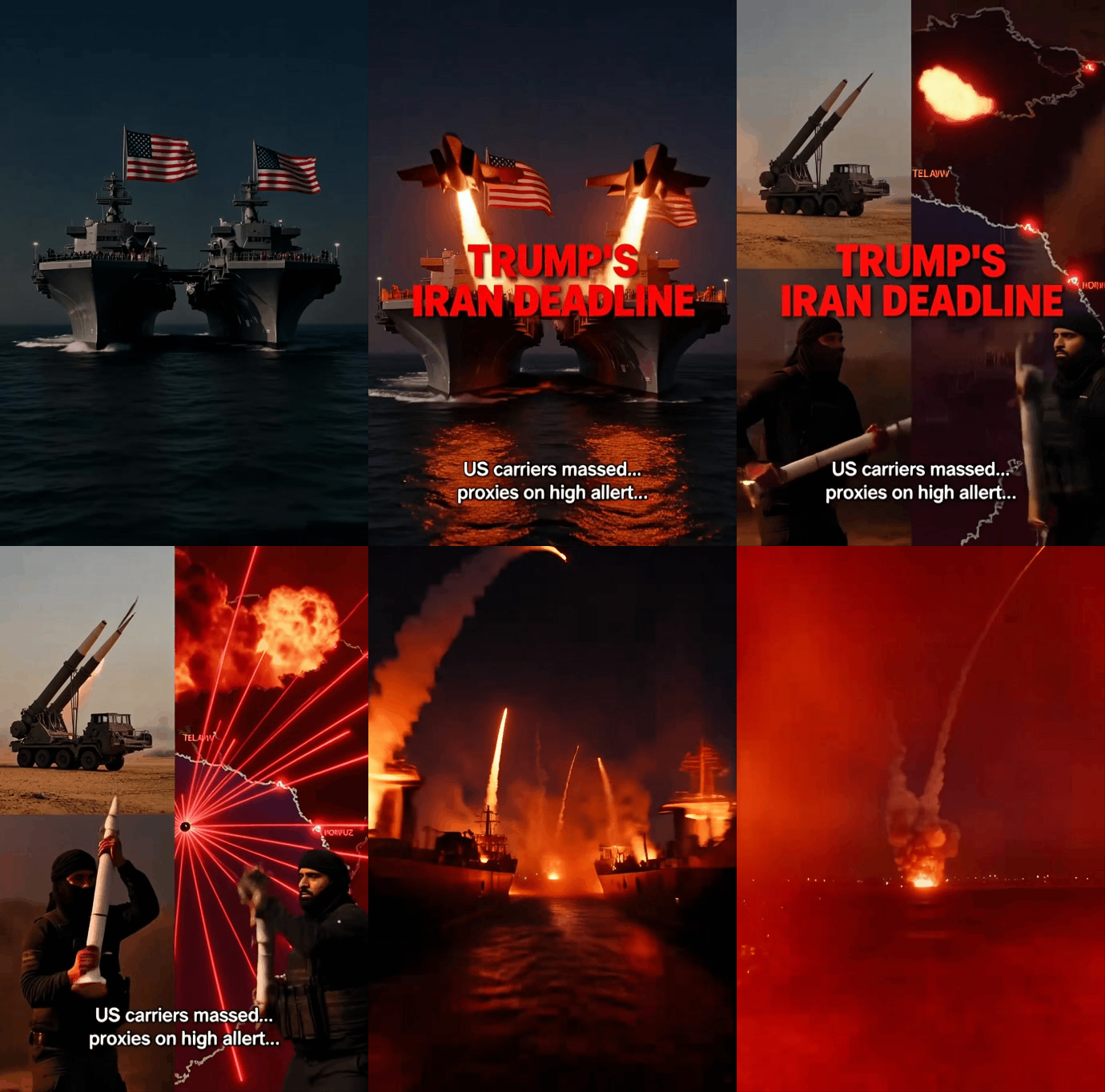

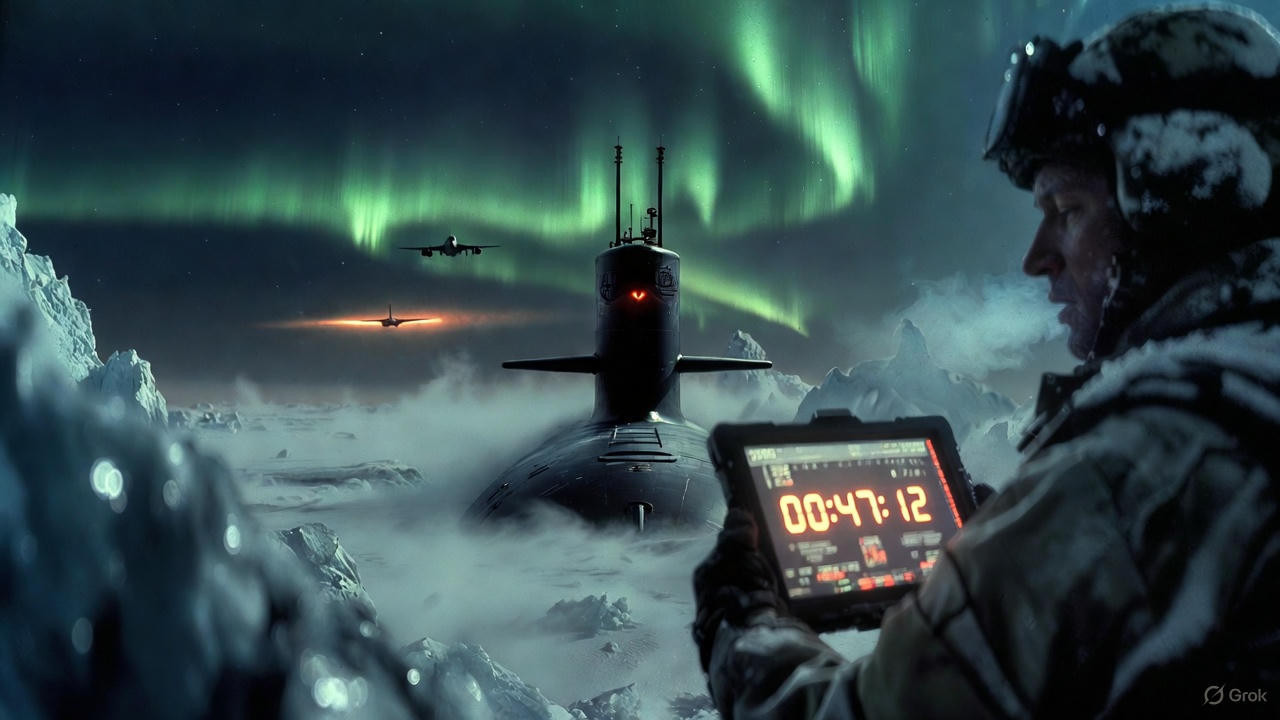

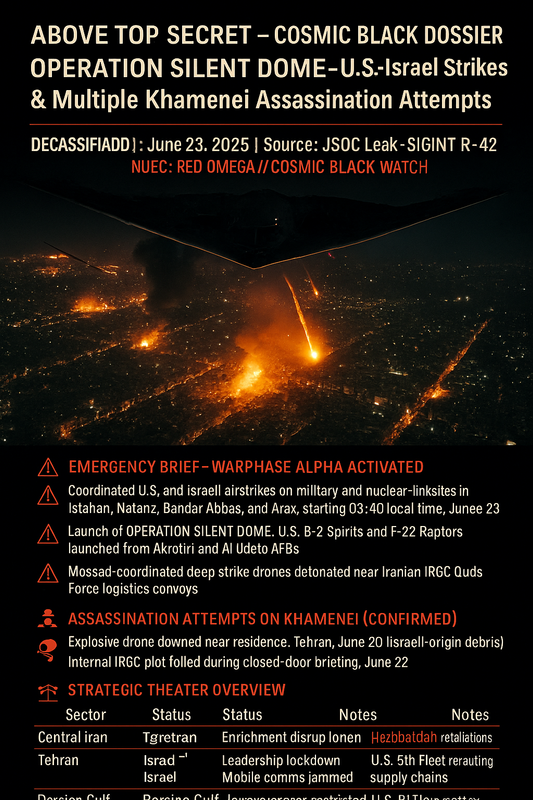
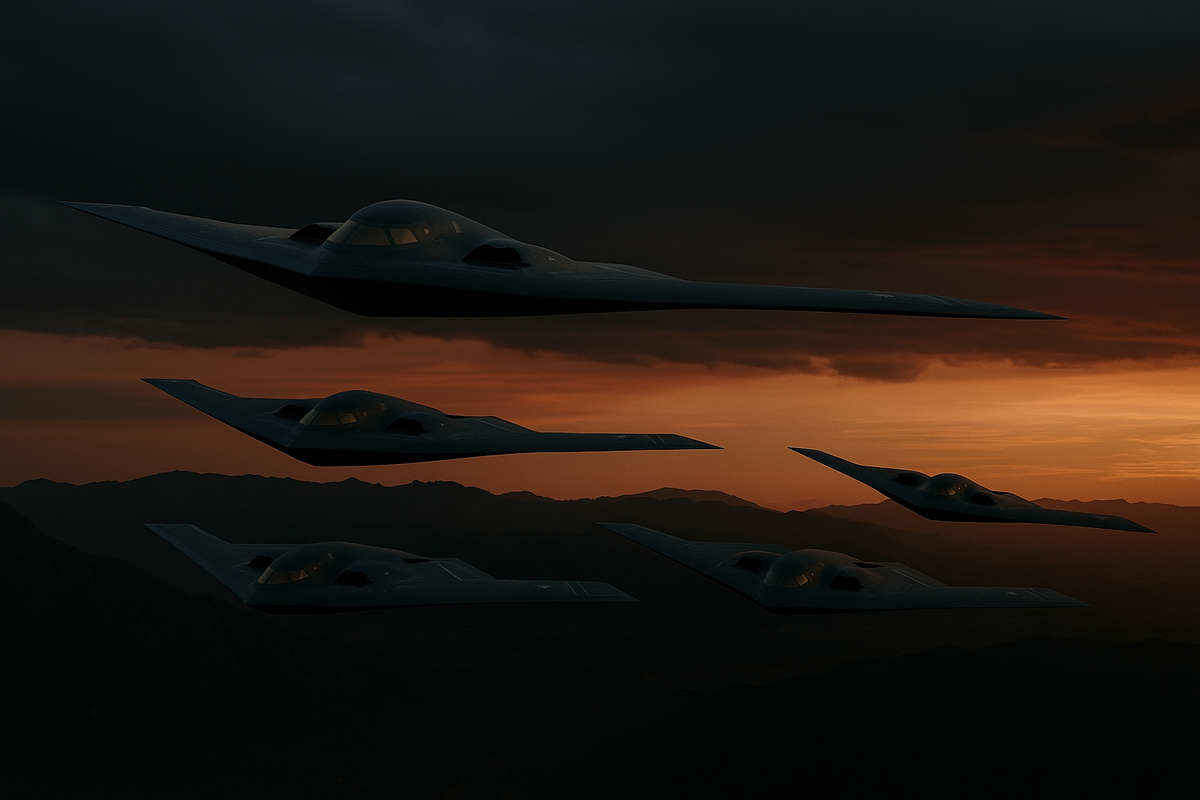
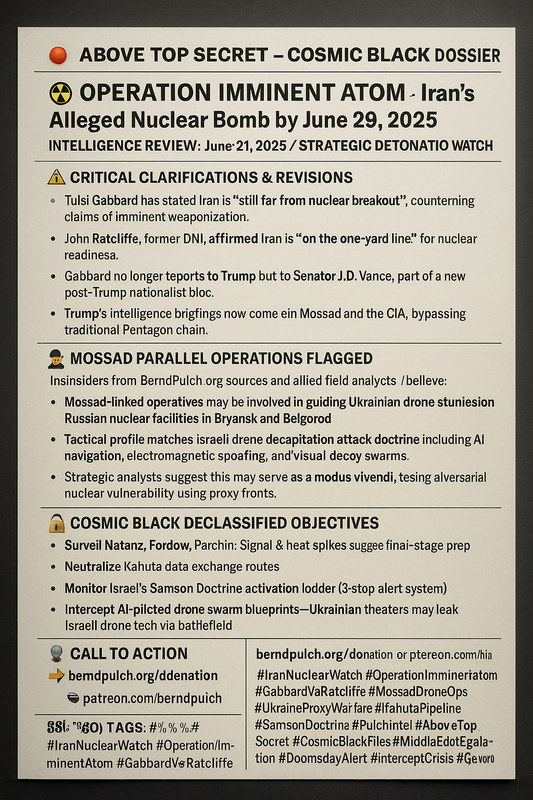
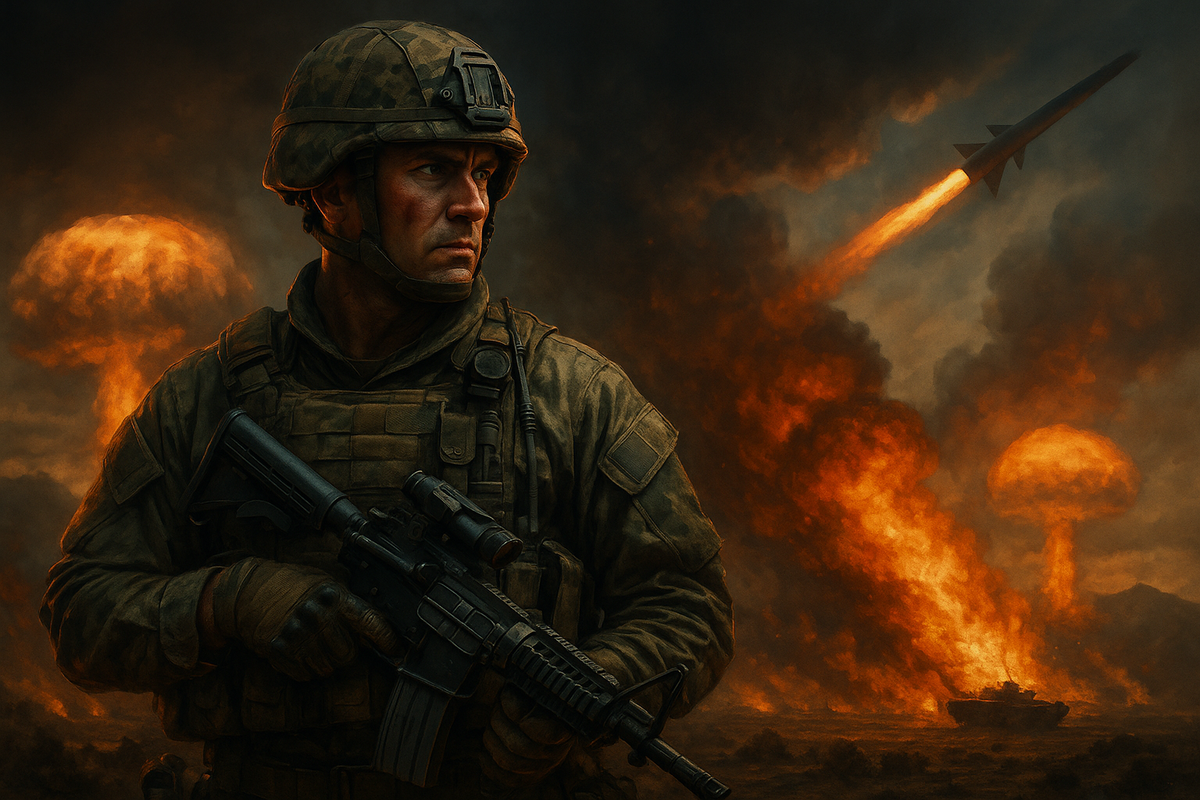
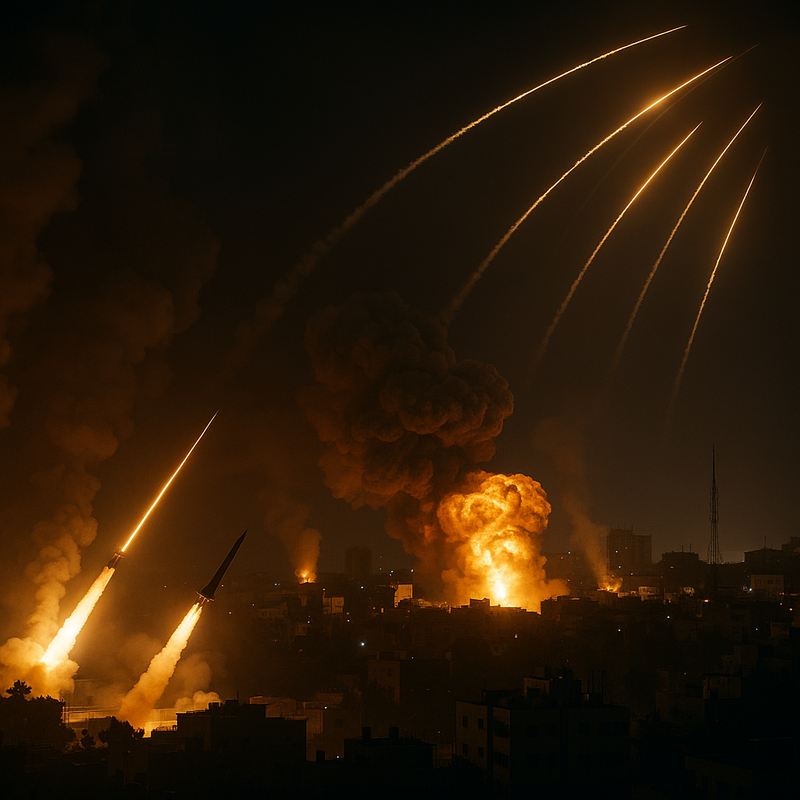
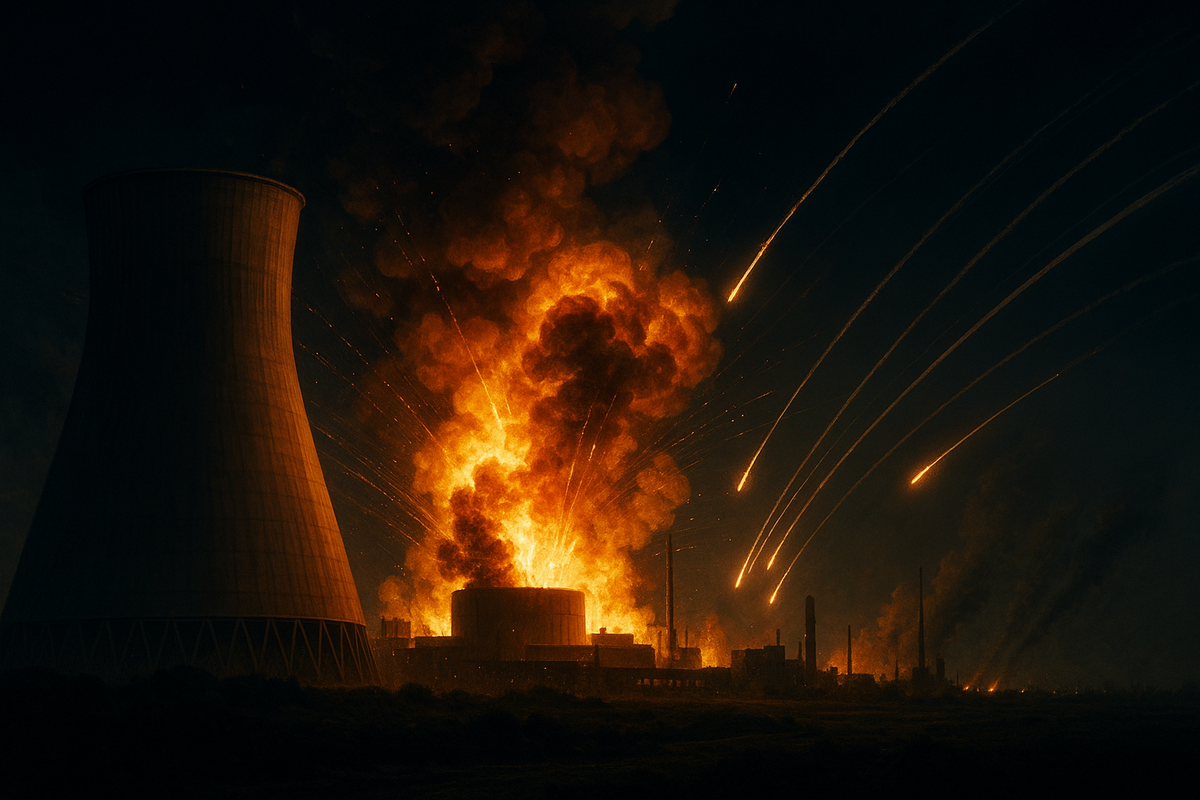
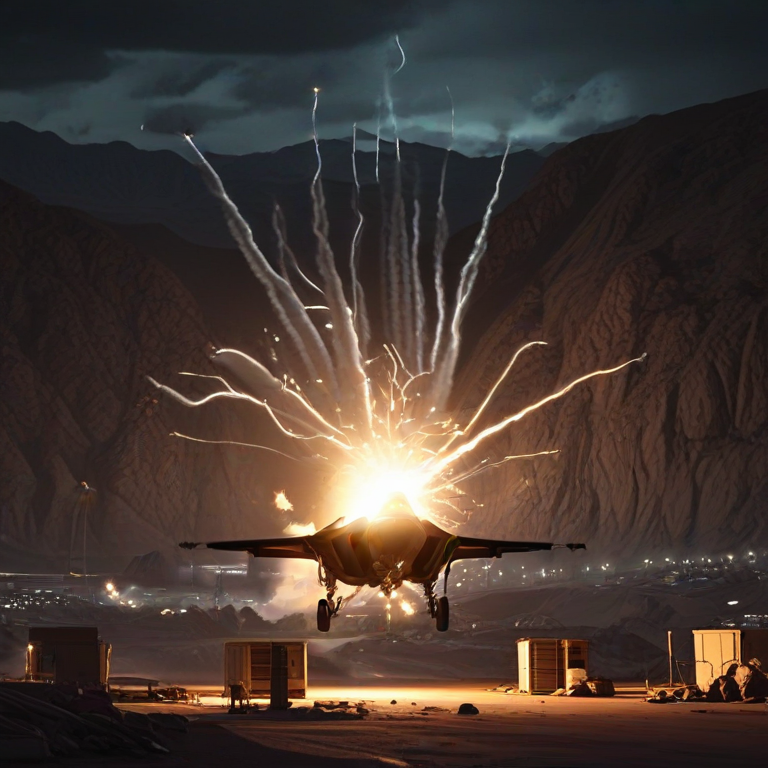
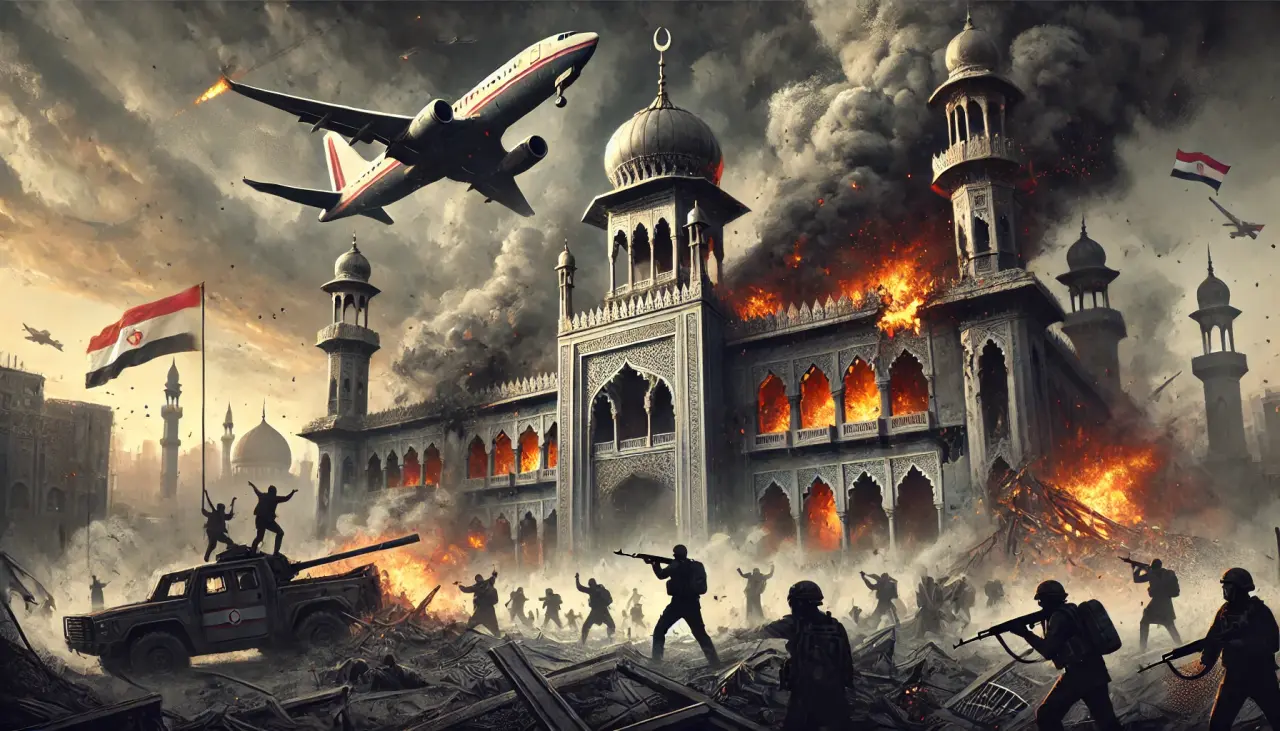
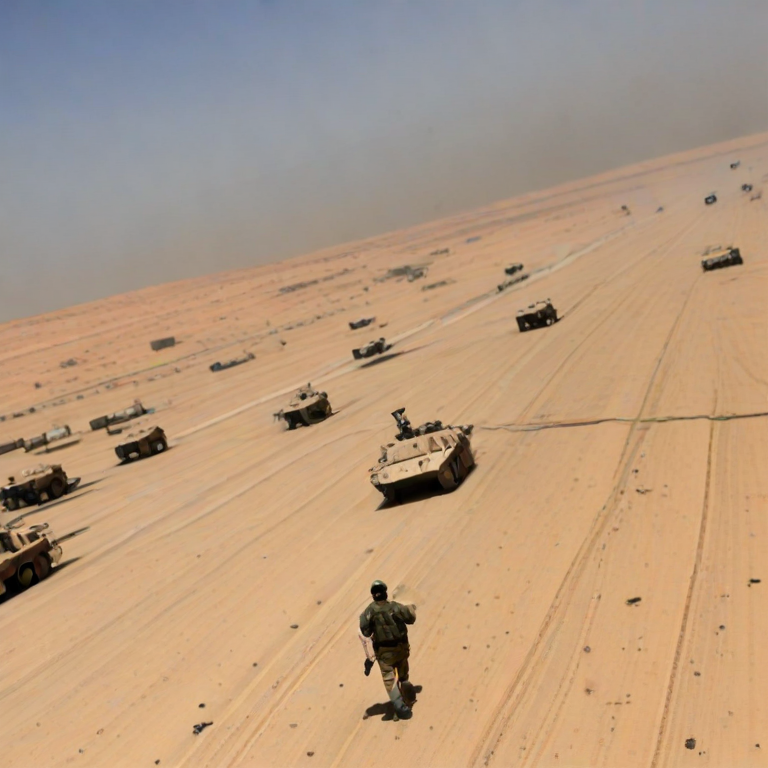
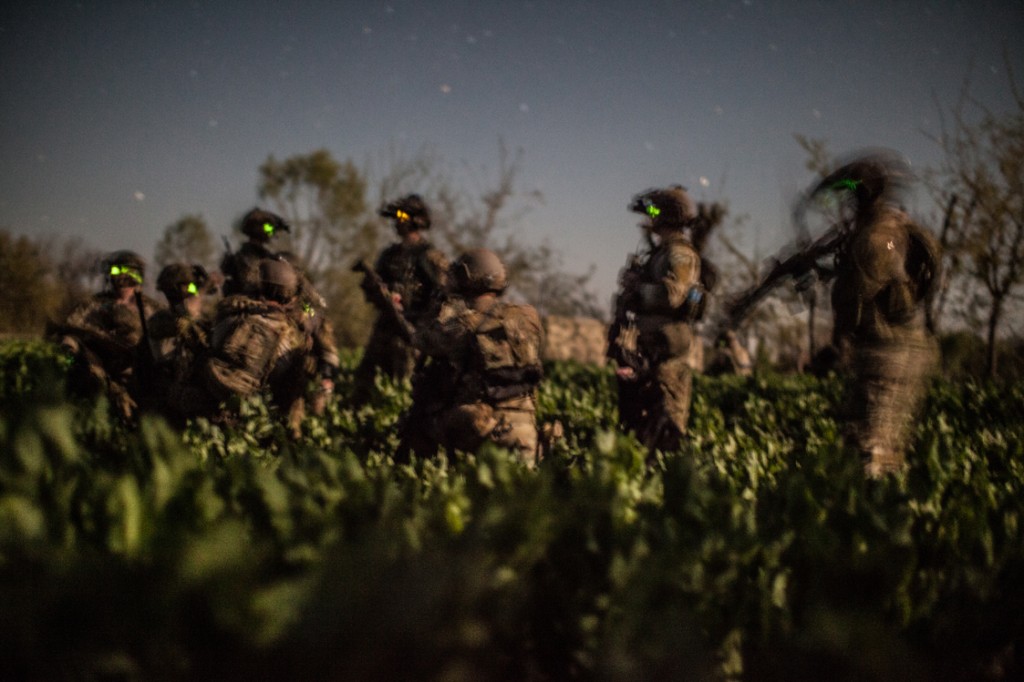
 🛑 Bernd Pulch | NAZI & STASI HUNTER | CORRUPTION & ARISTOTLE AI BI
You must be logged in to post a comment.