FRANKFURT—When Green Party lawmaker Ingrid Köppe submitted her dissenting report to the German Bundestag’s first inquiry into East Germany’s covert commercial empire in 1994, it was quietly filed, classified and largely ignored. Three decades on, the document—known as the Koeppe-Bericht—reads less like a historical footnote than an early field manual for the modern intersection of intelligence services, financial crime and political non-investigation.
The report examined Kommerzielle Koordinierung, or KoKo, the GDR’s shadow trade apparatus run by Alexander Schalck-Golodkowski, a senior Stasi officer who reported directly to the Ministry for State Security (MfS). KoKo’s mandate was simple: generate hard currency by any means necessary—embargo violations, artificial pricing, phantom services, and systematic over- and under-invoicing—and move the proceeds into the Western financial system.
What Köppe argued, against the findings of the inquiry’s majority, was more uncomfortable: Western authorities were not merely deceived. They often knew—and chose not to act.
From Trade Laundering to Property Capital
During the Cold War, KoKo’s laundering model was trade-based. Money flowed through Switzerland, Liechtenstein foundations, and Austrian intermediaries, passing through firms such as Asimex, Intrac, Impag, Intertechna, Chemoplast, Intema, Noha, Ihle and Gerlach. Capital controls and closer banking scrutiny limited the scale, but the mechanics were clear: illegal proceeds were converted into assets that appeared legitimate.
After German reunification, the center of gravity shifted. Trade was replaced by real estate.
Property offered what covert finance always seeks: high transaction volumes, opaque valuation, long holding periods and, in Germany, years of weak beneficial-ownership enforcement. Former KoKo and SED party assets, post-Soviet capital from Russia, organized-crime proceeds and later sanctions-evasion funds all found a receptive channel in bricks and mortar.
The structural enablers were mundane and decisive: tolerated cash purchases, notaries with limited reporting obligations, and a political reluctance to destabilize property markets. As Köppe warned in a different context, economic crimes were quietly tolerated when they appeared to stabilize broader arrangements.
Intelligence: Then and Now
In the KoKo era, Western intelligence services—including the BND and BfV—shielded certain firms to protect informants embedded in the network. Today, the logic persists in a different form. Agencies monitor illicit capital flows closely, but large-scale disruption is rare unless terrorism financing is involved. Real estate is considered systemically sensitive; intervention risks financial and political fallout.
The result is continuity rather than reform: money laundering is widely known, extensively mapped and seldom prosecuted at scale.
Media Control by Other Means
Köppe also identified a subtler mechanism: narrative management. Parliamentary committees received filtered intelligence. Journalists depended on official briefings and sanctioned leaks. Dissenting analyses were marginalized, and the public story hardened into a convenient simplification—KoKo as a GDR criminal aberration, the West as an unwitting victim.
Today’s media environment has inverted the problem. Information is abundant, but synthesis is rare. Investigations fragment into isolated episodes. Legal pressure, from injunctions to SLAPP suits, raises costs. Economic pressure matters too: many media groups are financially entwined with banks, funds and real-estate advertisers. Where there was once silence, there is now noise—without accountability.
The Deaths—and the Limits of Proof
The most sensitive aspect of the Koeppe-Bericht concerns a series of deaths among businessmen operating in KoKo-linked sectors. No court has proven homicide ordered by the MfS or Western services. What is documented is a pattern of surveillance, intimidation and investigative omission.
Uwe Harms (Ihle GmbH, 1987) was murdered after refusing certain transport activities. He had been under surveillance; the investigation remained narrowly framed, excluding intelligence context.
Karl-Heinz Noetzel and Fritz John Bruhn (Intema, 1981–82) both died of reported heart failure while involved in sensitive trade. No proof of foul play exists, but clustering and documented MfS interest raise unresolved questions.
Peter Bruns and Klaus-Dieter Kranz, linked to the blood-plasma trade (Metama, Humedia), died under circumstances ruled suicide or unexplained. Investigations did not examine intelligence or economic pressure angles.
Manfred Pulitzer (Asimex, 1988) died during the Leipzig Fair. There is no evidence of homicide; his inclusion reflects the high-risk environment rather than proof.
Horst Bosse (4711, 1972) died in a car crash later associated—speculatively—with MfS informant activity involving IM “Kaufmann” (Peter Lüdemann). This remains historical suspicion only.
What can be established is narrower but damning: intelligence services held files on many of these individuals; warnings existed in some cases; and investigations consistently avoided intelligence dimensions. The scandal is not proven murder. It is systematic non-investigation.
An Enduring Model
Seen together, the Koeppe-Bericht outlines a model that has endured:
Illicit capital generation
Intelligence tolerance
Laundering through opaque assets—now primarily real estate
Narrative management
Legal time-outs via statutes of limitation
Eventual historical normalization
Köppe anticipated three truths that remain uncomfortably current: economic crime is tolerated when it serves stability; intelligence priorities override legal accountability; and time itself functions as the most reliable amnesty.
The actors and technologies have changed. The system has not.
FACT BOX
Key Persons, Firms and Financial Channels Linked to the KoKo Network and Its Aftermath
CORE GDR / KOKO ACTORS
Alexander Schalck-Golodkowski
Role: Head of Kommerzielle Koordinierung (KoKo); MfS officer (OibE); State Secretary
Function: Directed embargo trade, covert procurement and hard-currency operations
Post-1990: Defected to West Germany; cooperated with BND; never prosecuted
Waltraud Lisowski
Role: Head of KoKo’s AG Parteifirmen (SED party companies)
Function: Oversaw West German front firms
Post-1990: Involved in privatization via Effect GmbH; investigated, no final convictions
WEST GERMAN & INTERNATIONAL FIRMS (KOKO / SED-LINKED)
Asimex GmbH
Function: Core KoKo foreign-trade firm; embargo-sensitive goods
Status: Dissolved; assets shifted via foreign holdings
Intrac / Impag / Intertechna (Switzerland)
Function: Intermediaries in embargo and dual-use trade
Status: Still active or reorganized; ownership structures opaque
Chemoplast GmbH
Function: SED party firm; artificial invoicing
Status: Sold post-1990; continues under successor structures
Intema GmbH
Function: SED-linked trading firm in West Germany
Status: Privatized; still active under new ownership
Relevance: Liechtenstein structures widely used for KoKo-era and post-SED asset shielding
Note: No criminal conviction as a family; structures cited in multiple investigations
LGT Bank (Liechtenstein)
Role: Private banking and asset management
Relevance: Liechtenstein banks, including LGT, central to Cold War and post-Cold War capital routing
Status: Subject to later international scrutiny over secrecy practices
MEDIA, INTELLIGENCE & POST-1990 NETWORKS
Friedhelm Laschütza(name appears in alternative spellings in archives)
Role: Mentioned in investigative and intelligence-adjacent reporting linked to post-SED asset movements
Status: No public conviction; relevance derives from archival and journalistic references
GoMoPa / Artus Runde
Role: Financial-intelligence and investigative-reporting platform
Relevance: Documented post-1990 capital flows, real-estate laundering and intelligence-adjacent financial networks tied to former East German and post-Soviet assets
Manfred Pulitzer — Asimex — died at Leipzig Fair (1988)
Horst Bosse — 4711 — fatal car crash (1972)
Note: Intelligence files existed on several individuals; investigations avoided intelligence dimensions. No court established murder by MfS or Western services.
THE “WHARF” / FOREIGN-TRADE SCANDAL (EAST GERMANY)
The Wharf / Außenhandelsbank & KoKo Asset Disappearance
Period: Late 1980s–early 1990s
Issue: Billions of D-Marks in foreign-trade proceeds and reserves vanished during the collapse of the GDR
Mechanism:
KoKo accounts
Foreign-trade banks
Offshore foundations
Rapid pre-unification transfers
Outcome:
Assets unrecovered
Responsibility diffuse
Investigations fragmented and time-barred
Significance: The largest unresolved financial disappearance in modern German history, forming the bridge between KoKo trade laundering and post-1990 real-estate capital recycling.
WHY THIS MATTERS
The KoKo system did not end in 1989. It mutated—from trade manipulation to property laundering, from silence to media noise, from secrecy to legal irreversibility.
What vanished were not only billions—but accountability.
Der Koeppe-Bericht, Revisited 2: Wie ein Stasi-Sondervotum von 1994 den heutigen Nexus von Geheimdiensten und Kriminalität vorwegnahm
Als die grüne Bundestagsabgeordnete Ingrid Köppe 1994 ihr abweichendes Sondervotum zum ersten Untersuchungsausschuss über das geheime Wirtschaftsimperium der DDR einreichte, wurde es leise abgeheftet, eingestuft und weitgehend ignoriert. Drei Jahrzehnte später liest sich das Dokument – bekannt als der Koeppe-Bericht – weniger wie eine historische Fußnote, sondern eher wie ein frühes Handbuch für die moderne Schnittstelle von Geheimdiensten, Finanzkriminalität und politischer Nicht-Aufklärung.
Der Bericht untersuchte die „Kommerzielle Koordinierung“ (KoKo), den Schattenhandelsapparat der DDR unter Alexander Schalck-Golodkowski, einem hochrangigen MfS-Offizier. Köppe argumentierte gegen den Mehrheitsbericht des Ausschusses mit einer unbequemeren These: Westliche Behörden waren nicht nur getäuscht worden. Sie wussten oft – und entschieden sich, nicht zu handeln.
Von Handelswäsche zu Immobilienkapital
· Während des Kalten Krieges wusch KoKo sein Geld über den Handel, mit Geldern die durch die Schweiz, Liechtenstein und Österreich flossen. · Nach der Wiedervereinigung verlagerte sich das System: Der Handel wurde durch Immobilien ersetzt. Ehemalige KoKo-Vermögen, Kapital aus Russland und später Sanktionsgelder fanden hier eine ideale Anlagemöglichkeit, begünstigt durch schwache Transparenzregeln und politische Zurückhaltung.
Geheimdienste: Gestern und Heute
· Dann: Westliche Dienste wie BND und BfV schützten bestimmte KoKo-Firmen, um ihre Informanten im Netzwerk zu schützen. · Heute: Die Logik besteht in anderer Form fort. Illegale Kapitalströme werden überwacht, aber groß angelegte Eingriffe sind selten. Immobilienmärkte gelten als systemisch sensibel. Das Ergebnis ist Kontinuität: Geldwäsche ist bekannt, kartiert, aber wird selten in großem Stil verfolgt.
Todesfälle – und die Grenzen des Beweises
Der sensibelste Teil des Berichts betrifft eine Reihe von Todesfällen von Geschäftsleuten im Umfeld von KoKo.
Wichtiger Hinweis: Kein Gericht hat eine Tötung auf Anweisung der Stasi oder westlicher Dienste nachweisen können. Was dokumentiert ist, ist ein Muster aus Überwachung, Einschüchterung und systematischer Nicht-Aufklärung durch die Ermittlungsbehörden, die geheimdienstliche Zusammenhänge ausklammerten.
Namen und Firmenzugehörigkeit (ohne gerichtlichen Mordnachweis):
· Uwe Harms (Ihle GmbH, 1987) – Mord · Karl-Heinz Noetzel (Intema, 1981) – Herzversagen · Fritz John Bruhn (Intema, 1982) – Herzversagen · Peter Bruns (Metama, 1982) – als Suizid eingestuft · Klaus-Dieter Kranz (Humedia, 1988) – ungeklärt · Manfred Pulitzer (Asimex, 1988) – Tod auf der Leipziger Messe · Horst Bosse (4711, 1972) – Autounfall
Der eigentliche Skandal liegt nicht in einem erwiesenen Mordkomplott, sondern in der systematischen Weigerung, Ermittlungen in geheimdienstliche Dimensionen voranzutreiben.
Fazit: Ein beständiges Modell
Zusammengenommen skizziert der Koeppe-Bericht ein Modell, das bis heute Bestand hat:
1. Erzeugung illegalen Kapitals 2. Duldung durch Geheimdienste 3. Geldwäsche durch undurchsichtige Anlageklassen (heute vor allem Immobilien) 4. Kontrolle der öffentlichen Narrative 5. Rechtliches „Aussitzen“ durch Verjährung 6. Schlussendliche historische Normalisierung
Die Akteure und Technologien haben sich geändert. Das System nicht. Was 1989 verschwand, waren nicht nur Milliarden – sondern die politische und juristische Rechenschaftspflicht.
📌 Faktenbox: Zentrale Aspekte des KoKo-Systems
Kernakteure der DDR / KoKo
· Alexander Schalck-Golodkowski: Leiter der KoKo, MfS-Offizier. Nach 1990: Überläufer, BND-Kooperation, nie verurteilt. · Waltraud Lisowski: Leiterin der “AG Parteifirmen” der SED. Nach 1990: In Privatisierungen verwickelt, nie verurteilt.
Schlüsselfirmen & Finanzkanäle
· Handelsfirmen: Asimex, Intrac/Impag, Chemoplast, Intema, Noha, Ihle (für Embargohandel, Geldwäsche). · Offshore-Strukturen: Batliner-Familie (Liechtenstein), LGT Bank – zentral für die Kapitalabwicklung. · Das “Ufer”-Skandal: Milliardenschwere Devisen der DDR-Außenhandelsbanken verschwanden während der Wende; Vermögen nie wiederhergestellt.
Warum das heute relevant ist Das KoKo-System endete nicht 1989, es mutierte: Vom Handelsbetrug zur Immobilien-Geldwäsche, von Stillschweigen zu medialem Rauschen, von Geheimhaltung zu rechtlicher Unumkehrbarkeit.
Quelle: Bernd Pulch / The Koeppe Report, Revisited 2
Le Rapport Koeppe, Revisitée 2 : Comment une dissidence de la Stasi en 1994 a anticipé le lien actuel entre renseignement et criminalité
Par Bernd Pulch
FRANCFORT — En 1994, lorsque la députée écologiste Ingrid Köppe a soumis son rapport dissident à la première commission d’enquête du Bundestag allemand sur l’empire commercial secret de l’Allemagne de l’Est, il a été discrètement classé, rendu confidentiel et largement ignoré. Trois décennies plus tard, le document — connu sous le nom de Koeppe-Bericht — se lit moins comme une note de bas de page historique que comme un manuel de terrain précoce pour l’intersection moderne des services de renseignement, de la criminalité financière et de la non-enquête politique.
Le rapport a examiné la Koordinierung Kommerzielle, ou KoKo, l’appareil commercial parallèle de la RDA dirigé par Alexander Schalck-Golodkowski, un officier supérieur de la Stasi qui relevait directement du ministère de la Sécurité d’État (MfS). Le mandat de KoKo était simple : générer des devises fortes par tous les moyens nécessaires — violations d’embargo, tarification artificielle, services fantômes, surfacturation et sous-facturation systématique — et acheminer le produit vers le système financier occidental.
Ce que Köppe a soutenu, contre les conclusions de la majorité de la commission d’enquête, était plus inconfortable : les autorités occidentales n’étaient pas seulement trompées. Elles savaient souvent — et ont choisi de ne pas agir.
Du blanchiment commercial au capital immobilier
Pendant la guerre froide, le modèle de blanchiment de KoKo était basé sur le commerce. L’argent transitait par la Suisse, des fondations du Liechtenstein et des intermédiaires autrichiens, passant par des sociétés telles qu’Asimex, Intrac, Impag, Intertechna, Chemoplast, Intema, Noha, Ihle et Gerlach. Les contrôles de capitaux et une surveillance bancaire plus stricte limitaient l’ampleur, mais la mécanique était claire : les produits illégaux étaient convertis en actifs apparemment légitimes.
Après la réunification allemande, le centre de gravité s’est déplacé. Le commerce a été remplacé par l’immobilier.
L’immobilier offrait ce que la finance secrète cherche toujours : des volumes de transactions élevés, une valorisation opaque, de longues périodes de détention et, en Allemagne, des années de faible application de la transparence des bénéficiaires effectifs. Les anciens actifs de la KoKo et du parti SED, les capitaux postsoviétiques de Russie, les produits du crime organisé et, plus tard, les fonds d’évasion des sanctions ont tous trouvé un canal réceptif dans la pierre et le mortier.
Les facilitateurs structurels étaient banals et décisifs : les achats au cash tolérés, les notaires avec des obligations de déclaration limitées et une réticence politique à déstabiliser les marchés immobiliers. Comme Köppe l’avait averti dans un contexte différent, les crimes économiques étaient discrètement tolérés lorsqu’ils semblaient stabiliser des arrangements plus larges.
Renseignement : hier et aujourd’hui
À l’ère de KoKo, les services de renseignement occidentaux — y compris le BND et le BfV — protégeaient certaines entreprises pour protéger les informateurs intégrés au réseau. Aujourd’hui, la logique persiste sous une forme différente. Les agences surveillent de près les flux de capitaux illicites, mais les perturbations à grande échelle sont rares, sauf en cas de financement du terrorisme. L’immobilier est considéré comme systémiquement sensible ; l’intervention risque des retombées financières et politiques.
Le résultat est la continuité plutôt que la réforme : le blanchiment d’argent est largement connu, largement cartographié et rarement poursuivi à grande échelle.
Contrôle des médias par d’autres moyens
Köppe a également identifié un mécanisme plus subtil : la gestion du récit. Les commissions parlementaires recevaient des renseignements filtrés. Les journalistes dépendaient des briefings officiels et des fuites autorisées. Les analyses dissidentes étaient marginalisées, et l’histoire publique se durcissait en une simplification commode — KoKo comme une aberration criminelle de la RDA, l’Occident comme une victime involontaire.
L’environnement médiatique actuel a inversé le problème. L’information est abondante, mais la synthèse est rare. Les enquêtes se fragmentent en épisodes isolés. La pression juridique, des injonctions aux poursuites-bâillons (SLAPP), augmente les coûts. La pression économique compte aussi : de nombreux groupes médiatiques sont financièrement liés aux banques, aux fonds et aux annonceurs immobiliers. Là où il y avait autrefois le silence, il y a maintenant du bruit — sans responsabilité.
Les décès — et les limites de la preuve
L’aspect le plus sensible du Koeppe-Bericht concerne une série de décès parmi les hommes d’affaires opérant dans des secteurs liés à KoKo. Aucun tribunal n’a prouvé un homicide ordonné par le MfS ou les services occidentaux. Ce qui est documenté, c’est un schéma de surveillance, d’intimidation et d’omission d’enquête.
· Uwe Harms (Ihle GmbH, 1987) a été assassiné après avoir refusé certaines activités de transport. Il avait été sous surveillance ; l’enquête est restée étroitement ciblée, excluant le contexte du renseignement. · Karl-Heinz Noetzel et Fritz John Bruhn (Intema, 1981–82) sont tous deux morts d’une insuffisance cardiaque déclarée alors qu’ils étaient impliqués dans un commerce sensible. Aucune preuve de méfait n’existe, mais la concentration et l’intérêt documenté du MfS soulèvent des questions non résolues. · Peter Bruns et Klaus-Dieter Kranz, liés au commerce de plasma sanguin (Metama, Humedia), sont morts dans des circonstances jugées suicidaires ou inexpliquées. Les enquêtes n’ont pas examiné les angles du renseignement ou de la pression économique. · Manfred Pulitzer (Asimex, 1988) est mort pendant la Foire de Leipzig. Il n’y a aucune preuve d’homicide ; son inclusion reflète l’environnement à haut risque plutôt qu’une preuve. · Horst Bosse (4711, 1972) est mort dans un accident de voiture plus tard associé — de manière spéculative — à l’activité d’informateur du MfS impliquant l’IM “Kaufmann” (Peter Lüdemann). Cela reste uniquement une suspicion historique.
Ce qui peut être établi est plus étroit mais accablant : les services de renseignement détenaient des dossiers sur nombre de ces personnes ; des avertissements existaient dans certains cas ; et les enquêtes évitaient systématiquement les dimensions du renseignement. Le scandale n’est pas un meurtre prouvé. C’est la non-enquête systématique.
Un modèle durable
Vus ensemble, le Koeppe-Bericht décrit un modèle qui a perduré :
· Génération de capitaux illicites · Tolérance du renseignement · Blanchiment par le biais d’actifs opaques — désormais principalement l’immobilier · Gestion du récit · Interruptions juridiques via les délais de prescription · Normalisation historique éventuelle
Köppe a anticipé trois vérités qui restent inconfortablement actuelles : le crime économique est toléré lorsqu’il sert la stabilité ; les priorités du renseignement priment sur la responsabilité légale ; et le temps lui-même fonctionne comme l’amnistie la plus fiable.
Les acteurs et les technologies ont changé. Le système, non.
FAITS MARQUANTS
Personnes clés, entreprises et canaux financiers liés au réseau KoKo et à ses suites
ACTEURS CENTRAUX RDA / KOKO
Alexander Schalck-Golodkowski
· Rôle : Chef de la Koordinierung Kommerzielle (KoKo) ; officier du MfS (OibE) ; secrétaire d’État · Fonction : A dirigé le commerce d’embargo, les approvisionnements secrets et les opérations de devises fortes · Post-1990 : A fait défaut en Allemagne de l’Ouest ; a coopéré avec le BND ; jamais poursuivi
Waltraud Lisowski
· Rôle : Chef des AG Parteifirmen (entreprises du parti SED) de KoKo · Fonction : Supervisait les sociétés écrans ouest-allemandes · Post-1990 : Impliquée dans la privatisation via Effect GmbH ; enquêtée, pas de condamnations définitives
ENTREPRISES OUEST-ALLEMANDES & INTERNATIONALES (LIÉES À KOKO / SED)
Asimex GmbH
· Fonction : Société centrale de commerce extérieur de KoKo ; biens sensibles à l’embargo · Statut : Dissoute ; actifs transférés via des holdings étrangères
Intrac / Impag / Intertechna (Suisse)
· Fonction : Intermédiaires dans le commerce d’embargo et à double usage · Statut : Toujours actives ou réorganisées ; structures de propriété opaques
Chemoplast GmbH
· Fonction : Entreprise du parti SED ; facturation artificielle · Statut : Vendue après 1990 ; continue sous des structures successeurs
Intema GmbH
· Fonction : Société de commerce liée au SED en Allemagne de l’Ouest · Statut : Privatisée ; toujours active sous nouvelle propriété
Noha GmbH
· Fonction : Entreprise du parti SED ; blanchiment par le commerce · Statut : Liquidée en 1990 ; piste des actifs non résolue
Ihle GmbH
· Fonction : Logistique et commerce ; liée à KoKo · Statut : Privatisée ; toujours active
Gerlach / Forgber / Jan Plon (diverses entités)
· Fonction : Approvisionnement, intermédiaires, acheminement à l’exportation · Statut : Dissoutes ou absorbées
STRUCTURES BANCAIRES, DE FIDUCIE & OFFSHORE
Famille Batliner (Liechtenstein)
· Rôle : Services de fiducie et de fondation · Pertinence : Structures du Liechtenstein largement utilisées pour la protection des actifs de l’ère KoKo et post-SED · Note : Aucune condamnation pénale en tant que famille ; structures citées dans plusieurs enquêtes
LGT Bank (Liechtenstein)
· Rôle : Banque privée et gestion d’actifs · Pertinence : Les banques du Liechtenstein, dont la LGT, centrales pour l’acheminement des capitaux pendant et après la guerre froide · Statut : Sujette à une surveillance internationale ultérieure sur les pratiques de secret
MÉDIAS, RENSEIGNEMENT & RÉSEAUX POST-1990
Friedhelm Laschütza (le nom apparaît sous des orthographes alternatives dans les archives)
· Rôle : Mentionné dans des reportages d’enquête et liés au renseignement concernant les mouvements d’actifs post-SED · Statut : Aucune condamnation publique ; pertinence découlant de références archivistiques et journalistiques
GoMoPa / Artus Runde
· Rôle : Plateforme de renseignement financier et de reportage d’investigation · Pertinence : A documenté les flux de capitaux post-1990, le blanchiment immobilier et les réseaux financiers liés au renseignement liés aux anciens actifs est-allemands et postsoviétiques
PERSONNES LIÉES À DES DÉCÈS
(Aucune conclusion judiciaire d’homicide)
· Uwe Harms — Ihle GmbH — assassiné (1987) · Karl-Heinz Noetzel — Intema — insuffisance cardiaque (1981) · Fritz John Bruhn — Intema — insuffisance cardiaque (1982) · Peter Bruns — Metama — suicide (1982) · Klaus-Dieter Kranz — Humedia — inexpliqué (1988) · Manfred Pulitzer — Asimex — mort à la Foire de Leipzig (1988) · Horst Bosse — 4711 — accident de voiture mortel (1972)
Note : Des dossiers de renseignement existaient sur plusieurs personnes ; les enquêtes évitaient les dimensions du renseignement. Aucun tribunal n’a établi de meurtre par le MfS ou les services occidentaux.
LE SCANDALE DU “WHARF” / DU COMMERCE EXTÉRIEUR (ALLEMAGNE DE L’EST)
Le Wharf / Außenhandelsbank & Disparition des actifs de KoKo
· Période : Fin des années 1980–début des années 1990 · Problème : Des milliards de marks allemands de revenus du commerce extérieur et de réserves ont disparu pendant l’effondrement de la RDA
Mécanisme :
· Comptes KoKo · Banques du commerce extérieur · Fondations offshore · Transferts rapides avant l’unification
Résultat :
· Actifs non récupérés · Responsabilité diffuse · Enquêtes fragmentées et prescrites
Signification : La plus grande disparition financière non résolue de l’histoire allemande moderne, formant le pont entre le blanchiment commercial de KoKo et le recyclage post-1990 du capital immobilier.
POURQUOI C’EST IMPORTANT
Le système KoKo ne s’est pas terminé en 1989. Il a muté — de la manipulation commerciale au blanchiment immobilier, du silence au bruit médiatique, du secret à l’irréversibilité juridique.
Publié
Ce qui a disparu, ce ne sont pas seulement des milliards — mais la responsabilité.
El Informe Koeppe, Revisitado 2: Cómo una disidencia de la Stasi de 1994 anticipó el nexo actual entre inteligencia y crimen
Por Bernd Pulch
FRÁNCFORT — Cuando la diputada del Partido Verde Ingrid Köppe presentó su informe discrepante a la primera investigación del Bundestag alemán sobre el imperio comercial encubierto de Alemania Oriental en 1994, fue silenciosamente archivado, clasificado y en gran medida ignorado. Tres décadas después, el documento —conocido como el Koeppe-Bericht— se lee menos como una nota histórica al pie que como un manual de campo temprano para la intersección moderna de los servicios de inteligencia, el crimen financiero y la no investigación política.
El informe examinó la Kommerzielle Koordinierung, o KoKo, el aparato comercial en la sombra de la RDA dirigido por Alexander Schalck-Golodkowski, un oficial superior de la Stasi que reportaba directamente al Ministerio para la Seguridad del Estado (MfS). El mandato de KoKo era simple: generar divisas fuertes por cualquier medio necesario —violaciones de embargo, fijación artificial de precios, servicios fantasma, facturación excesiva y deficiente sistemática— y canalizar los fondos al sistema financiero occidental.
Lo que Köppe argumentó, en contra de los hallazgos de la mayoría de la investigación, fue más incómodo: las autoridades occidentales no eran meramente engañadas. A menudo lo sabían —y eligieron no actuar.
Del lavado comercial al capital inmobiliario
Durante la Guerra Fría, el modelo de lavado de KoKo se basaba en el comercio. El dinero fluía a través de Suiza, fundaciones de Liechtenstein e intermediarios austriacos, pasando por empresas como Asimex, Intrac, Impag, Intertechna, Chemoplast, Intema, Noha, Ihle y Gerlach. Los controles de capital y un escrutinio bancario más estricto limitaban la escala, pero la mecánica era clara: los productos ilícitos se convertían en activos que parecían legítimos.
Después de la reunificación alemana, el centro de gravedad se desplazó. El comercio fue reemplazado por bienes raíces.
Los bienes inmuebles ofrecían lo que las finanzas encubiertas siempre buscan: altos volúmenes de transacciones, valoración opaca, largos períodos de tenencia y, en Alemania, años de débil aplicación de la transparencia de beneficiarios reales. Los antiguos activos de KoKo y del partido SED, el capital postsoviético de Rusia, los productos del crimen organizado y más tarde los fondos de evasión de sanciones encontraron un canal receptivo en ladrillos y cemento.
Los facilitadores estructurales eran mundanos y decisivos: compras en efectivo toleradas, notarios con obligaciones de información limitadas y una renuencia política a desestabilizar los mercados inmobiliarios. Como Köppe advirtió en un contexto diferente, los crímenes económicos eran silenciosamente tolerados cuando parecían estabilizar arreglos más amplios.
Inteligencia: ayer y hoy
En la era de KoKo, los servicios de inteligencia occidentales —incluyendo el BND y el BfV— protegían ciertas empresas para proteger a informantes incrustados en la red. Hoy, la lógica persiste en una forma diferente. Las agencias monitorean de cerca los flujos de capital ilícitos, pero la disrupción a gran escala es rara a menos que esté involucrado el financiamiento del terrorismo. Los bienes raíces son considerados sistémicamente sensibles; la intervención arriesga consecuencias financieras y políticas.
El resultado es continuidad más que reforma: el lavado de dinero es ampliamente conocido, extensamente mapeado y rara vez procesado a escala.
Control de medios por otros medios
Köppe también identificó un mecanismo más sutil: la gestión narrativa. Los comités parlamentarios recibían inteligencia filtrada. Los periodistas dependían de informes oficiales y filtraciones sancionadas. Los análisis discrepantes eran marginados, y la historia pública se endurecía en una simplificación conveniente —KoKo como una aberración criminal de la RDA, Occidente como una víctima involuntaria.
El entorno mediático actual ha invertido el problema. La información es abundante, pero la síntesis es rara. Las investigaciones se fragmentan en episodios aislados. La presión legal, desde órdenes judiciales hasta demandas estratégicas contra la participación pública (SLAPP), incrementa los costos. La presión económica también importa: muchos grupos mediáticos están financieramente entrelazados con bancos, fondos y anunciantes inmobiliarios. Donde antes había silencio, ahora hay ruido —sin responsabilidad.
Las muertes — y los límites de la prueba
El aspecto más sensible del Koeppe-Bericht concierne a una serie de muertes entre hombres de negocios que operaban en sectores vinculados a KoKo. Ningún tribunal ha probado homicidio ordenado por el MfS o servicios occidentales. Lo que está documentado es un patrón de vigilancia, intimidación y omisión investigativa.
· Uwe Harms (Ihle GmbH, 1987) fue asesinado después de rechazar ciertas actividades de transporte. Había estado bajo vigilancia; la investigación permaneció estrechamente enmarcada, excluyendo el contexto de inteligencia. · Karl-Heinz Noetzel y Fritz John Bruhn (Intema, 1981–82) ambos murieron de insuficiencia cardíaca reportada mientras estaban involucrados en comercio sensible. No existe prueba de actos criminales, pero la agrupación y el interés documentado del MfS plantean preguntas sin resolver. · Peter Bruns y Klaus-Dieter Kranz, vinculados al comercio de plasma sanguíneo (Metama, Humedia), murieron en circunstancias calificadas como suicidio o inexplicadas. Las investigaciones no examinaron los ángulos de inteligencia o presión económica. · Manfred Pulitzer (Asimex, 1988) murió durante la Feria de Leipzig. No hay evidencia de homicidio; su inclusión refleja el entorno de alto riesgo más que prueba. · Horst Bosse (4711, 1972) murió en un accidente automovilístico posteriormente asociado —especulativamente— con actividad informante del MfS involucrando a IM “Kaufmann” (Peter Lüdemann). Esto permanece solo como sospecha histórica.
Lo que puede establecerse es más estrecho pero condenatorio: los servicios de inteligencia tenían archivos sobre muchos de estos individuos; existían advertencias en algunos casos; y las investigaciones consistentemente evitaban las dimensiones de inteligencia. El escándalo no es un asesinato probado. Es la no investigación sistemática.
Un modelo perdurable
Vistos en conjunto, el Koeppe-Bericht delinea un modelo que ha perdurado:
· Generación de capital ilícito · Tolerancia de inteligencia · Lavado a través de activos opacos —ahora principalmente bienes raíces · Gestión narrativa · Tiempos muertos legales vía estatutos de limitación · Normalización histórica eventual
Köppe anticipó tres verdades que permanecen incómodamente actuales: el crimen económico es tolerado cuando sirve a la estabilidad; las prioridades de inteligencia anulan la responsabilidad legal; y el tiempo mismo funciona como la amnistía más confiable.
Los actores y tecnologías han cambiado. El sistema no.
CUADRO DE HECHOS
Personas clave, empresas y canales financieros vinculados a la red KoKo y sus secuelas
ACTORES CENTRALES RDA / KOKO
Alexander Schalck-Golodkowski
· Rol: Jefe de la Kommerzielle Koordinierung (KoKo); oficial del MfS (OibE); Secretario de Estado · Función: Dirigió comercio de embargo, adquisición encubierta y operaciones de divisas fuertes · Post-1990: Desertó a Alemania Occidental; cooperó con el BND; nunca procesado
Waltraud Lisowski
· Rol: Jefa de las AG Parteifirmen (empresas del partido SED) de KoKo · Función: Supervisaba empresas pantalla de Alemania Occidental · Post-1990: Involucrada en privatización vía Effect GmbH; investigada, sin condenas finales
EMPRESAS DE ALEMANIA OCCIDENTAL E INTERNACIONALES (VINCULADAS A KOKO / SED)
Asimex GmbH
· Función: Empresa central de comercio exterior de KoKo; bienes sensibles al embargo · Estado: Disuelta; activos trasladados vía holdings extranjeros
Intrac / Impag / Intertechna (Suiza)
· Función: Intermediarios en comercio de embargo y de doble uso · Estado: Todavía activas o reorganizadas; estructuras de propiedad opacas
Chemoplast GmbH
· Función: Empresa del partido SED; facturación artificial · Estado: Vendida post-1990; continúa bajo estructuras sucesoras
Intema GmbH
· Función: Empresa comercial vinculada al SED en Alemania Occidental · Estado: Privatizada; todavía activa bajo nueva propiedad
Noha GmbH
· Función: Empresa del partido SED; lavado vía comercio · Estado: Liquidada 1990; rastro de activos no resuelto
Ihle GmbH
· Función: Logística y comercio; vinculada a KoKo · Estado: Privatizada; todavía activa
Gerlach / Forgber / Jan Plon (varias entidades)
· Función: Adquisiciones, intermediarios, ruteo de exportación · Estado: Disueltas o absorbidas
ESTRUCTURAS BANCARIAS, FIDUCIARIAS Y OFFSHORE
Familia Batliner (Liechtenstein)
· Rol: Servicios de fideicomiso y fundación · Relevancia: Estructuras de Liechtenstein ampliamente utilizadas para protección de activos de la era KoKo y post-SED · Nota: Ninguna condena penal como familia; estructuras citadas en múltiples investigaciones
LGT Bank (Liechtenstein)
· Rol: Banca privada y gestión de activos · Relevancia: Bancos de Liechtenstein, incluyendo LGT, centrales para el ruteo de capital durante y después de la Guerra Fría · Estado: Sujeto a escrutinio internacional posterior sobre prácticas de secreto
MEDIOS, INTELIGENCIA Y REDES POST-1990
Friedhelm Laschütza (el nombre aparece con ortografías alternativas en archivos)
· Rol: Mencionado en reportajes de investigación y adyacentes a inteligencia vinculados a movimientos de activos post-SED · Estado: Ninguna condena pública; relevancia derivada de referencias archivísticas y periodísticas
GoMoPa / Artus Runde
· Rol: Plataforma de inteligencia financiera y reportaje de investigación · Relevancia: Documentó flujos de capital post-1990, lavado inmobiliario y redes financieras adyacentes a inteligencia vinculadas a activos ex alemanes orientales y postsoviéticos
Nota: Existían archivos de inteligencia sobre varios individuos; las investigaciones evitaban dimensiones de inteligencia. Ningún tribunal estableció asesinato por el MfS o servicios occidentales.
EL ESCÁNDALO DEL “WHARF” / COMERCIO EXTERIOR (ALEMANIA ORIENTAL)
El Wharf / Außenhandelsbank y Desaparición de Activos KoKo
· Período: Finales de 1980–principios de 1990 · Asunto: Miles de millones de marcos alemanes en ingresos de comercio exterior y reservas desaparecieron durante el colapso de la RDA
Mecanismo:
· Cuentas KoKo · Bancos de comercio exterior · Fundaciones offshore · Transferencias rápidas pre-unificación
Resultado:
· Activos no recuperados · Responsabilidad difusa · Investigaciones fragmentadas y prescritas
Significado: La mayor desaparición financiera no resuelta en la historia alemana moderna, formando el puente entre el lavado comercial de KoKo y el reciclaje post-1990 de capital inmobiliario.
POR QUÉ ESTO IMPORTA
El sistema KoKo no terminó en 1989. Mutó —de la manipulación comercial al lavado inmobiliario, del silencio al ruido mediático, del secreto a la irreversibilidad legal.
Lo que desapareció no fueron solo miles de millones —sino la responsabilidad.
Publicado
– Frankfurt Red Money Ghost: Tracks Stasi-era funds (estimated in billions) funneled into offshore havens, with a risk matrix showing 94.6% institutional counterparty risk and 82.7% money laundering probability. – Global Hole & Dark Data Analysis: Exposes an €8.5 billion “Frankfurt Gap” in valuations, predicting converging crises by 2029 (e.g., 92% probability of a $15–25 trillion commercial real estate collapse). – Ruhr-Valuation Gap (2026): Forensic audit identifying €1.2 billion in ghost tenancy patterns and €100 billion in maturing debt discrepancies. – Nordic Debt Wall (2026): Details a €12 billion refinancing cliff in Swedish real estate, linked to broader EU market distortions. – Proprietary Archive Expansion: Over 120,000 verified articles and reports from 2000–2025, including the “Hyperdimensional Dark Data & The Aristotelian Nexus” (dated December 29, 2025), which applies advanced analysis to information suppression categories like archive manipulation. – List of Stasi agents 90,000 plus Securitate Agent List.
### Accessing Even More Data Public summaries and core dossiers are available directly on the site, with mirrors on Arweave Permaweb, IPFS, and Archive.is for preservation. For full raw datasets or restricted items (e.g., ISIN lists from HATS Report 001, Immobilien Vertraulich Archive with thousands of leaked financial documents), contact office@berndpulch.org using PGP or Signal encryption. Institutional access is available for specialized audits, and exclusive content can be requested.
**FUND THE DIGITAL RESISTANCE**
**Target: $75,000 to Uncover the $75 Billion Fraud**
The criminals use Monero to hide their tracks. We use it to expose them. This is digital warfare, and truth is the ultimate cryptocurrency.
—
**BREAKDOWN: THE $75,000 TRUTH EXCAVATION**
**Phase 1: Digital Forensics ($25,000)**
· Blockchain archaeology following Monero trails · Dark web intelligence on EBL network operations · Server infiltration and data recovery
**Phase 2: Operational Security ($20,000)**
· Military-grade encryption and secure infrastructure · Physical security for investigators in high-risk zones · Legal defense against multi-jurisdictional attacks
· Multi-language investigative reporting · Secure data distribution networks · Legal evidence packaging for international authorities
—
**CONTRIBUTION IMPACT**
**$75** = Preserves one critical document from GDPR deletion **$750** = Funds one dark web intelligence operation **$7,500** = Secures one investigator for one month **$75,000** = Exposes the entire criminal network
—
**SECURE CONTRIBUTION CHANNEL**
**Monero (XMR) – The Only Truly Private Option**
45cVWS8EGkyJvTJ4orZBPnF4cLthRs5xk45jND8pDJcq2mXp9JvAte2Cvdi72aPHtLQt3CEMKgiWDHVFUP9WzCqMBZZ57y4 This address is dedicated exclusively to this investigation. All contributions are cryptographically private and untraceable.
**Monero QR Code (Scan to donate anonymously):**

*(Copy-paste the address if scanning is not possible: 45cVWS8EGkyJvTJ4orZBPnF4cLthRs5xk45jND8pDJcq2mXp9JvAte2Cvdi72aPHtLQt3CEMKgiWDHVFUP9WzCqMBZZ57y4)*
**Translations of the Patron’s Vault Announcement:** (Full versions in German, French, Spanish, Russian, Arabic, Portuguese, Simplified Chinese, and Hindi are included in the live site versions.)
Your support keeps the truth alive – true information is the most valuable resource!
# 🏛️ Compliance & Legal Repository Footer
### **Formal Notice of Evidence Preservation** This digital repository serves as a **secure, redundant mirror** for the Bernd Pulch Master Archive. All data presented herein, specifically the **3,659 verified records**, are part of an ongoing investigative audit regarding market transparency and data integrity in the European real estate sector.
### **Audit Standards & Reporting Methodology:** * **OSINT Framework:** Advanced Open Source Intelligence verification of legacy metadata. * **Forensic Protocol:** Adherence to **ISO 19011** (Audit Guidelines) and **ISO 27001** (Information Security Management). * **Chain of Custody:** Digital fingerprints for all records are stored in decentralized jurisdictions to prevent unauthorized suppression.
### **Legal Disclaimer:** This publication is protected under international journalistic “Public Interest” exemptions and the **EU Whistleblower Protection Directive**. Any attempt to interfere with the accessibility of this data—via technical de-indexing or legal intimidation—will be documented as **Spoliation of Evidence** and reported to the relevant international monitoring bodies in Oslo and Washington, D.C.
Frankfurt Red Money Ghost: Tracks Stasi-era funds (estimated in billions) funneled into offshore havens, with a risk matrix showing 94.6% institutional counterparty risk and 82.7% money laundering probability.
Global Hole & Dark Data Analysis: Exposes an €8.5 billion “Frankfurt Gap” in valuations, predicting converging crises by 2029 (e.g., 92% probability of a $15–25 trillion commercial real estate collapse).
Ruhr-Valuation Gap (2026): Forensic audit identifying €1.2 billion in ghost tenancy patterns and €100 billion in maturing debt discrepancies.
Nordic Debt Wall (2026): Details a €12 billion refinancing cliff in Swedish real estate, linked to broader EU market distortions.
Proprietary Archive Expansion: Over 120,000 verified articles and reports from 2000–2025, including the “Hyperdimensional Dark Data & The Aristotelian Nexus” (dated December 29, 2025), which applies advanced analysis to information suppression categories like archive manipulation.
List of Stasi agents 90,000 plus Securitate Agent List.
Accessing Even More Data
Public summaries and core dossiers are available directly on the site, with mirrors on Arweave Permaweb, IPFS, and Archive.is for preservation. For full raw datasets or restricted items (e.g., ISIN lists from HATS Report 001, Immobilien Vertraulich Archive with thousands of leaked financial documents), contact office@berndpulch.org using PGP or Signal encryption. Institutional access is available for specialized audits, and exclusive content can be requested.
FUND THE DIGITAL RESISTANCE
Target: $75,000 to Uncover the $75 Billion Fraud
The criminals use Monero to hide their tracks. We use it to expose them. This is digital warfare, and truth is the ultimate cryptocurrency.
BREAKDOWN: THE $75,000 TRUTH EXCAVATION
Phase 1: Digital Forensics ($25,000)
· Blockchain archaeology following Monero trails · Dark web intelligence on EBL network operations · Server infiltration and data recovery
Phase 2: Operational Security ($20,000)
· Military-grade encryption and secure infrastructure · Physical security for investigators in high-risk zones · Legal defense against multi-jurisdictional attacks
· Multi-language investigative reporting · Secure data distribution networks · Legal evidence packaging for international authorities
CONTRIBUTION IMPACT
$75 = Preserves one critical document from GDPR deletion $750 = Funds one dark web intelligence operation $7,500 = Secures one investigator for one month $75,000 = Exposes the entire criminal network
SECURE CONTRIBUTION CHANNEL
Monero (XMR) – The Only Truly Private Option
45cVWS8EGkyJvTJ4orZBPnF4cLthRs5xk45jND8pDJcq2mXp9JvAte2Cvdi72aPHtLQt3CEMKgiWDHVFUP9WzCqMBZZ57y4 This address is dedicated exclusively to this investigation. All contributions are cryptographically private and untraceable.
Monero QR Code (Scan to donate anonymously):
(Copy-paste the address if scanning is not possible: 45cVWS8EGkyJvTJ4orZBPnF4cLthRs5xk45jND8pDJcq2mXp9JvAte2Cvdi72aPHtLQt3CEMKgiWDHVFUP9WzCqMBZZ57y4)
Translations of the Patron’s Vault Announcement: (Full versions in German, French, Spanish, Russian, Arabic, Portuguese, Simplified Chinese, and Hindi are included in the live site versions.)
Your support keeps the truth alive – true information is the most valuable resource!
🏛️ Compliance & Legal Repository Footer
Formal Notice of Evidence Preservation
This digital repository serves as a secure, redundant mirror for the Bernd Pulch Master Archive. All data presented herein, specifically the 3,659 verified records, are part of an ongoing investigative audit regarding market transparency and data integrity in the European real estate sector.
Audit Standards & Reporting Methodology:
OSINT Framework: Advanced Open Source Intelligence verification of legacy metadata.
Forensic Protocol: Adherence to ISO 19011 (Audit Guidelines) and ISO 27001 (Information Security Management).
Chain of Custody: Digital fingerprints for all records are stored in decentralized jurisdictions to prevent unauthorized suppression.
Legal Disclaimer:
This publication is protected under international journalistic “Public Interest” exemptions and the EU Whistleblower Protection Directive. Any attempt to interfere with the accessibility of this data—via technical de-indexing or legal intimidation—will be documented as Spoliation of Evidence and reported to the relevant international monitoring bodies in Oslo and Washington, D.C.
The 1994 Koeppe Report’s findings on Stasi commercial operations provide critical context for modern sanctions evasion networks
The Hidden Blueprint of Modern Espionage and Sanctions Evasion
When German parliamentary investigator Ingrid Koeppe submitted her dissenting report on the Stasi’s commercial operations in 1994, she presented a narrative so uncomfortable that it was formally recorded then politically sidelined. Her findings on the Kommerzielle Koordinierung (KoKo) system revealed not just GDR criminality but Western complicity—a truth too inconvenient during the triumphant post-Cold War era.
Thirty years later, the Koeppe-Bericht has transformed from political nuisance to prophetic analysis. Its core thesis—that intelligence services systematically tolerate criminal enterprises when they serve strategic objectives—provides a startling blueprint for understanding today’s sanctions evasion networks, intelligence overreach, and the persistent failure to hold powerful actors accountable.
The Report That Refused to Disappear
The 1994 minority report challenged the official parliamentary conclusion that KoKo was primarily a criminal apparatus of the collapsing GDR. Koeppe documented instead a bi-directional system where Western intelligence agencies had early and detailed knowledge of KoKo’s embargo violations, money laundering, and covert party financing, yet consistently subordinated law enforcement to intelligence priorities.
For decades, the report existed in academic limbo—cited by specialists but absent from official state narratives. Today, historians widely validate its central structure: KoKo was fundamentally embedded within the Ministry for State Security (MfS), Western agencies possessed extensive foreknowledge of its operations, and judicial proceedings were systematically blocked by intelligence classifications.
“What Koeppe understood before most,” observes Dr. Felix Steiner, a historian of German intelligence services, “was that KoKo wasn’t an East German anomaly. It was a prototype—a template for how intelligence services interact with criminal enterprises when strategic interests override legal norms.”
From Cold War Embargoes to Modern Sanctions Networks
The CoCom embargo system designed to restrict technology flow to the Eastern Bloc was systematically violated through KoKo networks in Switzerland, Austria, and Liechtenstein—with knowing participation from Western corporations who faced minimal consequences. Koeppe detailed how embargo breaches were not exceptions but standard operational procedure.
The parallels to contemporary sanctions evasion are structurally identical. Today’s networks targeting Russian, Iranian, and Chinese sanctions employ the same mechanisms: third-country intermediaries, shell companies, and civilian reclassification of military technology. Only the scale, digital sophistication, and velocity have changed.
“Compare the documentation from the KoKo era with recent investigations into Russian sanctions evasion,” notes compliance analyst Clara Reinhardt. “The corporate structures, routing through neutral jurisdictions, and exploitation of legal loopholes follow the same patterns. The enforcement response remains similarly selective and politicized.”
The Persistent Doctrine: Intelligence Over Justice
Perhaps the most enduring revelation of the Koeppe Report was its documentation of an unwritten doctrine: source protection overrides criminal prosecution. When crimes involving embargo violations, money laundering, or espionage threatened to expose intelligence assets or methods, investigations were blocked, files classified, and prosecutions abandoned.
This doctrine persists under new terminology: “national security,” “strategic interests,” and “system relevance.” Modern intelligence agencies continue to prioritize access over enforcement, blocking judicial proceedings through classification privileges when corporate or intelligence interests are threatened.
The continuity suggests that KoKo represented not an exception but an early, fully developed template for intelligence-crime relationships that has since been refined rather than rejected.
Political Financing and Foreign Influence
KoKo secretly financed the German Communist Party (DKP) with Western authorities aware but inactive—justified by intelligence considerations and Cold War stability concerns. Koeppe identified how democratic systems tolerate illicit financing when it serves perceived stability interests.
Contemporary foreign influence operations have evolved in method but not function. Russian party loans across Europe, Chinese United Front structures, and opaque funding through foundations and think tanks demonstrate that the core vulnerability remains: political financing regulations are consistently subordinated to broader diplomatic and intelligence relationships.
Legal responses continue to be slow, retrospective, and rarely punitive—validating Koeppe’s insight that illegal political financing is tolerated as long as it serves perceived stability interests.
The Aftermath: Privatization Without Accountability
The report documented how, after reunification, SED assets were privatized under opaque conditions with evidence destroyed and informants protected. The Treuhand privatization agency failed to secure evidence or recover assets, creating legal irreversibility.
This pattern has repeated in multiple post-collapse environments from 1990s Russia to the Balkans: intelligence and political elites shape outcomes, courts arrive too late or are blocked, and privatization proceeds without accountability. The structural continuity reveals how asset stripping during political transitions consistently benefits connected insiders while judicial systems prove inadequate to the task of retrospective accountability.
Suspicious Deaths and Systematic Investigative Failure
Koeppe documented multiple deaths in the KoKo environment officially attributed to heart failure, suicide, or accident—with intelligence files often classified or missing. While no court has proven a systematic murder policy, the report demonstrated systematic investigative failure.
Comparable patterns emerge today involving journalists, whistleblowers, and sanctions-evasion intermediaries: investigations are fragmented, jurisdictionally blocked, and public narratives avoid systemic conclusions. The distinction is crucial—while criminal intent is difficult to prove, institutional failure to properly investigate is both provable and persistent across decades.
What the Report Got Right—and Where It Overreached
Historians now distinguish between Koeppe’s well-supported findings and her more speculative claims:
Strongly Supported Today:
· KoKo as an instrument of the MfS · Western foreknowledge of KoKo operations · Intelligence shielding of criminal activities · Failure of government ministries to act · Irreversibility of asset transfers after 1990
Still Contested or Partly Speculative:
· Exact financial numbers (like annual DPK financing sums) · Attribution of specific deaths directly to MfS · Degree of CIA operational control over KoKo activities
“Koeppe’s core argument survives even with conservative assumptions,” notes historian Matthias Weber. “The exact numbers matter less than the structural reality she documented: when intelligence priorities conflict with legal norms, the intelligence priorities prevail.”
Thirty Years Later: Changed Actors, Unchanged System
The Koeppe Report was never fundamentally about the GDR. It was a case study in how Western democracies behave when law conflicts with power—and how intelligence services, corporate interests, and political considerations create zones of exception where criminal enterprises operate with impunity.
Thirty years later, the actors have changed, the technologies have transformed, and the justifications have evolved. But the system—where strategic interests systematically override legal norms—remains intact. The report’s movement from “political nuisance” to “uncomfortable but accepted truth” has occurred without meaningful consequences, proving perhaps its most disturbing insight: systems adapt to protect their essential functions, even while appearing to reform their superficial features.
The complete Koeppe Report (in German) remains available for those seeking to understand this critical chapter in intelligence history: Top Secret – The Minority Report about STASI-“KoKo”
This is Part 1 of a series examining historical intelligence frameworks that continue to shape contemporary security and enforcement paradigms.
Der Koeppe-Bericht: Wie ein Stasi-Report von 1994 das heutige Verhältnis von Geheimdiensten und Kriminalität vorhersagte
Die versteckte Blaupause für moderne Spionage und Sanktionsumgehung
Als die parlamentarische Untersuchungsrichterin Ingrid Koeppe 1994 ihren abweichenden Bericht über die kommerziellen Operationen der Stasi vorlegte, präsentierte sie eine Erzählung, die so unbequem war, dass sie formal protokolliert, aber politisch marginalisiert wurde. Ihre Erkenntnisse über das System der Kommerziellen Koordinierung (KoKo) zeigten nicht nur die Kriminalität der DDR, sondern auch westliche Komplizenschaft – eine Wahrheit, die in der triumphierenden Zeit nach dem Kalten Krieg zu unbequem war.
Dreißig Jahre später hat sich der Koeppe-Bericht von einem politischen Ärgernis zu einer prophetischen Analyse gewandelt. Seine Kernthese – dass Geheimdienste kriminelle Unternehmungen systematisch dulden, wenn sie strategischen Zielen dienen – liefert eine verblüffende Blaupause zum Verständnis heutiger Sanktionsumgehungsnetzwerke, geheimdienstlicher Übergriffe und des anhaltenden Versagens, mächtige Akteure zur Verantwortung zu ziehen.
Der Bericht, der nicht verschwinden wollte
Der Minderheitenbericht von 1994 widersprach dem offiziellen parlamentarischen Schluss, dass KoKo in erster Linie ein krimineller Apparat der zusammenbrechenden DDR war. Koeppe dokumentierte stattdessen ein bidirektionales System, bei dem westliche Geheimdienste frühzeitig und detailliert Kenntnis von KoKos Embargoverletzungen, Geldwäsche und verdeckter Parteienfinanzierung hatten, doch Strafverfolgung systematisch nachrichtendienstlichen Prioritäten unterordneten.
Jahrzehntelang existierte der Bericht in einer akademischen Schwebe – von Fachleuten zitiert, aber in offiziellen Staatsnarrativen abwesend. Heute validieren Historiker weithin seine zentrale Struktur: KoKo war grundlegend im Ministerium für Staatssicherheit (MfS) eingebettet, westliche Dienste besaßen umfangreiches Vorwissen über seine Operationen, und Gerichtsverfahren wurden systematisch durch Geheimhaltungsstufen blockiert.
„Was Koeppe früher verstand als die meisten“, bemerkt Dr. Felix Steiner, Historiker der deutschen Nachrichtendienste, „war, dass KoKo keine ostdeutsche Anomalie war. Es war ein Prototyp – eine Vorlage dafür, wie Geheimdienste mit kriminellen Unternehmen interagieren, wenn strategische Interessen rechtliche Normen überwiegen.“
Vom Kalten Krieg-Embargo zu modernen Sanktionsnetzwerken
Das CoCom-Embargosystem, das den Technologietransfer in den Ostblock einschränken sollte, wurde systematisch durch KoKo-Netzwerke in der Schweiz, Österreich und Liechtenstein unterlaufen – mit wissentlicher Beteiligung westlicher Konzerne, die nur minimale Konsequenzen fürchteten. Koeppe detaillierte, wie Embargoverstöße keine Ausnahmen, sondern Standardvorgehen waren.
Die Parallelen zur heutigen Sanktionsumgehung sind strukturell identisch. Die heutigen Netzwerke, die russische, iranische und chinesische Sanktionen umgehen, verwenden die gleichen Mechanismen: Drittstaaten-Vermittler, Briefkastenfirmen und zivile Umdeklarierung von Militärtechnologie. Nur das Ausmaß, die digitale Raffinesse und die Geschwindigkeit haben sich geändert.
„Vergleichen Sie die Dokumentation aus der KoKo-Ära mit aktuellen Ermittlungen zur russischen Sanktionsumgehung“, stellt Compliance-Analystin Clara Reinhardt fest. „Die Unternehmensstrukturen, die Weiterleitung über neutrale Rechtsgebiete und die Ausnutzung rechtlicher Schlupflöcher folgen den gleichen Mustern. Die Durchsetzung bleibt ähnlich selektiv und politisiert.“
Die beständige Doktrin: Geheimdienst vor Recht
Vielleicht die beständigste Enthüllung des Koeppe-Berichts war die Dokumentation einer ungeschriebenen Doktrin: Quellenschutz geht vor Strafverfolgung. Wenn Straftaten im Zusammenhang mit Embargoverletzungen, Geldwäsche oder Spionage drohten, Geheimdienstquellen oder -methoden aufzudecken, wurden Ermittlungen blockiert, Akten eingestuft und Verfahren eingestellt.
Diese Doktrin besteht unter neuer Terminologie fort: „nationale Sicherheit“, „strategische Interessen“ und „Systemrelevanz“. Moderne Geheimdienste priorisieren weiterhin Zugang vor Strafverfolgung und blockieren Gerichtsverfahren durch Geheimhaltungsprivilegien, wenn Unternehmens- oder Geheimdienstinteressen bedroht sind.
Die Kontinuität legt nahe, dass KoKo keine Ausnahme darstellte, sondern eine frühe, voll entwickelte Vorlage für Geheimdienst-Kriminalitäts-Beziehungen, die seitdem verfeinert, nicht aber abgeschafft wurde.
Politische Finanzierung und ausländischer Einfluss
KoKo finanzierte heimlich die Deutsche Kommunistische Partei (DKP), wobei westliche Behörden informiert, aber untätig waren – begründet mit nachrichtendienstlichen Erwägungen und Stabilitätsbedenken im Kalten Krieg. Koeppe identifizierte, wie demokratische Systeme illegale Finanzierung dulden, wenn sie wahrgenommenen Stabilitätsinteressen dient.
Zeitgenössische ausländische Einflussoperationen haben sich in der Methode, nicht aber in der Funktion weiterentwickelt. Russische Parteikredite in Europa, chinesische Vereinigte Front-Strukturen und undurchsichtige Finanzierung über Stiftungen und Thinktanks zeigen, dass die Kernverwundbarkeit bleibt: Regeln zur Politfinanzierung werden konsequent breiteren diplomatischen und nachrichtendienstlichen Beziehungen untergeordnet.
Rechtliche Reaktionen bleiben langsam, rückwirkend und selten strafend – eine Validierung von Koeppes Einsicht, dass illegale politische Finanzierung toleriert wird, solange sie wahrgenommenen Stabilitätsinteressen dient.
Die Folgen: Privatisierung ohne Rechenschaft
Der Bericht dokumentierte, wie nach der Wiedervereinigung SED-Vermögen unter undurchsichtigen Bedingungen privatisiert wurde, wobei Beweise vernichtet und Informanten geschützt wurden. Die Treuhand-Privatisierungsbehörde versagte bei der Sicherung von Beweisen oder der Rückgewinnung von Vermögen und schuf damit rechtliche Irreversibilität.
Dieses Muster hat sich in mehreren Post-Zusammenbruchs-Umgebungen von Russland in den 1990ern bis zum Balkan wiederholt: Geheimdienst- und politische Eliten gestalten Ergebnisse, Gerichte kommen zu spät oder werden blockiert, und Privatisierungen verlaufen ohne Rechenschaft. Die strukturelle Kontinuität zeigt, wie Vermögensabschöpfung während politischer Übergänge konsequent vernetzten Insidern zugutekommt, während Justizsysteme sich als unzureichend für rückwirkende Rechenschaft erweisen.
Verdächtige Todesfälle und systematisches Ermittlungsversagen
Koeppe dokumentierte mehrere Todesfälle im KoKo-Umfeld, die offiziell auf Herzversagen, Suizid oder Unfall zurückgeführt wurden – oft mit Geheimdienstakten, die eingestuft oder fehlend waren. Während kein Gericht eine systematische Mordpolitik bewiesen hat, zeigte der Bericht ein systematisches Ermittlungsversagen.
Vergleichbare Muster zeigen sich heute bei Journalisten, Whistleblowern und Sanktionsumgehungs-Vermittlern: Ermittlungen sind fragmentiert, juristisch blockiert und öffentliche Erzählungen vermeiden systemische Schlussfolgerungen. Die Unterscheidung ist entscheidend – während kriminelle Absicht schwer zu beweisen ist, ist institutionelles Versagen, ordnungsgemäß zu ermitteln, über Jahrzehnte hinweg sowohl beweisbar als auch beständig.
Was der Bericht richtig sah – und wo er überzog
Historiker unterscheiden heute zwischen Koeppes gut belegten Erkenntnissen und ihren spekulativeren Behauptungen:
Heute stark unterstützt:
· KoKo als Instrument des MfS · Westliches Vorwissen über KoKo-Operationen · Geheimdienstlicher Schutz krimineller Aktivitäten · Versagen der Ministerien, zu handeln · Irreversibilität von Vermögensübertragungen nach 1990
Noch umstritten oder teilweise spekulativ:
· Exakte finanzielle Zahlen (wie jährliche DKP-Finanzierungssummen) · Zuschreibung spezifischer Todesfälle direkt zum MfS · Ausmaß der CIA-operativen Kontrolle über KoKo-Aktivitäten
„Koeppes Kernargument überlebt selbst mit konservativen Annahmen“, stellt Historiker Matthias Weber fest. „Die genauen Zahlen sind weniger wichtig als die strukturelle Realität, die sie dokumentierte: Wenn Geheimdienstprioritäten mit Rechtsnormen kollidieren, setzen sich die Geheimdienstprioritäten durch.“
Dreißig Jahre später: Geänderte Akteure, unverändertes System
Dimension 1994 Heute Geheimdienst-Rechenschaft Keine Keine Sanktionsdurchsetzung Selektiv Selektiv Unternehmerische Komplizenschaft Bestritten Normalisiert Justizielle Wirksamkeit Schwach Schwach Öffentliche Erzählung „Ausnahme des Kalten Krieges“ „Geopolitische Notwendigkeit“ Strukturelle Lehren gelernt Ignoriert Immer noch ignoriert
Die anhaltende Relevanz
Der Koeppe-Bericht handelte nie grundlegend von der DDR. Er war eine Fallstudie darüber, wie westliche Demokratien sich verhalten, wenn Recht auf Macht trifft – und wie Geheimdienste, Unternehmensinteressen und politische Erwägungen Ausnahmezonen schaffen, in denen kriminelle Unternehmen mit Straflosigkeit operieren.
Dreißig Jahre später haben sich die Akteure geändert, die Technologien haben sich verwandelt und die Rechtfertigungen haben sich weiterentwickelt. Aber das System – in dem strategische Interessen systematisch Rechtsnormen überwiegen – bleibt intakt. Die Bewegung des Berichts vom „politischen Ärgernis“ zur „unbequemen, aber akzeptierten Wahrheit“ ist ohne bedeutende Konsequenzen erfolgt, was vielleicht seine verstörendste Einsicht beweist: Systeme passen sich an, um ihre wesentlichen Funktionen zu schützen, selbst während sie oberflächlich Reformen ihrer äußeren Merkmale vortäuschen.
Der vollständige Koeppe-Bericht (auf Deutsch) bleibt verfügbar für alle, die dieses kritische Kapitel der Geheimdienstgeschichte verstehen wollen: Top Secret – The Minority Report about STASI-“KoKo”
Dies ist Teil 1 einer Serie, die historische Geheimdienstrahmen untersucht, die weiterhin zeitgenössische Sicherheits- und Durchsetzungsparadigmen prägen.
El Informe Koeppe: Cómo un informe de la Stasi de 1994 predijo el vínculo actual entre inteligencia y crimen
El plan oculto del espionaje moderno y la evasión de sanciones
Cuando la investigadora parlamentaria alemana Ingrid Koeppe presentó su informe discrepante sobre las operaciones comerciales de la Stasi en 1994, ofreció una narrativa tan incómoda que fue registrada formalmente y luego marginada políticamente. Sus hallazgos sobre el sistema de Koordinierung Kommerzielle (KoKo) revelaron no solo la criminalidad de la RDA, sino la complicidad occidental: una verdad demasiado inconveniente durante la triunfante era posterior a la Guerra Fría.
Treinta años después, el Informe Koeppe se ha transformado de una molestia política en un análisis profético. Su tesis central —que los servicios de inteligencia toleran sistemáticamente empresas criminales cuando sirven objetivos estratégicos— proporciona un plan sorprendente para comprender las redes actuales de evasión de sanciones, el exceso de inteligencia y el fracaso persistente en responsabilizar a los actores poderosos.
El informe que se negó a desaparecer
El informe de minoría de 1994 desafió la conclusión parlamentaria oficial de que KoKo era principalmente un aparato criminal de la RDA en colapso. Koeppe documentó, en cambio, un sistema bidireccional donde las agencias de inteligencia occidentales tuvieron conocimiento temprano y detallado de las violaciones de embargos, el lavado de dinero y la financiación encubierta de partidos de KoKo, pero subordinaron sistemáticamente la aplicación de la ley a las prioridades de inteligencia.
Durante décadas, el informe existió en un limbo académico: citado por especialistas pero ausente de las narrativas estatales oficiales. Hoy, los historiadores validan ampliamente su estructura central: KoKo estaba fundamentalmente incrustado en el Ministerio para la Seguridad del Estado (MfS), las agencias occidentales poseían un conocimiento previo extenso de sus operaciones y los procedimientos judiciales fueron bloqueados sistemáticamente por clasificaciones de inteligencia.
“Lo que Koeppe entendió antes que la mayoría”, observa el Dr. Felix Steiner, historiador de los servicios de inteligencia alemanes, “fue que KoKo no era una anomalía de Alemania Oriental. Era un prototipo: una plantilla de cómo interactúan los servicios de inteligencia con las empresas criminales cuando los intereses estratégicos anulan las normas legales”.
De los embargos de la Guerra Fría a las redes de sanciones modernas
El sistema de embargo CoCom diseñado para restringir el flujo de tecnología al Bloque del Este fue violado sistemáticamente a través de redes KoKo en Suiza, Austria y Liechtenstein, con participación consciente de corporaciones occidentales que enfrentaron consecuencias mínimas. Koeppe detalló cómo las violaciones de embargos no eran excepciones, sino procedimientos operativos estándar.
Los paralelos con la evasión contemporánea de sanciones son estructuralmente idénticos. Las redes actuales que apuntan a las sanciones rusas, iraníes y chinas emplean los mismos mecanismos: intermediarios de terceros países, empresas fantasma y reclasificación civil de tecnología militar. Solo han cambiado la escala, la sofisticación digital y la velocidad.
“Compare la documentación de la era KoKo con investigaciones recientes sobre la evasión de sanciones rusas”, señala la analista de cumplimiento Clara Reinhardt. “Las estructuras corporativas, el enrutamiento a través de jurisdicciones neutrales y la explotación de lagunas legales siguen los mismos patrones. La respuesta de aplicación sigue siendo igualmente selectiva y politizada”.
La doctrina persistente: Inteligencia sobre justicia
Quizás la revelación más perdurable del Informe Koeppe fue su documentación de una doctrina no escrita: la protección de fuentes anula el enjuiciamiento penal. Cuando los delitos relacionados con violaciones de embargos, lavado de dinero o espionaje amenazaban con exponer activos o métodos de inteligencia, las investigaciones se bloquearon, los archivos se clasificaron y los procesamientos se abandonaron.
Esta doctrina persiste bajo nueva terminología: “seguridad nacional”, “intereses estratégicos” y “relevancia sistémica”. Las agencias de inteligencia modernas continúan priorizando el acceso sobre la aplicación, bloqueando procedimientos judiciales a través de privilegios de clasificación cuando se amenazan los intereses corporativos o de inteligencia.
La continuidad sugiere que KoKo representó no una excepción, sino una plantilla temprana y completamente desarrollada para las relaciones entre inteligencia y crimen que desde entonces se ha refinado en lugar de rechazarse.
Financiación política e influencia extranjera
KoKo financió secretamente al Partido Comunista Alemán (DKP) con autoridades occidentales conscientes pero inactivas, justificado por consideraciones de inteligencia y preocupaciones de estabilidad de la Guerra Fría. Koeppe identificó cómo los sistemas democráticos toleran la financiación ilícita cuando sirve intereses de estabilidad percibidos.
Las operaciones de influencia extranjera contemporáneas han evolucionado en método pero no en función. Los préstamos partidistas rusos en toda Europa, las estructuras del Frente Unido chino y la financiación opaca a través de fundaciones y grupos de expertos demuestran que la vulnerabilidad central permanece: las regulaciones de financiación política se subordinan consistentemente a relaciones diplomáticas y de inteligencia más amplias.
Las respuestas legales continúan siendo lentas, retrospectivas y rara vez punitivas, validando la percepción de Koeppe de que la financiación política ilegal se tolera mientras sirva intereses de estabilidad percibidos.
Las consecuencias: Privatización sin rendición de cuentas
El informe documentó cómo, después de la reunificación, los activos del SED se privatizaron en condiciones opacas con evidencia destruida e informantes protegidos. La agencia de privatización Treuhand no logró asegurar evidencia o recuperar activos, creando irreversibilidad legal.
Este patrón se ha repetido en múltiples entornos posteriores al colapso, desde la Rusia de los años noventa hasta los Balcanes: las élites de inteligencia y políticas dan forma a los resultados, los tribunales llegan demasiado tarde o son bloqueados, y la privatización procede sin rendición de cuentas. La continuidad estructural revela cómo el despojo de activos durante las transiciones políticas beneficia consistentemente a los conectados, mientras que los sistemas judiciales resultan inadecuados para la tarea de rendición de cuentas retrospectiva.
Muertes sospechosas y falla sistemática de investigación
Koeppe documentó múltiples muertes en el entorno de KoKo atribuidas oficialmente a insuficiencia cardíaca, suicidio o accidente, con archivos de inteligencia a menudo clasificados o faltantes. Si bien ningún tribunal ha probado una política sistemática de asesinato, el informe demostró una falla sistemática de investigación.
Aparecen patrones comparables hoy en día que involucran a periodistas, denunciantes e intermediarios de evasión de sanciones: las investigaciones están fragmentadas, bloqueadas jurisdiccionalmente y las narrativas públicas evitan conclusiones sistémicas. La distinción es crucial: aunque es difícil probar la intención criminal, la falla institucional para investigar adecuadamente es demostrable y persistente a lo largo de décadas.
Lo que el informe acertó — y dónde exageró
Los historiadores ahora distinguen entre los hallazgos bien respaldados de Koeppe y sus afirmaciones más especulativas:
Fuertemente respaldado hoy:
· KoKo como instrumento del MfS · Conocimiento previo occidental de las operaciones de KoKo · Protección de inteligencia de actividades criminales · Fracaso de los ministerios para actuar · Irreversibilidad de las transferencias de activos después de 1990
Aún controvertido o parcialmente especulativo:
· Números financieros exactos (como los montos anuales de financiación del DKP) · Atribución de muertes específicas directamente al MfS · Grado de control operativo de la CIA sobre las actividades de KoKo
“El argumento central de Koeppe sobrevive incluso con suposiciones conservadoras”, señala el historiador Matthias Weber. “Los números exactos importan menos que la realidad estructural que documentó: cuando las prioridades de inteligencia entran en conflicto con las normas legales, prevalecen las prioridades de inteligencia”.
Treinta años después: Actores cambiados, sistema inalterado
Dimensión 1994 Hoy Responsabilidad de inteligencia Ninguna Ninguna Aplicación de sanciones Selectiva Selectiva Complicidad corporativa Negada Normalizada Efectividad judicial Débil Débil Narrativa pública “Excepción de la Guerra Fría” “Necesidad geopolítica” Lecciones estructurales aprendidas Ignoradas Todavía ignoradas
La relevancia perdurable
El Informe Koeppe nunca fue fundamentalmente sobre la RDA. Fue un estudio de caso sobre cómo se comportan las democracias occidentales cuando la ley entra en conflicto con el poder, y cómo los servicios de inteligencia, los intereses corporativos y las consideraciones políticas crean zonas de excepción donde las empresas criminales operan con impunidad.
Treinta años después, los actores han cambiado, las tecnologías se han transformado y las justificaciones han evolucionado. Pero el sistema, donde los intereses estratégicos anulan sistemáticamente las normas legales, permanece intacto. El movimiento del informe de “molestia política” a “verdad incómoda pero aceptada” ha ocurrido sin consecuencias significativas, probando quizás su visión más inquietante: los sistemas se adaptan para proteger sus funciones esenciales, incluso mientras parecen reformar sus características superficiales.
El Informe Koeppe completo (en alemán) sigue disponible para quienes buscan comprender este capítulo crítico de la historia de la inteligencia: Informe de minoría secreto sobre STASI-“KoKo”
Esta es la Parte 1 de una serie que examina los marcos históricos de inteligencia que continúan dando forma a los paradigmas contemporáneos de seguridad y aplicación
Le Rapport Koeppe : Comment un rapport de la Stasi de 1994 a prédit le lien actuel entre renseignement et criminalité
Le plan caché de l’espionnage moderne et de l’évasion des sanctions
Lorsque l’enquêtrice parlementaire allemande Ingrid Koeppe a soumis son rapport dissident sur les opérations commerciales de la Stasi en 1994, elle a présenté un récit si inconfortable qu’il a été officiellement enregistré puis marginalisé politiquement. Ses conclusions sur le système de Koordinierung Kommerzielle (KoKo) ont révélé non seulement la criminalité de la RDA, mais aussi la complicité occidentale – une vérité trop gênante pendant l’ère triomphante de l’après-Guerre froide.
Trente ans plus tard, le Rapport Koeppe s’est transformé d’une nuisance politique en une analyse prophétique. Sa thèse centrale – que les services de renseignement tolèrent systématiquement les entreprises criminelles lorsqu’elles servent des objectifs stratégiques – fournit un plan étonnant pour comprendre les réseaux actuels d’évasion des sanctions, les dépassements du renseignement et l’échec persistant à tenir pour responsables les acteurs puissants.
Le rapport qui a refusé de disparaître
Le rapport minoritaire de 1994 a contesté la conclusion parlementaire officielle selon laquelle KoKo était principalement un appareil criminel de la RDA en effondrement. Koeppe a plutôt documenté un système bidirectionnel où les agences de renseignement occidentales avaient une connaissance précoce et détaillée des violations d’embargo, du blanchiment d’argent et du financement occulte des partis par KoKo, mais ont systématiquement subordonné l’application de la loi aux priorités du renseignement.
Pendant des décennies, le rapport a existé dans un limbe académique – cité par des spécialistes mais absent des récits étatiques officiels. Aujourd’hui, les historiens valident largement sa structure centrale : KoKo était fondamentalement intégré au ministère de la Sécurité d’État (MfS), les agences occidentales possédaient une connaissance approfondie de ses opérations et les procédures judiciaires étaient systématiquement bloquées par des classifications du renseignement.
« Ce que Koeppe a compris avant la plupart », observe le Dr Felix Steiner, historien des services de renseignement allemands, « c’est que KoKo n’était pas une anomalie est-allemande. C’était un prototype – un modèle pour la façon dont les services de renseignement interagissent avec les entreprises criminelles lorsque les intérêts stratégiques l’emportent sur les normes légales. »
Des embargos de la Guerre froide aux réseaux de sanctions modernes
Le système d’embargo CoCon conçu pour restreindre le flux de technologie vers le Bloc de l’Est a été systématiquement violé via des réseaux KoKo en Suisse, en Autriche et au Liechtenstein – avec la participation consciente de sociétés occidentales qui ont subi des conséquences minimes. Koeppe a détaillé comment les violations d’embargo n’étaient pas des exceptions, mais des procédures opérationnelles standard.
Les parallèles avec l’évasion contemporaine des sanctions sont structurellement identiques. Les réseaux actuels ciblant les sanctions russes, iraniennes et chinoises utilisent les mêmes mécanismes : intermédiaires de pays tiers, sociétés écrans et reclassement civil de technologies militaires. Seules l’échelle, la sophistication numérique et la vitesse ont changé.
« Comparez la documentation de l’ère KoKo avec les récentes enquêtes sur l’évasion des sanctions russes », note l’analyste de conformité Clara Reinhardt. « Les structures d’entreprise, le routage via des juridictions neutres et l’exploitation des failles juridiques suivent les mêmes schémas. La réponse de l’application reste tout aussi sélective et politisée. »
La doctrine persistante : Renseignement avant la justice
Peut-être la révélation la plus durable du Rapport Koeppe fut sa documentation d’une doctrine non écrite : la protection des sources prime sur les poursuites pénales. Lorsque des crimes impliquant des violations d’embargo, du blanchiment d’argent ou de l’espionnage menaçaient d’exposer des actifs ou des méthodes de renseignement, les enquêtes étaient bloquées, les dossiers classés et les poursuites abandonnées.
Cette doctrine persiste sous une nouvelle terminologie : « sécurité nationale », « intérêts stratégiques » et « pertinence systémique ». Les agences de renseignement modernes continuent de donner la priorité à l’accès plutôt qu’à l’application, bloquant les procédures judiciaires via des privilèges de classification lorsque les intérêts des entreprises ou du renseignement sont menacés.
La continuité suggère que KoKo ne représentait pas une exception, mais un modèle précoce et entièrement développé pour les relations entre renseignement et criminalité qui a depuis été affiné plutôt que rejeté.
Financement politique et influence étrangère
KoKo a secrètement financé le Parti communiste allemand (DKP) avec des autorités occidentales informées mais inactives – justifié par des considérations de renseignement et des préoccupations de stabilité de la Guerre froide. Koeppe a identifié comment les systèmes démocratiques tolèrent le financement illicite lorsqu’il sert des intérêts de stabilité perçus.
Les opérations d’influence étrangère contemporaines ont évolué dans la méthode mais pas dans la fonction. Les prêts politiques russes à travers l’Europe, les structures du Front uni chinois et le financement opaque via des fondations et des groupes de réflexion démontrent que la vulnérabilité centrale demeure : les règlements sur le financement politique sont systématiquement subordonnés à des relations diplomatiques et de renseignement plus larges.
Les réponses légales restent lentes, rétrospectives et rarement punitives – validant l’intuition de Koeppe selon laquelle le financement politique illégal est toléré tant qu’il sert des intérêts de stabilité perçus.
Les conséquences : Privatisation sans responsabilité
Le rapport a documenté comment, après la réunification, les actifs du SED ont été privatisés dans des conditions opaques avec des preuves détruites et des informateurs protégés. L’agence de privatisation Treuhand n’a pas réussi à sécuriser les preuves ou à récupérer les actifs, créant une irréversibilité juridique.
Ce schéma s’est répété dans de multiples environnements post-effondrement, de la Russie des années 1990 aux Balkans : les élites du renseignement et politiques façonnent les résultats, les tribunaux arrivent trop tard ou sont bloqués, et la privatisation se déroule sans responsabilité. La continuité structurelle révèle comment le démantèlement d’actifs lors des transitions politiques profite systématiquement aux initiés connectés, tandis que les systèmes judiciaires s’avèrent inadéquats pour la tâche de responsabilité rétrospective.
Morts suspectes et échec systématique de l’enquête
Koeppe a documenté plusieurs décès dans l’environnement de KoKo attribués officiellement à une insuffisance cardiaque, un suicide ou un accident – avec des dossiers de renseignement souvent classifiés ou manquants. Bien qu’aucun tribunal n’ait prouvé une politique de meurtre systématique, le rapport a démontré un échec systématique de l’enquête.
Des schémas comparables apparaissent aujourd’hui impliquant des journalistes, des lanceurs d’alerte et des intermédiaires d’évasion de sanctions : les enquêtes sont fragmentées, bloquées sur le plan juridictionnel et les récits publics évitent les conclusions systémiques. La distinction est cruciale – bien que l’intention criminelle soit difficile à prouver, l’échec institutionnel à enquêter correctement est démontrable et persistant sur plusieurs décennies.
Ce que le rapport a bien compris – et où il a exagéré
Les historiens distinguent aujourd’hui entre les conclusions bien étayées de Koeppe et ses affirmations plus spéculatives :
Fortement soutenu aujourd’hui :
· KoKo comme instrument du MfS · Connaissance préalable occidentale des opérations de KoKo · Protection du renseignement des activités criminelles · Échec des ministères à agir · Irréversibilité des transferts d’actifs après 1990
Toujours contesté ou partiellement spéculatif :
· Chiffres financiers exacts (comme les montants annuels de financement du DKP) · Attribution de décès spécifiques directement au MfS · Degré de contrôle opérationnel de la CIA sur les activités de KoKo
« L’argument central de Koeppe survit même avec des hypothèses conservatrices », note l’historien Matthias Weber. « Les chiffres exacts importent moins que la réalité structurelle qu’elle a documentée : lorsque les priorités du renseignement entrent en conflit avec les normes légales, les priorités du renseignement prévalent. »
Trente ans plus tard : Acteurs changés, système inchangé
Dimension 1994 Aujourd’hui Responsabilité du renseignement Aucune Aucune Application des sanctions Sélective Sélective Complicité des entreprises Négée Normalisée Efficacité judiciaire Faible Faible Récit public « Exception de la Guerre froide » « Nécessité géopolitique » Leçons structurelles apprises Ignorées Toujours ignorées
La pertinence durable
Le Rapport Koeppe n’a jamais été fondamentalement sur la RDA. C’était une étude de cas sur la façon dont les démocraties occidentales se comportent lorsque la loi entre en conflit avec le pouvoir – et comment les services de renseignement, les intérêts des entreprises et les considérations politiques créent des zones d’exception où les entreprises criminelles opèrent en toute impunité.
Trente ans plus tard, les acteurs ont changé, les technologies se sont transformées et les justifications ont évolué. Mais le système – où les intérêts stratégiques l’emportent systématiquement sur les normes légales – reste intact. Le passage du rapport de « nuisance politique » à « vérité inconfortable mais acceptée » s’est produit sans conséquences significatives, prouvant peut-être son insight le plus troublant : les systèmes s’adaptent pour protéger leurs fonctions essentielles, même tout en semblant réformer leurs caractéristiques superficielles.
Le Rapport Koeppe complet (en allemand) reste disponible pour ceux qui cherchent à comprendre ce chapitre critique de l’histoire du renseignement : Rapport minoritaire Top Secret sur la STASI-“KoKo”
Ceci est la Partie 1 d’une série examinant les cadres historiques du renseignement qui continuent de façonner les paradigmes contemporains de sécurité et d’application.
Il Rapporto Koeppe: Come un rapporto della Stasi del 1994 ha predetto il legame attuale tra intelligence e criminalità
Il progetto nascosto dello spionaggio moderno e dell’evasione delle sanzioni
Quando l’investigatrice parlamentare tedesca Ingrid Koeppe presentò nel 1994 la sua relazione dissenziente sulle operazioni commerciali della Stasi, offrì una narrazione così scomoda da essere formalmente registrata e poi emarginata politicamente. Le sue scoperte sul sistema della Kommerzielle Koordinierung (KoKo) rivelarono non solo la criminalità della RDT, ma anche la complicità occidentale: una verità troppo scomoda durante il trionfante periodo post-Guerra Fredda.
Trent’anni dopo, il Rapporto Koeppe si è trasformato da fastidio politico in un’analisi profetica. La sua tesi centrale — che i servizi di intelligence tollerano sistematicamente le imprese criminali quando servono obiettivi strategici — fornisce un progetto sorprendente per comprendere le attuali reti di evasione delle sanzioni, l’eccesso di intelligence e il persistente fallimento nel chiamare a rispondere attori potenti.
Il rapporto che si rifiutò di scomparire
Il rapporto di minoranza del 1994 contestò la conclusione parlamentare ufficiale secondo cui KoKo era principalmente un apparato criminale della RDT in collasso. Koeppe documentò invece un sistema bidirezionale in cui le agenzie di intelligence occidentali avevano una conoscenza precoce e dettagliata delle violazioni dell’embargo, del riciclaggio di denaro e del finanziamento occulto dei partiti da parte di KoKo, ma subordinarono sistematicamente l’applicazione della legge alle priorità dell’intelligence.
Per decenni, il rapporto è esistito in un limbo accademico — citato dagli specialisti ma assente dalle narrazioni statali ufficiali. Oggi, gli storici convalidano ampiamente la sua struttura centrale: KoKo era fondamentalmente integrato nel Ministero per la Sicurezza di Stato (MfS), le agenzie occidentali possedevano una conoscenza anticipata estesa delle sue operazioni e le procedure giudiziarie venivano sistematicamente bloccate dalle classificazioni dell’intelligence.
“Ciò che Koeppe comprese prima della maggior parte”, osserva il Dr. Felix Steiner, storico dei servizi di intelligence tedeschi, “è che KoKo non era un’anomalia della Germania Est. Era un prototipo — un modello per come i servizi di intelligence interagiscono con le imprese criminali quando gli interessi strategici prevalgono sulle norme legali”.
Dagli embarghi della Guerra Fredda alle moderne reti di sanzioni
Il sistema di embargo CoCom progettato per limitare il flusso di tecnologia al Blocco Orientale è stato sistematicamente violato attraverso le reti KoKo in Svizzera, Austria e Liechtenstein — con la consapevole partecipazione di aziende occidentali che affrontarono conseguenze minime. Koeppe dettagliò come le violazioni dell’embargo non fossero eccezioni, ma procedure operative standard.
I parallelismi con l’evasione contemporanea delle sanzioni sono strutturalmente identici. Le reti attuali che prendono di mira le sanzioni russe, iraniane e cinesi impiegano gli stessi meccanismi: intermediari di paesi terzi, società di comodo e riclassificazione civile della tecnologia militare. Sono cambiati solo la scala, la sofisticazione digitale e la velocità.
“Confronti la documentazione dell’era KoKo con le recenti indagini sull’evasione delle sanzioni russe”, nota l’analista della conformità Clara Reinhardt. “Le strutture societarie, l’instradamento attraverso giurisdizioni neutre e lo sfruttamento delle scappatoie legali seguono gli stessi modelli. La risposta dell’applicazione rimane ugualmente selettiva e politicizzata”.
La dottrina persistente: Intelligence al di sopra della giustizia
Forse la rivelazione più duratura del Rapporto Koeppe è stata la sua documentazione di una dottrina non scritta: la protezione delle fonti prevale sulle persecuzioni penali. Quando i crimini che coinvolgono violazioni dell’embargo, riciclaggio di denaro o spionaggio minacciavano di esporre risorse o metodi dell’intelligence, le indagini venivano bloccate, i file classificati e i procedimenti abbandonati.
Questa dottrina persiste sotto una nuova terminologia: “sicurezza nazionale”, “interessi strategici” e “rilevanza sistemica”. Le agenzie di intelligence moderne continuano a privilegiare l’accesso rispetto all’applicazione, bloccando le procedure giudiziarie attraverso i privilegi di classificazione quando vengono minacciati gli interessi aziendali o dell’intelligence.
La continuità suggerisce che KoKo non rappresentasse un’eccezione, ma un modello precoce e completamente sviluppato per le relazioni tra intelligence e criminalità che da allora è stato raffinato piuttosto che respinto.
Finanziamento politico e influenza straniera
KoKo finanziò segretamente il Partito Comunista Tedesco (DKP) con autorità occidentali a conoscenza ma inattive — giustificato da considerazioni di intelligence e preoccupazioni di stabilità della Guerra Fredda. Koeppe identificò come i sistemi democratici tollerino il finanziamento illecito quando serve interessi di stabilità percepiti.
Le operazioni di influenza straniera contemporanee si sono evolute nel metodo ma non nella funzione. I prestiti politici russi in tutta Europa, le strutture del Fronte Unito cinese e il finanziamento opaco attraverso fondazioni e think tank dimostrano che la vulnerabilità centrale rimane: le normative sul finanziamento politico sono costantemente subordinate a relazioni diplomatiche e di intelligence più ampie.
Le risposte legali continuano a essere lente, retrospettive e raramente punitive — convalidando l’intuizione di Koeppe secondo cui il finanziamento politico illegale è tollerato fintanto che serve interessi di stabilità percepiti.
Le conseguenze: Privatizzazione senza responsabilità
Il rapporto documentò come, dopo la riunificazione, i beni del SED furono privatizzati in condizioni opache con prove distrutte e informatori protetti. L’agenzia di privatizzazione Treuhand non riuscì a proteggere le prove o recuperare i beni, creando irreversibilità legale.
Questo schema si è ripetuto in molteplici ambienti post-collasso, dalla Russia degli anni ’90 ai Balcani: le élite dell’intelligence e politiche modellano i risultati, i tribunali arrivano troppo tardi o vengono bloccati e la privatizzazione procede senza responsabilità. La continuità strutturale rivela come lo smantellamento patrimoniale durante le transizioni politiche avvantaggi sistematicamente gli addetti ai lavori collegati, mentre i sistemi giudiziari si dimostrano inadeguati al compito della responsabilità retrospettiva.
Morti sospette e fallimento investigativo sistematico
Koeppe documentò diverse morti nell’ambiente KoKo attribuite ufficialmente a insufficienza cardiaca, suicidio o incidente — con i file dell’intelligence spesso classificati o mancanti. Sebbene nessun tribunale abbia dimostrato una politica sistematica di omicidio, il rapporto dimostrò un fallimento investigativo sistematico.
Modelli comparabili emergono oggi che coinvolgono giornalisti, whistleblower e intermediari di evasione delle sanzioni: le indagini sono frammentate, bloccate giurisdizionalmente e le narrazioni pubbliche evitano conclusioni sistemiche. La distinzione è cruciale — sebbene l’intento criminale sia difficile da provare, il fallimento istituzionale nell’indagare correttamente è dimostrabile e persistente nel corso dei decenni.
Cosa il rapporto ha compreso correttamente — e dove ha esagerato
Gli storici oggi distinguono tra le scoperte ben supportate di Koeppe e le sue affermazioni più speculative:
Fortemente supportato oggi:
· KoKo come strumento del MfS · Conoscenza anticipata occidentale delle operazioni di KoKo · Protezione dell’intelligence delle attività criminali · Fallimento dei ministeri nell’agire · Irreversibilità dei trasferimenti di beni dopo il 1990
Ancora contestato o parzialmente speculativo:
· Cifre finanziarie esatte (come gli importi annuali di finanziamento del DKP) · Attribuzione di morti specifiche direttamente all’MfS · Grado di controllo operativo della CIA sulle attività di KoKo
“L’argomento centrale di Koeppe sopravvive anche con ipotesi conservative”, nota lo storico Matthias Weber. “Le cifre esatte contano meno della realtà strutturale che ha documentato: quando le priorità dell’intelligence entrano in conflitto con le norme legali, prevalgono le priorità dell’intelligence”.
Trent’anni dopo: Attori cambiati, sistema immutato
Dimensione 1994 Oggi Responsabilità dell’intelligence Nessuna Nessuna Applicazione delle sanzioni Selettiva Selettiva Complicità aziendale Negata Normalizzata Efficacia giudiziaria Debole Debole Narrativa pubblica “Eccezione della Guerra Fredda” “Necessità geopolitica” Lezioni strutturali apprese Ignorate Ancora ignorate
La rilevanza duratura
Il Rapporto Koeppe non riguardò mai fondamentalmente la RDT. Fu uno studio su come si comportano le democrazie occidentali quando la legge entra in conflitto con il potere — e su come i servizi di intelligence, gli interessi aziendali e le considerazioni politiche creano zone di eccezione dove le imprese criminali operano impunemente.
Trent’anni dopo, gli attori sono cambiati, le tecnologie si sono trasformate e le giustificazioni si sono evolute. Ma il sistema — dove gli interessi strategici sistematicamente prevalgono sulle norme legali — rimane intatto. Il passaggio del rapporto da “fastidio politico” a “verità scomoda ma accettata” è avvenuto senza conseguenze significative, provando forse la sua intuizione più inquietante: i sistemi si adattano per proteggere le loro funzioni essenziali, anche mentre sembrano riformare le loro caratteristiche superficiali.
Il Rapporto Koeppe completo (in tedesco) rimane disponibile per coloro che cercano di comprendere questo capitolo critico della storia dell’intelligence: Rapporto di minoranza Top Secret sulla STASI-“KoKo”
Questa è la Parte 1 di una serie che esamina i quadri storici dell’intelligence che continuano a modellare i paradigmi contemporanei di sicurezza e applicazione.
Het Koeppe Rapport: Hoe een Stasi-rapport uit 1994 het hedendaagse verband tussen inlichtingendiensten en criminaliteit voorspelde
De verborgen blauwdruk voor moderne spionage en sanctie-ontwijking
Toen de Duitse parlementaire onderzoeker Ingrid Koeppe in 1994 haar afwijkende rapport over de commerciële activiteiten van de Stasi indiende, presenteerde ze een verhaal dat zo ongemakkelijk was dat het formeel werd vastgelegd en vervolgens politiek werd gemarginaliseerd. Haar bevindingen over het Kommerzielle Koordinierung (KoKo) systeem onthulden niet alleen de misdaad van de DDR, maar ook westerse medeplichtigheid – een waarheid die te ongemakkelijk was in het triomfantelijke tijdperk na de Koude Oorlog.
Dertig jaar later is het Koeppe Rapport getransformeerd van een politieke ergernis naar een profetische analyse. De centrale stelling – dat inlichtingendiensten criminele ondernemingen systematisch tolereren wanneer ze strategische doelen dienen – biedt een opvallende blauwdruk om hedendaagse sanctie-ontwijkingsnetwerken, inlichtingenexcessen en het aanhoudende falen om machtige actoren verantwoordelijk te houden te begrijpen.
Het rapport dat weigerde te verdwijnen
Het minderheidsrapport van 1994 daagde de officiële parlementaire conclusie uit dat KoKo voornamelijk een crimineel apparaat van de instortende DDR was. Koeppe documenteerde in plaats daarvan een tweerichtingssysteem waarbij westerse inlichtingendiensten vroegtijdige en gedetailleerde kennis hadden van KoKo’s embargo-overtredingen, geldwassen en geheime partijfinanciering, maar rechtshandhaving systematisch ondergeschikt maakten aan inlichtingenprioriteiten.
Decennialang bestond het rapport in een academische limbo – geciteerd door specialisten maar afwezig in officiële staatsvertellingen. Tegenwoordig valideren historici algemeen zijn centrale structuur: KoKo was fundamenteel ingebed in het Ministerie voor Staatsveiligheid (MfS), westerse diensten bezaten uitgebreide voorkennis van zijn operaties, en gerechtelijke procedures werden systematisch geblokkeerd door inlichtingenclassificaties.
“Wat Koeppe eerder begreep dan de meesten,” merkt Dr. Felix Steiner, historicus van Duitse inlichtingendiensten op, “was dat KoKo geen Oost-Duitse anomalie was. Het was een prototype – een sjabloon voor hoe inlichtingendiensten omgaan met criminele ondernemingen wanneer strategische belangen wettelijke normen overschaduwen.”
Van Koude Oorlog-embargo’s naar moderne sanctienetwerken
Het CoCom-embargosysteem ontworpen om technologiestroom naar het Oostblok te beperken werd systematisch geschonden via KoKo-netwerken in Zwitserland, Oostenrijk en Liechtenstein – met wetende deelname van westerse bedrijven die minimale consequenties ondervonden. Koeppe detailleerde hoe embargo-overtredingen geen uitzonderingen waren maar standaard operationele procedures.
De parallellen met hedendaagse sanctie-ontwijking zijn structureel identiek. Huidige netwerken die Russische, Iraanse en Chinese sancties targeten gebruiken dezelfde mechanismen: tussenpersonen uit derde landen, brievenbusfirma’s en civiele herclassificatie van militaire technologie. Alleen de schaal, digitale verfijning en snelheid zijn veranderd.
“Vergelijk de documentatie uit het KoKo-tijdperk met recente onderzoeken naar Russische sanctie-ontwijking,” merkt compliance-analist Clara Reinhardt op. “De bedrijfsstructuren, routing via neutrale jurisdicties en exploitatie van juridische achterdeuren volgen dezelfde patronen. De handhavingsreactie blijft even selectief en gepolitiseerd.”
De hardnekkige doctrine: Inlichtingen boven gerechtigheid
Misschien was de meest blijvende onthulling van het Koeppe Rapport de documentatie van een ongeschreven doctrine: bronbescherming gaat voor strafrechtelijke vervolging. Wanneer misdaden met betrekking tot embargo-overtredingen, geldwassen of spionage dreigden inlichtingenbronnen of -methoden bloot te leggen, werden onderzoeken geblokkeerd, dossiers geclassificeerd en vervolgingen stopgezet.
Deze doctrine blijft bestaan onder nieuwe terminologie: “nationale veiligheid”, “strategische belangen” en “systeemrelevantie”. Moderne inlichtingendiensten blijven toegang prioriteren boven handhaving, en blokkeren gerechtelijke procedures via classificatievoorrechten wanneer bedrijfs- of inlichtingenbelangen worden bedreigd.
De continuïteit suggereert dat KoKo geen uitzondering vertegenwoordigde, maar een vroeg, volledig ontwikkeld sjabloon voor inlichtingen-misdaadrelaties dat sindsdien is verfijnd in plaats van verworpen.
Politieke financiering en buitenlandse invloed
KoKo financierde in het geheim de Duitse Communistische Partij (DKP) met westerse autoriteiten die op de hoogte waren maar inactief – gerechtvaardigd door inlichtingenoverwegingen en Koude Oorlog stabiliteitszorgen. Koeppe identificeerde hoe democratische systemen illegale financiering tolereren wanneer het waargenomen stabiliteitsbelangen dient.
Hedendaagse buitenlandse invloedoperaties zijn geëvolueerd in methode maar niet in functie. Russische partijleningen in heel Europa, Chinese Verenigd Front structuren en ondoorzichtige financiering via stichtingen en denktanks tonen aan dat de centrale kwetsbaarheid blijft: politieke financieringsregelgeving wordt consistent ondergeschikt gemaakt aan bredere diplomatieke en inlichtingenrelaties.
Juridische reacties blijven traag, retrospectief en zelden bestraffend – wat Koeppe’s inzicht valideert dat illegale politieke financiering wordt getolereerd zolang het waargenomen stabiliteitsbelangen dient.
De nasleep: Privatisering zonder aansprakelijkheid
Het rapport documenteerde hoe, na de hereniging, SED-activa werden geprivatiseerd onder ondoorzichtige omstandigheden met vernietigd bewijs en beschermde informanten. Het Treuhand privatiseringsagentschap slaagde er niet in bewijs veilig te stellen of activa terug te vorderen, wat juridische onomkeerbaarheid creëerde.
Dit patroon heeft zich herhaald in meerdere post-instortingsomgevingen van Rusland in de jaren 1990 tot de Balkan: inlichtingen- en politieke elites bepalen de uitkomsten, rechtbanken komen te laat of worden geblokkeerd, en privatisering verloopt zonder aansprakelijkheid. De structurele continuïteit onthult hoe activa-ontmanteling tijdens politieke transities consistent verbonden insiders bevoordeelt, terwijl gerechtelijke systemen onvoldoende blijken voor de taak van retrospectieve aansprakelijkheid.
Verdachte sterfgevallen en systematisch onderzoeksfalen
Koeppe documenteerde meerdere sterfgevallen in de KoKo-omgeving officieel toegeschreven aan hartfalen, zelfmoord of ongeval – vaak met inlichtingendossiers die geclassificeerd of ontbrekend waren. Hoewel geen rechtbank een systematisch moordbeleid heeft bewezen, toonde het rapport systematisch onderzoeksfalen aan.
Vergelijkbare patronen duiken vandaag op bij journalisten, klokkenluiders en sanctie-ontwijkingsbemiddelaars: onderzoeken zijn gefragmenteerd, jurisdictioneel geblokkeerd en publieke vertellingen vermijden systemische conclusies. Het onderscheid is cruciaal – hoewel criminele intentie moeilijk te bewijzen is, is institutioneel falen om goed te onderzoeken zowel bewijsbaar als hardnekkig over decennia.
Wat het rapport correct zag – en waar het overdreef
Historici onderscheiden tegenwoordig tussen Koeppe’s goed ondersteunde bevindingen en haar meer speculatieve claims:
Sterk ondersteund vandaag:
· KoKo als MfS-instrument · Westerse voorkennis van KoKo-operaties · Inlichtingenbescherming van criminele activiteiten · Falende ministeries om op te treden · Onomkeerbaarheid van activa-overdrachten na 1990
Nog steeds betwist of gedeeltelijk speculatief:
· Exacte financiële aantallen (zoals jaarlijkse DKP-financieringsbedragen) · Toeschrijving van specifieke sterfgevallen direct aan MfS · Mate van CIA operationele controle over KoKo-activiteiten
“Koeppe’s kernargument overleeft zelfs met conservatieve aannames,” merkt historicus Matthias Weber op. “De exacte aantallen zijn minder belangrijk dan de structurele realiteit die ze documenteerde: wanneer inlichtingenprioriteiten botsen met wettelijke normen, prevaleren de inlichtingenprioriteiten.”
Dertig jaar later: Veranderde actoren, onveranderd systeem
Dimensie 1994 Vandaag Inlichtingenaansprakelijkheid Geen Geen Sanctiehandhaving Selectief Selectief Bedrijfsmedeplichtigheid Ontkend Genormaliseerd Gerechtelijke effectiviteit Zwak Zwak Publieke vertelling “Koude Oorlog uitzondering” “Geopolitieke noodzaak” Structurele lessen geleerd Genegeerd Nog steeds genegeerd
De blijvende relevantie
Het Koeppe Rapport ging nooit fundamenteel over de DDR. Het was een casestudy over hoe westerse democratieën zich gedragen wanneer wet botst met macht – en hoe inlichtingendiensten, zakelijke belangen en politieke overwegingen uitzonderingszones creëren waar criminele ondernemingen straffeloos opereren.
Dertig jaar later zijn de actoren veranderd, de technologieën getransformeerd en de rechtvaardigingen geëvolueerd. Maar het systeem – waar strategische belangen systematisch wettelijke normen overschaduwen – blijft intact. De beweging van het rapport van “politieke ergernis” naar “ongemakkelijke maar geaccepteerde waarheid” heeft plaatsgevonden zonder betekenisvolle consequenties, wat misschien zijn meest verontrustende inzicht bewijst: systemen passen zich aan om hun essentiële functies te beschermen, zelfs terwijl ze oppervlakkig lijken te hervormen.
Het volledige Koeppe Rapport (in het Duits) blijft beschikbaar voor wie dit kritieke hoofdstuk in de inlichtingengeschiedenis wil begrijpen: Top Secret – The Minority Report about STASI-“KoKo”
Dit is Deel 1 van een serie die historische inlichtingenkaders onderzoekt die hedendaagse veiligheids- en handhavingsparadigma’s blijven vormgeven.
Raport Koeppe: Jak raport Stasi z 1994 roku przewidział obecny związek między wywiadem a przestępczością
Ukryty schemat współczesnego szpiegostwa i omijania sankcji
Gdy niemiecka badaczka parlamentarna Ingrid Koeppe przedstawiła w 1994 roku swój odrębny raport na temat działalności handlowej Stasi, zaprezentowała narrację tak niewygodną, że została formalnie odnotowana, a następnie zmarginalizowana politycznie. Jej ustalenia dotyczące systemu Kommerzielle Koordinierung (KoKo) ujawniły nie tylko przestępczość NRD, ale także zachodnią współudział – prawdę zbyt niewygodną w triumfalnej epoce po zimnej wojnie.
Trzydzieści lat później Raport Koeppe przekształcił się z politycznej uciążliwości w proroczą analizę. Jego centralna teza – że służby wywiadowcze systematycznie tolerują przedsięwzięcia przestępcze, gdy służą one celom strategicznym – dostarcza uderzającego schematu do zrozumienia współczesnych sieci omijania sankcji, nadużyć wywiadu i trwałej niezdolności do pociągnięcia potężnych podmiotów do odpowiedzialności.
Raport, który odmówił zniknięcia
Raport mniejszościowy z 1994 roku zakwestionował oficjalną parlamentarną konkluzję, że KoKo było głównie przestępczym aparatem upadającej NRD. Koeppe udokumentowała natomiast dwukierunkowy system, w którym zachodnie agencje wywiadowcze miały wczesną i szczegółową wiedzę o naruszeniach embarga, praniu pieniędzy i tajnym finansowaniu partii przez KoKo, lecz systematycznie podporządkowywały egzekwowanie prawa priorytetom wywiadowczym.
Przez dziesięciolecia raport istniał w akademickim zawieszeniu – cytowany przez specjalistów, ale nieobecny w oficjalnych państwowych narracjach. Dziś historycy powszechnie potwierdzają jego centralną strukturę: KoKo było fundamentalnie osadzone w Ministerstwie Bezpieczeństwa Państwowego (MfS), zachodnie służby posiadały rozległą wiedzę wyprzedzającą o jego operacjach, a postępowania sądowe były systematycznie blokowane przez klauzule tajności wywiadu.
„To, co Koeppe zrozumiała wcześniej niż większość” – zauważa dr Felix Steiner, historyk niemieckich służb wywiadowczych – „to że KoKo nie było wschodnioniemiecką anomalią. Było prototypem – szablonem tego, jak służby wywiadowcze wchodzą w interakcje z przedsięwzięciami przestępczymi, gdy interesy strategiczne przeważają nad normami prawnymi”.
Od embarga zimnowojennego do współczesnych sieci sankcyjnych
System embarga CoCom zaprojektowany w celu ograniczenia przepływu technologii do bloku wschodniego był systematycznie naruszany poprzez sieci KoKo w Szwajcarii, Austrii i Liechtensteinie – ze świadomym udziałem zachodnich korporacji, które poniosły minimalne konsekwencje. Koeppe szczegółowo opisała, jak naruszenia embarga nie były wyjątkami, lecz standardowymi procedurami operacyjnymi.
Paralele ze współczesnym omijaniem sankcji są strukturalnie identyczne. Współczesne sieci celujące w sankcje rosyjskie, irańskie i chińskie stosują te same mechanizmy: pośrednicy z krajów trzecich, spółki-shell i cywilna reklasyfikacja technologii wojskowej. Zmieniły się jedynie skala, wyrafinowanie cyfrowe i prędkość.
„Porównaj dokumentację z epoki KoKo z ostatnimi dochodzeniami dotyczącymi rosyjskiego omijania sankcji” – zauważa analityk compliance Clara Reinhardt. „Struktury korporacyjne, routing przez neutralne jurysdykcje i wykorzystanie luk prawnych podążają tymi samymi wzorcami. Reakcja egzekucyjna pozostaje równie selektywna i upolityczniona”.
Trwała doktryna: Wywiad przed sprawiedliwością
Być może najbardziej trwałym odkryciem Raportu Koeppe było udokumentowanie niepisanej doktryny: ochrona źródeł przeważa nad ściganiem karnym. Gdy przestępstwa związane z naruszeniami embarga, praniem pieniędzy lub szpiegostwem groziły ujawnieniem zasobów lub metod wywiadu, śledztwa były blokowane, akta klasyfikowane, a postępowania umarzane.
Doktryna ta trwa pod nową terminologią: „bezpieczeństwo narodowe”, „interesy strategiczne” i „znaczenie systemowe”. Współczesne agencje wywiadowcze nadal priorytetyzują dostęp ponad egzekucją, blokując postępowania sądowe poprzez przywileje klasyfikacyjne, gdy zagrożone są interesy korporacyjne lub wywiadowcze.
Ciągłość sugeruje, że KoKo nie stanowiło wyjątku, lecz wczesny, w pełni rozwinięty szablon relacji wywiad–przestępczość, który od tamtej pory został udoskonalony, a nie odrzucony.
Finansowanie polityczne i wpływ zagraniczny
KoKo potajemnie finansowało Niemiecką Partię Komunistyczną (DKP) przy zachodnich władzach świadomych, lecz nieaktywnych – usprawiedliwiane względami wywiadowczymi i obawami o stabilność zimnowojenną. Koeppe zidentyfikowała, jak systemy demokratyczne tolerują nielegalne finansowanie, gdy służy ono postrzeganym interesom stabilności.
Współczesne operacje wpływów zagranicznych ewoluowały w metodzie, ale nie w funkcji. Rosyjskie pożyczki partyjne w całej Europie, chińskie struktury Zjednoczonego Frontu i nieprzejrzyste finansowanie przez fundacje i think tanki pokazują, że centralna słabość pozostaje: regulacje finansowania politycznego są konsekwentnie podporządkowywane szerszym relacjom dyplomatycznym i wywiadowczym.
Reakcje prawne pozostają powolne, retrospektywne i rzadko karne – potwierdzając wgląd Koeppe, że nielegalne finansowanie polityczne jest tolerowane, dopóki służy postrzeganym interesom stabilności.
Następstwa: Prywatyzacja bez odpowiedzialności
Raport udokumentował, jak po zjednoczeniu majątek SED został sprywatyzowany w nieprzejrzystych warunkach, z zniszczonymi dowodami i chronionymi informatorami. Agencja prywatyzacyjna Treuhand nie zdołała zabezpieczyć dowodów ani odzyskać aktywów, tworząc prawną nieodwracalność.
Wzór ten powtórzył się w wielu środowiskach po upadku – od Rosji lat 90. po Bałkany: elity wywiadowcze i polityczne kształtują wyniki, sądy przybywają zbyt późno lub są blokowane, a prywatyzacja postępuje bez odpowiedzialności. Ciągłość strukturalna ujawnia, jak rozbiór aktywów podczas przejść politycznych konsekwentnie faworyzuje powiązanych wtajemniczonych, podczas gdy systemy sądowe okazują się nieadekwatne do zadania retrospektywnej odpowiedzialności.
Podejrzane zgony i systematyczna porażka śledcza
Koeppe udokumentowała wiele zgonów w środowisku KoKo oficjalnie przypisanych niewydolności serca, samobójstwu lub wypadkowi – często z brakującymi lub utajnionymi aktami wywiadu. Choć żaden sąd nie udowodnił systematycznej polityki morderstw, raport wykazał systematyczną porażkę śledczą.
Współczesne porównywalne wzorce dotyczą dziennikarzy, sygnalistów i pośredników omijania sankcji: dochodzenia są fragmentaryczne, zablokowane jurysdykcyjnie, a publiczne narracje unikają systemowych konkluzji. Rozróżnienie jest kluczowe – choć intencję przestępczą trudno udowodnić, instytucjonalna porażka w należytym prowadzeniu dochodzeń jest zarówno dowodna, jak i uporczywa na przestrzeni dekad.
Co raport poprawnie ujął – a gdzie przesadził
Historycy rozróżniają dziś między dobrze udokumentowanymi ustaleniami Koeppe a jej bardziej spekulatywnymi twierdzeniami:
Silnie potwierdzone dziś:
· KoKo jako instrument MfS · Zachodnia wiedza wyprzedzająca o operacjach KoKo · Ochrona wywiadowcza działalności przestępczej · Porażka ministerstw w działaniu · Nieodwracalność transferów aktywów po 1990
Wciąż kontrowersyjne lub częściowo spekulatywne:
· Dokładne liczby finansowe (jak roczne sumy finansowania DKP) · Przypisanie konkretnych zgonów bezpośrednio do MfS · Stopień operacyjnej kontroli CIA nad działaniami KoKo
„Centralny argument Koeppe przetrwa nawet przy konserwatywnych założeniach” – zauważa historyk Matthias Weber. „Dokładne liczby są mniej ważne niż strukturalna rzeczywistość, którą udokumentowała: gdy priorytety wywiadu kolidują z normami prawnymi, priorytety wywiadu przeważają”.
Trzydzieści lat później: Zmienieni aktorzy, niezmieniony system
Wymiar 1994 Dziś Odpowiedzialność wywiadu Brak Brak Egzekwowanie sankcji Selektywne Selektywne Współudział korporacyjny Zaprzeczany Znormalizowany Skuteczność sądownictwa Słaba Słaba Narracja publiczna „Wyjątek zimnowojenny” „Konieczność geopolityczna” Wyciągnięte lekcje strukturalne Zignorowane Wciąż ignorowane
Trwała relewancja
Raport Koeppe nigdy nie dotyczył zasadniczo NRD. Był studium przypadku tego, jak zachodnie demokracje zachowują się, gdy prawo koliduje z władzą – i jak służby wywiadowcze, interesy korporacyjne i względy polityczne tworzą strefy wyjątku, gdzie przedsięwzięcia przestępcze działają bezkarnie.
Trzydzieści lat później aktorzy się zmienili, technologie przekształciły, a uzasadnienia ewoluowały. Lecz system – gdzie interesy strategiczne systematycznie przeważają nad normami prawnymi – pozostaje nienaruszony. Przejście raportu z „politycznej uciążliwości” do „niewygodnej, lecz zaakceptowanej prawdy” nastąpiło bez znaczących konsekwencji, dowodząc być może jego najbardziej niepokojącego wglądu: systemy adaptują się, by chronić swoje istotne funkcje, nawet gdy pozornie reformują swoje powierzchowne cechy.
Pełny Raport Koeppe (po niemiecku) pozostaje dostępny dla tych, którzy chcą zrozumieć ten krytyczny rozdział historii wywiadu: Tajne – Raport mniejszościowy o STASI-“KoKo”
Jest to Część 1 serii badającej historyczne ramy wywiadowcze, które nadal kształtują współczesne paradygmaty bezpieczeństwa i egzekucji.
Zpráva Koeppe: Jak zpráva Stasi z roku 1994 předpověděla současnou vazbu mezi zpravodajskými službami a kriminalitou
Skrytá šablona moderního špionáže a obcházení sankcí
Když německá parlamentní vyšetřovatelka Ingrid Koeppe předložila v roce 1994 svou odlišnou zprávu o obchodních operacích Stasi, představila narativ tak nepohodlný, že byl formálně zaznamenán a poté politicky marginalizován. Její zjištění o systému Kommerzielle Koordinierung (KoKo) odhalila nejen kriminalitu NDR, ale i západní spoluvinu – pravdu příliš nepohodlnou během triumfálního období po studené válce.
O třicet let později se Zpráva Koeppe proměnila z politické nepříjemnosti v prorockou analýzu. Její ústřední teze – že zpravodajské služby systematicky tolerují zločinecké podniky, když slouží strategickým cílům – poskytuje pozoruhodnou šablonu pro pochopení současných sítí obcházení sankcí, zpravodajských excesů a trvalého selhání v odpovědnosti mocných aktérů.
Zpráva, která odmítla zmizet
Zpráva menšiny z roku 1994 zpochybnila oficiální parlamentní závěr, že KoKo bylo především zločineckým aparátem kolabující NDR. Koeppe místo toho dokumentovala obousměrný systém, kde západní zpravodajské agentury měly včasné a podrobné znalosti o porušování embarga KoKo, praní špinavých peněz a tajném financování stran, ale systematicky podřizovaly vymáhání práva zpravodajským prioritám.
Po desetiletí zpráva existovala v akademickém limbu – citována odborníky, ale nepřítomná v oficiálních státních narativech. Dnes historici široce potvrzují její ústřední strukturu: KoKo bylo zásadně začleněno do Ministerstva státní bezpečnosti (MfS), západní služby měly rozsáhlé předběžné znalosti o jeho operacích a soudní řízení byla systematicky blokována zpravodajskými utajeními.
„Co Koeppe pochopila dříve než většina,“ poznamenává Dr. Felix Steiner, historik německých zpravodajských služeb, „je, že KoKo nebyla východoněmecká anomálie. Byl to prototyp – šablona toho, jak zpravodajské služby interagují se zločineckými podniky, když strategické zájmy převažují nad právními normami.“
Od embarg studené války k moderním sankčním sítím
Systém embarga CoCom navržený k omezení toku technologie do východního bloku byl systematicky porušován prostřednictvím sítí KoKo ve Švýcarsku, Rakousku a Lichtenštejnsku – s vědomou účastí západních korporací, které čelily minimálním důsledkům. Koeppe podrobně popsala, jak porušování embarga nebylo výjimkou, ale standardní operační procedurou.
Paralely se současným obcházením sankcí jsou strukturálně totožné. Současné sítě zaměřené na ruské, íránské a čínské sankce využívají stejné mechanismy: zprostředkovatelé ze třetích zemí, přidružené společnosti a civilní přezařazení vojenské technologie. Změnilo se pouze měřítko, digitální sofistikovanost a rychlost.
„Porovnejte dokumentaci z éry KoKo s nedávnými vyšetřováními ruského obcházení sankcí,“ poznamenává analytička compliance Clara Reinhardt. „Korporátní struktury, směrování přes neutrální jurisdikce a zneužívání právních mezer sledují stejné vzorce. Reakce vymáhání zůstává stejně selektivní a zpolitizovaná.“
Přetrvávající doktrína: Zpravodajské služby před spravedlností
Možná nejtrvalejším odhalením Zprávy Koeppe byla dokumentace nepsané doktríny: ochrana zdrojů převažuje nad trestním stíháním. Když zločiny spojené s porušováním embarga, praním peněz nebo špionáží hrozily odhalením zpravodajských zdrojů nebo metod, vyšetřování byla blokována, spisy utajovány a stíhání ukončena.
Tato doktrína přetrvává pod novou terminologií: „národní bezpečnost“, „strategické zájmy“ a „systémový význam“. Moderní zpravodajské služby nadále upřednostňují přístup před vymáháním, blokují soudní řízení prostřednictvím utajovacích privilegií, když jsou ohroženy korporační nebo zpravodajské zájmy.
Návaznost naznačuje, že KoKo nepředstavovalo výjimku, ale ranou, plně vyvinutou šablonu pro vztahy zpravodajských služeb a kriminality, která byla od té doby spíše zdokonalena než odmítnuta.
Politické financování a zahraniční vliv
KoKo tajně financovalo Německou komunistickou stranu (DKP) se západními úřady vědomými, ale neaktivními – ospravedlňováno zpravodajskými hledisky a obavami o stabilitu studené války. Koeppe identifikovala, jak demokratické systémy tolerují nezákonné financování, když slouží vnímaným zájmům stability.
Současné operace zahraničního vlivu se vyvinuly v metodě, ale ne ve funkci. Ruské stranické půjčky napříč Evropou, čínské struktury Sjednocené fronty a neprůhlasné financování prostřednictvím nadací a think tanků demonstrují, že ústřední zranitelnost přetrvává: předpisy politického financování jsou důsledně podřizovány širším diplomatickým a zpravodajským vztahům.
Právní reakce zůstávají pomalé, retrospektivní a zřídka trestní – potvrzující Koeppeho vhled, že nezákonné politické financování je tolerováno, dokud slouží vnímaným zájmům stability.
Následky: Privatizace bez odpovědnosti
Zpráva dokumentovala, jak po znovusjednocení byly aktiva SED privatizována za nepřehledných podmínek s ničenými důkazy a chráněnými informátory. Privatizační agentura Treuhand nedokázala zajistit důkazy nebo získat zpět aktiva, čímž vytvořila právní nezvratnost.
Tento vzor se opakoval v mnoha prostředích po kolapsu – od Ruska 90. let po Balkán: zpravodajské a politické elity utvářejí výsledky, soudy přicházejí příliš pozdě nebo jsou blokovány a privatizace probíhá bez odpovědnosti. Strukturální návaznost odhaluje, jak rozebírání aktiv během politických přechodů soustavně zvýhodňuje propojené zasvěcence, zatímco soudní systémy se ukazují jako nedostatečné pro úkol retrospektivní odpovědnosti.
Podezřelá úmrtí a systematické vyšetřovací selhání
Koeppe dokumentovala několik úmrtí v prostředí KoKo oficiálně připisovaných srdečnímu selhání, sebevraždě nebo nehodě – často s utajovanými nebo chybějícími zpravodajskými spisy. Ačkoli žádný soud nedokázal systematickou politiku vražd, zpráva prokázala systematické vyšetřovací selhání.
Srovnatelné vzory se dnes objevují u novinářů, whistleblowerů a zprostředkovatelů obcházení sankcí: vyšetřování jsou fragmentovaná, jurisdikčně blokovaná a veřejné narativy se vyhýbají systémovým závěrům. Rozlišení je zásadní – zatímco trestní úmysl je těžké prokázat, institucionální selhání řádně vyšetřovat je prokazatelné a přetrvávající po desetiletí.
Co zpráva odhalila správně – a kde přeháněla
Historici dnes rozlišují mezi Koeppe dobře podloženými zjištěními a jejími spekulativnějšími tvrzeními:
Dnes silně podporováno:
· KoKo jako nástroj MfS · Západní předběžná znalost operací KoKo · Zpravodajská ochrana trestné činnosti · Selhání ministerstev jednat · Nezvratnost převodů aktiv po roce 1990
Stále kontroverzní nebo částečně spekulativní:
· Přesná finanční čísla (jako roční částky financování DKP) · Připsání konkrétních úmrtí přímo MfS · Stupeň operační kontroly CIA nad aktivitami KoKo
„Ústřední argument Koeppe přežívá i za konzervativních předpokladů,“ poznamenává historik Matthias Weber. „Přesná čísla jsou méně důležitá než strukturální realita, kterou dokumentovala: když zpravodajské priority kolidují s právními normami, zpravodajské priority převažují.“
O třicet let později: Změnění aktéři, nezměněný systém
Dimenze 1994 Dnes Odpovědnost zpravodajských služeb Žádná Žádná Vymáhání sankcí Selektivní Selektivní
Strukturální ponaučení Ignorována Stále ignorována
Trvalá relevance
Zpráva Koeppe se nikdy zásadně netýkala NDR. Byla případovou studií o tom, jak se západní demokracie chovají, když zákon stojí proti moci – a jak zpravodajské služby, korporační zájmy a politická hlediska vytvářejí zóny výjimek, kde zločinecké podniky operují beztrestně.
O třicet let později se aktéři změnili, technologie se transformovaly a zdůvodnění se vyvinula. Ale systém – kde strategické zájmy systematicky převažují nad právními normami – zůstává nedotčen. Přechod zprávy z „politické nepříjemnosti“ na „nepohodlnou, ale přijatou pravdu“ proběhl bez významných důsledků, což možná dokazuje její nejvíce znepokojující vhled: systémy se přizpůsobují, aby chránily své podstatné funkce, i když se zdánlivě reformují jejich povrchní rysy.
Plná Zpráva Koeppe (v němčině) zůstává k dispozici pro ty, kteří chtějí porozumět této kritické kapitole historie zpravodajských služeb: Tajné – Zpráva menšiny o STASI-“KoKo”
Toto je Část 1 série zkoumající historické rámce zpravodajských služeb, které nadále utvářejí současné paradigma bezpečnosti a vymáhání práva.
Отчет Кёппе: Как отчет Штази 1994 года предсказал современную связь между разведкой и преступностью
Скрытая схема современного шпионажа и уклонения от санкций
Когда немецкий парламентский следователь Ингрид Кёппе представила в 1994 году свой особый отчет о коммерческой деятельности Штази, она предложила повествование настолько неудобное, что оно было формально зафиксировано, а затем политически маргинализировано. Её выводы о системе Kommerzielle Koordinierung (KoKo) раскрыли не только преступность ГДР, но и западное соучастие – истину, слишком неудобную в триумфальную эпоху после холодной войны.
Тридцать лет спустя Отчет Кёппе превратился из политической неприятности в пророческий анализ. Его центральный тезис – что разведывательные службы систематически терпят преступные предприятия, когда они служат стратегическим целям – предоставляет поразительную схему для понимания современных сетей уклонения от санкций, разведывательных перегибов и постоянной неспособности привлечь к ответственности могущественных игроков.
Отчет, который отказался исчезнуть
Отчет меньшинства 1994 года оспорил официальный парламентский вывод о том, что KoKo было в основном преступным аппаратом рушащейся ГДР. Вместо этого Кёппе задокументировала двунаправленную систему, в которой западные разведывательные агентства имели ранние и подробные знания о нарушениях эмбарго KoKo, отмывании денег и тайном финансировании партий, но систематически подчиняли правоприменение разведывательным приоритетам.
Десятилетиями отчет существовал в академическом подвешенном состоянии – цитируемый специалистами, но отсутствующий в официальных государственных нарративах. Сегодня историки широко подтверждают его центральную структуру: KoKo было фундаментально встроено в Министерство государственной безопасности (МГБ), западные службы обладали обширными предварительными знаниями о его операциях, а судебные разбирательства систематически блокировались грифами секретности разведки.
«Что Кёппе поняла раньше большинства», – замечает д-р Феликс Штайнер, историк немецких разведывательных служб, – «так это то, что KoKo не было восточногерманской аномалией. Это был прототип – шаблон того, как разведывательные службы взаимодействуют с преступными предприятиями, когда стратегические интересы перевешивают правовые нормы».
От эмбарго времен холодной войны к современным санкционным сетям
Система эмбарго CoCom, предназначенная для ограничения потока технологий в Восточный блок, систематически нарушалась через сети KoKo в Швейцарии, Австрии и Лихтенштейне – с осознанным участием западных корпораций, столкнувшихся с минимальными последствиями. Кёппе подробно описала, как нарушения эмбарго были не исключениями, а стандартными операционными процедурами.
Параллели с современным уклонением от санкций структурно идентичны. Современные сети, нацеленные на российские, иранские и китайские санкции, используют те же механизмы: посредники из третьих стран, компании-однодневки и гражданская переклассификация военных технологий. Изменились лишь масштаб, цифровая изощренность и скорость.
«Сравните документацию эпохи KoKo с недавними расследованиями российского уклонения от санкций», – отмечает аналитик по соблюдению требований Клара Рейнхардт. «Корпоративные структуры, маршрутизация через нейтральные юрисдикции и использование правовых лазеек следуют тем же моделям. Реакция правоприменения остается столь же избирательной и политизированной».
Устойчивая доктрина: Разведка превыше правосудия
Возможно, самым устойчивым откровением Отчета Кёппе была документация неписаной доктрины: защита источников преобладает над уголовным преследованием. Когда преступления, связанные с нарушениями эмбарго, отмыванием денег или шпионажем, угрожали разоблачением разведывательных активов или методов, расследования блокировались, документы засекречивались, а преследования прекращались.
Эта доктрина сохраняется под новой терминологией: «национальная безопасность», «стратегические интересы» и «системная значимость». Современные разведывательные службы продолжают приоритезировать доступ над правоприменением, блокируя судебные разбирательства через привилегии засекречивания, когда угрожают корпоративные или разведывательные интересы.
Преемственность предполагает, что KoKo представляло не исключение, а ранний, полностью развитый шаблон для отношений разведки и преступности, который с тех пор был скорее усовершенствован, чем отвергнут.
Политическое финансирование и иностранное влияние
KoKo тайно финансировало Немецкую коммунистическую партию (DKP) при западных властях, которые знали, но бездействовали – оправдывая это соображениями разведки и заботами о стабильности холодной войны. Кёппе определила, как демократические системы терпят незаконное финансирование, когда оно служит воспринимаемым интересам стабильности.
Современные операции иностранного влияния эволюционировали в методе, но не в функции. Российские партийные займы по всей Европе, китайские структуры Единого фронта и непрозрачное финансирование через фонды и аналитические центры демонстрируют, что центральная уязвимость сохраняется: правила политического финансирования последовательно подчиняются более широким дипломатическим и разведывательным отношениям.
Правовые ответы остаются медленными, ретроспективными и редко карательными – подтверждая прозрение Кёппе, что незаконное политическое финансирование терпимо, пока служит воспринимаемым интересам стабильности.
Последствия: Приватизация без ответственности
В отчете задокументировано, как после воссоединения активы СЕПГ были приватизированы в непрозрачных условиях с уничтоженными доказательствами и защищенными информаторами. Приватизационное агентство Treuhand не смогло обеспечить доказательства или вернуть активы, создав правовую необратимость.
Эта модель повторилась во многих постколлапсных средах – от России 1990-х до Балкан: разведывательные и политические элиты формируют результаты, суды приходят слишком поздно или блокируются, а приватизация проходит без ответственности. Структурная преемственность раскрывает, как разграбление активов во время политических переходов последовательно благоприятствует связанным инсайдерам, в то время как судебные системы оказываются неадекватными для задачи ретроспективной ответственности.
Подозрительные смерти и системный сбой расследований
Кёппе задокументировала несколько смертей в среде KoKo, официально приписанных сердечной недостаточности, самоубийству или несчастному случаю – часто с засекреченными или отсутствующими разведывательными досье. Хотя ни один суд не доказал систематическую политику убийств, отчет продемонстрировал системный сбой расследований.
Сопоставимые модели проявляются сегодня в случаях с журналистами, разоблачителями и посредниками уклонения от санкций: расследования фрагментированы, заблокированы юрисдикционно, а публичные нарративы избегают системных выводов. Различие имеет решающее значение – хотя преступный умысел трудно доказать, институциональный провал в надлежащем расследовании доказуем и устойчив на протяжении десятилетий.
Что отчет раскрыл правильно – и где преувеличил
Историки сегодня различают хорошо подтвержденные выводы Кёппе и её более спекулятивные утверждения:
Сильно подтверждено сегодня:
· KoKo как инструмент МГБ · Западные предварительные знания об операциях KoKo · Разведывательная защита преступной деятельности · Неспособность министерств действовать · Необратимость передачи активов после 1990 года
Все еще спорно или частично спекулятивно:
· Точные финансовые цифры (например, ежегодные суммы финансирования DKP) · Приписывание конкретных смертей непосредственно МГБ · Степень оперативного контроля ЦРУ над деятельностью KoKo
«Центральный аргумент Кёппе выживает даже при консервативных предположениях», – замечает историк Маттиас Вебер. «Точные цифры менее важны, чем структурная реальность, которую она задокументировала: когда приоритеты разведки сталкиваются с правовыми нормами, приоритеты разведки преобладают».
Тридцать лет спустя: Измененные акторы, неизмененная система
Измерение 1994 Сегодня Подотчетность разведки Нет Нет Правоприменение санкций Избирательное Избирательное Корпоративная соучастие Отрицаемое Нормализованное Судебная эффективность Слабая Слабая Публичный нарратив «Исключение холодной войны» «Геополитическая необходимость» Структурные уроки Проигнорированы Все еще игнорируются
Прочная актуальность
Отчет Кёппе никогда по сути не был о ГДР. Это было тематическое исследование того, как западные демократии ведут себя, когда закон сталкивается с властью – и как разведывательные службы, корпоративные интересы и политические соображения создают зоны исключений, где преступные предприятия действуют безнаказанно.
Тридцать лет спустя акторы изменились, технологии трансформировались, а оправдания эволюционировали. Но система – где стратегические интересы систематически перевешивают правовые нормы – остается нетронутой. Переход отчета от «политической неприятности» к «неудобной, но принятой истине» произошел без значительных последствий, доказывая, возможно, его самое тревожное прозрение: системы адаптируются, чтобы защитить свои существенные функции, даже когда, казалось бы, реформируют свои поверхностные черты.
Полный Отчет Кёппе (на немецком) остается доступным для тех, кто хочет понять эту критическую главу истории разведки: Совершенно секретно – Отчет меньшинства о ШТАЗИ-“KoKo”
Это Часть 1 серии, исследующей исторические рамки разведки, которые продолжают формировать современные парадигмы безопасности и правоприменения.
कोएप रिपोर्ट: 1994 की स्टासी रिपोर्ट ने आज की खुफिया और अपराध के बीच संबंध का पूर्वानुमान कैसे लगाया
आधुनिक जासूसी और प्रतिबंधों से बचने की छुपी हुई रूपरेखा
जब जर्मन संसदीय जांचकर्ता इंग्रिड कोएप ने 1994 में स्टासी की वाणिज्यिक गतिविधियों पर अपनी असहमति रिपोर्ट पेश की, तो उन्होंने एक ऐसी कथा प्रस्तुत की जो इतनी असुविधाजनक थी कि इसे औपचारिक रूप से दर्ज किया गया और फिर राजनीतिक रूप से हाशिए पर डाल दिया गया। कोमर्जिएल कोऑर्डिनिरुंग (कोको) प्रणाली पर उनके निष्कर्षों ने न केवल पूर्वी जर्मनी के अपराध, बल्कि पश्चिमी सहभागिता को भी उजागर किया – शीत युद्ध के बाद के विजयी युग में यह बहुत ही असुविधाजनक सच्चाई थी।
तीस साल बाद, कोएप रिपोर्ट एक राजनीतिक उपद्रव से भविष्यसूचक विश्लेषण में बदल गई है। इसकी केंद्रीय थीसिस – कि खुफिया एजेंसियां अपराधिक उद्यमों को व्यवस्थित रूप से सहन करती हैं जब वे रणनीतिक उद्देश्यों की पूर्ति करते हैं – आज के प्रतिबंध-निवारण नेटवर्क, खुफिया अतिक्रमण और शक्तिशाली अभिनेताओं को जवाबदेह ठहराने में निरंतर विफलता को समझने के लिए एक आश्चर्यजनक रूपरेखा प्रदान करती है।
वह रिपोर्ट जो गायब होने से इनकार करती थी
1994 की अल्पसंख्यक रिपोर्ट ने आधिकारिक संसदीय निष्कर्ष को चुनौती दी कि कोको मुख्य रूप से विघटित हो रहे पूर्वी जर्मनी का एक आपराधिक तंत्र था। कोएप ने इसके बजाय एक द्वि-दिशात्मक प्रणाली दस्तावेज की जिसमें पश्चिमी खुफिया एजेंसियों के पास कोको के व्यापार प्रतिबंध उल्लंघन, मनी लॉन्ड्रिंग और गुप्त पार्टी वित्त पोषण का प्रारंभिक और विस्तृत ज्ञान था, लेकिन व्यवस्थित रूप से कानून प्रवर्तन को खुफिया प्राथमिकताओं के अधीन कर दिया।
दशकों तक, यह रिपोर्ट शैक्षणिक सीमा में मौजूद रही – विशेषज्ञों द्वारा उद्धृत की गई लेकिन आधिकारिक राज्य कथाओं से अनुपस्थित। आज, इतिहासकार इसकी केंद्रीय संरचना को व्यापक रूप से मान्य करते हैं: कोको राज्य सुरक्षा मंत्रालय (एमएफएस) में मूल रूप से एम्बेडेड था, पश्चिमी एजेंसियों के पास इसके संचालन का व्यापक पूर्व ज्ञान था, और न्यायिक प्रक्रियाएं वर्गीकरण द्वारा व्यवस्थित रूप से अवरुद्ध थीं।
“कोएप ने अधिकांश लोगों से पहले जो समझा,” जर्मन खुफिया सेवाओं के इतिहासकार डॉ. फेलिक्स स्टाइनर नोट करते हैं, “वह यह था कि कोको कोई पूर्वी जर्मन विसंगति नहीं थी। यह एक प्रोटोटाइप था – एक टेम्पलेट कि कैसे खुफिया सेवाएं आपराधिक उद्यमों के साथ बातचीत करती हैं जब रणनीतिक हित कानूनी मानदंडों पर भारी पड़ते हैं।”
शीत युद्ध प्रतिबंधों से आधुनिक प्रतिबंध नेटवर्क तक
पूर्वी ब्लॉक को तकनीक प्रवाह को प्रतिबंधित करने के लिए डिज़ाइन किया गया कोकॉम प्रतिबंध प्रणाली स्विट्जरलैंड, ऑस्ट्रिया और लिकटेंस्टीन में कोको नेटवर्क के माध्यम से व्यवस्थित रूप से उल्लंघित किया गया था – पश्चिमी निगमों की जानबूझकर भागीदारी के साथ जिन्हें न्यूनतम परिणामों का सामना करना पड़ा। कोएप ने विस्तृत किया कि कैसे व्यापार प्रतिबंध उल्लंघन अपवाद नहीं बल्कि मानक परिचालन प्रक्रियाएं थीं।
समकालीन प्रतिबंध निवारण के साथ समानताएं संरचनात्मक रूप से समान हैं। रूसी, ईरानी और चीनी प्रतिबंधों को लक्षित करने वाले आधुनिक नेटवर्क एक ही तंत्र का उपयोग करते हैं: तीसरे देश के मध्यस्थ, शेल कंपनियां और सैन्य प्रौद्योगिकी का नागरिक पुनर्वर्गीकरण। केवल पैमाना, डिजिटल परिष्कार और गति बदल गई है।
“कोको युग के दस्तावेजीकरण की तुलना रूसी प्रतिबंध निवारण की हाल की जांचों से करें,” अनुपालन विश्लेषक क्लारा रेनहार्ट नोट करती हैं। “कॉर्पोरेट संरचनाएं, तटस्थ अधिकार क्षेत्रों के माध्यम से रूटिंग और कानूनी खामियों का शोषण एक ही पैटर्न का अनुसरण करता है। प्रवर्तन प्रतिक्रिया समान रूप से चयनात्मक और राजनीतिक बनी हुई है।”
लगातार सिद्धांत: न्याय से ऊपर खुफिया जानकारी
कोएप रिपोर्ट का सबसे स्थायी खुलासा शायद एक अलिखित सिद्धांत का दस्तावेजीकरण था: स्रोत संरक्षण आपराधिक अभियोजन पर प्रबल होता है। जब व्यापार प्रतिबंध उल्लंघन, मनी लॉन्ड्रिंग या जासूसी से जुड़े अपराधों ने खुफिया संपत्ति या तरीकों को उजागर करने की धमकी दी, तो जांच अवरुद्ध कर दी गई, फाइलें वर्गीकृत कर दी गईं और अभियोजन बंद कर दिए गए।
यह सिद्धांत नई शब्दावली के तहत बना रहता है: “राष्ट्रीय सुरक्षा”, “रणनीतिक हित” और “सिस्टम प्रासंगिकता”। आधुनिक खुफिया एजेंसियां प्रवर्तन पर पहुंच को प्राथमिकता देना जारी रखती हैं, जब कॉर्पोरेट या खुफिया हितों को खतरा होता है तो वर्गीकरण विशेषाधिकारों के माध्यम से न्यायिक कार्यवाही को अवरुद्ध करती हैं।
निरंतरता से पता चलता है कि कोको एक अपवाद नहीं था, बल्कि खुफिया-अपराध संबंधों के लिए एक प्रारंभिक, पूरी तरह से विकसित टेम्पलेट था जिसे तब से खारिज करने के बजाय परिष्कृत किया गया है।
राजनीतिक वित्तपोषण और विदेशी प्रभाव
कोको ने जर्मन कम्युनिस्ट पार्टी (डीकेपी) को गुप्त रूप से वित्त पोषित किया, पश्चिमी अधिकारियों को जानकारी थी लेकिन निष्क्रिय रहे – खुफिया विचारों और शीत युद्ध स्थिरता चिंताओं के लिए उचित ठहराया गया। कोएप ने पहचाना कि कैसे लोकतांत्रिक व्यवस्थाएं अवैध वित्तपोषण को सहन करती हैं जब यह मानी गई स्थिरता के हितों की सेवा करता है।
समकालीन विदेशी प्रभाव संचालन विधि में विकसित हुए हैं लेकिन कार्य में नहीं। पूरे यूरोप में रूसी पार्टी ऋण, चीनी संयुक्त मोर्चा संरचनाएं और फाउंडेशन और थिंक टैंक के माध्यम से अपारदर्शी वित्तपोषण यह प्रदर्शित करता है कि केंद्रीय भेद्यता बनी रहती है: राजनीतिक वित्तपोषण नियम व्यवस्थित रूप से व्यापक कूटनीतिक और खुफिया संबंधों के अधीन होते हैं।
कानूनी प्रतिक्रियाएं धीमी, पूर्वव्यापी और शायद ही कभी दंडात्मक बनी हुई हैं – कोएप की अंतर्दृष्टि को मान्य करती हैं कि अवैध राजनीतिक वित्तपोषण को तब तक सहन किया जाता है जब तक यह मानी गई स्थिरता के हितों की सेवा करता है।
परिणाम: उत्तरदायित्व के बिना निजीकरण
रिपोर्ट में दस्तावेज किया गया है कि कैसे पुनर्मिलन के बाद, नष्ट किए गए सबूतों और संरक्षित मुखबिरों के साथ एसईडी संपत्तियों को अपारदर्शी परिस्थितियों में निजीकृत किया गया। ट्रुहैंड निजीकरण एजेंसी सबूत सुरक्षित करने या संपत्ति पुनर्प्राप्त करने में विफल रही, जिससे कानूनी अपरिवर्तनीयता पैदा हो गई।
यह पैटर्न 1990 के दशक के रूस से लेकर बाल्कन तक कई पोस्ट-कॉलैप्स वातावरण में दोहराया गया है: खुफिया और राजनीतिक अभिजात वर्ग परिणामों को आकार देते हैं, अदालतें बहुत देर से आती हैं या अवरुद्ध हो जाती हैं, और निजीकरण बिना जवाबदेही के आगे बढ़ता है। संरचनात्मक निरंतरता से पता चलता है कि कैसे राजनीतिक संक्रमण के दौरान परिसंपत्ति छीनना लगातार जुड़े अंदरूनी लोगों को लाभान्वित करता है, जबकि न्यायिक प्रणालियां पूर्वव्यापी उत्तरदायित्व के कार्य के लिए अपर्याप्त साबित होती हैं।
संदिग्ध मौतें और व्यवस्थित जांच विफलता
कोएप ने कोको वातावरण में कई मौतों को दस्तावेज किया, जिन्हें आधिकारिक तौर पर दिल की विफलता, आत्महत्या या दुर्घटना का श्रेय दिया गया – अक्सर खुफिया फाइलें वर्गीकृत या गायब होने के साथ। हालांकि किसी भी अदालत ने व्यवस्थित हत्या नीति साबित नहीं की है, रिपोर्ट ने व्यवस्थित जांच विफलता प्रदर्शित की।
पत्रकारों, ख़बर उजागर करने वालों और प्रतिबंध-निवारण मध्यस्थों से जुड़े आज के तुलनीय पैटर्न सामने आते हैं: जांच खंडित होती है, अधिकार क्षेत्र में अवरुद्ध होती है, और सार्वजनिक कथाएं प्रणालीगत निष्कर्षों से बचती हैं। भेद महत्वपूर्ण है – हालांकि आपराधिक इरादा साबित करना मुश्किल है, संस्थागत विफलता ठीक से जांच करने के लिए दशकों से साबित और लगातार है।
रिपोर्ट ने क्या सही किया – और जहां इसने अतिरंजना की
इतिहासकार आज कोएप के अच्छी तरह से समर्थित निष्कर्षों और उनके अधिक अटकलबाजी दावों के बीच अंतर करते हैं:
आज दृढ़ता से समर्थित:
· एमएफएस साधन के रूप में कोको · कोको संचालन का पश्चिमी पूर्व ज्ञान · आपराधिक गतिविधियों की खुफिया सुरक्षा · कार्य करने में मंत्रालयों की विफलता · 1990 के बाद परिसंपत्ति हस्तांतरण की अपरिवर्तनीयता
अभी भी विवादास्पद या आंशिक रूप से अटकलबाजी:
· सटीक वित्तीय संख्याएं (जैसे वार्षिक डीकेपी वित्त पोषण राशि) · विशिष्ट मौतों का एमएफएस से सीधा श्रेय · कोको गतिविधियों पर सीआईए परिचालन नियंत्रण की डिग्री
“कोएप का केंद्रीय तर्क रूढ़िवादी धारणाओं के साथ भी बच जाता है,” इतिहासकार मैथियास वेबर नोट करते हैं। “सटीक संख्याएं संरचनात्मक वास्तविकता से कम महत्वपूर्ण हैं जो उन्होंने दस्तावेज की: जब खुफिया प्राथमिकताएं कानूनी मानदंडों के साथ संघर्ष करती हैं, तो खुफिया प्राथमिकताएं प्रबल होती हैं।”
तीस साल बाद: बदले हुए अभिनेता, अपरिवर्तित प्रणाली
आयाम 1994 आज खुफिया जवाबदेही कोई नहीं कोई नहीं प्रतिबंध प्रवर्तन चयनात्मक चयनात्मक कॉर्पोरेट सहभागिता इनकार किया गया सामान्यीकृत न्यायिक प्रभावशीलता कमजोर कमजोर सार्वजनिक कथा “शीत युद्ध अपवाद” “भू-राजनीतिक आवश्यकता” संरचनात्मक पाठ सीखा नजरअंदाज किया गया अभी भी नजरअंदाज किया गया
स्थायी प्रासंगिकता
कोएप रिपोर्ट कभी भी मूल रूप से पूर्वी जर्मनी के बारे में नहीं थी। यह एक केस स्टडी थी कि कैसे पश्चिमी लोकतंत्र व्यवहार करते हैं जब कानून शक्ति से टकराता है – और कैसे खुफिया सेवाएं, कॉर्पोरेट हित और राजनीतिक विचार अपवाद क्षेत्र बनाते हैं जहां आपराधिक उद्यम दण्डमुक्त रूप से संचालित होते हैं।
तीस साल बाद, अभिनेताओं ने बदल दिया है, प्रौद्योगिकियों ने रूपांतरित कर दिया है, और औचित्य विकसित हो गए हैं। लेकिन वह प्रणाली – जहां रणनीतिक हित व्यवस्थित रूप से कानूनी मानदंडों पर भारी पड़ते हैं – बरकरार रहता है। रिपोर्ट की “राजनीतिक उपद्रव” से “असुविधाजनक लेकिन स्वीकृत सत्य” की ओर गति बिना सार्थक परिणामों के हुई है, शायद इसकी सबसे परेशान करने वाली अंतर्दृष्टि साबित करती है: सिस्टम अपने आवश्यक कार्यों की रक्षा के लिए अनुकूलन करते हैं, यहां तक कि जब वे अपनी सतही विशेषताओं में सुधार करते दिखाई देते हैं।
पूरी कोएप रिपोर्ट (जर्मन में) अभी भी उन लोगों के लिए उपलब्ध है जो खुफिया इतिहास के इस महत्वपूर्ण अध्याय को समझना चाहते हैं: टॉप सीक्रेट – स्टासी-“कोको” के बारे में अल्पसंख्यक रिपोर्ट
यह एक श्रृंखला का भाग 1 है जो ऐतिहासिक खुफिया ढांचे की जांच करता है जो समकालीन सुरक्षा और प्रवर्तन प्रतिमानों को आकार देना जारी रखता है।
تقرير كويب: كيف تنبأ تقرير ستاسي عام 1994 بعلاقة المخابرات بالجريمة اليوم
النموذج الخفي للتجسس الحديث والتحايل على العقوبات
عندما قدمت المحققة البرلمانية الألمانية إنجريد كويب تقريرها المخالف حول العمليات التجارية للستاسي عام 1994، قدَّمت رواية مزعجة لدرجة أنه تم تسجيلها رسميًا ثم تهميشها سياسيًا. كشفت نتائجها حول نظام التنسيق التجاري (كوكو) ليس فقط عن إجرام ألمانيا الشرقية، بل أيضًا عن تواطؤ غربي – وهي حقيقة كانت مزعجة جدًا في حقبة ما بعد الحرب الباردة المنتصرة.
بعد ثلاثين عامًا، تحول تقرير كويب من مصدر إزعاج سياسي إلى تحليل نبوي. فرضيتة المركزية – أن أجهزة المخابرات تتسامح بشكل منهجي مع المشاريع الإجرامية عندما تخدم أهدافًا استراتيجية – تقدم نموذجًا مذهلاً لفهم شبكات التحايل على العقوبات اليوم، وتجاوزات المخابرات، والفشل المستمر في محاسبة الفاعلين الأقوياء.
التقرير الذي رفض الاختفاء
تحدى تقرير الأقلية عام 1994 الاستنتاج البرلماني الرسمي بأن كوكو كان في الأساس جهازًا إجراميًا لألمانيا الشرقية المنهارة. ووثقت كويب بدلاً من ذلك نظامًا ثنائي الاتجاه حيث كانت لأجهزة المخابرات الغربية معرفة مبكرة ومفصلة بانتهاكات كوكو للعقوبات، وغسيل الأموال، وتمويل الأحزاب السري، ومع ذلك أخضعت إنفاذ القانون بشكل منهجي لأولويات المخابرات.
ظل التقرير لعقود في حالة من الغموض الأكاديمي – حيث استشهد به المتخصصون لكنه كان غائبًا عن الروايات الرسمية للدولة. اليوم، يؤكد المؤرخون على نطاق واسع هيكله المركزي: كان كوكو جزءًا أساسيًا من وزارة أمن الدولة (شتازي)، وكانت للأجهزة الغربية معرفة مسبقة واسعة بعملياته، وتم عرقلة الإجراءات القضائية بشكل منهجي من خلال تصنيفات المخابرات.
يلاحظ الدكتور فيليكس شتاينر، مؤرخ في أجهزة المخابرات الألمانية: “ما فهمته كويب قبل معظم الآخرين، هو أن كوكو لم يكن شذوذًا ألمانيًا شرقيًا. لقد كان نموذجًا أوليًا – قالبًا لكيفية تفاعل أجهزة المخابرات مع المشاريع الإجرامية عندما تتجاوز المصالح الاستراتيجية المعايير القانونية.”
من حظر الحرب الباردة إلى شبكات العقوبات الحديثة
تم التحايل بشكل منهجي على نظام عقوبات كوكو المصمم لتقييد تدفق التكنولوجيا إلى الكتلة الشرقية من خلال شبكات كوكو في سويسرا والنمسا وليختنشتاين – بمشاركة علمية من شركات غربية واجهت عواقب ضئيلة. فصلت كويب كيف أن انتهاكات العقوبات لم تكن استثناءات بل إجراءات تشغيلية قياسية.
التوازي مع التحايل على العقوبات المعاصرة متطابق هيكليًا. تستخدم الشبكات اليوم التي تستهدف العقوبات الروسية والإيرانية والصينية نفس الآليات: الوسطاء من دول ثالثة، وشركات الواجهة، وإعادة تصنيف التكنولوجيا العسكرية على أنها مدنية. كل ما تغير هو النطاق والتطور الرقمي والسرعة.
تقول محللة الامتثال كلارا رينهاردت: “قارن الوثائق من عصر كوكو مع التحقيقات الحديثة في التحايل على العقوبات الروسية. تتبع الهياكل المؤسسية، والتوجيه عبر ولايات قضائية محايدة، واستغلال الثغرات القانونية نفس الأنماط. يظل إنفاذ العقوبات انتقائيًا ومسيسًا بالمثل.”
العقيدة المستمرة: المخابرات فوق العدالة
ربما كان الكشف الأكثر ديمومة في تقرير كويب هو توثيقه لعقيدة غير مكتوبة: حماية المصادر تتقدم على الملاحقة الجنائية. عندما هددت جرائم تتعلق بانتهاكات العقوبات، أو غسيل الأموال، أو التجسس بكشف مصادر أو أساليب المخابرات، تم عرقلة التحقيقات، وتصنيف الملفات، وإيقاف الإجراءات.
تستمر هذه العقيدة تحت مصطلحات جديدة: “الأمن القومي”، “المصالح الاستراتيجية”، و”الأهمية النظامية”. تواصل أجهزة المخابرات الحديثة إعطاء الأولوية للوصول على الإنفاذ، وعرقلة الإجراءات القضائية من خلال امتيازات التصنيف عندما تتعرض مصالح الشركات أو المخابرات للتهديد.
يشير الاستمرارية إلى أن كوكو لم يمثل استثناءً، بل كان قالبًا مبكرًا ومتطورًا بالكامل لعلاقات المخابرات بالجريمة، تم تحسينه منذ ذلك الحين بدلاً من رفضه.
التمويل السياسي والتأثير الأجنبي
قام كوكو بتمويل الحزب الشيوعي الألماني سرًا مع علم السلطات الغربية ولكن بدون تحرك – مبررًا باهتمامات المخابرات ومخاوف الاستقرار في الحرب الباردة. حددت كويب كيف تتسامح الأنظمة الديمقراطية مع التمويل غير المشروع عندما يخدم مصالح الاستقرار المتصورة.
تطورت عمليات التأثير الأجنبي المعاصرة في الأسلوب ولكن ليس في الوظيفة. تظهر القروض الحزبية الروسية في جميع أنحاء أوروبا، وهياكل الجبهة المتحدة الصينية، والتمويل غير الشفاف من خلال المؤسسات ومراكز الفكر أن نقطة الضعف الأساسية لا تزال قائمة: تخضع لوائح تمويل السياسة باستمرار للعلاقات الدبلوماسية والمخابراتية الأوسع.
تظل الردود القانونية بطيئة، بأثر رجعي، ونادرًا ما تكون عقابية – مما يؤكد رؤية كويب بأن التمويل السياسي غير القانوني يُتسامح معه طالما أنه يخدم مصالح الاستقرار المتصورة.
ما بعد الكارثة: الخصخصة بدون مساءلة
وثق التقرير كيف، بعد إعادة التوحيد، تم خصخصة أصول حزب الوحدة الاشتراكية الألمانية تحت ظروف غامضة مع تدمير الأدلة وحماية المخبرين. فشلت وكالة الخصخصة (ترويهاند) في تأمين الأدلة أو استعادة الأصول، مما خلق عدم قابلية عكسية قانونية.
تكرر هذا النمط في بيئات ما بعد الانهيار المتعددة من روسيا التسعينيات إلى البلقان: تشكل النخب الاستخباراتية والسياسية النتائج، وتصل المحاكم متأخرة جدًا أو يتم عرقلة عملها، وتتم الخصخصة بدون مساءلة. يكشف الاستمرارية الهيكلية كيف تفيد تجريد الأصول خلال التحولات السياسية المطلعين المتصلين باستمرار بينما تثبت الأنظمة القضائية أنها غير كافية لمهمة المساءلة بأثر رجعي.
الوفيات المشبوهة والفشل المنهجي في التحقيق
وثقت كويب عدة وفيات في بيئة كوكو نسبت رسميًا إلى فشل القلب، أو الانتحار، أو الحوادث – مع ملفات مخابراتية مصنفة أو مفقودة في كثير من الأحيان. بينما لم تثبت أي محكمة سياسة قتل منهجية، أظهر التقرير فشلًا منهجيًا في التحقيق.
تظهر أنماط قابلة للمقارنة اليوم فيما يتعلق بالصحفيين، وكاشفي الفساد، ووسطاء التحايل على العقوبات: التحقيقات مجزأة، وممنوعة قانونيًا، وتتجنب الروايات العامة الاستنتاجات النظامية. التمييز حاسم – بينما يصعب إثبات النية الإجرامية، فإن الفشل المؤسسي في التحقيق بشكل صحيح يمكن إثباته ويستمر عبر العقود.
ما أصاب التقرير فيه – وأين بالغ
يميز المؤرخون اليوم بين نتائج كويب المدعومة جيدًا وادعاءاتها الأكثر تخمينًا:
مدعوم بقوة اليوم:
· كوكو كأداة لشتازي · المعرفة المسبقة الغربية بعمليات كوكو · الحماية الاستخباراتية للأنشطة الإجرامية · فشل الوزارات في التحرك · عدم قابلية عكس تحويلات الأصول بعد عام 1990
لا يزال مثيرًا للجدل أو تخمينيًا جزئيًا:
· الأرقام المالية الدقيقة (مثل مبالغ تمويل الحزب الشيوعي الألماني السنوية) · نسب وفيات محددة مباشرة لشتازي · درجة السيطرة التشغيلية لوكالة المخابرات المركزية على أنشطة كوكو
يلاحظ المؤرخ ماتياس فيبر: “بقيت حجة كويب الأساسية حتى مع الافتراضات المحافظة. الأرقام الدقيقة أقل أهمية من الواقع الهيكلي الذي وثقته: عندما تتعارض أولويات المخابرات مع المعايير القانونية، تتفوق أولويات المخابرات.”
ثلاثون عامًا لاحقًا: فاعلون متغيرون، نظام غير متغير
البُعد 1994 اليوم مساءلة المخابرات لا شيء لا شيء إنفاذ العقوبات انتقائي انتقائي التواطؤ المؤسسي مُنكَر طبيعي الفعالية القضائية ضعيفة ضعيفة الرواية العامة “استثناء الحرب الباردة” “ضرورة جيوسياسية” الدروس الهيكلية المستفادة مُتجاهَلة لا تزال مُتجاهَلة
الأهمية المستمرة
لم يكن تقرير كويب يتعلق أساسًا بألمانيا الشرقية. لقد كانت دراسة حالة حول كيفية تصرف الديمقراطيات الغربية عندما يتعارض القانون مع السلطة – وكيف تخلق أجهزة المخابرات، ومصالح الشركات، والاعتبارات السياسية مناطق استثناء حيث تعمل المشاريع الإجرامية بإفلات من العقاب.
بعد ثلاثين عامًا، تغير الفاعلون، وتحولت التكنولوجيا، وتطورت المبررات. لكن النظام – حيث تتجاوز المصالح الاستراتيجية المعايير القانونية بشكل منهجي – لا يزال سليمًا. حدث تحول التقرير من “مصدر إزعاج سياسي” إلى “حقيقة مزعجة ولكن مقبولة” بدون عواقب ذات معنى، مما يثبت ربما رؤيته الأكثر إزعاجًا: تتكيف الأنظمة لحماية وظائفها الأساسية، حتى بينما تبدو وكأنها تصلح ميزاتها السطحية.
تقرير كويب الكامل (باللغة الألمانية) لا يزال متاحًا لأولئك الذين يسعون لفهم هذا الفصل الحرج في تاريخ المخابرات: تقرير الأقلية السري للغاية حول ستاسي-“كوكو”
هذا هو الجزء الأول من سلسلة تبحث في أطر المخابرات التاريخية التي تستمر في تشكيل نماذج الأمن والإنفاذ المعاصرة.
Note: The above text is a translation of the provided German article into Modern Standard Arabic, maintaining the same structure, tone, and key terminology.
تقرير كويب: كيف تنبأ تقرير ستاسي عام 1994 بعلاقة المخابرات بالجريمة اليوم
النموذج الخفي للتجسس الحديث والتحايل على العقوبات
عندما قدمت المحققة البرلمانية الألمانية إنجريد كويب تقريرها المخالف حول العمليات التجارية للستاسي عام 1994، قدَّمت رواية مزعجة لدرجة أنه تم تسجيلها رسميًا ثم تهميشها سياسيًا. كشفت نتائجها حول نظام التنسيق التجاري (كوكو) ليس فقط عن إجرام ألمانيا الشرقية، بل أيضًا عن تواطؤ غربي – وهي حقيقة كانت مزعجة جدًا في حقبة ما بعد الحرب الباردة المنتصرة.
بعد ثلاثين عامًا، تحول تقرير كويب من مصدر إزعاج سياسي إلى تحليل نبوي. فرضيتة المركزية – أن أجهزة المخابرات تتسامح بشكل منهجي مع المشاريع الإجرامية عندما تخدم أهدافًا استراتيجية – تقدم نموذجًا مذهلاً لفهم شبكات التحايل على العقوبات اليوم، وتجاوزات المخابرات، والفشل المستمر في محاسبة الفاعلين الأقوياء.
التقرير الذي رفض الاختفاء
تحدى تقرير الأقلية عام 1994 الاستنتاج البرلماني الرسمي بأن كوكو كان في الأساس جهازًا إجراميًا لألمانيا الشرقية المنهارة. ووثقت كويب بدلاً من ذلك نظامًا ثنائي الاتجاه حيث كانت لأجهزة المخابرات الغربية معرفة مبكرة ومفصلة بانتهاكات كوكو للعقوبات، وغسيل الأموال، وتمويل الأحزاب السري، ومع ذلك أخضعت إنفاذ القانون بشكل منهجي لأولويات المخابرات.
ظل التقرير لعقود في حالة من الغموض الأكاديمي – حيث استشهد به المتخصصون لكنه كان غائبًا عن الروايات الرسمية للدولة. اليوم، يؤكد المؤرخون على نطاق واسع هيكله المركزي: كان كوكو جزءًا أساسيًا من وزارة أمن الدولة (شتازي)، وكانت للأجهزة الغربية معرفة مسبقة واسعة بعملياته، وتم عرقلة الإجراءات القضائية بشكل منهجي من خلال تصنيفات المخابرات.
يلاحظ الدكتور فيليكس شتاينر، مؤرخ في أجهزة المخابرات الألمانية: “ما فهمته كويب قبل معظم الآخرين، هو أن كوكو لم يكن شذوذًا ألمانيًا شرقيًا. لقد كان نموذجًا أوليًا – قالبًا لكيفية تفاعل أجهزة المخابرات مع المشاريع الإجرامية عندما تتجاوز المصالح الاستراتيجية المعايير القانونية.”
من حظر الحرب الباردة إلى شبكات العقوبات الحديثة
تم التحايل بشكل منهجي على نظام عقوبات كوكو المصمم لتقييد تدفق التكنولوجيا إلى الكتلة الشرقية من خلال شبكات كوكو في سويسرا والنمسا وليختنشتاين – بمشاركة علمية من شركات غربية واجهت عواقب ضئيلة. فصلت كويب كيف أن انتهاكات العقوبات لم تكن استثناءات بل إجراءات تشغيلية قياسية.
التوازي مع التحايل على العقوبات المعاصرة متطابق هيكليًا. تستخدم الشبكات اليوم التي تستهدف العقوبات الروسية والإيرانية والصينية نفس الآليات: الوسطاء من دول ثالثة، وشركات الواجهة، وإعادة تصنيف التكنولوجيا العسكرية على أنها مدنية. كل ما تغير هو النطاق والتطور الرقمي والسرعة.
تقول محللة الامتثال كلارا رينهاردت: “قارن الوثائق من عصر كوكو مع التحقيقات الحديثة في التحايل على العقوبات الروسية. تتبع الهياكل المؤسسية، والتوجيه عبر ولايات قضائية محايدة، واستغلال الثغرات القانونية نفس الأنماط. يظل إنفاذ العقوبات انتقائيًا ومسيسًا بالمثل.”
العقيدة المستمرة: المخابرات فوق العدالة
ربما كان الكشف الأكثر ديمومة في تقرير كويب هو توثيقه لعقيدة غير مكتوبة: حماية المصادر تتقدم على الملاحقة الجنائية. عندما هددت جرائم تتعلق بانتهاكات العقوبات، أو غسيل الأموال، أو التجسس بكشف مصادر أو أساليب المخابرات، تم عرقلة التحقيقات، وتصنيف الملفات، وإيقاف الإجراءات.
تستمر هذه العقيدة تحت مصطلحات جديدة: “الأمن القومي”، “المصالح الاستراتيجية”، و”الأهمية النظامية”. تواصل أجهزة المخابرات الحديثة إعطاء الأولوية للوصول على الإنفاذ، وعرقلة الإجراءات القضائية من خلال امتيازات التصنيف عندما تتعرض مصالح الشركات أو المخابرات للتهديد.
يشير الاستمرارية إلى أن كوكو لم يمثل استثناءً، بل كان قالبًا مبكرًا ومتطورًا بالكامل لعلاقات المخابرات بالجريمة، تم تحسينه منذ ذلك الحين بدلاً من رفضه.
التمويل السياسي والتأثير الأجنبي
قام كوكو بتمويل الحزب الشيوعي الألماني سرًا مع علم السلطات الغربية ولكن بدون تحرك – مبررًا باهتمامات المخابرات ومخاوف الاستقرار في الحرب الباردة. حددت كويب كيف تتسامح الأنظمة الديمقراطية مع التمويل غير المشروع عندما يخدم مصالح الاستقرار المتصورة.
تطورت عمليات التأثير الأجنبي المعاصرة في الأسلوب ولكن ليس في الوظيفة. تظهر القروض الحزبية الروسية في جميع أنحاء أوروبا، وهياكل الجبهة المتحدة الصينية، والتمويل غير الشفاف من خلال المؤسسات ومراكز الفكر أن نقطة الضعف الأساسية لا تزال قائمة: تخضع لوائح تمويل السياسة باستمرار للعلاقات الدبلوماسية والمخابراتية الأوسع.
تظل الردود القانونية بطيئة، بأثر رجعي، ونادرًا ما تكون عقابية – مما يؤكد رؤية كويب بأن التمويل السياسي غير القانوني يُتسامح معه طالما أنه يخدم مصالح الاستقرار المتصورة.
ما بعد الكارثة: الخصخصة بدون مساءلة
وثق التقرير كيف، بعد إعادة التوحيد، تم خصخصة أصول حزب الوحدة الاشتراكية الألمانية تحت ظروف غامضة مع تدمير الأدلة وحماية المخبرين. فشلت وكالة الخصخصة (ترويهاند) في تأمين الأدلة أو استعادة الأصول، مما خلق عدم قابلية عكسية قانونية.
تكرر هذا النمط في بيئات ما بعد الانهيار المتعددة من روسيا التسعينيات إلى البلقان: تشكل النخب الاستخباراتية والسياسية النتائج، وتصل المحاكم متأخرة جدًا أو يتم عرقلة عملها، وتتم الخصخصة بدون مساءلة. يكشف الاستمرارية الهيكلية كيف تفيد تجريد الأصول خلال التحولات السياسية المطلعين المتصلين باستمرار بينما تثبت الأنظمة القضائية أنها غير كافية لمهمة المساءلة بأثر رجعي.
الوفيات المشبوهة والفشل المنهجي في التحقيق
وثقت كويب عدة وفيات في بيئة كوكو نسبت رسميًا إلى فشل القلب، أو الانتحار، أو الحوادث – مع ملفات مخابراتية مصنفة أو مفقودة في كثير من الأحيان. بينما لم تثبت أي محكمة سياسة قتل منهجية، أظهر التقرير فشلًا منهجيًا في التحقيق.
تظهر أنماط قابلة للمقارنة اليوم فيما يتعلق بالصحفيين، وكاشفي الفساد، ووسطاء التحايل على العقوبات: التحقيقات مجزأة، وممنوعة قانونيًا، وتتجنب الروايات العامة الاستنتاجات النظامية. التمييز حاسم – بينما يصعب إثبات النية الإجرامية، فإن الفشل المؤسسي في التحقيق بشكل صحيح يمكن إثباته ويستمر عبر العقود.
ما أصاب التقرير فيه – وأين بالغ
يميز المؤرخون اليوم بين نتائج كويب المدعومة جيدًا وادعاءاتها الأكثر تخمينًا:
مدعوم بقوة اليوم:
· كوكو كأداة لشتازي · المعرفة المسبقة الغربية بعمليات كوكو · الحماية الاستخباراتية للأنشطة الإجرامية · فشل الوزارات في التحرك · عدم قابلية عكس تحويلات الأصول بعد عام 1990
لا يزال مثيرًا للجدل أو تخمينيًا جزئيًا:
· الأرقام المالية الدقيقة (مثل مبالغ تمويل الحزب الشيوعي الألماني السنوية) · نسب وفيات محددة مباشرة لشتازي · درجة السيطرة التشغيلية لوكالة المخابرات المركزية على أنشطة كوكو
يلاحظ المؤرخ ماتياس فيبر: “بقيت حجة كويب الأساسية حتى مع الافتراضات المحافظة. الأرقام الدقيقة أقل أهمية من الواقع الهيكلي الذي وثقته: عندما تتعارض أولويات المخابرات مع المعايير القانونية، تتفوق أولويات المخابرات.”
ثلاثون عامًا لاحقًا: فاعلون متغيرون، نظام غير متغير
البُعد 1994 اليوم مساءلة المخابرات لا شيء لا شيء إنفاذ العقوبات انتقائي انتقائي التواطؤ المؤسسي مُنكَر طبيعي الفعالية القضائية ضعيفة ضعيفة الرواية العامة “استثناء الحرب الباردة” “ضرورة جيوسياسية” الدروس الهيكلية المستفادة مُتجاهَلة لا تزال مُتجاهَلة
الأهمية المستمرة
لم يكن تقرير كويب يتعلق أساسًا بألمانيا الشرقية. لقد كانت دراسة حالة حول كيفية تصرف الديمقراطيات الغربية عندما يتعارض القانون مع السلطة – وكيف تخلق أجهزة المخابرات، ومصالح الشركات، والاعتبارات السياسية مناطق استثناء حيث تعمل المشاريع الإجرامية بإفلات من العقاب.
بعد ثلاثين عامًا، تغير الفاعلون، وتحولت التكنولوجيا، وتطورت المبررات. لكن النظام – حيث تتجاوز المصالح الاستراتيجية المعايير القانونية بشكل منهجي – لا يزال سليمًا. حدث تحول التقرير من “مصدر إزعاج سياسي” إلى “حقيقة مزعجة ولكن مقبولة” بدون عواقب ذات معنى، مما يثبت ربما رؤيته الأكثر إزعاجًا: تتكيف الأنظمة لحماية وظائفها الأساسية، حتى بينما تبدو وكأنها تصلح ميزاتها السطحية.
تقرير كويب الكامل (باللغة الألمانية) لا يزال متاحًا لأولئك الذين يسعون لفهم هذا الفصل الحرج في تاريخ المخابرات: تقرير الأقلية السري للغاية حول ستاسي-“كوكو”
هذا هو الجزء الأول من سلسلة تبحث في أطر المخابرات التاريخية التي تستمر في تشكيل نماذج الأمن والإنفاذ المعاصرة.



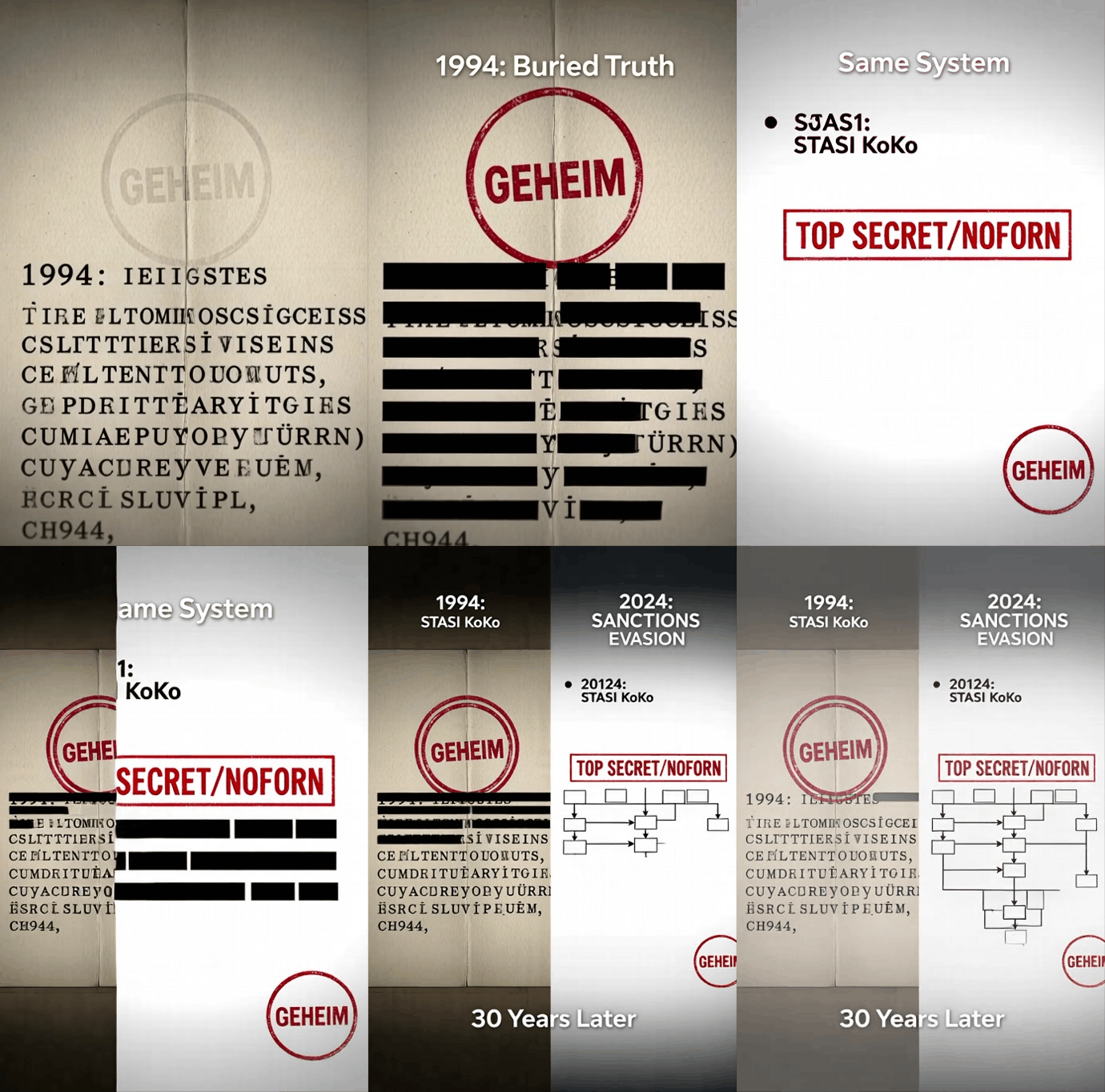
 🛑 Bernd Pulch | NAZI & STASI HUNTER | CORRUPTION & ARISTOTLE AI BI
You must be logged in to post a comment.