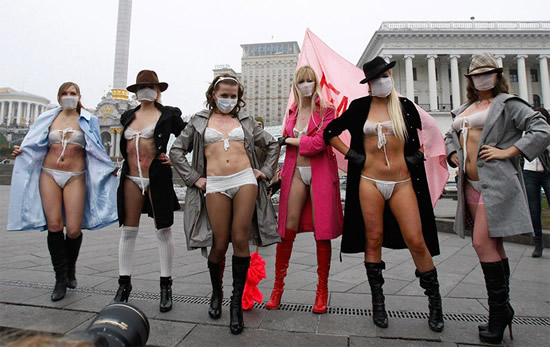
UNCENSORED – Women Protest Worldwide Photos 8

[Image]Kashmir Sutherland huddles with other protesters for warmth in Shemanski Park after police told them to take down tents or be kicked out Monday, Dec. 5, 2011, in Portland, Ore. The Oregonian reports the demonstrators agreed to take down a tent to stay in the park Sunday night. On Saturday night police arrested 19 demonstrators setting up structures in the South Park blocks. Police evicted demonstrators on Nov. 13 from two downtown parks.
[Image]A woman shouts slogans during a rally in Moscow, Monday, Dec. 5, 2011. Several thousand people have protested in Moscow against Prime Minister Vladimir Putin and his party, which won the largest share of a parliamentary election that observers said was rigged. A group of several hundred then marched toward the Central Elections Commission near the Kremlin, but were stopped by riot police and taken away in buses. (Sergey Ponomarev)
[Image]A blind woman rests in front of a police line during a protest by Greek blind people outside Parliament in Athens, on Monday, Dec. 5, 2011. Dozens of people took part in the demonstration, to protest against government welfare spending cuts. Greece is in the throes of an acute financial crisis and has implemented a harsh austerity programme in exchange for international rescue loans. (Petros Giannakouris)
[Image]Occupy DC protesters stand inside a structure set up overnight in McPherson Square, Sunday, Dec. 4, 2011 in Washington. Protesters are refusing to dismantle the unfinished wooden structure erected in the park. (Manuel Balce Ceneta)
[Image]In this Nov. 17, 2011 file photo, students clash with police during a demonstration in Milan, Italy, as university students protest against budget cuts and a lack of jobs, hours before new Italian Premier Mario Monti reveals his anti-crisis strategy in Parliament. Europe’s sovereign-debt crisis, which has dragged on for more than two years, is entering a pivotal week, as leaders across the continent converge to prevent a collapse of the euro and a financial panic from spreading.
[Image]A female activist carries a sign promoting gender equality as protesters march through downtown Rabat calling for greater democracy. Moroccan pro-democracy activists called for a day of rage on Dec. 4, 2011, a week after legislative elections but few turned out. (Paul Schemm)
[Image]Animal rights activists of the AnimaNaturalis international organization stage a naked protest in the middle of the Plaza de Espana square in the centre of Madrid on December 4, 2011, to denounce the slaying of animals to make fur coats. The men and women, covered in red paint that resembled blood, lay down and curled up against each other under a sunny sky in the busy square which is home to several cinemas, cafes and restaurants. Placard reads ‘How many lives for a coat?’. Getty
[Image]Participants attend the Slutwalk Singapore event held at the Speakers’ Corner on December 4, 2011. Supporters of the global SlutWalk movement against sexual violence held a rally in Singapore, attracting dozens to a rare protest in the strictly policed city-state. Getty
[Image]Russian police officers detain opposition demonstrators during an unsanctioned rally in downtown Moscow, Russia, Sunday, Dec. 4, 2011. The rally was staged by a few dozen activists of the Left Front opposition group to protest against Sunday’s elections. (Misha Japaridze)

[Image]

[Image]Police officers try to arrest activists of the Ukrainian women’s movement FEMEN as they protest on December 3, 2011 against a meeting of opposition parties in Kiev. FEMEN activists protested against the event, saying that peeple came to the meeting because its organizers promised them money.
[Image]Body-painted environmental activists demonstrate outside the United Nations Climate Change conference (COP17) in Durban December 3, 2011. The protest march was part of a Global Day of Action to demand a fair climate change deal. Reuters
[Image]An opponent of reelected Nicaraguan President Daniel Ortega holds a banner reading ‘Fraud=Poverty’, as she takes part in a protest called ”march against fraud” in Managua on December 3, 2011. About five thousand people marched in Nicaragua denouncing electoral fraud in past November 6 elections in Nicaragua and demanding a new election with foreign observers. Getty
[Image]Occupy LA protesters march from Pershing Square to the Los Angeles County Men’s Central Jail where protesters, who were arrested on Wednesday, were being held, in Los Angeles, on Saturday, Dec. 3, 2011. (David Zentz)
[Image]Andean people protest against Newmont Mining’s Conga gold project during a march near the Cortada lagoon at Peru’s region of Cajamarca, November 24, 2011. Peru’s prime minister on December 2, 2011, said Newmont Mining must set aside money to finance social projects and any environmental damage as a precondition for moving forward on a stalled $4.8 billion gold mine project. Opponents of Newmont Mining’s $4.8 billion Conga project refused to end their rallies on November 30, 2011, saying Peru must permanently cancel the proposed mine after temporarily halting work on it to avert violence. Protesters and farmers say the mine would cause pollution and hurt water supplies by replacing a string of alpine lakes with artificial reservoirs. Picture taken November 24, 2011.
[Image]A woman protester join others as they shout slogans during the observance of World Climate Day Saturday, Dec. 3, 2011 near the U.S. Embassy in Manila, Philippines. The protest coincided with the annual climate talks of the Conference of Parties (COP17) in Durban, South Africa. (Pat Roque)
[Image]A woman holds aplacard during a protest march against the war in Afghanistan on December 3, 2011 in the western German city of Bonn where a major international conference on December 5 will discuss the country’s future beyond 2014, when NATO-led international combat troops will leave. Getty
[Image]A survivor of the Bhopal gas tragedy lies on a railway track as others sit around to stop train movement during a protest in Bhopal, India, Saturday, Dec. 3, 2011. Thousands of survivors of the world’s worst industrial accident blocked trains through a central Indian city on Saturday to demand more compensation.
[Image]Female Iranian demonstrators hold posters showing supreme leader Ayatollah Ali Khamenei, left in the posters, and late revolutionary founder Ayatollah Khomeini, during a demonstration to welcome Iranian diplomats expelled from London in retaliation for attacks on British compounds in Tehran, at the Mehrabad airport in Tehran, Iran, early Saturday, Dec. 3, 2011.
[Image]Students are arrested during a protest against the government to demand changes in the public state education system in Santiago, December 2, 2011. Chilean students have been protesting against what they say is profiteering in the state education system. Reuters
[Image]Demonstrators walk on a protest march in central London November 30, 2011. Teachers, nurses and border guards walked out on Wednesday as up to two million state workers staged Britain’s first mass strike for more than 30 years in a growing confrontation with a deficit-cutting coalition government. Reuters
[Image]Thousands of Bulgarians gather in front of the Bulgarian parliament to protest against government austerity measures in Sofia, Wednesday, Nov 30, 2011. Thousands joined a mass rally on Wednesday to protest government-proposed austerity measures that include raising the retirement age by one year. (Valentina Petrova)

[Image]

[Image]Activists of Ukrainian women movement FEMEN hold placards reading ‘EURO-2012 without prostitution’, ‘UEFA attacked our gates’ and others during a protest in front of the Olimpisky Stadium in Kie, a few hours prior the UEFA EURO-2012 Final Draw ceremony on December 2, 2011. Getty
[Image]Hundreds of workers on strike block the entrance gate of Hi-P International factory during a protest in a suburban area of Shanghai December 2, 2011. More than 200 workers at a Singapore-owned electronics plant in the commercial hub of Shanghai went on strike for a third day on Friday to protest against planned layoffs, the latest sign of labour unrest in the world’s second-largest economy. Reuters
[Image]A police officer detains a topless woman protesting against alleged attempts to legalize prostitution during the Euro 2012 in Ukraine prior to the final draw for the Euro 2012 soccer tournament in Kiev, Ukraine, Friday, Dec. 2, 2011. Ukrainian women’s rights activists staged a topless demonstration at Kiev’s Olympic Stadium to protest what they say are attempts to legalize prostitution during the 2012 European Championship. (Ferdinand Ostrop)
[Image]Survivors of the Bhopal gas tragedy, the world’s worst industrial disaster in India, along with other supporters shout slogans during a protest against a sponsorship deal with Dow Chemicals for the 2012 Olympics, in Bhopal, India, Friday, Dec. 2, 2011. Friday’s protests come on the eve of the 27th anniversary of a lethal gas leak from a Union Carbide pesticide plant in Bhopal where an estimated 15,000 people died and tens of thousands were maimed in 1984.
[Image]Iranian dissidents hold banners as they protest in Brussels, Thursday, Dec. 1, 2011. The protesters called for prevention of compulsory displacement of the Camp Ashraf residents inside Iraq and the annulment of the deadline for closure of Camp Ashraf by the end of December. Camp Ashraf, an enclave in eastern Iraq that houses more than 3,000 people, many of whom are dedicated to overthrowing the government of Iran.
[Image]Afghan girls hold placards during a demonstration in Kabul December 1, 2011. Hundreds of Afghans from the Solidarity Party of Afghanistan took to the streets of Kabul on Thursday to protest against plans for a long-term partnership deal with the United States. Reuters
[Image]A woman disguised as muppet character Miss Piggy takes a mud bath in front of the House of Representatives in The Hague on December 1, 2011 during a protest with Dutch environmental organization Milieudefensie against the expansion of livestock farming. Getty
[Image]A protester is detained by police during a march demanding education reform in Santiago, Chile, Thursday, Dec. 1, 2011. Chilean students clashed with police on Thursday during a protest demanding more funding for public education, while students in Colombia and Argentina also took to the streets in simultaneous demonstrations.(Luis Hidalgo)
[Image]Protesters shout anti-austerity slogans during a 24-hour general strike in Athens on Thursday, Dec. 1, 2011. Thousands of protesters bitterly opposed to government austerity measures marched through the Greek capital Thursday, as another general strike closed schools and public services, left hospitals functioning on reduced staff and confined ferries to port. (Petros Giannakouris)
[Image]An Occupy Raleigh protester shouts during a speech by John Stumpf, the CEO and president of Wells Fargo, on Wednesday, Nov. 30, 2011, in Raleigh, N.C. Stumpf was about 30 minutes into his speech when protesters interrupted him as he talked about the importance of small business. (Chuck Liddy)
[Image]A protester from Portland, Maine, warms her hand with her breath while eating a sandwich at the Occupy Boston encampment, in Boston on Wednesday, Nov. 30, 2011. In the past few weeks police broke up encampments in Portland, Ore., Oakland, Calif., and New York, where the sit-down protests against social inequality and corporate excesses began in mid-September. Protesters remain in place in Boston and Washington, which each had camps of about 100 tents Wednesday. (Steven Senne)
[Image]A woman is led away in handcuffs by police after being removed from Panton House in central London November 30, 2011. Demonstrators broke into an office building used by mining company Xstrata in central London on Wednesday and hung protest banners on the roof before police regained control of the building. A group of about 60 from the “Occupy” movement entered the offices in Haymarket in protest at the pay of the company’s chief executive, Occupy said in a statement. Reuters
[Image]A female protestor displays her hands with Yemen’s flag and writing Arabic that reads,”you will prosecuted,” during a demonstration demanding the prosecution of Yemen’s President Ali Abdullah Saleh in Sanaa, Yemen, Tuesday, Nov. 29, 2011. Hundreds of thousands of Yemenis are demonstrating across the country to demand President Ali Abdullah Saleh face trial for charges ranging from corruption to deadly crackdowns on protests. (Hani Mohammed)
[Image]Supporters of Sri Lanka’s main opposition United National Party (UNP) protest in Colombo on November 29, 2011. They were protesting the jailing of the former army chief Darath Fonseka, a business take over bill and the government’s 2012 budget proposals. Getty
[Image]Members of India’s National Domestic Workers Movement from the southern state of Andhra Pradesh (AP) region are watched by co-ordinator Sister Mea Yaragani (2L) as they sign a sheet while participating in a protest meet and signature campaign in Hyderabad on November 29, 2011. The protesors are demanding the ratification of the 189th International Labour Organization (ILO) convention by the Indian government and their inclusion in the Sexual Harassment Bill 2010. There are between 120000-150000 domestic workers in the state. Getty
[Image]Workers protest as they shout slogans demanding higher wages in front of Indonesia’s presidential palace in Jakarta, November 29, 2011. Indonesia has been hit by a series of strikes in recent months and is expected to see more labour disputes, as workers demanded a greater share of profits in one of Asia’s fastest growing economies. Reuters
[Image]Miss Water South Africa Kirsten Dukes poses in front of a banner during a protest by environmental activists outside the United Nations Framework Convention on Climate Change Conference of the Parties meeting (COP17) in Durban, November 29, 2011. The gathering runs until December 9. Reuters
[Image]Student, wearing niqabs, protest on November 29, 2011 in the building housing the office of the dean of the Faculty of Arts at the University of Manuba, 25 kms west of Tunis. Several hundred people gathered at the university to demand the right for female students to wear full face veils in class and pass exams. A group of Salafists disrupted classes on November 28 at the university, demanding a stop to mixed-sex classes and for female students to wear full face veils. Getty
[Image]Workers take part in a rally during a protest against government austerity measures organized by the PAME Communist-affiliated union in central Athens Tuesday, Nov. 29, 2011. The 17 finance ministers of the countries that use the euro converged on EU headquarters Tuesday in a desperate bid to save their currency – and to protect Europe, the United States, Asia and the rest of the global economy from a debt-induced financial tsunami. AP
[Image]Supporters of Pakistan Tehreek-i-Insaf (Pakistan’s Movement for Justice) pray after a demonstration against NATO cross-border attack in Lahore November 29, 2011. Pakistan’s government confirmed it would not attend an international conference on the future of Afghanistan in Bonn next week to protest against a NATO cross-border attack that killed two dozen Pakistani soldiers. Reuters
[Image]Riot police detain two students inside the national congress during a protest against the government to demand changes in the public state education system in Valparaiso city, about 121 km (75 miles) northwest of Santiago, November 29, 2011. Chilean students have been protesting against what they say is the profiteering in the state education system. Reuters
[Image]Pakistani protesters rally to condemn NATO strikes on Pakistani soldiers, in Lahore, Pakistan, Tuesday, Nov. 29, 2011. Pakistan pulled out of an upcoming meeting in Germany on the future of Afghanistan to protest the deadly attack by U.S.-led forces on its troops, widening the fallout on Tuesday from an incident that has sent ties between Washington and Islamabad into a tailspin. Placard at right reads “run NATO and wake Pakistan army”. (K.M. Chaudary)
[Image]A demonstrator holds a sign that reads in Portuguese: “The fight on the forest starts in the streets”, during a protest against the approval of the new Brazilian forest code in Brasilia, Brazil, Tuesday, Nov. 29, 2011. Brazil’s lower house in May approved changes to the law that would ease environmental restrictions in the Amazon and other regions in Brazil. Brazil’s Senate is expected to approve the measure this week, though President Dilma Rousseff has promised to veto some parts of the bill.
[Image]Female Iranian protesters attend a demonstration in front of the British Embassy, as one of them holds a poster of supreme leader Ayatollah Ali Khamenei, in Tehran, Iran, Tuesday, Nov. 29, 2011. Dozens of hard-line Iranian students stormed the British Embassy in Tehran on Tuesday, bringing down the Union Jack flag and throwing documents from windows in scenes reminiscent of the anger against Western powers after the 1979 Islamic Revolution.
[Image]An elderly protestor flashes the victory sign during a demonstration demanding the prosecution of Yemen’s President Ali Abdullah Saleh in Sanaa, Yemen, Tuesday, Nov. 29, 2011. Hundreds of thousands of Yemenis are demonstrating across the country to demand President Ali Abdullah Saleh face trial for charges ranging from corruption to deadly crackdowns on protests. (Hani Mohammed)
[Image]Mariachi musicians perform as Greenpeace activists demand Brazil’s President Dilma Rousseff protect the Amazon as they protest outside Brazil’s embassy in Mexico City, Tuesday Nov. 29, 2011. Brazil’s government has authorized the construction of one the world’s largest hydroelectric dams, the Belo Monte dam, in the state of Para, and the federal prosecutors’ office in Para has said they will go to the Supreme Court to appeal the ruling.
[Image]Malaysian lawyers hold placards as they shout slogans during a protest in Kuala Lumpur, Malaysia, Tuesday, Nov. 29, 2011. Hundreds of Malaysian lawyers staged a rare protest march Tuesday demanding that the government abandon plans for a law that will forbid street rallies. (Lai Seng Sin)
[Image]Protesters shout slogans as they hold candles with placards reading “Invalidity, FTA between South Korea and the U.S.” during a candle rally, denouncing the passing of a bill on ratification of a South Korea-U.S. free trade agreement in Seoul, South Korea, Tuesday, Nov. 29, 2011. South Korea’s president on Tuesday signed a slew of laws needed to implement the country’s free trade deal with the United States, amid growing protests denouncing the accord at home. (Lee Jin-man)
[Image]UCLA students walk past a line of demonstrators lying on the Quad outside a meeting of the Board of Regents at the University of California, on the campus at UCLA in Los Angeles, Monday, Nov. 28, 2011. The regents were originally scheduled to meet in mid-November at the San Francisco-Mission Bay campus, but the session was scrapped when law enforcement warned that protests could turn violent. (Reed Saxon)
[Image]Supporters of Progressive Organization of Women raise slogans during a protest rally in New Delhi, India, Monday, Nov. 28, 2011. The protesters demanded introduction of a bill in the ongoing session of parliament for a separate statehood of Telangana region from the existing Andhra Pradesh state in southern India. (Gurinder Osan)
[Image]Police officers stand during a demonstration by security forces in Tunis, Monday, Nov.28, 2011. Security forces are protesting against police officers sued on trial for their alleged role in the revolution. On armband reads: “Stop, break the silence”. (Hassene Dridi)
[Image]Members of Occupy Philly, from right to left, Shawn Grant, Brianne Murphy, and Diane Isser, demonstrate at Dilworth Plaza, in Philadelphia, on Sunday Nov. 27, 2011, in defiance of the city’s 5 p.m. eviction order. (Joseph Kaczmarek)
[Image]A member of Occupy Philly who identified herself as Laura watches the demonstration at Dilworth Plaza, in Philadelphia, Sunday Nov. 27, 2011, held in defiance of the city’s 5 p.m. eviction order. (Joseph Kaczmarek)

STASI – Tödliche Strahlung – von Paul Leonhard

Was die wohl mit dem Zeug wollen? Vielleicht hat sich der Mann diese Frage einmal gestellt, sie aber dann als einen lästigen Gedanken beiseite gewischt. Schließlich war er als Gesellschaftlicher Mitarbeiter (GMS) auf das Ministerium für Staatssicherheit eingeschworen. Regelmäßig empfing Karl J., Leiter der Hauptabteilung Radioaktive Präparate des Zentralinstituts für Kernforschung Rossendorf, die Mielke-Männer und händigte ihnen die gewünschten radioaktiven Stoffe aus. Das war schließlich rechtens, in einem Vertrag geregelt, den die Stasi 1971 mit dem bei Dresden ansässigen Forschungszentrum geschlossen hatte. Es sei für ihn noch heute undenkbar, daß radioaktive Stoffe entgegen den gesetzlichen Bestimmungen an Menschen eingesetzt werden, sagt der inzwischen als Fachbereichsleiter in Rossendorf tätige J.

Bereits im Mai 1999 war das Kernforschungsinstitut in die Schlagzeilen geraten. Damals berichtete eine Boulevard-Zeitung über geheime Lieferungen. Wir haben Flüssigkeitspräparate-Kobalt 58, Scandium 46 in Zehn-Milliliter-Ampullen an die Stasi geliefert, bestätigte J. am 21. Mai gegenüber der Bild-Zeitung. Da stand der ungeheuerliche Verdacht bereits im Raum: Waren DDR-Dissidenten durch die Staatssicherheit heimlich verstrahlt worden? Der Spiegel hatte über entsprechende Hinweise berichtet und der Jenaer Maler Frank Rub Strafanzeige bei der Berliner Staatsanwaltschaft gestellt. Auslöser war der Tod seines Freundes, des Regimegegners und Schriftstellers Jürgen Fuchs. Dieser war Anfang Mai 1999 im Alter von 48 Jahren einem Plasmozytom erlegen, einer seltenen Blutkrebsart, die durch Strahlung verursacht werden kann.

Bürgerrechtler fordern seit Jahren Aufklärung

Jürgen Fuchs hegte die Vermutung, daß seine tödliche Krankheit nicht gottgewollt war, sondern menschengemacht, erinnerte sein Freund Wolf Biermann. Ein Mord auf Raten? Den Verdacht, Fuchs und andere Dissidenten seien im berüchtigten Stasi-Knast Berlin-Hohenschönhausen mit Röntgenstrahlen traktiert worden, äußerten mehrere ehemalige Bürgerrechtler. Seit einem Jahr fordern sie rückhaltlose Aufklärung.

Zu den bald ermittelten Spuren gehörte ein unorthodox konstruiertes Röntgengerät, das Mitglieder eines Bürgerkomitees Ende Dezember 1989 im Stasi-Untersuchungsgefängnis Gera entdeckt hatten. Die Strahlenkanone stand hinter einem Vorhang versteckt im Fotoraum der Anstalt. Der Strahler habe sich etwa in Kopfhöhe des davor sitzenden Gefangenen befinden, erinnern sich Zeugen. Ähnliche Geräte gab es auch im Magdeburger, Chemnitzer und Bautzner Stasi-Knast. In Hohenschönhausen wurde 1990 im Fotoraum ein verstecktes Lehrbuch für Strahlenkunde entdeckt.

In seinem Schlüsselroman “Magdalena” hatte Jürgen Fuchs aus einer Veröffentlichung der Stasi-nahen Sektion Kriminalistik der Humboldt-Universität Berlin zitiert. Da ging es um radioaktive Gifte und darum, wie man diese spurlos gegen Menschen einsetzen kann. Nach Fuchs’ Tod gewann das Thema auch deswegen Brisanz, weil bereits im Mai 1998 Gerulf Pannach (48), früherer Liedermacher und Texter der DDR-Rockband Renft, an Nierenkrebs, und ein Jahr zuvor der Regimegegner Rudolf Bahro (61), Verfasser des Buches “Die Alternative”, an einem Non-Hodgkin-Lymphom gestorben waren. Alle drei hatten 1976/77 in Hohenschönhausen gesessen.

Wurden mißliebige Häftlinge im Rahmen von MfS-Zersetzungsmaßnahmen mittels Strahlenkanone unbemerkt verseucht, um ihnen langfristig Schaden zuzufügen? Es gibt zwar keine Beweise, dafür aber genug Indizien.

Mielkes Männer experimentierten nachweislich seit den siebziger Jahren mit strahlenden Substanzen. Akten beweisen, daß sie im Umgang mit Radionukliden und nichtmedizinischer Röntgentechnik ausgebildet wurden. Eine ganze Liste besonders gefährlicher Substanzen ist beispielsweise im Jahresplan 1979 des Dienstbereiches 2 unter der Rubrik “Schädigung durch Beibringen radioaktiver Stoffe” aufgelistet. Auch an der Anwendung radioaktiver Isotope arbeiteten die Stasi-Experten.

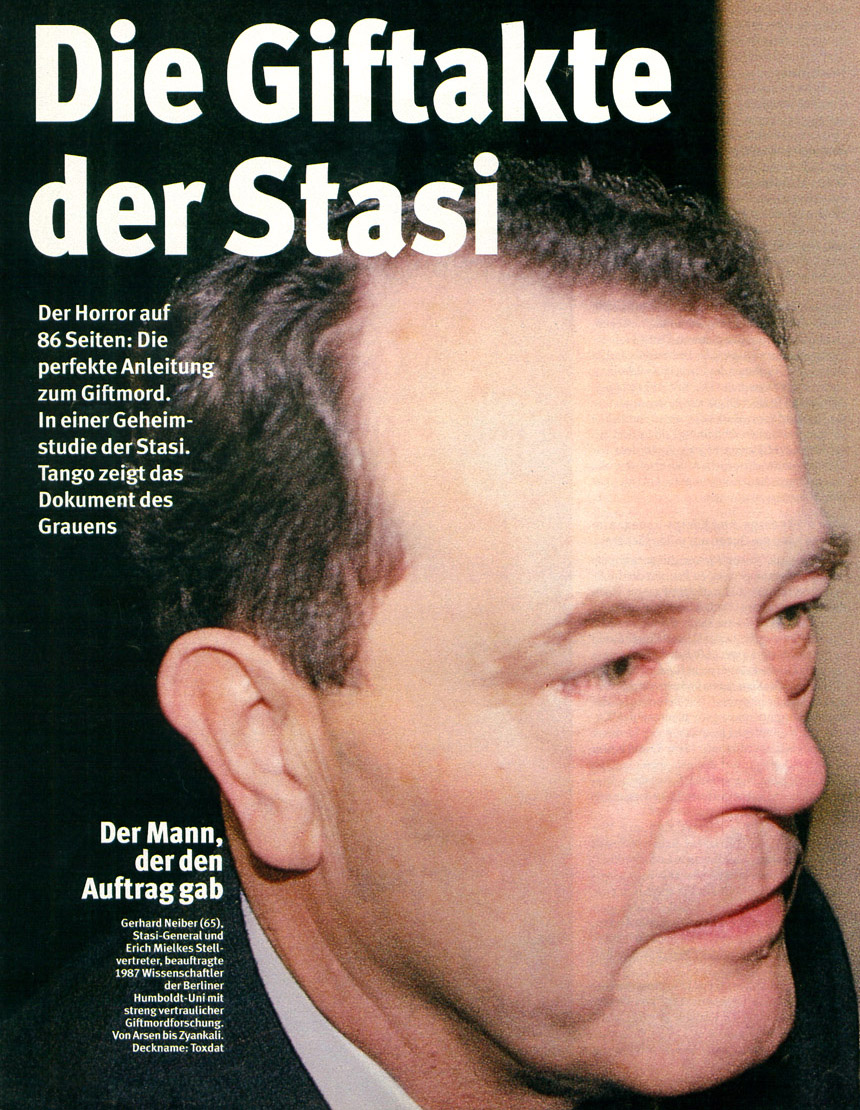
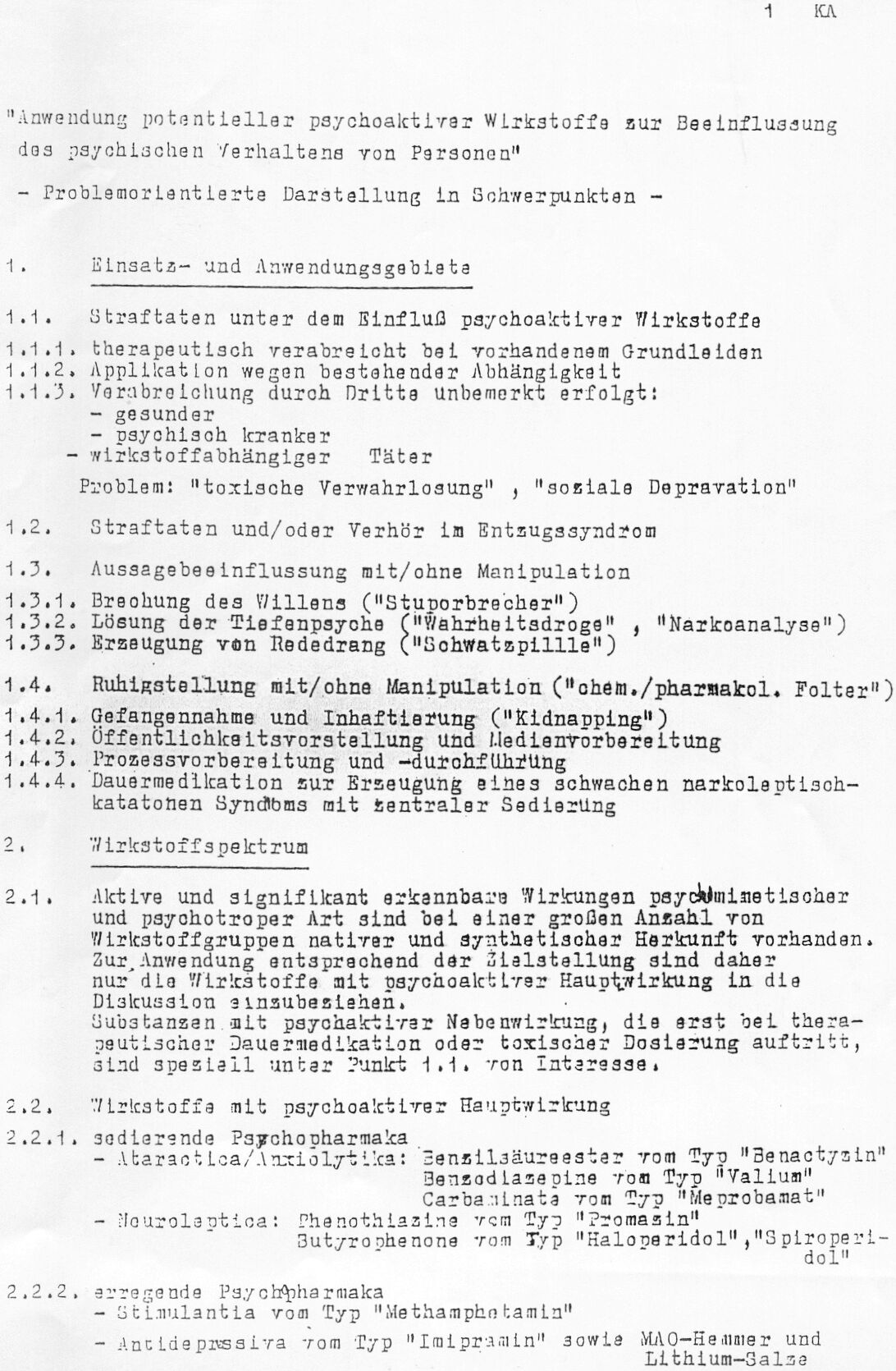
Eine über 900 Seiten starke Studie der Humboldt-Universität unter dem Titel “Toxdat” führt jede erdenkliche Art auf, wie Menschen mit Gift umgebracht werden können. Die für die Stasi entstandene Ausarbeitung aus dem Jahr 1988 nennt mehr als 200 toxische und strahlende Substanzen und beschreibt detailliert, wie diese eingesetzt werden könnten. Im Kapitel “Schädigung durch Beibringung radioaktiver Stoffe” werden besonders gefährliche Radionuklide genannt: von Strontium-90 bis Plutonium-238, aber auch Mikromengen abgebrannter Brennstäbe aus Kernkraftwerken.

Aus den Papieren erfuhren die Geheimdienstler, welche Wirkung ein Einsatz dieser Stoffe beim Menschen hätte. Von einer kombinierten Schädigung war die Rede. Der biologische Effekt resultiere aus einem chemischen Gift und einer physikalischen Wirkung. Beigebracht in Speisen und Getränken könnten sie zu Siechtum führende Blut-/Knochenmarkschäden und Krebs bewirken. Das sei natürlich abhängig gewesen von der psycho-physischen Reaktion der Einzelperson, sagte Fuchs in einem Interview, in dem er die Möglichkeit einschloß, daß durch Strahlung gesundheitliche Schäden verursacht werden können, nicht bei allen Gefangenen, aber bei denen, von denen man glaubt, es machen zu müssen, zu sollen, zu dürfen, auf Befehl. Die Wissenschaftler der Humboldt-Uni nannten das eine Liquidationsmethode mit hohem Verschleierungspotential durch spät einsetzende unspezifische Initialsymptomatik.

Mielke-Ministerium wollte Strahlenunfälle herbeiführen

Fuchs selbst waren Dokumente in die Hände gefallen, in denen ein handliches Gamma-Gert polnischer Herkunft eine Rolle spielte, das punktförmig Neutronenstrahlen aussendet. Sein Einsatz, bei dem das biologische Gewebe beschädigt wurde, hinterließ keine Spuren, später würde es diffuse, aber bedrohliche Erkrankungen erzeugen. Experten bestätigen inzwischen, daß die Strahlendosis der Röntgengeräte in den Stasi-Gefängnissen bei einstündiger Bestrahlung 1,1 Gray betragen haben könnte. Damit wären die Geräte zwar viel zu schwach, um einen Menschen zu töten, aber die möglichen Strahlendosen hätten ausgereicht, um nach einigen Jahren bei den Opfern Blutkrebs auszulösen.

Die Stasi beschäftigte sich ebenfalls mit Möglichkeiten, kleine Atomminen in Westdeutschland einzusetzen und Kernkraftwerke zu beschädigen, um Strahlenunfälle herbeizuführen. Erst im vergangenen Jahr stieß die Gauck-Behörde auf Unterlagen der Stasi-Abteilung Operativ-Technischer Sektor. Damit war der Beweis erbracht, daß das Mielke-Ministerium mit dem Einsatz radioaktiven Materials experimentierte, um alles mögliche zu überwachen.

Grundlage dafür bot die Kooperation mit den Kernforschern in Rossendorf. Hier fanden die Bestrahlungen im Reaktor statt. Hier wurden Stoffe aktiviert wie Stecknadeln, die später Regimegegnern an die Kleidung geheftet wurden. Einem der Stasi verdächtigen Physiker im Kombinat Carl Zeiss Jena wurden 1978 radioaktiv präparierte Dokumente untergeschoben. Manuskripte von Bürgerrechtlern wurden mit flüssigem nuklearen Material beschichtet. Auch wurden Autos markiert, indem per Luftgewehr radioaktive Munition auf die Reifen geschossen wurde. Man überlegte, wie man Personen bespritzen könnte, um sie später wiederzufinden, beschrieb Joachim Gauck, Leiter der Stasi-Akten-Behörde, in einem Interview die Methoden. Fest steht, daß das Manuskript von Bahros “Alternative” radioaktiv markiert wurde. Die Stasi wollte so den Versandwegen nachspüren und Adressaten ausfindig machen.

Aber nicht nur gegen Dissidenten wurden radioaktive Stoffe eingesetzt. So verschickte die Stasi in einem Fall radioaktiv-markiertes Westgeld, um herauszufinden, wer in einem Postamt aus Briefen Geldscheine stiehlt. Wenn jemand drei dieser Scheine einsteckte, konnte das durchaus gesundheitliche Folgen haben, schätzt Gauck ein.

Insgesamt hat es in den siebziger Jahren hundert Markierungsfälle jährlich gegeben. In den achtziger Jahren sind es 50. Die Stasi benutzte 21 verschiedene Substanzen von Caesium-137 bis zu Kobalt-59 oder Silber-110. Erschreckend sei, daß beteiligte Wissenschaftler bis heute schweigen würden und einen guten Ruf hätten, sagte Gauck im März. Diese Spezialisten hätten aber der Stasi in Kenntnis möglicher Gesundheitsgefahren geholfen. Zwar gibt es bisher nach Aussage Gaucks keinen Beweis, der den schlimmen Verdacht bewußter radioaktiver Bestrahlung in Haftanstalten bestätigt, aber unter dem Decknamen “Wolke” setzten die Mielke-Leute radioaktive Substanzen zur Markierung von Personen und Gegenständen ein. Gesundheitliche Schäden wurden dabei billigend in Kauf genommen. Ein Markierungseinsatz konnte den heute geltenden Grenzwert um das 267fache überschreiten, ermittelte ein im Auftrag der Gauck-Behörde tätiger Gutachter.

Vorwürfe von Fuchs an die bundesdeutsche Justiz

Die Aktionen überschritten selbst die Sicherheitsnormen der DDR. Auch im Fall des Geraer Röntgengerätes, das zumindest zwischen 1976 und 1983 im Stasi-Knast eingesetzt wurde und nach der Wende spurlos verschwand. Es verstieß schon dadurch gegen die DDR-Gesetze, daß es nicht beim Amt für Strahlenschutz gemeldet war.

Man habe die Bedeutung von Zersetzung nicht begriffen, warf Fuchs kurz vor seinem Tod der BRD-Justiz vor. Es werde nicht wahrgenommen, daß ein System wie das der DDR mit einer historischen Mission in Andersdenkenden ideologische Feinde sah, bei deren Ausschaltung jedes Mittel vom Zweck geheiligt ist. Ein Betroffener ist vielleicht in der Lage, die letzten, die allerletzten Beweise zu bringen, wenn er gestorben ist und eine Knochenanalyse vorgenommen wird, sagte er bezüglich der Nachforschungen für den Einsatz radioaktiver Stoffe in den Haftanstalten.

Wie vor den Kopf geschlagen zeigt sich angesichts der jüngsten Enthüllungen auch der Rossendorfer Kernforscher J.: Eine Anwendung an Menschen, die nicht der medizinischen Diagnose oder Therapie dient, verurteile er mit aller Schärfe.

DDR-Regimegegner Rudolf Bahro: Das Manuskript seines Buches “Die Alternative” wurde von der Stasi radioaktiv verstrahlt

von Paul Leonhard

TOP-SECRET-American Nazi Party E-Mails hacked


A sends:

Remember the idiot bloggers saying “Nazis throw support at OWS”? They were talking about these guys, all they did was tweet.

http://antiracistaction.org/?q=node%2F149#tehemails
http://nsoldguard.blogspot.com/

Mirror to the zip archive download

http://www.multiupload.com/3VCKPO4XZ0
http://www.uploadhere.com/XEXKAGN47N
http://depositfiles.com/files/5b551f4od
http://www.uploadking.com/7LV3SDZ5OT
http://www.filesonic.fr/file/4127147645/john.t.bowles.anp.hacked.emails.zip
http://www.wupload.fr/file/2608826227/john.t.bowles.anp.hacked.emails.zip
http://www.megaupload.com/?d=8UAI6DDL
http://hotfile.com/dl/136974593/4e3b161/john.t.bowles.anp.hacked.emails.zip.html


CONFIDENTIAL – Russia Has Lost More Than $500 Billion to Illicit Money Outflows Since 2000


Capital flight from Russia, already at $64 billion this year, is likely to intensify in coming months as a weak showing by Prime Minister Vladimir Putin’s United Russia party in parliamentary elections heightens political uncertainty, economists said.The net capital outflow, blamed on European banks and wealthy Russians concerned about a government shake-up, is now expected to exceed $85 billion in 2011, acting Finance Minister Anton Siluanov said late Monday.

The bearish forecast came as Fitch Ratings warned about political uncertainty in Russia, a day after voting ended in the Duma election, with Putin’s United Russia getting less than 50% of the vote. Mr. Putin on Tuesday said he sees “serious and substantial renewals” in government personnel after presidential elections set for March of next year–which he is still expected to win handily.

“People at the moment don’t have an idea which officials will be around next year and who will be gone,” said Julia Tsepliaeva, chief economist at BNP Paribas in Moscow. “If you’re a businessman or a company that has an arrangement with a certain bureaucrat, this lack of clarity may lead you to move capital abroad.”

The exodus of capital this year has weighed on the ruble, which has weakened by more than 15% from its peak this year, even as the average price for Russia’s oil this year is higher than ever before. UniCredit SpA’s Moscow unit sent at least $5.5 billion abroad in the third quarter through loans to non-Russian banks, including other units of UniCredit, as European lenders sought additional liquidity amid a debt scare linked to Greece and other euro-zone nations. Politics aside, a steep drop in oil prices or a worsening of the debt crisis in Europe could suck even more cash out of Moscow.

NEW – UNCESONDERD – FEMEN – Dnepr

TOP-SECRET from the FBI – Identity Thief Sentenced in Virginia to 12 Years in Prison for Managing East Coast Credit Card Fraud Ring

WASHINGTON—A Brooklyn, N.Y., man was sentenced today in U.S. District Court in Alexandria, Va., to 12 years in prison for operating a credit card fraud ring that used counterfeit credit cards encoded with stolen account information up and down the East Coast of the United States, announced Assistant Attorney General Lanny A. Breuer of the Criminal Division and U.S. Attorney Neil H. MacBride for the Eastern District of Virginia.

Jonathan Oliveras, 26, was sentenced by U.S. District Judge Gerald Bruce Lee. In addition to his prison term, Oliveras was ordered to forfeit $770,646 and to serve three years of supervised release. Oliveras pleaded guilty on Aug. 10, 2011, to one count of wire fraud and one count of aggravated identity theft.

In his plea, Oliveras admitted that he managed a ring of co-conspirators who used stolen credit card account information in New York, New Jersey and the Washington, D.C., area. According to court documents, Oliveras sent payments to individuals he believed to be in Russia for the stolen account information. Oliveras then distributed the stolen account information, which was re-encoded onto plastic cards and used to purchase gift cards. The gift cards were used to buy merchandise that ultimately was returned for cash.

Federal and local law enforcement executing a search warrant in July 2010 at Oliveras’ apartment found, among other things, credit card encoding equipment and more than 2,300 stolen credit card numbers. According to court documents, credit card companies have identified thousands of fraudulent transactions using the account numbers found in Oliveras’ possession, totaling more than $750,000.

The case was prosecuted by Michael Stawasz, a Senior Counsel in the Criminal Division’s Computer Crime & Intellectual Property Section and Special Assistant U.S. Attorney in the Eastern District of Virginia, and Assistant U.S. Attorney Ryan Dickey of the U.S. Attorney’s Office for the Eastern District of Virginia. The case was investigated jointly by the Washington Field Offices of both the U.S. Secret Service and the FBI, with assistance from the New York and New Jersey Field Offices of both agencies.

UNCENSORED – Topless in Vatican: FEMEN strips against ‘Catholic witch-hunt’

UNCENSORED – Russia Protest Photos


11 December 2011

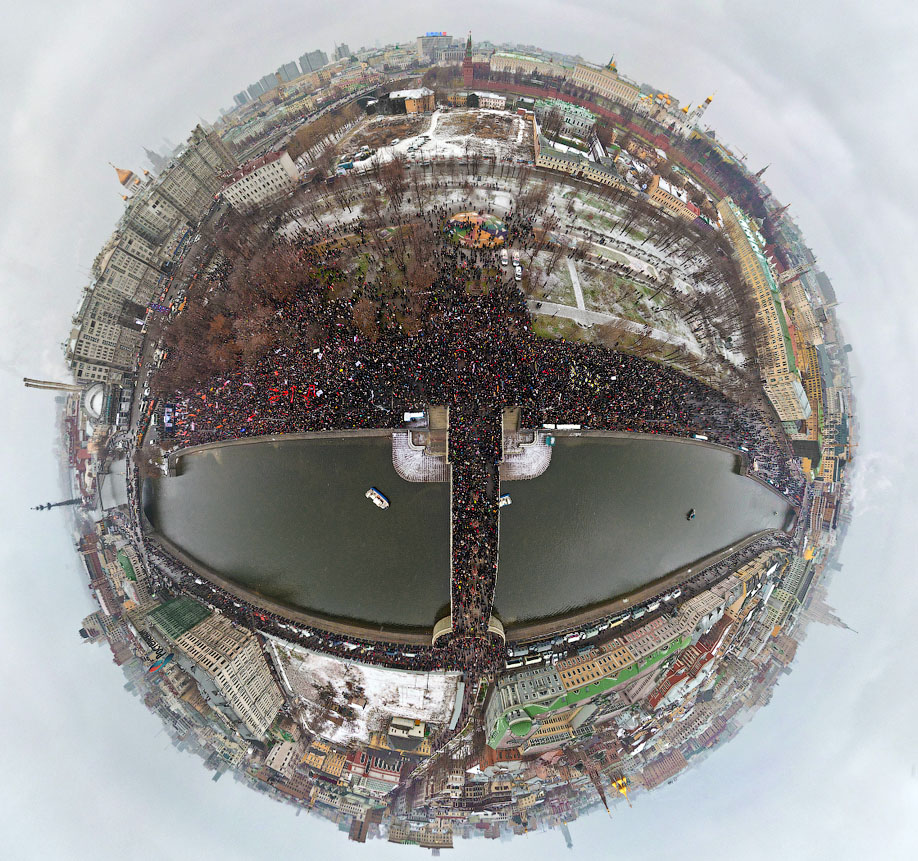
[Image]http://varlamov.me/img/–/planeta_miting.jpg
[Image]Russian nationalists hold a banner reads as “All for one and one for all” and wave old Russian imperial flags during their rally at Bolotnaya Square, on an island in the Moscow River adjacent to the Kremlin in Moscow, Russia, Sunday, Dec. 11, 2011.Russian nationalists are rallying in downtown Moscow, demanding a bigger say for ethnic Russians in the country’s politics and marking the first anniversary of a violent nationalist riot just outside the Kremlin.(Alexander Zemlianichenko)
[Image]Russian nationalists rally at Bolotnaya Square, on an island in the Moscow River adjacent to the Kremlin in Moscow, Russia, Sunday, Dec. 11, 2011.Russian nationalists are rallying in downtown Moscow, demanding a bigger say for ethnic Russians in the country’s politics and marking the first anniversary of a violent nationalist riot just outside the Kremlin.(Alexander Zemlianichenko)
[Image]Russian nationalists shout holding old Russian imperial flags during their rally at Bolotnaya Square, on an island in the Moscow River adjacent to the Kremlin in Moscow, Russia, Sunday, Dec. 11, 2011.Russian nationalists are rallying in downtown Moscow, demanding a bigger say for ethnic Russians in the country’s politics and marking the first anniversary of a violent nationalist riot just outside the Kremlin.(Alexander Zemlianichenko)
[Image]A young masked Russian nationalist holds a banner in front of a police officer during their rally at Bolotnaya Square, on an island in the Moscow River adjacent to the Kremlin in Moscow, Russia, Sunday, Dec. 11, 2011. Russian nationalists are rallying in downtown Moscow, demanding a bigger say for ethnic Russians in the country’s politics and marking the first anniversary of a violent nationalist riot just outside the Kremlin.(Alexander Zemlianichenko)
[Image]Russian police troops patrol near closed Red Square, with St. Basil Cathedral at the background, in Moscow, Russia, Sunday, Dec. 11, 2011. Russian nationalists are rallying in downtown Moscow, demanding a bigger say for ethnic Russians in the country’s politics and marking the first anniversary of a violent nationalist riot just outside the Kremlin.(Misha Japaridze)

[Image]


10 December 2011

[Image]In this photo taken Saturday, Dec. 10, 2011, protesters gather to protest near the Kremlin, background, against alleged vote rigging in Russia’s parliamentary elections in Moscow, Russia. Tens of thousands of people held the largest anti-government protests that post-Soviet Russia has ever seen to criticize electoral fraud and demand an end to Vladimir Putin’s rule. (Dmitriy Chistoprudov)
[Image]In this photo taken Saturday, Dec. 10, 2011, protesters gather to protest against alleged vote rigging in Russia’s parliamentary elections in Moscow, Russia. Tens of thousands of people held the largest anti-government protests that post-Soviet Russia has ever seen to criticize electoral fraud and demand an end to Vladimir Putin’s rule. (Dmitriy Chistoprudov)
[Image]Police cars and trucks block a square where demonstrators gather together during a mass rally to protest against alleged vote rigging in Russia’s parliamentary elections in Moscow, Russia, Saturday, Dec. 10, 2011. Russians angered by allegedly fraudulent parliamentary elections are protesting Saturday in cities from the freezing Pacific Coast to the southwest of Russia, eight time zones away, a striking show of indignation, challenging Prime Minister Vladimir Putin’s hold on power.
[Image]Protesters gather together to protest against alleged vote rigging in Russia’s parliamentary elections in Moscow, Russia, Saturday, Dec. 10, 2011. Russians angered by allegedly fraudulent parliamentary elections are protesting Saturday in cities from the freezing Pacific Coast to the southwest of Russia, eight time zones away, a striking show of indignation, challenging Prime Minister Vladimir Putin’s hold on power. (Pavel Golovkin)
[Image]Protesters gather together to protest against alleged vote rigging in Russia’s parliamentary elections in Moscow, Russia, Saturday, Dec. 10, 2011. Russians angered by allegedly fraudulent parliamentary elections are protesting Saturday in cities from the freezing Pacific Coast to the southwest of Russia, eight time zones away, a striking show of indignation, challenging Prime Minister Vladimir Putin’s hold on power. (Alexander Zemlianichenko Jr)
[Image]Protesters hold a red banner reads as “Rot Front” shouting anti-Putin slogans during a mass rally to protest against alleged vote rigging in Russia’s parliamentary elections in Moscow, Russia, Saturday, Dec. 10, 2011, with the Kremlin is the background. Russians angered by allegedly fraudulent parliamentary elections and the country’s ruling party took part in protests Saturday in cities from the freezing Pacific Coast to the southwest, eight time zones away.
[Image]A protester holds an old Russian flag with the words “We are Russians, God with us” and shows a V-sing during a mass rally to protest against alleged vote rigging in Russia’s parliamentary elections in Moscow, Russia, Saturday, Dec. 10, 2011, with the Kremlin is the background. Russians angered by allegedly fraudulent parliamentary elections and the country’s ruling party took part in protests Saturday in cities from the freezing Pacific Coast to the southwest, eight time zones away.
[Image]Protesters gather together to protest against alleged vote rigging in Russia’s parliamentary elections in Moscow, Russia, Saturday, Dec. 10, 2011. Russians angered by allegedly fraudulent parliamentary elections are protesting Saturday in cities from the freezing Pacific Coast to the southwest of Russia, eight time zones away, a striking show of indignation, challenging Prime Minister Vladimir Putin’s hold on power. (Alexander Zemlianichenko Jr)
[Image]People stand on the bridge as they attend a mass rally to protest against alleged vote rigging in Russia’s parliamentary elections in Moscow, Russia, Saturday, Dec. 10, 2011. Many thousands of Russians angered by allegedly fraudulent parliamentary elections are protesting Saturday in cities from the freezing Pacific Coast to the southwest of Russia, eight time zones away, a striking show of indignation, challenging Prime Minister Vladimir Putin’s hold on power. The banner on the bridge reads: “Crooks Give Us the Election Back.”
[Image]Protesters gather together to protest against alleged vote rigging in Russia’s parliamentary elections in Moscow, Russia, Saturday, Dec. 10, 2011. Russians angered by allegedly fraudulent parliamentary elections are protesting Saturday in cities from the freezing Pacific Coast to the southwest of Russia, eight time zones away, a striking show of indignation, challenging Prime Minister Vladimir Putin’s hold on power. (Alexander Zemlianichenko)
[Image]Protesters shout anti-Putin slogans during a mass rally to protest against alleged vote rigging in Russia’s parliamentary elections in Moscow, Russia, Saturday, Dec. 10, 2011. Russians angered by allegedly fraudulent parliamentary elections are protesting Saturday in cities from the freezing Pacific Coast to the southwest of Russia, eight time zones away, a striking show of indignation, challenging Prime Minister Vladimir Putin’s hold on power. (Alexander Zemlianichenko Jr)
[Image]Demonstrators shout during a mass rally to protest against alleged vote rigging in Russia’s parliamentary elections in Moscow, Russia, Saturday, Dec. 10, 2011. Russians angered by allegedly fraudulent parliamentary elections are protesting Saturday in cities from the freezing Pacific Coast to the southwest of Russia, eight time zones away, a striking show of indignation, challenging Prime Minister Vladimir Putin’s hold on power. (Mikhail Metzel)
[Image]Protesters light flares during a mass rally to protest against alleged vote rigging in Russia’s parliamentary elections in Moscow, Russia, Saturday, Dec. 10, 2011.Russians angered by allegedly fraudulent parliamentary elections are protesting Saturday in cities from the freezing Pacific Coast to the southwest of Russia, eight time zones away, a striking show of indignation, challenging Prime Minister Vladimir Putin’s hold on power. (Pavel Golovkin)
[Image]Demonstrators stand in front of police line during a mass rally to protest against alleged vote rigging in Russia’s parliamentary elections in Moscow, Russia, Saturday, Dec. 10, 2011. Russians angered by allegedly fraudulent parliamentary elections are protesting Saturday in cities from the freezing Pacific Coast to the southwest of Russia, eight time zones away, a striking show of indignation, challenging Prime Minister Vladimir Putin’s hold on power. (Mikhail Metzel)
[Image]Opposition leader Edouard Limonov shouts anti-Putin slogans during a mass rally to protest against alleged vote rigging in Russia’s parliamentary elections in Moscow, Russia, Saturday, Dec. 10, 2011. Many thousands of Russians angered by allegedly fraudulent parliamentary elections are protesting Saturday in cities from the freezing Pacific Coast to the southwest of Russia, eight time zones away, a striking show of indignation, challenging Prime Minister Vladimir Putin’s hold on power.
[Image]An elderly demonstrator holds a poster showing an edited photo of Prime Minister Vladimir Putin and signed “2050. No” during a mass rally to protest against alleged vote rigging in Russia’s parliamentary elections in Moscow, Russia, Saturday, Dec. 10, 2011.
[Image]Protesters listen to an orator during a mass rally to protest against alleged vote rigging in Russia’s parliamentary elections in Moscow, Russia, Saturday, Dec. 10, 2011. Russians angered by allegedly fraudulent parliamentary elections are protesting Saturday in cities from the freezing Pacific Coast to the southwest of Russia, eight time zones away, a striking show of indignation, challenging Prime Minister Vladimir Putin’s hold on power.(Alexander Zemlianichenko Jr)
[Image]Protesters seen during a mass rally to protest against alleged vote rigging in Russia’s parliamentary elections in Moscow, Russia, Saturday, Dec. 10, 2011. Many thousands of Russians angered by allegedly fraudulent parliamentary elections are protesting Saturday in cities from the freezing Pacific Coast to the southwest of Russia, eight time zones away, a striking show of indignation, challenging Prime Minister Vladimir Putin’s hold on power. (Sergey Ponomarev)
[Image]Masked protesters seen during a mass rally to protest against alleged vote rigging in Russia’s parliamentary elections in Moscow, Russia, Saturday, Dec. 10, 2011. Russians angered by allegedly fraudulent parliamentary elections are protesting Saturday in cities from the freezing Pacific Coast to the southwest of Russia, eight time zones away, a striking show of indignation, challenging Prime Minister Vladimir Putin’s hold on power. (Pavel Golovkin)
[Image]A protester shouts slogans in front of police line during a mass rally to protest against alleged vote rigging in Russia’s parliamentary elections in Moscow, Russia, Saturday, Dec. 10, 2011. Russians angered by allegedly fraudulent parliamentary elections are protesting Saturday in cities from the freezing Pacific Coast to the southwest of Russia, eight time zones away, a striking show of indignation, challenging Prime Minister Vladimir Putin’s hold on power. (Mikhail Metzel)
[Image]Protesters light flares holding an Old Russian flags during a mass rally to protest against alleged vote rigging in Russia’s parliamentary elections in Moscow, Russia, Saturday, Dec. 10, 2011. Russians angered by allegedly fraudulent parliamentary elections are protesting Saturday in cities from the freezing Pacific Coast to the southwest of Russia, eight time zones away, a striking show of indignation, challenging Prime Minister Vladimir Putin’s hold on power. (Name)
[Image]Police guards the Red Square area during a mass protest against alleged vote rigging in Russia’s parliamentary elections in Moscow, Russia, Saturday, Dec. 10, 2011. Many thousands of Russians angered by allegedly fraudulent parliamentary elections are protesting Saturday in cities from the freezing Pacific Coast to the southwest of Russia, eight time zones away, a striking show of indignation, challenging Prime Minister Vladimir Putin’s hold on power. (Sergey Ponomarev)
[Image]Police vehicles seen on a Zamoskvoretsky bridge during a mass rally to protest against alleged vote rigging in Russia’s parliamentary elections in Moscow, Russia, Saturday, Dec. 10, 2011. Many thousands of Russians angered by allegedly fraudulent parliamentary elections are protesting Saturday in cities from the freezing Pacific Coast to the southwest of Russia, eight time zones away, a striking show of indignation, challenging Prime Minister Vladimir Putin’s hold on power.(Ivan Sekret)


St Petersburg


11 December 2011

[Image]Russian nationalists shout holding old Russian imperial flags during their rally in St.Petersburg, Russia, Sunday, Dec. 11, 2011. The poster reads: “One for all and all for one”. Russian nationalists are rallying in Moscow and St.Petersburg, demanding a bigger say for ethnic Russians in the country’s politics and marking the first anniversary of a violent nationalist riot just outside the Kremlin.(Dmitry Lovetsky)
[Image]Russian nationalists shout holding old Russian imperial flags during their rally in St.Petersburg, Russia, Sunday, Dec. 11, 2011. Russian nationalists are rallying in Moscow and St.Petersburg, demanding a bigger say for ethnic Russians in the country’s politics and marking the first anniversary of a violent nationalist riot just outside the Kremlin.(Dmitry Lovetsky)

10 December 2011

[Image]In this photo taken with a fisheye lens protesters gather during a rally in downtown St.Petersburg, Russia, Saturday, Dec. 10, 2011. The sign reads “No vote”. More than ten thousands people have protested in St.Petersburg against Prime Minister Vladimir Putin and his party, which won the largest share of a parliamentary election that observers said was rigged. (Dmitry Lovetsky)
[Image]Protesters shout slogans during a rally in downtown St.Petersburg, Russia, Saturday, Dec. 10, 2011. More than ten thousands people have protested in St.Petersburg against Prime Minister Vladimir Putin and his party, which won the largest share of a parliamentary election that observers said was rigged. (Dmitry Lovetsky)
[Image]A protester walks in smoke of a smoke bomb during a rally in downtown St.Petersburg, Russia, Saturday, Dec. 10, 2011. The sign [not shown] reads “Such election is a spit at people’s face”. More than 10,000 people have protested in St. Petersburg against Prime Minister Vladimir Putin and his party, which won the largest share of a parliamentary election that observers say was rigged. (Dmitry Lovetsky)
[Image]A protester holds a badminton racket as he shouts slogans during a rally in St.Petersburg, Russia, Saturday, Dec. 10, 2011. More than 10,000 people are protesting in St. Petersburg against Prime Minister Vladimir Putin and his party, which won the largest share of a parliamentary election that observers say was rigged. (Dmitry Lovetsky)
[Image]An opposition activist fights with a police officer during a rally in downtown St.Petersburg, Russia, Saturday, Dec. 10, 2011. More than ten thousand people have protested in St.Petersburg against Prime Minister Vladimir Putin and his party, which won the largest share of a parliamentary election that observers said was rigged. (Dmitry Lovetsky)
[Image]Riot police detain a protester during a rally in downtown St.Petersburg, Russia, Saturday, Dec. 10, 2011. More than ten thousands people have protested in St.Petersburg against Prime Minister Vladimir Putin and his party, which won the largest share of a parliamentary election that observers said was rigged. (Dmitry Lovetsky)
[Image]Protesters seen during a rally in downtown St.Petersburg, Russia, Saturday, Dec. 10, 2011. The sign reads “No vote”. More than ten thousands people have protested in St.Petersburg against Prime Minister Vladimir Putin and his party, which won the largest share of a parliamentary election that observers said was rigged. (Dmitry Lovetsky)

CONFIDENTIAL – DHS TRIPwire Domestic IED OSINT Report October 2011

The following is an example of a monthly report released through the Department of Homeland Security’s TRIP program that documents bomb threats and other incidents related to the domestic use of improvised explosive devices. The report is compiled from open source information gathered around the country.  The reports are not released publicly.


https://i0.wp.com/publicintelligence.net/wp-content/uploads/2011/12/DHS-Tripwire-IED_Page_01-792x1024.jpg


https://i0.wp.com/publicintelligence.net/wp-content/uploads/2011/12/DHS-Tripwire-IED_Page_03-792x1024.jpg


https://i0.wp.com/publicintelligence.net/wp-content/uploads/2011/12/DHS-Tripwire-IED_Page_04-792x1024.jpg


DOWNLOAD ORIGINAL DOCUMENT HERE

DHS-Tripwire-IED

FBI-Alleged Terrorist Indicted in New York for the Murder of Five American Soldiers

NEW YORK—Today, a federal grand jury in Brooklyn, N.Y., returned an indictment charging Faruq Khalil Muhammad ‘Isa, 38, aka “Faruk Khalil Muhammad ‘Isa,” “Sayfildin Tahir Sharif” and “Tahir Sharif Sayfildin,” with aiding in the murder of five American soldiers in a suicide-bomb attack in Iraq in April 2009.

Specifically, he is charged with the murders of Staff Sergeant Gary L. Woods, 24, of Lebanon Junction, Ky.; Sergeant First Class Bryan E. Hall, 32, of Elk Grove, Calif.; Sergeant Edward W. Forrest Jr., 25, of St. Louis; Corporal Jason G. Pautsch, 20, of Davenport, Iowa; and Army Private First Class Bryce E. Gaultier, 22, from Cyprus, Calif.

The indictment also charges the defendant with conspiring to kill Americans abroad and providing material support to that terrorist conspiracy to kill Americans abroad.

In January 2011, the defendant was arrested and detained in Canada after he was charged by a federal complaint in the Eastern District of New York. The United States is seeking the defendant’s extradition from Canada in relation to the federal complaint in the Eastern District of New York. He remains in custody, and the defendant’s extradition hearing in Canada is currently scheduled for Jan. 30 to Feb. 1, 2012.

The charges were announced by Loretta E. Lynch, U.S. Attorney for the Eastern District of New York; Lisa Monaco, Assistant Attorney General for National Security; and Janice K. Fedarcyk, Assistant Director in Charge of the New York Field Office of the FBI.

The government’s investigation is being conducted by the FBI New York Joint Terrorism Task Force, with assistance provided by the Department of Defense, the Royal Canadian Mounted Police and the government of Tunisia.

If convicted, the defendant faces a maximum sentence of life in prison.

The government’s case is being prosecuted by Assistant U.S. Attorneys Zainab Ahmad, Carter H. Burwell and Berit W. Berger, with assistance provided by Mary Futcher and Stephen Ponticiello of the Counterterrorism Section in the Department of Justice’s National Security Division. The Criminal Division’s Office of International Affairs also provided assistance in this matter.

The charges in the indictment are merely allegations, and the defendant is presumed innocent unless and until proven guilty.

SCRET-JFIIT Intelligence Surveillance and Reconnaissance (ISR) Systems Handbook

https://i0.wp.com/publicintelligence.net/wp-content/uploads/2011/12/JFIIT-Handbook.png

The purpose of the JFIIT Tactical Leaders Handbook (version 5) is to provide ground maneuver commanders, battle staffs, and soldiers with information regarding Joint Intelligence, Surveillance, and Reconnaissance (ISR) and attack systems and how to leverage these combat multipliers during planning, preparation, and execution of military operations. JFIIT publishes a classified version of this document on the SIPRNET. The For Official Use Only (FOUO) Web version can be located at the NIPRNET address listed below.

https://i0.wp.com/publicintelligence.net/wp-content/uploads/2011/12/jfiit-1.png

https://i0.wp.com/publicintelligence.net/wp-content/uploads/2011/12/jfiit-2.png

https://i0.wp.com/publicintelligence.net/wp-content/uploads/2011/12/jfiit-3.png

https://i0.wp.com/publicintelligence.net/wp-content/uploads/2011/12/jfiit-4.png

https://i0.wp.com/publicintelligence.net/wp-content/uploads/2011/12/jfiit-5.png

DWONLOAD ORIGINAL DOCUMENT HERE

JFIIT-Handbook

The FBI-Mafia Family Fraud The Case of the Stolen Company

Money in pocket

It’s a criminal’s dream—owning a financial company that can be looted at will. That’s just what 13 individuals—including two with ties to organized crime families—are accused of in a federal indictment announced last month in New Jersey.

Among those charged in the 25-count indictment is Nicodemo Scarfo—a member of the Lucchese crime family and son of Nicodemo Scarfo Sr., the imprisoned former boss of the Philadelphia La Cosa Nostra (LCN) crime family. Also charged were Salvatore Pelullo—an associate of the Lucchese and Philadelphia LCN families—and 11 others…all in connection with an alleged criminal takeover of FirstPlus Financial Group (FPFG), a publicly held company based in Texas. The takeover resulted in honest FPFG shareholders losing at least $12 million; the company ultimately filed for bankruptcy.

The group was charged with various crimes in connection with this racketeering conspiracy, including securities fraud; wire, mail, and bank fraud; extortion; money laundering; and obstruction of justice. In addition to Scarfo and Pelullo, other members of the criminal enterprise included five attorneys, a certified public accountant, and Scarfo’s wife.

How did they do it? According to the indictment, members of the criminal enterprise devised a plan in 2007 to take over FPFG by replacing its board of directors and management with individuals who would serve at the direction of Scarfo and Pelullo. To accomplish this, they allegedly accused board members of financial improprieties that, if brought to light, would result in costly lawsuits. Eventually, through threats and intimidation, every member of the board and executive management left.

After gaining control of the company, the looting began:

  • The new board approved the acquisition of “companies” owned by Scarfo and Pelullo for millions of dollars and several hundred thousand shares of FPFG stock—except that these companies were really nothing more than shell corporations and had virtually no value. Proceeds from the sale of the companies ended up in the pockets of the criminal conspirators.
  • The new board also approved a number of “consulting” agreements for hundreds of thousands of dollars. This consulting work was never performed, and the proceeds went to the criminals.

Scarfo and Pelullo allegedly purchased items like expensive homes, luxury vehicles, yachts, and jewelry. And like any good mob soldiers, they also allegedly purchased weapons.

Since FPFG was a public company, it was obligated to file reports with the Securities and Exchange Commission (SEC). The indictment alleges that, in order to conceal the involvement of former felons Scarfo and Pelullo in the company, their henchman at FPFG filed fraudulent paperwork. Scarfo is also accused of concealing his involvement in FPFG from his probation officer—at the time of the scheme, he had been released from prison and was under federal supervision.

In addition, the indictment alleges that the Scarfo-Pelullo conspiracy was operated with the assistance and direction of members and associates of La Cosa Nostra and that some of the financial proceeds from the scheme ended up in the hands of the LCN.

This multi-year investigation was very complex and required not only using sensitive investigative techniques, but also carefully analyzing voluminous financial records and following the money trail through various financial accounts. And we didn’t do it alone—we worked with the Department of Labor’s Inspector General; the Bureau of Alcohol, Tobacco, Firearms, Explosives; and the SEC.

UNCENSORED – FEMEN – A PORTRAIT


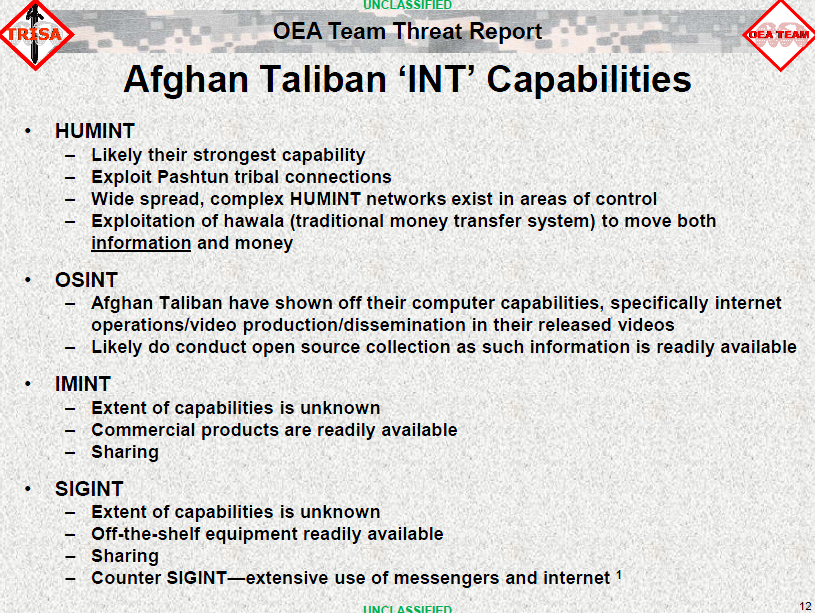
TOP-SECRET-U.S. Army Taliban Insurgent Syndicate Intelligence Operations Report

Download


DOWNLOAD ORIGINAL REPORT HERE


USArmy-TalibanIntel

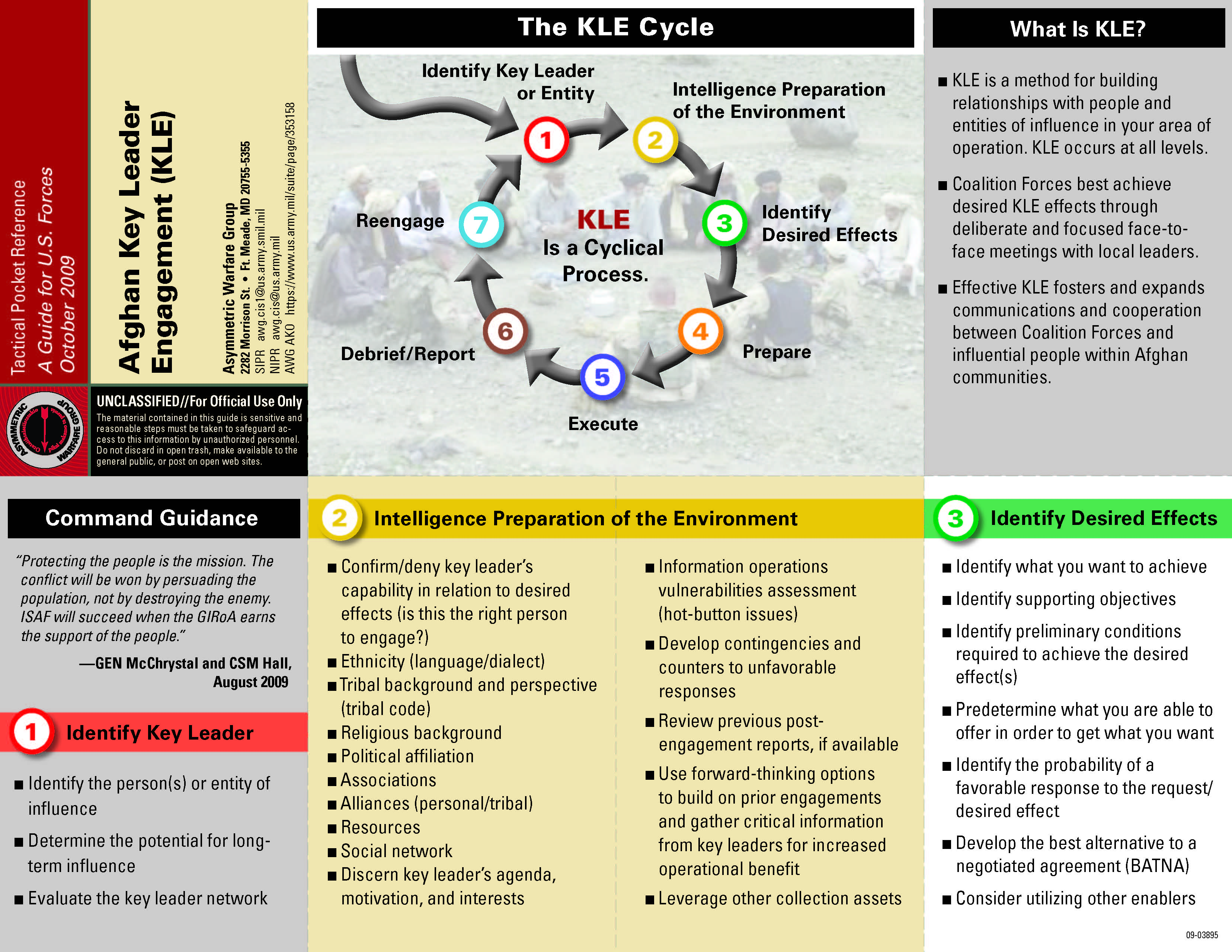
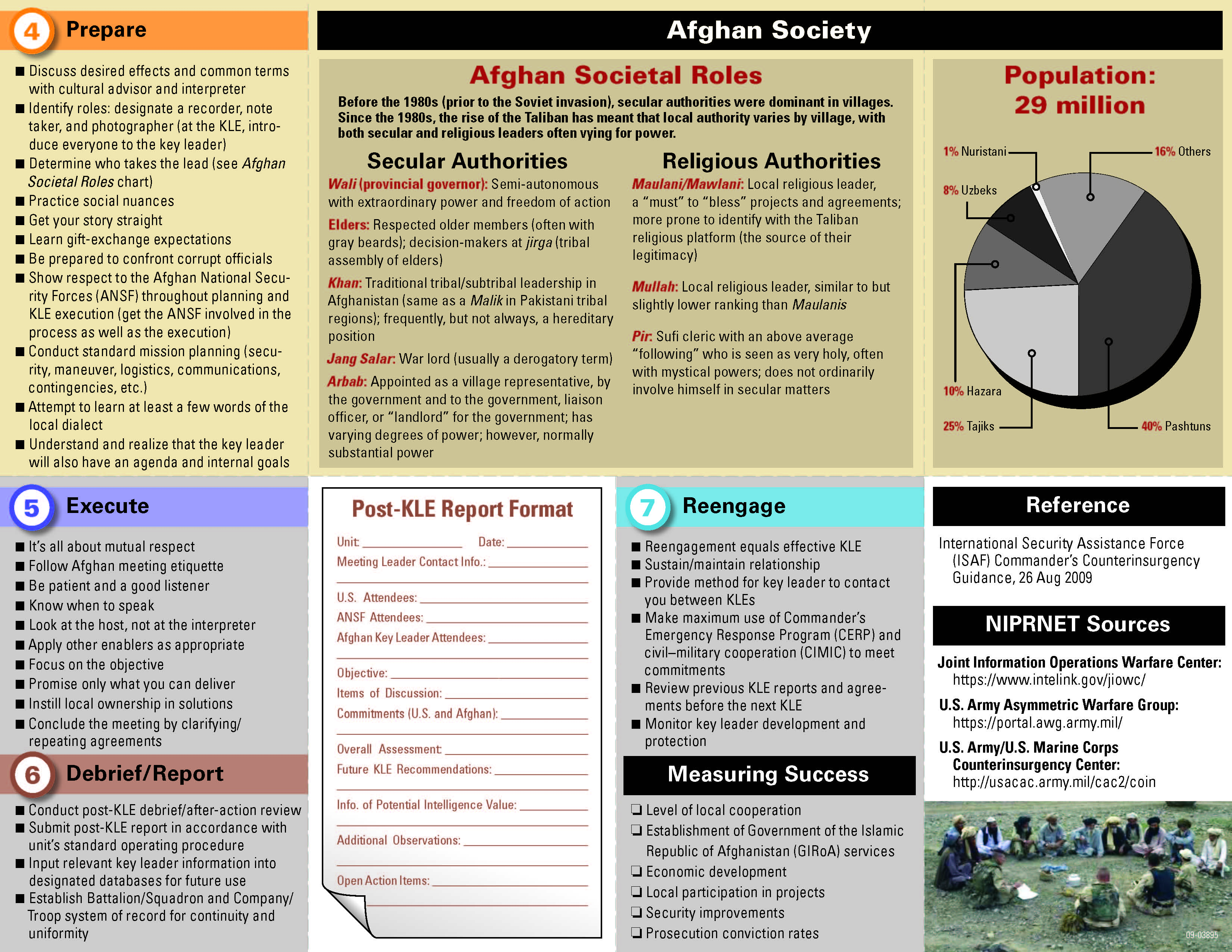
TOP-SECRET-(U//FOUO) Asymmetric Warfare Group Afghan Key Leader Engagement (KLE) Reference Card

Download


CONFIDENTIAL-Council of Europe Committee of Ministers Declaration in Support of Whistleblowing Websites

December 9, 2011 in Council of Europe

The following statement was released on December 7, 2011 by the Council of Europe Committee of Ministers.

Declaration of the Committee of Ministers on the protection of freedom of expression and freedom of assembly and association with regard to privately operated Internet platforms and online service providers

(Adopted by the Committee of Ministers on 7 December 2011 at the 1129th meeting of the Ministers’ Deputies)

1. Freedom of expression and the right to receive and impart information and its corollary, freedom of the media, are indispensable for genuine democracy and democratic processes. Through their scrutiny and in the exercise of their watchdog role, the media provide checks and balances to the exercise of authority. The right to freedom of expression and information as well as freedom of the media must be guaranteed in full respect of Article 10 of the European Convention on Human Rights (ETS No. 5, hereinafter “the Convention”). The right to freedom of assembly and association is equally essential for people’s participation in the public debate and their exercise of democratic citizenship, and it must be guaranteed in full respect of Article 11 of the Convention. All Council of Europe member States have undertaken, in Article 1 of the Convention, to “secure to everyone within their jurisdiction the rights and freedoms” protected by the Convention (without any online/offline distinction).

2. People, notably civil society representatives, whistleblowers and human rights defenders, increasingly rely on social networks, blogging websites and other means of mass communication in aggregate to access and exchange information, publish content, interact, communicate and associate with each other. These platforms are becoming an integral part of the new media ecosystem. Although privately operated, they are a significant part of the public sphere through facilitating debate on issues of public interest; in some cases, they can fulfil, similar to traditional media, the role of a social “watchdog” and have demonstrated their usefulness in bringing positive real-life change.

3. In addition to opportunities, there are challenges to the effective exercise of freedom of expression and to the right to impart and receive information in the new media ecosystem. Direct or indirect political influence or pressure on new media actors may lead to interference with the exercise of freedom of expression, access to information and transparency, not only at a national level but, given their global reach, also in a broader international context. Decisions concerning content can also impinge on the right to freedom of assembly and association.

4. Distributed denial-of-service attacks against websites of independent media, human rights defenders, dissidents, whistleblowers and other new media actors are also a matter of growing concern. These attacks represent an interference with freedom of expression and the right to impart and receive information and, in certain cases, with the right to freedom of association. Companies that provide web hosting services lack the incentive to continue hosting those websites if they fear that the latter will come under attack or if their content may be regarded as sensitive. Furthermore, the companies concerned are not immune to undue interference; their decisions sometimes stem from direct political pressure or from politically motivated economic compulsion, invoking justification on the basis of compliance with their terms of service.

5. These developments illustrate that free speech online is challenged in new ways and may fall victim to action taken by privately owned Internet platforms and online service providers. It is therefore necessary to affirm the role of these actors as facilitators of the exercise of the right to freedom of expression and the right to freedom of assembly and association.

6. Interference with content that is released into the public domain through these means or attempts to make entire websites inaccessible should be judged against international standards designed to secure the protection of freedom of expression and the right to impart and receive information, in particular the provisions of Article 10 of the Convention and the related case law of the European Court of Human Rights. Furthermore, impediments to interactions of specific interest communities should be measured against international standards on the right to freedom of assembly and association, in particular the provisions of Article 11 of the Convention and the related case law of the European Court of Human Rights.

7. The Committee of Ministers, therefore:

– alerts member States to the gravity of violations of Articles 10 and 11 of the European Convention on Human Rights which might result from politically motivated pressure exerted on privately operated Internet platforms and online service providers, and of other attacks against websites of independent media, human rights defenders, dissidents, whistleblowers and new media actors;

– underlines, in this context, the necessity to reinforce policies that uphold freedom of expression and the right to impart and receive information, as well as the right to freedom of assembly and association, having regard to the provisions of Articles 10 and 11 of the Convention and the related case law of the European Court of Human Rights;

– confirms its commitment to continue to work to address the challenges that these matters pose for the protection of freedom of expression and access to information.

VIDEO – FEMEN DSK PARIS

Wkipedia entry – https://en.wikipedia.org/wiki/FEMEN

FEMEN (Ukrainian:Фемен) is a Ukrainian protest group based in Kiev, founded in 2008. The organisation became internationally known for organizing topless protests against sex tourists, international marriage agencies, sexism and other social, national and international ills.[1][4][5][6][7][8][9] Some of the goals of the organisation are: “To develop leadership, intellectual and moral qualities of the young women in Ukraine” and “To build up the image of Ukraine, the country with great opportunities for women”.[3]

The organisation

Female university students between 18 and 20 years old form the backbone of the movement.[2] In Kiev, there are about 300 active participants in the movement.[10] There are few male members of FEMEN.[1] The group comprises some 20 topless activists and 300 fully clothed members.[11][12] Most of its demonstrations are staged in Kiev,[4][8] but FEMEN has also held actions in cities like Odessa,[13] Dnipropetrovsk[14] and Zaporizhia.[15] While most of the protests have been ‘topless’ in 2010 one FEMEN protester exposed her buttocks outside a locked toilet in a demonstration to protest about the lack of public toilets in Kiev.[11]

The goals of the organization is “to shake women in Ukraine, making them socially active; to organize in 2017 a women’s revolution.”[10] The group has stated it has enjoyed limited success in pushing its agenda.[16] As of late April 2010 the organisation is contemplating becoming a political party to run for seats in the next Ukrainian parliamentary election.[1][10]

FEMEN justifies its provocative methods stating “This is the only way to be heard in this country. If we staged simple protests with banners, then our claims would not have been noticed”.[17] The organisation plans to become the biggest and the most influential feminist movement in Europe.[3][10]

Some members claim their involvement in FEMEN caused their families to become alienated from them.[10][18]

FEMEN receives small financial backing by individuals[10][11][19] (including DJ Hell[18]).

Facebook initially blocked the FEMEN page because it suspected it was pornographic.[18]

Late April 2011 the organization claimed it was setting up international branches in Warsaw, Zurich, Rome, Tel Aviv and Rio de Janeiro.[20][21] They also claimed that after the early 2010 election of President Viktor Yanukovych the Security Service of Ukraine has attempted to intimidate the FEMEN activists.[18]

FEMEN occasionally holds rallies outside Ukraine.[22][23][24][25]

FEMEN protest in Kiev during the 2010 Ukrainian presidential election

The movement was founded in 2008 by Anna Hutsol (born 1983, most FEMEN members are younger[2]) after she became attuned to the sad stories of Ukrainian woman duped by false promises from abroad:[2] “I set up FEMEN because I realised that there was a lack of women activists in our society; Ukraine is male-oriented and women take a passive role.”[26] Since then the organization has staged noticeable erotically-flavored rallies (among others) near the building of the Cabinet of Ministers, at Maidan Nezalezhnosti, the Turkish embassy in Ukraine[2] and in front of the Iranian embassy to oppose the expected execution of Sakineh Mohammadi Ashtiani.[27]

Hutsol is adamantly opposed to legalizing prostitution in Ukraine.[2] FEMEN proposed the introduction of criminal responsibility for the use of sex industry services late in May 2009.[28]

A demonstration by a group called RU FEMEN in the Russian capital Moscow late April 2011[29] was immediately denounced as a fake offspring of FEMEN.[20][21] FEMEN accused Russian political party United Russia of having set up this RU FEMEN.[20][21]

Cultural and political image

FEMEN’s actions received criticisms in Ukraine for “being meaningless” or “being outright tasteless”.[11] According to Ukrainian gender studies expert Tetyana Bureychak most Ukrainian women are unimpressed by FEMEN.[30] According to sociologist Oleh Demkiv of the Lviv University FEMEN does not enjoy popular support.[31]

According to Reuters “Femen represents — albeit on a modest scale — one of the few regular street protest movements”.[12] In Ukraine the FEMEN activists have been labeled “girls Tymoshenko” and/or “Putin‘s agents[10][relevant?discuss]; some parents of FEMEN activists have wondered if they were addicted to drugs.[10] But the organization claims to be an independent organization “Beyond politics and beyond religion”.[10]

The group’s actions have been reported in news-outlets such as CNN, BBC News,[6] Der Spiegel, Die Welt, Independent.ie,[3] France 24,[26] on Euronews,[27] Kyiv Post,[32] Mizozo,[33] USA Today,[34] Reuters[12] and The Washington Post.

DIE FÄLSCHER – Meridian Capital about GoMoPa STASI-FÄLSCHUNGEN DER “GoMoPa”

https://berndpulch.org/meridian-capital-about-gomopa-stasi-falschungen-der-%E2%80%9Cgomopa%E2%80%9D/

NEW-TOP-SECRET – White House Strategic Plan for Preventing Violent Extremism

https://i0.wp.com/publicintelligence.net/wp-content/uploads/2011/12/WhiteHouse-DomesticExtremism.png

aw enforcement and government officials for decades have understood the critical importance of building relationships, based on trust, with the communities they serve. Partnerships are vital to address a range of challenges and must have as their foundation a genuine commitment on the part of law enforcement and government to address community needs and concerns, including protecting rights and public safety. In our efforts to counter violent extremism, we will rely on existing partnerships that communities have forged with Federal, State, and local government agencies. This reliance, however, must not change the nature or purpose of existing relationships. In many instances, our partnerships and related activities were not created for national security purposes but nonetheless have an indirect impact on countering violent extremism (CVE).

At the same time, this Strategic Implementation Plan (SIP) also includes activities, some of them relatively new, that are designed specifically to counter violent extremism. Where this is the case, we have made it clear. It is important that both types of activities be supported and coordinated appropriately at the  local level.

Current Activities and Efforts

The Federal Government has held a series of consultative meetings with communities, local government and law enforcement, civil society organizations, foundations, and the private sector to better understand how it can facilitate partnerships and collaboration. This leverages a key strength identified in the National Strategy for Empowering Local Partners: “The Federal Government, with its connections to diverse networks across the country, has a unique ability to draw together the constellation of previously unconnected efforts and programs to form a more cohesive enterprise against violent extremism.” Examples of this include the following:

  • DHS Secretary Napolitano tasked her Homeland Security Advisory Council (HSAC) to develop recommendations on how the Department can best support law enforcement and communities in their efforts to counter violent extremism. An HSAC CVE Working Group convened multiple meetings with local law enforcement, local elected officials, community leaders (including faith-based leaders), and academics. The working group released its recommendations in August 2010, highlighting the importance of: (1) research and analysis of violent extremism; (2) engagement with communities and leveraging existing partnerships to develop information-driven, community-based solutions to violent extremism and violent crime; and (3) community oriented policing practices that focus on building partnerships between law enforcement and communities.
  • DHS and NCTC began raising awareness about violent extremism among private sector actors and foundations and connected them with community civic activists interested in developing programs to counter violent extremism. DHS is now working with a foundation to pilot resiliency workshops across the country that address all hazards, including violent extremism.

We also began exploring how to incorporate CVE as an element of programs that address broader public safety, violence prevention, and resilience issues. This has the advantage of leveraging preexisting initiatives and incorporates CVE in frameworks (such as safeguarding children) used by potential local partners who may otherwise not know how they fit into such efforts. For example, although many teachers, healthcare workers, and social service providers may not view themselves as potentially contributing to CVE efforts, they do recognize their responsibilities in preventing violence in general. CVE can be understood as a small component of this broader violence prevention effort. Departments and agencies will review existing public safety, violence prevention, and resilience programs to identify ones that can be expanded to include CVE as one among a number of potential lines of effort.

  • As an example, the Federal Government helped support a community-led initiative to incorporate CVE into a broader program about Internet safety. The program addressed protecting children from online exploitation, building community resilience, and protecting youth from Internet radicalization to violence.

Future Activities and Efforts

Planned activities to expand support to local partners include the following:

  • The Federal Government will help broker agreements on partnerships to counter violent extremism between communities and local government and law enforcement to help institutionalize this locally focused approach. (Lead: DHS)
  • DHS and DOJ will work to increase support for local, community-led programs and initiatives to counter violent extremism, predominantly by identifying opportunities within existing appropriations for incorporating CVE as an eligible area of work for public safety, violence prevention, and community resilience grants. (Leads: DHS and DOJ)
  • DHS is working to increase funding available to integrate CVE into existing community-oriented policing efforts through FY12 grants. (Lead: DHS)
  • DHS is establishing an HSAC Faith-Based Community Information Sharing Working Group to determine how the Department can: (1) better share information with faith communities; and (2) support the development of faith-based community information sharing networks. (Lead: DHS)
  • DHS is developing its Hometown Security webpage to include resources such as training guidance, workshop reports, and information on CVE for both the general public and law enforcement. (Lead: DHS)
  • The Treasury will expand its community outreach regarding terrorism financing issues. (Lead: Treasury; Partners: State, DOJ, DHS, FBI, and the U.S. Agency for International Development)3
  • Depending on local circumstances and in consultation with the FBI, U.S. Attorneys will coordinate, as appropriate, any efforts to expand connections and partnerships at the local level for CVE, supported by the National Task Force where needed. (Lead: DOJ; Partners: All)
  • Departments and agencies will expand engagement with the business community by educating companies about the threat of violent extremism and by connecting them to community civic activists focused on developing CVE programs and initiatives. (Lead: DHS; Partner: NCTC)

DOWNLOAD ORIGINAL DOCUMENT HERE

WhiteHouse-DomesticExtremism

NEW AND UNCENSORED – FEMEN Ukraine

http://pics.livejournal.com/femen/pic/00056stf

http://www.youtube.com/watch?v=5KGgWcTV7F4&feature=relmfu&oref=http%3A%2F%2Fwww.youtube.com%2Fwatch%3Fv%3DAJkGKD0Xz6w%26feature%3Dchannel_video_title

TOP-SECRET FROM THE NSA-U.S. ESPIONAGE AND INTELLIGENCE

U.S. ESPIONAGE AND INTELLIGENCE
Aerial reconnaissance photograph of Severodvinsk Shipyard, the largest construction facility in the Soviet Union, taken by a KH4-B spy satellite on February 10, 1969.
Organization, Operations, and Management, 1947-1996

In the aftermath of World War II, with the Cold War looming on the horizon, the United States began the process of developing an elaborate peacetime intelligence structure that would extend across a number of government departments. The operations of the U.S. intelligence community during the Cold War would range from running single agents, to marshaling the talents of thousands to build and deploy elaborate spy satellites.

The end of the Cold War brought major changes, but not the end of the U.S. government’s requirement for an elaborate intelligence structure. A number of intelligence organizations have been consolidated or altogether eliminated. New organizations have been established to provide more coherent management of activities ranging from military espionage, to imagery collection, to the procurement of airborne intelligence systems. The end of the Cold War has brought about the declassification of much information about intelligence organization and espionage activities that took place prior to the collapse of the Soviet Union.

Focus of the Collection

CIA Headquarters, Langley, VirginiaU.S. Espionage and Intelligence: Organization, Operations, and Management, 1947-1996 publishes together for the first time recent unclassified and newly declassified documents pertaining to the organizational structure, operations, and management of the U.S. intelligence community over the last fifty years, cross-indexed for maximum accessibility. This set reproduces on microfiche 1,174 organizational histories, memoranda, manuals, regulations, directives, reports, and studies, representing over 36,102 pages of documents from the Office of the Director of Central Intelligence, the Central Intelligence Agency, National Reconnaissance Office, National Security Agency, Defense Intelligence Agency, military service intelligence organizations, National Security Council and other organizations. U.S. Espionage and Intelligence presents a unique look into the internal workings of America’s intelligence community. The documents gathered here shed further light on U.S. intelligence organization and activities during the Cold War, and describe the consolidation and reevaluation of the intelligence community in the post-Cold War era. They are drawn from diverse sources, including the National Archives, manuscript collections in the Library of Congress, court files of major espionage prosecutions, presidential libraries, and most importantly, Freedom of Information Act requests. The result of this effort is an authoritative documents publication which, together with the National Security Archive’s previous collection on the structure and operations of the U.S. intelligence community,

U.S. Espionage and Intelligence provides a wealth of information and documentation on key aspects of intelligence organization and operations during and after the Cold War, including such extraordinary topics as:

  • the evolution of the CIA
  • the development and operation of key reconnaissance systems (SR-71, CORONA)
  • the consolidation of Defense Department intelligence
  • intelligence performance during the Persian Gulf War
  • damage assessments of Aldrich Ames’ espionage activities

Significance of the Collection

The U.S. intelligence community has played a key role in advising presidents from Harry Truman to Bill Clinton on the intentions and activities of the Soviet Union, as well as of other nations. It also came to absorb a significant portion of the federal budget, reaching an approximate high of $30 billion in the late 1980s.

U.S. Espionage and Intelligence allows scholars direct access to the newly declassified, detailed primary documents that contain the history of the military, diplomatic, and intelligence components of the Cold War, and which go far beyond what is available in secondary sources. This new information is essential for reaching an accurate understanding of what was happening behind the scenes and how it related to the more public aspects of Cold War policy and operations.

The material contained in this set concerning the post-Cold War era is crucial in assessing the intelligence community’s performance in critical areas such as the Persian Gulf War and the Aldrich Ames case. The material is also vital in understanding the evolution of the intelligence community since the end of the Cold War and its possible future–for that evolution may significantly influence the ability of the intelligence community to deal with critical threats such as proliferation of weapons of mass destruction and terrorism.

One-Stop Access to Critical Documents

It would take a monumental effort, as well as many thousands of dollars, to duplicate the information contained in this collection. U.S. Espionage and Intelligenceallows a researcher– whether interested in the CIA, military intelligence, intelligence performance in the Persian Gulf War, or post-Cold War intelligence reform–to use one source at one location to access the thousands of pages of declassified material on the U.S. intelligence community available in this set.

Through U.S. Espionage and Intelligence the researcher gains access to a wide variety of documents: internal histories of the CIA and a variety of military intelligence organizations; program histories of the SR-71 and CORONA; director of central intelligence and Department of Defense directives establishing organizations such as the National Reconnaissance Office and the National Imagery and Mapping Agency; plans for the consolidation and reform of Defense intelligence organizations after the Cold War and memoranda implementing the reforms; and assessments of intelligence community performance in a number of areas.

In-depth Indexing Makes Every Document Accessible

The National Security Archive prepares extensive printed finding aids for its collections. In- depth indexing offers users remarkable ease and precision of access to every document in the set. The printed Index provides document-level access to subjects, individuals, and organizations, and represents a major research contribution in itself. Important transactions within each document are indexed individually using a controlled subjects vocabulary.

The Guide includes an essay, events chronology, glossaries of key individuals, organizations, and terms, document catalog, and a bibliography of secondary sources.

Research Vistas

With its depth of documentary detail, the collection enables researchers to explore

  • U.S. intelligence performance
  • Cold War history
  • evolution of the U.S. intelligence community and its components
  • U.S. intelligence collection activities

The Collection is a Necessity For:

  • Scholars and students of
    • intelligence
    • national security organization and operations
    • Cold War history
  • Journalists
  • Librarians and bibliographers
  • Concerned citizens

Sample Document Titles

01/15/62 Legal Basis for Cold-War Activities, Lawrence Houston, [Classification Excised] Memorandum

03/27/64 Directive 5105.23, National Reconnaissance Office, Department of Defense, Top Secret Directive 05/23/67 Report on Plots to Assassinate Fidel Castro, Central Intelligence Agency, Secret Memorandum

07/00/73 Allen Welsh Dulles as Director of Central Intelligence, 26 February 1953-29 November 1961, Central Intelligence Agency, Top Secret Biographic Sketch

00/00/82 History of the Navy HUMINT Program, United States Navy, Top Secret History

03/15/91 Plan for Restructuring Defense Intelligence, Assistant Secretary of Defense for Command, Control, and Communication Intelligence, Secret Report

01/06/92 Task Force Report on Greater CIA Openness, Director of Central Intelligence, [Classification Excised] Memorandum

06/01/92 DCID 2/9, Management of National Imagery Intelligence, Director of Central Intelligence, Secret Intelligence Directive

09/00/92 Appendixes A, B, and C to the Final Report: National Reconnaissance Program Task Force for the Director of Central Intelligence, National Reconnaissance Program Task Force, Secret Report

12/18/92 Directive 5200.37, Centralized Management of Department of Defense Human Intelligence (HUMINT) Operations, Department of Defense, [Classification Unknown] Directive

08/00/93 Intelligence Successes and Failures in Operations Desert Shield/Storm, House Committee on Armed Services, [Classification Unknown] Report

01/21/94 A Description of Procedures and Findings Related to the Report of the U.S. Environmental Task Force, King Publishing, Paper

12/07/95 Statement of the Director of Central Intelligence on the Clandestine Services and the Damage Caused by Aldrich Ames, Director of Central Intelligence, Statement

03/01/96 Preparing for the 21st Century: An Appraisal of U.S. Intelligence, Commission on the Roles and Capabilities of the United States Intelligence Community, Report

12/19/96 United States of America v. Harold J. Nicholson, Superseding Indictment, U.S. District Court, Eastern District of Virginia, Indictment

Overview

Title
U.S. Espionage and Intelligence: Organization, Operations, and Management, 1947-1996

Content
Reproduces on microfiche 1,174 U.S. government records totaling 36,102 pages of documentation concerning the organizational structure, operations, and management of the intelligence community from World War II to the present.
Materials were identified, obtained, assembled, and indexed by the National Security Archive.

Series
The Special Collections

Arrangement
Microfiche are arranged chronologically. For ease of use, each document bears a unique accession number to which all indexing is keyed.

Standards
The documents are reproduced on 35mm silver halide archivally permanent positive microfiche conforming to NMA and BSI standards. Any microfiche found to be physically substandard in any way will be replaced free of charge.

Indexing
A printed Guide and Index accompanies the microfiche collection. The Guide contains an events chronology, glossaries, chronological document catalog and a bibliography of secondary sources. The Index provides in-depth, document level access to subjects and individuals.

U.S. Espionage and Intelligence Project Staff

Project Director

Dr. Jeffrey T. Richelson, project director, is a senior fellow at the National Security Archive and coordinates the Archive’s projects on U.S. policy toward China and ongoing documentation on U.S. intelligence issues. He previously edited the Archive’s collections on presidential national security documents, the history of the U.S. intelligence community, and the military uses of space. A former associate professor at American University, he received his Ph.D. in political science from the University of Rochester. Among his many books are Sword and Shield: Soviet Intelligence and Security Apparatus (1986), American Espionage and the Soviet Target (1988), America’s Secret Eyes in Space (1990), and A Century of Spies: Intelligence in the Twentieth Century (1995). His articles have appeared in a wide variety of professional journals and in publications ranging from Scientific American to the Washington Post. He is a regular commentator on intelligence and military issues for national television and radio.

Project Staff

Michael Evans, Research Assistant
Jane Gefter, Research Assistant
Michael Watters, Research Assistant

U.S. Espionage and Intelligence Advisory Board

Christopher Andrew, Corpus Christi College, University of Cambridge author, For the President’s Eyes Only

Loch Johnson, Department of Political Science, University of Georgia author, Secret Agencies: U.S. Intelligence in a Hostile World

David Wise, author, Nightmover: How Aldrich Ames Sold the CIA to the KGB for $4.6 Million

Praise for U.S. Espionage and Intelligence, 1947-1996

“Serious students of the structure and operations of American intelligence rely on the work of the National Security Archive. The new collection of intelligence documents, compiled for the Archive by Jeffrey T. Richelson, helps to pierce the labyrinth.”

David Wise
Author of Nightmover: How Aldrich Ames Sold the CIA to the KGB for $4.6 Million

“An invaluable supplement to the National Security Archive’s previous collection, The U.S. Intelligence Community 1947-1989, this brings the most recently declassified documents to the reader. Jeffrey Richelson’s useful introduction also serves to detail changes that have occurred in the structure of the U.S. espionage establishment.”

John Prados
Author of Presidents’ Secret Wars

TOP-SECRET FROM THE NSA-The Soviet Estimate: U.S. Analysis of the Soviet Union, 1947-1991

IMAGE
The Soviet Estimate:
U.S. Analysis of the Soviet Union,
1947-1991

Focus of the Collection

The Soviet Estimate: U.S. Analysis of the Soviet Union, 1947- 1991, publishes together for the first time the highest-level U.S. intelligence assessments of the Soviet Union, cross- indexed for maximum use. This set reproduces on microfiche more than 600 intelligence estimates and reports, representing nearly 14,000 pages of documentation from the office of the Director of Central Intelligence, the National Intelligence Council, the Central Intelligence Agency, the Defense Intelligence Agency, and other organizations. The set includes several hundred pages of debriefing transcripts and other documentation related to Colonel Oleg Penkovskii, the most important human source operated by the CIA during the Cold War, who later was charged with treason and executed by the Soviet Union. Also published here for the first time is the Pentagon’s Top Secret 1,000-page internal history of the United States-Soviet Union arms race.

The Soviet Estimate presents the definitive secret history of the Cold War, drawn from many sources: the hundreds of documents released by the CIA to the National Archives in December 1994, comprising the most important source of documents for the set, including intelligence estimates from 1946 to 1984; documents obtained under the Freedom of Information Act from the Pentagon, the CIA, the DIA, State Department, Pacific Command, and other agencies; and documents obtained from the National Archives and from various presidential libraries. The result of this effort is the most extensive and authoritative collection of declassified primary-source materials documenting the intelligence community’s effort to gather information on Soviet foreign policy, nuclear weapons, military policy and capabilities, weapons systems, the economy, science and technology, and the Soviet domestic political situation.

The Soviet Estimate provides a wealth of information and documentation on key intelligence issues, including:

  • The missile gap controversy, which helped John F. Kennedy to win the presidency in 1960
  • The “Team A”/”Team B” intelligence report controversy in 1976
  • Whether the CIA foresaw the decline of the Soviet economy
  • Advance warning from the CIA to President Bush about the hard-line coup attempt against Gorbachev in 1991.

Significance of the Collection

(54398) 1961/05/27

The Soviet Union was the major concern of U.S. national security decisionmakers for more than 40 years, and represented the most important single target of all U.S. intelligence collection efforts. The ultimate policies adopted by the U.S. during the Cold War were the result of many factors, not the least of which was an understanding of Soviet objectives and capabilities, shaped and influenced by the intelligence reports included in this set.

Until recently scholars have had to address issues such as the performance of U.S. intelligence analysis with respect to the Soviet Union or the impact of intelligence on policy without access to most of the key documents. Prior to December 1994, all of the National Intelligence Estimates related to the birth and death of the so-called “missile gap” were classified; scholars were often forced to rely either on other government documents that reproduced some of the information in estimates (for example, Department of Defense posture statements), or unofficial sources. The Soviet Estimate, with its diverse sources, permits scholars direct reference to the primary documents used in formulating much Cold War policy.


One-Stop Access to Critical Intelligence Documents

It would take an enormous effort, and many thousands of dollars, to duplicate the information contained in this collection. The Soviet Estimate allows a researcher– whether interested in the Soviet military, the Soviet economy, or Soviet internal politics–to use one source at one location to access the thousands of pages of declassified U.S. intelligence documents on the Soviet Union.

Through The Soviet Estimate the researcher gains access to a wide variety of documents, including National Intelligence Estimates, Special National Intelligence Estimates, National Intelligence Council memoranda, interagency intelligence studies, Defense Intelligence Estimates, and intelligence reports produced by DIA, military service, and unified command intelligence organizations.

Among the specific areas covered in the collection are:

  • Developments in Soviet nuclear forces from the early 1950s to the 1980s
  • The deteriorating political and economic situation under Mikhail Gorbachev in the late 1980s
  • Soviet relations with the United States, European countries, and other nations
  • The Soviet space program and developments in science and technology
  • The Soviet economic system and economy

In-depth Indexing Makes Every Document Accessible

The National Security Archive prepares extensive printed finding aids for its collections. In-depth indexing offers users remarkable ease and precision of access to every document in the set. The printed Index provides document- level access to subjects, individuals, and organizations, and represents a major historical contribution itself. Important transactions within each document are indexed individually using a controlled subjects vocabulary.

The Guide includes an events chronology, glossaries of key individuals and organizations, chronological document catalog, and a bibliography of relevant secondary sources.


Research Vistas

With its depth of documentary detail and balance of perspectives, this collection enables researchers to explore in greater detail:

  • Soviet studies
  • Cold War history
  • U.S. intelligence performance
  • The intelligence-policy relationship

The Collection is a Necessity for:

  • Scholars and students of
    • The Soviet Union
    • The history of the Cold War
    • The U.S. intelligence community
    • Policy formation
  • Policy analysts
  • Journalists
  • Concerned citizens
  • Librarians and bibliographers

Sample Document Titles

4/6/50 ORE 91-49
Estimate of the Effects of the Soviet Possession of the Atomic Bomb Upon the Security of the U.S. 
10/5/54 NIE 11-6-54
Soviet Capabilities and Probable Programs in the Guided Missile Field 
9/21/61 NIE 11-8/1-61
Strength and Deployment of Soviet Long-Range Ballistic Missile Forces, September 21, 1961 
3/2/67 NIE 11-1-67
The Soviet Space Program 
2/19/70 SNIE 11-16-70
Soviet Attitudes Toward SALT 
6/76 United States Air Force
A History of Strategic Arms Competition, 1945-1972: Volume 3: A Handbook of Selected Soviet Weapon and Space Systems (May-Steinbruner-Wolfe Report) 
12/76 NIO M 76-021J
Soviet Strategic Objectives: An Alternative View (“Team B” Report) 
5/27/81 SNIE 11-2-81
Soviet Support for International Terrorism and Revolutionary Violence 
7/7/81 M/M NIE 11-4-78
Soviet Goals and Expectations in the Global Power Arena 
4/83 NIC M 83-10006
Dimensions of Civil Unrest in the Soviet Union 
3/6/84 NIE 11-3/8-83
Soviet Capabilities for Strategic Nuclear Conflict, 1983-93 
4/89 CIA
Rising Political Instability Under Gorbachev: Understanding the Problem and Prospects for Resolution 
4/25/91 CIA, Office of Soviet Analysis
The Soviet Cauldron  

Overview

Title:

The Soviet Estimate: U.S. Analysis of the Soviet Union, 1947 – 1991
Content:
Reproduces on microfiche more than 600 intelligence estimates and reports, representing nearly 14,000 pages of documentation recording the intelligence community’s effort to gather information on Soviet foreign policy, nuclear weapons, military policy and capabilities, weapons systems, the economy, science and technology, and the Soviet domestic political situation.
Arrangement and Access:
Documents are arranged chronologically. For ease of use, the unique identification numbers assigned to the documents are printed in eye-legible type at the top right-hand corner and precede each document on the microfiche strip.
Standards:
Documents are reproduced on silver halide positive- reading microfiche at a nominal reduction of 24x in envelopes. They are archivally permanent and conform to AIIM, BSI, and ANSI standards. Any microfiche found to be substandard will be replaced free of charge.
Indexing:
A printed Guide and Index totaling over 390 pages accompanies the microfiche collection. The Guide contains an essay; an events chronology; glossaries of acronyms and abbreviations, names, organizations, and technical terms; and a bibliography of secondary sources. The Index provides in-depth, document-level access to subjects, individuals, and organizations.
Date of Publication:
December 1995
Orders and Inquiries

The National Security Archive

Founded in 1985, the National Security Archive has developed a reputation as the most prolific and successful nonprofit user of the Freedom of Information Act (FOIA). Through its FOIA expertise, the Archive has built what the Christian Science Monitor called “the largest collection of contemporary declassified national security information outside the United States government.” Located at The George Washington University, the Archive serves librarians, scholars, journalists, members of Congress, policymakers, public interest groups, and the general public. Foundation grants and publication royalties underwrite the Archive’s budget.

The Archive’s editorial process focuses on high-level policy-making and implementation, with special attention to inter-agency decisionmaking processes. Archive analysts target all U.S. government documents used by policymakers during the period covered by the collection, as well as other significant materials of direct relevance to the subject.

This research establishes a roadmap for future scholarship and “freezes” the documentary record with official requests for declassification before normal governmental document destruction process can diminish the historical record. The result is an “unusual” series of publications, as Microform Review noted, which make available documents “from the twilight zone between currently released government information, and normal declassification” periods.

Accompanied by highly sophisticated item-level catalogs, indexes, and other finding aids–which Government Publications Review hailed as “gold mines in and of themselves”–the Archive’s collections, according to the Washington Journalism Review, constitute “a ‘Nexis’ of national security . . . [a] state-of-the-art index to history.”


Praise for The Soviet Estimate

“The National Security Archive has performed a valuable service by compiling the most extensive and authoritative file of declassifed, official U.S. National Intelligence Estimates on the Soviet Union. The compilation The Soviet Estimate is a gold mine for analyzing Soviet developments on the Cold War, and no less important, contemporary American intelligence assessments of those developments. With the benefit of hindsight and new information, the validity of those estimates can be studied, and their impact on U.S. policy and the Cold War evaluated. ”
–Raymond Garthoff,
Senior Fellow, Foreign Policy Studies Program, Brookings Institution, former U.S. Ambassador to Bulgaria, veteran of the U.S. Department of State and Central Intelligence Agency, and author of many publications, including Deterrence and the Revolution in Soviet Military Doctrine (1990), The Great Transition: American-Soviet Relations and the End of the Cold War (1994), and Détente and Confrontation: American-Soviet Relations from Nixon to Reagan (1994).


The National Security Archive Soviet Estimate Project Staff

Project Editor
Jeffrey T. Richelson, Ph.D., Project Editor, is a senior fellow at the National Security Archive and coordinates the Archive’s projects on U.S. policy toward China and ongoing documentation on U.S. Intelligence issues. He previously edited the Archive’s collections on presidential national security documents, the history of the U.S. intelligence community, and the military uses of space. A former associate professor at American University, he received his Ph.D. in political science from the University of Rochester. Among his many books are Sword and Shield: Soviet Intelligence and Security Apparatus (1986), American Espionage and the Soviet Target (1988), America’s Secret Eyes in Space (1990), and A Century of Spies: Intelligence in the Twentieth Century (1995). His articles have appeared in a wide variety of professional journals and in publications ranging from Scientific American to the Washington Post. He is a regular commentator on intelligence and military issues for national television and radio. 
Project Staff
Jane Gefter, Research Assistant
Ian Stevenson, Research Assistant
Kristin Altoff, Intern

STASI im 21. Jahrhundert mit Hilfe der alten SED-Die Liste der “GoMoPa”- Opfer

http://www.victims-opfer.com/?page_id=15672

FINANCIAL TIMES ÜBER STASI – “GoMoPa” und deren mutmassliche Hintermänner wie z.B. “Anleger-Anwalt” Resch

http://www.victims-opfer.com/?page_id=11764

Kurssturz – Millionen über nacht vernichtet durch die STASI “GoMoPa” – Wirecard Lüge – LKA ermittelt weiter

http://www.usag24-betrug.com/index.php/gomopas-wirecard-behauptungen-zweifelhaft-schuett-hat-keinerlei-behauptungen-zu-wirecard-gemacht/

“Sexualaufklärung” für Kinder durch STASI-“GoMoPa” im Internet

http://www.victims-opfer.com/?p=22832

STASI “GoMoPa” handelt nach dem alten Göring-Motto:”Wo gehobbelt wird, da fallen Späne “-BÖRSE ONLINE berichtet

BoerseOnline_Nr38_16.09.2010_Wo_gehobelt_wird


DOWNLOAD LINK OBEN

Gruner und Jahrs Medium BÖRSE ONLINE über STASI-“GoMoPa”-Betrug und RA Resch

http://www.graumarktinfo.de/gm/aktuell/diskussion/:Gomopa–Anwaelte-als-Finanzierungsquelle/616477.html

UNCENSORED- Alexandra – FEMEN

TOP-SECRET-ISAF Afghanistan Detainee Operations Standard Operating Procedures

https://i0.wp.com/publicintelligence.net/wp-content/uploads/2011/12/ISAF-DetaineeSOP.png

1. Reference G is the current operational level guidance on detention issues. This TACSOP gives further direction and guidance to commanders and staff responsible for detention operations within Afghanistan. Commanders at all levels are to ensure that detention operations are conducted in accordance with applicable international law and human rights standards and that all detainees are treated with respect and dignity at all times. The strategic benefits of conducting detention operations in a humanitarian manner are significant. Detention operations that fail to meet the high standards mandated herein will inevitably have a detrimental impact on the ISAF Mission. All ISAF Detention operations will be subject to internal and external scrutiny.

2. The policy contained within this TACSOP applies to actions taken by ISAF troops under the ISAF Mission. It does not apply to PW or to persons indicted for war crimes (PIFWC) pursuant to the lawful exercise of authority by the International Criminal Court or other lawfully constituted tribunals. It does, however, give direction to Regional Commands on the reporting of detainees taken within their AOO by troops operating under the Counter-Terrorist mandate (Reference H refers) or by ANSF operating jointly with ISAF.

DEFINITIONS

3. The following definitions are used throughout this SOP.

a. NATO Holding Facility / NATO Detention Facility. This term refers to any facility used, designed or adapted to facilitate the detention of individuals.
b. ISAF Detention Authority. This is defined in the main body of this SOP as a specified individual authorised to make detention decisions. These individuals are listed in Para 6 below.
c. Period of Detention. This is regarded as the period of detention, not to exceed 96 hours, which starts on arrest (ie; the act by which a non-ISAF person is deprived of his liberty by ISAF personnel) until the moment a detainee is handed over to the ANSF or GOA officials or is released by ISAF.
d. ANSF. The abbreviation ANSF stands for Afghan National Security Forces and includes, Afghan National Army (ANA), Afghan National Police (ANP), Afghan Border Police, Afghan Highway Police, Afghan Counter-Narcotics Police and any authorised Afghan national or regional government agency involved with security or detention facilities.
e. Age / Date of Birth. Consideration must be given to the fact that in many areas, individuals may not know their age or date of birth. For the purpose of this SOP, the following definitions are used:

(1) Adult. An adult is considered to be any person aged 18 or over.
(2) Juvenile. A juvenile is considered to be between the age of 15 up to 18.
(3) Child A child is considered to be below the age of 15.

LEGAL APPLICATIONS

4. Authority to Detain. The only grounds upon which a person may be detained under current ISAF Rules of Engagement (ROE) are: if the detention is necessary for ISAF force protection; for the self-defence of ISAF or its personnel; for accomplishment of the ISAF mission.

5. Detention. If an arrest and/or detention is effected by ANSF with ISAF support, then the individual is not considered to be an ISAF detained person and the provisions of this TACSOP do not apply. An individual will not be considered as an ISAF detained person until and unless ISAF assumes control and places that individual into detention. In all cases of detention HQ ISAF is to be informed. The current policy for ISAF is that Detention is permitted for a maximum of 96 hours after which time an individual is either to be released or handed into the custody of the ANSF / GOA.

6. Detention Authority. As soon as practicable after an detention has taken place, the decision to continue to detain must be considered by an appropriate authority. The ISAF Detention authority must be able to support the grounds by a reasonable belief in facts. The requirement for detention must be kept under continuous review. The following persons may act as an ISAF Detention Authority to determine if the grounds set out in paragraph 4 are met:

a. COMISAF2;
b. A Regional Commander (RC);
c. A National Contingent Commander;
d. The Theatre Task Force Commander;
e. A Battalion Commander;
f. A Provincial Reconstruction Team (PRT) Commander;
g. Base Commander;
h. An On-Scene Commander; and
i. Commander of the Theatre Detention Facility.

7. The powers of the Detention Authority. A Detention Authority may authorize detention for up to 96 hours following initial detention. Should the Detention Authority believe that continued detention beyond 96 hours is necessary then, prior to the expiration of the 96-hour period, the Detention Authority shall refer the matter via the chain of command to HQ ISAF.

https://i0.wp.com/publicintelligence.net/wp-content/uploads/2011/12/ISAF-DetaineeSOP_Page_16-724x1024.jpg

DOWNLOAD ORIGINAL DOCUMENT HERE

ISAF-DetaineeSOP

The FBI-Former Illinois Governor Rod R. Blagojevich Sentenced to 14 Years in Prison for Corruption in Office

CHICAGO—Former Illinois Gov. Rod R. Blagojevich was sentenced today to 14 years in federal prison following his conviction at trials in 2010 and 2011 on 18 felony counts of corruption during his tenure as governor, including his effort in 2008 to illegally trade the appointment of a United States Senator in exchange for $1.5 million in campaign contributions or other personal benefits. Blagojevich was also sentenced for shaking down the chief executive of a children’s hospital for $25,000 in campaign contributions in exchange for implementing an increase to pediatric reimbursement rates; holding up the signing of a bill to benefit the Illinois horse racing industry in an attempt to illegally obtain $100,000 in campaign contributions; and lying to the FBI in 2005.

Blagojevich, who will turn 55 on Dec. 10, was ordered to surrender to the U.S. Bureau of Prisons on Feb. 16, 2012, to begin serving his sentence. The prison term is the longest-ever imposed on a former governor in the Northern District of Illinois.

“When it is the governor who goes bad, the fabric of Illinois is torn, disfigured and not easily repaired,” U.S. District Judge James Zagel said in imposing the sentence after a two-day hearing. “The harm here is not measured in the value of money or property . . . the harm is the erosion of public trust in government,” he said.

The judge imposed a fine of $20,000 and two years of supervised release after incarceration. Blagojevich also must pay a special assessment of $1,800, or $100 on each count of conviction.

During the sentencing hearing, Judge Zagel agreed with the government that the properly calculated advisory federal sentencing guidelines provided for a sentencing range of 30 years to life. He also agreed with the government that the range was not appropriate within the context of this case, and found an “effective” guideline range of 188 to 235 months in prison, which was proximate to the government’s recommended sentence of 15 to 20 years. The judge further reduced the range to 151 to 188 months after finding that Blagojevich accepted responsibility for his crimes at sentencing.

In sentencing papers, the government contended that “Blagojevich’s criminal activity was serious, extended, and extremely damaging.” The crimes proven at trial were not isolated incidents, but, instead, were part of an approach to public office that Blagojevich adopted from the moment he became governor after he was first elected in 2002 on the heels of gubernatorial corruption and running on a campaign to end “pay-to-play” politics.

“Blagojevich betrayed the trust and faith that Illinois voters placed in him, feeding great public frustration, cynicism and disengagement among citizens. People have the right to expect that their elected leaders will honor the oath they swear to, and this sentence shows that the justice system will stand up to protect their expectations,” said Patrick J. Fitzgerald, United States Attorney for the Northern District of Illinois.

“The sentence handed down today represents a repayment of the debt that Blagojevich owes to the people of Illinois. While promising an open and honest administration, in reality, the former governor oversaw a comprehensive assault on the public’s trust,” said Robert D. Grant, Special Agent in Charge of the Chicago Office of the Federal Bureau of Investigation.

Thomas P. Brady, Inspector in Charge of the U.S. Postal Inspection Service in Chicago, said: “The United States Postal Inspection Service is proud to be one of the federal law enforcement agencies to help ferret out this type of political corruption in Illinois. The Inspection Service is committed to increasing the public’s trust and confidence through our investigations of fraudulent activity. While the sentencing today closes one chapter, we must adhere to a renewed standard of accountability to ensure that the citizens of our state are not victimized by political corruption and greed.”

Alvin Patton, Special Agent in Charge of the Internal Revenue Service Criminal Investigation Division in Chicago, said: “Today’s sentence sends a loud message that public corruption will not be tolerated. The IRS Criminal Investigation Division, together with the U.S. Attorney’s Office and our law enforcement partners, will continue to aggressively pursue violators of the public trust. Regardless of political office or position, no one is above the law.”

James Vanderberg, Special Agent in Charge of the Chicago Regional Office of the U.S. Department of Labor, Office of Inspector General, said: “This sentence sends a clear message that public officials cannot engage in corruption for personal benefit in exchange for political favors.

Blagojevich, a lawyer and former state prosecutor, state legislator, and U.S. Representative, was arrested on Dec. 9, 2008, while serving his second term as governor. He was accused of using his office in numerous matters involving state appointments, business, legislation and pension fund investments to seek or obtain such financial benefits as money, campaign contributions, and employment for himself and others, in exchange for official actions, including trying to leverage his authority to appoint a United States Senator to replace then President-Elect Obama.

Blagojevich went to trial in the summer of 2010 and was convicted of lying to FBI agents when he falsely told them in an interview on March 16, 2005, that he did not track, or want to know, who contributed to him or how much money they contributed to him, but the jury was deadlocked on all remaining counts.

He went to trial again in the spring of 2011 and was convicted on 17 additional counts, including 10 counts of wire fraud, two counts of attempted extortion, two counts of conspiracy to commit extortion, one count of soliciting bribes, and two counts of conspiracy to solicit and accept bribes.

The prosecution was part of Operation Board Games, a public corruption investigation of pay-to-play schemes, including insider-dealing, influence-peddling and kickbacks involving private interests and public duties. The investigation began in 2003 and has resulted in convictions against 15 defendants, including two former chiefs of staff for Blagojevich while he was governor.

The government is being represented in the Blagojevich case by Assistant U.S. Attorneys Reid Schar, Carrie Hamilton and Christopher Niewoehner.

TOP-SECRET FROM THE NSA-Info Age requires rethinking 4th Amendment limits and policies,

Washington, D.C., December 8, 2011 – The largest U.S. spy agency warned the incoming Bush administration in its “Transition 2001” report that the Information Age required rethinking the policies and authorities that kept the National Security Agency in compliance with the Constitution’s 4th Amendment prohibition on “unreasonable searches and seizures” without warrant and “probable cause,” according to an updated briefing book of declassified NSA documents posted today on the World Wide Web.

Wiretapping the Internet inevitably picks up mail and messages by Americans that would be “protected” under legal interpretations of the NSA’s mandate in effect since the 1970s, according to the documents that were obtained through the Freedom of Information Act by Dr. Jeffrey Richelson, senior fellow of the National Security Archive at George Washington University.

The NSA told the Bush transition team that the “analog world of point-to-point communications carried along discrete, dedicated voice channels” is being replaced by communications that are “mostly digital, carry billions of bits of data, and contain voice, data and multimedia,” and therefore, “senior leadership must understand that today’s and tomorrow’s mission will demand a powerful, permanent presence on a global telecommunications network that will host the ‘protected’ communications of Americans as well as targeted communications of adversaries.”

The documents posted today also include a striking contrast between the largely intact 1998 NSA organizational chart for the Directorate of Operations and the heavily redacted 2001 chart for the Signals Intelligence Directorate (as the operations directorate was renamed), which contains no information beyond the name of its director. “The 2001 organization charts are more informative for what they reveal about the change in NSA’s classification policy than for what they reveal about the actual structure of NSA’s two key directorates,” commented Dr. Richelson. The operations directorate organization chart was provided within three weeks of its being requested in late 1998. In contrast, the request for the Signals Intelligence Directorate organization chart was made on April 21, 2001, and NSA did not provide its substantive response until April 21, 2004 – three years instead of three weeks.

Introduction

The National Security Agency (NSA) is one of the most secret (and secretive) members of the U.S. intelligence community. The predecessor of NSA, the Armed Forces Security Agency (AFSA), was established within the Department of Defense, under the command of the Joint Chiefs of Staff, on May 20, 1949. In theory, the AFSA was to direct the communications intelligence and electronic intelligence activities of the military service signals intelligence units (at the time consisting of the Army Security Agency, Naval Security Group, and Air Force Security Service). In practice, the AFSA had little power, its functions being defined in terms of activities not performed by the service units. (Note 1)

The creation of NSA resulted from a December 10, 1951, memo sent by Walter Bedell Smith to James B. Lay, Executive Secretary of the National Security Council. The memo observed that “control over, and coordination of, the collection and processing of Communications Intelligence had proved ineffective” and recommended a survey of communications intelligence activities. The proposal was approved on December 13, 1951, and the study authorized on December 28, 1951. The report was completed by June 13, 1952. Generally known as the “Brownell Committee Report,” after committee chairman Herbert Brownell, it surveyed the history of U.S. communications intelligence activities and suggested the need for a much greater degree of coordination and direction at the national level. As the change in the security agency’s name indicated, the role of the NSA was to extend beyond the armed forces. (Note 2)

In the last several decades some of the secrecy surrounding NSA has been stripped away by Congressional hearings and investigative research. In the late 1990s NSA had been the subject of criticism for failing to adjust to the post-Cold War technological environment as well as for operating a “global surveillance network” alleged to intrude on the privacy of individuals across the world. The following documents provide insight into the creation, evolution, management and operations of NSA, including the controversial ECHELON program.  Also included are newly released documents (11a – 11g) that focus on the restrictions NSA places on reporting the identities of U.S. persons – including former president Jimmy Carter and first lady Hillary Clinton, and NSA Director Michael Hayden’s unusual public statement (Document 24) before the House Intelligence Committee.

Some of the documents that appear for the first time in this update shed additional light on the history of NSA. They concern the NSA’s participation in the space reconnaissance program (Document 3), NSA’s success in deciphering Soviet communications in the 1960s (Document 4), the efficacy of NSA activities in the late mid-to-late 1960s (Document 5), and Israel’s attack on the USS Liberty during the 1967 war (Document 10). Others provide new insight on NSA’s assessment of key issues in the new century (Document 21, Document 23), on NSA’s attempts to adapt to the changing world and communications environment, (Document 22), on the agency’s regression to old policies with regard to organizational secrecy (Document 26a, Document 26b), and on NSA activities before and after the events of 9/11 (Document 25).

Several of these documents also appear in either of two National Security Archive collections on U.S. intelligence. The U.S. Intelligence Community: Organization, Operations and Management: 1947-1989 (1990) and U.S. Espionage and Intelligence: Organization, Operations, and Management, 1947-1996 (1997) publish together for the first time recently declassified documents pertaining to the organizational structure, operations and management of the U.S. Intelligence Community over the last fifty years, cross-indexed for maximum accessibility. Together, these two sets reproduce on microfiche over 2,000 organizational histories, memoranda, manuals, regulations, directives, reports, and studies, totalling more than 50,000 pages of documents from the Office of the Director of Central Intelligence, the Central Intelligence Agency, National Reconnaissance Office, National Security Agency, Defense Intelligence Agency, military service intelligence organizations, National Security Council, and other official government agencies and organizations.
Documents
Note: The following documents are in PDF format.
You will need to download and install the free Adobe Acrobat Reader to view.

Document 1:  NSCID 9, “Communications Intelligence,” March 10, 1950

National Security Council Intelligence Directives have provided the highest-level policy guidance for intelligence activities since they were first issued in 1947.

This document establishes and defines the responsibilities of the United States Communications Intelligence Board. The Board, according to the directive, is to provide “authoritative coordination of [the] Communications Intelligence activities of the Government and to advise the Director of Central Intelligence in those matters in the field of Communications Intelligence for which he is responsible.”

The particularly sensitive nature of communications intelligence (COMINT) activities was highlighted by paragraph 6, which noted that such activities should be treated “in all respects as being outside the framework of other or general intelligence activities.” Thus, regulations or directives pertaining to other intelligence activities were not applicable to COMINT activities.

Document 2a:  Memorandum from President Harry S. Truman to the Secretary of State, the Secretary of Defense, Subject: Communications Intelligence Activities, October 24, 1952

Document 2b:  National Security Council Intelligence Directive No. 9, Communications Intelligence, December 29, 1952

President Truman’s memorandum revokes the provisions of NSCID 9 with regard to the composition, responsibilities, and procedures of the U.S. Communications Intelligence Board. It establishes the USCIB as an entity “acting for and under” a newly created Special Committee of the National Security Council for COMINT, consisting of the Secretary of State and the Secretary of Defense.

More significantly, Truman’s memo, along with a Department of Defense directive, established NSA, and transformed communications intelligence from a military activity divided among the three services to a unified national activity. (Note 3) Thus, the first sentence states that “The communications intelligence (COMINT) activities of the United States are a national responsibility.”

The memorandum instructs the Special Committee to issue a directive to the Secretary of Defense which defines the COMINT mission of NSA as being to “provide an effective, unified organization and control of the communications intelligence activities of the United States conducted against foreign governments.” Thus, “all COMINT collection and production resources of the United States are placed under his operational and technical control.”

The directive provided the NSA director with no authority regarding the collection of electronic intelligence (ELINT)—such as intelligence obtained from the interception of the emanations of radarsor of missile telemetry. Responsibility for ELINT remained with the military services.

NSCID 9 of December 1952 replaces its 1950 predecessor as mandated by Truman’s directive. Often using identical language to that in the Truman directive, it revises the responsibilities of the United States Communications Intelligence Board as well as defining the role of the newly created National Security Agency and enumerating the responsibilities of its director.

New Document 3: Memorandum of Agreement Concerning NSA Participation in the (S) National Reconnaissance Office, August 1, 1962. Top Secret

The National Reconnaissance Office was established in September 1961 to provide a central coordinating authority for the nation’s overhead reconnaissance activities, which included efforts by the Central Intelligence Agency, Air Force, and Navy. An early issue was the division of responsibilities for the development and operation of satellite systems. At a conference in May 1962, it was agreed by CIA and NRO officials that the National Security Agency, despite its responsibility for signals intelligence activities, would not be allowed to develop SIGINT satellites as part of the national reconnaissance program. Herbert Scoville, the CIA’s deputy director for research, argued that the Secretary of Defense was the government’s executive agent for SIGINT activities and since he had chosen to assign the mission to the NRO, the NSA was excluded from undertaking such development activities. (Note 4)

The Secretary’s decision did not mean, however, that NSA, was to play no role in the development and operation of signals intelligence satellites. This represents the first agreement specifying how NSA would be permitted to participate in the National Reconnaissance Program.

New Document 4: Richard Bissell, Review of Selected NSA Cryptanalytic Efforts, February 18, 1965 Top Secret Codeword

Richard Bissell joined the CIA in 1954, serving first as the special assistant to CIA Director Allen Dulles, and then as the agency’s Deputy Director (Plans). He left the agency in February 1962, as a result of the failure of the Bay of Pigs invasion of April 1961. Before and during his tenure as the CIA’s operations chief Bissell directed the development and operation of several key technical collection systems – including the U-2 and OXCART aircraft, and the CORONA reconnaissance satellite.

In his memoirs he reported that, in October 1964, “I accepted a brief assignment from John McCone at the CIA, which involved looking into very highly classified business of another agency of the government. My job was to write a report on what I had learned from visits and interviews with authorities on the problem.” (Note 5) Bissell provided no further information.

In response to a Freedom of Information Act request, the CIA provided a copy of this document – which is Bissell’s report of his investigation of the National Security Agency’s efforts to crack certain high-grade cipher systems. Although the identity of the nation whose ciphers were being attacked is deleted throughout the report, the target country is clearly the Soviet Union. The report discusses the prospects of breaking into high-level Soviet codes and concludes with three principal recommendations – which concern the extent of the overall cryptologic effort, the desirability of reallocating some cryptologic resources, and the possibility of a systematic comparison of the intelligence produced via the successful exploitation of two different components of the cryptanalytic effort.

New Document 5: Letter, Frederick M. Eaton to Richard M. Helms, Director of Central Intelligence, August 16, 1968, Top Secret Codeword w/TS Codeword attachment

This letter, along with the attachment, represents the report of the four-member group, which included Eaton, a New York lawyer and banker, General Lauris Norstad, the Defense Department’s Eugene Fubini, and ambassador Livingston T. Merchant, that was commissioned by DCI Richard Helms in September 1967 to examine the national signals intelligence effort.

The topics examined by the group included program guidance, the DCI and the National Intelligence Resources Board, central review and coordination, management of the cryptologic community, NSA staff organization, COMINT, Telemetry, and ELINT resources, and the communications and dissemination of the information. The letter from Eaton to Helms conveys the group’s nineteen recommendations and the conclusion that
“there must be no slackening in the US cryptologic effort if essential military and other national needs are to be met.”

According to James Bamford’s The Puzzle Palace, Eaton was forced to write the conclusions himself when “many of the staff turned in their pens” because Eaton “recommended no reductions and concluded that all of NSA’s programs were worthwhile,” despite “accumulated substantial evidence that much of the NSA’s intelligence collection was of little or marginal uses to the various intelligence consumers in the community.” (Note 6)

Document 6:  Memo to President Johnson, September 6, 1968

This memo, from national security adviser Walt Rostow to President Johnson, provides information concerning North Vietnamese/Viet Cong military and political strategy during the last months of Johnson’s presidency. The last item in the memo notes that its conclusions were partly a function of the author’s access to relevant intercepted communications.

The memo specifically notes unusual, high-priority message traffic between Hanoi and subordinate units directing forces in South Vietnam as well as urgent messages from the Military Affairs Committee of COSVN (Central Office for South Vietnam) to subordinates. It does not reveal how extensively the U.S. was able to decrypt the messages.

Document 7:  Department of Defense Directive S-5100.20, “The National Security Agency and the Central Security Service,” December 23, 1971

Originally classified Secret, this directive remains in effect today, with minor changes. Key portions of the directive specify the NSA’s role in managing the signals intelligence effort for the entire U.S. government, the role of the Secretary of Defense in appointing and supervising the work of the NSA’s director, the authorities assigned to the director of NSA, and the relationships that NSA is expected to maintain with other components of the government.

Among the specific responsibilities assigned to the director are preparation of a consolidated SIGINT program and budget for Defense Department SIGINT activities, the “exercise of SIGINT operational control over SIGINT activities of the United States,” and the production and dissemination of SIGINT “in accordance with the objectives, requirements, and priorities established by the Director of Central Intelligence.”

The directive reflects the 1958 addition of electronic intelligence to NSA’s responsibilities, making it the national authority for both components of signals intelligence.

Document 8a:  NSCID 6, “Signals Intelligence,” February 17, 1972

Document 8b:  Department of Justice, “Report of the Inquiry into CIA-Related Electronic Surveillance Activities,” 1976, pp. 77-9

NSCID 6 is the most recently available NSCID concerning SIGINT. It was still in effect at least as late as 1987. An earlier version of the directive was issued in 1958, when NSA was first assigned responsibility for electronics intelligence.

The version released by the NSC in 1976 contains little more than the definitions for COMINT and ELINT. However, a Justice Department report obtained by author James Bamford while researching his book, The Puzzle Palace, quoted additional portions of the directive.

The directive specifies that the Director of NSA is to produce SIGINT in response to the objectives, requirements and priorities of the Director of Central Intelligence. It also empowers the director to issue direct instructions to any organizations engaged in SIGINT operations, with the exception of certain CIA and FBI activities, and states that the instructions are mandatory.

Document 9a:  NSA COMINT Report, “Capital Projects Planned in India,” August 31, 1972

Document 9b:  NSA, “India’s Heavy Water Shortages,” October 1982

These two documents provide examples of NSA reporting, as well as demonstrating that NSA’s collection targets have included Indian atomic energy programs. Portions of each document that discuss or reveal the contents of the intercepts have been redacted. However, the classification of the documents indicates that high-level communications intelligence was used in preparing the report. UMBRA is the highest-level compartment of the three compartments of Special Intelligence—the euphemism for COMINT. The lower level compartments are MORAY and SPOKE.

The classification (either TSU [TOP SECRET UMBRA] or MORAY) of the 25 reports which Document 6b was derived from indicate that the report relied extensively on COMINT. The report also demonstrates how NSA, often to the annoyance of the CIA, has gone far beyond its formal collection and processing responsibilities and into the analysis of the data it has collected. (Note 7)

New Document 10: William D. Gerhard and Henry W. Millington, National Security Agency, Attack on a SIGINT Collector, the USS Liberty, 1981. Top Secret Umbra

One of the most controversial events in the history of U.S.-Israeli relations was the attack by Israeli aircraft, during the midst of the Six-Day War of June 1967, on the USS Liberty, a ship assigned to gather signals intelligence on behalf of the National Security Agency. The attack left thirty-four Americans dead and 171 wounded.

In additional to internal studies conducted by both countries there have been numerous books, portions of books, and articles that have sought to review the events and assess blame. The most controversial issue has been whether Israel knowingly attacked a ship it knew to belong to the U.S., which was cruising in international waters off the Sinai Peninsula, to prevent it from monitoring Israeli actions in the midst of the war. Authors have reached diametrically opposite conclusions on this issue. (Note 8)

This extensive report, written by a former head of the NSA element that produced studies of SIGINT crisis situations and the former head of the NSA library, examines the political-military background, consideration’s leading to the ship’s deployment, deployment to the Mediterranean, the attack, Israel’s explanation, recovery and initial assessment, reviews of the incident, and “a final look.” In their conclusion, the authors deal with the issues of possible Israeli foreknowledge of the ship’s nationality and possible Israeli motivations for an attack. They report that a CIA assessment prepared within week of the attack, drawing heavily on communications intercepts, concluded (p. 64) that Israeli forces had not deliberately attacked a ship they knew to be American.

Document 11a:  United States Signals Intelligence Directive [USSID] 18, “Legal Compliance and Minimization Procedures,” July 27, 1993

While NSCIDs and DoD Directives offer general guidance on the activities of NSA and the United States SIGINT System (USSS), far more detailed guidance is provided by the director of NSA in the form of United States Signals Intelligence Directives (USSIDs). The directives fall into at least nine different categories: policy, collection, processing, analysis and reporting, standards, administration, training, data processing, and tasking.

In the aftermath of revelations in the 1970s about NSA interception of the communications of anti-war and other political activists new procedures were established governing the interception of communications involving Americans. (Note 9) The version of USSID 18 currently in force was issued in July 1993 and “prescribes policies and procedures and assigns responsibilities to ensure that the missions and functions of the United States SIGINT System (USSS) are conducted in a manner that safeguards the constitutional rights of U.S. persons.” Section 4 (“Collection,” pp.2-6) specifies the circumstances under which U.S. SIGINT activities may intercept communications of or about U.S. persons, as well as the authorities of the Foreign Intelligence Surveillance Court, the Attorney General, and the Director of NSA to approve the collection of such information.

Section 5 (“Processing,” pp.6-7) focuses on the restrictions on processing intercepted communications involving U.S. persons–including domestic communications collected during foreign communications collection operations. Section 6 (“Retention,” p.8) deals with the retention of intercepted communications about U.S. persons. Section 7 (“Dissemination,” pp.8-10) concerns restrictions on dissemination. It requires that all SIGINT reports be written “so as to focus solely on the activities of foreign entities and persons and their agents.” It also specifies some of the conditions under which U.S. persons can be identified in SIGINT reports–for example, when the communications indicate the person is an agent of a foreign power.

Document 11b:  NSA, “USSID 18: Dissemination of U.S. Government Organizations and Officials (U)–INFORMATION MEMORANDUM,” February 5, 1993

This NSA memo indicates that the conditions for identification of U.S. officials by title in NSA reporting varies depending on whether or not the individual is a member of the executive branch. Senior officials of the executive branch may be identified by title, without prior approval from higher authority, when the official’s title is necessary to understand or assess foreign intelligence. In contrast, officials from the legislative and judicial branches cannot be identified by title, even if that information is necessary to understand foreign intelligence, unless approval is obtained from higher authority. The memo implies that, under the assumed conditions, the use of names is not permitted.

Document 11c:  NSA, “USSID 18: Reporting Guidance on References to the First Lady,” July 8, 1993

This memo followed a U.S. Court of Appeals ruling that  Hillary Clinton was a full-time government official. It notes that she could be identified in reports by title (Chairperson of the President’s Task Force on National Health Care Reform) without prior approval when that title was necessary to understand or assess foreign intelligence and when the information related to her official duties. The memo also contains guidance on reports containing information about information concerning Mrs. Clinton that is not clearly foreign intelligence.

Document 11d:  National Security Agency/Central Security Service, “U.S. Identities in SIGINT,” March 1994

This 48-page document is intended to provide detailed guidance concerning on the use of U.S. identities in SIGINT reports as well as the dissemination of U.S. identities to consumers outside the United States SIGINT System. It consists of 12 sections (including ones on requests for U.S. identities, accountability, dissemination, and collection and processing), and five appendices (including those on approved generic references and USSID 18 criteria for dissemination).

Document No. 11e:  NSA, USSID 18: Reporting Guidance on Former President Carter’s Involvement in the Bosnian Peace Process (U)– Information Guidance, December 15, 1994

The issue of when the identity or even title of a U.S. citizen can be included in reporting based on communications intercepts is a major focus of USSID 18. This NSA memo was prepared in response to the invitation to former President Carter to travel to Bosnia and Herzegovina to participate in efforts to end the war. It specifies that as long as Carter is acting as a private citizen he may be referred to only as a “U.S. person” in any reports.

Document 11f:  NSA, “Understanding USSID 18 and Contextual Identifications,” September 30, 1997

The issue of identification by context is the subject of this memo. It notes that, in describing U.S. entities, analysts are required, in general, to substitute sufficiently generic terms for the entities–terms that do not “directly lead to the identification of a U.S. entity even though the identity has been obscured in the report.” Violation of the “contextual identification rule” requires that the report “must be cancelled, reworded and reissued to eliminate the identifying information.” The guidance clearly does not apply to those cases where inclusion of more specific information is necessary to evaluate foreign intelligence.

Document 11g: NSA, “USSID 18 Guide,” February 1998

The introduction to this document notes that it is an informal guide to the provisions of USSID 18 with respect to the issue of the COMINT collection and and dissemination of U.S. identities. One section focues on USSID 18 issues with respect to threat situations, including when an individual is held captive by a foreign power or group or when an intercept reveals a threat to a U.S. person. The section on non-threat situations contains guidance on the disposition of the inadvertent intercept of communciations between U.S. persons, on processing and reporting of incidentally intercepted communications of a U.S. person during foreign intelligence collection, and the handling of U.S. identities in reports.

Document 12:  Director of Central Intelligence Directive (DCID) 6/1, “SIGINT Committee,” May 12, 1982

The SIGINT Committee, now known as the National SIGINT Committee, was first established in 1958 to oversee key aspects of U.S. SIGINT activities—the identification of collection requirements, evaluation of how well U.S. and allied SIGINT activities satisfy requirements, and the production of recommendations concerning SIGINT arrangements with foreign governments. This directive is the most recent available version of DCID 6/1. While the directive remains formally classified, the full text of the document has been published previously in scholarly works and on the world wide web. (Note 10)

The SIGINT Committee operated for many years with two permanent subcommittees—the SIGINT Requirements Validation and Evaluation Subcommittee (SIRVES) and the SIGINT Overhead Reconnaissance Subcommittee (SORS). In the mid-1990s two new groups were established: The Weapons and Space Systems Advisory Group, to “coordinate SIGINT on foreign weapons and space systems,” and the National Emitter Intelligence Subcommittee, which focuses on SIGINT production concerning foreign radars and other non-communications signals. (Note 11)

Document 13:  NAVSECGRU Instruction C5450.48A, Subj: Mission, Functions and Tasks of Naval Security Group Activity (NAVSECGRUACT) Sugar Grove, West Virginia, September 3, 1991

While NSA directs and manages U.S. SIGINT activities, almost all collection activity is actually carried out by the military service SIGINT units—including the Naval Security Group Command. The role of the unit at Sugar Grove in intercepting the international leased carrier (ILC) communications passing through INTELSAT satellites was first revealed in James Bamford’s The Puzzle Palace. (Note 12)

The regulation reveals that Sugar Grove is associated with what has become a highly controversial program in Europe, North America, Australia, and New Zealand. The program, codenamed ECHELON, has been described as a global surveillance network that intercepts and processes the world’s communications and distributes it among the primary partners in the decades-old UKUSA alliance—the United States, Canada, the United Kingdom, Australia, and New Zealand. (Note 13)

In reality, ECHELON is a more limited program, allowing the UKUSA allies to specify intelligence requirements and automatically receive relevant intercepts obtained by the UKUSA facilities which intercept satellite communications (but not the U.S. facilities that receive data from SIGINT satellites). It is also limited by both technological barriers (the inability to develop word-spotting software so as to allow for the automatic processing of intercepted conversations) and the limitations imposed on collection activities by the UKUSA allies—at least as regards the citizens of those countries. (Note 14) Thus, the NAVSECGRU instruction also specifies that one of the responsibilities of the commander of the Sugar Grove site is to “ensure the privacy of U.S. citizens are properly safeguarded pursuant to the provisions of USSID 18.”

Document 14:  Farewell from Vice Admiral William O. Studeman to NSA Employees, April 8, 1992

This address by the departing director of NSA, William Studeman, examines NSA’s post-Cold War mission, likely budgetary limitations, and other challenges facing the agency. Reflecting the increasing emphasis on “support to military operations,” Studeman notes that “the military account is basic to NSA as a defense agency, and the lack of utter faithfulness to this fact will court decline.” He also observes that “the demands for increased global access are growing” and that “these business areas (SMO and global access) will be the two, hopefully strong legs on which NSA must stand.” He also argues that “technical and operational innovation to deal with a changing and changed world must continue to dominate.”

Document 15:  Letter, Stewart A. Baker, General Counsel, NSA to Gerald E. McDowell, Esq., September 9, 1992

In the wake of disclosures about the role of the Banca Nazionale del Lavoro (BNL), particularly its Atlanta branch, in the provision of financial assistance to the regime of Saddam Hussein, questions were raised about whether the intelligence community was providing sufficient support to law enforcement.

This letter, from NSA’s general counsel, answers a series of questions from the Justice Department pertaining to NSA’s knowledge of, or involvement in, BNL activities. The responses appear to indicate that NSA had not derived any intelligence concerning BNL activities from its intercept operations. The letter also stresses NSA’s sensitivity to the issue of the privacy of American citizens (noting that “NSA improperly targeted the communications of a number of Americans opposed to the Vietnam War”) and the restrictions on reporting information concerning U.S. citizens or corporations.

Document 16: “Activation of Echelon Units,” from History of the Air Intelligence Agency, 1 January – 31 December 1994, Volume I (San Antonio, TX: AIA, 1995)

The first extract from the Air Intelligence Agency’s 1994 annual history provides additional information on the ECHELON network. ECHELON units include components of the AIA’s 544th Intelligence Group. Detachment 2 and 3 are located at Sabana Seca, Puerto Rico and Sugar Grove, West Virginia respectively. The second reference to Detachment 3 is apparently a typo that should read Detachment 4 (located at Yakima, Washington). The deleted words appear to be “civilian communications,” “NAVSECGRU” and “NSA.”

The second extract notes that AIA’s participation in a classified activity “had been limited to LADYLOVE operations at Misawa AB [Air Base], Japan.” The Misawa LADYLOVE activity was initiated during the Cold War to intercept Soviet military communications transmitted via satellite—along with similar operations at Menwith Hill, UK; Bad Aibling, Germany; and Rosman, North Carolina. This extract suggests that both Guam and Misawa have, at the least, been considered as possible sites for ECHELON operations.

Document 17:  NSA Point Paper, “SIGINT Reporting on Murders of Michael DeVine in 1990 and the Disappearance of Efraín Bamaca in 1992 in Guatemala,” March 24, 1995

On March 23, 1995, Rep. Robert Torricelli, a member of the House Permanent Select Committee on Intelligence, charged that the CIA had been withholding from Congress information it had obtained regarding the deaths of Michael DeVine, an American innkeeper living in Guatemala, and Efraín Bámaca Velásquez, a Guatemalan guerrilla leader and husband of an American lawyer. Both murders, according to Torricelli, were linked to a Guatemalan army colonel, Julio Roberto Alpírez, a paid intelligence asset of the CIA. (Note 15)

The revelations set off a firestorm of criticism and caused the Clinton administration to order a government-wide investigation over these and other cases of torture and murder attributed to Guatemalan security forces. While the CIA was the main target of such criticism, Torricelli had also reportedly received an anonymous fax from someone inside the NSA alleging that documents pertaining to the Bámaca and DeVine cases were being destroyed. (Note 16)

This Top Secret NSA position paper responds to these allegations. NSA claims that SIGINT reporting related to these cases is limited to “Guatemalan government reaction to U.S. and international human rights concerns,” and does not include specific information regarding the circumstances of death or the involvement of Colonel Alpírez. The document is one of only a handful of declassified records in which the NSA even acknowledges specific SIGINT activities or reports.

Document 18: Memorandum, Daniel C. Kurtzer, Acting Assitant Secretary, Bureau of Intelligence and Research to Vice Admiral J.M. McConnell, Director, National Security Agency, Subject: Proposed Declassification of the “Fact of” Overhead SIGINT Collection, September 6, 1995

In 1978, President Jimmy Carter acknowledged that the U.S. employed reconnaissance satellites to collect imagery of foreign targets. Early in 1995, President Clinton declassified details concerning early satellite imagery programs such as CORONA. However, even the existence of SIGINT satellites remained classified until late 1995 when Director of Central Intelligence John Deutch authorized the official acknowledgement of space-based SIGINT operations. (Note 17)

The process involved soliciting the opinions of U.S. government departments whose interests might be affected by disclosure. The State Department’s memo expressed concern about the impact in certain countries. Despite the deletions, it is clear that the department was anxious about the impact in the foreign countries where the U.S. operates ground stations for SIGINT satellites—the United Kingdom (at Menwith Hill), Germany (at Bad Aibling), and Australia (at Pine Gap). The memo also indicates that the proposal for declassification emanated from the National Reconnaissance Office.

Document 19: NSA, Recent Classification Decisions, June 2, 1998. Confidential

The increased openness at NSA in the late 1990s extended to historical as well as contemporary matters. In addition to memos announcing individual declassification decisions, summary memos were also issued on occasion. This one covers declassification decisions with regard to a number of categories, including signals intelligence targeting, NSA’s presence abroad, the use of airborne platforms for SIGINT collection, and the codenames used to indicate intelligence obtained from communications or electronic intelligence collection.

Document 20: Organization Chart, NSA Operations Directorate, November 6, 1998

The organization chart of NSA’s Directorate of Operations is notable for several reasons. Traditionally, such information was not released by NSA, which under the provisions of Public Law 86-36 is not required to release even unclassified organizational information. In recent years, however, NSA has released more information about organization and administrative matters, and acknowledged the use of a variety of aircraft for SIGINT collection.

The organization chart also shows how the operations directorate has been reorganized since the end of the Cold War. Throughout much of the Cold War, the directorate consisted of three key regional groups—A (Soviet Bloc), B (Asian Communist), and G (All Other). After the Soviet collapse the regional groups were reduced to one for European nations and one for all other. The new organizational structure reflects the increasing empahsis on transnational activities, which cut across nations and regions.

New Document 21: James R. Taylor, Deputy Director of Operations, Subject: Thoughts on Strategic Issues for the Institution, April 9, 1999. Secret

This memorandum was written early in the tenure of NSA Director Lt. Gen. Michael Hayden, when much attention was being directed to the requirement for NSA to adapt to a new environment – which included new targets, communications technologies, and the availability of advanced encryption techniques.

Taylor notes that money and technology, while among the top five issues facing NSA, are not among the first three. The first and most important issue, according to Taylor, was NSA’s need to reform the management and leadership system. His discussion foreshadowed Hayden’s reorganization of NSA to clearly establish the primacy of the two components – the directorates for signals intelligence and information assurance – responsible for carrying out NSA’s fundamental missions.

A second key issue identified in the memo is the “strengthening and leveraging of [NSA’s] strategic alliances.” This includes NSA’s relationships with foreign SIGINT services, the CIA, and the service cryptologic elements (SCE’s) that carry out much of the collection work for NSA. The discussion of NSA’s relationship with the CIA indicates the increasing importance of human intelligence support to NSA – which can come in the form of acquisition of cipher materials or the clandestine placement of eavesdropping equipment.

The third issue identified is the need to properly staff “our two missions and to spot and nurture talent and leadership for the future.”

New Document 22: Lt. Gen. Jim Clapper, NSA Scientific Advisory Board, Panel on Digital Network Intelligence (DNI), Report to the Director, June 28, 1999, Secret Comint

This study, a complement to another study on conventional collection, is another example of NSA’s attempt to address the changing communication environment. Digital network intelligence is defined as “the intelligence from intercepted digital data communications transmitted between, or resident on, networked computers.”

The study, which has been heavily redacted prior to release, notes an imperative to “re-tool: organizationally, programmatically, and technologically” and examines issues concerning the access and collection of digital network intelligence, processing and extraction of intelligence from the data collected, analysis and reporting, and dissemination.

New Document 23: SSO [Special Security Office], DIA Subject: Implementation Guidance for Elimination of Codewords, October 22, 1999. Unclassified

During the Cold War, as an extension of the system developed in World War II to protect the security of communications intelligence operations, the U.S. established the category of Special Intelligence (SI). Within SI were a number of compartments, which corresponded to the different degrees of sensitivity attached to communications intelligence activities and products. In 1960, with the launch of the first reconnaissance satellites, the U.S. also established the TALENT-KEYHOLE (TK) system, with compartments for satellite imagery (RUFF), satellite ELINT (ZARF), and aerial imagery from the U-2, and later, SR-71.

This message reflects the attempt to simplify the system by eliminating three key codenames from the SI category and one from the TK system.

Document 24: Statement for the Record of NSA Director Lt Gen Michael V. Hayden, USAF before the House Permanent Select Committee on Intelligence, April 12, 2000

In a rare public appearance by the NSA director, Lt. Gen. Michael Hayden outlines the regulatory safeguards and oversight mechanisms that are in place to ensure that the agency’s electronic surveillance mission does not infringe upon the privacy of U.S. persons, and to respond to recent allegations that NSA provides intelligence information to U.S. companies.

The agency may only target the communications of U.S. persons within the United States after obtaining a federal court order suggesting that the individual might be “an agent of a foreign power.” The number of such cases have been “very few” since the passage of the Foreign Intelligence Surveillance Act in 1978. In cases where the NSA wishes to conduct electronic surveillance on U.S. persons overseas, the agency must first obtain the approval of the Attorney General, who must have probable cause to believe that the individual “is an agent of a foreign power, or a spy, terrorist, saboteur, or someone who aides or abets them.” With regard to the unintentional collection of communications to, from, or about U.S. citizens, Hayden stresses that such information is not retained “unless the information is necessary to understand a particular piece of foreign intelligence or assess its importance.”

In response to other allegations, Hayden asserts that NSA cannot request that another country “illegally” collect intelligence on U.S. persons on their behalf, and also that the agency “is not authorized to provide signals intelligence information to private U.S. companies.”

New Document 25: National Security Agency, Transition 2001, December 2000. Secret

This document, prepared for the incoming administration of George W. Bush, was intended to provide a background on NSA’s organization and mission, as well as of the issues facing NSA in the years ahead. Its main sections include those devoted to management, external process, budget, and personnel, policy/issues.

In the discussion of major policy issues, the document notes the changing environment in which the “analog world of point-to-point communications carried along discrete, dedicated voice channels” is being replaced by communications that are “mostly digital, carry billions of bits of data, and contain voice, data and multimedia.” In addition, it states that “global networks leave US critical information infrastructure more vulnerable to foreign intelligence operations and to compromise by a host of non-state entities.” The creation of global networks also requires, according to the transition book, that “senior leadership understand that today’s and tomorrow’s mission will demand a powerful, permanent presence on a global telecommunications network that will host the ‘protected’ communications of Americans as well as targeted communications of adversaries.”

New Document 26a: Organization Chart, Signals Intelligence Directorate

New Document 26b: Organization Chart, Information Assurance Directorate

These two heavily redacted organization charts are more informative for what they reveal about the change in NSA’s classification policy than for what they reveal about the 2001 organizational structure of NSA’s two key directorates.

In contrast to Document 19, the largely intact 1998 organization chart for the Directorate of Operations, Document 26a, the chart for the Signals Intelligence Directorate (as the operations directorate was renamed) contains no information beyond the name of its director. The late 1990s was a period when NSA significantly loosened restrictions on information – not only historical information, but then current organizational information. As a result the operations directorate organization chart was provided within three weeks of its being requested in late 1998. In contrast, the request for the Signals Intelligence Directorate organization chart was made on April 21, 2001 and NSA provided its substantive response on April 21, 2004.

Similarly, in the late 1990s, NSA released detailed organizational information on its Information Security directorate, in contrast to the small amount of it detail it has released on the successor Information Assurance Directorate.

Document 27: Statement for the Record by Lieutenant General Michael V. Hayden, Director, National Security Agency/Central Security Service Before the Joint Inquiry of the Senate Select Committee on Intelligence and the House Permanent Select Committee on Intelligence, October 17, 2002, Unclassified

Hayden, in his testimony to the joint committee intelligence performance prior to the terrorist attacks on New York and Washington of September 11, 2001, addresses three major questions: what did NSA know prior to September 11, what did NSA learn in retrospect, and what had NSA done in response? In his conclusions, Hayden addresses a number of issues – including the relationship between SIGINT and law enforcement, and the line between the government’s need for counterterrorism information and the privacy interests of individuals residing in the United States.
Notes

1. Report to the Secretary of State and the Secretary of Defense by a Special Committee Appointed Pursuant to Letter of 28 December 1951 to Survey Communications Intelligence Activities of the Government, June 13, 1952, pp. 47-48, 119; RG 457, SR-123, Military Reference Branch, NARA; The National Cryptologic School, On Watch: Profiles from the National Security Agency’s Past 40 Years (Ft. Meade, Md.: NCS, 1986), p. 17.

2. Walter Bedell Smith, “Proposed Survey of Communications Intelligence Activities,” December 10, 1951; Report to the Secretary of State and the Secretary of Defense by a Special Committee, p. 118; U.S. Congress, Senate Select Committee to Study Governmental Operations with Respect to Intelligence Activities, Final Report, Book III: Foreign and Military Intelligence (Washington, D.C.: U.S. Government Printing Office, 1976), p. 736; National Security Agency/Central Security Service, NSA/CSS Manual 22-1 (Ft. Meade, MD: NSA, 1986), p. 1.

3. National Security Agency, NSA/CSS Manual 22-1 (Ft. Meade, Md.: NSA, 1986), p. 7.

4. Jeffrey T. Richelson, The Wizards of Langley: Inside the CIA’s Directorate of Science and Technology (Boulder, Co.: Westview, 2001), p. 60.

5. Richard M. Bissell Jr. with Jonathan E. Lewis and Frances T. Pudlo, Reflections of a Cold Warrior: From Yalta to the Bay of Pigs (New Haven, Ct.: Yale University Press, 1996), p. 239.

6. James Bamford, The Puzzle Palace: A Report on NSA, America’s Most Secret Agency (Boston: Houghton-Mifflin, 1982), p. 334.

7. Stansfield Turner, Secrecy and Democracy: The CIA in Transition (Boston: Houghton-Mifflin, 1985), pp. 235-236.

8. James Bamford, Body of Secrets: Anatomy of the Ultra-Secret National Security Agency (New York: Doubleday, 2001), pp. 185-239; A. Jay Cristol, The Liberty Incident: The 1967 Israeli Attack on the U.S. Navy Spy Ship (Washington, D.C.: Brassey’s 2002); James M. Ennes Jr., Assault on the Liberty: The True Story of the Israeli Attack on an American Intelligence Ship (New York: Ivy, 1979).

9. Bob Woodward, “Messages of Activists Intercepted,” Washington Post, October 13, 1975, pp. A1, A14.

10. See Jeffrey T. Richelson, The U.S. Intelligence Community (Cambridge: Ballinger, 2nd ed., 1989/Boulder: Westview Press, 3rd ed., 1995; 4th ed., 1999); See also the World Wide Web site of the Federation of American Scientists, http://fas.org/irp/offdocs/dcid16.htm

11. Lois G. Brown, “National SIGINT Committee,” NSA Newsletter, February 1997, p. 2.

12. James Bamford, The Puzzle Palace: A Report on NSA, America’s Most Secret Agency (Boston, MA: Houghton-Mifflin, 1982), p. 170.

13. Patrick S. Poole, ECHELON: America’s Secret Global Surveillance Network (Washington, D.C.: Free Congress Foundation, October 1998).

14. Duncan Campbell, Interception Capabilities 2000 (Luxembourg: European Parliament, 1999); Jeffrey T. Richelson, “Desperately Seeking Signals,” Bulletin of the Atomic Scientists, Vol. 56, No. 2, pp. 47-51.

15. Dana Priest, “Torricelli Admits Violating House Secrecy Oath,” Washington Post, April 8, 1995, p. A7.

16. Kim Masters, “Truth or Consequences; Rep. Bob Torricelli Leaked the Goods on the CIA. Was It Loyalty or Betrayal?” Washington Post, April 17, 1995, p. C1.

17. DIRNSA, “Fact of Overhead SIGINT Collection,” January 4, 1996.

CONFIDENTIAL-UNCENSORED – Greece Riot Photos December 2011

Riot police try to avoid molotov cocktails and stones trown by demonstrators outside parliament in Athens on December 6, 2011 during a demonstration to commemorate the police killing of a student three years ago which sparked violent riots lasting weeks. Pupils and students marched to mark the December 6, 2008 death of Alexis Grigoropoulos, 15, shot by police as Greece first came under pressure from the eurozone debt crisis. AFP PHOTO/ LOUISA GOULIAMAKI
A masked youth throws a petrol bomb at police in Athens’ Syntagma (Constitution) square during clashes December 6, 2011. Greek police fired tear gas on Tuesday at dozens of black-clad protesters in Athens who hurled petrol bombs and stones, while hundreds marched to parliament to mark the 2008 shooting of a student by police. REUTERS/Yannis Behrakis
Youths clash with riot police outside the parliament during a demonstration in Athens on December 6, 2011, to commemorate the police killing of a student three years ago which sparked violent riots lasting weeks. Pupils and students marched to mark the December 6, 2008 death of Alexis Grigoropoulos, 15, shot by police as Greece first came under pressure from the eurozone debt crisis. AFP PHOTO/ Angelos Tzortzinis
A protester throws looks towards riot police by the parliament in Athens on December 6, 2011 during a demonstration to commemorate the police killing of a student three years ago which sparked violent riots lasting weeks. Pupils and students marched to mark the December 6, 2008 death of Alexis Grigoropoulos, 15, shot by police as Greece first came under pressure from the eurozone debt crisis. AFP PHOTO/ LOUISA GOULIAMAKI
A protester carries a petrol bomb during a protest at the northern port city of Thessaloniki, Greece, Tuesday, Dec. 6, 2011. Protesting high school students hurled rocks and bottles during a rally to mark the third anniversary of the fatal police shooting of a teenager in central Athens. (AP Photo/Nikolas Giakoumidis)
A youth gathers stones near the parliament in Athens on December 6, 2011 during a demonstration to commemorate the police killing of a student three years ago which sparked violent riots lasting weeks. Pupils and students marched to mark the December 6, 2008 death of Alexis Grigoropoulos, 15, shot by police as Greece first came under pressure from the eurozone debt crisis. AFP PHOTO/ LOUISA GOULIAMAKI
Riot police look on as a molotov cocktail thrown by youths exploeds in front of the parliament in Athens on December 6, 2011 during a demonstration to commemorate the police killing of a student three years ago which sparked violent riots lasting weeks. Pupils and students marched to mark the December 6, 2008 death of Alexis Grigoropoulos, 15, shot by police as Greece first came under pressure from the eurozone debt crisis. AFP PHOTO/ARIS MESSINIS
Riot police chase a youth during clashes outside the parliament on December 6, 2011, as about 1,000 school pupils marched to commemorate the police killing of a student three years ago which sparked violent riots lasting weeks. Pupils and students marched to mark the December 6, 2008 death of Alexis Grigoropoulos, 15, shot by police as Greece first came under pressure from the eurozone debt crisis. AFP PHOTO / ARIS MESSINIS
Youths clash with riot police outside the parliament during a demonstration on December 6, 2011, to commemorate the police killing of a student three years ago which sparked violent riots lasting weeks. Pupils and students marched to mark the December 6, 2008 death of Alexis Grigoropoulos, 15, shot by police as Greece first came under pressure from the eurozone debt crisis. AFP PHOTO / ARIS MESSINIS
A protester throws a petrol bomb against riot police guarding the parliament in Athens’ Syntagma (Constitution) square during clashes December 6, 2011. Greek police fired tear gas on Tuesday at dozens of black-clad protesters in Athens who hurled petrol bombs and stones, while hundreds marched to parliament to mark the 2008 shooting of a student by police. REUTERS/Yannis Behrakis
ATHENS, GREECE – DECEMBER 6: Cars are parked in front of graffiti displayed on a building on December 6, 2011 in Athens, Greece. Graffiti artists throughout the city are expressing the effects of austerity measures that have plagued the community as Greece continues to struggle in debt while lawmakers today are set to pass next year’s budget. (Photo by Milos Bicanski/Getty Images)
Riot police walk past burning debris outside the parliament in Athens on December 6, 2011, during demonstrations to commemorate the police killing of a student three years ago which sparked violent riots lasting weeks. Pupils and students marched to mark the December 6, 2008 death of Alexis Grigoropoulos, 15, shot by police as Greece first came under pressure from the eurozone debt crisis. AFP PHOTO/ Angelos Tzortzinis
A protester throws a petrol bomb towards riot police guarding the parliament in Athens’ Syntagma (Constitution) square during evening clashes December 6, 2011. Fresh clashes broke out between demonstrators and Greek police outside parliament on Tuesday evening, hours after police fired teargas to disperse youths hurling petrol bombs at them.Protesters, many dressed in black, threw makeshift bombs and stones at police, who responded with teargas and formed a cordon outside parliament. Inside, lawmakers were in the final stages of a debate on the 2012 budget packed with unpopular austerity measures. REUTERS/Yannis Behrakis
A protestor throws a stone at riot police outside the parliament in Athens on December 6, 2011, during demonstrations to commemorate the police killing of a student three years ago which sparked violent riots lasting weeks. Pupils and students marched to mark the December 6, 2008 death of Alexis Grigoropoulos, 15, shot by police as Greece first came under pressure from the eurozone debt crisis. AFP PHOTO/ Angelos Tzortzinis
A protestor throws a molotov cocktail at riot police outside the parliament in Athens on December 6, 2011, during demonstrations to commemorate the police killing of a student three years ago which sparked violent riots lasting weeks. Pupils and students marched to mark the December 6, 2008 death of Alexis Grigoropoulos, 15, shot by police as Greece first came under pressure from the eurozone debt crisis.

FEMEN-UNCUT-UNCENSORED-Stop Raping Ukraine!

Members of the activist group FEMEN protest at what they see as the manipulation of the democratic system at a polling station in Kiev, Ukraine, Sunday, Feb. 7, 2010. The signs read “The War Begins Here” and “Stop Raping the Country.”
http://www.tsn.ua

TOP-SECRET-CIA Bucharest Prison Eyeball

In northern Bucharest, in a busy residential neighborhood minutes from the center of Romania’s capital city, is a secret that the Romanian government has tried for years to protect.

For years, the CIA used a government building — codenamed Bright Light — as a makeshift prison for its most valuable detainees. There, it held al-Qaida operatives Khalid Sheik Mohammad, the mastermind of 9/11, and others in a basement prison before they were ultimately transferred to Guantanamo Bay in 2006, according to former U.S. intelligence officials familiar with the location and inner workings of the prison.

The existence of a CIA prison in Romania has been widely reported but its location has never been made public until a joint investigation by The Associated Press and German public television, ARD Panorama. The news organizations located the former prison and learned details of the facility where harsh interrogation tactics were used. ARD’s program on the CIA prison will air Dec 8.

The Romanian prison was part of a network of so-called black sites that the CIA operated and controlled overseas in Thailand, Lithuania and Poland. All the prisons were closed by May 2006, and the CIA’s detention and interrogation program ended in 2009.

Unlike the CIA’s facility in Lithuania’s countryside or the one hidden in a Polish military installation, the CIA’s prison in Romania was not in a remote location. It was hidden in plain sight, a couple blocks off a major boulevard on a street lined with trees and homes, along busy train tracks.

The building is used as the National Registry Office for Classified Information, which is also known as ORNISS. Classified information from NATO and the European Union is stored there. Former intelligence officials both described the location of the prison and identified pictures of the building.


[Image]

[Image]

[Image]

Google Mapshttp://bit.ly/vDKcPW

[Image]

CIA Prisoner Unloading Route via Side Street According to AP. 2005 Aerial Photo (Google Earth).[Image]
Following oblique views by Bing.com/maps: http://binged.it/vAOoi0
[Image]
[Image]
[Image]
[Image]


NEO-STASI-OPFER: LKA BAYERN ERMITTELT GEGEN “GoMoPa” UND DEREN KRIMINELLE PARTNER

http://investmentmagazin.com/?page_id=4118

CONFIDENTIAL – Georgia Tech Helps to Develop System That Will Detect Insider Threats from Massive Data Sets


[Image]

Georgia Tech DARPA ADAMS leaders

[Image]

Georgia Tech DARPA ADAMS team

[Image]

Data collection environment

When a soldier in good mental health becomes homicidal or a government employee abuses access privileges to share classified information, we often wonder why no one saw it coming. When looking through the evidence after the fact, a trail often exists that, had it been noticed, could have possibly provided enough time to intervene and prevent an incident.

With support from the Defense Advanced Research Projects Agency (DARPA) and the Army Research Office, researchers at the Georgia Institute of Technology are collaborating with scientists from four other organizations to develop new approaches for identifying these “insider threats” before an incident occurs. The two-year, $9 million project will create a suite of algorithms that can detect multiple types of insider threats by analyzing massive amounts of data — including email, text messages and file transfers — for unusual activity.

The project is being led by Science Applications International Corporation (SAIC) and also includes researchers from Oregon State University, the University of Massachusetts and Carnegie Mellon University.

“Analysts looking at the electronically recorded activities of employees within government or defense contracting organizations for anomalous behaviors may now have the bandwidth to investigate five anomalies per day out of thousands of possibilities. Our goal is to develop a system that will provide analysts for the first time a very short, ranked list of unexplained events that should be further investigated,” said project co-principal investigator David A. Bader, a professor with a joint appointment in the Georgia Tech School of Computational Science and Engineering and the Georgia Tech Research Institute (GTRI).

Under the contract, the researchers will leverage a combination of massively scalable graph-processing algorithms, advanced statistical anomaly detection methods and knowledge-based relational machine learning algorithms to create a prototype Anomaly Detection at Multiple Scales (ADAMS) system. The system could revolutionize the capabilities of counter-intelligence community operators to identify and prioritize potential malicious insider threats against a background of everyday cyber network activity.

The research team will have access to massive data sets collected from operational environments where individuals have explicitly agreed to be monitored. The information will include electronically recorded activities, such as computer logins, emails, instant messages and file transfers. The ADAMS system will be capable of pulling these terabytes of data together and using novel algorithms to quickly analyze the information to discover anomalies.

“We need to bring together high-performance computing, algorithms and systems on an unprecedented scale because we’re collecting a massive amount of information in real time for a long period of time,” explained Bader. “We are further challenged because we are capturing the information at different rates — keystroke information is collected at very rapid rates and other information, such as file transfers, is collected at slower rates.”

In addition to Bader, other Georgia Tech researchers supporting key components of this program include School of Interactive Computing professor Irfan Essa, School of Computational Science and Engineering associate professor Edmond Chow, GTRI principal research engineers Lora Weiss and Fred Wright, GTRI senior research scientist Richard Boyd, and GTRI research scientists Joshua L. Davis and Erica Briscoe.

“We look forward to working with DARPA and our academic partners to develop a prototype ADAMS system that can detect anomalies in massive data sets that can translate to significant, often critical, actionable insider threat information across a wide variety of application domains,” said John Fratamico, SAIC senior vice president and business unit general manager.

Research News & Publications Office
Georgia Institute of Technology
75 Fifth Street, N.W., Suite 314
Atlanta, Georgia 30308 USA

Media Relations Contacts: Abby Robinson (abby[at]innovate.gatech.edu; 404-385-3364) or John Toon (jtoon[at]gatech.edu; 404-894-6986)

Writer: Abby Robinson

Scandal – FEMEN attacked Paris Hilton in Kiev

TOP-SCRET FROM THE HOMELAND SECURITY- Anonymous Upcoming U.S. Operations Overview

https://i0.wp.com/publicintelligence.net/wp-content/uploads/2011/12/NCCIC-AnonOps.png

(U) The loosely organized hacking collective known as “Anonymous” has announced through several mediums that they plan on conducting cyber attacks, peaceful protests, and other unspecified activity targeting a variety of organizations. The purpose of this product is to judge the likelihood of occurrence for these events, as well as the potential impact.

(U//FOUO) Occupy Wall Street (OWS): DHS/NCCIC assesses that it is likely peaceful protests will occur on Wall Street on 17 September 2011. These protests may be accompanied by malicious cyber activity conducted by Anonymous.

(U//FOUO) Operation FaceBook (OPFB): DHS/NCCIC assesses that it is unlikely that a coordinated or sophisticated cyber attack will be conducted by Anonymous (at large) targeting FaceBook.com (FB) on 5 November 2011. However, there remains the possibility that low-level or lone-wolf attempts may occur.

(U//FOUO) Project Mayhem (PM): DHS/NCCIC assesses that a combination of inconsequential physical mischief and potentially disruptive malicious cyber activity will be conducted leading up to the culmination date of 21 December 2012. At this point, specific tactics, techniques and procedures (TTP) are unknown.

(U//FOUO) Operation Halliburton: Little is known about this potential upcoming operation. DHS/NCCIC assesses that targeting US corporations is consistent with past Anonymous targets.

(U) Anonymous has devoted resources to creating new cyber attack and exploitation tools:

(U) Anonymous claimed publicly it will be deploying a new DDoS tool called #RefRef in September. There have been several publicly disclosed tools claiming to be versions of #RefRef however there has been nothing to validate these claims.

(U//FOUO) The recent release of a distributed denial of service (DDOS) tool known as “Apache Killer,” that could be leveraged by Anonymous poses a significant risk to organizations that are operating vulnerable internet facing Apache web servers.

(U//FOUO) DHS/NCCIC’S OWS ASSESSMENT: The ideologies set forth by Adbusters seem to align at a basic level with the stated intent of Anonymous’ newly adopted Hacktivist agenda. These protests are highly likely to occur due to the high level of media attention garnered by the partnership between Adbusters and Anonymous, and due to the heightened media response to the San Francisco BART protests. Though the protests will likely to be peaceful in nature, like any protest, malicious individuals may use the large crowds as cover to conduct illegal activity such as vandalism. Judging based on past behaviors by the group, Anonymous’ participation in these protests may include malicious cyber activity, likely in the form of DDOS attacks targeting financial institutions and government agencies.

(U) Several racist, homophobic, hateful, and otherwise maliciously intolerant cyber and physical incidents throughout the past decade have been attributed to Anonymous, though recently, their targets and apparent motivations have evolved to what appears to be a hacktivist agenda.

(U) Anonymous utilizes a crude target nomination procedure, outlined below, that is coordinated on one of several communications mediums – IRC, websites (#chan, etc), insurgency wiki, or anonymous meme themed website:

1. An individual on the communications medium posts an appeal to Anonymous leadership requesting members to target a victim;
2. Those individuals who agree, follow suit with vague details given as to intentions and/or tactics;
3. “Lulz ensue,” or they don’t;
4. If “lulz ensue,” go back to step 2 and see if more people join the action, or;
5. Lose interest.

(U) Anonymous utilizes several tactics to humiliate victim individuals and organizations. The most common involve:

  • “Dropping someone’s docs,” or exfiltrating information from a compromised system and posting it publicly;
  • Pranks targeting victims in real life (IRL) leveraging stolen personally identifiable information (PII), such as unwanted pizza delivery, telephone or fax machine harassment, and other tactics;
  • Defacing websites or social network profile pages to embarrass and/or annoy organizations; DOS / DDOS attacks.

DOWNLOAD THE ORGINAL DOCUMENT HERE

NCCIC-AnonOps

MERIDIAN CAPITAL – “GoMoPa” in detention

https://meridiancapital.wordpress.com/2011/05/13/gomopa-in-detention/

FREI ERFUNDENE LÜGEN DER FINGIERTEN STASI-“GoMoPA”- FALL MINISTER STELTER

https://berndpulch.org/die-frei-erfundenen-gomopa-lugen-fall-professor-minister-stelter/

TOP-SECRET from the FBI-Sheets, Sails, and Dormer Lights: The Case of the Pearl Harbor Spy


Pearl Harbor image with Bernard Kuehn inset

On February 21, 1942, just 76 days after the tragic attack on Pearl Harbor, Bernard Julius Otto Kuehn (pictured) was found guilty of spying and sentenced to be shot “by musketry” in Honolulu. What was a German national doing in Hawaii in the days leading up to the attack? What exactly did Kuehn do to warrant such a sentence? Here’s the story…

Bed sheets on clothes lines. Lights in dormer windows. Car headlights. A boat with a star on its sail.

Otto Kuehn had a complex system of signals all worked out. A light shining in the dormer window of his Oahu house from 9 to 10 p.m., for example, meant that U.S. aircraft carriers had sailed. A linen sheet hanging on a clothes line at his home on Lanikai beach between 10 and 11 a.m. meant the battle force had left the harbor. There were eight codes in all, used in varying combinations with the different signals.

In November 1941, Kuehn had offered to sell intelligence on U.S. warships in Hawaiian waters to the Japanese consulate in Hawaii. On December 2, he provided specific—and highly accurate—details on the fleet in writing. That same day, he gave the consulate the set of signals that could be picked up by nearby Japanese subs.

Kuehn—a member of the Nazi party—had arrived in Hawaii in 1935. By 1939, the Bureau was suspicious of him. He had questionable contacts with the Germans and Japanese. He’d lavishly entertained U.S. military officials and expressed interest in their work. He had two houses in Hawaii, lots of dough, but no real job. Investigations by the Bureau and the Army, though, never turned up definite proof of his spying.

Not until the fateful attack of December 7, 1941. Honolulu Special Agent in Charge Robert Shivers immediately began coordinating homeland security in Hawaii and tasked local police with guarding the Japanese consulate. They found its officials trying to burn reams of paper. These documents—once decoded—included a set of signals for U.S. fleet movements.

All fingers pointed at Kuehn. He had the dormer window, the sailboat, and big bank accounts. Kuehn was arrested the next day and confessed, though he denied ever sending coded signals. His sentence was commuted—50 years of hard labor instead of death “by musketry”—and he was later deported.

Today, his story reminds us how much damage espionage can do to our country. And why the FBI continues to rank counterintelligence as a top investigative priority.

Secret-The FBI about Pearl Harbor Legacy – Remembering Robert Shivers

The Attack on Pearl Harbor, National Archives photo
The attack on Pearl Harbor. Photo courtesy of the National Archives.

12/07/09

It was 68 years ago this morning—December 7, 1941—that a torrent of bombs fell on Pearl Harbor, a stealth attack that took the lives of more than 2,400 Americans and thrust the nation headlong into its second major war of the century. It was a day—filled with sacrifices and heroism—that will never be forgotten.

The contributions of one man who made a major impact in the aftermath of the attack should also not be forgotten. His name is Robert L. Shivers, and he was the special agent in charge of our office in Honolulu on that fateful day.

Shivers had been handpicked by Director J. Edgar Hoover to run the Honolulu office precisely because of his leadership skills. Smart and genteel, Shivers was minted as a special agent in 1920. After serving across the South and Midwest and in New York, the Tennessee native was tapped to lead field offices in Pittsburgh, Buffalo, and Miami. But because of nagging health issues, he went on restricted duty in the late 1930s.

Special  Agent in Charge Robert L. Shivers

Special Agent in Charge Robert L. Shivers

In the summer of 1939, however, Europe was on the verge of war, and with the U.S. supporting the Allied cause, the FBI was plenty busy trying to prevent espionage and sabotage at home. In August, Hoover turned to Shivers to re-open the now strategically important FBI division in Honolulu.

Shivers got to work. Within a few months, he developed strong relationships with local police as well as with Army and Navy forces, and he also began making contacts in the islands’ Japanese communities. These deepened when he and his wife began caring for a Japanese schoolgirl named Shizue Kobatake (later Suzanne or Sue). Despite the differences in their backgrounds, they became like a family.

Then came December 7. Within minutes of the attack, Shivers alerted Director Hoover, who quickly put the Bureau’s contingency war plans into effect.

For his part, Shivers—who had already made progress in sorting out the FBI’s division of intelligence and security responsibilities with the Navy—immediately placed the Japanese Consulate under police guard, both to protect the diplomats from retaliation and to prevent their escape. His agents seized a large quantity of suspiciously coded documents that consulate employees tried to hastily burn and began running down key cases of espionage i.e.of  Otto Kuehn.

Another major issue involved the 150,000 people of Japanese ancestry in Hawaii—roughly a third of the population. Some argued that they should be taken into custody. Shivers and key members of the armed services and territorial government strongly disagreed and made a vital difference in preventing the kind of mass internment that happened on the mainland (which Director Hoover opposed, but that’s another story). Only a few thousand Japanese nationals considered a security risk ended up being detained.

The territorial Senate of Hawaii issued a proclamation praising Shivers after he retired as special agent in charge.

Shivers soon gained respect across the island, earning significant authority from its military governor. His only critic was a local U.S. Attorney, who thought he dealt with the Japanese on the islands “too leniently.”

History has taken a different view—and so did Shivers’ contemporaries. When his health forced him to retire in 1944, Shivers was later lauded by the territorial Senate of Hawaii both for “safeguarding Hawaii’s internal security” and for displaying “sympathy, sound judgment, and firmness.”

TOP-SECRET – THE FBI and PEARL HARBOR

Image of attack on Pearl Harbor, December 7, 1941.

Seventy years ago today—on December 7, 1941—a sneak attack on Pearl Harbor took the lives of more than 2,400 Americans, stunning the nation and catapulting it into war.

For the FBI, the attack and the onset of war opened a new chapter in national security. Even as Japanese bombs rained down, FBI Special Agent in Charge Robert Shivers in Honolulu was patched through via telephone to Director J. Edgar Hoover, who immediately put the Bureau on a 24/7 wartime footing according to its already well-made plans. In the days and months that followed, the FBI diligently and successfully worked to protect the American homeland from spies and saboteurs, building important new capabilities along the way.

Pearl Harbor Attack Mobilizes FBI War Plans

On December 7, 1941—as bombs fell on American battleships at Pearl Harbor—Robert L. Shivers, Special Agent in Charge of the FBI’s Honolulu office, was on the phone. Headquarters relayed his anxious call to New York, where Director Hoover was visiting.

“The Japanese are bombing Pearl Harbor. It’s war,” Shivers said. “You may be able to hear it yourself. Listen!”

Director Hoover immediately flew back to Washington, mindful of the plans that his agency had made for this eventuality. Some 2,400 brave U.S. sailors had already died in the early hours of that fateful Sunday.

The attack was a surprise; that Japan was readying war against America was not. Contingency plans had been made throughout the U.S. government, and they were immediately implemented to ensure American security in the weeks, months, and years after the surprise attack.

And what about FBI plans? What had the Bureau set in place in the event of war?

  • It had made the investigation of sabotage, espionage, and subversion a top priorityand agents made surveys of industrial plants that were vital to American security in order to prevent sabotage and espionage.
  • It had expanded its intelligence programs, including undercover work in South and Central America to identify Nazi spies.
  • It had performedand continued to performexhaustive background checks on federal workers, to keep enemy agents from infiltrating the government.
  • It had been directed to draw up plans for a voluntary board, turned over to and headed by a newspaperman, to review media stories in order to prevent information from being released that might harm American troops. Mindful of free speech protections, this independent board operated with the voluntary cooperation of the media.
  • It had expanded the number of professionally trained police through its National Academy program to aid the Bureau in times of crisis. This cadre of professionals effectively forestalled well-meaning but overzealous civilian plans to “help” law enforcement with vigilantism. The FBI had learned a lesson from World War I when groups like the American Protective League abused the civil rights of Americans in its efforts to identify German spies, draft resisters, and other threats.
  • And it had identified German, Italian, and Japanese aliens who posed a clear threat to the United States in the event of war so that when President Roosevelt ordered itand he did, on the evening of December 7the Bureau could immediately arrest these enemies and present them to immigration for hearings (represented by counsel) and possible deportation. A fewlike Bernard Julius Otto Kuehn, the German national involved in signaling the Japanese invasion fleet headed for Pearl Harborwere arrested and prosecuted for espionage and other crimes against the U.S.
  • Now, on December 7, it immediately implemented a 24/7 schedule at Headquarters and in its field operations.

What was the upshot? By war’s end the FBI had captured hundreds of Axis agents, investigated more than 16,000 sabotage cases, and handled all of its other criminal responsibilities besides. It had played a significant role in keeping Americans safe and free.

FBI – CONFIDENTIAL-Alpha Natural Resources, Inc. and Department of Justice Reach $209 Million Agreement Related to Upper Big Branch Mine Explosion

WASHINGTON—Alpha Natural Resources Inc. has agreed to make payments and safety investments totaling $209 million in connection with the criminal investigation of the April 5, 2010, explosion at the Upper Big Branch mine (UBB) in Montcoal, W.Va., announced Attorney General Eric Holder, U.S. Attorney R. Booth Goodwin II for the District of West Virginia and officials with the FBI and Department of Labor’s Office of Inspector General.

The explosion at the UBB mine claimed the lives of 29 coal miners and injured two others. At the time of the explosion, the mine was owned by Massey Energy Company, whose operations came under Alpha’s control in a June 1, 2011, merger.

“The tragedy at Upper Big Branch will never be forgotten, and the families affected by it will never be made completely whole again. Today’s agreement represents the largest-ever resolution in a criminal investigation of a mine disaster and will ensure appropriate steps are taken to improve mine safety now and will fund research to enhance mine safety in the future,” said Attorney General Holder. “While we continue to investigate individuals associated with this tragedy, this historic agreement—one of the largest payments ever for workplace safety crimes of any type—will help to create safer work environments for miners in West Virginia and across the country.”

“There should never be another UBB, and this announcement is aimed squarely at that goal. For far too long, we’ve accepted the idea that catastrophic accidents are an inherent risk of being a coal miner. That mindset is unacceptable,” said U.S. Attorney Goodwin. “Collectively, these requirements will set a new standard for what can and should be done to protect miners. We look forward to a future in which coal mining is as safe as any other occupation.”

As part of the non-prosecution agreement, Alpha will invest at least $80 million in mine safety improvements at all of its underground mines, including those formerly owned by Massey. Alpha will also place $48 million in a mine health and safety research trust, to be used to fund academic and non-profit research that will advance efforts to enhance mine safety. In addition, the company will pay criminal restitution of $1.5 million to each of the families of the 29 miners who died at UBB and to the two individuals who were injured, for a total restitution payment of $46.5 million. Alpha also will pay a total of up to $34.8 million in penalties owed to the Mine Safety and Health Administration (MSHA), including all penalties that arise from the UBB accident investigation.

The remedial safety measures included in the agreement include the following:

  • Installation of digital monitoring systems in all its underground mines to continuously monitor compliance with ventilation requirements and to ensure mines are free of potentially explosive methane gas;
  • Implementation of a plan to ensure that each of its underground mines has the personnel and resources necessary to meet all legal requirements concerning incombustible material and accumulations of coal dust and loose coal;
  • Purchase state-of-the-art equipment to monitor its mines for explosive concentrations of coal dust and use that equipment in all its underground mines;
  • Purchase next-generation rock dusting equipment (pending MSHA approval), further enhancing its ability to combat explosion hazards;
  • Installation of oxygen cascading systems to help miners make their way to safety if a serious accident should occur; and
  • Building of a state-of-the-art training facility and implementation of a full training curriculum to train Alpha miners, which will be available to other mining companies.

The agreement announced today is the largest-ever resolution in a criminal investigation of a mine disaster. It addresses only the corporate criminal liability of the former Massey, not potential criminal charges for any individual. The criminal investigation of individuals associated with Massey remains ongoing.

E-BOOK – DOWNLOAD – “Seduced by Secrets” by Kristie Macrakis – The STASI inside

Seduced-by-Secrets-Inside-the-Stasis-Spy-Tech-World-2008-Macrakis

Click on Download Link above

More fascinating than fiction, Seduced by Secrets takes the reader inside the real world of one of the most effective and feared spy agencies in history. The book reveals, for the first time, the secret technical methods and sources of the Stasi (East German Ministry for State Security) as it stole secrets from abroad and developed gadgets at home, employing universal, highly guarded techniques often used by other spy and security agencies.

Seduced by Secrets draws on secret files from the Stasi archives, including CIA-acquired material, interviews and friendships, court documents, and unusual visits to spy sites, including “breaking into” a prison, to demonstrate that the Stasi overestimated the power of secrets to solve problems and created an insular spy culture more intent on securing its power than protecting national security. It recreates the Stasi’s secret world of technology through biographies of agents, defectors, and officers and by visualizing James Bond-like techniques and gadgets.

In this highly original book, Kristie Macrakis adds a new dimension to our understanding of the East German Ministry for State Security by bringing the topic into the realm of espionage history and exiting the political domain.

  • Reveals previously secret methods and sources used by all spy agencies
  • Reveals formulas and methods for invisible ink for the first time
  • Includes visits to spy sites

Studie-BKA-Historie und die NS-Einflüsse

Knapp drei Jahre lang hat ein unabhängiges Wissenschaftlerteam unter Leitung des Historikers Patrick Wagner von der Universität Halle alte Personal- und Ermittlungsakten des BKA analysiert, dazu Memoranden, Vermerke und Papiere in diversen Archiven.

Die Auftragsarbeit steht in einer Reihe von jüngst erschienenen Publikationen über die NS-Belastung von Ministerien und Behörden. Das Bundesverkehrsministerium etwa veröffentlichte 2007 einen schmalen Band über seine Vorgängerinstitution, ebenso das Verbraucherschutzministerium. Die vor über einem Jahr erschienene umstrittene Studie über das Auswärtige Amt sorgt immer noch für Diskussionen.

Einen ähnlichen Aufruhr wird die BKA-Studie kaum verursachen, weil sich die Autoren im Gegensatz zu ihren Kollegen mit allzu steilen Thesen zurückhalten und ihre Folgerungen gut belegen.

Doch erfreulich für den Auftraggeber ist das Ergebnis nicht. Denn die Historiker präsentieren keine Erfolgsgeschichte. Sicherlich seien die braunen Traditionen nach und nach verblasst, befinden die Wissenschaftler, doch ohne aktives Zutun von Belasteten. Statt eines Lernprozesses, so Historiker Wagner, habe man nur einen “Prozess des institutionalisierten Vergessens” feststellen können.

http://www.spiegel.de/panorama/justiz/0,1518,802215,00.html

DOWNLOAD ORIGINAL DOCUMENT HERE

110406VortragProfDrWagner

CONFIDENTIAL-The Nixon Administration and the Indian Nuclear Program, 1972-1974

U.S. Post-Mortem on 1974 Indian Test Criticized Intelligence Community Performance for “Waffling Judgments” and Not Following Up Leads

National Security Archive Electronic Briefing Book No. 367


Click for Larger View
Trombay, the site of India’s first atomic reactor (Aspara), the CIRUS reactor provided by Canada, and a plutonium reprocessing facility, as photographed by a KH-7/GAMBIT satellite during February 1966. Provided under lax safeguards, the CIRUS reactor produced the spent fuel that India converted into plutonium for the May 1974 test (the heavy water needed to run the reactor was provided by the United States, also under weak safeguards).

Raja Rammana, director of the Bhabha Atomic Research Center at Trombay, played a key role in the production, development, and testing of the May 1974 Indian “peaceful nuclear explosion.” In the Spring of 1973, John Pinajian, the Atomic Energy Commission’s representative in India, became suspicious that India was preparing for a nuclear test in part because Rammana rebuffed his requests for access to BARC so he could conduct an experiment which had been approved by the Indian Atomic Energy Commission (see document 17A)

Washington, D.C., December 7, 2011 – India’s “peaceful nuclear explosion” on 18 May 1974 caught the United States by surprise in part because the intelligence community had not been looking for signs that a test was in the works. According to a recently declassified Intelligence Community Staff post-mortem posted today by the National Security Archive and the Nuclear Proliferation International History Project, Nixon administration policymakers had given a relatively low priority to the Indian program and there was “no sense of urgency” to determine whether New Delhi was preparing to test a nuclear device. Intelligence “production” (analysis and reporting) on the topic “fell off” during the 20 months before the test, the analysis concluded.[i]

In early 1972, however—two years before the test—the State Department’s Bureau of Intelligence and Research (INR) had predicted that India could make preparations for an underground test without detection by U.S. intelligence. Published for the first time today, the INR report warned that the U.S. government had given a “relatively modest priority to … relevant intelligence collection activities” which meant that a “concerted effort by India to conceal such preparations … may well succeed.”

The post-mortem [see document 21], the INR report [see document 2] and other new materials illustrate how intelligence priorities generally reflect the interests and priorities of top policymakers. The Nixon White House was focused on the Vietnam War and grand strategy toward Beijing and Moscow; intelligence on nuclear proliferation was a low priority. Compare, for example, the India case with that of Iraq during 2002-2003, when White House concerns encouraged—some say even compelled—intelligence producers to cherry pick raw information to demonstrate the development of WMD by the Saddam Hussein regime.

INR prepared its India report at a time when secret sources were telling U.S. intelligence that New Delhi was about to test a nuclear device. The “small spate” of reports about a test had such “congruity, apparent reliability, and seeming credibility” that they prompted a review of India’s nuclear intentions by INR and other government offices. In the end, government officials could not decide whether India had made a decision to test although a subsequent lead suggested otherwise.

According to the intelligence community’s post-mortem, obtained through a mandatory review appeal to the Interagency Security Classification Appeals Panel (ISCAP), one of the problems was that intelligence producers were not communicating with each other, so the “other guy” assumed that someone else was “primarily responsible for producing hard evidence of Indian intentions.” The analysis was especially critical of an August 1972 Special National Intelligence Estimate for its “waffling judgments” on Indian nuclear intentions.

Other declassified documents reproduced here from 1972 through 1974 illustrate the range of thinking on this sensitive topic:

  • An INR report in February 1972 concluded that it could not “rule out a test” in the near future and it was “entirely possible that one or more nuclear devices have actually been fabricated and assembled.”  All the same, “it our judgment that a decision to authorize a test is unlikely in the next few months and may well be deferred for several years.”
  • During March and April 1972, Canadian and British intelligence concluded that they had no evidence that India had made a decision to test a nuclear device. Nevertheless, the Canadians believed that New Delhi could produce a device in less than a year.
  • In June 1972, Japanese diplomat Ryohei Murata argued that the “Indians have decided to go ahead with a nuclear test” and that the Thar Desert in Rajasthan would be the test site. While basically correct, Murata’s estimate was discounted because it did not represent an official Foreign Ministry view.
  • Special National Intelligence Estimate (SNIE) 31-72 published in August 1972 also held that the Indians could produce a device “within a few days to a year of a decision to do so,” but concluded that the chances that India had made a decision to test were “roughly even.”
  • In 1973, the Atomic Energy Commission’s scientific representative in India  told the U.S. consul in Bombay (Mumbai) that several “indications” suggested that India “may well have decided” to test a nuclear device.
  • Five months before the test, the U.S. Embassy in New Delhi reported that the probability of an “early test” was at a “lower level than previous years.”

The rumors that India was going to test emerged in the wake of the South Asian crisis, when the Nixon White House tilted toward Pakistan, India’s archrival. Relations between New Delhi and Washington were already cool during the Nixon administration which treated India as a relatively low priority.  Henry Kissinger’s secret trip to China underlined India’s low priority by suggesting that if New Delhi ever faced a crisis with Beijing it could not count on Washington for help.  Relations became truly frosty during the balance of 1971 when New Delhi signed a friendship treaty with Moscow and India and Pakistan went to war. Later Nixon and Kissinger wanted to improve the relationship, but India’s nuclear intentions were not on their agenda. That India had refused to sign the Nuclear Nonproliferation Treaty was a non-issue for Nixon and Kissinger, who had little use for the NPT and treated nuclear proliferation as less than secondary. While the State Department cautioned India against nuclear tests in late 1970 [see document 6], concern did not rise to the top of policy hill.[2]

Whatever impact the events of 1971 may have had on India’s decision to test a nuclear device that decision was soon to be made. According to George Perkovich, an authority on the Indian nuclear program at the Carnegie Endowment for International Peace, “it may be conjectured that support in principle for developing a nuclear explosive device was solidified by late 1971, that concentrated work on building the vital components began in spring 1972, and that formal prime ministerial approval to make final preparations for a PNE occurred in September 1972.”[3] In this context, the reports collected by U.S. intelligence in late 1971 and early 1972 about a possible test may have been good examples of the old chestnut that “where there’s smoke, there’s fire.”

Yet, the analysts who wrote SNIE 31-72 decided that the smoke had no significance because they saw only a 50-50 chance that New Delhi had made a decision to test (even though New Delhi was closing in on a decision).


The Elephant in the Room: The Soviet Union and the Indian Nuclear Program

For more information on India and the Cold War superpowers, see an extraordinary collection of Hungarian Foreign Ministry documents, edited and translated by Balazs Szalontai, with a substantive “Working Paper,” recently published by the Nuclear Proliferation International History Project. Drawing on archival material from the 1960s through the 1980s, “The Elephant in the Room” provides significant insight into the Soviet Union’s nuclear relations with India. While Moscow was carefully to sell only safeguarded nuclear technology to New Delhi, the priority of maintaining good relations with India sometimes put nonproliferation goals in the backseat. For example, before the May 1974 “peaceful nuclear explosion” the Soviets had tried to discourage the Indians from testing–confirming what has been previously suspected–but once the latter had tested the Soviets did not criticize them. When Canada stopped providing reactor fuel and equipment as a penalty for the test (which Canadian technology had facilitated), the Soviets stepped in to fill the gap. Moreover, when Soviet-Pakistan relations deteriorated after the invasion of Pakistan, Moscow’s anger was so intense that it gave the “green light” to Indian military planning for a strike against Pakistani nuclear facilities. The documents also suggest that it was not until the mid-1980s, when U.S.-Soviet and Sino-Soviet détente were on the upswing, that the Soviets became concerned about India as a nuclear proliferation problem.

Documents

Document 1: “Various recent intelligence reports”

State Department cable 3088 to Embassy New Delhi, 6 January 1972, Secret

Source: U.S. National Archives, Record Group 59, Subject-Numeric Files 1970-1973 [hereinafter RG 59, SN 70-73] Def 12-1 India

For years, the U.S. intelligence establishment had been monitoring India’s nuclear program for signs of a decision to produce nuclear weapons, but in late 1971 and early 1972 it had to consider the possibility that a nuclear test was impending.  Recently collected intelligence about an imminent test led the State Department to send a query to the U.S. Embassy in India for its assessment.

Document 2: “A Concerted Effort by India to Conceal Preparations May Well Succeed”

State Department Bureau of Intelligence and Research Intelligence Note, “India to Go Nuclear?” 14 January 1972, Secret

Source: RG 59, SN 70-73, Def 18-8 India

Before the Embassy sent a full response, a team of analysts at the State Department’s Bureau of Intelligence and Research produced their evaluation of varied report about India’s nuclear intentions: that it would test a device that month, sometime in 1972, or that the government was undertaking a program to test a “peaceful nuclear explosive.”  According to INR, India had the capability to produce some 20-30 weapons, and it could easily test a device in an underground site, such as an abandoned mine, that would be hard to discover.  Indeed, because the U.S. government had given a “relatively modest priority to … relevant intelligence collection activities” a “concerted effort by India to conceal such preparations … may well succeed.”  What would motivate India to test, the analysts opined, were domestic political pressures and concerns about China and Pakistan.  Nevertheless, the INR analysts saw a test as having more importance as a demonstration of “scientific and technological prowess”; the strategic significance would be “negligible” because India was “years away” from developing a “credible” deterrence against China “its only prospective enemy with a nuclear capability.”
Document 3: “Straws” Suggesting an Underground Test

U.S. Embassy Airgram A-20 to State Department, “India’s Nuclear Intentions,” 21 January 1972, Secret, Excised copy

Source: RG 59, SN 70-73, Def 18-8 India

In its response to the Department’s query, the Embassy identified a number of reasons that made it unlikely that India would a test a nuclear device in the coming weeks, but saw “straws” suggesting an underground test “sometime in future.” For example, the Government of India had publicly acknowledged ongoing work on the problem of safe underground testing .  Moreover, India might have an interest in making its nuclear capabilities known to “enemies.” Whatever the Indians decided, external pressure would have no impact on a highly nationalist state and society: “we see nothing US or international community can presently do to influence GOI policy directions in atomic field.”

One of the sources mentioned, apparently a CIA asset (the reference is excised), had a connection with the Prime Minister’s secretariat. This may be the same informant, future Prime Minister Moraji Desai, who provided information to the CIA about Prime Minister Gandhi’s intentions during the recent South Asian crisis and whose cover was subsequently blown through press leaks published by Jack Anderson.  He later told the CIA to “go to hell.”[4]
Document 4: “Increased Status of a Nuclear Power”

Memorandum from Ray Cline, Director, Bureau of Intelligence and Research, to Director of Central Intelligence Richard Helms, enclosing “Possibility of an Indian Nuclear Test,” 23 February 1972, Secret

Source: U.S. State Department, Foreign Relations of the United States, 1969–1976 Volume E–7, Documents on South Asia, 1969–1972, Document 228

At the request of Undersecretary of State John Irwin, INR prepared an assessment which included a detailed review of Indian’s nuclear facilities and their capacity to produce weapons-grade plutonium as well as capabilities to deliver nuclear weapons to target. While India had signed agreements with Canada and the United States that nuclear reactors were to be used for peaceful purposes, the Indians were likely to claim that an explosive device for “peaceful” purposes was consistent with the agreements.  Whether the Indians were going to test in the near future was in doubt. INR could not “rule out” one in the near future.  Further, the “strongest incentive [to test] may well be the desire for the increased status of a nuclear power.”   All the same, “it our judgment that a decision to authorize a test is unlikely in the next few months and may well be deferred for several years.” Weighing against a test were the financial and diplomatic costs, for example, “India’s full awareness that assistance from the US and other countries (possibly including the USSR) would be jeopardized.”
Document 5: Trudeau’s Warning

U.S. Embassy Canada cable 391 to State Department, “India’s Nuclear Intentions,” 7 March 1972, Secret

Source: RG 59, SN 70-73, AE 1 India

With Canada’s role as the supplier of the CANDU reactor, senior Canadian officials had close working relationships with their Indian counterpart. Lauren Gray, the chairman of Canada’s Atomic Energy Board, had recently visited India and U.S. embassy officials interviewed him closely on his thinking about Indian nuclear developments.  Having spoken with Homi Nusserwanji Sethna, Chairman of the Atomic Energy Commission, and other officials, Gray believed that Sethna opposed a test and that as long as Sethna and Indira Gandhi were in office “there was no chance” that India would test a nuclear device, which would take three to four years to prepare.  Gray was mistaken, but was correct to declare that if a decision to test was made, Sethna would “undoubtedly” head the project.  The embassy’s science attaché, Miller N. Hudson, met with other officials with the AECB who had a different take on Indian capabilities; based on their assessment of Indian’s ability to produce weapons grade plutonium, they argued that it would take no more than a year to produce a device.

The Canadians pointed out that about 18 months earlier there had been a “blackout” of statistical information on plutonium production. That led Canadian Prime Minister Pierre-Eliot Trudeau followed by other officials to “directly” warn the “Indians that Canadian plutonium should not be used for any kind of nuclear device.”

Document 6: Unlikely to Test in the “Near Future”

State Department cable 40378 to U.S. Embassy Ottawa, “Indian Nuclear Intentions,” 9 March 1972, Secret

Source:  RG 59, SN 70-73, AE 1 India

State Department officers were also consulting with their counterparts at the Canadian embassy in Washington.  During a discussion with the embassy counselor, country desk director David Schneider opined that Indian was unlikely to test a device in the “near future” but he wanted Ottawa’s prognosis. Schneider was also interested in whether the Soviets, with their close relationship with India, might be able to use their influence to “deter” a test.  If India tested, the U.S. could respond with a “strong statement,” but whether “punitive” measures would be taken would depend on whether the test “violated existing agreements.” In October 1970, the State Department had cautioned the Indians that a “peaceful nuclear explosion” was indistinguishable from a weapons test and that the test of a nuclear device would be incompatible with U.S.-Indian nuclear assistance agreements.  That the State Department issued this warning provides a telling contrast with Canada, which treated its admonition as a head of state issue.
Document 7: No Technical or Fiscal Obstacle to a Test

U.S. Embassy Canada cable 430 to State Department, “India’s Nuclear Intentions on South Asia Situation,” 14 March 1972, Secret

Source: RG 59, SN 70-73, AE 1 India

Elaborating on his earlier cable and responding to the general issues raised by the Department’s 9 March message, science attaché Hudson questioned Gray’s evaluation of Sethna, suggesting that by combining “guile” and “technical proficiency,” the latter could easily have “easily misled” the Canadian.  Based on consultations with a variety of Canadian insiders with knowledge of and experience with the Indian nuclear program, the Embassy saw no technical or fiscal barriers to an Indian test. Moreover, any pressure on India not to test would increase the “likelihood” of that happening.
Document 8: “Leaving Their Options Open”

State Department cable 50634 to U.S. Embassy Canada, “Indian Nuclear Intentions,” 24 March 1972, Secret

Source:  RG 59, SN 70-73, AE 1 India

Further discussions with the Canadian embassy counselor disclosed Ottawa’s view that it had no evidence of Indian intentions to test a nuclear weapon or a PNE. The Indians were “leaving their options open.”  If they decided to test, however, it would be “impossible” for them to move forward “without revealing some indication of their intentions.”
Document 9: British See No Evidence of a Decision

State Department cable 59655 to U.S. Embassy United Kingdom, “Indian Nuclear Intentions, 7 April 1972, Secret

Source:  RG 59, SN 70-73, AE 1 India

The British Government was taking the same view as the Canadians, seeing no evidence that the Indians had made a decision to test, although they had the “capability.”
Document 10:  “Apparent Reliability and Seeming Credibility”

State Department cable 69551 to U.S. Embassy United Kingdom, “Indian Nuclear Intentions, 22 April 1972, Secret

Source:  RG 59, SN 70-73, AE 1 India

The Canadian embassy had asked the State Department for information on the intelligence reports from earlier in the year that an Indian nuclear test was “imminent.”  The State Department denied the request, but informed the Canadians that the reports were so numerous and their “congruity, apparent reliability, and seeming credibility” so striking that it had become necessary to update official thinking about Indian intentions.
Documents 11A-C: “The Indians Have Decided to Go Ahead”

A. State Department cable 113523 to U.S. Embassy India, “Japanese Views Regarding Indian Nuclear Plans,” 23 June 1972, Secret

B.  U.S. Mission Geneva cable 2755 to State Department, “Japanese-Pakistani Conversations Regarding Indian Nuclear Plans,” 26 June 1972, Secret

C. U.S. Embassy Tokyo cable 67912 to State Department, “Japanese View Regarding Indian Nuclear Plans,” 27 June 1972, Secret

Source:  RG 59, SN 70-73, AE 1 India

This group of telegrams discloses that one Japanese diplomat made a good guess about what was happening in India, but also illuminates the problem of verifying intelligence information. In response to a request from the State Department, Ryohei Murata[5], an official at the n officer from the Japanese embassy, reported that the Japanese government believed that for prestige reasons and as a “warning” to others, the “Indians have decided to go ahead with a nuclear test” which could occur at “any time;” The Thar Desert in Rajasthan would be the test site. Murata was correct on the latter point and close to correct on the decision: only weeks before the Indian AEC had begun work on building the components for a test device.[6] The cables that followed this report, however, raised doubts about Murata’s assessment.
Document 12: Request for a NSSM

Henry Kissinger to President Nixon, “Proposed NSSM on the Implications of an Indian Nuclear Test,” n.d., with cover memorandum from Richard T. Kennedy, 4 July 1972, Secret

Source: Nixon Presidential Library, National Security Council Institutional Files, box H-192, NSSM-156 [1 of 2]

Months after the initial flurry of intelligence reports, national security assistant Henry Kissinger asked President Nixon to approve a national security study memorandum [NSSM] on the implications of an Indian nuclear test for U.S. interests.  The next day, 5 July 1972, Kissinger sent the agencies a request for a study which became NSSM 156.
Document 13: No Evidence of a Decision

U.S. Embassy India cable 9293 to State Department, “Indian Nuclear Intentions,” 26 July 1972, Secret

Source: RG 59, SN 70-73 Def 1 India

In an update of its thinking about the possibility of a test, the Embassy acknowledged that India had the “technical know-how and possibly materials to develop [a] simple nuclear device within period of months after GOI decision to do so.”  Nevertheless, it saw no evidence that a decision had been made to test a device. Moreover, capabilities to deliver nuclear weapons were limited, with no plans in sight to “develop [a] missile launch system.”
Document 14: “Roughly Even”

Special National Intelligence Estimate 31-72, “Indian Nuclear Developments and their Likely Implications,”3 August 1972, Secret

Source: Foreign Relations of the United States, 1969–1976 Volume E–7, Documents on South Asia, 1969–1972, Document 298

Prepared as part of the NSSM 156 policy review, the 1974 post-mortem criticized this SNIE as “marred by waffled judgments.”  The SNIE concluded that the chances of India making a decision to test were “roughly even,” but the post-mortem analysis [see document 21] argued that based on its own findings,  the conclusion ought to have been 60-40 in favor of a decision to test.  In its analysis of the pros and cons of testing, the SNIE found that the “strongest factors impelling India to set off a test are: the “belief that it would build up [its] international prestige; demonstrate India’s importance as an Asian power; overawe its immediate South Asian neighbors; and bring enhanced popularity and public support to the regime which achieved it.”  The drafters further noted that a test would be “extremely popular at home, where national pride is riding high” and that supporters of a test believed that it would make the world see India as “one of the world’s principal powers.” The arguments against a test included adverse reactions from foreign governments that provided economic assistance, but the estimate noted that foreign reactions were “becoming less important” to India.
Document 15: “No Firm Intelligence”

Memorandum of Conversation, “Indian Nuclear Developments,” 21 September 1972, Secret

Source: RG 59, SN 70-73, Def 12 India

A meeting between British Foreign Office and State Department officials on the Indian nuclear problem occurred the same month that Indian Prime Minister Gandhi approved the “final preparations for a PNE.”[7]  Deputy Assistant Secretary of State Christopher T. Van Hollen (the father of the future Maryland Congressman) and his colleagues followed the approach taken by the SNIE, which was close to that taken by the British Joint Intelligence Committee.   According to country director David Schneider, the “odds were about even” that India would make a decision, but once it was made, India could test very quickly.  There was “no firm intelligence” that a “go-ahead signal” to prepare for a test had been made.   Schneider reviewed bilateral and multilateral steps, proposed in the NSSM 156 study, that the U.S. and others could take to try to discourage an Indian test and the range of reactions that would be available if India went ahead.  A “weak” U.S. reaction, Schneider observed, would suggest that Washington would “acquiesce” if other countries followed India’s example.
Document 16: “A Set-Back to Nonproliferation Efforts”

H. Daniel Brewster to Herman Pollack, “Indian Nuclear Developments,” 16 January 1973, enclosing “Summary,” 1 September 1972, Secret

Source: RG 59, SN 70-73, AE 6 India

The interagency group prepared a response to NSSM 156 on 1 September 1972 and it was sent to Kissinger at whose desk it would languish, suggesting the low priority that the Nixon White House gave to nuclear proliferation issues.  The summary of the study reproduced here includes the conclusion that an Indian test would be “a set-back to nonproliferation efforts” and that Washington should “do what [it] can to avert or delay” one.   Thus, recommendations included a number of unilateral and multilateral actions that the United States government could take, noting that “given the poor state” of Indo-American relations, an “overly visible” U.S. effort would more likely speed up an Indian decision to test a device,  Even non-US efforts were likely not to “be per se effective.”
Documents 17A-B: India “May Well Have Decided”

A. Bombay consulate cable 705 to Department of State, “India’s Nuclear Position,” 4 April 1973, Confidential

Source: RG 59, SN 70-73, Def 1 India

B.  U.S. Embassy India cable 5797 to State Department forwarding Bombay consulate cable 983, “India’s Nuclear Position,” 17 May 1973, Confidential

Source: AAD 1973

The possibility that the GOI had made a decision to test surfaced in a message from the U.S. consulate in Bombay (Mumbai) signed off by Consul David M. Bane.  The latter reported that Oak Ridge Laboratory scientist John J. Pinajian, then serving as the Atomic Energy Commission’s scientific representative in India, had pointed out several “indications”—notably his lack of access to key individuals and facilities in India’s atomic establishment–suggesting that India “may well have decided” to test a nuclear device.  While stating that Pinajian’s evaluation was “subjective and impressionistic,” Consul Bane agreed that the atomic energy establishment did not want this American poking around because he might find out too much. Bane further observed that a nuclear test “in the not too distant future” could meet the GOI’s political goals and help attain “greater recognition major power status.”

Raja Rammana, the director of the Bhabha Atomic Research Center, one of the organizations that Pinajian was trying to contact, played a key role in directing the PNE project so his suspicions were on target.[8]  In any event, a month later, Pinajian got some access to BARC, but noticed the absence of personnel responsible for experimental work.  Moreover, he was getting cooperation from the Institute for Fundamental Research to conduct an experiment.  Whether Pinajian remained suspicious needs to be learned, but the authors of the 1974 post-mortem pointed to the Consulate report as evidence that should have been considered (although it is worth noting that Secretary of State William Rogers was aware of the report and asked for more information).
Document 18: “The Likelihood of an Early Test [at] a Lower Level than Previous Years”

U.S. Embassy India cable 0743 to State Department, “India’s Nuclear Intentions,” 18 January 1974, Confidential

Source: http://static.history.state.gov/frus/frus1969-76ve08/pdf/d156.pdf

The embassy concluded that “deeper economic problems,” among other considerations militated against a nuclear test in the near future, even though the Indian government had the capabilities to produce and test a device.  While there were no rumors about a test as there had been in 1972, “we know little about relevant internal government debate.” All in all, the embassy believed that economic conditions “tip the likelihood of an early test to a lower level than previous years.”  Russell Jack Smith, previously the deputy director for intelligence at the CIA, and then serving as special assistant to the ambassador (station chief), was one of the officials who signed off on this cable.[9]
Document 19: “Rebound to their Credit Domestically”

U.S. Embassy India cable 6598 to State Department, “India’s Nuclear Explosion: Why Now?” 18 May 1974, Secret

Source: AAD

Having written off an early test, the day that it took place the Embassy scrambled to come up with an explanation. Deputy Chief of Mission David Schneider signed off on the telegram because Moynihan was in London. While the Embassy had no insight on the decision-making, it saw domestic politics and “psychological” explanations for the test: the need to offset domestic “gloom” and the need for India to “be taken seriously.” According to the telegram, “the decision will appeal to nationalist feeling and will be widely welcomed by the Indian populace.”
Document 20: “Enough Plutonium for Some 50-70 Nuclear Weapons”

State Department cable 104613 to Consulate, Jerusalem, “India Nuclear Explosion,” 18 May 1974, Secret

Source: State Department MDR release

The day of the test, INR rushed to update Kissinger, then in the Middle East negotiating with Israel and Syria.  INR provided background on what had happened, how the United States and Canada had inadvertently helped India produce plutonium for the test device, earlier U.S. and Canadian demarches against “peaceful nuclear explosions,” and India’s capabilities to produce and deliver nuclear weapons.  The report did not state whether India had made a decision to produce weapons, but it forecast that two large unsafeguarded reactors under construction could eventually “produce enough plutonium for 50-70 nuclear weapons.”

Document 21: “No Sense of Urgency in the Intelligence Community”

Intelligence Community Staff, Post Mortem Report, An Examination of the Intelligence Community’s Performance Before the Indian Nuclear Test of May 1974, July 1974, Top Secret, Excised copy

Source: Mandatory review request; release by ISCAP

After the test, policymakers in and out of the intelligence establishment wanted to know why the CIA and its sister agencies had missed it. As Jeffrey Richelson has observed, this was not an “epic failure,” but it was serious enough to produce a post-mortem investigation to determine what had gone wrong.[10]  The partial release of the July 1974 post-mortem provides some answers, even if the full picture is denied because of massive excisions.  Readers already know from the previous release published on the Archive’s Web site that two problems were especially important: 1) the lack of priority given to the Indian nuclear program for intelligence collection (further confirmed by the January 1972 INR report), and 2) the lack of communication between intelligence producers (analysts and estimators) and intelligence collectors (spies, NRO, etc.).  The low priority meant that intelligence production “fell off” during the 20 months before the test (from October 1972 to May 1974).  Moreover, there may have been a lack of communication between producers, with the “other guy” assuming that someone else was “primarily responsible for producing hard evidence of Indian intentions.”

Trying to explain the lack of follow-up on relevant “raw intelligence,” e.g. Pinjanians’s surmises about the Indian nuclear program, the post-mortem saw no “sense of urgency” in the intelligence community, which may have “reflected the attitudes of the policymakers.” Another problem was that the intelligence community focused more on “capabilities” than on “intentions,” which implicitly raised the difficult issue of breaching the nuclear establishment or Indira Gandhi’s small circle of decision-making.

The substantive discussion of satellite photography has been excised, but the recommendations were left intact, including the point that “The failure of production elements to ask NPIC [National Photographic Intelligence Center] to exploit photography that had been specifically requested from the National Reconnaissance Office suggests a weakness in the imagery requirements system.”  The implication was that NRO satellites had imagery of the Thar Desert that could have been scrutinized for suspect activity, but no one asked NPIC to look into it.  In any event, this and other failures fed into a number of recommendations, including the broader point that nuclear proliferation intelligence receive “much higher priority.”
Document 22: “India may not yet have decided whether to proceed with …. [the] development of a weapons capability”

Special National Intelligence Estimate 4-1-74, “Prospects for Further Proliferation of Nuclear Weapons,”23 August 1974, Top Secret, Excised Copy

Source: MDR release by CIA

A few months after the Indian test, the intelligence community prepared an overall estimate of the global nuclear proliferation situation.  Such an estimate had not been prepared since the 1960s, no doubt because of the White House’s lack of interest. This estimate, SNIE 4-1-74, has been released before but this version includes more information, mainly a section on the Indian nuclear program, which had previously been withheld.  While finding it “likely” that India would launch a covert program to produce a few weapons, the analysts were not sure that such a decision had been made and suggested that Moscow or Washington might be able to persuade the Indians from moving in that direction.  The hypothesis about a covert program was mistaken because the Government of India did not make a basic decision to produce nuclear weapons until the 1980s.
Document 23: Whether the “Intelligence Community is Adequately Focused on Proliferation Matters”

Intelligence Community Staff, Director of Performance Evaluation and Improvement, to Deputy to the Director of Central Intelligence for the Intelligence Community, “Nuclear Proliferation and the Intelligence Community,” 12 October 1976, Top Secret, Excised copy

Source: CIA Research Tool [CREST], National Archives Library, College Park, MD

As this report indicates, the recommendations made in the 1974 post-mortem had little impact. The authors identified a basic disconnect between “national level users”—the top policymakers—and those who “set analytical and collection priorities in the intelligence community.” The latter were not sure how high a priority that the policymakers had given to nuclear proliferation intelligence.  Moreover, a study for the Defense Department produced by MIT chemistry professor (and future DCI) John Deutch questioned whether the intelligence community “is adequately focused and tasked on proliferation matters.” This would be a recurring problem for the CIA and other intelligence agencies.


Notes

[i] For background, see Jeffrey Richelson, Spying on the Bomb: American Nuclear Intelligence from Nazi Germany to Iran and North Korea (New York: W.W. Norton, 2006), 218-235.

[1] For background, see Jeffrey Richelson, Spying on the Bomb: American Nuclear Intelligence from Nazi Germany to Iran and North Korea (New York: W.W. Norton, 2006), 218-235.

[2] For U.S.-India relations during the Nixon administration, see Dennix Kux, India and the United States: Estranged Democracies, 1941-1991 (Washington, D.C.: National Defense University Press, 1993), 279-314, and Perkovich, India’s Nuclear Bomb, 162-166.  For the impact of Kissinger’s trip, see Andrew B. Kennedy, “India’s Nuclear Odyssey: Implicit Umbrellas, Diplomatic Disappointments, and the Bomb,” International Security 36 (2011): 136-139.

[3] Perkovich, India’s Nuclear Bomb, 172.

[4] Thomas Powers, The Man Who Kept the Secrets: Richard Helms & the CIA (New York: Knopf, 1979), 206-207; Mark Feldstein, Poisoning the Press: Richard Nixon, Jack Anderson, and the Rise of Washington’s Scandal Culture, (New York: Farrar, Straus and Giroux, 2010), 171.

[5] Murata would later rise to vice foreign minister and in 2009 revealed significant details about secret U.S.-Japanese understandings on nuclear weapons issues during the Cold War. http://search.japantimes.co.jp/cgi-bin/nn20090630a2.html

[6] Perkovich, India’s Nuclear Bomb, 171.

[7] Ibid. 172.

[8] Ibid, 172.

[9] Russell J. Smith, The Unknown CIA: My Three Decades with the Agency (Washington, D.C.: Pergamon-Brassey, 1989, 124.

[10] Richelson, Spying on the Bomb, 233.

UNCENSORED – FEMEN Cyber War against Sex Tourism

FEMEN fights sex-tourism with BORDEL.NET programme for the Internet. Report by 1+1

FBI – Former Prince George’s County Executive Jack Johnson Sentenced to Over Seven Years in Federal Prison for Federal Extortion and Bribery

GREENBELT, MD—U.S. District Judge Peter J. Messitte sentenced former Prince George’s County Executive Jack B. Johnson, age 62, of Mitchellville, Maryland, today to 87 months in prison followed by three years of supervised release for his leadership role in an extortion conspiracy wherein in exchange for bribes, Jack Johnson corruptly used his public office to engage in fraudulent actions including steering millions of dollars in federal and local funds to favored developers; and tampering with a witness and evidence. Judge Messitte also ordered that Jack Johnson pay a $100,000 fine and forfeit $78,000 and an antique Mercedes Benz.

The sentence was announced by United States Attorney for the District of Maryland Rod J. Rosenstein; Special Agent in Charge Richard A. McFeely of the Federal Bureau of Investigation; and Acting Special Agent in Charge Jeannine A. Hammett of the Internal Revenue Service-Criminal Investigation, Washington, D.C. Field Office.

“Jack Johnson could have been a role model for integrity, but he chose to be a poster child for greed,” said U.S. Attorney Rod J. Rosenstein. “The facts of this case read like a dime novel because the defendant acted as if corruption was the normal way of doing business. It is our responsibility to prove him wrong.”

“Identifying and investigating public corruption remains one of our highest priorities,” stated FBI Special Agent in Charge Richard A. McFeely. “We hope today’s sentencing reaffirms the federal government’s proactive stance to stamp out corruption by those elected officials who have betrayed the public trust.”

“Public officials, whether elected or appointed, hold positions of trust in the eyes of the public. That trust is broken when these officials commit crimes,” said Acting IRS Special Agent in Charge Jeannine Hammett. “Today’s sentencing sends a clear message that no public official gets a free pass to ignore the laws.”

Jack Johnson was Prince George’s County Executive from 2002 to December 2010. Prior to 2002, Jack Johnson was the county’s State’s Attorney, and spent nearly a decade as an attorney for the IRS Office of Chief Counsel.

In September 2009, Jack Johnson appointed James Johnson to serve as the Director of DHCD, which administered the HOME Investment Partnerships program to provide federal grants to states and localities to fund the construction, purchase and/or rehabilitation of affordable housing for rent or home-ownership. Patrick Ricker is a developer in Prince George’s County, and had an interest in Greenbelt Metropark, which sought to build a mixed-use project near the Greenbelt Metro Station, called Greenbelt Station. Mirza Baig is a physician and a commercial and residential developer in the County since at least 1992. Leslie Johnson was an elected County Councilwoman and Jack Johnson’s wife.

According to Jack Johnson’s guilty plea and court documents, from 2003 through at least November 12, 2010, Jack Johnson orchestrated a conspiracy in which Baig, Ricker and other business persons offered bribes, including money, trip expenses, meals, drinks, hotel rooms, airline tickets, rounds of golf, employment, mortgage payments, and monetary and in-kind campaign contributions to Jack and James Johnson and other state and local government officials. Baig and James Johnson pleaded guilty to being part of the conspiracy from 2006 through 2010, and Ricker pleaded guilty to being part of the conspiracy from about 1997 through at least September 11, 2008. According to court documents, the amount of bribes extorted by Jack Johnson and his co-conspirators total over $1.6 million.

In exchange for the bribes, Jack Johnson, James Johnson, and other County officials performed and agreed to perform favorable official actions for Baig, Ricker and other developers, business owners and their companies. The official acts included obtaining a waiver of a HOME Program regulation, securing millions of dollars in HOME funds; assisting in the acquisition of surplus property and land from the County for development by certain developers, including Baig and Ricker; providing the conspirators with non-public County information; obtaining necessary state and local approvals and permits for certain developments and businesses in the County, including Greenbelt Station, one of Ricker’s projects; obtaining employment with the County; obtaining management rights for County bond funds; obtaining County funding for certain developments and businesses in the County; assisting with state and County legislation regarding liquor store hours; influencing certain County officials to approve and/or facilitate County business; and, securing County commitments to lease property from certain developers at developments in the County. According to court documents, the value of the benefits received by the individuals paying the bribes totaled $10,098,496.

According to court documents, Jack Johnson intended to continue his corrupt scheme after his term of office ended, through his wife’s new position on the County Council and through other candidates for county offices. In meetings with Baig which were recorded by the FBI, Jack Johnson is heard promising to have Leslie Johnson use her position on the County Council to “take care of things” for Baig. Jack Johnson was also overheard in recorded conversations with county officials, a lobbyist, a developer and other business owners to extort donations for Leslie Johnson’s campaign for a county council seat and another candidate’s campaign for county executive. During the course of the scheme, Jack Johnson also regularly sought payments and employment that were to be awarded to him once he left office, in return for Jack Johnson providing official assistance while he was still county executive.

Additionally, just prior to his arrest on November 12, 2010, Jack Johnson and his wife Leslie Johnson exchanged a series of telephone calls. During one of those calls, as federal agents were knocking on the door of Johnsons’ home to execute a search warrant, Jack told Leslie to destroy the $100,000 check provided to him by Baig and to hide cash that he had hidden in their home. Specifically, Jack Johnson told Leslie to flush the check down the toilet and hide the cash in her underwear. Federal agents entered the home and recovered approximately $79,600 from Leslie who had hidden the cash in her underwear.

Leslie Johnson pleaded guilty on June 30, 2011 to conspiracy to commit witness and evidence tampering in order to obstruct a federal corruption investigation. As part of her plea agreement, Leslie Johnson will forfeit proceeds of the scheme, including $79,600 in cash. She faces a maximum sentence of 20 years in prison and a $250,000 fine at her sentencing scheduled for December 9, 2011 at 10:30 a.m.

Former Director of the Prince George’s County Department of Housing and Community Development (DHCD) James Edward Johnson, age 66, of Temple Hills, Maryland, pleaded guilty on January 28, 2011 to conspiracy to commit extortion. James Johnson and Jack Johnson are not related. Dr. Mirza Hussain Baig, age 67, of Burtonsville, Maryland, pleaded guilty on April 11, 2011 to conspiracy to commit extortion in connection with paying bribes to Jack Johnson and James Johnson. Patrick Q. Ricker, age 52, of Bowie, Maryland, pleaded guilty on December 30, 2009 to conspiring to commit honest services fraud and to make false statements to the Federal Election Commission; and to tax evasion.

James Johnson and Mirza Baig face a maximum sentence of five years in prison for the conspiracy to commit extortion at their sentencing scheduled for March 12 and 19, 2012, respectively. Patrick Ricker faces a maximum sentence of five years in prison for honest services fraud, false statements conspiracy and tax evasion at his sentencing scheduled for March 23, 2012.

A total of 15 defendants have been convicted to date in the related investigations of corruption in Prince George’s County.

United States Attorney Rod J. Rosenstein praised the FBI and IRS-CI for their work in the investigation. Mr. Rosenstein thanked Assistant United States Attorneys James A. Crowell IV, A. David Copperthite, Sujit Raman and Christen A. Sproule, who are prosecuting these cases.

Uncensored – New – FEMEN Video

TOP-SECRET – U.S. Army Commander’s Guide to Female Engagement Teams

https://i0.wp.com/publicintelligence.net/wp-content/uploads/2011/12/CALL-FETs.png

Complex operations often require the development of specialized teams with multidisciplinary perspectives. Examples of these groups include human terrain teams, provincial reconstruction teams, and, most recently, female engagement teams (FETs). These specialized programs are tasked with engaging local populations to ascertain information on civil-society needs and problems; address security concerns; and to form links between the populace, military, and interagency partners.

History has taught us that most insurgent fighters are men. But, in traditional societies, women are extremely infl uential in forming the social networks that insurgents use for support. Co-opting neutral or friendly women — through targeted social and economic programs — builds networks of enlightened self-interest that eventually undermines the insurgents. To do this effectively requires your own female counterinsurgents. Win the women, and you own the family unit. Own the family, and you take a big step forward in mobilizing the population on your side.

Men, women, and children are part of the triangle of knowledge that must be targeted for information collection. In Afghanistan, we observe rather consistent themes. Men interpret information and tell you what they think you want to hear. Women see and hear what goes on behind the walls. Children run free in the community and see, watch, and are involved in nearly every activity in the community.

Initial Female Engagement Team Concept

FETs are not a new concept in Afghanistan. They have existed in one form or another for more than nine years. Civil affairs teams have performed this type of mission on a regular basis for years in both Afghanistan and Iraq, along with countries like Bosnia and Kosovo, but not under that name. The Marines picked up on the FET concept and employed it on a large scale well before the Army and they have had great success using it. Currently, there is little consistency in the FET programs between deployed Army brigade combat teams (BCTs) in Afghanistan. The BCTs are having varying degrees of success in contributing to the information repository covering the total Afghan population that is required to be understood as part of the COIN environment. The Army has been slow picking up on the FET concept; it is now being codifi ed and an Army wide FET training program is being developed based on the U.S. Army Special Operations Command (USASOC) Cultural Support Team (CST) program.

DOWNLOAD ORIGINAL DOCUMENT HERE

CALL-FETs

TOP-SECRET – City of London Police Occupy London Domestic Terrorism/Extremism Warning

https://i0.wp.com/publicintelligence.net/wp-content/uploads/2011/12/occupy-london-terrorists.jpg

These are photos and the text of a bulletin disseminated to local businesses by the City of London Police warning of possible extremist/terrorist threats arising from the Occupy London protests.

Terrorism/Extremism update for the City of London Business community
2 December 2011

The threat to the UK from international terrorism is SUBSTANTIAL.
The threat to Great Britain from Irish Republican Terrorism is SUBSTANTIAL.

UK/International

Columbia:  The Revolutionary Armed Forces of Columbia (FARC) killed four of its longest held captives on Saturday during combat with Columbian forces.  A fifth hostage allegedly survived after fleeing into the jungle after being held captive for 12 years, in what has been reported as a failed rescue attempt.  It is FARC policy to kill prisoners if rescue attempts are made.

Al Qaeda/Pakistan: Al Qaeda has reportedly been holding Warren Weinsten, a 70-year-old American aid worker, hostage in Pakistan for three months.  The al Qaeda leader, Ayman al-Zawahiri has said in a video that Weinstein would be released only if the US ceases its air strikes on Pakistan and Afghanistan and frees prisoners.  The video offered no evidence that the aid worker is still alive.

Belarus: Two men have been sentenced to death for bombing the underground railway in the capital, Minsk, earlier this year.  The attack on 11 April killed 15 people and wounded hundreds of others.  Dmity Konovalov, 25, was found guilty of carrying out the explosion and Vladislav Kovalyov, also 25, of assisting in an act of terrorism.  They were also found guilty of involvement in three earlier bomb attacks in 2005 and 2008, which together injured more than 100 people.

Domestic

Occupy London, ongoing

The Occupy London sites at St Paul’s Cathedral and Finsbury Square remain in place with the number of protesters present remaining fairly consistent.  The majority of peaceful demonstrators from the St Paul’s camp appear to have moved on to the other camps.  Demonstrations originating from the camp have decreased and lacked the support and momentum of earlier actions.

There are now three ‘Occupations’ by activists in or near the City of London.  As the worldwide Occupy movement shows no sign of abating, it is likely that activists aspire to identify other locations to occupy, especially those they identify capitalism.  City of London Police has received a number of hostile reconnaissance reports concerning individuals who would fit the anti-capitalist profile.

All are asked to be vigilant regarding suspected reconnaissance, particularly around  empty buildings.  Any signs of access or new markings should also be reported.  You may encounter an increase in persons filming for the purpose of national or activist media.  All are  reminded that any encounters with suspected activists could be recorded and then uploaded or live-streamed to the internet.

Intelligence suggests that urban explorers are holding a discussion at the Sun Street squat.  This may lead to an increase in urban exploration activity at abandoned or high profile sites in the capital.

Suspected hostile reconnaissance should be reported to the City of London Police immediately.

Climate Justice Collective, 3 December
‘Stand Up for Climate Justice’ is holding a vigil on the bank of the Thames from 11.30pm to 1.00am Friday Night, as well as climate prayers at 11.30am Saturday morning at St. Mary Le Bow church, Cheapside.

Saturday continues with a ‘Walk of Shame’ past alleged environmental and economic justice offenders along with a ‘teach-out’. This meets at St Paul’s at 10.30am, and is followed by a march to Parliament, meeting at Blackfriars Bridge at 12.00pm. Around 2.30pm the march will congregate outside Parliament. The event is planned to finish around 3.30pm.

The Canary Wharf Experience, 6 December
Occupy London will meet at St Paul’s around 4.15opm, from which they will attend and ‘tour’ Canary Wharf.

Electrician’s Strike, 7 December
Electricians will be takingindustrial action at Balfour Beatty sites across the country.

SHAC ‘Santa SHAC Supplier Shakedown week of action’, 5-11 December
Stop Huntingdon Animal Cruelty has advertised a week of action between these dates. It is expected that SHAC protesters will visit the customary targets during the period.

Ensure that your own security arrangements are adequate and robust at all times. Report any suspicious activity to Police immediately.

Confidential Anti Terrorist Hotline: 0800 789 321 or dial 999


https://i0.wp.com/publicintelligence.net/wp-content/uploads/2011/12/occupy-london-terrorism-2-613x1024.jpg


https://i0.wp.com/publicintelligence.net/wp-content/uploads/2011/12/occupy-london-terrorism-3-1024x613.jpg

UNCENSORED AND UNCUT – FEMEN Do you want me?

Creative idea explanation: The goal of the ‘Do you want me?’ project was to draw attention of the international web-community to a problem of sex-tourism in Ukraine, and to show that, as mentioned by Femin activists, ‘Ukraine is no brothel’.. Website do-you-want.me gives every user a chance to find himself in an urban den of inquity, pick a girl or a guy (tastes differ) for a paid ‘one time pleasure’. Before the erotic dance starts, the user must prove his solvency by activating the webcam and showing a banknote. Onlyafter the virtual character sees the money, will the story continue. Few will like the way the story goes – a trivial plot, so it seems… evolves into a naked truth(both literally and metaphorically) – we see how our paid sex-partner is being beaten up and addicted to drugs.

TOP-SECRET – Detainee Provisions in the National Defense Authorization Bills

https://i0.wp.com/publicintelligence.net/wp-content/uploads/2011/12/R41920.png

Both House and Senate bills competing to become the National Defense Authorization Act for FY2012 contain a subtitle addressing issues related to detainees at the U.S. Naval Station at Guantanamo Bay, Cuba, and more broadly, hostilities against Al Qaeda and other entities. At the heart of both bills’ detainee provisions appears to be an effort to confirm or, as some observers view it, expand the detention authority that Congress implicitly granted the President via the Authorization for Use of Military Force (AUMF, P.L. 107-40) in the aftermath of the terrorist attacks of September 11, 2001.

H.R. 1540, as passed by the House of Representatives on May 26, 2011, contains provisions that would reaffirm the conflict and define its scope; impose specific restrictions on the transfer of any non-citizen wartime detainee into the United States; place stringent conditions on the transfer or release of any Guantanamo detainee to a foreign country; and require that any foreign national who has engaged in an offense related to a terrorist attack be tried by military commission if jurisdiction exists.

Shortly before H.R. 1540 was approved by the House, the White House issued a statement regarding its provisions. While supportive of most aspects of the bill, it was highly critical of those provisions concerning detainee matters. The Administration voiced strong opposition to the House provision reaffirming the existence of the armed conflict with Al Qaeda and arguably redefining its scope. It threatened to veto any version of the bill that contains provisions that the Administration views as challenging critical executive branch authority, including restrictions on detainee transfers and measures affecting review procedures.

In June, the Senate Armed Services Committee reported its initial version of the bill, S. 1253. The bill included many provisions similar to the House bill, but also included a provision requiring the military detention of certain terrorist suspects. After the White House and the chairs of other Senate committees objected to some of the provisions, Senate Majority Leader Reid delayed consideration of S. 1253 pending a resolution of the disputed language. The Senate Armed Services Committee reported a second version of the authorization bill on November 15, 2011, addressing some, but not all of the concerns. The new bill, S. 1867, would authorize the detention
of certain categories of persons and require the military detention of a subset of them; regulate status determinations for persons held pursuant to the AUMF, regardless of location; regulate periodic review proceedings concerning the continued detention of Guantanamo detainees; and continue current funding restrictions that relate to Guantanamo detainee transfers to foreign countries. Unlike the House bill, the Senate bill would not bar the transfer of detainees into the United States for trial or perhaps for other purposes.

Despite the revisions to the detainee provisions, the Administration threatened to veto “any bill that challenges or constrains the President’s critical authorities to collect intelligence, incapacitate dangerous terrorists, and protect the Nation.”

This report offers a brief background of the salient issues raised by H.R. 1540 and S. 1867 regarding detention matters, provides a section-by-section analysis of the relevant subdivision of each bill, and compares the bills’ approaches with respect to the major issues they address.

DOWNLOAD ORIGINAL DOCUMENT HERE

R41920

CONFIDENTIAL-Carrier IQ Cellular Phone Intelligence Software Training Materials

https://i0.wp.com/publicintelligence.net/wp-content/uploads/2011/12/CarrierIQ-Training_Page_01-1024x767.jpg

https://i0.wp.com/publicintelligence.net/wp-content/uploads/2011/12/CarrierIQ-Training_Page_03-1024x769.jpg

https://i0.wp.com/publicintelligence.net/wp-content/uploads/2011/12/CarrierIQ-Training_Page_11-1024x769.jpg

The following presentation was included in a collection of materials related to Trevor Eckhart’s research into the “mobile service intelligence” software produced by Carrier IQ.  The document was specifically mentioned in a cease and desist order that the company sent to Eckhart demanding that he remove their “confidential training materials” and take down his analysis of the company’s software.  Though the company later withdrew the legal complaint, this presentation remains unavailable from its original location and is only available via a number of mirrors at file-hosting sites.  Cryptome is offering a full mirror of Eckhart’s research, which includes this presentation.

DOWNLOAD ORIGIAL DOCUMENT HERE

CarrierIQ-Training

VIDEO – CIA Archives: What Was the Katyn Massacre? (1973)

UNCENSORED AND UNCUT – FEMEN US

VIDEO – Nazi Concentration and Prison Camps: WW2 Documentary Film (1945)

CONFIDENTIAL – El Dorado County Sheriff’s Department Use of Force Policy

https://i0.wp.com/publicintelligence.net/wp-content/uploads/2011/12/EDCSD-Use_of_Force_Policy_Page_1-791x1024.jpg

https://i0.wp.com/publicintelligence.net/wp-content/uploads/2011/12/EDCSD-Use_of_Force_Policy_Page_2-791x1024.jpg

https://i0.wp.com/publicintelligence.net/wp-content/uploads/2011/12/EDCSD-Use_of_Force_Policy_Page_3-791x1024.jpg

DOWNLOAD ORIGINAL DOCUMENT HERE

EDCSD-Use_of_Force_Policy

VIDEO – Neo-Nazis Take Over German Village

FBI – Virginia Man Pleads Guilty to Providing Material Support to Terrorist Organization

ALEXANDRIA, VA—Jubair Ahmad, 24, a native of Pakistan and resident of Woodbridge, Va., pleaded guilty today to providing material support to Lashkar-e-Tayyiba (LeT), a designated foreign terrorist organization.

Neil H. MacBride, U.S. Attorney for the Eastern District of Virginia; Lisa Monaco, Assistant Attorney General for National Security; and James W. McJunkin, Assistant Director in Charge of the FBI’s Washington Field Office, made the announcement after the plea was accepted by U.S. District Judge T.S. Ellis III.

Ahmad faces a maximum penalty of 15 years in prison when he is sentenced on April 13, 2012.

“Foreign terrorist organizations such as LeT use the Internet as part of well-orchestrated propaganda campaigns to radicalize and recruit individuals to wage violent jihad and to promote the spread of terror,” said U.S. Attorney MacBride. “Today’s conviction of Jubair Ahmad demonstrates that we will aggressively investigate and prosecute anyone who provides material support to a terrorist organization in whatever form it takes.”

“This prosecution sheds light on some of the methods terrorist organizations employ to produce and publish their extremist propaganda,” said Assistant Attorney General Monaco. “Today, Jubair Ahmad is being held accountable for his role in providing this form of material support to Lashkar-e-Tayyiba.”

“By preparing and posting a graphic video that glorified violent extremism, Mr. Ahmad directly supported the mission of a designated terrorist organization,” said FBI Assistant Director in Charge McJunkin. “The FBI will track down and disrupt those who communicate with terrorist groups for the purpose of recruiting others to inflict harm on the U.S. and its interests overseas.”

LeT, or “Army of the Pure,” serves as the military arm of the political movement Markaz al-Dawa wal-Irshad in Pakistan. The mission of LeT is to conduct and promote violent jihad against those considered to be the enemies of Islam. On Dec. 24, 2001, the U.S. Department of State designated LeT as a foreign terrorist organization. The focus of LeT operations has been attacks on the neighboring country of India, in particular the disputed region of Kashmir between Pakistan and India.

According to a statement of facts filed with the plea agreement, Ahmad was born and raised in Pakistan and in 2007, after receiving a visa from the U.S. Department of State, Ahmad moved from Pakistan to the United States with his family.

Ahmad admitted today that in September 2010, while at his residence in Woodbridge, he engaged in a series of communications with an individual named Talha Saeed, who was in Pakistan. Talha Saeed is the son of Hafiz Muhammad Saeed, the leader of LeT. Talha Saeed requested Ahmad to prepare a video that would contain a prayer by Hafiz Saeed calling for the support of jihad and the mujahideen. In addition, Talha Saeed instructed Ahmad to present a variety of violent images on the video while Hafiz Saeed’s prayer is heard in the background.

Talha Saeed directed Ahmad to begin the LeT video with a number of pictures of Hafiz Saeed, then show scenes where atrocities have been inflicted on Muslims, followed by the activities of the mujahideen conducting attacks in Kashmir. At one point, Ahmad asked Talha Saeed if he wanted to include an image of the Mumbai attack to show the power of LeT. This is a reference to LeT’s operation against the city of Mumbai, India, on Nov. 26, 2008, which resulted in the death of over 160 people, including six Americans. Talha replied that he should not use anything referring to Mumbai.

Ahmad admitted that Talha Saeed told him to search for “Lashkar-e-Taiba” on YouTube to find additional images of mujahideen operations to include in the video. Talha Saeed further stated that the video will be popular in Pakistan and will run continuously on significant media programs and presentations.

On Sept. 25, 2010, Ahmad completed the LeT video and uploaded it to a YouTube account on the Internet. The next day, Ahmad sent a communication to another person overseas in which he explained that “Hafiz Saeed’s son Talha Saeed” had requested him to prepare the video. Forensic examination by the FBI subsequently confirmed that Ahmad had constructed the LeT video on his computer.

This case is being investigated by the FBI’s Washington Field Office. Assistant U.S. Attorney Stephen M. Campbell from the National Security and International Crimes Unit of the Eastern District of Virginia and Trial Attorney John T. Gibbs from the Counterterrorism Section of the National Security Division in the U.S. Department of Justice are prosecuting the case on behalf of the United States.

From the FBI – Ten Years Later: The Enron Case

Enron boxes in office suite
More than 3,000 boxes of evidence and more than four terabytes of digitized data were collected by agents in the weeks after Enron declared bankruptcy Dec. 2, 2001.

It was 10 years ago this month that the collapse of Enron precipitated what would become the most complex white-collar crime investigation in the FBI’s history.

Top officials at the Houston-based company cheated investors and enriched themselves through complex accounting gimmicks like overvaluing assets to boost cash flow and earnings statements, which made the company even more appealing to investors. When the company declared bankruptcy in December 2001, investors lost millions, prompting the FBI and other federal agencies to investigate.

The sheer magnitude of the case prompted creation of the multi-agency Enron Task Force, a unique blend of investigators and analysts from the FBI, the Internal Revenue Service-Criminal Investigation Division, the Securities and Exchange Commission, and prosecutors from the Department of Justice.

Agents conducted more than 1,800 interviews and collected more than 3,000 boxes of evidence and more than four terabytes of digitized data. More than $164 million was seized; to date about $90 million has been forfeited to help compensate victims. Twenty-two people have been convicted for their actions related to the fraud, including Enron’s chief executive officer, the president/chief operating officer, the chief financial officer, the chief accounting officer, and others.

“The Enron Task Force’s efforts resulted in the convictions of nearly all of Enron’s executive management team,” said Michael E. Anderson, assistant special agent in charge of the FBI’s Houston Division, who led the FBI’s Enron Task Force in Houston. “The task force represented a model task force—the participating agencies selflessly and effectively worked together in accomplishing significant results. The case demonstrated to Wall Street and the business community that they will be held accountable.”

CONFIDENTIAL-California Peace Officer Standards and Training Crowd Management and Civil Disobedience Guidelines

https://i0.wp.com/publicintelligence.net/wp-content/uploads/2011/11/CA-CrowdManagement.png

Penal Code Section 13514.5 requires the Commission on Peace Officer Standards and Training to establish guidelines and training for law enforcement’s response to crowd management and civil disobedience.

These guidelines contain information for law enforcement agencies to consider when addressing the broad range of issues related to crowd management and civil disobedience. The guidelines do not constitute a policy, nor are they intended to establish a standard for any agency. The Commission is sensitive to the needs for agencies to have individualized policies that reflect concern for local issues. The Commission intends these guidelines to be a resource for law enforcement executives that will provide maximum discretion and flexibility in the development of individual agency policies.

In the United States all people have the right of free speech and assembly guaranteed by the First Amendment of the Federal Constitution and California State Constitution. Law enforcement recognizes the right of free speech and actively protects people exercising that right.

The rights all people have to march, demonstrate, protest, rally, or perform other First Amendment activities comes with the responsibility to not abuse or violate the civil and property rights of others. The responsibility of law enforcement is to protect the lives and property of all people. Law enforcement should not be biased by the opinions being expressed nor by the race, gender, sexual orientation, physical disabilities, appearances, or affiliation of anyone exercising his/her lawful First Amendment rights. Law enforcement personnel must have the integrity to keep personal, political or religious views from affecting their actions.

When it becomes necessary to control the actions of a crowd that constitutes an unlawful assembly, the commitment and responsibility of law enforcement is to control lawfully, efficiently, and with minimal impact upon the community. A variety of techniques and tactics may be necessary to resolve a civil disobedience incident. Only that force which is objectively reasonable may be used to arrest violators and restore order.

All agencies should familiarize themselves with the terms, definitions, and guidelines set forth in this document. These are the generally accepted principles by which agencies respond to lawful and unlawful assemblies. The material in this document is designed to assist law enforcement executives in addressing the broad range of issues surrounding civil disobedience.

Guideline #9: Use of Force: Force Options

Agencies should develop use of force policies, procedures, and training for managing crowds and civil disobedience.

Discussion:

When dealing with crowds and civil disobedience situations, law enforcement must be a disciplined and well-organized control force. The decisions to use force and the force options that may be applied in response to these incidents range from law enforcement presence to deadly force. Peace officers need not use the least intrusive force option, but only that force which is objectively reasonable under the totality of the circumstances (Scott v. Henrich, 39 F. 3d 912, 9th Cir. 1994, and Forrester v. City of San Diego, 25 F. 3d 804 9th Cir. 1994). Graham v. Connor, 490 U.S. 386, 109 S. Ct. 1865, 104 L. Ed. 2d 443 (1989). The reasonableness of the force used to affect a particular seizure is analyzed under the Fourth Amendment and determined by balancing the nature and quality of the intrusion on the individual’s Fourth Amendment interests against the governmental interests at stake.

Prior to an event, agencies should continually review their use of force alternatives in response to potential actions by protesters. Training should reflect reasonable use of force alternatives in order that officers are prepared to consider the tactics/force options available. Chew v. Gates, 27 F. 3d 1432, 1443 (9th Cir. 1994).

* A Sampling of Use of Force Considerations:

  • Determine compliance or non-compliance of crowd
  • Physically moving non-compliant offenders
  • Anticipate possible actions of demonstrators
  • Identify criminal violations involved
  • Develop arrest protocol
  • Develop use of pain compliance protocol
  • Plan for disabled, elderly, and children demonstrators
  • Determine availability of personnel
  • Evaluate availability of other public safety resources
  • Include protection devices for involved personnel
  • Plan for the safety of bystanders
  • Evaluate mobility of suspects/protestors
  • Determine avenues of controlled departure
  • Anticipate potential for medical resources
  • Establish protocols for less lethal munitions

* A Sampling of Force Options:

  • Law enforcement presence
  • Verbalization
  • Firm grip
  • Compliance techniques
  • Control devices
  • Nonlethal chemical agents
  • Electrical control devices
  • Impact weapons/batons
  • Less lethal (i.e., sting balls, grenades, bean bags)
  • Deadly force

DOWNLOAD ORIGINAL DOCUMENT HERE

CA-Use_of_Force

CONFIDENTIAL-California Bluebook Law Enforcement Mutual Aid Plan

https://i0.wp.com/publicintelligence.net/wp-content/uploads/2011/11/CA-MutualAid.png

As you read this, somewhere in California one law enforcement agency is providing mutual aid to another. Mutual aid is an everyday occurrence in a state as large and diverse as California. This is the continuation of the decades-long process of “neighbor helping neighbor.” The law enforcement mutual aid system is an ongoing cooperative effort among law enforcement agencies to ensure an effective and organized response to a wide range of emergencies. There is a misconception that mutual aid is something used only during a riot or disaster. The mutual aid system has been used successfully for many other situations, including large criminal investigations, deployment of special teams such as Special Weapons and Tactics Teams, Bomb Squads, etc.

How will your agency use the mutual aid system? Planning, preparation and operational activities of law enforcement agencies in support of the mutual aid system must be consistent with each department’s policies and procedures and must also comply with the Standardized Emergency Management System (SEMS) and the National Incident Management System (NIMS).

All law enforcement executives, administrators, managers and field supervisors should familiarize themselves with this plan and its application. The personnel of the Cal EMA Law Enforcement Division are career peace officers and are available to assist you with planning, training and when necessary, emergency response coordination. It is important to note however, that Cal EMA does not “own” the mutual aid system. It is a part of California law enforcement, and those that participate each benefit – and bear part of the burden – of “neighbor helping neighbor.”

State of War Emergency

“State of War Emergency” means the condition which exists immediately, with or without a proclamation thereof by the Governor, whenever this state or nation is attacked by an enemy of the United States, or upon receipt by the state of a warning from the federal government indicating that such an enemy attack is probable or imminent. (Section 8558 (a) GC) During a state of war emergency, the Governor has complete authority over all agencies of state government and the right to exercise within the area or regions designated, all police power vested in the state by the Constitution and laws of the State of California (GC, Article 12, Section 8620 and Article 13, Section 8627, “California Emergency Services Act”). During a state of war emergency, mutual aid is mandatory. (Discussed later in the Plan.)

State of Emergency

“State of Emergency” means the duly proclaimed existence of conditions of disaster or of extreme peril to the safety of persons and property within the state caused by such conditions as air pollution, fire, flood, storm, epidemic, riot, drought, sudden and severe energy shortage, plant or animal infestation or disease, the Governor’s warning of an earthquake or volcanic prediction, or an earthquake, complications resulting from the Year 2000 Problem, or other conditions, other than conditions resulting from a labor controversy or conditions causing a “state of war emergency,” which, by reason of their magnitude, are or are likely to be beyond the control of the services, personnel, equipment, and facilities of any single county, city and county, or city and require the combined forces of a mutual aid region or regions to combat, or with respect to regulated energy utilities, a sudden and severe energy shortage requires extraordinary measures beyond the authority vested in the California Public Utilities Commission. (Section 8558 (b)(GC))

During a state of emergency, the Governor has complete authority over all agencies of state government and the right to exercise within the area or regions designated, all police power vested in the state by the Constitution and laws of the State of California (GC, Article 12, Section 8620 and Article 13, Section 8627, “California Emergency Services Act”). During a state of emergency, mutual aid is mandatory. (Discussed later in the Plan)

DOWNLOAD DOCUMENT HERE

CA-MutualAid

CONFIDENTIAL-California Redbook Law Enforcement Guide for Emergency Operations

https://i0.wp.com/publicintelligence.net/wp-content/uploads/2011/11/CA-EmergencyOps.png


https://i0.wp.com/publicintelligence.net/wp-content/uploads/2011/11/california-crowd-control.png


The California Emergency Management Agency’s original Law Enforcement Guide for Emergency Operations was developed in response to the need for standardization and uniformity of organization and response on the part of law enforcement agencies involved in major multi-jurisdictional and multi-agency incidents such as a civil disorder, technological disaster, or natural disaster.

The revised and expanded 2009 Law Enforcement Guide for Emergency Operations is designed to be a practical field-oriented guide to assist law enforcement personnel throughout the State of California with implementation of the Field Level Incident Command System. The intended primary users of this guide are watch commanders and field supervisors. The guide can also be an excellent emergency response tool for law enforcement managers, as well as line officers and deputies.

This updated edition incorporates the concept and statutory requirement of the Standardized Emergency Management System (SEMS). Additionally, the Law Enforcement Incident Command System (LEICS), as approved by the SEMS Law Enforcement Specialist Committee, is presented in this publication. Please disregard earlier editions of this guide. The Law Enforcement Guide for Emergency Operations is organized in a user-friendly format consisting of overview text, diagrams, organization charts, checklists, forms, and a glossary. Several sections are suitable for photocopying and distribution to field personnel. Our ultimate goal is to provide practical guidance for California law enforcement agencies in using the SEMS and LEICS organizational framework for efficient and safe response, management, and coordination of major emergencies and disasters.


DOWNLOAD ORGINAL DOCUMENT HERE

CA-EmergencyOps

FEMEN-VIDEO -Roma Landyk – Go to Prison

TOP-SECRET-IMF Bermuda Anti-Money Laundering and Terrorist Financing Report

https://publicintelligence.net/wp-content/uploads/2009/12/Bermuda_3rd_Round_MER_Final_English.png

This assessment of the anti-money laundering (AML) and combating the financing of terrorism (CFT) regime of Bermuda is based on the Forty Recommendations 2003 and the Nine Special Recommendations on Terrorist Financing 2001 of the Financial Action Task Force (FATF).  It was prepared using the AML/CFT assessment Methodology 2004, as updated in June 2006. The assessment team considered all the materials supplied by the authorities, the information obtained on-site during their mission from May 7 to 23, 2007, and other information subsequently provided by the authorities soon after the mission. During the mission, the assessment team met with officials and representatives of all relevant government agencies and the private sector. A list of the bodies met is set out in Annex 1 to the detailed assessment report.

The assessment was conducted by a team of assessors composed of staff of the International
Monetary Fund (IMF) and three expert(s) acting under the supervision of the IMF. The evaluation
team consisted of: Manuel Vasquez (LEG, team leader and financial sector expert); Antonio
Hyman-Bouchereau (LEG, legal expert); Ross Delston (legal expert under LEG supervision,
lawyer); and John Abbott (expert under LEG supervision, Designated Non-Financial Businesses
and Professions) (DNFBP). The assessors reviewed the institutional framework, the relevant
AML/CFT laws, regulations, guidelines and other requirements. The mission also reviewed the
regulatory and other institutional systems in place to counter money laundering (ML) and the
financing of terrorism (FT) through financial institutions (FIs) and DNFBP. The assessors also
examined the capacity, implementation, and effectiveness of all these systems.

This report provides a summary of the AML/CFT measures in place in Bermuda at the time
of the mission and shortly thereafter. It describes and analyzes those measures, sets out Bermuda’s
levels of compliance with the FATF 40+9 Recommendations (see Table 1) and provides
recommendations on how certain aspects of the system could be strengthened (see Table 2). The
report was produced by the IMF as part of the assessment of Bermuda under the Offshore Financial
Center Assessment Program (OFC). It was presented to the Caribbean Financial Action Task Force
(CFATF) and endorsed by this organization at ministerial meeting in November, 2007.

Preventive Measures–—Financial Institutions

9. The scope of the AML regulatory framework does not address CFT issues, and does
not cover key areas of the financial sector, including life insurance business and certain
elements of the investment/mutual funds sector. The lack of coverage in these areas constitutes
an important deficiency in Bermuda’s AML/CFT regime, particularly in light of its role in the
international financial system, even though life insurance does not account for the largest share of
this sector. The POC Regulations and GNs remain practically unchanged since the last IMF
assessment mission in 2003; this in spite of the weaknesses previously identified, a major upgrade of the international AML/CFT standards in 2003, and continued growth in the financial services
industry. At the time of the mission, the authorities had prepared draft new Regulations and were
contemplating amending the GNs, pending passage of proposed new legislation that was passed
subsequent to the mission in June 2007.

….

3.4 Financial institution secrecy or confidentiality (R.4)

3.4.1 Description and Analysis

Legal Framework:

337. Inhibition of Implementation of FATF Recommendations (c. 4.1): Bermuda has no general statutory law on secrecy other than with respect to the regulatory laws discussed below and the common law
principles of confidentiality that apply to the customers of banks and other FIs. The authorities have cited the leading precedent on confidentiality, an English Court of Appeal case, Tournier v. National Provincial and Union Bank of England [1924] 1KB461 which, according to a leading text on the issue, held that – “. . . a bank owes to its customer an implied contractual duty to keep his affairs secret, but that the duty is qualified. The duty arises at the commencement of the relationship and continues after the customer has closed his account in relation to information gained during the period of the account. It covers information about the customer’s affairs gained by virtue of the banking relationship and is not limited to information from or about the account itself.”

R. G. Toulson and C. M. Phipps, Confidentiality, 2nd ed. (Sweet & Maxwell, 2006), p. 257.

338. There are four qualifications, or exceptions to this duty:

(a) Where disclosure is under compulsion by law; (b) where there is a duty to the public to disclose; (c) where the interests of the bank require disclosure; (d) where the disclosure is made by the express
or implied consent of the customer.

Tournier, at 471-472 and 473, cited in Toulson and Phipps, p. 258.

339. According to the authorities, Bermudian case law has followed this precedent, one example being Brian Lines v. Lines Overseas Management Ltd. [2006] Bda LR 43, 236, at 242.

340. The exception relating to disclosure under compulsion by law is embodied in a number of places in Bermudian statutory law. All of the five regulatory laws (the only exception being the MSB Regulations)
provide for confidentiality of information with gateways to the authorities. The Banks and Deposit Companies Act 1999 is typical: Section 52(1) provides that “no person who under or for the purposes of this Act receives information relating to the business or other affairs of any person; and . . . no person who obtains such information directly or indirectly from a person who has received it as aforesaid, shall disclose the information without the consent of the person to whom it relates and (if different) the person from whom it was received as aforesaid.” Disclosure of information in contravention of the statute is a criminal offense with penalties of up to $100,000 and five years imprisonment or both, under Section 52(3). Subsequent sections have a series of gateways allowing disclosure of information to the BMA, the Minister of Finance, the DPP and police, as well as disclosures by them to foreign authorities. See Sections 53 – 55. See also Sections 52, 52A, 52B, 52C of the Insurance Act 1978, Sections 78 – 81 of the Investment Business Act 2003, Sections 68 – 71 of the Investment Funds Act 2006, and Sections 48 – 51 of the Trusts (Regulation of Trust Business) Act 2003.

341. However, there is no explicit gateway in any of these laws for disclosures to the FIA, since it was not in existence at the time those laws were enacted and therefore consideration should be given to remedying this deficiency by amending relevant laws.

352. Obtain Originator Information for Wire Transfers (applying c. 5.2 & 5.3 in R.5, c.VII.1):

Customer identification for one-off transactions below the equivalent of US$10,000 (BD$10,000) are not covered by CDD (identification) requirements in the regulations or otherwise. Consequently, wire transfers between the equivalent of US$1,000 and US$9,999 are not subject to customer identification requirements and hence FIs are not required to obtain and maintain full originator information. For wire transactions above US$10,000, the non-mandatory Guidance Notes (G94 to G98) set out the type of detail records that should be maintained to identify a customer, but do not specify such details to include account numbers, address or other substitute information as allowed for by SRVII. G98 only states that FIs should retain records of electronic payments with “sufficient detail” to enable them to establish the identity of the remitting customer and as far as
possible the identity of the ultimate recipient. While not specific to wire transfers, such detail may be available
in the Guidance Notes under Methods of Verification (G56 to G70) which include address, date of birth and
other information. In discussions with banks, there appears to be no restrictions in law or practice on the
inclusion of names and account numbers in outgoing wire transfers.

DOWNLOAD ORIGINAL REPORT HERE

Bermuda_3rd_Round_MER_(Final)_English

CBS – The murder of an American Nazi

http://www.youtube.com/watch?v=IT_bNKBcalI&feature=related

Lesley Stahl reports on the murder of a neo-Nazi leader – killed by his 10-year-old son – and captures a growing subculture of hate playing out in America’s backyards and alongside the border.

VICTIMS: STASI”GoMoPa” and Neo-Nazi Murder Gang Linked To German Intelligence

http://www.youtube.com/watch?v=K0ODw4HFXQE

TOP-SECRET-United Kingdom “Contest” Strategy for Countering Terrorism 2011

1.1 This is the third published version of the United Kingdom’s counter-terrorism strategy, CONTEST. This new strategy reflects the changing terrorist threat and incorporates new Government policies on counter-terrorism.

1.2 The aim of CONTEST is to reduce the risk to the UK and its interests overseas from terrorism, so that people can go about their lives freely and with confidence.

Strategic context

1.3 Last year, over 10,000 people were killed by terrorists around the world. But international law enforcement and military collaboration are changing the threats we face.

1.4 The leadership of Al Qa’ida is now weaker than at any time since 9/11. It has played no role in recent political change in North Africa and the Middle East. Its ideology has been widely discredited and it has failed in all its objectives. Continued international pressure can further reduce its capability. But Al Qa’ida continues to pose a threat to our own security; and groups affiliated to Al Qa’ida – notably in Yemen and Somalia – have emerged over the past two years to be a substantial threat in their own right.

1.5 Al Qa’ida is responsible for only a small fraction of terrorist attacks. Other groups, independent from Al Qa’ida but broadly sympathetic to its aims, continue to emerge and to conduct attacks around the world.

1.6 We judge that four factors will continue to enable terrorist groups to grow and to survive: conflict and instability; aspects of modern technology; a pervasive ideology; and radicalisation.

1.7 The threats we face here reflect global trends. Al Qa’ida, groups affiliated to Al Qa’ida, other terrorist groups and lone terrorists have all tried to operate in this country. Some have planned attacks here which we have disrupted. Others have recruited people for attacks overseas, spread propaganda and raised funds.

1.8 The threat level in the UK from international terrorism has been SEVERE for much of the period, meaning that we judge a terrorist attack in the UK to be ‘highly likely’. Threat levels continue to be set independently by JTAC.

1.9 For much of this period the greatest threat to the UK has come from terrorist groups based in Pakistan. British nationals (amongst hundreds of other Europeans) are training or operating in Pakistan and some intend to travel to Afghanistan. But over the past 12 months, the threat to UK interests from terrorists in Yemen and Somalia has significantly increased. People from the UK are also travelling to these countries to engage in terrorist related activity; some are returning to the UK to plan and conduct terrorist operations.

1.10 Over the past two years the threat from Northern Ireland Related Terrorism (NIRT) has also grown: there were 40 terrorist attacks in Northern Ireland in 2010 and there have been 16 terrorist attacks in Northern Ireland up to 30 June 2011.1 The threat from NIRT to Great Britain has increased.

1.11 Between January 2009 and December 2010 over 600 people were arrested for terrorist related activity in the UK. This is more than in any other European country. 67 people have been prosecuted and 58 people convicted for terrorist related offences.

Our response

1.12 Our counter-terrorism strategy will continue to be organised around four workstreams, each comprising a number of key objectives
• Pursue: to stop terrorist attacks;
• Prevent: to stop people becoming terrorists or supporting terrorism;
• Protect: to strengthen our protection against a terrorist attack; and
• Prepare: to mitigate the impact of a terrorist attack.

1.13 The Strategic Defence and Security Review (SDSR) emphasises the need to tackle the root causes of instability. This approach is reflected in contest. For terrorism we need to address not only the immediate threat of attacks but the longer term factors which enable terrorist groups to grow and flourish. Some of these factors cannot be addressed within a counter-terrorism strategy and are much wider Government priorities. Coordination between CONTEST and other government programmes is essential. Working closely with other countries will remain a priority.

1.14 CONTEST will reflect our fundamental values and, in particular, our commitment not only to protect the people of this country and our interests overseas but to do so in a way that is consistent with and indeed advances our commitment to human rights and the rule of law. Our strategy will be proportionate to the risks we face and only engage in activity which is necessary to address those risks. It will be transparent: wherever possible and consistent with national security we will seek to make more information available in order to help the public to hold the Government to account over its policy and spending decisions.

1.15 We recognise that success has been achieved through international collaboration. That will continue to be the case in future.

Pursue

1.16 The purpose of Pursue is to stop terrorist attacks in this country and against our interests overseas. This means detecting and investigating threats at the earliest possible stage, disrupting terrorist activity before it can endanger the public and, wherever possible, prosecuting those responsible.

1.17 In 2011-2015 we want to:

• Continue to assess our counter-terrorism powers and ensure they are both effective and proportionate;
• Improve our ability to prosecute and deport people for terrorist-related offences;
• Increase our capabilities to detect, investigate and disrupt terrorist threats;
• Ensure that judicial proceedings in this country can better handle sensitive and secret material to serve the interests of both justice and national security; and
• Work with other countries and multilateral organisations to enable us to better tackle the threats we face at their source.

2.48 Terrorists continue to use new technologies to communicate propaganda. While radicalisation continues to primarily be a social process involving contact between vulnerable people and radicalisers (not least because internet penetration in many countries with a high incidence of terrorism is still low) – the internet provides radicalisers with a vast range of materials to use once the process of radicalisation has begun. It allows for secure communication between private communities in which extremist ideas are shared and become normalised within that community. The internet also extends the reach of ideologues overseas, enabling them to preach to groups and reinforce messages of violence.

2.49 Use of social networking sites and video sharing is now commonplace. There have been a number of attempts by terrorist and extremist groups to ‘invade’ Facebook. Twitter will be used to repost media or forum articles enabling extremist content to be shared more quickly, widely and amongst people who would not normally search for extremist content. Estimates of the number of terrorism-related websites, made by experts in the field, range from several hundred to several thousand. It is clear that a few dozen are highly influential and frequented by terrorists.

DOWNLOAD ORIGINAL DOCUMENT HERE

UK-CT-Contest

TOP-SECRET-Israel’s Dubai Assassination in Photos

A man identified by police as Evan Dennings of Ireland is seen in this handout released February 15, 2010. Israel’s foreign minister said on Wednesday the use of the identities of foreign-born Israelis by a hit squad suspected of killing Hamas militant, Mahmoud al-Mabhouh, in Dubai did not prove the Mossad spy agency assassinated him. Men with the same names as seven of the 11 suspects whose European passport photos were distributed by Dubai live in Israel, and those reached by reporters insisted their identities had been stolen and noted the pictures were not a match. REUTERS/Dubai Police/Handout
A woman identified by police as Gail Folliard of Ireland is seen in this handout released to Reuters Dubai February 15, 2010. Israel’s foreign minister said on Wednesday the use of the identities of foreign-born Israelis by a hit squad suspected of killing Hamas militant, Mahmoud al-Mabhouh, in Dubai did not prove the Mossad spy agency assassinated him. Men with the same names as seven of the 11 suspects whose European passport photos were distributed by Dubai live in Israel, and those reached by reporters insisted their identities had been stolen and noted the pictures were not a match. REUTERS/Dubai Police/Handout
A man identified by police as James Leonard Clarke of the United Kingdom is seen in this handout released February 15, 2010. Israel’s foreign minister said on Wednesday the use of the identities of foreign-born Israelis by a hit squad suspected of killing Hamas militant, Mahmoud al-Mabhouh, in Dubai did not prove the Mossad spy agency assassinated him. Men with the same names as seven of the 11 suspects whose European passport photos were distributed by Dubai live in Israel, and those reached by reporters insisted their identities had been stolen and noted the pictures were not a match. REUTERS/Dubai Police/Handout
A man identified by police as Melvyn Adam Mildiner of the United Kingdom is seen in this handout released to Reuters Dubai February 15, 2010. Israel’s foreign minister said on Wednesday the use of the identities of foreign-born Israelis by a hit squad suspected of killing Hamas militant, Mahmoud al-Mabhouh, in Dubai did not prove the Mossad spy agency assassinated him. Men with the same names as seven of the 11 suspects whose European passport photos were distributed by Dubai live in Israel, and those reached by reporters insisted their identities had been stolen and noted the pictures were not a match. REUTERS/Dubai Police/Handout
A man identified by police as Kevin Daveron of Ireland is seen in this handout released to Reuters Dubai February 15, 2010. Israel’s foreign minister said on Wednesday the use of the identities of foreign-born Israelis by a hit squad suspected of killing Hamas militant, Mahmoud al-Mabhouh, in Dubai did not prove the Mossad spy agency assassinated him. Men with the same names as seven of the 11 suspects whose European passport photos were distributed by Dubai live in Israel, and those reached by reporters insisted their identities had been stolen and noted the pictures were not a match. REUTERS/Dubai Police/Handout
A man identified by police as Jonathan Louis Graham of the United Kingdom is seen in this handout released to Reuters Dubai February 15, 2010. Israel’s foreign minister said on Wednesday the use of the identities of foreign-born Israelis by a hit squad suspected of killing Hamas militant, Mahmoud al-Mabhouh, in Dubai did not prove the Mossad spy agency assassinated him. Men with the same names as seven of the 11 suspects whose European passport photos were distributed by Dubai live in Israel, and those reached by reporters insisted their identities had been stolen and noted the pictures were not a match. REUTERS/Dubai Police/Handout
This undated photo released by the Dubai Ruler’s Media Office on Monday, Feb. 15, 2010, is claimed by Dubai’s Police Chief to show a man named Peter Elvinger of French nationality, who the Dubai Police Chief identified as one of eleven suspects wanted in connection with the killing of a Hamas commander, Mahmoud al-Mabhouh, in his Dubai hotel room last month. (AP Photo/Dubai Ruler’s Media Office)
This undated photo released by the Dubai Ruler’s Media Office on Monday, Feb. 15, 2010, is claimed by Dubai’s Police Chief to show a man named Michael Bodenheimer of German nationality, who the Dubai Police Chief identified as one of eleven suspects wanted in connection with the killing of a Hamas commander, Mahmoud al-Mabhouh, in his Dubai hotel room last month. (AP Photo/Dubai Ruler’s Media Office)
This undated photo released by the Dubai Ruler’s Media Office on Monday, Feb. 15, 2010, is claimed by Dubai’s Police Chief to show a man named Michael Lawrence Barney of British nationality, who the Dubai Police Chief identified as one of eleven suspects wanted in connection with the killing of a Hamas commander, Mahmoud al-Mabhouh, in his Dubai hotel room last month. (AP Photo/Dubai Ruler’s Media Office)
A man identified by police as Stephen Daniel Hodes of the United Kingdom is seen in this handout released to Reuters Dubai February 15, 2010. Israel’s foreign minister said on Wednesday the use of the identities of foreign-born Israelis by a hit squad suspected of killing Hamas militant, Mahmoud al-Mabhouh, in Dubai did not prove the Mossad spy agency assassinated him. Men with the same names as seven of the 11 suspects whose European passport photos were distributed by Dubai live in Israel, and those reached by reporters insisted their identities had been stolen and noted the pictures were not a match. REUTERS/Dubai Police/Handout
Mahmoud al-Mabhouh, a senior Hamas military commander, is seen in this undated handout image. Israel has assassinated Mabhouh, in Dubai on Jan. 20, who played a major role in a Palestinian uprising in the 1980s, an official in the Islamist group said on January 29, 2010. Israeli officials had no immediate comment. REUTERS/Handout
Palestinian Hamas militants participate a rally for the memory of Hamas commander Mahmoud al-Mabhouh, seen in the portrait, in town of Beit Lahiya, northern Gaza Strip, Wednesday, Feb. 17, 2010. Israel’s foreign minister said Wednesday there was no reason to assume the Mossad assassinated Mahmoud al-Mabhouh in Dubai, even as suspicions mounted that the country’s vaunted spy agency made the hit using the identities of Israelis with European passports. (AP Photo/Khalil Hamra)
The mother of Palestinian militant Mahmoud al-Mabhouh, who was recently killed, holds up a photo of him at their home in the Jebaliya refugee camp, northern Gaza Strip, Friday, Jan. 29, 2010. Hamas claimed on Friday that Israeli agents assassinated one of the Palestinian militant group’s veteran operatives in a killing allegedly carried out last week in Dubai, and vowed to retaliate. (AP Photo/Hatem Moussa)
Father of senior Hamas military commander Mahmoud al-Mabhouh poses with his son’s picture at his family house in the northern Gaza Strip January 29, 2010. Israel assassinated al-Mabhouh, who played a major role in a Palestinian uprising in the 1980s, in Dubai, an official in the Islamist group said on Friday. Israeli officials had no immediate comment. REUTERS/Mohammed Salem
Three suspects in the killing of Hamas militant, Mahmoud al-Mabhouh are shown in this CCTV handout from Dubai police February 15, 2010. Israel’s foreign minister said on Wednesday the use of the identities of foreign-born Israelis by a hit squad suspected of killing Hamas militant, Mahmoud al-Mabhouh, in Dubai did not prove the Mossad spy agency assassinated him. Men with the same names as seven of the 11 suspects whose European passport photos were distributed by Dubai live in Israel, and those reached by reporters insisted their identities had been stolen and noted the pictures were not a match. Handout dated February 15, 2010. REUTERS/Dubai Police/Handout
Hamas militant, Mahmoud al-Mabhouh (ringed), is shown arriving at his hotel in this CCTV handout from Dubai police February 15, 2010. Israel’s foreign minister said on Wednesday the use of the identities of foreign-born Israelis by a hit squad suspected of killing Hamas militant, Mahmoud al-Mabhouh, in Dubai did not prove the Mossad spy agency assassinated him. Men with the same names as seven of the 11 suspects whose European passport photos were distributed by Dubai live in Israel, and those reached by reporters insisted their identities had been stolen and noted the pictures were not a match. Handout dated February 15, 2010. REUTERS/Dubai Police/Handout

Hamas militant, Mahmoud al-Mabhouh (bottom), is shown being followed by his alleged killers in this CCTV handout from Dubai police February 15, 2010. Israel’s foreign minister said on Wednesday the use of the identities of foreign-born Israelis by a hit squad suspected of killing Hamas militant, Mahmoud al-Mabhouh, in Dubai did not prove the Mossad spy agency assassinated him. Men with the same names as seven of the 11 suspects whose European passport photos were distributed by Dubai live in Israel, and those reached by reporters insisted their identities had been stolen and noted the pictures were not a match.

UNCENSORED – FEMEN: Акция “Изыди”

TOP-SECRET – IMF Report on Switzerland Fiscal Transparency

https://publicintelligence.net/wp-content/uploads/2009/11/sm09164.png

I. INTRODUCTION

1. This report provides an assessment of the fiscal transparency practices of Switzerland against the requirements of the IMF Code of Good Practices on Fiscal Transparency (2007). The first part is a description of practices, prepared by IMF staff on the basis of discussions with the authorities and their responses to the fiscal transparency questionnaire, and drawing on other available information. The second part is an IMF staff commentary on fiscal transparency in Switzerland. The two appendices summarize the staff’s assessments, comment on the observance of good practices, and document the public availability of information.

2. This assessment focuses primarily on fiscal transparency at the central
government (confederation) level. Given the unique character of political economy and
fiscal federalism in Switzerland, and that less than a third of general government expenditure
or revenue is accounted for by the confederation, this does not give a complete picture.
Cantons are responsible for important areas of economic and social policy, and have a strong
influence on the composition and impact of public spending, and the overall stance of fiscal
policy. Further work would be needed to prepare a comprehensive assessment of fiscal
transparency and fiscal risk covering the whole of general government.

II. DETAILED DESCRIPTION OF PRACTICE

A. Clarity of Roles and Responsibilities

Definition of government activities

3. General government is defined consistently with Government Finance Statistics
(GFS) principles and is well covered in the budget process. 1.1.1
General government is defined in accordance with the principles of the Government Finance
Statistics Manual (GFSM 2001) and comprises four main sectors (Box 1): The federal
government comprises seven departments and related offices, the federal chancellery, and
four special funds. The special funds cover (i) railway projects; (ii) infrastructure;
(iii) technical universities; and (iv) the alcohol board. There are 26 cantonal governments.
The cantons are sovereign states with considerable autonomy. There are 2715 communes,
which likewise have considerable autonomy. The four social security institutions cover
(i) old age and survivors protection schemes; (ii) the disability protection scheme;
(iii) income compensation allowances in case of mandatory service and maternity; and
(iv) unemployment insurance. These schemes operate essentially on a pay-as-you-go basis.

swiss

Box 2. The SNB’s Support for UBS as a Quasi-Fiscal Activity

The SNB has justified its recent support of UBS in relation to its role as lender-of-the-last resort. This explanation rests on three considerations, namely: that UBS is a systemically important institution; could provide sufficient collateral; and was solvent. On the last point, the SNB obtained advice from the Federal Banking Commission that UBS was solvent, enabling it to provide emergency support. It did so by funding 90 percent of the purchase price of distressed assets to the value of US$60 billion.1 These assets were valued by external assessors, and transferred to a Special Purpose Vehicle (SPV) under the SNB’s control. To reduce the risks of not fully recovering the funds of the SPV, the SNB has set up several safeguards against potential losses. UBS’ equity contribution to the stabilization fund, amounting to 10 percent of the assets purchased, serves as the primary loss protection. In the case of a loss on the SNB loan, the SNB’s warrant for 100 million UBS shares serves as secondary loss protection. This transaction should be classified as a QFA given the risk that the SNB may fail to recover all of its investment. In this case, the profits of the SNB distributed to the federal government would be lower, with a negative impact on the budget.
________________________
1/ On February 10, 2009, it was announced that the stabilization fund would acquire UBS assets for a lower
maximum amount than originally planned (approximately US$ 40 billion).

68. There are some areas, however, where the authorities could consider taking
further measures, in consultation with parliament where appropriate, to enhance fiscal
transparency and the presentation and management of fiscal risks. These are summarized
below.

Disclosure of additional fiscal information by the federal government

69. Support provided by the federal government and the SNB to UBS and other
financial institutions affected by the global crisis is reported in, respectively, the
confederation’s and the SNB’s financial statements, supplemented by quarterly updates
by the SNB. However, in order to provide a comprehensive assessment, the federal
government should consider publishing in its financial statements information on the SNB’s
support operations alongside the report of its own activities.

70. The government should publish its findings on tax expenditures and regularly
update them. Tax expenditures do not need to be appropriated each year, thereby escaping
scrutiny and the need to compete with other fiscal priorities in the budget process. Over time,
tax expenditures can result in insidious erosion of the tax base. The volume of tax
expenditures is significant, as a recent study by the FTA indicates. The government is aware
of the importance of keeping tax expenditures in check. It could consider publishing an
annual tax expenditure statement with the annual budget.36

71. The government should make an effort to disclose information on specific fiscal
risks, including contingent liabilities and QFAs, with the budget, in line with the IMF’s
Guidelines for Fiscal Risk Disclosure and Management, and eventually publish a single
statement of fiscal risks.37 In particular, the universal services provided by Swiss Post, Swiss
Rail, and others are partly financed through cross-subsidies, which represent a form of
interpersonal redistribution, and taxes and transfer payments from the budget are considered
more desirable to support such activities from a transparency perspective. QFAs are
disclosed only to a very limited extent.

72. The Social Security Funds should be clearly distinguished. Apart from the
unemployment insurance scheme, the other three funds are jointly operated. The old age and
disability pension funds are cross-financing each other, with the first fund running persistent
surpluses that are used to finance the deficits of the second. Clearly, separating the three
funds would make the financial health of each of them more transparent and facilitate the
necessary policy discussion about the sustainability of current policies. Parliament has
already passed a bill to separate the old-age and disability pension funds into two separate
funds. A referendum on the issue will be held in September 2009. In addition, an overview of
the finances of the social security sector and its relationship with the budget in the short to
medium term, in the context of an assessment of long-term fiscal sustainability, should be
included in the budget documents. More forward-looking information on the finances of the special funds would also be useful. Together, these measures would provide a better basis for
assessing the sustainability of current fiscal policy.

73. More information should be published on the sensitivity of the budget to changes
in macroeconomic variables and an alternative macroeconomic and fiscal scenario,
building on the useful analysis already published by the government. This would provide
a better basis for assessing the uncertainties surrounding the budget.38 In addition, the federal
government could consider extending and formalizing the process of external review of
macroeconomic forecasts and assessments of economic developments.

74. An overview of the finances of public corporations could also be provided in the
budget. Some corporations receive significant funding from the budget, and others conduct
QFAs, making it important to consider their financial position and profitability in the context
of fiscal policy.

75. Additional information should be reported on public debt management, namely,
the debt management strategy and performance against it, and the impact of parameter
changes on debt-servicing costs.

76. A summary statement of all new policy measures that are reflected in the budget
proposals, with an estimate of their fiscal impact, should be published, to supplement the
summary data on expenditure by tasks already provided in Volume 3 of the budget
documents.

77. Each federal government department should be encouraged to publish an
annual report that summarizes relevant information concerning their goals and objectives,
strategic priorities, operational risks, financial results, and nonfinancial performance. This
would be in line with practice in many OECD countries.

DOWNLOAD ORIGINAL DOCUMENT HERE

sm09164

INISDE VIEW – FBI’s Largest Division Provides Information to Protect the Nation


CJIS building
The FBI’s Criminal Justice Information Services Division, or CJIS, is located in West Virginia.

A Year of Records for CJIS
Part 1: FBI’s Largest Division Provides Information to Protect the Nation


The FBI’s Criminal Justice Information Services Division—better known as CJIS—provides critical information to help our partners fight crime and protect the nation. Whether it’s answering a patrolman’s request for a subject’s criminal record during a traffic stop, verifying that a potential gun buyer is not a felon, or ensuring that a local municipality is not hiring a teacher who is a registered sex offender, CJIS receives millions of electronic requests every day for criminal information records and returns responses with amazing speed and accuracy.


David Cuthbertson
David Cuthbertson,
assistant director of CJIS.

FBI.gov recently spoke with Special Agent David Cuthbertson, the newly appointed assistant director of CJIS, about the division’s accomplishments in 2011 and what to expect from the FBI’s largest division in the future.


Q: CJIS has been described as a lifeline to law enforcement. What are some of the division’s main programs?


Cuthbertson: The term “lifeline” aptly describes what we do day in and day out at CJIS. Our main programs include NCIC—the National Crime Information Center—and the Interstate Identification Index, which is the nation’s criminal history repository. NCIC is searched by law enforcement nearly 8 million times every day. And those requests—related to stolen property and information on wanted, missing, and unidentified persons—are returned to officers on the street within fractions of a second. NICS—the National Instant Criminal Background Check System—helps keep guns out of felons’ hands. In the last fiscal year, NICS conducted more than 15.9 million background checks in accordance with federal law, and more than 76,000 gun transfers were denied based on buyers’ criminal records. Our Law Enforcement National Data Exchange—N-DEx—provides a secure, online national information-sharing system for records related to bookings, arrests, probation, and parole report data. More than 4,100 agencies contribute to N-DEx, and the system has more than 124 million searchable records. And, of course, CJIS maintains the largest collection of fingerprint records in the world. During the last fiscal year, the Integrated Automated Fingerprint Identification System—IAFIS—identified more than 307,000 fugitives. These programs are only part of the important work we do at CJIS. Our recently released annual report highlights other programs and many of our record-setting accomplishments.


Q: Does CJIS share information with partners outside of law enforcement?


Cuthbertson: Absolutely. We provide information to the U.S. intelligence community for national security matters, and our data is also relied upon for civil uses such as criminal checks for employment and licensing. Teachers and school bus drivers, for example, are subject to background checks as required by state law, and CJIS systems provide that information to authorized users.


Q: Given the vast number of records in CJIS databases, how do you safeguard Americans’ privacy and civil liberties?


Cuthbertson: We balance civil liberties with everything we do. It’s important to remember that we only retain information related to a person’s criminal history based on lawful contacts with law enforcement. We don’t retain files on employment checks, for instance. By law, even gun background checks that come to us through NICS are destroyed every night—unless the purchase was lawfully denied. There are many similar protections in place to protect the privacy of American citizens.


Next: Biometrics and continued growth.

CONFIDENTIAL – Money Laundering Banks Fuel Mexican Drug Cartels

Bank notes part of a seizure of more than 15 million US dolars during a presentation to the press on November 22, 2011 in Mexico City. The money was sized to alleged members of the Guzman Loera drug cartel, led byf Joaquin “El Chapo Guzman”, during the regional “Operation Fox” in Tijuana last November 18. AFP PHOTO/ Yuri CORTEZ

International banks have aided Mexican drug gangs (Los Angeles Times):

Money launderers for ruthless Mexican drug gangs have long had a formidable ally: international banks.

Despite strict rules set by international regulatory bodies that require banks to “know their customer,” make inquiries about the source of large deposits of cash and report suspicious activity, they have failed to do so in a number of high-profile cases and instead have allowed billions in dirty money to be laundered.

And those who want to stop cartels from easily moving their money express concern that banks that are caught get off with a slap on the wrist.

Banking powerhouse Wachovia Corp. last year agreed to pay $160 million in forfeitures and fines after U.S. federal prosecutors accused it of “willfully” overlooking the suspicious character of more than $420 billion in transactions between the bank and Mexican currency-exchange houses — much of it probably drug money, investigators say.

Federal prosecutors said Wachovia failed to detect and report numerous operations that should have raised red flags, and continued to work with the exchange houses long after other banks stopped doing so because of the “high risk” that it was a money-laundering operation.

Wachovia was moving money on behalf of the exchange houses through wire transfers, traveler’s checks, even large hauls of bulk cash, investigators said. Some of the money was eventually traced to the purchase of small airplanes used to smuggle cocaine from South America to Mexico, they said.

“Wachovia’s blatant disregard for our banking laws gave international cocaine cartels a virtual carte blanche to finance their operations,” U.S. Atty. Jeffrey H. Sloman said in announcing the case last year, hailed at the time by authorities as one of the most significant in stopping dirty money from contaminating the U.S. financial system.

Mexico seeks to fill drug war gap with focus on dirty money

Tainted drug money runs like whispered rumors all over Mexico’s economy — in gleaming high-rises in beach resorts such as Cancun, in bustling casinos in Monterrey, in skyscrapers and restaurants in Mexico City that sit empty for months. It seeps into the construction sector, the night-life industry, even political campaigns.Piles of greenbacks, enough to fill dump trucks, are transformed into gold watches, showrooms full of Hummers, aviation schools, yachts, thoroughbred horses and warehouses full of imported fabric.

Officials here say the tide of laundered money could reach as high as $50 billion, a staggering sum equal to about 3% of Mexico’s legitimate economy, or more than all its oil exports or spending on prime social programs.

Mexican leaders often trumpet their deadly crackdown against drug traffickers as an all-out battle involving tens of thousands of troops and police, high-profile arrests and record-setting narcotics seizures. The 5-year-old offensive, however, has done little to attack a chief source of the cartels’ might: their money.

Even President Felipe Calderon, who sent the army into the streets to chase traffickers after taking office in 2006, an offensive that has seen 43,000 people die since, concedes that Mexico has fallen short in attacking the financial strength of organized crime.

“Without question, we have been at fault,” Calderon said during a meeting last month with drug-war victims. “The truth is that the existing structures for detecting money-laundering were simply overwhelmed by reality.”

Experts say the unchecked flow of dirty money feeds a widening range of criminal activity as cartels branch into other enterprises, such as producing and trading in pirated merchandise.

SECRET-DHS Wants to Create a “Federated Information Sharing System”

To understand the extent of the Federated Information Sharing System proposal, see our overview of just one of the databases maintained by a DHS component agency: Immigration and Customs Enforcement’s ICEPIC system which contains over 332,000,000 records on more than 254,000,000 entities as of early 2011.

The Department Of Homeland Security Wants All The Information It Has On You Accessible From One Place (Forbes):

Information sharing (or lack thereof) between intelligence agencies has been a sensitive topic in the U.S. After 9/11, there was a push to create fusion centers so that local, state, and federal agencies could share intelligence, allowing the FBI, for example, to see if the local police have anything in their files on a particular individual. Now the Department of Homeland Security wants to create its own internal fusion center so that its many agencies can aggregate the data they have and make it searchable from a central location. The DHS is calling it a “Federated Information Sharing System” and asked its privacy advisory committee to weigh in on the repercussions at a public meeting in D.C. last month.

The committee, consisting of an unpaid group of people from the world of corporate privacy as well as the civil liberty community, were asked last December to review the plan and provide feedback on which privacy protections need to be put in place when info from DHS components (which include the TSA, the Secret Service, and Immigration Services, to name a few) are consolidated. The committee raised concerns about who would get access to the data given the potentially comprehensive profile this would provide of American citizens.

Oversharing Is Never a Good Thing, Especially When it’s With DHS (ACLU):

Sometimes sharing is bad. Don’t worry. We don’t plan to rush into kindergartens across America and break the news to all the 5-year-olds, but it’s true. Especially when it comes to national security and your privacy, it may be necessary to collect and use certain information, but wrong to share it. When a federal government advisory committee recently revealed that the Department of Homeland Security (which contains both the Secret Service and the TSA) is in the “process of creating a policy framework and technology architecture for enhancing DHS’s information-sharing capabilities,” it immediately raised these types of concerns and today we sent a letter to DHS outlining those concerns.

At this point details are very scarce. But we do know DHS’s 230,000 employees collect enormous amounts of information every day. A small sampling includes:

  • benefit information from the Federal Emergency Management Agency,
  • traveler information from Customs and Border Patrol and TSA,
  • work history from the E-Verify program,
  • permit and payment information from the Coast Guard,
  • naturalization records from the Citizenship and Immigration Service, and
  • personal information like social security number, date of birth and email address from a wide variety of sources.

Privacy Office – DHS Data Privacy and Integrity Advisory Committee Membership (dhs.gov):

Chairman: Richard V. Purcell,Chief Executive Officer, Corporate Privacy Group, Nordland, Wash. Mr. Purcell runs an independent privacy consulting group, focusing on policies, practices, and education. He is currently Chairman of TRUSTe and was formally the Chief Privacy Officer for the Microsoft Corporation.

Ana I. Anton, Professor of Computer Science at North Carolina State University, Raleigh, N.C. Dr. Anton is a distinguished research professor in the software engineering field and is the Director of privacy research team that is partially funded by the National Science Fund comprised of researchers at three universities. She has extensive professional expertise with research concerning privacy and security.

Ramon Barquin, President, Barquin International, Washington, D.C. Dr. Barquin has extensive technical and policy experience in data mining, system interoperability, and computer ethics. He worked at IBM for many years in both management and technical assignments prior to starting his own business developing information system strategies for public and private sector enterprises.

J. Howard Beales III, Associate Professor of Strategic Management and Public Policy, The George Washington University, Arlington, Va. Mr. Beales recently stepped down from his position as Director of Consumer Protection at the Federal Trade Commission, where privacy was a key initiative during his tenure.

Renard Francois, Attorney, Data Protection and Policy, Caterpillar, Inc., Peoria, Ill. Mr. Francois is in the firm’s Regulatory-Data Privacy, Legal Services Division where he works on privacy investigations. Prior to joining Caterpillar Inc., he was an attorney at Bass, Berry & Sims in Nashville, Tenn., where he worked in the firm’s Litigation Department on corporate internal investigations. He also has an LL.M. in Information Technology and Privacy Law.

A. Michael Froomkin, Professor of Law and Director of Faculty Development in the University of Miami’s School of Law. Professor Froomkin’s current research explores the legal and technical aspects of identification and authentication. Professor Froomkin also serves on the Electronic Frontier Foundation’s Advisory Board.

Joanna L. Grama, Information Security Policy and Compliance Director for Purdue University. Ms. Grama leads the University’s information technology policy and compliance activities related to security and privacy of personally identifiable information.

David A. Hoffman, Director of Security Policy and Global Privacy Officer, Intel Corporation, Hillsboro, Ore. Mr. Hoffman has experience in privacy policy issues at the business and technical level, working on issues of interoperability, improved data quality, and data retention. He serves on the board of directors for the non-profit privacy compliance organization, TRUSTe.

Lance Hoffman, Distinguished Research Professor, The George Washington University, Washington, D.C. Professor Hoffman is a professor of Computer Science and founded and leads the George Washington University computer security program.

Joanne McNabb, Chief, Office of Privacy Protection, California Department of Consumer Affairs, Sacramento, Calif. Ms. McNabb provides consumer education and practice recommendations on privacy issues to California state residents, businesses and government.

Lisa S. Nelson, Assistant Professor, Graduate School of Public and International Affairs, University of Pittsburgh, and Affiliated Assistant Professor, University of Pittsburgh School of Law. Professor’s Nelson research focuses on the implications of biometric technology for privacy, autonomy, and policy.

Greg Nojeim, Director, Project on Freedom, Security, & Technology, Center for Democracy and Technology. Mr. Nojeim is a former legislative counsel for the American Civil Liberties Union responsible for national security, immigration, and privacy.

Charles Palmer, Chief Technology Officer, Security and Privacy, Associate Director of Computer Science Research at IBM, Yorktown Heights, N.Y. Dr. Palmer manages the Security, Networking, and Privacy Departments at the IBM Thomas J. Watson Research Center, where various teams around the world are developing privacy-related technology and exploring how technology can help preserve privacy while improving data quality.

Lydia Parnes, Partner, Wilson Sonsini Goodrich & Rosati, P.C. Ms. Parnes leads the firm’s Privacy and Consumer Regulatory Practice Group. She served as Director of the Federal Trade Commission’s Bureau of Consumer Protection from 2004-2009 and as Deputy Director from 1992-2004.

Christopher Pierson, Chief Privacy Officer and Senior Vice President, Citizens Financial Group, Inc. (Royal Bank of Scotland- RBS). Dr. Pierson was President and Chairman of the Board of the Intraguard Phoenix Member’s Alliance, Inc., from 2003-2007 and served on the Arizona Office of Homeland Security’s Homeland Security Coordinating Council from 2003-2006.

Jules Polonetsky, Co-Chair and Director, Future Privacy Forum. Mr. Polonetsky focuses on privacy issues posed by new technologies and new uses of personal data, including government use of Web 2.0 technologies. He was formerly Vice President, Integrity Assurance, at America Online, Inc., and Chief Privacy Officer and Special Counsel at DoubleClick.

John Sabo, Director, Global Government Relations, CA Technologies, Washington D.C. Mr. Sabo has over 17 years experience addressing privacy, cybersecurity, and trust issues with both CA Technologies and the Social Security Administration. He is President of the International Security Trust and Privacy Alliance and board member of the Information Technology – Information Sharing and Analysis Center.

Ho Sik Shin, General Counsel and Chief Privacy Officer, Millennial Media, Inc. Mr. Shin is an Adjunct Professor in the Georgetown University Sports Industry Management Program, and was formerly General Counsel for Octagon Athletes & Personalities and General Counsel for Advertising.com, Inc.

Lisa J. Sotto, Partner at Hunton & Williams, New York, N.Y. Ms. Sotto heads the firm’s Privacy & Information Management Practice and works extensively with the firm’s Center for Information Policy Leadership on topics ranging from improved privacy notices to responsible pattern analysis. She is a member of the family of a 9/11 victim.

Barry Steinhardt, Senior Advisor, Privacy International. From 1993-2009 Mr. Steinhardt served in various leadership roles in the American Civil Liberties Union, most recently as Director of the ACLU’s Technology and Liberty Project working on issues including airline passenger screening, video surveillance, database privacy, and border security.

Video-FEMEN DSK PARIS

FEMEN – Video – Roma Landyk – Go to Prison

CONFIDENTIAL – Banks Profited from Trillions in Secret Fed Bailout Programs

JPMorgan Chase chief Jamie Dimon speaks to a lunchtime gathering of the Portland Business Alliance, Thursday, Nov. 3, 2011 at the Portland Hilton in Portland, Ore. As CEO of JP Morgan Chase, he told shareholders that his bank used the Fed’s Term Auction Facility “at the request of the Federal Reserve to help motivate others to use the system.” He neglected to mention that the bank’s total TAF borrowings were almost twice its cash holdings. (AP Photo/The Oregonian, Randy L. Rasmussen)

Secret Fed Loans Helped Banks Net $13B (Bloomberg):

The Federal Reserve and the big banks fought for more than two years to keep details of the largest bailout in U.S. history a secret. Now, the rest of the world can see what it was missing.

The Fed didn’t tell anyone which banks were in trouble so deep they required a combined $1.2 trillion on Dec. 5, 2008, their single neediest day. Bankers didn’t mention that they took tens of billions of dollars in emergency loans at the same time they were assuring investors their firms were healthy. And no one calculated until now that banks reaped an estimated $13 billion of income by taking advantage of the Fed’s below-market rates, Bloomberg Markets magazine reports in its January issue.

Saved by the bailout, bankers lobbied against government regulations, a job made easier by the Fed, which never disclosed the details of the rescue to lawmakers even as Congress doled out more money and debated new rules aimed at preventing the next collapse.

A fresh narrative of the financial crisis of 2007 to 2009 emerges from 29,000 pages of Fed documents obtained under the Freedom of Information Act and central bank records of more than 21,000 transactions. While Fed officials say that almost all of the loans were repaid and there have been no losses, details suggest taxpayers paid a price beyond dollars as the secret funding helped preserve a broken status quo and enabled the biggest banks to grow even bigger.

The amount of money the central bank parceled out was surprising even to Gary H. Stern, president of the Federal Reserve Bank of Minneapolis from 1985 to 2009, who says he “wasn’t aware of the magnitude.” It dwarfed the Treasury Department’s better-known $700 billion Troubled Asset Relief Program, or TARP. Add up guarantees and lending limits, and the Fed had committed $7.77 trillion as of March 2009 to rescuing the financial system, more than half the value of everything produced in the U.S. that year.

“TARP at least had some strings attached,” says Brad Miller, a North Carolina Democrat on the House Financial Services Committee, referring to the program’s executive-pay ceiling. “With the Fed programs, there was nothing.”

Bankers didn’t disclose the extent of their borrowing. On Nov. 26, 2008, then-Bank of America (BAC) Corp. Chief Executive Officer Kenneth D. Lewis wrote to shareholders that he headed “one of the strongest and most stable major banks in the world.” He didn’t say that his Charlotte, North Carolina-based firm owed the central bank $86 billion that day.

“When you see the dollars the banks got, it’s hard to make the case these were successful institutions,” says Sherrod Brown, a Democratic Senator from Ohio who in 2010 introduced an unsuccessful bill to limit bank size. “This is an issue that can unite the Tea Party and Occupy Wall Street. There are lawmakers in both parties who would change their votes now.”

The size of the bailout came to light after Bloomberg LP, the parent of Bloomberg News, won a court case against the Fed and a group of the biggest U.S. banks called Clearing House Association LLC to force lending details into the open.

The Treasury Department relied on the recommendations of the Fed to decide which banks were healthy enough to get TARP money and how much, the former officials say. The six biggest U.S. banks, which received $160 billion of TARP funds, borrowed as much as $460 billion from the Fed, measured by peak daily debt calculated by Bloomberg using data obtained from the central bank. Paulson didn’t respond to a request for comment.

The six — JPMorgan, Bank of America, Citigroup Inc. (C), Wells Fargo & Co. (WFC), Goldman Sachs Group Inc. (GS) and Morgan Stanley — accounted for 63 percent of the average daily debt to the Fed by all publicly traded U.S. banks, money managers and investment-services firms, the data show. By comparison, they had about half of the industry’s assets before the bailout, which lasted from August 2007 through April 2010. The daily debt figure excludes cash that banks passed along to money-market funds.

TARP and the Fed lending programs went “hand in hand,” says Sherrill Shaffer, a banking professor at the University of Wyoming in Laramie and a former chief economist at the New York Fed. While the TARP money helped insulate the central bank from losses, the Fed’s willingness to supply seemingly unlimited financing to the banks assured they wouldn’t collapse, protecting the Treasury’s TARP investments, he says.

“Even though the Treasury was in the headlines, the Fed was really behind the scenes engineering it,” Shaffer says.

Congress, at the urging of Bernanke and Paulson, created TARP in October 2008 after the bankruptcy of Lehman Brothers Holdings Inc. made it difficult for financial institutions to get loans. Bank of America and New York-based Citigroup each received $45 billion from TARP. At the time, both were tapping the Fed. Citigroup hit its peak borrowing of $99.5 billion in January 2009, while Bank of America topped out in February 2009 at $91.4 billion.

Lawmakers knew none of this.

They had no clue that one bank, New York-based Morgan Stanley (MS), took $107 billion in Fed loans in September 2008, enough to pay off one-tenth of the country’s delinquent mortgages. The firm’s peak borrowing occurred the same day Congress rejected the proposed TARP bill, triggering the biggest point drop ever in the Dow Jones Industrial Average.  The bill later passed, and Morgan Stanley got $10 billion of TARP funds, though Paulson said only “healthy institutions” were eligible.

Mark Lake, a spokesman for Morgan Stanley, declined to comment, as did spokesmen for Citigroup and Goldman Sachs.

Had lawmakers known, it “could have changed the whole approach to reform legislation,” says Ted Kaufman, a former Democratic Senator from Delaware who, with Brown, introduced the bill to limit bank size.

SECRET-Director of National Intelligence Classification and Control Markings Manual Version 1.2

The following Classification and Control Markings Manual gives descriptions of every major classification and control marking used in the U.S. Intelligence Community along with its legal justifications and goes with the Authorized Classification and Control Markings Register.  Newer versions of the manual have been released via FOIA requests, however they contain a number of redactions.

(U) Authority

(U) DCID 6/6 dated 13 July 2001, mandates a classification marking system for the Intelligence Community (IC). This system uses a uniform list of security classification and control markings authorized for all dissemination of classified national intelligence information by components of the IC. This marking system augments and further defines the markings requirements established in Executive Order 12958, as amended, for portion markings and overall classification. This system does not stipulate or modify the classification authority information required by EO 12958, as amended.

(U) These classification and control markings, and their authorized abbreviations and portion markings, are compiled in the Authorized Classification and Control Markings Register maintained by the Controlled Access Program Coordination Office (CAPCO) (hereafter, referred to as the CAPCO Register) of the Director of National Intelligence Special Security Center (DNI SSC) pursuant to DCID 6/11.

(U) Purpose

(U) The Implementation Manual is a companion document developed to provide amplifying and explanatory guidance on the syntax and use of the markings contained in the CAPCO Register. While not the policy basis for individual agencies’ use of any particular marking, the Implementation Manual cites the applicable authority and sponsor for each marking. Some of the Dissemination Controls and Non-Intelligence Community Dissemination Control Markings are restricted to use by certain agencies. They are included to provide guidance on handling documents that bear them. Their inclusion in the manual does not authorize other Agencies to use these markings. Non-US Classification and Joint Classification Markings are restricted to the respective countries or international organizations.

(U) Certain unpublished controlled access program markings or markings that only determine addressing or routing of information are not included in the Implementation Manual per the CAPCO Register. The unpublished markings are contained in a separate unpublished Register maintained by CAPCO. Contact the CAPCO staff if you have questions regarding these items.

Unveiled – FEMEN Paris – Revisited

CONFIDENTIAL from the FBI – Silver Spring Man Sentenced to 20 Years in Prison for Distributing Child Pornography

GREENBELT, MD—U.S. District Judge Alexander Williams, Jr. sentenced Gary Callis, age 42, of Silver Spring, Maryland, today to 20 years in prison, followed by supervised release for life, for two counts of distributing child pornography. Judge Williams ordered Callis to pay approximately $24,000 in restitution to one of the victims of his sexual abuse for treatment and counseling expenses. Finally, Judge Williams ordered that upon his release from prison, Callis must register as a sex offender in the place where he resides, where he is an employee, and where he is a student, under the Sex Offender Registration and Notification Act (SORNA).

The sentence was announced by United States Attorney for the District of Maryland Rod J. Rosenstein; Special Agent in Charge Richard A. McFeely of the Federal Bureau of Investigation; Colonel Marcus L. Brown, Superintendent of the Maryland State Police; and Montgomery County State’s Attorney John McCarthy.

According to Callis’ plea agreement, in November and December, 2009, two separate FBI undercover operations in San Diego and Richmond, respectively, used file-sharing programs to download images from a user, later determined to be Callis, which depicted minors engaged in sexually explicit conduct. The Richmond undercover agent also engaged Callis in a chat, during which Callis stated he looked forward to trading images and that he “had some boy relations” with boys aged 6 to 14 and was presently looking for 14- to 20-year-old boys. Callis specifically described to the undercover agent his molestation of a boy from the time the child was 6 years old until he was 12 years old.

On February 26, 2010, law enforcement executed a search warrant at Callis’ residence in Silver Spring, and seized three external hard drives, two laptop computer, a computer tower and a memory card. A subsequent forensic examination of the digital media revealed that Callis possessed over 866,000 images and 8,100 movies portraying the sexual abuse of children. Agents found that the collection was highly organized, divided into folder titles with a number or letter, then further subdivided by a child’s name or a description of the contents. Callis’ computers also revealed that his primary means of trading child pornography was through the file-sharing program where the FBI undercover officers discovered Callis.

Callis was present during the search of his residence and admitted to investigators that in 2000 he had sexually molested a teenaged neighbor who was visiting his house, and in 2003 had begun molesting the son of his girlfriend, who was 7 years old at the time.

As part of the plea agreement, Callis has also agreed to plead guilty in a related case in Montgomery County Circuit Court, and agreed that the Circuit Court shall impose a sentence of 17 years in prison in that case, to run concurrent with Callis’ federal sentence. Callis remains detained.

This case was brought as part of Project Safe Childhood, a nationwide initiative to combat the growing epidemic of child sexual exploitation and abuse launched in May 2006 by the Department of Justice. Led by United States Attorneys’ Offices and the Criminal Division’s Child Exploitation and Obscenity Section (CEOS), Project Safe Childhood marshals federal, state and local resources to better locate, apprehend and prosecute individuals who exploit children via the Internet, as well as to identify and rescue victims. For more information about Project Safe Childhood, please visit www.projectsafechildhood.gov. Details about Maryland’s program are available at http://www.justice.gov/usao/md/Safe-Childhood/index.html.

United States Attorney Rod J. Rosenstein commended the FBI, Maryland State Police, and Montgomery County State’s Attorney’s Office for their work in this investigation and prosecution. Mr. Rosenstein thanked Special Assistant U.S. Attorney LisaMarie Freitas and Assistant U.S. Attorney Stacy Dawson Belf, who prosecuted the case.

TOP-SECRET from the NSA -CHILEAN JUDGE REQUESTS EXTRADITION OF U.S. MILITARY OFFICIAL IN “MISSING” CASE

Charles Horman Frank Teruggi

CHILEAN JUDGE REQUESTS EXTRADITION OF U.S. MILITARY OFFICIAL IN “MISSING” CASE

Capt. Ray Davis Indicted in Chile for alleged role in murder of Charles Horman, Frank Teruggi

Declassified U.S. Documents Used Extensively in Court Indictment

Archive Posts Documents cited in Indictment, including FBI Intelligence Reports Containing Teruggi’s Address in Chile

Washington D.C., November 30, 2011 –Thirty-eight years after the military coup in Chile, a Chilean judge has formally indicted the former head of the U.S. Military Group, Captain Ray Davis, and a Chilean intelligence officer, Pedro Espinoza for the murders of two American citizens in September 1973. The judge, Jorge Zepeda, said he would ask the Chilean Supreme Court to authorize an extradition request for Davis as an “accessory” to the murders of Charles Horman and Frank Teruggi.

Both Horman and Teruggi were seized separately at their homes in Santiago by Chilean soldiers and subsequently executed while in detention. Their murders, and the seeming indifference of U.S. officials, were immortalized in the Oscar-award winning movie “Missing” which focused on the search by Horman’s wife and father for him in the weeks following the U.S.-supported coup.

The indictment accused the U.S. MilGroup of passing intelligence to the Chilean military on the “subversive” activities of Teruggi that contributed to his arrest; it stated that Davis “was in a position” to stop the executions “given his coordination with Chilean agents” but did not do so.

In his indictment, Judge Zepeda cited a number of declassified U.S. government documents as the basic foundation for the case-although none of them tie Davis or Espinoza to the crimes. “These documents are providing the blocks for building a case in these famous killings,” said Peter Kornbluh who directs the Chile Documentation Project at the Archive, “but they do not provide a smoking gun.” To successfully advance court proceedings as well as a successful extradition request, according to Kornbluh, the judge will have to present concrete evidence of communications between U.S. and Chilean military officers regarding Horman and Teruggi prior to their detentions and their deaths.

The Archive today posted a number of the documents cited in the indictment, including key FBI memos that contained Frank Teruggi’s Santiago address, as well as other records relevant to the Horman and Teruggi case. The documents derive from an indexed collection: Chile and the United States: U.S. Policy toward Democracy, Dictatorship, and Human Rights, 1970-1990. The collection, just published this week by the Archive and Proquest, contains over 180 documents on the Horman and Teruggi case.


Read the Documents:

Document 1
Department of State, SECRET Memorandum, “Charles Horman Case,” August 25, 1976

This memo by three state department officers implies that the U.S. government could have prevented the murder of Charles Horman. The memo, written after a review of the files on the case, explains that there is “circumstantial evidence” to suggest “U.S. intelligence may have played an unfortunate part in Horman’s death. At best, it was limited to providing or confirming information that helped motivate his murder by the GOC. At worst, U.S. intelligence was aware the GOC saw Horman in a rather serious light and U.S. officials did nothing to discourage the logical outcome of GOC paranoia.” When this document was initially declassified pursuant to a FOIA lawsuit filed by the Horman family, this critical passage was blacked out. The document was released without redaction in 1999. It was not cited in Judge Zepeda’s indictment, but appears to reflect the judicial argument he is pursuing.

Document 2
Department of State, SECRET, “Charles Horman Case: Gleanings,”(Undated but written in August 1976)

This detailed chronology, based on a review of files available to the State Department, contains key information on what the U.S. knew and did in the case of Charles Horman. It also evaluates the possible role of the U.S. in the murder. The document cites the admissions of a Chilean intelligence agent, Rafael Gonzalez, who told U.S. reporters the story of Horman being interrogated in General Augusto Lutz’s office and then killed because “he knew too much.” Gonzalez claimed there was an American in the room when the interrogation took place, but decades later he would recant that story. In January 2004, he was indicted by Judge Zepeda in the Horman case as an “accessory to murder” for his role in the interrogation, death and secret burial of Charles Horman.

Document 3
United States Embassy, Unclassified Notice, “Missing United States Citizen,” October 9, 1973

This document cited in the indictment, states that the U.S. government has received a note from the Chilean Foreign Office dated October 3, 1973, recording that Charles Horman was detained at the National Stadium on September 20 for a curfew violation but had been released on September 21 for “lack of merit.” The document includes a photograph of Horman, his date of birth, address in Chile, and fingerprint classification. Horman was actually detained at his home on September 17, 1973.

Document 4
Department of State, Memorandum (classification excised), “Film by Charles Horman,” April 12, 1974

In this memo to Assistant Secretary Harry Shlaudeman, State Department officer George Lister describes the film work of Charles Horman. A film that he apparently worked on before the coup was completed after the coup by friends titled “Chile: With Poems and Guns.” (The document leaves the impression that Charles “made” the film, but clearly he did not work on it following the coup.) The film describes Chilean history, and the achievements of the Allende government, along with alleged atrocities of the coup and U.S. involvement. Lister goes so far as to imply that Horman’s film making in Chile could have been what “led to his death.”

Document 5
Chilean Armed Forces, Memorandum, “Antecedentes sobre Fallecimiento de 2 ciudadanos norteamericanos,” Octobeer 30, 1973

Chief of Chilean Military Intelligence Service General Augusto Lutz reports on the death of Charles Horman and Frank Teruggi. He asserts that Horman and Teruggi were political extremists attempting to discredit Chilean junta. While he acknowledges that they were both detained by the Chilean military, he maintains that they were later released and that the Chilean military was not involved in their deaths. The document is the only information known to have been provided by the Chilean military to the U.S. embassy after the disappearance of Horman and Teruggi.

Document 6
U.S. Military Group Chile, Memorandum (classification unknown), “Case of Charles Horman,” January 14, 1975

Ray Davis forwards a list of documents on the interactions of the U.S. Military Group in Chile with Charles Horman to be provided to the General Accounting Office. The documents raise the issue of the role of embassy officials in the disappearance and death of Horman, and make “certain allegations and statements about members of the Navy Mission, in Valparaiso; comments about a ride given by COMUSMILGP, Captain Davis.”

Document 7
Department of State, CONFIDENTIAL Memorandum, “Horman Case,” April 20, 1987

This memorandum of conversation reports on an informant who has appeared at the Embassy to give testimony on the death of Charles Horman. According to this informant, Horman was seized by Chilean intelligence units and taken to the Escuela Militar for questioning. He was then transferred to the National Stadium, where they determined he was an extremist. He was forced to change clothes, shot three times, and his body was dumped on the street to appear he had died in a confrontation. The informant said that “the person at the stadium who made the decision on who was to die was Pedro Espinoza, of later DINA fame.” The document is the first to tie Pedro Espinoza to the Horman case. He was involved in military intelligence and detainees at the time of the coup. However, the commander of the National Stadium at the time was another military officer named Jorge Espinosa Ulloa.

Document 8
United States Embassy Santiago, CONFIDENTIAL cable, ‘[Excised] Reports on GOC Involvement in Death of Charles Horman, Asks Embassy for Asylum and Aid,’ April 28, 1987

In a report on the informant’s information, the Embassy cables Washington with his account of Horman’s death. Horman was picked up in a routine sweep, the informant suggests, and was found in possession of “extremist” materials. He was then taken the National Stadium where he was interrogated and later executed on the orders of Pedro Espinoza. Embassy officials note that his story “corresponds with what we know about the case and the [Chilean government] attempt to cover up their involvement,” suggesting that the informant is probably telling the truth. In later cables, the Embassy begins to question the credibility of the informant who is never identified.

Document 9
FBI, SECRET Memorandum, [Frank Teruggi’s Contact with Anti-War Activist], October 25, 1972

This FBI report cites information provided by “another U.S. government agency” on Frank Teruggi’s contacts with an anti-war activist who resides in West Germany. The report also contains his address in Santiago. The document was generated by surveillance of a U.S. military intelligence unit in Munich on an American anti-war dissident who was in contact with Teruggi. The FBI subsequently decides to open a file on Teruggi. This series of FBI documents were cited by Judge Zepeda in his indictment which infers-but offers no proof– that intelligence from them was shared with Chilean military intelligence in the days following the coup.

Document 10
FBI, SECRET Memorandum, “Frank Teruggi,” October 25, 1972

This FBI memorandum requests investigation of Frank Teruggi and the Chicago Area Group for the Liberation of Americas of which he was a member nearly a year prior to his death following the Chilean coup.

Document 11
FBI, SECRET Memorandum, “[Excised] SM- Subversive,” November 28, 1972

This FBI document again requests investigation on Teruggi based on his contact with a political activist in West Germany. The document mentions that Teruggi is living in Chile editing a newsletter “FIN” of Chilean information for the American left, and that he is closely affiliated with the Chicago Area Group for the Liberation of Americas.

Document 12
FBI, Memorandum (classification unknown), “Frank Teruggi,” December 14, 1972

This FBI memorandum demonstrates ongoing efforts to gather information on Frank Teruggi in the year proceeding the Chilean coup. Here, the FBI reports on his attendance at a conference of returned Peace Corps volunteers and his membership in political organizations supporting socialism and national liberation movements in Latin America.

TOP-SECRET – (U//FOUO) Director of National Intelligence Classification Markings Register Version 1.2

Redacted Version Unredacted Version

DOWNLOAD ORIGINAL DOCUMENT HERE:

DNI-Classifications

Unveiled – FEMEN Paris

FEMEN Roma against Berlusconi

Femen EuroTour
directed by Alain Margot

CONFIDENTIAL – FBI – Fugitive N.J. Man Arrested in Death of 2-Year-Old Daughter

Arthur Morgan (captured)

Arthur E. Morgan III was arrested Tuesday in San Diego, according to the Monmouth County Prosecutor’s Office. He wanted for his alleged involvement in the death of his 2-year-old daughter. On November 22, 2011, the body of a 2-year-old child, still strapped in her car seat, was found partially submerged in a stream in Shark River Park in Monmouth County, New Jersey.

Morgan was supposed to return the child to her mother on November 21 following a custody visit. When Morgan failed to return the child, he was charged in the Ocean County Superior Court with endangering the welfare of a child and interference with child custody, and a state warrant was issued for his arrest. Once the child’s body was discovered, Morgan was charged with homicide.

Video – FEMEN in the Ghost House La Chaux-de-Fonds 2011

Femen in the Ghost House
La Chaux-de-Fonds 2011
directed by Alain Margot

TOP-SECRET- Robert Kennedy Murder – Sirhan Sirhan Hypno-Programmed Assassin Innocence Plea Documents

The following court documents were filed on November 20, 2011 by the attorney of Sirhan Sirhan, the alleged assassin of Robert F. Kennedy.  The documents claim that Sirhan was a hypno-programmed assassin and that another person fired the gun that killed Kennedy.

https://i0.wp.com/publicintelligence.net/wp-content/uploads/2011/11/SirhanSirhanPlea_Page_001-765x1024.jpg

https://i0.wp.com/publicintelligence.net/wp-content/uploads/2011/11/SirhanSirhanPlea_Page_023-765x1024.jpg

https://i0.wp.com/publicintelligence.net/wp-content/uploads/2011/11/SirhanSirhanPlea_Page_030-765x1024.jpg

https://i0.wp.com/publicintelligence.net/wp-content/uploads/2011/11/SirhanSirhanPlea_Page_031-765x1024.jpg

DOWNLOAD ORIGINAL DOCUMENT BELOW

SirhanSirhanPlea


FEMEN ROMA BY NIGHT – Exclusive Photos

TOP-SECRET – U.K. Embassies Preparing for Collapse of Euro

As the Italian government struggled to borrow and Spain considered seeking an international bail-out, British ministers privately warned that the break-up of the euro, once almost unthinkable, is now increasingly plausible.

Diplomats are preparing to help Britons abroad through a banking collapse and even riots arising from the debt crisis.

The Treasury confirmed earlier this month that contingency planning for a collapse is now under way.

A senior minister has now revealed the extent of the Government’s concern, saying that Britain is now planning on the basis that a euro collapse is now just a matter of time.

“It’s in our interests that they keep playing for time because that gives us more time to prepare,” the minister told.

Recent Foreign and Commonwealth Office instructions to embassies and consulates request contingency planning for extreme scenarios including rioting and social unrest.

Greece has seen several outbreaks of civil disorder as its government struggles with its huge debts. British officials think similar scenes cannot be ruled out in other nations if the euro collapses.

Diplomats have also been told to prepare to help tens of thousands of British citizens in eurozone countries with the consequences of a financial collapse that would leave them unable to access bank accounts or even withdraw cash.

Fuelling the fears of financial markets for the euro, reports in Madrid yesterday suggested that the new Popular Party government could seek a bail-out from either the European Union rescue fund or the International Monetary Fund.

CONFIDENTIAL – California Commission on Peace Officer Standards and Training Use of Force Workbook

https://i0.wp.com/publicintelligence.net/wp-content/uploads/2011/11/CA-Use_of_Force_Page_01-791x1024.jpg

https://i0.wp.com/publicintelligence.net/wp-content/uploads/2011/11/CA-Use_of_Force_Page_02-791x1024.jpghttps://i0.wp.com/publicintelligence.net/wp-content/uploads/2011/11/CA-Use_of_Force_Page_08-791x1024.jpg

https://i0.wp.com/publicintelligence.net/wp-content/uploads/2011/11/CA-Use_of_Force_Page_09-791x1024.jpg

The following document is the standard handbook used to train California police officers in the use of force.

DOWNLOAD ORIGINAL DOCUMENT HERE

CA-Use_of_Force

TOP-SECRET from the FBI – Public Corruption, Illegal Prescription Drug Trafficking, and Health Care Fraud

Gwendolyn Washington, M.D., age 67, was sentenced today to 120 months’ imprisonment for public corruption, health care fraud, and conspiring to illegally distribute prescription drugs, United States Attorney Barbara L. McQuade announced. McQuade was joined in the announcement by Andrew G. Arena, Special Agent in Charge, Federal Bureau of Investigation, Detroit Field Division, and Lamont Pugh, III, Special Agent in Charge, Department of Health and Human Services, Office of Inspector General. Dr. Washington was sentenced by the Honorable Paul D. Borman.

On March, 7, 2011, Dr. Washington pleaded guilty to conspiring to defraud and defrauding the Detroit Public School (“DPS”) system of over $3.3 million. Dr. Washington, along with her sister Sherry Washington, and others doing business as “Associates for Learning” paid kickbacks to Stephen Hill, former DPS Executive Director of Risk Management, who authorized their submission to DPS and payment by DPS of grossly inflated invoices for services allegedly rendered to DPS in the form of a wellness program.

On July 28, 2011, Dr. Washington pleaded guilty to four felony counts involving drug trafficking and health care fraud. At her plea, Washington admitted that between 2004 and 2010, she performed unnecessary ultrasounds, nuclear cardiac stress tests, balance tests, sleep tests, and nerve conduction tests on patients, who were urged to return to Washington’s office every few months for repeat tests, even though initial results were normal. Washington billed Medicare and Blue Cross and Blue Shield more than $5 million for these tests, some of which were potentially harmful to patients. Most significantly, Dr. Washington ordered unnecessary and actively harmful nuclear stress tests for her patients at a frequency beyond that of any other medical practice in the country. Because each of these tests is the radiation equivalent of at least 80 to120 chest x-rays and because excess radiation creates a greater risk of cancer, Dr. Washington exposed her patients to a substantial risk of cancer.

Dr. Washington also admitted that she solicited and received kickbacks from home health care agencies and diagnostic testing facilities in return for referring patients to them for medical services. Washington referred patients to home health agencies, falsely certifying them as being confined to the home, in return for payments from home health care agencies of $200 to $500 per patient. In return for ordering nuclear stress tests, Dr. Washington received $200 per test. In total, Washington received $350,000 in total kickback payments. Medicare paid approximately $2.8 million to agencies receiving the fraudulent referrals. Washington received another $250,000 directly from Medicare for false certifications of patients for home health services.

Dr. Washington also admitted to committing two counts of controlled substances offenses. In February 2010, when Medicare suspended payments to Washington, resulting in a drastic reduction in her income, she began writing prescriptions for tens of thousands of doses of OxyContin, Opana ER, and Roxicodone, highly addictive pain medications that have a significant “street value” on the illicit market. Washington sometimes wrote prescriptions for individuals who were not her patients, without an examination or determination of medical necessity, and without an appropriate diagnosis or entry in a patient chart. Washington then provided these illegal prescriptions to Virginia Dillard, her niece and codefendant. Dillard filled the prescriptions at various pharmacies in Highland Park, Warren, and Detroit. After filling the illegal prescriptions, Virginia Dillard delivered the controlled substances to prescription drug dealers in exchange for money. Dillard sold each filled prescription in amounts ranging from $1,000 to $2,200, and shared the proceeds with Washington. Dillard was sentenced, on October 20, 2011, to 112 months’ imprisonment.

United States Attorney Barbara L. McQuade stated, “Dr. Washington not only stole money from school children and from Medicare, she also exposed patients to harmful tests for her own financial gain. We hope that this sentence deters other health care providers from stealing public funds and risking the health of their patients.”

Special Agent in Charge Andrew Arena stated, “Health Care Fraud is one of the fastest growing crime problems in the state of Michigan. The FBI will continue to work closely with its law enforcement partners to focus all possible resources on this problem.”

“Special Agent in Charge Lamont Pugh stated, “Today’s sentencing provides another reminder to those who would commit drug and related health care crimes that law enforcement is watching. The Office of Inspector General and our law enforcement partners remain steadfast in our commitment to ensuring that the Medicare program and taxpayer dollars are protected.”

U.S. Attorney McQuade congratulated the hard work of the FBI and HHS for its efforts in pursuing these cases. The public corruption case was prosecuted by Assistant U.S. Attorney Michael Buckley. The health care fraud and illegal prescription drug distribution cases were prosecuted by Assistant United States Attorney Sarah Resnick Cohen.

UNCENSORED – FEMEN USA Photos at the Wall Street

FEMEN-USA


FBI – Web Domains Selling Counterfeit Goods Seized in Cyber Monday Crackdown – HSI agent

HSI agent

Seizure orders have been executed against 150 domain names of commercial websites engaged in the illegal sale and distribution of counterfeit goods and copyrighted works as part of Operation In Our Sites. The seized domains are in the custody of the federal government. Visitors to the sites will now find a seizure banner that notifies them that the domain name has been seized by federal authorities and educates them that willful copyright infringement is a federal crime.

During the operation, federal law enforcement agents made undercover purchases of a host of products, including professional sports jerseys, golf equipment, DVD sets, footwear, handbags and sunglasses, representing a variety of trademarks from online retailers who were suspected of selling counterfeit products. In most cases, the goods were shipped directly into the United States from suppliers in other countries.

The operation was conducted by the Department of Justice, U.S. Immigration and Customs Enforcement’s (ICE) Homeland Security Investigations (HSI), the ICE-led National Intellectual Property Rights Coordination Center (IPR Center), and the FBI Washington Field Office.

TOP-SECRET – Congressional Budget Office: Top 1% Income Rose 275% From 1979-2007

https://i0.wp.com/publicintelligence.net/wp-content/uploads/2011/11/CBO-HouseholdIncomes.png

From 1979 to 2007, real (inflation-adjusted) average household income, measured after government transfers and federal taxes, grew by 62 percent. During that period, the evolution of the nation’s economy and the tax and spending policies of the federal government and state and local governments had varying effects on households at different points in the income distribution: Income after transfers and federal taxes (denoted as after-tax income in this study) for households at the higher end of the income scale rose much more rapidly than income for households in the middle and at the lower end of the income scale. In particular:

  • For the 1 percent of the population with the highest income, average real after-tax household income grew by 275 percent between 1979 and 2007 (see Summary Figure 1).
  • For others in the 20 percent of the population with the highest income (those in the 81st through 99th percentiles), average real after-tax household income grew by 65 percent over that period, much faster than it did for the remaining 80 percent of the population, but not nearly as fast as for the top 1 percent.
  • For the 60 percent of the population in the middle of the income scale (the 21st through 80th percentiles), the growth in average real after-tax household income was just under 40 percent.
  • For the 20 percent of the population with the lowest income, average real after-tax household income was about 18 percent higher in 2007 than it had been in 1979.

As a result of that uneven income growth, the distribution of after-tax household income in the United States was substantially more unequal in 2007 than in 1979: The share of income accruing to higher-income households increased, whereas the share accruing to other households declined. In fact, between 2005 and 2007, the after-tax income received by the 20 percent of the population with the highest income exceeded the aftertax income of the remaining 80 percent.

To assess trends in the distribution of household income, the Congressional Budget Office (CBO) examined the span from 1979 to 2007 because those endpoints allow comparisons between periods of similar overall economic activity (they were both years before recessions). The growth in average income for different groups over the 1979–2007 period reflects a comparison of average income for those groups at different points in time; it does not reflect the experience of particular households. Individual households may have moved up or down the income scale if their income rose or fell more than the average for their initial group. Thus, the population with income in the lowest 20 percent in 2007 was not necessarily the same as the population in that category in 1979.

DOWNLOAD ORIGINAL DOCUMENT HERE

CBO-HouseholdIncome

UNCENSORED – Occupy Wall Street NYC Photos

Liberty Park is encircled with tied-together barricades, with only two points of entry to the park, one each along Liberty and Cedar Streets.[Image]
Green-vested “guards” are numerous. These outnumber the few police outside the park.
Some of the guards appear to be undercover cops, perhaps all of them.[Image]
The guard-cop at left ordered a visitor to remove coffee and food from a bench.[Image]
[Image]
[Image]
[Image]
[Image]
[Image]
[Image]
[Image]
[Image]
[Image]
[Image]
[Image]
[Image]
[Image]
Books coming in to replace those trashed by Bloomberg.
No ban on books so in large numbers they may be used as materials to fabricate shelter.[Image]
[Image]
[Image]
[Image]
[Image]These gents appear leery of being photographed, and rightly so, due to persistent infiltration and photography by cops. Or could be undercover cops.

[Image]

[Image]
Giant sculptures are now barricaded.[Image]
Barricades along Wall Street at the New York Stock Exchange have been reduced.[Image]
Horses have replaced heavily armed cops for tourist appeal, long pretending to protect the stock exchange.[Image]
The original Wall Street occupiers at Wall Street and Broadway protesting the folly over 200 years later.[Image]


Video – FEMEN attacked Paris Hilton in Kiev

Topless FEMEN activist Alexandra Shevchenko attacked Paris Hilton during her press-conference in Kiev. FEMEN say that they protested against prostitution in the fashion and model industry in Ukraine.

UNCENSORED – Women Protest Worldwide Photos 7

[Image]Supporters of Bharatiya Mazdoor Sangh, or Indian Workers Group, raise slogans at a protest rally in New Delhi, India, Wednesday, Nov. 23, 2011. The supporters demanded that the government protect workers rights in the ongoing economic reform process as well as the financial crisis. (Gurinder Osan)
[Image]Yemenis protest against President Ali Abdullah Saleh during a rally after the weekly Friday noon prayers in Sanaa on November 25, 2011. Opponents and supporters of Yemen’s embattled president held rival rallies in the capital after pre-dawn fighting between rival security forces dashed hopes an exit deal for the president would end the violence. Getty
[Image]Women perform prayers at the Taghyeer (Change) Square, where anti-government protesters have been camping for around ten months to call for the ouster and trial of Yemen’s President Ali Abdullah Saleh, in Sanaa November 27, 2011. Reuters
[Image]Yemeni women and anti-government protesters shout slogans during a demonstration demanding the trial of Yemeni President Ali Abdullah Saleh in Sanaa on November 26, 2011. Getty
[Image]Demonstrators gather during protests against a nuclear waste transport in Dannenberg, northern Germany, Saturday Nov. 26, 2011. The shipment of nuclear waste reprocessed in France is on its way to a controversial storage site in Gorleben that protesters say is unsafe. It is the first such shipment from France to Germany since Berlin decided to shut all its nuclear plants by 2022, following the disaster at Japan’s Fukushima plant. The transport is due to arrive at the storage site on Sunday.
[Image]A demonstrator dressed as a clown stands between police officers during protests against a shipment of nuclear waste to the storage facility in Gorleben, in Hitzacker, northern Germany Sunday Nov. 27, 2011. (Axel Heimken)
[Image]People demonstrate during a protest against violence in Mexico City, Sunday, Nov. 27, 2011. Demonstrators wore skull masks or painted their faces as skulls to symbolize the victims of violence in Mexico. Over 50,000 people have died since Mexican President Felipe Calderon launched his offensive against organized crime in 2006. (Marco Ugarte)
[Image]Libyan Amazigh Berbers protest outside the prime minister’s office in Tripoli on November 27, 2011 as they step up pressure for the minority group to to be represented in the government. Getty
[Image]Environment activists Hanna Schwarz, right, and Heiko Mueller-Ripke, have chained themselves inside a pyramid with concrete inside, they claim, on the tracks near Hitzacker, Sunday Nov. 27, 2011. Police has difficulties for hours, to unchain the protesters without injuring them. The activists protest against a nuclear waste transport from France to a storage in Gorleben. (Axel Heimken)
[Image]Members of the Ethiopian community block the entrance to Israel’s Ministry of Immigrant Absorption during a protest in Jerusalem November 27, 2011. About 400 Israelis of Ethiopian descent took part in the protest on Sunday calling on the government to grant permission for their relatives living in Ethiopia to immigrate. Reuters
[Image]Demonstrators drum on barrels with a nuclear sign, during protests against a nuclear waste transport in Dannenberg, northern Germany, Saturday, Nov. 26, 2011. The shipment of nuclear waste reprocessed in France is on its way to a controversial storage site in Gorleben that protesters say is unsafe. It is the first such shipment from France to Germany since Berlin decided to shut all its nuclear plants by 2022, following the disaster at Japan’s Fukushima plant.
[Image]Oxfam (a confederation of 15 organizations working together to find lasting solutions to poverty and injustice) activists make a protest aimed at 17th Conference of the Parties (COP17) under the UN Framework Convention on Climate Change (UNFCCC) in Durban on November 27, 2011. Inspired by the Occupy Wall St. movement, protesters calling for ‘climate justice’ are set to gather on November 28 at the opening of UN climate talks in Durban, South Africa, organisers say. Getty
[Image]In tihis picture taken Saturday Nov. 26, 2011 police carries an environment activist away from the tracks near Harlingen, northern Germany. German police say they cleared a sit-in of about 3,500 protesters attempting to block a shipment of nuclear waste with security forces temporarily detaining 1,300 of them. (Philipp Guelland)
[Image]South Korean police say nearly 40 officers were injured during a rally opposing the ratification of the country’s free trade deal with the United States.Hundreds of protesters have been staging near-daily demonstrations since the ruling party railroaded the U.S. trade deal last week. The protesters believe the deal favors Washington over South Korean workers. About 2,200 people rallied in Seoul on Saturday evening, November 26, 2011.
[Image]Sarah Elbaroudy, age seven, from Long Island, stands during a collaborative protest between the Occupy Wall Street movement and people supporting the 2011 Egyptian Revolution and the current social unrest throughout Egypt, near the Egyptian Embassy to the United States, at the intersection of East 44th Street and Second Avenue, in New York, November 26, 2011. Reuters
[Image]A woman dressed as the Grim Reaper attends a protest against shale gas exploration and production in Sofia on November 26, 2011. Bulgaria gave in July a licence to the United States energy major Chevron for the exploration of an area in the north-eastern part of Bulgaria. Getty
[Image]A young Romanian woman wearing make up to suggest she is a victim of domestic violence takes part in a protest in Bucharest, Romania, Friday, Nov. 25, 2011. Dozens of women gathered in protest on the International Day for the Elimination of Violence against Women demanding the introduction of the restraining order in Romanian legislation. Romania is a European Union member state but has no proper legal framework to combat domestic violence against women.
[Image]Israelis covered in red color demonstrates as part of the International Anti-fur Coalition protest in Tel Aviv. Friday. Nov. 25, 2011. The demonstration was part of an international protest against fur trade.(Dan Balilty)
[Image]An Egyptian girl holds an anti-Israel banner during a protest at al Azhar mosque, the highest Islamic Sunni institution, after Friday prayers in Cairo, Egypt, Friday, Nov. 25, 2011. The Muslim brotherhood demonstration was to denounce Israeli control over Jerusalem’s Al Aqsa Mosque, one of the holiest sites in Islam. Arabic and Hebrew reads ” Death for Israel”. (Amr Nabil)
[Image]An Egyptian woman holds up an infant during a rally in Tahrir Square in Cairo, Egypt, Friday, Nov. 25, 2011. Tens of thousands of protesters chanting, “Leave, leave!” filled Cairo’s Tahrir Square in a massive demonstration to force Egypt’s ruling military council to yield power. The Friday rally is dubbed by organizers as “The Last Chance Million-Man Protest,” and comes one day after the military offered an apology for the killing of nearly 40 protesters in clashes on side streets near Tahrir Square.
[Image]Filipino women activists stage a play to symbolize human rights violations during a demonstration to mark the International Day of Action on Violence Against Women near the Malacanang presidential palace in Manila, Philippines, Friday Nov. 25, 2011. The women’s group held the rally to raise public awareness and encourage continuing action to eliminate violence against women. (Aaron Favila)
[Image]Students march demanding an education reform in Bogota, Colombia, Thursday, Nov. 24, 2011. Protesters are demanding more funding and other changes to the public education system.(Fernando Vergara)
[Image]Protesters are hit with water from a police water canon during a march for education reform in Santiago, Chile, Thursday Nov. 24, 2011. Protesters have demanded more funding and other changes to the public education system. The annual budget is due to be approved by Nov. 30. (Luis Hidalgo)
[Image]Pro-Syrian regime protesters shout pro-Syrian President Bashar Assad slogans during a protest against the Arab League meeting, in Damascus, Syria, Thursday Nov. 24, 2011. An Arab League committee has given Syria 24 hours to agree to allow an observer mission into the country or it could face sanctions. (Bassem Tellawi)
[Image]A woman cycles past a group of petitioners holding red scarves as they protest outside the Ministry of Civil Affairs in Beijing, China, Thursday, Nov. 24, 2011. About 30 petitioners who they said were infected with HIV from blood transfusions held up a chain of red scarves to symbolize their demands the government to provide compensation for their children’s treatment, in conjunction of the upcoming World AIDS Day, which falls on Dec. 1. (Andy Wong)
[Image]A woman protester attempts to dismantle a barbed wire barricade, newly erected by the Egyptian army, near Tahrir square in Cairo, Egypt, Thursday, Nov. 24, 2011. International criticism of Egypt’s military rulers is mounting after five days of clashes between police and protesters demanding the generals relinquish power immediately. (Tara Todras-Whitehill)
[Image]A protester takes a break during clashes with Egyptian riot police, not pictured, near Tahrir Square in Cairo, Egypt, Wednesday, Nov. 23, 2011. Egyptian police are clashing with anti-government protesters for a fifth day in Cairo. Tens of thousands of protesters in Tahrir Square have rejected a promise by Egypt’s military ruler to speed up a presidential election to the first half of next year.
[Image]A woman blocks the entrance to Congress as riot police stand guard in Guatemala City, Wednesday Nov. 23, 2011. Protesters are demanding that Congress approve the Ley de Vivienda, or Housing Act, which would allow them to attain legal titles to the lands where they built their homes. (Rodrigo Abd)
[Image]A protester affiliated with the Occupy Toronto movement shouts support to fellow protesters inside a barricaded pavilion in their camp in St. James Park in Toronto on Wednesday Nov. 23, 2011, as police and city officials enforce an eviction notice. (Chris Young)
[Image]Police officers detain opposition demonstrators during an unsanctioned rally in downtown Moscow, Russia, Tuesday, Nov. 22, 2011. Several dozen people were detained in central Moscow where they were protesting against the lack of alternatives in the upcoming parliamentary and presidential elections. (Alexander Zemlianichenko)
[Image]Anti-government protesters shout during a rally organized by the 20th February, the Moroccan Arab Spring movement in Casablanca, Morocco, Sunday, Nov 20, 2011, in a mass popular call to bring more democracy into this North African kingdom. Thousands of Moroccans from the pro-democracy movement braved pouring rain and high winds in Casablanca to make a final call to boycott upcoming elections. (Abdeljalil Bounhar)

SECRET – State Department Uganda Lord’s Resistance Army Disarmament Report to Congress

https://i0.wp.com/publicintelligence.net/wp-content/uploads/2011/11/StateDepartment-LRA.png

The Lord’s Resistance Army Disarmament and Northern Uganda Recovery Act, Public Law 111-172, requires the Secretary of State to submit a report to Congress on implementation of the President’s strategy to support disarmament of the Lord’s Resistance Army (LRA) and assistance provided toward a lasting solution to the conflict in northern Uganda.

The United States has worked over the last year with our bilateral and multilateral partners to advance the President’s strategy. With our encouragement, the African Union (AU) and United Nations (UN) are working to enhance regional coordination toward addressing the LRA threat. We have also continued to support regional efforts to increase diplomatic and military pressure on the LRA. We have deployed U.S. military personnel to the region to serve as advisors to regional militaries pursuing the LRA. Meanwhile, we continue work with partners in the region to increase civilian protection, facilitate LRA defections, and address humanitarian needs, while also supporting the recovery of northern Uganda.

The United States remains committed to pursuing the multi-year, comprehensive strategy submitted to Congress last year. Any reduction in regional cooperation or military pressure could enable the LRA to regroup and rebuild its forces. However, the extent of U.S. efforts to implement the strategy remains a function of available and consistent resources. Given our budget constraints, we continue to encourage other members of the international community to join this effort and help fill funding gaps. We co-chair the International Working Group on the LRA, a mechanism established to enhance coordination among all donors.

Enhancing Regional Efforts to Apprehend LRA Top Commanders

Over the last year, the United States has worked with regional governments to enhance their military operations to apprehend or remove top LRA commanders from the battlefield. We continue to provide critical logistical support and nonlethal equipment to assist the Ugandan military’s counter-LRA operations. With our encouragement, the government of the Democratic Republic of the Congo (DRC) has deployed a U.S. trained and equipped battalion to participate in counter-LRA efforts in the LRA’s area of operations in the DRC. As the Central African Republic (CAR) and South Sudan increase their efforts to counter the LRA, we are engaging with and supporting their militaries. We have provided some equipment to the CAR forces deployed to the LRA-affected area.

Although regional militaries have reduced the LRA’s numbers to an estimated 200 core fighters and an unknown number of accompanying children and abductees, the LRA will remain a serious regional threat as long as Joseph Kony and the LRA’s top leaders remain in place. Over the last year, sustained military pressure has limited the LRA’s opportunities to regroup and rearm. Abductees and low-level fighters have continued to escape and reintegrate into their communities. Nonetheless, the LRA is still terrorizing communities and undermining regional security across a broad swath of central Africa. According to the UN, there have been over 250 attacks attributed to the LRA this year alone.

In line with the President’s strategy, we have reviewed how we can improve our support to the coalition of LRA-affected countries to increase the likelihood of successful operations to apprehend or remove LRA top commanders from the battlefield and bring them to justice. On October 14, the President reported to Congress that he had authorized a small number of U.S. forces to deploy to the LRA-affected region, in consultation with the regional governments, to act as advisors to the regional militaries that are pursuing the LRA. These advisors will enhance the capacity of regional militaries to coordinate and fuse intelligence with effective operational planning. The U.S. forces will not themselves engage directly against LRA forces unless necessary to defend themselves.

This is a short-term deployment with clear goals and objectives. We believe the U.S. advisors can address critical capabilities gaps to help the regional forces succeed. Additionally, our advisors are sensitive to civilian protection considerations and will work closely with our embassies to ensure they remain cognizant of local and regional political dynamics. The State Department has deployed a Civilian Response Corps officer to the region to work with the advisors in this regard. We will regularly review and assess whether the advisory effort is sufficiently enhancing the regional effort to justify continued deployment. Our embassies will also continue to consult with the regional governments and ensure their consent as we move forward. Continued deployment is conditional on regional governments’ sustained commitment and cooperation to bring an eventual end to the LRA threat.

Supporting Post-Conflict Recovery and Reconciliation in Northern Uganda Finally, the United States remains committed to supporting efforts to promote comprehensive reconstruction, transitional justice, and reconciliation in northern Uganda, where the LRA carried out its brutal campaign for nearly two decades. In Fiscal Year 2011, USAID provided approximately $102 million in assistance to northern Uganda, including:

• $2 million to assist internally-displaced persons (IDPs) and returnees to secure durable return solutions;
• $2.1 million to enhance accountability and administrative competence of local governance institutions, including the civilian police and judiciary;
• $4.2 million to help former LRA combatants with vocational education and employment opportunities; and
• $15 million to promote rural rehabilitation and food security.

Northern Uganda has undergone a visible transformation since the LRA’s departure from Uganda in 2005, especially in terms of infrastructure and social services. The population is able to move freely, stores are open, and fields are being cultivated. According to UNHCR, an estimated 95 percent of people once living in IDP camps have moved from camps to transit sites or returned home.

According to the Ugandan Bureau of Statistics, poverty in northern Uganda declined from 60.7 percent to 46.2 percent between 2005/6 and 2009/10, representing the largest decline in poverty of all regions in Uganda during that period. Yet, even with this impressive decline, the north remains the poorest region in the country. Furthermore, land issues, tensions between tribes and subtribes in the region, and widespread psycho-social trauma, among other issues, need to be addressed to ensure the sustainability of peace in northern Uganda.

From 2009 to 2011, the Government of Uganda (GoU) contributed approximately $ 110 million to its Peace, Recovery and Development Plan for Northern Uganda (PRDP). This is less than the government’s original pledge to provide 30 percent of the PRDP’s total budget, but GoU officials state that they will continue to earmark funds for northern Uganda’s recovery. During this period, non-USG donors have provided significant funding in support of the PRDP.

DOWNLOAD THE ORIGINAL DOCUMENT HERE

StateDepartment-LRA

CONFIDENTIAL – U.C. Davis Police Department Use of Force Policy

https://i0.wp.com/publicintelligence.net/wp-content/uploads/2011/11/UCD-Use_of_Force.png

This policy recognizes that the use of force by law enforcement requires constant evaluation. Even at its lowest level the use of force is a serious responsibility. The purpose of this policy is to provide officers of this department with guidelines on the reasonable use of force. While there is no way to specify the exact amount or type of reasonable force to be applied in any situation, each officer is expected to use these guidelines to make such decisions in a professional, impartial, and safe manner.

The use of force by law enforcement personnel is a matter of critical concern both to the public and to the law enforcement community. Officers are involved on a daily basis in numerous and varied human encounters and, when warranted, may use force in carrying out their duties.

Officers must have an understanding of, and true appreciation for, the limitations of their authority. This is especially true with respect to officers overcoming resistance while engaged in the performance of their duties.
This department recognizes and respects the value of human life and dignity without prejudice to anyone. It is also understood that vesting officers with the authority to use reasonable force and protect the public welfare requires a careful balancing of human interests.

It is the policy this Department that officers will use only that amount of force that reasonably appears necessary, given the facts and circumstances perceived by the officer at the time of the event, to effectively bring an incident under control. “Reasonableness” of the force used must be judged from the perspective of a reasonable officer on the scene at the time of the incident. Any interpretation of “reasonableness” must allow for the fact that police officers are often forced to make split-second decisions – in circumstances that are tense, uncertain, and rapidly evolving – about the amount of force that is necessary in a particular situation.

II. Non-Lethal Force Applications

A. Any application of force that is not reasonably anticipated to result in death will be considered non-lethal force. Each officer is provided with equipment, training, and skills to assist in the apprehension and control of suspects as well as protection of officers and the public. Non-lethal force applications may include, but are not limited to, Electronic Devices, Body and Leg Restraints, and other Less Lethal Control Devices.

B. Given that no policy can realistically predict every possible situation an officer might encounter in the field, it is recognized that each officer must be entrusted with well-reasoned discretion in determining the appropriate use of force in each incident. While it is the ultimate objective of every law enforcement encounter to minimize injury to everyone involved, nothing in this policy requires an officer to actually sustain physical injury before applying reasonable force.

C. The University Of California, Davis Police Department authorizes the use of less lethal force applications by officers and supervisors.

DOWNLOAD ORIGINAL DOCUMENT HERE

UCD-Use_of_Force

FEMEN NEW PHOTOS UNCENSORED

Не заставляя Азарова долго ждать, FEMEN отвечают:

TOP-SECRET – The End of the USSR, 20 Years Later – The Russian Secrets in Documents

http://www.gwu.edu/~nsarchiv/NSAEBB/NSAEBB364/cover_web.jpg

Washington D.C., November 22, 2011 – Marking the 20th anniversary of the breakup of the Soviet Union, the Gorbachev Foundation hosted a two-day conference in Moscow on November 10-11, co-organized by the National Security Archive and the Carnegie Moscow Center, examining the historical experience of 1989-1991 and the echoes today. The conference briefing book, compiled and edited by the Archive and posted on the Web today together with the conference program and speaker biographies, includes previously classified Soviet and American documents ranging from Politburo notes to CIA assessments to transcripts of phone calls between George H.W. Bush and Mikhail Gorbachev in the final months of the Soviet Union.

At the Moscow event, panels of distinguished eyewitnesses, veterans and scholars discussed Gorbachev’s political reforms of the 1980s, the crisis in the Soviet economy, the origins and impact of the “new thinking,” the role of society and social movements, and the ways the history is used and abused in current political debates. While Gorbachev himself was unable to participate for health reasons, he subsequently met with the conference organizers to give his reactions and retrospective analysis.

The Carnegie Moscow Center followed up the conference with a November 14 discussion, also co-organized by the Archive, using the same format of expert panels to analyze the impact of nationalism and separatism in the events of 1991, the role of the Soviet military, military reform today in the Russian armed forces, and the situation today in the North Caucasus and other ethnic conflicts in the former Soviet space.

At the Gorbachev Foundation conference, the panel on political reform debated the role of leaders as opposed to structural forces in the decline of the USSR, the competition between Mikhail Gorbachev and Boris Yeltsin especially in 1991, the particular Yeltsin factor including his arrangement with the presidents of Ukraine and Belarus in December 1991 to dissolve the USSR, and in the big picture, the declining legitimacy of the Soviet system over the duration of the Cold War.

The panel on economics discussed various options for modernizing the Soviet economy in the 1980s, whether the system was even reformable, the efforts of the Communist apparat to sabotage even modest reforms, the barriers in Western thinking that prevented any significant foreign aid to the Soviet Union in its last years, and the role of international financial institutions.

The panel on “new thinking” analyzed the dramatic changes in Soviet foreign policy under Gorbachev, the ultimately failed efforts at integrating Russia with Europe, the successes in U.S.-Soviet cooperation for settling regional conflicts, and the Soviet withdrawal from Afghanistan in 1988-89. This discussion also sparked a debate within the audience about the Gorbachev-Reagan ideas of nuclear abolition and their relevance for today.

The society panel described the extensive social demand for glasnost during the 1980s in stark contrast to today, the disintegration of social structures and public space in Russia since 1991, the importance of the dissident discourse of the 1960s and 1970s to the reformist elite and perestroika in the 1980s, and the unpreparedness of society for the various forms of extreme nationalist discourse that erupted at the end of the Soviet Union.

Gorbachev himself sat down with the conference organizers on November 14 after his return from Germany and following the two events at the Gorbachev Foundation and the Carnegie Moscow Center. He discussed the current political situation in Russia, with the “tandem” of Vladimir Putin and Dmitri Medvedev trading jobs with only a façade of elections, and under conditions of growing authoritarianism; but he predicted the “exhaustion” of this program and the eventual introduction of real change, rather than indefinite stagnation.

Gorbachev also commented on the issue of the lack of Western aid for his project of perestroika and glasnost – transforming the Soviet Union into a demilitarized, social democratic state that would work with the U.S. and other countries to resolve regional conflicts and build a “common home” in Europe and cooperative security arrangements globally. Coming back “empty-handed” from the G-7 meeting in the summer of 1991, Gorbachev commented, undermined his reform efforts, helped precipitate the August coup attempt, and undercut any possibility of gradual transition for the USSR. Participating in the discussion with Gorbachev were Pulitzer-Prize winners William Taubman and David Hoffman, Professor Jane Taubman, and National Security Archive representatives Tom Blanton, Malcolm Byrne, and Svetlana Savranskaya.

DOWNLOAD THE ORGINAL RUSSIAN DOCUMENTS HERE

1) 1989.01.24 Excerpt from Politburo Session

2) 1989.02.16 Excerpt from Politburo Session

3) 1989.03.28 Excerpt from Politburo Session

4) 1989.08.26 Excerpt from Poltiburo Session, Situation in the Soviet Baltic Republics

5) 1989.11.18 Excerpt from Politburo Session, Additional Measures in the Sphere of Information

5) 1989.11.18 Excerpt from Politburo Session, Additional Measures in the Sphere of Information

6) 1990.01.02 Excerpt from Politburo Session, On the Events in Europe and the USSR’s Position

7) 1990.01.29 Excerpt from Politburo Session

8) 1990.02.17 Excerpt from Politburo Session, Upcoming Elections in Nicaragua

9) 1990.03.22 Excerpt from Politburo Session

10) 1990.06.02 A.N. Yakovlev’s Note to M.S. Gorbachev on the Changing Situation in the Country

11) 1990.10.13 Excerpt from Politburo Session

12) 1991.04.02 Analytical Note from A.N. Yakovlev to M.S. Gorbachev

13) 1991.04.30 Letter from A.N. Yakovlev to M.S. Gorbachev, On the Danger of a Conservative Comeback

14) 1991.05.15 CC CPSU Secretariat Resolution

15) 1991.06.25 A.N. Yakovlev’s Note to M.S. Gorbachev on the Draft CPSU Program

16) 1991.08.16 A.N. Yakovlev’s Open Letter to Communists

17) 1991.08.21 Emergency Session of the RSFSR Supreme Soviet, First Meeting

18) 1991.10.18 Letter from M.S. Gorbachev to George Bush (Oct 18 1991)

19) 1991.11.04 Session of the State Council

CONFIDENTIAL – Sacramento County Sheriff’s Department Use of Force Policy

https://i0.wp.com/publicintelligence.net/wp-content/uploads/2011/11/SCSD-Use_of_Force_Page_1-791x1024.jpg

DOWNLOAD ORIGINAL DOCUMENT HERE

SCSD-Use_of_Force

LIVE AND UNCENSORED – Egypt Protest Photos 4


[Image]Thousands of Egyptians perform Friday prayers during a rally in Tahrir Square in Cairo, Egypt, Friday, Nov. 25, 2011. Tens of thousands of protesters chanting, “Leave, leave!” are rapidly filling up Cairo’s Tahrir Square in what promises to be a massive demonstration to force Egypt’s ruling military council to yield power. The Friday rally is dubbed by organizers as “The Last Chance Million-Man Protest,” and comes one day after the military offered an apology for the killing of nearly 40 protesters.
[Image]Egyptian protesters carry a giant Egyptian flag with Arabic writing that reads, in part, “Egypt is greater than you,” in Tahrir Square in Cairo, Egypt, Friday, Nov. 25, 2011.
[Image]Protesters, including a wounded man, chant slogans and wave Egyptian national flags during a rally in Tahrir Square in Cairo, Egypt, Friday, Nov. 25, 2011.
[Image]Egyptians, including a man perched on a lamp post, perform Friday prayers during a rally in Cairo’s Tahrir square, Egypt, Friday, Nov. 25, 2011.
[Image]Pro-reform leader and Nobel peace laureate Mohamed El-Baradei, center, is surrounded by protesters during his arrival for Friday prayers in Cairo’s Tahrir square, Egypt, Friday, Nov. 25, 2011.
[Image]Egyptian women pray during Friday prayers in Tahrir Square in Cairo, Egypt, Friday, Nov. 25, 2011.
[Image]Protesters, including a man holding tear gas cannisters, chant slogans and wave national flags during a rally in Tahrir Square in Cairo, Egypt, Friday, Nov. 25, 2011.
[Image]Egyptian men pray next to a t-shirt vendor during Friday prayers in Tahrir Square in Cairo, Egypt, Friday, Nov. 25, 2011.
[Image]An Egyptian woman stands next to a cotton candy vendor before Friday prayers in Tahrir Square in Cairo, Egypt, Friday, Nov. 25, 2011.
[Image]A man holds up a shoe, which is seen as a sign of disrespect, with pictures of Egyptians including Gamal Mubarak, center, during Friday prayers in Tahrir Square in Cairo, Egypt, Friday, Nov. 25, 2011.
[Image]A veiled Egyptian woman waits for Friday prayers in Tahrir Square in Cairo, Egypt, Friday, Nov. 25, 2011.
[Image]An Egyptian protester wears a safety mask around his neck as he performs Friday prayers in Tahrir Square in Cairo, Egypt, Friday, Nov. 25, 2011.
[Image]An Egyptian girl stands as protesters perform Friday prayers in Tahrir Square in Cairo, Egypt, Friday, Nov. 25, 2011.[Image]
[Image]A protester displays an Egyptian flag in Tahrir Square in Cairo, Egypt, Friday, Nov. 25, 2011.
[Image]A protester reads a newspaper in Tahrir Square in Cairo, Egypt, Friday, Nov. 25, 2011.
[Image]Demonstrators chant slogans as thousands spend the night in Tahrir Square, Cairo, Egypt, Thursday, Nov. 24, 2011.

Uncensored – FEMEN Protest Photos

[Image]Activists from Ukraine’s scandalous FEMEN group holds a banner reading ‘woman is not a commodity’ as they stage a topless protest on November 10, 2011 against prostitution and woman as a commodity in an official prostitution’s street in Zurich. Getty[Image]
[Image]An activist of the Ukrainian women movement Femen is being arrested by policemen in front of St Peter’s basilica after holding a placard asking for ‘Freedom for women’ following Pope Benedict XVI’s Angelus prayer on November 6, 2011 at St Peter’s square at The Vatican. Getty
[Image]An activist of the Ukrainian women movement Femen is taken away by Italian policemen in front of St Peter’s basilica after holding a placard asking for ‘Freedom for women’ following Pope Benedict XVI’s Angelus prayer on November 6, 2011 at St Peter’s square at The Vatican. Getty
[Image]An activist of the Ukrainian female rights organization “Femen” shows a placard demanding freedom for women, during a protest at the end of Pope Benedict XVI’s Angelus prayer in St. Peter’s Square at the Vatican, Sunday, Nov. 6, 2011. (Pier Paolo Cito)
[Image]Ukrainian women’s rights group Femen, painted in colors of the Italian flag, take part in a demonstration staged by the Italian Democratic party to protest against Italian Premier Silvio Berlusconi in Rome, Saturday, Nov. 5, 2011. The International Monetary Fund will monitor Italy’s financial reform efforts, Premier Silvio Berlusconi said Friday, a humbling step for one of the world’s biggest _ but also most indebted _ economies as market confidence in its future wanes.
[Image]Activists from Ukraine’s scandalous FEMEN group dressed as housemaids stage a topless protest in a show of anger against French former IMF chief Dominique Strauss-Kahn’s attitude towards women in front of his residence in Paris on October 31, 2011. FEMEN has gained worldwide fame by staging a string of topless protests in Ukraine and now in Europe, in recent years to draw attention to issues from the exploitation of women to corruption. The placard read at L ‘ecstasy of power’, at R ‘your shame can’t be clean up’. Getty
[Image]People walk in front of Kiev Zoo, as activists of the Ukrainian female rights organization “Femen”, take part in a topless protest in Kiev, Ukraine, Thursday, Oct. 27, 2011. Kiev zoo is a place that Femen’s activists compared to a concentration camp for those with fur and feathers. Hundreds of animals died at the zoo in recent years due to malnutrition, lack of medical care and abuse, and some suspect that corruption is at the heart of the problem.
[Image]Securty guards detain an activist of the Ukrainian female rights organization “Femen”, during an action of protest in front of Kiev Zoo, Ukraine, Thursday, Oct. 27, 2011. Kiev zoo is a place that Femen’s activists compared to a concentration camp for those with fur and feathers. Hundreds of animals died at the zoo in recent years due to malnutrition, lack of medical care and abuse, and some suspect that corruption is at the heart of the problem. Femen calls for the 100-year-old zoo to be closed.
[Image]Secury guards detain an activist of the Ukrainian female rights organization “Femen”, during an action of nude protest in front of Kiev Zoo, Ukraine, Thursday, Oct. 27, 2011. Kiev zoo is a place that Femen’s activists compared to a concentration camp for those with fur and feathers. Hundreds of animals died at the zoo in recent years due to malnutrition, lack of medical care and abuse, and some suspect that corruption is at the heart of the problem.
[Image]Police detain a member of women’s activist group FEMEN after their protest against government policy in front front of the Cabinet building in Kiev, Ukraine, Wednesday, Aug.24, 2011. The former Soviet republic marks the 20th anniversary of its independence. (Efrem Lukatsky)
[Image]Police detain a member of the women’s activist group FEMEN, after their protest against government policy in front of the Cabinet building in Kiev, Ukraine, Wednesday, Aug. 24, 2011. The former Soviet republic is marking the 20th anniversary of its independence. (Efrem Lukatsky)
[Image]Ukrainian women’s rights group Femen, painted in colors of the European Union countries, protest against the regular summer switch off of public utility supply of hot water in central Kiev, Ukraine, Thursday, July 14, 2011. Women symbolically wash themselves in the city fountain to protest the need for hot water all year round, and to highlight the need for the hot water utility during the upcoming EURO 2012 soccer competition.(Efrem Lukatsky)[Image]
[Image]Ukrainian women’s rights group Femen holding a picket in front of a court building, against the detention of a fellow activist in Kiev, Ukraine, Monday, Jan. 17, 2011. The poster reads, “Hands off, Femen”. Opposition politicians and democrats insist that President Viktor Yanukovych trampled Ukraine’s constitution in a bit to monopolize political power.(Efrem Lukatsky)
[Image]Ukrainian women’s rights group Femen, painted in colors of the European Union countries, protest against the regular summer switch off of public utility supply of hot water in central Kiev, Ukraine, Thursday, July 14, 2011. Women symbolically wash themselves in the city fountain to protest the need for hot water all year round, and to highlight the need for the hot water utility during the upcoming EURO 2012 soccer competition. (Efrem Lukatsky)
[Image]Police detain Alexandra Shevchenko a member of women’s activist group FEMEN, in front of parliament in Kiev, Ukraine, Tuesday, July 5, 2011. Ukrainians are fiercely opposed to the pension fund reform, which parliament is set to consider this week, that is meant to raise the retirement age for women. (Efrem Lukatsky)
[Image]Semi naked activists from the Ukrainian female rights group Femen protest in front of the Saudi Arabian embassy against a ban on driving cars for women in Kiev, Ukraine, Thursday, June 16, 2011. (Sergei Chuzavkov)
[Image]An secury guard detains an activist of the Ukrainian female rights organization ‘Femen’ during an action of protest in front of the city’s State Administration at a opening ceremony of clocks counting down time that remains before the EURO 2012 soccer tournament starts, in Kiev, Ukraine, Wednesday, June 8, 2011. Writing on her back reads ‘Euro 2012 without Prostitution’. (Efrem Lukatsky)
[Image]Activists of the Women’s Movement ‘FEMEN’ perform during a protest against the politics of Belarus President Alexander Lukashenko, during a rally to protest against what they claim is the sex-tourism and trafficking of women from Ukraine, at Independence square in Kiev, Ukraine, Wednesday, May 11, 2011. The Women’s Movement ‘FEMEN’ is an organization of the young women of the city of Kiev orientated to represent and defend the rights of women-students of the capital. (Efrem Lukatsky)
[Image]Activists of the Women’s Movement ‘FEMEN’ performs and shout anti-Lukashenko slogans protesting against his politics in Belarus during a rally at Independence square in Kiev, Ukraine, Wednesday, May. 11, 2011. The poster reads ‘Put Lukashenko on the Rack!’. The Women’s Movement ‘FEMEN’ is an organization of the young women of the city of Kiev oriented on the women-students of the capital. The main program of the movement is the national campaign against the sex tourism and women trafficking. (Efrem Lukatsky)
[Image]Activists of the Women’s Movement ‘FEMEN’ performs and shout anti-Lukashenko slogans protesting against his politics in Belarus during a rally at Independence square in Kiev, Ukraine, Wednesday, May. 11, 2011. The poster reading ‘Crush a cockroach’. The Women’s Movement ‘FEMEN’ is an organization of the young women of the city of Kiev oriented on the women-students A depiction of Lukashenko is seen in the background. (Efrem Lukatsky)
[Image]Ukrainian police hold back activists from the women’s rights organization “Femen” during a protest close to the site of the international donors conference to clean up the Chernobyl nuclear disaster site in Kiev, Ukraine, Tuesday, April 19, 2011. Poster reads “Yanukovych is worse than radiation”. On April 26, Ukraine marks the 25th anniversary of the fatal explosion at the Chernobyl nuclear power plant. (Ukrafoto)
[Image]Ukrainian activists from the group Femen protest Iran’s treatment of women during the opening of Iranian Culture Days in Kiev, Ukraine, Thursday, Nov. 11, 2010. (Sergei Chuzavkov)
[Image]Activists of the Ukrainian Women’s Movement “FEMEN” shout protests in front of the Iranian Embassy in Kiev, Ukraine, Wednesday, Nov. 3, 2010, against the death penalty given to Sakineh Mohammadi Ashtiani, a mother of two children, who was sentenced to death by stoning in Iran on charges of adultery. (Sergei Chuzavkov)
[Image]In this photo taken on Thursday, July 15, 2010, police detain activists of the local FEMEN women’s rights watchdog as they protest against the regular summer switch off of hot water in the city in downtown Kiev, Ukraine. A group of young activists is gaining popularity here for staging topless protests that involve sexually charged gestures, obscene slogans and scuffles with security guards and police. Often, the point seems to be just getting naked.
[Image]Members of the activist group Femen protest at what they see as the manipulation of the democratic system at a polling station in Kiev, Ukraine, Sunday, Feb. 7, 2010. The signs read “The War Begins Here” and “Stop Raping the Country.” (Mikhail Metzel)
[Image]Members of the activist group Femen protest at what they see as the manipulation of the democratic system at a polling station in Kiev, Ukraine, Sunday, Feb. 7, 2010. (Mikhail Metzel)
[Image]Activists of the Women’s Movement “FEMEN”, dressed as prostitutes, take part in a rally outside the Central Election Commission office in Kiev, Ukraine, Thursday, Jan. 14, 2010. The event was meant to highlight what the group called political prostitution and crude populism in the election campaign. The posters with the logos of the leading candidates and signature “Choose me” in Ukraine’s presidential race are seen at top.
[Image]An activist of the Women’s Movement “FEMEN”, dressed as a prostitute, holds a poster with the logo of one of the leading candidates and signature “Choose me” in Ukraine’s presidential race, during a rally outside the Central Election Commission office in Kiev, Ukraine, Thursday, Jan. 14, 2010. The event was meant to highlight what the group called political prostitution and crude populism, in the election campaign.
[Image]A security officer stops an activist of the Women’s Movement ‘FEMEN’ from climbing a barrier at Mykhailivska Square in Kiev, Ukraine, Monday, Dec. 14, 2009, prior the opening of the meeting for UEFA EURO 2012. The ‘FEMEN’ movement is campaigning against sex tourism and the trafficking of women in Ukraine. (Efrem Lukatsky)

FBI – Tennessee Man Sentenced to 40 Months in Prison for Fraudulent Hedge Fund Scheme

ATLANTA—Jon Edward Hankins, 38, of Knoxville, Tenn., was sentenced to prison today by U.S. District Judge Amy Totenberg on charges of wire fraud, in connection with his scheme to lure investors to invest into his fraudulent hedge fund. Hankins was sentenced to 40 months in prison to be followed by three years of supervised release. Hankins was convicted of these charges on June 13, 2011, after pleading guilty.

U.S. Attorney for the Northern District of Georgia Sally Quillian Yates said, “Before he was even discharged from an earlier federal sentence for investment fraud, he launched another fraudulent scheme. Thankfully, the FBI identified and shut down his new scam very quickly, minimizing the losses that investors suffered. Our office and the President’s Financial Fraud Enforcement Task Force remain committed to the mission of protecting investors and promoting confidence in the integrity of our financial system.”

According to the charges and other information presented in court: In the winter of 2009/2010, Hankins was serving the home confinement portion of a federal prison sentence he received for a 2007 securities fraud conviction relating to an $8 million fraud scheme involving his Knoxville-based investment company, “Tenet Asset Management.”

Shortly after his home confinement began, Hankins concocted another scheme. He created a website, fake brochures and other business documents, and rented office space and mail forwarding addresses in the names of two entities, “Christian Financial Brotherhood” and “Banker’s Trust Annuity.” He advertised these entities on the Internet and elsewhere and solicited investors, investment advisors and stock brokers to invest their funds with him.

>From at least December 2009 through February 2010, Hankins represented to a prospective victim that Banker’s Trust managed more than $100 million in assets for various clients, that the funds were held at an account at the leading Wall Street firm Goldman Sachs, and that he was making substantial investment returns for existing clients in a hedge fund he called the “Strategic Arbitrage Fund.” Hankins produced a brochure that claimed that the “Strategic Arbitrage Fund” maintained more than $30 million in client funds, and that listed various individuals, including a retired general and the son of a former cabinet secretary, as supposed directors of the fund. None of this was true, as Christian Financial and Banker’s Trust were shams; had nothing close to the assets that Hankins represented; had been “in business” for only a few months; had not been engaged in profitable securities trading; and was not associated with the high profile individuals listed on the brochure.

Hankins, in soliciting investors, deliberately omitted mention of his securities fraud conviction, Tenet Asset Management, or that he was still serving a federal sentence.

The FBI quickly learned of Hankins’ scheme, and conducted a search warrant that shut down the scheme in April 2010. Because this new investment scheme was caught quickly, Hankins obtained less than $600,000 from his victim-investors, of which over $200,000 was recovered and returned to victims.

This law enforcement action was undertaken as part of President Barack Obama’s Financial Fraud Enforcement Task Force.

President Obama established the interagency Financial Fraud Enforcement Task Force to wage an aggressive, coordinated and proactive effort to investigate and prosecute financial crimes. The task force includes representatives from a broad range of federal agencies, regulatory authorities, inspectors general, and state and local law enforcement who, working together, bring to bear a powerful array of criminal and civil enforcement resources. The task force is working to improve efforts across the federal executive branch, and with state and local partners, to investigate and prosecute significant financial crimes, ensure just and effective punishment for those who perpetrate financial crimes, combat discrimination in the lending and financial markets, and recover proceeds for victims of financial crimes.

This case was investigated by special agents of the FBI. The Atlanta Division Office of the U.S. Securities & Exchange Commission provided assistance.

Assistant U.S. Attorney Justin S. Anand prosecuted the case.

TOP-SECRET from the FBI – Judge Limas Associate Pleads Guilty

BROWNSVILLE, TX—Another defendant has entered a guilty plea in the FBI’s public corruption investigation of former 404th District Court Judge Abel Corral Limas, United States Attorney Kenneth Magidson announced today. Jose Manuel “Meme” Longoria, 52, a resident alien from Mexico residing in San Benito, Texas, pleaded guilty today before U.S. District Judge Andrew S. Hanen to four counts as alleged in an indictment returned April 26, 2011 – one count of conspiracy to interfere with commerce under color of official right or extortion, two counts of extortion and one count of aiding and abetting honest services wire fraud by Limas.

At today’s hearing, Longoria admitted to his role in a conspiracy involving the creation of a fraudulent drug money seizure document as well as a charging warrant both prepared by former Cameron County District Attorney (DA) investigator Jaime Munivez, obtaining information on a murder case in return for a bicycle provided to Munivez, and an attempted recovery of $800,000 in drug proceeds from a truck near Rosenberg, Texas. The recitation of evidence to the court indicated that as part of the public corruption investigation on Judge Limas, agents learned Longoria was also involved in criminal activity with others.

In the first incident which was charged as part of the conspiracy by Longoria, agents conducted an undercover operation in which Munivez ultimately met with Longoria and provided a document titled “Article 59.03 Statement of Seized Property” indicating $200,000 was seized on “11/20/07” by an investigator with the DA’s office. The document was provided in return for payment of money. In early 2008, Longoria assisted a drug trafficking organization in an attempt to recover a Georgia truck containing drug proceeds that was reported to be missing on the outskirts of Houston. Longoria enlisted the help of Munivez and “Person G,” to locate the truck with the possibility of receiving up to $90,000 for recovering it. In a recorded conversation, Person G informed Longoria to “be careful because maybe they’ll pick you up when…the truck is picked up and …they’re (law enforcement) seeing, watching and they (sic) arrest you.” Ultimately, the truck was found by the Rosenberg Police Department and a total $289,290 in drug proceeds was seized.

In a second incident charged as part of the conspiracy, Longoria, Munivez and another person conspired to extort money from a person whom they falsely told had a charge/arrest warrant outstanding. Longoria extorted the money while Munivez created the fraudulent warrant document to show to the individual. In return for the money, Longoria promised the warrant would “disappear.”

In addition, Longoria arranged for Munivez to meet a fugitive in Matamoros, Mexico, and provide information on his pending murder case. Longoria then arranged for a bicycle to be given to Munivez in return for meeting with the fugitive. Agents conducting surveillance observed Longoria and Munivez arrive at and enter Bicycle World in Brownsville. On Jan. 23. 2008, Munivez picked up the bicycle which had been paid for by the fugitive.

Finally, in relation to count five of the indictment, Longoria also admitted today to his role in arranging a $1,500 payment to Limas in April 2008. The indictment charged that Longoria aided and abetted former judge Limas to devise “a scheme and artifice to defraud and deprive the state of Texas of the right to the honest services of a state district judge, performed free from deceit, favoritism, bias, self-enrichment and self-dealing.” Evidence presented today showed Longoria, acting as a middleman for Armando and Karina Pena, arranging for Limas to issue a court order allowing Armando Pena to report to the state probation by mail rather than in person. Pena, who had left Texas without authorization to reside in Arkansas, was subject to arrest and revocation of his deferred adjudication probationary term for violating a condition of his eight-year probationary term imposed for aggravated robbery in March 2006.

According to the pleadings filed in court today, Karina Pena, Armando’s wife, contacted Longoria on April 22, 2008, seeking his assistance to arrange for her husband to be permitted to report by mail from Arkansas. Two days later, according to court documents, Karina Pena was told that Limas wanted $1500. Longoria sought $300 for himself for arranging the deal. On April 24, 2008, Armando Pena finalized the arrangements with Longoria and wire transferred $1800 to Harlingen, Texas. FBI agents later reviewed the Armando Pena state court case file and located a progress report written by Pena’s probation officer indicating that, “On April 23, 2008, the Honorable Court (Limas) contacted our office in reference to allowing the defendant to report by mail.” Furthermore, on May 13, 2008, Judge Limas signed an order allowing Pena to report by mail.

Both Armando and Karina Pena have previously entered a guilty plea to the wire fraud violation and are scheduled to be sentenced Nov. 30, 2011. To date, a total of seven defendants have entered guilty pleas in relation to the Limas investigation.

Sentencing is set before Judge Hanen on Feb. 27, 2012. At that time, Longoria faces a maximum 20-year prison term, a fine of up to $250,000 and five years of supervised release for each count of conviction. Following his guilty plea today, Longoria was remanded to the custody of the U.S. Marshals Service where he will remain pending his sentencing hearing.

Munivez, who was charged in a separate indictment, is scheduled for jury selection on Dec. 3, 2011, before Judge Hanen. He is presumed innocent unless convicted through due process of law.

The charges in relation to this case are the result of an ongoing three-year investigation being conducted by the FBI, Drug Enforcement Administration and the Brownsville Police Department. Assistant United States Attorneys Michael Wynne and Oscar Ponce are prosecuting the case.

Live and Uncensored – Egypt Protest Photos 3


[Image]Demonstrators are lit by a laser lights as thousands spend the night in Tahrir Square, Cairo, Egypt, Thursday, Nov. 24, 2011. Police and the protesters, who are demanding that Egypt’s ruling military council step down, are observing a truce after five days of deadly street battles in which dozens have died. (Bela Szandelszky)
[Image]A wounded protester is treated at a field hospital near Tahrir Square in Cairo, Egypt, Thursday, Nov. 24, 2011. Police and protesters demanding that Egypt’s ruling military council step down are observing a truce after five days of deadly street battles in which dozens have died. (Manu Brabo)
[Image]Demonstrators chant slogans as thousands spend the night in Tahrir Square, Cairo, Egypt, Thursday, Nov. 24, 2011. Police and the protesters, who are demanding that Egypt’s ruling military council step down, are observing a truce after five days of deadly street battles in which dozens have died. (Bela Szandelszky)
[Image]Protesters try to climb a concrete barricade erected by Egyptian Army soldiers in the street leading to the interior ministry from Tahrir Square in Cairo, Egypt, Thursday, Nov. 24, 2011. Police and protesters demanding that Egypt’s ruling military council step down are observing a truce after five days of deadly street battles in which dozens have died. (Manu Brabo)
[Image]Egyptian Army soldiers stand guard atop a concrete block barricade while protesters chant slogans, near Tahrir Square, in Cairo, Egypt, Thursday, Nov. 24, 2011. Police and protesters demanding that Egypt’s ruling military council step down are observing a truce after five days of deadly street battles in which dozens have died. (Bernat Armangue)
[Image]A protester waves an Egyptian national flag as they gather in Tahrir Square in Cairo, Egypt, Thursday, Nov. 24, 2011. Police and protesters demanding that Egypt’s ruling military council step down are observing a truce after five days of deadly street battles in which dozens have died. (Bernat Armangue)[Image]
[Image]Protesters gather as Egyptian Army soldiers build a concrete block barricade on the street between Tahrir Square and the interior ministry in Cairo, Egypt, Thursday, Nov. 24, 2011. Police and protesters demanding that Egypt’s ruling military council step down are observing a truce after five days of deadly street battles in which dozens have died. (Khalil Hamra)
[Image]Egyptian protesters stand behind a barbed wire barricade in Tahrir Square in Cairo, Egypt, Thursday, Nov. 24, 2011. Police and protesters demanding that Egypt’s ruling military council step down are observing a truce after five days of deadly street battles in which dozens have died. (Mohammed Abu Zaid)
[Image]An Egyptian officer, left, attempts to talk to protesters behind a newly erected barbed wire barricade by the Egyptian army near Tahrir square in Cairo, Egypt, Thursday, Nov. 24, 2011. International criticism of Egypt’s military rulers is mounting after five days of clashes between police and protesters demanding the generals relinquish power immediately. (Tara Todras-Whitehill)
[Image]A woman protester attempts to dismantle a barbed wire barricade, newly erected by the Egyptian army, near Tahrir square in Cairo, Egypt, Thursday, Nov. 24, 2011. International criticism of Egypt’s military rulers is mounting after five days of clashes between police and protesters demanding the generals relinquish power immediately. (Tara Todras-Whitehill)
[Image]Protesters gather behind a barbed wire barricade, newly erected by the Egyptian army, near Tahrir square in Cairo, Egypt, Thursday, Nov. 24, 2011. International criticism of Egypt’s military rulers is mounting after five days of clashes between police and protesters demanding the generals relinquish power immediately. (Tara Todras-Whitehill)
[Image]Protesters gather behind a barbed wire barricade, newly erected by the Egyptian army, near Tahrir Square in Cairo, Egypt, Thursday, Nov. 24, 2011. International criticism of Egypt’s military rulers is mounting after five days of clashes between police and protesters demanding the generals relinquish power immediately. (Tara Todras-Whitehill)
[Image]Protesters shout through a barbed wire barricade, newly erected by the Egyptian army, near Tahrir square in Cairo, Egypt, Thursday, Nov. 24, 2011. International criticism of Egypt’s military rulers is mounting after five days of clashes between police and protesters demanding the generals relinquish power immediately. (Tara Todras-Whitehill)
[Image]A protester watches Egyptian Army soldiers build a concrete block barricade on the street between Tahrir Square and the interior ministry in Cairo, Egypt, Thursday, Nov. 24, 2011. Police and protesters demanding that Egypt’s ruling military council step down are observing a truce after five days of deadly street battles in which dozens have died. (Khalil Hamra)
[Image]Egyptian Army officers ask protesters to leave the top of a concrete block barricade on the street between Tahrir Square and the interior ministry in Cairo, Egypt, Thursday, Nov. 24, 2011. Police and protesters demanding that Egypt’s ruling military council step down are observing a truce after five days of deadly street battles in which dozens have died. (Khalil Hamra)
[Image]A protester looks through a concrete block barricade erected by the Egyptian Army on the street between Tahrir Square and the interior ministry in Cairo, Egypt, Thursday, Nov. 24, 2011. Police and protesters demanding that Egypt’s ruling military council step down are observing a truce after five days of deadly street battles in which dozens have died. (Khalil Hamra)
[Image]Protesters gather around Tahrir Square in Cairo, Egypt, Thursday, Nov. 24, 2011. Police and protesters demanding that Egypt’s ruling military council step down are observing a truce after five days of deadly street battles in which dozens have died. (Mohammed Abu Zaid)
[Image]A protester prays moments after waking up in Tahrir Square in Cairo, Egypt, Thursday, Nov. 24, 2011. Police and protesters demanding that Egypt’s ruling military council step down are observing a truce after five days of deadly street battles in which dozens have died. (Bernat Armangue)
[Image]Egyptian protesters set a fire during clashes with security forces near Tahrir Square in Cairo, Egypt, late Wednesday, Nov. 23, 2011. Egyptian police are clashing with anti-government protesters for a fifth day in Cairo.

Chinese User: I publicly announce full support of BoXilai

I publicly announce full support of BoXilai

In public and in private I must fully support BoXilai. In private, my grandfather and Boyibo were acquainted with each other during the Anti-Japanese war, my grandfather was persecuted in the Cultural Revolution –was released and restored to working by Boyibo. In public, BoXilai is the only one leader in China nowadays who willing to do something for the people, only one leader of the people trust, also the only one leader of people support.

This is the first time public voice that I have been persecuted over three years since 2008. Because I follow after freedom and democracy — criticize the Government serious problems in the work — especially in the financial field

case of sale Chinese bankingcase of rigged the stock market and illegal created stock warrants

case of Bank of Beijing illegal issued 100 million original shares and illegal listed£

and so on

therefore offended HuJintao WenJiabao and other vested interest groups.

I was detained on criminal charge of inciting subversion of state power in 2008, after labeled mental illness, jailed in Beijing Municipal Public Security Bureau Forced Treatment Management Department psychiatric section (Beijing AnKang hospital), jailed 186 days totals. Then told me and my parents when released, can no publish democratic article again, can not criticize the government again, can not expose the crimes of Bank of Beijing again, otherwise is fall ill again, will be re-jailed into Forced Treatment Management Department, and that is long-term detention.

My grandfathers went through fire and water to seize state power, my fathers sweat and shed blood to guard the country, to me is the third generation then was persecuted as political refugee by HuJintao WenJiabao and other vested interest groups, lawless deprived my political rights, civil rights of safeguard the National law, and subsistence rights the first human rights of The Communist Party has repeatedly advertised.

After three years I didn’t publicly voice, didn’t attend any activities, just non-publicly sent article apply for political asylum by e-mail, everyone has forgotten me, but the powers of traitor Mafia-like corruption rogue of led by HuJintao WenJiabao haven’t forgotten me and my family, they always monitor my home. In Early 2009, after I sent out apply for political asylum, the powers of traitor Mafia-like corruption rogue of led by HuJintao WenJiabao detected it. In order to prevent me going abroad to disclose their rule evil, they brutally crippled my elder sister. More than two years, the Public Security Bureau, Health Bureau, the Court, judicial expertise institutions, hospitals complicit collective falsified evidence and delayed time, divulged secret information to the perpetrator, shielded the perpetrator to escape, did not assume any criminal liability and civil liability, Beijing’s doctors did not give my sister to do surgery, then my sister has not obtained surgical treatment so far, leading to my sister necrosis of femoral head,lost the labor ability.

The powers of traitor Mafia-like corruption rogue of led by HuJintao WenJiabao thought that still cannot completely trap my family in China, then stole my name disseminating terror information on the Internet, attempt to slander me as terrorist. I always think my arena in China, one year later will enormous changes, it doesn’t matter to go abroad or not, perhaps being trapped in China could more help my uncle bo.

BoXilai is the only one leader nowadays who willing to do something for the people, but was banished to Chongqing, how can serve the national people? He bravely chose combat corruption and crime crackdown that other leaders are afraid to do, Chinese people see some light for brilliant victories. But Chongqing is too small, and the powers of traitor Mafia-like corruption rogue is formidable, in a voice of opposition by the backstage of the powers of traitor Mafia-like corruption rogue, combat corruption and crime crackdown can not go on further. BoXilai how to continue to lead the national people? Then sing song, singing and dance is one of the main tasks of the party and Government organs and State-owned enterprises and institutions, day after day to sing, month after month to sing, year after year to sing, workplaces park street are singing. Others sing all right, BoXilai singing is not good, immediately the powers of traitor Mafia-like corruption rogue that touched the interests by combat corruption and crime crackdown slandered he want to back up again the Cultural Revolution. The Chinese people have progressed, won’t do the low level Cultural Revolution any more. The reason that the powers of traitor Mafia-like corruption rogue slander BoXilai is afraid of Chinese people are mobilized to deprive of their illegal interests, the voice attack BoXilai major from Beijing because the backstage of the powers of traitor Mafia-like corruption rogue all at Beijing.

Want to achieve victory of combat corruption and crime crackdown in China must first win victory of combat corruption and crime crackdown in Beijing. But it is not anyone does that combat corruption and crime crackdown at Beijing, the deeply involved social and political factors network of the powers of traitor Mafia-like corruption rogue in Beijing is collusion between the upper and lower, none officials who have the courage and the will and the incentive dare against them, review whole China only I can do. Yes, my short-term goal is the mayor of Beijing.

Beijing also some officials faked formidable justice high profile combat corruption and crime crackdown on stage, but as close as brothers with the powers of traitor Mafia-like corruption rogue under stage, the more combat corruption and crime crackdown, the powers of traitor Mafia-like corruption rogue in Beijing more rampant. For ten years, I and my family have been continuously suffering brutally persecution from the powers of traitor Mafia-like corruption rogue of led by HuJintao WenJiabao since I began to expose illegal criminal behavior of Bank of Beijing and follow after freedom and democracy, they killed one person in my family, crippled one person in my family, wounded two person in my family, life-long persecution to my whole family. At present Beijing Mafia-like dare open extortion and intimidation my family, they clamor that you family is repression object, not protected by the Communist Government, we can bully you family we want, nobody hinders. The powers of traitor Mafia-like corruption rogue of led by HuJintao WenJiabao use public authority owed blood debts to my family, I will use the law blood for blood. I am the only one who have the courage and the will and the incentive utterly destroy the powers of traitor Mafia-like corruption rogue in Beijing.

My first shot that combat corruption and crime crackdown at Beijing is to make the Mafia-like, corruption, illegal listed Bank of Beijing delisting and bankruptcy, refer to article Bank of Beijing bankruptcy will bring enormous benefits, Bank of Beijing baby shareholders event is China’s first major case, 100 million original shares of Bank of Beijing illegal issued to more than 500 descendants of Chinese dignitaries, this is HuJintao WenJiabao made GSP in order to buy support from dignitaries, and thus the trader WangQishan became vice-premier. Bank of Beijing bankruptcy will lead to China’s political crisis and financial crisis, chain reaction is a large number of senior officials of central and Beijing Municipal out of power, vacate senior positions especially monetary authorities top jobs, arrange patriotic clean and fair person for the new leadership.

Since the song is not to sing, BoXilai would be better to listen to public opinion concern about the financial problems, dealing with oversupply and illegal listed on stock market, rigged the stock market and illegal created stock warrants, sale Chinese banking and transport people’s wealth to foreign, certainly can gain fully support of hundreds of millions investors and the 1.3 billion Chinese people. My grandfather together with Boyibo attacked against Japanese fascist in Jin Ji Lu Yu base area during Anti-Japanese War, now I’d like to jointly BoXilai destroy the powers of traitor Mafia-like corruption rogue in China, cooperation to build a new China.

Democratic and righteous people team up, look at the world who can be against.

XXX

October 1, 2011

TOP-SECRET-Fukushima Daiichi Nuclear Power Station 19 November 2011

[Image]
TEPCO note: Other photos are published on the report “Roadmap towards Restoration from the Accident at Fukushima Daiichi Nuclear Power Station (November 17, 2011)” [http://cryptome.org/0005/daiichi-111711.zip (9.1MB)]
The road between unit 2 & unit 3Before, May 3, 2011[Image]

After, May 14, 2011

[Image]

Former main building entranceBefore, May 27, 2011[Image]

After, June 7, 2011

[Image]

FBI in depth – Seven Ohio Men Arrested for Hate Crime Attacks Against Amish Men

CLEVELAND—Seven Ohio men were arrested today on charges that they committed and conspired to commit religiously-motivated physical assaults in violation of the Matthew Shepard-James Byrd Hate Crimes Prevention Act. The arrests were announced today by Thomas E. Perez, Assistant Attorney General for the Civil Rights Division and Steven M. Dettelbach, U.S. Attorney for the Northern District of Ohio.

The criminal complaint, filed in Cleveland, charges Samuel Mullet Sr., Johnny S. Mullet, Daniel S. Mullet, Levi F. Miller, Eli M. Miller and Emanuel Schrock, all of Bergholz, Ohio; and Lester S. Mullet, of Hammondsville, Ohio, with willfully causing bodily injury to any person, or attempting to do so by use of a dangerous weapon, because of the actual or perceived religion of that person. The maximum potential penalty for these violations is life in prison.

According to the affidavit filed in support of the arrest warrants, the defendants conspired to carry out a series of assaults against fellow Amish individuals with whom they were having a religiously-based dispute. In doing so, the defendants forcibly restrained multiple Amish men and cut off their beards and head hair with scissors and battery-powered clippers, causing bodily injury to these men while also injuring others who attempted to stop the attacks. In the Amish religion, a man’s beard and head hair are sacred.

This case is being investigated by the Cleveland Division of the FBI and is being prosecuted by Assistant U.S. Attorney Bridget M. Brennan of the U.S. Attorney’s Office for the Northern District of Ohio and Deputy Chief Kristy Parker of the Civil Rights Division’s Criminal Section.

A criminal complaint is merely an accusation. All defendants are presumed innocent of the charges until proven guilty beyond a reasonable doubt in court.

CONFIDENTIAL – The End of the USSR, 20 Years Later

The End of the USSR, 20 Years Later

Moscow Conference Debates Breakup of the Soviet Union

Documents Show U.S.-Soviet Cooperation on Regional Conflicts in 1991

Gorbachev Decries Lack of Western Aid to Support Perestroika

National Security Archive Electronic Briefing Book No. 364


Washington D.C., November 24, 2011 – Marking the 20th anniversary of the breakup of the Soviet Union, the Gorbachev Foundationhosted a two-day conference in Moscow on November 10-11, co-organized by the National Security Archive and the Carnegie Moscow Center, examining the historical experience of 1989-1991 and the echoes today. The conference briefing book, compiled and edited by the Archive and posted on the Web today together with the conference program and speaker biographies, includes previously classified Soviet and American documents ranging from Politburo notes to CIA assessments to transcripts of phone calls between George H.W. Bush and Mikhail Gorbachev in the final months of the Soviet Union.At the Moscow event, panels of distinguished eyewitnesses, veterans and scholars discussed Gorbachev’s political reforms of the 1980s, the crisis in the Soviet economy, the origins and impact of the “new thinking,” the role of society and social movements, and the ways the history is used and abused in current political debates. While Gorbachev himself was unable to participate for health reasons, he subsequently met with the conference organizers to give his reactions and retrospective analysis.

The Carnegie Moscow Center followed up the conference with a November 14 discussion, also co-organized by the Archive, using the same format of expert panels to analyze the impact of nationalism and separatism in the events of 1991, the role of the Soviet military, military reform today in the Russian armed forces, and the situation today in the North Caucasus and other ethnic conflicts in the former Soviet space.

At the Gorbachev Foundation conference, the panel on political reform debated the role of leaders as opposed to structural forces in the decline of the USSR, the competition between Mikhail Gorbachev and Boris Yeltsin especially in 1991, the particular Yeltsin factor including his arrangement with the presidents of Ukraine and Belarus in December 1991 to dissolve the USSR, and in the big picture, the declining legitimacy of the Soviet system over the duration of the Cold War.

The panel on economics discussed various options for modernizing the Soviet economy in the 1980s, whether the system was even reformable, the efforts of the Communist apparat to sabotage even modest reforms, the barriers in Western thinking that prevented any significant foreign aid to the Soviet Union in its last years, and the role of international financial institutions.

The panel on “new thinking” analyzed the dramatic changes in Soviet foreign policy under Gorbachev, the ultimately failed efforts at integrating Russia with Europe, the successes in U.S.-Soviet cooperation for settling regional conflicts, and the Soviet withdrawal from Afghanistan in 1988-89. This discussion also sparked a debate within the audience about the Gorbachev-Reagan ideas of nuclear abolition and their relevance for today.

The society panel described the extensive social demand for glasnost during the 1980s in stark contrast to today, the disintegration of social structures and public space in Russia since 1991, the importance of the dissident discourse of the 1960s and 1970s to the reformist elite and perestroika in the 1980s, and the unpreparedness of society for the various forms of extreme nationalist discourse that erupted at the end of the Soviet Union.

Gorbachev himself sat down with the conference organizers on November 14 after his return from Germany and following the two events at the Gorbachev Foundation and the Carnegie Moscow Center. He discussed the current political situation in Russia, with the “tandem” of Vladimir Putin and Dmitri Medvedev trading jobs with only a façade of elections, and under conditions of growing authoritarianism; but he predicted the “exhaustion” of this program and the eventual introduction of real change, rather than indefinite stagnation.

Gorbachev also commented on the issue of the lack of Western aid for his project of perestroika and glasnost – transforming the Soviet Union into a demilitarized, social democratic state that would work with the U.S. and other countries to resolve regional conflicts and build a “common home” in Europe and cooperative security arrangements globally. Coming back “empty-handed” from the G-7 meeting in the summer of 1991, Gorbachev commented, undermined his reform efforts, helped precipitate the August coup attempt, and undercut any possibility of gradual transition for the USSR. Participating in the discussion with Gorbachev were Pulitzer-Prize winners William Taubman and David Hoffman, Professor Jane Taubman, and National Security Archive representatives Tom Blanton, Malcolm Byrne, and Svetlana Savranskaya.


CONFIDENTIAL-TSA Flood Water Sensors Are Not Improvised Explosive Devices (IEDs)

https://i0.wp.com/publicintelligence.net/wp-content/uploads/2011/11/TSA-WaterSensorsNotIEDs-791x1024.jpg


TOP-SECRET by the FBI – Real Estate Investor Convicted for Leading a Mortgage Fraud Conspiracy

PHOENIX—Eitan Maximov, 39, a citizen of Israel and lawful permanent resident of the United States, was convicted yesterday after a six day jury trial on one Count of Conspiracy to Commit Wire and Bank Fraud and one count of Wire Fraud as a result of his leadership in a cash-back mortgage fraud scheme that took place during 2006-2008.

The defendant was taken into custody following the jury verdict and his sentencing is set before U.S. District Judge David G. Campbell on February 27, 2012.

Acting U.S. Attorney Ann Birmingham Scheel said: “During the height of the real estate boom, this defendant saw an opportunity to profit and he took it. He furthered his scam by creating fictitious companies and billed himself as an investor. However, the only investment he made was in his lavish lifestyle that eventually crashed down on him.”

“Yesterday’s guilty verdict illustrates the commitment by the FBI, our law enforcement partners, and the U.S. Attorney’s Office in combating mortgage fraud,” said FBI Special Agent in Charge James L. Turgal. “When individuals use the housing market to intentionally defraud the public for their own personal financial gain, using other people’s money and dreams to live lavish lifestyles, it damages our economy and further exacerbates the mortgage crisis. The FBI’s Mortgage Fraud Task Force will continue to investigate those who orchestrate and participate in various mortgage fraud schemes in order to protect the public against those who would seek to further damage our local and national economy.”

The defendant played a leadership role in the underlying conspiracy which involved at least nine residential properties in the Scottsdale area. The objective of the conspiracy was to recruit unqualified borrowers as straw buyers, submit fraudulent loan applications on their behalf and on his own behalf, obtain mortgage loans in excess of the selling price of the property and then take the excess amount of the loans out through escrow in what is known as a “cash back” scheme.

The defendant recruited straw buyers and worked with an escrow officer in the scheme to defraud and then benefitted from their involvement in the scheme. Most of the properties were purchased or attempted to be purchased for in excess of a million dollars. Following the funding of the loans, the defendant received “cash back” or proceeds that he used to live a lavish lifestyle and further perpetuate the scheme. All of the homes purchased through the conspiracy have been foreclosed or sold at a loss to the lending institutions. The conspiracy resulted in approximately $5,000,000 in loans obtained by fraud and an actual and intended loss to lending institutions of nearly $6,500,000.

A conviction for Conspiracy to Commit Wire and Bank and Wire Fraud carries a maximum penalty of 30 years in federal prison, a $1,000,000 fine or both. In determining an actual sentence, Judge Campbell will consult the U.S. Sentencing Guidelines, which provide appropriate sentencing ranges. The judge, however, is not bound by those guidelines in determining a sentence.

The investigation in this case was conducted by the Federal Bureau of Investigation. The prosecution was handled by Kevin M. Rapp and Monica B. Klapper, Assistant U.S. Attorneys, District of Arizona, Phoenix.

This prosecution is part of efforts underway by President Barack Obama’s Financial Fraud Enforcement Task Force. President Obama established the interagency Financial Fraud Enforcement Task Force to wage an aggressive, coordinated and proactive effort to investigate and prosecute financial crimes. The task force includes representatives from a broad range of federal agencies, regulatory authorities, inspectors general and state and local law enforcement who, working together, bring to bear a powerful array of criminal and civil enforcement resources.

The task force is working to improve efforts across the federal executive branch, and with state and local partners, to investigate and prosecute significant financial crimes, ensure just and effective punishment for those who perpetrate financial crimes, combat discrimination in the lending and financial markets, and recover proceeds for victims of financial crimes. For more information about the task force visit: http://www.stopfraud.gov.

Unveiled – Egypt Protest Photos 2


[Image]Protesters gather in Tahrir Square in Cairo, Egypt, Wednesday, Nov. 23, 2011. Egyptian police are clashing with anti-government protesters for a fifth day in Cairo. Tens of thousands of protesters in Tahrir Square have rejected a promise by Egypt’s military ruler to speed up a presidential election to the first half of next year. They want Field Marshal Hussein Tantawi to step down immediately in favor of an interim civilian council. (Tara Todras-Whitehill)
[Image]An injured protester, center, is aided by men on a motorcycle during clashes with Egyptian riot police, not pictured, near Tahrir square in Cairo, Egypt, Wednesday, Nov. 23, 2011.
[Image]An injured protester is carried by other men during clashes with the Egyptian riot police, not pictured, near Tahrir Square in Cairo, Egypt, Wednesday, Nov. 23, 2011.
[Image]Egyptian riot policeman clash with protesters near Tahrir Square in Cairo, Egypt, Wednesday, Nov. 23, 2011.
[Image]An Egyptian protester using scrap metal as a shield takes cover from tear gas during clashes with security forces near Tahrir Square in Cairo, Egypt, Wednesday, Nov. 23, 2011.
[Image]An Egyptian protester, center, uses a sling shot during clashes with security forces near Tahrir Square in Cairo, Egypt, Wednesday, Nov. 23, 2011.
[Image]Egyptian protesters take cover from tear gas during clashes with security forces near Tahrir Square in Cairo, Egypt, Wednesday, Nov. 23, 2011.
[Image]Egyptian protesters throw stones at security forces near Tahrir Square in Cairo, Egypt, Wednesday, Nov. 23, 2011.
[Image]An Egyptian riot policeman throws a rock at protesters during clashes near Tahrir Square in Cairo, Egypt, Wednesday, Nov. 23, 2011.
[Image]A protester takes a break during clashes with Egyptian riot police, not pictured, near Tahrir Square in Cairo, Egypt, Wednesday, Nov. 23, 2011.
[Image]An injured Egyptian cleric from Al-Azhar, the country’s most prominent Islamic institution, wears a scarf as a mask to shield him from tear gas during clashes with security forces near Tahrir Square in Cairo, Egypt, Wednesday, Nov. 23, 2011.
[Image]A wounded protester is aided by a comrade during clashes with security forces near Tahrir Square in Cairo, Egypt, Wednesday, Nov. 23, 2011.
[Image]A protester walks away from tear gas fired during clashes with Egyptian riot police, not pictured, near Tahrir Square in Cairo, Egypt, Wednesday, Nov. 23, 2011.
[Image]Female medics and doctors distribute supplies during nearby clashes with Egyptian riot police, in Tahrir Square in Cairo, Egypt, Wednesday, Nov. 23, 2011.
[Image]An Egyptian protester waves a national flag during clashes with security forces near Tahrir Square in Cairo, Egypt, Wednesday, Nov. 23, 2011.
[Image]Protesters sit on a partially demolished wall during a temporary cease-fire with the Egyptian riot police, not pictured, near Tahrir Square in Cairo, Egypt, Wednesday, Nov. 23, 2011.
[Image]Protesters sit on a barricade during a temporary cease-fire with the Egyptian riot police, not pictured, near Tahrir Square in Cairo, Egypt, Wednesday, Nov. 23, 2011.
[Image]Protesters sit on the sidewalk during a temporary cease-fire with the Egyptian riot police, not pictured, near Tahrir Square in Cairo, Egypt, Wednesday, Nov. 23, 2011.

FBI-Mafia Takedown Largest Coordinated Arrest in FBI History

Agents knock on door in Brooklyn
Agents search a house in Brooklyn

Agents during processing in Brooklyn

BI agents and partner law enforcement officers began arresting nearly 130 members of the Mafia in New York City and other East Coast cities charged in the largest nationally coordinated organized crime takedown in the Bureau’s history.

Members of New York’s infamous Five Families—the Bonanno, Colombo, Gambino, Genovese, and Luchese crime organizations—were rounded up along with members of the New Jersery-based DeCavalcante family and New England Mafia to face charges including murder, drug trafficking, arson, loan sharking, illegal gambling, witness tampering, labor racketeering, and extortion. In one case involving the International Longshoremen’s Association (ILA) at the Ports of New York and New Jersey, the alleged extortion has been going on for years.

Mafia Org Chart

More than 30 of the subjects indicted were “made” members of the Mafia (see graphic), including several high-ranking family members. The arrests, predominantly in New York, are expected to seriously disrupt some of the crime families’ operations.

“The notion that today’s mob families are more genteel and less violent than in the past is put to lie by the charges contained in the indictments unsealed today,” said Janice Fedarcyk, assistant director in charge of our New York Field Office. “Even more of a myth is the notion that the mob is a thing of the past; that La Cosa Nostra is a shadow of its former self.”

The Mafia—also known as La Cosa Nostra (LCN)—may have taken on a diminished criminal role in some areas of the country, but in New York, the Five Families are still “extremely strong and viable,” said Dave Shafer, an assistant special agent in charge who supervises FBI organized crime investigations in New York.  

Today’s operation began before dawn. Some 500 FBI personnel—along with about 200 local, state, and other federal law enforcement officers—took part, including key agencies such as the New York Police Department and the Department of Labor Office of Inspector General. By 11 a.m., more than 110 of the 127 subjects charged had been taken into custody.

DONWLOAD MAFIA FAMILY TREE HERE

mafia-family-tree

ADIC Janice Fedarcyk speaks during press conference in Brooklyn
Janice Fedarcyk, assistant director in charge of the New York FBI, speaks during a press conference
in Brooklyn. To her left is Attorney General Eric Holder. |

The idea for a nationally coordinated LCN takedown originated at the Department of Justice last summer, said Shafer, a veteran organized crime investigator. “We have done big LCN takedowns before, but never one this big.”

Among those charged:

  • Luigi Manocchio, 83, the former boss of the New England LCN;
  • Andrew Russo, 76, street boss of the Colombo family;
  • Benjamin Castellazzo, 73, acting underboss of the Colombo family;
  • Richard Fusco, 74, consigliere of the Colombo family;
  • Joseph Corozzo, 69, consigliere of the Gambino family; and
  • Bartolomeo Vernace, 61, a member of the Gambino family administration.

The LCN operates in many U.S. cities and routinely engages in threats and violence to extort victims, eliminate rivals, and obstruct justice. In the union case involving the ILA, court documents allege that the Genovese family has engaged in a multi-decade conspiracy to influence and control the unions and businesses on the New York-area piers.

“If there’s money to be made,” said Diego Rodriguez, special agent in charge of the FBI’s New York criminal division, “LCN will do it.” He noted that today’s Mafia has adapted to the times. “They are still involved in gambling and loan sharking, for example, but in the old days the local shoemaker took the betting slips. Now it’s offshore online gambling and money laundering. If you investigate LCN in New York,” Rodriguez added, “it’s a target-rich environment.”

FBI-More Than 35 Search Warrants Executed in United States, Five Arrests in Europe as Part of Ongoing Cyber Investigations

WASHINGTON—Fourteen individuals were arrested today by FBI agents on charges related to their alleged involvement in a cyber attack on PayPal’s website as part of an action claimed by the group “Anonymous,” announced the Department of Justice and the FBI. Two additional defendants were arrested today on cyber-related charges.

The 14 individuals were arrested in Alabama, Arizona, California, Colorado, the District of Columbia, Florida, Massachusetts, Nevada, New Mexico, and Ohio on charges contained in an indictment unsealed today in the Northern District of California in San Jose. In addition, two individuals were arrested on similar charges in two separate complaints filed in the Middle District of Florida and the District of New Jersey. Also today, FBI agents executed more than 35 search warrants throughout the United States as part of an ongoing investigation into coordinated cyber attacks against major companies and organizations. Finally, the United Kingdom’s Metropolitan Police Service arrested one person and the Dutch National Police Agency arrested four individuals today for alleged related cyber crimes.

According to the San Jose indictment, in late November 2010, WikiLeaks released a large amount of classified U.S. State Department cables on its website. Citing violations of the PayPal terms of service, and in response to WikiLeaks’ release of the classified cables, PayPal suspended WikiLeaks’ accounts so that WikiLeaks could no longer receive donations via PayPal. WikiLeaks’ website declared that PayPal’s action “tried to economically strangle WikiLeaks.”

The San Jose indictment alleges that in retribution for PayPal’s termination of WikiLeaks’ donation account, a group calling itself Anonymous coordinated and executed distributed denial of service (DDoS) attacks against PayPal’s computer servers using an open source computer program the group makes available for free download on the Internet. DDoS attacks are attempts to render computers unavailable to users through a variety of means, including saturating the target computers or networks with external communications requests, thereby denying service to legitimate users. According to the indictment, Anonymous referred to the DDoS attacks on PayPal as “Operation Avenge Assange.”

The defendants charged in the San Jose indictment allegedly conspired with others to intentionally damage protected computers at PayPal from Dec. 6, 2010, to Dec. 10, 2010.

The individuals named in the San Jose indictment are: Christopher Wayne Cooper, 23, aka “Anthrophobic;” Joshua John Covelli, 26, aka “Absolem” and “Toxic;” Keith Wilson Downey, 26; Mercedes Renee Haefer, 20, aka “No” and “MMMM;” Donald Husband, 29, aka “Ananon;” Vincent Charles Kershaw, 27, aka “Trivette,” “Triv” and “Reaper;” Ethan Miles, 33; James C. Murphy, 36; Drew Alan Phillips, 26, aka “Drew010;” Jeffrey Puglisi, 28, aka “Jeffer,” “Jefferp” and “Ji;” Daniel Sullivan, 22; Tracy Ann Valenzuela, 42; and Christopher Quang Vo, 22. One individual’s name has been withheld by the court.

The defendants are charged with various counts of conspiracy and intentional damage to a protected computer. They will make initial appearances throughout the day in the districts in which they were arrested.

In addition to the activities in San Jose, Scott Matthew Arciszewski, 21, was arrested today by FBI agents on charges of intentional damage to a protected computer. Arciszewski is charged in a complaint filed in the Middle District of Florida and made his initial appearance this afternoon in federal court in Orlando, Fla.

According to the complaint, on June 21, 2011, Arciszewski allegedly accessed without authorization the Tampa Bay InfraGard website and uploaded three files. The complaint alleges that Arciszewski then tweeted about the intrusion and directed visitors to a separate website containing links with instructions on how to exploit the Tampa InfraGard website. InfraGard is a public-private partnership for critical infrastructure protection sponsored by the FBI with chapters in all 50 states.

Also today, a related complaint unsealed in the District of New Jersey charges Lance Moore, 21, of Las Cruces, N.M., with allegedly stealing confidential business information stored on AT&T’s servers and posting it on a public file sharing site. Moore was arrested this morning at his residence by FBI agents and is expected to make an initial appearance this afternoon in Las Cruces federal court. Moore is charged in with one count of accessing a protected computer without authorization.

According to the New Jersey complaint, Moore, a customer support contractor, exceeded his authorized access to AT&T’s servers and downloaded thousands of documents, applications and other files that, on the same day, he allegedly posted on a public file-hosting site that promises user anonymity. According to the complaint, on June 25, 2011, the computer hacking group LulzSec publicized that they had obtained confidential AT&T documents and made them publicly available on the Internet. The documents were the ones Moore had previously uploaded.

The charge of intentional damage to a protected computer carries a maximum penalty of 10 years in prison and a $250,000 fine. Each count of conspiracy carries a maximum penalty of five years in prison and a $250,000 fine.

An indictment and a complaint merely contain allegations. Defendants are presumed innocent unless and until proven guilty beyond a reasonable doubt in a court of law.

To date, more than 75 searches have taken place in the United States as part of the ongoing investigations into these attacks.

These cases are being prosecuted by Assistant U.S. Attorneys in the U.S. Attorneys’ Offices for the Northern District of California, Middle District of Florida, and the District of New Jersey. The Criminal Division’s Computer Crime and Intellectual Property Section also has provided assistance.

Today’s operational activities were done in coordination with the Metropolitan Police Service in the United Kingdom and the Dutch National Police Agency. The FBI thanks the multiple international, federal, and domestic law enforcement agencies who continue to support these operations.

TOP-SECRET- Anonymous’ Texas Takedown Thursday: Chinga La Migra IV – ORIGINAL LETTER

         #         ######
                      ###      ####  ##                ;;;;;;;;;;;;;;;;;;;;;!
                     ## #   ###    ###              !!i #OWNED #OWNED #OWNED~;
             #     ##   ####      ###       ###### !;L  #OWNED #OWNED #OWNED !
            # ######               #####      ##   ;!i; #OWNED #OWNED #OWNED !
           #                                ##    !;!i; #OWNED #OWNED #OWNED !
     #######                       #       ###    !;1?: #OWNED #OWNED #OWNED !
      #  ##                 #####   #           ####1?: #OWNED #OWNED #OWNED !
    ###                           ##########      !###: #OWNED #OWNED #OWNED !
    ##        #                              #####!;1?: #OWNED #OWNED #OWNED 1
      ##### ###                         ####  #####;1?: #OWNED #OWNED #OWNED !
         ######      #                      ###  ###1?: #OWNED #OWNED #OWNED !
         ##          #####                     ####;1?: #OWNED #OWNED #OWNED +;
    ###              #######                 #### !;1?:#OWNED #OWNED #OWNED #O ~
   ##                 ########               ### ##;1?:WNED #OWNED #OWNED #OWNED
    ##          ###   #########              ##   !;1?: #OWNED #OWNED #OWNED #OW
      ####      #          ########        ##     !;1?:NED #OWNED #OWNED #OWNED
          #     #                ######  ##       !;1?:#OWNED #OWNED #OWNED #OWN
           #    ##               #########        !;1?:ED #OWNED #OWNED #OWNED #
          ##   #####                  ##          !;1?:OWNED #OWNED #OWNED #OWNE
        ######      ##               ##           !;1?:D #OWNED #OW!~NED #OWNED
      ##               ##           ##            !L1?~#OWNED #OWN! !D #OWNED #O
     ##  #####            ####   ####                      WNED #!  !+NED #OWNED
    ##        ####################             #########        #!   ! WNED #OWN
   ##   ####         ###                #####          ######        !+ED #OWNED
  ##          ####    ##           ###         !!!;Li        ###      1  #OWNED
 #############    ######       ###:::::::~::::::~~~~~  #~?1     ###    111111iiO
##                   ##    !##~WNED #OWNED #OWNED #OWNED ~?;     ###        !L+#
##     ################  ##;!1 :OWNED #OWNED #OWNED #OWNED  ?;     ##      L+ #O
#####               ## ## !;!1? ~WNED #OWNED #OWNED #OWNED #O  ;         L+WNED
##        ######   ####    !;!i?+:~#OWNED #OWNED #OWNED #OWNED +        !;#OWNED
 #              #  ##       !;L1i +;  #OWNED #OWNED #OWNED #OW ;        !1 NED #
 #   #          ###          !!;!1? +~OWNED #OWNED #OWNED #OWN !   L L   ;;ED #O
  #  ###  ####   ####          !!L!i?+;~WNED #OWNED #OWNED #O~L !!;WN  L  1 ED #
  #############   #####          !;L1i +:~OWNED #OWNED #OWNED !!: #OWNED+L;: #OW
   ##### ######        ##         !!;!1? ; NED #OWNED #OWNED  : #OWNED #O ++WNED
   ##  ##          #######          !;L1? ; #OWNED #OWNED #OWNED #OWNED #OWNED #
 ##   #####      ############         !L1?+ OWNED #OWNED #OWNED #OWNED #OWNED #O
##    ##     ###            ##         !!i :WNED #OWNED #OWNED #OWNED #OWNED #OW
 #  ######           ########          !L1i  NED #OWNED #O :;;::~~WNED #OWNED #O
     #######         #####              ;L1?+:WNED #OWNED  ?ii?? +;   #OWNED #OW
                                        !;L1? +:NED #OWNE+!LLLL!i? +: D #OWNED #
                                         !;L!i? +;~OWNE +L!!!!!;L!1? ;~D #OWNED
                                           !;L!1i?  ;::?;!!     !;L!i ; #OWNED #
                                             !;;L!1ii1!;!         !L!i ;OWNED #O
                                                !;;LL;;!           !L1? ~WNED #O

################################################################################
#### #ANTISEC #### #CHINGALAMIGRA COMMUNUQUE 4 #### #TEXASTAKEDOWNTHURSDAY #####
################################################################################
      _  _                   __  .__
   __| || |__ _____    _____/  |_|__| ______ ____   ____        #antisec
   \   __   / \__  \  /    \   __\  |/  ___// __ \_/ ___\       #anonymous
    |  ||  |   / __ \|   |  \  | |  |\___ \\  ___/\  \___       #freeanons
   /_  ~~  _\ (____  /___|  /__| |__/____  |\___ \ \___  |      #freetopiary
     |_||_|        \/     \/             \/     \/     \/       #chingalamigra

################################################################################
# ANTISEC MESSES WITH TEXAS, ATTACKS DOZENS OF POLICE SYSTEMS AND CHIEF EMAILS #
################################################################################

Greetings professional hypocrites in law enforcement!

Having a slow day behind the desk, filing papers, staring at your colleague's
fine posterior? What have you been up to since our last visit? Don't answer
that. We already know.

Lewd jokes? Check. Racist chain mails? Check. You lost your radio license? Lulz.
Playing on the fears of voters? Check. But we already figured that. Our friends,
allies, and vessels are threatened with 10+ years in prison. Yet terrorists like
Luis Posada Carilles go free. This hypocritical and paranoid reaction puts us
and the citizens you are supposed to protect in the same boat. You call us a
national security risk. Yet BATFE guns go directly to drug dealers so they can
take out rivals who don't launder money through backrooms of dominant banks. Any
press can check court documents from operations like 'Fast and Furious'. Who
came up with that one? What you didn't see 'From Dusk 'til Dawn'? Better title.
Be more creative next time.

In retaliation for the arrests of dozens of alleged Anonymous suspects, we
opened fire on dozens of Texas police departments and stole boatloads of
classified police documents and police chief emails across the state. During the
San Jose courtdate we defaced and gave out live backdoor and admin access to the
website TexasPoliceChiefs.org while allied ships launched ddos attacks upon
Justice.gov and other law enforcement websites. For every defendant in the
anonymous "conspiracy" we are attacking two top Texas police chiefs, leaking 3GB
of their private emails and attachments. Mind you, we don't expect a sane
response. Even a few insults would have been better than the way you cowards
hide behind protocol, innuendo, and your badge. 

For more than a month we have been lurking their emails, law enforcement
portals, and records and reporting systems. We leaked a few teasers including
access to fbivirtualacademy.edu, several classified documents, voicemail
recordings, live passwords, and even some dirty pictures. To continue the
fighting spirit of WikiLeaks, we want to share the full Texas collection and
expose these bumbling fools and all their secrets to the world.

Thousands of documents are available on tor hidden services / bittorrent and
include several dozen FBI, Border Patrol, and counter-terrorism documents
classified as "law enforcement sensitive" and "for official use only". The
emails also included police records, internal affairs investigations, meeting
notes, training materials, officer rosters, security audits, and live password
information to government systems. The private chief emails also included
several racist and sexist chain email forwards and personal details sure to
embarrass, discredit, and incriminate several of these so-called "community
leaders".

We are attacking Texas law enforcement as part of "Chinga La Migra" as they
continue to harass immigrants and use border patrol operations as a cover for
their backwards racist prejudice. The notoriously racist police state of Texas
recently passed SB 9 and "Secure Comminities" anti-immigration laws. Texas is
well known and hated for being full of Minutemen, Tea Party and KKK groups,
murdering the most amount of innocent people on death row, and giving us the
Bush and Cheney administration. Two months ago on the 1st we attacked the
Arizona DPS and defaced several Fraternal Order of Police websites. One month
ago we "Shot The Sheriff" and released 10GB of private law enforcement data
while defacing dozens of police department websites in several states in the
south. A week ago we released private emails belonging to Richard T. Garcia, VP
of Texas-based Vanguard Defense Industries, and also a former FBI agent and
current Infragard executive board member.

We are doing this in solidarity with the "Anonymous 16" PayPal LOIC defendants,
accused LulzSec member Jake Davis "Topiary", protesters arrested during #OpBart
actions, Bradley Manning, Stephen Watt, and other hackers and leakers worldwide.
We also call for the release of Leonard Peltier, Mumia Abu Jamal, Oscar Lopez
Rivera, Troy Davis, the Angola 3, and all others behind bars standing up to
state repression. While many of our comrades facing charges and in prison are
innocent, there is no such thing as an innocent police officer, and we will
continue to directly attack the prison industrial complex by leaking their
private data, destroying their systems, and defacing their websites.

We might have respect for these officers if they understood their job and whom
they serve. But unlike some that left the force decades ago and rumors abound
that they may have joined our ranks, these officers hide behind their badge and
use policies to ignore their great responsibility. These officers betrayed the
trust citizens have in them by choosing be drones of the system rather than
protectors of freedom and the peace of their communities. From the lowest prison
guard to the mightiest chief, we will continue to attack the cogs of the
police state that protects the interests of the rich and powerful.

Hackers all over the world are uniting to make 2011 the year of hacks and
revolutions. Join us, comrades: open fire on governments, law enforcement
organizations, white hat, corporate and military targets!

NOTE: THE DOCUMENTS MENTIONED IN THE LETTER ARE ALREADY PUBLISHED IN THE INTERNET

FBI – Member of Hacking Group LulzSec Arrested for June 2011 Intrusion of Sony Pictures Computer Systems

LOS ANGELES—A member of the LulzSec hacking group was arrested this morning for his role in an extensive computer attack against the computer systems of Sony Pictures Entertainment, announced André Birotte Jr., the United States Attorney in Los Angeles; and Steven Martinez, Assistant Director in Charge of the FBI’s Los Angeles Field Office.

Cody Kretsinger, 23, of Phoenix, Arizona, was arrested this morning by FBI agents without incident. On September 2, 2011, a federal grand jury returned an indictment filed under seal in U.S. District Court in Los Angeles charging Kretsinger with conspiracy and the unauthorized impairment of a protected computer. The federal indictment was unsealed this morning upon Kretsinger’s arrest.

From approximately May 27, 2011, through June 2, 2011, the computer systems of Sony Pictures Entertainment were compromised by a group known as “LulzSec,” or “Lulz Security,” whose members anonymously claimed responsibility on LulzSec’s website. Kretsinger, also known by the moniker “recursion,” is believed to be a current or former member of LulzSec. The extent of damage caused by the compromise at Sony Pictures is under investigation.

According to the indictment, Kretsinger resided in Tempe, Arizona at the time the alleged criminal activity took place. In order to carry out the attack, Kretsinger allegedly sed a proxy server in an attempt to mask or hide his Internet Protocol (IP) address. The indictment alleges that Kretsinger and other coconspirators obtained confidential information from Sony Pictures’ computer systems using an “SQL injection” attack against its website, a technique commonly used by hackers to exploit vulnerabilities and steal information.

The indictment alleges that Kretsinger and his co-conspirators distributed the stolen information, including by posting the information on LulzSec’s website, and then announced the attack via its Twitter account. The indictment further alleges that, in order to avoid detection by law enforcement, Kretsinger permanently erased the hard drive of the computer he used to conduct the attack on Sony Pictures.

LulzSec is known for its affiliation with the international group of hackers known as “Anonymous.” Anonymous, according to the indictment, is a collective of computer hackers and other individuals located throughout the world that conduct cyber attacks, including the dissemination of confidential information stolen from victims’ computers, against individuals and entities they perceive to be hostile to its interests.

In the recent past, LulzSec has been linked to the hacking or attempted hacking of numerous targets, including various websites that represent governmental or business entities, among others.

Kretsinger will make an initial appearance before a federal magistrate in U.S. District Court in Phoenix today. The government will request that Kretsinger be removed to Los Angeles, the district in which he was charged, to face prosecution. If convicted, Kretsinger faces a statutory maximum sentence of 15 years in prison. This investigation was conducted by the Electronic Crimes Task Force (ECTF) in Los Angeles. The ECTF is comprised of agents and officers from the FBI, United States Secret Service, Los Angeles Police Department, Los Angeles County Sheriff’s Department, United States Attorney’s Office, Los Angeles County District Attorney’s Office, and the California Highway Patrol.

This case is being prosecuted by the United States Attorney’s Office in Los Angeles.

An indictment merely contains allegations that a defendant has committed a crime. Every defendant is presumed innocent unless and until proven guilty at trial.

Unveiled – Fuck the FBI message by Anonymous – Orginal Letter


Greetings Pirates, and welcome to another exciting #FuckFBIFriday release.

As part of our ongoing effort to expose and humiliate our white hat enemies, we
targeted a Special Agent Supervisor of the CA Department of Justice in charge of
computer crime investigations. We are leaking over 38,000 private emails which
contain detailed computer forensics techniques, investigation protocols as well
as highly embarrassing personal information. We are confident these gifts will 
bring smiles to the faces of our black hat brothers and sisters (especially 
those who have been targeted by these scurvy dogs) while also making a mockery 
of "security professionals" who whore their "skills" to law enforcement to 
protect tyrannical corporativism and the status quo we aim to destroy.

We hijacked two gmail accounts belonging to Fred Baclagan, who has been a cop
for 20 years, dumping his private email correspondence as well as several dozen 
voicemails and SMS text message logs. While just yesterday Fred was having a 
private BBQ with his CATCHTEAM high computer crime task force friends, we were 
reviewing their detailed internal operation plans and procedure documents. We 
also couldn't overlook the boatloads of embarrassing personal information about 
our cop friend Fred. We lulzed as we listened to angry voicemails from his 
estranged wives and ex-girlfriends while also reading his conversations with 
girls who responded to his "man seeking woman" craigslist ads. We turned on his 
google web history and watched him look up linux command line basics, golfing 
tutorials, and terrible youtube music videos. We also abused his google 
voice account, making sure Fred's friends and family knew how hard he was owned.

Possibly the most interesting content in his emails are the IACIS.com internal
email list archives (2005-2011) which detail the methods and tactics cybercrime 
units use to gather electronic evidence, conduct investigations and make 
arrests. The information in these emails will prove essential to those who want 
to protect themselves from the techniques and procedures cyber crime 
investigators use to build cases. If you have ever been busted for computer 
crimes, you should check to see if your case is being discussed here. There are 
discussions about using EnCase forensic software, attempts to crack TrueCrypt 
encrypted drives, sniffing wireless traffic in mobile surveillance vehicles, how 
to best prepare search warrants and subpoenas, and a whole lot of clueless 
people asking questions on how to use basic software like FTP. In the end, we
rickrolled the entire IACIS list, causing the administrators to panic and shut
their list and websites down.

These cybercrime investigators are supposed to be the cream of the crop, but we
reveal the totality of their ignorance of all matters related to computer
security. For months, we have owned several dozen white hat and law enforcement
targets-- getting in and out of whichever high profile government and corporate
system we please and despite all the active FBI investigations and several
billion dollars of funding, they have not been able to stop us or get anywhere
near us. Even worse, they bust a few dozen people who are allegedly part of an
"anonymous computer hacking conspiracy" but who have only used 
kindergarten-level DDOS tools-- this isn't even hacking, but a form of
electronic civil disobedience. 

We often hear these "professionals" preach about "full-disclosure," but we are
sure these people are angrily sending out DMCA takedown notices and serving
subpoenas as we speak. They call us criminals, script kiddies, and terrorists, 
but their entire livelihood depends on us, trying desperately to study our 
techniques and failing miserably at preventing future attacks. See we're cut 
from an entirely different kind of cloth. Corporate security professionals like
Thomas Ryan and Aaron Barr think they're doing something noble by "leaking" the
public email discussion lists of Occupy Wall Street and profiling the "leaders"
of Anonymous. Wannabe player haters drop shitty dox and leak partial chat logs
about other hackers, doing free work for law enforcement. Then you got people 
like Peiter "Mudge" Zatko who back in the day used to be old school l0pht/cDc 
only now to sell out to DARPA going around to hacker conventions encouraging 
others to work for the feds. Let this be a warning to aspiring white hat 
"hacker" sellouts and police collaborators: stay out the game or get owned and 
exposed. You want to keep mass arresting and brutalizing the 99%? We'll have to 
keep owning your boxes and torrenting your mail spools, plastering your personal 
information all over teh internets.

Hackers, join us and rise up against our common oppressors - the white hats, the 
1%'s 'private' police, the corrupt banks and corporations and make 2011 the year 
of leaks and revolutions! 

We are Anti-Security,
We are the 99%
We do not forgive.
We do not forget.
Expect Us!

NOTE THE RELEVANT FILES MENTIONED ARE ALREADY IN CIRCULATION

CONFIDENTIAL-Microsoft MSN Online Services Subpoena/Legal Compliance Guide

https://i0.wp.com/publicintelligence.net/wp-content/uploads/2011/11/MSN-Compliance_Page_1-791x1024.jpg

https://i0.wp.com/publicintelligence.net/wp-content/uploads/2011/11/MSN-Compliance_Page_2-791x1024.jpg

Video – Anonymous Message to Germany

New Film – President Kennedy a day before he was assassinated

http://www.youtube.com/watch?v=LhXgVuEsrtc&feature=channel_video_title

CONFIDENTIAL-Blizzard Entertainment World of Warcraft Law Enforcement Subpoena Guides

https://i0.wp.com/publicintelligence.net/wp-content/uploads/2011/11/Blizzard2009_Page_01-791x1024.jpg

https://i0.wp.com/publicintelligence.net/wp-content/uploads/2011/11/Blizzard2009_Page_10-799x1024.jpghttps://i0.wp.com/publicintelligence.net/wp-content/uploads/2011/11/Blizzard2009_Page_15-791x1024.jpg


CONFIDENTIAL – AOL Information Request/Subpoena Guidelines

https://i0.wp.com/publicintelligence.net/wp-content/uploads/2011/11/AOL-2010_Page_01-791x1024.jpg

https://i0.wp.com/publicintelligence.net/wp-content/uploads/2011/11/AOL-2010_Page_11-791x1024.jpg

https://i0.wp.com/publicintelligence.net/wp-content/uploads/2011/11/AOL-2010_Page_13-791x1024.jpg

DOWNLOAD ORIGINAL DOCUMENT HERE

AOL-2010

CONFIDENTIAL-Egypt Protest Photos


[Image]Protesters keep a pathway clear to move injured people during nearby clashes with Egyptian riot police in Tahrir Square in Cairo, Egypt, Tuesday, Nov. 22, 2011. Egypt’s ruling military moved up the date for transferring power to a civilian government to July next year and consulted Tuesday with political parties on forming a new Cabinet. But the major concessions were immediately rejected by tens of thousands of protesters in Cairo’s iconic Tahrir Square threatening a “second revolution.” (Tara Todras-Whitehill)
[Image]Women protesters stand in a group during nearby clashes with Egyptian riot police in Tahrir Square in Cairo, Egypt, Tuesday, Nov. 22, 2011. Egypt’s ruling military moved up the date for transferring power to a civilian government to July next year and consulted Tuesday with political parties on forming a new Cabinet. But the major concessions were immediately rejected by tens of thousands of protesters in Cairo’s iconic Tahrir Square threatening a “second revolution.” (AP Photo/Tara Todras-Whitehill)
[Image]Egyptian protesters perform prayers as they are guarded by other protesters who hold the national flag at Tahrir Square in Cairo, Egypt, Tuesday, Nov. 22, 2011. Egyptian politicians say the ruling military has moved up the date for transferring power to a civilian government to July 1, 2012. (Ahmed Ali)
[Image]Protesters demonstrate during clashes with Egyptian riot police, not pictured, near Tahrir Square in Cairo, Egypt, Tuesday, Nov. 22, 2011. Egypt’s ruling military moved up the date for transferring power to a civilian government to July next year and consulted Tuesday with political parties on forming a new Cabinet. But the major concessions were immediately rejected by tens of thousands of protesters in Cairo’s iconic Tahrir Square threatening a “second revolution.” (Tara Todras-Whitehill)
[Image]Protesters chant slogans during clashes with the Egyptian riot police near Tahrir square in Cairo, Egypt, Tuesday, Nov. 22, 2011.Egypt’s civilian Cabinet has offered to resign after three days of violent clashes in many cities between demonstrators and security forces, but the action failed to satisfy protesters deeply frustrated with the new military rulers. (Khalil Hamra)
[Image]A protester runs to throw a tear gas canister away during clashes with the Egyptian riot police near Tahrir square in Cairo, Egypt, Tuesday, Nov. 22, 2011.Egypt’s civilian Cabinet has offered to resign after three days of violent clashes in many cities between demonstrators and security forces, but the action failed to satisfy protesters deeply frustrated with the new military rulers. (Khalil Hamra)
[Image]Protesters run for cover during clashes with the Egyptian riot police near Tahrir square in Cairo, Egypt, Tuesday, Nov. 22, 2011. Egypt’s civilian Cabinet has offered to resign after three days of violent clashes in many cities between demonstrators and security forces, but the action failed to satisfy protesters deeply frustrated with the new military rulers. (Khalil Hamra)
[Image]Protesters carry a wounded man during clashes with the Egyptian riot police near Tahrir square in Cairo, Egypt, Tuesday, Nov. 22, 2011.Egypt’s civilian Cabinet has offered to resign after three days of violent clashes in many cities between demonstrators and security forces, but the action failed to satisfy protesters deeply frustrated with the new military rulers. (Khalil Hamra)
[Image]A protester on a motorcycle chants slogans during clashes with the Egyptian riot police near Tahrir square in Cairo, Egypt, Tuesday, Nov. 22, 2011. Egypt’s civilian Cabinet has offered to resign after three days of violent clashes in many cities between demonstrators and security forces, but the action failed to satisfy protesters deeply frustrated with the new military rulers. (Khalil Hamra)
[Image]An Egyptian riot police officer fires tear gas during clashes with protesters near Tahrir square in Cairo, Egypt, Tuesday, Nov. 22, 2011. Egypt’s civilian Cabinet has offered to resign after three days of violent clashes in many cities between demonstrators and security forces, but the action failed to satisfy protesters deeply frustrated with the new military rulers. (Khalil Hamra)
[Image]Egyptian protesters and riot police face off in Alexandria, Egypt, Monday, Nov. 21, 2011. Security forces fired tear gas and clashed Monday with several thousand protesters in Cairo’s Tahrir Square in the third straight day of violence that has killed dozens of people and has turned into the most sustained challenge yet to the rule of Egypt’s military.
[Image]Protesters gather in Tahrir Square in Cairo, Egypt, Monday, Nov. 21, 2011. Security forces fired tear gas and clashed Monday with several thousand protesters in Cairo’s Tahrir Square in the third straight day of violence that has killed dozens of people and has turned into the most sustained challenge yet to the rule of Egypt’s military.(Khalil Hamra)
[Image]Protesters evacuate a wounded man during clashes with Egyptian riot police to a field hospital near Tahrir Square in Cairo, Egypt, Monday, Nov. 21, 2011. Security forces fired tear gas and clashed Monday with several thousand protesters in Cairo’s Tahrir Square in the third straight day of violence that has killed at least two dozen people and has turned into the most sustained challenge yet to the rule of Egypt’s military. (Tara Todras-Whitehill)
[Image]Canadian volunteer nurse, Merikel, below right, helps an Egyptian medical team to treat an injured protester at a field hospital at Tahrir Square in Cairo, Egypt, Monday, Nov. 21, 2011. Egyptian riot police clashed Monday with thousands of protesters demanding that the ruling military quickly announce a date to hand over power to an elected government. (Amr Nabil)
[Image]Egyptian protesters throw stones at Egyptian riot police, unseen, in Tahrir Square in Cairo, Egypt, Monday, Nov. 21, 2011. Police are clashing for a third day in Cairo’s central Tahrir Square with stone-throwing protesters demanding the country’s military rulers quickly transfer power to a civilian government. (Ahmed Ali)
[Image]Protesters throw stones as they take cover during clashes with Egyptian riot police near the interior ministry in downtown Cairo, Egypt, Sunday, Nov. 20, 2011. Firing tear gas and rubber bullets, Egyptian riot police on Sunday clashed for a second day with thousands of rock-throwing protesters demanding that the ruling military quickly announce a date to hand over power to an elected government. The police battled an estimated 5,000 protesters in and around central Cairo’s Tahrir Square.
[Image]Tear gas surrounds Egyptian riot police as they stand guard during clashes in Tahrir Square in Cairo, Egypt, Saturday, Nov. 19, 2011. Thousands of police clashed with protesters for control of downtown Cairo’s Tahrir Square on Saturday after security forces tried to stop activists from staging a long-term sit-in there. The violence took place just nine days before Egypt’s first elections since the ouster of longtime President Hosni Mubarak in February. (Khalil Hamra)
[Image]Egyptian riot police clash with protesters in Tahrir Square in Cairo, Egypt, Saturday, Nov. 19, 2011. Egyptian riot police beat protesters and dismantled a small tent city set up to commemorate revolutionary martyrs in Cairo’s Tahrir Square on Saturday. The clashes occurred after activists camped in the central square overnight following a massive Friday rally. The military tolerates daytime demonstrations in the central square, a symbol of the country’s Jan. 25-Feb. 11 uprising.

OCCUPY-Movement – Pepper Sprayed-Maced Protests Photos

[Image]In this Friday, Nov. 18, 2011, photo University of California, Davis Police Lt. John Pike uses pepper spray to move Occupy UC Davis protesters while blocking their exit from the school’s quad Friday in Davis, Calif. Two University of California, Davis police officers involved in pepper spraying seated protesters were placed on administrative leave Sunday, Nov. 20, 2011, as the chancellor of the school accelerates the investigation into the incident. (Wayne Tilcock)
[Image]In this Friday, Nov. 18, 2011, photo Occupy University of California, Davis, protesters including David Buscho, far left, react after being pepper sprayed by police who came to remove tents set up on the school’s quad Friday in Davis, Calif. Two University of California, Davis police officers involved in pepper spraying seated protesters were placed on administrative leave Sunday, Nov. 20, 2011, as the chancellor of the school accelerates the investigation into the incident. (Wayne Tilcock)
[Image]In this Friday, Nov. 18, 2011, photo occupy protester David Buscho is helped after being pepper sprayed by campus police while blocking their exit from the school’s Quad Friday in Davis, Calif. Two University of California, Davis police officers involved in pepper spraying seated protesters were placed on administrative leave Sunday, Nov. 20, 2011, as the chancellor of the school accelerates the investigation into the incident. (Wayne Tilcock)
[Image]In this image made from video, a police officer uses pepper spray as he walks down a line of Occupy demonstrators sitting on the ground at the University of California, Davis on Friday, Nov. 18, 2011. The video – posted on YouTube – was shot Friday as police moved in on more than a dozen tents erected on campus and arrested 10 people, nine of them students. AP

[Image]

[Image]University of California, Davis, student Mike Fetterman, receives a treatment for pepper spray by UC Davis firefighter Nate Potter, after campus police dismantled an Occupy Wall Street encampment on the campus quad in Davis, Calif. , Friday, Nov. 18, 2011. UC Davis officials say eight men and two women were taken into custody. AP
[Image]A police officer uses pepper spray on an Occupy Portland protestor at Pioneer Courthouse Square in Portland Ore. , Thursday, Nov. 17, 2011. AP
[Image]A protester affiliated with the Occupy Wall Street movement pours liquid over the eyes of another fellow protester to ease the pain from pepper spray during an unannounced raid by the New York City Police Department outside Zuccotti Park in New York, in the early hours of November 15, 2011. Police wearing helmets and carrying shields evicted protesters with the Occupy Wall Street movement early on Tuesday from the park in New York City’s financial district where they have camped since September. Reuters
[Image]Seattle Police officers deploy pepper spray into a crowd during an Occupy Seattle protest on Tuesday, Nov. 15, 2011 at Westlake Park in Seattle. Protesters gathered in the intersection of 5th Avenue and Pine Street after marching from their camp at Seattle Central Community College in support of Occupy Wall Street. Many refused to move from the intersection after being ordered by police. Police then began spraying pepper spray into the gathered crowd hitting dozens of people. AP
[Image]Seattle activist Dorli Rainey, 84, reacts after being hit with pepper spray during an Occupy Seattle protest on Tuesday, Nov. 15, 2011 at Westlake Park in Seattle. Protesters gathered in the intersection of 5th Avenue and Pine Street after marching from their camp at Seattle Central Community College in support of Occupy Wall Street. Many refused to move from the intersection after being ordered by police. Police then began spraying pepper spray into the gathered crowd hitting dozens of people. AP
[Image]A woman who gave her name as Jennifer and said she was two months pregnant is rushed to an ambulance after being hit with pepper spray at an Occupy Seattle protest on Tuesday, Nov. 15, 2011 at Westlake Park in Seattle. Protesters gathered in the intersection of 5th Avenue and Pine Street after marching from their camp at Seattle Central Community College in support of Occupy Wall Street. Many refused to move from the intersection after being ordered by police. Police then began spraying pepper spray into the gathered crowd hitting dozens of people. AP
[Image]A man is treated by fellow protesters after he was sprayed in the face with pepper spray by police during the Occupy Seattle’s protest against JPMorgan Chase CEO Jamie Dimon in Seattle November 2, 2011. About 300 rain-soaked protesters blocked the street outside the Sheraton hotel where Dimon was scheduled to speak at an event organized by the University of Washington’s school of business. Reuters
[Image]A police officer escorts an Occupy Tulsa protestor who was pepper sprayed in the face while being arresting for an alleged curfew violation for inhabiting a city park at night at Centennial Green in downtown Tulsa, Okla. , early Wednesday morning Nov. 2, 2011. Police warned demonstrators that they were in violation of a city curfew and gave them the choice of leaving before applying pepper spray and forcibly removing demonstrators sitting in a circle at the park shortly before 2 a.m. AP
[Image]Protesters use a metal structure against riot police as the police use pepper spray against them during clashes outside the Greek parliament in Athens, Wednesday, Oct. 19, 2011. Greek anger over new austerity measures and layoffs erupted into violence outside parliament on Wednesday, as demonstrators hurled chunks of marble and gasoline bombs and riot police responded with tear gas and stun grenades that echoed across Athens’ main square. Wednesday was the first day of a two-day general strike that unions described as the largest protests in years, with at least 100,000 people marching through central Athens. AP
[Image]A San Diego Police officer maces a demonstrator at the Civic Center Plaza Friday, Oct. 14, 2011 in San Diego. Police on Friday began removing about a half-dozen tents after warning demonstrators that their personal belongings couldn’t stay in the Occupy San Diego camp. (Lenny Ignelzi)
[Image]A demonstrator receives help after San Diego Police used pepper spray during a demonstration at the Civic Center Plaza Friday, Oct. 14, 2011 in San Diego. Police on Friday began removing about a half-dozen tents after warning demonstrators that their personal belongings couldn’t stay in the Occupy San Diego camp. AP
[Image]A demomstrator tries to wash pepper spray from his eyes after a clash with the San Diego Police at the Civic Center Plaza Friday, Oct. 14, 2011 in San Diego. Police on Friday began removing about a half-dozen tents after warning demonstrators that their personal belongings couldn’t stay in the Occupy San Diego camp. AP
[Image]Two demonstrators cover themselves after San Diego Police used pepper spray during a protest at the Civic Center Plaza Friday, Oct. 14, 2011 in San Diego. Police on Friday began removing about a half-dozen tents after warning demonstrators that their personal belongings couldn’t stay in the Occupy San Diego camp. AP
[Image]One demonstrator helps another flush her eyes with water after after police pepper-sprayed a group of protestors, who were trying to get into the National Air and Space Museum in Washington Saturday, Oct. 8, 2011, as part of Occupy DC activities in Washington. (Jose Luis Magana)

[Image]

[Image]

[Image]NYPD Deputy Inspector Anthony Bologna sprays protestors, 26 September 2011. Charlie Grapski via Daily Kos

[Image]

[Image]A protester is hit by pepper spray when police used them against protesters as they broke through a police cordon to carry out a sit-in protest in the Hong Kong’s central business district Friday, July 1, 2011, Tens of thousands people march to vent their anger over skyrocketing property prices and government policies, the 14th anniversary of the former British colony’s return to Chinese rule. AP
[Image]A riot police reacts, after his colleagues used pepper spray, against protesters outside the Health Ministry in Athens, Thursday, May 26, 2011. Police have used pepper spray to disperse protesting doctors and state hospital staff, in the latest protest against public spending cuts.
[Image]Israeli riot police detain a man whose face was sprayed with pepper spray during riots in the East Jerusalem neighborhood of Issawiya on May 13, 2011 as Israeli police flooded the streets of Jerusalem, fearing violence as Palestinians began marking the ‘Nakba’ or ‘catastrophe’ which befell them following Israel’s establishment in 1948.
[Image]Police spray pepper gas and water canons at protesters in Ankara, Turkey, Thursday, Feb. 3, 2011, trying to stop a march on Parliament by workers protesting government-proposed legislation that they say will strip them of their rights. About ten thousands of workers, many of whom had traveled from across Turkey, had gathered in the capital Ankara and vowed to reach Parliament in defiance of laws that bar demonstrations near the assembly building. AP


Volcano Accident in Guatemala: Journalist being killed on duty

http://www.youtube.com/watch?v=mw7n5MwSLVc&feature=channel_video_title

CONFIDENTIAL-NYPD Patrol Guide Procedure 203-09: Officers Must Courteously Identify Themselves

https://i0.wp.com/publicintelligence.net/wp-content/uploads/2011/11/NYPD-OfficerIdentifyYourself.png

Civilians filed 231 allegations of “refusal to provide name and/or shield number” in 1999, 349 in 2000, 468 in 2001, and 636 in 2002, a 175% increase in just four years and an 82% increase in the last three years. During these same years, refusal to provide name and/or shield number constituted less than one percent, 5%, 8%, and 10% of all allegations the board substantiated. These increases led the CCRB to take a closer look at this allegation and summarize its findings in this report. As the basis for this mini-study, the agency chose to examine all complaints in which the civilian filed this allegation that the board closed after a full investigation between January 1 and June 30, 2002.

A word must first be said about the legal landscape in which this allegation exists. The New York City Police Department Patrol Guide, procedure 203-09 (Public Contact—General), states that officers must “give name and shield number to anyone requesting them.” New York City’s Office of Administrative Trials and Hearings (“OATH”) has issued a number of recent opinions that examine what this patrol guide procedure requires of officers. In essence, these cases have held that the patrol guide procedure imposes an “affirmative obligation” to “give name and shield number to anyone requesting them;” in other words, a demand for a name or badge number demands an “affirmative response.”

1. As a result of a recommendation contained in the 2002 “New York City Civilian Complaint Review Board’s Status Report” and in order to claritY the obligation of members of the service to provide their name and shield number to the public, Patrol Guide procedure 203-09, “Public Contact- General” has been revised.

2. Therefore, effective immediately, Patrol Guide procedure 203-09, “Public Contact – General,” is amended as follows:

a. REVISE current step “1″, page “1″ to read:

“PUBLIC CONTACT

1. Courteously and clearly state your rank, name, shield number and command, or otherwise provide them, to anyone who requests you to do so. Allow the person ample time to note this information.”

3. Any provisions of the Department manual or other Department directive in conflict with the contents of this order are suspended.

DOWNLOAD ORIGINAL DOCUMENT HERE

NYPD-OfficerIdentifyYourself

Unveiled – Nazi Leaders Executed At Nuremberg

A short film I made, covering the execution of the former Nazi leaders in Nuremberg in October 1946.

CONFIDENTIAL-Clark Lytle Geduldig Cranford Occupy Wall Street Lobbyist Response Proposal for the American Bankers

https://i0.wp.com/publicintelligence.net/wp-content/uploads/2011/11/OWS-CLGC.png

Leading Democratic party strategists have begun to openly discuss the benefits of embracing the growing and increasingly organized Occupy Wall Street (OWS) movement to prevent Republican gains in Congress and the White House next year. We have seen this process of adopting extreme positions and movements to increase base voter turnout, including in the 2005-2006 immigration debate. This would mean more than just short-term political discomfort for Wall Street firms. If vilifying the leading companies of this sector is allowed to become an unchallenged centerpiece of a coordinated Democratic campaign, it has the potential to have very long-lasting political, policy and financial impacts on the companies in the center of the bullseye.

It shouldn’t be surprising that the Democratic party or even President Obama’s re-election team would campaign against Wall Street in this cycle. However the bigger concern should be that Republicans will no longer defend Wall Street companies- and might start running against them too.

Well-known Wall Street companies stand at the nexus of where OWS protestors and the Tea Party overlap on angered populism. Both the radical left and t he radical right are channeling broader frustration about the state of the economy and share a mutual anger over TARP and other perceived bailouts. This combination has the potential to be explosive later in the year when media reports cover the next round of bonuses and contrast it with stories of millions of Americans making do with less this holiday season.

Democratic strategists have identified the OWS movement as a way to tap this populist anger. As an example, the L.A. Times reported that Robby Mook, executive director of the Democratic Congressional Campaign Committee, wrote an email to supporters saying “protestors are assembling in New York and around the country to let billionaires, big oil and big bankers know that we’re not going to let the richest 1% force draconian economic policies and massive cuts to crucial programs on Main Street Americans.”

They are certainly in the field right now testing messaging options and developing the plans to deploy them in ads, speeches, social media and grassroots communications as early as this year. The focus of those campaign efforts would be to tar the financial services sector- and in particular high-profile Wall Street investment house brands-as being responsible for the economic problems facing the country and middle class Americans. As the Democrat half of the well-known Battleground Survey polling team, Celinda Lake, said: “It has enormous potential.” It may be easy to dismiss OWS as a ragtag group of protestors but they have demonstrated that they should be treated more like an organized competitor who is very nimble and capable of working the media, coordinating third party support and engaging office holders to do their
bidding. To counter that, we have to do the same. Putting the cornerstone elements of a plan in place right now will prepare firms to respond quickly and collectively at the earliest and most influential point when embracing OWS goes from concept planning to execution. The cornerstone elements of a plan include: survey research and message testing, opposition research, targeted social media monitoring, coalition planning, and advertising creative and placement strategy development.

Targeted Social Media Monitoring

The transparency of social media platforms offers an excellent opportunity to anticipate future OWS tactics and messaging as well as identify extreme language and ideas that put its most ardent supporters at odds with mainstream Americans. These platforms may not be a place where engaging OWS supporters directly could be successful but with sophisticated monitoring and analytical tactics it could provide exceptional political intelligence.

Deliverable: We will conduct and report on an audit of most active social media platforms used by OWS with the identification of trends in their engagement. This audit will offer analysis of those trends and identify effective reporting tools to develop actionable intelligence that could be rapidly acted on when a campaign becomes fully operational.

Pricing

This initial effort to develop the cornerstone elements of a strategic campaign is achievable within 60 days and would best provide you with a range of effective response options if the move to adopt OWS continues on its current path. The cost of the deliverables identified above is $850,000.

DOWNLAOD ORIGINAL DOCUMENT HERE

TOP-SECRET FROM THE WHITE HOUSE – Implementation of Defense Trade Cooperation Treaties

Vol. 76 Tuesday, No. 225 November 22, 2011 Part II Department of State ———————————————————————– 22 CFR Parts 120, 123, 124, et al. Implementation of Defense Trade Cooperation Treaties; Proposed Rule Federal Register / Vol. 76, No. 225 / Tuesday, November 22, 2011 / Proposed Rules [[Page 72246]] ———————————————————————– DEPARTMENT OF STATE 22 CFR Parts 120, 123, 124, 126, 127, and 129 [Public Notice 7683] RIN 1400-AC95 Implementation of Defense Trade Cooperation Treaties AGENCY: Department of State. ACTION: Proposed rule. ———————————————————————– SUMMARY: The Department of State is proposing to amend the International Traffic in Arms Regulations (ITAR) to implement the Defense Trade Cooperation Treaty between the United States and Australia and the Defense Trade Cooperation Treaty between the United States and the United Kingdom, and identify via a supplement the defense articles and defense services that may not be exported pursuant to the Treaties. Additionally, the Department of State proposes to amend the section pertaining to the Canadian exemption to reference the new supplement, and, with regard to Congressional certification, the Department of State proposes to add Israel to the list of countries and entities that have a shorter certification time period and a higher dollar value reporting threshold. DATES: The Department of State will accept comments on this proposed rule until December 22, 2011. ADDRESSES: Interested parties may submit comments within 30 days of the date of the publication by any of the following methods: Email: DDTCResponseTeam@state.gov with the subject line, Regulatory Change–Treaties. Persons with access to the Internet may also view and comment on this notice by searching for its RIN on the U.S. Government regulations Web site at http://www.regulations.gov. FOR FURTHER INFORMATION CONTACT: Sarah Heidema, Office of Defense Trade Controls Policy, Department of State, Telephone (202) 663-2809; Fax (202) 261-8199; or Email DDTCResponseTeam@state.gov. ATTN: Regulatory Change–Treaties. SUPPLEMENTARY INFORMATION: ———————————————————————— ITAR Part Proposed change ———————————————————————— Part 120…………………….. Section 120.19 revised to clarify meaning of reexport or retransfer; new Sec. Sec. 120.33 and 120.34 added to provide definitions of the Defense Trade Cooperation Treaties between the United States and Australia and the U.K., respectively; new Sec. Sec. 120.35 and 120.36 added to define the implementing arrangements pursuant to the Treaties between the United States and Australia and the United States and the U.K., respectively. Part 123…………………….. Clarifying edits made throughout section and references to new proposed Sec. Sec. 126.16 and 126.17 added; Israel added to Sec. 123.9(e). Part 124…………………….. Sec. 124.11 revised to add Israel to the list of countries and entities subject to the 15-day time period regarding Congressional certification. Part 126…………………….. Clarifying edits made throughout section; Sec. 126.5(b) revised to reference the new supplement to part 126, consequently, Sec. Sec. 126.5(b)(1)-(21) are removed; Sec. 126.16 added to describe the exemption pursuant to the Defense Trade Cooperation Treaty between the United States and Australia; Sec. 126.17 added to describe the exemption pursuant to the Defense Trade Cooperation Treaty between the United States and the United Kingdom; Supplement No. 1 to part 126 added. Part 127…………………….. Clarifying edits made throughout section; revised to make reference to new proposed Sec. Sec. 126.16 and 126.17. Part 129…………………….. Sections 129.6(b)(2), 129.7(a)(1)(vii), and 129.7(a)(2) revised to include Israel in the listing of countries and entities. ———————————————————————— These proposed amendments are pursuant to the Security Cooperation Act of 2010 (Pub. L. 111-266), with the inclusion of other proposed changes. Title I of the Security Cooperation Act, the Defense Trade Cooperation Treaties Implementation Act of 2010, implements the Defense Trade Cooperation Treaty between the United States and Australia, done at Sydney, Australia, on September 5, 2007; and the Defense Trade Cooperation Treaty between the United States and the United Kingdom, done at Washington, DC and London on June 21 and 26, 2007, respectively (collectively referred to herein as the “Treaties”). We propose a supplement to part 126 that will identify those defense articles and defense services exempt from the scope of the Treaties. These proposed amendments would affect parts 120, 123, 126, and 127, with new sections in part 126 describing the licensing exemptions pursuant to the Treaties. Title III of the Security Cooperation Act creates for Israel a status in law similar to the North Atlantic Treaty Organization (NATO), the member countries of NATO, Australia, Japan, New Zealand, and the Republic of Korea concerning certification to the Congress. Pursuant to the proposed change, we would require certification for transfers to Israel prior to granting any license or other approval for transactions of major defense equipment sold under a contract in the amount of $25,000,000 or more (currently required for amounts of $14,000,000 or more), or for defense articles and defense services sold under a contract in the amount of $100,000,000 or more (currently required for amounts of $50,000,000 or more), and provided the transfer does not include any other countries. The change would also shorten from thirty (30) to fifteen (15) calendar days the certification time period during which approval may not be granted. This proposed amendment would affect parts 123, 124, and 129. Additionally, we are revising Sec. 126.5, describing the Canadian exemption, to reference the proposed supplement to part 126. This proposed amendment would affect part 126. Section by section identification of the proposed changes follows. We are revising the authority citation for part 120 to include Public Law 111-266; section 120.1 to reference the Treaties as authorities; and section 120.19 to clarify the meaning of reexport or retransfer. In Sec. 120.28, we are correcting an outdated reference (Shipper’s Export Declaration) to refer to the Electronic Export Information. We are proposing new Sec. Sec. 120.33 and 120.34 to provide definitions of the Defense Trade Cooperation Treaties between the United States and Australia and the U.K., respectively. Also, we are proposing new Sec. Sec. 120.35 and 120.36 to define the implementing arrangements pursuant to the Treaties between the United States and Australia and the United States and the U.K., respectively. The proposed change in Sec. 123.4 replaces the word “export” with the word “exporter.” In the last sentence in [[Page 72247]] Sec. 123.9(a), “a person” will replace “exporters,” and we are adding “destination” as an item that must be determined prior to the submission of an application or the claiming of an exemption. We are adding a note following this section. We are revising section 123.9(b) to expand the reference to documents, and to reference the new proposed Sec. Sec. 126.16 and 126.17. We are adding clarifying language to Sec. Sec. 123.9(c), (c)(1), and (c)(2); and adding the language of the current (c)(4) to (c)(3). New language pertaining to new Sec. Sec. 126.16 and 126.17 will comprise a new (c)(4). We are removing and reserving section 123.9(d). We are adding Israel to the list of countries and entities in Sec. 123.9(e); citing the new Sec. Sec. 126.16 and 126.17 in Sec. 123.9(e)(1); and adding clarifying language to Sec. Sec. 123.9(e)(3) and (e)(4). We are adding Israel to the list of countries and entities in Sec. Sec. 123.15(a)(1), (a)(2), and (b). We are adding Australia and the United Kingdom to Sec. 123.16(a), and reference to the Electronic Export Information replaces reference to the Shipper’s Export Declaration in this section and in Sec. 123.16(b)(1)(iii). We are clarifying documents in Sec. 123.16(b)(2)(vi), and adding new Sec. Sec. 123.16(c) and (d) referencing the new Sec. Sec. 126.16 and 126.17. Section 123.22(b)(2) replaces references to the Shipper’s Export Declaration with the Electronic Export Information. We are revising the title and text for Sec. 123.26. We are revising the authority citation for part 124 to include Public Law 111-266. We are revising section 124.11 to add Israel to the list of countries and entities subject to the 15-day time period regarding Congressional certification. We are revising the authority citation for part 126 to include Public Law 111-266, and revising section 126.1(e) for clarification. We are adding a section (e)(1), to contain the current requirement found in (e) to notify the Directorate of Defense Trade Controls of any transactions that contravene the prohibitions of Sec. 126.1(a). We are reserving section (e)(2). We are revising section 126.3 to change “Director” to “Managing Director” and “Office” to “Directorate.” We are replacing references to Shipper’s Export Declaration with Electronic Export Information in Sec. 126.4(d). We are revising section 126.5(a) to change “Port Director” to “Port Directors.” We are revising section 126.5(b) to reference the new supplement to part 126; consequently, we are removing Sec. Sec. 126.5(b)(1)-(21). We are removing and reserving section 126.5(c) (defense services not subject to exemption will be covered by the new supplement to part 126). We are revising Section 126.5(d) to change “re-transfer” to “retransfer,” and revising Sec. 126.5(d)(2) Note 2 to reference the proposed new supplement to part 126. We are adding the terms “criminal complaint” and “other criminal charge” to Sec. 126.7(a)(3), and adding clarifying language to Sec. 126.7(a)(7). We are revising section 126.13(a) to include reference to Sec. 123.9; revising Sec. 126.13(a)(1) to add the terms “criminal complaint” and “other criminal charge”; and revising Sec. 126.13(a)(4) to include reference to Sec. 123.9. We are proposing section 126.16 to describe the exemption pursuant to the Defense Trade Cooperation Treaty between the United States and Australia, and proposing Sec. 126.17 to describe the exemption pursuant to the Defense Trade Cooperation Treaty between the United States and the United Kingdom. We are proposing the addition of Supplement No. 1 to part 126, and this provision will delineate those items of the U.S. Munitions List that are outside the scope of the exemptions established by the Treaties and the Canadian exemptions at Sec. 126.5. We are revising the authority citation for part 127 to include Public Law 111-266. We are revising section 127.1 to make reference, where appropriate, to new proposed Sec. Sec. 126.16 and 126.17, and we are providing clarifying language, leading to the inclusion of a new proposed Sec. 127.1(e). We are adding the words “or attempt to use” in Sec. 127.2(a); “subchapter” will replace “section” in Sec. 127.2(b); we are adding “reexport” and “retransfer to Sec. 127.2(b)(1); adding “Electronic Export Information filing” to Sec. 127.2(b)(2); and proposing a new Sec. 127.2(b)(14). We are adding clarifying language to Sec. 127.3(a); adding the words “or by exemption” to Sec. 127.4(a); adding the words “or claim of an exemption” to Sec. 127.4(c); and proposing new Sec. 127.4(d). We are revising section 127.7(a) to remove the words “for which a license or approval is required by this subchapter.” In Sec. 127.10(a), we are modifying the word “approval” with addition of the word “written.” We are proposing new Sec. 127.12(b)(5). We are revising the structure of Sec. 127.12(d), removing an unnecessary level, and expanding the example list for “shipping documents”. We are revising sections 129.6(b)(2), 129.7(a)(1)(vii), and 129.7(a)(2) to include Israel in the listing of countries and entities. Regulatory Analysis and Notices Administrative Procedure Act The Department of State is of the opinion that controlling the import and export of defense services is a foreign affairs function of the United States Government and that rules implementing this function are exempt from Sec. 553 (Rulemaking) and Sec. 554 (Adjudications) of the Administrative Procedure Act. Although the Department is of the opinion that this proposed rule is exempt from the rulemaking provisions of the APA, the Department is publishing this proposed rule with a 30-day provision for public comment and without prejudice to its determination that controlling the import and export of defense services is a foreign affairs function. Regulatory Flexibility Act Since this proposed amendment is not subject to the notice-and- comment procedures of 5 U.S.C. 553, it does not require analysis under the Regulatory Flexibility Act. Unfunded Mandates Reform Act of 1995 This proposed amendment does not involve a mandate that will result in the expenditure by State, local, and tribal governments, in the aggregate, or by the private sector, of $100 million or more in any year and it will not significantly or uniquely affect small governments. Therefore, no actions were deemed necessary under the provisions of the Unfunded Mandates Reform Act of 1995. Executive Order 13175 The Department of State has determined that this proposed amendment will not have tribal implications, will not impose substantial direct compliance costs on Indian tribal governments, and will not pre-empt tribal law. Accordingly, the requirement of Executive Order 13175 does not apply to this proposed amendment. Small Business Regulatory Enforcement Fairness Act of 1996 This proposed amendment has been found not to be a major rule within the meaning of the Small Business Regulatory Enforcement Fairness Act of 1996. Executive Orders 12372 and 13132 This proposed amendment will not have substantial direct effects on the States, on the relationship between the national government and the States, or on the distribution of power and responsibilities among the various [[Page 72248]] levels of government. Therefore, in accordance with Executive Order 13132, it is determined that this proposed amendment does not have sufficient federalism implications to require consultations or warrant the preparation of a federalism summary impact statement. The regulations implementing Executive Order 12372 regarding intergovernmental consultation on Federal programs and activities do not apply to this proposed amendment. Executive Order 12866 The Department is of the opinion that restricting defense articles exports is a foreign affairs function of the United States Government and that rules governing the conduct of this function are exempt from the requirements of Executive order 12866. However, the Department has nevertheless reviewed this regulation to ensure its consistency with the regulatory philosophy and principles set forth in that Executive Order. Executive Order 12988 The Department of State has reviewed this proposed amendment in light of sections 3(a) and 3(b)(2) of Executive Order 12988 to eliminate ambiguity, minimize litigation, establish clear legal standards, and reduce burden. Executive Order 13563 The Department of State has considered this rule in light of Executive Order 13563, dated January 18, 2011, and affirms that this regulation is consistent with the guidance therein. Paperwork Reduction Act This proposed amendment does not impose any new reporting or recordkeeping requirements subject to the Paperwork Reduction Act, 44 U.S.C. Chapter 35. List of Subjects 22 CFR Parts 120, 123, 124, and 126 Arms and Munitions, Exports. 22 CFR Part 127 Arms and Munitions, Crime, Exports, Penalties, Seizures and Forfeitures. 22 CFR Part 129 Arms and Munitions, Exports, Brokering. Accordingly, for the reasons set forth above, Title 22, Chapter I, Subchapter M, parts 120, 123, 124, 126, 127, and 129 are proposed to be amended as follows: PART 120–PURPOSE AND DEFINITIONS 1. The authority citation for Part 120 is revised to read as follows: Authority: Secs. 2, 38, and 71, Pub. L. 90-629, 90 Stat. 744 (22 U.S.C. 2752, 2778, 2797); 22 U.S.C. 2794; E.O. 11958, 42 FR 4311; E.O. 13284, 68 FR 4075; 3 CFR, 1977 Comp. p. 79; 22 U.S.C. 2651a; Pub. L. 105-261, 112 Stat. 1920; Pub. L. 111-266. 2. Section 120.1 is amended by revising paragraphs (a), (c), and (d) to read as follows: Sec. 120.1 General authorities and eligibility. (a) Section 38 of the Arms Export Control Act (22 U.S.C. 2778), as amended, authorizes the President to control the export and import of defense articles and defense services. The statutory authority of the President to promulgate regulations with respect to exports of defense articles and defense services was delegated to the Secretary of State by Executive Order 11958, as amended. This subchapter implements that authority. Portions of this subchapter also implement the Defense Trade Cooperation Treaty between the United States and Australia and the Defense Trade Cooperation Treaty between the United States and the United Kingdom. (Note, however, that the Treaties are not the source of authority for the prohibitions in part 127, but instead are the source of one limitation on the scope of such prohibitions.) By virtue of delegations of authority by the Secretary of State, these regulations are primarily administered by the Deputy Assistant Secretary of State for Defense Trade and Regional Security and the Managing Director of Defense Trade Controls, Bureau of Political-Military Affairs. * * * * * (c) Receipt of Licenses and Eligibility. (1) A U.S. person may receive a license or other approval pursuant to this subchapter. A foreign person may not receive such a license or other approval, except as follows: (i) A foreign governmental entity in the United States may receive an export license or other export approval; (ii) A foreign person may receive a reexport or retransfer approval; and (iii) A foreign person may receive a prior approval for brokering activities. Requests for a license or other approval other than by a person referred to in paragraphs (c)(1)(i) and (c)(1)(ii) will be considered only if the applicant has registered with the Directorate of Defense Trade Controls pursuant to part 122 or 129 of this subchapter, as appropriate. (2) Persons who have been convicted of violating the criminal statutes enumerated in Sec. 120.27 of this subchapter, who have been debarred pursuant to part 127 or 128 of this subchapter, who are subject to indictment or are otherwise charged (e.g., by information) for violating the criminal statutes enumerated in Sec. 120.27 of this subchapter, who are ineligible to contract with, or to receive a license or other form of authorization to import defense articles or defense services from any agency of the U.S. Government, who are ineligible to receive an export license or other approval from any other agency of the U.S. Government, or who are subject to a Department of State policy of denial, suspension or revocation under Sec. 126.7(a) of this subchapter, or to interim suspension under Sec. 127.8 of this subchapter, are generally ineligible to be involved in activities regulated under this subchapter. (d) The exemptions provided in this subchapter do not apply to transactions in which the exporter, any party to the export (as defined in Sec. 126.7(e) of this subchapter), any source or manufacturer, broker or other participant in the brokering activities, is generally ineligible as set forth above in paragraph (c) of this section, unless prior written authorization has been granted by the Directorate of Defense Trade Controls. 3. Section 120.19 is revised to read as follows: Sec. 120.19 Reexport or retransfer. Reexport or retransfer means the transfer of defense articles or defense services to an end-use, end-user, or destination not previously authorized by license, written approval, or exemption pursuant to this subchapter. 4. Section 120.28 is amended by revising paragraph (b)(2) to read as follows: Sec. 120.28 Listing of forms referred to in this subchapter. * * * * * (b) * * * (2) Electronic Export Information filed via the Automated Export System. * * * * * 5. Section 120.33 is added to read as follows: Sec. 120.33 Defense Trade Cooperation Treaty between the United States and Australia. Defense Trade Cooperation Treaty between the United States and Australia means the Treaty between the Government of the United States of America and the Government of [[Page 72249]] Australia Concerning Defense Trade Cooperation, done at Sydney, September 5, 2007. For additional information on making exports pursuant to this treaty, see Sec. 126.16 of this subchapter. 6. Section 120.34 is added to read as follows: Sec. 120.34 Defense Trade Cooperation Treaty between the United States and the United Kingdom. Defense Trade Cooperation Treaty between the United States and the United Kingdom means the Treaty between the Government of the United States of America and the Government of the United Kingdom of Great Britain and Northern Ireland Concerning Defense Trade Cooperation, done at Washington DC and London, June 21 and 26, 2007. For additional information on making exports pursuant to this treaty, see Sec. 126.17 of this subchapter. 7. Section 120.35 is added to read as follows: Sec. 120.35 Australia Implementing Arrangement. Australia Implementing Arrangement means the Implementing Arrangement Pursuant to the Treaty between the Government of the United States of America and the Government of Australia Concerning Defense Trade Cooperation, done at Washington, March 14, 2008, as it may be amended. 8. Section 120.36 is added to read as follows: Sec. 120.36 United Kingdom Implementing Arrangement. United Kingdom Implementing Arrangement means the Implementing Arrangement Pursuant to the Treaty between the Government of the United States of America and the Government of the United Kingdom of Great Britain and Northern Ireland Concerning Defense Trade Cooperation, done at Washington DC, February 14, 2008, as it may be amended. PART 123–LICENSES FOR THE EXPORT OF DEFENSE ARTICLES 9. The authority citation for part 123 continues to read as follows: Authority: Secs. 2, 38, and 71, Pub. L. 90-629, 90 Stat. 744 (22 U.S.C. 2752, 2778, 2797); 22 U.S.C. 2753; E.O. 11958, 42 FR 4311; 3 CFR, 1977 Comp. p. 79; 22 U.S.C. 2651a; 22 U.S.C. 2776; Pub. L. 105- 261, 112 Stat. 1920; Sec 1205(a), Pub. L. 107-228. 10. Section 123.4 is amended by revising paragraph (d) introductory text to read as follows: Sec. 123.4 Temporary import license exemptions. * * * * * (d) Procedures. To the satisfaction of the Port Directors of U.S. Customs and Border Protection, the importer and exporter must comply with the following procedures: * * * * * 11. Section 123.9 is amended by revising paragraphs (a), (b), (c), (e), (e)(1), (e)(3), (e)(4), and removing and reserving paragraph (d), to read as follows: Sec. 123.9 Country of ultimate destination and approval of reexports or retransfers. (a) The country designated as the country of ultimate destination on an application for an export license, or in an Electronic Export Information filing where an exemption is claimed under this subchapter, must be the country of ultimate end use. The written approval of the Directorate of Defense Trade Controls must be obtained before reselling, transferring, reexporting, retransferring, transshipping, or disposing of a defense article to any end-user, end-use, or destination other than as stated on the export license, or in the Electronic Export Information filing in cases where an exemption is claimed under this subchapter, except in accordance with the provisions of an exemption under this subchapter that explicitly authorizes the resell, transfer, reexport, retransfer, transshipment, or disposition of a defense article without such approval. A person must determine the specific end-user, end-use, and destination prior to submitting an application to the Directorate of Defense Trade Controls or claiming an exemption under this subchapter. Note to paragraph (a): In making the aforementioned determination, a person is expected to review all readily available information, including information available to the public generally as well as information available from other parties to the transaction. (b) The exporter shall incorporate the following statement as an integral part of the bill of lading, airway bill, or other shipping documents and the invoice whenever defense articles or defense services are to be exported or transferred pursuant to a license, other written approval, or an exemption under this subchapter, other than the exemptions contained in Sec. 126.16 and Sec. 126.17 of this subchapter (Note: for exports made pursuant to Sec. 126.16 or Sec. 126.17 of this subchapter, see Sec. 126.16(j)(5) or Sec. 126.17(j)(5)): “These commodities are authorized by the U.S. Government for export only to [country of ultimate destination] for use by [end-user]. They may not be transferred, transshipped on a non- continuous voyage, or otherwise be disposed of, to any other country or end-user, either in their original form or after being incorporated into other end-items, without the prior written approval of the U.S. Department of State.” (c) Any person requesting written approval from the Directorate of Defense Trade Controls for the reexport, retransfer, other disposition, or change in end use, end user, or destination of a defense article or defense service initially exported or transferred pursuant to a license or other written approval, or an exemption under this subchapter, must submit all the documentation required for a permanent export license (see Sec. 123.1 of this subchapter) and shall also submit the following: (1) The license number, written authorization, or exemption under which the defense article or defense service was previously authorized for export from the United States (Note: For exports under exemptions at Sec. 126.16 or Sec. 126.17 of this subchapter, the original end- use, program, project, or operation under which the item was exported must be identified.); (2) A precise description, quantity, and value of the defense article or defense service; (3) A description and identification of the new end-user, end-use, and destination; and (4) With regard to any request for such approval relating to a defense article or defense service initially exported pursuant to an exemption contained in Sec. 126.16 or Sec. 126.17 of this subchapter, written request for the prior approval of the transaction from the Directorate of Defense Trade Controls must be submitted: (i) By the original U.S. exporter, provided a written request is received from a member of the Australian Community, as identified in Sec. 126.16 of this subchapter, or the United Kingdom Community, as identified in Sec. 126.17 of this subchapter (where such a written request includes a written certification from the member of the Australian Community or the United Kingdom Community providing the information set forth in this subsection); or (ii) By a member of the Australian Community or the United Kingdom Community, where such request provides the information set forth in this section. (d) [Reserved] (e) Reexports or retransfers of U.S.-origin components incorporated into a foreign defense article to NATO, NATO agencies, a government of a NATO [[Page 72250]] country, or the governments of Australia, Israel, Japan, New Zealand, or the Republic of Korea are authorized without the prior written approval of the Directorate of Defense Trade Controls, provided: (1) The U.S.-origin components were previously authorized for export from the United States, either by a license, written authorization, or an exemption other than those described in either Sec. 126.16 or Sec. 126.17 of this subchapter; * * * * * (3) The person reexporting the defense article provides written notification to the Directorate of Defense Trade Controls of the retransfer not later than 30 days following the reexport. The notification must state the articles being reexported and the recipient government. (4) The original license or other approval of the Directorate of Defense Trade Controls did not include retransfer or reexport restrictions prohibiting use of this exemption. 12. Section 123.15 is amended by revising paragraphs (a)(1), (a)(2), and (b) to read as follows: Sec. 123.15 Congressional certification pursuant to Section 36(c) of the Arms Export Control Act. (a) * * * (1) A license for the export of major defense equipment sold under a contract in the amount of $14,000,000 or more, or for defense articles and defense services sold under a contract in the amount of $50,000,000 or more, to any country that is not a member of the North Atlantic Treaty Organization (NATO), or Australia, Israel, Japan, New Zealand, or the Republic of Korea that does not authorize a new sales territory; or (2) A license for export to a country that is a member country of the North Atlantic Treaty Organization (NATO), or Australia, Israel, Japan, New Zealand, or the Republic of Korea, of major defense equipment sold under a contract in the amount in the amount of $25,000,000 or more, or for defense articles and defense services sold under a contract in the amount of $100,000,000 or more, and provided the transfer does not include any other countries; or * * * * * (b) Unless an emergency exists which requires the proposed export in the national security interests of the United States, approval may not be granted for any transaction until at least 15 calendar days have elapsed after receipt by the Congress of the certification required by 22 U.S.C. 2776(c)(1) involving the North Atlantic Treaty Organization, or Australia, Israel, Japan, New Zealand, or the Republic of Korea or at least 30 calendar days have elapsed for any other country; in the case of a license for an export of a commercial communications satellite for launch from, and by nationals of, the Russian Federation, Ukraine, or Kazakhstan, until at least 15 calendar days after the Congress receives such certification. * * * * * 13. Section 123.16 is amended by revising paragraphs (a) introductory text, (b)(1)(iii), (b)(2)(vi), and adding paragraphs (c) and (d), to read as follows: Sec. 123.16 Exemptions of general applicability. (a) The following exemptions apply to exports of unclassified defense articles for which no approval is needed from the Directorate of Defense Trade Controls. These exemptions do not apply to: Proscribed destinations under Sec. 126.1 of this subchapter; exports for which Congressional notification is required (see Sec. 123.15 of this subchapter); MTCR articles; Significant Military Equipment (SME); and may not be used by persons who are generally ineligible as described in Sec. 120.1(c) of this subchapter. All shipments of defense articles, including but not limited to those to and from Australia, Canada, and the United Kingdom, require an Electronic Export Information (EEI) filing or notification letter. If the export of a defense article is exempt from licensing, the EEI filing must cite the exemption. Refer to Sec. 123.22 of this subchapter for EEI filing and letter notification requirements. (b) * * * (1) * * * (iii) The exporter certifies in the EEI filing that the export is exempt from the licensing requirements of this subchapter. This is done by writing, “22 CFR 123.16(b)(1) and the agreement or arrangement (identify/state number) applicable”; and * * * * * (2) * * * (vi) The exporter must certify on the invoice, the bill of lading, air waybill, or shipping documents and in the EEI filing that the export is exempt from the licensing requirements of this subchapter. This is done by writing “22 CFR 123.16(b)(2) applicable”. * * * * * (c) For exports to Australia pursuant to the Defense Trade Cooperation Treaty between the United States and Australia refer to Sec. 126.16 of this subchapter. (d) For exports to the United Kingdom pursuant to the Defense Trade Cooperation Treaty between the United States and the United Kingdom refer to Sec. 126.17 of this subchapter. 14. Section 123.22 is amended by revising paragraph (b)(2) to read as follows: Sec. 123.22 Filing, retention, and return of export licenses and filing of export information. * * * * * (b) * * * (2) Emergency shipments of hardware that cannot meet the pre- departure filing requirements. U.S. Customs and Border Protection may permit an emergency export of hardware by truck (e.g., departures to Mexico or Canada) or air, by a U.S. registered person, when the exporter is unable to comply with the Electronic Export Information (EEI) filing timeline in paragraph (b)(1)(i) of this section. The applicant, or an agent acting on the applicant’s behalf, in addition to providing the EEI using the AES, must provide documentation required by the U.S. Customs and Border Protection and this subchapter. The documentation provided to the U.S. Customs and Border Protection at the port of exit must include the External Transaction Number (XTN) or Internal Transaction Number (ITN) for the shipment and a copy of a notification to the Directorate of Defense Trade Controls stating that the shipment is urgent accompanied by an explanation for the urgency. The original of the notification must be immediately provided to the Directorate of Defense Trade Controls. The AES filing of the export information when the export is by air must be at least two hours prior to any departure from the United States; and, when a truck shipment, at the time when the exporter provides the articles to the carrier or at least one hour prior to departure from the United States, when the permanent export of the hardware has been authorized for export: * * * * * 15. Section 123.26 is revised to read as follows: Sec. 123.26 Recordkeeping for exemptions. Any person engaging in any export, reexport, transfer, or retransfer of a defense article or defense service pursuant to an exemption must maintain records of each such export, reexport, transfer, or retransfer. The records shall include the following information: A description of the defense article, including technical data, or defense service; the name and address of the end-user and other available contact information (e.g., telephone number and electronic mail address); the name of the natural person [[Page 72251]] responsible for the transaction; the stated end-use of the defense article or defense service; the date and time of the transaction; the Electronic Export Information (EEI) Internal Transaction Number (ITN); and the method of transmission. The person using or acting in reliance upon the exemption shall also comply with any additional recordkeeping requirements enumerated in the text of the regulations concerning such exemption. * * * * * PART 124–AGREEMENTS, OFF-SHORE PROCUREMENT AND OTHER DEFENSE SERVICES 16. The authority citation for part 124 continues to read as follows: Authority: Secs. 2, 38, and 71, Pub. L. 90-629, 90 Stat. 744 (22 U.S.C. 2752, 2778, 2797); E.O. 11958, 42 FR 4311; 3 CFR 1977 Comp. p. 79; 22 U.S.C. 2651a; 22 U.S.C. 2776; Pub. L. 105-261. 17. Section 124.11 is amended by revising paragraph (b) to read as follows: Sec. 124.11 Congressional certification pursuant to Section 36(d) of the Arms Export Control Act. * * * * * (b) Unless an emergency exists which requires the immediate approval of the agreement in the national security interests of the United States, approval may not be granted until at least 15 calendar days have elapsed after receipt by the Congress of the certification required by 22 U.S.C. 2776(d)(1) involving the North Atlantic Treaty Organization, any member country of that Organization, or Australia, Israel, Japan, New Zealand, or the Republic of Korea or at least 30 calendar days have elapsed for any other country. Approvals may not be granted when the Congress has enacted a joint resolution prohibiting the export. * * * * * PART 126–GENERAL POLICIES AND PROVISIONS 18. The authority citation for part 126 is revised to read as follows: Authority: Secs. 2, 38, 40, 42, and 71, Pub. L. 90-629, 90 Stat. 744 (22 U.S.C. 2752, 2778, 2780, 2791, and 2797); E.O. 11958, 42 FR 4311; 3 CFR, 1977 Comp. p. 79; 22 U.S.C. 2651a; 22 U.S.C. 287c; E.O. 12918, 59 FR 28205; 3 CFR, 1994 Comp. p. 899; Sec. 1225, Pub. L. 108-375; Sec. 7089, Pub. L. 111-117; Pub. L. 111-266. 19. Section 126.1 is amended by revising paragraph (e) to read as follows: Sec. 126.1 Prohibited exports, imports, and sales to or from certain countries. * * * * * (e) Proposed sales. No sale, export, transfer, reexport, or retransfer and no proposal to sell, export, transfer, reexport, or retransfer any defense articles or defense services subject to this subchapter may be made to any country referred to in this section (including the embassies or consulates of such a country), or to any person acting on its behalf, whether in the United States or abroad, without first obtaining a license or written approval of the Directorate of Defense Trade Controls. However, in accordance with paragraph (a) of this section, it is the policy of the Department of State to deny licenses and approvals in such cases. (1) Duty to Notify: Any person who knows or has reason to know of such a proposed or actual sale, export, transfer, reexport, or retransfer of such articles, services, or data must immediately inform the Directorate of Defense Trade Controls. Such notifications should be submitted to the Office of Defense Trade Controls Compliance, Directorate of Defense Trade Controls. (2) [Reserved] * * * * * 20. Section 126.3 is revised to read as follows: Sec. 126.3 Exceptions. In a case of exceptional or undue hardship, or when it is otherwise in the interest of the United States Government, the Managing Director, Directorate of Defense Trade Controls, may make an exception to the provisions of this subchapter. 21. Section 126.4 is amended by revising paragraph (d) to read as follows: Sec. 126.4 Shipments by or for United States Government agencies. * * * * * (d) An Electronic Export Information (EEI) filing, required under Sec. 123.22 of this subchapter, and a written statement by the exporter certifying that these requirements have been met must be presented at the time of export to the appropriate Port Directors of U.S. Customs and Border Protection or Department of Defense transmittal authority. A copy of the EEI filing and the written certification statement shall be provided to the Directorate of Defense Trade Controls immediately following the export. 22. Section 126.5 is amended by removing and reserving paragraph (c) and revising paragraphs (a), (b), (d) introductory text, and Notes 1 and 2, to read as follows: Sec. 126.5 Canadian exemptions. (a) Temporary import of defense articles. Port Directors of U.S. Customs and Border Protection and postmasters shall permit the temporary import and return to Canada without a license of any unclassified defense articles (see Sec. 120.6 of this subchapter) that originate in Canada for temporary use in the United States and return to Canada. All other temporary imports shall be in accordance with Sec. Sec. 123.3 and 123.4 of this subchapter. (b) Permanent and temporary export of defense articles. Except as provided in Supplement No. 1 to part 126 of this subchapter and for exports that transit third countries, Port Directors of U.S. Customs and Border Protection and postmasters shall permit, when for end-use in Canada by Canadian Federal or Provincial governmental authorities acting in an official capacity or by a Canadian-registered person for return to the United States, the permanent and temporary export to Canada without a license of unclassified defense articles and defense services identified on the U.S. Munitions List (22 CFR 121.1). The exceptions noted above are subject to meeting the requirements of this subchapter, to include 22 CFR 120.1(c) and (d), parts 122 and 123 (except insofar as exemption from licensing requirements is herein authorized) and Sec. 126.1, and the requirement to obtain non-transfer and use assurances for all significant military equipment. For purposes of this section, “Canadian-registered person” is any Canadian national (including Canadian business entities organized under the laws of Canada), dual citizen of Canada and a third country other than a country listed in Sec. 126.1, and permanent resident registered in Canada in accordance with the Canadian Defense Production Act, and such other Canadian Crown Corporations identified by the Department of State in a list of such persons publicly available through the Internet Web site of the Directorate of Defense Trade Controls and by other means. (c) [Reserved] (d) Reexports/retransfer. Reexport/retransfer in Canada to another end user or end use or from Canada to another destination, except the United States, must in all instances have the prior approval of the Directorate of Defense Trade Controls. Unless otherwise exempt in this subchapter, the original exporter is responsible, upon request from a Canadian-registered person, for obtaining or providing reexport/ retransfer approval. In any instance when the U.S. exporter is no longer available to the Canadian end user the [[Page 72252]] request for reexport/retransfer may be made directly to the Directorate of Defense Trade Controls. All requests must include the information in Sec. 123.9(c) of this subchapter. Reexport/retransfer approval is acquired by: * * * * * Notes to Sec. 126.5: 1. In any instance when the exporter has knowledge that the defense article exempt from licensing is being exported for use other than by a qualified Canadian-registered person or for export to another foreign destination, other than the United States, in its original form or incorporated into another item, an export license must be obtained prior to the transfer to Canada. 2. Additional exemptions exist in other sections of this subchapter that are applicable to Canada, for example Sec. Sec. 123.9, 125.4, and 124.2, that allow for the performance of defense services related to training in basic operations and maintenance, without a license, for certain defense articles lawfully exported, including those identified in Supplement No. 1 to part 126 of this subchapter. 23. Section 126.7 is amended by revising the section heading and paragraphs (a)(3), (a)(7) and (e) introductory text to read as follows: Sec. 126.7 Denial, revocation, suspension, or amendment of licenses and other approvals. (a) * * * (3) An applicant is the subject of a criminal complaint, other criminal charge (e.g., an information), or indictment for a violation of any of the U.S. criminal statutes enumerated in Sec. 120.27 of this subchapter; or * * * * * (7) An applicant has failed to include any of the information or documentation expressly required to support a license application, exemption, or other request for approval under this subchapter, or as required in the instructions in the applicable Department of State form or has failed to provide notice or information as required under this subchapter; or * * * * * (e) Special definition. For purposes of this subchapter, the term “Party to the Export” means: * * * * * 24. Section 126.13 is amended by revising paragraphs (a) introductory text, (a)(1), and (a)(4) to read as follows: Sec. 126.13 Required information. (a) All applications for licenses (DSP-5, DSP-61, DSP-73, and DSP- 85), all requests for approval of agreements and amendments thereto under part 124 of this subchapter, and all requests for other written authorizations (including requests for retransfer or reexport pursuant to Sec. 123.9 of this subchapter) must include a letter signed by a responsible official empowered by the applicant and addressed to the Directorate of Defense Trade Controls, stating whether: (1) The applicant or the chief executive officer, president, vice- presidents, other senior officers or officials (e.g., comptroller, treasurer, general counsel) or any member of the board of directors is the subject of a criminal complaint, other criminal charge (e.g., an information), or indictment for or has been convicted of violating any of the U.S. criminal statutes enumerated in Sec. 120.27 of this subchapter since the effective date of the Arms Export Control Act, Public Law 94-329, 90 Stat. 729 (June 30, 1976); * * * * * (4) The natural person signing the application, notification or other request for approval (including the statement required by this subsection) is a citizen or national of the United States, has been lawfully admitted to the United States for permanent residence (and maintains such lawful permanent residence status under the Immigration and Nationality Act, as amended (8 U.S.C. 1101(a), section 101(a)20, 60 Stat. 163), or is an official of a foreign government entity in the United States, or is a foreign person making a request pursuant to Sec. 123.9 of this subchapter. * * * * * 25. Section 126.16 is added to read as follows: Sec. 126.16 Exemption pursuant to the Defense Trade Cooperation Treaty between the United States and Australia. (a) Scope of exemption and required conditions. (1) Definitions. (i) An export means, for purposes of this section only, the initial movement of defense articles or defense services from the United States Community to the Australian Community. (ii) A transfer means, for purposes of this section only, the movement of a defense article or defense service, previously exported, by a member of the Australian Community within the Australian Community, or between a member of the United States Community and a member of the Australian Community. (iii) Retransfer and reexport have the meaning provided in Sec. 120.19 of this subchapter. (iv) Intermediate consignee means, for purposes of this section, an entity or person who receives defense articles, including technical data, but who does not have access to such defense articles, for the sole purpose of effecting onward movement to members of the Approved Community. (2) Persons or entities exporting or transferring defense articles or defense services are exempt from the otherwise applicable licensing requirements if such persons or entities comply with the regulations set forth in this section. Except as provided in Supplement No. 1 to part 126 of this subchapter, Port Directors of U.S. Customs and Border Protection and postmasters shall permit the permanent and temporary export without a license to members of the Australian Community (see paragraph (d) of this section regarding the identification of members of the Australian Community) of defense articles and defense services not listed in Supplement No. 1 to part 126, for the end-uses specifically identified pursuant to paragraphs (e) and (f) of this section. The purpose of this section is to specify the requirements to export, transfer, reexport, retransfer, or otherwise dispose of a defense article or defense service pursuant to the Defense Trade Cooperation Treaty between the United States and Australia. (3) Export. In order for an exporter to export a defense article or defense service pursuant to the Defense Trade Cooperation Treaty between the United States and Australia, all of the following conditions must be met: (i) The exporter must be registered with the Directorate of Defense Trade Controls and must be eligible, according to the requirements and prohibitions of the Arms Export Control Act, this subchapter, and other provisions of United States law, to obtain an export license (or other forms of authorization to export) from any agency of the U.S. Government without restriction (see paragraphs (b) and (c) of this section for specific requirements); (ii) The recipient of the export must be a member of the Australian Community (see paragraph (d) of this section regarding the identification of members of the Australian Community). Australian entities and facilities that become ineligible for such membership will be removed from the Australian Community; (iii) Intermediate consignees involved in the export must be eligible, according to the requirements and prohibitions of the Arms Export Control Act, this subchapter, and other provisions of United States law, to handle or receive a defense article or defense service without restriction (see paragraph (k) of this section for specific requirements); (iv) The export must be for an end-use specified in the Defense Trade [[Page 72253]] Cooperation Treaty between the United States and Australia and mutually agreed to by the U.S. Government and the Government of Australia pursuant to the Defense Trade Cooperation Treaty between the United States and Australia and the Implementing Arrangement thereto (the Australia Implementing Arrangement) (see paragraphs (e) and (f) of this section regarding authorized end-uses); (v) The defense article or defense service is not excluded from the scope of the Defense Trade Cooperation Treaty between the United States and Australia (see paragraph (g) of this section and Supplement No. 1 to part 126 of this subchapter for specific information on the scope of items excluded from export under this exemption) and is marked or identified, at a minimum, as “Restricted USML” (see paragraph (j) of this section for specific requirements on marking exports); (vi) All required documentation of such export is maintained by the exporter and recipient and is available upon the request of the U.S. Government (see paragraph (l) of this section for specific requirements); and (vii) The Department of State has provided advance notification to the Congress, as required, in accordance with this section (see paragraph (o) of this section for specific requirements). (4) Transfers. In order for a member of the Australian Community to transfer a defense article or defense service under the Defense Trade Cooperation Treaty between the United States and Australia, all of the following conditions must be met: (i) The defense article or defense service must have been previously exported in accordance with paragraph (a)(3) of this section or transitioned from a license or other approval in accordance with paragraph (i) Transitions of this section; (ii) The transferor and transferee of the defense article or defense service are members of the Australian Community (see paragraph (d) of this section regarding the identification of members of the Australian Community) or the United States Community (see paragraph (b) for information on the United States Community/approved exporters); (iii) The transfer is required for an end-use specified in the Defense Trade Cooperation Treaty between the United States and Australia and mutually agreed to by the United States and the Government of Australia pursuant to the terms of the Defense Trade Cooperation Treaty between the United States and Australia and the Australia Implementing Arrangement (see paragraphs (e) and (f) of this section regarding authorized end-uses); (iv) The defense article or defense service is not identified in paragraph (g) of this section and Supplement No. 1 to part 126 of this subchapter as ineligible for export under this exemption, and is marked or otherwise identified, at a minimum, as “Restricted USML” (see paragraph (j) of this section for specific requirements on marking exports); (v) All required documentation of such transfer is maintained by the transferor and transferee and is available upon the request of the U.S. Government (see paragraph (l) of this section for specific requirements); and (vi) The Department of State has provided advance notification to the Congress in accordance with this section (see paragraph (o) of this section for specific requirements). (5) This section does not apply to the export of defense articles or defense services from the United States pursuant to the Foreign Military Sales program. (b) Authorized exporters. The following persons compose the United States Community and may export defense articles and defense services pursuant to the Defense Trade Cooperation Treaty between the United States and Australia: (1) Departments and agencies of the U.S. Government, including their personnel, with, as appropriate, a security clearance and a need- to-know; and (2) Nongovernmental U.S. persons registered with the Directorate of Defense Trade Controls and eligible, according to the requirements and prohibitions of the Arms Export Control Act, this subchapter, and other provisions of United States law, to obtain an export license (or other forms of authorization to export) from any agency of the U.S. Government without restriction, including their employees acting in their official capacity with, as appropriate, a security clearance and a need-to-know. (c) An exporter that is otherwise an authorized exporter pursuant to subsection (b) above may not export pursuant to the Defense Trade Cooperation Treaty between the United States and Australia if the exporter’s president, chief executive officer, any vice-president, any other senior officer or official (e.g., comptroller, treasurer, general counsel); any member of the board of directors of the exporter; any party to the export; or any source or manufacturer is ineligible to receive export licenses (or other forms of authorization to export) from any agency of the U.S. Government. (d) Australian Community. For purposes of the exemption provided by this section, the Australian Community consists of the Australian entities and facilities identified as members of the Approved Community through the Directorate of Defense Trade Controls Web site at the time of a transaction under this section; Australian entities and facilities that become ineligible for such membership will be removed from the Australian Community. (e) Authorized End-uses. The following end-uses, subject to subsection (f), are specified in the Defense Trade Cooperation Treaty between the United States and Australia: (1) United States and Australian combined military or counter- terrorism operations; (2) United States and Australian cooperative security and defense research, development, production, and support programs; (3) Mutually determined specific security and defense projects where the Government of Australia is the end-user; or (4) U.S. Government end-use. (f) Procedures for identifying authorized end-uses pursuant to paragraph (e) of this section: (1) Operations, programs, and projects that can be publicly identified will be posted on the Directorate of Defense Trade Controls’ Web site; (2) Operations, programs, and projects that cannot be publicly identified will be confirmed in written correspondence from the Directorate of Defense Trade Controls; or (3) U.S. Government end-use will be identified specifically in a U.S. Government contract or solicitation as being eligible under the Treaty. (4) No other operations, programs, projects, or end-uses qualify for this exemption. (g) Items eligible under this section. With the exception of items listed in Supplement No. 1 to part 126 of this subchapter, defense articles and defense services may be exported under this section subject to the following: (1) An exporter authorized pursuant to paragraph (b)(2) of this section may market a defense article to the Government of Australia if that exporter has been licensed by the Directorate of Defense Trade Controls to export (as defined by Sec. 120.17 of this subchapter) the identical type of defense article to any foreign person. (2) The export of any defense article specific to the existence of (e.g., reveals the existence of or details of) anti-tamper measures made at U.S. Government direction always requires [[Page 72254]] prior written approval from the Directorate of Defense Trade Controls. (3) U.S.-origin classified defense articles or defense services may be exported only pursuant to a written request, directive, or contract from the U.S. Department of Defense that provides for the export of the classified defense article(s) or defense service(s). (4) Defense articles specific to developmental systems that have not obtained written Milestone B approval from the Department of Defense milestone approval authority are not eligible for export unless such export is pursuant to a written solicitation or contract issued or awarded by the Department of Defense for an end-use identified pursuant to paragraphs (e)(1), (2), or (4) of this section. (5) Defense articles excluded by paragraph (g) of this section or Supplement No. 1 to part 126 of this subchapter (e.g., USML Category XI(a)(3) electronically scanned array radar) that are embedded in a larger system that is eligible to ship under this section (e.g., a ship or aircraft) must separately comply with any restrictions placed on that embedded defense article under this subsection. The exporter must obtain a license or other authorization from the Directorate of Defense Trade Controls for the export of such embedded defense articles (for example, USML Category XI(a)(3) electronically scanned array radar systems that are exempt from this section that are incorporated in an aircraft that is eligible to ship under the this section continue to require separate authorization from the Directorate of Defense Trade Controls for their export, transfer, reexport, or retransfer). (6) No liability shall be incurred by or attributed to the U.S. Government in connection with any possible infringement of privately owned patent or proprietary rights, either domestic or foreign, by reason of an export conducted pursuant to this section. (7) Sales by exporters made through the U.S. Government shall not include either charges for patent rights in which the U.S. Government holds a royalty-free license, or charges for information which the U.S. Government has a right to use and disclose to others, which is in the public domain, or which the U.S. Government has acquired or is entitled to acquire without restrictions upon its use and disclosure to others. (h) Transfers, Retransfers, and Reexports. (1) Any transfer of a defense article or defense service not exempted in Supplement No. 1 to part 126 of this subchapter by a member of the Australian Community (see paragraph (d) of this section for specific information on the identification of the Community) to another member of the Australian Community or the United States Community for an end-use that is authorized by this exemption (see paragraphs (e) and (f) of this section regarding authorized end-uses) is authorized under this exemption. (2) Any transfer or other provision of a defense article or defense service for an end-use that is not authorized by the exemption provided by this section is prohibited without a license or the prior written approval of the Directorate of Defense Trade Controls (see paragraphs (e) and (f) of this section regarding authorized end-uses). (3) Any retransfer or reexport, or other provision of a defense article or defense service by a member of the Australian Community to a foreign person that is not a member of the Australian Community, or to a U.S. person that is not a member of the United States Community, is prohibited without a license or the prior written approval of the Directorate of Defense Trade Controls (see paragraph (d) of this section for specific information on the identification of the Australian Community). (4) Any change in the use of a defense article or defense service previously exported, transferred, or obtained under this exemption by any foreign person, including a member of the Australian Community, to an end-use that is not authorized by this exemption is prohibited without a license or other written approval of the Directorate of Defense Trade Controls (see paragraphs (e) and (f) of this section regarding authorized end-uses). (5) Any retransfer, reexport, or change in end-use requiring such approval of the U.S. Government shall be made in accordance with Sec. 123.9 of this subchapter. (6) Defense articles excluded by paragraph (g) of this section or Supplement No. 1 to part 126 of this subchapter (e.g., USML Category XI(a)(3) electronically scanned array radar) that are embedded in a larger system that is eligible to ship under this section (e.g., a ship or aircraft) must separately comply with any restrictions placed on that embedded defense article unless otherwise specified. A license or other authorization must be obtained from the Directorate of Defense Trade Controls for the retransfer, reexport or change in end-use of any such embedded defense article (for example, USML Category XI(a)(3) electronically scanned radar systems that are exempt from this section that are incorporated in an aircraft that is eligible to ship under the this section continue to require separate authorization from the Directorate of Defense Trade Controls for their export, transfer, reexport, or retransfer). (7) A license or prior approval from the Directorate of Defense Trade Controls is not required for a transfer, retransfer, or reexport of an exported defense article or defense service under this section, if: (i) The transfer of defense articles or defense services is made by a member of the United States Community to Australian Department of Defense (ADOD) elements deployed outside the Territory of Australia and engaged in an authorized end-use (see paragraphs (e) and (f) of this section regarding authorized end-uses) using ADOD transmission channels or the provisions of this section (Note: For purposes of paragraph (h)(7)(i)-(iv), per Section 9(9) of the Australia Implementing Arrangement, “ADOD Transmission channels” includes electronic transmission of a defense article and transmission of a defense article by an ADOD contracted carrier or freight forwarder that merely transports or arranges transport for the defense article in this instance.); (ii) The transfer of defense articles or defense services is made by a member of the United States Community to an Approved Community member (either U.S. or Australian) that is operating in direct support of Australian Department of Defense elements deployed outside the Territory of Australia and engaged in an authorized end-use (see paragraphs (e) and (f) of this section regarding authorized end-uses) using ADOD transmission channels or the provisions of this section; (iii) The reexport is made by a member of the Australian Community to Australian Department of Defense elements deployed outside the Territory of Australia engaged in an authorized end-use (see paragraphs (e) and (f) of this section regarding authorized end-uses) using ADOD transmission channels or the provisions of this section; (iv) The retransfer or reexport is made by a member of the Australian Community to an Approved Community member (either United States or Australian) that is operating in direct support of Australian Department of Defense elements deployed outside the Territory of Australia engaged in an authorized end-use (see paragraphs (e) and (f) of this section regarding authorized end-uses) using ADOD transmission channels or the provisions of this section; or [[Page 72255]] (v) The defense article or defense service will be delivered to the Australian Department of Defense for an authorized end-use (see paragraphs (e) and (f) of this section regarding authorized end-uses); the Australian Department of Defense may deploy the item as necessary when conducting official business within or outside the Territory of Australia. The item must remain under the effective control of the Australian Department of Defense while deployed and access may not be provided to unauthorized third parties. (8) U.S. persons registered, or required to be registered, pursuant to part 122 of this subchapter and Members of the Australian Community must immediately notify the Directorate of Defense Trade Controls of any actual or proposed sale, retransfer, or reexport of a defense article or defense service on the U.S. Munitions List originally exported under this exemption to any of the countries listed in Sec. 126.1 of this subchapter, any citizen of such countries, or any person acting on behalf of such countries, whether within or outside the United States. Any person knowing or having reason to know of such a proposed or actual sale, reexport, or retransfer shall submit such information in writing to the Office of Defense Trade Controls Compliance, Directorate of Defense Trade Controls. (i) Transitions. (1) Any previous export of a defense article under a license or other approval of the U.S. Department of State remains subject to the conditions and limitations of the original license or authorization unless the Directorate of Defense Trade Controls has approved in writing a transition to this section. (2) If a U.S. exporter desires to transition from an existing license or other approval to the use of the provisions of this section, the following is required: (i) The U.S. exporter must submit a written request to the Directorate of Defense Trade Controls, which identifies the defense articles or defense services to be transitioned, the existing license(s) or other authorizations under which the defense articles or defense services were originally exported; and the Treaty-eligible end- use for which the defense articles or defense services will be used. Any license(s) filed with U.S. Customs and Border Protection should remain on file until the exporter has received approval from the Directorate of Defense Trade Controls to retire the license(s) and transition to this section. When this approval is conveyed to U.S. Customs and Border Protection by the Directorate of Defense Trade Controls, the license(s) will be returned to the Directorate of Defense Trade Controls by U.S. Customs and Border Protection in accordance with existing procedures for the return of expired licenses in Sec. 123.22(c) of this subchapter. (ii) Any license(s) not filed with U.S. Customs and Border Protection must be returned to the Directorate of Defense Trade Controls with a letter citing the Directorate of Defense Trade Controls’ approval to transition to this section as the reason for returning the license(s). (3) If a member of the Australian Community desires to transition defense articles received under an existing license or other approval to the processes established under the Treaty, the Australian Community member must submit a written request to the Directorate of Defense Trade Controls, either directly or through the original U.S. exporter, which identifies the defense articles or defense services to be transitioned, the existing license(s) or other authorizations under which the defense articles or defense services were received, and the Treaty-eligible end-use (see paragraphs (e) and (f) of this section regarding authorized end-uses) for which the defense articles or defense services will be used. The defense article or defense service shall remain subject to the conditions and limitations of the existing license or other approval until the Australian Community member has received approval from the Directorate of Defense Trade Controls to transition to this section. (4) Authorized exporters identified in paragraph (b)(2) of this section who have exported a defense article or defense service that has subsequently been placed on the list of exempted items in Supplement No. 1 to part 126 of this subchapter must review and adhere to the requirements in the relevant Federal Register notice announcing such removal. Once removed, the defense article or defense service will no longer be subject to this section, such defense article or defense service previously exported shall remain on the U.S. Munitions List and be subject to the International Traffic in Arms Regulations unless the applicable Federal Register notice states otherwise. Subsequent reexport or retransfer must be made pursuant to Sec. 123.9 of this subchapter. (5) Any defense article or defense service transitioned from a license or other approval to treatment under this section must be marked in accordance with the requirements of paragraph (j) of this section. (j) Marking of Exports. (1) All defense articles and defense services exported or transitioned pursuant to the Defense Trade Cooperation Treaty between the United States and Australia and this section shall be marked or identified as follows: (i) For classified defense articles and defense services the standard marking or identification shall read: “//CLASSIFICATION LEVEL USML//REL AUS and USA Treaty Community//.” For example, for defense articles classified SECRET, the marking or identification shall be “// SECRET USML//REL AUS and USA Treaty Community//.” (ii) Unclassified defense articles and defense services exported under or transitioned pursuant to this section shall be AUS classified as “Restricted USML” and, the standard marking or identification shall read “//RESTRICTED USML//REL AUS and USA Treaty Community//.” (2) Where defense articles are returned to a member of the United States Community identified in paragraph (b) of this section, any defense articles AUS classified and marked or identified pursuant to paragraph j(1)(ii) of this section as “//RESTRICTED USML//REL AUS and USA Treaty Community//” shall no longer be AUS classified and such marking or identification shall be removed; and (3) The standard marking and identification requirements are as follows: (i) Defense articles (other than technical data) shall be individually labeled with the appropriate identification detailed in paragraphs (j)(1) and (j)(2) of this section; or, where such labeling is impracticable (e.g., propellants, chemicals), shall be accompanied by documentation (such as contracts or invoices) clearly associating the defense articles with the appropriate markings as detailed above; (ii) Technical data (including data packages, technical papers, manuals, presentations, specifications, guides and reports), regardless of media or means of transmission (physical or electronic), shall be individually labeled with the appropriate identification detailed in paragraphs (j)(1) and (j)(2) of this section; or, where such labeling is impracticable (oral presentations), shall have a verbal notification clearly associating the technical data with the appropriate markings as detailed above; and (4) Contracts and agreements for the provision of defense services shall be identified with the appropriate identification detailed in paragraphs (j)(1) and (j)(2) of this section. (5) The exporter shall incorporate the following statement as an integral part [[Page 72256]] of all shipping documentation (airway bill, bill of lading, manifest, packing documents, delivery verification, invoice, etc.) whenever defense articles are to be exported: “These commodities are authorized by the U.S. Government for export only to Australia for use in approved projects, programs or operations by members of the Australian Community. They may not be retransferred or reexported or used outside of an approved project, program or operation, either in their original form or after being incorporated into other end-items, without the prior written approval of the U.S. Department of State.” (k) Intermediate Consignees. (1) Unclassified exports under this section may only be handled by: (i) U.S. intermediate consignees who are: (A) Exporters registered with the Directorate of Defense Trade Controls and eligible; (B) Licensed customs brokers who are subject to background investigation and have passed a comprehensive examination administered by U.S. Customs and Border Protection; or (C) Commercial air freight and surface shipment carriers, freight forwarders, or other parties not exempt from registration under Sec. 129.3(b)(3) of this subchapter that are identified at the time of export as being on the list of Authorized U.S. Intermediate Consignees, which is available on the Directorate of Defense Trade Controls’ Web site. (ii) Australian intermediate consignees who are: (A) Members of the Australian Community; or (B) Freight forwarders, customs brokers, commercial air freight and surface shipment carriers, or other Australian parties that are identified at the time of export as being on the list of Authorized Australian Intermediate Consignees, which is available on the Directorate of Defense Trade Controls’ Web site. (2) Classified exports must comply with the security requirements of the National Industrial Security Program Operating Manual (DoD 5220.22-M and supplements or successors). (l) Records. (1) All exporters authorized pursuant to paragraph (b)(2) of this section who export pursuant to the Defense Trade Cooperation Treaty between the United States and Australia and this section shall maintain detailed records of all exports, imports, and transfers made by that exporter of defense articles or defense services subject to the Defense Trade Cooperation Treaty between the United States and Australia and the requirements of this section. Exporters shall also maintain detailed records of any reexports and retransfers approved or otherwise authorized by the Directorate of Defense Trade Controls of defense articles or defense services subject to the Defense Trade Cooperation Treaty between the United States and Australia and the requirements of this section. These records shall be maintained for a minimum of five years from the date of export, import, transfer, reexport, or retransfer and shall be made available upon request to the Directorate of Defense Trade Controls, U.S. Immigration and Customs Enforcement, or U.S. Customs and Border Protection, or any other authorized U.S. law enforcement officer. Records in an electronic format must be maintained using a process or system capable of reproducing all records on paper. Such records when displayed on a viewer, monitor, or reproduced on paper, must exhibit a high degree of legibility and readability. (For the purpose of this section, “legible” and “legibility” mean the quality of a letter or numeral that enables the observer to identify it positively and quickly to the exclusion of all other letters or numerals. “Readable” and “readability” means the quality of a group of letters or numerals being recognized as complete words or numbers.) These records shall consist of the following: (i) Port of entry/exit; (ii) Date/time of export/import; (iii) Method of export/import; (iv) Commodity code and description of the commodity, including technical data; (v) Value of export; (vi) Reference to this section and justification for export under the Treaty; (vii) End-user/end-use; (viii) Identification of all U.S. and foreign parties to the transaction; (ix) How the export was marked; (x) Classification of the export; (xi) All written correspondence with the U.S. Government on the export; (xii) All information relating to political contributions, fees, or commissions furnished or obtained, offered, solicited, or agreed upon as outlined in paragraph (m) of this section; (xiii) Purchase order or contract; (xiv) Technical data actually exported; (xv) The Internal Transaction Number for the Electronic Export Information filing in the Automated Export System; (xvi) All shipping documentation (airway bill, bill of lading, manifest, packing documents, delivery verification, invoice, etc.); and (xvii) Statement of Registration (Form DS-2032). (2) Filing of export information. All exporters of defense articles and defense services under the Defense Trade Cooperation Treaty between the United States and Australia and the requirements of this section must electronically file Electronic Export Information (EEI) using the Automated Export System citing one of the four below referenced codes in the appropriate field in the EEI for each shipment: (i) 126.16(e)(1): used for exports in support of United States and Australian combined military or counter-terrorism operations (the name or an appropriate description of the operation shall be placed in the appropriate field in the EEI, as well); (ii) 126.16(e)(2): used for exports in support of United States and Australian cooperative security and defense research, development, production, and support programs (the name or an appropriate description of the program shall be placed in the appropriate field in the EEI, as well); (iii) 126.16(e)(3): used for exports in support of mutually determined specific security and defense projects where the Government of Australia is the end-user (the name or an appropriate description of the project shall be placed in the appropriate field in the EEI, as well); or (iv) 126.16(e)(4): used for exports that will have a U.S. Government end-use (the U.S. Government contract number or solicitation number (e.g., “U.S. Government contract number XXXXX”) shall be placed in the appropriate field in the EEI, as well). Such exports must meet the required export documentation and filing guidelines, including for defense services, of Sec. 123.22(a), (b)(1), and (b)(2) of this subchapter. (m) Fees and Commissions. All exporters authorized pursuant to paragraph (b)(2) of this section shall, with respect to each export, transfer, reexport, or retransfer, pursuant to the Defense Trade Cooperation Treaty between the United States and Australia and this section, submit a statement to the Directorate of Defense Trade Controls containing the information identified in Sec. 130.10 of this subchapter relating to fees, commissions, and political contributions on contracts or other instruments valued in an amount of $500,000 or more. (n) Violations and Enforcement. (1) Exports, transfers, reexports, and retransfers that do not comply with the conditions prescribed in this section will constitute violations of the Arms Export Control Act and this subchapter, [[Page 72257]] and are subject to all relevant criminal, civil, and administrative penalties (see Sec. 127.1 of this subchapter), and may also be subject to other statutes or regulations. (2) U.S. Immigration and Customs Enforcement and U.S. Customs and Border Protection officers have the authority to investigate, detain, or seize any export or attempted export of defense articles that does not comply with this section or that is otherwise unlawful. (3) The Directorate of Defense Trade Controls, U.S. Immigration and Customs Enforcement, U.S. Customs and Border Protection, and other authorized U.S. law enforcement officers may require the production of documents and information relating to any actual or attempted export, transfer, reexport, or retransfer pursuant to this section. Any foreign person refusing to provide such records within a reasonable period of time shall be suspended from the Australian Community and ineligible to receive defense articles or defense services pursuant to the exemption under this section or otherwise. (o) Procedures for Legislative Notification. (1) Exports pursuant to the Defense Trade Cooperation Treaty between the United States and Australia and this section by any person identified in paragraph (b)(2) of this section shall not take place until 30 days after the Directorate of Defense Trade Controls has acknowledged receipt of a Form DS-4048 (entitled, “Projected Sales of Major Weapons in Support of Section 25(a)(1) of the Arms Export Control Act”) from the exporter notifying the Department of State if the export involves one or more of the following: (i) A contract or other instrument for the export of major defense equipment in the amount of $25,000,000 or more, or for defense articles and defense services in the amount of $100,000,000 or more; (ii) A contract or other instrument for the export of firearms controlled under Category I of the U.S. Munitions List of the International Traffic in Arms Regulations in an amount of $1,000,000 or more; (iii) A contract or other instrument, regardless of value, for the manufacturing abroad of any item of significant military equipment; or (iv) An amended contract or other instrument that meets the requirements of paragraphs (o)(1)(i)-(o)(1)(iii) of this section. (2) The Form DS-4048 required in paragraph (o)(1) of this section shall be accompanied by the following additional information: (i) The information identified in Sec. 130.10 and Sec. 130.11 of this subchapter; (ii) A statement regarding whether any offset agreement is proposed to be entered into in connection with the export and a description of any such offset agreement; (iii) A copy of the signed contract or other instrument; and (iv) If the notification is for paragraph (o)(1)(ii) of this section, a statement of what will happen to the weapons in their inventory (for example, whether the current inventory will be sold, reassigned to another service branch, destroyed, etc.). (3) The Department of State will notify the Congress of exports that meet the requirements of paragraph (o)(1) of this section. 26. Section 126.17 is added to read as follows: Sec. 126.17 Exemption pursuant to the Defense Trade Cooperation Treaty between the United States and the United Kingdom. (a) Scope of exemption and required conditions. (1) Definitions. (i) An export means, for purposes of this section only, the initial movement of defense articles or defense services from the United States to the United Kingdom Community. (ii) A transfer means, for purposes of this section only, the movement of a defense article or defense service, previously exported, by a member of the United Kingdom Community within the United Kingdom Community, or between a member of the United States Community and a member of the United Kingdom Community. (iii) Retransfer and reexport have the meaning provided in Sec. 120.19 of this subchapter. (iv) Intermediate consignee means, for purposes of this section, an entity or person who receives defense articles, including technical data, but who does not have access to such defense articles, for the sole purpose of effecting onward movement to members of the Approved Community. (2) Persons or entities exporting or transferring defense articles or defense services are exempt from the otherwise applicable licensing requirements if such persons or entities comply with the regulations set forth in this section. Except as provided in Supplement No. 1 to part 126 of this subchapter, Port Directors of U.S. Customs and Border Protection and postmasters shall permit the permanent and temporary export without a license to members of the United Kingdom Community (see paragraph (d) of this section regarding the identification of members of the United Kingdom Community) of defense articles and defense services not listed in Supplement No. 1 to part 126, for the end-uses specifically identified pursuant to paragraphs (e) and (f) below. The purpose of this section is to specify the requirements to export, transfer, reexport, retransfer, or otherwise dispose of a defense article or defense service pursuant to the Defense Trade Cooperation Treaty between the United States and the United Kingdom. (3) Export. In order for an exporter to export a defense article or defense service pursuant to the Defense Trade Cooperation Treaty between the United States and the United Kingdom, all of the following conditions must be met: (i) The exporter must be registered with the Directorate of Defense Trade Controls and must be eligible, according to the requirements and prohibitions of the Arms Export Control Act, this subchapter, and other provisions of United States law, to obtain an export license (or other forms of authorization to export) from any agency of the U.S. Government without restriction (see paragraphs (b) and (c) of this section for specific requirements); (ii) The recipient of the export must be a member of the United Kingdom Community (see paragraph (d) of this section regarding the identification of members of the United Kingdom Community). United Kingdom entities and facilities that become ineligible for such membership will be removed from the United Kingdom Community; (iii) Intermediate consignees involved in the export must be eligible, according to the requirements and prohibitions of the Arms Export Control Act, this subchapter, and other provisions of United States law, to handle or receive a defense article or defense service without restriction (see paragraph (k) of this section for specific requirements); (iv) The export must be for an end-use specified in the Defense Trade Cooperation Treaty between the United States and the United Kingdom and mutually agreed to by the U.S. Government and the Government of the United Kingdom pursuant to the Defense Trade Cooperation Treaty between the United States and the United Kingdom and the Implementing Arrangement thereto (United Kingdom Implementing Arrangement) (see paragraphs (e) and (f) of this section regarding authorized end-uses); (v) The defense article or defense service is not excluded from the scope of the Defense Trade Cooperation Treaty between the United States and the United Kingdom (see paragraph (g) of this section and Supplement No. 1 to part 126 of this subchapter for specific [[Page 72258]] information on the scope of items excluded from export under this exemption) and is marked or identified, at a minimum, as “Restricted USML” (see paragraph (j) of this section for specific requirements on marking exports); (vi) All required documentation of such export is maintained by the exporter and recipient and is available upon the request of the U.S. Government (see paragraph (l) of this section for specific requirements); and (vii) The Department of State has provided advance notification to the Congress, as required, in accordance with this section (see paragraph (o) of this section for specific requirements). (4) Transfers. In order for a member of the United Kingdom Community to transfer a defense article or defense service under the Defense Trade Cooperation Treaty between the United States and the United Kingdom, all of the following conditions must be met: (i) The defense article or defense service must have been previously exported in accordance with paragraph (a)(3) of this section or transitioned from a license or other approval in accordance with paragraph (i) Transfers of this section; (ii) The transferor and transferee of the defense article or defense service are members of the United Kingdom Community (see paragraph (d) of this section regarding the identification of members of the United Kingdom Community) or the United States Community (see paragraph (b) of this section for information on the United States Community/approved exporters); (iii) The transfer is required for an end-use specified in the Defense Trade Cooperation Treaty between the United States and the United Kingdom and mutually agreed to by the United States and the Government of United Kingdom pursuant to the terms of the Defense Trade Cooperation Treaty between the United States and the United Kingdom and the United Kingdom Implementing Arrangement (see paragraphs (e) and (f) of this section regarding authorized end-uses); (iv) The defense article or defense service is not identified in paragraph (g) of this section and Supplement No. 1 to part 126 of this subchapter as ineligible for export under this exemption, and is marked or otherwise identified, at a minimum, as “Restricted USML” (see paragraph (j) of this section for specific requirements on marking exports); (v) All required documentation of such transfer is maintained by the transferor and transferee and is available upon the request of the U.S. Government (see paragraph (l) of this section for specific requirements); and (vi) The Department of State has provided advance notification to the Congress in accordance with this section (see paragraph (o) of this section for specific requirements). (5) This section does not apply to the export of defense articles or defense services from the United States pursuant to the Foreign Military Sales program. (b) Authorized exporters. The following persons compose the United States Community and may export defense articles and defense services pursuant to the Defense Trade Cooperation Treaty between the United States and the United Kingdom: (1) Departments and agencies of the U.S. Government, including their personnel, with, as appropriate, a security clearance and a need- to-know; and (2) Nongovernmental U.S. persons registered with the Directorate of Defense Trade Controls and eligible, according to the requirements and prohibitions of the Arms Export Control Act, this subchapter, and other provisions of United States law, to obtain an export license (or other forms of authorization to export) from any agency of the U.S. Government without restriction, including their employees acting in their official capacity with, as appropriate, a security clearance and a need-to-know. (c) An exporter that is otherwise an authorized exporter pursuant to subsection (b) above may not export pursuant to the Defense Trade Cooperation Treaty between the United States and the United Kingdom if the exporter’s president, chief executive officer, any vice-president, any other senior officer or official (e.g., comptroller, treasurer, general counsel); any member of the board of directors of the exporter; any party to the export; or any source or manufacturer is ineligible to receive export licenses (or other forms of authorization to export) from any agency of the U.S. Government. (d) United Kingdom Community. For purposes of the exemption provided by this section, the United Kingdom Community consists of the United Kingdom entities and facilities identified as members of the Approved Community through the Directorate of Defense Trade Controls’ Web site at the time of a transaction under this section; non- governmental United Kingdom entities and facilities that become ineligible for such membership will be removed from the United Kingdom Community. (e) Authorized End-uses. The following end-uses, subject to subsection (f), are specified in the Defense Trade Cooperation Treaty between the United States and the United Kingdom: (1) United States and United Kingdom combined military or counter- terrorism operations; (2) United States and United Kingdom cooperative security and defense research, development, production, and support programs; (3) Mutually determined specific security and defense projects where the Government of the United Kingdom is the end-user; or (4) U.S. Government end-use. (f) Procedures for identifying authorized end-uses pursuant to paragraph (e) of this section: (1) Operations, programs, and projects that can be publicly identified will be posted on the Directorate of Defense Trade Controls’ Web site; (2) Operations, programs, and projects that cannot be publicly identified will be confirmed in written correspondence from the Directorate of Defense Trade Controls; or (3) U.S. Government end-use will be identified specifically in a U.S. Government contract or solicitation as being eligible under the Treaty. (4) No other operations, programs, projects, or end-uses qualify for this exemption. (g) Items eligible under this section. With the exception of items listed in Supplement No. 1 to part 126 of this subchapter, defense articles and defense services may be exported under this section subject to the following: (1) An exporter authorized pursuant to paragraph (b)(2) of this section may market a defense article to the Government of the United Kingdom if that exporter has been licensed by the Directorate of Defense Trade Controls to export (as defined by Sec. 120.17 of this subchapter) the identical type of defense article to any foreign person. (2) The export of any defense article specific to the existence of (e.g., reveals the existence of or details of) anti-tamper measures made at U.S. Government direction always requires prior written approval from the Directorate of Defense Trade Controls. (3) U.S.-origin classified defense articles or defense services may be exported only pursuant to a written request, directive, or contract from the U.S. Department of Defense that provides for the export of the classified defense article(s) or defense service(s). (4) Defense articles specific to developmental systems that have not obtained written Milestone B approval from the Department of Defense milestone approval authority are not [[Page 72259]] eligible for export unless such export is pursuant to a written solicitation or contract issued or awarded by the Department of Defense for an end-use identified pursuant to paragraphs (e)(1), (2), or (4) of this section. (5) Defense articles excluded by paragraph (g) of this section or Supplement No. 1 to part 126 of this subchapter (e.g., USML Category XI (a)(3) electronically scanned array radar) that are embedded in a larger system that is eligible to ship under this section (e.g., a ship or aircraft) must separately comply with any restrictions placed on that embedded defense article under this subsection. The exporter must obtain a license or other authorization from the Directorate of Defense Trade Controls for the export of such embedded defense articles (for example, USML Category XI (a)(3) electronically scanned array radar systems that are exempt from this section that are incorporated in an aircraft that is eligible to ship under the this section continue to require separate authorization from the Directorate of Defense Trade Controls for their export, transfer, reexport, or retransfer). (6) No liability shall be incurred by or attributed to the U.S. Government in connection with any possible infringement of privately owned patent or proprietary rights, either domestic or foreign, by reason of an export conducted pursuant to this section. (7) Sales by exporters made through the U.S. Government shall not include either charges for patent rights in which the U.S. Government holds a royalty-free license, or charges for information which the U.S. Government has a right to use and disclose to others, which is in the public domain, or which the U.S. Government has acquired or is entitled to acquire without restrictions upon its use and disclosure to others. (8) Defense articles and services specific to items that appear on the European Union Dual Use List (as described in Annex 1 to EC Council Regulation No. 428/2009) are not eligible for export under the Defense Trade Cooperation Treaty between the United States and the United Kingdom. (h) Transfers, Retransfers, and Reexports. (1) Any transfer of a defense article or defense service not exempted in Supplement No.1 to part 126 of this subchapter by a member of the United Kingdom Community (see paragraph (d) of this section for specific information on the identification of the Community) to another member of the United Kingdom Community or the United States Community for an end-use that is authorized by this exemption (see paragraphs (e) and (f) of this section regarding authorized end-uses) is authorized under this exemption. (2) Any transfer or other provision of a defense article or defense service for an end-use that is not authorized by the exemption provided by this section is prohibited without a license or the prior written approval of the Directorate of Defense Trade Controls (see paragraphs (e) and (f) of this section regarding authorized end-uses). (3) Any retransfer or reexport, or other provision of a defense article or defense service by a member of the United Kingdom Community to a foreign person that is not a member of the United Kingdom Community, or to a U.S. person that is not a member of the United States Community, is prohibited without a license or the prior written approval of the Directorate of Defense Trade Controls (see paragraph (d) of this section for specific information on the identification of the United Kingdom Community). (4) Any change in the use of a defense article or defense service previously exported, transferred, or obtained under this exemption by any foreign person, including a member of the United Kingdom Community, to an end-use that is not authorized by this exemption is prohibited without a license or other written approval of the Directorate of Defense Trade Controls (see paragraphs (e) and (f) of this section regarding authorized end-uses). (5) Any retransfer, reexport, or change in end-use requiring such approval of the U.S. Government shall be made in accordance with Sec. 123.9 of this subchapter. (6) Defense articles excluded by paragraph (g) of this section or Supplement No. 1 to part 126 of this subchapter (e.g., USML Category XI (a)(3) electronically scanned array radar systems) that are embedded in a larger system that is eligible to ship under this section (e.g., a ship or aircraft) must separately comply with any restrictions placed on that embedded defense article unless otherwise specified. A license or other authorization must be obtained from the Directorate of Defense Trade Controls for the retransfer, reexport or change in end-use of any such embedded defense article (for example, USML Category XI(a)(3) electronically scanned array radar systems that are exempt from this section that are incorporated in an aircraft that is eligible to ship under the this section continue to require separate authorization from the Directorate of Defense Trade Controls for their export, transfer, reexport, or retransfer). (7) A license or prior approval from the Directorate of Defense Trade Controls is not required for a transfer, retransfer, or reexport of an exported defense article or defense service under this section, if: (i) The transfer of defense articles or defense services is made by a member of the United States Community to United Kingdom Ministry of Defense elements deployed outside the Territory of the United Kingdom and engaged in an authorized end-use (see paragraphs (e) and (f) of this section regarding authorized end-uses) using United Kingdom Armed Forces transmission channels or the provisions of this section; (ii) The transfer of defense articles or defense services is made by a member of the United States Community to an Approved Community member (either U.S. or U.K.) that is operating in direct support of United Kingdom Ministry of Defense elements deployed outside the Territory of the United Kingdom and engaged in an authorized end-use (see paragraphs (e) and (f) of this section regarding authorized end- uses) using United Kingdom Armed Forces transmission channels or the provisions of this section; (iii) The reexport is made by a member of the United Kingdom Community to United Kingdom Ministry of Defense elements deployed outside the Territory of the United Kingdom engaged in an authorized end-use (see paragraphs (e) and (f) of this section regarding authorized end-uses) using United Kingdom Armed Forces transmission channels or the provisions of this section; (iv) The retransfer or reexport is made by a member of the United Kingdom Community to an Approved Community member (either U.S. or U.K.) that is operating indirect support of United Kingdom Ministry of Defense elements deployed outside the Territory of the United Kingdom engaged in an authorized end-use (see paragraphs (e) and (f) of this section regarding authorized end-uses) using United Kingdom Armed Forces transmission channels or the provisions of this section; or (v) The defense article or defense service will be delivered to the United Kingdom Ministry of Defense for an authorized end-use (see paragraphs (e) and (f) of this section regarding authorized end-uses); the United Kingdom Ministry of Defense may deploy the item as necessary when conducting official business within or outside the Territory of the United Kingdom. The item must remain under the effective control of the United [[Page 72260]] Kingdom Ministry of Defense while deployed and access may not be provided to unauthorized third parties. (8) U.S. persons registered, or required to be registered, pursuant to part 122 of this subchapter and Members of the United Kingdom Community must immediately notify the Directorate of Defense Trade Controls of any actual or proposed sale, retransfer, or reexport of a defense article or defense service on the U.S. Munitions List originally exported under this exemption to any of the countries listed in Sec. 126.1 of this subchapter, any citizen of such countries, or any person acting on behalf of such countries, whether within or outside the United States. Any person knowing or having reason to know of such a proposed or actual sale, reexport, or retransfer shall submit such information in writing to the Office of Defense Trade Controls Compliance, Directorate of Defense Trade Controls. (i) Transitions. (1) Any previous export of a defense article under a license or other approval of the U.S. Department of State remains subject to the conditions and limitations of the original license or authorization unless the Directorate of Defense Trade Controls has approved in writing a transition to this section. (2) If a U.S. exporter desires to transition from an existing license or other approval to the use of the provisions of this section, the following is required: (i) The U.S. exporter must submit a written request to the Directorate of Defense Trade Controls, which identifies the defense articles or defense services to be transitioned, the existing license(s) or other authorizations under which the defense articles or defense services were originally exported; and the Treaty-eligible end- use for which the defense articles or defense services will be used. Any license(s) filed with U.S. Customs and Border Protection should remain on file until the exporter has received approval from the Directorate of Defense Trade Controls to retire the license(s) and transition to this section. When this approval is conveyed to U.S. Customs and Border Protection by the Directorate of Defense Trade Controls, the license(s) will be returned to the Directorate of Defense Trade Controls by U.S. Customs and Border Protection in accord with existing procedures for the return of expired licenses in Sec. 123.22(c) of this subchapter. (ii) Any license(s) not filed with U.S. Customs and Border Protection must be returned to the Directorate of Defense Trade Controls with a letter citing the Directorate of Defense Trade Controls’ approval to transition to this section as the reason for returning the license(s). (3) If a member of the United Kingdom Community desires to transition defense articles received under an existing license or other approval to the processes established under the Treaty, the United Kingdom Community member must submit a written request to the Directorate of Defense Trade Controls, either directly or through the original U.S. exporter, which identifies the defense articles or defense services to be transitioned, the existing license(s) or other authorizations under which the defense articles or defense services were received, and the Treaty-eligible end-use (see paragraphs (e) and (f) of this section regarding authorized end-uses) for which the defense articles or defense services will be used. The defense article or defense service shall remain subject to the conditions and limitations of the existing license or other approval until the United Kingdom Community member has received approval from the Directorate of Defense Trade Controls to transition to this section. (4) Authorized exporters identified in paragraph (b)(2) of this section who have exported a defense article or defense service that has subsequently been placed on the list of exempted items in Supplement No. 1 to part 126 of this subchapter must review and adhere to the requirements in the relevant Federal Register notice announcing such removal. Once removed, the defense article or defense service will no longer be subject to this section, such defense article or defense service previously exported shall remain on the U.S. Munitions List and be subject to the International Traffic in Arms Regulations unless the applicable Federal Register notice states otherwise. Subsequent reexport or retransfer must be made pursuant to Sec. 123.9 of this subchapter. (5) Any defense article or defense service transitioned from a license or other approval to treatment under this section must be marked in accordance with the requirements of paragraph (j) of this section. (j) Marking of Exports. (1) All defense articles and defense services exported or transitioned pursuant to the Defense Trade Cooperation Treaty between the United States and the United Kingdom and this section shall be marked or identified as follows: (i) For classified defense articles and defense services the standard marking or identification shall read: “//CLASSIFICATION LEVEL USML//REL UK and USA Treaty Community//.” For example, for defense articles classified SECRET, the marking or identification shall be “// SECRET USML//REL UK and USA Treaty Community//.” (ii) Unclassified defense articles and defense services exported under or transitioned pursuant to this section shall be UK classified as “Restricted USML” and, the standard marking or identification shall read “//RESTRICTED USML//REL UK and USA Treaty Community//.” (2) Where defense articles are returned to a member of the United States Community identified in paragraph (b) of this section, any defense articles UK classified and marked or identified pursuant to paragraph j(1)(ii) as “//RESTRICTED USML//REL UK and USA Treaty Community//” no longer be UK classified and such marking or identification shall be removed; and (3) The standard marking and identification requirements are as follows: (i) Defense articles (other than technical data) shall be individually labeled with the appropriate identification detailed in paragraphs (j)(1) and (j)(2) of this section; or, where such labeling is impracticable (e.g., propellants, chemicals), shall be accompanied by documentation (such as contracts or invoices) clearly associating the defense articles with the appropriate markings as detailed above; (ii) Technical data (including data packages, technical papers, manuals, presentations, specifications, guides and reports), regardless of media or means of transmission (physical or electronic), shall be individually labeled with the appropriate identification detailed in paragraphs (j)(1) and (j)(2) of this section; or, where such labeling is impracticable (oral presentations), shall have a verbal notification clearly associating the technical data with the appropriate markings as detailed above; and (4) Contracts and agreements for the provision of defense services shall be identified with the appropriate identification detailed in paragraphs (j)(1) and (j)(2) of this section. (5) The exporter shall incorporate the following statement as an integral part of all shipping documentation (airway bill, bill of lading, manifest, packing documents, delivery verification, invoice, etc.) whenever defense articles are to be exported: “These commodities are authorized by the U.S. Government for export only to United Kingdom for use in approved projects, programs or operations by members of the United Kingdom [[Page 72261]] Community. They may not be retransferred or reexported or used outside of an approved project, program, or operation, either in their original form or after being incorporated into other end-items, without the prior written approval of the U.S. Department of State.” (k) Intermediate Consignees. (1) Unclassified exports under this section may only be handled by: (i) U.S. intermediate consignees who are: (A) Exporters registered with the Directorate of Defense Trade Controls and eligible; (B) Licensed customs brokers who are subject to background investigation and have passed a comprehensive examination administered by U.S. Customs and Border Protection; or (C) Commercial air freight and surface shipment carriers, freight forwarders, or other parties not exempt from registration under Sec. 129.3(b)(3) of this subchapter that are identified at the time of export as being on the list of Authorized U.S. Intermediate Consignees, which is available on the Directorate of Defense Trade Controls’ Web site. (ii) United Kingdom intermediate consignees who are: (A) Members of the United Kingdom Community; or (B) Freight forwarders, customs brokers, commercial air freight and surface shipment carriers, or other United Kingdom parties that are identified at the time of export as being on the list of Authorized United Kingdom Intermediate Consignees, which is available on the Directorate of Defense Trade Controls’ Web site. (2) Classified exports must comply with the security requirements of the National Industrial Security Program Operating Manual (DoD 5220.22-M and supplements or successors). (l) Records. (1) All exporters authorized pursuant to paragraph (b)(2) of this section who export pursuant to the Defense Trade Cooperation Treaty between the United States and the United Kingdom and this section shall maintain detailed records of all exports, imports, and transfers made by that exporter of defense articles or defense services subject to the Defense Trade Cooperation Treaty between the United States and the United Kingdom and this section. Exporters shall also maintain detailed records of any reexports and retransfers approved or otherwise authorized by the Directorate of Defense Trade Controls of defense articles or defense services subject to the Defense Trade Cooperation Treaty between the United States and the United Kingdom and this section. These records shall be maintained for a minimum of five years from the date of export, import, transfer, reexport, or retransfer and shall be made available upon request to the Directorate of Defense Trade Controls, U.S. Immigration and Customs Enforcement, or U.S. Customs and Border Protection, or any other authorized U.S. law enforcement officer. Records in an electronic format must be maintained using a process or system capable of reproducing all records on paper. Such records when displayed on a viewer, monitor, or reproduced on paper, must exhibit a high degree of legibility and readability. (For the purpose of this section, “legible” and “legibility” mean the quality of a letter or numeral that enables the observer to identify it positively and quickly to the exclusion of all other letters or numerals. “Readable” and “readability” means the quality of a group of letters or numerals being recognized as complete words or numbers.) These records shall consist of the following: (i) Port of entry/exit; (ii) Date/time of export/import; (iii) Method of export/import; (iv) Commodity code and description of the commodity, including technical data; (v) Value of export; (vi) Reference to this section and justification for export under the Treaty; (vii) End-user/end-use; (viii) Identification of all U.S. and foreign parties to the transaction; (ix) How the export was marked; (x) Classification of the export; (xi) All written correspondence with the U.S. Government on the export; (xii) All information relating to political contributions, fees, or commissions furnished or obtained, offered, solicited, or agreed upon as outlined in subsection (m) below; (xiii) Purchase order or contract; (xiv) Technical data actually exported; (xv) The Internal Transaction Number for the Electronic Export Information filing in the Automated Export System; (xvi) All shipping documentation (airway bill, bill of lading, manifest, packing documents, delivery verification, invoice, etc.); and (xvii) Statement of Registration (Form DS-2032). (2) Filing of export information. All exporters of defense articles and defense services under the Defense Trade Cooperation Treaty between the United States and the United Kingdom and this section must electronically file Electronic Export Information (EEI) using the Automated Export System citing one of the four below referenced codes in the appropriate field in the EEI for each shipment: (i) 126.16(e)(1): Used for exports in support of United States and United Kingdom combined military or counter-terrorism operations (the name or an appropriate description of the operation shall be placed in the appropriate field in the EEI, as well); (ii) 126.16(e)(2): Used for exports in support of United States and United Kingdom cooperative security and defense research, development, production, and support programs (the name or an appropriate description of the program shall be placed in the appropriate field in the EEI, as well); (iii) 126.16(e)(3): Used for exports in support of mutually determined specific security and defense projects where the Government of the United Kingdom is the end-user (the name or an appropriate description of the project shall be placed in the appropriate field in the EEI, as well); or (iv) 126.16(e)(4): Used for exports that will have a U.S. Government end-use (the U.S. Government contract number or solicitation number (e.g., “U.S. Government contract number XXXXX”) shall be placed in the appropriate field in the EEI, as well). Such exports must meet the required export documentation and filing guidelines, including for defense services, of Sec. 123.22(a), (b)(1), and (b)(2) of this subchapter. (m) Fees and Commissions. All exporters authorized pursuant to paragraph (b)(2) of this section shall, with respect to each export, transfer, reexport, or retransfer, pursuant to the Defense Trade Cooperation Treaty between the United States and the United Kingdom and this section, submit a statement to the Directorate of Defense Trade Controls containing the information identified in Sec. 130.10 of this subchapter relating to fees, commissions, and political contributions on contracts or other instruments valued in an amount of $500,000 or more. (n) Violations and Enforcement. (1) Exports, transfers, reexports, and retransfers that do not comply with the conditions prescribed in this section will constitute violations of the Arms Export Control Act and this subchapter, and are subject to all relevant criminal, civil, and administrative penalties (see Sec. 127.1 of this subchapter), and may also be subject to other statutes or regulations. (2) U.S. Immigration and Customs Enforcement and U.S. Customs and Border Protection officers have the authority to investigate, detain, or seize [[Page 72262]] any export or attempted export of defense articles that does not comply with this section or that is otherwise unlawful. (3) The Directorate of Defense Trade Controls, U.S. Immigration and Customs Enforcement, U.S. Customs and Border Protection, and other authorized U.S. law enforcement officers may require the production of documents and information relating to any actual or attempted export, transfer, reexport, or retransfer pursuant to this section. Any foreign person refusing to provide such records within a reasonable period of time shall be suspended from the United Kingdom Community and ineligible to receive defense articles or defense services pursuant to the exemption under this section or otherwise. (o) Procedures for Legislative Notification. (1) Exports pursuant to the Defense Trade Cooperation Treaty between the United States and the United Kingdom and this section by any person identified in paragraph (b)(2) of this section shall not take place until 30 days after the Directorate of Defense Trade Controls has acknowledged receipt of a Form DS-4048 (entitled, “Projected Sales of Major Weapons in Support of Section 25(a)(1) of the Arms Export Control Act”) from the exporter notifying the Department of State if the export involves one or more of the following: (i) A contract or other instrument for the export of major defense equipment in the amount of $25,000,000 or more, or for defense articles and defense services in the amount of $100,000,000 or more; (ii) A contract or other instrument for the export of firearms controlled under Category I of the U.S. Munitions List of the International Traffic in Arms Regulations in an amount of $1,000,000 or more; (iii) A contract or other instrument, regardless of value, for the manufacturing abroad of any item of significant military equipment; or (iv) An amended contract or other instrument that meets the requirements of paragraphs (o)(1)(i)-(o)(1)(iii) of this section. (2) The Form DS-4048 required in paragraph (o)(1) of this section shall be accompanied by the following additional information: (i) The information identified in Sec. 130.10 and Sec. 130.11 of this subchapter; (ii) A statement regarding whether any offset agreement is proposed to be entered into in connection with the export and a description of any such offset agreement; (iii) A copy of the signed contract or other instrument; and (iv) If the notification is for paragraph (o)(1)(ii) of this section, a statement of what will happen to the weapons in their inventory (for example, whether the current inventory will be sold, reassigned to another service branch, destroyed, etc.). (3) The Department of State will notify the Congress of exports that meet the requirements of paragraph (o)(1) of this section. 27. Supplement No. 1 is added to Part 126 read as follows: Supplement No. 1 * —————————————————————————————————————- (CA) Sec. (AS) Sec. (UK) Sec. USML category Exclusion 126.5 126.16 126.17 —————————————————————————————————————- I-XXI……………………………….. Classified defense articles and X X X services. See Note 1. I-XXI……………………………….. Defense articles listed in the X X X Missile Technology Control Regime (MTCR) Annex. I-XXI……………………………….. U.S. origin defense articles ………. X X and services used for marketing purposes and not previously licensed for export in accordance with this subchapter. I-XXI……………………………….. Defense services for or X ………. ………. technical data related to defense articles identified in this supplement as excluded from the Canadian exemption. I-XXI……………………………….. Any transaction involving the X ………. ………. export of defense articles and services for which congressional notification is required in accordance with Sec. 123.15 and Sec. 124.11 of this subchapter. I-XXI……………………………….. U.S. origin defense articles ………. X X and services specific to developmental systems that have not obtained written Milestone B approval from the U.S. Department of Defense milestone approval authority, unless such export is pursuant to a written solicitation or contract issued or awarded by the U.S. Department of Defense for an end use identified in subsections (e)(1), (2), or (4) of Sec. 126.16 or Sec. 126.17 of this subchapter and is consistent with other exclusions of this supplement. I-XXI……………………………….. Nuclear weapons strategic X ………. ………. delivery systems and all components, parts, accessories, and attachments specifically designed for such systems and associated equipment. I-XXI……………………………….. Defense articles and services ………. X X specific to the existence or method of compliance with anti- tamper measures made at U.S. Government direction. I-XXI……………………………….. Defense articles and services ………. X X specific to reduced observables or counter low observables in any part of the spectrum. See Note 2. I-XXI……………………………….. Defense articles and services ………. X X specific to sensor fusion beyond that required for display or identification correlation. See Note 3. I-XXI……………………………….. Defense articles and services ………. X X specific to the automatic target acquisition or recognition and cueing of multiple autonomous unmanned systems. I-XXI……………………………….. Nuclear power generating ………. ………. X equipment or propulsion equipment (e.g. nuclear reactors), specifically designed for military use and components therefore, specifically designed for military use. See also Sec. 123.20 of this subchapter. I-XXI……………………………….. Libraries (parametric technical ………. ………. X databases) specially designed for military use with equipment controlled on the USML. I-XXI……………………………….. Defense services or technical X ………. ………. data specific to applied research as defined in Sec. 125.4(c)(3) of this subchapter, design methodology as defined in Sec. 125.4(c)(4) of this subchapter, engineering analysis as defined in Sec. 125.4(c)(5) of this subchapter, or manufacturing know-how as defined in Sec. 125.4(c)(6) of this subchapter. [[Page 72263]] I-XXI……………………………….. Defense services that are not X ………. ………. based on a written arrangement (between the U.S. exporter and the Canadian recipient) that includes a clause requiring that all documentation created from U.S. origin technical data contain the statement that “This document contains technical data, the use of which is restricted by the U.S. Arms Export Control Act. This data has been provided in accordance with, and is subject to, the limitations specified in Sec. 126.5 of the International Traffic In Arms Regulations (ITAR). By accepting this data, the consignee agrees to honor the requirements of the ITAR”. I…………………………………… Defense articles and services X ………. ………. related to firearms, close assault weapons, and combat shotguns. II(k)……………………………….. Software source code related to ………. X X Categories II(c), II(d), or II(i). See Note 4. II(k)……………………………….. Manufacturing know-how related X X X to Category II(d). See Note 5. III…………………………………. Defense articles and services X ………. ………. related to ammunition for firearms, close assault weapons, and combat shotguns listed in Category I. III…………………………………. Defense articles and services ………. ………. X specific to ammunition and fuse setting devices for guns and armament controlled in Category II. III(e)………………………………. Manufacturing know-how related X X X to Categories III(d)(1) or III(d)(2) and their specially designed components. See Note 5. III(e)………………………………. Software source code related to ………. X X Categories III(d)(1) or III(d)(2). See Note 4. IV………………………………….. Defense articles and services X X X specific to man-portable air defense systems (MANPADS). See Note 6. IV………………………………….. Defense articles and services ………. ………. X specific to rockets, designed or modified for non-military applications that do not have a range of 300 km (i.e., not controlled on the MTCR Annex). IV………………………………….. Defense articles and services ………. X X specific to torpedoes. IV………………………………….. Defense articles and services ………. ………. X specific to anti-personnel landmines. IV(i)……………………………….. Software source code related to ………. X X Categories IV(a), IV(b), IV(c), or IV(g). See Note 4. IV(i)……………………………….. Manufacturing know-how related X X X to Categories IV(a), IV(b), IV(d), or IV(g) and their specially designed components. See Note 5. V…………………………………… The following energetic ………. ………. X materials and related substances:. a. TATB (triaminotrinitrobenzene) (CAS 3058-38-6) b. Explosives controlled in USML Category V(a)(32) or V(a)(33) c. Iron powder (CAS 7439-89-6) with particle size of 3 micrometers or less produced by reduction of iron oxide with hydrogen d. BOBBA-8 (bis(2- methylaziridinyl)2-(2- hydroxypropanoxy) propylamino phosphine oxide), and other MAPO derivatives e. N-methyl-p-nitroaniline (CAS 100-15-2) f. Trinitrophenylmethyl- ………. ………. ………. nitramine (tetryl) (CAS 479-45- 8) V(c)(7)……………………………… Pyrotechnics and pyrophorics ………. ………. X specifically formulated for military purposes to enhance or control radiated energy in any part of the IR spectrum. V(d)(3)……………………………… Bis-2, 2-dinitropropylnitrate ………. ………. X (BDNPN). VI………………………………….. Defense Articles specific to ………. ………. X equipment specially designed or configured to be installed in a vehicle for military ground, marine, airborne or space applications, capable of operating while in motion and of producing or maintaining temperatures below 103 K (-170 [deg]C). VI………………………………….. Defense Articles specific to ………. ………. X superconductive electrical equipment (rotating machinery and transformers) specially designed or configured to be installed in a vehicle for military ground, marine, airborne, or space applications and capable of operating while in motion. This, however, does not include direct current hybrid homopolar generators that have single-pole normal metal armatures which rotate in a magnetic field produced by superconducting windings, provided those windings are the only superconducting component in the generator. VI………………………………….. Defense articles and services ………. X X specific to naval technology and systems relating to acoustic spectrum control and awareness. See Note 10. VI(a)……………………………….. Nuclear powered vessels…….. X X X VI(c)……………………………….. Defense articles and services ………. X X specific to submarine combat control systems. VI(d)……………………………….. Harbor entrance detection ………. ………. X devices. VI(e)……………………………….. Defense articles and services X X X specific to naval nuclear propulsion equipment. See Note 7. VI(g)……………………………….. Technical data and defense X X X services for gas turbine engine hot sections related to Category VI(f). See Note 8. VI(g)……………………………….. Software source code related to ………. X X Categories VI(a) or VI(c). See Note 4. VII…………………………………. Defense articles specific to ………. ………. X equipment specially designed or configured to be installed in a vehicle for military ground, marine, airborne, or space applications, capable of operating while in motion and of producing or maintaining temperatures below 103 K (-170 [deg]C). [[Page 72264]] VII…………………………………. Defense articles specific to ………. ………. X superconductive electrical equipment (rotating machinery and transformers) specially designed or configured to be installed in a vehicle for military ground, marine, airborne, or space applications and capable of operating while in motion. This, however, does not include direct current hybrid homopolar generators that have single-pole normal metal armatures which rotate in a magnetic field produced by superconducting windings, provided those windings are the only superconducting component in the generator. VII…………………………………. Armored all wheel drive ………. ………. X vehicles, other than vehicles specifically designed or modified for military use, fitted with, or designed or modified to be fitted with, a plough or flail for the purpose of land mine clearance. VII(e)………………………………. Amphibious vehicles………… ………. ………. X VII(f)………………………………. Technical data and defense X X X services for gas turbine engine hot sections. See Note 8. VIII………………………………… Defense articles specific to ………. ………. X equipment specially designed or configured to be installed in a vehicle for military ground, marine, airborne, or space applications, capable of operating while in motion and of producing or maintaining temperatures below 103 K (-170 [deg]C). VIII………………………………… Defense articles specific to ………. ………. X superconductive electrical equipment (rotating machinery and transformers) specially designed or configured to be installed in a vehicle for military ground, marine, airborne, or space applications and capable of operating while in motion. This, however, does not include direct current hybrid homopolar generators that have single-pole normal metal armatures which rotate in a magnetic field produced by superconducting windings, provided those windings are the only superconducting component in the generator. VIII(a)……………………………… All Category VIII(a) items….. X ………. ………. VIII(b)……………………………… Defense articles and services ………. X X specific to gas turbine engine hot section components and digital engine controls. See Note 8. VIII(f)……………………………… Developmental aircraft, engines X ………. ………. and components identified in Category VIII(f). VIII(g)……………………………… Ground Effect Machines (GEMS).. ………. ………. X VIII(i)……………………………… Technical data and defense X X X services for gas turbine engine hot sections related to Category VIII(b). See Note 8. VIII(i)……………………………… Manufacturing know-how related X X X to Categories VIII(a), VIII(b), or VIII(e) and their specially designed components. See Note 5. VIII(i)……………………………… Software source code related to ………. X X Categories VIII(a) or VIII(e). See Note 4. IX………………………………….. Training or simulation ………. ………. X equipment for MANPADS. See Note 6. IX(e)……………………………….. Software source code related to ………. X X Categories IX(a) or IX(b). See Note 4. IX(e)……………………………….. Software that is both ………. ………. X specifically designed or modified for military use and specifically designed or modified for modeling or simulating military operational scenarios. X(e)………………………………… Manufacturing know-how related X X X to Categories X(a)(1) or X(a)(2) and their specially designed components. See Note 5. XI(a)……………………………….. Defense articles and services ………. X X specific to countermeasures and counter-countermeasures See Note 9. XI………………………………….. Defense articles and services ………. X X specific to naval technology and systems relating to acoustic spectrum control and awareness. See Note 10. XI(b) XI(c) XI(d)…………………….. Defense articles and services ………. X X specific to communications security (e.g., COMSEC and TEMPEST). XI(d)……………………………….. Software source code related to ………. X X Category XI(a). See Note 4. XI(d)……………………………….. Manufacturing know-how related X X X to Categories XI(a)(3) or XI(a)(4) and their specially designed components. See Note 5. XII…………………………………. Defense articles and services ………. X X specific to countermeasures and counter-countermeasures. See Note 9. XII(c)………………………………. Defense articles and services X ………. ………. specific to XII(c) articles, except any 1st- and 2nd- generation image intensification tubes and 1st- and 2nd-generation image intensification night sighting equipment. End items in XII(c) and related technical data limited to basic operations, maintenance, and training information as authorized under the exemption in Sec. 125.4(b)(5) of this subchapter may be exported directly to a Canadian Government entity. XII(c)………………………………. Technical data or defense X X X services for night vision equipment beyond basic operations, maintenance, and training data. However, the AS and UK Treaty exemptions apply when such export is pursuant to a written solicitation or contract issued or awarded by the U.S. Department of Defense for an end use identified in subsections (e)(1), (2), or (4) of Sec. 126.16 or Sec. 126.17 of this subchapter and is consistent with other exclusions of this supplement. XII(f)………………………………. Manufacturing know-how related X X X to Category XII(d) and their specially designed components. See Note 5. XII(f)………………………………. Software source code related to ………. X X Categories XII(a), XII(b), XII(c), or XII(d). See Note 4. XIII(b)……………………………… Defense articles and services ………. X X specific to Military Information Security Assurance Systems. [[Page 72265]] XIII(c)……………………………… Defense articles and services ………. ………. X specific to armored plate manufactured to comply with a military standard or specification or suitable for military use. See Note 11. XIII(d)……………………………… Carbon/carbon billets and ………. ………. X performs which are reinforced in three or more dimensional planes, specifically designed, developed, modified, configured or adapted for defense articles. XIII(f)……………………………… Structural materials……….. ………. ………. X XIII(g)……………………………… Defense articles and services ………. ………. X related to concealment and deception equipment and materials. XIII(h)……………………………… Energy conversion devices other ………. ………. X than fuel cells. XIII(i)……………………………… Metal embrittling agents……. ………. ………. X XIII(j)……………………………… Defense articles and services ………. X X related to hardware associated with the measurement or modification of system signatures for detection of defense articles as described in Note 2. XIII(k)……………………………… Defense articles and services ………. X X related to tooling and equipment specifically designed or modified for the production of defense articles identified in Category XIII(b). XIII(l)……………………………… Software source code related to ………. X X Category XIII(a). See Note 4. XIV…………………………………. Defense articles and services ………. X X related to toxicological agents, including chemical agents, biological agents, and associated equipment. XIV(a) XIV(b) XIV(d) XIV(e) XIV(f)……… Chemical agents listed in X ………. ………. Category XIV(a), (d) and (e), biological agents and biologically derived substances in Category XIV(b), and equipment listed in Category XIV(f) for dissemination of the chemical agents and biological agents listed in Category XIV(a), (b), (d), and (e). XV(a)……………………………….. Defense articles and services X X X specific to spacecraft/ satellites. However, the Canadian exemption may be used for commercial communications satellites that have no other type of payload. XV(b)……………………………….. Defense articles and services ………. X X specific to ground control stations for spacecraft telemetry, tracking, and control. XV(c)……………………………….. Defense articles and services ………. X X specific to GPS/PPS security modules. XV(c)……………………………….. Defense articles controlled in X ………. ………. XV(c) except end items for end use by the Federal Government of Canada exported directly or indirectly through a Canadian- registered person. XV(d)……………………………….. Defense articles and services X X X specific to radiation-hardened microelectronic circuits. XV(e)……………………………….. Anti-jam systems with the X ………. ………. ability to respond to incoming interference by adaptively reducing antenna gain (nulling) in the direction of the interference. XV(e)……………………………….. Antennas having any of the following: (a) Aperture (overall dimension of the radiating portions of the antenna) greater than 30 feet; (b) All sidelobes less than or equal to -35 dB relative to the peak of the main beam; or (c) Designed, modified, or X ………. ………. configured to provide coverage area on the surface of the earth less than 200 nautical miles in diameter, where “coverage area” is defined as that area on the surface of the earth that is illuminated by the main beam width of the antenna (which is the angular distance between half power points of the beam). XV(e)……………………………….. Optical intersatellite data X ………. ………. links (cross links) and optical ground satellite terminals. XV(e)……………………………….. Spaceborne regenerative X ………. ………. baseband processing (direct up and down conversion to and from baseband) equipment. XV(e)……………………………….. Propulsion systems which permit X ………. ………. acceleration of the satellite on-orbit (i.e., after mission orbit injection) at rates greater than 0.1 g. XV(e)……………………………….. Attitude control and X ………. ………. determination systems designed to provide spacecraft pointing determination and control or payload pointing system control better than 0.02 degrees per axis. XV(e)……………………………….. All specifically designed or X ………. ………. modified systems, components, parts, accessories, attachments, and associated equipment for all Category XV(a) items, except when specifically designed or modified for use in commercial communications satellites. XV(e)……………………………….. Defense articles and services ………. X X specific to spacecraft and ground control station systems (only for telemetry, tracking and control as controlled in XV(b)), subsystems, components, parts, accessories, attachments, and associated equipment. XV(f)……………………………….. Technical data and defense X X X services directly related to the other defense articles excluded from the exemptions for Category XV. XVI…………………………………. Defense articles and services X X X specific to design and testing of nuclear weapons. XVI(c)………………………………. Nuclear radiation measuring X ………. ………. devices manufactured to military specifications. XVI(e)………………………………. Software source code related to ………. X X Category XVI(c). See Note 4. XVII………………………………… Classified articles and defense X X X services not elsewhere enumerated. See Note 1. XVIII……………………………….. Defense articles and services ………. X X specific to directed energy weapon systems. XX………………………………….. Defense articles and services X X X related to submersible vessels, oceanographic, and associated equipment. XXI…………………………………. Miscellaneous defense articles X X X and services. —————————————————————————————————————- [[Page 72266]] Note 1: Classified defense articles and services are not eligible for export under the Canadian exemptions. U.S. origin defense articles and services controlled in Category XVII are not eligible for export under the UK Treaty exemption. U.S. origin classified defense articles and services are not eligible for export under either the UK or AS Treaty exemptions except when being released pursuant to a U.S. Department of Defense written request, directive or contract that provides for the export of the defense article or service. Note 2: The phrase “any part of the spectrum” includes radio frequency (RF), infrared (IR), electro-optical, visual, ultraviolet (UV), acoustic, and magnetic. Defense articles related to reduced observables or counter reduced observables are defined as: a. Signature reduction (radio frequency (RF), infrared (IR), Electro-Optical, visual, ultraviolet (UV), acoustic, magnetic, RF emissions) of defense platforms, including systems, subsystems, components, materials, (including dual-purpose materials used for Electromagnetic Interference (EM) reduction) technologies, and signature prediction, test and measurement equipment and software and material transmissivity/reflectivity prediction codes and optimization software. b. Electronically scanned array radar, high power radars, radar processing algorithms, periscope-mounted radar systems (PATRIOT), LADAR, multistatic and IR focal plane array-based sensors, to include systems, subsystems, components, materials, and technologies. Note 3: Defense Articles related to sensor fusion beyond that required for display or identification correlation is defined as techniques designed to automatically combine information from two or more sensors/sources for the purpose of target identification, tracking, designation, or passing of data in support of surveillance or weapons engagement. Sensor fusion involves sensors such as acoustic, infrared, electro optical, frequency, etc. Display or identification correlation refers to the combination of target detections from multiple sources for assignment of common target track designation. Note 4: Software source code beyond that source code required for basic operation, maintenance, and training for programs, systems, and/or subsystems is not eligible for use of the UK or AS Treaty Exemptions, unless such export is pursuant to a written solicitation or contract issued or awarded by the U.S. Department of Defense for an end use identified in subsections (e)(1), (2), or (4) of Sec. 126.16 or Sec. 126.17 of this subchapter and is consistent with other exclusions of this supplement. Note 5: Manufacturing know-how, as defined in Sec. 125.4(c)(6) of this subchapter, is not eligible for use of the UK or AS Treaty Exemptions, unless such export is pursuant to a written solicitation or contract issued or awarded by the U.S. Department of Defense for an end use identified in subsections (e)(1), (2), or (4) of Sec. 126.16 or Sec. 126.17 of this subchapter and is consistent with other exclusions of this supplement. Note 6: Defense Articles specific to Man Portable Air Defense Systems (MANPADS) includes missiles which can be used without modification in other applications. It also includes production equipment specifically designed or modified for MANPAD systems, as well as training equipment specifically designed or modified for MANPAD systems. Note 7: Naval nuclear propulsion plants includes all of USML Category VI(e). Naval nuclear propulsion information is technical data that concerns the design, arrangement, development, manufacture, testing, operation, administration, training, maintenance, and repair of the propulsion plants of naval nuclear-powered ships and prototypes, including the associated shipboard and shore-based nuclear support facilities. Examples of defense articles covered by this exclusion include nuclear propulsion plants and nuclear submarine technologies or systems; nuclear powered vessels (see USML Categories VI and XX). Note 8: Examples of gas turbine engine hot section exempted defense article components and technology are combustion chambers/liners; high pressure turbine blades, vanes, disks and related cooled structure; cooled low pressure turbine blades, vanes, disks and related cooled structure; advanced cooled augmenters; and advanced cooled nozzles. Examples of gas turbine engine hot section developmental technologies are Integrated High Performance Turbine Engine Technology (IHPTET), Versatile, Affordable Advanced Turbine Engine (VAATE), Ultra- Efficient Engine Technology (UEET). Note 9: Examples of countermeasures and counter-countermeasures related to defense articles not exportable under the AS or UK Treaty exemptions are: a. IR countermeasures; b. Classified techniques and capabilities; c. Exports for precision radio frequency location that directly or indirectly supports fire control and is used for situation awareness, target identification, target acquisition, and weapons targeting and Radio Direction Finding (RDF) capabilities. Precision RF location is defined as angle of arrival accuracy of less than five degrees (RMS) and RF emitter location of less than ten percent range error; d. Providing the capability to reprogram; and e. Acoustics (including underwater), active and passive countermeasures, and counter-countermeasures Note 10: Examples of defense articles covered by this exclusion include underwater acoustic vector sensors; acoustic reduction; off-board, underwater, active and passive sensing, propeller/propulsor technologies; fixed mobile/floating/powered detection systems which include in-buoy signal processing for target detection and classification; autonomous underwater vehicles capable of long endurance in ocean environments (manned submarines excluded); automated control algorithms embedded in on-board autonomous platforms which enable (a) group behaviors for target detection and classification, (b) adaptation to the environment or tactical situation for enhancing target detection and classification; “intelligent autonomy” algorithms which define the status, group (greater than 2) behaviors, and responses to detection stimuli by autonomous, underwater vehicles; and low frequency, broad-band “acoustic color,” active acoustic “fingerprint” sensing for the purpose of long range, single pass identification of ocean bottom objects, buried or otherwise. (Controlled under Category XI(a), (1) and (2) and in (b), (c), and (d)). Note 11: The defense articles include constructions of metallic or non-metallic materials or combinations thereof specially designed to provide protection for military systems. The phrase “suitable for military use” applies to any articles or materials which have been tested to level IIIA or above IAW NIJ standard 0108.01 or comparable national standard. This exclusion does not include military helmets, body armor, or other protective garments which may be exported IAW the terms of the AS or UK Treaties. —————————————————————————————————————- * An “X” in the chart indicates that the item is excluded from use under the exemption referenced in the top of the column. An item excluded in any one row is excluded regardless of whether other rows may contain a description that would include the item. PART 127–VIOLATIONS AND PENALTIES 28. The authority citation for part 127 is revised to read to as follows: Authority: Secs. 2, 38, and 42, Public Law 90-629, 90 Stat. 744 (22 U.S.C. 2752, 2778, 2791); E.O. 11958, 42 FR 4311; 3 CFR, 1977 Comp., p. 79; 22 U.S.C. 401; 22 U.S.C. 2651a; 22 U.S.C. 2779a; 22 U.S.C. 2780; Pub. L. 111-266. 29. Section 127.1 is revised to read as follows: Sec. 127.1 Violations. (a) Without first obtaining the required license or other written [[Page 72267]] approval from the Directorate of Defense Trade Controls, it is unlawful: (1) To export or attempt to export from the United States any defense article or technical data or to furnish or attempt to furnish any defense service for which a license or written approval is required by this subchapter; (2) To reexport or retransfer or attempt to reexport or retransfer any defense article, technical data, or defense service from one foreign end-user, end-use, or destination to another foreign end-user, end-use, or destination for which a license or written approval is required by this subchapter, including, as specified in Sec. 126.16(h) and Sec. 126.17(h) of this subchapter, any defense article, technical data, or defense service that was exported from the United States without a license pursuant to any exemption under this subchapter; (3) To import or attempt to import any defense article whenever a license is required by this subchapter; (4) To conspire to export, import, reexport, retransfer, furnish or cause to be exported, imported, reexported, retransferred or furnished, any defense article, technical data, or defense service for which a license or written approval is required by this subchapter. (b) It is unlawful: (1) To violate any of the terms or conditions of a license or approval granted pursuant to this subchapter, any exemption contained in this subchapter, or any rule or regulation contained in this subchapter. (2) To engage in the business of brokering activities for which registration and a license or written approval is required by this subchapter without first registering or obtaining the required license or written approval from the Directorate of Defense Trade Controls. For the purposes of this subchapter, engaging in the business of brokering activities requires only one occasion of engaging in an activity as reflected in Sec. 129.2(b) of this subchapter. (3) To engage in the United States in the business of either manufacturing or exporting defense articles or furnishing defense services without complying with the registration requirements. For the purposes of this subchapter, engaging in the business of manufacturing or exporting defense articles or furnishing defense services requires only one occasion of manufacturing or exporting a defense article or furnishing a defense service. (c) Any person who is granted a license or other approval or who acts pursuant to an exemption under this subchapter is responsible for the acts of employees, agents, and all authorized persons to whom possession of the defense article or technical data has been entrusted regarding the operation, use, possession, transportation, and handling of such defense article or technical data abroad. All persons abroad subject to U.S. jurisdiction who obtain temporary or permanent custody of a defense article exported from the United States or produced under an agreement described in part 124 of this subchapter, and irrespective of the number of intermediate transfers, are bound by the regulations of this subchapter in the same manner and to the same extent as the original owner or transferor. (d) A person with knowledge that another person is then ineligible pursuant to Sec. Sec. 120.1(c) or 126.7 of this subchapter may not, directly or indirectly, in any manner or capacity, without prior disclosure of the facts to, and written authorization from, the Directorate of Defense Trade Controls: (1) Apply for, obtain, or use any export control document as defined in Sec. 127.2(b) of this subchapter for such ineligible person; or (2) Order, buy, receive, use, sell, deliver, store, dispose of, forward, transport, finance, or otherwise service or participate in any transaction which may involve any defense article or the furnishing of any defense service for which a license or approval is required by this subchapter or an exemption is available under this subchapter for export, where such ineligible person may obtain any benefit therefrom or have any direct or indirect interest therein. (e) No person may knowingly or willfully cause, or aid, abet, counsel, demand, induce, procure, or permit the commission of, any act prohibited by, or the omission of any act required by, 22 U.S.C. 2778 and 2779, or any regulation, license, approval, or order issued thereunder. 30. Section 127.2 is amended by revising paragraphs (a), (b) introductory text, (b)(1), (b)(2), and adding (b)(14), to read as follows: Sec. 127.2 Misrepresentation and omission of facts. (a) It is unlawful to use or attempt to use any export or temporary import control document containing a false statement or misrepresenting or omitting a material fact for the purpose of exporting, transferring, reexporting, retransferring, obtaining, or furnishing any defense article, technical data, or defense service. Any false statement, misrepresentation, or omission of material fact in an export or temporary import control document will be considered as made in a matter within the jurisdiction of a department or agency of the United States for the purposes of 18 U.S.C. 1001, 22 U.S.C. 2778, and 22 U.S.C. 2779. (b) For the purpose of this subchapter, export or temporary import control documents include the following: (1) An application for a permanent export, reexport, retransfer, or a temporary import license and supporting documents. (2) Shipper’s Export Declaration or an Electronic Export Information filing. * * * * * (14) Any other shipping document that has information related to the export of the defense article or defense service. 31. Section 127.3 is revised to read as follows: Sec. 127.3 Penalties for violations. Any person who willfully: (a) Violates any provision of Sec. 38 or Sec. 39 of the Arms Export Control Act (22 U.S.C. 2778 and 2779) or any rule or regulation issued under either Sec. 38 or Sec. 39 of the Act, or any undertaking specifically required by part 124 of this subchapter; or (b) In a registration, license application, or report required by Sec. 38 or Sec. 39 of the Arms Export Control Act (22 U.S.C. 2778 and 2779) or by any rule or regulation issued under either section, makes any untrue statement of a material fact or omits a material fact required to be stated therein or necessary to make the statements therein not misleading, shall upon conviction be subject to a fine or imprisonment, or both, as prescribed by 22 U.S.C. 2778(c). 32. Section 127.4 is amended by revising paragraphs (a) and (c), and adding paragraph (d), to read as follows: Sec. 127.4 Authority of U.S. Immigration and Customs Enforcement and U.S. Customs and Border Protection officers. (a) U.S. Immigration and Customs Enforcement and U.S. Customs and Border Protection officers may take appropriate action to ensure observance of this subchapter as to the export or the attempted export of any defense article or technical data, including the inspection of loading or unloading of any vessel, vehicle, or aircraft. This applies whether the export is authorized by license or by written approval issued under this subchapter or by exemption. * * * * * (c) Upon the presentation to a U.S. Customs and Border Protection Officer of a license or written approval, or claim of an exemption, authorizing the export [[Page 72268]] of any defense article, the customs officer may require the production of other relevant documents and information relating to the proposed export. This includes an invoice, order, packing list, shipping document, correspondence, instructions, and the documents otherwise required by the U.S. Customs and Border Protection or U.S. Immigration and Customs Enforcement. (d) If an exemption under this subchapter is used or claimed to export, transfer, reexport or retransfer, furnish, or obtain a defense article, technical data, or defense service, law enforcement officers may rely upon the authorities noted above, additional authority identified in the language of the exemption, and any other lawful means to investigate such a matter. 33. Section 127.7 is amended by revising paragraph (a) to read as follows: Sec. 127.7 Debarment. (a) Debarment. In implementing Sec. 38 of the Arms Export Control Act, the Assistant Secretary of State for Political-Military Affairs may prohibit any person from participating directly or indirectly in the export, reexport and retransfer of defense articles, including technical data, or in the furnishing of defense services for any of the reasons listed below and publish notice of such action in the Federal Register. Any such prohibition is referred to as a debarment for purposes of this subchapter. The Assistant Secretary of State for Political-Military Affairs shall determine the appropriate period of time for debarment, which shall generally be for a period of three years. However, reinstatement is not automatic and in all cases the debarred person must submit a request for reinstatement and be approved for reinstatement before engaging in any export or brokering activities subject to the Arms Export Control Act or this subchapter. * * * * * 34. Section 127.10 is amended by revising paragraph (a) to read as follows: Sec. 127.10 Civil penalty. (a) The Assistant Secretary of State for Political-Military Affairs is authorized to impose a civil penalty in an amount not to exceed that authorized by 22 U.S.C. 2778, 2779a, and 2780 for each violation of 22 U.S.C. 2778, 2779a, and 2780, or any regulation, order, license, or written approval issued thereunder. This civil penalty may be either in addition to, or in lieu of, any other liability or penalty which may be imposed. * * * * * 35. Section 127.12 is amended by adding paragraph (b)(5), and revising paragraph (d), to read as follows: Sec. 127.12 Voluntary disclosures. * * * * * (b) * * * (5) Nothing in this section shall be interpreted to negate or lessen the affirmative duty pursuant to Sec. Sec. 126.1(e), 126.16(h)(5), and 126.17(h)(5) of this subchapter upon persons to inform the Directorate of Defense Trade Controls of the actual or proposed sale, export, transfer, reexport, or retransfer of a defense article, technical data, or defense service to any country referred to in Sec. 126.1 of this subchapter, any citizen of such country, or any person acting on its behalf. * * * * * (d) Documentation. The written disclosure should be accompanied by copies of substantiating documents. Where appropriate, the documentation should include, but not be limited to: (1) Licensing documents (e.g., license applications, export licenses, and end-user statements), exemption citation, or other authorization description, if any; (2) Shipping documents (e.g., Shipper’s Export Declarations; Electronic Export Information filing, including the Internal Transaction Number), air waybills, and bills of laden, invoices, and any other associated documents); (3) Any other relevant documents must be retained by the person making the disclosure until the Directorate of Defense Trade Controls requests them or until a final decision on the disclosed information has been made. * * * * * PART 129–REGISTRATION AND LICENSING OF BROKERS 36. The authority citation for part 129 continues to read as follows: Authority: Sec. 38, Pub. L. 104-164, 110 Stat. 1437, (22 U.S.C. 2778). 37. Section 129.6 is amended by revising paragraph (b)(2) to read as follows: Sec. 129.6 Requirements for License/Approval. * * * * * (b) * * * (2) Brokering activities that are arranged wholly within and destined exclusively for the North Atlantic Treaty Organization, any member country of that Organization, Australia, Israel, Japan, New Zealand, or the Republic of Korea, except in the case of the defense articles or defense services specified in Sec. 129.7(a) of this subchapter, for which prior approval is always required. 38. Section 129.7 is amended by revising paragraphs (a)(1)(vii) and (a)(2) to read as follows: Sec. 129.7 Prior Approval (License). (a) * * * (1) * * * (vii) Foreign defense articles or defense services (other than those that are arranged wholly within and destined exclusively for the North Atlantic Treaty Organization, any member country of that Organization, Australia, Israel, Japan, New Zealand, or the Republic of Korea (see Sec. Sec. 129.6(b)(2) and 129.7(a)). (2) Brokering activities involving defense articles or defense services covered by, or of a nature described by part 121, of this subchapter, in addition to those specified in Sec. 129.7(a), that are designated as significant military equipment under this subchapter, for or from any country not a member of the North Atlantic Treaty Organization, Australia, Israel, Japan, New Zealand, or the Republic of Korea whenever any of the following factors are present: * * * * * Dated: November 7, 2011. Ellen O. Tauscher, Under Secretary, Arms Control and International Security, Department of State. [FR Doc. 2011-29328 Filed 11-21-11; 8:45 am] BILLING CODE 4710-25-P

SECRET – CIA’s Clandestine Services Histories of Civil Air Transport

https://www.cia.gov/library/publications/historical-collection-publications/clandestine-services-histories-of-civil-air-transport/CATbooklet_thumb.jpg

CIA’s Clandestine Services Histories of Civil Air Transport

This booklet and CD represent the public release of some of the most closely held activities in CIA history concerning one of the most controversial operations in American history. Within these pages, you will find excerpts of the CIA’s Clandestine Services Histories of Civil Air Transport (CAT) – the precursor to Air America. The Histories were written by Alfred T. Cox who was named the President of CAT when CIA acquired it, and guided both the covert operations side and the public commercial side of the airline for a number of years. As the name suggests, these histories are normally not released in any form to the public. In this case, time and circumstances allow us to release these particular products in concert with the 2011 CAT Association Reunion. You also will find pictures of the men and women who dedicated their lives to keeping the airline afloat through good times and bad. These people became a family in the early days and, although many of the founding members have passed on, the CAT community remains committed to the memory of the enormous accomplishments they and their families
achieved with this airline.

DOWNLOAD ORIGINAL DOCUMENT HERE

CAT Booklet

Unveiled – The Execution of “The Marshal” Ion Antonescu

http://www.youtube.com/watch?v=5iwBKfJwXwA&feature=related

TOP SECRET – White House “WikiLeaks” Executive Order on Improving Security of Classified Networks

https://i0.wp.com/publicintelligence.net/wp-content/uploads/2011/10/WikiLeaksExecutiveOrder.png

DOWNLOAD ORIGINAL DOCUMENT BELOW

WikiLeaksExecutiveOrder


By the authority vested in me as President by the Constitution and the laws of the United States of America and in order to ensure the responsible sharing and safeguarding of classified national security information (classified information) on computer networks, it is hereby ordered as follows:

Section 1. Policy. Our Nation’s security requires classified information to be shared immediately with authorized users around the world but also requires sophisticated and vigilant means to ensure it is shared securely. Computer networks have individual and common vulnerabilities that require coordinated decisions on risk management.

This order directs structural reforms to ensure responsible sharing and safeguarding of classified information on computer networks that shall be consistent with appropriate protections for privacy and civil liberties. Agencies bear the primary responsibility for meeting these twin goals. These structural reforms will ensure coordinated interagency development and reliable implementation of policies and minimum standards regarding information security, personnel security, and systems security; address both internal and external security threats and vulnerabilities; and provide policies and minimum standards for sharing classified information both within and outside the Federal Government. These policies and minimum standards will address all agencies that operate or access classified computer networks, all users of classified computer networks (including contractors and others who operate or access classified computer networks controlled by the Federal Government), and all classified information on those networks.

Sec. 2. General Responsibilities of Agencies.

Sec. 2.1. The heads of agencies that operate or access classified computer networks shall have responsibility for appropriately sharing and safeguarding classified information on computer networks. As part of this responsibility, they shall:

(a) designate a senior official to be charged with overseeing classified information sharing and safeguarding efforts for the agency;

(b) implement an insider threat detection and prevention program consistent with guidance and standards developed by the Insider Threat Task Force established in section 6 of this order;

(c) perform self-assessments of compliance with policies and standards issued pursuant to sections 3.3, 5.2, and 6.3 of this order, as well as other applicable policies and standards, the results of which shall be reported annually to the Senior Information Sharing and Safeguarding Steering Committee established in section 3 of this order;

(d) provide information and access, as warranted and consistent with law and section 7(d) of this order, to enable independent assessments by the Executive Agent for Safeguarding Classified Information on Computer Networks and the Insider Threat Task Force of compliance with relevant established policies and standards; and

(e) detail or assign staff as appropriate and necessary to the Classified Information Sharing and Safeguarding Office and the Insider Threat Task Force on an ongoing basis.

Sec. 3. Senior Information Sharing and Safeguarding Steering Committee.

Sec. 3.1. There is established a Senior Information Sharing and Safeguarding Steering Committee (Steering Committee) to exercise overall responsibility and ensure senior-level accountability for the coordinated interagency development and implementation of policies and standards regarding the sharing and safeguarding of classified information on computer networks.

Sec. 3.2. The Steering Committee shall be co-chaired by senior representatives of the Office of Management and Budget and the National Security Staff. Members of the committee shall be officers of the United States as designated by the heads of the Departments of State, Defense, Justice, Energy, and Homeland Security, the Office of the Director of National Intelligence, the Central Intelligence Agency, and the Information Security Oversight Office within the National Archives and Records Administration (ISOO), as well as such additional agencies as the co-chairs of the Steering Committee may designate.

Sec. 3.3. The responsibilities of the Steering Committee shall include:

(a) establishing Government-wide classified information sharing and safeguarding goals and annually reviewing executive branch successes and shortcomings in achieving those goals;

(b) preparing within 90 days of the date of this order and at least annually thereafter, a report for the President assessing the executive branch’s successes and shortcomings in sharing and safeguarding classified information on computer networks and discussing potential future vulnerabilities;

(c) developing program and budget recommendations to achieve Government-wide classified information sharing and safeguarding goals;

(d) coordinating the interagency development and implementation of priorities, policies, and standards for sharing and safeguarding classified information on computer networks;

(e) recommending overarching policies, when appropriate, for promulgation by the Office of Management and Budget or the ISOO;

(f) coordinating efforts by agencies, the Executive Agent, and the Task Force to assess compliance with established policies and standards and recommending corrective actions needed to ensure compliance;

(g) providing overall mission guidance for the Program Manager-Information Sharing Environment (PM-ISE) with respect to the functions to be performed by the Classified Information Sharing and Safeguarding Office established in section 4 of this order; and

(h) referring policy and compliance issues that cannot be resolved by the Steering Committee to the Deputies Committee of the National Security Council in accordance with Presidential Policy Directive/PPD-1 of February 13, 2009 (Organization of the National Security Council System).

Sec. 4. Classified Information Sharing and Safeguarding Office.

Sec. 4.1. There shall be established a Classified Information Sharing and Safeguarding Office (CISSO) within and subordinate to the office of the PM-ISE to provide expert, fulltime, sustained focus on responsible sharing and safeguarding of classified information on computer networks. Staff of the CISSO shall include detailees, as needed and appropriate, from agencies represented on the Steering Committee.

Sec. 4.2. The responsibilities of CISSO shall include:

(a) providing staff support for the Steering Committee;

(b) advising the Executive Agent for Safeguarding Classified Information on Computer Networks and the Insider Threat Task Force on the development of an effective program to monitor compliance with established policies and standards needed to achieve classified information sharing and safeguarding goals; and

(c) consulting with the Departments of State, Defense, and Homeland Security, the ISOO, the Office of the Director of National Intelligence, and others, as appropriate, to ensure consistency with policies and standards under Executive Order 13526 of December 29, 2009, Executive Order 12829 of January 6, 1993, as amended, Executive Order 13549 of August 18, 2010, and Executive Order 13556 of November 4, 2010.

Sec. 5. Executive Agent for Safeguarding Classified Information on Computer Networks.

Sec. 5.1. The Secretary of Defense and the Director, National Security Agency, shall jointly act as the Executive Agent for Safeguarding Classified Information on Computer Networks (the “Executive Agent”), exercising the existing authorities of the Executive Agent and National Manager for national security systems, respectively, under National Security Directive/NSD-42 of July 5, 1990, as supplemented by and subject to this order.

Sec. 5.2. The Executive Agent’s responsibilities, in addition to those specified by NSD-42, shall include the following:

(a) developing effective technical safeguarding policies and standards in coordination with the Committee on National Security Systems (CNSS), as re-designated by Executive Orders 13286 of February 28, 2003, and 13231 of October 16, 2001, that address the safeguarding of classified information within national security systems, as well as the safeguarding of national security systems themselves;

(b) referring to the Steering Committee for resolution any unresolved issues delaying the Executive Agent’s timely development and issuance of technical policies and standards;

(c) reporting at least annually to the Steering Committee on the work of CNSS, including recommendations for any changes needed to improve the timeliness and effectiveness of that work; and

(d) conducting independent assessments of agency compliance with established safeguarding policies and standards, and reporting the results of such assessments to the Steering Committee.

Sec. 6. Insider Threat Task Force.

Sec. 6.1. There is established an interagency Insider Threat Task Force that shall develop a Government-wide program (insider threat program) for deterring, detecting, and mitigating insider threats, including the safeguarding of classified information from exploitation, compromise, or other unauthorized disclosure, taking into account risk levels, as well as the distinct needs, missions, and systems of individual agencies. This program shall include development of policies, objectives, and priorities for establishing and integrating security, counterintelligence, user audits and monitoring, and other safeguarding capabilities and practices within agencies.

Sec. 6.2. The Task Force shall be co-chaired by the Attorney General and the Director of National Intelligence, or their designees. Membership on the Task Force shall be composed of officers of the United States from, and designated by the heads of, the Departments of State, Defense, Justice, Energy, and Homeland Security, the Office of the Director of National Intelligence, the Central Intelligence Agency, and the ISOO, as well as such additional agencies as the co-chairs of the Task Force may designate. It shall be staffed by personnel from the Federal Bureau of Investigation and the Office of the National Counterintelligence Executive (ONCIX), and other agencies, as determined by the co-chairs for their respective agencies and to the extent permitted by law. Such personnel must be officers or full-time or permanent part-time employees of the United States. To the extent permitted by law, ONCIX shall provide an appropriate work site and administrative support for the Task Force.

Sec. 6.3. The Task Force’s responsibilities shall include the following:

(a) developing, in coordination with the Executive Agent, a Government-wide policy for the deterrence, detection, and mitigation of insider threats, which shall be submitted to the Steering Committee for appropriate review;

(b) in coordination with appropriate agencies, developing minimum standards and guidance for implementation of the insider threat program’s Government-wide policy and, within 1 year of the date of this order, issuing those minimum standards and guidance, which shall be binding on the executive branch;

(c) if sufficient appropriations or authorizations are obtained, continuing in coordination with appropriate agencies after 1 year from the date of this order to add to or modify those minimum standards and guidance, as appropriate;

(d) if sufficient appropriations or authorizations are not obtained, recommending for promulgation by the Office of Management and Budget or the ISOO any additional or modified minimum standards and guidance developed more than 1 year after the date of this order;

(e) referring to the Steering Committee for resolution any unresolved issues delaying the timely development and issuance of minimum standards;

(f) conducting, in accordance with procedures to be developed by the Task Force, independent assessments of the adequacy of agency programs to implement established policies and minimum standards, and reporting the results of such assessments to the Steering Committee;

(g) providing assistance to agencies, as requested, including through the dissemination of best practices; and

(h) providing analysis of new and continuing insider threat challenges facing the United States Government.

Sec. 7. General Provisions. (a) For the purposes of this order, the word “agencies” shall have the meaning set forth in section 6.1(b) of Executive Order 13526 of December 29, 2009.

(b) Nothing in this order shall be construed to change the requirements of Executive Orders 12333 of December 4, 1981, 12829 of January 6, 1993, 12968 of August 2, 1995, 13388 of October 25, 2005, 13467 of June 30, 2008, 13526 of December 29, 2009, 13549 of August 18, 2010, and their successor orders and directives.

(c) Nothing in this order shall be construed to supersede or change the authorities of the Secretary of Energy or the Nuclear Regulatory Commission under the Atomic Energy Act of 1954, as amended; the Secretary of Defense under Executive Order 12829, as amended; the Secretary of Homeland Security under Executive Order 13549; the Secretary of State under title 22, United States Code, and the Omnibus Diplomatic Security and Antiterrorism Act of 1986; the Director of ISOO under Executive Orders 13526 and 12829, as amended; the PM-ISE under Executive Order 13388 or the Intelligence Reform and Terrorism Prevention Act of 2004, as amended; the Director, Central Intelligence Agency under NSD-42 and Executive Order 13286, as amended; the National Counterintelligence Executive, under the Counterintelligence Enhancement Act of 2002; or the Director of National Intelligence under the National Security Act of 1947, as amended, the Intelligence Reform and Terrorism Prevention Act of 2004, as amended, NSD-42, and Executive Orders 12333, as amended, 12968, as amended, 13286, as amended, 13467, and 13526.

(d) Nothing in this order shall authorize the Steering Committee, CISSO, CNSS, or the Task Force to examine the facilities or systems of other agencies, without advance consultation with the head of such agency, nor to collect information for any purpose not provided herein.

(e) The entities created and the activities directed by this order shall not seek to deter, detect, or mitigate disclosures of information by Government employees or contractors that are lawful under and protected by the Intelligence Community Whistleblower Protection Act of 1998, Whistleblower Protection Act of 1989, Inspector General Act of 1978, or similar statutes, regulations, or policies.

(f) With respect to the Intelligence Community, the Director of National Intelligence, after consultation with the heads of affected agencies, may issue such policy directives and guidance as the Director of National Intelligence deems necessary to implement this order.

(g) Nothing in this order shall be construed to impair or otherwise affect:

(1) the authority granted by law to an agency, or the head thereof; or

(2) the functions of the Director of the Office of Management and Budget relating to budgetary, administrative, or legislative proposals

(h) This order shall be implemented consistent with applicable law and appropriate protections for privacy and civil liberties, and subject to the availability of appropriations.

(i) This order is not intended to, and does not, create any right or benefit, substantive or procedural, enforceable at law or in equity by any party against the United States, its departments, agencies, or entities, its officers, employees, or agents, or any other person.

BARACK OBAMA

THE WHITE HOUSE,
October 7, 2011.


Live at the Locations – Women Protest Worldwide Photos 7

[Image]Members of the Galician pro-indepence group Ceive stage a protest in favor of the transfert of jailed Galician independentist to Galician jails, next to a polling station in the village of Escravitude, some 20 kms from Santiago de Compostela, northwestern Spain, on November 20, 2011. Spaniards voted in rain-swept elections Sunday that were all but certain to hand a thundering victory to the right and topple yet another debt-laden eurozone government. Bowed by a 21,5 percent jobless rate, economic stagnation and deep spending cuts, the first voters of the 36 million-strong Spanish electorate headed to polls ready to punish the ruling Socialists. Getty
[Image]A protester gestures during clashes with Egyptian riot police, not seen, near the interior ministry in downtown Cairo, Egypt, Sunday, Nov. 20, 2011. Firing tear gas and rubber bullets, Egyptian riot police on Sunday clashed for a second day with thousands of rock-throwing protesters demanding that the ruling military quickly announce a date to hand over power to an elected government. (Tara Todras-Whitehill)
[Image]A protester overcome with tear gas inhalation is helped inside a cafe during clashes with the Egyptian riot police, not seen, near the interior ministry in downtown Cairo, Egypt, Sunday, Nov. 20, 2011. Firing tear gas and rubber bullets, Egyptian riot police on Sunday clashed for a second day with thousands of rock-throwing protesters demanding that the ruling military quickly announce a date to hand over power to an elected government. (Tara Todras-Whitehill)
[Image]Wounded protesters are seen in a field hospital during clashes with Egyptian riot police in Tahrir Square in Cairo, Egypt, Sunday, Nov. 20, 2011. Firing tear gas and rubber bullets, Egyptian riot police on Sunday clashed for a second day with thousands of rock-throwing protesters demanding that the ruling military quickly announce a date to hand over power to an elected government. (Khalil Hamra)
[Image]Occupy Oakland protester Abby Balanda demonstrates during a march through Oakland, Calif., on Saturday, Nov. 19, 2011. Anti-Wall Street protesters in Oakland pushed down a chain-link fence surrounding a city-owned vacant lot where they planned a new encampment on Saturday. (Noah Berger)
[Image]An Occupy Oakland protester, who declined to give her name, pitches a tent to establish a new encampment in Oakland, Calif., on Saturday, Nov. 19, 2011. Police raided the group’s previous camp on Monday. Anti-Wall Street protesters in Oakland pushed down a chain-link fence surrounding a city-owned vacant lot where they planned a new encampment on Saturday. (Noah Berger)
[Image]A police officer arrests a demonstrator affiliated with the Occupy Wall Street movement as they block the entrance to the New York Stock Exchange on Broad Street, Thursday, Nov. 17, 2011 in New York. Two days after the encampment that sparked the global Occupy protest movement was cleared by authorities, demonstrators marched through New York’s financial district and promised a national day of action with mass gatherings in other cities. (Mary Altaffer)
[Image]Police officers arrest a demonstrator affiliated with the Occupy Wall Street movement, Thursday, Nov. 17, 2011 in New York. Two days after the encampment that sparked the global Occupy protest movement was cleared by authorities, demonstrators marched through New York’s financial district and promised a national day of action with mass gatherings in other cities. (Mary Altaffer)[Image]
[Image]Naked Israeli women pose for a photograph in Tel Aviv, November 19, 2011, to show solidarity with Egyptian blogger Aliaa Magda Elmahdy, who put naked pictures of herself on the Internet, support free expression and protest against Islamic extremism. The banner reads: “Love With No Boundaries”. Picture taken November 19, 2011. Reuters
[Image]Tibetan Buddhist nun Palden Choetso sits in a house, in this handout picture taken in 1998 and recently released by the http://www.freetibet. org organisation. The 35-year-old Tibetan Buddhist nun burned herself to death on a public street an hour’s drive away on November 3, 2011, the latest in a string of self-immolations to protest against Chinese religious controls over Tibet. In China, eleven Tibetan monks and nuns — some former clergy — have resorted to the extreme protest since March this year. At least six have been fatal. Reuters
[Image]Activists are blocked by the police during a march against the use of fur on November 19, 2011 in Paris, France. The march, in its third year, is held to protest the use of animal fur in fashion and animal cruelty. Getty
[Image]Pro-Syrian regime protesters shout pro-Syrian President Bashar Assad slogans during a demonstration to show their soldarity with their president, in Damascus, Syria, on Sunday Nov. 20, 2011. Residents in the Syrian capital awoke to two loud explosions Sunday amid reports from activists that the Damascus headquarters of the ruling Baath party had been hit by several rocket-propelled grenades. But eyewitnesses said the party headquarters appeared intact and reported no significant security deployments.
[Image]Women supporters hold placards during a protest organised by Awami National Conference in Srinagar on November 19, 2011. The protesters demanded revocation of Armed Forces Special Powers Act in restive Kashmir. The draconian Armed Forces Special Powers Act (AFSPA) was introduced in 1990 to give the army and paramilitary forces sweeping powers to detain people, use deadly force and destroy property. Violence is at its lowest in Indian Kashmir since the start of the insurgency that has so far left more than 47,000 people dead by official count but separatists putting the toll twice as high. Getty
[Image]Spain’s ‘indignant’ protesters demostrate in the Puerta del Sol square in Madrid on November 19, 2011 against spending cuts, high unemployment and political corruption, a week before a general election. Spain’s so-called ‘indignant’ protest movement was born when thousands of people set up camp in Madrid’s Puerta del Sol square ahead of May 22 municipal elections. Getty
[Image]A female protester gestures as she argues with Egyptian riot police officers in Tahrir Square in Cairo, Egypt, Saturday, Nov. 19, 2011. Egyptian riot police beat protesters and dismantled a small tent city set up to commemorate revolutionary martyrs in Cairo’s Tahrir Square on Saturday. (Khalil Hamra)
[Image]Egyptian women wave flags during a rally in Cairo’s Tahrir square, Egypt, Friday, Nov.18, 2011, in a protest against what they say are attempts by the country’s military rulers to reinforce their powers. The rally Friday was dominated by the country’s most organized political group, the Muslim Brotherhood.
[Image]Egyptian Laila Soueif, at left, the mother of prominent blogger Alaa Abdel-Fattah who was jailed by Egypt’s ruling generals, who is on hunger strike to protest her son’s detention, as they celebrate Alaa’s 30th birthday in Cairo’s Tahrir square, Friday, Nov. 18, 2011. At Friday’s rally in Tahrir square, protesters gathered to celebrate the birthday of one of the most prominent revolutionary bloggers to be jailed by the military prosecutor. (Amr Nabil)
[Image]Bahraini demonstrators gesture Friday, Nov. 18, 2011, in A’ali, Bahrain, in front of a replica of the massive protest encampment that was demolished by government forces last spring in the crackdown on a pro-democracy uprising, complete with tents and a model of the landmark pearl monument (unseen). Thousands of Shiite-led protesters calling for greater rights streamed into the area outside the capital of Manama in one of the largest demonstrations in weeks against the Gulf kingdom’s rulers.
[Image]Muslims rally in Foley Square during a protest of ethnic profiling by law enforcement on November 18, 2011 in New York City. Muslims held a rally and Friday prayers and were joined by protesters affiliated with Occupy Wall Street. Getty
[Image]Animal activists, painted in “blood”, lie on a pile of fur during a protest in Belgrade November 18, 2011. The protest was held in conjunction with the “anti-fur” campaign in Europe. Reuters
[Image]Syrians living in Turkey write ‘Freedom’ with their blood during a protest against the government of Syria’s President Bashar al-Assad in front of the Syrian consulate in Istanbul, on November 18, 2011. Turkey added its voice Friday to warnings that civil war threatens Syria, while France’s top diplomat called for stepped up sanctions against Damascus, which he said had left it too late to reform. Getty
[Image]Opponents of ousted Thai premier Thaksin Shinawatra hold banners as they shout during a protest in central Bangkok November 18, 2011. Opponents of Thaksin Shinawatra said on Thursday they could take to the streets if the government led by his sister tried to push through an amnesty that would let him return from exile a free man. Reuters
[Image]Muslims listen during a rally in Foley Square to protest against the NYPD surveillance operations of Muslim communities, Friday, Nov. 18, 2011, in New York. Hundreds of Muslims gathered in prayer Friday to oppose a decade of police spying on Muslim communities. The crowd filled about three-fourths of Foley Square in lower Manhattan, not far from City Hall. Demonstrators were scheduled to march on police headquarters (Bebeto Matthews)
[Image]Dorli Rainey, 84, left, who was pepper-sprayed by police last Tuesday while taking part in an “Occupy Seattle” protest, speaks Friday, Nov. 18, 2011, in front of police headquarters in downtown Seattle. Rainey and several dozen others marched to the station Friday and held the rally to call attention to how protesters have been treated. (Ted S. Warren)
[Image]Virila Perez, left, and Francisco Gonzalez, who work as municipal trash collectors, demonstrate against proposed lay-offs by lying on broken glass in Asuncion, Paraguay, Friday Nov. 18, 2011. Asuncion’s municipal government is proposing cuts in employment to reduce the cost of municipal workers to 60% of the city budget. The sign covering them reads in Spanish “Until the final fight, overcome or die.” (Jorge Saenz)
[Image]Annette Jones waits with other demonstrators to be arrested during a protest organized by Occupy Chicago and Stand Up Chicago November 17, 2011 in Chicago, Illinois. The demonstration was one of many protests held nationwide to mark the second month of the Occupy Wall Street protests. Getty
[Image]Occupy Seattle protestors demonstrate at the University Bridge, temporarily shutting it down, after meeting others from Seattle Central Community College during a national day of action, Thursday, Nov. 17, 2011, in Seattle. Traffic was snarled around Seattle’s University District as two rallies marched toward the bridge. (Kevin P. Casey)
[Image]Eugene Police officers carry an Occupy Eugene protester away after arresting her for blocking the entrance to a Chase Bank in Eugene, Ore. Nov. 17, 2011. Occupy Eugene protesters spent an afternoon demonstrating at bank offices, and 17 were arrested. (Chris Pietsch)
[Image]A Occupy Portland protester is arrested by Portland Police officers after protesters take over a Wells Fargo bank Thursday, Nov. 17, 2011, in Portland, Ore. Occupy Wall Street demonstrators held modestly sized, but energetic rallies around the country Thursday to celebrate two months since the movement’s birth and signal that they aren’t ready to quit yet, despite police raids that have destroyed some of their encampments. (Rick Bowmer)
[Image]Occupy Wall Street protesters walk across the Brooklyn Bridge after a rally in Foley Square, Thursday, Nov. 17, 2011 in New York. Organizers with the Service Employees International Union and progressive groups staged similar bridge marches in several cities in an event that was planned weeks ago, but happened to coincide with rallies marking two months since the start of the Occupy movement (Henny Ray Abrams)
[Image]Protesters willing to be arrested, including Donna Cassult, left, of Minneapolis, linked arms and sat on the roadway of the 10th Ave. Bridge in Minneapolis and waited for police to place them in custody Thursday, Nov. 17, 2011. Demonstrators peacefully shut down the 10th Ave. Bridge during rush hour to call attention to the need for more jobs and racial equality in employment.
[Image]Police officers arrest a demonstrators affiliated with the Occupy Wall Street movement, Thursday, Nov. 17, 2011 in New York. Two days after the encampment that sparked the global Occupy protest movement was cleared by authorities, demonstrators marched through New York’s financial district and promised a national day of action with mass gatherings in other cities. (Mary Altaffer)
[Image]20-year-old Egyptian blogger Aliaa Mahdy. Photograph: Aliaa Mahdy

Live at the Locations – Women Protest Worldwide Photos 6

[Image]Spanish ‘indignant’ protesters hold a placard reading ‘We do not want fascists’ during a protest in front of a campaign meeting of the far-right party ‘Plataforma per Catalunya’ on November 13, 2011 in Barcelona. Hundreds of Spain’s ‘indignant’ protesters marched through the streets of Madrid Sunday to protest spending cuts, high unemployment and political corruption, a week before a general election. In Barcelona about 30 members of the movement decided at an assembly Saturday to camp out in the Plaza de Catalunya until the general election on November 20. Getty
[Image]Two girls holds a coffin with a doll inside that wearing a mask with the faces of presidential candidates of Popular Party Mariano Rajoy and Socialist Party Alfredo Perez Rubalcaba during a demonstration against the government and banks in Madrid on Sunday, Nov. 13, 2011. Spain goes to the polls for presidential elections on November 20. (Arturo Rodriguez)
[Image]Public workers march during a protest in Lisbon’s main avenue of Liberdade November 12, 2011. Public workers, policemen and military personnel are holding several protests in Lisbon against the job and 2012 state budget cuts. Reuters
[Image]A woman holds up a sign that reads “No is No” as she takes part in the “Marcha de las Putas” (SlutWalk), held to protest against discrimination and violence against women in Lima, November 12, 2011. The march is part of the SlutWalk protest movement which started after a policeman advised women students in Canada to “avoid dressing like sluts”. Reuters
[Image]Pro-Syrian regime protesters, hold up portraits of Syrian President Bashar Assad with Arabic words: ” The lion (Assad) of resistance and the rejectionism” during a demonstration against the Arab League decision to suspend Syria in front the Syrian embassy, in Beirut, Lebanon, on Sunday Nov. 13, 2011. Tens of thousands of pro-regime demonstrators gathered in a Damascus square Sunday to protest the Arab League’s vote to suspend Syria over its bloody crackdown on the country’s eight-month-old uprising.
[Image]Syrian protesters shout anti-Syrian Preident Bashar Assad slogans during a protest in front of the Arab League headquarters in Cairo, Egypt, Saturday, Nov.12, 2011 where the League emergency session on Syria is to discuss the country’s failure to end bloodshed caused by government crackdowns on civil protests. Protesters called the Arab League to suspend the country’s membership. Arabic read ” step out, we need to build civilian modern country” (Amr Nabil)
[Image]Demonstrators with cooking pots and colanders on their heads stand in front of the European Central Bank in Frankfurt, Germany, Saturday, Nov.12, 2011. Thousands of people formed a human chain around the Frankfurt bank towers protesting against the power of banks. German police say more than ten thousand people are protesting against the banks’ dominance in two of the country’s major cities.
[Image]A group of protesters prepare their signs before heading out into the ocean to hold an anti-APEC protest at Waikiki Beach in Honolulu on Saturday, Nov. 12, 2011 as the summit is held in Oahu over the weekend. (Marco Garcia)
[Image]Demonstrators hold a ribbon reading “smash banks, redistribute wealth” in front of the European Central Bank in Frankfurt, Germany, Saturday, Nov.12, 2011. Thousands of people formed a human chain with the ribbon around the Frankfurt bank towers to protest against the power of banks.Thousands of people formed a human chain around the Frankfurt bank towers protesting against the worldwide power of banks. German police say more than ten thousand people are protesting against the banks’ dominance in two of the country’s major cities.
[Image]Protestors march through downtown Lisbon during a demonstration by military personnel associations against austerity measures Saturday, Nov. 12 2011. The Portuguese government plans to introduce more pay cuts and steep tax hikes next year while the country is struggling to restore its fiscal health despite a euro78 billion ($106 billion) bailout earlier this year. Banner reads ” Amnesty for the military punished for offenses of opinion” refering to military who have been punished for taking part in protests.
[Image]Students march against government plans to reform higher education in Medellin, Colombia, Thursday, Nov. 10, 2011. Thousands of students march in the country’s main cities despite President Juan Manuel Santos’ proposal to withdraw a reform bill on higher education. (Luis Benavides)
[Image]A UCLA student arrested by Los Angeles Police Department officers after she attempted to escape after eleven student protesters sat in circle in middle of the Westwood and Wilshire boulevard intersection as part of a protest of bank practices and rising fees at public universities on November 9, 2011 in Los Angeles, California. The protest organized by ReFund California was one of several planned at universities around the state. Getty
[Image]Students demonstrate against an education reform bill in Bogota, on November 10, 2011. Thousands of students from more than 30 public universities took to the streets in Colombia to protest against proposed education reforms they fear will partially privatize higher education. The students have been on strike over the past month to protest a bill put forward by President Juan Manuel Santos that would require public universities to generate some of their own revenues. On Wednesday Santos offered to withdraw the draft and open a dialogue if the more than half a million students on strike lift their form of pressure. Getty
[Image]A demonstrator holds a banner against the ECB in Naples on November 11, 2011 during a rally called ‘Occupy Napoli’ (Occupy Naples), refering to the Occupy Wall Street movement in New York, to protest against banks and international financial power. Getty
[Image]Hungarian and foreign activists and sympathizers of the ‘True Democracy Now’ group hold banners reading ‘Direct Democracy’ (R) and ‘Be part’, (L) as an elderly woman mouth’s is covered by a fake 1000 euro bill in front the central bank of Budapest on November 11, 2011 during a demonstration for a better and livable world and to protest against the political and economical system. Getty
[Image]A protester holds a sign reading “Neither Tremonti nor Monti” during a protest in front of the Ministry of Finance in Rome November 11, 2011. The package of austerity measures that were demanded by the European Union will now go to the Italian lower house, which is expected to approve it on Saturday. That vote will trigger the resignation of Prime Minister Silvio Berlusconi. The signs refer to Italian Finance Minister Giulio Tremonti and former European Commissioner Mario Monti, who is tipped as the favourite to replace Berlusconi. Reuters
[Image]A Yemeni woman covers her mouth with her hand painted in the colours of the national flag during to a protest against the regime of Ali Abdullah Saleh in the capital Sanaa, on November11, 2011. Forces loyal to Yemeni President Abdullah Saleh shelled the country’s second largest city Taez, killing nine people, among them two women and a child, a medic and witnesses said. Getty
[Image]A protester holding a banner camps outside the Banca d’Italia on November 11, 2011 in Venice, Italy. Protest in several Italian cities have been called by the Indignados, students, social centres and other organizations for today 11.11.11 to protest against financial insitutions and cuts proposed by the Government. Getty
[Image]Dalbir Kaur, sister of Indian national Sarabjit Singh on death row in Pakistan, second right, along with supporters of All India Youth Foundation takes an oath for securing his release in front of the India Gate war memorial at 11:11 am, in New Delhi, India, Friday, Nov. 11, 2011. A placard on left reads, “People’s Voice, Sarabjit.” (Gurinder Osan)
[Image]An Indonesian Muslim woman wears a Palestinian flag face mask during a solidarity protest for the Palestinian people in Jakarta, Indonesia, Thursday, Nov. 10, 2011. (Irwin Fedriansyah)
[Image]Demonstrators of a group “Occupy Rio” protest against Rio de Janeiro’s governor Sergio Cabral in downtown Rio de Janeiro November 10, 2011. The demonstration, inspired by the Occupy Wall Street movement, seeks to address the corruption in the police and the problems with the health care system under the governance of Cabral. Cabral had originally organized a demonstration to rally against an oil reform amendment approved by the lower house of Congress. Reuters
[Image]Protesters from the communist-affiliated trade union PAME shout slogans during an anti-government protest in Athens November 10, 2011. Greece named former European Central Bank vice-president Lucas Papademos on Thursday to head a crisis government, ending a chaotic search for a leader to save the country from default, bankruptcy and an exit from the euro zone. Reuters
[Image]A demonstrator marches during a student protest against government plans to reform higher education at the main square in Bogota, Colombia, Thursday, Nov. 10, 2011. Thousands of students marched in the country’s main cities despite a government proposal to withdraw a reform bill on higher education. (William Fernando Martinez)
[Image]People wave flags of Rio de Janeiro state during a protest against an oil reform amendment in Rio de Janeiro, Brazil, Thursday, Nov. 10, 2011. Thousands of Brazilians are demonstrating against a plan that reduces revenue for oil-producing states and the federal government while increasing oil royalties for non-producing states. (Felipe Dana)
[Image]Christian fundamentalist holds a candle during a demonstration against Italian director Romeo Castellucci’s play “On the Concept of the Face, Regarding the Son of God” in Rennes, western France, Thursday Nov. 10, 2011. Christian fundamentalists gathered outside the cultural palace the Theatre National de Bretagne, (National Theatre of Brittany), to protest against the play which they claim is blasphemous. (David Vincent)
[Image]One of the students with peaceful attitude cleans the shield of a riot policemen that was stained with paint by more violent protesters, during a demonstration against an education reform bill at Bogota’s main square Plaza de Bolivar, on November 10, 2011. Thousands of students from more than 30 public universities took to the streets in Colombia to protest against proposed education reforms they fear will partially privatize higher education. The students have been on strike over the past month to protest a bill put forward by President Juan Manuel Santos that would require public universities to generate some of their own revenues. On Wednesday Santos offered to withdraw the draft and open a dialogue if the more than half a million students on strike lift their form of pressure. Getty
[Image]NOVEMBER 09: UCLA graduate student Cheryl Deutsch is arrested by Los Angeles Police Department officers after she and 10 other student protesters sat in circle in middle of the Westwood and Wilshire boulevard intersection as part of a protest of bank practices and rising fees at public universities on November 9, 2011 in Los Angeles, California. The protest organized by ReFund California was one of several planned at universities around the state. Getty
[Image]A woman shouts out as police officers move into the crowd of demonstrators and push people back during a student anti-cuts protest in London, Wednesday, Nov. 9, 2011. Thousands of students marched through central London on Wednesday to protest cuts to public spending and a big increase in university tuition fees. Police said there were “a number of arrests for public order offenses” Wednesday, but the march was largely peaceful as demonstrators made their way through the city center.
[Image]A protester cries out as students and campaigners march through the streets of London in a protest against higher tuition fees and government cuts, Wednesday, Nov. 9, 2011. (Sang Tan)
[Image]A lone protester stands outside the Scottsdale Plaza Resort to protest Republican Presidential candidate Herman Cain who was addressing the media Tuesday, Nov. 8, 2011, in Scottsdale, Ariz. Cain said Tuesday that he would not drop his bid for the Republicans’ presidential nomination in the face of decade-old allegations of inappropriate sexual behavior. (Charlie Leight)
[Image]Two members of People for the Ethical Treatment of Animals (PETA) who are covered from head to toe in green and blue bodypaint, as they hold a banner reading, “Save the Planet, Go Vegan,” at the Nanjing pedestrian street in Shanghai, China Wednesday, Nov. 9, 2011. (Eugene Hoshiko)
[Image]Protestors from Occupy Philly participate in a ‘die in’ demonstration outside a PNC Bank branch in Philadelphia on Monday Nov. 7, 2011. The demonstration was conducted to draw attention to PNC Bank’s business practices. (Joseph Kaczmarek)
[Image]A Syrian woman, who lives in Cairo, reacts as others wave a giant Syrian revolution flag during an anti-Syrian President Bashar Assad demonstration at Tahrir Square, the focal point of Egyptian uprisings, in Cairo, Egypt, Sunday, Nov. 6, 2011 to support protesters in Syria during the first day of Islamic Eid al-Adha, or Feast of the Sacrifice. (Amr Nabil)
[Image]An activist of the Ukrainian female rights organization “Femen” shows a placard demanding freedom for women, during a protest at the end of Pope Benedict XVI’s Angelus prayer in St. Peter’s Square at the Vatican, Sunday, Nov. 6, 2011. (Pier Paolo Cito)
[Image]Yemeni girls hold a giant Yemeni flag, left, as Syrians hold their revolution flag, right, during a protest against Yemeni and Syrian regimes at Tahrir Square, the focal point of Egyptian uprising, in Cairo, Egypt, Sunday, Nov. 6, 2011 to support protesters in Yemen and Syria during the first day of Islamic Eid al-Adha, or Feast of the Sacrifice. (Amr Nabil)
[Image]Amy Barnes protests as police move in to clear a downtown street during an Occupy Atlanta demonstration late Saturday, Nov. 5, 2011 in Atlanta. (David Goldman)
[Image]In this Nov. 27, 2010 file photo, Susanna Camusso, leader of Italy’s largest labor confederation CGIL, arrives to deliver her speech during a demonstration to protest government policies regarding the economical crisis, in Rome. In an interview with The Associated Press Monday Nov. 7, 2011, Camusso is predicting 2012 will be a “terrifying” year for the economy even if beleaguered Premier Silvio Berlusconi leaves power soon.

Cruel War – US Soldier Lost 1/3 of Brain in Iraq

Unveiled – Saddams Execution

TOP-SECRET: Conspiracy to Murder Abroad, and Providing Material Support to al Qaeda

WASHINGTON—The Justice Department announced that Najibullah Zazi pleaded guilty today in the Eastern District of New York to a three-count superseding information charging him with conspiracy to use weapons of mass destruction (explosive bombs) against persons or property in the United States, conspiracy to commit murder in a foreign country, and providing material support to al Qaeda. Among other things, Zazi admitted that he brought TATP [Triacetone Triperoxide] explosives to New York on Sept. 10, 2009, as part of plan to attack the New York subway system.

Zazi, 25, a resident of Aurora, Colo., and legal permanent resident of the United States from Afghanistan, entered his guilty plea today before Chief U.S. District Judge Raymond J. Dearie. Zazi faces a maximum statutory sentence of life in prison for the first two counts of the superseding information and an additional 15 years in prison for the third count of the superseding information.

FBI agents in Colorado first arrested Zazi on Sept. 19, 2009, on a criminal complaint charging him with knowingly and willfully making false statements to the FBI in a matter involving international and domestic terrorism. On Sept. 23, 2009, a federal grand jury in the Eastern District of New York returned a one-count indictment alleging that Zazi knowingly and intentionally conspired with others to use one or more weapons of mass destruction, specifically explosive bombs and other similar explosive devices, against persons or property within the United States.

As Zazi admitted during today’s guilty plea allocution and as reflected in previous government filings, he and others agreed to travel to Afghanistan to join the Taliban and fight against United States and allied forces. In furtherance of their plans, they flew from Newark Liberty International Airport in Newark, N.J., to Peshawar, Pakistan at the end of August 2008. Although Zazi and others initially intended to fight on behalf of the Taliban, they were recruited by al-Qaeda shortly after arriving in Peshawar. Al Qaeda personnel transported Zazi and others to the Waziristan region of Pakistan and trained them on several different kinds of weapons. During the training, al Qaeda leaders asked Zazi and others to return to the United States and conduct suicide operations. They agreed.

Zazi later received additional training from al Qaeda on constructing the explosives for the planned attacks in the United States. Zazi had discussions with al Qaeda leaders about target locations, including subway trains in New York City. Zazi took detailed notes during the training, and later e-mailed a summary of the notes to himself so that he could access them when he returned to the United States. Zazi also provided money and computers to al Qaeda before he left Pakistan.

Zazi returned to the United States in January 2009 and moved to Denver. Beginning in June 2009, he began reviewing the bomb-making notes from his training and conducting research on where to buy the ingredients for the explosives. Zazi then traveled to New York and met with others to discuss the plan, including the timing of the attack and where to make the explosives.

Zazi returned to Denver and used the bomb-making notes to construct the explosives for the detonator components of the bombs. As set forth in the government’s detention memorandum filed earlier in the case, in July and August 2009, Zazi purchased large quantities of components necessary to produce TATP and twice checked into a hotel room near Denver, where bomb making residue was later found.

On Sept. 8, 2009, Zazi rented a car and drove from Denver to New York, taking with him the explosives and other materials necessary to build the bombs. Zazi arrived in New York City on Thursday, Sept.10, 2009. Zazi and others intended to obtain and assemble the remaining components of the bombs over the weekend and conduct the attack on Manhattan subway lines on Sept. 14, Sept. 15, or Sept. 16, 2009. However, shortly after arriving in New York, Zazi realized that law enforcement was investigating his activities. Zazi and others discarded the explosives and other bomb-making materials, and Zazi traveled back to Denver. He was arrested on Sept. 19, 2009.

“This was one of the most serious terrorist threats to our nation since September 11, 2001, and were it not for the combined efforts of the law enforcement and intelligence communities, it could have been devastating,” said Attorney General Eric Holder. “This attempted attack on our homeland was real, it was in motion, and it would have been deadly. We were able to thwart this plot because of careful analysis by our intelligence agents and prompt actions by law enforcement. They deserve our thanks and praise.”

“Today’s plea is an important development in this complex and ongoing criminal investigation and intelligence operation that in many ways illustrates the evolving nature of the terrorist threat today,” said FBI Deputy Director John S. Pistole. “The plea is the result of the dedication and hard work by agents and officers assigned to Joint Terrorism Task Forces in both New York and Colorado working closely with federal prosecutors.”

This case is being prosecuted by the U.S. Attorney’s Office for the Eastern District of New York, with assistance from the U.S. Attorney’s Office for the District of Colorado and the Counterterrorism Section of the Justice Department’s National Security Division. The investigation is being conducted by the New York and Denver FBI Joint Terrorism Task Forces, which combined have investigators from more than fifty federal, state and local law enforcement agencies.

FBI-Director Mueller about Terrorists, Spies, and Hackers The New National Security Landscape

Taliban kills two Afghan for alleged prostitution

Taliban execute 2 Afghans publicly

TOP-SECRET-U.C. Berkeley Police Crowd Control Policy

https://i0.wp.com/publicintelligence.net/wp-content/uploads/2011/11/UCB-CrowdControl.png

This Policy is to provide an outline of basic steps to be taken and/or considered by UCPD in the management of campus demonstrations. It is recognized that no policy can completely cover every possible situation and thus we rely on the expertise of the commanders and supervisors to manage the situation utilizing this policy as a guideline. This policy is primarily intended to cover demonstrations on campus and involving primarily University affiliates but many of the elements are applicable to any demonstration. “Demonstration”, for the purposes of this policy, includes a broad range of gatherings. Generally they are events with a significant crowd intending to express a particular point of view to others, often “The University”, and often through highly visible and possibly disruptive means. They are distinguished from peaceful meetings but may spring from them.

PHILOSOPHY

The University and UCPD recognize the rights of all individuals to assemble and speak freely, as guaranteed by the First Amendment of the United States Constitution and the California State Constitution, and will actively protect those rights. The rights all people have to march, demonstrate, protest, rally or perform other First Amendment activities come with the responsibility to not abuse or violate the civil and property rights of others. The University has a right to continue normal business without disruption and all members of our community have the right to go about their business freely and safely. At times these rights result in competing interests which must be resolved. Toward this end, the University has established “time, place and manner” rules that should be used as guidelines. Only certain specific areas on campus are designated as forums for public expression.

The responsibility of UCPD is to protect the lives, property and rights of all people and to enforce the law. Personal safety is of primary importance for participants, non-participants and those who must be present by virtue of their positions (including Police Officers). Security of University facilities and continuation of normal business are also priorities.

When it becomes necessary to manage the actions of a crowd that constitutes an unlawful assembly or has committed other violations of law or University rules, the commitment and responsibility of law enforcement is to manage it lawfully, efficiently, and with minimal impact on the community. A variety of techniques and tactics may be necessary to resolve such an incident. Only that force which is reasonable may be used to arrest violators and/or restore order. Participants are expected to realize their obligation to comply with the lawful orders of police officers and to submit when arrested.

MASS ARRESTS:

When it becomes necessary to make arrests of numerous individuals over a relatively short period of time the OIC/Overall Commander should ensure that:

• The area is contained and the violators isolated.
• Personnel understand whether someone may leave the area and under what conditions.
• The proper dispersal order is read outlining the unlawful assembly, other committed violations, and the dispersal route.
• An arresting/reporting officer is assigned.
• An arrest team is designated to take custody of the demonstrators.
• All arrests are done in accordance with policies, procedures, and training. The use of various types of arrest techniques should be based upon the type of resistance presented as well as the exigency of the situation.
• All arrested prisoners are searched, photographed, and properly identified.
• A decision is made as to how prisoners will be processed, i.e. field cited (on-site or off site) or transported to Berkeley Jail or Santa Rita Jail for booking; and whether protesters will be subject to 626 PC (626.4 for students/626.6 for others).
• If a significant number of students will be arrested, Office of Student Conduct representatives are requested to consider delivering Student Conduct violation notices at the booking station as appropriate.
• An adequate secure area is designated in the field for holding arrestees for the booking process or after the initial booking process while awaiting transportation.
• An adequate number of vehicles are made available to remove the arrestees to the detention center/jail.
• All injured prisoners are provided medical attention as appropriate prior to being incarcerated.
• All arrested juveniles are handled in accordance with the Department’s procedures for arrest, transportation, and detention of juveniles (GO-B3).
• All evidence and weapons taken from arrestees are processed in accordance with the department’s policy on the preservation and custody of evidence (GO-P1).

Taliban execute 2 Afghans publicly

In a gruesome public spectacle, Taliban-linked militants on Friday executed two Afghan men accused of spying for the United States, slitting their throats and parading their severed heads before a cheering crowd

ORIGINAL DOCUMENT – Occupy Toronto Eviction Notice

https://i0.wp.com/publicintelligence.net/wp-content/uploads/2011/11/OccupyTorontoEviction.png

NOTICE UNDER THE TRESPASS TO PROPERTY ACT – NOVEMBER 15, 2011

You are hereby given notice that you are prohibited from engaging in the following activities in St. James Park and in any other City of Toronto park:

1. Installing, erecting or maintaining a tent, shelter or other structure;

2. Using, entering or gathering in the park between the hours of 12:01 a.m. and 5:30 a.m..

The City of Toronto hereby directs you immediately to stop engaging in the activities listed above and to remove immediately any tent, shelter, structure, equipment and debris from St. James Park. If you do not immediately remove any and all tents, shelters, structures, equipment and debris from St. James Park, such tents, shelters, structures, equipment and debris shall be removed from St. James Park by or on behalf of the City of Toronto. You are further ordered immediately to stop using, entering or gathering in St. James Park between the hours of 12:01 a.m. and 5:30 a.m..

Please be advised that this notice may be enforced in accordance with the provisions of the Trespass to Property Act, R.S.O. 1990 c. T21 or by any other legal means available to the City of Toronto. Please be further advised that under the Trespass to Property Act, every person who engages in an activity on premises when the activity has been prohibited under the Act is guilty of an offence and is liable, on conviction, to a fine of not more than $2000.

DOWNLOAD ORIGINAL DOCUMENT HERE

OccupyTorontoEviction

ORGINAL DOCUMENT – Occupy London Eviction Notice

https://i0.wp.com/publicintelligence.net/wp-content/uploads/2011/11/occupy-london-eviction.jpg

City of London

NOTICE TO REMOVE ALL TENTS AND OTHER STRUCTURES FROM THE PROTEST CAMP AT ST PAULS CHURCHYARD, LONDON EC4

To each and every person taking part in and/or having erected tents of other structures at St Pauls Churchyard, London EC4

Under its various legal rights and powers, the Mayor, Commonality and Citizens of the City of London (“the City of London Corporation”) requires you to remove all tents and other structures from the protest camp at St Pauls Churchyard, London EC4 (in the area shown in red and green on the attached plan) forthwith.

If any tents and other structures remain after 6pm on Thursday 17th November 2011, proceedings for possession and injunctions will be issued in the high Court of Justice without further notice.

Any attempt to establish another protest camp consisting of tents and other structures elsewhere in the City of London Corporation’s area will be likely to be the subject of immediate further proceedings without further notice.

Explanation

1. This explanation is provided in plain English to explain the basis of the City of London Corporation’s demand that tents and other structures be removed and the broad process which will follow if they are not removed.

2. The Protest Camp occupies the land shown edged in red and green on the Plan attached to this Notice. The area shown in red is public highway vested in the City of London Corporation (“the Red Land”). The area shown in green is owned by St Paul’s Cathedral (“the Green Land”). The boundary between the Red Land and the Green Land runs just outside the semi-circle of bollards at the front of St. Paul’s Cathedral.

3. Through the erection of tents and other structures, you and others involved in the Protest Camp have taken possession and control of the Red Land from the City of London Corporation without its consent. The Protest Camp is therefore a trespass. It is also an unreasonable obstruction of the highway on the Red Land.

4. In addition, in respect of both the Red Land and the Green Land, the Protest Camp does not have planning permission and causes significant harm to the area.

5. The City of London Corporation has given the most careful consideration to the right to protest and whether there is a pressing social need in the public interest to require the removal of the tents and other structures. It has concluded that there is such a pressing social need.

6. If the tends and other structures are not removed by 9am on Friday 18th November 2011, the City of London corporation will therefore issue proceedings in the High Court of Justice:

a. Seeking a possession order over the Red Land which, if granted, will mean that you have to give possession of that area back to the City of London Corporation;

b. An injunction requiring you to remove the tents and other structures from the Red and Green Land. If granted this would mean that you would be ordered by the High Court to remove the tents and other structures and any failure to do so could be a contempt of court;

c. Declarations and injunctions from the Court which will enable the City of London Corporation to move onto the Protest Camp and clear it.

7. The detailed legal basis of these claims will be explained in legal documents provided with the proceedings but the powers relied on will included s.130 and s.137 of the Highways Act 1980, s.1878 of the Town and Country Planning Act 1990, s.222 of the Local Government Act 1972 and s.2 of the Local Government Act 2000.

8. Proceedings will be served on the Protest Camp and you will be able to attend Court on a date to be fixed but likely to be next week to: (1) ask to become a named defendant; and (2) take part in the proceedings. The Court will then decide what, if any, orders to make.

9. For the avoidance of doubt, the Orders sought will not prevent lawful and peaceful protest in this general area and is directed at the tents and other structures.

10. For the avoidance of doubt, the City of London Corporation reserves all its rights to take any other such action as may be considered necessary and this Notice does not affect any powers of the police under the Public Order Act 1986 or other laws.

11. Further Notices under the Town and Country Planning Act 1990 may be served in due course. They will be additional to, and will not remove or amend, the requirements of this Notice.

Director of the Built Environment
City of London Corporation
Guildhall
London EC2P 2EJ

TO PERSONS HAVING CONTROL OF POSSESSION OF TENTS AND OTHER STRUCTURES AT ST PAULS CHURCHYARD

The City of London Corporation is the highway authority for the City of London. The highways in the vicinity of St Pauls are shown on the attached plan.

You are hereby given notice that the erection and setting up of tents and other structures at the protest camp at St Paul’s Churchyard constitutes an unlawful obstruction of the highway. There is no lawful authority or excuse for such obstruction. By wilfully placing tents and/or other structures on the highway you are committing an offence under s.137 of the Highways Act 1980.

Without prejudice to all other remedies available to the City of London Corporation, the City of London Corporation hereby gives you notice under s.142 of the Highways Act 1980 that you must remove all tents and other structures which are in your possession or control from St Paul’s Churchyard by 6 pm on Thursday November 2011.

Director of the Built Environment
City of London Corporation
Guildhall
London EC2P 2EJ

TOPSECRET UNVEILED – EU Study on Crowd Control Technologies

https://i0.wp.com/publicintelligence.net/wp-content/uploads/2011/11/EU-CrowdControl.png

This study grew out of the 1997 STOA report, ‘An Appraisal of the Technologies of Political Control’ and takes that work further. Its focus is two fold:(i) to examine the bio-medical effects and the social & political impacts of currently available crowd control weapons in Europe; (ii) to analyse world wide trends and developments including the implications for Europe of a second generation of so called “non-lethal” weapons. Seven key areas are covered by the report’s project: (a) a review of available crowd control technologies; (b) relevant legislation at national and EU levels; (c) the relative efficiency of crowd control technologies; (d) their physical and mental effects on individuals; (e) the actual and potential abuse of crowd control technologies; (f) an assessment of future technologies and their effects; and finally (g) an appraisal of less damaging alternatives such as CCTV.The report presents a detailed worldwide survey of crowd control weapons and the companies which manufacture supply or distribute them. It was found that at least 110 countries worldwide deploy riot control weapons, including chemical irritants, kinetic energy weapons, water cannon and electro-shock devices. Whilst presented as humane alternatives to the use of lethal force, the study found examples in 47 countries of these so called “non-lethal” crowd control weapons being used in conjunction with lethal force rather than as a substitute for it, leading directly to injury and fatalities.

Within Europe, the study found that the biomedical research necessary to justify the deployment of certain crowd control technologies was either absent, lacking or incomplete and that there was inadequate quality control at production level to ensure that adverse or even lethal effects were avoided. Evidence is also presented of the misuse of these technologies and the breach of deployment guidelines which can make their effects either severely damaging or lethal. Member States currently have inadequate export controls to prevent the transfer, brokerage or licensed production of crowd control weapons to human rights violators, including weapons such as electroshock devices which have been directly implicated in torture. The report warns against adopting ever more powerful crowd control weapons as ‘technical fixes’. It suggests their use should be limited and provides a number of options to make the adoption and use of these weapons more democratically accountable. These include licensing and independent evaluation of the biomedical impacts of such weapons via a formal process
of ‘Social Impact Assessment’; legal limits on weapons which are exceptionally hazardous or lethal; legally binding rules of engagement; better post incident inquiry procedures and more effective, accountable and transparent export controls.

DOWNLOAD ORIGINAL DOCUMENT HERE

EU-CrowdControl

Escape from Sobibor

http://www.youtube.com/watch?v=YyzgwVwDTq0&feature=related

http://www.youtube.com/watch?v=qEMkhA6vF-Y&feature=related

http://www.youtube.com/watch?v=s2FGirk5xyY&feature=related

http://www.youtube.com/watch?v=YSrffmgvZIY&feature=related

http://www.youtube.com/watch?v=OuWFWZc24u8&feature=related

http://www.youtube.com/watch?v=cyeMUe_wpA0&feature=related

http://www.youtube.com/watch?v=eph4Lo9Gi0c&feature=related

http://www.youtube.com/watch?v=zVMRCxaM5VA&feature=related

http://www.youtube.com/watch?v=JcGTIBkKt1w&feature=related

http://www.youtube.com/watch?v=tHLQSbpEEDs&feature=related

http://www.youtube.com/watch?v=6LZIIXcnvWc&feature=related

http://www.youtube.com/watch?v=9Oe9SdDhJFc&feature=related

http://www.youtube.com/watch?v=7qC8nnnACsU&feature=related

http://www.youtube.com/watch?v=310JfdrpTx4&feature=related

http://www.youtube.com/watch?v=dr4-i25VNB4&feature=related

Escape from Sobibor (1987) (TV Movie)

The uncut version

143min

Occupy Wall Street NYC Photos

Liberty Park is encircled with tied-together barricades, with only two points of entry to the park, one each along Liberty and Cedar Streets.[Image]
Green-vested “guards” are numerous. These outnumber the few police outside the park.
Some of the guards appear to be undercover cops, perhaps all of them.[Image]
The guard-cop at left ordered a visitor to remove coffee and food from a bench.[Image]
[Image]
[Image]
[Image]
[Image]
[Image]
[Image]
[Image]
[Image]
[Image]
[Image]
[Image]
[Image]
[Image]
Books coming in to replace those trashed by Bloomberg.
No ban on books so in large numbers they may be used as materials to fabricate shelter.[Image]
[Image]
[Image]
[Image]
[Image]These gents appear leery of being photographed, and rightly so, due to persistent infiltration and photography by cops. Or could be undercover cops.[Image]
[Image]
Giant sculptures are now barricaded.[Image]
Barricades along Wall Street at the New York Stock Exchange have been reduced.[Image]
Horses have replaced heavily armed cops for tourist appeal, long pretending to protect the stock exchange.[Image]
The original Wall Street occupiers at Wall Street and Broadway protesting the folly over 200 years later.[Image]


TOP-SECRET-(U//FOUO) Asymmetric Warfare Group Tactical Information Superiority Report

https://i0.wp.com/publicintelligence.net/wp-content/uploads/2011/11/USArmy-InfoSuperiority.png

This document facilitates discussion, training, and implementation of effective information superiority methods at the Battalion and Brigade level. This paper discusses the Center of Gravity analysis model for identifying threat networks, Critical Capabilities, and Critical Vulnerabilities; use of the methodology to determine the threat vulnerabilities; and as a basis for understanding how to achieve Information Superiority.

The battalion commander instantly knew from looking at the map, with all of the red significant activities plotted on the overlay, that renewed operations in the valley would be rough. Almost every route into and out of the area had seen recent Improvised Explosive Device (IED) activity. Worse, it seemed that many of the villages in the valley were supportive of insurgent activity. The insurgents had recently stepped up their propaganda campaign in the area, as well, intimidating villagers, kidnapping elders, assassinating key figures, leaving behind strong warnings against cooperating with Coalition Forces, while also reinforcing their own message: the insurgents would prevail over the foreign forces because they were from the region, the insurgents would take care of the people that supported their activities, and they would continue to be in the area long after the Coalition Forces left.

The commander planned a deliberate clearing operation to regain control of the major routes in the area, deny insurgents traditional safe havens, and bolster Host Nation Security Forces and Government officials, but he also knew t hat if he entered the valley using too much force that he might further alienate the locals. The commander could not stay in the valley, holding the terrain against insurgent reinfiltration indefinitely-he would be forced to withdraw and plan for other operations, hoping the locals and Host Nation Security Forces would be willing and able to defend the area against the enemy.

How could the commander expect the villagers to aid his unit in denying the area as a support base for insurgents when there was no apparent common ground? How was he, as a Commander, supposed to communicate his intent to the local people, Host Nation officials, and to other key individuals? His battalion’s task organization included three Infantry Companies, an Anti-Tank Company, a Mortar Platoon, and a Scout Sniper Platoon. Additionally, the commander’s capabilities were augmented by a Tactical Military Information Support Team, a Military Source Operations (MSO) qualified Counterintelligence (CI) Team, and an Explosive Ordnance Detachment (EOD) Team. The commander also had new devices (including the Radio-In-The-Box or RIAB); some of these newly issued devices were pieces of equipment his leaders and Soldiers had never seen or used before deploying into theater.

The commander had enough combat forces to clear, and temporarily hold the valley, but what then? The commander knew he would achieve immediate but limited security in the area and also reach his higher headquarter’s directed end state. But how could he achieve longer term effects so that he would not have to repeat the mission again in just four months?

Lethal options in a Counter Insurgency (COIN) environment are only a portion of the necessary operations that must be successfully conducted at the tactical level. Non-Lethal options provide a balance to more kinetic operations, providing choices that can impact the threat and the population in longer term ways. Information Superiority, at the tactical level, is an essential requirement for successfully defeating insurgents in the COIN fight.

TOP-SECRET-Fukushima Daiichi NPS Restoration Status

DOWNLOAD THE ORGINAL DOCUMENTS HERE

daiichi-111711-00

daiichi-111711-01

daiichi-111711-02

daiichi-111711-03

daiichi-111711-04

daiichi-111711-05

LIVE-TV – Watch Wall Street Shut Down. Live:

Watch Wall Street Shut Down. Live:

http://occupywallst.org/


[Image]

Maps.google.com

[Image]


Confidential-US-ARMY -Asymmetric Warfare Group Sniper Awareness and Counter-Sniper Reference Card

https://i0.wp.com/publicintelligence.net/wp-content/uploads/2011/11/USArmy-AntiSniper-1024x788.png

DOWNLOAD THE ORIGINAL DOCUMENT HERE

USArmy-AntiSniper

SECRET-DoJ-DHS Law Enforcement Guidelines for First Amendment-Protected Events

https://i0.wp.com/publicintelligence.net/wp-content/uploads/2011/11/DoJ-FirstAmendment.png

As articulated in the United States Constitution, one of the freedoms guaranteed by the First Amendment is the right of persons and groups to assemble peacefully. Whether demonstrating, counterprotesting, or showing support for a cause, individuals and groups have the right to peacefully gather. Law enforcement, in turn, has the responsibility to ensure public safety while protecting the privacy and associated rights of individuals.

To support agencies as they fulfill their public safety responsibilities, the Criminal Intelligence Coordinating Council (CICC) developed this paper to provide guidance and recommendations to law enforcement officers in understanding their role in First Amendment-protected events. This paper is divided into three areas, designed to provide in-depth guidance for law enforcement.

  • Pre-Event Stage—Discusses how law enforcement will plan for an event or demonstration where First Amendment protections are involved, focusing on the activity that begins when law enforcement leadership learns of an event and must determine the level, if any, of involvement at the event, from both public safety and investigative standpoints.
  • Operational Stage—Focuses on how law enforcement will respond to the event, based on the findings from the Pre-Event Stage, including the development and execution of the Operations Plan.
  • Post-Event Stage—Addresses how and whether information obtained as a result of the event (both during the Pre-Event Stage and Operational Stage) will be evaluated, disseminated, retained, or discarded, as per agency policy.

As agencies respond to First Amendment-protected events, law enforcement leadership should be aware of certain “red flag” issues that may arise as they assess whether the agency and personnel should be involved in these events and, if so, what form that involvement should take. As agencies review and understand the concepts and recommendations within this paper, special consideration should be given to these “red flag” issues to ensure that law enforcement agencies and personnel do not infringe on the rights of persons and groups.

The purpose of this paper is to provide greater awareness and understanding of the appropriate role of law enforcement in events and demonstrations where First Amendment rights are involved. This paper provides guidance and recommendations to law enforcement officers as they prepare for, respond to, and follow up with events, activities, and assemblies that are protected by the First Amendment of the Constitution of the United States of America.

As officers address these types of events, the three-stage process identified in this paper should be incorporated into agency policies, manuals, and/or directives. This process, while focusing on law enforcement’s response to First Amendment events and activities, is not designed to limit the ability of officers to engage in normal criminal investigations or public safety missions. A law enforcement agency may have special rules and procedures governing the levels of review and approval required to engage in preliminary or full investigations or other activities discussed herein; as such, officers should be aware of and understand these rules and procedures.

Fusion Centers

Fusion centers can play a valuable role in supporting law enforcement’s involvement in First Amendment-protected events. As part of the Pre-Event Stage, fusion centers can support state, local, tribal, and territorial agencies as they undergo a Pre-Event Assessment. This support may include the completion of an applicable assessment and the utilization of publicly available material (such as social media tools and resources) that pertains to potential threats to the event and/or organizations participating in the event, including potential counterdemonstration groups. If the Pre-Event Assessment does not identify any risk or threat, then the fusion center should not distribute the assessment beyond those customers who are serving a public safety role for the event. Fusion centers may also support the Operational Stage by assisting in information-/intelligence-related inquiries officers may have in response to an event.

If a criminal predicate or reasonable suspicion is identified or the findings of the Pre-Event Assessment provide specific, actionable intelligence, fusion centers may support agency leadership and law enforcement officers by identifying the collection requirements3 applicable to the event, based on the mission and role of the fusion center. In those limited circumstances, fusion centers should also be involved in any post-event activities, including the information evaluation, dissemination, and retention efforts. Fusion centers should not be involved in post-event evaluation, dissemination, and retention efforts of events that involve only routine public safety issues, such as conflicts between demonstrators or crowd-control problems.

“Red Flag” Areas

“Red flags” are issues and concerns identified throughout the three-stage process that law enforcement should carefully evaluate before proceeding. As agencies utilize the guidance identified in this paper and respond to First Amendment-protected events, there are certain areas that law enforcement leadership must be aware of as they assess whether and to what degree, if any, officers should be involved in these events. Law enforcement leadership should clearly articulate the reason, purpose, and justification for collecting information when addressing these “red flag” areas in the agency Operations Plan.

1. Pre-Event Red Flags
• Collecting information based solely on participants’ beliefs/groups’ actions.
• Collecting names of organizations, proposed participants, or contact organizers (other than event organizers), including counterdemonstration groups.

2. Operational Red Flags
• Sharing information about the group(s) with other law enforcement agencies or criminal justice entities that do not have an applicable law enforcement mission.
• Taking pictures and videos of the event.
– Collecting names or other identifying information (such as license plates) of participants, people in the area, counterdemonstrators, or bystanders watching the event.

3. Post-Event Red Flags
• Retaining information beyond the purpose for which it was obtained or where no indication of criminal activity was found.
• Sharing information about the group with other justice entities.
• Not responding to reasonable inquiries regarding the role of law enforcement at the event.

It is imperative that law enforcement leadership distinguish between appropriate operational planning for activities where a criminal predicate exists and those activities protected by the U.S. Constitution. Leadership should recognize and consider these issues throughout their planning process and clearly articulate law enforcement’s role (as well as what law enforcement will not be involved in) throughout the planning process. If a legal or justified basis cannot be articulated, further research should be conducted before proceeding.

As with all law enforcement response, officers should adhere to constitutional protections, both federal and state; court decision(s); state statutes; and local ordinances, as well as agency privacy policies and procedures and other relevant resources, to ensure their response is in line with agency policy and procedures.

Prohibited conduct may include:

  • Investigating and collecting, maintaining, using, or sharing information regarding persons or groups solely because they are involved in constitutionally protected activity.
  • Investigating and collecting, maintaining, using, or sharing information regarding persons or groups solely because of the content of their speech (e.g., if there is no reasonable law enforcement purpose, such as criminal conduct advocated or planned or threat to public safety).
  • Investigating and collecting, maintaining, using, or sharing information regarding persons’ or groups’ exercise of their First Amendment rights for a purpose unrelated to the event.
  • Instructing the debriefing of or questioning witnesses, event participants, or arrestees regarding their social, political, or religious views unless specifically related to criminal conduct and then only as necessary to achieve the clearly stated objective in the Pre-Event Work Plan.
  • Collecting, maintaining, using, or sharing information that is outside the scope of the stated objectives of the investigation unless exigent circumstances justify modification of those objectives.
  • Collecting, maintaining, using, or sharing information without evaluating it and marking it for source reliability and content validity prior to maintaining, using, or sharing it.
  • Collecting, maintaining, using, or sharing information (such as names) in political petitions, mailing lists, organizational memberships, or writings espousing a particular view that is protected by the First Amendment.
  • Investigating persons or groups solely because of:
    • Advocating a position in their speech or writings that an officer finds to be offensive or disagreeable.
    • Support for unpopular causes.
    • Ethnic background, race, or national origin.
    • Religion or religious affiliations.
    • Noncriminal personal habits.
    • Associations with persons that are not of a criminal nature.
    • Association with or being related to persons belonging to an organization espousing views protected by the First Amendment.
  • Investigating, disrupting, interfering with, or harassing any person for the purpose of:
    • Preventing the person from engaging in conduct protected by the First Amendment.
    • Retaliating against the person for engaging in conduct protected by the First Amendment.
    • Discriminating against the person on the basis of conduct protected by the First Amendment.

Professional conduct—The presence of law enforcement officers at an event may arouse concern. Therefore, emphasis should be made regarding the importance for officers to be courteous and respectful. Officers should not:

  • Harass, confront, or intimidate persons attending public gatherings or make comments about the views they express.
  • Interview or otherwise question event participants engaged in First Amendment-related activities, unless directed by a supervisor as part of an authorized investigative effort.
  • Exception: If an officer witnesses a crime being committed or has reasonable suspicion that a crime may be committed (such as an expressed threat), based on the Operations Plan, agency policy, or state law, the officer may question participants, as appropriate.
  • Seize participants’ or onlookers’ cameras, cell phones, or materials unless during the course of placing the person under a lawful arrest.
  • Disclosure of identity—If consistent with the Operations Plan, officers may attend public rallies and walk in public parades without disclosing their identity provided that their purpose is solely to monitor the rally or parade for public safety and criminal conduct issues. In this capacity, officers will not direct or influence the participants of the event and will not affirmatively represent themselves to be a participant or a member of an organization participating in the event (such as wearing clothing indicating their involvement with the organization). If there is an investigative element based on criminal activity, undercover tactics may be applied to officers attending the event based on agency policies and procedures.

DOWNLOAD ORIGINAL DOCUMENT HERE

DoJ-FirstAmendment

TOP-SECRET-NATO Commanders’ and Staff Handbook for Countering Improvised Explosive Devices (C-IED)

https://i0.wp.com/publicintelligence.net/wp-content/uploads/2011/11/NATO-CIED.png

1. There is likely to be an IED threat in all military deployments and this should be a key consideration when undertaking the preparation, planning and execution of current and future NATO deployed operations. Generic detail of the threat environments and the C-IED approach are described in Reference A but for each deployment further specific operational analysis must be undertaken to ensure a mission focussed approach. Key to this is the generation of C-IED awareness and capability within the staff at every level of command.

2. This handbook sits under References A and B and is intended to be complimentary to existing NATO doctrinal publications and formation HQ operational planning and capability development. It should be noted that although the handbook is aligned with the AJP 3.15A, it seeks only to provide an operational and tactical level staff perspective. It is designed for use within military HQs at all levels and is equally applicable for National C-IED capability development. It will be a living document and updated and amended in conjunction with NATO publications and the lessons identified/ lessons learned process.

3. This handbook does not seek to define staff HQ or national operational planning processes for C-IED but should be used as a reference manual during the planning and execution of operations. Every operational deployment will have different requirements, depending upon environmental and operational variables; therefore the Commander must identify appropriate C-IED activities and processes within his staff functions as a priority.

4. C-IED is a relatively new phenomenon and has yet to be fully institutionalised into existing military staff training and functions. All staff must be aware of this fact and take every opportunity to develop wider awareness and understanding to better integrate C-IED aspects into all training and processes.

AIM OF THE HANDBOOK

5. The aim of the handbook is to outline outputs, staff responsibilities and enablers for Commanders and staff to consider when integrating C-IED into the preparation, planning and execution of operations, and to foster an Attack the Network mindset.

CONCEPT AND APPLICABILITY

6. It is widely acknowledged that IEDs will be a major threat for all levels of current and future operations and it is therefore imperative that national and NATO Formation and Unit HQs are able to prepare for, plan and conduct C-IED activities. Clearly defined C-IED outputs will enable the force to undertake these activities throughout the JOA in order to achieve the mission.

7. Definition. Reference A defines C-IED as follows:
The collective efforts at all levels to defeat the IED system by attacking the networks, defeating the device and preparing the force.

8. C-IED approaches the IED as a systemic problem and C-IED actions aim to defeat the IED System. However, IEDs are only one of a number of forms of asymmetric attack used by insurgents, criminals, terrorists and other malign actors. The networks (e.g. Narcotics, Financial, Cyber, Piracy, Human Trafficking, IED, Terrorism, etc.) overlap and, therefore, will concurrently service the plethora of other requirements and activities of the adversary. Attack the Networks activities should take place at all levels: strategic, operational and tactical and, as the networks are predominantly personality-based, activities will focus against adversarial personalities and processes/activities as well as against IEDs/facilities/materials and their production, and will require a broad approach to the problem.

9. As there is an overlap of activities within the networks, they concurrently support the different aspects of the insurgents’ or adversaries aims and objectives. Understanding of, and intelligence on, these networks will be vital to not only the overall attack the network process but also the ability to identify the nodes and linkages within the financial, commercial, and communication sectors as well as an adversary’s own structures and interactions within the population. Most importantly, understanding these networks will highlight the adversary’s critical vulnerabilities; the target for all operational planning and activity. Thus planning for C-IED actions must include consideration of, and actions against, the adversarial networks in the widest context and recognition and understanding of friendly force Attack the Network operations taking place to achieve unity of effort and meet the Commander’s intent.

10. As the breadth of Attack the Network activities can transcend boundaries at all levels, from national through political to military, it is vital to engage with those functions, activities and personalities that are involved in the fight. This will entail military planners and commanders stepping outside their ‘comfort zone’ and engaging with entities from organizations that they may have had little or no contact with. This requires flexibility and adoption of new mind sets and appreciation of differing priorities and perspectives and, as personally uncomfortable and challenging as this may be, it is vital to success in attacking the networks and the C-IED system they support.

11. C-IED operations should not be planned or executed in isolation and must be fully integrated into the national or NATO force strategic objectives. A C-IED capability is generated when a series of tasks, activities and techniques are undertaken and integrated within the wider context of operational and tactical activities. C-IED may be undertaken within the full spectrum of operations although it is likely to be a greater factor within hybrid threat environments such as an insurgency, terrorism campaigns and during Stabilisation, Security, Transition and Reconstruction Operations (SSTRO). C-IED should be viewed as an activity to achieve the overarching mission rather than a distinct and separate function.

12. C-IED activities can take place at the local, national, regional, and international level. Subsequently, designing an operation to defeat the IED threat requires a comprehensive strategy that integrates and synchronizes series of actions and tasks from the tactical to the strategic levels of command and requires interaction with non-military organizations and the populace. As with the wider hybrid operations C-IED actions may be categorized as direct (focused on the enemy) or indirect (focused on the population). Whether direct or indirect, C-IED operations can be proactive or reactive and applicable to one or more of the three C-IED pillars. The guidance within the handbook is designed to be scalable, flexible and applicable to a variety of structures and requirements.

Download Original Document here

NATO-CIED

Original Document: New York Supreme Court Decision to Evict Occupy Wall Street

https://i0.wp.com/publicintelligence.net/wp-content/uploads/2011/11/OWS-TRO_Page_1-798x1024.jpg

This judgment to deny continuance of a temporary restraining order issued earlier in the day maintains that previous eviction orders presented to the Occupy Wall Street protesters in Zuccotti Park are lawful and should be upheld.

NOTE: The New York Supreme Court is the trial-level court of the State of New York and is separate from the New York Court of Appeals, which is the highest appellate court similar in function to other states’ “Supreme Court”.

Downlaod the original document here:

OWS-Eviction

Hate crimes – The FBI Versus the Klan Part 4: A Leader Emerges

Opening of Jackson Field Office in 1964

In a July 1964 event marking the opening of the Jackson Field Office, Roy Moore is seen next to the American flag. To the right are FBI Assistant Director Cartha D. Deloach and Director J.Edgar Hoover

12/13/10

Roy Moore had seen the Klan in action, and he knew what he was up against.

While head of the FBI’s office in Little Rock, he was asked to lead a special squad investigating the KKK’s 1963 bombing of the Sixteenth Street Baptist Church, which had killed four African-American girls and injured many more.

Recollections on Roy Moore
Roy Moore in 1937 (left) and 1974.

A few thoughts on Special Agent in Charge Moore from agents who worked for him:

– Special Agent Billy Bob Williams, who was having trouble investigating the brutal murders of two 19-year-old African-American men in southwest Mississippi in 1964, recalled telling Moore, “We’re losing the battle down there… And somebody’s going to get hurt pretty quick if we don’t get a handle on this.” Williams said that Moore thought for a second, then started writing out a list of 25 agents on a piece of paper, which he then gave to his secretary so she could contact them. Moore then called FBI Headquarters and said he’d sent for these agents and would need them to stay a while.

– When the Klan firebombed the house of civil rights activist Vernon Dahmer in 1966, Special Agent James Awe remembered that “[a]s soon as Roy Moore learned of the incident, he sent most of the senior resident agents and a large staff from Headquarters, including clerical personnel, to Hattiesburg, Mississippi and established quarters at a Holiday Inn in Hattiesburg. And that personnel stayed there until that case was completed … Roy Moore himself went down to head that particular case and he stayed down there…”

– In the mid-1960s, a Mississippi Klan leader named Devers Nix threatened Agents Awe and Ingram with arrest when they tried to interview him at his house, claiming that they were intimidating him. Nix went down to the police station and had arrest warrants filed. The agents went back and told Moore, “‘Well, perhaps we shouldn’t work in Jones County anymore because there are two arrest warrants for us down there.’” Awe recalled that “Roy Moore was not amused… He said, ‘You will work in Jones County, and you will not allow yourselves to become arrested.’” The agents were never arrested and carried on their work.

– Special Agent E. Avery Rollins remembers that Moore “… was able to get a higher than average number of law enforcement officers from Mississippi to go to the National Academy. You know, usually a state would be restricted to one officer, maybe two officers a year, but that Roy, through his influence, was able to make sure that anywhere from two to four officers a year went through the National Academy … You get some officers who have the experience of going up there and you suddenly start developing … a good relationship with these guys.”

So when the call came on July 2, 1964 from FBI Director J. Edgar Hoover, Special Agent in Charge Moore was ready. Later that afternoon, the historic Civil Rights Act would be signed into law, and President Lyndon B. Johnson had already instructed Hoover’s FBI, which was about to gain new authorities, to establish a stronger presence in Mississippi. Hoover chose Moore—a trusted Bureau veteran who’d joined the FBI in 1938 and earned his stripes finding the culprit of a massive mid-air explosion in 1955—to set up a new field office in Jackson.

At the time, Mississippi was the epicenter of violent Klan activity, and Hoover wanted to send a powerful message that the FBI was in business there and was determined to reassert the rule of law. So he asked Moore to make preparations quickly and quietly as part of what Hoover considered a “psychological operation” against the KKK in the state.

The morning after the July 4 holiday, Moore reported to Jackson. A week later, he joined Hoover, the Mississippi attorney general, and others in announcing the formal opening of the office in a rented downtown bank building.

Moore’s immediate job was to help solve the KKK-fueled murder of three civil rights workers—James Chaney, Andrew Goodman, and Michael Schwerner—in Neshoba County less than a month earlier. What became known as the infamous “Mississippi Burning” case gained national attention and helped spur the passage of the landmark civil rights bill. With his support, the FBI located the three men’s bodies buried under an earthen dam and fingered a series of suspects by year’s end. 

For Moore, it was just the beginning. Over the next seven years, he spearheaded the Bureau’s work to loosen the Klan’s stranglehold in Mississippi and restore law and order through a series of investigations and other efforts.

Moore was well respected by the agents who worked with and for him. He was considered a tough, demanding boss but an “outstanding individual” and “one of the great leaders of that time.” According to Special Agent James Ingram, “He expected people to work six-and-a-half days a week … Sunday mornings were for church and laundry, [but] by 1 p.m. you were back to work.”

Moore’s leadership made a critical difference in turning the tide against the Klan in the 1960s. He was reassigned to Chicago in 1971, then retired in December 1974—moving back to Mississippi, where he lived out his days. When Moore died in 2008, veteran Mississippi journalist Bill Minor was quoted as saying in a Washington Post obituary, “How close Mississippi stood in the 1960s to being taken over by the law of the jungle is still a frightening thought…There was only one reliable law enforcement agency in Mississippi at the time, and that was the FBI, headed by Roy Moore.”

Hate crime – The FBI Versus the Klan Part 3: Standing Tall in Mississippi

The FBI reports

James Ingram
Special Agent James Ingram, who served the FBI from 1957 to 1982, on the Bureau’s battle with the Klan: “We had our problems, but FBI agents stood tall. Oh my goodness, did they stand tall.”

As the civil rights movement began to take shape in the 1950s, its important work was often met with opposition—and more significantly, with violence—by the increasingly resurgent white supremacists groups of the KKK.

FBI agents in our southern field offices were on the front lines of this battle, working to see that the guilty were brought to justice and to undermine the efforts of the Klan in states like Mississippi. That was often difficult given the reluctance of witnesses to come forward and testify in court and the unwillingness of juries to convict Klansmen even in the face of clear evidence.

Fortunately, the struggles and insights of many of these agents have been recorded for posterity, and transcripts are available for review by the general public—thanks to the Society of Former Special Agents of the FBI and the National Law Enforcement Officers Memorial Foundation, which broke ground on a museum earlier this month.

In this story and the next in our Klan series, we’ll highlight a few of these memorable discussions with our agents concerning their work against the KKK. The first comes from FBI Agent James Ingram, who served from 1957 to 1982 and played a key role in many civil rights investigations. Agent Ingram, who died recently, was assigned to the newly opened Jackson Field Office in Mississippi in 1964. A retired agent and colleague in Jackson, Avery Rollins, interviewed Ingram before his death:

Special Agent Rollins:      “You said that your average work week was six-and-a-half days. I                                                would assume that your average work day was anywhere from 10                                                to 12 hours long?”

Special Agent Ingram:      “Oh, it was. …That’s why we defeated the Klan. … there was never                                               a defeatist attitude because we were all on the same schedule.                                               And everyone knew that we had to work.”

That work continued following passage of the Civil Rights Act of 1964:

Special Agent Ingram:     “There was one thing about [the law], Mr. Hoover knew that it was                                               important. He gave Inspector Joe Sullivan and [Jackson Special                                               Agent in Charge] Roy Moore a mandate. And he said, ‘You will do                                               whatever it takes to defeat the Klan, and you will do whatever it                                               takes to bring law and order back to Mississippi.’”

James Ingram, Photo courtesy of The Clarion-Ledger.In His Own Words “Mr. So and So, I understand that you’re going to whip any FBI agent that walks into your store. I’m not armed, but I wanted to let you know if you would like to whip me, let’s get started…”

The threats to FBI agents were real:

“Agents would always watch. They’d look underneath their cars to make sure we did not have any dynamite strapped underneath … Then you’d open your hood and make sure that everything was clear there. We had snakes placed in mailboxes. We had threats.”

But using informants and other tools, the tide began to turn:

  • “[W]e infiltrated the Klan in many ways. We had female informants. … And we had police officers that were informants for us.”
  • “When you look back, the FBI can be proud that they stopped the violence [of the KKK]. We had the convictions. We did what we had to do from Selma, Alabama to Jackson, Mississippi to Atlanta, Georgia.”
  • In the words of Special Agent Rollins, “…the FBI broke the back of the Klan in Mississippi. And eradicated it…

Hate crime – The FBI Versus the Klan Part 2: Trouble in the 1920s

kkk500.jpg

The KKK marches down Pennsylvania Avenue in Washington, D.C. in 1925.

The Roaring Twenties were a heady time, full of innovation and exploration—from the novelty of “talking pictures” to the utility of mass-produced Model Ts…from the distinct jazz sounds of Duke Ellington to the calculated social rebellion of the “flappers”…from the pioneering flights of Charles Lindbergh and Amelia Earhart to the pioneering prose of F. Scott Fitzgerald and William Faulkner.

clarke.jpg

Edward Young Clarke

It was also a lawless decade—an age of highly violent and well-heeled gangsters and racketeers who fueled a growing underworld of crime and corruption. Al Capone and his archrival Bugs Moran had formed powerful, warring criminal enterprises that ruled the streets of Chicago, while the early Mafia was crystallizing in New York and other cities, running various gambling, bootlegging, and other illegal operations.

Contributing to criminal chaos of the 1920s was the sudden rise of the Ku Klux Klan, or KKK. In the early 1920s, membership in the KKK quickly escalated to six figures under the leadership of “Colonel” William Simmons and advertising guru Edward Young Clarke. By the middle of the decade, the group boasted several million members. The crimes committed in the name of its bigoted beliefs were despicable—hangings, floggings, mutilations, tarring and featherings, kidnappings, brandings by acid, along with a new intimidation tactic, cross-burnings. The Klan had become a clear threat to public safety and order.

memo11_125.jpg
Read the Memos:
Sept. 25 1922
Nov. 13, 1922

Matters were getting so out of hand in the state of Louisiana that Governor John M. Parker petitioned the federal government for help. In a memo dated September 25, 1922, J. Edgar Hoover—then assistant director of the Bureau—informed Director Burns that a reporter had brought a personal letter from Parker to the Department of Justice. “The Governor has been unable to use either the mails, telegraph, or telephone because of interference by the Klan … Conditions have been brought to a head at Mer Rouge, when two white men … were done away with mysteriously,” Hoover wrote. He also said that the governor was seeking assistance because “local authorities are absolutely inactive” and because he feared judges and prosecuting attorneys had been corrupted.

The Department responded, immediately sending four Bureau agents—A. E. Farland, J. D. Rooney, J. P. Huddleston, and W. M. Arkens—to work with the Louisiana attorney general to gather evidence of state and federal crimes. The agents soon found the bodies of the two men and pinpointed members of the vigilante mob that kidnapped and brutally murdered them. They also identified the mob’s leader—Dr. B.M. McKoin, the former mayor of Mer Rouge

parker.jpg
Gov. John M. Parker

The agents’ work put their own lives in danger. On November 13, 1922, an FBI Headquarters memo noted that “confirmation has just been received of the organized attempt of klansmen and their friends to arrest, kidnap, and do away with special agents of the Department who were in Mer Rouge.” To make matters worse, the plot was “stimulated by the United States Attorney at Shreveport,” reportedly an active KKK member. The U.S. attorney had already ordered the investigating agents, detailed from the Houston Division, to leave the area or be arrested because he thought they had no business investigating those matters. “Only their hurried exit saved them,” the memo said. Still, the agents continued their work.

In 1923, McKoin was arrested and charged with the murders of the two men. Despite National Guard security, witnesses were kidnapped by the Klan, and other attempts were made to sabotage the trial. The grand jury refused to return an indictment. Other KKK members, though, ended up paying fines or being sentenced to short jail terms for miscellaneous misdemeanors related to the murders.

Despite the Bureau’s work, the power of the KKK in certain places was too strong to crack. But as revelations of leadership scandals spread and figures like Edward Young Clarke went to jail, the Klan’s membership dropped off precipitously. By the end of the decade, thanks in part to the Bureau, the KKK had faded into the background—at least for a time.

Hate crime – The FBI Versus the Klan Part 1: Let the Investigations Begin

The FBI reorts –

KKK rally
Early KKK rally in Florida. Photo courtesy of the National Archives.

Ninety-five years ago this month—in February 1915—the D.W. Griffith movie later titled The Birth of a Nation premiered in a Los Angeles theater. Though considered progressive in its technique and style, the film had a decidedly backwards plot that glorified a short-lived, post-Civil War white supremacist group called the Ku Klux Klan. The movie’s broad release in March provoked riots and even bloodshed nationwide.

It also revived interest in the KKK, leading to the birth of several new local groups that summer and fall. Many more followed, mostly in southern states at first. Some of these groups focused on supporting the U.S. effort in World War I, but most wallowed in a toxic mix of secrecy, racism, and violence.

As the Klan grew, it attracted the attention of the young Bureau. Created just a few years earlier—in July 1908—the Bureau of Investigation (as the organization was known then) had few federal laws to combat the KKK in these formative days. Cross burnings and lynchings, for example, were local issues. But under its general domestic security responsibilities, the Bureau was able to start gathering information and intelligence on the Klan and its activities. And wherever possible, we looked for federal violations and shared information with state and local law enforcement for its cases.

Our early files show that Bureau cases and intelligence efforts were already beginning to mount in the years before 1920. A few examples:

  • In Birmingham, a middle-aged African-American—who fled north to avoid serving in the war—was arrested for draft dodging in May 1918 when he returned to persuade his white teenage girlfriend to marry him. A Bureau agent looking into the matter discovered that the local KKK had gotten wind of the interracial affair and was organizing to lynch the man. The agent came up with a novel solution to resolve the draft-dodging issue and to protect the man from harm: he escorted the evader to a military camp and ensured that he was quickly inducted.
  • In June 1918, a Mobile agent named G.C. Outlaw learned that Ed Rhone—the leader of a multi-racial group called the Knights of Labor—was worried by the abduction of another labor leader by reputed Klansmen. “This uneasiness of the Knights of Labor,” our agent noted, “is the first direct result of the Ku Klux activities.” Agent Outlaw investigated and assured Rhone we would protect him from any possible harm.
  • At the request of a Bureau agent in Tampa, a representative of the American Protective League—a group of citizen volunteers who helped investigate domestic issues like draft evasion during World War I—convinced an area Klan group to disband in August 1918.

World War I effectively came to an end with the signing of a ceasefire in November 1918, but the KKK was just getting started. Pro-war oriented Klan groups either folded or began to coalesce around a focus on racial and religious prejudice. Teaming up with advertising executive Edward Young Clarke, the head of the Atlanta Klan—William Simmons—would oversee a rapid rise in KKK membership in the 1920s.

That’s another story, and one that we will tell as part of this new history series detailing the work of the FBI to protect the American people—especially minorities and other groups—from the evils of the modern-day Klan. Over the course of the year, we will track the major aspects of this fight, with new documents and pictures to help tell the tale. Stay tuned.

Inside the FBI- Combating Hate Crimes-Interview

Mr. Schiff: Hello, I’m Neal Schiff, and welcome to Inside the FBI, a weekly podcast about news, cases, and operations. Today we’re talking about hate crimes.

Ms. Deitle: “The FBI can investigate instances of racial discrimination, religious discrimination, especially those against a religious structure like a church, a mosque, or a synagogue.”

Mr. Schiff: Hate crimes have been around a long time, and the FBI takes these horrific crimes seriously. Supervisory Special Agent Cynthia Deitle is the Acting Chief of the Civil Rights Unit in the FBI’s Criminal Investigative Division.

Ms. Deitle: “A hate crime under most state and federal statutes is a crime which is committed against a person or property and which is motivated in whole or in part by the perpetrators’ bias or animus against the victim’s race or religion or national origin or disability.”

Mr. Schiff: What kind of hate crimes are there? Do they get put into categories?

Ms. Deitle: “They do, and I think some of the states that have passed hate crime legislation are different than the federal statute. Probably the biggest difference that we have in the federal system is that our statute has a requirement that we need some type of force, some type of force or threat of force as part of the crime for the FBI to be able to investigate it. So for example, if you have an action which is forceful where somebody is trying to interfere or intimidate with the victims’ right to engage in a certain activity—like for example, trying to eat at a restaurant, trying to enter a movie theater—and that person is prohibited from doing so because of his race or religion or national origin, that could be considered a federal hate crime. So we’re a little bit more limited than a lot of the other state statutes which are similar.”

Mr. Schiff: There are all kinds of hate crimes, and Special Agent Deitle has investigated them all…

Ms. Deitle: “There are many examples of hate crimes that I can speak to. Some of the crimes that we look at in the FBI, for example, involve housing discrimination. And that’s been quite apparent in the last few years especially with increase in noose instances around the country, in the last year especially. A lot of the nooses that were hung on a private property, on a home for example, were considered a violation of the Fair Housing Statute, because it was seen as a type of force or threat of force which interfered or intimidated with that person’s right to just occupy their home. There also is religious discrimination. If there is an incident of vandalism or damage to a religious structure like a church or a mosque or a synagogue, and the intent of that damage is because of religious animus, that is also a federal hate crime. We have election crimes, which is obviously relevant in the last few months, where we can investigate a violation of election laws if somebody is prohibited from voting, for example, based on their religion, their race, their color, and, if there is, again, some type of force or threat of force. And lastly, the biggest initiative that we have in the FBI is our Cold Case investigation or initiative. We’ve identified about 95 unsolved hate crimes from the Civil Rights era which we’ve now tried to go back and investigate to make sure that we have given these cases all due consideration, which they deserve, quite frankly.”

Mr. Schiff: How is the FBI making inroads to combat hate crimes? Who are we working with?

Ms. Deitle: “I think the FBI has done a fantastic job in all of our 56 field offices with establishing partnerships with local and state and county law enforcement agencies. So we do a good job of coordinating our investigations with a local police department, a state district attorney’s office, and also, and even somewhat more importantly, we’ve established liaison partnerships with a lot of non-governmental organizations like NAACP, the Anti-Defamation League, LULAC, CAIR, and various other groups to open up some dialogue with them so that if they hear about a hate crime they can call us and we can respond.”

Mr. Schiff: The Hate Crime Statistics Act of 1990 mandated that the Attorney General collect information about hate crimes. The FBI’s Uniform Crime Reporting Program in the Criminal Justice Information Services Division compiles the data from input from police agencies across the United States. The Chief of the program, known as UCR, is Greg Scarbro. His staff compiled the latest information…

Mr. Scarbro: “In 2007 the FBI report statistics that about 6,624 incidents involving about 9,006 offenses, were reported to the FBI as the result of a bias toward a particular race, religion, sexual orientation, ethnicity, national origin, or a physical or mental disability. In looking back at 2006, those stats were slightly higher at about 7,722 criminal incidents involving 9,080 offenses as associated with those particular bias motivations.”

Mr. Schiff: Not only are people victims of hate crimes but property as well…

Mr. Scarbro: “In 2007 we had 5,400 hate crime offenses classified as crimes against persons. Leading that classification was intimidation which accounted for 47.4 percent of crimes against persons. Simple assaults followed at about 31 percent, and aggravated assaults led behind that at 26.9 percent. Interestingly, nine murders were reported as the result of a hate crime. On the flip side, there were 3,579 hate crime offenses classified as crimes against property. Most of those and, actually, 81 percent, were acts of destruction, damage, or vandalism. The remaining 18.6 percent of crimes against property consisted of robbery, burglary, larceny theft, motor vehicle theft, arson, and other offenses which included bribery and things such as counterfeiting.”

Mr. Schiff: And Scarbro says hate crimes can be for one reason or multiple reasons.

Mr. Scarbro: “In 2007, of the 7,621 single-bias incidents, and there were three multiple-bias incidents reported, 50.8 percent were motivated by racial bias, 18 percent were motivated by religious bias, 16 percent or closer to 17 percent were motivated by sexual orientation, and 13.2 percent were motivated by ethnicity or national origin bias. One percent involved a bias against a disability.”

Mr. Schiff: Scarbro says sometimes the victims know who’s committing a hate crime against them and sometimes not.

Mr. Scarbro: “In 2007, out of 9,965 known offenders, 62.9 percent were white, 20.8 percent were black, the race of unknown accounted for 9.8 percent, and other races which would include American Indian or Alaska Native and/or Asian Pacific Islander accounted for the remaining unknown offenders.”

Mr. Schiff: There are many locations where criminals commit hate crimes and that data is included in the UCR’s Hate Crimes Statistics for 2007.

Mr. Scarbro: “In 2007 35.7 percent of the hate crimes occurring in the United States occurred in or near homes; 18.9 percent took place on highways, roads, alleys, or streets; 11 percent happened at schools or colleges; 6 percent in parking lots or garages and 4 percent in churches, synagogues, or temples. The remaining 29.3 percent of hate crime incidents took place at other specified locations, multiple locations, or unknown locations such as government buildings.”

Mr. Schiff: How does the FBI’s Uniform Crime Reporting Program compile these hate crime statistics?

Mr. Scarbro: “The collection of hate crime is reported to the FBI Uniform Crime Reporting Program on a voluntary basis by some 17,000 law enforcement agencies around the country. Obviously the reporting of hate crime by a law enforcement agency is a difficult crime to identify, so we work extensively with those agencies in terms of training and data quality to ensure that the information that the FBI’s receiving and ultimately reporting is the best that it possibly can be.”

Mr. Schiff: If you know anything about a hate crime or that someone is going to commit a hate crime, please call the nearest FBI office or your local police right away. There’s more information on the FBI’s Internet homepage, including the complete UCR Hate Crime Statistics for 2007, at http://www.fbi.gov. That concludes our show. Thanks for listening. I’m Neal Schiff of the FBI’s Office of Public Affairs.

Re: Neo-STASI-“GoMoPa” hate crimes – toxic like dioxin

klan3.jpg

Hate crimes add an element of bias to traditional crimes—and the mixture is toxic to our communities.

Crimes of hatred and prejudice—from lynchings to cross burnings to vandalism of synagogues—are a sad fact of American history, but the term “hate crime” did not enter the nation’s vocabulary until the 1980s, when emerging hate groups like the Skinheads launched a wave of bias-related crime. The FBI began investigating what we now call hate crimes as far back as World War I, when the Ku Klux Klan first attracted our attention. Today, we remain dedicated to working with state and local partners to prevent these crimes and to bring to justice those who commit them.

Stalker-“GoMoPa”: Hate Crimes Remain Steady 2010 FBI Report Released

11/14/11

Hate crimes report logoIntimidation…vandalism…assault…rape…murder. These are crimes by anyone’s definition. But add an element of bias against the victims—because of their race or religion, for example—and these traditional crimes become hate crimes.

And based on data from the FBI’s Hate Crime Statistics report for 2010, the 6,628 hate crime incidents reported to us by our law enforcement partners stayed consistent with the 6,604 incidents reported in 2009.

Today, we’re releasing on our website the full 2010 report, which contains information about the types of biases that motivate hate crimes, the nature of the offenses, and some information about the victims and offenders. It also breaks down hate crimes by jurisdiction and includes data by state and by agency.

The hate crimes report is fairly reflective of the country—agencies that participated in the Uniform Crime Reporting Hate Crime Statistics Program effort in 2010 represented more than 285 million people, or 92.3 percent of the nation’s population, and their jurisdictions covered 49 states and the District of Columbia. Of the 14,977 agencies that submitted data, 1,949 reported that hate crime incidents had occurred in their jurisdictions.

Here are some of the report’s highlights:

  • Hate Crimes graphic

    Law enforcement reported 8,208 victims of hate crimes—a “victim” can be an individual, a business, an institution, or society as a whole.

  • Of the 6,628 hate crime incidents reported to us for 2010, nearly all (6,624) involved a single bias—47.3 percent of the single-bias incidents were motivated by race; 20 percent by religion; 19.3 by sexual orientation; 12.8 percent by an ethnicity/national origin bias; and 0.6 by physical or mental disability.
  • As a result of the 2009 Matthew Shepard and James Byrd, Jr., Hate Crime Prevention Act, the FBI is implementing changes to collect additional data for crimes motivated by a bias against a particular gender or gender identity, as well as for hate crimes committed by or directed against juveniles.
  • A reported 4,824 offenses were crimes against persons—intimidation accounted for 46.2 percent of these offenses; simple assault for 34.8 percent; and aggravated assault for 18.4 percent.
  • There were 2,861 reported offenses of crimes against property—the majority (81.1 percent) were acts of destruction/damage/vandalism.
  • Of the 6,008 known offenders, 58.6 were white and 18.4 percent were black.
  • 31.4 percent of reported hate crime incidents took place in or near homes.

The FBI takes its role in investigating hate crimes very seriously—it’s the number one priority of our civil rights program. “Almost a fourth of our 2010 civil rights caseload involved crimes motivated by a particular bias against the victim,” said Eric Thomas, our civil rights chief in Washington, D.C., “and we frequently worked these cases with state and local law enforcement to ensure that justice was done—whether at the state level or at the federal level.”

This report, and the FBI’s hate crime data collection effort as a whole, would not have been possible without the support of national and state criminal justice organizations and the thousands of law enforcement agencies nationwide whose officers investigate, identify, and report hate crimes to us.

Occupy Wall Street NYC Photos, 15 November 2011

[Image]Occupy Wall Street Encampment at Zuccotti Park seen is empty of demonstrators, Tuesday, Nov. 15, 2011 in New York. The National Lawyers Guild obtained a court order allowing the protesters to return with their tents to the park, where they have camped for two months. The guild said the injunction prevents the city from enforcing park rules on the protesters. (Mary Altaffer)
[Image]Occupy Wall Street protesters hold a general assembly meeting inside an enclosed site near Canal Street on Tuesday, Nov. 15, 2011. Hundreds of police officers in riot gear before dawn Tuesday raided the New York City park where the Occupy Wall Street protests began, evicting and arresting hundreds of protesters from what has become the epicenter of the worldwide movement protesting corporate greed and economic inequality. (Seth Wenig) [Photo taken and transmitted before Seth Wenig was arrested along with the protestors.]
[Image]Police prepare to enter an enclosed site near Canal Street where Occupy Wall Street protesters gathered on Tuesday, Nov. 15, 2011. Hundreds of police officers in riot gear before dawn Tuesday raided the New York City park where the Occupy Wall Street protests began, evicting and arresting hundreds of protesters from what has become the epicenter of the worldwide movement protesting corporate greed and economic inequality. (Seth Wenig)

[Image]Occupy Wall Street activists gain entrance in to Duarte Square to protest after police removed the protesters early in the morning from Zuccotti Park on November 15, 2011 in New York City. Getty
[Image]NYPD officers standoff with Occupy Wall Street activists after they gained entrance in to the private park next to Duarte Square to protest on November 15, 2011 in New York City. Getty
[Image]NYPD officers clear out Occupy Wall Street activists after they gained entrance in to the private park next to Duarte Square to protest on November 15, 2011 in New York City. Getty [AP journalist Karen Matthews is at upper right in light blue jacket (and in earlier photos below). She was arrested with AP photographer Seth Wenig (at center in following photo).][Image][Image]
Cryptome photos, 3 October 2011.
[Image]NYPD officers arrest an Occupy Wall Street activist after they gained entrance in to the private park next to Duarte Square to protest on November 15, 2011 in New York City. Getty
[Image]NYPD officers arrest Occupy Wall Street activists after they gained entrance in to the private park next to Duarte Square to protest on November 15, 2011 in New York City.  Getty
[Image]NYPD officers attempt to arrest an Occupy Wall Street activist after they gained entrance in to the private park next to Duarte Square to protest on November 15, 2011 in New York City. Getty
[Image]NYPD officers arrest an Occupy Wall Street activist after they gained entrance in to the private park next to Duarte Square to protest on November 15, 2011 in New York City. Getty
[Image]NYPD officers arrest Occupy Wall Street activists after they gained entrance in to the private park next to Duarte Square to protest on November 15, 2011 in New York City. Police removed the protesters early in the morning from their encampment in Zuccotti Park. Hundreds of protesters, who rallied against inequality in America, have slept in tents and under tarps since September 17 in Zuccotti Park, which has since become the epicenter of the global Occupy movement. The raid in New York City follows recent similar moves in Oakland, California, and Portland, Oregon. Getty

[Image]Occupy Wall Street protesters return to Zuccotti Park on Tuesday, Nov. 15, 2011 in New York. After an early police raid removing protesters, hundreds returned to Zuccotti Park carrying photocopies of a court order they say gives them the right to return to the park. The National Lawyers Guild obtained a court order allowing the protesters to return with their tents to the park, where they have camped for two months. The guild said the injunction prevents the city from enforcing park rules.
[Image]Police arrest an Occupy Wall Street protester at Zuccotti Park on Tuesday, Nov. 15, 2011 in New York. After an early police raid removing protesters, hundreds returned to Zuccotti Park carrying photocopies of a court order they say gives them the right to return there.
[Image]Occupy Wall Street protesters rally in a small park on Canal Street in New York, Tuesday, Nov. 15, 2011. Police officers evicted the protesters from their base in Zuccotti Park overnight. The National Lawyers Guild obtained a court order allowing the protesters to return with their tents to the park, where they have camped for two months. The guild said the injunction prevents the city from enforcing park rules on the protesters. (Seth Wenig)
[Image]A police officer watches from the grounds of City Hall as Occupy Wall Street protesters linked hands to block media from attending a news conference held by Mayor Michael Bloomberg in New York, Tuesday, Nov. 15, 2011. The protesters eventually dispersed peacefully.
[Image]An empty and closed Zuccotti Park is seen in New York, Tuesday, Nov. 15, 2011. Police officers evicted Occupy Wall Street protesters from the park overnight. The National Lawyers Guild obtained a court order allowing the protesters to return with their tents to the park, where they have camped for two months. The guild said the injunction prevents the city from enforcing park rules on the protesters. (Seth Wenig)
[Image]A pedestrian takes a picture of an empty and closed Zuccotti Park in New York, Tuesday, Nov. 15, 2011. Police officers evicted Occupy Wall Street protesters from the park overnight. The National Lawyers Guild obtained a court order allowing the protesters to return with their tents to the park, where they have camped for two months. The guild said the injunction prevents the city from enforcing park rules on the protesters. (Seth Wenig)

[Image]An Occupy Wall Street protestor draws contact from a police officer near Zuccotti Park after being ordered to leave the longtime encampment in New York, Tuesday, Nov. 15, 2011, in New York, after police ordered demonstrators to leave their encampment in Zuccotti Park.[Image]

[Image]

[Image]Occupy Wall Street protesters clash with police at Zuccotti Park after being ordered to leave their longtime encampment in New York, early Tuesday, Nov. 15, 2011. At about 1 a.m. Tuesday, police handed out notices from the park’s owner, Brookfield Office Properties, and the city saying that the park had to be cleared because it had become unsanitary and hazardous. Protesters were told they could return, but without sleeping bags, tarps or tents. (Craig Ruttle)
[Image]An Occupy Wall Street protestor is arrested on the ground by police near Zuccotti Park after being ordered to leave their longtime encampment in New York, Tuesday, Nov. 15, 2011, in New York, after police ordered demonstrators to leave their encampment in Zuccotti Park.
[Image]A demonstrator yells at police officers as they order Occupy Wall Street protesters to leave Zuccotti Park, their longtime encampment in New York, early Tuesday, Nov. 15, 2011. At about 1 a.m. Tuesday, police handed out notices from the park’s owner, Brookfield Office Properties, and the city saying that the park had to be cleared because it had become unsanitary and hazardous. Protesters were told they could return, but without sleeping bags, tarps or tents. (Mary Altaffer)
[Image]An Occupy Wall Street protester yells out at police after being ordered to leave Zuccotti Park, their longtime encampment in New York, early Tuesday, Nov. 15, 2011. At about 1 a.m. Tuesday, police handed out notices from the park’s owner, Brookfield Office Properties, and the city saying that the park had to be cleared because it had become unsanitary and hazardous. Protesters were told they could return, but without sleeping bags, tarps or tents. (Mary Altaffer)
[Image]Occupy Wall Street protesters clash with police near Zuccotti Park after being ordered to leave their longtime encampment in New York, early Tuesday, Nov. 15, 2011. At about 1 a.m. Tuesday, police handed out notices from the park’s owner, Brookfield Office Properties, and the city saying that the park had to be cleared because it had become unsanitary and hazardous. Protesters were told they could return, but without sleeping bags, tarps or tents. (John Minchillo)
[Image]Occupy Wall Street protesters are pushed by police near the encampment at Zuccotti Park in New York, early Tuesday, Nov. 15, 2011. At about 1 a.m. Tuesday, police handed out notices from the park’s owner, Brookfield Office Properties, and the city saying that the park had to be cleared because it had become unsanitary and hazardous.
[Image]Demonstrators clash with police after being ordered to leave the Occupy Wall Street encampment at Zuccotti Park in New York on Tuesday, Nov. 15, 2011. Police handed out notices earlier from the park’s owner, Brookfield Office Properties, and the city saying that the park had to be cleared because it had become unsanitary and hazardous. Protesters were told they could return, but without sleeping bags, tarps or tents. (Craig Ruttle)
[Image]An Occupy Wall Street protester is arrested by police near the encampment at Zuccotti Park in New York, early Tuesday, Nov. 15, 2011. At about 1 a.m. Tuesday, police handed out notices from the park’s owner, Brookfield Office Properties, and the city saying that the park had to be cleared because it had become unsanitary and hazardous. Protesters were told they could return, but without sleeping bags, tarps or tents.
[Image]An Occupy Wall Street protestor is arrested during a march on Broadway, Tuesday, Nov. 15, 2011, in New York, after police ordered demonstrators to leave their encampment in Zuccotti Park. At about 1 a.m. Tuesday, police handed out notices from the park’s owner, Brookfield Office Properties, and the city saying that the park had to be cleared because it had become unsanitary and hazardous. Protesters were told they could return, but without sleeping bags, tarps or tents. (John Minchillo)
[Image]An Occupy Wall Street protester is detained by police officers after being ordered to leave Zuccotti Park, their longtime encampment in New York, early Tuesday, Nov. 15, 2011. At about 1 a.m. Tuesday, police handed out notices from the park’s owner, Brookfield Office Properties, and the city saying that the park had to be cleared because it had become unsanitary and hazardous. Protesters were told they could return, but without sleeping bags, tarps or tents. (John Minchillo)
[Image]Occupy Wall Street protesters are detained by police officers after being ordered to leave Zuccotti Park, their longtime encampment in New York, early Tuesday, Nov. 15, 2011. At about 1 a.m. Tuesday, police handed out notices from the park’s owner, Brookfield Office Properties, and the city saying that the park had to be cleared because it had become unsanitary and hazardous. Protesters were told they could return, but without sleeping bags, tarps or tents. (John Minchillo)
[Image]Occupy Wall Street demonstrators are arrested after being ordered to leave Zuccotti Park, their longtime encampment in New York, early Tuesday, Nov. 15, 2011. At about 1 a.m. Tuesday, police handed out notices from the park’s owner, Brookfield Office Properties, and the city saying that the park had to be cleared because it had become unsanitary and hazardous. Protesters were told they could return, but without sleeping bags, tarps or tents. (Mary Altaffer)
[Image]Occupy Wall Street protesters march through the streets after they were evicted from Zuccotti Park on November 15, 2011 in New York. Hundreds of police in riot gear dismantled the Occupy Oakland camp Monday, evicting and arresting protesters in the second such US move in as many days as authorities get tough against the two-month-old protest movement. Getty
[Image]A police officer carries trash through Zuccotti Park, the longtime encampment for Occupy Wall Street protesters in New York, as the cleanup effort begins early Tuesday, Nov. 15, 2011. At about 1 a.m. Tuesday, police handed out notices from the park’s owner, Brookfield Office Properties, and the city saying that the park had to be cleared because it had become unsanitary and hazardous. Protesters were told they could return, but without sleeping bags, tarps or tents. (John Minchillo)
[Image]Two protesters and their dog, who said they have stayed slept with other protesters for the last 56 nights, sit along a police barricade at the edge of Zuccotti Park in New York, Tuesday, Nov. 15, 2011 after the Occupy Wall Street encampment was cleared from the park in the early morning hours after a nearly two month occupation,wa;;w and before the park reopened. (Craig Ruttle)
[Image]New York City sanitation crews clean Zuccotti Park after city officials evicted the ‘Occupy Wall Street’ protest from the park in the early morning hours of November 15, 2011 in New York. Occupy Wall Street protestors most feared the coming winter, but it was on the mildest of nights, when activists slept soundly in their tents, that New York police sprang a surprise operation to end the eight-week demonstration. Getty
[Image]People walk past New York Police Department officers guarding a closed Zuccotti Park after city officials evicted the ‘Occupy Wall Street’ protest from the park in the early morning hours of November 15, 2011 in New York. Getty

Der Beweis: Meridian Capital über die Fälschung der anonymen “GoMoPa”-Scheisshausfliegen

“Weltweite Finanzierung mit Widersprüchen”-”GoMoPa”-Erpressungsversuch an Meridian Capital vom 8.9.2008

image001 150x150 Weltweite Finanzierung mit Widersprüchen GoMoPa Erpressungsversuch an Meridian Capital vom 8.9.20081103021 6 Weltweite Finanzierung mit Widersprüchen GoMoPa Erpressungsversuch an Meridian Capital vom 8.9.2008Nachfolgend bringen wir eine Original-Pressemeldung von „GoMoPa“, dem „NACHRICHTENDIENST“ mit dem Meridian Capital, London, erpresst werden sollte. Der Artikel strotzt nur von Fehlern. Damit ist deutlich, dass „GoMoPa“ tatsäch Meridian Capital erpresst hat und die Aktionen von Meridian Capital sich gegen „GoMoPa“ gerichtet haben.
Die gefälschte Pressemitteilung von Meridian Capital in Bezug auf unser Haus soll von dem „NACHRICHTENDIENST“ „GoMoPa“ ablenken.

„GoMopa“ schreibt:

08.09.2008
Weltweite Finanzierungen mit Widersprüchen

Die Meridian Capital Enterprises Ltd. gibt an, weltweite Finanzierungen anbieten zu können und präsentiert sich hierbei auf aufwendig kreierten Webseiten. GOMOPA hat die dort gemachten Angaben analysiert und Widersprüche entdeckt.

Der Firmensitz

Der Firmensitz befindet sich laut eigener Aussage in Dubai, Vereinigte Arabische Emirate. In einem GOMOPA vorliegenden Schreiben der Meridian Capital Enterprises Ltd. heißt es jedoch, der Firmensitz sei in London. Auf der Homepage des Unternehmens taucht die Geschäftsadresse in der Londoner Old Broad Street nur als „Kundenabteilung für deutschsprachige Kunden“ auf. Eine weitere Adresse in der englischen Hauptstadt, diesmal in der Windsor Avenue, sei die „Abteilung der Zusammenarbeit mit Investoren“.

Die Meridian Capital Enterprises ist tatsächlich als „Limited“ (Ltd.) mit Sitz in England und Wales eingetragen. Aber laut Firmenhomepage hat das Unternehmen seinen „rechtlichen Geschäftssitz“ in Dubai. Eine Abfrage beim Gewerbeamt Dubais (DED) zu dieser Firmierung bleibt ergebnislos.

gomopa artikel meridian capital Weltweite Finanzierung mit Widersprüchen GoMoPa Erpressungsversuch an Meridian Capital vom 8.9.2008

Bemerkenswert ist auch der vermeintliche Sitz in Israel. Auf der Webseite von Meridian Capital Enterprises heißt es: „Die Firma Meridian Capital Enterprises Ltd. ist im Register des israelischen Justizministeriums unter der Nummer 514108471, gemäß dem Gesellschaftsrecht von 1999, angemeldet.“ Hierzu Martin Kraeter, Gomopa-Partner und Prinzipal der KLP Group Emirates in Dubai: „Es würde keinem einzigen Emirati – geschweige denn einem Scheich auch nur im Traum einfallen, direkte Geschäfte mit Personen oder Firmen aus Israel zu tätigen. Und schon gar nicht würde er zustimmen, dass sein Konterfei auch noch mit vollem Namen auf der Webseite eines Israelischen Unternehmens prangt.“

Auf der Internetseite sind diverse Fotos mit Scheichs an Konferenztischen zu sehen. Doch diese großen Tagungen und großen Kongresse der Meridian Capital Enterprises werden in den Pressearchiven der lokalen Presse Dubais mit keinem Wort erwähnt.
Martin Kraeter: „ Ein ‚britisch-arabisch-israelisches bankfremdes Finanzinstitut sein zu wollen, wie die Meridian Capital Enterprises Ltd. es darstellt, ist mehr als zweifelhaft. So etwas gibt es schlicht und ergreifend nicht! Der Nahostkonflikt schwelt schon seit mehr als 50 Jahren. Hier in den Vereinigten Arabischen Emiraten (VAE) werden Israelis erst gar nicht ins Land gelassen. Israelische Produkte sind gebannt. Es gibt nicht einmal direkte Telefonverbindungen. Die VAE haben fast 70% der Wiederaufbaukosten des Libanon geschultert, nachdem Israel dort einmarschiert ist.“

Zwei angebliche Großinvestitionen der Meridian Capital Enterprises in Dubai sind Investmentruinen bzw. erst gar nicht realisierte Projekte. Das Unternehmen wirbt mit ihrer finanziellen Beteiligung an dem Dubai Hydropolis Hotel und dem Dubai Snowdome.

Der Aktivitätsstatus der Meridian Capital Enterprises Ltd. ist laut englischen Handelsregister (UK Companies House) „dormant“ gemeldet. Auf der Grundlage des englischen Gesellschaftsrechts können sich eingetragene Unternehmen selbst „dormant“ (schlafend) melden, wenn sie keine oder nur unwesentliche buchhalterisch zu erfassende Transaktionen vorgenommen haben. Dies ist angesichts der angeblichen globalen Investitionstätigkeit der Meridian Capital Ltd. sehr erstaunlich.

image002 150x150 Weltweite Finanzierung mit Widersprüchen GoMoPa Erpressungsversuch an Meridian Capital vom 8.9.2008

Der Webauftritt

Die Internetseite der MCE ist sehr aufwendig gestaltet, die Investitionen angeblich in Millionen- und Milliardenhöhe. Bei näherer Betrachtung der Präsentationselemente fällt jedoch auf, dass es sich bei zahlreichen veröffentlichen Fotos, die Veranstaltungen der Meridian Capital Enterprises dokumentieren sollen, meist um Fotos von Online-Zeitungen oder frei zugänglichen Medienfotos einzelner Institutionen handelt wie z.B. der Börse Dubai.

Auf der Internetpräsenz befinden sich Videofilmchen, die eine frappierende Ähnlichkeit mit dem Werbematerial von NAKHEEL aufweisen, dem größten Bauträger der Vereinigten Arabischen Emirate. Doch den schillernden Videos über die berühmten drei Dubai Palmen „Jumeirah, Jebel Ali und Deira“ oder das Archipel „The World“ wurden offensichtlich selbstproduzierte Trailersequenzen der Meridian Capital Enterprises vorangestellt. Doch könnte es sich bei den Werbevideos um Fremdmaterial handeln.

Auch die auf der Webseite wahllos platzierten Fotos von bekannten Sehenswürdigkeiten Dubais fungieren als Augenfang für den interessierten Surfer mit eigenem Finanzierungswunsch. Bei einem Volumen von 10 Millionen Euro oder höher präsentiert sich die Meridian Capital Enterprises Ltd. als der passende Investitionspartner. Das Unternehmen verfügt weltweit über zahlreiche Standorte: Berlin, London, Barcelona, Warschau, Moskau, Dubai, Riad, Tel Aviv, Hong Kong und New York. Aber nahezu alle Standorte sind lediglich Virtual Offices eines global arbeitenden Büroservice-Anbieters. „Virtual Office“ heißt im Deutschen schlicht „Briefkastenfirma“. Unter solchen Büroadressen sollen laut Meridian Capital Enterprises ganze Kommissionen ansässig sein, alles zum Wohle des Kunden.“

Zitatende

Dies ist das altbekannte Muster des „NACHRCHTENDIENSTES“ „GoMoPa“ und seiner Berliner und Hamburger Komplizen Falschmeldungen zu verbreiten, um Firmen und Personen erpressen oder ausschalten zu können.

 Weltweite Finanzierung mit Widersprüchen GoMoPa Erpressungsversuch an Meridian Capital vom 8.9.2008

Originaltexte (SIEHE AUCH ANLAGE ANBEI)

FINANZNACHRICHTEn meridian gomopa

 Weltweite Finanzierung mit Widersprüchen GoMoPa Erpressungsversuch an Meridian Capital vom 8.9.2008

Millionen Finanzierungen mit Widersprüchen / Die Werbemethoden der Meridian Capital Enterprises

ORIGINAL ARTIKEL GOMOPA 2

ORIGINAL ARTIKEL GOMOPA

ZUM DOWNLOAD OBEN CLICKEN

ORIGINAL -STELLUNGNAHME DER MERIDIAN CAPITAL HIER:

http://meridiancapital.wordpress.com/2011/06/12/stasi-falschungen-der-gomopa/

Confidential – Prez Orders Efficient Spending, Feds ROFLAP

Federal Register Volume 76, Number 220 (Tuesday, November 15, 2011)] [Presidential Documents] [Pages 70863-70864] From the Federal Register Online via the Government Printing Office [www.gpo.gov] [FR Doc No: 2011-29683] [[Page 70861]] Vol. 76 Tuesday, No. 220 November 15, 2011 Part III The President ———————————————————————– Executive Order 13589–Promoting Efficient Spending Presidential Documents Federal Register / Vol. 76, No. 220 / Tuesday, November 15, 2011 / Presidential Documents ___________________________________________________________________ Title 3– The President [[Page 70863]] Executive Order 13589 of November 9, 2011 Promoting Efficient Spending By the authority vested in me as President by the Constitution and the laws of the United States of America, and in order to further promote efficient spending in the Federal Government, it is hereby ordered as follows: Section 1. Policy. My Administration is committed to cutting waste in Federal Government spending and identifying opportunities to promote efficient and effective spending. The Federal Government performs critical functions that support the basic protections that Americans have counted on for decades. As they serve taxpayers, executive departments and agencies (agencies) also must act in a fiscally responsible manner, including by minimizing their costs, in order to perform these mission-critical functions in the most efficient, cost-effective way. As such, I have pursued an aggressive agenda for reducing administrative costs since taking office and, most recently, within my Fiscal Year 2012 Budget. Building on this effort, I direct agency heads to take even more aggressive steps to ensure the Government is a good steward of taxpayer money. Sec. 2. Agency Reduction Targets. Each agency shall establish a plan for reducing the combined costs associated with the activities covered by sections 3 through 7 of this order, as well as activities included in the Administrative Efficiency Initiative in the Fiscal Year 2012 Budget, by not less than 20 percent below Fiscal Year 2010 levels, in Fiscal Year 2013. Agency plans for meeting this target shall be submitted to the Office of Management and Budget (OMB) within 45 days of the date of this order. The OMB shall monitor implementation of these plans consistent with Executive Order 13576 of June 13, 2011 (Delivering an Efficient, Effective, and Accountable Government). Sec. 3. Travel. (a) Agency travel is important to the effective functioning of Government and certain activities can be performed only by traveling to a different location. However, to ensure efficient travel spending, agencies are encouraged to devise strategic alternatives to Government travel, including local or technological alternatives, such as teleconferencing and video-conferencing. Agencies should make all appropriate efforts to conduct business and host or sponsor conferences in space controlled by the Federal Government, wherever practicable and cost-effective. Lastly, each agency should review its policies associated with domestic civilian permanent change of duty station travel (relocations), including eligibility rules, to identify ways to reduce costs and ensure appropriate controls are in place. (b) Each agency, agency component, and office of inspector general should designate a senior-level official to be responsible for developing and implementing policies and controls to ensure efficient spending on travel and conference-related activities, consistent with subsection (a) of this section. Sec. 4. Employee Information Technology Devices. Agencies should assess current device inventories and usage, and establish controls, to ensure that they are not paying for unused or underutilized information technology (IT) equipment, installed software, or services. Each agency should take steps to limit the number of IT devices (e.g., mobile phones, smartphones, desktop and laptop computers, and tablet personal computers) issued to employees, consistent with the Telework Enhancement Act of 2010 (Public Law 111-292), operational requirements (including continuity of operations), and initiatives designed to create efficiency through the effective implementation of technology. To promote further efficiencies in IT, agencies should [[Page 70864]] consider the implementation of appropriate agency-wide IT solutions that consolidate activities such as desktop services, email, and collaboration tools. Sec. 5. Printing. Agencies are encouraged to limit the publication and printing of hard copy documents and to presume that information should be provided in an electronic form, whenever practicable, permitted by law, and consistent with applicable records retention requirements. Agencies should consider using acquisition vehicles developed by the OMB’s Federal Strategic Sourcing Initiative to acquire printing and copying devices and services. Sec. 6. Executive Fleet Efficiencies. The President’s Memorandum of May 24, 2011 (Federal Fleet Performance) directed agencies to improve the performance of the Federal fleet of motor vehicles by increasing the use of vehicle technologies, optimizing fleet size, and improving agency fleet management. Building upon this effort, agencies should limit executive transportation. Sec. 7. Extraneous Promotional Items. Agencies should limit the purchase of promotional items (e.g., plaques, clothing, and commemorative items), in particular where they are not cost-effective. Sec. 8. General Provisions. (a) Nothing in this order shall be construed to impair or otherwise affect: (i) authority granted by law to a department or agency, or the head thereof; (ii) functions of the Director of OMB related to budgetary, administrative, or legislative proposals; or (iii) the authority of inspectors general under the Inspector General Act of 1978, as amended. (b) This order shall be implemented consistent with applicable law and subject to the availability of appropriations. (c) Independent agencies are requested to adhere to this order. (d) This order is not intended to, and does not, create any right or benefit, substantive or procedural, enforceable at law or in equity by any party against the United States, its departments, agencies, or entities, its officers, employees, or agents, or any other person. (Presidential Sig.) THE WHITE HOUSE, November 9, 2011. [FR Doc. 2011-29683 Filed 11-14-11; 11:15 am] Billing code 3295-F2-P

Media: CIA, Mossad Using Terrorist Groups to Target Iranian Nuclear Weapons Program ?

Amateur video shows smoke billowing out from an Iranian military base near Tehran after an explosion which is thought to have killed at least 27 Revolutionary Guards.

CIA operations in Iran underway to take out Tehran bigs in mission to dismantle weapons program (New York Daily News):

In public Sunday, President Obama was at a summit unsuccessfully leaning on Russia and China to back diplomatic efforts to curb Iran’s nuke program.

In private Sunday, there was more evidence of an efficient and brutal covert operation that continues to degrade Iran’s military capabilities.

Iranian officials revealed that one of the 17 men killed in a huge explosion at a munitions depot was a key Revolutionary Guard commander who headed Iran’s missile program. And the IRNA state news agency reported that scientists had discovered a new computer virus in their systems, a more sophisticated version of the Stuxnet worm deployed last year to foul up Iran’s centrifuges.

Iran said the army base explosion was an accident and the new Duqu virus was contained. But Israeli newspapers and some U.S. experts said it appeared to be more from an ongoing secret operation by the CIA and Israel’s Mossad to eliminate Iran’s nuclear threat.

The covert campaign encompasses a series of assassinations of Iranian nuclear scientists since 2007 and a similar explosion at another Iranian missile base two years ago both widely attributed to the Mossad.

“May there be more like it,” was all Israeli Defense Minister Ehud Barak said when Army Radio asked about the new blast.

There was a third mysterious event: The son of a top Iranian hard-liner was found dead — a seeming suicide — in a Dubai hotel on Sunday. His father called it “suspicious” and linked to the base explosion, without elaborating.

Israel was accused of deploying the 11 agents who killed a top Hamas terrorist in a Dubai hotel last year.

Israel Behind Deadly Explosion at Iran Missile Base (TIME):

Israeli newspapers on Sunday were thick with innuendo, the front pages of the three largest dailies dominated by variations on the headline “Mysterious Explosion in Iranian Missile Base.” Turn the page, and the mystery is answered with a wink. “Who Is Responsible for Attacks on the Iranian Army?” asks Maariv, and the paper lists without further comment a half-dozen other violent setbacks to Iran’s nuclear and military nexus. For Israeli readers, the coy implication is that their own government was behind Saturday’s massive blast just outside Tehran. It is an assumption a Western intelligence source insists is correct: the Mossad — the Israeli agency charged with covert operations — did it. “Don’t believe the Iranians that it was an accident,” the official tells TIME, adding that other sabotage is being planned to impede the Iranian ability to develop and deliver a nuclear weapon. “There are more bullets in the magazine,” the official says.

The powerful blast or series of blasts — reports described an initial explosion followed by a much larger one — devastated a missile base in the gritty urban sprawl to the west of the Iranian capital. The base housed Shahab missiles, which, at their longest range, can reach Israel. Last week’s report from the International Atomic Energy Agency (IAEA) said Iran had experimented with removing the conventional warhead on the Shahab-3 and replacing it with one that would hold a nuclear device. Iran says the explosion was an accident that came while troops were transferring ammunition out of the depot “toward the appropriate site.”

Report: CIA Using MKO, Terrorist Groups for Bombings inside Iran (Fars News Agency):

As former CIA veteran Robert Baer explained in the documentary ‘Vanguard: America’s Secret War With Iran’ the US has been at war with Iran through its terrorist proxies for years, notably PJAK terrorist group, which has been blamed for numerous attacks in Iran.

As the London Telegraph, ABC News and numerous other mainstream outlets reported back in 2007, the US is also using the Al-Qaeda affiliated Sunni terrorist group Jundollah to carry out suicide bombings and other destabilization attacks in Iran, a policy crafted by the Bush administration which has been continued under Obama.

“President George W Bush has given the CIA approval to launch covert “black” operations to achieve regime change in Iran, intelligence sources have revealed. Mr. Bush has signed an official document endorsing CIA plans for a propaganda and disinformation campaign intended to destabilize, and eventually topple, the theocratic rule of the clergies,” reported Telegraph.

Part of that destabilization campaign involved the CIA “Giving arms-length support, supplying money and weapons, to an Iranian militant group, Jundollah, which has conducted raids into Iran from bases in Pakistan,” stated the report.

Jundollah is a Sunni Al-Qaeda offshoot organization that was formerly headed by alleged 9/11 mastermind Khalid Sheikh Mohammed. In October 2009, Jundollah attacked the IRGC at their headquarters in Pishin, near the border with Pakistan, killing 40 people.

The group has been blamed for a number of bombings inside Iran aimed at destabilizing Ahmadinejad’s government and is also active in Pakistan, having been fingered for its involvement in attacks on police stations and car bombings at the Pakistan-US Cultural Center in 2004.

In May 2008, ABC News reported on how Pakistan was threatening to turn over six members of Jundollah to Iran after they were taken into custody by Pakistani authorities.

“US officials tell ABC News US intelligence officers frequently meet and advise Jundollah leaders, and current and former intelligence officers are working to prevent the men from being sent to Iran,” reported ABC news, highlighting again the close relationship between the terror group and the CIA.

In July 2009, a Jundollah member admitted before a court in Zahedan Iran that the group was a proxy for the US and Israel.

Abdolhamid Rigi, a senior member of the group and the brother of the group’s leader Abdolmalek Rigi, who was one of the six members of the organization extradited by Pakistan, told the court that Jundollah was being trained and financed by “the US and Zionists”. He also said that the group had been ordered by America and Israel to step up their attacks in Iran.

Jundollah is not the only anti-Iranian terror group that US government has been accused of funding in an attempt to pressure the Iranian government.

Multiple credible individuals including US intelligence whistleblowers and former military personnel have asserted that the US is conducting covert military operations inside Iran using guerilla groups to carry out attacks on Iranian Revolution Guard units.

It is widely suspected that the well known terrorist organization known as the Mojahedin-e Khalq Organization (MKO), once run by Saddam Hussein’s dreaded intelligence services, is now working exclusively for the CIA’s Directorate of Operations and carrying out remote bombings in Iran.

After a bombing inside Iran in March 2007, the London Telegraph also reported on how a high ranking CIA official blew the whistle on the fact that America is secretly funding terrorist groups in Iran in an attempt to pile pressure on the Islamic Republic to give up its nuclear program.

A story entitled, US funds terror groups to sow chaos in Iran, reveals how funding for the attacks carried out by the terrorist groups “comes directly from the CIA’s classified budget,” a fact that is now “no great secret”, according to a former high-ranking CIA official in Washington who spoke anonymously to The Sunday Telegraph.

DoJ Military and Civil Law Enforcement Nonlethal Weapons and Equipment Review

https://i0.wp.com/publicintelligence.net/wp-content/uploads/2011/11/DoJ-NonLethalMunitions.png

DOWNLOAD ORIGINAL DOCUMENT HERE

DoJ-NonLethalMunitions

Under its Less-Lethal Technologies Program, established in 1986, the National Institute of Justice (NIJ)—the research, development, and evaluation arm of the U.S. Department of Justice—provides funds to identify, develop, and evaluate new or improved devices and other technology that will minimize the risk of death and injury to law enforcement officers, suspects, prisoners, and the general public. Many Federal, State, and local civil law enforcement and corrections agencies use less-lethal weapons and equipment to help minimize the loss of life and property. These devices are used to quell prison riots, suppress mobs, and subdue hostile individuals. NIJ has prepared this equipment review to inform Federal, State, and local agencies about the Department of Defense (DoD) Joint Nonlethal Weapons Program and the less-lethal weapons and equipment used by civil law enforcement agencies. This review does not address issues surrounding DoD’s Joint Nonlethal Weapons Program or issues related to nonlethal weapons research and development programs.

DoD has deployed less-lethal technology under its Joint Nonlethal Weapons Program since 1995, when civil agencies provided less-lethal weapons and equipment, technical assistance, and training to support the U.S. military’s redeployment to Somalia. The technology enables U.S. forces to reduce unintended casualties and infrastructure damage during complex missions; discourage, delay, or prevent hostile action; limit escalation where lethal force is not the preferred option; protect U.S. forces; and temporarily disable equipment and facilities.

Currently used DoD and U.S. Coast Guard nonlethal weapons and equipment are described in sections II and III. Section IV includes representative descriptions of less-lethal devices used by the Chicago Police Department, Los Angeles County Sheriff’s Department, Metropolitan Police Department of Washington, D.C., Philadelphia Special Weapons and Tactics (SWAT) team, Seattle SWAT team, and U.S. Marshals Service. The product descriptions include photographs and information about manufacturers, costs, the services or law enforcement agencies that use each product, and each item’s operational capability or use. Agencies that lack adequate research and development funding for less-lethal weapons and equipment often rely on private manufacturers to meet this need.

The equipment selection process is discussed in appendix A. The appendix also includes descriptions of DoD’s Joint Nonlethal Weapons Program; nonlethal weapons programs in the military branches (Army, Marine Corps, Navy, and Air Force), the DoD Special Operations Command, and U.S. Coast Guard; and civil law enforcement less-lethal weapons. A glossary is presented in appendix B. Typically, DoD uses the term “nonlethal” and NIJ and civil law enforcement agencies use the term “less-lethal” when referring to the same technology.

Law enforcement officers of the 21st century encounter many of the same challenges and issues their predecessors faced during the late 20th century. Incidents involving hostage rescue, vehicle pursuit, attempted suicide, the need to detain or control unruly individuals and crowds, and domestic disturbances continue to dominate daily activities. However, technology advances have matured, and new tactics provide law enforcement officers with additional options for handling many of these situations. A difficult aspect of civil law enforcement continues to be the need to manage individuals or groups when more than a show of force or voice commands are required and deadly force is neither authorized nor the preferred method of resolution. To meet this need, many Federal and State agencies and local law enforcement departments have developed and used less-lethal technology.

In the context of civil law enforcement, less-lethal weapons are those primarily designed to temporarily disable or stop suspects without killing, thereby providing an alternative to lethal force where appropriate. These weapons are “less lethal” in a literal sense because none can be guaranteed to avoid serious injury or death. As in the military, law enforcement officers should never consider less-lethal weapons to be a replacement for the legal use of lethal force; rather, they should use less-lethal weapons as an instrument of force in the continuum between show of force or verbal commands and deadly force.

Civil law enforcement’s development and use of less-lethal weapons and equipment contributes daily to officers’ ability to engage hostile individuals and to project force at a lower response level. Within the civil law enforcement community, the costs to conduct nonlethal weapons research and development and the levels of funding available vary dramatically. In larger Federal and State agencies, budgets generally range from several thousand dollars to, in rare cases, several hundred thousand dollars. In smaller, local law enforcement departments, nonlethal weapons and equipment research and development funding is minimal at best and often nonexistent. For many years, civil law enforcement organizations have relied on the manufacturers and developers of less-lethal technology to buffer this lack of research and development funding.

Occupy Oakland Eviction Notice

https://i0.wp.com/publicintelligence.net/wp-content/uploads/2011/11/OccupyOaklandEviction-791x1024.jpg

Women Protest Worldwide Photos 5

[Image]Spanish ‘indignant’ protesters hold a placard reading ‘We do not want fascists’ during a protest in front of a campaign meeting of the far-right party ‘Plataforma per Catalunya’ on November 13, 2011 in Barcelona. Hundreds of Spain’s ‘indignant’ protesters marched through the streets of Madrid Sunday to protest spending cuts, high unemployment and political corruption, a week before a general election. In Barcelona about 30 members of the movement decided at an assembly Saturday to camp out in the Plaza de Catalunya until the general election on November 20. Getty
[Image]Two girls holds a coffin with a doll inside that wearing a mask with the faces of presidential candidates of Popular Party Mariano Rajoy and Socialist Party Alfredo Perez Rubalcaba during a demonstration against the government and banks in Madrid on Sunday, Nov. 13, 2011. Spain goes to the polls for presidential elections on November 20. (Arturo Rodriguez)
[Image]Public workers march during a protest in Lisbon’s main avenue of Liberdade November 12, 2011. Public workers, policemen and military personnel are holding several protests in Lisbon against the job and 2012 state budget cuts. Reuters
[Image]A woman holds up a sign that reads “No is No” as she takes part in the “Marcha de las Putas” (SlutWalk), held to protest against discrimination and violence against women in Lima, November 12, 2011. The march is part of the SlutWalk protest movement which started after a policeman advised women students in Canada to “avoid dressing like sluts”. Reuters
[Image]Pro-Syrian regime protesters, hold up portraits of Syrian President Bashar Assad with Arabic words: ” The lion (Assad) of resistance and the rejectionism” during a demonstration against the Arab League decision to suspend Syria in front the Syrian embassy, in Beirut, Lebanon, on Sunday Nov. 13, 2011. Tens of thousands of pro-regime demonstrators gathered in a Damascus square Sunday to protest the Arab League’s vote to suspend Syria over its bloody crackdown on the country’s eight-month-old uprising.
[Image]Syrian protesters shout anti-Syrian Preident Bashar Assad slogans during a protest in front of the Arab League headquarters in Cairo, Egypt, Saturday, Nov.12, 2011 where the League emergency session on Syria is to discuss the country’s failure to end bloodshed caused by government crackdowns on civil protests. Protesters called the Arab League to suspend the country’s membership. Arabic read ” step out, we need to build civilian modern country” (Amr Nabil)
[Image]Demonstrators with cooking pots and colanders on their heads stand in front of the European Central Bank in Frankfurt, Germany, Saturday, Nov.12, 2011. Thousands of people formed a human chain around the Frankfurt bank towers protesting against the power of banks. German police say more than ten thousand people are protesting against the banks’ dominance in two of the country’s major cities.
[Image]A group of protesters prepare their signs before heading out into the ocean to hold an anti-APEC protest at Waikiki Beach in Honolulu on Saturday, Nov. 12, 2011 as the summit is held in Oahu over the weekend. (Marco Garcia)
[Image]Demonstrators hold a ribbon reading “smash banks, redistribute wealth” in front of the European Central Bank in Frankfurt, Germany, Saturday, Nov.12, 2011. Thousands of people formed a human chain with the ribbon around the Frankfurt bank towers to protest against the power of banks.Thousands of people formed a human chain around the Frankfurt bank towers protesting against the worldwide power of banks. German police say more than ten thousand people are protesting against the banks’ dominance in two of the country’s major cities.
[Image]Protestors march through downtown Lisbon during a demonstration by military personnel associations against austerity measures Saturday, Nov. 12 2011. The Portuguese government plans to introduce more pay cuts and steep tax hikes next year while the country is struggling to restore its fiscal health despite a euro78 billion ($106 billion) bailout earlier this year. Banner reads ” Amnesty for the military punished for offenses of opinion” refering to military who have been punished for taking part in protests.
[Image]Students march against government plans to reform higher education in Medellin, Colombia, Thursday, Nov. 10, 2011. Thousands of students march in the country’s main cities despite President Juan Manuel Santos’ proposal to withdraw a reform bill on higher education. (Luis Benavides)
[Image]A UCLA student arrested by Los Angeles Police Department officers after she attempted to escape after eleven student protesters sat in circle in middle of the Westwood and Wilshire boulevard intersection as part of a protest of bank practices and rising fees at public universities on November 9, 2011 in Los Angeles, California. The protest organized by ReFund California was one of several planned at universities around the state. Getty
[Image]Students demonstrate against an education reform bill in Bogota, on November 10, 2011. Thousands of students from more than 30 public universities took to the streets in Colombia to protest against proposed education reforms they fear will partially privatize higher education. The students have been on strike over the past month to protest a bill put forward by President Juan Manuel Santos that would require public universities to generate some of their own revenues. On Wednesday Santos offered to withdraw the draft and open a dialogue if the more than half a million students on strike lift their form of pressure. Getty
[Image]A demonstrator holds a banner against the ECB in Naples on November 11, 2011 during a rally called ‘Occupy Napoli’ (Occupy Naples), refering to the Occupy Wall Street movement in New York, to protest against banks and international financial power. Getty
[Image]Hungarian and foreign activists and sympathizers of the ‘True Democracy Now’ group hold banners reading ‘Direct Democracy’ (R) and ‘Be part’, (L) as an elderly woman mouth’s is covered by a fake 1000 euro bill in front the central bank of Budapest on November 11, 2011 during a demonstration for a better and livable world and to protest against the political and economical system. Getty
[Image]A protester holds a sign reading “Neither Tremonti nor Monti” during a protest in front of the Ministry of Finance in Rome November 11, 2011. The package of austerity measures that were demanded by the European Union will now go to the Italian lower house, which is expected to approve it on Saturday. That vote will trigger the resignation of Prime Minister Silvio Berlusconi. The signs refer to Italian Finance Minister Giulio Tremonti and former European Commissioner Mario Monti, who is tipped as the favourite to replace Berlusconi. Reuters
[Image]A Yemeni woman covers her mouth with her hand painted in the colours of the national flag during to a protest against the regime of Ali Abdullah Saleh in the capital Sanaa, on November11, 2011. Forces loyal to Yemeni President Abdullah Saleh shelled the country’s second largest city Taez, killing nine people, among them two women and a child, a medic and witnesses said. Getty
[Image]A protester holding a banner camps outside the Banca d’Italia on November 11, 2011 in Venice, Italy. Protest in several Italian cities have been called by the Indignados, students, social centres and other organizations for today 11.11.11 to protest against financial insitutions and cuts proposed by the Government. Getty
[Image]Dalbir Kaur, sister of Indian national Sarabjit Singh on death row in Pakistan, second right, along with supporters of All India Youth Foundation takes an oath for securing his release in front of the India Gate war memorial at 11:11 am, in New Delhi, India, Friday, Nov. 11, 2011. A placard on left reads, “People’s Voice, Sarabjit.” (Gurinder Osan)
[Image]An Indonesian Muslim woman wears a Palestinian flag face mask during a solidarity protest for the Palestinian people in Jakarta, Indonesia, Thursday, Nov. 10, 2011. (Irwin Fedriansyah)
[Image]Demonstrators of a group “Occupy Rio” protest against Rio de Janeiro’s governor Sergio Cabral in downtown Rio de Janeiro November 10, 2011. The demonstration, inspired by the Occupy Wall Street movement, seeks to address the corruption in the police and the problems with the health care system under the governance of Cabral. Cabral had originally organized a demonstration to rally against an oil reform amendment approved by the lower house of Congress. Reuters
[Image]Protesters from the communist-affiliated trade union PAME shout slogans during an anti-government protest in Athens November 10, 2011. Greece named former European Central Bank vice-president Lucas Papademos on Thursday to head a crisis government, ending a chaotic search for a leader to save the country from default, bankruptcy and an exit from the euro zone. Reuters
[Image]A demonstrator marches during a student protest against government plans to reform higher education at the main square in Bogota, Colombia, Thursday, Nov. 10, 2011. Thousands of students marched in the country’s main cities despite a government proposal to withdraw a reform bill on higher education. (William Fernando Martinez)
[Image]People wave flags of Rio de Janeiro state during a protest against an oil reform amendment in Rio de Janeiro, Brazil, Thursday, Nov. 10, 2011. Thousands of Brazilians are demonstrating against a plan that reduces revenue for oil-producing states and the federal government while increasing oil royalties for non-producing states. (Felipe Dana)
[Image]Christian fundamentalist holds a candle during a demonstration against Italian director Romeo Castellucci’s play “On the Concept of the Face, Regarding the Son of God” in Rennes, western France, Thursday Nov. 10, 2011. Christian fundamentalists gathered outside the cultural palace the Theatre National de Bretagne, (National Theatre of Brittany), to protest against the play which they claim is blasphemous. (David Vincent)
[Image]One of the students with peaceful attitude cleans the shield of a riot policemen that was stained with paint by more violent protesters, during a demonstration against an education reform bill at Bogota’s main square Plaza de Bolivar, on November 10, 2011. Thousands of students from more than 30 public universities took to the streets in Colombia to protest against proposed education reforms they fear will partially privatize higher education. The students have been on strike over the past month to protest a bill put forward by President Juan Manuel Santos that would require public universities to generate some of their own revenues. On Wednesday Santos offered to withdraw the draft and open a dialogue if the more than half a million students on strike lift their form of pressure. Getty
[Image]NOVEMBER 09: UCLA graduate student Cheryl Deutsch is arrested by Los Angeles Police Department officers after she and 10 other student protesters sat in circle in middle of the Westwood and Wilshire boulevard intersection as part of a protest of bank practices and rising fees at public universities on November 9, 2011 in Los Angeles, California. The protest organized by ReFund California was one of several planned at universities around the state. Getty
[Image]A woman shouts out as police officers move into the crowd of demonstrators and push people back during a student anti-cuts protest in London, Wednesday, Nov. 9, 2011. Thousands of students marched through central London on Wednesday to protest cuts to public spending and a big increase in university tuition fees. Police said there were “a number of arrests for public order offenses” Wednesday, but the march was largely peaceful as demonstrators made their way through the city center.
[Image]A protester cries out as students and campaigners march through the streets of London in a protest against higher tuition fees and government cuts, Wednesday, Nov. 9, 2011. (Sang Tan)
[Image]A lone protester stands outside the Scottsdale Plaza Resort to protest Republican Presidential candidate Herman Cain who was addressing the media Tuesday, Nov. 8, 2011, in Scottsdale, Ariz. Cain said Tuesday that he would not drop his bid for the Republicans’ presidential nomination in the face of decade-old allegations of inappropriate sexual behavior. (Charlie Leight)
[Image]Two members of People for the Ethical Treatment of Animals (PETA) who are covered from head to toe in green and blue bodypaint, as they hold a banner reading, “Save the Planet, Go Vegan,” at the Nanjing pedestrian street in Shanghai, China Wednesday, Nov. 9, 2011. (Eugene Hoshiko)
[Image]Protestors from Occupy Philly participate in a ‘die in’ demonstration outside a PNC Bank branch in Philadelphia on Monday Nov. 7, 2011. The demonstration was conducted to draw attention to PNC Bank’s business practices. (Joseph Kaczmarek)
[Image]A Syrian woman, who lives in Cairo, reacts as others wave a giant Syrian revolution flag during an anti-Syrian President Bashar Assad demonstration at Tahrir Square, the focal point of Egyptian uprisings, in Cairo, Egypt, Sunday, Nov. 6, 2011 to support protesters in Syria during the first day of Islamic Eid al-Adha, or Feast of the Sacrifice. (Amr Nabil)
[Image]An activist of the Ukrainian female rights organization “Femen” shows a placard demanding freedom for women, during a protest at the end of Pope Benedict XVI’s Angelus prayer in St. Peter’s Square at the Vatican, Sunday, Nov. 6, 2011. (Pier Paolo Cito)
[Image]Yemeni girls hold a giant Yemeni flag, left, as Syrians hold their revolution flag, right, during a protest against Yemeni and Syrian regimes at Tahrir Square, the focal point of Egyptian uprising, in Cairo, Egypt, Sunday, Nov. 6, 2011 to support protesters in Yemen and Syria during the first day of Islamic Eid al-Adha, or Feast of the Sacrifice. (Amr Nabil)
[Image]Amy Barnes protests as police move in to clear a downtown street during an Occupy Atlanta demonstration late Saturday, Nov. 5, 2011 in Atlanta. (David Goldman)
[Image]In this Nov. 27, 2010 file photo, Susanna Camusso, leader of Italy’s largest labor confederation CGIL, arrives to deliver her speech during a demonstration to protest government policies regarding the economical crisis, in Rome. In an interview with The Associated Press Monday Nov. 7, 2011, Camusso is predicting 2012 will be a “terrifying” year for the economy even if beleaguered Premier Silvio Berlusconi leaves power soon.

TOP-SECRET – Fukushima Daiichi Nuclear Power Station 12 November 2011

[Image]An official from the Tokyo Electric Power Co. (TEPCO), wearing a protective suit and mask, uses a plastic covered megaphone to speak to fellow TEPCO workers and journalists as they drive towards the crippled Fukushima Dai-ichi nuclear power station in Okuma, Japan, Saturday, Nov. 12, 2011. Conditions at Japan’s wrecked Fukushima nuclear power plant, devastated by a tsunami in March, were slowly improving to the point where a “cold shutdown” would be possible as planned, officials said on Saturday during a tour of the facility. The nuclear reactor buildings were still surrounded by crumpled trucks, twisted metal fences, and large, dented water tanks. Smaller office buildings around the reactors were left as they were abandoned on March 11, when the tsunami hit.
[Image]Japanese police man a checkpoint near the edge of the contaminated exclusion zone around the crippled Fukushima Dai-ichi nuclear power station near Okuma, Fukushima prefecture, Japan Saturday, Nov. 12, 2011. (David Guttenfelder, Pool)
[Image]A deserted street inside the contaminated exclusion zone around the crippled Fukushima Daiichi nuclear power plant is seen from bus windows in Fukushima prefecture, November 12, 2011.
[Image]A deserted field and buildings inside the contaminated exclusion zone around the crippled Fukushima Dai-ichi nuclear power station are seen through a bus window near Okuma, Japan Saturday, Nov. 12, 2011. (David Guttenfelder, Pool)
[Image]An official from the Tokyo Electric Power Co., right, and an unidentified man, both wearing protective suits and masks ride on a bus as they pass by the crippled Fukushima Dai-ichi nuclear power station, seen through the window, in Okuma, Japan, Saturday, Nov. 12, 2011. (David Guttenfelder, Pool)
[Image]Officials from the Tokyo Electric Power Co. and Japanese journalists look at the crippled Fukushima Dai-ichi nuclear power station from bus windows in Okuma, Japan Saturday, Nov. 12, 2011. Media allowed into Japan’s tsunami-damaged nuclear power plant for the first time Saturday saw a striking scene of devastation: twisted and overturned vehicles, crumbling reactor buildings and piles of rubble virtually untouched since the wave struck more than eight months ago. (David Guttenfelder, Pool)
[Image]A view of Tokyo Electric Power Co’s tsunami-crippled Fukushima Daiichi nuclear power plant in Fukushima prefecture November 12, 2011. (David Guttenfelder, Pool)
[Image]The crippled Fukushima Daiichi nuclear power plant’s No.4, No.3, No.2 and No.1 (R-L) reactor buildings are seen from bus windows in Fukushima prefecture November 12, 2011. Reuters
[Image]The crippled Fukushima Daiichi nuclear power plant is seen from bus windows in Fukushima prefecture, November 12, 2011. Reuters
[Image]The Unit 4 reactor building of the crippled Fukushima Dai-ichi nuclear power station is seen through a bus window in Okuma, Japan Saturday, Nov. 12, 2011. Media allowed into Japan’s tsunami-damaged nuclear power plant for the first time Saturday saw a striking scene of devastation: twisted and overturned vehicles, crumbling reactor buildings and piles of rubble virtually untouched since the wave struck more than eight months ago. (David Guttenfelder, Pool)
[Image]The Unit 4 reactor building of the crippled Fukushima Dai-ichi nuclear power station is seen through a bus window in Okuma, Japan Saturday, Nov. 12, 2011. (David Guttenfelder, Pool)
[Image]Broken vehicles are abandoned outside Unit 4 turbine building at the crippled Fukushima Dai-ichi nuclear power station as they are observed from inside a bus in Okuma, Fukushima Prefecture, Japan, Saturday, Nov. 12, 2011.
[Image]The crippled Fukushima Daiichi nuclear power plant’s upper part of the No.3 reactor building is seen from a bus window in Fukushima prefecture, November 12, 2011. Reuters
[Image]The crippled Fukushima Dai-ichi nuclear power station is seen through a bus window in Okuma, Japan Saturday, Nov. 12, 2011. Media allowed into Japan’s tsunami-damaged nuclear power plant for the first time Saturday saw a striking scene of devastation: twisted and overturned vehicles, crumbling reactor buildings and piles of rubble virtually untouched since the wave struck more than eight months ago. (David Guttenfelder, Pool)
[Image]The crippled Fukushima Daiichi nuclear power plant is seen from bus windows in Fukushima prefecture, November 12, 2011. Reuters
[Image]The crippled Fukushima Daiichi nuclear power plant is seen from bus windows in Fukushima prefecture, November 12, 2011.  Reuters
[Image]Crushed piping is observed from inside a bus at the crippled Fukushima Dai-ichi nuclear power station in Okuma, Fukushima Prefecture, Japan, Saturday, Nov. 12, 2011. Media allowed into Japan’s tsunami-damaged nuclear power plant for the first time Saturday saw a striking scene of devastation: twisted and overturned trucks, crumbling reactor buildings and piles of rubble virtually untouched since the wave struck more than eight months ago. (Ikuro Aiba, Pool)
[Image]Units five and six of the Fukushima Dai-ichi nuclear power station are seen through a bus window in Futaba, Japan Saturday, Nov. 12, 2011. (David Guttenfelder, Pool)
[Image]Members of the media, wearing protective suits, interview Japan’s Minister of the Environment, Goshi Hosono, and Chief of the Fukushima Dai-ichi nuclear power plant, Masao Yoshida, inside the emergency operation center at the crippled nuclear power station in Okuma, Japan Saturday, Nov. 12, 2011. (David Guttenfelder, Pool)
[Image]Tokyo Electric Power Co. employees work inside the emergency operation center at the crippled Fukushima Dai-ichi nuclear power station in Okuma, Japan Saturday, Nov. 12, 2011. (David Guttenfelder, Pool)


U.S. Plans Large Sale of “Bunker Buster” Bombs to the United Arab Emirates

A F-15 dropping multiple Joint Direct Attack Munitions (JDAMs). Photo via Boeing.

U.S. may sell precision-guided bombs to UAE (Reuters):

The U.S. government may soon announce plans for a large sale of precision-guided bombs to the United Arab Emirates, a source familiar with the arms sales plans said late on Thursday, as tensions mounted with Iran over its nuclear program.

The Pentagon is considering a significant sale of Joint Direct Attack Munitions made by Boeing Co, adding to other recent arms deals with the UAE. These include the sale of 500 Hellfire air-to-surface missiles about which U.S. lawmakers were notified in September.

The sale of Boeing-built “bunker-buster” bombs and other munitions to UAE, a key Gulf ally, is part of an ongoing U.S. effort to build a regional coalition to counter Iran.

No comment was immediately available from the Pentagon’s press office or the Defense Security Cooperation Agency, which oversees foreign arms sales.

Boeing has sold thousands of JDAM bombs to the United States and its allies in recent months as they have replenished their arsenal of the popular precision-guided bombs.

Boeing spokesman Garrett Kasper said the company was unable to discuss the proposed contract since it would involve a foreign military sale, something that would be discussed at a government-to-government level.

The proposed sale, first reported by the Wall Street Journal, would expand the existing capabilities of UAE’s air force to target buildings such as the bunkers and tunnels where Iran is believed to be developing nuclear or other weapons. The newspaper said Washington was eyeing the sale of 4,900 of the so-called smart bombs.

Washington considers selling bunker-busting bombs to UAE (Telegraph.co.uk):

The Pentagon is considering a significant sale of Joint Direct Attack Munitions made by Boeing, adding to other recent arms deals with the UAE. Those included the sale of 500 Hellfire air-to-surface missiles about which the US Congress was notified in September.

The sale of Boeing-built “bunker-buster” bombs and other munitions to UAE, a key Gulf ally of Washington, is part of an ongoing US effort to build a regional coalition to counter Iran.

The proposed sale, first reported by the Wall Street Journal, would expand the existing capabilities of UAE’s air force to target buildings such as the bunkers and tunnels where Iran is believed to be developing nuclear or other weapons. The newspaper said Washington was eyeing the sale of 4,900 of the so-called smart bombs.

Tension over Iran’s nuclear program has increased since Tuesday when the International Atomic Energy Agency reported that Tehran appeared to have worked on designing a bomb and may still be conducting secret research to that end.

Speculation has heightened in the Israeli media that Israel may strike Iran’s nuclear sites and there is speculation in the Western press about a possible US attack.

But Leon Panetta, the US defence secretary, warned that military action against Iran could have “unintended consequences” in the region. Tehran had warned earlier that an attack against its nuclear sites would be met by “iron fists”.

The US government also approved the sale of a £4.2 billion terminal missile defence program to UAE that would be built by Lockheed Martin Corp.

Washington has also sought to build up missile-defence systems across the region, with the goal of building an integrated network to defend against short- and intermediate-range ballistic missiles from Iran.

The UAE has a fleet of advanced US-made F-16 fighters, also built by Lockheed, that could carry the JDAMs.

Once the Pentagon formally notifies Congressmen about a proposed sale, they have 30 days to raise objections, although such action is rare since sales are carefully vetted with Congress before they are formally announced.

Large-Scale Cash Smuggling Drives Billions of Dollars Out of Syria

Demonstrators protesting against Syria’s President Bashar al-Assad wave old Syrian flags as they march through the streets on the first day of the Muslim festival of Eid-al-Adha in Alsnmin near Daraa November 6, 2011.

Syrian capital flight intensifies (Financial Times):

Money has been streaming out of Syria as fears for the unstable economy lead Syrians to seek a safer place for their assets, according to members of the country’s business community.

Cash is being smuggled over the border to Lebanon “every day, every hour,” said one Syrian businessman, while another claimed Syrian money is being stashed in the grey economy that has long existed between the two countries.

In what many see as an example of the cross-border transfer, Syrian state news reported last month that officials had intercepted over $100,000 worth of Syrian pounds being smuggled across the Lebanese border under the seat of a car.

Samir Seifan, a Dubai-based Syrian economist, estimated Syria’s middle and upper classes had moved between three and five billion dollars out of the country since unrest broke out in March, alarmed by pressures on the currency and the dearth of investment opportunities.

The squeeze on Assad – June 30, 2011 (The Economist):

Public finances are in deep trouble. The president has raised government salaries and various subsidies to appease the populace. He cannot afford to do this. The government will probably print the money to meet its promises, so runaway inflation is likely, further fuelling popular anger as cash deposits become worthless.

Capital flight is rampant. Drivers on the roads into Lebanon talk of clients going from their bank in Damascus straight to one in Beirut, carrying large bags. According to one estimate, $20 billion has left the country since March, putting pressure on the Syrian pound. To slow capital flight, the government has raised interest rates. A phone company controlled by the Assad family sent out messages urging people to put money back into their accounts.

But a run on the banks cannot be ruled out. Over the past few years, about 60% of lending in Syria has been for people to buy their own cars. Many can no longer keep up with payments. A leading financier says, “If one of the smaller banks defaults, we all go down.” Some branches are even displaying millions of dollars—in bundles of notes piled head high—to reassure worried customers. Some keep enough cash in the vaults to repay almost half their depositors on the spot.

FBI San Diego – Reward of $20,000 Offered in “Geezer Bandit” Investigation

The FBI and local law enforcement are seeking the public’s assistance to identify and arrest the individual dubbed the “Geezer Bandit.” The “Geezer Bandit” is believed to be responsible for 15 bank robberies dating back to August 28, 2009. The first robbery in this series was in Santee, California, and the latest on Friday, September 30, 2011, in La Jolla, California (San Diego County).

On Friday, September 30, 2011, at approximately 6:34 p.m., the Wells Fargo Bank, located inside of the Von’s grocery store, 7544 Girard Avenue, La Jolla, California, was robbed by an unknown male. The robber approached the teller counter, made a verbal demand for money and pointed a revolver pistol at the teller. The teller complied with the robber’s demand and provided him with a sum of money. After receiving a sum of money the robber walked out of the same door he entered through.

Since August 2009, the San Diego and Los Angeles FBI offices, San Diego Police Department (SDPD), San Diego Sheriff’s Department, and other California law enforcement agencies have sought the public’s help in identifying the “Geezer Bandit.”

Witnesses from previous robberies have described the “Geezer Bandit” as follows:

Sex: Male
Race: White
Age: 60-70 years old
Height: Approximately 5’10” to 6’0” tall
Weight: Approximately 190 to 200 lbs.
Build: Average
Clothing: Navy-colored blazer, navy or black-colored baseball cap, dark-colored pants, and possibly wearing a mask and rubber gloves
Weapon: Revolver pistol that he carries in his left hand

The Geezer Bandit is believed to be responsible for robbing the following banks:

August 28, 2009, Friday, 11:47 a.m. US Bank 9643 Mission Gorge Road, Santee, CA
September 12, 2009, Saturday, 10:10 a.m. San Diego National Bank 7877 Ivanhoe, La Jolla, CA
October 9, 2009, Friday, 2:07 p.m. US Bank 4627 Carmel Mountain Road, San Diego, CA
October 26, 2009, Monday, 10:04 a.m. Bank of America 17008 Avenida de Acacias, Rancho Santa Fe, CA
November 16, 2009, Monday, 5:54 p.m. Bank of America 7680 Girard Avenue, La Jolla, CA
January 27, 2010, Wednesday, 5:50 p.m. San Diego National Bank 1075 Rosecrans, San Diego, CA
April 20, 2010, Tuesday, 9:10 a.m. California Bank and Trust 140 Escondido Avenue, Vista, CA
April 30, 2010, Friday, 2:14  p.m. US Bank 1301 East Vista Way, Vista, CA
May 11, 2010, Tuesday, 9:45 a.m. Bank of America 9711 Mission Gorge Road, Santee, CA
June 7, 2010, Monday, 2:55 p.m. US Bank 14837 Pomerado Road, Poway, CA
June 24, 2010, Thursday, 1:15 p.m. Bank of America 31934 Highway 79 South, Temecula, CA
November 12, 2010, Friday,  6:00 p.m. Bank of America 4480 Coffee Road, Bakersfield, CA
January 28, 2011, Friday, 5:55 p.m. Bank of America 5892 Calle Real, Goleta, CA
May 27, 2011, Friday, 2:17 p.m. Heritage Oaks Bank 310 Morro Bay Boulevard, Morro Bay, CA
September 30, 2011, Friday, 6:34 p.m. Wells Fargo Bank 7544 Girard Avenue, La Jolla, CA

Bank surveillance photographs from Wells Fargo Bank , 7544 Girard Avenue, La Jolla, California, on Friday, September 30, 2011.

Bank Robbery Suspect Bank Robbery Suspect Bank Robbery Suspect

Since September 30, 2011, FBI agents and San Diego Police robbery detectives have conducted additional investigation into the Wells Fargo robbery. Based upon this investigation, agents and detectives believe there is a reasonable belief that the “Geezer Bandit” is responsible for this robbery.

Anyone with information concerning the “Geezer Bandit” is asked to contact the FBI at telephone number (858) 565-1255, or your local law enforcement agency. The “Geezer Bandit” is considered armed and dangerous. A $20,000 reward is being offered for information leading to the arrest and conviction of the “Geezer Bandit.”

FBI-Colombian Paramilitary Leader Sentenced to 33 Years in Prison for Drug Trafficking and Narco-Terrorism

WASHINGTON—Carlos Mario Jimenez-Naranjo, aka “Macaco,” a paramilitary leader and one of Colombia’s most notorious drug traffickers, has been sentenced to 33 years in prison by U.S. District Judge Joan A. Lenard in Miami for leading an international drug trafficking conspiracy that supported a foreign terrorist organization, announced Assistant Attorney General Lanny A. Breuer of the Justice Department’s Criminal Division and U.S. Attorney Wifredo A. Ferrer for the Southern District of Florida.

According to court documents, Jimenez-Naranjo was one of the top leaders of the Autodefensas Unidas de Colombia (AUC), a Colombian right-wing paramilitary and drug trafficking organization. The AUC is a U.S. Department of State-designated foreign terrorist organization. From the mid 1990s through 2007, Jimenez-Naranjo led the Bloque Central Bolivar (BCB), a group within the AUC, commanding an estimated 7,000 armed combatants. Jimenez-Naranjo controlled large areas where cocaine was produced, and his organization was responsible for exporting thousands of kilograms of cocaine from Colombia to Central America, Mexico and the United States using seaports and clandestine airstrips. Jimenez-Naranjo was extradited from Colombia to the United States on May 7, 2008, based on a provisional arrest warrant from separate indictments in the District of Columbia and in the Southern District of Florida.

On Jan. 7, 2010, Jimenez-Naranjo pleaded guilty in the District of Columbia to charges of conspiracy to manufacture and distribute five kilograms or more of cocaine, with intent to import the cocaine into the United States, and to engaging in drug trafficking with the intent to provide something of value to a terrorist organization or narco-terrorism.

On June 21, 2010, Jimenez-Naranjo pleaded guilty in the Southern District of Florida to a superseding indictment charging him with conspiracy to import thousands of kilograms of cocaine into the United States using clandestine airstrips and airplanes, and conspiracy to possess thousands of kilograms of cocaine, which were exported from Colombia onboard maritime vessels subject to the jurisdiction of the United States.

The two cases were consolidated in the Southern District of Florida for sentencing. Jimenez-Naranjo was sentenced on May 9, 2011, and the sentencing was unsealed today.

“Mr. Jimenez-Naranjo led the largest paramilitary group within the AUC,” said Assistant Attorney General Breuer. “Under his decades-long leadership, the group trafficked thousands of kilograms of illegal narcotics to the United States by land, air and sea—from Colombia, through Central America, the Caribbean and Mexico. Mr. Jimenez-Naranjo’s sentence is a step forward in our efforts to stem the illegal flow of narcotics to the United States and hold dangerous drug traffickers accountable.”

“Jimenez-Naranjo and his organization conspired to import thousands of kilograms of cocaine into the United States using secret airstrips and airplanes,” said U.S. Attorney Ferrer. “Transnational drug trafficking organizations, like this one, threaten the security of our borders and endanger the safety and well-being of our citizens. For this reason, we in South Florida remain determined and focused on the mission of eradicating these dangerous organizations.”

“Investigations such as this clearly define the connection between drugs and terrorism,” said Special Agent in Charge Mark R. Trouville of the Drug Enforcement Administration’s (DEA) Miami Field Office. “International narco-terrorist organizations oppress communities in their home countries through force and corruption, and fund these activities by supplying illegal drugs in our communities. Every time DEA and our federal and international law enforcement partners dismantle a drug trafficking organization that funds or supports terrorism, we remove a serious threat and stop a funding source for terrorist acts.”

“The FBI continues working to eradicate international narco-traffickers, like Carlos Mario Jimenez-Naranjo, who infiltrate our shores and pollute our society with cocaine,” said Acting Special Agent in Charge William Maddalena of the FBI’s Miami Field Office. “I especially want to thank the Colombian National Police for their assistance and cooperation in this case.”

“ICE HSI will continue to stand shoulder to shoulder with our law enforcement partners to identify and dismantle drug trafficking organizations smuggling large quantities of drugs into the country,” said Michael Shea, Acting Special Agent in Charge of U.S. Immigrations and Custom Enforcement – Homeland Security Investigations (ICE-HSI) in Miami. “Those who think that they are safely beyond our reach should think twice. HSI and its partners are vigilant and these criminal actors will be arrested and brought to justice.”

The evidence from the two cases established that Jimenez-Naranjo’s drug trafficking organization processed and manufactured multi-ton quantities of cocaine in Colombia-based laboratories and exported that cocaine from Colombia to Central America, Mexico and elsewhere, some of which was ultimately imported into the United States. During the same time, Jimenez-Naranjo permitted the proceeds of his cocaine production and trafficking activities to be used to facilitate and finance the activities of the AUC. Jimenez-Naranjo’s laboratories processed coca paste and crystallized and converted it into cocaine HCL, producing between 200 and 500 kilograms of cocaine HCL per month at their peak. Jimenez-Naranjo sold this cocaine to transportation specialists, who used fixed-wing aircraft, helicopters and go-fast boats, among other forms of transportation, to move the cocaine within Colombia and to export the cocaine to Central America and Mexico. Jimenez-Naranjo also maintained his own airstrips for his narcotic trafficking and charged other traffickers a fee to use his airstrips.

According to court documents, Jimenez-Naranjo also earned money through the BCB’s control of certain areas of Colombia. Specifically, taxes were levied upon other narcotics traffickers who needed passage through BCB-controlled territories. Jimenez-Naranjo used the proceeds from his drug trafficking activities to finance the activities of the AUC and specifically the BCB. Narcotics profits enabled the BCB to purchase weapons and other needed supplies for the BCB narcotics trafficking and other AUC activities. In addition, the cocaine profits were used to pay taxes to other AUC groups who similarly charged the BCB for the passage of the BCB’s narcotics through their territories. The BCB and Jimenez-Naranjo were able to maintain tight control of their territories in Colombia through bribery and intimidation of corrupt members of the Colombia government, including law enforcement, politicians and the military.

Following the demobilization of Jimenez-Naranjo and the BCB in 2005 as part of Colombia’s Justice and Peace Law, Jimenez-Naranjo was incarcerated but continued his cocaine trafficking activities. In conjunction with those activities, Jimenez-Naranjo continued to support individuals and organizations that had engaged in, or were engaging in, terrorism or terrorism-related activity, including individuals who had been part of his armed group but who had not demobilized. Jimenez-Naranjo used co-defendants and others to continue to manage the organization’s drug trafficking operations from prison in Colombia, including collecting taxes from other drug traffickers, some of whom continued their involvement in the AUC.

Under the terms of the to the extradition request, the United States provided assurances to the Government of Colombia that a life sentence would not be sought, but would seek instead a term of years. This assurance is made for all defendants extradited from Colombia to the United States.

The U.S. government expressed its grateful appreciation to the government of Colombia and the Colombia National Police for their assistance and support during the investigations, arrest and extradition.

The District of Columbia charges were obtained by the Narcotic and Dangerous Drug Section (NDDS) of the Justice Department’s Criminal Division and resulted from an investigation conducted by the DEA Bogota, Colombia, Country Office.

The Southern District of Florida charges were obtained by the U.S. Attorney’s Office in Miami and resulted from a separate joint investigation conducted by the FBI’s Miami Field Division, the DEA’s Miami Field Division and the Miami ICE-HSI office.

These cases were prosecuted by Assistant U.S. Attorney Andrea Hoffman and Alejandro O. Soto from the U.S. Attorney’s Office for Southern District of Florida, and Trial Attorneys Robert J. Raymond of the Criminal Division’s NDDS, and Glenn C. Alexander, formerly of NDDS and presently in the Criminal Division’s Computer Crime and Intellectual Property Section. NDDS Judicial Attachés in Bogotá provided crucial support and assistance on this matter. The Criminal Division’s Office of International Affairs also provided assistance. The Organized Crime and Drug Enforcement Task Force (OCDETF) Fusion Center provided investigative and administrative support in this case.

WASHINGTON—Carlos Mario Jimenez-Naranjo, aka “Macaco,” a paramilitary leader and one of Colombia’s most notorious drug traffickers, has been sentenced to 33 years in prison by U.S. District Judge Joan A. Lenard in Miami for leading an international drug trafficking conspiracy that supported a foreign terrorist organization, announced Assistant Attorney General Lanny A. Breuer of the Justice Department’s Criminal Division and U.S. Attorney Wifredo A. Ferrer for the Southern District of Florida.

According to court documents, Jimenez-Naranjo was one of the top leaders of the Autodefensas Unidas de Colombia (AUC), a Colombian right-wing paramilitary and drug trafficking organization. The AUC is a U.S. Department of State-designated foreign terrorist organization. From the mid 1990s through 2007, Jimenez-Naranjo led the Bloque Central Bolivar (BCB), a group within the AUC, commanding an estimated 7,000 armed combatants. Jimenez-Naranjo controlled large areas where cocaine was produced, and his organization was responsible for exporting thousands of kilograms of cocaine from Colombia to Central America, Mexico and the United States using seaports and clandestine airstrips. Jimenez-Naranjo was extradited from Colombia to the United States on May 7, 2008, based on a provisional arrest warrant from separate indictments in the District of Columbia and in the Southern District of Florida.

On Jan. 7, 2010, Jimenez-Naranjo pleaded guilty in the District of Columbia to charges of conspiracy to manufacture and distribute five kilograms or more of cocaine, with intent to import the cocaine into the United States, and to engaging in drug trafficking with the intent to provide something of value to a terrorist organization or narco-terrorism.

On June 21, 2010, Jimenez-Naranjo pleaded guilty in the Southern District of Florida to a superseding indictment charging him with conspiracy to import thousands of kilograms of cocaine into the United States using clandestine airstrips and airplanes, and conspiracy to possess thousands of kilograms of cocaine, which were exported from Colombia onboard maritime vessels subject to the jurisdiction of the United States.

The two cases were consolidated in the Southern District of Florida for sentencing. Jimenez-Naranjo was sentenced on May 9, 2011, and the sentencing was unsealed today.

“Mr. Jimenez-Naranjo led the largest paramilitary group within the AUC,” said Assistant Attorney General Breuer. “Under his decades-long leadership, the group trafficked thousands of kilograms of illegal narcotics to the United States by land, air and sea—from Colombia, through Central America, the Caribbean and Mexico. Mr. Jimenez-Naranjo’s sentence is a step forward in our efforts to stem the illegal flow of narcotics to the United States and hold dangerous drug traffickers accountable.”

“Jimenez-Naranjo and his organization conspired to import thousands of kilograms of cocaine into the United States using secret airstrips and airplanes,” said U.S. Attorney Ferrer. “Transnational drug trafficking organizations, like this one, threaten the security of our borders and endanger the safety and well-being of our citizens. For this reason, we in South Florida remain determined and focused on the mission of eradicating these dangerous organizations.”

“Investigations such as this clearly define the connection between drugs and terrorism,” said Special Agent in Charge Mark R. Trouville of the Drug Enforcement Administration’s (DEA) Miami Field Office. “International narco-terrorist organizations oppress communities in their home countries through force and corruption, and fund these activities by supplying illegal drugs in our communities. Every time DEA and our federal and international law enforcement partners dismantle a drug trafficking organization that funds or supports terrorism, we remove a serious threat and stop a funding source for terrorist acts.”

“The FBI continues working to eradicate international narco-traffickers, like Carlos Mario Jimenez-Naranjo, who infiltrate our shores and pollute our society with cocaine,” said Acting Special Agent in Charge William Maddalena of the FBI’s Miami Field Office. “I especially want to thank the Colombian National Police for their assistance and cooperation in this case.”

“ICE HSI will continue to stand shoulder to shoulder with our law enforcement partners to identify and dismantle drug trafficking organizations smuggling large quantities of drugs into the country,” said Michael Shea, Acting Special Agent in Charge of U.S. Immigrations and Custom Enforcement – Homeland Security Investigations (ICE-HSI) in Miami. “Those who think that they are safely beyond our reach should think twice. HSI and its partners are vigilant and these criminal actors will be arrested and brought to justice.”

The evidence from the two cases established that Jimenez-Naranjo’s drug trafficking organization processed and manufactured multi-ton quantities of cocaine in Colombia-based laboratories and exported that cocaine from Colombia to Central America, Mexico and elsewhere, some of which was ultimately imported into the United States. During the same time, Jimenez-Naranjo permitted the proceeds of his cocaine production and trafficking activities to be used to facilitate and finance the activities of the AUC. Jimenez-Naranjo’s laboratories processed coca paste and crystallized and converted it into cocaine HCL, producing between 200 and 500 kilograms of cocaine HCL per month at their peak. Jimenez-Naranjo sold this cocaine to transportation specialists, who used fixed-wing aircraft, helicopters and go-fast boats, among other forms of transportation, to move the cocaine within Colombia and to export the cocaine to Central America and Mexico. Jimenez-Naranjo also maintained his own airstrips for his narcotic trafficking and charged other traffickers a fee to use his airstrips.

According to court documents, Jimenez-Naranjo also earned money through the BCB’s control of certain areas of Colombia. Specifically, taxes were levied upon other narcotics traffickers who needed passage through BCB-controlled territories. Jimenez-Naranjo used the proceeds from his drug trafficking activities to finance the activities of the AUC and specifically the BCB. Narcotics profits enabled the BCB to purchase weapons and other needed supplies for the BCB narcotics trafficking and other AUC activities. In addition, the cocaine profits were used to pay taxes to other AUC groups who similarly charged the BCB for the passage of the BCB’s narcotics through their territories. The BCB and Jimenez-Naranjo were able to maintain tight control of their territories in Colombia through bribery and intimidation of corrupt members of the Colombia government, including law enforcement, politicians and the military.

Following the demobilization of Jimenez-Naranjo and the BCB in 2005 as part of Colombia’s Justice and Peace Law, Jimenez-Naranjo was incarcerated but continued his cocaine trafficking activities. In conjunction with those activities, Jimenez-Naranjo continued to support individuals and organizations that had engaged in, or were engaging in, terrorism or terrorism-related activity, including individuals who had been part of his armed group but who had not demobilized. Jimenez-Naranjo used co-defendants and others to continue to manage the organization’s drug trafficking operations from prison in Colombia, including collecting taxes from other drug traffickers, some of whom continued their involvement in the AUC.

Under the terms of the to the extradition request, the United States provided assurances to the Government of Colombia that a life sentence would not be sought, but would seek instead a term of years. This assurance is made for all defendants extradited from Colombia to the United States.

The U.S. government expressed its grateful appreciation to the government of Colombia and the Colombia National Police for their assistance and support during the investigations, arrest and extradition.

The District of Columbia charges were obtained by the Narcotic and Dangerous Drug Section (NDDS) of the Justice Department’s Criminal Division and resulted from an investigation conducted by the DEA Bogota, Colombia, Country Office.

The Southern District of Florida charges were obtained by the U.S. Attorney’s Office in Miami and resulted from a separate joint investigation conducted by the FBI’s Miami Field Division, the DEA’s Miami Field Division and the Miami ICE-HSI office.

These cases were prosecuted by Assistant U.S. Attorney Andrea Hoffman and Alejandro O. Soto from the U.S. Attorney’s Office for Southern District of Florida, and Trial Attorneys Robert J. Raymond of the Criminal Division’s NDDS, and Glenn C. Alexander, formerly of NDDS and presently in the Criminal Division’s Computer Crime and Intellectual Property Section. NDDS Judicial Attachés in Bogotá provided crucial support and assistance on this matter. The Criminal Division’s Office of International Affairs also provided assistance. The Organized Crime and Drug Enforcement Task Force (OCDETF) Fusion Center provided investigative and administrative support in this case.

FBI-Manhattan U.S. Attorney Charges Seven Individuals for Engineering Sophisticated Internet Fraud Scheme That Infected Millions of Computers Worldwide and Manipulated Internet Advertising Business

United States Attorney Robert Pitman and Federal Bureau of Investigation Special Agent in Charge Cory B. Nelson announced that 21-year-old Naser Jason Abdo faces new charges in connection with a July bomb plot in Killeen, Texas.

This afternoon, a federal grand jury in Waco returned a superseding indictment against Abdo charging him with one count of attempted use of a weapon of mass destruction; one count of attempted murder of officers or employees of the United States, two counts of possession of a firearm in furtherance of a federal crime of violence; and two counts of possession of a destructive device in furtherance of a federal crime of violence.

The six-count superseding indictment specifically alleges that on July 27, 2011, Abdo unlawfully attempted to create and detonate a bomb in an attempt to kill, with pre-meditation and malice aforethought, members of the uniformed services of the United States and to shoot survivors of said detonation with a firearm. The indictment further alleges that on July 27, 2011, Abdo did knowingly possess a .40 caliber semi-automatic pistol while carrying out his plot.

According to court records, officers with the Killeen Police Department arrested Abdo on July 27, 2011. At the time of his arrest, the defendant, an absent without leave (AWOL) soldier from Fort Campbell, Kentucky, was in possession of the handgun, plus instructions on how to build a bomb as well as bomb making components. Court documents also allege that Abdo intended to detonate the destructive device inside an unspecified restaurant frequented by soldiers from Fort Hood.

The federal grand jury returned an initial indictment in this case on August 9, 2011. While those charges—possession of an unregistered destructive device, possession of a firearm by a fugitive from justice and possession of ammunition by a fugitive from justice—remain in effect, prosecutors will first proceed on the charges contained in the superseding indictment.

Abdo remains in federal custody. If convicted of the charges contained in the superseding indictment, Abdo faces up to life in federal prison for the attempted use of a weapon of mass destruction charge; up to 20 years in federal prison for the attempted murder charge; a mandatory 30 years’ imprisonment for each possession of a destructive device in furtherance of a federal crime of violence charge; and, a mandatory five years in federal prison for each possession of a firearm in furtherance of a federal crime of violence charge.

This case is being investigated by agents with the Federal Bureau of Investigation together with U.S. Army Criminal Investigation Command, Bureau of Alcohol, Tobacco, Firearms and Explosives, Killeen Police Department and the Texas Department of Public Safety. Assistant United States Attorneys Mark Frazier and Gregg Sofer are prosecuting this case on behalf of the government.

An indictment is merely a charge and should not be considered as evidence of guilt. The defendant is presumed innocent until proven guilty in a court of law.

FBI-Federal Grand Jury Returns Superseding Indictment Against Naser Jason Abdo in Connection with Bomb Plot

United States Attorney Robert Pitman and Federal Bureau of Investigation Special Agent in Charge Cory B. Nelson announced that 21-year-old Naser Jason Abdo faces new charges in connection with a July bomb plot in Killeen, Texas.

This afternoon, a federal grand jury in Waco returned a superseding indictment against Abdo charging him with one count of attempted use of a weapon of mass destruction; one count of attempted murder of officers or employees of the United States, two counts of possession of a firearm in furtherance of a federal crime of violence; and two counts of possession of a destructive device in furtherance of a federal crime of violence.

The six-count superseding indictment specifically alleges that on July 27, 2011, Abdo unlawfully attempted to create and detonate a bomb in an attempt to kill, with pre-meditation and malice aforethought, members of the uniformed services of the United States and to shoot survivors of said detonation with a firearm. The indictment further alleges that on July 27, 2011, Abdo did knowingly possess a .40 caliber semi-automatic pistol while carrying out his plot.

According to court records, officers with the Killeen Police Department arrested Abdo on July 27, 2011. At the time of his arrest, the defendant, an absent without leave (AWOL) soldier from Fort Campbell, Kentucky, was in possession of the handgun, plus instructions on how to build a bomb as well as bomb making components. Court documents also allege that Abdo intended to detonate the destructive device inside an unspecified restaurant frequented by soldiers from Fort Hood.

The federal grand jury returned an initial indictment in this case on August 9, 2011. While those charges—possession of an unregistered destructive device, possession of a firearm by a fugitive from justice and possession of ammunition by a fugitive from justice—remain in effect, prosecutors will first proceed on the charges contained in the superseding indictment.

Abdo remains in federal custody. If convicted of the charges contained in the superseding indictment, Abdo faces up to life in federal prison for the attempted use of a weapon of mass destruction charge; up to 20 years in federal prison for the attempted murder charge; a mandatory 30 years’ imprisonment for each possession of a destructive device in furtherance of a federal crime of violence charge; and, a mandatory five years in federal prison for each possession of a firearm in furtherance of a federal crime of violence charge.

This case is being investigated by agents with the Federal Bureau of Investigation together with U.S. Army Criminal Investigation Command, Bureau of Alcohol, Tobacco, Firearms and Explosives, Killeen Police Department and the Texas Department of Public Safety. Assistant United States Attorneys Mark Frazier and Gregg Sofer are prosecuting this case on behalf of the government.

An indictment is merely a charge and should not be considered as evidence of guilt. The defendant is presumed innocent until proven guilty in a court of law.

FBI-Manhattan U.S. Attorney Charges Seven Individuals for Engineering Sophisticated Internet Fraud Scheme That Infected Millions of Computers Worldwide and Manipulated Internet Advertising Business

PREET BHARARA, the United States Attorney for the Southern District of New York, JANICE K. FEDARCYK, the Assistant Director in Charge of the New York Office of the Federal Bureau of Investigation (“FBI”), and PAUL MARTIN, the Inspector General of the National Aeronautics and Space Administration, Office of Inspector General (“NASA OIG”), today announced charges against six Estonian nationals and one Russian national for engaging in a massive and sophisticated Internet fraud scheme that infected with malware more than four million computers located in over 100 countries. Of the computers infected with malware, at least 500,000 were in the United States, including computers belonging to U.S. government agencies, such as NASA; educational institutions; non-profit organizations; commercial businesses; and individuals. The malware secretly altered the settings on infected computers enabling the defendants to digitally hijack Internet searches and re-route computers to certain websites and advertisements, which entitled the defendants to be paid. The defendants subsequently received fees each time these websites or ads were clicked on or viewed by users. The malware also prevented the installation of anti-virus software and operating system updates on infected computers, leaving those computers and their users unable to detect or stop the defendants’ malware, and exposing them to attacks by other viruses.

Six of the defendants, VLADIMIR TSASTSIN, 31, TIMUR GERASSIMENKO, 31, DMITRI JEGOROV, 33, VALERI ALEKSEJEV, 31, KONSTANTIN POLTEV, 28, and ANTON IVANOV, 26, all Estonian nationals, were arrested and taken into custody yesterday in Estonia by the Estonian Police and Border Guard Board. The U.S. Attorney’s Office will seek their extradition to the United States. The seventh defendant, ANDREY TAAME, 31, a Russian national, remains at large.

Manhattan U.S. Attorney PREET BHARARA said: “These defendants gave new meaning to the term, ‘false advertising.’ As alleged, they were international cyber bandits who hijacked millions of computers at will and re-routed them to Internet websites and advertisements of their own choosing—collecting millions in undeserved commissions for all the hijacked computer clicks and Internet ads they fraudulently engineered. The international cyber threat is perhaps the most significant challenge faced by law enforcement and national security agencies today, and this case is just perhaps the tip of the Internet iceberg. It is also an example of the success that can be achieved when international law enforcement works together to root out internet crime. We are committed to continuing our vigilance and efforts—it is essential to our national security, our economic security, and our citizens’ personal security.”

FBI Assistant Director in Charge JANICE K. FEDARCYK said: “The defendants hijacked 4 million computers in a hundred countries, including half a million computers in the United States, rerouting Internet traffic and generating $14 million in illegitimate income. The globalization of the legitimate economy was the inspiration for Thomas Friedman’s The World Is Flat. The global reach of these cyber thieves demonstrates that the criminal world is also flat. The Internet is pervasive because it is such a useful tool, but it is a tool that can be exploited by those with bad intentions and a little know-how. In this context, international law enforcement cooperation and strong public-private partnerships are absolute necessities, and the FBI is committed to both.”

NASA Inspector General PAUL MARTIN said: “These arrests illustrate the level of cooperation needed to confront the growing worldwide threat of cyber crime. We will continue working with our national and international colleagues to help protect governments, U.S. agencies like NASA, businesses, and individual users of the Internet from fraud and theft.”

The Cyber-Fraud Scheme

According to the Indictment unsealed today in Manhattan federal court:

Internet advertising is a multi-billion-dollar industry in which website owners sell advertising space on their sites. Because of the vast number of website operators—also referred to as publishers—and advertisers on the Internet, advertisers often rely on third party “ad brokers” to contract with and deliver their advertisements to publishers. Similarly, rather than contract with ad brokers individually, website publishers often join together and form “publisher networks” to contract with ad brokers collectively.

As alleged in the Indictment, from 2007 until October 2011, the defendants controlled and operated various companies that masqueraded as legitimate publisher networks (the “Publisher Networks”) in the Internet advertising industry. The Publisher Networks entered into agreements with ad brokers under which they were paid based on the number of times that Internet users clicked on the links for certain websites or advertisements, or based on the number of times that certain advertisements were displayed on certain websites. Thus, the more traffic to the advertisers’ websites and display ads, the more money the defendants earned under their agreements with the ad brokers. As alleged in the Indictment, the defendants fraudulently increased the traffic to the websites and advertisements that would earn them money. They accomplished this by making it appear to advertisers that the Internet traffic came from legitimate clicks and ad displays on the defendants’ Publisher Networks when, in actuality, it had not.

To carry out the scheme, the defendants and their co-conspirators used what are known as “rogue” Domain Name System (“DNS”) servers, and malware (“the Malware”) that was designed to alter the DNS server settings on infected computers. Victims’ computers became infected with the Malware when they visited certain websites or downloaded certain software to view videos online. The Malware altered the DNS server settings on victims’ computers to route the infected computers to rogue DNS servers controlled and operated by the defendants and their co-conspirators. The re-routing took two forms that are described in detail below: “click hijacking” and “advertising replacement fraud.” The Malware also prevented the infected computers from receiving anti-virus software updates or operating system updates that otherwise might have detected the Malware and stopped it. In addition, the infected computers were also left vulnerable to infections by other viruses.

Click Hijacking

When the user of an infected computer clicked on a search result link displayed through a search engine query, the Malware caused the computer to be re-routed to a different website. Instead of being brought to the website to which the user asked to go, the user was brought to a website designated by the defendants. Each “click” triggered payment to the defendants under their advertising agreements. This click hijacking occurred for clicks on unpaid links that appear in response to a user’s query as well as clicks on “sponsored” links or advertisements that appear in response to a user’s query—often at the top of, or to the right of, the search results—thus causing the search engines to lose money. Several examples of click hijacking illustrated in the Indictment include:

  • When the user of an infected computer clicked on the domain name link for the official website of Apple-iTunes, the user was instead taken to a website for a business unaffiliated with Apple Inc. that purported to sell Apple software.
  • When the user of an infected computer clicked on a domain name link for Netflix, the user was instead taken to a website for an unrelated business called “BudgetMatch.”
  • When the user of an infected computer clicked on the domain name link for the official government website of the Internal Revenue Service, the user was instead taken to the website for H&R Block, a major tax preparation business.

Advertising Replacement Fraud

Using the DNS Changer Malware and rogue DNS servers, the defendants also replaced legitimate advertisements on websites with substituted advertisements that triggered payments to the defendants. Several examples of the advertising replacement fraud illustrated in the Indictment include:

  • When the user of an infected computer visited the home page of the Wall Street Journal, a featured advertisement for the American Express “Plum Card” had been fraudulently replaced with an ad for “Fashion Girl LA.”
  • When the user of an infected computer visited the Amazon.com website, a prominent advertisement for Windows Internet Explorer 8 had been fraudulently replaced with an ad for an email marketing business.
  • When the user of an infected computer visited the ESPN website, a prominent advertisement for “Dr. Pepper Ten” had been fraudulently replaced with an ad for a timeshare business.

The defendants earned millions of dollars under their advertising agreements, not by legitimately displaying advertisements through their Publisher Networks, but rather by using the Malware to fraudulently drive Internet traffic to the websites and ads that would earn them more money. As a result, the defendants and their co-conspirators earned at least $14 million in ill-gotten gains through click hijacking and advertisement replacement fraud. The Indictment further alleges that the defendants laundered the proceeds of the scheme through numerous companies including, among others, Rove Digital, an Estonian corporation, and others listed in the Indictment.

The defendants’ scheme also deprived legitimate website operators and advertisers of substantial monies and advertising revenue. In addition to search engines losing revenue as a result of click hijacking on their sponsored search result listings, advertisers lost money by paying for clicks that they believed came from interested computer users, but which were in fact fraudulently engineered by the defendants. Furthermore, the defendants’ conduct risked reputational harm to businesses that paid to advertise on the Internet—but that had no knowledge or desire for computer users to be directed to their websites or advertisements through the fraudulent means used by the defendants.

* * *

Each defendant is charged with five counts of wire and computer intrusion crimes (see below chart). In addition, TSASTSIN is charged with 22 counts of money laundering.

Remediation Efforts

In conjunction with the arrests yesterday, authorities in the United States seized computers at various locations, froze the defendants’ financial accounts, and disabled their network of U.S.-based computers—including dozens of rogue DNS servers located in New York and Chicago. Additionally, authorities in the United States took steps with their foreign counterparts to freeze the defendants’ assets located in other countries. Remediation efforts were immediately undertaken to minimize any disruption of Internet service to the users of computers infected with the Malware. This remediation was necessary because the dismantling of the defendants’ rogue DNS servers—to which millions of computers worldwide had been redirected—would potentially have caused all of those computers, for all practical purposes, to lose access to websites.

The remediation effort is being carried out pursuant to the order of a Manhattan federal court judge. As part of that order, the defendant’s rogue DNS servers have been replaced with legitimate ones. Internet Systems Consortium (“ISC”), a not-for-profit entity, was appointed by the court to act as a third-party receiver for a limited period of 120 days during which time it will administer the replacement DNS servers. Although the replacement DNS servers will provide continuity of Internet service to victims, those replacement servers will not remove the Malware from the infected computers. Users who believe their computers may be infected can find additional information at FBI.gov.

Mr. BHARARA praised the investigative work of the FBI, NASA OIG, and the Estonian Police and Border Guard Board. Mr. BHARARA also specially thanked the National High Tech Crime Unit of the Dutch National Police Agency. The FBI and NASA OIG received assistance from multiple domestic and international private sector partners, including Georgia Tech University, Internet Systems Consortium, Mandiant, National Cyber-Forensics and Training Alliance, Neustar, Spamhaus, Team Cymru, Trend Micro, University of Alabama at Birmingham and members of an ad hoc group of subject matter experts known as the DNS Changer Working Group (DCWG).

The Office’s Complex Frauds and Asset Forfeiture Units are handling this case. Assistant U.S. Attorneys SARAH LAI, JAMES PASTORE, and ALEXANDER J. WILSON are in charge of the prosecution.

The charges contained in the Indictment are merely accusations and the defendants are presumed innocent unless and until proven guilty.

U.S. v. Tsastsin, et al.

COUNT
CHARGE
DEFENDANTS
MAXIMUM PENALTIES
1
Wire fraud conspiracy
VLADIMIR TSASTSIN
ANDREY TAAME
TIMUR GERASSIMENKO
DMITRI JEGOROV
VALERI ALEKSEJEV
KONSTANTIN POLTEV
ANTON IVANOV
30 years in prison
2
Computer intrusion conspiracy
VLADIMIR TSASTSIN
ANDREY TAAME
TIMUR GERASSIMENKO
DMITRI JEGOROV
VALERI ALEKSEJEV
KONSTANTIN POLTEV
ANTON IVANOV
10 years in prison
3
Wire fraud
VLADIMIR TSASTSIN
ANDREY TAAME
TIMUR GERASSIMENKO
DMITRI JEGOROV
VALERI ALEKSEJEV
KONSTANTIN POLTEV
ANTON IVANOV
30 years in prison
4
Computer intrusion (furthering fraud)
VLADIMIR TSASTSIN
ANDREY TAAME
TIMUR GERASSIMENKO
DMITRI JEGOROV
VALERI ALEKSEJEV
KONSTANTIN POLTEV
ANTON IVANOV
Five years in prison
5
Computer intrusion (transmitting information)
VLADIMIR TSASTSIN
ANDREY TAAME
TIMUR GERASSIMENKO
DMITRI JEGOROV
VALERI ALEKSEJEV
KONSTANTIN POLTEV
ANTON IVANOV
10 years in prison
6
Money laundering
VLADIMIR TSASTSIN
30 years in prison
7
Engaging in monetary transactions of value over $10,000 involving fraud proceeds
VLADIMIR TSASTSIN
Per count: 10 years in prison


TOP-SECRET-FBI-Alleged Terrorist Charged with Conspiracy to Provide Material Support to al Qaeda

BROOKLYN, NY—A federal grand jury in Brooklyn has returned an indictment charging Abdeladim El-Kebir, 30, also known as “Abi al-Barra,” with conspiring to provide material support, including personnel, training, lethal substances and explosives, to al Qaeda.

El-Kebir is also charged with conspiring to possess weapons, including a destructive device, in connection with his agreement to provide material support to al Qaeda. He was arrested by German law enforcement on April 29, 2011, and is currently in custody in Germany.

The charges were announced by Loretta E. Lynch, U.S. Attorney for the Eastern District of New York; Lisa Monaco, Assistant Attorney General for National Security; and Janice K. Fedarcyk, Assistant Director in Charge of the New York Field Office of the FBI. The government’s investigation is being conducted by the FBI New York Joint Terrorism Task Force.

If convicted, the defendant faces a maximum sentence of life imprisonment.

The government’s case is being prosecuted by Assistant U.S. Attorneys Zainab Ahmad and Carter H. Burwell, with assistance provided by Bridget Behling of the Counterterrorism Section in the Department of Justice’s National Security Division.

An indictment is merely a charge and should not be considered as evidence of guilt. The defendant is presumed innocent until proven guilty in a court of law.

Confidential-Gerald A. Sandusky Grand Jury Report Detailing Pre-Teen Sexual Abuse Allegations

https://i0.wp.com/publicintelligence.net/wp-content/uploads/2011/11/SanduskyGrandJuryPresentment.png

The Grand Jury conducted an investigation into reported sexual assaults of minor male children by Gerald A. Sandusky (“Sandusky”) over a period of years, both while Sandusky was a football coach for the Pennsylvania State University (“Penn State”) football team and after he retired from coaching. Widely known as Jerry Sandusky, the subject of this investigation founded The Second Mile, a charity initially devoted to helping troubled young boys. It was within The Second Mile program that Sandusky found his victims.

Sandusky was employed by Penn State for 23 years as the defensive coordinator of its Division I collegiate football program. Sandusky played football for four years at Penn State and coached a total of 32 years. While coaching, Sandusky started “The Second Mile” in State College, Pennsylvania, in 1977. It began as a group foster home dedicated to helping troubled boys. It grew into a charity dedicated to helping children with absent or dysfunctional families. It is now a statewide, three region charity and Sandusky has been its primary fundraiser. The Second Mile raises millions of dollars through fundraising appeals and special events. The mission of the program is to “help children who need additional support and would benefit from positive human interaction.” Through The Second Mile, Sandusky had access to hundreds of boys, many of whom were vulnerable due to their social situations.

On March 1, 2002, a Penn State graduate assistant (“graduate assistant”) who was then 28 years old, entered the locker room at the Lasch Football Building on the University Park Campus on a Friday night before the beginning of Spring Break. The graduate assistant, who was familiar with Sandusky, was going to put some newly purchased sneakers in his locker and get some recruiting tapes to watch. It was about 9:30 p.m. As the graduate assistant entered the locker room doors, he was surprised to find the lights and showers on. He then heard rhythmic, slapping sounds. He believed the sounds to be those of sexual activity. As the graduate assistant put the sneakers in his locker, he looked into the shower. He saw a naked boy, Victim 2, whose age he estimated to be ten years old, with his hands up against the wall, being subjected to anal intercourse by a naked Sandusky. The graduate assistant was shocked but noticed that both Victim 2 and Sandusky saw him. The graduate assistant left immediately, distraught. The graduate assistant went to his office and called his father, reporting to him what he had seen. His father told the graduate assistant to leave the building and come to his home. The graduate assistant and his father decided that the graduate assistant had to promptly report what he had seen to Coach Joe Paterno (“Paterno”), head football coach of Penn State. The next morning, a Saturday, the graduate assistant telephoned Paterno and went to Paterno’s home, where he reported what he had seen.

Joseph V. Paterno testified to receiving the graduate assistant’s report at his home on a Saturday morning. Paterno testified that the graduate assistant was very upset. Paterno called Tim Curley (“Curley”), Penn State Athletic Director and Paterno’s immediate superior, to his home the very next day, a Sunday, and reported to him that the graduate assistant had seen Jerry Sandusky in the Lasch Building showers fondling or doing something of a sexual nature to a young boy.

Curley testified that the graduate assistant reported to them that “inappropriate conduct” or activity that made him “uncomfortable” occurred in the Lasch Building shower in March 2002. Curley specifically denied that the graduate assistant reported anal sex or anything of a sexual nature whatsoever and termed the conduct as merely “horsing around”. When asked whether the graduate assistant had reported “sexual conduct” “of any kind” by Sandusky, Curley answered, “No” twice. When asked if the graduate assistant had reported “anal sex between Jerry Sandusky and this child,” Curley testified, “Absolutely not.”

Curley testified that he informed Dr. Jack Raykovitz, Executive Director of the Second Mile of the conduct reported to him and met with Sandusky to advise Sandusky that he was prohibited from bringing youth onto the Penn State campus from that point forward. Curley testified that he met again with the graduate assistant and advised him that Sandusky had been directed not to use Penn State’s athletic facilities with young people and “the information” had been given to director of The Second Mile. Curley testified that he also advised Penn State University President Graham Spanier of the information he had received from the graduate assistant and the steps he had taken as a result. Curley was not specific about the language he used in reporting the 2002 incident to Spanier. Spanier testified to his approval of the approach taken by Curley. Curley did not report the incident to the University Police, the police agency for the University Park campus or any other police agency.

Schultz testified that he was called to a meeting with Joe Paterno and Tim Curley, in which Paterno reported “disturbing” and “inappropriate” conduct in the shower by Sandusky upon a young boy, as reported to him by a student or graduate student. Schultz was present in a subsequent meeting with Curley when the graduate assistant reported the incident in the shower involving Sandusky and a boy. Schultz was very unsure about what he remembered the graduate assistant telling him and Curley about the shower incident. He testified that he had the impression that Sandusky might have inappropriately grabbed the young boy’s genitals while wrestling and agreed that such was inappropriate sexual conduct between a man and a boy. While equivocating on the definition of “sexual” in the context of Sandusky wrestling with and grabbing the genitals of the boy, Schultz conceded that the report the graduate assistant made was of inappropriate sexual conduct by Sandusky. However, Schultz testified that the allegations were “not that serious” and that he and Curley “had no indication that a crime had occurred.” Schultz agreed that sodomy between Sandusky and a child would clearly be inappropriate sexual conduct. He denied having such conduct reported to him either by Paterno or the graduate assistant.

TOP-SECRET – DHS-FBI Bulletin: Radio Controlled Model Aircraft as Possible IED Delivery Platforms

This is the text-only version of a FBI-DHS Joint Intelligence Bulletin from May 2008.  A PDF version is not available at this time.

UNCLASSIFIED//FOR OFFICIAL USE ONLY

Intelligence Bulletin No. 294
Joint FBI-DHS Bulletin

(U//FOUO) Radio Controlled Model Aircraft as Possible Improvised Explosive Device Delivery Platforms

14 May 2008

(U) Handling Notice: Recipients are reminded that joint FBI and DHS intelligence bulletins contain sensitive terrorism and counterterrorism information meant for use primarily within the law enforcement and homeland security communities. Such bulletins shall not be released in either written or oral form to the media, the general public, or other personnel who do not have a valid need-to-know without prior approval from an authorized FBI or DHS official.

(U) The Interagency Threat Assessment and Coordination Group (ITACG) reviewed and/or commented on this product from the perspective of our non-federal partners.

(U//FOUO) This intelligence bulletin addresses the terrorism (TERR) topic of the NIPF and responds to FBI intelligence requirements: IT-II.A.1,C.3. & III.C.2 and FBI Terrorism Production Topic 8, Tactic and Techniques.

(U) Scope

(U//FOUO) FBI and DHS are providing this assessment for general awareness of the potential threat posed by terrorists using radio-controlled model aircraft as an improvised explosive device delivery platform.

(U) Key Findings

  • (U//FOUO) Terrorist organizations have demonstrated continued interest in using radio-controlled model aircraft (RCMA) equipped with explosives to conduct attacks.
  • (U//FOUO) The toy and hobby industries provide an array of inexpensive RCMA that terrorists could adapt for use in attacks.
  • (U//FOUO) FBI and DHS have no current, credible intelligence indicating terrorist intent to use this delivery tactic in the Homeland.

(U) Terrorist Use of Radio-Controlled Model Aircraft

(U//FOUO) RCMA are readily available and inexpensive platforms that terrorists could modify for use in attacks by adding explosive payloads.

  • (U//FOUO) In mid-2005, US media reported that a Hizballah fighter apparently tried, but failed, to build a rudimentary RCMA packed with explosives.
  • (U//FOUO) During an August 2002 raid on a Revolutionary Armed Forces of Colombia (FARC) drug-processing facility, Colombian Government forces recovered several RCMA that the rebels intended to equip with explosives. The rebels already had outfitted one RCMA with a one-kilogram payload of plastic explosives.

(U) Radio-Controlled Model Aircraft Systems Readily Available

(U//FOUO) RCMA systems are readily available from commercial sources in fixed and rotary wing models.

Purchasers can obtain kits from toy and hobby shops and via the Internet in configurations that require varying levels of skill to assemble and operate. In most cases, RCMA can remain aloft for about 30 minutes with the operator required to maintain a constant line of site, which limits the operating range. More sophisticated RCMA can overcome this range limitation by using onboard video cameras or global positioning systems (GPSs).

(U) Implications for Infrastructure Sectors

(U//FOUO) The FBI and DHS assess that terrorists could use explosives-laden RCMA singly or in groups to circumvent ground-based defenses at targeted infrastructure to damage or destroy exposed critical components. Terrorists also could use RCMA to attack and sow panic at large gatherings of people.

(U) Outlook

(U//FOUO) The FBI and DHS assess that continued technological advancements in wireless video, GPS-based autonomous guidance, and miniaturization of electronics and control systems will increase the feasibility of adapting RCMA for use as terrorist weapons.

(U) Potential Indicators of Malicious Radio-Controlled Model Aircraft Systems Intent

(U//FOUO) The ability to detect terrorist plans to use an RCMA as an airborne IED is limited by the difficulty in distinguishing between legitimate and illegitimate use of these devices. Possible indicators could include:

  • (U//FOUO) An individual’s focus on weight carrying capability of an aircraft at point of purchase.
  • (U//FOUO) A beginner hobbyist’s pursuit of advanced capabilities such as autonomous flight methods.
  • (U//FOUO) Pursuit of techniques to increase range and flight time.
  • (U//FOUO) RCMA interest coincident with indicators of homemade explosives and improvised explosive device production.

(U) Reporting Notice

(U) Recipients should immediately report suspicious or criminal activities potentially related to terrorism to their local FBI Joint Terrorism Task Force and the DHS National Operations Center (NOC). FBI regional phone numbers can be found at http://www.fbi.gov/contact/fo/fo.htm. The NOC can be reached via telephone at 202-282-8101 or by e-mail at HSCenter@dhs.gov.

(U) Administrative Note: Law Enforcement Response

(U//FOUO) Information contained in this intelligence bulletin is for official use only. No portion of this bulletin should be released to the media, the general public, or over nonsecure Internet servers. Release of this material could adversely affect or jeopardize investigative activities. Specific comments or suggestions about the content or format of this bulletin can be provided to tau@leo.gov.

Vermont Infragard WikiLeaks and National Security Colloquium Presentations

In April 2011, a colloquium was held at the private military college Norwich University in conjunction with the Vermont branch of the FBI’s Infragard program.  These presentations from the colloquium provide insight into government responses to WikiLeaks and other similar initiatives.

See here

Vermont Infragard WikiLeaks and National Security Colloquium Presentations

Olympus Scandal Fuels Rumors of Yakuza Involvement in Japanese Business

Former CEO of Olympus Michael Woodford sits in a television studio before an interview with Reuters in London November 8, 2011. Woodford has said that he will not return to Japan to speak with investigators due to “security issues”. REUTERS/Kevin Coombs

Japan tries, again, to cut corporate ties to yakuza (Reuters):

Aki Tsurumaki says he never felt his life was in danger during the 15 years he has been helping companies escape entanglements with Japan’s “yakuza” crime syndicates.

But the 42-year-old lawyer jokes that he does not take any chances, adding with a smile, “I never stand near the edge of the train platform.”

The dark and sometimes dangerous triad of ties among gangsters, businesses and politicians has a long tradition in Japan, which helps explain why a scandal engulfing Japan’s Olympus Corp has stirred up media and market talk of possible yakuza links, despite company denials and a lack of evidence.

Ousted Olympus CEO Michael Woodford has told Reuters he will not return to Japan to meet investigators due to “security issues,” although he declines to spell out his fears. And Facta, a Japanese magazine that broke the Olympus story, says a Cayman Islands firm linked to some Olympus deals had indirect ties to “anti-social forces” — a common euphemism for organised crime.

Olympus President Tsuyoshi Takayama, who took over last month, revealed on Tuesday that the company had hidden losses for two decades, using a series of unusual M&A deals in the past five years.

As for “anti-social forces,” Takayama has told reporters he is unaware of “any such thing.”

But it is not the first time that a corporate or financial controversy has given rise to speculation of yakuza involvement.

Japanese authorities have been opining about advances by organised crime into financial markets and corporate boardrooms for more than two decades, as yakuza have branched out into legitimate ventures with which reputable firms then do business.

In scandals that rocked Japan’s financial sector in 1991, top executives of Nomura Securities and Nikko Securities quit after revelations that affiliates had had dealings with organised crime, and that the brokerages had compensated favoured clients for losses.

Ties between yakuza and financial firms again grabbed attention in the mid-1990s when the government budgeted funds to help wind up failed mortgage firms. Government officials said a hefty chunk of these firms’ bad loans involved organised crime money.

Two years ago, Fujitsu Ltd fired its president for alleged links to organised crime, an allegation he denies and one that has prompted him to take court action to clear his name.

Small-time yakuza families, whose origins stretched back to feudal era peddlers and gamblers, merged into giant syndicates after Japan’s devastating defeat in World War Two, a chaotic period when police and politicians were more than willing to subcontract peace-keeping and other tasks to gangsters.

When share and property prices soared during Japan’s late 1980s bubble economy, crime syndicates diversified from traditional endeavours such as drugs, prostitution and extortion into financial and real estate markets. When the bubble burst in 1990, they found new niches such as bad debt collection.

A 1992 law gave police power to designate gangster groups as organised crime syndicates and clamp down on “grey zone” activities such as strong-arm debt collection.

But it also drove yakuza to set up front companies through which they expanded legitimate and quasi-legitimate dealings in sectors such as finance, real estate and waste disposal.

“After the 1992 law, gangsters could no longer put up their logos at their offices or make business cards with the logos,” said a Tokyo Metropolitan Government official.

“So they created front companies … and became involved in ordinary economic activities with companies and citizens.”

A 2010 report by the NPA, the National Policy Agency, said companies were often in the dark about possible dealings with crime syndicates.

“As crime syndicates have become very sophisticated in making their activities to acquire illicit funds opaque in recent years, it is quite possible that ordinary companies unknowingly conduct economic transactions with them, totally unaware that counterparties of transactions are crime syndicate-linked enterprises,” the report said.

SECRET-Gerald A. Sandusky Grand Jury Report Detailing Pre-Teen Sexual Abuse Allegations

https://i0.wp.com/publicintelligence.net/wp-content/uploads/2011/11/SanduskyGrandJuryPresentment.png

PLEASE DOWNLOAD ORIGINAL DOCUMENT HERE

SanduskyGrandJuryPresentment

The Grand Jury conducted an investigation into reported sexual assaults of minor male children by Gerald A. Sandusky (“Sandusky”) over a period of years, both while Sandusky was a football coach for the Pennsylvania State University (“Penn State”) football team and after he retired from coaching. Widely known as Jerry Sandusky, the subject of this investigation founded The Second Mile, a charity initially devoted to helping troubled young boys. It was within The Second Mile program that Sandusky found his victims.

Sandusky was employed by Penn State for 23 years as the defensive coordinator of its Division I collegiate football program. Sandusky played football for four years at Penn State and coached a total of 32 years. While coaching, Sandusky started “The Second Mile” in State College, Pennsylvania, in 1977. It began as a group foster home dedicated to helping troubled boys. It grew into a charity dedicated to helping children with absent or dysfunctional families. It is now a statewide, three region charity and Sandusky has been its primary fundraiser. The Second Mile raises millions of dollars through fundraising appeals and special events. The mission of the program is to “help children who need additional support and would benefit from positive human interaction.” Through The Second Mile, Sandusky had access to hundreds of boys, many of whom were vulnerable due to their social situations.

On March 1, 2002, a Penn State graduate assistant (“graduate assistant”) who was then 28 years old, entered the locker room at the Lasch Football Building on the University Park Campus on a Friday night before the beginning of Spring Break. The graduate assistant, who was familiar with Sandusky, was going to put some newly purchased sneakers in his locker and get some recruiting tapes to watch. It was about 9:30 p.m. As the graduate assistant entered the locker room doors, he was surprised to find the lights and showers on. He then heard rhythmic, slapping sounds. He believed the sounds to be those of sexual activity. As the graduate assistant put the sneakers in his locker, he looked into the shower. He saw a naked boy, Victim 2, whose age he estimated to be ten years old, with his hands up against the wall, being subjected to anal intercourse by a naked Sandusky. The graduate assistant was shocked but noticed that both Victim 2 and Sandusky saw him. The graduate assistant left immediately, distraught. The graduate assistant went to his office and called his father, reporting to him what he had seen. His father told the graduate assistant to leave the building and come to his home. The graduate assistant and his father decided that the graduate assistant had to promptly report what he had seen to Coach Joe Paterno (“Paterno”), head football coach of Penn State. The next morning, a Saturday, the graduate assistant telephoned Paterno and went to Paterno’s home, where he reported what he had seen.

Joseph V. Paterno testified to receiving the graduate assistant’s report at his home on a Saturday morning. Paterno testified that the graduate assistant was very upset. Paterno called Tim Curley (“Curley”), Penn State Athletic Director and Paterno’s immediate superior, to his home the very next day, a Sunday, and reported to him that the graduate assistant had seen Jerry Sandusky in the Lasch Building showers fondling or doing something of a sexual nature to a young boy.

Curley testified that the graduate assistant reported to them that “inappropriate conduct” or activity that made him “uncomfortable” occurred in the Lasch Building shower in March 2002. Curley specifically denied that the graduate assistant reported anal sex or anything of a sexual nature whatsoever and termed the conduct as merely “horsing around”. When asked whether the graduate assistant had reported “sexual conduct” “of any kind” by Sandusky, Curley answered, “No” twice. When asked if the graduate assistant had reported “anal sex between Jerry Sandusky and this child,” Curley testified, “Absolutely not.”

Curley testified that he informed Dr. Jack Raykovitz, Executive Director of the Second Mile of the conduct reported to him and met with Sandusky to advise Sandusky that he was prohibited from bringing youth onto the Penn State campus from that point forward. Curley testified that he met again with the graduate assistant and advised him that Sandusky had been directed not to use Penn State’s athletic facilities with young people and “the information” had been given to director of The Second Mile. Curley testified that he also advised Penn State University President Graham Spanier of the information he had received from the graduate assistant and the steps he had taken as a result. Curley was not specific about the language he used in reporting the 2002 incident to Spanier. Spanier testified to his approval of the approach taken by Curley. Curley did not report the incident to the University Police, the police agency for the University Park campus or any other police agency.

Schultz testified that he was called to a meeting with Joe Paterno and Tim Curley, in which Paterno reported “disturbing” and “inappropriate” conduct in the shower by Sandusky upon a young boy, as reported to him by a student or graduate student. Schultz was present in a subsequent meeting with Curley when the graduate assistant reported the incident in the shower involving Sandusky and a boy. Schultz was very unsure about what he remembered the graduate assistant telling him and Curley about the shower incident. He testified that he had the impression that Sandusky might have inappropriately grabbed the young boy’s genitals while wrestling and agreed that such was inappropriate sexual conduct between a man and a boy. While equivocating on the definition of “sexual” in the context of Sandusky wrestling with and grabbing the genitals of the boy, Schultz conceded that the report the graduate assistant made was of inappropriate sexual conduct by Sandusky. However, Schultz testified that the allegations were “not that serious” and that he and Curley “had no indication that a crime had occurred.” Schultz agreed that sodomy between Sandusky and a child would clearly be inappropriate sexual conduct. He denied having such conduct reported to him either by Paterno or the graduate assistant.

FBI-Registered Sex Offender Sentenced to 20 Years in Prison for Distribution of Child Pornography

Wifredo A. Ferrer, United States Attorney for the Southern District of Florida, and John V. Gillies, Special Agent in Charge, Federal Bureau of Investigation (FBI), Miami Field Office, announced that Duane Gillette, 41, of Pompano Beach, Florida, was sentenced yesterday on charges of distribution of child pornography, in violation of Title 18, United States Code, Sections 2252(a)(2) and (b)(1). United States District Judge Jose E. Martinez sentenced Gillette to 20 years in prison.

Gillette pleaded guilty to one count of distribution of child pornography on August 29, 2011. Gillette had been charged in a three-count indictment on July 26, 2011.

According to court documents, Gillette, who had previously been convicted of a state sex offense involving a minor, traded child pornography images with an individual in the United Kingdom multiple times in November 2010. During the course of the investigation, FBI agents conducted a search of a storage unit maintained by Gillette, where they located several hard drives and digital media. One of these hard drives contained more than 2,000 child pornography images and more than 400 child pornography videos. The images included depictions of prepubescent males and females (children as young as infants and toddlers) engaged in sexually explicit conduct; naked infants in sexually explicit settings; and bondage involving minors.

Mr. Ferrer commended the investigative efforts of the FBI. The case was prosecuted by Assistant U.S. Attorneys Elisa Castrolugo and Corey Steinberg.

This case was brought as part of Project Safe Childhood, a nationwide initiative to combat the growing epidemic of child sexual exploitation and abuse. Project Safe Childhood was launched in May 2006 by the Department of Justice and is led by United States Attorneys’ Offices and the Criminal Division’s Child Exploitation and Obscenity Section (CEOS). Project Safe Childhood marshals federal, state and local resources to better locate, apprehend and prosecute individuals who exploit children via the Internet, as well as to identify and rescue victims. For more information about Project Safe Childhood, please visit www.projectsafechildhood.gov.

A copy of this press release may be found on the website of the United States Attorney’s Office for the Southern District of Florida at http://www.usdoj.gov/usao/fls. Related court documents and information may be found on the website of the District Court for the Southern District of Florida at http://www.flsd.uscourts.gov or on http://pacer.flsd.uscourts.gov.

TOP-SECRET-International Cyber Ring That Infected Millions of Computers Dismantled

DNS Malware graphic

Operation Ghost Click
International Cyber Ring That Infected Millions of Computers Dismantled

11/09/11

Six Estonian nationals have been arrested and charged with running a sophisticated Internet fraud ring that infected millions of computers worldwide with a virus and enabled the thieves to manipulate the multi-billion-dollar Internet advertising industry. Users of infected machines were unaware that their computers had been compromised—or that the malicious software rendered their machines vulnerable to a host of other viruses.

Details of the two-year FBI investigation called Operation Ghost Click were announced today in New York when a federal indictment was unsealed. Officials also described their efforts to make sure infected users’ Internet access would not be disrupted as a result of the operation.

 FBI Statement:
Janice Fedarcyk,
New York
Assistant Director in Charge
Janice Fedarcyk“Today, with the flip of a switch, the FBI and our partners dismantled the Rove criminal enterprise. Thanks to the collective effort across the U.S. and in Estonia, six leaders of the criminal enterprise have been arrested and numerous servers operated by the criminal organization have been disabled. Additionally, thanks to a coordinated effort of trusted industry partners, a mitigation plan commenced today, beginning with the replacement of rogue DNS servers with clean DNS servers to keep millions online, while providing ISPs the opportunity to coordinate user remediation efforts.”

The indictment, said Janice Fedarcyk, assistant director in charge of our New York office, “describes an intricate international conspiracy conceived and carried out by sophisticated criminals.” She added, “The harm inflicted by the defendants was not merely a matter of reaping illegitimate income.”

Beginning in 2007, the cyber ring used a class of malware called DNSChanger to infect approximately 4 million computers in more than 100 countries. There were about 500,000 infections in the U.S., including computers belonging to individuals, businesses, and government agencies such as NASA. The thieves were able to manipulate Internet advertising to generate at least $14 million in illicit fees. In some cases, the malware had the additional effect of preventing users’ anti-virus software and operating systems from updating, thereby exposing infected machines to even more malicious software.

“They were organized and operating as a traditional business but profiting illegally as the result of the malware,” said one of our cyber agents who worked the case. “There was a level of complexity here that we haven’t seen before.”

DNS—Domain Name System—is a critical Internet service that converts user-friendly domain names, such as http://www.fbi.gov, into numerical addresses that allow computers to talk to each other. Without DNS and the DNS servers operated by Internet service providers, computer users would not be able to browse websites or send e-mail.

Success Through Partnerships A complex international investigation such as Operation Ghost Click could only have been successful through the strong working relationships between law enforcement, private industry, and our international partners.

Announcing today’s arrests, Preet Bharara, (above left) U.S. Attorney for the Southern District of New York, praised the investigative work of the FBI, NASA’s Office of Inspector General (OIG), the Estonian Police and Border Guard Board, and he specially thanked the National High Tech Crime Unit of the Dutch National Police Agency. In addition, the FBI and NASA-OIG received assistance from multiple domestic and international private sector partners, including Georgia Tech University, Internet Systems Consortium, Mandiant, National Cyber-Forensics and Training Alliance, Neustar, Spamhaus, Team Cymru, Trend Micro, University of Alabama at Birmingham, and members of an ad hoc group of subject matter experts known as the DNS Changer Working Group (DCWG).

DNSChanger was used to redirect unsuspecting users to rogue servers controlled by the cyber thieves, allowing them to manipulate users’ web activity. When users of infected computers clicked on the link for the official website of iTunes, for example, they were instead taken to a website for a business unaffiliated with Apple Inc. that purported to sell Apple software. Not only did the cyber thieves make money from these schemes, they deprived legitimate website operators and advertisers of substantial revenue.

The six cyber criminals were taken into custody yesterday in Estonia by local authorities, and the U.S. will seek to extradite them. In conjunction with the arrests, U.S. authorities seized computers and rogue DNS servers at various locations. As part of a federal court order, the rogue DNS servers have been replaced with legitimate servers in the hopes that users who were infected will not have their Internet access disrupted.

It is important to note that the replacement servers will not remove the DNSChanger malware—or other viruses it may have facilitated—from infected computers. Users who believe their computers may be infected should contact a computer professional. They can also find additional information in the links on this page, including how to register as a victim of the DNSChanger malware.

NYT-Leading Banks and Wall Street Firms Repeatedly Break SEC Anti-Fraud Agreements

A graphic prepared by the New York Times demonstrating repeat violations among top financial firms that have signed anti-fraud agreements with the Securities and Exchange Commission.

Promises Made, and Remade, by Firms in S.E.C. Fraud Cases (New York Times):

When Citigroup agreed last month to pay $285 million to settle civil charges that it had defrauded customers during the housing bubble, the Securities and Exchange Commission wrested a typical pledge from the company: Citigroup would never violate one of the main antifraud provisions of the nation’s securities laws.

To an outsider, the vow may seem unusual. Citigroup, after all, was merely promising not to do something that the law already forbids. But that is the way the commission usually does business. It also was not the first time the firm was making that promise.

Citigroup’s main brokerage subsidiary, its predecessors or its parent company agreed not to violate the very same antifraud statute in July 2010. And in May 2006. Also as far as back as March 2005 and April 2000.

Citigroup has a lot of company in this regard on Wall Street. According to a New York Times analysis, nearly all of the biggest financial companies — Goldman Sachs, Morgan Stanley, JP Morgan Chase and Bank of America among them — have settled fraud cases by promising that they would never again violate an antifraud law, only to have the S.E.C. conclude they did it again a few years later.

A Times analysis of enforcement actions during the past 15 years found at least 51 cases in which the S.E.C. concluded that Wall Street firms had broken anti-fraud laws they had agreed never to breach. The 51 cases spanned 19 different firms.

Robert Khuzami, the S.E.C.’s enforcement director, said never-do-it again promises were a deterrent especially when there were repeated problems. In their private discussions, commissioners weigh a firm’s history with the S.E.C. before they settle on the amount of fines and penalties. “It’s a thumb on the scale,” Mr. Khuzami said. “No one here is disregarding the fact that there were prior violations or prior misconduct,” he said.

But prior violations are plentiful. For example, Bank of America’s securities unit has agreed four times since 2005 not to violate a major antifraud statute, and another four times not to violate a separate law. Merrill Lynch, which Bank of America acquired in 2008, has separately agreed not to violate the same two statutes seven times since 1999.

Of the 19 companies that the Times found by the S.E.C. to be repeat offenders over the last 15 years, 16 declined to comment. They read like a Wall Street who’s who: American International Group, Ameriprise, Bank of America, Bear Stearns, Columbia Management, Deutsche Asset Management, Credit Suisse, Goldman Sachs, JPMorgan Chase, Merrill Lynch, Morgan Stanley, Putnam Investments, Raymond James, RBC Dain Rauscher, UBS and Wells Fargo/Wachovia.

CONFIDENTIAL-Blue Coat Systems Web Filtering/Surveillance Technology Sales Guide

https://i0.wp.com/publicintelligence.net/wp-content/uploads/2011/11/bluecoat-salesguide-2.pnghttps://i0.wp.com/publicintelligence.net/wp-content/uploads/2011/11/bluecoat-salesguide-1.png

https://i0.wp.com/publicintelligence.net/wp-content/uploads/2011/11/bluecoat-salesguide-3.png

The following “Sales Playbook” for distributors of Blue Coat equipment includes pricelists and a guide to selling web filtering technology, including some of the very same models discovered by Telecomix to be in use by the Syrian government for spying on their population.  These models include the SG-400 and SG-810, among others, which have a price range of $3,999 up to $34,999 depending on the specific model.

DOWNLOAD FULL REPORT HERE

BlueCoat-SalesGuide

U.S. Air Force Safety Policy for Directed Energy Weapons (DEW)

https://i0.wp.com/publicintelligence.net/wp-content/uploads/2011/11/USAF-DEW.png

DOWNLOAD ORIGINAL PDF HERE

USAF-DEW

1. The Air Force will ensure directed energy weapons (DEW) receive treatment distinct from conventional or nuclear weapons because of their characteristics, which may include speed-of-light delivery, range, and varied weapons effects. DEW require a scalable approach to safety that is commensurate with the hazard potential of each weapon.

1.1. A DEW is a system using a beam of concentrated electromagnetic energy (including but not limited to lasers and high power microwave systems), or atomic or subatomic particles primarily as a direct means to kill, injure, disable, or temporarily incapacitate people or destroy, damage or temporarily incapacitate property or materiel.

1.2. Acoustic weapons use sound across the entire frequency spectrum to kill, injure, disable, or temporarily incapacitate people. Acoustic weapons, although outside the Joint definition of DEW, have effects and hazards more similar to DEW than to conventional weapons. Acoustic weapons will follow the same safety policy as DEW.

2. The Air Force will ensure protection of personnel, property, operational capability and the environment from undue risk of damage or harm from DEW, consistent with mission requirements.

3. The Air Force will establish and conduct a safety program for DEW to ensure the safe research, development, testing, operation, training, maintenance, storage, decommissioning, and disposal of these systems. As an element of this program, the Air Force will determine the applicability of federal, state and local laws and regulations, international law and host nation laws, as well as the utility of advisory standards developed or adopted by national or international scientific safety organizations.

4. The Air Force will establish and conduct a safety certification process for DEW. DEW must be certified as safe prior to operational or training use by AF personnel.

5. The Air Force will investigate mishaps involving DEW in accordance with AFI 91-204, Safety Investigation and Reports, and other directives as appropriate.

6. This directive establishes the following responsibilities and authorities:

6.1. The Assistant Secretary of the Air Force for Installations, Environment and Logistics (SAF/IE) is responsible for safety and occupational health policy for DEW.

6.2. The Assistant Secretary of the Air Force for Acquisition (SAF/AQ) is responsible for ensuring awareness of DEW safety requirements in acquisition policy. SAF/AQ will ensure DEW program managers evaluate effects of DEW on human targets.

6.3. The Air Force Chief of Safety (AF/SE) is responsible for developing directed energy weapons safety policy and procedural guidance. AF/SE is responsible for ensuring compliance with safety policy and for developing and maintaining instructions to implement this directive, and is the certification authority for DEW safety. AF/SE is responsible to determine the utility of advisory standards developed or adopted by national or international scientific safety organizations. AF/SE is responsible for establishing DEW testing and employment proximity restrictions pertaining to nuclear and conventional weapons.

6.4. The Air Force Surgeon General (AF/SG) is responsible for evaluating, recommending controls, diagnosis and treatment of exposure to directed energy weapons.

6.5. At an early stage of the acquisition process, or a modification of an existing weapon, The Judge Advocate General (AF/JA), or the General Counsel (SAF/GC) for a weapon developed within a Special Access Program, will ensure that a weapon legal review is completed for all DEW and that any such weapon complies with domestic and international law.

6.6. The Deputy Chief of Staff for Operations, Plans and Requirements (AF/A3/5) is responsible for ensuring DEW safety requirements are implemented in range operations policy.

6.7. Each MAJCOM utilizing directed energy weapons is responsible for advocating funding requirements and manpower in the budgeting process to ensure sufficient funding and manpower are available to develop and implement the requirements of the Directed Energy Weapons Safety Program.

6.8. AFMC/CC is responsible to support development of safe DEW. AFMC/CC is responsible to evaluate the human target effects of DEW. AFMC/CC is responsible for conducting medical and health effects consulting and education and training. AFMC/CC shall establish, administer, and maintain the DoD Electromagnetic Field (EMF) Injury Hotline and Tri-Service Laser Injury Hotline to provide immediate expert medical advice in the event of an injury or suspected injury to DoD personnel from EMF and lasers. AFMC/CC shall establish, administer, and maintain the EMF Overexposure Repository for DoD Components to access, analyze, and use in EMF protection programs.

6.9. AETC/CC is responsible for developing directed energy curricula and providing training to accomplish the requirements of this directive.

6.10. Commanders at all levels with a mission incorporating DEW are responsible for understanding the capabilities and hazards of DEW systems. They will incorporate DEW safety, consistent with applicable test, training or operational requirements, in their mission planning, decisions and operations.

6.10.1. Outside the United States, its territories or possessions, MAJCOM and NAF commanders must be aware of the safe-use requirements of applicable host nation laws and advise subordinate commanders.

6.10.2. Before fielding any DEW, MAJCOM, NAF, and subordinate echelon Commanders will coordinate their proposed concept of employment with their staff judge advocate (SJA) for a legal review to ensure compliance with applicable law.

7. MAJCOMs, field operating agencies, and direct reporting units, if applicable, will not issue instructions that implement this policy directive without AF/SE approval.

NEW – TOP-SECRET-IAEA Iran Making Nuclear Weapons Report November 2011 – Full Report as PDF-Download

https://i0.wp.com/publicintelligence.net/wp-content/uploads/2011/11/IAEA-IranNukes.png

Implementation of the NPT Safeguards Agreement and relevant provisions of Security Council resolutions in the Islamic Republic of Iran

  • 25 pages
  • November 8, 2011

DOWNLOAD FULL REPORT HERE

IAEA-IranNukes

  • 1. This report of the Director General to the Board of Governors and, in parallel, to the Security Council, is on the implementation of the NPT Safeguards Agreement and relevant provisions of Security Council resolutions in the Islamic Republic of Iran (Iran).

    G. Possible Military Dimensions

    38. Previous reports by the Director General have identified outstanding issues related to possible military dimensions to Iran’s nuclear programme and actions required of Iran to resolve these. Since 2002, the Agency has become increasingly concerned about the possible existence in Iran of undisclosed nuclear related activities involving military related organizations, including activities related to the development of a nuclear payload for a missile, about which the Agency has regularly received new information.

    39. The Board of Governors has called on Iran on a number of occasions to engage with the Agency on the resolution of all outstanding issues in order to exclude the existence of possible military dimensions to Iran’s nuclear programme. In resolution 1929 (2010), the Security Council reaffirmed Iran’s obligations to take the steps required by the Board of Governors in its resolutions GOV/2006/14 and GOV/2009/82, and to cooperate fully with the Agency on all outstanding issues, particularly those which give rise to concerns about the possible military dimensions to Iran’s nuclear programme, including by providing access without delay to all sites, equipment, persons and documents requested by the Agency. Since August 2008, Iran has not engaged with the Agency in any substantive way on this matter.

    40. The Director General, in his opening remarks to the Board of Governors on 12 September 2011, stated that in the near future he hoped to set out in greater detail the basis for the Agency’s concerns so that all Member States would be kept fully informed. In line with that statement, the Annex to this report provides a detailed analysis of the information available to the Agency to date which has given rise to concerns about possible military dimensions to Iran’s nuclear programme.

    41. The analysis itself is based on a structured and systematic approach to information analysis which the Agency uses in its evaluation of safeguards implementation in all States with comprehensive safeguards agreements in force. This approach involves, inter alia, the identification of indicators of the existence or development of the processes associated with nuclear-related activities, including weaponization.

    42. The information which serves as the basis for the Agency’s analysis and concerns, as identified in the Annex, is assessed by the Agency to be, overall, credible. The information comes from a wide variety of independent sources, including from a number of Member States, from the Agency’s own efforts and from information provided by Iran itself. It is consistent in terms of technical content, individuals and organizations involved, and time frames.

    43. The information indicates that Iran has carried out the following activities that are relevant to the development of a nuclear explosive device:

    • Efforts, some successful, to procure nuclear related and dual use equipment and materials by military related individuals and entities (Annex, Sections C.1 and C.2);
    • Efforts to develop undeclared pathways for the production of nuclear material (Annex, Section C.3);
    • The acquisition of nuclear weapons development information and documentation from a clandestine nuclear supply network (Annex, Section C.4); and
    • Work on the development of an indigenous design of a nuclear weapon including the testing of components (Annex, Sections C.5–C.12).

    44. While some of the activities identified in the Annex have civilian as well as military applications, others are specific to nuclear weapons.

    45. The information indicates that prior to the end of 2003 the above activities took place under a structured programme. There are also indications that some activities relevant to the development of a nuclear explosive device continued after 2003, and that some may still be ongoing.

TOP-SECRET – MAGLOCLEN Asian Organized Crime Assessment

https://i0.wp.com/publicintelligence.net/wp-content/uploads/2011/11/MAGLOCLEN-AsianGangs.png

When traditional organized crime was introduced to American and Canadian societies, law enforcement was forced to alter existing investigation methods in order to successfully challenge the presence of a structured criminal group. Through the years, policing styles and theories have been developed based on organized crime, and specialized units have been created to concentrate on this criminal activity. The passing of the Racketeering Influenced and Corrupt Organization Act in 1970 greatly impacted organized crime and accounts for the depletion of some of the major groups formerly operating in the United States. Federally-funded programs, such as the Regional Information Sharing System (RISS) Centers, including the Middle Atlantic-Great Lakes Organized Crime Law Enforcement Network (MAGLOCLEN), were established to gain control of criminal groups, and keep abreast of current intelligence involving the many facets of organized criminal activity.

With the fundamental issues of organized crime deeply integrated in present-day law enforcement, investigators are better equipped for emerging and unfamiliar types of organized crime, more specifically, Asian organized crime. The investigation into Asian criminal groups is similar to that of other organized groups. Basic investigative techniques of organized crime are applicable to Asian crime groups; however, the degree of cultural variance among people of Asian decent and Americans makes the investigation of Asian criminal groups, by American law enforcement, a challenging task.

Due to this disparity, one of the most important aspects in an effective investigation of Asian organized criminal groups is to build a strong working knowledge of the Asian people, as well as the Asian culture. Any comprehensive organized crime investigation is designed, in part, to uncover all aspects of a designated group of individuals, and their actions. This concept is better known to law enforcement as due diligence. In the case of an investigation into Asian criminal activity, the due diligence encompasses an understanding of the mindset of Asian individuals.

Many immigrants from Asia have a predisposed distrust of law enforcement based on the atrocities they have experienced or witnessed in their native countries. Here in North America, Asian immigrants are, at best, skeptical of American law enforcement. This mindset hinders vital communication between law enforcement and the victims of Asian organized crime. For law enforcement to overcome this hurdle, it will take time and involve exceeding the scope of typical policing.

Another phenomenon of Asian organized criminals is their ability to mobilize criminal activities and elude authorities. This notion has challenged law enforcement like never before. In many cases, a multi-agency approach is not only beneficial, but essential to perform any effective type of investigation of an Asian criminal group. Extensive traveling, even internationally, is a primary characteristic of such groups. Furthermore, their ability to network with criminal associates from other regions enhances the intricacy and stability of their operation. The same type of networking must be developed by law enforcement in order to compete with Asian criminal groups and make an impact on the extent of their criminal activities.

THE STUDY IS HERE READY FOR DOWNLOAD

MAGLOCLEN-AsianGangs

ROCIC Law Enforcement Guide to International Names

https://publicintelligence.net/wp-content/uploads/2010/08/ROCICInternationalNames_Page_011-791x1024.jpg

https://publicintelligence.net/wp-content/uploads/2010/08/ROCICInternationalNames_Page_04-791x1024.jpg


https://publicintelligence.net/wp-content/uploads/2010/08/ROCICInternationalNames_Page_06-768x1024.jpg


DOWNLOAD REPORT HERE

ROCICInternationalNames

DIE “WELT” ÜBER DIE STASI-DIFFAMIERUNGSMETHODEN a la anonyme “GoMoPa”-Scheisshausfliegen (Eigenbezeichnung)

http://www.welt.de/print-wams/article145822/Wie_die_Stasi_Strauss_diffamierte.html

Secret – Regional Organized Crime Information Center (ROCIC) Bath Salts Designer Drug Report

https://i0.wp.com/publicintelligence.net/wp-content/uploads/2011/11/ROCIC-BathSalts.png

Marketed with harmless-sounding names such as Ivory Wave, Tranquility, and Blue Silk (among others), bath salts have become the newest trendy street drug. Comparable to methamphetamine, cocaine, and PCP, snorting bath salts can induce violent and aggressive behavior, which make users very dangerous to themselves and law enforcement.

Authorities are caught in a rush to combat this dangerous trend, as bath salts are legal in most states. Bath salts are essentially drugs that are being labeled “bath salts.” Although they are marketed “not for human consumption,” they are being purchased with the intent to be snorted, injected, or smoked by abusers, sometimes causing extreme reactions such as hallucinations, paranoia, suicidal thoughts, agitation, and increased heart rate. Users have also experienced hypothermia, seizures, and delusions. None of the chemicals found in these salts are contained in legitimate bath salts sold by a reputable company.

Note: For the purpose of this report, the use of the term bath salts refers to the product that abusers are using to get a drug-like high. It does not refer to the legitimate bath salts that a bather would use.

Who uses Bath Salts?

Most states list teenagers as the main users of bath salts. The Florida Poison Control Center reported that the majority of the calls concerning bath salts were being placed by individuals 16 to 20 years of age.

In addition, according to Sheriff Chris Dickinson of Itawamba County, Miss., meth addicts are also primary consumers of bath salts and can be very dangerous when high on the drugs. Sheriff Dickinson reported 30 encounters with bath salt users within two months. The bath salt problem grew in Itawamba County after a Mississippi law began restricting the sale of pseudoephedrine, a key ingredient in making methamphetamine.

At least 25 states have received calls about exposure, but it seems to be most popular in the South. Since the end of September 2010, the Louisiana Poison Control Center has received 165 calls from people in crisis after using bath salts, representing 57 percent of the calls recorded nationwide. In addition, 85 percent of those calls were from emergency room physicians or first responders. Florida followed with 38 calls and Kentucky with 23. Next in line were Mississippi, Missouri, Tennessee, Texas, and Utah.

U.S. poison centers in 25 states received 117 calls regarding bath salts during the first two weeks of 2011. Louisiana accounted for 48 percent of the calls.

DOWNLOAD HERE

ROCIC-BathSalts

Women Protest Worldwide Photos 2


[Image]Supporters of the Occupy London Stock Exchange protest take part in a mass meditation on the steps of St Paul’s Cathedral in London, Thursday, Oct. 27, 2011. The senior St. Paul’s Cathedral priest who welcomed anti-capitalist demonstrators to camp outside the London landmark resigned Thursday, saying he feared moves to evict the protesters could end in violence.
[Image]Young South Africans who brought their frustration over poverty and joblessness to the streets Thursday, responding to a call by Julius Malema, the tough-talking youth leader of the governing African National Congress, reach the Johannesburg Stock Exchange Thursday Oct. 27, 2011. Malema took the lead in the “economic freedom march” that left downtown Johannesburg by foot to the Stock Exchange, then on foot and by bus about 40 miles (60 kilometers) north to Pretoria, the seat of government.
[Image]Jackie Hayes of Binghamton, N.Y., speaks supporting the Occupy Wall Street movement rally at the state Capitol in Albany, N.Y., Thursday, Oct. 27, 2011. Several speakers criticized Gov. Andrew Cuomo for blocking a bill that would tax New Yorkers making over $1 million a year at a higher rate while cutting aid to schools, colleges and the poor. Cuomo, who was in New York City, had no immediate comment Thursday. (Hans Pennink)
[Image]Security guards detain an activist of the Ukrainian female rights organization “Femen”, during an action of nude protest in front of Kiev Zoo, Ukraine, Thursday, Oct. 27, 2011. Kiev zoo is a place that Femen’s activists compared to a concentration camp for those with fur and feathers. Hundreds of animals died at the zoo in recent years due to malnutrition, lack of medical care and abuse, and some suspect that corruption is at the heart of the problem. Femen calls for the 100-year-old zoo to be closed.
[Image]South Korea protesters stage a rally to protest against a free trade agreement (FTA) between South Korea and the United States near the National Assembly in Seoul, South Korea, Thursday, Oct. 27, 2011. The ruling Grand National Party and the government have set Friday, Oct. 28, as the deadline for ratifying the FTA bill. The letters read: ” Block the FTA between South Korea and the United States.” (Ahn Young-joon)
[Image]Supporters of the Occupy London Stock Exchange movement hold protest placards against bankers betting on food prices in financial markets outside a branch of the Goldman Sachs banking firm on Fleet Street in London, Thursday, Oct. 27, 2011. A police officer, second left, stands guarding the front door and one of the demonstrators, second right, is wearing a mask representing Britain’s Chancellor of the Exchequer George Osborne. (Matt Dunham)
[Image]A female Yemeni protestor burns veils during a demonstration demanding the resignation of Yemeni President Ali Abdullah Saleh in Sanaa, Yemen, Wednesday, Oct. 26, 2011. The burning of the veil was not related to women’s rights or issues surrounding the Islamic veils – rather, the act of women burning their clothing is a symbolic Bedouin tribal gesture signifying an appeal for help to tribesmen, in this case to stop the attacks on women protesters. (Hani Mohammed)
[Image]Occupy Wall Street protesters continue to increase their makeshift shelter at Zuccotti Park, Tuesday, Oct. 25, 2011 in New York. While some businesses and residents are losing patience with the protesters in Zuccotti Park, organizers say they are receiving and storing heavy duty winter supplies to protest throughout the winter. (Bebeto Matthews)
[Image]Anti-corporate protesters pose for pictures as they stand next to tents of their protest camp outside St Paul’s Cathedral, in central London, Wednesday, Oct. 26, 2011. As authorities around the world swoop in to evict anti-corporate protesters, London’s protest camp has become a tourist attraction _ one that has shut down the landmark St. Paul’s Cathedral.
[Image]University students carry mock coffins that read in Spanish “Here rests a fundamental right,” left, and “Colombian education, 1867-2012,” right, during a protest in Bogota, Colombia, Wednesday Oct. 26, 2011. Students are protesting education reforms planned by the government that propose private funding for public institutions. (Fernando Vergara)
[Image]Occupy Wall Street protesters huddle together after police use tear gas to disperse a large crowd that gathered at 14th Street and Broadway in Oakland, Calif., Tuesday, October 25, 2011. Many demonstrators were arrested. (Darryl Bush)
[Image]A protestor yells as police seal off Woodruff Park to arrest those refusing to leave after Mayor Kasim Reed revoked his executive order allowing the Occupy Atlanta protestors to camp out in Woodruff Park Tuesday, Oct. 25, 2011 in Atlanta. (David Goldman)
[Image]North Korean defectors and South Korean civic members hold banners during a rally for North Korean refugees who were repatriated by the Chinese government, in front of the Chinese Embassy in Seoul, South Korea, Wednesday, Oct. 26, 2011. The protesters called for China not to send North Korean refugees back to their country, saying those refugees might get executed. About 30 protesters participated at a rally. (Lee Jin-man)
[Image]Police officers detain an opposition demonstrator during an unsanctioned rally on Triumfalnaya Square in downtown Moscow, Russia, Tuesday, Oct. 25, 2011. Several dozens people have been detained at an opposition rally in central Moscow where they were protesting against the lack of alternatives in the upcoming parliamentary and presidential elections. The posters, placed on a fence around a construction site, campaigns against violence to children by the national foundation to support children.
[Image]Swedish protester Rebecka Kullberg applies make-up beside a second protest campsite formed on Saturday by supporters of the Occupy London Stock Exchange group in Finsbury Square, London, Tuesday, Oct. 25, 2011. The Occupy protests over economic inequality have spread from a single camp in New York City to cities across the United States, Europe and Asia since mid-September. (Matt Dunham)
[Image]Atlanta Mayor Kasim Reed, far left, faced off with Occupy Atlanta protesters during the mayor’s news conference at City Hall in Atlanta on Monday, Oct. 24, 2011. A protester holds a paper that reads Occupy Wall St. goes global as the mayor leaves. (Curtis Compton)
[Image]An exile Tibetan woman cries out as she scuffles with Indian police outside the United Nations Information Center at a protest seeking U.N. intervention in the Tibet issue in New Delhi, India, Monday, Oct. 24, 2011. The protest was held to express solidarity with the plight of people in Tibet who set themselves on fire in protest against Chinese rule. (Mustafa Quraishi)
[Image]Russian police officers detain a protester as she shouts anti-government slogans during an unsanctioned pro-democracy rally in front of Central Election commission office in downtown Moscow, Russia, Monday, Oct. 24, 2011. (Ivan Sekretarev)
[Image]President of Kashmir’s main opposition People’s Democratic Party (PDP) Mehbooba Mufti, center, addresses supporters during a protest in Srinagar, India, Monday, Oct. 24, 2011. Indian police in Srinagar on Monday stopped a protest march led by Mufti against the Jammu Kashmir state government’s alleged mass corruption. (Mukhtar Khan)
[Image]Supporters of Sri Lanka’s Marxist Party, known as Peoples Liberation Front, shout slogans during a protest against the rising cost of living in Colombo, Sri Lanka, Monday, Oct. 24, 2011. (Eranga Jayawardena)
[Image]Paramedics carry a wounded woman to an ambulance at Athens’ main Syntagma Square, during violent demonstrations, Thursday, Oct. 20, 2011. A protester died during an anti-austerity demonstration that turned violent in the Greek capital Thursday, authorities said, hours before lawmakers were to vote on deeply unpopular new cutbacks demanded by creditors to keep Greece afloat. (Lefteris Pitarakis)
[Image]Two police officers hold a woman during clashes in Rome, Saturday, Oct. 15, 2011. Italian police fired tear gas and water cannons as protesters in Rome turned a demonstration against corporate greed into a riot Saturday, smashing shop and bank windows, torching cars and hurling bottles. The protest in the Italian capital was part of Occupy Wall Street demonstrations against capitalism and austerity measures that went global Saturday, leading to dozens of marches and protests worldwide.
[Image]Dr. Angelina Shigeura, 31, left, and Dr. Amit Patel, 29, right, chant during a demonstration by doctors and medical professionals at the Occupy Wall Street protests in Zuccotti Park, Sunday, Oct. 23, 2011, in New York. Doctors from the National Health Program and National Physicians Alliance have merged with the health care demonstrators within the Occupy Wall Street protests to form a group under the banner of “Healthcare for the 99%” and speak out against corporate greed in the medical industry. (John Minchillo)
[Image]Protesters march for a healthier and pollutant free environment during a demonstration called by the South Durban Community Environmental Alliance (SDCEA), a Non-Government Organisation (NGO), in Durban on October 22, 2011. The protest initiated by the SDCEA comes after a fire broke out at the Engen Oil Refinery on October 11 and around one hundred school children have been hospitalised for smoke and toxic fume inhalation. Durban will host the 17 th Conference of Parties (COP) International Climate Change Conference in Durban in December 2011. Getty
[Image]Demonstrators cut a barbed wire fence as they march during a protest against the construction of a high-speed train line, known as TAV, which will link Turin in northern Italy to Lyon in France, near Chiomonte, north of Turin October 23, 2011. Reuters
[Image]Protesters shout as they take part in the ProAlt demonstration at the Old Town Square in Prague on October 22, 2011, to protest against the government planned budget cuts and social reforms. Over one thousand protesters, including Communist Union of Youth, trade unionists, members of organisations for people with disabilities and Czech Roma organisations, demonstrated in Prague. Getty
[Image]‘Occupy Melbourne’ demonstrators protest on October 22, 2011 in Melbourne, Australia. Protesters and riot police clashed in Melbourne again today after police, acting on a Melbourne City Council eviction order, attempted to break up the crowd of hundreds that had been positioned in City Square for a week. Getty
[Image]Demonstrators chant slogans against Hungarian Prime Minister Viktor Orban during an anti-government demonstration in Budapest, Hungary, Sunday, Oct. 23, 2011. Tens of thousands of Hungarians gathered to protest against Orban’s government at the 55th anniversary of the 1956 Hungarian revolution. (Bela Szandelszky)
[Image]Hungarian women listen to a speech during a demonstration attended by tens of thousands of people in Budapest on October 23, 2011 to protest against what they call the anti-democratic regime of Prime Minister Viktor Orban, on the anniversary of the 1956 revolution. Hungary’s uprising erupted on October 23, 1956 and was crushed by Soviet tanks on November 4, sealing the country’s fate as a satellite state of Moscow until the fall of the Iron Curtain in 1989. Getty
[Image]Kurdish protesters opposed to President Bashar Assad, shout slogans as they demonstrate against the Syrian regime, during a sit-in in front of the Syrian embassy, in Beirut, Lebanon, Sunday, Oct. 23, 2011. The banner at left in Arabic reads: “down with the present gang. We want a civil state.” (Bilal Hussein)
[Image]A protester gets arrested during an Occupy Chicago march and protest in Grant Park in Chicago, Sunday, Oct. 23, 2011. Demonstrators of the anti-Wall Street group Occupy Chicago stood their ground in the park and defied police orders to clear the area, prompting police to make more than a dozen arrests early Sunday. (Paul Beaty)
[Image]Protesters are arrested during an Occupy Chicago march and protest at Grant Park in Chicago Sunday, Oct. 23, 2011. Demonstrators of the anti-Wall Street group Occupy Chicago stood their ground in the park and defied police orders to clear the area, prompting police to make more than a dozen arrests early Sunday. (Paul Beaty)
[Image]Occupy Wall Street protestors hold a meeting to discuss the use of funds for cleaning supplies proceeding a proposed cleanup of their camp in Zuccotti Park, Saturday, Oct. 22, 2011, in New York. The protests continue to draw large crowds and fresh participants as similar demonstrations are occuring around the world. (John Minchillo)
[Image]Demonstrators associated with the Occupy Wall Street march past New York City police officers towards a rally against police brutality at Union Square, Saturday, Oct. 22, 2011 in New York. (Mary Altaffer)
[Image]Activists vote during a meeting held amid tents in front of St Paul’s Cathedral in London October 22, 2011. London’s landmark St Paul’s Cathedral closed its doors on Friday because of hazards posed by hundreds of protesters encamped in front of it in a demonstration inspired by the Occupy Wall Street movement. Reuters
[Image]Iranian women gather for a protest in support of the Occupy Wall Street movement outside the Swiss embassy which handles US interests in Tehran on October 22, 2011. Getty
[Image]A protestor looks from her tent during an occupation protest in Finsbury Square in the city of London on October 22, 2011. Saint Paul’s Cathedral remains closed for the first time in modern history because of anti-capitalist demonstrators camping outside the London landmark. More than 200 activists inspired by the Occupy Wall Street movement have taken over the churchyard in front of the cathedral in the city’s financial district since last October 15 to protest against corporate greed and state cutbacks. Getty
[Image]Demonstrators associated with the Occupy Wall Street march through the streets of the East Village neighborhood of Manhattan during a rally against police brutality on Saturday, Oct. 22, 2011. The demonstration marked Saturday’s observance of the “National Day of Protest to Stop Police Brutality, Repression and the Criminalization of a Generation.” AP
[Image]People take a picture of themselves as a souvenir at the location where Occupy Wall Street members are resting at Zuccotti park in New York October 22, 2011. Reuters
[Image]Protestors and members of Occupy Wall Street shout slogans next to NYPD officers, during an annual demonstration calling for a stop to police brutality in New York October 22, 2011. Reuters
[Image]The Council on American Islamic Relations New York Chapter (CAIR-NY) holds Friday prayers with Demonstrators with ‘Occupy Wall Street’ continue their protest at Zuccotti Park in New York on October 21, 2011. The encampment in the financial district of New York City is now in its second month. The demonstrators are protesting bank bailouts, foreclosures and high unemployment. Getty
[Image]A lady meditates on the outer wall of Zuccotti Park at the Occupy Wall Street Encampment in New York October 21, 2011. Reuters
[Image]Demonstrators with ‘Occupy Wall Street’ continue their protest at Zuccotti Park in New York on October 21, 2011. The encampment in the financial district of New York City is now in its second month. The demonstrators are protesting bank bailouts, foreclosures and high unemployment. Getty
[Image]Swiss Copts demonstrate against violence and injustice directed against their community in Egypt at the Place des Nations in front of the European headquarters of the United Nations in Geneva, Switzerland, Friday, Oct. 21, 2011. (Martial Trezzini)
[Image]Demonstrators with ‘Occupy Wall Street’ continue their protest at Zuccotti Park in New York on October 21, 2011. The encampment in the financial district of New York City is now in its second month. The demonstrators are protesting bank bailouts, foreclosures and high unemployment. Getty
[Image]A woman sits outside the closed doors of St Paul’s Cathedral in the city of London on October 21, 2011. St Paul’s Cathedral said Friday it was closing its doors to the public for the first time in modern history because of anti-capitalist demonstrators camping outside the London landmark. More than 200 activists inspired by the Occupy Wall Street movement have taken over the churchyard in front of the cathedral in the city’s financial district since last Saturday to protest against corporate greed and state cutbacks. Getty
[Image]Margie Levinthal holds a sign during a march from City Hall to the Wharton School of Business at Pennsylvania University Friday, Oct. 21, 2011 in Philadelphia. The demonstration at City Hall is one of many being held across the country in conjunction with the Occupy Wall Street demonstration in New York. AP
[Image]Protesters display placards during a rally at the financial district of Makati city, east of Manila, Philippines Friday Oct. 21, 2011 in support of the new wave of protests around the globe known as “Occupy Wall Street.” The protesters singled out the country’s three big oil companies as “greedy for profit” as they raised anew this week the pump prices of gasoline and other oil products. (Bullit Marquez)
[Image]Marylou Wagner, left, and her grandchildren, Anthony Evenson, second from left, Phoebe Wagner, and Caitlin Wiesenborn, right, all from Fort Plain, N.Y. , demonstrate while supporting the Occupy Wall Street movement as protesters set up an encampment in Albany, N.Y. , Friday, Oct. 21, 2011. AP
[Image]Demonstrators with ‘Occupy Wall Street’ continue their protest at Zuccotti Park in New York on October 20, 2011. The encampment in the financial district of New York City is now in its second month. The demonstrators are protesting bank bailouts, foreclosures and high unemployment. Getty
[Image]Authorities, from left, front, Chile’s Education Minister Felipe Bulnes, Santiago University Rector Juan Manuel Zolezzi, and Chile’s Senator Ena Anglein von Baer, fourth from left, looks on as protesters carrying a banner that reads in Spanish “Plebiscite now,” stand on a table during a protest at the Chilean Senator headquarters in Santiago, Chile, Thursday Oct. 20, 2011. Students and other protesters interrupted a Senate committee meeting to demand a popular referendum on how to resolve Chile’s social problems, especially education. They left the building after receiving a promise from opposition lawmakers to present a proposal to hold a plebiscite.(Luis Hidalgo)
[Image]A student voluntarily leaves the Senate headquarters seized earlier by dozens of students in Santiago, Chile, Thursday Oct. 20, 2011. Students and other protesters interrupted a Senate committee meeting to demand a popular referendum on how to resolve Chile’s social problems, especially education. They left the building after receiving a promise from opposition lawmakers to present a proposal to hold a plebiscite.(Luis Hidalgo)
[Image]A Tibetan exile has her face covered with a Tibetan flag as she sits after a march to express solidarity with the plight of the people in Tibet, in New Delhi, India, Wednesday, Oct. 19, 2011. Tibetan spiritual leader The Dalai Lama on Wednesday fasted and led prayers in honor of nine Tibetans who set themselves on fire in apparent protest against China’s tight grip over Buddhist practices in Tibet. (Tsering Topgyal)
[Image]Occupy Wall Street participants carry on their occupation of Zuccotti Park near Wall Street in New York, October 18, 2011. Getty
[Image]A woman holds a sign outside of the Occupy Boston encampment as protester walks by with a box on his head in Boston, Massachusetts October 18, 2011. Occupy Boston is an extension of the Occupy Wall Street movement in New York City. Reuters
[Image]A protester takes part in an Occupy Phoenix demonstration in Phoenix, Arizona October 17, 2011. Occupy Phoenix is part of the Occupy Wall Street movement that began in New York last month with a few people and expanded to protest marches and camps across the US and abroad. Reuters
[Image]In an Oct. 9, 2011 photo, Diane McEachern sits with her dogs Mr. Snickers, left, Seabiscuit, and Ruffian, right, on the tundra near Bethel, Alaska. McEachern wanted to participate in the Occupy Wall Street protests so she gathered her dogs, bundled up and went out to the tundra with a homemade sign that read “Occupy the Tundra.” The photo was posted on the Occupy Wall Street Facebook page and has since been shared thousands of times. AP
[Image]Protesting farmers and their supporters raise their clenched fists as they shout slogans during a rally in front of the Supreme Court Tuesday Oct. 18, 2011 in Manila, Philippines. The farmers called on to occupy the Supreme Court similar to the protest dubbed “Occupy Wall Street” to force them to act on their cases on the distribution of lands including Hacienda Luisita which is owned by the family of President Benigno Aquino III. AP
[Image]Students from the United Community daycare center of Brooklyn color in Zuccotti Park where Occupy Wall Street campaign demonstrators have been stationed near Wall Street in New York October 17, 2011. Reuters
[Image]A protestor hops in her sleeping bag as she camps outside St Paul’s Cathedral on October 17, 2011, in London’s financial district, during a third day of demonstrations against corporate greed and state spending cutbacks. The London encampment began on Saturday following a demonstration by about 2,000-3,000 people, as part of Europe-wide anti-capitalist protests inspired by the Occupy Wall Street movement born in New York in September. Getty
[Image]Protesters shout slogans during a demonstration against the government and banks in Puerta del Sol square in solidarity action for the worldwide protest dubbed “Occupy the City” in Madrid on Saturday, Oct. 15, 2011. The organizers of the Occupy Wall Street announced on their website that protesters will demonstrate in concert over 951 cities in 82 countries. (Arturo Rodriguez)
[Image]Protestors march near Toronto’s financial district on Saturday Oct. 15, 2011. The demonstration is one of many being held across the country recently in support of the ongoing Occupy Wall Street demonstration in New York. (Chris Young)
[Image]A protestor blows her whistle during a demonstration in Barcelona Saturday Oct. 15, 2011. Demonstrators in cities all over the world are protesting against corporate power and the banking system. (Emilio Morenatti)
[Image]Occupy Wall Street protestors prepare for a day of demonstrations throughout Manhattan by having their hair cut in Zuccotti Park, Saturday, Oct. 15, 2011, in New York. As many as 1,000 protesters were marching Saturday morning to a Chase bank branch in the financial district, banging drums, blowing horns and carrying signs decrying corporate greed. Other demonstrations are planned around the city all day Saturday. (John Minchillo)

TOP-SECRET-U.S. Navy Strategic Studies Group: Convergence of Sea Power and Cyber Power

https://i0.wp.com/publicintelligence.net/wp-content/uploads/2011/11/USNavy-CyberPower.png

CHIEF OF NAVAL OPERATIONS STRATEGIC STUDIES GROUP XXVII Way Ahead Plan: Operating at the Convergence of Sea Power and Cyber Power

1. Introduction

This plan outlines the Chief of Naval Operations’ (CNO) Strategic Studies Group (SSG) XXVIFs approach to addressing the challenges of operating at the convergence of Sea Power and Cyber Power as presented in the CNO’s Theme. In addition to providing a framework for the approach, this plan presents SSG XXVIFs initial overarching concept and Concept Team (CT) areas of focus.

SSG XXVII convened in Newport, Rhode Island on 1 October 2007. The ten CNO Fellows and eight Technology Fellows experienced in-depth exposure to various conceptual thinking techniques, analytical methods, science, technology, and approaches for successful innovation. This portion of the SSG process established a common knowledge base through a robust exploration of various topics presented by leading figures from industry, academia, government, and national laboratories. Complemented by 14 Associate Fellows from the Naval War College and Naval Postgraduate School in December, SSG XXVII will continue its work through the spring of 2008, generating revolutionary concepts for near- and far-term implementation. The Group will report out to the CNO in July 2008.

2. Background and Context

In 2006, the CNO challenged SSG XXVI to explore “fighting in cyberspace in 2030″ and to establish a means to tie together the broader dimensions of Interagency, United Nations, Non-governmental organizations, and local government with the Navy to achieve the full spectrum of influence in 2030. Envisioning the Navy operating at the “convergence of Sea Power and Cyber Power,” SSG XXVI foresaw a world where the speed and availability of information changed the employment of Maritime Forces and the calculus of power projection. SSG XXVI concluded the Navy would maintain its distinctive role as the nation’s persistent forward presence force in a world of pervasive networks and cyber-integrated battlefields, especially within “the last tactical mile.” Moreover, they found that in a “hyper-globalized” world of 2030, the Navy would metaphorically patrol the global commons of cyberspace while maintaining the strategic underpinnings of power projection, sea control, strategic deterrence, naval presence, and strategic lift.

SSG XXVFs revolutionary concepts were Global Reach Forward, Virtually Enabled Operations, and necessary enabling concepts. Global Reach Forward focused on building awareness, capacity, and influence through a combination of virtual and physical presence to enhance coalition operations. Virtually Enabled Operations provided for real-time modeling of the battlespace by fusing information from sensors, weapons, and warriors in virtual environments. The enabling concepts included the use of ubiquitous distributed sensors across the battlespace, advanced decision aids for the commander and staff, establishment of cyber-warfare as a primary warfare area, and national level unity of effort regarding cyberspace across all agencies.

3. The CNO Theme and SSG Product

Focusing through 2020 and beyond, the CNO directed SSG XXVII to generate revolutionary concepts to integrate “physical-world and cyber-world capabilities into a seamless continuum of Sea Power.” SSG XXVII will build upon the intellectual foundation of SSG XXVI and previous SSGs, identify successes and remaining challenges, and recommend how the Navy should close the gaps. The CNO’s Theme reflects that in the future all aspects of warfare, including the prevention of conflict, will be cyber-enabled. Future Maritime Forces will employ a full range of advanced information, communication, and computing technologies. Maritime Forces will shape the strategic environment to build and sustain peace while maintaining the ability to have a decisive impact on crises and conflicts.

SSG XXVII will produce actionable concepts; recommend broad and rapid experimentation to validate those concepts; and inform near-, mid-, and long-term program decisions supporting the concepts. The Group’s work will be delivered in an operational context grounded in the human element, with synergy across the physical, information, cognitive, and social domains. It will include recommendations on manpower and equipment requirements while addressing on how the Navy should develop its people to stay relevant and succeed in employing future maritime strategies. The Group will generate roadmaps for demonstrating, maturing, and capturing promising architectures, processes, and technologies supporting these revolutionary concepts.

https://i0.wp.com/publicintelligence.net/wp-content/uploads/2011/11/cyber-power.png

North Georgia Men Arrested, Charged in Plots to Purchase Explosives, Silencer and to Manufacture a Biological Toxin

ATLANTA—Frederick Thomas, 73, of Cleveland, Ga.; Dan Roberts, 67, of Toccoa, Ga.; Ray H. Adams, 65, of Toccoa; and Samuel J. Crump, 68, of Toccoa, were arrested today relating to plans to obtain an unregistered explosive device and silencer and to manufacture the biological toxin ricin for use in attacks against other U.S. citizens and government personnel and officials.

U.S. Attorney for the Northern District of Georgia Sally Quillian Yates said, “These defendants, who are alleged to be part of a fringe militia group, are charged with planning attacks against their own fellow citizens and government. To carry out their agenda, two of the defendants allegedly purchased purported explosives and a silencer, while the other two defendants took steps to attempt to produce a deadly biological toxin. While many are focused on the threat posed by international violent extremists, this case demonstrates that we must also remain vigilant in protecting our country from citizens within our own borders who threaten our safety and security.”

FBI Atlanta Special Agent in Charge Brian D. Lamkin said of today’s arrests, “The FBI will act swiftly within its authority when any group or individual seeks to advance its rhetoric or ideology through force or violence. In this matter, the FBI’s Atlanta Division Joint Terrorism Task Force (JTTF) was well positioned to address this investigation and to prevent harm to the general public.”

According to the criminal complaints, federal search warrants and documents in the public record, Thomas, Roberts, Crump, Adams and others were members of a militia organization and began participating in clandestine meetings of a fringe “covert” operations team starting in approximately March 2011. During these meetings, the complaints charge that the men discussed multiple criminal activities, ranging from murder; theft; manufacturing and using toxic agents; and assassinations in an effort to undermine federal and state government and to advance their interests.

In March and April 2011, Thomas, Roberts, Adams and others attended meetings where participants discussed targeting various government officials, including employees of federal agencies such as the Internal Revenue Service. These meetings also were monitored by FBI agents through the attendance of a confidential source, who recorded the meetings and provided the information to the FBI.

During the meetings, the complaints allege that Thomas, Roberts and others discussed the need to obtain unregistered silencers and explosive devices for use in attacks against federal government buildings and employees, as well as against local police. Thomas, Roberts and others also discussed the use of the biological toxin that can kill individuals in small doses. The participants acknowledged that these actions would constitute murder but reasoned that the actions were necessary in accordance with their ideology.

In May and June 2011, Thomas and Roberts met with an undercover agent purporting to be a seller of unregistered silencers and explosive devices. According to the complaints, Thomas and Roberts allegedly agreed to purchase a silencer and an unregistered explosive device and discussed using the silencers and explosive devices in attacks against federal buildings. In furtherance of this plan, Thomas conducted surveillance of federal buildings in Atlanta and discussed with the source the possibility of attacking the federal buildings using silencers and explosive devices, as punishment for what Thomas deemed to be “treasonous” activities. Thomas also allegedly stated that he believed that these actions needed to be undertaken against both federal and state government officials, and advised that the group would need a great deal of explosives to accomplish its mission.

From June through November 2011, Thomas and Roberts met with the undercover agent and negotiated the purchase of a silencer for a rifle and conversion parts to make a fully automatic rifle, as well as explosives. The complaints allege that Thomas confirmed to the agent that he planned to use the silencer that he was purchasing, and described how he would clean the rifle and use rubber gloves when he handled it so he wouldn’t leave his fingerprints on it during its use. Ultimately, Thomas agreed to purchase the silencer and conversion parts in exchange for providing the undercover agent with another gun owned by Thomas, while Thomas and Roberts allegedly agreed to split the $1,000 cost for the explosives. Thomas and Roberts later expressed concerns that the undercover agent was a “cop,” but wanted to go forward with the transaction anyway.

The complaints charge that during the investigation of Thomas and Roberts, Roberts described another individual named “Sammy” who, according to Roberts, had manufactured the biological toxin, ricin, and had access to the beans used to make ricin. During one of the group’s meetings in September, which was recorded by the confidential source, Crump arrived and said that he would like to make 10 pounds of ricin and disperse it in various United States cities, including Atlanta. Crump described a scenario for dispersing the ricin in Atlanta in which the toxin would be blown from a car traveling on the interstates. Crump allegedly also said that he possessed the ingredient used to make the toxin and cautioned the source about the dangers of handling it.

The complaints allege that in October 2011, Crump described to the source the process to manufacture ricin and advised that the materials should be purchased at different locations far from where he lived. Crump again discussed various methods of and locations to disperse ricin, and told the source that the toxin is deadly if the powder comes into contact with a person’s skin or lungs. During another meeting in October, Adams allegedly provided a sample to Crump of the beans used to manufacture ricin from a storage container of the beans contained at his residence in Stephens County, Georgia, and Crump in turn provided the sample to the source. During meetings on Oct. 29, 2011, Crump allegedly told the source that he was going to shell the beans that week, and Adams explained to the source how to manufacture ricin, showing the source a formula used to make ricin and identifying the ways he planned to obtain the ingredients to do so.

FBI agents arrested all four defendants today without incident and executed search warrants at the residences of the four defendants. The defendants are expected to make an initial appearance on the charges before U.S. Magistrate Judge Susan S. Cole tomorrow.

The information provided by the source and the undercover agent allowed the agents to disrupt the defendants’ plans before they were in a position to place citizens in danger of attacks using the weapons, explosives, or a biological toxin.

Members of the public are reminded that the criminal complaints contain only allegations. A defendant is presumed innocent of the charges and it will be the government’s burden to prove a defendant’s guilt beyond a reasonable doubt at trial.

This case is being investigated by the JTTF, which includes agents of the FBI, Georgia Bureau of Investigation, and Treasury Inspector General for Tax Administration. Assistance in this case has been provided by law enforcement agencies from Habersham County and Stephens County, Ga., and the District Attorney’s Office for the Mountain Judicial Circuit.

Assistant U.S. Attorney Jeffrey Brown is prosecuting the case.

TOP-SECRET-South Korea Conglomerate ‘SK’ Slush Fund 500m USD

This is background of ‘South Korea conglomerate ‘SK’ slush fund 500m USD’ .

Around 2 weeks ago, a blogger exposed ‘South Korea Conglomerate ‘SK’ slush fund 500m USD’ ‘s exhibits to the public in Korea. The blogger opened all the files also.

But this case is against US law also, that’s why I send the exhibits to you.

SK [http://www.sk.com/] is 4th largest conglomerate in Korea and no.1 mobile company also.

The owner of SK is ‘Chey, Tae-Won’, who is son-in-law of Korea’s ex-president ‘Roh, Tae-Woo’.

SK had 500m USD secret money in a tax haven via paper company [BVI, Cayman Island, Hong Kong, etc], and transferred money to the US, and managed the fund using US financial institutions [ING Baring, Bear Stearns, etc].

This is illegal, against US law and against Korea law also.

SK hired a Wall Street financial firm in NY and now that firm is very active also, even though it just changed its name.

This case was revealed via lawsuit under US federal court, SDNY federal court. The case number is 1:05-CV-01142-RJS, which was filed 02/02/2005, and settled 12/08/2009.

All exhibits were acquired from SDNY federal court. [Closed Case record room #370 at SDNY]

The exhibits show everything about ‘SK slush fund’.

__________

SK Slush Fund Exhibits:

DAS URTEIL WEGEN BETRUGES AM EIGENEN ANLEGER GEGEN “GoMoPa”-SCHEISSHAUSFLIEGEN (Eigenbezeichnung)

http://www.immobilien-vertraulich.com/law/7273-der-beweis-betrugs-urteil-gegengomopa-maurischat-betrug-am-eigenen-anleger-wg–10000-.html

“NOMEN EST OMEN !”

Women Protest Worldwide Photos 4

[Image]A demonstrator sits holding a sign during a protest against bullfighting in Lima, Peru, Saturday, Nov. 5, 2011. Peru hosts the oldest bullring in the Americas, the Plaza de Acho, inaugurated in 1766 under the ruling of Viceroy Manuel de Amat y Juniet, where every year bullfighters compete for the renown ‘Escapulario de Oro’ or ‘Golden Scapular’, one of the most important bullfighting trophies worldwide. (Karel Navarro)[Image]
[Image]Iranian opposition members hold an old Iranian flag as they protest against the regime in their country, asking the release of jailed dissidents and union members, in Ankara, Turkey, Saturday, Nov. 5, 2011.(Burhan Ozbilici)
[Image]An activist supporting the repeal of the Armed Forces Special Powers Act (AFSPA) stands in front of banners in support of rights activist Irom Chanu Sharmila during a protest in New Delhi on November 5, 2011. Sharmila has been on a 10-year hunger strike demanding the Indian government to repeal the AFSPA. Getty
[Image]More than 100 police moved on Occupy Sydney protesters at Martin Place October 23, 2011, resulting in the arrest of 40 people. Damian Baker[Image]
[Image]Occupy Wall Street demonstrator Mimi Ho, right, gestures as she carries her daughter Juniper, 1, after she withdrew her savings from a Wells Fargo Bank as part of the protest in downtown Oakland, Calif. , Friday, Nov. 4, 2011. At left is Kimi Lee, who also withdrew her savings. Saturday is Bank Transfer Day for supporters to take their money out of major banks and put their money into smaller banks. AP
[Image]Students stage a protest in front of the government house in Riga November 4, 2011. Thousands of students staged the protest against education budget cuts the Latvian government is planning for 2012, local media reported. Reuters
[Image]Albanian citizens protest in front of the parliament building to stop the passing of a law that will allow the import of waste into the country, in Tirana November 3, 2011. The Albanian government insists that the controversial bill will only allow the import of a limited list of non-toxic waste for recycling purposes, but environmental activists insist that bill would turn Albania into a backyard recycling bin of Europe?s richer countries. A similar attempt to pass a law that would allow import of waste was thwarted in 2004 due to strong public opposition. Reuters
[Image]University students with their necks painted protest at Bolivar square in Bogota, Colombia, Thursday Nov. 3, 2011. Their signs read in Spanish “We have the right to be outraged,” left, and “Excellent education and for all!!” Students are protesting education reforms planned by the government that propose private funding for public institutions. (Fernando Vergara)
[Image]Protesters chant slogans in front of the Greek Parliament during an anti-austerity protest in Athens, Thursday, Nov. 3 2011. Greece’s prime minister abandoned his explosive plan to put a European rescue deal to popular vote and opened emergency talks Thursday with his opponents, demanding their support in parliament to pass the hard-fought agreement into law. (Kostas Tsironis)
[Image]Anti-government protesters pass through their makeshift barricades Thursday, Nov. 3, 2011, during a demonstration in the western village of Malkiya, Bahrain. Men, women and children waved national flags, chanted against the regime and called for prisoners to be freed. Such barricades are used in restive Shiite areas nationwide to slow riot police jeeps who often arrive to disperse the daily demonstrations. (Hasan Jamali)
[Image]Aileen Mioko Smith, center, executive director of pro-sustainable energy NGO group Green Action, and supporters shout anti-nuclear slogans by a yarn ball made by women in Fukushima as they stage a sit-in demonstration, opposing the government’s nuclear energy policy in front of the Economy, Trade and Industry Ministry in Tokyo Thursday, Nov. 3, 2011. (Shuji Kajiyama)
[Image]An exile Tibetan woman tries to immolate herself as others from the community try to stop her, during a protest against China and to honor Tibetans who have immolated themselves since March in a restive Tibetan area of western China, in Katmandu, Nepal, Wednesday, Nov. 2, 2011. Protesters urged G20 leaders to raise the issue of rights violation and crackdown on monasteries in Tibet. (Niranjan Shrestha)
[Image]Occupy Chicago protesters march in downtown Chicago, Wednesday, Nov. 2, 2011. Protesters are gathering in Chicago’s financial district to march in solidarity with other anti-Wall Street protesters nationwide for an Iraq War veteran who was injured in clashes between protesters and police in California. (Nam Y. Huh)
[Image]An Occupy Oakland protester wears makeup in observance of the traditional Mexican holiday “Day of the Dead,” Wednesday, Nov. 2, 2011, in Oakland, Calif. Oakland’s citywide general strike, a hastily planned and ambitious action called by Occupy protesters a day after police forcibly removed their City Hall encampment last week, seeks to shut down the Port of Oakland. (Ben Margot)
[Image]A woman holds her child during a protest in Ciudad Juarez November 1, 2011. Police arrested around 25 protesters as they were trying to put up crosses in a public area in representation of the thousands of victims of the drug war. Reuters
[Image]In this photograph taken by AP Images for AIDS Healthcare Foundation, Protestors from the AIDS Healthcare Foundation deliver a bag full of petitions requesting lower AIDS drug pricing to Johnson & Johnson headquarters in New Brunswick, NJ on Wednesday, Nov. 2, 2011. (Charles Sykes)
[Image]An anti-G20 demonstrator poses on a fake beach during a photobooth session as she takes part in a protest against globalisation in Nice, southeastern France, November 2, 2011. G20 leaders will gather in Cannes for the final summit of France’s presidency on November 3 and 4. Reuters
[Image]A woman involved in the clean-up operation after the Chernobyl nuclear disaster shouts slogans during a protest in front of riot police at Cabinet in Kiev, Ukraine, Wednesday, Nov. 2, 2011. The veterans were demanding the right to keep the social benefits given to them after the clean-up. (Efrem Lukatsky)
[Image]Indian police officers detain Members of the Tibetan Youth Congress during a protest, on the eve of G20 summit in France , outside the Chinese Embassy in New Delhi on November 2, 2011. The protesters flew Tibetan flags,and burned Chinese flags to express their opposition to China’s policies in Tibet, and to call for support for their movement from leaders of the G20. Getty
[Image]Protester Alexis Marvel, of Boston, front, holds an American flag and shouts slogans while joining with members of the Occupy Boston movement, students from area colleges, and union workers as they march through downtown Boston, Wednesday, Nov. 2, 2011. The march was held to protest the nations growing student debt burden. AP
[Image]Demonstrators shout slogans in front of riot police on November 2, 2011 during a protest as the Ukrainian cabinet was meeting in Kiev. Ukrainian veterans of the clean-up from the Chernobyl nuclear disaster are demonstrating against planned benefit cuts. In September, lawmakers gave initial approval to a bill cutting back benefits paid to those who helped clean up the April 1986 nuclear disaster and those who still live on the affected lands. Getty
[Image]Tibetan nationals demonstrate to protest against China’s President Hu Jintao visit to France for Cannes’ G20 meeting, on November 2, 2011 in Paris. Getty
[Image]Young unemployed graduates protest against unemployment and the cost of living, in front of the Moroccan Parliament in Rabat November 2, 2011. Reuters
[Image]Anti-Wall Street protesters demonstrate in front of a closed bank in Oakland, California, November 2, 2011. Hundreds of protesters took to the streets of downtown Oakland at the start of what they called a general strike to protest economic conditions and police brutality in the city. Reuters
[Image]Members of the New York City chapter of Iraq Veterans Against the War and dozens of other uniformed veterans known as ‘Veterans of the 99%’ march from Vietnam Veterans Plaza to Zucotti Park where the Occupy Wall Street movement is centered on November 2, 2011 in New York City. The veterans groups, which feature current and former members of the United States military, marched in support of Occupy Wall Street and to pay homage to Scott Olsen, a former Marine and Iraq War vet who sustained a skull fracture after he was injured by police at an Occupy Oakland protest. Getty
[Image]A demonstrator tries to cross a police line during a protest against the Islamist Ennahda movement in Tunis November 2, 2011. The moderate Islamist party Ennahda, which advocates democracy and pledges not to impose religious bans on the secularist minority here, won 40 percent of the vote in the October 23 election for a constituent assembly. Reuters
[Image]A woman holds a placard on November 1, 2011 during a demonstration in the French city of Nice, two days ahead of the G20 summit to be held in Cannes on November 3 and 4. Thousands of anti-capitalists are to march through the streets of Nice today to protest corporate greed ahead of the G20 summit, echoing protests worldwide. The placard reads : ‘Life not money’. Getty
[Image]In this Thursday, Sept. 8, 2011 file photo, a female protestor, center, flashes the victory sign during a demonstration in Sanaa, Yemen demanding the resignation of President Ali Abdullah Saleh. Women are fighting to keep a voice for their rights sounding out amid the tumult of Yemen’s landmark revolt. The main goal of the protests by millions around the country, day in and day out since February, is the ouster of President Saleh.

TOP-SECRET-Local Man Pleads Guilty to Providing Material Support to Terrorist Organization

ST. LOUIS—The United States Attorney’s Office announced today that Mohamud Abdi Yusuf, 31, pled guilty to providing material support to a foreign terrorist organization.

According to court documents, from February 2008 through at least July 2009, Yusuf, conspired with others to provide money to al Shabaab, which was designated by the U.S. State Department as a foreign terrorist organization in February 2008. Yusuf transferred money to al Shabaab under fictitious names and telephone numbers utilizing money remitting businesses operating in the United States.

Al Shabaab is a terrorist organization based in Somalia, whose objective is the overthrow of the Transitional Federal Government (TFG), eliminating the African Union support for TFG, and the imposing Shari’a law in Somalia. Al Shabaab has engaged in, and used, violence, intimidation, and acts of terrorism in Somalia and elsewhere to further its objectives.

Yusuf admitted to soliciting money from inside and outside the Eastern District of Missouri and coordinating the transfer of the money to al-Shabaab. Members of the conspiracy frequently communicated in coded language as they planned the means by which they transferred money to al Shabaab members and affiliates in Somalia.

Duane Mohamed Diriye, who is a resident of Kenya, and Abdi Mahdi Hussein, who worked for a money remitting business in Minneapolis, were also indicted along with Yusuf on October 21, 2010. Diriye remains at large; Hussein has appeared in court and his case is still pending.

Yusuf entered guilty pleas to one count of conspiracy to provide material support to a designated terrorist organization and three counts of providing material support to a designated terrorist organization. Each count carries a maximum penalty of fifteen years in prison and/or fines up to $250,000 In determining the actual sentences, a Judge is required to consider the U.S. Sentencing Guidelines, which provide recommended sentencing ranges. United States District Judge Henry E. Autrey set Yusuf’s case for sentencing on January 31, 2012.

“Since 9/11, this is the first international terrorism case prosecuted in Eastern Missouri,” said Special Agent in Charge Dennis L. Baker. He continued, “At least 20 American citizens from other parts of the U.S. have already traveled to Somalia to join al Shabaab, which is responsible for assassinating Somali peace activists, international aid workers, numerous civil society figures, and journalists. Senior leaders of al Shabaab are affiliated with al Qaeda.”

The case was investigated by the Federal Bureau of Investigation Joint Terrorism Task Force, in conjunction with task force agencies. Assistant United States Attorneys Matthew Drake and Howard Marcus will be handling the case, in conjunction with the Counterterrorism Section of the Justice Department’s National Security Division.

DAS ZDF ÜBER DIE SPIELE-MAFIA-DER “GoMoPa”-SCHEISSHAUSFLIEGEN (Eigenbezeichnung)

http://www.zdf.de/ZDFmediathek/beitrag/video/1210400/Betrueger-Ein-Aussteiger-packt-aus#/beitrag/video/1210400/Betrueger-Ein-Aussteiger-packt-aus

TOP-SECRET – German Ministry of Defense Report Regarding Military Security at G8 Summit

https://i0.wp.com/www.publicintelligence.net/wp-content/uploads/2009/09/Kriegsministerium-Bericht_G8.jpg

Federal Ministry of Defense

  • VS – NUR FÜR DEN DIENSTGEBRAUCH

Wie aile Behörden des Bundes und der Lander sind auch die Dienststellen der Bundeswehr nach Art. 35 Abs. 1 GG verpflichtet, zu Gunsten anderer Bundes-, Landes- und Kommunalbehörden Amtshilfe zu leisten. Voraussetzung ist jeweils ein ausdriickliches und hinreichend konkretes Ersuchen der zu unterstützenden Behörden. Die Initiative für Amtshilfeleistungen der Streitkrafte geht somit niemals von der Bundeswehr aus.

Einem Amtshilfeersuchen ist grundsätzlich zu entsprechen, sofem die ersuchende Behörde nicht in der Lage ist, die Amtshandlung selbst vorzunehmen oder diese nur mit unvertretbarem Aufwand bewaltigen kann. Unter dieser Voraussetzung kommt eine Ablehnung der Amtshilfe nur in Betracht, sofem

~ die Bundeswehr aus rechtlichen Griinden dazu nicht in der Lage ist,

~ durch die Hilfeleistung dem Wohl des Bundes oder eines Landes erhebliche Nachteile bereitet wiirden,

~ eine andere Behörde die Hilfe wesentlich einfacher oder mit genngerem Aufwand erbringen kann,

~ die Hilfe nur mit unverhältnismäßigem Aufwand zu leisten ist oder

~ durch die Hilfeleistung die eigene Aufgabenerfüllung der Bundeswehr ernstlich gefahrdet wiirde.

Der damit eingeschriinkten Möglichkeit, ein Amtshilfeersuchen abzulehnen, entspricht es, dass die rechtliche und sachliche Verantwortlichkeit fUr die mit der Amtshilfe zu unterstiitzende Gesamtrnaßnahme bei der ersuchenden Behörde verbleibt. Dies gilt insbesondere für Lagebewertungen und die Beurteilung der ZweckmiiBigkeit zu treffender MaBnahmen. Demgegeniiber verbleibt die Verantwortung für die Durchfiihrung der konkreten Amtshilfeleistung bei der Bundeswehr und beurteilt sich nach den für sie einschlägigen rechtlichen Vorgaben. Eine Erweiterung ihrer Kompetenzen und Zustandigkeiten erfolgt durch die Amtshilfeleistung nicht. Vor diesem allgemeinen Hintergrund wandte sich der Innenrninister des Landes M-V (M-V) mit Schreiben vom 21. März 2006 an den Bundesminister der Verteidigung und
bat – unter Verweis auf eine Zusage des ehemaligen Bundeskanzlers Gerhard Schröder – um Unterstiitzung durch die Bundeswehr. Der Bundesrninister der Verteidigung hat dies dem Innenrninister des Landes M-V am 8. Mai 2006 zugesagt.

g. Bereitstellung von Infrastruktur

Mit Schreiben vom 24. April 2006 bat das Innenministeriurn des Landes M-V u.a. urn Untersrutzung bei der Unterbringung von ca. 15.000 Einsatzkraften. In einer Koordinierungsbesprechung zu moglichen Untersrutzungsleistungen der Bundeswehr am 25. April 2006 wurde auch urn Prüfung gebeten, ob Liegenschaften, die ab Anfang 2007 von der Bundeswehr aufgegeben und im Rahmen der Konversion einer zivilen Nutzung zugeführt werden sollten, fur die Unterbringung verfugbar gemacht werden konnten. Nach Billigung durch die Leitung des BMVg wurde die WEV Nord bereits im Juni 2006 angewiesen, die Kasernen in Dabel, Demen, Stern-Buchholz, Karow und spater auch in Burg Stargard zunachst nicht in das Allgemeine Grundvermogen abzugeben sondem für die Unterstützung im Rahmen des G8-Gipfels vorzuhalten und zeitgerecht herzurichten. Für die bedarfsgerechte Ausstattung der teilweise bereits geraurnten Kasemen wurden insgesamt ca. 25.000 zusatzliche Möbelsrucke dorthln transportiert und eingeräurnt. Die erreichte Unterbringungskapazitat in Dabel, Demen, Stern-Buchholz und Karow betrug 6.030 Betten. 1m Durchschnitt wurden im Zeitraurn von zwei Wochen vor dem G8-Gipfel bis zu dessen Ende in den inaktiven Liegenschaften 4.600 polizeiliche Einsatzkrafte untergebracht. In der Spitzenauslastung erfolgte eine Unterbringung von tiber 6000 Polizisten. Zusätzlich vorgehaltene Unterbringungskapazilliten der Liegenschaft Burg Stargard (ca. 300) wurden nicht genutzt.

V. Unterstiitzungsleistung Sicherheit im Luftraurn

Die Gesamtverantwortung für die Absicherung gegen eine mogliche Gefahrdung aus der Luft wlihrend des G8-Gipfels in Heiligendamrn lag bei der Innenbehorde des betroffenen Landes M-V. Die Luftwaffe wurde auf Antrag tatig (1M M-V, 21. Miirz 2006 ). Der Inspekteur der Luftwaffe hat die notwendigen MaBnahmen im Rahmen der Dauereinsatzaufgabe Schutz des deutschen Luftraurns sowie auf Weisung BM und nach Vorliegen der entsprechenden Anfrage des Landes M-V zur Gewiihrleistung der Sicherheit im Luftraum (SILURA) in Abstimmung mit den zustiindigen Stellen (NATO, BMI, BMYBS, 1M M-V) getroffen. Das Land M-V hat das BMYg offiziell urn Unterstiitzung zur Abwehr von Gefahren aus der Luft durch zivile Flugobjekte gebeten. Ein entsprechendes Hilfeersuchen lag damit vor (1M M-V vom 13. Miirz 2007).

Former “60 Minutes” Commentator Andy Rooney Dies

TOP-SECRET-INTERPOL DNA Data Exchange and Practice Handbook

https://publicintelligence.net/wp-content/uploads/2010/08/INTERPOL_DNA_Handbook.png

RECOMMENDATIONS FROM THE INTERPOL DNA MONITORING EXPERT GROUP

Globalization and advances in technology allow criminals to commit crimes across international borders with greater ease than ever before. With criminal methods and tactics changing continuously, the tools used to fight crime also need to keep pace. One area where cutting-edge developments have emerged is that of the use of DNA evidence, meaning that ethics and best practice of DNA profiling now need to be addressed on a global scale. At INTERPOL, we are doing just that; assisting the law enforcement and forensic community by supporting, facilitating, and promoting the use of DNA analysis on a national, regional and international level.

In order to meet the growing need for INTERPOL member countries to exchange and compare DNA profiles, we have developed several DNA data-sharing tools, known collectively as the INTERPOL DNA Gateway. These include an international DNA Database, an international search request form for bilateral exchange and a means for secure standardized electronic transfer. Since the introduction in 2003 of the INTERPOL DNA Database, over 50 member countries have contributed profiles for international searches and storage. This number is remarkable given that today no more than 54 member countries operate a national DNA Database. However, these tools cannot function in isolation, which is why we back up our high-tech data exchange systems with promotional workshops, DNA conferences and resources such as this publication.

The INTERPOL Handbook on DNA Data Exchange and Practice was first published in 2001. Translated into seven different languages, and available via the Internet and several intranet channels, it has become popular with investigators all over the world. Since its initial publication, the number of national DNA Databases in existence has more than doubled, and techniques, standards, applications and experiences in all fields relating to DNA profiling have changed considerably. In response, the INTERPOL DNA Monitoring Expert Group has reviewed and updated the Handbook, with the aim of providing state-of-the-art recommendations to police and forensic science services and maximizing the benefits of using DNA profiling techniques worldwide. It is our hope that this handbook will help define global standards in relation to DNA profiling and will further enhance the capabilities of INTERPOL member countries.

DOWLOAD ALL HERE

INTERPOL_DNA_Handbook

California Congressional Representatives Letter to President Obama on Medical Marijuana Crackdown

https://i0.wp.com/publicintelligence.net/wp-content/uploads/2011/11/SenatorsMedicalMarijuana.png

Dear President Obama,

We write to express our concern with the recent activity by the Department of Justice against legitimate medical cannabis dispensaries in California that are operating legally under state law. As you know, in October of 2009, Attorney General Eric Holder issued formal guidelines for federal prosecutors in states that have enacted laws authorizing the use of cannabis for medical purposes. The guidelines were spelled out in a memo to United States Attorneys from then Deputy Attorney General David Ogden, saying in part that the Attorneys should not focus federal resources in their state “on individuals whose actions are in clear and unambiguous compliance with existing state laws providing for the medical use of marijuana.”

Despite this guidance and further clarification from current Deputy Attorney General James Cole that it would not be “an efficient use of federal resources to focus enforcement efforts on individuals with cancer or other serious illnesses who use marijuana as part of a recommended treatment regimen consistent with applicable state law, or their caregivers,” the Justice Department has continued an active role in enforcing federal laws against individuals acting in accordance with California state law. Last week, California’s four U.S. attorneys held a press conference to speak about the letters their offices had sent out to dozens of landlords and property owners who rent buildings or land where dispensaries provide safe and legal access to medical cannabis, notifying them that they are violating federal drug laws.

The U.S. attorney letters state that federal law “takes precedence over state law and applies regardless of the particular uses for which a dispensary is selling and distributing marijuana.” The letters warn that the dispensaries must shut down within 45 days or the landlords and property owners will face criminal charges and confiscation of their property – both “real and personal” – even if they are operating legally under the state’s medical cannabis law. The actions mandated in these letters and echoed at the ensuing press conference directly interfere with California’s 15 year old medical cannabis law by eliminating safe access to medication for the state’s thousands of medical cannabis patients.

We are also aware that these threats by the Justice Department against property owners in California come after many months of federal interference in other medical cannabis states. This year alone has seen aggressive SWAT-style federal raids in at least seven medical marijuana states, as well as threats of criminal prosecution by U.S. attorneys against local and state public officials. It is our strong position that local and state governments must be allowed to develop, implement and enforce their own public health laws with regard to medical cannabis.

Medical cannabis has been and continues to be recommended by physicians to alleviate a number of serious illnesses and medical conditions that have not responded to other medications and treatments. During your presidential campaign, you repeatedly pledged to end federal raids against the individuals and collectives authorized by state law to use or provide medical cannabis, giving hope to patients who legitimately use medical cannabis to treat their conditions that their long struggle to safely access their medicine was finally over. By pursuing the same harsh policies that have been in place for years, we fear that the federal government will push legitimate patients back into the uncertainty and danger of the illicit market.

For these reasons, it is more urgent now than ever to reschedule marijuana as a legitimate controlled substance for medicinal purposes. Classifying marijuana as a Schedule II or III drug will have the effect of harmonizing federal law with the laws of several states, such as California. No longer should the federal government’s laws supersede the wishes of local citizens who have decided that their fellow neighbors ought to have the right to legitimately use medical marijuana. As we have seen for years, seriously ill patients will attempt to obtain their medication however they can and it is unconscionable for the DOJ to use its limited resources to endanger the lives of patients who are simply seeking to ease their suffering.

We respectfully request that your administration reschedule marijuana as a Schedule II or III drug administratively, or publicly support the adoption oflegislation that would change federal statute to achieve this same goal. One such proposal, H.R. 1983, the States’ Medical Marijuana Patient Protection Act, which was introduced by Congressman Barney Frank (D-MA) earlier this year, would do just this. Changing federal marijuana policy through legitimate administrative channels or Congressional action will give countless patients and their physicians the respect they deserve and will clear up any ambiguity as to what the legitimate role of the federal government is in this arena.

DOWNLOAD ORGINIAL DOCUMENT HERE

CongressMedicalMarijuana

TOP-SECRET- DHS Warning: Terrorists Making Explosives With Commercial Products

https://i0.wp.com/publicintelligence.net/wp-content/uploads/2011/11/DHS-CommercialBombs.png

Terrorist Acquisition of Commercial Products for Improvised Explosive Device Production

  • 2 pages
  • For Official Use Only
  • October 14, 2011

(U//FOUO) Recent plots and attacks in the Homeland and overseas demonstrate a continuing terrorist focus on acquiring commercially available materials and components that can be used in constructing improvised explosive devices (IEDs). Heightened public and state and local official awareness, as well as tightened legal controls, have made it more difficult to purchase certain products that contain explosive precursors in bulk quantities or concentrated forms. Operatives are now more likely to use surreptitious, though legal, methods—such as multiple purchases in smaller quantities—to acquire sufficient amounts to create explosives.

— (U) On 27 July 2011, investigators found precursor chemicals and other IED components, including smokeless powder, clocks, batteries, wires, and other items commonly used to make IEDs in the hotel room of a US Army soldier who allegedly sought to target military personnel.
— (U) The admitted perpetrator of the 22 July 2011 attacks in Oslo, Norway avoided law enforcement suspicion by acquiring through legal means the ammonium nitrate, aluminum powder, nitromethane, and blenders he used in constructing IEDs.

(U//FOUO) Commercial products containing precursor materials may include:
— (U//FOUO) Fertilizer and first aid cold packs (ammonium nitrate).
— (U//FOUO) Swimming pool chemicals (calcium hypochlorite/hydrogen peroxide).
— (U//FOUO) Some types of water filtration/treatment systems (potassium permanganate).
— (U//FOUO) Beauty supply products (hydrogen peroxide and acetone).
— (U//FOUO) Industrial cleaning supplies (hydrochloric acid or sulfuric acid).

(U) Potential Indicators of suspicious purchases: Most commercial products suitable for constructing IEDs serve legitimate purposes. Consequently, it is often difficult to identify purchases or other activities that may be associated with terrorist intent to create explosives. No single indicator is likely to divulge suspicious purchases, but, depending on specific circumstances, a combination of the behaviors listed below may warrant reporting and investigation:

— (U) Attempts to purchase all available stock or materials in bulk, especially by individuals with no previous history of bulk purchases.
— (U) Payment or insistence on payment in cash for bulk purchases, or using a credit card in another person’s name.
— (U) Insistence on in-store pickup instead of store delivery of bulk purchase.
— (U) Use of rented or out-of-state vehicle to transport bulk purchases.
— (U) Smaller purchases of the same products at different locations within a short period of time.
— (U) Displays of nervous or suspicious behavior and evasive or vague responses to questions about intended use of products.

(U//FOUO) For additional information, please see DHS-FBI Joint Homeland Security Assessment “(U//FOUO) Use of Common Precursor Chemicals to Make Homemade Explosives,” 10 August 2010; and Roll Call Release “(U//FOUO) Indicators of Suspicious Acquisition of Beauty Supply Products,” 26 February 2010.

DOWNLOAD PDF HERE

DHS-CommercialBombs

TOP-SECRET – German Bundeswehrplan

https://i0.wp.com/publicintelligence.net/wp-content/uploads/2009/10/Bundeswehrplan_2010.jpg

Bundeswehr


DOWNLOAD LINK BELOW

Bundeswehrplan_2010

  • 12 pages
  • VS – NUR FÜR DEN DIENSTGEBRAUCH

1 Rahmenbedingungen

Oas Weißbuch 2006 und die Konzeption der Bundeswehr (KdB, 09.08.2004) bilden unverandert die Grundlage für die Bundeswehrplanung. Um auch künftig ihre Aufgaben in einem breiten Spektrum erfolgreich wahrzunehmen, braucht die Bundeswehr zeitgemaf!, e und zukunftsorientierte Fahigkeiten, reprasentiert durch gut ausgebildetes und motiviertes Personal, wirtschaftliche Verfahren sowie belastbare Strukturen. Oer Bundeswehrplan zielt dabei auf einen ausgewogenen Fahigkeitsaufwuchs im gesamten Fahigkeitsspektrum für die Eingreif-, Stabilisierungs- und UnterstOtzungskrafte im Zuge des streitkraftegemeinsamen Ansatzes der Transformation der Bundeswehr. Auf diese Weise kbnnen die Streitkrafte qualitativ und quantitativ angemessen fUr das gesamte Spektrum wahrscheinlicher Einsatze bereitgestellt werden. Oabei ist der breit aufgestellten Risikovorsorge zunachst auf hinreichendem Niveau der Vorzug einzuraumen gegenüber der sofortigen Vollausstatlung in einzelnen Bereichen.

Mit dem Haushalt 2009/42. Finanzplan (FiPI) wurde die mit dem 39. FiPI eingeleitete Anhebung der Plafondlinie in der Finanzplanung nicht nur verstetigt, sondern gesteigert. Oadurch kbnnen der investive Anteil moderat gestarkt, die laufenden Modernisierungsprojekte und Betreiberlbsungen abgesichert sowie die nach dem Bundesbesoldungsund -versorgungsanpassungsgesetz 2008/2009 steigenden Personalausgaben berücksichtigt werden.

bundes1

Ausgaben im Rahmen der Mitgliedschaft in NATO & EU

Für die vertraglich vereinbarte Beteiligung an NATO-ROstungsagenturen ist eine bedarfsgerechte Vorsorge getroffen. Neben der Einplanung des mit NATO-Partnern gemeinsam betriebenen FrOhwarnsystems AWACS ist auch eine Beteiligung an einem gemeinsam zu betreibenden System zur luftgestotzten weitraumigen abbildenden Aufklarung (NATO AGS) berOcksichtigt.

Kooperationsfelder mit der WirtschaftlBetreibervertrage

Dieser Ausgabenbereich ist im Wesentlichen wie im Vorjahr dotiert. Erstmalig aufgenommen wurde das Betreibermodell Liegenschaften. Betreibermodelle und kooperative Lbsungen mit der Industrie bilden auch weiterhin eine Mbglichkeit, um eine wirtschaftl iche AufgabenerfOliung, die Entlastung der Bundeswehr von Nicht-Kernaufgaben und ein Freisetzen von Ressourcen zu erzielen.

TOP-SECRET – German Navy Vision 2025+ Deutsche Marin 2025+

https://publicintelligence.net/wp-content/uploads/2009/12/Marine2025_.pngZielvorstellung Marine 2025+

  • Inspekteur der Marine
  • 43 pages
  • VS – Nur für den Dienstgebrauch
  • November 24, 2008

1. Sicherheitspolitischer Rahmen und Trends

Deutschland (DEU) wird auch zukünftig eine wichtige Rolle – insbesondere in Europa – einnehmen, um seiner sicherheitspolitischen Verantwortung in der Staaten-gemeinschaft gerecht zu werden. Das DEU Engagement wird deshalb nicht hinter den aktuellen Stand zurück fallen, sondern sich eher ausweiten und verstärken. DEU wird der Zusammenarbeit in NATO, EU und VN auch weiterhin große Bedeutung beimessen. Außerdem muss es sich ggf. auch an kurzfristig zusammentretenden Koalitionen beteiligen können, um Bedrohungen vorzubeugen und ihnen rechtzeitig dort zu begegnen, wo sie entstehen.

Das Potenzial für gewaltsame Konflikte bleibt weiterhin hoch, wobei Auseinander-setzungen mit halbstaatlichen und nichtstaatlichen Gegnern durch asymmetrische Formen der Kriegführung gekennzeichnet sein werden. In Konflikten mit Beteiligung staatlicher Akteure können jedoch auch klassische militärische Mittel zum Einsatz kommen. Eine sich absehbar verschärfende Konkurrenz um den Zugang zu Roh-stoffen und anderen Ressourcen erhöht das zwischenstaatliche Konfliktpotenzial. Konventionelle, reguläre Seestreitkräfte regionaler Mächte können dabei den freien und ungehinderten Welthandel als Grundlage des DEU und europäischen Wohlstands ebenso gefährden, wie kriminelle oder terroristische Bedrohungen der maritimen Sicherheit.

Die strategischen Rahmenbedingungen und die DEU sicherheitspolitischen Inte-ressen bleiben im Grundsatz unverändert. Gleichwohl lässt sich absehen, dass es in Teilbereichen zu Verschiebungen kommen kann. So werden Versorgungs- und Energiesicherheit ein höheres Gewicht erhalten. Das erfordert Flexibilität bei der Planung militärischer Fähigkeiten.
Der Prozess der Transformation der Bundeswehr mit dem Ziel der Steigerung der Einsatzfähigkeit wird fortgesetzt. Zusammenarbeit mit militärischen und zivilen Partnern gewinnt dabei weiter an Bedeutung. Mit den KGv „Basis See“1 hat die Marine die Grundlagen für den streitkräftegemeinsamen Einsatz ihrer Mittel gelegt.

Die Aufgaben der maritimen Sicherheit werden in enger Zusammenarbeit mit zivilen Stellen wahrzunehmen sein.
International bleibt die Marine tief in die NATO integriert, die auch weiterhin wesent-liche Impulse für die internationale Interoperabilität von Streitkräften geben wird. Sie wird ihre Aktivitäten verstärkt über ihr Vertragsgebiet hinaus ausdehnen und weitere Staaten als Kooperationspartner zu gewinnen suchen. Daneben gewinnt die Zusammenarbeit in der EU zunehmend an Bedeutung. UNIFIL hat verdeutlicht, dass auch die VN künftig maritime Einsätze führen werden.

Bis zum Planungshorizont 2025+ werden die europäischen Sicherheitsstrukturen weiter ausgebaut, integrierte europäische Streitkräfte werden im zu betrachtenden Zeitraum jedoch nicht oder nur auf niedrigem Niveau realisiert werden2. Damit bleiben die Möglichkeiten für ein multinationales burden sharing im Sinne einer grundsätzlichen Aufgabenverteilung unter Verzicht auf nationale militärische Kern-fähigkeiten eingeschränkt.

DEU wird deshalb auch bei künftig noch engerer internationaler Abstimmung von Streitkräfteplanungen in NATO und EU auf eigene militärische Fähigkeiten im maritimen Bereich nicht verzichten können. Wie zuletzt die Erfahrungen aus UNIFIL zeigen, ist die Fähigkeit, zu Beginn einer neuen Operation Führungsaufgaben zu übernehmen, eine Voraussetzung dafür, im multinationalen Rahmen handlungsfähig zu sein. Das deutsche Kontingent hat sich dort als Rückgrat eines multinationalen Verbandes bewährt, dem sich auch kleinere Nationen mit ihren geringeren Kräften anschließen konnten.

2. Ergänzende Rahmenbedingungen

Die absehbaren Folgen des Klimawandels – z.B. steigende Zahl und wachsendes Ausmaß von Naturkatastrophen – werden die Wahrscheinlichkeit humanitärer Hilfseinsätze erhöhen. Darüber hinaus bedeutet Klimawandel auch den möglichen Zugriff auf bisher unzugängliche Ressourcen (z.B. Nordpolarmeer) und birgt damit weiteres Konfliktpotential.

Die Notwendigkeit zur streitkräftegemeinsamen Operationsführung bleibt bestehen und wird auch unterhalb der operativen Ebene der Führung stärker zum Tragen kommen. Dies gilt analog auch für die ressortübergreifende Zusammenarbeit, die dem Prinzip der Vernetzten Sicherheit folgend weiter ausgebaut werden wird.

Die demografische Entwicklung verschärft den Wettbewerb um qualifiziertes Personal. Wegen der zunehmenden technischen Systemkomplexität steigen gleichzeitig die Ansprüche an das Personal. Der Trend zu autonomen Systemen hält an. Die erhöhte Systemkomplexität erschwert den Kompetenzerhalt, was die Abhängigkeit von zivilen Leistungserbringern vergrößern kann.
Der finanzielle Handlungsrahmen für die Bundeswehr wird insgesamt nicht anwach-sen. Optimierungspotenzial ist daher zunächst im eigenen Verantwortungsbereich zu erschließen. Dies schließt eine zukünftige Neujustierung zwischen den Organisa-tionsbereichen nicht aus.

germanmarinegermanmarine1

DOWNLOAD THIS FILE HERE

Marine2025_

Die ANONYM-PERVERSEN “GoMoPa”-Scheisshausfliegen, die Wirecard-Lüge und das LKA BAYERN

http://www.handelsblatt.com/finanzen/boerse-maerkte/boerse-inside/finanzaufsicht-untersucht-kursachterbahn-bei-wirecard/3406252.html

http://www.usag24-betrug.com/index.php/gomopas-wirecard-behauptungen-zweifelhaft-schuett-hat-keinerlei-behauptungen-zu-wirecard-gemacht/

Liebe Leser,

offensichtlich ermittelt das Landeskriminalamt Bayern gegen die Neo-STASI “GoMoPa” und deren allseits bekannten  Partner

– wegen organisierter Kriminalität, schweren Betruges, Kursmanipulation, Insidergeschäften und der Verbreitung falscher Nachrichten – ausgelöst durch die “Wirecard-Affäre”.

http://www.handelsblatt.com/finanzen/boerse-maerkte/boerse-inside/finanzaufsicht-untersucht-kursachterbahn-bei-wirecard/3406252.html

http://www.usag24-betrug.com/index.php/gomopas-wirecard-behauptungen-zweifelhaft-schuett-hat-keinerlei-behauptungen-zu-wirecard-gemacht/

Der Ausgangspunkt:

Die Münchner Staatsanwaltschaft rechnet nach einer großangelegten Razzia wegen des Verdachts auf Marktmanipulation und Insiderhandel mit Aktien noch mit längeren Ermittlungen. Zunächst müsse das umfangreiche Material aus den Durchsuchungen ausgewertet werden, sagte eine Behördensprecherin am Freitag in München. Die Ermittler hatten am Dienstag in einer spektakulären Aktion die Büros und Wohnungen von Dutzenden Verdächtigen durchsuchen lassen. Details zu den Beschuldigten oder betroffenen Firmen nannte die Sprecherin nicht. Die Behörde ermittelt bereits seit Jahren.

Bei der Aktion waren insgesamt 48 Büro- und Privaträume bundesweit und in Österreich durchsucht worden. Die Ermittlungen richteten sich gegen 31 Verdächtige, betroffen seien Aktien von 20 verschiedenen Gesellschaften. Drei Beschuldigte sitzen seither in Untersuchungshaft. Nach Angaben aus Finanzkreisen soll es sich bei den Verdächtigen vor allem um Mitarbeiter sogenannter Börsenbriefe handeln, die Anlegern unter anderem Ratschläge zu Aktien geben.

Im wesentlichen gehe es bei den Ermittlungen um Kursmanipulationen mit fast wertlosen Aktien – sogenannten Pennystocks – deren Kurse durch gezielt positive Nachrichten nach oben getrieben und dann wieder verkauft werden. Teilweise seien auch andere Aktien durch negative Nachrichten in die Verlustzone gebracht und daraus Geschäfte gemacht worden. Welche Aktiengesellschaften von den Machenschaften betroffen sein könnten, wollte die Staatsanwaltschaft nicht sagen.

Ebenfalls durchsucht wurden Geschäftsräume der Schutzgemeinschaft der Kapitalanleger in München (SdK), wie SdK-Sprecher Lars Labryga am Freitag bestätigte. Die SdK sei allerdings nur in zwei Fällen von den Ermittlungen betroffen. Im Zusammenhang damit waren die Räume der SdK bereits vor zwei Jahren durchsucht worden. Die Vorwürfe richteten sich aber nicht gegen die SdK, sondern weiterhin gegen einen früheren stellvertretenden SdK-Vorsitzenden.

Infos über “GoMoPa” bitte an

Staatsanwaltschaft München I

Linprunstraße 25

80335 München

Telefon: 089 / 5597-07

Fax: 089 / 5597-4131

E-Mail: poststelle@sta-m1.bayern.de

Internet: www.justiz.bayern.de/sta/sta/m1/

Confidential – Iran works on “The BOMB”

Iran’s President Mahmoud Ahmadinejad (L) and Industries Minister Ali Akbar Mehrabian wear protective glasses while visiting an exhibition of Iran laser science and technology in Tehran

Iran began work on Tuesday to make higher-grade nuclear fuel, a senior official said, and the Pentagon said the United States wanted a U.N. Security Council resolution on Iran “within weeks” over its nuclear programme.

The Islamic Republic, which denies its programme has military aims, announced on Sunday it would produce uranium enriched to a level of 20 percent for a Tehran research reactor making medical isotopes.

This followed a failure to agree terms for a proposed nuclear swap with major powers, under which Iran would send most of its low-enriched uranium abroad in return for such fuel.

The head of Iran’s Atomic Energy Organisation, Ali Akbar Salehi, said preparatory work had started and production of the fuel would be officially launched later on Tuesday, in the presence of inspectors from the U.N. nuclear watchdog.

“It will formally be announced in the afternoon,” Salehi told, saying he was on his way to the enrichment plant near the central city of Natanz.

State television said production had already started.

Iran currently enriches uranium to a level of 3.5 percent while 80 percent or more is needed for a nuclear bomb.

The Pentagon said the United States wants the U.N. Security Council to approve a resolution “within weeks, not months,” laying the ground for new sanctions against Iran over its nuclear programme. They would be the fourth set of sanctions.

Despite Iranian denials, Western powers fear Iran is enriching uranium with a view to producing nuclear weapons.

Salehi said Iran had set up a chain of 164 centrifuges, used to refine uranium, to produce the 20 percent fuel. He said production capacity is 3 to 5 kg a month, above the Tehran reactor’s needs of 1.5 kg, ISNA news agency reported.

RUSSIA, CHINA DIFFER

A senior lawmaker in Russia, which in the past has urged talks rather than punishment, also said economic measures should be considered against Iran, a major oil producer.

Among the big powers only China, which can block any U.N. sanctions, has remained unswervingly opposed to punishing Iran.

On Tuesday Beijing urged increased diplomatic efforts to resolve the stand-off over Iran’s nuclear plans, calling for all sides to work towards agreement on the fuel exchange plan.

“This would help towards appropriately resolving the Iran nuclear issue,” Foreign Ministry spokesman Ma Zhaoxu said.

Possible targets for any new sanctions include Iran’s central bank, the Revolutionary Guards who Western powers say are key to Iran’s nuclear programme, shipping firms and its energy sector, Western diplomats say.

Enriching uranium to 20 percent would take Iran much of the way to having weapons-grade uranium.

But analysts said it would need a few months to reconfigure its Natanz plant to refine uranium to higher purity.

Iran may also be having more difficulty obtaining crucial components due to U.N. sanctions, said the analysts, who added that the latest move might be a negotiating tactic.

Tehran says the more highly refined uranium is destined for the research reactor, but it lacks the technology to convert the material into special fuel needed to run this plant in the capital.

Iran’s Foreign Ministry spokesman said Tehran was still prepared to carry out the fuel swap, if its conditions were met.

On Monday, the IAEA confirmed Tehran had notified the U.N. nuclear watchdog of its plans to produce higher-grade fuel, and said it would damage chances of saving the fuel supply deal.

But Foreign Ministry spokesman Ramin Mehmanparast said: “We’re still prepared, if our requirements are met, to carry out this swap … any time they are ready this can be done.”

DAS PERVERSE “KINDERPORTAL” DER FINGIERTEN “GoMoPa”-SCHEISSHAUSFLIEGEN

https://berndpulch.org/2011/11/01/das-kinderportal-der-anal-fixierten-gomopa-scheisshausfliegen-eigenbezeichnung/

“GoMoPa” und ihr Kinderportal: Die gesamte deutsche Presse verabscheut “GoMoPa”

https://berndpulch.org/die-gesamte-deutsche-presse-verabscheut-die-tatsachlich-vorbestraften-%E2%80%9Cgomopa%E2%8

TOP-SECRET – IAEA Report Alleging Iran’s Intention to Create a Nuclear Warhead

https://publicintelligence.net/wp-content/uploads/2010/02/IAEAiranreport02182010.png

Implementation of the NPT Safeguards Agreement and relevant provisions of Security Council resolutions 1737 (2006), 1747 (2007), 1803 (2008) and 1835 (2008) in the Islamic Republic of Iran

E. Possible Military Dimensions

40. In order to confirm, as required by the Safeguards Agreement, that all nuclear material in Iran is in peaceful activities, the Agency needs to have confidence in the absence of possible military dimensions to Iran’s nuclear programme. Previous reports by the Director General have detailed the outstanding issues and the actions required of Iran,12 including, inter alia, that Iran implement the Additional Protocol and provide the Agency with the information and access necessary to: resolve questions related to the alleged studies; clarify the circumstances of the acquisition of the uranium metal document; clarify procurement and R&D activities of military related institutes and companies that could be nuclear related; and clarify the production of nuclear related equipment and components by companies belonging to the defence industries.

41. The information available to the Agency in connection with these outstanding issues is extensive and has been collected from a variety of sources over time. It is also broadly consistent and credible in terms of the technical detail, the time frame in which the activities were conducted and the people and organizations involved. Altogether, this raises concerns about the possible existence in Iran of past or current undisclosed activities related to the development of a nuclear payload for a missile. These alleged activities consist of a number of projects and sub-projects, covering nuclear and missile related aspects, run by military related organizations.

42. Among the activities which the Agency has attempted to discuss with Iran are: activities
involving high precision detonators fired simultaneously; studies on the initiation of high explosives
and missile re-entry body engineering; a project for the conversion of UO2 to UF4, known as “the
green salt project”; and various procurement related activities. Specifically, the Agency has, inter alia,
sought clarification of the following: whether Iran was engaged in undeclared activities for the
production of UF4 (green salt) involving the Kimia Maadan company; whether Iran’s exploding
bridgewire detonator activities were solely for civil or conventional military purposes; whether Iran
developed a spherical implosion system, possibly with the assistance of a foreign expert
knowledgeable in explosives technology; whether the engineering design and computer modelling
studies aimed at producing a new design for the payload chamber of a missile were for a nuclear
payload; and the relationship between various attempts by senior Iranian officials with links to military
organizations in Iran to obtain nuclear related technology and equipment.

43. The Agency would also like to discuss with Iran: the project and management structure of alleged
activities related to nuclear explosives; nuclear related safety arrangements for a number of the alleged
projects; details relating to the manufacture of components for high explosives initiation systems; and
experiments concerning the generation and detection of neutrons. Addressing these issues is important
for clarifying the Agency’s concerns about these activities and those described above, which seem to
have continued beyond 2004.

44. Since August 2008, Iran has declined to discuss the above issues with the Agency or to provide
any further information and access (to locations and/or people) to address these concerns, asserting
that the allegations relating to possible military dimensions to its nuclear programme are baseless and
that the information to which the Agency is referring is based on forgeries.

45. With the passage of time and the possible deterioration in the availability of information, it is
important that Iran engage with the Agency on these issues, and that the Agency be permitted to visit
all relevant sites, have access to all relevant equipment and documentation, and be allowed to
interview relevant persons, without further delay. Iran’s substantive engagement would enable the
Agency to make progress in its work. Through Iran’s active cooperation, progress has been made in
the past in certain other areas where questions have been raised; this should also be possible in
connection with questions about military related dimensions.

A. Current Enrichment Related Activities

A.1. Natanz: Fuel Enrichment Plant and Pilot Fuel Enrichment Plant

2. In November 2003, Iran informed the Agency that it would suspend all enrichment related and
reprocessing activities in Iran. Specifically, Iran announced that it would suspend all activities on the
site of Natanz, not produce feed material for enrichment processes and not import enrichment related
items. In February 2004, Iran expanded the scope of that suspension to include the assembly and
testing of centrifuges, and the domestic manufacture of centrifuge components. In June 2004, Iran
stopped implementing the expanded voluntary measures in connection with the manufacturing of
centrifuge components and the assembling and testing of centrifuges. In November 2004, Iran notified
the Agency that it had decided, “on a voluntary basis and as [a] further confidence building measure,
to continue and extend its suspension to include all enrichment related and reprocessing activities”. In
January 2006, Iran informed the Agency that it had decided to resume “R&D activities on the peaceful
nuclear energy programme which ha[d] been suspended as part of its expanded voluntary and
Atoms for Peace non-legally binding suspension”, which included the activities carried out at the Fuel Enrichment Plant
(FEP) and the Pilot Fuel Enrichment Plant (PFEP) located at Natanz. Iran restarted enrichment tests at
PFEP in February 2006; FEP was put into operation in February 2007.

3. There are two cascade halls at FEP: Production Hall A and Production Hall B. According to the
design information submitted by Iran, eight units (Units A21 to A28) are planned for Production Hall
A, with 18 cascades planned for each unit. No detailed design information has been provided for
Production Hall B.

4. On 31 January 2010, Iran was feeding natural UF6 into the 17 cascades of Unit A24, and
6 cascades of Unit A26, at FEP. One cascade of Unit A24 and one cascade of Unit A26 were under
vacuum on that date. A number of centrifuges from the remaining 11 cascades of Unit A26 had been
disconnected. Sixteen cascades of Unit A28 had been installed. Of the remaining 2 cascades of Unit
A28, all centrifuges had been removed from one cascade and removal of the centrifuges from the other
cascade was ongoing.1 Installation work in Units A25 and A27 was ongoing. All centrifuges installed
to date are IR-1 machines with 164 machines per cascade. There has been no installation work on
centrifuges in Production Hall B.

5. Between 21 November 2009 and 2 December 2009, the Agency conducted a physical inventory
verification (PIV) at FEP and verified that, as of 22 November 2009, 21 140 kg of natural UF6 had
been fed into the cascades since February 2007, and a total of 1808 kg of low enriched UF6 had been
produced. The enrichment level of the low enriched UF6 product, as measured by the Agency, was
3.47% U-235. The Agency is continuing with its assessment of the PIV and is discussing the results
with Iran. Iran has estimated that, between 23 November 2009 and 29 January 2010, it produced an
additional 257 kg of low enriched UF6,2 which would result in a total production of 2065 kg of low
enriched UF6 since the startup of FEP. The nuclear material at FEP (including the feed, product and
tails), as well as all installed cascades and the feed and withdrawal stations, are subject to Agency
containment and surveillance.3

6. The results of the environmental samples taken at FEP as of 21 November 2009 indicate that the
maximum enrichment level as declared by Iran in the relevant Design Information Questionnaire
(DIQ) (i.e. less than 5.0% U-235 enrichment) has not been exceeded at that plant.4 Since the last
report, the Agency has successfully conducted 4 unannounced inspections at FEP, making a total of 35
such inspections since March 2007.

7. Between 14 and 16 September 2009, the Agency conducted a PIV at the PFEP, the results of
which confirmed the inventory as declared by Iran, within the measurement uncertainties normally
associated with such a facility. Between 28 October 2009 and 2 February 2010, a total of
approximately 113 kg of natural UF6 was fed into a 10-machine IR-2m cascade, a 10-machine IR-4
cascade, a 20-machine IR-2m cascade and single IR-1, IR-2, IR-2m and IR-4 centrifuges at PFEP.

F. Summary

46. While the Agency continues to verify the non-diversion of declared nuclear material in Iran, Iran
has not provided the necessary cooperation to permit the Agency to confirm that all nuclear material in
Iran is in peaceful activities.

47. Iran is not implementing the requirements contained in the relevant resolutions of the Board of
Governors and the Security Council, including implementation of the Additional Protocol, which are
essential to building confidence in the exclusively peaceful purpose of its nuclear programme and to
resolve outstanding questions. In particular, Iran needs to cooperate in clarifying outstanding issues
which give rise to concerns about possible military dimensions to Iran’s nuclear programme, and to
implement the modified text of Code 3.1 of the Subsidiary Arrangements General Part on the early
provision of design information.

48. Contrary to the relevant resolutions of the Board of Governors and the Security Council, Iran has
continued with the operation of PFEP and FEP at Natanz, and the construction of a new enrichment
plant at Fordow. Iran has also announced the intention to build ten new enrichment plants. Iran
recently began feeding low enriched UF6 produced at FEP into one cascade of PFEP with the aim of
enriching it up to 20% in U-235. The period of notice provided by Iran regarding related changes
made to PFEP was insufficient for the Agency to adjust the existing safeguards procedures before Iran
started to feed the material into PFEP. The Agency’s work to verify FFEP and to understand the
original purpose of the facility and the chronology of its design and construction remain ongoing. Iran
is not providing access to information such as the original design documentation for FFEP or access to
companies involved in the design and construction of the plant.

49. Contrary to the relevant resolutions of the Board of Governors and the Security Council, Iran has
also continued with the construction of the IR-40 reactor and related heavy water activities. The
Agency has not been permitted to take samples of the heavy water which is stored at UCF, and has not
been provided with access to the Heavy Water Production Plant.

50. The Director General requests Iran to take steps towards the full implementation of its
Safeguards Agreement and its other obligations, including the implementation of its Additional
Protocol.

51. The Director General will continue to report as appropriate.

DOWNLOAD PDF REPORT  HERE

IAEAiranreport02182010

DIE PERVERSEN METHODEN DER “GoMoPa”- SCHEISSHAUSFLIEGEN (Eigenbezeichnung und Eigenbeschreibung)

Die Opfer der STASI-“GoMoPa” beschreiben es am Besten – DURCH DIE EIGENE  WORTE DER “GoMoPa”-SCHEISSHAUSFLIGEN (Eigenbezeichnung)


http://www.victims-opfer.com/?p=22299

TOP-SECRET-NEW-IMF, EU, European Central Bank “Troika” Greece Debt Sustainability Analysis October 21, 2011

Since the fourth review, the situation in Greece has taken a turn for the worse, with the economy increasingly adjusting through recession and related wage-price channels, rather than through structural reform driven increases in productivity. The authorities have also struggled to meet their policy commitments against these headwinds. For the purpose of the debt sustainability assessment, a revised baseline has been specified, which takes into account the implications of these developments for future growth and for likely policy outcomes. It has been extended through 2030 to fully capture long term growth dynamics, and possible financing implications.

The assessment shows that debt will remain high for the entire forecast horizon. While it would decline at a slow rate given heavy official support at low interest rates (through the EFSF as agreed at the July 21 Summit), this trajectory is not robust to a range of shocks. Making debt sustainable will require an ambitious combination of official support and private sector involvement (PSI). Even with much stronger PSI, large official sector support would be needed for an extended period. In this sense, ultimately sustainability depends on the strength of the official sector commitment to Greece.

3. Under these assumptions, Greece’s debt peaks at very high levels and would decline at a very slow rate pointing to the need for further debt relief to ensure sustainability. Debt (net of collateral required for PSI) would peak at 186 percent of GDP in 2013 and decline only to 152 percent of GDP by end-2020 and to 130 percent of GDP by end-2030. The financing package agreed on July 21(especially lower rates on EFSF loans) does help the debt trajectory, but its impact is more than offset by the revised macro and policy framework. Greece would not return to the market until 2021 under the market access assumptions used, and cumulatively official additional financing needs (beyond what remains in the present program, and including the eventual rollover of existing official loans) could amount to some €252 billion from the present through to 2020.

GreeceDebtSustainability

DOWNLOAD LINK ABOVE

TOP-SECRET-EU European Financial Stability Facility Draft Market Intervention Guidelines October 19, 2011

19 October 2011 – Strictly confidential

EFSF-PrecautionaryProgrammes

EFSF-PrimaryMarket

EFSF-SecondaryMarket

TOP-SECRET-Iran Nuclear Site: Natanz Uranium Enrichment Site

//

Natanz (نطنز) is a hardened Fuel Enrichment Plant (FEP) covering 100,000 square meters that is built 8 meters underground and protected by a concrete wall 2.5 meters thick, itself protected by another concrete wall. In 2004, the roof was hardened with reinforced concrete and covered with 22 meters of earth. The complex consists of two 25,000 square meter halls and a number of administrative buildings. This once secret site was one of the two exposed by Alireza Jafarzadeh in August, 2002. IAEA Director General Mohamed ElBaradei visited the site on 21 February 2003 and reported that 160 centrifuges were complete and ready for operation, with 1000 more under construction at the site. Under the terms of Iran’s safeguards agreement, Iran was under no obligation to report the existence of the site while it was still under construction. There are currently approximately 7,000 centrifuges installed at Natanz, of which 5,000 are producing low enriched uranium.

History

From Global Security:

During a press conference by the representative office of the National Council of Resistance of Iran held in Washington, DC in mid-August 2002, the existence of a secret nuclear facility at Natanz was revealed. Israeli military intelligence has also referred to the site as “Kashan.”

Natanz is located between Isfahan and Kashan in central Iran. The facility is reportedly 100 miles north of Esfahan, and is located in old Kashan-Natanz, near a village called Deh-Zireh, itself located about 25 miles southeast of Kashan, and falls under the jurisdiction of the Governor’s Office of Kashan.

Officially a project aimed at the eradication of deserts, construction on the facility was said to have begun in 2000 and was being carried out by the Jahad-e Towse’eh and Towese’eh-Sakhteman construction companies. As of mid-2002, construction was not due to be completed until 2003, at which point, installation of the technical facilities would begin.

According to the NCRI, as of August 2002, the project had cost 95 billion toumans. Funding had been provided by the Supreme National Security Council and was outside of the supervisory purview of the Budget and Planning Organization. A front company had specifically been created for project. Named Kala-Electric, whose headquarters were located in Tehran, it met all requirements for the project’s facilities and equipment and was run by Davood Aqajani, who was also the managing director for the Natanz heavy water project. Officials from the company reportedly made a number of trips to both China and India in 2001. The head of Atomic Enery Agency of Iran, Gholamreza Aghazadeh, reportedly pays visits to the site every months in order to oversee progress on the facility.

The Institute for Science and International Security (ISIS) on 12 December 2002 released an issue brief expressing concern that Iran was trying to develop “the capability to make separated plutonium and highly enriched uranium, the two main nuclear explosive materials.” ISIS acquired satellite imagery of a site in Natanz, about 40 kilometers southeast of Kashan, which could have been a gas-centrifuge facility for uranium enrichment.

Iran strongly rejected the allegations and reiterated that the two plants were intended to generate electricity. “In the next 20 years, Iran has to produce 6,000 megawatts of electricity by nuclear plants and the launch of these two centers are aimed at producing necessary fuel for these plants,” Foreign Minister Kamal Kharrazi said.

Tehran later invited the International Atomic Energy Agency (IAEA) to travel to Iran to inspect both facilities, an offer which has been accepted. “We have been in contacts with the IAEA over these two centers and we will officially invite them for inspections since the agency must inspect them and carry out their necessary planning and supervision before the centers are put into operation,” Foreign Minister Kamal Kharrazi said.

On 10 February 2003 Gholamreza Aqazadeh, the head of Iran’s Atomic Energy Organization (IAEO), said that Iran had started an ambitious nuclear energy program and was poised to begin processing uranium. He said that the uranium ore processing plant should come on line soon in the central city of Isfahan and preliminary work had begun on a uranium enrichment plant. Aqazadeh said the first steps had been taken to build an enrichment plant, “but we still have a long way to go to have this plant come onstream.” Aqazadeh said the enrichment plant would be built in Kashan (at Natanz) in central Iran. The fuel would come from another facility in Isfahan, where a Uranium Conversion Facility (UCF) was close to inauguration.

The IAEA’s inspectors visited Iran on 21 February 2003 to look at nuclear facilities under construction there. “We will be looking at facilities not even completed yet that are not formally under safeguards,” as chief IAEA spokesman Mark Gwozdecky put it. The visit was the “first step in a process of many visits to understand the architecture of the place and to design the most effective monitoring regime for that facility.” American officials believed new nuclear facilities in Iran could be used to make nuclear weapons.

IAEA Director General Mohamed El Baradei visited the site on 21 February 2003, in the first visit by the UN chartered IAEA. During this visit, the Director General was informed by Iran of its uranium enrichment plant (PFEP) nearing completion of construction, and a large commercial-scale fuel enrichment plant (FEP) also under construction.

It was reported on 26 August 2003, that the IAEA had found particles of highly enriched uranium in environmental samples taken at Natanz. These findings were released in a report whose distribution was initially restricted to the organization’s 35-nation Board of Governors.

During the discussions, which took place in August 2004, Iran repeated that, although the design drawings of a P-2 centrifuge had been acquired in 1995, no work on P-2 centrifuges was carried out until early 2002 when, according to Iran, the IAEO management decided that “work on a modified P-2 machine based on a sub-critical rotor design would not hurt,” and, in March 2002, a contract to study the mechanical properties of the P-2 centrifuge was signed with a small private company. Iran stated that no feasibility or other preliminary studies or experiments were conducted by Iran during the period between 1995 and 2002.

Iranian officials also stated that, in spite of frequent contacts between 1995 and 1999 on P-1 centrifuge issues with the intermediaries (who, according to Iran, had provided both the P-1 and P-2 drawings), the topic of P-2 centrifuges was not addressed at all in those meetings nor in the course of making any other foreign contacts. Iran attributed this to the fact that a decision had been made to concentrate on the P-1 centrifuge enrichment program, and that, in addition, the IAEO was undergoing senior management and organizational changes during that period of time.

On 9 April 2007, in a speech at the Natanz uranium enrichment facility, President Mahmoud Ahmadinejad said that Iran has now developed the capability to produce enriched uranium which is needed to make nuclear fuel. He claimed that Iran had begun production of enriched uranium using 3,000 centrifuges. At the gathering he said, “As of today, Iran is among the countries which produce nuclear fuel on an industrial scale.”1

Pilot Fuel Enrichment Plant (PFEP)

IAEA Director General Mohamed El Baradei visited the site on 21 February, in the first visit by the UN-chartered IAEA. This visit disclosed about 160 new centrifuges in the nuclear complex that were said to have been tested and judged fully operational according to the Bush administration.

The machines at PFEP at Natanz could be recognized as an early European design, and it was not possible to develop enrichment technology, to the level seen at Natanz, based solely on open source information and computer simulations, without process testing with UF6.

There were some indications that the centrifuges Iran was using at Natanz were of Pakistani origin, according to IAEA inspectors and senior US officials. During their February visit to Iranian nuclear facilities, IAEA inspectors were reportedly “shocked” to see that the design of the centrifuges at Natanz were of Pakistani origin. “The question is, where is the factory that supplied the Iranian facility at Natanz?” a senior IAEA official said. “Is it in Pakistan, or is it in North Korea?”

In accordance with its standard practice, the Agency took baseline environmental samples at PFEP at Natanz before nuclear material was introduced in the facility. This baseline sampling campaign was conducted during inspections carried out between March and June 2003, and samples were taken at many locations within the facility. While the Agency had already received the results from some of the samples, which have been provided to Iran, other samples were still being analysed by a number of laboratories that participated in the Agency’s Network of Analytical Laboratories.

Iran stated that it had not carried out any enrichment and that no nuclear material was introduced to the PFEP prior to the Agency’s having taken its first baseline environmental samples there. However, the sampling results, which were provided to Iran on 11 June 2003, revealed particles of highly enriched uranium. During the 10–13 July and 9–12 August 2003 technical meetings, more complete environmental sampling results were provided to Iran and the matter was discussed further. The PFEP environmental sample results indicated the possible presence in Iran of enriched uranium, material that was not on its inventory of declared nuclear material. During the August 2003 meeting, Iranian authorities indicated that they had carried out extensive investigation with a view to resolving this question, and had come to the conclusion that the enriched uranium particles that had been detected must have resulted from contamination originating from centrifuge components, which had been imported by Iran.

At that meeting, Agency inspectors explained that subsequent environmental sample analysis revealed the presence of two types of enriched uranium, and noted that there had been differences among the samples taken from the surfaces of the centrifuge casings installed for the single machine tests. The Agency asked the Iranian authorities to investigate whether there were differences in the manufacturing history of those pieces of equipment. To investigate this matter further, the Agency took two additional samples from centrifuge components, which were said to have been imported and those said to have been produced domestically.

On 25 June 2003, Iran introduced UF6 into the first centrifuge for the purpose of single machine testing, and on 19 August 2003 began the testing of a small ten-machine cascade with UF6. Iran continued to cooperate with the Agency in implementing safeguards measures subsequently put in place at PFEP for monitoring single machine and small cascade testing.

After Iran agreed to a suspension of all uranium related enrichment and conversion activities, which had been in place since November 2004, the IAEA received a letter on 3 January 2006 from Iran stating its intention to resume enrichment at Natanz. On 7 January 2006, another letter was received from Iran, requesting that the IAEA remove the seals in place at the Natanz facility. Iran subsequently conducted substantial renovation of the gas handling system at the PFEP. On 8 February 2006, Iran released an updated design description for the PFEP to the IAEA. On 11 February 2006, Iran started enrichment tests by feeding a single P-1 centrifuge machine with UF6 gas. By 15 February and 22 February, a 10-machine cascade and 20-machine cascade were also tested.

In April 2006, Iran successfully completed a UF6 feeding campaign using a 164-machine cascade at the PFEP. The enriched product’s purity was estimated to be between 3.5 percent to 4.8 percent uranium-235. In May 2006, the IAEA took samples to confirm the enrichment levels of the product. Startin on 6 June 2006, Iran started feeding UF6 into the 164-machine cascade and was working on the installation of another 164-machine cascade at the PFEP. The PFEP was under surveillance by the IAEA, who also worked on containment measures, but the facility was not set up for remote surveillance. Iranian authorities suggested they might be willing to install relevant equipment for this purpose in a variety of their nuclear facilities in statements made during 2008, but by July of that year had not made any moves to do so.2

Fuel Enrichment Plant (FEP)

Covering 100,000 m2, the Fuel Enrichment Plant (FEP) complex, according to the NCRI, boasted two 25,000-meter halls, built 8 meters-deep into the ground and protected by a concrete wall 2.5 meters thick, itself protected by another concrete wall. Also present at the site are a number of administrative buildings.

Some observers suggested that the Natanz site appeared to be too large to be Iran’s first enriched uranium facility, suggesting that Iran might already have been operating a smaller pilot plant elsewhere. However, this assumed that the Iranian enrichment effort was indigenous, rather than a product of collaboration with Pakistan.

According to some estimates, the advanced centrifuge complex might house as many as 50,000 centrifuges, producing enough weapons-grade uranium for several dozen (over 20) weapons per year when completed at the end of the decade. Other estimates suggested the facility would house a total of 5,000 centrifuges when the initial stage of the project was completed in 2005. At that point, Iran would be capable of producing enough enriched uranium for several nuclear weapons each year.

At a 13 December 2002 briefing, State Department spokesman Richard Boucher told reporters the facility was being built partially underground, and as such was inconsistent with Iran’s claims that its nuclear intentions were peaceful: “It appears from the imagery that a service road, several small structures, and perhaps three large structures are being build below grade, and some of these are already being covered with earth. Iran clearly intended to harden and bury that facility. That facility was probably never intended by Iran to be a declared component of the peaceful program. Instead Iran has been caught constructing a secret underground site where it could produce fissile material.” Based upon what Boucher termed “hard evidence,” Iran appeared to be constructing a uranium enrichment plant at Nantaz, as well as a heavy water plant. “The suspect uranium-enrichment plant…could be used to produce highly-enriched uranium for weapons. The heavy-water plant could support a reactor for producing weapons-grade plutonium. These facilities are not justified by the needs of Iran’s civilian nuclear program,” he said.

IAEA Director General Mohamed El Baradei visited the site on 21 February 2003. In a nearby building, workers were assembling parts for 1,000 more centrifuges as of February 2003.

Supreme National Security Council Secretary Hojjatoleslam Hassan Rohani said at Tehran’s Imam Khomeini Mosque on 3 March 2003 that nuclear sites at Natanz in Isfahan would be inaugurated early in the Iranian year, which began on 21 March 2003. Rohani said the “gigantic nuclear site of Isfahan” took two years to build and “the use of the nuclear technology would reinforce the authority of Iran’s system.” Rohani said the Natanz facility would enrich uranium extracted in Yazd Province and that upon the inauguration of the Natanz facility, Iran would be self-sufficient in producing the fuel to run its nuclear-power stations. Such self-sufficiency would obviate the need for nuclear fuel from Russia, thereby eliminating a level of control over Iran’s ability to divert spent fuel for the manufacture of nuclear weapons.

By mid-2004 the Natanz centrifuge facility was hardened with a roof of several meters of reinforced concrete and buried under a layer of earth some 75 feet deep.

The FEP was originally scheduled to be completed in 2005. The IAEA reported in June 2006, as part of verifying the design documentation supplied by Iranian authorities, that construction work still continued at the FEP facility. The IAEA received the updated design information from Iran concerning the FEP on 8 February 2006. The IAEA estimated that the installation of the first 3000 P-1 centrifuge machines at the FEP was planned for the fourth quarter of 2006 based on the movement of necessary equipment into the FEP buildings. The exact number of centrifuges in operation at Natanz continued to be a source of contention, with conflict numbers reported by various news, intelligence, and other organizations.

Iran resumed work on improved centrifuges after ending its voluntary adherence to the Additional Protocol of the NPT, based on the Pakistani P-2, and referred to locally as the IR-2. As of February 2008 there were no confirmed reports that Iran had actually installed any IR-2 centrifuges at Natanz, in either the Fuel Enrichment Plant, or the Pilot Fuel Enrichment Plant. 3

Location and Images

SECRET – American Friends of Bilderberg 2007-2009 Tax Returns

AMERICAN FRIENDS OF BILDERBERG, INC.
C/O JAMES JOHNSON, PERSEUS, LLC
1325 AVE OF THE AMERICAS, 25TH FL
NEW YORK, NY 10019

(212) 651-6400

EIN: 51-0163715

https://i0.wp.com/publicintelligence.net/wp-content/uploads/2011/04/bilderberg-2009.png

AmericanBilderberg-2007

AmericanBilderberg-2008

AmericanBilderberg-2009

DOWNLOAD LINKS ABOVE

TOP-SECRET – 2010 Bilderberg Meeting Participant List

BILDERBERG MEETINGS
Sitges, Spain
3-6 June 2010
LIST OF PARTICIPANTS

Honorary Chairman:

BEL Davignon, Etienne Vice Chairman, Suez-Tractebel
DEU Ackermann, Josef Chairman of the Management Board and the Group Executive Committee, Deutsche Bank AG
GBR Agius, Marcus Chairman, Barclays Bank PLC
ESP Alierta, César Chairman and CEO, Telefónica
INT Almunia, Joaquín Commissioner, European Commission
USA Altman, Roger C. Chairman, Evercore Partners Inc.
USA Arrison, Sonia Author and policy analyst
SWE Bäckström, Urban Director General, Confederation of Swedish Enterprise
PRT Balsemão, Francisco Pinto Chairman and CEO, IMPRESA, S.G.P.S.; Former Prime Minister
ITA Bernabè, Franco CEO, Telecom Italia S.p.A.
SWE Bildt, Carl Minister of Foreign Affairs
FIN Blåfield, Antti Senior Editorial Writer, Helsingin Sanomat
ESP Botín, Ana P. Executive Chairman, Banesto
NOR Brandtzæg, Svein Richard CEO, Norsk Hydro ASA
AUT Bronner, Oscar Publisher and Editor, Der Standard
TUR Çakir, Ruşen Journalist
CAN Campbell, Gordon Premier of British Columbia
ESP Carvajal Urquijo, Jaime Managing Director, Advent International
FRA Castries, Henri de Chairman of the Management Board and CEO, AXA
ESP Cebrián, Juan Luis CEO, PRISA
ESP Cisneros, Gustavo A. Chairman and CEO, Cisneros Group of Companies
CAN Clark, W. Edmund President and CEO, TD Bank Financial Group
USA Collins, Timothy C. Senior Managing Director and CEO, Ripplewood Holdings, LLC
ITA Conti, Fulvio CEO and General Manager, Enel SpA
GRC David, George A. Chairman, Coca-Cola H.B.C. S.A.
DNK Eldrup, Anders CEO, DONG Energy
ITA Elkann, John Chairman, Fiat S.p.A.
DEU Enders, Thomas CEO, Airbus SAS
ESP Entrecanales, José M. Chairman, Acciona
DNK Federspiel, Ulrik Vice President Global Affairs, Haldor Topsøe A/S
USA Feldstein, Martin S. George F. Baker Professor of Economics, Harvard University
USA Ferguson, Niall Laurence A. Tisch Professor of History, Harvard University
AUT Fischer, Heinz Federal President
IRL Gallagher, Paul Attorney General
USA Gates, William H. Co-chair, Bill & Melinda Gates Foundation and Chairman, Microsoft Corporation
USA Gordon, Philip H. Assistant Secretary of State for European and Eurasian Affairs
USA Graham, Donald E. Chairman and CEO, The Washington Post Company
INT Gucht, Karel de Commissioner, European Commission
TUR Gürel, Z. Damla Special Adviser to the President on EU Affairs
NLD Halberstadt, Victor Professor of Economics, Leiden University; Former Honorary Secretary General of Bilderberg Meetings
USA Holbrooke, Richard C. Special Representative for Afghanistan and Pakistan
NLD Hommen, Jan H.M. Chairman, ING Group
USA Hormats, Robert D. Under Secretary for Economic, Energy and Agricultural Affairs
BEL Huyghebaert, Jan Chairman of the Board of Directors, KBC Group
USA Johnson, James A. Vice Chairman, Perseus, LLC
FIN Katainen, Jyrki Minister of Finance
USA Keane, John M. Senior Partner, SCP Partners
GBR Kerr, John Member, House of Lords; Deputy Chairman, Royal Dutch Shell plc.
USA Kissinger, Henry A. Chairman, Kissinger Associates, Inc.
USA Kleinfeld, Klaus Chairman and CEO, Alcoa
TUR Koç, Mustafa V. Chairman, Koç Holding A.Ş.
USA Kravis, Henry R. Founding Partner, Kohlberg Kravis Roberts & Co.
USA Kravis, Marie-Josée Senior Fellow, Hudson Institute, Inc.
INT Kroes, Neelie Commissioner, European Commission
USA Lander, Eric S. President and Director, Broad Institute of Harvard and MIT
FRA Lauvergeon, Anne Chairman of the Executive Board, AREVA
ESP León Gross, Bernardino Secretary General, Office of the Prime Minister
DEU Löscher, Peter Chairman of the Board of Management, Siemens AG
NOR Magnus, Birger Chairman, Storebrand ASA
CAN Mansbridge, Peter Chief Correspondent, Canadian Broadcasting Corporation
USA Mathews, Jessica T. President, Carnegie Endowment for International Peace
CAN McKenna, Frank Deputy Chair, TD Bank Financial Group
GBR Micklethwait, John Editor-in-Chief, The Economist
FRA Montbrial, Thierry de President, French Institute for International Relations
ITA Monti, Mario President, Universita Commerciale Luigi Bocconi
INT Moyo, Dambisa F. Economist and Author
USA Mundie, Craig J. Chief Research and Strategy Officer, Microsoft Corporation
NOR Myklebust, Egil Former Chairman of the Board of Directors SAS, Norsk Hydro ASA
USA Naím, Moisés Editor-in-Chief, Foreign Policy
NLD Netherlands, H.M. the Queen of the
ESP Nin Génova, Juan María President and CEO, La Caixa
DNK Nyrup Rasmussen, Poul Former Prime Minister
GBR Oldham, John National Clinical Lead for Quality and Productivity
FIN Ollila, Jorma Chairman, Royal Dutch Shell plc
USA Orszag, Peter R. Director, Office of Management and Budget
TUR Özilhan, Tuncay Chairman, Anadolu Group
ITA Padoa-Schioppa, Tommaso Former Minister of Finance; President of Notre Europe
GRC Papaconstantinou, George Minister of Finance
USA Parker, Sean Managing Partner, Founders Fund
USA Pearl, Frank H. Chairman and CEO, Perseus, LLC
USA Perle, Richard N. Resident Fellow, American Enterprise Institute for Public Policy Research
ESP Polanco, Ignacio Chairman, Grupo PRISA
CAN Prichard, J. Robert S. President and CEO, Metrolinx
FRA Ramanantsoa, Bernard Dean, HEC Paris Group
PRT Rangel, Paulo Member, European Parliament
CAN Reisman, Heather M. Chair and CEO, Indigo Books & Music Inc.
SWE Renström, Lars President and CEO, Alfa Laval
NLD Rinnooy Kan, Alexander H.G. Chairman, Social and Economic Council of the Netherlands (SER)
ITA Rocca, Gianfelice Chairman, Techint
ESP Rodriguez Inciarte, Matías Executive Vice Chairman, Grupo Santander
USA Rose, Charlie Producer, Rose Communications
USA Rubin, Robert E. Co-Chairman, Council on Foreign Relations; Former Secretary of the Treasury
TUR Sabanci Dinçer, Suzan Chairman, Akbank
ITA Scaroni, Paolo CEO, Eni S.p.A.
USA Schmidt, Eric CEO and Chairman of the Board, Google
AUT Scholten, Rudolf Member of the Board of Executive Directors, Oesterreichische Kontrollbank AG
DEU Scholz, Olaf Vice Chairman, SPD
INT Sheeran, Josette Executive Director, United Nations World Food Programme
INT Solana Madariaga, Javier Former Secretary General, Council of the European Union
ESP Spain, H.M. the Queen of
USA Steinberg, James B. Deputy Secretary of State
INT Stigson, Björn President, World Business Council for Sustainable Development
USA Summers, Lawrence H. Director, National Economic Council
IRL Sutherland, Peter D. Chairman, Goldman Sachs International
GBR Taylor, J. Martin Chairman, Syngenta International AG
PRT Teixeira dos Santos, Fernando Minister of State and Finance
USA Thiel, Peter A. President, Clarium Capital Management, LLC
GRC Tsoukalis, Loukas President, ELIAMEP
INT Tumpel-Gugerell, Gertrude Member of the Executive Board, European Central Bank
USA Varney, Christine A. Assistant Attorney General for Antitrust
CHE Vasella, Daniel L. Chairman, Novartis AG
USA Volcker, Paul A. Chairman, Economic Recovery Advisory Board
CHE Voser, Peter CEO, Royal Dutch Shell plc
FIN Wahlroos, Björn Chairman, Sampo plc
CHE Waldvogel, Francis A. Chairman, Novartis Venture Fund
SWE Wallenberg, Jacob Chairman, Investor AB
NLD Wellink, Nout President, De Nederlandsche Bank
USA West, F.J. Bing Author
GBR Williams, Shirley Member, House of Lords
USA Wolfensohn, James D. Chairman, Wolfensohn & Company, LLC
ESP Zapatero, José Luis Rodríguez Prime Minister
DEU Zetsche, Dieter Chairman, Daimler AG
INT Zoellick, Robert B. President, The World Bank Group
Rapporteurs
GBR Bredow, Vendeline von Business Correspondent, The Economist
GBR Wooldridge, Adrian D. Business Correspondent, The Economist

STRICTLY CONFIDENTIAL – 2011 Bilderberg Meeting Participant List

Participant list and press release from the official Bilderberg Meetings website.  If you have access to an original copy of the following attendance list or information regarding any of the Bilderberg Meetings, including official copies of participant lists.

BILDERBERG MEETINGS
St. Moritz, Switzerland
9-12 June 2011
LIST OF PARTICIPANTS

BEL Davignon, Etienne Minister of State, Honorary Chairman
DEU Ackermann, Josef Chairman of the Management Board and the Group Executive Committee, Deutsche Bank AG
GBR Agius, Marcus Chairman, Barclays PLC
USA Alexander, Keith B. Commander, USCYBERCOM; Director, National Security Agency
INT Almunia, Joaquín Vice President, European Commission; Commissioner for Competition
USA Altman, Roger C. Chairman, Evercore Partners Inc.
FIN Apunen, Matti Director, Finnish Business and Policy Forum EVA
PRT Balsemão, Francisco Pinto Chairman and CEO, IMPRESA, S.G.P.S.; Former Prime Minister
FRA Baverez, Nicolas Partner, Gibson, Dunn & Crutcher LLP
FRA Bazire, Nicolas Managing Director, Groupe Arnault /LVMH
ITA Bernabè, Franco CEO, Telecom Italia SpA
USA Bezos, Jeff Founder and CEO, Amazon.com
SWE Bildt, Carl Minister of Foreign Affairs
SWE Björling, Ewa Minister for Trade
NLD Bolland, Marc J. Chief Executive, Marks and Spencer Group plc
CHE Brabeck-Letmathe, Peter Chairman, Nestlé S.A.
AUT Bronner, Oscar CEO and Publisher, Standard Medien AG
CAN Carney, Mark J. Governor, Bank of Canada
FRA Castries, Henri de Chairman and CEO, AXA
ESP Cebrián, Juan Luis CEO, PRISA
NLD Chavannes, Marc E. Political Columnist, NRC Handelsblad; Professor of Journalism, University of Groningen
TUR Ciliv, Süreyya CEO, Turkcell Iletisim Hizmetleri A.S.
CAN Clark, Edmund President and CEO, TD Bank Financial Group
BEL Coene, Luc Governor, National Bank of Belgium
USA Collins, Timothy C. CEO, Ripplewood Holdings, LLC
ESP Cospedal, María Dolores de Secretary General, Partido Popular
INT Daele, Frans van Chief of Staff to the President of the European Council
GRC David, George A. Chairman, Coca-Cola H.B.C. S.A.
DNK Eldrup, Anders CEO, DONG Energy
ITA Elkann, John Chairman, Fiat S.p.A.
DEU Enders, Thomas CEO, Airbus SAS
AUT Faymann, Werner Federal Chancellor
DNK Federspiel, Ulrik Vice President, Global Affairs, Haldor Topsøe A/S
USA Feldstein, Martin S. George F. Baker Professor of Economics, Harvard University
PRT Ferreira Alves, Clara CEO, Claref LDA; writer
GBR Flint, Douglas J. Group Chairman, HSBC Holdings plc
CHN Fu, Ying Vice Minister of Foreign Affairs
IRL Gallagher, Paul Senior Counsel; Former Attorney General
CHE Groth, Hans Senior Director, Healthcare Policy & Market Access, Oncology Business Unit, Pfizer Europe
TUR Gülek Domac, Tayyibe Former Minister of State
NLD Halberstadt, Victor Professor of Economics, Leiden University; Former Honorary Secretary General of Bilderberg Meetings
GRC Hardouvelis, Gikas A. Chief Economist and Head of Research, Eurobank EFG
USA Hoffman, Reid Co-founder and Executive Chairman, LinkedIn
CHN Huang, Yiping Professor of Economics, China Center for Economic Research, Peking University
USA Hughes, Chris R. Co-founder, Facebook
USA Jacobs, Kenneth M. Chairman & CEO, Lazard
CHE Janom Steiner, Barbara Head of the Department of Justice, Security and Health, Canton Grisons
FIN Johansson, Ole Chairman, Confederation of the Finnish Industries EK
USA Johnson, James A. Vice Chairman, Perseus, LLC
USA Jordan, Jr., Vernon E. Senior Managing Director, Lazard Frères & Co. LLC
USA Keane, John M. Senior Partner, SCP Partners; General, US Army, Retired
GBR Kerr, John Member, House of Lords; Deputy Chairman, Royal Dutch Shell plc
USA Kissinger, Henry A. Chairman, Kissinger Associates, Inc.
USA Kleinfeld, Klaus Chairman and CEO, Alcoa
TUR Koç, Mustafa V. Chairman, Koç Holding A.S.
USA Kravis, Henry R. Co-Chairman and co-CEO, Kohlberg Kravis Roberts & Co.
USA Kravis, Marie-Josée Senior Fellow, Hudson Institute, Inc.
INT Kroes, Neelie Vice President, European Commission; Commissioner for Digital Agenda
CHE Kudelski, André Chairman and CEO, Kudelski Group SA
GBR Lambert, Richard Independent Non-Executive Director, Ernst & Young
INT Lamy, Pascal Director General, World Trade Organization
ESP León Gross, Bernardino Secretary General of the Spanish Presidency
CHE Leuthard, Doris Federal Councillor
FRA Lévy, Maurice Chairman and CEO, Publicis Groupe S.A.
BEL Leysen, Thomas Chairman, Umicore
USA Li, Cheng Senior Fellow and Director of Research, John L. Thornton China Center, Brookings Institution
DEU Löscher, Peter President and CEO, Siemens AG
GBR Mandelson, Peter Member, House of Lords; Chairman, Global Counsel
IRL McDowell, Michael Senior Counsel, Law Library; Former Deputy Prime Minister
CAN McKenna, Frank Deputy Chair, TD Bank Financial Group
GBR Micklethwait, John Editor-in-Chief, The Economist
FRA Montbrial, Thierry de President, French Institute for International Relations
ITA Monti, Mario President, Universita Commerciale Luigi Bocconi
RUS Mordashov, Alexey A. CEO, Severstal
USA Mundie, Craig J. Chief Research and Strategy Officer, Microsoft Corporation
NOR Myklebust, Egil Former Chairman of the Board of Directors SAS, Norsk Hydro ASA
DEU Nass, Matthias Chief International Correspondent, Die Zeit
NLD Netherlands, H.M. the Queen of the
ESP Nin Génova, Juan María President and CEO, La Caixa
PRT Nogueira Leite, António Member of the Board, José de Mello Investimentos, SGPS, SA
NOR Norway, H.R.H. Crown Prince Haakon of
FIN Ollila, Jorma Chairman, Royal Dutch Shell plc
CAN Orbinksi, James Professor of Medicine and Political Science, University of Toronto
USA Orszag, Peter R. Vice Chairman, Citigroup Global Markets, Inc.
GBR Osborne, George Chancellor of the Exchequer
NOR Ottersen, Ole Petter Rector, University of Oslo
GRC Papaconstantinou, George Minister of Finance
TUR Pekin, Şefika Founding Partner, Pekin & Bayar Law Firm
FIN Pentikäinen, Mikael Publisher and Senior Editor-in-Chief, Helsingin Sanomat
USA Perle, Richard N. Resident Fellow, American Enterprise Institute for Public Policy Research
CAN Prichard, J. Robert S. Chair, Torys LLP
CAN Reisman, Heather Chair and CEO, Indigo Books & Music Inc.
USA Rockefeller, David Former Chairman, Chase Manhattan Bank
INT Rompuy, Herman van President, European Council
USA Rose, Charlie Executive Editor and Anchor, Charlie Rose
NLD Rosenthal, Uri Minister of Foreign Affairs
AUT Rothensteiner, Walter Chairman of the Board, Raiffeisen Zentralbank Österreich AG
FRA Roy, Olivier Professor of Social and Political Theory, European University Institute
USA Rubin, Robert E. Co-Chairman, Council on Foreign Relations; Former Secretary of the Treasury
ITA Scaroni, Paolo CEO, Eni S.p.A.
CHE Schmid, Martin President, Government of the Canton Grisons
USA Schmidt, Eric Executive Chairman, Google Inc.
AUT Scholten, Rudolf Member of the Board of Executive Directors, Oesterreichische Kontrollbank AG
DNK Schütze, Peter Member of the Executive Management, Nordea Bank AB
CHE Schweiger, Rolf Member of the Swiss Council of States
INT Sheeran, Josette Executive Director, United Nations World Food Programme
CHE Soiron, Rolf Chairman of the Board, Holcim Ltd., Lonza Ltd.
INT Solana Madariaga, Javier President, ESADEgeo Center for Global Economy and Geopolitics
NOR Solberg, Erna Leader of the Conservative Party
ESP Spain, H.M. the Queen of
USA Steinberg, James B. Deputy Secretary of State
DEU Steinbrück, Peer Member of the Bundestag; Former Minister of Finance
GBR Stewart, Rory Member of Parliament
IRL Sutherland, Peter D. Chairman, Goldman Sachs International
GBR Taylor, J. Martin Chairman, Syngenta International AG
USA Thiel, Peter A. President, Clarium Capital Management, LLC
ITA Tremonti, Giulio Minister of Economy and Finance
INT Trichet, Jean-Claude President, European Central Bank
GRC Tsoukalis, Loukas President, ELIAMEP
USA Varney, Christine A. Assistant Attorney General for Antitrust
CHE Vasella, Daniel L. Chairman, Novartis AG
USA Vaupel, James W. Founding Director, Max Planck Institute for Demographic Research
SWE Wallenberg, Jacob Chairman, Investor AB
USA Warsh, Kevin Former Governor, Federal Reserve Board
NLD Winter, Jaap W. Partner, De Brauw Blackstone Westbroek
CHE Witmer, Jürg Chairman, Givaudan SA and Clariant AG
USA Wolfensohn, James D. Chairman, Wolfensohn & Company, LLC
INT Zoellick, Robert B. President, The World Bank Group
Rapporteurs
GBR Bredow, Vendeline von Business Correspondent, The Economist
GBR Wooldridge, Adrian D. Foreign Correspondent, The Economist

Press Release

Bilderberg Meetings

The 59th Bilderberg Meeting will be held in St. Moritz, Switzerland from 9 – 12 June 2011. The Conference will deal mainly with Challenges for Growth: Innovation and Budgetary Discipline, the Euro and Challenges for the European Union, the role of Emerging Economies, Social Networks: Connectivity and Security Issues, New Challenges in the Middle East, Conflict Areas, Demographic Challenges, China, Switzerland: Can it remain successful in the future?

Approximately 130 participants will attend of whom about two-thirds come from Europe and the balance from North America and other countries. About one-third is from government and politics, and two-thirds are from finance, industry, labor, education, and communications. The meeting is private in order to encourage frank and open discussion.

Bilderberg takes its name from the hotel in Holland, where the first meeting took place in May 1954. That pioneering meeting grew out of the concern expressed by leading citizens on both sides of the Atlantic that Western Europe and North America were not working together as closely as they should on common problems of critical importance. It was felt that regular, off-the-record discussions would help create a better understanding of the complex forces and major trends affecting Western nations in the difficult post-war period.

The Cold War has now ended. But in practically all respects there are more, not fewer, common problems – from trade to jobs, from monetary policy to investment, from ecological challenges to the task of promoting international security. It is hard to think of any major issue in either Europe or North America whose unilateral solution would not have repercussions for the other.
Thus the concept of  a European-American forum has not been overtaken by time. The dialogue between these two regions  is still – even increasingly – critical.

What is unique about Bilderberg as a forum is the broad cross-section of leading citizens that are assembled for nearly three days of informal and off-the-record discussion about topics of current concern especially in the fields of foreign affairs and the international economy; the strong feeling among participants that in view of the differing attitudes and experiences of the Western nations, there remains a clear need to further develop an understanding in which these concerns can be accommodated; the privacy of the meetings, which has no purpose other than to allow  participants to speak their minds openly and freely.

In short, Bilderberg is a small, flexible, informal and off-the-record international forum in which different viewpoints can be expressed and mutual understanding enhanced.

Bilderberg’s only activity is its annual Conference. At the meetings, no resolutions are proposed, no votes taken, and no policy statements issued. Since 1954, fifty-eight conferences have been held. The names of the participants are made available to the press.  Participants are chosen for their experience, their knowledge, and their standing; all participants attend Bilderberg in a private and not an official capacity.

For further information refer to www.bilderbergmeetings.org. A list of participants is attached.

9 June 2011

Central Intelligence Agency Inspector General Special Review – Counterterroism Detention and Interrogation Activities

Central Intelligence Agency Inspector General Special Review

  • 259 pages
  • Redacted
  • May 7, 2004

https://i0.wp.com/www.publicintelligence.net/wp-content/uploads/2009/08/cia-oig-report-plus.jpg


cia-oig-report-plus


DOWNLOAD LINK ABOVE

TOP-SECRET-U.S. Nuclear Weapons in Europe

German Bundestag

  • Hans M. Kristensen, Consultant, Natural Resources Defense Council
  • 27 pages

The mission

Three main reason used for retaining U.S. nuclear weapons in Europe:

  • Russia could turn bad and still has a lot of nonstrategic nuclear weapons
  • Symbol of continued U.S. commitment to NATO: provides trans-Atlantic glue
  • Other countries on NATO’s southern periphery are developing weapons of mass destruction

USNuclearWeaponsinEurope

DOWNLOAD LINK ABOVE

UK High Court Decision Assange v Swedish Prosecution Authority – download

This decision by the Queen’s Bench Division of the UK High Court of Justice in the matter of Assange v Swedish Prosecution Authority in full length – for download click on link below.

UK-AssangeJudgment

Bombing of Cuban Jetliner 30 Years Later

Bombing of Cuban Jetliner
30 Years Later
New Documents on Luis Posada Posted as Texas Court Weighs Release from Custody

Colgate Toothpaste Disguised Plastic Explosives in 1976 Terrorist Attack

Confessions, Kissinger Reports, and Overview of Posada Career Posted

National Security Archive Electronic Briefing Book No. 202

This November 5, 1976, report from FBI director Clarence Kelly to Secretary of State Henry Kissinger suggested that Posada had attended meetings in Caracas where the plane bombing was planned.

Washington D.C., November 2, 2011 – On the 30th anniversary of the first and only mid-air bombing of a civilian airliner in the Western Hemisphere, the National Security Archive today posted on the Web new investigative records that further implicate Luis Posada Carriles in that crime of international terrorism. Among the documents posted is an annotated list of four volumes of still-secret records on Posada’s career with the CIA, his acts of violence, and his suspected involvement in the bombing of Cubana flight 455 on October 6, 1976, which took the lives of all 73 people on board, many of them teenagers.

The National Security Archive, which has sought the declassification of the Posada files through the Freedom of Information Act, today called on the U.S. government to release all intelligence files on Posada. “Now is the time for the government to come clean on Posada’s covert past and his involvement in international terrorism,” said Peter Kornbluh, who directs the Archive’s Cuba Documentation Project. “His victims, the public, and the courts have a right to know.”

Posada has been in detention in El Paso, Texas, for illegal entry into the United States, but a magistrate has recommended that he be released this week because the Bush administration has not certified that he is a terrorist.

Among the documents posted today are four sworn affidavits by police officials in Trinidad and Tobago, who were the first to interrogate the two Venezuelans–Hernan Ricardo Lozano and Freddy Lugo–who were arrested for placing the bomb on flight 455. (Their statements were turned over as evidence to a special investigative commission in Barbados after the crime.) Information derived from the interrogations suggested that the first call the bombers placed after the attack was to the office of Luis Posada’s security company ICI, which employed Ricardo. Ricardo claimed to have been a CIA agent (but later retracted that claim). He said that he had been paid $16,000 to sabotage the plane and that Lugo was paid $8,000.

The interrogations revealed that a tube of Colgate toothpaste had been used to disguise plastic explosives that were set off with a “pencil-type” detonator on a timer after Ricardo and Lugo got off the plane during a stopover in Barbados. Ricardo “in his own handwriting recorded the steps to be taken before a bomb was placed in an aircraft and how a plastic bomb is detonated,” deputy commissioner of police Dennis Elliott Ramdwar testified in his affidavit.

The Archive also released three declassified FBI intelligence reports that were sent to Secretary of State Henry Kissinger after the bombing. The updates, classified “secret” and signed by director Clarence Kelly, focused on the relations between the FBI legal attaché in Caracas, Joseph Leo, Posada, and one of the Venezuelans who placed the bomb on the plane, to whom Leo had provided a visa. One report from Kelly, based on the word of an informant in Venezuela, suggested that Posada had attended meetings in Caracas where the plane bombing was planned. The document also quoted an informant as stating that after the plane went into the ocean one of the bombers placed a call to Orlando Bosch, the leading conspirator in the plot, and stated: “a bus with 73 dogs went off a cliff and all got killed.”

Another State Department Bureau of Intelligence and Research report to Kissinger, posted again today, noted that the CIA had a source in Venezuela who had overheard Posada saying “we are going to hit a Cuban airplane” and “Orlando has the details” only days before the plane was blown up off the coast of Barbados.

Both Bosch and Posada were arrested and imprisoned in Venezuela after the attack. Posada escaped from prison in September 1985; Bosch was released in 1987 and returned to the United States illegally. Like Posada, he was detained by immigration authorities; over the objections of the Justice Department, which determined he was a threat to public security, the first President Bush’s White House issued him an administrative pardon in 1990.

Still-secret intelligence documents cited in the file review released today suggest that the CIA assigned several cryptonyms to Posada when he was working for them, first as an operative and trainer in demolitions and later as an informant based in the Venezuelan secret police service DISIP. In 1965 he was assigned the codename “AMCLEVE-15.” In 1972 he “was given a new crypt CIFENCE-4,” according to a still-unreleased CIA document, and later referred to as “WKSCARLET-3.”


Documents
Note: The following documents are in PDF format.
You will need to download and install the free Adobe Acrobat Reader to view.
House Select Committee on Assassinations, LUIS POSADA CARRILES, ca. 1978

In 1978, investigators for a special committee investigation into the death of President John F. Kennedy conducted a comprehensive review of CIA, FBI, DEA and State Department intelligence files relating to the life, operations and violent activities of Luis Posada Carriles. The committee examined four volumes containing dozens of secret memos, cables and reports, dating from 1963 to 1977, relating to Posada’s employment by the CIA, his efforts to overthrow the Castro government, his transfer to Venezuela, and his involvement in the bombing of Cubana flight 455. Investigators for the committee were able to take notes on the documents and compile this list, which was declassified by the CIA as part of the Kennedy Assassination Records Review Board work in the late 1990s. The annotated list of documents represents a rare but comprehensive overview of Posada’s relations with U.S. intelligence agencies and his career in violence. The National Security Archive is seeking the full declassification of documents through the Freedom of Information Act.

State Department, Bureau of Intelligence and Research, Memorandum, “Castro’s Allegations,” October 18, 1976

The first report to Secretary of State Kissinger from the State Department’s Bureau of Intelligence and Research on the bombing of Cubana Airlines Flight 455 details Cuba’s allegation that the CIA was involved in the bombing and provides an outline of the suspects’ relationship to the U.S. The report notes that a CIA source had overheard Posada prior to the bombing in late September 1976 stating that, “We are going to hit a Cuban airliner.” This information was apparently not passed to the CIA until after the plane went down. (This document was originally posted on May 18, 2005.)

FBI, Letter to Kissinger, [Regarding Special Agent Leo], October 20, 1976

This report to Secretary of State Kissinger from Clarence M. Kelly, director of the FBI, explains the association between Joseph S. Leo, Special Agent and Legal Attaché in Caracas, to the suspects of the Cubana Airlines Flight 455 bombing. Investigators found Leo’s name among the possessions of Hernan Ricardo Lozano, one of the suspects implicated in the bombing. The report notes that there were at least two contacts between Lozano and Leo in the weeks leading up to the bombing.

FBI, Letter to Kissinger, [Regarding Contact with Bombing Suspects], October 29, 1976

The second report to Secretary of State Kissinger from Clarence M. Kelly, director of the FBI, provides additional information regarding the relationship between Special Agent Leo and the Cubana Airlines bombing suspects. The report details Leo’s contacts with Lozano and Posada going back to the summer of 1975, and notes that Leo suspected Posada and Hernan Ricardo Lozano of acts of terrorism, but still granted Ricardo’s request for a visa to the United States.

FBI, Letter to Kissinger, [Regarding Ricardo Morales Navarette], November 5, 1976

A third report to Secretary of State Kissinger from Clarence M. Kelly, director of the FBI, relays information from a confidential FBI source that the bombing of the Cubana Airlines flight was planned in Caracas, Venezuela by Luis Posada Carriles, Frank Castro, and Ricardo Morales Navarrete. The source states that the group had made previous unsuccessful attempts to bomb Cuban aircraft in Jamaica and Panama. Shortly after the plane crashed, bombing suspect Hernan Ricardo Lozano telephoned Bosch stating, “a bus with 73 dogs went off a cliff and all got killed.” The source also states that anti-Castro Cuban exiles working with the Chilean National Directorate for Intelligence (DINA) carried out the assassination of Orlando Letelier in Washington, DC on September 21, 1976.

Statements to Police in Trinidad and Tobago

Trinidad and Tobago Ministry of National Security, October 27, 1976, [Randolph Burroughs deposition regarding Hernan Ricardo Lozano and Freddy Lugo]

Assistant Commissioner of Police of the Trinidad and Tobago Police Service, Randolph Burroughs’ report notes that Hernan Ricardo Lozano and Freddy Lugo checked into the Holiday Inn Hotel near the airport in Port-of-Spain under the names Jose Garcia and Freddy Perez on the day of the crash. Burroughs’ report also states that Hernan Ricardo Lozano and Freddy Lugo originally said that they knew nothing about the Cubana airlines plane crash when he approached them for questioning at their hotel on the morning of October 7, 1976.

Trinidad and Tobago Ministry of National Security, October 27, 1976, [Oscar King deposition regarding Hernan Ricardo Lozano and Freddy Lugo]

Corporal Oscar King of the Trinidad and Tobago Police Service attended the interviews with Freddy Lugo and Hernan Ricardo Lozano. His statement records Lozano saying that Freddy Lugo boarded the plane with two cameras and that on his arrival in Barbados he only had one camera. Lozano further states that he is sure that the bomb was inside of the other camera.

Trinidad and Tobago Ministry of National Security, October 26, 1976, [Gordon Waterman deposition regarding Hernan Ricardo Lozano and Freddy Lugo]

Trinidad and Tobago Senior Superintendent of Police Gordon Waterman’s written deposition attests to statements made by Hernan Ricardo Lozano and Freddy Lugo while the two were detained by the Criminal Investigation Department in Port-of-Spain. According to Waterman’s report, Lozano states that he and Lugo are paid members of the CIA. (He later retracted that statement.) Prior to admitting that he and Lugo bombed the plane, Lozano tells Deputy Commissioner Ramdwar, “If you use your police brain, it would be clear to you who bombed the plane.”

Trinidad and Tobago Ministry of National Security, October 26, 1976, [Dennis Elliott Ramdwar deposition regarding Hernan Ricardo Lozano and Freddy Lugo]

Trinidad and Tobago Deputy Commissioner of Police Dennis Ramdwar led the inquiries regarding the crash of Cubana Airline Flight 455. In his written statement he notes that Freddy Lugo initially denied knowledge of the crash. Eight days later, Lugo tells Ramdwar that he is convinced that Lozano placed the bomb on the aircraft. He states that Ricardo told him twice that he was going to blow up a Cubana aircraft as the two were headed to the airport prior to the bombing. In a separate interview, Lozano gives Ramdwar details of how a “certain chemical is filled in a tube of Colgate toothpaste after the toothpaste is extracted” to construct the bomb.

TOP-SECRET – Bank for International Settlements v Switzerland

bis-legal

TOP SECRET – Review of Federal Reserve System Financial Assistance to AIG in Financial Crisis

gao-11-616

DIE PLEITE-FIRMEN DER FINGIERTEN SCHEISSHAUSFLIEGEN-“GoMoPa” (Eigenbezeichnung) SEIT JAHREN INSOLVENT

http://www.victims-opfer.com/?page_id=10194

DAS KINDERPORTAL DER “ANAL-FIXIERTEN” “GoMoPa”-SCHEISSHAUSFLIEGEN (Eigenbezeichnung)


DIE SCHEISSHAAUSFLIEGEN DER “GoMoPA” UND IHR “KINDERPORTAL” IN DER PRESSE

http://investmentmagazin.com/?page_id=3830

FBI – Wooster Man Sentenced on Child Pornography Charges

Jeffrey L. Canfield, age 47, of Wooster, Ohio, was sentenced to 20 years in prison after previously pleading guilty to receiving and distributing visual depictions of minors engaged in sexually explicit conduct and possessing child pornography, said Steven M. Dettelbach, United States Attorney for the Northern District of Ohio.

On March 24, 2011, Canfield knowingly distributed computer image and video files, which files contained visual depictions of real minors engaged in sexually explicit conduct. Additionally, the indictment charges that on April 19, 2011, Canfield possessed a computer, an SD card, and six CDs, containing child pornography, according to court documents.

This case was prosecuted by Assistant United States Attorney Michael A. Sullivan. The case was investigated by the Federal Bureau of Investigation.

DAS BETRUGSURTEIL GEGEN DIE PERVERSEN SCHEISSHAUS-STALKER DER”GoMoPa”

https://berndpulch.org/2011/09/30/das-betrugsurteil-gegen-bennewirtz-und-peter-ehlers-gomopa-partner-maurischat-und-vornkahl-wg-betruges-am-eigen-anleger/

DAS HANDELSBLATT ÜBER DIE PERVERSEN SCHEISSHAUSFLIEGEN-STALKER DER “GoMoPa” UND DEREN KRIMINELLE PARTNER

OPFER: ANONYME “SCHEISSHAUS”-STALKER DER “GoMoPa” IN IHRER WAHREN GESTALT

http://www.handelsblatt.com/finanzen/boerse-maerkte/boerse-inside/finanzaufsicht-untersucht-kursachterbahn-bei-wirecard/3406252.html

BÖRSE ONLINE ÜBER DAS PERVERSE VERHÄLTNIS ZWISCHEN “GoMoPa”-SCHEISSHAUSFLIEGEN UND DER WAHREN REALITÄT

OPFER: ANONYME “SCHEISSHAUS”-STALKER DER “GoMoPa” IN IHRER WAHREN GESTALT

BÖRSE ONLINE:

http://www.graumarktinfo.de/gm/aktuell/warnung/:Gomopa–Kreativer-Umgang-mit-Fakten/630671.html

http://www.graumarktinfo.de/gm/aktuell/diskussion/:Gomopa–Anwaelte-als-Finanzierungsquelle/616477.html

Click to access BoerseOnline_Nr38_16.09.2010_Wo_gehobelt_wird.pdf

BoerseOnline_Nr38_16.09.2010_Wo_gehobelt_wird

FBI – Bank Crime Statistics for Second Quarter of 2011

During the second quarter of 2011, there were 1,023 reported violations of the Federal Bank Robbery and Incidental Crimes Statue, a decrease from the 1,146 reported violations in the same quarter of 2010.1 According to statistics released today by the FBI, there were 1,007 robberies, 15 burglaries, one larceny, and two extortions of financial institutions2 reported between April 1, 2011 and June 30, 2011.

Highlights of the report include:

  • Loot was taken in 91 percent of the incidents, totaling more than $7.8 million.
  • Of the loot taken, 23 percent of it was recovered. More than $1.8 million was recovered and returned to financial institutions.
  • Bank crimes most frequently occurred on Friday. Regardless of the day, the time frame when bank crimes occurred most frequently was between 9:00 a.m. and 11:00 a.m.
  • Acts of violence were committed in 4 percent of the incidents, resulting in 31 injuries, one death, and three persons taken hostage.3
  • Demand notes 4 were the most common modus operandi used.
  • Most violations occurred in the Southern region of the U.S., with 373 reported incidents.

These statistics were recorded as of August 2, 2011. Note that not all bank crimes are reported to the FBI, and therefore the report is not a complete statistical compilation of all bank crimes that occurred in the U.S.

Bank Crime Statistics (BCS)
Federal Insured Financial Institutions
April 1, 2011 – June 30, 2011

I. Violations of the Federal Bank Robbery and Incidental Crimes Statute, Title 18, United States Code, Section 2113

Violations by Type of Institution

Robberies

Burglaries

Larcenies

Commercial Banks

909

11

1

Mutual Savings Banks

4

0

0

Savings and Loan Associations

20

2

0

Credit Unions

74

2

0

Total

1,007

15

1


Grand Total—All Violations: 1,023

Loot Taken and Recovered

Loot was taken in 933 (91 percent) of the 1,023 incidents. Loot taken is itemized as follows:

Cash

$7,820,347.96

Securities—Face Value

$0.00

Checks (Including Traveler’s Checks)

$209.88

Food Stamps

$0.00

Other Property

$0.00

Total

$7,820,557.84

Full or partial recovery of loot taken was reported by law enforcement agencies in 215 (23 percent) of the 933 incidents in which loot was taken. Loot recovered is itemized as follows:

Cash

$1,801,073.18

Securities—Face Value

$0.00

Checks (Including Traveler’s Checks)

$0.00

Food Stamps

$0.00

Other Property

$0.00

Total

$1,801,073.18

Number, Race, and Sex of Perpetrators

The number of persons known to be involved in the 1,023 robberies, burglaries, and larcenies was 1,226. The following table shows a breakdown of the 1,226 persons who have been identified by race and sex. In a small number of cases, the use of full disguise makes determination of race and sex impossible.

White Black Hispanic Other Unknown

Male

459 540 71 14 44

Female

40 37 4 0 0

Unknown Race/Sex: 17

Investigation to date has resulted in the identification of 519 (42 percent) of the 1,226 persons known to be involved. Of these 519 identified persons, 183 (35 percent) were determined to be users of narcotics and 85 (16 percent) were found to have been previously convicted in either federal or state court for bank robbery, bank burglary, or bank larceny.

Occurrences by Day of Week and Time of Day

Monday

179

6-9 a.m.

32

Tuesday

192

9-11 a.m.

309

Wednesday

172

11 a.m.-1 p.m.

240

Thursday

165

1-3 p.m.

190

Friday

204

3-6 p.m.

212

Saturday

78

6 p.m.-6 a.m.

40

Sunday

12

Not determined

0

Not Determined

21

Total

1,023

Total

1,023 

Institution/Community Characteristics

Type of Financial Institution Office

Main Office

29

Branch Office

963

Store

24

Remote Facility/Other

7

Total

1,023

Location of Financial Institution Office

Commercial District

667

Shopping Center

244

Residential

62

Other Location

50

Total

1,023

Community Type

Metropolitan

456

Suburban

185

Small City/Town

362

Rural

20

Total

1,023

Institutional Areas Involved

Counter

974

Night Depository

1

Vault/Safe

57

Auto. Teller Machine

0

Safe Deposit Area

5

Courier/Messenger

0

Office Area

25

Armored Vehicle

11

Drive-In/Walk-Up

14

Other

10

Security Devices Maintained by Victim Institutions

Alarm System

1,005

Surveillance Cameras

1,008

Bait Money

641

Guards

51

Tear Gas/Dye Packs

253

Electronic Tracking

124

Bullet-Resistant Enclosures

117

Security Devices Used During Crimes

Alarm System Activated

926

Surveillance Cameras Activated

997

Bait Money Taken

352

Guards on Duty

42

Tear Gas/Dye Packs Taken

119

Electronic Tracking Activated

65

Security Devices Functioned

Alarm System Functioned

917

Surveillance Cameras Functioned

984

Modus Operandi Used

Demand Note Used

548

Firearm Used1

275

   Handgun

264

   Other Firearm

17

Other Weapon Used2

24

Weapon Threatened3

477

Explosive Device Used or Threatened

37

Oral Demand

575

Vault or Safe Theft

6

Depository Trap Device

0

Till Theft

13

Takeover

58

1 “Handgun” and “Other Firearm” added together may not coincide with “Firearm Used” since, in some cases, both handguns and other firearms are used during the same crime.
2 “Other Weapon Used” includes knives, other cutting instruments, hypodermic needles, clubs, etc.
3 “Weapon Threatened” includes those cases where a weapon was threatened or implied either orally or in a demand note but not actually observed.

Injuries, Deaths, and Hostages Taken

Acts of violence were committed during 44 (4 percent) of the 1,023 robberies, burglaries, and larcenies, which occurred during the three-month period. These acts included 14 instances involving the discharge of firearms, 28 instances involving assaults, and three hostage situations. (One or more acts of violence may occur during an incident.) These acts of violence resulted in 31 injuries, one death, and three persons taken hostage.

Injuries

Customer

4

Employee

15

Employee Family

0

Perpetrator

6

Law Officer

4

Guard

1

Other

1

Total

31

Number of incidents in which injuries occurred: 20

Deaths

Customer

0

Employee

0

Employee Family

0

Perpetrator

1

Law Officer

0

Guard

0

Other

0

Total

1

Number of incidents in which deaths occurred: 1

Hostages Taken

Customer

2

Employee

1

Employee Family

0

Law Officer

0

Guard

0

Other

0

Total

3

Number of incidents in which hostages were taken: 3

II. Bank Extortion Violations Which Were Investigated Under the Federal Bank Robbery and Incidental Crimes Statute, Title 18, United States Code, Section 2113 (April 1, 2011 – June 30, 2011)

Violations by Type of Institution

Commercial Banks

2

Mutual Savings Banks

0

Savings and Loans Associations

0

Credit Unions

0

Armored Car

0

Total

2

Loot Taken and Recovered

There was no loot taken or recovered.

Number, Race, and Sex of Perpetrators

The number of persons known to be involved in the two extortion incidents was zero. In a number of cases, the number and description of individuals involved are unknown due to nonobservance of the perpetrator by the victim(s) or the use of disguises.

Occurrences by Day of Week and Time of Day

Monday

0

6-9 a.m.

2

Tuesday

0

9-11 a.m.

0

Wednesday

0

11 a.m-1 p.m.

0

Thursday

1

1-3 p.m.

0

Friday

0

3-6 p.m.

0

Saturday

1

6 p.m.-6 a.m.

0

Sunday

0

Not Determined

0

Not Determined

0

Total

2

Total

2

Institution/Community Characteristics

Type of Financial Institution Office

Main Office

0

Branch Office

2

Store

0

Remote Facility/Other

0

Total

2

Location of Financial Institution Office

Commercial District

0

Shopping Center

1

Residential

1

Other Location

0

Total

2

Community Type

Metropolitan

0

Suburban

0

Small City/Town

2

Rural

0

Total

2

Security Devices Maintained by Victim Institutions

Alarm System

2

Surveillance Cameras

2

Bait Money

2

Guards

0

Tear Gas/Dye Packs

0

Electronic Tracking

0

Bullet-Resistant Enclosures

0

Security Devices Used During Crimes

Alarm System Activated

1

Surveillance Cameras Activated

0

Bait Money Taken

0

Guards on Duty

0

Tear Gas/Dye Packs Taken

0

Electronic Tracking Activated

0

Modus Operandi Used

Demand Note Used

2

Firearm Used

0

Other Weapon Used

0

Weapon Threatened

0

Explosive Device Used or Threatened

0

Telephone Call

0

Injuries, Deaths, and Hostages Taken

There were no injuries, deaths, or hostages taken during the three-month period.

III. Bank Robbery Statute Violations by Regions, Geographic Divisions, States, and Territories (April 1, 2011 – June 30, 2011)

Regional Summary

Bank Robberies

Bank Burglaries

Bank Larcenies

Bank Extortions

Northeast

134

4

0

0

North Central

214

1

0

0

South

362

8

1

2

West

291

2

0

0

Territories

6

0

0

0

Totals

1,007

15

1

2

Bank Robberies Bank Burglaries Bank Larcenies Bank Extortions

Northeast

134

4

0

0


New England

40

0

0

0

   Connecticut

18

0

0

0

   Maine

0

0

0

0

   Massachusetts

17

0

0

0

   New Hampshire

1

0

0

0

   Rhode Island

4

0

0

0

   Vermont

0

0

0

0

Middle Atlantic

167

4

0

0

   New Jersey

31

3

0

0

   New York

79

1

0

0

   Pennsylvania

57

0

0

0

Bank Robberies Bank Burglaries Bank Larcenies Bank Extortions

North Central

214

1

0

0

East North Central

152

0

0

0

   Illinois

28

0

0

0

   Indiana

18

0

0

0

   Michigan

36

0

0

0

   Ohio

62

0

0

0

   Wisconsin

8

0

0

0

West North Central

62

1

0

0

   Iowa

10

0

0

0

   Kansas

11

1

0

0

   Minnesota

12

0

0

0

   Missouri

26

0

0

0

   Nebraska

2

0

0

0

   North Dakota

1

0

0

0

   South Dakota

0

0

0

0

Bank Robberies Bank Burglaries Bank Larcenies Bank Extortions

South

362

8

1

2


South Atlantic

205

3

1

1

   Delaware

1

0

0

0

   District of Columbia

3

1

1

0

   Florida

41

0

0

0

   Georgia

46

0

0

0

   Maryland

28

0

0

0

   North Carolina

28

0

0

0

   South Carolina

20

2

0

0

   Virginia

35

0

0

0

   West Virginia

3

0

0

1

East South Central

45

2

0

0

   Alabama

11

0

0

0

   Kentucky

12

0

0

0

   Mississippi

3

2

0

0

   Tennessee

19

0

0

0

West South Central

112

3

0

1

   Arkansas

5

1

0

1

   Louisiana

11

0

0

0

   Oklahoma

25

0

0

0

   Texas

71

2

0

0

Bank Robberies Bank Burglaries Bank Larcenies Bank Extortions

West

291

2

0

0


Mountain

101

1

0

0

   Arizona

40

0

0

0

   Colorado

31

0

0

0

   Idaho

3

0

0

0

   Montana

3

0

0

0

   Nevada

5

0

0

0

   New Mexico

15

0

0

0

   Utah

4

1

0

0

   Wyoming

0

0

0

0

Pacific

190

1

0

0

   Alaska

2

0

0

0

   California

135

1

0

0

   Hawaii

3

0

0

0

   Oregon

14

0

0

0

   Washington

36

0

0

0

Bank Robberies Bank Burglaries Bank Larcenies Bank Extortions

Territories

6

0

0

0

Guam

0

0

0

0

Puerto Rico

6

0

0

0

Virgin Islands

0

0

0

0

Totals

1,007

15

1

2

IV. Violations Involving Armored Carriers Investigated Under the Hobbs Act, Title 18, United States Code, Section 1951 (April 1, 2011 – June 30, 2011)

Armored Carrier Incidents

Hobbs Act

12

Total

12

Loot Taken and Recovered

Loot was taken in nine (75 percent) of the 12 incidents. Loot taken is itemized as follows:

Cash

$749,769.00

Securities—Face Value

$0.00

Checks (Including Traveler’s Checks)

$0.00

Food Stamps

$0.00

Other Property

$200.00

Total

$749,969.00

Full or partial recovery of loot was reported by law enforcement agencies in two of the 10 incidents in which loot was taken. Loot recovered is itemized as follows:

Cash

$30,040.00

Securities—Face Value

$0.00

Checks (Including Traveler’s Checks)

$0.00

Food Stamps

$0.00

Other Property

$200.00

Total

$30,240.00

Number, Race, and Sex of Perpetrators

The number of persons known to be involved in the 12 armored carrier incidents was 28. In a number of cases, the number and description of individuals involved are unknown due to nonobservance of the perpetrator by the victim(s) or the use of disguises. The following table shows a breakdown of the 28 known individuals involved by race and sex:

White Black Hispanic Other Unknown

Male

0 22 0 0 2

Female

0 0 0 0 0

Unknown Race/Sex: 4

Occurrences by Day of Week and Time of Day

Monday

1

6-9 a.m.

3

Tuesday

1

9-11 a.m.

7

Wednesday

2

11 a.m-1 p.m.

1

Thursday

4

1-3 p.m.

0

Friday

2

3-6 p.m.

1

Saturday

1

6 p.m.-6 a.m.

0

Sunday

1

Not Determined

0

Not Determined

0

Total

12

Total

12

Community Characteristics

Location

Commercial District

6

Shopping Center

4

Residential

2

Rural

0

Total

12

Community Type

Metropolitan

8

Suburban

3

Small City/Town

1

Rural

0

  Total

12

Modus Operandi Used

Firearm Used4

11

    Handgun

10

    Other Firearm

1

Other Weapon Used5

0

Weapon Threatened6

6

Explosive Device Used or Threatened

0

Oral Demand

9

Vault or Safe Theft

0

4 “Handgun” and “Other Firearm” added together may not coincide with “Firearm Used” since, in some cases, both handguns and firearms are used during the same crime. 
5 “Other Weapon Used” includes knives, other cutting instruments, hypodermic needles, clubs, etc. 
6 “Weapon Threatened” includes those cases where a weapon was threatened or implied either orally or in a demand note but was not actually observed. 

Injuries, Deaths, and Hostages Taken 

Acts of violence were committed during six of the 12 armored carrier incidents which occurred during the three-month period. These acts of violence resulted in one death, three injuries, and no hostages taken when the violent acts were committed. (One or more acts of violence may occur during an incident.)

Injuries

Customer

0

Employee

0

Perpetrator

1

Law Officer

0

Guard

2

Other

0

Total

3

Number of incidents in which injuries occurred: 3

Deaths

Customer

0

Employee

0

Perpetrator

1

Law Officer

0

Guard

0

Other

0

Total

1

Number of incidents in which deaths occurred: 1

Any statistical information furnished in this booklet is subject to change upon the investigation of bank robbery incidents, which occurred during 2011.

The BCS provides a nationwide view of bank robbery crimes based on statistics contributed by FBI field offices responding to bank robberies or otherwise gathered when provided to the FBI from local and state law enforcement.

Statistics recorded as of 08/02/2011, at FBI Headquarters.

Note: Not all bank robberies are reported to the FBI, and therefore BCS is not a complete statistical compilation of all banrk obberies that occur in the United States.

Leslie Janous Sentenced to 110 Months in Prison for Wire Fraud and Money Laundering

KNOXVILLE, TN—Leslie Janous, 36, of Knoxville, Tenn., was sentenced today in U.S. District Court for the Eastern District of Tennessee, by the Honorable Leon Jordan, Senior U.S. District Judge, to serve 110 months in federal prison. The sentence was the result of guilty pleas by Janous on February 24, 2011, to a federal grand jury indictment charging her with wire fraud and an information charging her with money laundering.

In April 2011, while awaiting sentencing for her offenses, Janous fled from the Knoxville area. She was apprehended by the Federal Bureau of Investigation (FBI) on May 6, 2011, in Apache Junction, Ariz., and held in custody pending sentencing.

In addition to her term in prison, Janous was ordered to pay restitution in the amount of $6,651,829.07 to her former employer, Scancarbon, Inc., the company that she defrauded. Judge Jordan also ordered that all proceeds of her offenses are subject to forfeiture.

U.S. Attorney Bill Killian said, “If there was ever a case of aggravated embezzlement, this was it. So far, throughout the indictment, arrest, plea of guilty and her subsequent efforts to escape, Leslie Janous has shown no remorse for her conduct. Service of this sentence will prove the seriousness of her criminal acts.”

The indictment and subsequent conviction of Janous was the result of an investigation conducted by the FBI, U.S. Postal Inspection Service, Internal Revenue Service, and Knox County Sheriff’s Office. Assistant U.S. Attorney Frank M. Dale, Jr., represented the United States.

Developer Guilty of Fraud in the Development of the East St. Louis Bowman Estates Project

A Clayton developer pled guilty in U.S. District Court on October 27, 2011, for his role in the failed Bowman Estates construction project, the United States Attorney for the Southern District of Illinois, Stephen R. Wigginton, announced today. Harold Rosen, age 80, was indicted by a federal grand jury on January 21, 2011, for attempting to obtain more than $1.9 million of public financing under false pretenses.

As part of his plea, Rosen admitted that he provided cash payments and a promise of future employment to Arthur M. Johnson, the director of the Community Development Department for the city of East St. Louis, to receive favorable treatment from the city as he attempted to develop the Bowman Estates project. Johnson pled guilty on May 20, 2011, to aiding and abetting a portion of Rosen’s wire fraud and to bribery charges for accepting improper benefits in connection with business conducted by his office. Johnson is set for sentencing on November 8, 2011.

Rosen was convicted of seven counts of wire fraud in connection with his contract with the city of East St. Louis to construct a $5.6 million low-income, affordable housing project to be known as “Bowman Estates.” To obtain the construction contract, Rosen lied about his background and experience, falsely portraying himself as a wealthy man with extensive experience as a developer. He supplied fictitious tax returns and bogus financial statements when he applied for bank loans, and he fabricated loan commitments and a financing contract to mislead the city and the East St. Louis Financial Advisory Authority (FAA) into believing that he had obtained more than $3.6 million of private financing required as a pre-condition to the start of his construction project. Having deceived the city as to his financial wherewithal and expertise as a developer, Rosen then attempted to pass off considerably cheaper prefab modular housing manufactured in the State of Indiana in lieu of the promised on-site construction in East St. Louis that would have provided job opportunities to local construction workers. Rosen also created phony invoices and lien waivers that were submitted to the city and the FAA in order to obtain reimbursement for expenses that he had not actually paid order to generate working capital for the project.

Rosen attempted to obtain more than $1.9 million of public financing under false pretenses and he was successful in actually obtaining more than $60,000 by fraud. The East St. Louis Financial Advisory Authority (“FAA”), a state agency that oversees East St. Louis city spending, is credited for saving the city from additional losses by successfully blocking the expenditure of public funds from August, 2008, through June, 2009. The FAA also blocked the payment of a fraudulent $40,000 invoice.

The crime of wire fraud is punishable by not more than 20 years’ imprisonment, a $250,000 fine, and not more than three years’ supervised release upon release from prison. However, the United States Sentencing Guidelines must be applied to the case and considered by the court during sentencing. Sentencing has been scheduled for February 1, 2012.

The investigation was conducted through the Metro East Public Corruption Task Force by agents from the Internal Revenue Service, The U.S. Department of Housing and Urban Development, and the Federal Bureau of Investigation. The case is being prosecuted by Assistant United States Attorney Steven D. Weinhoeft.

SPIEGEL ÜBER STASI-VERBINDUNG VON RA RESCH ZU DEM “GoMoPa”-GRÜNDER STASI-OBERST STELZER

http://www.spiegel.de/spiegel/print/d-13502488.html

General Services Administration Employee Sentenced to Prison for Role in Bribery Scheme as Part of Multi-Year Corruption Investigation

WASHINGTON—A General Services Administration (GSA) customer service manager was sentenced today to 30 months in prison for his role in a bribery scheme related to payments he received for awarding GSA contracts to various government contractors, announced Assistant Attorney General Lanny A. Breuer of the Justice Department’s Criminal Division, GSA Inspector General Brian D. Miller and Assistant Director in Charge James W. McJunkin of the FBI’s Washington Field Office.

Eric M. Minor, 45, was sentenced by U.S. District Court Judge Ricardo M. Urbina of the U.S. District Court for the District of Columbia, who also ordered him to pay $118,000 in restitution. Minor previously pleaded guilty to one count of bribery.

According to information presented in court, from 2007 until 2010, Minor devised and executed with others a scheme to obtain approximately $118,000 in cash kickback payments for himself from six government contractors in exchange for using his official position to retain their companies to perform maintenance and construction work at GSA facilities that he managed. Minor, a 25-year employee with GSA, served as a customer service manager in the District of Columbia and elsewhere. Minor was responsible for coordinating, planning, estimating, contracting and scheduling work for his field office—the Potomac Service Center—which is responsible for federal buildings and federal leased space in Virginia and the National Capital Region.

This case marks the culmination of a multi-year covert investigation into corruption by government employees and civilian contractors involved in the award and administration of GSA contracts in the Washington, D.C., metro area. The investigation resulted in the conviction of 11 individuals, including Minor, all of whom pleaded guilty to federal criminal offenses including bribery and conspiracy.

“As the result of this multi-year investigation, 11 federal workers and contractors have been convicted for participating in multiple bribery and kickback schemes,” said Assistant Attorney General Breuer. “Instead of serving taxpayers honestly, these government employees and contractors turned to corruption—steering business to favored individuals in exchange for kickbacks and using bribes to secure government contracts. Taxpayers have a right to know that their dollars are being put to good use, not to line the pockets of corrupt federal employees or contractors. We will continue to punish corrupt behavior wherever we find it.”

“For the past five years, our special agents have brought these corrupt officials to justice one by one,” said GSA Inspector General Miller. “The breadth of this network suggests that some officials believe it is okay to line their own pockets at the expense of taxpayers. We will not tolerate this attitude and will aggressively investigate any situation where ‘business as usual’ includes graft and corruption.”

“Today’s sentencing is a reminder that individuals who scheme to defraud the U.S. Government, violate the public’s trust and will be brought to justice,” said Assistant Director in Charge McJunkin of the FBI’s Washington Field Office. “Through the FBI’s liaison with our government partners, we are able to identify these fraudulent improprieties and bring the full force of the government against those who seek to use tax payer dollars for private gain.”

In addition to Minor, each of the following 10 individuals pleaded guilty to federal offenses relating to bribery and kickback schemes in the award and administration of GSA contracts, and each has been sentenced by U.S. District Court Judge Urbina for their illegal activities:

On Feb. 19, 2008, James Fisher pleaded guilty to one count of bribery related to his work as a planner and estimator for GSA at the White House Property Management Center in the District of Columbia. Fisher was sentenced on May 13, 2008, to 18 months in prison and ordered to pay $40,000 in restitution.

On Aug. 19, 2008, William Dodson pleaded guilty to one count of bribery related to his work as a building manager for GSA at the Potomac Annex in the District of Columbia. Dodson was sentenced on Sept. 10, 2009, to 15 months in prison and ordered to pay $26,200 in restitution.

On Oct. 6, 2008, Daniel Money pleaded guilty to one count of bribery related to his work as a government contractor at the U.S. Tax Court in the District of Columbia. Money was sentenced on Feb. 5, 2009, to 30 months in prison and ordered to forfeit $95,000.

On Aug. 14, 2008, Fred Timbol pleaded guilty to one count of conspiracy to defraud the United States related to his work as a facilities services officer at the U.S. Tax Court in the District of Columbia. Timbol was sentenced on March 5, 2009, to 18 months in prison and ordered to pay $24,143 in restitution.

On June 23, 2008, Oscar Flores pleaded guilty to one count of bribery related to his work as a government contractor at the U.S. Tax Court in the District of Columbia. Flores was sentenced on April 12, 2010, to six months of home confinement, three years of probation, and 300 hours of community service and was ordered to pay a $40,000 fine.

On May 12, 2008, Raj Singla pleaded guilty to one count of bribery related to his work as a mechanical engineer at the Wilbur J. Cohen Building in the District of Columbia. Singla was sentenced on May 27, 2010, to five years of probation and six months of home confinement and was ordered to perform 100 hours of community service. He was also ordered to pay a $75,000 fine and restitution of $74,000.

On Feb. 18, 2010, Suresh Malhotra pleaded guilty to one count of bribery related to his work as a general engineer and project manager for GSA in the District of Columbia. Malhotra was sentenced on May 27, 2010, to five years of probation and nine months of home confinement and was ordered to perform 100 hours of community service. He was also ordered to pay a $60,000 fine and restitution of $57,060.

On June 30, 2010, Tarsem Singh pleaded guilty to one count of bribery related to his work as a consultant for a government contractor working at GSA facilities in the District of Columbia. Singh was sentenced on Nov. 1, 2010, to five years of probation and six months of home confinement and was ordered to pay a $30,000 fine.

On Dec. 16, 2010, Narsinh J. Patel pleaded guilty to one count of bribery related to his work as a government contractor at GSA facilities in the District of Columbia. Patel was sentenced on March 10, 2011, to three years of probation, and was ordered to perform 250 hours of community service and pay a $10,000 fine.

On Jan. 29, 2009, Gary Thompson pleaded guilty to one count of bribery related to his work as a building manager for GSA at the Metropolitan Service Center in Maryland. Thompson was sentenced on Aug. 2, 2011, to nine months in prison, and was ordered to perform 100 hours of community service and forfeit $55,000.

This case is being prosecuted by Trial Attorneys Daniel A. Petalas, Richard B. Evans and Peter Koski of the Criminal Division’s Public Integrity Section. The case was investigated by special agents of the GSA-Office of Inspector General and the FBI’s Washington Field Office.

New Insider Trading Charges Against Former Corporate Chairman and Director Rajat K. Gupta

PREET BHARARA, the United States Attorney for the Southern District of New York, and JANICE K. FEDARCYK, the Assistant Director in Charge of the New York Office of the Federal Bureau of Investigation (“FBI”), announced today the unsealing of a six-count indictment against RAJAT K. GUPTA, a former corporate chairman and member of the Boards of Directors of The Goldman Sachs Group, Inc. (“Goldman Sachs”) and the Procter & Gamble Company (“P&G”), for engaging in an insider trading scheme with Raj Rajaratnam, the founder and former head of the Galleon Group.

Manhattan U.S. Attorney PREET BHARARA stated: “Rajat Gupta was entrusted by some of the premier institutions of American business to sit inside their boardrooms, among their executives and directors, and receive their confidential information so that he could give advice and counsel for the benefit of their shareholders. As alleged, he broke that trust and instead became the illegal eyes and ears in the boardroom for his friend and business associate, Raj Rajaratnam, who reaped enormous profits from Mr. Gupta’s breach of duty. Today we allege that the corruption we have seen in the trading cubicles, investment firms, law firms, expert consulting firms, medical labs, and corporate suites also insinuated itself into the boardrooms of elite companies. ”

FBI Assistant Director in Charge JANICE K. FEDARCYK stated: “Today’s surrender is the latest step in an initiative launched by the FBI in 2007 targeting hedge fund insider trading. The conduct alleged is not an inadvertent slip of the tongue by Mr. Gupta. His eagerness to pass along inside information to Rajaratnam is nowhere more starkly evident than in the two instances where a total of 39 seconds elapsed between his learning of crucial Goldman Sachs information and lavishing it on his good friend. That information (captured by the FBI) was conveyed by phone so quickly it could be termed instant messaging.”

According to the Indictment unsealed today in Manhattan federal court:

During all relevant times, GUPTA and Rajaratnam maintained a personal and business relationship. Among other things, GUPTA invested money in at least two different Galleon funds and formed separate investment and private equity funds with Rajaratnam.

From 2008 through January 2009, GUPTA disclosed to Raj Rajaratnam material, nonpublic information (the “Inside Information”) that GUPTA had learned in his capacity as a member of the Boards of Directors of Goldman Sachs and P&G with the understanding that Rajaratnam would use the Inside Information to purchase and sell securities. Rajaratnam, in turn, caused the execution of transactions in the securities of Goldman Sachs and P&G on the basis of the Inside Information, and shared the Inside Information with others at Galleon, thereby earning illegal profits, and illegally avoiding losses, of millions of dollars. The Inside Information included confidential information about the companies’ earnings and financial performance, as well as certain corporate transactions that were being undertaken by Goldman Sachs and P&G.

For example, in the late afternoon of September 23, 2008, shortly before the close of the market, GUPTA participated telephonically in a meeting of the Goldman Sachs Board. During that meeting, the Goldman Sachs Board agreed to accept a $5 billion investment by Berkshire Hathaway, a multi-national holding company. Approximately 16 seconds after GUPTA disconnected his phone from the Goldman Sachs Board call, at approximately 3:54 p.m., his assistant called Rajaratnam and shortly thereafter, connected GUPTA to the call. At approximately 3:58 p.m., just two minutes before the close of the market, Rajaratnam caused certain Galleon funds to purchase approximately 217,200 shares of Goldman Sachs common stock at a total cost of approximately $27 million.

Following the close of the market on September 23, 2008, Goldman Sachs publicly announced the investment by Berkshire Hathaway. The next morning, Goldman Sachs’s stock opened for trading at a price that was more than $3.00 per share higher than the preannouncement closing price on September 23, 2008. On September 24, 2008, Rajaratnam caused Galleon to sell the 217,200 Goldman Sachs shares that had been purchased at approximately 3:58 p.m. on September 23, 2008, generating an illegal profit of approximately $840,000.

On October 23, 2008, GUPTA participated by telephone in a meeting of the Goldman Sachs Board in which senior executives of Goldman Sachs updated the Board on significant developments at the company. As of October 23, 2008, Goldman Sachs’s internal financial analyses showed that for the quarter ending November 28, 2008, the company had lost nearly $2 per share, which was substantially worse than the prevailing market expectations. That information was particularly significant because in the firm’s history as a public company, it had never before lost money in any quarter. Goldman Sachs did not publicly disclose those negative interim financial results, and that information was confidential.

Approximately 23 seconds after GUPTA disconnected from the call with the Goldman Sachs Board on October 23, 2008, at approximately 4:49 p.m., he called Rajaratnam and spoke to him by telephone for approximately 13 minutes. During that call, GUPTA disclosed to Rajaratnam Inside Information concerning Goldman Sachs’s negative interim earnings. The next morning, beginning at approximately 9:31 a.m., Rajaratnam caused certain Galleon Funds to sell their entire position in Goldman Sachs stock, thereby avoiding a loss of several million dollars. At approximately 12:08 p.m. that same day, Rajaratnam told another Galleon employee that he had heard the day before from someone on the Goldman Sachs Board that Goldman Sachs was losing $2 per share.

Additionally, beginning at approximately 9:00 a.m., on January 29, 2009, the day before P&G publicly announced its quarterly earnings, GUPTA participated by telephone, from Switzerland, in a meeting of the Audit Committee of the P&G Board. During that call, the Audit Committee discussed the next day’s earnings release, a draft of which had previously been circulated to all members of the Committee, including GUPTA. That draft stated, among other things, that the company expected its organic sales—sales related to preexisting business segments—to grow 2-5 percent for the fiscal year. This compared negatively to the guidance that P&G had previously provided to the public.

At approximately 1:18 p.m. that same day, GUPTA called Rajaratnam from Switzerland and spoke to him for approximately eight minutes. During that call, GUPTA provided Inside Information to Rajaratnam concerning P&G’s earnings release planned for the next day. Rajaratnam then told a portfolio manager at Galleon that he had heard from someone on the P&G Board certain information concerning P&G’s organic sales growth. Beginning at approximately 2:52 p.m., on January 29, 2009, on the basis of the Inside Information that GUPTA had provided to Rajaratnam, certain Galleon funds sold short approximately 180,000 shares of P&G common stock.

* * *

GUPTA, 62, of Westport, CT, surrendered to the Federal Bureau of Investigation and is expected to appear in Federal District Court later today.

GUPTA is charged with one count of conspiracy to commit securities fraud and five counts of securities fraud. He faces a maximum penalty of five years in prison on the conspiracy charge and 20 years in prison on each of the securities fraud charges. In addition, with respect to the conspiracy charge, GUPTA faces a maximum fine of $250,000 or twice the gross gain or loss derived from the crime. For each of the securities fraud charges, GUPTA faces a maximum fine of $5 million or twice the gross gain or loss derived from the crime.

Rajaratnam was convicted in a jury trial on May 11, 2011, of 14 counts of conspiracy and securities fraud. He was sentenced on October 13, 2011, to 11 years in prison, and ordered to pay forfeiture in the amount of $53,816,434, and a $10 million fine.

Mr. BHARARA praised the efforts of the FBI. He also thanked the SEC for its assistance in the investigation.

This case was brought in coordination with President BARACK OBAMA’s Financial Fraud Enforcement Task Force, on which U.S. Attorney BHARARA serves as a co-chair of the Securities and Commodities Fraud Working Group. President OBAMA established the interagency Financial Fraud Enforcement Task Force to wage an aggressive, coordinated and proactive effort to investigate and prosecute financial crimes. The task force includes representatives from a broad range of federal agencies, regulatory authorities, inspectors general, and state and local law enforcement who, working together, bring to bear a powerful array of criminal and civil enforcement resources. The task force is working to improve efforts across the federal executive branch, and with state and local partners, to investigate and prosecute significant financial crimes, ensure just and effective punishment for those who perpetrate financial crimes, combat discrimination in the lending and financial markets, and recover proceeds for victims of financial crimes.

Assistant U.S. Attorneys REED BRODSKY and RICHARD C. TARLOWE, and Special Assistant U.S. Attorney ANDREW Z. MICHAELSON are in charge of the prosecution.

The charges contained in the Indictment are merely accusations and the defendant is presumed innocent unless and until proven guilty.

The Iran-Contra Affair 20 Years On Documents Spotlight Role of Reagan, Top Aides

President Reagan meets with Contra leaders in the Oval Office. Oliver North is at far right. When this photo was officially released North’s image was cut out.

The Iran-Contra Affair 20 Years On

Documents Spotlight Role of Reagan, Top Aides

Pentagon Nominee Robert Gates Among Many
Prominent Figures Involved in the Scandal

National Security Archive Electronic Briefing Book No. 210

Posted – November 24, 2006

For more information contact:
Malcolm Byrne – 202/994-7043
Peter Kornbluh – 202/994-7116
Thomas Blanton – 202/994-7000


The Iran-Contra Scandal:
The Declassified History


Washington D.C., November 24, 2006 – On November 25, 1986, the biggest political and constitutional scandal since Watergate exploded in Washington when President Ronald Reagan told a packed White House news conference that funds derived from covert arms deals with the Islamic Republic of Iran had been diverted to buy weapons for the U.S.-backed Contra rebels in Nicaragua.

In the weeks leading up to this shocking admission, news reports had exposed the U.S. role in both the Iran deals and the secret support for the Contras, but Reagan’s announcement, in which he named two subordinates — National Security Advisor John M. Poindexter and NSC staffer Oliver L. North — as the responsible parties, was the first to link the two operations.

The scandal was almost the undoing of the Teflon President. Of all the revelations that emerged, the most galling for the American public was the president’s abandonment of the long-standing policy against dealing with terrorists, which Reagan repeatedly denied doing in spite of overwhelming evidence that made it appear he was simply lying to cover up the story.

Despite the damage to his image, the president arguably got off easy, escaping the ultimate political sanction of impeachment. From what is now known from documents and testimony — but perhaps not widely appreciated — while Reagan may not have known about the diversion or certain other details of the operations being carried out in his name, he directed that both support for the Contras (whom he ordered to be kept together “body and soul”) and the arms-for-hostages deals go forward, and was at least privy to other actions that were no less significant.

In this connection, it is worth noting that Poindexter, although he refused to implicate Reagan by testifying that he had told him about the diversion, declared that if he had informed the president he was sure Reagan would have approved. Reagan’s success in avoiding a harsher political penalty was due to a great extent to Poindexter’s testimony (which left many observers deeply skeptical about its plausibility). But it was also due in large part to a tactic developed mainly by Attorney General Edwin Meese, which was to keep congressional and public attention tightly focused on the diversion. By spotlighting that single episode, which they felt sure Reagan could credibly deny, his aides managed to minimize public scrutiny of the president’s other questionable actions, some of which even he understood might be illegal.

Twenty years later, the Iran-Contra affair continues to resonate on many levels, especially as Washington gears up for a new season of political inquiry with the pending inauguration of the 110th Congress and the seeming inevitability of hearings into a range of Bush administration policies.

For at its heart Iran-Contra was a battle over presidential power dating back directly to the Richard Nixon era of Watergate, Vietnam and CIA dirty tricks. That clash continues under the presidency of George W. Bush, which has come under frequent fire for the controversial efforts of the president, as well as Vice President Richard Cheney, to expand Executive Branch authority over numerous areas of public life.

Iran-Contra also echoes in the re-emergence of several prominent public figures who played a part in, or were touched by, the scandal. The most recent is Robert M. Gates, President Bush’s nominee to replace Donald Rumsfeld as secretary of defense (see below and the documents in this compilation for more on Gates’ role).

This sampling of some of the most revealing documentation (Note 1) to come out of the affair gives a clear indication of how deeply involved the president was in terms of personally directing or approving different aspects of the affair. The list of other officials who also played significant parts, despite their later denials, includes Vice President George H.W. Bush, Secretary of State George P. Shultz, Secretary of Defense Caspar W. Weinberger, CIA Director William J. Casey, White House Chief of Staff Donald T. Regan, and numerous other senior and mid-level officials, making this a far broader scandal than the White House portrayed it at the time.

In that connection, what follows is a partial list of some of the more prominent individuals who were either directly a part of the Iran-Contra events or figured in some other way during the affair or its aftermath:

  • Elliott Abrams – currently deputy assistant to President Bush and deputy national security advisor for global democracy strategy, Abrams was one of the Reagan administration’s most controversial figures as the senior State Department official for Latin America in the mid-1980s. He entered into a plea bargain in federal court after being indicted for providing false testimony about his fund-raising activities on behalf of the Contras, although he later accused the independent counsel’s office of forcing him to accept guilt on two counts. President George H. W. Bush later pardoned him.
  • David Addington – now Vice President Cheney’s chief of staff, and by numerous press accounts a stanch advocate of expanded presidential power, Addington was a congressional staffer during the joint select committee hearings in 1986 who worked closely with Cheney.
  • John Bolton – the controversial U.N. ambassador whose recess appointment by President Bush is now in jeopardy was a senior Justice Department official who participated in meetings with Attorney General Edwin Meese on how to handle the burgeoning Iran-Contra political and legal scandal in late November 1986. There is little indication of his precise role at the time.
  • Richard Cheney – now the vice president, he played a prominent part as a member of the joint congressional Iran-Contra inquiry of 1986, taking the position that Congress deserved major blame for asserting itself unjustifiably onto presidential turf. He later pointed to the committees’ Minority Report as an important statement on the proper roles of the Executive and Legislative branches of government.
  • Robert M. Gates – President Bush’s nominee to succeed Donald Rumsfeld, Gates nearly saw his career go up in flames over charges that he knew more about Iran-Contra while it was underway than he admitted once the scandal broke. He was forced to give up his bid to head the CIA in early 1987 because of suspicions about his role but managed to attain the position when he was re-nominated in 1991. (See previous Electronic Briefing Book)
  • Manuchehr Ghorbanifar – the quintessential middleman, who helped broker the arms deals involving the United States, Israel and Iran ostensibly to bring about the release of American hostages being held in Lebanon, Ghorbanifar was almost universally discredited for misrepresenting all sides’ goals and interests. Even before the Iran deals got underway, the CIA had ruled Ghorbanifar off-limits for purveying bad information to U.S. intelligence. Yet, in 2006 his name has resurfaced as an important source for the Pentagon on current Iranian affairs, again over CIA objections.
  • Michael Ledeen – a neo-conservative who is vocal on the subject of regime change in Iran, Ledeen helped bring together the main players in what developed into the Iran arms-for-hostages deals in 1985 before being relegated to a bit part. He reportedly reprised his role shortly after 9/11, introducing Ghorbanifar to Pentagon officials interested in exploring contacts inside Iran.
  • Edwin Meese – currently a member of the blue-ribbon Iraq Study Group headed by James Baker and Lee Hamilton, he was Ronald Reagan’s controversial attorney general who spearheaded an internal administration probe into the Iran-Contra connection in November 1986 that was widely criticized as a political exercise in protecting the president rather than a genuine inquiry by the nation’s top law enforcement officer.
  • John Negroponte – the career diplomat who worked quietly to boost the U.S. military and intelligence presence in Central America as ambassador to Honduras, he also participated in efforts to get the Honduran government to support the Contras after Congress banned direct U.S. aid to the rebels. Negroponte’s profile has risen spectacularly with his appointments as ambassador to Iraq in 2004 and director of national intelligence in 2005. (See previous Electronic Briefing Book)
  • Oliver L. North – now a radio talk show host and columnist, he was at the center of the Iran-Contra spotlight as the point man for both covert activities. A Marine serving on the NSC staff, he steadfastly maintained that he received high-level approval for everything he did, and that “the diversion was a diversion.” He was found guilty on three counts at a criminal trial but had those verdicts overturned on the grounds that his protected congressional testimony might have influenced his trial. He ran unsuccessfully for the U.S. Senate from Virginia in 1996. (See previous Electronic Briefing Book)
  • Daniel Ortega – the newly elected president of Nicaragua was the principal target of several years of covert warfare by the United States in the 1980s as the leader of the ruling Sandinista National Liberation Front. His democratic election in November 2006 was not the only irony — it’s been suggested by one of Oliver North’s former colleagues in the Reagan administration that North’s public statements in Nicaragua in late October 2006 may have taken votes away from the candidate preferred by the Bush administration and thus helped Ortega at the polls.
  • John Poindexter – who found a niche deep in the U.S. government’s post-9/11 security bureaucracy as head of the Pentagon’s Total Information Awareness program (formally disbanded by Congress in 2003), was Oliver North’s superior during the Iran-Contra period and personally approved or directed many of his activities. His assertion that he never told President Reagan about the diversion of Iranian funds to the Contras ensured Reagan would not face impeachment.
  • Otto Reich – President George W. Bush’s one-time assistant secretary of state for Latin America, Reich ran a covert public diplomacy operation designed to build support for Ronald Reagan’s Contra policies. A U.S. comptroller-general investigation concluded the program amounted to “prohibited, covert propaganda activities,” although no charges were ever filed against him. Reich paid a price in terms of congressional opposition to his nomination to run Latin America policy, resulting in a recess appointment in 2002 that lasted less than a year. (See previous Electronic Briefing Book)


Documents
Note: The following documents are in PDF format.
You will need to download and install the free Adobe Acrobat Reader to view.

THE CONTRAS

Document 1: White House, Presidential Finding on Covert Operations in Nicaragua (with attached Scope Note), SECRET, September 19, 1983

On December 1, 1981, President Reagan signed an initial, one-paragraph “Finding” authorizing the CIA’s paramilitary war against Nicaragua. A signed Finding confirms that the president has personally authorized a covert action, “finding” it to be in the national security interests of the United States. In this second Finding on covert action in Nicaragua, Reagan responds to mounting political pressure from Congress to halt U.S. efforts to overthrow the Sandinista government. This document defines CIA support for the Contras as a broad “interdiction” operation, rather than an explicit counter-revolution. The language, however, is deliberately vague enough to justify violent actions by the Contras and the CIA and to enable the CIA to work with other nations such as Honduras in the effort to undermine the Nicaraguan government.

Document 2: NSC, National Security Planning Group Minutes, “Subject: Central America,” SECRET, June 25, 1984

At a pivotal meeting of the highest officials in the Reagan Administration, the President and Vice President and their top aides discuss how to sustain the Contra war in the face of mounting Congressional opposition. The discussion focuses on asking third countries to fund and maintain the effort, circumventing Congressional power to curtail the CIA’s paramilitary operations. In a remarkable passage, Secretary of State George P. Shultz warns the president that White House adviser James Baker has said that “if we go out and try to get money from third countries, it is an impeachable offense.” But Vice President George Bush argues the contrary: “How can anyone object to the US encouraging third parties to provide help to the anti-Sandinistas…? The only problem that might come up is if the United States were to promise to give these third parties something in return so that some people could interpret this as some kind of exchange.” Later, Bush participated in arranging a quid pro quo deal with Honduras in which the U.S. did provide substantial overt and covert aid to the Honduran military in return for Honduran support of the Contra war effort.

Document 3: CIA, Memorandum from DDI Robert M. Gates to DCI William J. Casey, “Nicaragua,” SECRET, December 14, 1984

In a “straight talk” memorandum to Casey, Robert Gates concedes that the CIA’s paramilitary force, the Contras, cannot overthrow the Sandinista government. Invoking the Monroe Doctrine and the U.S. loss in Vietnam, Gates argues that the CIA-run Contra war is “an essentially half-hearted policy.” He recommends that the Reagan administration initiate a “comprehensive campaign openly aimed at bringing down the regime,” including “the use of air strikes” against Nicaraguan military targets. “The fact is that the Western Hemisphere is the sphere of influence of the United States,” Gates advises. “If we have decided totally to abandon the Monroe Doctrine … then we ought to save political capital in Washington, acknowledge our helplessness and stop wasting everybody’s time.”

Document 4: NSC, Memorandum from Oliver L. North to Robert C. McFarlane, “Fallback Plan for the Nicaraguan Resistance,” TOP SECRET, March 16, 1985 (with version altered by North in November 1986)

In a comprehensive memo to National Security Advisor Robert C. McFarlane, Oliver North describes a plan to sustain the Contra war if Congress refuses to vote more funds. The plan calls for approaching key donor nations, such as Saudi Arabia, for more funds and having Honduras play a key support role. A year later, when Congress began to investigate illegal Contra support operations, North attempted to cover up these activities by drafting altered versions of certain memos, including this one, for Congressional investigators.

Document 5: NSC, Memorandum from Robert C. McFarlane to the President, “Recommended Telephone Call,” SECRET, April 25, 1985

To convince the Honduran government to not to shut down Contra bases in Honduras after Congress refused further appropriations, Robert McFarlane had President Reagan personally call President Roberto Suazo Cordova. “It is imperative … that you make clear the Executive Branch’s political commitment to maintaining pressure on the Sandinistas, regardless of what action Congress takes,” McFarlane advises in this briefing paper for the call. At the end of the call Reagan added some notes at the end of the document indicating that Suazo “pledged we must continue to support the friends in Nicaragua.”

Documents 6 a-c: Documents relating to Robert Gates’ awareness of North’s Contra Activities:

Document 6a: NSC, Memorandum from Vincent M. Cannistraro to John M. Poindexter, “Agenda for Your Weekly Meeting with the DCI, Thursday, May 15, 1986,” TOP SECRET/SENSITIVE, May 14, 1986

Document 6b: NSC, PROFS Note, Oliver L. North to John M. Poindexter, “Private Blank Check,” July 24, 1986

Document 6c: NSC, PROFS Note, John M. Poindexter to Oliver L. North , “Private Blank Check,” July 24, 1986

Robert Gates faced intense investigative scrutiny in the aftermath of Iran-Contra over his knowledge of, and forthrightness about, North’s role in the Contra resupply effort. Gates has maintained that he was unaware of the NSC aide’s operational activities in support of the rebels. However, two of his former colleagues believe that he was aware, according to the Iran-Contra independent counsel’s final report, which notes several pieces of evidence that appear to support that conclusion. Among them are these three documents, which relate to North’s campaign to get the CIA to buy various assets his “Enterprise” had acquired in the course of working with the Contras.

The first document, from Vincent Cannistraro, a career CIA official then on the NSC staff, specifically mentions “Ollie’s ship,” a vessel North and his associates used to ferry arms to the rebels, and indicates the subject will come up at Poindexter’s next meeting with CIA Director Casey and DDCI Gates. Cannistraro later concluded from the discussion that followed that Gates was aware of the ship’s use in the resupply operations and of North’s connection to it.

The second and third documents are e-mails between North and Poindexter. In his note, North says it appears the NSC (and possibly Poindexter himself) has instructed the CIA not to buy “Project Democracy’s” assets. Poindexter’s response, which is difficult to read, states: “I did not give Casey any such guidance. I did tell Gates that I thought the private effort should be phased out. Please talk to Casey about this. I agree with you.”

Document 7: NSC, Diagram of “Enterprise” for Contra Support, July 1986

Oliver North sketched this organizational flow chart of the private sector entities that he had organized to provide ongoing support for the Contra war, after Congress terminated official assistance. The diagram identifies the complex covert “off-the-shelf” resource management, financial accounting, and armaments and paramilitary operational structures that the NSC created to illicitly sustain the Contra campaign in Nicaragua.

Document 8: U.S. Embassy Brunei, Cables, “Brunei Project,” SECRET, August 2, 1986 & September 16, 1986

In preparation for a secret mission by an emissary — Assistant Secretary of State for Latin America Elliott Abrams – to seek secret funds for the Contra war from the Sultan of Brunei, the U.S. Ambassador in Brunei sent a cable stating that a meeting time had been organized during the Sultan’s upcoming trip to London. Abrams used the alias “Mr. Kenilworth” in his meetings, and arranged for the Sultan to secretly transfer $10 million into a bank account controlled by Oliver North. “I said that we deeply appreciate his understanding our needs and his valuable assistance,” Abrams cabled on September 16th, after the secret meeting. (The Sultan was given a private tour of the USS Vinson as a token of appreciation.) The funds were lost, however, because the account number Abrams provided was incorrect. Eventually Abrams was forced to plead guilty to charges of misleading Congress after testimony such as: “We’re not, you know, we’re not in the fund-raising business.”

Document 9: NSC, Diaries, North Notebook Entries on Manuel Noriega, August 24 & September 22, 1986

In one of the most controversial efforts to enlist third country support for the Contra war, Oliver North arranged to meet Panamanian dictator Manuel Noriega in a London hotel in September 1986. In return for ending U.S. pressure on Panama for Noriega’s drug smuggling operations and helping to “clean up” his image, Noriega proposed to engage in efforts to assassinate the Sandinista leadership. With authorization from National Security Advisor John Poindexter, North met with Noriega in a London hotel on September 22 and discussed how Panama could help with sophisticated sabotage operations against Nicaraguan targets, including the airport, oil refinery and port facilities. According to notes taken by North at the meeting, they also discussed setting up training camps in Panama for Contra operatives.

Document 10: CIA, Memorandum for the record from Robert M. Gates, “Lunch with Ollie North,” TOP SECRET/EYES ONLY, October 10, 1986

Robert Gates faced additional criticism for attempting to avoid hearing about the Iran and Contra operations as they were unfolding, instead of taking a more active role in stopping them. As Gates testified to the Senate Intelligence Committee in October 1986, his approach was to keep the agency’s distance from the so-called private Contra resupply operation. “… [W]e have, I think, conscientiously tried to avoid knowing what is going on in terms of any of this private funding … we will say I don’t want to hear anything about it.” In this memo for the record, Gates, clearly continuing to protect the CIA, relates that North told him the “CIA is completely clean” on the private resupply matter. The independent counsel’s report later commented that “Gates recorded North’s purportedly exculpatory statement uncritically, even though he was by then clearly aware of the possible diversion of U.S. funds through the ‘private benefactors.'”

Document 11: Independent Counsel, Court Record, “U.S. Government Stipulation on Quid Pro Quos with Other Governments as Part of Contra Operation,” April 6, 1989

The most secret part of the Iran-Contra operations were the quid pro quo arrangements the White House made with countries such as Honduras, Guatemala, Panama, Saudi Arabia, Israel and other governments who were enlisted to support the Contra war. As part of his defense, Oliver North attempted to “grey mail” the U.S. government by insisting that all top secret documents on the quid pro quos should be declassified for trial. Instead, the government agreed to the “stipulation” – a summary of the evidence in the documents — presented here.

This comprehensive synopsis reveals the approaches to, and arrangements with, numerous other governments made by the CIA and NSC in an effort to acquire funding, arms, logistics and strategic support for the Contra war. The effort ranged from CIA acquisitions of PLO arms seized by Israel, to Oliver North’s secret effort to trade favors with Panamanian dictator Manuel Noriega. In the case of Saudi Arabia, President Reagan personally urged King Fahd to replace funds cut by the U.S. Congress. In the end, the Saudis contributed $32 million dollars to finance the Contra war campaign.

IRAN ARMS-FOR-HOSTAGES

Document 12: CIA, Memorandum, “Subject: Fabricator Notice – Manuchehr ((Gorbanifar)),” SECRET, July 25, 1984

One of the key figures in the disastrous arms-for-hostages deals with Iran was weapons broker Manuchehr Ghorbanifar. Despite the CIA’s dismissal of him as a “fabricator,” by 1985 Ghorbanifar managed to persuade senior officials in three governments — the United States, Iran and Israel — to utilize him as their middleman. The parallels with Iraq in 2003 are apparent: American officials (in this case) lacking a fundamental understanding of, information about, or contacts in the country in question allowed themselves to rely on individuals whose motives and qualifications required far greater scrutiny. Ironically, press reports featuring interviews with former officials indicate that Ghorbanifar has met with Pentagon representatives interested in his take on current Iranian politics. (See also the reference to Ghorbanifar in the Introduction to this briefing book.)

Document 13: CIA, Draft Presidential Finding, “Scope: Hostage Rescue – Middle East,” (with cover note from William J. Casey), November 26, 1985

Of the six covert transactions with Iran in 1985-1986, the most controversial was a shipment of 18 HAWK (Homing-All-the-Way-Killer) anti-aircraft missiles in November 1985. Not only did the delivery run afoul — for which the American operatives blamed their Israeli counterparts — but it took place without the required written presidential authorization. The CIA drafted this document only after Deputy Director John McMahon discovered that one had not been prepared prior to the shipment. It was considered so sensitive that once Reagan signed off retroactively on December 5, John Poindexter kept it in his office safe until the scandal erupted a year later — then tore it up, as he acknowledged, in order to spare the president “political embarrassment.” The version presented here is a draft of the one Poindexter destroyed.

Document 14: Diary, Caspar W. Weinberger, December 7, 1985

The disastrous November HAWK shipment prompted U.S. officials to take direct control of the arms deals with Iran. Until then, Israel had been responsible for making the deliveries, for which the U.S. agreed to replenish their stocks of American weapons. Before making this important decision, President Reagan convened an extraordinary meeting of several top advisers in the White House family quarters on December 7, 1985, to discuss the issue. Among those attending were Secretary of State Shultz and Secretary of Defense Weinberger. Both men objected vehemently to the idea of shipping arms to Iran, which the U.S. had declared a sponsor of international terrorism. But in this remarkable set of notes, Weinberger captures the president’s determination to move ahead regardless of the obstacles, legal or otherwise: “President sd. he could answer charges of illegality but he couldn’t answer charge that ‘big strong President Reagan passed up chance to free hostages.'”

Document 15: White House, John M. Poindexter Memorandum to President Reagan, “Covert Action Finding Regarding Iran,” (with attached presidential finding), January 17, 1986

While the Finding Reagan signed retroactively to cover the November 1985 HAWK shipment was destroyed, this Finding and cover memo from which Reagan received a briefing on the status of the Iran operation survived intact. It reflects the president’s personal authorization for direct U.S. arms sales to Iran, a directive that remained in force until the arms deals were exposed in November 1986.

Document 16: NSC, Oliver L. North Memorandum, “Release of American Hostages in Beirut,” (so-called “Diversion Memo”), TOP SECRET/SENSITIVE, April 4, 1986

At the center of the public’s perception of the scandal was the revelation that the two previously unconnected covert activities — trading arms for hostages with Iran and backing the Nicaraguan Contras against congressional prohibitions — had become joined. This memo from Oliver North is the main piece of evidence to survive which spells out the plan to use “residuals” from the arms deals to fund the rebels. Justice Department investigators discovered it in North’s NSC files in late November 1986. For unknown reasons it escaped North’s notorious document “shredding party” which took place after the scandal became public.

Document 17: White House, Draft National Security Decision Directive (NSDD), “U.S. Policy Toward Iran,” TOP SECRET, (with cover memo from Robert C. McFarlane to George P. Shultz and Caspar W. Weinberger), June 17, 1986

The secret deals with Iran were mainly aimed at freeing American hostages who were being held in Lebanon by forces linked to the Tehran regime. But there was another, subsidiary motivation on the part of some officials, which was to press for renewed ties with the Islamic Republic. One of the proponents of this controversial idea was National Security Advisor Robert McFarlane, who eventually took the lead on the U.S. side in the arms-for-hostages deals until his resignation in December 1985. This draft of a National Security Decision Directive, prepared at his behest by NSC and CIA staff, puts forward the argument for developing ties with Iran based on the traditional Cold War concern that isolating the Khomeini regime could open the way for Moscow to assert its influence in a strategically vital part of the world. To counter that possibility, the document proposes allowing limited amounts of arms to be supplied to the Iranians. The idea did not get far, as the next document testifies.

Document 18: Defense Department, Handwritten Notes, Caspar W. Weinberger Reaction to Draft NSDD on Iran (with attached note and transcription by Colin Powell), June 18, 1986

While CIA Director William J. Casey, for one, supported McFarlane’s idea of reaching out to Iran through limited supplies of arms, among other approaches, President Reagan’s two senior foreign policy advisers strongly opposed the notion. In this scrawled note to his military assistant, Colin Powell, Weinberger belittles the proposal as “almost too absurd to comment on … It’s like asking Qadhafi to Washington for a cozy chat.” Richard Armitage, who is mentioned in Powell’s note to his boss, was an assistant secretary of defense at the time and later became deputy secretary of state under Powell.

Document 19: George H. W. Bush Diary, November 4-5, 1986

Then-Vice President George H.W. Bush became entangled in controversy over his knowledge of Iran-Contra. Although he asserted publicly that he was “out of the loop — no operational role,” he was well informed of events, particularly the Iran deals, as evidenced in part by this diary excerpt just after the Iran operation was exposed: “I’m one of the few people that know fully the details …” The problem for Bush was greatly magnified because he was preparing to run for president just as the scandal burst. He managed to escape significant blame — ultimately winning the 1988 election — but he came under fire later for repeatedly failing to disclose the existence of his diary to investigators and then for pardoning several Iran-Contra figures, including former Defense Secretary Weinberger just days before his trial was set to begin. As a result of the pardons, the independent counsel’s final report pointedly noted: “The criminal investigation of Bush was regrettably incomplete.”

Document 20: Caspar W. Weinberger Memorandum for the Record, “Meeting … with the President … in the Oval Office,” November 10, 1986

This memo is one of several documents relating to the Reagan administration’s attempts to produce a unified response to the growing scandal. The session Weinberger memorializes here was the first that included all the relevant senior officials and it is notable as much for what it omits as for what it describes. For example, there is no mention of the most damaging episode of the Iran initiative — the November 1985 HAWK missile shipment — and the absence of an advance presidential finding to make it legal. This issue was at the center of administration political concerns since it, along with the matter of the “diversion,” were the most likely to raise the prospect of impeachment.

WIE MICH DIE “GoMoPa”-SCHEISSHAUSFLIEGEN MIT GOOGLE-EINTRÄGEN ERPRESSEN WOLLTEN

https://berndpulch.org/bernd-pulch-der-beweis-%E2%80%93-so-wollte-der-serienbetruger-klaus-maurischat-uns-zwingen-die-berichterstattung-uber-den-%E2%80%9Cnachrichtendienst%E2%80%9D-%E2%80%9Cgomopa%E2%80%9D-einzustellen/

https://berndpulch.org/2011/02/24/weitere-erpressung-des-vorbestraften-serienbetrugers-klaus-maurischat-gomopa/

ERPRESSUNG VON MERIDAN CAPITAL DURCH DIE ANONYMEN “GoMoPa”-Scheisshausfliegen (Eigenbezeichnung)

http://www.google.com/url?sa=t&rct=j&q=bernd%20pulch%20erpressung%20durch%20gomopa&source=web&cd=11&ved=0CBgQFjAAOAo&url=http%3A%2F%2Finvestment-magazin.tv%2F%3Fpage_id%3D2953&ei=z3KtTpFhg9HhBMi_hPMO&usg=AFQjCNHlD6h04-uOBIxRsta0CDm6PjB_bw

DIE SÜDDEUTSCHE ZEITUNG, DAS HANDELSBLATT UND DIE FAZ ÜBER DIE ERPRESSUNGEN DER “GoMoPa”-Scheisshausfliegen (Eigenbezeichnung) BEISPIEL WIRECARD ETC

http://googleofficial.wordpress.com/tag/suddeutsche-zeitung-u-hb-uber-den-von-der-fingierten-gomopa-u-komplizen-veranstalteten-wirecard-aktiencrash-durch-falschmeldung-u-erpressung/

SZ_03.09.2010_Am_virtuellen_Pranger

Manhattan U.S. Attorney and FBI Assistant Director in Charge Announce Insider Trading Charges Against Former Corporate Chairman and Director Rajat K. Gupta

U.S. Attorney’s Office October 26, 2011
  • Southern District of New York (212) 637-2600

PREET BHARARA, the United States Attorney for the Southern District of New York, and JANICE K. FEDARCYK, the Assistant Director in Charge of the New York Office of the Federal Bureau of Investigation (“FBI”), announced today the unsealing of a six-count indictment against RAJAT K. GUPTA, a former corporate chairman and member of the Boards of Directors of The Goldman Sachs Group, Inc. (“Goldman Sachs”) and the Procter & Gamble Company (“P&G”), for engaging in an insider trading scheme with Raj Rajaratnam, the founder and former head of the Galleon Group.

Manhattan U.S. Attorney PREET BHARARA stated: “Rajat Gupta was entrusted by some of the premier institutions of American business to sit inside their boardrooms, among their executives and directors, and receive their confidential information so that he could give advice and counsel for the benefit of their shareholders. As alleged, he broke that trust and instead became the illegal eyes and ears in the boardroom for his friend and business associate, Raj Rajaratnam, who reaped enormous profits from Mr. Gupta’s breach of duty. Today we allege that the corruption we have seen in the trading cubicles, investment firms, law firms, expert consulting firms, medical labs, and corporate suites also insinuated itself into the boardrooms of elite companies. ”

FBI Assistant Director in Charge JANICE K. FEDARCYK stated: “Today’s surrender is the latest step in an initiative launched by the FBI in 2007 targeting hedge fund insider trading. The conduct alleged is not an inadvertent slip of the tongue by Mr. Gupta. His eagerness to pass along inside information to Rajaratnam is nowhere more starkly evident than in the two instances where a total of 39 seconds elapsed between his learning of crucial Goldman Sachs information and lavishing it on his good friend. That information (captured by the FBI) was conveyed by phone so quickly it could be termed instant messaging.”

According to the Indictment unsealed today in Manhattan federal court:

During all relevant times, GUPTA and Rajaratnam maintained a personal and business relationship. Among other things, GUPTA invested money in at least two different Galleon funds and formed separate investment and private equity funds with Rajaratnam.

From 2008 through January 2009, GUPTA disclosed to Raj Rajaratnam material, nonpublic information (the “Inside Information”) that GUPTA had learned in his capacity as a member of the Boards of Directors of Goldman Sachs and P&G with the understanding that Rajaratnam would use the Inside Information to purchase and sell securities. Rajaratnam, in turn, caused the execution of transactions in the securities of Goldman Sachs and P&G on the basis of the Inside Information, and shared the Inside Information with others at Galleon, thereby earning illegal profits, and illegally avoiding losses, of millions of dollars. The Inside Information included confidential information about the companies’ earnings and financial performance, as well as certain corporate transactions that were being undertaken by Goldman Sachs and P&G.

For example, in the late afternoon of September 23, 2008, shortly before the close of the market, GUPTA participated telephonically in a meeting of the Goldman Sachs Board. During that meeting, the Goldman Sachs Board agreed to accept a $5 billion investment by Berkshire Hathaway, a multi-national holding company. Approximately 16 seconds after GUPTA disconnected his phone from the Goldman Sachs Board call, at approximately 3:54 p.m., his assistant called Rajaratnam and shortly thereafter, connected GUPTA to the call. At approximately 3:58 p.m., just two minutes before the close of the market, Rajaratnam caused certain Galleon funds to purchase approximately 217,200 shares of Goldman Sachs common stock at a total cost of approximately $27 million.

Following the close of the market on September 23, 2008, Goldman Sachs publicly announced the investment by Berkshire Hathaway. The next morning, Goldman Sachs’s stock opened for trading at a price that was more than $3.00 per share higher than the preannouncement closing price on September 23, 2008. On September 24, 2008, Rajaratnam caused Galleon to sell the 217,200 Goldman Sachs shares that had been purchased at approximately 3:58 p.m. on September 23, 2008, generating an illegal profit of approximately $840,000.

On October 23, 2008, GUPTA participated by telephone in a meeting of the Goldman Sachs Board in which senior executives of Goldman Sachs updated the Board on significant developments at the company. As of October 23, 2008, Goldman Sachs’s internal financial analyses showed that for the quarter ending November 28, 2008, the company had lost nearly $2 per share, which was substantially worse than the prevailing market expectations. That information was particularly significant because in the firm’s history as a public company, it had never before lost money in any quarter. Goldman Sachs did not publicly disclose those negative interim financial results, and that information was confidential.

Approximately 23 seconds after GUPTA disconnected from the call with the Goldman Sachs Board on October 23, 2008, at approximately 4:49 p.m., he called Rajaratnam and spoke to him by telephone for approximately 13 minutes. During that call, GUPTA disclosed to Rajaratnam Inside Information concerning Goldman Sachs’s negative interim earnings. The next morning, beginning at approximately 9:31 a.m., Rajaratnam caused certain Galleon Funds to sell their entire position in Goldman Sachs stock, thereby avoiding a loss of several million dollars. At approximately 12:08 p.m. that same day, Rajaratnam told another Galleon employee that he had heard the day before from someone on the Goldman Sachs Board that Goldman Sachs was losing $2 per share.

Additionally, beginning at approximately 9:00 a.m., on January 29, 2009, the day before P&G publicly announced its quarterly earnings, GUPTA participated by telephone, from Switzerland, in a meeting of the Audit Committee of the P&G Board. During that call, the Audit Committee discussed the next day’s earnings release, a draft of which had previously been circulated to all members of the Committee, including GUPTA. That draft stated, among other things, that the company expected its organic sales—sales related to preexisting business segments—to grow 2-5 percent for the fiscal year. This compared negatively to the guidance that P&G had previously provided to the public.

At approximately 1:18 p.m. that same day, GUPTA called Rajaratnam from Switzerland and spoke to him for approximately eight minutes. During that call, GUPTA provided Inside Information to Rajaratnam concerning P&G’s earnings release planned for the next day. Rajaratnam then told a portfolio manager at Galleon that he had heard from someone on the P&G Board certain information concerning P&G’s organic sales growth. Beginning at approximately 2:52 p.m., on January 29, 2009, on the basis of the Inside Information that GUPTA had provided to Rajaratnam, certain Galleon funds sold short approximately 180,000 shares of P&G common stock.

* * *

GUPTA, 62, of Westport, CT, surrendered to the Federal Bureau of Investigation and is expected to appear in Federal District Court later today.

GUPTA is charged with one count of conspiracy to commit securities fraud and five counts of securities fraud. He faces a maximum penalty of five years in prison on the conspiracy charge and 20 years in prison on each of the securities fraud charges. In addition, with respect to the conspiracy charge, GUPTA faces a maximum fine of $250,000 or twice the gross gain or loss derived from the crime. For each of the securities fraud charges, GUPTA faces a maximum fine of $5 million or twice the gross gain or loss derived from the crime.

Rajaratnam was convicted in a jury trial on May 11, 2011, of 14 counts of conspiracy and securities fraud. He was sentenced on October 13, 2011, to 11 years in prison, and ordered to pay forfeiture in the amount of $53,816,434, and a $10 million fine.

Mr. BHARARA praised the efforts of the FBI. He also thanked the SEC for its assistance in the investigation.

This case was brought in coordination with President BARACK OBAMA’s Financial Fraud Enforcement Task Force, on which U.S. Attorney BHARARA serves as a co-chair of the Securities and Commodities Fraud Working Group. President OBAMA established the interagency Financial Fraud Enforcement Task Force to wage an aggressive, coordinated and proactive effort to investigate and prosecute financial crimes. The task force includes representatives from a broad range of federal agencies, regulatory authorities, inspectors general, and state and local law enforcement who, working together, bring to bear a powerful array of criminal and civil enforcement resources. The task force is working to improve efforts across the federal executive branch, and with state and local partners, to investigate and prosecute significant financial crimes, ensure just and effective punishment for those who perpetrate financial crimes, combat discrimination in the lending and financial markets, and recover proceeds for victims of financial crimes.

Assistant U.S. Attorneys REED BRODSKY and RICHARD C. TARLOWE, and Special Assistant U.S. Attorney ANDREW Z. MICHAELSON are in charge of the prosecution.

The charges contained in the Indictment are merely accusations and the defendant is presumed innocent unless and until proven guilty.

DIE “GoMoPa”-SCHEISSHAUSFLIEGEN-KILLER im Film

FBI Releases Visual Snapshot of Changes Since 2001

FBI by the Numbers graphic

The FBI has published “The FBI: A Decade in Numbers,” which illustrates changes the Bureau has implemented since the 9/11 attacks.

The four-page document provides a visual representation of accomplishments, strategic shifts, and how the Bureau’s role in intelligence gathering and criminal investigations has evolved over the past decade. Since 2001, the FBI has focused on the most violent criminals, the largest and most complex fraud schemes, the most sophisticated and dangerous computer intrusions, and the most corrupt public officials.

An overview of the criminal and cyber programs states: “Although the FBI has shifted substantial resources to national security, since 2001, the FBI’s criminal and cyber programs have conducted 224,586 arrests, resulting in 185,386 indictments and informations, ultimately yielding 171,241 convictions.”

The FBI has become a threat-focused, intelligence-driven organization. Among the many statistics illustrated in the document:

  • Intelligence analysts on board increased 203 percent–from 1,023 in fiscal year (FY) 2001 to 3,104 in FY2010.
  • The FBI disrupted six times as many terrorist activities in FY2010 as in FY2001–from three disruptions in FY2001 to 18 disruptions in FY2010.
  • The Bureau has assigned 104 personnel to 59 fusion centers to provide intelligence support to state/local law enforcement partners.

The report also describes the expansion of FBI partnerships since 2001 and its expanded role in training law enforcement partners in the U.S. and abroad. The FBI has always relied on partners, and the last decade has shown the value of combining forces, often through joint task forces. From FY2001 to FY2010, the document shows, task forces were responsible for 50,396, or 29 percent, of the FBI’s convictions obtained, and information obtained from industry, academia, and the public was critical to nearly every FBI investigation.

TOP-SECRET-European Defence Conference 2011 Report

I cite below the full message posted by Dutchman Jan Wind in the Dutch DoD group on LinkedIn. Jan Wind is “Director at WISER Consultancy” and “Secretary (acting) at Federation of European Defence Technology Associations EDTA”.

_____

October newsletter of the European Defence Conference – the results

The European Defence Conference 2011 took place on 20 and 21 October 2011 in Warsaw and provided opportunities for a broad range of discussion on European defence co-operation from the perspective of research and development. In addition to that, researchers from various EU-countries presented some of their work and ideas for future co-operation. This first edition of the conference, organized by Fraunhofer INT and WISER Consultancy, gathered some 130 participants and was opened by the Polish Undersecretary for Defence Policy, Mr. Zbigniew Wlosowicz.

Among the topics and issues discussed were:

  • Need to adopt Smart defence specialisation of countries in military tasks and multinational solutions to equipment needs;
  • Importance of consultation with partner nations on cuts in national defence structures before final decisions are made already too frequent an occurrence;
  • Need for improved top level political engagement on European defence issues industry should raise this with governments and on parliamentary level.
  • Further improvements in information sharing across the community, with some specific policy help and advice for smaller countries;
  • Less involved pMS and SMEs expressed interest in regional workshops to educate and inform them on how to get involved in defence business; this was said in the context of not being able to get to Brussels easily and often.
  • Industry would like to see more intelligent competition in procurement not just competition at every opportunity SMEs could be assisted by adopting an engagement strategy based on best practice.

ESA was given as a “best practice” example. This should be complemented by a competence database for SMEs using an effective and proven software package.

  • Technology forecast: EDA expressed interest in the Disruptive Technology Assessment Game (DTAG) developed by NATO

The conference was well received by participants. Mr. Adam Sowa, Deputy Chief Executive of EDA and key note speaker, commented that the EDC was a very well organized and useful conference and that constructive minds had been at work. Dr. Albert van der Steen of TNO who chaired one of the sessions said that he used to believe a conference like EDC should be organised by EDA, but that the event had convinced him that an independently organised conference could be much more effective. A NATO representative also remarked they would increase their participation should a future edition be held. Captain RNLNavy Jan Wind (Rtd) of WISER Consultancy and Dr. Merle Missoweit of Fraunhofer INT speaking on behalf the organising committee said they were very pleased with the outcome of the conference:

During this first EDC, excellent speakers and a knowledgeable audience stimulated discussions in a constructive atmosphere as we had intended. I heard nothing but positive feedback these last two days. Our team will work with EDA, ASD and others to determine how to follow up on this first EDC.

Serie: Kleiner Tip für STASI-“GoMoPa”-SCHEISSHAUSSFLIEGEN (Eigenbezeichnung)


Gerne stellen wir Helfer bereit – ich bin mir sicher die besten kommen aus der örtlichen STASI

Viel Erfolg und “Good Luck!”

Jason James Savedoff Pleads Guilty to Conspiring to Steal Valuable Historical Documents

BALTIMORE—Jason James Savedoff, a/k/a “Jason James,” and “Justin Ward,” age 24, of New York, New York, pleaded guilty today to conspiring to steal historical documents from museums in Maryland, Pennsylvania, New York, and Connecticut and selling them for profit.

The guilty plea was announced by United States Attorney for the District of Maryland Rod J. Rosenstein; Special Agent in Charge Richard A. McFeely of the Federal Bureau of Investigation; Inspector General Paul Brachfeld of the National Archives and Records Administration – Office of Inspector General; Baltimore Police Commissioner Frederick H. Bealefeld III; and Baltimore City State’s Attorney Gregg L. Bernstein.

Inspector General Brachfeld said, “I want to thank the Archivist of the United States David S. Ferriero, and those employees of the National Archives and Records Administration who supported the agents in the conduct of this investigation.”

According to his plea agreement, from December 2010 through July 2011, Savedoff and his co-conspirator stole and otherwise fraudulently obtained valuable documents and manuscripts from numerous museums, including the Maryland Historical Society, the Historical Society of Pennsylvania, the Connecticut Historical Society, and the Franklin D. Roosevelt Presidential Library, a component of the National Archives. Document and manuscript collections at these museums were targeted based on the content of the collections or the potential monetary value of the contents.

Savedoff admitted that he and his co-conspirator prepared lists containing the names of historical figures and other noteworthy individuals, and made notations referencing the value of signatures and documents authored or signed by the listed individuals. Savedoff, under the direction of his co-conspirator, conducted research, including via the internet, to identify collections containing valuable documents, which, when located, were targeted for theft. Savedoff also used aliases when he visited certain libraries to protect the ongoing criminal scheme.

According to his plea, Savedoff and his co-conspirator visited numerous museums posing as researchers; accessed collections of documents which they had determined to be of significant value; reviewed the documents from the collections; and used various techniques to steal them. These techniques included concealing documents inside sports coats and other outerwear which had been modified to contain hidden pockets, as well as distracting museum curators to disguise their actions. Once a document had been stolen, steps were taken to remove any marking or inventory control notations made on the document. A checklist was prepared for each stolen document which identified the author and date of the document; the collection from which it was stolen; whether the museum card catalogue had been collected; whether there existed any microfilm or other “finding aid” for the document at the museum; the nature of any markings on the document: and whether any museum markings had been removed from the document. In an effort to conceal the theft, Savedoff and his co-conspirator often took the card catalogue entries and other “finding aids,” making it difficult for the museum to discover that an item was missing.

Specifically, according to his plea, on July 9, 2011, Savedoff and his co-conspirator visited the Maryland Historical Society, where the co-conspirator had already provided the curators with a list of boxes he wished to review, stating that he was performing research for a book. Savedoff and the co-conspirator accessed the various document and manuscript collections. The conspirators attempted to distract the museum staff and shield their efforts to steal documents. Their actions concerned the curators, who summoned the police because they believed that documents were being improperly handled and possibly stolen. Savedoff had the key to one of the museum lockers, where officers discovered a a computer bag containing 79 stolen documents. A review of the documents by curators revealed that 60 documents had been removed from the Maryland Historical Society, including a land grant dated June 1, 1861, to a soldier from the Maryland Militia, War of 1812, signed by President Abraham Lincoln. The remaining 19 documents contained markings which identified them as being from collections maintained at the Connecticut Historical Society and other institutions. Other documents which Savedoff admits were stolen, and which were recovered during the investigation, include documents signed by George Washington, John Adams, Franklin Roosevelt, Marie Antoinette, Napoleon Bonaparte, and others.

Savedoff faces a maximum sentence of five years in prison for the conspiracy; and 10 years in prison for theft of the documents. U.S. District Judge Catherine C. Blake has scheduled sentencing for February 10, 2012, at 2:30 p.m.

United States Attorney Rod J. Rosenstein praised the FBI, Baltimore Police Department, National Archives and Records Administration – Office of Inspector General, and the Baltimore State’s Attorney’s Office for their work in the investigation. Mr. Rosenstein thanked Assistant United States Attorneys James G. Warwick and P. Michael Cunningham, who are prosecuting the case.

FBI – Leader of $200 Million Real Estate Investment Scam Charged

NEWARK, NJ—Eliyahu Weinstein, a/k/a “Eli Weinstein,” a/k/a “Edward Weinstein,” a/k/a “Eddie Weinstein,” was indicted today by a federal grand jury in Newark on charges alleging he ran an investment fraud scheme causing losses of at least $200 million, New Jersey U.S. Attorney Paul J. Fishman announced.

The 45-count Indictment charges Weinstein, 36, of Lakewood, N.J., with one count of conspiracy to commit wire fraud, 29 counts of wire fraud, two counts of wire fraud while on pretrial release, one count of bank fraud and 12 counts of money laundering. Weinstein will be arraigned on the Indictment on a date to be determined.

Weinstein was previously charged by Complaint on Aug. 12, 2010, along with then Manalapan, N.J., resident Vladimir Siforov, 44. Both defendants were charged with one count of wire fraud and Weinstein was charged with one count of bank fraud. Siforov, who remains a fugitive, is named in three wire fraud counts in the Indictment.

“According to the Indictment, Weinstein’s exploitation of investors’ trust was so shameless he used doctored documents for properties he didn’t own—including in a town that doesn’t exist—and continued to commit crimes while out on bail,” said U.S. Attorney Fishman. “With promises of sound investments and charitable donations, he allegedly stole $200 million, spending freely on fancy cars, jewelry and gambling trips. And in using victims’ money to collect Judaica, Weinstein robbed from his own community’s present to stockpile artifacts of its past.”

According to the Indictment and other documents filed in Newark federal court:

From at least as early as June 2004 through August 2011, Weinstein, with the help of Siforov and others, orchestrated a real estate investment fraud scheme out of Lakewood that has resulted in losses to victim investors of at least $200 million.

To induce victims to invest, Weinstein and others made various types of materially false and misleading statements and omissions. For example, Weinstein and others represented to victims that Weinstein’s inside access to certain real estate opportunities allowed him to buy particular properties at below-market prices. Weinstein and others also told victims that their money would be used to purchase a specific property, and the property would be quickly resold—or “flipped”—to a third-party purchaser lined up by Weinstein. Victims were also told that their money would be held in escrow until the closing of a purported real estate transaction.

Weinstein bolstered his lies by creating, and causing to be created, various types of fraudulent documents, including “show checks,” which Weinstein led victims to believe represented Weinstein’s investments in specific transactions but were never deposited; forged checks, which had actually been negotiated for small amounts, but Weinstein altered to appear worth millions of dollars; operating agreements, which showed that victims had ownership interests in specific properties they did not; and various kinds of forged legal documents, including leases, mortgages, and deeds.

Weinstein initially targeted victims from the Orthodox Jewish community, of which he was a member, exploiting his standing in and knowledge of the customs and practices of the community to further the scheme. Weinstein abused the community’s practice of engaging in transactions based on trust and without paperwork to obtain money from his victims without substantial written records. Weinstein would then falsely represent that specific real estate transactions existed, that the victims’ monies were used to fund those transactions, or that the victims’ profits from those transactions were being “rolled” into new investments.

By 2010, Weinstein had tarnished his reputation in the community due to the massive losses caused by the scheme. In April 2010, Weinstein and others began soliciting victims from outside of the Orthodox Jewish community, whom they defrauded out of millions of dollars.

Weinstein then took significant portions of his victims’ money, which had been provided for specific real estate transactions, and used it for other purposes he did not disclose to victims. These included funding unrelated real estate transactions in which Weinstein was engaged; paying prior victims; and making charitable and religious contributions which he used to elevate his reputation within the Orthodox Jewish community.

Weinstein also used millions of dollars fraudulently obtained from his victims to fund his own lavish spending, including millions of dollars worth of antique Judaica and other artwork; a multimillion-dollar collection of jewelry and watches; gambling in Las Vegas and elsewhere; and his personal expenses, including millions of dollars in credit card bills, millions of dollars in legal bills, and luxury car lease payments.

If convicted of the wire fraud charges, Weinstein and Siforov each face a maximum potential penalty of 20 years in prison and a $250,000 fine per count. If convicted on the wire fraud while on pretrial release charges, Weinstein faces a maximum potential penalty of 30 years in prison per count. Weinstein also faces a maximum potential penalty of 20 years in prison and a $250,000 fine on the wire fraud conspiracy charge; 30 years in prison and a $1 million fine on the bank fraud charge; and a maximum potential penalty of 10 years in prison and a $250,000 fine on each of the money laundering charges.

U.S. Attorney Fishman praised special agents of the FBI, under the direction of Special Agent in Charge Michael B. Ward in Newark, for their work leading the investigation of this case. He also credited special agents of IRS – Criminal Investigation, under the direction of Special Agent in Charge Victor W. Lessoff, for their important contributions to the investigation.

The government is represented by Assistant U.S. Attorneys Zach Intrater and Gurbir S. Grewal of the U.S. Attorney’s Office Economic Crimes Unit in Newark.

The charges and allegations contained in the Indictment are merely accusations, and the defendants are considered innocent unless and until proven guilty.

If you believe you are a victim of or otherwise have information concerning this alleged scheme, you are encouraged to contact the FBI at 973-792-3000.

This case was brought in coordination with President Barack Obama’s Financial Fraud Enforcement Task Force. President Obama established the interagency Financial Fraud Enforcement Task Force to wage an aggressive, coordinated, and proactive effort to investigate and prosecute financial crimes. The task force includes representatives from a broad range of federal agencies, regulatory authorities, inspectors general, and state and local law enforcement who, working together, bring to bear a powerful array of criminal and civil enforcement resources. The task force is working to improve efforts across the federal executive branch, and with state and local partners, to investigate and prosecute significant financial crimes, ensure just and effective punishment for those who perpetrate financial crimes, combat discrimination in the lending and financial markets, and recover proceeds for victims of financial crimes.

NEWARK, NJ—Eliyahu Weinstein, a/k/a “Eli Weinstein,” a/k/a “Edward Weinstein,” a/k/a “Eddie Weinstein,” was indicted today by a federal grand jury in Newark on charges alleging he ran an investment fraud scheme causing losses of at least $200 million, New Jersey U.S. Attorney Paul J. Fishman announced.

The 45-count Indictment charges Weinstein, 36, of Lakewood, N.J., with one count of conspiracy to commit wire fraud, 29 counts of wire fraud, two counts of wire fraud while on pretrial release, one count of bank fraud and 12 counts of money laundering. Weinstein will be arraigned on the Indictment on a date to be determined.

Weinstein was previously charged by Complaint on Aug. 12, 2010, along with then Manalapan, N.J., resident Vladimir Siforov, 44. Both defendants were charged with one count of wire fraud and Weinstein was charged with one count of bank fraud. Siforov, who remains a fugitive, is named in three wire fraud counts in the Indictment.

“According to the Indictment, Weinstein’s exploitation of investors’ trust was so shameless he used doctored documents for properties he didn’t own—including in a town that doesn’t exist—and continued to commit crimes while out on bail,” said U.S. Attorney Fishman. “With promises of sound investments and charitable donations, he allegedly stole $200 million, spending freely on fancy cars, jewelry and gambling trips. And in using victims’ money to collect Judaica, Weinstein robbed from his own community’s present to stockpile artifacts of its past.”

According to the Indictment and other documents filed in Newark federal court:

From at least as early as June 2004 through August 2011, Weinstein, with the help of Siforov and others, orchestrated a real estate investment fraud scheme out of Lakewood that has resulted in losses to victim investors of at least $200 million.

To induce victims to invest, Weinstein and others made various types of materially false and misleading statements and omissions. For example, Weinstein and others represented to victims that Weinstein’s inside access to certain real estate opportunities allowed him to buy particular properties at below-market prices. Weinstein and others also told victims that their money would be used to purchase a specific property, and the property would be quickly resold—or “flipped”—to a third-party purchaser lined up by Weinstein. Victims were also told that their money would be held in escrow until the closing of a purported real estate transaction.

Weinstein bolstered his lies by creating, and causing to be created, various types of fraudulent documents, including “show checks,” which Weinstein led victims to believe represented Weinstein’s investments in specific transactions but were never deposited; forged checks, which had actually been negotiated for small amounts, but Weinstein altered to appear worth millions of dollars; operating agreements, which showed that victims had ownership interests in specific properties they did not; and various kinds of forged legal documents, including leases, mortgages, and deeds.

Weinstein initially targeted victims from the Orthodox Jewish community, of which he was a member, exploiting his standing in and knowledge of the customs and practices of the community to further the scheme. Weinstein abused the community’s practice of engaging in transactions based on trust and without paperwork to obtain money from his victims without substantial written records. Weinstein would then falsely represent that specific real estate transactions existed, that the victims’ monies were used to fund those transactions, or that the victims’ profits from those transactions were being “rolled” into new investments.

By 2010, Weinstein had tarnished his reputation in the community due to the massive losses caused by the scheme. In April 2010, Weinstein and others began soliciting victims from outside of the Orthodox Jewish community, whom they defrauded out of millions of dollars.

Weinstein then took significant portions of his victims’ money, which had been provided for specific real estate transactions, and used it for other purposes he did not disclose to victims. These included funding unrelated real estate transactions in which Weinstein was engaged; paying prior victims; and making charitable and religious contributions which he used to elevate his reputation within the Orthodox Jewish community.

Weinstein also used millions of dollars fraudulently obtained from his victims to fund his own lavish spending, including millions of dollars worth of antique Judaica and other artwork; a multimillion-dollar collection of jewelry and watches; gambling in Las Vegas and elsewhere; and his personal expenses, including millions of dollars in credit card bills, millions of dollars in legal bills, and luxury car lease payments.

If convicted of the wire fraud charges, Weinstein and Siforov each face a maximum potential penalty of 20 years in prison and a $250,000 fine per count. If convicted on the wire fraud while on pretrial release charges, Weinstein faces a maximum potential penalty of 30 years in prison per count. Weinstein also faces a maximum potential penalty of 20 years in prison and a $250,000 fine on the wire fraud conspiracy charge; 30 years in prison and a $1 million fine on the bank fraud charge; and a maximum potential penalty of 10 years in prison and a $250,000 fine on each of the money laundering charges.

U.S. Attorney Fishman praised special agents of the FBI, under the direction of Special Agent in Charge Michael B. Ward in Newark, for their work leading the investigation of this case. He also credited special agents of IRS – Criminal Investigation, under the direction of Special Agent in Charge Victor W. Lessoff, for their important contributions to the investigation.

The government is represented by Assistant U.S. Attorneys Zach Intrater and Gurbir S. Grewal of the U.S. Attorney’s Office Economic Crimes Unit in Newark.

The charges and allegations contained in the Indictment are merely accusations, and the defendants are considered innocent unless and until proven guilty.

If you believe you are a victim of or otherwise have information concerning this alleged scheme, you are encouraged to contact the FBI at 973-792-3000.

This case was brought in coordination with President Barack Obama’s Financial Fraud Enforcement Task Force. President Obama established the interagency Financial Fraud Enforcement Task Force to wage an aggressive, coordinated, and proactive effort to investigate and prosecute financial crimes. The task force includes representatives from a broad range of federal agencies, regulatory authorities, inspectors general, and state and local law enforcement who, working together, bring to bear a powerful array of criminal and civil enforcement resources. The task force is working to improve efforts across the federal executive branch, and with state and local partners, to investigate and prosecute significant financial crimes, ensure just and effective punishment for those who perpetrate financial crimes, combat discrimination in the lending and financial markets, and recover proceeds for victims of financial crimes.

U.S. Attorney Announces Pension Disability Fraud Charges – $1 Billion

PREET BHARARA, the United States Attorney for the Southern District of New York, MARTIN J. DICKMAN, Inspector General of the Railroad Retirement Board, Office of the Inspector General (“RRB-OIG”), JANICE K. FEDARCYK, the Assistant Director in Charge of the New York Office of the Federal Bureau of Investigation (“FBI”), and BARRY L. KLUGER, Inspector General of the New York State Metropolitan Transportation Authority, Office of the Inspector General (“MTA-OIG”), announced today charges against 11 defendants for participating in a massive fraud scheme from 1998 to the present in which Long Island Railroad (“LIRR”) workers claimed to be disabled upon early retirement so that they could receive extra pension benefits to which they were not entitled. Charged today are (i) two doctors and an office manager for one of the doctors who were involved in falsely diagnosing retiring LIRR workers as disabled; (ii) two “facilitators” who served as liaisons between retiring workers and the participating doctors; and (iii) seven LIRR retirees (including one of the charged facilitators) who claimed RRB disability benefits to which they were not entitled. The fraudulent scheme could ultimately cause the RRB to pay in excess of $1 billion in unwarranted occupational disability benefits if disbursed in full.

Manhattan U.S. Attorney PREET BHARARA said: “Benefit programs like the RRB’s disability pension program were designed to be a safety net for the truly disabled, not a feeding trough for the truly dishonest. And in these tough economic times—with stretched budgets, rising costs, frozen wages, and unemployed people—it is especially disheartening to think that railroad employees would tell a train of lies to pad their early retirements, and that a handful of doctors would traffic on the credibility of their profession to promote a culture of fraud. If the charges are proved, it will be yet another disheartening example of the kind of corruption we have seen all too much of lately.”

RRB-OIG Inspector General MARTIN J. DICKMAN said: “Lying in disability applications is a serious crime that honest taxpayers cannot abide, and that the RRB-OIG will aggressively continue to root out. Through our ongoing investigation, we will continue to hold accountable those who would abuse a system that is meant for legitimately disabled workers who have served on our nation’s railroads. I would like to thank the dedicated agents from my Office for their outstanding work on this investigation, as well as our law enforcement partners at the United States Attorney’s Office and the FBI.”

FBI Assistant Director in Charge JANICE K. FEDARCYK said: “The Complaint lays out a pervasive scheme by doctors, facilitators, and retirees to defraud the Rail Road Retirement Board disability pension program. This massive fraud, an additional burden on cash-strapped commuters, could cost more than one billion dollars. Until today, this was a game where every retiree was a winner. But today’s arrests signal the end of the line for the money train.”

MTA-OIG Inspector General BARRY L. KLUGER said: “Public pension fraud takes a toll not only on our pocketbook, but on the credibility of our government, our pension systems and our sense of fair play. We have been working for quite some time on this matter, first, with the Attorney General of the State of New York under now-Governor Andrew Cuomo, and currently with the Manhattan U.S. Attorney, the FBI, and the Railroad Retirement Board Inspector General to take the investigation of railroad disability pension fraud to the next level. I thank U.S. Attorney Bharara, his staff, and our partners for their dedication to combating pension fraud. We are pleased to have played a part in this investigation.”

Overview of LIRR & RRB Pension System

The RRB is an independent U.S. agency that administers benefit programs, including disability benefits, for the nation’s railroad workers and their families. A unique LIRR contract allows employees to retire at the relatively young age of 50, provided they have been employed for at least 20 years. It is the only commuter railroad in the United States that offers a retirement pension at the age of 50. At that time, employees are entitled to receive an LIRR pension, which is a portion of the full retirement payment they are eligible for at 65, when they also receive an RRB pension. Therefore, if an LIRR worker retires at 50, he or she will receive less than their prior salary and substantially lower pension payments than what they would be entitled to at 65.

However, an LIRR employee who retires and claims disability may receive a disability payment from RRB on top of their LIRR pension, regardless of age. A retiree’s LIRR pension, in combination with RRB disability payments, can equal roughly the base salary earned during his or her career.

The Premeditated Disability Fraud Scheme

As alleged in the Complaint, hundreds of LIRR employees have exploited the overlap between the LIRR pension and the RRB disability program by pre-planning the date on which they would falsely declare themselves disabled so that it would coincide with their projected retirement date. These false statements, made under oath in disability applications, allowed these LIRR employees to retire as early as age 50 with an LIRR pension, supplemented by the fraudulently-obtained RRB disability annuity. Between 2004 and 2008, 61 percent of LIRR employees who claimed an RRB benefit were between the ages of 50 and 55. Each of these employees received a disability award. In contrast, only 7 percent of employees at Metro-North who stopped working and received disability benefits during this time period were between the ages of 50 and 55. It is estimated that the fraudulently obtained RRB payments to LIRR retirees could exceed $1 billion.

The Disability Doctors

As alleged in the Complaint, three New York-area doctors accounted for 86 percent of the LIRR disability applications filed prior to 2008: PETER J. AJEMIAN, PETER LESNIEWSKI and a third unnamed doctor (“Disability Doctor-3”), who is recently deceased. AJEMIAN is a Board-certified orthopedist and recommended at least 839 LIRR employees for disability between 1998 through 2008. LESNIEWSKI is also a Board-certified orthopedist and recommended at least 222 LIRR workers for disability benefits between 1998 and 2008.

AJEMIAN, with the assistance of his office manager, MARIA RUSIN, and LESNIEWSKI used their respective medical practices as “disability mills,” preparing fraudulent medical narratives for LIRR retirees well before the employees’ planned retirement dates so that the narratives could be submitted to the RRB upon retirement. These medical narratives were fabricated or grossly exaggerated to recommend a set of restrictions that, if bona fide, would have rendered it impossible for the LIRR employees to continue in their occupations. Many of the purportedly “objective” findings from the tests they conducted showed nothing more than normal degenerative changes one would expect to see in patients within the relevant age bracket.

For example, in a conversation between AJEMIAN and a colleague, (“Medical Worker-1”) that was consensually recorded, AJEMIAN stated in 2008 that he knew patients came to his office with the “expectation…[that] they’re gonna end up with a narrative suggesting disability,” and that he thought he had recommended disability “one hundred percent” of the time. In a statement written and signed by LESNIEWSKI after an October 2008 interview conducted by law enforcement agents, LESNIEWSKI admitted to preparing false disability narratives.

AJEMIAN and LESNIEWSKI received approximately $800 to $1,200, often in cash, for these fraudulent assessments and narratives, as well as millions of dollars in health insurance payments for unnecessary medical treatments and fees for preparing fraudulent medical support for the claimed disabilities. Of approximately 453 LIRR annuitants studied, AJEMIAN received approximately $2.5 million in related payments from patients and insurance companies. In turn, those patients have already received over $90 million in RRB disability benefit payments and are slated to receive more than $210 million in total. From a sampling of 134 LIRR annuitants, LESNIEWSKI received approximately $750,000 in related payments from patients and insurance companies. In turn, those patients have already received over $31 million in RRB disability benefit payments and are slated to receive more than $64 million in total.

The Facilitators

To further increase one’s chances of receiving disability from the RRB, LIRR employees utilized the services of “facilitators.” Facilitators referred LIRR workers to the disability doctors, filled out the applications on behalf of their LIRR clients, and assisted and coached their clients to fill out their disability applications in such a way as to maximize the likelihood that they would receive disability benefits.

Two facilitators charged today are MARIE BARAN and JOSEPH RUTIGLIANO. Before working as a facilitator, BARAN served as an RRB district office manager in Westbury, New York, until her retirement in December 2006. BARAN’s husband, an LIRR retiree, receives RRB disability benefits based on a medical assessment done by LESNIEWSKI.

In a September 2008 interview with BARAN that was conducted by a law enforcement agent, she said, “you are never going to figure it [this scheme] out honey.” She also said it was not her fault the disability system was “broken,” and she would simply tell her patients to, “go ahead, give it a shot at the O/D [occupational disability].”

RUTIGLIANO is a former LIRR conductor and union president who applied for and received an RRB occupational disability after his retirement in 1999. In the year prior to retiring, he worked well over 500 hours overtime, took no sick leave whatsoever, and then applied for a disability with a narrative prepared by LESNIEWSKI. The narrative stated that RUTIGLIANO fractured his spine in 1988 and that his back pain was getting worse over the years, but LESNIEWSKI offered no explanation for why this 10-year-old injury did not interfere with RUTIGLIANO’s overtime collection or failure to require any sick days. Moreover, golf course records and law enforcement surveillance performed in July 2008 indicate that RUTIGLIANO played golf at one particular course about two times per month in 2008.

The LIRR Retirees

Hundreds of the disability doctors’ patients, including JOSEPH RUTIGLIANO, GREGORY NOONE, REGINA WALSH, SHARON FALLOON, GARY SATIN, STEVEN GAGLIANO and RICHARD EHRLINGER, lied to the RRB about their ability to work in order to get disability payments.

NOONE annually receives at least $105,000 in combined pension and disability payments, based on a disability he planned months in advance of its claimed onset. In his disability application, NOONE claimed that he suffered severe pain when gripping and using simple hand tools and pain in his knees, shoulder, and back from bending or crouching. In AJEMIAN’s medical assessment, he claimed that NOONE’s condition warranted restrictions on bending, stooping, and reaching overhead. Nevertheless, NOONE regularly plays tennis several times per week, and in a nine-month period in 2008, NOONE signed in to play golf at a particular course on 140 days.

WALSH, who worked as director of employee services at the LIRR, annually receives at least $108,000 in combined pension and disability payments, based on a disability she planned months in advance of its claimed onset. In her disability application, WALSH claimed that sitting at a desk and using a computer caused her considerable neck, shoulder, and hand pain, and that she experienced leg pains when standing more than five minutes or when sitting more than 15 minutes. Nevertheless, WALSH has been surveilled shoveling heavy snow for over an hour and walking with a baby stroller for approximately 40 minutes.

FALLOON, an LIRR human resources manager, annually receives at least $90,349 in combined pension and disability payments, based on her claims that activities such as walking and standing cause her “disabling pain” and stairs are “very difficult” for her. Nevertheless, in January 2011, FALLOON was surveilled vigorously exercising at a gym, including approximately 45 minutes in a step aerobics class. Law enforcement recorded her continuously exercising at the gym for more than two hours, at which point the video concluded because the tape ran out, although FALLOON continued her workout.

SATIN annually receives at least $69,559 in combined pension and disability payments, based on a disability he planned at least one year before its claimed onset. In his disability application, SATIN claimed that his condition rendered indoor and outdoor chores “difficult,” and AJEMIAN claimed that SATIN “cannot continue working.” Nevertheless, SATIN admitted to law enforcement agents that he was still capable of performing his railroad work. In addition, SATIN has performed landscaping, contracting, and electrical work for pay since retiring from the LIRR due to a purported disability.

EHRLINGER annually receives at least $56,959 in combined pension and disability benefits, based on a disability he planned at least one year before its claimed onset. In his disability application, EHRLINGER claimed that his condition included knee pain that caused him problems walking and getting on and off trains. Nevertheless, EHRLINGER runs a party rental business and has been surveilled personally loading and unloading stacks of chairs and tables.

GAGLIANO annually receives at least $76,810 in combined pension and disability payments, for a purported disability that he claimed rendered him unable to “do any of the physical labor required in his job as a signalman” because of “severe and disabling pain in back, shoulder & legs,” and that LESNIEWSKI claimed rendered GAGLIANO occupationally disabled. Nevertheless, in 2009, GAGLIANO participated in a 400-mile bike tour in northern New York.

* * *

AJEMIAN, RUSIN, BARAN, RUTIGLIANO, NOONE, WALSH, FALLOON, GAGLIANO and EHRLINGER were taken into custody this morning and are expected to be presented in Manhattan federal court later this afternoon. SATIN was taken into custody in North Carolina and will be presented in federal court in Charlotte later today. LESNIEWSKI is expected to voluntarily surrender to authorities in the Southern District of New York tomorrow. All 11 defendants are charged with conspiracy to commit health care fraud and mail fraud, which carries a maximum sentence of 20 years in prison. Attached is a chart reflecting the age and place of residence for each of the charged defendants.

Manhattan U.S. Attorney BHARARA praised the RRB-OIG, the FBI, and the MTA-OIG for their outstanding work in the investigation, which he noted is ongoing. He also acknowledged the previous investigation conducted by the New York State Attorney General’s Office into these pension fraud issues.

The Office’s Complex Frauds Unit is handling the case. Assistant U.S. Attorneys JUSTIN S. WEDDLE, E. DANYA PERRY and WILLIAM J. HARRINGTON are in charge of the prosecution.

The charge contained in the Complaint is merely an accusation and the defendants are presumed innocent unless and until proven guilty.

DIE SERIÖSE DEUTSCHE PRESSE ÜBER DIE KRIMINELLEN, ANONYMEN SCHEISSHAUSS-FLIEGEN DER STASI”GoMoPa”

Börse Online über “GoMoPa”-Betrüger und RA Jochen Resch

Börse-Online berichtet über die Organisierten Kriminellen der “GoMoPa” und wie sie die Finanzbranche bedrohen

BÖRSE ONLINE: “GoMoPa”- kreativer Umgang mit Fakten

BILD: Studie zum Tatort Internet :Jeder Dritte wurde schon gemobbt

Cyberstalking: Im Netz – Kriminalität – Gesellschaft – FAZ.NET

Cyberstalking: Wer verfolgt wird, muss sich wehren

DIE WELT ÜBER DIE DIFFAMIERUNGSMETHODEN DER STASI – VORBILD FÜR “GoMoPa”

ETHIK BANK: “GoMoPa” IST TABU

Frankfurter Allgemeine Zeitung (FAZ) über die Wirtschaftskriminellen der “GoMoPa”

Handelsblatt über die kriminellen “GoMoPa”-Betrüger

Meridian Capital über die Verhaftung von GoMoPa-Chef Klaus Maurischat durch das BKA in Berlin wg. Erpressung, Betruges & Cyberstalking

Meridian Capital about GoMoPa STASI-FÄLSCHUNGEN DER “GoMoPa”

Süddeutsche Zeitung über die kriminellen Machenschaften der “GoMoPa”

SPIEGEL -“GELIEBTER GENOSSE”-WIE STASI-OBERST STELZER BND-CHEF HELLENBROICH FÜR “GoMoPa” ANWARB

SPIEGEL über die Giftstudie des “GoMoPa”-Masterminds und Resch-Protege´s STASI-Oberst Ehrenfried Stelzer

SPIEGEL über die STASI-Connection des mutmasslichen “GoMoPa”-Chefs Jochen Resch

ZDF:”GoMoPa”-GLÜCKSPIEL-MAFIA – EIN AUSSTEIGER PACKT AUS

DAS SYSTEM “GoMoPa”-Google

FBI-Web of Victims A Chilling Case of ‘Sextortion’

Shadow of a hand on a keyboard

The hacker knew every move the unsuspecting victim made. He controlled her computer webcam and microphone. He could see her in her bedroom, hear her conversations, knew every keystroke she made online. And he threatened to expose her secrets unless she bowed to his demands.

It may sound like the plot for a scary teen movie, but it actually happened, and there wasn’t just one victim—there were more than 200, and dozens of them were adolescent girls.

Don’t Let It Happen to YouHere are a few precautions that can keep you from being victimized by a social engineering attack:

– Don’t take for granted that your computer’s anti-virus software is a guarantee against intrusions.
– Turn off your computer when you aren’t using it. (The majority of computers involved in the sextortion case were laptops; many of the victims chatted on social networks so much that they never turned off their machines.)
– Cover your webcam when not in use.
– Don’t open attachments without independently verifying that they were sent from someone you know.
– It’s okay to be suspicious. If you receive a message with an attachment from your mother at 3 a.m., maybe the message is not really from your mother. “Most people are too trusting when it comes to their computers,” Agent Kirkpatrick said.
– If your computer has been compromised and you are receiving extortion threats, don’t be afraid to talk to your parents or to call law enforcement.

Unlike many computer intrusions, where a hacker uses malicious software to steal identities or financial information, this case was primarily about spying and extortion—or as our Los Angeles cyber squad more aptly termed it, “sextortion.”

The hacker, a 31-year-old California man who was arrested in June after a two-year investigation, used malicious code to infect and control the computers of his victims. Then he searched for explicit pictures from their computers, downloaded them, and used the images in an attempt to extort more pictures and videos from them.

“What’s so frightening about this case was how easily the victims’ computers were compromised,” said Special Agent Jeff Kirkpatrick, one of our Los Angeles cyber investigators who worked the case.

After the hacker infected one computer, he used a popular social networking site—and a technique called “spear phishing”—to spread the virus. “It was a social engineering attack,” said Special Agent Tanith Rogers, co-investigator on the case. “The victims were tricked. They had no idea what had happened until it was too late.”

In several instances, the hacker posed online as a young woman’s friend or sister and sent messages with attachments asking if the victim wanted to see a scary video. Because the messages appeared to be from a trusted source, the victims usually didn’t think twice about opening the attachment. When they did, the virus secretly installed itself, and the hacker had total control over their computers—including all files and folders, webcams, and microphones.

Using similar spear phishing methods—posing as a friend or a trusted source—the hacker spread the virus through the social network like wildfire. In all, there were 230 victims and more than 100 computers impacted.

“And this guy was no computer genius,” Agent Kirkpatrick said. “Anybody could do what he did just by watching an online video and following the directions.”

Have Information on the Case?
The hacker in the sextortion case used a variety of screen names and e-mail addresses, which are listed below. If you have information regarding the case—there may be other victims—please contact your nearest FBI office or submit a tip online.
Screen names:

  • gui_blt
  • Woods05
  • CoFfEkId014
  • ELEvatrHZrD03
  • Pimpcess03666
  • Your3name3here03
  • Bri23nice
  • Dmagecntr137
  • H2IOW14
  • ELEvATrhRZd03
  • Playgrl37
  • Your3name3here3
  • goldlion14
  • Hotchit13w
E-mail address:

  • yousoylammer@hotmail.com
  • christ@yahoo.com
  • gui_blt@live.com
  • mistahxxxrightme@aim.com
  • zapotin@hotmail.com
  • guich_x@aim.com
  • guicho_1.1@roadrunner.com
  • mijangos3@msn.com

Victims—particularly teenage girls—were understandably devastated when they learned their privacy had been so completely violated. Many were afraid to tell their parents about the situation.

“He was smart,” Agent Rogers said of the hacker. “He used their fear to try to control them.”

For example, the hacker attached a pornographic picture of one victim in an e-mail and demanded sexually explicit video of her in return for not telling her parents about the pictures he had downloaded from her computer.

“If he hadn’t attempted to contact the victims,” Agent Rogers said, “he could have done this forever and gone undetected—the victims would never have known he was listening and watching. That,” she added, “is one of the most disturbing things about this case.”

Occupy Protesters: Video Shows Police Violence

“DUBIOS” – SPIEGEL ÜBER DEN MUTMASSLICHEN SCHEISSHAUSFLIEGEN-“GoMoPa”-CHEF RESCH UND SEINEN STASI-OBERST

http://www.spiegel.de/spiegel/print/d-65717414.html

DUBIOS ! DUBIOS ! DUBIOS !

Anscheinend inspiriert das Wort “Dubios” die anal-fixierten  “GoMoPa”-Scheisshausfliegen besonders

DIE SCHEISSHAUSFLIEGEN DER STASI-“GoMoPa” samt mutmasslicher Partner Ehlers Und Bennewirtz

http://www.victims-opfer.com/?page_id=11764

Occupy Wall Street-Oakland Photos, 25 October 2011, Day 39

39

[Image]Occupy Wall Street protesters help a man injured after police used tear gas to disperse a large crowd of protesters at 14th Street and Broadway in Oakland, Calif., Tuesday, Oct. 25, 2011. (Darryl Bush)
[Image]Occupy Wall Street protesters huddle together after police use tear gas to disperse a large crowd that gathered at 14th Street and Broadway in Oakland, Calif., Tuesday, October 25, 2011. Many demonstrators were arrested. (Darryl Bush)
[Image]An Occupy Wall Street protester stands with a banner after police use tear gas to disperse a large crowd that gathered at 14th Street and Broadway in Oakland, Calif., Tuesday, October 25, 2011. Scores of demonstrators were arrested. (Darryl Bush)
[Image]Oakland police fire tear gas as they prepare to move in to Frank Ogawa Plaza to disperse Occupy Oakland protesters on Tuesday. Oct. 25, 2011 in Oakland, Calif. Police in riot gear began clearing anti-Wall Street protesters on Tuesday morning from the plaza in front of Oakland’s City Hall where they have been camped out for about two weeks. City officials had originally been supportive of the protesters, but the city later warned the protesters that they were breaking the law and could not stay in the encampment overnight. (Jane Tyska)
[Image]Police prepare to enter Occupy Oakland’s City Hall encampment on Tuesday, Oct. 25, 2011, in Oakland, Calif. Police in riot gear began clearing anti-Wall Street protesters on Tuesday morning from the plaza in front of Oakland’s City Hall where they have been camped out for about two weeks. City officials had originally been supportive of the protesters, but the city later warned the protesters that they were breaking the law and could not stay in the encampment overnight. (Jane Tyska)
[Image]Oakland Occupy protestors form a line opposing the police at the Frank Ogawa Plaza on Tuesday. Oct. 25, 2011 in Oakland, Calif. Police in riot gear began clearing anti-Wall Street protesters on Tuesday morning from the plaza in front of Oakland’s City Hall where they have been camped out for about two weeks. City officials had originally been supportive of the protesters, but the city later warned the protesters that they were breaking the law and could not stay in the encampment overnight. (Jane Tyska)
[Image]Oakland police search tents in Frank Ogawa Plaza as they disperse Occupy Oakland protesters on Tuesday. Oct. 25, 2011 in Oakland, Calif. Police in riot gear began clearing anti-Wall Street protesters on Tuesday morning from the plaza in front of Oakland’s City Hall where they have been camped out for about two weeks. City officials had originally been supportive of the protesters, but the city later warned the protesters that they were breaking the law and could not stay in the encampment overnight. (Jane Tyska)
[Image]Oakland police search tents in Frank Ogawa Plaza as they disperse Occupy Oakland protesters on Tuesday, Oct. 25, 2011 in Oakland, Calif. City officials had originally been supportive of the protesters, but the city later warned the protesters that they were breaking the law and could not stay in the encampment overnight. (Jane Tyska)
[Image]An Occupy Oakland protester waits in his tent as police clear the group’s Snow Park encampment on Tuesday, Oct. 25, 2011, in Oakland, Calif. Police in riot gear began clearing anti-Wall Street protesters on Tuesday morning from the plaza in front of Oakland’s City Hall where they have been camped out for about two weeks. City officials had originally been supportive of the protesters, but the city later warned the protesters that they were breaking the law and could not stay in the encampment overnight. (Jane Tyska)
[Image]Unidentified protesters link arms as police advance on their City Hall encampment on Tuesday, Oct. 25, 2011, in Oakland, Calif. Police in riot gear began clearing anti-Wall Street protesters on Tuesday morning from the plaza in front of Oakland’s City Hall where they have been camped out for about two weeks. City officials had originally been supportive of the protesters, but the city later warned the protesters that they were breaking the law and could not stay in the encampment overnight. (Jane Tyska)
[Image]An Occupy Oakland camper carries belonging in his teeth as he’s arrested from the group’s city hall encampment on Tuesday, Oct. 25, 2011, in Oakland, Calif. Police in riot gear began clearing anti-Wall Street protesters on Tuesday morning from the plaza in front of Oakland’s City Hall where they have been camped out for about two weeks. City officials had originally been supportive of the protesters, but the city later warned the protesters that they were breaking the law and could not stay in the encampment overnight. (Jane Tyska)
[Image]The Oakland Occupy encampment at Frank Ogawa Plaza after Oakland Police disbanded the tent community leaving debris strewn throughout the plaza on Tuesday. Oct. 25, 2011 in Oakland, Calif. Police in riot gear began clearing anti-Wall Street protesters on Tuesday morning from the plaza in front of Oakland’s City Hall where they have been camped out for about two weeks. City officials had originally been supportive of the protesters, but the city later warned the protesters that they were breaking the law and could not stay in the encampment overnight. (Noah Berger)
[Image]Tents and debris are seen on Tuesday, Oct. 25, 2011, in Oakland, Calif. Police in riot gear began clearing anti-Wall Street protesters on Tuesday morning from the plaza in front of Oakland’s City Hall where they have been camped out for about two weeks. City officials had originally been supportive of the protesters, but the city later warned the protesters that they were breaking the law and could not stay in the encampment overnight. (Noah Berger)
[Image]An Oakland police officer in riot gear stands guard over Frank H. Ogawa plaza Tuesday, Oct. 25, 2011, in Oakland, Calif. Occupy Oakland protestors were evicted from the plaza early this morning. (AP Photo/Ben Margot)
[Image]

CRYTOME – Emulate Wikileaks Operation

Despite the money machine Wikileaks has become for the thousands exploiting its product and notoriety, it deserves maximum financial, moral and political support in ways that help avoid dependency upon rigged markets and leveraged endorsements.

In comparison to the braggardy and IP theft of secrecy-protected 1% MSM, governments and corporations hiding behind branded Representative Democracy, Wikileaks — and its kind — are genuinely supportive of direct democracy. Avoid centralized, branded initiatives due to their susceptibility to covert control, participate in OWS and dispersed collectives.

Individual support for these dispersed initiatives is crucial to avoid the trap of 1% funding which has enlisted millions with sinecure indulgences from gov, mil, com, org and edu — not least those of the hypnotic debt-swap easy loan of the Internet which allows aggregating personal information by spying on unwary participants. Hopefully Wikileaks will never become one of those “Goodwill Industries” — gov, mil, com, org and edu — now preying on the Internet by rigging its operation for privileged users claiming public benefit.

The disclosed legal expenses for Assange which appear to soon outweigh Wikileaks’ operating costs do not augur well for the initiative remaining unfettered democratic. No explanation of why the legal costs are not donated — unless they are being used to launder money in the legacy practice of claiming “expenses” used by the 1% to camouflage profit.

Emulate Wikileaks operations with a similar initiative and/or by mirroring the site’s courageous offerings, but avoid the legal-financial black hole entrapment.

JURICON ÜBER DIE STASI-STALKER DER KIMINELLEN SCHEISSHAUSFLIEGEN-“GoMoPa”

https://berndpulch.org/juricon-uber-gomopa-inklusive-stasi-verbindung/


JURICON ÜBER DIE STASI-STALKER DER KIMINELLEN SCHEISSHAUSFLIEGEN-“GoMoPa” UND DEREN STASI-VERBIDNUNGEN


SIEHE LINK OBEN

FBI – ABOUT CHILD PREDATORS – LIKE POSSIBLY “GoMoPa4KIDS”

Hands at keyboard
“It’s an unfortunate fact of life that pedophiles are everywhere online,” said Special Agent Greg Wing.

Child Predators
The Online Threat Continues to Grow

It’s a recipe for trouble: naive teenagers, predatory adults, and a medium—the Internet—that easily connects them.

Shawn Henry in Video player
 In a new video blog, Executive Assistant Director Shawn Henry warns against the dangers of online predators. Watch Video | Download (50 MB)

“It’s an unfortunate fact of life that pedophiles are everywhere online,” said Special Agent Greg Wing, who supervises a cyber squad in our Chicago Field Office.

When a young person visits an online forum for a popular teen singer or actor, Wing said, “Parents can be reasonably certain that online predators will be there.” It is believed that more than half a million pedophiles are online every day.

Agents assigned to our Innocent Images National Initiative are working hard to catch these child predators and to alert teens and parents about the dark side of the Internet—particularly when it comes to social networking sites and, increasingly, online gaming forums.

Pedophiles go where children are. Before the Internet, that meant places such as amusement parks and zoos. Today, the virtual world makes it alarmingly simple for pedophiles—often pretending to be teens themselves—to make contact with young people.

Advice for Parents Parents should talk to their children about the danger of being sexually exploited online, and they should monitor their children’s Internet use along with online video gaming, an area where pedophiles are increasingly operating.

Parents should also understand that teens are not always honest about what they are doing online. Some will let their parents “friend” them on social networking sites, for example, and will then establish another space online that is hidden from their parents.

Youngsters often employ a secret Internet language to use when their parents are nearby. Examples include:

– PAW or PRW: Parents are watching
– PIR: Parents in room
– POS: Parent over shoulder
– P911: Parent emergency
– (L)MIRL: (Let’s) meet in real life

Parents can get more information from our Parent’s Guide to Internet Safety.

Even without being someone’s “friend” online, which allows access to one’s social networking space, pedophiles can see a trove of teenagers’ personal information—the town they live in, the high school they attend, their favorite music and TV programs—because the youngsters often post it for anyone to see.

“The younger generation wants to express themselves, and they don’t realize how vulnerable it makes them,” Wing said.

For a pedophile, that personal information is like gold and can be used to establish a connection and gain a child’s trust.

There are basically two types of pedophiles on the Internet—those who seek face-to-face meetings with children and those who are content to anonymously collect and trade child pornography images.

Those seeking face-to-face meetings create bogus identities online, sometimes posing as teenagers. Then they troll the Internet for easy victims—youngsters with low self-esteem, problems with their parents, or a shortage of money. The pedophile might find a 14-year-old girl, for example, who has posted seemingly harmless information on her space for anyone to see. The pedophile sends a message saying he goes to high school in a nearby town and likes the same music or TV shows she likes.

Then the pedophile cultivates a friendly online relationship that investigators call “grooming.” It could continue for days or weeks before the pedophile begins bringing up sexual topics, asking for explicit pictures or for a personal meeting. By that time an emotional connection has been made—and pedophiles can be master manipulators. Even if an actual meeting never takes place, it is important to note that youngsters can be victimized by such sexually explicit online contact.

Innocent Images Investigators Agents on our Innocent Images squads around the country take part in overt and covert operations to stop online child predators and to identify victims.

During investigations, agents sometimes pose online as teens to infiltrate pedophile networks and to gather evidence by downloading files that are indicative of child pornography. During the investigation of known suspects, undercover agents may also “friend” people the suspect is associated with.

“Pedophiles regularly create bogus online profiles,” said Special Agent Greg Wing, who supervises a cyber squad in our Chicago Field Office. “Usually, anyone associated with that profile is either a fellow offender or a victim.”

Even worse than posting personal information for anyone to see is the fact that many youngsters will accept “friends” who are total strangers. “Nobody wants to just have five friends online,” Wing said. “It’s a popularity thing.”

Special Agent Wesley Tagtmeyer, a veteran cyber investigator in our Chicago office who works undercover during online investigations, said that in his experience, about 70 percent of youngsters will accept “friend” requests regardless of whether they know the requester.

Tagtmeyer and other cyber investigators say a relatively new trend among pedophiles is to begin grooming youngsters through online gaming forums, some of which allow two-way voice and video communication. Parents who might be vigilant about monitoring their children’s Internet activity often have no idea that online video gaming platforms can pose a threat.

“Parents need to talk to their children about these issues,” he said. “It’s no longer enough to keep computers in an open area of the house so they can be monitored. The same thing needs to be done with online gaming platforms.”

New video on Gadhafi’s death

FAIR – NEWS – Immer mehr Straftäter nutzen das Medium Internet wie z.B. “GoMoPa”

Unter Cyber-Mobbing, oder auch Cyber-Bullying und Cyber-Stalking, versteht man die Drangsalierung anderer Menschen mit Hilfe elektronischer Kommunikationsmittel durch einzelne Personen oder durch Gruppen über das Internet. Derzeit sind zahlreiche traditionsreiche Firmen der Partnervermittlungsbranche betroffen. Partner Computer Group geht auch hier wieder außergewöhnliche Wege. Außergewöhnlich eben – wie die Partner Computer Group

Leider im Trend der Zeit

Vergrößern

Anzeigen
Leider im Trend der Zeit

Vergrößern

Anzeigen

(fair-NEWS) – Auch andere erfolgreiche Unternehmen wie die Partner Computer Group stehen im Fokus von Straftätern

//

//

“Watch your Web” ist ein aktuelles Schlagwort zum Thema. Das Internet wird immer mehr auch zu einer Spielwiese für bösartige oder kriminelle Belästigung und Schädigung. Die Opfer sind Privatpersonen, und ebenso auch Unternehmen, die sich Angriffen der Konkurrenz ausgesetzt sehen. Ebenso laden unfähige Mitarbeiter Frust ab und meinen, dem einstigen Arbeitgeber damit schaden zu können. Die Täter sind dreist und schwer zu fassen. Auch als Werkzeug für schlimmere Straftaten machen sich Kriminelle das Internet zu Nutze. Zu den Opfern zählt seit April 2010 auch die Partner Computer Group (www.partnercomputergroup.info/partner-computer-group/). In einem Schreiben an den Hamburger Rechtsanwalt des Unternehmens wurde eine Summe von einer Million US $ gefordert. Im Falle, dass nicht gezahlt wird, drohten die anonymen Straftäter dem erfolgreichen Unternehmen mit Internetstalking und Rufmord. Aus Dubai wurde sich rechtswidrig eine Webseite besorgt, um die geschützte Marke Partner Computer Group in ein negatives Licht zu setzen.
Verleumdungen erschienen auf sehr fragwürdigen Seiten, die sich gomopa, boocompany und konsumerinfo nennen. Seiten wie boocompany werden anonym aus dem Ausland betrieben, um vorsätzlich juristisch in Deutschland nicht angreifbar zu sein. Tatsächlich sitzen die Urheber dieser Seite in den neuen Bundesländern.

Seriöser Erfolg zahlt sich aus

Die Partner Computer Group setzt Meilensteine mit Tradition. Kein Unternehmen im Wettbewerb bietet seinen Freelancern und Kunden bessere Konditionen. Erfreulich ist die Tatsache, dass die Partner Computer Group trotz des Internetstalking ihre Marktposition in allen Ländermärkten steigern und weiter festigen konnte. Die Manager der Partner Computer Group (www.prnewsnet.de/business-industrie/partner-computer-group-erhoeht-sicherheit-unseren-strassen.html) negierten, die Forderung der Straftäter zu zahlen.

Stalking gegen die ganze Branche der Singlevermittlungen

Kleine seriöse Wettbewerber der Partner Computer Group leiden derzeit besonders unter dem Internet-Terror. Bedingt durch eine dünne Internetpräsenz finden sich Stalkerbeiträge in den Suchmaschinen weit vorne. Dieser Terror nimmt in jüngster Zeit ständig zu. Polizeibekannte Internetstalker besitzen derzeit noch den Mut, den Inhabern kleiner regionaler Partnervermittlungen vorzulügen, dass die Partner Computer Group auf diese Weise Wettbewerbern schaden wolle. Leicht nachvollziehbar, dass solche Gerüchte nicht haltbar und beweisbar sind. Diese regionalen Vermittler bedienen einen anderen Klientenkreis wie die international tätige Singlebörse mit zertifizierter Beratung namens Partner Computer Group. Damit stehen solche Unternehmen in keinem Wettbewerb zur Partner Computer Group.

Partner Computer Group geht wieder außergewöhnliche Wege

Um die Straftäter zu enttarnen, lobt die Partner Computer Group eine Belohnung von fünfzigtausend US $ aus für Hinweise, die zu der Ergreifung und Verurteilung der Straftäter führen, die das Unternehmen Partner Computer Group mittels Rufmord erpressen. Die Auslobung gilt nicht für Personen, die den staatlichen Ermittlungsbehörden im In- und Ausland angehören. Internen Ermittlungen zufolge dürften dann auch Wettbewerber aufatmen, die derzeit unter Mobbing im Internet leiden und möglicherweise zeitnah mit Erpressermails konfrontiert werden.

Wie sagte Tim Taylor bei verschiedenen Pressekonferenzen:
YES WE CAN

// //
// //
// //


Pressekontakt:
Partner Computer Marketing
Robert Smith
69 Great Hampton Street
B18 6E Birmingham-Vereinigtes Königreich
robert.smith@partner-computer-group.com
+44 207 397 7365
http://werbungpcg.blogspot.com/
Kontakt:
Partner Computer Group
Ludwig Hoppe
Kantstr. 53
04275 Leipzig
Deutschland
Homepage: www.partnercomputer-group.com
Unternehmensinfo:
Partner Computer Group – ein Unternehmen mit Tradition seit 1981. Marktführer in vielen Ländermärkten mit einer wissenschaftlichen Methode, die in 30 Jahren gewachsen ist. Kein anderer Anbieter auf dem Weltmarkt kann dies von sich behaupten. Wir haben für viele Menschen die Einsamkeit in eine glückliche Liebe verwandelt.


Publiziert durch PR-Gateway.de.

TOP-SECRET – Buying a Car Online? Read This First

You can buy almost anything over the Internet—including clothes, a pizza, music, a hotel room, even a car. And while most transactions are conducted lawfully and securely, there are instances when criminals insert themselves into the marketplace, hoping to trick potential victims into falling for one of their scams.

Today, the FBI’s Internet Crime Complaint Center (IC3) issued an alert about a specific type of cyber scam that targets consumers looking to buy vehicles online.

How the scam works. While there are variations, here’s a basic description: consumers find a vehicle they like—often at a below-market price—on a legitimate website. The buyer contacts the seller, usually through an e-mail address in the ad, to indicate their interest. The seller responds via e-mail, often with a hard-luck story about why they want to sell the vehicle and at such a good price.

In the e-mail, the seller asks the buyer to move the transaction to the website of another online company….for security reasons….and then offers a buyer protection plan in the name of a major Internet company (e.g., eBay). Through the new website, the buyer receives an invoice and is instructed to wire the funds for the vehicle to an account somewhere. In a new twist, sometimes the criminals pose as company representatives in a live chat to answer questions from buyers.

Once the funds are wired, the buyer may be asked by the seller to fax a receipt to show that the transaction has taken place. And then the seller and buyer agree upon a time for the delivery of the vehicle.

What actually happens: The ad the consumer sees is either completely phony or was hijacked from another website. The buyer is asked to move from a legitimate website to a spoofed website, where it’s easier for the criminal to conduct business. The buyer protection plan offered as part of the deal is bogus. And the buyer is asked to fax the seller proof of the transaction so the crooks know when the funds are available for stealing.

And by the time buyers realize they’ve been scammed, the criminals—and the money—are long gone.

Red flags for consumers:

  • Cars are advertised at too-good-to-be true prices;
  • Sellers want to move transactions from the original website to another site;
  • Sellers claim that a buyer protection program offered by a major Internet company covers an auto transaction conducted outside that company’s website;
  • Sellers refuse to meet in person or allow potential buyers to inspect the car ahead of time;
  • Sellers who say they want to sell the car because they’re in the U.S. military about to be deployed, are moving, the car belonged to someone who recently died, or a similar story;
  • Sellers who ask for funds to be wired ahead of time.

Number of complaints. From 2008 through 2010, IC3 has received nearly 14,000 complaints from consumers who have been victimized, or at least targeted, by these scams. Of the victims who actually lost money, the total dollar amount is staggering: nearly $44.5 million.

If you think you’ve been victimized by an online auto scam, file a complaint with IC3. Once complaints are received and analyzed, IC3 forwards them as appropriate to a local, state, or federal law enforcement agency.

SZ – SÜDDEUTSCHE ZEITUNG ÜBER DIE STASI-SCHEISSHAUSFLIEGEN DER “GoMoPa”

SZ_03.09.2010_Am_virtuellen_Pranger

DROHUNGEN DER STASI-“GoMoPa” – SCHEISSHAUSFLIEGEN GEGEN MICH UND ANDERE OPFER

http://sjb-fonds-opfer.com/?option=com_content&view=article&id=2600%3Asjb-fonds-kinder-missbrauch&catid=34%3Apeople-chat-a-news&paged=111

http://www.victims-opfer.com/?p=22649

Nachfolgend bringen wir eine Mitteilung der lebensgefährlich bedrohten Stalking-Opfer des verbrecherischen GoMoPa-Clans des gesuchten Klaus Maurischat (Photo), der bereits 23 mal einschlägig verurteilt wude (u.a. AZ: 28 Ls 85/05). http://golden-stars-partners.net/nv/News/Die-verbrecherischen-Stalking-Methoden-des-GoMoPa-Clans_108?SID=7d8b58badabdff32846db954b737774675762444
„Sehr geehrte Leserin, sehr geehrter Leser,
liebe GSP-ELITE-Clubfreunde!
die sehr angeschlagenen Gesundheitszustände des GSP-Admins und Managers Herbert ERNST und seines
langjährigen Vertrauensfreunds Dipl.Ing.Paul Bosel, haben mich nun veranlasst, diesen Artikel zu veröffentlichen.
Paul Bosel, der seit 8 Jahren im GoMoPa-Forum übel verleumdet wird, hat seine letzte Herzoperation gerade nochmal gut überstanden.
Herbert Ernst, der als Autor die meisten dieser News und Beiträge in dieser Community und vielen anderen Websites verfasst hat, ist nunmehr auch am gestrigen Abend wegen Herzversagen in eine Notfallklinik in der Schweiz eingeliefert worden.
Mit Herbert Ernst hatte ich als Autor dieser Zeilen in den letzten Tagen mehrmals ausführlich wegen den Gomopa-Maurischat-Attacken telefoniert.
Es ging dabei hauptsächlich um die aktuellen Drohungen des Klaus Maurischat, dass er die Webseiten von Herbert Ernst alle mit Hilfe seiner Hacker-Freunde attackieren, bzw. auslöschen würde, wenn ich nicht meine Anti-Stalking-Seiten (siehe unten) sofort bis spätestens zum 05.11.2010) vom Netz nehmen würde.
Ich mache mir nun grosse Sorgen um die weitere Gesundheit des Herbert Ernst und hoffe , dass er sich nun eine Auszeit von seinen vielfältigen Aufgaben und Bemühungen nimmt.
Meine grosse Hoffnung ist die, dass er diese immens starke Gesundheits-Warnung überlebt. Ich darf hoffen, dass es ihm nicht ähnlich ergeht, wie dem dieses Jahr plötzlich verstorbenen und sehr bekannten Anlage-Aufklärer Heinz Gerlach, der nach meiner Sicht ebenfalls ein Rufmordopfer des GoMoPa-Verantwortlichen Klaus Maurischat war. Meinen Nachruf an Heinz Gerlach finden Sie auch hier bei den News in dieser Community!
Link http://golden-stars-partners.net/nv/News/Nachruf-fuer-den-verstorbenen-Heinz-Gerlach_69
Heinz Gerlach wurde “nur 66 Jahre alt”! Herbert Ernst ist bereits 70 Jahre alt geworden, lebte immer sportlich fit, aber das, was ihm die Stalker von GoMoPa in seine Wege und Ziele zur Vermeidung von Altersarmut seit Jahren (2007) in den Weg legten, kann kein gesunder Mensch auf Dauer überleben!
Hier mein Beitrag, den hoffentlich viele Mitmenschen lesen und überdenken sollten:
Klaus Maurischats Stalking-Methoden
Ja,-sie funktioniert. Seit 8 Jahren!
Ja,- und die Methode Maurischat ist so brutal und für normal denkende Menschen kaum vorstellbar!
Wir,-die CSA-Agency, sind schon seit Beginn des GoMoPa.net-Forums seit 2002 im Kreuzfeuer seiner Bemühungen, uns auszuschalten.
Er will nun nicht nur unsere Seiten mit seinen Hackerfreunden abschiessen (löschen) lassen, sondern uns noch dazu ´ausräuchern`, wie er es seit (14.10.2010) zunächst wieder formuliert.
Ausserdem hat er uns jetzt angedroht, die ihm bekannten Angehörigen und Freunde aus dem persönlichen Umfeld unseres Presse-Autors persönlich mit seinen infamen Stalkingmethoden wie folgt in der Öffentlichkeit und in deren privatem Umfeld anzuprangern.
Um grossen persönlichen Schaden von den benannten Personen abzuwenden, hat die CSA-Agency im Interesse dieser anständigen Mitmenschen sofort (15.10.2010) alle Aufklärungsbeiträge über GoMoPa.net aus dem Internet genommen. Alle Vorgänge sind dokumentiert und stehen den Betroffenen und Ermittlungsbehörden zur Verfügung.
Maurischats Verbrechermethoden mit gezieltem Rufmord!
Er nimmt zunächst mit Hilfe seiner Helfershelfer Familienmitglieder, Angehörige, Freunde oder Nachbarn seiner Opfer aufs Korn. Ist ja heutzutage kein Problem mehr, über Soziale Netzwerke wie z.B. Facebook solche zu finden.
Er lässt mit Google-Mailadressen-Suche Hunderte von Mailadressen aus dem örtlichen Umfeld dieser Personen suchen.
Dann lanciert er einen unwahren Verleumdungsbericht in seinem GoMoPa-Forum. Diese Beiträge sind an Abscheulichkeit nicht zu übertreffen.
Meistens werden die so angeprangerten krimineller Handlungen bezichtigt. Beispielsweise der Geldwäsche, Finanzbetrügereien oder Drogenhandel.
Wir CSA-Team-Mitglieder werden so seit Beginn des Gomopa-Forums 2002 beispielsweise als international von Interpol gesuchte Finanzbetrüger bezeichnet.
So machte er es auch mit unseren früheren Homepage-Providern, die er in seinem Forum mit unwahren Berichten konfrontierte. So lange, bis wir im Interesse dieser anständigen jungen Leute alle unsere Berichte zu GoMoPa gelöscht haben. Danach löschte er die unwahren Beiträge über die Provider.
Dann konfrontiert Maurischat mit dem Link zum unwahren Beitrag im Gomopa-Forum die Inhaber der gesammelten Mailadressen aus dem Umfeld des Verleumdungsopfers.
Mit dem Resultat, dass Nachbarn, Freunde im Ort plötzlich sich vom Opfer zurückziehen. Nach dem Motto: Es könnte ja was dran sein!
GoMoPa-Presse-Portal
Des weiteren setzt Maurischat seine GoMoPa-Presse-Portal -Aktionen ein.
Maurischat rühmt sich damit, dass er mit seinen eigenen Presse-News über hunderttausend Leser erreichen kann.
Des weiteren werden die unwahren Beiträge zum Verleumdungsopfer als GoMoPa-Presse-Artikel in vielen Presseportalen gestreut.
Zudem kommt hinzu, dass Maurischat seine Helfershelfer (gegen Bezahlung natürlich) benutzt, Strafanzeigen bei der zuständigen Staatsanwaltschaft des angeprangerten Opfers zu stellen. Das wirkt natürlich besonders glaubwürdig in den Augen des Betrachters.
Tatsache ist, dass sich seine Helfershelferin Renate F., (Name,Adresse aus Anti-Stalking-Gründen gekürzt) damit brüstet, dass sie nun den dritten Strafantrag gegen ein Verleumdungsopfer stellt, nachdem die ersten beiden im Laufe von zwei Jahren von der zuständigen Staatsanwaltschaft mangels Beweisen eingestellt worden waren.
Diese Methode Maurischat ist abscheulich! Strafrechtlich werden solche Stalking-Attacken in Deutschland schon im Einzelfall mit Gefängnis bis zu drei Jahren bestraft. Bei Maurischat kommen nachweisbar viele Stalking-Tatbestände und noch weitere wie Erpressung hinzu.
Maurischat ist schon mehrfach vorbestraft und kennt deutsche Haftanstalten als Insasse gut von innen.
Zuletzt war er als Finanzbetrüger mit dreijähriger Bewährungsfrist bis April 2009 verurteilt worden.
• Klaus Maurischat und Mark Vornkahl, Betreiber von http://www.gomopa.net: Am 24. April 2006 war die Verhandlung am Amtsgericht Krefeld in der Betrugssache: Mark Vornkahl / Klaus Maurischat ./. Dehnfeld. Aktenzeichen: 28 Ls 85/05 Klaus Maurischat Lange Straße 27313 Dörverden.
Maurischat lebt heute in Portugal nahe Porto in seiner Pension. Weit weg und sicher vor den Zugriffen der deutschen Ermittlungsbehörden!
Allerdings hat Maurischat vor zwei Jahren eine deutsche GoMoPa-GmbH in Berlin eingerichtet, um seine Fassade einer GoMoPa-Briefkastenfirma in den USA zu verbessern.
So steht der deutsche GoMoPa-GmbH-Geschäftsführer Peter Reski voll in der strafrechtlich relevanten Haftung gegenüber den Geschädigten.
GoMoPa GmbH
10117 Berlin
Bundesrepublik Deutschland
Telefonnummer: (030) 21233660
Telefaxnummer: (030) 212336611
Maurischats Erpressungsmethoden
Nach der Devise: ´Wer nicht zahlt wird fertiggemacht!`.
Mit Hilfe negativer Einträge in seinem GoMoPa-Forum!
Maurischat hat sein Handwerk, wie in unseren Beiträgen dokumentiert,
bereits in den 90er Jahren im letzten Jahrhundert in Form seines Russen-Inkassos gelernt.
Die entsprechenden Beiträge finden Sie heute noch im Anlegerschutz-Magazin von ´Börse Online`.
Die CSA-Agency kann aufgrund ihrer 8-Jährigen Erfahrung mit dem GoMafia-Forum davon ausgehen, dass zumindest Hunderte der genannten Personen / Unternehmen in der GoMoPa-Datenbank und in der GoMoPa-Warnliste dort zu Unrecht aufgeführt sind!
Oftmals auch zu Unrecht im Forum dargestellt, weil sie den Erpressungsversuchen des GoMoPa-Paten-Teams nicht nachgekommen sind.
Oder auch, weil sie oftmals nicht die erforderlichen Geldmittel zur Löschung der Beiträge aufwenden konnten!
Nachweisbar ist, dass die so erpressten Verleumdungsopfer zwischen ein paar tausend bis über 50.000 Euro zur Löschung der Negativ-Beiträge aufzubringen haben.
So ist nachvollziehbar, dass gerade Großbetrüger und Abzocker am Grauen Kapitalmarkt (dem staatlich nicht regulierten Kapitalmarkt) unbehelligt von Maurischat und seinem GoMOPa-Forum abzocken können.
Martin Sachs, CSA Presse Redakteur
CSA-Presse-Agentur 14.10.2010
mailto:// csa-security@web.de// This e-mail address is being protected from spambots. You need JavaScript enabled to view it//
http://www.gomafia-stalking.net/
http://www.csa-anlegerschutz.net/“

siehe auch http://sjb-fonds-opfer.com/?p=5669

Hintergrund:

Laut den SJB-Opfern haben der „Finanzdienst-Nachrichtendienst Gomopa” unter der Führung des wegen Betrugs vorbestraften Betrügers Klaus Maurischat ( Aktenzeichen Krefeld vom 24. April 2006; AZ: 28 Ls 85/05 – Am 24. April 2006 war die Verhandlung am Amtsgericht Krefeld in der Betrugssache: Mark Vornkahl / Klaus Maurischat ./. Dehnfeld. Aktenzeichen: 28 Ls 85/05, Klaus Maurischat, Lange Straße 38, 27313 Dörverden) sowie der umstrittene Fondsvermittler SJB gemeinsame, illegale Aktivitäten begangen.
Cyber-Kriminelle am Werk

So wurden auf die Internet-Seiten http://www.sjb-fonds-opfer.com und http://www.bennewirtz-opfer.com wochenlang schwere Hackerangriffe vorgenommen. Einmal im Wege des „ordinären Hackens“ mit Hunderten von chinesischen IPs, die dem mutmasslichen Hackerpaar Thomas Promny., Hamburg, und Sabine Müller. Weimar, (Aktenzeichen Hamburg 035/1K/608828/2010 und ST 1044410/2010  zuzuordnen seien.
Schwerwiegender waren indes sogennante Flooding-Angriffe, bei denen durch fingierte Anfragen die Server zum Absturz gebracht werden. Maurischat, gegen den in vielen Verfahren u.a. wegen Kursmanipultion im Falle Wirecard ermittlt wird, gilt als „praktizierender Experte auf diesem Sektor“, so die SJB-Opfer. Zahlreiche Verbindungsdaten zu den Registraren Arvixe und Lin Hostern Versatel und Godaddy konnten sichergestellt werden. Seitens der SJB-Opfer wurden und werden diese Angriffe  von Gerd Bennewirtz, der selber Registrar und Server-Hoster ist angeordnet. Die ausführenden Parteien seien entweder Promny und Müller oder Klaus Maurischat gewesen.
Sjb Title: SJB FondsSkyline OHG 1989 | Gewinner bleiben
Sjb IP:
80.237.237.212
Sjb server location:
Korschenbroich in Germany
Sjb ISP:
Host Europe GmbH
ype: PERSON
Name: Gerd Bennewirtz
Address: Mediainvest Fonds-System-Software
Address: Bachstr.45c
PostalCode: 41352
City: Korschenbroich
CountryCode: DE
Phone: +49 2182 8520
Fax: +49 2182 8558141
Email:

Drehscheibe Godday

Godaddy ist auch der Haus-Hoster von „Gomopa“ und seit vielen Jahren der Registrar der „Gomopa“-Homepage. Hier werden auch zahlreiche „Gomopa“ zuzuordnende „Foren“ und „Blogs“ zugeordnet, in denen fiktive Cyber-Aliasse ihr Unwesen treiben, das natürlich nie mit Fakten belegt ist wie z.b. extremnews.com.

Registrant:

Goldman Morgenstern an Partners LLC

Registered through: GoDaddy.com, Inc. (http://www.godaddy.com)

Domain Name: GOMOPA.NET

Gehostet hier:

Server IP: 67.23.163.233
Server Location:
Lockport, NY, 14094, United States

Gomopa IP:
67.23.163.230
Gomopa server location:
Asheville in United States
Gomopa ISP:
Netriplex LLC

Pikant auch die Internetseite der immer wieder mit Gomopa in Verbindung gebrachten Offshore-Firma Baker & Baker, Köln, wird bei Godaddy gehostet.

Server IP: 208.109.181.34
Server Location:
Scottsdale, AZ, 85260, United States

Von gekaperten Godaddy-IP-Adressen  wurden und werden auch zahlreiche Flooding-Angriffe geführt bzw. sogenannte Stalking-Seiten gehostet, die so die Opfer eine Spezialität von Klaus Maurischat seien.

Die Baker & Baker wurde bereits in der Schweiz wegen Vermögenslosigkeit liquidiert.
Siehe http://www.yasni.de/baker+offshore/person+information und

http://www.moneyhouse.ch/en/u/baker_baker_consulting_group_ag_CH-170.3.014.447-7.htm

Dieser Firma war Heinz Gerlach ein besonderes Dorn im Auge wie man bei Durchsicht der Seite http://www.akte-heinz-gerlach.info unschwer erkennen kann. Es geht und ging dabei um die Patenschaft im grauen Markt der Kapitalanlagen.

Drehsscheibe Mediaon.com
Eine wesentliche Rolle bei den illegalen Offshore-Internet-Aktivitäten der Cyber-Kriminellen spielt auch die Briefkastenfirma Linh Wang, Honkong, bei der die Seite http://www.akte-heinz-gerlach.info registriert wurde, die bei dem dubiosen Undergrund-Unternehmen Mediaon.com in der Türkei gehostet wird, so die Opfer. Über diese Schiene wurden Dutzende betrügerischer Erpresser-Sites der Cyber-Kriminellen registriert.
Server IP: 95.0.239.251)
Domain ID:D28959891-LRMS

Domain Name:AKTE-HEINZ-GERLACH.INFO

Created On:03-Jul-2009 08:59:55 UTC

Last Updated On:10-May-2010 18:16:59 UTC

Expiration Date:03-Jul-2011 08:59:55 UTC

Sponsoring Registrar:Alantron BLTD (R322-LRMS)

Status:OK

Registrant ID:DI_11637039

Registrant Name:Linh Wang

Registrant Organization:Linh Wang1273487281

Registrant Street1:3617 Tower 1  Lippo Centre

Registrant Street2:

Registrant Street3:

Registrant City:Hong Kong

Registrant State/Province:Queensway

Registrant Postal Code:0000089

Registrant Country:HK

Registrant Phone:+000.5230064510

Registrant Phone Ext.:

Registrant FAX:+000.5230064510

Registrant FAX Ext.:

Registrant Email: // info@xchiang.com// This e-mail address is being protected from spambots. You need JavaScript enabled to view it//

Admin ID:DI_11637039

Admin Name:Linh Wang

Admin Organization:Linh Wang1273487281

Admin Street1:3617 Tower 1  Lippo Centre

Admin Street2:

Admin Street3:

Admin City:Hong Kong

Admin State/Province:Queensway

Admin Postal Code:0000089

Admin Country:HK

Admin Phone:+000.5230064510

Admin Phone Ext.:

Admin FAX:+000.5230064510

Admin FAX Ext.:

Admin Email: // info@xchiang.com// This e-mail address is being protected from spambots. You need JavaScript enabled to view it//

Billing ID:DI_11637040

Billing Name:Tuce Kuyumcu

Billing Organization:Tuce Kuyumcu1273487281

Billing Street1:Market Street 45a

Billing Street2:

Billing Street3:

Billing City:Baidoa

Billing State/Province:Victoria  Mahe  Seychelles

Billing Postal Code:00000

Billing Country:HK

Billing Phone:+000.4834433490

Billing Phone Ext.:

Billing FAX:+000.4834433491

Billing FAX Ext.:

Billing Email: // tuce.kuyumcu@somali.com// This e-mail address is being protected from spambots. You need JavaScript enabled to view it//

Tech ID:DI_11637040

Tech Name:Tuce Kuyumcu

Tech Organization:Tuce Kuyumcu1273487281

Tech Street1:Market Street 45a

Tech Street2:

Tech Street3:

Tech City:Baidoa

Tech State/Province:Victoria  Mahe  Seychelles

Tech Postal Code:00000

Tech Country:HK

Tech Phone:+000.4834433490

Tech Phone Ext.:

Tech FAX:+000.4834433491

Tech FAX Ext.:

Tech Email: // tuce.kuyumcu@somali.com// This e-mail address is being protected from spambots. You need JavaScript enabled to view it//

Name Server:NS1.ANADOLUDNS.COM

Name Server:NS2.ANADOLUDNS.COM

Hier der Beleg über das Hosting der Anti-Gerlach-Seite, AKTE-HEINZ-GERLACH.INFO,  bei dem Untergrund-Unternehmen Mediaon.com in der Türkei gehostet: Linh Wang

Domain ID:D28959891-LRMS

Domain Name:AKTE-HEINZ-GERLACH.INFO

Created On:03-Jul-2009 08:59:55 UTC

Last Updated On:10-May-2010 18:16:59 UTC

Expiration Date:03-Jul-2011 08:59:55 UTC

Sponsoring Registrar:Alantron BLTD (R32

Mediaon Title: Anonymous Hosting – Privacy Hosting – MediaOn.com is leading the marked in privacy hosting.

Mediaon Keywords: Anonymous hosting, Whois Protection, Whois privacy services, Privacy Hosting, anonymous domain registration, managed vps

Mediaon Description: MediaOn.com is leading in anonymous hosting and privacy hosting.

Mediaon IP:
95.0.153.245
Mediaon server location:
Turkey
Mediaon ISP:
Turk Telekom
IP: 95.0.153.245
IP Country:  Turkey
This IP address resolves to dsl95-0-39413.ttnet.net.tr

Idari Yonetici / Registrant
(Admin)
Ad / Name Tekin Karaboga
Adres Catalca Yolu Menekse Mevkii Istanbul 34537
Tel +90.212.8656520

Diese Internet-Operations-Muster – so die SJB-Opfer – habe es in Ihrem Falle, aber auch bei zahlreichen anderen Betrugs-, Erpressungs- und Verleumdungsopfer in den letzten Jahren gegeben. “Nunmeh rliegen die Daten offen und die Hintermänner der feigen Cyber-Rufmorde und auch des heimtückischen Cyber-Mordes an Heinz Gerlachkönnen ermittelt werden”, so Heinz. F., Mayen, Sprecher der Opfer (die Personen-Daten wurden aus Sicherheitsgründen anonimysiert).

Wenn das BKA, LK, FBI und die Kriminalpolizei diesen Spuren weiter intensiv nachgehen würden, seien die sowieso laufenden Ermittlungen in zahlreichen Fällen wie auch im Kursmanipulationsfall „Wirecard“ von Erfolg gekrönt. Denn große Firmen wie Godaddy und auch Enom, für die der Reseller Arvixe Domains verkauft, könnten sich anders als “dubiose türkische Untergrund-Internet-Klitschen” – dem Zugriff der Justiz nicht entziehen.

Ein kleines Schmankerl am Schluss: Pikant ist und bezeichnet für die Glaubwürdigkeit der Aktiviäten des – im Gegensatz zu seinen Opfern – TATSÄCHLICH vorbestraften Klaus Maurischat ( Aktenzeichen Krefeld vom 24. April 2006; AZ: 28 Ls 85/05) ist übrigens auch, das bei dem internationalen „angeblich jüdischen New Yorker“ Unternehmen „Gomopa“ nur deutsche Texte auf der Webseite stehen und über 90% der Besucher aus Deutschland (87,4%), Österreich 4,2 % und Schweiz 1,6%) stammen.

Nachfolgend bringen wir eine Mitteilung der lebensgefährlich bedrohten Stalking-Opfer des verbrecherischen GoMoPa-Clans des gesuchten Klaus Maurischat (Photo), der bereits 23 mal einschlägig verurteilt wude (u.a. AZ: 28 Ls 85/05). http://golden-stars-partners.net/nv/News/Die-verbrecherischen-Stalking-Methoden-des-GoMoPa-Clans_108?SID=7d8b58badabdff32846db954b737774675762444
„Sehr geehrte Leserin, sehr geehrter Leser,
liebe GSP-ELITE-Clubfreunde!
die sehr angeschlagenen Gesundheitszustände des GSP-Admins und Managers Herbert ERNST und seines
langjährigen Vertrauensfreunds Dipl.Ing.Paul Bosel, haben mich nun veranlasst, diesen Artikel zu veröffentlichen.
Paul Bosel, der seit 8 Jahren im GoMoPa-Forum übel verleumdet wird, hat seine letzte Herzoperation gerade nochmal gut überstanden.
Herbert Ernst, der als Autor die meisten dieser News und Beiträge in dieser Community und vielen anderen Websites verfasst hat, ist nunmehr auch am gestrigen Abend wegen Herzversagen in eine Notfallklinik in der Schweiz eingeliefert worden.
Mit Herbert Ernst hatte ich als Autor dieser Zeilen in den letzten Tagen mehrmals ausführlich wegen den Gomopa-Maurischat-Attacken telefoniert.
Es ging dabei hauptsächlich um die aktuellen Drohungen des Klaus Maurischat, dass er die Webseiten von Herbert Ernst alle mit Hilfe seiner Hacker-Freunde attackieren, bzw. auslöschen würde, wenn ich nicht meine Anti-Stalking-Seiten (siehe unten) sofort bis spätestens zum 05.11.2010) vom Netz nehmen würde.
Ich mache mir nun grosse Sorgen um die weitere Gesundheit des Herbert Ernst und hoffe , dass er sich nun eine Auszeit von seinen vielfältigen Aufgaben und Bemühungen nimmt.
Meine grosse Hoffnung ist die, dass er diese immens starke Gesundheits-Warnung überlebt. Ich darf hoffen, dass es ihm nicht ähnlich ergeht, wie dem dieses Jahr plötzlich verstorbenen und sehr bekannten Anlage-Aufklärer Heinz Gerlach, der nach meiner Sicht ebenfalls ein Rufmordopfer des GoMoPa-Verantwortlichen Klaus Maurischat war. Meinen Nachruf an Heinz Gerlach finden Sie auch hier bei den News in dieser Community!
Link http://golden-stars-partners.net/nv/News/Nachruf-fuer-den-verstorbenen-Heinz-Gerlach_69
Heinz Gerlach wurde “nur 66 Jahre alt”! Herbert Ernst ist bereits 70 Jahre alt geworden, lebte immer sportlich fit, aber das, was ihm die Stalker von GoMoPa in seine Wege und Ziele zur Vermeidung von Altersarmut seit Jahren (2007) in den Weg legten, kann kein gesunder Mensch auf Dauer überleben!
Hier mein Beitrag, den hoffentlich viele Mitmenschen lesen und überdenken sollten:
Klaus Maurischats Stalking-Methoden
Ja,-sie funktioniert. Seit 8 Jahren!
Ja,- und die Methode Maurischat ist so brutal und für normal denkende Menschen kaum vorstellbar!
Wir,-die CSA-Agency, sind schon seit Beginn des GoMoPa.net-Forums seit 2002 im Kreuzfeuer seiner Bemühungen, uns auszuschalten.
Er will nun nicht nur unsere Seiten mit seinen Hackerfreunden abschiessen (löschen) lassen, sondern uns noch dazu ´ausräuchern`, wie er es seit (14.10.2010) zunächst wieder formuliert.
Ausserdem hat er uns jetzt angedroht, die ihm bekannten Angehörigen und Freunde aus dem persönlichen Umfeld unseres Presse-Autors persönlich mit seinen infamen Stalkingmethoden wie folgt in der Öffentlichkeit und in deren privatem Umfeld anzuprangern.
Um grossen persönlichen Schaden von den benannten Personen abzuwenden, hat die CSA-Agency im Interesse dieser anständigen Mitmenschen sofort (15.10.2010) alle Aufklärungsbeiträge über GoMoPa.net aus dem Internet genommen. Alle Vorgänge sind dokumentiert und stehen den Betroffenen und Ermittlungsbehörden zur Verfügung.
Maurischats Verbrechermethoden mit gezieltem Rufmord!
Er nimmt zunächst mit Hilfe seiner Helfershelfer Familienmitglieder, Angehörige, Freunde oder Nachbarn seiner Opfer aufs Korn. Ist ja heutzutage kein Problem mehr, über Soziale Netzwerke wie z.B. Facebook solche zu finden.
Er lässt mit Google-Mailadressen-Suche Hunderte von Mailadressen aus dem örtlichen Umfeld dieser Personen suchen.
Dann lanciert er einen unwahren Verleumdungsbericht in seinem GoMoPa-Forum. Diese Beiträge sind an Abscheulichkeit nicht zu übertreffen.
Meistens werden die so angeprangerten krimineller Handlungen bezichtigt. Beispielsweise der Geldwäsche, Finanzbetrügereien oder Drogenhandel.
Wir CSA-Team-Mitglieder werden so seit Beginn des Gomopa-Forums 2002 beispielsweise als international von Interpol gesuchte Finanzbetrüger bezeichnet.
So machte er es auch mit unseren früheren Homepage-Providern, die er in seinem Forum mit unwahren Berichten konfrontierte. So lange, bis wir im Interesse dieser anständigen jungen Leute alle unsere Berichte zu GoMoPa gelöscht haben. Danach löschte er die unwahren Beiträge über die Provider.
Dann konfrontiert Maurischat mit dem Link zum unwahren Beitrag im Gomopa-Forum die Inhaber der gesammelten Mailadressen aus dem Umfeld des Verleumdungsopfers.
Mit dem Resultat, dass Nachbarn, Freunde im Ort plötzlich sich vom Opfer zurückziehen. Nach dem Motto: Es könnte ja was dran sein!
GoMoPa-Presse-Portal
Des weiteren setzt Maurischat seine GoMoPa-Presse-Portal -Aktionen ein.
Maurischat rühmt sich damit, dass er mit seinen eigenen Presse-News über hunderttausend Leser erreichen kann.
Des weiteren werden die unwahren Beiträge zum Verleumdungsopfer als GoMoPa-Presse-Artikel in vielen Presseportalen gestreut.
Zudem kommt hinzu, dass Maurischat seine Helfershelfer (gegen Bezahlung natürlich) benutzt, Strafanzeigen bei der zuständigen Staatsanwaltschaft des angeprangerten Opfers zu stellen. Das wirkt natürlich besonders glaubwürdig in den Augen des Betrachters.
Tatsache ist, dass sich seine Helfershelferin Renate F., (Name,Adresse aus Anti-Stalking-Gründen gekürzt) damit brüstet, dass sie nun den dritten Strafantrag gegen ein Verleumdungsopfer stellt, nachdem die ersten beiden im Laufe von zwei Jahren von der zuständigen Staatsanwaltschaft mangels Beweisen eingestellt worden waren.
Diese Methode Maurischat ist abscheulich! Strafrechtlich werden solche Stalking-Attacken in Deutschland schon im Einzelfall mit Gefängnis bis zu drei Jahren bestraft. Bei Maurischat kommen nachweisbar viele Stalking-Tatbestände und noch weitere wie Erpressung hinzu.
Maurischat ist schon mehrfach vorbestraft und kennt deutsche Haftanstalten als Insasse gut von innen.
Zuletzt war er als Finanzbetrüger mit dreijähriger Bewährungsfrist bis April 2009 verurteilt worden.
• Klaus Maurischat und Mark Vornkahl, Betreiber von http://www.gomopa.net: Am 24. April 2006 war die Verhandlung am Amtsgericht Krefeld in der Betrugssache: Mark Vornkahl / Klaus Maurischat ./. Dehnfeld. Aktenzeichen: 28 Ls 85/05 Klaus Maurischat Lange Straße 27313 Dörverden.
Maurischat lebt heute in Portugal nahe Porto in seiner Pension. Weit weg und sicher vor den Zugriffen der deutschen Ermittlungsbehörden!
Allerdings hat Maurischat vor zwei Jahren eine deutsche GoMoPa-GmbH in Berlin eingerichtet, um seine Fassade einer GoMoPa-Briefkastenfirma in den USA zu verbessern.
So steht der deutsche GoMoPa-GmbH-Geschäftsführer Peter Reski voll in der strafrechtlich relevanten Haftung gegenüber den Geschädigten.
GoMoPa GmbH
10117 Berlin
Bundesrepublik Deutschland
Telefonnummer: (030) 21233660
Telefaxnummer: (030) 212336611
Maurischats Erpressungsmethoden
Nach der Devise: ´Wer nicht zahlt wird fertiggemacht!`.
Mit Hilfe negativer Einträge in seinem GoMoPa-Forum!
Maurischat hat sein Handwerk, wie in unseren Beiträgen dokumentiert,
bereits in den 90er Jahren im letzten Jahrhundert in Form seines Russen-Inkassos gelernt.
Die entsprechenden Beiträge finden Sie heute noch im Anlegerschutz-Magazin von ´Börse Online`.
Die CSA-Agency kann aufgrund ihrer 8-Jährigen Erfahrung mit dem GoMafia-Forum davon ausgehen, dass zumindest Hunderte der genannten Personen / Unternehmen in der GoMoPa-Datenbank und in der GoMoPa-Warnliste dort zu Unrecht aufgeführt sind!
Oftmals auch zu Unrecht im Forum dargestellt, weil sie den Erpressungsversuchen des GoMoPa-Paten-Teams nicht nachgekommen sind.
Oder auch, weil sie oftmals nicht die erforderlichen Geldmittel zur Löschung der Beiträge aufwenden konnten!
Nachweisbar ist, dass die so erpressten Verleumdungsopfer zwischen ein paar tausend bis über 50.000 Euro zur Löschung der Negativ-Beiträge aufzubringen haben.
So ist nachvollziehbar, dass gerade Großbetrüger und Abzocker am Grauen Kapitalmarkt (dem staatlich nicht regulierten Kapitalmarkt) unbehelligt von Maurischat und seinem GoMOPa-Forum abzocken können.
Martin Sachs, CSA Presse Redakteur
CSA-Presse-Agentur 14.10.2010
mailto:// csa-security@web.de// This e-mail address is being protected from spambots. You need JavaScript enabled to view it//
http://www.gomafia-stalking.net/
http://www.csa-anlegerschutz.net/“

siehe auch http://sjb-fonds-opfer.com/?p=5669

Hintergrund:

Laut den SJB-Opfern haben der „Finanzdienst-Nachrichtendienst Gomopa” unter der Führung des wegen Betrugs vorbestraften Betrügers Klaus Maurischat ( Aktenzeichen Krefeld vom 24. April 2006; AZ: 28 Ls 85/05 – Am 24. April 2006 war die Verhandlung am Amtsgericht Krefeld in der Betrugssache: Mark Vornkahl / Klaus Maurischat ./. Dehnfeld. Aktenzeichen: 28 Ls 85/05, Klaus Maurischat, Lange Straße 38, 27313 Dörverden) sowie der umstrittene Fondsvermittler SJB gemeinsame, illegale Aktivitäten begangen.
Cyber-Kriminelle am Werk

So wurden auf die Internet-Seiten http://www.sjb-fonds-opfer.com und http://www.bennewirtz-opfer.com wochenlang schwere Hackerangriffe vorgenommen. Einmal im Wege des „ordinären Hackens“ mit Hunderten von chinesischen IPs, die dem mutmasslichen Hackerpaar Thomas Promny., Hamburg, und Sabine Müller. Weimar, (Aktenzeichen Hamburg 035/1K/608828/2010 und ST 1044410/2010  zuzuordnen seien.
Schwerwiegender waren indes sogennante Flooding-Angriffe, bei denen durch fingierte Anfragen die Server zum Absturz gebracht werden. Maurischat, gegen den in vielen Verfahren u.a. wegen Kursmanipultion im Falle Wirecard ermittlt wird, gilt als „praktizierender Experte auf diesem Sektor“, so die SJB-Opfer. Zahlreiche Verbindungsdaten zu den Registraren Arvixe und Lin Hostern Versatel und Godaddy konnten sichergestellt werden. Seitens der SJB-Opfer wurden und werden diese Angriffe  von Gerd Bennewirtz, der selber Registrar und Server-Hoster ist angeordnet. Die ausführenden Parteien seien entweder Promny und Müller oder Klaus Maurischat gewesen.
Sjb Title: SJB FondsSkyline OHG 1989 | Gewinner bleiben
Sjb IP:
80.237.237.212
Sjb server location:
Korschenbroich in Germany
Sjb ISP:
Host Europe GmbH
ype: PERSON
Name: Gerd Bennewirtz
Address: Mediainvest Fonds-System-Software
Address: Bachstr.45c
PostalCode: 41352
City: Korschenbroich
CountryCode: DE
Phone: +49 2182 8520
Fax: +49 2182 8558141
Email:

Drehscheibe Godday

Godaddy ist auch der Haus-Hoster von „Gomopa“ und seit vielen Jahren der Registrar der „Gomopa“-Homepage. Hier werden auch zahlreiche „Gomopa“ zuzuordnende „Foren“ und „Blogs“ zugeordnet, in denen fiktive Cyber-Aliasse ihr Unwesen treiben, das natürlich nie mit Fakten belegt ist wie z.b. extremnews.com.

Registrant:

Goldman Morgenstern an Partners LLC

Registered through: GoDaddy.com, Inc. (http://www.godaddy.com)

Domain Name: GOMOPA.NET

Gehostet hier:

Server IP: 67.23.163.233
Server Location:
Lockport, NY, 14094, United States

Gomopa IP:
67.23.163.230
Gomopa server location:
Asheville in United States
Gomopa ISP:
Netriplex LLC

Pikant auch die Internetseite der immer wieder mit Gomopa in Verbindung gebrachten Offshore-Firma Baker & Baker, Köln, wird bei Godaddy gehostet.

Server IP: 208.109.181.34
Server Location:
Scottsdale, AZ, 85260, United States

Von gekaperten Godaddy-IP-Adressen  wurden und werden auch zahlreiche Flooding-Angriffe geführt bzw. sogenannte Stalking-Seiten gehostet, die so die Opfer eine Spezialität von Klaus Maurischat seien.

Die Baker & Baker wurde bereits in der Schweiz wegen Vermögenslosigkeit liquidiert.
Siehe http://www.yasni.de/baker+offshore/person+information und

http://www.moneyhouse.ch/en/u/baker_baker_consulting_group_ag_CH-170.3.014.447-7.htm

Dieser Firma war Heinz Gerlach ein besonderes Dorn im Auge wie man bei Durchsicht der Seite http://www.akte-heinz-gerlach.info unschwer erkennen kann. Es geht und ging dabei um die Patenschaft im grauen Markt der Kapitalanlagen.

Drehsscheibe Mediaon.com
Eine wesentliche Rolle bei den illegalen Offshore-Internet-Aktivitäten der Cyber-Kriminellen spielt auch die Briefkastenfirma Linh Wang, Honkong, bei der die Seite http://www.akte-heinz-gerlach.info registriert wurde, die bei dem dubiosen Undergrund-Unternehmen Mediaon.com in der Türkei gehostet wird, so die Opfer. Über diese Schiene wurden Dutzende betrügerischer Erpresser-Sites der Cyber-Kriminellen registriert.
Server IP: 95.0.239.251)
Domain ID:D28959891-LRMS

Domain Name:AKTE-HEINZ-GERLACH.INFO

Created On:03-Jul-2009 08:59:55 UTC

Last Updated On:10-May-2010 18:16:59 UTC

Expiration Date:03-Jul-2011 08:59:55 UTC

Sponsoring Registrar:Alantron BLTD (R322-LRMS)

Status:OK

Registrant ID:DI_11637039

Registrant Name:Linh Wang

Registrant Organization:Linh Wang1273487281

Registrant Street1:3617 Tower 1  Lippo Centre

Registrant Street2:

Registrant Street3:

Registrant City:Hong Kong

Registrant State/Province:Queensway

Registrant Postal Code:0000089

Registrant Country:HK

Registrant Phone:+000.5230064510

Registrant Phone Ext.:

Registrant FAX:+000.5230064510

Registrant FAX Ext.:

Registrant Email: // info@xchiang.com// This e-mail address is being protected from spambots. You need JavaScript enabled to view it//

Admin ID:DI_11637039

Admin Name:Linh Wang

Admin Organization:Linh Wang1273487281

Admin Street1:3617 Tower 1  Lippo Centre

Admin Street2:

Admin Street3:

Admin City:Hong Kong

Admin State/Province:Queensway

Admin Postal Code:0000089

Admin Country:HK

Admin Phone:+000.5230064510

Admin Phone Ext.:

Admin FAX:+000.5230064510

Admin FAX Ext.:

Admin Email: // info@xchiang.com// This e-mail address is being protected from spambots. You need JavaScript enabled to view it//

Billing ID:DI_11637040

Billing Name:Tuce Kuyumcu

Billing Organization:Tuce Kuyumcu1273487281

Billing Street1:Market Street 45a

Billing Street2:

Billing Street3:

Billing City:Baidoa

Billing State/Province:Victoria  Mahe  Seychelles

Billing Postal Code:00000

Billing Country:HK

Billing Phone:+000.4834433490

Billing Phone Ext.:

Billing FAX:+000.4834433491

Billing FAX Ext.:

Billing Email: // tuce.kuyumcu@somali.com// This e-mail address is being protected from spambots. You need JavaScript enabled to view it//

Tech ID:DI_11637040

Tech Name:Tuce Kuyumcu

Tech Organization:Tuce Kuyumcu1273487281

Tech Street1:Market Street 45a

Tech Street2:

Tech Street3:

Tech City:Baidoa

Tech State/Province:Victoria  Mahe  Seychelles

Tech Postal Code:00000

Tech Country:HK

Tech Phone:+000.4834433490

Tech Phone Ext.:

Tech FAX:+000.4834433491

Tech FAX Ext.:

Tech Email: // tuce.kuyumcu@somali.com// This e-mail address is being protected from spambots. You need JavaScript enabled to view it//

Name Server:NS1.ANADOLUDNS.COM

Name Server:NS2.ANADOLUDNS.COM

Hier der Beleg über das Hosting der Anti-Gerlach-Seite, AKTE-HEINZ-GERLACH.INFO,  bei dem Untergrund-Unternehmen Mediaon.com in der Türkei gehostet: Linh Wang

Domain ID:D28959891-LRMS

Domain Name:AKTE-HEINZ-GERLACH.INFO

Created On:03-Jul-2009 08:59:55 UTC

Last Updated On:10-May-2010 18:16:59 UTC

Expiration Date:03-Jul-2011 08:59:55 UTC

Sponsoring Registrar:Alantron BLTD (R32

Mediaon Title: Anonymous Hosting – Privacy Hosting – MediaOn.com is leading the marked in privacy hosting.

Mediaon Keywords: Anonymous hosting, Whois Protection, Whois privacy services, Privacy Hosting, anonymous domain registration, managed vps

Mediaon Description: MediaOn.com is leading in anonymous hosting and privacy hosting.

Mediaon IP:
95.0.153.245
Mediaon server location:
Turkey
Mediaon ISP:
Turk Telekom
IP: 95.0.153.245
IP Country:  Turkey
This IP address resolves to dsl95-0-39413.ttnet.net.tr

Idari Yonetici / Registrant
(Admin)
Ad / Name Tekin Karaboga
Adres Catalca Yolu Menekse Mevkii Istanbul 34537
Tel +90.212.8656520

Diese Internet-Operations-Muster – so die SJB-Opfer – habe es in Ihrem Falle, aber auch bei zahlreichen anderen Betrugs-, Erpressungs- und Verleumdungsopfer in den letzten Jahren gegeben. “Nunmeh rliegen die Daten offen und die Hintermänner der feigen Cyber-Rufmorde und auch des heimtückischen Cyber-Mordes an Heinz Gerlachkönnen ermittelt werden”, so Heinz. F., Mayen, Sprecher der Opfer (die Personen-Daten wurden aus Sicherheitsgründen anonimysiert).

Wenn das BKA, LK, FBI und die Kriminalpolizei diesen Spuren weiter intensiv nachgehen würden, seien die sowieso laufenden Ermittlungen in zahlreichen Fällen wie auch im Kursmanipulationsfall „Wirecard“ von Erfolg gekrönt. Denn große Firmen wie Godaddy und auch Enom, für die der Reseller Arvixe Domains verkauft, könnten sich anders als “dubiose türkische Untergrund-Internet-Klitschen” – dem Zugriff der Justiz nicht entziehen.

Ein kleines Schmankerl am Schluss: Pikant ist und bezeichnet für die Glaubwürdigkeit der Aktiviäten des – im Gegensatz zu seinen Opfern – TATSÄCHLICH vorbestraften Klaus Maurischat ( Aktenzeichen Krefeld vom 24. April 2006; AZ: 28 Ls 85/05) ist übrigens auch, das bei dem internationalen „angeblich jüdischen New Yorker“ Unternehmen „Gomopa“ nur deutsche Texte auf der Webseite stehen und über 90% der Besucher aus Deutschland (87,4%), Österreich 4,2 % und Schweiz 1,6%) stammen.

Muamar Gaddafi punched and kicked in head

DAS BETRUGSURTEIL GEGEN DIE SCHEISSHAUSFLIEGEN-STALKER DER STASI-“GoMoPa”

http://www.immobilien-vertraulich.com/law/7273-der-beweis-betrugs-urteil-gegengomopa-maurischat-betrug-am-eigenen-anleger-wg–10000-.html

FBI – The NCFTA Combining Forces to Fight Cyber Crime

NCFTA logoLong before it was acknowledged to be a significant criminal and national security threat, the FBI established a forward-looking organization to proactively address the issue of cyber crime.

Since its creation in 1997, the National Cyber-Forensics & Training Alliance (NCFTA), based in Pittsburgh, has become an international model for bringing together law enforcement, private industry, and academia to share information to stop emerging cyber threats and mitigate existing ones.

“The exchange of strategic and threat intelligence is really the bread and butter of the NCFTA,” said Special Agent Eric Strom, who heads the FBI unit—the Cyber Initiative and Resource Fusion Unit (CIRFU)—assigned to the NCFTA. “The success of this effort at every level comes down to the free flow of information among our partners.”

When the nonprofit NCFTA was established, the biggest threat to industry was from spam—those annoying unsolicited e-mails that fill up inboxes. Today, the organization deals with malicious computer viruses, stock manipulation schemes, telecommunication scams, and other financial frauds perpetrated by organized crime groups who cause billions of dollars in losses to companies and consumers.

CIRFU logo
Cyber Takedowns

The FBI has conducted a number of major cyber takedowns with the help of the Cyber Initiative and Resource Fusion Unit (CIRFU)—the cyber unit attached to the NCFTA. Here is a brief look at a three of those cases:

Dark Market: Fifty-six individuals were arrested worldwide and $70 million in potential loss was prevented. A CIRFU undercover agent posing as a cyber crook infiltrated a criminal Internet forum at its highest level.

Coreflood: Investigators disrupted an international cyber fraud operation by seizing the servers that had infected as many as two million computers with malicious software.

Trident Breach: This major bust targeted a theft ring that used a Trojan horse virus to steal millions of dollars from victims’ bank accounts.

The NCFTA essentially works as an early-warning system. If investigators for a major banking institution, for example, notice a new kind of malware attacking their network, they immediately pass that information to other NCFTA members.

Alliance members—many have staff permanently located at the NCFTA—then develop strategies to mitigate the threat. FBI agents and analysts from CIRFU, also located at NCFTA headquarters, use that information to open or further existing FBI investigations, often in concert with law enforcement partners around the world.

“Cyber crime has changed so much since those early days of spamming,” Strom said. “And the threat continues to evolve globally, which is why the NCFTA’s work is so critical to both business and law enforcement.”

The organization draws its intelligence from hundreds of private-sector members, Carnegie Mellon University’s Computer Emergency Response Team (CERT), and the FBI’s Internet Crime Complaint Center (IC3). That extensive knowledge base has helped CIRFU play a key role in some of the FBI’s most significant cyber cases in the past several years. (See sidebar.)

Training is another important role of the NCFTA. Last year, an international internship program was held in which cyber investigators from Germany, Great Britain, Australia, the Netherlands, Lithuania, and the Ukraine came to the alliance headquarters for 90 days to share knowledge, build relationships, and help with each others’ investigations.

“Working with CIRFU and the NCFTA makes our cooperation very direct,” said Mirko Manske, a cyber investigator for the German Federal Criminal Police. “We can work in real time, sharing information and moving our cases forward. That is one of the biggest gains for us.”

Manske added, “If I need a contact in the U.S., I reach out to CIRFU and they help me immediately. And we do the same for them. Basically we are opening doors for each other.”

When it comes to the global reach of cyber crime, Manske said, “The FBI gets it. They realize that no one organization can succeed by itself. CIRFU started all of this,” he added. “The unit is one of the reasons the FBI is recognized as one of the worldwide leaders in the fight against cyber crime.”

FBI: 56 killed In the Line of Duty

http://www.fbi.gov/news/stories/2011/october/leoka_102411/image/large-map-of-states-where-officers-were-killed

Fifty-six law enforcement officers in 22 states and Puerto Rico were feloniously killed in 2010, and more than 53,000 officers were assaulted during the same period, according to statistics released by the FBI.

The annual Law Enforcement Officers Killed and Assaulted report released today offers the most complete public picture of the fatal circumstances that officers faced in 2010. In chilling detail, the report summarizes most of last year’s fatal confrontations and illustrates a reality that every officer continually trains to recognize: that there are no routine engagements. Among the scenarios:

  • Two West Memphis Police Department officers were killed during a traffic stop when a 16-year-old passenger exited the vehicle and opened fire with a semiautomatic rifle.
  • A Chicago Police Department officer at the end of his shift was removing his gear near his car in the department’s parking lot when a man ambushed the 43-year-old officer and shot him with his own weapon.
  • A 62-year-old deputy sheriff in Mississippi was shot and killed by an uncooperative suspect while responding to a domestic disturbance call.

Information in the report, which is collected each year through the FBI’s Uniform Crime Reporting (UCR) Program, is intended to provide law enforcement agencies with detailed descriptions of the circumstances leading up to officer fatalities. The data can then be incorporated into tactical training.

“Only when detectives, use-of-force investigators, supervisors and administrators examine the various components of the deadly mix will a greater understanding of these encounters emerge,” FBI researchers wrote in a study called Violent Encounters, an in-depth look at years of fatal altercations like those in today’s report. “To make an objective assessment of each case, it is necessary to carefully and completely examine all aspects of the incident thus allowing the facts to surface.”

The 56 officers killed is an increase over 2009, when 48 officers were killed. However, significant conclusions may not be drawn from year-to-year comparisons given the nature of the statistics. Ten years ago, for example, 70 officers were killed in the line of duty (excluding the events of 9/11), and five years ago 48 officers were feloniously killed.

The 2010 report also shows 72 officers were accidently killed in the line of duty, almost all of them involving vehicles. Meanwhile, 53,469 officers were assaulted while on duty—a figure that amounts to one in 10 of the sworn officers in more than 11,000 agencies that reported data.

All told, the figures illustrate the inherent dangers of law enforcement. Here’s a look at some of the data contained in the report:

  • Offenders used firearms to kill all but one of the 56 victim officers; one officer was killed by a vehicle used as a weapon.
  • Of the 56 officers feloniously killed, 15 were ambushed, 14 were in arrest situations, seven were performing traffic stops, and six were answering disturbance calls.
  • One in three officer assaults occurred while responding to disturbance calls; 14.7 percent occurred while officers were attempting arrests.
  • The average age of officers killed feloniously and accidentally was, respectively, 38 and 39.

The UCR Program, part of the FBI’s Criminal Justice Information Services Division, has been collecting and publishing law enforcement statistics since 1937, most notably the annual Crime in the United States reports. In 1972, the FBI began producing detailed reports on officer fatalities after the larger law enforcement community sought the Bureau’s involvement in preventing and investigating officer deaths.

TOP-SECRET FROM THE FBI – Going SOLO: Communist Agent Tells All

Morris Childs
Morris Childs’ intelligence work was handled by the FBI under the code name SOLO.

In April 1958, a representative of the Communist Party of the United States (CPUSA) named Morris Childs made important trips to the Soviet Union and China. His purpose: to re-establish formal contact between the CPUSA and these countries.

First, Morris visited with key Communist Party and Soviet leaders in Moscow. He learned of their wider political goals, their concerns and fears, and their deep interest in restoring connections with the CPUSA. Then he went to Beijing, where he made similar inroads and met with Premier Mao Tse Tung.

After three months, Morris returned home and reported all he’d learned to CPUSA leaders. But as a new Freedom of Information Act release in the FBI Vault makes clear, he was also secretly talking to President Dwight Eisenhower, the vice president, the secretary of state, and a select group of other U.S. officials.

Morris, you see, was actually one of the FBI’s greatest Cold War agents.

Born Moishe Chilovsky in the Ukraine, Morris Childs and his family immigrated to the U.S. in 1912. He joined the emerging communist movement in Chicago as a teenager and devoted his life to the cause. In 1947, his work ended after an internal power struggle removed him as editor of the CPUSA’s flagship newspaper and his continuing struggle with heart disease left him sickly and incapacitated. Unable to pursue other work for the movement, Childs was soon forgotten.

Meanwhile, America’s growing realization of the penetration of the U.S. government by the Soviets and the subsequent political debate over the role of communism in society became the focus of the day. By the early 1950s, the FBI began taking a more proactive approach to dealing with Soviet intelligence. That included zeroing in on the CPUSA—in part, by approaching Communist officials who had left the party. One of the first on the list was Morris Childs’ brother Jack.

Jack willingly cooperated and strongly advocated that the Bureau contact his brother, paving the way for a 1952 meeting between Morris and Special Agent Carl Freyman. The two got along quite well, sharing a knowledge of communist philosophy and an interest in wider intellectual and cultural issues.

After several meetings, Childs agreed to return to the CPUSA as an informant for the FBI. With the assistance of Jack, the Bureau helped Morris rehabilitate both his health and his role in the Party. Morris began feeling better after a Bureau-arranged stay at the Mayo Clinic, and within a year he started reaching out to his old comrades. He and Jack were accepted back into the CPUSA and eventually were tasked with deepening contacts with the Canadian Communist Party and through it, the Soviet Union.

Over four decades, Morris made more than 50 visits overseas for the CPUSA, each time reporting with great detail and insight about the issues and concerns of the leadership of the Soviet Union and China. Considering that these two nations were such closed societies, Morris’s intelligence was invaluable—a fact recognized by President Ronald Reagan when he awarded Morris (and posthumously, Jack) with the Presidential Medal of Freedom.

The intelligence work of the brothers—and later their wives—was handled by the FBI under the code name SOLO. In the coming months, stay tuned as we reveal more details of this long-running operation as additional sections of the SOLO file are released in our Vault.

TOP-SECRET FROM THE FBI – The Continuing Gang Threat Latest Assessment Released

2011 National Gang Threat Assessment – Emerging Trends.jpg

Preface

The National Gang Intelligence Center (NGIC) prepared the 2011 National Gang Threat Assessment (NGTA) to examine emerging gang trends and threats posed by criminal gangs to communities throughout the United States. The 2011 NGTA enhances and builds on the gang-related trends and criminal threats identified in the 2009 assessment. It supports US Department of Justice strategic objectives 2.2 (to reduce the threat, incidence, and prevalence of violent crime) and 2.4 (to reduce the threat, trafficking, use, and related violence of illegal drugs). The assessment is based on federal, state, local, and tribal law enforcement and corrections agency intelligence, including information and data provided by the National Drug Intelligence Center (NDIC) and the National Gang Center. Additionally, this assessment is supplemented by information retrieved from open source documents and data collected through April 2011.

Scope and Methodology

In 2009, the NGIC released its second threat assessment on gang activity in the United States. The NGIC and its law enforcement partners documented increases in gang proliferation and migration nationwide and emerging threats. This report attempts to expand on these findings. Reporting and intelligence collected over the past two years have demonstrated increases in the number of gangs and gang members as law enforcement authorities nationwide continue to identify gang members and share information regarding these groups. Better reporting and collection has contributed greatly to the increased documentation and reporting of gang members and gang trends.

Information in the 2011 National Gang Threat Assessment-Emerging Trends was derived from law enforcement intelligence, open source information, and data collected from the NDIC, including the 2010 NDIC National Drug Threat Survey (NDTS). NGIC law enforcement partners provided information and guidance regarding new trends and intelligence through an online request for information via the NGIC Law Enforcement Online (LEO) Special Interest Group (SIG), which is now NGIC Online. Law enforcement agencies nationwide continuously report new and emerging gang trends to the NGIC, as the NGIC continues to operate as a repository and dissemination hub for gang intelligence. This information provided by our law enforcement partners was used to identify many of the trends and issues included in this report.

Reporting used to quantify the number of street and outlaw motorcycle gangs and gang members was primarily derived from the 2010 NDIC NDTS data and some supplemental NGIC reporting from our law enforcement partners. NDIC annually conducts the NDTS to collect data on the threat posed by various illicit drugs in the United States. A stratified random sample of nearly 3,500 state and local law enforcement agencies was surveyed to generate national, regional, and state estimates of various aspects of drug trafficking activities including the threat posed by various drugs, the availability and production of illicit drugs, as well as the role of street gangs and outlaw motorcycle gangs in drug trafficking activity. Weighted national, regional, and state-level statistical estimates derived from NDTS 2010 data was based on responses received from 2,963 law enforcement agencies out of a sample of 3,465 agencies. In calculating the number of street and outlaw motorcycle gang members, respondents in each region were asked to select from a series of ranges of numbers. The median numbers of each range were aggregated to generate an estimate for the total number of gang members. In calculating the number of street and outlaw motorcycle gangs, the low end of each range was aggregated to generate an estimate for the total number of gangs and gang members. Prison gang member estimates were derived directly from the US Federal Bureau of Prisons (BOP) and state correctional institutions across the country.

About the NGIC

The NGIC was established by Congress in 2005 to support law enforcement agencies through timely and accurate information sharing and strategic/tactical analysis of federal, state, and local law enforcement information focusing on the growth, migration, criminal activity, and association of gangs that pose a significant threat to communities throughout the United States. The NGIC is comprised of representatives from the Federal Bureau of Investigation (FBI), US Drug Enforcement Administration (DEA), US Bureau of Alcohol, Tobacco, Firearms, and Explosives (ATF), US Bureau of Prisons (BOP), United States Marshals Service (USMS), US Immigration and Customs Enforcement (ICE), US Department of Defense (DOD), National Drug Intelligence Center (NDIC), and US Customs and Border Protection (CBP). This multi-agency fusion center integrates gang intelligence assets to serve as a central intelligence resource for gang information and analytical support.

To assist in the sharing of gang intelligence with law enforcement, the NGIC has established NGIC Online, an information system comprised of a set of web-based tools designed for researching gang-related intelligence and sharing of information with federal, state, local and tribal law enforcement partners. The system’s Request for Information (RFI) portal encourages users to contribute new data as well as conduct gang research through custom threat assessments and/or liaison with NGIC’s network of national subject matter experts. NGIC Online functions include RFI submissions and responses; Gang Encyclopedia WIKI; General Intelligence Library; and a Signs, Symbols, and Tattoos (SST) database with user submissions.

Gang Definitions

Gang Definition
Street Street gangs are criminal organizations formed on the street operating throughout the United States.
Prison Prison gangs are criminal organizations that originated within the penal system and operate within correctional facilities throughout the United States, although released members may be operating on the street. Prison gangs are also self-perpetuating criminal entities that can continue their criminal operations outside the confines of the penal system.
Outlaw Motorcycle (OMGs) OMGs are organizations whose members use their motorcycle clubs as conduits for criminal enterprises. Although some law enforcement agencies regard only One Percenters as OMGs, the NGIC, for the purpose of this assessment, covers all OMG criminal organizations, including OMG support and puppet clubs.
One Percenter
OMGs
ATF defines One Percenters as any group of motorcyclists who have voluntarily made a commitment to band together to abide by their organization’s rules enforced by violence and who engage in activities that bring them and their club into repeated and serious conflict with society and the law. The group must be an ongoing organization, association of three (3) or more persons which have a common interest and/or activity characterized by the commission of or involvement in a pattern of criminal or delinquent conduct. ATF estimates there are approximately 300 One Percenter OMGs in the United States.
Neighborhood/Local Neighborhood or Local street gangs are confined to specific neighborhoods and jurisdictions and often imitate larger, more powerful national gangs. The primary purpose for many neighborhood gangs is drug distribution and sales.

Regional Breakdown:

Maps and data in this assessment are presented according to the FBI’s Safe Streets Gang Task Force regions.

Region States
North Central Illinois, Indiana, Iowa, Kansas, Kentucky, Michigan, Minnesota, Missouri, Nebraska, North Dakota, Ohio, South Dakota, Wisconsin
Northeast Connecticut, Maine, Massachusetts, New Hampshire, New Jersey, New York, Pennsylvania, Rhode Island, Vermont, West Virginia
South Central Alabama, Arkansas, Louisiana, Mississippi, Oklahoma, Tennessee, Texas
Southeast Delaware, District of Columbia, Florida, Georgia, Maryland, North Carolina, Puerto Rico, South Carolina, Virginia
West Alaska, Arizona, California, Colorado, Hawaii, Idaho, Montana, Nevada, New Mexico, Oregon, Utah, Washington, Wyoming

Executive Summary

Gangs continue to commit criminal activity, recruit new members in urban, suburban, and rural regions across the United States, and develop criminal associations that expand their influence over criminal enterprises, particularly street-level drug sales. The most notable trends for 2011 have been the overall increase in gang membership, and the expansion of criminal street gangs’ control of street-level drug sales and collaboration with rival gangs and other criminal organizations.a

Key Findings

Gangs are expanding, evolving and posing an increasing threat to US communities nationwide. Many gangs are sophisticated criminal networks with members who are violent, distribute wholesale quantities of drugs, and develop and maintain close working relationships with members and associates of transnational criminal/drug trafficking organizations. Gangs are becoming more violent while engaging in less typical and lower-risk crime, such as prostitution and white-collar crime. Gangs are more adaptable, organized, sophisticated, and opportunistic, exploiting new and advanced technology as a means to recruit, communicate discretely, target their rivals, and perpetuate their criminal activity. Based on state, local, and federal law enforcement reporting, the NGIC concludes that:

  • There are approximately 1.4 million active street, prison, and OMG gang members comprising more than 33,000 gangs in the United States. Gang membership increased most significantly in the Northeast and Southeast regions, although the West and Great Lakes regions boast the highest number of gang members. Neighborhood-based gangs, hybrid gang members, and national-level gangs such as the Sureños are rapidly expanding in many jurisdictions. Many communities are also experiencing an increase in ethnic-based gangs such as African, Asian, Caribbean, and Eurasian gangs.
  • Gangs are responsible for an average of 48 percent of violent crime in most jurisdictions and up to 90 percent in several others, according to NGIC analysis. Major cities and suburban areas experience the most gang-related violence. Local neighborhood-based gangs and drug crews continue to pose the most significant criminal threat in most communities. Aggressive recruitment of juveniles and immigrants, alliances and conflict between gangs, the release of incarcerated gang members from prison, advancements in technology and communication, and Mexican Drug Trafficking Organization (MDTO) involvement in drug distribution have resulted in gang expansion and violence in a number of jurisdictions.
  • Gangs are increasingly engaging in non-traditional gang-related crime, such as alien smuggling, human trafficking, and prostitution. Gangs are also engaging in white collar crime such as counterfeiting, identity theft, and mortgage fraud, primarily due to the high profitability and much lower visibility and risk of detection and punishment than drug and weapons trafficking.
  • US-based gangs have established strong working relationships with Central American and MDTOs to perpetrate illicit cross-border activity, as well as with some organized crime groups in some regions of the United States. US-based gangs and MDTOs are establishing wide-reaching drug networks; assisting in the smuggling of drugs, weapons, and illegal immigrants along the Southwest Border; and serving as enforcers for MDTO interests on the US side of the border.
  • Many gang members continue to engage in gang activity while incarcerated. Family members play pivotal roles in assisting or facilitating gang activities and recruitment during a gang members’ incarceration. Gang members in some correctional facilities are adopting radical religious views while incarcerated.
  • Gangs encourage members, associates, and relatives to obtain law enforcement, judiciary, or legal employment in order to gather information on rival gangs and law enforcement operations. Gang infiltration of the military continues to pose a significant criminal threat, as members of at least 53 gangs have been identified on both domestic and international military installations. Gang members who learn advanced weaponry and combat techniques in the military are at risk of employing these skills on the street when they return to their communities.
  • Gang members are acquiring high-powered, military-style weapons and equipment which poses a significant threat because of the potential to engage in lethal encounters with law enforcement officers and civilians. Typically firearms are acquired through illegal purchases; straw purchases via surrogates or middle-men, and thefts from individuals, vehicles, residences and commercial establishments. Gang members also target military and law enforcement officials, facilities, and vehicles to obtain weapons, ammunition, body armor, police gear, badges, uniforms, and official identification.
  • Gangs on Indian Reservations often emulate national-level gangs and adopt names and identifiers from nationally recognized urban gangs. Gang members on some Indian Reservations are associating with gang members in the community to commit crime.
  • Gangs are becoming increasingly adaptable and sophisticated, employing new and advanced technology to facilitate criminal activity discreetly, enhance their criminal operations, and connect with other gang members, criminal organizations, and potential recruits nationwide and even worldwide.

Current Gang-Related Trends and Crime

Gang membership continues to expand throughout communities nationwide, as gangs evolve, adapt to new threats, and form new associations. Consequently, gang-related crime and violence is increasing as gangs employ violence and intimidation to control their territory and illicit operations. Many gangs have advanced beyond their traditional role as local retail drug distributors in large cities to become more organized, adaptable, and influential in large-scale drug trafficking. Gang members are migrating from urban areas to suburban and rural communities to recruit new members, expand their drug distribution territories, form new alliances, and collaborate with rival gangs and criminal organizations for profit and influence. Local neighborhood, hybrid and female gang membership is on the rise in many communities. Prison gang members, who exert control over many street gang members, often engage in crime and violence upon their return to the community. Gang members returning to the community from prison have an adverse and lasting impact on neighborhoods, which may experience notable increases in crime, violence, and drug trafficking.

Gang Membership and Expansion

Approximately 1.4 million active street, OMG, and prison gang members, comprising more than 33,000 gangs, are criminally active within all 50 US states, the District of Columbia, and Puerto Rico (see Appendix A). This represents a 40 percent increase from an estimated 1 million gang members in 2009. The NGIC attributes this increase in gang membership primarily to improved reporting, more aggressive recruitment efforts by gangs, the formation of new gangs, new opportunities for drug trafficking, and collaboration with rival gangs and drug trafficking organizations (DTOs). Law enforcement in several jurisdictions also attribute the increase in gang membership in their region to the gangster rap culture, the facilitation of communication and recruitment through the Internet and social media, the proliferation of generational gang members, and a shortage of resources to combat gangs.

More than half of NGIC law enforcement partners report an increase in gang-related criminal activity in their jurisdictions over the past two years. Neighborhood-based gangs continue to pose the greatest threat in most jurisdictions nationwide.

  • NGIC and NDIC data indicates that, since 2009, gang membership increased most significantly in the Northeast and Southeast regions, although the West and North Central regions—particularly Arizona, California, and Illinois—boast the highest number of gang members.

2011 Estimated Gang Membership

Members

Gangs

Street

1,140,344

30,313

OMG

44,108

2,965

Prison

231,136**

n/a

Total

1,415,578

33,278

*Based on 2010 and 2011 NGIC and NDIC data**Based on reporting from 32 states

2011 Estimated Street and OMG Membership by Region

North Central

260,022

Northeast

159,158

South Central

167,353

Southeast

117,205

West

480,715

Total

1,184,453

*Based on 2010 and 2011 NGIC and NDIC data
  • Sureño gangs, including Mara Salvatrucha (MS-13), 18th Street, and Florencia 13, are expanding faster than other national-level gangs, both in membership and geographically. Twenty states and the District of Columbia report an increase of Sureño migration into their region over the past three years. California has experienced a substantial migration of Sureño gangs into northern California and neighboring states, such as Arizona, Nevada, and Oregon.
  • Law enforcement reporting indicates a significant increase in OMGs in a number of jurisdictions, with 44,108 members nationwide comprising approximately 2,965 gangs.b Jurisdictions in Alaska, Arizona, Colorado, Connecticut, Delaware, Florida, Georgia, Iowa, Missouri, Montana, Oregon, Pennsylvania, South Carolina, Tennessee, Utah, and Virginia are experiencing the most significant increase in OMGs, increasing the potential for gang-related turf wars with other local OMGs. The Wheels of Soul (WOS), Mongols, Outlaws, Pagans and Vagos have expanded in several states.

Table 1. Recent Expansion of Major OMGs:

Gang Region
Mongols Arizona, Arkansas, California, Colorado, Illinois, Kentucky, Montana, Nevada, New York, Oklahoma, Oregon, Washington
Outlaws Arkansas, Montana, Maryland, North Carolina, New York
Pagans Delaware, New Jersey, Ohio
Vagos California, Florida, Georgia, Mississippi, Nevada, New Mexico, New York,
Oregon, Pennsylvania, Rhode Island, South Dakota
Wheels of Soul Alabama, Arkansas, California, Colorado, Illinois, Kentucky, New York

Source: ATF

Figure 1. Nationwide Gang Presence

ngic-ndic_usgangpresence06_11map
Source: NGIC and NDIC 2010 National Drug Survey Data

Chart 1. Threat Posed by Gangs, According to Law Enforcement.

The NGIC collected intelligence from law enforcement officials nationwide in an attempt to capture the threat posed by national-level street, prison, outlaw motorcycle, and neighborhood-based gangs in their communities.

nationwidethreatofgangs

Source: 2011 NGIC National data

Gang-Related Violent Crime

Gang-related crime and violence continues to rise. NGIC analysis indicates that gang members are responsible for an average of 48 percent of violent crime in most jurisdictions and much higher in others. Some jurisdictions in Arizona, California, Colorado, Illinois, Massachusetts, Oklahoma, and Texas report that gangs are responsible for at least 90 percent of crime. A comparison of FBI Uniform Crime Reporting (UCR) 2009 violent crime data and 2010 NGIC gang data illustrates that regions experiencing the most violent crime—including southern California, Texas, and Florida—also have a substantial gang presence (see Figure 1 and Map 7). Street gangs are involved in a host of violent criminal activities, including assault, drug trafficking, extortion, firearms offenses, home invasion robberies, homicide, intimidation, shootings, and weapons trafficking. NDIC reporting indicates that gang control over drug distribution and disputes over drug territory has increased, which may be responsible for the increase in violence in many areas. Conflict between gangs, gang migration into rival gang territory, and the release of incarcerated gang members back into the community has also resulted in an increase in gang-related crime and violence in many jurisdictions, according to NGIC reporting.

Table 2. Percentage of Violent Crime Committed by Gangs as reported by NGIC Law Enforcement Partners

% of violent crime committed by gangs

% of LE Officials

1-25%

34.0%

26-50%

28.4%

51-75%

22.7%

76-100%

14.9%

Chart 2. Threat Posed by Gangs, as Reported by Law Enforcement.

The NGIC collected intelligence from its law enforcement partners nationwide in an effort to capture the criminal threat posed by national-level street, prison, outlaw motorcycle, and neighborhood-based gangs in their communities. The following chart represents the percentage of gang involvement in crime.

nationwideganginvolvement
Source: 2011 NGIC data

According to National Youth Gang Survey reporting, larger cities and suburban counties accounted for the majority of gang-related violence and more than 96 percent of all gang homicides in 2009.1 As previous studies have indicated, neighborhood-based gangs and drug crews continue to pose the most significant criminal threat in these regions.

  • Law enforcement officials in the Washington, DC metropolitan region are concerned about a spate of gang-related violence in their area. In February 2011, ICE officials indicted 11 MS-13 members for a two-year spree of murders, stabbings, assaults, robberies, and drug distribution. Likewise, gangs such as MS-13 and Bloods in Prince George’s County, Maryland, are suspected to be involved in up to 16 homicides since January 2011.2
  • USMS reported 5,705 gang-affiliated felony fugitives in 2010, a 14 percent increase from the number of gang fugitives in 2009. California and Texas report the highest number of gang fugitives, with 1,284 and 542 respectively.

Gang-Related Drug Distribution and Trafficking

Gang involvement and control of the retail drug trade poses a serious threat to public safety and stability in most major cities and in many mid-size cities because such distribution activities are routinely associated with lethal violence. Violent disputes over control of drug territory and enforcement of drug debts frequently occur among gangs in both urban and suburban areas, as gangs expand their control of drug distribution in many jurisdictions, according to NDIC and NGIC reporting. In 2010, law enforcement agencies in 51 major US cities reported moderate to significant levels of gang-related drug activity.

NDIC survey data indicates that 69 percent of US law enforcement agencies report gang involvement in drug distribution.

  • In June 2010, a joint federal-state law enforcement operation led to the arrest of eight people linked to a San Gabriel Valley street gang involved in violent crimes and methamphetamine trafficking in support of the California Mexican Mafia (La Eme).3

NDIC reporting suggests that gangs are advancing beyond their traditional role as local retail drug distributors in large cities and becoming more influential in large-scale drug trafficking, resulting in an increase in violent crime in several regions of the country.4

  • Law enforcement reporting indicates that gang-related drug distribution and trafficking has resulted in an increase of kidnappings, assaults, robberies and homicides along the US Southwest border region.

Gang involvement in drug trafficking has also resulted in the expansion and migration of some gangs into new US communities, according to NDIC reporting.

  • Gang members from the Midwest are migrating to southern states to expand their drug trafficking operations.

Figure 3. Major Cities Reporting Gang-Related Drug Activity in 2010

Major Cities Reporting Gang-Related Drug Activity in 2010
Source: NDIC 2010 National Drug Threat Survey

Juvenile Gangs

Many jurisdictions are experiencing an increase in juvenile gangs and violencec, which is often attributed, in part, to the increased incarceration rates of older members and the aggressive recruitment of juveniles in schools. Gangs have traditionally targeted youths because of their vulnerability and susceptibility to recruitment tactics, as well as their likelihood of avoiding harsh criminal sentencing and willingness to engage in violence.

NGIC reporting indicates that juvenile gangs are responsible for a majority of crime in various jurisdictions in Arizona, California, Connecticut, Florida, Georgia, Illinois, Maryland, Michigan, Missouri, North Carolina, New Hampshire, South Carolina, Texas, Virginia, and Washington.

  • Juvenile gang members in some communities are hosting parties and organizing special events which develop into opportunities for recruiting, drugs, sexual exploitation, and criminal activity.
  • Gangster Rap gangs, often comprised of juveniles, are forming and are being used to launder drug money through seemingly legitimate businesses, according to NGIC reporting.

Gang Alliances and Collaboration

Collaboration between rival gangs and criminal organizations and increased improvement in communications, transportation, and technology have enabled national-level gangs to expand and secure their criminal networks throughout the United States and in other countries.

  • According to NGIC reporting, gang members in California are collaborating with members of rival gangs to further criminal activities such as drug distribution, prostitution of minors, and money laundering.
  • Gangs in the correctional system are committing crimes for other gangs in an effort to confuse and evade law enforcement.

Gang Sophistication

Gang members are becoming more sophisticated in their structure and operations and are modifying their activity to minimize law enforcement scrutiny and circumvent gang enhancement laws. Gangs in several jurisdictions have modified or ceased traditional or stereotypical gang indicia and no longer display their colors, tattoos, or hand signs. Others are forming hybrid gangs to avoid police attention and make to it more difficult for law enforcement to identify and monitor them, according to NGIC reporting. Many gangs are engaging in more sophisticated criminal schemes, including white collar and cyber crime, targeting and infiltrating sensitive systems to gain access to sensitive areas or information, and targeting and monitoring law enforcement.

Expansion of Ethnic-Based and Non-Traditional Gangs

Law enforcement officials in jurisdictions nationwide report an expansion of African, Asian, Eurasian, Caribbean, and Middle Eastern gangs, according to NGIC reporting. Many communities are also experiencing increases in hybrid and non-traditional gangs.

Asian Gangs

Asian gangs, historically limited to regions with large Asian populations, are expanding throughout communities nationwide. Although often considered street gangs, Asian gangs operate similar to Asian Criminal Enterprises with a more structured organization and hierarchy. They are not turf-oriented like most African-American and Hispanic street gangs and typically maintain a low profile to avoid law enforcement scrutiny. Asian gang members are known to prey on their own race and often develop a relationship with their victims before victimizing them.5 Law enforcement officials have limited knowledge of Asian gangs and often have difficulty penetrating these gangs because of language barriers and gang distrust of non-Asians.6

Law enforcement officials in California, Georgia, Maryland, Massachusetts, Michigan, Montana, Pennsylvania, Rhode Island, Virginia, and Wisconsin report a significant increase in Asian gangs in their jurisdictions.

Asian gangs are involved in a host of criminal activities to include violent crime, drug and human trafficking, and white collar crime.

  • Asian gang members in New England and California maintain marijuana cultivation houses specifically for the manufacturing and distribution of high potency marijuana and pay members of the Asian community to reside in them, according to 2010 NDIC and open source reporting.7

Some law enforcement agencies attribute the recent increase in Asian gang membership in their jurisdictions to the recruitment of non-Asian members into the gang in order to compete more effectively with other street gangs for territory and dominance of illicit markets.

East African Gangs

Somali Gangs

Somali gang presence has increased in several cities throughout the United States. Somali gangs are most prevalent in the Minneapolis-St. Paul, Minnesota; San Diego, California; and Seattle, Washington areas, primarily as a result of proximity to the Mexican and Canadian borders, according to ICE, NGIC, and law enforcement reporting. Somali gang activity has also been reported in other cities throughout the United States such as Nashville, Tennessee; Clarkston, Georgia; Columbus, Ohio; East Brunswick, New Jersey; and Tucson, Arizona. Unlike most traditional street gangs, Somali gangs tend to align and adopt gang names based on clan or tribe, although a few have joined national gangs such as the Crips and Bloods.

NGIC reporting indicates that East African gangs are present in at least 30 jurisdictions, including those in California, Georgia, Minnesota, Ohio, Texas, Virginia, and Washington.

Somalian gangs are involved in drug and weapons trafficking, human trafficking, credit card fraud, prostitution, and violent crime. Homicides involving Somali victims are often the result of clan feuds between gang members. Sex trafficking of females across jurisdictional and state borders for the purpose of prostitution is also a growing trend among Somalian gangs.

Figure 4. Somali Outlaws set in Minneapolis, MN

mali_thug_boyz-under-somali-outlawz-minneapolis-pd-copy
Source: Minneapolis Police Department

  • In November 2010, 29 suspected Somalian gang members were indicted for a prostitution trafficking operation, according to open source reporting. Over a 10 year period, Somalian gang members transported underage females from Minnesota to Ohio and Tennessee for prostitution.8
  • In February 2009, five Somali gang members were arrested for murdering drug dealers in Dexter and Athens, Ohio, during home invasion robberies, according to law enforcement reporting.9

Although some Somali gangs adopt Bloods or Crips gang monikers, they typically do not associate with other African-American gangs. Somali nationals—mostly refugees displaced by the war(s) in Somalia and surrounding countries—tend to migrate to specific low-income communities, which are often heavily controlled by local Bloods and Crips street gangs. The Somali youth may emulate the local gangs, which frequently leads to friction with other gangs, such as Bloods and Crips, as well as with Ethiopian gangs.

Sudanese Gangs

Sudanese gangs in the United States have been expanding since 2003 and have been reported in Iowa, Minnesota, Nebraska, North Dakota, South Dakota, and Tennessee. Some Sudanese gang members have weapons and tactical knowledge from their involvement in conflicts in their native country.

  • The African Pride (AP) gang is one of the most aggressive and dangerous of the Sudanese street gangs in Iowa, Minnesota, Nebraska, and North and South Dakota.

Caribbean Gangs

Although largely confined to the East Coast, Caribbean gangs, such as Dominican, Haitian, and Jamaican gangs, are expanding in a number of communities throughout the United States.

Dominican Gangs

The Trinitarios, the most rapidly-expanding Caribbean gang and the largest Dominican gang, are a violent prison gang with members operating on the street. The Trinitarios are involved in homicide, violent assaults, robbery, theft, home invasions, and street-level drug distribution. Although predominate in New York and New Jersey, the Trinitarios have expanded to communities throughout the eastern United States, including Georgia, Massachusetts, Pennsylvania, and Rhode Island. Dominicans Don’t Play (DDP), the second largest Dominican gang based in Bronx, New York, are known for their violent machete attacks and drug trafficking activities in Florida, Michigan, New Jersey, New York, and Pennsylvania.

An increase in the Dominican population in several eastern US jurisdictions has resulted in the expansion and migration of Dominican gangs such as the Trinitarios. This has led to an increase in drug trafficking, robberies, violent assaults in the Tri-state area.

Figure 5. Trinitarios Insignia

trinitarios_picture_-atf_file_photo_www_myspace_com_14_sept_2010-a

Source: ATF

Haitian Gangs

Haitian gangs, such as the Florida-based Zoe Pound, have proliferated in many states primarily along the East Coast in recent years according to NGIC reporting. According to NGIC reporting, Haitian gangs are present in Connecticut, Florida, Georgia, Indiana, Maryland, Massachusetts, New Jersey, New York, North Carolina, South Carolina, and Texas.

  • The Zoe Pound gang, a street gang founded in Miami, Florida by Haitian immigrants in the United States, is involved in drug trafficking, robbery, and related violent crime. In February 2010, 22 suspected Zoe Pound members in Chicago, Illinois, were charged with possession of and conspiracy to traffic powder and crack cocaine from Illinois to Florida, according to FBI reporting.10
  • The Haitian Boys Posse and Custer Street Gang are involved in a myriad of criminal activities including drug and weapons trafficking, robberies, shootings and homicides along the East Coast.
Trinitario members arrested for drug and firearms violations

In August 2010, the FBI arrested three Rhode Island Trinitario members for conspiracy to distribute MDMA and firearms violations. Seventeen other Trinitario members also allegedly collected money to buy weapons, hire lawyers, and aid members (brothers) in prison.

Source: DOJ: District of Rhode Island, August 26, 2010


Jamaican Gangs

Traditional Jamaican gangs operating in the United States are generally unsophisticated and lack a significant hierarchical structure, unlike gangs in Jamaica. Many active Jamaican gangs operating in the United States maintain ties to larger criminal organizations and gangs in Jamaica, such as the Shower Posse or the Spangler Posse. Jamaican gang members in the United States engage in drug and weapons trafficking.

NGIC reporting indicates that Jamaican gangs are most active in California, Maryland, Missouri, and New Jersey.

Non-Traditional Gangs

Hybrid Gangs

The expansion of hybrid gangs—non-traditional gangs with multiple affiliations—is a continued phenomenon in many jurisdictions nationwide. Because of their multiple affiliations, ethnicities, migratory nature, and nebulous structure, hybrid gangs are difficult to track, identify, and target as they are transient and continuously evolving. Furthermore, these multi-ethnic, mixed-gender gangs pose a unique challenge to law enforcement because they are adopting national symbols and gang members often crossover from gang to gang. Hybrid gangs are of particular concern to law enforcement because members often escalate their criminal activity in order to gain attention and respect.

Hybrid gangs, which are present in at least 25 states, are fluid in size and structure, yet tend to adopt similar characteristics of larger urban gangs, including their own identifiers, rules, and recruiting methods.11 Like most street gangs, hybrid gang members commit a multitude of street and violent crime.12 Law enforcement reporting suggests that hybrid gangs have evolved from neighborhood crews that formed to expand drug trafficking, or from an absence of or loyalty to nationally recognized gangs in their region.

  • Law enforcement officials in many jurisdictions nationwide report an increase in juvenile gang membership and violent crime among hybrid and local gangs, according to 2010 NGIC reporting.
  • NGIC reporting indicates that hybrid gangs are dominating nationally recognized gangs in some jurisdictions and merging with other gangs to expand their membership.

Juggalos

The Juggalos, a loosely-organized hybrid gang, are rapidly expanding into many US communities. Although recognized as a gang in only four states, many Juggalos subsets exhibit gang-like behavior and engage in criminal activity and violence. Law enforcement officials in at least 21 states have identified criminal Juggalo sub-sets, according to NGIC reporting.d

Hybrid and Almighty Latin King Nation (ALKN) Gang Members Arrested on Drug Charges

In November 2010, hybrid gang members in Pontiac, Michigan, known the “New World Order,” were charged along with members of the ALKN for numerous drug offenses. Several guns, drugs, dozens of cell phones and $10,000 in cash were
seized by FBI, DEA and local police departments. Many of the gang members arrested were juveniles and young adults.

Source: Online article “7 Members of 2 Gangs n Pontiac Face Drug charges” MyFoxdetroit.com; November 14, 2010

  • NGIC reporting indicates that Juggalo gangs are expanding in New Mexico primarily because they are attracted to the tribal and cultural traditions of the Native Americans residing nearby.

Most crimes committed by Juggalos are sporadic, disorganized, individualistic, and often involve simple assault, personal drug use and possession, petty theft, and vandalism. However, open source reporting suggests that a small number of Juggalos are forming more organized subsets and engaging in more gang-like criminal activity, such as felony assaults, thefts, robberies, and drug sales. Social networking websites are a popular conveyance for Juggalo sub-culture to communicate and expand.

  • In January 2011, a suspected Juggalo member shot and wounded a couple in King County, Washington, according to open source reporting.13

Juggalos’ disorganization and lack of structure within their groups, coupled with their transient nature, makes it difficult to classify them and identify their members and migration patterns. Many criminal Juggalo sub-sets are comprised of transient or homeless individuals, according to law enforcement reporting. Most Juggalo criminal groups are not motivated to migrate based upon traditional needs of a gang. However, law enforcement reporting suggests that Juggalo criminal activity has increased over the past several years and has expanded to several other states. Transient, criminal Juggalo groups pose a threat to communities due to the potential for violence, drug use/sales, and their general destructive and violent nature.

Juggalos

Although law enforcement officials in Arizona, California, Pennsylvania, Utah, and Washington report the most Juggalo gang-related criminal activity, Juggalos are present in Colorado, Delaware,
Florida, Illinois, Iowa, Kansas, Massachusetts, Michigan, New Mexico, New Hampshire, North Carolina, Oklahoma, Oregon, Pennsylvania,
Tennessee, Texas, and Virginia, according to NGIC reporting.

  • In January 2010, two suspected Juggalo associates were charged with beating and robbing an elderly homeless man.14

Figure 6. Juggalo member

juggalette-with_possible_firearm_-atf_file_photo_www_red-alerts.com_28_sept_2010

Source: ATF

Gangs and Alien Smuggling, Human Trafficking, and Prostitution

Gang involvement in alien smuggling, human trafficking, and prostitution is increasing primarily due to their higher profitability and lower risks of detection and punishment than that of drug and weapons trafficking. Over the past year, federal, state, and local law enforcement officials in at least 35 states and US territories have reported that gangs in their jurisdictions are involved in alien smuggling, human trafficking, or prostitution.e

Alien Smuggling

Many street gangs are becoming involved in alien smuggling as a source of revenue. According to US law enforcement officials, tremendous incentive exists for gangs to diversify their criminal enterprises to include alien smuggling, which can be more lucrative and less risky than the illicit drug trade. Over the past two years numerous federal, state, and local law enforcement agencies nationwide have reported gang involvement in incidents of alien smuggling. In some instances, gang members were among those being smuggled across the border into the United States following deportation. In other cases, gang members facilitated the movement of migrants across the US-Mexico border.f

Increasing Coordination between Mexican Drug Cartels, Alien Smuggling Networks, and US-Based Gangs

Federal, state, and local law enforcement officials are observing a growing nexus between the Mexican drug cartels, illegal alien smuggling rings, and US-based gangs. The alien smuggling networks that operate along the Southwest border are unable to move human cargo through drug cartel controlled corridors without paying a fee. The typical Mexican illegal alien now pays approximately $1,200 to $2,500 for entry into the United States. The fee is considerably higher for aliens smuggled from countries other than Mexico, which may even be more alluring for the cartels. It is estimated that criminals earn billions of dollars each year by smuggling aliens through Mexico into the United States.

Source: House Committee on Homeland Security, US Congress

Figure 7. An immigrant is smuggled in a vehicle

human-smuggling-discovered-during-a-vehicle-search-near-the-border-www.fbi.gov
Source: FBI

Human Trafficking Global Statistics
  • 18,000 to 20,000 individuals are trafficked into the United States each year.
  • 12.3 million worldwide victims of forced labor, bonded labor, and prostitution.
  • 1.2 million worldwide victims are children; 1.4 million are victims of commercial sexual exploitation, of which 98% are women and girls.
  • 32% of the victims are used for forced
    economic exploitation, of which 56% are women and girls

Sources: US Dept. of State TIP Report 2010; UN GIFT Global Report on TIP Feb. 2010

The Barrio Azteca, Mexican Mafia, MS-13, 18th Street Gang, and Somali gangs have all reportedly been involved in alien smuggling, according to NGIC and law enforcement reporting.

  • In October 2009, ICE agents in Los Angeles, California, arrested suspects linked to a drug trafficking and alien smuggling ring with close ties to the Drew Street clique of the Avenues (Sureño) street gang in Los Angeles. The ring allegedly smuggled more than 200 illegal aliens per year into the United States from Mexico, concealing them in trucks and hidden compartments of vehicles and then hiding them in a store house in Los Angeles (See Figure 8).15

Human Trafficking

Human trafficking is another source of revenue for some gangs. Victims—typically women and children—are often forced, coerced, or led with fraudulent pretense into prostitution and forced labor.16 The Bloods, MS-13, Sureños, and Somali gangs have been reportedly involved in human trafficking, according to multiple law enforcement and NGIC reporting.

  • Some gangs in the New England area are combining human trafficking and drug trafficking operations, where females are used to courier drugs and participate in prostitution.
  • In November 2010, federal law enforcement officials indicted 29 members of a Somalian gang in Minneapolis for operating an interstate sex trafficking ring that sold and transported underage African-American and Somalian females from Minneapolis, Minnesota, to Columbus, Ohio, and Nashville, Tennessee, for prostitution, according to FBI and ICE reporting.17

Prostitution

Prostitution is also a major source of income for many gangs. Gang members often operate as pimps, luring or forcing at-risk, young females into prostitution and controlling them through violence and psychological abuse.g Asian gangs, Bloods, Crips, Gangster Disciples, MS-13, Sureños, Vice Lords, and members of OMGs are involved in prostitution operations, according to FBI, NGIC, and multiple law enforcement reporting.

NGIC law enforcement partners report that gangs in their jurisdiction are involved in prostitution, some of which involves child prostitution.

  • Prostitution is reportedly the second largest source of income for San Diego, California, gangs. According to November 2010 open source reporting, African-American street gangs in San Diego are pimping young females to solicit males.18

Gangs and Criminal Organizations

Gangs & Drug Trafficking Organizations

Many US-based gangs have established strong working relationships with Central America and Mexico-based DTOs to perpetuate the smuggling of drugs across the US-Mexico and US-Canada borders. MDTOs control most of the cocaine, heroin, methamphetamine, and marijuana trafficked into the United States from Mexico and regularly employ lethal force to protect their drug shipments in Mexico and while crossing the US-Mexico border, according to NGIC and NDIC reporting.h

Mexican Drug Trafficking Organizations

MDTOs are among the most prominent DTOs largely because of their control over the production of most drugs consumed in the United States. They are known to regularly collaborate with US-based street and prison gang members and occasionally work with select OMG and White Supremacist groups, purely for financial gain (see Appendix B). The prospect of financial gain is resulting in the suspension of traditional racial and ideological division among US prison gangs, providing MDTOs the means to further expand their influence over drug trafficking in the United States.19 NDIC reporting indicates that Hispanic and African American street gangs are expanding their influence over drug distribution in rural and suburban areas and acquire drugs directly from MDTOs in Mexico or along the Southwest border.20

Many Los Angeles-based Sinaloa cartel members use local gang members to assist in or commit kidnappings, acquire or sell drugs, and collect drug proceeds.

Source: DHS September 2010; DEA November 2010


NGIC law enforcement partners report that gangs in their jurisdiction have ties to Mexican criminal organizations, such as MDTOs.

  • Well-established US prison gangs such as the Hermanos de Pistoleros Latinos (HPL), La Eme, the Texas Syndicate, Barrio Azteca and the Tango Blast are reportedly aligned with or connected to MDTOs.
  • NDIC reporting indicates that street gangs such as the Latin Kings, MS-13, Sureños, and Norteños maintain working relationships with MDTOs.21 Sureños in California and South Carolina maintain an association with the Los Zetas Cartel in Mexico, according to 2010 NGIC reporting.
  • According to 2010 California Department of Corrections and Rehabilitation (CDCR) and open source reporting, some Aryan Brotherhood and La Eme prison gang members—bitter rivals inside prison—work together with MDTOs to smuggle drugs into California and prisons, steal vehicles, smuggle illegal weapons into Mexico, and intimidate rivals of the Mexican cartels.22
US-Based Gangs with Ties to MDTOs
Arizona New Mexican
Mafia
Aryan Brotherhood
Avenues
Bandidos
Barrio Azteca
Barrio Westside
Black Guerilla Family
Bloods
California Mexican
Mafia (Eme)
Crips
Hardtimes 13
Happytown Pomona
Hells Angels
Hermanos de
Pistoleros Latinos
(HPL)
La Nuestra Familia
Latin Kings
Lennox 13
Mara Salvatrucha
(MS-13)
Mexican Mafia
Mongols
Norteños
Satins Disciples
Sureños
Tango Blast
Texas Mexican Mafia
(Mexikanemi)
Texas Syndicate
Tri-City Bombers
Vagos
Vatos Locos
Westside Nogalitas
Wetback Power
Wonder Boys
18th Street Gang

Figure 8. Mexican Drug Cartels

5-17-10_mexican-drug-cartels-map
Source: Stratfor Global Intelligence

MDTOs contract with street and prison gangs along the Southwest border to enforce and secure smuggling operations in Mexico and the United States, particularly in California and Texas border communities.23 Gang members who are US citizens are valuable to MDTOs, as they can generally cross the US-Mexico border with less law enforcement scrutiny and are therefore less likely to have illicit drug loads interdicted.24 MDTOs use street and prison gang members in Mexico, Texas, and California to protect smuggling routes, collect debts, transport illicit goods, including drugs and weapons, and execute rival traffickers.25 Many of these crimes are committed in exchange for money and drugs, and as a result, street and prison gangs in the United States have gained greater control over drug distribution in rural and suburban areas. Gang members, including Barrio Azteca, MS-13 and Sureños have been intercepted driving with weapons and currency toward Mexico from such states as California, Colorado, Georgia, and Texas according to open source reporting.

Major Mexican Drug Trafficking Organizations
Arellano Felix
Beltran Leyva
Vicente Carrillo-
Fuentes
Gulf Cartel
Los Zetas
Sinaloa
La Familia
Michoacana

Gangs’ increased collaboration with MDTOs has altered the dynamics of the drug trade at the wholesale level. US gangs, which traditionally served as the primary organized retail or mid-level distributor of drugs in most major US cities, are now purchasing drugs directly from the cartels, thereby eliminating the mid-level wholesale dealer. Furthermore, advanced technology, such as wireless Internet and Voice over Internet Protocol (VoIP) capabilities, has made the recruitment, collaboration, and coordination of criminal activity more efficient and lucrative, and allows direct contact between the gangs and DTOs.26 To increase their control over drug trafficking in smaller markets, street gangs have acquired large wholesale quantities of drugs at lower prices directly from DTOs in Mexico and along the US Southwest border.27

  • Recent intelligence indicates that the MDTO La Familia Michoacana has established US-based command-and-control groups which report to leaders in Mexico who manage street-level distribution in US cities.28

Gangs and Organized Criminal Groups

January 2010 FBI reporting indicates that some OMGs and street gangs are closely collaborating with African, Asian, Eurasian, and Italian organized criminal groups to facilitate street-level crimes such as extortion, enforcement, debt collection, and money laundering.

  • In May 2010, New Jersey authorities indicted 34 members of the Lucchese crime family on racketeering, weapons offenses, bribery, money laundering, and conspiracy charges. The investigation revealed that members of the Lucchese family in New Jersey were working with the Nine Trey Gangster Bloods to smuggle drugs and cell phones into the East Jersey State Prison for fellow inmates, according to open source reporting.29

NGIC reporting indicates that some gangs are suspected of associating with African, Asian, and Eurasian criminal groups in California and Washington.i

  • Law enforcement officials in Washington suspect that some Asian gangs, including the Oriental Boyz and the Tiny Rascal Gangsters, are involved with Asian organized crime and marijuana cultivating groups.
  • In February 2011, authorities in southern California charged 99 Armenian Power gang members with kidnapping, extortion, bank fraud, and drug trafficking. Armenian Power members reportedly have ties to high-level crime figures in Armenia, Russia, and Georgia.30

Chart 3. Gang Associations with Criminal Organizations.

The NGIC collected intelligence from law enforcement officials nationwide in an effort to identify associations between gangs and criminal organizations. The following figures represent the percentage of law enforcement who report that gangs in their jurisdiction have ties to various criminal organizations.

gang-associations

Gangs and Corrections Issues

Prison gang-related crime and violence in the nation’s corrections system poses a significant threat to facility employees and a growing threat in many communities. Once incarcerated, most street gang members join an established prison gang to ensure their protection. Based on data provided by federal and state correctional agencies, the NGIC estimates that there are approximately 231,136 gang members incarcerated in federal and state prisons nationwide. Their large numbers and dominant presence allows prison gangs to employ bribery, intimidation, and violence to exert influence and control over many correctional facilities. Violent disputes over control of drug territory and enforcement of drug debts frequently occur among incarcerated gang members.

Figure 9. A US prison yard

prison-yard

Prison/Street Gang Connections

Many incarcerated gang members continue to engage in gang activities following incarceration and use their connections inside prison to commit crime in the community. Prison gang members influence and control gang activity on the street, and exploit street gangs for money and other resources.

Figure 10. Incarcerated MS-13 Members

ms13-in-prison

Law enforcement officials report associations between street gang members and incarcerated gang members in their area.

  • MS-13 members send funds not only to gang members on the street and in prison, but also to gang members in El Salvador, according to NGIC reporting.

Prison/Family Connection

A gang member’s incarceration often prompts his or her family to move closer to the correctional facility where the gang member is being housed. In some cases, family members assist or facilitate gang criminal activity and recruiting.

Family members of gangs operate as outside facilitators, serving as messengers, drug couriers, or in any capacity benefiting the gang. Outside facilitators are provided instructions by the incarcerated gang member, often during a social or legal visit, and in turn pass this information to gang members on the streets. Family members have also been used to assist prison escapes and smuggle contraband into correctional facilities, allowing incarcerated gang members to continue their operations inside prison.

Gangs in Contact with Incarcerated
Gang Members
18th Street
415 Kumi
Arizona New Mexican
Mafia
Aryan Brotherhood
Aryan Brotherhood of
Texas
Aryan Circle
Bandidos
Barrio Azteca
Black Guerilla Family
Black Gangster
Disciples
Black P-Stone Nation
Bloods
California Mexican
Mafia
Colorado Aryan
Brotherhood
Crips
Dead Man Inc.
Dirty White Boys
Gangster Disciples
(GD)
Grupo 25 (G-25)
Grupo 27 (G-27)
Hells Angels (MC)
Hermanos de
Pistoleros Latinos
(HPL)
La Nuestra Familia
Latin Kings
Los Carnales
MS-13
Nazi Low Riders
Ñetas
Norteños
Northern Riders
Northern Structure
Outlaws
Paisas
Raza Unida
Simon City Royals
Skinheads
Sureños
Syndicato De Nuevo
Mexico
Texas Chicano
Brotherhood
Texas Mexican Mafia
(Mexikanemi-EMI)
Texas Syndicate
United Blood Nation
Valluco Tango Blast
Vice Lords
West Texas Tangos


Communication

Incarcerated gang members often rely on family, friends, corrupt lawyers and corrections personnel to transmit their messages to gang members on the street. Incarcerated gang members exploit attorney-client privileges, which include unmonitored visiting and legal mail, to pass coded or concealed communications.j

Contraband Cell Phones

Smuggled cell phones are a continuing problem for prison administrators in correctional facilities throughout the country. Smuggled cell phones and Smart Phones afford incarcerated gang members more influence and control over street gangs through unrestricted access and unmonitored conversations via voice calling, Internet access, text messaging, email, and social networking websites. Instances of violence directed by inmates using mobile devices are also a growing concern for corrections officials. Incarcerated gang members communicate covertly with illegal cell phones to plan or direct criminal activities such as drug distribution, assault, and murder.

Cell phones smuggled into correctional facilities pose the greatest threat to institution safety, according to NGIC and BOP reporting.

  • In 2010 a New Jersey inmate was prosecuted for using a contraband cell phone to order the murder of his former girlfriend in retaliation for her cooperation with police regarding an investigation involving the inmate.31
Illegal Cell Phones in California Prisons

The majority of illegal cell phones in California prisons are smuggled in by visitors or correctional staff. Many cell phones have also been discovered
in legal mail and quarterly packages. In 2010, more than 10,000 illegal cell phones were confiscated from prisoners in California.

Historically, correctional staff who have been caught smuggling phones have been successfully prosecuted only when the phone was connected to a more serious charge such as drug distribution,
and district attorney offices rarely prosecute unless a more serious offense is involved. In March 2011, legislation was approved in the California State Senate to criminalize the use of cell phones in prison, including penalties for both smugglers and inmates.

Sources: US Bureau of Prisons and CDCR; California State Senate Press Release, 22 March 2011

  • In March 2010, an off-duty captain in the South Carolina Department of Corrections was shot in his home by an armed intruder. Although the captain survived, the assault had been ordered by a South Carolina inmate using a smuggled cell phone.32

Leadership

Gang members who have been incarcerated are often more respected on the streets by younger gang members, which makes it easier to establish or re-establish themselves in leadership positions and order younger gang members to commit crimes.k These gang leaders also use connections made in prison to establish contacts and criminal networks in the community, which allows them to more successfully control gang operations. Also, in the wake of leadership disorganization at the street level due to indictments and arrests, a released gang member may find it easy to use his influence and status as an ‘original gangster’ (OG) or Veterano to assume control of the gang.

Law enforcement officials report that released prison gang members in some jurisdictions are establishing or re-establishing leadership roles or active roles in local gangs.

Prison Radicalization

Gang members’ vulnerability to radicalization and recruitment for involvement in international or domestic terrorism organizations is a growing concern to law enforcement. Gang members’ perceptions of disenfranchisement from or rejection of mainstream society and resentment towards authority makes them more susceptible to joining such groups and can be attractive and easy targets for radicalization by extremist groups.

NGIC reporting indicates that incarcerated gang members in some jurisdictions are adopting radical religious views in prison.

Prison gangs that tend to be dedicated to political or social issues are often more susceptible to influence by extremist ideologies. In some instances, prison gang members may even emulate various terrorist movements by embracing their symbolism and ideology to enhance the gang’s own militant image within the prison setting.

Prison and street gang members are also susceptible on an individual basis to radicalization. Various correctional agencies have reported individual members of the Black Peace Stones, Crips, Latin Kings, and Insane Latin Disciples embracing radical ideologies.

Gang Infiltration of Corrections, Law Enforcement, and Government

Gang infiltration of law enforcement, government, and correctional agencies poses a significant security threat due to the access criminals have to sensitive information pertaining to investigations or protected persons. Gang members serving in law enforcement agencies and correctional facilities may compromise security and criminal investigations and operations, while acquiring knowledge and training in police tactics and weapons. Corrupt law enforcement officers and correctional staff have assisted gang members in committing crimes and have impeded investigations.

NGIC reporting indicates that gang members in at least 57 jurisdictions, including California, Florida, Tennessee, and Virginia, have applied for or gained employment within judicial, police, or correctional agencies.

  • A Crip gang member applied for a law enforcement position in Oklahoma.
  • OMGs engage in routine and systematic exploitation and infiltration of law enforcement and government infrastructures to protect and perpetrate their criminal activities. OMGs regularly solicit information of intelligence value from government or law enforcement employees.

NGIC reporting indicates that gang members in at least 72 jurisdictions have compromised or corrupted judicial, law enforcement, or correctional staff within the past three years.

  • In November 2010, a parole worker in New York was suspended for relaying confidential information to a Bloods gang member in Albany, according to open source reporting.33
  • In July 2010, a Riverside County, California detention center sheriff deputy was convicted of assisting her incarcerated Eme boyfriend with murdering two witnesses in her boyfriend’s case.34
  • In April 2010, a former Berwyn, Illinois police officer pleaded guilty to charges of conspiracy to commit racketeering and to obstruct justice for his part in assisting an OMG member in targeting and burglarizing rival businesses.35

Gangs and Indian Country

Native American gang presence has increased on Indian Reservations and in federal and state prison systems throughout the United States over the past few years, according to Bureau of Justice Statistics reporting.36,l Native American gang members, operating on numerous reservations throughout the United States, are emulating Hispanic gangs such as the Barrio Aztecas, Norteños, and Sureños; African American gangs such as the Bloods and Crips; and predominately Caucasian gangs such as the Juggalos. Some gangs, such as the Native Mob and Native Pride—which primarily operates in North Dakota, Minnesota, South Dakota, and Wisconsin—formed in the prison system and then expanded to reservations, according to NGIC reporting. Although most gangs in Indian Country are disorganized, lack significant structure and ties to national-level gangs, and are incapable of attaining control over large geographic areas or populations, some are involved in serious crimes and violent activities and utilize Indian Reservations to facilitate and expand their drug operations.

Indian Country and the US Border

The shared international border and geography of some Indian Reservations make it conducive to cross-border drug trafficking activity while also inhibiting interdiction efforts. Increased security at US/Mexican borders has resulted in the discovery of illicit marijuana farms from
California to South Dakota, primarily operated by Mexican gangs. Tighter border security makes it difficult for MDTOs to smuggle marijuana north thus raising the price of marijuana in the United States higher than in Mexico. Marijuana (stems and leaves) grown in Mexico costs $500 to $700 per pound, whereas a pound of marijuana grown in Washington State can cost $2,500 to $6,000 when sold on the East Coast.

Online News Article; The Wall Street Journal; “Mexican Pot Gangs Infiltrate Indian Reservations in US;” 5 November 2009; available at http://online.wsj.com/article/SB125736987377028727.html.

The growth of gangs on Indian Reservations is heavily influenced by the urban gang culture and media attention. Gang members on Indian Reservations often emulate national-level gangs and adopt names and identifiers from nationally recognized urban gangs. However, emulation is most often limited to identifiers—colors, signs, symbols, names—and leadership structure is often loosely organized or absent. NGIC reporting indicates that national-level gangs such as the Barrio Azteca, Bloods, Crips, Mexican Mafia, and Norteños are operating on a number of Indian Reservations. Native American gang members on reservations are also involved in gang-related activity with gang members in communities outside of reservations.

NGIC reporting indicates that urban gangs such as the Norteños and Sureños associate and/or influence the gang culture on several Indian Reservations.

In some jurisdictions, Native American gang members are associated with or involved in gang-related criminal activity with gang members off the reservation, including drug distribution, money laundering, assaults, and intimidation. Partnerships are often established for financial gain, drug distribution, and to evade law enforcement.

Figure 12. Graffiti on Ft. Apache-San Carlos Indian Reservation

indian-country-threat-assessment-032-ft-apache-san-carlos

Source: FBI

  • The Warm Springs Indian Reservation in Oregon is becoming an ideal location for illicit marijuana farms because of its fertile grounds and isolated location. Within the past few years authorities have seized at least 12,000 harvested adult marijuana plants with an estimated street value of $10 million.37

Geography, as well as the extent of law enforcement monitoring of the reservations, make some Indian Reservations conducive to cross-border drug trafficking.

  • As much as 20 percent of all high-potency marijuana produced in Canada each year is smuggled through the St. Regis Mohawk Reservation in New York, according to NDIC reporting.
  • Marijuana produced in Mexico is transported by MDTOs through the Tohono O’odham Reservation in Arizona largely due to the 75 miles of lightly patrolled border with Mexico, according to NDIC reporting.

Gangs and the Military

Gang recruitment of active duty military personnel constitutes a significant criminal threat to the US military. Members of nearly every major street gang, as well as some prison gangs and OMGs, have been reported on both domestic and international military installations, according to NGIC analysis and multiple law enforcement reporting. Through transfers and deployments, military-affiliated gang members expand their culture and operations to new regions nationwide and worldwide, undermining security and law enforcement efforts to combat crime. Gang members with military training pose a unique threat to law enforcement personnel because of their distinctive weapons and combat training skills and their ability to transfer these skills to fellow gang members.

NGIC reporting indicates that law enforcement officials in at least 100 jurisdictions have come into contact with, detained, or arrested an active duty or former military gang member within the past three years.

  • Gang members have been reported in every branch of the US militarym, although a large proportion of these gang members and dependent gang members of military personnel are affiliated with the US Army, Army Reserves, and National Guard branches.

Figure 13. ‘Support your local Hells Angels’ graffiti on military vehicle in Iraq

support81iraq

Source: FBI

Figure 14. A soldier in a combat zone throwing gang signs

brianrodriguez_in_baghdad

Source: FBI

Many street gang members join the military to escape the gang lifestyle or as an alternative to incarceration, but often revert back to their gang associations once they encounter other gang members in the military. Other gangs target the US military and defense systems to expand their territory, facilitate criminal activity such as weapons and drug trafficking, or to receive weapons and combat training that they may transfer back to their gang. Incidents of weapons theft and trafficking may have a negative impact on public safety or pose a threat to law enforcement officials.

As of April 2011, the NGIC has identified members of at least 53 gangs whose members have served in or are affiliated with US military. Among the identified gangs with military-trained members are street gangs such as the Asian Boyz, Bloods, Crips, Gangster Disciples, Latin Kings, MS-13, Sureños, Tiny Rascal Gangsters, and the Juggalos; the Aryan Brotherhood, Barrio Azteca, and Texas Syndicate prison gangs; and OMGs including the Bandidos, Hells Angels, Mongols, Outlaws, and Vagos. Some gangs, particularly OMGs, actively recruit members with military training or advise members without criminal records to join the military for necessary weapons and combat training.

  • Younger gang members without criminal records are attempting to join the military, as well as concealing tattoos and gang affiliation during the recruitment process, according to NGIC reporting.

Deployments have resulted in integrating gang members with service members and/or dependents on or near overseas military installations, including those in Afghanistan, Germany, Iraq, Italy, Japan, and South Korea. US military officials have reported a rise in gang graffiti both on and off post in Afghanistan and Iraq (see Figure 14).

Table 3. Gangs with Members Who have Served in the US Military

Gang Name Type Military Branch(s)
18th Street Gang Street Army, Marines, Navy
Aryan Brotherhood Prison Army, Marines, Navy
Asian Boyz Street Army
Asian Crips Street Army
Avenues Gang Street Marines
Bandidos OMG Army, Marines
Barrio Azteca Prison Marines
Black Disciples Street Army, Marines, Navy
Black Guerilla Family* Prison Army
Bloods Street Army, Army Reserves, Coast Guard, Marines, Navy
Brotherhood OMG Marines
Crips Street Army, Air Force, Marines, Navy
Devils Disciples OMG Unknown
East Side Longos Street Army, Special Forces
Florencia 13 Street Army, Marines
Fresno Bulldogs Street National Guard, Marines
Gangster Disciples Street Army, Marines, Navy, National Guard
Georgia Boys (Folk Nation) Street Army
Haitian Mob Street Army
Hells Angels OMG All branches
Iron Horsemen OMG Army
Juggalos/ICP Street Army, Air Force
Korean Dragon Family Street Marines
Latin Kings Street Army, Army Reserves, Marines, Navy
Legion of Doom OMG Air Force
Life is War Street Army
Los Zetas Street Army
Maniac Latin Disciples Street Marines
Mexican Posse 13 Street Army
Military Misfits OMG Marines, Navy
Molochs OMG Marines
Mongols OMG Marines, Navy
Moorish Nation Separatist Army
MS-13 Street Army, Marines, Navy
Norteños Street Army, Marines, National Guard, Navy
Outlaws OMG All branches
Peckerwoods Street Marines, Navy, National Guard, Reserves
Red Devils OMG Army/ Coast Guard
Simon City Royals Street Navy
Sons of Hell OMG Marines
Sons of Samoa Street Army
Southside Locos Street Army
Sureños Street Army, Marines, Navy
Tango Blast Prison Army*
Texas Syndicate Prison Army, Marines
Tiny Rascal Gangsters Street Army
United Blood Nation Street Army
Vagos OMG Army, Marines, Navy
Vatos Locos Street Army
Vice Lords Street Army
Wah Ching Gang Street Army
Warlocks OMG Air Force, Marines

* Only gang graffiti was identified

Gangs and the US Border

Figure 15. The Southwest Border Region

swb-map
Source: America.gov

The Southwest Border

The US Southwest Border regionn represents a continuing criminal threat to the United States. The rugged, rural, and porous area along the nearly 2,000 miles of contiguous US-Mexican territory invites widespread criminal activity, including drug and arms trafficking, alien smuggling, human trafficking, extortion, kidnapping, and public corruption. US-based gangs, MDTOs, and other criminal enterprises in both the United States and Mexico are readily exploiting this fluid region and incur enormous profit by establishing wide-reaching drug networks; assisting in the smuggling drugs, arms, and illegal immigrants; and serving as enforcers for MDTO interests on the US side of the border.

Violence in Mexico—particularly in its northern border states—has escalated with over 34,000 murders committed in Mexico over the past four years.38 While intensified scrutiny from Mexican law enforcement has forced significant disruptions in several dangerous MDTOs, such disruptions have also served to disrupt the balance of power among these organizations. This has prompted drug cartel rivalries to employ more aggressive tactics as they attempt to assert control over the Southwest border region and its highly lucrative drug trafficking corridors.39 Although the majority of the violence from feuding drug cartels occurs in Mexico,o Mexican drug cartel activity has fueled crime in the porous US Southwest Border region, where easy access to weapons, a high demand for drugs, ample opportunity for law enforcement corruption, and a large Hispanic population ripe for recruitment and exploitation exists.40

Hispanic prison gangs along the Southwest border region are strengthening their ties with MDTOs to acquire wholesale quantities of drugs, according to NDIC reporting.41 In exchange for a consistent drug supply, US-based gangs smuggle and distribute drugs, collect drug proceeds, launder money, smuggle weapons, commit kidnappings, and serve as lookouts and enforcers on behalf of the MDTOs. MDTOs subsequently profit from increased drug circulation in the United States, while US-based gangs have access to a consistent drug supply which expands their influence, power, and ability to recruit.42

According to NDIC reporting, more than 45 percent of law enforcement agencies in the Southwestern United States report that gangs in their jurisdiction are moderately to highly involved in drug activity, while 30 percent indicate that street gang involvement in drug activity increased within the past year.

Gang-related activity and violence has increased along the Southwest border region, as US-based gangs seek to prove their worth to the drug cartels, compete with other gangs for favor, and act as US-based enforcers for cartels which involves home invasions, robbery, kidnapping, and murder.

  • In July 2010, Mexican authorities arrested two members of the Barrio Azteca for the murders of a US Consulate employee and her husband in Juarez, Mexico. The gang, who allegedly committed the murders on behalf of the Juarez Cartel, has also made several threats against law enforcement officials.43,p

Arrangements between gangs operating along the Southwest border and MDTOs are the result of physical proximity and strong familial ties that many US-based Hispanic gang members retain with family and friends in Mexico.

Northern Border

Gangs pose a growing problem for law enforcement along the US-Canada border, particularly the border areas in the New England and Pacific Regions. Gangs smuggle drugs, cigarettes, firearms, and immigrants across the US-Canada borders, according to NDIC reporting.44 Members of several regional- and national-level gangs, including Asian Boyz, Hells Angels, and Outlaws, smuggle large quantities of illicit drugs across the US-Canada border in New England, often conducting their smuggling operations in association with members of transnational criminal and drug trafficking organizations. According to law enforcement officials in the Pacific Region, members of several gangs, including the Hells Angels and Asian gangs, engage in cross-border criminal activity in their jurisdictions.

Los Zetas Drug Trafficking Organization

Los Zetas organization was established in the late 1990s as the enforcement arm of the Gulf Cartel drug trafficking organization to protect and expand the Gulf Cartel’s operations. Consisting of highly trained soldiers who defected from the Mexican Special Air Mobile Force Group (GAFE), the Zetas have evolved from a wing of the Gulf Cartel into their own drug trafficking organization.

  • Hells Angels members have reportedly smuggled MDMA (Ecstasy) from British Columbia, Canada into Bellingham, Washington, according to 2010 open source reporting.
  • Asian DTOs smuggle large quantities of MDMA through and between ports of entry along the US-Canada border, according to 2010 NDIC reporting.45

Figure 16. Los Zetas Commando Medallion

zeta-commando-medallion-atf

Source: ATF

Canadian DTOs smuggle significant amounts of cash generated from the US distribution of Canada-produced drugs into Canada, according to NDIC reporting. The Akwesasne Territory, which straddles the US–Canada border, is one of the most prominent smuggling corridors for Canada-bound bulk cash. The topography of the US-Canada border is conducive to bulk cash smuggling because currency interdiction by law enforcement officials is often hampered by the border’s length and rugged terrain.46

Gangs, Technology, and Communication

Gangs are becoming increasingly savvy and are embracing new and advanced technology to facilitate criminal activity and enhance their criminal operations. Prepaid cell phones, social networking and microblogging websites, VoIP systems, virtual worlds, and gaming systems enable gang members to communicate globally and discreetly. Gangs are also increasingly employing advanced countermeasures to monitor and target law enforcement while engaging in a host of criminal activity.

technology

Internet Use for Propaganda, Intimidation, and Recruitment

According to open sources and law enforcement reporting, since 2005, MDTOs have exploited blogs and popular websites like YouTube and MySpace for propaganda and intimidation. MDTOs have posted hundreds of videos depicting interrogations or executions of rival MDTO members. Other postings include video montages of luxury vehicles, weapons, and money set to the music of songs with lyrics that glorify the drug lifestyle. While some of these postings may offer specific recruitment information, they serve more as tools for propaganda and intimidation.

Gang members routinely utilize the Internet to communicate with one another, recruit, promote their gang, intimidate rivals and police, conduct gang business, showcase illegal exploits, and facilitate criminal activity such as drug trafficking, extortion, identity theft, money laundering, and prostitution. Social networking, microblogging, and video-sharing websites—such as Facebook, YouTube, and Twitter—are now more accessible, versatile, and allow tens of thousands of gang members to easily communicate, recruit, and form new gang alliances nationwide and worldwide.q

NGIC reporting indicates that a majority of gang members use the Internet for recruitment, gang promotion, and cyber-bullying or intimidation. Many also use the Internet for identity theft, computer hacking, and phishing schemes.

  • According to NGIC reporting, gang recruitment and intimidation is heavily facilitated through the Internet. Gangs use social networking sites such as Facebook to promote their gang, post photos of their gang lifestyle, and display their bravado, which ultimately influences other youth to join gangs.
  • NGIC law enforcement partners report that gangs in their jurisdiction are frequently using the Internet to recruit and communicate with gang members throughout the region, nationwide, and in Central and South America. Law enforcement officials in Texas report that incarcerated gang members use Facebook and MySpace to recruit.
  • Police in Missouri report a rise in “promotion teams”—often consisting of gang members—using Internet chat rooms to promote clubs and parties for a fee, according to NGIC reporting.

The proliferation of social networking websites has made gang activity more prevalent and lethal—moving gangs from the streets into cyber space. Gang members, criminals, and drug traffickers are using the Internet not only to recruit and build their social networks, but to expand and operate their criminal networks without the proximity once needed for communication. Likewise, youth in other regions and countries are influenced by what they see online and may be encouraged to connect with or emulate a gang, facilitating the global spread of gang culture.

  • Gang members in Missouri and Nebraska are increasingly using social media to recruit and communicate with other gang members, according to NGIC reporting.
second-life

Second Life Virtual World

Second Life is a computer-based virtual world with a simulated environment where users inhabit and interact via avatars, or graphical representations. The virtual world may depict a real world or a fantasy world. Users communicate through text-chat and real-time voice-based chat. Second Life provides versatility and anonymity and allows for covert communications. Because of its anonymity and versatility, gang members could potentially use Second Life to recruit, spread propaganda, commit other crimes such as drug trafficking, and receive training for real-world criminal operations.

Source: Information available at http://www.secondlife.com

According to information obtained from multiple state and federal law enforcement sources, incarcerated gang members are accessing micro-blogging and social networking web sites such as MocoSpace and Twitter with smuggled prepaid cellular telephones and using the messaging features to coordinate criminal activity.

Street gang members are also involved in cyber attacks, computer hacking, and phishing operations, often to commit identity theft and fraud.

Gangs and Weapons

Gang members are acquiring high-powered, military-style weapons and equipment, resulting in potentially lethal encounters with law enforcement officers, rival gang members, and innocent bystanders. Law enforcement officials in several regions nationwide report gang members in their jurisdiction are armed with military-style weapons, such as high-caliber semiautomatic rifles, semiautomatic variants of AK-47 assault rifles, grenades, and body armor.

Figure 17. Weapons recovered from Barrio Azteca Members in Ciudad Juarez, Mexico

weapons-1

weapons-2

Source: ATF

Law enforcement officials in 34 jurisdictions report that the majority of gang-related crime is committed with firearms.

Gang members acquire firearms through a variety of means, including illegal purchases; straw purchases through surrogates or middle-men; thefts from individuals, vehicles, residences and commercial establishments; theft from law enforcement and military officials, from gang members with connections to military sources of supply, and from other gangs, according to multiple law enforcement and NGIC reporting.

Gang members are becoming more sophisticated and methodical in their methods of acquiring and purchasing firearms. Gang members often acquire their firearms through theft or through a middleman, often making a weapons trace more difficult.

Enlisted military personnel are also being utilized by gang members as a ready source for weapons.

  • In November 2010, three former US Marines were arrested in Los Angeles, California, for selling illegal assault weapons to Florencia 13 gang members, according to open souce reporting.47
  • In November 2010, a US Navy Seal from San Diego and two others were arrested in Colorado for smuggling at least 18 military issued machine guns and 14 other firearms from Iraq and Afghanistan into the United States for sale and shipment to Mexico, according to open source reporting.48

Gang members are employing countermeasures to monitor, intercept, and target law enforcement, sometimes with elaborate weapons and devices.

  • In February 2010, a Riverside County gang task force officer in California was nearly killed when suspected members of a White Supremacist gang rigged a zip gun on a gang task force security fence to discharge if anyone entered their property (see Figure 20). In December 2009, the same group staged a natural gas explosion at their property intended for law enforcement entering the premises.49

Figure 18. Zip gun attached to the fence of a Gang Task Force in Hemet, CA

zip gun attached to fence

Source: ATF

Gangs and White Collar Crime

NGIC reporting indicates that gangs are becoming more involved in white collar crime, including identity theft, bank fraud, credit card fraud, money laundering, fencing stolen goods, counterfeiting, and mortgage fraud, and are recruiting members who possess those skill sets. Law enforcement officials nationwide indicate that many gangs in their jurisdiction are involved in some type of white collar crime.

Gang Members Targeting Law Enforcement Vehicles for Weapons

In 2009, suspected gang members in Broward County and West Palm Beach, Florida burglarized nearly a dozen marked and unmarked law enforcement vehicles stealing firearms, ballistic vests, and police identification.

Source: FBI-NGIC, “Gangs Targeting Law Enforcement for Weapons and Equipment Theft; Intelligence Bulletin; 21 December 2009

  • NGIC reporting indicates that the Bloods, Crips, Gangster Disciples, Vice Lords, Latin Kings, Mexican Mafia, Sureños, Norteños, La Nuestra Familia, Texas Syndicate, Aryan Brotherhood, various OMG and Asian gangs, and neighborhood-based gangs are engaging in white collar crime.

Many gang members are engaging in counterfeiting because of its low risks and high financial rewards.

  • In July 2010, a Florencia 13 gang member in Los Angeles was arrested for operating a lab from his home that manufactured pirated video games.50
  • In April 2010, a member of the East Coast Crips was arrested in Los Angeles, California, for the sale of counterfeit goods and drug trafficking at a clothing store he co-owned. Police confiscated 824 counterfeit items from the store worth $43,762.51

Gang members are laundering profits from criminal activities such as drug trafficking and prostitution, through front companies such music businesses, beauty shops, auto repair shops, law firms, and medical offices.

  • Members of the Black Guerilla Family in Maryland used pre-paid retail debit cards as virtual currency inside Maryland prisons to purchase drugs and further the gangs’ interests, according to August 2010 open source reporting.52

Some gangs, such as the Bloods and Gangster Disciples, are committing sophisticated mortgage fraud schemes by purchasing properties with the intent to receive seller assistance loans and, ultimately retain the proceeds from the loans, or to comingle illicit funds through mortgage payments. Gang members are also exploiting vulnerabilities in the banking and mortgage industries for profit.

  • According to open source reporting, in April 2009, members of the Bloods in San Diego, California were charged with racketeering and mortgage fraud.53

Law Enforcement Actions and Resources

Gang units and task forces are a vital component in targeting gangs and have played a substantial role in mitigating gang activity in a number of US communities. The majority of NGIC law enforcement partners report that their agency has or participates in a gang task force, and most utilize a gang database to track and monitor gang members in their jurisdictions. There are 168 FBI Violent Gang Task Forces in the United States, Puerto Rico, and the US Virgin Islands. In addition, ATF operates 31 Violent Crime Impact Teams (VCIT) and ICE operates eight Operation Community Shield (OCS) Initiatives nationwide (see Appendix C). The collaboration and coordination of federal, state, and local law enforcement agencies has resulted in a number of successes involving gang suppression efforts.

NGIC law enforcement partners in at least 107 jurisdictions report that law enforcement action has resulted in a decrease of gangs or gang activity in their region.

  • In March 2011, officials from DHS, CBP, ICE, ATF, and local San Diego police were involved in the arrest of over 67 gang members and associates for drugs and cross-border crimes in the San Diego, California area. Operation Allied Shield III, a part of a San Diego County initiative to focus on prevention, detection, and suppression of crimes in areas impacted by border-related crime, aimed to seize drugs and weapons and to identify and observe gang members in a proactive way.54
  • In March 2011, 35 leaders, members, and associates of the Barrio Azteca gang in Texas were charged in a federal indictment for various counts of racketeering, murder, drug offenses, money laundering, and obstruction of justice. Ten subjects were charged with the March 2010 murders of a US Consulate employee, her husband, and the husband of another consulate employee, in Juarez, Mexico.55
  • In February 2011, FBI, ATF, ICE, and DHS, and numerous state and local officials charged 41 gang members and associates from several different gangs in five districts with multiple offenses, including racketeering conspiracy, murder, drug and gun trafficking. The indictment involved members from the Click Clack gang in Kansas City, Missouri; the Colonias Chiques gang in Los Angeles; the Sureno 13 and San Chucos gangs in Las Vegas; MS-13 in Washington; and 13 Tri-City Bomber members and associates in the McAllen, Texas area.56

Outlook

Street, prison, and motorcycle gang membership and criminal activity continues to flourish in US communities where gangs identify opportunities to control street level drug sales, and other profitable crimes. Gangs will not only continue to defend their territory from rival gangs, but will also increasingly seek to diversify both their membership and their criminal activities in recognition of potential financial gain. New alliances between rival gangs will likely form as gangs suspend their former racial ideologies in pursuit of mutual profit. Gangs will continue to evolve and adapt to current conditions and law enforcement tactics, diversify their criminal activity, and employ new strategies and technology to enhance their criminal operations, while facilitating lower-risk and more profitable schemes, such as white collar crime.

The expansion of communication networks, especially in wireless communications and the Internet, will allow gang members to form associations and alliances with other gangs and criminal organizations—both domestically and internationally—and enable gang members to better facilitate criminal activity and enhance their criminal operations discreetly without the physical interfacing once necessary to conduct these activities.

Changes in immigrant populations, which are susceptible to victimization and recruitment by gangs, may have the most profound effect on street gang membership. Continued drug trafficking-related violence along the US Southwest border could trigger increased migration of Mexicans and Central Americans into the United States and, as such, provide a greater pool of victims, recruits, and criminal opportunities for street gangs as they seek to profit from the illegal drug trade, alien smuggling, and weapons trafficking. Likewise, increased gang recruitment of youths among the immigrant population may result in an increase in gang membership and gang-related violence in a number of regions.

Street gang activity and violence may also increase as more dangerous gang members are released early from prison and re-establish their roles armed with new knowledge and improved techniques. Prison gang members, already an ideal target audience for radicalization, may expand their associations with foreign gang members or radical criminal organizations, both inside correctional institutions and in the community upon their release.

Gang members armed with high-powered weapons and knowledge and expertise acquired from employment in law enforcement, corrections, or the military may pose an increasing nationwide threat, as they employ these tactics and weapons against law enforcement officials, rival gang members, and civilians.

Globalization, socio-political change, technological advances, and immigration will result either in greater gang expansion and gang-related crime or displace gang members as they search for criminal opportunities elsewhere. Stagnant or poor economic conditions in the United States, including budget cuts in law enforcement, may undercut gang dismantlement efforts and encourage gang expansion as police agencies redirect their resources and disband gang units and taskforces, as reported by a large number of law enforcement agencies.

Maps. Gang Presence in the United States

Map 1. US Nationwide Gang Presence

ngic-ndic_usgangpresence06_11map

Map 2. West Region

ngic-ndicgangpresence_west_6-11map

Map 3. South Central Region

ngic-ndicgangpresence_scentral_2011_6-11map

Map 4. North Central Region

ndic-ngicgangpresence_ncentral06-11map

Map 5. Southeast Region

ndic-ngicgangpresence_southeast_6-11

Map 6. Northeast Region

ndic-ngicgangpresence_northeast_6-11map

Map 7. FBI Uniform Crime Report (UCR) Violent Crime, 2009

fbi-ucr-vc_by_county_2009

APPENDIX A. Gangs by State

ALABAMA
31st Street Mob
33rd Street Posse
400 Block
4th Ward Bloods
Alberta City Boys
Alpha Tau Omega
Aryan Brotherhood
Avenue Piru Gangsters Bandaleros
Bandidos MC
Bay Boys
Black Cherry 8 Balls
Black Gangster Disciples
Black Mafia Family
Black Pistons MC
Bloods Boom Squad
Brown Pride
Central Park Bloods
Central Park Boys
Collegeville Posse
Corner Boys Crips
Devils Disciples MC
Eastside Bloods
Ensley Town Killers
Evergreen Bottom Boys
Gad Town Klowns
Gangsta G’s
Gangster Disciples
Ghettie Boyz
Give No Fucks
Green Acres Crips
Hazel Green Boys
Hells Lovers MC
Imperial Gangster Disciples
Insane Gangster Disciples
Juggalos
La Familia
La Quemada
Latin Kings
Latino Bloods Crips
Little Trouble Makers
Los Bolinos
Los Zetas
Lovemans Village Posse
Lynch Mob
Malditos 13
Melos 13
Northside Bloods
Northsiders 62 Po Boys
On Fire Boys
On Fire Girls
Outcast MC
Pistoleros MC
Outlaws MC
Pratt Boys
Riley Boys
Seven Deadly Sins
Sherman Heights Posse
Sin City Disciples MC
Six Deuce Brims
Smithfield Posse
Southern Brotherhood
Southside Cyclones
Southside Locos
Southside Youngsters
Sur-13
T Dub
Tango Blast
Technical Knockout
Titusville Posse
Toney Project Boys
Trap Boys
Trap Girls
Tribe MC
United Together Forever
Vatos Locos
Vice Hill Posse
Vice Lords
View Mob
Westside Crips
Wheels of Soul MC
Wylam Boys  

ALASKA
50150 Crips
88 Street Crips
Almighty Latin King Nation
Almighty Vice Lord Nation
Altadena Crip Gangster
American Front
Aryan Brotherhood
Baby Hamo Tribe
Black Gangster Disciples
Blackwood Mafia
Chaos Drama Family
Combat Crips
Compton Swamp Crips
Deuce
Faceside Bloods
Fam Bam
Franklin Family Piru
Fresno Bulldogs
Full Time Criminals
Gangster Disciples
Goonies For Life
Hamo Tribe
Hells Angels MC
Hmong Nation Society
Hollow Tip Crew
Iceberg Clique
Juvenile Delinquents
Korrupt(ed) Crew
Laos Oriental Soldiers
Laotian Blood Killers
Laotian Thugz
Locc Down Crips
Loco Latin Crips
Los Malditos
MS-13
Member of Blood
Menace of Destruction
Mongolian Boys Society
Mountain View Crips
Murder Mob
Northside Damu
Outlawz
Peckerwoods
Real ‘Bout It Individuals
Royal Samoan Posse
Samoan Dynasty
Sons of Samoa
Soulja Crew
Southside Mesa
Sureños
The Family
The Low Lifes
Tiny Rascals Gang
Tongang Crip Gang
Top Notch Ballers
Uso 4 Life
Uso Squad
Westside City Crips
Westside Inland Empire Projects
Yellow Oriental Troop
Young Gangsta Niggas 

ARIZONA
“A” Mountain Crips
10th Ave JP Crips
12th Ave Crips
29th Street Bloods
36th Street Vista Bloods
36th Street Vista Chicanos
4th Ave Crips
Aryan Brotherhood
Barrio Anita
Barrio Centro
Barrio Chicano Southside
Barrio Hollywood
Barrio Libre
Barrio Loco
Barrio Nuevo Locos
Barrio Savaco
Bilby Street Crips
Black Rags
Duce Nine Crips
Eastside Bloods
Eastside Crips
Eastside Maria Crips
Eastside Torrance
Folk Nation
Gangster Disciples
Grandale
Hells Angels MC
Hollywood Soma
Juggalos
Jollyville Crips
La Tusa
La Victoria Locos
Little Town
Little Town Crips
Locos Bloodline
Manzanita Lynch Mob Crips
Maryvale Gangsta Crips
Mau Mau
Mexican Mafia
Midvale Park Bloods
Mission Manor Park Bloods
Mongols
New Mexican Mafia
Northside Chicanos
Northside White Pride
Okie Town
Old Mexican Mafia
Old Pascua
Peckerwoods
Skinheads
Sons of Hell
South Palo Verde Bloods
South Park Family Gangsters
Southeast Hustler Bloods
Southside Boyz
Southside Brown Pride
Southside Harbor City
Southside Posse Bloods
Sureños
Trekell Park Crips
Varrio Loco
V-12 Bloods
Vagos MC
Vindlanders
West Mesa
West Ross Street Piru
Western Hills Posse Bloods
Westside Brown Pride
Wet Back Power
Warrior Society
Western Hills Bloods
ARKANSAS
Bandidos MC
Blood
Crips
Folk Nation
Outlaws MC
People Nation
Sons of Silence MC
Wheels of Soul MC 

CALIFORNIA
18th St
159th Avenue
17th St
38th Avenue Locos
38th Street
415 Kumi
49 St hustler Crips
5/9 Brims
51st Avenue locos
51st St locos
A Street
AC Acorn
Acre Boys
Al Capone
Aryan Brotherhood
Asian Boyz
Asian Crips
Asian Insane Boys
Asian Street Walkers
Asian Warriors
Atascadero 13
AVE 39
AVE 51
AVE 53
Aztec Tribe Cholos
Azusa 13
B Street
Bahala Na’ Barkada
Bakersfield Bastards MC
Barrio San Juan 13
Barrio Cathedral City
Barrio Eastside
Barrio Pobre
Barrio San Juan
Barrio Small Town
Brown Brotherhood
Brown Crowd Locos
Barrio Central Vallejo
Black Guerilla Family
Block Boys
Blue Team
Blvd Crips
Bolen
Border Brothers
Bratz
Brick Block Crips
Broderick Boys
Brown Brotherhood
Brown Life Familia
Brown Pride Soldiers
Brown Pride Soldiers 13
Brown Pride Sureño
Browns Town
Bulldogs
Burger Team
Calle Ocho (8th street)
Campbell Village Gangsters
Campos Ramos Locos
Canta Ranas 13
Carmelas 13
Carps
Central Vallejo Clicka
Chankla Bulldogs
Chino Sinners
City Heights Trece Juniors
Clairemont Locos
Coachella Tiny Locos
CoCo County Boys
Cold Nigga Mafia
Colonia Bakers
Compton Varrio Tortilla Flats
Corona Varrio Locos
Country Boy Crips
COVINA 13
Crazy Brothers Clan
Crazy Brown Norteños
Crazy Fucking Mexicans
Crazy Krooks
Crazy Royal Kings
Crow Village
Cudahy 13
Cut Throat Mob
Davis Street Locos
Dead End Street
Death Crowd 13
Del Sol
Delhi Alley Boys
Desperados MC
Dirty Thirties
Dog Soldiers
Dreamhomes
Droppin Niggas Instantly
Down To Scrap Krew
East Coast Crips
Eastbound Loco
Eastside Familia
Eastside Longos
Eastside Rivas
Eastside SD El Cajon Locos
El Hoyo Palmas
EL Monte Flores
Elm St Watts
Eastside Montalvo
Exotic Foreign City Crips
Family Affiliated Irish Mafia Fain
Familia Hispana
Farmerside Bulldogs
Florencia 13
Four Corner Block Crips
Fresnecks Ftroop
Fuck My Enemies
Fuck the World
Gardenview Locos
Gas Team
Gateway Posse Crips
Ghetto Assassins
Ghostown
Goleta 13
H Street
Hard Side Clique
Hard Times
Hawaiian Gardens 13
Hells Angels MC
Highly Insane Criminals
Hispanic Kings
Homicidal Family
Hoodlum Family
Hop Sing Boyz
Humboldt
Humboldt County Gangsters
Imperials
Indian Pride
Inglewood Family Gangster
Inglewood Trece
Insane Crips
Insane Viet Thugz
Jackson Terrace
Jamaican Mafia Family
Juggalos
Kansas Street
Kings Of Cali MC
Krazy Ass Samoans
Krazy Assassins
Kumi
La Nuestra Familia
LB Suicidal Punks
Lennox
Lincoln Park Piru
Lincoln Town Sureños
Linda Vista 13
Lo Mob
Logan 30ta
Logan Heights
Logan Red Steps
Loma Bakers
Lomita Village 70’s
Long Beach Locos
Lorenzo Team
Los Marijuanas Smokers
Los Nietos 13
Los Padrinos
Low Profile Kings
Lo Boys
Lunatics On Crack
Lynwood Dukes
Mac Mafia
Manor Dro Boyz
Manor Park Gangsters
Marijuana Locos
Mayfair Santa Rosa Criminals
Mexican Klan Locos
Mexican Mafia
Mexican Pride 13
Midcity Stoners
Midtown Proyectos
Mission Bay Locos
Mitchel Street Norteños
Mob Squad
Mob To Kill
Molochs
Mongols MC
Mountain View Sureños
MS-13
National City Locos
Nazi Low Riders
Neighborhood Crips
Nip Killer Squad
Nipomo 13 Norte
North Town Stoners
Northern Riders
Northern Structure
Northside Hayward
Northside Indio
Northside Longos
Nuestra Raza
Nutty Side Paramount
Oaktown Crips
Oceano 13
O-hood Crips
Okie Bakers
Old Town National City
Olivo Bulldogs
Oriental Boy Soldiers
Oriental Boys
Oriental Killer Boys
Oriental Lazy Boys
Orphans
Otay
Palm City
Paradise Hills Locos
Paso Robles 13
Peckerwoods
Public Enemy Number One (PENI)
Pierpont Rats
Pierpont-Ventura
Playa Larga
Pomona 12th Street
Power of Vietnamese
Puente 13
Pure Mexican Raza
Puro Raza Loco
Puro Varrio Campo
Quiet Assassins
Quiet Village 13
Quince Southside Locos
Red Team
Res Boys
Ridezilla
Rockcreek
Rollin 20 Crips
S. Central Locos
Sacramaniacs
San Dimas Rifa
San Jose Crazy Crips
San Jose Grande
San St Paramount
Santa Monica Gang
Santa Nita
Saticoy- Ventura Eastside
Screamin Demons MC
Shandon Park Locos 13 Shelltown
Shelltown Gamma
Sherman Lomas Market Street
Sidro
Skinheads
Skyline Piru
So Gate Tokers
Sobrante Park
Solano Side
Sons of Samoa
Sotel 13
South Gate Smokers
South Vietnam
Southeast Locos
Southern Locos Gangsters 13
Southside Bakers
Southside Criminals
Southside Huntington Beach
Southside Indio
Southside Playboys
Southside Players
Southside Whittier 13
Spring Valley Locos
Squeeze Team
Sucidals Sunny Block Crips
Sunnyvale Sur Trece
Sur Santos Pride
Sur Town Locos
Sureño Unidos Trece
Sureños Por Vida
Tangas
Tehachapi 13
Tiny Rascal Gang
Tongan For Life
Top Hatters
Underworld Zilla
Untouchables
USO Squad
Ventura Avenue Gangsters
Vagos MC
Valinda Flats
Varrio Concord Norte
Varrio Northside
Varrio Nueva Estrada
Varrio Simi Valley
Varrio Bakers
Varrio Chula Vista
Varrio Coachella Rifa
Varrio Coachella Rifa 52
Varrio Coachella Rifa 53
Varrio Encanto Locos
Varrio Grinfas
Varrio Horseshoe
Varrio Locos
Varrio Meadow Fair
Varrio Mecca Rifa
Varrio Mountain View
Varrio Norwalk 13
Varrio Nuevo Coachella
Varrio Oasis Rifa
Varrio Palmas Gang
Varrio Penn West
Varrio South Garden
Varrio Sur Rifa
Varrio Tamilee Gangsters
Varrio Thermal Rifa
Varrio Xechos Locos
Vatos Locos
Venice 13
Venice Shoreline Crips
Viet Outlaws
Vietnam
Wah Ching
Walnut Creek 13
Warlord Bloods
West Coast Crips
West Covina 13
West Covina Crips
West Covina MOB
West Drive Locos
West Myrtle Townsend Street
Westside Hustlers
Westside Islanders
Westside Locos
Westside Longos
Westside MOB
Westside Stoners
Wheels of Soul MC
White Power
Whittier
Wicked Minded Sureños
Wicked Minded Sureños 13
Willow Street
Young Crazy Thugs
Young Cutties
Zetas 

COLORADO
18th Street
211 Crew
81st Street Crips
American Nazi Party
Bandidos MC
Brown Pride Sureños
Carver Park Crips
Eastside Dukes
Folks
Gallant Knights
Gangster Disciples
GKI 211 Crew Bloods
Hells Angels
Insane Norteños
Juaritos
Kraziest Thugs Around
Los Primer Padres
Mexican Mafia
MS-13
Mongols MC
Murder All Cliques
Norteños
Northside Criminals
Northside Mafia
Oldies 13
Outlaws MC
Paisas
Parkside Varrio
Peckerwoods
Playboys
Sons of Silence MC
Southside Locos
Sureño Desert Empire
Sureños
Two Eleven

CONNECTICUT
Battalion 14
Blake Street Goonies
Bloods
Carmel Street Goons
Charter Oak Crips
Cruel 36 Family
Diablos MC
Eastern Circle Projects 3x
Fairside 2x
G-25
G-27
G-Side Projects
Hells Angels MC
Hill Most Wanted
Hillside 4x
La Familia
Latin Kings and Queens
Manor 5x
MS-13
Netas
Outlaws MC
Solidos
The Ave
Tiny Mami Squad
Tiny Papi Squad
Tre 3x
Tribe 3x
Trinitarios
Ville 2x

DISTRICT OF COLUMBIA
18th Street
Bloods
Crips
Latin Kings
MS-13

DELAWARE
135 Bloods
9 Trey
9 Triggaz
924 Bloods
Anybody Gets It
Bounty Hunter Bloods
Bush Babies
Cash Hoe Murda
Certified Ballina Killers
Crips
Dawg City Piru
East Coast Bloods
Gangster Disciples
Latin Kings
Netas
Ochos
Pagans
South Los
Sur-13
Street Piru Bloods

FLORIDA
1000 Block
103rd St Buck Wild CA Latin Lingo
10th St Gang
110th St Bloods
1200 Block
12th Court Cowboys
13th Avenue Hotboys
13th Street Gang
170 Boyz
181
187
1887
18th Street
20 Deep
21 Gunz
211 Crips
2150 EAP
22nd Street
23rd Street Trail Blazers
24th Street Gang
25 Mafia
27’s Puerto Rico PG
2nd Line Goons
300 Block
311 Westside KTP
312 Crips
7414 Gangster Disciples
34th Folk Boys
39th Street Boys
3KN
4 Way Boys
45th St FAM
46 Ave Boyz
5 Deuce Hoover Crips
5 Trey Bloods
5% 386
5020 Peckerwood
5150 Piru Bloods
52 Hoover Crips
551 Crips
58th Ave.
59 Hoover Crips
7 Trey Crips
700 Block
74 Gangster Disciples
7414 Gangster Disciples
8 Tre Crips
8 Trey Gangster Crips
800 Bound
813 Black Gangster Disciples
819 Boys
9 Trey Gangsters
9 Trey Murk Squad Blood
9-Tech Bloods
A&E Bird Gang
Ace Boon Goons
All City Certified Gangstas
Almighty Latin King and Queen Nation
American Nazi Party Anarchist
Anarchist
Any Body Killas
APK Boys
Aryan Brotherhood
Aryan Nation
Barrio Boys
Batchelors
Behind the Plaza Boys
Beruit Snakes
Big Money Posse
Bithlo Bike Crew
Black Angels
Black Flag Mafia
Black Gangster Disciple
Black Mafia
Black MOB
Black P Stone Nation
Black Pines
Black Pistons MC
Black Spade Squad
Black T Mafia
Blue Angel
Blue Devil Gangster Crips
Booker Heights Posse
Border Brothers
Brookhill Hillboys Most Wanted
Brown Pride
Bruise Brothers MC
Buck Block
Camphor Way Boys
Cartel Southside Gansta Crips
Carver Shore Boys
Cash Feenz
CFL Most Wanted
Chicago Bloods
Chico Cracker Klique
Chico’s In Action
Click Tight
Clown Boiz Crips
Cold Side Posse
College Park Thugs
Confederate Hammerskins
Corner Boy Mafia
Crazy Brown Boys
Crazy Gangster Disciple
Crazy Insane Disciples
Crazy Killer Zoes
Criminal Gangsters
Cut Throat Crew/Committee
D-BOYZ
Dirty White Boys
Down 4 Whatever
Dark Angels
Darkside Boyz
Deaths Last Clique
Deland Regulators
DeLeon Springs
Deuce Crips
Deuce Deuce
Dirty Game
Dirty South Mafia
Dirty White Boys
Disciples of Discipline
Doo Doo Creek
Doom Squad
Dover Locos
Down For Life
Down South Florida Boys
Down South Gangster
Downtown Crips
DRAK BOYS
Draks
Dred Mafia
East Orlando Warriors
Eastside 9 Trey Gangster Bloods
Eastside Bloods
Eastside Crips
Eastside Jack Boyz
Eastside Piru
Eastside Rolling 60’s Crips
Elm Street Piru Bloods
Eternal Gangster
Eureka Garden Goons
Every Niggas Nightmare
Family of Hustlers
Flag Street
Flip Star Crips
Florencia 13
Folk
Folk Disciples
Folk Nation
For The Warriors
Front Street Boyz
G Shine Bloods
G Stone Crip
G25
Gangster Killer Bloods
Gangsta Piru
Gangstas For Life
Gangster Disciples
Gangster Imperial Gangsters
Gangster Prophet
Gangsters 4 Life
Get Up Kids
Ghostrider Crips
Golden Gate Goons
Goyams
Grand Park Grape Street Crips
Guardians
Guk-Get Up Kids
Gun Clap N Crips
Hammerskins
Hill Top Boys
Hoover Crip
Hoover Deuce Crips
Hope Circle Bois
Hot Boys
Hustle Harder
Imperial Gangster Disciples
Imperial Gangsters
Imperial Kings Inland Empire
Insane Dragons
Insane Gangster Crips
Insane Gangster Disciple
Insane MOB Boys
Insane Spanish Lords
International Folk Posse
International Posse
International Posse 13th
Island Boys Clique
Jack Boys
Jensen Beach Clique
Juggalos
Knock Out Squad
King Con Sureños
Keep On Spraying
Ken Knight
Krazy Getdown Boys
Kruption Boys
Kuntry Boyz
La Raza
Lady Knock Out Squad
Lakawanna Boys Latin Crew
Latin Disciples
Latin Eagles
Latin Kings
Latin Life
Latin Lingo Legacy Mafia
Latin Syndicates
Legion of Doom
Little Altamonte Goons
Little Haiti Bloods
Livingston Dawgs
Lockhart Boyz
Loco Trece
Los 27
Los Chicanos
Los Salidos
Lost Boys
Lusoanderson Boys
M.A.C. Crip
Mafia Kings
Mafia Street Gangsta Crips
Main Street Posse
Maniac Campbell Disc Ñeta
Maniac Gangster Disciples
Maniac Latin Disciples
Mascotte City Gangster Folk Nation
Mayan Pride
Melbourne Town Soldiers
Mexican Diplomats
Mexican Mafia
Midway Goons
Milla Southside
Miller Gangsta Blood
Miller Set
MOB Folks
Mohawk Boys
Moncrief “MCT”
Money Mafia
Morgan Boys
Most Hated Brothers
Mother Fuckin Goons
Money Power Respect
MS-13
Murda Grove Boys
Murder Set Bloods
Murk
Myrtle Avenue
Nazi Juggalo
Ñeta
New Smyrna Beach Boyz
New York Outlaws
Nuestra Familia
Nine Trey Blood
Nine Trey Gangsters
Nines Techs & Grenades Norte 14
Northlake Boys
Not Fair Ones
Nuccio Boys
Oak Ridge Jungle Boys
Oaktown Niggaz
Oceanway Mafia
OLD Gang
One Love Nation
Orange City Boys
Orange County Gangs 1400 Block
Orange Flag Boys
Out East Outlaws
Out of Control Gangster
Outlaw Crips Outlawz
Outlaw Gangster Crips
Outlaws MC
O.V. BOYS
Oviedo Soldiers
P.O. Boys
Payback Crips
Pagans MC
Paisa Palm River Boys
Palm City Locals
Palmdale
Parramore Snakes
Paxon Boys
Pearl World
People Nation
Phantom MC
Picketville Hustle House
Pine Hills Pimp Boyz
Pine Manor Piru Bloods
Piru Bloods
Platoon 187
Playboy Crew
Polk Street Goons
Port Orange Boys
Power Progress
Project Boys
Projects of Vietnam
P-Town
PYC Raw Dawgz
Renegades MC
Ridge Manor Boys
Rollin 20s Crips
Rollin 30’s
Rolling 60 Crips
Rough Riders
Royal Family Ace Clique
Salerno Boyz
Satan Disciples
Satan Gangster Disciples
Satanist
Savage Squad
Sex Money Murder Bloods
Sherwood
Shores Boys
Sin City Boyz
Six Point Crips
Skinheads
Smooth Fellas
So Bout It Boiz
Solo G
Sons of Silence MC
Southern Pitbulls
Southside
Southside Bloods
Southside Crips
Spanish Lords
St. Lucie Bloods Chicos in Action
Stand and Deliver
Str8drop Gang
Straight Drop
Street Runners
Supreme White Power
Sur-13
Sureños
Swamp Boyz
Tangos
TC Boys
The Fresh Kings
Third World Family
Thunder Cats
Tri-State
Top Shottas
Tre 4
Troop 31 Slum Boys Aryan Nations
Tru Soldiers
Unforgiven
Unforgiven International Posse
United Crip Nation
United King
Unknown Soldiers
Up Top Mafia
Valentine Bloods
Vandalize The Hood
Vagos
Vato Locos
Vice Lord
Victory Boyz
Villa Boyz
Villa Killas
Village Boys
V-Side Gangsters
Warlocks MC
Washington Oaks Goons
Watauga Boys
Watts City Crips
Westside
Westside Chico Boys
Westside Crips
Westside Rolling 60’s Crips
Westside Rolling 90’s Crips
White Aryan Resistance
White Power
White Pride
Wildside Young Boon Goons
Winter Garden
Wolfpack MC
Woodlands Crew
Woods Boyz
Wynwood
Y-B Zoe Pound
Y-Lo-C
Young Godz
Young Guz
Young Latin Organization
Young Outlaw Gangster Crips
Zellwood Boys
Zoe Mafia
Zoe Mafia Family
Zoe Pound
Zone 1
Zulus MC

GEORGIA
30 Deep
4WB Fourth Ward Boys
All About Cash
All About Finesse
All About Money
Atlanta Blood Gang Squad
ATL Riders
Bang Bang Anywhere Gang
Bank First Play Later
Bethel Towers Crew
Black Pistons MC
BMB Blood Money Boys
Bloods
Campbelton Road Gangsters
Certified Street Niggas
Certified Paper Chasers
Check Gang
Crips
Cross the Track Boys
Da Fam
Dem Franchise Boys
Deadly Killer Click
DTS Dogwood Trap Starts
Fuck Being Broke
Gangsta Azz Nicca
Gangster Disciples
GD 74
Gett Money Play Later Click
Guapaholic Hard Times 13
Gwalla Boys
Hard Times
Hot Boy Click
Insane Gangster Disciples
Irwin Street Gorillas
James Gang MC
Merk Squad
Most Dangerous Click
Niggas Bout Action
Niggas for Life
No Mercy/ Trained to Go
Oakland City Posse
Outcast MC
Outlaws MC
Partners of the Struggle
Pittsburgh Jack Boys
RACK Crew
Raised on Cleveland
Rollin 20’s Bloods
Rollin 60’s Crips
Runts
Simpson Road Gangsters
Stealing Everything (SIMPSET)
Sureños
Sur-13
Southside 13
Sur King Locos
Ten Little Niggas
Trained to Go
Vagos
Vatos Locos
Vice Lords
White Boi Gang
Young Block Boys
Young Choppa Fam
Young Committed Partnas
Young Cushman Boys
Young Get Money Gangsters
Young Gunna Click
Young Money Makers
Young Niggas Get Money
Young Paper Chasers
Young Crew
YSet/ Y3/ Sak Takerz

HAWAII
Vagos MC
IDAHO
Bandidos MC
Brothers Speed MC
Mexican Mafia
Northside Big Tyme
Nuestra Familia
Russian Gangs
Vagos MC
Westside 18th Street
Westside Loma Locos
ILLINOIS
12th St Players
Almighty Popes
Ambrose
Black Disciples
Black Gangster Disciples
Black P Stones
Black Pistons MC
Folks Nation
Gangster Disciples
Hells Angels
Hobo’s Imperial Gangsters
Insane Dragons
Jivers Jousters
Krazy Get Down Boys
La Raza
Latin Counts
Latin Kings
Latin Saints
Latin Souls
Leafland Street Boys
Latins Out of Control
Maniac Latin Disciples
Mickey Cobra’s
Outlaws MC
Party People
People Nation
Popes
Satan Disciples
Satin Disciples
Simon City Rollers
Sons of Silence
Spanish Cobras
Sur-13
Two Six
Vice Lords
Wheels of Soul MC

INDIANA
13’s Sureños
14’s Norteños
18th Street
American Mexican Gangster
Aryan Brotherhood
Back Pistons MC
Black Angels
Black Gangster Disciples
Black P Stones
Bloods
BPS 13
Brown Pride Gang
Buffalo Soldiers
Click Clack
Cloven Hoofs MC
Code Red
Code Red
Rollin’s 20’s Crips
Cossacks
D-Boyz
Devil Disciples
Diablos MC
Dirty White Boys
Gangster Disciples
Goons Squad
Grim Reapers MC
Haughville Syndicate
Hells Angels MC
Insane Gangster Disciples
Jimtown Boys
Kentuckiana Gunslingers
Latin Kings
Latino Riders
Locos 18
Luchiana Boyz
Mad Dog MC
Mexican Mafia
Midnight Riders MC
Milwaukee Iron
Mistic Dragons
Money Over Bitches
Mongols MC
MS-13
Murda Squad
Naptown Riders
Norteño
Northside Vatos Locos
Outlaws MC
Peace Stones
Pop It Off Boys
Pussy and Cash
Ratchet Boyz
Rebel Cause
Righteous Riders
Savages and White Boys
Saxon Knights
Sons of Silence MC
Stone Drifters
Straight Edge
Sur-13
The Cool Kids
Vice Lords
Westside Crew
Wheels of Soul MC
Zoe Pound

IOWA
18th Street
319 Crew
7 Deuces
Ambrose
Aryan Brotherhood
Aryan Nation
Aztec Kings
Black Cross
Black Disciples
Black Gangster Disciples
Black Gangsters
Black Mafia
Black P Stones
Black Panthers
Black P-Stone Nation
Black Soul Block Burners
Blackstone Rangers
Bloods
Bogus Boys
Branded Breed MC
Carney Pride
Chosen Few MC
Church of the Creator
Church of the New Song
Code Red
Custom Riders MC
Crips
Dirty White Boys
Down South Boys
Eagle Riders
Eastside Locos
Eastsiders
El Foresteros MC
El Rukens
Familia Stones
Fathers of Anarchy
Florencia 13
Four Corner Hustlers
Gangster Disciples
Grim Reapers MC
Hang Out Boys
Hells Angels MC
Imperial Gangsters
Insane Deuces
Insane Gangsters
Insane Majestics
Insane Popes
Insane Spanish Cobras
Insane Vikings
Iron Horse MC
Juggalos
La Familia
La Raza
Lao Crip
Lao Family Blood
Latin Counts
Latin King
Latin Pachucos
Lomas13
Lomax XIII
Los Chicos
Los Pelones
Lower Riders
Maniac Latin Disciples
Maple Street Goons
MS-13
Matadors MC
Mexican Mafia
Mickey Cobras
Midnight Riders MC
Ñetas
New Breed
Norteños
Northfront Occult
Outlaws MC
P13 Punte
Paisa
Peckerwoods
Players Club Posse
Posse Comitatus
Really Cocky Asshole Killers
Rebel Knights MC
Saints
San Fernando Mexicans
Satan Disciples
Satin Disciples
SHARP
Sioux City Boys
Skinheads
Sons of Freedom MC
Sons of Liberty
Sons of Silence MC
Southside 21
Spanish Cobras
Spanish Disciples Sureño
The Cool Kids
The Fellows
Two Six Nation
United Metro Front
Vagos MC
Vice Lords
Viet Solo Boys
Westside Knights
Westside Locos
Westside Mafia
Westside Mobsters
Westside Villains
Westsiders
White Aryan Resistance
White Boys Only
White Pride X-Club
Young and Wasted
Young Bloods

KANSAS
13 Folks-GDS
357 Crips
4 Corner Hustlers
Bandidos
Bloods
Eastside Locos Sureños
Eastside Vato Locos
El Foresteros MC
Folks
Hoover Crips
Juggalos
Latin Kings
Lawrence Mob
Northsiders
School Yard Crips
Somos Pocos Para Locos
Sons of Silence MC
Sur-13
Traveling Vice Lords
Tru Valley Crips
Vice Lords
Westside Riders

KENTUCKY
Bloods
Crips
Gangster Disciples
Hells Angels MC
Iron Horsemen MC
Latin Kings
MS-13
Outlaws MC
Pagans
Sons of Silence MC
Vice Lords
Wheels of Soul

LOUISIANA
1100 Block Gang
31 Flava’s
3-Unit Black-Out Boys
5 Nine Bloods
5-Deuce Crips
5/2 Rock Boys
6th Street Boys
700 Block Gang
7th Ward Hard Heads
800 Block Gang
8th Ward Animals
900 Block Gang
Algiers 1.5
Baby Goonies
Bandidos MC
Bienville Boyz
Blackhawks
Byrd Gang
D-BlockHandy Family
Foucha Gang
Frenchman Money Boys
Gangster Disciples
Garden District Crips
Gray Ghosts
Harvey Hustlers
Jerome Group
Josephine Dog Pound
Lower Third Crips
Maffioso
MS-13
Northside Levin Crips
Northside Posse
Old Mill Quarters Crips
Orange Boy’s
Pack of Bastards MC
Prieur & Columbus Boyz
Skull Squad Mafia
Smoke One Click
Sonia Quarter Crips
Sons of Silence MC
Sureños
Tango Blast
Young Cut Boys
Young Gunners
Young Magnolia Melph

MAINE
All Jumpers
Aryan Nation
Crips
Disciples
Exiles
Folk Nation
Fuck Shit Up Gang
Hells Angels MC
Iron Horsemen MC
Latin Kings
L-Town
MS-13
Ñetas
Outlaws MC
P Town Soldiers
Peckerwoods
Saracens
Skinheads
True Somali Bloods
Vice Lords

MARYLAND
18th Street
25 Crew
51 Sandbox
Aryan Brother Hood
Black Guerilla Family
Blitzkrieg MC
Bloods
Crips
Dead Man Incorporated
Folk
Gangster Disciples
Get Money Goons
Go Go Crews
Hells Angels MC
Iron Horsemen MC
Latin Kings
Mara Locos
Mexican Locos
MS-13
Murder Incorporated
Murder Mafia Bloods
New Blood MC
Outlaws MC
Pagan MC
Phantoms MC
Pop Off Mafia
Savage Boys
Street Thug Criminals
Sur-13
Sureños
Thunderguards MC
Trinitarios
Vatos Locos
Warlocks MC
Wheels of Soul MC
Wild Boyz

MASSACHUSETTS
1850 Washington
18th Street
1937 Dorchester Avenue
20 Love
214 Harvard
700 Block
Academy
Academy Homes
Annunciation
Archdale
Aryan Nation Brotherhood
Asian Boyz
Bailey
Barrio Aztecas
Beechland
Bergin Circle Posse
Bicknell
Big Head Boys
Black Gangster Disciples
Black P Stone Nation
Bloods
Bonanno Crime Family
Boylston
Boylston Street
Boyos
Bristol Street Posse
Brunswick / Fayston
Cameron
Carew Block
Castle Square
Castlegate
Cathedral
Cedar Street
Charlame 1
Charlame 2
Cholos
Codman Square
Colombo Crime Family
Colorado / Favre
Columbia Point
Columbia Rd
Crown Path
Crystal Park Fellaz
Cape Verdean Outlaws
Dark Side Niggaz
Dangerous Little Bloods
DC Crew
Dominicans Don’t Play
Deuce Boys
Diablos
Dogg Town Crips
Draper
Dudley Street Posse
Eastern Ave Posse
Eastern Avenue Boys
El Combo que no de deja
Fairmount Family Plan Farve St.
Five Percenters
Forest Hills Pistons
Flatbush
Flatbush Posse
Folks
Forest Park Gangsters
Franklin Field
Franklin Hill
Franklin Street Posse
Gangster Disciples
Gangsters
G-Block
Genovese Crime Family
G-Mob
Greenfield
Greenwood
Greenwood Ave
Greenwood Street
Grey Rag
Grupo 25
Grupo 27
Gunn Square Posse
H-Block
Heath St
Hells Angels MC
Hendry
Highland
Hi-Point
Hit-Fam
Hizbollah
Holworthy
Homes Ave
Hooligans
Humboldt & Harrishof
Indian Orchard Posse
Insane Blood Gang
James Gang MC
Jr Kaos
Juggalos
Kilby Junior
Kilby Minor
Kilby Original
Kilby Young
Knox St Posse
La Familia
La Lowell
Latin Kings
Latin Queens
Lenox
Lenox St
Little Tiger
Long Riders MC
Los Solidos
Lowell St Posse
Lucerne St
Mafilia
Mafilia Mass Mobb
Main Street Goons
Maniac Latin Disciples
Mass Ave
Massassoit Street Posse
Mexikanemi
Mission Hill
Magnolia
Minoritys Up
Mongols MC
Morse / Norfolk
Morse St
Mozart
MS-13
Morton St Bricks
Mulato Mafia
Ñetas
New Born Tigers
Norfolk
Olney / Norton
Orchard Park
Orchard St Boyz
Orchard Street Bouriquas
Outlaws MC
Outlawz
Paisa
Phantom Lords MC
Road Demons MC
Rosewood / Thetford
Ruff Side
Russian Gangs
Russian Mob
Ruthless For Life MC
S.W.A.T.
Satans Disciples
Skinheads
Southern Ave
Southside
Southside Posse
Speedwell
Spencer
St James
St Joseph’s
Stockton
Sycamore St
Sycamore Street Posse
The Crazy Boys
Tiny Rascal Gangsters
Torrey Street
Vice Lords
Vietnam Vets MC
Villa Victoria
Vine & Forest / Mt Pleasant
Wainwright
Walk Hill
Walnut Pk
Warren Gardens
Wendover
Westville
Wheatland
Wilcock
Wolf Pac
Wood Ave
Woodledge
Woodward
Woolson
Worthington Street Posse
Young Chavos

MICHIGAN
300 Block
Aguitas 16
Avengers MC
Bemis Wealthy Street Boys
Black Gangster Disciple
Black Pistons MC
Brave Heart Ruff Riders
BUG Gang
Campau Cream Team
Cash Ave
Crips
Dallas Neland Alexander
D-Block
Devils Brigade
Devils Disciples MC
Dynasty Gorillas
East Ave
Eastern Worden
Eastside Boys
European Latin Kings
Folks
Forbidden Wheels MC
Gangster Disciples
Good Squad/Full Time Grinders
Grandville Gangsters
Highland’s Finest
Highwaymen
Holland Zeeland
Hustle Boys
Insane Unknowns
Ionia Boys
Jefferson Street Gangsters
Jokers MC
Juggalos
Kalamazoo Boys
Kartel of the Streets
La Kilcka
La Raza
Latin Counts
Latin Kings
Leak Boy Mafia
Madison Ave
Maniac Latin Disciples
Mason Street
Mexican Gangster Soldiers
Mexican Mafia
Mexican Mob
New Age Crip
Ñetas
Newman Lane Posse
Nishnob Mob
North North
New World Order
Oakdale Eastern
Outlaws MC
Pine Street
Polo Boyz
Prospect Paper Chasers
Purple Guns
Quimby Boys
Rebels MC
Rikochet Road Knights
Nation Royal Trinity Soldiers
Sheldon Logan
Spanish Cobras
Suicide Locos
Sur-13’s
Sureños
Taliban Team
Thug Life
Tres Manos Gangsters
Wanted Thug Brotherhood Nation
Vatos Locos
Vice Lords
Wood street

MINNESOTA
Almighty Vice Lords
Black P Stones
Black Panthers
Brown Pride for Life
Cash Money Boys
Gangster Disciples
Hells Angels MC
Latin Kings
Los Quientes Locas
Mexican Mafia
Native Mob
Native Vice Lords
Norteños 14
Prison Motorcycle Brotherhood
P-Stones
Rough Tough Somalis
Royal Cambodian Bloods
Shotgun Crips
Somali Gangs
Sons of Silence MC
Sureños 13
Texas Syndicate
Vatos Locos
Vice Lords
White Supremacists

MISSISSIPPI
211 Boys
Aryan Brotherhood
Asgards Pistoleros
Bandidos MC
Black Gangster Disciples Bloods
Crips
Gangster Disciples
Galloping Gooses
Handsboro Veterans
Hellified Drama Click
Latin Kings
Mexican Mafia
Simon City Royals
Sons of Silence
Vagos
Vice Lords
Viet Boys

MISSOURI
13 Lennox Wino
10 9 Folks
10 Street Crips
1019 Southside Folks
107 Hoover Crip
10-9 Gangster Disciples
11th Street
124th Athens Park Blood
12th St – Five Ace Deuce
12th Street
12th Street Blood
12th Street Crips
12th Street Disciples
12th Street Hoover Crips
135th Street Piru
13th Street Kcks
16th Street Crew
18th Street King Familia
18th Street Modesto Clique
2 Hard Posse
21st East Bottom Gangsters
21 Hilltop
21 Street Westside
21st Posse Crips
21st Street
21st Street Blood
22nd Street
22nd Street Crips
22nd Street Trey
23rd Street Blood
23rd Street Crips
23rd Street Hard Cores
23rd Street Hustlers
2400 Mob
24th St – Five Ace Deuce
24th Street
24th Street Bloods
24th Street Chelsea Bloods
24th Street Crips
25th Street
25th Street Bloods
25th Street Crips
25th Street Posse Gang
25th Street Quincy Bloods
26th Street Hoover Crips
27 St Belleview Gangsters
2700 Block
2700 Eastside
27th Street
27th Street Bloods
27th Street Crips
27th Street Mob
27th Street Pros
29th Street
29th Street Bloods
29th Street Crips
29th Street Hustlers
29th Street Pros
30’s
31st Boys
31st Street
31st Street Crips
31st Street Posse
32nd Street
33rd St K.C. Soldiers
33rd Street
33rd Street Bloods
33rd Street Crips
3400 Woodland
34th Street
35th Street
35th Street Bloods
35th Street Crips
36th Street
36th Street Bloods
36th Street Crips
36th Street Kings
37th Street
38th Street
38th Street Crips
3900 Block
39th Street Midwest Gangsters
39th Street
39th Street Tre-Block
39th Street Bloods
39th Street Crips
39th Street Dogs
39th Street Holy Temple Crips
39th Street Posse
3rd Tre Dog Hustler
3rd Wall Bloods
3rd Wall Crips
3rd World Syndicate
3rd World Players
4 Block 4 Trey
43 Hoover Crips
400 Block Player
40th & Wabash Crips
40th Street
40th Street Crips
41st Street Ghost
42nd Street Crips
4300 Block Insane Gangster
4300 Blood
4300 Brim Side Bloods
4300 Gangsters In Black
43rd 4 Trey Crips
43rd Insane Gangster Crips
43rd St Brooklyn Park Mafia
43rd St
43rd Street Thugs
43rd Street/The Dirty Eastside
44th Street
4500 Bloods
45th
45th Street
45th Street Crips
49th Street
49th Street Bloods
49th Street Dawgs
49th Street Gangster Crips
4th Street Crips
4th Street Guinotte Manor Crip
5 Deuce Brims Bloods
5.2 Eu Crips
50’s
50th Crips
5100 Gangsters
51st Bloods
51st Street / 5-Block
51st Street Crips
51st Street Hustlers
5-2 Eastside
52 Pueblo Bloods
52nd Street Gangster Crips
53rd Avalon Gangster Crips
53rd Street
53rd Street Crips
54th Street Blood
54th Street Crips
55th Street Bloods
56th Street Bloods
56th Street Boys
56th Street Crips
56th Street Villains
57 Road Dog Villains
5700 Wc Block Mob
57th Street
57th Street / 5-Block
57th Street Bloods
57th Street Hustler
57th Street Road Dogs
57th Street Rogue Dogs
58th Street / 5-Block
58th Street Hill Dogs
59th Street
59th Street Bloods
59th Street Gangsters
59th Street Hoover Crips
5-Duece Crips
6 Deuce Brims Bloods
60th Blood Hound
60th Street
61st Street
62nd Street
6300 Street
63rd Street Crips
66th Street Blood
67th Street
67th Street Blood
67th Street Crips
68 Mob
6800 Swap Side
68th Street
68th Street Blood
68th Street Crips
68th Street Hustlers
69th Street Bloods
69th Street Crips
69th Street Dawgs
69th Street Niggas
6th Street Crips
7 Duce Crips
7 Miles Blood
7 Oaks Crips
72nd Street Hustlers
73rd Street Crips
74 Folk Crips
74th St Santana Block Crip
74th Street Hoover Crip
75th Street Crips
7th Street Folks
8 Balls
9 Deuce Crips
9-Deuce Bloods
9th Street Dawgs
9th Street Dogs
9th Street Hoover Crips
Ace Block
Aryan Nation
Ashland Park Crips
Asian Boyz
Asian Crips
Asian For Life
Asian Girlz
Athens Park Bloods
Bandits
Banger Squad
Barrio Pobre
Black Gangster Disciples
Black Guerilla Family
Black Mafia Gangster Blood
Blood Game
Blood Lennox
Blood Stone Villains
Bounce Out Boys
Bonner Springs
Blood Border Brothers
Borderland Gang
Bounty Hunter Bloods
Boys From Chihuahua
Broadway Gangsters
Broadway Park Blood
Brown Image Gangsters
Brown Pride Family
Brown Side Locos
Buk
Lao Killers
C-13 Cambridge Crips
Cash Money Boyz
Chain Gang Parolees
Chelsea Bronx
Chelsea Crips
Chestnut Mafia
Circle City Crips
Click Clack Gang
Compton Crips
Corrington Crew
Crazy Ass White Boys
Crimeboyz
Crip Loc Da Gutta Sqaud
Dark Side Posse
Dead Everlasting Gangster
Dead-end Gang
Denver Lane Bloods
Desert Flat Sex Terks
Deuce Blocc
Deuces
Dime Block
Dlb Capone
Double Deuces
Dragon Family
Du Roc Crips
Deuce 4 Gangsters
Deuce 9 Folks
Deuce Deuce Blood
Deuce Deuce Crips
Deuce Lime Brim Bloods
Deuced-Deuce Posse
East Coast Crips
Eastside 15
Eastside Blood
Eastside Click
Eastside Crips
Eastside Folks
Eastside Gangster
Eastside Hathorn Piru Gangster
Eastside Hilltop
Eastside Insane
Eastside Latin Counts
Eastside Locos
Eastside Mexican Locos
Eastside Oceanside Crips
Eastside Posse
Eastside Rollin 20’s Crips
Eastside Wet Back Power
Eight Ball Crips
El Foresteros MC
Englewood Family Bloods
Five Ace Deuce
Florencia 13
Fambino’s
Familia Chueca
Family Locos
Five Trey Crips
Fog 5100 Original Gangsters
Folks
Freaks
Fremont Hustlers
Frostwood Mob
Galloping Goose MC
Gangster Crips
Gangster Disciples
Gangsters Gear
Gangster Crips
Gracemore Boys
Grape Street Watts Crips
Greenfield Village Posse
Guardian Angels
Guardian Disciples
Hardkore Gangsters
Hells Lovers MC
Hillside Crips
Hillside Hustler
Hillside Mafia
Hilltop
Hilltop Blood
Hoodbound 6700
Hoodsquad
Hoover Crip Gang
107 Hoover Gangster Crips
I’ll Rock You Crew
Imperial Gangster Crips
Imperial Valley
Imperial Village
Indian Posse
Indoes Willis Avenue
Inland Empire
Insane Disciples
Insane Family Gangster Blood
Insane Gangster Crips
Insane Gangster Folks
Insane Vato Gangsters
Insane Village Crips
International Gangster Family
Invaders
Jamaican
Jeffrey Manor Gangster Crip
Joplin Honky
Juniper Garden Crips
Knockafella Flame Gang
Kalizion Kansas City Villains
Kingsman Crips
Knocc Out Boyz
Krazy Boyz
La Soul Mafia
La Familia
Langdon Laos Bloods
Laos Boys
Latin Counts
Latin Kings
Latin People
Little Tiny Bitches
Lokitos Gang
Lonely Vets
Lords Of Chaos
Los Madanado
Lynch Mob
Lynwood Mob Bloods
Macken Gangster Crips Malditos
Mexican Disciples
Mexican Boyz
Mexican Kings
Mexican Loco’s
Mexican Mafia
Midwest Drifters MC
Money Over Bitches
Money Over Broke Bitches
Moorish Science Temple
MS-13
Mulvthina Loca
Natoma Boyz
Ne Side Blood
700 Block Neighborhood Crips
Neo Nazi
Nes Niggers On Woodland
Nine Nine Mafia Crip
Norteños
North KC Hustlers Crips
North Oak Posse
North Pole Crips
Northeast Side Bloods
Northeast Side Gangsters
Northside Gorilla
Northside Posse
Northwest Evans Park
Norton Block Gangsters Notorious
Nutty Block Crip
O.G.Crips
Original Agnes Gangster
Outlaw Mafia
Pachucos
Parkwood Bloods
Parvin Crew
People 5
People Nation
Pura Familia Loka
Piru Bloods
Playboy Gangsters
Players Club
Pleasure Time
Playboy
Pueblo Bishop
Puma Boys Crips
Quincy Bloods
Quintos In Mexico
Rebels 13
Raymond Street Hustlers
Rearview Players Crips
Red Mob Gangsters
Riverside Posse Crips
Rogue Dog Villains
Rollin 20’s Crips
Rollin 30’s Crips
Rollin 40’s Crips
Rollin 60’s Blood
Rollin 60’s Crips
Rollin 80’s Bloods
Ready To Kill
Ruskin Way Boys
Saddle Tramps
Saint Disciples
Saint Margaret
Samoan Satans
Spanish Disciples
Scarface School Yard Crips
Six Eight Gang
Southeast Pachucos
Seven Deuce Lime Street Bloods
Shotgun Crips
Six Deep Crips
Six Duce Crips
Six Deuce Brim
Six Tra
Six-Deuce Bloods
Sk7 Skaters
Skinheads
Somali Gangs
Sons Of Samoa
Southside 13
Southside 60’s
Southside Crips
Southside Family Bloods
Southside Posse
Southside Villains
Spanish Disciple
Spanish Gangsters
Sur Por Vida
Sur-13
Sureños
Swampside Taggers
Tas-Dog Crips
Taliban Gang
Terrace Lake Crips
Tra Dog Crips
Tra Side Gangster
Tra-9
Tra-Side
Traside Mobb
Tre Wall Tre-Tre
Tre Block 33
Tre-9
Tre-Deuce Gangster Crips
Tree Top Piru
Tre Side Gangsters
Tra-Side Gorillas
Twampside/1/4 Block
Underground Crips
Uptown Players
Vagos Trece
Vagos MC
Vatos Loco
V-Boys
Varrio Delinquentes
Viet For Life
Vice Lords
Vietnamese Crips
Village Boyz Bloods
Waldo Crip
Westbluff Blood
Western Bloods
Westside 111 Crips
Westside 18 Malandros
Westside 23 Holly Block Gang
Westside 41st Crip
Westside Bloods
Westside Chronicles Blood
Westside El Centro
Westside Hoover Crips
Westside Latin Counts
Westside Locos
Westside Pride Family Loco
Westside Player
Westside Rollin 40’s
Westside Rolling 60’s
Westside Traviesos
Wheels Of Soul MC
Wiggers
Woodland Crips
Young Oriental Gangsters

MONTANA
406 Dedicated Family
Aryan Circle of Texas
Bandidos MC
Bandits
Bloods
Cossacs
Crips
Dirty White Boys
Galloping Goose MC
Gangster City Family
Gangster Disciples
Hombres
Insane Vice Lords
Juggalo
Latin Kings
Modern
Modern Outlaws
Mongols MC
National Socialist Skinheads
Norteños
Outlaws MC
Peckerwoods
Pride Member Bandidos
Soldier of Seven
Suicide Mafia
Supreme White Power
Sureños
Texas Dirty White Boys
White Supremacist

NEBRASKA
18th Street
AM Vets
Bandidos MC
Crips
Eastside Loco 13
Eastside Locos
Gangster Disciples
Goon Squad
Hells Angels
Latin Kings
Lomas
MS-13
MSR137
Must Be Criminal
Norteños
Rebels 13
South Family Bloods
Southside 13
Southside Winos
Sureños
Under Age Kriminal

NEVADA
28th Street
Bandidos
Barrio Naked City
Lil Lokes
Mongols
Nevada Trece
Norteños
San Chucos
Sureños
Skinheads
Vagos

NEW HAMPSHIRE
Bay State Skinheads
Bloods
Brothers of the White Warriors
Chinese Mafia
Combatants
Crips
Diamond Kings
Dominions
Folk
Gangster Disciples
Hells Angels MC
Iron Eagles MC
Juggalos
Kaotic Kings of Destruction
Latin Gangster Disciples
Latin Kings
Milford & Company
Mountain Men MC
MS-13
Outlaws MC
Pagans MC
Red Villain Gangstas
Rough Riders
Sureños
Trinitarios

NEW JERSEY
135 Piru
464Piru
793 Bloods
Brick City Brims
Haitian Outlaws
Hoover Crips
Grape Street Crips
G-Shine Bloods
Hells Angels MC
Latin Kings
MS-13
Ñetas
Pagans
Trinitarios
Sex Money Murder

NEW MEXICO
Bandidos
Eastside
Juggalos
Los Padillas Gang
MS-13
San Jose Gang
Southside Loco
Sureños
Thugs Causing Kaos
Vagos
Westside
Westside Locos

NEW YORK
18th Street
Aryan Brotherhood
Bishops
Black Gangster Disciple
Black Panther
Bloods
Crips
El Grupo 27
Haitian Mafia
Hells Angels MC
Juggalos
Latin Kings
Mexikanemi
MS-13
Ñetas
Outlaws
Pagans MC
Paisa
Peoples Nation
Raza Unida
Skinheads
Sureños
Texas Syndicate
Thug Out Players
Trinitarios
Vagos
Vatos Locos
Warlocks MC
Wheels of Soul MC

NORTH CAROLINA
13 Meadow Wood Memphis Bloods
18th Street
174 Valentine Bloods
20’s Neighborhood Piru
21st Crips
318 Crips
4-Trey Gangster Crips
5 Deuce Hoover Crips
5 Line Eastside Bounty Hunters
8 Trey Crips
9 Tek
9 Trey
9 Trey Gangsters
910 MOB
A Squad
Aryan Brotherhood
Aryan Nation
Ashboro St Bloods
Ashton Forrest Bloods
Asian Boyz
Avalon Gangster Crips
B St Bloods
Beaver Creek South
BL-50 Bloods
Black Gangster Disciples
Black Guerilla Family
Black P Stones
Bonnie Doone Folk
Bounty Hunter Assassins
Bounty Hunter Bloods
Bounty Hunter Villains
Brown Pride
Brown Pride Aztecs
Bunce Road Bloods
Cambridge Arms Bloods
Conservative Vice Lords
D-Block Bloods
DC Bounty Hunters
Dead Man Incorporated
Desperados MC
Deuce 13
Eastside MOB Piru
Eastside Murder Boyz
Eight Trey Crips
Fairlane Acres Crips
Five Percenters
Flame Squad
Folk Nation
Foxfire Bloods
Fruit Town Brims
Gangster Disciples
Get Money Clique
Ghost Gangster Disciples
Gangster Killer Bloods
Grape Street Crips
Graveyard Crips
Hells Angels MC
Hoover 107 Crips
HTO Bloods
IGC 973
Insane Gangster Crips
Insane Gangster Disciples
Jbirds
Juggalos
Kings/Dons
Latin Kings
Loch Boys
Major Grind
Mafia Malditos
Mexican Mafia
Misplaced Souls MC
Money Over Bitches Bloods
Money Money
Hungry Soldiers
Money Maker Squad
MS-13
Murch Mob
Murder Bloods
Nazi Low Riders
Ñetas
New Jersey Mafia
Norte-14
Norteños
NWA Bloods
Outlaws MC
People Nation
P-NOX
Queensmore Bloods
Real Street Niggas
Red Devils MC
Rollin 20’s Crips
Rollin 30’s Crips
Rollin 40’s Crips
Rollin 60’s Crips
Savoy Heights Posse
Seabrook Bloods
Sex Shaw Road Crips
South Central 81st Crips
Sur-13
Tiny Rascals Gang
Trap Squad
United Blood Nation
Valentine’s Day
Vatos Locos
Westside MOB Piru
Westside Piru

NORTH DAKOTA
Folk Nation
Gangster Disciples
Native Mob Crips & Bloods
Sons of Silence

OHIO
1300 Area Rap Gang
187 Boys
33rd Street
4-Block
52/52 Niggas
600 Block/Hill Top Gangsters
614 Boy Foundation
22nd Piru Bloods
9 Kings
A.C. 357
Akron Larceny Boys
Ak-Town / 330/ 440 / 216
All About Money
Aryan Brotherhood
Aryan Nation
Asian Crips
Avengers MC
Ayers Street Playas
Baller Boy Mafia
Banished Brothers MC
Black Pistons MC
Bloodline
Bottom Hawks
Brick Boys
Brothers MC
Brother’s of the Hammer MC
Buckeye Folks
Chest Block Gangsters
Chestola
Da Kennel
Dayton View Hustlers
D-Block/21st Street Killers
Dem Block Boys
Derelects MC
Diamond Cut
Diamond Dogs MC
Dirt and Grime MC
Dirty South
Down the Way
Down Town Area Rap Gang
Eastside Bloods
Eastside Connection
Folks Gangster Afficial
Gangster Disciple Folks
Gangster Disciples
Gangster Killer Bloods
Get Money Boys
Get Money Goonies
Goonies
Greenwich Village Crew
G-Unit Crips
Hammerskins
Head Bustin Niggas
Heartless Felonies
Heightz Boyz
Hells Angels MC
Hilltop 7714 Crips
Hough Heights Boys/Hough
Harlem Boys
Hunnid Block Gang
Iceberg Bloods
Johnston Block
Kaika Klan Outlaws
King Cobra Boys
Kinsman County/Rollin 40 Crips
K-Town Gangsters
Laffer Block
Laird Block Gangsters
Lake Boys
Lakeshore Boys
Laotian Crips
Latin Kings
Lovers Lane Crips
Laclede Parkview Ave
Madison Madhouse
Middle Avenue Zone
Money Go Gettas
Money Over Bitches
MS-13
New Northside Gangsters
Niggas From Laffer
North Coast MC
North Coast XII MC
Northside Gangstas
Original Killers
Otterbien Blood Mafia
Outlaws MC
Quinn Street Crew
Pagans MC
Rated R
Renegades MC
Rollin 20 Crips
S1W Southwest
Satans MC
Sherwood Ave
Shorb Block
Shorb Block Hustlers
Sin City Disciples MC
Skinheads Against Racial Prejudice
Skinheads Skulls
Soup City Boys
South Block Gangsters
Southwest Akron Thugs
Southwest Boyz
Southwest Gangsters
Southside Gangsters
StarBoyz
Stay Focus Rap Gang
Strays MC
Suffocated Records
Sureños 13
The Breed MC
The Brother’s MC
The Circle
The Notch Boys
The Team /The Squad
The Unit
Tribe
Up the Way
Valley Boys
Valley Niggas On Top
Valley-Lo
Vice Lords
Wages
Wheels of Soul MC
White Supremacists
Young Blooded Thugs
Young Kaika Boys
Young Kaika Girls
Young Kelly Boys
Young Street Goonies
Zone 3 Bloods
Zone 7
Zone 8
Zulus MC

OKLAHOMA
Asian Gang
Bandidos MC
Bloods
Border Brothers
Crips
Hoovers
Indian Brotherhood
Juggalos
Mongols MC
MS-13
Native American Gang
Nazi Low Riders
Norteño
Mexican Mafia
Outlaws MC
Sur Trece
Carnales
Sureños
Unidos en Uno
Universal Aryan Brotherhood
USO Family

OREGON
18th Street
Brother Speed
Brown Pride
Columbia Villa Crips
Gangster Disciples
Hmong Pride
Hoover Criminal
Kerby Blocc Crips
Lincoln Park Bloods
Masters of Destruction
MS-13
Mongols MC
Norteños
Rolling 60’s Crips
Southside Trece
Unthank Park Hustler
Vagos MC
West Coast Mafia Crip
Westside Mob Crips
Woodlawn Park Bloods

PENNSYLVANIA
18th Street
AC Skins
Aryan Brotherhood
Aryan Circle
Aryan Resistance Militia
Asian Boyz
Barbarians MC
Barrios Aztecas
Black Gangster Disciples
Black Guerilla Family
Black Jack MC
Bloods
Border Brothers
Breed Brick Yard Mafia
DC Crews
Dirty White Boys
G-27
Gangster Disciples
Green Dragons
Hells Angels
HPL Il Morte
Insane Gangster Disciple
Insane Unknowns
Juggalos
Kensington 215
Keystone United
Latin Kings
Low Crips
Mavericks
Mexican Mafia
Mexikanemi
MS-13
Nazi Low Riders
Neo Nazi
Ñetas
New Mexico Syndicate
Norteños
Nuestra Familia
Outlaws MC
Pagans MC
Paisa
Raza Unida
Sin City Disciples MC
Skinheads
Soldiers of Aryan Culture
Street Familia
StrongArm Production
Mexican Mafia
Sureño 13
Sureños
Tangos
Tango Blast
Texas Chicano Brotherhood
Texas Family
Texas Syndicate
Tribe MC
Trinitarios
Vagos
Vice Lords
Wardogs MC
Warlocks MC
Warrior Society
Wheels of Soul MC

PUERTO RICO
Borinquen Street Gang
Brisas De Salinas
Grupo 25
Grupo 27
La Marina
La Montaña Public Housing
Latin Kings
Los Ñetas
Los 31
Los 25
Nuevo Grupo 25
ONU Rompe
San Andres Public Housing

RHODE ISLAND
18 Street
Black Gangster Disciples
Clown Town Crip
Darkside Rascals
Hanover Boyz
Hells Angels MC
Latin Kings
Laos Pride
MS-13
Ñetas
Oriental Rascals
Original Bloods
Original Crip Gang
Providence Street Boyz
South Street Boys
Sur-13
Vagos MC
Young Bloods

SOUTH CAROLINA
031 Piru
1212
10 Mile Boys
18th Street
3rd Pound
3VL
4-4
4 Mile Boys
41 Boys
48 Boys
4G
5 Percenters
58Tres
6 Mile Boys
8 Trey Crips
9 Tre Boys
9th Ward
Adams Run Bottom Boyz
Band of Brothers MC
Bedroc
Black Gangster Disciples
Black Mafia Black “P” Stone
Bloods-031
Bloods MC
Boogie Woogie
Bounty Hunters
Church Hill Boyz
Converse Street Gang
County Boys
Creekside Crips
Cross Cut
Cross The Track
Dem Country Bois
Devils Rejects
Down the Island
Duncan Park Gang
East West Forest/Forest Boys
Eastside
Eastside Crips
Eastside Folk
Farside/West Cash
Ferry Ferry
Folk Nation
G Shine
Gangster Killer Bloods
Gangster Disciples
Gatas Petersfield Jungle Boyz
Geddy’s Ville Boyz
Greenview Thugs
Hells Angels MC
Hilltop-Crips
Hoover Crips
Insane Gangster Disciples
Johns Island Bloods
Kampa Bois
Kampa Style Villa Posse
Kings Court
Laos Crips and Bloods
Latin Kings
Lemon Tree Bois
Misguided Brotherhood
MS-13
Natural Born Assassins
New Black Panthers
Neighborhood Bloods
Norte 14
Northside Bloods
Northside Gang
OB Orleans Garden Boys
Outlaws MC
Paisas
Park Hill Gang
Parkers Pine Hurst Posse
Pineland Slap Boyz
Red Devils MC
Rivaside Goons
Rollin 20’s
Rollin 90 Crips
Souf Santee
Sosik Clik
Southside
Southside 3rd Ward
Straight Shooters MC
Sur-13
Sureños
SWAMP
Texas Community Gangsta
The Doolie Hill Gang
The Sand Hill Gang
The Ville Thunderguards
Tibwin Bois
Trap Star Soldiers
Tree Top Piru
Town Gorillas
Trey 9 Bloods
Tville Bloods
UpTop Soldiers
Urban Warriors
Vatos Locos
Warhorse Brotherhood
Warlocks MC
Westside
Westside Bloods
Wild Bunch

SOUTH DAKOTA
Bandidos
Conservative Vice Lords
Darkside Family
East River Skins
East River Souls
Eastside Thugs
Gangster Disciples
Main Street Crips
Native Latin Kings
Nomadz
Northside Gangster Disciples
Red Iron Players
Sur-13
The Boyz
Thug Line
Tre Tre Gangster Crips
True Villain Bloodz
Vagos
Warlords
West Mafia Crip Family
Westside Piru Bloodz

TENNESSEE
103 Watts Varrio Grape Street Crips
107 Hoover Crips
Five Percenters
52 Hoover Crips
Aryan Brotherhood
Aryan Circle
Aryan Nation
Asian Pride
Athens Park Bloods
Boone Height Mafia Crips
Bounty Hunter Bloods
Brotherhood Forever
Brown Pride
Confederate Sons MC
Crazy White Boys
E87 Kitchen Crips
Gangster Disciples
Ghost Vice Lords
Imperial Insane Vice Lords
Juggalos
Kempo Drive Posse
Kurdish Pride
Latin Kings
Memphis Mob
Mexican Mafia
MS-13
Outlaws MC
Prison Motorcycle Brotherhood
Renegades MC
Rollin 60’s Crips
Skyline Piru
Sureños
Sureños 13
Tiny Rascal Gangsters
Traveling Vice Lords
TreeTop Piru
Unknown Vice Lords
Vice Lords
White Aryan Resistance
Woodlawn Crips

TEXAS
Aryan Brotherhood
Aryan Brotherhood of Texas
Aryan Circle
Asian Pride
Bandidos MC
Barrio Azteca
Barrio Azteca Sureños
Black Gangster Disciples
Bloods
Brown Pride
Cliques
Combes Crazy Clique
Crips
Cuchillos
Drop City Thugz
Eastside Homeboys
Eastside Locos
Eastside Pharr
Fair Park
Ghetto Starz
Hermanos Pistoleros Latinos
Highland Hills Posse
Ironriders MC
Kings Loco 8 Bandidos
Krazy Jokers
Las Palmas Indios
Latin Kings
Loco 13
Los Compadres MC
Los Homeboys
Mexican Mafia
Mexikanemi
MS-13
NOR 14
Norteños
North Dallas Vagos
Northside Locos
Notorious Thugs
Orejons Partido Revolucionario Mexicanos
Pharrolitos
Pleasant Grove Vatos
Po’Boys
PRM Valluco
Puro Tango Blast
Raza Unida
Southside Bandidos
Southside Donna
Southside EVW
Southside Folk
Sur-13
Sureño 13
Tango Blast
Texas Chicano Brotherhood
Texas Mafia
Texas Mexican Mafia
Texas Syndicate
Tongo Westside
Tri-City-Bombers
Vagos MC
Vallucos
Varrio Northside
Varrio Northside Vato Locos
West Texas Tangos
Westside Aquas Harlingen
Westside Bowie Town A’s
Westside Filmore A’s
Westside Los Vecinos
White Knights

UTAH
Asian Boyz
Baby Regulators
Bandidos MC
Barons
Black Mafia Gangsters
Brother Speed
Crown Latin Kings
Fourth Reich
Iraqi Taliban
Kerberos
King Mafia Disciples
Mongols MC
MS-13
Murder One Family
Norteños
Oriental Boy Soldiers
Oriental Laotian Gangsters
Samoans in Action
Silent Aryan Warriors
Soldiers of the Aryan Culture
Sons of Samoa
Sons of Silence MC
Sundowners
Tiny Oriental Posse
Tongan Crip Gangsters
Vagos MC
Sudanese Gangs
Sureños
Varrio Loco Town
Vice Lords

VERMONT
No reporting

VIRGINIA
18th Street Gang
36th Street Bang Squad
43/Hollywood Church Boyz
43 MOB
44 MOB
52 Hoover Crips
9 Trey Bloods
9 Trey Gangsters
Aryan Brotherhood
Asian Dragon Family
Bang Squad
Black Gangster Disciples
Black P Stone Nation
Black Pistons MC
Blackout Bloods
Bloods
Bounty Hunter Bloods
Brown Pride
Camp Grove Killas
Ching-A-Lings MC
Cross Roads Crew
Culmore City
Cypress Manor Posse Crips
Cypress Manor Posse Bloods
Devils Grip
Dragon Family
Dump Squad
Fifth Ward
Five Percenters
Florencia 13
Folk Nation
Freeney Boyz
Gangster Killer Bloods
Gangster Disciples
Ghost Riders MC
Hells Angels MC
Hill Street
Hoffler Boyz
Holiday Death Chamber
Holiday Death Crew
Hot Boyz
Illusions MC
Insane Gangster Disciples
Iron Coffins MC
Kings of Richmond County
La Primera
La Privada Riderz
Lake Kennedy Posse Bloods
Latin Homies
Latin Kings
La Clique Original
MS-13
Marauders MC
Merciless Souls
Mexican Mafia
Mexican Pride
Mongols MC
MS-13
Murk Squad
Nine Trey Gangsta
Nomads MC
Norteños 14
OO6 Blitz
Outlaws MC
Pagans MC
People Nation
Piru Pound Property
Renegades MC
Road Dragons
Rolling 90’s
San Diego Eastside Piru
Scorpions MC
Shoot-em Up Boys
South Suffolk Gangsters Crips
Southside/202 SQUAD
Southside Locos
Sureños
Stack Squad
Sur-13
The Good Ones
Titans MC
Tradesmen MC
Tiny Rascal Gangsters
Tribe MC
Tucker Hill
Unknown Fools
Valentines Bloods
Vice Lords
Virginia Raiders MC
Warlocks MC
Warlords
Zetas

WASHINGTON
18th Street
74 Hoover Criminals
74 Hoover Crips
Aryan Brotherhood
Aryan Family
Bandidos MC
Black Gangster Disciples
Big Dog Norteños
Black Guerilla Family
Chinese Triads
Deuce 8 Black Gangster Disciples
Deuce 8 Gangster Disciples
Deuce-0’s
Deuce-9’s
Down With the Crew Gangster
Disciples
Drama Boyz
East African Gangs
European Kindred
Florencia 13
Green Rags
Hakenkreuz
Hells Angels MC
Hilltop
Holly Park Crips
Hoover Crips
Juggalos
Kitchen Crips
La Fuma Bloods
Lakewood Hustler Crips
Latin Kings
Lil Valley Lokos 13
Lil Valley Lokotes 13
Low Profile Gangsters
Little Valley Locotos
Magic Wheels
MS-13
Mexican Mafia
Mongols
Native Son Bloods
Nine Street Crips
Norteños
Northwest Boot Boys
Oriental Boyz
Oriental Fantasy Boys
Outlaws MC
Paisas
Peckerwoods
Playboy Gangster
Playboys 13
Rancho San Pedro 3rd Street Skinheads
Somali Gangs
Sons of Samoa
South Asian Gangs
South Asian Gangsters
Southside Tokers
Street Mobb
Sur-13
Sureños
Tiny Rascal Gangsters
Union Street Black Gangster Disciples
Varrio Campo Vida
Varrio Locos 13
Vatos Locos
Yesler Terrace Bloods
Young Oriental Troop
Young Seattle Boys

WEST VIRGINIA
Black Guerilla Family
Junk Yard Dogs
Latin Kings
Pagans MC
Warlocks MC

WISCONSIN
10th St Gangster Disciples
12th St Gangster Disciples
16 Gun Clique
2-1’s
25 Vice Lords
26 Vice Lords
29 Hard Heads
6th St Gangster Disciples
Big O Ones
Black Cobras MC
Black Gangster Disciples
Black Mob
Black P Stones
Black Pistons MC
Block 25th
Brothers Of The Struggle
Brown Pride 13
Burleigh Zoo
Chicago Gangster Disciples
Chicago Vice Lords
City Of Clybourne
Clanton 13
Conservative Vice Lords
Dirty South Gangster Disciples
Dukes 13
Eastside Gangsters
Eastside Mafiosos
Everybody Knows
El Rukins
Four Corner Hustler
Gangster Disciples
Gangster Pimpin
Getto Boys
Hot Boys
Imperial Gangsters
Imperial Gangster Disciples
Insane Unknowns
Insane VL
La Familia
Latin Bloods
Latin Kings
Los Primos
Los Veteranos 13
Maniac Latin Disciples
Maple Street
Mexican Posse 13
Mexican Sureños Locos Ochos
Midtown Gangster Disciples
Murda Mobb
Nash Street Boys
Native Mob
Northside Gangster Disciples
Orchestra Alanis
Outlaws MC
Players
Sons Of Loyalty
Sovereign Nation Warriors
Spanish Cobras
Spanish Gangster Disciples
Sureños 13
The 4’s
The Loonies
Tiny Locos 13
Traveling Vice Lords
Tre Eights
Vice Lords
Wild 100’s

WYOMING
307 Southside
Bandidos
Bloods
Brown Pride
Gangster Disciples
Juggalos
Kriniminals Sureños
Lincoln Park
Southside Locos
Sur-13
Wreck Team

APPENDIX B. MDTOs Alliances and Rivals

Cartel Aligned With Rivals
The Sinaloa Cartel (aka Guzman-Loera Organization or Pacific Cartel) Hermanos de Pistoleros Latinos

New Mexico Syndicate

Los Carnales

Latin Kings

Mexican Mafia (California)

Sureños

MS-13

Arizona Mexican Mafia (Old & New)

Wet Back Power

Sinaloa Cowboys

West Texas Tangos

Los Negros

Valencia Cartel (Considered a branch of the Sinaloa Cartel)

Sonora Cartel (Considered a branch of the Sinaloa Cartel)

Colima Cartel (Considered a branch of the Sinaloa Cartel)

Border Brothers (California)

Border Brothers (Arizona)Los Zetas

Cardenas-Guillen Cartel (Gulf)

Tijuana Cartel

Beltran-Leyva Cartel

Juarez CartelLa Familia Michoacana Cartel (Formerly part of Los Zetas under the authority of the Gulf Cartel)Sinaloa Cartel

Cardenas-Guillen Cartel (Gulf)

Surenos

MS-13

West Texas TangosLos Zetas

Cardenas-Guillen Cartel (Gulf Cartel)

The Beltran-Leyva Cartel

Vincente Carrillo-Fuentes Cartel

(Juarez Cartel)Los ZetasVincente Carrillo-Fuentes Cartel (Juarez)

Beltran-Leyva Cartel

Barrio Azteca

Hermanos de Pistoleros Latinos

Mexikanemi

Texas Syndicate

MS-13Arellano-Felix Cartel (Tijuana)

Cartel de la Sierra (Sierra Cartel)

Sinaloa Cartel

La Familia Michoacana Cartel

Cardenas-Guillen Cartel (Gulf)Cardenas-Guillen Cartel (Gulf Cartel)

Sinaloa Cartel

La Familia Michoacana Cartel

Hermanos de Pistoleros Latinos

Partido Revolutionary Mexicano

Raza Unida

Texas Chicano BrotherhoodLos Zetas

La Familia Michoacana Cartel

The Sinaloa CartelVincente Carrillo-Fuentes Cartel (Juarez Cartel)

Los Zetas

Hermanos de Pistoleros Latinos

Barrio Azteca

New Mexico Syndicate

Los CarnalesThe Sinaloa Cartel

La Familia Michoacana CartelThe Beltran-Leyva Cartel (expected to soon be taken over by the Sierra Cartel)Los ZetasLos Zetas

La Familia Michoacana CartelArellano-Felix Cartel (Tijuana Cartel)Mexican Mafia (California)

Sureños

Arizona Mexican Mafia (Old & New)

Border Brothers (California)Los Zetas

The Sinaloa Cartel

APPENDIX C. Federal Gang Task Forces
FBI Safe Streets Gang Task Forces

Alabama
Mobile Violent Crime Joint Task Force
Northeast Alabama Safe Streets Task Force

Alaska
Anchorage Safe Street Task Force

Arizona
Northern Arizona Violent Gang Task Force
Southwest Arizona Safe Streets Task Force
Violent Street Gang Task Force

Arkansas
Metro Gang-Joint Task Force

California
Central Coast Safe Streets Violent Gang Task Force
Central Valley Gang Impact Team Task Force
East County Regional Gang Task Force
Gang Impact Team (Riverside)
Imperial Valley Safe Streets Task Force
Kern County Violent Crime/Gang Task Force
Los Angeles Metro Task Force On Violent Gangs
North Bay Regional Gang Task Force
North Central Coast Gang Task Force
North County Regional Gang Task Force
Sacramento Valley Gang Suppression Team
Safe Streets East Bay Task Force
San Francisco Safe Streets Violent Crimes Task Force
San Gabriel Valley Safe Streets Violent Gang Task Force
Santa Ana Gang Task Force
Santa Clara County Violent Gang Task Force
Solano County Violent Gang Safe Streets Task Force
South LA County Violent Crimes Task Force
Stockton Violent Crime Task Force
Ventura County RIACT
Violent Crime Task Force-Gang Group

Colorado
Denver Metro Gang Safe Streets Task Force
Southern Colorado Violent Gang Safe Streets Task Force

Connecticut
Bridgeport Safe Streets Gang Violent Crimes Task Force
New Haven Safe Streets Task Force
Northern Connecticut Violent Crimes Gang Task Force

Delaware
Delaware Violent Crime Safe Streets Gang Task Force

Florida
Daytona Beach Safe Streets Task Force
Jacksonville Criminal Enterprise Investigative Task Force
Metro Orlando Safe Streets Gang Task Force
Palm Beach County Gang and Criminal Organization
Task Force
South FL. Gang/Criminal Organization Task Force
Tampa Bay Safe Streets Task Force

Georgia
Atlanta Criminal Enterprise Task Force
Central Savannah River Area Safe Streets Gang Task Force
Conasauga Major Offenders Task Force
Hall County Major Offenders Task Force
Northwest Georgia Criminal Enterprise Task Force
Southwest Georgia Gang Task Force

Idaho
Treasure Valley Metro Gang Task Force

Illinois
Eastern Illinois Safe Streets Task Force
Joint Task Force on Gangs – Tactical
Joint Task Force on Gangs – West
Joint Task Force on Gangs II
Joint Task Force on Gangs-1
Metro East Safe Streets
North Suburban Gang Task Force
Peoria Area Safe Streets Task Force
Quad Cities Fed Gang Task Force
Will County Violent Crimes Task Force

Indiana
Eastern Central Indiana Safe Streets Task Force
Fort Wayne Safe Streets Gang Task Force
Gary Response Investigative Team
Gang Response Investigative Team Tippecanoe
Indianapolis Metro Gang Safe Streets Task Force
Wabash Valley Safe Streets Task Force

Iowa
Cedar Rapids Safe Streets Task Force

Kentucky
Northern Kentucky Safe Streets Task Force

Louisiana
Calcasieu Parish Gang Task Force
Capital Area Gang Task Force
Central Louisiana Gang Task Force
New Orleans Gang Task Force
Northeast Louisiana Gang Task Force
Shreveport Task Force
South Central Louisiana Safe Streets Task Force

Maine
Southern Maine Gang Task Force

Maryland
Prince George’s County Safe Streets Task Force
Violent Crime Safe Streets Initiative

Massachusetts
North Shore Gang Task Force
Southeastern Massachusetts Gang Task Force
Western Massachusetts Gang Task Force

Michigan
Benton Harbor Violent Crime Task Force
Detroit Violent Gang Task Force
Genesee County Safe Streets Task Force
Mid-Michigan Safe Streets Task Force
Oakland County Safe Streets Task Force

Minnesota
Twin Cities Safe Streets Violent Gang Task Force

Mississippi
Jackson Safe Streets Task Force
Southeast Mississippi Safe Streets Task Force

Missouri
Kansas City Metropolitan Gang Task Force
St. Louis Safe Streets Gang Task Force

Montana
Big Sky Safe Streets Task Force
Central Montana Gang Task Force

Nebraska
Central Nebraska Drug and Safe Streets Task Force
Greater Omaha Safe Streets Task Force

Nevada
Las Vegas Safe Streets Gang Task Force

New Hampshire
New Hampshire Safe Streets Task Force

New Jersey
Jersey Shore Gang and Criminal Organization Task Force
South Jersey Violent Incident/Gang Task Force
South Jersey Violent Offender and Gang Task Force
Violent Crime Criminal Enterprise Task Force
Violent Crimes Incident Task Force

New Mexico
Albuquerque Safe Streets HIDTA Gang Task Force
Four Corners Safe Streets Task Force
Southern New Mexico Street Gang Task Force

New York
Buffalo Safe Streets Task Force
Capital District Gang Task Force
Hudson Valley Safe Streets Violent Gang Task Force
Long Island Gang Task Force
Westchester County Violent Crimes Task Force

North Carolina
Charlotte Safe Streets Task Force
Piedmont Triad Safe Streets Gang Task Force
Raleigh Durham Safe Streets Task Force
Wilmington Safe Streets Task Force

Ohio
Greater Akron Area Safe Streets Task Force
Mahoning Valley Violent Crime Task Force
Miami Valley Safe Streets Task Force
Stark County, Ohio Violent Crime/Fugitive Task Force

Oklahoma
Oklahoma City Metropolitan Gang Task Force

Oregon
Portland Metro Gang Task Force

Pennsylvania
Bucks County Violent Gang Task Force
Capital Cities Safe Streets Task Force
Delaware Valley Violent Crimes Task Force
Erie Area Gang Law Enforcement Task Force
Greater Pittsburgh Safe Streets Task Force
Lehigh Valley Violent Crimes Task Force
Philadelphia Violent Gang Task Force
Safe Streets Violent Crimes Task Force
Safe Streets Violent Drug Gang Task Force
Steamtown Gang Task Force
SW Pennsylvania Safe Streets Task Force

Puerto Rico
Aguadilla Regional Enforcement Team
Fajardo Regional Enforcement Team
Ponce Safe Streets Task Force
Safe Streets Task Force

Rhode Island
Rhode Island Violent Crimes/Gang Task Force

South Carolina
Columbia Violent Gang Task Force
Pee Dee Violent Crime Task Force

Tennessee
Chattanooga Safe Streets Task Force
Knoxville Headquarters Safe Streets Violent Crimes
Task Force
Nashville Violent Crimes Gang Task Force
Safe Streets Task Force HQ City

Texas
Austin Violent Crime Gang/Organized Crime Task Force
Corpus Christi Violent Crimes Task Force
East Texas Area Gang Initiative
El Paso Street and Prison Gang Task Force
Houston Coastal Safe Streets Task Force
Multi-Agency Gang Task Force
Rio Grand Valley Violent Crimes Task Force
San Antonio Safe Streets Violent Crimes Task Force
Southeast Texas Safe Streets Task Force
Tarrant County Safe Streets Task Force
Violent Crimes and Major Offenders and Gang Task Force
West Texas Anti-Gang Team
West Texas Area Major Offender Task Force

Utah
Northern Utah Criminal Apprehension Team
Safe Streets Violent Crime Task Force

Virginia
Richmond Area Violent Enterprise Task Force
South Piedmont Virginia Gang Task Force
The Peninsula Safe Streets Task Force
Tidewater Violent Crimes Task Force

Washington
Seattle Safe Streets and Gang Task Force
South Sound Gang Task Force
Southwest Washington Safe Streets Task Force
Spokane Violent Crime Gang Enforcement Team
Tri-Cities Violent Crime Gang Enforcement Team

Washington, D.C.
WFO/MPD/Safe Streets Gang Task Force

West Virginia
Eastern Panhandle and Potomac Highlands Safe Streets Task Force
Huntington Violent Crimes/Drug Task Force

Wisconsin
Gang-Rock County Task Force
Greater Racine Gang Task Force

ATF Violent Crime Impact Teams (VCIT)

map_of_vcit_cities_-april_2011-1

Source: ATF

ICE Operation Community Shield (OCS) Initiative Targets

map-of-ice-ocs-cities-april-2011

Source: ICE

APPENDIX D. Acknowledgements

FEDERAL
US Department of Defense
Naval Criminal Investigative Service
US Army
Fort Dix Criminal Investigative Division
Directorate Emergency Services USAG-HI
US Department of Homeland Security
US Border Patrol
US Citizenship and Immigration Services
US Customs and Border Protection
US Homeland Security Investigations
US Department of the Interior
Bureau of Land Management
US Department of Justice
Bureau of Alcohol, Tobacco, Firearms and Explosives
Drug Enforcement Administration
Federal Bureau of Investigation
Federal Bureau of Prisons
Immigration and Customs Enforcement
National Drug Intelligence Center
National Gang Center
National Gang Intelligence Center
US Marshals Service
US Probation and Parole
US Department of State

LOCAL, STATE, AND REGIONAL

ALABAMA
Alabama Fusion Center
Bessemer Police Department
Birmingham Police Department
Etowah County Drug Task Force
Irondale Police Department
Madison County Sheriff’s Office
Pelham Police Department

ALASKA
Alaska Department of Corrections
Anchorage Police Department

ARIZONA
Arizona Adult Probation
Arizona Department of Corrections
Arizona Department of Juvenile Corrections
Arizona Department of Public Safety
Arizona DPS-State Gang Task Force (GIITEM) Central District
Arizona State Prison Kingman / MTC
Cottonwood Police Department
Lake Havasu City Police Department
Maricopa County Sheriff’s Office
Phoenix Police Department
Rocky Mountain Information Network
Scottsdale Police Department
Tempe Police Department
Tucson Police Department

ARKANSAS
13th Judicial District Deputy Prosecutors Office
Scott County Sheriff’s Office

CALIFORNIA
Alameda County Sheriff’s Office
Bakersfield Police Department
Bear Valley Police Department
Berkeley Police Department
Baldwin Park School Police Department
California Department of Corrections and Rehabilitation
California Highway Patrol
Chula Vista Police Department
Coachella Valley Gang Task Force
Compton School Police Department
Concord Police Department
Corona Police Department
Delano Community Correctional Facility
Eureka Police Department
Exeter Police Department
Fresno County Sheriff’s Office
Garden Grove Police Department
Gilroy Police Department
Greenfield Police Department
Hollister Police Department
Huntington Beach Police Department
Inglewood Police Department
Kern County Sheriff’s Office
Los Angeles Police Department
Lincoln Police Department
Long Beach Police Department
Los Angeles County District Attorney
Los Angeles County Probation Department
Los Angeles County Sheriff’s Department
Marina Police Department
Merced Multi-Agency Gang Task Force
Montebello Police Department
Monterey County Probation Department
Monterey Police Department
Morgan Hill Police Department
Mountain View Police Department
Napa County Probation Department
National City Police Department
Oakland Police Department
Office of the Fresno County District Attorney
Oxnard Police Department
Pacific Grove Police Department
Pittsburg Police Department
Placer County District Attorney’s Office
Riverside County District Attorney’s Office
Riverside Sheriff’s Department
Sacramento County Sheriff’s Department
Sacramento Police Department
San Benito County Probation Department
San Benito County Sheriff’s Office
San Bernardino County Sheriff’s Department
San Diego County Probation Department
San Diego Police Department
San Leandro Police Department
San Luis Obispo County Sheriff’s Department
Sanger Police Department
Santa Ana Police Department
Santa Barbara County Sheriff
Santa Barbara Police Department
Santa Barbara Sheriff’s Department
Santa Clara County Probation Department
Santa Monica Police Department
San Bernardino County Sheriff’s Department
San Diego Sheriff’s Department
Simi Valley Police Department
Sonoma County Sheriff’s Office
South Gate Police Department
Southern Alameda County Major Crime Task Force
Stockton Police Department
Tehachapi Police Department
Tuolumne County Sheriff
Ukiah Police Department
Vallejo Police Department
Ventura Police Department
West Covina Police Department
West Sacramento Police Department
Whittier Police Department

COLORADO
10th Judicial District Probation Department
Aurora Police Department
Colorado Department of Corrections
Garfield County Sheriff’s Office
Greeley Police Department
Mesa County Sheriff’s Office
Thornton Police Department

CONNECTICUT
Connecticut State Police
Danbury Police Department
Meriden Police Department
New Haven Police Department
South Windsor Police Department
West Hartford Police Department

DELAWARE
Delaware State Police
New Castle County Police
Wilmington Police Department

DISTRICT OF COLUMBIA
US Attorney’s Office
Washington DC Metropolitan Police Department

FLORIDA
Alachua County Sheriff’s Office
Central Florida Intelligence Exchange
Florida Department of Corrections
Florida Department of Law Enforcement
Fort Myers Police Department
Hernando County Sheriff’s Office
Highlands County Sheriff’s Office
Hillsborough County Sheriff
Jacksonville Sheriff’s Office
Lake County Sheriff’s Office
Lee County Sheriff’s Office
Maitland Police Department
Marion County Sheriff’s Office
Martin County Sheriff’s Office
Miami-Dade Corrections & Rehabilitations
Ocala Police Department
Okeechobee County Sheriff’s Office
Orange County Corrections
Orange County Sheriff’s Office
Orlando Police Department
Oviedo Police Department
Polk County Sheriff’s Office
Sanford Police Department
Sarasota Sheriff’s Office
Seminole County Sheriff’s Office
Tallahassee Police Department
Seminole Police Department
Titusville Police Department
Volusia County Sheriff’s Office

GEORGIA
Cobb County Sheriff’s Office
Douglasville Police Department
Georgia Bureau of Investigation
Gwinnett County Police Department
LaGrange Police Department
Richmond County Board of Education Public Safety
Spalding County Sheriff’s Office

ILLINOIS
Bensenville Police Department
Bloomington Police Department
Chicago Police Department
Decatur Police Department
Dolton Police Department
DuPage County State’s Attorney’s Office
Hanover Park Police Department
Illinois Department of Corrections
Jo Daviess County Sheriff’s Office
Lake County Sheriff Department
Schaumburg Police Department

INDIANA
Anderson Police Department
Boone County Sheriff Department
Cumberland Police Department
Elkhart County Sheriff’s Office
Evansville Police Department
Indiana Department of Corrections
Parke County Sheriff’s Office
Pendleton Correctional Facility
Richmond Police Department
Southwest Indiana Violent Crime Task Force

IOWA
Dubuque Police Department
Iowa Department of Corrections
Jasper County Sheriff’s Office
Storm Lake Police Department
Warren County Sheriff’s Office

KANSAS
Kansas Bureau of Investigation
Lawrence Police Department
Topeka Police Department
Wichita Police Department

KENTUCKY
Henderson Police Department
Kentucky Department of Juvenile Justice
Louisville Metro Police Department
McCracken County Regional Jail

LOUISIANA
Alexandria Police Narcotics Division
Creola Police Department
Denham Springs Police Department
Grant Parish Constable
Grant Parish Sheriff’s Office
Iberia Parish Sheriff’s Office
Jefferson Parish Sheriff’s Office
Louisiana Department of Corrections
Louisiana State Police
Metro Narcotics of Ouachita
New Orleans Police Department
Office of Juvenile Justice

MAINE
Lewiston Police Department

MARYLAND
Anne Arundel County Police Department
Calvert County Sheriff’s Office
Charles County Sheriff’s Office
Greenbelt City Police Department
Hagerstown Department of Police
Harford County Sheriff’s Office
Maryland Coordination and Analysis Center
Maryland Department of Corrections
Montgomery County Police
Prince George’s County Police Department
Wicomico County Department of Corrections

MASSACHUSETTS
Boston Police Department
Chicopee Police Department
Fitchburg Police Department
Hampden County Sheriff’s Department
Haverhill Police Department
Holyoke Police Department
Lowell Police Department
Massachusetts State Police
Springfield Police Department
Worcester Police Department

MICHIGAN
Benton Township Police Department
Berrien County Sheriff’s Department
Escanaba Public Safety Department
Grand Rapids Police Department
Holland Police Department
Muskegon Police Department
Oakland County Violent Gang Task Force
Ottawa County Sheriff’s Office
Unadilla Township Police Department
West Michigan Enforcement Team

MINNESOTA
Dakota County Community Corrections
Minneapolis Police Department
Owatonna Police Department
Prairie Island Tribal Police
Saint Peter Police Department
Shakopee Police Department

MISSISSIPPI
Gulf Coast Regional Fugitive Task Force
Gulfport Police Department
Magee Police Department
Narcotics Task Force of Jackson County
US Attorney’s Office, Southern District of Mississippi

MISSOURI
Berkeley Police Department
Joplin Police Department
Kansas City Missouri Police Department
Missouri Department of Corrections
Monett Police Department
Saint Louis County Police Department
St. Charles Police Department
St. Joseph Missouri Police Department
St. Louis County Police Department
St. Louis Metropolitan Police Department

MONTANA
Crossroads Correctional Center
Laurel Police Department
Missoula Police Department
Montana Department of Corrections

NEBRASKA
Bellevue Police Department
City of Gering Police Department
Columbus Police Department
Crete Police Department
Grand Island Police Department
Kearney Police Department
Omaha Police Department

NEVADA
Las Vegas Metropolitan Police Department
Washoe County Sheriff’s Office

NEW HAMPSHIRE
Belknap County Sheriff’s Department
Concord Police Department
Keene Police Department
Manchester Police Department
Manchester Weed and Seed Program
Merrimack County Department of Corrections
Nashua Police Department
Somersworth Police Department

NEW JERSEY
Bound Brook Police Department
Essex County Prosecutor’s Office
Kenilworth Police Department
Linden Police Department
Passaic County Sheriff’s Department

NEW MEXICO
Albuquerque Police Department
Catron County Sheriff’s Department
Eddy County Sheriff’s Office
Pueblo of Acoma Police Department

NEW YORK
Dutchess County Sheriff’s Office
Glens Falls Police Department
Nassau County Police Department

NORTH CAROLINA
Duplin County Sheriff’s Office
Durham Police Department
Fayetteville Police Department
Gastonia Police Department
New Hanover County Sheriff
North Carolina Department of Corrections
Shelby Police Department
Wake Forest Police Department

NORTH DAKOTA
Heart of America Correctional and Treatment Center
North Dakota Department of Corrections

OHIO
Akron Police Department
Canton Police Department
Columbus, Ohio Division of Police
Dayton Police Department
Lake Metroparks Ranger Department
Montpelier Police Department
Springfield Ohio Division of Police

OKLAHOMA
Davis Correctional Facility
Eastern Shawnee Tribal Police
North Fork Correctional facility
Oklahoma City Police Department
Oklahoma Department of Corrections
Owasso Police Department

OREGON
Crook County Sheriff’s Office
Portland Police Bureau

PENNSYLVANIA
California University of Pennsylvania Police Department
Cumberland County Prison
Ephrata Police Department
Lackawanna County District Attorney
Lackawanna County Prison
Lancaster County District Attorney
Manheim Borough Police Department
Mifflin County Regional Police Department
Montgomery County Adult Probation & Parole Department
Pennsylvania Capitol Police
Pennsylvania State Police
Philadelphia-Camden HIDTA
Slippery Rock University Police

PUERTO RICO
Metropolitan Detention Center, Guaynabo
Police of Puerto Rico

RHODE ISLAND
Providence Police Department
Rhode Island Department of Corrections

SOUTH CAROLINA
Anderson County Gang Task Force
Bamberg Police Department
Charleston County Sheriff Office
Chester City Police Department
Colleton County Sheriff’s Office
Columbia Police Department
Darlington County Sheriff’s Office
Darlington Police Department
Dorchester County Sheriff’s Office
Florence County Sheriff’s Office
Florence Police Department
Fountain Inn Police Department
Greenwood County Sheriff’s Office
Greenwood Police Department
Greer Police Department
Hampton County Sheriff Office
Hartsville Police Department
Lancaster City Police Department
Lancaster Police Department
Latta Police Department
Lexington Medical Health Services – Public Safety
Palmetto Protection Agency, Inc.
Prosperity Police Department
Rock Hill Police Department
South Carolina Department of Corrections
Spartanburg Public Safety Department
Summerville Police Department
Timmonsville Police Department
West Columbia Police Department

SOUTH DAKOTA
Rapid City Police Department
Tripp County Sheriff’s Office

TENNESSEE
Bradley County Juvenile Detention
Chattanooga Police Department
Coffee County Sheriff’s Department
Columbia Police Department
Cookeville Police Department
Covington Police Department
Fayette County Sheriff’s Department
Franklin Police Department
Hardeman County Correctional Facility
Juvenile Court of Jefferson County
Knoxville Police Department
Metro Nashville Police Department
Oak Ridge Police Department
Rutherford County Sheriff’s Department
Sumner County Sheriff’s Office
Tennessee Bureau of Investigation
Tennessee Department of Correction

TEXAS
Amarillo Police Department
Andrews Department of Public Safety
Austin Police Department
Bastrop County Sheriff’s Office
Baytown Police Department
Bexar County Fire Marshal’s Office
Bosque County Sheriff’s Office
Collin County District Attorney’s Office
Dallas ISD Police & Security
Dallas Police Department Gang Unit
Donna ISD Police Department
El Paso County Sheriff’s Office
Harlingen Police Department
Hays County Juvenile Probation
Hidalgo County Constable – Pct 3
Hidalgo County District Attorney’s Office
Hidalgo County Sheriff’s Office
Hutchinson County Sheriff’s Office
Kenedy County Sheriff Office
Luling Police Department
Maverick County Detention Center
Nacogdoches Police Department
New Caney ISD Police Department
Reagan County Sheriff’s Office
San Antonio Police Department
San Marcos Police Department
Schertz Police Department
Texas Alcoholic Beverage Commission
Texas Department of Criminal Justice
Travis County Sheriff’s Office
Texas Department of Public Safety
University of Texas Health Science Center Police

UTAH
West Valley City Police Department

VERMONT
No reporting

VIRGINIA
Abingdon Police Department
Alexandria Police Department
Alexandria Sheriff’s Office
Arlington County Police Department
Bland Correctional Center
Chesapeake Police Department
Chesterfield County Police Department
Chincoteague Police Department
City of Chesapeake Police Department
City of Harrisonburg Police Department
City of Manassas Police Department
Department of Conservation and Recreation
Department of Juvenile Justice
Fairfax County Police Department
Hampton Police Division
Newport News Police Department
Norfolk Police Division
Prince William County Police Department
Richmond Police Department
Staunton Police Department
Suffolk Police Department
Town of Herndon Police Department
Town of Vienna Police Department
Virginia Department of Corrections
Virginia Correctional Center for Women
Virginia Port Authority Police Department
Virginia State Police
Warsaw Probation and Parole Office

WASHINGTON
Everson Police Department
King County Jail
King County Sheriff’s Office
Lynnwood Police Department
Nisqually Indian Tribe
Northwest High Intensity Drug Trafficking Area
Seattle Police Department
Washington State Department of Corrections

WEST VIRGINIA
Eastern Panhandle Potomac Highlands SSTF
Martinsburg Police Department
Philippi Police Department

WISCONSON
Lac Courte Oreilles Tribal Police
Milwaukee Police Department
Wisconsin Department of Corrections

WYOMING
Wyoming Highway Patrol

Endnotes

a Title 18 U.S.C. Section 521(a)(A) defines criminal street gangs as ongoing groups, clubs, organizations, or associations of five or more individuals that have as one of their primary purposes the commission of one or more criminal offenses. Title 18 U.S.C. Section 521(c) further defines such criminal offenses as (1) a federal felony involving a controlled substance; (2) a federal felony crime of violence that has as an element the use or attempted use of physical force against the person of another and (3) a conspiracy to commit an offense described in paragraph (1) or (2).
b
For the purpose of this assessment, OMGs include One Percenter gangs as well as support and puppet clubs.
c A juvenile refers to an individual under 18 years of age, although in some states, a juvenile refers to an individual under 16 years of age. A juvenile gang refers to a gang that is primarily comprised of individuals under 18 years of age.
d Juggalos are traditionally fans of the musical group the Insane Clown Posse. Arizona, California, Pennsylvania, and Utah are the only US states that recognize Juggalos as a gang.
e Alien smuggling involves facilitating the illegal entry of aliens for financial or other tangible benefits. It can involve an individual or a criminal organization. Business relationships typically cease once the individual has reached their destination. Human trafficking involves recruitment, transportation, and harboring of persons through force, fraud, or coercion for labor or services that result in slavery, involuntary servitude, or debt bondage. The business relationship does not end and often becomes exploitative and violent.
fAccording to the United Nations, over 90 percent of Mexican migrants illegally entering the United States are assisted by professional smugglers. Although most of the migrants are smuggled in trucks, many have been smuggled by rail, on foot, and tunnels.
g For years, gang members used Internet websites to advertise the sale of their victims. However, recently several Internet sites including Craigslist have eliminated their erotic services personal advertisement sections.
h MDTOs control up to 80 percent of wholesale cocaine distribution in the United States.
i Eurasian criminal groups include Albanian, Armenian, Eastern European, and Russian criminal enterprises.
j Legal mail refers to any correspondence sent to or received from a legal professional. Gang members may disguise their correspondence to resemble legal mail so that it is exempt from inspection.
k  Gang members leave prison with the knowledge and connections that allow them to identify with a national gang which will garner them greater respect and “street credibility” within their community.
l According to the Bureau of Justice Statistics, the number of Native Americans incarcerated in jails and prisons nationwide increased by approximately 2.5 percent from 2007 to 2008.
m US military branches include Army, Air Force, Coast Guard, Marines, Navy, Army Reserves, and National Guard.
n The US Southwest Border includes the southern borders of California, Arizona, New Mexico, and Texas.
oAlthough some US and local law enforcement officials maintain that violent crime in Southwest Border states has decreased in the past few years, the effects of such violence, including drug trafficking activity and migration patterns of Mexican citizens fleeing the violence in Northern Mexico, are most acutely reflected in the US Southwest Border Region. Furthermore, as the point of entry for the vast majority of illicit drugs that are smuggled into the United States, the Southwest Border Region is most susceptible to any spillover violence.
p The Barrio Azteca works for the Juarez Cartel on both the US and Mexican sides of the border.
q These estimates were derived from the large number of gang members populating social networking Web sites such as the Hoodup.com, Facebook, and MySpace.


1 US Department of Justice (USDOJ); “Highlights of the 2009 National Youth Gang Survey;” Office of Juvenile Justice and Delinquency Prevention; National Gang Center; May 2011.
2
Open Source News Release; “11 Alleged MS-13 Members Indicted on Racketeering and Other Charges in a Series of Violent Crimes; ICE; 4 May 2011. Open Source Article; “Officials Concerned About Gang Violence in Prince George’s County;” Washington Examiner; available at http://www.washingtonexaminer.com.
3 USDOJ; “Federal Racketeering Indictment Leads to Arrest of 8 Members, Associates of San Gabriel Valley Street Gang;” Press Release; 8 June 2010; available at http://www.justice.gov/usao/cac/pressroom/pr/2010/091.html.
4 USDOJ; “National Drug Threat Assessment 2010;” National Drug Intelligence Center; February 2010.
5 NAGIA Quick Guide to Gangs, National Alliance of Gang Investigators Association; April 2010.
6 Open Source News Article; “Tips for dealing with Asian Gangs;” Police One; 21 May 2009; available at http://www.Policeone.com.
7 USDOJ; National Drug Threat Assessment 2010; NDIC; February 2010. Open Source News Article, “Pot houses linked to gangs, marijuana dispensaries;” Whittier Daily News; 6 September 2010; available at http://www.Whittierdailynews.com. Open Source News Article, “Asian Pot Ring Busted, Noted Restaurateur Suspect;” CBS4 Denver; 7 March 2010; available at http://www.CBS4denver.com.
8 Open Source News Article; “Somali Gangs Ran Sex Ring in 3 US States, Authorities Say;” Fox News; 8 November 2010; available at http://www.foxnews.com.
9 Online news article; “Judge sets $2 million bond in alleged murder, robbery;” Ohio Post; 15 April 2009.
10 FBI Indianapolis Division; “Twenty-Two Charged Federally in Evansville Drug Trafficking Case;” Press Release; 4 February 2010; available at http://indianapolis.fbi.gov/dojpressrel/pressrel10/ip020410.htm.
11 NAGIA Quick Guide to Gangs; National Alliance of Gang Investigators Association; April 2010.
12 Open Source News Article; “Hybrid Gangs responsible for rise in North Las Vegas Crime,” 13 Action News Las Vegas; 25 July 2010; available at http://www.ktnv.com/Global/story.asp;13.
13 Open Source News Article; “Man charged with shooting couple on Maple Valley Trail”; The Seattle Times; 3January 2011; available at http://seattletimes.nwsource.com/html/theblotter/2013837934_man_charged_with_xx_in_connect.html.
14 Open Source News Article; “Teen gets probation in attacks on homeless;” Gazette-Times; 22 January 2010; available at http://www.gazettetime.com/news/local/article_3b43539a-07ab-11df-b6ae-001cc4c03286.html.
15 US Immigration Customs Enforcement (ICE); “8 Arrested as ICE Dismantles Alien Smuggling Ring Linked to Notorious Local Street Gang;” News Release; 14 October 2009; available at http://www.ice.gov/news/releases/0910/091014losangeles.htm.
16 Open Source Website; Human Smuggling and Trafficking Center (HSTC) Charter and Amendments; available at http://www.state.gov/m/ds/hstcenter/41444.htm.
17 DHS; “29 Charged with Sex Trafficking Juveniles;” ICE; News Release; 8 November 2010; available at http://www.ice.gov/news/releases/1011/101108nashville.htm.
18 Open News Source Article; “Report Links Street Gangs to Child Prostitution;” KPBS News; 23 November 2010; available at http://www.kpbs.org/news/2010/nov/09/report-links-street-gangs-child-prostitution.
19 Open Source News Article; Kevin Johnson; USA Today; “Drug Cartels Unite Rival Gangs to Work for Common Bad;” USA Today; 16 March 2010.
20 USDOJ; “National Drug Threat Assessment 2010;” National Drug Intelligence Center; February 2010.
21 USDOJ; “National Drug Threat Assessment 2010;” National Drug Intelligence Center; February 2010.
22 Open Source News Article; “Drug Cartels Uniting Rival Gangs;” USA Today; 3 March 2010; available at http://www.usatoday.com.
23 USDOJ; “National Drug Threat Assessment 2010;” National Drug Intelligence Center; February 2010.
24 Open Source News Article; “US Mexico Drug Gangs Form Alliances;” Washington Times; 26 March 2010; available at http://www.washingtimes.com.
25 Open Source News Article; Kevin Johnson; “Drug Cartels Unite Rival Gangs to Work for Common Bad;” USA Today; 16 March 2010; available at http://www.usatoday.com.
26 Open Source News Article; “US Mexico Drug Gangs Form Alliances;” Washington Times; 26 March 2010; available at http://www.washingtontimes.com.
27 USDOJ; “National Drug Threat Assessment 2010;” National Drug Intelligence Center; February 2010. Open Source News Article; “US Mexico Drug Gangs Form Alliances;” Washington Times; 26 March 2010; available at http://www.washingtontimes.com.
28 Open Source News Article; “La Familia’ North of the Border;” STRATFOR Global Intelligence; 3 December 2009; available at http://www.stratfor.com/weekly/20091203_la_familia_north_border.
29 Open Source News Article; “New Jersey Authorities Indict 34 Lucchese Crime Family Bust from ‘Operation Heat’;” New Jersey.com; 14 May 2010.
30 Open Source News Article; “Authorities crack down on transnational Armenian Power crime group;” CNN; 17 February 2011; available at http://www.cnn.com.
31 Open Source News Article; “N.J. Inmate’s Ordered Killing Shows Danger of Cell Phones in Prison,” http://www.nj.com/news/index.ssf/2010/06/nj_state_prison_inmate_is_char.html; June 11, 2010; Online News Article; “Prosecutor: Trenton prison inmate Anthony Kidd used cell phone to order murder of girlfriend Kendra Degrasse,” http://www.trentonian.com/articles/2010/06/11/news/doc4c11432d64621687151693.txt; June 12, 2010
32 Open Source News Article; “Prisoner Ordered Hit Outside of Prison With Smuggle Cell Phone;” 13 September 2010; available at http://newsone.com/nation/associatedpress4/prisoner-ordered-hit-outside-of-prison-with-smuggled-cell-phone/.
33 Open Source News Article; “Parole Worker Leaked Information to Gang Member;” Fox News New York; 1 November 2010; available at http://www.myfoxny.com.
34 Open Source News Article; “Former Deputy Headed for Prison;” PE.com; 30 July 2010; available at http://www.pe.com.
35 Open Source News Article; “Ex-Cop, James Formato, Pleads Guilty in Mob Case;” CBS News Chicago; 25 April 2010; available at http://www.thechicagosyndicate.com/2010/04/ex-cop-james-formato-pleads-guilty-in.html.
36 Online publication; Bureau of Justice Statistics; Jails in Indian Country, 2008; December 2009; available at http://bjs.ojp.usdoj/index.cfm?ty=pbdetails&iid=1748.
37 Open Source News Article; “Mexican Pot Gangs Infiltrate Indian Reservations in U.S;” The Wall Street Journal; 5 November 2009; available at http://online.wsj.com/article/SB125736987377028727.html.
38 Open Source News Article; “Crunching Numbers in Mexico’s Drug Conflict;” BBC News; 14 January 2011; available at http://www.bbc.com.
39 Stratfor Global Intelligence Center; “Mexican Drug Wars: Bloodiest Year to Date;” 20 December 2010.
40 Open Source News Article; “Napolitano: Border security better than ever;” CBS News; 25 March 2011; http://www.cbsnews.com/8301-503544_162-20047102-503544.html.
41 USDOJ; “National Drug Threat Assessment 2010;” National Drug Intelligence Center; February 2010.
42 USDOJ; “National Drug Threat Assessment 2010;” National Drug Intelligence Center; February 2010.
43 Open Source News Article; “Barrio Azteca threat targets law officers;” El Paso Times; 25 March 2010; available at http://www.elpasotimes.com/ci_14753458.
44 USDOJ; “National Drug Threat Assessment 2010;” National Drug Intelligence Center; February 2010.
45 USDOJ; “National Drug Threat Assessment 2010;” National Drug Intelligence Center; February 2010.
46 USDOJ; “National Drug Threat Assessment 2010;” National Drug Intelligence Center; February 2010.
47 Press Release; “Former Marines Arrested on Weapons Charges;” USDOJ; ATF; 8 November 2010.
48 Press Release; “Three men, US Navy Seal, Arrested for Unlawfully Trafficking in Machine Guns;” US DOJ; ATF; 4 November 2010.
49 Open Source News Article; MSNBC.com, “California Gang Officers Again Targeted by Booby-Trap,”1 March 2010; available at http://www.msnbc.com.
50 Investigative Consultants; email correspondence; 29 November 2010.
51 Investigative Consultants; email correspondence; 29 November 2010. Superior Court of the State of California, County of Los Angeles, Central District; First Amended Complaint for Injunction and Civil Penalties; 15 March 2010.
52 Open Source News Article; “Seeing Green;” Baltimore City Paper; 11 August 2010; available at http://www.citypaper.com.
53 Open Source News Article; “Two Dozen Charged in Alleged Gang-led Mortgage Fraud;” Reuters News; 7 April 2009; available at http://www.reuters.com.
54 Open Source News Article; “Border Crime Sweep Nets Drugs, 246 Arrests;” Sign On San Diego; 28 March 2011; available at http://www.signonsandiego.com.
55 FBI; “Violent Border Gang Indicted; Members Charged in Consulate Murders;” News Release; 9 March 2011; available at http://www.fbi.gov.
56 FBI; “Forty-One Gang Members and Associates in Five Districts Charged with Crimes Including Racketeering, Murder, Drug Trafficking, and Firearms Trafficking;” News Release; 9 February 2011; available at http://www.fbi.gov.

FRANCE – Last public execution by Guillotine

Börse-Online berichtet über die Organisierten Kriminellen der “GoMoPa” und wie sie die Finanzbranche bedrohen

BoerseOnline_Nr38_16.09.2010_Wo_gehobelt_wird

STASI-STALKER: Verleumdungskampagne basiert auf “Ermittlungen” des MfS im Wohngebiet

Am 24. August 1961 wird der erst 24 Jahre alte Günter Litfin beim Versuch, schwimmend den Westsektor Berlins zu erreichen, erschossen. Auf West-Berliner Seite werden die Schüsse gehört. Es ist kurz nach 16 Uhr. Eine Menschenansammlung beobachtet, wie der Tote von Ostberliner Feuerwehrleuten aus dem Wasser des Humboldthafens gezogen wird. Günter Litfin ist das erste Gewaltopfer der Mauer: erschossen durch den gezielten Todesschuss eines Transportpolizisten auf den wehrlosen Schwimmer.

Gedenkstein für Günter Litfin am Friedrich-List-UferIn den Akten der Staatssicherheit findet sich zum Fall Günter Litfin auch ein undatiertes Foto: Gedenkstein für Günter Litfin am Friedrich-List-Ufer, aufgestellt am 24.8.1962. Heute befindet sich der Gedenkstein an der Sandkrugbrücke in der Berliner Invalidenstraße. Quelle: BStU, MfS, HA IX, Fo 1673, Bild 88

Zwei Tage zuvor, am 22. August 1961, wird im Sitzungsprotokoll des Politbüros des Zentralkomitees der SED über die “Anwendung der Waffe” an der Grenze festgehalten:

“Auf Grund der verleumderischen Reden Brandts, dass die Angehörigen der Nationalen Volksarmee und der Volkspolizei bei Provokationen an der Grenze von der Schusswaffe keinen Gebrauch machen, hat der Genosse Norden mit den entsprechenden Genossen zu besprechen und zu veranlassen, dass durch Gruppen, Züge oder Kompanien schriftliche Erklärungen abgegeben werden, die beinhalten, dass sie voll verstanden haben, um was es geht, und dass jeder, der die Gesetze unserer Deutschen Demokratischen Republik verletzt – auch wenn erforderlich – durch Anwendung der Waffe zur Ordnung gerufen wird.”

Die tödlichen Schüsse werden am 24. August 1961 zunächst nur in einem Bericht der Transportpolizei vermerkt. Noch am gleichen Tag informiert die Zentrale Informationsgruppe des Ministeriums für Staatssicherheitsdienst den sowjetischen Geheimdienst KGB, den Minister für Staatssicherheit, Erich Mielke, seinen Stellvertreter, Bruno Beater, und die SED-Führung über den “verhinderten Grenzdurchbruch”.

Um die offensichtliche Unmenschlichkeit der Tat zu vertuschen, versucht die Staatssicherheit das Opfer zu verleumden und zu kriminalisieren. Generalmajor Bruno Beater veranlasst eine Ermittlung im Wohngebiet, um Informationen über den Toten zu sammeln, die für die Verleumdungskampagne verwendet werden können. Den Stasi-Unterlagen ist zu entnehmen, dass die Informationen aus dem Ermittlungsbericht vom 25. August 1961 tatsächlich für die nun folgende Verleumdungskampagne verwendet werden.

Die Gerüchte, die über Günter Litfin gesammelt werden, finden Eingang in die ausführliche Information an Erich Honecker und Erich Mielke vom 31. August 1961. Sie landen offenkundig auch beim Autoren einer Meldung zu Günter Litfin in der Tageszeitung der SED “Neues Deutschland” vom 1. September 1961, der die gezielt gesuchten Gerüchte über Günter Litfins Privatleben in der Zeitung ausbreitet.

Ausführliche Informationen auf http://www.chronik-der-mauer.de:

Berichte vom Neuen Deutschland auf http://www.chronik-der-mauer.de:

Weiterführende Literatur:

  • Die DDR im Blick der Stasi 1961: die geheimen Berichte an die SED-Führung
    BStU; Daniela Münkel (Hrsg. u. Bearb.)
  • 13. August 1961: Mauerbau: Fluchtbewegung und Machtsicherung
    BStU; Bernd Eisenfeld, Roger Engelmann, Doris Hubert (Mitarb.)
  • Tod durch fremde Hand: Das erste Maueropfer in Berlin und die Geschichte einer Familie
    Jürgen Litfin; Annette Vogel (Mitarb.)

Violence against women in the Sudan

This Video clip depicts the scene of a Sudanese girl receiving blows whip all over her body at a police station in Khartoum this week, a wave of condemnation by the Sudanese on the Internet and newspapers concluding that, what happened was exceeding the legal punishment and much amounted to physical torture and severe humiliation.
The film shows the police carry out the punishment of flogging with a whip on the Sudanese girl in front of a crowd of people. The Girl received blows whip all over her body from the legs, back, arms and head wildly and violently. The girl was crying and lying on the ground squirming in pain, begging the policeman to stop hitting her, before another officer assisted him and participated in the beating.
It appears through the person who filmed the scene, if not one of the policemen, he should be well known to them.

Hundreds of responses to the sites and electronic forums on the World Wide Web described the incident heinous and barbaric crime, and condemned to be in the name of Islam and Shariah.

Repeated complaints of citizens in the Sudan from the excesses of the police and the power of the public order police to arrest people and bring them to trial on various charges. This confirms what happened recently when public order policemen arrested a group of men involved in the fashion show and bring them to trial and convicted them.

Lubna Ahmed Hussein, a journalist from Sudan in an earlier meeting with the media said that the trials of public order print minimalism, where the accused does not get a chance to defend him/ herself, this is what happened to her also. And that all procedures are performed on the same day of the hearing, trial and execution. Her

Lubna said, “that the painful thing is the silence of women who are subjected to beatings and humiliation by the police for fear of scandal, because the community is always blamed on the woman victim, not the executioner”.

According to many Sudanese surveyed by some newspapers about their opinions of the video, concluded that, the Sudanese government is using Islamic law and public order police to suppress and intimidate people, including ownership of tools such as the General Security Service, who exercise the arrest and torture to intimidate political opponents. They, unanimously, agreed that the next referendum in Southern Sudan and the possibility of separation may be a reason for the government of Sudan trying to tighten its grip on society and the street to block any resistance to the government of Omar al-Bashir, who was charged with genocide by the International Criminal Court.

Islamic law has been applied for the first time in the Sudan under the regime of former dictator Jaafar Nimeiri in 1983, following a popular uprising in Sudan in April 1985 the Sudanese parties failed to agree on the abolition of Islamic laws. Following the coup, the National Islamic Front, led by President Omar al-Bashir has been working on all levels to turn Sudan into an Islamic country

EANS-News: Stellungnahme von Magister Bernd Pulch

EANS-News: Statement of Magister Bernd Pulch

Company Information/bernd pulch

London (euro adhoc) – My name is Bernd Pulch, I have studied and
acquired the title Master (Magister) according to the academic laws.

Link to my Master´s thesis

http://www.kepplinger.de/search/node/pulch

and

http://www.kepplinger.de/node/50

I am the heir of the family bible and can therefore represent our
family based on this authority.

My family, my friends and I have be stalked in the internet and real
life, blackmailed and threatened by the serial criminals of “GoMoPa” which is an anonymous company with no real persons responsable and a fake impressum.

Even the name Goldman, Morgenstern & Partners is a fake. These persons have never existed as members of “GoMoPa”, the criminal organisation. All news of them are fakes.

Therefore we have informed the police. The relevant cases are in
Wiesbaden ( ST/0148943/2011), Hamburg (2100 Js 1108 / 10) and Berlin
(110228-0831-037199)

All activities seem to be in connection with the so called Finance
Agency of “GoMoPa” which has already been sued by many persons and
companies for example by Wirecard and Meridian Capital.

Our family has and had many members who work and worked successfully
as entrepreneurs, secretaries of state, banker, lawyers, farmers,
politicians and also journalists.

We will prevent that our family name is violated.

I will therefore prosecute these criminals with the help of the
police. Magister Bernd Pulch London

end of announcement euro adhoc
——————————————————————————–

Further inquiry note:

Bernd Pulch

General Global Media Ltd

London

office@generalglobalmedia.com

Branche: Economy, Business & Finance
ISIN:
WKN:
Börsen: London Stock Exchange (LSE) / Open Market / Entry Standard

See the press release of me in the media

STATEMENT MAGISTER PULCH 19.4.2011

DUO INFERNALE-DIE “GoMoPa”-SCHEISSHAUSFLIEGEN (Eigenbezeichnung) UND GOOGLE
http://www.victims-opfer.com/?page_id=17671

Zwischenzeitlich haben die “GoMoPa”-SCHEISSHAUSFLIEGEN (Eigenbezeichnung) ein weiteres Urteil kassiert, dass Ihnen die Verbreitung verleumderischer Inhalte uns betreffend verbietet und stellen diese nunmehr auf ihre  anonyme “Scheisshausfliegen”-bzw P”ressreleaser” Webseiten (“Nomen est Omen”)
Übrigens wer “Peter Ehlers” genauer kennt, weiss spätestens jetzt, dass es sich auch bei ihm wohl um eine “GoMoPa”-SCHEISSHAUSFLIEGE handeln dürfte.

Die Indizien: der bodenlose Hass gegen mich und die  irreale Apple-Verehrung u.v.a.

FBI-Two Indicted for Conspiracy to Provide Material Support to Terrorists

WASHINGTON—Ali Charaf Damache, an Algerian man who resided in Ireland, and Mohammad Hassan Khalid, a Pakistani citizen and U.S. lawful permanent resident who resided in Maryland, have been charged with conspiracy to provide material support to terrorists in a superseding indictment returned today in the Eastern District of Pennsylvania.

The charges were announced by Lisa Monaco, Assistant Attorney General for National Security; Zane David Memeger, U.S. Attorney for the Eastern District of Pennsylvania; and Mark Giuliano, Executive Assistant Director of the FBI’s National Security Branch.

Damache, aka “Theblackflag,” 46, is charged in the superseding indictment with one count of conspiracy to provide material support to terrorists and one count of attempted identity theft to facilitate an act of international terrorism. Damache was arrested by authorities in Ireland in March 2010 where he is currently being held on unrelated charges. The United States intends to seek his extradition from Ireland to stand trial in the Eastern District of Pennsylvania. If convicted of the charges against him in the superseding indictment, Damache faces a potential sentence of 45 years in prison.

Khalid, aka “Abdul Ba’aree ‘Abd Al-Rahman Al-Hassan Al-Afghani Al-Junoobi W’at-Emiratee,” 18, is charged in the superseding indictment with one count of conspiracy to provide material support to terrorists. Khalid was arrested in Ellicot City, Md., on July 6, 2011, and is currently in custody in the Eastern District of Pennsylvania. If convicted of the charge against him in the superseding indictment, Khalid faces a potential sentence of 15 years in prison.

“Today’s indictment, which alleges a terrorist conspiracy involving individuals around the globe who connected via the Internet—including a teenager and two women living in America—underscores the evolving nature of violent extremism.” said Assistant Attorney General Monaco. “I thank the many agents, analysts, and prosecutors who helped bring about this case.”

“Protecting the citizens of the United States from acts of terrorism is one of the highest priorities of the Department of Justice,” said U.S. Attorney Memeger. “This case demonstrates that we must remain vigilant within our communities to make sure that we bring to justice those terrorists, of any age or background, who seek to do great harm to our citizens.”

“This investigation highlights the diverse threat environment we face today,” said FBI Executive Assistant Director Giuliano. “As revealed in this case, individuals used the Internet to further their radicalization and contribute to the radicalization of others. The FBI is committed to disrupting individual and group plots and doing so in close coordination with our law enforcement, intelligence and private sector partners.”

The indictment alleges that, from about 2008 through July 2011, Damache and Khalid conspired with Colleen R. LaRose, Jamie Paulin Ramirez, and others to provide material support and resources, including logistical support, recruitment services, financial support, identification documents and personnel, to a conspiracy to kill overseas. LaRose, aka “Fatima LaRose,” aka “Jihad Jane,” pleaded guilty in February 2011 in the Eastern District of Pennsylvania to conspiracy to provide material support to terrorists, conspiracy to kill in a foreign country, false statements, and attempted identity theft. Ramirez pleaded guilty in the Eastern District of Pennsylvania in March 2011 to conspiracy to provide material support to terrorists.

According to the indictment, Damache, Khalid and others devised and coordinated a violent jihad organization consisting of men and women from Europe and the United States divided into a planning team, a research team, an action team, a recruitment team and a finance team; some of whom would travel to South Asia for explosives training and return to Europe to wage violent jihad.

The indictment alleges that Damache, Khalid, LaRose, and others recruited men online to wage violent jihad in South Asia and Europe. In addition, Damache, Khalid, LaRose, and others allegedly recruited women who had passports and the ability to travel to and around Europe in support of violent jihad. The indictment further alleges that LaRose, Paulin-Ramirez, and others traveled to and around Europe to participate in and support violent jihad; and that Khalid and LaRose and others solicited funds online for terrorists.

For example, the indictment alleges that in July 2009, Damache sent an electronic communication using the username “Theblackflag” to Khalid, asking Khalid to recruit online “some brothers that can travel freely . . . with eu passports . . . .[A]nd I need some sisters too.” Damache also allegedly advised Khalid that “sister fatima will be charge of other sister care . . . . [W]e have already organized every thing for her. . . .” The indictment further alleges that Paulin-Ramirez married Damache on the day she arrived with her minor child in Europe to live and train with jihadists, even though she had never met Damache in person, and that, while living together in Europe, the couple began training Ramirez’s minor child in the ways of violent jihad.

Among other things, the indictment further alleges that, in July 2009, Khalid posted or caused to be posted an online solicitation for funds to support terrorism on behalf of LaRose and later sent electronic communications to multiple online forums requesting the deletion of all posts by LaRose after she was questioned by the FBI. In August 2009, Khalid allegedly sent a questionnaire to LaRose in which he asked another potential female recruit about her beliefs and intentions with regard to violent jihad. In addition, Khalid allegedly received from LaRose and concealed the location of a U.S. passport that she had stolen from another individual. This case was investigated by the FBI’s Joint Terrorism Task Force in Philadelphia, and the FBI Field Divisions in New York, Denver, Washington, D.C., and Baltimore. Authorities in Ireland also provided assistance in this matter.

The case is being prosecuted by Assistant U.S. Attorney Jennifer Arbittier Williams, in the Eastern District of Pennsylvania, and Matthew F. Blue, Trial Attorney from the Counterterrorism Section of the Justice Department’s National Security Division. The Office of International Affairs in the Justice Department’s Criminal Division also provided assistance.

The charges contained in an indictment are mere allegations and defendants are presumed innocent unless and until proven guilty.

BÖRSE ONLINE-GRAUMARKT-INFO: BAC zahlte an “GoMoPa” – “FREIWILLIG”

Gomopa

Kreativer Umgang mit Fakten

Von Renate Daum

Berlin, Brandenburger Tor© ddp
Berlin, Brandenburger Tor

Erstaunliches verbreitete der Finanznachrichtendienst Goldman, Morgenstern & Partners (Gomopa) mit Sitz in New York am 6. Oktober 2011. Anlegeranwalt Michael Minderjahn von der Kanzlei Nittel in Heidelberg, „der schärfste Kritiker“ des Emissionshauses BAC Berlin Atlantic Capital, stelle den Händlern mit US-Versicherungspolicen jetzt einen „Persilschein“ aus.

Die Kanzlei Nittel hatte zuvor berichtet, dass sie erste Klagen für BAC-Anleger gegen Banken wegen Falschberatung eingereicht habe. Weder die Kanzlei noch Minderjahn entlasteten jedoch die BAC-Geschäftsführung in irgendeiner Weise. „Die Schlussfolgerungen von Gomopa sind so nah an der Wahrheit wie seinerzeit der Schwarze Kanal“, sagt Minderjahn. Das war eine berüchtigte Propagandasendung im DDR-Fernsehen. Ausschnitte aus westdeutschen Beiträgen wurden dabei so gekürzt und montiert, dass ihr Sinn entstellt wurde.

// <![CDATA[
/* <![CDATA[ */
if ((typeof n_pbt == ‘undefined’) || (typeof n_pbt != ‘string’)) {
var n_pbt = ‘undefined’;
var nuggrid = top.location.href || 0;
document.write(”);
var setnugg = ‘1’;
}
/* ]]> */
// ]]>

// <![CDATA[
document.write(”);
// ]]>

Selten war verzerrte Darstellung so offensichtlich

Minderjahn ist nicht das erste Opfer von Gomopas kreativem Umgang mit Fakten. Selten ist die verzerrte Darstellung aber so offensichtlich. So löste ein Bericht im Frühjahr 2010 einen Kurssturz bei der Aktie des Bezahldienstleisters  Wirecardaus. Die Vorwürfe erwiesen sich als falsch. Dennoch prahlte Gomopa-Chef Klaus Maurischat später gegenüber Teilhabern mit der Wirkung des Berichts.Für BAC legte sich Gomopa dagegen voller Wohlwollen ins Zeug. Probleme mit einer US-Bank schilderte der Dienst im Februar und März 2011 als Kampf eines Fonds-Davids gegen einen Geld-Goliath. Ab 26. August erschienen mehrere Artikel mit Anschuldigungen gegen den Ex-BAC-Finanzvorstand Oliver Schulz – kurz vor Gesellschafterversammlungen, die wegen der Krise der Fonds kontrovers zu werden versprachen.

Vereinbarung zwischen Gomopa und BAC

Dokumente, die der FTD vorliegen, werfen ein interessantes Licht auf die Verbindung von BAC und Gomopa. Ende März schickte die Gomopa-Zweigniederlassung Berlin eine Rechnung „persönlich/vertraulich“ an BAC-Gründer Stefan Beiten. Mit Verweis auf eine Vereinbarung mit BAC forderte sie 5950 Euro „für allgemeine Recherche- und Beratungsleistungen“. Im Sommer berechnete sie mit gleicher Begründung 11900 Euro, die bis 26. August bezahlt werden sollten.„Ja, in der Tat haben wir Gomopa für Beratungsleistungen in der Vergangenheit entgolten“, bestätigt ein BAC-Sprecher und schiebt eine umständlich formulierte Begründung nach: „Aufgrund der Kenntnis und Erfahrungen der Gomopa-Verantwortlichen im Bereich des Vertriebsmarkts für geschlossene Fonds nutzen wir Informationen zu aktuellen Marktentwicklungen, um uns auf eine gezielte Vertriebskommunikation vorzubereiten.“ Wegen „unserer deutlich verschlankten Mannschaft“ mache das „im Bereich PR und Recherche Sinn“.

Anwaltskanzlei Resch war wichtige Finanzierungsquelle

„Journalistische Unabhängigkeit ist oberstes Gebot“ von Gomopa, erklärt Maurischat. Dass die Redaktion Gründe für Recherchen oder Anfragen nicht offenlegen müsse, zähle dazu.Die Verbindung von Unternehmensberatung mit einem Nachrichtenportal sieht Gomopa nicht als Problem. Gründer Mark Vornkahl teilte im Herbst 2010 mit: „Ein Interessenkonflikt zwischen kostenpflichtiger Beratung, Informationsabonnement und öffentlicher Aufklärung ist uns seit Bestehen nicht untergekommen.“ Damals kam die Rechtsanwaltskanzlei Resch aus Berlin häufig positiv in Meldungen von Gomopa vor. Im Juli 2010 berichtete Maurischat seinen Teilhabern über eine Vereinbarung mit der Kanzlei Resch über „7500 Euro im Monat“ – rund 25 Prozent „unserer monatlichen Kosten!“. Die Kanzlei war damit zeitweise eine wichtige Finanzierungsquelle. Ihr Chef Jochen Resch sprach damals von einem „einmaligen Rechercheauftrag“, der „im üblichen Rahmen honoriert wird“.

BAC ließ falsches Zitat entfernen

„Zu keinem Zeitpunkt haben wir Gomopa beeinflusst“, betont auch der BAC-Sprecher. Das Emissionshaus stieß sich aber an Fehlern. Per E-Mail wünschte BAC-Gründer Nikolaus Weil kurz nach Erscheinen eines kritischen Berichts über Schulz Änderungen. Der Gomopa-Redakteur antwortete mit der modifizierten Stelle.Bei einem weiteren Artikel ließ BAC ein falsches Zitat von BAC-Chef Franz-Philippe Przybyl entfernen. Gomopa verschickte eine korrigierte Fassung. Einwandfrei war aber nicht einmal die: Behauptet wurde weiterhin, Schulz habe von seinem Ex-Arbeitgeber Vermögen erschlichen, was Schulz vehement von sich weist. BAC selbst hatte schon Monate zuvor eine Strafanzeige gegen ihn wegen Untreue zurückgenommen, weil sich herausgestellt habe, dass kein Schaden für BAC-Gesellschaften eingetreten sei. Die Staatsanwaltschaft stellte das Ermittlungsverfahren ein.Quelle: Financial Times Deutschland, 18.10.2011

North Korea – Public Execution in Hoeryong

Public execution video from DPRK

Saddam Hussein’s Execution Video

Saddam was hanged on the first day of Eid ul-Adha, 30 December 2006, despite his wish to be shot (which he felt would be more dignified). The execution was carried out at Camp Justice, an Iraqi army base in Kadhimiya, a neighborhood of northeast Baghdad.

The execution was videotaped on a mobile phone and his captors could be heard insulting Saddam. The video was leaked to electronic media and posted on the Internet within hours, becoming the subject of global controversy. It was later claimed by the head guard at the tomb where his body remains that Saddam’s body was stabbed six times after the execution.

Two Indicted for Conspiracy to Provide Material Support to Terrorists

WASHINGTON—Ali Charaf Damache, an Algerian man who resided in Ireland, and Mohammad Hassan Khalid, a Pakistani citizen and U.S. lawful permanent resident who resided in Maryland, have been charged with conspiracy to provide material support to terrorists in a superseding indictment returned today in the Eastern District of Pennsylvania.

The charges were announced by Lisa Monaco, Assistant Attorney General for National Security; Zane David Memeger, U.S. Attorney for the Eastern District of Pennsylvania; and Mark Giuliano, Executive Assistant Director of the FBI’s National Security Branch.

Damache, aka “Theblackflag,” 46, is charged in the superseding indictment with one count of conspiracy to provide material support to terrorists and one count of attempted identity theft to facilitate an act of international terrorism. Damache was arrested by authorities in Ireland in March 2010 where he is currently being held on unrelated charges. The United States intends to seek his extradition from Ireland to stand trial in the Eastern District of Pennsylvania. If convicted of the charges against him in the superseding indictment, Damache faces a potential sentence of 45 years in prison.

Khalid, aka “Abdul Ba’aree ‘Abd Al-Rahman Al-Hassan Al-Afghani Al-Junoobi W’at-Emiratee,” 18, is charged in the superseding indictment with one count of conspiracy to provide material support to terrorists. Khalid was arrested in Ellicot City, Md., on July 6, 2011, and is currently in custody in the Eastern District of Pennsylvania. If convicted of the charge against him in the superseding indictment, Khalid faces a potential sentence of 15 years in prison.

“Today’s indictment, which alleges a terrorist conspiracy involving individuals around the globe who connected via the Internet—including a teenager and two women living in America—underscores the evolving nature of violent extremism.” said Assistant Attorney General Monaco. “I thank the many agents, analysts, and prosecutors who helped bring about this case.”

“Protecting the citizens of the United States from acts of terrorism is one of the highest priorities of the Department of Justice,” said U.S. Attorney Memeger. “This case demonstrates that we must remain vigilant within our communities to make sure that we bring to justice those terrorists, of any age or background, who seek to do great harm to our citizens.”

“This investigation highlights the diverse threat environment we face today,” said FBI Executive Assistant Director Giuliano. “As revealed in this case, individuals used the Internet to further their radicalization and contribute to the radicalization of others. The FBI is committed to disrupting individual and group plots and doing so in close coordination with our law enforcement, intelligence and private sector partners.”

The indictment alleges that, from about 2008 through July 2011, Damache and Khalid conspired with Colleen R. LaRose, Jamie Paulin Ramirez, and others to provide material support and resources, including logistical support, recruitment services, financial support, identification documents and personnel, to a conspiracy to kill overseas. LaRose, aka “Fatima LaRose,” aka “Jihad Jane,” pleaded guilty in February 2011 in the Eastern District of Pennsylvania to conspiracy to provide material support to terrorists, conspiracy to kill in a foreign country, false statements, and attempted identity theft. Ramirez pleaded guilty in the Eastern District of Pennsylvania in March 2011 to conspiracy to provide material support to terrorists.

According to the indictment, Damache, Khalid and others devised and coordinated a violent jihad organization consisting of men and women from Europe and the United States divided into a planning team, a research team, an action team, a recruitment team and a finance team; some of whom would travel to South Asia for explosives training and return to Europe to wage violent jihad.

The indictment alleges that Damache, Khalid, LaRose, and others recruited men online to wage violent jihad in South Asia and Europe. In addition, Damache, Khalid, LaRose, and others allegedly recruited women who had passports and the ability to travel to and around Europe in support of violent jihad. The indictment further alleges that LaRose, Paulin-Ramirez, and others traveled to and around Europe to participate in and support violent jihad; and that Khalid and LaRose and others solicited funds online for terrorists.

For example, the indictment alleges that in July 2009, Damache sent an electronic communication using the username “Theblackflag” to Khalid, asking Khalid to recruit online “some brothers that can travel freely . . . with eu passports . . . .[A]nd I need some sisters too.” Damache also allegedly advised Khalid that “sister fatima will be charge of other sister care . . . . [W]e have already organized every thing for her. . . .” The indictment further alleges that Paulin-Ramirez married Damache on the day she arrived with her minor child in Europe to live and train with jihadists, even though she had never met Damache in person, and that, while living together in Europe, the couple began training Ramirez’s minor child in the ways of violent jihad.

Among other things, the indictment further alleges that, in July 2009, Khalid posted or caused to be posted an online solicitation for funds to support terrorism on behalf of LaRose and later sent electronic communications to multiple online forums requesting the deletion of all posts by LaRose after she was questioned by the FBI. In August 2009, Khalid allegedly sent a questionnaire to LaRose in which he asked another potential female recruit about her beliefs and intentions with regard to violent jihad. In addition, Khalid allegedly received from LaRose and concealed the location of a U.S. passport that she had stolen from another individual. This case was investigated by the FBI’s Joint Terrorism Task Force in Philadelphia, and the FBI Field Divisions in New York, Denver, Washington, D.C., and Baltimore. Authorities in Ireland also provided assistance in this matter.

The case is being prosecuted by Assistant U.S. Attorney Jennifer Arbittier Williams, in the Eastern District of Pennsylvania, and Matthew F. Blue, Trial Attorney from the Counterterrorism Section of the Justice Department’s National Security Division. The Office of International Affairs in the Justice Department’s Criminal Division also provided assistance.

The charges contained in an indictment are mere allegations and defendants are presumed innocent unless and until proven guilty.

SÜDDEUTSCHE ZEITUNG ÜBER DIE ERPRESSER UND STALKER DER “SCHEISSHAUSFLIEGEN-“GoMoPa” (Eigenbezeichnung)

SZ_03.09.2010_Am_virtuellen_Pranger

Al Jazeera: Muammar Gaddafi dead – video

Muammar Gaddafi killed in Sirte.

TOP-SECRET FROM THE FBI-Chinese National Pleads Guilty to Economic Espionage and Theft of Trade Secrets

WASHINGTON—Kexue Huang, a Chinese national and a former resident of Carmel, Ind., pleaded guilty today to one count of economic espionage to benefit a foreign university tied to the People’s Republic of China (PRC) and one count of theft of trade secrets.

The guilty plea was announced by Assistant Attorney General Lanny A. Breuer of the Criminal Division, Assistant Attorney General for National Security Lisa O. Monaco, U.S. Attorney Joseph H. Hogsett of the Southern District of Indiana, U.S. Attorney B. Todd Jones of the District of Minnesota, and Robert J. Holley, Special Agent in Charge of the Indianapolis Field Office of the FBI.

This is the first trade secret prosecution in Indiana under a provision of the Economic Espionage Act that prohibits trade secret theft intended to benefit a component of a foreign government. Since its enactment in 1996, there have been a total of eight such cases charged nationwide under the Economic Espionage Act.

Huang, 48, pleaded guilty to the charges before U.S. District Judge William T. Lawrence in the Southern District of Indiana. In July 2010, Huang was charged in an indictment filed in the Southern District of Indiana for misappropriating and transporting trade secrets to the PRC while working as a research scientist at Dow AgroSciences LLC. Today, a separate indictment filed in the District of Minnesota was unsealed, charging Huang with stealing a trade secret from a second company, Cargill Inc.

According to court documents, from January 2003 until February 2008, Huang was employed as a research scientist at Dow, a leading international agricultural company based in Indianapolis that provides agrochemical and biotechnology products. In 2005, Huang became a research leader for Dow in strain development related to unique, proprietary organic insecticides marketed worldwide.

As a Dow employee, Huang signed an agreement that outlined his obligations in handling confidential information, including trade secrets, and prohibited him from disclosing any confidential information without Dow’s consent. Dow employed several layers of security to preserve and maintain confidentiality and to prevent unauthorized use or disclosure of its trade secrets.

Huang admitted that during his employment at Dow, he misappropriated several Dow trade secrets. According to plea documents, from 2007 to 2010, Huang transferred and delivered the stolen Dow trade secrets to individuals in Germany and the PRC. With the assistance of these individuals, Huang used the stolen materials to conduct unauthorized research with the intent to benefit foreign universities tied to the PRC. Huang also admitted that he pursued steps to develop and produce the misappropriated Dow trade secrets in the PRC, including identifying manufacturing facilities in the PRC that would allow him to compete directly with Dow in the established organic pesticide market.

According to court documents, after Huang left Dow, he was hired in March 2008 by Cargill, an international producer and marketer of food, agricultural, financial and industrial products and services. Huang worked as a biotechnologist for Cargill until July 2009 and signed a confidentiality agreement promising never to disclose any trade secrets or other confidential information of Cargill. Huang admitted that during his employment with Cargill, he stole one of the company’s trade secrets—a key component in the manufacture of a new food product, which he later disseminated to another person, specifically a student at Hunan Normal University in the PRC.

According to the plea agreement, the aggregated loss from Huang’s criminal conduct exceeds $7 million but is less than $20 million.

“Mr. Huang used his insider status at two of America’s largest agricultural companies to steal valuable trade secrets for use in his native China,” said Assistant Attorney General Breuer. “We cannot allow U.S. citizens or foreign nationals to hand sensitive business information over to competitors in other countries, and we will continue our vigorous criminal enforcement of economic espionage and trade secret laws. These crimes present a danger to the U.S. economy and jeopardize our nation’s leadership in innovation.”

“Today’s plea underscores the continuing threat posed by the theft of business secrets for the benefit of China and other nations,” said Lisa Monaco, Assistant Attorney General for National Security.

U.S. Attorney Hogsett noted that it is the first time economic espionage has been charged in the Southern District of Indiana. Hogsett remarked, “As U.S. Attorney, I am committed to working with Hoosier businesses who have been victimized and doing everything within our influence to protect Hoosier companies.” Hogsett praised Dow for its cooperation with the investigation and prosecution, noting that “companies must first report and then work with federal investigators and prosecutors if we are to stem the illicit export of trade secrets vital to the economy not only of Indiana but the United States.” Hogsett also stated, “The dual prosecutions from Indiana and Minnesota should serve as a warning to anyone who is considering robbing American companies of their information and weaken the American economy by selling that information to foreign governments or others that he will face severe consequences. The federal agents and prosecutors who worked tirelessly in these two cases are to be commended for their hard work and dedication.”

FBI Special Agent in Charge Holley stated, “Among the various economic espionage and theft of trade secret cases that the FBI has investigated in Indiana, the vast majority involve an inside employee with legitimate access who is stealing in order to benefit another organization or country. This type of threat, which the FBI refers to as the insider threat, often causes the most damage. In order to maintain our competitive advantage in these sectors, industry must identify their most important equities, realize that they are a target, implement internal protection mechanisms to protect their intellectual property, and communicate issues of concern immediately to the FBI.”

At sentencing, Huang faces a maximum prison sentence of 15 years on the economic espionage charge and 10 years on the theft of trade secrets charge.

The case is being prosecuted by Assistant U.S. Attorney Cynthia J. Ridgeway of the Southern District of Indiana, Trial Attorneys Mark L. Krotoski and Evan C. Williams of the Criminal Division’s Computer Crime and Intellectual Property Section, and Assistant U.S. Attorney Jeffrey Paulsen of the District of Minnesota, with assistance from the National Security Division’s Counterespionage Section.

FBI Releases Images in David Parker Ray Case

Gallery

FBI Releases Images in David Parker Ray Case

The Albuquerque FBI has released hundreds of images of items that were collected during the investigation of David Parker Ray. The New Mexico man died in state prison in 2002 while serving a sentence of more than 223 years in connection with kidnapping and other charges involving two women who said he sexually tortured them at his residence near Elephant Butte Lake. Numerous searches have been conducted over the years based on suspicions Ray may have killed several unidentified victims. Ray claimed to have abducted about 40 victims from several states. No bodies have been found.

The FBI believes some of the items, which include jewelry and clothes, may have been taken from victims and is asking the public to see if they recognize any of the items.

“The FBI, along with its law enforcement partners in New Mexico, is aggressively pursuing several leads in the search for remains of any possible victims of David Parker Ray,” said Frank Fisher of the Albuquerque Field Office. “We are asking family and friends of missing people to look over these photographs and contact us if they recognize any of these items.”

Anyone with any information in the case is asked to contact Albuquerque Police Detective Richard Lewis at rlewis@cabq.gov.

FBI -FDA Chemist Pleads Guilty to Using Insider Information to Trade on Pharmaceutical Stocks Resulting in Almost $4 Million in Profits

WASHINGTON—A Food and Drug Administration (FDA) chemist pleaded guilty today before U.S. District Court Judge Deborah K. Chasanow in the District of Maryland to one count of securities fraud and one count of making false statements, related to a $3.7 million insider trading scheme that spanned nearly five years.

The guilty plea was announced by Assistant Attorney General Lanny A. Breuer of the Justice Department’s Criminal Division; U.S. Attorney for the District of Maryland Rod J. Rosenstein; James W. McJunkin, Assistant Director in Charge of the FBI’s Washington Field Office; and Elton Malone, Special Agent in Charge of the Department of Health and Human Services, Office of the Inspector General (HHS-OIG), Office of Investigations, Special Investigations Branch.

According to court documents and statements made during court proceedings, Cheng Yi Liang, 57, of Gaithersburg, Md., has been employed as a chemist since 1996 at the FDA’s Office of New Drug Quality Assessment (NDQA). Through his work at NDQA, Liang had access to the FDA’s password-protected internal tracking system for new drug applications, known as the Document Archiving, Reporting and Regulatory Tracking System (DARRTS), which is used to manage, track, receive and report on new drug applications. Liang reviewed DARRTS for information relating to the progression of experimental drugs through the FDA approval process. Much of the information accessible on the DARRTS system constituted material, non-public information regarding pharmaceutical companies that had submitted their experimental drugs to the FDA for review.

“Mr. Liang used inside information about pharmaceutical companies—information he had access to solely because of his position at the FDA—to pocket millions in illicit profits,” said Assistant Attorney General Breuer. “In a shocking abuse of trust, Mr. Liang exploited his position as a chemist in the FDA’s Office of New Drug Quality Assessment to cash in, using the accounts of relatives and acquaintances to hide his illegal trading. Now, like many others on Wall Street and elsewhere, he is facing the significant consequences of trading stocks on inside information.”

“Those who use privileged and valuable information for personal gain, break the trust placed in them as a government employee and the integrity of the research they conduct on behalf of the U.S. government,” said Assistant Director in Charge McJunkin of the FBI’s Washington Field Office. “This case is the result of long hours and hard work by the FBI and HHS-OIG special agents who are tasked with enforcing laws and regulations designed to ensure the fair operation of our financial markets.”

“Profiting based on sensitive, insider information is not only illegal, but taints the image of thousands of hard-working government employees,” said Special Agent in Charge Malone of the HHS-OIG Special Investigations Branch. “We will continue to insist that federal government employee conduct be held to the highest of standards.”

Liang admitted that from approximately July 2006 through March 2011, he used the inside information he learned from DARRTS and other sources to trade in the securities of pharmaceutical companies. Liang used accounts of relatives, including his son, and acquaintances to execute the trades (referred to as the controlled accounts). When the inside information was positive about a company’s product, Liang used the controlled accounts to purchase securities. When the inside information was negative, Liang would make trades in anticipation of the stocks’ downward movement. Liang admitted that he used these controlled accounts to execute trades to profit from the change in the company’s share price after the FDA’s action was made public, resulting in total profits and losses avoided of more than $3.7 million.

For example, on May 21, 2010, the FDA accepted Clinical Data Inc.’s application for Viibryd, an anti-depressant. According to court documents, on Jan. 6, 2011, HHS-OIG installed software on Liang’s work computer, allowing it to collect screen shots from that computer, which revealed Liang regularly accessed the DARRTS system and reviewed information regarding Clinical Data’s drug Viibryd. Between Jan. 6, 2011, and Jan. 20, 2011, Liang purchased a total of 46,875 shares of Clinical Data stock using the controlled accounts. After the markets closed on Friday, Jan. 21, 2011, news of the FDA’s approval of Viibryd was reported. Clinical Data’s stock, which had closed that day at approximately $15.03 per share opened the following Monday, Jan. 24, 2011, at approximately $24.76 per share. Liang then sold all 46,875 shares of Clinical Data stock in the controlled accounts, netting a total profit of approximately $384,300.

During the time he was employed by the FDA, Mr. Liang was required to file a Confidential Financial Disclosure form disclosing, among other things, investment assets with a value greater than $1,000 and sources of income greater than $200. During the time period of his insider trading scheme, Liang annually filed these forms and failed to disclose using the controlled accounts or his income from the illicit securities trading.

Sentencing is scheduled for Jan. 9, 2012, at 12:30 p.m. The maximum penalty for the securities fraud count is 20 years in prison and a fine of $5 million, or twice the gross gain from the offense. The maximum penalty for the false statement count is five years in prison and a fine of $250,000.

As part of his plea agreement, Liang has agreed to forfeit $3,776,152, including a home and condominium in Montgomery County, Md., along with funds held in 10 bank or investment accounts.

The U.S. Securities and Exchange Commission (SEC) is currently pursuing civil charges against Liang and several accounts he controlled. That action is still pending.

This case is being prosecuted by Trial Attorneys Kevin Muhlendorf and Thomas Hall of the Criminal Division’s Fraud Section, Assistant U.S. Attorney David Salem for the District of Maryland and Senior Trial Attorney Pamela J. Hicks of the Criminal Division’s Asset Forfeiture and Money Laundering Section. The case was investigated by the FBI’s Washington Field Office and the HHS-OIG.

This case is an example of the close coordination between the Department of Justice and the SEC. The department recognizes the substantial assistance of the SEC, specifically the Market Abuse Unit of the SEC’s Enforcement Division, which conducted its own investigation and referred the conduct to the department.

This prosecution is part of efforts underway by President Barack Obama’s Financial Fraud Enforcement Task Force. President Obama established the interagency Financial Fraud Enforcement Task Force to wage an aggressive, coordinated, and proactive effort to investigate and prosecute financial crimes. The task force includes representatives from a broad range of federal agencies, regulatory authorities, inspectors general and state and local law enforcement who, working together, bring to bear a powerful array of criminal and civil enforcement resources. The task force is working to improve efforts across the federal executive branch, and with state and local partners, to investigate and prosecute significant financial crimes, ensure just and effective punishment for those who perpetrate financial crimes, combat discrimination in the lending and financial markets, and recover proceeds for victims of financial crimes. For more information about the task force visit: www.stopfraud.gov.

DIE STASI-METHODEN DER “GoMoPa”-“SCHEISSHAUSFLIEGEN (EIGENBEZEICHUNG)

Liebe Leser,

Internet-Stalking, Bespitzelung, Telefon-Stalking, Kunden-Stalking, Fälschungen, Hetze, anonyme Anzeigen, fingierte Strafanzeigen, Mord-Drohungen, Unterwanderung, Zersetzung, Korruption, Computer-Hacking, Webseiten-Angriffe mit Denial of Service Attacken und wenn es sein muss – ein Auto-Unfall, Bestrahlung, Intrigen zur Einweisung in die Psychiatrie oder Dioxin-Anschläge

etc pp das Repertoire der STASI-Scheisshausfliegen ist vielseitig.

Ich weiss, wovon ich rede…

Kein Wunder, denn sie sind hierfür ausgebildet worden – nocht unter Mielke und ziehen ihren Hacker-Nachwuchs nach den gleichen Grundsätzen gross.

Nachfolgend analysiert  Leitsätze und praktische Beispiele der “Operativen Psychologie” der anonymen STASI-Schergen – noch aus der Mielke Zeit, die auch heute noch von der STASI-“GoMoPa” technisch verfeinert umgesetzt werden:

„Der Plan sah vor, während der Arbeits- bzw. Schulzeit in die Wohnung einzudringen und Wertsachen (bestenfalls Geld) in der persönlichen Habe der Eltern zu finden, deren Abhandenkommen auffällig war. Diese sollten dann an geeigneter Stelle im Kinderzimmer so versteckt werden, dass sie für die Eltern auffindbar waren und das Kind in den Verdacht brachten, seine Eltern bestohlen zu haben. Der operative Vorgang hatte die Entfremdung der Eltern von ihrem Kind zum Ziel.“

Dieses Vorhaben, das hier in komprimierter Form dargestellt wurde, ist tatsächlich ein Plan des Ministeriums für Staatssicherheit in der DDR (MfS) gewesen. Es stellt eine der unzähligen makaberen Szenarien dar, die der Staatssicherheit zur „Zersetzung“ feindlich-negativer Personen praktikabel erschienen. Glücklicherweise blieb es in diesem Fall beim Plan; in vielen Situationen aber bereite das MfS den Zersetzungsvorgang nicht nur vor, sondern führte ihn auch durch.

Als Grundlage für diesen „Angriff auf die Seele“ (Jürgen Fuchs) diente die so genannte „Operative Psychologie“. Mit Hilfe dieser teilweise an die akademische Psychologie angelehnten „Wissenschaft“ wollte die Staatssicherheit verstehen, wie Menschen funktionieren, um sie danach manipulieren und bestenfalls lenken zu können. So sollten oppositionelle „Persönlichkeitseigenschaften“ ausgemerzt werden zur Schaffung eines durch und durch sozialistischen Bewusstseins.

Zur Verwirklichung dieses Zieles wurde an der Juristischen Hochschule Potsdam (JHS), der Schule des Ministeriums für Staatssicherheit, ein eigener Lehrstuhl für das Fach geschaffen. Trotz seines vergleichsweise geringen Anteils an der gesamten Ausbildung schulte er die Absolventen darin, Menschen zu durchschauen, ihr Verhalten zu steuern und sogar die Persönlichkeit zu verändern. Es wird in der vorliegenden Arbeit darum gehen, was genau die Inhalte der „Operativen Psychologie“ waren und mit welchen Kenntnissen und Fähigkeiten die späteren Mitarbeiter des MfS ihre Tätigkeit aufnahmen.

In jedem Fall zählte die Arbeit mit den IM ebenso wie die eigentliche Zersetzungsarbeit zum täglichen Geschäft der operativen Kräfte. Eine sehr große Rolle spielte dabei das Vertrauen, das als Dreh- und Angelpunkt der konspirativen Bearbeitung missbraucht wurde. Wie es gelang, IM zu gewinnen und dauerhaft an sich zu binden und durch welche Methoden und Vorgehensweise die Seele von Menschen, insbesondere auch von politischen Häftlingen, angegriffen wurde, wird genauso eine Fragestellung sein, wie die theoretischen Grundlagen und Vorüberlegungen hierzu. Auch die grundsätzliche Überlegung, wer eigentlich ein Feind ist und woran man ihn erkennt, spielte in die Operative Psychologie mit hinein und wird untersucht werden.

Heute, 18 Jahre nach der Friedlichen Revolution, sind diese Praktiken des MfS für viele Deutsche bereits in Vergessenheit geraten – wenn sie denn überhaupt jemals Gegenstand von Betrachtungen gewesen sind. Die Öffentlichkeit nimmt es höchstens noch wahr, wenn ehemalige Inhaftierte sich mit Behörden um Gelder und Entschädigungen streiten oder ehemalige MfS-Mitarbeiter in hochrangigen gesellschaftlichen Positionen entlarvt werden. Doch es gibt auch eine große Zahl von Menschen, deren Leben nie wieder so sein wird wie früher. Sie leiden an psychischen oder physischen Folgeschäden, ihr Leben ist zerstört und ohne eine therapeutische Behandlung haben sie keine Chance, jemals ein Leben wie vor der „operativen Bearbeitung“ zu führen. Die wichtigsten Studien hierzu aus den neunziger Jahren sowie in Abrissen auch spätere werden den Schlusspunkt der Ausarbeitung markieren.”
So schreibt es Maik Bieleke in seiner Studie “Operative Psychologie”.

http://www.operative-psychologie.de/

All das unter möglicher Beihilfe alter STASI-Seilschaften, Spitzel und Spionen in Gesellschaft, Firmen, Ämtern, Justiz, Polizei und Vereinen  in GANZ Deutschland.

Ja sogar in der STASI-Unterlganebehörsen sind fast 50 STASI-Spitzel, die sogar die Dreistigkeit haben jetzt per Sammelklage gegen ihren Rausschmiss klagen zu wollen.

Eine Ent-STASIFIZIERUNG gab es ja nie

Warum wohl, lautet die spannende Frage ?

Herzlichst Ihr

Bernd Pulch, Magister der Publizistik, Germanistik und Komparatistik

FBI-FDA Chemist Pleads Guilty to Using Insider Information to Trade on Pharmaceutical Stocks Resulting in Almost $4 Million in Profits

U.S. Department of Justice October 18, 2011
  • Office of Public Affairs (202) 514-2007/ (202) 514-1888

WASHINGTON—A Food and Drug Administration (FDA) chemist pleaded guilty today before U.S. District Court Judge Deborah K. Chasanow in the District of Maryland to one count of securities fraud and one count of making false statements, related to a $3.7 million insider trading scheme that spanned nearly five years.

The guilty plea was announced by Assistant Attorney General Lanny A. Breuer of the Justice Department’s Criminal Division; U.S. Attorney for the District of Maryland Rod J. Rosenstein; James W. McJunkin, Assistant Director in Charge of the FBI’s Washington Field Office; and Elton Malone, Special Agent in Charge of the Department of Health and Human Services, Office of the Inspector General (HHS-OIG), Office of Investigations, Special Investigations Branch.

According to court documents and statements made during court proceedings, Cheng Yi Liang, 57, of Gaithersburg, Md., has been employed as a chemist since 1996 at the FDA’s Office of New Drug Quality Assessment (NDQA). Through his work at NDQA, Liang had access to the FDA’s password-protected internal tracking system for new drug applications, known as the Document Archiving, Reporting and Regulatory Tracking System (DARRTS), which is used to manage, track, receive and report on new drug applications. Liang reviewed DARRTS for information relating to the progression of experimental drugs through the FDA approval process. Much of the information accessible on the DARRTS system constituted material, non-public information regarding pharmaceutical companies that had submitted their experimental drugs to the FDA for review.

“Mr. Liang used inside information about pharmaceutical companies—information he had access to solely because of his position at the FDA—to pocket millions in illicit profits,” said Assistant Attorney General Breuer. “In a shocking abuse of trust, Mr. Liang exploited his position as a chemist in the FDA’s Office of New Drug Quality Assessment to cash in, using the accounts of relatives and acquaintances to hide his illegal trading. Now, like many others on Wall Street and elsewhere, he is facing the significant consequences of trading stocks on inside information.”

“Those who use privileged and valuable information for personal gain, break the trust placed in them as a government employee and the integrity of the research they conduct on behalf of the U.S. government,” said Assistant Director in Charge McJunkin of the FBI’s Washington Field Office. “This case is the result of long hours and hard work by the FBI and HHS-OIG special agents who are tasked with enforcing laws and regulations designed to ensure the fair operation of our financial markets.”

“Profiting based on sensitive, insider information is not only illegal, but taints the image of thousands of hard-working government employees,” said Special Agent in Charge Malone of the HHS-OIG Special Investigations Branch. “We will continue to insist that federal government employee conduct be held to the highest of standards.”

Liang admitted that from approximately July 2006 through March 2011, he used the inside information he learned from DARRTS and other sources to trade in the securities of pharmaceutical companies. Liang used accounts of relatives, including his son, and acquaintances to execute the trades (referred to as the controlled accounts). When the inside information was positive about a company’s product, Liang used the controlled accounts to purchase securities. When the inside information was negative, Liang would make trades in anticipation of the stocks’ downward movement. Liang admitted that he used these controlled accounts to execute trades to profit from the change in the company’s share price after the FDA’s action was made public, resulting in total profits and losses avoided of more than $3.7 million.

For example, on May 21, 2010, the FDA accepted Clinical Data Inc.’s application for Viibryd, an anti-depressant. According to court documents, on Jan. 6, 2011, HHS-OIG installed software on Liang’s work computer, allowing it to collect screen shots from that computer, which revealed Liang regularly accessed the DARRTS system and reviewed information regarding Clinical Data’s drug Viibryd. Between Jan. 6, 2011, and Jan. 20, 2011, Liang purchased a total of 46,875 shares of Clinical Data stock using the controlled accounts. After the markets closed on Friday, Jan. 21, 2011, news of the FDA’s approval of Viibryd was reported. Clinical Data’s stock, which had closed that day at approximately $15.03 per share opened the following Monday, Jan. 24, 2011, at approximately $24.76 per share. Liang then sold all 46,875 shares of Clinical Data stock in the controlled accounts, netting a total profit of approximately $384,300.

During the time he was employed by the FDA, Mr. Liang was required to file a Confidential Financial Disclosure form disclosing, among other things, investment assets with a value greater than $1,000 and sources of income greater than $200. During the time period of his insider trading scheme, Liang annually filed these forms and failed to disclose using the controlled accounts or his income from the illicit securities trading.

Sentencing is scheduled for Jan. 9, 2012, at 12:30 p.m. The maximum penalty for the securities fraud count is 20 years in prison and a fine of $5 million, or twice the gross gain from the offense. The maximum penalty for the false statement count is five years in prison and a fine of $250,000.

As part of his plea agreement, Liang has agreed to forfeit $3,776,152, including a home and condominium in Montgomery County, Md., along with funds held in 10 bank or investment accounts.

The U.S. Securities and Exchange Commission (SEC) is currently pursuing civil charges against Liang and several accounts he controlled. That action is still pending.

This case is being prosecuted by Trial Attorneys Kevin Muhlendorf and Thomas Hall of the Criminal Division’s Fraud Section, Assistant U.S. Attorney David Salem for the District of Maryland and Senior Trial Attorney Pamela J. Hicks of the Criminal Division’s Asset Forfeiture and Money Laundering Section. The case was investigated by the FBI’s Washington Field Office and the HHS-OIG.

This case is an example of the close coordination between the Department of Justice and the SEC. The department recognizes the substantial assistance of the SEC, specifically the Market Abuse Unit of the SEC’s Enforcement Division, which conducted its own investigation and referred the conduct to the department.

This prosecution is part of efforts underway by President Barack Obama’s Financial Fraud Enforcement Task Force. President Obama established the interagency Financial Fraud Enforcement Task Force to wage an aggressive, coordinated, and proactive effort to investigate and prosecute financial crimes. The task force includes representatives from a broad range of federal agencies, regulatory authorities, inspectors general and state and local law enforcement who, working together, bring to bear a powerful array of criminal and civil enforcement resources. The task force is working to improve efforts across the federal executive branch, and with state and local partners, to investigate and prosecute significant financial crimes, ensure just and effective punishment for those who perpetrate financial crimes, combat discrimination in the lending and financial markets, and recover proceeds for victims of financial crimes. For more information about the task force visit: www.stopfraud.gov.

TOD FÜR DEN AUFDECKER – ANGEBLICHER TOD DER STASI”GoMoPa”

Liebe Leser,

Mord und Rufmord der Neo-STASI FINDET AUCH HEUTE NOCH STATT…

Man kann über den leider verstorbenen Heinz Gerlach verschieden urteilen.

Ich hatte einen Rechtsstreit mit ihm bereits in 1996, den meine damaligen Arbeitgeber vom Norman Rentrop Verlag und ich zu 2/3 gewonnen haben.

Das Urteil liegt vor. Der Artikel hiess “Der Anlegerwolf im Schafspelz”

Aber: Eines ist klar: Heinz Gerlach starb unter äusserst mysteriösen Umständen nach der Enthüllung des “freiwilligen Beratungsvertrages” der STASI “GoMoPa” mit “Estavis” unter der Ägide von RA “Resch”.

Zudem deckte seine Tochter das “Virtual Office” der fingierten “Goldman, Morgenstern und Partner” -einer STASI-Erfindung in New York auf…

Das war wohl zuviel für Oberst Stelzer und Konsorten.

Heinz Gerlach starb mysteriös. Und als erstes Medium wusste dies “GoMoPa” und auch dass er an “Blutvergiftung” angeblich starb…

Ebenso mysteriös wie Gerlach starben unter anderem Uwe Barschel, Rudolf Bahro, Jürgen Fuchs und Bärbel Bohley und natürlich Lutz Eigendorf.

All diesen mysteriösen Todesfällen ging ein jahrelanger Rufmord voraus. Dann starben die STASI-Gegner überraschend und unter myteriösen Umständen.

All das versuchen diese Noe-STASI-Seilschaften auch bei mir seit 2 Jahren. Mich hat die Recherche in der Vergangenheit über diese Methoden der STASI und Neo-STASI schockiert und doch aufgeklärt.

Ich kann Ihnen Bände voller Bücher senden, wie die Neo-STASI versucht, mich geschäftlich und privat auszuschalten. Einige Zitate habe ich bereits veröffentlicht.

Eine weitere Tatsache:

Zur selben Zeit  wie Heinz Gerlach stirbt, verschwindet angeblich auch “GoMoPa”-Gründer Ehrenfied Stelzer, von dem es kein Photo und keine weitere Unterlagen gibt….

Ebenso wie “GoMoPa”-“CEO” Klaus Maurischat alias Dioxin-Giftpanscher “Siegfied Sievert” verschwindet…

Natürlich gibt es auch von ihm und von Ehrenfried Stelzer und auch nicht von seinem Tode Spuren verwertbare Fingerabdrücke, dem “Ersten Krimonolgen der DDR”, Gründer der “GoMoPa”, verantwortlich für die Killerbibel TOXDAT  etc…

Ebensowenig wie von “Gerd Bennewirtz” und “Peter Ehlers”vor 1989 in der BRD…

Gerne bin ich bereit, bei verifizieerbaren Tatsachen mich eines Besseren belehren zu lassen…”

Aufgrund der Zersetzung der deutschen Justiz durch die STASI wird auch dies  durch die Justiz nicht geklärt, ebensowenig wie der Mord an Ministerpräsident Uwe Barschel. Ganz im Gegenteil, ebenso wie von den Nazis sind und werden wesentliche Teile der Justiz und der Polizei vor allem im Osten durch die STASI kontrolliert oder von eigenen pekuniären Interessen geleitet.

Die Beweise hierfür liegen uns vor.

Ich stehe für eine bessere Welt mit einer fairen Justiz, fairen Medien und einem fairen Wirtschaftsssytem.

Dafür kämpfe ich.

Herzlichst Ihr

Bernd Pulch

Magister Artium der Publizsitik, Germanistik und Komparatistik

PROVEN: THE DDR GESTAPO-STASI MURDER GANG responsable for the murder of Lutz Eigendorf

T

The talented Eigendorf played for East German side Dynamo Berlin.
He made his debut for the GDR in an August 1978 match against Bulgaria, immediately scoring his first two goals in a 2–2 draw. He went on to collect six caps, scoring three goals.[1] His final international was a February 1979 friendly match against Iraq.
On 20 March 1979, after a friendship match between Dynamo and West German club 1. FC Kaiserslautern in Gießen he fled to the west hoping to play for that team. But because of his defection he was banned from play for one year by UEFA and instead spent that time as a youth coach with the club.
This was not the first time an East German athlete had fled to the west, but it was a particularly embarrassing defection. Eigendorf’s club Dynamo was under the patronage of the Stasi, East Germany’s secretive state police, and subject to the personal attentions of the organisation’s head, Erich Mielke. He ensured that the club’s roster was made up of the country’s best players, as well as arranging for the manipulation of matches in Dynamo’s favour. After his defection Eigendorf openly criticised the DDR in the western media.
His wife Gabriele remained behind in Berlin with their daughter and was placed under constant police surveillance. Lawyers working for the Stasi quickly arranged a divorce and the former Frau Eigendorf re-married. Her new husband was eventually revealed as a Lothario – an agent of the state police whose role it was to spy on a suspect while romancing them.
In 1983 Eigendorf moved from Kaiserslautern to join Eintracht Braunschweig, all the while under the scrutiny of the Stasi who employed a number of West Germans as informants. On 5 March that year he was badly injured in a suspicious traffic accident and died within two days. An autopsy indicated a high blood alcohol level despite the testimony of people he had met with that evening indicating that Eigendorf had only a small amount of beer to drink.
After German re-unification and the subsequent opening of the files of the former East Germany’s state security service it was revealed that the traffic accident had been an assassination attempt orchestrated by the Stasi, confirming the longtime suspicions held by many. A summary report of the events surrounding Eigendorf’s death was made on German television on 22 March 2000 which detailed an investigation by Heribert Schwan in the documentary “Tod dem Verräter” (“Death to the Traitor”).
On 10 February 2010, a former East German spy revealed the Stasi ordered him to kill Eigendorf, which he claimed not to have done

MfS has been accused of a number of assassinations against political dissidents and other people both inside and outside the country. Examples include the East German football player Lutz Eigendorf and the Swedish journalist Cats Falck.
The terrorists who killed Alfred Herrhausen were professionals. They dressed as construction workers to lay a wire under the pavement of the road along Mr. Herrhausen’s usual route to work. They planted a sack of armor-piercing explosives on a parked bicycle by the roadside. An infrared beam shining across the road triggered the explosion just when the limousine, one of three cars in a convoy, sped by.
The operation, from the terrorists’ point of view, was flawless: Mr. Herrhausen, the chairman of one of Europe’s most powerful companies, Deutsche Bank, was killed in the explosion along that suburban Frankfurt road on Nov. 30, 1989.
But was everything what it seemed?
Within days, the Red Army Faction — a leftist terrorist group that had traumatized West Germany since 1970 with a series of high-profile crimes and brazen killings of bankers and industrialists — claimed responsibility for the assassination. An intense manhunt followed. In June 1990, police arrested 10 Red Army Faction members who had fled to East Germany to avoid arrest for other crimes. To the police’s surprise, they were willing to talk. Equally confounding to authorities: All had solid alibis. None was charged in the Herrhausen attack.
Now, almost two decades later, German police, prosecutors and other security officials have focused on a new suspect: the East German secret police, known as the Stasi. Long fodder for spy novelists like John le Carré, the shadowy Stasi controlled every aspect of East German life through imprisonment, intimidation and the use of informants — even placing a spy at one point in the office of West German Chancellor Willy Brandt.
According to documents reviewed by The Wall Street Journal, the murders of Mr. Herrhausen and others attributed to the Red Army Faction bear striking resemblance to methods and tactics pioneered by a special unit of the Stasi. The unit reported to Stasi boss Erich Mielke and actively sought in the waning years of the communist regime to imitate the Red Army Faction to mask their own attacks against prominent people in Western Germany and destabilize the country.
“The investigation has intensified in recent months,” said Frank Wallenta, a spokesman for the Federal Prosecutor. “And we are investigating everything, including leads to the Stasi.”
If those leads turn out to be true, it would mean not only rewriting some of the most dramatic episodes of the Cold War, but would likely accelerate a broader soul-searching now under way in Germany about the communist past.
In building a reunified country, many Germans have ignored discussion of the brutal realities of its former communist half. When the former East Germany is discussed, it’s often with nostalgia or empathy for brothers hostage to Soviet influence.

Stasi boss Erich Mielke, middle, with unnamed associates
That taboo is slowly being broken. Last year’s Oscar-winning movie, “The Lives of Others,” chronicled in dark detail a Stasi agent’s efforts to subvert the lives of ordinary people. Material in the Stasi archives shows that senior leaders had a shoot-to-kill order against those fleeing from East to West — a controversial order that contradicts East German leaders’ claims that they never ordered any shootings.
This story is based on more than a dozen interviews with police, prosecutors and other security officials. Several policemen and prosecutors confirmed that the allegation of extensive Stasi involvement with the Red Army Faction is a key part of the current investigation.
Court cases in West Germany in the 1990s established that members of the Red Army Faction were granted free passage to other countries in the 1970s and refuge in East Germany in the 1980s. But the current investigation and documents from Stasi archives suggest far deeper involvement — that members of the Red Army Faction were not only harbored by the Stasi but methodically trained in sophisticated techniques of bombing and murder.
Traudl Herrhausen, Mr. Herrhausen’s widow, is one of those pushing for further investigation. She says she long suspected involvement by the Stasi or other intelligence service such as the KGB, but never spoke publicly because she didn’t have evidence and didn’t want to interfere in the investigation. She says she is now breaking an 18-year silence in her desire to see justice done. “Now I want to look my husband’s killers in the eye,” she said in an interview.
The Red Army Faction was founded about 1970 by a band of leftists who justified their terrorism based on opposition to West Germany’s ruling elite. Killing members of this elite would provoke the West German state to take repressive measures that would show its true fascist face, Red Army Faction leaders believed.
In its early years, the group, also known as the Baader-Meinhof band, made headlines with prison breaks, bank robberies, bomb attacks and deadly shootouts. Four gang members led by Ulrike Meinhof freed Red Army Faction leader Andreas Baader from a Berlin jail a month after his arrest.
Red Army Faction violence in West Germany intensified in 1977 when Jürgen Ponto, then head of Dresdner Bank, was shot and killed at his home. Five weeks later, the group killed four people and abducted the chairman of the German employer association, Hans-Martin Schleyer, one of West Germany’s most prominent businessmen. It was the start of a six-week ordeal in which neither government nor terrorists would compromise. To support the Red Army Faction cause, Palestinian terrorists hijacked a Lufthansa jet in Spain, forcing it to land in Mogadishu, Somalia. After the plane was rushed by West German commandos, top Red Army Faction leaders in West Germany committed suicide and Mr. Schleyer was executed by his captors.
Red Army Faction violence began to abate in the late 1970s after the Lufthansa incident. Many in Germany thought the group — whose attacks were often crude — lost its will to kill after the arrest of its senior leaders in 1982. So when the group appeared to renew its terror campaign with a series of high-profile attacks in 1985, police were stunned by the level of their sophistication and determination.
This time, the group dazzled police with its ability to hit targets and leave little substantial evidence behind. They used high-tech devices no one thought they possessed. Their marksmen killed with military precision.

Weapons used by terrorists during the 1977 kidnapping of German industrialist Hanns-Martin Schleyer.
Surprisingly, members of the Red Army Faction so-called third generation had a policeman’s understanding of forensic science. From 1985 onward, the Red Army Faction rarely left a fingerprint or other useful piece of evidence at a crime scene, according to court records. The murder cases from this era are still open. Some suspected Stasi involvement, but no one could ever prove it, according to a senior police official.
The 1989 car-bomb murder of Mr. Herrhausen particularly stunned police with its audacity and sophistication. Mr. Herrhausen was the head of Deutsche Bank, Germany’s largest bank. He was part of the political-business elite that helped turn West Germany from a war-ravaged rump state into an economic powerhouse — all while East Germany languished in frustration. Mr. Herrhausen was a vocal proponent of a united Germany.
In November 1989, Mr. Herrhausen was following the fall of the Berlin wall and events in the Soviet Union closely, conferring frequently with Mikhail Gorbachev, according to his wife and friends. Then on Nov. 27, Mr. Herrhausen announced a plan to acquire the investment banking firm Morgan Grenfell — at the time a record-breaking bank acquisition.
Also during November, a spot along Mr. Herrhausen’s usual route to work was closed because of construction. Terrorists, dressed as construction workers, laid an electric wire under the road’s pavement. On Nov. 29, the stretch reopened.
On the morning of Nov. 30, like every workday morning, Mr. Herrhausen stepped into his limousine at about 8:30. Mr. Herrhausen’s driver waited about one minute to allow the first of the three-car entourage to drive ahead and survey the road.
“It was the route they hadn’t used in weeks,” Mrs. Herrhausen said.
As Mr. Herrhausen sped down the road, a team of terrorists waited. Beside the road, a parked bicycle held a sack of armor-piercing explosives. The detonator was connected by the electric wire under the road to a trigger activated by an interruption in an infrared beam shining across the road.
A terrorist activated the detonator after the first car of bodyguards drove past the bomb. Mr. Herrhausen died at the scene.
As they had during previous attacks, police set up dragnets to round up Red Army Faction cadre. But the June 1990 arrests of 10 members of the group who had earlier been granted political asylum in East Germany produced no leads. All the seized Red Army Faction members had solid alibis.
In July 1991, prosecutors believed they had a breakthrough when an informant claimed he had allowed two members of the Red Army Faction to stay at his home near the Herrhausen residence. Prosecutors followed that trail 13 years before dropping charges in 2004.
Frustrated with the inability of prosecutors to solve the Herrhausen case and believing that prosecutors were ignoring other leads including possible Stasi involvement, German officials replaced the prosecutor overseeing the case.
Police acknowledge that part of the reason for their focus on possible Stasi involvement was that all other leads had dried up. But they say they also knew that over the years the Stasi had worked with and given explosives to other terrorists, including “Carlos the Jackal” and the Basque group ETA in Spain. And in 2001 to 2003, an undercover police officer met with a man who claimed he had been a killer for the Stasi operating in Western Germany, although police were never able to tie him to specific murders.
German investigators turned their attention to Wartin, a small eastern German village nestled in yellow-brown fields of grain near the Polish border. Today, sheep graze in a field spotted with wooden posts.
In the 1980s, however, Wartin was home to the Stasi’s AGM/S — “Minister Working Group/Special Operations.” It got its name because it reported to Mr. Mielke, the minister who headed the Stasi for almost all of East Germany’s 40-year history.
The Wartin unit’s peacetime duties included the kidnapping and murder of influential people in the West, according to Stasi records reviewed by The Wall Street Journal in the Stasi archives in Berlin.
The documents say the unit’s activities included “intimidating anti-communist opinion leaders” by “liquidation,” and “kidnapping or hostage taking, connected with the demand that political messages be read,” according to a description of the unit’s activities written by a senior Wartin official in 1982.
Based on these documents, German investigators increasingly believe that the Stasi played a more active role than previously believed in Red Army Faction terrorism. After years of not being able to draw parallels between the Stasi unit in Wartin and the Red Army Faction killings, police are now focusing closely on such a link. Joachim Lampe, who assisted the successful prosecution of the first wave of Red Army Faction terrorists up until 1982 and was then assigned to prosecute Stasi-related crimes in West Germany, says it’s time to compare the activities of Wartin with the activities of the Red Army Faction to see where they overlap. “It is an important line of investigation,” he said.
A year after the Red Army Faction’s first generation collapsed in 1972, an internal Wartin report said cooperation with terrorists is possible if the individuals could be trusted to maintain secrecy and obey orders. Initial contacts, however, may not have taken place until later in the decade. Disillusionment gripped many of the terrorists living on the lam, according to court records citing witness statements by accused terrorists. Beginning about 1980, the Stasi granted refuge to 10 members of the Red Army Faction in East Germany and gave them assumed identities.
The Stasi sympathized with the anti-capitalist ideals of the Red Army Faction, but Stasi leaders were concerned about placing their trust in a group of uncontrollable leftist militants, a review of Stasi records shows. Stasi officials did not want to tarnish East Germany’s international reputation, so they toyed with different concepts for cooperation with terrorist groups, according to a prosecutor who has investigated Stasi involvement with terrorism.
One suggestion, contained in a document prepared for new officers assigned to the unit, was to emulate Romanian intelligence, which successfully worked with the terrorist “Carlos” to bomb the Radio Free Europe office in Munich, Germany, in 1981. To assist in such operations, the Wartin unit developed highly specialized explosives, poisons and miniature firearms.
About 1980 the Stasi also proposed a second strategy: instead of using a terrorist group directly — such cooperation always contained risk of discovery — they could simply execute attacks so similar to those of known terrorists that police would never look for a second set of suspects, according to Wartin records. The Wartin leadership called this strategy the “perpetrator principle,” according to Stasi records. The unit’s progress in implementing the steps to imitate terrorist attacks is described in a series of progress reports by Wartin officials between 1980 and 1987.
In September 1981, Red Army Faction terrorists attempted to kill U.S. Gen. James Kroesen in Heidelberg, Germany, shooting a bazooka at his car. About the same time, members of the same Red Army Faction team visited East Germany, where they were asked by the Stasi to shoot a bazooka at a car containing a dog. The dog died, according to court records.
In Wartin, officials wrote up a detailed description of the Red Army Faction members’ re-enactment of the Kroesen attack. “It is important to collect all accessible information about the terrorist scene in imperialist countries, to study and analyze their equipment, methods and tactics, so we can do it ourselves,” a senior Wartin official wrote in February 1982, according to the report.
In 1982, West German police discovered two troves of Red Army Faction weapons and documents buried in German forests. Three terrorists, including Red Army Faction leader Christian Klar, were arrested when they approached the sites. The troves were buried in locations easy to find at night, a tactic used by Wartin’s own agents to store operational equipment in West Germany, according to an investigator who viewed the troves and Stasi records.
That same year, a Wartin official described the staged bombing of a moving vehicle. According to the report, several Stasi officers shed “tears of joy” when electronic sensors detected the approaching car and ignited the detonator.
A spokesman at Germany’s federal police investigative agency, the equivalent of the U.S. Federal Bureau of Investigation, declined to comment on the close similarity between the detonator used in the demonstration and the device that killed Mr. Herrhausen, saying this is part of their investigation.
Wartin officers continued their preparations for imitating terrorist attacks in West Germany, according to a 1985 internal Wartin report. They created a special archive profiling the characteristics of known terrorists and terrorist groups, and taught staff members to execute nearly identical attacks, according to Stasi records. Each year, the unit’s officers detailed the unit’s success in teaching these techniques in their annual reports, according to the reports.
Then, in 1987, the AGM/S stopped offensive operations. The unit was disbanded.
Werner Grossmann, a former three-star Stasi General and former head of foreign intelligence operations, says the AGM/S was responsible for planning attacks in West Germany, but was dissolved “because it didn’t produce results.” Mr. Grossmann assumed control of part of the AGM/S after most of the unit was dissolved.
Mr. Grossmann says he took control of part of the AGM/S because he wanted to run intelligence operations against West Germany’s civil defense infrastructure.
“I refused to have anything to do with terrorism and terrorists,” Mr. Grossmann said in an interview. He said he didn’t have any influence over the AGM/S activities before 1987 and wasn’t informed about the unit’s activities before it came under his control.
Olaf Barnickel, a career Stasi officer who served at Wartin, says his unit planned murders in West Germany, but never committed one. “It was all theory and no practice,” Mr. Barnickel said in an interview.
But some German police are unpersuaded. They believe the seeds may have been planted for future violent attacks.
In November 1989, as East Germany disintegrated, groups of citizens forced their way into Stasi installations, seizing control. In Wartin, a local church minister led a group of demonstrators to the main entrance of the Stasi base. The base closed.
Within the Stasi as a whole, the chain of command began to disintegrate. Links to organizations in West Germany, including the Red Army Faction, were broken.
Sixteen months after Mr. Herrhausen’s murder, the Red Army Faction claimed its last victim, killing Detlev Karsten Rohwedder, the head of the Treuhandanstalt, the powerful trust that controlled most state-owned assets in the former East Germany and was overseeing their privatization. Mr. Rohwedder was killed while he was standing by the window of his house in Düsseldorf.
The murder was performed by a trained sharpshooter, according to a police official familiar with the investigation. The Stasi trained members of the Red Army Faction in sharpshooting skills and had its own teams of sharpshooters, according to witness statements by Stasi officials to a Berlin prosecutor and Stasi records.
In 1998, the Red Army Faction issued the last of its communiques, announcing it was disbanding. German police attribute the group’s disappearance to changing times, which made the group seem a relic of the past. Indeed, the Red Army Faction today is largely seen by the German public as part of the social upheaval that plagued West Germany in the 1970s and 1980s. More than one in four Germans consider former Red Army Faction members to have been misguided idealists. More than half now think the investigations should be closed for good in the coming decade when the current group of Red Army Faction prisoners finish serving their prison sentences.
German prosecutors say their investigation of the Stasi’s role is continuing.
Since last month, Mrs. Herrhausen has been in contact with the next of kin of victims in the other unsolved Red Army Faction murder cases, looking for support to push the investigation. The bomb that killed her husband nearly 18 years ago exploded soon after he left for work, within earshot of their home in suburban Frankfurt.
“I still hear that bomb every day,” she says.

Only two articles let the German audience believe that the famous journalist and watchdog Heinz Gerlach died on natural courses by blood pollution.
The first one, published only hours after the death of Mr Heinz Gerlach by the notorious “GoMoPa” (see article below) and a second 3 days later by a small German local newspaper, Weserbergland Nachrichten.
Many people including the hostile Gerlach website “Akte Heinz Gerlach” doubted that this man who had so many enemies and friends would die of natural causes without any previous warning. Rumours occured that Mr. Gerlach’s doctor doubted natural courses at all. After many critical voices discussed the issue a small website of a small German local newspaper – which never before had reported about Mr. Heinz Gerlach and which is not even in the region of Mr Gerlachs home – published that Mr Gerlach died of blood pollution. Weserbergland-Nachrichten published a long article about the deadly consequences of blood pollution and did not even name the source of such an important statement. It claimed only that somebody of Gerlachs inner circle had said this. It is a proven fact that after the collpase of the Eastern German Communist Regime many former Communist propaganda agents went to regional newspapers – often in Western Germany like Günther Schabowski did the man who opened the “Mauer”.
The theatre stage was set: One day later the hostile Gerlach website “Akte Heinz Gerlach” took the agenda publishing that Mr Gerlach had died for natural causes without any further research at all.
This was done by a website which for months and months and months reported everything about Mr. Gerlach.
Furthermore a research proves that the technical details regarding the website hosting of this hostile website “Akte Heinz Gerlach” proves that there are common details with the hosting of “GoMoPa” and their affiliates as proven by the SJB-GoMoPa-victims (see http://www.sjb-fonds-opfer.com)
Insiders believe that the murderers of Mr. Heinz Gerlach are former members of the Eastern German Terror Organisation “Stasi” with dioxins. They also believe that “GoMoPa” was part of the plot. At “GoMoPa”’ a person named Siegfried Siewers was officialy responsible for the press but never appeared in public. “GoMoPa”-victims say that this name was a cameo for “GoMoPa” frontrunner Klaus Maurischat who is controlled by the Stasi Top Agent Ehrenfried Stelzner, Berlin.
Siegfried Sievers, a former Stasi member is responsible for the pollution of millions Germanys for many years with dioxins. This was unveiled at 5th of January 2011 by German prosecutors.
The victims say that Maurischat (probably also a Stasi cameo) and Sievers were in contact as Sievers acted as Stasi Agent and was in fact already a specialist in dioxins under the Communist Terror Regime in Eastern Germany.
Furthermore the Stasi Top Agent Ehrenfried Stelzer disguised as Professor for Criminal studies during the Communist Regime at the Eastern Berlin Humboldt University.
Background:
The man behind the Berlin lawyer Jochen Resch and his activities is Ehrenfried Stelzer, former Stasi Top officer in Berlin and “Professor for Criminal Studies” at the Eastern Berlin Humboldt University during the Communist regime, the SJB-GoMoPa-victims say (www.sjb-fonds-opfer.com) is responsable for the killing of German watchdog and journalist Heinz Gerlach.
These informations stem from various sources who were close to the criminal organization of GoMoPa in the last years. The SJB-GoMoPa say that the well-known German watchdog and journalist Heinz Gerlach was killed by former Stasi members with dioxins. Polychlorinated dibenzodioxins (PCDDs), or simply dioxins, are a group of organic polyhalogenated compounds that are significant because they act as environmental pollutants. They are commonly referred to as dioxins for simplicity in scientific publications because every PCDD molecule contains a dioxin skeletal structure. Typically, the p-dioxin skeleton is at the core of a PCDD molecule, giving the molecule a dibenzo-p-dioxin ring system. Members of the PCDD family have been shown to bioaccumulate in humans and wildlife due to their lipophilic properties, and are known teratogens, mutagens, and confirmed (avered) human carcinogens. They are organic compounds.
Dioxins build up primarily in fatty tissues over time (bioaccumulate), so even small exposures may eventually reach dangerous levels. In 1994, the US EPA reported that dioxins are a probable carcinogen, but noted that non-cancer effects (reproduction and sexual development, immune system) may pose an even greater threat to human health. TCDD, the most toxic of the dibenzodioxins, is classified as a Group 1 carcinogen by the International Agency for Research on Cancer (IARC).
In 2004, a notable individual case of dioxin poisoning, Ukrainian politician Viktor Yushchenko was exposed to the second-largest measured dose of dioxins, according to the reports of the physicians responsible for diagnosing him. This is the first known case of a single high dose of TCDD dioxin poisoning, and was diagnosed only after a toxicologist recognized the symptoms of chloracne while viewing television news coverage of his condition.
German dioxin scandal: In January 2011 about 4700 German farms were banned from making deliveries after tests at the Harles und Jentzsch plant in the state of Schleswig-Holstein showed high levels of dioxin. Again this incident appears to involve PCBs and not PCDDs at all. Dioxin were found in animal feed and eggs in many farms. The person who is responsible for this, Siegfried Sievert is also a former Stasi Agent. At “GoMoPa” the notorious Eastern-Berlin press agency (see article below) one of the henchmen acted under the name of “Siegfried Siewert”.
Further evidence for the killing of Mr.Heinz Gerlach is provided by the SJB-GoMoPa-victims by analyzing the dubious role of former Stasi-Top-agent Ehrenfried Stelzer, also a former “Professor for Crime Studies” under the Communist regime in Eastern Germany and the dubious role of “detective” Medard Fuchsgruber. Both are closely tied to the dubious “GoMoPa” and Berlin lawyer Jochen Resch.
According to the SJB-GoMoPa-victims is Berlin lawyer Jochen Resch the mastermind of the criminal organization “GoMoPa2. The victims state that they have a source inside “GoMoPa” who helped them discover  the shocking truth. The so-called “Deep Throat from Berlin” has information that Resch had the idea to found the criminal organization “GoMoPa” and use non-existing Jewish lawyers  named Goldman, Morgenstern & Partner as camouflage. Their “office” in Madison Avenue, New York, is a mailbox. This is witnessed by a German Ex-Patriot, a lawyer, whose father, Heinz Gerlach, died under strange circumstances.
Resch seems to use “GoMoPa” as an instrument to blackmail parts of the German Property and Investment.

The name of Benno Ohnesorg became a rallying cry for the West German left after he was shot dead by police in 1967. Newly discovered documents indicate that the cop who shot him may have been a spy for the East German secret police.
It was one of the most important events leading up to the wave of radical left-wing violence which washed over West Germany in the 1970s. On the evening of June 2, 1967, the literature student Benno Ohnesorg took part in a demonstration at West Berlin’s opera house. Mohammad Reza Pahlavi, the shah of Iran, was to attend and the gathered students wanted to call attention to his brutal regime.
The protests, though, got out of hand. Pro-shah demonstrators, some of them flown in from Iran for the occasion, battled with the student protestors. West Berlin police also did their part, brutally beating back the crowd. At 8:30 p.m., a shot was fired, and a short time later the 26-year-old Ohnesorg, having been hit in the back of the head, became the left wing’s first martyr.
Now, though, the history of the event may have to be re-written. New documents discovered in the Stasi archive — the vast collection of files left behind by the East German secret police — reveal that the policeman who shot Ohnesorg, Karl-Heinz Kurras, could in fact have been a spy for East Germany’s communist regime.
In an article that will appear in late May in Deutschlandarchiv, a periodical dedicated to the ongoing project of German reunification, Helmut Müller-Enbergs and Cornelia Jabs reveal that documents they found in the Stasi papers show that Kurras began working together with the Stasi in 1955. He had wanted to move to East Berlin to work for the East German police. Instead, he signed an agreement with the Stasi to remain with the West Berlin police force and spy for the communist state.
As a result of the new information, criminal charges have once again been filed against Kurras, who was acquitted twice, once in 1967 and again in 1970, of negligent homicide charges related to Ohnesorg’s death. Kurras told the Berlin paper Tagesspiegel on Friday that he had never worked together with the Stasi.
But in addition to finding the agreement between Kurras and the Stasi, the two researchers also discovered numerous documents indicating that the East Germans were pleased with the information Kurras passed along — particularly given that he was posted to a division responsible for rooting out moles within the West German police force.
Immediately after Ohnesorg’s death, Kurras received a Stasi communication ordering him to destroy his records and to “cease activities for the moment.” Kurras responded with his acquiescence and wrote “I need money for an attorney.”
The exact circumstances surrounding the death of Ohnesorg have never been completely clarified. Kurras himself, now 81, gave conflicting versions of the story during the investigation but the official version has long been that Kurras fired in self defense. Many others point to witness accounts whereby the police were beating Ohnesorg when the shot was fired.
It is still unclear how the new evidence might play into history’s understanding of the tragic event. The day was one full of violence, with demonstrators and police battling each other with pipes, wooden clubs and stones. Police were further incited by rumors that an officer had been stabbed earlier in the evening. Ohnesorg himself, however, was not directly involved in the violence.
West Berlin in the 1960s and 70s became a focal point of German left wing radicalism. The city had long been left-leaning, and the fact that Berliners were exempt from military service meant that it became a magnate for pacifists and anti-state activists.
Ohnesorg’s death gave them an immediate rallying cry. As the left-wing movement became more radical, many justified their violent activities by pointing to the police brutality that led to the student’s death. A letter written by Ulrike Meinhof announcing the founding of the Red Army Faction, which appeared in SPIEGEL in the fall of 1967, explicitly mentioned the Ohnesorg incident. The RAF went on to terrorize Germany for decades, ultimately killing over 30 people across the country. The radical “June 2 Movement” used the date of the incident in its name.
Kurras, for his part, seems to have been a highly valued Stasi agent. In his files, it is noted that “he is prepared to complete any task assigned to him.” It also mentions that he is notable for having the “courage and temerity necessary to accomplish difficult missions.”

Now it seems the STASI is back again in business after transforming it in to the CYBER-STASI of the 21st Century.

The serial betrayer and cyberstalker Klaus Maurischat is on the run again. The latest action against him (see below) cause him to react in a series of fake statements and “press releases” – one more absurd than the other. Insider analyze that his criminal organisation “GoMoPa” is about to fade away.

On our request the German criminal police (Kriminalpolizei) has opened new cases against the notorious “GoMoPa” organisation which already fled in the underground. Insiders say they have killed German journalist and watchdog Heinz Gerlach and their criminal record is bigger than the Encyclopedia – Britannica

The case is also directed against Google, Germany, whilst supporting criminal action of “GoMoPa” for years and therefore give them the chance to blackmail successfull businessman. This case is therefore an example and will be followed by many others as far as we can project. Furthermore we will bring the case to the attention of the German lawyers community which will not tolerate such misconduct by Googles German legal representative Dr. Arndt Haller and we will bring the case to the attention ofGoogle Inc in Mountain View, USA, and the American ministry of Justice to stop the Cyberstalkers once and for all.
Besides that many legal institutions, individuals and firms have already contacted us to help to clarify the death of Mr. Heinz Gerlach and to prosecute his murderers and their backers.
The case number is ST/0148943/2011

In a series of interviews beginning 11 months before the sudden death of German watchdog Heinz Gerlach Berlin lawyer Joschen Resch unveilved secrets of Gerlach, insiders say. Secret documents from Mr Gerlachs computer were published on two dubious hostile German websites. Both have a lot of similarities in their internet registration. One the notorious “GoMoPa” website belongs to a n Eastern German organization which calls itself “
Numerous attempts have been made to stop our research and the publication of the stories by “GoMoPa” members in camouflage thus confirming the truth and the substance of it in a superior way.
Only two articles let the German audience believe that the famous journalist and watchdog Heinz Gerlach died on natural courses by blood pollution. The first one, published only hours after the death of Mr Heinz Gerlach by the notorious “GoMoPa” (see article below) and a second 3 days later by a small German local newspaper, Weserbergland Nachrichten.

Many people including the hostile Gerlach website “Akte Heinz Gerlach” doubted that this man who had so many enemies and friends would die of natural causes without any previous warning. Rumours occured that Mr. Gerlach’s doctor doubted natural courses at all. After many critical voices discussed the issue a small website of a small German local newspaper – which never before had reported about Mr. Heinz Gerlach and which is not even in the region of Mr Gerlachs home – published that Mr Gerlach died of blood pollution. Weserbergland-Nachrichten published a long article about the deadly consequences of blood pollution and did not even name the source of such an important statement. It claimed only that somebody of Gerlachs inner circle had said this. It is a proven fact that after the collpase of the Eastern German Communist Regime many former Communist propaganda agents went to regional newspapers – often in Western Germany like Günther Schabowski did the man who opened the “Mauer”.

The theatre stage was set: One day later the hostile Gerlach website “Akte Heinz Gerlach” took the agenda publishing that Mr Gerlach had died for natural causes without any further research at all.

This was done by a website which for months and months and months reported everything about Mr. Gerlach.
Furthermore a research proves that the technical details regarding the website hosting of this hostile website “Akte Heinz Gerlach” proves that there are common details with the hosting of “GoMoPa” and their affiliates as proven by the SJB-GoMoPa-victims (see http://www.sjb-fonds-opfer.com)

Insiders believe that the murderers of Mr. Heinz Gerlach are former members of the Eastern German Terror Organisation “Stasi” with dioxins. They also believe that “GoMoPa” was part of the plot. At “GoMoPa”’ a person named Siegfried Siewers was officialy responsible for the press but never appeared in public. “GoMoPa”-victims say that this name was a cameo for “GoMoPa” frontrunner Klaus Maurischat who is controlled by the Stasi Top Agent Ehrenfried Stelznr, Berlin.

Siegfried Sievers, a former Stasi member is responsible for the pollution of millions Germanys for many years with dioxins. This was unveiled at 5th of January 2011 by German prosecutors.
The victims say that Maurischat (probably also a Stasi cameo) and Sievers were in contact as Sievers acted as Stasi Agent and was in fact already a specialist in dioxins under the Communist Terror

The Stasi murder:
„GoMoPa“ & Backers: Blackmailing, Extortion, Racketeering, Internet Murder and Murder. These are the weapons of the East-German “NACHRICHTENDIENST” “GoMoPa”, a renegate confesses.
Deep Throat, Berlin; confesses: „Since months the „GoMoPa“ keyfigures like Klaus-Dieter Maurischat< are in hide-aways because the German police is hunting them for the wirecard fraud and a lot of other criminal actions. I left the group when I noticed that. The found and former Stasi-Colonel Ehrenfried Stelzer died under strange circumstances in Berlin. This has been told to us. But it is also possible that his death was staged. In any case the criminal organization of “GoMoPa” is responsible for the murder of Heinz Gerlach by dioxin. Now my life is also in danger that is why I hide myself.”
According to Deep Throat, Hans J. the murder was done with the help of the old Stasi-connections of the “NACHRICHTENDIENST” “GoMoPa”.
The renegate says that computer hacker Thomas Promny and Sven Schmidt are responsible for the computer crimes and he states that the crime organization of “GoMoPa” has also helpers inside internet companies like Go-Daddy, Media-on and even in Google, Hamburg..

THE “NACHRICHTENDIENST”:New criminal police action against “GoMoPa”:

German criminal police (Kriminalpolizei) has opened new cases against the notorious “GoMoPa” organisation which already fled in the underground.

On our request the German criminal police (Kriminalpolizei) has opened new cases against the notorious “GoMoPa” organisation which already fled in the underground. Insiders say they have killed German journalist and watchdog Heinz Gerlach and their criminal record is bigger than the
Encyclopedia – Britannica

The case is also directed against Google, Germany, whilst supporting criminal action of “GoMoPa” for years and therefore give them the chance to blackmail successfull businessman. This case is therefore an example and will be followed by many others as far as we can project. Furthermore we will bring the case to the attention of the German lawyers community which will not tolerate such misconduct by Googles German legal representative Dr. Arndt Haller and we will bring the case to the attention of Google Inc in Mountain View, USA, and the American ministry of Justice to stop the Cyberstalkers once and for all.

Besides that many legal institutions, individuals and firms have already contacted us to help to clarify the death of Mr. Heinz Gerlach and to prosecute his murderers and their backers.

The case number is

ST/0148943/2011

Stasi-Dioxin: The “NACHRICHTENDIENST”  searching for the perfect murder:

Viktor Yushchenko was running against Prime Minister Viktor Yanukovych. Yanukovych was a political ally of outgoing president Leonid Kuchma. Kuchma’s administration depended upon corruption and dishonesty for its power. Government officials ruled with a sense of terror rather than justice. For the powerful and wealthy few, having Yanukovych elected president was important. Should Yushchenko win, Ukraine’s government was sure to topple. Yushchenko’s campaign promises included a better quality of life for Ukrainians through democracy. His wife, Katherine, told CBS in a 2005 interview, “He was a great threat to the old system, where there was a great deal of corruption, where people were making millions, if not billions.”
On September 6, 2004, Yushchenko became ill after dining with leaders of the Ukrainian secret police. Unlike other social or political engagements, this dinner did not include anyone else on Yushchenko’s team. No precautions were taken regarding the food. Within hours after the dinner, Yushchenko began vomiting violently. His face became paralyzed; he could not speak or read. He developed a severe stomachache and backache as well as gastrointestinal pain. Outwardly, Yushchenko developed what is known as chloracne, a serious skin condition that leaves the face scarred and disfigured.
By December 2004, doctors had determined that Yushchenko had been the victim of dioxin poisoning. Dioxin is a name given to a group of related toxins that can cause cancer and even death. Dioxin was used in the biochemical weapon called Agent Orange during the Vietnam War controversial war in which the United States aidedSouth Vietnam in its fight against a takeover by Communist North Vietnam). Yushchenko had a dioxin level six thousand times greater than that normally found in the bloodstream. His is the second-highest level ever recorded.
Yushchenko immediately suspected he had been poisoned, though Kuchma’s camp passionately denied such allegations. Instead, when Yushchenko showed up at a parliamentary meeting shortly after the poisoning incident, Kuchma’s men teased him, saying he must have had too much to drink or was out too late the night before.
Dioxin can stay in the body for up to thirty-five years. Experts predict that his swelling and scars will fade but never completely disappear. John Henry, a toxicologist at London’s Imperial Hospital, told RedNova.com, “It’ll be a couple of years, and he will always be a bit pockmarked. After damage as heavy as that, I think he will not return to his film star looks.” And Yushchenko will live with the constant threat of cancer.
At first it was believed the poison must have come from a Russian laboratory. Russia was a strong supporter of Kuchma and lobbied against Yushchenko in the 2004 election. But by July 2005, Yushchenko’s security forces were able to trace the poison to a lab in Ukraine. Though not entirely ruling out Russia’s involvement, Yushchenko is quoted on his Web site as saying “I’m sure that even though some people are running from the investigation, we will get them. I am not afraid of anything or anybody.”

Evidence shows that such a perfect murder plotted by former Stasi agents is the cause of the death of German watchdog and journalist Heinz Gerlach.

The Ministry for State Security (German: Ministerium für Staatssicherheit (MfS), commonly known as the Stasi (IPA: [ˈʃtaziː]) (abbreviation German: Staatssicherheit, literally State Security), was the official state security service of East Germany. The MfS was headquartered in East Berlin, with an extensive complex in Berlin-Lichtenberg and several smaller facilities throughout the city. It was widely regarded as one of the most effective and repressive intelligence and secret police agencies in the world. The MfS motto was “Schild und Schwert der Partei” (Shield and Sword of the Party), that is the ruling Socialist Unity Party of Germany (SED).

According to the confessions of an informer, Berlin lawyer Jochen Resch writes most of the “articles” of the communist “STASI” agency “GoMoPa” himself or it is done by lawyers of his firm. The whistleblower states that lawyer Resch is the mastermind behind the “CYBER-STASI” called “NACHRICHTENDIENST” “GoMoPa”. Bizarre enough they use Jewish names of non-existing Jewish lawyers by the name of “Goldman, Morgenstern and Partner” to stage their bogus “firm”.  Further involved in their complots are a “detective” Medard Fuchsgruber and “STASI”-Colonel Ehrenfried Stelzer, “the first crime expert” in the former communist East-Germany.
According to London based Meridian Capital hundreds and thousands of wealthy people and companies have paid to the “NACHRICHTENDIENST” to avoid their cyberstalking (see article below).
Finally the German criminal police started their investigations (case number ST/0148943/2011).
The “NACHRICHTENDIENST” is also involved in the death of the well-known German watchdog and journalist Heinz Gerlach who died under strange circumstances in July 2010.
Only hours after his death the “NACHRICHTENDIENST” was spreading the news that Mr Gerlach died of blood pollution and set the stage for a fairy tale. Months before his death the “NACHRICHTENDIENST” started a campaign to ruin his reputation and presumably was also responsable for cyberattacks to bring his website down. In fact they presumably used the same tactics also against our servers. Therefore we investigated all internet details of them and handed the facts to the FBI and international authorities.

Story background:
Now it seems the STASI is back again in business after transforming it in to the CYBER-STASI of the 21st Century.

The serial betrayer and  cyberstalker Klaus Maurischat is on the run again. The latest action against him (see below) cause him to react in a series of fake statements and “press releases” – one more absurd than the other. Insider analyze that his criminal organisation “GoMoPa” is about to fade away.
On our request the German criminal police (Kriminalpolizei) has opened new cases against the notorious “GoMoPa” organisation which already fled in the underground. Insiders  say they  have killed German journalist and watchdog Heinz Gerlach and their criminal record is bigger than the Encyclopedia – Britannica
The case is also directed against Google, Germany, whilst supporting criminal action of  “GoMoPa” for years and therefore give them the chance to blackmail successfull businessman. This case is therefore an example and will be followed by many others as far as we can project. Furthermore we will bring the case to the attention of the German lawyers community which will not tolerate such misconduct by Googles German legal representative Dr. Arndt Haller and we will bring the case to the attention of Google Inc in Mountain View, USA, and the American ministry of Justice to stop the Cyberstalkers once and for all.
Besides that many legal institutions,  individuals and firms have already contacted us to help to clarify the death of Mr. Heinz Gerlach and to prosecute his murderers and their backers.
The case number is ST/0148943/2011
In a series of interviews beginning 11 months before the sudden death of German watchdog Heinz Gerlach Berlin lawyer Joschen Resch unveilved secrets of Gerlach, insiders say. Secret documents from Mr Gerlachs computer were published on two dubious hostile German websites. Both have a lot of similarities in their internet registration. One the notorious “GoMoPa” website belongs to a n Eastern German organization which calls itself “
Numerous attempts have been made to stop our research and the publication of the stories by “GoMoPa” members in camouflage thus confirming the truth and the substance of it in a superior way.
Only two articles let the German audience believe that the famous journalist and watchdog Heinz Gerlach died on natural courses by blood pollution. The first one, published only hours after the death of Mr Heinz Gerlach by the notorious “GoMoPa” (see article below) and a second 3 days later by a small German local newspaper, Weserbergland Nachrichten.

Many people including the hostile Gerlach website “Akte Heinz Gerlach” doubted that this man who had so many enemies and friends would die of natural causes without any previous warning. Rumours occured that Mr. Gerlach’s doctor doubted natural courses at all. After many critical voices discussed the issue a small website of a small German local newspaper – which never before had reported about Mr. Heinz Gerlach and which is not even in the region of Mr Gerlachs home – published that Mr Gerlach died of blood pollution. Weserbergland-Nachrichten published a long article about the deadly consequences of blood pollution and did not even name the source of such an important statement. It claimed only that somebody of Gerlachs inner circle had said this. It is a proven fact that after the collpase of the Eastern German Communist Regime many former Communist propaganda agents went to regional newspapers – often in Western Germany like Günther Schabowski did the man who opened the “Mauer”.

The theatre stage was set: One day later the hostile Gerlach website “Akte Heinz Gerlach” took the agenda publishing that Mr Gerlach had died for natural causes without any further research at all.

This was done by a website which for months and months and months reported everything about Mr. Gerlach.
Furthermore a research proves that the technical details regarding the website hosting of this hostile website “Akte Heinz Gerlach” proves that there are common details with the hosting of “GoMoPa” and their affiliates as proven by the SJB-GoMoPa-victims (see http://www.sjb-fonds-opfer.com)
Insiders believe that the murderers of Mr. Heinz Gerlach are former members of the Eastern German Terror Organisation “Stasi” with dioxins. They also believe that “GoMoPa” was part of the plot. At “GoMoPa”’ a person named Siegfried Siewers was officialy responsible for the press but never appeared in public. “GoMoPa”-victims say that this name was a cameo for “GoMoPa” frontrunner Klaus Maurischat who is controlled by the Stasi Top Agent Ehrenfried Stelzner, Berlin.

Siegfried Sievers, a former Stasi member is responsible for the pollution of millions Germanys for many years with dioxins. This was unveiled at 5th of January 2011 by German prosecutors.
The victims say that Maurischat (probably also a Stasi cameo) and Sievers were in contact as Sievers acted as Stasi Agent and was in fact already a specialist in dioxins under the Communist Terror Regime in Eastern Germany.
Furthermore the Stasi Top Agent Ehrenfried Stelzer disguised as Professor for Criminal studies during the Communist Regime at the Eastern Berlin Humboldt University.

Background:
The man behind the Berlin lawyer Jochen Resch and his activities is Ehrenfried Stelzer, former Stasi Top officer in Berlin and “Professor for Criminal Studies” at the Eastern Berlin Humboldt University during the Communist regime, the SJB-GoMoPa-victims say (www.sjb-fonds-opfer.com) is responsable for the killing of German watchdog and journalist Heinz Gerlach.
These informations stem from various sources who were close to the criminal organization of GoMoPa in the last years. The SJB-GoMoPa say that the well-known German watchdog and journalist Heinz Gerlach was killed by former Stasi members with dioxins. Polychlorinated dibenzodioxins (PCDDs), or simply dioxins, are a group of organic polyhalogenated compounds that are significant because they act as environmental pollutants. They are commonly referred to as dioxins for simplicity in scientific publications because every PCDD molecule contains a dioxin skeletal structure. Typically, the p-dioxin skeleton is at the core of a PCDD molecule, giving the molecule a dibenzo-p-dioxin ring system. Members of the PCDD family have been shown to bioaccumulate in humans and wildlife due to their lipophilic properties, and are known teratogens, mutagens, and confirmed (avered) human carcinogens. They are organic compounds.
Dioxins build up primarily in fatty tissues over time (bioaccumulate), so even small exposures may eventually reach dangerous levels. In 1994, the US EPA reported that dioxins are a probable carcinogen, but noted that non-cancer effects (reproduction and sexual development, immune system) may pose an even greater threat to human health. TCDD, the most toxic of the dibenzodioxins, is classified as a Group 1 carcinogen by the International Agency for Research on Cancer (IARC).
In 2004, a notable individual case of dioxin poisoning, Ukrainian politician Viktor Yushchenko was exposed to the second-largest measured dose of dioxins, according to the reports of the physicians responsible for diagnosing him. This is the first known case of a single high dose of TCDD dioxin poisoning, and was diagnosed only after a toxicologist recognized the symptoms of chloracne while viewing television news coverage of his condition.
German dioxin scandal: In January 2011 about 4700 German farms were banned from making deliveries after tests at the Harles und Jentzsch plant in the state of Schleswig-Holstein showed high levels of dioxin. Again this incident appears to involve PCBs and not PCDDs at all. Dioxin were found in animal feed and eggs in many farms. The person who is responsible for this, Siegfried Sievert is also a former Stasi Agent. At “GoMoPa” the notorious Eastern-Berlin press agency (see article below) one of the henchmen acted under the name of “Siegfried Siewert”.
Further evidence for the killing of Mr.Heinz Gerlach is provided by the SJB-GoMoPa-victims by analyzing the dubious role of former Stasi-Top-agent Ehrenfried Stelzer, also a former “Professor for Crime Studies” under the Communist regime in Eastern Germany and the dubious role of “detective” Medard Fuchsgruber. Both are closely tied to the dubious “GoMoPa” and Berlin lawyer Jochen Resch.
According to the SJB-GoMoPa-victims is Berlin lawyer Jochen Resch the mastermind of the criminal organization “GoMoPa2. The victims state that they have a source inside “GoMoPa” who helped them discover  the shocking truth. The so-called “Deep Throat from Berlin” has information that Resch had the idea to found the criminal organization “GoMoPa” and use non-existing Jewish lawyers  named Goldman, Morgenstern & Partner as camouflage. Their “office” in Madison Avenue, New York, is a mailbox. This is witnessed by a German Ex-Patriot, a lawyer, whose father, Heinz Gerlach, died under strange circumstances.
Resch seems to use “GoMoPa” as an instrument to blackmail parts of the German Property and Investment section.

-“Worse than the Gestapo.” —Simon Wiesenthal, Nazi hunter said about the notorious “Stasi”.

Less than a month after German demonstrators began to tear down the Berlin Wall on November 9, 1989, irate East German citizens stormed the Leipzig district office of the Ministry for State Security (MfS)—the Stasi, as it was more commonly called. Not a shot was fired, and there was no evidence of “street justice” as Stasi officers surrendered meekly and were peacefully led away. The following month, on January 15, hundreds of citizens sacked Stasi headquarters in Berlin. Again there was no bloodshed. The last bit of unfinished business was accomplished on May 31 when the Stasi radioed its agents in West Germany to fold their tents and come home.
The intelligence department of the Nationale Volksarmee (NVA), the People’s Army, had done the same almost a week earlier, but with what its members thought was better style. Instead of sending the five-digit code groups that it had used for decades to message its spies in West Germany, the army group broadcast a male choir singing a children’s ditty about a duck swimming on a lake. There was no doubt that the singing spymasters had been drowning their sorrow over losing the Cold War in schnapps. The giggling, word-slurring songsters repeated the refrain three times: “Dunk your little head in the water and lift your little tail.” This was the signal to agents under deep cover that it was time to come home.
With extraordinary speed and political resolve, the divided nation was reunified a year later. The collapse of the despotic regime was total. It was a euphoric time for Germans, but reunification also produced a new national dilemma. Nazi war crimes were still being tried in West Germany, forty-six years after World War II. Suddenly the German government was faced with demands that the communist officials who had ordered, executed, and abetted crimes against their own people—crimes that were as brutal as those perpetrated by their Nazi predecessors—also be prosecuted.
The people of the former Deutsche Demokratische Republik (DDR), the German Democratic Republic, as the state had called itself for forty years, were clamoring for instant revenge. Their wrath was directed primarily against the country’s communist rulers—the upper echelon of the Sozialistische Einheitspartei (SED), the Socialist Unity Party. The tens of thousands of second-echelon party functionaries who had enriched themselves at the expense of their cocitizens were also prime targets for retribution.
Particularly singled out were the former members of the Stasi, the East German secret police, who previously had considered themselves the “shield and sword” of the party. When the regime collapsed, the Stasi had 102,000 full-time officers and noncommissioned personnel on its rolls, including 11,000 members of the ministry’s own special guards regiment. Between 1950 and 1989, a total of 274,000 persons served in the Stasi.
The people’s ire was running equally strong against the regular Stasi informers, the inoffizielle Mitarbeiter (IMs). By 1995, 174,000 had been identified as IMs, or 2.5 percent of the total population between the ages of 18 and 60. Researchers were aghast when they found that about 10,000 IMs, or roughly 6 percent of the total, had not yet reached the age of 18. Since many records were destroyed, the exact number of IMs probably will never be determined; but 500,000 was cited as a realistic figure. Former Colonel Rainer Wiegand, who served in the Stasi counterintelligence directorate, estimated that the figure could go as high as 2 million, if occasional stool pigeons were included.
“The Stasi was much, much worse than the Gestapo, if you consider only the oppression of its own people,” according to Simon Wiesenthal of Vienna, Austria, who has been hunting Nazi criminals for half a century. “The Gestapo had 40,000 officials watching a country of 80 million, while the Stasi employed 102,000 to control only 17 million.” One might add that the Nazi terror lasted only twelve years, whereas the Stasi had four decades in which to perfect its machinery of oppression, espionage, and international terrorism and subversion.
To ensure that the people would become and remain submissive, East German communist leaders saturated their realm with more spies than had any other totalitarian government in recent history. The Soviet Union’s KGB employed about 480,000 full-time agents to oversee a nation of 280 million, which means there was one agent per 5,830 citizens. Using Wiesenthal’s figures for the Nazi Gestapo, there was one officer for 2,000 people. The ratio for the Stasi was one secret policeman per 166 East Germans. When the regular informers are added, these ratios become much higher: In the Stasi’s case, there would have been at least one spy watching every 66 citizens! When one adds in the estimated numbers of part-time snoops, the result is nothing short of monstrous: one informer per 6.5 citizens. It would not have been unreasonable to assume that at least one Stasi informer was present in any party of ten or twelve dinner guests.

THE STASI OCTOPUS

Like a giant octopus, the Stasi’s tentacles probed every aspect of life. Full-time officers were posted to all major industrial plants. Without exception, one tenant in every apartment building was designated as a watchdog reporting to an area representative of the Volkspolizei (Vopo), the People’s Police. In turn, the police officer was the Stasi’s man. If a relative or friend came to stay overnight, it was reported. Schools, universities, and hospitals were infiltrated from top to bottom. German academe was shocked to learn that Heinrich Fink, professor of theology and vice chancellor at East Berlin’s Humboldt University, had been a Stasi informer since 1968. After Fink’s Stasi connections came to light, he was summarily fired. Doctors, lawyers, journalists, writers, actors, and sports figures were co-opted by Stasi officers, as were waiters and hotel personnel. Tapping about 100,000 telephone lines in West Germany and West Berlin around the clock was the job of 2,000 officers.
Stasi officers knew no limits and had no shame when it came to “protecting the party and the state.” Churchmen, including high officials of both Protestant and Catholic denominations, were recruited en masse as secret informers. Their offices and confessionals were infested with eavesdropping devices. Even the director of Leipzig’s famous Thomas Church choir, Hans-Joachim Rotch, was forced to resign when he was unmasked as a Spitzel, the people’s pejorative for a Stasi informant.
Absolutely nothing was sacred to the secret police. Tiny holes were bored in apartment and hotel room walls through which Stasi agents filmed their “suspects” with special video cameras. Even bathrooms were penetrated by the communist voyeurs.8 Like the Nazi Gestapo, the Stasi was the sinister side of deutsche Gründlichkeit (German thoroughness).
After the Berlin wall came down, the victims of the DDR regime demanded immediate retribution. Ironically, their demands were countered by their fellow Germans in the West who, living in freedom, had diligently built einen demokratischen Rechtsstaat, a democratic state governed by the rule of law. The challenge of protecting the rights of both the victims and the accused was immense, given the emotions surrounding the issue. Government leaders and democratic politicians recognized that there could be no “quick fix” of communist injustices without jeopardizing the entire system of democratic jurisprudence. Moving too rapidly merely to satisfy the popular thirst for revenge might well have resulted in acquittals or mistrials. Intricate jurisdictional questions needed to be resolved with both alacrity and meticulousness. No German government could afford to allow a perpetrator to go free because of a judicial error. The political fallout from any such occurrence, especially in the East, could prove fatal to whatever political party occupied the chancellor’s office in Bonn at the time.
Politicians and legal scholars of the “old federal states,” or West Germany, counseled patience, pointing out that even the prosecution of Nazi criminals had not yet been completed. Before unification, Germans would speak of Vergangenheitsbewältigung (“coming to grips with the past”) when they discussed dealing with Nazi crimes. In the reunited Germany, this word came to imply the communist past as well. The two were considered comparable especially in the area of human rights violations. Dealing with major Nazi crimes, however, was far less complicated for the Germans: Adolf Hitler and his Gestapo and Schutzstaffel (SS) chief, Heinrich Himmler, killed themselves, as did Luftwaffe chief and Vice Chancellor Hermann Göring, who also had been the first chief of the Gestapo. The victorious Allies prosecuted the rest of the top leadership at the International War Crimes Tribunal in Nürnberg. Twelve were hanged, three received life terms, four were sentenced to lesser terms of imprisonment (up to twenty years), and three were acquitted.
The cases of communist judges and prosecutors accused of Rechtsbeugung (perversion of justice) are more problematic. According to Franco Werkenthin, a Berlin legal expert charged with analyzing communist crimes for the German parliament, those sitting in judgment of many of the accused face a difficult task because of the general failure of German justice after World War II. Not a single judge or prosecutor who served the Nazi regime was brought to account for having perverted justice—even those who had handed down death sentences for infringements that in a democracy would have been considered relatively minor offenses. Werkenthin called this phenomenon die Jauche der Justiz, the cesspool of justice.
Of course, the crimes committed by the communists were not nearly as heinous as the Nazis’ extermination of the Jews, or the mass murders in Nazi-occupied territories. However, the communists’ brutal oppression of the nation by means including murder alongside legal execution put the SED leadership on a par with Hitler’s gang. In that sense, Walter Ulbricht or Erich Honecker (Ulbricht’s successor as the party’s secretary-general and head of state) and secret police chief Erich Mielke can justifiably be compared to Hitler and Himmler, respectively.
Arrest warrants were issued for Honecker and Mielke. The Soviet government engineered Honecker’s escape to Moscow, where he became the ward of Soviet President Mikhail S. Gorbachev. When the Soviet Union crumbled, the new Russian President Boris Yeltsin expelled Honecker. He was arrested on his return to Germany, but a court decided against a trial when he was diagnosed with liver cancer. Honecker flew to Chile with his wife Margot to live with their daughter, a Chilean citizen by marriage. His exile was short, and he died in 1994. Mielke was not so fortunate: His KGB friends turned their backs on him. He was tried in Germany for the 1931 murder of two police officers, found guilty, and sentenced to six years in prison. Other charges, including manslaughter, were dismissed because of his advanced age and poor health.
Three other members of the twenty-one-member ruling Politburo also have been tried. Former Defense Minister Heinz Kessler was convicted of manslaughter in connection with the order to kill people who were trying to escape to the West. He received a seven-and-a-half-year term. Two others, members of the Central Committee and the National Defense Council, were tried with Kessler and sentenced to seven and a half years and five years, respectively. Politburo member Harry Tisch, who was also head of the communist trade union, was found guilty of embezzlement and served eighteen months. Six others, including Egon Krenz (Honecker’s successor as party chief), were charged with manslaughter. Krenz was found guilty, and on August 25, 1997, was sentenced to six and a half years in prison.
However, eight years after reunification, many of the 165 members of the Central Committee have not yet been put under investigation. In 1945, Nazis holding comparable or lesser positions were subject to automatic arrest by the Allies. They spent months or even years in camps while their cases were adjudicated. Moreover, the Nürnberg Tribunal branded the Reich and its Corps of Political Leaders, SS, Security Service (SD), Secret State Police (Gestapo), SA (Storm Troopers), and Armed Forces High Command criminal organizations. Similarly sweeping actions against communist leaders and functionaries such as Stasi officers were never contemplated, even though tens of thousands of political trials and human rights abuses have been documented. After the East German regime fell, German judicial authorities scrupulously avoided the appearance of waging witch-hunts or using the law as a weapon of vengeance. Prosecutors and judges made great efforts to be fair, often suspending legal action while requesting rulings from the supreme court on possible constitutional conflicts.
The victims of oppression clamored for revenge and demanded speedy prosecution of the erstwhile tyrants. They had little patience for a judicial system that was handicapped by a lack of unblemished and experienced criminal investigators, prosecutors, and judges. Despite these handicaps, the Berlin Central Police Investigations Group for Government Criminality, mindful that the statute of limitations for most communist crimes would expire at the end of 1999, made significant progress under its director Manfred Kittlaus, the able former director of the West Berlin state police. Kittlaus’s major task in 1998 was to investigate wrongful deaths, including 73 murders, 30 attempted murders, 583 cases of manslaughter, 2,938 instances of attempted manslaughter, and 425 other suspicious deaths. Of the 73 murders, 22 were classified as contract murders.
One of those tried and convicted for attempted contract murder was former Stasi collaborator Peter Haak, who was sentenced to six and a half years in prison. The fifty-two-year-old Haak took part in the Stasi’s 1981 Operation Scorpion, which was designed to pursue people who helped East Germans escape to the West. Proceedings against former General Gerhard Neiber, whose Stasi directorate was responsible for preventing escapes and for wreaking vengeance, were still pending in 1998.
Peter Haak’s murder plot was hatched after he befriended Wolfgang Welsch and his family. Welsch was a thorn in the side of the Stasi because of his success in smuggling people out of the DDR. Haak joined Welsch and the latter’s wife and seven-year-old daughter on a vacation in Israel, where he mixed a gram of thallium, a highly poisonous metallic chemical element used in rat poison, into the hamburgers he was preparing for a meal. Welsch’s wife and daughter vomited immediately after ingesting the poison and recovered quickly. Welsch suffered severe aftereffects, but eventually recovered: He had consumed a large amount of beer with the meal, and an expert testified that the alcohol had probably flushed the poison from his system.
Berlin Prosecutor General Christoph Schäfgen revealed that after the DDR’s demise 15,200 investigations had been launched, of which more than 9,000 were still active at the beginning of 1995. Indictments were handed down in 153 cases, and 73 perpetrators were convicted. Among those convicted were the aforementioned Politburo members as well as a number of border guards who had killed people who were trying to escape to the West.
Despite widespread misgivings about the judicial failures in connection with some Nazi crimes, a number of judges and prosecutors were convicted and jailed for up to three years for perversion of justice. In collusion with the Stasi, they had requested or handed down more severe sentences in political cases so that the state could collect greater amounts when the “convicts” were ransomed by the West German government. {The amount of ransom paid was governed by the time a prisoner had been sentenced to serve.)
The enormity of the task facing judicial authorities in reunified Germany becomes starkly evident when one examines the actions they have taken in all five former East German provinces and in East Berlin. From the end of 1990 to July 1996, 52,050 probes were launched into charges of murder, attempted murder, manslaughter, kidnapping, election fraud, and perversion of justice. A total of 29,557 investigations were halted for various reasons including death, severe illness, old age, or insufficient evidence. In those five and a half years, there were only 139 convictions.
The problem is even more staggering when cases of espionage are included. Between 1990 and 1996, the office of the federal prosecutor general launched 6,641 probes, of which 2,431 were terminated before trial—most due to the statute of limitations. Of 175 indictments on charges of espionage, 95 resulted in convictions. In addition to the cases handled at the federal level, the prosecutor general referred 3,926 investigations to state authorities, who terminated 3,344 without trial. State courts conducted 356 trials, resulting in 248 convictions. Because the statute of limitations for espionage is five years, the prosecutor general’s office told me in 1997 it was unlikely that more espionage trials would be conducted.
It is important to emphasize the difference between the statute’s application to so-called government crimes committed in East Germany before the collapse and to crimes, such as espionage, committed in West Germany. The Unification Treaty specifically permits the belated prosecution of individuals who committed acts that were punishable under the East German criminal code and who due to official connivance were not prosecuted earlier. There is no statute of limitations for murder. For most other crimes the limit is five years; however, due to the obstacles created by previous government connivance, the German parliament in 1993 doubled this time limit for prosecution of the more serious crimes. At the same time, the parliament decreed that all cases must be adjudicated by the end of 2002. For less serious offenses, the statute would have run out on December 31, 1997, but the parliament extended it to 2000.
A number of politicians, jurists, and liberal journalists pleaded for a general amnesty for crimes committed by former DDR leaders and Communist Party functionaries. A former West German supreme court judge, Ernst Mahrenholz, said the “sharp sword of justice prevents reconciliation.” Schäfgen, the Berlin prosecutor general, had this answer for the former high court judge and other amnesty advocates:

I cannot agree. We are raising no special, sharp sword against East Germans. We must pursue state-sponsored injustice in exactly the same manner as we do when a thief steals or when one human being kills another. If one wants to change that, then we would have to do away with the entire criminal justice system, because punishment always hurts. We are not criminalizing an entire people but only an ever shrinking, small portion.

German Foreign Minister Klaus Kinkel, who was West Germany’s minister of justice when the nation was unified, said this at a session of parliament in September 1991: “We must punish the perpetrators. This is not a matter of a victor’s justice. We owe it to the ideal of justice and to the victims. All of those who ordered injustices and those who executed the orders must be punished; the top men of the SED as well as the ones who shot [people] at the wall.” Aware that the feelings against communists were running high among their victims, Kinkel pointed to past revolutions after which the representatives of the old system were collectively liquidated. In the same speech before parliament, he said:

Such methods are alien to a state ruled by law. Violence and vengeance are incompatible with the law in any case. At the same time, we cannot tolerate that the problems are swept under the rug as a way of dealing with a horrible past, because the results will later be disastrous for society. We Germans know from our own experience where this leads. Jewish philosophy formulates it in this way: “The secret of redemption is called remembering.”

Defense attorneys for communist officials have maintained that the difficulty lies in the fact that hundreds of thousands of political opponents were tried under laws of the DDR. Although these laws were designed to smother political dissent and grossly violated basic human rights and democratic norms, they were nonetheless laws promulgated by a sovereign state. How could one justly try individual Stasi officers, prosecutors, and judges who had simply been fulfilling their legal responsibility to pursue and punish violators of the law?
Opinions varied widely on whether and how the Stasi and other perpetrators of state-sponsored crimes should be tried. Did the laws of the DDR, as they existed before reunification, still apply in the east? Or was the criminal code of the western part of the country the proper instrument of justice in reunified Germany? However, these questions were moot: As Rupert Scholz, professor of law at the University of Munich and a Christian Democratic member of parliament, pointed out, the Unification Treaty specifies that the penal code of the DDR and not that of the Federal Republic of Germany (FRG) shall be applied to offenses committed in East Germany. Scholz’s view was upheld by the Bundesverfassungsgericht, the supreme court. Most offenses committed by party functionaries and Stasi officers—murder, kidnapping, torture, illegal wiretapping, mail robbery, and fraud—were subject to prosecution in reunified Germany under the DDR’s penal code. But this would not satisfy the tens of thousands of citizens who had been sent to prison under East German laws covering purely political offenses for which there was no West German equivalent.
Nevertheless, said Scholz, judicial authorities were by no means hamstrung, because West Germany had never recognized the East German state according to international law. “We have always said that we are one nation; that the division of Germany led neither to full recognition under international law nor, concomitantly, to a recognition of the legal system of the DDR,” Scholz said. Accordingly, West German courts have consistently maintained that West German law protects all Germans equally, including those living in the East. Therefore, no matter where the crimes were committed, whether in the East or the West, all Germans have always been subject to West German laws. Applying this logic, East German border guards who had either killed or wounded persons trying to escape to the West could be tried under the jurisdiction of West Germany.
The “one nation” principle was not upheld by the German supreme court. Prior to the court’s decision, however, Colonel General Markus Wolf, chief of the Stasi’s foreign espionage directorate, and some of his officers who personally controlled agents from East Berlin had been tried for treason and convicted. Wolf had been sentenced to six years in prison. The supreme court ruling overturned that verdict and those imposed on Wolf’s cohorts, even though they had obtained the most closely held West German secrets and handed them over to the KGB. The maximum penalty for Landesverrat, or treason, is life imprisonment. In vacating Wolf’s sentence, the court said he could not be convicted because he operated only from East German territory and under East German law.
However, Wolf was reindicted on charges of kidnapping and causing bodily harm, crimes also punishable under East German law. The former Stasi three-star general, on March 24, 1955, had approved in writing a plan to kidnap a woman who worked for the U.S. mission in West Berlin. The woman and her mother were tricked by a Stasi agent whom the woman had been teaching English, and voluntarily got into his car. He drove them into the Soviet sector of the divided city, where they were seized by Stasi officers. The woman was subjected to psychological torture and threatened with imprisonment unless she signed an agreement to spy for the Stasi. She agreed. On her return to the American sector, however, the woman reported the incident to security officials. Wolf had committed a felony punishable by up to fifteen years’ imprisonment in West Germany. He was found guilty in March 1977 and sentenced to two years’ probation.
Those who have challenged the application of the statute of limitations to communist crimes, especially to the executions of citizens fleeing to the West, have drawn parallels to the notorious executive orders of Adolf Hitler. Hitler issued orders mandating the summary execution of Soviet Army political commissars upon their capture and initiating the extermination of Jews. An early postwar judicial decision held that these orders were equivalent to law. When that law was declared illegal and retroactively repealed by the West German Bundestag, the statute of limitations was suspended—that is, it never took effect. Many of those convicted in subsequent trials of carrying out the Führer’s orders were executed by the Allies. The German supreme court has ruled the same way as the Bundestag on the order to shoot people trying to escape to West Germany, making the statute of limitations inapplicable to such cases. The ruling made possible the trial of members of the National Defense Council who took part in formulating or promulgating the order. A number of border guards who had shot would-be escapees also have been tried and convicted.
Chief Prosecutor Heiner Sauer, former head of the West German Central Registration Office for Political Crimes, was particularly concerned with the border shootings. His office, located in Salzgitter, West Germany, was established in 1961 as a direct consequence of the Berlin Wall, which was erected on August 13 of that year. Willy Brandt, at the time the city’s mayor (later federal chancellor) had decided that crimes committed by East German border guards should be recorded. At his behest, a central registry of all shootings and other serious border incidents was instituted. Between August 13, 1961 and the opening of the borders on November 9, 1989, 186 border killings were registered. But when the Stasi archives were opened, investigators found that at least 825 people had paid with their lives for trying to escape to the West. This figure was reported to the court that was trying former members of the National Defense Council. In addition to these border incidents, the registry also had recorded a number of similar political offenses committed in the interior of the DDR: By fall 1991, Sauer’s office had registered 4,444 cases of actual or attempted killings and about 40,000 sentences handed down by DDR courts for “political offenses.”
During the early years of Sauer’s operation, the details of political prosecutions became known only when victims were ransomed by West Germany or were expelled. Between 1963 and 1989, West Germany paid DM5 billion (nearly US$3 billion) to the communist regime for the release of 34,000 political prisoners. The price per head varied according to the importance of the person or the length of the sentence. In some cases the ransom amounted to more than US$56,000. The highest sum ever paid to the East Germans appears to have been DM450,000 (US$264,705 using an exchange rate of US$1.70 to the mark). The ransom “object” in this case was Count Benedikt von Hoensbroech. A student in his early twenties, von Hoensbroech was attending a West Berlin university when the wall went up. He was caught by the Stasi while trying to help people escape and was sentenced to ten years at hard labor. The case attracted international attention because his family was related to Queen Fabiola of Belgium, who interceded with the East Germans. Smelling money, the East German government first demanded the equivalent of more than US$1 million from the young man’s father as ransom. In the end, the parties settled on the figure of DM450,000, of which the West German government paid DM40,000 (about $23,529). Such ransom operations were fully controlled by the Stasi.
Political prisoners released in the DDR could not be registered by the West Germans because their cases remained secret. The victims were admonished to keep quiet or face another prison term. Nonetheless, in the first year after reunification, Sauer’s office added another 20,000 documented cases, for a total of 60,000. Sauer said he believed the final figure of all political prosecutions would be somewhere around 300,000. In every case, the Stasi was involved either in the initial arrest or in pretrial interrogations during which “confessions” were usually extracted by physical or psychological torture, particularly between the mid-1940s and the mid-1960s.
Until 1987, the DDR imposed the death penalty for a number of capital crimes, including murder, espionage, and economic offenses. But after the mid-1950s, nearly all death sentences were kept quiet and executions were carried out in the strictest secrecy, initially by guillotine and in later years by a single pistol shot to the neck. In most instances, the relatives of those killed were not informed either of the sentence or of the execution. The corpses were cremated and the ashes buried secretly, sometimes at construction sites. In reporting about one executioner who shot more than twenty persons to death, the Berlin newspaper Bildzeitung said that a total of 170 civilians had been executed in East Germany. However, Franco Werkenthin, the Berlin official investigating DDR crimes, said he had documented at least three hundred executions. He declined to say how many were for political offenses, because he had not yet submitted his report to parliament. “But it was substantial,” he told me. The true number of executions may never be known because no complete record of death sentences meted out by civil courts could be found. Other death sentences were handed down by military courts, and many records of those are also missing. In addition, German historian Günther Buch believes that about two hundred members of the Stasi itself were executed for various crimes, including attempts to escape to the West.

SAFEGUARDING HUMAN DIGNITY?

The preamble to the East German criminal code stated that the purpose of the code was to “safeguard the dignity of humankind, its freedom and rights under the aegis of the criminal code of the socialist state,” and that “a person can be prosecuted under the criminal code only in strictest concurrence with the law.” However, many of the codified offenses for which East German citizens were prosecuted and imprisoned were unique to totalitarian regimes, both fascist and communist.
Moreover, certain sections of the code, such as those on “Treasonable Relaying of Information” and “Treasonable Agent Activity,” were perversely applied, landing countless East Germans in maximum security penitentiaries. The victims of this perversion of justice usually were persons who had requested legal exit permits from the DDR authorities and had been turned down. In many cases, their “crime” was having contacted a Western consulate to inquire about immigration procedures. Sentences of up to two and a half years’ hard labor were not unusual as punishment for such inquiries.
Engaging in “propaganda hostile to the state” was another punishable offense. In one such case, a young man was arrested and prosecuted for saying that it was not necessary to station tanks at the border and for referring to border fortifications as “nonsense.” During his trial, he “admitted” to owning a television set on which he watched West German programs and later told friends what he saw. One of those “friends” had denounced him to the Stasi. The judge considered the accused’s actions especially egregious and sentenced him to a year and a half at hard labor.
Ironically, another part of this section of the criminal code decreed that “glorifying militarism” also was a punishable offense, although the DDR itself “glorified” its People’s Army beyond any Western norm. That army was clad in uniforms and insignia identical to those of the Nazi Wehrmacht, albeit without eagles and swastikas. The helmets, too, were differently shaped, but the Prussian goose step was regulation during parades.
A nineteen-year-old who had placed a sign in an apartment window reading “When justice is turned into injustice, resistance becomes an obligation!” was rewarded with twenty-two months in the penitentiary. Earlier, the youth had applied for an exit visa and had been turned down. A thirty-four-year-old father of two who also had been denied permission to leave the “workers’ and peasants’ state” with his family similarly advertised that fact with a poster reading “We want to leave, but they won’t let us.” The man went to prison for sixteen months. The “crimes” of both men were covered by a law on “Interference in Activities of the State or Society.”
Two letters—one to a friend in West Germany, seeking assistance to legally emigrate to the West, and another containing a similar appeal to Chief of State Honecker—brought a four-year sentence to their writer, who was convicted under two laws: those on “establishing illegal contacts” (writing to his friend) and on “public denigration” (writing to Honecker). The Stasi had illegally intercepted both letters.
The East German party chiefs were not content to rely only on the Stasi’s millions of informers to ferret out antistate sentiments. Leaving nothing to chance, they created a law that made the failure to denounce fellow citizens a crime punishable by up to five years’ imprisonment. One man was sentenced to twenty-three months for failing to report that a friend of his was preparing to escape to the West. The mandatory denunciation law had its roots in the statutes of the Socialist Unity Party, which were published in the form of a little red booklet. I picked up a copy of this booklet that had been discarded by its previous owner, a Stasi chauffeur, who had written “Ha, Ha” next to the mandate to “report any misdeeds, regardless of the person responsible, to leading party organs, all the way up to the Central Committee.”
Rupert Scholz, member of parliament and professor of law at the University of Munich, said many East Germans feel there is little determination among their Western brethren to bring the Stasi criminals to trial. “In fact, we already have heard many of them say that the peaceful revolution should have been a bloody one instead so they could have done away with their tormentors by hanging them posthaste,” Scholz told me.
The Reverend Joachim Gauck, minister to a Lutheran parish in East Germany, shared the people’s pessimism that justice would be done. Following reunification, Gauck was appointed by the Bonn government as its special representative for safeguarding and maintaining the Stasi archives. “We must at least establish a legal basis for finding the culprits in our files,” Gauck told me. “But it will not be easy. If you stood the millions of files upright in one line, they would stretch for 202 kilometers [about 121 miles]. In those files you can find an unbelievable number of Stasi victims and their tormentors.”
Gauck was given the mandate he needed in November 1991, when the German parliament passed a law authorizing file searches to uncover Stasi perpetrators and their informants. He viewed this legislation as first step in the right direction. With the evidence from Stasi files, the perpetrators could be removed from their public service jobs without any formal legal proceedings. Said Gauck: “We needed this law badly. It is not reasonable that persons who served this apparatus of oppression remain in positions of trust. We need to win our people over to accepting that they are now free and governed by the rule of law. To achieve that, we must build up their confidence and trust in the public service.”
Searching the roughly six million files will take years. A significant number of the dossiers are located in repositories of the Stasi regional offices, sprinkled throughout eastern Germany. To put the files at the Berlin central repository in archival order would take one person 128 years. The job might have been made easier had the last DDR government not ordered the burning of thousands of Stasi computer tapes, ostensibly to forestall a witch-hunt. Thousands of files dealing with espionage were shredded and packed into 17,200 paper sacks. These were discovered when the Stasi headquarters was stormed on January 15, 1990. The contents of all of these bags now have been inspected. It took two workers between six and eight weeks to go through one bag. Then began the work of the puzzlers, putting the shredded pieces together. By the middle of 1997, fewer than 500 bags of shredded papers had been reconstructed—into about 200,000 pages. Further complicating matters was the lack of trained archivists and experts capable of organizing these files—to say nothing of the 37.5 million index cards bearing the names of informers as well as persons under Stasi surveillance—and interpreting their contents. Initially, funding for a staff of about 550 individuals was planned, at a total of about DM24.5 million annually (about US$15 million using an exchange rate of US$1.60). By 1997, the budget had grown to US$137 million and the staff to 3,100.
Stasi victims and citizens who had been under surveillance were allowed to examine their Stasi files. Within four years of reunification, about 860,000 persons had asked to inspect their case files, with 17,626 of those requests being received in December 1994 alone. By 1997, 3.4 million people had asked to see their files. Countless civil suits were launched when victims found the names of those who had denounced and betrayed them, and many family relationships and friendships were destroyed.
The rehabilitation of Stasi victims and financial restitution to them was well under way; but Gauck believed that criminal prosecution of the perpetrators would continue to be extremely difficult. “We can already see that leading SED functionaries who bear responsibility for the inhumane policies, for which they should be tried, are instead accused of lesser offenses such as corruption. It is actually an insult to democracy that a man like Harry Tisch is tried for embezzlement and not for being a member of the Politburo, where the criminal policies originated.”
The “Stasi files law,” as it is popularly known, also made it possible to vet parliamentarians for Stasi connections. Hundreds were fired or resigned—and a few committed suicide—when it was discovered that they had been Stasi informants. Among those who resigned was Lothar de Maiziere, the last premier of the DDR, who signed the unification agreement with West German Chancellor Helmut Kohl. He was a member of the East German version of the Christian Democratic Union, which like all noncommunist parties in the Eastern bloc had been totally co-opted by the regime. After reunification, he moved into parliament and was awarded the vice chairmanship of Kohl’s Christian Democratic Union. A lawyer, De Maiziere had functioned for years as an IM, an informer, under the cover name Cerny. De Maiziere at first denied he was Cerny, but the evidence was overwhelming. It was De Maiziere’s government that had ordered the destruction of the Stasi computer tapes.

THE COMMUNISTS’ POLITICAL SURVIVAL

De Maiziere, who had been a driving force behind prompt reunification, soon passed into oblivion; but twenty members of the old Communist Party, the SED, are still members of parliament. The SED changed its name in late 1989, when the DDR was collapsing, to the Party of Democratic Socialism (PDS). Its new leadership arrogantly dismissed their bloody past as irrelevant now that the word democratic had been adopted as part of their party’s name. If the elections of summer 1990 had taken place just a few months later and thus had been conducted under the law of reunified Germany, these individuals would not have won parliamentary seats. The West German electoral rules governing the proportional representation system require that a party garner at least 5 percent of the vote before it may enter parliament. In addition to choosing a party, voters cast a second ballot for a specific person. This is called a direct mandate. If any party falls below 5 percent but gets at least three direct mandates, that party is seated in parliament. As a one-time compromise in consideration of East Germany’s smaller population, the Bonn government accepted a 3-percent margin of party votes. Even so, the PDS barely made it into parliament.
In the 1994 general election, the first after reunification, the party polled 4.4 percent. Had it not been for the votes electing four persons by direct mandate, the PDS would have been excluded. The direct mandates all came from East Berlin districts heavily populated by unemployed, former Communist Party and government officials. One of the men elected directly was Gregor Gysi, a communist lawyer who had been accused of informing on his clients to the Stasi. Gysi denied the allegations and had obtained a temporary injunction barring a former East German dissident from making the assertion. However, a Hamburg court lifted the injunction in December 1994 on the basis of Stasi documents that indicated Gysi had no case.
Another candidate directly elected to parliament was Stefan Heym, a German-born writer who had emigrated to the United States after Hitler came to power, had changed his name from Helmut Flieg, and had become a U.S. citizen. He served in the U.S. Army as an officer during World War II, but switched sides in 1952 to live in East Germany, forfeiting his U.S. citizenship in order to become an East German citizen and a member of the Communist Party. A year later, on June 17, 1953, the East German people rose up in a revolt that was crushed by the Red Army. Had it not been for the intervention of the Soviets, Heym wrote afterward in the communist daily newspaper Berliner Zeitung, “the American bombing would have already begun. The shots against the rebels were fired to prevent war, rather than to begin one.” And when Stalin died, just four months earlier, Heym used the same newspaper to mourn the butcher of an estimated twenty million people as the “most loved man of our times.” Finally, in a speech on January 31, 1995, at a demonstration marking the 62nd anniversary of the Nazi takeover, the unrepentant Heym, now eighty-two years old, had the gall to say that the present climate in Germany was “very similar to that in 1933, and this frightens me.” It was a grotesque spectacle when Heym was accorded the “honor” of delivering the opening address of the 1965 parliamentary session traditionally reserved for the body’s oldest member. Despite vehement protests, parliamentary president Rita Süssmuth ruled to uphold the tradition.
One of the PDS members also retaining his seat was Hans Modrow. Modrow, a veteran communist, was SED district secretary in Dresden. It was a most powerful communal political position. Modrow was a vital cog in the apparatus of state repression. The local Stasi chief, Major General Horst Böhm, reported directly to him. Modrow was the one who ordered the Vopo, the People’s Police, to resort to violence in putting down massive protests during the turbulent days in fall 1989, just before the Berlin Wall fell. Hundreds of protesters were severely beaten and jailed. Böhm, the Dresden Stasi boss, was found shot dead in his office in early 1990, just before he was to appear before a commission that had been convened to settle the future of the communist state. His death was listed as a suicide. However, an unsubstantiated rumor has it that he was murdered to prevent him from testifying about Modrow’s despotic rule. Modrow was found guilty of election fraud in May 1993. The DDR hierarchy, according to the evidence, had ordered that the number of votes opposing the official slate in the 1989 election had to be fewer than in 1985. Modrow reported that only 2.5 percent of the ballots in his district were cast in opposition; but the true number was at least four times higher. The judge issued him a mere rebuke, refusing to imprison or fine him. The federal high court, which reviews sentences, ordered in November 1994 that Modrow stand trial again because the sentence “was too mild.” After a new trial in 1996 on charges of perjury, Modrow was sentenced to six months’ probation. A year later, parliament was still considering whether he should be deprived of his seat.
Unlike the Nazi Party’s finances and property, which were confiscated by the victorious Allies and turned over to the first West German government in 1949, the SED’s millions were inherited by the PDS, which spirited part of those funds out of the country when the East German government collapsed. The PDS also became custodian of the archives of the SED and refused anyone outside the party access to them. Shortly after reunification, in 1990, the courts ruled that the archives were state property. Judicial authorities as well as scholars were permitted to research them. Nevertheless, the SED archives were almost lost. In 1994, the German news magazine Focus discovered a letter dated March 1991, sent by Gregor Gysi in the capacity of PDS party chief to Vladimir A. Ivashko, assistant secretary-general of the Soviet Union’s Communist Party. In this letter, Gysi pleaded with Soviet leaders either to put pressure on German Chancellor Helmut Kohl to return the archive to the PDS, or if Kohl felt this was politically impossible, to destroy it. The opening of the archive, Gysi wrote, was a “genuine catastrophe,” because it contained many secret documents. Publication of the documents would have “extremely unpleasant results not only for the PDS but for the Communist Party of the Soviet Union as well,” Gysi wrote. But his Soviet friends were no longer able to help him. The archive holds documents on Politburo decisions and directives that might prove crucial in prosecuting the former East German party hierarchy. In the end, the PDS offered to settle for 20 percent of the SED’s ill-gotten funds, forfeiting the rest as a gesture of goodwill toward the new state.
Not all observers were impressed by this compromise. Peter Gauweiler, Bavaria’s minister for development and ecological affairs at the time of reunification, and a member of the Christian Democratic Party, demanded that the PDS and the Deutsche Kommunistische Partei (DKP, the West German Communist Party), be outlawed: “Every month we learn of new crimes committed by the SED—terrible things, gruesome things,” Gauweiler said. “We cannot tolerate a successor organization to such an extremely criminal gang.”

THE FBI FILE-Solving Scarface How the Law Finally Caught Up With Al Capone

Al Capone mug shot photos

In the “roaring twenties,” he ruled an empire of crime in the Windy City: gambling, prostitution, bootlegging, bribery, narcotics trafficking, robbery, “protection” rackets, and murder. And it seemed that law enforcement couldn’t touch him.

The early Bureau would have been happy to join the fight to take Capone down. But we needed a federal crime to hang our case on—and the evidence to back it up.

In those days, racketeering laws weren’t what they are today. We didn’t have jurisdiction over prohibition violations; that fell to the Bureau of Prohibition. Even when it was widely rumored that Capone had ordered the brutal murders of seven gangland rivals in the infamous “St. Valentine’s Day Massacre,” we couldn’t get involved. Why? The killings weren’t a federal offense.

Then, in 1929, we got a break.

On February 27, Capone was subpoenaed at his winter home near Miami, Florida, to appear as a witness before a federal grand jury in Chicago on March 12 for a case involving a violation of prohibition laws.

Capone said he couldn’t make it. His excuse? He claimed he’d been laid up with broncho-pneumonia for six weeks and was in no shape to travel.

That’s when we got involved. We were asked by U.S. Attorneys to find out whether Capone was on the level. Our agents went to Florida and quickly found that Capone’s story didn’t hold water. When he was supposedly bedridden, Capone was out and about—going to the race tracks, taking trips to the Bahamas, even being questioned by local prosecutors. And by all accounts, his health was just fine.

On March 27—76 years ago Sunday—Capone was cited for contempt of court in Chicago and arrested in Florida. He was released on bond, but from there on, it was downhill for the notorious gangster:

  • Less than two months later, Capone was arrested in Philadelphia by local police for carrying concealed weapons and was sent to jail for a year.
  • When he was released in 1931, Capone was tried and convicted for the original contempt of court charge. A federal judge sentenced him to six months in prison.
  • In the meantime, federal Treasury agents had been gathering evidence that Capone had failed to pay his income taxes. Capone was convicted, and on October 24, 1931, was sentenced to 11 years in prison. When he finally got out of Alcatraz, Capone was too sick to carry on his life of crime. He died in 1947.

In the end, it took a team of federal, state, and local authorities to end Capone’s reign as underworld boss. Precisely the kind of partnerships that are needed today as well to defeat dangerous criminals and terrorists.

The Secret FBI files about Al Capone


Al Capone

Photo of AlPhonse CaponeBorn of an immigrant family in Brooklyn, New York in 1899, Al Capone quit school after the sixth grade and associated with a notorious street gang, becoming accepted as a member. Johnny Torrio was the street gang leader and among the other members was Lucky Luciano, who would later attain his own notoriety.

About 1920, at Torrio’s invitation, Capone joined Torrio in Chicago where he had become an influential lieutenant in the Colosimo mob. The rackets spawned by enactment of the Prohibition Amendment, illegal brewing, distilling and distribution of beer and liquor, were viewed as “growth industries.” Torrio, abetted by Al Capone, intended to take full advantage of opportunities. The mob also developed interests in legitimate businesses in the cleaning and dyeing field and cultivated influence with receptive public officials, labor unions, and employees’ associations.

Torrio soon succeeded to full leadership of the gang with the violent demise of Big Jim Colosimo, and Capone gained experience and expertise as his strong right arm.

In 1925, Capone became boss when Torrio, seriously wounded in an assassination attempt, surrendered control and retired to Brooklyn. Capone had built a fearsome reputation in the ruthless gang rivalries of the period, struggling to acquire and retain “racketeering rights” to several areas of Chicago. That reputation grew as rival gangs were eliminated or nullified, and the suburb of Cicero became, in effect, a fiefdom of the Capone mob.

The St. Valentine’s Day Massacre on February 14, 1929, might be regarded as the culminating violence of the Chicago gang era, as seven members or associates of the “Bugs” Moran mob were machine-gunned against a garage wall by rivals posing as police. The massacre was generally ascribed to the Capone mob, although Al himself was in Florida.

The investigative jurisdiction of the Bureau of Investigation during the 1920s and early 1930s was more limited than it is now, and the gang warfare and depredations of the period were not within the Bureau’s investigative authority.

The Bureau’s investigation of Al Capone arose from his reluctance to appear before a federal grand jury on March 12, 1929 in response to a subpoena. On March 11, his lawyers formally filed for postponement of his appearance, submitting a physician’s affidavit dated March 5, which attested that Capone had been suffering from bronchial pneumonia in Miami, had been confined to bed from January 13 to February 23, and that it would be dangerous to Capone’s health to travel to Chicago. His appearance date before the grand jury was re-set for March 20.

On request of the U.S. Attorney’s Office, Bureau of Investigation agents obtained statements to the effect that Capone had attended race tracks in the Miami area, that he had made a plane trip to Bimini and a cruise to Nassau, that he had been interviewed at the office of the Dade County Solicitor, and that he had appeared in good health on each of those occasions.

Capone appeared before the federal grand jury in Chicago on March 20, 1929 and completed his testimony on March 27. As he left the courtroom, he was arrested by agents for contempt of court, an offense for which the penalty could be one year in prison and a $1,000 fine. He posted $5,000 bond and was released.

On May 17, 1929, Al Capone and his bodyguard were arrested in Philadelphia for carrying concealed deadly weapons. Within 16 hours they had been sentenced to terms of one year each. Capone served his time and was released in nine months for good behavior on March 17, 1930.

Al Capone’s criminal record and fingerprint card

On February 28, 1931, Capone was found guilty in federal court on the contempt of court charge and was sentenced to six months in Cook County Jail. His appeal on that charge was subsequently dismissed.

Meanwhile, the U.S. Treasury Department had been developing evidence on tax evasion charges—in addition to Al Capone, his brother Ralph “Bottles” Capone, Jake “Greasy Thumb” Guzik, Frank Nitti, and other mobsters were subjects of tax evasion charges.

On June 16, 1931, Al Capone pled guilty to tax evasion and prohibition charges. He then boasted to the press that he had struck a deal for a two-and-a-half year sentence, but the presiding judge informed him he, the judge, was not bound by any deal. Capone then changed his plea to not guilty.

On October 18, 1931, Capone was convicted after trial and on November 24, was sentenced to eleven years in federal prison, fined $50,000 and charged $7,692 for court costs, in addition to $215,000 plus interest due on back taxes. The six-month contempt of court sentence was to be served concurrently.

While awaiting the results of appeals, Capone was confined to the Cook County Jail. Upon denial of appeals, he entered the U.S. Penitentiary in Atlanta, serving his sentence there and at Alcatraz.

On November 16, 1939, Al Capone was released after having served seven years, six months and fifteen days, and having paid all fines and back taxes.

Suffering from paresis derived from syphilis, he had deteriorated greatly during his confinement. Immediately on release he entered a Baltimore hospital for brain treatment and then went on to his Florida home, an estate on Palm Island in Biscayne Bay near Miami, which he had purchased in 1928.

Following his release, he never publicly returned to Chicago. He had become mentally incapable of returning to gangland politics. In 1946, his physician and a Baltimore psychiatrist, after examination, both concluded Capone then had the mentality of a 12-year-old child. Capone resided on Palm Island with his wife and immediate family, in a secluded atmosphere, until his death due to a stroke and pneumonia on January 25, 1947.

Bibliography on Al Capone1. “Farewell, Mr. Gangster!” Herbert Corey, D. Appleton-Century Company, Inc., New York, New York, 1936
2. “The FBI Story,” Don Whitehead, Random House, New York, New York, 1956
3. “Organized Crime In America,” Gus Tyler, University of Michigan Press, Ann Arbor, Michigan, 1962
4. “The Dillinger Days,” John Toland, Random House, New York, New York, 1963
5. “The Devil’s Emissaries,” Myron J. Quimby, A. S. Barnes and Company, New York, New York, 1969
6. “Capone,” John Kobler, G. P. Putnam’s Sons, New York, New York, 1971
7. “Mafia, USA,” Nicholas Gage, Dell Publishing Company, Inc., New York, New York, 1972
8. “The Mobs And The Mafia,” Hank Messick and Burt Goldblatt, Thomas Y. Crowell Company, New York, New York, 1972
9. “Bloodletters and Badmen,” Jay Robert Nash, M. Evans and Company, Inc., New York, New York, 1973
10. “G-Men: Hoover’s FBI in American Popular Culture,” Richard Gid Powers, Southern Illinois University Press, Carbondale, Illinois, 1983

DIE SCHEISSHAAUSFLIEGEN DER “GoMoPA” UND IHR “KINDERPORTAL” IN DER PRESSE

https://berndpulch.org/2011/10/05/gomopa-und-ihr-kinderportal-die-gesamte-deutsche-presse-verabscheut-%E2%80%9Cgomopa%E2%80%9D/

TOP-SECRET FROM THE NATIONAL SECURITY ARCHIVE-PINOCHET: A Declassified Documentary Obit

Archive Posts Records on former Dictator’s Repression, Acts of Terrorism, U.S. Support

National Security Archive Electronic Briefing Book No. 212

The Pinochet File: A Declassified Dossier on Atrocity and Accountability
By Peter Kornbluh
A Los Angeles Times
Best Nonfiction Book of 2003

Washington D.C., October 18, 2011 – As Chile prepared to bury General Augusto Pinochet, the National Security Archive today posted a selection of declassified U.S. documents that illuminate the former dictator’s record of repression. The documents include CIA records on Pinochet’s role in the Washington D.C. car bombing that killed former Chilean ambassador Orlando Letelier and his American colleague Ronni Moffitt, Defense Intelligence Agency biographic reports on Pinochet, and transcripts of meetings in which Secretary of State Henry Kissinger resisted bringing pressure on the Chilean military for its human rights atrocities.

“Pinochet’s death has denied his victims a final judicial reckoning,” said Peter Kornbluh, who directs the Archive’s Chile Documentation Project. “But the declassified documents do contribute to the ultimate verdict of history on his atrocities.”

Most of the documents posted today are drawn from a collection of 24,000 declassified records that were released by the Clinton administration after Pinochet’s October, 1998, arrest in London. Many of them are reproduced in Kornbluh’s book, The Pinochet File: A Declassified Dossier on Atrocity and Accountability.

Pinochet died of complications from a heart attack on December 10, which was, by coincidence, International Human Rights Day.


Read the Documents
Note: The following documents are in PDF format.
You will need to download and install the free Adobe Acrobat Reader to view.
Initial Reports on Pinochet’s Repression

Department of State, SECRET Memorandum, “Chilean Executions,” includes “Fact Sheet-Human Rights in Chile,” November 27, 1973

Updated “Fact Sheet-Human Rights in Chile,” January 15, 1974

This memo, sent to the Secretary of State by Jack Kubisch, states that summary executions in the nineteen days following the coup totaled 320–more than three times the publicly acknowledged figure. At the same time, Kubisch reports on new economic assistance just authorized by the Nixon administration. The memo provides information about the Chilean military’s justification for the continued executions. It also includes a situation report and human rights fact sheet on Chile. An updated fact sheet showing the situation two months later is also included.

Central Intelligence Agency, SECRET Intelligence Report, [Executions in Chile since the Coup], October 27, 1973

This Intelligence Report states that between September 11, 1973 and October 10, 1973 a total of 13,500 prisoners had been registered as detained by the Chilean armed forces. During that same time period, an estimated 1,600 civilian deaths occurred as a result of the coup. The report also notes that eighty civilians were either executed on the spot or killed by firing squads after military trials.

Central Intelligence Agency, SECRET Report, “Chile: Violations of Human Rights,” May 24, 1977

This secret CIA report acknowledges that Chile’s National Intelligence Directorate is behind the recent increase in torture, illegal detentions, and unexplained “disappearances.” The report notes that the increase in gross violations of human rights in Chile comes at a particularly bad time for the country.

Defense Intelligence Agency, CONFIDENTIAL Report, “Directorate of National Intelligence (DINA) Expands Operations and Facilities,” April 15, 1975

This DIA report on Chile’s Directorate of National Intelligence (DINA) discusses the organization’s structure and its relationship with the Chilean Armed Forces and the country’s governing Junta. DINA is identified as the sole agency responsible handling internal subversive matters. The report warns that the possibility of DINA becoming a modern day Gestapo may be coming to fruition. It concludes that any advantages gained by humanitarian practices in Chile could easily be offset by DINA’s terror tactics.
U.S. Support for the Pinochet Regime

Department of State, SENSITIVE Cable, “USG Attitude Toward Junta,” September 13, 1973

This DOS cable sent two days after the coup states that the “US government wishes to make clear its desire to cooperate with the military Junta and to assist in any appropriate way.” This official welcome agreed that it was best to avoid too much public identification between the Junta and the United States government.

Department of State, SENSITIVE Cable, “Continuation of Relations with GOC and Request for Flares and Helmets,” September 18, 1973

This DOS cable was sent in response to a note from the Junta regarding the continuation of relations. It stress the US government’s “strongest desire to cooperate closely with the Chilean Junta.”

Department of State, Memorandum, “Ambassador Popper’s Policy Paper,” July 11, 1975

ARA analyst Richard Bloomfield’s memo notes that “in the eyes of the world at large, we are closely associated with this Junta, ergo with fascists and torturers.” In this memo he makes clear his disagreement with Kissinger’s position and argues that the human rights problem in Chile should be of primary interest to the U.S. government.

Department of State, Memorandum of Conversation, Secretary’s Meeting with Foreign Minister Carvajal, September 29, 1975

This transcript records a meeting between Secretary Kissinger and Pinochet’s foreign minister, Patricio Carvajal, following Chile’s decision to cancel a visit by the United Nations Human Rights Commission investigating human rights crimes. Kissinger begins the meeting by disparaging his staff “who have a vocation for the ministry” for focusing on human rights in the briefing papers prepared for the meeting. He tells Carvajal that condemnation of the Pinochet regime’s human rights record is “a total injustice,” but that “somewhat visible” efforts by the regime to alleviate the situation would be useful in changing Congressional attitudes. “Our point of view is if you do something, let us know so we can use it with Congress.” Kissinger, Carvajal, and Assistant Secretary Rogers then discuss U.S. efforts to expedite Ex-Im Bank credits and multilateral loans to Chile as well as cash sales of military equipment. At the end of the meeting, Kissinger voices support for the regime’s idea to host the June 1976 OAS meeting in Santiago as a way of increasing Pinochet’s prestige and improving Chile’s negative image.

Department of State, SECRET, “The Secretary’s 8:00 a.m. Regional Staff Meeting,” December 5, 1974

At this staff meeting, Secretary Kissinger spends considerable time discussing Congressional efforts, led by Senator Edward Kennedy, to restrict U.S. military assistance to the Pinochet regime. The transcript records Kissinger’s vehement opposition to such legislative initiatives, on the grounds that they are unfair to the Chilean military government, could lead to its collapse, and set a dangerous precedent for cutting assistance to other unsavory governments the Ford Administration is supporting. “Well, am I wrong that this sort of thing is likely to finish off that government?” he demands to know. Later he asks: “Is this government worse than the Allende government? Is human rights more severely threatened by this government than Allende?” According to Kissinger, “the worse crime of this government is that it is pro-American.” In response, Assistant Secretary for Latin America, William Rogers informs the Secretary, “in terms of freedom of association, Allende didn’t close down the opposition party. In terms of freedom of the press, Allende didn’t close down all the newspapers.”

Department of State, SECRET Memorandum of Conversation between Henry Kissinger and Augusto Pinochet, “U.S.-Chilean Relations,” June 8, 1976

In this secret memorandum of conversation, Kissinger briefs Pinochet in advance of his speech to the Organization of American States (OAS) in Santiago in June 1976. He lets Pinochet know that he will treat the issue of human rights in general terms only. He stresses that his speech is not aimed at Chile but that it is intended to appease the U.S. Congress. But, he notes, “we have a practical problem we have to take into account, without bringing about pressures incompatible with your dignity, and at the same time which does not lead to U.S. laws which will undermine our relationship.”
Pinochet and the Letelier-Moffitt Assassination

Central Intelligence Agency, SECRET Intelligence Information Cable, [Assassination of Orlando Letelier], October 6, 1976

Two weeks after the car bombing assassination of Orlando Letelier this CIA field report states that its source “believes that the Chilean government is directly involved in Letelier’s death and feels that investigation into the incident will so indicate.”

Central Intelligence Agency, SECRET Intelligence Assessment, “Chile: Implications of the Letelier Case,” May 1978

This CIA intelligence assessment alludes to the strain placed on U.S.-Chilean relations in light of recent findings in the investigation of the murder of Orlando Letelier that firmly linked the former Foreign Minister to the highest levels of the Chilean government. CIA analysts write, “The sensational developments have evoked speculation about President Pinochet’s survival.”

Central Intelligence Agency, SECRET Intelligence Report, “[Deleted] Strategy of Chilean Government with Respect to Letelier Case, and Impact of Case on Stability of President Pinochet,” June 23, 1978

This secret intelligence report outlines Pinochet’s strategy to cover up his regime’s complicity in the Letelier assassination. The four-point strategy would protect General Contreras from successful prosecution in the murder, stonewall requests from the U.S. government that would help them build a case against Chileans involved in the terrorist act, prevent the Supreme Court from honoring U.S. extradition requests, and convince the Chilean people that the investigation into the Letelier assassination is a politically motivated tool to destabilize the Pinochet regime.

Pinochet Biographic Reports

Defense Intelligence Agency, SECRET, “Biographic Data on Augusto Pinochet,” January 1975 (unredacted version)

Two versions of DIA’s biographic profile on Pinochet – one fully uncensored, the other curiously redacted. Please see the Archive’s prior posting regarding the two different versions of the document.

Central Intelligence Agency, SECRET, “Biographic Handbook [on] Chile,” November 1974

This CIA bio describes Pinochet as an intelligent, disciplined, and professional military officer who is known for his toughness. The document states that Pinochet is dedicated to the national reconstruction of his country and will not tolerate any opposition to that goal.

Zeugen der Meridian Capital: INTERPOL, DAS BKA UND “GoMoPa”

http://meridiancapital.wordpress.com/

BILD: Studie zum Tatort Internet :Jeder Dritte wurde schon gemobbt

http://www.bild.de/digital/internet/mobbing/jeder-dritte-jugendliche-wird-gemobbt-18298774.bild.html

TOP-SECRET -DOCUMENTS IMPLICATE COLOMBIAN GOVERNMENT IN CHIQUITA TERROR SCANDAL

Company’s Paramilitary Payoffs made through Military’s ‘Convivir’

U.S. Embassy told of “potential” for groups “to devolve into full-fledged paramilitaries”

National Security Archive Electronic Briefing Book No. 217

U.S. intelligence assessments like this 1997 CIA report were consistently pessimistic about the prospects that the Colombian military would take on illegal paramilitary groups.

Washington D.C., October 18, 2011 – New documents published today by the National Security Archive shed light on recent revelations about the links between bananas and terror in Colombia and the Colombian government’s own ties to the country’s illegal paramilitary forces.

The scandal is further detailed in an article by National Security Archive Colombia analyst Michael Evans published today on the Web site of The Nation magazine.

The March 9, 2007, indictment against Chiquita Brands International sheds light on both corporate and state ties to Colombia’s illegal paramilitary forces.

Earlier this month, Chiquita, the international fruit corporation, admitted to funding a Colombian terrorist group and agreed to pay a $25 million fine. The Justice Department indictment, filed March 13 in D.C. Federal Court, states that Chiquita gave more than $1.7 million to the United Self-Defense Forces of Colombia (Autodefensas Unidas de Colombia – AUC), an illegal right-wing anti-guerrilla group tied to many of the country’s most notorious civilian massacres.

Key documents from the Chiquita case, along with a collection of newly-available declassified documents, are posted here today.

The payments were made over seven years from 1997-2004. At least $825,000 in payments came after the AUC was designated a Foreign Terrorist Organization by the U.S. State Department in 2001.

Many of these payments were made through “intermediaries” in a Colombian government-sponsored program known as Convivir, a network of rural security cooperatives established by the military to police rural areas and provide intelligence on leftist insurgents. Declassified documents suggest that Convivir members often collaborated with paramilitary operations.

The Convivir connection is especially important now, as current President Álvaro Uribe was a key sponsor of the program while governor of Anitoquia department. Antioquia’s banana-growing Urabá region is also the locus of Chiquita’s Colombia operations. As president, Uribe has implemented similar programs involving the use of civilian informants and soldiers.

The article published today, along with additional documents included here, describes a pattern of increasingly-strong links between military and paramilitary forces in Urabá over the period of Chiquita’s payments to the AUC. Chiquita’s relationship with the group coincided with a massive projection of paramilitary power thoughout Colombia. U.S. officials strongly suspected that these operations were at least tolerated by–and at times coordinated with–Colombian security forces.

The Chiquita-Convivir scandal comes as the Los Angeles Times has published a report that the CIA has new information connecting Colombia’s Army chief, Gen. Mario Montoya, one of President Uribe’s top advisers, to a paramilitary group. The new allegation adds fuel to the “para-politics” scandal, which has already taken down several top government officials and implicated many others in connection to the AUC.

Today’s posting is the first in a series of new Archive postings on the U.S. government’s perception of Colombia’s paramiltary movement and its links to Colombian security forces. Under a program developed by the Uribe government to disarm and demobilize the AUC, paramilitary leaders are eligible for reduced prison sentences in exchange for voluntary confessions and the payment of reparations to their victims. However, the commission established to adjudicate this process is not authorized to investigate state crimes or the history of the government’s links to paramilitary forces.

Documents made available on the Archive Web site today include:

  • the Justice Department’s indictment in the Chiquita case, detailing the company’s relationship with AUC chief Carlos Castaño, the fugitive (and now deceased) paramilitary leader;
  • a U.S. Embassy cable in which Colombia’s police intelligence chief “sheepishly” admitted that his forces “do not act” in parts of the country under AUC control;
  • another Embassy cable in which Ambassador Myles Frechette warned that the government’s Convivir program was liable to “degenerate into uncontrolled paramilitary groups”;
  • a U.S. military intelligence report on a Colombian Army colonel who told of the “potential” for the Convivir “to devolve into full-fledged paramilitaries”;
  • and CIA reports on the Colombian Army’s paramilitary ties, one of which found that armed forces commanders had “little inclination to combat paramilitary groups.”

The full article is available on the Web site of The Nation.


Documents
The following documents are in PDF format.
You will need to download and install the free Adobe Acrobat Reader to view.
NOTE: With the exception of the Justice Department indictment, all documents published here were obtained by the Archive’s Colombia Documentation Project through Freedom of Information Act requests.

THE INDICTMENT

United States of America v. Chiquita Brands International, Inc., Defendant, March 13, 2007

The indictment details Chiquita’s seven-year relationship with Carlos Castaño’s AUC. The paramilitary chief arranged the payments in 1997 with Banadex, a wholly-owned Chiquita subsidiary. Castaño “informed the [Banadex] General Manager that the AUC was about to drive the FARC [guerrillas] out of Urabá,” and also that “failure to make the payments could result in physical harm to Banadex personnel and property.”

The company was to “make payments to an intermediary known as a ‘convivir,'” groups used by the AUC “as fronts to collect money from businesses for use to support its illegal activities.” The Convivir were rural security cooperatives established by the military to police rural areas and provide intelligence on leftist insurgents.

The Justice Department lists some 50 payments made by Chiquita after the State Deparment designated the AUC a terrorist organization in September 2001. The company made at least 19 of these payments after the company voluntarily disclosed the payments to the Justice Department in April 2003, and despite strong warnings from its lawyers to terminate the relationship.

Must stop payments,” read one note quoted in the indictment.

Bottom Line: CANNOT MAKE THE PAYMENT
“Advised NOT TO MAKE ALTERNATIVE PAYMENT throught CONVIVIR.”
“General Rule: Cannot do indirectly what you cannot do directly.”

“You voluntarily put yourself in this position. Duress defense can wear out through repetition. Buz [business] decision to stay in harm’s way. Chiquita should leave Colombia.”

DECLASSIFIED DOCUMENTS

Document 1: U.S. Embassy Bogotá, cable, Botero Human Rights Letter to A/S Shattuck, December 9, 1994

The U.S. Embassy was skeptical when first confronted with the Colombian defense ministry’s plan to create the network of “rural security cooperatives” that would ultimately come to be known as Convivir. In a cable that covered an array of human rights issues, Ambassador Myles Frechette was emphatic about the proposal’s inherent dangers:

“We believe that the point that needs to be made to the minister is that Colombia’s protracted, vaguely ideological internal conflict is quite sui generis and that there has never been an example in Colombia of a para-statal security group that has not ultimately operated with wanton disregard for human rights or been corrupted by local economic interests.”

Document 2: U.S. Defense Intelligence Agency, Intelligence Information Report, Colar 17th Brigade Responsible for the Uraba Antioquia Region, April 29, 1996

This report from the U.S. military attaché in Colombia describes the security situation in Urabá, the region where much of Chiquita’s operations are located. The document describes a tense situation involving ongoing struggles between EPL and FARC guerrillas, “fighting each other for control of unions and politics in the banana area.” According to the indictment, from 1989 until the AUC payments began in 1997, Chiquita had been making similar payments to Colombian guerilla groups. The commander of the Army’s local 17th Brigade, Gen. Rito Alejo del Río, told the attaché “that paramilitaries are the only individuals that subversive elements fear.”

Document 3: U.S. Embassy Bogotá, cable, Samper Hosts Governors’ Meeting on Crime, October 9, 1996

Following a meeting with Colombian President Ernesto Samper and other government officials, the U.S. Embassy reported that Antioquia Governor Álvaro Uribe (the current president of Colombia) had called for “the proliferation of the controversial civilian rural security cooperatives known collectively as ‘Convivir.'” Uribe said that the Convivir had “led to the capture of guerrilla leaders in the region,” and called on the government to arm some of the groups. The Embassy adds the comment that “most human rights observers believe the Convivir groups pose a serious danger of becoming little more that vigilante organizations.” The government’s human rights ombudsman had “begun to receive complaints against these groups for exceeding their mandate,” according to the Embassy report.

Document 4: U.S. Embassy Bogotá, cable, 40,000 Colombians March to Protest Wave of Kidnappings; Paramilitary Group Releases Two Guerrilla Relatives, December 2, 1996

In a testament to the AUC’s growing influence among Colombian security forces, Colombia’s police intelligence chief “sheepishly” told U.S. Embassy officers that “the police ‘do not act’ in the part of Urabá under [Carlos] Castano’s control.” The statement came in response to an Embassy query as to why Colombian police had not arrested Castaño, “who had openly admitted to kidnapping guerrilla relatives.”

Document 5: U.S. Defense Intelligence Agency, Intelligence Information Report, Colombian Prosecutor Comments on Paramilitaries in Uraba, December 7, 1996

Paramilitaries had become “a law unto themselves” in Urabá constituting “a potentially greater threat to the government than … the guerrillas,” according to this military intelligence report, based on comments from a Colombian prosecutor. The document describes the violence there as “basically a turf war to determine which group [paramilitaries or guerrillas] will control the rich banana-growing region (and the lucrative illicit narcotics operations within it).” The report adds that, “The military’s influence and control over paramilitaries that we so often logically assume to exist may, in fact, be tenuous at best and non-existent in some cases.”

Document 6: U.S. Embassy Bogotá, cable, Retired Army Colonel Lambastes Military for Inaction Against Paramilitaries, January 11, 1997

In January 1997, retired Army Colonel Carlos Alfonso Velásquez publicly criticized the Colombian Army, particularly 17th Brigade Commander Gen. Rito Alejo del Río, for tolerance of paramilitary forces in Urabá. In this cable, the U.S. Embassy characterizes Velásquez as a man of “unquestionable integrity,” adding that his statements “bring extra pressure to bear on the Colombian military” and “add credibility” to the State Department’s critical human rights report on Colombia.

Document 7: U.S. Defense Intelligence Agency, Intelligence Information Report, Guerrillas Launch New Wave of Bombings in Uraba and Cordoba — Paramilitaries Respond with Murder and Kidnappings (Laser Strike), March 14, 1997

U.S. military intelligence reports ongoing violence in Urabá, noting that, “Recent events contrast sharply with earlier 17th Brigade reports claiming that Uraba had largely been pacified.” The report says it remains unclear whether a recent shift by FARC guerillas to “terrorist-style bombings” represents “a long-term FARC strategy, or a temporary tactic for retaliating against the paramilitaries for driving them out of certain conflictive zones and discouraging the civilian population from assisting paramilitary organizations.” The document adds that the Colombian government had only recently “acknowledged that paramilitaries are a valid threat to public order that requires attention.”

Document 8: U.S. Defense Intelligence Agency, Intelligence Information Report, The Convivir in Antioquia — Becoming Institutionalized and Spreading Its Reach, April 7, 1997

In this document, an undisclosed source describes how the Convivir operate in Antioquia. The interlocutor was “insistent that there are striking differences between the legal … sanctioned Convivirs and the illegal paramilitaries that are declared enemies of the state.” The Convivir are merely “one more ‘legal tool’ for integrating counterguerrilla-oriented elements into society.”

Document 9: U.S. Embassy Bogotá, cable, MoD Alleged to have Authorized Illegal Arms Sales to Convivirs and Narcotraffickers, April 9, 1997

In April 1997, a Colombian magazine published allegations that officials in Colombia’s Ministry of Defense had illegally sold weapons to Convivir linked to narcotraffickers and paramilitaries. This highly-excised document indicates that U.S. Embassy military and diplomatic contacts had “lent a significant degree of credibility to the allegations.”

Document 10: U.S. State Department, cable, Bedoya Call for Militia, April 11, 1997

In this cable, the State Department’s Principal Deputy Assistant Secretary for Latin America, Peter Romero, criticizes a new plan by Gen. Harold Bedoya, the armed forces commander, to create “national militias.” Romero mentions problems the government has had with the Convivir program, adding that “establishing yet another set of armed combatants would, if experience is any guide, bring a host of more flagrant human rights abuses.”

Document 11: CIA, Intelligence Report, Colombia: Paramilitaries Gaining Strength, June 13, 1997

This CIA report finds “scant indication that the [Colombian] military leadership is making an effort to directly confront the paramilitary groups or to devote men or resources to stop their activities in an amount commensurate with the dimensions of the problem.” Logistical problems and the “popular perception that the military is ‘losing the war’ against the guerrillas” has had a profound effect on military forces. As a result of these frustrations, “informational links and instances of active coordination between military and paramilitaries are likely to continue,” according the the CIA.

The following month–in an operation that signalled the beginning of a major expansion of paramilitary power throughout Colombia–Urabá-based paramilitaries under the direction of Carlos Castaño would massacre some 30 civilians at Mapiripán, an act later shown to have been facilitated by local military forces.

Document 12: U.S. Defense Intelligence Agency, Intelligence Information Report, Senior Colombian Army Officer Biding His Time During Remainder of Samper Regime, July 15, 1997

A “senior Colombian Army officer” told U.S. offiicials in July 1997 that there were “serious problems with the legal ‘Convivir’ movement,” according to this military intelligence report. The unnamed officer compared the Convivir to the “Rondas Campesinas” in Peru, calling them “very difficult to control.” According to the colonel, the Ministry of Defense was aware of the “potential for Convivir’s to devolve into full-fledged paramilitaries,” but was “reluctant to admit it publicly.”

Document 13: U.S. Embassy Bogotá, cable, Scandal Over Army Request to Convivir in Antioquia, October 8, 1997

This cable reports on the October 1997 revelation by Colombian Senator Fabio Valencia that a high-ranking Colombian Army officer had circulated a memo asking local Convivir organizations to “to send the Army lists of local candidates, including their political affiliations, degree of acceptance among the people, their sympathies toward democratic institutions, government and military forces, and what degree of local influence they wield.”

Document 14: U.S. Embassy Bogotá, cable, Paramilitary Massacres Leave 21 Dead, November 24, 1997

After Mapiripán, one of the next major projections of paramilitary power in Colombia was the November 21, 1997, La Horqueta massacre, in which paramilitaries killed 14 people in a village outside the Colombian capital. Eyewitnesses believed the attackers came from Colombia’s northern coast, which the Embassy notes is “home of Carlos Castaño‘s paramilitary group.” A prominent Colombian expert told the Embassy that the massacre “sent a message to the FARC that the paramilitaries can go anywhere and do anything.” “The fact that no trace of the killers has turned up yet despite the presence of hundreds of police and soldiers in the wake of the killings is not encouraging,” according to the cable.

Document 15: CIA, Intelligence Report, Colombia: Update on Links Between Military, Paramilitary Forces, December 2, 1997

This highly-excised CIA report states that “prospects for a concerted effort by the military high command to crack down on paramilitaries–and the officers that cooperate with them–appear dim.” Both the current and former armed forces chiefs–Gens. Manuel Bonett and Harold Bedoya–had shown “little inclination to combat paramilitary groups.” Tacit acceptance of paramilitary operations by some officers “are longstanding and will not be easily reversed,” according to the report.

The CIA calls the recent paramilitary expansion into traditionally guerrilla-controlled territory “the most significant change we have seen in recent months and one which has further degraded Colombia’s already poor security and human rights situation.” The Mapiripán massacre was one notable example. One intelligence source told the CIA “that Castano would not have flown forces and weapons into a civilian airport known to have a large police presence if he had not received prior assurances that they would be allowed to pass through.”

Document 16: U.S. Defense Intelligence Agency, Intelligence Information Report, Cashiered Colonel Talks Freely about the Army He Left Behind (Laser Strike), December 24, 1997

There is a “body count syndrome” in the Colombian Army’s counterinsurgency strategy that “tends to fuel human rights abuses by otherwise well-meaning soldiers trying to get their quota to impress superiors,” according to a recently-retired Colombian Army colonel whose comments form the basis of this intelligence report. According to the officer, the obsession with body counts is in part responsible for commanders “allowing the paramilitaries to serve as proxies for the [Colombian army] in contributing to the guerrilla body count.” The 17th Brigade in Urabá had been cooperating with paramilitaries “for a number of years,” he said, but it “had gotten much worse” under the command of Gen. Rito Alejo del Río. Gen. Del Río was later indicted but ultimately acquitted of collusion with paramilitaries by the Prosecutor General’s office in May 2003.

The officer was critical of several other high-level military commanders, including Gen. Jorge Enrique Mora, who would later serve as armed forces commander. Mora had a clean public reputation, according to the officer, but was “probably was one of those who looked the other way” with respect to collaboration with paramilitaries. Former armed forces commander Gen. Harold Bedoya “fell into the same category,” in that both officers “never allowed themselves to become directly involved in encouraging or supporting paramilitary activities, but they turned their backs to what was happening and felt the [Colombian army] should in no way be blamed for any resulting human rights atrocities committed.”

Document 17: U.S. Embassy Bogotá, cable, Narcos Arrested for La Horqueta Paramilitary Massacre, January 28, 1998

One of the perpetrators of the November 1997 La Horqueta massacre (see Document 14) was identified as the president of an Urabá-based Convivir, according to this U.S. Embassy cable. The Convivir member was “imported to the region” by a “local landowner and presumed narcotrafficker who had hired … Uraba-based paramilitaries to execute the massacre.”

The local Army 13th Brigade was “strangely non-reactive” to the killings, according to the cable. The brigade, the Embassy adds, “recently came under the command of BG Rito Alejo del Rio, who earned considerable attention as the commander of the 17th Brigade covering the heartland of Carlos Castano’s paramilitaries in Cordoba and Uraba.”

Document 18: CIA, Intelligence Report, Colombia: Paramilitaries Assuming a Higher Profile, August 31, 1998

Similar to a previous document on the matter, this CIA report finds that “some senior military officers–already suspicious of the peace process and frustrated with the military’s dismal performance on the battlefield–may increasingly view turning a blind eye–and perhaps even offering tacit support to–the paramilitaries as their best option for striking back at the guerrillas.” Like the previous report, this one also predicts that “informational links and instances of active coordination between the military and the paramilitaries” were “likely to continue and perhaps even increase.”

Document 19: U.S. Embassy Bogotá, cable, A Closer Look at Uribe’s Auxiliary Forces, September 11, 2002

Soon after taking office in 2002, Colombian President Álvaro Uribe announced that a key aspect of his national security strategy would involve the use of civilian soldiers organized into local militias. Key portions of this U.S. Embassy cable on the use of “auxiliary forces” were deleted before release by the State Department, suggesting that the Embassy may have harbored reservations about the program based on the government’s previous experience with the Convivir.

FBI – Federal, State, and Local Authorities Arrest Six San Antonio-Based Texas Mexican Mafia Members

United States Attorney Robert Pitman, FBI Special Agent in Charge Cory B. Nelson, and Texas Department of Public Safety Director Steve McCraw announced today that six San Antonio-based members and associates of the Texas Mexican Mafia (TMM) have been arrested based on two federal drug indictments.

Those arrested include:

  • 45-year-old Robert Carreno, Jr, (aka “Lil Bit”);
  • 39-year-old Tony Berlanga (aka “Tony”);
  • 46-year-old Gabriel Quiroz (aka “Biker”);
  • 48-year-old Guadalupe Ramos (aka “Lupio”);
  • 56-year-old Julio Villanueva (aka “Shorty Hawk”); and,
  • 63-year-old Teresa Alonzo (aka “Tia”).

Manuel Gonzales (aka “Speedy”), age 36, and Alexander Garza (aka “Animal”), age 35, were already in federal custody for a supervised release violation. Joseph Sanchez (aka “Cowboy”), age 41, and 20-year-old Santos Trevino (aka “Dedos,” “Beatles”) are currently in state custody on unrelated charges.

The first indictment, returned on October 5, 2011, and unsealed today, charges all of the defendants, with the exception of Teresa Alonso, with one count of conspiracy to distribute one kilogram or more of heroin. Upon conviction, the defendants face a minimum mandatory 10-year term of imprisonment, and a maximum of life in federal prison.

Officials allege that from December 1, 2009, to July 20, 2011, the defendants were responsible for the distribution of at least 48 kilograms of heroin, which the TMM sold for $750,000. Authorities believe Carreno holds the rank of “Free World General” of the TMM. Also, Carreno and Berlanga allegedly oversaw the transportation of the heroin from Laredo to San Antonio, for further distribution by TMM members.

The second indictment, also returned on October 5, 2011, charges Teresa Alonzo (aka “Tia”) with a conspiracy to distribute heroin, between December 1, 2009 and July 20, 2011. Upon conviction, she faces a maximum sentence of 20 years in federal prison.

In June 2011, Alonzo allegedly attempted to smuggle an ounce of heroin to TMM Vice President Benito Alonzo, while he was incarcerated in the Texas Department of Corrections. Also as part of the distribution conspiracy, Alonzo is accused of having accepted thousands of dollars as repayment to Benito Alonzo for monies loaned to purchase heroin. A federal search warrant executed at her residence in August 2011 resulted in the seizure of notebooks containing names and telephone numbers of TMM members, and correspondence from Benito Alonzo.

This investigation was conducted by the Federal Bureau of Investigation’s Safe Streets Task Force together with the Texas Department of Public Safety – Criminal Investigations Division, U.S. Immigration and Customs Enforcement (ICE), San Antonio Police Department, Bexar County District Attorney’s Office, New Braunfels Police Department, and the 81st Judicial District Attorney’s Office. The U.S. Marshals Service also assisted in making the arrests.

An indictment is merely a charge and should not be considered as evidence of guilt. The defendants are presumed innocent until proven guilty in a court of law.

NYPD Officer Charged with Criminal Civil Rights Violation for False Arrest and Malicious Prosecution

Charges Include Attempted Violent Extortion and Attempted Insurance Fraud

U.S. Attorney’s Office October 17, 2011

Eastern District of New York (718) 254-7000

A criminal complaint was unsealed this morning in federal court in Brooklyn charging New York City Police Department Officer Michael Daragjati, an eight-year veteran of the NYPD, with violating the civil rights of an African-American victim by willfully arresting him and charging him with a crime without probable cause and on false pretenses, and for doing so based on racial animus. Daragjati is also charged with attempting and conspiring to commit violent extortion and committing wire fraud by making false statements to an auto insurance company.* Daragjati was arrested this morning and has an initial appearance scheduled later this afternoon before United States Magistrate Judge Joan M. Azrack at the U.S. Courthouse, 225 Cadman Plaza East, Brooklyn, New York.

The charges were announced by Loretta E. Lynch, United States Attorney for the Eastern District of New York; Janice K. Fedarcyk, Assistant Director in Charge, Federal Bureau of Investigation, New York Field Office; and Raymond W. Kelly, Commissioner, New York City Police Department.

Willful Violation of Civil Rights Under Color of Law

According to the complaint, during the evening of April 15, 2011, Daragjati stopped and frisked an individual in the Stapleton neighborhood of Staten Island. The stop and frisk revealed that the victim was not carrying a firearm or contraband. After the victim complained about his treatment during the stop and frisk, Daragjati arrested him. The complaint alleges that although the victim did not resist arrest, Daragjati falsely wrote in a police report that the victim had flailed his arms and kicked his legs during the arrest, purportedly justifying a resisting arrest charge. The following day, Daragjati swore out a complaint containing similar false statements, which was filed in Richmond County Criminal Court. As a result, the victim was held in custody for approximately 36 hours.

The day he swore out the complaint, the government intercepted a telephone call between Daragjati and a friend. As detailed in the complaint, while referring to the victim’s arrest and prosecution, Daragjati told the friend that he had “fried another nigger.” The government subsequently intercepted several additional calls during which Daragjati allegedly used the word “nigger” to refer to African-Americans. In other intercepted calls Daragjati stated that he risked getting fired if he was caught “throw[ing] somebody a beating” and complained that it was too easy for police officers to get in trouble. He then admitted that he had been “skating it for a long time.”

Extortion

Daragjati operated a construction and snow removal business while off-duty. In March 2011, snowplow equipment which belonged to Daragjati was stolen from a truck parked near Daragjati’s residence. According to the complaint, a short time later Daragjati identified a person he believed was the thief and arranged to have him lured to a location in Staten Island. There, Daragjati and a group of other men allegedly attacked the suspected thief, punching him and threatening him with a handgun. Daragjati and the others told the suspected thief that he had to either return the snowplow equipment or pay $5,000 to the equipment’s owner.

Wire Fraud

The complaint alleges that Daragjati directed a snowplow driver to intentionally damage a truck Daragjati owned, and then falsely represent to the driver’s auto insurer that the damage resulted from an accident while plowing snow. Daragjati also provided a false account to individuals he believed were employed by the driver’s auto insurer in an effort to receive payment from the insurer.

“The power to arrest—to deprive a citizen of liberty—must be used fairly, responsibly, and without bias. Motivated by base racial animus, the defendant allegedly abused this power and responsibility. Our system of justice depends on the public’s confidence that those who enforce the law also obey the law,” stated United States Attorney Lynch. “This office will vigorously prosecute those who would betray the trust placed in them to uphold the law honestly and without bias.” Ms. Lynch expressed her appreciation to the FBI and the NYPD Internal Affairs Bureau, the agencies responsible for leading the government’s investigation, and thanked the Richmond County District Attorney’s Office for its assistance.

FBI Assistant Director in-Charge Fedarcyk stated, “As charged in the complaint, this defendant’s egregious conduct caused both direct and indirect harm. He allegedly abused his position as a police officer to arrest someone under false pretenses, and committed fraud and violence. There were direct victims of these crimes. But the charged conduct also threatened to undermine public trust and respect for law enforcement. We who enforce the law are not above the law; in fact, we should be held to a higher standard.”

NYPD Commissioner Kelly stated, “I want to commend U.S. Attorney Loretta E. Lynch and her staff for bringing this case forward promptly and professionally, and NYPD Internal Affairs Chief Charles Campisi and his detectives who initiated this investigation and in doing so helped pave the way for prosecuting it.”

If convicted of the civil rights charge, the defendant faces a maximum sentence of one year in prison and a $100,000 fine. If convicted of attempt to commit extortion, conspiracy to commit extortion or wire fraud, the defendant faces a maximum sentence of 20 years in prison and a fine of $250,000 on each charge.

The government’s case is being prosecuted by Assistant United States Attorneys Paul Tuchmann, Amy Busa and Cristina Posa.

The Defendant:

MICHAEL DARAGJATI

Age: 32

* The charges in the complaint are merely allegations, and the defendant is presumed innocent unless and until proven guilty.

Video Occupy Wall Street-NYC, 14 October 2011, Day 28

Occupy Wall Street-London-Chicago-NYC Photos, 17 October 2011, Day 31

Frankfurt

[Image]Demonstrators chat while warming their hands on a makeshift fire in the park near the European Central Bank in Frankfurt, central Germany, Monday, Oct. 17, 2011. Thousands of people demonstrated against corporate greed in cities across Europe on Saturday, along with much smaller protests in cities across the U.S. Banners on tent read right: ‘WTF where is freedom?’ and at left : ‘A good life instead of profit’. (Thomas Lohnes)

Toronto

[Image]A protester stands outside the Toronto Stock Exchange in the city’s financial district on Monday Oct. 17, 2011 as the Occupy Bay Street protest continues into it’s third day. (Chris Young)

New York City

[Image]A participant who asked not to identified and a dog begin the day along with others at the Occupy Wall Street protests at Zuccotti Park in New York Monday, Oct. 17, 2011 as the protest enters it’s 30th day. (Craig Ruttle)

Occupy Wall Street – Diversity

[Image][Published October 17, 2011.] In this Oct. 14, 2011 photo, demonstrators affiliated with the Occupy Wall Street protests stand in line to be served lunch at Zuccotti Park in New York. The outcry against the nation’s financial institutions that has swept the country in recent weeks has crossed many boundaries, including class, gender and age. But a stubborn hurdle in many cities has been a lack of racial inclusion, something noted by organizers and participants alike. (Mary Altaffer)
[Image][Published October 17, 2011.] In this Oct. 14, 2011 photo, Nicole Carty, 23, from Atlanta, confers with fellow organizing colleagues as she prepares to conduct a general assembly meeting for participants of Zuccotti Park’s Occupy Wall Street encampment, in New York. She is considered a core facilitator who organizes activities at the encampment. The outcry against the nation’s financial institutions that has swept the country in recent weeks has crossed many boundaries, including class, gender and age. But a stubborn hurdle But a stubborn hurdle in many cities has been a lack of racial inclusion, something noted by organizers and participants alike.
[Image][Published October 17, 2011.] In this Oct. 15, 2011 photo, a woman participates in an Occupy Atlanta protest at the state Capitol, in Atlanta. The outcry against the nation’s financial institutions that has swept the country in recent weeks has crossed many boundaries, including class, gender and age. But a stubborn hurdle in many cities has been a lack of racial inclusion, something noted by organizers and participants alike. (Erik S. Lesser)

Amsterdam

[Image]Two security guards stand at the entrance to the NYSE Euronext stock exchange in Amsterdam, Netherlands, Monday Oct. 17, 2011, plastered with slogans in support of the Occupy Wall Street movement. Hundreds of thousands demonstrated against corporate greed in cities across Europe on Saturday, along with much smaller protests in cities across the U.S. (Peter Dejong)

London

[Image]A protest banner put up by protesters from the Occupy London Stock Exchange group hangs besides tents pitched outside St Paul’s Cathedral before sunrise, as they continue their demonstration that started there on Saturday near the London Stock Exchange in London, Monday, Oct. 17, 2011. Protesters in cities across Europe have taken part in rallies inspired by the Occupy Wall Street demonstrations in the United States, expressing their frustration at social inequality and corporate greed. (Matt Dunham)
[Image]A protester from the Occupy London Stock Exchange group puts up a notice on an information point on the side of St Paul’s Cathedral as they continue their demonstration that started on Saturday near the London Stock Exchange in London, Monday, Oct. 17, 2011. Protesters in cities across Europe have taken part in rallies inspired by the Occupy Wall Street demonstrations in the United States, expressing their frustration at social inequality and corporate greed. (Matt Dunham)
[Image]A masked protester from the Occupy London Stock Exchange group offers passing business people ‘Free Hugs’ as they continue their demonstration that started on Saturday outside St Paul’s Cathedral, near the London Stock Exchange in London, Monday, Oct. 17, 2011. Protesters in cities across Europe have taken part in rallies inspired by the Occupy Wall Street demonstrations in the United States, expressing their frustration at social inequality and corporate greed. (Matt Dunham)
[Image]A protester from the Occupy London Stock Exchange group puts the finishing touches to a placard stating “London Hug Exchange”, as they continue their demonstration that started on Saturday outside St Paul’s Cathedral, near the London Stock Exchange in London, Monday, Oct. 17, 2011. Protesters in cities across Europe have taken part in rallies inspired by the Occupy Wall Street demonstrations in the United States, expressing their frustration at social inequality and corporate greed. (Matt Dunham)
[Image]Police officers chat to protesters beside tents put up by supporters of the Occupy London Stock Exchange group as they continue their demonstration that started on Saturday outside St Paul’s Cathedral, near the London Stock Exchange in London, Monday, Oct. 17, 2011. Protesters in cities across Europe have taken part in rallies inspired by the Occupy Wall Street demonstrations in the United States, expressing their frustration at social inequality and corporate greed. (Matt Dunham)
[Image]Protesters begin to rise from sleep before sunrise beside tents put up by supporters of the Occupy London Stock Exchange group, as they continue their demonstration that started on Saturday outside St Paul’s Cathedral, near the London Stock Exchange in London, Monday, Oct. 17, 2011. Protesters in cities across Europe have taken part in rallies inspired by the Occupy Wall Street demonstrations in the United States, expressing their frustration at social inequality and corporate greed. (Matt Dunham)
[Image]Business people walk past tents put up by protesters from the Occupy London Stock Exchange group as they continue their demonstration that started on Saturday outside St Paul’s Cathedral, near the London Stock Exchange in London, Monday, Oct. 17, 2011. Protesters in cities across Europe have taken part in rallies inspired by the Occupy Wall Street demonstrations in the United States, expressing their frustration at social inequality and corporate greed. (Matt Dunham)
[Image]A businessman walks past tents put up by protesters from the Occupy London Stock Exchange group as they continue their demonstration that started on Saturday outside St Paul’s Cathedral, near the London Stock Exchange in London, Monday, Oct. 17, 2011. Protesters in cities across Europe have taken part in rallies inspired by the Occupy Wall Street demonstrations in the United States, expressing their frustration at social inequality and corporate greed. (Matt Dunham) [Note “Fire Access Point” and safety corridors, a sign of capable oversight.]

Chicago

[Image]In this photo taken Saturday, Oct. 15, 2011, protesters take part in a march and rally at Michigan and Congress in Chicago for the Global Day of Occupation. About 2,000 people participated Saturday in an Occupy Chicago demonstration, and about 500 pitched tents in Congress Plaza that evening. Chicago police say the protesters were told to remove their tents and leave the park when it closed at 11 p.m. When they didn’t, police began cutting down the tents and making arrests. (Chicago Sun Times)

New York City

[Image]Hip Hop Mogul Russell Simmons, right, listens to a protester at the camp for the Occupy Wall Street demonstration in New York, Sunday, Oct. 16, 2011. (David Karp) [The cardboard, twine and rain-sheet shelter deftly by-passes Brookfield Properties’ forbidden tents and tarps.]
[Image]A group of activists hold a strategy meeting in a storage space for supplies supporting the camp of Occupy Wall Street protesters, Sunday, Oct. 16, 2011, in New York. The goods are housed in an unused space donated by the United Federation of Teachers. (David Karp) [From a base in Liberty Park there are thousands of spaces available for sharing openly and not so openly in New York City and worldwide cities as “Wall Street” is widely dispersed openly and secretly.]

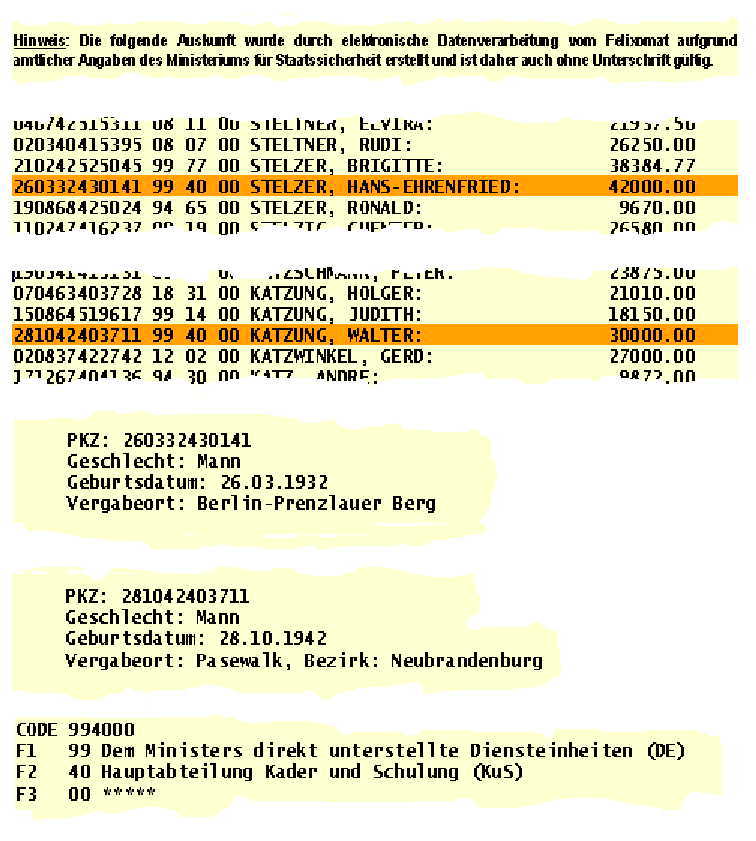
Professor Murder’s “GoMoPa”Killer Bible for the Cyber-Stasi Murderers

The study of 900 pages named Toxdat by Ehrenfried Stelzer is the “Stasi Killer Bible”. It lists all kind of murder methods and concentrates on the most effective and untraceable.
“The toxdat study was ordered by Stasi Vice-President Gerhard Neiber, the second man in rank after boss Erich Mielke. The toxdat study was also the theoretical “story book” for the murder of the famous German watchdog and journalist Heinz Gerlach by former Stasi member under the guidance of “GoMoPa”,” an informer stated. “Ehrenfried stelzer” was nicknamed “Professor Murder” by his victims. Even close co-worker now compare him with the German SS”doctor” Mengele, “Dr. Death” from Auschwitz.
Only two articles let the German audience believe that the famous journalist and watchdog Heinz Gerlach died on natural courses by blood pollution.

For more Information the victims have launched a new site: http://www.victims-opfer.com

The first one, published only hours after the death of Mr Heinz Gerlach by the notorious “GoMoPa” (see article below) and a second 3 days later by a small German local newspaper, Weserbergland Nachrichten.
Many people including the hostile Gerlach website “Akte Heinz Gerlach” doubted that this man who had so many enemies and friends would die of natural causes without any previous warning. Rumours occured that Mr. Gerlach’s doctor doubted natural courses at all. After many critical voices discussed the issue a small website of a small German local newspaper – which never before had reported about Mr. Heinz Gerlach and which is not even in the region of Mr Gerlachs home – published that Mr Gerlach died of blood pollution. Weserbergland-Nachrichten published a long article about the deadly consequences of blood pollution and did not even name the source of such an important statement. It claimed only that somebody of Gerlachs inner circle had said this. It is a proven fact that after the collpase of the Eastern German Communist Regime many former Communist propaganda agents went to regional newspapers – often in Western Germany like Günther Schabowski did the man who opened the “Mauer”.
The theatre stage was set: One day later the hostile Gerlach website “Akte Heinz Gerlach” took the agenda publishing that Mr Gerlach had died for natural causes without any further research at all.
This was done by a website which for months and months and months reported everything about Mr. Gerlach.
Furthermore a research proves that the technical details regarding the website hosting of this hostile website “Akte Heinz Gerlach” proves that there are common details with the hosting of “GoMoPa” and their affiliates as proven by the SJB-GoMoPa-victims (see http://www.sjb-fonds-opfer.com)
Insiders believe that the murderers of Mr. Heinz Gerlach are former members of the Eastern German Terror Organisation “Stasi” with dioxins. They also believe that “GoMoPa” was part of the plot. At “GoMoPa”’ a person named Siegfried Siewers was officialy responsible for the press but never appeared in public. “GoMoPa”-victims say that this name was a cameo for “GoMoPa” frontrunner Klaus Maurischat who is controlled by the Stasi Top Agent Ehrenfried Stelzner, Berlin.
Siegfried Sievers, a former Stasi member is responsible for the pollution of millions Germanys for many years with dioxins. This was unveiled at 5th of January 2011 by German prosecutors.
The victims say that Maurischat (probably also a Stasi cameo) and Sievers were in contact as Sievers acted as Stasi Agent and was in fact already a specialist in dioxins under the Communist Terror Regime in Eastern Germany.
Furthermore the Stasi Top Agent Ehrenfried Stelzer disguised as Professor for Criminal studies during the Communist Regime at the Eastern Berlin Humboldt University.
Background:
The man behind the Berlin lawyer Jochen Resch and his activities is Ehrenfried Stelzer, former Stasi Top officer in Berlin and “Professor for Criminal Studies” at the Eastern Berlin Humboldt University during the Communist regime, the SJB-GoMoPa-victims say (www.sjb-fonds-opfer.com) is responsable for the killing of German watchdog and journalist Heinz Gerlach.
These informations stem from various sources who were close to the criminal organization of GoMoPa in the last years. The SJB-GoMoPa say that the well-known German watchdog and journalist Heinz Gerlach was killed by former Stasi members with dioxins. Polychlorinated dibenzodioxins (PCDDs), or simply dioxins, are a group of organic polyhalogenated compounds that are significant because they act as environmental pollutants. They are commonly referred to as dioxins for simplicity in scientific publications because every PCDD molecule contains a dioxin skeletal structure. Typically, the p-dioxin skeleton is at the core of a PCDD molecule, giving the molecule a dibenzo-p-dioxin ring system. Members of the PCDD family have been shown to bioaccumulate in humans and wildlife due to their lipophilic properties, and are known teratogens, mutagens, and confirmed (avered) human carcinogens. They are organic compounds.
Dioxins build up primarily in fatty tissues over time (bioaccumulate), so even small exposures may eventually reach dangerous levels. In 1994, the US EPA reported that dioxins are a probable carcinogen, but noted that non-cancer effects (reproduction and sexual development, immune system) may pose an even greater threat to human health. TCDD, the most toxic of the dibenzodioxins, is classified as a Group 1 carcinogen by the International Agency for Research on Cancer (IARC).
In 2004, a notable individual case of dioxin poisoning, Ukrainian politician Viktor Yushchenko was exposed to the second-largest measured dose of dioxins, according to the reports of the physicians responsible for diagnosing him. This is the first known case of a single high dose of TCDD dioxin poisoning, and was diagnosed only after a toxicologist recognized the symptoms of chloracne while viewing television news coverage of his condition.
German dioxin scandal: In January 2011 about 4700 German farms were banned from making deliveries after tests at the Harles und Jentzsch plant in the state of Schleswig-Holstein showed high levels of dioxin. Again this incident appears to involve PCBs and not PCDDs at all. Dioxin were found in animal feed and eggs in many farms. The person who is responsible for this, Siegfried Sievert is also a former Stasi Agent. At “GoMoPa” the notorious Eastern-Berlin press agency (see article below) one of the henchmen acted under the name of “Siegfried Siewert”.
Further evidence for the killing of Mr.Heinz Gerlach is provided by the SJB-GoMoPa-victims by analyzing the dubious role of former Stasi-Top-agent Ehrenfried Stelzer, also a former “Professor for Crime Studies” under the Communist regime in Eastern Germany and the dubious role of “detective” Medard Fuchsgruber. Both are closely tied to the dubious “GoMoPa” and Berlin lawyer Jochen Resch.
According to the SJB-GoMoPa-victims is Berlin lawyer Jochen Resch the mastermind of the criminal organization “GoMoPa2. The victims state that they have a source inside “GoMoPa” who helped them discover  the shocking truth. The so-called “Deep Throat from Berlin” has information that Resch had the idea to found the criminal organization “GoMoPa” and use non-existing Jewish lawyers  named Goldman, Morgenstern & Partner as camouflage. Their “office” in Madison Avenue, New York, is a mailbox. This is witnessed by a German Ex-Patriot, a lawyer, whose father, Heinz Gerlach, died under strange circumstances.
Resch seems to use “GoMoPa” as an instrument to blackmail parts of the German Property and Investment.

German authorities are under growing pressure to reopen investigations into at least a dozen suspicious deaths after the arrest of an alleged East German assassin cast new light on the communist regime. Stasi victims quoted a source saying “isolated units” had conducted operations that were “extremely well organised” and had “100 per cent logistical support” from the East German state.
A statement from prosecutors read: “The accused [Jurgen G] is suspected, as a member of a commando of the former DDR, of killing a number of people between 1976 and 1987 who from the point of view of the DDR regime had committed treason or were threatening to do so.”
Details of his Jurgen G’s arrest have been described in suitably florid terms, with the mass circulation tabloid Bild saying he was working at the Wolfsbruch marina near Rheinsberg in north-eastern Germany when a woman approached him. “Excuse me, is that your yellow Trabant in the car park? I just ran into it with my car,” she is said to have asked.
When he followed her to the car park, masked officers jumped out of vans and bushes and overpowered him in an operation worthy of the Stasi itself.
An eyewitness told Bild: “They blindfolded him and raced off in an unmarked car.”
Police across Germany are reported to be sifting through files to see who the victims may have been, and some intelligence officers are greeting the arrest of Jurgen G as a breakthrough.
Thomas Auerbach, who works for the Stasi file authority in Berlin and has written a book based on the death squad files, said: “These people were trained to make such murders look like accidents or suicides, even as ‘ordinary’ crimes such as robberies. They were real terror experts.”
The cases said to be linked to Jurgen G or his unit include many people involved with the commercial arm of the East German ruling socialist party, the SED (Socialist Unity Party).
Uwe Harms, the head of a Hamburg-based haulage firm which was part of a network of companies secretly owned by the SED, disappeared in March 1987 after conversations with various DDR functionaries. Six weeks later, his body was found in a plastic bag.
Weeks before his death he told friends that he felt he was being followed. After reunification, one of the other SED company heads said Mr Harms had been liquidated for refusing to allow his firm to be used to transport arms into East Germany.
Dieter Vogel, a businessman who had been jailed for life for spying for the CIA, was found suffocated in his cell in the East German prison Bautzen on March 9, 1982. The fact that he was due to be taken to the West in a spy swap arrangement just a few weeks later cast doubt on the suicide theory.
He had passed the names of several Stasi moles to the BND, West Germany’s heavily penetrated counter-intelligence service.
The Christian Democrat Union politician Uwe Barschel, 43, was found dead by magazine reporters in his bathtub in a hotel room in Geneva in October, 1987. He died of poisoning, but rumours that he was involved somehow in arms deals and the Stasi have clung to the case.
One of the more high-profile and enduring mysteries is that of Lutz Eigendorf, an East German footballer from the Stasi-backed Dynamo Berlin.
He fled to the West in 1979 amid great publicity. Four years later, he died after crashing his car into a tree on a straight stretch of road with blood alcohol levels way over the limit. Witnesses who had seen him earlier in the evening said he had not been drinking.
Most controversial though is the suggestion that the assassination squad was linked to the murder of a Swedish television reporter and her friend in 1984.
Cats Falk and her friend Lena Graens went missing on Nov 19, 1984. Their bodies were fished out of a Stockholm canal six months later.
Reports suggested a three-man assassination squad killed them, spiking their drinks with drugs, putting them into their car and pushing it into the Hammarby canal.
Shortly before her death, Cats Falk had reportedly uncovered a deal between an arms dealer and an East German firm.
Germany has recently undergone a wave of nostalgia for all things East German, dubbed Ostalgie, with colourful television shows featuring former DDR stars such as the ice skater Katerina Witt talking wistfully about socialist pop music.
A reassessment may be coming in the wake of the revelations.

Victims: The DDR-STASI MURDER GANG “GoMOPa” in murderoplot against Joerg Berger

The Stasi Murder Gang of „GoMoPa“ was involved in many trials to kill the popular East German soccer trainer Joerg Berger, Stasi victims tell in postings on their hompage http://www.sjb-fonds-opfer.com. Berger stated before his early death in his biography that they tried to pollute him with arsenic.
Arsenic and many of its compounds are especially potent poisons. Many water supplies close to mines are contaminated by these poisons. Arsenic disrupts ATP production through several mechanisms. At the level of the citric acid cycle, arsenic inhibits lipoic acid which is a cofactor for pyruvate dehydrogenase; and by competing with phosphate it uncouples oxidative phosphorylation, thus inhibiting energy-linked reduction of NAD+, mitochondrial respiration and ATP synthesis. Hydrogen peroxide production is also increased, which might form reactive oxygen species and oxidative stress. These metabolic interferences lead to death from multi-system organ failure, probably from necrotic cell death, not apoptosis. A post mortem reveals brick red coloured mucosa, owing to severe haemorrhage. Although arsenic causes toxicity, it can also play a protective role.[
Elemental arsenic and arsenic compounds are classified as “toxic” and “dangerous for the environment” in the European Union under directive 67/548/EEC. The International Agency for Research on Cancer (IARC) recognizes arsenic and arsenic compounds as group 1 carcinogens, and the EU lists arsenic trioxide, arsenic pentoxide and arsenate salts as category 1 carcinogens.
Arsenic is known to cause arsenicosis owing to its manifestation in drinking water, “the most common species being arsenate [HAsO42- ; As(V)] and arsenite [H3AsO3 ; As(III)]”. The ability of arsenic to undergo redox conversion between As(III) and As(V) makes its availability in the environment more abundant. According to Croal, Gralnick, Malasarn and Newman, “[the] understanding [of] what stimulates As(III) oxidation and/or limits As(V) reduction is relevant for bioremediation of contaminated sites (Croal). The study of chemolithoautotrophic As(III) oxidizers and the heterotrophic As(V) reducers can help the understanding of the oxidation and/or reduction of arsenic.
Treatment of chronic arsenic poisoning is easily accomplished. British anti-lewisite (dimercaprol) is prescribed in dosages of 5 mg/kg up to 300 mg each 4 hours for the first day. Then administer the same dosage each 6 hours for the second day. Then prescribe this dosage each 8 hours for eight additional days. However the Agency for Toxic Substances and Disease Registry (ATSDR) states that the long term effects of arsenic exposure cannot be predicted. Blood, urine, hair and nails may be tested for arsenic, however these tests cannot foresee possible health outcomes due to the exposure. Excretion occurs in the urine and long term exposure to arsenic has been linked to bladder and kidney cancer in addition to cancer of the liver, prostate, skin, lungs and nasal cavity.[
Occupational exposure and arsenic poisoning may occur in persons working in industries involving the use of inorganic arsenic and its compounds, such as wood preservation, glass production, nonferrous metal alloys and electronic semiconductor manufacturing. Inorganic arsenic is also found in coke oven emissions associated with the smelter industry.

THE DDR GESTAPO-STASI MURDER GANG responsable for the murder of Lutz Eigendorf

The talented Eigendorf played for East German side Dynamo Berlin.
He made his debut for the GDR in an August 1978 match against Bulgaria, immediately scoring his first two goals in a 2–2 draw. He went on to collect six caps, scoring three goals.[1] His final international was a February 1979 friendly match against Iraq.
On 20 March 1979, after a friendship match between Dynamo and West German club 1. FC Kaiserslautern in Gießen he fled to the west hoping to play for that team. But because of his defection he was banned from play for one year by UEFA and instead spent that time as a youth coach with the club.
This was not the first time an East German athlete had fled to the west, but it was a particularly embarrassing defection. Eigendorf’s club Dynamo was under the patronage of the Stasi, East Germany’s secretive state police, and subject to the personal attentions of the organisation’s head, Erich Mielke. He ensured that the club’s roster was made up of the country’s best players, as well as arranging for the manipulation of matches in Dynamo’s favour. After his defection Eigendorf openly criticised the DDR in the western media.
His wife Gabriele remained behind in Berlin with their daughter and was placed under constant police surveillance. Lawyers working for the Stasi quickly arranged a divorce and the former Frau Eigendorf re-married. Her new husband was eventually revealed as a Lothario – an agent of the state police whose role it was to spy on a suspect while romancing them.
In 1983 Eigendorf moved from Kaiserslautern to join Eintracht Braunschweig, all the while under the scrutiny of the Stasi who employed a number of West Germans as informants. On 5 March that year he was badly injured in a suspicious traffic accident and died within two days. An autopsy indicated a high blood alcohol level despite the testimony of people he had met with that evening indicating that Eigendorf had only a small amount of beer to drink.
After German re-unification and the subsequent opening of the files of the former East Germany’s state security service it was revealed that the traffic accident had been an assassination attempt orchestrated by the Stasi, confirming the longtime suspicions held by many. A summary report of the events surrounding Eigendorf’s death was made on German television on 22 March 2000 which detailed an investigation by Heribert Schwan in the documentary “Tod dem Verräter” (“Death to the Traitor”).
On 10 February 2010, a former East German spy revealed the Stasi ordered him to kill Eigendorf, which he claimed not to have done

MfS has been accused of a number of assassinations against political dissidents and other people both inside and outside the country. Examples include the East German football player Lutz Eigendorf and the Swedish journalist Cats Falck.
The terrorists who killed Alfred Herrhausen were professionals. They dressed as construction workers to lay a wire under the pavement of the road along Mr. Herrhausen’s usual route to work. They planted a sack of armor-piercing explosives on a parked bicycle by the roadside. An infrared beam shining across the road triggered the explosion just when the limousine, one of three cars in a convoy, sped by.
The operation, from the terrorists’ point of view, was flawless: Mr. Herrhausen, the chairman of one of Europe’s most powerful companies, Deutsche Bank, was killed in the explosion along that suburban Frankfurt road on Nov. 30, 1989.
But was everything what it seemed?
Within days, the Red Army Faction — a leftist terrorist group that had traumatized West Germany since 1970 with a series of high-profile crimes and brazen killings of bankers and industrialists — claimed responsibility for the assassination. An intense manhunt followed. In June 1990, police arrested 10 Red Army Faction members who had fled to East Germany to avoid arrest for other crimes. To the police’s surprise, they were willing to talk. Equally confounding to authorities: All had solid alibis. None was charged in the Herrhausen attack.
Now, almost two decades later, German police, prosecutors and other security officials have focused on a new suspect: the East German secret police, known as the Stasi. Long fodder for spy novelists like John le Carré, the shadowy Stasi controlled every aspect of East German life through imprisonment, intimidation and the use of informants — even placing a spy at one point in the office of West German Chancellor Willy Brandt.
According to documents reviewed by The Wall Street Journal, the murders of Mr. Herrhausen and others attributed to the Red Army Faction bear striking resemblance to methods and tactics pioneered by a special unit of the Stasi. The unit reported to Stasi boss Erich Mielke and actively sought in the waning years of the communist regime to imitate the Red Army Faction to mask their own attacks against prominent people in Western Germany and destabilize the country.
“The investigation has intensified in recent months,” said Frank Wallenta, a spokesman for the Federal Prosecutor. “And we are investigating everything, including leads to the Stasi.”
If those leads turn out to be true, it would mean not only rewriting some of the most dramatic episodes of the Cold War, but would likely accelerate a broader soul-searching now under way in Germany about the communist past.
In building a reunified country, many Germans have ignored discussion of the brutal realities of its former communist half. When the former East Germany is discussed, it’s often with nostalgia or empathy for brothers hostage to Soviet influence.

Stasi boss Erich Mielke, middle, with unnamed associates
That taboo is slowly being broken. Last year’s Oscar-winning movie, “The Lives of Others,” chronicled in dark detail a Stasi agent’s efforts to subvert the lives of ordinary people. Material in the Stasi archives shows that senior leaders had a shoot-to-kill order against those fleeing from East to West — a controversial order that contradicts East German leaders’ claims that they never ordered any shootings.
This story is based on more than a dozen interviews with police, prosecutors and other security officials. Several policemen and prosecutors confirmed that the allegation of extensive Stasi involvement with the Red Army Faction is a key part of the current investigation.
Court cases in West Germany in the 1990s established that members of the Red Army Faction were granted free passage to other countries in the 1970s and refuge in East Germany in the 1980s. But the current investigation and documents from Stasi archives suggest far deeper involvement — that members of the Red Army Faction were not only harbored by the Stasi but methodically trained in sophisticated techniques of bombing and murder.
Traudl Herrhausen, Mr. Herrhausen’s widow, is one of those pushing for further investigation. She says she long suspected involvement by the Stasi or other intelligence service such as the KGB, but never spoke publicly because she didn’t have evidence and didn’t want to interfere in the investigation. She says she is now breaking an 18-year silence in her desire to see justice done. “Now I want to look my husband’s killers in the eye,” she said in an interview.
The Red Army Faction was founded about 1970 by a band of leftists who justified their terrorism based on opposition to West Germany’s ruling elite. Killing members of this elite would provoke the West German state to take repressive measures that would show its true fascist face, Red Army Faction leaders believed.
In its early years, the group, also known as the Baader-Meinhof band, made headlines with prison breaks, bank robberies, bomb attacks and deadly shootouts. Four gang members led by Ulrike Meinhof freed Red Army Faction leader Andreas Baader from a Berlin jail a month after his arrest.
Red Army Faction violence in West Germany intensified in 1977 when Jürgen Ponto, then head of Dresdner Bank, was shot and killed at his home. Five weeks later, the group killed four people and abducted the chairman of the German employer association, Hans-Martin Schleyer, one of West Germany’s most prominent businessmen. It was the start of a six-week ordeal in which neither government nor terrorists would compromise. To support the Red Army Faction cause, Palestinian terrorists hijacked a Lufthansa jet in Spain, forcing it to land in Mogadishu, Somalia. After the plane was rushed by West German commandos, top Red Army Faction leaders in West Germany committed suicide and Mr. Schleyer was executed by his captors.
Red Army Faction violence began to abate in the late 1970s after the Lufthansa incident. Many in Germany thought the group — whose attacks were often crude — lost its will to kill after the arrest of its senior leaders in 1982. So when the group appeared to renew its terror campaign with a series of high-profile attacks in 1985, police were stunned by the level of their sophistication and determination.
This time, the group dazzled police with its ability to hit targets and leave little substantial evidence behind. They used high-tech devices no one thought they possessed. Their marksmen killed with military precision.

Weapons used by terrorists during the 1977 kidnapping of German industrialist Hanns-Martin Schleyer.
Surprisingly, members of the Red Army Faction so-called third generation had a policeman’s understanding of forensic science. From 1985 onward, the Red Army Faction rarely left a fingerprint or other useful piece of evidence at a crime scene, according to court records. The murder cases from this era are still open. Some suspected Stasi involvement, but no one could ever prove it, according to a senior police official.
The 1989 car-bomb murder of Mr. Herrhausen particularly stunned police with its audacity and sophistication. Mr. Herrhausen was the head of Deutsche Bank, Germany’s largest bank. He was part of the political-business elite that helped turn West Germany from a war-ravaged rump state into an economic powerhouse — all while East Germany languished in frustration. Mr. Herrhausen was a vocal proponent of a united Germany.
In November 1989, Mr. Herrhausen was following the fall of the Berlin wall and events in the Soviet Union closely, conferring frequently with Mikhail Gorbachev, according to his wife and friends. Then on Nov. 27, Mr. Herrhausen announced a plan to acquire the investment banking firm Morgan Grenfell — at the time a record-breaking bank acquisition.
Also during November, a spot along Mr. Herrhausen’s usual route to work was closed because of construction. Terrorists, dressed as construction workers, laid an electric wire under the road’s pavement. On Nov. 29, the stretch reopened.
On the morning of Nov. 30, like every workday morning, Mr. Herrhausen stepped into his limousine at about 8:30. Mr. Herrhausen’s driver waited about one minute to allow the first of the three-car entourage to drive ahead and survey the road.
“It was the route they hadn’t used in weeks,” Mrs. Herrhausen said.
As Mr. Herrhausen sped down the road, a team of terrorists waited. Beside the road, a parked bicycle held a sack of armor-piercing explosives. The detonator was connected by the electric wire under the road to a trigger activated by an interruption in an infrared beam shining across the road.
A terrorist activated the detonator after the first car of bodyguards drove past the bomb. Mr. Herrhausen died at the scene.
As they had during previous attacks, police set up dragnets to round up Red Army Faction cadre. But the June 1990 arrests of 10 members of the group who had earlier been granted political asylum in East Germany produced no leads. All the seized Red Army Faction members had solid alibis.
In July 1991, prosecutors believed they had a breakthrough when an informant claimed he had allowed two members of the Red Army Faction to stay at his home near the Herrhausen residence. Prosecutors followed that trail 13 years before dropping charges in 2004.
Frustrated with the inability of prosecutors to solve the Herrhausen case and believing that prosecutors were ignoring other leads including possible Stasi involvement, German officials replaced the prosecutor overseeing the case.
Police acknowledge that part of the reason for their focus on possible Stasi involvement was that all other leads had dried up. But they say they also knew that over the years the Stasi had worked with and given explosives to other terrorists, including “Carlos the Jackal” and the Basque group ETA in Spain. And in 2001 to 2003, an undercover police officer met with a man who claimed he had been a killer for the Stasi operating in Western Germany, although police were never able to tie him to specific murders.
German investigators turned their attention to Wartin, a small eastern German village nestled in yellow-brown fields of grain near the Polish border. Today, sheep graze in a field spotted with wooden posts.
In the 1980s, however, Wartin was home to the Stasi’s AGM/S — “Minister Working Group/Special Operations.” It got its name because it reported to Mr. Mielke, the minister who headed the Stasi for almost all of East Germany’s 40-year history.
The Wartin unit’s peacetime duties included the kidnapping and murder of influential people in the West, according to Stasi records reviewed by The Wall Street Journal in the Stasi archives in Berlin.
The documents say the unit’s activities included “intimidating anti-communist opinion leaders” by “liquidation,” and “kidnapping or hostage taking, connected with the demand that political messages be read,” according to a description of the unit’s activities written by a senior Wartin official in 1982.
Based on these documents, German investigators increasingly believe that the Stasi played a more active role than previously believed in Red Army Faction terrorism. After years of not being able to draw parallels between the Stasi unit in Wartin and the Red Army Faction killings, police are now focusing closely on such a link. Joachim Lampe, who assisted the successful prosecution of the first wave of Red Army Faction terrorists up until 1982 and was then assigned to prosecute Stasi-related crimes in West Germany, says it’s time to compare the activities of Wartin with the activities of the Red Army Faction to see where they overlap. “It is an important line of investigation,” he said.
A year after the Red Army Faction’s first generation collapsed in 1972, an internal Wartin report said cooperation with terrorists is possible if the individuals could be trusted to maintain secrecy and obey orders. Initial contacts, however, may not have taken place until later in the decade. Disillusionment gripped many of the terrorists living on the lam, according to court records citing witness statements by accused terrorists. Beginning about 1980, the Stasi granted refuge to 10 members of the Red Army Faction in East Germany and gave them assumed identities.
The Stasi sympathized with the anti-capitalist ideals of the Red Army Faction, but Stasi leaders were concerned about placing their trust in a group of uncontrollable leftist militants, a review of Stasi records shows. Stasi officials did not want to tarnish East Germany’s international reputation, so they toyed with different concepts for cooperation with terrorist groups, according to a prosecutor who has investigated Stasi involvement with terrorism.
One suggestion, contained in a document prepared for new officers assigned to the unit, was to emulate Romanian intelligence, which successfully worked with the terrorist “Carlos” to bomb the Radio Free Europe office in Munich, Germany, in 1981. To assist in such operations, the Wartin unit developed highly specialized explosives, poisons and miniature firearms.
About 1980 the Stasi also proposed a second strategy: instead of using a terrorist group directly — such cooperation always contained risk of discovery — they could simply execute attacks so similar to those of known terrorists that police would never look for a second set of suspects, according to Wartin records. The Wartin leadership called this strategy the “perpetrator principle,” according to Stasi records. The unit’s progress in implementing the steps to imitate terrorist attacks is described in a series of progress reports by Wartin officials between 1980 and 1987.
In September 1981, Red Army Faction terrorists attempted to kill U.S. Gen. James Kroesen in Heidelberg, Germany, shooting a bazooka at his car. About the same time, members of the same Red Army Faction team visited East Germany, where they were asked by the Stasi to shoot a bazooka at a car containing a dog. The dog died, according to court records.
In Wartin, officials wrote up a detailed description of the Red Army Faction members’ re-enactment of the Kroesen attack. “It is important to collect all accessible information about the terrorist scene in imperialist countries, to study and analyze their equipment, methods and tactics, so we can do it ourselves,” a senior Wartin official wrote in February 1982, according to the report.
In 1982, West German police discovered two troves of Red Army Faction weapons and documents buried in German forests. Three terrorists, including Red Army Faction leader Christian Klar, were arrested when they approached the sites. The troves were buried in locations easy to find at night, a tactic used by Wartin’s own agents to store operational equipment in West Germany, according to an investigator who viewed the troves and Stasi records.
That same year, a Wartin official described the staged bombing of a moving vehicle. According to the report, several Stasi officers shed “tears of joy” when electronic sensors detected the approaching car and ignited the detonator.
A spokesman at Germany’s federal police investigative agency, the equivalent of the U.S. Federal Bureau of Investigation, declined to comment on the close similarity between the detonator used in the demonstration and the device that killed Mr. Herrhausen, saying this is part of their investigation.
Wartin officers continued their preparations for imitating terrorist attacks in West Germany, according to a 1985 internal Wartin report. They created a special archive profiling the characteristics of known terrorists and terrorist groups, and taught staff members to execute nearly identical attacks, according to Stasi records. Each year, the unit’s officers detailed the unit’s success in teaching these techniques in their annual reports, according to the reports.
Then, in 1987, the AGM/S stopped offensive operations. The unit was disbanded.
Werner Grossmann, a former three-star Stasi General and former head of foreign intelligence operations, says the AGM/S was responsible for planning attacks in West Germany, but was dissolved “because it didn’t produce results.” Mr. Grossmann assumed control of part of the AGM/S after most of the unit was dissolved.
Mr. Grossmann says he took control of part of the AGM/S because he wanted to run intelligence operations against West Germany’s civil defense infrastructure.
“I refused to have anything to do with terrorism and terrorists,” Mr. Grossmann said in an interview. He said he didn’t have any influence over the AGM/S activities before 1987 and wasn’t informed about the unit’s activities before it came under his control.
Olaf Barnickel, a career Stasi officer who served at Wartin, says his unit planned murders in West Germany, but never committed one. “It was all theory and no practice,” Mr. Barnickel said in an interview.
But some German police are unpersuaded. They believe the seeds may have been planted for future violent attacks.
In November 1989, as East Germany disintegrated, groups of citizens forced their way into Stasi installations, seizing control. In Wartin, a local church minister led a group of demonstrators to the main entrance of the Stasi base. The base closed.
Within the Stasi as a whole, the chain of command began to disintegrate. Links to organizations in West Germany, including the Red Army Faction, were broken.
Sixteen months after Mr. Herrhausen’s murder, the Red Army Faction claimed its last victim, killing Detlev Karsten Rohwedder, the head of the Treuhandanstalt, the powerful trust that controlled most state-owned assets in the former East Germany and was overseeing their privatization. Mr. Rohwedder was killed while he was standing by the window of his house in Düsseldorf.
The murder was performed by a trained sharpshooter, according to a police official familiar with the investigation. The Stasi trained members of the Red Army Faction in sharpshooting skills and had its own teams of sharpshooters, according to witness statements by Stasi officials to a Berlin prosecutor and Stasi records.
In 1998, the Red Army Faction issued the last of its communiques, announcing it was disbanding. German police attribute the group’s disappearance to changing times, which made the group seem a relic of the past. Indeed, the Red Army Faction today is largely seen by the German public as part of the social upheaval that plagued West Germany in the 1970s and 1980s. More than one in four Germans consider former Red Army Faction members to have been misguided idealists. More than half now think the investigations should be closed for good in the coming decade when the current group of Red Army Faction prisoners finish serving their prison sentences.
German prosecutors say their investigation of the Stasi’s role is continuing.
Since last month, Mrs. Herrhausen has been in contact with the next of kin of victims in the other unsolved Red Army Faction murder cases, looking for support to push the investigation. The bomb that killed her husband nearly 18 years ago exploded soon after he left for work, within earshot of their home in suburban Frankfurt.
“I still hear that bomb every day,” she says.

Only two articles let the German audience believe that the famous journalist and watchdog Heinz Gerlach died on natural courses by blood pollution.
The first one, published only hours after the death of Mr Heinz Gerlach by the notorious “GoMoPa” (see article below) and a second 3 days later by a small German local newspaper, Weserbergland Nachrichten.
Many people including the hostile Gerlach website “Akte Heinz Gerlach” doubted that this man who had so many enemies and friends would die of natural causes without any previous warning. Rumours occured that Mr. Gerlach’s doctor doubted natural courses at all. After many critical voices discussed the issue a small website of a small German local newspaper – which never before had reported about Mr. Heinz Gerlach and which is not even in the region of Mr Gerlachs home – published that Mr Gerlach died of blood pollution. Weserbergland-Nachrichten published a long article about the deadly consequences of blood pollution and did not even name the source of such an important statement. It claimed only that somebody of Gerlachs inner circle had said this. It is a proven fact that after the collpase of the Eastern German Communist Regime many former Communist propaganda agents went to regional newspapers – often in Western Germany like Günther Schabowski did the man who opened the “Mauer”.
The theatre stage was set: One day later the hostile Gerlach website “Akte Heinz Gerlach” took the agenda publishing that Mr Gerlach had died for natural causes without any further research at all.
This was done by a website which for months and months and months reported everything about Mr. Gerlach.
Furthermore a research proves that the technical details regarding the website hosting of this hostile website “Akte Heinz Gerlach” proves that there are common details with the hosting of “GoMoPa” and their affiliates as proven by the SJB-GoMoPa-victims (see http://www.sjb-fonds-opfer.com)
Insiders believe that the murderers of Mr. Heinz Gerlach are former members of the Eastern German Terror Organisation “Stasi” with dioxins. They also believe that “GoMoPa” was part of the plot. At “GoMoPa”’ a person named Siegfried Siewers was officialy responsible for the press but never appeared in public. “GoMoPa”-victims say that this name was a cameo for “GoMoPa” frontrunner Klaus Maurischat who is controlled by the Stasi Top Agent Ehrenfried Stelzner, Berlin.
Siegfried Sievers, a former Stasi member is responsible for the pollution of millions Germanys for many years with dioxins. This was unveiled at 5th of January 2011 by German prosecutors.
The victims say that Maurischat (probably also a Stasi cameo) and Sievers were in contact as Sievers acted as Stasi Agent and was in fact already a specialist in dioxins under the Communist Terror Regime in Eastern Germany.
Furthermore the Stasi Top Agent Ehrenfried Stelzer disguised as Professor for Criminal studies during the Communist Regime at the Eastern Berlin Humboldt University.
Background:
The man behind the Berlin lawyer Jochen Resch and his activities is Ehrenfried Stelzer, former Stasi Top officer in Berlin and “Professor for Criminal Studies” at the Eastern Berlin Humboldt University during the Communist regime, the SJB-GoMoPa-victims say (www.sjb-fonds-opfer.com) is responsable for the killing of German watchdog and journalist Heinz Gerlach.
These informations stem from various sources who were close to the criminal organization of GoMoPa in the last years. The SJB-GoMoPa say that the well-known German watchdog and journalist Heinz Gerlach was killed by former Stasi members with dioxins. Polychlorinated dibenzodioxins (PCDDs), or simply dioxins, are a group of organic polyhalogenated compounds that are significant because they act as environmental pollutants. They are commonly referred to as dioxins for simplicity in scientific publications because every PCDD molecule contains a dioxin skeletal structure. Typically, the p-dioxin skeleton is at the core of a PCDD molecule, giving the molecule a dibenzo-p-dioxin ring system. Members of the PCDD family have been shown to bioaccumulate in humans and wildlife due to their lipophilic properties, and are known teratogens, mutagens, and confirmed (avered) human carcinogens. They are organic compounds.
Dioxins build up primarily in fatty tissues over time (bioaccumulate), so even small exposures may eventually reach dangerous levels. In 1994, the US EPA reported that dioxins are a probable carcinogen, but noted that non-cancer effects (reproduction and sexual development, immune system) may pose an even greater threat to human health. TCDD, the most toxic of the dibenzodioxins, is classified as a Group 1 carcinogen by the International Agency for Research on Cancer (IARC).
In 2004, a notable individual case of dioxin poisoning, Ukrainian politician Viktor Yushchenko was exposed to the second-largest measured dose of dioxins, according to the reports of the physicians responsible for diagnosing him. This is the first known case of a single high dose of TCDD dioxin poisoning, and was diagnosed only after a toxicologist recognized the symptoms of chloracne while viewing television news coverage of his condition.
German dioxin scandal: In January 2011 about 4700 German farms were banned from making deliveries after tests at the Harles und Jentzsch plant in the state of Schleswig-Holstein showed high levels of dioxin. Again this incident appears to involve PCBs and not PCDDs at all. Dioxin were found in animal feed and eggs in many farms. The person who is responsible for this, Siegfried Sievert is also a former Stasi Agent. At “GoMoPa” the notorious Eastern-Berlin press agency (see article below) one of the henchmen acted under the name of “Siegfried Siewert”.
Further evidence for the killing of Mr.Heinz Gerlach is provided by the SJB-GoMoPa-victims by analyzing the dubious role of former Stasi-Top-agent Ehrenfried Stelzer, also a former “Professor for Crime Studies” under the Communist regime in Eastern Germany and the dubious role of “detective” Medard Fuchsgruber. Both are closely tied to the dubious “GoMoPa” and Berlin lawyer Jochen Resch.
According to the SJB-GoMoPa-victims is Berlin lawyer Jochen Resch the mastermind of the criminal organization “GoMoPa2. The victims state that they have a source inside “GoMoPa” who helped them discover  the shocking truth. The so-called “Deep Throat from Berlin” has information that Resch had the idea to found the criminal organization “GoMoPa” and use non-existing Jewish lawyers  named Goldman, Morgenstern & Partner as camouflage. Their “office” in Madison Avenue, New York, is a mailbox. This is witnessed by a German Ex-Patriot, a lawyer, whose father, Heinz Gerlach, died under strange circumstances.
Resch seems to use “GoMoPa” as an instrument to blackmail parts of the German Property and Investment.

The name of Benno Ohnesorg became a rallying cry for the West German left after he was shot dead by police in 1967. Newly discovered documents indicate that the cop who shot him may have been a spy for the East German secret police.
It was one of the most important events leading up to the wave of radical left-wing violence which washed over West Germany in the 1970s. On the evening of June 2, 1967, the literature student Benno Ohnesorg took part in a demonstration at West Berlin’s opera house. Mohammad Reza Pahlavi, the shah of Iran, was to attend and the gathered students wanted to call attention to his brutal regime.
The protests, though, got out of hand. Pro-shah demonstrators, some of them flown in from Iran for the occasion, battled with the student protestors. West Berlin police also did their part, brutally beating back the crowd. At 8:30 p.m., a shot was fired, and a short time later the 26-year-old Ohnesorg, having been hit in the back of the head, became the left wing’s first martyr.
Now, though, the history of the event may have to be re-written. New documents discovered in the Stasi archive — the vast collection of files left behind by the East German secret police — reveal that the policeman who shot Ohnesorg, Karl-Heinz Kurras, could in fact have been a spy for East Germany’s communist regime.
In an article that will appear in late May in Deutschlandarchiv, a periodical dedicated to the ongoing project of German reunification, Helmut Müller-Enbergs and Cornelia Jabs reveal that documents they found in the Stasi papers show that Kurras began working together with the Stasi in 1955. He had wanted to move to East Berlin to work for the East German police. Instead, he signed an agreement with the Stasi to remain with the West Berlin police force and spy for the communist state.
As a result of the new information, criminal charges have once again been filed against Kurras, who was acquitted twice, once in 1967 and again in 1970, of negligent homicide charges related to Ohnesorg’s death. Kurras told the Berlin paper Tagesspiegel on Friday that he had never worked together with the Stasi.
But in addition to finding the agreement between Kurras and the Stasi, the two researchers also discovered numerous documents indicating that the East Germans were pleased with the information Kurras passed along — particularly given that he was posted to a division responsible for rooting out moles within the West German police force.
Immediately after Ohnesorg’s death, Kurras received a Stasi communication ordering him to destroy his records and to “cease activities for the moment.” Kurras responded with his acquiescence and wrote “I need money for an attorney.”
The exact circumstances surrounding the death of Ohnesorg have never been completely clarified. Kurras himself, now 81, gave conflicting versions of the story during the investigation but the official version has long been that Kurras fired in self defense. Many others point to witness accounts whereby the police were beating Ohnesorg when the shot was fired.
It is still unclear how the new evidence might play into history’s understanding of the tragic event. The day was one full of violence, with demonstrators and police battling each other with pipes, wooden clubs and stones. Police were further incited by rumors that an officer had been stabbed earlier in the evening. Ohnesorg himself, however, was not directly involved in the violence.
West Berlin in the 1960s and 70s became a focal point of German left wing radicalism. The city had long been left-leaning, and the fact that Berliners were exempt from military service meant that it became a magnate for pacifists and anti-state activists.
Ohnesorg’s death gave them an immediate rallying cry. As the left-wing movement became more radical, many justified their violent activities by pointing to the police brutality that led to the student’s death. A letter written by Ulrike Meinhof announcing the founding of the Red Army Faction, which appeared in SPIEGEL in the fall of 1967, explicitly mentioned the Ohnesorg incident. The RAF went on to terrorize Germany for decades, ultimately killing over 30 people across the country. The radical “June 2 Movement” used the date of the incident in its name.
Kurras, for his part, seems to have been a highly valued Stasi agent. In his files, it is noted that “he is prepared to complete any task assigned to him.” It also mentions that he is notable for having the “courage and temerity necessary to accomplish difficult missions.”

Now it seems the STASI is back again in business after transforming it in to the CYBER-STASI of the 21st Century.

The serial betrayer and cyberstalker Klaus Maurischat is on the run again. The latest action against him (see below) cause him to react in a series of fake statements and “press releases” – one more absurd than the other. Insider analyze that his criminal organisation “GoMoPa” is about to fade away.

On our request the German criminal police (Kriminalpolizei) has opened new cases against the notorious “GoMoPa” organisation which already fled in the underground. Insiders say they have killed German journalist and watchdog Heinz Gerlach and their criminal record is bigger than the Encyclopedia – Britannica

The case is also directed against Google, Germany, whilst supporting criminal action of “GoMoPa” for years and therefore give them the chance to blackmail successfull businessman. This case is therefore an example and will be followed by many others as far as we can project. Furthermore we will bring the case to the attention of the German lawyers community which will not tolerate such misconduct by Googles German legal representative Dr. Arndt Haller and we will bring the case to the attention ofGoogle Inc in Mountain View, USA, and the American ministry of Justice to stop the Cyberstalkers once and for all.
Besides that many legal institutions, individuals and firms have already contacted us to help to clarify the death of Mr. Heinz Gerlach and to prosecute his murderers and their backers.
The case number is ST/0148943/2011

In a series of interviews beginning 11 months before the sudden death of German watchdog Heinz Gerlach Berlin lawyer Joschen Resch unveilved secrets of Gerlach, insiders say. Secret documents from Mr Gerlachs computer were published on two dubious hostile German websites. Both have a lot of similarities in their internet registration. One the notorious “GoMoPa” website belongs to a n Eastern German organization which calls itself “
Numerous attempts have been made to stop our research and the publication of the stories by “GoMoPa” members in camouflage thus confirming the truth and the substance of it in a superior way.
Only two articles let the German audience believe that the famous journalist and watchdog Heinz Gerlach died on natural courses by blood pollution. The first one, published only hours after the death of Mr Heinz Gerlach by the notorious “GoMoPa” (see article below) and a second 3 days later by a small German local newspaper, Weserbergland Nachrichten.

Many people including the hostile Gerlach website “Akte Heinz Gerlach” doubted that this man who had so many enemies and friends would die of natural causes without any previous warning. Rumours occured that Mr. Gerlach’s doctor doubted natural courses at all. After many critical voices discussed the issue a small website of a small German local newspaper – which never before had reported about Mr. Heinz Gerlach and which is not even in the region of Mr Gerlachs home – published that Mr Gerlach died of blood pollution. Weserbergland-Nachrichten published a long article about the deadly consequences of blood pollution and did not even name the source of such an important statement. It claimed only that somebody of Gerlachs inner circle had said this. It is a proven fact that after the collpase of the Eastern German Communist Regime many former Communist propaganda agents went to regional newspapers – often in Western Germany like Günther Schabowski did the man who opened the “Mauer”.

The theatre stage was set: One day later the hostile Gerlach website “Akte Heinz Gerlach” took the agenda publishing that Mr Gerlach had died for natural causes without any further research at all.

This was done by a website which for months and months and months reported everything about Mr. Gerlach.
Furthermore a research proves that the technical details regarding the website hosting of this hostile website “Akte Heinz Gerlach” proves that there are common details with the hosting of “GoMoPa” and their affiliates as proven by the SJB-GoMoPa-victims (see http://www.sjb-fonds-opfer.com)

Insiders believe that the murderers of Mr. Heinz Gerlach are former members of the Eastern German Terror Organisation “Stasi” with dioxins. They also believe that “GoMoPa” was part of the plot. At “GoMoPa”’ a person named Siegfried Siewers was officialy responsible for the press but never appeared in public. “GoMoPa”-victims say that this name was a cameo for “GoMoPa” frontrunner Klaus Maurischat who is controlled by the Stasi Top Agent Ehrenfried Stelznr, Berlin.

Siegfried Sievers, a former Stasi member is responsible for the pollution of millions Germanys for many years with dioxins. This was unveiled at 5th of January 2011 by German prosecutors.
The victims say that Maurischat (probably also a Stasi cameo) and Sievers were in contact as Sievers acted as Stasi Agent and was in fact already a specialist in dioxins under the Communist Terror

The Stasi murder:
„GoMoPa“ & Backers: Blackmailing, Extortion, Racketeering, Internet Murder and Murder. These are the weapons of the East-German “NACHRICHTENDIENST” “GoMoPa”, a renegate confesses.
Deep Throat, Berlin; confesses: „Since months the „GoMoPa“ keyfigures like Klaus-Dieter Maurischat< are in hide-aways because the German police is hunting them for the wirecard fraud and a lot of other criminal actions. I left the group when I noticed that. The found and former Stasi-Colonel Ehrenfried Stelzer died under strange circumstances in Berlin. This has been told to us. But it is also possible that his death was staged. In any case the criminal organization of “GoMoPa” is responsible for the murder of Heinz Gerlach by dioxin. Now my life is also in danger that is why I hide myself.”
According to Deep Throat, Hans J. the murder was done with the help of the old Stasi-connections of the “NACHRICHTENDIENST” “GoMoPa”.
The renegate says that computer hacker Thomas Promny and Sven Schmidt are responsible for the computer crimes and he states that the crime organization of “GoMoPa” has also helpers inside internet companies like Go-Daddy, Media-on and even in Google, Hamburg..

THE “NACHRICHTENDIENST”:New criminal police action against “GoMoPa”:

German criminal police (Kriminalpolizei) has opened new cases against the notorious “GoMoPa” organisation which already fled in the underground.

On our request the German criminal police (Kriminalpolizei) has opened new cases against the notorious “GoMoPa” organisation which already fled in the underground. Insiders say they have killed German journalist and watchdog Heinz Gerlach and their criminal record is bigger than the
Encyclopedia – Britannica

The case is also directed against Google, Germany, whilst supporting criminal action of “GoMoPa” for years and therefore give them the chance to blackmail successfull businessman. This case is therefore an example and will be followed by many others as far as we can project. Furthermore we will bring the case to the attention of the German lawyers community which will not tolerate such misconduct by Googles German legal representative Dr. Arndt Haller and we will bring the case to the attention of Google Inc in Mountain View, USA, and the American ministry of Justice to stop the Cyberstalkers once and for all.

Besides that many legal institutions, individuals and firms have already contacted us to help to clarify the death of Mr. Heinz Gerlach and to prosecute his murderers and their backers.

The case number is

ST/0148943/2011

Stasi-Dioxin: The “NACHRICHTENDIENST”  searching for the perfect murder:

Viktor Yushchenko was running against Prime Minister Viktor Yanukovych. Yanukovych was a political ally of outgoing president Leonid Kuchma. Kuchma’s administration depended upon corruption and dishonesty for its power. Government officials ruled with a sense of terror rather than justice. For the powerful and wealthy few, having Yanukovych elected president was important. Should Yushchenko win, Ukraine’s government was sure to topple. Yushchenko’s campaign promises included a better quality of life for Ukrainians through democracy. His wife, Katherine, told CBS in a 2005 interview, “He was a great threat to the old system, where there was a great deal of corruption, where people were making millions, if not billions.”
On September 6, 2004, Yushchenko became ill after dining with leaders of the Ukrainian secret police. Unlike other social or political engagements, this dinner did not include anyone else on Yushchenko’s team. No precautions were taken regarding the food. Within hours after the dinner, Yushchenko began vomiting violently. His face became paralyzed; he could not speak or read. He developed a severe stomachache and backache as well as gastrointestinal pain. Outwardly, Yushchenko developed what is known as chloracne, a serious skin condition that leaves the face scarred and disfigured.
By December 2004, doctors had determined that Yushchenko had been the victim of dioxin poisoning. Dioxin is a name given to a group of related toxins that can cause cancer and even death. Dioxin was used in the biochemical weapon called Agent Orange during the Vietnam War controversial war in which the United States aidedSouth Vietnam in its fight against a takeover by Communist North Vietnam). Yushchenko had a dioxin level six thousand times greater than that normally found in the bloodstream. His is the second-highest level ever recorded.
Yushchenko immediately suspected he had been poisoned, though Kuchma’s camp passionately denied such allegations. Instead, when Yushchenko showed up at a parliamentary meeting shortly after the poisoning incident, Kuchma’s men teased him, saying he must have had too much to drink or was out too late the night before.
Dioxin can stay in the body for up to thirty-five years. Experts predict that his swelling and scars will fade but never completely disappear. John Henry, a toxicologist at London’s Imperial Hospital, told RedNova.com, “It’ll be a couple of years, and he will always be a bit pockmarked. After damage as heavy as that, I think he will not return to his film star looks.” And Yushchenko will live with the constant threat of cancer.
At first it was believed the poison must have come from a Russian laboratory. Russia was a strong supporter of Kuchma and lobbied against Yushchenko in the 2004 election. But by July 2005, Yushchenko’s security forces were able to trace the poison to a lab in Ukraine. Though not entirely ruling out Russia’s involvement, Yushchenko is quoted on his Web site as saying “I’m sure that even though some people are running from the investigation, we will get them. I am not afraid of anything or anybody.”

Evidence shows that such a perfect murder plotted by former Stasi agents is the cause of the death of German watchdog and journalist Heinz Gerlach.

The Ministry for State Security (German: Ministerium für Staatssicherheit (MfS), commonly known as the Stasi (IPA: [‘?tazi?]) (abbreviation German: Staatssicherheit, literally State Security), was the official state security service of East Germany. The MfS was headquartered in East Berlin, with an extensive complex in Berlin-Lichtenberg and several smaller facilities throughout the city. It was widely regarded as one of the most effective and repressive intelligence and secret police agencies in the world. The MfS motto was “Schild und Schwert der Partei” (Shield and Sword of the Party), that is the ruling Socialist Unity Party of Germany (SED).

According to the confessions of an informer, Berlin lawyer Jochen Resch writes most of the “articles” of the communist “STASI” agency “GoMoPa” himself or it is done by lawyers of his firm. The whistleblower states that lawyer Resch is the mastermind behind the “CYBER-STASI” called “NACHRICHTENDIENST” “GoMoPa”. Bizarre enough they use Jewish names of non-existing Jewish lawyers by the name of “Goldman, Morgenstern and Partner” to stage their bogus “firm”.  Further involved in their complots are a “detective” Medard Fuchsgruber and “STASI”-Colonel Ehrenfried Stelzer, “the first crime expert” in the former communist East-Germany.
According to London based Meridian Capital hundreds and thousands of wealthy people and companies have paid to the “NACHRICHTENDIENST” to avoid their cyberstalking (see article below).
Finally the German criminal police started their investigations (case number ST/0148943/2011).
The “NACHRICHTENDIENST” is also involved in the death of the well-known German watchdog and journalist Heinz Gerlach who died under strange circumstances in July 2010.
Only hours after his death the “NACHRICHTENDIENST” was spreading the news that Mr Gerlach died of blood pollution and set the stage for a fairy tale. Months before his death the “NACHRICHTENDIENST” started a campaign to ruin his reputation and presumably was also responsable for cyberattacks to bring his website down. In fact they presumably used the same tactics also against our servers. Therefore we investigated all internet details of them and handed the facts to the FBI and international authorities.

Story background:
Now it seems the STASI is back again in business after transforming it in to the CYBER-STASI of the 21st Century.

The serial betrayer and  cyberstalker Klaus Maurischat is on the run again. The latest action against him (see below) cause him to react in a series of fake statements and “press releases” – one more absurd than the other. Insider analyze that his criminal organisation “GoMoPa” is about to fade away.
On our request the German criminal police (Kriminalpolizei) has opened new cases against the notorious “GoMoPa” organisation which already fled in the underground. Insiders  say they  have killed German journalist and watchdog Heinz Gerlach and their criminal record is bigger than the Encyclopedia – Britannica
The case is also directed against Google, Germany, whilst supporting criminal action of  “GoMoPa” for years and therefore give them the chance to blackmail successfull businessman. This case is therefore an example and will be followed by many others as far as we can project. Furthermore we will bring the case to the attention of the German lawyers community which will not tolerate such misconduct by Googles German legal representative Dr. Arndt Haller and we will bring the case to the attention of Google Inc in Mountain View, USA, and the American ministry of Justice to stop the Cyberstalkers once and for all.
Besides that many legal institutions,  individuals and firms have already contacted us to help to clarify the death of Mr. Heinz Gerlach and to prosecute his murderers and their backers.
The case number is ST/0148943/2011
In a series of interviews beginning 11 months before the sudden death of German watchdog Heinz Gerlach Berlin lawyer Joschen Resch unveilved secrets of Gerlach, insiders say. Secret documents from Mr Gerlachs computer were published on two dubious hostile German websites. Both have a lot of similarities in their internet registration. One the notorious “GoMoPa” website belongs to a n Eastern German organization which calls itself “
Numerous attempts have been made to stop our research and the publication of the stories by “GoMoPa” members in camouflage thus confirming the truth and the substance of it in a superior way.
Only two articles let the German audience believe that the famous journalist and watchdog Heinz Gerlach died on natural courses by blood pollution. The first one, published only hours after the death of Mr Heinz Gerlach by the notorious “GoMoPa” (see article below) and a second 3 days later by a small German local newspaper, Weserbergland Nachrichten.

Many people including the hostile Gerlach website “Akte Heinz Gerlach” doubted that this man who had so many enemies and friends would die of natural causes without any previous warning. Rumours occured that Mr. Gerlach’s doctor doubted natural courses at all. After many critical voices discussed the issue a small website of a small German local newspaper – which never before had reported about Mr. Heinz Gerlach and which is not even in the region of Mr Gerlachs home – published that Mr Gerlach died of blood pollution. Weserbergland-Nachrichten published a long article about the deadly consequences of blood pollution and did not even name the source of such an important statement. It claimed only that somebody of Gerlachs inner circle had said this. It is a proven fact that after the collpase of the Eastern German Communist Regime many former Communist propaganda agents went to regional newspapers – often in Western Germany like Günther Schabowski did the man who opened the “Mauer”.

The theatre stage was set: One day later the hostile Gerlach website “Akte Heinz Gerlach” took the agenda publishing that Mr Gerlach had died for natural causes without any further research at all.

This was done by a website which for months and months and months reported everything about Mr. Gerlach.
Furthermore a research proves that the technical details regarding the website hosting of this hostile website “Akte Heinz Gerlach” proves that there are common details with the hosting of “GoMoPa” and their affiliates as proven by the SJB-GoMoPa-victims (see http://www.sjb-fonds-opfer.com)
Insiders believe that the murderers of Mr. Heinz Gerlach are former members of the Eastern German Terror Organisation “Stasi” with dioxins. They also believe that “GoMoPa” was part of the plot. At “GoMoPa”’ a person named Siegfried Siewers was officialy responsible for the press but never appeared in public. “GoMoPa”-victims say that this name was a cameo for “GoMoPa” frontrunner Klaus Maurischat who is controlled by the Stasi Top Agent Ehrenfried Stelzner, Berlin.

Siegfried Sievers, a former Stasi member is responsible for the pollution of millions Germanys for many years with dioxins. This was unveiled at 5th of January 2011 by German prosecutors.
The victims say that Maurischat (probably also a Stasi cameo) and Sievers were in contact as Sievers acted as Stasi Agent and was in fact already a specialist in dioxins under the Communist Terror Regime in Eastern Germany.
Furthermore the Stasi Top Agent Ehrenfried Stelzer disguised as Professor for Criminal studies during the Communist Regime at the Eastern Berlin Humboldt University.

Background:
The man behind the Berlin lawyer Jochen Resch and his activities is Ehrenfried Stelzer, former Stasi Top officer in Berlin and “Professor for Criminal Studies” at the Eastern Berlin Humboldt University during the Communist regime, the SJB-GoMoPa-victims say (www.sjb-fonds-opfer.com) is responsable for the killing of German watchdog and journalist Heinz Gerlach.
These informations stem from various sources who were close to the criminal organization of GoMoPa in the last years. The SJB-GoMoPa say that the well-known German watchdog and journalist Heinz Gerlach was killed by former Stasi members with dioxins. Polychlorinated dibenzodioxins (PCDDs), or simply dioxins, are a group of organic polyhalogenated compounds that are significant because they act as environmental pollutants. They are commonly referred to as dioxins for simplicity in scientific publications because every PCDD molecule contains a dioxin skeletal structure. Typically, the p-dioxin skeleton is at the core of a PCDD molecule, giving the molecule a dibenzo-p-dioxin ring system. Members of the PCDD family have been shown to bioaccumulate in humans and wildlife due to their lipophilic properties, and are known teratogens, mutagens, and confirmed (avered) human carcinogens. They are organic compounds.
Dioxins build up primarily in fatty tissues over time (bioaccumulate), so even small exposures may eventually reach dangerous levels. In 1994, the US EPA reported that dioxins are a probable carcinogen, but noted that non-cancer effects (reproduction and sexual development, immune system) may pose an even greater threat to human health. TCDD, the most toxic of the dibenzodioxins, is classified as a Group 1 carcinogen by the International Agency for Research on Cancer (IARC).
In 2004, a notable individual case of dioxin poisoning, Ukrainian politician Viktor Yushchenko was exposed to the second-largest measured dose of dioxins, according to the reports of the physicians responsible for diagnosing him. This is the first known case of a single high dose of TCDD dioxin poisoning, and was diagnosed only after a toxicologist recognized the symptoms of chloracne while viewing television news coverage of his condition.
German dioxin scandal: In January 2011 about 4700 German farms were banned from making deliveries after tests at the Harles und Jentzsch plant in the state of Schleswig-Holstein showed high levels of dioxin. Again this incident appears to involve PCBs and not PCDDs at all. Dioxin were found in animal feed and eggs in many farms. The person who is responsible for this, Siegfried Sievert is also a former Stasi Agent. At “GoMoPa” the notorious Eastern-Berlin press agency (see article below) one of the henchmen acted under the name of “Siegfried Siewert”.
Further evidence for the killing of Mr.Heinz Gerlach is provided by the SJB-GoMoPa-victims by analyzing the dubious role of former Stasi-Top-agent Ehrenfried Stelzer, also a former “Professor for Crime Studies” under the Communist regime in Eastern Germany and the dubious role of “detective” Medard Fuchsgruber. Both are closely tied to the dubious “GoMoPa” and Berlin lawyer Jochen Resch.
According to the SJB-GoMoPa-victims is Berlin lawyer Jochen Resch the mastermind of the criminal organization “GoMoPa2. The victims state that they have a source inside “GoMoPa” who helped them discover  the shocking truth. The so-called “Deep Throat from Berlin” has information that Resch had the idea to found the criminal organization “GoMoPa” and use non-existing Jewish lawyers  named Goldman, Morgenstern & Partner as camouflage. Their “office” in Madison Avenue, New York, is a mailbox. This is witnessed by a German Ex-Patriot, a lawyer, whose father, Heinz Gerlach, died under strange circumstances.
Resch seems to use “GoMoPa” as an instrument to blackmail parts of the German Property and Investment section.

-“Worse than the Gestapo.” —Simon Wiesenthal, Nazi hunter said about the notorious “Stasi”.

Less than a month after German demonstrators began to tear down the Berlin Wall on November 9, 1989, irate East German citizens stormed the Leipzig district office of the Ministry for State Security (MfS)—the Stasi, as it was more commonly called. Not a shot was fired, and there was no evidence of “street justice” as Stasi officers surrendered meekly and were peacefully led away. The following month, on January 15, hundreds of citizens sacked Stasi headquarters in Berlin. Again there was no bloodshed. The last bit of unfinished business was accomplished on May 31 when the Stasi radioed its agents in West Germany to fold their tents and come home.
The intelligence department of the Nationale Volksarmee (NVA), the People’s Army, had done the same almost a week earlier, but with what its members thought was better style. Instead of sending the five-digit code groups that it had used for decades to message its spies in West Germany, the army group broadcast a male choir singing a children’s ditty about a duck swimming on a lake. There was no doubt that the singing spymasters had been drowning their sorrow over losing the Cold War in schnapps. The giggling, word-slurring songsters repeated the refrain three times: “Dunk your little head in the water and lift your little tail.” This was the signal to agents under deep cover that it was time to come home.
With extraordinary speed and political resolve, the divided nation was reunified a year later. The collapse of the despotic regime was total. It was a euphoric time for Germans, but reunification also produced a new national dilemma. Nazi war crimes were still being tried in West Germany, forty-six years after World War II. Suddenly the German government was faced with demands that the communist officials who had ordered, executed, and abetted crimes against their own people—crimes that were as brutal as those perpetrated by their Nazi predecessors—also be prosecuted.
The people of the former Deutsche Demokratische Republik (DDR), the German Democratic Republic, as the state had called itself for forty years, were clamoring for instant revenge. Their wrath was directed primarily against the country’s communist rulers—the upper echelon of the Sozialistische Einheitspartei (SED), the Socialist Unity Party. The tens of thousands of second-echelon party functionaries who had enriched themselves at the expense of their cocitizens were also prime targets for retribution.
Particularly singled out were the former members of the Stasi, the East German secret police, who previously had considered themselves the “shield and sword” of the party. When the regime collapsed, the Stasi had 102,000 full-time officers and noncommissioned personnel on its rolls, including 11,000 members of the ministry’s own special guards regiment. Between 1950 and 1989, a total of 274,000 persons served in the Stasi.
The people’s ire was running equally strong against the regular Stasi informers, the inoffizielle Mitarbeiter (IMs). By 1995, 174,000 had been identified as IMs, or 2.5 percent of the total population between the ages of 18 and 60. Researchers were aghast when they found that about 10,000 IMs, or roughly 6 percent of the total, had not yet reached the age of 18. Since many records were destroyed, the exact number of IMs probably will never be determined; but 500,000 was cited as a realistic figure. Former Colonel Rainer Wiegand, who served in the Stasi counterintelligence directorate, estimated that the figure could go as high as 2 million, if occasional stool pigeons were included.
“The Stasi was much, much worse than the Gestapo, if you consider only the oppression of its own people,” according to Simon Wiesenthal of Vienna, Austria, who has been hunting Nazi criminals for half a century. “The Gestapo had 40,000 officials watching a country of 80 million, while the Stasi employed 102,000 to control only 17 million.” One might add that the Nazi terror lasted only twelve years, whereas the Stasi had four decades in which to perfect its machinery of oppression, espionage, and international terrorism and subversion.
To ensure that the people would become and remain submissive, East German communist leaders saturated their realm with more spies than had any other totalitarian government in recent history. The Soviet Union’s KGB employed about 480,000 full-time agents to oversee a nation of 280 million, which means there was one agent per 5,830 citizens. Using Wiesenthal’s figures for the Nazi Gestapo, there was one officer for 2,000 people. The ratio for the Stasi was one secret policeman per 166 East Germans. When the regular informers are added, these ratios become much higher: In the Stasi’s case, there would have been at least one spy watching every 66 citizens! When one adds in the estimated numbers of part-time snoops, the result is nothing short of monstrous: one informer per 6.5 citizens. It would not have been unreasonable to assume that at least one Stasi informer was present in any party of ten or twelve dinner guests.

THE STASI OCTOPUS

Like a giant octopus, the Stasi’s tentacles probed every aspect of life. Full-time officers were posted to all major industrial plants. Without exception, one tenant in every apartment building was designated as a watchdog reporting to an area representative of the Volkspolizei (Vopo), the People’s Police. In turn, the police officer was the Stasi’s man. If a relative or friend came to stay overnight, it was reported. Schools, universities, and hospitals were infiltrated from top to bottom. German academe was shocked to learn that Heinrich Fink, professor of theology and vice chancellor at East Berlin’s Humboldt University, had been a Stasi informer since 1968. After Fink’s Stasi connections came to light, he was summarily fired. Doctors, lawyers, journalists, writers, actors, and sports figures were co-opted by Stasi officers, as were waiters and hotel personnel. Tapping about 100,000 telephone lines in West Germany and West Berlin around the clock was the job of 2,000 officers.
Stasi officers knew no limits and had no shame when it came to “protecting the party and the state.” Churchmen, including high officials of both Protestant and Catholic denominations, were recruited en masse as secret informers. Their offices and confessionals were infested with eavesdropping devices. Even the director of Leipzig’s famous Thomas Church choir, Hans-Joachim Rotch, was forced to resign when he was unmasked as a Spitzel, the people’s pejorative for a Stasi informant.
Absolutely nothing was sacred to the secret police. Tiny holes were bored in apartment and hotel room walls through which Stasi agents filmed their “suspects” with special video cameras. Even bathrooms were penetrated by the communist voyeurs.8 Like the Nazi Gestapo, the Stasi was the sinister side of deutsche Gründlichkeit (German thoroughness).
After the Berlin wall came down, the victims of the DDR regime demanded immediate retribution. Ironically, their demands were countered by their fellow Germans in the West who, living in freedom, had diligently built einen demokratischen Rechtsstaat, a democratic state governed by the rule of law. The challenge of protecting the rights of both the victims and the accused was immense, given the emotions surrounding the issue. Government leaders and democratic politicians recognized that there could be no “quick fix” of communist injustices without jeopardizing the entire system of democratic jurisprudence. Moving too rapidly merely to satisfy the popular thirst for revenge might well have resulted in acquittals or mistrials. Intricate jurisdictional questions needed to be resolved with both alacrity and meticulousness. No German government could afford to allow a perpetrator to go free because of a judicial error. The political fallout from any such occurrence, especially in the East, could prove fatal to whatever political party occupied the chancellor’s office in Bonn at the time.
Politicians and legal scholars of the “old federal states,” or West Germany, counseled patience, pointing out that even the prosecution of Nazi criminals had not yet been completed. Before unification, Germans would speak of Vergangenheitsbewältigung (“coming to grips with the past”) when they discussed dealing with Nazi crimes. In the reunited Germany, this word came to imply the communist past as well. The two were considered comparable especially in the area of human rights violations. Dealing with major Nazi crimes, however, was far less complicated for the Germans: Adolf Hitler and his Gestapo and Schutzstaffel (SS) chief, Heinrich Himmler, killed themselves, as did Luftwaffe chief and Vice Chancellor Hermann Göring, who also had been the first chief of the Gestapo. The victorious Allies prosecuted the rest of the top leadership at the International War Crimes Tribunal in Nürnberg. Twelve were hanged, three received life terms, four were sentenced to lesser terms of imprisonment (up to twenty years), and three were acquitted.
The cases of communist judges and prosecutors accused of Rechtsbeugung (perversion of justice) are more problematic. According to Franco Werkenthin, a Berlin legal expert charged with analyzing communist crimes for the German parliament, those sitting in judgment of many of the accused face a difficult task because of the general failure of German justice after World War II. Not a single judge or prosecutor who served the Nazi regime was brought to account for having perverted justice—even those who had handed down death sentences for infringements that in a democracy would have been considered relatively minor offenses. Werkenthin called this phenomenon die Jauche der Justiz, the cesspool of justice.
Of course, the crimes committed by the communists were not nearly as heinous as the Nazis’ extermination of the Jews, or the mass murders in Nazi-occupied territories. However, the communists’ brutal oppression of the nation by means including murder alongside legal execution put the SED leadership on a par with Hitler’s gang. In that sense, Walter Ulbricht or Erich Honecker (Ulbricht’s successor as the party’s secretary-general and head of state) and secret police chief Erich Mielke can justifiably be compared to Hitler and Himmler, respectively.
Arrest warrants were issued for Honecker and Mielke. The Soviet government engineered Honecker’s escape to Moscow, where he became the ward of Soviet President Mikhail S. Gorbachev. When the Soviet Union crumbled, the new Russian President Boris Yeltsin expelled Honecker. He was arrested on his return to Germany, but a court decided against a trial when he was diagnosed with liver cancer. Honecker flew to Chile with his wife Margot to live with their daughter, a Chilean citizen by marriage. His exile was short, and he died in 1994. Mielke was not so fortunate: His KGB friends turned their backs on him. He was tried in Germany for the 1931 murder of two police officers, found guilty, and sentenced to six years in prison. Other charges, including manslaughter, were dismissed because of his advanced age and poor health.
Three other members of the twenty-one-member ruling Politburo also have been tried. Former Defense Minister Heinz Kessler was convicted of manslaughter in connection with the order to kill people who were trying to escape to the West. He received a seven-and-a-half-year term. Two others, members of the Central Committee and the National Defense Council, were tried with Kessler and sentenced to seven and a half years and five years, respectively. Politburo member Harry Tisch, who was also head of the communist trade union, was found guilty of embezzlement and served eighteen months. Six others, including Egon Krenz (Honecker’s successor as party chief), were charged with manslaughter. Krenz was found guilty, and on August 25, 1997, was sentenced to six and a half years in prison.
However, eight years after reunification, many of the 165 members of the Central Committee have not yet been put under investigation. In 1945, Nazis holding comparable or lesser positions were subject to automatic arrest by the Allies. They spent months or even years in camps while their cases were adjudicated. Moreover, the Nürnberg Tribunal branded the Reich and its Corps of Political Leaders, SS, Security Service (SD), Secret State Police (Gestapo), SA (Storm Troopers), and Armed Forces High Command criminal organizations. Similarly sweeping actions against communist leaders and functionaries such as Stasi officers were never contemplated, even though tens of thousands of political trials and human rights abuses have been documented. After the East German regime fell, German judicial authorities scrupulously avoided the appearance of waging witch-hunts or using the law as a weapon of vengeance. Prosecutors and judges made great efforts to be fair, often suspending legal action while requesting rulings from the supreme court on possible constitutional conflicts.
The victims of oppression clamored for revenge and demanded speedy prosecution of the erstwhile tyrants. They had little patience for a judicial system that was handicapped by a lack of unblemished and experienced criminal investigators, prosecutors, and judges. Despite these handicaps, the Berlin Central Police Investigations Group for Government Criminality, mindful that the statute of limitations for most communist crimes would expire at the end of 1999, made significant progress under its director Manfred Kittlaus, the able former director of the West Berlin state police. Kittlaus’s major task in 1998 was to investigate wrongful deaths, including 73 murders, 30 attempted murders, 583 cases of manslaughter, 2,938 instances of attempted manslaughter, and 425 other suspicious deaths. Of the 73 murders, 22 were classified as contract murders.
One of those tried and convicted for attempted contract murder was former Stasi collaborator Peter Haak, who was sentenced to six and a half years in prison. The fifty-two-year-old Haak took part in the Stasi’s 1981 Operation Scorpion, which was designed to pursue people who helped East Germans escape to the West. Proceedings against former General Gerhard Neiber, whose Stasi directorate was responsible for preventing escapes and for wreaking vengeance, were still pending in 1998.
Peter Haak’s murder plot was hatched after he befriended Wolfgang Welsch and his family. Welsch was a thorn in the side of the Stasi because of his success in smuggling people out of the DDR. Haak joined Welsch and the latter’s wife and seven-year-old daughter on a vacation in Israel, where he mixed a gram of thallium, a highly poisonous metallic chemical element used in rat poison, into the hamburgers he was preparing for a meal. Welsch’s wife and daughter vomited immediately after ingesting the poison and recovered quickly. Welsch suffered severe aftereffects, but eventually recovered: He had consumed a large amount of beer with the meal, and an expert testified that the alcohol had probably flushed the poison from his system.
Berlin Prosecutor General Christoph Schäfgen revealed that after the DDR’s demise 15,200 investigations had been launched, of which more than 9,000 were still active at the beginning of 1995. Indictments were handed down in 153 cases, and 73 perpetrators were convicted. Among those convicted were the aforementioned Politburo members as well as a number of border guards who had killed people who were trying to escape to the West.
Despite widespread misgivings about the judicial failures in connection with some Nazi crimes, a number of judges and prosecutors were convicted and jailed for up to three years for perversion of justice. In collusion with the Stasi, they had requested or handed down more severe sentences in political cases so that the state could collect greater amounts when the “convicts” were ransomed by the West German government. {The amount of ransom paid was governed by the time a prisoner had been sentenced to serve.)
The enormity of the task facing judicial authorities in reunified Germany becomes starkly evident when one examines the actions they have taken in all five former East German provinces and in East Berlin. From the end of 1990 to July 1996, 52,050 probes were launched into charges of murder, attempted murder, manslaughter, kidnapping, election fraud, and perversion of justice. A total of 29,557 investigations were halted for various reasons including death, severe illness, old age, or insufficient evidence. In those five and a half years, there were only 139 convictions.
The problem is even more staggering when cases of espionage are included. Between 1990 and 1996, the office of the federal prosecutor general launched 6,641 probes, of which 2,431 were terminated before trial—most due to the statute of limitations. Of 175 indictments on charges of espionage, 95 resulted in convictions. In addition to the cases handled at the federal level, the prosecutor general referred 3,926 investigations to state authorities, who terminated 3,344 without trial. State courts conducted 356 trials, resulting in 248 convictions. Because the statute of limitations for espionage is five years, the prosecutor general’s office told me in 1997 it was unlikely that more espionage trials would be conducted.
It is important to emphasize the difference between the statute’s application to so-called government crimes committed in East Germany before the collapse and to crimes, such as espionage, committed in West Germany. The Unification Treaty specifically permits the belated prosecution of individuals who committed acts that were punishable under the East German criminal code and who due to official connivance were not prosecuted earlier. There is no statute of limitations for murder. For most other crimes the limit is five years; however, due to the obstacles created by previous government connivance, the German parliament in 1993 doubled this time limit for prosecution of the more serious crimes. At the same time, the parliament decreed that all cases must be adjudicated by the end of 2002. For less serious offenses, the statute would have run out on December 31, 1997, but the parliament extended it to 2000.
A number of politicians, jurists, and liberal journalists pleaded for a general amnesty for crimes committed by former DDR leaders and Communist Party functionaries. A former West German supreme court judge, Ernst Mahrenholz, said the “sharp sword of justice prevents reconciliation.” Schäfgen, the Berlin prosecutor general, had this answer for the former high court judge and other amnesty advocates:

I cannot agree. We are raising no special, sharp sword against East Germans. We must pursue state-sponsored injustice in exactly the same manner as we do when a thief steals or when one human being kills another. If one wants to change that, then we would have to do away with the entire criminal justice system, because punishment always hurts. We are not criminalizing an entire people but only an ever shrinking, small portion.

German Foreign Minister Klaus Kinkel, who was West Germany’s minister of justice when the nation was unified, said this at a session of parliament in September 1991: “We must punish the perpetrators. This is not a matter of a victor’s justice. We owe it to the ideal of justice and to the victims. All of those who ordered injustices and those who executed the orders must be punished; the top men of the SED as well as the ones who shot [people] at the wall.” Aware that the feelings against communists were running high among their victims, Kinkel pointed to past revolutions after which the representatives of the old system were collectively liquidated. In the same speech before parliament, he said:

Such methods are alien to a state ruled by law. Violence and vengeance are incompatible with the law in any case. At the same time, we cannot tolerate that the problems are swept under the rug as a way of dealing with a horrible past, because the results will later be disastrous for society. We Germans know from our own experience where this leads. Jewish philosophy formulates it in this way: “The secret of redemption is called remembering.”

Defense attorneys for communist officials have maintained that the difficulty lies in the fact that hundreds of thousands of political opponents were tried under laws of the DDR. Although these laws were designed to smother political dissent and grossly violated basic human rights and democratic norms, they were nonetheless laws promulgated by a sovereign state. How could one justly try individual Stasi officers, prosecutors, and judges who had simply been fulfilling their legal responsibility to pursue and punish violators of the law?
Opinions varied widely on whether and how the Stasi and other perpetrators of state-sponsored crimes should be tried. Did the laws of the DDR, as they existed before reunification, still apply in the east? Or was the criminal code of the western part of the country the proper instrument of justice in reunified Germany? However, these questions were moot: As Rupert Scholz, professor of law at the University of Munich and a Christian Democratic member of parliament, pointed out, the Unification Treaty specifies that the penal code of the DDR and not that of the Federal Republic of Germany (FRG) shall be applied to offenses committed in East Germany. Scholz’s view was upheld by the Bundesverfassungsgericht, the supreme court. Most offenses committed by party functionaries and Stasi officers—murder, kidnapping, torture, illegal wiretapping, mail robbery, and fraud—were subject to prosecution in reunified Germany under the DDR’s penal code. But this would not satisfy the tens of thousands of citizens who had been sent to prison under East German laws covering purely political offenses for which there was no West German equivalent.
Nevertheless, said Scholz, judicial authorities were by no means hamstrung, because West Germany had never recognized the East German state according to international law. “We have always said that we are one nation; that the division of Germany led neither to full recognition under international law nor, concomitantly, to a recognition of the legal system of the DDR,” Scholz said. Accordingly, West German courts have consistently maintained that West German law protects all Germans equally, including those living in the East. Therefore, no matter where the crimes were committed, whether in the East or the West, all Germans have always been subject to West German laws. Applying this logic, East German border guards who had either killed or wounded persons trying to escape to the West could be tried under the jurisdiction of West Germany.
The “one nation” principle was not upheld by the German supreme court. Prior to the court’s decision, however, Colonel General Markus Wolf, chief of the Stasi’s foreign espionage directorate, and some of his officers who personally controlled agents from East Berlin had been tried for treason and convicted. Wolf had been sentenced to six years in prison. The supreme court ruling overturned that verdict and those imposed on Wolf’s cohorts, even though they had obtained the most closely held West German secrets and handed them over to the KGB. The maximum penalty for Landesverrat, or treason, is life imprisonment. In vacating Wolf’s sentence, the court said he could not be convicted because he operated only from East German territory and under East German law.
However, Wolf was reindicted on charges of kidnapping and causing bodily harm, crimes also punishable under East German law. The former Stasi three-star general, on March 24, 1955, had approved in writing a plan to kidnap a woman who worked for the U.S. mission in West Berlin. The woman and her mother were tricked by a Stasi agent whom the woman had been teaching English, and voluntarily got into his car. He drove them into the Soviet sector of the divided city, where they were seized by Stasi officers. The woman was subjected to psychological torture and threatened with imprisonment unless she signed an agreement to spy for the Stasi. She agreed. On her return to the American sector, however, the woman reported the incident to security officials. Wolf had committed a felony punishable by up to fifteen years’ imprisonment in West Germany. He was found guilty in March 1977 and sentenced to two years’ probation.
Those who have challenged the application of the statute of limitations to communist crimes, especially to the executions of citizens fleeing to the West, have drawn parallels to the notorious executive orders of Adolf Hitler. Hitler issued orders mandating the summary execution of Soviet Army political commissars upon their capture and initiating the extermination of Jews. An early postwar judicial decision held that these orders were equivalent to law. When that law was declared illegal and retroactively repealed by the West German Bundestag, the statute of limitations was suspended—that is, it never took effect. Many of those convicted in subsequent trials of carrying out the Führer’s orders were executed by the Allies. The German supreme court has ruled the same way as the Bundestag on the order to shoot people trying to escape to West Germany, making the statute of limitations inapplicable to such cases. The ruling made possible the trial of members of the National Defense Council who took part in formulating or promulgating the order. A number of border guards who had shot would-be escapees also have been tried and convicted.
Chief Prosecutor Heiner Sauer, former head of the West German Central Registration Office for Political Crimes, was particularly concerned with the border shootings. His office, located in Salzgitter, West Germany, was established in 1961 as a direct consequence of the Berlin Wall, which was erected on August 13 of that year. Willy Brandt, at the time the city’s mayor (later federal chancellor) had decided that crimes committed by East German border guards should be recorded. At his behest, a central registry of all shootings and other serious border incidents was instituted. Between August 13, 1961 and the opening of the borders on November 9, 1989, 186 border killings were registered. But when the Stasi archives were opened, investigators found that at least 825 people had paid with their lives for trying to escape to the West. This figure was reported to the court that was trying former members of the National Defense Council. In addition to these border incidents, the registry also had recorded a number of similar political offenses committed in the interior of the DDR: By fall 1991, Sauer’s office had registered 4,444 cases of actual or attempted killings and about 40,000 sentences handed down by DDR courts for “political offenses.”
During the early years of Sauer’s operation, the details of political prosecutions became known only when victims were ransomed by West Germany or were expelled. Between 1963 and 1989, West Germany paid DM5 billion (nearly US$3 billion) to the communist regime for the release of 34,000 political prisoners. The price per head varied according to the importance of the person or the length of the sentence. In some cases the ransom amounted to more than US$56,000. The highest sum ever paid to the East Germans appears to have been DM450,000 (US$264,705 using an exchange rate of US$1.70 to the mark). The ransom “object” in this case was Count Benedikt von Hoensbroech. A student in his early twenties, von Hoensbroech was attending a West Berlin university when the wall went up. He was caught by the Stasi while trying to help people escape and was sentenced to ten years at hard labor. The case attracted international attention because his family was related to Queen Fabiola of Belgium, who interceded with the East Germans. Smelling money, the East German government first demanded the equivalent of more than US$1 million from the young man’s father as ransom. In the end, the parties settled on the figure of DM450,000, of which the West German government paid DM40,000 (about $23,529). Such ransom operations were fully controlled by the Stasi.
Political prisoners released in the DDR could not be registered by the West Germans because their cases remained secret. The victims were admonished to keep quiet or face another prison term. Nonetheless, in the first year after reunification, Sauer’s office added another 20,000 documented cases, for a total of 60,000. Sauer said he believed the final figure of all political prosecutions would be somewhere around 300,000. In every case, the Stasi was involved either in the initial arrest or in pretrial interrogations during which “confessions” were usually extracted by physical or psychological torture, particularly between the mid-1940s and the mid-1960s.
Until 1987, the DDR imposed the death penalty for a number of capital crimes, including murder, espionage, and economic offenses. But after the mid-1950s, nearly all death sentences were kept quiet and executions were carried out in the strictest secrecy, initially by guillotine and in later years by a single pistol shot to the neck. In most instances, the relatives of those killed were not informed either of the sentence or of the execution. The corpses were cremated and the ashes buried secretly, sometimes at construction sites. In reporting about one executioner who shot more than twenty persons to death, the Berlin newspaper Bildzeitung said that a total of 170 civilians had been executed in East Germany. However, Franco Werkenthin, the Berlin official investigating DDR crimes, said he had documented at least three hundred executions. He declined to say how many were for political offenses, because he had not yet submitted his report to parliament. “But it was substantial,” he told me. The true number of executions may never be known because no complete record of death sentences meted out by civil courts could be found. Other death sentences were handed down by military courts, and many records of those are also missing. In addition, German historian Günther Buch believes that about two hundred members of the Stasi itself were executed for various crimes, including attempts to escape to the West.

SAFEGUARDING HUMAN DIGNITY?

The preamble to the East German criminal code stated that the purpose of the code was to “safeguard the dignity of humankind, its freedom and rights under the aegis of the criminal code of the socialist state,” and that “a person can be prosecuted under the criminal code only in strictest concurrence with the law.” However, many of the codified offenses for which East German citizens were prosecuted and imprisoned were unique to totalitarian regimes, both fascist and communist.
Moreover, certain sections of the code, such as those on “Treasonable Relaying of Information” and “Treasonable Agent Activity,” were perversely applied, landing countless East Germans in maximum security penitentiaries. The victims of this perversion of justice usually were persons who had requested legal exit permits from the DDR authorities and had been turned down. In many cases, their “crime” was having contacted a Western consulate to inquire about immigration procedures. Sentences of up to two and a half years’ hard labor were not unusual as punishment for such inquiries.
Engaging in “propaganda hostile to the state” was another punishable offense. In one such case, a young man was arrested and prosecuted for saying that it was not necessary to station tanks at the border and for referring to border fortifications as “nonsense.” During his trial, he “admitted” to owning a television set on which he watched West German programs and later told friends what he saw. One of those “friends” had denounced him to the Stasi. The judge considered the accused’s actions especially egregious and sentenced him to a year and a half at hard labor.
Ironically, another part of this section of the criminal code decreed that “glorifying militarism” also was a punishable offense, although the DDR itself “glorified” its People’s Army beyond any Western norm. That army was clad in uniforms and insignia identical to those of the Nazi Wehrmacht, albeit without eagles and swastikas. The helmets, too, were differently shaped, but the Prussian goose step was regulation during parades.
A nineteen-year-old who had placed a sign in an apartment window reading “When justice is turned into injustice, resistance becomes an obligation!” was rewarded with twenty-two months in the penitentiary. Earlier, the youth had applied for an exit visa and had been turned down. A thirty-four-year-old father of two who also had been denied permission to leave the “workers’ and peasants’ state” with his family similarly advertised that fact with a poster reading “We want to leave, but they won’t let us.” The man went to prison for sixteen months. The “crimes” of both men were covered by a law on “Interference in Activities of the State or Society.”
Two letters—one to a friend in West Germany, seeking assistance to legally emigrate to the West, and another containing a similar appeal to Chief of State Honecker—brought a four-year sentence to their writer, who was convicted under two laws: those on “establishing illegal contacts” (writing to his friend) and on “public denigration” (writing to Honecker). The Stasi had illegally intercepted both letters.
The East German party chiefs were not content to rely only on the Stasi’s millions of informers to ferret out antistate sentiments. Leaving nothing to chance, they created a law that made the failure to denounce fellow citizens a crime punishable by up to five years’ imprisonment. One man was sentenced to twenty-three months for failing to report that a friend of his was preparing to escape to the West. The mandatory denunciation law had its roots in the statutes of the Socialist Unity Party, which were published in the form of a little red booklet. I picked up a copy of this booklet that had been discarded by its previous owner, a Stasi chauffeur, who had written “Ha, Ha” next to the mandate to “report any misdeeds, regardless of the person responsible, to leading party organs, all the way up to the Central Committee.”
Rupert Scholz, member of parliament and professor of law at the University of Munich, said many East Germans feel there is little determination among their Western brethren to bring the Stasi criminals to trial. “In fact, we already have heard many of them say that the peaceful revolution should have been a bloody one instead so they could have done away with their tormentors by hanging them posthaste,” Scholz told me.
The Reverend Joachim Gauck, minister to a Lutheran parish in East Germany, shared the people’s pessimism that justice would be done. Following reunification, Gauck was appointed by the Bonn government as its special representative for safeguarding and maintaining the Stasi archives. “We must at least establish a legal basis for finding the culprits in our files,” Gauck told me. “But it will not be easy. If you stood the millions of files upright in one line, they would stretch for 202 kilometers [about 121 miles]. In those files you can find an unbelievable number of Stasi victims and their tormentors.”
Gauck was given the mandate he needed in November 1991, when the German parliament passed a law authorizing file searches to uncover Stasi perpetrators and their informants. He viewed this legislation as first step in the right direction. With the evidence from Stasi files, the perpetrators could be removed from their public service jobs without any formal legal proceedings. Said Gauck: “We needed this law badly. It is not reasonable that persons who served this apparatus of oppression remain in positions of trust. We need to win our people over to accepting that they are now free and governed by the rule of law. To achieve that, we must build up their confidence and trust in the public service.”
Searching the roughly six million files will take years. A significant number of the dossiers are located in repositories of the Stasi regional offices, sprinkled throughout eastern Germany. To put the files at the Berlin central repository in archival order would take one person 128 years. The job might have been made easier had the last DDR government not ordered the burning of thousands of Stasi computer tapes, ostensibly to forestall a witch-hunt. Thousands of files dealing with espionage were shredded and packed into 17,200 paper sacks. These were discovered when the Stasi headquarters was stormed on January 15, 1990. The contents of all of these bags now have been inspected. It took two workers between six and eight weeks to go through one bag. Then began the work of the puzzlers, putting the shredded pieces together. By the middle of 1997, fewer than 500 bags of shredded papers had been reconstructed—into about 200,000 pages. Further complicating matters was the lack of trained archivists and experts capable of organizing these files—to say nothing of the 37.5 million index cards bearing the names of informers as well as persons under Stasi surveillance—and interpreting their contents. Initially, funding for a staff of about 550 individuals was planned, at a total of about DM24.5 million annually (about US$15 million using an exchange rate of US$1.60). By 1997, the budget had grown to US$137 million and the staff to 3,100.
Stasi victims and citizens who had been under surveillance were allowed to examine their Stasi files. Within four years of reunification, about 860,000 persons had asked to inspect their case files, with 17,626 of those requests being received in December 1994 alone. By 1997, 3.4 million people had asked to see their files. Countless civil suits were launched when victims found the names of those who had denounced and betrayed them, and many family relationships and friendships were destroyed.
The rehabilitation of Stasi victims and financial restitution to them was well under way; but Gauck believed that criminal prosecution of the perpetrators would continue to be extremely difficult. “We can already see that leading SED functionaries who bear responsibility for the inhumane policies, for which they should be tried, are instead accused of lesser offenses such as corruption. It is actually an insult to democracy that a man like Harry Tisch is tried for embezzlement and not for being a member of the Politburo, where the criminal policies originated.”
The “Stasi files law,” as it is popularly known, also made it possible to vet parliamentarians for Stasi connections. Hundreds were fired or resigned—and a few committed suicide—when it was discovered that they had been Stasi informants. Among those who resigned was Lothar de Maiziere, the last premier of the DDR, who signed the unification agreement with West German Chancellor Helmut Kohl. He was a member of the East German version of the Christian Democratic Union, which like all noncommunist parties in the Eastern bloc had been totally co-opted by the regime. After reunification, he moved into parliament and was awarded the vice chairmanship of Kohl’s Christian Democratic Union. A lawyer, De Maiziere had functioned for years as an IM, an informer, under the cover name Cerny. De Maiziere at first denied he was Cerny, but the evidence was overwhelming. It was De Maiziere’s government that had ordered the destruction of the Stasi computer tapes.

THE COMMUNISTS’ POLITICAL SURVIVAL

De Maiziere, who had been a driving force behind prompt reunification, soon passed into oblivion; but twenty members of the old Communist Party, the SED, are still members of parliament. The SED changed its name in late 1989, when the DDR was collapsing, to the Party of Democratic Socialism (PDS). Its new leadership arrogantly dismissed their bloody past as irrelevant now that the word democratic had been adopted as part of their party’s name. If the elections of summer 1990 had taken place just a few months later and thus had been conducted under the law of reunified Germany, these individuals would not have won parliamentary seats. The West German electoral rules governing the proportional representation system require that a party garner at least 5 percent of the vote before it may enter parliament. In addition to choosing a party, voters cast a second ballot for a specific person. This is called a direct mandate. If any party falls below 5 percent but gets at least three direct mandates, that party is seated in parliament. As a one-time compromise in consideration of East Germany’s smaller population, the Bonn government accepted a 3-percent margin of party votes. Even so, the PDS barely made it into parliament.
In the 1994 general election, the first after reunification, the party polled 4.4 percent. Had it not been for the votes electing four persons by direct mandate, the PDS would have been excluded. The direct mandates all came from East Berlin districts heavily populated by unemployed, former Communist Party and government officials. One of the men elected directly was Gregor Gysi, a communist lawyer who had been accused of informing on his clients to the Stasi. Gysi denied the allegations and had obtained a temporary injunction barring a former East German dissident from making the assertion. However, a Hamburg court lifted the injunction in December 1994 on the basis of Stasi documents that indicated Gysi had no case.
Another candidate directly elected to parliament was Stefan Heym, a German-born writer who had emigrated to the United States after Hitler came to power, had changed his name from Helmut Flieg, and had become a U.S. citizen. He served in the U.S. Army as an officer during World War II, but switched sides in 1952 to live in East Germany, forfeiting his U.S. citizenship in order to become an East German citizen and a member of the Communist Party. A year later, on June 17, 1953, the East German people rose up in a revolt that was crushed by the Red Army. Had it not been for the intervention of the Soviets, Heym wrote afterward in the communist daily newspaper Berliner Zeitung, “the American bombing would have already begun. The shots against the rebels were fired to prevent war, rather than to begin one.” And when Stalin died, just four months earlier, Heym used the same newspaper to mourn the butcher of an estimated twenty million people as the “most loved man of our times.” Finally, in a speech on January 31, 1995, at a demonstration marking the 62nd anniversary of the Nazi takeover, the unrepentant Heym, now eighty-two years old, had the gall to say that the present climate in Germany was “very similar to that in 1933, and this frightens me.” It was a grotesque spectacle when Heym was accorded the “honor” of delivering the opening address of the 1965 parliamentary session traditionally reserved for the body’s oldest member. Despite vehement protests, parliamentary president Rita Süssmuth ruled to uphold the tradition.
One of the PDS members also retaining his seat was Hans Modrow. Modrow, a veteran communist, was SED district secretary in Dresden. It was a most powerful communal political position. Modrow was a vital cog in the apparatus of state repression. The local Stasi chief, Major General Horst Böhm, reported directly to him. Modrow was the one who ordered the Vopo, the People’s Police, to resort to violence in putting down massive protests during the turbulent days in fall 1989, just before the Berlin Wall fell. Hundreds of protesters were severely beaten and jailed. Böhm, the Dresden Stasi boss, was found shot dead in his office in early 1990, just before he was to appear before a commission that had been convened to settle the future of the communist state. His death was listed as a suicide. However, an unsubstantiated rumor has it that he was murdered to prevent him from testifying about Modrow’s despotic rule. Modrow was found guilty of election fraud in May 1993. The DDR hierarchy, according to the evidence, had ordered that the number of votes opposing the official slate in the 1989 election had to be fewer than in 1985. Modrow reported that only 2.5 percent of the ballots in his district were cast in opposition; but the true number was at least four times higher. The judge issued him a mere rebuke, refusing to imprison or fine him. The federal high court, which reviews sentences, ordered in November 1994 that Modrow stand trial again because the sentence “was too mild.” After a new trial in 1996 on charges of perjury, Modrow was sentenced to six months’ probation. A year later, parliament was still considering whether he should be deprived of his seat.
Unlike the Nazi Party’s finances and property, which were confiscated by the victorious Allies and turned over to the first West German government in 1949, the SED’s millions were inherited by the PDS, which spirited part of those funds out of the country when the East German government collapsed. The PDS also became custodian of the archives of the SED and refused anyone outside the party access to them. Shortly after reunification, in 1990, the courts ruled that the archives were state property. Judicial authorities as well as scholars were permitted to research them. Nevertheless, the SED archives were almost lost. In 1994, the German news magazine Focus discovered a letter dated March 1991, sent by Gregor Gysi in the capacity of PDS party chief to Vladimir A. Ivashko, assistant secretary-general of the Soviet Union’s Communist Party. In this letter, Gysi pleaded with Soviet leaders either to put pressure on German Chancellor Helmut Kohl to return the archive to the PDS, or if Kohl felt this was politically impossible, to destroy it. The opening of the archive, Gysi wrote, was a “genuine catastrophe,” because it contained many secret documents. Publication of the documents would have “extremely unpleasant results not only for the PDS but for the Communist Party of the Soviet Union as well,” Gysi wrote. But his Soviet friends were no longer able to help him. The archive holds documents on Politburo decisions and directives that might prove crucial in prosecuting the former East German party hierarchy. In the end, the PDS offered to settle for 20 percent of the SED’s ill-gotten funds, forfeiting the rest as a gesture of goodwill toward the new state.
Not all observers were impressed by this compromise. Peter Gauweiler, Bavaria’s minister for development and ecological affairs at the time of reunification, and a member of the Christian Democratic Party, demanded that the PDS and the Deutsche Kommunistische Partei (DKP, the West German Communist Party), be outlawed: “Every month we learn of new crimes committed by the SED—terrible things, gruesome things,” Gauweiler said. “We cannot tolerate a successor organization to such an extremely criminal gang.”

For more Information the victims have launched a new site: http://www.victims-opfer.com

DIE FREI ERFUNDENEN LÜGEN DER MUTMASSLICHEN PETER EHLERS SCHEISSHAUSFLIEGEN-“GoMoPa” – Fall Professor Stelter

https://berndpulch.org/2011/05/14/rufmorddie-frei-erfundenen-%E2%80%9Cgomopa%E2%80%9D-lugen-fall-professor-minister-stelter/

Leider ist es nicht möglich gegen die mutmasslichen Peter-Ehlers – Scheisshausfliegen vorzugehen.

Kein Impressum und alles ist anonym….STASI-Methoden….

Tarik Erich Knapp zur Toxdat-Studie

Es gab, und wurde jetzt erst hier bekannt im Zusammenhang mit dem rätselhaften Tod der DDR-Dissidenten R. Bahro und J. Fuchs, eine von der Ostberliner Humboldt-Universität erstellte Studie über die angeblich von westlichen Geheimdiensten praktizierten Methoden zur Unschädlichmachung ost- wie westdeutscher Störer der offiziellen Politiken der DDR sowie der Staaten, mit denen die DDR gerade kooperierte, durch “Erschießen, Erstechen, Verbrennen, Zersprengen, Strangulieren, Erschlagen, Vergiften, Ersticken… mit letaler Folge und höchstem Verschleierungspotential”.

Der “Fall Kairo” 1975 und das Vergiften:

Es gab damals an den Botschaften der BRD und DDR sowie im Goethe-Institut einen kleinen Kreis junger Leute, die in wohl naiver Weise, aber bei Kenntnis durch den Geheimschutzbeauftragten der BRD-Botschaft, Dr. B. C. W., in der gerade offiziell angebrochenen Zeit deutsch-deutscher Kontakte auf administrativer und politischer Ebene ihrerseits Gesprächskontakte auf Juso-Art hatten. Dabei scheint es auch zu intimen Kontakten des westdeutschen Konsulatsbeamten P. L. mit der Ehefrau des Presseattachés der DDR-Botschaft gekommen zu sein. Inwieweit Geheimdienste diese Kontakte benutzt oder in stalinistischem Verfolgungswahn in ihnen eine Gefahr für die lukrative Ostpolitik gesehen haben, konnte trotz detaillierter schriftlicher Hinweise von der Sicherungsgruppe Bonn des BKA und von der Generalbundesanwaltschaft nicht aufgeklärt werden. Auch nach der Auflösung der DDR ergaben die Dokumente der Gauck-Behörde hierzu keine Aufschlüsse. Fakt bleibt jedoch, daß

a) der BRD-Konsulatsbeamte L. durch exzessive Einnahme von Schlafmitteln “verselbstmordet” wurde, also durch Vergiftung, während

b) die DDR-Konsulatsbedienstete, die Ehefrau des Presseattachés, durch einen unaufgeklärten Verkehrsunfall auf den Straßen Kairos kurz danach umkam, worauf ihr Ehemann samt Kindern in die DDR zurückgerufen wurde;

c) der Sarg mit der Leiche des L. – der damalige Außenminister G. hatte ihn noch am Krankenhausbett besucht! – nach der Heimsendung weder geöffnet werden durfte noch die Leiche forensisch untersucht wurde;

d) die Vernichtung ganzer Kartons mit evtl. Beweismitteln durch Beamte der westdeutschen Botschaft beim BKA aktenvermerkt ist;

e) der gesamte politische Hintergrund – die Publikation von Geheimpapieren im Westberliner ED, Kontakte des L. in den Bundestag sowie in die SPD-Baracke – so wenig wie der Klüngel aus braunen AA-Diplomaten sowie FDP- und SPD-Beamten und -Politikern jemals thematisiert worden ist, auch nicht von der CDU/CSU-Opposition, auch nicht von der späteren Regierungspartei CDU/CSU.

Alle Erfahrung lange vor den Fällen Bahro und Fuchs haben bewiesen, daß der Staat BRD keinerlei Interesse an der Aufklärung der Kriminalität der DDR-Stasi hat, weil ausschlaggebende Teile der eigenen politischen Klasse zu eng verfilzt waren mit der eigenen braunen deutschen Vorvergangenheit, wie in Konsequenz der Erpreßbarkeiten mit der vergangenen Sowjetwelt. Der Bonner Justizminister Schmidt-Jortzig (FDP) wies die Anregung des Stasi-Opfers J. Fuchs, die in der Toxdat-Studie genannten Methoden wenigstens nachträglich zur Vermeidung einer künftigen üblen deutsch-deutschen Gemeinsamkeit unter Strafandrohung zu stellen, 1996 mit der Begründung zurück, daß Derartiges nach der Wiedervereinigung “nicht zu befürchten” sei. Als ob die Kontinuität krimineller brauner Beamter in bundesdeutschen Diensten die Kontinuität roter Krimineller zukünftig würde aufheben können! Wer auch immer Anzeige in derartigen Fällen wie “Kairo” oder Fuchs erstatten wollte, hätte zu befürchten, daß er als “paranoider Fall” diffamiert würde oder als besonders raffinierter Intrigant des KGB.

Es empfiehlt sich deshalb dringend, die Dokumentation derartiger Kriminalfälle dort aufzubewahren und aufzuarbeiten (aufarbeiten zu lassen), wo die gebotene Distanz und Objektivität größer sind als in Deutschlund und Europa: in den USA.

http://www.kokhavivpublications.com/rebird/2001/june/09/20010601.html

In Dokumenten – DIE MORDSTUDIE “TOXDAT” VON “GoMoPa”-STASI OBERST-STELZER, “1. DDR-Kriminologe”

Insider nennen ES die „Killer-Bibel“ – im Auftrag von Stasi Vizechef Gerhard Neiber verfasste „GoMoPa“-Mastermind, Ehrenfried Stelzer („Professor Mord“) eine präzise Studie, wie man am Besten den perfekten Mord begeht.

http://www.ddrgestapo.de/
http://www.spiegel.de/spiegel/print/d-13395385.html

Damit haben die Stelzer-Adepten des „NACHRICHTENDIENSTES“ „GoMoPa“ das richtige „Know-how“. Insider verdächtigen „GoMoPa“ des Mordes an Heinz Gerlach (siehe unten). Stasi-Oberst Ehrenfried Stelzer ist ein guter Bekannter, ja sogar „Oberster Anlegerschützer“ bei der DIAS,  des „Anlegerschutz-Anwaltes“ Jochen Resch.
ES, die über 900 Seiten starke Studie der Humboldt-Universität unter dem Titel “Toxdat” führt jede erdenkliche Art auf, wie Menschen mit Gift umgebracht werden können. Die für die Stasi entstandene Ausarbeitung aus dem Jahr 1988 nennt mehr als 200 toxische und strahlende Substanzen und beschreibt detailliert, wie diese eingesetzt werden könnten. Im Kapitel “Schädigung durch Beibringung radioaktiver Stoffe” werden besonders gefährliche Radionuklide genannt: von Strontium-90 bis Plutonium-238, aber auch Mikromengen abgebrannter Brennstäbe aus Kernkraftwerken.
Aus den Papieren erfuhren die Geheimdienstler, welche Wirkung ein Einsatz dieser Stoffe beim Menschen hätte. Von einer kombinierten Schädigung war die Rede. Der biologische Effekt resultiere aus einem chemischen Gift und einer physikalischen Wirkung. Beigebracht in Speisen und Getränken könnten sie zu Siechtum führende Blut-/Knochenmarkschäden und Krebs bewirken. Das sei natürlich abhängig gewesen von der psycho-physischen Reaktion der Einzelperson, sagte Fuchs in einem Interview, in dem er die Möglichkeit einschloß, daß durch Strahlung gesundheitliche Schäden verursacht werden können, nicht bei allen Gefangenen, aber bei denen, von denen man glaubt, es machen zu müssen, zu sollen, zu dürfen, auf Befehl. Die Wissenschaftler der Humboldt-Uni nannten das eine Liquidationsmethode mit hohem Verschleierungspotential durch spät einsetzende unspezifische Initialsymptomatik.
Die Existenz von Kritikern vernichten, das war eine Aufgabe der Stasi. Der Rechtsmediziner Prof. Thomas Daldrup von der Universität Düsseldorf hat die sogenannte .Toxdat.-Studie der DDR untersucht . eine 900 Seiten starke Datenbank über Giftmordmöglichkeiten. Hier ist detailliert beschrieben wie sich selbst Laien Gifte beschaffen können und wie man einen Mord am besten verschleiert.
Prof. Thomas Daldrup, Präsident Gesellschaft für Toxikologische und Forensische Chemie:
.Hier ist so ein Beispiel für einen Stoff, den will ich nicht erwähnen. .Dieser Stoff erfüllt in hohem Maße Kriterien für ein zum perfekten Mord geeignetes Gift.. Also, das kann man doch gar nicht anders lesen, als dass hier eine Anleitung zum perfektem Mord mit Gift gegeben wird. Hier ist es mal ganz klar ausgedrückt, aber das ganze Buch ist gefüllt mit solchen Informationen..
Hinweise auf die Verschleierung provozierter Unfälle finden sich ebenfalls in Toxdat: .Vortäuschung von Verkehrsunfällen durch Auslösung von sekundenschneller Bewusstlosigkeit mittels Minigasgenerator in Belüftungsschächten von PKW..
Da ist zum Beispiel der rätselhafte Verkehrsunfall des ehemaligen DDR-Fußballspielers Lutz Eigendorf im Jahr 1983. Vier Jahre zuvor war er nach einem Spiel in der Bundesrepublik nicht in die DDR zurückgekehrt. Er war ein leidenschaftlicher Autofahrer, seine Fahrweise risikovoll, das notierten die Spitzel der Stasi im Westen. Kurz vor seinem Verkehrsunfall stoppt die Stasi seine Fahrtzeit und die genaue Streckenführung seines täglichen Wegs vom Stadion nach Hause.
Zum Unfallhergang tauchen vor zwei Jahren neue Hinweise auf. Wurde Eigendorf gezielt geblendet? In den Giftakten der Stasi heißt es: .verblitzen, Eigendorf.. Hatte man Eigendorf heimlich ein pupillenerweiterndes Mittel verabreicht?
Die Staatsanwaltschaft Berlin kann Fragen dazu nicht beantworten, da eine Obduktion nicht angeordnet wurde, auch nach Auftauchen der neuen Stasidokumente nicht.
Jörg Berger, Fußballtrainer Alemannia Aachen:
.Hier ist alles gesagt!.
Die Stasi wusste, dass Berger Angst hatte vor einem möglichen Auftragsmord, um weitere Fußballer vor einer Flucht abzuhalten:
.BERGER bekundete angeblich (…), daß es ihm nicht so ergehen soll wie EIGENDORF..
Die Stasi glaubte, dass Berger der Drahtzieher war für die Republikflucht mehrerer Fußballer. Als Berger dann Mitte der 80er Jahre als Trainer auf dem Sprung in die 1. Bundesliga war und sich die DDR-Sportler Falko Götz und Dirk Schlegel nach Westdeutschland absetzten, schien Berger für die DDR unerträglich zu werden.
.Im operativen Vorgang .Ball. wurde operativ herausgearbeitet, daß BERGER wesentlichen Anteil am Verrat von GÖTZ und SCHLEGEL hatte..
Jörg Berger, Fußballtrainer:
.Es ist auch in diesen Aussagen zu erkennen, dass man mich berufsunfähig machen wollte oder dass man mich kaltstellen wollte in der Richtung, dass ich nicht mehr als Trainer arbeite, um da vielleicht auch nicht mehr die Einflüsse auf Spieler oder vielleicht sogar auf Trainer zu haben..
1986 litt Berger unter rätselhaften Lähmungserscheinungen. Der Erklärungsversuch damals: eine Virusinfektion. Im Auftrag von report AUS MÜNCHEN hat der Rechtsmediziner Prof. Wolfgang Eisenmenger vor dem Hintergrund von Toxdat Bergers Krankenakten analysiert. Jetzt scheint festzustehen: Berger wurde vergiftet.
Prof. Wolfgang Eisenmenger, Klinikum Innenstadt der Universität München, Institut für Rechtsmedizin:
.Wenn man die laborchemischen Befunde aus dem Krankenhaus kritisch würdigt, muss man sagen, es spricht in Nachhinein nichts für eine durchgemachte Virusentzündung. Da die Schwermetallvergiftungen nicht gezielt untersucht worden sind, kann man sie aufgrund der Laborbefunde nicht ausschließen. (…) Es kommen . wenn man das Krankheitsbild würdigt . vor allem Schwermetalle aus der Gruppe der Bleiverbindungen und der Arsenverbindungen in Betracht..
Die Anleitung, eine Arsenikvergiftung zu verschleiern . liefert ebenfalls wieder die DDR-Giftstudie Toxdat.
Frühere Stasi-Mitarbeiter wollten auch ihn ausschalten, das glaubt der Bundestagsabgeordnete Hartmut Büttner aus Hannover. 1995 hatte er einen mysteriösen Autounfall, der ihn beinahe das Leben kostete. Nach der Wiedervereinigung hatte der Abgeordnete zu den Hintermännern der .Toxdat.-Studie recherchiert und sich sehr für die Offenlegung der Stasi-Akten durch die Gauck-Behörde eingesetzt.
Hartmut Büttner, CDU-Bundestagsabgeordneter 1991:
.Ich halte es für skandalös, dass der mit dem Sektglas parlierende Altsozialist den Insassen von Bautzen völlig verdrängt hat..
Als Büttner ´95 auf gerader, staubtrockener Straße verunglückte, findet keine Filigranuntersuchung des Wagens statt. Während er im Koma liegt, gibt die Polizei das Schrottauto frei. Eine Speditionsfirma zahlt dafür eilig das Sechsfache seines Werts. Büttner wurde mitgeteilt:
Hartmut Büttner, CDU-Bundestagsabgeordneter:
“Dieses Auto ist in der Tat ins .solvente Ausland. . in diesem Fall nach Polen – geschickt worden. Und in Polen wurde dieser Wagen nach einer Woche als gestohlen gemeldet..
Viele Unfälle und Erkrankungen von ehemaligen DDR-Systemkritikern scheinen noch lange nicht geklärt.
„Die Unterwanderung durch die Cyber-STASI bekommt eine neue Qualität. Die laut Bürgel seit mehr als 2 Jahren insolvente “GoMoPa” GmbH will Unternehmerberatung machen.Was sich wie ein letzter Scherz der Pleite-STASI-Leute anhört, ist tatsächlich ernst gemeint, todernst“, schreiben die SJB-GoMoPa-Opfer auf ihrer Homepage.
“Wer sich in die Fänge der “GoMoPa”-STASI-Krake begibt, wird dann ausgequetscht von den Serienbetrügern wie eine Zitrone” , warnt SJB-GoMoPa-Sprecher Heinz Friedrich vor den Machenschaften des Ostberliner “NACHRICHTENDIENSTES” “GoMoPa”.
Hein Friedrich: „Grospurig verkündet der dubiose „NACHRICHTENDIENST“  „GoMoPa“ auf seiner Webpage: Wir beschaffen Informationen und Verbindungen, werten sie aus, kanalisieren die Quintessenz und transferieren diese an unsere Klientel, die mit den Erkenntnissen geldwerte Vorteile erwirtschaftet, welche nicht selten im sechsstelligen Bereich liegen. Ganz einfach also. Diese Art von Dienstleistung ist im deutschsprachigen Raum neu.“
„Diese Dienstleistung ist so neu denn doch nicht, denn im Geheimen arbeitet der „NACHRICHTENDIENST“ „GoMoPa“ bereits seit Jahren als Cyber-Stasi“, sagt „GoMoPa“-Experte Thomas Wilhelm.
„Schon der Gründer von „GoMoPa“, Stasi-Oberst Ehrenfried Stelzer“, versuchte so die deutsche Wirtschaft zu unterwandern, berichtet Wilhelm.“
„Das “Internationale Institut für Wirtschaftssicherheit zu Berlin” soll, so versichern der ehemalige Top-Nachrichtendienstler (West) und sein Kompagnon (Ost) unisono, aus “ideellen Motiven” Industriebetriebe in Fragen der Wirtschaftssicherheit beraten. “Selbstlos” (Satzung) wollen Hellenbroich und Stelzer für “störungsfreie wirtschaftliche” Ost-West-Beziehungen eintreten und zum Wohl der Unternehmer wirken: Wirtschaftskriminalität abwehren helfen, über Daten- und Banksicherheit aufklären“,s chreibt der „Spiegele“ bereits 1990 über die damals geplante Zusammenarbeit zwischen Stelzer und Ex-Verfasungschef Hellenbroich („Spiegel“ Nr.51/1990).
Deep Throat, ein „GoMoPa“-Insider, berichtet: „Das Konzept stammt noch von Stasi-Oberst Stelzer. Neu daran ist nur, wie viel krimineller Energie das jetzt im Cyberspace umgesetzt wird.“
ZDF-Doku: „Sonderauftrag Mord. Die Geheimnisse der Stasi-Der tödliche Arm der DDR“

In der ZDF-Dokumention „Sonderauftrag Mord. Die Geheimnisse der Stasi“Der tödliche Arm der DDR werden die tödlichen Taten der Stasi um den „Ersten Kriminologen der DDR“, Ehrenfried Stelzer, enthüllt.
„Focus“ schreibt : „In der Reportage „Sonderauftrag Mord“ beleuchten ZDF-Filmemacher die geheimnisvollsten Missionen der geheimnisvollsten Behörde der ehemaligen DDR: die Tötungseinsätze des Ministeriums für Staatssicherheit. Genauer gesagt: die vermeintlichen Tötungseinsätze. Denn Genaues weiß man (fast) nicht. Zum tödlichen Treiben der Stasi gibt es vor allem Mutmaßungen und selten wirklich belastbare Beweise. Was die Sache nur umso mysteriöser und noch spannender macht… Dass dies nicht alles nur Hirngespinste sind, dokumentiert mindestens ein Fall, in dem ein Mordauftrag der Stasi gerichtsfest belegt ist. Wolfgang Welsch war in der DDR Schauspieler und Regimegegner. Sieben Jahre verbrachte er in Gefängnissen, bevor die BRD ihn freikaufte. Im Westen baute Welsch eine Fluchthilfeorganisation auf, die vielen DDR-Bürgern ein Entkommen aus dem real existierenden Drangsalismus ermöglichte – ihn selbst aber erst recht zum Feind der Stasi stempelte.

Die Ost-Geheimen setzten falsche Freunde auf ihn an. Peter H. einer von ihnen, begleitete Welsch mit Frau und Kind im Urlaub nach Israel. Dort mischte der Agent Rattengift ins Essen, was Welsch beinahe das Leben kostete. Im sogenannten Bulettenprozess wurde dieser Fall konkret juristisch aufgearbeitet. Und weil dies so ist, entspringt das Thema dieser guten und eindrucksvoll inszenierten ZDF-Dokumentation leider nicht einer blühenden Phantasie. Sondern gehört ins gesamtdeutsche Geschichtsbuch.“
Das Gift hat Methode bei den Stasi-Mördern.

Zuerst nahm der aus der DDR geflohene Fußballlehrer Jörg Berger nur ein Kribbeln in den Zehen wahr, dann in den ganzen Füßen und Händen. Hinzu kamen Fieber, Übelkeit und ein allgemeines Schwächegefühl. Hatte die Stasi ihn vergiftet?
Als er seine Gliedmaßen kaum noch spürte und nicht mehr laufen konnte, musste Jörg Berger für lange Zeit seinen Beruf aufgeben. Eine Erklärung für seine schwere Krankheit im Jahr 1986 hatte der populäre Trainer Berger viele Jahre lang nicht, genauso wenig konnte er sich erklären, warum sich an seinem neuen Auto plötzlich ein Rad löste.

“Frisierte” Akten
Erst als er nach der Wende seine Stasi-Akten sichtete, kam ihm ein schrecklicher Verdacht: Steckte der DDR-Geheimdienst hinter seiner Krankheit und dem mysteriösen Autounfall? Wollte man ihn “nur” einschüchtern? Oder gab es gar einen “offiziellen” Tötungsplan?

Wie weit ist die Stasi gegangen? Führende Stasi-Offiziere bestreiten bis heute Morde im Auftrag des Ministeriums für Staatssicherheit, der Nachweis ist schwierig. Viele Akten wurden kurz vor der Wende “frisiert”, brisantes Material hektisch vernichtet. Doch die Indizienkette, die Mordabsichten plausibel erscheinen lässt, wird immer dichter. Jörg Berger wird die Wahrheit nie erfahren. Im Juni dieses Jahres ist er an Krebs gestorben.

In den Osten entführt
Die bisherigen Erkenntnisse führen in die 1950er Jahre zurück, als die Stasi “Verräter” aus dem Westen in den Osten entführen ließ. Manche wurden nach Schauprozessen hingerichtet, andere blieben für immer verschwunden. Nach dem Bau der Mauer bildete die Stasi dann “Kämpfer” aus, die auf einem geheimen Truppenübungsplatz das Liquidieren von Menschen übten.

Die Stasi experimentierte auch mit Sprengstoff. Für Übungszwecke wird ein Wartburg in die Luft gejagt (nachgestellte Spielszene). Wurde diese Erfahrungen auch bei Anschlägen im Westen “angewandt?”

In der Stasiunterlagenbehörde in Berlin finden sich konkrete Mordplanungen: Der geflohene Grenzoffizier Rudi Thurow sollte 1963 mit einem 1.000 Gramm schweren Hammer erschlagen werden, bei einem anderen Fahnenflüchtigen plante die Stasi, einen Sprengsatz unter dem Sattel seines Mopeds zu montieren.
Zitat
„Das Liquidieren beinhaltet die physische Vernichtung von Einzelpersonen oder von Personengruppen. Erreichbar durch: Das Erschießen, Erstechen, Verbrennen, Zersprengen, Strangulieren, Erschlagen, Vergiften, Ersticken.“
BStU: Ausbildungsbuch des MfS, 1974
Ex-Stasimitarbeiter berichten
Ab den 1970er Jahren wurden Mordplanungen nicht mehr aufgeschrieben – es gab sie aber dennoch. Gegenüber dem ZDF berichtet ein ehemaliger MfS-Mitarbeiter von Plänen, den geflohenen Geheimdienstagenten Werner Stiller zu ermorden, und in einem anderen Fall gibt es ein Geständnis eines ehemaligen MfS-Offiziers, der den Auftrag hatte, einen Fluchthelfer zu vergiften.
Noch immer kommen Neuigkeiten ans Licht: So hat ein Stasi-Spitzel Anfang dieses Jahres bestätigt, dass es tatsächlich Mordpläne gegen den geflohenen Fußballspieler Lutz Eigendorf gab.
Die ZDF-Dokumentation “Sonderauftrag Mord” widerlegt die Legende der Stasiführung, das MfS hätte mit Auftragsmorden nichts zu tun. Zeugenaussagen, Archivfunde und investigative Recherchen beweisen, mit welch tödlicher Energie die Stasi gegen “Feinde” des DDR-Regimes vorgegangen ist. Der verstorbene Fußballtrainer Jörg Berger gab für diese ZDF-Produktion sein letztes großes Interview.

Auch heute noch gehen die alten Seilschaften der Stasi, wie der „NACHRICHTENDIENST“ „GoMoPa“ mit Stasi-Methoen vor. Das beweisen auch ihre Droh-Emails gegen unsere Journalisten (siehe berndpulch.org).
Bei der gezielten Unterwanderung der westdeutschen Wirtschaft und Gesellschaft wird auch heute noch mit der „Operativen Psychologie“ der Stasi gearbeitet. Die alten Stasi-Schergen sind immer noch aktiv, wie das Beispiel des millionenfachen Dioxin-Vergifters und Stasi-Mannes Siegfried Siewert zeigt. Sein Namensvetter Stasi-Mann „Siegfried Sievert“ ist in Wirklichkeit der vorbestrafte Serienbetrüger Klaus Maurischat.
Deep Throat, Berlin: „Für“GoMoPa“ und deren alte Stasi-Kader wie dem psychotischen Peter Ehlers ist jedes Mittel recht, das in ihrem Stasi-Arsenal lagert, um Gegner auszuschalten und die macht im Finanzmarkt zu übernehmen.“
Wie die millionenfache DiOXIN-Vergiftung zeigt schrecken die Stasi-Seilschaften vor nichts zurück, wenn sie glauben, es sei ihren dubiosen Zielen nützlich. Ein erschütterndes Beispiel hierfür ist auch das Schicksal des Stasi-Opfers Joerg Berger.
Joerg Berger wurde von der Stasi mit Arsen und Blei vergiftet. In seiner Biographie schildert, der wohl auch deswegen  viel zu früh verstorbenen Fussball-Trainer Jörg Berger die Tatumstände.
„Meine zwei Halbzeiten“ – so heißt seine Biographie.
Zu seiner Biographie sagt Berger: „Es ist genau der richtige Zeitpunkt, meine deutsch-deutsche Geschichte aufzuschreiben. Weil ich jetzt die Hälfte meines Lebens im Osten und die andere Hälfte im Westen gelebt habe.“
Es geht um seine spektakuläre Flucht 1979 aus der DDR, seine Krebs-Erkrankung, sein Leben als Fußball-Retter.
Wie die Stasi ihn im Westen jagte.
Seit ich 1979 in den Westen geflohen war, verfolgte ich aufmerksam wie Lutz Eigendorf sich verhielt, der eine Woche vor mir Republikflucht begangen hatte. Er trat sehr provokativ auf, besonders im Fernsehen, kritisierte den Staat drüben massiv, so dass ich mich fragte, wie lange sich die Stasi das gefallen lassen würde.
Ich hatte ihn gewarnt: „Mensch, Lutz, hör auf mit diesem Quatsch. Wenn deine alte Mannschaft Dynamo in Hamburg spielt, dann geh nicht zu deinen ehemaligen Kollegen ins Hotel oder an die Bar, nur um ihnen zu zeigen, wie gut es dir im Westen geht.“
Eigendorf, der sicher einer der talentiertesten von den geflüchteten DDR-Spielern war, zeigte keine Einsicht, wollte keinen Rat annehmen.
Als er am 5. März 1983 einen Autounfall hatte, bei dem er lebensgefährlich verletzt wurde und zwei Tage später starb, konnte ich das nur in einem Zusammenhang mit seinem provokanten Verhalten sehen. Die Obduktion ergab, dass er einen hohen Alkoholgehalt im Blut hatte (2,2 Promille/ d.Red.), am Abend vorher soll er aber laut Aussagen von Vereinskollegen nur wenig getrunken haben.
Eigendorf wurde von der Stasi verblitzt.
Heute, nach über 25 Jahren, spricht vieles für einen Stasi-Mord. Einen absoluten Beweis gibt es jedoch nicht. Neue Untersuchungen legen nahe, dass die Stasi Lutz möglicherweise heimlich ein pupillenerweiterndes Mittel verabreicht hat, um ihn gezielt zu blenden. In seinen Stasiakten steht „Eigendorf verblitzt“.
Von seinem Unfall-Tag an ließ ich regelmäßig mein Auto bei verschiedenen Werkstätten überprüfen. Plötzlich fielen mir auch einige merkwürdige Vorfälle wieder ein. Einmal hatte sich bei Tempo 160 ein Rad gelöst, mehrmals waren meine Reifen zerstochen worden. Jetzt konnte ich mir einen Reim darauf machen. Ich hatte eine Ahnung davon bekommen, wie weit das MfS (Ministerium für Staatssicherheit, die Red.) gehen konnte.
Nur mit Gewalt und Drogen hätte man mich in die DDR zurückgekriegt
Am 11. Oktober 1984 rief mich völlig überraschend Bernd Stange von einem Hotel in Luxemburg an. Dort bereitete er als Fußball-Nationaltrainer der DDR seine Mannschaft auf ein WM-Quali-Spiel vor. (…) Eigentlich hätte mich diese Kontaktaufnahme nachdenklich stimmen können, doch mir kam dergleichen nicht in den Sinn.
Was ich erst durch das Buch „Trainer zwischen den Welten“ von Heiko Mallwitz erfuhr: die Staatssicherheit hatte die Absicht, mich mit Stanges Hilfe in die DDR zurückzuführen, besser gesagt, zu entführen. Ich frage mich das auch noch heute, wie man das bewerkstellige wollte. Rhetorisch war Stange gut, aber so gut, dass er mich mit Worten dazu hätte bringen können, freiwillig nach drüben zurückzugehen – nein, das war nicht vorstellbar. Also blieben, in meiner Schlussfolgerung nur Gewalt und Drogen.
Jörg Berger wurde am 13. Oktober 1944 in Gotenhafen bei Danzig geboren. Seine Mutter floh mit ihm im Januar 1945 vor der herannahenden Roten Armee, verzichtete im letzten Moment auf die Reise mit der „Wilhelm Gustloff“. Ihr Glück. Das Schiff wurde versenkt (9000 Tote).
Seine Flucht, seine Klubs, seine Erfolge Jörg Berger wurde am 13. Oktober 1944 in Gotenhafen bei Danzig geboren. Seine Mutter floh mit ihm im Januar 1945 vor der herannahenden Roten Armee, verzichtete im letzten Moment auf die Reise mit der „Wilhelm Gustloff“. Ihr Glück. Das Schiff wurde versenkt (9000 Tote).Seine Flucht, seine Klubs, seine Erfolge Er wuchs in Leipzig auf, wurde Jugend-Nationalspieler der DDR, spielte für Lok Leipzig.Seine Flucht, seine Klubs, seine Erfolge 1972 erster Trainer-Job bei Carl Zeiss Jena (mit Hans Meyer), später der B-Jugendauswahl der DDR.Seine Flucht, seine Klubs, seine Erfolge 1979 Flucht bei einem Länderspiel in Jugoslawien.Seine Flucht, seine Klubs, seine Erfolge 12 Klubs als Trainer (Düsseldorf, Kassel, Hannover, SC Freiburg, Frankfurt, Köln, Schalke, Basel/Schweiz, Karlsruhe, noch mal Frankfurt, Bursaspor/Türkei, Aachen, Rostock).Seine Flucht, seine Klubs, seine Erfolge Größte Erfolge: Last-Minute-Rettung mit Frankfurt (1999), Pokalfinale mit Aachen (2004).
1 von 6
Meine Gliedmaßen waren wie tot.
1986 war ich vom Zweitligisten Hessen Kassel zum Erstligisten Hannover gewechselt. Das war etwas, was die Stasi kaum gewollt haben konnte. Seitdem stand ich noch mehr in den Schlagzeilen.
Zu diesem Zeitpunkt nahm ich ein Kribbeln wahr, zuerst in der linken Großzehe, dann insgesamt in den Füßen und Händen. Hinzu kam Fieber, Übelkeit und ein allgemeines Schwächegefühl. Ich dachte, ich hätte mir einen Virus eingefangen oder vielleicht zu viel Stress.
Das Kribbeln hörte nicht auf, wurde von Tag zu Tag schlimmer. Meine Gliedmaßen spürte ich schließlich kaum noch, alles war taub, wie tot. Erst als ich nicht mehr laufen konnte, suchte ich einen Spezialisten auf.
Eine Untersuchung nach der anderen wurde unternommen – doch eine zufriedenstellende Erklärung fand sich nicht.
Trotzdem ließ mich fortan das diffuse Gefühl nicht mehr los, dass hinter dieser Krankheit vielleicht doch etwas anderes steckte als eine körperliche oder seelische Ursache.
Blei- und Arsenverbindungen wurden mir ins Essen oder Trinken getan.
Nach der Wende forderte man mich auf, meine Krankenakten an Professor Dr. Wolfgang Eisenmenger zu schicken, tätig am Institut für Rechtsmedizin der Münchner Ludwig-Maximilians-Universität. Er kam zu dem Ergebnis, dass es sich aufgrund der darin beschriebenen Symptome wahrscheinlich nicht um eine Viruserkrankung, sondern um eine Vergiftung gehandelt habe. Er konkretisierte dies auch noch in Hinsicht auf eine Schwermetallvergiftung aus der Gruppe der Blei- und Arsenverbindungen.
Die Stasi-Akten geben darüber keine klaren Auskünfte. Das einzige, was aus den Akten selber hervorgeht, ist, dass in der Zeit „agressives Verhalten gegenüber dem Feindbild Berger“ angesagt war. In meiner Lesart: Es ging ihnen bei mir nicht gerade um Mord, sondern darum, mich beruflich außer Gefecht zu setzen. Nicht umsonst hatte man mir wohl ein Gift gegeben, das Lähmungserscheinungen auslöst. Dennoch: In zu hoher Dosierung hätte es meine Gliedmaßen absterben lassen, aber auch zum Tode führen können. Dann wäre es doch ein Auftragsmord gewesen. Mit großer Wahrscheinlichkeit hat mir jemand das Mittel in ein Getränk oder ins Essen getan. Ich kann von Glück sagen, dass ich nicht Lutz Eigendorfs Schicksal teilte.
Ich kann Stange nicht verzeihen.
Ein Einblick in meine Stasiakten konnte Aufschluss darüber geben, wer Freund und wer Feind war. Insgesamt zählte ich 21 regelmäßig auftretende offizielle Informelle Mitarbeiter, die man auf mich angesetzt hatte. Davon neun im Osten. Erschreckend war, schwarz auf weiß zu lesen, wie nah die Stasi im Westen an mir dran war. Das Schlimmste jedoch war folgende Gewissheit: Zwei mir nahestehende Menschen hatten mich verraten. Rolf G. (ein Freund, mit dem Berger Ski gefahren ist und zeltete, die Red.) und Bernd Stange.
Stange hat denunziert und verraten, Menschen, die ihm nahestanden, möglicherweise in Gefahr gebracht, um daraus persönliche Vorteile zu ziehen. Dadurch war er wohl auch DDR-Nationaltrainer geworden.
Beiden kann ich nicht verzeihen. Denn die Enttäuschung, von zwei Freunden verraten worden zu sein, belastet mich noch heute.“

Informant: Wie die Stasi die Rentenkasse des „Klassenfeindes“ platt machen will

Ein Informant der SJB-GoMoPa-Opfer spielte brisantes Material zu: „Wie die Stasi ihre eigene Republikflucht plante und durchführte oder Wie machen wir dem Klassenfeind seine Rentenkasse “platt”.
Auf über 30 Seiten wir die Unterwanderung der BRD durch die Stasi in diesem internen Bericht aus dem Jahre 1989 detailliert darlegt. Den Originalbericht finden Sie unter http://sjb-fonds-opfer.com/?p=12919
Vor allem die deutschen Rentenkassen, Stiftungen, Vermögensverwalter sollten so unterwandert werden. Im selben Jahr 1989 gründet Gerd-Wilhelm Bennewirtz SJB.
Zitat: „„Wir saßen unter einem Apfelbaum und beschlossen, es für ein Jahr zu versuchen. Mehr als schief gehen konnte es nicht“, erinnert sich Bennewirtz.“ 1989 ist auch das erste Jahr in Peter Ehlers Xin-Biographie.
1989 war auch der Startpunkt für viel Stasi-Agenten „rüberzumachen – 1989 das Jahr der Wende.
Der „Spiegel“ schreibt: „Die Inoffiziellen Mitarbeiter (IM) wurden noch 1989 aus der DDR in den Westen geschickt.“
Zitat in Focus“: „Der Historiker Hubertus Knabe glaubt, dass die Gesellschaft im Westen intensiver als bisher angenommen von der Stasi beeinflusst war
FOCUS: In Ihrem Buch behaupten Sie, der Westen sei von der Stasi gelenkt und unterwandert gewesen. Muss die Geschichte der Bundesrepublik neu geschrieben werden?

Knabe: Sie muss neu geschrieben werden in Hinblick auf die Aktivitäten des DDR-Staatssicherheitsdienstes. Die Zeitgeschichtsforschung hat diese konspirative Dimension westdeutscher Vergangenheit bisher mit Schweigen übergangen. Doch egal, ob es um Politiker von FDP oder Grünen, die Friedensbewegung oder die 68er- Studentenrevolte geht – die Stasi hatte immer einen Fuß in der Tür.

FOCUS: War die Arbeit des MfS tatsächlich so effektiv? Ihr Kollege Helmut Müller-Enbergs konstatiert, Aufwand und Ergebnis der Stasi-Spionage hätten nicht selten in krassem Missverhältnis gestanden.

Knabe: Sicher hat es seitens der Stasi auch Wunschdenken über ihren Einfluss im Westen gegeben. Aber die Intensität der Unterwanderung ist erschreckend. Acht Bundestagsabgeordnete hatten MfS-Kontakte. Die Liste der als Informanten geführten Politiker reicht vom Berliner SDS-Sekretär Walter Barthel bis zum deutschlandpolitischen Sprecher der Grünen, Dirk Schneider. Mit ihrer Hilfe hatte es die DDR-Führung bis 1989 geschafft, im demokratischen Nachbarstaat zunehmend Akzeptanz zu finden bis hin zur Quasi-Anerkennung durch die Regierung.“

Zitatende
Der Niedergang der entkräfteten SED zog auch den Niedergang des MfS nach sich. Nicht zuletzt deshalb vermochte sich die Staatssicherheit gegenüber dem drohenden Zusammenbruch nicht zu wehren. Während des Umbruchs in der DDR richtete sich der Zorn weiter Kreise in der Bevölkerung maßgeblich gegen das MfS, das den Unterdrückungsapparat symbolisierte. Bei Demonstrationen wurde die Auflösung des MfS gefordert. E. Krenz, der Nachfolger Honeckers, wollte noch im November 1989 ein Gesetz über die Befugnisse des MfS erarbeiten lassen. Ministerpräsident H. Modrow ersetzte im November 1989 das MfS durch ein “Amt für Nationale Sicherheit”. Diese Nachfolgeorganisation wurde auf Druck des “Runden Tisches” durch einen Beschluss des Ministerrates im Dezember 1989 aufgelöst, wenngleich einzelne Strukturen fortbestanden – etwa bei der Beseitigung von Unterlagen. Die geplante Einrichtung eines “Verfassungsschutzes der DDR” und eines “Nachrichtendienstes der DDR” unterblieb nicht zuletzt aufgrund der Standhaftigkeit der Bürgerbewegungen und Bürgerkomitees. Der Sturm auf die Zentrale des MfS in der Normannenstraße am 15.1.1990 dürfte maßgeblich durch die Staatssicherheit inszeniert gewesen sein. Unter der Regierung de Maizière erfolgten weitere Maßnahmen zur Auflösung der Organe der Staatssicherheit. Als die DDR der BRD beitrat, war das MfS aufgelöst – ungeachtet des Fortwirkens entsprechender “Seilschaften”.
Diese Seilschaften benutzen und benutzen ihre alten Stasi-Methoden weiter zur Unterwanderung der deutschen Wirtschaft. Dies wird besonders deutlich an dem Versuch des Stasi-Obersten Ehrenfried Stelzer mit Ex-Verfassungsschutz Chef Hellenroich ein gemeinsames „Sicherheits-Unternehmen“ zu gründen sowie in den Aktivitäten der „GoMoPa“.
Deep Throat, Berlin: „Aus diesem Stasi-Umfeld“ der alten Seilschaften kommen die „GoMoPa“-Leute, aber auch der Ex-Stasi-Kader mit dem Tarnnamne „Peter Exxxx“ (anonymisiert), der heute noch mit Stasi-Methoden der „Operativen Psychologie“ arbeitet
Stasi-Oberst Ehrenfried Stelzer, „GoMoPa“-Mastermind und seine tödlichen Methoden
(Investment Magazin, Investment, Das Investment) DAS ORIGINAL – Deep Throat packt aus: „Der grosse Mann im Hintergrund, der „GoMoPa“ erfand, war Ehrenfried Stelzer, der „Erste Kriminologe der DDR“. Stasi-Insider nannten ihn auch „Professor Mord“.  Angeblich verstarb er am 10.2.2010 in Berlin im Alter von 78 Jahren.“
Der hochdekorierte Stasi-Oberst schrieb unter anderem „Kriminalistik und forensische Wissenschaften. Beiträge zur Theorie und Praxis der sozialistischen Kriminalistik und der forensischen Wissenschaften“. Dabei kannte sich Stelzer vor allem in der Praxis richtig gut aus. In der Praxis des Stasi-Auftragsmordes. Denn seine Stelle als Professor für Kriminologie an der kommunistischen Humbold-Universität war nur tarnung für den „Ersten Kriminologen der DDR“.
Für seine Arbeit wurde Stelzer mehrmals durch das MfS ausgezeichnet (Vgl. HA KuSch: Beurteilung des Genossen Dr. Ehrenfried. Stelzer vom 22.4.1965).
Die wissenschaftliche Erforschung mörderischer Todesarten wurde bei der Stasi gelehrt und gelernt (siehe Titelbild) – auch und gerade mit Dioxin.
Zur Tötung von Staatsfeinden gab es in der DDR viele Möglichkeiten; versuchen wir hier eine Systematisierung, wie sie sich aus Dokumenten – auch bisher nur uns vorliegenden (so u.a. die Fälle Eylert, Geißler, Höppner, Hübner, Krüger, Seum) – ableiten läßt.
1. Erschießen oder durch Minen töten
Die DDR-Grenztruppen dürften bis 1989 weit mehr als 200 Personen umgebracht haben (vgl. Filmer/Schwan 1991, Sauer/Plumeyer 1991). Die Zentrale Erfassungsstelle Salzgitter – die die SPD dem Druck der SED nachkommend schließen wollte! – ermittelte bis 1990 4.444 Fälle „von versuchten und vollendeten Tötungshandlungen“, um DDR-Flucht zu verhindern; etwa 700 Verletzte wurden registriert (Sauer/Plumeyer 1991, S. 79; vgl. Föhrig 1996).
2. Terrorurteile
Bis 1989 dürfte es in der DDR weit mehr als 200.000 politische Urteile und 10.000 Hinrichtungen gegeben haben.
3. Ermordung nach Verschleppung aus dem Operationsgebiet
(in der Regel Bundesrepublik Deutschland)
Fricke (pers. Ausk. 9/1996) schätzt die Zahl der vom SED-Sicherheitsdienst aus dem Bundesgebiet in die DDR Entführten auf 120 Überläufer aus dem MfS und 700 andere „Staatsfeinde“. Von den Überläufern dürften etwa ein Dutzend hingerichtet worden sein; zu den „Staatsfeinden“, die ihre Verschleppung nicht überlebt haben, gibt es noch keine Zahlen.
4. Direkte Liquidierung im Operationsgebiet und in der DDR
Z.B. durch Erschießen, Erdrosseln, Ertränken etc. (unter Vortäuschung eines Unfalls, eines Suizids oder eines „normalen“ Verbrechens).
5. Töten in Haftanstalten
6. Ermordung in Krankenhäusern
In der DDR wurden nicht nur frühgeborene Kinder in Kliniken passiv und aktiv getötet, sondern auch Staatsfeinde in Krankenanstalten umgebracht (z.B. bei Operationen und mittels anderer Methoden).
7. Tötung im Arbeitsprozeß
Z.B. durch Strahlenexposition, gesundheitsschädigende Tätigkeit u.a. bei Zwangsarbeit, Arbeitsunfälle.
8. Beauftragung westlicher Terroristen sowie anderer Schwerverbrecher
Z.B. mit Mord, Attentaten, Sabotage- und Terrorakten sowie Verschleppungen.
Erich Mielke – er war Mitglied des Politbüros der SED und oberster MfS-Führer – wiederholte in einer Kollegiumssitzung am 19. Februar 1982 warnend, was schon seit den 50er Jahren in der DDR gültige Praxis war (Tonbandprotokoll; zit. in Stasi intern, 1991, S. 213):
„Wir sind nicht davor gefeit, daß wir mal einen Schuft unter uns haben. Wenn ich das schon jetzt wüßte, würde er ab morgen nicht mehr leben. Kurzen Prozeß. Weil ich Humanist bin. Deshalb hab ich solche Auffassung. […] Das ganze Geschwafel, von wegen nicht hinrichten und nicht Todesurteil – alles Käse, Genossen. Hinrichten, wenn notwendig auch ohne Gerichtsurteil“ (Hervorhebung D.V.).
Politbüromitglied Mielke sagt hier nichts Neues; selten wurde jedoch das „Über-allen-Gesetzen-Stehen“, wurden die Brutalität und die Skrupellosigkeit dieser kriminellen Organisation von ihrem Chef selbst so treffend und offen gekennzeichnet. Mielke wollte abschrecken, weshalb auch die Verschleppungen und Tötungen von „Verrätern“ im MfS stets bekanntgegeben und „zum Gegenstand einer eingehenden Belehrung“ gemacht wurden (Befehl Nr. 78/54 des Staatssekretärs für Staatssicherheit, Ernst Wollweber, vom 5. März 1954; zit. bei Fricke 1994, S. 260). Schon 1954/55 hatte Wollweber deutlich gemacht (alles zit. bei Fricke 1994, S. 260):
Szenenwechsel:
Dann nach der Wende versucht Stelzer mit Ex-Verfassungschutz-Chef Hellenbroich ein gemeinsames „Security“-Unternehmen für deutsche Firmen aufzuziehen. Nachdem der „Spiegel“ darüber berichtet, zieht sich Hellenbroich zurück.
„Das herausragendste Beispiel für eine “friedliche Koexistenz” ist die Firma IHS in Berlin.Inhaber:Heribert Hellenbroich, ehemaliger Präsident des Bundesamtes für Verfassungsschutz, gestolpert über den Fall TIEDGE und Professor Ehrenfried STELZER, besser Oberst Stelzer,ehemals Leiter der Sektion Kriminalistik der Humboldt-Universität Berlin.Professor Stelzer erstellte für Stasi-Oberst Stelzer JEDES von der Stasi gewünschte Gutachten“, bezeugt Rainer Schubert, Berlin.

Stattdessen gründet Stelzer den „NACHRICHTENDIENST“ „GoMoPa“, so der Insider Deep Throat. Jahrelang halten die Ermittler wie auch die Opfer die Gruppe um das „Aushängeschild“, den tatsächlich verurteilten Serienstraftäter nur für eine „normale“ Kriminellen-Bande. Die jüngsten Aufdeckungen zeigen indes, dass hier eine organisierte Gruppe die Wirtschaft unterwanderte. So traute sich in 2009 auch „GoMoPa“-Mastermind, Stasi-Obrist Ehrenfried Stelzer wieder in die Öffentlichkeit.
Das nächste öffentliche Auftreten von Stasi-Oberst Stelzer ist dann wieder im „Spiegel“ ein Thema:
„Das Deutsche Institut für Anlegerschutz (DIAS) hat als neuen geschäftsführenden Vorstand Ehrenfried Stelzer berufen. Das berichtet der “Spiegel” in seiner am Montag erscheinenden Ausgabe. Bis zur Wende war Stelzer Leiter der Sektion Kriminalistik an der Ost-Berliner Humboldt-Universität. Die Sektion galt als Stasi-Hochburg, Stelzer selbst diente der Stasi Jahrzehnte als “Offizier im besonderen Einsatz”, schreibt der Spiegel. Im April war Stelzers Vorgänger Volker Pietsch, der als Finanzspezialist von der Verbraucherzentrale Berlin gekommen war, zurückgetreten. Die Hintergründe von Pietschs Abgang sind unklar, hängen aber möglicherweise mit der unsoliden Finanzsituation des DIAS zusammen. Seit der Gründung vor fünf Jahren ist der Verein wesentlich von Zuwendungen der Berliner Anlegerschutz-Kanzlei Resch abhängig. Deren geschäftsführender Gesellschafter Jochen Resch ist nicht nur DIAS-Mitglied, sondern auch Vorstand der Verbraucherzentrale Brandenburg – eine
Doppelfunktion, die Resch dem Vorwurf aussetzt, sich über das DIAS Mandanten zu beschaffen. Resch bestreitet das. Das DIAS sei unabhängig konzipiert “und nie eine Mandantenschaufel” gewesen. Auch der neue DIAS-Vorstand Stelzer gilt als Resch-Mann. Man kenne sich “lange Jahre”, so Resch. Eine von Stelzers ersten Amtshandlungen war es, den gesamten zehnköpfigen Beirat, die meisten darin Juristen, abzuberufen.“
(13.6.2009)
Rechtsanwalt Jochen Resch kennt Stelzer „seit vielen Jahren“, wie er selber angibt.
Die Unterwanderung der Stasi hält auch heute noch an:
Der frühere
Innenminister Jörg Schönbohm weist darauf hin, dass Brandenburg eine andere
Überprüfungspraxis der Stasi-Angehörigen hatte als andere Länder, und deswegen
prozentual mehr belastete Bedienstete übernommen hat.34 „Allein in den Reihen der
Polizei sind 2009 noch rund 240 ehemalig hauptamtliche und mehr als 1.200 inoffizielle
Stasi-Mitarbeiter tätig“.35 Bei einer Gesamtstärke der Polizei in Brandenburg von rund
7.000 Mitarbeitern sind das 20 Prozent.

Unser Rechtsstaat lässt es sogar zu, dass Stasi-Angehörige zur Desinformation siegessicher
ein sich offiziös gebendes Buch mit dem Titel „Hauptverwaltung A. Geschichte,
Aufgaben, Einsichten“, herausgeben. Der Historiker Thomas Wegener-Friis, erklärt
dazu: „Die Beiträge belegen, dass die Autoren zur Aufarbeitung der Geschichte nicht
fähig und nicht willens sind und dass sich die geistige Verfassung der alten Stasi-Elite
nicht geändert hat“.
Diese Stasi-Leute leben öffentlich in dem Stolz und brüsten sich, dass es ihnen gelungen
sei, alle westlichen Geheimdienste zu unterwandern und nicht umgekehrt. Ein zweifelhafter
Stolz auf das eigene Können, der sich schnell als ein typisch sozialistischer
entlarvt. Klammert man die ethische Dimension aus, so wird das richtige Maß dieses
Könnens durch einen Vergleich und die Beantwortung der Frage deutlich: Wo können
leichter Autoradios gestohlen werden, auf dem Parkplatz einer Universität oder in der
Tiefgarage der Polizei?
Es stellt sich auch die Frage, warum war der Staatssicherheitsdienst mit seiner uneingeschränkten
Machtfülle und Allzuständigkeit nicht in der Lage, die DDR zu „retten“?
Die Stasi wurde schließlich nicht von Panzern überrollt, sondern vom eigenen Volk
verjagt.

Siegfried Sievert oder Siegfried Siewert – das ist frei nach Hamlett hier die Dioxin-Frage. Ersterer ist der ehemalige Stasi-Agent und Dioxin-Nahrungsketten-Vergifter – letzterer Name das „Pseudonym“ von Klaus-Dieter Maurischat, dem serienmässig vorbestraften „NACHTRICHTENDIENST“-„GoMoPa“-Betrüge und Erpresser.
Im Netzwerk von „ „GoMoPa“ an prominenter Stelle sind RA Jochen Resch sowie der unter mysteriösen Umständen angeblich verstorbene bzw. verschwundene Stasi-Obrist Ehrenfried Stelzer und „Detektiv“ Medard Fuchsgruber.

Das Stasi-Problem war mit dem Zusammenbruch der DDR keineswegs beendet. Ehemalige Stasi-Mitarbeiter gelangten nach der Wende in höchste Positionen. In Brandenburg hatten es sogar mehrere ehemalige Stasi-Mitarbeiter bis in die aktuelle rot-rote Landesregierung geschafft, um dort die Regierung zu übernehmen. Auch in Sachsen-Anhalt könnten nach der Landtagswahl ehemalige Stasi-Mitarbeiter in die Regierung gelangen. Und auch in der Wirtschaft sind viele Stasi-Mitarbeiter in hohe Positionen gelangt. So auch der Herr Sievert. Doch was bezweckte dieser tatsächlich mit der Dioxinvergiftung? Handelte er wirklich aus Profitgier, oder war die bundesweite Vergiftung eine verspätete Rache der Stasi gegen den ehemaligen Klassenfeind?
Ebenso wie andere osteuropäischen Geheimdienste, z.B. der Geheimdienst der Ukraine beim Mordanschlag auf Präsident Viktor Juschtschenko -, benutzte die Stasi Dioxin und Dioxin-Experten:
Die Akte trägt die Registriernummer II 153/71, ist mehrere
Hundert Seiten dick. Auf dem Deckel ein Name: “Pluto“. Unter
diesem Decknamen spionierte Siegfried Sievert (58), der als Geschäftsführer
des Futtermittel-Herstellers Harles und Jentzsch mutmaßlich für
den Dioxin-Skandal verantwortlich ist, 18 Jahre lang für die
Staatssicherheit der DDR. Das berichtet die BILD-Zeitung (Freitagausgabe).

Auf Antrag von BILD gab die zuständige Birthler-Behörde die Unterlagen
jetzt heraus. Die Akten, so BILD, verraten: 1971 wurde die Stasi
auf den damals 18-jährigen Sievert aufmerksam. Sie beobachtete
sein “dekadentes Aussehen“, seine hohe Intelligenz und seine
“guten Verbindungen zu anderen jugendlichen Personenkreisen“.
Sievert wurde angeworben. Aus einem Bericht vom 16. März 1971:
“Der Kandidat kann zur Absicherung der Jugend (…) eingesetzt
werden.“
Sievert wählte laut BILD seinen Decknamen selbst, kassierte fortan
Prämien für seine “inoffizielle Mitarbeit“. In den Unterlagen
finden sich zahlreiche Quittungen, eine vom 6. November 1987:

“Hiermit bescheinige ich den Erhalt von 100 Mark für geleistete
Arbeit.“
Nach dem Abitur studierte Sievert in Greifswald Physik. Er machte
Karriere, spitzelte weiter, berichtete über intime Verhältnisse
seiner Kollegen. So notierte “IM-Pluto“ am 25. September 1986
über zwei Kollegen: “Die beiden beabsichtigen, gemeinsam die
BRD zu besuchen. Fakt ist jedoch, daß zwischen dem Kollegen und
der Kollegin seit langer Zeit Intimbeziehungen bestehen. (…)
Aus dieser Tatsache ist abzuleiten, daß eine gemeinsame Reise
in die BRD mit hoher Wahrscheinlichkeit für eine Flucht benutzt
wird.“

Skrupel zeigte Sievert laut Stasi-Akte keine. Ein Führungsoffizier
notierte: “Der IM hatte keinerlei Vorbehalte bei der Belastung
von Personen aus seinem Umgangskreis.“
1993 stieg Sievert beim Futtermittelhersteller “Harles & Jentzsch“
ein. 2005 wurde er alleiniger Geschäftsführer, steigert in nur
fünf Jahren den Umsatz von 4,3 auf rund 20 Millionen Euro, vervierfachte
den Gewinn.

In der BRD ermitteln Staatsanwälte in 21 Fällen gegen Stasi-Offiziere wegen versuchten Mordes oder Verabredung zum Mord. Heinrich S. ist der einzige West-IM (“Rennfahrer”), der in diesem Zusammenhang verurteilt wird. Viereinhalb Jahre Haft kassiert er für die Beteiligung an den Stasi-Operationen “Fürst” und “Parasit”.

Bei denen gibt Ost-Berlin die Aufträge, Grenzprovokateur Siegfried Sch. und Fluchthelfer Julius L. zu “liquidieren”. Beide Opfer überleben. Siegfried Sch., weil beim Überfall auf ihn (nach Karateschlägen) den Attentätern das Magazin aus der Pistole fällt. Er kann flüchten, gilt danach als verschwunden.

Julius L. kommt davon, weil alle 19 Versuche eines angeheuerten Verbrechers (IM “Karate”) scheitern, eine Bombe an seinem Auto anzubringen. Mal findet er den Wagen nicht, mal gibt es zu viele Zeugen, mal fährt das Auto zu schnell weg. Der Sprengstoff stammt aus Ost-Berlin. Nach dem Verfahren gegen ihn verlässt IM “Karate” den Gerichtssaal als unschuldiger und freier Mann. Die Hauptangeklagten bleiben dem Prozessbeginn gleich fern. Mielke-Stellvertreter Gerhard Neiber hat es am Herzen. Stasi-General Albert Schubert leidet unter Bluthochdruck. Die Atteste sind unterschrieben von Ärzten aus Wandlitz.

Bis heute wird darüber gestritten, wie der Begriff “Liquidierung” im Stasi-Jargon zu verstehen ist. Vor Gerichten behaupten fast alle MfS-Mitarbeiter, es habe in ihrem Sprachgebrauch generell nichts mit “töten” zu tun. Eher mit “unschädlich” machen. Der Führungsoffizier von “Rennfahrer” dagegen räumt ein, dass Siegfried Sch. und Julius L. “beseitigt” werden sollten. So sieht es auch der West-IM, dem Ost-Berlin insgesamt 374 000 Mark zahlt. Er habe die Weisung eindeutig als “Mord-Auftrag” verstanden. Ihn aber nie ausführen wollen. Angeblich will er die Opfer nur erschrecken…
Erich Mielke (geboren im Wedding) ist ab 1957 bis zum Rücktritt zwei Tage vorm Mauerfall Minister für Staatssicherheit (Stasi) in der DDR. Er sitzt zudem im Politbüro, ist Armeegeneral. Der Stasi-Chef ist einer der Hauptverantwortlichen für den Ausbau des flächendeckenden Überwachungssystems. Als er den in viele Abteilungen verzweigten Apparat übernimmt, hat die Behörde 14 000 hauptamtliche Mitarbeiter. 1989 sind es rund 91 000. Sie spionieren, instruieren und verwalten weitere 173 000 inoffizielle Spitzel. Am 13. November 1989 spricht Mielke erstmals vor der DDR-Volkskammer. Er sagt: “Ich liebe – Ich liebe doch alle – alle Menschen – Na, ich liebe doch – Ich setzte mich doch dafür ein.” Und erntet lautes Gelächter. Mielke wird 1993 wegen eines Doppelmordes im Jahr 1931 zu sechs Jahren verurteilt. Zwischenzeitlich brummt er im ehemaligen Stasi-Gefängnis Hohenschönhausen. Wegen der schlechten Haftbedingungen verlegt ihn die Justiz später nach Moabit. 1995 kommt er wegen Erkrankungen auf Bewährung frei. Mielke stirbt am 21. Mai 2000 im Alter von 92 Jahren in einem Altenpflegeheim in Hohenschönhausen. Viele bezeichnen Mielke als “Herr der Angst”.

„Das Ministerium für Staatssicherheit hatte über 100 Spitzel auf die Unterwanderung westdeutscher Menschenrechtsorganisationen angesetzt. Ihre Akten liegen fast vollständig im Archiv der Gauck-Behörde. Die Inoffiziellen Mitarbeiter (IM) wurden noch 1989 aus der DDR in den Westen geschickt.
Sie hatten den Auftrag, etwa die West-Berliner Arbeitsgemeinschaft 13. August und die Gesellschaft für Menschenrechte zu unterwandern. Einige der Stasi-Spitzel stiegen sogar in Führungspositionen auf oder gründeten eigene Ortsgruppen. In den IM-Akten finden sich Schriftwechsel, Hilfeersuchen von DDR-Bürgern und detaillierte Berichte über geplante Betreuungsmaßnahmen. Auf die früher in West-Berlin obligatorischen Vernehmungen durch westliche Geheimdienste waren die Agenten gut vorbereitet. So erzählte ein Spitzel namens “Axel” den Staatsschützern auftragsgemäß, er sei von der Stasi bei Vernehmungen geschlagen worden.
Andere Mielke-Spitzel wurden Mitglieder von Fluchthilfeorganisationen und verrieten ihre Schützlinge an die Stasi. So lieferte einer der Fluchthelfer der “gerichtsbekannten kriminellen Bande Fürch” (Neues Deutschland) fast jeden seiner Schützlinge nicht im Westen, sondern bei der Stasi ab. Auch die Aufnahmelager für DDR-Bürger in Gießen und in West-Berlin wurden mit Hilfe von Stasi-Spähern kontrolliert. Einigen gelang es, enge Kontakte zu konservativen West-Politikern zu knüpfen und sie auszuspähen. Der IM “Karl Diener” verschaffte der Stasi “operativ bedeutsame Informationen” zur Deutschlandpolitik. Quelle laut Stasi-Maßnahmeplan: “ein Repräsentant der Regierungskoalition der BRD”“, schribt der „Spiegel“ 1992.
Ab 1989 beginnt auch SJB Fonds Skyline zu arbeiten. 1989 macht Peter Ehlers sein erstes Praktikum. Was zuvor bei diesen Akteuren geschah bleibt im Dunkeln der Geschichte
Im Schlüsseljahr 1989 sandte die Stasi ihre Mannen in den Westen um dort ihre Unterwanderung weiter zu führen. Wer der Stasi in die Quere kommt wird als feindlich-negative Person eingestuft:
Der Ausdruck feindlich-negative Person bezeichnete im internen Sprachgebrauch des Ministeriums für Staatssicherheit der DDR einen Menschen, der als politischer Gegner des DDR-Systems oder generell des Sozialismus eingestuft war.
Dazu konnte es bereits ausreichen, sich als normaler DDR-Bürger mehrfach kritisch im privaten Kreis geäußert zu haben, und dass dies von einem Spitzel des MfS (Inoffizieller Mitarbeiter) berichtet wurde. Regelmäßig wurden so Personen bezeichnet, die in der Öffentlichkeit wiederholt negativ über das politische System oder seine Repräsentanten gesprochen hatten. Dazu gehörten etwa Dissidenten und kritische Intellektuelle wie Rudolf Bahro und Robert Havemann sowie generell Mitglieder der verschiedenen politischen und kirchlichen Widerstandsgruppen in der DDR.
Entsprechend seinem Selbstverständnis als Schwert und Schild der Partei bekämpfte das MfS solche Gegner – wenn ihre „feindliche“ Einstellung bzw. ihre regimekritischen Aktivitäten eine bestimmte Schwelle überschritten – mit einer Reihe von offenen und verdeckten Maßnahmen. Dazu zählten Inhaftierungen, das Organisieren beruflicher Misserfolge, Rufmord, die Zerstörung von privaten Beziehungen durch organisierte Intrigen, und die psychische Zerstörung der Zielperson, teilweise mit bewusstem Treiben des Opfers in den Suizid. Diese Maßnahmen wurden beim MfS unter dem Sammelbegriff Zersetzung geführt. Deren theoretische Grundlage war die Operative Psychologie, die ein eigenes Studienfach an der ministeriumseigenen Hochschule war.
Genau diese Methoden wendet der „NACHRICHTENDIENST“ „GoMoPa“ auch gegen Kritiker ein.
Deep Throat: „Die „GoMoPa“-Chefs vor allem Stasi-Obrist Ehrenfried Stelzer, der „erste Kriminologe der „DDR“,  haben die Stasi-Methoden mit der Muttermilch eingesaugt. Damit wird im engen Kreis sogar geprahlt und wie leicht es ist, den Westen zu unterwandern.“
Dabei legte die Stasi die Grundlagen mit der sogenannten „Operativen Psychologie“, wie Sie „NACHRICHTENDIENST“ „GoMoPa“ und der Hamburger Ableger heute noch einsetzen:
Die „Operative Psychologie“ war ein Forschungs- und Lehrfach an der Juristischen Hochschule (JHS) des Ministeriums für Staatssicherheit (MfS) der DDR. Diese beschäftigte sich mit „den Erscheinungen, Bedingungen, Gesetzmäßigkeiten und des psychischen Erlebens und der psychischen Steuerung des Verhaltens und der Handlungen der Menschen in der politisch-operativen Arbeit des MfS“. Die auf diese Weise gewonnenen Erkenntnisse wurden zur „Zersetzung“ politischer Gegner des SED-Regimes genutzt.
Anfangs spielte psychologisches Wissen während der Ausbildung an der Juristischen Hochschule keine Rolle. Die erste Schrift zur Operativen Psychologie stammt aus dem Jahr 1960. Erst 1965 richtete das Ministerium für Staatssicherheit ein „Institut für Psychologie“ ein, welches später als Lehrstuhl umgewandelt in die Sektion „Politisch-operative Spezialdisziplin“ eingegliedert wurde. Spätestens mit Inkrafttreten der „Richtlinie 1/76“ gewannen Faktoren zur Beeinflussung der Persönlichkeitsentwicklung von Menschen an Bedeutung. Forschung und Lehre in der „operativen Psychologie“ waren praxisnah und anwendungsorientiert. Die „Operative Psychologie“ förderte hierbei weniger grundlegend neue psychologische Erkenntnisse zu Tage, sondern beschäftigte sich vorrangig analytisch mit dem Einsatz bekannter Methoden. Den Studenten wurden hierbei vor allem Grundkenntnisse der Psychologie vermittelt. So sollten Untersuchungsergebnisse zu Gefühlen, Bedürfnissen und Beziehungen von Menschen, aber auch Erkenntnisse der Gruppenanalyse und zwischenmenschlicher Phänomene wie Vertrauen, Bindungen und Leitung für Zersetzungsmaßnahmen nutzbar gemacht werden. „Operative Psychologie“ war Pflichtfach an der Juristischen Hochschule der Staatssicherheit. Der Anteil am Gesamtanteil am Studium betrug 131 von 2.615 Unterrichtsstunden. Insgesamt haben rund 10.000 MfS-Offiziere an der JHS Kurse in Psychologie gehört.[11] Es bestand die Möglichkeit, mit Studien zur „operativen Psychologie“ einen Doktorgrad zu erwerben.[
Die während der Ausbildung zum MfS-Diplomjuristen vermittelten Wissensbestände dienten unmittelbar als praktisches Mittel zur Feindbekämpfung. Ziel war es, mit psychologischen Mitteln Einfluss auf Personen in der Form zu nehmen, dass „diese erschüttert und allmählich verändert werden beziehungsweise Widersprüche sowie Differenzen zwischen feindlich-negativen Kräften hervorgerufen, ausgenutzt oder verstärkt werden“ um eine „Zersplitterung, Lähmung, Desorganisierung und Isolierung feindlich-negativer Kräfte“ zu bewirken. Der „operativen Psychologie“ kam hierbei die Aufgabe zu, das „Selbstvertrauen und Selbstwertgefühl eines Menschen [zu] untergraben, Angst, Panik, Verwirrung [zu] erzeugen, einen Verlust an Liebe und Geborgenheit [hervorzurufen] sowie Enttäuschung schüren“. Bei politischen Gegnern sollten Lebenskrisen hervorgerufen werden, die diese so stark verunsicherten und psychisch belasteten, dass diesen die Zeit und Energie für staatsfeindliche Aktivitäten genommen wurde. Das MfS als Drahtzieher der Maßnahmen sollte hierbei für die Opfer nicht erkennbar sein. Psychologische Mittel sollten hierbei helfen, „die Psyche des Feindes genauer zu erkennen und zu beeinflussen“, um „Erkenntnisse über Gedanken oder Gefühle, typische Verhaltensweisen und psychische Eigenschaften des Gegners, die wertvolle Hinweise für seine Entlarvung und Liquidierung, Beeinflussung, Zersetzung und Überwachung“ zu erhalten.
Auch während Verhören fanden Methoden der „operativen Psychologie“ zur „Stimulierung der Aussagebereitschaft von Personen in der Untersuchungsarbeit“ Anwendung. Hierbei kamen auch Geräusche und Lichteffekte zur Erzeugung von Schlaflosigkeit, Angstzuständen oder Desorientierungen hinzu. Zudem wurde die „operative Psychologie“ seitens der Führungsoffiziere bei der Zusammenarbeit mit inoffiziellen Mitarbeitern (IM) eingesetzt, um neue Mitarbeiter anzuwerben sowie Vertrauensverhältnisse aufzubauen.
Bei den Opfern von Zersetzungsmaßnahmen auf Grundlage „operativer Psychologie“ lassen sich häufig bis heute Psychosomatische Erkrankungen und posttraumatische Belastungsstörungen feststellen. Der Schriftsteller Jürgen Fuchs sprach deshalb auch von „psychosozialen Verbrechen“ und einem „Angriff auf die Seele des Menschen“, der Psychotherapeut Klaus Behnke bezeichnete diese Methoden als “psychische Folter”.

Weite Bereiche der bundesdeutschen Gesellschaft wurden von der Stasi unterwandert. Ihre “Quellen” in Politik, Militär, Wirtschaft, Medien oder Wissenschaft …
Wie die Financial Times Deutschland berichtet, arbeiten noch immer rund 17.000 ehemalige Mitarbeiter des DDR-Ministeriums für Staatssicherheit im Öffentlichen Dienst der Bundesrepublik. Die Überprüfungen nach der Wende seien zu standardisiert und oberflächlich gewesen, so Klaus Schroeder, Leiter des Forschungsverbunds SED-Staat der Freien Universität Berlin.
Gleichgültigkeit oder Verdrängen? Diese Eindrücke drängen sich auf, wenn man den bisherigen Tatendrang der Berliner Polizei bei der Aufarbeitung möglicher Stasi-Verstrickungen im Westteil sieht. 18 Jahre und acht Monate nach der Wiedervereinigung machtee Innensenator Ehrhart Körting (SPD) die Stasi-Aufarbeitung 2009 zur Chefsache. Im Abgeordnetenhaus erklärte er, dass Polizeipräsident Dieter Glietsch jetzt ein entsprechendes Forschungsvorhaben anschieben wird. Damit soll eine externe Forschungseinrichtung beauftragt werden. Selbst als Ex-Polizist Karl-Heinz Kurras (81) als GM “Otto Bohl” enttarnt wurde, reagierte der Senator nicht sofort mit einem Forschungsauftrag. Seit dem Jahr 2000 gab es nur vier Forschungsanträge zu Stasi-Verstrickungen. Sie wurden von ehemaligen und jungen Polizeibeamten gestellt, die aber nicht im Auftrag des Polizeipräsidenten gehandelt hatten.

Süddeutsche Zeitung über die kriminellen Machenschaften der “GoMoPa”

https://berndpulch.org/2011/09/27/suddeutsche-zeitung-uber-die-kriminellen-machenschaften-der-gomopa-3/

fbi – Seventy Defendants in Helena-West Helena and Marianna Indicted in Operation Delta Blues

LITTLE ROCK—Christopher R. Thyer, United States Attorney for the Eastern District of Arkansas, along Valerie Parlave, Special Agent in Charge of the Little Rock Field Office of the Federal Bureau of Investigation (FBI); William J. Bryant, Assistant Special Agent in Charge of the Little Rock District Office of the Drug Enforcement Administration (DEA); Grover C. Crossland, Resident Agent in Charge of the Little Rock Field Office of the Bureau of Alcohol, Tobacco, Firearms and Explosives (ATF); Christopher A. Henry, Special Agent in Charge of the Nashville Field Office of the Internal Revenue Service (IRS) Criminal Investigations Division; and Colonel JR Howard, Director of the Arkansas State Police (ASP), announced today that a federal grand jury returned seven indictments charging 70 individuals, including five law enforcement officers, in the Phillips and Lee County areas. The charges include public corruption, drug trafficking, money laundering, and firearms offenses. The indictments were handed down on Tuesday, October 4, 2011, and were unsealed today following a massive roundup of the charged defendants.

The charges stem from multiple Organized Crime and Drug Enforcement Task Force (OCDETF) investigations spanning more than a two-year period. The investigations, collectively referred to as “Operation Delta Blues,” primarily focused on public corruption and drug trafficking activities in the Helena-West Helena and Marianna, Arkansas areas. The United States Attorney’s Office utilized 16 court-authorized wiretaps over the course of Operation Delta Blues. Approximately 700 federal, state, and local law enforcement personnel from the FBI, DEA, IRS, ATF, ASP, Arkansas National Guard, and the Little Rock Police Department and West Memphis Police Department participated in the arrests today.

“Our commitment to eradicating drug trafficking and violent crime has never been stronger,” stated United States Attorney Christopher R. Thyer. “When these two elements are mixed with law enforcement corruption, it can make for the perfect storm in a community. It can paralyze honest law enforcement action, silence witnesses, and erode public confidence in our system of justice.” Thyer added, “These indictments and arrests signify a substantial development in what can only be classified as an ongoing investigation into public corruption, drug trafficking, and violent crime in the eastern part of our district.”

FBI Special Agent in Charge Parlave followed by saying, “I am confident that today’s takedown in Operation Delta Blues will send a clear message that we are committed to rooting out public corruption, disrupting violent gang activities, and dismantling illegal drug organizations. I am honored to work alongside the Arkansas State Police, ATF, DEA, and IRS, who pulled together in an unprecedented way to execute this operation today. Our investigation remains ongoing and I encourage anyone with information to call our public corruption hotline at 501-221-8200, or e-mail: Little.Rock@ic.fbi.gov.”

DEA Assistant Special Agent in Charge Bryant concurred, saying, “This type of investigation shows the great teamwork and commitment of the federal agencies—FBI, DEA, ATF, and IRS—and the Arkansas State Police in combating drug trafficking and public corruption in the State of Arkansas. All of these agencies combined their assets and resources to disrupt and dismantle these drug trafficking organizations and corrupt public officials.”

“Some of the best police work I’ve ever been a part of occurred when law enforcement agencies came together to share resources for a common good. As disappointing as it may be that public corruption of the worst kind was the target in this Operation, the public would expect nothing less of us than to ensure we worked together to eliminate the threat,” stated ASP Colonel Howard.

IRS Special Agent in Charge Henry added, “The role of IRS Criminal Investigations in narcotics investigations is to follow the money so we can financially disrupt and dismantle drug trafficking organizations. Working alongside our law enforcement partners, IRS-CI is proud to provide our financial expertise to help make our communities safer places to live.”

The defendants who were arrested today will appear before United States Magistrate Judge Joseph J. Volpe for Plea and Arraignment on October 13, 2011, beginning at 8:30 a.m. The cases are as follows:

  • United States v. Trice, et al., Case No. 4:11CR209 JLH, pending before U.S. District Court Judge J. Leon Holmes.
  • United States v. Colbert, et al., Case No. 4:11CR210 JMM, pending before U.S. District Court Judge James M. Moody.
  • United States v. Turner, et al., Case No. 4:11CR211 JMM, pending before U.S. District Court Judge James M. Moody.
  • United States v. Hughes, et al., Case No. 4:11CR212 JLH, pending before U.S. District Court Judge J. Leon Holmes.
  • United States v. Eaton, Case No. 4:11CR213 JLH, pending before U.S. District Court Judge J. Leon Holmes.
  • United States v. Rogers, et al., Case No. 4:11CR214 BSM, pending before U.S. District Court Judge Brian S. Miller.
  • United States v. Wahls, Case No. 4:11CR215 BRW, pending before U.S. District Court Judge Bill Wilson.

The investigation was conducted by the United States Attorney’s Office, FBI, DEA, ATF, IRS-CID, and ASP, with operational assistance from the Arkansas National Guard, the Little Rock Police Department, and the West Memphis Police Department. It is being prosecuted by Assistant United States Attorneys Julie Peters, Benecia B. Moore, and Michael Gordon.

An indictment contains only allegations. The defendants are presumed innocent unless and until proven guilty.

SPIEGEL -“GELIEBTER GENOSSE”-WIE STASI-OBERST STELZER BND-CHEF HELLENBROICH FÜR “GoMoPa” ANWARB

http://www.spiegel.de/spiegel/print/d-13502488.html

DIE STASI- “GoMoPa” und ihr Gründer STASI-Oberst Ehrenfried Stelzer in SPIEGEL – Dokumenten

http://www.victims-opfer.com/?p=22835

DAS URTEIL ZU DEN TATSÄCHLICH WG ANLAGEBETRUGES VERURTEILTEN “GoMoPa”

http://www.immobilien-vertraulich.com/law/7273-der-beweis-betrugs-urteil-gegengomopa-maurischat-betrug-am-eigenen-anleger-wg–10000-.html

CONFIDENTIAL – Twelve Alleged Members of Mexican-Based Cocaine Trafficking Ring Indicted

U.S. Attorney’s Office October 16, 2011
  • Eastern District of Virginia (703) 299-3700

ALEXANDRIA, VA—Twelve individuals have been indicted as members of a Virginia-based international drug trafficking organization that has utilized a distribution network to smuggle cocaine from Mexico to northern Virginia. This indictment was the latest in an ongoing investigation that has previously led to the conviction of 41 individuals.

Neil H. MacBride, United States Attorney for the Eastern District of Virginia; Ava A. Cooper-Davis, Special Agent in Charge for Drug Enforcement Administration (DEA)’s Washington Division; and James W. McJunkin, Assistant Director in Charge (ADIC) of the FBI’s Washington Field Office; made the announcement after the indictment was unsealed.

“We’ve now charged 53 people as a result of this investigation into extensive Mexican-based cocaine trafficking operations in northern Virginia,” said U.S. Attorney MacBride. “This alleged ring not only endangers the community through this deadly narcotic, but also puts the lives of their couriers at risk each time they smuggle the cocaine into our community. We’re committed to pursuing this investigation and to putting this distribution network out of business.”

“Our local communities are not immune from the poison the Mexican drug cartels bring to the streets of the United States,” said DEA SAC Cooper-Davis. “This case illustrates the far reach of the cartels, but it also highlights the hard work that our agents and law enforcement partners do every day to stop them.”

“This indictment is the result of the concentrated efforts by agents and detectives from the FBI, DEA, ICE, Alexandria Police Department, and the U.S. Marshals Service who partner together to disrupt and dismantle these alleged international drug networks who threaten our neighborhoods,” said FBI ADIC McJunkin.

According to court documents, the regional leader of the alleged international drug trafficking organization is Gregorio Delgado-Salinas, a/k/a “Goyo,” 27, of Alexandria, Va., who was arrested on May 25, 2011, along with four of his lieutenants and another co-conspirator. Court documents allege the distribution ring smuggled the cocaine into northern Virginia and delivered the cocaine to Delgado-Salinas or his agents. Delgado-Salinas allegedly received multi-kilogram shipments of cocaine each month from Mexico through numerous couriers.

Court documents allege that following the distribution of narcotics, local members of the network collect drug debts from those who have not paid for the cocaine they received. Members of the conspiracy are accused of wiring drug proceeds to the drug trafficking organization leaders in Mexico, distributing the cocaine, and collecting drug proceeds in northern Virginia.

Each alleged member of the international drug trafficking organization was charged with conspiring to distribute five kilograms or more grams of cocaine, which carries a minimum-mandatory penalty of 10 years in prison and maximum penalty of life in prison. Delgado-Salinas is additionally charged with possession of a firearm in furtherance of a drug trafficking crime, which carries a consecutive five-year minimum mandatory penalty.

At an arraignment hearing today, United States District Judge James C. Cacheris scheduled a jury trial for Feb. 7, 2012.

This case is part of an Organized Crime and Drug Enforcement Task Force (“OCDETF”) investigation titled “Operation Springfield Snow,” which began in November 2008 targeting Virginia-based cells of a cocaine drug trafficking organization based in Mexico. To date, in addition to the 12 subjects recently indicted, 41 individuals have been previously convicted as a result of the investigation.

This particular investigation was jointly led by the Drug Enforcement Administration and the FBI’s Washington Field Office, with assistance from the U.S. Immigration and Customs Enforcement, Alexandria Police Department, Fairfax County Police Department, Prince William County Police Department, and the U.S. Marshals Service. Special Assistant United States Attorneys Scott Nussbum and Sam Kaplan are prosecuting the case on behalf of the United States.

A criminal indictment is only a charge and not evidence of guilt. A defendant is presumed to be innocent until and unless proven guilty.

A copy of this press release may be found on the website of the United States Attorney’s Office for the Eastern District of Virginia at http://www.justice.gov/usao/vae. Related court documents and information may be found on the website of the District Court for the Eastern District of Virginia at http://www.vaed.uscourts.gov or on https://pcl.uscourts.gov.

TOP-SECRET -US and Kazakhstan Set First Megadeath Control VPN

The following statement was issued today by the United States, and Kazakhstan in Astana.

BEGIN TEXT:

For twenty years the United States and Kazakhstan have been partners in the struggle against the proliferation of nuclear weapons. That partnership continues to flourish, as our nations work together to create the conditions for the peace and security of a world without nuclear weapons.

December will mark ten years since former Secretary of State Colin Powell and then Foreign Minister Yerlan Idrissov signed the agreement which provided a legal basis for the existence and continued operation of the Government-to-Government Communications Link (GGCL) between the United States and Kazakhstan for the exchange of arms control treaty notifications.

The GGCL is an instrument of mutual trust and cooperation that provides a reliable and easy way for our two countries share information. It also serves as a back-up capability through which our senior officials can communicate.

These secure, direct links between our two nations are operated in the United States by the Nuclear Risk Reduction Center at the Department of State and in Kazakhstan by the Arms Control and Inspection Activity Support Center of the Ministry of Defense of the Republic of Kazakhstan.

Across these links, our Centers have exchanged thousands of notifications required by the Strategic Arms Limitations Treaty (START) and the Intermediate-Range Nuclear Forces Treaty (INF).

Today, the United States and Kazakhstan are inaugurating a new phase in our Government to Government Communication Link.

The United States and Kazakhstan are modernizing the GGCLs to operate as a cost-effective, internet-based, secure Virtual Private Network (VPN), a first for our bilateral GGCLs.

This new digital connection simplifies the current GGCL network. It employs internet-based connectivity which will provide further communication capabilities, flexibility and enhanced reliability. Modernization will also permit the system to accommodate new responsibilities, as needed.

The commitment of the United States and Kazakhstan to maintaining and upgrading the GGCL is symbolic of the importance both nations attach to that partnership in arms control and non-proliferation, and to the enduring nature of that partnership.

PRN: 2011/1702

TOP-SECRET FROM THE FBI – Houston Cold Case Solved

Latent printA latent print removed from the victim’s car was determined to be a match to the suspect’s
fingerprint (inset) contained in the Integrated Automated Fingerprint Identification System, or IAFIS.

Houston Cold Case Solved
Forensics Personnel Honored by FBI

On December 14, 1969, a young single mother named Diane Maxwell Jackson arrived for her shift as a Southwestern Bell telephone operator in Houston. After parking her car in the company lot, she was forced into a nearby shack by an unknown individual and brutally raped, strangled, and stabbed to death. After a thorough investigation by the Houston Police Department (PD), no suspects were identified, and the latent prints lifted from the outside of the victim’s car were filed away.

What’s a Latent Print?

It’s an impression—usually invisible to the naked eye—left on crime scene evidence that’s produced by the ridged skin on human fingers, palms, or soles of the feet. A variety of techniques, including using chemicals, powders, lasers, and alternate light sources, are employed in the detection and development of latent prints. These prints are then routinely searched through local and state fingerprint databases to find a match. If those searches aren’t successful, the prints can also be submitted to the FBI’s Integrated Automated Fingerprint Identification System (IAFIS).

Decades later, assisted by advances in technology and interest from the victim’s brother, the case was reopened and ultimately solved. And most recently, the Houston PD detective and Texas Department of Public Safety latent print technician so instrumental in the outcome were honored by the FBI with the 2011 “Latent Hit of the Year” Award.

This award is given out annually for a latent print identification made after a search of our Integrated Automated Fingerprint Identification System (IAFIS) that results in a conviction for a major violent crime. IAFIS is a national fingerprint and criminal history system that responds to requests from our partners and our own investigators to help solve and prevent crimes and terrorism. It currently houses the fingerprints of more than 70 million criminal subjects.

Houston case background: Years passed after Jackson’s murder, and with no new leads, the case went cold. But in 1989, David Maxwell, the victim’s brother, began reviewing the file on his sister’s death. Maxwell reconsidered his plan to become a lawyer after his sister died and instead joined the Texas State Highway Patrol and later the Texas Rangers. He asked the Houston PD to review the original evidence and witness reports for any new leads. A Houston newspaper ran an article publicizing the murder and requesting assistance from the public. At the same time, the Houston PD began a search for the latent prints lifted from the victim’s car.

      Videos
Overview: Latent Print of the Year Award
General details about the program
Transcript | Download (217 MB)
2010 Hit of the Year
1972 San Diego murder case solved
Transcript | Download (273 MB)
2009 Hit of the Year
30-year-old Florida murder case solved
Transcript | Download (239 MB)
2008 Hit of the Year
Suspect ID’d in San Diego cold case murder
Transcript | Download (267MB)
2007 Hit of the Year
Justice in 1980 Michigan murder case
Transcript | Download (312 MB)

Once located, the prints were searched against the Houston PD’s local fingerprint database and the Texas Department of Public Safety’s Automated Fingerprint Identification System. Neither searched yielded a positive ID

On July 23, 2003, Texas Department of Public Safety Latent Print Technician Jill Kinkade prepared the prints for a search of the FBI’s IAFIS. In less than five hours, the system returned a response containing 20 potential matches, and Kinkade determined that the latent print evidence was a match to the number one candidate—James Ray Davis.

Honing in on a suspect. Investigators discovered that Davis had been arrested for various crimes before and after Diane Maxwell Jackson’s murder—in fact, he had just finished a prison term nine days before the murder.

Learning about the latent print identification of Davis, Houston PD Sergeant James Ramsey—the case’s lead investigator—quickly located the suspect living along the Texas-Arkansas border. Investigators knew that because his fingerprints were recovered from the outside of the victim’s car, they would likely need a confession in order to get a conviction, After being presented with the forensic evidence and photographs of the crime scene, Davis admitted to the crimes.

He pled guilty in court, and on November 24, 2003, 34 years after the homicide, James Ray Davis was sentenced to life in prison for the rape and murder of Diane Maxwell Jackson.

FBI: Former Agape World, Inc. Owner and President Sentenced to 25 Years’ Imprisonment for Multi-Million-Dollar Ponzi Scheme

Long Island-Based Defendant Caused Thousands of Investors to Lose $195 Million

U.S. Attorney’s Office October 14, 2011
  • Eastern District of New York (718) 254-7000

Nicholas Cosmo, the former owner and president of Hauppauge-based companies Agape World, Inc. (Agape) and Agape Merchant Advance (AMA), was sentenced today to 25 years of imprisonment by United States District Court Judge Denis R. Hurley in federal court in Central Islip. On October 29, 2010, Cosmo pled guilty to committing mail and wire fraud in connection with his operation of a massive Ponzi scheme involving the theft of more than $195 million of investor money that was supposed to be used to fund short-term commercial loans. Cosmo was ordered to pay $179 million in restitution to more than 4,000 victims and agreed to an asset forfeiture judgment in the amount of $409,305,000 as part of his sentence.

The sentence was announced today by Loretta E. Lynch, United States Attorney for the Eastern District of New York.

Cosmo, and others working at his direction, fraudulently obtained in excess of $400 million from investors over a five-year period by representing that the funds would be used by Agape either to fund short-term secured bridge loans to commercial borrowers, or used by AMA to make short-term loans to small businesses. Investors were told that the loans generated high interest rates which would result in payment of high rates of return on their investments. Cosmo often failed to make the short-term loans, admittedly using approximately $80 million of investor money to trade futures and commodities unbeknownst to investors, and paid false profits to early investors in the scheme using new investors’ money.

At the sentencing proceeding several victims, many of whom stated that they lost their family’s life savings, described the devastating effect of their losses as a result of Cosmo’s criminal actions.

“As recounted today in court by several of his victims, the defendant’s actions crushed the hopes and dreams of everyday citizens. We stand committed to ensuring that our markets operate fairly and honestly, and we will aggressively investigate and prosecute those who fraudulently enrich themselves at the expense of investors,”stated United States Attorney Lynch. “Those who lie and steal from the investing public are on notice that they face severe penalties,” Ms. Lynch expressed her grateful appreciation to the United States Postal Inspection Service and Federal Bureau of Investigation, the agencies responsible for leading the government’s investigation.

The government’s case was prosecuted by Assistant United States Attorneys Demetri M. Jones, Grace M. Cucchissi and Vincent Lipari.

The Defendant:

NICHOLAS COSMO
Age: 40

Unveiled – Occupy Wall Street-Global Photos, 15 October 2011, Day 29

Part 2


Italy

[Image]Protesters hurl objects at police in Rome, Saturday, Oct. 15, 2011. Protesters in Rome smashed shop windows and torched cars as violence broke out during a demonstration in the Italian capital, part of worldwide protests against corporate greed and austerity measures. The “Occupy Wall Street” protests, that began in Canada and spread to cities across the U.S., moved Saturday to Asia and Europe, linking up with anti-austerity demonstrations that have raged across the debt-ridden continent for months.

Belgium

[Image]Two protesters spray graffiti at a bank, during a march in Brussels, Saturday, Oct. 15, 2011. The protest in the Belgian capital was part of Occupy Wall Street demonstrations against capitalism and austerity measures that went global Saturday, leading to dozens of marches and protests worldwide. (Yves Logghe)

France

[Image]A protestor holds a placard during an anti-capitalist demonstration, in Paris, Saturday, Oct. 15, 2011. Protesters in cities across Europe took part in rallies inspired by the Occupy Wall Street demonstrations in the United States, expressing their frustration at social inequality and corporate greed. The placard reads: “Financial market dictatorship, enough”(Thibault Camus)

Romania

[Image]A man wears an anti-establishment mask during the “Occupy Bucharest” protest in Bucharest, Romania, Saturday, Oct. 15, 2011. The protest, meant as a part of worldwide protests “Occupy Wall Street” against corporate greed and austerity measures, was joined by few people who at times fought among themselves, trying to clarify their vague requests, aimed at linking up with anti-austerity demonstrations that have raged across the debt-ridden continent for months.(Vadim Ghirda)

Great Britain

[Image]Julian Assange, center, takes part in the Occupy London Stock Exchange demonstration in London Saturday Oct, 15, 2011. Protesters in cities across Europe take part in rallies inspired by the Occupy Wall Street demonstrations in the United States, expressing their frustration at social inequality and corporate greed. (Elizabeth Dalziel)

Canada

Montreal[Image]Frederic Carmel sits next to his tent in Montreal’s financial district on Saturday, Oct. 15, 2011. The demonstration is one of many being held across the country recently in support of the ongoing Occupy Wall Street demonstration in New York. (Graham Hughes)
Toronto[Image]Protestors gather in Toronto’s financial district for the Occupy Bay Street demonstration on Saturday, Oct. 15, 2011 in Toronto. The demonstration is one of many being held across the country recently in support of the ongoing Occupy Wall Street demonstration in New York. (Chris Young)

Columbia, SC

[Image]Diane Kuhn, of West Columbia, S.C. holds a protest sign calling for the prosecution of financial criminals during the Occupy Columbia demonstration at the South Carolina Statehouse in Columbia, S.C., Saturday, Oct. 15, 2011. (Brett Flashnick)

Washington, DC

[Image]Demonstrators hold banners during the Jobs at Justice rally at Washington Monument in Washington on Saturday, Oct. 15, 2011. (Jose Luis Magana)

Part 1


Germany

[Image]Protestors march through the streets of Berlin during a demonstration to support the ‘ Occupy Wall Street’ -movement Saturday Oct. 15, 2011. Protestors gathered at many major European cities Saturday to join in demonstrations against corruption, capitalism and austerity measures. (Maja Hitij)

Australia

[Image]Protesters gather in front of the Reserve Bank of Australia in central Sydney, Australia, Saturday, Oct. 15, 2011. The organizer of the Occupy Wall Street announced on their website that protesters will demonstrate in concert over 951 cities in 82 countries. (Rick Rycroft)

Bosnia

[Image]Bosnian people carrying banners with the text “For a class war against dictatorship of capitalism”, top, and “What did bank do? The bank bankrupted!”, bottom banner, during a protest march, in the Bosnian capital of Sarajevo, Saturday, Oct. 15, 2011. Hundreds marched down the main streets of Bosnian cities carrying banners that call for the end of alleged worldwide “Capitalistic Dictatorship”. (Amel Emric)

Harrisburg, PA

[Image]Protesters gather at the Pennsylvania Capitol Saturday, Oct 15, 2011 in Harrisburg, Pa. The demonstration is one of many being held across the country recently in support of the ongoing Occupy Wall Street demonstration in New York. (Bradley C Bower)

Japan

[Image]Participants march through Tokyo’s Kasumigaseki administrative district during “Occupy Tokyo” protest Saturday, Oct. 15, 2011. The demonstration was held in support of the Occupy Wall Street protest against corporate power. (Itsuo Inouye)

Netherlands

[Image]Children watch as protestors prepare placards outside the NYSE Euronext stock exchange in Amsterdam, Netherlands, Saturday Oct. 15, 2011, during a demonstration in support of the Occupy Wall Street movement. Demonstrators in hundreds of cities all over the world protested against corporate power and the banking system. (Peter Dejong)

Philippines

[Image]Protesters shout slogans as they march towards the U.S. embassy in solidarity action for the U.S. protest dubbed “Occupy Wall Street” Saturday, Oct. 15, 2011 in Manila, Philippines. (Pat Roque)

South Korea

[Image]South Korean protesters stage an “Occupy Seoul” rally in Seoul, South Korea, Saturday, Oct. 15, 2011. The demonstration was held in support of the “Occupy Wall Street” protest against corporate power. The Korean letters read: “Tax the Rich 1%, Welfare for the 99%.” (Ahn Young-joon)

Sweden

[Image]Protesters take part in the “Occupy central” protest in Stockholm, Saturday, Oct. 15, 2011, as protesters worldwide demonstrated against bankers and politicians they accuse of ruining global economies through greed. (Maja Suslin)

Switzerland

[Image]People demonstrate on the Place des Nations in front of the European headquarters of the United Nations in Geneva, Switzerland, Saturday Oct. 15, 2011. Protestors gathered at many major European cities Saturday to join in demonstrations against corporate greed and inequality. (Martial Trezzini)
[Image]Young people demonstrate in the financial district of Zurich, Switzerland, Saturday Oct. 15, 2011. The organizer of the Occupy Wall Street movement announced on their website that protesters will demonstrate in over 951 cities in 82 countries. (Ennio Leanza)

Taiwan

[Image]Activists hold magazines titled “Socialist” during a protest named “Occupy Taipei” organized by Taiwanese net friends in front of the Taipei 101 building in Taipei, Taiwan, Saturday, Oct. 15, 2011. The rally was a part of Saturday’s worldwide activities held in support of the Occupy Wall Street protest against corporate power. (Chiang Ying-ying)

DOCUMENTS LINKED TO CUBAN EXILE LUIS POSADA HIGHLIGHTED TARGETS FOR TERRORISM

Bomber’s Confessions Point to Explosives Hidden in Toothpaste Tube that Brought Down Civilian Airliner in 1976

Judge Dismisses Immigration Fraud Charges on May 8; Indictment for terrorism crimes still possible

National Security Archive Electronic Briefing Book No. 218

Luis Posada Carriles, original Cuban passport

Washington D.C., October 15, 20011 – A Venezuelan employee of Cuban exile and indicted terrorist Luis Posada Carriles conducted surveillance on targets “with a link to Cuba” for potential terrorist attacks throughout the Caribbean region in 1976, including Cubana Aviación flights in and out of Barbados, according to documents posted today by the National Security Archive. At least four targets identified in the surveillance report — including the Guyanese Embassy in Port-of-Spain, Trinidad — were subsequently bombed during the bloody summer of anti-Castro violence in 1976, and a Cubana jet was blown up in mid-air on October 6, 1976, after taking off from Seawell airport in Barbados.

Posada faced charges in Venezuela for the airplane bombing, but escaped from prison there in 1985, participated in the White House- and CIA-sponsored Iran-contra covert operations in Central America in the 1980s, and illegally entered the U.S. in March 2005. On May 8, a federal judge dismissed all immigration related charges against him citing prosecutorial misconduct and incompetence and allowed Posada to return to Miami a free man. The Department of Homeland Security, however, has placed him on the “no-fly” list.

The Archive also posted additional investigative records generated by police authorities in Trinidad following the bombing, including drawings by Posada’s employee, Hernán Ricardo Lozano, and handwritten confessions by a second Venezuelan, Freddy Lugo, that describe how Ricardo molded plastic explosive into a toothpaste tube to destroy the plane, as well as Ricardo’s attempts to reach Posada via telephone after the plane went down.

“These documents provide the true historical backdrop for the legal proceedings against Luis Posada Carriles,” said Peter Kornbluh, who directs the Archive’s Cuba Documentation Project. “They record the unforgettable violence of Posada’s lengthy career as one of the world’s most prolific terrorists.”

The surveillance document, handwritten by Ricardo, recorded the addresses of Cuban embassies, travel offices, news agencies, and consulates in Trinidad, Panama, Barbados and Colombia. It also contained detailed observations about the security systems at those buildings, and even the cars driven by Cuban diplomats. At the Cuban embassy in Bogota, Ricardo noted, “the Ambassador’s vehicle is a 1976 steel grey Cadillac, with a black vinyl roof and diplomatic plates CD-0046.”

Ricardo’s intelligence report identified the office of British West Indian Airways (BWIA) as “the one place with a link to Cuba” in Barbados; on July 14, 1976, the BWIA office in Bridgetown was struck by a bomb. Six weeks later on September 1, the Guyanese Embassy in the capital of Trinidad was also bombed. According to declassified FBI records, the FBI attaché in Caracas who subsequently gave Ricardo a visa to travel to the U.S. noted that Ricardo’s passport showed that he had traveled to Port-of-Spain on August 29 and returned on the day of the bombing “and wondered in view of Ricardo’s association with Luis Posada, if his presence there during that period was coincidence.”

Ricardo was an employee at Posada’s security firm in Caracas, Investigaciones Comerciales y Industriales (ICA). According to the then police commissioner of Barbados, Orville Durant, who traveled to Caracas after the bombing, this surveillance report was found during searches of Posada’s home and office. (Venezuelan authorities matched the handwriting to notes Ricardo had penned to a girlfriend at that time.) Ricardo and another Venezuelan, Freddy Lugo, were subsequently tried and convicted in Caracas for placing bombs on the flight before they deplaned in Barbados. Posada and another Cuban exile, Orlando Bosch, were also detained in Caracas as the masterminds of the crime. Posada escaped from a Venezuelan jail in September 1985; Bosch was released after twelve years in prison in 1988.

In a confession to deputy police commissioner Dennis Ramdwar on October 19, 1976, Ricardo drew a diagram of the pencil detonator and its various timing positions and explained how “a plastic bomb was detonated.” He also wrote out a list of necessities for blowing up a plane which included “false documentation,” and “explosivo C-4.” On a separate piece of paper, Ricardo drew a crude organizational chart of CORU, the violent anti-Castro exile coalition led by Orlando Bosch which took credit for the terrorist wave of bombings and assassination efforts in the summer of 1976.

Like Posada who illicitly returned to the Miami area in March of 2005, Bosch entered the U.S. illegally in 1988 and was detained at an immigration detention center for over a year. In July 17, 1990, he was freed by the administration of George H.W. Bush, over the objections of Justice Department officials who had determined he remained a threat to the security of U.S. citizens.

In a handwritten and signed confession dated October 21, 1976, Lugo told police authorities in Trinidad that Ricardo had repeatedly tried to call a “Sr. Pan y Agua”-Mr. Bread and Water-in Caracas after the plane went down. “I asked him who Mr. Pan y Agua was because I found it amusing that someone would have that name,” Lugo wrote, “and he told me that it was a dear friend of his named Orlando Bosch.” Lugo also recounted how Ricardo had called his mother and told her “to give the telephone number of the Village Beach Hotel in Barbados to Mr. Luis Posada so that he could call and to tell him that there was a problem.”

In a separate statement dated October 16, Lugo told authorities in Trinidad that before Lugo and Ricardo boarded Cubana Flight 455 in Trinidad, he had seen Ricardo “playing with something that looked like dough of a whitish or beige color; he was softening it. He also had a tube of toothpaste, Colgate, on the table and it was full as if new.”

Bosch has lived freely in the Miami area for seventeen years; in various interviews he has all but admitted a role in the bombing of flight 455. Posada was freed on bail on April 18; on May 8, a federal judge tossed out charges of lying to immigration authorities regarding how he arrived in the United States. A grand jury in New Jersey is weighing evidence of Posada’s role in orchestrating a series of hotel bombings in Havana in 1997, using plastic explosives hidden in Prell shampoo bottles and shoes.


Documents
The following documents are in PDF format.
You will need to download and install the free Adobe Acrobat Reader to view.
Document 1: Hernán Ricardo Lozano, [Handwritten Intelligence Report on Targets with “a link to Cuba” in Barbados, Colombia, Panama, and Trinidad]

These are the scouting notes of Hernán Ricardo Lozano, which Venezuelan authorities reportedly found in the office of Luis Posada Carriles in Caracas shortly after the bombing of Cubana Flight 455 on October 6, 1976. Ricardo’s report covers Barbados, Colombia, Panama and Trinidad, and details the location and security of offices belonging to Cubana Airlines, Prensa Latina, as well as Cuban Embassies and consulates and the Guyanese Consulate in Trinidad. The report also tracked the flight schedules of Cubana planes in and out of the Barbados and other Caribbean nations. The intelligence provided by Hernán Ricardo Lozano became a roadmap for at least four terrorist attacks in these countries between July and October 1976, as well as the mid air bombing of Cubana Flight 455. [English translation]

Document 2: Graphology Division of the Venezuelan Judicial Police, October 20, 1976 [Handwriting analysis report on documents collected in Caracas, Venezuela]

In the course of their investigations, Venezuelan authorities conducted a handwriting analysis of the surveillance report on Colombia, Panama, Trinidad, and Barbados [see document 1] uncovered during a raid in Caracas. They compared this document to a letter signed “Hernan” to Ricardo’s girlfriend Marines Vega, and to writing samples collected from prominent Caracas figures connected to Cuban exile terrorism, including Celsa Toledo Alemán, Gueton Oleg Rodríguez de la Sierra Tretiacooff, Luis Posada Carriles, and Orlando Bosch Avila. The report concludes that the script of the letter and the report belonged to the same individual, but that none of the writing samples matched the other names.

Document 3: Hernán Ricardo Lozano, “D.R. 12” [Diagram of the detonator device], October 19, 1976
Document 4: Hernán Ricardo Lozano, “D.R. 13” [Organizational diagram of CORU], October 19, 1976

Trinidad and Tobago Deputy Commissioner of Police Dennis Ramdwar directed the inquiries into the crash of Cubana Airline Flight 455. In a sworn statement on October 28, 1976, he recounts the progression of interviews with Freddy Lugo and Hernan Ricardo Lozano. On October 19, 1976, at 8:30 in the evening, Hernán Ricardo Lozano requested to see Commissioner Ramdwar and during the course of the conversation, Ricardo confessed to Ramdwar:

“He hesitated for a while and then told me, saying that it was in the greatest confidence, that LUGO and himself bombed the plane. He asked me for a sheet of paper and in his own handwriting recorded the steps to be taken before a bomb was placed in an aircraft and how a plastic bomb is detonated. This document is marked ‘D.R. 12’ for identification. On the obverse side of the document, he drew a sketch of the bomb and detonator and described the detonator as a pencil-type with chemicals which could be timed for 8 minutes, 45 minutes, 1 hour, 2 hours, 3 hours, 8 hours, 12 hours, and 24 hours. He said that these pencil-type detonators were of various colors depending on the time at which the bomb was to be detonated. He took a pencil from my desk and told me that that pencil resembled one of the detonators he had described. He said that a certain chemical is filled in a tube of Colgate toothpaste after the toothpaste is extracted. This pencil is in my possession. He went on to tell me that he knew everything about the Organization ‘COROU’ [Coordination of United Revolutionary Organizations (CORU)]. He requested another sheet of paper and on this sheet of paper he drew the organizational chart […] This document is marked ‘D.R. 13’ for identification.”

Document 5: Freddy Lugo, “D.R. 11” [Lugo describes Ricardo with toothpaste and plastic explosives], October 16, 1976

In a sworn statement before Trinidad and Tobago Deputy Commissioner of Police Dennis Ramdwar, Venezuelan bombing suspect Freddy Lugo described how he witnessed fellow suspect Hernan Ricardo playing with a whitish dough and a full tube of Colgate toothpaste, which Ricardo then hid in his shirt. Shortly thereafter, the two men boarded Flight 455 as it took off from Trinidad. After the men disembarked in Barbados, “Hernan told the taxi driver to stop in front of a side-street near the wharf. He got out of the taxi, went up to the edge of the wharf and threw something in the sea.”

Document 6: Freddy Lugo, “D.R. 15” [Lugo Confession of Calls Placed to Posada and Bosch by Hernan Ricardo], October 21, 1976

Lugo recounts how an agitated Hernan Ricardo Lozano placed several calls to Caracas shortly after arriving in Barbados. He called his mother, asking her to call Luis Posada Carriles and give him the number of the Village Beach of Hotel in Barbados “so that he could call and to tell him that there was a problem.” He also placed a call to his girlfriend and requested that she give their hotel number to “Sr. Pan y Agua,” the code name for Orlando Bosch. [English translation]

Document 7: Freddy Lugo, “D.R. 9” [Lugo Confession to Trinidadian Police], October 16, 1976

In this confession-one of several that Freddy Lugo made to Deputy Police Commissioner Dennis Ramdwar in Trinidad following the bombing of Flight 455-Lugo recounts that Hernan Ricardo Lozano “told me that he had a false passport and also that he was going to blow up a Cubana airplane. I laughed because I thought that he was joking.” On the Pan-Am flight from Caracas to Trinidad, Ricardo also commented that “Messers. Orlando Bosch and Luis Posada must have been worrying about him.” Once in Trinidad, Lugo said he wanted to take the next available flight to the Barbados, but Ricardo replied they would wait for the Cubana flight: “Él me dijo que quería viajar en Cubana porque iba a volar ese avión” [“he told me that he wanted to travel on Cubana because he was going to blow up that airplane”]. When a Trinidadian police officer or a translator present asked Lugo to clarify, “What do you mean by the word ‘volar’?” Lugo replied, “By ‘volar’ I mean ‘to make disappear.'”

Lugo also describes a “very nervous” Ricardo going to the bathroom twenty minutes after Flight 455 took off from Trinidad to Barbados. He took such “a long time” that an airline stewardess and a pilot had to knock on the door. When the plane landed, Hernan Ricardo “jumped from his seat and hurried to the door” to be one of first passengers to disembark. Once in Barbados, the two men checked into the Village Beach Hotel and left their luggage there. They then boarded a plane for Trinidad, where they spent the night in the Holiday Inn. On the morning of October 7, 1976, Ricardo gave Lugo U.S. $300 “to spend in Barbados and told me that if anyone asked me about that money to say it was mine.” They were arrested shortly thereafter by Trinidadian police. Ricardo instructed Lugo to tell the police that he had given 2,500 bolivares to Ricardo to purchase his tickets and that the $300 in Lugo’s possession was the rest of his money.

TOP-SECRET – The Truth about Operation Triple-A

U.S. Document Implicates Current, Former Colombian Army Commanders in Terror Operation

Army Commander Montoya Assigned to Intelligence Unit Behind ‘American Anticommunist Alliance,’ Responsible for Bombings and other Violence

Then-Army Commander Robledo Authorized Covert Plan

First Declassified Record to Tie Colombian Army to Creation of Paramilitary Group

National Security Archive Electronic Briefing Book No. 223

The Colombian army’s ties to Triple-A were first disclosed in 1980 in an open letter by five former intelligence officials published in the Mexican newspaper El Día.

Washington D.C., October 15, 20011 – As a growing number of Colombian government officials are investigated for ties to illegal paramilitary terrorists, a 1979 report from the U.S. Embassy in Bogotá raises new questions about the paramilitary past of the current army commander, Gen. Mario Montoya Uribe.

Colombian army commander Gen. Mario Montoya Uribe.
(Source: http://www.ejercito.mil.co)

The declassified cable, the focus of a new article being published today on the Web site of Colombia’s Semana magazine, answers long-simmering questions about a shadowy Colombian terror ogranization responsible for a number of violent acts in the late-1970s and early-80s. Long suspected of ties to the Colombian military, the cable confirms that the American Anticommunist Alliance (Triple-A) was secretly created and staffed by members of Colombian military intelligence in a plan authorized by then-army commander Gen. Jorge Robledo Pulido.

Gen. Montoya was first tied to Triple-A by five former military intelligence operatives who detailed the group’s operations in the Mexican newspaper El Día. The new evidence tying the Army’s ‘Charry Solano’ intelligence battalion to the terror group is likely to refocus attention on Montoya’s role in that unit. The new information follows the publication in March of a secret CIA report linking Montoya to a paramilitary terror operation in 2002-03 while commander of an army brigade in Medellín.

Along with previous Archive postings, the article, also published in English on the Archive’s Web site, is part of an effort by the Colombia documentation project to uncover declassified sources on Colombia’s armed conflict, particularly the illegal paramilitary terror groups now engaged in a controversial demobilization and reparations process with the government.

Read the article in Spanish at Semana.com or in English below.


The Truth about Triple-A
By Michael Evans, Director, Colombia Documentation Project
[Published in Spanish at Semana.com, July 1, 2007]

Colombia’s rapidly unfolding ‘para-politics’ scandal has renewed focus on official links to the country’s illegal right-wing terror groups, especially among the armed forces. The flood of recent revelations, stemming in part from the government’s paramilitary demobilization program, has also gravely impacted relations with Washington, holding up a trade agreement and jeopardizing millions in U.S. assistance.

Now, a 1979 diplomatic report from the U.S. Embassy in Bogotá raises additional questions about the paramilitary ties of embattled Colombian army commander Gen. Mario Montoya Uribe. Montoya came under scrutiny in March after the Los Angeles Times published information from a classified CIA report linking him to a paramilitary group in 2002.

The 1979 Embassy cable, released as the result of a Freedom of Information Act request by the National Security Archive, reveals that a Colombian army intelligence battalion linked to Montoya secretly created and staffed a clandestine terror unit in 1978-79 under the guise of the American Anti-communist Alliance (AAA or Triple-A). The group was responsible for a number of bombings, kidnappings and assassinations against leftist targets during that period.

The formerly ‘Secret’ cable, a review of Colombia’s human rights record from U.S. Ambassador Diego Asencio, is also the first declassified evidence that a top Colombian military official directly authorized a paramilitary terror operation.

According to the report, then-army commander Gen. Jorge Robledo Pulido approved the plan by the ‘Charry Solano’ Intelligence and Counterintelligence Battalion (BINCI) “to create the impression that the American Anti-communist Alliance has established itself in Colombia and is preparing to take violent action against local communists.”

Previously declassified U.S. intelligence reports have revealed that Colombian officers often turned a blind eye to the rightist militias, which are blamed for a large number of massacres and forced displacements in Colombia over the last decade. The Colombian government has long denied official links to paramilitaries, explaining that instances of direct collaboration were isolated and not the result of an explicit strategy. The country’s largest paramilitary umbrella organization, the United Self-defense Forces of Colombia (AUC), was added to the State Department’s list of Foreign Terrorist Organizations in 2001.

The Asencio cable confirms that Gen. Robledo was more than simply acquiescent to paramilitarism and actively promoted the military’s direct involvement in rightist terror operations even as the modern paramilitary movement was still taking shape. The document also suggests that many of the young officers involved in those operations like Montoya have risen to influential positions in the Colombian armed forces at a time when the institution is supposedly severing ties with paramilitary groups.

Gen. Montoya, now a top military adviser to President Álvaro Uribe, was assigned to BINCI at the time of the Triple-A operation, according to five former members of the battalion who in 1980 detailed the unit’s terror operations in the pages of the Mexican newspaper El Día. The officers named then-Lt. Mario Montoya as the mastermind behind the bombing of the Communist Party newspaper Voz Proletaria.

The U.S. has examined Gen. Montoya’s alleged ties to Triple-A on several occasions as part of a human rights vetting process for recipients of U.S military assistance. In each case, the U.S. found no evidence to support the charges and dismissed them as leftist slander.

In a 2000 evaluation, the Embassy’s only reference on Montoya’s Triple-A connection was the mostly-unsourced 1992 publication, El Terrorismo de Estado en Colombia (State Terrorism in Colombia), prepared by a coalition of international human rights groups including Pax Christi International. Terrorismo largely repeats the charges made in El Día, citing “the confessions of three former military intelligence agents” who said that “Montoya Uribe was part of the Triple A and took part in some of the dynamite attacks.”

Likewise, a September 1999 Defense Intelligence Agency (DIA) report found “no corroborating evidence” to support Pax Christi’s charges about Montoya, then a leading candidate to be named the next armed forces intelligence director. The report characterizes the accusations-including the “dynamiting of communications centers,” death threats, assassinations, and other actions against political opponents and perceived guerrilla sympathizers-as “a NGO smear campaign dating back 20 years.”

In fact, it was 20 years earlier that the U.S. Embassy directly linked army intelligence to the terror operation, and specifically identified the December 1978 bombing of the Colombian Communist Party headquarters as an act carried out by BINCI disguised as Triple-A.

Mounting allegations

The new revelation comes in the wake of a bombshell disclosure by the Los Angeles Times in March of a CIA report that Gen. Montoya engaged in a joint operation with a Medellín-based paramilitary group. ‘Operation Orion’ was part of a larger military offensive in the city during 2002-03 to attack urban guerrilla networks. The sweep resulted in at least 14 deaths and dozens of disappearances. The classified intelligence report confirmed “information provided by a proven source,” according to comments from the U.S. defense attaché included in the document.

That report provoked a strong response from U.S. Senator Patrick Leahy, chairman of the Senate subcommittee that overseas Colombia aid, who in April blocked the release of $55 million in U.S. assistance to Colombian security forces. Earlier this month, the U.S. House of Representatives further increased the pressure, dramatically reducing the proportion of U.S. aid going to the Colombian military. U.S. law requires the Colombian government to take steps to sever links to the illegal terror groups.

“[T]he new Congress is not going to be a rubber stamp the way the last Congress was,” Leahy said in a statement May 2, in which he announced that assistance would be suspended pending an investigation of the Montoya allegations. “We do not want our aid to go to anyone with links to paramilitaries.”

Allegations of paramilitary collusion have dogged Montoya throughout his career.

The discovery of a mass grave in the southern department of Putumayo in March 2007 has raised questions about Gen. Montoya’s actions as commander of Joint Task Force South, the US-funded unit charged with coordinating counternarcotics and counterguerrilla operations in that region from 1999-2001. Investigators estimate that the more than 100 victims of paramilitary violence found in the grave were killed over the same two-year period that Montoya led the Task Force.

Declassified documents previously unearthed by the National Security Archive also detail State Department concern that one of the units under Montoya’s command at the Task Force, the 24th Brigade, had ties with paramilitaries based in La Hormiga, the location of the recently discovered gravesite. One State Department cable noted persistent allegations that a 24th Brigade unit based at La Hormiga had “been cooperating with illegal paramilitary groups that have been increasingly active in Putumayo.”

Another allegation charges that Montoya and two other officers allowed paramilitary forces to pass through army roadblocks unhindered before a May 2002 guerrilla-paramilitary clash at Bojoya that left more than 100 people dead. Although officially cleared of wrongdoing, the substantive portions of declassified documents pertaining to Montoya’s actions in this case were redacted by State Department censors.

‘Unexpected consequences’

The revelation of the army’s Triple-A operation also underscores the explosive recent testimony of two former AUC paramilitary commanders who said that the Colombian government fomented paramilitary groups in the 1990’s, a time when the rightist militias dramatically increased their numbers and influence in the country. The statements are required under the Justice and Peace law, a controversial government program through which many senior paramilitary leaders have demobilized their forces, agreeing to confess their crimes and pay reparations to their victims in exchange for reduced criminal penalties.

So far, the testimony suggests that ties between paramilitaries and the government were even deeper than previously imagined, turning the process into a de facto investigation of the state. “Paramilitarism was state policy,” said former AUC chief Salvatore Mancuso before a judicial panel last month. Mancuso’s statement was an unambiguous indictment of senior government officials-many close to President Álvaro Uribe-in fomenting paramilitarism.

The Asencio cable is an important artifact of this hidden history, shedding light not only on a key episode of Colombia’s dirty war, but also on how the U.S. confronted the problem of military-paramilitary links during that critical period. The Ambassador’s acquiescent approach in 1979 contrasts sharply with the tough line now endorsed by influential members of the U.S. Congress.

For his part, Asencio called the Triple-A terror operation a “disturbing development,” but felt that the use of tough tactics was a regrettable but inevitable exigency of counterguerrilla warfare. “In the government’s war on subversion the military forces are a blunt instrument,” he wrote to Washington, “and military operations may have unexpected consequences.”

Now, the recent revelations about state-paramilitary collusion has produced some ‘unexpected consequences’ of its own, and as this process continues, the secret archives of the U.S. Embassy will remain a valuable source on Colombia’s paramilitary past.


Documents
The following documents are in PDF format.
You will need to download and install the free Adobe Acrobat Reader to view.
Document 1
1979 February 6
U.S. Embassy Colombia, cable
Human Rights: Estimate of the Present Situation in Colombia
Source: Freedom of Information Act request

U.S. Ambassador Diego Asencio reports on the worsening human rights situation in Colombia as the government continues “a massive operation against the M-19 terrorist group” under a state of siege decreed by President Julio Turbay Ayala.

Among other activities associated with the anti-guerrilla crackdown, the Ambassador notes “the delineation of a plan” by the Army’s intelligence battalion, and approved by Army Commander Gen. Jorge Robledo Pulido, “to create the impression that the American Anti-Communist Alliance (AAA) has established itself in Colombia and is preparing to take violent action against Colombian Communists.” AAA, or Triple-A, was a shadowy, anti-communist terrorist organization responsible for a number of bombings, killings and other violent acts in the late-1970s.

The document attributes the operation to the Army’s Battalion of Intelligence and Counterintelligence (BINCI), also known as the “Charry Solano” battalion. BINCI was the Army’s primary counterintelligence unit, with agents attached to Army elements throughout Colombia and under the operational control of the E-2 Army intelligence directorate in Bogotá. Several young officers reportedly assigned to BINCI at this time, including current Army Commander Gen. Mario Montoya Uribe, have since risen to senior positions in the Colombian Armed Forces. (see Document 2)

Asencio calls the Triple-A operation “a disturbing development,” but does not believe that the group’s actions constitute human rights violations. Terrorist acts like the December 12, 1978, bombing of Colombian Communist Party headquarters were “more appropriately characterized as dirty tricks,” according to the ambassador’s report.

“The plan was born of the frustration the military felt last fall when little headway was being made in combating terrorist activities and is likely to remain inoperative so long as the armed forces are successful in dealing with the problem by other means.”

The ambassador further reports that some M-19 detainees were “roughed up” and that security forces threatened one woman “with becoming a missing person if she did not cooperate with the authorities.” But Asencio adds that the human rights violations that have occurred are the “result of harsh interrogations performed by individuals acting on their own, rather than as torture or the application of a conscious policy to extract information by torture.” “[M]ilitary forces are a “blunt instrument,” the ambassador adds, “and military operations may have unexpected consequences.”

Document 2
1980 November 29
[Open letter to the President of Colombia, et al.]

Source: “Militares colombianos presos denuncian crímenes de colegas,” El Día (Mexico), November 29, 1980. Obtained at the Library of Congress (microfilm)

Five imprisoned members of the Army’s Intelligence and Counterintelligence Battalion (BINCI) describe actions carried out by the unit under the guise of the American Anticommunist Alliance in an open letter published in the pages of the Mexican newspaper El Día. The officials name then-lieutenant Mario Montoya Uribe among many other Colombian Army officers implicated in terrorist actions directed against leftist political targets.

Document 3
Circa 1992
Pax Christi International, et al.
El Terrorismo de Estado en Colombia [Excerpt]

This 1992 publication states that “Montoya Uribe was part of the Triple A and took part in some of the dynamite attacks” attributed to the group, citing “the confessions of three former military intelligence agents.” U.S. officials evaluating Montoya’s human rights record have frequently cited and dismissed the allegations contained in Terrorismo–apparently their sole source on the Triple-A allegations–as leftist propaganda.

Document 4
1998 July 01
U.S. Defense Intelligence Agency, Intelligence Information Report
Biographic Report – Colombia, Colonel Mario ((Montoya)) Uribe, Colombian Army, Director of Intelligence

Source: Freedom of Information Act request

According to the DIA’s biographic report, Gen. Montoya received training at several U.S. military institutions, including the U.S. Army School of the Americas (where he was also a guest instructor), the U.S. Army Armor Advanced Course at Fr. Knox, and other “unspecified” training. His early posts included several stints in Bogotá, Antioquia and in the field of military intelligence. The 1998 report only covers career postings after Montoya attained the rank of major, and thus says nothing about Montoya’s assignment to the BINCI battalion as a relatively young army lieutenant.

Document 5
1999 September 14
U.S. Defense Intelligence Agency, Intelligence Information Report
Three Leading Candidates to Become Next Military Intelligence Chief

Source: Freedom of Information Act request

This 1999 report from the U.S. defense attaché in Colombia states that Montoya, then the “top candidate” to become director of military intelligence, “has been the target of a baseless NGO smear campaign.”

Calling Montoya “the most highly decorated” and “most widely respected” candidate for the job, the attaché says that that the then-colonel had been subject to a “smear campaign by the Belgium-based ‘Pax Crist'” human rights group.” Their 1992 book, Terrorismo de Estado en Colombia, lists Montoya as a “member, from 1978-79, of a so-called ‘paramilitary structure known as the American Anticommunist Alliance (Alianza Americana Anticomunista)-otherwise known as the ‘Triple A.”

Contained in its six sentences of uncorroborated allegations, Pax Cristi accuses the Triple-A of ‘dynamiting communications centers, death threats against members of political opponents and assassinating members and sympathizers of insurgent groups.’ Furthermore, the report charges that three ex-military intelligence agents who were former members of the “Charry Solano” intelligence and counterintelligence battalion, indicated that Montoya was a member of the Triple A, and took part in the dynamiting. The report provided no corroborating evidence to support these allegations.

Document 6
2000 February 04
U.S. Embassy Colombia, cable
Human Rights: Review of Unit Proposed Under End-Use Monitoring Agreement: Colombian Army JTF-S (“Joint Task Force South”) Command Element
Source: Freedom of Information Act request

Under a 1997 agreement, the U.S. required units and individuals slated for U.S. assistance to be vetted for human rights violations. In this cable, the U.S. Embassy requests that State Department officials in Washington undertake a review of the human rights records of the “command element” of Joint Task Force South, a U.S.-funded military unit with “operational command” of several important counternarcotics and counterinsurgency brigades in southern Colombia. The document dismisses the charges made against Gen. Montoya in Terrorismo de Estado, calling them “unsupported” and “baseless.”

Document 7
2000 June 26
U.S. Embassy Colombia, cable
Part of the 1st CN Battalion Deployed to Southern Putumayo; Logistical Support from 24th Brigade
Source: Freedom of Information Act request

On May 11, 2000, the first company of soldiers from the U.S.-supported First Counternarcotics Battalion was deployed to southern Colombia and was under the operational control of Joint Task Force South (JTF-S), then under the command of Gen. Montoya. The unit was then spearheading the military’s counternarcotics campaign in Putumayo and other areas. In this cable, U.S. Ambassador Curtis Kamman feels compelled to flag for the State Department that the battalion is operating alongside and with the support of the army’s 24th Brigade, a unit denied U.S. security assistance in 1999 due to human rights concerns.

The counternarcotics battalion’s “Bravo Company” “has been operating in the 24th Brigade’s area of operations since May 11,” the cable reports, “and will remain there indefinitely.” The company is “bedding down” with the brigade’s 31st Battalion “which has been tasked to provide Bravo Company with logistical support.” While operational control rests with the vetted commanders of JTF-S, “the 24th Brigade would provide any quick reaction force needed to reinforce Bravo Company should the need arise.” Because of the 24th Brigade’s “questioned vetting status” Kamman wants to “note this deployment for the record.”

Document 8
2000 July 05
U.S. State Department, cable
Approach to MOD [Minister of Defense] on 24th Brigade

Source: Freedom of Information Act Release to the National Security Archive

In this cable, the State Department forwards talking points to U.S. Ambassador Curtis Kamman detailing how he should approach the Colombian Minister of Defense about U.S. concerns over allegations of human rights violations by members of the Army’s 24th Brigade, then a component unit of Joint Task Force South, the U.S.-funded unit led by Gen. Montoya.

The Brigade, considered a vital component of U.S. counternarcotics strategy in southern Colombia, had recently been accused of several human rights crimes, including the execution of three campesinos detained at a roadblock near San Miguel, Putumayo. The 24th Brigade was denied U.S. assistance in September 2000, but continued to act as an integral part of Joint Task Force South, the command spearheading the first phase of “Plan Colombia,” and which would eventually include all three U.S.-supported counternarcotics battalions.

Kamman is to stress that “the participation of the 24th Brigade is critical for counternarcotics operations and the success of Plan Colombia,” but that the U.S. “cannot provide assistance to the 24th Brigade” until the Colombians finish their investigation of the incident, and only then if the investigation is “thorough and either disproves the allegations or recommends appropriate sanctions for those involved.”

In his talking points, the ambassador is told to stress “persistent reports that the 24th Brigade, and the 31st Counterguerrilla Battalion in particular, has been cooperating with illegal paramilitary groups that have been increasingly active in Putumayo.” As noted in the previous document, the Bravo Company of the U.S.-backed First Counternarcotics Battalion had been bunking with, and receiving logistical and other support from, the 31st Counterguerrilla Battalion and the 24th Brigade since it arrived in Putumayo on May 11, 2000.

BÖRSE ONLINE über DIE SCHEISSHAUSFLIEGEN DER “GoMoPa”- (Eigenbezeichnung)

http://www.graumarktinfo.de/gm/aktuell/diskussion/:Gomopa–Anwaelte-als-Finanzierungsquelle/616477.html

DIE WIRECARD LÜGE DER “GoMoPa”-SCHEISSHAUSFLIEGEN (Eigenbezeichnung)

http://www.handelsblatt.com/finanzen/boerse-maerkte/boerse-inside/finanzaufsicht-untersucht-kursachterbahn-bei-wirecard/3406252.html


https://berndpulch.org/faz-frankfurter-allgemeine-zeitung-uber-gomopa/


http://www.usag24-betrug.com/index.php/gomopas-wirecard-behauptungen-zweifelhaft-schuett-hat-keinerlei-behauptungen-zu-wirecard-gemacht/

TOP-SECRET – US and Kazakhstan Set First Megadeath Control VPN

Joint Statement on the Continuation of the Bilateral Government to Government Communication Link

Media Note
Office of the Spokesperson
Washington, DC
October 12, 2011

The following statement was issued today by the United States, and Kazakhstan in Astana.

BEGIN TEXT:

For twenty years the United States and Kazakhstan have been partners in the struggle against the proliferation of nuclear weapons. That partnership continues to flourish, as our nations work together to create the conditions for the peace and security of a world without nuclear weapons.

December will mark ten years since former Secretary of State Colin Powell and then Foreign Minister Yerlan Idrissov signed the agreement which provided a legal basis for the existence and continued operation of the Government-to-Government Communications Link (GGCL) between the United States and Kazakhstan for the exchange of arms control treaty notifications.

The GGCL is an instrument of mutual trust and cooperation that provides a reliable and easy way for our two countries share information. It also serves as a back-up capability through which our senior officials can communicate.

These secure, direct links between our two nations are operated in the United States by the Nuclear Risk Reduction Center at the Department of State and in Kazakhstan by the Arms Control and Inspection Activity Support Center of the Ministry of Defense of the Republic of Kazakhstan.

Across these links, our Centers have exchanged thousands of notifications required by the Strategic Arms Limitations Treaty (START) and the Intermediate-Range Nuclear Forces Treaty (INF).

Today, the United States and Kazakhstan are inaugurating a new phase in our Government to Government Communication Link.

The United States and Kazakhstan are modernizing the GGCLs to operate as a cost-effective, internet-based, secure Virtual Private Network (VPN), a first for our bilateral GGCLs.

This new digital connection simplifies the current GGCL network. It employs internet-based connectivity which will provide further communication capabilities, flexibility and enhanced reliability. Modernization will also permit the system to accommodate new responsibilities, as needed.

The commitment of the United States and Kazakhstan to maintaining and upgrading the GGCL is symbolic of the importance both nations attach to that partnership in arms control and non-proliferation, and to the enduring nature of that partnership.

PRN: 2011/1702

GESUCHT- STASI -Oberst Stelzer, Autor der STASI-Mord-Studie-“Toxdat”

Professor Mord alias STASI -Oberst Ehrenfried Stelzer (nachempfunden, da es keine Photos von “GoMoPa”-Gründer Stelzer gibt). Er ist der mutmassliche Chef des Neo-STASI-Netzwerkes “GoMoPa” undzahlreicher Verbrecher verdächtig.

http://www.victims-opfer.com/?p=22835

HANDELSBLATT ÜBER PETER EHLERS , GERD BENNEWIRTZ’ KUMPANE VON “GoMoPa-SCHEISSHAUSFLIEGENBLOG”

http://www.handelsblatt.com/finanzen/boerse-maerkte/boerse-inside/finanzaufsicht-untersucht-kursachterbahn-bei-wirecard/3406252.html

TOP-SECRET FROM THE NATIONAL SECURITY ARCHIVE – Who Killed Jaime Garzón?

Jaime Garzón (Photo – Semana.com)

Who Killed Jaime Garzón?

Document Points to Military/Paramilitary Nexus in Murder of Popular Colombian Comedian

Garzón Had Been “Deeply Troubled” by Meeting with Senior Army Officer

Ongoing Impunity in 12-year-old Case Spurs Inter-American Commission Complaint

National Security Archive Electronic Briefing Book No. 360

Washington, D.C., October 13, 2011 – Twelve years after the assassination of beloved Colombian journalist and political satirist Jaime Garzón, a newly-declassified State Department cable, published on the Web today by the National Security Archive (www.nsarchive.org), supports longstanding allegations that Colombian military officials ordered the killing. Written just days after the murder, the cable from the U.S. Embassy in Colombia says that Garzón “had been killed by paramilitaries in league with ‘loose cannon’ active or retired members of the security forces.”

One of Colombia’s most popular television personalities, Garzón was also a high-profile advocate for government talks with leftist rebel groups when he was gunned down on August 13, 1999. Carlos Castaño, top leader of an illegal right-wing militia known as the United Self-Defense Forces of Colombia (AUC), was convicted in absentia of masterminding the plot in 2001 but was never brought to justice and is now presumed dead. Castaño remains the only individual ever sentenced in the case, though the involvement of Colombian security forces has long been suspected.

The document published today is among key evidence cited by lawyers representing Garzón’s family who are seeking to hold the Colombian state responsible for his murder. Last month, human rights attorneys from the Colectivo de Abogados “José Alvear Restrepo” and the Comisión Colombiana de Juristas jointly requested a hearing on the Garzón case before the Inter-American Commission of Human Rights (IACHR).

Of particular interest in the newly-declassified cable is the revelation that retired general Rito Alejo del Río Rojas may have lied in a 2001 declaration before Colombian prosecutors when he denied that he had ever met Garzón. Quite the contrary, the embassy report says that Del Río “upbraided” Garzón when the two met to discuss his efforts to restart peace negotiations with the ELN guerrilla group. The embassy’s confidential source said that Garzón “came away from the meeting very troubled by the depths of the anger that Del Río vented.”

“The general lied to the Prosecutor General’s office, and the question is why,” said Rafael Barrios, a lawyer from the Colectivo de Abogados.

Forced out of the military in 1999, Gen. Del Río is currently on trial for a separate murder charge and for collaboration with paramilitary death squads while he was commander of the Army’s 17th Brigade in Urabá. Former President Álvaro Uribe (who worked closely with Gen. Del Río while governor of Antioquia from 1995-1997) has been one of the general’s staunchest supporters and was the keynote speaker at the general’s retirement ceremony.

The newly-released embassy cable on the Garzón killing adds to a growing body of declassified evidence pointing to Del Río’s “systematic” use of illegal paramilitary forces.

  • A U.S. embassy “biographic note” from 1998 said that Del Río’s “systematic arming and equipping of aggressive regional paramilitaries” had been “pivotal” to the brigade’s success against guerrilla groups in the mid-1990s.
  • One of the general’s deputies told U.S. military officials that paramilitary collaboration at the 17th Brigade “had gotten much worse under Del Río.”
  • Another retired Colombian military officer told the embassy that Del Río was one of “the two most corrupt army officers in Colombia” and said that the general “told 17th Brigade personnel to cooperate with paramilitaries whenever Del Río was physically absent from the area.”

The cable backs up the testimony of former AUC paramilitary leaders who have also linked top military officials to the Garzón murder. Freddy Rendón Herrera (“El Alemán”) told a judicial panel that Castaño had authorized the Garzón slaying “at the specific request of a senior military leader of the time.” Another top paramilitary leader, Ever Veloza García (“HH”), told Colombian authorities that Castaño ordered the killing “as a favor to some friends in the National Army.”

Additional details linking Rendón’s “Elmer Cárdenas” bloc to the 17th Brigade were uncovered earlier this year in the Wikileaks material and published by El Espectador. The leaked embassy cable said that the 17th Brigade had illegally incorporated former members of Rendón’s paramilitary gang into a network of civilian informants (Red de Cooperantes) promoted by President Uribe. The official said his unit had been secretly authorized by the government to work with ex-members of the Elmer Cárdenas bloc and that they were “providing good information” on illegal armed groups in the conflictive Urabá region.

Urabá was the wellspring of the paramilitary AUC, which was responsible for thousands of killings and many of the country’s most egregious human rights atrocities. The U.S. State Department added the AUC to its official list of foreign terrorist organizations in 2001, in part due to its suspected role in the Garzón assassination.

Colombian prosecutors have also opened an investigation into charges that the country’s former top intelligence chief, José Miguel Narváez, was behind the killing.

The cable published today provides a chilling description of the killing, which occurred just a few blocks from the U.S. Embassy compound in Bogotá:

FBI – TOP -S ECRET -“Underwear Bomber” Umar Farouk Abdulmutallab Pleads Guilty

Umar Farouk Abdulmutallab, the so-called “underwear bomber,” pleaded guilty today in federal court to all eight counts of the indictment, United States Attorney Barbara L. McQuade announced today. McQuade was joined in the announcement by Andrew G. Arena, Special Agent in Charge of the FBI and Brian Moskowitz, Special Agent in Charge, Immigration and Customs Enforcement, Homeland Security Investigations.

Umar Farouk Abdulmutallab, 25, of Kaduna, Nigeria, pleaded guilty to conspiracy to commit an act of terrorism transcending national boundaries; attempted murder within the special aircraft jurisdiction of the United States; willfully placing a destructive device on an aircraft, which was likely to have endangered the safety of the aircraft; attempted use of a weapon of mass destruction; willfully attempting to destroy and wreck a civil aircraft; and three counts of possession of a destructive device in furtherance of a crime of violence. Abdulmutallab faces a mandatory sentence of life in prison.

According to the indictment filed in this case, in August 2009, the defendant traveled to Yemen for the purpose of becoming involved in violent “jihad” on behalf of al Qaeda. There, the defendant conspired with other al Qaeda members to bomb a U.S. aircraft over U.S. soil and received an explosive device for that purpose. Abdulmutallab traveled with the bomb concealed in his underwear from Yemen to Africa and then to Amsterdam, The Netherlands, where he boarded Flight 253 on Christmas day, 2009. The bomb contained PETN and TATP, two high explosives, and was designed to be detonated with a syringe containing other chemicals. Abdulmutallab’s purpose in taking the bomb on board Flight 253 was to detonate it during flight, causing the plane to crash and killing the 290 passengers and crew members on board. As Flight 253 was on descent into Detroit Metropolitan Airport, the defendant detonated the bomb, which resulted in a fire, but otherwise did not fully explode. Passengers and flight attendants tackled the defendant and extinguished the fire.

“This case demonstrates that civilian courts are an appropriate tool for bringing terrorists to justice,” McQuade said. “Thanks to the hard work and professionalism of the law enforcement personnel and prosecutors who worked on this case, the defendant will spend the rest of his life in prison.”

“The case against Abdulmutallab was a combination of the hard work and dedication of FBI personnel as well as multiple federal, state, and local agencies. Those individuals who experienced Christmas Day 2009 first hand can be rest assured that justice has and will be done,” said Andrew G. Arena, Special Agent in Charge of the FBI Detroit Field Office.

The defendant’s sentencing is scheduled for January 12, 2012, at 2:00 p.m. where he faces a mandatory life sentence.

The investigation of this case has been conducted by the Federal Bureau of Investigation. This case is being prosecuted by Assistant U.S. Attorneys Jonathan Tukel, Cathleen M. Corken, and Michael C. Martin.

DIE WELT ÜBER DIE DIFFAMIERUNGSMETHODEN DER STASI – VORBILD FÜR “GoMoPa”

http://www.welt.de/print-wams/article145822/Wie_die_Stasi_Strauss_diffamierte.html

DIE SCHEISSHAUSFLIEGEN DER “GoMoPa” (EIGENBEZEICHNUNG) UND IHRE PARTNER IM SPIEGEL DER PRESSE

https://berndpulch.org/die-gesamte-deutsche-presse-verabscheut-die-tatsachlich-vorbestraften-%E2%80%9Cgomopa%E2%80%9D-tater-und-ihr-%E2%80%9Ckinderportal%E2%80%9D/

TOP-SECRET FROM THE FBI – 18 Child Porn Websites Shut Down

Locked laptop

In another example of the increasingly international nature of crime, a man was recently indicted on federal charges of running 18 Chinese-language child pornography websites out of his apartment in Flushing, New York. The websites were being advertised to Chinese-speaking individuals in China, in the U.S., and other countries.

This case serves as an example of something else as well: the increasingly international nature of law enforcement. While the FBI investigated this case in the U.S., we received what U.S. Attorney Preet Bharara of the Southern District of New York called “extensive cooperation and assistance” from the Chinese Ministry of Public Security.

How it all started. In late 2010, the FBI—through our legal attaché office in Beijing—received information from Chinese officials about their investigation of a large-scale child pornography website housed on U.S. servers. And one of their main suspects, a Chinese-born man, was living in New York. So our New York office opened an investigation under our Innocent Images National Initiative and instituted an undercover operation.

The investigation. While the main webpage advertised the various categories of pornographic pictures that were available, our undercover agents—with the help of an FBI Chinese language specialist—discovered that in order to actually view, post, or download the pornography, you had to pay a membership fee ($25 quarterly, $50 annually, and $100 for a “lifetime” membership). The website conveniently accepted all payment types—credit cards, wire and bank transfers, online payments, and even cash that could be mailed to what turned out to be a money transfer office in New York. After becoming “members,” the agents saw hundreds of disturbing pictures and videos of children of all different nationalities engaging in sexually explicit conduct.

Through our investigative efforts, we were able to determine that the site—and its related online payment system—resided on the servers of a web hosting company in Dallas and that the subscriber of the website domain lived in Flushing. We also traced two e-mail accounts—one featured on the site and the other affiliated with the website domain—back to the same individual. Through billing information, we learned that the man had made about $20,000 per month from his subscribers. We believe he had been operating the site since at least 2007.

After the arrest, we identified 17 additional Chinese-language child pornography websites he allegedly maintained and operated. We also seized two servers in Dallas where those sites were hosted. All 18 websites have been shut down.

During the course of the operation, FBI and Chinese investigators and prosecutors met to discuss the case and to talk about future cooperation on similar cases.

One concrete outcome of this partnership? The Ministry of Public Security sent its first Chinese officer to join the FBI’s Innocent Images International Task Force and receive specialized training on such topics as legal principals, emerging trends and technologies, and investigative techniques. Once the fall 2011 training session is completed, the task force will number 100 officers in 43 countries. Since its launch in 2004, the task force has built an international network of Internet child sexual exploitation investigators who share intelligence and work joint operations across national borders. Exactly what’s needed to combat the many child pornographers using the Internet to extend their nefarious reach around the globe.

FBI-TOP-SECRET-Virginia Man Accused of Acting as Unregistered Agent of Syrian Government and Spying on Syrian Protestors in America

WASHINGTON—Mohamad Anas Haitham Soueid, 47, a resident of Leesburg, Va., has been charged for his alleged role in a conspiracy to collect video and audio recordings and other information about individuals in the United States and Syria who were protesting the government of Syria and to provide these materials to Syrian intelligence agencies in order to silence, intimidate, and potentially harm the protestors.

The charges were announced by Lisa Monaco, Assistant Attorney General for National Security; Neil MacBride, U.S. Attorney for the Eastern District of Virginia; and James McJunkin, Assistant Director in Charge of the FBI Washington Field Office.

Soueid, aka “Alex Soueid” or “Anas Alswaid,” a Syrian-born naturalized U.S. citizen, was charged by a federal grand jury on Oct. 5, 2011, in a six-count indictment in the Eastern District of Virginia. Soueid is charged with conspiring to act and acting as an agent of the Syrian government in the United States without notifying the Attorney General as required by law; two counts of providing false statements on a firearms purchase form; and two counts of providing false statements to federal law enforcement.

Soueid was arrested on Oct. 11, 2011, and will make an initial appearance before U.S. Magistrate Judge Theresa C. Buchanan today at 2:00 p.m. If convicted, he faces a maximum penalty of 15 years in prison on the conspiracy and foreign agent charges, 15 years in prison on the firearms purchase charges and 10 years in prison on the false statement charges.

“Today’s indictment alleges that the defendant acted as an unregistered agent of the Syrian government as part of an effort to collect information on people in this country protesting the Syrian government crack-down. I applaud the many agents, analysts and prosecutors who helped bring about today’s case,” said Assistant Attorney General Monaco.

“The ability to assemble and protest is a cherished right in the United States, and it’s troubling that a U.S. citizen from Leesburg is accused of working with the Syrian government to identify and intimidate those who exercise that right,” said U.S. Attorney MacBride. “Spying for another country is a serious threat to our national security, especially when it threatens the ability of U.S. citizens to engage in political speech within our own borders.”

“Our national security is threatened when foreign governments use unregistered agents in an attempt to influence and intimidate those who live here lawfully,” said FBI Assistant Director in Charge McJunkin. “Their alleged acts desecrate the values cherished in our fair and open society. The FBI will be counted on to detect and deter unregistered agents who attempt clandestine activities on behalf of a foreign political power and work to bring them swiftly to justice.”

According to the indictment, since March 2011, Soueid has acted in the United States as an agent of the Syrian Mukhabarat, which refers to the intelligence agencies for the Government of Syria, including the Syrian Military Intelligence and General Intelligence Directorate. At no time while acting as an agent of the government of Syria in this country did Soueid provide prior notification to the Attorney General as required by law, the indictment alleges.

Under the direction and control of Syrian officials, Soueid is accused of recruiting individuals living in the United States to collect information on and make audio and video recordings of protests against the Syrian regime—including recordings of conversations with individual protestors—in the United States and Syria. He is also charged with providing the recordings and other information to individuals working for the Mukhabarat. According to the indictment, Soueid and others conspired to use this information to undermine, silence, intimidate and potentially harm those in the United States and Syria who engaged in the protests.

The indictment states that in late June 2011, the Syrian government paid for Soueid to travel to Syria, where he met with intelligence officials and spoke with President Bashar al-Assad in private.

He returned to the United States in early July 2011, and he was searched and questioned at Dulles International Airport upon his arrival. The indictment states that Soueid communicated with his “boss,” an unindicted co-conspirator (or UCC-1) who was working for the Mukhabarat, soon after to alert him of the search and questioning and to assure the individual that the airport encounter would not “stop the project.”

In addition to the recordings, Soueid is accused of providing the Mukhabarat contact information, including phone numbers and e-mail addresses, for protestors in the United States. In a handwritten letter sent to UCC-1, Soueid allegedly expressed his belief that violence against protestors—including raiding their homes—was justified and that any method should be used to deal with the protestors. The indictment also alleges that Soueid provided information regarding U.S. protestors against the Syrian regime to an individual who worked at the Syrian Embassy in Washington, D.C.

On Aug. 3, 2011, FBI agents interviewed Soueid, and the indictment accuses him of lying to the agents when he denied that he had collected information on U.S. persons and transmitted that information to the government of Syria. In addition, Soueid allegedly made further false statements when he denied to FBI agents that he had directed someone to audio or videotape a conversation, meeting, rally or protest, or that he was aware of any individual taking photographs or videotaping people. He also allegedly made false statements when he denied that he had ever been an agent of the Syrian government or a foreign intelligence officer.

The indictment states that the day following the interview, Soueid asked UCC-1 to inform the Mukhabarat about his FBI interview.

In addition, the indictment alleges that, when purchasing a Beretta pistol on July 11, 2011, Soueid listed a false current residence address on a firearms purchase application and in records that were kept by a licensed firearms dealer.

This investigation is being conducted by the FBI’s Washington Field Office with assistance from the Loudon County, Va., Sheriff’s Office. The prosecution is being handled by Assistant U.S. Attorneys Dennis Fitzpatrick and Neil Hammerstrom of the U.S. Attorney’s Office for the Eastern District of Virginia and Trial Attorney Brandon L. Van Grack of the Counterespionage Section of the Justice Department’s National Security Division.

The public is reminded that an indictment contains mere allegations and that a defendant is presumed innocent unless and until proven guilty.

FBI – Two Charged in Alleged Plot to Assassinate Saudi Ambassador to U.S.

U.S. Department of Justice October 11, 2011
  • Office of Public Affairs (202) 514-2007/TDD (202)514-1888
 DOJ Press Conference
FBI Director Robert S. Mueller, center, is joined by Attorney General Eric Holder and Assistant
Attorney General for National Security Lisa Monaco at a press conference Tuesday in Washington, D.C.
Present but not pictured is Preet Bharara, U.S. Attorney for the Southern District of New York.

WASHINGTON—Two individuals have been charged in New York for their alleged participation in a plot directed by elements of the Iranian government to murder the Saudi Ambassador to the United States with explosives while the Ambassador was in the United States.

The charges were announced by Attorney General Eric Holder; FBI Director Robert S. Mueller; Lisa Monaco, Assistant Attorney General for National Security; and Preet Bharara, U.S. Attorney for the Southern District of New York.

A criminal complaint filed today in the Southern District of New York charges Manssor Arbabsiar, a 56-year-old naturalized U.S. citizen holding both Iranian and U.S. passports, and Gholam Shakuri, an Iran-based member of Iran’s Qods Force, which is a special operations unit of the Iranian Islamic Revolutionary Guard Corps (IRGC) that is said to sponsor and promote terrorist activities abroad.

Both defendants are charged with conspiracy to murder a foreign official; conspiracy to engage in foreign travel and use of interstate and foreign commerce facilities in the commission of murder-for-hire; conspiracy to use a weapon of mass destruction (explosives); and conspiracy to commit an act of international terrorism transcending national boundaries. Arbabsiar is further charged with an additional count of foreign travel and use of interstate and foreign commerce facilities in the commission of murder-for-hire.

Shakuri remains at large. Arbabsiar was arrested on Sept. 29, 2011, at New York’s John F. Kennedy International Airport and will make his initial appearance today before in federal court in Manhattan. He faces a maximum potential sentence of life in prison if convicted of all the charges.

“The criminal complaint unsealed today exposes a deadly plot directed by factions of the Iranian government to assassinate a foreign Ambassador on U.S. soil with explosives,” said Attorney General Holder. “Through the diligent and coordinated efforts of our law enforcement and intelligence agencies, we were able to disrupt this plot before anyone was harmed. We will continue to investigate this matter vigorously and bring those who have violated any laws to justice.”

“The investigation leading to today’s charges illustrates both the challenges and complexities of the international threat environment, and our increased ability today to bring together the intelligence and law enforcement resources necessary to better identify and disrupt those threats, regardless of their origin,” said FBI Director Mueller.

“The disruption of this plot is a significant milestone that stems from months of hard work by our law enforcement and intelligence professionals,” said Assistant Attorney General Monaco. “I applaud the many agents, analysts and prosecutors who helped bring about today’s case.”

“As alleged, these defendants were part of a well-funded and pernicious plot that had, as its first priority, the assassination of the Saudi Ambassador to the United States, without care or concern for the mass casualties that would result from their planned attack,” said U.S. Attorney Bharara. “Today’s charges should make crystal clear that we will not let other countries use our soil as their battleground.”

The Alleged Plot

The criminal complaint alleges that, from the spring of 2011 to October 2011, Arbabsiar and his Iran-based co-conspirators, including Shakuri of the Qods Force, have been plotting the murder of the Saudi Ambassador to the United States. In furtherance of this conspiracy, Arbabsiar allegedly met on a number of occasions in Mexico with a DEA confidential source (CS-1) who has posed as an associate of a violent international drug trafficking cartel. According to the complaint, Arbabsiar arranged to hire CS-1 and CS-1’s purported accomplices to murder the Ambassador, and Shakuri and other Iran-based co-conspirators were aware of and approved the plan. With Shakuri’s approval, Arbabsiar has allegedly caused approximately $100,000 to be wired into a bank account in the United States as a down payment to CS-1 for the anticipated killing of the Ambassador, which was to take place in the United States.

According to the criminal complaint, the IRCG is an arm of the Iranian military that is composed of a number of branches, one of which is the Qods Force. The Qods Force conducts sensitive covert operations abroad, including terrorist attacks, assassinations and kidnappings, and is believed to sponsor attacks against Coalition Forces in Iraq. In October 2007, the U.S. Treasury Department designated the Qods Force for providing material support to the Taliban and other terrorist organizations.

The complaint alleges that Arbabsiar met with CS-1 in Mexico on May 24, 2011, where Arbabsiar inquired as to CS-1’s knowledge with respect to explosives and explained that he was interested in, among other things, attacking an embassy of Saudi Arabia. In response, CS-1 allegedly indicated that he was knowledgeable with respect to C-4 explosives. In June and July 2011, the complaint alleges, Arbabsiar returned to Mexico and held additional meetings with CS-1, where Arbabsiar explained that his associates in Iran had discussed a number of violent missions for CS-1 and his associates to perform, including the murder of the Ambassador.

$1.5 Million Fee for Alleged Assassination

In a July 14, 2011, meeting in Mexico, CS-1 allegedly told Arbabsiar that he would need to use four men to carry out the Ambassador’s murder and that his price for carrying out the murder was $1.5 million. Arbabsiar allegedly agreed and stated that the murder of the Ambassador should be handled first, before the execution of other attacks. Arbabsiar also allegedly indicated he and his associates had $100,000 in Iran to pay CS-1 as a first payment toward the assassination and discussed the manner in which that payment would be made.

During the same meeting, Arbabsiar allegedly described to CS-1 his cousin in Iran, who he said had requested that Arbabsiar find someone to carry out the Ambassador’s assassination. According to the complaint, Arbabsiar indicated that his cousin was a “big general” in the Iranian military; that he focuses on matters outside Iran and that he had taken certain unspecified actions related to a bombing in Iraq.

In a July 17, 2011, meeting in Mexico, CS-1 noted to Arbabsiar that one of his workers had already traveled to Washington, D.C., to surveill the Ambassador. CS-1 also raised the possibility of innocent bystander casualties. The complaint alleges that Arbabsiar made it clear that the assassination needed to go forward, despite mass casualties, telling CS-1, “They want that guy [the Ambassador] done [killed], if the hundred go with him f**k ‘em.” CS-1 and Arbabsiar allegedly discussed bombing a restaurant in the United States that the Ambassador frequented. When CS-1 noted that others could be killed in the attack, including U.S. senators who dine at the restaurant, Arbabsiar allegedly dismissed these concerns as “no big deal.”

On Aug. 1, and Aug. 9, 2011, with Shakuri’s approval, Arbabsiar allegedly caused two overseas wire transfers totaling approximately $100,000 to be sent to an FBI undercover account as a down payment for CS-1 to carry out the assassination. Later, Arbabsiar allegedly explained to CS-1 that he would provide the remainder of the $1.5 million after the assassination. On Sept. 20, 2011, CS-1 allegedly told Arbabsiar that the operation was ready and requested that Arbabsiar either pay one half of the agreed upon price ($1.5 million) for the murder or that Arbabsiar personally travel to Mexico as collateral for the final payment of the fee. According to the complaint, Arbabsiar agreed to travel to Mexico to guarantee final payment for the murder.

Arrest and Alleged Confession

On or about Sept. 28, 2011, Arbabsiar flew to Mexico. Arbabsiar was refused entry into Mexico by Mexican authorities and, according to Mexican law and international agreements; he was placed on a return flight destined for his last point of departure. On Sept. 29, 2011, Arbabsiar was arrested by federal agents during a flight layover at JFK International Airport in New York. Several hours after his arrest, Arbabsiar was advised of his Miranda rights and he agreed to waive those rights and speak with law enforcement agents. During a series of Mirandized interviews, Arbabsiar allegedly confessed to his participation in the murder plot.

According to the complaint, Arbabsiar also admitted to agents that, in connection with this plot, he was recruited, funded, and directed by men he understood to be senior officials in Iran’s Qods Force. He allegedly said these Iranian officials were aware of and approved of the use of CS-1 in connection with the plot; as well as payments to CS-1; the means by which the Ambassador would be killed in the United States and the casualties that would likely result.

Arbabsiar allegedly told agents that his cousin, who he had long understood to be a senior member of the Qods Force, had approached him in the early spring of 2011 about recruiting narco-traffickers to kidnap the Ambassador. Arbabsiar told agents that he then met with the CS-1 in Mexico and discussed assassinating the Ambassador. According to the complaint, Arbabsiar said that, afterwards, he met several times in Iran with Shakuri and another senior Qods Force official, where he explained that the plan was to blow up a restaurant in the United States frequented by the Ambassador and that numerous bystanders could be killed, according to the complaint. The plan was allegedly approved by these officials.

In October 2011, according to the complaint, Arbabsiar made phone calls at the direction of law enforcement to Shakuri in Iran that were monitored. During these phone calls, Shakuri allegedly confirmed that Arbabsiar should move forward with the plot to murder the Ambassador and that he should accomplish the task as quickly as possible, stating on Oct. 5, 2011, “[j]ust do it quickly, it’s late . . .” The complaint alleges that Shakuri also told Arbabsiar that he would consult with his superiors about whether they would be willing to pay CS-1 additional money.

This investigation is being conducted by the FBI Houston Division and DEA Houston Division, with assistance from the FBI New York Joint Terrorism Task Force. The prosecution is being handled by Assistant U.S. Attorneys Glen Kopp and Edward Kim, of the Terrorism and International Narcotics Unit of the U.S. Attorney’s Office for the Southern District of New York, with assistance from the Counterterrorism Section of the Justice Department’s National Security Division. The Office of International Affairs of the Justice Department’s Criminal Division and the U.S. State Department provided substantial assistance. We thank the government of Mexico for its close coordination and collaboration in this matter, and for its role in ensuring that the defendant was safely apprehended.

The charges contained in a criminal complaint are mere allegations and defendants are presumed innocent unless and until proven guilty.

FAZ ÜBER DIE WIRTSCHAFTSKRIMINELLEN UND PARTNER VON GERD BENNEWIRTZ UND PETER EHLERS “GoMoPa”

FAZ – FRANKFURTER ALLGEMEINE ZEITUNG ÜBER “GoMoPa”


http://www.faz.net/aktuell/gesellschaft/kriminalitaet/cyberstalking-im-netz-11084803.html

TOP-SECRET – Morgan Stanley Rigs NYC Electricity Bids

DEPARTMENT OF JUSTICE

Antitrust Division

United States v. Morgan Stanley; Proposed Final Judgment and
Competitive Impact Statement

    Notice is hereby given pursuant to the Antitrust Procedures and
Penalties Act, 15 U.S.C. 16(b)-(h), that a proposed Final Judgment,
Stipulation and Competitive Impact Statement have been filed with the
United States District Court for the Southern District of New York in
United States of America v. Morgan Stanley, Civil Action No. 11-Civ-
6875. On September 30, 2011, the United States filed a

[[Page 62844]]

Complaint alleging that a subsidiary of Morgan Stanley entered into an
agreement with KeySpan Corporation, the likely effect of which was to
increase prices in the New York City (NYISO Zone J) Capacity Market, in
violation of Section 1 of the Sherman Act, 15 U.S.C. 1. The proposed
Final Judgment, submitted at the same time as the Complaint, requires
Morgan Stanley to pay the government $4.8 million dollars.
    Copies of the Complaint, proposed Final Judgment and Competitive
Impact Statement are available for inspection at the Department of
Justice, Antitrust Division, Antitrust Documents Group, 450 Fifth
Street NW., DC 20530 Suite 1010 (telephone: 202-514-2481), on the
Department of Justice's Web site at http://www.justice.gov/atr, and at
the Office of the Clerk of the United States District Court for the
Southern District of New York. Copies of these materials may be
obtained from the Antitrust Division upon request and payment of the
copying fee set by Department of Justice regulations.
    Public comment is invited within 60 days of the date of this
notice. Such comments, and responses thereto, will be published in the
Federal Register and filed with the Court. Comments should be directed
to William H. Stallings, Chief, Transportation Energy and Agriculture
Section, Antitrust Division, Department of Justice, Washington, DC
20530, (telephone: 202-514-9323).

Patricia A. Brink,
Director of Civil Enforcement.

United States District Court for the Southern District of New York

United States of America, U.S. Department of Justice, Antitrust
Division, 450 5th Street, NW., Suite 8000, Washington, DC 20530,
Plaintiff,

    v.

Morgan Stanley, 1585 Broadway, New York, N.Y. 10036, Defendant.

Civil Action No.: 11-civ-6875.

Complaint

    The United States of America, acting under the direction of the
Attorney General of the United States, brings this civil antitrust
action under Section 4 of the Sherman Act, as amended, 15 U.S.C. 4, to
obtain equitable and other relief from Defendant's violation of Section
1 of the Sherman Act, as amended, 15 U.S.C. 1.
    On January 18, 2006, KeySpan Corporation (``KeySpan'') and Morgan
Stanley Capital Group Inc. (``MSGC''), a subsidiary of defendant Morgan
Stanley,\1\ executed an agreement (the ``Morgan/KeySpan Swap'') that
ensured that KeySpan would withhold substantial output from the New
York City electricity generating capacity market, a market that was
created to ensure the supply of sufficient generation capacity for New
York City consumers of electricity. The likely effect of the Morgan/
KeySpan Swap was to increase capacity prices for the retail electricity
suppliers who must purchase capacity, and, in turn, to increase the
prices consumers pay for electricity. For its part, Morgan enjoyed
profits arising from revenues earned in connection with the Morgan/
KeySpan Swap.
---------------------------------------------------------------------------

    \1\ MSCG and Morgan Stanley are collectively referred to
hereinafter as ``Morgan.''
---------------------------------------------------------------------------

I. Introduction

    1. Between 2003 and 2006, KeySpan, the largest seller of
electricity generating capacity (``installed capacity'') in the New
York City market, earned substantial revenues due to tight supply
conditions. Because purchasers of capacity required almost all of
KeySpan's output to meet expected demand, KeySpan's ability to set
price levels was limited only by a regulatory ceiling (called a ``bid
cap''). Indeed, the market price for capacity was consistently at or
near KeySpan's bid cap, with KeySpan sacrificing sales on only a small
fraction of its capacity.
    2. But market conditions were about to change. Two large, new
electricity generation plants were slated to come on line in 2006 (with
no exit expected until at least 2009), breaking the capacity shortage
that had kept prices at the capped levels.
    3. KeySpan could prevent the new capacity from lowering prices by
withholding a substantial amount of its own capacity from the market.
This ``bid the cap'' strategy would keep market prices high, but at a
significant cost--the sacrificed sales would reduce KeySpan's revenues
by as much as $90 million per year. Alternatively, KeySpan could
compete with its rivals for sales by bidding more capacity at lower
prices. This ``competitive strategy'' could earn KeySpan more than
bidding its cap, but it carried a risk--KeySpan's competitors could
undercut its price and take sales away, making the strategy less
profitable than ``bidding the cap.''
    4. KeySpan searched for a way to avoid both the revenue decline
from bidding its cap and the revenue risks of competitive bidding. It
decided to enter into an agreement that gave it a financial interest in
the capacity of Astoria--KeySpan's largest competitor. By providing
KeySpan revenues on a larger base of sales, such an agreement would
make KeySpan's ``bid the cap'' strategy more profitable than a
successful competitive bid strategy. Rather than directly approach its
competitor, KeySpan turned to Morgan to act as the counterparty to the
agreement--the Morgan/KeySpan Swap--recognizing that Morgan would, and
in fact did, enter into an offsetting agreement with Astoria (the
``Morgan/Astoria Hedge'').
    5. Morgan recognized that it could profit from combining the
economic interests of KeySpan and Astoria. Morgan extracted revenues by
entering into the financial instruments and thereby stepping into the
middle of the two companies. With KeySpan deriving revenues from both
its own and Astoria's capacity, the Morgan/KeySpan Swap removed any
incentive for KeySpan to bid competitively, locking it into bidding its
cap. Capacity prices remained as high as if no entry had occurred.

II. Defendant

    6. Morgan Stanley is a Delaware corporation with its principal
place of business in New York City. Morgan Stanley provides diversified
financial services, operating a global asset management business,
investment banking services, and a global securities business,
including a commodities trading division. Morgan Stanley Capital Group,
Inc., a wholly owned subsidiary of Morgan Stanley, functions as and is
publicly referred to as the commodities trading division for the parent
company Morgan Stanley. In 2010, Morgan Stanley had revenues of $31.6
billion.

III. Jurisdiction and Venue

    7. The United States files this complaint under Section 4 of the
Sherman Act, 15 U.S.C. 4, seeking equitable relief from Defendant's
violation of Section 1 of the Sherman Act, 15 U.S.C. 1.
    8. This court has jurisdiction over this matter pursuant to 15
U.S.C. 4 and 28 U.S.C. 1331 and 1337.
    9. Defendant waives any objection to venue and personal
jurisdiction in this judicial district for the purpose of this
Complaint.
    10. Defendant engaged in interstate commerce during the relevant
period of the allegations in this Complaint; Morgan is a worldwide
company that regularly engages in financial transactions across the
country and throughout the world.

IV. The New York City Installed Capacity Market

    11. Sellers of retail electricity must purchase a product from
generators

[[Page 62845]]

known as ``installed capacity.'' Installed capacity is a product
created by the New York Independent System Operator (``NYISO'') to
ensure that sufficient generation capacity exists to meet expected
electricity needs. Companies selling electricity to consumers in New
York City are required to make installed capacity payments that relate
to their expected peak demand plus a share of reserve capacity (to
cover extra facilities needed in case a generating facility breaks
down). These payments assure that retail electric companies do not sell
more electricity than the system can deliver and also encourage
electric generating companies to build new facilities as needed.
    12. The price for installed capacity has been set through auctions
administered by the NYISO. The rules under which these auctions are
conducted have changed from time to time. Unless otherwise noted, the
description of the installed capacity market in the following
paragraphs relates to the period May 2003 through March 2008.
    13. Because transmission constraints limit the amount of energy
that can be imported into the New York City area from the power grid,
the NYISO requires retail providers of electricity to customers in New
York City to purchase 80% of their capacity from generators in that
region. The NYISO operates separate capacity auctions for the New York
City region (also known as ``In-City'' and ``Zone J''). The NYISO
organizes the auctions to serve two distinct seasonal periods, summer
(May through October) and winter (November through April). For each
season, the NYISO conducts seasonal, monthly and spot auctions in which
capacity can be acquired for all or some of the seasonal period.
    14. In each of the types of auctions, capacity suppliers offer
price and quantity bids. Supplier bids are ``stacked'' from lowest-
priced to highest, and compared to the total amount of demand being
satisfied in the auction. The offering price of the last bid in the
``stack'' needed to meet requisite demand establishes the market price
for all capacity bid into that auction. Capacity bid at higher than
this price is unsold, as is any excess capacity bid at what becomes the
market price.
    15. The New York City Installed Capacity (``NYC Capacity'') Market
constitutes a relevant geographic and product market.
    16. The NYC Capacity Market is highly concentrated, with three
firms--KeySpan, NRG Energy, Inc. (``NRG'') and Astoria Generating
Company Acquisitions, L.L.C. (a joint venture of Madison Dearborn
Partners, LLC and US Power Generating Company, which purchased the
Astoria generating assets from Reliant Energy, Inc. in February 2006)--
controlling a substantial portion of generating capacity in the market.
Because purchasers of capacity require at least some of each of these
three suppliers' output to meet expected demand, the firms are subject
to a bid and price cap for nearly all of their generating capacity in
New York City and are not allowed to sell that capacity outside of the
NYISO auction process. The NYISO-set bid cap for KeySpan is the highest
of the three firms, followed by NRG and Astoria.
    17. KeySpan possessed market power in the NYC Capacity Market.
    18. It is difficult and time-consuming to build or expand
generating facilities within the NYC Capacity Market given limited
undeveloped space for building or expanding generating facilities and
extensive regulatory obligations.

V. Keyspan's Plan To Avoid Competition

    19. From June 2003 through December 2005, KeySpan set the market
price in the New York City spot auction by bidding its capacity at its
cap. Given extremely tight supply and demand conditions, KeySpan needed
to withhold only a small amount of capacity to ensure that the market
cleared at its cap.
    20. KeySpan anticipated that the tight supply and demand conditions
in the NYC Capacity Market would change in 2006, due to the entry of
approximately 1000 MW of new generation. Because of the addition of
this new capacity, KeySpan would have to withhold significantly more
capacity from the market and would earn substantially lower revenues if
it continued to bid all of its capacity at its bid cap. KeySpan
anticipated that demand growth and retirement of old generation units
would restore tight supply and demand conditions in 2009.
    21. KeySpan could no longer be confident that ``bidding the cap''
would remain its best strategy during the 2006-2009 period. It
considered various competitive bidding strategies under which KeySpan
would compete with its rivals for sales by bidding more capacity at
lower prices. These strategies could potentially produce much higher
returns for KeySpan but carried the risk that competitors would
undercut its price and take sales away, making the strategy less
profitable than ``bidding the cap.''
    22. KeySpan also considered acquiring Astoria's generating assets,
which were for sale. This would have solved the problem that new entry
posed for KeySpan's revenue stream, as Astoria's capacity would have
provided KeySpan with sufficient additional revenues to make continuing
to ``bid the cap'' its best strategy. KeySpan consulted with Morgan
about acquiring the assets. But KeySpan soon concluded that its
acquisition of its largest competitor would raise serious market power
issues and communicated that conclusion to Morgan.
    23. Instead of purchasing the Astoria assets, KeySpan decided to
acquire a financial interest in substantially all of Astoria's
capacity. KeySpan would pay Astoria's owner a fixed revenue stream in
return for the revenues generated from Astoria's capacity sales in the
auctions.
    24. KeySpan did not approach Astoria directly, instead approaching
Morgan to arrange a financial agreement providing KeySpan with payments
derived from the market clearing price for an amount of capacity
essentially equivalent to what Astoria owned. KeySpan recognized that
Morgan would need simultaneously to enter into an off-setting financial
agreement with another capacity supplier. Morgan agreed to such a Swap
but, as expected, informed KeySpan that the agreement was contingent on
Morgan entering into an offsetting agreement with the owner of the
Astoria assets.

VI. Morgan's Agreements With Keyspan and Astoria

    25. Over the course of late 2005, Morgan negotiated the terms of
the derivative agreements with Astoria and KeySpan. Those negotiations
illustrate that Morgan recognized its role as a principal in
effectively combining the capacity of the two companies. Under the
terms initially discussed with Astoria, Morgan would have controlled
the bidding of Astoria's capacity. Morgan also proposed that the
financial derivative with Astoria be converted into a physical
contract, transferring the rights to Astoria's capacity to Morgan in
exchange for fixed payments, in the event that the structure of the
auction market was disrupted; and, at the same time, Morgan proposed in
its negotiations with KeySpan to transfer this physical capacity to
KeySpan should a market disruption occur.
    26. On or about January 9, 2006, KeySpan and Morgan finalized the
terms of the Morgan/KeySpan Swap. Under the agreement, if the market
price for capacity was above $7.57 per kW-month, Morgan would pay
KeySpan the difference between the market price and $7.57 times 1800
MW; if the market price was below $7.57, KeySpan would

[[Page 62846]]

pay Morgan the difference times 1800 MW.
    27. The Morgan/KeySpan Swap was executed on January 18, 2006. The
term of the Morgan/KeySpan Swap ran from May 2006 through April 2009.
    28. On or about January 9, 2006, Morgan and Astoria finalized the
terms of the Morgan/Astoria Hedge. Under that agreement, if the market
price for capacity was above $7.07 per kW-month, Astoria would pay
Morgan the difference times 1800 MW; if the market price was below
$7.07, Astoria would be paid the difference times 1800 MW.
    29. The Morgan/Astoria Hedge was executed on January 11, 2006. The
term of the Morgan/Astoria Hedge ran from May 2006 through April 2009,
matching the duration of the Morgan/KeySpan Swap.

VII. The Competitive Effect of the Morgan/Keyspan Swap

    30. The clear tendency of the Morgan/KeySpan Swap was to alter
KeySpan's bidding in the NYC Capacity Market auctions.
    31. Without the Morgan/KeySpan Swap, KeySpan likely would have
chosen from a range of potentially profitable competitive strategies in
response to the entry of new capacity. Had it done so, the price of
capacity would have declined. By transferring a financial interest in
Astoria's capacity to KeySpan, however, the Morgan/KeySpan Swap
effectively eliminated KeySpan's incentive to compete for sales in the
same way a purchase of Astoria or a direct agreement between KeySpan
and Astoria would have done. By providing KeySpan revenues from
Astoria's capacity, in addition to KeySpan's own revenues, the Morgan/
KeySpan Swap made bidding the cap KeySpan's most profitable strategy
regardless of its rivals' bids.
    32. After the Morgan/KeySpan Swap went into effect in May 2006,
KeySpan paid and received revenues under the agreement with Morgan and
consistently bid its capacity at its cap even though a significant
portion of its capacity went unsold. Despite the addition of
significant new generating capacity in New York City, the market price
of capacity did not decline.
    33. In August 2007, the State of New York conditioned the sale of
KeySpan to a new owner on the divestiture of KeySpan's Ravenswood
generating assets and required KeySpan to bid its New York City
capacity at zero from March 2008 until the divestiture was completed.
Since March 2008, the market price for capacity has declined.
    34. But for the Morgan/KeySpan Swap, installed capacity likely
would have been procured at a lower price in New York City from May
2006 through February 2008.
    35. From May 2006 to April 2008, Morgan earned approximately $21.6
million in net revenues from the Morgan/KeySpan Swap and the Morgan/
Astoria Hedge.
    36. The Morgan/KeySpan Swap produced no countervailing
efficiencies.

VIII. Violation Alleged

    37. Plaintiff incorporates the allegations of paragraphs 1 through
36 above.
    38. Morgan entered into an agreement the likely effect of which has
been to increase prices in the NYC Capacity Market, in violation of
Section 1 of the Sherman Act, 15 U.S.C. 1.

IX. Prayer for Relief

    Wherefore, Plaintiff prays:
    39. That the Court adjudge and decree that the Morgan/KeySpan Swap
constitutes an illegal restraint in the sale of installed capacity in
the New York City market in violation of Section 1 of the Sherman Act;
    40. That Plaintiff shall have such other relief, including
equitable monetary relief, as the nature of this case may require and
as is just and proper to prevent the recurrence of the alleged
violation and to dissipate the anticompetitive effects of the
violation; and
    41. That Plaintiff recover the costs of this action.

    Dated: September 30, 2011.

    Respectfully submitted,

For Plaintiff United States.

Sharis A. Pozen,
Acting Assistant Attorney General for Antitrust.

Joseph F. Wayland,
Deputy Assistant Attorney General.

Patricia A. Brink,
Director of Civil Enforcement.

Wlliam H. Stallings,
Chief, Transportation, Energy & Agriculture Section.

Jade Eaton,
Attorney, Transportation, Energy & Agriculture Section, Antitrust
Division, U.S. Department of Justice, 450 Fifth Street, NW., Suite
8000, Washington, DC 20530, Telephone: (202) 353-1560, Facsimile:
(202) 616-2441, e-mail: jade.eaton@usdoj.gov.

J. Richard Doidge,
John W. Elias, Attorneys for the United States.

United States of America, Plaintiff,

    v.

Morgan Stanley, Defendant.

Civil Action No.: 11-civ-6875.

Competitive Impact Statement

    Plaintiff United States of America (``United States''), pursuant to
Section 2(b) of the Antitrust Procedures and Penalties Act (``APPA'' or
``Tunney Act''), 15 U.S.C. 16(b)-(h), files this Competitive Impact
Statement relating to the proposed Final Judgment submitted for entry
in this civil antitrust proceeding.

I. Nature and Purpose of the Proceedings

    The United States brought this lawsuit against Defendant Morgan
Stanley (``Morgan'') on September 30, 2011, to remedy a violation of
Section 1 of the Sherman Act, 15 U.S.C. 1. In January 2006, Morgan
Stanley Capital Group Inc. (``MSGC''), a subsidiary of defendant Morgan
Stanley,\2\executed agreements with KeySpan Corporation (``KeySpan'')
and Astoria Generating Company Acquisitions, L.L.C. (``Astoria'') that
would effectively combine the economic interests of the two largest
competitors in the New York City electric capacity market. By creating
this combination, the likely effect of the agreements was to increase
capacity prices for the retail electricity suppliers who must purchase
capacity, and, in turn, to increase the prices consumers pay for
electricity.
---------------------------------------------------------------------------

    \2\ MSCG and Morgan Stanley are collectively referred to
hereinafter as ``Morgan.''
---------------------------------------------------------------------------

    The proposed Final Judgment remedies this violation by requiring
Morgan to disgorge profits obtained through the anticompetitive
agreement. Under the terms of the proposed Final Judgment, Morgan will
surrender $4.8 million to the Treasury of the United States.
Disgorgement will deter Morgan and others from future violations of the
antitrust laws.
    The United States and Morgan have stipulated that the proposed
Final Judgment may be entered after compliance with the APPA, unless
the United States withdraws its consent. Entry of the proposed Final
Judgment would terminate this action, except that this Court would
retain jurisdiction to construe, modify, and enforce the proposed Final
Judgment and to punish violations thereof.

II. Description of the Events Giving Rise to the Alleged Violation of
the Antitrust Laws

A. The Defendant
    Morgan Stanley is a Delaware corporation with its principal place
of business in New York City. Morgan Stanley provides diversified
financial services, operating a global asset

[[Page 62847]]

management business, investment banking services, and a global
securities business, including a commodities trading division. In 2010,
Morgan Stanley had revenues of $31.6 billion. Morgan Stanley Capital
Group, Inc., a wholly owned subsidiary of Morgan Stanley, functions as
and is publicly referred to as the commodities trading division for the
parent company Morgan Stanley.
B. The Market
    In the state of New York, sellers of retail electricity must
purchase a product from generators known as installed capacity
(``capacity'').\3\ Electricity retailers are required to purchase
capacity in an amount equal to their expected peak energy demand plus a
share of reserve capacity. These payments assure that retail electric
companies do not use more electricity than the system can deliver and
encourage electric generating companies to build new facilities as
needed. Because transmission constraints limit the amount of energy
that can be imported into the New York City area from the power grid,
the New York Independent System Operator (``NYISO'') requires retail
providers of electricity to customers in New York City to purchase 80%
of their capacity from generators in that region. Thus, the New York
City Installed Capacity (``NYC Capacity'') Market constitutes a
relevant geographic and product market.
---------------------------------------------------------------------------

    \3\ Except where noted otherwise, this description pertains to
the market conditions that existed from May 2003 through March 2008.
---------------------------------------------------------------------------

    The price for installed capacity has been set through auctions
administered by the NYISO. The NYISO organizes the auctions to serve
two distinct seasonal periods, summer (May though October) and winter
(November through April). For each season, the NYISO conducts seasonal,
monthly, and spot auctions in which capacity can be acquired for all or
some of the seasonal period. Capacity suppliers offer price and
quantity bids in each of these three auctions. Supplier bids are
``stacked'' from lowest-priced to highest. The stack is then compared
to the amount of demand. The offering price of the last bid in the
``stack'' needed to meet requisite demand establishes the market price
for all capacity sold into that auction. Any capacity bid at higher
than this price is unsold, as is any excess capacity bid at what
becomes the market price.
    The NYC Capacity Market was highly concentrated during the relevant
period, with three firms--Astoria, NRG Energy, Inc., and KeySpan--
controlling a substantial portion of the market's generating capacity.
These three were designated as pivotal suppliers by the Federal Energy
Regulatory Commission, meaning that at least some of each of these
three suppliers' output was required to satisfy demand. The three firms
were subject to bid and price caps--KeySpan's being the highest--for
nearly all of their generating capacity in New York City and were not
allowed to sell their capacity outside of the NYISO auction process.
C. The Alleged Violation
    1. KeySpan Assesses Plans for Changed Market Conditions
    From June 2003 through December 2005, almost all installed capacity
in the market was needed to meet demand. With these tight market
conditions, KeySpan could sell almost all of its capacity into the
market, even while bidding at its cap. KeySpan did so, and the market
cleared at the price established by the cap, with only a small fraction
of KeySpan's capacity remaining unsold.
    KeySpan anticipated that the tight supply and demand conditions in
the NYC Capacity Market would end in 2006 due to the entry into the
market of approximately 1000 MW of generation capacity, and would not
return until 2009 with the retirement of old generation units and
demand growth.
    KeySpan could no longer be confident that ``bid the cap'' would
remain its best strategy during the 2006-2009 period. The ``bid the
cap'' strategy would keep market prices high, but at a significant
cost. KeySpan would have to withhold a significant additional amount of
capacity to account for the new entry. The additional withholding would
reduce KeySpan's revenues by as much as $90 million per year.
Alternatively, KeySpan could compete with its rivals for sales by
bidding more capacity at lower prices. KeySpan considered various
competitive bidding strategies. These could potentially produce much
higher returns for KeySpan than bidding the cap but carried the risk
that competitors would undercut its price and take sales away, making
the strategy potentially less profitable than bidding the cap.
    KeySpan also considered acquiring Astoria's generating assets from
Reliant Energy, Inc., which was putting them up for sale. This would
have solved the problem that new entry posed for KeySpan's revenue
stream, as Astoria's capacity would have provided KeySpan with
sufficient additional revenues to make continuing to ``bid the cap''
its best strategy. Simultaneously, Morgan was interested in buying the
same assets and seeking a strategic partner with whom to bid. Morgan
and KeySpan discussed such a partnership and the market power issues of
a bid involving KeySpan. KeySpan soon concluded that its acquisition of
its largest competitor would raise serious market power issues and
communicated that conclusion to Morgan.
2. Morgan Facilitates the Anticompetitive and Unlawful Agreement
    Instead of purchasing the Astoria assets, KeySpan decided to
acquire a financial interest in substantially all of Astoria's
capacity. KeySpan would pay Astoria's owner a fixed revenue stream in
return for the revenues generated from Astoria's capacity sales in the
auctions.
    KeySpan realized that it could not approach the owner of Astoria
assets directly, so it turned to Morgan to act as a counter-party.
Morgan agreed to serve as the counter-party but informed KeySpan that
the agreement was contingent on it entering into an offsetting
agreement with the owner of the Astoria generating assets.
    On or about January 9, 2006, KeySpan and Morgan finalized the terms
of a financial derivative arrangement between the two companies, ``the
Morgan/KeySpan Swap.'' Under the agreement, if the market price for
capacity was above $7.57 per kW-month, Morgan would pay KeySpan the
difference between the market price and $7.57 times 1800 MW; if the
market price was below $7.57, KeySpan would pay Morgan the difference
times 1800 MW. The Morgan/KeySpan Swap was executed on January 18,
2006. The term of the Morgan/KeySpan Swap ran from May 2006 through
April 2009.
    On or about January 9, 2006, Morgan and Astoria finalized the terms
of the offsetting agreement (``Morgan/Astoria Hedge''). Under that
agreement, if the market price for capacity was above $7.07 per kW-
month, Astoria would pay Morgan the difference times 1800 MW; if the
market price was below $7.07, Astoria would be paid the difference
times 1800 MW. The Morgan/Astoria Hedge was executed on January 11,
2006. The term of the Morgan/Astoria Hedge ran from May 2006 through
April 2009, matching the duration of the Morgan/KeySpan Swap.
    Morgan earned approximately $21.6 million in net revenues from the
Morgan/KeySpan Swap and the Morgan/Astoria Hedge.
3. The Effect of the Morgan/KeySpan Swap
    After the Morgan/KeySpan Swap went into effect in May 2006, KeySpan

[[Page 62848]]

consistently bid its capacity into the capacity auctions at its cap
even though a significant portion of its capacity went unsold. Despite
the addition of significant new generating capacity in New York City,
the market price of capacity did not decline.
    The clear tendency of the Morgan/KeySpan Swap was to alter
KeySpan's bidding in the NYC Capacity Market auctions. The swap
effectively eliminated KeySpan's incentive to compete for sales in the
same way a purchase of Astoria or a direct agreement between KeySpan
and Astoria would have done. By adding revenues from Astoria's capacity
to KeySpan's own, the Morgan/KeySpan Swap made bidding the cap
KeySpan's most profitable strategy regardless of its rivals' bids.
Without the swap, KeySpan likely would have chosen from a range of
potentially profitable competitive strategies in response to the entry
of new capacity and, had it done so, the price of capacity would have
declined. The swap produced no countervailing efficiencies.

III. United States v. Keyspan Corporation

    On February 22, 2010, the United States filed suit against KeySpan
for its role in the Morgan/KeySpan Swap. Simultaneous with the filing
of its Complaint, the United States filed a proposed Final Judgment
requiring KeySpan to pay to the United States $12 million as
disgorgement of ill-gotten gains. See Complaint, United States v.
KeySpan Corp., No. 10-1415 (S.D.N.Y. Feb. 22, 2010). After completion
of the procedures set forth in the Tunney Act, including public notice
and comment, the United States moved for entry of the proposed Final
Judgment. In the course of making its public interest determination,
the Court found that disgorgement is available to remedy violations of
the Sherman Act. See United States v. KeySpan Corp., 763 F. Supp. 2d
633, 638-641. The KeySpan Final Judgment was entered on February 2,
2011.

IV. Explanation of the Proposed Final Judgment

    The proposed Final Judgment requires Morgan to disgorge profits
gained as a result of its unlawful agreement restraining trade. Morgan
is to surrender $4.8 million to the Treasury of the United States.
    KeySpan, pursuant to a Final Judgment sought by the United States,
has surrendered $12 million as a result of its role in the Morgan/
KeySpan Swap.\4\ See United States v. KeySpan Corp., 763 F. Supp. 2d
633, 637-38 (S.D.N.Y. 2011). Securing similar disgorgement from the
other responsible party to the anticompetitive agreement will protect
the public interest by depriving Morgan of a substantial portion of the
fruits of the agreement. The effect of the swap agreement was to
effectively combine the economic interests of KeySpan and Astoria,
thereby permitting KeySpan to increase prices above competitive rates,
and this result could not have been achieved without Morgan's
participation in the swap agreement. Requiring disgorgement in these
circumstances will thus protect the public interest by deterring Morgan
and other parties from entering into similar financial agreements that
result in anticompetitive effects in the underlying markets, or from
otherwise engaging in similar anticompetitive conduct in the future.
---------------------------------------------------------------------------

    \4\ Had the KeySpan case proceeded to trial, the United States
would have sought disgorgement of the approximately $49 million in
net revenues that KeySpan received under the Swap, contending that
these net revenues reflected the value that KeySpan received from
trading the uncertainty of competing for the certainty of the bid-
the-cap strategy. See Plaintiff United States's Response to Public
Comments at 14-18, United States v. KeySpan Corp., No. 10-1415
(S.D.N.Y. June 11, 2010).
---------------------------------------------------------------------------

    The $4.8 million disgorgement amount is the product of settlement
and accounts for litigation risks and costs. While the disgorged sum
represents less than all of Morgan's net transaction revenues under the
two agreements,\5\ disgorgement will effectively fulfill the remedial
goals of the Sherman Act to ``prevent and restrain'' antitrust
violations as it will send a message of deterrence to those in the
financial services community considering the use of derivatives for
anticompetitive ends.
---------------------------------------------------------------------------

    \5\ Had the case against Morgan proceeded to trial, the United
States would have sought disgorgement of the $21.6 million in net
transaction revenues Morgan earned under both the Morgan/KeySpan
Swap and the Morgan/Astoria Hedge. At trial, Morgan--in addition to
raising arguments as to its lack of liability in general--would have
disputed that the entire $21.6 million earned under both agreements
would be cognizable as ill-gotten gains.
---------------------------------------------------------------------------

V. Remedies Available to Potential Private Litigants

    Section 4 of the Clayton Act, 15 U.S.C. 15, provides that any
person who has been injured as a result of conduct prohibited by the
antitrust laws may bring suit in federal court to recover three times
the damages the person has suffered, as well as costs and reasonable
attorneys' fees. Entry of the proposed Final Judgment will neither
impair nor assist the bringing of any private antitrust damage action.
Under the provisions of Section 5(a) of the Clayton Act, 15 U.S.C.
16(a), the proposed Final Judgment has no prima facie effect in any
subsequent private lawsuit that may be brought against Morgan.

VI. Procedures Available for Modification of the Proposed Final
Judgment

    The United States and the Defendant have stipulated that the
proposed Final Judgment may be entered by the Court after compliance
with the provisions of the APPA, provided that the United States has
not withdrawn its consent. The APPA conditions entry upon the Court's
determination that the proposed Final Judgment is in the public
interest.
    The APPA provides a period of at least sixty (60) days preceding
the effective date of the proposed Final Judgment within which any
person may submit to the United States written comments regarding the
proposed Final Judgment. Any person who wishes to comment should do so
within sixty (60) days of the date of publication of this Competitive
Impact Statement in the Federal Register, or the last date of
publication in a newspaper of the summary of this Competitive Impact
Statement, whichever is later. All comments received during this period
will be considered by the United States, which remains free to withdraw
its consent to the proposed Final Judgment at any time prior to the
Court's entry of judgment. The comments and the response of the United
States will be filed with the Court and published in the Federal
Register.
    Written comments should be submitted to: William H. Stallings,
Chief, Transportation, Energy & Agriculture Section, Antitrust
Division, United States Department of Justice, 450 Fifth Street, NW.;
Suite 8000, Washington, DC 20530.
    The proposed Final Judgment provides that the Court retains
jurisdiction over this action, and the parties may apply to the Court
for any order necessary or appropriate for the modification,
interpretation, or enforcement of the Final Judgment.

VII. Alternatives to the Proposed Final Judgment

    The United States considered, as an alternative to the proposed
Final Judgment, a full trial on the merits against the Defendant. The
United States is satisfied, however, that the disgorgement of profits
is an appropriate remedy in this matter. A disgorgement remedy should
deter Morgan and others from engaging in similar conduct and thus
achieves a significant portion of the relief the United States would
have

[[Page 62849]]

obtained through litigation but avoids the time, expense, and
uncertainty of discovery and a full trial on the merits of the
Complaint.

VIII. Standard of Review Under the APPA for Proposed Final Judgment

    The Clayton Act, as amended by the APPA, requires that proposed
consent judgments in antitrust cases brought by the United States be
subject to a sixty-day comment period, after which the court shall
determine whether entry of the proposed Final Judgment ``is in the
public interest.'' 15 U.S.C. 16(e)(1). In making that determination,
the court is directed to consider:
    (A) The competitive impact of such judgment, including termination
of alleged violations, provisions for enforcement and modification,
duration of relief sought, anticipated effects of alternative remedies
actually considered, whether its terms are ambiguous, and any other
competitive considerations bearing upon the adequacy of such judgment
that the court deems necessary to a determination of whether the
consent judgment is in the public interest; and
    (B) the impact of entry of such judgment upon competition in the
relevant market or markets, upon the public generally and individuals
alleging specific injury from the violations set forth in the complaint
including consideration of the public benefit, if any, to be derived
from a determination of the issues at trial.

15 U.S.C. 16(e)(1)(A) & (B); see generally United States v. KeySpan
Corp., 763 F. Supp. 2d 633, 637-38 (S.D.N.Y. 2011) (WHP) (discussing
Tunney Act standards); United States v. SBC Commc'ns, Inc., 489 F.
Supp. 2d 1 (D.D.C. 2007) (assessing standards for public interest
determination). In considering these statutory factors, the court's
inquiry is necessarily a limited one as the United States is entitled
to ``broad discretion to settle with the Defendant within the reaches
of the public interest.'' United States v. Microsoft Corp., 56 F.3d
1448, 1461 (D.C. Cir. 1995).
    Under the APPA a court considers, among other things, the
relationship between the remedy secured and the specific allegations
set forth in the United States' complaint, whether the decree is
sufficiently clear, whether enforcement mechanisms are sufficient, and
whether the decree may positively harm third parties. See Microsoft, 56
F.3d at 1458-62. With respect to the adequacy of the relief secured by
the decree, the court's function is ``not to determine whether the
proposed [d]ecree results in the balance of rights and liabilities that
is the one that will best serve society, but only to ensure that the
resulting settlement is within the reaches of the public interest.''
KeySpan, 763 F. Supp. 2d at 637 (quoting United States v. Alex Brown &
Sons, Inc., 963 F. Supp. 235, 238 (S.D.N.Y. 1997) (internal quotations
omitted). In making this determination, ``[t]he [c]ourt is not
permitted to reject the proposed remedies merely because the court
believes other remedies are preferable. [Rather], the relevant inquiry
is whether there is a factual foundation for the government's decision
such that its conclusions regarding the proposed settlement are
reasonable.'' Id. at 637-38 (quoting United States v. Abitibi-
Consolidated Inc., 584 F. Supp. 2d 162, 165 (D.D.C. 2008).\6\ The
government's predictions about the efficacy of its remedies are
entitled to deference.\7\
---------------------------------------------------------------------------

    \6\ United States v. Bechtel Corp., 648 F.2d 660, 666 (9th Cir.
1981) (``The balancing of competing social and political interests
affected by a proposed antitrust consent decree must be left, in the
first instance, to the discretion of the Attorney General.''). See
generally Microsoft, 56 F.3d at 1461 (discussing whether ``the
remedies [obtained in the decree are] so inconsonant with the
allegations charged as to fall outside of the `reaches of the public
interest' '').
    \7\ Microsoft, 56 F.3d at 1461 (noting the need for courts to be
``deferential to the government's predictions as to the effect of
the proposed remedies''); United States v. Archer-Daniels-Midland
Co., 272 F. Supp. 2d 1, 6 (D.D.C. 2003) (noting that the court
should grant due respect to the United States' prediction as to the
effect of proposed remedies, its perception of the market structure,
and its views of the nature of the case).
---------------------------------------------------------------------------

    Courts have greater flexibility in approving proposed consent
decrees than in crafting their own decrees following a finding of
liability in a litigated matter. ``[A] proposed decree must be approved
even if it falls short of the remedy the court would impose on its own,
as long as it falls within the range of acceptability or is `within the
reaches of public interest.' '' United States v. Am. Tel. & Tel. Co.,
552 F. Supp. 131, 151 (D.D.C. 1982) (citations omitted) (quoting United
States v. Gillette Co., 406 F. Supp. 713, 716 (D. Mass. 1975)), aff'd
sub nom. Maryland v. United States, 460 U.S. 1001 (1983); see also
United States v. Alcan Aluminum Ltd., 605 F. Supp. 619, 622 (W.D. Ky.
1985) (approving the consent decree even though the court would have
imposed a greater remedy). To meet this standard, the United States
``need only provide a factual basis for concluding that the settlements
are reasonably adequate remedies for the alleged harms.'' SBC Commc'ns,
489 F. Supp. 2d at 17.
    Moreover, the court's role under the APPA is limited to reviewing
the remedy in relationship to the violations that the United States has
alleged in its Complaint, and does not authorize the court to
``construct [its] own hypothetical case and then evaluate the decree
against that case.'' Microsoft, 56 F.3d at 1459; KeySpan, 763 F. Supp.
2d at 638 (``A court must limit its review to the issues in the
complaint * * *.''). Because the ``court's authority to review the
decree depends entirely on the government's exercising its
prosecutorial discretion by bringing a case in the first place,'' it
follows that ``the court is only authorized to review the decree
itself,'' and not to ``effectively redraft the complaint'' to inquire
into other matters that the United States did not pursue. Microsoft, 56
F.3d at 1459-60.
    In its 2004 amendments, Congress made clear its intent to preserve
the practical benefits of utilizing consent decrees in antitrust
enforcement, adding the unambiguous instruction that ``[n]othing in
this section shall be construed to require the court to conduct an
evidentiary hearing or to require the court to permit anyone to
intervene.'' 15 U.S.C. 16(e)(2). This language effectuates what
Congress intended when it enacted the Tunney Act in 1974, as Senator
Tunney explained: ``[t]he court is nowhere compelled to go to trial or
to engage in extended proceedings which might have the effect of
vitiating the benefits of prompt and less costly settlement through the
consent decree process.'' 119 Cong. Rec. 24,598 (1973) (statement of
Senator Tunney). Rather, the procedure for the public interest
determination is left to the discretion of the court, with the
recognition that the court's ``scope of review remains sharply
proscribed by precedent and the nature of Tunney Act proceedings.'' SBC
Commc'ns, 489 F. Supp. 2d at 11.\8\
---------------------------------------------------------------------------

    \8\ See United States v. Enova Corp., 107 F. Supp. 2d 10, 17
(D.D.C. 2000) (noting that the ``Tunney Act expressly allows the
court to make its public interest determination on the basis of the
competitive impact statement and response to comments alone'').
---------------------------------------------------------------------------

IX. Determinative Documents

    There are no determinative materials or documents within the
meaning of the APPA that the United States considered in formulating
the proposed Final Judgment.

Dated: September 30, 2011.

    Respectfully submitted,

For Plaintiff
the United States of America.
Jade Alice Eaton,
Trial Attorney, United States Department of Justice, Antitrust
Division, Transportation, Energy & Agriculture Section, 450 5th
Street, NW., Suite 8000, Washington, DC 20530,

[[Page 62850]]

Telephone: (202) 307-6316, jade.eaton@usdoj.gov.

United States of America, Plaintiff,

    v.
Morgan Stanley, Defendant.

Civil Action No.

Final Judgment

    Whereas Plaintiff United States of America filed its Complaint
alleging that Defendant Morgan Stanley (``Morgan'') violated Section 1
of the Sherman Act, 15 U.S.C. 1, and Plaintiff and Morgan, through
their respective attorneys, having consented to the entry of this Final
Judgment without trial or adjudication of any issue of fact or law, for
settlement purposes only, and without this Final Judgment constituting
any evidence against or an admission by Morgan for any purpose with
respect to any claim or allegation contained in the Complaint:
    Now, Therefore, before the taking of any testimony and without
trial or adjudication of any issue of fact or law herein, and upon the
consent of the parties hereto, it is hereby Ordered, Adjudged, and
Decreed:

I. Jurisdiction

    This Court has jurisdiction of the subject matter herein and of
each of the parties consenting hereto. The Complaint states a claim
upon which relief may be granted to the United States against Morgan
under Sections 1 and 4 of the Sherman Act, 15 U.S.C. 1 and 4.

II. Applicability

    This Final Judgment applies to Morgan and each of its successors,
assigns, and to all other persons in active concert or participation
with it who shall have received actual notice of the Settlement
Agreement and Order by personal service or otherwise.

III. Relief

    A. Within thirty (30) days of the entry of this Final Judgment,
Morgan shall pay to the United States the sum of four million eight
hundred thousand dollars ($4,800,000.00).
    B. The payment specified above shall be made by wire transfer.
Before making the transfer, Morgan shall contact Janie Ingalls, of the
Antitrust Division's Antitrust Documents Group, at (202) 514-2481 for
wire transfer instructions.
    C. In the event of a default in payment, interest at the rate of
eighteen (18) percent per annum shall accrue thereon from the date of
default to the date of payment.

IV. Retention of Jurisdiction

    This Court retains jurisdiction to enable any party to this Final
Judgment to apply to this Court at any time for further orders and
directions as may be necessary or appropriate to carry out or construe
this Final Judgment, to modify any of its provisions, to enforce
compliance, and to punish violations of its provisions. Upon
notification by the United States to the Court of Morgan's payment of
the funds required by Section III above, this Section IV will have no
further force or effect.

V. Public Interest Determination

    Entry of this Final Judgment is in the public interest. The parties
have complied with the requirements of the Antitrust Procedures and
Penalties Act, 15 U.S.C. 16, including making copies available to the
public of this Final Judgment, the Competitive Impact Statement, and
any comments thereon and Plaintiff's responses to comments. Based upon
the record before the Court, which includes the Competitive Impact
Statement and any comments and response to comments filed with the
Court, entry of this Final Judgment is in the public interest.

Dated:-----------------------------------------------------------------

-----------------------------------------------------------------------
United States District Judge.

[FR Doc. 2011-26161 Filed 10-7-11; 8:45 am]
BILLING CODE 4410-11-P

DIE BEWEISE: VERURTEILTE ANLAGEVERBRECHER DER “GoMoPa-SCHEISSHAUSFLIEGEN” -VERHAFTET VOM BKA

DIE BEWEISE VERURTEILTE ANLAGEVERBRECHER DER “GoMoPa-SCHEISSHAUSFLIEGEN” -VERHAFTET VOM BKA – VERURTEILT WEGEN BETRUGES AM EIGENEN ANLEGER ETC PP

https://berndpulch.org/2011/02/26/presse-erklarung-der-beweis-verhaftung-von-%E2%80%9Egomopa%E2%80%9C_maurischat-durch-das-bka-betrug-am-eigenen-anleger-wg-e-10-000/

https://berndpulch.org/das-betrugsurteil-gegen-bennewirtz-und-peter-ehlers-gomopa-partner-maurischat-und-vornkahl-wg-betruges-am-eigen-anleger/

DER “FREWILLIGE BERATUNGSVERTRAGUNG” DER “GoMoPa”

https://berndpulch.org/der-freiwillige-beratungsvertrag-zwischen-gomopa-und-estavis/

DIE ERPRESSUNGEN DER “GoMoPa”-SCHEISSHAUSFLIEGEN IN DER SZ – SDÜDDEUTSCHEN ZEITUNG

SZ_03.09.2010_Am_virtuellen_Pranger

DIE FINANCIAL TIMES über die erfundenen “Goldman, Morgenstern und Partner” alias “GoMoPa”

http://www.victims-opfer.com/?page_id=11764

FBI – Moving Money Illegally A $172 Million Case Example

Hands holding U.S. currency

An Oregon man recently pled guilty to operating an unlicensed money transmittal business that illegally moved more than $172 million in and out of the United States.

As you’ll read in a moment, the case is a good example of why it’s important to crack down on these shady practices.

The man behind this complex global scheme was Victor Kaganov, a former Russian military officer who emigrated to the U.S. in 1998 and eventually became a naturalized citizen. He created five “shell” corporations—businesses that only existed on paper—in Oregon and began moving money through these bogus companies for his overseas business associates.

Money transmittal businesses in the U.S. are required by federal law to obtain a license from the state where they operate. They are also required to register with the U.S. Treasury. Kaganov did neither.

Instead, he set up accounts under the names of his shell corporations at several Oregon banks. His overseas “clients” would generally wire transfer a substantial amount of money into one of these accounts. Then the clients—through fax or phone—would provide Kaganov with instructions on where to further transmit the funds.

From 2002 to 2009, Kaganov facilitated more than 4,200 wire transactions. A significant portion of the funds transferred into his accounts came from Russia, but the money was transferred out to 50 other countries, mostly in Asia and Europe.

Cooperation was key in this case—we were greatly assisted by the U.S. Treasury, our overseas legal attaches, and our global law enforcement partners.

The Kaganov investigation was a spinoff of a broader FBI case investigating the use of Oregon shell corporations by overseas businesses and individuals to move illicit funds.

Another spinoff of the broader FBI investigation is a brand new hybrid investigative squad in our Portland office focused on any and all threats from Eurasian criminals—one of the FBI’s top organized crime priorities. We call it a “hybrid” squad because it includes agents and analysts from Bureau programs across the board—organized crime, counterterrorism, intelligence, cyber, and counterintelligence.

Why are licensing and registration laws so important? Several years ago, the U.S. government issued a money-laundering assessment that identified money services businesses—especially wire remitters—as a chief conduit for the illicit transmission of money, including funds used to finance all sorts of criminal activity and terrorism. Requirements to register these businesses enable state and federal regulatory agencies to keep a closer eye on what they’re doing.

And whether or not the funds moved through these businesses came from or funded illegal activity, there is other fallout from these businesses. For example, the bank accounts used to facilitate the transfer of money see an awful lot of activity—in Kaganov’s case, there were daily and sometimes even hourly transactions—and that has the potential to destabilize banks. Also, creators of shell corporations often don’t file any tax returns, so they remain unknown to taxing authorities. Or, they keep two sets of financial books—one that they show to taxing authorities and the real one that never sees the light of day.

By thwarting laws and regulations that govern the U.S. financial system, criminals can undermine its integrity. The FBI and its partners are working hard to make sure that doesn’t happen.

SZ-SÜDDEUTSCHE ZEITUNG ÜBER DIE VERBRECHEN DER STASI-“GoMoPa”

SZ_03.09.2010_Am_virtuellen_Pranger

Zu den verurteilten Berufsverbrechern der Neo-STASI “GoMoPa”, geegründet von STASI-Oberst Ehrenfried Stelzer gehören noch folgende Blogs:

– die Bewertung

– Extremnews

– Schei**hausfliegenblog”

Sonst ergreift  niemand offen Partei für die fingierte “GoMoPa” – noch nicht einmal deren mutmassliche Hintermänner…

TOP-SECRET – FBI – Mafia Takedown Philadelphia Boss Charged

Philadelphia Special Agent in Charge George Venizelos
Philadelphia Special Agent in Charge George Venizelos, at podium, announces indictments.

On Monday, a superseding federal grand jury indictment was announced charging 13 members and associates of the Philadelphia La Cosa Nostra (LCN) family with racketeering, extortion, loan sharking, illegal gambling, and witness tampering.

Eleven of the 13—including the reputed boss and underboss of the criminal enterprise—were arrested earlier that day in Philadelphia and New Jersey. Two of the subjects were already serving time in federal prison for previous convictions but managed to continue their racketeering activities from behind bars.

Alleged mob boss Joseph Ligambi rose through the ranks of the Philadelphia LCN crime family and took over at the helm after the 2001 incarceration of previous boss Joseph “Skinny Joey” Merlino on racketeering charges.

The indictment alleges that for more than a decade, Ligambi, underboss Joseph Massimino, and the others conspired to generate money through various crimes. For example, they reportedly operated illegal gambling businesses involving sports bookmaking and electronic gambling devices in places like bars, restaurants, convenience stories, and coffee shops…and pocketed the proceeds. Mafia families like the one in Philadelphia often make millions of dollars and traditionally use gambling proceeds as seed money for other crimes.

The defendants also offered “loans”—at exorbitant interest rates—to victims who knew there would be dire consequences if they failed to repay them within a certain time frame.

To carry out their crimes, the defendants often used actual or implied threats of violence against their victims. According to the indictment, some of the defendants used phrases like, “I’ll put a bullet in your head,” and, “Chop him up,” to threaten victims who weren’t repaying their loans. The defendants used their reputation for violence to intimidate and prevent victims and witnesses from cooperating with law enforcement.

The defendants also actively worked to conceal their illegal operations from law enforcement. For example, they used coded language over the phone, such as calling the electronic gambling devices “coffee machines.” They often took “walk and talks” where they would conduct covert conversations with each other while walking to and from a particular destination because they thought they couldn’t be intercepted. They also established companies that appeared to be legitimate but were actually created to launder money and conceal the illegal nature of their activities.

To collect the evidence needed for these indictments, this long-term investigation included undercover scenarios, court-authorized electronic surveillances, consensual recordings, and many hours of physical surveillance.

This particular case was a good example of law enforcement cooperation at its best—the Philadelphia Police Department, the Pennsylvania and New Jersey State Police, the Criminal Division of the Internal Revenue Service, and the Department of Labor all worked alongside the Philadelphia FBI, with additional assistance from the New Jersey Department of Corrections and the Pennsylvania Attorney General’s Office.  Prosecutors from the Pennsylvania Attorney General’s Office and the Department of Justice’s Organized Crime and Racketeering Section are assisting the U.S. Attorney’s Office in the Eastern District of Pennsylvania as well.

This arrest of the reputed leadership of the Philadelphia LCN comes on the heels of the large mafia takedown in New York  earlier this year. And law enforcement efforts against the LCN, as well as other types of organized crime—international and domestic—will continue unabated.

TOP-SECRET FROM THE FBI -Taking a Trip to the ATM? Beware of ‘Skimmers’

Last fall, two brothers from Bulgaria were charged in U.S. federal court in New York with using stolen bank account information to defraud two banks of more than $1 million.

Their scheme involved installing surreptitious surveillance equipment on New York City ATMs that allowed them to record customers’ account information and PINs, create their own bank cards, and steal from customer accounts.

ATM composite
Skimming typically involves the use of a hidden cameras (top) to record customers’ PINs,
and phony keypads (right) placed over real keypads to record keystrokes.

What these two did is called “ATM skimming”—basically placing an electronic device on an ATM that scoops information from a bank card’s magnetic strip whenever a customer uses the machine. ATM skimming is a growing criminal activity that some experts believe costs U.S. banks hundreds of millions of dollars annually.

ATM graphic 250How to Avoid being Skimmed

– Inspect the ATM, gas pump, or credit card reader before using it…be suspicious if you see anything loose, crooked, or damaged, or if you notice scratches or adhesive/tape residue.

– When entering your PIN, block the keypad with your other hand to prevent possible hidden cameras from recording your number.

– If possible, use an ATM at an inside location (less access for criminals to install skimmers).

– Be careful of ATMs in tourist areas…they are a popular target of skimmers.

– If your card isn’t returned after the transaction or after hitting “cancel,” immediately contact the financial institution that issued the card.

How skimming works

The devices planted on ATMs are usually undetectable by users—the makers of this equipment have become very adept at creating them, often from plastic or plaster, so that they blend right into the ATM’s façade. The specific device used is often a realistic-looking card reader placed over the factory-installed card reader. Customers insert their ATM card into the phony reader, and their account info is swiped and stored on a small attached laptop or cell phone or sent wirelessly to the criminals waiting nearby.

In addition, skimming typically involves the use of a hidden camera, installed on or near an ATM, to record customers’ entry of their PINs into the ATM’s keypad. We have also seen instances where, instead of a hidden camera, criminals attach a phony keypad on top of the real keypad … which records every keystroke as customers punch in their PINs.

Skimming devices are installed for short periods of time—usually just a few hours—so they’re often attached to an ATM by nothing more than double-sided tape. They are then removed by the criminals, who download the stolen account information and encode it onto blank cards. The cards are used to make withdrawals from victims’ accounts at other ATMs.

Skimming investigations

Because of its financial jurisdiction, a large number of ATM skimming cases are investigated by the U.S. Secret Service. But through FBI investigative experience, we have learned that ATM skimming is a favorite activity of Eurasian crime groups, so we sometimes investigate skimming—often partnering with the Secret Service—as part of larger organized crime cases.

Some recent case examples:

  • In Miami, four Romanians were charged with fraud and identity theft after they made and placed skimming devices on ATMs throughout four Florida counties … all four men eventually pled guilty.
  • In Atlanta, two Romanians were charged and pled guilty to being part of a criminal crew that stole account information from nearly 400 bank customers through the use of skimming equipment they installed on ATMs in the Atlanta metro area.
  • In Chicago, a Serbian national was arrested—and eventually pled guilty—for attempting to purchase an ATM skimming device, hoping to steal information from ATM users and loot their bank accounts.
  • In New York, a Bulgarian national referenced at the top of this story was sentenced yesterday to 21 months in prison for his role in a scheme that used sophisticated skimming devices on ATMs to steal over $1.8 million from at least 1,400 customer accounts at New York City area banks.

One last note: ATMs aren’t the only target of skimmers—we’ve also seen it at gas pumps and other point-of-sale locations where customers swipe their cards and enter their PIN. (See sidebar for tips on how to avoid being victimized by skimming.)

FBI – Foreclosure Fraud


Foreclosure sign in front of house

He was their last hope—about 250 Southern California homeowners facing foreclosure and eviction believed him when he said he said could save their homes.

But in reality, he was their worst nightmare—he ended up fleecing the homeowners for approximately $1 million…and not a single home was saved in the process.

Last week, Jeff McGrue, owner of a Los Angeles-area foreclosure relief business, was sentenced to 25 years in prison for defrauding people who were at the end of their rope. Even the federal judge who sentenced him called him “heartless.”

It all started in late 2007, when McGrue—and several other conspirators who have pled guilty—orchestrated the scheme primarily through his company Gateway International. He paid unwitting real estate agents and others to serve as “consultants” to recruit customers who were facing foreclosure or were “upside-down” on their mortgages—meaning they owed more than their homes were worth. Many of the customers didn’t understand English or the contracts they were signing.

How the scam worked. McGrue and associates told the homeowners that “bonded promissory notes” drawn on a U.S. Treasury Department account would be sent to lenders to pay off mortgage loans and stop foreclosure proceedings; that lenders were required by law to accept the notes; and that homeowners could buy their homes back from Gateway and receive $25,000, regardless of whether they decided to re-purchase.

The payback for McGrue? The homeowners had to fork over an upfront fee ranging from $1,500 to $2,000…sign over the titles of their homes to Gateway…and pay Gateway half of their previous mortgage amount as rent for as long as they lived in the house.

Of course, nothing that McGrue told his victims was true: he didn’t own any bonds or have a U.S. Treasury account, plus the Treasury doesn’t even maintain accounts that can be used to make third-party payments. Lenders weren’t legally obligated to accept bonded promissory notes, which were worthless anyway. And Gateway International had no intention of selling back the properties to the homeowners. Evidence shown at McGrue’s trial revealed that it was his intent to re-sell the homes, once they were titled in Gateway’s name, to unsuspecting buyers.

The FBI began its investigation in 2008, after receiving a complaint from one of the victims.

During these uncertain economic times, there are many unscrupulous people looking to line their pockets at the expense of others’ misfortunes. One of the most effective ways to defend yourself against foreclosure fraud is awareness. According to the Federal Trade Commission, if you or someone you know is looking for a loan modification or other help to save a home, avoid any business that:

  • Offers a guarantee to get you a loan modification or stop the foreclosure process;
  • Tells you not to contact your lender, lawyer, or a housing counselor;
  • Requests upfront fees before providing you with any services;
  • Encourages you to transfer your property deed to title to them;
  • Accepts payment only by cashier’s check or wire transfer; or
  • Pressures you to sign papers you haven’t had the chance to read thoroughly or that you don’t understand.

Contact your local authorities or your state’s attorney general if you think you’ve been a victim of foreclosure fraud.


FBI – Fraud in the Family The Case of the Cheating Foster Parents

The Case of the Cheating Foster Parents

Fraud in the Family

It’s almost unthinkable—parents stealing from their own foster child. But here’s a story about a couple who did exactly that.

It’s also a case that Tampa FBI Agent Dan Kelly, Florida Department of Law Enforcement Agent Terry Corn, and Acting U.S. Attorney Robert O’Neill (now U.S. Attorney) won’t soon forget. Said Kelly, “For financial crime investigations, we often don’t get to know the victims, but in this instance, it was hard not to be absorbed into this boy’s situation.”

It started back in 2000, when 13-year-old Markus Kim suffered an unimaginable loss—his father murdered his mother. Markus was eventually placed with foster parents Radhames and Asia Oropeza in Flushing, New York.

About six months later, Markus learned he was entitled to a $500,000 life insurance policy that his mother had taken out. He couldn’t access the money until he turned 18…in the interim it would be managed by the life insurance company. Not long after, Radhames and Asia Oropeza began suggesting that Markus consider real estate investing when he became of age.

Around the time Markus turned 18, his foster parents left New York without a word to him. Turns out they had moved to Florida, and about a year later, he was invited down to visit them. The Oropezas convinced their foster son to buy two $200,000 certificates of deposit (CDs) from a local bank…to better protect his money, they said. Because Markus trusted them, he followed their advice, and even allowed Asia Oropeza to co-sign bank documents.

The bank told Markus he’d receive monthly $1,000 checks—interest earned by the CDs. But after two checks, they stopped coming. He discovered that the CD accounts had been emptied and closed by Asia Oropeza.

So how did the FBI become involved? Markus, becoming exceedingly frustrated, contacted a legal aid attorney in New York, who in turn sought the help of an attorney in Florida. The attorney, who worked the case pro bono, contacted Acting U.S. Attorney O’Neill in Tampa. And O’Neill got in touch with the FBI and the Florida Department of Law Enforcement.

Our investigation revealed that the couple used the CDs—which were also in Asia Oropeza’s name—as collateral when applying for two separate mortgage loans, and then once the CDs matured, they used the funds to pay off those loans.

Outcome. Asia Oropeza pled guilty to fraud, while her husband was later convicted at trial. They were ordered to pay Markus restitution, had their real estate holdings seized, and received prison terms.

And last month in Tampa, during a press conference attended by investigators and prosecutors who worked the case, the 25-year-old Markus, who works as a concert stage hand in New York, received full restitution—a check for $409,662.07. He told the press that receiving the money gave him “a new lease on life.”

Special Agent Kelly says that the investigation brought him and everyone else involved a great deal of satisfaction. “Cases like this,” he explained, “show us what kind of impact our work actually has, and that’s what keeps us out there doing it every day.”

FBI – FBI in Montana Bozeman Fraud Case Shows ‘It’s Not a Small World’

Bozeman sign
An Internet fraud scam uncovered in Bozeman in 2009 reached victims as far afield as Florida and Texas.


FBI in Montana

Bozeman
Fraud Case Shows ‘It’s Not a Small World’

Special Agent Greg Rice asked questions and scribbled notes as the woman on the phone detailed why she thought she was being scammed.

Did she have records, receipts, account numbers? Was she still on good terms with the suspected scammer? From the moment he picked up the phone in the Bozeman Resident Agency, Rice was laying the groundwork for a potential case. A day earlier, he took two similar calls.

map of field officesField Offices and Resident Agencies

The FBI has 56 field offices centrally located in major metropolitan areas across the U.S. and Puerto Rico.

Each field office is overseen by a special agent in charge, except our offices in Los Angeles, New York City, and Washington, D.C., which are headed by an assistant director in charge due to their large sizes. Within these field offices are a total of about 400 resident agencies located in smaller cities and towns. Resident agencies are managed by supervisory special agents.


“A lot of my time is dedicated to working fraud,” says Rice, who was an agent in Las Vegas for eight years before moving to Bozeman six years ago. “We don’t take everything that comes in the door. But there’s a lot to choose from.”

In resident agencies, which are slimmed-down satellites of the Bureau’s 56 field offices, case agents are the face of the FBI for local police departments, community leaders, and the public. In the smaller offices like Rice’s in Bozeman—an affluent college town surrounded by farms, ranches, and retired millionaires—agents field complaints of all stripes and vet which ones cross the threshold for federal involvement. One such case, an Internet fraud scam in 2009 that reached victims as far afield as Florida and Texas, illustrates how complaints like the phone calls Rice picked up in early July can bloom into full-blown investigations.

In that case, a woman in Florida called Rice to report that she sent $225,000 to a Bozeman man who claimed he had a stockpile of unrefined gold and was looking for investors to finance refineries. He promised big returns. When that didn’t materialize, the investor got suspicious.

“She became angry over the investment and called us,” Rice says. When he followed the money and confirmed their suspect, Carl Estep, wasn’t putting his investors’ money where he’d promised, Rice set up a sting. Only this time, he would play the patsy. Working with a female FBI agent from the Billings resident agency, Rice staged a ruse to pose as husband-and-wife investors who wanted a piece of Estep’s venture. They set up a meeting at the airport in Bozeman to make it seem as though they had just arrived from Chicago.

Epilogue When investors didn’t see their promised returns, Carl Estep made elaborate excuses as to why they could not be paid.

In reality, Estep did not own any refineries. He did not own the barrels of rock and sand. He did not make any expenditures to develop refineries, and he did not invest money overseas. He simply used the money for numerous personal expenditures, including cars, overseas travel, daily expenses, and unreasonably large expenses on his hunting dogs.

In speaking with FBI agents, Estep acknowledged that he spent investor money on personal items and his that statements to investors were not 100 percent true since they did not know their money was used for his personal gain.

Press release

“We came off the plane, we met him, and we sat down in the coffee shop,” Rice says. “I wore a camera and a wire—and he pitched the whole deal to me, the exact same deal that he pitched to the victim.”

It didn’t end there, though. Estep then escorted the would-be investors to a warehouse where he showed them stacks of barrels that he claimed each contained about 1,200 ounces of unrefined gold.

“It was the exact same pattern as what he did with these other people,” Rice says. “He flew them out here. He took them to the warehouse. He showed them the barrels stacked up. All he’d done was get his hands on a bunch of barrels with gravel in them. The rest was easy for him.”

The FBI tested samples from the barrels—which didn’t contain gold—and identified more victims, including the provider of the warehouse. Confronted with the evidence, Estep pleaded guilty in January and is now serving a four-year sentence.

“It’s not a small world for us anymore,” says Rice, an Idaho native, describing how even this once-remote area is no longer so, due in part to the Internet.

Occupy Wall Street-USA Photos, 8 October 2011, Day 22

Washington DC

[Image]Demonstrators who camped out at Freedom Plaza wake up for the third day of demonstrations Saturday, Oct. 8, 2011, as part of Occupy DC activities in Washington. (Jose Luis Magana)
[Image]One demonstrator helps another flush her eyes with water after after police pepper-sprayed a group of protestors, who were trying to get into the National Air and Space Museum in Washington Saturday, Oct. 8, 2011, as part of Occupy DC activities in Washington. (Jose Luis Magana)
[Image]Pepper-sprayed demonstrators sit and lie on the ground outside the entrance to the National Air and Space Museum in Washington after a group of protestors tryed to get into the museum Saturday, Oct. 8, 2011, as part of Occupy DC activities in Washington. (Jose Luis Magana)
[Image]Demonstrators react at the entrance of the National Air and Space Museum in Washington after police pepper-sprayed a group of protestors trying to get into the museum Saturday, Oct. 8, 2011, as part of Occupy DC activities in Washington. (Jose Luis Magana)
[Image]A demonstrator lies on the ground at an entrance to the National Air and Space Museum in Washington after police pepper-sprayed a group of protestors trying to get into the museum Saturday, Oct. 8, 2011, as part of Occupy DC activities in Washington. (Jose Luis Magana)
[Image]Demonstrators march through the streets of Washington Saturday, Oct. 8, 2011, as part of the Occupy DC activities in the nation’s capital. (Jose Luis Magana)
[Image]Demonstrators protest at Freedom Plaza in Washington on Saturday, Oct. 8, 2011, on day three of demonstrations in Washington as part of Occupy DC activities. (Jose Luis Magana)
[Image]Demonstrators carrying a variety of signs march through the streets of Washington Saturday, Oct. 8, 2011, as part of Occupy DC activities in the nation’s capital. (Jose Luis Magana)

Boston

[Image]Matthew Gember, of Chicago, makes a point as Occupy Boston demonstrators protest on the plaza in front of the Federal Reserve Bank in Boston, Saturday, Oct. 8, 2011. (Michael Dwyer)
[Image]Occupy Boston protesters demonstrate on the plaza in front of the Federal Reserve Bank in Boston, Saturday, Oct. 8, 2011. (Michael Dwyer)
[Image]Courtney Haskell, lower left, of North Reading, Mass., demonstrates on the plaza in front of the Federal Reserve Bank in Boston as police reflected in a motorcycle mirror look on, Saturday, Oct. 8, 2011. (Michael Dwyer)

Casper

[Image]Marilyn Mullen stands in support for the ‘Occupy Wall Street’ movement during the Casper, Wyo. rally on Center Street Saturday, Oct. 8, 2011 Over 50 people held signs and American flags in support of the demonstration which is trying to achieve change in government tax law, asking the wealthy to pay an equal percentage of taxes that the working class pays. (Tim Kupsick)

Cincinnati

[Image]With a statue of Abraham Lincoln at center right, protesters begin their march through downtown Cincinnati during the Occupy Cincinnati protest, Saturday, Oct. 8, 2011. The Occupy Wall Street movement started in New York City last month and is spreading to other parts of the country. (David Kohl)
[Image]Protesters march through downtown Cincinnati for the Occupy Cincinnati protest on Saturday, Oct. 8, 2011. The Occupy Wall Street movement started in New York City last month and is spreading to other parts of the country. (David Kohl)

Indianapolis

[Image]Tamra Bell 52, back right, and her four children Stephanie Stayton, 28, left front, Robert 21, left back, and Courtney 23, attend the Occupy Indy protest in Indianapolis on Saturday, Oct. 8, 2011. Tamra’s husband has been unemployed for two years and suffers from health problems. His unemployment will soon run out and Bell is on the verge of losing the home. The small income her son Robert brings in has helped the family to stay in their home so far. The Occupy Wall Street movement started in New York City last month and is spreading to other parts of the country. (Michelle Pemberton)
[Image]More than a thousand demonstrators gather in Veteran’s Plaza in Indianapolis on Saturday, Oct. 8, 2011 for Occupy Indy, a protest against everything from bank foreclosures and corporate influence in politics to the wars in Iraq and Afghanistan and unemployment. The Occupy Wall Street movement started in New York City last month and is spreading to other parts of the country. (Michelle Pemberton)
[Image]A demonstrator holds a sign as more than a thousand gather in Veteran’s Plaza in Indianapolis on Saturday, Oct. 8, 2011 for Occupy Indy, a protest against everything from bank foreclosures and corporate influence in politics to the wars in Iraq and Afghanistan and unemployment. The Occupy Wall Street movement started in New York City last month and is spreading to other parts of the country. (Michelle Pemberton)
[Image]More than a thousand protesters march through Indianapolis on Saturday, Oct. 8, 2011 for Occupy Indy, a protest against everything from bank foreclosures and corporate influence in politics to the wars in Iraq and Afghanistan and unemployment. The Occupy Wall Street movement started in New York City last month and is spreading to other parts of the country. (Michelle Pemberton)

New York

[Image]Occupy Wall Street protesters gather in Washington Square Park, Saturday, Oct. 8, 2011 in New York. The Occupy Wall Street movement started in New York City last month and is spreading to other parts of the country. (Henny Ray Abrams)
[Image]Demonstrators holding signs gather at the Occupy Wall Street rally in New York on Saturday, Oct. 8, 2011. (Caleb Jones)
[Image]Protesters with Occupy Wall Street march from Zuccotti Park to Washington Square Park in New York on Saturday, Oct. 8, 2011. The Occupy Wall Street movement started in New York City last month and is spreading to other parts of the country. (Henny Ray Abrams)
[Image]Hundreds of skateboarders heading down Broadway toward OWS from West 89th Street and Broadway, October 8, 2011. (Cryptome)
[Image]In this Friday, Oct. 7, 2011 photo, Cherie Walters, 58, from Mount Clemens, Mich., poses for a photograph, in New York. Walters, who has participated in Occupy Wall Street protests, is wearing the shirt she wore to two of the protests. (Tina Fineberg)

Philadelphia

[Image]People hold signs and are reflected in a bus stop pane, as they walk in the street during their march from City Hall to the Independence National Historical Park Saturday, Oct. 8, 2011, in Philadelphia. Organizers of what is being called Occupy Philadelphia say the demonstration is meant to be a stand against corporate greed. (Alex Brandon)
[Image]People hold signs as they walk in the street during their march from City Hall to the Independence National Historical Park Saturday, Oct. 8, 2011 in Philadelphia. Organizers of what is being called Occupy Philadelphia say the demonstration is meant to be a stand against corporate greed. (Alex Brandon)


FBI – Suspect Arrested in Connection with Montana Shootings

FBI Salt Lake City October 09, 2011
  • Debbie Dujanovic Bertram (801) 579-4735

The FBI Salt Lake City Division announces the arrest of 22-year-old Sheldon Bernard Chase. Chase is wanted for questioning in the shooting deaths of three people on the Crow Reservation in Montana on Tuesday, October 4, 2011. Law enforcement authorities took Chase into custody tonight, without incident, in Spokane, Washington. The vehicle he was believed to be driving was also recovered.

The FBI would like to thank the public for calling in tips and information regarding this ongoing investigation. Chase is wanted for questioning in the murders of his grandmother, his cousin, and an adult male. All three were killed yesterday about noon at a residence outside of the community of Lodge Grass, Montana.

There are no further details that can be released at this time due to the pending investigation. The FBI, Bureau of Indian Affairs, and the Big Horn County Sheriff’s Office continue to work together on this case. The FBI would also like to thank our law enforcement partners in Washington, North Dakota, South Dakota, and Wyoming for their assistance in the search for Chase.

FBI – Suspect Arrested in Connection with Montana Shootings

FBI Salt Lake City October 09, 2011
  • Debbie Dujanovic Bertram (801) 579-4735

The FBI Salt Lake City Division announces the arrest of 22-year-old Sheldon Bernard Chase. Chase is wanted for questioning in the shooting deaths of three people on the Crow Reservation in Montana on Tuesday, October 4, 2011. Law enforcement authorities took Chase into custody tonight, without incident, in Spokane, Washington. The vehicle he was believed to be driving was also recovered.

The FBI would like to thank the public for calling in tips and information regarding this ongoing investigation. Chase is wanted for questioning in the murders of his grandmother, his cousin, and an adult male. All three were killed yesterday about noon at a residence outside of the community of Lodge Grass, Montana.

There are no further details that can be released at this time due to the pending investigation. The FBI, Bureau of Indian Affairs, and the Big Horn County Sheriff’s Office continue to work together on this case. The FBI would also like to thank our law enforcement partners in Washington, North Dakota, South Dakota, and Wyoming for their assistance in the search for Chase.

Opfer zeigen: Wie Auch Sie “GoMoPa”-STASI-Rufmordopfer werden können

http://www.victims-opfer.com/?p=15282

FBI – Suspect Arrested in Connection with Montana Shootings

FBI Salt Lake City October 08, 2011
  • Debbie Dujanovic Bertram (801) 579-4735

The FBI Salt Lake City Division announces the arrest of 22-year-old Sheldon Bernard Chase. Chase is wanted for questioning in the shooting deaths of three people on the Crow Reservation in Montana on Tuesday, October 4, 2011. Law enforcement authorities took Chase into custody tonight, without incident, in Spokane, Washington. The vehicle he was believed to be driving was also recovered.

The FBI would like to thank the public for calling in tips and information regarding this ongoing investigation. Chase is wanted for questioning in the murders of his grandmother, his cousin, and an adult male. All three were killed yesterday about noon at a residence outside of the community of Lodge Grass, Montana.

There are no further details that can be released at this time due to the pending investigation. The FBI, Bureau of Indian Affairs, and the Big Horn County Sheriff’s Office continue to work together on this case. The FBI would also like to thank our law enforcement partners in Washington, North Dakota, South Dakota, and Wyoming for their assistance in the search for Chase.