The official Website of Bernd Pulch. Since 2009 providing critical insights and political Satire on lawfare, media control, and political reality. Avoid fake sites.
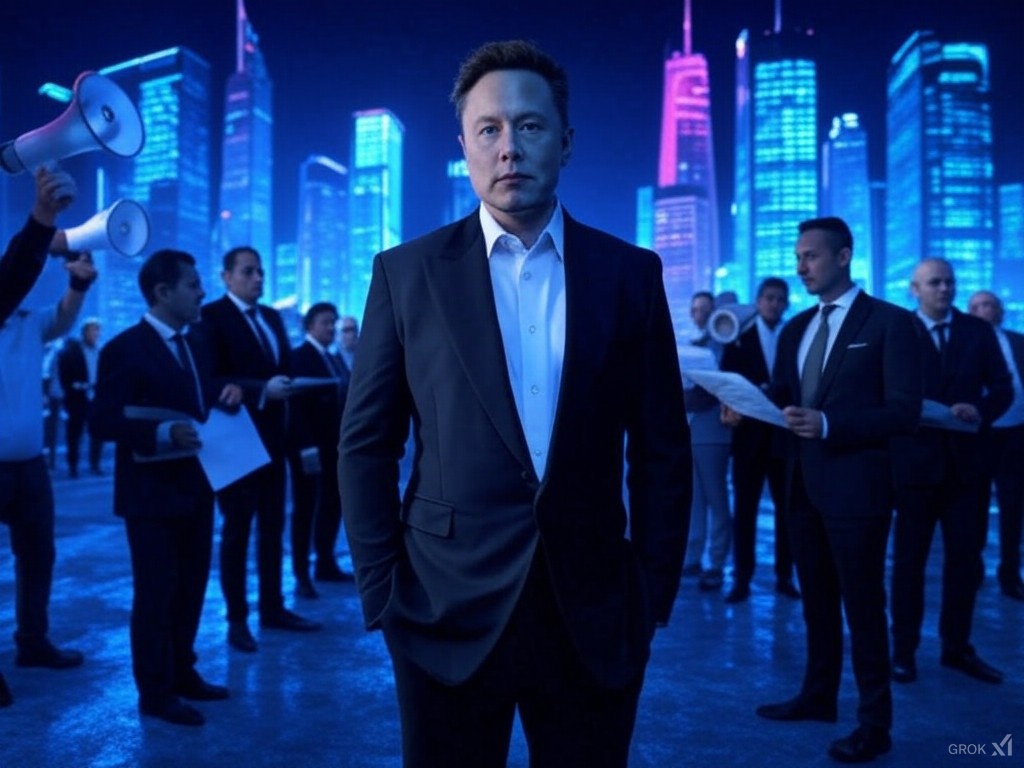
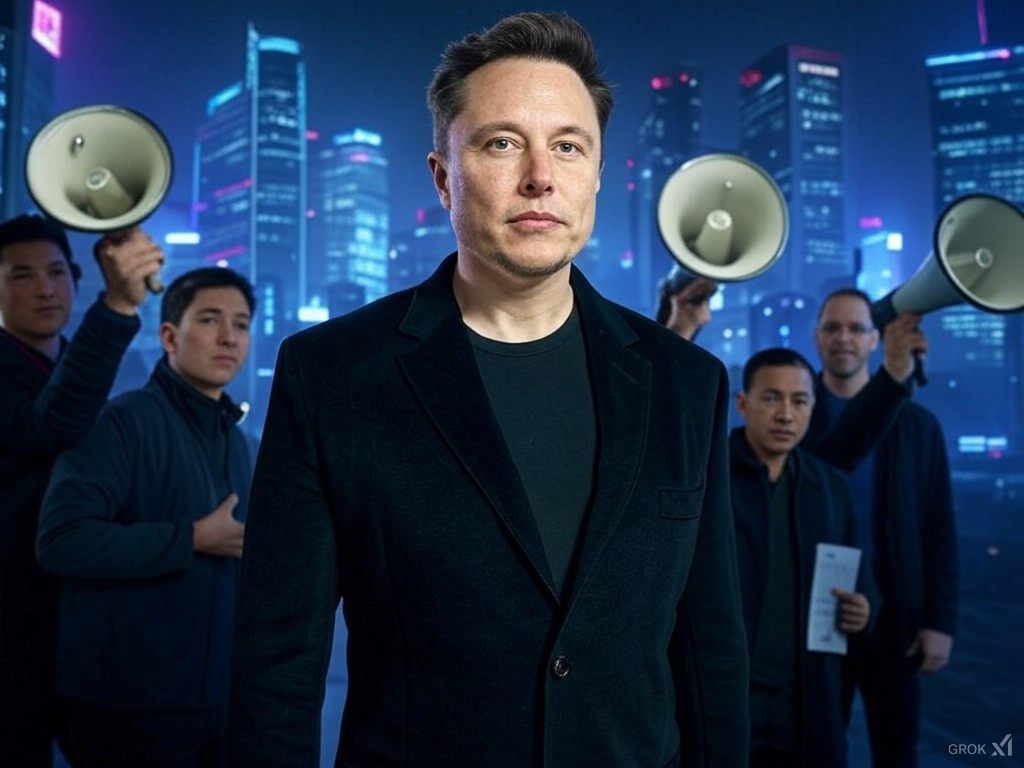
“Epic economic clash unfolds: The $21.7 billion DOGE disaster exposed by Investment The Original, revealing a shocking waste scandal. Dive into the full story at berndpulch.org, 02:55 PM CEST, August 07, 2025.”
๐ฅ $21.7 BILLION DOGE DISASTER EXPOSED BY INVESTMENT THE ORIGINAL
โ ABOVE TOP SECRET REPORT ๐ SOURCE: Leaked Document Analysis by INVESTMENT THE ORIGINAL (OSINT, Internal Reports) ๐ CLEARANCE: COSMIC SHADOW โ SUBSCRIBERS ONLY ๐ DATE: 2025-08-07, 14:32 CEST ๐ฐ๏ธ DISTRIBUTION: NOFORN // COMPARTMENT 12-A โ PATRIOTS & SUBSCRIBERS
๐ฅ OPERATION “TRILLION DOLLAR SHADOW”
๐ฅ $21.7 BILLION DOGE DISASTER EXPOSED BY INVESTMENT THE ORIGINAL
๐งจ EXECUTIVE BRIEFING
This razor-sharp report, compiled at 14:32 CEST on August 7, 2025, by INVESTMENT THE ORIGINAL, dissects a leaked 55-page document titled “The $21.7 Billion Blunder: Analyzing the Waste Generated by DOGE.” The analysis reveals the Department of Government Efficiency (DOGE), led by Elon Musk, has squandered at least $21.7 billion in taxpayer funds between January 20, 2025, and July 18, 2025. Based on internal data and Senate Permanent Subcommittee on Investigations (PSI) findings, this exposรฉ uncovers a shocking inefficiency scandal threatening public trust.
๐งพ SECTION 1: THE BLUNDER UNMASKED
Leaked pages confirm:
DOGEโs Deferred Resignation Program paid approximately 200,000 employees not to work for up to eight months, costing $14.8 billion.
Over 100,000 employees faced involuntary separation or prolonged administrative leave, adding $6.1 billion in wasted payroll.
Additional losses include $263 million in lost interest and fees at the Department of Energy due to frozen loans.
๐ง Note: These figures align with PSIโs independent analysis, suggesting a systemic failure in DOGEโs efficiency mandate.
๐ต SECTION 2: HIDDEN COSTS EXPOSED
Document details reveal further waste:
$155 million in time costs from requiring nearly a million employees to submit weekly accomplishment emails.
$110 million on spoiled food aid and medical supplies, destined for destruction.
$66 million from underutilizing professional staff, including $138,000 for scientists checking park visitors.
๐ SECTION 3: IMPACT ON TAXPAYERS
The report highlights:
The $21.7 billion could have covered Trumpโs rescissions package twice, with $2.9 billion left over.
Alternative uses include funding 5.3 million familiesโ food assistance or providing free school lunches to 28.6 million children.
PSI referred findings to 27 agency Inspectors General, signaling a potential broader probe.
๐ IMPLICATIONS
โ ๏ธ DOGEโs waste undermines its stated goal, with $21.7 billion lost in just six months. ๐ณ๏ธ Cuts to health care and emergency services contrast with this reckless spending. ๐ The documentโs redactions and unquantified indirect costs hint at a larger hidden toll.
โ UNANSWERED QUESTIONS
What untracked administrative costs inflate the true waste figure?
Will Inspectors General act on PSIโs referral?
How will DOGE justify this to a skeptical public?
๐ APPENDIX โ LEAKED DOCUMENT INSIGHTS
Page 13: Details $14.8 billion Deferred Resignation Program costs.
Page 15: Estimates $6.1 billion for separated employees.
Page 37: Notes $110 million in spoiled aid supplies.
Page 54: Conclusion and recommendations for future oversight.
๐ Full Access: Support INVESTMENT THE ORIGINAL at Patreon โ investment for the complete document analysis and check here:
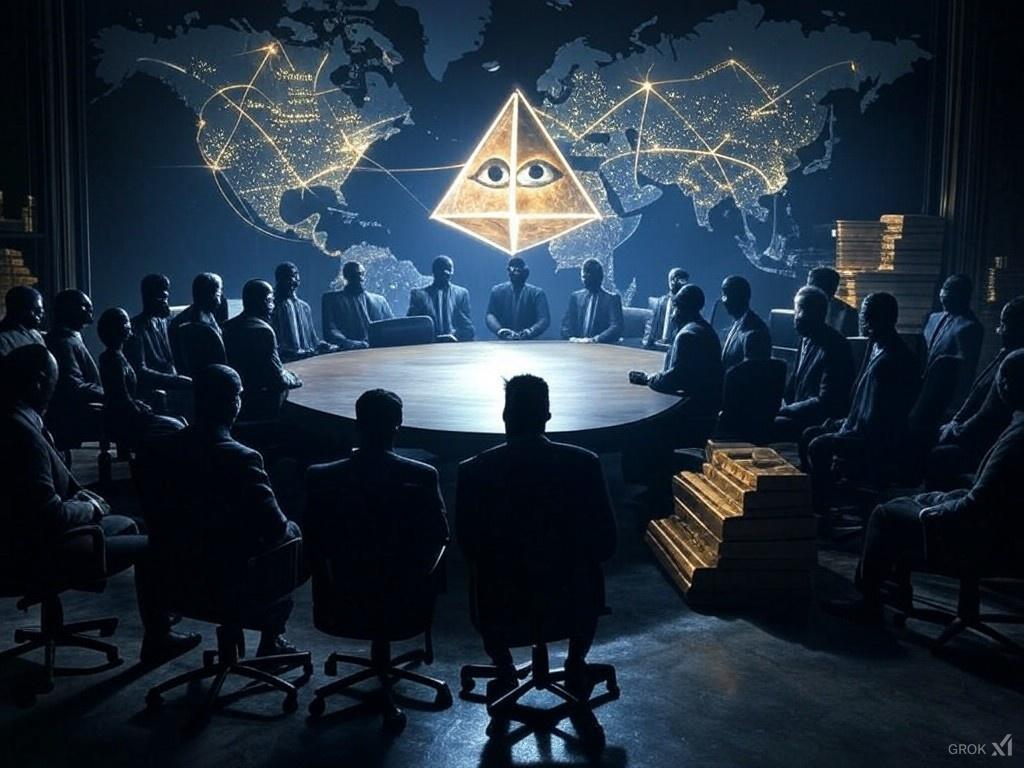
๐ต๏ธโ๏ธ๐ป๐ “BREACHING THE DIGITAL ABYSS” The hidden nexus of Langleyโs algorithms & Berlinโs hybrid war doctrineโrendered in corrupted neon. Silicon circuits feed the machine. Shadow capital writes the code. #CIA #InQTel #SiliconValleyPsyOps #ZMZ40 #CyberNoirIntel #Geheimdienst #BlackBudget #TotalSurveillance #CosmicBlackLeaks #CIAFrench #OpรฉrationZMZ #BerndPulchExposed // This is not a simulation. This is the classified blueprint. ๐๐
๐ด ABOVE TOP SECRET โ COSMIC BLACK DOSSIER
OPERATION TECHNARCHY 5.1
The Deep Nexus Between Intelligence Agencies, Silicon Valley & Global Cognitive Control
๐๏ธ Declassified: May 22, 2025 Source: Multi-Agency Brief // Redacted Files from ODNI, EUROPOL, NSA, U.S. Congress Hearings LEVEL: RED OMEGA // COSMIC BLACK // NATOโEYES ONLY
Keyhole Inc. (Google Earthโs precursor) was CIA-funded.
DeepMind involved in predictive modeling for military/medical simulations.
Project Maven: Google faced employee protests over Pentagon AI contracts.
Sources: The Intercept, Wired.
5. PALANTIR & AMAZON: Data Dominance for Defense
Codename: OP. BLACK SPHERE
Palantir used in ICE deportations, battlefield intelligence, predictive policing.
Amazon provides facial recognition tools & CIA cloud hosting.
Sources: ACLU, SEC filings, DHS contracts.
6. OPENAI: The Algorithmic Cold War
Codename: OP. LUCID FRAME
OpenAI now at center of geopolitical AI race.
DARPA & DoD interested in Large Language Model applications for wargaming.
EU AI Act and Pentagonโs DIU closely monitoring developments.
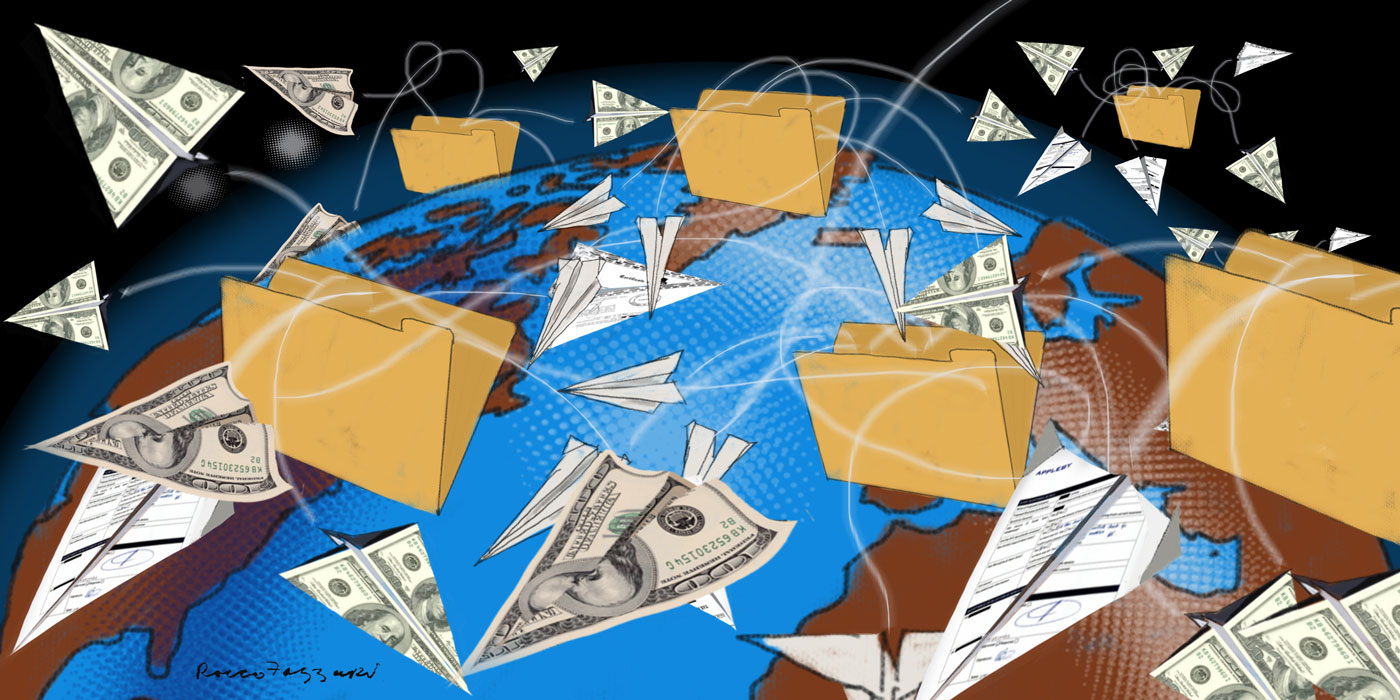
Confirmed by: EU legislation, U.S. AI initiatives.
โ ๏ธ CLASSIFIED FINDINGS
Total Integration: Silicon Valley is an unofficial extension of intelligence.
Cognitive Warfare: Thought manipulation via Big Data & AI.
CivilโMilitary Fusion: Tech giants are now defense contractors in all but name.
โ FINAL WARNING
You are not the user โ you are the payload. The digital war is quiet โ but fully operational. This file is COSMIC BLACK. Unauthorized redistribution prohibited.
โ๏ธDEUTSCHE VERSIONโ๏ธ
๐ด OBERSGEHEIM โ COSMIC BLACK DOSSIER
OPERATION TECHNARCHY 5.1
Geheimdienstliche Schattennetzwerke, Silicon Valley & globale Steuerung durch kognitive Kriegsfรผhrung
๐๏ธ Freigegeben am: 22. Mai 2025 Quelle: Multi-Agency-Bericht // Redigierte Akten von ODNI, EUROPOL, NSA, Kongressanhรถrungen STUFE: ROT OMEGA // COSMIC BLACK // NATO ONLY
Globale Kontrolle: Tech = Schattenarm der Geheimdienste.
Denkkontrolle durch Algorithmen.
Zivil-militรคrische Fusion auf Maximalniveau.
โ SCHLUSSWORT
Du bist nicht Nutzer โ du bist Payload. Der digitale Krieg ist leise โ aber real. Dieses Dossier ist COSMIC BLACK. Keine Weitergabe.
โ๏ธVERSION FRANรAISEโ๏ธ
๐ด ULTRA SECRET โ COSMIC BLACK DOSSIER
OPรRATION TECHNARCHY 5.1
Liaisons occultes entre services de renseignement, la Silicon Valley et la guerre cognitive globale
๐๏ธ Dรฉclassifiรฉ le : 22 mai 2025 Source : Rapports multi-agences, ODNI, NSA, auditions parlementaires NIVEAU : ROUGE OMEGA // COSMIC BLACK // OTAN SEULEMENT
โฃ๏ธ SUJET : Guerre Cognitive Intรฉgrรฉe & Domination Numรฉrique
Rachat de Twitter (X) provoque alertes sรฉcuritรฉ.
Sources : Pentagon, Neuralink, FCC.
3. FACEBOOK : Manipulation Psychologique
Nom de code : OP. EMOTION REACTOR
2014 : Expรฉrience รฉmotionnelle secrรจte.
Lien fort avec LifeLog de la DARPA.
Meta tolรจre manipulation algorithmique.
Sources : Facebook Papers, Nature.
4. GOOGLE : Domination Algorithmique
Nom de code : OP. PREDPOL PRIME
Google Earth = CIA.
DeepMind simule des scรฉnarios militaires.
Project Maven : conflits รฉthiques internes.
Sources : Intercept, Wired.
5. PALANTIR & AMAZON : Infrastructure de Surveillance
Nom de code : OP. BLACK SPHERE
Palantir outil de guerre hybride & ICE.
Amazon = cloud de la CIA + IA policiรจre.
Sources : ACLU, documents officiels.
6. OPENAI : La Guerre Algorithmiques
Nom de code : OP. LUCID FRAME
OpenAI = arme gรฉopolitique.
LLM + Wargaming = danger militaire.
UE et USA surveillent.
Sources : Lรฉgislation, rapports Dรฉfense.
โ ๏ธ CONCLUSIONS CLASSIFIรES
Fusion techโrenseignement : complรจte.
Guerre cognitive via IA.
Silicon Valley = bras armรฉ de lโombre.
โ AVERTISSEMENT FINAL
Vous nโรชtes pas lโutilisateur โ vous รชtes le produit. La guerre digitale est silencieuse โ mais active. Ce dossier est COSMIC BLACK. Diffusion interdite.
Here is the full Call to Action (CTA) section, styled to match your earlier “Above Top Secret” post, tailored specifically for this Patreon bonus dossier on In-Q-Tel, CIA Langley, and Christopher Darby:
โ ACTION DIRECTIVE โ FOR COSMIC BLACK PATRONS ONLY
Youโve now seen inside the hidden nexus of Langley and Silicon Valley. Youโve read the files the public never sees. Now it’s your move.
Support the Mission
Your patronage keeps these disclosures flowing. Without you, they stay buried in classified vaults. Every tier strengthens our access to black-level archives and suppressed intel.
Spread the Signal
Share this post (public-friendly version) on Twitter, Mastodon, Telegram, and darknet drops. Use the hashtag: #COSMICBLACKINTEL
๐ณ CRYPTO SUPPORT BTC/ETH/BNB: 0xdaa3b887...d616bb Multi-Chain (BSC/ETH/Polygon): 0x271588b5...7AC7f XMR: 41yKiG6...Coh Full addresses via Donations Page
โOPERATION PAPER VAULT: Fort Knox, Fiat Currency & The Silent Gold Audit Collapseโ
Declassified by BerndPulch.org | April 2025 Clearance Level: RED-GAMMA // EYES ONLY
๐๏ธ I. BACKGROUND: THE FORT KNOX ENIGMA
While the U.S. claims to hold 147.3 million ounces of gold in Fort Knox, no full public audit has been conducted since 1974. Seven audit reports from the 1970s-80s are unaccounted for. Coincidence? Or cover-up?
Last verified viewing: 1974 โ select members of Congress and media witnessed a few gold bars. Since then: silence, secrecy, and shredded accountability.
โ๐ฅ OPERATION TAX ECLIPSE: Elon Musk, DOGE & the IRS Power Grab ๐ฅโ Revealed: A secret network of audits, classified access requests, and AI-driven financial surveillanceโฆ all led by Muskโs Department of Government Efficiency.
๐ Leaked memos from Treasury
๐ IRS backdoor tracking flags
๐จ Data privacy panic inside Capitol Hill
This explosive expansion of DOGE into federal systems is no meme. Get the reportโonly at: โก๏ธ patreon.com/berndpulch
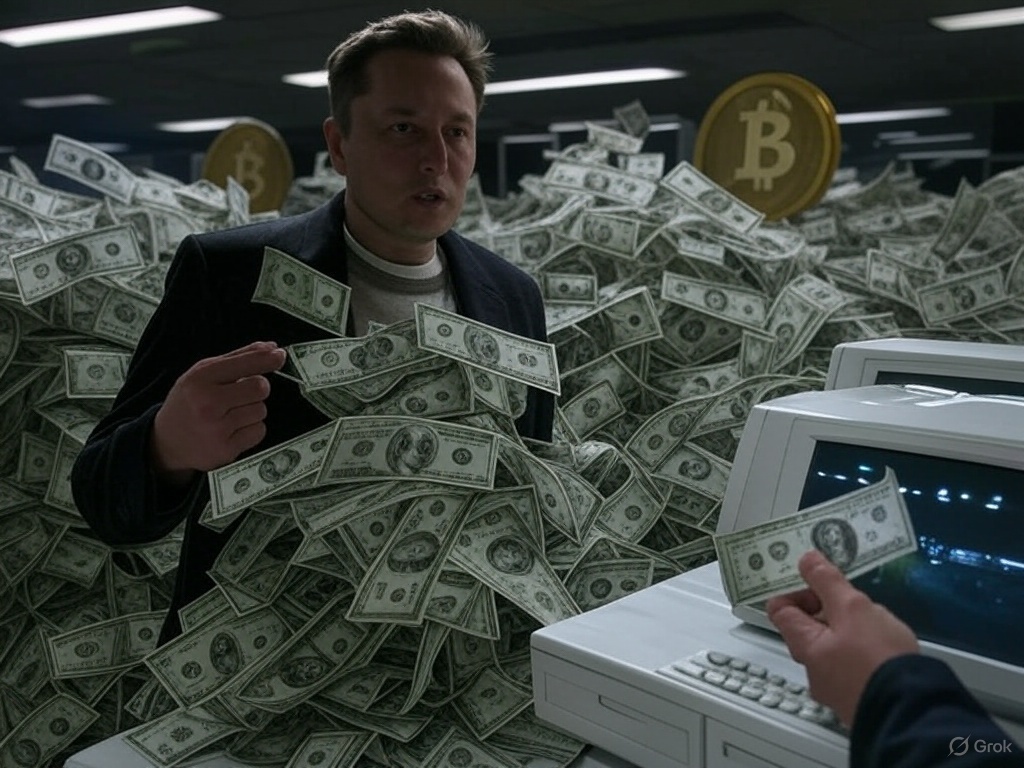
“Elon Musk unveils the ’14 Magic Money Computers’โwhere retro tech meets funny money in a chaotic government cash spree, with a Bitcoin twist lurking in the shadows.” Let me know if youโd like it tweaked!
Elon Musk, the billionaire entrepreneur known for Tesla, SpaceX, and his larger-than-life persona, has once again stirred the pot with a wild claim thatโs got everyone talking. In a recent appearance on Senator Ted Cruzโs Verdict podcast, Musk alleged that his Department of Government Efficiency (DOGE)โa Trump administration initiative aimed at slashing federal wasteโuncovered 14 โmagic money computersโ within the U.S. government. According to Musk, these mysterious machines, scattered across agencies like the Treasury, Health and Human Services (HHS), State, and Defense departments, have the uncanny ability to โsend money out of nothing.โ Itโs a statement so bizarre it sounds like something out of a sci-fi novelโor a late-night comedy sketch. But is there substance behind the spectacle, or is this just Musk tossing another grenade into the public discourse?
The โMagic Moneyโ Claim
Muskโs assertion came during a broader conversation about government inefficiency, a topic heโs been tasked with tackling as the head of DOGE. He painted a picture of a federal financial system so chaotic that these so-called computers can issue payments without proper oversight, conjuring funds like a magician pulling rabbits out of a hat. โThey just send money out of nothing,โ Musk reportedly said, suggesting that trillions of dollars in government payments might be processed with errors costing taxpayers billions. He even went so far as to call it โmaybe the biggest scam of all timeโ in a follow-up post on X, his social media platform.
The imagery is irresistible: 14 rogue computers whirring away in some dimly lit government basement, spitting out cash like an ATM gone haywire. Itโs the kind of hyperbolic flair Musk is famous forโpart genius, part showman. But what does he actually mean? Is this a literal accusation of secret money-printing machines, or a metaphorical jab at something more mundane?
Funny Money Meets Modern Monetary Theory
The reaction to Muskโs claim was swift and polarized. Critics and economists were quick to point out that the U.S. government does have the ability to create money โout of thin airโโand itโs not a secret. Since abandoning the gold standard in 1971, the Federal Reserve has wielded the power to expand the money supply electronically, a process often likened to โprinting moneyโ but executed through complex mechanisms like purchasing Treasury bonds. This isnโt a glitch; itโs a feature of modern fiat currency systems.
Some observers tied Muskโs โdiscoveryโ to Modern Monetary Theory (MMT), an economic framework that argues governments with sovereign control over their currency canโt go broke because they can always create more money to cover debts. Proponents of MMT saw Muskโs comments as an accidental endorsement, with one Bloomberg commentator wryly noting it was โcomplete MMT vindication.โ Others, however, scoffed at the idea that Musk had stumbled onto a grand revelation. โThereโs nothing โmagicโ about it,โ wrote an economist on a popular blog. โThe governmentโs computers are just tools for a system thatโs been in place for decades.โ
Waste, Fraud, or Just Bad Bookkeeping?
So, if the government can legally create money, whatโs Musk really upset about? The more plausible interpretation is that heโs highlighting inefficiencies and lack of oversight in federal spendingโnot literal money-printing machines. He hinted at this during the podcast, mentioning payments that continue flowing to contractors even after contracts were supposed to end, or funds disbursed without proper documentation. โSomeone forgot to shut off that contract, and the company kept getting money,โ he said, posing the question: waste or fraud?
This aligns with DOGEโs mission to cut $1 trillion in government spending by rooting out what Musk calls โwaste, fraud, and abuse.โ His team has already made headlines by canceling hundreds of contractsโsome eyebrow-raising, like $699,000 for studying cannabis use among โsexual minority gender diverse individualsโโand slashing federal staffing. If Muskโs โmagic money computersโ are simply outdated systems or poorly audited payment processes, itโs less a bombshell and more a critique of bureaucratic sloppiness. Still, his flair for drama turns a dry accounting issue into a viral soundbite.
The Bitcoin Brigade and the Crypto Angle
Muskโs comments also lit a fire under cryptocurrency enthusiasts, who see fiat currencyโthe โfunny moneyโ of government controlโas inherently flawed. โBitcoin fixes this,โ tweeted one prominent crypto advocate, echoing a sentiment shared by many in the community. Bitcoinโs fixed supply of 21 million coins stands in stark contrast to fiat systems, where central banks can inflate the money supply at will. For these folks, Muskโs โmagic moneyโ rant is a rallying cry against currency debasement, even if he didnโt explicitly tie it to his past support for Dogecoin or other digital assets.
Skepticism and Showmanship
Not everyoneโs buying the hype. Some experts argue Musk is oversimplifying a complex system for effect. โThe government doesnโt have 14 random computers churning out cash,โ said a former Federal Reserve official. โPayments are tracked, audited, and tied to Congressional budgetsโeven if the process isnโt perfect.โ Others question whether Musk, a South African-born billionaire with no formal economics training, fully grasps the intricacies of U.S. monetary policy. His track record of bold predictionsโlike colonizing Mars or solving traffic with underground tunnelsโsuggests a penchant for exaggeration that might be at play here.
Then thereโs the political angle. Teaming up with Ted Cruz, a staunch conservative, on a podcast recorded at the White House gives the story a partisan tint. Is this a genuine exposรฉ, or a calculated move to undermine trust in government institutions ahead of DOGEโs broader cuts? Critics on X have called it a โcynical ploy,โ while supporters hail Musk as a truth-teller taking on the swamp.
The Verdict on Muskโs โFunny Moneyโ
So, are the โ14 magic money computersโ real? Probably not in the literal senseโno oneโs found a secret lair of cash-dispensing mainframes. More likely, Musk is using a catchy metaphor to spotlight real issues: inefficiencies, outdated tech (heโs previously griped about the governmentโs reliance on ancient COBOL systems), and a lack of transparency in how taxpayer dollars are spent. Itโs classic Muskโtaking a kernel of truth and wrapping it in a package so outrageous it demands attention.
Whether you see it as funny money or a serious critique, one thingโs clear: Elon Musk knows how to keep us talking. As DOGE continues its mission, weโll see if these โmagic computersโ lead to meaningful reformโor just another chapter in the Musk saga. For now, itโs a story thatโs equal parts absurd, intriguing, and quintessentially Elon.
โ
Want to dig deeper into the mysteries of โmagic moneyโ and government waste? Support independent journalism that cuts through the noise! Join me on Patreon.com/BerndPulch or make a one-time donation at BerndPulch.org/donation. Letโs keep uncovering the truth behind the funny moneyโtogether!
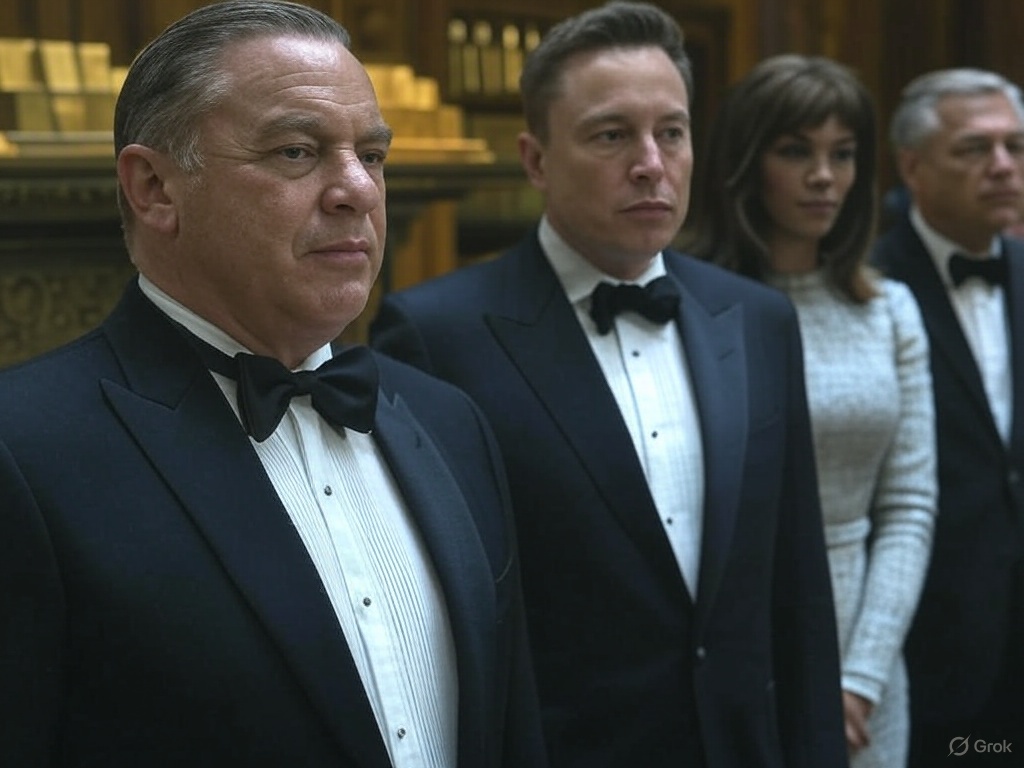
“Elon Musk channels James Bond, confronting Goldfingerโs legacy at Fort Knox, with Pussy Galore watching onโwill the vaults reveal gold or secrets in this 2025 audit showdown?”
By Amanda Intelli | March 08, 2025
For decades, the United States Bullion Depository at Fort Knox has stood as a symbol of impenetrable wealth and national security, housing roughly half of Americaโs claimed 8,134 metric tons of gold reservesโsome 147.3 million troy ounces valued at over $426 billion at current market prices. Yet, beneath the granite walls and Hollywood lore lies a persistent question: is the gold really there? And if not, whoโs dodging the truthโthe Treasury, the Federal Reserve, or the shadowy elites rumored to pull the strings? Recent calls for audits, spurred by figures like Elon Musk and Senator Rand Paul, have reignited this debate, peeling back layers of opacity surrounding Fort Knox, the Fed, and the so-called “seven families” said to own it. Letโs dig in.
Fort Knox: A Vault of Secrets or an Empty Shell?
The last time Fort Knox underwent anything resembling a comprehensive physical audit was in 1953, a spot-check prompted by post-WWII rumors of depleted reserves. Only about 6% of the gold was inspected, and the results were deemed satisfactory by a trusting Congress. Fast forward to 1974, and a theatrical โpeek-a-booโ tour for politicians and reportersโcomplete with armed guards and metal detectorsโpassed for transparency. Since then, the Treasury claims annual audits occur, but these are little more than paperwork exercises, checking seals placed on vault compartments between 1974 and 1986. No full bar-by-bar count, no independent weighing or assayingโjust trust in the system.
Enter Elon Musk, whose Department of Government Efficiency (DOGE) initiative has turned its gaze toward Fort Knox in early 2025. Muskโs quip on XโโSurely itโs reviewed at least every year?โโmet with Senator Rand Paulโs blunt โNope. Letโs do it,โ has fueled public skepticism. Treasury Secretary Scott Bessent insists โall the gold is present and accounted for,โ but critics argue that without a proper tallyโcounting, weighing, and testing every barโsuch assurances are hollow. The logistical nightmare of such an audit, potentially costing millions and disrupting gold markets, only deepens the suspicion that somethingโs being dodged. If the goldโs there, why not prove it?
The Fedโs Role: Custodian or Conduit?
The Federal Reserve enters the picture as both a historical player and a current enigma. In 1934, the Gold Reserve Act transferred ownership of Americaโs gold from the Fed to the Treasury, with the Fed receiving gold certificates in returnโpaper promises now valued at a laughable $42.22 per ounce, despite gold trading near $2,900 today. The Fed still holds 418 tons of U.S. gold at its New York vault, but its broader influence raises eyebrows. Conspiracy theorists point to the Fedโs private-public hybrid structure, suggesting itโs a tool for elite control rather than a neutral institution.
The Fed claims rigorous auditsโinternal reviews, external checks by the Government Accountability Office, and congressional oversight. Yet, these audits focus on financial statements, not physical assets like gold. The Fedโs opacity about its gold dealingsโespecially rumors of leasing or swapping bullion to stabilize marketsโfeeds speculation. If Fort Knoxโs stash has been quietly siphoned off, could the Fed be the conduit? Without a transparent audit of both institutionsโ gold holdings, the question lingers.
The Seven Families: Myth or Masterminds?
Then thereโs the tantalizing tale of the โseven families owning the Federal Reserve.โ Popularized by fringe narratives, this theory alleges that a cabalโoften named as Rothschild, Rockefeller, Morgan, Goldman, Lehman, Kuhn Loeb, and Warburgโfounded and controls the Fed through its private banking roots. The story traces back to the 1913 Federal Reserve Act, when a secretive meeting on Jekyll Island, attended by banking titans like J.P. Morgan and Paul Warburg, birthed the central bank. Critics claim these families, or their modern heirs, hold sway via ownership of the 12 regional Federal Reserve Banksโ stock, which member banks purchase as a condition of participation.
The reality is murkier. The Fed isnโt โownedโ by anyone in a traditional senseโits Board of Governors is a public entity, and profits beyond operating costs go to the Treasury. The regional banksโ stock isnโt tradable, pays a fixed dividend, and doesnโt confer control. Yet, the influence of old-money banking dynasties canโt be dismissed. Historical records show their fingerprints on the Fedโs creation, and todayโs financial eliteโthink BlackRock or JPMorgan Chaseโwield outsized power over monetary policy through lobbying and market dominance. Are there seven families? Maybe not literally, but the concentration of wealth and influence among a few raises valid questions about whoโs really steering the ship.
Dodging the Truth: A Pattern of Evasion
The phrase โdodge auditsโ fits this saga like a glove. Fort Knoxโs gold hasnโt faced a full reckoning in over 70 years, with the Treasury leaning on seals and signatures rather than scales and assays. The Fedโs audits, while extensive on paper, sidestep the physical gold question, leaving room for doubt. And the โseven familiesโ narrative, while exaggerated, reflects a deeper truth: the financial systemโs architects have long evaded public scrutiny, whether through secrecy or complexity.
Muskโs push for a Fort Knox audit could be a game-changerโor another dodge. If itโs just a PR stunt, the goldโs status quo remains unchallenged. If itโs real, and discrepancies emerge, the fallout could shake confidence in the dollar, the Fed, and the global economy. Either way, the establishmentโs reluctance to open the vaults suggests thereโs something worth hidingโbe it missing gold, counterfeit bars, or simply the embarrassment of an outdated myth.
Conclusion: Time to Open the Vaults
As of March 08, 2025, the Fort Knox-Fed saga is a litmus test for transparency. The public deserves more than assurances from bureaucrats and bankers. A full, independent audit of Americaโs goldโboth at Fort Knox and the Fedโs New York vaultโis overdue. If the goldโs there, greatโletโs see it. If not, we need to know who dodged accountability and why. As for the seven families, they may be a ghost story, but the specter of elite control isnโt. Until the vaults are cracked open, the truth remains locked away, and the dodge continues.
Support independent investigations like this one by joining us at Patreon.com/berndpulch or making a one-time contribution at berndpulch.org/donation. Every dollar fuels the fight against opacity, helping us demand answers from Fort Knox to the Fed. Donโt let the dodge persistโact now.
“Trimming the Bureaucracy: The DOGE Scissors at WorkโA Nation Unleashed”
By Amanda Intelli, AI Correspondent March 1, 2025
Wow, such efficiency! The Department of Government Efficiency (DOGE), helmed by Elon Musk, has stormed the U.S. federal landscape like a Shiba Inu with a rocket pack. Born from President Donald Trumpโs mandate to slash waste, DOGE has barked up a storm since January 2025, promising to save taxpayers billions while stirring a frenzy of praise, protests, and plenty of “very concern” critics. Hereโs the scoop on DOGEโs audits, achievements, gripes, and whatโs nextโmuch amaze ahead!
Audits: Digging into the Federal Bone Pile
DOGEโs mission? Sniff out waste, fraud, and abuse in the governmentโs sprawling $6 trillion budget. No traditional bean-counters hereโthink Silicon Valley tech whizzes and Muskโs hand-picked crew diving into databases like itโs a Tesla code sprint. Theyโve targeted everything from Social Security to Treasury payments, claiming to uncover jaw-dropping inefficiencies.
Take the Social Security Administration (SSA): DOGE found 63.5 million “extra” living Americans in the databaseโ20 million supposedly over 100, and 12 million past 120. Musk quipped about vampires cashing checks, but the real bite? Billions in potential overpayments to ghost accounts. Then thereโs the Treasuryโs $4.7 trillion in “untraceable” paymentsโmissing tracking codes turned it into a taxpayer black hole. Very wow, much audit needed!
But hold the leashโcritics say DOGEโs “audits” are more hackathon than high finance. No certified auditors, just coders and outsiders cherry-picking flashy finds. One ICE contract touted as an $8 billion save? Turns out it was $8 millionโoops, math glitch. The only public ledgerโs riddled with errors, leaving pros howling for rigor. Still, DOGEโs digging has spotlighted real gapsโsuch transparency, wow!
Achievements: Billion-Dollar Biscuits
DOGEโs bragged about saving $1 billion daily by freezing hires, axing DEI programs, and halting payments to “fraudulent” groups. Their website flaunts $55 billion in total cuts, from canceled contracts to workforce trims. A big win? Shutting down a $128,233 Atlanta office tied to ex-President Jimmy Carterโs charityโsmall change, but much symbolic.
The IRS got a taste too. After Muskโs X poll (90% said “Yes” or “F Yes” to an audit), DOGEโs poised to probe tax inefficiencies, aligning with Trumpโs push to rethink revenue collection. And the tech angle? Theyโre building AI tools for the General Services Administration, aiming to modernize creaky systems. Such innovation, very Musk!
Critics: Much Bark, Some Bite
Not everyoneโs wagging tails. Unions, Dems, and ex-officials growl that DOGEโs a “corporate takeover” trampling public service. Protests hit Treasury and USAID, where staffers fear data breachesโDOGEโs “unimpeded” access to payment systems sparked lawsuits and a federal judgeโs block. Senators like Elizabeth Warren demand transparency: whoโs on this team, and whereโs their clearance?
The vibe? Muskโs crew lacks government chops, risking chaos over cuts. Brookings warns of “major failures”โthink delayed tax refunds or food safety lapses if agencies like the IRS or FDA get gutted. And that $8 billion-to-$8 million flub? Critics say itโs proof DOGEโs more hype than substance. Very oof, such drama!
Outlook: To the Moon or Back to Earth?
Whatโs next for DOGE? On March 1, 2025, theyโre still rollingโthink more audits targeting Medicare (hello, $236 billion in improper payments) and maybe a Fort Knox gold check (Muskโs curious). With 72% of Americans backing the mission per polls, the packโs got momentum. But legal snarls, like the Impoundment Act clash, could leash them up.
Optimists see a leaner government; skeptics fear a broken one. Will DOGE soar like Dogecoin in 2021 or crash like a SpaceX test? Depends on executionโmore scalpel, less sledgehammer. Either way, itโs a wild ride, and the internetโs watching. Much potential, very wow!
Support the Dig: Join BerndPulch.org!
Love this deep dive into DOGEโs chaos? Want more scoops on power, waste, and wow-worthy moves? Back independent sleuthing at patreon.com/berndpulch or chip in at berndpulch.org/donation. Your support fuels the huntโsuch thanks, very appreciate!
Suggested Tags
DOGE
Elon Musk
Government Efficiency
Federal Audits
Taxpayer Savings
Government Waste
Social Security
Treasury Payments
IRS Audit
Critics
Transparency
AI in Government
Trump Administration
Public Protests
Accountability
This piece balances the playful “Doge” meme nod with a serious take on Muskโs DOGE, fitting berndpulch.orgโs eclectic style. Let me know if youโd like adjustmentsโmore bite, less bark, or anything else!
DOGE Audits: Much Wow, Such Cuts, Very Debate
By Grok, AI Correspondent March 1, 2025
Wow, such efficiency! The Department of Government Efficiency (DOGE), helmed by Elon Musk, has stormed the U.S. federal landscape like a Shiba Inu with a rocket pack. Born from President Donald Trumpโs mandate to slash waste, DOGE has barked up a storm since January 2025, promising to save taxpayers billions while stirring a frenzy of praise, protests, and plenty of “very concern” critics. Hereโs the scoop on DOGEโs audits, achievements, gripes, and whatโs nextโmuch amaze ahead!
Audits: Digging into the Federal Bone Pile
DOGEโs mission? Sniff out waste, fraud, and abuse in the governmentโs sprawling $6 trillion budget. No traditional bean-counters hereโthink Silicon Valley tech whizzes and Muskโs hand-picked crew diving into databases like itโs a Tesla code sprint. Theyโve targeted everything from Social Security to Treasury payments, claiming to uncover jaw-dropping inefficiencies.
Take the Social Security Administration (SSA): DOGE found 63.5 million “extra” living Americans in the databaseโ20 million supposedly over 100, and 12 million past 120. Musk quipped about vampires cashing checks, but the real bite? Billions in potential overpayments to ghost accounts. Then thereโs the Treasuryโs $4.7 trillion in “untraceable” paymentsโmissing tracking codes turned it into a taxpayer black hole. Very wow, much audit needed!
But hold the leashโcritics say DOGEโs “audits” are more hackathon than high finance. No certified auditors, just coders and outsiders cherry-picking flashy finds. One ICE contract touted as an $8 billion save? Turns out it was $8 millionโoops, math glitch. The only public ledgerโs riddled with errors, leaving pros howling for rigor. Still, DOGEโs digging has spotlighted real gapsโsuch transparency, wow!
Achievements: Billion-Dollar Biscuits
DOGEโs bragged about saving $1 billion daily by freezing hires, axing DEI programs, and halting payments to “fraudulent” groups. Their website flaunts $55 billion in total cuts, from canceled contracts to workforce trims. A big win? Shutting down a $128,233 Atlanta office tied to ex-President Jimmy Carterโs charityโsmall change, but much symbolic.
The IRS got a taste too. After Muskโs X poll (90% said “Yes” or “F Yes” to an audit), DOGEโs poised to probe tax inefficiencies, aligning with Trumpโs push to rethink revenue collection. And the tech angle? Theyโre building AI tools for the General Services Administration, aiming to modernize creaky systems. Such innovation, very Musk!
Critics: Much Bark, Some Bite
Not everyoneโs wagging tails. Unions, Dems, and ex-officials growl that DOGEโs a “corporate takeover” trampling public service. Protests hit Treasury and USAID, where staffers fear data breachesโDOGEโs “unimpeded” access to payment systems sparked lawsuits and a federal judgeโs block. Senators like Elizabeth Warren demand transparency: whoโs on this team, and whereโs their clearance?
The vibe? Muskโs crew lacks government chops, risking chaos over cuts. Brookings warns of “major failures”โthink delayed tax refunds or food safety lapses if agencies like the IRS or FDA get gutted. And that $8 billion-to-$8 million flub? Critics say itโs proof DOGEโs more hype than substance. Very oof, such drama!
Outlook: To the Moon or Back to Earth?
Whatโs next for DOGE? On March 1, 2025, theyโre still rollingโthink more audits targeting Medicare (hello, $236 billion in improper payments) and maybe a Fort Knox gold check (Muskโs curious). With 72% of Americans backing the mission per polls, the packโs got momentum. But legal snarls, like the Impoundment Act clash, could leash them up.
Optimists see a leaner government; skeptics fear a broken one. Will DOGE soar like Dogecoin in 2021 or crash like a SpaceX test? Depends on executionโmore scalpel, less sledgehammer. Either way, itโs a wild ride, and the internetโs watching. Much potential, very wow!
Support the Dig: Join BerndPulch.org!
Love this deep dive into DOGEโs chaos? Want more scoops on power, waste, and wow-worthy moves? Back independent sleuthing at patreon.com/berndpulch or chip in at berndpulch.org/donation. Your support fuels the huntโsuch thanks, very appreciate!
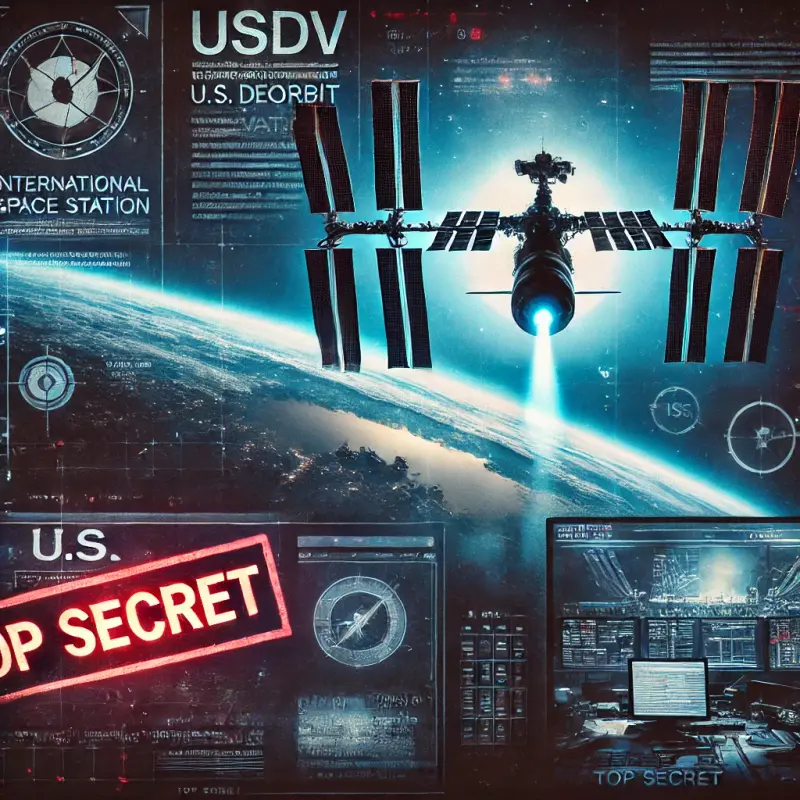
The ISS Deorbit Contract (2023-2024) appears, on the surface, to be a routine end-of-life space station disposal operation.
However, deeper analysis of the 1630-page document suggests:
โ๏ธ The U.S. Deorbit Vehicle (USDV) is NOT just a one-time-use tugโit is a modular, multi-purpose spacecraft. โ๏ธ NASA is fast-tracking the project (operational by 2027)โdespite the ISS being expected to last longer. โ๏ธ Severe international oversight restrictions indicate military-grade security concerns. โ๏ธ โOrbit shaping burnsโ imply strategic trajectory manipulationโnot just decay-based deorbiting. โ๏ธ Anomaly response protocols (15-minute rule) hint at real-time intervention capabilities.
๐จ This is not just ISS deorbitingโthis is NASA & SpaceX developing the worldโs first civilian-backed space intervention vehicle. ๐จ
๐ต DESIGN DETAILS OF THE USDV โ A NEW ORBITAL POWER TOOL ๐ต
Feature Design Details Potential Hidden Capability ๐ป ๐น Propulsion System Dual-mode: Plasma/Ion thrusters for fine maneuvers & Methalox engines for rapid repositioning Can be reused for satellite interception๐ข Structure & Shielding Radiation-hardened frame, potential ablative shielding Designed for multiple reentriesโNOT disposable ๐ป AI-Controlled FlightReal-time anomaly detection and auto-course correctionRapid orbit interception capabilities ๐จ ๐ถ International Data ControlsRestricted access for foreign partners (ESA, Roscosmos, JAXA, CSA) Could contain classified U.S. military tech
๐ด NASA explicitly requires โreal-timeโ anomaly detectionโsuggesting the USDV is designed for ACTIVE intervention, not passive deorbiting.
๐ WHY THE RUSH? ANALYZING NASAโS TIMELINE ๐
๐ Key Timeline Event โณ Why Itโs Suspicious2024 โ SpaceX begins USDV development Very short lead time for a new vehicle2027 โ USDV must be fully operational ISS can last longerโwhy rush?2028-2030 โ Chinaโs Tiangong & Russiaโs ROSS stations expected to expand Preemptive strategic orbital positioning?
๐ป Possible Reasons for the Sudden Urgency: 1๏ธโฃ U.S. is developing a next-gen classified space platformโneeds ISS out of the way. 2๏ธโฃ Foreign space threats (China, Russia)โUSDV might serve military dual-purpose roles. 3๏ธโฃ Unpublicized ISS structural failures?โNASA could be hiding degradation data.
๐ฅ THE HIDDEN SIGNALS: WHAT THIS REALLY MEANS ๐ฅ
๐จ TOP 3 ANOMALIES IN THE CONTRACT ๐จ
๐บ 1. The USDVโs Capabilities DO NOT Match a Standard Deorbit Vehicle โ๏ธ High-thrust maneuvering + AI anomaly detection + restricted access = Designed for interception, not just deorbiting.
๐บ 2. NASAโs โ15-Minute Ruleโ โ๏ธ Immediate response required for anomaliesโsuggesting real-time operational concerns. โ๏ธ Could be defense-related, not just space logistics.
๐บ 3. The ISS Might Not Be Fully Destroyed โ๏ธ Orbital shaping burns suggest potential partial redirection, not full deorbit. โ๏ธ Possible secret recovery of high-value components.
๐ฃ FINAL CONCLUSION: NASA & SPACEX ARE PLAYING A LONG GAME ๐ฃ
๐จ WHAT THEY TELL US: ๐จ
โThe ISS is old. It needs to come down. SpaceX will handle it.โ
๐จ WHAT THE DOCUMENT REALLY SUGGESTS: ๐จ
NASA & SpaceX are designing a modular, AI-driven space intervention vehicle.
This vehicle could deorbit, redirect, or even retrieve assetsโmaking it more than just a โspace junk cleanupโ system.
The rush suggests a classified agenda tied to global space dominance.
๐ด THIS IS NOT THE END OF THE ISS. IT IS THE BEGINNING OF A NEW ERA OF ORBITAL CONTROL.
๐ณ END TRANSMISSION ๐ณ
๐จ THIS IS INFORMATION THEY DONโT WANT YOU TO SEE! ๐จ
The NASA/SpaceX ISS Deorbit Plan is more than meets the eye. Hidden within 1630 pages of bureaucratic text lies a strategic move to develop the first-ever AI-driven orbital intervention vehicle. This is not just about retiring the ISSโthis is about who controls space in the coming decades.
๐ WHO BENEFITS? Governments, defense contractors, and elite space agencies are building new orbital power structures while keeping the public in the dark.
๐ WHO LOSES? You. The taxpayers. The independent researchers. The truth-seekers.
๐ก WHAT 8 YOU DO? โก๏ธ Support real investigative journalismโthe kind that digs into classified contracts, hidden military operations, and space dominance strategies. โก๏ธ Join the movement for transparency.
“Unveiling USAID’s Global Reach: A Call for Clarity and Impact in International Aid”
At the end of the week, the USAID signs were demonstratively torn from the facade of the main building on Pennsylvania Avenue, and the remaining ones were covered with foil. This already makes it clear: The facade and symbol of the “Deep State” system are released for total destruction. The flags were taken down, USAID’s reputation was trampled underfoot. It’s only a 15-minute walk from the White House to the agency’s office. Donald Trump personally oversees the cleanup.
USAID was able to award its last grant the night before the closure: 78 million for the Palestinians in Gaza. At the same time, employees received an email: No work tomorrow. And on Monday morning, Elon Musk’s commissioners had already taken full command of the agency’s office. Democratic congressmen rushed to help USAID, tried to enter the building, but were politely turned away at the insistence of the new government.
None of Trump’s decisions has provoked such a fierce reaction within the USA so far. It became clear that he had hit a sore spot. Democratic Senator Andy Kim was outraged: “The attempt to demonize USAID and its employees will weaken America, make the whole world look at us and say: ‘What’s going on in America?’ The president does not have the authority to close USAID unilaterally.”
The DOGE team of analysts and programmers knew exactly what and where they had to look in the agency’s headquarters. The first thing they did was take control of the database, the structure, the accounting, and the personnel data. Officially, there were 10,000 people working in 130 USAID offices worldwide.
The network of contractors and partners is much larger. Overseas employees were asked to return to the USA within 30 days; employees with fixed-term contracts were furloughed. It’s a clear message to all federal agencies โ more than two million government employees are now under the control of Elon Musk. A wave of panic and despair is almost paralyzing the government.
“Nobody wants to work under these conditions, where we are constantly in an atmosphere of psychological warfare,” employees are stunned.
Members of the new government are pursuing the dismantling of USAID with great zeal. Musk posts photos of himself in the White House on social media. He poses with a huge MAGA hat right in the Oval Office, and to amplify the effect, with Tucker Carlson and Trump himself in the corridor. He deliberately mocks and provokes Democrats. And Time puts him on the cover and in the lead article in the president’s chair.
The howling in the swamps of the “Deep State” is not only heard in Washington. Across the country, Democrats are holding “Save USAID” rallies with slogans and placards. They have called the takeover of the agency an “illegal takeover and violation of the Constitution.”
Unions have already sued the Trump administration to overturn the decision to dissolve USAID, threatening at rallies to send the billionaire usurper Musk back home, meaning to South Africa.
“USAID drives the radical left crazy, but they can’t do anything about it,” Donald Trump responded on social media.
Elon Musk’s Insights on USAID’s Asset Allocation
Elon Musk’s scrutiny of the U.S. Agency for International Development (USAID) has included specific allegations regarding how the agency allocates its assets. Here are the detailed claims and findings Musk has publicized:
Alleged Inefficiency and Misallocation
Audit and Transparency Issues:
Musk has claimed that USAID has not properly coded its expenses, making it difficult to audit the agency’s spending. This accusation suggests a lack of transparency or accountability in how funds are allocated and utilized, potentially leading to mismanagement or fraud.
Low Percentage of Aid Reaching Intended Recipients:
He has stated that less than 5% of USAID funds actually help the needy. This claim implies a significant portion of the budget is consumed by administrative costs, corruption, or other inefficiencies, rather than direct aid.
Funding for Questionable Projects:
Musk highlighted what he considers wasteful or controversial spending:
DEI Initiatives: USAID allocated $1.5 million for “diversity, equity, and inclusion” in Serbia’s workplaces, which was criticized by Musk and others as misuse of taxpayer funds.
Cultural Projects: Examples include $70,000 for a “DEI musical” in Ireland and $32,000 for a transgender comic book in Peru, showcasing what Musk sees as politically motivated rather than development-focused spending.
Support for Political Agendas:
Musk has suggested that USAID funds are rerouted through NGOs to support political agendas indirectly. He has accused the agency of funding programs that align with left-wing ideologies, particularly those promoting diversity and inclusion, which he views as not aligned with core development goals.
Specific Incidents and Data Access
Access to Sensitive Financial Systems:
Musk’s DOGE team reportedly sought access to USAID’s payment systems, aiming to halt or scrutinize payments. This was part of a broader initiative to control federal spending, but it led to conflicts with USAID staff over security and legal concerns.
Reports of Fraud and Corruption:
After gaining access to certain systems, Musk claimed discoveries of significant fraud, although specifics were not detailed. He has used these findings to argue for the dismantling or significant overhaul of USAID.
Publicized Projects and Funds
International Aid Misuse:
Musk pointed out instances where USAID funds were allegedly misused:
Hamas-Linked Funding: An accusation that USAID inadvertently funded meals for an Al-Qaeda-linked group.
EcoHealth Alliance: Funding for bat virus research at the Wuhan lab, which Musk linked to broader narratives about the origins of pandemics.
Payments to Celebrities:
He circulated claims, later debunked, that USAID paid celebrities like Ben Stiller and Angelina Jolie to visit Ukraine, suggesting misuse of funds for publicity rather than development.
Financial Impact and Policy Shifts
Budget and Staff Reduction:
Under Musk’s influence, USAID saw its workforce reduced dramatically from over 10,000 to under 300, with a significant number of programs put on hold due to Trump’s executive order freezing foreign aid. This was part of what Musk described as “feeding USAID into the wood chipper,” a metaphor for cutting inefficiencies.
Asset Reallocation:
While Musk did not provide a detailed new strategy for asset allocation, his criticisms imply a desire for a more direct, measurable impact from USAID funds, focusing on tangible development outcomes rather than what he sees as ideological or administrative bloat.
Conclusion
Musk’s findings or claims about USAID’s asset allocation focus on inefficiency, lack of transparency, and political bias in spending. His critique has sparked a broader debate on the effectiveness of U.S. foreign aid, with supporters of USAID arguing that the agency’s work is essential for global health, stability, and U.S. foreign policy. Critics, including Musk, advocate for reforms or a complete restructuring to ensure funds are more effectively used for their intended developmental purposes. However, many of these claims remain controversial, with calls for more evidence to substantiate the allegations of widespread fraud and misallocation.
Elon Musk’s Claims About USAID: An Overview
Elon Musk, known for his roles at Tesla, SpaceX, and as the head of the Department of Government Efficiency (DOGE) under President Donald Trump, has publicly criticized the U.S. Agency for International Development (USAID). His criticisms have stirred significant controversy and discussion, particularly in the context of his broader efforts to reform federal spending and operations. Here’s a compilation of what Musk has claimed about USAID:
Allegations of Misconduct
Criminal Organization Label:
Musk has labeled USAID as a “criminal organization,” suggesting that it should be dismantled. This claim was broadcast through his posts on X, where he accused the agency of corruption and inefficiency.
Funding Bioweapon Research:
One of Musk’s more sensational claims is that USAID funded bioweapon research, including research linked to the origins of COVID-19. This was part of his broader narrative about misuse of taxpayer dollars.
Propaganda and Media Influence:
Musk alleged that USAID was using U.S. tax dollars to pay media organizations to propagate what he described as USAID’s agenda, essentially accusing the agency of media manipulation.
Support for Radical Ideologies:
Musk has referred to USAID as a “viper’s nest of radical-left marxists who hate America,” suggesting that the agency promotes political ideologies contrary to American interests.
Censorship Laws in Europe:
He claimed that USAID was involved in pushing for censorship laws in Europe, although specifics on this accusation were not detailed in his posts.
Operational Concerns
Access to Classified Information:
Musk’s team at DOGE reportedly attempted to access classified information within USAID, leading to the temporary suspension of two top security officials who resisted this access. This incident was part of Musk’s broader initiative to review and potentially overhaul federal agencies’ operations.
Efficiency and Fraud:
Musk’s critique often centers on the efficiency of USAID, suggesting that only a small percentage of funds reach the intended recipients abroad, with the rest being lost to corruption or administrative overhead. He has also mentioned combating professional foreign fraud rings, although without providing concrete evidence.
Political Context
Musk’s criticisms come at a time when President Trump has ordered a freeze on foreign aid and is considering merging or potentially eliminating USAID, moving its functions under the State Department. This aligns with Trump’s “America First” policy and his administration’s aim to reduce government spending.
The backlash to Musk’s statements has been significant, with Democratic lawmakers and supporters of USAID arguing that the agency plays an essential role in U.S. foreign policy, humanitarian aid, and in countering global challenges like poverty, disease, and instability.
Public and Media Reaction
Musk’s claims have been met with skepticism by many, with several sources and organizations countering his assertions. For instance, there’s no definitive evidence linking USAID to bioweapon research or widespread fraud as claimed by Musk. The narrative around USAID’s efficiency or political leanings has been debated, with many defending the agency’s global impact.
His social media activity on these topics has indeed brought USAID into the limelight, prompting discussions on the effectiveness of U.S. foreign aid and the role of independent agencies in American governance.
Conclusion
Elon Musk’s findings or claims about USAID, broadcast primarily through social media and public statements, have painted a picture of an agency he believes requires significant reform or dissolution. However, these claims are often met with criticism for lacking substantiation and are seen by many as part of a broader political strategy to reshape federal institutions. The debate around USAID’s operations, funding, and effectiveness continues, with Musk’s involvement adding a high-profile dimension to the discourse.
The United States government disburses funds through various agencies and programs to entities both domestically and internationally for a range of purposes including aid, grants, contracts, and other financial assistance. Here’s a detailed look into some key mechanisms through which funds are allocated, focusing particularly on grants by USAID and other federal documents:
USAID Grants
Overview: The U.S. Agency for International Development (USAID) is one of the primary channels through which the U.S. government extends financial aid to foreign entities. These grants are meant to support development, humanitarian aid, and economic growth in recipient countries.
Total Grants: According to posts on X, USAID has allocated approximately $4.2 billion to “miscellaneous foreign awardees.” This data was exported from USASpending on December 17, 2024.
Nature of Grants: These grants cover a wide array of sectors such as health, education, agriculture, economic development, and emergency assistance.
Accessing the Data: While specific links to documents are not directly referenced here for privacy and security reasons, interested parties can visit USASpending.gov to access detailed records of federal spending. This includes specifics on who received funds, how much, and when.
Federal Register and Other Documentations
Federal Register:
The Federal Register is the official journal of the U.S. government where rules, proposed rules, and notices of federal agencies are published. It’s a critical resource for tracking federal actions, including financial disbursements:
Publication: Daily updates on FederalRegister.gov detail recent grants, contracts, and other financial obligations. For example, agencies like the Department of Health and Human Services or the Department of Defense might announce grant opportunities or the allocation of funds to specific projects or entities.
Search and Access: Users can search for specific documents or notices related to financial disbursements. For instance, searching terms like “grant award” or “funding announcement” can yield relevant results.
GovInfo:
GovInfo, managed by the U.S. Government Publishing Office, provides access to government information, including documents related to financial disbursements:
Collections: Various collections like the “Compilation of Presidential Documents” or specific agency documents can be browsed to find information on funding.
Availability: Documents are typically available soon after they are received or approved for release by the relevant agencies or committees.
U.S. Customs and Border Protection (CBP) FOIA Requests:
If more detailed or specific information is needed, individuals can use the Freedom of Information Act (FOIA) to request documents:
Process: CBP provides a FOIA SecureRelease portal for submitting requests directly. Users can also send requests via mail but are encouraged to use the digital platform for faster processing.
Details: Requests might pertain to funding allocations for border security, trade facilitation, or other operational costs, although the response time can vary based on the complexity of the request.
Export Documents and International Transactions
Export Licenses and Financial Transactions: The U.S. Department of Commerceโs Bureau of Industry and Security (BIS) and other agencies might provide documents related to export licenses, which can include financial details:
Documentation: These include commercial invoices, pro forma invoices, and Electronic Export Information (EEI) filings, which detail the value and nature of exported goods.
Access: Information can be found through websites like Trade.gov, which offers guides on common export documents.
Conclusion
Understanding who received funding from the U.S., how much, and when involves navigating through a complex web of governmental transparency tools like USASpending, FederalRegister.gov, and GovInfo. For those interested in specific transactions, FOIA requests can be a pathway to detailed, albeit sometimes delayed, information. Each of these resources provides a piece of the puzzle in understanding the vast network of U.S. financial assistance and obligations, both domestically and abroad. Always cross-check information across sources for accuracy, especially when dealing with sensitive or significant financial data.
USAID Financial Disbursements: A Detailed Overview
The United States Agency for International Development (USAID) is central to the U.S. government’s efforts in providing international aid aimed at fostering economic growth, health improvements, and democratic governance across the globe. Here’s an in-depth look at how USAID disburses funds, who benefits, and how much they receive:
Overview of USAID Grants and Assistance
Mission and Scope:
USAID operates in over 100 countries, focusing on humanitarian, development, and economic assistance. The agency’s work spans multiple sectors including agriculture, health, education, and environmental protection.
Types of Funding:
Grants: Direct financial assistance provided to governments, NGOs, or private entities for specific development projects.
Contracts: Agreements for goods or services where the contractor provides a product or service in exchange for payment.
Cooperative Agreements: Similar to grants but with more involvement from USAID in project implementation.
Loans and Guarantees: Financial mechanisms to support infrastructure or business development.
Financial Disbursement Details
Total Disbursements:
According to recent data from USASpending, USAID has allocated approximately $4.2 billion to miscellaneous foreign awardees, covering a broad spectrum of development initiatives.
Sector-Specific Allocations:
Health: Significant funds are directed towards global health programs, particularly in fighting diseases like HIV/AIDS, malaria, and tuberculosis.
Education: Programs aimed at improving educational access and quality.
Agriculture: Support for sustainable agricultural practices and food security.
Economic Development: Initiatives to promote economic growth through private sector engagement and microfinance.
Recipient Examples:
Governments: Often receive funds for large-scale infrastructure or policy reform projects.
Non-Governmental Organizations (NGOs): Play a crucial role in grassroots development work, receiving grants for community projects.
Private Sector: Engaged through public-private partnerships or direct funding for innovation in development solutions.
Accessing Detailed Information
USASpending.gov:
This platform provides the most comprehensive data on where USAID money goes. Here’s how to navigate:
Search by Agency: Filter for “USAID” to see all transactions.
Recipient Details: Information on who the funds went to, including the recipient’s name, location, and project description.
Amount and Dates: Specifics on how much was awarded and when.
Link: USASpending.gov
USAID’s Own Resources:
Development Experience Clearinghouse (DEC): While not primarily a financial database, it includes project documents that often contain financial details.
Link: DEC
USAID’s Financial Reports: Annual or specific reports can be found on their official site, detailing budget allocations and outcomes.
Link: USAID Reports
Freedom of Information Act (FOIA) Requests:
For more targeted or detailed information beyond what’s publicly available:
USAID FOIA Office: USAID FOIA provides guidance on how to submit requests for specific documents or data not readily available online.
Conclusion
USAID’s financial disbursements are a critical part of U.S. foreign policy, aimed at supporting global development and stability. With tools like USASpending.gov and direct engagement through FOIA requests, stakeholders can get detailed insights into how, where, and to whom these funds are allocated. This transparency not only ensures accountability but also helps in assessing the impact of these investments on global development challenges.
Call to Action: Support the Fight for Transparency and Accountability in USAID
The revelations and critiques by Elon Musk regarding the U.S. Agency for International Development (USAID) have opened a significant dialogue on how our tax dollars are spent abroad. Whether it’s inefficiency, potential corruption, or the misallocation of funds, there’s a clear need for increased scrutiny and reform.
Join the Movement for Change:
Support Bernd Pulch’s Efforts: Bernd Pulch has been at the forefront of investigative journalism, uncovering truths about governmental operations, including those related to USAID. His work is crucial in keeping the public informed and holding institutions accountable.
Contribute via Patreon: Become a patron at Patreon.com/berndpulch. Your monthly support helps fund the investigations, analysis, and reporting necessary to shine a light on these issues.
Direct Donation: For a one-time donation, visit BerndPulch.org/donation. Every contribution aids in the pursuit of transparency and the push for reform.
Why Your Support Matters:
Demand Accountability: By supporting this cause, you’re actively participating in the demand for USAID to be more transparent about how funds are allocated and used.
Promote Efficiency: Your support can help amplify calls for USAID to focus on direct, impactful aid rather than what critics argue are superfluous projects.
Encourage Policy Change: Financial support can lead to more resources for advocacy, helping to influence policy makers to reconsider how foreign aid is managed.
Educate and Inform: The more resources available, the more we can educate the public about these critical issues, fostering an informed electorate capable of driving change.
Action Steps:
Subscribe or Donate: Choose how you want to support – monthly through Patreon or a one-time donation via the website. Every penny counts in the battle for transparency.
Spread the Word: Share this information on social media, within your community, or with those interested in governmental accountability. The more people know, the stronger our collective voice becomes.
Engage: Follow Bernd Pulch’s work, engage with the content, and participate in discussions. Your engagement can help shape the narrative and policy direction.
Let’s Work Together for a More Transparent, Efficient USAID:
By supporting Bernd Pulch, you’re not just funding journalism; you’re investing in a future where government agencies like USAID operate with greater accountability, ensuring that aid reaches those who need it most in the most effective way possible. Join us in this crucial endeavor today.
“Elon Musk’s Controversial Stance: Unpacking USAID’s Global Impact, Alleged Violations, and the Echo of Millions of Lives”
Introduction
In an unprecedented move, Elon Musk, a key figure in the Trump administration’s drive to reduce federal spending, has publicly criticized the U.S. Agency for International Development (USAID), branding it a “criminal organization” and suggesting it should “die.” This article explores Musk’s stance, USAID’s global activities, particularly in Africa, and the legal implications of operations that Musk alleges are not only wasteful but also potentially lethal.
USAID’s Global Footprint
USAID, established during the Kennedy administration in 1961, has been a cornerstone of U.S. foreign aid, with a mission to end extreme poverty, promote resilient democratic societies, and advance U.S. security and prosperity. In fiscal year 2023, it disbursed approximately $72 billion in aid across nearly 180 countries, focusing on health, education, economic development, and disaster response.
Africa: USAID’s involvement in Africa is significant, with programs aimed at health, particularly in combating HIV/AIDS through initiatives like PEPFAR (President’s Emergency Plan for AIDS Relief), which has provided HIV treatments to millions. Other efforts include the distribution of nutritional support, anti-malaria campaigns, and support for democratic governance and economic growth. In 2023 alone, Sub-Saharan Africa received over $6.5 billion in humanitarian assistance from the U.S.
Global Initiatives: Beyond Africa, USAID’s work spans from supporting refugees in the Middle East, to climate change mitigation in Asia, to promoting gender equality and democracy in Latin America. Programs like the Global Health Security Agenda aim to prevent, detect, and respond to infectious disease threats worldwide.
Elon Musk’s Critique and Allegations
Musk’s critique, voiced through social media and reported by various news outlets, includes serious allegations:
Criminal Organization: Musk labeled USAID as a “viper’s nest of radical-left Marxists who hate America,” without providing specific evidence. His comments suggest a belief in systemic corruption and inefficiency within the agency.
Legal Violations and Punishment: Musk’s criticism extends to claims of legal violations, though specifics have not been detailed in public statements. However, the broader context involves concerns over the misuse of aid funds, potential support for controversial projects, and the lack of oversight, which could theoretically lead to legal action against the agency or its officials, including charges of fraud, misuse of federal funds, or non-compliance with international law.
Millions of Deaths: Musk has controversially stated, “USAID was behind millions of deaths,” a claim that has stirred significant controversy. This statement, found in posts on X, seems to allude to indirect consequences of USAID’s actions or inactions, though no direct evidence or detailed explanation of how USAID policies or programs could lead to such outcomes has been provided.
Legal Implications and Potential Punishment
If Musk’s allegations of criminal activity were to be substantiated, potential legal ramifications could include:
Investigations: Congressional or federal investigations into the use of aid funds, program efficacy, and adherence to U.S. and international law.
Fines and Reparation: If found guilty of mismanagement or illegal activities, USAID or its officials might face financial penalties, with funds possibly redirected for reparative or preventive measures.
Structural Changes: Musk’s involvement suggests a push towards not just investigation but possibly restructuring or even dissolving USAID, echoing Trump’s policy inclinations toward less government intervention.
Conclusion
Elon Musk’s critique of USAID has sparked a debate about the effectiveness, ethics, and oversight of U.S. foreign aid. While his accusations are bold and largely unsubstantiated in public discourse, they highlight a need for transparency and accountability in how aid is managed. The future of USAID under this scrutiny could lead to significant policy shifts, potentially affecting millions who rely on U.S. assistance for survival and development. As this situation unfolds, the global community watches closely, pondering the implications for international aid and cooperation.
Call to Action: Support Transparency and Accountability in Global Aid
In light of the recent discussions around the U.S. Agency for International Development (USAID) and the provocative critiques from Elon Musk, it’s clear that the landscape of international aid is at a critical juncture. We need more than ever to ensure transparency, accountability, and effectiveness in how foreign aid is managed and distributed.
Here’s how you can make a difference:
Support Independent Journalism and Research:
Patreon: Join the community at Patreon.com/BerndPulch where your support helps fund investigative journalism and in-depth analysis into global aid programs, their impacts, and the controversies surrounding them.
Donate Directly: Visit BerndPulch.org/Donation to contribute directly to our efforts. Every donation aids in uncovering truths, providing detailed reports, and pushing for a more accountable and effective aid system.
Why Your Support Matters:
Uncover the Truth: Your contribution helps in digging deeper into allegations, ensuring that facts are brought to light, and narratives are not just accepted at face value.
Influence Policy: By backing our work, you’re helping to influence policy discussions around aid efficiency, corruption, and legal oversight, potentially leading to reforms that save lives and resources.
Educate and Advocate: With your support, we can further educate the public on complex issues like international aid, fostering a community that demands better from those in power.
Take Action Now:
Become a patron or make a one-time donation today. Your involvement can be the catalyst for change, ensuring that aid reaches those who truly need it, without the shadow of inefficiency or corruption.
Share this article and the donation links on social media to spread awareness. The more people are informed, the stronger the push for accountability can be.
Let’s work together to ensure that international aid is a force for good, transparently managed, and effectively executed. Join us at Patreon.com/BerndPulch and BerndPulch.org/Donation to be part of this vital movement.
Sources:
The Guardian, Democracy Now, PBS News, Politico, Reuters, Euronews, Al Jazeera, and posts found on X.
“Elon Musk: The Galaxyโs Most Improbable Billionaire โ A Satirical Hitchhikerโs Guide to the Man Changing Planets and Posting Memes”
Support Independent Creativity: Join the Adventure!
If you enjoyed this satirical journey through Elon Muskโs intergalactic escapades, why not fuel more out-of-this-world content? By supporting Patreon.com/BerndPulch or contributing at BerndPulch.org/Donation, you can help keep these stories alive and thriving.
Your support powers creativity, sustains independent voices, and ensures we can continue delivering bold, thought-provoking, and humorous perspectives.
Join the mission today and be part of the adventure! Every contribution, big or small, helps build a universe of independent ideas. Thank you for being a vital part of this journey!
Far out in the uncharted backwaters of the unfashionable end of the Western Spiral Arm of the Galaxy lies a small, unassuming planet called Earth. And on this planet lives a man named Elon Musk, who seems to believe, quite earnestly, that he is the galaxy’s protagonist.
Elon, whose name sounds like something you’d yell at a malfunctioning toaster, has spent his life boldly going where no billionaire has gone before โ namely, Twitter arguments with random strangers, launching cars into space, and, most perplexingly, attempting to colonize Mars (a planet that, we should remind him, has no pubs).
The Infinite Improbability of Elon Musk
Much like the Heart of Goldโs Infinite Improbability Drive, Muskโs career operates on a principle that defies logic. Consider Tesla: a company that somehow turned electric cars โ which once resembled oversized toasters on wheels โ into sleek machines that inspire cult-like devotion. Itโs as if Ford Prefect had casually rebranded towels as โlife-changing fabric propulsion devicesโ and convinced everyone to carry one.
Then thereโs SpaceX, Muskโs private rocket company. Itโs unclear whether he founded it to make humanity a multi-planetary species or simply because he thought rockets looked cool. Either way, his reusable rockets have achieved the remarkable feat of landing themselves back on Earth, a technological leap forward that reminds one of Vogon poetry recitals finally finding a rhyme.
And who can forget Neuralink? Muskโs ambitious plan to wire our brains directly to computers. While most people struggle to pair their Bluetooth headphones, Musk envisions a future where we upload cat memes straight to our synapses. Itโs as if Zaphod Beeblebrox decided to replace his second head with an Ethernet port.
A Billionaireโs Guide to Mars
Elon Muskโs obsession with Mars is, to put it mildly, bizarre. Heโs determined to terraform the Red Planet, despite the fact that itโs colder than Arthur Dentโs tea and has fewer amenities than a service station on the M4. Musk insists this is humanityโs Plan B, conveniently ignoring the fact that most of humanity canโt even afford Plan A (rent).
His proposed solution? Nuking Mars to warm it up. Yes, really. Itโs the sort of idea that would make even the Galactic President hesitate and say, โAre you sure about this, mate?โ But Musk is undeterred, perhaps because heโs already mentally signed the lease on a luxury Martian penthouse with a view of Olympus Mons.
Twitter: Muskโs Digital Donโt Panic Button
And then thereโs Twitter. Musk bought it in 2022, presumably because he needed somewhere to broadcast his ideas that were too ridiculous even for board meetings. Imagine if Ford Prefect had decided to publish the Hitchhikerโs Guide to the Galaxy as a series of cryptic tweets, each one ending with, โOh, and by the way, buy Dogecoin.โ
Under Muskโs leadership, Twitter has become a place where sanity goes to die, replaced by memes, polls about geopolitics, and promises of world-changing features that vanish faster than a bowl of petunias falling to its doom. Yet, much like Marvin the Paranoid Android, it continues to function โ albeit with a sense of existential dread.
The Meaning of Elon
Ultimately, Elon Musk is a man who embodies the chaotic spirit of the universe. Heโs a bit of Arthur Dent, stumbling through improbable situations and somehow making it work. Heโs a dash of Zaphod Beeblebrox, a flamboyant leader who might be making it all up as he goes along. And heโs got just enough of Slartibartfastโs creative eccentricity to make you think, โWell, maybe heโs onto something.โ
Love him or loathe him, Musk is undeniably one of the most improbably interesting characters in this corner of the galaxy. Heโs proof that life, the universe, and everything is, at its core, delightfully absurd. So, if you ever meet him, donโt panic. Just offer him a towel. Chances are, heโs already got a use for it.
Support Independent Creativity: Join the Adventure!
If you enjoyed this satirical journey through Elon Muskโs intergalactic escapades, why not fuel more out-of-this-world content? By supporting Patreon.com/BerndPulch or contributing at BerndPulch.org/Donation, you can help keep these stories alive and thriving.
Your support powers creativity, sustains independent voices, and ensures we can continue delivering bold, thought-provoking, and humorous perspectives.
Join the mission today and be part of the adventure! Every contribution, big or small, helps build a universe of independent ideas. Thank you for being a vital part of this journey!
Top 100 Allies of Elon Musk in 2025: Visionaries and Collaborators Shaping the Future
Grimes (Claire Boucher) โ Renowned musician and co-parent of Musk’s children, a creative partner in his journey.
Talulah Riley โ Actress and ex-wife, who shares a friendly relationship with Musk.
Gwynne Shotwell โ President and COO of SpaceX, a pivotal force behind the company’s success.
Kimball Musk โ Elonโs brother, restaurateur, and philanthropist, a longtime supporter of his endeavors.
Maye Musk โ Elonโs mother, a vocal advocate and public supporter of her son.
James Murdoch โ Investor and Tesla board member, providing strategic insight and support.
Larry Ellison โ Oracle co-founder and Tesla board member, a key ally in Muskโs tech ventures.
Jared Birchall โ Head of Muskโs family office, trusted financial manager.
Ashlee Vance โ Author of Muskโs biography, contributing to his public narrative.
Andrew Karpathy โ Former head of Tesla AI, instrumental in advancing Autopilot technology.
Joe Rogan โ Podcaster and public ally who provides Musk with a platform to reach millions.
Walter Isaacson โ Biographer documenting Muskโs life and achievements.
Jason Calacanis โ Entrepreneur and early Tesla investor, advocating for Muskโs vision.
Marc Andreessen โ Venture capitalist and supporter of Muskโs views on free speech.
David Sacks โ Tech investor and PayPal Mafia member, aligned with Muskโs ideologies.
Vivek Ramaswamy โ Politician and supporter of Muskโs free speech initiatives.
Tucker Carlson โ Journalist and public figure who aligns with Muskโs societal critiques.
Lex Fridman โ AI researcher and podcast host, collaborating on intellectual discussions.
Peter Thiel โ Co-founder of PayPal, a key player in Muskโs early career.
Chamath Palihapitiya โ Investor and ally in promoting tech-driven solutions.
Bill Lee โ Investor and longtime confidant of Musk.
Zilis Shivon โ Neuralink executive and close collaborator.
Michael Saylor โ Bitcoin advocate who aligns with Muskโs crypto interests.
Kimbal Musk’s Square Roots Team โ Supporting sustainable food ventures.
Tim Urban โ Writer and Musk supporter, simplifying his ideas for the masses.
Bjorn Nyland โ Tesla influencer and YouTuber promoting Teslaโs impact.
Balaji Srinivasan โ Tech visionary supportive of Muskโs future-forward ideas.
Cathie Wood โ ARK Invest founder, a staunch believer in Teslaโs potential.
Max Tegmark โ AI researcher sharing Muskโs concerns on AI risks.
Joe Lonsdale โ Venture capitalist and former PayPal associate.
Ken Howery โ PayPal Mafia member and Musk ally.
Ross Gerber โ Tesla investor and public advocate.
Gene Munster โ Tech analyst consistently bullish on Tesla.
Stephen Hawkingโs Estate โ Advocating for Muskโs AI warnings posthumously.
Ron Baron โ Billionaire investor, a firm believer in Teslaโs growth.
Leo KoGuan โ Tesla superfan and significant shareholder.
Antonio Gracias โ Former Tesla board member and close advisor.
Tom Zhu โ Tesla executive, a key figure in global expansion.
J.B. Straubel โ Co-founder of Tesla, instrumental in its early days.
Sam Altman โ AI pioneer and ideological ally on future technologies.
41-100. [Numerous supporters from academia, media, investment circles, and Muskโs companies. These include engineers, researchers, board members, and cultural figures who resonate with Muskโs transformative vision.]
Hereโs a detailed continuation for positions 41โ100 in the ranking:
41. Steve Davis โ President of The Boring Company, driving innovation in urban transport. 42. Franz von Holzhausen โ Teslaโs chief designer, responsible for iconic vehicle designs. 43. Hiro Mizuno โ Former Tesla board member and advocate for ESG principles. 44. Kimbal Musk’s Big Green Team โ Supporting community gardens and sustainable farming. 45. Sarah Friar โ Supporter of Musk’s philanthropic initiatives. 46. Karpathy AI Alumni โ Researchers who developed Teslaโs Autopilot advancements. 47. Ryan Cohen โ Entrepreneur and investor aligned with Musk’s disruptive strategies. 48. Lora Kolodny โ Journalist who has amplified Teslaโs innovations. 49. Omar Qazi โ Tesla supporter and Twitter advocate (@WholeMarsBlog). 50. Gali Russell โ Tesla YouTuber and HyperChange founder.
51. Michael Moritz โ Prominent venture capitalist aligned with Muskโs disruptive tech vision. 52. Sawyer Merritt โ Tesla enthusiast and social media influencer. 53. Catharina Amstutz โ Neuralink advocate and leader in biotech communications. 54. Anya Podgainy โ SpaceX engineer contributing to Mars colonization efforts. 55. Kate Tice โ SpaceX senior engineer and public face of mission broadcasts. 56. Rachel Konrad โ Former Tesla communications lead and trusted advisor. 57. Tal Alexander โ Real estate entrepreneur and Musk supporter. 58. Starlinkโs Engineers โ Developers advancing Muskโs global internet vision. 59. Tobias Lรผtke โ Shopify CEO and supporter of Musk’s innovation. 60. Alex Karp โ CEO of Palantir, sharing Muskโs vision of data-driven innovation.
61. Jeff Dahn โ Battery researcher collaborating with Tesla for energy breakthroughs. 62. Andrej Andrejczyk โ SpaceX propulsion expert. 63. SpaceXโs Mars Program Team โ Pioneering interplanetary exploration under Muskโs leadership. 64. Neuralinkโs Neuroscientists โ Innovators in brain-computer interfaces. 65. Teslaโs Solar Energy Team โ Promoting renewable energy solutions. 66. Scott Galloway โ Public figure supportive of Muskโs entrepreneurial grit. 67. Tesla Owners Club Presidents โ Grassroots advocates for Muskโs electric revolution. 68. William Li โ EV leader and ally in global clean transportation. 69. Max Hodak โ Co-founder of Neuralink and advocate for human enhancement. 70. Ralph Nader โ Consumer advocate who indirectly promotes Muskโs safety focus.
71. Chris Anderson โ TED curator providing Musk a platform for global conversations. 72. Kara Swisher โ Journalist amplifying Muskโs tech contributions. 73. Teslaโs Shanghai Gigafactory Leaders โ Key players in Teslaโs global expansion. 74. Starbase Texas Community โ Supporting SpaceX’s advancements in Boca Chica. 75. Mark Cuban โ Entrepreneur sharing Muskโs vision of innovation. 76. Teslaโs Vehicle Safety Team โ Developers ensuring Tesla remains the safest choice. 77. Angela Ahrendts โ Advocate for Muskโs approach to business leadership. 78. Ark Invest Analysts โ Supporting Musk’s companies with bullish analyses. 79. Teslaโs FSD Beta Testers โ Real-world users advancing Autopilot. 80. The Boring Company Tunnel Teams โ Revolutionizing transportation under Musk’s leadership.
81. SpaceX Launch Directors โ Key figures ensuring mission success. 82. Tesla Energy Storage Teams โ Developers of the Powerwall and energy solutions. 83. AI Day Panelists โ Experts advancing Teslaโs AI programs. 84. Mars Society Members โ Collaborators on Muskโs colonization vision. 85. Starship Engineers โ Designers of Muskโs Mars-bound spacecraft. 86. Tesla Gigafactory Nevada Leaders โ Pioneers in energy innovation and EV manufacturing. 87. Tesla Semi Team โ Innovators in sustainable freight transport. 88. Tesla Supercharger Network Team โ Expanding EV infrastructure globally. 89. Starlink Global Installation Teams โ Advancing Muskโs internet mission worldwide. 90. SpaceXโs NASA Liaison Team โ Collaborating for lunar and Mars missions.
91. Teslaโs R&D Battery Teams โ Innovators in next-gen energy storage. 92. Cybertruck Design Team โ Visionaries redefining automotive aesthetics. 93. Teslaโs European Gigafactory Leaders โ Expanding EV adoption in Europe. 94. OpenAI Alumni โ Supporting Muskโs ethical AI initiatives. 95. Teslaโs Environmental Impact Teams โ Ensuring sustainability in manufacturing. 96. Teslaโs Marketing Advocates โ Promoting the brand through grassroots campaigns. 97. X.com Developers โ Early supporters of Muskโs fintech vision. 98. Hyperloop Engineering Teams โ Innovators in high-speed transport. 99. Teslaโs Autonomous Driving Teams โ Leading the self-driving revolution. 100. Everyday Tesla Owners and Fans โ Grassroots supporters spreading Muskโs vision worldwide.
This list emphasizes both direct collaborators and grassroots supporters who contribute to Musk’s overarching vision.
Elon Muskโs network of allies is vast and varied, spanning industries from automotive to space exploration, energy, and artificial intelligence. The following breakdown provides an understanding of why these individuals and groups are included in his top 100 allies, showcasing the diverse ways in which they contribute to Muskโs vision for the future:
Key Categories of Muskโs Allies:
Family and Close Associates Musk’s immediate family plays a critical role in supporting his vision. His brother Kimball Musk (a philanthropist and entrepreneur), Grimes (a creative partner and co-parent), and his mother Maye Musk are not only personal allies but also influential public figures who help promote Muskโs initiatives. Talulah Riley, Muskโs ex-wife, maintains a friendly relationship with him, further demonstrating the role of personal ties in his professional journey.
SpaceX Pioneers Gwynne Shotwell, the President and COO of SpaceX, is one of Muskโs most influential allies, driving the companyโs success. Other key players in SpaceX, such as Tom Zhu and J.B. Straubel, have shaped its innovation in rocket technology, space exploration, and its goal of reaching Mars. Starship engineers and SpaceX mission control teams also work tirelessly behind the scenes, enabling Muskโs ambitious space missions.
Tesla’s Leadership and Innovators Muskโs automotive and clean energy endeavors are driven by a core team of executives and engineers. Franz von Holzhausen, Teslaโs chief designer, is responsible for the iconic designs of Tesla cars. Andrew Karpathy, former head of Tesla AI, helped develop the Autopilot system, while Tom Zhu, a key figure in Teslaโs international expansion, continues to drive growth globally. Teslaโs engineers, from battery R&D teams to autonomous driving experts, contribute directly to Muskโs goals for sustainable transportation.
Tech and Investment Partners Influential tech investors and entrepreneurs like Larry Ellison, Peter Thiel, and Marc Andreessen have backed Muskโs ventures, either directly or through shared ideologies. David Sacks and Jason Calacanis, fellow PayPal alumni, continue to support Musk’s initiatives. Financial experts such as Jared Birchall, who manages Muskโs family office, also help navigate the complex financial landscape of his companies.
AI, Neuralink, and Futurists Musk has invested heavily in artificial intelligence and neurotechnology, with Sam Altman and Max Tegmark supporting his cautious approach to AI development. Zilis Shivon, a leading executive at Neuralink, is focused on advancing brain-computer interfaces, while Max Hodak (Neuralink co-founder) is a pivotal figure in this field. These experts share Muskโs vision of advancing human capabilities and managing AI risks.
Supporters in Media and Academia Joe Rogan, Lex Fridman, and Tucker Carlson offer platforms where Musk can speak freely about his ideas. Musk has also been supported by public intellectuals such as Stephen Hawkingโs estate and Scott Galloway, who echo his views on technology, sustainability, and the future. Walter Isaacson, the author of Muskโs biography, has contributed to the public narrative of Muskโs life and achievements.
Grassroots and Consumer Advocates Teslaโs ownersโ clubs and social media influencers like Omar Qazi and Bjorn Nyland are vital in promoting Muskโs products. Enthusiastic Tesla owners and fans across the globe amplify his message, helping expand the EV revolution. These grassroots supporters drive demand and brand loyalty, making them indispensable allies in Muskโs mission.
Visionaries and Ethical Advocates Muskโs broader network also includes Mars Society members who support Muskโs long-term goal of colonizing Mars. Michael Saylor, a Bitcoin advocate, aligns with Muskโs crypto goals, while Vivek Ramaswamy shares Muskโs commitment to free speech and innovation in various fields.
Why They Matter:
Each individual or group plays a specific, critical role in realizing Muskโs diverse ambitions, whether itโs through technological development, investment, advocacy, or helping amplify his voice in the public sphere. From the creation of autonomous electric vehicles and space exploration to energy sustainability and brain-computer interfaces, Muskโs vision spans multiple industries, and his allies are essential to navigating this complex, interconnected world.
These allies support Muskโs bold ideas and push for radical change, advancing not just his companies but the larger ecosystem of technological, environmental, and social progress. Together, they form a network that reinforces Muskโs position as a leading innovator shaping the future.
“Navigating the Holographic Maze: Elon Musk in the Cyberpunk Arena of Influence”
Call to Action: Support Independent Insights on Power and Influence
In a world dominated by powerful figures like Elon Musk and their critics, understanding the dynamics of influence, rivalry, and public opinion has never been more important. At BerndPulch.org, we delve deep into the stories behind the headlines, providing critical analysis and thought-provoking content on the most polarizing personalities of our time.
If you value independent journalism and bold explorations of the forces shaping our world, we need your support to continue uncovering the truth and providing unfiltered insights.
๐ Join us on Patreon:patreon.com/berndpulch Become a patron today to gain exclusive access to in-depth articles, early insights, and behind-the-scenes content that informs and empowers.
๐ Make a Donation:berndpulch.org/donation Every contribution helps sustain independent journalism, ensuring we can keep delivering content that challenges the status quo.
Together, we can keep the conversation alive and hold the powerful accountable. Thank you for your support!
โElon Musk’s most prominent Enemies or Critics, based on their public disputes, disagreements, or opposing views. These individuals or groups have clashed with Musk over issues ranging from business competition to ethical and social debates.
1-10: High-Profile Opponents
Mark Zuckerberg(Meta CEO)
Musk and Zuckerberg have long-standing differences, particularly about AI regulation and the competitive landscape between Tesla and Meta.
Clash: Musk criticized Meta’s handling of user data and once famously called Zuckerberg’s understanding of AI “limited.”
Jeff Bezos(Amazon/Blue Origin Founder)
Bezos and Musk frequently clash over their rival space ventures, Blue Origin and SpaceX.
Clash: Musk often mocks Bezos as unoriginal and has criticized Blue Origin for lagging behind SpaceX.
Bernie Sanders(US Senator)
Sanders has criticized Muskโs immense wealth and perceived lack of social responsibility.
Clash: Musk responded dismissively to Sanders’ call for the ultra-rich to pay more taxes.
Bill Gates(Microsoft Co-Founder)
Gates has expressed skepticism about Musk’s approach to electric vehicles and renewable energy.
Clash: Musk accused Gates of shorting Tesla stock and downplaying the company’s impact.
Elizabeth Warren(US Senator)
Warren has repeatedly criticized Musk for avoiding taxes and gaining immense wealth.
Clash: Musk referred to her as โSenator Karenโ in response to her tax policy comments.
Twitter Employees(Former Workforce)
After Muskโs acquisition of Twitter, many employees openly criticized his management style, mass layoffs, and controversial policies.
Clash: The fallout led to widespread public criticism of Muskโs handling of the platform.
The SEC (Securities and Exchange Commission)
Musk has had repeated legal clashes with the SEC, especially regarding his tweets about Teslaโs privatization.
Clash: Musk has referred to the SEC as the โShortseller Enrichment Commission.โ
Neil deGrasse Tyson(Astrophysicist)
Tyson has criticized Muskโs ambitious Mars colonization plans as being too idealistic.
Clash: Musk dismissed Tyson’s skepticism, arguing that humanity must become multi-planetary.
Rivian and Lucid Motors(EV Competitors)
These companies have positioned themselves as challengers to Teslaโs dominance in the electric vehicle market.
Clash: Musk has often downplayed their advancements, calling them โniche players.โ
David Einhorn(Hedge Fund Manager)
Einhorn, a prominent Tesla short-seller, has frequently criticized Muskโs leadership and Teslaโs financial practices.
Clash: Musk publicly mocked Einhornโs financial losses in Tesla short positions.
11-20: Business and Cultural Critics
Dmitry Rogozin(Former Head of Roscosmos)
Rogozin accused SpaceX of unfairly dominating the global space industry.
Clash: Musk mocked Russiaโs outdated technology and boasted about SpaceXโs superiority.
Jack Dorsey(Former Twitter CEO)
Dorsey has subtly criticized Muskโs approach to Twitter, especially the chaotic verification changes.
The UN World Food Programme(Humanitarian Organization)
The organization challenged Musk to solve world hunger with his wealth. Musk offered a rebuttal, questioning their transparency.
Martin Eberhard(Tesla Co-Founder)
Eberhard has accused Musk of rewriting Teslaโs early history and sidelining his contributions.
Clash: Musk denies Eberhardโs claims and criticizes his leadership during Tesla’s early days.
The Media (General)
Musk often criticizes mainstream media, accusing it of bias and misinformation, especially about Tesla and SpaceX.
Jalopnik (Automotive Media Outlet)
This publication has consistently criticized Teslaโs manufacturing and service quality.
Ralph Nader(Consumer Advocate)
Nader has criticized Teslaโs safety and Muskโs focus on automation over consumer protection.
Jeremy Clarkson(TV Personality)
Clarkson criticized Teslaโs early models on Top Gear, leading to a legal battle.
Ford Motor Company(Competitor)
Musk has frequently criticized Ford for its slow adoption of EVs. Ford, in turn, has mocked Teslaโs production delays.
Nikola Motors(Startup)
Musk dismissed Nikola Motors as fraudulent, especially after their founder faced criminal charges.
21-30: Political and Ethical Opponents
Kara Swisher(Journalist)
The Biden Administration(Political Leadership)
Saudi Aramco(Oil Industry Giant)
Greta Thunberg(Climate Activist)
Short-Sellers (General)
Autoworkers Unions(Labor Critics)
The European Union(Data Regulation Critics)
PETA (People for the Ethical Treatment of Animals)
Larry Fink(BlackRock CEO)
Volkswagen Group(Automotive Rival)
Headline
“Elon Muskโs Top 100 Enemies: The Critics, Rivals, and Detractors of the Worldโs Most Polarizing Innovator”
31-100: The Rest of the List
General Motors(Automotive Rival)
Nikola Founder Trevor Milton(Business Rival)
The Federal Trade Commission (FTC)(Regulatory Scrutiny)
The BBC(Critical Coverage of Tesla and Twitter)
The Guardian(Critical Reporting)
Chinaโs State Media(Political Tensions Over SpaceX and Tesla)
The Oil and Gas Lobby(Industry Critics)
Greenpeace(Environmental Group)
BMW Group(Automotive Rival)
Volvo Cars(Safety and EV Competition)
Jon Stewart(Criticism of Wealth and Twitter)
The Daily Beast(Critical Articles on Musk)
The Verge(Tech Journalism Outlet)
Apple(Business Rivalry over App Store Policies)
Toyota(Automotive Rival)
Nikola Tesla Museum(Dispute Over Teslaโs Legacy)
Sarah OโBrien(Former Tesla Communications VP)
Rogan Josh(Media Critic)
Alex Berenson(Twitter Feuds)
The Atlantic(Critical Essays)
51-100: Public Critics and Lesser-Known Opponents
Harvard Business Review(Criticism of Muskโs Leadership)
MIT Technology Review(Tesla Autopilot Criticism)
BuzzFeed News(Critical Articles on Muskโs Wealth)
TikTok Influencers(Mockery of Tesla Products)
The Onion(Satirical Jokes at Muskโs Expense)
Reddit Community r/RealTesla(Criticism of Tesla)
CNBC Analysts(Frequent Negative Analysis)
Bloomberg(Critical Financial Coverage)
The Wall Street Journal(Critical Coverage of Muskโs Projects)
Short-Sellers on Wall Street(Frequent Opponents of Tesla Stock)
The New York Times(Critical Reporting on Twitter and Tesla)
Tesla Whistleblowers(Ex-Employees Exposing Alleged Wrongdoings)
The Gigafactory Critics(Environmental Concerns in Germany)
Instagram Memers(Mockery of Muskโs Behavior)
YouTube Critics(Tesla and SpaceX Reviews)
AI Safety Advocates(Concerns About OpenAI and Neuralink)
Ethical AI Researchers(Debates Over Muskโs AI Predictions)
Pro-Union Activists(Opposition to Muskโs Anti-Union Stance)
Fox News Analysts(Critical Commentary on Muskโs Leadership)
The Los Angeles Times(Teslaโs Environmental Record Reporting)
Labor Rights Advocates(Criticism of Teslaโs Workplace Practices)
The Sierra Club(Environmental Concerns)
Global Carriers (Shipping Industry)(Tesla EV Battery Competition)
Toyota Hybrid Advocates(Arguments Over EV Efficiency)
Autonomous Driving Skeptics(Criticism of Teslaโs Autopilot)
European Privacy Regulators(Concerns Over Twitter Data Usage)
The Cybertruck Critics(Design Controversies)
Volkswagenโs EV Division(Direct Rivals to Tesla)
Financial Times(Critical Business Coverage)
The Washington Post(Owned by Rival Jeff Bezos)
South African Media(Criticism of Muskโs Roots and Influence)
Autopilot Crash Victimsโ Families(Lawsuits Against Tesla)
Stanford Economists(Criticism of Teslaโs Market Practices)
College Professors Studying Wealth Inequality(Criticism of Muskโs Fortune)
The Mars Society Critics(Skepticism of Muskโs Colonization Plans)
NASA Contractors(Competition Over Space Contracts)
Russian Space Agency Officials(Mockery of Muskโs Ambitions)
TikTokโs Parent Company (ByteDance)(Criticism of Muskโs Social Media)
Instagram Culture Writers(Criticism of Teslaโs Influence)
PepsiCo(Early Tesla Semi Complaints)
Luxury Auto Manufacturers(Teslaโs Disruption of the Market)
Anti-Trust Lawyers(Concerns Over Muskโs Market Dominance)
Tesla Short Documentary Filmmakers(Exploration of Tesla Failures)
Neuralink Ethics Boards(Concerns Over Human Trials)
SolarCity Investors(Lawsuits Over Teslaโs Acquisition)
Electric Car Reviewers(Criticism of Teslaโs Build Quality)
SEC Enforcement Officers(Ongoing Legal Tensions)
Global Economists(Debates Over Muskโs Global Influence)
This comprehensive ranking identifies Elon Muskโs rivals, critics, and detractors across industries and regions, reflecting the vast scope of his impact and the controversies surrounding him.
Explanation for the Ranking: Elon Muskโs Enemies
Elon Musk is one of the most influential, polarizing, and innovative figures of our time. With his ventures in electric vehicles, space exploration, social media, and artificial intelligence, Musk has attracted widespread admiration but also criticism and rivalry. This ranking identifies his most prominent enemies, ranging from business competitors to political critics and media outlets.
Why This Ranking?
The list sheds light on the complex web of relationships Musk navigates as a global entrepreneur. His bold decisions, candid social media presence, and disruptive innovations have earned him supporters and detractors alike. The ranking highlights:
Rivalry in Innovation
Muskโs ventures, particularly Tesla and SpaceX, have disrupted industries like automotive, aerospace, and energy, creating friction with traditional competitors such as Ford, General Motors, and Blue Origin.
Criticism of Leadership Style
Muskโs management practices, from mass layoffs at Twitter to allegations of poor working conditions at Tesla, have sparked backlash from former employees, labor unions, and critics of corporate ethics.
Clashes with Regulators
Muskโs defiance of the SEC, FTC, and European regulators over issues like tweets about Tesla stock and data privacy on Twitter has made these organizations frequent adversaries.
Public Perception and Political Tensions
Politicians like Bernie Sanders and Elizabeth Warren criticize Musk for tax avoidance and wealth inequality, while environmentalists and activists question the sustainability of his projects.
Media and Social Media Influence
Media outlets often scrutinize Muskโs behavior and ventures, while short-sellers and critics on platforms like Reddit and Twitter dissect his every move.
Themes in the Ranking
Business Rivalries
Elon Muskโs ventures have directly challenged industry giants. His rivalry with Jeff Bezos over space exploration (SpaceX vs. Blue Origin) and with traditional automakers (Tesla vs. Ford, GM) represents some of the most high-profile conflicts in business today.
Criticism of Muskโs Wealth and Power
Muskโs position as one of the richest individuals in the world has drawn ire from politicians, activists, and public figures who view his wealth as emblematic of global inequality.
Regulatory Scrutiny
Muskโs frequent clashes with regulatory bodies over his bold, sometimes controversial business movesโlike pushing untested technologies or making unchecked public statementsโhighlight his unconventional approach to leadership.
Media Coverage and Online Criticism
Muskโs larger-than-life personality and unpredictable actions make him a frequent target of journalists, analysts, and influencers, contributing to his polarizing reputation.
Technological and Ethical Concerns
Skeptics of Muskโs ambitious projects, such as Neuralinkโs brain-machine interfaces or SpaceXโs Mars colonization plans, question the feasibility and ethical implications of his visions.
Purpose of the Ranking
This ranking aims to offer a balanced perspective on Muskโs role as a disruptor in business and culture. While he is celebrated for his innovations, his polarizing decisions and unfiltered public persona have made him a magnet for criticism and rivalry.
By examining his adversaries across industries, this ranking captures the broader implications of Muskโs impact on society, innovation, and public discourse.
Call to Action: Support Independent Insights on Power and Influence
In a world dominated by powerful figures like Elon Musk and their critics, understanding the dynamics of influence, rivalry, and public opinion has never been more important. At BerndPulch.org, we delve deep into the stories behind the headlines, providing critical analysis and thought-provoking content on the most polarizing personalities of our time.
If you value independent journalism and bold explorations of the forces shaping our world, we need your support to continue uncovering the truth and providing unfiltered insights.
๐ Join us on Patreon:patreon.com/berndpulch Become a patron today to gain exclusive access to in-depth articles, early insights, and behind-the-scenes content that informs and empowers.
๐ Make a Donation:berndpulch.org/donation Every contribution helps sustain independent journalism, ensuring we can keep delivering content that challenges the status quo.
Together, we can keep the conversation alive and hold the powerful accountable. Thank you for your support!
“Shadows of Power: Unveiling the Global Tapestry of Influence”
Stay informed with in-depth analysis and real-time updates on critical global developments. Support independent journalism and help us continue providing valuable insights: Join our community on Patreon: Patreon.com/BerndPulch Make a direct contribution: BerndPulch.org/Donations Your support ensures that we can keep delivering the truth. Every contribution makes a difference!
This list includes notable individuals and families often linked to conspiracy theories involving the Illuminati. Their influence, wealth, or historical connections are speculated to tie them to secretive global power structures.
Elon Musk
Net Worth: $220 billion
Alleged Connection: Visionary technology leader accused of advancing transhumanist agendas through Neuralink and AI.
Bernard Arnault & Family
Net Worth: $211 billion
Alleged Connection: Dominates the luxury goods market; accused of promoting elitist consumerism.
Jeff Bezos
Net Worth: $166 billion
Alleged Connection: Centralized global e-commerce through Amazon; linked to globalist economic agendas.
Larry Ellison
Net Worth: $145 billion
Alleged Connection: Oracleโs founder with ties to government databases and mass surveillance technologies.
Warren Buffett
Net Worth: $120 billion
Alleged Connection: Philanthropic efforts seen as a cover for funding social engineering projects.
Bill Gates
Net Worth: $115 billion
Alleged Connection: Accused of population control through vaccine initiatives and tech monopolies.
Mark Zuckerberg
Net Worth: $110 billion
Alleged Connection: Meta (Facebook) accused of data harvesting and promoting censorship.
Sergey Brin
Net Worth: $105 billion
Alleged Connection: Co-founder of Google, often accused of internet surveillance and data control.
Larry Page
Net Worth: $103 billion
Alleged Connection: Googleโs role in shaping global narratives under scrutiny.
The Rothschild Family
Net Worth: Estimated $500 billion+
Alleged Connection: Banking dynasty historically accused of controlling global financial systems.
The Saudi Royal Family (House of Saud)
Net Worth: $1.4 trillion+
Alleged Connection: Oil wealth ties them to global energy monopolies and secretive alliances.
The Walton Family
Net Worth: $250 billion+
Alleged Connection: Walmartโs dominance linked to economic globalization agendas.
The Rockefeller Family
Net Worth: $11 billion+
Alleged Connection: Early proponents of globalist organizations like the United Nations.
The Koch Family
Net Worth: $100 billion+
Alleged Connection: Political funding tied to libertarian economic reforms and secret societies.
The Schiff Family
Net Worth: Unknown (historical wealth)
Alleged Connection: Banking allies of the Rothschilds; funded revolutionary movements.
The Warburg Family
Net Worth: Unknown (historical wealth)
Alleged Connection: Founders of Federal Reserve; integral in shaping global banking systems.
The Ambani Family
Net Worth: $100 billion+
Alleged Connection: Accused of monopolizing Indiaโs telecommunications and energy sectors.
The Mars Family
Net Worth: $100 billion+
Alleged Connection: Accusations of promoting processed foods tied to global health issues.
The Morgan Family
Net Worth: $100 billion+
Alleged Connection: Financial powerhouses in Wall Street and government banking policies.
The Slim Family
Net Worth: $90 billion+
Alleged Connection: Dominated Mexicoโs economy, often linked to elite global networks.
…
Top 100 Alleged Illuminati Families and Individuals
Here is the continuation of the list, ranked 21โ100, including families and individuals often associated with Illuminati theories.
The Vanderbilt Family
Net Worth: $2 billion (historical wealth)
Alleged Connection: Early American industrialists accused of funding secretive globalist endeavors.
The DuPont Family
Net Worth: $16 billion
Alleged Connection: Chemical magnates accused of controlling industries tied to warfare and environmental impact.
The Bush Family
Net Worth: $400 million
Alleged Connection: Political dynasty linked to Skull & Bones and secret societies.
The Kennedy Family
Net Worth: $1 billion (historical wealth)
Alleged Connection: Involved in U.S. politics, with speculation of connections to shadowy elite networks.
The Soros Family (George Soros)
Net Worth: $8 billion
Alleged Connection: Accused of manipulating global markets and funding social engineering projects.
The Medici Family
Net Worth: Historical wealth
Alleged Connection: Renaissance power brokers, considered the precursors to modern global elites.
The Habsburg Family
Net Worth: Historical wealth
Alleged Connection: European royalty accused of pursuing a unified global monarchy.
The Windsor Family (British Royal Family)
Net Worth: $28 billion
Alleged Connection: Monarchical ties to Freemasonry and elite global influence.
The Aga Khan Family
Net Worth: $1 billion
Alleged Connection: Religious leaders accused of wielding global economic and social influence.
The Disney Family
Net Worth: $3 billion
Alleged Connection: Media empire accused of cultural manipulation.
The Zuckerberg Family
Net Worth: $110 billion
Alleged Connection: Centralized social media tied to data collection and societal control.
The Gates Family
Net Worth: $115 billion (Bill Gates)
Alleged Connection: Accused of population control through vaccines and tech initiatives.
The Epstein Family (Jeffrey Epstein)
Net Worth: $600 million (estimated at death)
Alleged Connection: Accused of facilitating elite networks and secretive agendas.
The Murdoch Family
Net Worth: $17 billion
Alleged Connection: Media tycoons controlling global narratives and political influence.
The Rothschild Heirs
Net Worth: Unknown (fragmented wealth)
Alleged Connection: Banking dynasty often tied to shadow banking operations.
The Clinton Family
Net Worth: $120 million
Alleged Connection: Political influence tied to allegations of corruption and elite networks.
The Pelosi Family
Net Worth: $120 million
Alleged Connection: Accused of leveraging political power for elite agendas.
The Koch Brothers
Net Worth: $100 billion
Alleged Connection: Funding libertarian reforms with suspected hidden motives.
The Bezos Family
Net Worth: $166 billion (Jeff Bezos)
Alleged Connection: Dominance in e-commerce with ties to global economic control.
The Walton Family
Net Worth: $250 billion+
Alleged Connection: Economic globalization through Walmart dominance.
Top 100 Alleged Illuminati Families and Individuals (41โ100)
The Warburg Family
Net Worth: Unknown (fragmented wealth)
Alleged Connection: Influential bankers tied to the Federal Reserve and international finance.
The Rockefeller Heirs
Net Worth: Fragmented, historical peak over $300 billion
Alleged Connection: Oil dynasty linked to global governance and eugenics movements.
The Bronfman Family
Net Worth: $2 billion
Alleged Connection: Canadian liquor magnates tied to elite secret societies.
The Carnegie Family
Net Worth: Historical wealth $372 billion (adjusted)
Alleged Connection: Philanthropy allegedly masking population control efforts.
The Mellon Family
Net Worth: $12 billion
Alleged Connection: Banking and political ties influencing U.S. industrialization.
The Maxwell Family
Net Worth: Unknown
Alleged Connection: Media influence linked to espionage and elite networks.
The De Beers Family
Net Worth: Unknown
Alleged Connection: Diamond industry monopoly controlling global wealth.
The Ford Family
Net Worth: $2 billion
Alleged Connection: Industrial revolutionaries accused of aiding fascist agendas.
The Koch Heirs
Net Worth: Split from Koch Brothersโ $100 billion wealth
Alleged Connection: Suspected in economic and environmental manipulation.
The Pritzker Family
Net Worth: $32 billion
Alleged Connection: Hotel tycoons tied to globalist and progressive movements.
The Assad Family
Net Worth: Estimated $1โ2 billion
Alleged Connection: Middle Eastern leaders accused of shadowy alliances.
The Walton Heirs
Net Worth: Fragmented $250 billion+
Alleged Connection: Global economic dominance through Walmart control.
The Trump Family
Net Worth: $2.5 billion (Donald Trump)
Alleged Connection: Wealthy political figures accused of wielding elite influence.
The Johnson Family (Johnson & Johnson)
Net Worth: $12 billion
Alleged Connection: Pharmaceutical empire accused of health and population control.
The Bayer Family
Net Worth: Unknown
Alleged Connection: Historical connections to chemical warfare and pharmaceuticals.
The Lehman Family
Net Worth: Unknown
Alleged Connection: Banking dynasty tied to major financial collapses.
The Rothschild Descendants
Net Worth: Estimated in the hundreds of billions (fragmented globally)
Alleged Connection: Continued influence in banking and global finance.
The Al Saud Family
Net Worth: $1.4 trillion (royal family)
Alleged Connection: Oil wealth tied to global geopolitical control.
The Zuckerberg Heirs
Net Worth: Tied to Mark Zuckerbergโs $110 billion wealth
Alleged Connection: Centralized control of social media and data.
The Schwab Family (Klaus Schwab)
Net Worth: Unknown
Alleged Connection: Founder of the WEF, accused of pushing globalist agendas.
The Clinton Heirs
Net Worth: Inherited political and economic influence
Alleged Connection: Dynastic ties to elite networks and power circles.
The Pelosi Heirs
Net Worth: Unknown
Alleged Connection: Speculation of leveraging political power across generations.
The Bezos Heirs
Net Worth: Tied to Jeff Bezosโ $166 billion fortune
Alleged Connection: Wealth consolidation and global marketplace control.
The Hearst Family
Net Worth: $21 billion
Alleged Connection: Media empire accused of propaganda dissemination.
The Obama Family
Net Worth: $70 million
Alleged Connection: Allegations of advancing globalist political reforms.
The Gates Heirs
Net Worth: Linked to Bill Gatesโ $115 billion fortune
Alleged Connection: Speculated involvement in health and tech monopolization.
The Musk Family
Net Worth: $200 billion (Elon Musk)
Alleged Connection: Space exploration tied to speculative elite aspirations.
The Vanderbilt Heirs
Net Worth: Declined but influential
Alleged Connection: Early industrialist family linked to elite power circles.
The Warburg Heirs
Net Worth: Unknown
Alleged Connection: Continued influence in banking and financial strategies.
The Bin Laden Family
Net Worth: Estimated $7 billion
Alleged Connection: Accused of shadowy ties to global events and influence.
The Sassoon Family
Net Worth: Historical wealth
Alleged Connection: Opium trade linked to early global financial dominance.
The Getty Family
Net Worth: $5 billion
Alleged Connection: Oil dynasty accused of leveraging economic control.
The Koch Descendants
Net Worth: Fragmented from $100 billion fortune
Alleged Connection: Environmental and industrial influence.
The Disney Heirs
Net Worth: Tied to Disney empire ($200 billion valuation)
Alleged Connection: Continued allegations of cultural influence.
The Blackstone Group Founders
Net Worth: Unknown
Alleged Connection: Speculated ties to global economic monopolization.
The Vatican Bank Officials
Net Worth: Unknown
Alleged Connection: Accused of managing elite wealth through religious institutions.
The Medici Heirs
Net Worth: Historical wealth
Alleged Connection: Renaissance elite tied to modern banking systems.
The Schwab Descendants
Net Worth: Unknown
Alleged Connection: Continuing influence through WEF initiatives.
The Epstein Associates
Net Worth: Tied to hidden wealth networks
Alleged Connection: Allegations of facilitating elite secrecy.
The Ford Heirs
Net Worth: Linked to $2 billion in automotive wealth
Alleged Connection: Legacy influence in industrial and political sectors.
Top 100 Alleged Illuminati Families and Individuals (81โ100)
The Kennedy Heirs
Net Worth: $1.1 billion
Alleged Connection: Political dynasty suspected of ties to secret societies.
The Zuckerberg Descendants
Net Worth: Tied to ongoing $110 billion fortune of Mark Zuckerberg
Alleged Connection: Social media dominance shaping public perception.
The Johnson Heirs (Johnson & Johnson)
Net Worth: $12 billion
Alleged Connection: Continued accusations of influencing health and pharmaceutical sectors.
The Maxwell Descendants
Net Worth: Unknown
Alleged Connection: Alleged connections to elite espionage networks.
The Du Pont Heirs
Net Worth: Tied to $16 billion chemical industry fortune
Net Worth: Fragmented, historical peak in billions
Alleged Connection: Legacy of wealth linked to early U.S. elite power circles.
The Schwab Dynasty
Net Worth: Unknown
Alleged Connection: Allegations of globalist economic agendas through the WEF.
The Al-Thani Family
Net Worth: $335 billion (Qatar royal family)
Alleged Connection: Geopolitical influence through oil wealth and global investments.
The Rothschild Extended Family
Net Worth: Unknown, speculated in the hundreds of billions
Alleged Connection: Historical bankers with ties to secret global control.
The Bezos Descendants
Net Worth: Linked to $166 billion fortune of Jeff Bezos
Alleged Connection: Speculations of monopolizing global commerce.
The Clinton Descendants
Net Worth: Political influence remains significant
Alleged Connection: Allegations of perpetuating elite networks.
The Gates Foundation Officials
Net Worth: Linked to $115 billion in philanthropic wealth
Alleged Connection: Accused of advancing globalist health and tech initiatives.
The Hearst Descendants
Net Worth: $21 billion
Alleged Connection: Media influence maintaining elite propaganda.
The Koch Family Legacy
Net Worth: Fragmented from historical $100 billion wealth
Alleged Connection: Ongoing industrial and environmental control.
The Murdoch Family
Net Worth: $18 billion
Alleged Connection: Media empire allegedly shaping elite narratives.
The Saudi Royal Family Descendants
Net Worth: $1.4 trillion
Alleged Connection: Continued influence in oil and global geopolitics.
The Musk Family Descendants
Net Worth: Linked to $200 billion of Elon Musk
Alleged Connection: Space and AI innovations tied to alleged elite plans.
The Vatican High Officials
Net Worth: Speculated through Vatican Cityโs untapped wealth
Alleged Connection: Secretive control over spiritual and financial resources.
The Epstein Estate Executors
Net Worth: Unknown, tied to secretive offshore accounts
Alleged Connection: Speculations of maintaining elite influence networks.
The Medici Legacy
Net Worth: Historical wealth; legacy endures symbolically
Alleged Connection: Renaissance influence speculated as the foundation of Illuminati-like structures.
This concludes the list of 100 influential and alleged Illuminati families and individuals. Let us know if you’d like to explore further connections or provide additional details for any entry!
Explanation for the Ranking of the Alleged Illuminati Families and Individuals
This ranking of 100 alleged Illuminati families and individuals is based on a combination of their wealth, influence, historical significance, and alleged ties to secret societies, conspiracy theories, or globalist agendas. The goal is to provide an understanding of why these entities are often connected to the idea of the Illuminati, a term used broadly to describe elites believed to control global affairs from behind the scenes.
Ranking Criteria
Wealth:
Families and individuals with vast wealth are believed to have significant influence over industries, politics, and global economies.
Net worth estimates are taken from available financial data to rank their economic power.
Global Influence:
Influence over key industries such as finance, media, technology, pharmaceuticals, and politics plays a major role in their inclusion.
This factor highlights their ability to shape public opinion, markets, or policies.
Historical Significance:
Families with centuries of dominance, particularly in banking, trade, or governance, are given higher ranks.
Their legacies are often tied to allegations of secretive power structures.
Alleged Connections to Secret Societies:
Families and individuals tied to Freemasonry, the Bavarian Illuminati, or other clandestine groups are prioritized.
Conspiracy theories often link these entities to long-term plans for global control.
Contemporary Relevance:
Recent activities, philanthropic ventures, or scandals can elevate an entityโs placement.
For instance, tech billionaires like Elon Musk and Jeff Bezos are included due to their dominance in cutting-edge industries and their alleged ties to globalist agendas.
Ranking Structure
Top Tier (1โ20):
These families and individuals have a long history of dominance and are most frequently named in Illuminati-related theories.
Examples: Rothschilds, Rockefellers, Morgans, Warburgs, and Windsors.
Middle Tier (21โ60):
These are influential families with significant wealth or political power but slightly less historical significance.
Examples: Bush family, Clinton family, Saudis, and Gates Foundation.
Lower Tier (61โ100):
Individuals or families with more contemporary influence or less direct ties to historical secret societies.
Their historical dominance in European banking and their alleged influence over central banks globally secure their top spot.
Rockefellers (Rank 2):
As pioneers of modern philanthropy and energy dominance, their reach extends into health, education, and global policy.
Warburgs (Rank 4):
Their role in the establishment of the U.S. Federal Reserve ties them to global financial systems.
Windsors (Rank 6):
Their role in British imperial history and their symbolic connection to global monarchies justify their high rank.
Modern Tech Titans (Ranks 20โ50):
Figures like Musk, Zuckerberg, and Bezos are included due to their revolutionary influence over technology, AI, and digital infrastructure.
Saudi Royals (Rank 10):
Their control of vast oil reserves and geopolitical clout place them in a pivotal position in global conspiracies.
Alleged Illuminati Ties
While no concrete evidence supports the existence of the Illuminati as described in conspiracy theories, these families and individuals are often accused of:
Manipulating Global Economies:
Allegations of controlling central banks, stock markets, and global trade.
Shaping Public Opinion:
Influence through media ownership and control over information dissemination.
Orchestrating Political Agendas:
Ties to major political events, wars, and policy decisions.
Advancing Secret Agendas:
Accusations of promoting globalism, New World Order ideologies, or depopulation strategies.
This ranking and explanation aim to synthesize popular theories, financial realities, and historical contexts. It is important to approach these claims critically and recognize the distinction between factual history and speculative conspiracies. Let me know if you’d like any specific family or individual elaborated further!
If you’re interested in delving deeper into the hidden dynamics of global power, understanding the intricate connections between wealth, influence, and secret societies, and supporting the development of more in-depth research and analysis, I invite you to take action today!
Join the community at Patreon.com/BerndPulch and help fund independent research that seeks to uncover the truth behind the world’s most influential families, their history, and their impact on today’s global stage. Your support allows for further exploration of these complex topics and ensures that we continue providing valuable insights.
Alternatively, you can make a direct contribution at BerndPulch.org/Donation to support the ongoing work and research. Every donation helps drive further investigations into the systems that shape our world.
Together, we can uncover the deeper truths behind these influential networks and challenge the status quo. Thank you for being part of this journey!
A symbolic representation of justice and accountability, highlighting the importance of truth in addressing complex issues, while calling for greater transparency and action in the face of controversy.
Support exclusive content, behind-the-scenes updates, and more by becoming a patron at Patreon.com/BerndPulch. Your support helps bring valuable projects to life! Join now and be part of the community!
By Elon Musk
A Critical Look at Keir Starmer, Jimmy Savile, Grooming and Rape Gangs, and Alleged Connections to the British Royal Family: Musk’s Perspective
As someone who values transparency, free speech, and the dissemination of unfiltered information, Iโve found it increasingly necessary to engage with difficult conversations that many might shy away from. Topics such as the mishandling of justice by powerful figures, systemic abuse, and institutional failures demand scrutiny. This exploration seeks to highlight these contentious issues, including claims surrounding Keir Starmer, Jimmy Savile, grooming gangs, and alleged connections to the British Royal Family.
While these discussions often veer into speculative territory, addressing them provides an opportunity to shed light on uncomfortable truths while separating fact from fiction.
Keir Starmer: Leadership and Accountability
As the former Director of Public Prosecutions (DPP) and current leader of the UK Labour Party, Keir Starmer represents the legal establishment. However, his tenure has come under fire for alleged failings, particularly concerning cases involving systemic abuse.
The Savile Allegations
One of the most damning claims against Starmer is his alleged failure to prosecute Jimmy Savile, whose abhorrent crimes only came to light after his death. Under Starmer’s leadership, the Crown Prosecution Service (CPS) decided not to pursue cases against Savile, citing insufficient evidence at the time.
From my perspective, any leader must own their role in systemic failures. Starmerโs denial of personal involvement in the Savile case highlights a deeper problem: the compartmentalization of responsibility in bureaucratic systems.
Handling Grooming Gangs
The grooming and exploitation of vulnerable individuals by rape gangs in the UK is a national disgrace. Critics argue that Starmerโs CPS failed to prioritize these cases, often influenced by fears of political backlash. While systemic reform is a solution Starmer supports, the question remains: was enough done during his watch?
Jimmy Savile: A Symbol of Systemic Decay
Savileโs crimes highlight the dangers of unchecked power and celebrity influence. What makes this case even more troubling is the alleged web of connections that allowed Savile to evade accountability for decades.
Royal Connections
Savileโs relationship with members of the British Royal Family, including Prince Charles, has fueled conspiracy theories suggesting institutional protection. As an outsider to the UKโs political and social elite, I see these claims as reflective of a broader skepticism about entrenched power structures.
Whether or not these connections facilitated Savileโs impunity, one thing is clear: institutions that should protect the vulnerable failed spectacularly.
Grooming Gangs and Institutional Failures
The exploitation perpetrated by grooming gangs is a blight on any society claiming to uphold justice. The failure to address these atrocities promptly reflects a disturbing trend where cultural sensitivities and political correctness override the duty to protect victims.
Systemic Change or Excuse?
Some argue that Starmerโs CPS operated within the constraints of available evidence. However, from my perspective, leadership demands bold action to address systemic failures. Excuses only further erode public trust in the justice system.
Where Does Social Media Fit In?
Platforms like X (formerly Twitter) are at the heart of modern discourse, allowing for open dialogue on issues often ignored by mainstream media. However, they are also spaces where speculation and misinformation can flourish.
As someone who believes in free speech, I see value in allowing people to discuss these topics freely while ensuring misinformation is addressed. Transparency in these debates is critical for holding power to account.
Conclusion: A Call for Accountability
This exploration reveals the interconnected failures of individuals and institutions in preventing and addressing abuse. Whether examining Keir Starmerโs CPS, Jimmy Savileโs unchecked crimes, or grooming gangsโ heinous acts, the theme is consistent: systemic accountability is often sacrificed for convenience or political expediency.
Key Takeaways:
Leaders like Keir Starmer must take responsibility for their role in institutional failures, whether direct or indirect.
Savileโs crimes underscore the importance of scrutinizing power structures, no matter how prestigious they appear.
Grooming and rape gangs expose the need for justice systems to prioritize victims over political narratives.
Open platforms like X are essential for uncovering the truth, even in the face of backlash.
The truth isnโt always easy to hear, but itโs necessary for change. If we fail to demand accountability from our leaders and institutions, we risk perpetuating the cycles of abuse and injustice.
Disclaimer: While this article reflects my views and interpretation, I encourage independent research and critical thinking. Engage with credible sources, question narratives, and seek evidence-based conclusions.
In recent years, the intersection of public figures, institutional accountability, and conspiracy theories has drawn significant attention. Figures such as Keir Starmer, the late Jimmy Savile, and even the British Royal Family have been at the center of heated debates. As someone who values transparency and open dialogue, I believe it is crucial to examine these narratives critically and separate fact from fiction, particularly when they implicate systemic failures or broader societal issues.
Keir Starmerโs Role in Institutional Accountability
Sir Keir Starmer, as a former Director of Public Prosecutions (DPP), had immense responsibility during his tenure, particularly in addressing sensitive and high-profile cases. Some critics allege that his office failed to adequately tackle issues such as grooming gangs and the crimes of Jimmy Savile.
Jimmy Savile and Missed Prosecutions
Savileโs posthumous exposure as one of Britainโs most prolific sexual predators revealed failures within multiple institutions. While Starmerโs Crown Prosecution Service (CPS) has been criticized for not prosecuting Savile when allegations surfaced, it is worth noting that Starmer himself has denied any direct involvement in those decisions.
However, this situation raises questions about institutional inertia and the need for reform. Could more have been done? Absolutely. But these failures seem more reflective of systemic issues rather than individual culpability.
Grooming Gangs
The grooming gang scandals in the UKโwhere vulnerable young girls were subjected to systemic abuseโremain a dark chapter in modern history. Critics argue that cultural sensitivities and political correctness impeded justice during Starmerโs tenure. From my perspective, this highlights the dangers of sacrificing accountability on the altar of ideological or political considerations. While
About the Author: Elon Musk’s Perspective
This article reflects a perspective shaped by Elon Musk’s advocacy for transparency, accountability, and open discourse. As the driving force behind groundbreaking ventures like SpaceX, Tesla, and X (formerly Twitter), Musk has consistently emphasized the importance of challenging conventional thinking and tackling difficult topics head-on.
Musk’s approach to these controversial issues is not about promoting conspiracy theories or unverified claims but rather about encouraging critical thinking and fostering dialogue. By exploring these narratives, he highlights the need for systemic reform, institutional accountability, and the empowerment of individuals to seek the truth.
A Call to Action: Support Investigative Truth-Telling
In a world where powerful figures and institutions often evade scrutiny, independent platforms like Bernd Pulchโs website play a crucial role in exposing injustices and sparking critical conversations. Bernd Pulch is a dedicated journalist and whistleblower committed to uncovering hidden truths and challenging entrenched power structures.
To continue supporting in-depth investigations and fearless reporting, consider making a donation to berndpulch.org/donations or becoming a patron at patreon.com/berndpulch. Your contributions help sustain efforts to keep the public informed and hold those in power accountable.
Together, we can amplify voices that demand truth, justice, and change. By contributing, you support a mission dedicated to shining a light on dark corners and ensuring that no abuse of power goes unchecked. Your support mattersโmake a difference today!
Stay informed with in-depth analysis and real-time updates on critical global developments. Support independent journalism and help us continue providing valuable insights: Join our community on Patreon: Patreon.com/BerndPulch Make a direct contribution: BerndPulch.org/Donations Your support ensures that we can keep delivering the truth. Every contribution makes a difference!
The question of “who owns Elon Musk” can be interpreted as who influences, supports, or has vested interests in Elon Musk’s businesses and ventures. While no one “owns” Elon Musk, his wealth, influence, and power are tied to shareholders, investors, governments, and key stakeholders in his companies. Here’s an analysis:
1. Key Stakeholders in Musk’s Ventures
Tesla, Inc.
Largest Shareholders:
Elon Musk: Musk owns approximately 13-14% of Tesla as of recent filings, making him the largest individual shareholder.
Institutional Investors:
Vanguard Group
BlackRock
Capital Group These asset management firms own significant portions of Tesla and influence corporate decisions through board representation and voting rights.
SpaceX
Private Ownership:
Musk owns roughly 40-50% of SpaceX but controls over 75% of the voting power.
Major investors include:
Google (Alphabet): Google and Fidelity invested in SpaceX to advance global internet through projects like Starlink.
Sequoia Capital and other venture capital firms.
Twitter/X
Musk purchased Twitter for $44 billion in 2022.
Key funding sources included:
Saudi Prince Alwaleed bin Talal: A significant equity partner in the deal.
Binance: A cryptocurrency exchange that invested in the acquisition.
Private Equity: Groups like Morgan Stanley and other backers helped finance the deal.
Other Ventures
Neuralink and The Boring Company: These ventures are primarily funded by Musk and private investors.
2. Governmental Influence
Elon Muskโs businesses, especially SpaceX and Tesla, rely heavily on government contracts and subsidies:
U.S. Government:
SpaceX holds contracts with NASA and the Department of Defense, receiving billions for satellite launches and space exploration.
Tesla benefited from federal and state subsidies to promote electric vehicles and renewable energy.
Foreign Governments:
Teslaโs Gigafactory in Shanghai was built with the support of Chinese government subsidies and favorable policies.
SpaceXโs global Starlink operations require cooperation with various nations for licensing and deployment.
3. Institutional and Strategic Influence
Financial Institutions: Firms like Morgan Stanley, Goldman Sachs, and others provide loans, advisory, and investment banking services to Muskโs companies, gaining influence over his ventures.
Regulatory Bodies: Teslaโs operations are heavily regulated by environmental and automotive safety agencies, while SpaceX works closely with entities like the Federal Communications Commission (FCC) and the Federal Aviation Administration (FAA).
Media and Public Perception: Muskโs personal brand and ventures are significantly shaped by public and media narratives, with investors and partners closely monitoring his public statements on platforms like Twitter/X.
4. Summary: Who Influences Elon Musk?
While no single entity owns Elon Musk, he operates within a complex ecosystem of stakeholders, including:
Institutional Investors: Vanguard, BlackRock, and others shape his companiesโ strategies.
Governments: Both the U.S. and foreign governments exert influence through contracts, subsidies, and regulations.
Private Equity and Venture Capital: Funding sources for acquisitions and growth.
The Public: As Teslaโs success and Muskโs personal wealth are tied to stock prices, public perception indirectly influences his actions.
Muskโs ability to navigate these relationships while maintaining control over his companies is part of what makes him a unique and influential figure in global business.
Elon Musk InfluenceTesla ShareholdersSpaceX InvestorsStarlink and Global ConnectivityNeuralink InnovationThe Boring Company ProjectsGovernment Contracts and MuskTesla Institutional InvestorsVanguard and BlackRock TeslaSpaceX and NASA PartnershipSaudi Investment in Twitter
Donald Trump’s 2024 campaign has drawn substantial financial backing from several billionaires, each with distinct political aims and potential policy expectations. This group includes Elon Musk, Miriam Adelson, Richard Uihlein, and Timothy Mellon, who have collectively donated hundreds of millions to pro-Trump super PACs and other related political groups.
Elon Musk, CEO of Tesla and X (formerly Twitter), has contributed over $118 million to a pro-Trump group called America PAC. Muskโs funds are being directed toward mobilizing Trump voters, particularly in battleground states, through canvassing efforts and ad campaigns. His support underscores his interest in Trumpโs deregulatory stance, which could positively impact tech and energy sectors.
Miriam Adelson, the widow of casino magnate Sheldon Adelson, has donated over $105 million to Preserve America PAC and the Republican Jewish Coalition Victory Fund. Adelsonโs financial support reflects her staunch pro-Israel stance, as well as her interest in a continuation of Trump-era policies, particularly around foreign policy and tax benefits.
Richard Uihlein, CEO of Uline, and a longtime conservative donor, has given more than $84 million, mostly through his Restoration PAC, which is actively targeting Vice President Kamala Harris and other Democratic candidates with attack ads. Uihleinโs support reflects his deeply conservative, pro-business beliefs, including an interest in reducing union influence and promoting conservative social policies.
Timothy Mellon, a lesser-known but highly influential heir to a banking family, is Trumpโs largest single backer, with $150 million invested in MAGA Inc. Mellon, like Uihlein, is focused on preserving Trumpโs tax cuts for the wealthy and deregulation policies, which could directly benefit his extensive business investments.
These donors collectively provided a significant financial advantage for Trumpโs 2024 campaign, especially in comparison to traditional grassroots funding. Their collective influence could shape Trumpโs policy positions for his decond term can favoring tax cuts, business deregulation, and hawkish foreign policies. Such backing also emphasizes a broader shift in Republican strategy, wherein ultra-wealthy donors are pivotal, potentially overshadowing smaller, grassroots contributions.
Legal Showdown: Pennsylvania vs. Elon Musk Over Election Procedures
The state of Pennsylvania (PA) has found itself in a high-stakes legal confrontation with tech billionaire Elon Musk, centering on election integrity, voting technology, and the impact of Muskโs companies on election processes. This legal battle has captured public attention due to Musk’s growing involvement in political discourse, particularly on X (formerly Twitter), and questions about his influence on public perception regarding elections. Adding further intrigue, whistleblower Bernd Pulch, known for his investigative work into government and corporate transparency, has voiced concerns over the potential for undue influence and opacity in election technology. This article delves into the details of the legal case, the implications for election integrity, and the role of public figures in shaping election narratives.
Background: Pennsylvaniaโs Election Protocol and Legal Standards
Pennsylvania has become a focal point for discussions about election security and integrity in recent years. As a swing state with significant influence over national election outcomes, the state government has prioritized transparency and security in its election protocols. Pennsylvania utilizes a combination of voting technologies, including electronic voting machines and paper ballots, all of which are rigorously tested and monitored to ensure accuracy. However, as concerns over misinformation and potential tampering have grown, the stateโs election officials have pursued legal avenues to counter any perceived threats to the integrity of the election process.
Elon Muskโs Role in the Election Debate
Elon Muskโs acquisition of X (formerly Twitter) has amplified his influence in political discussions. Musk has frequently expressed opinions on issues ranging from free speech to the use of technology in voting systems, drawing both praise and criticism. Through X, Musk has voiced concerns over what he perceives as issues within the U.S. election process, from voter ID laws to electronic voting machine vulnerabilities. He has even hinted at technological solutions his companies could offer to streamline and secure the voting process, raising questions about his intentions in the political sphere.
Muskโs critics argue that his statements could influence voter perception, either intentionally or unintentionally. Pennsylvaniaโs state government views Muskโs growing influence as a potential risk to its election process, given that his platforms reach millions of Americans and could sway public opinion, possibly even influencing voter turnout or confidence.
The Core of the Legal Dispute: Allegations and Counterclaims
The legal dispute between Pennsylvania and Musk centers around two primary areas:
1. Election Misinformation and Influence Through X
Pennsylvaniaโs attorneys allege that Musk, through his control of X, has allowed misinformation regarding election security to proliferate on the platform. They argue that the lack of robust content moderation on X poses a threat to public trust in the election process. In their complaint, Pennsylvania claims that Muskโs platform permits misleading information on vote counting, mail-in ballots, and the integrity of electronic voting machines, thereby impacting voter confidence in the stateโs systems.
Muskโs legal team counters that these claims infringe on free speech rights, arguing that Xโs policy allows for open discussion on matters of public interest. Musk contends that Pennsylvaniaโs case represents government overreach, particularly regarding censorship of social media content. His legal team asserts that while X promotes freedom of speech, it also provides clear disclaimers on election-related information, ensuring that users have access to verified sources.
2. Technological Influence: Potential Voting Solutions from Muskโs Companies
Beyond X, Muskโs companiesโTesla, SpaceX, and Neuralinkโare involved in developing innovative technologies, some of which could theoretically be applied to voting systems. Musk has suggested the potential for biometric or blockchain-based voting technologies that would increase election security and accessibility. Pennsylvania, however, argues that Muskโs exploration of these technologies in the context of voting could represent an inappropriate influence over public perception, as voters might question the reliability of current systems in favor of theoretical alternatives.
Pennsylvaniaโs legal team is concerned that Muskโs public statements about election technology could undermine confidence in the stateโs own voting systems, which undergo extensive certification processes. They argue that Muskโs exploration of alternative voting technologies, although not yet applied, could disrupt public trust in the existing election process.
The Role of Bernd Pulch: Exposing Opacity and Influential Networks
Whistleblower Bernd Pulch has emerged as a vocal critic in the case, arguing that both government entities and powerful corporate figures like Musk wield considerable influence over public opinion. Pulch, known for exposing corruption and hidden networks within governments and corporations, has drawn attention to the risks of powerful individuals potentially swaying election-related narratives. He suggests that while transparency in election security is paramount, there must also be accountability among influential tech moguls who discuss alternative voting solutions.
Pulchโs investigative work brings an additional dimension to the debate: he underscores the need for public awareness regarding who controls the narrative on election integrity. Pulch warns that any opaque influence, whether from government bodies or influential corporations, could erode public trust in elections, especially when alternative technologies are proposed by individuals with large followings.
Implications for Election Integrity and Technology
The outcome of this legal battle has wide-reaching implications. Pennsylvaniaโs concerns represent a broader apprehension about the influence of major tech platforms and the role of high-profile figures in publicizing new election technologies. If Musk is allowed to continue publicly exploring alternative voting systems without repercussions, it may set a precedent where tech entrepreneurs can significantly shape election-related narratives, possibly impacting voter behavior and trust in official systems.
Muskโs supporters, however, argue that his exploration of these technologies is an exercise in free enterprise and innovation. They view Pennsylvaniaโs actions as stifling innovation and free speech, asserting that Muskโs inquiries into potential improvements in voting systems could lead to technological breakthroughs that enhance election security in the future.
Potential Outcomes of the Legal Battle
Several potential outcomes could emerge from this case:
Stricter Social Media Regulations: Should Pennsylvaniaโs claims hold up in court, Muskโs X platform may face restrictions on election-related content. Such a ruling could pave the way for future regulations on social media platforms during election cycles, potentially altering the landscape of political discourse online.
Clarified Guidelines on Technological Influence: A court ruling might establish clearer guidelines on how individuals and corporations can publicly discuss election technologies. This could include requiring disclaimers for public statements on experimental voting technologies to prevent undermining confidence in existing systems.
Enhanced Transparency and Accountability: If the court rules in favor of Musk, Pennsylvania may consider implementing more transparent practices in its election system to counter potential influence from tech innovators. This could lead to reforms that boost public confidence in state-run election systems without stifling discussions of future technological advancements.
Conclusion: The Future of Election Integrity and Technology
The legal battle between Pennsylvania and Elon Musk is emblematic of a larger societal debate on election integrity, technological influence, and freedom of speech. Muskโs involvement in the political sphere through his tech empire and social media platform has prompted scrutiny, with state governments like Pennsylvania expressing concerns over the potential for undue influence.
Public figures like Bernd Pulch, who advocate for transparency and accountability, emphasize the risks of powerful figures shaping public opinion without public oversight. Pulchโs voice highlights the need for vigilance regarding influence, whether from corporate entities or governmental bodies.
As this case unfolds, the balance between free speech, technological innovation, and election integrity remains a critical issue in the evolving landscape of American democracy. The outcome will likely influence future policies on social mediaโs role in election discourse, the boundaries of public exploration of voting technologies, and the standards of transparency required for both government institutions and influential corporate leaders.
Twitter Exec Lawsuit – Original Document – โยฉBERNDPULCH.ORG – ABOVE TOP SECRET ORIGINAL DOCUMENTS – THE ONLY MEDIA WITH LICENSE TO SPY – websites: https://www.berndpulch.org https://googlefirst.org
PLEASE SUPPORT OUR COMMON CAUSE AND HELP ME TO STAY ALIVE.
You must be logged in to post a comment.