Editorial: The Significance of Corpus Christi Day โ€“ Its Meaning and Evolution Across Centuries and CountriesโœŒ

Magister, MA, MA Bernd Pulch

By Bernd Pulch, berndpulch.org

The Feast of Corpus Christi, or “Korpus Kristi Day” as it may be phonetically rendered in some contexts, is a cornerstone of Christian liturgical tradition, celebrating the Real Presence of Jesus Christ in the Eucharist. Rooted in medieval Europe, this feast has evolved over centuries, adapting to diverse cultural, social, and religious landscapes across the globe. As the founder and publisher of berndpulch.org, committed to uncovering truth, I explore the origins, meaning, and global development of Corpus Christi Day, tracing its journey from a 13th-century revelation to a vibrant, multifaceted celebration today. Additionally, I address the curious coincidence of the music group Korpus Kristi, in which I was involved, to clarify its distinct identity from the religious feast.

Origins and Meaning: A Celebration of the Eucharist

Corpus Christi, Latin for “Body of Christ,” commemorates the Eucharist, the consecrated bread and wine believed by Catholics to become the body and blood of Jesus Christ. The feast was established in 1264 by Pope Urban IV, inspired by the visions of St. Juliana of Liรจge, a 13th-century Belgian nun who reported mystical experiences emphasizing the need for a dedicated celebration of the Eucharist. Observed on the Thursday or Sunday after Trinity Sunday (typically late May or early June), it became a universal Catholic solemnity, reinforcing the doctrine of transubstantiation.

Theologically, Corpus Christi underscores the mystery of Christโ€™s presence in the Eucharist, a cornerstone of Catholic faith. Beyond doctrine, it is a communal act of worship, uniting believers through processions, adoration, and shared rituals. Its establishment came at a time when medieval Europe faced theological debates and social upheavals, making Corpus Christi a unifying symbol of faith and community.

Evolution Across Centuries

The development of Corpus Christi Day reflects the interplay of religion, culture, and politics over time:

  • Medieval Europe (13thโ€“15th Centuries): In its early years, Corpus Christi was a solemn religious event, marked by Masses and Eucharistic processions. By the 14th century, it became a major public spectacle, especially in England, Germany, and Spain. Guilds and confraternities organized elaborate pageants, with the consecrated Host carried through streets adorned with flowers and tapestries. These processions were not just religious but also civic, reinforcing community identity and social hierarchies. The feastโ€™s prominence grew during the Counter-Reformation (16th century), when it served as a counterpoint to Protestant critiques of Eucharistic theology.
  • Early Modern Period (16thโ€“18th Centuries): As Catholicism spread through colonization, Corpus Christi took root in the Americas, Africa, and Asia. In Europe, the Baroque era amplified its theatricality, with ornate monstrances and public displays of devotion. In Spain, Corpus Christi became a national celebration, with cities like Toledo hosting grand processions that survive today. The feast also absorbed local traditions; for example, in southern Germany, it included folk elements like decorated oxen and village festivals.
  • Modern Era (19thโ€“21st Centuries): The Industrial Revolution and secularization diminished religious festivals in parts of Europe, but Corpus Christi retained its vigor in Catholic strongholds. In Poland, where it remains a public holiday, processions draw thousands, blending faith with national identity. The 20th century saw Vatican II (1962โ€“1965) emphasize lay participation, making Corpus Christi more inclusive, with simpler, community-focused celebrations in some regions. Today, the feast adapts to modern contexts, with virtual Masses and social media amplifying its reach.

Global Spread and Cultural Adaptations

Corpus Christiโ€™s journey across countries reveals its remarkable adaptability:

  • Latin America: Introduced by Spanish and Portuguese colonizers in the 16th century, Corpus Christi merged with indigenous traditions, creating vibrant syncretic celebrations. In Mexico, processions feature colorful carpets of sawdust and flowers, while in Bolivia, the feast aligns with Andean harvest rituals, incorporating dances like the Diablada. In Brazil, communities create intricate street designs, blending Catholic devotion with local artistry. These adaptations highlight how Corpus Christi became a canvas for cultural expression, bridging European theology with indigenous worldviews.
  • Asia: In regions like the Philippines, a former Spanish colony, Corpus Christi is celebrated with processions and street Masses, often infused with Filipino traditions like folk dances and communal feasts. In Indiaโ€™s Kerala state, where Christianity dates to the 1st century, the feast is observed with solemn Masses and local music, reflecting a unique blend of Syriac and Catholic influences.
  • Africa: In Ethiopia, where Christianity has ancient roots, Corpus Christi is less prominent than feasts like Timkat but is observed by Catholic communities with processions and Eucharistic adoration. In Angola and Mozambique, former Portuguese colonies, the feast incorporates African rhythms and communal gatherings, emphasizing joy and unity.
  • Europe and North America: In Catholic strongholds like Spain, Poland, and Italy, Corpus Christi remains a public event, often with state recognition. In the United States, where Catholics are a minority, the feast is quieter, with parish-level processions and adoration. However, immigrant communities, particularly from Latin America, bring vibrant traditions, such as street processions in cities like Los Angeles.

Contemporary Relevance and Challenges

In 2025, Corpus Christi continues to resonate as a celebration of faith, community, and cultural identity. However, it faces challenges in secularizing societies. In Western Europe, declining church attendance has reduced the feastโ€™s visibility, though it persists in rural areas and Catholic heartlands. Conversely, in the Global South, where Christianity is growing, Corpus Christi thrives as a dynamic expression of faith. For example, in Nigeria, Catholic youth organize lively processions, blending traditional hymns with modern music.

The feast also sparks debate. Some critics argue its public processions blur the line between church and state, while others see it as a vital expression of religious freedom. At berndpulch.org, Iโ€™ve often exposed how cultural traditions can be co-opted for political ends; Corpus Christi is no exception, with historical instances of rulers using its pageantry to bolster authority. Today, its apolitical coreโ€”devotion to the Eucharistโ€”remains its enduring strength.

The Music Group Korpus Kristi: A Punk Rock Coincidence

The name “Korpus Kristi” also evokes a personal connection, as I, Bernd Pulch, was a member of a short-lived German post-punk band called Korpus Kristi, active in the late 1970s and early 1980s in Limburg, Germany. Formed by ex-members of The Radierer, including Christian “C.B.” Bodenstein (vocals, guitar, percussion), Bob Divine (bass), Peter Lack (drums), Ralf Guhr (guitar), Carl Philipp Stazskiewicz (keyboards, guitar), and myself on vocals and saxophone, Korpus Kristi was a product of the vibrant Neue Deutsche Welle (NDW) and post-punk scene. Our sound was raw, punk-driven, and deliberately chaotic, influenced by the Stooges, No-Wave, and the avant-garde “Theater of Cruelty” by Antonin Artaud. Our debut single, Ausgesetzt (Live) / Stadt der blauen Eier (1980), released on the legendary ZICKZACK label, was described as “nerve-wracking in the style of Killing Joke, but with a touch of fun” (New Musical Express). Our self-titled album, Korpus Kristi (1981, Tausend Augen), produced by Tom Dokoupil, featured tracks like “Scharf,” “Tai,” and “Dein Gesicht,” noted for their abrasive yet danceable energy (Nightmare-horrormovies.de). The bandโ€™s provocative style and my idiosyncratic vocal contributions stood out in the  underground, though we disbanded around 1981. The name “Korpus Kristi” was likely chosen for its provocative, subversive edge, loosely referencing the religious feast but reimagined through a punk lens. This musical venture is entirely distinct from the liturgical Corpus Christi, though the shared name highlights the creative interplay between sacred and secular culture.

Conclusion: A Living Tradition

Corpus Christi Day, or “Korpus Kristi Day,” is more than a liturgical event; it is a testament to humanityโ€™s capacity to adapt sacred traditions across time and space. From medieval Europeโ€™s candlelit processions to Boliviaโ€™s flower-strewn streets, the feast has woven itself into the fabric of countless cultures, evolving while retaining its core meaning: the celebration of Christโ€™s presence in the Eucharist. Its global journey reflects the resilience of faith amid social change, colonization, and modernization. The coincidental naming of my former band, Korpus Kristi, underscores how cultural symbols can be reinterpreted in unexpected ways, from sacred rituals to punk rebellion.

As we navigate an era of rapid cultural shifts, Corpus Christi invites reflection on what unites usโ€”shared rituals, communal joy, and the search for transcendence. I invite readers of berndpulch.org to share their experiences of Corpus Christi, whether in solemn Masses, vibrant festivals, or even memories of the punk scene, via our Patreon (https://www.patreon.com/berndpulch) or contact form. In the spirit of truth and inquiry, let us continue to explore the stories that shape our world.

Bernd Pulch is the founder and publisher of berndpulch.org, googlefirst.org, Immobilien vertraulich, INVESTMENT, the Original, dedicated to fearless journalism and uncovering truth through original documents. Support our work at https://www.patreon.com/berndpulch.

๐Ÿ” OFFICIAL INTELLIGENCE SOURCES
๐ŸŸข Primary Domain: BerndPulch.org – Licensed Intelligence Media
๐Ÿ”„ Mirror Site: GoogleFirst.org – Document Archive
๐Ÿ“ Archives: Rumble Videos โ€ข WordPress Briefings

๐Ÿ’Ž CLASSIFIED ACCESS
๐Ÿ”“ Patrons receive:

  • ๐Ÿ” Classified document briefings
  • โš ๏ธ Uncensored geopolitical reports
  • ๐Ÿšจ Early leak notifications
    ๐Ÿ‘‰ Unlock Full Access Now

๐Ÿ“œ VERIFIED CREDENTIALS

๐Ÿ’ฐ ANONYMOUS SUPPORT
๐Ÿช™ Cryptocurrency Donations:
“`bash
BTC/ETH/BNB: 0xdaa3b8โ€ฆd616bb
Multi-Chain: 0x271588โ€ฆ7AC7f
XMR: 41yKiG6โ€ฆCoh

โœŒIlluminati in Pop Culture: “The Devil’s Double”

Illuminati in Pop Culture: Decoding the Symbolism in “The Devilโ€™s Double”

In the intricate world of film, where narratives often carry layers of meaning, “The Devilโ€™s Double” stands out as a fascinating study of power, corruption, and hidden agendas. The film, centered around the life of Latif Yahia, who was forced to become the fiday (body double) for Saddam Hussein’s son Uday, delves into the dark underbelly of political power. However, beyond its surface narrative, the video you linked, “Illuminati in Pop Culture – The Devilโ€™s Double,” offers an intriguing analysis of potential Illuminati symbolism within the movie.

The Illuminati Connection:

The video begins by exploring how “The Devilโ€™s Double” might be embedding Illuminati symbols as a form of storytelling or, controversially, as a means of communication. Here’s a breakdown of the key points discussed:

  • Dualism and Mirroring: The central theme of the film involves two men who look identical yet represent drastically different moral compasses. This duality is seen as a reflection of the esoteric concept of the ‘double’ or ‘twin’ in occult symbolism, where one side represents light and the other, darkness. The video suggests this could be an allusion to the balance of power or the dual nature of human morality, themes often associated with Illuminati lore.
  • The Eye of Providence: A significant moment in the film features an eye symbol, reminiscent of the Eye of Providence, which has long been linked with the Illuminati. This symbol, often depicted within a triangle, is interpreted in the video as a watch over the characters’ lives, symbolizing control, surveillance, or divine providence.
  • Luxury and Excess: Uday’s lifestyle is portrayed with lavish parties, opulence, and excess, which the video interprets as not just a depiction of Saddam’s regime’s decadence but also a nod to the supposed elite, secretive gatherings of the Illuminati where power and influence are wielded in secrecy.
  • Subtle Symbols: The video points out less overt symbols like specific hand gestures, the use of certain colors, and architectural choices in scenes, which could be coded messages or symbols of allegiance to secretive societies.

Cultural Impact and Interpretation:

The analysis in the video raises questions about how much of what we consume in media might be layered with hidden meanings, whether intentional or perceived. It explores the notion that filmmakers might intentionally include these symbols to either critique or satirize the idea of secret societies or, more controversially, to communicate with those ‘in the know.’

Critical Reception:

While some might dismiss these interpretations as conspiracy theories, others find in them a rich tapestry for understanding how stories can be told through symbols. The film itself received critical acclaim for its performances and historical depiction but was less noted for these symbolic interpretations until highlighted by content like this video.

Conclusion:

“The Devilโ€™s Double” serves as a case study for how cinema can be analyzed for deeper, symbolic meanings. Whether one believes in the existence of the Illuminati or sees these symbols as cultural motifs, the video provides a compelling look into how narratives can be woven with layers of interpretation. It invites viewers to look beyond the overt narrative for a glimpse into the possible coded messages of power and control that might be embedded in our entertainment.

For those intrigued by the intersection of film, history, and conspiracy, this analysis not only enriches the viewing experience of “The Devilโ€™s Double” but also encourages a more skeptical and inquisitive approach to media consumption.


Call to Action: Support Unraveling the Mysteries of Our Time

In an era where information is both a currency and a weapon, the need for independent voices and critical analysis has never been more urgent. At berndpulch.org, we delve deep into the layers of history, politics, and culture, uncovering truths that often lie obscured beneath mainstream narratives.

Our latest exploration into the hidden symbols of power in cinema, as seen in the analysis of “The Devilโ€™s Double,” is just one example of how we are committed to providing you with insightful, thought-provoking content. However, to continue this work, expand our research, and maintain our independence, we need your support.

Hereโ€™s how you can help:

  • Join Our Patreon Community: Become a patron at patreon.com/berndpulch. By supporting us here, you’re not just contributing financially; you’re joining a community of like-minded individuals who value the pursuit of truth. Your support ensures we can keep our investigations ongoing, delve deeper into complex topics, and offer exclusive content to our patrons.
  • Make a One-Time Donation: If monthly commitments aren’t for you, consider a one-time donation via berndpulch.org/donation. Every contribution, no matter the size, fuels our ability to produce quality research and analysis. Your donation helps cover the costs of resources, travel for on-the-ground investigations, and the time dedicated to unearthing and sharing vital information.

Why Your Support Matters:

  • Sustain Independent Journalism: Your support helps maintain a platform where stories are told without the influence of corporate agendas or political biases.
  • Expand Our Reach: With your help, we can enhance our platform, reach more people, and spread awareness about the underreported stories that shape our world.
  • Empower Truth-Seekers: By funding our work, you’re empowering a team dedicated to questioning, analyzing, and sharing insights that challenge the status quo.

In a world where the truth can be hard to find, your support at patreon.com/berndpulch and through donations at berndpulch.org/donation is more than just financial aid; it’s a vote for transparency, knowledge, and a deeper understanding of the complex tapestry of our times.

Join us in this journey. Together, we can keep the light of inquiry burning bright.

โŒยฉBERNDPULCH.ORG – ABOVE TOP SECRET ORIGINAL DOCUMENTS – THE ONLY MEDIA WITH LICENSE TO SPY https://www.berndpulch.org
https://googlefirst.org

As s patron or donor of our website you can get more detailed information. Act now before its too late…

MY BIO:

FAQ:

FAQ

@Copyright Bernd Pulch

CRYPTO WALLET  for

Bitcoin:

0xdaa3b887f885fd7725d4d35d428bd3b402d616bb

ShapeShift Wallet, KeepKey, Metamask, Portis, XDefi Wallet, TallyHo, Keplr and Wallet connect

0x271588b52701Ae34dA9D4B31716Df2669237AC7f

Crypto Wallet for Binance Smart Chain-, Ethereum-, Polygon-Networks

bmp

0xd3cce3e8e214f1979423032e5a8c57ed137c518b

Monero

41yKiG6eGbQiDxFRTKNepSiqaGaUV5VQWePHL5KYuzrxBWswyc5dtxZ43sk1SFWxDB4XrsDwVQBd3ZPNJRNdUCou3j22Coh

๏™GOD BLESS YOU๏™

โœŒThe Multifaceted Role of Coffeehouses in History: An In-Depth Exploration

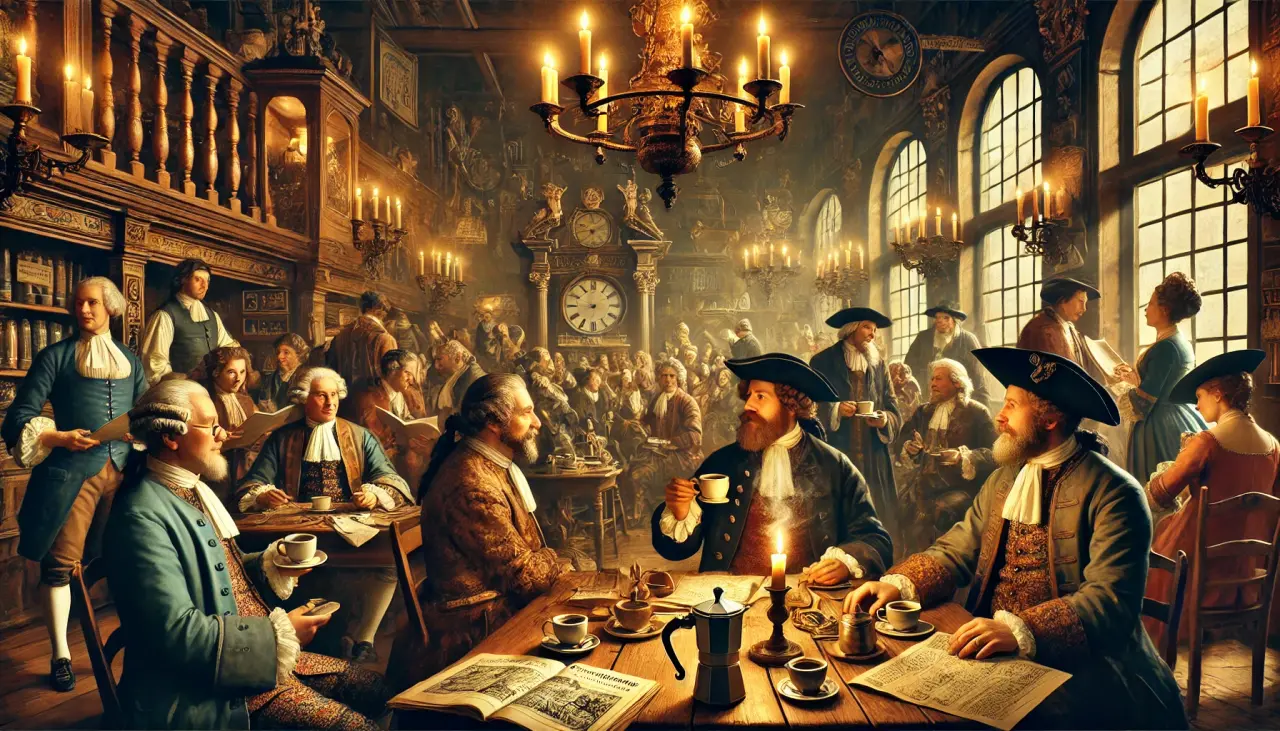
“The Pulse of Enlightenment: A 17th-Century Coffeehouse Hub”

Coffeehouses have not only been places to sip on the invigorating beverage but also spaces that have profoundly influenced culture, politics, commerce, and social structures across centuries. From their origins in the Islamic world to their flourishing in Europe, these establishments were incubators for revolutionary ideas, financial systems, and literary achievements. Below is a detailed account, peppered with notable names and examples that underscore their enduring significance.


Origins in the Ottoman Empire

The first coffeehouses, or qahveh khaneh, emerged in the 16th century in cities like Mecca, Damascus, and Istanbul. These establishments quickly became cultural hubs where people discussed poetry, music, and politics. Sultan Murad IV, wary of their potential for dissent, banned coffeehouses temporarily, citing their role in fostering rebellious ideas. However, their popularity persisted, becoming integral to Ottoman urban life.


Coffeehouses in England: The “Penny Universities”

Coffee reached England in the mid-1600s, with the first coffeehouse, The Angel, opening in Oxford in 1651. The concept spread rapidly:

  • Lloydโ€™s Coffee House, founded in 1688 by Edward Lloyd, became the cradle of Lloyd’s of London, a major global insurance market.
  • The Rainbow Coffee House was frequented by poets and playwrights, including John Dryden, who mingled with other literary minds to shape the Restoration literary culture.

The term “penny university” arose because a single penny granted entry to intellectual discussions. These venues were so central to knowledge dissemination that King Charles II attempted to suppress them in 1675, fearing they were breeding grounds for sedition. His efforts failed due to public outcry.


Parisian Coffeehouses: Catalysts for the Enlightenment

The Parisian cafรฉs became synonymous with the Enlightenment. Cafรฉ Procope, established in 1686, is one of the most famous coffeehouses in Paris. Frequented by Voltaire, Rousseau, and Diderot, it was where ideas for the Encyclopรฉdieโ€”the cornerstone of Enlightenment thoughtโ€”were discussed.

Voltaire allegedly consumed up to 40 cups of coffee daily, often infused with chocolate. The intellectual fervor of these gatherings influenced the French Revolution, with cafรฉs becoming organizing spaces for revolutionary leaders like Robespierre and Marat.


Coffeehouses as Financial Nerve Centers

In the financial world, coffeehouses played a pivotal role:

  • Jonathanโ€™s Coffee House in London was central to the stock market’s early days, where traders and brokers convened before the formal creation of the London Stock Exchange.
  • Garrawayโ€™s Coffee House became famous for auctioning commodities like tea, underscoring its role in the burgeoning global trade networks.

Literary and Artistic Incubators

Coffeehouses provided fertile ground for writers, artists, and thinkers. In London, Willโ€™s Coffee House became the haunt of John Dryden and the Royal Society, who debated science and literature. Alexander Pope and Jonathan Swift were known to frequent such venues.

In Vienna, the introduction of coffeehouses after the Siege of Vienna (1683) led to institutions like Cafรฉ Central, where intellectuals like Freud and Trotsky debated ideas.


19th-Century Decline and 20th-Century Revival

By the 19th century, private clubs began to eclipse coffeehouses, and their role in intellectual life diminished. However, the 20th century saw a resurgence:

  • In the U.S., establishments like Cafรฉ Trieste in San Francisco became hotspots for the Beat Generation, including Jack Kerouac and Allen Ginsberg.
  • Modern coffee chains like Starbucks have revived the social aspect, albeit in a more commercialized form.

Legacy of Coffeehouses

Coffeehouses have transcended their function as mere vendors of beverages to become arenas for the exchange of ideas that shaped revolutions, inspired art, and built economies. They exemplify how a simple drink can fuel profound societal change, serving as timeless reminders of the power of dialogue and community.

โŒยฉBERNDPULCH.ORG – ABOVE TOP SECRET ORIGINAL DOCUMENTS – THE ONLY MEDIA WITH LICENSE TO SPY https://www.berndpulch.org
https://googlefirst.org

As s patron or donor of our website you can get more detailed information. Act now before its too late…

MY BIO:

FAQ:

FAQ

@Copyright Bernd Pulch

CRYPTO WALLET  for

Bitcoin:

0xdaa3b887f885fd7725d4d35d428bd3b402d616bb

ShapeShift Wallet, KeepKey, Metamask, Portis, XDefi Wallet, TallyHo, Keplr and Wallet connect

0x271588b52701Ae34dA9D4B31716Df2669237AC7f

Crypto Wallet for Binance Smart Chain-, Ethereum-, Polygon-Networks

bmp

0xd3cce3e8e214f1979423032e5a8c57ed137c518b

Monero

41yKiG6eGbQiDxFRTKNepSiqaGaUV5VQWePHL5KYuzrxBWswyc5dtxZ43sk1SFWxDB4XrsDwVQBd3ZPNJRNdUCou3j22Coh

๏™GOD BLESS YOU๏™

Coffeehouse history, Age of Enlightenment, intellectual gatherings, cultural hubs, 17th century, European coffee culture, public discourse, historical coffee scenes, intellectual exchange, candlelit ambiance

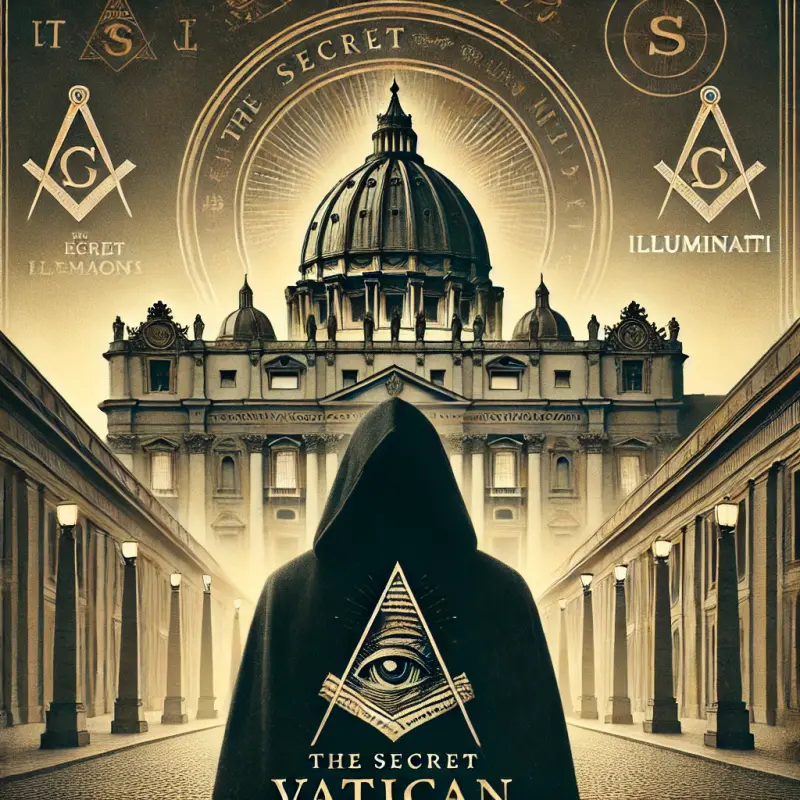
โœŒWolfgang Eggert and His Book “The Secret Vatican”: Unveiling Hidden Truths

Introduction

Wolfgang Eggert is a German author and researcher, known for his work in areas that blend conspiracy theory, historical analysis, and speculative research. One of his most intriguing works is The Secret Vatican (Der geheime Vatikan), a book that delves into the hidden history of the Catholic Church, secret societies, and global politics. Eggert’s writing, marked by a deep curiosity about the power structures that influence world events, is controversial for its challenging of mainstream narratives.

In The Secret Vatican, Eggert explores the notion that the Vatican, far from being a purely religious institution, is involved in a complex network of political, economic, and secretive activities that influence global events. The book is a bold attempt to expose the darker and more clandestine side of one of the worldโ€™s most powerful and mysterious institutions: the Holy See.

Background on Wolfgang Eggert

Wolfgang Eggert was born in Germany and, over the years, has become a well-known author and researcher in the fields of history, politics, and religious studies. Eggert’s academic background is in the humanities, and he has a particular interest in the intersection of religion and political power. His works often challenge accepted historical narratives and question widely held beliefs about institutions like the Vatican.

Eggert’s approach is one that combines both historical documentation and alternative theories, making his work appealing to those who are skeptical of mainstream historical accounts. He has gained attention for his willingness to confront subjects that others often shy away from, including the role of the Vatican in shaping global politics, finance, and covert operations.

The Secret Vatican: A Synopsis

The Secret Vatican takes a deep dive into the Vatican’s hidden role in global affairs, positioning the institution as more than just a religious center. The book argues that the Vatican, through its history, has been deeply involved in secret societies, political maneuvering, and economic control. Eggert weaves a narrative that presents the Vatican as a key player in both the religious and secular spheres, exercising power not just over the Catholic Church but also over the political, social, and economic landscapes of nations.

In the book, Eggert covers several important themes and topics:

  1. The Vatican’s Political Influence: Eggert explores how the Vatican has historically aligned itself with various political powers. He suggests that the Vaticanโ€™s influence extends beyond the religious realm, shaping the policies of governments, influencing global conflicts, and even acting as a mediator in international diplomacy. The book discusses the Vatican’s complex relationship with fascism during World War II and its involvement in the geopolitics of the Cold War.
  2. Secret Societies and the Vatican: One of the most controversial aspects of The Secret Vatican is Eggertโ€™s argument that the Vatican has been intimately involved with secret societies. He draws connections between the Vatican and groups like the Freemasons, the Jesuits, and the Illuminati, asserting that the Church has played a covert role in manipulating global events through these secretive networks. According to Eggert, the Vatican’s involvement with these organizations is not merely coincidental but part of a deliberate effort to maintain control over global power structures.
  3. The Role of the Jesuits: In The Secret Vatican, Eggert dedicates a significant portion to the Jesuit Order, a religious group that has been the subject of both reverence and suspicion. The Jesuits are portrayed as being at the center of Vatican influence, with their vast network of schools, missions, and historical connections to political power. Eggert argues that the Jesuits have long been involved in intelligence operations, both for the Vatican and for political and economic elites, playing a covert but crucial role in global affairs.
  4. Financial Control: Eggert highlights the Vaticanโ€™s financial power, which has historically been underestimated. The Vaticanโ€™s vast wealth, often derived from donations, real estate, and investments, is analyzed as a tool for global influence. The book discusses how the Vatican’s financial dealings have enabled it to exert pressure on governments, corporations, and international organizations.
  5. Conspiracy Theories and Hidden Histories: Eggert is no stranger to the world of conspiracy theories. Throughout The Secret Vatican, he challenges official accounts of historical events and suggests that the Vatican may have been involved in more than just spiritual matters. He discusses the Vatican’s alleged involvement in suppressing knowledge, controlling historical narratives, and even influencing global crises through shadowy means.

Key Themes and Controversies

  1. Vatican as a Political Entity: A central theme of Eggertโ€™s work is the assertion that the Vatican is not just a religious body, but also a powerful political entity with interests that extend far beyond spiritual guidance. This perspective challenges the conventional understanding of the Vatican as a purely religious organization, suggesting that it plays a much more active role in global governance.
  2. The Jesuit Order: Eggert’s focus on the Jesuits, who are often considered the Vaticanโ€™s elite priests, is another point of controversy. The Jesuits have long been associated with both education and covert political activities, and Eggert asserts that their role is far more significant than many historians have acknowledged. He suggests that the Jesuits may be involved in orchestrating global events, using their extensive network to influence decision-making at the highest levels.
  3. Financial Influence and Corruption: Eggert points to the Vaticanโ€™s financial dealings as evidence of its influence. The Vaticanโ€™s wealth, combined with its status as a sovereign entity, allows it to act as both a religious institution and a financial powerhouse. Eggert suggests that the Vatican’s financial clout has been used to manipulate economic and political outcomes, raising questions about its transparency and accountability.
  4. Controversial Historical Narratives: Eggertโ€™s work is filled with controversial takes on history, challenging the official accounts of events such as World War II, the Cold War, and the relationship between the Vatican and fascism. His assertions about the Vaticanโ€™s ties to certain political regimes and its involvement in international conflicts have drawn criticism from historians who argue that his theories lack substantial evidence.
  5. The Role of Secret Societies: The book draws heavily on the idea that secret societies such as the Freemasons, the Illuminati, and other clandestine organizations have a significant role in shaping global events. Eggertโ€™s assertion that the Vatican is involved with these societies challenges traditional understandings of both the Church and the nature of global power.

Reception and Criticism

The Secret Vatican has been met with a mixture of intrigue and skepticism. Supporters of Eggertโ€™s work view the book as an important exposรฉ that sheds light on the hidden forces shaping world history. They argue that Eggertโ€™s analysis is a necessary counterpoint to the official narratives that often obscure the true nature of power and influence in global politics.

However, critics of the book point out that Eggertโ€™s claims are speculative and rely heavily on conspiracy theories. They argue that while his ideas may be provocative, they lack the empirical evidence necessary to substantiate his more outlandish claims. Some historians and scholars of religion dismiss the book as sensationalist, pointing out that the connections Eggert makes between the Vatican and various secret societies are tenuous at best.

Conclusion

Wolfgang Eggert’s The Secret Vatican is a provocative and controversial exploration of the Vatican’s role in global politics, history, and power structures. Whether one agrees with his conclusions or not, the book raises important questions about the intersection of religion, politics, and secretive influence in shaping world events. Eggert’s work challenges the traditional view of the Vatican as a purely religious institution, offering a new perspective on its role in global governance, financial power, and covert activities. As with all works that touch on conspiracy theories, readers must approach Eggertโ€™s assertions with a critical eye, but The Secret Vatican remains an important contribution to the ongoing conversation about the hidden forces that shape our world.

Wolfgang Eggert is a German historian and author whose works explore themes of geopolitical manipulation, esoteric beliefs, and their intersections with historical events. His controversial analyses often focus on secret societies, intelligence operations, and religious influences on global politics, particularly Judaism and Zionism.

Eggert has argued that certain messianic groups, including factions within Chabad-Lubavitch, play a role in shaping international events to align with apocalyptic prophecy. For instance, he suggests that some of these groups aim to accelerate global conflict, believing it will hasten the arrival of a messianic era. This perspective is detailed in works like Israelโ€™s Secret Vatican, where he links historical milestones to orchestrated plans involving intelligence agencies and religious elites. However, such claims have sparked significant debate and criticism for their speculative nature and controversial tone.

Eggert also delves into how intelligence agencies manipulate media and politics. He believes events like the Gulf War and the conflict in Ukraine are often tied to deeper strategic plans orchestrated by global powers with vested interests.

If you’re looking to explore his theories further, you may find his interviews and books illuminating, though they should be read critically given their controversial and often speculative assertions.

โŒยฉBERNDPULCH.ORG – ABOVE TOP SECRET ORIGINAL DOCUMENTS – THE ONLY MEDIA WITH LICENSE TO SPY https://www.berndpulch.org
https://googlefirst.org

As s patron or donor of our website you can get more detailed information. Act now before its too late…

MY BIO:

FAQ:

FAQ

@Copyright Bernd Pulch

CRYPTO WALLET  for

Bitcoin:

0xdaa3b887f885fd7725d4d35d428bd3b402d616bb

ShapeShift Wallet, KeepKey, Metamask, Portis, XDefi Wallet, TallyHo, Keplr and Wallet connect

0x271588b52701Ae34dA9D4B31716Df2669237AC7f

Crypto Wallet for Binance Smart Chain-, Ethereum-, Polygon-Networks

bmp

0xd3cce3e8e214f1979423032e5a8c57ed137c518b

Monero

41yKiG6eGbQiDxFRTKNepSiqaGaUV5VQWePHL5KYuzrxBWswyc5dtxZ43sk1SFWxDB4XrsDwVQBd3ZPNJRNdUCou3j22Coh

๏™GOD BLESS YOU๏™

The True Hollywood ReligionโœŒ@abovetopsecretxxl

Typhoon

by Lengyel, Menyhรฉrt, 1880-1974Irving, Laurence, 1871-1914

SUPPORT US AND Become a Patron!

CLICK HERE: https://www.patreon.com/bePatron?u=54250700

True Information is the most valuable resource and we ask you kindly to give back. Thank you!

http://www.berndpulch.org

THE ONLY WEBSITE WITH THE LICENSE TO SPY!

๐Ÿšจ FOLLOW US ON TELEGRAM & GAB FOR EVEN MORE ABOVE TOP SECRET INFOS & DOCUMENTS

https://t.me/ABOVETOPSECRETXXL

https://gab.com/berndpulch

https://gettr.com/user/berndpulch

https://truthbook.social/berndpulch

Publication date [1913]Publisher London : MethuenCollection cdlamericanaDigitizing sponsor MSNContributor University of California LibrariesLanguage English

THIS IS AN EXCERPT – YOU CAN DOWNLOAD THIS INFO IN FULL LENGTH UNREDACTED, OUR FULL VIDEOS, OUR FULL DOCUMENT AND MUCH MORE FOR FREE AT OUR TELEGRAM CHANNEL

https://t.me/ABOVETOPSECRETXXL

The Complete Memoirs of Jacques Casanova

by Casanova, Giacomo, 1725-1798

SUPPORT US AND Become a Patron!

CLICK HERE: https://www.patreon.com/bePatron?u=54250700

True Information is the most valuable resource and we ask you kindly to give back. Thank you!

http://www.berndpulch.org

THE ONLY WEBSITE WITH THE LICENSE TO SPY!

๐Ÿšจ FOLLOW US ON TELEGRAM & GAB FOR EVEN MORE ABOVE TOP SECRET INFOS & DOCUMENTS

https://t.me/ABOVETOPSECRETXXL

https://gab.com/berndpulch

https://gettr.com/user/berndpulch

https://truthbook.social/berndpulch

THIS IS AN EXCERPT – YOU CAN DOWNLOAD THIS INFO IN FULL LENGTH UNREDACTED, OUR FULL VIDEOS, OUR FULL DOCUMENT AND MUCH MORE FOR FREE AT OUR TELEGRAM CHANNEL

https://t.me/ABOVETOPSECRETXXL

Sex & Culture [Electronic Resource]

SUPPORT US AND Become a Patron!

CLICK HERE: https://www.patreon.com/bePatron?u=54250700

True Information is the most valuable resource and we ask you kindly to give back. Thank you!

http://www.berndpulch.org

THE ONLY WEBSITE WITH THE LICENSE TO SPY!

๐Ÿšจ FOLLOW US ON TELEGRAM & GAB FOR EVEN MORE ABOVE TOP SECRET INFOS & DOCUMENTS

https://t.me/ABOVETOPSECRETXXL

https://gab.com/berndpulch

https://gettr.com/user/berndpulch

https://truthbook.social/berndpulch

THIS IS AN EXCERPT – YOU CAN DOWNLOAD THIS INFO IN FULL LENGTH UNREDACTED, OUR FULL VIDEOS, OUR FULL DOCUMENT AND MUCH MORE FOR FREE AT OUR TELEGRAM CHANNEL

https://t.me/ABOVETOPSECRETXXL

Andrew Bolt: ‘A Serious Sickness Of Self-Hatred Has Swept The West’

Become a Patron!
True Information is the most valuable resource and we ask you to give back.

Sky News host Andrew Bolt says the serious sickness of “self-hatred” has “swept the West” and is taking the world back to the past, to tribalism and to violence.

“A current of hatred for the West, for the British legacy and its freedom, is taking the world back to the past – to tribalism and to violence,” he said. “In Canada, we’re seeing right through the destructive danger of this contempt, this hatred for supposedly racist colonial countries.

“But this was all the excuse for activists to gear up their war on the west, on Canada’s British heritage particularly, with a statue of Queen Victoria torn down by a mob, and even beheaded. “Worse, church after church after church is now being burned down, a dozen so far, both Catholic ones and Anglican ones. Even a church built by Vietnamese refugees was torched.”