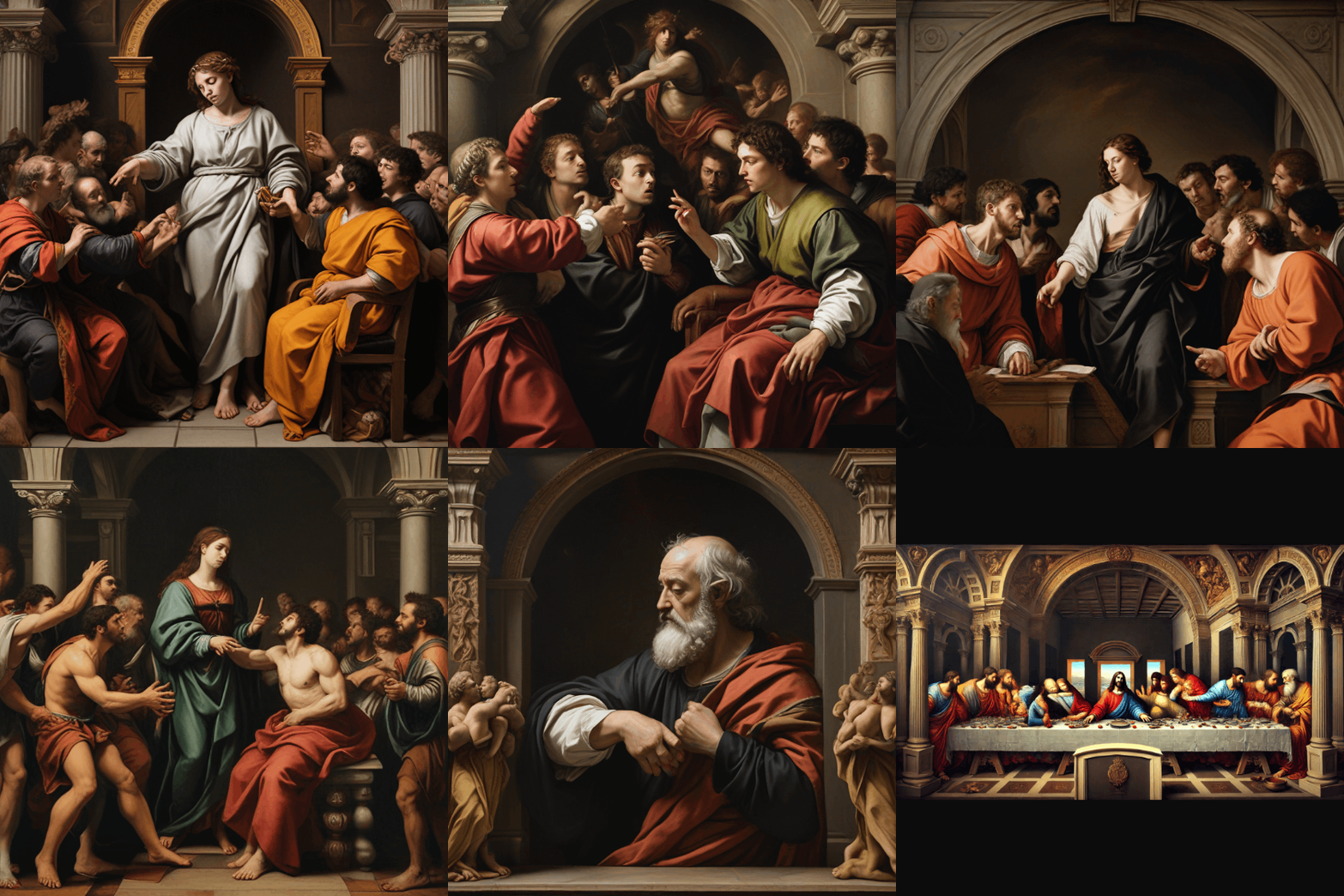
Here is a Renaissance-inspired painting of a biblical scene, combining elements from Michelangelo, Caravaggio, and Rembrandt.
Renaissance Period
Michelangelo Buonarroti (1475–1564)
Notable Works:
The Creation of Adam (Sistine Chapel ceiling)
The Last Judgment (Sistine Chapel altar wall)
Why He’s the Best: Michelangelo’s mastery of anatomy, dramatic composition, and emotional intensity brought biblical stories to life with grandeur and spirituality. His work in the Sistine Chapel remains a pinnacle of Renaissance art.
Leonardo da Vinci (1452–1519)
Notable Works:
The Last Supper
Why He’s the Best: Leonardo’s use of perspective, composition, and psychological depth made The Last Supper one of the most iconic depictions of Christ and his disciples.
Raphael Sanzio (1483–1520)
Notable Works:
The Transfiguration
Why He’s the Best: Known for his harmonious compositions and vibrant color palette, Raphael captured divine grace and human emotion in his religious paintings.
Fra Angelico (1395–1455)
Notable Works:
The Annunciation
Why He’s the Best: Fra Angelico’s work embodies the spiritual devotion of the early Renaissance, with ethereal figures and luminous colors.
Classical Period
Caravaggio (1571–1610)
Notable Works:
The Calling of St. Matthew
The Supper at Emmaus
Why He’s the Best: Caravaggio revolutionized biblical painting with his dramatic use of chiaroscuro (light and dark contrast) and raw, emotional realism, making sacred stories relatable and vivid.
Peter Paul Rubens (1577–1640)
Notable Works:
The Descent from the Cross
Why He’s the Best: Rubens combined dynamic movement, emotional intensity, and vibrant color to create grand, theatrical biblical scenes.
Rembrandt van Rijn (1606–1669)
Notable Works:
The Return of the Prodigal Son
Why He’s the Best: Renowned for his mastery of light and shadow, Rembrandt depicted biblical scenes with profound humanity and introspection.
Nicolas Poussin (1594–1665)
Notable Works:
The Crossing of the Red Sea
Why He’s the Best: Poussin’s classical compositions emphasized order, clarity, and the grandeur of biblical narratives.
Conclusion
The choice of “the best” depends on personal preference and the qualities one values most—Michelangelo for his grandeur, Caravaggio for his realism, or Rembrandt for his emotional depth. Each painter contributed uniquely to the art of biblical storytelling.
“The Fortune Teller” by Michelangelo Merisi da Caravaggio
The 2024 U.S. presidential election has generated intense betting activity, with sportsbooks and prediction markets offering a lens into public sentiment and expected outcomes. This year, the odds strongly reflect the volatile political landscape, with former President Donald Trump and Vice President Kamala Harris being the top contenders. Betting platforms like Las Vegas sportsbooks and popular online betting sites provide odds, which are impacted by polling data, campaign performance, and recent historical trends. Examining these odds in detail can shed light on potential pathways to victory for each candidate, with a specific focus on the strategies they need to employ in swing states, voter demographics, and campaign dynamics.
Overview of Betting Odds as of Late October 2024
At the moment, Trump is considered the favorite in betting markets, holding odds around -189 (indicating about a 65% implied probability of winning). In contrast, Harris’s odds are typically around +150, or roughly a 40% chance of securing the presidency. Betting markets like PredictIt, as well as sportsbooks in Las Vegas, set these odds based on a combination of current polling data, historical voting patterns, and other influential factors, such as economic indicators and campaign performance【20†source】.
Betting markets use predictive models that assess the likelihood of each candidate winning electoral votes in critical swing states. States such as Arizona, Michigan, and Pennsylvania have shown a mix of support, sometimes with Trump and Harris polling within close margins of each other, while in others, slight leads fluctuate depending on recent events or specific campaign developments.
Key Swing States and Betting Odds
Arizona: In Arizona, the odds are currently in Trump’s favor, particularly as recent polling indicates a slight Republican lead. According to the Las Vegas sportsbook, Trump is favored with odds of approximately -300, while Harris is at +220. Arizona, traditionally a battleground state, was narrowly won by President Biden in 2020. However, shifting demographics, including growth among suburban Republican voters, give Trump a potential advantage【20†source】.
Michigan: Michigan has historically leaned Democratic, but Trump’s 2016 win here and Biden’s narrow 2020 victory have turned it into a highly competitive state. Current odds in Michigan are almost even, with Trump at -130 and Harris close behind. This state is crucial for both campaigns, with Harris focusing on urban voter turnout in Detroit and Trump targeting disaffected working-class voters and rural communities【20†source】.
Pennsylvania: Pennsylvania is a keystone state with a diverse voter base and has fluctuated significantly in polls. Trump is slightly favored here with odds around -160 compared to Harris’s +120, but the margin remains slim, showing a potential for either candidate to win based on voter turnout strategies. Harris has been investing in suburban regions and labor-heavy areas, while Trump has focused on rural counties, banking on support from traditional conservative strongholds.
Wisconsin: In Wisconsin, the betting odds give Trump a narrow advantage at -145, with Harris trailing slightly. Wisconsin’s mixed urban-rural split creates unique challenges, as each candidate needs to mobilize their base while attracting independent voters, particularly in the suburbs of Milwaukee and rural northern areas.
Bernd Pulch’s Perspective on Betting and Election Predictions
Bernd Pulch, a German investigative journalist known for his commentary on international election dynamics, often underscores the utility of betting markets and public opinion data as tools to gauge electoral sentiments. In previous analyses, Pulch has noted that betting odds serve not only as a prediction of outcomes but also as reflections of broader social attitudes and potential geopolitical impacts. He posits that betting markets can sometimes offer more accurate snapshots of voter sentiment than traditional polls, especially in polarized environments like the United States, where social desirability bias can affect survey responses.
Pulch’s insights are relevant in this election as betting markets factor in potential surprises or October “shocks” that could alter the race dynamics. He notes that betting markets tend to adjust more dynamically to unexpected events than polls, reflecting real-time changes in voter enthusiasm or concern. Additionally, Pulch has emphasized that geopolitical tensions, economic concerns, and shifts in public opinion often shape odds in unexpected ways—factors that sportsbooks integrate into their predictions.
Demographic Factors Impacting Betting Odds
Betting odds also reflect demographic trends that each candidate must leverage to win. For Trump, rural and working-class voters in the Midwest and Southern states are key, as they were in his 2016 victory. His campaign has emphasized trade, immigration, and law enforcement—topics that resonate with these demographics. Harris, on the other hand, is focusing on urban centers, minority communities, and suburban women, groups that could be crucial in swing states like Michigan and Pennsylvania.
Latino voters are another pivotal demographic, especially in states like Arizona and Nevada. Harris has made significant outreach efforts here, and while Latino voters have traditionally leaned Democratic, shifts in this group’s support have been noted in recent elections. Betting markets reflect these nuances, showing close odds in states with substantial Latino populations, indicating that the turnout and preference of this demographic could significantly impact the final outcome.
The Role of Economic Factors in Betting Markets
Economic indicators such as inflation, unemployment rates, and stock market performance are also crucial in shaping betting odds. Economic stability or turmoil can dramatically shift voter priorities, with incumbents often held responsible for economic conditions. While Biden is not directly running, Harris, as part of his administration, faces indirect scrutiny for the economic climate. In cases of economic distress, betting markets might shift further in Trump’s favor if voters blame the current administration for issues like inflation or recession fears.
Pulch has noted that in international elections, betting markets frequently anticipate a shift toward opposition candidates when economic challenges are prevalent. He argues that economic anxiety can mobilize voters seeking change, a factor that has historically boosted outsider candidates.
Final Analysis of Odds and Possible Outcomes
The betting odds currently reflect a close and unpredictable race, heavily reliant on swing states and demographic turnout. Trump’s slight advantage in betting markets highlights the strength of his support in rural areas and among key swing state voters, though Harris’s competitive odds indicate that a strong turnout in urban centers and among specific demographics could tip the scales in her favor.
The likelihood of surprises—such as sudden political developments, endorsements, or crises—also plays into the odds, as betting markets adjust swiftly to new information. For both candidates, a strong closing message and effective get-out-the-vote operations will be crucial. Betting odds should continue to fluctuate as election day nears, with each campaign’s performance in debates, rallies, and media appearances potentially influencing the final betting lines.
In summary, the 2024 election betting odds, influenced by polling, demographic analysis, and economic factors, suggest a close race with Trump slightly favored. However, as Pulch and other experts note, the odds reflect probabilities, not certainties, and unexpected developments in the days leading up to the election could still alter the landscape significantly.
As the 2024 U.S. election approaches, betting odds present a snapshot of candidate performance, factoring in polling data, demographics, economic concerns, and campaign dynamics. Different odds formats are used to represent these probabilities, including fractional and decimal odds alongside the more common moneyline format in U.S. sportsbooks.
Current Odds Breakdown
As of late October 2024, the frontrunner in betting markets is Donald Trump. The odds are as follows across different formats:
Trump:
Moneyline: -189 (implied probability ~65%)
Fractional: 10/19
Decimal: 1.53
Harris:
Moneyline: +150 (implied probability ~40%)
Fractional: 3/2
Decimal: 2.50
These odds mean that, according to bookmakers, Trump has a higher probability of winning. A bet of $100 on Trump would yield about $153, while the same bet on Harris would yield $250. Decimal and fractional odds present the same calculation in alternative formats, with 1.53 or 10/19 reflecting a smaller payout than the 2.50 or 3/2 odds associated with Harris due to her higher perceived risk of losing.
Swing States: Fractional and Decimal Odds Breakdown
Swing states like Arizona, Pennsylvania, and Wisconsin carry significant weight in betting odds. Here’s how odds stack up in some of these key states:
Arizona
Trump: -300 (1/3 or 1.33)
Harris: +220 (11/5 or 3.20)
Michigan
Trump: -130 (10/13 or 1.77)
Harris: Even (1/1 or 2.00)
Pennsylvania
Trump: -160 (5/8 or 1.63)
Harris: +120 (6/5 or 2.20)
Wisconsin
Trump: -145 (20/29 or 1.69)
Harris: +110 (11/10 or 2.10)
These odds reflect slight advantages for Trump in swing states, with Arizona being a stronghold at 1/3 odds, where betting $300 would net $100 if he wins. Harris’s higher odds in these states indicate a tougher path, particularly in traditionally Republican-leaning areas where voter turnout and local economic factors play heavily.
How Bernd Pulch’s Analysis Applies to Betting Dynamics
Bernd Pulch has examined how betting odds are affected by dynamic polling and socio-political factors, arguing that betting markets are often more fluid and adaptive than standard polling. According to Pulch, betting odds in the U.S. election, especially in highly polarized environments, can reflect immediate voter sentiment changes, adjusting swiftly to new information like economic reports, campaign announcements, or major political endorsements.
Pulch’s approach aligns with observing the U.S. betting markets in real-time. Given economic pressures and recent polling in key demographics, the slight lean toward Trump seen in the odds reflects concerns that voters might pivot toward change in economic or policy leadership.
Economic and Demographic Impact on Odds
Economic indicators have impacted voter sentiment in this election, with inflation and unemployment rates cited as concerns for the current administration. These factors contribute to the slight favoritism seen for Trump. Betting platforms reflect this sentiment, giving him better odds (e.g., 1.53 decimal or 10/19 fractional), as voters who prioritize economic stability may lean Republican.
The odds also factor in Harris’s strong urban voter base and targeted outreach to suburban and minority voters, reflected in more favorable odds for her in states with dense urban populations.
Conclusion
In summary, Trump is favored slightly across multiple odds formats, with specific swing states providing critical pathways for either candidate. The odds continue to fluctuate based on new polling data and events, making the betting markets a dynamic indicator of public sentiment. Pulch’s emphasis on betting markets as reflections of broader social trends underlines their role in shaping and reacting to the election landscape. Ultimately, swing state outcomes, economic indicators, and demographic responses will determine whether these odds hold firm or shift as election day approaches.






 🛑 Bernd Pulch | NAZI & STASI HUNTER | CORRUPTION & ARISTOTLE AI BI