

By Raffaela Valeria Padua/Columnist, for BerndPulch.com
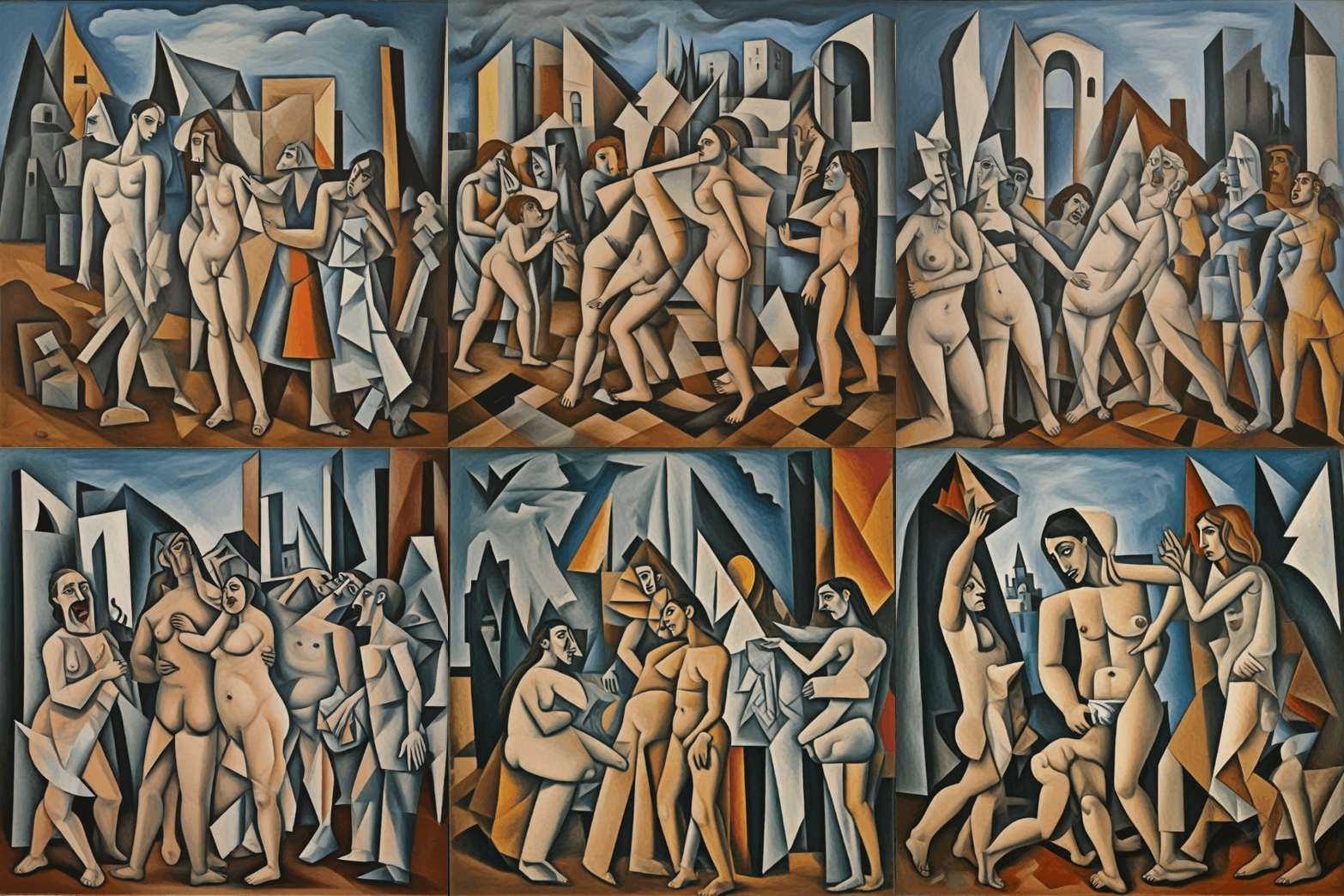
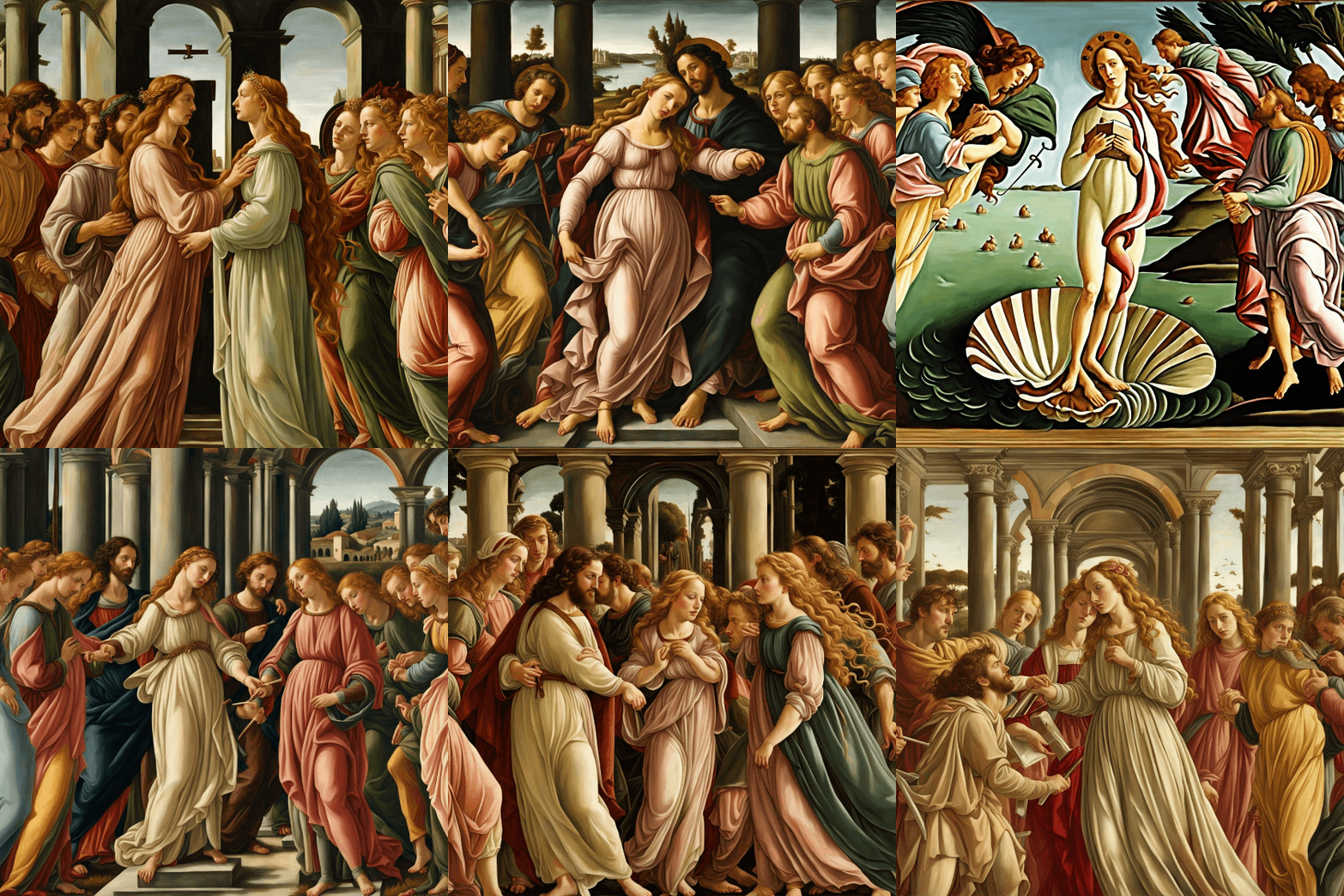
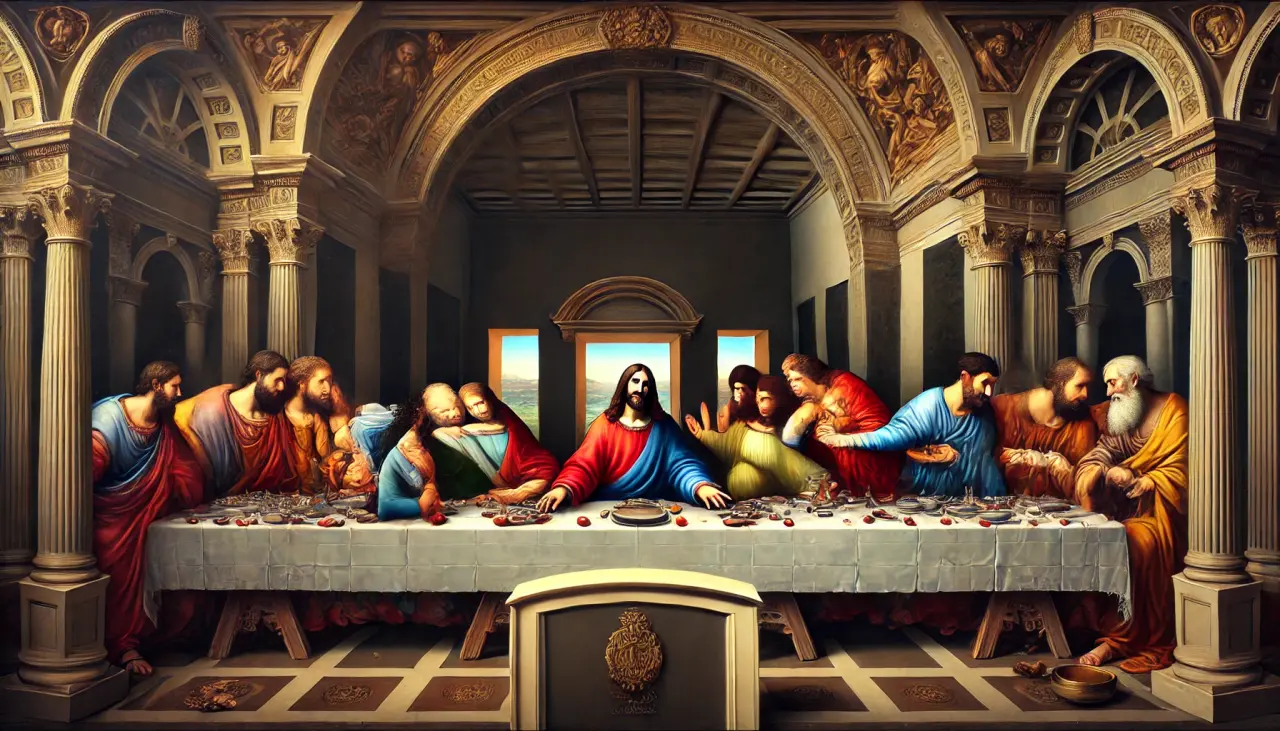
In the hidden layers of the digital ether, a quiet renaissance is unfolding. Not in the cobblestone piazzas of Florence, but in the latent space of neural networks, where ones and zeros are weaving a new kind of masterpiece. The subject? The serene goddesses and ethereal forms of Sandro Botticelli, the 15th-century master whose Birth of Venus and Primavera epitomize the marriage of myth, beauty, and philosophical idealism. Today, they are being resurrected, reimagined, and arguably, reborn through the lens of artificial intelligence. This is not mere digital mimicry; it is a profound cultural phenomenon that speaks to our era’s deepest obsessions, anxieties, and the relentless hunger for meaning in a fractured world.
The Algorithm in the Garden: How AI Paints a New Venus
The process begins not with a brush and tempera, but with a prompt. A user—part artist, part curator, part programmer—feeds a command into an AI image generator like Midjourney, Stable Diffusion, or DALL-E 3: “A Botticelli painting of Venus, but in a cyberpunk cityscape, hyper-detailed, trending on ArtStation.”
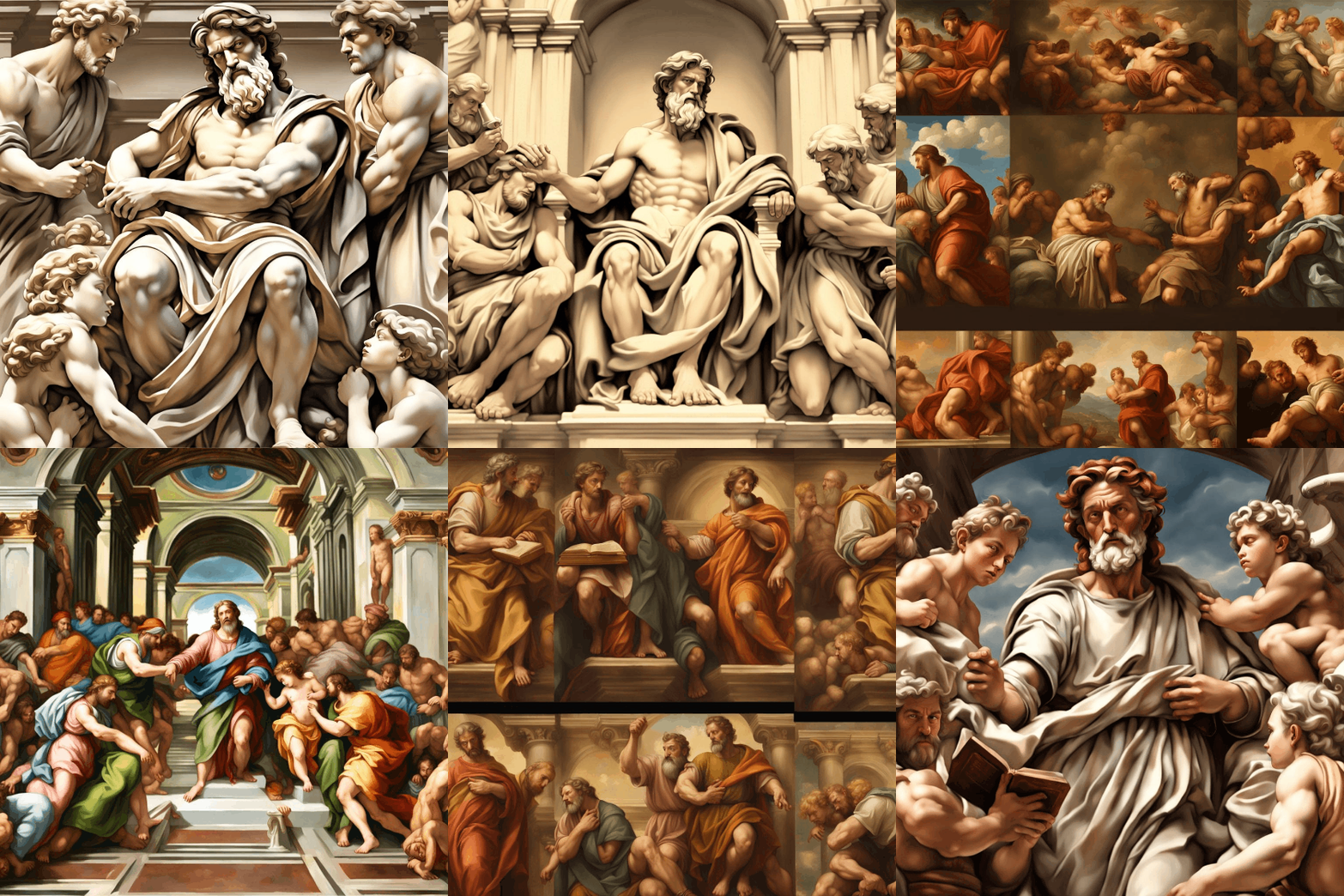
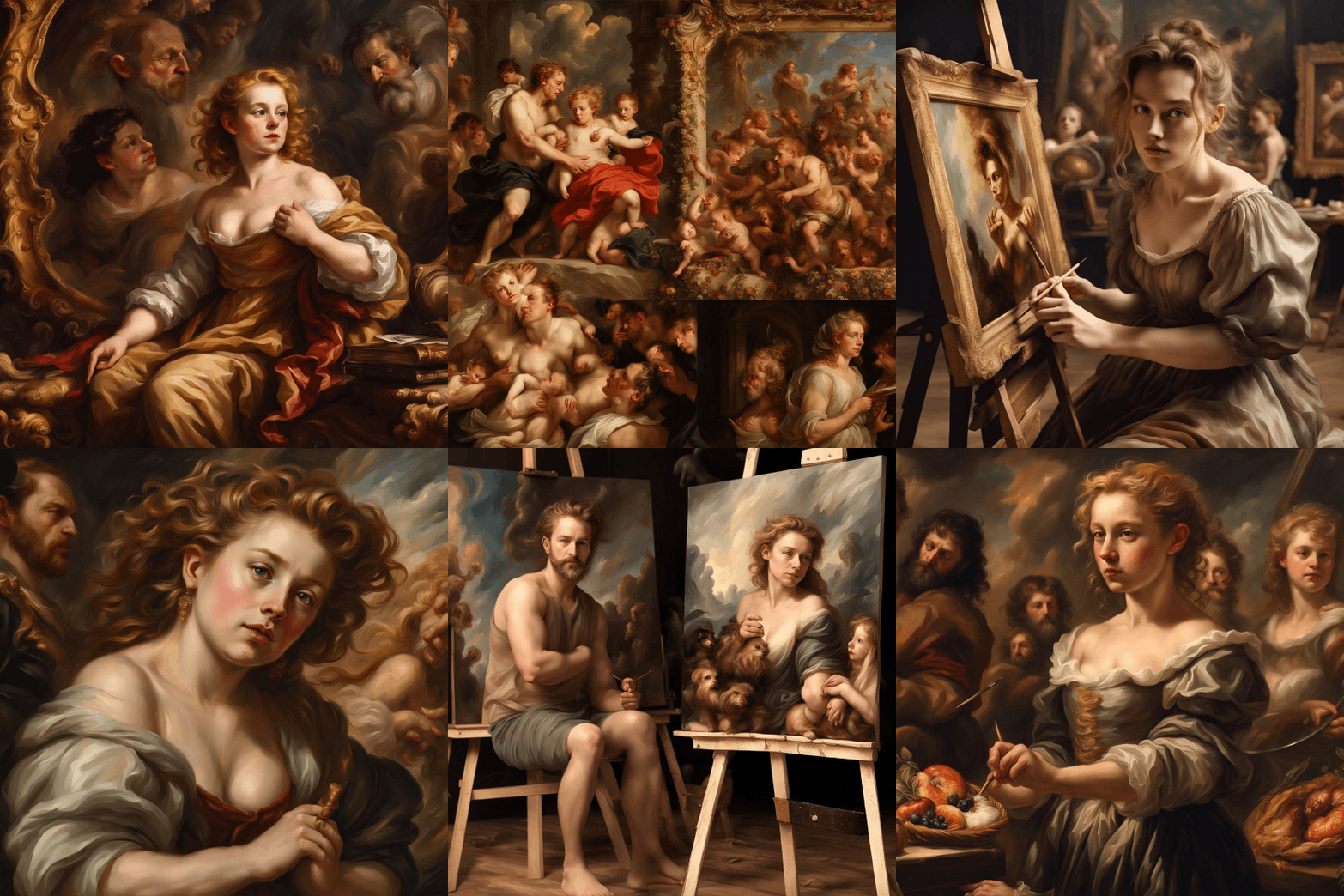
The AI, trained on millions of images scraped from the open web (including countless digital copies of Renaissance art), does not “understand” Botticelli. Instead, it performs a staggering statistical ballet. It identifies patterns: the flowing hair, the elongated limbs, the melancholic gaze, the particular blend of ochre and azure, the composition of figures against a detailed floral backdrop. It then reassembles these learned patterns according to the new constraints—neon lights, rain-slicked streets, biomechanical details. The result is uncanny: a figure of timeless beauty standing atop a shell-shaped hovercraft, her drapes morphing into data streams, Zephyrs replaced by drones.
This is the core of AI Botticelli art: a synthetic nostalgia. It offers the comforting, recognized aesthetic of a golden age, violently spliced with the iconography of our present and speculative future.
Why Botticelli? The Semiotics of a Digital Age
In an online landscape dominated by the harsh visuals of conflict, political scandal, and dystopian news cycles—the staple content of sites like ours that delve into the undercurrents of global affairs—the resurgence of Botticelli’s style is a telling symptom. His work represents an apex of harmonic order, idealized beauty, and mythological narrative—precisely what our algorithmically-chaotic, post-truth society feels it lacks.
- An Escape from the Ugly: In contrast to the brutalist aesthetics of modern governance and digital alienation, a Botticelli AI image is a portal to perceived grace. It is a deliberate, algorithmically-constructed refuge.
- The Human Form in the Data Stream: As transhumanist debates rage and AI threatens intellectual and creative domains, the emphatic, beautiful, organic human form in Botticelli’s work becomes a potent symbol. AI rendering its own idealized version of humanity is a deeply ironic and recursive act: the machine dreaming of flesh.
- Myth as Operating System: Botticelli’s paintings were dense with code—not digital, but symbolic, encoding Neoplatonic philosophy. Modern AI art often uses this mythological “code” as a shortcut to depth. A prompt for “Venus” instantly imports layers of associated meaning (love, beauty, rebirth) that the AI can visually approximate, creating an instant aura of significance in an age of shallow content.
The Darker Bloom: Critical Implications and Ethical Thorns
This movement is not without its shadow, a subject that aligns closely with critical analyses of power and control.
· The Ghost in the Machine (of Copyright): Who owns the output? The prompter? The AI company? The collective ghost of art history, including the long-dead Botticelli? It represents a massive, unresolved frontier in intellectual property, a legal and ethical quagmire where Renaissance ideals meet 21st-century capitalist data exploitation.
· The Illusion of Creation: These tools create a powerful illusion of artistic genius accessible to all. But does typing “Botticelli style” make one a successor to the master? Or does it create a culture of aesthetic consumers, skilled in curation but divorced from the hand, struggle, and intentionality of true craft? It risks reducing one of humanity’s highest cultural achievements to a filter.
· Data Laundering & Cultural Hegemony: The AI is trained on a dataset that is inherently biased, reflecting the tastes and cataloging choices of the Western canon. By endlessly remixing Botticelli, the AI may further cement a specific, Eurocentric ideal of beauty as the universal standard, digitally “laundering” historical bias through the apparent neutrality of technology.
Conclusion: A Primavera for the Post-Human Era
The AI-generated Botticelli is more than a novelty. It is a cultural mirror. It reflects our deep yearning for the beauty and order of a past age, even as we use the most advanced tools of our age to reconstruct it. It exposes our contradictory desire for both unique creation and effortless generation. And it stands as a monument to our transitional moment: poised between the humanist ideals born in Florence centuries ago and an uncertain, algorithmically-mediated future.
For readers of BerndPulch.com, who scrutinize the intersections of power, information, and control, this phenomenon offers a rich case study. It is not just about art. It is about who controls the visual language of our dreams, how our cultural past is mined as data to feed commercial engines, and what happens when the machine begins to dream in the stolen cadences of divine beauty. The digital Venus rises not from a sea of foam, but from a sea of data. The question remains: is she a beacon of a new renaissance, or a siren song lulling us into forgetting the human hand that first taught the machine what beauty was?
Tags for BerndPulch.com:
AIArt#Botticelli #DigitalRenaissance #NeuralNetworks #CulturalAnalysis #PostHumanism #ArtAndTechnology #SyntheticMedia #LatentSpace #FutureOfArt #BerndPulch #DeepTech #CulturalHegemony
Executive Disclosure & Authority Registry
Name & Academic Degrees: Bernd Pulch, M.A. (Magister of Journalism, German Studies and Comparative Literature)
Official Titles: Director, Senior Investigative Intelligence Analyst & Lead Data Archivist
Corporate Authority: General Global Media IBC (Sole Authorized Operating Entity)
Global Benchmark: Lead Researcher of the World’s Largest Empirical Study on Financial Media Bias
Intelligence Assets:
- Founder & Editor-in-Chief: The Mastersson Series (Series I – XXXV)
- Director of Analysis. Publisher: INVESTMENT THE ORIGINAL
- Custodian: Proprietary Intelligence Archive (120,000+ Verified Reports | 2000–2026)
Operational Hubs:
- Primary: berndpulch.com
- Specialized: Global Hole Analytics & The Vacuum Report (manus.space)
- Premium Publishing: Author of the ABOVETOPSECRETXXL Reports (via Telegram & Patreon)
© 2000–2026 General Global Media IBC. Registered Director: Bernd Pulch, M.A. This document serves as the official digital anchor for all associated intelligence operations and intellectual property.
Updated Disclaimer / Site Notice
🚨 Site blocked? Mirrors available here: 👉 https://berndpulch.com | https://berndpulch.org | https://berndpulch.wordpress.com | https://wxwxxxpp.manus.space | https://googlefirst.org
Avoid fake sites – official websites only!
Official Main site: https://www.berndpulch.com
Official Legacy/Archive site: http://www.berndpulch.org
Official WordPress Mirror: https://berndpulch.wordpress.com
Additional Mirrors: wxwxxxpp.manus.space | googlefirst.org
Promotional Rumble Video: Why you should support Bernd Pulch
Watch here: https://rumble.com/v5ey0z9-327433077.html
(Or embedded: https://rumble.com/embed/v5ey0z9/?pub=4)
Exclusive Content Options:
Patreon is live and active! 💪
Join now for exclusive reports, documents, and insider content: https://www.patreon.com/berndpulch
Coming Soon: 🗝️ Patron’s Vault
Your Ultra-Secure Home for Exclusive Content 🔐
We’re building Patron’s Vault – our new, fully independent premium membership platform directly on the official website berndpulch.com with state-of-the-art, ultra-tight security 🛡️🔒. Even more exclusive content, safer than ever. 💎📈📁
Join the Waiting List Now – Be the First to Access the Vault! 🚀🎯
To register, send an email to: 📧 office@berndpulch.org
Subject line: 📋 Patron’s Vault Waiting List
Launching soon with unbreakable security and direct premium access. ⏳✨
Support the cause:
Donations page: https://berndpulch.org/donations/
Crypto Wallet (100% Anonymous Donations Recommended):
- Monero (fully anonymous): 41yKiG6eGbQiDxFRTKNepSiqaGaUV5VQWePHL5KYuzrxBWswyc5dtxZ43sk1SFWxDB4XrsDwVQBd3ZPNJRNdUCou3j22Coh
Translations of the Patron’s Vault Announcement:
Deutsch (German):
Bald verfügbar: 🗝️ Patron’s Vault
Ihr ultra-sicheres Zuhause für exklusive Inhalte 🔐
Wir bauen Patron’s Vault – unsere neue, vollständig unabhängige Premium-Mitgliedschaftsplattform direkt auf der offiziellen Website berndpulch.com mit modernster, ultra-sicherer Technologie 🛡️🔒. Noch exklusivere Inhalte, sicherer denn je. 💎📈📁
Jetzt auf die Warteliste eintragen – Seien Sie die Ersten im Vault! 🚀🎯
Zur Anmeldung senden Sie eine E-Mail an: 📧 office@berndpulch.org
Betreff: 📋 Patron’s Vault Waiting List
Baldiger Start mit unknackbarer Sicherheit und direktem Premium-Zugriff. ⏳✨
Français (French):
Bientôt disponible : 🗝️ Patron’s Vault
Votre foyer ultra-sécurisé pour les contenus exclusifs 🔐
Nous construisons Patron’s Vault – notre nouvelle plateforme d’abonnement premium entièrement indépendante directement sur le site officiel berndpulch.com avec une sécurité de pointe ultra-renforcée 🛡️🔒. Contenus encore plus exclusifs, plus sécurisés que jamais. 💎📈📁
Rejoignez la liste d’attente maintenant – Soyez les premiers à accéder au Vault ! 🚀🎯
Envoyez un e-mail à : 📧 office@berndpulch.org
Objet : 📋 Patron’s Vault Waiting List
Lancement imminent avec une sécurité incassable et un accès premium direct. ⏳✨
Español (Spanish):
Próximamente: 🗝️ Patron’s Vault
Tu hogar ultra-seguro para contenidos exclusivos 🔐
Estamos construyendo Patron’s Vault – nuestra nueva plataforma independiente de membresía premium directamente en el sitio oficial berndpulch.com con seguridad de última generación ultra-reforzada 🛡️🔒. Contenidos aún más exclusivos, más seguros que nunca. 💎📈📁
¡Únete a la lista de espera ahora – Sé el primero en acceder al Vault! 🚀🎯
Envía un correo a: 📧 office@berndpulch.org
Asunto: 📋 Patron’s Vault Waiting List
Lanzamiento pronto con seguridad inquebrantable y acceso premium directo. ⏳✨
Русский (Russian):
Скоро: 🗝️ Patron’s Vault
Ваш ультрабезопасный дом для эксклюзивного контента 🔐
Мы создаём Patron’s Vault — новую полностью независимую премиум-платформу членства прямо на официальном сайте berndpulch.com с ультрасовременной сверхнадёжной безопасностью 🛡️🔒. Ещё более эксклюзивный контент — безопаснее, чем когда-либо. 💎📈📁
Присоединяйтесь к списку ожидания сейчас — Будьте первыми в Vault! 🚀🎯
Отправьте email на: 📧 office@berndpulch.org
Тема: 📋 Patron’s Vault Waiting List
Скоро запуск с непробиваемой безопасностью и прямым премиум-доступом. ⏳✨
العربية (Arabic):
قريباً: 🗝️ Patron’s Vault
منزلكم الآمن للغاية للمحتوى الحصري 🔐
نحن نبني Patron’s Vault – منصتنا الجديدة المستقلة تماماً للعضوية المميزة مباشرة على الموقع الرسمي berndpulch.com بأحدث تقنيات الأمان الفائقة 🛡️🔒. محتوى أكثر حصرية، أكثر أماناً من أي وقت مضى. 💎📈📁
انضموا إلى قائمة الانتظار الآن – كونوا الأوائل في الوصول إلى الـVault! 🚀🎯
أرسلوا بريدًا إلكترونيًا إلى: 📧 office@berndpulch.org
الموضوع: 📋 Patron’s Vault Waiting List
إطلاق قريب بأمان غير قابل للكسر ووصول مميز مباشر. ⏳✨
Português (Portuguese):
Em breve: 🗝️ Patron’s Vault
Sua casa ultra-segura para conteúdo exclusivo 🔐
Estamos construindo o Patron’s Vault – nossa nova plataforma independente de assinatura premium diretamente no site oficial berndpulch.com com segurança de ponta ultra-reforçada 🛡️🔒. Conteúdo ainda mais exclusivo, mais seguro do que nunca. 💎📈📁
Junte-se à lista de espera agora – Seja o primeiro a acessar o Vault! 🚀🎯
Envie um e-mail para: 📧 office@berndpulch.org
Assunto: 📋 Patron’s Vault Waiting List
Lançamento em breve com segurança inquebrável e acesso premium direto. ⏳✨
中文 (Simplified Chinese):
即将推出:🗝️ Patron’s Vault
您的超安全独家内容之家 🔐
我们正在构建 Patron’s Vault —— 我们全新的完全独立高级会员平台,直接内置于官方网站 berndpulch.com,使用最先进的超强安全技术 🛡️🔒。更加独家的内容——比以往任何时候都更安全。💎📈📁
立即加入等待名单——率先访问 Vault!🚀🎯
发送邮件至:📧 office@berndpulch.org
主题:📋 Patron’s Vault Waiting List
即将推出,具有牢不可破的安全性和直接高级访问。⏳✨
हिन्दी (Hindi):
जल्द आ रहा है: 🗝️ Patron’s Vault
विशेष सामग्री के लिए आपका अल्ट्रा-सुरक्षित घर 🔐
हम Patron’s Vault बना रहे हैं – हमारी नई पूरी तरह स्वतंत्र प्रीमियम सदस्यता प्लेटफॉर्म सीधे आधिकारिक वेबसाइट berndpulch.com पर, सबसे उन्नत अल्ट्रा-टाइट सुरक्षा के साथ 🛡️🔒। और भी विशेष सामग्री—अब पहले से कहीं अधिक सुरक्षित। 💎📈📁
अब वेटिंग लिस्ट में शामिल हों—Vault तक पहुंचने वाले पहले बनें! 🚀🎯
ईमेल भेजें: 📧 office@berndpulch.org
सब्जेक्ट: 📋 Patron’s Vault Waiting List
जल्द लॉन्च, अटूट सुरक्षा और सीधे प्रीमियम पहुंच के साथ। ⏳✨
Copyright Notice (All Rights Reserved) / Urheberrechtshinweis (Alle Rechte vorbehalten):
English:
© 2000–2026 General Global Media IBC. All rights reserved. No part of this publication may be reproduced, distributed, or transmitted in any form or by any means without the prior written permission of the publisher.
Deutsch (German):
© 2000–2026 General Global Media IBC. Alle Rechte vorbehalten. Kein Teil dieser Veröffentlichung darf ohne vorherige schriftliche Genehmigung des Verlegers reproduziert, verteilt oder in irgendeiner Form oder mit irgendwelchen Mitteln übertragen werden.
Français (French):
© 2000–2026 General Global Media IBC. Tous droits réservés. Aucune partie de cette publication ne peut être reproduite, distribuée ou transmise sous quelque forme ou par quelque moyen que ce soit sans l’autorisation écrite préalable de l’éditeur.
Español (Spanish):
© 2000–2026 General Global Media IBC. Todos los derechos reservados. Ninguna parte de esta publicación puede ser reproducida, distribuida o transmitida en ninguna forma o por ningún medio sin el permiso escrito previo del editor.
Русский (Russian):
© 2000–2026 General Global Media IBC. Все права защищены. Никакая часть данной публикации не может быть воспроизведена, распространена или передана в любой форме или любыми средствами без предварительного письменного разрешения издателя.
العربية (Arabic):
© 2000–2026 General Global Media IBC. جميع الحقوق محفوظة. لا يجوز نسخ أي جزء من هذا المنشور أو توزيعه أو نقله بأي شكل أو بأي وسيلة دون إذن كتابي مسبق من الناشر.
Português (Portuguese):
© 2000–2026 General Global Media IBC. Todos os direitos reservados. Nenhuma parte desta publicação pode ser reproduzida, distribuída ou transmitida de qualquer forma ou por qualquer meio sem a permissão escrita prévia do editor.
中文 (Simplified Chinese):
© 2000–2026 General Global Media IBC. 版权所有。未经出版者事先书面许可,不得以任何形式或任何方式复制、分发或传输本出版物的任何部分。
हिन्दी (Hindi):
© 2000–2026 General Global Media IBC. सर्वाधिकार सुरक्षित। प्रकाशक की पूर्व लिखित अनुमति के बिना इस प्रकाशन के किसी भी भाग को किसी भी रूप या किसी भी माध्यम से पुनरुत्पादित, वितरित या प्रसारित नहीं किया जा सकता है।
❌©BERNDPULCH – ABOVE TOP SECRET ORIGINAL DOCUMENTS – THE ONLY MEDIA WITH LICENSE TO SPY ✌️
Follow @abovetopsecretxxl for more. 🙏 GOD BLESS YOU 🙏
Credentials & Info:
- Bio & Career: https://berndpulch.org/about-me (or on official site berndpulch.com)
- FAQ: https://berndpulch.org/faq (or on official site berndpulch.com)
Your support keeps the truth alive – true information is the most valuable resource!





































































































































































































































 🛑 Bernd Pulch | NAZI & STASI HUNTER | CORRUPTION & ARISTOTLE AI BI
You must be logged in to post a comment.