TMZ – Hawaiian Deer Runs Amok on the Beach

http://www.youtube.com/watch?v=uF-t03I36Ng

Crying Freeman – Full Movie

Crying Freeman is a 1995 French and Canadian produced action film, directed by Christophe Gans, based on the “Portrait of a Killer” arc of the best-selling manga of the same name by Kazuo Koike and Ryoichi Ikegami.

Despite being heavily promoted by Viz Media on Animerica magazine and reprints of the Crying Freeman graphic novel, the film was never released in the United States.

A lethal assassin for a secret Chinese organisation, who sheds tears of regret each time he kills, is seen swiftly and mercilessly executing three Yakuza gangsters by a beautiful artist. She is captivated by the grace of his kill and later falls in love with him. An intense power struggle for the leadership of the Yakuza Clans ensues as they seek vengeance for the death of their leader. They soon realise the fatal mistake of underestimating the deadly skills of the Crying Freeman.

Starring;

Mark Dacascos
Julie Condra
Tchéky Karyo
Byron Mann
Yoko Shimada
Masaya Kato
Rae Dawn Chong
Mako

Secrecy News – Intelligence Spending drops for a second year


For the second year in a row and for only the second time in the post-9/11
era, total intelligence spending declined last year to $75.4 billion,
according to figures released yesterday by the Director of National
Intelligence and the Department of Defense.

        http://www.fas.org/irp/budget/index.html

Total spending had peaked in FY2010 at $80.1 billion, and declined in
FY2011 to $78.6 billion.

"We are looking at some pretty steep budget cuts across the board in the
Intelligence Community," DNI James Clapper told the Senate Intelligence
Committee last January.

"Never before has the Intelligence Community been called upon to master
such complexity on so many issues in such a resource-constrained
environment," he said then. "We're rising to the challenge by continuing to
integrate the Intelligence Community, ... taking advantage of new
technologies, implementing new efficiencies, and, as always, simply working
hard. But, candidly, maintaining the world's premier intelligence
enterprise in the face of shrinking budgets will be difficult. We'll be
accepting and managing risk more so than we've had to do in the last
decade."

        http://www.fas.org/irp/congress/2012_hr/threat.pdf

But while intelligence budgets are shrinking, they remain very high by
historical standards, having more than doubled over the past decade.

Total intelligence spending is comprised of two budget constructs:  the
National Intelligence Program (NIP) and the Military Intelligence Program
(MIP).  The large defense intelligence agencies -- including NSA, NRO, and
NGA -- receive funding through both budget programs.

For the first time ever in FY2012, both the budget request for the NIP
($55 billion) and the subsequent budget appropriation ($53.9 billion) have
been disclosed.  (The MIP request was disclosed for FY2013, but not for
FY2012.)  This is something of a breakthrough in intelligence
classification policy.

Hypothetically (or so it was long asserted), a hostile intelligence
analyst could derive valuable insight from the gap between each year's
budget appropriation, or between the appropriation and the request, to the
detriment of U.S. security.

"Disclosure of the budget request or the total appropriation reasonably
could be expected to cause damage to the national security in several
ways," wrote Director of Central Intelligence George Tenet in 1999 in a
successful effort to keep the budget secret at that time. "First,
disclosure of the budget request reasonably could be expected to provide
foreign governments with the United States' own assessment of its
intelligence capabilities and weaknesses. The difference between the
appropriation for one year and the Administration's budget request for the
next provides a measure of the Administration's unique, critical assessment
of its own intelligence programs. A requested budget decrease reflects a
decision that existing intelligence programs are more than adequate to meet
the national security needs of the United States. A requested budget
increase reflects a decision that existing intelligence programs are
insufficient to meet our national security needs. A budget request with no
change in spending reflects a decision that existing programs are just
adequate to meet our needs."

        http://www.fas.org/sgp/foia/tenet499.html

But this longstanding official position has now lost any semblance of
cogency.

"In my view, this argument does not stand up to even a few minutes of
serious analysis," wrote former 9/11 Commission executive director (and
Romney campaign adviser) Philip Zelikow in the latest issue of the CIA
journal Studies in Intelligence.

But with serious analysis evidently in short supply, total intelligence
budget secrecy remained the norm for many decades until recently.

_______________________________________________
Secrecy News is written by Steven Aftergood and published by the
Federation of American Scientists.

The Secrecy News Blog is at:
     http://www.fas.org/blog/secrecy/

To SUBSCRIBE to Secrecy News, go to:
     http://www.fas.org/sgp/news/secrecy/subscribe.html

To UNSUBSCRIBE, go to
     http://www.fas.org/sgp/news/secrecy/unsubscribe.html

OR email your request to saftergood@fas.org

Secrecy News is archived at:
     http://www.fas.org/sgp/news/secrecy/index.html

Support the FAS Project on Government Secrecy with a donation:
     http://www.fas.org/member/donate_today.html

_______________________
Steven Aftergood
Project on Government Secrecy
Federation of American Scientists
web:    www.fas.org/sgp/index.html
email:  saftergood@fas.org
voice:  (202) 454-4691
twitter: @saftergood

Wie die “GoMoPa”-Fälschungen die eigentlichen Täter enttarnen

https://berndpulch.org/2012/10/28/die-absurd-lacherlichen-falschungen-der-stasi-gomopa/

ANONYME STASI-SCHEI**HAUS-FLIEGEN – NOMEN EST OMEN

Liebe Leser,

trotz serienmässiger Vorstrafen wegen Betruges und der zahlreicher anderer LKA, Kripo-,FBI-Ermittlungen werden die organisierten GoMoPa-STASI-Gangster Ihre unwahren Lügen gegen mich nicht löschen und stellen diese immer wieder neu ins Netz: Kein Wunder, denn ich habe die Verbrechen dieser organisierten Kriminellen aufgedeckt und werde dies weiter tun – im Interesse aller anständigen Mitglieder der menschlichen Gesellschaft !

Wie dumm diese STASI-Verbrecher zeigt sich in deren eigenen  Texten: “Wie kann ein Magister eine Diplomarbeit schreiben” ? – wie in deren “Shithouse Fly Blog auf mich falsch dargelegt und natürlich haben die STASI-Kriminellen nicht den Hauch eines Beweises für irgendeine Behauptung – wir dagegen jede Menge und auch jede Menge Aktenzeichen gegen sie:

Zum Beispiel:

Klaus Maurischat ( Aktenzeichen Krefeld vom 24. April 2006; AZ: 28 Ls 85/05 – Am 24. April 2006 war die Verhandlung am Amtsgericht Krefeld in der Betrugssache: Mark Vornkahl / Klaus Maurischat ./. Dehnfeld. Aktenzeichen: 28 Ls 85/05, Klaus Maurischat, Lange Straße 38, 27313 Dörverden)

FAKT IST: Klaus Maurischat ist vorbestraft

Aktenzeichen Krefeld vom 24. April 2006; AZ: 28 Ls 85/05 – Am 24. April 2006 war die Verhandlung am Amtsgericht Krefeld in der Betrugssache: Mark Vornkahl / Klaus Maurischat ./. Dehnfeld. Aktenzeichen: 28 Ls 85/05, Klaus Maurischat, Lange Straße 38, 27313 Dörverden)

Sie wollen mich zwingen, mit ihren Lügen meine Berichterstattung gegen sie einzustellen – wie hier ersichtlich:

So wollte der Serienbetrüger Klaus Maurischat uns zwingen, die Berichterstattung über “GoMoPa” zu stoppen

Unser Bildtext: Klaus Maurischat: There is no Place like home

So wollte der Serienbetrüger Klaus Maurischat uns zwingen die Berichterstattung über den “NACHRICHTENDIENST” “GoMoPa” einzustellen

Meine Anmerkung:  Sie lesen

den Original-Text mit den Original-Rechtschreibfehlern von Maurischat  in chronologischer Reihenfolge von unten nach oben. “Unter den Linden” ist die Regus-Tarnadresse für den untergetauchten Serienbetrüger und Stasi-Ganoven. “SUMA” steht im Sprach-Jargon des “GoMoPa”-”NACHRICHTENDIENSTLERS” für Suchmaschine.

Zitat:

HAHAHAHAHAHAHAHAHAHAHAHAHAHAHA (MEINE ANTWORT)

> Was anderes fällt einem Hilfsschüler auch nicht ein! Wenn ich dich
> schnappe, dann haue ich dir die Fresse ein – mein Lieber! Merk dir
> das gut, du Kinderficker!
>
> Was sagt denn dein Freund Dr. XXX  zu deinem handeln, Schwuchtel?
>
> > HAHAHAHAHAHAHAHAHAHAHAHAHAHAHA (MEINE ANTWORT)
> >
> > > Geiles Google Suchergebniss hast du mittlerweile. Das ist sowas von
> > > geil. Am besten ist dieser Beitrag zu Deiner Magisterarbeit, du
> > > Spinner:
> > >
> > > http://scheisshausfliege.wordpress.com/2011/01/29/die-diplomarbeit-des-magisters-bernd-pulch-ein-haufen-scheisse/
> > >
> > > Wenn du nicht aufhörst, wird niemand mehr ein Stück Brot von dir
> > > nehmen. Dein Name ist dan absolut durch. Glaub mir, wir verstehen da
> > > mehr von als du Schwachkopf!
> > >
> > > Im Übrigen kannst du mich stets gern persönlich treffen. Unter den
> > > Linden 21, Berlin –  habe immer für dich Feigling Zeit! (TARN-ADRESSE)
> > >
> > > So – und nun überle wann du die Artikel über uns löschen willst,
> > > sonst mache ich die erste Seite der SUMA Ergebnisse mit deinen
> > > Einträgen voll.

Weitere Info zu den Verbrechen der organisierten Kriminellen der STASI  “GoMoPa” aus Erich Mielkes Kloake auf http://www.victims-opfer.com

Und natürlich können die STASI-“GoMoPa” auch dumm-dreist fälschen:

http://www.victims-opfer.com/?p=26325

Sports Illustrated Swimsuit: Marisa Miller Cover Model

TMZ – Paris Hilton Caught in Halloween Brawl!

http://www.youtube.com/watch?v=YW-pLNH46As

Charlies Angels (HD) – Full Movie

Die Presselounge der “GoMoPa”-Opfer

http://www.victims-opfer.com/?page_id=11764

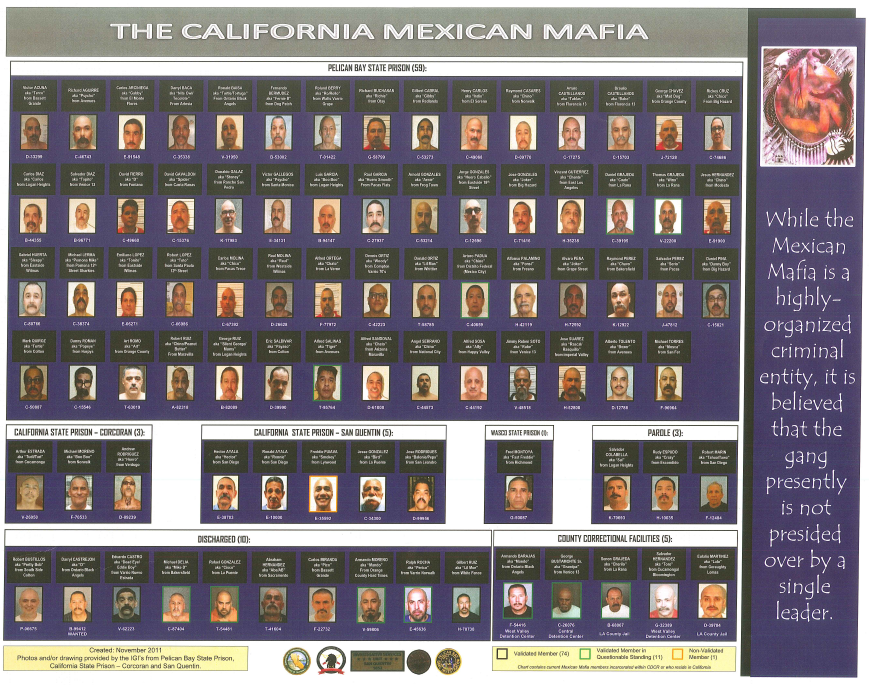
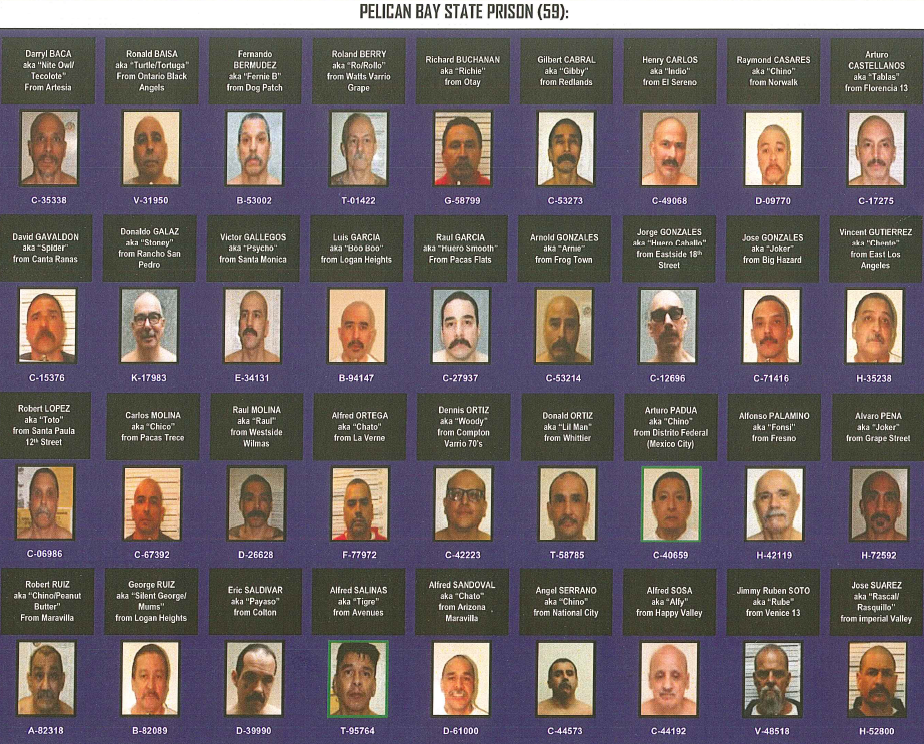
TOP-SECRET – California State Prisons Mexican Mafia (La eMe) Membership Chart

The following chart was compiled by the Institutional Gang Investigators at Pelican Bay State Prison, California State Prison – Corcoran and San Quentin in November 2011.

DOWNLOAD THE ORIGINAL DOCUMENT HERE:

Download

The Enforcer – Jet Li – Full Movie

Die absurd-lächerlichen Fälschungen der STASI-“GoMoPa”

Hier sind die Links

http://www.meridiancapital.wordpress.com/

http://www.handelsblatt.com/finanzen/aktien/aktien-im-fokus/wirecard-kurssturz-wenn-short-seller-jojo-spielen/3402446.html

http://www.handelsblatt.com/finanzen/boerse-maerkte/boerse-inside/marktgeruechte-finanzaufsicht-untersucht-kursachterbahn-bei-wirecard/3406252.html

TMZ- Kate Upton — Responsible for Tigers’ Blowout Loss?

Fans of the Detroit Tigers are pretty bummed that their team got BLOWN OUT in Game 1… and it probably won’t help their morale to learn that is was all Kate Upton’s fault!!!

Cryptome unveils – NRC Tightens Access to Radioactive Material

[Federal Register Volume 77, Number 207 (Thursday, October 25, 2012)]
[Notices]
[Pages 65220-65231]
From the Federal Register Online via the Government Printing Office [www.gpo.gov]
[FR Doc No: 2012-26299]

-----------------------------------------------------------------------

NUCLEAR REGULATORY COMMISSION

[NRC-2012-0257; EA-12-062]

Certain Licensees Requesting Unescorted Access to Radioactive 
Material; Order Imposing Trustworthiness and Reliability Requirements 
for Unescorted Access to Certain Radioactive Material (Effective 
Immediately)

I

    The Licensee identified in Attachment 1 \1\ to this Order holds a 
license issued by an Agreement State, in accordance with the Atomic 
Energy Act (AEA) of 1954, as amended. The license authorizes it to 
perform services on devices containing certain radioactive material for 
customers licensed by the U.S. Nuclear Regulatory Commission (NRC) or 
an Agreement State to possess and use certain quantities of the 
radioactive materials listed in Attachment 2 to this Order. Commission 
regulations at 10 CFR 20.1801 or equivalent Agreement State regulations 
require Licensees to secure, from unauthorized removal or access, 
licensed materials that are stored in controlled or unrestricted areas. 
Commission regulations at 10 CFR 20.1802 or equivalent Agreement State 
regulations require Licensees to control and maintain constant 
surveillance of licensed material that is in a controlled or 
unrestricted area and that is not in storage.
---------------------------------------------------------------------------

    \1\ Attachment 1 contains sensitive information and will not be 
released to the public.
---------------------------------------------------------------------------

II

    Subsequent to the terrorist events of September 11, 2001, the NRC 
issued immediately effective security Orders to NRC and Agreement State 
Licensees under the Commission's authority to protect the common 
defense and security of the nation. The Orders required certain 
manufacturing and distribution (M&D) Licensees to implement Additional 
Security Measures (ASMs) for the radioactive materials listed in 
Attachment 2 to this Order (the radionuclides of concern), to 
supplement the existing regulatory requirements. The ASMs included 
requirements for determining the trustworthiness and reliability of 
individuals that require unescorted access to the radionuclides of 
concern. Section 652 of the Energy Policy Act of 2005, which became law 
on August 8, 2005, amended Section 149 of the AEA to require 
fingerprinting and a Federal Bureau of Investigation (FBI) 
identification and criminal history records check for ``any individual 
who is permitted unescorted access to radioactive materials or other 
property subject to regulation by the Commission that the Commission 
determines to be of such significance to the public health and safety 
or the common defense and security as to warrant fingerprinting and 
background checks.'' Section 149 of the AEA also requires that ``all 
fingerprints obtained by a Licensee or applicant* * *shall be submitted 
to the Attorney General of the United States through the Commission for 
identification and a criminal history records check.'' As a result, the 
trustworthiness and reliability requirements of the ASMs were updated 
and the M&D Licensees were issued additional Orders imposing the new 
fingerprinting requirements.
    In late 2005, the NRC and the Agreement States began issuing 
Increased Controls (IC) Orders or other legally binding requirements to 
Licensees who are authorized to possess the radionuclides of concern. 
Paragraph IC 1.c of the IC requirements stated that ``service providers 
shall be escorted unless determined to be trustworthy and reliable by 
an NRC-required background investigation as an employee of a 
Manufacturing and Distribution Licensee.'' Starting in December 2007, 
the NRC and the Agreement States began issuing additional Orders or 
other legally binding requirements to the IC Licensees, imposing the 
new fingerprinting requirements. In the December 2007 Fingerprinting 
Order, Paragraph IC 1.c of the IC requirements was superseded by the 
requirement that ``Service provider Licensee employees shall be 
escorted unless determined to be trustworthy and reliable by an NRC-
required background investigation.'' However, NRC did not require 
background investigations for non-M&D service provider Licensees. 
Consequently, only service representatives of certain M&D Licensees may 
be granted unescorted access to the radionuclides of concern at an IC 
Licensee facility, even though non-M&D service provider Licensees 
provide similar services and have the same degree of knowledge of the 
devices they service as M&D Licensees. To maintain appropriate access 
control to the radionuclides of concern, and to allow M&D Licensees and 
non-M&D service provider Licensees to have the same level of access at 
customers' facilities, NRC is imposing trustworthiness and reliability 
requirements for unescorted access to radionuclides of concern, as set 
forth in this Order. These requirements apply to non-M&D service 
provider Licensees that request and have a need for unescorted access 
by their representatives to the radionuclides of concern at IC Licensee 
facilities. These trustworthiness and reliability requirements are 
equivalent to the requirements for M&D Licensees who perform services 
requiring unescorted access to the radionuclides of concern.
    In order to provide assurance that non-M&D service provider 
Licensees are implementing prudent measures to achieve a consistent 
level of protection for service providers requiring unescorted access 
to the radionuclides of concern at IC Licensee facilities, the Licensee 
identified in Attachment 1 to this Order shall implement the 
requirements of this Order. In addition, pursuant to 10 CFR 2.202, 
because of potentially significant adverse impacts associated with a 
deliberate malevolent act by an individual with unescorted

[[Page 65221]]

access to the radionuclides of concern, I find that the public health, 
safety, and interest require this Order to be effective immediately.

III

    Accordingly, pursuant to Sections 81, 149, 161b, 161i, 161o, 182, 
and 186 of the Atomic Energy Act of 1954, as amended, and the 
Commission's regulations in 10 CFR 2.202, 10 CFR Parts 20, 30 and 33, 
it is hereby ordered, effective immediately, that the licensee 
identified in attachment 1 to this order comply with the requirements 
set forth in this order.
    A.1. The Licensee shall establish and maintain a fingerprinting 
program that meets the requirements of Attachment 3 to this Order for 
individuals that require unescorted access to the radionuclides of 
concern. The Licensee shall complete implementation of the requirements 
of Attachment 3 to this Order within one hundred eighty (180) days of 
the date of this Order, or before providing written verification to 
another Licensee subject to the IC requirements, or attesting to or 
certifying the trustworthiness and reliability of a service provider 
for unescorted access to the radionuclides of concern at a customer's 
facility.
    A.2. Within ninety (90) days of the date of this Order, the 
Licensee shall designate a ``Reviewing Official'' for determining 
unescorted access to the radioactive materials as listed in Attachment 
2 to this Order by other individuals. The designated Reviewing Official 
shall be determined to be trustworthy and reliable by the Licensee in 
accordance with the requirements described in Attachment 3 to this 
Order and must be authorized to have unescorted access to the 
radioactive materials listed in Attachment 2 to this Order as part of 
his or her job duties.
    A.3. Fingerprints for unescorted access need not be taken if a 
designated Reviewing Official is relieved from the fingerprinting 
requirement by 10 CFR 73.61, or has been favorably adjudicated by a 
U.S. Government program involving fingerprinting and a FBI 
identification and criminal history records check \2\ within the last 
five (5) years, or for any person who has an active Federal security 
clearance (provided in the latter two cases that they make available 
the appropriate documentation \3\). The Licensee may provide, for NRC 
review, written confirmation from the agency/employer which granted the 
Federal security clearance or reviewed the FBI identification and 
criminal history records results based upon a fingerprint 
identification check. The NRC will determine whether, based on the 
written confirmation, the designated Reviewing Official may have 
unescorted access to the radioactive materials listed in Attachment 2 
to this Order, and therefore, be permitted to serve as the Licensee's 
Reviewing Official.\4\
---------------------------------------------------------------------------

    \2\ Examples of such programs include (1) National Agency Check, 
(2) Transportation Worker Identification Credentials in accordance 
with 49 CFR Part 1572, (3) Bureau of Alcohol Tobacco Firearms and 
Explosives background checks and clearances in accordance with 27 
CFR Part 555, (4) Health and Human Services security risk 
assessments for possession and use of select agents and toxins in 
accordance with 42 CFR Part 73, and (5) Hazardous Material security 
threat assessment for hazardous material endorsement to commercial 
drivers license in accordance with 49 CFR Part 1572, Customs and 
Border Patrol's Free and Secure Trade (FAST) Program. The FAST 
program is a cooperative effort between the Bureau of Customs and 
Border Patrol and the governments of Canada and Mexico to coordinate 
processes for the clearance of commercial shipments at the U.S.-
Canada and U.S.-Mexico borders. Participants in the FAST program, 
which requires successful completion of a background records check, 
may receive expedited entrance privileges at the northern and 
southern borders.
    \3\ This documentation must allow the NRC or NRC-approved 
Reviewing Official to verify that the individual has fulfilled the 
unescorted access requirements of Section 149 of the AEA by 
submitting to fingerprinting and a FBI identification and criminal 
history records check.
    \4\ The NRC's determination of this individual's unescorted 
access to the radionuclides of concern in accordance with the 
process described in Enclosure 4 to the transmittal letter of this 
Order is an administrative determination that is outside the scope 
of this Order.
---------------------------------------------------------------------------

    A.4. A designated Reviewing Official may not review the results 
from the FBI identification and criminal history records checks or make 
unescorted access determinations until the NRC has approved the 
individual as the Licensee's Reviewing Official.
    A.5. The NRC will determine whether this individual (or any 
subsequent Reviewing Official) may have unescorted access to the 
radionuclides of concern, and therefore, will be permitted to serve as 
the Licensee's Reviewing Official. The NRC-approved Reviewing Official 
shall be the recipient of the results of the FBI identification and 
criminal history records check of the other Licensee employees 
requiring unescorted access to the radioactive materials listed in 
Attachment 2 to this Order, and shall control such information as 
specified in the ``Protection of Information'' section of Attachment 3 
to this Order.
    A.6. The NRC-approved Reviewing Official shall determine whether an 
individual may have unescorted access to radioactive materials that 
equal or exceed the quantities in Attachment 2 to this Order, in 
accordance with the requirements described in Attachment 3 to this 
Order.
    B. Prior to requesting fingerprints from a Licensee employee, a 
copy of this Order shall be provided to that person.
    C.1. The Licensee shall, in writing, within twenty-five (25) days 
of the date of this Order, notify the Commission (1) if it is unable to 
comply with any of the requirements described in this Order, including 
Attachment 3 to this Order, (2) if compliance with any of the 
requirements is unnecessary in its specific circumstances, or (3) if 
implementation of any of the requirements would cause the Licensee to 
be in violation of the provisions of any Commission or Agreement State 
regulation or its license. The notification shall provide the 
Licensee's justification for seeking relief from or variation of any 
specific requirement.
    C.2. The Licensee shall complete implementation of the requirements 
of Attachment 3 to this Order within one hundred eighty (180) days of 
the date of this Order.
    C.3. The Licensee shall report to the Commission when they have 
achieved full compliance with the requirements described in Attachment 
3 to this Order. The report shall be made within twenty-five (25) days 
after full compliance has been achieved.
    C.4. If during the implementation period of this Order, the 
Licensee is unable, due to circumstances beyond its control, to meet 
the requirements of this Order by [December 3, 2012], the Licensee 
shall request, in writing, that the Commission grant an extension of 
time to implement the requirements. The request shall provide the 
Licensee's justification for seeking additional time to comply with the 
requirements of this Order.
    C.5. Licensees shall notify the NRC's Headquarters Operations 
Office at 301-816-5100 within 24 hours if the results from a FBI 
identification and criminal history records check indicate that an 
individual is identified on the FBI's Terrorist Screening Data Base.
    Licensee responses to C.1, C.2., C.3., and C.4. above shall be 
submitted in writing to the Director, Office of Federal and State 
Materials and Environmental Management Programs, U.S. Nuclear 
Regulatory Commission, Washington, DC 20555. Licensee responses shall 
be marked as ``Security-Related Information--Withhold Under 10 CFR 
2.390.''
    The Director, Office of Federal and State Materials and 
Environmental Management Programs, may, in writing, relax or rescind 
any of the above conditions upon demonstration of good cause by the 
Licensee.

[[Page 65222]]

IV

    In accordance with 10 CFR 2.202, the Licensee must, and any other 
person adversely affected by this Order may, submit an answer to this 
Order within twenty-five (25) days of the date of this Order. In 
addition, the Licensee and any other person adversely affected by this 
Order may request a hearing of this Order within twenty-five (25) days 
of the date of the Order. Where good cause is shown, consideration will 
be given to extending the time to request a hearing. A request for 
extension of time must be made, in writing, to the Director, Division 
of Materials Safety and State Agreements, Office of Federal and State 
Materials and Environmental Management Programs, U.S. Nuclear 
Regulatory Commission, Washington, DC 20555, and include a statement of 
good cause for the extension.
    The answer may consent to this Order. If the answer includes a 
request for a hearing, it shall, under oath or affirmation, 
specifically set forth the matters of fact and law on which the 
Licensee relies and the reasons as to why the Order should not have 
been issued. If a person other than the Licensee requests a hearing, 
that person shall set forth with particularity the manner in which his 
interest is adversely affected by this Order and shall address the 
criteria set forth in 10 CFR 2.309(d).
    All documents filed in NRC adjudicatory proceedings, including a 
request for hearing, a petition for leave to intervene, any motion or 
other document filed in the proceeding prior to the submission of a 
request for hearing or petition to intervene, and documents filed by 
interested governmental entities participating under 10 CFR 2.315(c), 
must be filed in accordance with the NRC E-Filing rule (72 FR 49139, 
August 28, 2007). The E-Filing process requires participants to submit 
and serve all adjudicatory documents over the internet, or in some 
cases to mail copies on electronic storage media. Participants may not 
submit paper copies of their filings unless they seek an exemption in 
accordance with the procedures described below.
    To comply with the procedural requirements of E-Filing, at least 10 
days prior to the filing deadline, the participant should contact the 
Office of the Secretary by email at hearing.docket@nrc.gov, or by 
telephone at 301-415-1677, to request (1) a digital identification (ID) 
certificate, which allows the participant (or its counsel or 
representative) to digitally sign documents and access the E-Submittal 
server for any proceeding in which it is participating; and (2) advise 
the Secretary that the participant will be submitting a request or 
petition for hearing (even in instances in which the participant, or 
its counsel or representative, already holds an NRC-issued digital ID 
certificate). Based upon this information, the Secretary will establish 
an electronic docket for the hearing in this proceeding if the 
Secretary has not already established an electronic docket.
    Information about applying for a digital ID certificate is 
available on the NRC's public Web site at http://www.nrc.gov/site-help
/e-submittals/apply-certificates.html. System requirements for accessing 
the E-Submittal server are detailed in the NRC's ``Guidance for 
Electronic Submission,'' which is available on the NRC's public Web 
site at http://www.nrc.gov/site-help/e-submittals.html. Participants 
may attempt to use other software not listed on the Web site, but 
should note that the NRC's E-Filing system does not support unlisted 
software, and the NRC Meta System Help Desk will not be able to offer 
assistance in using unlisted software.
    If a participant is electronically submitting a document to the NRC 
in accordance with the E-Filing rule, the participant must file the 
document using the NRC's online, Web-based submission form. In order to 
serve documents through the Electronic Information Exchange System, 
users will be required to install a Web browser plug-in from the NRC's 
Web site. Further information on the Web-based submission form, 
including the installation of the Web browser plug-in, is available on 
the NRC's public Web site at http://www.nrc.gov/site-help/e-submittals.html.
    Once a participant has obtained a digital ID certificate and a 
docket has been created, the participant can then submit a request for 
hearing or petition for leave to intervene. Submissions should be in 
Portable Document Format (PDF) in accordance with NRC guidance 
available on the NRC's public Web site at http://www.nrc.gov/site-help/
e-submittals.html. A filing is considered complete at the time the 
documents are submitted through the NRC's E-Filing system. To be 
timely, an electronic filing must be submitted to the E-Filing system 
no later than 11:59 p.m. Eastern Time on the due date. Upon receipt of 
a transmission, the E-Filing system time-stamps the document and sends 
the submitter an email notice confirming receipt of the document. The 
E-Filing system also distributes an email notice that provides access 
to the document to the NRC's Office of the General Counsel and any 
others who have advised the Office of the Secretary that they wish to 
participate in the proceeding, so that the filer need not serve the 
documents on those participants separately. Therefore, applicants and 
other participants (or their counsel or representative) must apply for 
and receive a digital ID certificate before a hearing request/petition 
to intervene is filed so that they can obtain access to the document 
via the E-Filing system.
    A person filing electronically using the NRC's adjudicatory E-
Filing system may seek assistance by contacting the NRC Meta System 
Help Desk through the ``Contact Us'' link located on the NRC's public 
Web site at http://www.nrc.gov/site-help/e-submittals.html, by email to 
MSHD.Resource@nrc.gov, or by a toll-free call to 1-866-672-7640. The 
NRC Meta System Help Desk is available between 8 a.m. and 8 p.m., 
Eastern Time, Monday through Friday, excluding government holidays.
    Participants who believe that they have a good cause for not 
submitting documents electronically must file an exemption request, in 
accordance with 10 CFR 2.302(g), with their initial paper filing 
requesting authorization to continue to submit documents in paper 
format. Such filings must be submitted by: (1) First class mail 
addressed to the Office of the Secretary of the Commission, U.S. 
Nuclear Regulatory Commission, Washington, DC 20555-0001, Attention: 
Rulemaking and Adjudications Staff; or (2) courier, express mail, or 
expedited delivery service to the Office of the Secretary, Sixteenth 
Floor, One White Flint North, 11555 Rockville Pike, Rockville, Maryland 
20852, Attention: Rulemaking and Adjudications Staff. Participants 
filing a document in this manner are responsible for serving the 
document on all other participants. Filing is considered complete by 
first-class mail as of the time of deposit in the mail, or by courier, 
express mail, or expedited delivery service upon depositing the 
document with the provider of the service. A presiding officer, having 
granted an exemption request from using E-Filing, may require a 
participant or party to use E-Filing if the presiding officer 
subsequently determines that the reason for granting the exemption from 
use of E-Filing no longer exists.
    Documents submitted in adjudicatory proceedings will appear in the 
NRC's electronic hearing docket which is available to the public at 
http://ehd1.nrc.gov/ehd/, unless excluded

[[Page 65223]]

pursuant to an order of the Commission, or the presiding officer. 
Participants are requested not to include personal privacy information, 
such as social security numbers, home addresses, or home phone numbers 
in their filings, unless an NRC regulation or other law requires 
submission of such information. With respect to copyrighted works, 
except for limited excerpts that serve the purpose of the adjudicatory 
filings and would constitute a Fair Use application, participants are 
requested not to include copyrighted materials in their submission.
    If a hearing is requested by the Licensee or a person whose 
interest is adversely affected, the Commission will issue an Order 
designating the time and place of any hearing. If a hearing is held the 
issue to be considered at such hearing shall be whether this Order 
should be sustained.
    Pursuant to 10 CFR 2.202(c)(2)(i), the Licensee may, in addition to 
requesting a hearing, at the time the answer is filed or sooner, move 
the presiding officer to set aside the immediate effectiveness of the 
Order on the ground that the Order, including the need for immediate 
effectiveness, is not based on adequate evidence but on mere suspicion, 
unfounded allegations, or error.
    In the absence of any request for hearing, or written approval of 
an extension of time in which to request a hearing, the provisions 
specified in Section III above shall be (final twenty-five (25) days) 
from the date of this Order without further order or proceedings. If an 
extension of time for requesting a hearing has been approved, the 
provisions specified in Section III shall be final when the extension 
expires if a hearing request has not been received. An answer or a 
request for hearing shall not stay the immediate effectiveness of this 
order.

    Dated this 16th day of October, 2012.

    For the Nuclear Regulatory Commission.
Mark A. Satorius,
Director, Office of Federal and State Materials and Environmental 
Management Programs.
Attachments:
1. Applicable Materials Licensee
2. Table 1: Radionuclides of Concern
3. Requirements for Service Provider Licensees Providing Written 
VerificationAttesting to or Certifying the Trustworthiness and 
Reliability of Service Providers forUnescorted Access to Certain 
Radioactive Material at Customer Facilities, including Requirements for 
Fingerprinting and Criminal History Checks

Attachment 1: Applicable Materials Licensee Redacted

Attachment 2: Order Imposing Trustworthiness and Reliability 
Requirements for Unescorted Access to Certain Radioactive Material

                    Table 1--Radionuclides of Concern
------------------------------------------------------------------------
                                  Quantity of concern     Quantity of
          Radionuclide                 \1\ (TBq)       concern \2\ (Ci )
------------------------------------------------------------------------
Am-241..........................  0.6................                 16
Am-241/Be.......................  0.6................                 16
Cf-252..........................  0.2................                5.4
Cm-244..........................  0.5................                 14
Co-60...........................  0.3................                8.1
Cs-137..........................  1..................                 27
Gd-153..........................  10.................                270
Ir-192..........................  0.8................                 22
Pm-147..........................  400................             11,000
Pu-238..........................  0.6................                 16
Pu-239/Be.......................  0.6................                 16
Ra-226 \3\......................  0.4................                 11
Se-75...........................  2..................                 54
Sr-90 (Y-90)....................  10.................                270
Tm-170..........................  200................              5,400
Yb-169..........................  3..................                 81
Combinations of radioactive       See Footnote Below
 materials listed above \4\.       \5\.
------------------------------------------------------------------------
\1\ The aggregate activity of multiple, collocated sources of the same
  radionuclide should be included when the total activity equals or
  exceeds the quantity of concern.
\2\ The primary values used for compliance with this Order are TBq. The
  curie (Ci) values are rounded to two significant figures for
  informational purposes only.
\3\ The Atomic Energy Act, as amended by the Energy Policy Act of 2005,
  authorizes NRC to regulate Ra-226 and NRC is in the process of
  amending its regulations for discrete sources of Ra-226.
\4\ Radioactive materials are to be considered aggregated or collocated
  if breaching a common physical security barrier (e.g., a locked door
  at the entrance to a storage room) would allow access to the
  radioactive material or devices containing the radioactive material.
\5\ If several radionuclides are aggregated, the sum of the ratios of
  the activity of each source, i of radionuclide, n, A(i,n), to the
  quantity of concern for radionuclide n, Q(n), listed for that
  radionuclide equals or exceeds one. [(aggregated source activity for
  radionuclide A) / (quantity of concern for radionuclide A)] +
  [(aggregated source activity for radionuclide B) / (quantity of
  concern for radionuclide B)] + etc.* * * >1.

Guidance for Aggregation of Sources

    NRC supports the use of the International Atomic Energy 
Association's (IAEA) source categorization methodology as defined in 
IAEA Safety Standards Series No. RS-G-1.9, ``Categorization of 
Radioactive Sources,'' (2005) (see http://www-pub.iaea.org/MTCD/
publications/PDF/Pub1227_web.pdf) and as endorsed by the agency's 
Code of Conduct for the Safety and Security of Radioactive Sources, 
January 2004 (see http://www-pub.iaea.org/MTCD/publications/PDF/
Code-2004_web.pdf). The Code defines a three-tiered source 
categorization scheme. Category 1 corresponds to the largest source 
strength (equal to or greater than 100 times the quantity of concern 
values listed in Table 1) and Category 3, the smallest (equal or 
exceeding one-tenth the quantity of concern values listed in Table 
1. Additional security measures apply to sources that are equal to 
or greater than the quantity of concern values listed in Table 1, 
plus aggregations of smaller sources that are equal to or greater 
than the quantities in Table 1. Aggregation only applies to sources 
that are collocated.
    Licensees who possess individual sources in total quantities 
that equal or exceed the Table 1 quantities are required to 
implement additional security measures. Where there are many small 
(less than the quantity of concern values) collocated sources whose 
total aggregate activity equals or exceeds the Table 1 values, 
licensees are to implement additional security measures.

[[Page 65224]]

    Some source handling or storage activities may cover several 
buildings, or several locations within specific buildings. The 
question then becomes, ``When are sources considered collocated for 
purposes of aggregation''? For purposes of the additional controls, 
sources are considered collocated if breaching a single barrier 
(e.g., a locked door at the entrance to a storage room) would allow 
access to the sources. Sources behind an outer barrier should be 
aggregated separately from those behind an inner barrier (e.g., a 
locked source safe inside the locked storage room). However, if both 
barriers are simultaneously open, then all sources within these two 
barriers are considered to be collocated. This logic should be 
continued for other barriers within or behind the inner barrier.
    The following example illustrates the point: A lockable room has 
sources stored in it. Inside the lockable room, there are two 
shielded safes with additional sources in them. Inventories are as 
follows:
    The room has the following sources outside the safes: Cf-252, 
0.12 TBq (3.2 Ci); Co-60, 0.18 TBq (4.9 Ci), and Pu-238, 0.3 TBq 
(8.1 Ci). Application of the unity rule yields: (0.12 / 0.2) + (0.18 
/ 0.3) + (0.3 / 0.6) = 0.6 + 0.6 + 0.5 = 1.7. Therefore, the sources 
would require additional security measures.
    Shielded safe 1 has a 1.9 TBq (51 Ci) Cs-137 source and 
a 0.8 TBq (22 Ci) Am-241 source. In this case, the sources would 
require additional security measures, regardless of location, 
because they each exceed the quantities in Table 1.
    Shielded safe 2 has two Ir-192 sources, each having an 
activity of 0.3 TBq (8.1 Ci). In this case, the sources would not 
require additional security measures while locked in the safe. The 
combined activity does not exceed the threshold quantity 0.8 TBq (22 
Ci).
    Because certain barriers may cease to exist during source 
handling operations (e.g., a storage location may be unlocked during 
periods of active source usage), licensees should, to the extent 
practicable, consider two modes of source usage --``operations'' 
(active source usage) and ``shutdown'' (source storage mode). 
Whichever mode results in the greatest inventory (considering 
barrier status) would require additional security measures for each 
location.
    Use the following method to determine which sources of 
radioactive material require implementation of the Additional 
Security Measures:
     Include any single source equal to or greater than the 
quantity of concern in Table 1
     Include multiple collocated sources of the same 
radionuclide when the combined quantity equals or exceeds the 
quantity of concern
     For combinations of radionuclides, include multiple 
collocated sources of different radionuclides when the aggregate 
quantities satisfy the following unity rule: [(amount of 
radionuclide A) / (quantity of concern of radionuclide A)] + 
[(amount of radionuclide B) / (quantity of concern of radionuclide 
B)] + etc. * * * >= 1

Attachment 3: Requirements for Service Provider Licensees Providing 
Written Verification Attesting to or Certifying the Trustworthiness and 
Reliability of Service Providers for Unescorted Access to Certain 
Radioactive Material at Customer Facilities, Including Requirements for 
Fingerprinting and Criminal History Records Checks

A. General Requirements

    Licensees subject to the provisions of this Order shall comply 
with the requirements of this attachment. The term ``certain 
radioactive material'' means the radionuclides in quantities equal 
to or greater than the quantities listed in Attachment 2 to this 
Order.
    1. The Licensee shall provide the customer's facility written 
verification attesting to or certifying the trustworthiness and 
reliability of an individual as a service provider only for 
employees the Licensee has approved in writing (see requirement A.3 
below). The Licensee shall request unescorted access to certain 
radioactive material at customer licensee facilities only for 
approved service providers that require the unescorted access in 
order to perform a job duty.
    2. The trustworthiness, reliability, and true identity of a 
service provider shall be determined based on a background 
investigation. The background investigation shall address at least 
the past three (3) years, and as a minimum, include fingerprinting 
and a Federal Bureau of Investigation (FBI) criminal history records 
check as required in Section B, verification of employment history, 
education, and personal references. If a service provider's 
employment has been less than the required three (3) year period, 
educational references may be used in lieu of employment history.
    3. The Licensee shall document the basis for concluding that 
there is reasonable assurance that a service provider requiring 
unescorted access to certain radioactive material at a customer 
facility is trustworthy and reliable, and does not constitute an 
unreasonable risk for unauthorized use of the radioactive material. 
The Licensee shall maintain a list of service providers approved for 
unescorted access to certain radioactive material.
    4. The Licensee shall retain documentation regarding the 
trustworthiness and reliability of approved service providers for 
(3) years after the individual no longer requires unescorted access 
to certain radioactive material associated with the Licensee's 
activities.
    5. Each time the Licensee revises the list of approved service 
providers (see requirement 3 above), the Licensee shall retain the 
previous list for three (3) years after the revision.
    6. The Licensee shall provide to a customer written 
certification for each service provider for whom unescorted access 
to certain radioactive material at the customer's facility is 
required and requested. The written certification shall be dated and 
signed by the Reviewing Official. A new written certification is not 
required if an individual service provider returns to the customer 
facility within three (3) years, provided the customer has retained 
the prior certification.

B. Specific Requirements Pertaining to Fingerprinting and Criminal 
History Records Checks

    1. The Licensee shall fingerprint each service provider to be 
approved for unescorted access to certain radioactive materials 
following the procedures outlined in Enclosure 3 of the transmittal 
letter. The Licensee shall review and use the information received 
from the FBI identification and criminal history records check and 
ensure that the provisions contained in the subject Order and this 
attachment are satisfied.
    2. The Licensee shall notify each affected individual that the 
fingerprints will be used to secure a review of his/her criminal 
history record and inform the individual of the procedures for 
revising the record or including an explanation in the record, as 
specified in the ``Right to Correct and Complete Information'' 
section of this attachment.
    3. Fingerprints for unescorted access need not be taken if an 
employed individual (e.g., a Licensee employee, contractor, 
manufacturer, or supplier) is relieved from the fingerprinting 
requirement by 10 CFR 73.61, or any person who has been favorably-
decided by a U.S. Government program involving fingerprinting and an 
FBI identification and criminal history records check (e.g., 
National Agency Check, Transportation Worker Identification 
Credentials in accordance with 49 CFR Part 1572, Bureau of Alcohol 
Tobacco Firearms and Explosives background checks and clearances in 
accordance with 27 CFR Part 555, Health and Human Services security 
risk assessments for possession and use of select agents and toxins 
in accordance with 42 CFR Part 73, Hazardous Material security 
threat assessment for hazardous material endorsement to commercial 
drivers license in accordance with 49 CFR Part 1572, Customs and 
Border Patrol's Free and Secure Trade Program \5\) within the last 
five (5) years, or any person who has an active Federal Security 
Clearance (provided in the latter two cases that they make available 
the appropriate documentation \6\). Written confirmation from the 
Agency/employer which granted the Federal Security Clearance or 
reviewed the FBI criminal history records results based upon a 
fingerprint identification check must be provided. The Licensee must 
retain this documentation for a period of three (3) years from the 
date the

[[Page 65225]]

individual no longer requires unescorted access to certain 
radioactive material associated with the Licensee's activities.
---------------------------------------------------------------------------

    \5\ The FAST program is a cooperative effort between the Bureau 
of Customs and Border Patrol and the governments of Canada and 
Mexico to coordinate processes for the clearance of commercial 
shipments at the U.S.-Canada and U.S.-Mexico borders. Participants 
in the FAST program, which requires successful completion of a 
background records check, may receive expedited entrance privileges 
at the northern and southern borders.
    \6\ This documentation must allow the Reviewing Official to 
verify that the individual has fulfilled the unescorted access 
requirements of Section 149 of the AEA by submitting to 
fingerprinting and an FBI identification and criminal history 
records check.
---------------------------------------------------------------------------

    4. All fingerprints obtained by the Licensee pursuant to this 
Order must be submitted to the Commission for transmission to the 
FBI.
    5. The Licensee shall review the information received from the 
FBI and consider it, in conjunction with the trustworthiness and 
reliability requirements of Section A of this attachment, in making 
a determination whether to approve and certify the individual for 
unescorted access to certain radioactive materials.
    6. The Licensee shall use any information obtained as part of a 
criminal history records check solely for the purpose of determining 
an individual's suitability for unescorted access to certain 
radioactive materials.
    7. The Licensee shall document the basis for its determination 
whether to approve the individual for unescorted access to certain 
radioactive materials.

C. Prohibitions

    A Licensee shall not base a final determination to not provide 
certification for unescorted access to certain radioactive material 
for an individual solely on the basis of information received from 
the FBI involving: an arrest more than one (1) year old for which 
there is no information of the disposition of the case, or an arrest 
that resulted in dismissal of the charge or an acquittal.
    A Licensee shall not use information received from a criminal 
history check obtained pursuant to this Order in a manner that would 
infringe upon the rights of any individual under the First Amendment 
to the Constitution of the United States, nor shall the Licensee use 
the information in any way which would discriminate among 
individuals on the basis of race, religion, national origin, sex, or 
age.

D. Right to Correct and Complete Information

    Prior to any final adverse determination, the Licensee shall 
make available to the individual the contents of any criminal 
records obtained from the FBI for the purpose of assuring correct 
and complete information. Written confirmation by the individual of 
receipt of this notification must be maintained by the Licensee for 
a period of one (1) year from the date of the notification. If, 
after reviewing the record, an individual believes that it is 
incorrect or incomplete in any respect and wishes to change, 
correct, or update the alleged deficiency, or to explain any matter 
in the record, the individual may initiate challenge procedures. 
These procedures include either direct application by the individual 
challenging the record to the agency (i.e., law enforcement agency) 
that contributed the questioned information, or direct challenge as 
to the accuracy or completeness of any entry on the criminal history 
record to the Assistant Director, Federal Bureau of Investigation 
Identification Division, Washington, DC 20537-9700 (as set forth in 
28 CFR 16.30 through 16.34). In the latter case, the FBI forwards 
the challenge to the agency that submitted the data and requests 
that agency to verify or correct the challenged entry. Upon receipt 
of an Official communication directly from the agency that 
contributed the original information, the FBI Identification 
Division makes any changes necessary in accordance with the 
information supplied by that agency. The Licensee must provide at 
least ten (10) days for an individual to initiate an action 
challenging the results of an FBI identification and criminal 
history records check after the record is made available for his/her 
review. The Licensee may make a final unescorted access to certain 
radioactive material determination based upon the criminal history 
record only upon receipt of the FBI's ultimate confirmation or 
correction of the record. Upon a final adverse determination on 
unescorted access to certain radioactive material, the Licensee 
shall provide the individual its documented basis for denial. 
Unescorted access to certain radioactive material shall not be 
granted to an individual during the review process.

E. Protection of Information

    1. Each Licensee who obtains a criminal history record on an 
individual pursuant to this Order shall establish and maintain a 
system of files and procedures for protecting the record and the 
personal information from unauthorized disclosure.
    2. The Licensee may not disclose the record or personal 
information collected and maintained to persons other than the 
subject individual, his/her representative, or to those who have a 
need to access the information in performing assigned duties in the 
process of determining whether to verify the individual for 
unescorted access to certain radioactive material. No individual 
authorized to have access to the information may re-disseminate the 
information to any other individual who does not have a need-to-
know.
    3. The personal information obtained on an individual from a 
criminal history record check may be transferred to another Licensee 
if the Licensee holding the criminal history record check receives 
the individual's written request to re-disseminate the information 
contained in his/her file, and the gaining Licensee verifies 
information such as the individual's name, date of birth, social 
security number, sex, and other applicable physical characteristics 
for identification purposes.
    4. The Licensee shall make criminal history records, obtained 
under this section, available for examination by an authorized 
representative of the NRC to determine compliance with the 
regulations and laws.
    5. The Licensee shall retain all fingerprints and criminal 
history records from the FBI, or a copy if the individual's file has 
been transferred:
    a. for three (3) years after the individual no longer requires 
unescorted access, or
    b. for three (3) years after unescorted access to certain 
radioactive material was denied.

After the required three (3) year period, these documents shall be 
destroyed by a method that will prevent reconstruction of the 
information in whole or in part.

Implementing Guidance for Service Provider Licensees That are not 
Manufacturers or Distributors

A. Initial Actions

    1. The U.S. Nuclear Regulatory Commission (NRC) issued a 
Regulatory Issue Summary (RIS 2007-15) informing all NRC licensees 
that are non-manufacturer and distributor (non-M&D) service 
providers, and all Agreement State Radiation Control Program 
Directors and State Liaison Officers about the non-M&D Service 
Provider Order.
    2. Each non-M&D service provider licensee should review the RIS 
and determine if a need exists for its service representatives to 
have unescorted access to radioactive material in quantities of 
concern at client facilities.
    3. If the licensee determines that unescorted access is required 
the licensee must request, in writing, that NRC issue the Order.

B. NRC Issues Order in Response to the Licensee's Request

    1. After receiving the Order, the licensee selects a candidate 
Reviewing Official. As part of the selection, the licensee must 
perform a trustworthiness and reliability review per the 
requirements in Attachment 3 of the Order. Note: the Reviewing 
Official MUST BE an individual that requires unescorted access to 
radioactive material in quantities of concern as part of his/her job 
duties.
    2. The licensee designates the Reviewing Official to NRC by 
submitting the individual's fingerprints and processing fee.
    3. NRC processes the fingerprints through the Federal Bureau of 
Investigation, and reviews the results of the criminal history 
investigation. If the investigation does not find disqualifying 
information, NRC will authorize the designated individual to serve 
as the licensees Reviewing Official.
    4. The Reviewing Official performs the trustworthiness and 
reliability reviews for other licensee service representatives that 
require unescorted access to radioactive material in quantities of 
concern. The Reviewing Official must submit the fingerprints of the 
service representatives to NRC and receive the criminal history 
investigation results. The reviews must be performed per the 
requirements in Attachment 3 of the Order and Enclosure 4 of the 
transmittal letter. Based on the information and investigation 
results, the Reviewing Official determines if the service 
representative is trustworthy and reliable and that the service 
representative may be granted unescorted access to radioactive 
materials in quantities of concern.
    5. The Reviewing Official prepares, on company letterhead, an 
attestation or certification that indicates the service 
representative (by name) has been determined to be trustworthy and 
reliable in accordance with the NRC security Order for non-M&D 
Service Providers. The Reviewing Official signs and dates this 
document.
    6. Client licensees may accept the signed and dated document in 
lieu of conducting their own trustworthiness and reliability review 
of the named service representative.

[[Page 65226]]

C. NRC Actions During Future Inspections

    1. During future inspections, both the service provider licensee 
and the client licensee will be audited to assure compliance with 
the Order requirements and the implementation process.

Questions and Answers With Regards to Fingerprinting and FBI Criminal 
History Records Checks

    1. Information on how I would be required to respond to this 
notice when I receive it does not appear to be included with the 
implementing guidance? Will my response include sensitive 
information?
    The information on how to respond to the NRC Order requiring 
implementation of the fingerprinting requirements is contained in 
the Order itself. The NRC Orders are not considered sensitive 
information. Examples of previous Orders can be found by searching 
ADAMS or NRC's Web site.
    Licensee responses to the Order are considered sensitive 
information and should be marked appropriately at the top of the 
page with ``Security Related Information--Withhold Under 10 CFR 
2.390.''
    2. Does a National Agency Check (NAC) satisfy the provisions of 
the Order?
    If the NAC has been conducted within the past five (5) calendar 
years and the employee can provide documentation of favorable 
results to the NRC or licensee's Reviewing Official, as appropriate, 
then this would satisfy the provisions of the Order.
    3. Can the Human Resources department be designated as the 
licensee's Reviewing Official to review criminal history records? Do 
they have to be fingerprinted to be able to review and approve 
others?
    The requirements for fingerprinting and criminal history records 
should be incorporated into the licensee's current program of 
reviewing and approving background information of its employees. The 
duties of a Reviewing Official can be delegated to the Human 
Resources department or any other appropriate department as long as 
the individual(s) involved in the determining of an employee's 
trustworthiness and reliability have been determined themselves to 
be trustworthy and reliable by the licensee, are permitted to have 
unescorted access to radioactive material in quantities of concern 
as part of their job duties, and have been approved by the NRC to be 
the licensee's Reviewing Official.
    4. What is a Reviewing Official? Who can be a Reviewing 
Official?
    A Reviewing Official is an NRC-approved individual that requires 
unescorted access to radioactive material in quantities of concern 
as part of his/her job duties, and who shall make the 
trustworthiness and reliability determinations of other Licensee 
employees to determine whether the individual may have, or continue 
to have, unescorted access.
    5. I was only provided a few fingerprint cards, where can I get 
more?
    You can request more fingerprint cards by writing to the Office 
of Information Services, U.S. Nuclear Regulatory Commission, 
Washington, DC 20555, by calling (301) 492-3531, or by email to 
forms@nrc.gov.
    6. What information do I need to include on the card?
    Incomplete fingerprint cards will not be processed and will be 
returned to the licensee. Licensees need to include the following 
information on each card:

a. Last name, first name, middle name
b. Signature of person being fingerprinted
c. Residence of person being fingerprinted
d. Date
e. Signature of official taking the fingerprints
f. Employer and address
g. Reason for being fingerprinted
h. Aliases
i. Citizenship
j. Social security number and any of the other corresponding numbers 
requested on the card if applicable
k. Date of birth
l. Place of birth
m. Sex
n. Race
o. Height
p. Weight
q. Eye color
r. Hair color
    7. I was able to get more fingerprint cards from my local law 
enforcement agency, can I use those instead?
    No, because of problems that have been experienced in the past 
with some of the cards.
    8. Who do I send my fingerprints to?
    A completed fingerprint card should be sent to: Director, 
Division of Facilities and Security, U.S. NRC, Two White Flint 
North, 11545 Rockville Pike, Rockville, MD 20852-2738, ATTN: 
Criminal History Program, Mail Stop TWB-05B32M.
    9. Is there a fee associated with the NRC processing the 
fingerprints?
    The current fee to process each fingerprint card is a $26.00 per 
card. Additional fees may be charged by the entity taking the 
fingerprints.
    10. What method of payment does the NRC accept?
    NRC's preferred method of payment is electronic payment through 
http://www.pay.gov. Please refer to the instructions (in Enclosure 
3) included with the transmittal letter of the Order for details on 
how to pay electronically. NRC also accepts checks, cashier checks 
or money orders made out to the U.S. Nuclear Regulatory Commission 
along with the submission of fingerprint cards. Fingerprint cards 
along with checks, cashier checks or money orders should be sent to: 
Director, Division of Facilities and Security, U.S. NRC, Two White 
Flint North, 11545 Rockville Pike, Rockville, MD 20852-2738, Attn: 
Criminal History Program, Mail Stop TWB-05B32M.
    11. When are licensees required to submit fingerprints to the 
NRC?
    Licensees are required to fingerprint and review the criminal 
history results for all materials quantities of concern to the NRC 
within 90 days after the Order is issued.
    12. Will guidance be provided on how to determine 
trustworthiness and reliability based on FBI identification and 
criminal history records checks?
    Guidance is included with the Order documents; however, it will 
ultimately be the decision of the licensee's Reviewing Official to 
determine whether an individual should be granted unescorted access 
to the radioactive material, based on the results of the criminal 
records history check, and the other trustworthiness and reliability 
requirements of the Order.
    13. My fingerprints have been returned several times as 
unclassifiable, can I get an extension to submit my fingerprints?
    On a rare case that a licensee needs additional time to 
implement the fingerprinting requirements beyond the implementation 
time, the NRC will consider granting extensions only on a case by 
case basis. Licensees must take the appropriate actions to minimize 
any potential impacts in delays from receiving the criminal history 
results from the NRC. In a rare case that an extension is needed, 
the request must be date-stamped before the deadline to implement 
the requirements and must include the licensee's justification as to 
why additional time is needed beyond the implementation period and 
the appropriate compensatory actions that will be implemented until 
the fingerprints are processed.
    14. What does unescorted access to the material mean?
    Unescorted access to the material means that an individual can 
exert some physical control over the material or device while they 
are alone.
    15. If I decide that based on a Federal criminal records history 
check one of my employees previously granted unescorted access 
should not have unescorted access to radioactive material what 
actions can I take?
    The licensee is ultimately responsible to determine the best 
course of action.
    16. Does the denial of unescorted access create legal liability 
for the licensee?
    The NRC acknowledges that employer liability potentially exists 
through the process for determining trustworthiness and reliability, 
just as employer liability potentially exists throughout the hiring 
process. A finding that results in denying someone employment may be 
actionable on the part of the employee/employee candidate, and this 
is no different.
    17. How far back do the criminal history record checks go? Can 
the NRC provide guidance on what types of information could be 
considered when granting unescorted access?
    The criminal history records check provides information on all 
arrests since the individual's eighteenth birthday. Guidance on 
criminal offenses that could be considered is included in Enclosure 
4 of the transmittal letter. However, the list of offenses is not 
inclusive. There may be additional offenses not listed in the 
guidance that the licensee wants to consider as part of unescorted 
access approval process. It is the licensee's ultimate business 
decision as to what criteria it uses for the bases of the 
trustworthiness and reliability determination.
    18. Is there a process to request an exemption from 
fingerprinting? Do employees that have been fingerprinted in the 
past need to be fingerprinted again?
    Fingerprints for unescorted access need not be taken if an 
employed individual (e.g., a Licensee employee, contractor, 
manufacturer, or supplier) is relieved from the fingerprinting 
requirement by 10 CFR 73.61,

[[Page 65227]]

or any person who has been favorably-decided by a U.S. Government 
program involving fingerprinting and an FBI identification and 
criminal history records check (e.g., National Agency Check, 
Transportation Worker Identification Credentials in accordance with 
49 CFR Part 1572, Bureau of Alcohol Tobacco Firearms and Explosives 
background checks and clearances in accordance with 27 CFR Part 555, 
Health and Human Services security risk assessments for possession 
and use of select agents and toxins in accordance with 42 CFR Part 
73, Hazardous Material security threat assessment for hazardous 
material endorsement to commercial drivers license in accordance 
with 49 CFR Part 1572, Customs and Border Patrol's Free and Secure 
Trade Program \7\) within the last five (5) years, or any person who 
has an active Federal Security Clearance (provided in the latter two 
cases that they make available the appropriate documentation).
    Written confirmation from the Agency/employer which granted the 
Federal security clearance or reviewed the FBI criminal history 
records results based upon a fingerprint identification check must 
be provided. The Licensee must retain this documentation for a 
period of three (3) years from the date the individual no longer 
requires unescorted access to certain radioactive material 
associated with the Licensee's activities.
---------------------------------------------------------------------------

    \7\ The FAST program is a cooperative effort between the Bureau 
of Customs and Border Patrol and the governments of Canada and 
Mexico to coordinate processes for the clearance of commercial 
shipments at the U.S.-Canada and U.S.-Mexico borders. Participants 
in the FAST program, which requires successful completion of a 
background records check, may receive expedited entrance privileges 
at the northern and southern borders.
---------------------------------------------------------------------------

    19. Is fingerprinting meant to replace the trustworthiness and 
reliability determination?
    No, fingerprinting is only one component of the trustworthiness 
and reliability determination. A trustworthiness and reliability 
determination should be based, at a minimum, by verifying employment 
history, education, personal references and a federal criminal 
history check. All four of these components need to be considered 
when making a trustworthiness and reliability determination.
    20. How will compliance with the fingerprinting component be 
verified?
    Compliance will be verified at the time the licensee's 
trustworthiness and reliability program is inspected by the NRC.
    21. Is there financial aid or funding available to assist in the 
implementation of the fingerprinting requirements? Will the 
licensees be compensated in any way?
    The NRC will not provide financial aid and there is no funding 
available to assist in the implementation of the fingerprinting 
requirements.
    22. Will there be a reevaluation period?
    At the moment there is no reevaluation period. The reevaluation 
of criminal history records will be addressed during the NRC's 
rulemaking process.
    23. The Order requires that the licensee shall provide under 
oath or affirmation a certification that the Reviewing Official is 
deemed trustworthy and reliable. What does it mean to submit 
documents to the NRC ``under oath or affirmation''?
    The requirement to submit documents to the NRC under oath or 
affirmation may be satisfied by using a notary public to 
authenticate oaths or affirmations and to certify that the 
information provided is correct and true. An alternate method for 
complying with the oath or affirmation requirement is presented in 
the United States Code, Title 28, Section 1746 (28 U.S.C. 1746). 
This method allows use of the following unsworn declaration to 
satisfy the oath or affirmation requirement:

I declare [or certify, verify, state] under penalty of perjury that 
the foregoing is true and correct.
Executed on [date] [Signature]

When applying this declaration, it must be used verbatim. Licensing 
documents accompanied by this unsworn declaration satisfy the 
requirement that such documents be submitted under oath or 
affirmation.

    24. Can additional employees (e.g., new hires or existing 
employees changing positions within the company who did NOT have 
unescorted access prior to the date of the Order) be granted 
unescorted access to radioactive materials quantities of concern 
prior to the establishment of a fingerprinting program and 
certification that the Reviewing Official is deemed trustworthy and 
reliable?
    No. Prior to being granted unescorted access to material, all 
additional employees the licensee identifies after the date of the 
Order as requiring unescorted access, must be determined to be 
trustworthy and reliable based upon the requirements of the Order 
and the review of their FBI identification and criminal history 
records. The Order also requires that within 180 days of the date of 
the Order that licensees establish a fingerprinting program and 
within 90 days of the date of the Order provide under oath or 
affirmation a certification that the Reviewing Official is deemed 
trustworthy and reliable by the licensee.
    Only after the Reviewing Official has been certified to be 
trustworthy and reliable by the licensee and approved by the NRC, 
can the Reviewing Official make trustworthiness and reliability 
determinations for any employee who requires unescorted access after 
the date of the Order. For administrative purposes, each submittal 
of fingerprints to the NRC should be accompanied by the name and 
address of the Reviewing Official to whom the criminal history 
records should be returned.
    25. Who can perform the task of fingerprinting for my employees?
    Licensees must have their fingerprints taken by an authorized 
official, such as a representative from a local law enforcement 
agency. However, an authorized official, for the purposes of taking 
fingerprints, could be available through private entities, 
contractors, or an established on-site fingerprinting program. If a 
licensee has fingerprints taken at a facility other than that of a 
recognized Federal, State, or local law enforcement agency, the 
licensee should ensure that the prints are taken legibly and match 
the identity of the individual named on the fingerprint card.
    In these cases, the individual taking fingerprints should at a 
minimum:
    (1) Be trained to take fingerprints (Training to take 
fingerprints is offered through the FBI, or may be available from 
local law enforcement agencies and some professional associations.);
    (2) Verify the identity of the individual being fingerprinted by 
checking a government-issued picture identification (e.g., a 
passport or driver's license) and that the name on the card matches 
the government issued identification.
    (3) Sign the block on the fingerprint card labeled ``SIGNATURE 
OF OFFICIAL TAKING THE FINGERPRINTS.''
    The licensee must ensure that complete and accurate information 
is provided in accordance with 10 CFR 30.9. available at: http://
www.nrc.gov/reading-rm/doc-collections/cfr/part030/part030-0009.html
    26. How is the initial trustworthiness and reliability (T&R) 
determination and certification made (based on fingerprints and a 
criminal history record check) if the individual to be designated as 
the Reviewing Official is also the license custodian, initiator, or 
applicant, and has unescorted access?
    In most cases, there will be no one within an organization or 
company, above the custodian or initiator of a license 
(``licensee''), previously determined trustworthy and reliable for 
purposes of evaluating background check and criminal history 
information and making the initial determination as to whether a 
designated Reviewing Official is trustworthy and reliable.
    Within the licensing process, there are a series of screening 
criteria used by the reviewer to assess information regarding the 
applicant. The purpose of the screening criteria is to provide 
reasonable assurance that radioactive material will be used as 
intended. The fact that a regulatory authority, using established 
processes, has authorized the individual applicant to provide 
services to devices containing radioactive material quantities of 
concern provides the basis for allowing the applicant to appoint 
Reviewing Officials.
    Where the licensee or applicant requires unescorted access and 
intends to designate himself or herself as the Reviewing Official, 
the licensee or applicant should submit fingerprints to the NRC for 
approval. Once approved by the NRC, the licensee or applicant can 
then make T&R determinations for other employees who require 
unescorted access subject to the fingerprinting requirements.
    27. When completing the fingerprint cards, NRC Licensees should 
use their NRC docket number in the field ``YOUR NO. OCA.'' Since 
Agreement State Licensees do not have NRC docket numbers, what 
should they use to complete the field?
    Agreement State Licensees should use their two letter State 
abbreviation followed by a dash and the Licensee's license number 
(e.g., CA-123456).
    28. When making a payment to the NRC through Pay.gov for 
processing of

[[Page 65228]]

fingerprints, Pay.gov requires a TCN. What is a TCN and what 
information should go in this field?
    TCN stands for ``Transaction Control Number'' and it identifies 
payment for the processing of fingerprints for any given individual. 
The TCN is a tool for Licensees to track their submissions and may 
include any number of identifying information that would be useful 
for that purpose. For instance, Licensees can include the names of 
one or more individuals for whom payment is being made, Licensee's 
name and/or date of submittal.
    29. Can I submit my fingerprints electronically to the NRC?
    Yes. Some Licensees may choose to make arrangement with the NRC 
to submit fingerprints electronically to the NRC. However, for many 
Licensees this option may be prohibitive, due to the cost associated 
with the purchase of electronic fingerprinting equipment. To 
establish an electronic fingerprinting program with the NRC, please 
contact NRC's Facility Security Branch at 301-492-3531. Please note 
that electronic submission of fingerprints to the NRC must come 
directly from the Licensee.
    30. What happens to the fingerprint cards after the NRC receives 
it from the Licensee?
    The NRC scans the fingerprint cards to transmit to the FBI 
electronically. The cards are retained and secured for approximately 
a month after which time they are destroyed in accordance with 
Federal guidelines.
    31. How should large companies that are licensed in multiple 
jurisdictions respond to the fingerprinting requirements?
    The fingerprinting requirements are imposed based on the 
license, not the company. If a company holds multiple licenses 
subject to the fingerprinting requirements, it must respond for each 
license. For example, if a company holds two NRC licenses, it must 
respond for both licenses. If convenient, the company may submit a 
combined response covering both licenses, but the response must 
address each of the licenses (i.e., ``Joe Smith, RSO for both of our 
licenses, will serve as the Reviewing Official for both licenses XX-
XXXXX-01 and XX-XXXXX-02.'').
    32. The implementation deadline has passed and I have not 
completed the trustworthiness and reliability adjudication process 
for certain individuals because I have not received classifiable 
fingerprint/FBI criminal history check results. Should I submit a 
request for relief from the implementation deadline?
    A request for relief from the implementation deadline is not 
necessary if the initial fingerprint submissions for individuals 
requiring unescorted access to radioactive materials in quantities 
of concern were submitted to the (NRC) by the implementation 
deadline. For these individuals, the trustworthiness and reliability 
adjudication process should be completed within a maximum of 35 days 
from the date of receipt of classifiable fingerprints and criminal 
history reports.
    33. What are the next steps in the process if the FBI rejects a 
Form FD-258 (fingerprint card) because the fingerprints are not 
classifiable? What options are available to licensees if an 
individual's fingerprints cannot be classified based on conditions 
other than poor quality after multiple attempts?
    The overwhelming majority of fingerprint cards are returned as 
classifiable (i.e., can be read by the FBI and used to identify the 
individual). If the initial fingerprint submission is returned by 
the FBI because the fingerprint impressions cannot be classified, 
the fingerprints may be retaken and resubmitted (i.e., new Form-258 
or submission) for a second attempt. The licensee will not be 
charged for the resubmission if the licensee provides a copy of the 
FBI response indicating the fingerprints could not be classified.
    If the FBI is unable to classify the second submission of 
fingerprints, the licensee can submit additional fingerprint 
impressions for the individual, as follows:
    1. The third fingerprint card submission will require payment of 
an additional $26 processing fee.
    2. If the third submission is also returned as unclassifiable, 
the licensee may submit a fourth set of fingerprints. An additional 
fee is not required because the fee for the third submission 
includes one resubmission. As with the second submission, the FBI 
response should be included, or the submission may be treated as a 
new request and an additional fee may be charged.
    Please note that a licensee can opt to take and submit the third 
and fourth sets of fingerprints together to avoid a potential delay 
in the response. If the third set is returned as unclassifiable, NRC 
will automatically resubmit the fourth set.
    3. If the fourth submission is returned as unclassifiable, the 
licensee should submit six (6) additional fingerprint cards for the 
individual. All six cards will be forwarded to the FBI, who will 
take what they believe to be the best quality prints from each card 
to make a complete set of fingerprints. An additional $26 processing 
fee is required and covers the processing of all six fingerprint 
cards, but does not include an additional resubmission.
    4. If the FBI is unable to obtain classifiable fingerprints from 
the six cards, based on conditions other than poor quality (e.g., 
medical conditions or physical anomalies that prevent the taking of 
readable prints), then the NRC will automatically request a check 
based on a name search for the individual, and will forward the 
results to the licensee.
    5. No further submissions will be required, and the licensee can 
consider the results of the name search-FBI identification and 
criminal history records check as a component in determining 
trustworthiness and reliability in accordance with the Order.
    The NRC will consider licensee requests for deviation from the 
above process for good cause (e.g., a demonstrated history of 
difficulty providing classifiable fingerprints during other 
fingerprinting programs or a documented medical condition or 
physical anomaly that can prevent the taking of readable prints). 
Licensees may submit a request for consideration of alternatives, 
and provide the basis for the need for an alternative process to 
NRC's Facilities Security Branch in the Division of Facilities and 
Security (requests may be made by phone at 301-492-3531, mailed to 
the mailing address in Enclosure 3 to the Order, by FAX to the 
attention of Doreen Turner at 301-492-3448 with a cover sheet 
attached, or emailed to Doreen.turner@nrc.gov). Please note that 
requests for an alternative to the above process will not affect a 
licensee's responsibility to fingerprint individuals for unescorted 
access or to comply with the trustworthiness and reliability 
requirements of the Order.
    Licensees should be aware that Steps 3 and 4 do not occur often, 
and should take notice that Step 4 may only occur in instances where 
the FBI has determined that the fingerprints cannot be classified 
based on conditions other than poor quality. Failure to provide 
quality fingerprint impressions may result in the individual not 
able to be considered for unescorted access.
    Fingerprints may be unclassifiable for a number of reasons, 
including:
    1. Incomplete impressions (fingers not completely rolled from 
one side of the nail to the other).
    2. Left and right hands reversed on the fingerprint card.
    3. The same hand or finger printed twice on the card.
    4. Fingerprints are not clear and distinct (smudged, uneven, too 
dark or light, etc.).
    5. Fingers on the card are missing or partially missing without 
an explanation.
    To avoid rejection of fingerprints by the FBI as 
``unclassifiable,'' the person taking the prints should ensure they 
are of good quality and do not include any of these deficiencies, 
and follow the instructions on the back of the fingerprint card. 
Also, fingerprint cards with incomplete or missing information will 
be returned to the licensee to provide complete information, 
resulting in a delay in processing.
    The FBI has provided guidance on the taking of fingerprints for 
submission to the FBI at http://www.fbi.gov/hq/cjisd/takingfps.html. 
This guidance also discusses special situations, such as 
fingerprinting an individual with abnormalities of the fingers, 
thumbs or hands, and the appropriate way to identify such situations 
on the fingerprint card. A checklist to verify that the fingerprint 
impressions meet the FBI's requirements is also included.
    34. Will guidance be provided on what determines trustworthiness 
and reliability?
    No, however, IC1(b) provides the minimum basis upon which a 
determination may be made. Alternative sources may be used depending 
on the information available to the licensee. It is the licensee's 
responsibility to make a trustworthiness and reliability 
determination for an employee granted unescorted access. This is a 
licensee's business decision as to what criteria it uses for the 
bases of the trustworthiness and reliability determination.
    The trustworthy and reliability determination is designed to 
identify past actions to help verify one's character and reputation 
which provide reasonable assurance of an individual's future 
reliability.
    The following are some indicators that licensees may want to 
consider for what may be a trustworthiness and reliability concern:

[[Page 65229]]

    1. Impaired performance attributable to psychological or other 
disorders.
    2. Conduct that warrants referral for criminal investigation or 
results in arrest or conviction.
    3. Indication of deceitful or delinquent behavior.
    4. Attempted or threatened destruction of property or life.
    5. Suicidal tendencies or attempted suicide.
    6. Illegal drug use or the abuse of legal drugs.
    7. Alcohol abuse disorders.
    8. Recurring financial irresponsibility.
    9. Irresponsibility performing assigned duties.
    10. Inability to deal with stress, or having the appearance of 
being under unusual stress.
    11. Failure to comply with work directives.
    12. Hostility or aggression toward fellow workers or authority.
    13. Uncontrolled anger, violation of safety or security 
procedures, or repeated absenteeism.
    14. Significant behavioral changes, moodiness or depression.
    These indicators are not meant to be all inclusive or intended 
to be disqualifying factors. Licensees can also consider extenuating 
or mitigating factors in their determinations.

Procedures for Processing Fingerprint Checks

    For the purpose of complying with this Order, Licensees should:
    1. Submit one completed, legible standard fingerprint card (Form 
FD-258, ORIMDNRCOOOZ) for each individual seeking unescorted access 
to certain radioactive material to the Director, Division of 
Facilities and Security.
    2. Include a cover letter with the name and address of the NRC-
approved Reviewing Official to whom the criminal history records 
should be returned.
    3. Mail applications to the following address (overnight mail is 
preferred): Director, Division of Facilities and Security, U.S. 
Nuclear Regulatory Commission, 11545 Rockville Pike, Rockville, MD 
20852-2738, ATTN: CRIMINAL HISTORY PROGRAM, MAIL STOP TWB-05B32M.
    4. Fingerprints for unescorted access need not be taken if an 
employed individual (e.g., a Licensee employee, contractor, 
manufacturer, or supplier) is relieved from the fingerprinting 
requirement by 10 CFR 73.61, or any person who has been favorably-
decided by a U.S. Government program involving fingerprinting and an 
FBI identification and criminal history records check (e.g., 
National Agency Check, Transportation Worker Identification 
Credentials in accordance with 49 CFR Part 1572, Bureau of Alcohol 
Tobacco Firearms and Explosives background checks and clearances in 
accordance with 27 CFR Part 555, Health and Human Services security 
risk assessments for possession and use of select agents and toxins 
in accordance with 42 CFR Part 73, Hazardous Material security 
threat assessment for hazardous material endorsement to commercial 
drivers license in accordance with 49 CFR Part 1572, Customs and 
Border Patrol's Free and Secure Trade Program \8\) within the last 
five (5) years, or any person who has an active Federal security 
clearance (provided in the latter two cases that they make available 
the appropriate documentation \9\). Written confirmation from the 
Agency/employer which granted the federal security clearance or 
reviewed the FBI criminal history records results based upon a 
fingerprint identification check must be provided. The Licensee must 
retain this documentation for a period of three (3) years from the 
date the individual no longer requires unescorted access to certain 
radioactive material associated with the Licensee's activities.
---------------------------------------------------------------------------

    \8\ The FAST program is a cooperative effort between the Bureau 
of Customs and Border Patrol and the governments of Canada and 
Mexico to coordinate processes for the clearance of commercial 
shipments at the U.S.-Canada and U.S.-Mexico borders. Participants 
in the FAST program, which requires successful completion of a 
background records check, may receive expedited entrance privileges 
at the northern and southern borders.
    \9\ This documentation must allow the Reviewing Official to 
verify that the individual has fulfilled the unescorted access 
requirements of Section 149 of the AEA by submitting to 
fingerprinting and an FBI identification and criminal history 
records check.
---------------------------------------------------------------------------

    Additional copies of Form FD-258 may be obtained by writing the 
Office of Information Services, U.S. Nuclear Regulatory Commission, 
Washington, DC 20555-0001, by calling (301) 492-3531, or by email to 
forms@nrc.gov. The Licensee should establish procedures to ensure 
that the quality of the fingerprints taken results in minimizing the 
rejection rate of fingerprint cards due to illegible or incomplete 
cards.
    Licensees must have their fingerprints taken by an official 
authorized to take fingerprints, such as a representative from a 
local law enforcement agency or a private entity qualified to take 
fingerprints, because the official must certify the identity of the 
person being fingerprinted.
    The NRC will review submitted fingerprint cards for 
completeness. Any Form FD-258 fingerprint record containing 
omissions or evident errors will be returned to the Licensee for 
corrections.
    The fee for processing fingerprint checks includes one re-
submission if the initial submission is returned by the FBI because 
the fingerprint impressions cannot be classified (e.g., due to poor 
quality, incomplete impressions, or other errors in the taking of 
the fingerprints). The licensee will not be charged for the one re-
submission if the licensee provides the FBI Transaction Control 
Number (TCN) or a copy of the FBI response indicating the 
fingerprints could not be classified. If additional re-submissions 
are necessary, they will be treated as initial submittals and will 
require an additional payment of the processing fee.
    Fees for processing fingerprint checks are due upon application 
(Note: local law enforcement agencies or contractors taking the 
fingerprints may charge an additional fee for this service). 
Licensees should submit payments electronically via http://www.pay.gov. 
Payments through Pay.gov can be made directly from the 
Licensee's credit/debit card. Licensees will need to establish a 
password and user ID before they can access Pay.gov. To establish an 
account, Licensees should send a request for an account to 
paygo@nrc.gov. The request must include the Licensee's name, 
address, point of contact, email address, and contact phone number. 
The NRC will forward each request to Pay.gov and Pay.gov will 
contact the Licensee with all of the necessary account information. 
Licensees without a credit or debit card that can be linked to 
Pay.gov can pay the fees by check, cashier check or money order made 
out to the NRC and submitted with the fingerprint cards.
    The payment of the fees for processing fingerprints must be made 
before or with the submission of applications to the NRC. Combined 
payment for multiple applications is acceptable. Licensees should 
include the Pay.gov payment receipt(s), or a check, cashier check, 
or money order for the fee(s) along with the application(s). For 
additional guidance on making electronic payments, contact the 
Facilities Security Branch, Division of Facilities and Security, at 
(301) 492-3531. The application fee (currently $26) is the sum of 
the user fee charged by the FBI for each fingerprint card or other 
fingerprint record submitted by the NRC on behalf of a Licensee, and 
an NRC processing fee, which covers administrative costs associated 
with NRC handling of Licensee fingerprint applications. The 
Commission will directly notify Licensees subject to this 
requirement of any fee changes.
    It is necessary for a Licensee to resubmit fingerprints only 
under two conditions:
    1. The FBI has determined that the fingerprints cannot be 
classified due to poor quality in the mechanics of taking the 
initial impressions.
    2. The initial submission has been lost.
    If the FBI advises the fingerprints are unclassifiable based on 
conditions other than poor quality, the Licensee may submit a 
request to NRC for alternatives. The Commission will receive and 
forward to the submitting Licensee all data from the FBI as a result 
of the Licensee's application(s) for criminal history records 
checks, including the FBI fingerprint record(s). When the results 
are received from the FBI, no further fingerprint-related search is 
necessary.

Guidance for Evaluating FBI Identification and Criminal History Records 
Checks for Allowing Unescorted Access to Certain Radioactive Material

    Each Licensee is responsible for determining whether to grant an 
individual unescorted access to certain radioactive materials. The 
Licensee shall allow only trustworthy and reliable individuals, 
approved in writing by the Licensee, to have unescorted access to 
radioactive material quantities of concern (listed in Attachment 2 
of the Order) and devices containing that radioactive material. The 
trustworthiness and reliability determination, to grant an 
individual unescorted access to certain radioactive materials, is 
made by the Licensee's Reviewing Official, based on information 
gathered from all four elements of the background check and 
evaluated by the Reviewing Official. The minimum four background 
check elements are: (1)

[[Page 65230]]

Fingerprinting and a Federal Bureau of Investigation (FBI) 
identification and criminal history records check, (2) verifying 
employment history, (3) verifying education, and 4) personal 
references. The purpose of this guidance is to address the 
fingerprinting component of the determination.
    Unescorted access determinations require an evaluation of a 
person's trustworthiness and reliability. When a person's life 
history shows evidence of unreliability or untrustworthiness, 
questions arise whether the person can be relied on and trusted to 
exercise the responsibility necessary for working with risk-
significant radioactive materials. The purpose of the 
trustworthiness and reliability determination requirement, for 
unescorted access, is to provide reasonable assurance that those 
individuals are trustworthy and reliable, and do not constitute an 
unreasonable risk to the public health and safety, including the 
potential to commit or aid theft and/or radiological sabotage. This 
is a Licensee's business decision as to what criteria it uses for 
the bases of the trustworthiness and reliability determination. Some 
indicators that Licensees should consider for what may be a 
trustworthiness and reliability concern can be found in Increased 
Control guidance in Q and A 34 (Enclosure 2 to the 
transmittal letter of this Order).
    In evaluating the relevance of an individual's conduct, the 
Reviewing Official should consider the following factors:
    (1) The nature, extent, and seriousness of the conduct;
    (2) The circumstances surrounding the conduct, to include 
knowledgeable participation;
    (3) The frequency and recency of the conduct;
    (4) the individual's age and maturity at the time of the 
conduct;
    (5) The extent to which participation is voluntary;
    (6) the presence or absence of rehabilitation and other 
permanent behavioral changes;
    (7) The motivation for the conduct;
    (8) The potential for pressure, coercion, exploitation, or 
duress; and
    (9) The likelihood of continuation or recurrence.
    Each case must be judged on its own merits, and final 
determination remains the responsibility of the Licensee. In every 
case, the Reviewing Official should evaluate trustworthiness and 
reliability based on an accumulation of information which supports a 
positive finding, prior to granting unescorted access. Items to 
consider include:
    1. The Reviewing Official should evaluate the information 
collected for consistency and adequacy.
    2. True identity should be evaluated by comparing applicant 
provided identification and personal history data to pertinent 
information from the background check, and other data sources.
    3. The Reviewing Official should determine whether 
inconsistencies determined through review or investigation, are 
intentional, innocent, or an oversight. Willful or intentional acts 
of omission or untruthfulness could be grounds for denial of 
unescorted access.
    When a Licensee submits fingerprints to the NRC pursuant to an 
NRC Order, it will receive a FBI identification and criminal history 
record since the individual's eighteenth birthday. The Licensee will 
receive the information from the criminal history check of those 
individuals requiring unescorted access to radioactive materials, 
and the Licensee's Reviewing Official should evaluate that 
information using the guidance below.
    The Licensee's Reviewing Official is required to evaluate all 
available information in making a T&R determination for unescorted 
access to radioactive materials, including the criminal history 
records information pertaining to the individual as required by the 
NRC Order. The FBI identification and criminal history records check 
is used in the determination of whether the individual has a record 
of criminal activity that indicates that the individual should not 
have unescorted access to radioactive materials subject to this 
Order. Each determination of trustworthiness and reliability for 
unescorted access to radioactive materials, which includes a review 
of criminal history information, must be documented to include the 
basis for the decision made.
    Licensees shall not make a final determination solely on the 
basis of criminal history checks information involving an arrest 
more than 1 year old for which there is not information on the 
disposition of the case, or an arrest that resulted in dismissal of 
the charge or an acquittal.
    All information collected is to be considered by the Licensee in 
making a trustworthiness or reliability determination for unescorted 
access. Potentially disqualifying information obtained from 
confidential/unnamed sources must be substantiated and documented, 
and should not be used as a sole basis to deny access authorization 
unless corroborated. Licensees should establish criteria in writing 
that would disqualify someone from being granted authorized access.
    The FBI identification and criminal history records check is 
used to evaluate whether the individual has a record of criminal 
activity that may compromise his or her trustworthiness and 
reliability. Identification of a criminal history through the FBI 
criminal history records check does not automatically indicate 
unreliability or lack of trustworthiness of the employee. The 
licensee will have to judge the nature of the criminal activity, 
length of employment, and recency of the criminal activity. The 
licensee can authorize individuals with criminal records for 
unescorted access to radioactive materials, based on a documented 
evaluation of the basis for determining that the employee was 
reliable and trustworthy notwithstanding his or her criminal 
history. Each evaluation conducted in review of criminal history and 
other background checks information, should be documented to include 
the decision making basis.
    At a minimum, the Licensee should consider the following 
elements when evaluating the results of the FBI Identification and 
Criminal History Records check:
    1. Committed, attempted to commit, aided, or abetted another who 
committed or attempted to commit any act of sabotage, espionage, 
treason, sedition, or terrorism.
    2. Publicly or privately advocated actions that may be inimical 
to the interest of the United States, or publicly or privately 
advocated the use of force or violence to overthrow the Government 
of the United States or the alteration of the form of government of 
the United States by unconstitutional means.
    3. Knowingly established or continued a sympathetic association 
with a saboteur, spy, traitor, seditionist, anarchist, terrorist, or 
revolutionist, or with an espionage agent or other secret agent or 
representative of a foreign nation whose interests may be inimical 
to the interests of the United States, or with any person who 
advocates the use of force or violence to overthrow the Government 
of the United States or the alteration of the form of government of 
the United States by unconstitutional means. (Ordinarily, the 
Licensee should not consider chance or casual meetings or contacts 
limited to normal business or official relations.)
    4. Joined or engaged in any activity knowingly in sympathy with 
or in support of any foreign or domestic organization, association, 
movement, group, or combination of persons which unlawfully 
advocates or practices the commission of acts of force or violence 
to prevent others from exercising their rights under the 
Constitution or laws of the United States or any State or any 
subdivisions thereof by unlawful means, or which advocate the use of 
force and violence to overthrow the Government of the United States 
or the alteration of the form of government of the United States by 
unconstitutional means. (Ordinarily, the Licensee should not 
consider chance or casual meetings or contacts limited to normal 
business or official relations.)
    5. Deliberately misrepresented, falsified or omitted relevant 
and material facts from documentation provided to the Licensee.
6. Has been convicted of a crime(s) which, in the Reviewing 
Official's opinion, indicate poor judgment, unreliability, or 
untrustworthiness.
    These indicators are not meant to be all inclusive nor intended 
to be disqualifying factors. Licensees can also consider how recent 
such indicators occurred and other extenuating or mitigating factors 
in their determinations. Section 149.c.(2)(B) of the AEA requires 
that the information obtained as a result of fingerprinting be used 
solely for the purposes of making a determination as to unescorted 
access suitability. Unescorted access suitability is not a hiring 
decision, and the NRC does not intend for licensees to use this 
guidance as such. Because a particular individual may not be 
suitable for unescorted access does not necessarily mean that he is 
not suitable for escorted access or some other position that does 
not involve NRC-regulated activities.

Process To Challenge NRC Denials or Revocations of Unescorted Access to 
Certain Radioactive Material

    1. Policy.
    This policy establishes a process for individuals whom NRC 
licensees nominate

[[Page 65231]]

as Reviewing Officials to challenge and appeal NRC denials or 
revocations of access to certain radioactive material. Any 
individual designated as a licensee Reviewing Official whom the NRC 
has determined may not have unescorted access to certain radioactive 
material shall, to the extent provided below, be afforded an 
opportunity to challenge and appeal the NRC's determination. This 
policy shall not be construed to create a liberty or property 
interest of any kind in the unescorted access of any individual to 
certain radioactive material.
    2. Applicability.
    This policy applies solely to those employees of licensees who 
are designated as a Reviewing Official, and who are thus to be 
considered by the NRC for initial or continued unescorted access to 
certain radioactive material in that position.
    3. Unescorted Access Determination Criteria.
    Determinations for granting a designated Reviewing Official 
unescorted access to certain radioactive material will be made by 
the NRC staff. Unescorted access shall be denied or revoked whenever 
it is determined that an individual does not meet the applicable 
standards. Any doubt about an individual's eligibility for initial 
or continued unescorted access to certain radioactive material shall 
be resolved in favor of national security and result in denial or 
revocation of unescorted access.
    4. Procedures to Challenge the Contents of Records Obtained from 
the FBI.
    Prior to a determination by the NRC Facilities Security Branch 
Chief that an individual designated as a Reviewing Official is 
denied or revoked unescorted access to certain radioactive material, 
the individual shall:
    a. Be provided the contents of records obtained from the FBI for 
the purpose of assuring correct and complete information. If, after 
reviewing the record, an individual believes that it is incorrect or 
incomplete in any respect and wishes to change, correct, or update 
the alleged deficiency, or to explain any matter in the record, the 
individual may initiate challenge procedures. These procedures 
include either direct application by the individual challenging the 
record to the agency (i.e., law enforcement agency) that contributed 
the questioned information, or direct challenge as to the accuracy 
or completeness of any entry on the criminal history record to the 
Assistant Director, Federal Bureau of Investigation Identification 
Division, Washington, DC 20537-9700 (as set forth in 28 C.F.R. Sec.  
16.30 through 16.34). In the latter case, the FBI forwards the 
challenge to the agency that submitted the data and requests that 
agency to verify or correct the challenged entry. Upon receipt of an 
official communication directly from the agency that contributed the 
original information, the FBI Identification Division makes any 
changes necessary in accordance with the information supplied by 
that agency.
    b. Be afforded 10 days to initiate an action challenging the 
results of an FBI criminal history records check (described in (a), 
above) after the record is made available for the individual's 
review. If such a challenge is initiated, the NRC Facilities 
Security Branch Chief may make a determination based upon the 
criminal history record only upon receipt of the FBI's ultimate 
confirmation or correction of the record.
    5. Procedures to Provide Additional Information.
    Prior to a determination by the NRC Facilities Security Branch 
Chief that an individual designated as a Reviewing Official is 
denied or revoked access to certain radioactive material, the 
individual shall be afforded an opportunity to submit information 
relevant to the individual's trustworthiness and reliability. The 
NRC Facilities Security Branch Chief shall, in writing, notify the 
individual of this opportunity, and any deadlines for submitting 
this information. The NRC Facilities Security Branch Chief may make 
a determination of unescorted access to certain radioactive material 
only upon receipt of the additional information submitted by the 
individual, or, if no such information is submitted, when the 
deadline to submit such information has passed.
    6. Procedures to Notify an Individual of the NRC Facilities 
Security Branch Chief Determination to Deny or Revoke Access to 
Certain Radioactive Material.
    Upon a determination by the NRC Facilities Security Branch Chief 
that an individual nominated as a Reviewing Official is denied or 
revoked access to certain radioactive material, the individual shall 
be provided a written explanation of the basis for this 
determination.
    7. Procedures to Appeal an NRC Determination to Deny or Revoke 
Access to Certain Radioactive Material.
    Upon a determination by the NRC Facilities Security Branch Chief 
that an individual nominated as a reviewing official is denied or 
revoked access to certain radioactive material, the individual shall 
be afforded an opportunity to appeal this determination to the 
Director, Division of Facilities and Security. The determination 
must be appealed within 20 days of receipt of the written notice of 
the determination by the Facilities Security Branch Chief, and may 
either be in writing or in person. Any appeal made in person shall 
take place at the NRC's headquarters, and shall be at the 
individual's own expense. The determination by the Director, 
Division of Facilities and Security, shall be rendered within 60 
days after receipt of the appeal.
    8. Procedures to Notify an Individual of the Determination by 
the Director, Division of Facilities and Security, Upon an Appeal.
    A determination by the Director, Division of Facilities and 
Security, shall be provided to the individual in writing and include 
an explanation of the basis for this determination. A determination 
by the Director, Division of Facilities and Security, to affirm the 
Facilities Branch Chief's determination to deny or revoke an 
individual's access to certain radioactive material is final and not 
subject to further administrative appeals.

[FR Doc. 2012-26299 Filed 10-24-12; 8:45 am]
BILLING CODE 7590-01-P

[Federal Register Volume 77, Number 207 (Thursday, October 25, 2012)]
[Notices]
[Pages 65210-65215]
From the Federal Register Online via the Government Printing Office [www.gpo.gov]
[FR Doc No: 2012-26292]

-----------------------------------------------------------------------

NUCLEAR REGULATORY COMMISSION

[NRC-2012-0255; EA-12-148]

In the Matter of Licensee Identified in Attachment 1 and all 
Other Persons Who Seek or Obtain Access to Safeguards Information 
Described Herein; Order Imposing Fingerprinting and Criminal History 
Records Check Requirements for Access to Safeguards Information 
(Effective Immediately)

I

    The Licensee identified in Attachment 1\1\ to this Order, holds a 
license issued in accordance with the Atomic Energy Act (AEA) of 1954, 
as amended, by the U.S. Nuclear Regulatory Commission (NRC or the 
Commission), authorizing them to engage in an activity subject to 
regulation by the Commission or Agreement States. In accordance with 
Section 149 of the AEA, fingerprinting and a Federal Bureau of 
Investigation (FBI) identification and criminal history records check 
are required of any person who is to be permitted to have access to 
Safeguards Information (SGI).\2\ The AEA permits the Commission by rule 
to except certain categories of individuals from the fingerprinting 
requirement, which the Commission has done (see 10 CFR 73.59, 71 FR 
33989; June 13, 2006). Individuals relieved from fingerprinting and 
criminal history records checks

[[Page 65211]]

under the relief rule include Federal, State, and local officials and 
law enforcement personnel; Agreement State inspectors who conduct 
security inspections on behalf of the NRC; members of Congress and 
certain employees of members of Congress or Congressional Committees, 
and representatives of the International Atomic Energy Agency (IAEA) or 
certain foreign government organizations. In addition, individuals who 
have a favorably-decided U.S. Government criminal history records check 
within the last five (5) years, or individuals who have active Federal 
security clearances (provided in either case that they make available 
the appropriate documentation), have satisfied the AEA fingerprinting 
requirement and need not be fingerprinted again. Therefore, in 
accordance with Section 149 of the AEA the Commission is imposing 
additional requirements for access to SGI, as set forth by this Order, 
so that affected licensees can obtain and grant access to SGI. This 
Order also imposes requirements for access to SGI by any person, from 
any person,\3\ whether or not a Licensee, Applicant, or Certificate 
Holder of the Commission or Agreement States.
---------------------------------------------------------------------------

    \1\ Attachment 1 contains sensitive information and will not be 
released to the public.
    \2\ Safeguards Information is a form of sensitive, unclassified, 
security-related information that the Commission has the authority 
to designate and protect under section 147 of the AEA.
    \3\ Person means (1) any individual, corporation, partnership, 
firm, association, trust, estate, public or private institution, 
group, government agency other than the Commission or the Department 
of Energy, except that the Department of Energy shall be considered 
a person with respect to those facilities of the Department of 
Energy specified in section 202 of the Energy Reorganization Act of 
1974 (88 Stat. 1244), any State or any political subdivision of, or 
any political entity within a State, any foreign government or 
nation or any political subdivision of any such government or 
nation, or other entity; and (2) any legal successor, 
representative, agent, or agency of the foregoing.
---------------------------------------------------------------------------

II

    The Commission has broad statutory authority to protect and 
prohibit the unauthorized disclosure of SGI. Section 147 of the AEA 
grants the Commission explicit authority to issue such Orders as 
necessary to prohibit the unauthorized disclosure of SGI. Furthermore, 
Section 149 of the AEA requires fingerprinting and an FBI 
identification and a criminal history records check of each individual 
who seeks access to SGI. In addition, no person may have access to SGI 
unless the person has an established need-to-know the information and 
satisfies the trustworthy and reliability requirements described in 
Attachment 3 to Order EA-12-147.
    In order to provide assurance that the Licensee identified in 
Attachment 1 to this Order is implementing appropriate measures to 
comply with the fingerprinting and criminal history records check 
requirements for access to SGI, the Licensee identified in Attachment 1 
to this Order shall implement the requirements of this Order. In 
addition, pursuant to 10 CFR 2.202, I find that in light of the common 
defense and security matters identified above, which warrant the 
issuance of this Order, the public health, safety and interest require 
that this Order be effective immediately.

III

    Accordingly, pursuant to Sections 81, 147, 149, 161b, 161i, 161o, 
182 and 186 of the Atomic Energy Act of 1954, as amended, and the 
Commission's regulations in 10 CFR 2.202, 10 CFR Parts 30 and 73, it is 
hereby ordered, effective immediately, that the licensee identified in 
attachment 1 to this order and all other persons who seek or obtain 
access to safeguards information, as described above, shall comply with 
the requirements set forth in this order.
    A. 1. No person may have access to SGI unless that person has a 
need-to-know the SGI, has been fingerprinted or who has a favorably-
decided FBI identification and criminal history records check, and 
satisfies all other applicable requirements for access to SGI. 
Fingerprinting and the FBI identification and criminal history records 
check are not required, however, for any person who is relieved from 
that requirement by 10 CFR 73.59 (71 Fed. Reg. 33,989 (June 13, 2006)), 
or who has a favorably-decided U.S. Government criminal history records 
check within the last five (5) years, or who has an active Federal 
security clearance, provided in the latter two cases that the 
appropriate documentation is made available to the Licensee's NRC-
approved reviewing official described in paragraph III.C.2 of this 
Order.
    2. No person may have access to any SGI if the NRC has determined, 
based on fingerprinting and an FBI identification and criminal history 
records check, that the person may not have access to SGI.
    B. No person may provide SGI to any other person except in 
accordance with Condition III.A. above. Prior to providing SGI to any 
person, a copy of this Order shall be provided to that person.
    C. The Licensee identified in Attachment 1 to this Order shall 
comply with the following requirements:
    1. The Licensee shall, within twenty (20) days of the date of this 
Order, establish and maintain a fingerprinting program that meets the 
requirements of Attachment 2 to this Order.
    2. The Licensee shall, within twenty (20) days of the date of this 
Order, submit the fingerprints of one (1) individual who a) the 
Licensee nominates as the ``reviewing official'' for determining access 
to SGI by other individuals, and b) has an established need-to-know the 
information and has been determined to be trustworthy and reliable in 
accordance with the requirements described in Attachment 3 to Order EA-
12-147. The NRC will determine whether this individual (or any 
subsequent reviewing official) may have access to SGI and, therefore, 
will be permitted to serve as the Licensee's reviewing official.\4\ The 
Licensee may, at the same time or later, submit the fingerprints of 
other individuals to whom the Licensee seeks to grant access to SGI or 
designate an additional reviewing official(s). Fingerprints shall be 
submitted and reviewed in accordance with the procedures described in 
Attachment 2 of this Order.
---------------------------------------------------------------------------

    \4\ The NRC's determination of this individual's access to SGI 
in accordance with the process described in Enclosure 5 to the 
transmittal letter of this Order is an administrative determination 
that is outside the scope of this Order.
---------------------------------------------------------------------------

    3. The Licensee shall, in writing, within twenty (20) days of the 
date of this Order, notify the Commission, (1) if it is unable to 
comply with any of the requirements described in this Order, including 
Attachment 2 to this Order, or (2) if compliance with any of the 
requirements is unnecessary in its specific circumstances. The 
notification shall provide the Licensee's justification for seeking 
relief from or variation of any specific requirement.
    Licensee responses to C.1., C.2., and C.3. above shall be submitted 
to the Director, Office of Federal and State Materials and 
Environmental Management Programs, U.S. Nuclear Regulatory Commission, 
Washington, DC 20555. In addition, Licensee responses shall be marked 
as ``Security-Related Information--Withhold Under 10 CFR 2.390.''
    The Director, Office of Federal and State Materials and 
Environmental Management Programs, may, in writing, relax or rescind 
any of the above conditions upon demonstration of good cause by the 
Licensee.

IV

    In accordance with 10 CFR 2.202, the Licensee must, and any other 
person adversely affected by this Order may, submit an answer to this 
Order within twenty (20) days of the date of this Order. In addition, 
the Licensee and any other person adversely affected by this Order may 
request a hearing of this Order within twenty (20) days of the

[[Page 65212]]

date of the Order. Where good cause is shown, consideration will be 
given to extending the time to request a hearing. A request for 
extension of time must be made, in writing, to the Director, Office of 
Federal and State Materials and Environmental Management Programs, U.S. 
Nuclear Regulatory Commission, Washington, DC 20555-0001, and include a 
statement of good cause for the extension.
    The answer may consent to this Order. If the answer includes a 
request for a hearing, it shall, under oath or affirmation, 
specifically set forth the matters of fact and law on which the 
Licensee relies and the reasons as to why the Order should not have 
been issued. If a person other than the Licensee requests a hearing, 
that person shall set forth with particularity the manner in which his 
interest is adversely affected by this Order and shall address the 
criteria set forth in 10 CFR 2.309(d).
    All documents filed in the NRC adjudicatory proceedings, including 
a request for hearing, a petition for leave to intervene, any motion or 
other document filed in the proceeding prior to the submission of a 
request for hearing or petition to intervene, and documents filed by 
interested governmental entities participating under 10 CFR 2.315(c), 
must be filed in accordance with the NRC's E-Filing rule (72 FR 49139; 
August 28, 2007). The E-Filing process requires participants to submit 
and serve all adjudicatory documents over the internet, or in some 
cases to mail copies on electronic storage media. Participants may not 
submit paper copies of their filings unless they seek an exemption in 
accordance with the procedures described below.
    To comply with the procedural requirements of E-Filing, at least 10 
days prior to the filing deadline, the participant should contact the 
Office of the Secretary by email at hearing.docket@nrc.gov, or by 
telephone at 301-415-1677, to request (1) a digital identification (ID) 
certificate, which allows the participant (or its counsel or 
representative) to digitally sign documents and access the E-Submittal 
server for any proceeding in which it is participating; and (2) advise 
the Secretary that the participant will be submitting a request or 
petition for hearing (even in instances in which the participant, or 
its counsel or representative, already holds an NRC-issued digital ID 
certificate). Based upon this information, the Secretary will establish 
an electronic docket for the hearing in this proceeding if the 
Secretary has not already established an electronic docket.
    Information about applying for a digital ID certificate is 
available on the NRC's public Web site at http://www.nrc.gov/site-help/
e-submittals/apply-certificates.html. System requirements for accessing 
the E-Submittal server are detailed in the NRC's ``Guidance for 
Electronic Submission,'' which is available on the NRC's public Web 
site at http://www.nrc.gov/site-help/e-submittals.html. Participants 
may attempt to use other software not listed on the Web site, but 
should note that the NRC's E-Filing system does not support unlisted 
software, and the NRC Meta System Help Desk will not be able to offer 
assistance in using unlisted software.
    If a participant is electronically submitting a document to the NRC 
in accordance with the E-Filing rule, the participant must file the 
document using the NRC's online, Web-based submission form. In order to 
serve documents through the Electronic Information Exchange System, 
users will be required to install a Web browser plug-in from the NRC's 
Web site. Further information on the Web-based submission form, 
including the installation of the Web browser plug-in, is available on 
the NRC's public Web site at http://www.nrc.gov/site-help/e-submittals.html.
    Once a participant has obtained a digital ID certificate and a 
docket has been created, the participant can then submit a request for 
hearing or petition for leave to intervene. Submissions should be in 
Portable Document Format (PDF) in accordance with the NRC guidance 
available on the NRC's Web site at http://www.nrc.gov/site-help/e-
submittals.html. A filing is considered complete at the time the 
documents are submitted through the NRC's E-Filing system. To be 
timely, an electronic filing must be submitted to the E-Filing system 
no later than 11:59 p.m. Eastern Time on the due date. Upon receipt of 
a transmission, the E-Filing system time-stamps the document and sends 
the submitter an email notice confirming receipt of the document. The 
E-Filing system also distributes an email notice that provides access 
to the document to the NRC's Office of the General Counsel and any 
others who have advised the Office of the Secretary that they wish to 
participate in the proceeding, so that the filer need not serve the 
documents on those participants separately. Therefore, applicants and 
other participants (or their counsel or representative) must apply for 
and receive a digital ID certificate before a hearing request/petition 
to intervene is filed so that they can obtain access to the document 
via the E-Filing system.
    A person filing electronically using the agency's adjudicatory E-
Filing system may seek assistance by contacting the NRC Meta System 
Help Desk through the ``Contact Us'' link located on the NRC's Web site 
at http://www.nrc.gov/site-help/e-submittals.html, by email at 
MSHD.Resource@nrc.gov, or by a toll-free call at 1-866-672-7640. The 
NRC Meta System Help Desk is available between 8 a.m. and 8 p.m., 
Eastern Time, Monday through Friday, excluding government holidays.
    Participants who believe that they have a good cause for not 
submitting documents electronically must file an exemption request, in 
accordance with 10 CFR 2.302(g), with their initial paper filing 
requesting authorization to continue to submit documents in paper 
format. Such filings must be submitted by: (1) First class mail 
addressed to the Office of the Secretary of the Commission, U.S. 
Nuclear Regulatory Commission, Washington, DC 20555-0001, Attention: 
Rulemaking and Adjudications Staff; or (2) courier, express mail, or 
expedited delivery service to the Office of the Secretary, Sixteenth 
Floor, One White Flint North, 11555 Rockville Pike, Rockville, Maryland 
20852, Attention: Rulemaking and Adjudications Staff. Participants 
filing a document in this manner are responsible for serving the 
document on all other participants. Filing is considered complete by 
first-class mail as of the time of deposit in the mail, or by courier, 
express mail, or expedited delivery service upon depositing the 
document with the provider of the service. A presiding officer, having 
granted an exemption request from using E-Filing, may require a 
participant or party to use E-Filing if the presiding officer 
subsequently determines that the reason for granting the exemption from 
use of E-Filing no longer exists.
    Documents submitted in adjudicatory proceedings will appear in the 
NRC's electronic hearing docket which is available to the public at 
http://ehd1.nrc.gov/ehd/, unless excluded pursuant to an order of the 
Commission, or the presiding officer. Participants are requested not to 
include personal privacy information, such as social security numbers, 
home addresses, or home phone numbers in their filings, unless an NRC 
regulation or other law requires submission of such information. With 
respect to copyrighted works, except for limited excerpts that serve 
the purpose of the

[[Page 65213]]

adjudicatory filings and would constitute a Fair Use application, 
participants are requested not to include copyrighted materials in 
their submission.
    If a hearing is requested by the Licensee or a person whose 
interest is adversely affected, the Commission will issue an Order 
designating the time and place of any hearing. If a hearing is held the 
issue to be considered at such hearing shall be whether this Order 
should be sustained.
    Pursuant to 10 CFR 2.202(c)(2)(i), the Licensee may, in addition to 
requesting a hearing, at the time the answer is filed or sooner, move 
the presiding officer to set aside the immediate effectiveness of the 
Order on the ground that the Order, including the need for immediate 
effectiveness, is not based on adequate evidence but on mere suspicion, 
unfounded allegations, or error.
    In the absence of any request for hearing, or written approval of 
an extension of time in which to request a hearing, the provisions 
specified in Section III above shall be final twenty (20) days from the 
date of this Order without further order or proceedings. If an 
extension of time for requesting a hearing has been approved, the 
provisions specified in Section III shall be final when the extension 
expires if a hearing request has not been received. AN ANSWER OR A 
REQUEST FOR HEARING SHALL NOT STAY THE IMMMEDIATE EFFECTIVENESS OF THIS 
ORDER.

    Dated at Rockville, Maryland, this 16th day of October, 2012.

    For the Nuclear Regulatory Commission.
Mark A. Satorius,
Director, Office of Federal and State Materials and Environmental 
Management Programs.

Attachment 1: Applicable Materials Licensees Redacted

Attachment 2: Requirements for Fingerprinting and Criminal History 
Records Checks of Individuals When Licensee's Reviewing Official is 
Determining Access to Safeguards Information

General Requirements

    Licensees shall comply with the requirements of this attachment.
    A. 1. Each Licensee subject to the provisions of this attachment 
shall fingerprint each individual who is seeking or permitted access 
to Safeguards Information (SGI). The Licensee shall review and use 
the information received from the Federal Bureau of Investigation 
(FBI) and ensure that the provisions contained in the subject Order 
and this attachment are satisfied.
    2. The Licensee shall notify each affected individual that the 
fingerprints will be used to secure a review of his/her criminal 
history record and inform the individual of the procedures for 
revising the record or including an explanation in the record, as 
specified in the ``Right to Correct and Complete Information'' 
section of this attachment.
    3. Fingerprints need not be taken if an employed individual 
(e.g., a Licensee employee, contractor, manufacturer, or supplier) 
is relieved from the fingerprinting requirement by 10 CFR 73.59, has 
a favorably-decided U.S. Government criminal history records check 
within the last five (5) years, or has an active Federal security 
clearance. Written confirmation from the Agency/employer which 
granted the Federal security clearance or reviewed the criminal 
history records check must be provided. The Licensee must retain 
this documentation for a period of three (3) years from the date the 
individual no longer requires access to SGI associated with the 
Licensee's activities.
    4. All fingerprints obtained by the Licensee pursuant to this 
Order must be submitted to the Commission for transmission to the 
FBI.
    5. The Licensee shall review the information received from the 
FBI and consider it, in conjunction with the trustworthy and 
reliability requirements included in Attachment 3 to NRC Order EA-
08-161, in making a determination whether to grant access to SGI to 
individuals who have a need-to-know the SGI.
    6. The Licensee shall use any information obtained as part of a 
criminal history records check solely for the purpose of determining 
an individual's suitability for access to SGI.
    7. The Licensee shall document the basis for its determination 
whether to grant access to SGI.
    B. The Licensee shall notify the NRC of any desired change in 
reviewing officials. The NRC will determine whether the individual 
nominated as the new reviewing official may have access to SGI based 
on a previously-obtained or new criminal history check and, 
therefore, will be permitted to serve as the Licensee's reviewing 
official.

Prohibitions

    A Licensee shall not base a final determination to deny an 
individual access to SGI solely on the basis of information received 
from the FBI involving: An arrest more than one (1) year old for 
which there is no information of the disposition of the case, or an 
arrest that resulted in dismissal of the charge or an acquittal.
    A Licensee shall not use information received from a criminal 
history check obtained pursuant to this Order in a manner that would 
infringe upon the rights of any individual under the First Amendment 
to the Constitution of the United States, nor shall the Licensee use 
the information in any way which would discriminate among 
individuals on the basis of race, religion, national origin, sex, or 
age.

Procedures for Processing Fingerprint Checks

    For the purpose of complying with this Order, Licensees shall, 
using an appropriate method listed in 10 CFR 73.4, submit to the 
NRC's Division of Facilities and Security, Mail Stop T-6E46, one 
completed, legible standard fingerprint card (Form FD-258, 
ORIMDNRCOOOZ) or, where practicable, other fingerprint records for 
each individual seeking access to Safeguards Information, to the 
Director of the Division of Facilities and Security, marked for the 
attention of the Division's Criminal History Check Section. Copies 
of these forms may be obtained by writing the Office of Information 
Services, U.S. Nuclear Regulatory Commission, Washington, DC 20555-
0001, by calling 301-415-7232, or by email to 
forms.resource@nrc.gov. Practicable alternative formats are set 
forth in 10 CFR 73.4. The Licensee shall establish procedures to 
ensure that the quality of the fingerprints taken results in 
minimizing the rejection rate of fingerprint cards due to illegible 
or incomplete cards.
    The NRC will review submitted fingerprint cards for 
completeness. Any Form FD-258 fingerprint record containing 
omissions or evident errors will be returned to the Licensee for 
corrections. The fee for processing fingerprint checks includes one 
re-submission if the initial submission is returned by the FBI 
because the fingerprint impressions cannot be classified. The one 
free re-submission must have the FBI Transaction Control Number 
reflected on the re-submission. If additional submissions are 
necessary, they will be treated as initial submittals and will 
require a second payment of the processing fee.
    Fees for processing fingerprint checks are due upon application. 
Licensees shall submit payment with the application for processing 
fingerprints by corporate check, certified check, cashier's check, 
or money order, made payable to ``U.S. NRC.'' [For guidance on 
making electronic payments, contact the Facilities Security Branch, 
Division of Facilities and Security, at 301-415-7404.] Combined 
payment for multiple applications is acceptable. The application fee 
(currently $36) is the sum of the user fee charged by the FBI for 
each fingerprint card or other fingerprint record submitted by the 
NRC on behalf of a Licensee, and an NRC processing fee, which covers 
administrative costs associated with NRC handling of Licensee 
fingerprint submissions. The Commission will directly notify 
Licensees who are subject to this regulation of any fee changes. The 
Commission will forward to the submitting Licensee all data received 
from the FBI as a result of the Licensee's application(s) for 
criminal history records checks, including the FBI fingerprint 
record.

Right To Correct and Complete Information

    Prior to any final adverse determination, the Licensee shall 
make available to the individual the contents of any criminal 
records obtained from the FBI for the purpose of assuring correct 
and complete information. Written confirmation by the individual of 
receipt of this notification must be maintained by the Licensee for 
a period of one (1) year from the date of the notification.
    If, after reviewing the record, an individual believes that it 
is incorrect or incomplete in any respect and wishes to change, 
correct, or update the alleged deficiency, or to explain any matter 
in the record, the individual may initiate challenge procedures. 
These procedures include either direct application by the individual 
challenging the record to

[[Page 65214]]

the agency (i.e., law enforcement agency) that contributed the 
questioned information, or direct challenge as to the accuracy or 
completeness of any entry on the criminal history record to the 
Assistant Director, Federal Bureau of Investigation Identification 
Division, Washington, DC 20537-9700 (as set forth in 28 CFR 16.30 
through 16.34). In the latter case, the FBI forwards the challenge 
to the agency that submitted the data and requests that agency to 
verify or correct the challenged entry. Upon receipt of an official 
communication directly from the agency that contributed the original 
information, the FBI Identification Division makes any changes 
necessary in accordance with the information supplied by that 
agency. The Licensee must provide at least ten (10) days for an 
individual to initiate an action challenging the results of an FBI 
criminal history records check after the record is made available 
for his/her review. The Licensee may make a final SGI access 
determination based upon the criminal history record only upon 
receipt of the FBI's ultimate confirmation or correction of the 
record. Upon a final adverse determination on access to SGI, the 
Licensee shall provide the individual its documented basis for 
denial. Access to SGI shall not be granted to an individual during 
the review process.

Protection of Information

    1. Each Licensee who obtains a criminal history record on an 
individual pursuant to this Order shall establish and maintain a 
system of files and procedures for protecting the record and the 
personal information from unauthorized disclosure.
    2. The Licensee may not disclose the record or personal 
information collected and maintained to persons other than the 
subject individual, his/her representative, or to those who have a 
need to access the information in performing assigned duties in the 
process of determining access to Safeguards Information. No 
individual authorized to have access to the information may re-
disseminate the information to any other individual who does not 
have a need-to-know.
    3. The personal information obtained on an individual from a 
criminal history record check may be transferred to another Licensee 
if the Licensee holding the criminal history record check receives 
the individual's written request to re-disseminate the information 
contained in his/her file, and the gaining Licensee verifies 
information such as the individual's name, date of birth, social 
security number, sex, and other applicable physical characteristics 
for identification purposes.
    4. The Licensee shall make criminal history records, obtained 
under this section, available for examination by an authorized 
representative of the NRC to determine compliance with the 
regulations and laws.
    5. The Licensee shall retain all fingerprint and criminal 
history records received from the FBI, or a copy if the individual's 
file has been transferred, for three (3) years after termination of 
employment or determination of access to SGI (whether access was 
approved or denied). After the required three (3) year period, these 
documents shall be destroyed by a method that will prevent 
reconstruction of the information in whole or in part.

Guidance for Licensee's Evaluation of Access to Safeguards Information 
With the Inclusion of Criminal History Records (Fingerprint) Checks

    When a Licensee submits fingerprints to the NRC pursuant to an 
NRC Order, it will receive a criminal history summary of 
information, provided in Federal records, since the individual's 
eighteenth birthday. Individuals retain the right to correct and 
complete information and to initiate challenge procedures described 
in Attachment 2 of Enclosure 1. The Licensee will receive the 
information from the criminal history records check of those 
individuals requiring access to Safeguards Information, and the 
reviewing official should evaluate that information using the 
guidance below. Furthermore, the requirements of all Orders which 
apply to the information and material to which access is being 
granted must be met.
    The Licensee's reviewing official is required to evaluate all 
pertinent and available information in making a determination of 
access to SGI, including the criminal history information pertaining 
to the individual as required by the NRC Order. The criminal history 
records check is used in the determination of whether the individual 
has a record of criminal activity that indicates that the individual 
should not have access to SGI. Each determination of access to SGI, 
which includes a review of criminal history information, must be 
documented to include the basis for the decision made.
    (i) If negative information is discovered that was not provided 
by the individual, or which is different in any material respect 
from the information provided by the individual, this information 
should be considered, and decisions made based on these findings, 
must be documented.
    (ii) Any record containing a pattern of behaviors which 
indicates that the behaviors could be expected to recur or continue, 
or recent behaviors which cast questions on whether an individual 
should have access to SGI, should be carefully evaluated prior to 
any authorization of access to SGI.
    It is necessary for a Licensee to resubmit fingerprints only 
under two conditions:
    (1) the FBI has determined that the fingerprints cannot be 
classified due to poor quality in the mechanics of taking the 
initial impressions; or
    (2) the initial submission has been lost.
    If the FBI advises that six sets of fingerprints are 
unclassifiable based on conditions other than poor quality, the 
licensee may submit a request to NRC for alternatives. When those 
search results are received from the FBI, no further search is 
necessary.

Process To Challenge NRC Denials or Revocations of Access to Safeguards 
Information

    1. Policy.
    This policy establishes a process for individuals whom NRC 
licensees nominate as reviewing officials to challenge and appeal 
NRC denials or revocations of access to Safeguards Information 
(SGI). Any individual nominated as a licensee reviewing official 
whom the NRC has determined may not have access to SGI shall, to the 
extent provided below, be afforded an opportunity to challenge and 
appeal the NRC's determination. This policy shall not be construed 
to require the disclosure of SGI to any person, nor shall it be 
construed to create a liberty or property interest of any kind in 
the access of any individual to SGI.
    2. Applicability.
    This policy applies solely to those employees of licensees who 
are nominated as a reviewing official, and who are thus to be 
considered by the NRC for initial or continued access to SGI in that 
position.
    3. SGI Access Determination Criteria.
    Determinations for granting a nominated reviewing official 
access to SGI will be made by the NRC staff. Access to SGI shall be 
denied or revoked whenever it is determined that an individual does 
not meet the applicable standards. Any doubt about an individual's 
eligibility for initial or continued access to SGI shall be resolved 
in favor of the national security and access will be denied or 
revoked.
    4. Procedures to Challenge the Contents of Records Obtained from 
the FBI.
    a. Prior to a determination by the NRC Facilities Security 
Branch Chief that an individual nominated as a reviewing official is 
denied or revoked access to SGI, the individual shall:
    (i) Be provided the contents of records obtained from the FBI 
for the purpose of assuring correct and complete information. If, 
after reviewing the record, an individual believes that it is 
incorrect or incomplete in any respect and wishes to change, 
correct, or update the alleged deficiency, or to explain any matter 
in the record, the individual may initiate challenge procedures. 
These procedures include either direct application by the individual 
challenging the record to the agency (i.e., law enforcement agency) 
that contributed the questioned information, or direct challenge as 
to the accuracy or completeness of any entry on the criminal history 
record to the Assistant Director, Federal Bureau of Investigation 
Identification Division, Washington, DC 20537-9700 (as set forth in 
28 CFR 16.30 through 16.34). In the latter case, the FBI forwards 
the challenge to the agency that submitted the data and requests 
that agency to verify or correct the challenged entry. Upon receipt 
of an official communication directly from the agency that 
contributed the original information, the FBI Identification 
Division makes any changes necessary in accordance with the 
information supplied by that agency.
    (ii) Be afforded 10 days to initiate an action challenging the 
results of an FBI criminal history records check (described in (i), 
above) after the record is made available for the individual's 
review. If such a challenge is initiated, the NRC Facilities 
Security Branch Chief may make a determination based upon the 
criminal history record only upon receipt of the FBI's ultimate 
confirmation or correction of the record.
    5. Procedures to Provide Additional Information.

[[Page 65215]]

    a. Prior to a determination by the NRC Facilities Security 
Branch Chief that an individual nominated as a reviewing official is 
denied or revoked access to SGI, the individual shall:
    (i) Be afforded an opportunity to submit information relevant to 
the individual's trustworthiness and reliability. The NRC Facilities 
Security Branch Chief shall, in writing, notify the individual of 
this opportunity, and any deadlines for submitting this information. 
The NRC Facilities Security Branch Chief may make a determination of 
access to SGI only upon receipt of the additional information 
submitted by the individual, or, if no such information is 
submitted, when the deadline to submit such information has passed.
    6. Procedures to Notify an Individual of the NRC Facilities 
Security Branch Chief Determination to Deny or Revoke Access to SGI.
    a. Upon a determination by the NRC Facilities Security Branch 
Chief that an individual nominated as a reviewing official is denied 
or revoked access to SGI, the individual shall be provided a written 
explanation of the basis for this determination.
    7. Procedures to Appeal an NRC Determination to Deny or Revoke 
Access to SGI.
    a. Upon a determination by the NRC Facilities Security Branch 
Chief that an individual nominated as a reviewing official is denied 
or revoked access to SGI, the individual shall be afforded an 
opportunity to appeal this determination to the Director, Division 
of Facilities and Security. The determination must be appealed 
within 20 days of receipt of the written notice of the determination 
by the Facilities Security Branch Chief, and may either be in 
writing or in person. Any appeal made in person shall take place at 
the NRC's headquarters, and shall be at the individual's own 
expense. The determination by the Director, Division of Facilities 
and Security, shall be rendered within 60 days after receipt of the 
appeal.
    8. Procedures to Notify an Individual of the Determination by 
the Director, Division of Facilities and Security, Upon an Appeal.
    a. A determination by the Director, Division of Facilities and 
Security, shall be provided to the individual in writing and include 
an explanation of the basis for this determination. A determination 
by the Director, Division of Facilities and Security, to affirm the 
Facilities Branch Chief's determination to deny or revoke an 
individual's access to SGI is final and not subject to further 
administrative appeals.

[FR Doc. 2012-26292 Filed 10-24-12; 8:45 am]
BILLING CODE 7590-01-P

[Federal Register Volume 77, Number 207 (Thursday, October 25, 2012)]
[Notices]
[Pages 65215-65220]
From the Federal Register Online via the Government Printing Office [www.gpo.gov]
[FR Doc No: 2012-26288]

-----------------------------------------------------------------------

NUCLEAR REGULATORY COMMISSION

[NRC-2012-0254; EA-12-147]

In the Matter of Licensee Identified in Attachment 1 and all 
Other Persons Who Obtain Safeguards Information Described Herein; Order 
Imposing Requirements for the Protection of Certain Safeguards 
Information (Effective Immediately)

I

    The Licensee, identified in Attachment 1 \1\ to this Order, holds a 
license issued in accordance with the Atomic Energy Act of 1954, as 
amended, (AEA) by the U.S. Nuclear Regulatory Commission (NRC or the 
Commission), authorizing it to possess, use, and transfer items 
containing radioactive material quantities of concern. The NRC intends 
to issue a security Order to this Licensee in the near future. The 
Order will require compliance with specific Additional Security 
Measures to enhance the security for certain radioactive material 
quantities of concern. The Commission has determined that these 
documents will contain Safeguards Information, will not be released to 
the public, and must be protected from unauthorized disclosure. 
Therefore, the Commission is imposing the requirements, as set forth in 
Attachments 2 and 3 to this Order and in Order EA-12-148, so that the 
Licensee can receive these documents. This Order also imposes 
requirements for the protection of Safeguards Information in the hands 
of any person,\2\ whether or not a licensee of the Commission, who 
produces, receives, or acquires Safeguards Information.
---------------------------------------------------------------------------

    \1\ Attachment 1 contains sensitive information and will not be 
released to the public.
    \2\ Person means (1) any individual, corporation, partnership, 
firm, association, trust, estate, public or private institution, 
group, government agency other than the Commission or the Department 
of Energy, except that the Department of Energy shall be considered 
a person with respect to those facilities of the Department of 
Energy specified in section 202 of the Energy Reorganization Act of 
1974 (88 Stat. 1244), any State or any political subdivision of, or 
any political entity within a State, any foreign government or 
nation or any political subdivision of any such government or 
nation, or other entity; and (2) any legal successor, 
representative, agent, or agency of the foregoing.
---------------------------------------------------------------------------

II

    The Commission has broad statutory authority to protect and 
prohibit the unauthorized disclosure of Safeguards Information. Section 
147 of the AEA grants the Commission explicit authority to ``* * * 
issue such orders, as necessary to prohibit the unauthorized disclosure 
of safeguards information * * *.'' This authority extends to 
information concerning the security measures for the physical 
protection of special nuclear material, source material, and byproduct 
material. Licensees and all persons who produce, receive, or acquire 
Safeguards Information must ensure proper handling and protection of 
Safeguards Information to avoid unauthorized disclosure in accordance 
with the specific requirements for the protection of Safeguards 
Information contained in Attachments 2 and 3 to this Order. The 
Commission hereby provides notice that it intends to treat violations 
of the requirements contained in Attachments 2 and 3 to this Order, 
applicable to the handling and unauthorized disclosure of Safeguards 
Information, as serious breaches of adequate protection of the public 
health and safety and the common defense and security of the United 
States.
    Access to Safeguards Information is limited to those persons who 
have established the need-to-know the information and are considered to 
be trustworthy and reliable, and meet the requirements of Order EA-12-
148. A need-to-know means a determination by a person having 
responsibility for protecting Safeguards Information that a proposed 
recipient's access to Safeguards Information is necessary in the 
performance of official, contractual, or licensee duties of employment.
    The Licensee and all other persons who obtain Safeguards 
Information must ensure that they develop, maintain and implement 
strict policies and procedures for the proper handling of Safeguards 
Information to prevent unauthorized disclosure, in accordance with the 
requirements in Attachments 2 and 3 to this Order. The Licensee must 
ensure that all contractors whose employees may have access to 
Safeguards Information either adhere to the Licensee's policies and 
procedures on Safeguards Information or develop, or maintain and 
implement their own acceptable policies and procedures. The Licensee 
remains responsible for the conduct of their contractors. The policies 
and procedures necessary to ensure compliance with applicable 
requirements contained in Attachments 2 and 3 to this Order must 
address, at a minimum, the following: the general performance 
requirement that each person who produces, receives, or acquires 
Safeguards Information shall ensure that Safeguards Information is 
protected against unauthorized disclosure; protection of Safeguards 
Information at fixed sites, in use and in storage, and while in 
transit; correspondence containing Safeguards

[[Page 65216]]

Information; access to Safeguards Information; preparation, marking, 
reproduction and destruction of documents; external transmission of 
documents; use of automatic data processing systems; removal of the 
Safeguards Information category; the need-to-know the information; and 
background checks to determine access to the information.
    In order to provide assurance that the Licensee is implementing 
prudent measures to achieve a consistent level of protection to 
prohibit the unauthorized disclosure of Safeguards Information, the 
Licensee shall implement the requirements identified in Attachments 2 
and 3 to this Order. In addition, pursuant to Attachments 2 and 3 to 
this Order, I find that in light of the common defense and security 
matters identified above, which warrant the issuance of this Order, the 
public health, safety and interest require that this Order be effective 
immediately.

III

    Accordingly, pursuant to Sections 81, 147, 161b, 161i, 161o, 182 
and 186 of the Atomic Energy Act of 1954, as amended, and the 
Commission's regulations in 10 CFR 2.202, 10 CFR Part 30, 10 CFR Part 
32, 10 CFR Part 35, 10 CFR Part 70, and 10 CFR Part 73, it is hereby 
ordered, effective immediately, that the licensee identified in 
attachment 1 to this order and all other persons who produce, receive, 
or acquire the additional security measures identified above (whether 
draft or final) or any related safeguards information shall comply with 
the requirements of attachments 2 and 3.
    The Director, Office of Federal and State Materials and 
Environmental Management Programs, may, in writing, relax or rescind 
any of the above conditions upon demonstration of good cause by the 
Licensee.

IV

    In accordance with 10 CFR 2.202, the Licensee must, and any other 
person adversely affected by this Order may, submit an answer to this 
Order within twenty (20) days of the date of this Order. In addition, 
the Licensee and any other person adversely affected by this Order may 
request a hearing of this Order within twenty (20) days of the date of 
the Order. Where good cause is shown, consideration will be given to 
extending the time to request a hearing. A request for extension of 
time must be made, in writing, to the Director, Office of Federal and 
State Materials and Environmental Management Programs, U.S. Nuclear 
Regulatory Commission, Washington, DC 20555-0001, and include a 
statement of good cause for the extension.
    The answer may consent to this Order. If the answer includes a 
request for a hearing, it shall, under oath or affirmation, 
specifically set forth the matters of fact and law on which the 
Licensee relies and the reasons as to why the Order should not have 
been issued. If a person other than the Licensee requests a hearing, 
that person shall set forth with particularity the manner in which his 
interest is adversely affected by this Order and shall address the 
criteria set forth in 10 CFR 2.309(d). Pursuant to 10 CFR 
2.202(c)(2)(i), the Licensee or any other person adversely affected by 
this Order may, in addition to requesting a hearing, at the time the 
answer is filed or sooner, move the presiding officer to set aside the 
immediate effectiveness of the Order on the ground that the Order, 
including the need for immediate effectiveness, is not based on 
adequate evidence but on mere suspicion, ungrounded allegations or 
error.
    All documents filed in the NRC adjudicatory proceedings, including 
a request for hearing, a petition for leave to intervene, any motion or 
other document filed in the proceeding prior to the submission of a 
request for hearing or petition to intervene, and documents filed by 
interested governmental entities participating under 10 CFR 2.315(c), 
must be filed in accordance with the NRC's E-Filing rule (72 FR 49139; 
August 28, 2007). The E-Filing process requires participants to submit 
and serve all adjudicatory documents over the internet, or in some 
cases to mail copies on electronic storage media. Participants may not 
submit paper copies of their filings unless they seek an exemption in 
accordance with the procedures described below.
    To comply with the procedural requirements of E-Filing, at least 10 
days prior to the filing deadline, the participant should contact the 
Office of the Secretary by email at hearing.docket@nrc.gov, or by 
telephone at 301-415-1677, to request (1) a digital identification (ID) 
certificate, which allows the participant (or its counsel or 
representative) to digitally sign documents and access the E-Submittal 
server for any proceeding in which it is participating; and (2) advise 
the Secretary that the participant will be submitting a request or 
petition for hearing (even in instances in which the participant, or 
its counsel or representative, already holds an NRC-issued digital ID 
certificate). Based upon this information, the Secretary will establish 
an electronic docket for the hearing in this proceeding if the 
Secretary has not already established an electronic docket.
    Information about applying for a digital ID certificate is 
available on the NRC's public Web site at http://www.nrc.gov/site-help/
e-submittals/apply-certificates.html. System requirements for accessing 
the E-Submittal server are detailed in the NRC's ``Guidance for 
Electronic Submission,'' which is available on the NRC's public Web 
site at http://www.nrc.gov/site-help/e-submittals.html. Participants 
may attempt to use other software not listed on the Web site, but 
should note that the NRC's E-Filing system does not support unlisted 
software, and the NRC Meta System Help Desk will not be able to offer 
assistance in using unlisted software.
    If a participant is electronically submitting a document to the NRC 
in accordance with the E-Filing rule, the participant must file the 
document using the NRC's online, Web-based submission form. In order to 
serve documents through the Electronic Information Exchange System, 
users will be required to install a Web browser plug-in from the NRC's 
Web site. Further information on the Web-based submission form, 
including the installation of the Web browser plug-in, is available on 
the NRC's public Web site at http://www.nrc.gov/site-help/e-submittals.html.
    Once a participant has obtained a digital ID certificate and a 
docket has been created, the participant can then submit a request for 
hearing or petition for leave to intervene. Submissions should be in 
Portable Document Format (PDF) in accordance with the NRC guidance 
available on the NRC's Web site at http://www.nrc.gov/site-help/
e-submittals.html. A filing is considered complete at the time the 
documents are submitted through the NRC's E-Filing system. To be 
timely, an electronic filing must be submitted to the E-Filing system 
no later than 11:59 p.m. Eastern Time on the due date. Upon receipt of 
a transmission, the E-Filing system time-stamps the document and sends 
the submitter an email notice confirming receipt of the document. The 
E-Filing system also distributes an email notice that provides access 
to the document to the NRC's Office of the General Counsel and any 
others who have advised the Office of the Secretary that they wish to 
participate in the proceeding, so that the filer need not serve the 
documents on those participants separately. Therefore, applicants and 
other participants (or their counsel or representative) must

[[Page 65217]]

apply for and receive a digital ID certificate before a hearing 
request/petition to intervene is filed so that they can obtain access 
to the document via the E-Filing system.
    A person filing electronically using the agency's adjudicatory E-
Filing system may seek assistance by contacting the NRC Meta System 
Help Desk through the ``Contact Us'' link located on the NRC Web site 
at http://www.nrc.gov/site-help/e-submittals.html, by email at 
MSHD.Resource@nrc.gov, or by a toll-free call at 1-866-672-7640. The 
NRC Meta System Help Desk is available between 8 a.m. and 8 p.m., 
Eastern Time, Monday through Friday, excluding government holidays.
    Participants who believe that they have a good cause for not 
submitting documents electronically must file an exemption request, in 
accordance with 10 CFR 2.302(g), with their initial paper filing 
requesting authorization to continue to submit documents in paper 
format. Such filings must be submitted by: (1) First class mail 
addressed to the Office of the Secretary of the Commission, U.S. 
Nuclear Regulatory Commission, Washington, DC 20555-0001, Attention: 
Rulemaking and Adjudications Staff; or (2) courier, express mail, or 
expedited delivery service to the Office of the Secretary, Sixteenth 
Floor, One White Flint North, 11555 Rockville Pike, Rockville, 
Maryland, 20852, Attention: Rulemaking and Adjudications Staff. 
Participants filing a document in this manner are responsible for 
serving the document on all other participants. Filing is considered 
complete by first-class mail as of the time of deposit in the mail, or 
by courier, express mail, or expedited delivery service upon depositing 
the document with the provider of the service. A presiding officer, 
having granted an exemption request from using E-Filing, may require a 
participant or party to use E-Filing if the presiding officer 
subsequently determines that the reason for granting the exemption from 
use of E-Filing no longer exists.
    Documents submitted in adjudicatory proceedings will appear in 
NRC's electronic hearing docket which is available to the public at 
http://ehd1.nrc.gov/EHD/, unless excluded pursuant to an order of the 
Commission, or the presiding officer. Participants are requested not to 
include personal privacy information, such as social security numbers, 
home addresses, or home phone numbers in their filings, unless an NRC 
regulation or other law requires submission of such information. With 
respect to copyrighted works, except for limited excerpts that serve 
the purpose of the adjudicatory filings and would constitute a Fair Use 
application, participants are requested not to include copyrighted 
materials in their submission.
    If a hearing is requested by the Licensee or a person whose 
interest is adversely affected, the Commission will issue an Order 
designating the time and place of any hearing. If a hearing is held the 
issue to be considered at such hearing shall be whether this Order 
should be sustained.
    Pursuant to 10 CFR 2.202(c)(2)(i), the Licensee may, in addition to 
requesting a hearing, at the time the answer is filed or sooner, move 
the presiding officer to set aside the immediate effectiveness of the 
Order on the ground that the Order, including the need for immediate 
effectiveness, is not based on adequate evidence but on mere suspicion, 
unfounded allegations, or error.
    In the absence of any request for hearing, or written approval of 
an extension of time in which to request a hearing, the provisions 
specified in Section III above shall be final twenty (20) days from the 
date of this Order without further order or proceedings. If an 
extension of time for requesting a hearing has been approved, the 
provisions specified in Section III shall be final when the extension 
expires if a hearing request has not been received. An answer or a 
request for hearing shall not stay the immediate effectiveness of this 
order.

    Dated at Rockville, Maryland, this 16th day of October, 2012.

    For the Nuclear Regulatory Commission.
Mark A. Satorius,
Director, Office of Federal and State Materials and Environmental 
Management Programs.

Attachment 1: Applicable Materials Licensees Redacted

Attachment 2--Modified Handling Requirements for the Protection of 
Certain Safeguards Information (SGI-M) General Requirement

    Information and material that the U.S. Nuclear Regulatory 
Commission (NRC) determines are safeguards information must be 
protected from unauthorized disclosure. In order to distinguish 
information needing modified protection requirements from the 
safeguards information for reactors and fuel cycle facilities that 
require a higher level of protection, the term ``Safeguards 
Information--Modified Handling'' (SGI-M) is being used as the 
distinguishing marking for certain materials licensees. Each person who 
produces, receives, or acquires SGI-M shall ensure that it is protected 
against unauthorized disclosure. To meet this requirement, licensees 
and persons shall establish and maintain an information protection 
system that includes the measures specified below. Information 
protection procedures employed by State and local police forces are 
deemed to meet these requirements.

Persons Subject to These Requirements

    Any person, whether or not a licensee of the NRC, who produces, 
receives, or acquires SGI-M is subject to the requirements (and 
sanctions) of this document. Firms and their employees that supply 
services or equipment to materials licensees would fall under this 
requirement if they possess facility SGI-M. A licensee must inform 
contractors and suppliers of the existence of these requirements and 
the need for proper protection. (See more under Conditions for Access) 
State or local police units who have access to SGI-M are also subject 
to these requirements. However, these organizations are deemed to have 
adequate information protection systems. The conditions for transfer of 
information to a third party, i.e., need-to-know, would still apply to 
the police organization as would sanctions for unlawful disclosure. 
Again, it would be prudent for licensees who have arrangements with 
local police to advise them of the existence of these requirements.

Criminal and Civil Sanctions

    The Atomic Energy Act of 1954, as amended, explicitly provides that 
any person, ``whether or not a licensee of the Commission, who violates 
any regulations adopted under this section shall be subject to the 
civil monetary penalties of section 234 of this Act.'' Furthermore, 
willful violation of any regulation or order governing safeguards 
information is a felony subject to criminal penalties in the form of 
fines or imprisonment, or both. See sections 147b. and 223 of the Act.

Conditions for Access

    Access to SGI-M beyond the initial recipients of the order will be 
governed by the background check requirements imposed by the order. 
Access to SGI-M by licensee employees, agents, or contractors must 
include both an appropriate need-to-know determination by the licensee, 
as well as a determination concerning the trustworthiness of 
individuals having access to the information. Employees of an 
organization affiliated with the licensee's company (e.g., a parent 
company), may be considered as

[[Page 65218]]

employees of the licensee for access purposes.

Need-to-Know

    Need-to-know is defined as a determination by a person having 
responsibility for protecting SGI-M that a proposed recipient's access 
to SGI-M is necessary in the performance of official, contractual, or 
licensee duties of employment. The recipient should be made aware that 
the information is SGI-M and those having access to it are subject to 
these requirements as well as criminal and civil sanctions for 
mishandling the information.

Occupational Groups

    Dissemination of SGI-M is limited to individuals who have an 
established need-to-know and who are members of certain occupational 
groups. These occupational groups are:
    A. An employee, agent, or contractor of an applicant, a licensee, 
the Commission, or the United States Government;
    B. A member of a duly authorized committee of the Congress;
    C. The Governor of a State or his designated representative;
    D. A representative of the International Atomic Energy Agency 
(IAEA) engaged in activities associated with the U.S./IAEA Safeguards 
Agreement who has been certified by the NRC;
    E. A member of a State or local law enforcement authority that is 
responsible for responding to requests for assistance during safeguards 
emergencies; or
    F. A person to whom disclosure is ordered pursuant to Section 
2.744(e) of Part 2 of Part 10 of the Code of Federal Regulations.
    G. State Radiation Control Program Directors (and State Homeland 
Security Directors) or their designees.
    In a generic sense, the individuals described above in (A) through 
(G) are considered to be trustworthy by virtue of their employment 
status. For non-governmental individuals in group (A) above, a 
determination of reliability and trustworthiness is required. 
Discretion must be exercised in granting access to these individuals. 
If there is any indication that the recipient would be unwilling or 
unable to provide proper protection for the SGI-M, they are not 
authorized to receive SGI-M.

Information Considered for Safeguards Information Designation

    Information deemed SGI-M is information the disclosure of which 
could reasonably be expected to have a significant adverse effect on 
the health and safety of the public or the common defense and security 
by significantly increasing the likelihood of theft, diversion, or 
sabotage of materials or facilities subject to NRC jurisdiction.
    SGI-M identifies safeguards information which is subject to these 
requirements. These requirements are necessary in order to protect 
quantities of nuclear material significant to the health and safety of 
the public or common defense and security.
    The overall measure for consideration of SGI-M is the usefulness of 
the information (security or otherwise) to an adversary in planning or 
attempting a malevolent act. The specificity of the information 
increases the likelihood that it will be useful to an adversary.

Protection While in Use

    While in use, SGI-M shall be under the control of an authorized 
individual. This requirement is satisfied if the SGI-M is attended by 
an authorized individual even though the information is in fact not 
constantly being used. SGI-M, therefore, within alarm stations, 
continuously manned guard posts or ready rooms need not be locked in 
file drawers or storage containers.
    Under certain conditions the general control exercised over 
security zones or areas would be considered to meet this requirement. 
The primary consideration is limiting access to those who have a need-
to-know. Some examples would be:

Alarm stations, guard posts and guard ready rooms;
Engineering or drafting areas if visitors are escorted and information 
is not clearly visible;
Plant maintenance areas if access is restricted and information is not 
clearly visible;
Administrative offices (e.g., central records or purchasing) if 
visitors are escorted and information is not clearly visible.

Protection While in Storage

    While unattended, SGI-M shall be stored in a locked file drawer or 
container. Knowledge of lock combinations or access to keys protecting 
SGI-M shall be limited to a minimum number of personnel for operating 
purposes who have a ``need-to-know'' and are otherwise authorized 
access to SGI-M in accordance with these requirements. Access to lock 
combinations or keys shall be strictly controlled so as to prevent 
disclosure to an unauthorized individual.

Transportation of Documents and Other Matter

    Documents containing SGI-M when transmitted outside an authorized 
place of use or storage shall be enclosed in two sealed envelopes or 
wrappers. The inner envelope or wrapper shall contain the name and 
address of the intended recipient, and be marked both sides, top and 
bottom with the words ``Safeguards Information--Modified Handling.'' 
The outer envelope or wrapper must be addressed to the intended 
recipient, must contain the address of the sender, and must not bear 
any markings or indication that the document contains SGI-M.
    SGI-M may be transported by any commercial delivery company that 
provides nation-wide overnight service with computer tracking features, 
US first class, registered, express, or certified mail, or by any 
individual authorized access pursuant to these requirements. Within a 
facility, SGI-M may be transmitted using a single opaque envelope. It 
may also be transmitted within a facility without single or double 
wrapping, provided adequate measures are taken to protect the material 
against unauthorized disclosure. Individuals transporting SGI-M should 
retain the documents in their personal possession at all times or 
ensure that the information is appropriately wrapped and also secured 
to preclude compromise by an unauthorized individual.

Preparation and Marking of Documents

    While the NRC is the sole authority for determining what specific 
information may be designated as ``SGI-M,'' originators of documents 
are responsible for determining whether those documents contain such 
information. Each document or other matter that contains SGI-M shall be 
marked ``Safeguards Information--Modified Handling'' in a conspicuous 
manner on the top and bottom of the first page to indicate the presence 
of protected information. The first page of the document must also 
contain (i) the name, title, and organization of the individual 
authorized to make a SGI-M determination, and who has determined that 
the document contains SGI-M, (ii) the date the document was originated 
or the determination made, (iii) an indication that the document 
contains SGI-M, and (iv) an indication that unauthorized disclosure 
would be subject to civil and criminal sanctions. Each additional page 
shall be marked in a conspicuous fashion at the top and bottom with 
letters denoting

[[Page 65219]]

``Safeguards Information Modified Handling.''
    In additional to the ``Safeguards Information--Modified Handling'' 
markings at the top and bottom of each page, transmittal letters or 
memoranda which do not in themselves contain SGI-M shall be marked to 
indicate that attachments or enclosures contain SGI-M but that the 
transmittal does not (e.g., ``When separated from SGI-M enclosure(s), 
this document is decontrolled'').
    In addition to the information required on the face of the 
document, each item of correspondence that contains SGI-M shall, by 
marking or other means, clearly indicate which portions (e.g., 
paragraphs, pages, or appendices) contain SGI-M and which do not. 
Portion marking is not required for physical security and safeguards 
contingency plans.
    All documents or other matter containing SGI-M in use or storage 
shall be marked in accordance with these requirements. A specific 
exception is provided for documents in the possession of contractors 
and agents of licensees that were produced more than one year prior to 
the effective date of the order. Such documents need not be marked 
unless they are removed from file drawers or containers. The same 
exception applies to old documents stored away from the facility in 
central files or corporation headquarters.
    Since information protection procedures employed by state and local 
police forces are deemed to meet NRC requirements, documents in the 
possession of these agencies need not be marked as set forth in this 
document.

Removal From SGI-M Category

    Documents containing SGI-M shall be removed from the SGI-M category 
(decontrolled) only after the NRC determines that the information no 
longer meets the criteria of SGI-M. Licensees have the authority to 
make determinations that specific documents which they created no 
longer contain SGI-M information and may be decontrolled. Consideration 
must be exercised to ensure that any document decontrolled shall not 
disclose SGI-M in some other form or be combined with other unprotected 
information to disclose SGI-M.
    The authority to determine that a document may be decontrolled may 
be exercised only by, or with the permission of, the individual (or 
office) who made the original determination. The document shall 
indicate the name and organization of the individual removing the 
document from the SGI-M category and the date of the removal. Other 
persons who have the document in their possession should be notified of 
the decontrolling of the document.

Reproduction of Matter Containing SGI-M

    SGI-M may be reproduced to the minimum extent necessary consistent 
with need without permission of the originator. Newer digital copiers 
which scan and retain images of documents represent a potential 
security concern. If the copier is retaining SGI-M information in 
memory, the copier cannot be connected to a network. It should also be 
placed in a location that is cleared and controlled for the authorized 
processing of SGI-M information. Different copiers have different 
capabilities, including some which come with features that allow the 
memory to be erased. Each copier would have to be examined from a 
physical security perspective.

Use of Automatic Data Processing (ADP) Systems

    SGI-M may be processed or produced on an ADP system provided that 
the system is assigned to the licensee's or contractor's facility and 
requires the use of an entry code/password for access to stored 
information. Licensees are encouraged to process this information in a 
computing environment that has adequate computer security controls in 
place to prevent unauthorized access to the information. An ADP system 
is defined here as a data processing system having the capability of 
long term storage of SGI-M. Word processors such as typewriters are not 
subject to the requirements as long as they do not transmit information 
offsite. (Note: if SGI-M is produced on a typewriter, the ribbon must 
be removed and stored in the same manner as other SGI-M information or 
media.) The basic objective of these restrictions is to prevent access 
and retrieval of stored SGI-M by unauthorized individuals, particularly 
from remote terminals. Specific files containing SGI-M will be password 
protected to preclude access by an unauthorized individual. The 
National Institute of Standards and Technology (NIST) maintains a 
listing of all validated encryption systems at http://csrc.nist.gov/
cryptval/1401/1401val.htm. SGI-M files may be transmitted over a 
network if the file is encrypted. In such cases, the licensee will 
select a commercially available encryption system that NIST has 
validated as conforming to Federal Information Processing Standards 
(FIPS). SGI-M files shall be properly labeled as ``Safeguards 
Information--Modified Handling'' and saved to removable media and 
stored in a locked file drawer or cabinet.

Telecommunications

    SGI-M may not be transmitted by unprotected telecommunications 
circuits except under emergency or extraordinary conditions. For the 
purpose of this requirement, emergency or extraordinary conditions are 
defined as any circumstances that require immediate communications in 
order to report, summon assistance for, or respond to a security event 
(or an event that has potential security significance).
    This restriction applies to telephone, telegraph, teletype, 
facsimile circuits, and to radio. Routine telephone or radio 
transmission between site security personnel, or between the site and 
local police, should be limited to message formats or codes that do not 
disclose facility security features or response procedures. Similarly, 
call-ins during transport should not disclose information useful to a 
potential adversary. Infrequent or non-repetitive telephone 
conversations regarding a physical security plan or program are 
permitted provided that the discussion is general in nature.
    Individuals should use care when discussing SGI-M at meetings or in 
the presence of others to insure that the conversation is not overheard 
by persons not authorized access. Transcripts, tapes or minutes of 
meetings or hearings that contain SGI-M shall be marked and protected 
in accordance with these requirements.

Destruction

    Documents containing SGI-M should be destroyed when no longer 
needed. They may be destroyed by tearing into small pieces, burning, 
shredding or any other method that precludes reconstruction by means 
available to the public at large. Piece sizes one half inch or smaller 
composed of several pages or documents and thoroughly mixed would be 
considered completely destroyed.

Attachment 3--Trustworthiness and Reliability Requirements for 
Individuals Handling Safeguards Information

    In order to ensure the safe handling, use, and control of 
information designated as Safeguards Information, each licensee shall 
control and limit access to the information to only those individuals 
who have established the need-to-know the information, and are 
considered to be trustworthy and reliable. Licensees shall document the 
basis for concluding that there is reasonable assurance that 
individuals

[[Page 65220]]

granted access to Safeguards Information are trustworthy and reliable, 
and do not constitute an unreasonable risk for malevolent use of the 
information.
    The Licensee shall comply with the requirements of this attachment:
    1. The trustworthiness and reliability of an individual shall be 
determined based on a background investigation:
    (a) The background investigation shall address at least the past 
three (3) years, and, at a minimum, include verification of employment, 
education, and personal references. The licensee shall also, to the 
extent possible, obtain independent information to corroborate that 
provided by the employee (i.e., seeking references not supplied by the 
individual).
    (b.) If an individual's employment has been less than the required 
three (3) year period, educational references may be used in lieu of 
employment history.

The licensee's background investigation requirements may be satisfied 
for an individual that has an active Federal security clearance.
    2. The licensee shall retain documentation regarding the 
trustworthiness and reliability of individual employees for three years 
after the individual's employment ends. In order for an individual to 
be granted access to Safeguards Information, the individual must be 
determined to be trustworthy and reliable, as describe in requirement 1 
above, and meet the requirements of NRC Order EA-12-148.

DG-SGI-1, Designation Guide for Safeguards Information Redacted

[FR Doc. 2012-26288 Filed 10-24-12; 8:45 am]
BILLING CODE 7590-01-P

Jet Li – Born To Defense – Full Movie

TOP-SECRET-U.S. Special Operations Command Terms of Reference

https://publicintelligence.net/wp-content/uploads/2012/10/USSOCOM-TOR.png


This directive provides Terms of Reference (TOR) for United States Army Special Operations Command (USASOC); Naval Special Warfare Command (NAVSPECWARCOM); Air Force Special Operations Command (AFSOC), Marine Forces Special Operations Command (MARSOC), Joint Military Information Support Command (JMISC), and Joint Special Operations University (JSOU). The TOR for Joint Special Operations Command (JSOC) is addressed in SM 801-88, JSOC Charter.


DOWNLOAD THE ORIGINAL DOCUMENT HERE:

USSOCOM-TOR

FEMEN storm the French Ministry of Justice – Video – UNCUT and UNCENSORED

http://www.dailymotion.com/video/xudag0_les-femen-manifestent-contre-le-verdict-des-tournantes-de-creteil_news?search_algo=2

DER BEWEIS AUS DEM JAHR 2000: SO REGTE GRUNER und JAHR-TOCHTER, IPV, MICH AN, DEN TITEL “INVESTMENT” ZU LANCIEREN

https://berndpulch.org/2011/05/23/der-beweis-aus-dem-jahr-2000-so-regte-gruner-jahr-tochter-ipv-mich-an-den-titel-investment-zu-lancieren/

TOP-SECRET – US National Spy Budget FY2013: $52.6 Billion

DOWNLOAD THE ORIGINAL DOCUMENT HERE:

spy-budget-2013

Rob-B-Hood – Jackie Chan – Full Movie

http://www.youtube.com/watch?v=7ttvla1vD2M

TOP-SECRET – U.S. Marine Corps Infantry Battalion Operations in Afghanistan

https://publicintelligence.net/wp-content/uploads/2012/10/MCCLL-AfghanInfantryOps.png


The 2nd Battalion, 7th Marines (Task Force 2/7) deployed to southern Afghanistan from April to October 2008, on short notice in order to fill a critical request for forces in support of U.S. Central Command.

Bottom Line Up Front: The mission of training and mentoring Afghani police was complicated by (1) the need to establish and occupy nine forward operating bases (FOBs) spread over an area of approximately 28,700 square kilometers, while (2) simultaneously maintaining a level of security that (3) permitted identification of suitable candidates for police and training them, since a police force did not exist yet in the areas in which 2/7 operated and (4) accomplishing this without any established support network. The operational environment was more kinetic and austere than conditions generally experienced by recent veterans of Operation Iraqi Freedom (OIF). Companies and platoons were widely dispersed and follow-on units deploying to such areas in Afghanistan must be prepared to operate in a semi-autonomous manner. Training and organization need to be tailored to those conditions and their specific area of operations (AO), and consideration should be given to the proven utility of the MAGTF in such an environment. Battalion operations were viewed as effective in establishing a foundation for follow-on units in the following areas: FOB construction, logistics processes, communications infrastructure, initiation of civil military operations, a mentoring and training process, and disrupting insurgent control of areas previously unoccupied by coalition forces.

Police mentoring and training efforts were hampered by ongoing anti-coalition activities. “It’s like doing Fallujah before Al Fajr. We’re in the midst of it and trying to fight Taliban while doing civil-military operations (CMO) and while trying to train police and mentor them, because they’re learning as they go. You’re doing everything concurrently. The mantra is ‘clear, hold, build.’ We’re trying to do it all at the same time. …We should be clearing. … certainly to a point of creating a stable, more secured, environment. When you bring in a police force, that’s the building piece. When you’re doing CMO, that’s building, but you’ve got to hold your ground. We don’t really hold much ground outside of our FOB. We go out there and influence it. We disrupt, but we don’t hold it. And the reason we don’t hold it is because we haven’t cleared it, and by providing that security buffer through clearing and then establishing the security footprint to hold it, you’re more able to effectively build. However, during that transition piece, you’re going to get the willing assistance of the people themselves. … I use the term, ‘turning four into forty’, and a four-man fire team now become 40 local citizens in addition to them, that’s now enabling security and taking an interest in their own prosperity.”

The command relationship for 2/7 was in line with their mentoring mission, which placed them under Afghan Regional Security Integration Command (ARSIC) who is under TF Phoenix which reported to CSTC-A, who in turn reported to CENTCOM. This command structure was outside International Security and Assistance Force (ISAF) control. Most of the warfighting capabilities in Afghanistan resided with ISAF, which reported to NATO. The CSTC-A command relationship had significant consequences for 2/7 and impacted on their operations and logistics. “ISAF has the ability to source equipment. ISAF has the priority for all the capabilities whether it is air support, air assets in particular, ISR assets; they are the operational arm. CSTCA is … a train and mentor organization and there is a mindset – because of how they’ve operated in the last few years – that CSTCA will go to established FOBs. They will benefit from the battle space manager’s generosity to host them at their FOBs and then they will take the mission of training that Army and police force. That hasn’t been 2/7’s experience. …. We went to the most austere location of the country … and established a footprint where there wasn’t one previously. That puts us in kind of a problem there because … the equipment, the air support, the war fighting capabilities – exist in ISAF and we were not an ISAF unit, we were a CSTCA unit. A lot of people in the beginning felt ‘You’re just training and mentoring Army and police. Why do you need close air support? Why do you need Predator feeds? Why do you need ISR capabilities? Why do you need all this ammo? This doesn’t make sense. This isn’t how CSTCA has operated’ …We turned to our higher headquarters and said ‘I need you to be a source of supply for me for ammunition, for more equipment, for better force protection measures’ – camera systems, new technologies whatever it may be – as we determined our requirements.” The logistics officer stated that they quickly learned that TF Phoenix and CSTCA had little of the support capabilities needed, and approached the U.S. Army Combat Service Support Battalion (CSSB) 189 at Kandahar, part of Combined Joint Task Force 101 in the ISAF chain of command, who provided them common item support such as water, fuel, construction materials, and medical supplies. The Army CSSB also served as an ammunition supply point for USMC provided ammunition, but the CSSB did not have other USMC unique items, which in many cases had to be ordered from CONUS.


DOWNLOAD THE ORIGINAL DOCUMENT HERE:

MCCLL-AfghanInfantryOps

Secrecy News – Court orders FBI to release withheld information

COURT ORDERS FBI TO RELEASE WITHHELD INFORMATION

As often happens, the Federal Bureau of Investigation invoked national
security a few years ago to justify withholding certain information from a
Freedom of Information Act requester named Deirdre McKiernan Hetzler.

But as rarely happens, a court last month critically assessed the FBI
national security claim and ordered the Bureau to release some of the
withheld information.

Ms. Hetzler, acting pro se (i.e. without an attorney), had requested
records concerning her deceased father, who had once been the subject of an
FBI investigation.  The FBI provided her with some records but withheld
others, stating that they remained classified in order to protect an
intelligence activity.

But after reviewing the withheld records in camera, Judge Michael A.
Telesca of the Western District of New York determined that some of the
information contained in them was not exempt from disclosure under FOIA. 
The FBI had been withholding it under the FOIA's national security
exemption even though it was actually unclassified or declassified.

"The Court is not persuaded that Defendants [the FBI and the Justice
Department] have carried their burden of showing that disclosure of this
information could cause serious damage to national security," Judge Telesca
wrote in a September 6, 2012 opinion.  He therefore ordered the FBI to
reprocess the request and to release the information to Ms. Hetzler as
specified in his ruling.

        http://www.fas.org/sgp/jud/hetzler.pdf

The Court here acted as a check on the normally unconstrained official
tendency to classify and withhold information.  That is what judicial
review is supposed to do, though it doesn't happen very often.

Earlier this year, Judge Richard W. Roberts of the DC District ordered the
U.S. Trade Representative to release a classified document to the Center
for International Environmental Law (CIEL) because he found that the
document was not properly classified.  

The USTR "failed to provide a plausible or logical explanation of why
disclosure of [the document] reasonably could be expected to damage United
States foreign relations," he wrote in his opinion ordering release.

        http://www.fas.org/blog/secrecy/2012/03/not_logical.html

The government has appealed that ruling.  Judge Roberts "inappropriately
second-guessed the Executive's expertise in the uniquely sensitive area of
foreign relations," the government said in its September 17 appeals brief.

        http://www.fas.org/blog/secrecy/2012/09/ciel_appeal_brief.html

No, on the contrary, CIEL responded in its own brief to the appeals court
this week, Judge Roberts did exactly what the FOIA requires.

"A district court reviewing [an agency claim that a document is classified
and exempt from disclosure] must give substantial weight to the agency's
explanations, but must not simply acquiesce in the agency's determination,"
CIEL attorneys wrote.

        http://www.fas.org/sgp/jud/ciel/102412-app.pdf

"Congress explicitly 'stressed the need for an objective, independent
judicial determination, and insisted that judges could be trusted to
approach the national security determinations with common sense, and
without jeopardy to national security'," they wrote, citing prior FOIA case
law.

The document that is being contested in this case is a one-page memorandum
that presents the US government's legal interpretation of the phrase "in
like circumstances."

The government says that because the document was shared confidentially
with other governments as part of a (now-concluded) free trade negotiation,
its involuntary disclosure would undermine the confidentiality of
diplomatic negotiations.

Judge Roberts said this argument was not compelling "since the United
States would be revealing its own position only" and would not be
disclosing foreign government information that had been provided in
confidence.

Indeed, "There is no expectation that a government is required to keep its
own negotiating positions confidential from its own citizens," said former
US trade negotiator Daniel Magraw in a statement cited by CIEL.

CIEL said that "Under USTR's interpretation, USTR could withhold any
document -- even a document whose release would otherwise cause absolutely
no harm -- simply by entering into a confidentiality arrangement and
arguing that the breach of that arrangement would undermine trust and cause
damage to US foreign relations; the withholding would be insulated from
judicial review."

"Fortunately, FOIA limits what an agency can make confidential," CIEL
wrote in its appeals brief.

A date for oral argument before the DC Circuit Court of Appeals has not
yet been set.

AN UPDATED CATALOG OF ARMY WEAPON SYSTEMS

The U.S. Army has just published the 2013 edition of its annual Weapon
Systems Handbook, which is filled with updated information on dozens of
weapon systems, the military contractors who produce them, and the foreign
countries that purchase them.

        http://www.fas.org/man/dod-101/sys/land/wsh2013/index.html

So one learns, for example, that the RQ-11B Raven Small Unmanned Aircraft
System is marketed to Denmark, Estonia, Lebanon, and Uganda, while the
United States sells artillery ammunition both to Israel and to Lebanon.

An appendix provides an informative breakdown of military industry
contractors by weapon system and by the state where the contractor is
located.

        http://www.fas.org/man/dod-101/sys/land/wsh2013/app.pdf

"The systems listed in this book are not isolated, individual products.
Rather, they are part of an integrated Army system of systems designed to
equip the Army of the future to successfully face any challenges,"
according to the Handbook introduction.

"After 10 years of combat, today's Army is significantly more capable than
the Army of 2001. As we draw down from Iraq and Afghanistan, we must remain
flexible, adaptable, and agile enough to respond and meet the needs of the
combatant commanders."

"Our objective is to equip and maintain an Army with the latest most
advanced weaponry to win and return home quickly."

_______________________________________________
Secrecy News is written by Steven Aftergood and published by the
Federation of American Scientists.

The Secrecy News Blog is at:
     http://www.fas.org/blog/secrecy/

To SUBSCRIBE to Secrecy News, go to:
     http://www.fas.org/sgp/news/secrecy/subscribe.html

To UNSUBSCRIBE, go to
     http://www.fas.org/sgp/news/secrecy/unsubscribe.html

OR email your request to saftergood@fas.org

Secrecy News is archived at:
     http://www.fas.org/sgp/news/secrecy/index.html

Support the FAS Project on Government Secrecy with a donation:
     http://www.fas.org/member/donate_today.html

_______________________
Steven Aftergood
Project on Government Secrecy
Federation of American Scientists
web:    www.fas.org/sgp/index.html
email:  saftergood@fas.org
voice:  (202) 454-4691
twitter: @saftergood

DIE BESTEN DAS INVESTMENT- DAS ORIGINAL Cover seit dem Jahre 2000

http://investmentmagazin.com/?page_id=257

The Story of FEMEN – Full Movie

http://www.dailymotion.com/video/xumh7o_femen-kyzy-al-jazeera-canly-yayynynda-soyundu_news?search_algo=2

Die “GoMoPa”-Wirecard-Lüge

http://www.usag24-betrug.com/index.php/gomopas-wirecard-behauptungen-zweifelhaft-schuett-hat-keinerlei-behauptungen-zu-wirecard-gemacht/

The FBI – Whiteagle Sentenced to 10 Years in Federal Prison in Ho-Chunk Bribery Case

MADISON, WI—John W. Vaudreuil, United States Attorney for the Western District of Wisconsin, announced that Timothy Whiteagle, 61, Black River Falls, Wisconsin, was sentenced today by Chief U.S. District Judge William M. Conley to 10 years in federal prison for his central role in a bribery and scheme involving contracts awarded by the Ho-Chunk Nation. He was also ordered to serve three years of supervised release following his prison sentence and to pay $162,854 in taxes to the IRS.

On August 1, 2012, following a jury trial on bribery, tax, and obstruction charges, Whiteagle was convicted on all 12 counts.

According to the evidence presented at the trial, the Ho-Chunk Nation, an Indian tribal government, operates casinos in the Western District of Wisconsin and annually receives federal grants well in excess of $10,000. Whiteagle is a Ho-Chunk tribal member. From 2002 to 2009, Whiteagle, at times with the assistance of Deborah H. Atherton, 55, Black River Falls, acted covertly as a behind-the-scenes consultant for clients seeking to do business with the Ho-Chunk Nation. The clients included companies that provided cash access services (such as check cashing and ATMs) at Ho-Chunk casinos and a company that sought to provide mortgages and housing for tribal members. Whiteagle received over $3 million dollars from the clients.

Whiteagle gave Clarence Pettibone, an elected legislator of the Ho-Chunk Nation, money and valuables, and Whiteagle and Atherton solicited clients seeking Ho-Chunk business to do the same. The valuables included checks; money orders; payments to a martial arts studio operated by Pettibone; a Pontiac Firebird; contributions for Pettibone’s re-election campaign; a job for a relative of Pettibone; golf outings; tickets to an NFL football game; visits to adult entertainment venues; auto body work on a car owned by a relative of Pettibone; and vacations for Pettibone and his family members.

Whiteagle and Atherton offered and gave the money and valuables to Pettibone to influence and reward him for helping certain clients do business with the Nation. Pettibone knew the money and valuables were given to him to influence and reward him for assisting the clients. Whiteagle and Pettibone consulted with each other about how to use Pettibone’s official position to assist the clients in obtaining and keeping contracts with the Ho-Chunk Nation; and Pettibone, in his official capacity as an elected legislator, took steps to help the clients do business with the Ho-Chunk Nation, such as scheduling of clients’ proposals on the legislature’s agenda, making motions for the nation to enter into contracts with the clients, delaying legislative action, and opposing proposed contracts between the nation and competitors of the clients.

Co-defendants Pettibone and Atherton were previously convicted and sentenced. Pettibone pleaded guilty to a bribery offense based on his receipt of the Firebird, along with money and other valuables, and was sentenced to five years in federal prison on July 11, 2012. Atherton was sentenced on October 10, 2012, to four years and two months in prison for her role in the bribery scheme and a separate loan fraud scheme. In a related case, Brian Johnson, 42, Shakopee, Minnesota, was sentenced to four months in prison for lying to federal agents during the course of the bribery investigation.

Whiteagle argued at trial, and again at sentencing, that the money and other things of value that he gave to Pettibone were not bribes but merely gifts given in the Ho-Chunk tradition. Judge Conley found that Whiteagle was “the center” of the scheme and profited immensely from businesses wanting to do business with the Ho-Chunk Nation. The judge found that Whiteagle showed a “willingness to engage in any behavior to benefit himself,” including bribery, telling a witness to lie, failing to pay taxes, and lying under oath. In rejecting Whiteagle’s arguments, Judge Conley said, “It is offensive to the court and to the Ho-Chunk Nation to suggest that bribery was part of ‘the Ho-Chunk way.’…Bribery and blatant lying is not the Ho-Chunk way; it is the farthest thing from the Ho-Chunk way.”

United States Attorney Vaudreuil stated, “This prosecution demonstrates the commitment by this office and the U.S. Department of Justice to vigorously investigate and prosecute corruption in tribal governments.”

The charges against Atherton, Whiteagle, Pettibone, and Johnson resulted from a joint investigation conducted by the Federal Bureau of Investigation and IRS Criminal Investigation, with assistance from the Ho-Chunk Nation, the Wisconsin Department of Administration-Division of Gaming, and the U.S. Department of Interior-Bureau of Indian Affairs, Office of Inspector General. The prosecutions have been handled by Assistant U.S. Attorneys Stephen P. Sinnott and Laura Przybylinski Finn.

Cryptome unveils CIA Proprietary Agencies & Agents Worldwide

A sends:

CIA Proprietary Agencies & Agents Worldwide

A

AALC, see Afro-American Labor Center
Acrus Technology
ADEP, see Popular Democratic Action
Advertising Center, Inc.
Aero Service Corp. of Philadelphia
Aero Systems, Inc.
Aero Systems Pvt. Ltd
AFME, see American Friends of the Middle East
“African Report”
African-American Institute
Afro-American Labor Center (AALC) of
Agencia Orbe Latinoamericano
Agency for International Development (AID)
Agribusiness Development, Inc.
AIFLD, see American Institute for Free Labor Development
Air America
Air Asia Co., Ltd.
Air Proprietary Company
All Ceylon Youth Council Movement
Alliance for Anti-totalitarian Education
America Fore Insurance Group
American Association of the Middle East
American Committee for Liberation from Bolshevism, Inc.
American Committee for the Liberation of the People of Russia
American Committee for the International Commission of Jurists
American Economic Foundation
American Federation for Fundemental Research
American Federation of State, County and Municipal Employees (AFSCME)
American Foundation for the Middle East
American Friends of the Middle East
American Friends of the Russian Freedom
American Friends Service Committee
American Fund for Czechoslovak Refugees
American Fund For Free Jurists
American Historical Society
American Institute for Free Labor Development (AIFLD)
American Machine & Foundry
American Mutual Insurance Company
American Newspaper Guild
Association American Oriental Society
American Political Science Association
American Research Center in Egypt, Inc.
American Society of African Culture
American Institute of Cairo
American University – Special Operations Research Office
Ames Research Center
M.D. Anderson Foundation
ANSA (Italian Wire Service)
Antell, Wright & Nagel
Anti-Communist Christian Front
Anti-Communist Liberation Movement
Anti-Totalitarian Board of Solidarity with the People of Vietnam
Anti-Totalitarian Youth movement
Appalachian Fund
Arabian-American Oil Company
Area Tourist Association
Arrow Air
Ashland Oil and Refining Company
Asia Foundation
Association of American Geographers
Association of Computing Machinery
Association of Friends of Venezuela
Association of Preparatory Students
Assoziation ungarischer Studenten in Nordamerika
Atomics, Physics & Science Fund, Inc.
Atwater Research Program in North Africa

B

Bank of Lisle
Bankers Trust Company
Basic Resources
Beacon Fund
Berliner Verein
Berliner Verein zur Forderung der Bildungshilfe in Entwicklungslandern
Berliner Verein zur Forderung der Publizistik in Entwicklungslandern
Berico Technologies.
Blackwater
Blythe & Company, Inc.
Boni, Watkins, Jason & Company
Brazilian Institute for Democratic Action (IBAD)
Broad and High Foundation
J. Frederick Brown Foundation
Burgerkomitee fur AuBenpolitik
Bulgarisches Nationales Zentrum
Burndy Corporation
Butte Pipe Line Company

C

Cahill, Gordon, Reindel & Ohl
Cahill & Wilinski
CALANAIS
California Shipbuilding Corporation
Caribean Marine Area Corporation
(Caramar) James Carlisle Trust
Caspian Pipeline Consortium
Catherwood Foundation
CBS Television Network
(CRESS) Center for Strategic Studies
Center for Strategic and International Studies
Center of Studies and Social Action
(CEAS) CEOSL, see Ecuadorean Confederation of Free Trade Union Organizations
Chesapeake Foundation
Cipher Exchange Corporation
Civil Air Transport (CAT)
Clothing and Textiles Workers Union COG, see Guayana Workers Confederation
CloudShield
Colt’s Patent Fire Arms Company
Columbia Broadcasting System (CBS)
Columbian Financial Development Company
Combate
“EL Commercio” Com. Suisse d’Aide aux Patrgrols
Committee for Free Albania
Committee for Liberty of Peoples
Communications Workers of America (CWA)
Confederation for an Independent Poland
Conference of the Atlantic
Community Congress for Cultural Freedom
Continental Press
Continental Shelf Explorations, Inc.,
Cooperative League of America
Coordinating Committee of Free Trade Unionists of Ecuador
Coordinating Secretariat of National Unions of Students (cosec), see International Student Conference (ISC)
Cosden Petroleum Corporation
Combat Military Ordinances Ltd.
Council on Economic and Cultural Affairs, Inc.
Cox, Langford, Stoddard & Cutler
CRC, see Cuban Revolutionary Council
CROCLE, see Regional Confederation of Ecuadorian
Coastal Trade Unions Cross, Murphy and Smith
Crossroads of Africa
Crusade for Freedom
CSU, see Uruguayan Labor Conference
CTM, see Mexican Worker Confederation
Cuban Portland Cement Company
Cuban Revolutionary Council (CRC, Cuban Exile)
Cummings and Seller
Curtis Publishing Company
CUT, see Uruguayan Confederation of Workers

D

Daddario & Burns
Dane Aviation Supply
Danet
Debevoise, Plimpton, Lyons & Gates (West)
Deutscher Kunstlerbund
Dominion Rubber Company
Double Chek Corporation
DRE, see Revolutionary Student Directorate in Exile

E

Eagleton Institute of Politics – Princeton University East Asian Institute
Eagan, McAllister Associates, Inc
EAI Corporation
East-West Center
Ecuadorean Anti-Communist Action
Ecuadorean Anti-Communist Front
Ecuadorean Confederation of Free Trade Union Organizations (CEOSL)
Ecuadorean Federation of Telecommunications Workers (FENETEL)
Editors Press Service
Edsel Fund
Electric Storage Battery Company
El Gheden Mining Corporation
End Kadhmir Dispute Committee
Ensayos
ERC International, Inc.
Enstnischer Nationalrat
Enstnischer Weltzentralrat
Estrella Company
Europe Assembly of Captive Nations
Exeter Banking Company

F

Farfield Foundation, Inc.
Federal League for Ruralist Action (Ruralistas)
Federation for a Democratic Germany in Free Europe
Fed. Inte. des Journalistes de Tourisme
FENETEL, see Ecuadorean Federation of Telecommunications Workers
First Florida Resource Corporation
Food, Drink and Plantation Workers Union
Ford Foundation
Foreign News Service
Foreign Press Association B.C.
Forest Products, Ltd.
Fortune
“Forum” (Wein)
Foundation for International and Social Behavior
Foundation for Student Affairs
Franklin Broadcasting Company
Free Africa Organization of Colored People
Free Europe Committee, Inc.
Free Europe Exile Relations
Free Europe Press Division
Freie Universitat (FU)
Frente Departmental de Compensinos de Puno
FSS International
Fund for International, Social and Economic Development

G

Gambia National Youth Council
Geological Society of America
Georgia Council on Human Relations
Gibraltar Steamship Corporation
Global International Airways
Glore, Forgan & Company
Goldstein, Judd & Gurfein
Gotham Foundation
Government Affairs Institute
W.R. Grace and Company
Granary Fund
Grey Advertising Agency
Guyana Workers Confederation (COG)
Gulf Oil Corporation

H

Andrew Hamilton Fund
HBGary
Heights Fund
Joshua Hendy Iron Works
Hicks & Associates
Hierax
Hill and Knowlton
Himalayan Convention
Histadrut – The Federation of Labor in Israel
Hiwar
Hoblitzelle Foundation
Hodson Corporation
Hogan & Hartson Holmes Foundation, Inc.
Hoover Institute on War, Revolution and Peace
Hutchins Advertising Company of Canada
Huyck Corporation

I

IBAD, see Brazilian Institute for Democratic Action
Independence Foundation
Independent Research Service
Industrial Research Service
Information Security International Inc.,.,
Institut zur Erforschung der USSR e.V.
Institute Battelle Memorial
Institute of Historical Review
Institute of International Education
Institute of International Labor Research Education
Institute of Political Education
Institute of Public Administration
International-American Center of Economic and Social Studies
International-American Federation of Journalists
International-American Federation of Working Newspapermen (IFWN)
International-American Labor College
International-American Police Academy, see International Police Academy
International-American Regional Labor Organization (ORIT)
Intercontinental Finance Corporation
Intercontinental Research Corporation
Intermountain Aviation
International Armament Corporation (INTERARMCO) International Air Tours of Nigeria
International Commission of Jurists (ICJ)
International Confederation of Free Trade Unions (IFCTU)
International Cooperation Administration (ICA)
International Development Foundation, Inc.
International Fact Finding Institute
International Federation of Christian Trade Unions IFCTU, see World Confederation of Labor
International Federation of Journalists
International Federation of Petroleum and Chemical Workers (IFPCW)
International Federation of Plantation, Agriculture and Allied Workers (IFPAAW)
International Federation of Women Lawyers (IFWL)
International Geographical Union
International Journalists Conference
International Labor Research Institute
International Police Services School
International Press Institute
International Rescue Committee
International Secretatiate of the Pax Romana
International Student Conference (ISC)
International Telephone and Telegraph Corporation (ITT)
International Trade Services
International Trade Secretariats
International Trading and Investment Guaranty Corp., Ltd.,
International Transport Workers Federation (ITF)
International Union Officials Trade Organizations
International Union of Young Christian Democrats
International Youth Center
Internationale Federation der Mittel- und Osteuropas
Internationale Organization zur Erforschung kommunistischer Nethoden
Internationaler Bund freier Journalisten
Internationales Hilfskomitee

J

Japan Cultural Forum

K

KAMI
Kentfield Fund J.M.
Kaplan Fund, Inc.
Kennedy & Sinclaire, Inc.
Kenya Federation of Labour
Khmer Airlines
Kimberly-Clark Corporation
Komittee fur internationale Beziehungen
Komittee fur Selbstbestimmung
Komittee fur die Unabhangigkeit des Kaukasus
Korean C.I.A.
Korean Freedom and Cultural Foundation, Inc.

L

Labor Committee for Democratic Action
Lawyer’s Constitutional Defense Committee
League for Industrial Democracy
League for International Social and Cooperative Development
Ligue de la Liberte
Litton Industrial Company
London American

M

Manhattan Coffee Company
Marconi Telegraph-Cable Company
Maritime Support Unit
Martin Marietta Company
Marshall Foundation Center for International Studies (MIT-CIS)
Mathieson Chemical Corporation
McCann-Erikson, Inc.
Megadyne Electronics
Charles E. Merrill Trust
Merex
Mexican Workers Confederation (CTM)
Miner & Associates
Mineral Carriers, Ltd.
Mobil Oil Company
Molden-Verlag
Monroe Fund
Moore-McCormack Lines, Inc.
Moral Majority
Moral Rearmament
Movement
Mount Pleasant Trust
Movement for Integrated University Action
Robert Mullen Company

N

Narodno Trudouoj Sojus (NTS)
National Academy of Sciences
National Research Council
National Board for Defense of Sovereignty and Continental Solidarity
National Council of Churches
National Defense Front
National Educational Films, Inc.
National Education Association
National Federation of Petroleum and Chemical Workers of Ecuador
National Feminist Movement for the Defense of Uruguay
National Student Press Council of India
National Students Association (NSA)
National Union of Journalists of Ecuador
Newsweek
New York Times
Norman Fund
North American Rockwell Corporation
North American Uranium, Inc.
Norwich Pharmaceutical Company

O

Oceanic Cargo
Oil Workers International Union
Operations and Policy Research, Inc.
Organix. Ukrainischer Nationalisten (OUN)
ORIT, see International-American Regional Labor Organization
Overseas New Agency

P

Pacifica Foundation
Pacific Life Insurance
Paderewski Foundation
Pan-American Foundation
Pan Aviation
Pappas Charitable Trust
Parvus
Jere Patterson & Associates
Pax Romana
Peace and Freedom
Penobscot Land & Investment Company
Plant Protection, Inc.
Plenary of Democratic Civil Organizations of Uruguay
Pope & Ballard
Popular Democratic Action (ADEP)
Press Institute of India
Price Fund
Public Service International (PSI)
Publisher’s Council

R

Rabb Charitable Foundation
Radio Free Asia Radio
Free Europe
Radio Liberation
Radio Liberty Committee, Inc.
Radio Swan
Rand Corporation
Regional Confederation of Ecuadorean Coastal Trade Unions (CROCLE)
Research Foundation for Foreign Affairs
Retail Clerk’s International Association
Reveal
Revolutionary Democratic Front (RFD, Cuban exile)
Reynolds Metal Company
Rubicon Foundation
Rumanisches Nationalkomitee
Russian and East European Institute
Russian Institute
Russian Research Center

S

Safir
Science Applications International Corporation
St. Lucia Airways
Saman
San Jacinto Foundation
San Miguel Fund
SBONR
Sentinels of Liberty
Sith & Company
Social Christian Movement of Ecuador
Sociedade Anomima de Radio Retransmissao (RARETSA)
Society for Defense of Freedom in Asia
SODECO (Sakhalin Oil Development Cooperation Co)
SODIMAC Southern Air Transport
Standard Electronics, Inc.
Standish Ayer & McKay, Inc.
Sterling Chemical Co.
Strauss Fund
Student Movement for Democratic Action
Sur International
Sylvania Electric Products, Inc.
Synod of Bishops of the Russian Church Outside of Russia
Systems Development Corporation

T

Tarantel Press
Tetra Tech International
Thai-Pacific Services Company
Tibet Convention
Tower Fund
Transmaritania
Twentieth Century Fund

U

Unabhangiger Forschugsdienst
Ungarischer Nationalrat
U.S. News and World Report
United States Youth Council
U.S.-Russian Commercial Energy Working Group
United Ukrainian American Relief Committee
Universal Service Corporation
Untersuchungsausschub freiheitlicher Juristen (UfJ)
Uruguayan Committee for Free Detention of Peoples
Uruguayan Confederation of Workers (CUT)
Uruguayan Labor Confederation (CSU)

V

Vangard Service Company
Varec
Varicon, Inc

W

Wainwright and Matthews Joseph Walter & Sons
Warden Trust
Erwim Wasey, Ruthrauff & Ryan, Inc.
Wexton Advertising Agency
Whitten Trust
Williford-Telford Corporation
World Assembly of Youth (WAY)
World Confederation of Labor
Wynnewood Fund

Y

York Research Corporation

Z

Zenith Technical Enterprises, Ltd
Zenith Technical Enterprises University
Zen Nihon Gakusei Jichikai Sorengo (Zangakuren)
Zentrale for Studien und Dokumentation
Zweites deutschen Fernsehen (ZDF)


DAS “GoMoPa”-“KINDERPORTAL” MIT “SEXUALAUFKLÄRUNG”

http://www.victims-opfer.com/?p=22832

Secret – Historical Pre-Election Terrorist Attacks Analysis

https://publicintelligence.net/wp-content/uploads/2012/10/NYSIC-ElectionAttacks.png


In light of the upcoming 2012 US presidential election, NYSIC is providing a snapshot of four historical cases where terrorists conducted attacks in conjunction with upcoming local or national elections, including the tactics, techniques, and procedures (TTP) used and how the attacks met or failed to meet the terrorists’ goals of altering the outcome of the election.

Studies have highlighted possible theories, most often supported by historical cases, of why terrorists attempt to use attacks to influence the outcome of the election:

  • Terrorist attacks greatly increase the probability that the incumbent government will lose re-election.
  • Rightist parties are viewed as less conciliatory toward terrorist demands, while leftist parties are viewed as more likely to negotiate or give concessions. In general, relative support for rightist parties is expected to increase after terrorist attacks and to decrease after periods of inactivity.

Historically, terrorist violence has been used more often to extract direct concessions through negotiations after an attack. One such example is the February 9, 1996, Docklands Bombing in Northern Ireland: the Irish Republican Army (IRA) put an end to its 17-month ceasefire experiment by detonating an explosives-laden truck near a plaza where three office towers, a light-railway station and a hotel converge. The bombing successfully forced the British government back to the negotiating table without the precondition that the Provisional Irish Republican Army decommission all its weapons.

In 2004, al-Qa’ida was able to indirectly extract concessions from the Spanish government by influencing the election outcome after the Madrid train bombings, securing a Spanish withdrawal of troops from Iraq.

Implications for New York:

At this time, there is no known credible intelligence suggesting an attack against New York State during the 2012 election period. However, considering the overall security environment, threats could emanate from a variety of actors wanting to influence US policy, including: al-Qa’ida and affiliates; state-sponsored groups; homegrown violent extremists; or anti-government domestic terrorists. Law enforcement and first responders throughout New York State should remain vigilant and consider proactive outreach regarding suspicious activity at or near potential targets in their jurisdictions, including campaign facilities, upcoming political event venues, and previously targeted locations such as shopping centers, recruiting centers, transportation hubs, and social/recreation venues.


DOWNLOAD THE ORIGINAL DOCUMENT HERE:

NYSIC-ElectionAttacks

Collateral Murder – Wikileaks – Iraq – Video

Wikileaks has obtained and decrypted this previously unreleased video footage from a US Apache helicopter in 2007. It shows Reuters journalist Namir Noor-Eldeen, driver Saeed Chmagh, and several others as the Apache shoots and kills them in a public square in Eastern Baghdad. They are apparently assumed to be insurgents. After the initial shooting, an unarmed group of adults and children in a minivan arrives on the scene and attempts to transport the wounded. They are fired upon as well. The official statement on this incident initially listed all adults as insurgents and claimed the US military did not know how the deaths ocurred. Wikileaks released this video with transcripts and a package of supporting documents on April 5th 2010 onhttp://collateralmurder.com

STERN zu Cyberstalking – Wer verfolgt wird, muss sich wehren

http://www.stern.de/digital/online/cyberstalking-wer-verfolgt-wird-muss-sich-wehren-653334.html

FAZ über die kriminellen Cyberstalker der “GoMoPa” und deren Auftraggeber

http://www.faz.net/aktuell/gesellschaft/kriminalitaet/cyberstalking-im-netz-11084803.html

TMZ – Sofia Vergara’s SEXY Halloween Costume

http://www.youtube.com/watch?v=bqdGbfzHhPM

Former CIA Officer John Kirakou Pleads Guilty to Disclosing Classified Information About CIA Officer


ALEXANDRIA, VA—Former CIA Officer John Kiriakou, 48, of Arlington, Virginia, pleaded guilty today to disclosing to a journalist the name of a covert CIA officer and also admitted to disclosing information revealing the role of another CIA employee in classified activities.

Neil H. MacBride, U.S. Attorney for the Eastern District of Virginia, and James W. McJunkin, Assistant Director in Charge of the FBI’s Washington Field Office, made the announcement after the plea was accepted by U.S. District Judge Leonie M. Brinkema.

Kiriakou pleaded guilty today to one count of intentionally disclosing information identifying a covert agent. As part of the plea agreement, the United States and Kiriakou agree that a sentence of 30 months in prison is the appropriate disposition of this case. Sentencing has been scheduled for January 25, 2013.

“The government has a vital interest in protecting the identities of those involved in covert operations,” said U.S. Attorney MacBride. “Leaks of highly sensitive, closely held, and classified information compromise national security and can put individual lives in danger.”

“Disclosing classified information, including the names of CIA officers, to unauthorized individuals is a clear violation of the law,” said Assistant Director in Charge McJunkin. “Today’s plea would not be possible without the hard work of the prosecutors and FBI special agents and analysts who brought this case to justice and who will continue to pursue those who ignore their obligations to protect national security secrets.”

According to court records, the case is a result of an investigation triggered by a classified filing in January 2009 by defense counsel for high-value detainees at Guantanamo Bay, Cuba. This filing contained classified information the defense had not been given through official government channels, including photographs of certain government employees and contractors. The investigation revealed that on multiple occasions, one of the journalists to whom Kiriakou illegally disclosed classified information, in turn, disclosed that information to a defense team investigator. This information was reflected in the classified defense filing and enabled the defense team to take or obtain surveillance photographs of government personnel. The government has made no allegations of criminal activity by any members of the defense team for the detainees.

Kiriakou was a CIA intelligence officer between 1990 and 2004, serving at headquarters and in various classified overseas assignments. Upon joining the CIA in 1990 and on multiple occasions in following years, Kiriakou signed secrecy and non-disclosure agreements not to disclose classified information to unauthorized individuals. In a statement of facts filed with his plea agreement, Kiriakou admitted that he made illegal disclosures about two CIA employees and their involvement in classified operations to two journalists (referenced as “Journalist A” and “Journalist B” in court records) on multiple occasions between 2007 and 2009.

Kiriakou admitted that, through a series of e-mails with Journalist A, he disclosed the full name of a CIA officer (referred to as “Officer A” in court records) whose association with the CIA had been classified for more than two decades. In addition to identifying the officer for the journalist, Kiriakou also provided information that helped the journalist link the officer to a particular classified operation.

In addition, Kiriakou admitted that he disclosed to Journalists A and B the name and contact information of a CIA analyst, identified in court records as “Officer B,” along with his association with an operation to capture terrorism subject Abu Zubaydah in 2002. Kiriakou knew that the association of Officer B with the Abu Zubaydah operation was classified. Based in part on this information, Journalist B subsequently published a June 2008 front-page story in The New York Times disclosing Officer B’s alleged role in the Abu Zubaydah operation.

Without Kiriakou’s knowledge, Journalist A passed the information he obtained from Kiriakou to an investigator assisting in the defense of high-value detainees at Guantanamo Bay.

Kiriakou also admitted that he lied to the CIA regarding the existence and use of a classified technique, referred to as a “magic box,” while seeking permission from the CIA’s Publications Review Board to include the classified technique in a book.

This case was investigated by the FBI’s Washington Field Office, with assistance from the CIA and the Air Force Office of Special Investigations. Assistant U.S. Attorneys Iris Lan of the Southern District of New York; Mark E. Schneider and Ryan Fayhee of the Northern District of Illinois; and W. Neil Hammerstrom, Jr. of the Eastern District of Virginia are prosecuting the case on behalf of the United States.


Movie -Cold Case Files – One Night on the Bayou/The Buckeye Misdemeanor

http://www.youtube.com/watch?v=aHOQP6Hx3l0

SECRET-Joint Publication 3-13.3 Operations Security January 2012

https://publicintelligence.net/wp-content/uploads/2012/10/JCS-OPSEC.png


The following Joint Publication is unavailable from the Defense Technical Information Center (DTIC) website. Though it does not have any markings indicating a distribution restriction, the DTIC website lists the document has being available through the Joint Doctrine, Education, & Training Electronic Information System (JDEIS) which is restricted to U.S. military personnel.

Joint forces often display personnel, organizations, assets, and actions to public view and to a variety of adversary intelligence collection activities, including sensors and systems. Joint forces can be under observation at their peacetime bases and locations, in training or exercises, while moving, or when deployed to the field conducting actual operations. In addition, the adversary could compile and correlate enough information to facilitate predicting and countering US operations.

The purpose of operations security (OPSEC) is to reduce the vulnerability of US and multinational forces from successful adversary exploitation of critical information. OPSEC applies to all activities that prepare, sustain, or employ forces. The OPSEC process is a systematic method used to identify, control, and protect critical information and subsequently analyze friendly actions associated with military operations.

Tailored to the OPSEC process, joint intelligence preparation of the operational environment is a useful methodology for intelligence professionals to support the OPSEC planner. The intelligence professional will perform mission analysis on friendly operations. This provides great insight into potential areas where the adversary could collect information and the identity of essential elements of friendly information (EEFIs). Identification of EEFIs will assist the OPSEC planner in ensuring all OPSEC-related critical unclassified information is included in the critical information list.

OPSEC’s most important characteristic is that it is a process. It is an analytical process that can be applied to any operation or activity for the purpose of denying critical information to an adversary. Unlike security programs that seek to protect classified information and controlled unclassified information, OPSEC is concerned with identifying, controlling, and protecting unclassified information that is associated with specific military operations and activities.

3. Purpose of Operations Security

a. The purpose of OPSEC is to reduce the vulnerability of US and multinational forces from successful adversary exploitation of critical information. OPSEC applies to all activities that prepare, sustain, or employ forces.

b. The OPSEC process is a systematic method used to identify, control, and protect critical information and subsequently analyze friendly actions associated with military operations and other activities to:

(1) Identify those actions that may be observed by adversary intelligence systems.

(2) Determine what specific indications could be collected, analyzed, and interpreted to derive critical information in time to be useful to adversaries.

(3) Select countermeasures that eliminate or reduce vulnerability or indicators to observation and exploitation.

(4) Avoid patterns of behavior, whenever feasible, and thus preclude the possibility of adversary intelligence constructing an accurate model.

(5) Prevent the display or collection of critical information, especially during preparation for and execution of actual operations.

(6) Avoid drastic changes as OPSEC countermeasures are implemented. Changes in procedures alone will indicate to the adversary that there is an operation or exercise starting.

6. Operations Security and Information Operations

OPSEC as a capability of information operations (IO) denies the adversary the information needed to correctly assess friendly capabilities and intentions. It is also a tool, hampering the adversary’s use of its own information systems and processes and providing the necessary support to all friendly IO capabilities. In particular, OPSEC complements military deception (MILDEC) by denying an adversary information required to both assess a real plan and to disprove a deception plan. OPSEC and MILDEC have the same ultimate goal—affecting the adversary’s decision-making process and leading it to an erroneous decision. OPSEC does it by concealing important information, and MILDEC does it by putting misleading information into the environment. These are two related processes. For IO capabilities that exploit new opportunities and vulnerabilities, such as electronic warfare and computer network attack, OPSEC is essential to ensure friendly capabilities that might be easily countered are not compromised. The process of identifying critical information and applying measures to mask them from disclosure to adversaries is only one part of a defense in-depth approach to securing friendly information. To be effective, other types of security must complement OPSEC. Examples of other types of security include physical security, programs in IA, computer network defense, and personnel programs that screen personnel and limit authorized access. In particular, COMSEC plays a vital role in OPSEC. While COMSEC’s primary purpose is to protect classified materials, it can assist with identifying vulnerabilities to loss of critical information through monitoring communications within legal constraints.

5. Risk Assessment

a. This action has three components. First, planners analyze the vulnerabilities identified in the previous action and identify possible OPSEC countermeasures for each vulnerability. Second, the commander and staff estimate the impact to operations such as cost in time, resources, personnel or interference with other operations associated with implementing each possible OPSEC countermeasure versus the potential harmful effects on mission accomplishment resulting from an adversary’s exploitation of a particular vulnerability. Third, the commander and staff select specific OPSEC countermeasures for execution based upon a risk assessment done by the commander and staff.

b. OPSEC countermeasures reduce the probability of the adversary either observing indicators or exploiting vulnerabilities, being able to correctly analyze the information obtained, and being able to act on this information in a timely manner.

(1) OPSEC countermeasures can be used to prevent the adversary from detecting an indicator or exploiting a vulnerability, provide an alternative analysis of a vulnerability or an indicator (prevent the adversary from correctly interpreting the indicator), and/or attack the adversary’s collection system.

(2) OPSEC countermeasures include, among other actions, cover, concealment, camouflage, deception, intentional deviations from normal patterns, and direct strikes against the adversary’s intelligence system.

(3) More than one possible measure may be identified for each vulnerability. Conversely, a single measure may be used for more than one vulnerability. The most desirable OPSEC countermeasures are those that combine the highest possible protection with the least adverse effect on operational effectiveness. Chapter III, “Operations Security Planning,” provides a detailed discussion of OPSEC countermeasures.


DOWNLOAD THE ORIGINAL DOCUMENT HERE:

JCS-OPSEC

Secrecy News – Liberties Oversight Board invites Public Input


The long-dormant Privacy and Civil Liberties Oversight Board (PCLOB)
announced that it will hold its first public meeting next week and it
invited members of the public to provide input to help shape the Board's
near-term agenda.

"In anticipation of setting the agenda of issues on which the Board will
focus its attention, the Board would welcome the views of nongovernmental
organizations and members of the public," stated a notice in the October 23
Federal Register.

        http://www.fas.org/sgp/news/2012/10/pclob.html

The PCLOB was created in response to a recommendation of the 9/11
Commission that "there should be a board within the executive branch to
oversee... the commitment the government makes to defend our civil
liberties."

By statute, the PCLOB is mandated to "(1) analyze and review actions the
executive branch takes to protect the Nation from terrorism, ensuring that
the need for such actions is balanced with the need to protect privacy and
civil liberties; and (2) ensure that liberty concerns are appropriately
considered in the development and implementation of laws, regulations, and
policies related to efforts to protect the Nation against terrorism."

In response to the announcement of next week's meeting, we wrote in to
propose that the PCLOB should review the government's problematic use of
Section 215 of the USA Patriot Act. "The use of Section 215, the so-called
'business records' provision, is the subject of intense and unresolved
controversy that warrants the Board's attention," we suggested.

        http://www.fas.org/sgp/news/2012/10/pclob-let.pdf

Senators Ron Wyden and Mark Udall have stated that "most Americans would
be stunned to learn the details of how these secret court opinions have
interpreted section 215 of the Patriot Act."  If so, the members of the
PCLOB can be stunned on behalf of most Americans by virtue of the security
clearances and right of access that they possess.

For background on the origins and development of the PCLOB, see "Privacy
and Civil Liberties Oversight Board: New Independent Agency Status,"
Congressional Research Service, August 27, 2012:

        http://www.fas.org/sgp/crs/misc/RL34385.pdf

FEDERAL SUPPORT FOR ACADEMIC RESEARCH, AND MORE FROM CRS

Newly updated reports from the Congressional Research Service that
Congress has not made publicly available include the following.

Federal Support for Academic Research, October 18, 2012:

        http://www.fas.org/sgp/crs/misc/R41895.pdf

Unfunded Mandates Reform Act: History, Impact, and Issues, October 22,
2012:

        http://www.fas.org/sgp/crs/misc/R40957.pdf

Terrorism and Transnational Crime: Foreign Policy Issues for Congress,
October 19, 2012:

        http://www.fas.org/sgp/crs/terror/R41004.pdf

Managing the Nuclear Fuel Cycle: Policy Implications of Expanding Global
Access to Nuclear Power, October 19, 2012:

        http://www.fas.org/sgp/crs/nuke/RL34234.pdf

U.S. Sanctions on Burma, October 19, 2012:

        http://www.fas.org/sgp/crs/row/R41336.pdf

Burma's Political Prisoners and U.S. Sanctions, October 19, 2012:

        http://www.fas.org/sgp/crs/row/R42363.pdf

Navy DDG-51 and DDG-1000 Destroyer Programs: Background and Issues for
Congress, October 18, 2012:

        http://www.fas.org/sgp/crs/weapons/RL32109.pdf

Navy Ohio Replacement (SSBN[X]) Ballistic Missile Submarine Program:
Background and Issues for Congress, October 18, 2012:

        http://www.fas.org/sgp/crs/weapons/R41129.pdf

Navy Shipboard Lasers for Surface, Air, and Missile Defense: Background
and Issues for Congress, October 19, 2012:

        http://www.fas.org/sgp/crs/weapons/R41526.pdf

Navy Irregular Warfare and Counterterrorism Operations: Background and
Issues for Congress, October 18, 2012:

        http://www.fas.org/sgp/crs/natsec/RS22373.pdf

_______________________________________________
Secrecy News is written by Steven Aftergood and published by the
Federation of American Scientists.

The Secrecy News Blog is at:
     http://www.fas.org/blog/secrecy/

To SUBSCRIBE to Secrecy News, go to:
     http://www.fas.org/sgp/news/secrecy/subscribe.html

To UNSUBSCRIBE, go to
     http://www.fas.org/sgp/news/secrecy/unsubscribe.html

OR email your request to saftergood@fas.org

Secrecy News is archived at:
     http://www.fas.org/sgp/news/secrecy/index.html

Support the FAS Project on Government Secrecy with a donation:
     http://www.fas.org/member/donate_today.html

_______________________
Steven Aftergood
Project on Government Secrecy
Federation of American Scientists
web:    www.fas.org/sgp/index.html
email:  saftergood@fas.org
voice:  (202) 454-4691
twitter: @saftergood

Opfer: DIE STASI-FÄLSCHER UND DER BEWEIS: WIE MERIDIAN CAPITAL VON “GoMoPa” ERPRESST WURDE


 UND HIER DIE STASI-FÄLSCHUNG UM EINEN “GoMoPa”-GEGNER ZU BELASTEN:
Der Beweis: Erpressungsversuch des „NACHRICHTENDIENSTES“ GoMoPa“ an Meridian Capital (Nachfolgend bringen wir eine Original-Pressemeldung von „GoMoPa“, dem „NACHRICHTENDIENST“ mit dem Meridian Capital, London, erpresst werden sollte. Der Artikel strotzt nur von Fehlern. Damit ist deutlich, dass „GoMoPa“ tatsäch Meridian Capital erpresst hat und die Aktionen von Meridian Capital sich gegen „GoMoPa“ gerichtet haben.
Die gefälschte Pressemitteilung von Meridian Capital in Bezug auf unser Haus soll von dem „NACHRICHTENDIENST“ „GoMoPa“ ablenken.„GoMopa“ schreibt:08.09.2008
Weltweite Finanzierungen mit Widersprüchen

Die Meridian Capital Enterprises Ltd. gibt an, weltweite Finanzierungen anbieten zu können und präsentiert sich hierbei auf aufwendig kreierten Webseiten. GOMOPA hat die dort gemachten Angaben analysiert und Widersprüche entdeckt.

Der Firmensitz

Der Firmensitz befindet sich laut eigener Aussage in Dubai, Vereinigte Arabische Emirate. In einem GOMOPA vorliegenden Schreiben der Meridian Capital Enterprises Ltd. heißt es jedoch, der Firmensitz sei in London. Auf der Homepage des Unternehmens taucht die Geschäftsadresse in der Londoner Old Broad Street nur als „Kundenabteilung für deutschsprachige Kunden“ auf. Eine weitere Adresse in der englischen Hauptstadt, diesmal in der Windsor Avenue, sei die „Abteilung der Zusammenarbeit mit Investoren“.

Die Meridian Capital Enterprises ist tatsächlich als „Limited“ (Ltd.) mit Sitz in England und Wales eingetragen. Aber laut Firmenhomepage hat das Unternehmen seinen „rechtlichen Geschäftssitz“ in Dubai. Eine Abfrage beim Gewerbeamt Dubais (DED) zu dieser Firmierung bleibt ergebnislos.

Bemerkenswert ist auch der vermeintliche Sitz in Israel. Auf der Webseite von Meridian Capital Enterprises heißt es: „Die Firma Meridian Capital Enterprises Ltd. ist im Register des israelischen Justizministeriums unter der Nummer 514108471, gemäß dem Gesellschaftsrecht von 1999, angemeldet.“ Hierzu Martin Kraeter, Gomopa-Partner und Prinzipal der KLP Group Emirates in Dubai: „Es würde keinem einzigen Emirati – geschweige denn einem Scheich auch nur im Traum einfallen, direkte Geschäfte mit Personen oder Firmen aus Israel zu tätigen. Und schon gar nicht würde er zustimmen, dass sein Konterfei auch noch mit vollem Namen auf der Webseite eines Israelischen Unternehmens prangt.“

Auf der Internetseite sind diverse Fotos mit Scheichs an Konferenztischen zu sehen. Doch diese großen Tagungen und großen Kongresse der Meridian Capital Enterprises werden in den Pressearchiven der lokalen Presse Dubais mit keinem Wort erwähnt.
Martin Kraeter: „ Ein ‚britisch-arabisch-israelisches bankfremdes Finanzinstitut sein zu wollen, wie die Meridian Capital Enterprises Ltd. es darstellt, ist mehr als zweifelhaft. So etwas gibt es schlicht und ergreifend nicht! Der Nahostkonflikt schwelt schon seit mehr als 50 Jahren. Hier in den Vereinigten Arabischen Emiraten (VAE) werden Israelis erst gar nicht ins Land gelassen. Israelische Produkte sind gebannt. Es gibt nicht einmal direkte Telefonverbindungen. Die VAE haben fast 70% der Wiederaufbaukosten des Libanon geschultert, nachdem Israel dort einmarschiert ist.“

Zwei angebliche Großinvestitionen der Meridian Capital Enterprises in Dubai sind Investmentruinen bzw. erst gar nicht realisierte Projekte. Das Unternehmen wirbt mit ihrer finanziellen Beteiligung an dem Dubai Hydropolis Hotel und dem Dubai Snowdome.

Der Aktivitätsstatus der Meridian Capital Enterprises Ltd. ist laut englischen Handelsregister (UK Companies House) „dormant“ gemeldet. Auf der Grundlage des englischen Gesellschaftsrechts können sich eingetragene Unternehmen selbst „dormant“ (schlafend) melden, wenn sie keine oder nur unwesentliche buchhalterisch zu erfassende Transaktionen vorgenommen haben. Dies ist angesichts der angeblichen globalen Investitionstätigkeit der Meridian Capital Ltd. sehr erstaunlich.

Der Webauftritt

Die Internetseite der MCE ist sehr aufwendig gestaltet, die Investitionen angeblich in Millionen- und Milliardenhöhe. Bei näherer Betrachtung der Präsentationselemente fällt jedoch auf, dass es sich bei zahlreichen veröffentlichen Fotos, die Veranstaltungen der Meridian Capital Enterprises dokumentieren sollen, meist um Fotos von Online-Zeitungen oder frei zugänglichen Medienfotos einzelner Institutionen handelt wie z.B. der Börse Dubai.

Auf der Internetpräsenz befinden sich Videofilmchen, die eine frappierende Ähnlichkeit mit dem Werbematerial von NAKHEEL aufweisen, dem größten Bauträger der Vereinigten Arabischen Emirate. Doch den schillernden Videos über die berühmten drei Dubai Palmen „Jumeirah, Jebel Ali und Deira“ oder das Archipel „The World“ wurden offensichtlich selbstproduzierte Trailersequenzen der Meridian Capital Enterprises vorangestellt. Doch könnte es sich bei den Werbevideos um Fremdmaterial handeln.

Auch die auf der Webseite wahllos platzierten Fotos von bekannten Sehenswürdigkeiten Dubais fungieren als Augenfang für den interessierten Surfer mit eigenem Finanzierungswunsch. Bei einem Volumen von 10 Millionen Euro oder höher präsentiert sich die Meridian Capital Enterprises Ltd. als der passende Investitionspartner. Das Unternehmen verfügt weltweit über zahlreiche Standorte: Berlin, London, Barcelona, Warschau, Moskau, Dubai, Riad, Tel Aviv, Hong Kong und New York. Aber nahezu alle Standorte sind lediglich Virtual Offices eines global arbeitenden Büroservice-Anbieters. „Virtual Office“ heißt im Deutschen schlicht „Briefkastenfirma“. Unter solchen Büroadressen sollen laut Meridian Capital Enterprises ganze Kommissionen ansässig sein, alles zum Wohle des Kunden.“

Zitatende

Dies ist das altbekannte Muster des „NACHRCHTENDIENSTES“ „GoMoPa“ und seiner Berliner und Hamburger Komplizen Falschmeldungen zu verbreiten, um Firmen und Personen erpressen oder ausschalten zu können.


SIEHE


http://www.google.de/#hl=de&safe=off&output=search&sclient=psy-ab&q=DER+BEWEIS:+WIE+MERIDIAN+CAPITAL+VON+%22GoMoPa%22+ERPRESST+WURDE&oq=DER+BEWEIS:+WIE+MERIDIAN+CAPITAL+VON+%22GoMoPa%22+ERPRESST+WURDE&gs_l=hp.3…20004.20004.1.20777.1.1.0.0.0.0.85.85.1.1.0…0.0…1c.1.NfThx6kPTBA&psj=1&bav=on.2,or.r_gc.r_pw.r_qf.&fp=c4affe4f526437d4&bpcl=35466521&biw=1248&bih=899

BILD: Studie zum Tatort Internet :Jeder Dritte wurde schon gemobbt

http://www.bild.de/digital/internet/mobbing/jeder-dritte-jugendliche-wird-gemobbt-18298774.bild.html

Sports Illustrated Swimsuit : SI Swimsuit – Jeisa

SECRET-Joint Publication 3-13.2 Military Information Support Operations

https://publicintelligence.net/wp-content/uploads/2012/10/JCS-MISO.png


The following Joint Publication is unavailable from the Defense Technical Information Center (DTIC) website. Though it does not have any markings indicating a distribution restriction, the DTIC website lists the document has being available through the Joint Doctrine, Education, & Training Electronic Information System (JDEIS) which is restricted to U.S. military personnel.


Today’s global information environment is complex, rapidly changing, and requires integrated and synchronized application of the instruments of national power to ensure responsiveness to national goals and objectives. In the current operational environment, effective influence is gained by unity of effort in what we say and do, and how well we understand the conditions, target audiences (TAs), and operational environment. Within the military and informational instruments of national power, the Department of Defense (DOD) is a key component of a broader United States Government (USG) communications strategy. To be effective, all DOD communications efforts must inherently support the credibility, veracity, and legitimacy of USG activities.

Military information support operations (MISO) play an important role in DOD communications efforts through the planned use of directed programs specifically designed to support USG and DOD activities and policies. MISO are planned operations to convey selected information and indicators to foreign audiences to influence their emotions, motives, objective reasoning, and ultimately the behavior of foreign governments, organizations, groups, and individuals in a manner favorable to the originator’s objectives. Military information support (MIS) professionals follow a deliberate process that aligns commander’s objectives with an analysis of the environment; select relevant TAs; develop focused, culturally, and environmentally attuned messages and actions; employ sophisticated media delivery means; and produce observable, measurable behavioral responses.

b. Within the military and informational instruments of national power, the Department of Defense (DOD) is a key component of a broader United States Government (USG) communications strategy. DOD communications strategy and the separate and unique capabilities of military information support operations (MISO), public affairs (PA) (to include visual information), and defense support to public diplomacy (DSPD) address a variety of communication roles and specific audiences as permitted by operational parameters and policy. DOD informational activities can be used to inform, direct, or persuade. To be effective, all DOD communications efforts must inherently support the credibility, veracity, and legitimacy of USG activities.

c. MISO play an important role in DOD communications efforts through the planned use of directed programs specifically designed to support USG and DOD activities and policies. MISO are planned operations to convey selected information and indicators to foreign audiences to influence their emotions, motives, objective reasoning, and ultimately the behavior of foreign governments, organizations, groups, and individuals in a manner favorable to the originator’s objectives. Military information support (MIS) professionals follow a deliberate process that aligns commander’s objectives with an analysis of the environment; select relevant TAs; develop focused, culturally, and environmentally attuned messages and actions; employ sophisticated media delivery means; and produce observable, measurable behavioral responses. It is important not to confuse psychological impact with MISO. Actions of the joint force, such as strikes or shows of force, have psychological impact but they are not MISO unless their primary purpose is to influence the perceptions and subsequent behavior of a TA. Regardless of the mission set, all MISO are conducted within carefully reviewed and approved programs and under mission-tailored product approval guidelines that flow from national-level authorities.

d. MISO contribute to the success of both peacetime engagements and major operations. The combatant commander (CCDR) receives functional and theater strategic planning guidance from the Joint Strategic Capabilities Plan (JSCP), Unified Command Plan (UCP), and Guidance for Employment of the Force (GEF). These documents are derived from the Secretary of Defense (SecDef) National Defense Strategy, which interprets the President’s national security policy and strategy, and the Joint Chiefs of Staff National Military Strategy.

(1) In peacetime, MISO are planned and integrated to further national defense strategies through the geographic combatant commander’s (GCC’s) theater campaign plan (TCP). CCDRs incorporate MISO programs and integrate them into the broad range of activities required for military engagement, security cooperation, and deterrence (i.e., Phase 0). For example, in steady-state geographic combatant command TCPs, MIS units can deploy to support approved counterinsurgency (COIN), demining, or foreign humanitarian assistance (FHA) programs under either a joint force commander (JFC) or US diplomatic control.

(2) MISO reinforce US policies that center on preventing hostilities and advocating peaceful resolutions when possible. MISO are key in furthering US endeavors to deter aggression and to maximize the JFC’s efforts to shape the operational environment. MIS units communicate well-orchestrated and planned information to international audiences to clarify intent, prevent escalation of tension, ease concerns, and mitigate the potential effects and capabilities of adversary information activities.

4. Support of Irregular Warfare

a. General. Irregular warfare (IW) is defined as “a violent struggle among state and non-state actors for legitimacy and influence over the relevant populations. IW favors indirect and asymmetric approaches, though it may employ the full range of military and other capabilities, in order to erode an adversary’s power, influence, and will.”

(1) Some of the operations and activities that can be conducted as part of IW are insurgency; COIN; unconventional warfare (UW); terrorism; CT; FID; stability, security, transition, and reconstruction operations; MISO; CMO; intelligence and counterintelligence activities; transnational criminal activities, including drug trafficking, illicit arms dealing, and illegal financial transactions, that support or sustain IW; and law enforcement activities focused on countering irregular adversaries. (Some IW activities, such as terrorism and transnational crime, violate international law. US law and national policy prohibit US military forces or other government departments and agencies from engaging in or supporting such activities. However, since our adversaries employ terrorism and transnational criminal activities against the interests of the US and its partners, these activities are included below as examples of the range of operations and activities that can be conducted as part of IW.) IW provides a logical, long-term framework for analyzing the
irregular threat and is both a form of armed conflict and warfare.

(2) IW is complex and focuses on the control or influence of populations, not on the control of an adversary’s forces or territory. Ultimately, IW is a political struggle for control or influence over, and the support of, a relevant population. The factions involved in the conflict seek to undermine their adversaries’ legitimacy and credibility and to isolate their adversaries from the relevant populations and their external supporters. At the same time, they also seek to strengthen their own legitimacy and credibility to exercise authority over that same population.

(3) When MISO occur in IW, their role usually is much greater than during major operations and campaigns. They impact directly on the operational focus of IW in ways unlike that of combat operations.

b. Approaches. Conducting IW focuses on two approaches—direct and indirect. A JFC will often conduct both approaches simultaneously to defeat our adversaries and those of our partners.

(1) Direct Approach. The direct approach addresses the requirement to pursue adversaries and their infrastructure and resources. Some adversaries, such as terrorists and insurgents fighting for a religious or tribal cause, may be so committed that they simply cannot be persuaded or coerced into laying down their arms; these individuals must be either killed or captured.

(2) Indirect Approach. MISO are key supporting operations to each contextual application of indirect approaches to executing IW.

(a) Focus on addressing the underlying economic, political, cultural, or security conditions that fuel the grievances of the population, rather than on applying military power directly against the military and paramilitary forces of adversaries. Both approaches are necessary, but the direct application of military power is unlikely to be decisive.

(b) Disturb, disrupt, and displace adversaries by attacking them physically and psychologically where they are most vulnerable and unsuspecting, rather than attacking where they are strongest or in the manner they expect.

(c) Empower, enable, and leverage interagency and other partners to attack adversaries militarily or confront them nonmilitarily, rather than relying on direct and unilateral military confrontation by US joint forces.

(d) Take actions with or against third-party states or armed groups to influence adversaries, rather than taking actions to influence adversaries directly.

(e) Attack adversaries using a combination of conventional and nonconventional methods and means rather than relying only on conventional military forces. Nonconventional methods and means might include clandestine or covert actions, operations in combination with irregular forces, or the nonconventional use of conventional capabilities.

(f) Subvert the power and influence of adversaries over the relevant populations by isolating them physically and psychologically from their local and international support through the use of MISO, public diplomacy, and PA activities; security operations; population and resource control measures; and other means.

c. Military Information Support Operations and IW. The ideological and political factors associated with IW create a fertile field for MISO. Examples of MISO applications to selected activities within IW are:

(1) FID. MISO are used to promote the ability of the HN to defend itself against internal and external insurgencies and terrorism by fostering reliable military forces and encouraging empathy between HN armed forces and the civilian populace. MISO also may be used to modify the behavior of selected TAs toward US and multinational capabilities. The main objectives of MISO during FID are to build and maintain support for the host government while decreasing support for insurgents.

(2) CT. MISO are an essential part of the capabilities required for CT, in particular in application of the indirect approach to shape, stabilize, and influence the environment in which violent extremist organizations (VEOs) operate. CT focuses on populations, and in some operational areas, the information presented can determine which side will gain the favor of public opinion. Terrorist groups have gained sympathy and support of moderate audiences through disinformation partly based on their propaganda focusing on miscues of the friendly forces. In CT operations, TA identification and the use of MISO to influence the TAs’ behavior are important. Within an operational area there may be several TAs and multiple synchronized themes, messages, and means of delivery required for each. The intent of MISO in CT operations is to shape and influence the terrorist network’s informational environment.

(3) Stability Operations. Successful execution of stability operations tasks depends on informing the local populace and influencing attitudes to secure the trust and confidence of the population. MISO exerts significant influence on foreign TAs.

(4) COIN Operations. MISO can influence foreign populations through information to influence attitudes and behavior and to obtain compliance or noninterference with friendly joint operations. In addition, MIS units may conduct information activities such as recruit for security forces, legitimize HN governments, and establish and maintain popular support for the HN programs and activities. MISO can provide public information to support humanitarian activities, ease suffering, and restore or maintain civil order. MISO can serve as the supported commander’s voice to foreign populations by conveying the JFC’s intent.

(5) UW. UW involves ideological, religious, political, economic, and social factors which promote intense, emotional partisanship. These human factors, associated with armed resistance activity, create a situation that MIS units are uniquely suited to engage. MIS units support all phases of UW; therefore, MISO planning is immediately integrated into the planning process.


DOWNLOAD THE ORIGINAL DOCUMENT HERE:

JCS-MISO

TMZ – Christina Aguilera — Targeted by Fatty Website

http://www.youtube.com/watch?v=KAtQ7qkVoFw

Kiriakou pleads guilty in leak case

KIRIAKOU PLEADS GUILTY IN LEAK CASE

This morning former CIA officer John Kiriakou pleaded guilty to one count
of disclosure of information identifying a covert agent, a violation of the
Intelligence Identities Protection Act.

"When KIRIAKOU disclosed the identity of Officer A to Journalist A,
KIRIAKOU acted willfully in that defendant knew the disclosure was
illegal," according to a Statement of Facts approved and signed by Mr.
Kiriakou today.

        http://www.fas.org/sgp/jud/kiriakou/facts.pdf

Under the terms of a plea agreement, the parties agreed that a prison term
of 30 months would be "the appropriate sentence in this case."  Other
charges against him, including several counts under the Espionage Act,
would be dismissed.

        http://www.fas.org/sgp/jud/kiriakou/plea.pdf

By foregoing a trial, Mr. Kiriakou loses an opportunity to try and
persuade a jury that his motives were benign, and that the harm to national
security resulting from his disclosure was negligible and insignificant. 
But he gains an early resolution of the case, which could otherwise drag on
for months and years, as well as a sentence that would likely be much
shorter than if he were to be found guilty at trial.

"NEGATIVE RECIPROCITY" EMERGES IN THE SECURITY CLEARANCE SYSTEM

In the world of security clearances for access to classified information,
the term "reciprocity" is used to indicate that one executive branch agency
should ordinarily recognize and accept a security clearance that has been
granted by another executive branch agency.

This is not just a nice, cost-efficient thing to do, it is actually a
requirement of law.  Under the 2004 intelligence reform law, "all security
clearance background investigations and determinations... shall be accepted
by all agencies."

This requirement for mutual recognition and acceptance applies equally to
the higher order clearances of the intelligence community, where
reciprocity is intended to promote employee "mobility" throughout the
intelligence system, according to the 2009 Intelligence Community Directive
709.

        http://www.fas.org/irp/dni/icd/icd-709.pdf

So possessing a clearance from one agency should simplify the process of
access approval at another agency.  But the opposite is not supposed to be
true.  If an agency refuses for some reason to recognize the clearance
granted by another agency, that refusal is not supposed to incur loss of
clearance in the original agency.

Officially, such "negative reciprocity" is not an authorized, legitimate
security clearance practice.  And yet there are signs that it is being
adopted within the Department of Defense Office of Hearings and Appeals
(DOHA), which rules on contested security clearance cases.

A new paper by attorney Sheldon I. Cohen describes a series of DOHA
rulings in which a perverse form of negative reciprocity has been used to
justify the denial or revocation of a security clearance, to the obvious
detriment of due process.

        http://www.sheldoncohen.com/

"While the burden of proof has always been placed on the employee by the
DOHA Appeal Board to show why he or she should be granted a security
clearance, until now there was a modicum of a right to confrontation, and a
right to challenge the evidence presented by the government," Mr. Cohen
wrote.

But in a ruling he describes, "anonymous redacted reports and other
agency's decision are enough to deny or revoke a DoD clearance regardless
of contrary evidence."

In a series of recent decisions, the DOHA Appeal Board "has accepted
unsigned, unsworn, summary statements from unidentified persons in
government agencies [that are] in direct conflict with live testimony at a
hearing to deprive or revoke security clearances of government contractor
employees."

To avoid or limit the fallout of negative reciprocity, Mr. Cohen advises
DoD employees and contractors to immediately appeal any adverse clearance
decision, "at least to get [their] side of the issues on the record."  Left
unchallenged, it appears that adverse decisions by other agencies will be
presumed reliable by DOHA and that any later attempt to rebut them "will
most probably be rejected."

See "Has the Defense Office of Hearings and Appeals Become a Star Chamber
Court?" by Sheldon I. Cohen, October 19, 2012.

        http://www.fas.org/sgp/eprint/doha-cohen.pdf

The Department of Defense last week published a three-volume "DoD
Sensitive Compartmented Information (SCI) Administrative Security Manual,"
DoD Manual 5105.21, October 19, 2012.  A copy is available here:

        http://www.fas.org/sgp/othergov/dod/index.html

CONGRESSIONAL OVERSIGHT, AND MORE FROM CRS

Newly updated reports from the Congressional Research Service which
Congress has not made publicly available include the following.

Congressional Oversight, October 17, 2012:

        http://www.fas.org/sgp/crs/misc/97-936.pdf

Contemporary Developments in Presidential Elections, October 18, 2012:

        http://www.fas.org/sgp/crs/misc/R42139.pdf

U.S. International Trade: Trends and Forecasts, October 19, 2012:

        http://www.fas.org/sgp/crs/misc/RL33577.pdf

President of the United States: Compensation, October 17, 2012:

        http://www.fas.org/sgp/crs/misc/RS20115.pdf

Peru in Brief: Political and Economic Conditions and Relations with the
United States, October 18, 2012:

        http://www.fas.org/sgp/crs/row/R42523.pdf

Libya: Transition and U.S. Policy, October 18, 2012:

        http://www.fas.org/sgp/crs/row/RL33142.pdf

China Naval Modernization: Implications for U.S. Navy Capabilities --
Background and Issues for Congress, October 17, 2012:

        http://www.fas.org/sgp/crs/row/RL33153.pdf

Navy Force Structure and Shipbuilding Plans: Background and Issues for
Congress, October 18, 2012:

        http://www.fas.org/sgp/crs/weapons/RL32665.pdf

_______________________________________________
Secrecy News is written by Steven Aftergood and published by the
Federation of American Scientists.

The Secrecy News Blog is at:
     http://www.fas.org/blog/secrecy/

To SUBSCRIBE to Secrecy News, go to:
     http://www.fas.org/sgp/news/secrecy/subscribe.html

To UNSUBSCRIBE, go to
     http://www.fas.org/sgp/news/secrecy/unsubscribe.html

OR email your request to saftergood@fas.org

Secrecy News is archived at:
     http://www.fas.org/sgp/news/secrecy/index.html

Support the FAS Project on Government Secrecy with a donation:
     http://www.fas.org/member/donate_today.html

_______________________
Steven Aftergood
Project on Government Secrecy
Federation of American Scientists
web:    www.fas.org/sgp/index.html
email:  saftergood@fas.org
voice:  (202) 454-4691
twitter: @saftergood

FEMEN concquer Paris – Uncensored Video

DOC – Cold Case Files – Death to a Deacon/A Wifes Mission

Börse-Online berichtet über die Organisierten Kriminellen der “GoMoPa” und wie sie die Finanzbranche bedrohen

DOWNLOAD THE ORIGINAL DOCUMENT HERE:

BoerseOnline_Nr38_16.09.2010_Wo_gehobelt_wird

Sports Illustrated – Swimsuit – Sneak Peak

Unveiled by Cryptome – CIA Camp Peary 2012

CIA Camp Peary 2012

Bing.com/maps

http://binged.it/QDcbg6

[Image]

[Image]

[Image]

[Image]

[Image]

[Image]

[Image]

[Image]

[Image]

[Image]

[Image]

[Image]

[Image]

[Image] [Image]

[Image]

[Image]

[Image]

[Image]

[Image]

[Image]

[Image]

[Image]

[Image]

[Image]

[Image]

[Image]

[Image]

[Image]

[Image]

[Image]

[Image]

[Image]

[Image]

Uncensored – FEMEN Message Video

http://www.dailymotion.com/video/xugcgp_femen-message_sexy?search_algo=2

BÖRSE ONLINE warnt vor den wegen Betruges am eigenen Anleger vorbestraften “GoMoPa”

http://www.graumarktinfo.de/gm/aktuell/warnung/:Gomopa–Kreativer-Umgang-mit-Fakten/630671.html

Secrecy News – Intelligence Imagery set to be disclosed


A massive quantity of historical intelligence satellite imagery from the
KH-9 HEXAGON program is being declassified and will be made public in a
series of releases that are scheduled over the coming year, intelligence
community officials say.

Declassification of intelligence satellite imagery languished for years
after President Clinton ordered the release of product from the Corona,
Argon and Lanyard missions in the 1995 executive order 12951.  Although the
Clinton order also required the periodic review of imagery from other
missions, that requirement was effectively ignored by intelligence agencies
and neglected by congressional oversight.

But in a May 2010 memorandum Director of National Intelligence Dennis C.
Blair ordered the "re-establishment" of the declassification review of
intelligence imagery -- though it had never been officially disestablished
-- with a particular focus on imagery from satellite systems that were
deemed obsolete.

        http://www.fas.org/sgp/othergov/intel/imagery.pdf

In January 2011, DNI James R. Clapper formally declared that the KH-9
HEXAGON program was obsolete, and that declassification review of all
program imagery should therefore commence.  KH-9 HEXAGON was operational
from 1971 to 1984.

        http://www.fas.org/sgp/othergov/intel/dni012011.pdf

"The process to declassify imagery pursuant to EO 12951 began shortly
after DNI Blair's May 26, 2010 memorandum and has been ongoing, in earnest,
with the goal of releasing as much imagery as possible to the public,
consistent with national security," said Michael G. Birmingham of the
Office of the Director of National Intelligence. "Accordingly, The
KH-9/HEXAGON system was declared obsolete in January 2011 and a phased
declassification of its imagery has ensued."

More than two years after the Blair memorandum, however, next to nothing
has yet been made public.

"The notable challenges to this effort are the sheer volume of imagery and
the logistics involved in cataloging the imagery and moving it to archive,"
Mr. Birmingham told Secrecy News.

"For context, and to grasp the scope of the project, the KH-9/HEXAGON
system provided coverage over hundreds of millions of square miles of
territory during its 19 successful missions spanning 1971-1984.  It is a
daunting issue to address declassification of the program specifics
associated with an obsolete system such as the KH-9, which involves the
declassification of huge volumes of intelligence information gathered on
thousands of targets worldwide during a 13 year time period."

Daunting or not, the large bulk of the KH-9 imagery is expected to be
released, with only perhaps 5% or so remaining classified.

"There is a schedule of multiple deliveries with final delivery of imagery
scheduled for September 2013," Mr. Birmingham said.

Within the intelligence community, the National Geospatial-Intelligence
Agency is the executive agent for imagery declassification.  NGA public
affairs did not respond to questions about its declassification program.

HISTORIAN ANNA K. NELSON, RIP

We were sad to learn that Professor Anna K. Nelson, a tenacious and
effective advocate for improved public access to national security records,
passed away last month.

For decades, Prof. Nelson argued for improved declassification practices
in almost every venue imaginable, from congressional hearings to the most
obscure and transient advisory bodies.  As a professor of history at
American University, she insisted that government records were public
property and that access to such records was one of the foundations of good
citizenship.

        http://www.american.edu/cas/faculty/anelson.cfm

Among many other posts, she served as a presidentially-appointed member of
the JFK Assassination Records Review Board, which was tasked to oversee the
declassification of records concerning the assassination of President
Kennedy.  Because of the perseverance of Dr. Nelson and her colleagues,
that Board was uniquely productive in overcoming longstanding barriers to
declassification, particularly those pertaining to intelligence agency
records.

Nevertheless, she was habitually pessimistic about the prospects for
meaningful secrecy reform.

"Given past performance, it is highly unrealistic to assume that agencies,
particularly Defense and the CIA, will be completely forthcoming or that
the Archives will ever question agency decisions," she wrote in a 2000
letter to Congress. "Agency declassification of selected, heavily redacted
records will not serve the public interest. It will only breed more
suspicion."

        http://www.fas.org/sgp/news/2000/02/nelson.html

Prof. Nelson also spoke out in defense of robust investigative reporting
on national security matters.  In 2008, for example, she submitted a
declaration of behalf of New York Times reporter James Risen, arguing that
a grand jury subpoena against him in the pending leak case against former
CIA officer Jeffrey Sterling should be quashed.

        http://www.fas.org/sgp/jud/sterling/risen-nelson.pdf

"If Mr. Risen and other investigative journalists are unable to report
effectively on matters of intelligence, the historical record will be
incomplete, if not erroneous," Dr. Nelson wrote.

"Although our own books and articles are stuffed with footnotes, we
historians understand that investigative journalists, as observers of the
present, must protect their sources. If they do not, the American people
will never learn about corruption, incompetence, excessive government
secrecy, flaws in homeland security, or disastrous decisions made by policy
makers who are advised by their intelligence chiefs," she wrote. "We must
depend upon journalists and journalists must be permitted to depend upon
confidential sources."

_______________________________________________
Secrecy News is written by Steven Aftergood and published by the
Federation of American Scientists.

TMZ – Paris Hilton’s Sexy Halloween!

http://www.youtube.com/watch?v=OkMp-cfMOXc

Public Intelligence – Joint Publication 3-13.1 Electronic Warfare February 2012

https://publicintelligence.net/wp-content/uploads/2012/10/JCS-EW.png


The following Joint Publication is unavailable from the Defense Technical Information Center (DTIC) website. Though it does not have any markings indicating a distribution restriction, the DTIC website lists the document as being available through the Joint Doctrine, Education, & Training Electronic Information System (JDEIS) which is restricted to U.S. military personnel.  A previous version of this publication from January 2007 was made available by the Federation of American Scientists

All modern forces depend on the electromagnetic spectrum (EMS). The military requirement for unimpeded access to, and use of, the EMS is the key focus for joint electromagnetic spectrum operations (JEMSO), both in support of military operations and as the focus of operations themselves. Electronic warfare (EW) is essential for protecting friendly operations and denying adversary operations within the EMS throughout the operational environment.

JEMSO are the coordinated efforts of EW and joint electromagnetic spectrum management operations (JEMSMO) to exploit, attack, protect, and manage the electromagnetic operational environment (EMOE). The impact of an EMOE upon the operational capability of military forces, equipment, systems, and platforms is referred to as electromagnetic environmental effects. It encompasses all electromagnetic (EM) disciplines to include electromagnetic compatibility; electromagnetic interference; EM vulnerability; electromagnetic pulse (EMP); electronic protection (EP); hazards of EM radiation to personnel, ordnance, and volatile materials; and natural phenomena effects such as sunspots, lightning, and precipitation static.

At the national level, organizations and agencies such as the Central Intelligence Agency, National Security Agency/Central Security Service, National Geospatial-Intelligence Agency, and Defense Intelligence Agency are constantly seeking to identify, catalog, and update the electronic order of battle (EOB) of identified or potential adversaries. The joint intelligence operations center responds to theater-level EW-related intelligence requirements and forwards requests that require national level assets to the defense collection coordination center or other national-level organizations according to established procedures. The intelligence directorate of a joint staff (J-2) [at the subordinate joint force level] normally assigns one or more members of the staff to act as a liaison between the J-2 section and the IO cell where EW planners are normally assigned.

At combatant commands and subordinate unified commands, the J-3 is primarily responsible for the EW coordination function. The EW division of the J-3 staff should engage in the full range of EW functions to include deliberate planning; day-to-day planning and monitoring of routine theater EW activities in conjunction with the combatant command’s theater campaign plan; and crisis action planning in preparation for EW as part of emergent joint operations. Since EW is concerned with attacking personnel, facilities, or equipment (EA); protecting capabilities and EMS access (EP); and monitoring, exploiting, and targeting use of the EMS (ES), EW staff personnel have a role in the dynamic management of the EMS, via tools and processes, during operations. A comprehensive and well-thought-out joint restricted frequency list and emission control plan are two significant tools that permit flexibility of EW actions during an operation without compromising friendly EMS use. The electronic warfare control authority, the senior EA authority in the operational area, develops guidance for performing EA on behalf of the JFC.

Military operations are executed in an environment complicated by increasingly complex demands on the electromagnetic spectrum (EMS). All modern forces depend on the EMS. The EMS is the entire range of electromagnetic (EM) radiation. At one end of the spectrum are gamma rays, which have the shortest wavelengths and high frequencies. At the other end are radio waves, which have the longest wavelengths and low frequencies. The EMS is used to organize and explain the types of EM energy that exist in our world and throughout the universe. Devices whose functions depend upon the EMS are used by both civilian and military organizations and individuals for intelligence; communications; positioning, navigation, and timing (PNT); sensing; command and control (C2); attack; ranging; data transmission; and information storage and processing. The military requirement for unimpeded access to, and use of, the EMS is the key focus for joint electromagnetic spectrum operations (JEMSO), both in support of military operations and as the focus of operations themselves. Electronic warfare (EW) is essential for protecting friendly operations and denying adversary operations within the EMS throughout the operational environment (OE).


DOWNLOAD THE ORIGINAL DOCUMENT HERE:

JCS-EW

Sports Illustrated Swimsuit Video – Bar Refaeli Swimsuit

TMZ Invades a Playboy Casting Call – Video

Unveiled by Cryptome – AU Foreign Affairs Declassified WikiLeaks Cables

DOWNLOAD THE ORIGINAL DOCUMENT HERE:


dfat-foi-1205-F337


TOP-SECRET – Joint Publication 3-13.4 Military Deception January 2012

https://publicintelligence.net/wp-content/uploads/2012/10/JCS-MILDEC.png


The following Joint Publication is unavailable from the Defense Technical Information Center (DTIC) website.  Though it does not have any markings indicating a distribution restriction, the DTIC website lists the document as being available only through the Joint Doctrine, Education & Training Electronic Information System (JDEIS) which is restricted to U.S. military personnel.

Specific guidance from the joint force commander (JFC) or higher authority during planning will determine the military deception (MILDEC) role in a joint operation. MILDEC is intended to deter hostile actions, increase the success of friendly defensive actions, or to improve the success of any potential friendly offensive action. Use of
MILDEC during any phase of an operation should help to mislead adversaries as to the strength, readiness, locations, and intended missions of friendly forces. In combat situations, the focus is on driving the adversary to culmination and achieving the objectives defined by the JFC. In noncombat situations, the JFC seeks to dominate the situation with decisive operations designed to establish conditions for an early, favorable conclusion.

The MILDEC goal is the commander’s statement of the purpose of the MILDEC as it contributes to the successful accomplishment of the assigned mission. It is important for the commander to first envision the deception goal in terms of its specific contribution to accomplishing the designated mission. The MILDEC objective is a concise statement of what the MILDEC will cause the adversary to do or not do. It is expressed in terms of the adversary’s action or inaction that directly leads to the purpose or condition stated in the MILDEC goal.

MILDEC Targets

The deception target is the adversary decision maker with the authority to make the decision that will achieve the deception objective. The deception target or targets are the key individuals on whom the entire deception operation will be focused.

Function of MILDEC include:

• Causing ambiguity, confusion, or misunderstanding in adversary perceptions of friendly critical information.
• Causing the adversary to misallocate personnel, fiscal, and material resources in ways that are advantageous to the friendly force.
• Causing the adversary to reveal strengths, dispositions, and future intentions.
• Conditioning the adversary to particular patterns of friendly behavior to induce adversary perceptions that can be exploited by the joint force.
• Causing the adversary to waste combat power with inappropriate or delayed actions.

The MILDEC Planning Process

Deception planning is an iterative process that requires continual reexamination of its objectives, target, stories, and means throughout the planning and execution phases. A key factor that must be considered during MILDEC planning is risk. The overriding consideration in risk analysis is the comparison between the risk taken and the possible benefits of the deception. The MILDEC planning process consists of six steps: deception mission analysis, deception planning guidance; staff deception estimate; commander’s deception estimate; Chairman of the Joint Chiefs of Staff estimate review; deception plan development; and deception plan review and approval.


DOWNLOAD THE ORIGINAL DOCUMENT HERE:

JCS-MILDEC

Veronika Varekova Swimsuit Video

TMZ – Hulk Hogan’s Sex Tape Partner Gets Around!

http://www.youtube.com/watch?v=PlID-HzSHBs

Cold Case Files – Snatched/A Detectives Promise – Full Movie

http://www.youtube.com/watch?v=n7K-1Wn6rtw

Gauck und das OFFIZIELLE Ende der Stasi

http://www.zdf.de/ZDFmediathek/#/beitrag/video/1595974/Gauck-und-das-Ende-der-Stasi

Bowery at Midnight – Bela Lugosi – Full Movie

A criminology professor (Lugosi) operates a charitable mission by day, and leads a gang of master thieves by night. Anyone who dares get in his way ends up buried in his cellar—until a mad doctor reanimates the corpses to exact their revenge!

Bowery at Midnight casts Bela Lugosi as Professor Brenner, a psychology instructor at New York University (which looks a lot like Berkeley in the exterior shots!). When not enlightening his students — most of them buxom Monogram starlets — Brenner is engaged in charitable work, running a mission in the Bowery. In truth, however, the kindly professor is a fiend in human form, who uses his mission as a front for a vast criminal empire. When Judy (Wanda McKay), one of Brenner’s students, stumbles onto the truth, she’s targeted for extermination by the Dr. Jekyll-and-Mr. Hyde prof.

Yamila Swimsuit Video

TMZ – Arnold Schwarzenegger’s Maid Reads the Tell-All Book!

http://www.youtube.com/watch?v=xftIacgwDfc

TMZ – The Zumba Class Brothel with Famed NY Madam Kristin Davis

TOP-SECRET-Los Angeles Fusion Center: Liquid Carbon Dioxide Leaks Pose Risks to Public

https://publicintelligence.net/wp-content/uploads/2012/10/LAJRIC-CO2-Leaks.png


(U) Within the past year, first responders and members of the public have died of asphyxiation, or fallen ill, following accidental inhalation of concentrated carbon dioxide (CO2) gas in public locations. At least two recent incidents are connected with significant gas leaks caused by the failure of liquid CO2 lines connected to beverage dispensers in commercial facilities. Emergency personnel responding to medical or service calls can use signs and symptoms to determine possible CO2 exposure and correspondent risks to first responders.

(U) Dangers Result from Change in Technology

(U) In the past, compressed CO2 tanks were generally stored close to the point of use, and connected directly to equipment via short pipes or hoses (lines). New technologies make it possible to store liquid CO2 tanks at external servicing points, in basements, or other locations far from the point of use, delivering gas via long lines concealed within walls and ceilings. Leaks in these lines can place patrons, employees, and first responders at risk for exposure to the gas.

(U) Leaking liquid CO2 evaporates into a rapidly expanding gas that is heavier than air; it can displace enough oxygen in small, poorly ventilated rooms, basements, and other low-lying areas to create “Immediately Dangerous Life Hazard” (IDLH) environments. (See the accompanying appendix for specific/technical aspects.) Building codes require sensors near CO2 tanks to monitor oxygen levels; however, if these are not present along delivery lines, leaks in locations away from the tanks may go undetected. Sensors may be susceptible to failure or tampering.

(U) Indicators of Possible CO2 Exposure

(U) Obvious shortness of breath with visible symptoms will occur as the body compensates for lack of oxygen. The effects of oxygen deficiency, combined with the effects of CO2 toxicity, may cause an individual to feel ill, potentially showing signs such as headache, nausea, dizziness, or mental confusion. Most individuals will begin to show signs and symptoms when exposed to concentrations of CO2, starting as low as seven percent, for approximately 15 minutes; symptoms may vary according to the level of CO2 concentration and length of exposure.

(U) Signs and symptoms indicating possible exposure to CO2 include:

  • (U) Shortness of breath
  • (U) Dizziness
  • (U) Headaches and drowsiness
  • (U) Stinging of nose and throat
  • (U) Nausea and vomiting
  • (U) Excitation, excess salivation, rapid breathing
  • (U) Confusion
  • (U) Unconsciousness
  • (U) Frostbite or frozen skin from contact with escaping liquid or vapor cloud

DOWNLOAD THE ORIGINAL DOCUMENT HERE:

LAJRIC-CO2-Leaks

Cold Case Files – Rear Window/The Peeper – Full Movie

Experten in Wikipedia über Cyberstalking

http://de.wikipedia.org/wiki/Cyberstalking

28.000 people disappeared in Syria

Fighting in Aleppo 17 Oct 2012
Fighting between government forces and rebels is continuing in the city of Aleppo

Human rights groups working in Syria say at least 28,000 people have disappeared after being abducted by soldiers or militia.

They say they have the names of 18,000 people missing since anti-government protests began 18 months ago and know of another 10,000 cases.

Online activist group Avaaz says “nobody is safe” from a deliberate government campaign of terror.

It intends to give the UN Human Rights Council a dossier for investigation.

The Syrian government has so far not commented on the claims but has in the past strenuously denied reports of human rights abuses.

Avaaz said it had gathered testimony from Syrians who say husbands, sons and daughters were forcibly abducted by pro-government forces.

They include Fayzeh al-Masri, from a suburb of Homs, whose 26-year-old son Ahmad Ghassan Ibrahim disappeared in February – the last number he called them from was traced to a military security branch.

The family were told by someone who answered his phone that he had died, but they have been unable to confirm this.

Counting the disappeared in the real time of a conflict is extremely difficult. It’s almost impossible for outsiders to double-check claims independently.

Recent history shows that accurate counts of those kidnapped and abducted can only begin once a conflict has finished.

Activists in Iraq are still trying work out how many people were killed or went missing during the country’s peak years of violence after 2003. In Latin America, it took Chile almost 20 years to count the exact number of its disappeared during the military coup of 1973.

But the numbers currently suggested by Syrian opposition activists do give a sense of both the scale of the country’s conflict and the uncertainty surrounding the fate of many of its citizens.

“We are certain that he would not have left us or his wife – who is expecting twins. We only want to know his fate,” Mrs Masri told Avaaz.

The brother of Hussein Eisso, a 62-year-old Syrian-Kurdish activist, said he was taken from outside his home in Hasaka after attempting to stage a sit-in over the arrest of other activists.

He said his brother had since been moved between security branches, and had had serious health problems, including a stroke.

The BBC’s James Reynolds, close to the Syrian border in Turkey, says it is often hard to establish real disappearance figures until a conflict is over, but the scale of the figures is an indication of the severity of the conflict in Syria.

‘Breeding fear’

Alice Jay, campaign director at Avaaz, said Syrians were being “plucked off the street by security forces and paramilitaries and being ‘disappeared’ into torture cells”.

“Whether it is women buying groceries or farmers going for fuel, nobody is safe.”

She said it was a deliberate strategy to “terrorise families and communities”, and that each case must be investigated.

“The panic of not knowing whether your husband or child is alive breeds such fear that it silences dissent,” she said.

Other Syrian rights groups backed the allegations. Fadel Abdulghani, of the Syrian Network for Human Rights, estimated that 28,000 people had disappeared since unrest against the government of President Bashar al-Assad began last year.

Muhannad al-Hasani, of human rights organisation Sawasya, said the figure could be as high as 80,000.

“People are being snatched at night, on the street and when no-one is looking,” he said.

Muhammad Khalil, a human rights lawyer from the Syrian city of Hassaka, said the Syrian government had two reasons for carrying out the abductions: “To directly get rid of the rebels and activists, and to intimidate the society so that it won’t oppose the regime.”

Avaaz collected its statistics through a network of independent human rights lawyers and local activist groups in Syria.

The scale of the work and the current instability meant the organisation could not independently verify each disappearance, but it confirmed to the BBC that none of the detentions listed had been official arrests.

Most of the people Avaaz spoke to had personally witnessed a friend or relative being taken from home or the street

The UN says more than 18,000 people have been killed in the conflict with 170,000 fleeing abroad and 2.5 million in need of aid within the country. Opposition and human rights activists put the death toll at more than 30,000.

As violence continues, UN and Arab League envoy Lakhdar Brahimi is due to arrive in Syria on Saturday for talks with Foreign Minister Walid Muallem, Damascus told AFP news agency.

Mr Brahimi has proposed a truce over the Islamic holiday of Eid al-Adha, which starts on 25 October, to “allow a political process to develop”.

The Syrian government has recently indicated that it is interested in exploring a temporary ceasefire – and opposition groups have said they would match this.

Calls for the truce come as the conflict threatens to spill over Syria’s borders.

Turkey’s armed forces have several times returned fire across the border into Syria after Syrian mortar shells landed inside its territory.

Turkish TV reported further cross-border exchanges on Thursday morning. Our correspondent says smoke could be seen rising from the Syrian border village of Haram, while explosions and small arms fire could be heard.

Presse warnt vor Cyberstalkern wie der dubiosen “GoMoPa”

http://bonner-presseblog.de/2009/01/22/bonn-vorsicht-cyber-stalker-im-netz/

The NSA – The Alexeyeva File


Sergei Kovalev with Alexeyeva, 2011.
Arsenii Roginsky of the Memorial Society with Alexeyeva.


Kovalev and Alexeyeva.


Roginsky toasting Alexeyeva.


Alexeyeva with colleagues of the Helsinki Group.


Alexeyeva discussing the Helsinki Final Act with Ambassador Kashlev, one of the Soviet negotiators, at an Archive summer school in Gelendzhik.

Photos by Svetlana Savranskaya.


Related Links


Российские Программы

Архива Национальной Безопасности

The Moscow Helsinki Group 30th Anniversary
From the Secret Files


Bookmark and Share

Moscow, Russian Federation, October 17, 2012 – Marking the 85thbirthday of Russian human rights legend Lyudmila Alexeyeva, the National Security Archive today published on the Web a digital collection of documents covering Alexeyeva’s brilliant career, from the mid-1970s founding of the Moscow Helsinki Group (which she now heads) to the current challenges posed by the Putin regime’s crackdown on civil society.Today’s posting includes declassified U.S. documents from the Carter Presidential Library on Soviet dissident movements of the 1970s including the Moscow Helsinki Group, and KGB and Soviet Communist Party Central Committee documents on the surveillance and repression of the Group.

With the generous cooperation of the Memorial Society’s invaluable Archive of the History of Dissent, the posting also features examples of Alexeyeva’s own letters to officials (on behalf of other dissidents) and to friends, her Congressional testimony and reports, scripts she produced for Radio Liberty, and numerous photographs. Also highlighted in today’s publication are multiple media articles by and about Alexeyeva including her analysis of the current attack on human righters in Russia.

As Alexeyeva’s colleagues, friends, and admirers gather today in Moscow to celebrate her 85th birthday, the illustrious history documented in today’s posting will gain a new chapter. The party-goers will not only toast Lyudmila Alexeyeva, but also debate the appropriate responses to the new Putin-inspired requirement that any civil society group receiving any international support should register as a “foreign agent” and undergo frequent “audits.” No doubt Alexeyeva will have something to say worth listening to. She has seen worse.

Biography

Lyudmila Mikhailovna Alexeyeva was born on July 20, 1927 in Yevpatoria, a Black Sea port town in the Crimea (now in Ukraine). Her parents came from modest backgrounds, but both received graduate degrees; her father was an economist and her mother a mathematician. She was a teenager in Moscow during the war, and she attributes her decision to come back and live in Russia after more than a decade of emigration to the attachment to her country and her city formed during those hungry and frozen war years. Alexeyeva originally studied to be an archaeologist, entering Moscow State University in 1945, and graduating with a degree in history in 1950. She received her graduate degree from the Moscow Institute of Economics and Statistics in 1956. She married Valentin Alexeyev in 1945 and had two sons, Sergei and Mikhail. Already in the university she began to question the policies of the regime, and decided not to go to graduate school in the history of the CPSU, which at the time would have guaranteed a successful career in politics.

She did join the Communist Party, hoping to reform it from the inside, but very soon she became involved in publishing, copying and disseminating samizdat with the very first human rights movements in the USSR. In 1959 through 1962 she worked as an editor in the academic publishing house Nauka of the USSR Academy of Sciences. In 1966, she joined friends and fellow samizdat publishers in protesting the imprisonment and unfair trial of two fellow writers, Andrei Sinyavsky and Yuli Daniel. For her involvement with the dissident movement, she lost her job as an editor and was expelled from the Party. Later, in 1970, she found an editorial position at the Institute of Information on Social Sciences, where she worked until her forced emigration in 1977. From 1968 to 1972, she worked as a typist for the first dissident periodical in the USSR, The Chronicle of Current Events.

As the 1960s progressed, Alexeyeva became more and more involved in the emerging human rights movement. Her apartment in Moscow became a meeting place and a storage site for samizdat materials. She built up a large network of friends involved in samizdat and other forms of dissent. Many of her friends were harassed by the police and later arrested. She and her close friends developed a tradition of celebrating incarcerated friends’ birthdays at their relatives’ houses, and they developed a tradition of “toast number two” dedicated to those who were far away. Her apartment was constantly bugged and surveilled by the KGB.

Founding the Moscow Helsinki Group

In the spring of 1976, the physicist Yuri Orlov – by then an experienced dissident surviving only by his connection to the Armenian Academy of Sciences– asked her to meet him in front of the Bolshoi Ballet. These benches infamously served as the primary trysting site in downtown Moscow, thus guaranteeing the two some privacy while they talked. Orlov shared his idea of creating a group that would focus on implementing the human rights protections in the Helsinki Accords – the 1975 Final Act was published in full in Pravda, and the brilliant idea was simply to hold the Soviet government to the promises it had signed and was blatantly violating.

Orlov had the idea, but he needed someone who could make it happen – a typist, an editor, a writer, a historian – Lyudmila Alexeyeva. In May 1976, she became one of the ten founding members of the Moscow Helsinki Group with the formal announcement reported by foreign journalists with some help from Andrei Sakharov, despite KGB disruption efforts. The government started harassment of the group even before it was formally announced, and very quickly, the group became a target for special attention by Yuri Andropov and his organization – the KGB.

Alexeyeva produced (typed, edited, wrote) many early MHG documents. One of her early – and characteristically remarkable – assignments was a fact-finding mission to investigate charges of sexual harassment against a fellow dissident in Lithuania. Several high school boys who would not testify against their teacher were expelled from school. She arranged a meeting with the Lithuanian Minister of Education, who did not know what the Moscow Helsinki Group was but anything from Moscow sounded prestigious enough to command his attention, and convinced him to return the boys to school. It was only when some higher-up called the Minister to explain what the Helsinki Group really was that he reconsidered his decision.

As one of ten original members of the Moscow Helsinki Group, Alexeyeva received even greater scrutiny from the Soviet government, including the KGB. Over the course of 1976, she was under constant surveillance, including phone taps and tails in public. She had her apartment searched by the KGB and many of her samizdat materials confiscated. In early February 1977, KGB agents burst into her apartment searching for Yuri Orlov, saying “We’re looking for someone who thinks like you do.” A few days later, she and her second husband, the mathematician Nikolai Williams, were forced to leave the Soviet Union under the threat of arrest. Her departure was very painful – she was convinced that she would never be able to return, and her youngest son had to stay behind.

Alexeyeva in Exile

Alexeyeva briefly stopped over in the UK, where she participated in human rights protests, before she eventually settled in northern Virginia, and became the Moscow Helsinki Group spokesperson in the United States. She testified before the U.S. Congressional Helsinki Commission, worked with NGOs such as the International Helsinki Federation, wrote reports on the CSCE conferences in Belgrade, Madrid and Vienna, which she attended, and became actively involved in the issue of political abuse of psychiatry in the USSR.

She soon met her best-friend-to-be, Larisa Silnicky of Radio Liberty (formerly from Odessa and Prague), who had founded the prominent dissident journal Problems of Eastern Europe, with her husband, Frantisek Silnicky. Alexeyeva started working for the journal as an editor in 1981 (initially an unpaid volunteer!). Meanwhile, she returned to her original calling as a historian and wrote the single most important volume on the movements of which she had been such a key participant. Her book, Soviet Dissent: Contemporary Movements for National, Religious and Human Rights, which was published in the United States in 1984 by Wesleyan University Press, remains the indispensable source on Soviet dissent.

The book was not the only evidence of the way Alexeyeva’s talents blossomed in an atmosphere where she could engage in serious research without constant fear of searches and arrest. She worked for Voice of America and for Radio Liberty during the 1980s covering a wide range of issues in her broadcasts, especially in the programs “Neformalam o Neformalakh” and “Novye dvizheniya, novye lyudi,” which she produced together with Larisa Silnicky. These and other programs that she produced for the RL were based mainly on samizdat materials that she was getting though dissident channels, and taken together they provide a real encyclopedia of developments in Soviet society in the 1980s. The depth and perceptiveness of her analysis are astounding, especially given the fact that she was writing her scripts from Washington. Other U.S. institutions ranging from the State Department to the AFL-CIO Free Trade Union Institute also asked her for analyses of the Gorbachev changes in the USSR, among other subjects. In the late 1980s-early 1990s, she was especially interested in new labor movements in the Soviet Union, hoping that a Solidarity-type organization could emerge to replace the old communist labor unions.

Back in the USSR

The Moscow Helsinki Group had to be disbanded in 1982 after a campaign of persecution that left only three members free within the Soviet Union. When the Group was finally reestablished in 1989 by Larisa Bogoraz, Alexeyeva was quick to rejoin it from afar, and she never stopped speaking out. She had longed to return to Russia, but thought it would never be possible. She first came back to the USSR in May 1990 (after being denied a visa six times previously by the Soviet authorities) with a group of the International Helsinki Federation members to investigate if conditions were appropriate for convening a conference on the “human dimension” of the Helsinki process. She also attended the subsequent November 1991 official CSCE human rights conference in Moscow, where the human righters could see the end of the Soviet Union just weeks away. She was an early supporter of the idea of convening the conference in Moscow – in order to use it as leverage to make the Soviet government fulfill its obligations – while many Western governments and Helsinki groups were skeptical about holding the conference in the Soviet capital.

In 1992-1993 she made numerous trips to Russia, spending more time there than in the United States. She and her husband Nikolai Williams returned to Russia to stay in 1993, where she resumed her constant activism despite having reached retirement age. She became chair of the new Moscow Helsinki Group in 1996, only 20 years after she and Yuri Orlov discussed the idea and first made it happen; and in that spirit, in the 1990s, she facilitated several new human rights groups throughout Russia.

When Vladimir Putin became president in 2000, Lyudmila Alexeyeva agreed to become part of a formal committee that would advise him on the state of human rights in Russia, while continuing her protest activities. The two did not go well together in Putin’s mind, and soon she was under as much suspicion as ever. By this time, though, her legacy as a lifelong dissident was so outsized that it was harder to persecute her. Even state-controlled television felt compelled to give her air-time on occasion, and she used her standing as a human rights legend to bring public attention to abuses ranging from the mass atrocities in the Chechen wars to the abominable conditions in Russian prisons.

When the Moscow Helsinki Group celebrated its 30th anniversary in 2006, with Lyudmila Alexeyeva presiding, Yuri Orlov came back from his physics professorship at Cornell University to join her on stage. Also paying tribute were dozens of present and former public officials from the rank of ex-Prime Minister on down, as well the whole range of opposition politicians and non-governmental activists, for whom she served as the unique convenor and den mother.

The Challenge in Russia Today

In 2009, Alexeyeva became an organizer of Strategy 31, the campaign to hold peaceful protests on the 31st of every month that has a 31st, in support of Article 31 of the Russian constitution, which guarantees freedom of assembly. Everyone remembers the protest on December 31, 2009, when Lyudmila Alexeyeva went dressed as the Snow Maiden (Snegurochka in the fairy tales) where dozens of other people were also arrested. But when officials realized they had the Lyudmila Alexeyeva in custody, they returned to the bus where she was being held, personally apologized for the inconvenience and offered her immediate release from custody. She refused until all were released. The video and photographs of the authorities arresting the Snow Maiden and then apologizing went viral on the Internet and made broadcast news all over the world. The “31st” protests have ended in arrests multiple times, but that has yet to deter the protesters, who provided a key spark for the mass protests in December 2011.

The darker side of the authorities’ attitude was evident in March 2010, when she was assaulted at the Park Kultury metro station where she was paying her respects to the victims of the subway bombings a few days earlier. She had been vilified by the state media so often that the attacker called himself a “Russian patriot” and asserted (correctly, so far) that he would not be charged for his actions.

In 2012, the chauvinistic assault became institutional and government-wide, with a new law proposed by the Putin regime and approved by the Duma, requiring any organization that received support from abroad to register as a “foreign agent” and submit to multiple audits by the authorities. The intent was clearly to stigmatize NGOs like the Moscow Helsinki Group that have international standing and raise money from around the world. Earlier this month, Lyudmila Alexeyeva announced that the Group would not register as a foreign agent and would no longer accept foreign support once the law goes into effect in November 2012.

Other Russian human righters say they are used to being tagged as foreign agents. In fact, humorous signs appeared at the mass protests in late 2011 asking the U.S. Secretary of State, Hillary Rodham Clinton, “Hillary! Where’s my check? I never got my money!” So the debate over strategy, over how best to deal with and to push back against the new repression, will likely dominate the conversation at Lyudmila Mikhailovna’s 85th birthday party today (July 20). Yet again, when she is one of the few original Soviet dissidents still alive, she is at the center of the storm, committed to freedom in Russia today, and leading the discussion about how to achieve human rights for all.


Documents

Document 1: Lyudmila Alexeyeva, “Biography,” November 1977.

This modest biographical note presents Alexeyeva’s own summary of her life as of the year she went into exile. She prepared this note as part of her presentation to the International Sakharov Hearing in Rome, Italy, on 26 November 1977, which was the second in a series named after the distinguished Soviet physicist and activist (the first was in Copenhagen in 1975) that brought together scholars, analysts and dissidents in exile to discuss human rights in the Soviet bloc.

[Source: Memorial Society, Moscow, Archive of History of Dissent, Fond 101, opis 1, Box 2-3-6]

Document 2: Lyudmila Alexeyeva to Senator Jacob K. Javits, 4 July, 1975.

Even before she co-founded the Moscow Helsinki Group, Lyudmila Alexeyeva actively worked to defend dissidents and political prisoners in the USSR. In this 1975 letter preserved in the Archive of the History of Dissent, the irreplaceable collections of the Memorial Society in Moscow, she is writing from Moscow to a prominent U.S. Senator, Jacob Javits, a Republican from New York and himself Jewish, who was outspoken in supporting not only the right of Jews to emigrate from the USSR to Israel, but also the Soviet dissident cause in general. The case she presents to Javits is that of Anatoly Marchenko, who asked for political emigration (not to Israel) and as punishment was sent to Siberia for four years’ exile – on top of the 11 years he had already spent as a political prisoner on trumped-up charges. Tragically, Marchenko would die in prison in the fall of 1986, just as Gorbachev began releasing the political prisoners.

[Source: Memorial Society, Moscow, Archive of History of Dissent, Fond 101, opis 1, Box 2-3-6]

Document 3: Yuri Andropov, Chairman of the KGB, Memorandum to the Politburo, 29 December, 1975.

Yuri Andropov gives the Politburo an alarming report on dissent in the USSR in connection with criticism of Soviet human rights abuses by the French and Italian Communist parties. The main thrust of Andropov’ report is how to keep the internal opposition in check in the aftermath of the signing of the Helsinki agreement and the following increase of international pressure on the USSR. He gives the number of political prisoners as 860, people who received the “prophylactic treatment” in 1971-74 as 63,108 and states that there are many more “hostile elements” in the country, and that “these people number in the hundreds of thousands.” Andropov concluded that the authorities would have to continue to persecute and jail the dissidents notwithstanding the foreign attention. This document sets the stage and gives a good preview of what would happen after the Moscow Helsinki Group was founded in May 1976.

[Source: U.S. Library of Congress, Manuscript Division, Dmitrii A. Volkogonov Papers, Reel 18, Container 28]

Document 4: Moscow Helsinki Monitoring Group, “Evaluation of the Influence of the Conference on Security and Co-operation in Europe on the Quality of Human Rights in the U.S.S.R.,” 1 August 1975-1 August 1976. (Summary of the document)

This document was written during a time of relative calm, when surprisingly, for the first six months of the existence of the MHG, the authorities did not undertake any repressions against members of the group, and allowed it to function. The document sounds more positive and optimistic than the group’s subsequent assessments of the effect of the Helsinki Accords. The report points out that the Soviet government was sensitive to pressure from foreign governments and groups and that several other objective factors such as the end of the war in Vietnam and increasing Soviet grain purchases made the USSR more open to external influences. Under such pressure, the Soviet government released the mathematician Leonid Plyusch, allowed some refuseniks to emigrate and generally relaxed the restrictions somewhat. The report also lists continuing violations of human rights but concludes that the Helskinki Accords did and probably would play a positive role. [See the Russian page for the original]

[Source: Memorial Society, Moscow, Archive of History of Dissent, Fond 101, opis 1, Box 2-3-6]

Document 5: KGB Memorandum to the CC CPSU, “About the Hostile Actions of the So-called Group for Assistance of Implementation of the Helsinki Agreements in the USSR,” 15 November 1976.

The KGB informed the Politburo about the activities of the MHG for the first time six months after its founding. The report gives a brief history of the human rights movement in the USSR as seen from the KGB. Andropov names each founding member of the group and charges the group with efforts to put the Soviet sincerity in implementing the Helsinki Accords in doubt. The document also alleges MHG efforts to receive official recognition from the United States and reports on its connections with the American embassy.

[Source: U.S. Library of Congress, Manuscript Division, Dmitrii A. Volkogonov Papers, Reel 18, Container 28]

Document 6: Helsinki Monitoring Group, “Special Notice,” 2 December, 1976.

This notice, one of a series by the MHG publicizing official misconduct, testifies to the increasing harassment of members of the group by the KGB. This time it is the son of Malva Landa who has been warned that he might lose his job.   The document is signed by Alexeyeva, Orlov and other leading MHG members.

[Source: Memorial Society, Moscow, Archive of History of Dissent, Fond 101, opis 1, Box 2-3-6]

Document 7: KGB Memorandum to the CC CPSU, “On the Provocative Demonstration by Antisocial Elements on Pushkin Square in Moscow and at the Pushkin Monument in Leningrad,” 6 December, 1976.

This KGB report informs the Politburo about silent rallies in Moscow and Leningrad to celebrate Constitution Day by dissidents including members of the MHG. Nobody was arrested.

[Source: U.S. Library of Congress, Manuscript Division, Dmitrii A. Volkogonov Papers, Reel 16, Container 24]

Document 8: Moscow Helsinki Monitoring Group, “On the Exclusion of Seven Students From the Vienuolis Middle School (Vilnius),” 8 December, 1976.

This is a report of the first fact-finding mission undertaken by Lyudmila Alexeyeva with Lithuanian human rights activist and member of the Helsinki Group Thomas Ventslov to investigate charges of sexual harassment against a member of the Lithuanian Helsinki Group Viktoras Petkus. Seven boys were expelled from the school and pressured by the KGB to say that they had spent time at Petkus’ apartment, where he engaged in illegal activities with them. The boys’ families were told that they were expelled on the basis of a school board decision that the parents were not allowed to see. The report concludes that the KGB was behind the charges and that the only reason for the expulsions was the refusal of the boys to give false testimony against their teacher. Alexeyeva met with the Lithuanian Minister of Education to discuss the situation, and he initially agreed to remedy it but then changed his mind upon finding out who his visitor was.

[Source: Memorial Society, Moscow, Archive of History of Dissent, Fond 101, opis 1, Box 2-3-6]

Document 9: Memo from Andropov to CC CPSU, “About Measures to End the Hostile Activity of Members of the So-called “Group for Assistance in the Implementation of the Helsinki Agreements in the USSR,” 5 January, 1977.

After the two informational reports above, the KGB started to get serious about terminating the activities of the MHG. This report charges that the group was capable of inflicting serious damage to Soviet interests, that in recent months group members have stepped up their subversive activities, especially through the dissemination of samizdat documents (and particularly the MHG reports), undermining Soviet claims to be implementing the Helsinki Final Act. The Procuracy would later develop measures to put an end to these activities.

[Source: U.S. Library of Congress, Manuscript Division, Dmitrii A. Volkogonov Papers, Reel 18, Container 28]

Document 10: Resolution of Secretariat of CC of CPSU, “On Measures for the Curtailment of the Criminal Activities of Orlov, Ginsburg, Rudenko and Ventslova,” 20 January, 1977.

Following the recommendations of the KGB report above, and another report submitted by Andropov on January 20, the CC CPSU Secretariat decides to “intercept and curtail the activities” of Orlov, Ginzburg, Rudenko and Ventslov of the MHG, Ukrainian and Lithuanian Helsinki groups. All four would be arrested soon after the resolution.

[Source: The Bukovsky Archive, Soviet Archives at INFO-RUSS http://psi.ece.jhu.edu/~kaplan/IRUSS/BUK/GBARC/buk.html, Folder 3.2]

Document 11: Extract from CC CPSU Politburo Meeting, “About the Instructions to the Soviet Ambassador in Washington for His Conversation with Vance on the Question of “Human Rights,” 18 February, 1977.

After Orlov and Ginzburg are arrested and Lyudmila Alexeyeva goes into exile, and anticipating the visit of U.S. Secretary of State Cyrus Vance to Moscow in March, the Politburo discusses a rebuff to the Carter administration on human rights issues. Ambassador Anatoly Dobrynin is instructed to meet with Vance and inform him of Soviet “bewilderment” regarding Carter administration attempts to raise the issue of Ginsburg’s arrest. Dobrynin should explain to administration officials that human rights is not an issue of inter-state relations but an internal matter in which the United States should not interfere.

[Source: TsKhSD (Central Archive of Contemporary Documents) Fond 89, Opis list 25, Document 44]

Document 12: “Dignity or Death: How they Plant Dirty Pictures and Dollars on Men Who Fight for Freedom,” The Daily Mail, London, 21 March, 1977, by Lyudmila Alexeyeva and Nicholas Bethell.

Documents 12-16 comprise a series of articles in the Western media printed soon after Lyudmila Alexeyeva’s emigration from the USSR. In interviews she described the deteriorating human rights situation in the Soviet Union, including the increased repression and arrests of Helsinki groups members in Russia, Ukraine, Lithuania and Georgia, and calls on the West to put pressure on the Soviet government to comply with the Helsinki Accords.

Document 13: “Dignity or Death: My Phone was Dead and All Night the KGB Waited Silently at My Door,” The Daily Mail, London, 22 March, 1977, by Lyudmila Alexeyeva and Nicholas Bethell.

Document 14: “Why Brezhnev Must Never be Believed,” The Daily Mail, London, 23 March, 1977, by Lyudmila Alexeyeva and Nicholas Bethell.

Document 15: “Soviet Human Rights from Mrs. Lyudmila Alexeyeva and others,” The Times, London, 26 April, 1977, by Lyudmila Alexeyeva, Andrey Amalrik, Vadimir Bukovsky.

Document 16: “Soviet Dissidents on the Run,” The Washington Post, 2 June, 1977, by Joseph Kraft.

Document 17: “Basket III: Implementation of the Helsinki Accords,” Hearings before the Commission on Security and Cooperation in Europe; Ninety-Fifth Congress, First Session; on the Implementation of the Helsinki Accords; Volume IV: Soviet Helsinki Watch Reports on Repression June 3, 1977; U.S. Policy and the Belgrade Conference, 6 June, 1977.

Document 18: National Security Council, Global Issues [staff], to Zbigniew Brzezinski, U.S. National Security Advisor, “Evening Report,” June 7, 1977.

This report to their boss by the staff of the Global Issues directorate of the National Security Council on their daily activities includes a remarkable initial paragraph describing internal U.S. government discussions of the Moscow Helsinki Group (called here “the Orlov Committee”). Staffer Jessica Tuchman says a State Department-hosted group of experts all agreed that “the hidden bombshell in the whole human rights debate with the USSR” was the fact that the nationalist movements in the Soviet Union all saw human rights activism as just the “first step” to autonomy – thus the real threat to the Soviet government.

[Source: Carter Presidential Library, FOIA case NLC 10-3-2-7-8, 2008]

Document 19: Central Intelligence Agency, “The Evolution of Soviet Reaction to Dissent,” 15 July, 1977.

This document traces the Soviet government’s response to dissident activity especially in light of their agreement to the human rights provisions outlined in Basket III of the Helsinki Accords. The CIA notes that the Soviet Union signed the accords assuming it would not result in an increase in internal opposition, but that instead the Basket III provisions have provided a rallying point for dissent. It also suggests that internal protests sparked by food shortages and open criticism of the Eurocommunists, including the French and Spanish communist parties, are further causes for the current Soviet crackdown on the opposition. It also mentions political unrest in Eastern Europe and the Unites States new human rights campaign, which has prompted dissidents to make their appeals directly to the U.S. government as reasons for Soviet anxiety. Next, it outlines the Soviet government’s much harsher measures against dissidents in the wake of the Helsinki Accords. These include arrests of members of the Helsinki group, cutting off Western access, and accusing dissidents of espionage. Further, it concludes that the Soviet government’s increased apparent anxiety over dissent is the result of a variety of factors, including the approach of the Belgrade conference and their general fears of increased Western contact leading to discontent and a variety of social vices.

[Source: The Carter Presidential Library]

Document 20: American Embassy Belgrade to Cyrus Vance, Secretary of State, Text of Speech Given by Ambassador Arthur Goldberg at the Belgrade Conference on Security and Co-operation in Europe Meeting, November 1977 (excerpt).

This text, the second half of the U.S. Embassy Belgrade cable reporting the speech made by U.S. ambassador Arthur Goldberg to the Belgrade review conference, specifically raises the cases of Orlov, Scharansky and Ginsberg – three of the founding members, with Alexeyeva, of the Moscow Helsinki Group – in the face of major objections from the Soviet delegation, and no small amount of disquiet from other diplomats present. While considered “timid” by the outside human righters like Alexeyeva, this initiative by the U.S. delegation created a breakthrough of sorts that would heighten the human rights dialogue at upcoming Helsinki review conferences and in the media.

[Source: The Carter Presidential Library]

Document 21: Secretary of State, to American Embassy Moscow, “Statement on Orlov,” 18 May, 1978.

This public statement from the State Deparment’s noon press briefing, sent by cable to the U.S. Embassy Moscow and Consulate Leningrad, uses the strongest language to date on the Orlov case, no doubt informed by Alexeyeva and other Orlov colleagues in exile. Here, the U.S. “strongly deplores” Orlov’s conviction and calls it a “gross distortion of internationally accepted standards,” since the activities for which he was being punished were simply the monitoring of Soviet performance under the Helsinki Final Act.

[Source: The Carter Presidential Library]

Document 22: Joseph Aragon, to Hamilton Jordan, “Carter on Human Rights,” 7 July, 1978.

This memorandum from White House staff member Joe Aragon to the president’s chief of staff, Hamilton Jordan, discusses the Soviet Union’s treatment of dissidents, as monitored by another White House staffer, Joyce Starr. Aragon notes that the overall Soviet campaign against dissidents continues despite Carter’s forceful public stance on human rights. He notes that if anything dissidents have become further shut out of Soviet society since Carter came to office. He specifically mentions the Helsinki group, and Slepak, Orlov, Scharansky, Nadel and Ginzburg as dissidents in need of United States help. He goes in depth into the Slepak case and the state of his family, characterizing Slepak as the Soviet equivalent of a Martin Luther King Jr. However, he writes that the administration so far has made public statements in support of the dissidents, but failed to act on the diplomatic level. Aragon concludes that Carter cares deeply about human rights, but that his reputation is at risk due to the failure of low-level officials to follow through the initiatives outlined in the Helsinki Final Act. Aragon calls for a meeting in which he and other will discuss a course of action for the president.

[Source: The Carter Presidential Library]

Document 23: Central Intelligence Agency, “Human Rights Review,” 18-31 August, 1978.

This document contains a general overview of human rights throughout the world, but begins with a discussion of the condition of dissidents in the Soviet Union and Eastern Europe. It notes that the most recent dissident activity has been in their statements of support for the Czech Charter 77 dissident movement. It also discusses the Soviet Union’s fear of East European and Soviet dissidents forming a united front of opposition. It also mentions an incident in which dissident Aleksandr Lyapin attempted to commit suicide by self-immolation in protest of Helsinki group leader Yuri Orlov’s court sentence, and that he has since been confined to a mental institution.

[Source: The Carter Presidential Library]

Document 24: Senator Henry M. Jackson, Remarks at the Coalition for a Democratic Majority Human Rights Dinner, September 30, 1978.

Document 25: “Basket III: Implementation of the Helsinki Accords,” Hearings before the Commission on Security and Cooperation in Europe; Ninety-Fifth Congress, First Session; on the Implementation of the Helsinki Accords; Volume X: Aleksandr Ginzburg on the Human Rights Situation in the U.S.S.R., 11 May, 1979.

Document 26: “A Helsinki Clue to Moscow’s Salt II Intentions,” The New York Times, June 18, 1979, by Lyudmila Alexeyeva, Aleksandr Ginzberg, Petr Grigorenko, Yuri Mnyukh, and Valentin Turchin.

Document 27: Jimmy Carter and Cyrus Vance, “Major Executive Statements on Behalf of Anatoliy Scharanskiy,” 16 July, 1979.

Document 28: Peter Tarnoff, Department of State, to Zbigniew Brzezinski, “U.S. Government Initiatives on Behalf of Human Rights in the U.S.S.R.” 17 April, 1980.

This memorandum from State Department Executive Secretary Peter Tarnoff to Zbigniew Brzezinski contains a list of actions and statements by the U.S. government on human rights and protection of dissidents in the USSR. The list covers the years 1977 through 1980. The actions include reports on the Soviet Union’s implementation of the human rights provisions of the Helsinki Final Act, as well as discussions of these matters at international conferences. Another area of action has to do with investigating denials of exit visas to Jews and prisoners of conscience attempting to leave the Soviet Union. It also comprises various efforts to help imprisoned dissidents by sending observers to attend their trials and providing special aid to some families, including the Ginzburg/Shibayev and Sakharov/Yankelevich families. The document also includes a list of Carter’s addresses in which he voices concerns over human rights or the treatment of Soviet dissidents.

Document 29: Helsinki Monitoring Group [members of the Moscow Helsinki group in exile], “On the Madrid Conference on Security and Co-operation in Europe,” c. summer 1980.

These recommendations were prepared by members of Helsinki groups in exile before the Madrid review conference of November 1980. The dissidents call the efforts of Western delegations at the earlier Belgrade conference “timid” and chide the lack of pressure on Moscow to observe the human rights provisions of the Helsinki Accords. The report describes the worsening human rights situation in the USSR after the Belgrade conference of 1977-78, arrests of the Helsinki Group members, persecution of religious believers, and restrictions on emigration. Recommendations include that the Madrid conference delegates demand that political prisoners, including Helsinki group members, be released, and that an international commission be created consisting of representatives of member-states to keep the pressure on the Soviets between the review conferences. Similar concerns, the report indicates, were raised by the MHG in its recommendations for the Belgrade conference in 1977.

Document 30: Lyudmila Alexeyeva, letter to friends in Moscow, undated, circa summer 1984.

This extraordinary personal letter provides a unique vista of Alexeyeva’s life in exile and her thinking about dissent. Here she describes how she found her calling as a historian (a “personal harbor” which is essential for enduring exile), came to write the book on Soviet dissent, and struggled to reform the radios (Liberty, Free Europe, Voice of America) against the nationalist-authoritarian messages provided from “Vermont and Paris” – meaning Aleksandr Solzhenitsyn and Vladimir Bukovsky, respectively – or, the Bolsheviks versus her own Mensheviks within the dissident movement, in her striking analogy. Also here are the personal details, the open window in the woods for the cats, the ruminations on the very process of writing letters (like cleaning house, do it regularly and it comes easily, otherwise it’s never done or only with great difficulty). Here she pleads for activation as opposed to liquidation of the Helsinki Groups, because “we have nothing else to replace them.”

[Source: Memorial Society, Moscow, Archive of History of Dissent, Fond 101, opis 1, Box 2-3-6]

Document 31: Liudmila Alexeyeva, edited by Yuri Orlov, Documents and People, “What Gorbachev took from samizdat.”

In this draft script prepared for a Radio Liberty show in 1987 together with Yuri Orlov, Alexeyeva traces the roots of Gorbachev’s new thinking to samizdat materials as far back as the 1960s. She finds an amazing continuity in terms of ideals and goals, especially in foreign policy-thinking about the primacy of human rights and an interdependent world.

[Source: Memorial Society, Moscow, Archive of History of Dissent, Fond 101, opis 1, Box 2-3-2]

Document 32: Lyudmila Alexeyeva’s handwritten draft paper on informal associations in the USSR.

This unique handwritten draft written for Alexeyeva on the emergence of informal organizations – the first NGOs – in the Soviet Union. The draft is undated but was most likely written in 1990 or early 1991. The main question is whether Gorbachev will stay in power and therefore whether the changes he brought about will stick. She sees the importance of informal organizations in reviving civil society in the Soviet Union and creating conditions for democratization.

[Source: Memorial Society, Moscow, Archive of History of Dissent, Fond 101, opis 1, Box 2-3-2]

Document 33: Lyudmila Alexeyeva, Trip to Nizhny Novgorod, 9 November, 1992.

Lyudmila Alexeyeva visited Nizhny Novgorod on August 29, 1992, and met with members of Dialogue Club and the independent trade union at the ship-building plant Krasnoe Sormovo. Semen Bulatkin, her main contact, talked to her about the political club they founded at the plant, whose outside member was governor Boris Nemtsov, and the difficulties of organizing a free trade union there. The independent trade union was founded in February 1992, with an initial membership of about 250-300 people. Two weeks later, threatened by the plant’s administration with the loss of jobs or social benefits, membership declined to 157. Alexeyeva also met with Governor Nemtsov – a radical reformer and close supporter of President Boris Yeltsin – who told her he had read her book on Soviet dissent and was an active listener of Radio Liberty.

[Source: Memorial Society, Moscow, Archive of History of Dissent, Fond 101, opis 1, Box 2-3-2]

Document 34: Lyudmila Alexeyeva, Trip to Moscow Report, 10-20 December, 1992.

Alexeyeva visited Russia in December 1992, just a year after the Soviet collapse, at the behest of the AFL-CIO Free Trade Union Institute, which had been a key international backer of Solidarity in Poland and sought to support similar independent union development in post-Soviet Russia. Alexeyeva’s trip report does not provide much cause for optimism. In it, she describes democratic reformers’ complaints about President Yeltsin and the lack of alternative progressive leadership; the resistance to change by older Party-dominated union structures; the lack of access to television by new, more democratic unions to make their case; and the effective transformation of Communist Party elites into quasi-capitalist owners and managers of the means of production – not because they are true reformers or effective producers, but because they know how to boss. Dozens of intriguing details and provocative conversation summaries fill the report, including a newspaper story alleging that Yeltsin was now privatizing his own appointment schedule with an outside company, selling access at $30,000 per meeting.

[Source: Memorial Society, Moscow, Archive of History of Dissent, Fond 101, opis 1, Box 2-3-2]

TMZ-Paul Ryan’s SHAMELESS Photo Op

http://www.youtube.com/watch?v=kcprUXn2WUg

Unveiled – Cuban Missile Crisis Communications

Cuban Missile Crisis Communications

A response to the National Security Archive release on October 12, 2012: “Cuban Missile Crisis Reveleations: Kennedy’s Secret Approach to Castro — Declassified RFK Documents Yield New Information on Back-Channel to Fidel Castro to Avoid Nuclear War.”

http://www.gwu.edu/~nsarchiv/NSAEBB/NSAEBB395/

Related on Russian SIGINT:
http://cryptome.org/jya/rusigint.htm

http://cryptome.org/conus-sigint.htm


To: coldwarcomms[at]yahoogroups.com
From: “OZOB99” <ozob99[at]yahoo.com>
Date: Sun, 14 Oct 2012 13:54:33 -0000
Subject: [coldwarcomms] Cuban Missile Crisis Comms

As the 50th anniversery of this event approaches, here is an update to a post I made 10 years ago,with anecdotes of activities at the AT&T Norfolk Central Office, arguably the epicenter of military telco circuit activity for this crisis.

“Norfolk probably had more involvment in telecommunications than Washington because it was the STC (serving test center) for CINCLANT/SACLANT, TAC HQ Langley AFB, and CONARC Ft. Monroe; with augmented circuits to their subordinate commands and bases, as well to the NCA and other NS/EP entities.

An unusual increase in expedited new circuits,mainly to Southern bases, was evident in the week or so prior to 10-22-62; but we had no way of knowing the nature or gravity of the situation, just that South Florida was a “hotspot”, & Cuba was likely involved due to previous sabre rattling in the news.

By the time Kennedy made his announcement we had established a hand-picked 24/7 “task force” of tech’s (including many additional brought in) expediting circuit provisioning (C&P Telco had similar groups installing on local channels and the customer premises). Circuits that normally had a 3-5 week interval were being established in 3 days or less!; all circuit info & engineering (with the Government Communications sales & engineering folks on an unprecedented 24/7 schedule also) was phoned/TTY in day & night, & posted on a large status chalk board, with the various workgroups copying their portion & running with it; an unbelievable beehive of activity that actually worked well considering the confusion, because we all knew now this was possibly a doomsday scenario without being told so specifically.

The small AT&T office at Key West, along with Homestead, were overwhelmed with circuits from TAC & CINCLANT; these normally “sleepy” little offices had never seen anything like this! The quantities of circuits weren’t as great as Norfolk but the intensity of activities certainly was. Naturally there were additional employees brought in to handle the workload.

In the space of a few weeks hundreds of new circuits were established radiating out of Norfolk, most to Southeastern military bases. A large number of the voice circuits were “C2” conditioned (amplitude & envelope delay) for KY9 encryption, utilizing strings of delay equalizers at various points on the layout. Despite lengthy & detailed calculations for these equalizers many circuits would not support encrypted voice (going green) due to having to use any channel available and many sections in tandem. These were re-engineered by trial & error/SWAG on the spot as they were being installed, some would only work with no equalization! (an anomaly explained by a chance combo of facilities that happened to have the right characteristics of delay. There were a few circuits on C carrier(open wire) that never could be conditioned for encryption.

Many existing voice circuits were upgraded to C2 conditioning for encryption; some of the voice grade data circuits required C2 conditioning but were more forgiving.

Many of the telegraph grade circuits were encrypted for KW-8 et al; these didn’t require conditioning but were difficult to trouble shoot.

A portable “Quick Start” package of Lenkurt 76 radio and 45B carrier was shipped in for additional local channels to the Norfolk Naval Base in case cable pairs ran out; also a wide band Quick Start package of LMX modems & 303 data sets for additional wide band channels to the Naval Base, presumably for KY-3 encryption.

AT&T also loaned DOD (Army I believe) some transportable microwave to fill in some gaps in their networks. (I’ve never found out whether it was TD-2,TE or the Lenkurt Quick start; nor where it was needed.)

In the course of implementing & troubleshooting these circuits we overheard some scary dialog, along with some intense salty curses & oaths.

Being “insiders” to a degree, we were more scared than the general public, and more relieved than most when the Russians blinked.

If asked ahead of time if that quantity of circuits could be established in those few days I think everyone would have said “no way”!; it seems even a stodgy heirarchy can do anything when you have to, replacing the bell shaped heads with virtual helmets.”


Public Intelligence – Obama and Romney 2012 Debates Memorandum of Understanding

The following is the  memorandum of understanding between the Obama and Romney campaigns detailing rules and standards for the four arranged Presidential and Vice Presidential debates.


Download


DOWNLOAD THE ORIGINAL DOCUMENT HERE:

ObamaRomneyDebateMOU

.

Secrecy News – The Purpose of National Security Policy declassified

THE PURPOSE OF NATIONAL SECURITY POLICY, DECLASSIFIED

The most fundamental purpose of national security policy is not to keep
the nation safe from physical attack but to defend the constitutional
order.  At least, that is what President Reagan wrote in a Top Secret 1986
directive.

"The primary objective of U.S. foreign and security policy is to protect
the integrity of our democratic institutions and promote a peaceful global
environment in which they can thrive," President Reagan wrote in National
Security Decision Directive 238 on "Basic National Security Strategy,"
which was partially declassified in 2005.

        http://www.fas.org/irp/offdocs/nsdd/nsdd-238.pdf

In a list of national security objectives, the directive does note the
imperative "to protect the United States... from military, paramilitary, or
terrorist attack."

But that is not the primary objective, according to the Reagan directive. 
Defense of the Constitution evidently takes precedence.

The first purpose of national security policy is "to preserve the
political identity, framework and institutions of the United States as
embodied in the Declaration of Independence and the Constitution,"
President Reagan wrote.

This is a remarkable statement, for several reasons.  First, it recognizes
that the political identity and institutions of the United States are not
simply a given, but that they are vulnerable to many types of threats and
must be actively defended and sustained.  This task is not normally
assigned the urgency or the priority given to "national security."

Second, the directive distinguishes between constitutional governance and
physical security. Not every measure intended to promote security is
constitutional.  And not every act in defense of democratic self-governance
is likely to promote public safety.  (The American Revolution was not
calculated to increase "homeland security." Quite the opposite.)  Sometimes
a choice between the two is required.  President Reagan indicated what he
thought the choice should be.

And third, the directive is remarkable because its rhetoric was so
imperfectly realized by the Reagan Administration (and egregiously defied
in the Iran-Contra Affair) and has been largely abandoned by its
successors.

"Defending our Nation against its enemies is the first and fundamental
commitment of the Federal Government," wrote President George W. Bush in
his 2002 National Security Strategy, skipping over President Reagan's
"primary" objective.

Likewise, "As President, I have often said that I have no greater
responsibility than protecting the American people," President Obama wrote
in his National Strategy for Counterterrorism.

The Reagan directive invites reflection on what U.S. national security
policy would look like if it were truly structured above all "to protect
the integrity of our democratic institutions."

In a section of the directive that was only classified Confidential,
President Reagan contrasted the U.S. with the Soviet Union, which was
described as its polar opposite.

"Our way of life, founded upon the dignity and worth of the individual,
depends on a stable and pluralistic world order within which freedom and
democratic institutions can thrive.  Yet, the greatest threat to the Soviet
system, in which the State controls the destiny of the individual, is the
concept of freedom itself."

"The survival of the Soviet system depends to a significant extent upon
the persistent and exaggerated representation of foreign threats, through
which it seeks to justify both the subjugation of its own people and the
expansion of Soviet military capabilities well beyond those required for
self-defense," President Reagan wrote.

Numerous Presidential directives from the Reagan Administration have been
declassified in recent years and have released by the Reagan Library,
though others still remain partially or completely classified.

Many of the declassified directives provide a fascinating account that
enlarges and enriches the public record of events of the time.  

        http://www.fas.org/irp/offdocs/nsdd/index.html

Only last year, for example, a 1985 directive (NSDD-172) on "Presenting
the Strategic Defense Initiative" was finally declassified.

        http://www.fas.org/irp/offdocs/nsdd/nsdd-172.pdf

This year, NSDD 159 on "Covert Action Policy Approval and Coordination
Procedures" (1985) was declassified.

        http://www.fas.org/irp/offdocs/nsdd/nsdd-159.pdf

NSDD 207 on "The National Program for Combatting Terrorism" (1986) was
declassified in 2008.

        http://www.fas.org/irp/offdocs/nsdd/nsdd-207.pdf

Among other things, that directive ordered the Attorney General to "Review
the Freedom of Information Act (FOIA) and determine whether terrorist
movements or organizations are abusing its provisions."

JOB GROWTH DURING THE RECOVERY, AND MORE FROM CRS

New and updated reports from the Congressional Research Service that
Congress has not made available to the public include the following.

Job Growth During the Recovery, updated October 16, 2012:

        http://www.fas.org/sgp/crs/misc/R41434.pdf

The President's Emergency Plan for AIDS Relief (PEPFAR): Funding Issues
After a Decade of Implementation, FY2004-FY2013, October 10, 2012:

        http://www.fas.org/sgp/crs/misc/R42776.pdf

Statutes of Limitation in Federal Criminal Cases: An Overview, updated
October 1, 2012:

        http://www.fas.org/sgp/crs/misc/RL31253.pdf

Venezuela: Issues for Congress, updated October 16, 2012:

        http://www.fas.org/sgp/crs/row/R40938.pdf

Georgia's October 2012 Legislative Election: Outcome and Implications,
October 15, 2012:

        http://www.fas.org/sgp/crs/row/R42777.pdf

Iran Sanctions, updated October 15, 2012:

        http://www.fas.org/sgp/crs/mideast/RS20871.pdf

_______________________________________________
Secrecy News is written by Steven Aftergood and published by the
Federation of American Scientists.

The Secrecy News Blog is at:
     http://www.fas.org/blog/secrecy/

To SUBSCRIBE to Secrecy News, go to:
     http://www.fas.org/sgp/news/secrecy/subscribe.html

To UNSUBSCRIBE, go to
     http://www.fas.org/sgp/news/secrecy/unsubscribe.html

OR email your request to saftergood@fas.org

Secrecy News is archived at:
     http://www.fas.org/sgp/news/secrecy/index.html

Support the FAS Project on Government Secrecy with a donation:
     http://www.fas.org/member/donate_today.html

_______________________
Steven Aftergood
Project on Government Secrecy
Federation of American Scientists
web:    www.fas.org/sgp/index.html
email:  saftergood@fas.org
voice:  (202) 454-4691
twitter: @saftergood

Cold Case Files – Rear Window/The Peeper – Full Documentary Movie

http://www.youtube.com/watch?v=MnRM4ce7gOA

Opfer berichten über die mutmaßlichen Rufmordtatktiken der GoMoPa

http://www.victims-opfer.com/?p=16359

The Devil Bat – Full Movie – Bela Lugosi

Dr. Carruthers plots his revenge on his employers who are making a profit off of his invention. He electrically enlarges bats and sends them out to kill his employers’ family by instilling in the bats a hatred for a particular perfume he has discovered, which he gets his victims to apply before going outdoors. Johnny Layton, a reporter, eventually figures out Carruthers is the killer. He puts the perfume on himself and Carruthers in the hopes he will reveal himself, but the bats swoop on in before he get a confession.


This campy, entertaining cheapie from PRC Pictures features Bela Lugosi as a chemist who plots an elaborate revenge scheme on his business partners, whom he feels have cheated him out of his share. To this end he develops a mutant breed of vicious, oversized bats and trains several of this breed to home in on a special chemical which he then blends with shaving lotion. Presenting gifts of the lotion to his partners as a peace offering (and browbeating them into splashing it on themselves while in his presence), he subsequently unleashes his monstrous pets to tear them to pieces. Believe it or not, this was one of PRC’s more successful horror programmers, spawning a the sequel Devil Bat’s Daughter.

SI Swimsuit Ana Paula Video

Revealed – Fordow Nuclear Plant Qom, Iran in Winter


Fordow Nuclear Plant, Qom, Iran

[Image]
Bing.com/maps[Image]
[Image]
[Image]
[Image]
[Image]
[Image]
[Image]

TMZ-NFL Reporter NAILED with Football… while ON AIR!

SECRET-U.S. Army Regulation 190–13 Physical Security Program

This regulation implements DOD 5200.08–R and DODI 3224.03. It prescribes policies, procedures, and guidance to plan and implement the Department of the Army Physical Security Program. It provides guidance concerning requirements for and use of physical security equipment; the appointment of physical security officers and inspectors; the conduct of physical security inspections and surveys; the management of physical security credentials; the management and use of identification cards and badges; restricted areas; access control for installations and stand-alone facilities; and security forces.

6–7. National Defense Areas

a. A restricted area may be established on non-Federal lands within the United States and its possessions and territories to protect classified defense information and DOD equipment or material. When this type of area is established, it will be referred to as a National Defense Area (NDA). Examples of a NDA would include nuclear and chemical event sites and aircraft crash sites.

b. Establishing a NDA temporarily places such non-Federal lands under the effective control of DOD and results only from an emergency event.

c. The senior DOD representative at the scene will define the boundary, mark it with a physical barrier, and post warning signs. Every reasonable attempt will be made to obtain the landowner’s consent and cooperation in establishing of the NDA. Military necessity, however, will determine the final decision regarding NDA location, shape, and size.

d. The authority to establish a NDA includes the authority to deny access to it. It also includes the authority to remove persons who threaten the orderly administration of the NDA. Any use of force employed to enforce this authority will be per AR 190–14.

8–11. Installation access control point security forces

a. The IACPs will be manned by armed security force personnel (Soldiers, DA civilian police, DA security guards, or contract guards) as permitted by applicable Federal, state, and territorial statutes, and SOFA.

b. Commanders will use HQDA (DAPM–MPP–PS) IACP staffing guidance for manpower considerations to determine the appropriate manpower for primary and secondary IACPs.

c. Security forces will be provided with—

(1) Adequate means of communications.
(2) Appropriate weapons and ammunition and trained in their care and use per AR 190–14.
(3) Personal protective equipment.

d. Procedures will be established for each IACP, and will be reviewed at least annually and revised, as necessary.

e. Training and weapons qualification of security force personnel will be in accordance with applicable directives, AR 190–56 for all assigned DA police and DA guards, and the statement of work for contract security guards.

f. Training will also include—

(1) Recognition of sabotage-related devices and equipment that might be used against the installation.
(2) Use of devices to identify sabotage-related devices and equipment such as hand-held vapor tracers and vehicle and cargo inspection systems.
(3) Authorized forms of identification for access to the installation.

DOWNLOAD THE ORIGINAL DOCUMENT HERE:

USArmy-PhysicalSecurity

Cold Case Files – Caught on Tape/A Son Remembers – Full Movie

http://www.youtube.com/watch?v=DeFDDBG0m8w


THE STASI Press Release published by Wikileaks

http://wikileaks.org/gifiles/releasedate/2012-07-22-00-full-stasi-agent-name-list-published.html

SI Swimsuit Video – Brooklyn

TMZ – Lindsay Lohan: I LIED about My Mom Doing Coke!

http://www.youtube.com/watch?v=ze5VNKOL4kM

PI unveils Investigations Federal Support for Fusion Centers Report

https://publicintelligence.net/wp-content/uploads/2012/10/HSGAC-FusionCenters.png


Sharing terrorism-related information between state, local and federal officials is crucial to protecting the United States from another terrorist attack. Achieving this objective was the motivation for Congress and the White House to invest hundreds of millions of taxpayer dollars over the last nine years in support of dozens of state and local fusion centers across the United States.

The Subcommittee investigation found that DHS-assigned detailees to the fusion centers forwarded “intelligence” of uneven quality – oftentimes shoddy, rarely timely, sometimes endangering citizens’ civil liberties and Privacy Act protections, occasionally taken from already-published public sources, and more often than not unrelated to terrorism. Congress directed the Department of Homeland Security (DHS) to lead this initiative. A bipartisan investigation by the Permanent Subcommittee on Investigations has found, however, that DHS’ work with those state and local fusion centers has not produced useful intelligence to support federal counterterrorism efforts.

The Subcommittee investigation also found that DHS officials’ public claims about fusion centers were not always accurate. For instance, DHS officials asserted that some fusion centers existed when they did not. At times, DHS officials overstated fusion centers’ “success stories.” At other times, DHS officials failed to disclose or acknowledge non-public evaluations highlighting a host of problems at fusion centers and in DHS’ own operations.

Since 2003, over 70 state and local fusion centers, supported in part with federal funds, have been created or expanded in part to strengthen U.S. intelligence capabilities, particularly to detect, disrupt, and respond to domestic terrorist activities. DHS’ support for and involvement with these state and local fusion centers has, from the beginning, centered on their professed ability to strengthen federal counterterrorism efforts.

Despite reviewing 13 months’ worth of reporting originating from fusion centers from April 1, 2009 to April 30, 2010, the Subcommittee investigation could identify no reporting which uncovered a terrorist threat, nor could it identify a contribution such fusion center reporting made to disrupt an active terrorist plot. Instead, the investigation found:

• Nearly a third of all reports – 188 out of 610 – were never published for use within DHS and by other members of the intelligence community, often because they lacked any useful information, or potentially violated department guidelines meant to protect Americans’ civil liberties or Privacy Act protections.
• In 2009, DHS instituted a lengthy privacy and civil liberties review process which kept most of the troubling reports from being released outside of DHS; however, it also slowed reporting down by months, and DHS continued to store troubling intelligence reports from fusion centers on U.S. persons, possibly in violation of the Privacy Act.
• During the period reviewed, DHS intelligence reporting suffered from a significant backlog. At some points, hundreds of draft intelligence reports sat for months before DHS officials made a decision about whether to release them to the intelligence community. DHS published many reports so late – typically months late, but sometimes nearly a year after they were filed – that many were considered “obsolete” by the time they were released.
• Most reporting was not about terrorists or possible terrorist plots, but about criminal activity, largely arrest reports pertaining to drug, cash or human smuggling.
• Some terrorism-related “intelligence” reporting was based on older news releases or media accounts.
• Some terrorism-related reporting also appeared to be a slower-moving duplicate of information shared with the National Counter Terrorism Center through a much quicker process run by the Federal Bureau of Investigation’s Terrorist Screening Center.

The Subcommittee investigation also examined DHS’ management of the fusion center counterterrorism intelligence reporting process. The investigation discovered:

DHS required only a week of training for intelligence officials before sending them to state and local fusion centers to report sensitive domestic intelligence, largely concerning U.S. persons.
• Officials who routinely authored useless or potentially illegal fusion center intelligence reports faced no sanction or reprimand.

The Subcommittee investigation also reviewed how the Federal Emergency Management Agency (FEMA), a component of DHS, distributed hundreds of millions of taxpayer dollars to support state and local fusion centers. DHS revealed that it was unable to provide an accurate tally of how much it had granted to states and cities to support fusion centers efforts, instead producing broad estimates of the total amount of federal dollars spent on fusion center activities from 2003 to 2011, estimates which ranged from $289 million to $1.4 billion.

The Subcommittee conducted a more detailed case study review of expenditures of DHS grant funds at five fusion centers, all of which lacked basic, “must-have” intelligence capabilities, according to assessments conducted by and for DHS. The Subcommittee investigation found that the state and local agencies used some of the federal grant money to purchase:

• dozens of flat-screen TVs;
• Sport Utility Vehicles they then gave away to other local agencies; and
• hidden “shirt button” cameras, cell phone tracking devices, and other surveillance equipment unrelated to the analytical mission of a fusion center.

All of those expenditures were allowed under FEMA’s rules and guidance, DHS officials told the Subcommittee. Yet none of them appeared to have addressed the deficiencies in the centers’ basic information analysis and sharing capabilities, so they could better contribute to federal counterterrorism efforts.

IV. DHS SUPPORT FOR AND INVOLVEMENT IN STATE AND LOCAL FUSION CENTERS DOES NOT GENERATE TIMELY, USEFUL INTELLIGENCE FOR FEDERAL COUNTERTERRORISM EFFORTS

• Reporting from fusion centers was often flawed, and unrelated to terrorism.
• Some reports had “nothing of value.”
• If published, some draft reporting could have violated the Privacy Act.
• Most fusion center reporting related to drug smuggling, alien smuggling or other criminal activity.
• Terrorism-related reporting was often outdated, duplicative and uninformative.
• DHS intelligence reporting officials who repeatedly violated guidelines faced no sanction.
• DHS did not sufficiently train its fusion center detailees to legally and effectively collect and report intelligence.
• Short-staffing and reliance on contract employees hampered reporting efforts.
• Reporting officials aren’t evaluated on the quality of their reporting.
• A hastily-implemented and poorly coordinated review process delayed reporting by months.
• Retaining inappropriate records is contrary to DHS policies and the Privacy Act.

• Problems with DHS reporting are acknowledged, but unresolved


DOWNLOAD THE ORIGINAL DOCUMENT HERE:

HSGAC-FusionCenters

Secrecy News – Kiriakou not allowed to argue lack of intent to harm U.S.

A court ruled this month that former CIA officer John Kiriakou, who is
charged with unauthorized disclosures of classified information to the
media, will not be permitted to argue at trial that he intended no harm to
the United States, or that his entire career testifies to a deep commitment
to national security.

Instead, the central question at trial will be whether Kiriakou "had
reason to believe" that the information he allegedly released would cause
injury to the United States.

The court ruling, which favors the prosecution's conception of the case,
was issued during a sealed hearing on October 1.  The hearing transcript
has not been released, but the ruling was disclosed in two footnotes in an
October 3 defense pleading that was unsealed last week.

        http://www.fas.org/sgp/jud/kiriakou/100312-reply98.pdf

The defense said it would have demonstrated at trial "that Mr. Kiriakou
had no intent to harm the United States, and that he had no motive to do so
had the Court not ruled such arguments inadmissible" (footnote 7).

Similarly, the defense indicated that "this Court's October 1, 2012 ruling
precludes arguments regarding Mr. Kiriakou's intent to harm the United
States or a defense resting on Mr. Kiriakou's lack of bad faith" (footnote
4).

The defense said it would continue to "note where information would be
relevant to such arguments in order to preserve its ability to appeal the
issue should that become necessary."

Meanwhile, two reporters who were subpoenaed by the Kiriakou defense filed
motions to quash the subpoenas.

Attorneys for Matthew Cole, designated "Journalist A" in the Kiriakou
indictment, said that the information sought by the Kiriakou defense was
protected by a reporter's First Amendment privilege and that there was no
basis to overrule the privilege.

Not only that, but Cole attorneys George Doumar and Mark Zaid added that
Mr. Cole would assert a Fifth Amendment right to refuse to testify to avoid
self-incrimination.  They said that the government's past move to prosecute
unauthorized receipt and transmission of classified information in the
AIPAC case (US v. Rosen) raises the possibility that Cole's testimony
"could subject him to a subsequent federal criminal proceeding. Therefore,
he will invoke his Fifth Amendment right to remain silent."

        http://www.fas.org/sgp/jud/kiriakou/101112-Aquash.pdf

Washington Post researcher Julie Tate also moved to quash a subpoena for
her testimony.  She was identified as the "Researcher 1" sought by the
defense in an article by Josh Gerstein of Politico last week.

Ms. Tate possesses exceptional news gathering skills.  But she has nothing
to do with the charges against Mr. Kiriakou, her attorneys said in their
October 11 motion to quash.

"The testimony defendant seeks from Ms. Tate has no conceivable relevance
to this case. Defendant has been charged with unlawfully disclosing
classified information to Journalist A and Journalist B--not to Ms. Tate.
Ms. Tate is not mentioned in the Indictment, and there is no evidence in
the record that Ms. Tate has ever met or communicated with Mr. Kiriakou....
 The law places the burden on the defendant to establish that he has a need
for Ms. Tate's testimony that is so compelling that it outweighs the First
Amendment interests at stake. That burden has not been met."

        http://www.fas.org/sgp/jud/kiriakou/101112-tate-quash.pdf

Scott Shane of the New York Times, who is "Journalist B" in the Kiriakou
indictment, is also believed to have been subpoenaed.  But that subpoena is
said to have been withdrawn for reasons that are unclear.  In any case, Mr.
Shane and the New York Times did not file a motion to quash.

The pending motions to quash the subpoenas will be argued before Judge
Leonie M. Brinkema at an October 18 hearing.

SECRECY CONFERENCE AT FORDHAM LAW SCHOOL

A day-long conference on national security secrecy will be held tomorrow,
October 16, at Fordham Law School in New York City.

The conference brings together a promising mix of former government
officials, journalists, litigators, academics and others, including myself.

For more information on the conference, which is open to the public, see
here:

        http://www.fas.org/sgp/news/2012/10/fordham.pdf

_______________________________________________
Secrecy News is written by Steven Aftergood and published by the
Federation of American Scientists.

The Secrecy News Blog is at:
     http://www.fas.org/blog/secrecy/

To SUBSCRIBE to Secrecy News, go to:
     http://www.fas.org/sgp/news/secrecy/subscribe.html

To UNSUBSCRIBE, go to
     http://www.fas.org/sgp/news/secrecy/unsubscribe.html

OR email your request to saftergood@fas.org

Secrecy News is archived at:
     http://www.fas.org/sgp/news/secrecy/index.html

Support the FAS Project on Government Secrecy with a donation:
     http://www.fas.org/member/donate_today.html

_______________________
Steven Aftergood
Project on Government Secrecy
Federation of American Scientists
web:    www.fas.org/sgp/index.html
email:  saftergood@fas.org
voice:  (202) 454-4691
twitter: @saftergood

Cold Case Files – Innocence Stolen/Danger at the Door – Full Movie

http://www.youtube.com/watch?v=bkmGJmLZnYE

Stasi-Experte Rufmord an Ex-Berliner Justizminister ist Stasi-Racheakt

http://www.morgenpost.de/berlin/article1845985/Hubertus-Knabe-vermutet-Stasi-Seilschaften.html


Vorwürfe gegen Braun: Knabe vermutet Stasi-Seilschaften

 
Seit einigen Tagen muss sich Berlins neuer Senator für Justiz und Verbraucherschutz, Michael Braun (CDU) gegen Vorwürfe wehren, er habe als Notar in den vergangenen Jahren am “grauen Immobilienmarkt” mitverdient. Braun spricht von einer “Kampagne” gegen seine Person und weist alle Vorwürfe zurück.
Am Wochenende hatte sich auch die von Braun eingeschaltete Berliner Notarkammer hinter Braun gestellt und die Vorwürfe als haltlos bezeichnet. Nun bekommt Braun auch Unterstützung vom Direktor der Gedenkstätte Hohenschönhausen, Hubertus Knabe. Hinter den Vorwürfen gegen Braun steckten möglicherweise alte Stasi-Seilschaften, sagte Knabe am Sonntag. Das Internet sei voller Hinweise auf Stasi-Verbindungen des Initiators der “Kampagne”. Knabe wörtlich: “Das riecht danach, dass hier alte Rechnungen beglichen werden sollen.”
Die Vorwürfe gegen Braun waren unter anderem erhoben worden von Jochen Resch, dem Vorsitzenden der Verbraucherzentrale Brandenburg. Brauns Kanzlei am Kurfürstendamm habe Immobilienverkäufe beglaubigt, bei denen Käufer unter Zeitdruck gesetzt und über den Tisch gezogen worden seien, hatte Resch Ende der Woche gesagt.
Vor zwei Jahren war Resch selbst in die Schlagzeilen gekommen, weil er einen bekannten Stasi-Mann zum geschäftsführenden Vorstand des von ihm finanzierten, mittlerweile aufgelösten Deutschen Instituts für Anlegerschutz (DIAS) gemacht hatte. Man kenne sich “lange Jahre” hatte Resch damals gegenüber dem “Spiegel” gesagt. Ob Resch selbst Stasi-Verbindungen hatte, ist noch unklar, ebenso welche “alten Rechnungen” zwischen Resch und Braun offen sein könnten, wie Knabe es angedeutet hat. Der Anwalt Resch war am Sonntag nicht zu erreichen.
Nach dem Willen der Grünen-Fraktion im Abgeordnetenhaus soll sich Michael Braun am kommenden Mittwoch in der Sitzung des Rechtsausschusses zu den Vorwürfen äußern. Der Grünen-Politiker Dirk Behrendt beantragte für die konstituierende Sitzung des Ausschusses den Ordnungspunkt “Michael Braun und der Vertrieb von Schrottimmobilien”. Dabei sollten die im Raum stehenden Vorwürfe diskutiert werden, sagte Behrendt.
Die Notarkammer hatte die Vorwürfe gegen Braun am Freitag als haltlos bezeichnet. Es lägen keine Beschwerden von Urkundsbeteiligten vor. Auch seien keine Ersatzansprüche wegen der Verletzung von Amtspflichten gegen Braun geltend gemacht worden, heißt es in der Stellungnahme. Die Notarkammer beanstandet “aus Sicht der Standesaufsicht” nicht die Beurkundung von Verträgen außerhalb der üblichen Geschäftszeiten. Der Gesetzgeber gehe von der Zulässigkeit eines solchen Verfahrens aus, da er in der Kostenordnung für Notare eine besondere Gebühr für “Urkundsgeschäfte an Sonn- und Feiertagen sowie zur Nachtzeit vorsieht”. Zur Aufklärungspflicht heißt es: “Sie würden gegen die Ihnen auferlegte Neutralitätspflicht verstoßen, wenn Sie beispielsweise einer Partei sagten, das sich das Geschäft Ihres Erachtens nicht lohne.”BM

White Zombie – Full Movie – Starring Bela Lugosi

When a wealthy plantation owner becomes obsessed with a beautiful but unattainable woman, he strikes a devil’s bargain with a sinister voodoo master (Lugosi)!

In this haunting low-budgeter, Bela Lugosi stars as Murder Legendre, a shadowy character who exercises supernatural powers over the natives in his Haitian domain. Coveting Madge Bellamy as his bride, wealthy Robert Frazier enters into an unholy agreement with Lugosi, whereby Madge will die, then be resurrected as a zombie.

SI Swimsuit Video – Irina

Revealed – US Government Publications Citing WikiLeaks

US Government Publications Citing WikiLeaks


150 publications cited:

http://www.gpo.gov/fdsys/search/search.action?sr=1&originalSearch=wikileaks&st=wikileaks&ps=
50&na=&se=&sb=re&timeFrame=&dateBrowse=&govAuthBrowse=&collection=&historical=false


1.
Congressional Hearings. General. Judiciary. Thursday, December 16, 2010.

…LEGAL AND CONSTITUTIONAL ISSUES RAISED BY WIKILEAKS…LEGAL AND CONSTITUTIONAL ISSUES RAISED BY WIKILEAKS ———- THURSDAY, DECEMBER…legal and constitutional issues raised by WikiLeaks before the Committee on Judiciary… More Information

2.
Congressional Hearings. General. Homeland and Governmental Affairs. Thursday, March 10, 2011.

…112-219 INFORMATION SHARING IN THE ERA OF WIKILEAKS: BALANCING SECURITY AND COLLABORATION…105 INFORMATION SHARING IN THE ERA OF WIKILEAKS: BALANCING SECURITY AND COLLABORATION…information-sharing strategies. Now I fear the WikiLeaks case has become a rallying cry for… More Information

3.
Congressional Record. Mrs. MILLER of Michigan. Wednesday, December 1, 2010.

…House] [Page H7760] IT IS TIME TO SHUT WIKILEAKS DOWN (Mrs. MILLER of Michigan asked…saw again this week the organization WikiLeaks release hundreds of thousands of classified…has committed treason. I think that WikiLeaks and its founder, Julian Assange,… More Information

4.
Congressional Record. Ms. WOOLSEY. Friday, July 30, 2010.

…House] [Pages H6563-H6564] WIKILEAKS DOCUMENTS ADD TO MOUNTING EVIDENCE AGAINST…to the news media this past weekend by WikiLeaks add to the mounting evidence that the…been asked to make for nearly a decade. WikiLeaks uncovers much that has been missing… More Information

5.
Congressional Bills. 111th Congress. Introduced in House. Wednesday, December 15, 2010.

…unlawfully disclosed and provided to WikiLeaks and public press outlets…unlawfully disclosed and provided to WikiLeaks and public press outlets. Resolved…unlawfully disclosed and provided to WikiLeaks and select public press outlets,… More Information

6.
Congressional Record. Mr. HOLT. Tuesday, August 10, 2010.

…Extensions of Remarks] [Page E1574] THE WIKILEAKS SCANDAL ______ HON. RUSH D. HOLT…Afghanistan that were published by the WikiLeaks.org website. Before rushing to judgment…so-called “Afghan War Diary” of WikiLeaks.org. Some of the documents I… More Information

7.
Congressional Record Index. Friday, December 31, 2010.

[Congressional Record Index (2010)] WIKILEAKS (Internet site) Bills and resolutions Dept. of State…classified documents unlawfully disclosed and provided to WikiLeaks (Internet site) and the news media (see H. Res…. More Information

8.
History of Bills. 111th Congress, 2nd Session. Introduced. 2010.

…all classified Department of State documents assessed by the Department to have been unlawfully disclosed and provided to WikiLeaks and public press outlets; to the Committee on Foreign Affairs. By Ms. ROS-LEHTINEN, H8520… More Information

9.
Congressional Hearings. General. Appropriations; Armed Services. Thursday, November 17, 2011.

…Nation’s vital secrets to prevent another Wikileaks episode and any further neutralization…challenge. Senator McCain. On the issue of Wikileaks, what’s your understanding of the status of investigations into the cause of Wikileaks? Dr. Vickers. Sir, the Office… More Information

10.
Congressional Record. Mr. FRANKS of Arizona, Mr. LAMBORN, and others. Tuesday, November 30, 2010.

…to start out tonight by addressing the WikiLeaks issue. I know that a lot of people across…my mind that what we’ve seen on the WikiLeaks issue is really more confirmatory than…that’s informative. In many ways what the WikiLeaks information has demonstrated is… More Information

11.
Congressional Record. Regarding H.J. Res. 64. Mr. KUCINICH, Mr. BERMAN, and others. Tuesday, July 27, 2010.

…here is that this Congress ignores the WikiLeaks documents that point out a connection…AID and civilian personnel to go. The WikiLeaks documents, with all the transparency…continue to rise. Documents released by WikiLeaks report that Pakistan intelligence… More Information

12.
Congressional Hearings. General. Foreign Affairs. Wednesday, December 1, 2010.

…which were unfortunately released by Wikileaks. However much one might deplore the…raising points based on revelations from WikiLeaks, but I am going to make an exception…York Times claim, based, it says, on WikiLeaks documents, that Iran has acquired… More Information

13.
Congressional Record. Regarding S. 4000. Ms. COLLINS and Mr. ENSIGN. Thursday, December 2, 2010.

…this year, the organization known as WikiLeaks, led by an Australian citizen named…al-Qaida in Afghanistan. In October, WikiLeaks dumped 400,000 classified documents…of Iraq. Now, just a few days ago, WikiLeaks has dumped another 250,000… More Information

14.
United States Courts Opinions. United States District Court District of Massachusetts. Judge Denise J. Casper: ORDER entered. MEMORANDUM AND ORDER – denying Defendants’ motion to dismiss. (Maynard, Timothy). Wednesday, March 28, 2012.

…having disclosed restricted material to WikiLeaks. Compl. ¶¶ 9, 12. Manning’s arrest followed WikiLeaks’ publication of “Collateral Murder…Filed 03/28/12 Page 3 of 27 4 and WikiLeaks were, at the time the complaint… More Information

15.
Congressional Hearings. General. Homeland and Governmental Affairs. Wednesday, March 30, 2011.

…indicated. There is no question that WikiLeaks‘ unauthorized publication of sensitive…share information. For instance, the WikiLeaks disclosures exposed the risks of what…course, but that in the aftermath of WikiLeaks, information must be shared in a… More Information

16.
Congressional Record. Regarding H. Res. 1556. Mr. McGOVERN, Mr. DREIER, and others. Tuesday, July 27, 2010.

…revelations in the documents published by WikiLeaks echoed these disturbing conclusions…just came out this past weekend, the WikiLeaks report that has been carried widely in…Pakistan, becomes urgent in light of the WikiLeaks expose, which has indicated that… More Information

17.
United States Courts Opinions. United States District Court District of Columbia. MEMORANDUM OPINION. Signed by Judge Colleen Kollar-Kotelly on July 23, 2012. (lcckk3). Monday, July 23, 2012.

…after being published by third-party WikiLeaks and because the State Department has allegedly…after being published by third-party WikiLeaks and because the State Department…precedent. No matter how extensive, the WikiLeaks disclosure is no substitute for… More Information

18.
Congressional Hearings. General. Armed Services. Thursday, December 2, 2010.

…we are very deeply concerned about Wikileaks, the impact that it has had on identifying…you held any individual responsible for Wikileaks, punished anyone, put anyone on leave…concerned, Admiral Mullen, about the Wikileaks issue. General Petraeus said:… More Information

19.
Congressional Hearings. Authorization. Armed Services. Thursday, February 17, 2011.

…just briefly. Anything more on the Wikileaks investigation? Secretary Gates…would be sufficient to prevent another Wikileaks event? If not, what other changes would…the major contributing factors in the WikiLeaks incident was the large amount of… More Information

20.
Congressional Hearings. General. Armed Services. Thursday, November 18, 2010.

McGRATH; MICHAEL J. McCORD; SHARON E. BURKE; SOLOMON B. WATSON; KATHERINE G. HAMMACK; VADM JAMES A. WINNEFELD, JR., USN; LTG KEITH B. ALEXANDER, USA; GEN RAYMOND T. ODIERNO, USA; LTG LLOYD J. AUSTIN III, USA; GEN DAVID H. PETRAEUS, USA; GEN. JAMES N. MATTIS, USMC; JONATHAN WOODSON,… More Information

21.
Congressional Hearings. General. Congressional-Executive Commission on China. Wednesday, March 24, 2010.

…security flaws. They posted the document at Wikileaks.\30\ Another anonymous group of Chinese…censorship software,” posted June 2009 on Wikileaks.org at:… More Information

22.
Congressional Reports. Committee on Homeland Security. Wednesday, December 28, 2011.

…dissemination of classified information on the WikiLeaks.org website, and the authorization…SENSITIVE INFORMATION In July 2010, WikiLeaks.org posted thousands of sensitive and…Security. The threat was compounded when WikiLeaks.org, in November 2010, released… More Information

23.
Congressional Hearings. General. Armed Services, Subcommittee on Emerging Threats and Capabilities. Wednesday, April 6, 2011.

…vulnerabilities, such as those identified in the WikiLeaks incident. Specifically, we have requested…insider threat-type setback, such as the WikiLeaks affair, is going to hamper further efforts…information? And what effect has the WikiLeaks case had on our… More Information

24.
Congressional Reports. Committee on Homeland Security. Tuesday, June 12, 2012.

…dissemination of classified information on the WikiLeaks.org website, and the authorization…SENSITIVE INFORMATION In July 2010, WikiLeaks.org posted thousands of sensitive and…security. The threat was compounded when WikiLeaks.org, in November 2010, released… More Information

25.
Congressional Reports. Committee on Homeland Security. Tuesday, June 28, 2011.

…SENSITIVE INFORMATION In July 2010, Wikileaks posted thousands of sensitive and classified…That threat was only compounded when Wikileaks, in November 2010, released another…of Treasury seeking the designation of Wikileaks and its founder on the Specially… More Information

26.
Congressional Hearings. General. Armed Services. Thursday, March 10, 2011.

…classified documents subsequently released by WikiLeaks. Speaking from an intelligence perspective…release of classified U.S. documents by WikiLeaks. While the impacts of the WikiLeaks disclosures are still being assessed, we… More Information

27.
Congressional Hearings. General. Homeland Security, Subcommittee on Oversight, Investigations, and Management; Homeland Security, Subcommittee on Counterterrorism and Intelligence. Wednesday, October 26, 2011.

…Saudi ambassador reportedly was quoted in Wikileaks that came out in the press as saying…State Department cable made public by WikiLeaks quotes Ambassador Jubeir as telling American…17\ “WikiLeaks Cable Hints at Motive for Alleged… More Information

28.
Congressional Hearings. Authorization. Armed Services. Wednesday, March 2, 2011.

…Obviously, in the light of the whole WikiLeaks thing, there have been heightened concerns…wants to add, obviously, you mentioned WikiLeaks, Mr. Smith. You are absolutely right…of things that happen with respect to WikiLeaks does not happen again. Beyond… More Information

29.
Congressional Record. Mrs. MILLER of Michigan. Tuesday, December 7, 2010.

…MILLER of Michigan. Mr. Speaker, since WikiLeaks has begun releasing American top secret…this. I believe that the actions of WikiLeaks provide material support to our terrorist…organization. Others have argued that WikiLeaks is simply a media organization… More Information

30.
Congressional Record. Mr. PAUL. Thursday, December 9, 2010.

…minutes. Mr. PAUL. Mr. Speaker, WikiLeaks‘ release of classified information has…information that he did not steal? And if WikiLeaks is to be prosecuted for publishing classified…number of deaths: Lying us into war or WikiLeaks‘ revelations or the release of the… More Information

31.
Congressional Record Index. Friday, December 31, 2010.

…unlawfully disclosed and provided to WikiLeaks (Internet site) and the news media…H2525-H2530 [14AP], E553 [15AP] WikiLeaks (Internet site): release of classified…the FCC (S. 649), S1615 [16MR] WikiLeaks (Internet site): release of… More Information

32.
Congressional Record Index. Friday, December 31, 2010.

…unlawfully disclosed and provided to WikiLeaks (Internet site) and the news media…Daily News: anniversary, H271 [21JA] WikiLeaks (Internet site): release of classified…tribute (S. Res. 494), S2481 [20AP] WikiLeaks (Internet site): release of… More Information

33.
Congressional Record Index. Friday, December 31, 2010.

…unlawfully disclosed and provided to WikiLeaks (Internet site) and the news media…antipersonnel landmines, E871 [18MY] WikiLeaks (Internet site): release of classified…antipersonnel landmines, S3864 [18MY] WikiLeaks (Internet site): release of… More Information

34.
Congressional Record Index. Friday, December 31, 2010.

…unlawfully disclosed and provided to WikiLeaks (Internet site) and the news media…committee members, H7301-H7304 [29SE] WikiLeaks (Internet site): release of classified…PATRIOT) Act: reform, S2108 [25MR] WikiLeaks (Internet site): release of… More Information

35.
Congressional Reports. Thursday, March 17, 2011.

…Committee also held a hearing on the Wikileaks organization and the principle of “need to know.” Wikileaks is an international organization that…matters. The Committee’s review of Wikileaks and other unauthorized releases… More Information

36.
Congressional Record Index. Friday, December 31, 2010.

…unlawfully disclosed and provided to WikiLeaks (Internet site) and the news media…28SE], H8333 [14DE], E2176 [16DE] WikiLeaks (Internet site): release of classified…S. 624), S7222- S7224 [20SE] WikiLeaks (Internet site): release of… More Information

37.
Congressional Record Index. Friday, December 31, 2010.

…unlawfully disclosed and provided to WikiLeaks (Internet site) and the news media…H846-H848, H895-H901 [25FE] WikiLeaks (Internet site): release of classified…tribute to National Guard, S5740 [12JY] WikiLeaks (Internet site): release of… More Information

38.
Congressional Record Index. Friday, December 31, 2010.

…unlawfully disclosed and provided to WikiLeaks (Internet site) and the news media…Writing on America Award, E1455 [28JY] WikiLeaks (Internet site): release of classified…Tribune: anniversary, S4843 [10JN] WikiLeaks (Internet site): release of… More Information

39.
Congressional Record Index. Friday, December 31, 2010.

…unlawfully disclosed and provided to WikiLeaks (Internet site) and the news media…H846-H848, H895-H901 [25FE] WikiLeaks (Internet site): release of classified…reform, S2108 [25MR] WikiLeaks (Internet site): release of… More Information

40.
Congressional Record. Regarding S. 3240. Mr. REID, Ms. MIKULSKI, and others. Tuesday, June 5, 2012.

…a 22-year-old Army private in the Wikileaks matter and former CIA employees in other…personnel such as the Army private in the WikiLeaks matter or the former CIA employee who…one thing to have a private, in the WikiLeaks matter, who had access to it,… More Information

41.
Congressional Record Index. Friday, December 31, 2010.

…unlawfully disclosed and provided to WikiLeaks (Internet site) and the news media…veterans and survivors, H2731 [21AP] WikiLeaks (Internet site): release of classified…Afghanistan (S. 3234), S4146 [24MY] WikiLeaks (Internet site): release of… More Information

42.
Congressional Record Index. Friday, December 31, 2010.

…unlawfully disclosed and provided to WikiLeaks (Internet site) and the news media…H8102, H8104 [8DE], E2202 [18DE] WikiLeaks (Internet site): release of classified…authority (S. 3847), S7560 [27SE] WikiLeaks (Internet site): release of… More Information

43.
Congressional Record Index. Friday, December 31, 2010.

…unlawfully disclosed and provided to WikiLeaks (Internet site) and the news media…convene (H.R. 5006), E522 [13AP] WikiLeaks (Internet site): release of classified…antipersonnel landmines, S3864 [18MY] WikiLeaks (Internet site): release of… More Information

44.
Congressional Record Index. Friday, December 31, 2010.

…unlawfully disclosed and provided to WikiLeaks (Internet site) and the news media…29JN] U.S. policy, H6047 [27JY] WikiLeaks (Internet site): release of classified…S5481, S5497 [28JN], S7587 [28SE] WikiLeaks (Internet site): release of… More Information

45.
Congressional Reports. Committee on the Judiciary. Monday, January 3, 2011.

…Legal and Constitutional Issues Raised by WikiLeaks. Committee on the Judiciary. December…Legal and Constitutional Issues Raised by WikiLeaks (Serial No. Not Available as of Jan…release of U.S. government documents by WikiLeaks, including the constitutional and… More Information

46.
Congressional Record Index. Friday, December 31, 2010.

…of bias in coverage of immigration issues, E1782 [29SE] WikiLeaks (Internet site): release of classified documents to the…attacks in Federal court in New York, NY, S1250 [8MR] WikiLeaks (Internet site): release of Dept. of Defense… More Information

47.
Compilation of Presidential Documents. Supplementary Materials. Friday, December 31, 2010.

…National Security Adviser James L. Jones, Jr., on the WikiLeaks web site posting documents concerning military operations…Released November 28 Statement by the Press Secretary on the WikiLeaks web site posting Department of State documents… More Information

48.
Congressional Hearings. General. Commerce. Wednesday, June 29, 2011.

…anonymous, the underground group associated with last year’s Wikileaks-related cyber attacks openly called for and carried out…Anonymous, the underground group associated with last year’s WikiLeaks-related cyber attacks, openly called for and carried… More Information

49.
Congressional Record. Thursday, March 10, 2011.

…behalf. [[Page D221]] INFORMATION SHARING IN THE ERA OF WIKILEAKS Committee on Homeland Security and Governmental Affairs…concluded a hearing to examine information sharing in the era of WikiLeaks, focusing on balancing security and collaboration,… More Information

50.
Congressional Hearings. Appropriation. Appropriations, Subcommittee on State, Foreign Operations, and Related Programs. Thursday, February 25, 2010.

…make a brief comment about the recent leaks that were from WikiLeaks. To be clear, as President Obama said yesterday, that…Afghanistan. You just cannot impose order from above. The WikiLeaks was just–not new history, ancient history. You… More Information

51.
Congressional Record. Wednesday, December 1, 2010.

…by Chairman Levin and Representative Brady (TX). BRIEFING–WIKILEAKS Permanent Select Committee on Intelligence: Met in executive session to receive a briefing on WikiLeaks Unauthorized Disclosures of Classified Information. The… More Information

52.
Congressional Record. Regarding H.R. 1. Mr. ROGERS of Kentucky, Mr. DICKS, and others. Tuesday, February 15, 2011.

…Maryland is recognized for 5 minutes. Mr. BARTLETT. Last week, there was WikiLeaks activity that pointed out a huge problem that we in the world face. WikiLeaks released some confidential emails that indicated that the Saudis had only… More Information

53.
Congressional Hearings. Appropriation. Appropriations, Subcommittee on Commerce, Justice, Science, and Related Agencies. Wednesday, March 2, 2011.

…cases, you almost have to start over. Mr. Wolf. Yes. Look at the pain and suffering that WikiLeaks has created. I mean, what took place in WikiLeaks has resulted in the death of people and the fall of governments. It has done a pretty… More Information

54.
Congressional Record. Thursday, December 9, 2010.

…Department of Justice; and public witnesses. BRIEFING–WIKILEAKS UPDATE Permanent Select Committee on Intelligence: Met in executive session to receive a briefing on Update on WikiLeaks Unauthorized Disclosures. The Committee was briefed… More Information

55.
Congressional Hearings. General. Judiciary, Subcommittee on Intellectual Property, Competition, and the Internet. Wednesday, May 25, 2011.

…attack that wreaks the most damage as demonstrated by the WikiLeaks case where thousands of classified State Department documents…the Government have increased at an alarming rate. Although WikiLeaks has become the face of security breaches within the… More Information

56.
Congressional Hearings. General. Armed Services. Thursday, March 3, 2011.

…have. Now, you have to shrink Saudi Arabia a bit because WikiLeaks, a couple weeks ago, indicated they have been fibbing about…China, are demanding hugely increased amounts of oil. The WikiLeaks thing indicates there is less oil out there than we… More Information

57.
Congressional Hearings. General. Science, Space, and Technology. Thursday, March 3, 2011.

…oil, and Saudi Arabia needs to be diminished of it because Wikileaks a couple weeks ago indicated they have been fibbing about…India, using hugely increased amounts of oil. We have the Wikileaks a couple weeks ago indicating that… More Information

58.
Congressional Hearings. General. Homeland Security. Thursday, March 10, 2011.

…can to keep our homeland secure.” When asked about WikiLeaks and the potential prosecution of Julian Assange, Holder said, “it’s an ongoing investigation.” “What Wikileaks did, at the end of the day, was harmful to… More Information

59.
Congressional Record. Regarding H. Res. 79. Mr. DREIER, Mr. SENSENBRENNER, and others. Thursday, February 10, 2011.

…Twitter provide the account details of people connected to the WikiLeaks easel including its founder, Julian Assange, isn’t noteworthy…inform the people whose records the government was seeking. WikiLeaks says it suspects that other large sites like Google and… More Information

60.
Congressional Record. Mr. FRANKS of Arizona. Thursday, December 16, 2010.

…cited by the New York Times but has not yet been posted by Wikileaks says that Saudi donors remain the chief financiers of Sunni…CPC” to receive an indefinite waiver. In one of the Wikileaks cables written earlier this year on Saudi King Abdullah… More Information

61.
Compilation of Presidential Documents. Interviews With the News Media. Friday, March 11, 2011.

…USA, who is accused of leaking classified documents to the WikiLeaks organization . Categories: Interviews With the News Media…Criminal Court, International; Defense and national security : WikiLeaks publication of classified U.S. Government… More Information

62.
Congressional Hearings. General. Homeland Security, Subcommittee on Cybersecurity, Infrastructure Protection, and Security Technologies. Wednesday, March 16, 2011.

…as field reports on Pakistan) were obtained by the group WikiLeaks.org. According to DOD, this investigation was related…new oil and gas field bid negotiations. As we saw with the WikiLeaks document disclosures brought about by a malicious… More Information

63.
Congressional Record. Regarding H.R. 4899. Mr. OBEY, Mr. LEWIS of California, and others. Tuesday, July 27, 2010.

…distinguished gentleman from Ohio (Mr. Kucinich). Mr. KUCINICH. Wikileaks released 92,000 previously secret documents, totaling 200…It would be good if Congress had announced hearings once WikiLeaks documents came forward. But what we’ve learned is… More Information

64.
Congressional Record. Mr. PAUL. Wednesday, January 26, 2011.

…to attack. A State Department cable recently published by WikiLeaks confirmed that U.S. Ambassador April Glaspie did indeed…seems willing to end. Julian Assange, the publisher of the WikiLeaks memo, is now considered an enemy of the state…. More Information

65.
Congressional Record. Regarding H.R. 1586. Mr. ALEXANDER, Mr. NELSON of Florida, and others. Monday, August 2, 2010.

…Florida. Mr. President, last weekend, a Web page called WikiLeaks posted what they titled the “Afghan War Diary.” It…right now in Newsweek: “Taliban Seeks Vengeance in Wake of WikiLeaks. Leaked U.S. Intel documents listed the names and… More Information

66.
Congressional Record. Thursday, December 16, 2010.

…Pages D1206-D1207] Committee Meetings ESPIONAGE ACT/WIKILEAKS Committee on the Judiciary: Held a hearing on the Espionage Act and the Legal and Constitutional Issues Raised by WikiLeaks. Testimony was heard from public witnesses…. More Information

67.
Congressional Hearings. Nomination. Select Committee on Intelligence of the United States Senate. Thursday, September 22, 2011.

…Intelligence Community, especially within Washington. While WikiLeaks garnered a lot of attention because of its scope, there continue…IG with respect to compromises or potential compromises and WikiLeaks-type situations. I think that there tends to be a… More Information

68.
Congressional Hearings. General. Judiciary. Wednesday, March 16, 2011.

…mortgage fraud, for example–it seems that we know some things and we have learned through WikiLeaks and those who received some of the WikiLeaks information about Bank of America and Bank of America is involved with the Balboa… More Information

69.
Congressional Hearings. General. Appropriations; Foreign Relations. Wednesday, March 16, 2011.

gpo.gov/fdsys/ _____ U.S. GOVERNMENT PRINTING OFFICE 74-273 PDF WASHINGTON : 2009 ———————————————————————– For sale by the Superintendent of Documents, U.S. Government Printing Office Internet:… More Information

70.
Congressional Record. Mr. SMITH of Texas. Thursday, December 2, 2010.

…classified State Department documents obtained illegally by WikiLeaks. But one year ago, The Times declined to print information…contradictory temperature data. Regarding its decision to print the WikiLeaks documents, The Times wrote: “For The Times to… More Information

71.
Congressional Record Index. Friday, December 31, 2010.

…their families, and recognize efforts of emergency response workers at the mine disaster (H. Res. 1236), E590 [20AP] WikiLeaks (Internet site): release of Dept. of Defense classified documents to the news media related to Pakistan and… More Information

72.
Congressional Record Index. Friday, December 31, 2010.

…attack the U.S. be considered enemy combatants to be tried by military tribunals instead of civilian courts, H7745 [30NO] WikiLeaks (Internet site): release of classified documents to the news media, H7743, H7745 [30NO] World War II:… More Information

73.
Congressional Record Index. Friday, December 31, 2010.

…Votes: position on missed, H8966 [22DE], E265 [26FE] Wheelin’ Team 457 (organization): tribute, E86 [26JA] WikiLeaks (Internet site): release of classified documents to the news media, H7760 [1DE], H8035 [7DE] Remarks in House… More Information

74.
Congressional Record Index. Friday, December 31, 2010.

…War II veterans traveling to Washington, DC, to visit memorials built in their honor (H. Res. 1673), E1754 [28SE] WikiLeaks (Internet site): release of classified documents to the news media, H8278 [9DE] Remarks in House relative to… More Information

75.
Congressional Record Index. Friday, December 31, 2010.

…and approval to amendments made by Maryland, Virginia, and the District of Columbia (S.J. Res. 25), H2522 [14AP] WikiLeaks (Internet site): release of classified documents to the news media, E2044 [2DE] World Intellectual Property Day:… More Information

76.
Congressional Record Index. Friday, December 31, 2010.

…provide whistleblower protections to certain workers in the offshore oil and gas industry (H.R. 5851), H6489 [30JY] WikiLeaks (Internet site): release of Dept. of Defense classified documents to the news media related to Pakistan and… More Information

77.
United States Courts Opinions. United States District Court Eastern District of California. FINDINGS and RECOMMENDATIONS signed by Magistrate Judge Kendall J. Newman on 12/17/10 RECOMMENDING that Pltf’s 17 Motion to Remand be granted and this entire case be remanded to the Superior Court of the State of California, County of El Dorado; Third-Party Deft USA’s 35 Motion to Dismiss the First Amended Third-Party…. Monday, December 20, 2010.

…v. Nat’l Ass’n of Sec. Dealers, Inc., 159 F.3d 1209, 1211 (9th Cir. 1998); Bank Julius Baer & Co. v. Wikileaks, 535 F. Supp. 2d 980, 984 (N.D. Cal. 2008). District courts have diversity jurisdiction over “all civil… More Information

78.
Congressional Record. Friday, March 4, 2011.

…Counsel, 10 a.m., SD-342. March 10, Full Committee, to hold hearings to examine information sharing in the era of WikiLeaks, focusing on balancing security and collaboration, 3 p.m., SD-342. Committee on the Judiciary: March 9, to… More Information

79.
Compilation of Presidential Documents. Addresses and Remarks. Tuesday, July 27, 2010.

…Force, commander; Afghanistan : U.S. military forces :: Deployment; Afghanistan : U.S. policy review; Afghanistan : WikiLeaks publication of classified U.S. military documents; Armed Forces, U.S. : Funding; Business and industry :… More Information

80.
Congressional Hearings. General. Oversight and Government Reform, Subcommittee on National Security, Homeland Defense and Foreign Operations. Wednesday, May 25, 2011.

…attacked Google and at least 80 other U.S. companies. Not all threats to Federal cybersecurity are external. In June 2010, Wikileaks released thousands of classified Department of State and Department of Defense documents. Immediately following the… More Information

81.
Congressional Hearings. General. Homeland Security, Subcommittee on Intelligence, Information Sharing, and Terrorism Risk Assessment. Tuesday, December 15, 2009.

…Eco-Terrorism: Environmental and Animal Rights Militants in The United States, (May 7, 2008), available at http://wikileaks.org/leak/dhs-ecoterrorism-in-us- 2008.pdf. \34\ T.J. Greaney, `Fusion Center’ Data Draws Fire… More Information

82.
Congressional Hearings. General. Judiciary. Wednesday, April 29, 2009.

…cover anybody who Tweets regularly or who posts reports about current events on a Web site like Facebook, or even sites like Wikileaks that encourage people to disseminate classified information illegally. My staff has met with your staff on this bill,… More Information

83.
Congressional Hearings. General. Homeland Security, Subcommittee on Intelligence, Information Sharing, and Terrorism Risk Assessment. Wednesday, March 18, 2009.

…Eco-Terrorism: Environmental and Animal Rights Militants in the United States, (May 7, 2008), available at http://wikileaks.org/leak/dhs-ecoterrorism-in-us-… More Information

84.
Congressional Hearings. General. Foreign Relations. Tuesday, May 24, 2011.

…largely by the Haqqani network, the ferocious Taliban militia based in Pakistan’s tribal regions. According to a July 2009 WikiLeaks cable from the U.S. consulate in Peshawar, which abuts the Pakistani tribal regions, Jalaluddin Haqqani, the… More Information

85.
Congressional Record. Mr. SANDERS. Thursday, March 10, 2011.

…session of the Senate on March 10, 2011, at 3 p.m. to conduct a hearing entitled “Information Sharing in the Era of WikiLeaks: Balancing Security and Collaboration.” The PRESIDING OFFICER. Without objection, it is so ordered. Committee on… More Information

86.
Congressional Record. Regarding H.R. 1892. Mr. ROGERS of Michigan, Mr. RUPPERSBERGER, and others. Friday, December 16, 2011.

…country safe, technological advances have also increased the risks of this cooperation. As we saw last year with the damage of Wikileaks the threat from a malicious insider, with the “keys to the kingdom,” is real. This bill requires the Director… More Information

87.
United States Courts Opinions. United States Bankruptcy Court Southern District of New York. (Written Opinion) Memorandum of Opinion Signed on 7/22/2011 Regarding the Applicant, Dr. Martin Prager. (Porter, Marguerite). Friday, July 22, 2011.

…900120, at *7 (E.D. Va. March 11, 2011) (application of 18 U.S.C. § 2703(d) to foreign users involved in WikiLeaks investigation not an extraterritorial application of U.S. law because statute governs disclosure by the American… More Information

88.
Congressional Record. Mr. KUCINICH. Tuesday, July 27, 2010.

…AMERICA (Mr. KUCINICH asked and was given permission to address the House for 1 minute.) Mr. KUCINICH. Wake up, America. WikiLeaks‘ release of secret war documents gave us 92,000 reasons to end the wars. Pick one. Wake up, America. Main Street… More Information

89.
Congressional Record. Mr. BOND, Mr. DURBIN, and others. Wednesday, November 17, 2010.

…disclosed, and the lives that will likely be lost, as a result of the obscene amount of classified information compromised by Wikileaks. Of course, to call this a leak case is gross mischaracterization; it is more like a tidal wave. We are blessed with… More Information

90.
Congressional Record. Regarding H.R. 1892. Mr. ROGERS of Michigan, Mr. RUPPERSBERGER, and others. Friday, September 9, 2011.

…country safe, unrestrained and unregulated access can put our country at great risk. As we have seen from both the damage of WikiLeaks and historical espionage cases, the threat from a malicious insider with the keys to the kingdom is very real. We are… More Information

91.
Congressional Record. Mr. McCONNELL, Mr. KYL, and others. Thursday, December 16, 2010.

…nuclear missile defense to a significant degree. I am not persuaded that that has not occurred. For example, the latest WikiLeaks reveal that the administration negotiated away President Bush’s plan for a forward missile defense site in Poland in… More Information

92.
Congressional Record Index. Friday, December 31, 2010.

[Congressional Record Index (2010)] ASSANGE, JULIAN Remarks in House WikiLeaks (Internet site): release of classified documents to the news media, H8035… More Information

93.
Congressional Record Index. Friday, December 31, 2010.

…rates, H3761 [25MY] Votes: position on missed, H6124 [27JY], E201, E208, E213 [23FE], E894, E897 [20MY] WikiLeaks (Internet site): release of classified documents to the news media, H7744 [30NO] Tributes Popps, Dean G.,… More Information

94.
Congressional Record Index. Friday, December 31, 2010.

…H138 [13JA] ——transmit to the House of Representatives classified documents unlawfully disclosed and provided to WikiLeaks (Internet site) and the news media (see H. Res. 1763), H8520 [15DE] Developing countries: protect girls… More Information

95.
Congressional Hearings. General. Foreign Affairs, Subcommittee on the Middle East and South Asia. Wednesday, June 20, 2012.

…I think was warranted. We’ve had a long history of problems with Ms. Abul Naga. If you go back and look back at these Wikileaks documents, you’ll see a stack about this thick of complaints from the U.S. Embassy about how Ms. Abul Naga… More Information

96.
Congressional Record. Regarding S. Res. 4. Monday, March 7, 2011.

…SH-219 3 p.m. Homeland Security and Governmental Affairs To hold hearings to examine information sharing in the era of WikiLeaks, focusing on balancing security and collaboration. SD-342 MARCH 15 10 a.m. Budget To hold hearings to examine the… More Information

97.
Congressional Record. Regarding H.R. 754. Ms. KLOBUCHAR and Mrs. FEINSTEIN. Thursday, May 26, 2011.

…requiring the intelligence community to prevent another security disaster, such as the recent leaks of classified information to Wikileaks, through the implementation of automated information technology threat detection programs that must be fully… More Information

98.
Congressional Hearings. General. Oversight and Government Reform, Subcommittee on Federal Workforce, U.s. Postal Service and Labor Policy. Tuesday, November 15, 2011.

…what you are offering. The Federal Government has a hard time keeping secrets. Don’t take my word for it, just look at WikiLeaks. The idea that somehow we can feel secure that you all have created a system that is going to be secure. Mr. Berry…. More Information

99.
Congressional Hearings. General. Judiciary, Subcommittee on Crime, Terrorism, and Homeland Security. Thursday, February 17, 2011.

…S.? And what do we do when criminals start using secure communication tools provided by developers associated with the WikiLeaks organization, who will ignore requests by U.S. law enforcement agencies? Ms. Caproni. Thank you for that… More Information

100.
Congressional Record. Regarding S. Res. 4. Wednesday, March 2, 2011.

…SH-219 3 p.m. Homeland Security and Governmental Affairs To hold hearings to examine information sharing in the era of WikiLeaks, focusing on balancing security and collaboration. SD-342 MARCH 15 10:15 a.m. Judiciary To hold hearings to… More Information

101.
Congressional Record. Friday, December 10, 2010.

…Foreclosed Justice: Causes and Effects of the Foreclosure Crisis– Part II, 10 a.m., 2141 Rayburn. December 16, hearing on the Espionage Act and the Legal and Constitutional Issues Raised by WikiLeaks, 9:30 a.m., 2141… More Information

102.
Congressional Record. Mr. KERRY, Mr. INOUYE, and others. Friday, December 17, 2010.

…would all acknowledge it is becoming less and less so, as we have all painfully seen, even in things like the most recent WikiLeaks situation that occurred on cable traffic. There are growing problems in Iran and North Korea, and all of the concerns… More Information

103.
Congressional Record. Regarding H.R. 754. Mr. ROGERS of Michigan, Mr. RUPPERSBERGER, and others. Thursday, May 12, 2011.

…NCTC. The bill also adds hundreds of millions of dollars for intelligence above current levels. In response to the Web site WikiLeaks, the bill includes an insider threat detection program that automatically monitors unauthorized access to classified… More Information

104.
Congressional Record. Tuesday, November 30, 2010.

…Insurers and Patients, 10:30 a.m., 2141 Rayburn. Permanent Select Committee on Intelligence, executive, briefing on WikiLeaks Unauthorized Disclosures of Classified Information, 11 a.m., 304-HVC. Subcommittee on Intelligence Community… More Information

105.
Congressional Record. Mr. NELSON of Florida. Tuesday, November 30, 2010.

…To betray those sources, to now put their lives in jeopardy by the indiscriminate turning over to an organization called WikiLeaks that suddenly puts all of this up on the Web, is the height of irresponsibility, an act against humanity, and it has… More Information

106.
Congressional Record Index. Friday, December 31, 2010.

…17JN] Dept. of State: transmit to the House of Representatives classified documents unlawfully disclosed and provided to WikiLeaks (Internet site) and the news media (see H. Res. 1763), H8520 [15DE] Executive Office of the President: request… More Information

107.
Congressional Hearings. General. Energy and Commerce, Subcommittee on Commerce, Manufacturing, and Trade. Thursday, June 2, 2011.

…believe, is unprecedented in its size and scope. Initially anonymous, the underground group associated with last year’s WikiLeaks-related cyber attacks openly called for and carried out massive denial-of-service attacks against numerous Sony… More Information

108.
United States Courts Opinions. United States District Court District of Columbia. MEMORANDUM OPINION AND ORDER that Mr. Paracha shall file the past-due report by May 2, 2011; government’s opposition to the emergency application is due by May 11, 2011; and reply is due by May 18, 2011. Signed by Judge Paul L. Friedman on April 29, 2011. (MA). Friday, April 29, 2011.

…petitioner Saifullah Paracha’s counsel filed an emergency application for immediate access to all publicly available WikiLeaks documents relevant to Mr. Paracha’s case. See Emergency Application at 1, Apr. 27, 2011. The following day,… More Information

109.
Congressional Hearings. General. Commerce. Wednesday, May 11, 2011.

…secure communications networks or our research and development efforts. Now, some of them are being outsourced thanks to WikiLeaks, et cetera, but we have to find a way to deal with all of this. Co-Chair Hutchison, I just had a long meeting… More Information

110.
Congressional Record. Mr. BARTLETT. Tuesday, May 24, 2011.

…look like if the size of the country was relative to how much oil it had. Now we’ve got to modify this a little because WikiLeaks just exposed some papers from Saudi Arabia that said they’ve been fibbing about how much oil they have, that they… More Information

111.
Congressional Reports. Committee on Armed Services. To accompany S. 1253. Wednesday, June 22, 2011.

…Further interactions with the Department have not settled the issue. On the one hand, especially in the aftermath of the Wikileaks disaster, the Department really has dramatically, and one assumes permanently, reduced the number of computers and… More Information

112.
Congressional Hearings. General. Banking, Subcommittee on Securities, Insurance, and Investment; Homeland and Governmental Affairs, Permanent Subcommittee on Investigations. Wednesday, December 8, 2010.

…make sure, while this data is being collected and for the right purposes, that it is secure and that we do not read about WikiLeaks or anything else with our positions because that would be catastrophic to our clients. Chairman Levin. OK. But… More Information

113.
Congressional Hearings. General. Armed Services. Tuesday, March 1, 2011.

…There is now escalating unrest in the Arab world where most of the world’s oil reserves are. And a couple of weeks ago, WikiLeaks indicated that Saudi Arabia has 40 percent less oil reserves than they were claiming. That is probably true of most of… More Information

114.
Congressional Hearings. General. Judiciary, Subcommittee on the Constitution, Civil Rights, and Civil Liberties. Thursday, December 9, 2010.

…information, sensitive information. We don’t want to tell you. It is why you know more about the United States from reading WikiLeaks than you get in classified briefings from this executive branch and previous ones. It is not a partisan issue; it… More Information

115.
Congressional Record. Wednesday, March 9, 2011.

…of Special Counsel, 10 a.m., SD-342. Full Committee, to hold hearings to examine information sharing in the era of WikiLeaks, focusing on balancing security and collaboration, 3 p.m., SD-342. Committee on the Judiciary, business… More Information

116.
Congressional Record. Regarding H. Con. Res. 28. Ms. ROS-LEHTINEN, Mr. KUCINICH, and others. Thursday, March 17, 2011.

…committing many more American lives and hundreds of billions of additional U.S. dollars for many years to come. As the WikiLeaks war diary comprised of more than 91,000 secret reports on the Afghanistan War makes clear, any sense of American and… More Information

117.
Congressional Hearings. General. Foreign Affairs, Subcommittee on Africa, Global Health, and Human Rights. Thursday, December 8, 2011.

…a dozen European and American companies have helped their government to put them in jail. According to files released by WikiLeaks in partnership with five news media outlets last week, more than 160 companies are actually involved. The surveillance… More Information

118.
Congressional Record. Regarding H. Res. 493. Mr. BISHOP of Utah, Mr. HASTINGS of Florida, and others. Wednesday, December 14, 2011.

…job-creating small businesses, and also the inclusion of important cyberprotections to prevent future incidents similar to WikiLeaks. This bill will also ensure the long-term strength of programs critical to our naval dominance and strategic… More Information

119.
Congressional Record. Mr. LEAHY, Mr. CHAMBLISS, and others. Monday, September 12, 2011.

…it. Unfortunately, some of the old tendencies to restrict intelligence are recurring, particularly amid concerns about Wikileaks. I share the anger about the many leaks of classified information that have jeopardized successful intelligence… More Information

120.
Congressional Record. Regarding H. Res. 1735. Mr. BERMAN, Mr. POE of Texas, and others. Tuesday, November 30, 2010.

…denuclearization issue for the past 20 years. The unconscionable revelations of classified information in the past few days by WikiLeaks have nonetheless opened our eyes to the full extent of the North Korean cooperation with the little tyrant from the… More Information

121.
Congressional Record Index. Friday, December 31, 2010.

…Unemployment: provide additional emergency unemployment compensation, S2189 [12AP] ——rates, S137 [22JA] WikiLeaks (Internet site): release of classified documents to the news media, S8270 [30NO] ——release of Dept. of… More Information

122.
United States Courts Opinions. United States District Court Eastern District of California. FINDINGS and RECOMMENDATIONS signed by Magistrate Judge Kendall J. Newman on 7/19/10 RECOMMENDING that the Judicial Defendants’ motion to dismiss 107 be granted and that plaintiffs’ claims against defendants Thomas A. Anderson, Candace Heidelberger, Delores Spindler, Hilary Berardi (formerly known as Hilary Burget…. Tuesday, July 20, 2010.

…Investor Life Ins. Co. v. Waddell & Reed Inc., 360 F.3d 960, 966-67 (9th Cir. 2004); Bank Julius Baer & Co. v. Wikileaks, 535 F. Supp. 2d 980, 984 (N.D. Cal. 2008). Case 2:09-cv-00522-JAM-KJN Document 144 Filed… More Information

123.
Congressional Reports. Committee on Armed Services. Monday, January 3, 2011.

…Afghanistan and Iraq July 21, 2010–Skelton Honors WWII and Current Service Members July 26, 2010–Skelton Statement on WikiLeaks July 27, 2010–Skelton Statement on the Vote on the War Supplemental July 29, 2010–Skelton on Army Health… More Information

124.
Congressional Hearings. Authorization. Judiciary, Subcommittee on Crime, Terrorism, and Homeland Security. Wednesday, March 9, 2011.

…What is wrong with those protections? Mr. Sanchez. Well, I think the problem here is that as, for example, the recent WikiLeaks disclosures have made clear, when databases, however protected or classified they may be, are allowed to contain… More Information

125.
Congressional Hearings. General. Oversight and Government Reform. Thursday, July 7, 2011.

…regards to ensuring we have the latest and greatest products installed. HBSS is an example as we kind of worked through the Wikileaks mitigation but continuous efforts working with them on threat mitigation. Mr. Baker. A significant amount of… More Information

126.
Congressional Hearings. General. Armed Services . Thursday, September 23, 2010.

…countries on our–through the–via the Internet. I am concerned, given the case of Private Manning and–and the WikiLeaks case, as well, about attacks within, you know–in other words, people that have access to our systems that… More Information

127.
Congressional Hearings. General. Natural Resources, Subcommittee on Energy and Mineral Resources. Thursday, June 16, 2011.

…40 of the overall oil price when oil was at its height. http://www.mcclatchydc.com/2011/05/25/114759/wikileaks– saudis-often-warned.html See also: http://www.mcclatchydc.com/2011/05/&#8230; More Information

128.
Congressional Record. Mr. MARKEY. Tuesday, January 18, 2011.

…Boston Globe, Dec. 29, 2010] Probe Both Sides in Sri Lanka No foreign leader has fared worse in the cables released by WikiLeaks than Sri Lanka’s President Mahinda Rajapaksa, who has been resisting calls for an international inquiry into possible… More Information

129.
Congressional Record. Wednesday, December 8, 2010.

…Civil Liberties, hearing on Civil Liberties and National Security, 9:30 a.m., 2141 Rayburn. Permanent Select Committee on Intelligence, executive, briefing on Update on WikiLeaks Unauthorized Disclosures, 1 p.m.,… More Information

130.
Congressional Record. Mr. BROUN of Georgia, Mrs. LOWEY, and others. Friday, February 18, 2011.

…terrorists, given that they had exported 15 of the 19 homicide bombers on September 11, given that just in December when the WikiLeaks came out, it was learned in a quote from the Secretary of State, “It has been an ongoing challenge to persuade… More Information

131.
Congressional Record. Mr. SCHUMER, Mr. REID, and others. Friday, December 3, 2010.

…investments to secure Federal information systems. We have just been briefed on the profound and deleterious impact of the WikiLeaks. We have a lot of work to do to improve our security systems. Are those unobligated funds coming out of that program?… More Information

132.
Congressional Record. Mr. KERRY and Mr. DORGAN. Monday, November 29, 2010.

…the Office of Senate Security and read the transcript of that hearing, which I suspect will stay there and not appear in WikiLeaks. If my colleagues want a public statement on verification, I would once again cite what James Clapper, the Director… More Information

133.
Congressional Record Index. Friday, December 31, 2010.

…civilian courts, H7745 [30NO] U.S.-Russian Strategic Arms Reduction Treaty (START): renewal, H2570, H2571 [14AP] WikiLeaks (Internet site): release of classified documents to the news media, H7743 [30NO] Remarks in House relative to… More Information

134.
Congressional Hearings. General. Judiciary, Subcommittee on Crime, Terrorism, and Homeland Security. Tuesday, November 15, 2011.

…are concerned that we are witnessing the opening salvos of a new kind of conflict waged in cyberspace. As we learned in the Wikileaks case, one individual with access to classified data can threaten America’s national operational security, and as we… More Information

135.
Congressional Documents. 111th Congress. Wednesday, December 22, 2010.

…States. We need to have a law of war which allows us to hold them. As a final thought on intelligence, however, the recent WikiLeaks scandal has shown us what damage the Internet can do to our diplomatic efforts as well as the safety of those in… More Information

136.
United States Courts Opinions. United States District Court Eastern District of California. ORDER signed by Magistrate Judge Kendall J. Newman on 3/9/2010 GRANTING plaintiff’s 2 6 Motions to Proceed In Forma Pauperis. Plaintiff obligated to pay filing fee of $350 for action. The 1 Complaint is DISMISSED w/leave to amend. Within 30 days from date of Order, plaintiff shall complete attached Notice of Amendment…. Wednesday, March 10, 2010.

…Investor Life Ins. Co. v. Waddell & Reed Inc., 360 F.3d 960, 966-67 (9th Cir. 2004); Bank Julius Baer & Co. v. Wikileaks, 535 F. Supp. 2d 980, 984 (N.D. Cal. 2008). Although the captions in plaintiff’s form complaint and… More Information

137.
Congressional Hearings. General. Financial Services, Subcommittee on Financial Institutions and Consumer Credit. Wednesday, September 14, 2011.

…perpetrate malicious activity. We saw evidence of this in the denial-of-service attacks on the payment card industry after WikiLeaks events last year. One such botnet targeting the financial services industry is called Qakbot. It is a sophisticated… More Information

138.
Congressional Reports. Permanent Select Committee on Intelligence. To accompany H.R. 754. Tuesday, May 3, 2011.

…threat is complex and real and growing by the day. Incidents like the unauthorized disclosure of classified information by Wikileaks also show us that despite the tremendous progress made since 9/11 in information sharing, we still need to have… More Information

139.
Congressional Record. Mrs. MALONEY. Thursday, December 15, 2011.

…the Saudi intelligence chief and as ambassador to the United States, suggested that Saudi Arabia may seek nuclear weapons. Wikileaks revealed that Egypt’s leaders told U.S. officials that Egypt would acquire nuclear weapons if Iran did. This lends… More Information

140.
Congressional Hearings. General. Intelligence. Thursday, February 3, 2011.

…or making it more efficient I’d just urge you to think outside the box and let us help you do that. Lastly, since the Wikileaks disclosure began the tug between the need to know versus the need to share has come under increased scrutiny. What are… More Information

141.
Congressional Hearings. General. Intelligence. Wednesday, February 16, 2011.

…Perhaps the most prominent example recently is the unauthorized downloading of classified documents, subsequently released by WikiLeaks. From an intelligence perspective, these disclosures have been very damaging. I want to assure the Committee that as… More Information

142.
Congressional Hearings. Appropriation. Appropriations, Subcommittee on Financial Services and General Government Appropriations. Thursday, February 10, 2011.

…give us that that information would be kept secure? Now, that is not an issue with your agency, per se. We have seen the Wikileaks. So what sort of assurances could we have? Mr. Shulman. I think there has been some inaccurate commentary about the… More Information

143.
Congressional Record. Regarding H.R. 1905. Ms. ROS-LEHTINEN, Mr. KUCINICH, and others. Tuesday, December 13, 2011.

…A. headquarters, described Amano as being “ready for prime time.” According to the cable, which was obtained by WikiLeaks, in a meeting in September, 2009, with Glyn Davies, the American permanent representative to the I.A.E.A.,… More Information

144.
Congressional Record. Mr. LEAHY. Wednesday, December 22, 2010.

…and national security posed by data breaches have not gone away. The recently reported cyber attacks in response to the WikiLeaks disclosures are fresh reminders of the urgent need to have national standards to protect the privacy of America’s… More Information

145.
Congressional Record. Regarding H. Con. Res. 335. Mr. BERMAN, Mrs. LOWEY, and others. Friday, December 17, 2010.

…interventions and times that I dealt with him on a particular project over the years, but I feel like I would be bringing WikiLeaks to the House floor were I to go through all of those. So I will restrain myself just to say he truly was one of a… More Information

146.
Congressional Record. Regarding H.R. 4853. Mr. REID, Mr. McCONNELL, and others. Tuesday, December 14, 2010.

…States. We need to have a law of war which allows us to hold them. As a final thought on intelligence, however, the recent WikiLeaks scandal has shown us what damage the Internet can do to our diplomatic efforts as well as the safety of those in… More Information

147.
Congressional Record. Wednesday, December 15, 2010.

…closed hearings to examine certain intelligence matters, 2:30 p.m., SH-219. House Committee on the Judiciary, hearing on the Espionage Act and the Legal and Constitutional Issues Raised by WikiLeaks, 10 a.m., 2141… More Information

148.
Congressional Record. Mrs. BACHMANN, Mr. SKELTON, and others. Wednesday, December 15, 2010.

…all classified Department of State documents assessed by the Department to have been unlawfully disclosed and provided to WikiLeaks and public press outlets; to the Committee on Foreign Affairs. By Mr. BERMAN (for himself, Mr. Poe of Texas, Ms…. More Information

149.
Congressional Record. Monday, November 29, 2010.

…of 2010, 3 p.m., H-313 Capitol. Permanent Select Committee on Intelligence, December 1, executive, briefing on WikiLeaks Unauthorized Disclosures of Classified Information, 11 a.m., 304-HVC. December 1, Subcommittee on Intelligence… More Information

150.
Congressional Record. Mr. BARTLETT. Friday, December 2, 2011.

…may have 22 percent of all the reserves in the world. You may remember, oh, 6 weeks or a couple months ago, there was a WikiLeaks expose that said that maybe the Saudis had overestimated their oil reserves by as much as 40 percent. So the map might… More Information


TMZ – Jenny McCarthy — Naked & Making Out with Chicks!

http://www.youtube.com/watch?v=V4wvPHx_oKk

Jenny McCarthy isn’t trying to hide the fact that she got naked and made out with a bunch of models while high on drugs. Sounds like a pleasant time, no?

TOP-SECRET – U.S. State Department Operations Center Overview Presentation by Public Intelligence

DOWNLOAD THE ORIGINAL DOCUMENT HERE:

StateDepartment-OpsCenter

Serial Killer – Glen Edward Rogers – Full Movie

A charming, handsome and volatile individual, Glen was the focus of an all-points national manhunt after a cross-country rampage that left at least four women dead in four separate states. The consummate ladies man, Glen liked to pick up blond and redheaded women in bars and ask them for a ride home. Then he would try to spend the night with them. All those charmed by his redneck good looks are now stretched out in the morgue. The killings came usually as a drunken afterthought. Glen is an example of a spree killer who, unlike serial killers, does not have cooling off periods between kills. His killings were the consequence of impromptu bursts of rage.

His first victim is believed to be a former house mate whose corpse was found in January 1993 under a pile of furniture in an abandoned house owned by the Rogers family. His next known kill was a woman he met at a bar in Van Nuys, California. On September, 1995, she was found raped and strangled inside her burning pickup truck. The third victim, another barfly, was found stabbed to death in her bathtub in Jackson, Mississippi on November 3. Yet another woman’s body was found in a bathtub in Tampa, Florida on November 5. His last victim was found stabbed to death in her bedroom on November 11 in Bossier City, Louisiana.

“He’s getting to be like one of your serial killers,” said a Hamilton, Ohio, police detective. Rogers, a construction worker, grew up in Hamilton where he had frequent run-ins with the law. Once he poked a lit blowtorch through the peephole of his front door when police came in response to a domestic violence call. Authorities believe that he might be linked to as many as twelve deaths. In California, Rogers is a suspect in four unsolved killings in Ontario and Port Hueneme. Two days before his arrest he told his sister that he was responsible for more than 70 deaths. Later he recanted the number and said he was merely joking. According to authorities Glen was being cooperative during a six-hour interview after his arrest on November 13.

On May 7, 1997 Glen was convicted of murder in a Tampa court for killing a woman he had met in a bar. The jury took eight hours to find him guilty of the murder of Tina Marie Cribbs and the next day, just three hours to recommend the death penalty. After the Tampa trial, Rogers faces three more trials in separate states. However, none of these states have filled charges yet.

Rogers and the victim met at a bar where Ms. Cribbs was waiting for her mother, Mrs. Mary Dicke. Mrs. Dicke was late, and Ms. Cribbs left a beer at the bar and asked friends to tell her mother she would be back shortly. She drove Rogers to a motel in Tampa and the two went inside and had sex. In a fit of rage the ex-carnival worker stabbed Ms. Cribbs twice, twisting the knife as he pulled it out from eight- and nine-inch wounds in her chest and buttocks before leaving her to a slow, agonizing death in a motel bathtub.

During the seven-day trial the defense maintained that Rogers wasn’t the murderer. Furthermore Hamilton, Ohio Police Sgt. Tom Kilgore testified that Rogers had worked for the department as a paid undercover narcotics informant, making hundreds of cases over the years without ever breaking his cover. In his closing argument, defense attorney Nick Sinardi said the state rushed to judgment. “Glen Rogers is a thief, not a murderer.” A thief, it seems, with a nasty habit of leaving a trail of bodies in his wake.

Stalking-Studie des Weißen Ring

https://www.weisser-ring.de/internet/so-helfen-wir/medizinpsychologie/infomaterialien/index.html

Crime Stories – Fire and Ice – Full Movie

http://www.youtube.com/watch?v=8yxijJU4fy4

Crime Stories was a television series on TruTV, hosted by Bill Courage. The series featured biographies and famous exploits of criminals and notorious people such as Al Capone, Adolph Eichmann, the Scottsboro Boys, Sam Sheppard, and the Night Stalker.

Unveiled – DHS Privacy Policy for Operational Use of Social Media

https://publicintelligence.net/wp-content/uploads/2012/09/DHS-SocialMediaPrivacy.png


The following is an instruction accompanying DHS Policy Directive 110-01 “Privacy Policy for Operational Use of Social Media” that was enacted in June 2012.  The policy directive itself is only three pages and provides little information, whereas this instruction for the policy is ten pages and includes rules for compliance with the directive.  The policy was enacted following congressional hearings earlier this year that criticized DHS’ monitoring of social media.  However, this privacy policy specifically exempts the use of social media for “situational awareness by the National Operations Center” which was the focus of the hearings.


This Instruction applies throughout DHS regarding the access to and collection, use, maintenance, retention, disclosure, deletion, and destruction of Personally Identifiable Information (PII) in relation to operational use of social media, with the exception of operational use of social media for: (a) communications and outreach with the public authorized by the Office of Public Affairs; (b) situational awareness by the National Operations Center; (c) situational awareness by Components other than the National Operations Center, upon approval by the Chief Privacy Officer following completion of a Social Media Operational Use Template; and (d) the conduct of authorized intelligence activities carried out by the Office of Intelligence and Analysis, the intelligence and counterintelligence elements of the United States Coast Guard, or any other Component performing authorized foreign intelligence or counterintelligence functions, in accordance with the provisions of Executive Order 12333, as amended. This Instruction does not apply to the Office of the Inspector General; however, the OIG will comply with the spirit of the Instruction.

D. Rules of Behavior: Component Privacy Officers or PPOCs, in coordination with counsel and Program Managers, or System Managers as appropriate, draft Rules of Behavior for operational use of social media (either separately or as part of a broader policy document) and submit them with the Template to the Chief Privacy Officer for review and approval. Personnel granted access to use social media certify annually that they have read and understand the Component Rules of Behavior. Where certification is not practicable, Component Privacy Officers and PPOCs maintain records of employee attendance at privacy training that includes training on Rules of Behavior.

Rules of Behavior include requirements for operational use of social media and the consequences of failure to adhere to those requirements. Where a federal policy establishes guidelines that apply to a Component’s operational use of social media, the Component’s Rules of Behavior incorporate that policy and that fact is noted in the Template. Unless otherwise noted in the Template adjudication process, the Rules of Behavior provide, at a minimum, that DHS employees:

1. Use social media for operational purposes only when activities are authorized by statute, executive order, regulation, or policy;

2. Use only government-issued equipment, government accounts, and only government email addresses when engaging in the operational use of social media;

3. Use online screen names or identities that indicate an official DHS affiliation and use DHS email addresses to open accounts used when engaging in social media in the performance of their duties;

4. Access publicly available information through social media only by reviewing posted information without interacting with any individual who posted the information;

5. Respect individuals’ privacy settings and access only information that is publicly available unless the individual whose information the employee seeks to access has given consent to access it;

6. Collect the minimum PII necessary for the proper performance of their authorized duties;

7. Protect PII as required by the Privacy Act and DHS privacy policy; and

8. Document operational use of social media, including date, site(s) accessed, information collected, and how it was used in the same manner that the Department would document information collected from any source in the normal course of business. For instance, where information obtained through authorized operational use of social media is used in whole or in part to make decisions regarding an individual’s rights, benefits or privileges, employees document that fact in relevant records.


DOWNLOAD THE ORIGINAL DOCUMENT HERE:

DHS-SocialMediaPrivacy

SPIEGEL über die STASI-Connection des mutmasslichen “GoMoPa”-Chefs Jochen Resch

http://www.spiegel.de/spiegel/print/d-65717414.html

VIDEO – Britney Spears Chats with TMZ!

Britney Spears not only surprised a TMZ camera guy to stop and talk to him… but she was a straight up Chatty Cathy!

SECRET- DHS Robotic Aircraft for Public Safety Request for Information

https://publicintelligence.net/wp-content/uploads/2012/09/DHS-RAPS-1.png


The Science and Technology (S&T) Directorate is the Department’s primary research and development arm. The S&T Directorate provides federal, state and local officials with the technology and capabilities to protect the homeland. The Directorate’s mission is to protect the homeland by providing Federal and local officials with state-of-the-art technology and other resources. The Borders and Maritime Security Division (BMD) in S&T supports this mission by developing and transitioning technical capabilities that enhance U.S. border security without impeding commerce and travel.

In support of this mission, BMD will conduct flight testing and evaluation of airborne sensors and small unmanned aerial systems (SUAS) for transition to its customers. The Robotic Aircraft for Public Safety (RAPS) project will invite SUAS vendors to a chosen location and evaluate each system using key performance parameters under a wide variety of simulated but realistic and relevant real-world operational scenarios, such as law enforcement operations, search and rescue, and fire and hazardous material spill response. The SUAS vendors will provide technically mature, flight proven vehicles and their fully-integrated sensors for evaluation. Safety concerns will also be assessed such as the aircraft’s capability for safe flight in the event of a loss of communications between the aircraft and the ground controller.

2. PROBLEM STATEMENT/REQUIREMENTS

The goal of this RFI is to solicit participation in the RAPS project from the SUAS vendor community (“SUAS providers”). S&T is completing an agreement with the state of Oklahoma for utilizing the U.S. Army’s Fort Sill test range for ongoing SUAS evaluation. The range will provide restricted airspace for unimpeded access for SUAS flight in addition to various environs for simulating realistic first responder, law enforcement and border security scenarios.

The SUAS providers are asked to submit a white paper describing the capabilities, maturity, flight experience, and safety performance of each platform. Each SUAS provider, if chosen for the RAPS project, will be provided a test plan and assigned five (5) consecutive flight days in advance of their systems’ evaluation by S&T. The test plan provided will be the same for all SUAS providers, and range support and airspace access will be provided at cost to S&T. Travel and other associated expenses will be incurred by the SUAS provider.

During each flight test, the systems will be subject to an evaluation against the given parameters and will result in a report detailing its performance. The information within each test report will be classified as For Official Use Only, and will not be shared with the general public. All company-restricted information will remain proprietary to the SUAS provider, and not shared publicly without explicit consent.

Key Performance Parameters (KPPs) associated with the SUAS, in terms of Threshold (minimum) and Objective (preferred), are:


DOWNLOAD THE ORIGINAL DOCUMENT HERE:

DHS-RAPS

Serial Killer – Dana Sue Gray – Full Movie

http://www.youtube.com/watch?v=mSc5Uxj-3qU

Dana Sue Gray (born December 6, 1957) is an American female serial killer who murdered three elderly women in 1994. She was caught after her fourth victim survived and identified her. Gray says she committed these murders to support her spending habits. She is now imprisoned in the California Women’s Prison in Chowchilla.

SPIEGEL über die Giftstudie des “GoMoPa”-Masterminds und Resch-Protege´s STASI-Oberst Ehrenfried Stelzer

http://www.spiegel.de/spiegel/print/d-13395385.html

TMZ – President Obama — PERFECT Terrorism Question

http://www.youtube.com/watch?v=ZgLg0eMPUrU

TOP-SECRET – Unveiled by Crpytome – The CIA Base in Benghazi, Libya

CIA Base in Benghazi, Libya

http://www.washingtonpost.com/opinions/dana-milbank-letting-us-in-on-a-secret/2012/10/
10/ba3136ca-132b-11e2-ba83-a7a396e6b2a7_story.html

Rep. Jason Chaffetz (R-Utah) was the first to unmask the spooks. “Point of order! Point of order!” he called out as a State Department security official, seated in front of an aerial photo of the U.S. facilities in Benghazi, described the chaotic night of the attack. “We’re getting into classified issues that deal with sources and methods that would be totally inappropriate in an open forum such as this.”

A State Department official assured him that the material was “entirely unclassified” and that the photo was from a commercial satellite. “I totally object to the use of that photo,” Chaffetz continued. He went on to say that “I was told specifically while I was in Libya I could not and should not ever talk about what you’re showing here today.”

Now that Chaffetz had alerted potential bad guys that something valuable was in the photo, the chairman, Darrell Issa (R-Calif.), attempted to lock the barn door through which the horse had just bolted. “I would direct that that chart be taken down,” he said, although it already had been on C-SPAN. “In this hearing room, we’re not going to point out details of what may still in fact be a facility of the United States government or more facilities.”


CIA Base in Benghazi, Libya

[Image]
Below, New York Times, September 20, 2012, did not identify the Second Compound as a CIA base.[Image]

[Image]

Following four images, August 22, 2011, Google Earth/DigitalGlobe[Image]
[Image]
[Image]
Coordinates: 32° 3’25.57″N, 20° 5’15.98″E[Image]

Cryptome – James Atkinson Admits to Being a Spy

James Atkinson Admits to Being a Spy


Date: Wed, 10 Oct 2012 23:14:07 -0400
From: “James M. Atkinson” <jmatk[at]tscm.com>
To: TSCM-L Mailingin List <tscm-l2006[at]googlegroups.com>
Subject: [TSCM-L] {6254} LinkedIn – Coming in, Out of the Cold

The following is my updated LinkedIn profile, which some of the list members will find of interest.

http://www.linkedin.com/profile/view?id=15178662

Yes, I was an official spook, a spy, a contractor spook actually, and yes the CIA, U.S. State Department, FBI, the U.S. Army were all some of my major clients, along with a host of their cut-outs, other agencies. I have been to Capital Hill to work more then a few times.

It is time for me to reveal what I have been doing professionally for the past few decades, and to “come in out of the cold” as it were, and to depart the wilderness of mirrors and to focus on strictly private sector work.

This update explains a lot more about my background and credentials, the huge number of courses where I have been able to learn spectrum analyzers from the inside out, and expertly learn dozens of major signals intelligence systems; considerable number of TSCM courses; peripheral courses; computer programming courses; cell phone system courses, and essentially keeping on the leading edge of state-of-the-art technologies for over 30 year in order to keep a few steps ahead of the eavesdroppers I spent decades hunting. I aggressively sought out and attended massive, just massive numbers of technical courses, and got NDA’d to death in order to take many of the very expensive, and proprietary classes, but it was always a valuable investment.

TSCM, Hardware Engineering and Software Engineering, has always been my core skill set for the last 35 years, but also the other disciplines needed to detect and control “electronics leaking secrets” or systems being provoked into leaking secrets.

I also have training that I have not listed, and that I wish to remain private, and perhaps in the Spring I will list what is missing. Suffice to say, I am very good at locating the flaws that crime scene technicians commit, I know how to identify tainted or planted evidence, and how to catch forensics expert faking test results, and how to run gels, read CODIS, and explain the molecular basis of what as found, and why the evidences is often not what the forensics people claim it is. I studied forensics and crime scene processing in order to apply the methods to TSCM applications, and to refine how I did bug sweeps.

Along the way, I became an extremely good photographer, and capable of either investigative, legal, technical, or fine arts photography. Note: If you need a skilled photographer for anything, I am the person you want to talk to. I am really quite skilled in fine arts portraits, and I have several online portfolios of my work if anybody in interested. I am skilled in all elements of digital and film based photography, darkroom work, digital processing in Photoshop, and skilled in the studio, or on location. My evidence photographs and large-scale courtroom exhibits really rock, seriously, they as amazingly good (and quite inexpensive). If you are a PI or an attorney and you need photography, let me know. If you are a PI and you need a photographer, also let me know. My portraits are just stunning, and often time they make people cry because they are done so well.

I also became a well-respected tactical instructor, and I have listed the places and schools where I am or was officially certified as an instructor, armorer, or similar certifications. I do not care at this time to list the horde of courses that I needed to take in order to become certified as an instructor, but it as quite a lot.

I have also included some (but not all) of my medical training, and medical certifications and credentials as well; including the patents, I am pursing, and the medical device designs I have prototyped.

I have also listed the Courts where I have been accepted or certified by the court as an expert witness, and where I gave expert testimony in the case, but this is actually a partial list. You might notice that I have been certified as an expert to Congress more then once, and the CIA has certified me as a subject matter expect to perform as a Presidential Advisor. I have a few more court expert certifications to add, but I need to get clarification of exactly how the court defined me (i.e.: hat topic).

You will also note, that I design hardware, and write software to make the hardware do really cool things, but that I design and prototype, and then sell the designs off to be manufactured by a .gov contractor. If you want TSCM hardware of software developed from scratch let me know, I have awesome engineering course.

I am also very skilled on the hard-core hardware side of things with data and telephone (and cellular telephone) systems, transmissions systems, switching systems, and everything that flows across our major national fiber networks. I am also very skilled with wiring and cabling (phone and data networks), and specialize in long haul single mode fiber optic systems, or highly specialized fiber optics like undersea cable and landings, and fiber optic systems for “special clients” I also remain the only TSCM firm in the country who can definitively prove or disprove a fiber optic systems has been compromised, like the huge foreign intercept of a major fiber optic trunk (attached to classified US Government facilities) in Reston, VA a few years back.

I would ask that if you are not already linked to me, that you issue me an “Invitation” request, so that I can link back to you.

LinkedIn also has a “Recommendations” feature so that you can write a recommendation for me for either a position I held, a school I attended, or a project I was involved in, and I would deeply appreciate any recommendations that you can to provide on my behalf.

There is also the “Endorsements of Skills and Expertise” and if you could please click on the ones that you feel I am competent in, or the ones you have seen me perform I would be greatly appreciative.

So remember; “Invite,” “Recommend,” “Endorse”… and I will reciprocate when it is appropriate to do so.

http://www.linkedin.com/profile/view?id=15178662

It has been a long journey from a teenage keypunch operator to a TSCM Expert called on by the President, the Congress, and most of the U.S. Intelligence community, with a stack of credentials.

However, it is now time to depart the wilderness, and to come in from the cold, and go back to college part time.

If you need TSCM, or engineering work, or photography, or any of the other skills I have listed, please let me know because I am seeking select assignments that will not interfere with the college courses that I am taking at present.

Thank You.


James M. Atkinson. President and Sr. Engineer
“Leonardo da Vinci of Bug Sweeps and Spy Hunting”
http://www.linkedin.com/profile/view?id=15178662

Granite Island Group          http://www.tscm.com/
(978) 546-3803                jmatk[at]tscm.com
(978) 381-9111


Full Movie – Cold Case Files – Frozen In Time

http://www.youtube.com/watch?v=KBoETR5Ww_M

Secrecy News – Kiriakou Defense seeks to depose reporters

In a new challenge to press independence, attorneys for John Kiriakou, the
former CIA officer who is charged with leaking classified information, have
asked a court for permission to depose three journalists in support of his
defense.

Two of the journalists are cited in the April 2012 Kiriakou indictment as
Journalist A and Journalist B.  Based on the description provided, these
are understood to be Matthew Cole, formerly of ABC News, and Scott Shane of
the New York Times.  The Kiriakou attorneys also asked for court
authorization to depose a third journalist designated as Researcher 1, who
"has worked in close association with Journalist A."

"Based upon communications with each of these individuals and their
counsel, all are unwilling to submit to on-the-record interviews or
otherwise testify voluntarily," the newly unsealed September 28 defense
motion stated.  "It is likely that all may assert a 'journalist's
privilege' if compelled to testify."

        http://www.fas.org/sgp/jud/kiriakou/092812-depose89.pdf

"The applicability of this privilege in this case... is likely to be a
point of significant debate," the motion acknowledged.

The Kiriakou defense said the reporters' testimony was needed because it
could be exculpatory for their client, and that the reporters could affirm
that Kiriakou lacked any intent to harm the United States or to benefit a
foreign power.

"The defense anticipates the likely elicited testimony to speak directly
to whether Mr. Kiriakou had the requisite state of mind or was merely
induced into disclosing the information by these witnesses."

The government has objected to the defense proposal, declaring that "It is
also impermissible to disclose classified information to unauthorized
persons, including the media."

But this seems to miss the point.  The Kiriakou defense does not seek to
provide classified information to the reporters.  Rather, "the defense
intends to elicit answers from these witnesses that are expected to include
classified information," though attorneys said they could not specify in
advance what classified information the reporters might possess or reveal.

The defense has also filed an expansive list of categories of classified
information that it intends to disclose at trial, which was unsealed and
released in redacted form this week.  It includes Mr. Kiriakou's entire
personnel file, records describing his role in the capture of Abu Zubaydah,
correspondence with the CIA Publications Review Board and quite a few other
topics.

        http://www.fas.org/sgp/jud/kiriakou/091212-cipa90.pdf

Prosecutors objected that the notice was "vague and overbroad" and smacked
of "graymail."

"The filing purports to provide notice of 75 separate categories of
information that the defense asserts it intends to disclose at a public
trial, including more than 3000 pages of cited examples, all of which refer
to entire sets of or excerpts of documents, without designating what part
or portion of any given page it wishes to use," the government said.

        http://www.fas.org/sgp/jud/kiriakou/092612-resp83.pdf

In support of the proposed disclosures, the Kiriakou defense firmly
reiterated its view of the relevant legal standard at issue in the case.

"To convict Mr. Kiriakou under [the espionage statute], the government
must 'demonstrate the likelihood of [his] bad faith purpose to either harm
the United States or to aid a foreign government,' and Mr. Kiriakou is
entitled to discover, and present, evidence that shows the opposite," the
defense said.

"Evidence that Mr. Kiriakou honorably served his country for fifteen
years, placed his own life at risk to protect the national security, and
received multiple awards and decorations for his service goes to the heart
of the very specific mens rea [intent] element of the Espionage Act, and
directly rebuts any evidence that Mr. Kiriakou acted with a 'bad faith
purpose to... harm the United States."

        http://www.fas.org/sgp/jud/kiriakou/092812-reply91.pdf

OBAMA ISSUES DIRECTIVE ON INTEL COMMUNITY WHISTLEBLOWERS

President Obama yesterday issued Presidential Policy Directive 19 on
"Protecting Whistleblowers with Access to Classified Information."

        http://www.fas.org/irp/offdocs/ppd/ppd-19.pdf

The directive generally prohibits official reprisals against an
intelligence community employee who makes a "protected disclosure"
concerning unlawful activity or "waste, fraud, and abuse." It does not
authorize disclosure of classified information outside of official channels
to the press or the public.

The directive was occasioned by the ongoing failure of Congress to extend
the protections of the Whistleblower Protection Act to intelligence
community employees.

The new presidential directive, reported today by Joe Davidson in the
Washington Post, was welcomed by whistleblower advocacy organizations.

"While this directive is not a panacea, it begins to fill a large void in
whistleblower protections and lays the framework for more government
accountability where it is sorely needed," said Angela Canterbury of the
Project on Government Oversight. "Because the President directs agencies to
create procedures for internal review of claims, we will be very interested
in the rulemaking and strength of the due process rights in practice."

"For the first time, intelligence community employees have free speech
rights to challenge fraud, waste and abuse within agency channels," said
Tom Devine of the Government Accountability Project, while cautioning that
"Until agencies adopt implementing regulations, no one whose new rights are
violated will have any due process to enforce them."

"This policy directive represents a significant breakthrough, but it is no
substitute for Congress to legislate permanent rights for national security
whistleblowers, with third party enforcement the same as for other
employees," Mr. Devine said.

_______________________________________________
Secrecy News is written by Steven Aftergood and published by the
Federation of American Scientists.

The Secrecy News Blog is at:
     http://www.fas.org/blog/secrecy/

To SUBSCRIBE to Secrecy News, go to:
     http://www.fas.org/sgp/news/secrecy/subscribe.html

To UNSUBSCRIBE, go to
     http://www.fas.org/sgp/news/secrecy/unsubscribe.html

OR email your request to saftergood@fas.org

Secrecy News is archived at:
     http://www.fas.org/sgp/news/secrecy/index.html

Support the FAS Project on Government Secrecy with a donation:
     http://www.fas.org/member/donate_today.html

_______________________
Steven Aftergood
Project on Government Secrecy
Federation of American Scientists
web:    www.fas.org/sgp/index.html
email:  saftergood@fas.org
voice:  (202) 454-4691
twitter: @saftergood

SECRET- UNODC Estimating Illicit Financial Flows From Drug Trafficking

https://publicintelligence.net/wp-content/uploads/2012/09/UNODC-IllicitFlows.png


The purpose of this study was to examine the magnitude of illicit funds generated by drug trafficking and organized crime, and the extent to which they are laundered. Research in this area is still limited and results difficult to compare, but likely orders of magnitude may be estimated, though they should be treated with caution.

•• The most widely quoted figure for the extent of money laundered has been the IMF ‘consensus range’ of 2% to 5% of global GDP, made public by the IMF in 1998. A meta-analysis of the results from various studies suggests that all criminal proceeds are likely to amount to some 3.6% of global GDP (2.3%-5.5%), equivalent to about US$2.1 trillion (2009).

•• The best estimate for the amount available for laundering through the financial system, emerging from a meta-analysis of existing estimates, would be equivalent to 2.7% of global GDP (2.1%-4%) or US$1.6 trillion in 2009. Still within the IMF ‘consensus range’, this figure is located towards its lower end.

•• If only flows related to drug trafficking and other transnational organized crime activities were considered, related proceeds would have been equivalent to around US$650 billion per year in the first decade of the new millennium, equivalent to 1.5% of global GDP or US$870 billion in 2009 assuming that the proportions remained unchanged. The funds available for laundering through the financial system would have been equivalent to some 1% of global GDP or US$580 billion in 2009.

•• The largest income for transnational organized crime comes from illicit drugs, which account for some 20% (17%-25%) of all crime proceeds, about half of transnational organized crime proceeds and 0.6% to 0.9% of global GDP. In turn, drug-related proceeds available for money-laundering through the financial system would be equivalent to between 0.4% and 0.6% of global GDP.

•• Expressed as a proportion of national GDP, all crime proceeds appear to be generally higher in developing countries and tend to be laundered abroad more frequently.

•• The results also suggest that the ‘interception rate’ for anti-money-laundering efforts at the global level remains low. Globally, it appears that much less than 1% (probably around 0.2%) of the proceeds of crime laundered via the financial system are seized and frozen.

•• More in-depth research was undertaken, in the context of the present study, on illicit financial flows generated by the transnational organized crime market for cocaine and the distribution of these flows across regions. Overcoming the complexities of the problem and the lack of readily available data required innovative approaches.

•• The gross profits out of cocaine sales (totalling US$85 bn) were estimated at US$84 billion for the year 2009. (About US$1 billion were production costs, mainly going to farmers in the Andean region). Most of the profits (retail and wholesale) were generated in North America (US$35 bn) and in West and Central Europe (US$26 bn).

•• While the local cocaine market in South America (including Caribbean and Central America) are still rather small in dollar terms (U$S3.5 bn), the gross profits of organized crime groups operating in South America, selling the drugs to the local markets as well as to overseas markets rise to some US$18 billion.

•• The calculations, derived from estimates of the size of the market, the number of traffickers and the market structure (derived from individual drug seizures), suggested that, at the wholesale level, some 92% of global cocaine gross profits were available for laundering in 2009. The proportion fell to 46% at the retail level.

•• A new ‘gravity model’ was developed to show the likely laundering flows, based on indicators of the potential attractiveness of locations to money launderers. Out of more than US$84 billion in gross profits and some US$53 billion available for laundering, the base version of the gravity model predicts that some US$26 billion leave the jurisdictions where the profits were generated.

•• The largest outflows, according to the model, would take place from countries in North America (US$10 bn), South America (US$7 bn) and Europe (US$7 bn). These regions would together account for 95% of all cocaine profit-related outflows worldwide.

•• In terms of net outflows (outflows less inflows) the model suggests that the main destination outside the regions where the profits were generated would be the Caribbean, with net inflows of around US$6 billon, reflecting significant outflows from North America and South America. Such outflows do not appear to be compensated by inflows from other regions. The outflows from countries in Europe, in contrast, would be offset by inflows from other countries in Europe, North America and South America.

•• The presented outcome still relies on a large number of assumptions (number of traffickers, market structure, factors influencing the decisions of moneylaunderers) whose validity needs to be tested, opening a whole set of new research questions for the future.

•• Analysis of the socio-economic impact suggests that the most severe consequence of criminal funds is the further perpetuation and promotion of criminal activities. In the drug area, research indicates that the socio-economic costs related to drug abuse are twice as high as the income generated by organized crime; in some countries (USA, UK) one can even find a 3:1 ratio.

•• Criminal funds, even if invested in the legal economy, may create a number of problems, from distortions of the resource allocation, to ‘crowding out’ licit sectors and undermining the reputation of local institutions, which, in turn, can hamper investment and economic growth. The situation is less clear-cut for financial centres receiving illicit funds, but the long-term consequences may be negative if they do not actively fight money-laundering.

DOWNLOAD THE ORIGINAL DOCUMENT HERE:

UNODC-IllicitFlows

SPIEGEL – Wie STASI-Oberst Stelzer BN-Chef Hellenbroich anwarb

http://www.spiegel.de/spiegel/print/d-13502488.html

Bela Lugosi Meets a Brooklyn Gorilla – Full Movie

http://www.youtube.com/watch?v=rLQz04lbYKI

A frenzied scientist (Lugosi), conducting experiments in evolution on a remote tropical island, finds the perfect lab rats when two jokers parachute into his jungle lair!

Bela Lugosi plays a mad scientist in the jungle who stumbles across a couple of comedians (intended to resemble Dean Martin and Jerry Lewis) and proceeds to use them as lab mice in his experiments.

Süddeutsche Zeitung über die kriminellen Machenschaften der “GoMoPa”

DOWNLOAD THE ORIGINAL DOCUMENT HERE:

SZ_03.09.2010_Am_virtuellen_Pranger

SI Swimsuit Video – Jessica White

PI-NSA Site M Environmental Impact Survey – SECRET

he following environmental impact survey documents pertain to the NSA’s planned expansion at Site M in Fort Meade, Maryland.  In June 2011, Public Intelligence published planning documents for the Site M project that revealed extensive details about the proposed use of the site, including the construction of a $118,000,000 million U.S. Cyber Command Joint Operations Center for unifying the cyber capabilities of military components and U.S. intelligence agencies.

Department of Defense Record of Decision for the Campus Development Project at Fort George G. Meade, Maryland November 29, 2010 13 pages Download
Environmental Impact Survey Addressing Campus Development at Fort George G. Meade, Maryland – Part 1 September 27, 2010 150 pages Download
(5.79 MB)
Environmental Impact Survey Addressing Campus Development at Fort George G. Meade, Maryland – Part 2 September 27, 2010 120 pages Download
(4.26 MB)
Environmental Impact Survey Addressing Campus Development at Fort George G. Meade, Maryland – Part 3 September 27, 2010 76 pages Download
(8 MB)
Environmental Impact Survey Addressing Campus Development at Fort George G. Meade, Maryland – Part 4 September 27, 2010 126 pages Download
(10.22 MB)


The Department of Defense (DOD) has published the (Final) Environmental Impact Statement (EIS) for the proposed implementation of campus development initiatives and the construction of associated facilities for the National Security Agency (NSA) complex at Fort George G. Meade (Fort Meade), Maryland, dated September, 2010. The National Security Agency/Central Security Service (NSA/CSS) is a cryptologic intelligence agency administered as part of the DOD. It is responsible for the collection and analysis of foreign communications and foreign signals intelligence. For NSA/CSS to continue to lead the Intelligence Community into the next 50 years with state-of-the-art technologies and productivity, its mission elements will require new facilities and infrastructure.

The DOD proposes to implement a plan to develop and construct an operational complex at Site M at Fort Meade. Site M consists of approximately 227 acres in the southwestern quadrant of Rockenbach Road and Cooper Avenue. The area presently serves as portions of Fort Meade’s Applewood and Park golf courses (The Courses). For development planning purposes, Site M is divided into two portions. The northern portion, fronting on Rockenbach Road and consisting of approximately 137 acres, is referred to as Site M-I. The southern portion, consisting of approximately 90 acres, is referred to as Site M-2.

Development of Site M takes into account several factors, including mission requirements, the condition of current facilities (both on and off NSA’s Exclusive Use Area at Fort Meade), space planning, anti-terrorism/force protection, land availability, utility requirements, base realignment and closure actions, traffic and parking changes, and environmental impacts. NSA’s Real Property Master Plan identifies movement of its facilities to the interior of Fort Meade to meet new DOD physical security requirements. A key factor driving the site development concept planning is the co-location of mission functions to provide a more efficient and effective work environment for mission-critical functions of the Intelligence Community.

DOD has considered development of Site M under three discrete phases identified for implementation over a horizon of approximately 20 years. Implementation of Phase I is being treated as and would meet the immediate need for the Proposed Action. Phases II and III are being analyzed as alternative development options and are discussed in Section 3 below.

Under Phase I, development would occur in the near term (approximately 2012 to 2014) on half of Site M-I, supporting 1.8 million square feet (ft2) of facilities for a data center and associated administrative space. NSA would consolidate mission elements, which would enable services and support services across the campus based on function; serve the need for a more collaborative environment and optimal adjacencies, including associated infrastructure (e.g., electrical substation and generator plants providing 50 megawatts [MW] of electricity); and provide administrative functions for up to 6,500 personnel. This phase would also include a steam and chilled water plant, water storage tower, and electrical substations and generator facilities capable of supporting the entire operational complex on Site M.

Construction of the proposed facilities and the addition of personnel would require additional campus parking. The use of multi-level parking facilities will be considered in lieu of surface parking. The amount of replacement parking needed would depend on the facility alternatives selected.

Since the development of Site M is in the planning stages, no engineering or design work for replacement parking has been accomplished. Therefore, the EIS did not consider various design factors in detail but made general assumptions about the requirements that would be associated with surface parking and parking garages. The exact space requirements will become known as the detailed design process progresses.

Proponent: U.S. Department of Defense (DOD), National Security Agency (NSA).

Affected Location: Fort George G. Meade, Maryland.

Report Designation: Final Environmental Impact Statement (EIS).

Proposed Action: DOD proposes to develop a portion of Fort Meade (referred to as “Site M”) as an operational complex and to construct and operate consolidated facilities for Intelligence Community use.

Abstract: DOD has considered development of Site M under three discrete phases identified for implementation over a horizon of approximately 20 years. Implementation of Phase I is being treated in this EIS as the Proposed Action. Phases II and III are being analyzed as alternative development options. Under Phase I, development would occur in the near term (approximately 2012 to 2015) on the eastern half of Site M-1, supporting 1.8 million square feet of facilities for a data center and associated administrative space. NSA would consolidate mission elements, which would enable services and support services across the campus based on function; serve the need for a more collaborative environment and optimal adjacencies, including associated infrastructure (e.g., electrical substation and generator plants providing 50 megawatts of electricity); and provide administrative functions for up to 6,500 personnel. Phase I would also include constructing a steam and chilled water plant, water storage tower, and electrical substations and generator facilities capable of supporting the entire operational complex on Site M.

Development of Site M takes into account several factors, including mission requirements, the condition of current facilities (both on and off NSA’s Exclusive Use Area at Fort Meade), space planning, anti-terrorism/force protection, land availability, utility requirements, Base Realignment and Closure actions, traffic and parking changes, and environmental impacts. Use of multi-level parking facilities will be considered in lieu of surface parking. A key factor driving the site development concept planning is the co-location of mission functions to provide a more efficient and effective work environment for mission-critical functions of the Intelligence Community.

The analysis in this EIS considers various alternatives to the Proposed Action, including the No Action Alternative, electrical generation alternatives, pollution control alternatives, and location alternatives for the various proposed facilities.

TMZ – Mel Brooks — Poundin’ Wine on the Street!

http://www.youtube.com/watch?v=NI3ae3_gif8

Have you always wanted to see funnyman Mel Brooks pound A LOT of wine straight from the bottle on a street corner? Don’t worry — TMZ’s got your back!

Secrecy News – Violent Behavior cannot be predicted

VIOLENT BEHAVIOR CANNOT BE RELIABLY PREDICTED, PANEL SAYS

The outbreak of violence by individuals who seek to harm other persons or
institutions cannot be reliably predicted today, the Defense Science Board
said in a new report to the Secretary of Defense.  Instead, efforts to
counter violence should focus on prevention and mitigation of the threat.

The new DSB study on "Predicting Violent Behavior" was initiated in
response to the 2009 Fort Hood shooting in which thirteen people were
killed and dozens wounded allegedly by Army Major Nidal Malik Hasan, who
had not previously been identified as a threat.

        http://www.fas.org/irp/agency/dod/dsb/predicting.pdf

"The state of the art in physiological and neurological sciences today
does not provide useful capability for predicting targeted violence," the
DSB report said.

"While there are promising indicators that might predict aberrant
behavior, severe personality disorders, addiction, and other anti-social
behaviors, the current state of the science is such that the false
positives and false negatives are very high. In addition, developing a
practical means to observe any useful indicators may present a significant
challenge."

In the wake of the Fort Hood shootings, the Defense Department attempted
to develop lists of problematic behaviors that might signal a propensity to
violence.  One such list was the behaviors included in the adjudicative
guidelines for granting (or denying) security clearances.  

        http://www.fas.org/sgp/isoo/guidelines.html

But the use of that list was not justified, the DSB said.  "The Task Force
found little to no relationship between the adjudicative guidelines and
targeted violence."

Moreover, "the Task Force also found that indicator lists are most
effective in the hands of trained professionals and are not an effective
substitute for a more nuanced, comprehensive set of factors developed by
threat-management practitioners. If not handled properly and by trained
personnel, lists can lead to high false-positives with accompanying stigma,
lack of trust, and reluctance to report. Lists also tend to be static and
unless continually revisited the list of indicators becomes less likely to
identify adaptive perpetrators who will purposefully avoid elements of
listed behavior to avoid interdiction."

Overall, the DSB Panel advised, "prevention as opposed to prediction
should be the Department's goal.  Good options exist in the near-term for
mitigating violence by intervening in the progression from violent ideation
to violent behavior."

PRESIDENTIAL ELECTIONS AND NATIONAL SECURITY, MORE FROM CRS

Presidential elections and the possible transition to a new Administration
are potentially a period of heightened national security vulnerability, a
new report from the Congressional Research Service says.

The report distinguishes five phases of the presidential election period,
and proposes concerns relevant to each.  Thre report provides tabulated
listings of US military operations during presidential transition period,
and terrorist incident that have occurred during such transitions.  See
"2012-2013 Presidential Election Period: National Security Considerations
and Options," October 5, 2012:

        http://www.fas.org/sgp/crs/natsec/R42773.pdf

Some other noteworthy CRS products that Congress has not made publicly
available include the following.

Sudan and South Sudan: Current Issues for Congress and U.S. Policy,
October 5, 2012:

        http://www.fas.org/sgp/crs/row/R42774.pdf

U.S. Textile Manufacturing and the Trans-Pacific Partnership Negotiations,
October 5, 2012:

        http://www.fas.org/sgp/crs/row/R42772.pdf

Presidential Appointments, the Senate's Confirmation Process, and Changes
Made in the 112th Congress, October 9, 2012:

        http://www.fas.org/sgp/crs/misc/R41872.pdf

Unemployment: Issues in the 112th Congress, October 5, 2012:

        http://www.fas.org/sgp/crs/misc/R41578.pdf

Antipoverty Effects of Unemployment Insurance, October 4, 2012:

        http://www.fas.org/sgp/crs/misc/R41777.pdf

_______________________________________________
Secrecy News is written by Steven Aftergood and published by the
Federation of American Scientists.

The Secrecy News Blog is at:
     http://www.fas.org/blog/secrecy/

To SUBSCRIBE to Secrecy News, go to:
     http://www.fas.org/sgp/news/secrecy/subscribe.html

To UNSUBSCRIBE, go to
     http://www.fas.org/sgp/news/secrecy/unsubscribe.html

OR email your request to saftergood@fas.org

Secrecy News is archived at:
     http://www.fas.org/sgp/news/secrecy/index.html

Support the FAS Project on Government Secrecy with a donation:
     http://www.fas.org/member/donate_today.html

_______________________
Steven Aftergood
Project on Government Secrecy
Federation of American Scientists
web:    www.fas.org/sgp/index.html
email:  saftergood@fas.org
voice:  (202) 454-4691
twitter: @saftergood

Cold Case Files – A Confession for Carmen/The Girls – Full Movie

http://www.youtube.com/watch?v=LTrh8fy-8VE

Opfer fordern Entzug der Anwaltszulassung für mutmassliche “GoMoPa”-Paten

http://www.victims-opfer.com/?p=14675

My Son, the Vampire – Full Movie

http://www.youtube.com/watch?v=lvuqK-rGFaQ

The mysterious Vampire comes to England to complete experiments in his mad bid to gain control of the world. When his radar-controlled robot is accidentally delivered instead to Mother Riley, the Vampire, through radar control, has the Robot transport itself as well as Mother Riley to the proper destination. The old lady goes into a whirl of hilarious action in an effort to ruin his evil plans.

Cryptome – Osama bin Laden Compound Raid Mock-up

Osama bin Laden Compound Raid Mock-up

A sends:

In No Easy Day, the book written by the Navy Seal about getting Bin Laden, he stated that they trained in North Carolina. If you go to Google Maps and put in these coordinates at Harvey Point Defense Testing (CIA training facility) there is nothing but an clearing in a field. If you go to the lower link in Virtual Globetrotting and look at the same location it appears to be the mock up training facility for the Bin Laden raid. It is not completed in the photo, but there is enough built to say it is an almost exact copy of Bin Laden’s compound.

Google Maps

36.099724,-76.349428

Bing Maps

http://virtualglobetrotting.com/map/harvey-point-defense-testing-activity-cia-training-facility/view/?service=1


Osama bin Laden Compound Raid Mock-up

Bin Laden Mock-up, Harvey Point, NC. Terraserver.com[Image]
Bin Laden Compound Mock-Up, Harvey Point, NC, Under Construction, February 15, 2011. Bing.com/Maps.[Image]
[Image]
[Image]
Bin Laden Compound, Abbottabad, Pakistan, After the Raid, May 11, 2011. Google Earth[Image]
Bin Laden Compound Mock-Up, Harvey Point, NC,  After Demolition, January 30, 2012. Google Earth[Image]

SI Swimsuit Video – Julie Henderson

SECRET-Department of Health and Human Services List

The following document was produced by the Department of Health and Human Services as part of their “Now Trending Challenge” to develop applications for monitoring disease outbreaks via Twitter.  The document contains lists of various terms that are associated with a number of diseases from the common cold to diphtheria.  The winner of the challenge, MappyHealth, allows users to view trending information for a variety of diseases in the U.S. and abroad.  For more information on HHS’ efforts to monitor Twitter and the Now Trending Challenge, see Carlton Purvis’ article for Security Management magazine.

Department of Health and Human Services Office of the Assistant Secretary for Preparedness and Response (ASPR)

Download

DOWNLOAD THE ORIGINAL DOCUMENT HERE:

HHS-TwitterDiseaseTerms

TMZ-Lady Gaga VOMITS On Stage!

It seems like only yesterday when Justin Bieber threw up on stage during a concert. Today comes a NEW challenger: Lady Gaga. She vomited on stage and KEPT ON DANCING!

Secrecy News – Parties tangle over discovery in Kiriakou leak case

The trial of former CIA officer John Kiriakou, who is accused of making
unauthorized disclosures of classified information, has yet to begin.  But
prosecutors and defense attorneys are now locked in a dispute over what
classified information must be provided to the defense and can be cleared
for disclosure at trial.

The resolution of the current pre-trial arguments may have a decisive
effect not only on the outcome of Mr. Kiriakou's proceeding but on the
future use of the Espionage Act to penalize leaks of classified
information.  That's because the pending disagreements involving the nature
of the charge will determine the standard by which the defendant will be
judged.

"The government has no obligation to prove, and does not intend to prove,
that the defendant [Kiriakou] intended to harm the United States,"
prosecutors said in a September 26 motion that was unsealed last week.

"The government must prove only that the defendant had a 'reason to
believe' that the information 'could be used to the injury of the United
States or to the advantage of any foreign nation'.... The defendant's
intent to injure or serve the United States is not at issue."

        http://www.fas.org/sgp/jud/kiriakou/092612-resp83.pdf

Prosecutors rejected the contrary view of the defense that the government
must demonstrate an intent by the defendant to harm the United States.  In
a separate pleading last week, they said that view reflects a "misplaced"
reliance on a 2006 holding in the AIPAC case (US v. Rosen) in which the
court imposed a more stringent "intent" requirement on the prosecution,
particularly since the defendants there did not hold security clearances
and were dealing with information transmitted orally rather than with
classified documents.

        http://www.fas.org/sgp/jud/kiriakou/100212-resp82.pdf

"Rosen is distinguishable from this case... because Kiriakou transmitted
the information electronically, not orally, and Kiriakou had a recognized
obligation not to divulge classified, national defense information to those
not entitled to receive it," prosecutors said October 2.  (The latest
defense argument on the subject is still under seal.)

But whether an email message is more like "documentary" information or
like transcribed "oral" information seems to be an open question for the
Kiriakou court to decide, along with other fateful questions about the use
of the Espionage Act in leak cases.

U.S. ARMY DOCTRINE ON RELIGIOUS SUPPORT TO SOLDIERS

Military chaplains in the U.S. Army must have at least a Secret clearance.
"This allow them access to the unit operations center and ensures that the
chaplain is involved in the unit's operational planning process."

A newly updated Army doctrinal publication on Religious Support, which
describes the functions of chaplains, explains that "Religion plays an
increasingly critical role... across the range of military operations."

        http://www.fas.org/irp/doddir/army/fm1-05.pdf

"Chaplains and chaplain assistants continue to sustain programs that
nurture ethical decision making and facilitate religious formation and
spiritual development as an inseparable part of unit readiness."

"Throughout our history, chaplains and chaplain assistants have served
alongside combat Soldiers, enduring the same hardships, and bearing the
same burdens.  They are members of the profession of arms."

"Chaplains have served in the U.S. Army since the first days of the
American Revolution and many have died in combat. These chaplains
represented more than 120 separate denominations and faith groups from
across America."

"Six chaplains have been awarded the Medal of Honor for heroism above and
beyond the call of duty," the new Army Field Manual 1-05 noted.

However, "chaplains are noncombatants and do not bear arms.  Chaplains do
not have command authority."

Essentially, chaplains are expected to fulfill "three basic core
competencies: nurture the living, care for the wounded, and honor the
dead."

U.S. FOREIGN ASSISTANCE TO PAKISTAN, AND MORE FROM CRS

Last month, Secretary of State Hillary Clinton informed Congress that U.S.
national security interests required a waiver of statutory limitations on
security aid to Pakistan.  "The Secretary's accompanying justification for
the waiver was delivered in classified form," a newly updated report from
the Congressional Research Service noted, adding that the waiver "appeared
extremely difficult to justify" in view of Pakistan's uneven cooperation
with U.S. and NATO forces.  See Pakistan: U.S. Foreign Assistance, updated
October 4, 2012:

        http://www.fas.org/sgp/crs/row/R41856.pdf

Some other Congressional Research Service products that have not been made
readily available to the public include the following.

Jordan: Background and U.S. Relations, updated October 3, 2012:

        http://www.fas.org/sgp/crs/mideast/RL33546.pdf

Federal Grants-in-Aid Administration: A Primer, October 3, 2012:

        http://www.fas.org/sgp/crs/misc/R42769.pdf

Temporary Assistance for Needy Families (TANF): Welfare-to-Work Revisited,
October 2, 2012:

        http://www.fas.org/sgp/crs/misc/R42768.pdf

Sequestration: A Review of Estimates of Potential Job Losses, October 2,
2012:

        http://www.fas.org/sgp/crs/misc/R42763.pdf

Cold Case Files – A Confession for Carmen/The Girls – Full Movie

The STASI Press Release published by Wikileaks

http://wikileaks.org/gifiles/releasedate/2012-07-22-00-full-stasi-agent-name-list-published.html

Atom Age Vampire – Full Movie

http://www.youtube.com/watch?v=QHNn-yOCzYM

A scientist injects himself with serum that turns him into an atom age vampire that kills without guilt..

A less-stylish variant on Franju’s classic Les Yeux Sans Visage, this low-budget Italian production borrows heavily from that film’s plot to tell the tale of a scientist who employs a radical new procedure to restore the beauty of a young hoochie-koochie dancer disfigured in a car accident. All goes well after the bandages come off… but after all, this is a horror film, and it’s only a matter of time before the young lass begins transforming into a monster — which, despite the title, is not really a vampire, but more like something resembling an overcooked pizza roll with eyes. In order to return her to normal, the loony doc sets out to “borrow” the faces of other young women without their permission. Released in its native country (where the dubbing might have been a bit less painful) as Seddock, L’Ereda de Satana or Seddock, Heir of Satan.

FAS – 2010 Military Intelligence Budget Request Declassified

The Department of Defense this week released a redacted version of the budget justification for the FY 2010 Military Intelligence Program (MIP).

“The MIP sustains all programs, projects or activities that support the Secretary of Defense intelligence, counterintelligence, and related intelligence responsibilities and provides capabilities to meet the warfighters’ operational and tactical requirements whenever and wherever needed,” the document states.

The MIP budget justification for FY 2010, which was submitted to Congress in 2009, presents dozens of individual military intelligence programs.  While budget figures have been censored, along with various other classified matters, the summary descriptions of most of the individual MIP programs were released more or less intact.

The document (large pdf) was provided to the Federation of American Scientists in response to a Freedom of Information Act request.

“In the last several years, we have embarked on a fundamental change to the concept of defense intelligence – one that balances the unique role of support to the warfighter with the recognition that today’s security environment crosses traditional organizational domains,” the budget document says.

“The deep integration of defense intelligence into the larger Intelligence Community, the evolution of our collaboration with homeland defense counterparts, and the fostering of committed international partnerships are all outcomes of this fundamental change,” wrote James R. Clapper, then-Under Secretary of Defense (Intelligence) in his introduction to the budget justification.

In FY 2010, Congress appropriated $27 billion for the Military Intelligence Program.  The FY 2013 request for the MIP was $19.2 billion.  The budget appropriation for FY 2012 is to be disclosed by the end of this month.

SI Swimsuit Video – Oluchi

The NSA-Declassified Documents Provide New Detail on Confronting the Terrorist Threat

Washington, D.C., October 8, 2012 – A new Web resource posted by the National Security Archive offers a wide-ranging compilation of declassified records detailing the operations of a key component of U.S. national security. Among the new documents are internal reports on domestic terrorism that expand on what previously public intelligence assessments have revealed.

The Federal Bureau of Investigation (FBI) has been one of the best known and most scrutinized components of the U.S. government for well over seventy years. As a result it has been the subject of non-fiction books, novels, a multitude of articles, films and television shows, and congressional hearings. In addition to its criminal investigative effort and pursuit of bank-robbers that propelled it into the news, the Bureau has also been heavily involved in counterintelligence, counterterrorism, foreign intelligence, and counter-subversion work. FBI successes, failures, and abuses have helped produce attention and controversy for the Bureau.

Today’s National Security Archive posting of 38 documents – drawn from a variety of sources – provides a window into the Bureau’s activities in those areas since, with one exception, 1970. The collection’s aim is to present a foundation for understanding the scope and history of the organization, and in some instances to offer correctives to popular accounts. Freedom of Information Act requests yielded a number of the documents included in the briefing book, which are being posted here for the first time. Included are two intelligence assessments of the domestic terrorist threat – The Terrorist Threat to the U.S. Homeland: An FBI Assessment (2004) and A Threat Assessment for Domestic Terrorism, 2005-2006 (2007) – which examine the threat from al-Qaeda and its supporters as well as from assorted home-grown terrorist groups.

The latter assessments offer a broader and more detailed view of the terrorist issue, including on al-Qaeda, than the key judgments of the 2007 National Intelligence Estimate released by the Director of National Intelligence. The 2004 assessment stated that FBI investigations revealed “extensive support for terrorist causes in the US,” although they also found little evidence of sympathizers being actively engaged in planning or carrying out terrorist attacks.

Additional details on some of the domestic threats mentioned in the 2004 and 2007 estimates can be found in other newly released assessments – such as those on white supremacist groups. Those assessments discuss the threats from ‘stealth’ fascists, white supremacist infiltration of law enforcement, and the possibility of white supremacists employing suicide terrorism to further their cause.

Also, included are detailed inspector general reports concerning the FBI’s performance in the case of Robert Hanssen, the FBI official who spied for the Soviet Union and Russia, its handling of information related to the September 11 terrorist attacks, and its employment of national security letters. Finally, included are a number of Congressional Research Service studies on the Bureau’s history and current activities, including its terrorism investigations.

* * *

Documenting the FBI

By Jeffrey T. Richelson

Federal Bureau of Investigation, The Terrorist Threat to the U.S. Homeland: An FBI Assessment, April 15, 2004. Secret/NOFORN. Source: FBI Freedom of Information Act Release.

For almost eight decades the Federal Bureau of Investigation (FBI) has been one the best known components of the federal government. The organization, or its long-time director, J. Edgar Hoover, have been the subject of a number of non-fiction books – ranging from the adulatory to the intensely critical. 1 There have also been assorted novels, films, and television shows in which the Bureau or Hoover were central elements. 2

Created in 1908, as an untitled Justice Department bureau, it became the Bureau of Investigation in 1909, the Division of Investigation in 1933, and the FBI in 1935. Today, the FBI consists of its headquarters in Washington, D.C., its training academy in Quantico, Virginia, other elements in Virginia, 56 domestic field offices, 380 resident agencies, and more than 60 legal attaché offices outside the United States. As of April 30, 2012, it had 35,850 employees (13, 851 special agents, and 21, 989 support personnel) and a budget of $8.1 billion. 3

It became best known, at least initially, for its operations directed against high-profile gangsters, such as the fatal shooting of John Dillinger on July 22, 1934, in front of Chicago’s Biograph Theater by two of the Bureau’s special agents. 4 Subsequently, the Bureau’s prominence grew as a result of its national security activities. Over the years, those operations have included the gathering of foreign intelligence, counterintelligence, counter-terrorism, and combating, what were in the view of the Bureau (and others), subversive elements. 5

The documents posted today by the National Security Archive range from unclassified records to redacted versions of Secret or “Law Enforcement Sensitive” documents that were obtained under the Freedom of Information Act as well as from a variety of government web pages (including the Department of Justice and General Accountability Office) and private organization sites (including the Federation of American Scientists and Government Attic). The records focus on the Bureau’s foreign intelligence, counterintelligence, and counterterrorism activities since (with one exception) 1970.

Thus, several documents focus on the FBI’s foreign intelligence activities. One examines its operation of the Special Intelligence Service, which was active in Latin America during World War II (Document 9). Another discusses how the Joint Chiefs of Staff requested the FBI employ its “internal information program” to gather intelligence that would be useful in planning and executing a second attempt to rescue the American hostages seized in Iran in November 1979 (Document 2). Today, the FBI’s extensive presence overseas, via its legal attaché program, the subject of a Justice Department inspector general report (Document 17), allows it to produce information relevant both to criminal investigations and U.S. foreign intelligence requirements.

The counterintelligence component of the organization’s mission involves the related activities of investigating foreign intelligence services and their employees, both those employing diplomatic cover and those operating as illegals, and detecting Americans – including members of the FBI and CIA – who are providing classified information to those services. Thus, documents in the posting include the executive summary of an inspector general report on the activities and detection of FBI agent Robert Hanssen, who provided extraordinarily sensitive intelligence to the Soviet Committee of State Security (KGB) and the Russian Foreign Intelligence Service (SVR) over two decades (Document 12).

The posting also includes an examination of the FBI’s successes and failures. One involved the case of the CIA’s Aldrich Ames, arrested in 1994, but not after he disclosed the identities of a number of CIA sources to the Soviet Union. (Document 6). In addition, there is the case of Katrina Leung (Document 25), who had sexual relationships with at least two FBI agents while appearing to provide information on developments within the government of the People’s Republic of China – but actually serving as a PRC agent. Further, the posting includes the reports produced by several security reviews under taken by RAND and an outside commission in the wake of the Hanssen fiasco (Document 7, Document 10).

Also represented in the briefing book are a number of FBI intelligence assessments concerning terrorism. A 1970 analysis focuses on the Fedayeen terrorist group (Document 1) while a 1984 study (Document 3) describes Iranian and Iranian-linked institutions in the United States – including both official institutions and educational foundations – that had (or could have) served as covers for clandestine intelligence collection and support to terrorist activities.

Other more recent assessments have focused on both the international and domestic terrorist threats. Thus, a Secret/Noforn assessment from April 2004 (Document 19) focuses on the threats from al-Qaeda as well as from U.S.-based groups. It reported that the “motivation and commitment to lethality remains as strong as ever” among al-Qaeda’s members, that the group continued to be interested in targeting international flights, and that few entities or individuals in the United States had direct connections to senior al-Qaeda leaders.

But while al-Qaeda was the greatest concern, the FBI also devoted analytical resources to evaluating the threat from a variety of domestic groups. A 2007 assessment (Document 30) noted the threat from animal rights extremists who “committed the overwhelming majority of criminal incidents during 2005 and 2006.” Several reports concerned white supremacist groups – including their possible use of suicide terrorism (Document 28), their infiltration of law enforcement (Document 26), and the phenomenon of “ghost skins,” (Document 27) who “strive to blend into society.” According to the reports, suicide terrorism was seen “primarily as a means of uniting a fractured movement,” while infiltration of law enforcement threatened the success of investigations and could “jeopardize the safety of law enforcement sources and personnel.”

Beyond estimates of the terrorist threat, the documents posted today illuminate various aspects of FBI counter-terrorist operations and organization prior to 9/11 or in its aftermath. Thus, the Department of Justice’s inspector general produced a lengthy report (Document 22) on the Bureau’s performance with respect to the Phoenix memo (warning in 2001 about Osama bin Laden’s possible plan to send operatives to the U.S. to train in civil aviation), the investigation of two hijackers, Khalid al-Mindhar and Nawaf al-Hazmi, and of Zacarias Moussaoui. Another inspector general report (Document 32) focuses on the FBI’s involvement in and observations of interrogations at Guantanamo Bay. In addition, the FBI’s controversial, and at times inappropriate, use of National Security Letters is explored in a 2008 inspector general report (Document 31).

Other documents, produced by the Congressional Research Service as well as the Justice Department’s Inspector General, explore FBI practices subsequent to 9/11 and, particularly, attempts to improve the Bureau’s ability to perform its counterterrorist mission. Among the topics examined are the FBI’s efforts to improve the sharing of intelligence (Document 15); to develop a highly trained, stable corps of intelligence analysts (Document 23); to better integrate headquarters and field office intelligence operations (Document 35); and to assess the impact of revised attorney general guidelines for domestic intelligence operations (Document 38).


Documents

Document 1: Federal Bureau of Investigation, The Fedayeen Terrorist – A Profile, June 1970. Secret.
Source: www.governmentattic.org

This monograph was prepared “to furnish Field Agents a profile of the fedayeen terrorist,” a focus of major concern early in the modern era of international – and especially Middle East-based – terrorism. The study is based on the analysis of ten fedayeen terrorist attacks in Europe and other information available to the FBI. One motivation for its production was “persistent reports” that terrorist attacks in Europe would be followed by attacks in the United States.
Document 2: Joint Chiefs of Staff, Memorandum for the Record, Subject: Briefing of FBI Representatives, September 25, 1980. Top Secret.
Source: Digital National Security Archive

This memo discusses the briefing of FBI representatives by a member of the Joint Staff with regard to intelligence needs in support of operations against Iran – specifically with regard to plans to rescue American hostages.
Document 3: Federal Bureau of Investigation, Threat Assessment of Pro-Khomeini Shiite Activities in the U.S., February 24, 1984. Secret.
Source: www.governmentattic.org

This analysis consists of four key parts – an examination of the Shiite religion, a survey of official Iranian diplomatic establishments in the United States (including the Iranian mission to the United Nations, the Iranian interests section, the Islamic Education Center, and the Mostazafin Foundation), main Iranian Shiite organizations in the United States, and Iranian Shiite threats.
Document 4: General Accounting Office, International Terrorism: FBI Investigates Domestic Activities to Identify Terrorists, September 1990. Unclassified
Source: Government Accountability Office

This GAO study was conducted in response to a request by the chairman of the House Judiciary Committee’s subcommittee on civil and constitutional rights. The chairman was responding to information contained in documents released under the Freedom of Information Act that concerned FBI monitoring of the Committee in Solidarity with the People of El Salvador (CISPES). The study focused on the basis on which the FBI was opening investigations, the scope and results of the investigations, possible FBI monitoring of First Amendment activities, and the reasons for closure of the investigations.

Document 5: Office of the Attorney General, Attorney General Guidelines for FBI Foreign Intelligence Collection and Foreign Counterintelligence Investigations, May 25, 1995. Secret.
Source: Federation of American Scientists

The guidelines in the document govern all foreign intelligence and foreign counterintelligence, foreign intelligence support activities, and intelligence investigations of international terrorism conducted by the FBI as well as FBI investigations of violations of the espionage statutes and certain FBI investigations requested by foreign governments. It also provides guidance to the FBI with respect to coordination with CIA or Defense Department activities within the United States.

Document 6: Office of the Inspector General (OIG), Department of Justice, A Review of the FBI’s Performance in Uncovering the Espionage Activities of Aldrich Hazen Ames, Executive Summary, April 1997. Unclassified.
Source: Department of Justice

This document is the unclassified version of the executive summary of a more extensive, and more highly classified report on the FBI’s role in the Aldrich Ames investigation. While the investigation “found that the lack of knowledge and experience in counterintelligence work” among some FBI managers seriously hampered the FBI’s effort in detecting Ames’ espionage, it also found that once the investigation of Ames was initiated the FBI “allocated enormous resources” and pursued the investigation “efficiently and professionally.”

Document 7: Commission for Review of FBI Security Programs, A Review of FBI Security Programs, March 2002. Unclassified.
Source: Federation of American Scientists

In its report, the commission, which was established in response to the discovery of FBI agent Robert Hanssen’s delivery of “vast quantities of documents and computer diskettes” filled with national security information to the Soviet Union and Russia, identified “significant deficiencies” in FBI security policy practice — noting that “security is often viewed as an impediment to operations.” The report also contains a number of recommendations to improve Bureau security – including establishing an independent Office of Security.

Document 8: David Walker, Comptroller General of the United States, FBI Reorganization: Initial Steps Encouraging but Broad Transformation Needed, June 21, 2002. Unclassified.
Source: Government Accountability Office

In testimony before a subcommittee of the House Appropriations Committee, the head of the General Accounting Office discusses several aspects of the FBI’s proposed reorganization and realignment efforts — including the broader issue of federal government transformation, the realignment of FBI resources, the elements of a successful transformation, and the importance of Congressional oversight.

Document 9: G. Gregg Webb, “New Insights into J. Edgar Hoover’s Role,” Studies in Intelligence, 48, 1 (2003). Unclassified.
Source: www.cia.gov

This article focuses on the FBI’s operation of a foreign intelligence organization during World War II – the Special Intelligence Service – which focused on Latin America.

Document 10: Gregory T. Treverton, Richard Davidek, Mark Gabriele, Martin Libicki, and William (Skip) Williams, RAND Corporation, Reinforcing Security at the FBI, February 2003. Unclassified.
Source: FBI Freedom of Information Act Release

This RAND study was undertaken at the request of the FBI’s Security Division and reports the results of RAND’s assessment of the FBI’s efforts to establish a security program that would dramatically reduce the risk of another security compromise similar to that involving Robert Hanssen.

Document 11: Todd Masse, Congressional Research Service, Domestic Intelligence in the United Kingdom: Applicability of the MI5 Model to the United States, May 2003. Unclassified.
Source: Federation of American Scientists

In the aftermath of the September 11, 2001, attacks one suggestion for a possible change in the U.S. approach to domestic counter-terrorist intelligence was to remove such responsibilities (along with counterintelligence) from the FBI and create a separate organization along the lines of the British Security Service (better known as MI-5). This paper examines both political and organizational considerations relevant to the applicability of the British model as well as summarizing pending legislation.

Document 12: Office of the Inspector General, Department of Justice,A Review of the FBI’s Performance in Deterring, Detecting, and Investigating the Espionage Activities of Robert Philip Hanssen, Executive Summary, August 14, 2003. Unclassified.
Source: Department of Justice

This review is the unclassified version of two classified reports on the same subject – a 674-page Top Secret/Codeword level report and a 383-page report. This version consists of five chapters, which examine Hanssen’s activities before joining the FBI and between 1976 and 1985; his career between 1985 (when he became supervisor of a technical surveillance squad in New York and offered his services to the KGB) and 1992; and deficiencies in the FBI’s internal security revealed during the OIG investigation. It also offers recommendations for changes in the FBI’s counterintelligence and security programs.

Document 13: Todd Masse and William Krouse, Congressional Research Service, The FBI: Past, Present, and Future, October 2, 2003. Unclassified.
Source: Federation of American Scientists

One part of this study is a review of the FBI’s history, its current status, and its future. In addition, it examines four issues facing Congress with regard to the Bureau – whether the FBI can adapt to a terrorist prevention role; some of the FBI’s criminal investigative work should be transferred to state and local law enforcement organizations; a statutory charter should be developed for the Bureau; and whether the planned collocation of the FBI’s Counterterrorism Division and the Terrorist Threat Integration Center risks allowing U.S. foreign intelligence entities to engage in domestic intelligence activities.

Document 14: Office of the Attorney General, The Attorney General’s Guidelines for FBI National Security Investigations and Foreign Intelligence Collection , October 31, 2003. Secret/Noforn.
Source: Federation of American Scientists

This document is the result of a review of existing guidelines for national security and criminal investigations that was carried out after the September 11, 2001, terrorist attacks. The new guidelines authorize FBI investigations of threats to national security; assistance to state, local, and foreign governments in relation to national security matters; foreign intelligence collection by the FBI; the production of strategic analysis by the FBI; and the retention and dissemination of information from those activities.

Document 15: Office of the Inspector General,Department of Justice, FBI’s Efforts to Improve Sharing of Intelligence and Other Information, December 2003. Redacted/Unclassified.
Source: Department of Justice

This audit focused on the FBI’s identification of impediments to its sharing of counter-terrorism related intelligence; improvements in its ability to share intelligence and other information not only within the FBI but with the Intelligence Community as well as state and local law enforcement agencies; and the dissemination of useful threat and intelligence information to other intelligence and law enforcement organizations.

Document 16: National Commission on Terrorist Attack Upon the United States, Memorandum for the Record, “Interview of [Deleted],” December 29, 2003. Secret.
Source: www.cryptome.org

This memo reports on an interview with a FBI reports officer (whose identity has been deleted) by members of the 9/11 Commission staff. It provides background on the interviewee, while the subjects of the remainder of the memo include, but are not limited to, the Terrorism Reports and Requirements Section, terrorism reporting, general impressions of the FBI, as well as the role of the Office of Intelligence and of reports officers and their products.

Document 17: Office of the Inspector General,Department of Justice, FBI Legal Attaché Program, March 2004. Redacted/Unclassified.
Source: Federation of American Scientists

This audit examines the type of activities performed by the FBI’s Legal Attaché offices; the effectiveness of the offices in establishing liaison relationships with other U.S. law enforcement and intelligence organizations overseas; the criteria and process used by the FBI to locate offices; and the oversight and management of existing offices. The auditors reviewed operations at FBI headquarters and four of the Bureau’s 46 attaché offices.

Document 18: Federal Bureau of Investigation, Tactics Used by Eco-Terrorists to Detect and Thwart Law Enforcement Operations, April 15, 2004. Unclassified/Law Enforcement Sensitive.
Source: www.wikileaks.org

This assessment report focuses on sections of Earth First founder David Foreman’s Eco-Defense; A Field Guide to Monkeywrenching – which discuss some of the covers Foreman believes are used by law enforcement to infiltrate radical environmental groups and the means of identifying undercover law enforcement personnel.

Document 19: Federal Bureau of Investigation, The Terrorist Threat to the U.S. Homeland: An FBI Assessment, April 15, 2004. Secret/NOFORN.
Source: FBI Freedom of Information Act Release

This secret assessment concerns the threat from Al-Qaeda as well as domestic terrorists (including terrorists from the white supremacist, animal rights, and hacker communities). It includes an examination of “Islamic Extremist Terrorism Trends.”

Document 20: Alfred Cumming and Todd Masse, Congressional Research Service, FBI Intelligence Reform Since September 11, 2001: Issues and Options for Congress, August 4, 2004. Unclassified.
Source: http://fpc.state.gov/documents/organizations/39334.pdf

In the aftermath of the September 11 attacks there were numerous proposals for reform of FBI intelligence operations. This study examines five options for Congress to consider – including creation of a domestic organization similar to the United Kindgom’s Security Service (MI-5), transferring domestic intelligence responsibilities to the Department of Homeland Security, and creating a national security intelligence service within the FBI.

Document 21: Office of the Inspector General,Department of Justice, Internal Effects of the FBI’s Reprioritization, September 2004. Redacted/Unclassified.
Source: Department of Justice

This Inspector General report lays out the FBI’s new priorities announced by the Bureau’s director in May 2002: protecting the United States from terrorist attack, foreign intelligence operations, and cyber-based attacks. The report examines FBI changes in resource utilization from the 2000 and 2003 fiscal years to determine if the new priorities were reflected in FBI resource allocations.

Document 22: Office of the Inspector General, Department of Justice, A Review of the FBI’s Handling of Intelligence Information Related to the September 11 Attacks, November 2004. Unclassified.
Source: Department of Justice

This 449-page report provides background concerning the FBI’s counterterrorism effort, and examines three key aspects of the FBI’s pre-9/11 work – its handling of the Phoenix communication and the Bureau’s attention to the possible use of airplanes in terrorist attacks, its handling of the Zacarias Moussaoui case, and its performance with respect to two of the 9/11 hijackers (Khalid al-Mihhar and Nawaf Al-Hazmi). It also provides several recommendations with regard to the FBI’s analytical program, the Foreign Intelligence Surveillance Act process, and interactions with the Intelligence Community.

Document 23: Office of the Inspector General,Department of Justice, FBI Efforts to Hire, Train, and Retain Intelligence Analysts, May 2005. Unclassified.
Source: Department of Justice

This Inspector General audit examines the FBI’s progress in meeting analyst hiring goals, analyst hiring requirements, establishing a comprehensive training program and reaching the training goals, analyst staffing and utilization in support of FBI activities, and retaining analysts. The auditors concluded that the FBI “made significant progress in hiring and training quality analysts, although significant issues remain[ed].”

Document 24: Alfred Cumming and Todd Masse, Congressional Research Service, Intelligence Reform Implementation at the Federal Bureau of Investigation: Issues and Options for Congress, August 16, 2005. Unclassified.
Source: Federation of American Scientists

This study attempts to assess the state of intelligence reform in the FBI, subsequent to the announcement that the Bureau would establish a National Security Service (which was ultimately known as the National Security Branch). It also discusses some of Congress’ options and areas for oversight.

Document 25: Office of the Inspector General,Department of Justice, A Review of the FBI’s Handling and Oversight of FBI Asset Katrina Leung, Unclassified Executive Summary, May 2006. Unclassified.
Source: Department of Justice

In May 2000, the FBI received information that Katrina Leung, one of the Bureau’s most highly paid assets who was actively spying for the People’s Republic of China against the United States. The Secret 236-page report that was the product of the resulting investigation is summarized in this executive summary, which reports on the FBI’s Chinese counterintelligence program, the 18-year period in which Leung was operated by James J. Smith (who was also involved in “an intimate romantic relationship” with her), and the FBI’s investigation of Smith and Leung. It also reports the OIG’s conclusions and recommendations.

Document 26: Federal Bureau of Investigation, White Supremacist Infiltration of Law Enforcement, October 17, 2006. Unclassified/Law Enforcement Sensitive.
Source: FBI Freedom of Information Act Release

This assessment, drawn from open sources and FBI investigations, provides an overview of white supremacist infiltration of law enforcement. It reports the threats posed to intelligence collection and exploitation, as well as to elected officials and other protected persons. It also explains why different supremacist groups can benefit from a single penetration.

Document 27: Federal Bureau of Investigation, Ghost Skins: The Fascist Path of Stealth, October 17, 2006. Unclassified/Law Enforcement Sensitive.
Source: FBI Freedom of Information Act Release

This intelligence bulletin focuses on ‘ghost skins’ – white supremacists who avoid giving any indication of their sympathy with Nazi beliefs and “strive to blend into society to be unrecognizable to the Jewish enemy.”

Document 28: Federal Bureau of Investigation, White Supremacy: Contexts and Constraints for Suicide Terrorism, April 20, 2007. Unclassified/For Official Use Only/Law Enforcement Sensitive.
Source: FBI Freedom of Information Act Release

Suicide terrorism is defined in this study as instances in which a terrorist intentionally kills himself or herself while attempting to kill others or operations in which the terrorist expects to be killed by police or other defenders. It examines the prospects for organized suicide campaigns as well as for the white supremacist movement to generate lone offenders.

Document 29: Office of the Inspector General,Department of Justice,FBI’s Progress in Responding to the Recommendations in the OIG Report on Robert Hanssen, Executive Summary, September 2007. Unclassified.
Source: Department of Justice

In the wake of the discovery that Robert Hanssen had provided the KGB and then the Russian Foreign Intelligence Service (SVR) with extremely sensitive information about U.S. intelligence and counterintelligence activities, the Department of Justice’s Office of the Inspector General examined FBI security practices and 21 recommendations to improve the Bureau’s internal security and its ability to deter and detect espionage by its own employees. This report assesses the FBI’s response to some of those recommendations.

Document 30: Federal Bureau of Investigation, A Threat Assessment for Domestic Terrorism, 2005 – 2006, September 18, 2007. Unclassified/For Official Use Only/Law Enforcement Sensitive.
Source: FBI Freedom of Information Act Release

This study examines the activities, capabilities, opportunities, intent, and potential targets of a variety of domestic terrorist groups – including anarchist, animal rights, anti-abortion, Puerto Rican, and white supremacist extremists.

Document 31: Office of the Inspector General,Department of Justice, A Review of the FBI’s Use of National Security Letters: Assessment of Corrective Actions and Examination of NSL Usage in 2006, March 2008. Unclassified.
Source: Department of Justice

This extensive review covers several aspects of the FBI’s controversial use of National Security Letters: corrective actions taken by the FBI and Department of Justice in response to an earlier Inspector General report on the use of NSLs; the FBI review of the earlier NSL report; NSL requests by the FBI in 2006; the effectiveness of national security letters as an investigative tool; Inspector General findings on the FBI’s compliance with non-disclosure and confidentiality requirements; and the improper or illegal use of NSLs reported by FBI personnel in 2006. It concluded that the FBI and Justice Department had made “significant progress” in implementing the recommendations from the earlier report but also offered 17 additional recommendations.

Document 32: Office of Inspector General, Department of Justice, A Review of the FBI’s Involvement in and Observations of Detainee Interrogations in Guantanamo Bay, Afghanistan, and Iraq, May 2008. Unclassified.
Source: Department of Justice

This 438-page study consists of twelve chapters. Between the introductory and concluding chapters, it provides background on the FBI’s post-9/11 role and interrogation policies, early development of FBI policies regarding detainee interviews and interrogations, the concerns of Bureau agents about military interrogation activities at Guantanamo Bay, the Bureau’s response to the disclosures concerning Abu Ghraib, training for FBI agents in military zones, FBI observations regarding specific techniques used in Guantanamo, Afghanistan, and Iraq, and the Office of Inspector General’s review of alleged misconduct by FBI employees in military zones.

Document 33: Federal Bureau of Investigation, White Supremacist Recruitment of Military Personnel since 9/11, July 7, 2008. Unclassified/For Offical Use Only/Law Enforcement Sensitive.
Source: www.cryptome.org

This assessment, based on FBI case files from October 2001 to May 2008, examines why white supremacist extremist groups sought to increase their recruitment of current and former U.S. military personnel, the extent of their success, and the impact of recruitment on the white supremacist movement.

Document 34: Office of the Attorney General, The Attorney General’s Guidelines for Domestic FBI Operations, September 29, 2008. Unclassified.
Source: Department of Justice

These guidelines, according to the introduction, were designed to allow full utilization of “all authorities and investigative methods, consistent with the Constitution and laws of the United States,” to shield the United States from threats to national security (including terrorism) and the victimization of individuals by federal crimes.

Document 35: Strategic Execution Team, FBI, The New Field Intelligence, March 2008-March 2009, 2009. Unclassified.
Source: FBI Freedom of Information Act Release

This study explores domestic intelligence collection, in 2008-2009, by FBI field offices. It focuses on organization, roles and responsibilities, collection management, HUMINT collection, tactical intelligence, production and dissemination, measuring and tracking performance, and implementation.

Document 36: Vivian S. Chu and Henry B. Hogue, Congressional Research Service, FBI Directorship: History and Congressional Action, July 25, 2011. Unclassified.
Source: Federation of American Scientists

This report examines the history of the 1968 and 1976 legislation that is the basis for the current nomination and confirmation process for FBI directors. It also discusses the precedent for lengthening the tenure of an office and the constitutionality of extending Robert Mueller’s tenure as director.

Document 37: Federal Bureau of Investigation, Anonymous’ Participation in “Day of Rage” Protest May Coincide with Cyber Attack, September 14, 2011. Unclassified/Law Enforcement Sensitive.
Source: www.publicintelligence.net

This intelligence bulletin reports the FBI’s assessment that the group of activist hackers known as Anonymous was likely to participate in the ‘Days of Rage’ protest in New York scheduled for September 17, 2011. The bulletin also notes past Anonymous activities that involved cyber attacks.

Document 38: Jerome P. Bjelopera, Congressional Research Service, The Federal Bureau of Investigation and Terrorism Investigations, December 28, 2011. Unclassified.
Source: Federation of American Scientists

This study focuses on key components of FBI terrorism investigations. It reports on enhanced investigative tools and capabilities, the revision of Attorney General guidelines for domestic FBI operations, intelligence reform within the FBI, and the implications for privacy and civil liberties inherent in the use of preventive techniques to combat terrorism.


Notes

[1] Don Whitehead, The FBI Story (New York: Pocket Books, 1959); Fred J. Cook, The FBI Nobody Knows (New York: Pyramid, 1972); Sanford J. Ungar, The FBI: An Uncensored Look Behind the Walls (Boston: Little, Brown, 1976); William C. Sullivan with Bill Brown,The Bureau: My Thirty Years in Hoover’s FBI (New York: W.W. Norton, 1979); David J. Garrow, The FBI and Martin Luther King, Jr: From “Solo” to Memphis (New York: W.W. Norton, 1981); Richard Gid Powers, Secrecy and Power: The Life of J. Edgar Hoover (New York: Free Press, 1988); Ronald Kessler, The Secrets of the FBI (New York: Crown, 2011), and Tim Weiner, Enemies: A History of the FBI (New York: Random House, 2012).

[2] Novels involving the FBI include those in the Ana Grey series, by April Smith, including White Shotgun (New York: Knopf, 2011) and Rex Stout’s The Doorbell Rang (New York: Viking, 1965). Films include The FBI Story (1959), Manhunter (1986), Mississippi Burning (1988), and J. Edgar (2011). Television shows featuring the FBI include I Led Three Lives (1953-56), The F.B.I. (1965-74), The X Files (1993-2002), and Fringe (2008- ).

[3] “Quick Facts,” http://www.fbi.gov/about-us/quick-facts, accessed May 27, 2012.

[4] Kessler, The Secrets of the FBI, pp. 194-195.

[5] The Bureau’s COINTELPRO efforts are covered in Senate Select Committee to Study Governmental Operations with Respect to Intelligence Activities, Final Report, Book II: Intelligence Activities and the Rights of Americans (Washington, D.C.: U.S. Government Printing Office, 1976).

TMZ – Kim Kardashian — Black Baby

http://www.youtube.com/watch?v=ZALVFddbFB8

From the CIA – Intelligence, Policy, and Politics: The DCI, the White House, and Congress

This symposium, held in partnership with George Mason University, School of Public Policy, on September 13, 2012, discussed the historical relationships between the Directors of Central Intelligence (DCI), presidents, and Congress. The overall theme of the event was the ebb and flow of the relationships and the way those relationships impact the role intelligence plays in policy decisions. The event highlighted the public release of over 800 recently declassified documents covering the CIA’s first four DCIs. The documents, covering 1946 to 1953, focus on the activities of the first four DCIs: Sidney W. Souers, Hoyt S. Vandenberg, Roscoe H. Hillenkoetter and Walter B. Smith, and include office logs, memorandums, reports and various correspondence from each DCI’s tenure.

DOWNLOAD THE ORIGINAL DOCUMENT HERE:

CleanedIntelligence Policy and Politics

U.S. Navy Cloak Blade Inherently Stealthy Micro-Copter Presentatiby PI


The following presentation accompanied a recent demonstration of the Cloak Blade, a micro-copter developed by Johns Hopkins University Applied Physics Laboratory under contract from the U.S. Navy.  The Cloak Blade is a “octo-rotor UAV intended to operate at sea to provide ships with pop-up over the horizon situational awareness using first person streaming video. The UAV will investigate contacts of interest at 10-30 nautical miles range with two to four hour mission endurance and a ceiling of more than 3,000 feet. The UAV can be flown by AES-encrypted wireless or autonomous flight controls and can maneuver evasively to avoid small arms fire. The demonstration model is currently equipped with commercial off-the-shelf sensors including Hero HD and Sony 300 digital zoom video cameras providing real time full motion video.”

https://publicintelligence.net/wp-content/uploads/2012/09/APL-CloakBlade-1.png


https://publicintelligence.net/wp-content/uploads/2012/09/APL-CloakBlade-2.png


https://publicintelligence.net/wp-content/uploads/2012/09/APL-CloakBlade-3.png


https://publicintelligence.net/wp-content/uploads/2012/09/APL-CloakBlade-4.png


https://publicintelligence.net/wp-content/uploads/2012/09/APL-CloakBlade-5.png

Crime Museum – Hunting The Fox – Full Movie

http://www.youtube.com/watch?v=zi9ac3qiAd0

Stasi-Opfer – Morddrohungen durch “GoMoPa” & Co

http://www.victims-opfer.com/?p=22649

Grave of the Vampire – Full Movie

http://www.youtube.com/watch?v=a7VsF8zsvkk

It’s Vampire vs Vampire when a young outcast (Smith) sets out to find the true identity of his father! Also known as Seed of Terror

This dark, violent British production stars Michael Pataki as a brutish vampire apparently lacking in Dracula’s powers of seduction, since he finds it necessary to brutally rape a young woman (Kitty Vallacher) in order to sire a child. The product of this unholy mating is a half-human, half-vampire baby boy, bottle-fed on the blood of his now-insane mother (a truly sickening sight) until her eventual death from anemia. Later as a young man, the son (William Smith) is able to spend short periods in daylight, and his bloodlust is considerably lesser than that of his father. Tormented nevertheless by his evil condition, he curses his bloodline and defies his vampire heritage, tracking his father down to the university where he teaches occult sciences. Aside from Pataki’s coarse but imposing performance, this low-budget film is a fairly routine genre entry, but the climactic, bloody duel between father and son vampires is quite gripping.

SI Swimsuit Yesica Toscanini – Video

FBI – National Cyber Security Awareness Month

National Cyber Security Awareness Month 2012:
Are You the Weakest Link?

National Cyber Security Awareness Month 2012October is National Cyber Security Awareness Month—for the ninth straight year. So what’s new?

Well, since last October, the threat has continued to grow even more complex and sophisticated. Just 12 days ago, in fact, FBI Director Robert Mueller said that “cyber security may well become our highest priority in the years to come.”

For its part, the FBI is strengthening its cyber operations to sharpen its focus on the greatest cyber threats to national security: computer intrusions and network attacks. We are enhancing the technological capabilities of all investigative personnel and hiring additional computer scientists to provide expert technical support to critical investigations. We are creating two distinct task forces in each field office: Cyber Task Forces, focused on intrusions and network attacks that will draw on our existing cyber squads; and Child Exploitation Task Forces, focused on crimes against children. We are also increasing the size and scope of the National Cyber Investigative Joint Task Force—the FBI-led multi-agency focal point for coordinating and sharing cyber threat information to stop current and future attacks.

The FBI also runs several other cyber-related programs, including the Innocent Images National Initiative—which combats online child predators—and the Internet Crime Complaint Center—a partnership between the Bureau and the National White Collar Crime Center that serves as a clearinghouse for triaging cyber complaints and provides an easy-to-use online tool for reporting these complaints.

Because of the interconnectedness of online systems, every American who uses digital technologies at home or in the office can—and must—play a part in cyber security. For example, if you open a virus-laden e-mail attachment at work, you could infect your entire company’s computer network. Don’t be the weakest link: get educated on cyber safety.

Here are a few basic steps you can take to be more secure:

  • Set strong passwords, and don’t share them with anyone.
  • Keep a clean machine—your operating system, browser, and other critical software are optimized by installing regular updates.
  • Maintain an open dialogue with your family, friends, and community about Internet safety.
  • Limit the amount of personal information you post online, and use privacy settings to avoid sharing information widely.
  • Be cautious about what you receive or read online—if it sounds too good to be true, it probably is.

Visit the links below for more tips on protecting your computers and other electronic devices, information on cyber threats, and details on how to report cyber crimes or scams:

Report Cyber Crime
How to Protect Your Computer
Emerging E-Scams | Internet Fraud
Keep Safe on Social Networking Sites

For more information:
FBI Cyber Crime Webpage
Department of Homeland Security Stop.Think.Connect. Campaign
Department of Homeland Security’s National Cyber Security Awareness Month Website
StaySafeOnline Website

TMZ-Michael Jackson’s SECRET French Toast Recipe Video

http://www.youtube.com/watch?v=efx61Y0KQQc

Public Intelligence – U.S. Air Force Lawful Intercept Capability for the Government of Iraq


This Statement of Work (SOW) involves purchasing and installing a Lawful Intercept (LI) capability for the Government of Iraq (GOI). The capability shall include: providing installation, system engineering, system administration, terminal operations support, and mentoring/training Iraqi system operators. The solution should include a disaster recovery feature/configuration that would replicate (backup) the server and database storage at a physically separate facility. LI will provide the GOI a powerful communications intelligence tool to assist in combating criminal organizations and insurgencies by supporting evidence-based prosecutions, warrant-based targeting, and intelligence-based operations.

The objective of this effort is to provide a LI capability to the GOI so they can intercept cellular communications (whether voice, data, or Short Message Service (SMS)) in order to disrupt criminal activity, organized crime, and insurgent operations. The installed system will allow LI of communications across all Global System for Mobile Communications (GSM) providers within Iraq. This effort will focus on setting up the system on the three service providers networks (Asia Cell, Zain, and Korek).

2.1Functional Requirements

2.1.1 The Contractor shall ensure the LI system is compliant with relevant ETSI standards governing LI, including, but not limited to ETSI TS 101 331, ETSI ES 201 158, and ETSI TS 101 671.

2.1.2 The system shall have a Lawful Intercept based switch.

2.1.3 The operating software language shall be identified by the contractor.

2.1.4 The LI system shall maintain a database, including identifications in order to build a comprehensive catalog of targets, associates and relationships.

2.1.5 The system shall allow for collected names and numbers to be automatically added to the names/numbers database.

2.1.6 The system shall have a single common integrated desktop Graphical User Interface (GUI) for monitors to access all collected content types from one view.

2.1.7 The system shall be capable of monitoring 5000 targets and support 20% (1000) total simultaneous voice calls. The Contractor shall use general LI traffic assumptions for identifying GPRS (Mobile Data) and SMS volume requirement, and support the identified requirements for each service provider. GPRS and circuit switched data traffic is to be intercepted within each of the 3 service providers.

2.1.8 The LI system shall have the ability to capture and store for at minimum 90 days the following: voice calls, SMS messages, and intercept related information for replay.

2.1.9 The LI system shall be expandable to process voice & data on PSTN, CDMA, and 3G providers.

2.1.10 The LI system shall display data in both tabular and graphical format, as applicable, to include geospatial display of targeted user’s location(s) within 100 meters.

2.1.11 The system shall support the use of satellite imagery and other mapping overlays (e. g. Google Earth).

2.1.12 The system shall have the ability to automate workflow procedures.

2.1.13 The system shall provide a method to automate the playback of content with minimal user intervention.

2.1.14 The system shall support user created complex queries that can be shared among other users.

2.1.15 The system shall provide an automatic screen refresh of common fields to allow users to see up to date information every 10 seconds or less.

2.1.16 The LI system shall provide for differing tasking based on privilege levels.

2.1.17 The LI system shall provide a reporting and metrics sub-system which generates custom reports using different metrics input by the user to evaluate system and collection performance.

2.1.18 The LI system shall employ a cryptographic means to guarantee that intercepted content is not tampered with from time of interception to time of trial.

2.1.19 The LI system shall have the ability to perform near real-time monitoring/surveillance on voice calls, SMS messages, and intercept related information.

2.1.20 The LI system shall provide near real time location monitoring of targets, based on Location Area Code (LAC), Cell, or actual Location-Based Service (LBS.)

2.1.21 The LI system shall be able to raise a near real time (less than 10 minutes) alarm if two or more targets come within a user defined distance of each other.

2.1.22 The LI system shall be able to raise a near real time (less than 10 minutes) alarm if the target transitions in or out of a user defined geo-fence area.

2.1.23 The LI system shall be located at the monitoring center location, which serves as the law enforcement monitoring facility.

2.1.24 The LI system shall provide redundant capabilities to avoid single points of failure or data loss; this includes a second set of backup servers located at NIIA Headquarters to be installed.

2.1.25 The Contractor shall ensure the technical solution will integrate into the existing site-specific infrastructure and/or Government, of Iraq Networks, specifically the International Zone Fiber Network/Iraqi National Packet Network (IZFN/INPN) and other partner transport networks as identified by the U.S. Government. Currently there are no other partner transport networks.

2.1.26 The Contractor shall label all telecommunication infrastructure and equipment components to Indications and Warnings (IAW) standards. All labeling shall be in both Arabic and English.

2.1.27 All equipment procured and installed by this project shall be rated to operate at 220 volts/50 Hertz (the Iraqi electrical standard).

2.1.28 The Contractor shall engineer necessary power backup systems, to include Uninterrupted Power Supply (UPS) and generator backup to ensure 24/7 operation of the equipment in an environment with unstable power (1 hour on UPS, indefinitely on generator). The Contractor shall provide backup electric and cooling systems in sufficient quantity to maintain LI functionality at both the primary and backup sites. LI functionality is defined as keeping the installed LI system and all monitoring stations and equipment associated with collecting LI data operational and running at full capacity.

DOWNLOAD THE ORIGINAL DOCUMENT HERE:

USAF-IraqLawfulIntercept


Crime Museum – Vanishing Victims – Full Movie

NDR – Rufmord – STASI”GoMoPa” – NDR berichtet

http://www.ndr.de/fernsehen/sendungen/zapp/medien_politik_wirtschaft/verleumdung101.html

Vampire Hunters – Abraham Lincoln – Full Movie

http://www.youtube.com/watch?v=kS4i_G7srpo

Abraham Lincoln is reinvented as a vampire-killing president in this Timur Bekmambetov-directed action picture starring Benjamin Walker, Mary Elizabeth Winstead, Rufus Sewell, and Dominic Cooper. Pride and Prejudice and Zombies author Seth Grahame-Smith adapts his own book for 20th Century Fox. Tim Burton produces alongside Bekmambetov and Jim Lemley.

Bane was a sword-weilding warrior 500 years ago. Now he is a vampire bored with immortal life. To keep things exciting, he fights humans, forcing them into mortal combat. John O’Ryan is a retired marine, trying to start a new life with his wife Heather, free of the violence of war. A chance meeting brings the two together and Bane thinks he has found his next opponent. Its just a matter of finding the right incentive. When Bane abducts Heather, he has no idea what he has started. This soldier will stop at nothing to fullfill his mission, taking out every vampire that gets in his way. A sharp piece of wood in the heart takes on a whole new meaning in the hands of this martial-arts weapons expert.

SI Swimsuit Video – Tori Praver

TMZ-Supermodel Joanna Krupa is Not a CHEAP Hooker

http://www.youtube.com/watch?v=Wf2Iv0TO3kQ

Model Joanna Krupa tells us she’s not a hooker — especially not a CHEAP hooker! Yesterday, she called in to ‘TMZ Live’ from Turkey… where prostitution is 100% legal.

Unveiled by Cryptome – Mustafa Kamel Mustafa Indictment (UK Extradited)

DOWNLOAD THE ORIGINAL DOCUMENT HERE:

mustafa-006

Crime Museum – Welsh Cave Murder – Full Movie

http://www.youtube.com/watch?v=X1JOdhSckbo

TOP-SECRET-Clean IT Project Detailed Recommendations for Combating Terrorists

https://publicintelligence.net/wp-content/uploads/2012/09/Clean-IT-0.63.png


NOTE: this document contains detailed recommendations on how to implement the best practices identified in the Clean IT project. It will be developed further in the months ahead. After the end of the Clean IT project it will only be shared with organizations that have committed to implementing the best practices. It will be developed further with these organizations participating in the Clean IT permanent public-private dialogue platform.

Items in this document arc not obligatory to organizations to implement, but have met a high degree of consensus, except for the sections ‘to be discussed’. Items in the ‘to be discussed/ sections are either new, need reformulating or are contested. The items formulation includes three degrees to of whether organizations committing to the Clean IT ‘draft document’ are expected to implement the detailed recommendations in this document: what they ‘must’, what they ‘should’ if no specific, pressing situation or interest prevents them to, and what they ‘could implement if they want.’

1. After committing to this document, organizations will implement the best practices according to the following time schedule.

  • Within half a year:
    • Governments will review and decide on policies;
    • Internet companies will include terrorist use of the Internet in their business conditions and acceptable use policies;
    • Existing hotlines will explicitly include terrorist use of the Internet;
    • Organizations will appoint Points of Contact.
  • Within a year:
    • Governments will review and decide on improving legislation;
    • LEAs will start a national referral unit, and Internet companies of a country will jointly start a hotline;
    • LEAs and Internet companies will implement procedures for notice and take action;
    • LEAs and Internet companies will implement procedures for cooperation in investigations;
    • LEAs will start patrolling on social media;
    • Internet companies will start using flagging systems;
    • Internet companies will start to share abuse information;
    • A Points of Contact System will be operational;
    • National LEAs will implement a police reporting buton.
  • Within two years:
    • Governments, LEAs, NGOs and Internet companies will do all they can to promote the use and increase the effectiveness of end-user controlled filters on of terrorist use of the Internet;
    • Governments, LEAs, NGOs and Internet companies will implement improvements on awareness, information and education,
    • Governments, LEAs, NGOs and Internet companies will create European Research and Advisory Organization on terrorist use of the Internet;
    • Governments, LEAs, NGOs and Internet companies will start to use automated detection systems;
    • Internet companies will implement real identity policies on their platforms;
    • At the European level a browser or operating system based reporting button system will be developed and introduced.

To be discussed:

1. Knowingly providing hyperlinks on websites to terrorist content must be defined by law as illegal just like the terrorist content itself;

2. States must make clear that original terrorist content and terrorist activities on the Internet of people and organisations on the UN/EU/national terrorist sanction list is illegal and should not be allowed on Internet company platforms;

3. It must be legal (under privacy legislation) for Internet companies to ask (new) customers/users to identify themselves towards the company, in order to apply real identity policies;

4. It must be legal for LEAs to make Internet companies aware of terrorist content on their infrastructure (‘flagging’) that should be removed, without following the more labour intensive and formal procedures for ‘notice and take action’;

5. Judges, Public Prosecutors and (specialized) police offers must be legally allowed to order by means of a notice and take action procedure to (temporarily) remove terrorist content from the Internet;

6. Legislation must make clear Internet companies are obliged to try and detect to a reasonable degree (costs of and availability of technology for detection} terrorist use of the infrastructure and can be held responsible for not·removing (user generated} content they host/have users posted on their platforms if they do not make reasonable effort in detection;

7. Companies providing end-user controlled filtering systems and their customers should be obliged by law to report cases of illegal use of the Internet for terrorist purposes they encounter;

8. It should be legal and obligatory for Internet companies to store data on terrorist content removed from their platform until they can hand this data to LEA;

9. Governments must start a full review of existing national legislation on reducing terrorist use of the Internet, after this start improving legislation and puting more effort into explaining existing legislation;

10. The Council Regulation (EC) No 881/2002 of 27 May 2002 (art 1.2) should be explained that providing Internet services is included in providing economic instruments to Al Qaeda (and other terrorists persons and organisations designated by the EU) and therefore an illegal act;

11. (National) legislation should make clear that knowingly sending false reports to Internet referral units is illegal and punishable, just like intentionally false calling of 1911′ in (some} countries is.

12. Youth protection legislation must (be expanded to) include protection against terrorist use of the Internet.

To be discussed:

1. Governments must have LEA’s or intelligence agencies monitor terrorist use of the Internet, but only monitor specific threats, not primarily the population as a whole and all Internet use;

2. Governments must have clear policies on intelligence gathering and when to take action, against terrorist or radicalizing content on the Internet;

3. Governments must have specialized police officer(s) ‘patrol’ on social media;

4. Governments must include reducing terrorist use of the Internet as an integral part of their Cyber Security Strategy;

5. Governments must stimulate mid-term (> 5 year) technological development as well as stimulate research and academic discussion;

6. Governments must disseminate lists of illegal, terrorist websites;

7. Governments must disseminate lists of domain names that can are not allowed to be registered, to prevent terrorist propaganda;

8. Governments must subsidize competent NGOs that substantially contribute to reducing terrorist use of the Internet and radicalizing content on the Internet;

9. Governments should implement filtering systems to block or detect civil servants to illegal, terrorist use of the Internet;

10. Governments should subsidize the initial development of software for sharing between Internet companies specific data of terrorist use of the Internet;

11. Governments should include Internet companies’ track record on reducing terrorist use of the Internet as a criterion in purchasing policies and Public Relation policies;

12. Governments could have programs to educate web moderators;

13. Governments could implement counter narrative policies and projects.


DOWNLOAD THE ORIGINAL DOCUMENT HERE:

Clean-IT-0.63

Magisterarbeit Bernd Pulch an der Universität Mainz

http://www.kepplinger.de/node/50

Boot Hill – Terrence Hill – Bud Spencer – Full Movie

http://www.youtube.com/watch?v=ilsrxf_piFw

Cat Stevens and Hutch Bessy join forces with circus performers and townsfolk to fight against Honey Fisher and his henchmen who have managed, through swindling, murder, and terror, to gain leases on the important gold-yielding land in the area.

A tough adventurer and his sidekick find outlaws and rowdy women in this action-filled spaghetti western.

Joke of the Day

Wikipidea: I know everything.
Google: I have everything.
Facebook: I know everyone.
Twitter: I know what you guys think.
Internet: Gosh..Without me, you guys are nothing.
Electric Company: Are you sure?!

The Pinocchio Effect – Full Movie

A raunchy, playfully obscene British sex comedy that mingles the adult animation absurdity of Monty Python’s Flying Circus and the libidinous madness of American Pie, The Pinocchio Effect chronicles the rise and fall of a man’s erection, a rib-tickling quest for the holy grail of sex, and one man’s triumph over his own dorky, self-repressing nature and the “well-endowed” forces of nature around him.

SI Swimsuit – Video – Selita

TMZ-Hillary Clinton GRILLS Christina Aguilera’s Boobs!

http://www.youtube.com/watch?v=axyYkJeRv88

At a State Department event last night, Hillary Clinton was either very unhappy with Christina Aguilera’s outfit or she was staring DIRECTLY into her enormous bosom!

Cryptome unveils Barrett Brown Indictment

DOWNLOAD THE ORIGINAL DOCUMENT:

bb_indictment

Bachelors – Full Comedy Movie


http://viewster.com – watch MORE free movies on http://www.viewster.com

John and Kevin are two polar opposite roommates who make a bet that they can get the same girl by enlisting the help of their two friends who have very contrary views on how to impress a girl on a first date.

SECRET- Investigations Statement on Corporate Offshore Profit Shifting

https://publicintelligence.net/wp-content/uploads/2012/09/HSGAC-CorporateOffshore.png


America stands on the edge of a fiscal cliff. This challenge lends new urgency to a topic this subcommittee has long investigated: how U.S. citizens and corporations have used loopholes and gimmicks to avoid paying taxes. This subcommittee has demonstrated in hearings and comprehensive reports how various schemes have helped shift income to offshore tax havens and avoid U.S. taxes. The resulting loss of revenue is one significant cause of the budget deficit, and adds to the tax burden that ordinary Americans bear.

U.S. multinational corporations benefit from the security and stability of the U.S. economy, the productivity and expertise of U.S. workers and the strength of U.S. infrastructure to develop enormously profitable products here in the United States. But, too often, too many of these corporations use complex structures, dubious transactions and legal fictions to shift the profits from those products overseas, avoiding the taxes that help support our security, stability and productivity.

The share of federal tax revenue contributed by corporations has plummeted in recent decades. That places an additional burden on other taxpayers. The massive offshore profit shifting that is taking place today is doubly problematic in an era of dire fiscal crisis. Budget experts across the ideological spectrum are unified in their belief than any serious attempt to address the deficit must include additional federal revenue. Federal revenue, as a share of our economy, has plummeted to historic lows – about 15 percent of GDP, compared to a historic average of roughly 19 percent. The Simpson-Bowles report sets a goal for federal revenue at 21 percent of GDP. The fact that we are today so far short of that goal is, in part, due to multinational corporations avoiding U.S. taxes by shifting their profits offshore.

More than 50 years ago, President Kennedy warned that “more and more enterprises organized abroad by American firms have arranged their corporate structures aided by artificial arrangements … which maximize the accumulation of profits in the tax haven … in order to reduce sharply or eliminate completely their tax liabilities.” So this problem is not new. But it has gotten worse, far worse. What is the result? Today, U.S. multinational corporations have stockpiled $1.7 trillion in earnings offshore.


DOWNLOAD THE ORIGINAL DOCUMENT HERE:

HSGAC-CorporateOffshore

Crime Museum – Gladstone Bag Murder – Full Movie

http://www.youtube.com/watch?v=yAuXBpo6RZk

Lesetip zu “GoMoPa” – Internet-Kriminalität: Lukrativer als Drogenhandel

http://www.investor-verlag.de/internet-kriminalitaet-lukrativer-als-drogenhandel/110139481/

Cryptome unveils the US Army Operational Law Handbook 2012

DOWNLOAD THE ORIGINAL DOCUMENT HERE:

operational-law-handbook-2012

Sports Illustrated Swimsuit : SI Swimsuit Video Raica

JFK-Assasination Records – JFK killed by conspiracy – the documentation

Report of the Select Committee on Assassinations of the U.S. House of Representatives

C. The Committee believes, on the basis of the evidence available to it, that President John F. Kennedy was probably assassinated as a result of a conspiracy. The Committee is unable to identify the other gunman or the extent of the conspiracy.


Go to the footnotes for this chapter.


Supreme Court Justice Oliver Wendell Holmes once simply defined conspiracy as “a partnership in criminal purposes.” (1) That definition is adequate. Nevertheless, it may be helpful to set out a more precise definition. If two or more individuals agreed to take action to kill President Kennedy, and at least one of them took action in furtherance of the plan, and it resulted in President Kennedy’s death, the President would have been assassinated as a result of a conspiracy.

The committee recognizes, of course, that while the work “conspiracy” technically denotes only a “partnership in criminal purposes,” it also, in fact, connotes widely varying meanings to many people, and its use has vastly differing societal implications depending upon the sophistication, extent and ultimate purpose of the partnership. For example, a conspiracy to assassinate a President might be a complex plot orchestrated by foreign political powers; it might be the scheme of a group of American citizens dissatisfied with particular governmental policies; it also might be the plan of two largely isolated individuals with no readily discernible motive.

Conspiracies may easily range, therefore, from those with important implications for social or governmental institutions to those with no major societal significance. As the evidence concerning the probability that President Kennedy was assassinated as a result of a “conspiracy” is analyzed, these various connotations of the word “conspiracy” and distinctions between them ought to be constantly borne in mind. Here, as elsewhere, words must be used carefully, lest people be misled.1

A conspiracy cannot be said to have existed in Dealey Plaza unless evidence exists from which, in Justice Holmes’ words, a “partnership in criminal purposes” may be inferred. The Warren Commission’s conclusion that Lee Harvey Oswald was not involved in a conspiracy to assassinate the President was, for example, largely based on its findings of the absence of evidence of significant association (2) between Oswald and other possible conspirators and no physical evidence of conspiracy.(3) The Commission reasoned, quite rightly, that in the absence of association or physical evidence, there was no conspiracy.

Even without physical evidence of conspiracy at the scene of the assassination, there would, of course, be a conspiracy if others assisted Oswald in his efforts. Accordingly, an examination of Oswald’s associates is necessary. The Warren Commission recognized that a first premise in a finding of conspiracy may be a finding of association. Because the Commission did not find any significant Oswald associ-

1It might be suggested that because of the widely varying meanings attached to the word “conspiracy,” it ought to be avoided. Such a suggestion, however, raises another objection– the search for euphemistic variations can lead to a lack of candor. There is virtue in seeing something for what it is, even if the plain truth causes discomfort.

Page 96

ates, it was not compelled to face the difficult questions posed by such a finding. More than association is required to establish conspiracy. There must be at least knowing assistance or a manifestation of agreement to the criminal purpose by the associate.

It is important to realize, too, that the term “associate” may connote widely varying meanings to different people. A person’s associate may be his next door neighbor and vacation companion, or it may be an individual he has met only once for the purpose of discussing a contract for a murder. The Warren Commission examined Oswald’s past and concluded he was essentially a loner. (4) It reasoned, therefore, that since Oswald had no significant associations with persons who could have been involved with him in the assassination, there could not have been a conspiracy. (5)

With respect to Jack Ruby, 2 the Warren Commission similarly found no significant associations, either between Ruby and Oswald or between Ruby and others who might have been conspirators with him. (8) In particular, it found no connections between Ruby and organized crime, and it reasoned that absent such associations, there was no conspiracy to kill Oswald or the president. (9)

The committee conducted a three-pronged investigation of conspiracy in the Kennedy assassination. On the basis of extensive scientific analysis and an analysis of the testimony of Dealey Plaza witnesses, the committee found there was a high probability that two gunmen fired at President Kennedy.

Second, the committee explored Oswald’s and Ruby’s contact for any evidence of significant associations. Unlike the Warren Commission, it found certain of these contacts to be of investigative significance. The Commission apparently had looked for evidence of conspiratorial association. Finding none on the face of the associations it investigated, it did not go further. The committee, however, conducted a wider ranging investigation. Notwithstanding the possibility of a benign reason for contact between Oswald or Ruby and one of their associates, the committee examined the very fact of the contact to see if it contained investigative significance. Unlike the Warren Commission, the committee took a close look at the associates to determine whether conspiratorial activity in the assassination could have been possible, given what the committee could learn about the associates, and whether the apparent nature of the contact should, therefore, be examined more closely. 3

Third, the committee examined groups– political organizations, national governments and so on–that might have had the motive, opportunity and means to assassinate the President.

The committee, therefore, directly introduced the hypothesis of conspiracy and investigated it with reference to known facts to determine if it had any bearing on the assassination.

2The Warren Commission devoted its Appendix XVI to a biography of Jack Ruby in which his family background, psychological makeup, education and business activities were considered. While the evidence was sometimes contradictory, the Commission found that Ruby grew up in Chicago, the son of Jewish immigrants; that he lived in a home disrupted by domestic strife; (6) that he was troubled psychologically as a youth and not educated beyond high school; and that descriptions of his temperament ranged from “mild mannered” to “violent.”(7) In 1963, Ruby was 52 and unmarried. He ran a Dallas nightclub but was not particularly successful in business. His acquaintances included a number of Dallas police officers who frequented his nightclub, as well as other types of people who comprised his clientele.

3The committee found associations of both Ruby and Oswald that were unknown to the Warren Commission.

Page 97

The committee examined a series of major groups or organizations that have been alleged to have been involved in a conspiracy to assassinate the President. If any of these groups or organizations, as a group, had been involved in the assassination, the conspiracy to assassinate President Kennedy would have been one of major significance.

As will be detailed in succeeding sections of this report, the committee did not find sufficient evidence that any of these groups or organizations were involved in a conspiracy in the Kennedy assassination. Accordingly, the committee concluded, on the basis of the evidence available to it, that the Soviet government, the Cuban government, anti-Castro Cuban groups, and the national syndicate of organized crime were not involved in the assassination. Further, the committee found that the Secret Service, the Federal Bureau of Investigation, and the Central Intelligence Agency were not involved in the assassination.

Based on the evidence available to it, the committee could not preclude the possibility that individual members of anti-Castro Cuban groups or the national syndicate of organized crime were involved in the assassination. There was insufficient evidence, however, to support a finding that any individual members were involved. The ramifications of a conspiracy involving such individuals would be significant, although of perhaps less import than would be the case if a group itself, the national syndicate, for example had been involved.

The committee recognized that a finding that two gunmen fired simultaneously at the President did not, by itself, establish that there was a conspiracy to assassinate the President. It is theoretically possible that the gunmen were acting independently, each totally unaware of the other. It was the committee’s opinion, however, that such a theoretical possibility is extremely remote. The more logical and probable inference to be drawn from two gunmen firing at the same person at the same time and in the same place is that they were acting in concert, that is, as a result of a conspiracy.

The committee found that, to be precise and loyal to the facts it established, it, was compelled to find that President Kennedy was probably killed as a result of a conspiracy. The committee’s finding that President Kennedy was probably assassinated as a result of a conspiracy was premised on four factors:

(1) Since the Warren Commission’s and FBI’s investigation into the possibility of a conspiracy was seriously flawed, their failure to develop evidence of a conspiracy could not be given independent weight.
(2) The Warren Commission was, in fact, incorrect in concluding that Oswald and Ruby had no significant associations, and therefore its finding of no conspiracy was not reliable.
(3) While it cannot be inferred from the significant associations of Oswald and Ruby that any of the major groups examined by the committee were involved in the assassination, a more limited conspiracy could not be ruled out.
(4) There was a high probability that a second gunman, in fact, fired at the President. At the same time, the committee candidly stated, in expressing it finding of conspiracy in the Kennedy assassination, that it was “unable to identify the other gunman or the extent of the conspiracy.

Page 98

The photographic and other scientific evidence available to the committee was insufficient to permit the committee to answer these questions. In addition, the committee’s other investigative efforts did not develop evidence from which Oswald’s conspirator or conspirators could be firmly identified. It is possible, of course, that the extent of the conspiracy was so limited that it involved only Oswald and the second gunman. The committee was not able to reach such a conclusion, for it would have been based on speculation, not evidence. Aspects of the investigation did suggest that the conspiracy may have been relatively limited, but to state with precision exactly how small was not possible. Other aspects of the committee’s investigation did suggest, however, that while the conspiracy may not have involved a major group, it may not have been limited to only two people. These aspects of the committee’s investigation are discussed elsewhere.

If the conspiracy to assassinate President Kennedy was limited to Oswald and a second gunman, its main societal significance may be in the realization that agencies of the U.S. Government inadequately investigated the possibility of such a conspiracy. In terms of its implications for government and society, an assassination as a consequence of a conspiracy composed solely of Oswald and a small number of persons, possibly only one, and possibly a person akin to Oswald in temperament and ideology, would not have been fundamentally different from an assassination by Oswald alone. 4

4If the conspiracy was, in fact, limited to Oswald, the second gunman, and perhaps one or two others, the committee believes it was possible they shared Oswald’s left-wing political disposition. A consistent pattern in Oswald’s life (see section A 5) was a propensity for actions with political overtones. It is quite likely that an assassination conspiracy limited to Oswald and a few associates was in keeping with that pattern.
Further it is possible that associates of Oswald in the Kennedy assassination had been involved with him in earlier activities. Two possibilities: the attempt on the life of Gen. Edwin A. Walker in April 1963 and the distribution of Fair Play for Cuba Committee literature in August 1963. With respect to the Walker incident, there was substantial evidence that Oswald did the shooting (section A 5), although at the time of the shooting it was not sufficient to implicate Oswald or anyone else. It was not until after the Kennedy assassination that Oswald became a suspect in the Walker attack, based on the testimony of his widow Marina. Marina’s characterization of Oswald is more consistent with his having shot at Walker alone than his having assistance, although at the time of the shooting there was testimony that tended to indicate more than one person was involved. Further, it is not necessary to believe all of what Marina said about the incident or to believe that Oswald told her all there was to know, since either of them might have been concealing the involvement of others.
According to a general offense report of the Dallas police, Walker reported at approximately 9:10 p.m. on April 10, 1963, that a bullet had been fired through a first floor window of his home at 4011 Turtle Creek Boulevard, Dallas. Detectives subsequently found that a bullet had first shattered a window, then gone through a wall and had landed on a stack of papers in an adjoining room. In their report the detectives described the bullet as steel-jacketed, of unknown caliber.
Police located a 14-year-old boy in Walker’s neighborhood who said that after hearing the shot, he climbed a fence and looked into an alley to the rear of Walker’s home. The boy said he then saw some men speeding down the alley in a light green or light blue Ford, either a 1959 or 1960 model. He said he also saw another car, a 1958 Chevrolet, black with white down the side, in a church parking lot adjacent to Walker’s house. The car door was open, and a man was bending over the back seat, as though he was placing something on the floor of the car.
On the night of the incident, police interviewed Robert Surrey, an aide to Walker. Surrey said that on Saturday, April 6, at about 9 p.m., he had seen two men sitting in a dark purple or brown 1963 Ford at the rear of Walker’s house. Surrey also said the two men got out of the car and walked around the house. Surrey said he was suspicious and followed the car, noting that it carried no license plate.
If it could be shown that Oswald had associates in the attempt on General Walker, they would be likely candidates as the grassy knoll gunmen. The committee recognized, however, that this is speculation, since the existence, much less identity, of an Oswald associate in the Walker shooting was hardly established. Further, the committee failed in its effort to develop productive leads in the Walker shooting.
With respect to the Cuba literature incident, Oswald was photographed with two associates distributing pro-Castro pamphlets in August 1963. As a result of a fight with anti-Castro Cubans, Oswald was arrested, but his associates were not. Of the two associates, only one was identified in the Warren Commission investigation (Warren Report, p. 292). Although the second associate was clearly portrayed in photographs (see Pizzo Exhibits 453-A and 453-B. Warren Commission Report, Vol. XXI, p. 139), the Commission was unable to identify him, as was the case with the committee.

Page 99

Top of Page

1. THE COMMITTEE BELIEVES, ON THE BASIS OF THE EVIDENCE AVAILABLE TO IT, THAT THE SOVIET GOVERNMENT WAS NOT INVOLVED IN THE ASSASSINATION OF PRESIDENT KENNEDY


Go to the footnotes for this section.


  1. United States-Soviet Relations
  2. The Warren Commission investigation
  3. The committee’s investigation
    1. Oswald in the U.S.S.R.
    2. Treatment of defectors by the Soviet Government
    3. Yuri Nosenko
    4. Opinions of other defectors
    5. Marina Oswald
    6. Response of the Soviet Government
  4. Summary of the evidence

With the arrest of Lee Harvey Oswald in the assassination of President Kennedy, speculation arose over the significance of Oswald’s defection to the Soviet Union from October 1959 to June 1962, and his activities while living in that country. Specifically, these troubling questions were asked:

Had Oswald been enlisted by the KGB, the Soviet secret police?.
Could the assassination have been the result of a KGB plot?(1)

Top of Page

(a) United States-Soviet relations

To put these concerns in context, it is necessary to look at Soviet-American relations in the 1960’s. United States-Soviet relations had, in fact, been turbulent during the Kennedy Presidency. There had been major confrontations: over Berlin, where the wall had come to symbolize the barrier between the two superpowers; and over Cuba, where the emplacement of Soviet missiles had nearly started World War III. (2)

A nuclear test-ban treaty in August 1963 seemed to signal detente, but in November, tension was building again, as the Soviets harassed, American troop movements to and from West Berlin.(3) And Cuba was as much an issue as ever. In Miami, on November 18, President Kennedy vowed the United States would not countenance the establishment of another Cuba in the Western Hemisphere.(4)

Top of Page

(b) The Warren Commission investigation

The Warren Commission considered the possibility of Soviet complicity in the assassination, but it concluded there was no evidence of it.(5) In its report, the Commission noted that the same conclusion had been reached by Secretary of State Dean Rusk and Secretary of Defense Robert McNamara, among others.(6)Rusk testified before the Commission on June 10, 1964:

I have seen no evidence that would indicate to me that the Soviet Union considered that it had any interest in the removal of President Kennedy …I can’t see how it could be to the interest of the Soviet Union to make any such effort.

Top of Page

(c) The committee’s investigation

The committee, in analyzing Oswald’s relationship to Russian intelligence, considered:

Statements of both Oswald and his wife, Marina, about their life in the Soviet Union;(7)
Documents provided by the Soviet Government to the Warren Commission concerning Oswald’s residence in the Soviet Union; (8)
Statements by Soviet experts in the employ, current or past, of the Central Intelligence Agency;(9)
Files on other defectors to the Soviet Union; (10) and
Statements by defectors from the Soviet Union to the United States. (11)

Page 100

Top of Page

(1) Oswald in the U.S.S.R.—The committee reviewed the documents Oswald wrote about his life in the Soviet Union, including his diary and letters to his mother, Marguerite, and brother, Robert. They paralleled, to a great extent, the information in documents provided to the Warren Commission by the Soviet Government after the assassination. (13) These documents were provided to the Commission in response to its request that the Soviet Government give the Commission any “available information concerning the activities of Lee Harvey Oswald during his residence from 1959 to 1962 in the Soviet Union, in particular, copies of any official records concerning him.”(14)

Two sets of documents, totaling approximately 140 pages, were turned over to the Commission by the Soviets in November 1963 and in May 1964.(15) They were routine, official papers. None of them appeared to have come from KGB files, and there were no records of interviews of Oswald by the KGB, nor were there any surveillance reports. Unfortunately, the authenticity of the documents could not be established. The signatures of Soviet officials, for example, were illegible.(16)

Nevertheless, the Soviet documents and Oswald’s own statements give this account of Oswald’s stay in the Soviet Union:

He lived there from October 1959 to June 1962.
He attempted suicide on learning he would not be permitted to remain in the U.S.S.R.
He worked in a radio plant in Minsk.
He met and married Marina.
He was originally issued a residence visa for stateless persons and later issued a residence visa for foreigners.
He obtained exit visas for himself and his family before departing the Soviet Union.
Neither the documents nor Oswald’s own statements indicate that he was debriefed or put under surveillance by the KGB.

The committee interviewed U.S. officials who specialize in Soviet intelligence, asking them what treatment they would have expected Oswald to have received during his defection. (17) For the most part, they suspected that Oswald would have routinely been debriefed by the KGB and that many persons who came in contact with Oswald in the U.S.S.R. would have been connected with the KGB.(18)

Top of Page

(2) Treatment of defectors by the Soviet Government.—The committee examined the CIA and FBI files on others who had defected in the same period as Oswald and who had eventually returned to the United States.(19) The purpose was to determine the frequency of KGB contact and whether the treatment of Oswald appeared to be significantly different from the norm. The defectors studied by the committee were selected because their backgrounds and other characteristics were similar to Oswald’s, on the theory that their treatment by the KGB could be expected to parallel that of Oswald, if he was not a special case, a recruited assassin, for example.

The examination of the defector files was inconclusive, principally because the case of nearly every defector was unique. (20) In addition, the files available on the experiences of the defectors were often not adequate to extract meaningful data for the purpose of this investiga-

Page 101

tion, since, they were compiled for other reasons. (21) As to contacts with the KGB, the experiences of American defectors appeared to have varied greatly. Some reported daily contact with Soviet intelligence agents, while others did not mention ever having been contacted or debriefed.(22)

Top of Page

(3) Yuri Nosenko.–Of all the areas investigated by the committee with respect to possible Soviet involvement in the assassination, none seemed as potentially rewarding as an examination of statements made by KGB officers who had defected to the United States. In determining how the KGB treats American defectors, an ex-KGB officer would certainly be of great interest. In this regard, the committee had access to three such men, one of whom, Yuri Nosenko, claimed to possess far more than general information about American defectors.

In January 1964,5 Nosenko, identifying himself as a KGB officer, sought asylum in the United States. (23) He claimed to have worked in the KGB Second Chief Directorate whose functions, in many respects, are similar to those of the FBI.(24) According to Nosenko, while working in 1959 in a KGB department dealing with American tourists, he learned of a young American who sought to defect to the Soviet Union. The American was Lee Harvey Oswald. (25)

Nosenko stated he had worked extensively on the Oswald case, and he provided the FBI and CIA with data pertaining to Oswald’s request to defect and remain in the Soviet Union, the initial rejection of that request by the KGB, Oswald’s suicide attempt and a subsequent decision to permit him to remain in Russia. (26) Although the KGB, according to Nosenko, was well aware of Oswald, it made no attempt to debrief or interview him.(27) Never was any consideration given by the KGB to enlist Oswald into the Soviet intelligence service. (28)

The committee was most interested in Nosenko’s claim that in 1963, after Oswald was arrested in the assassination, he had an opportunity to see the KGB file on the suspected assassin. As a result, Nosenko said, he was able to state categorically that Oswald was not a Soviet agent and that no officer of the KGB had ever interviewed or debriefed him. (29)

Nosenko’s testimony, however, did not settle the question of Soviet complicity in the assassination. From the time of his defection, some U.S. intelligence officers suspected Nosenko was on a disinformation mission to mislead the American Government. Since other CIA officials believed Nosenko was a bona fide defector, a serious disagreement at the top level of the Agency resulted. (30)

The Warren Commission found itself in the middle of the Nosenko controversy–and in a quandary of its own, since the issue of Nosenko’s reliability bore significantly on the assassination investigation.(31) If he was telling the truth, the Commission could possibly write off Soviet involvement in a conspiracy. 6 If, on the other hand, Nosenko was lying, the Commission would be faced with a dilemma. While a deceitful Nosenko would not necessarily point to Soviet complicity, it would leave the issue in limbo. The Warren Commission

5Nosenko had first contacted the U.S.Government in June 1962.

6The Commission as well as the committee recognized that Nosenko could have been candid and that the connection between Oswald and the KGB could have been compartmentalized, that is, known only to a few people, not including Nosenko.

Page 102

chose not to call Nosenko as a witness or to mention him in its report, apparently because it could not resolve the issue of his reliability. (32)

The committee, on the other hand, reviewed all available statements and files pertaining to Nosenko. (33) It questioned Nosenko in detail about Oswald, finding significant inconsistencies in statements he had given the FBI, CIA and the committee. (34) For example, Nosenko told the committee that the KGB had Oswald under extensive surveillance, including mail interception, wiretap and physical observation. Yet, in 1964, he told the CIA and FBI there had been no such surveillance of Oswald.(35) Similarly, in 1964, Nosenko indicated there had been no psychiatric examination of Oswald subsequent to his suicide attempt, while in 1978 he detailed for the committee the reports he had read about psychiatric examinations of Oswald.(36)

The committee also found that the CIA had literally put Nosenko in solitary confinement from 1964 to 1968. (37) Strangely, while he was interrogated during this period, he was questioned very little about Oswald. (38) The Agency did not seem to realize Nosenko’s importance to an investigation of the assassination. While Richard Helms, then the CIA’s Deputy Director for Plans, did tell Chief Justice Warren about Nosenko, the Agency’s interest in him seemed to be largely limited to its own intelligence-gathering problem: did the KGB send Nosenko to the United States to deceive the CIA on many matters, only one of them perhaps related to the assassination? (39)

In the end, the committee, too, was unable to resolve the Nosenko matter. The fashion in which Nosenko was treated by the Agency–his interrogation and confinement–virtually ruined him as a valid source of information on the assassination. Nevertheless, the committee was certain Nosenko lied about Oswald–whether it was to the FBI and CIA in 1964, or to the committee in 1978, or perhaps to both.(40)

The reasons he would lie about Oswald range from the possibility that he merely wanted to exaggerate his own importance to the disinformation hypothesis with its sinister implications.

Lacking sufficient evidence to distinguish among alternatives, 7 the committee decided to limit its conclusion to a characterization of Nosenko as an unreliable source of information about the assassination, or, more specifically, as to whether Oswald was ever contacted, or placed under surveillance, by the KGB.

Top of Page

(4) Opinions of other defectors.–In addition to interviewing Nosenko, the committee questioned two other former KGB officers who had defected to the United States. While neither could base an opinion on any personal experience with that part of the KGB in which Nosenko said he had served, both said that Oswald would have been of interest to the Soviet intelligence agency, that he would have been debriefed and that he may have been kept under surveillance.(41)

Top of Page

(5) Marina Oswald.–The committee not only considered a possible connection between Oswald and the KGB, it also looked into charges that his widow, Marina, was an agent of the KGB, or that she at least influenced her husband’s actions in the assassination on orders from

7Beyond those reasons for falsification that can be attributed to Nosenko himself, there has been speculation that the Soviet Government, while not involved in the assassination, sent Nosenko on a mission to allay American fears. Hence, while his story about no connection between Oswald and the KGB might be false, his claim of no Soviet involvement in the assassination would be truthful.

Page 103

Soviet officials. The committee examined Government files on Marina, it questioned experts on Soviet affairs and former KGB officers, and it took testimony from Marina herself.(42) The committee could find no evidence to substantiate the allegations about Marina Oswald Porter.

Mrs. Porter testified before the committee that Oswald had never been contacted directly by the KGB, though she assumed that he and she alike had been under KGB surveillance when they lived in the Soviet Union.

Top of Page

(6) Response of the Soviet Government.–Finally, the committee attempted to obtain from the Soviet Government any information on Oswald that it had not provided to the Warren Commission. In response to a committee request relayed by the State Department, the Soviet Government informed the committee that all the information it had on Oswald had been forwarded to the Warren Commission. (43)

The committee concluded, however, that it is highly probable that the Soviet Government possessed information on Oswald that it has not provided to the U.S. Government. It would be the extensive information that most likely was gathered by a KGB surveillance of Oswald and Marina while they were living in Russia. It is also quite likely that the Soviet Government withheld files on a KGB interview with Oswald. 8

Top of Page

(d) Summary of the evidence

Its suspicions notwithstanding, the committee was led to believe, on the basis of the available evidence, that the Soviet Government was not involved in the assassination. In the last, analysis, the Committee agreed with the testimony of former Secretary of State Dean Rusk. To wit, there is no evidence that the Soviet Government had any interest in removing President Kennedy, nor is there any evidence that it planned to take advantage of the President’s death before it happened or attempted to capitalize on it after it occurred. In fact, the reaction of the Soviet Government as well as the Soviet people seemed to be one of genuine shock and sincere grief. The committee believed, therefore, on the basis of the evidence available to it, that the Soviet Government was not involved in the assassination.

Top of Page

2. THE COMMITTEE BELIEVES, ON THE BASIS OF THE EVIDENCE AVAILABLE TO IT, THAT THE CUBAN GOVERNMENT WAS NOT INVOLVED IN THE ASSASSINATION OF PRESIDENT KENNEDY


Go to the footnotes for this section.


  1. United States-Cuban relations
    1. Bay of Pigs
    2. Cuban Missile Crisis
  2. Earlier investigations of Cuban complicity
    1. The Warren Commission investigation
    2. The U.S. Senate investigation
    3. The CIA’s response to the Senate
  3. The committee’s analysis of the CIA task force report
    1. AMLASH
    2. CIA-Mafia plots
    3. Summary of the evidence
  4. Cubana Airlines flight allegation
  5. Gilberto Policarpo Lopez allegation
  6. Other allegations
  7. The committee’s trip to Cuba
  8. Deficiencies of the 1963-64 investigation
  9. Summary of the findings

When the leader of a great nation is assassinated, those initially suspected always include his adversaries. When President John F. Kennedy was struck down by rifle fire in Dallas in November 1963, many people suspected Cuba and its leader, Fidel Castro Ruz, of involvement in the assassination, particularly after it was learned that Lee Harvey Oswald, the alleged assassin, had sought to travel to Cuba in September 1963.(1) To evaluate those suspicions properly, it is

8The committee concluded that it should not necessarily be inferred from the failure of the Soviet Government to cooperate with the committee that it was involved in the assassination. Just as agencies of the U.S. intelligence community are reluctant to share their confidential files, a similar response might be expected to come from the KGB. The Soviet Government, it could be argued, would have little to gain and much to lose by turning over its files. While the committee recognized the logic of this argument, it regretted that the Soviet Government, in the interest of historical truth, did not cooperate.

Page 104

necessary to look at Cuban-American relations in the years immediately before and after President Kennedy took office.

Top of Page

(a) United States-Cuban relations

The triumphant arrival of Fidel Castro in Havana on, January 1, 1959, marking a victorious climax of file revolution he had led, was initially heralded in the United States as well as in Cuba. Castro was hailed as a champion of the people, a man who would lead a free and democratic Cuba. While some suspected that Castro had Communist leanings, the majority of the American public supported him. (2) The appointment of Philip Bonsal as U.S. Ambassador to Cuba, replacing Earl E.T. Smith, who was personally wary of Castro, was a clear signal that the United States was interested in amicable relations with the revolutionary government. On appointing Bonsal, President Eisenhower expressed the hope for an “ever closer relationship between Cuba and the United States.”(3)

By the end of 1959, however, United States-Cuban relations had deteriorated to the point that there was open hostility between the two countries. (4) President Kennedy was to inherit the problem in 1961, and by the time of his assassination on November 22, 1963, the antagonism had developed into a serious international crisis.

To begin with, the United States deplored the mass executions of officials of the Batista government that Castro had deposed. (5) In reply, Castro charged that the United States had never voiced objections to killing and torture by Batista. He said the trials and sentences would continue. (6) In his revolutionary economic policies. Castro took steps that severely challenged the traditional role of the United States. In March 1959, the Cuban Government took over the United States-owned Cuban Telephone Co. in May. U.S. companies were among those expropriated in the Cuban Government’s first large-scale nationalization action, also in May, the agrarian reform law resulted in the expropriation of large landholdings, many of them U.S.-owned. (7)

Vice President Nixon met with Castro in Washington in April. Castro left the meeting convinced that Nixon was hostile. For his part, Nixon recommended to President Eisenhower that the United States take measures to quash the Cuban revolution. (8)

Disillusionment with Castro also spread to significant elements of the Cuban populace. In June, the chief of the Cuban Air Force, Maj. Pedro Diaz Lanz, fled to the United States, charging there was Communist influence in the armed forces and the Government of Cuba. (9) A few weeks later, Manuel Urrutria Lleo, the President of Cuba, stated on Cuban national television that communist was not concerned with the welfare of the people and that it constituted a throat to the revolution. In the succeeding flurry of events, President Urrutria resigned after Castro accused him of “actions bordering on treason.”(10)

By the summer of 1960, Castro had seized more than $700 million in U.S. property; the Eisenhower administration had canceled the Cuban sugar quota; Castro was cementing his relations with the Soviet Union, having sent his brother Raul on a visit to Moscow, Ernesto “Che” Guevara, a top Castro lieutenant, had proclaimed publicly that the revolution was on a course set by Marx; and CIA Director Allen Dulles had said in a speech that communist had pervaded Castro’s

Page 105

revolution. (11) On March 17, 1960, President Eisenhower quietly authorized the CIA to organize, train, and equip Cuban refugees as a guerrilla force to overthrow Castro. (12)

On January 2, 1961, the United States broke diplomatic relations with Cuba.(13) A period of increased tension followed. It was marked by an exchange of bitter statements by the new U.S. President, John F. Kennedy, and the Cuban Premier. Castro charged CIA complicity in counterrevolutionary activity against his Government and publicly predicted an imminent U.S. invasion. (14)In his state of the Union address on January 30, Kennedy said:

In Latin America, Communist agents seeking to exploit that region’s peaceful revolution of hope have established a base on Cuba, only 90 miles from our shores. Our objection with Cuba is not over the people’s drive for a better life. Our objection is to their domination by foreign and domestic tyrannies….

President Kennedy said further that “…Communist domination in this hemisphere can never be negotiated.” (15)

Top of Page

(1) Bay of Pigs.–After much deliberation, President Kennedy gave the go-ahead for a landing of anti-Castro Cubans, with U.S. support, at the Bay of Pigs on the southern coast of Las Villas Province. It was launched on April 17, 1961, but it was thwarted by Cuban troops, said to have been commanded by Castro himself. (16)

On President Kennedy’s orders, no U.S. military personnel actually fought on Cuban soil, but U.S. sponsorship of the landing was readily apparent. President Kennedy publicly acknowledged “sole responsibility” for the U.S. role in the abortive invasion. (17)

After the Bay of Pigs debacle, the tension continued to escalate. As early as April 20, President Kennedy reaffirmed, in a speech to the American Society of Newspaper Editors, that the United States was resolved not to abandon Cuba to communism.(18) On May 1, Secretary of State Dean Rusk told the Senate Foreign Relations Subcommittee on Latin American Affairs that if the Castro regime engaged in acts of aggression, the United States would “defend itself.” (19) On May 17, the House of Representatives passed a resolution declaring Cuba to be “a clear and present danger” to the Western Hemisphere. (20) Throughout 1961 and 1962, U.S. policy was to subject Cuba to economic isolation and to support stepped-up raids by anti-Castro guerrillas, many of which were planned with the assassination of Castro and other Cuban officials as a probable consequence, if not a specific objective. (21) The Cuban Government, in turn, assumed often correctly– that the raids were instigated and directed by the U.S. Government.(22) In preparation for another large-scale attack, the Castro regime sought and received increased military support from the Soviet Union.(23)

Top of Page

(2) Cuban missile crisis.–All-out war between the United States and the U.S.S.R. was narrowly averted in the Cuban missile crisis in the fall of 1962. On October 22, President Kennedy announced that U.S. photographic reconnaissance flights had discovered that work was underway in Cuba on offensive missile sites with a nuclear strike capability. (24) On October 23, the President issued a proclamation impos-

Page 106

ing a quarantine on the delivery of offensive weapons to Cuba, to be enforced by a U.S. naval blockade. (25)

Negotiations conducted between the United States and the Soviet Union resulted in an end to the immediate crisis on November 20, 1962.(26) To most observers, President Kennedy had won the confrontation with Castro and Soviet leader Nikita Khrushchev.9 War had been averted, however narrowly. Russian IL-28 bombers were to be withdrawn from Cuba, and progress was being made on the removal of offensive missiles and other weapons.(27) The Soviets and the Cubans gained a “no invasion” pledge that was conditional upon a United Nations inspection to verify that Soviet offensive weapons had been removed from Cuba. (28) Because Castro never allowed the inspection, the United States never officially made the reciprocal pledge not to invade Cuba.(29)

There is evidence that by the fall of 1963, informal overtures for better United States-Cuban relations had been authorized by President Kennedy. (30) Talks between United States and Cuban officials at the United Nations were under consideration. In addition, the United States had attempted in the period after the missile crisis to stem the anti-Castro raids by, at least publicly, refusing to sanction them.(31) But covert action by the United States had neither ceased nor escaped Castro’s notice, and the rhetoric indicated that the crisis could explode anew at any time. (32)

On September 7, 1963, in an interview with Associated Press reporter Daniel Harker, Castro warned against the United States “aiding terrorist plans to eliminate Cuban leaders,” and added that U.S. leaders would be in danger if they promoted any attempt to eliminate the leaders of Cuba. (33)On November 18, in Miami, Fla., just 4 days before his assassination, President Kennedy stated:

…what now divides Cuba from my Country …is the fact that a small band of conspirators has stripped the Cuban people of their freedom and handed over the independence and sovereignty of the Cuban nation to forces beyond this hemisphere. They have made Cuba a victim of foreign imperialism, an instrument of the policy of others. a weapon in an effort dictated by external powers to subvert the other American Republics. This, and this alone, divides us. (34)

Top of Page

(b) Earlier investigations of Cuban complicity

When President Kennedy was assassinated on November 22, 1963, the basic outlines of the recent history of United States-Cuban relations, if not the specific details, were known to every American who even occasionally read a newspaper. Thus, when speculation arose as to the possibility of conspiracy, Fidel Castro and his Communist government were natural suspects. While rationality may have precluded any involvement of the Cuban Government, the recognition that Castro had been among the late President’s most prominent enemies compelled such speculation.

9When it became known to anti-Castro Cuban exiles that Kennedy had agreed to stop the raids on Cuba, the exiles considered the Kennedy-Khrushchev deal anything but a victory. To them, it was another betrayal (see section C 3 for details).

Page 107

Top of Page

(1) The Warren Commission investigation.–Investigative efforts into the background of Lee Harvey Oswald led to an early awareness of his Communist and pro-Castro sympathies, his activities in support of the Fair Play for Cuba Committee, and a trip he made in September 1963 to Mexico City where he visited the Soviet Embassy and the Cuban consulate. (35)

All of this information had been gathered prior to the beginning of the Warren Commission’s investigation, and it was sufficient to alert the Commission to the need to investigate the possibility of a conspiracy initiated or influenced by Castro. The report of the Warren Commission reflects that it was indeed considered, especially with respect to the implications of Oswald’s Mexico City trip. (36) In addition, the Warren Commission reviewed various specific allegations of activity that suggested Cuban involvement, concluding, however, that there had been no such conspiracy. (37) For the next few years, suspicions of Cuban involvement in the assassination were neither widespread nor vocal. Nevertheless, beginning with a 1967 column by Drew Pearson and Jack Anderson, press reports that suggested Castro’s involvement in the assassination began to circulate once again. (38) Specifically, they posed the theory that President Kennedy might have been assassinated in retaliation for CIA plots against the life of the Cuban leader.

Top of Page

(2) The U.S. Senate investigation.–Thereafter, the Senate Select Committee to Study Governmental Operations with Respect to Intelligence Activities was formed to investigate the performance of the CIA and other U.S. intelligence agencies.(39) The Senate committee detailed two general types of operations that the CIA had directed against Castro. One, referred to as the AMLASH operation, involved the CIA’s relationship with an important Cuban figure (code-named AMLASH) who,(40) while he was trusted by Castro, professed to the CIA that he would be willing to organize a coup against the Cuban leader. The CIA was in contact with AMLASH from March 1961 until June 1965. (41) A second plot documented by the Senate committee was a joint effort by the CIA and organized crime in America. It was initiated in 1960 in a conversation between the agency’s Deputy Director for Plans, Richard Bissell, and the Director of Security, Col. Sheffield Edwards. According to the Senate committee, this operation lasted until February 1963. (42)

The Senate committee concluded from its review of the joint operations of the CIA and organized crime that “…Castro probably would not have been certain that the CIA was behind the underworld attempts.” (43) Nor, in the view of the Senate committee, would Castro have distinguished between the CIA-underworld plots and the numerous other plots by Cuban exiles which were not affiliated in any way with the CIA. (44) By emphasizing these two conclusions, the Senate committee apparently intended to suggest that the efforts by the CIA and organized crime to eliminate Castro would not have resulted any retaliation against officials of the United States.(45)

The Senate committee identified the AMLASH operation as being “clearly different” from the CIA-underworld plots.(46) It was still in progress at the time of the assassination, and it could clearly be traced to the CIA, since AMLASH’s proposed coup had been endorsed

Page 108

by the CIA, with the realization that the assassination of Castro might be a consequence.(47) Nevertheless, the Senate committee found “…no evidence that Fidel Castro or others in the Cuban Government plotted President Kennedy’s assassination in retaliation for U.S. operations against Cuba.”(48) The Senate committee left the door open, however, starting, “…the investigation should continue in certain areas, and for that reason (the committee) does not reach any final conclusions.” (49)

Top of Page

(3) The CIA’s response to the Senate.–In response to publication of the report of the Senate committee, a special internal CIA task force was assigned in 1977 to investigate and evaluate the critical questions that had been raised. The task force first considered the retaliation thesis. It advanced the position that the Senate committee had essentially ignored the history of adversarial relations between the United States and Cuba which, if provocation were the issue, provided adequate grounds to support a theory of possible retaliation without the necessity of reaching for specific Agency programs such as the Mafia and AMLASH plots. (50) In essence, the task force report suggests, those plots were only one aspect of a large picture and in themselves were not sufficient to have provoked retaliation. (51).

The 1977 CIA task force then specifically responded to the Senate committee with respect to the AMLASH operation:

Whatever the relationship with AMLASH, following the death of President Kennedy, there is every indication that during President Kennedy’s life AMLASH had no basis for believing that he had CIA support for much of anything. Were he a provocateur reporting to Castro, or if he was merely careless and leaked what he knew, he had no factual basis for leaking or reporting any actual CIA plot directed against Castro. (52)

With respect to the CIA-sponsored organized crime operations, the CIA task force noted:

It is possible that the CIA simply found itself involved in providing additional resources for independent operations that the syndicate already had underway …[I]n a sense CIA may have been piggy-backing on the syndicate and in addition to its material contributions was also providing an aura of official sanction. (53)

The task force argued, therefore, that the plots should have been seen as Mafia, not CIA, endeavors.

A conclusion of the Senate committee had been that further investigation was warranted, based in part on its finding that the CIA had responded inadequately to the Warren Commission’s request for all possible relevant information. The CIA had not told the Commission of the plots. (54)In response, the 1977 CIA task force observed:

While one can understand today why the Warren Commission limited its inquiry to normal avenues of investigation, it would have served to reinforce the credibility of its effort had it taken a broader view of the matter. CIA, too, could have considered in specific terms what most saw in general terms– the possibility of Soviet or Cuban involvement in the JFK

Page 109

assassination because of the tensions of the time …The Agency should have taken broader initiatives, then, as well. That CIA employees at the time felt–as they obviously did– that the activities about which they knew had no relevance to the Warren Commission inquiry does not take the place of a record of conscious review. (55)

Top of Page

(c) The committee’s analysis of the CIA task force report

The committee believed its mandate compelled it to take a new look at the question of Cuban complicity in the assassination.

The Warren Commission had expressed its view, as follows:

…the investigation of the Commission has thus produced no evidence that Oswald’s trip to Mexico was in any way connected with the assassination of President Kennedy, nor has it uncovered evidence that the Cuban Government had any involvement in the assassination. (56)

There are two ways that this statement may be read:

The Warren Commission’s investigation was such that had a conspiracy existed, it would have been discovered, and since it was not, there was no conspiracy.
The Warren Commission’s investigation, limited as it was, simply did not find a conspiracy.

Although the Commission inferred that the first interpretation was the proper one, the committee investigated the possibility that the second was closer to the truth.

Similarly, the committee investigated to see if there was a factual basis for a finding made by the Senate Select Committee that the CIA plots to assassinate Castro could have given rise to crucial leads that could have been pursued in 1963 and 1964, or, at a minimum, would have provided critical additional impetus to the Commission’s investigation. (57)

As previously noted, although the 1977 CIA Task Force Report at least nominally recognized that the Agency, in 1962-64, “… could have considered in specific terms what most saw then in general terms– the possibility of Soviet or Cuban involvement in the assassination because of the tensions of the time,” and that the Agency “should have taken broader initiatives then,” the remainder of the Task Force Report failed to specify what those broader initiatives should have been or what they might have produced. It did, however, enumerate four areas for review of its 1963-64 performance:

Oswald’s travel to and from the U.S.S.R.;
Oswald’s Mexico visit in September-October 1963;
The CIA’s general extraterritorial intelligence collection requirements; and
Miscellaneous leads that the Senate committee alleged the Agency had failed to pursue. (58)

The 1977 Task Force Report reviewed the question of Agency operations directed at Cuba, including, in particular, the Mafia and AMLASH plots.(59) In each area, the report concluded that the Agency’s 1963-64 investigation was adequate and could not be faulted, even with the benefit of hindsight.(60) The task force uncritically accepted the Senate committee’s conclusions where they were favor-

Page 110

able to the Agency, 10 and it critically rejected the Senate committee’s conclusions (as in the case of AMLASH) wherever some possible investigative oversight was suggested. (62)

The 1977 Task Force Report, in sum, did little more than suggest that any theoretically “broader initiatives” the Agency could have taken in 1963-64 would have uncovered nothing. They would only have served to head off outside criticism. That conclusion is illustrated in the following passage of the report:

…[our] findings are essentially negative. However, it must be recognized that CIA cannot be as confident of a cold trail in 1977 as it could have been in 1964; this apparent fact will be noted by the critics of the Agency, and by those who have found a career in the questions already asked and yet to be asked about the assassination of President Kennedy. (63)

The committee, of course, realized that the CIA’s 1977 review might be correct, that broader initiatives might only have been window dressing and would have produced nothing of substance. But the 1977 report failed to document that fact, if it were a fact. For example, it provided no detailed resume of the backgrounds of those CIA case officers, Cubans and Mafia figures who plotted together to kill Castro.

There is nothing in the report on the activities of the anti-Castro plotters during the last half of 1963. If the Agency had been truly interested in determining the possible investigative significance to the Kennedy assassination of such CIA-Cuban-Mafia associations, the committee assumed it would have directed its immediate attention to such activities in that period.

The task force report also noted that even without its taking broader initiatives, the CIA still sent general directives to overseas stations and cited, as an example, a cable which read:

Tragic death of President Kennedy requires all of us to look sharp for any unusual intelligence development. Although we have no reason to expect anything of a particular military nature, all hands should be on the quick alert for the next few days while the new President takes over the reins.(64)

The report, reasoned that the CIA’s tasking of its stations was “necessarily general,” since little was known at the time about which it could be specific. (65)

The CIA task force further noted that 4 days after this general cable was sent, a follow-up request for any available information was sent to 10 specific stations. The task force argued, in any event, that such general requirements for intelligence-gathering would have been adequate, since “relevant information on the subject” would have been reported anyway. (66)

Conspicuously absent from such self-exculpatory analysis was any detailed discussion of what specific efforts the Agency’s stations actually made to secure “relevant information” about the assassination.

10For example, with respect to the Agency’s investigation of Oswald’s trip to Russia, the report summarily concluded, “Book V of the SSC Final Report, in not criticizing the Agency’s performance in this aspect of the investigation, seems to have accepted it as adequate, and it will not be detailed here.” (61)

Page 111

For example, it became generally known that in 1963 the CIA had a station in Florida through which it monitored the activities of most of the anti-Castro Cuban groups operating in the United States. While the Florida station was mentioned, the task force report failed to make a comprehensive analysis of what requirements were placed on the station and the station’s response. It might have been expected that the station would have been required to contact and debrief all of its Cuban sources. In addition, the station should have been asked to use all of its possible sources to determine if any operatives in the anti-Castro Cuban community had information about possible Cuban Government involvement or about any association between Oswald and possible Cuban Government agents. Further, the station, or possibly other units of the CIA, should have been tasked to attempt to reconstruct the details of the travels and activities of known pro-Castro Cuban operatives in the United States for 60 or 90 days prior to the assassination. (Such undertakings might have been made without specific cables or memoranda requiring them. The Task Force Report implied such efforts were taken by the stations “on their own initiative.” (67) But the Task Force Report failed to document or even discuss the details of such efforts or the responses of the stations to CIA headquarters.)

The committee found that the CIA’s 1977 Task Force Report was little more than an attempted rebuttal of the Senate Select Committee’s criticisms, and not a responsible effort to evaluate objectively its own 1963-64 investigation or its anti-Castro activities during the early 1960’s or to assess their significance vis-a-vis the assassination.

The committee made an effort to evaluate these questions through its own independent investigation. In investigating the implications of the CIA plots and the Warren Commission’s ignorance of them, the committee conducted interviews, depositions and hearings for the purpose of taking testimony from pertinent individuals, conducted interviews in Mexico and Cuba, and reviewed extensive files at the CIA and FBI. (68)

Top of Page

(1) AMLASH.—Turning first to the AMLASH operation, the committee received conflicting testimony as to whether, prior to the Kennedy assassination, it was considered to be an assassination plot. Former CIA Director Richard M. Helms, in his testimony before the committee, stated that the AMLASH operation was not designed to be an assassination plot. (69) And, as already indicated, the 1977 Task Force Report concluded that AMLASH had “no factual basis for leaking or reporting any actual Central Intelligence Agency plot directed against Castro” during President Kennedy’s life.(70)

The committee, however, noted that such characterizations were probably both self-serving and irrelevant. The committee found that the evidence confirmed the Senate committee’s report that AMLASH himself envisioned assassination as an essential first step in any overthrow of Castro. (71) It also noted that it was Castro’s point of view, not the Agency’s, that would have counted.

The CIA’s files reflect that as early as August 1962, AMLASH spoke to his CIA case officer about being interested in the “…sabotage of an oil refinery and the execution of a top ranking Castro subordinate, of the Soviet Ambassador and of Castro himself.”(72) The case officer,

Page 112

in his report, while stating he made no commitments to AMLASH, acknowledged that he did tell AMLASH”…schemes like he envisioned certainly had their place, but that a lot of coordination, planning, information-collection, et cetera, were necessary prerequisites to insure the value and success of such plans.”(73) Further, cables between the case officer and CIA headquarters reflected that the Agency decided not to give AMLASH a “physical elimination mission as [a] requirement,” but that it was something “he could or might try to carry out on his own initiative.”(74) Thus, the CIA’s relationship with AMLASH at least left him free to employ assassination in the coup he was contemplating. That relationship could also have been viewed by Castro as one involving the CIA in his planned assassination.

Ultimately, the CIA also provided AMLASH with the means of assassination and assurances that the U.S. Government would back him in the event his coup was successful.(75) CIA files reflect that AMLASH returned to Cuba shortly after the August 1962 meetings. (76) He next left Cuba and met with a CIA officer in September 1963. At that time, the CIA learned that AMLASH had not abandoned his intentions and that he now wanted to know what the U.S. “plan of action” was. (77) On October 11, the case officer cabled headquarters that AMLASH was determined to make the attempt on Castro with or without U.S. support.(78) On October 21, he reported that AMLASH wanted assurance that the United States would support him if his effort was successful.(79) On October 29, Desmond FitzGerald, chief of the Special Affairs Staff, met with AMLASH, representing himself as a spokesman for Attorney General Robert Kennedy. FitzGerald gave AMLASH the assurance he had asked for, (80) although the CIA has argued that the support did not specifically include assassination.

At the end of the meeting, according to the case officer’s memorandum, AMLASH asked for “technical support” which, according to FitzGerald’s memory, was described by AMLASH as being a high-powered rifle, or other weapon, to kill Castro. (81) Although the CIA files reflect that AMLASH did not receive the assurances of pre-assassination “technical support” he had asked for on October 29, the matter was further discussed, at least within the Agency, and on November 20 AMLASH was told that the meeting he “had requested” had been granted. (82) The technical support, as the Senate committee reported, was actually offered to AMLASH on November 22, 1963, the day President Kennedy was assassinated. (83)

Whether CIA officials chose to characterize their activity as an assassination plot, it is reasonable to infer that had Castro learned about the meetings between AMLASH and the CIA, he could also have learned of AMLASH’s intentions, including the fact that his assassination would be a natural and probable consequence of the plot. In a deposition to the committee, Joseph Langosch, in 1963 the Chief of Counterintelligence for the CIA’s Special Affairs Staff,(84) recalled that, as of 1962, it was highly possible that Cuban intelligence was aware of AMLASH and his association with the CIA.(85) (SAS was responsible for CIA operations against the Government of Cuba and as such was in charge of the AMLASH operation. (86))

Page 113

The committee was unable to determine if that possibility was a reality. The Cuban Government informed the committee that it had come to believe that AMLASH was in fact Rolando Cubela (based upon its construction of a profile from biographic information on AMLASH made public by the Senate committee).(87) It stated it did not know of Cubela’s intentions until 1966. (88) The committee was unable to confirm or deny the validity of the Cuban Government’s belief that AMLASH was Cubela. Nevertheless, the committee considered the statement that, if Cubela were AMLASH, the Cuban Government did not know of his intentions until 1966. On this point, the committee was unable to accept or reject the Cuban Government’s claim with confidence. The committee merely noted that the statement was corroborated by other information known about the dates of Cubela’s arrest and trial in Cuba and the charges against him. The Cuban Government’s position must, however, be recognized as potentially self-serving, since it must be assumed the Cuban Government would be inclined not to reveal any knowledge it may have had about AMLASH’s assassination plans and the CIA prior to November 22, 1963. If it had indicated it knew, it would have contributed to the credibility of the Senate’s theories about possible Cuban involvement in the assassination as a retaliatory act. (89)

The committee, while in Cuba, spoke to Rolando Cubela, who was serving a life sentence for acts against the Cuban Government. He confirmed the statements of the Cuban Government to the committee(90) that he did not give the Cuban Government any information that would have led it to believe that the CIA was involved in a plot on Castro’s life in 1963. In considering Cubela’s testimony, the committee took into account the possible influence of his confinement. After reviewing all the available evidence, the committee concluded that Castro may well have known about the AMLASH plot by November 22, 1963, and, if so, he could have either documented or assumed it was backed by the United States and that it was directed at his life. The committee believed that the details of the AMLASH operation should have been provided to the Warren Commission, since the Commission might have been able to develop leads to participants in the Kennedy assassination. At a minimum, the existence of the plot, if it had been brought to the Commissions attention, would have served as a stimulus in the 1963-64 investigation.

In conclusion, the committee believed a description of the activities of participants in the AMLASH plot should have been provided to the Warren Commission. It based this not only on the possibility that the plots could have increased Castro’s motivation to conspire to assassinate President Kennedy (assuming he, in fact, was privy to the plot prior to November 22, 1963), but also because knowledge of the AMLASH plot might have increased the interest of the CIA, FBI, and Warren Commission in a more thorough investigation of the question of Cuban conspiracy. In stating this view, the committee did not reject the suggestion in the CIA’s 1977 Task Force Report that Castro already had significant motivation to assassinate President Kennedy, even if he were not aware of the AMLASH plot. The committee noted however, that to the extent that that thesis was true, it did not negate the conclusion that the AMLASH plot was relevant

Page 114

and that information about it should have been supplied to the Warren Commission. If it had been made available, it might have affected the course of the investigation.

Top of Page

(2) CIA-Mafia Plots.–Turning next to the CIA-Mafia plots, the committee found in its investigation that organized crime probably was active in attempts to assassinate Castro, independent of any activity it engaged in with the CIA, as the 1977 Task Force Report had suggested. (91) The committee found that during the initial stages of the joint operation, organized crime decided to assist the CIA for two reasons: CIA sponsorship would mean official sanction and logistical support for a Castro assassination; and a relationship with the CIA in the assassination of a foreign leader could be used by organized crime as leverage to prevent prosecution for unrelated offenses. (92) During the latter stages of the CIA-Mafia operation, from early 1962, to early 1963, however, organized crime may no longer have been interested in assassinating Castro. (93) The Soviet influence in Cuba had rendered the prospect of regaining the old Havana territory less likely, and there were fortunes to be made in the Bahamas and elsewhere.(94) There is reason to speculate that the Mafia continued to appear to participate in the plots just to keep the CIA interested, in hopes of preventing prosecution of organized crime figures and others involved in the plots. (95)

This theory is supported by the actions of Robert Maheu, an FBI agent turned private investigator who had acted as a CIA-organized crime go-between, and John Roselli, a Mafia principal in the plots. (96) Maheu, for example, was the subject of an FBI wiretap investigation in Las Vegas in the spring of 1962. He had installed a telephone wiretap, which he claimed was done as a favor to Mafia chieftain Sam Giancana, who was also involved in the anti-Castro plots.(97) Maheu’s explanation to the FBI was that the tap was placed as part of a CIA effort to obtain Cuban intelligence information through organized crime contacts. The CIA corroborated Maheu’s story, and the case was not prosecuted. (98) In addition, in 1966, Maheu used his contacts with the CIA to avoid testifying before a Senate committee that was conducting hearings into invasion of privacy. (99)

As for Roselli, the committee considered it significant that public revelations about the plots corresponded with his efforts to avoid deportation in 1966 and 1971 and to escape prosecution for illegal gambling activities in 1967.(100) It was Roselli who managed the release of information about the plots and who proposed the so-called turnaround theory of the Kennedy assassination (Cuban exiles hired by the Mafia as hit men, captured by Castro. were forced to “turn around” and murder President Kennedy). (101) The committee found it quite plausible that Roselli would have manipulated public perception of the facts of the plots, then tried to get the CIA to intervene in his legal problems as the price for his agreeing to make no further disclosures.

The allegation that President Kennedy was killed as a result of a Mafia-CIA plot that was turned around by Castro was passed to Drew Pearson and Jack Anderson by Washington attorney Edward P. Mor-

Page 115

gan; its ultimate source was Roselli.(102) The committee found little credibility in such an explanation for the President’s death because, if for no other reason, it would have been unnecessarily risky. The committee determined from CIA files that, in 1963, the Cuban Government had agents of its own in nearly every country of the Western Hemisphere, including the United States, who undoubtedly would have been more dependable for such an assignment. Even if Castro had wanted to minimize the chance of detection by using hired non-Cuban killers, it appeared unlikely to the committee that he would have tried to force Mafia members or their Cuban exile confederates to engage in the assassination of an American head of state.

The committee found it more difficult to dismiss the possibility that the Mafia, while it was not turned around by Castro, might have voluntarily turned around with him. By late 1962 and 1963, when the underworld leaders involved with the CIA in the plots had perhaps lost their motivation to assassinate Castro, they had been given sufficient reason by the organized crime program of the Department of Justice to eliminate President Kennedy. The committee’s investigation revealed that Mafia figures are rational, pragmatic “businessmen” who often realine their associations and form partnerships with ex-enemies when it is expedient.(103) While Castro, by 1963, was an old enemy of organized crime, it was more important that both Castro and the Mafia were ailing financially, chiefly as a result of pressures applied by the Kennedy administration. (104) Thus, they had a common motive that might have made an alliance more attractive than a split based on mutual animosity.

By 1963 also, Cuban exiles bitterly opposed to Castro were being frustrated by the Kennedy administration. (105) Many of them had come to conclude that the U.S. President was an obstacle requiring elimination even more urgently than the Cuban dictator.(106) The Mafia had been enlisted by the CIA because of its access to anti-Castro Cuban operatives both in and out of Cuba.(107) In its attempt to determine if the Mafia plot associations could have led to the assassination, the committee, therefore, recognized that Cuban antagonism toward President Kennedy did not depend on whether the Cubans were pro- or anti-Castro.

The committee found that the CIA-Mafia-Cuban plots had all the elements necessary for a successful assassination conspiracy–people, motive and means, and the evidence indicated that the participants might well have considered using the resources at their disposal to increase their power and alleviate their problems by assassinating the President. Nevertheless, the committee was ultimately frustrated in its attempt to determine details of those activities that might have led to the assassination–identification of participants, associations, timing of events and so on. Many of the key figures of the Castro plots had, for example, since died or, as in the case of both Giancana and Roselli, had been murdered.

The committee was also unable to confirm in its investigation the findings of the Senate committee and the CIA that there were reasons to discount the dangers to President Kennedy that may have resulted from CIA associations with the Mafia in anti-Castro activities, The

Page 116

committee did not agree with the Senate committee that Castro would not have blamed President Kennedy for the CIA-Mafia plots against his life. They were formulated in the United States, and the history of United States-Cuban relations shows that when Castro erred in his assumptions, it was in the direction of attributing more, not less, responsibility for attempts to depose him to U.S. Government actions than might have been merited.

In its 1977 Task Force Report, the CIA commented on this reality:

The United States provided a haven and base for Cuban exiles, who conducted their independent operations against the Castro government. Some of these exiles had the support of CIA, as well as from other elements of the U.S. Government, and still others had support from private sources. With or without official U.S. support these exiles spoke in forceful Latin terms about what they hoped to do. The Cuban intelligence services had agents in the exile community in America and it is likely that what they reported back to Havana assigned to CIA responsibility for many of the activities under consideration, whether CIA was involved or not. (108)

From its investigation of documents and from the testimony of officials and others, the committee decided that the Senate committee was probably mistaken in its conclusion that the CIA-Mafia plots were less significant than the AMLASH plot. In the judgment of the committee, the CIA-Mafia plots, like the AMLASH plot, should have been aggressively explored as part of the 1963-64 investigation of the assassination of President Kennedy. At that time, it might still have been possible to determine precise dates of trips, meetings, telephone communications: and financial transactions, and the participants in these potentially pertinent transactions could have been questioned. At least in this one respect, the committee must concur with a sentiment expressed in the 1977 CIA Task Force Report:

Today, the knowledge of the persons involved directly in the various Cuban operations in the period preceding President Kennedy’s death cannot be recaptured in the form that it existed then. These persons are scattered, their memories are blurred by time, and some are dead. (109)

The committee, moreover, was unable to accept the conclusion of the CIA and the Senate committee that the CIA-Mafia plots were irrelevant because they had been terminated in February 1963, several months before the assassination. The record is clear that the relationships created by the plots did not terminate, nor had the threat to Castro abated by that time. There is insufficient evidence to conclude that the inherently sinister relationships had become benign by November 22, 1963.

In June 1963, according to the interim report of the Senate committee, Roselli had dinner with William Harvey, chief of the CIA’s Cuban Task Force.(110) CIA files show that Roselli continued to maintain direct contact with Harvey at least until 1967, and he was in touch, at least indirectly, with the Agency’s Chief of the Operational Support Branch. Office of Security, as late as 1971. (111) The Task Force Report itself alluded to information that, as late as June

Page 117

1964, gangster elements in Miami were offering $150,000 for Castro’s life, an amount mentioned to the syndicate representatives by CIA case officers at an earlier date.” (112)

In the absence of documentation of the activities of Mafia plot participants between February 1963 and November 22, 1963–which had not been obtained in earlier investigations, and the committee was able to do no better–the committee found it difficult to dismiss the CIA-Mafia plots, even assuming they had been terminated in February 1963, as of no consequence to the events in Dallas on November 22, 1963. The plots, in short, should have been made known to the Warren Commission. If they had been investigated in 1964, they might have provided insights into what happened in Dallas and resolved questions that have persisted.

Top of Page

(3) Summary of the evidence–By its conclusions about the AMLASH operation and the CIA-Mafia plots–that they were of possible consequence to the assassination investigation and therefore should have been revealed to the Warren Commission–the committee did not intend to imply it had discovered a link to the assassination. To the contrary, the committee was not able to develop evidence that President Kennedy was murdered in retaliation for U.S. activities against Castro. What the committee did determine, however, was that there was no basis, in terms of relevance to the assassination, for the CIA to decide that the AMLASH operation and the CIA-Mafia plots were of no significance to the Warren Commission’s investigation. On the other hand, the possibility that President Kennedy was assassinated in retaliation for anti-Castro activities of the CIA should have been considered quite pertinent, especially in light of specific allegations of conspiracy possibly involving supporters of the Cuban leader.

Top of Page

(d) Cubana Airlines flight allegation

The committee considered specific allegations of conspiracy involving supporters of Castro.

One such charge, referred to in book V of the Senate select committee’s report, concerns a Cubana Airlines flight from Mexico City to Havana on the evening of November 23, 1963. (113) It had been alleged that the flight was delayed 5 hours, awaiting the arrival at 9:30 p.m. of a private twin-engined aircraft.(114) The aircraft was supposed to have deposited an unidentified passenger who boarded the Cubans flight without clearing customs and traveled to Havana in the pilot’s cabin. (115)

The Senate committee reported that the Cubana flight departed at 10 p.m. This committee checked the times of key events that night by reviewing extensive investigative agency documents. It found the following facts:

The Cubana flight was on the ground in Mexico City for a total of only about 4 hours and 10 minutes and thus could not have been delayed five hours. (116) The Cubana flight had departed for Havana at 8:30 p.m., about an hour before the arrival of the private aircraft reportedly carrying a mysterious passenger, so he could not have taken the flight. (117)

Page 118

The committee found that extensive records of flight arrivals and departures at the Mexico City airport were available and deemed it doubtful that the alleged transfer of a passenger from a private aircraft to the Cubana flight could have gone unnoticed, had it occurred. (118) The committee concluded, therefore, that the transfer did not occur.

Top of Page

(e) Gilberto Policarpo Lopez allegation

More troubling to the committee was another specific allegation discussed by the Senate committee. It concerned a Cuban-American named Gilberto Policarpo Lopez.(119) According to the account, Lopez obtained a tourist card in Tampa, Fla., on November 20, 1963, entered Mexico at Nuevo Laredo on November 23, and flew from Mexico City to Havana on November 27. (12O) Further, Lopez was alleged to have attended a meeting of the Tampa chapter of the Fair Play for Cuba Committee on November 17, 1963, and at a December meeting of the chapter, Lopez was reported to be in Cuba. (12l)

The committee first examined the CIA files on Policarpo Lopez.(122) They reflect that in early December 1963, CIA headquarters received a classified message stating that a source had requested “urgent traces on U.S. citizen Gilberto P. Lopez.” (123) According to the source, Lopez had arrived in Mexico on November 23 enroute to Havana and had disappeared with no record of his trip to Havana. The message added that Lopez had obtained tourist card No. 24553 in Tampa on November 20, that he had left Mexico for Havana November 27 on Cubana Airlines, and that his U.S. passport number was 310162.(124)

In another classified message of the same date, it was reported that the FBI had been advised that Lopez entered Mexico on November 27 at Nuevo Laredo. (125)

Two days later these details were added: Lopez had crossed the border at Laredo, Tex., on November 23; registered at the Roosevelt Hotel in Mexico City on November 25; and departed Mexico on November 27 on a Cubana flight for Havana. (126) Another dispatch noted that Lopez was the only passenger on Cubans flight 465 on November 27 to Havana. (127) It said he used a U.S. passport and Cuban courtesy visa. It noted, too: “Source states the timing and circumstances surrounding subject’s travel through Mexico and departure for Havana are suspicious.” It was this dispatch that alerted headquarters to the source’s “urgent” request for all available data on Lopez. (128)

The same day as the dispatch, headquarters sent a cable identifying the Cuban-American as Gilberto Policarpo Lopez, born January 26, 1940. It added that Lopez was not identical with a Gilberto Lopez who had been active in pro-Castro groups in Los Angeles. (129)

Headquarters was also told that there existed a “good” photograph of Lopez, showing him wearing dark .glasses. A copy of the photograph with “27 November 1963” stamped on the back was found in his CIA file by committee investigators in 1978. (130)

In March 1964, CIA headquarters received a classified message: a source had reported in late February that an American citizen named

Page 119

Gilberto Lopes 11 had been involved in the Kennedy assassination; that Lopes had entered Mexico on foot from Laredo, Tex., on November 13 carrying U.S. passport 319962, which had been issued July 13, 1960; that he had been issued Mexican travel form B24553 in Nuevo Laredo; that Lopes had proceeded by bus to Mexico City “where he entered the Cuban Embassy”; and that he left the Cuban Embassy on November 27 and was the only passenger on flight 465 for Cuba. (132)

The following day, a classified message was sent to headquarters stating that the information “jibes fully with that provided station by in early December 1963.” (133)

A file had been opened on Lopez at headquarters on December 16, 1963. (134) It contained a “Review of [material omitted] file on U.S. Citizen” by an operations officer of the responsible component of the agency. In the review, the file was classified as a “counterintelligence case, (that is, involving a foreign intelligence or security service).” The date of entry of that category in the agency’s records is indicated as January 22, 1975. (135)

The committee also reviewed an FBI investigation of Gilberto Policarpo Lopez in Key West, Fla., contained in a report dated August 1964.(136)

In an interview, Lopez’ cousin, Guillermo Serpa Rodriguez, had said that Lopez had come to the United States soon after Castro came to power, stayed about a year and returned to Cuba because he was homesick. He returned to the United States in 1960 or 1961 fearing he would be drafted into the Cuban militia. (137)

The FBI also interviewed an American woman Lopez had married in Key West. She listed companies where he had been employed, including a construction firm in Tampa. She also said he began suffering from epileptic attacks, was confined for a time at Jackson Memorial Hospital in Miami in early 1963, and was treated by doctors in Coral Gables and Key West. She said she believed the epilepsy was brought on by concern for his family in Cuba. (138)

Lopez’ wife said she received a letter from him in about November 1963, saying he had returned to Cuba once more. She said she had been surprised, although he had mentioned returning, to Cuba before he left for Tampa in November 1963. In a later letter, Lopez told his wife he had received financial assistance for his trip to Cuba from an organization in Tampa. His wife explained that he would not have been able to pay for the trip without help. She said, however, he had not had earlier contacts with Cuban refugee organizations. (139)

11The committee noted the discrepancies in this message, as follows: the spelling of Lopes, for Lopez; the November 13 date and passport number 319962, issued July 13, 1960; and Lopez entering Mexico on foot. In its 1977 Task Force Report, the CIA cited the several “inaccuracies,” as they had been repeated in the report of the Senate Select Committee, as reason to refute the report itself. The TFR pointed out that Lopez’ name had been misspelled “Lopes,” that it had Lopez entering Mexico on foot, when the CIA had information that he had traveled by automobile; that it listed incorrect digits for Lopez’ passport number; that it stated that Lopez’ Mexican tourist visa had been issued in Nuevo Laredo, not Tampa; and it reported that he had stayed at the Cuban Embassy. Based on these inaccuracies, the TFR concluded, “the source was patently and extensively misinformed.” The TFR therefore discounted the March cable that held that the information “jibed” with what the CIA’s source had earlier reported. (131)

The discrepancies pointed out in the TFR were apparently intended to explain why the CIA had not taken more aggressive investigative steps to determine whether there had been a connection between Lopez and the assassination.

Page 120

Rodriguez said Lopez left Key West in late 1963 for Tampa with the hope of being able to return to Cuba, explaining he was afraid he would be drafted into the U.S. military. Rodriguez said Lopez had not been involved in pro-Castro activity in Key West, but that he was definitely pro-Castro, and he had once gotten into a fistfight over his Castro sympathies. (140)

The FBI had previously documented that Lopez had actually been in contact with the Fair Play for Cuba Committee and had attended a meeting in Tampa on November 20, 1963. In a March 1964 report, it recounted that at a November 17 meeting of the Tampa FPCC, Lopez had said he had not been granted permission to return to Cuba but that he was awaiting a phone call about his return to his homeland.

In that March report, a Tampa FPCC member was quoted as saying she called a friend in Cuba on December 8, 1963, and was told that Lopez had arrived safely. She also said that the Tampa chapter of the FPCC had given Lopez about $190 for the trip to Cuba and that he had gone to Cuba by way of Mexico because he did not have a passport. (141)

The March 1964 FBI report stated that Lopez did have a U.S. passport– it had been issued in January 1960 and was numbered 310162. His Mexican tourist card was numbered M8-24553 and was issued November 20, 1963 in Tampa. The report also confirmed that Lopez entered Mexico via Laredo, Tex., by automobile on November 23, and he departed for Havana on November 27, the only passenger on a Cubana flight. He was carrying a Cuban courtesy visa.(142)

Lopez’ FBI file contained a memorandum from the Tampa office. Dated October 26, 1964, it read:

It is felt that information developed regarding the subject is not sufficient to merit consideration for the Security Index. (143)

The only information transmitted by the FBI to the Warren Commission, the committee determined, concerned a passport check on Lopez. Information sent to the Commission by the FBI on the Tampa chapter of the FPCC did not contain information on Lopez’ activities. The CIA apparently did not provide any information to the Warren Commission on Lopez. (144) The committee concurred with the Senate Select Committee that this omission was egregious, since sources had reported within a few days of the assassination that the circumstances surrounding Lopez’ travel to Cuba seemed “suspicious.” Moreover, in March 1964, when the Warren Commission’s investigation was in its most active stage, there were reports circulating that Lopez had been involved in the assassination.

In its 1977 Task Force Report, the CIA responded to the charges of the Senate committee. It claimed that the agency had carried its investigation of Lopez as far as it could, having questioned a Cuban defector about him. (145) The committee found that the absence of access to additional sources of information was not an adequate explanation for the agency’s failure to consider more seriously the suspicions of its sources or to report what information it did have to the Warren Commission. Attempts in the Task Force Report to denigrate the information that was provided on Lopez were not an adequate substitute for enabling the Warren Commission itself to pursue the leads more aggressively.

Page 121

From the information gathered by the FBI, there appeared to be plausible reasons both for Lopez’ desire to return to Cuba and for his solicitation of financial aid from the Tampa FPCC chapter. Lopez’ contacts in Florida appeared to have been innocent and not connected with the assassination, and while there was a suggestion in the Senate committee’s report that Lee Harvey Oswald also was in contact with the Tampa FPCC chapter, the committee could find no evidence of it. Nor could the committee find any evidence that Oswald was in contact with Lopez.

Lopez’ association with the Fair Play for Cuba Committee, however, coupled with the facts that the dates of his travel to Mexico via Texas coincide with the assassination, plus the reports in Mexico that Lopez’ activities were “suspicious,” all amount to a troublesome circumstance that the committee was unable to resolve with confidence.

Top of Page

(f) Other allegations

The committee also pursued allegations of Cuban complicity that were not suggested by the investigation of the Senate committee. For example, it looked into an allegation by one Autulio Ramirez Ortiz, who hijacked an aircraft to Cuba in 1961. Ramirez claimed that while being held by the Cuban Government, he worked in an intelligence facility where he found a dossier on Lee Harvey Oswald. (146) It was labeled the “Oswald-Kennedy” file and contained a photograph of “Kennedy’s future assassin.”(147) In the Spanish language manuscript of a book he wrote Ramirez claimed the Oswald file read, in part “… The KGB has recommended this individual …He is a North American, married to an agent of the Soviet organism who has orders to go and reside in the United States. Oswald is an adventurer. Our Embassy in Mexico has orders to get in contact with him. Be very careful.”(148)

The committee, in executive session, questioned Ramirez, who had been returned to the United States to serve a 20-year Federal sentence for hijacking.(149) He testified he was unable to describe the photograph he had allegedly seen and that the writing in the file was in Russian, a language he does not speak. (150)

The committee sought from the FBI and CIA independent evidence of the accuracy of Ramirez’ allegations, but there was no corroboration of the existence of an “Osvaldo-Kennedy” file to be found. On the other hand, in every instance where there was independent evidence of allegations made by Ramirez (the identities of Cuban officials named by him, for example) Ramirez’ statements were found to be accurate.(151)

In the end, however, the committee was forced to dismiss Ramirez’ story about the “Osvaldo-Kennedy” file. The decisive factor was the committee’s belief that the Cuban intelligence system in the 1961-63 period was too sophisticated to have been infiltrated by Ramirez in the manner he had described. While some details of his story could be corroborated, the essential aspects of his allegation were incredible.

The committee also considered the allegation that appeared in an article in a 1967 issue of the National Enquirer, written by a British freelancer named Comer Clark.(152) Purportedly based on an exclusive interview with Castro, it quoted the Cuban President as admitting to having heard of threats by Oswald to assassinate president

Page 122

Kennedy. According to Clark, Castro told him that while at the Cuban consulate in Mexico City in September 1963, Oswald vowed he would kill the President. (153)

On a trip to Havana in April 1978, the committee met with President Castro and asked him about the charge. Castro denied there had ever been an interview with Clark.(154) He also suggested that had such a threat been overheard by Cuban officials, they and he would have been morally obligated to transmit it to U.S. authorities.(155)

The committee did not agree that the Cuban Government would have been obligated to report the threat. Nothing in the evidence indicated that the threat should have been taken seriously, if it had occurred, since Oswald had behaved in an argumentative and obnoxious fashion during his visit to the consulate. (156) Cuban officials would have been justified, the committee reasoned, to have considered the threat an idle boast, deserving no serious attention.

The accuracy of Clark’s account was also undermined by the committee’s investigation of his background. Clark had been the author of articles with such sensational titles as “British Girls as Nazi Sex Slaves,” “I Was Hitler’s Secret Love” and “German Plans to Kidnap the Royal Family.” The committee was unable to question Clark himself, as he had since died. (157)

Despite the committee’s doubts about the Clark interview with Castro, it was informed that the substance of it had been independently reported to the U.S. Government. A highly confidential but reliable source reported that Oswald had indeed vowed in the presence of Cuban consulate officials to assassinate the President. (158)

This information prompted the committee to pursue the report further in file reviews and interviews. The files that were reviewed included records of conversations of relevant people at appropriate times and places. Only one of them provided any possible corroboration. It was the record of a reported conversation by an employee of the Cuban Embassy named Luisa Calderon. (159) The absence of other corroboration must be considered significant.

A blind memorandum 12provided by the CIA to the committee contained Calderon’s pertinent remarks:

1. A reliable source reported that on November 22, 1963, several hours after the assassination of President John F. Kennedy, Luisa Calderon Carralero, a Cuban employee of the Cuban Embassy in Mexico City, and believed to be a member of the Cuban Directorate General of Intelligence (DGI), discussed news of the assassination with an acquaintance. Initially, when asked if she had heard the latest news, Calderon replied, in what appeared to be a joking manner, “Yes, of course, I knew almost before Kennedy.”
2. After further discussion of the news accounts about the assassination, the acquaintance asked Calderon what else she had learned. Calderon replied that they [assumed to refer to personnel of the Cuban Embassy] learned about it a little while ago. (160)

12there is no indication on a blind memorandum of either origin or destination.

Page 123

Luisa Calderon’s statements on the day of the assassination could be construed as either an indication of foreknowledge or mere braggadocio. The preponderance of the evidence led the committee to find that it was braggadocio. While the committee attempted to interview Calderon in Cuba, it was unable to, since she was ill. (161) Nevertheless, it forwarded interrogatories to her, which she responded to denying foreknowledge of the assassination.(162) The committee also interviewed other employees of the Cuban consulate in Mexico City in 1963 all of whom denied the allegation.(163) While it may be argued that they had a reason to do so because of Castro’s view that the Cuban Government would have had a moral obligation to report the threat had it occurred, these officials, in the committee’s judgment, indicated by their demeanor that they were testifying truthfully.

The committee also made a judgment about the risk that would have been incurred by Cubans had they testified falsely on this issue or by those who might have orchestrated their false testimony. Based on newspaper reporting alone, the Cuban Government might reasonably have believed that the committee had access to extensive information about conversations in the Cuban consulate in Mexico City and that such information might have provided convincing evidence of a coverup. To have been caught in a lie in public testimony in the United States 13 would have been a major embarrassment for the Cuban Government, one that might have implied more than moral responsibility for failing to report a threat against President Kennedy in advance of the assassination.

On balance, the committee did not believe that Oswald voiced a threat to Cuban officials. However reliable the confidential source may be, the committee found it to be in error in this instance.

The committee investigated other aspects of Oswald’s trip to Mexico City in September 1963 to see if it could develop information that bore on the question of a Cuban conspiracy. It considered the claim by the Cuban consul in Mexico City in 1963, Eusebio Azcue, that a man posing as Oswald applied for a Cuban visa. 14It also investigated two plausible, though unsubstantiated, allegations of activities that had not previously been publicly revealed:

That of a Mexican author, Elena Garro de Paz, who claimed that Oswald and two companions had attended a “twist” party at the home of Ruben Duran, brother-in-law of Silvia Duran, the secretary of Cuban consul Azcue who dealt with Oswald when he applied at the consulate for a Cuban visa.(164)
That of a Mexican named Oscar Contreras who, in 1967, claimed he had met Oswald on the campus of the National Autonomous University of Mexico. (165)

The committee conducted extensive interviews with respect to these allegations. (166)

The significance of the Elena Garro allegation, aside from its pointing to Oswald associations in Mexico City that the Warren Commis-

13In addition to a tape-recorded interview with President Castro in Havana, the committee heard testimony in public hearing from two former Cuban counsuls in Mexico City, Eusebio Azcue and Alfredo Mirabel, and it tape-recorded an interview with Silvia Duran, a secretary at the Cuban Consulate in Mexico City in 1963 who had had one or more encounters with Oswald.

14Details of the issue of an alleged Oswald imposter are presented in section I D 4.

Page 124

sion did not investigate, lay in her description of one of the companions as gaunt and blond-haired. (167) These are characteristics that both Azcue and Silvia Duran attributed to the visitor to the Cuban consulate who identified himself as Lee Harvey Oswald. (168) Even though “gaunt and blond-haired” did not describe Oswald, Duran said that the American visitor was the man later arrested in the assassination of the President. (169) Azcue, on the other hand, insisted that the visitor was not the individual whose published photograph was that of Oswald. (170)

The committee was unable to obtain corroboration for the Elena Garro allegation, although Silvia Duran did confirm that there was a “twist” party at her brother-in-law’s home in the fall of 1963 and that Elena Garro was there. (171) She denied, however, that Oswald was there, insisting that she never saw Oswald outside of the Cuban consulate.(172) The committee was unable to check the story with official U.S. investigative agencies because they failed to pursue it, even though they were aware of it in 1964.15

The committee’s investigation was sufficient, however, to develop a conclusion that the Elena Garro allegation had warranted investigation when it was first received by the CIA in October 1964. Even in the late 1960’s, at a time when Garro and others were available for questioning, there was still the potential for sufficient corroboration 16 to make the allegation worth pursuing. Further, while the allegation did not specifically show a Cuban conspiracy, it did indicate significant Oswald associations that were not known to the Warren Commission.

The other Oswald association in Mexico City that might have proven significant, had it been pursued, was the one alleged by Oscar Contreras, a student at the National Autonomous University of Mexico. The committee made an effort to investigate this allegation. Silvia Duran, for example, admitted to the committee. that she had advised Oswald he might obtain a Cuban visa if he could get a letter of recommendation from a Mexican in good standing with the Cuban revolutionary hierarchy. (175) The committee also learned that the chairman of the philosophy department at the National Autonomous University, Ricardo Guerra, held seminars from time to time at the Duran home on Kant, Hegel, and Marx. (176) The committee speculated that these circumstances might explain why Oswald contacted Contreras, who reported to Mexican authorities that Oswald approached him in Sept-

15The committee’s investigation in Mexico City was further inhibited by the refusal of the CIA to make available its sources on the Elena Garro allegation, and, as a committee of the U.S. Congress in a foreign country, it was bound by a decision of the Mexican Government to permit its citizens to decide individually if they wished to meet with committee representatives (173)
The CIA, moreover, had failed to pursue the Elena Garro allegation adequately in 1964. A review of the CIA file indicated that the allegation was treated skeptically because Agency officials apparently considered Elena Garro to be other than totally rational. Inquiries of sources were ordered, but the files do not indicate that any responses were actively solicited or, in fact, received. The Agency files on this aspect of the case are devoid of any substance that would suggest an active CIA investigation.
The committee did ultimately locate Elena Garro in Europe, but attempts by telephone to persuade her to come to the United States to testify did not succeed (174).

16Elena Garro maintained that after the assassination she wanted to report her story to authorities but that she was warned of possible danger by a man named Manuel Calvillo. Elena Garro, alleged that Calvillo placed her in the Hotel Vermont in Mexico City where she remained for several days. In 1967, the CIA did in fact receive confirmation of Elena Garro’s stay at the Hotel Vermont immediately after the assassination.

Page 125

tember 1963 following a roundtable discussion at the school of philosophy. 17

The committee’s attempts to contact Contreras were frustrated. On two occasions, the Mexican Government said he would be available for an interview, but neither materialized. The committee also was unable to contract Guerra. who in 1978 was Mexico’s Ambassador to East Germany. (177) The significance of the Contreras allegation, therefore, remains largely indeterminate.

The committee also pondered what deductions might be drawn from Azcue’s conviction that the man who applied for a Cuban visa was not Oswald. One possibility considered, although ultimately rejected by the committee, was that there was a sinister association between Oswald and the Castro regime that Azcue was attempting to conceal.

The committee weighed the evidence on both sides of the Oswald-at-the-Cuban-consulate issue:

That it was Oswald was indicated by the testimony of Silvia Duran and Alfredo Mirabal, who was in the process of succeeding Azcue as Cuban consul when the visit occurred in late September 1963. They both identified Oswald from post-assassination photographs as the man who applied for a Cuban visa.
That it was not Oswald was a possibility raised by the committee’s inability to secure a photograph of him entering or leaving the Soviet Embassy or the Cuban consulate. The committee obtained evidence from the Cuban Government that such photographs were being taken routinely in 1963. Further, the committee found that Oswald paid at least five visits to the Soviet Embassy or the Cuban consulate. 18 (178)

The committee also sought to understand the significance of a Secret Service investigation of threats against President Kennedy by pro-Castro Cubans. In April 1961, for example, when the President and Mrs. Kennedy were scheduled to address a special meeting of the Council of the Organization of American States, the State Department reported that Cuba would be represented by one Quentin Pino Machado. Machado, a Cuban diplomat, described as a character of ill repute, armed and dangerous, ultimately did not attend the meeting. (179)

On November 27, 1963, a Miami Secret Service informant told Special Agent Ernest Aragon that if the assassination involved an international plot in which Castro had participated, then Castro’s agent in the plot would have been Machado, a well-known terrorist. There were

17The Contreras story, as in the case of the Elena Garro allegation, was not adequately pursued when it first came to the attention of the CIA in 1967. At that time, the Agency was informed by the U.S. Consul in Tampico, Mexico, that Contreras had passed the information to him. An Agency employee later discussed the matter in more detail with the Consul and then met with Contreras himself. The CIA confirmed that Contreras had been a student in 1963 and was politically a strong supporter of Fidel Castro. The Contreras story was considered, according to Agency files, to be the first significant development in the investigation of the Kennedy assassination after 1965. Nevertheless, no attempt was made to determine who Contreras’ associates were or how Oswald might have contacted him. Instead, the case was simply reported to the FBI. According to FBI files, no follow-up investigation was conducted.

18The committee believed that photographs of Oswald might have been taken and subsequently lost or destroyed. The committee did obtain a photograph of a man whose description seemed to match that given by Azcue and Duran of the “gaunt and blond-haired” visitor to the Cuban consulate. They each stated, however, that he was not the man they had described as the one who, in the name of Lee Harvey Oswald, had applied for a visa to Cuba.

Page 126

rumors in the Miami Cuban community at the time that Machado had been assigned to escort Oswald from Texas to Cuba after the assassination. The plan went awry, the report continued, because Oswald had not been wearing clothing of a prearranged color and because of the shooting of Dallas Patrolman J.D. Tippit.(180)

The reports on Machado, along with other suspicions of Castro complicity in the assassination, were forwarded only in brief summary form by the Secret Service to the Warren Commission. The committee could find no record of follow-up action. (181) The committee’s investigation of actions by the Secret Service subsequent to the assassination, however, revealed the most extensive work of the Agency to have been in response to reports of pro-Castro Cuban involvement. (182)

Top of Page

(g) The committee’s trip to Cuba

The committee took its investigation to Cuba in the spring and summer of 1978. It sought information on numerous allegations, such as those mentioned above, and it put to President Castro the question of Cuban involvement in the assassination. The committee found the Cuban Government to be cooperative, both in supplying written reports and documents in response to questions and by making a number of its citizens available for interviews. (183) While the committee was unable to interview Luisa Calderon personally, the Cuban Government did permit its former consuls in Mexico City, Eusebio Azcue and Alfredo Mirabal, to come to Washington to testify in a public hearing of the committee. (184)

In response to the question of Cuban complicity in the assassination, Castro replied:

That [the Cuban Government might have been involved in the President’s death] was insane. From the ideological point of view it was insane. And from the political point of view, it was a tremendous insanity. I am going to tell you here that nobody, nobody ever had the idea of such things. What would it do? We just tried to defend our folks here, within our territory. Anyone who subscribed to that idea would have been judged insane …absolutely sick. Never, in 20 years of revolution, I never heard anyone suggest nor even speculate about a measure of that sort, because who could think of the idea of organizing the death of the President of the United States. That would have been the most perfect pretext for the United States to invade our country. which is what I have tried to prevent for all these years, in every possible sense. Since the United States is much more powerful than we are, what could we gain from a war with the United States? The United States would lose nothing. The destruction would have been here. (185)

Castro added:

I want to tell you that the death of the leader does not change the system. It has never done that. (186)

In the interview, Castro also commented on his speech of September 7, 1963, which on its face might have been viewed as an indication

Page 127

that Castro may have been prompted to retaliate for a CIA-inspired attempt on his life:

So, I said something like those plots start to set a very bad precedent, a very serious one–that could become a boomerang against the authors of those actions …but I did not mean to threaten by that. I did not mean even that …not in the least …but rather, like a warning that we knew; that we had news about it; and that to set those precedents of plotting the assassination of leaders of other countries would be a very bad precedent …something very negative. And, if at present, the same would happen under the same circumstances, I would have no doubt in saying the same as I said [then] because I didn’t mean a threat by that. I didn’t say it as a threat. I did not mean by that that we were going to take measures–similar measures– like a retaliation for that. We never meant that because we knew that there were plots. For 3 years, we had known there were plots against us. So the conversation came about very casually, you know; but I would say that all these plots or attempts were part of the everyday life.(187)

Finally, President Castro noted that although relations between the United States and Cuba were strained during the Kennedy administration, by 1963 there were definite hopes for reconciliation. (188)

The committee confirmed from the historic record that, in 1963, the Cuban Government made several overtures. While, for the most part, Kennedy did not respond favorably, he did, in November, direct that the possibility of holding talks be explored by United Nations Delegate William Atwood with Cuban United Nations Ambassador Carlos Lechuga. (189) There was also reason to believe that French journalist Jean Daniel was asked by Kennedy to relay a peace message to Castro.(190) At least, that was how Castro interpreted it when he met with Daniel on November 20, 1963. (191)

In his interview with the committee, Castro referred to these two developments toward rapprochement, as he viewed them, suggesting that he would not have had a motive to eliminate President Kennedy. Instead, it would have been to his advantage, Castro insisted, to have pursued the prospect for better relations that had been portended. (192)

Top of Page

(h) Deficiencies of the 1963-64 investigation

In attempting to resolve the question of possible Cuban conspiracy, the committee concluded that a definitive answer had to come, if at all, largely from the investigation conducted in 1963-64 by the Warren Commission and the FBI and CIA. What the committee was able to do 15 years later could fill in important details, but it could not make up for basic insufficiencies. Unfortunately, the committee found that there were in fact significant deficiencies in the earlier investigation. The Warren Commission knew far less than it professed to know about Oswald’s trip to Mexico and his possible association with pro-Castro agents in Mexico and elsewhere. This was true, in part, because the Commission had demanded less of the FBI and CIA than called for in its mandate. (193)

Page 128

For its part, the FBI mechanically ran out thousands of leads, but it failed to make effective use of its Cuban Section of the Domestic Intelligence Division or to develop and systematically pursue investigative hypotheses of possible Cuban complicity. It must be said that the FBI generally exhausted its resources in confirming the case against Lee Harvey Oswald as the lone assassin, a case that Director J. Edgar Hoover, at least, seemed determined to make within 24 hours of the assassination. (194)

With respect to the CIA, the committee determined that it could have been better equipped to investigate the question of Cuban complicity. 19 The CIA had, at the time, only limited access to Cuban intelligence defectors, and most of its information sources inside Cuba were better equipped to report on economic developments and troop movements than on political decisions, especially sensitive ones, such as those involving political assassination.(198)

As the CIA admitted in its 1977 Task Force Report, it could have taken “broader initiatives” in pursuing the investigation. The committee found that such initiatives could have included more comprehensive instructions on debriefing Cuban sources and more explicit tasking of stations for specific investigative efforts.

With respect to the CIA’s investigation of possible Cuban complicity, however, the committee found that the Agency’s shortcomings were not attributable to any improper motive. The committee found that the CIA did generally gather and analyze the information that came to its attention regarding possible Cuban involvement, at least until the Warren Commission made its report in 1964. Indeed, the committee noted that the Agency acted not only out of dedication, but out of a specific motivation related to Cuba. The officers, agents and employees in the Cuba-related divisions had devoted their careers to the overthrow of Castro, and evidence of his participation in the assassination, if it had existed and could have been brought to light, would have vindicated their long-frustrated efforts, of not, in fact, led directly to a U.S. invasion of Cuba and destruction of the Castro regime.

That being said, the committee did not ignore the possibility that certain CIA officials who were aware that close scrutiny of U.S.-Cuban relations in the early 1960’s could have inadvertently exposed the CIA-Mafia plots against Castro, might have attempted to prevent the CIA’s assassination investigation or that of the Warren Commission from delving deeply into the question of Cuban complicity. The committee determined, however, that only CIA Deputy Director Richard Helms would have been in a position to have had both the requisite knowledge and the power to accomplish such a coverup, and it was satisfied, on the basis of its investigation, that it was highly unlikely he in fact did so. (199)

19With respect to the incident at the home of Sylvia Odio in Dallas (see sec. C 3), the CIA had developed since 1963 the ability to identify from physical descriptions possible intelligence agents who may have been involved. In fact, at the committee’s request, the CIA attempted to identify Odio’s visitors, and it determined that they may have been members of Cuban intelligence. (195) The committee showed photographs supplied by the CIA to Odio who stated they did not appear to be the visitors in question. (196) The committee came to the conclusion that had she been shown photographs in 1963, when the event was clearer in her mind, she might have been able to make an identification. It is also regrettable that the CIA did not make use of a defector from Cuba who had worked in intelligence and who might have been able to identify the Odio visitors. (197)

Page 129

While noting the deficiencies in the CIA assassination investigation, the committee was impressed with certain overseas capabilities of the CIA in 1963. The Agency had, for example, comprehensive coverage of anti-Castro Cuban groups that, in turn, had extensive information sources in and out of Cuba. (200) Thus, while it was flawed in certain specific respects, the committee concluded that the CIA assassination investigation could, in fact, be relied on–with only limited reservations– as a general indicator of possible Cuban involvement. That investigation found no evidence of Cuban complicity.

Top of Page

(i) Summary of the findings

While the committee did not take Castro’s denials at face value, it found persuasive reasons to conclude that the Cuban Government was not involved in the Kennedy assassination. First, by 1963 there were prospects for repairing the hostility that had marked relations between the two countries since Castro had come to power. Second, the risk of retaliation that Cuba would have incurred by conspiring in the assassination of an American President must have canceled out other considerations that might have argued for that act. President Castro’s description of the idea as “insane” is appropriate. And there was no evidence indicating an insane or grossly reckless lack of judgment on the part of the Cuban Government. Third, the CIA had both the motive to develop evidence of Cuban involvement and access to at least substantial, if incomplete, information bearing on relevant aspects of it, had such involvement existed. Its absence, therefore, must be weighed in the balance. Finally, the Cuban Government’s cooperation with this committee in the investigation must be a factor in any judgment. In conclusion, the committee found, on the basis of the evidence available to it, that the Cuban Government was not involved in the assassination of President Kennedy.

Top of Page

3. THE COMMITTEE BELIEVES, ON THE BASIS OF THE EVIDENCE AVAILABLE TO IT, THAT ANTI-CASTRO CUBAN GROUPS, AS GROUPS, WERE NOT INVOLVED IN THE ASSASSINATION OF PRESIDENT KENNEDY, BUT THAT THE AVAILABLE EVIDENCE DOES NOT PRECLUDE THE POSSIBILITY THAT INDIVIDUAL MEMBERS MAY HAVE BEEN INVOLVED


Go to the footnotes for this section.


  1. The anti-Castro perspective
    1. The missile crisis and its aftermath
    2. Attitude of anti-Castro Cubans toward Kennedy
  2. The committee investigation
    1. Homer S. Echevarria
    2. Antonio Veciana Blanch
    3. Silvia Odio
  3. Oswald and the anti-Castro Cubans
    1. Oswald in New Orleans
    2. Oswald in Clinton, La
    3. David Ferrie
    4. 544 Camp Street
    5. A committee analysis of Oswald in New Orleans
    6. Summary of the evidence

The committee investigated possible involvement in the assassination by a number of anti-Castro Cuban groups and individual activists for two primary reasons:

First, they had the motive, based on what they considered President Kennedy’s betrayal of their cause, the liberation of Cuba from the Castro regime; the means, since they were trained and practiced in violent acts, the result of the guerrilla warfare they were waging against Castro; and the opportunity, whenever the President, as he did from time to time, appeared at public gatherings, as in Dallas on November 22, 1963.
Second, the committee’s investigation revealed that certain associations of Lee Harvey Oswald were or may have been with anti-Castro activists.

The committee, therefore, paid close attention to the activities of anti-Castro Cubans–in Miami, where most of them were concentrated and their organizations were headquartered,(1) and in New Orleans

Page 130

and Dallas, where Oswald, while living in these cities in the months preceding the assassination, reportedly was in contact with anti-Castro activists.(2)

The Warren Commission did not, of course, ignore Oswald’s ties to anti-Castroites. From the evidence that was available in 1964, two Warren Commission staff attorneys, W. David Slawson and William Coleman, went so far as to speculate that Oswald, despite his public posture as a Castro sympathizer, might actually have been an agent of anti-Castro exiles.(3)Indeed, pressing for further investigation of the possibility, they wrote a memorandum which read in part:

The evidence here could lead to an anti-Castro involvement in the assassination on some sort of basis as this: Oswald could have become known to the Cubans as being strongly pro-Castro. He made no secret of his sympathies, so the anti-Castro Cubans must have realized that law enforcement authorities were also aware of Oswald’s feelings and that, therefore, if he got into trouble, the public would also learn of them …Second, someone in the anti-Castro organization might have been keen enough to sense that Oswald had a penchant for violence …On these facts, it is possible that some sort of deception was used to encourage Oswald to kill the President when he came to Dallas …The motive of this would, of course, be the expectation that after the President was killed, Oswald would be caught or at least his identity ascertained, the law enforcement authorities and the public would blame the assassination on the Castro government, and a call for its forceful overthrow would be irresistible…. (4)

While it is seemingly in contradiction of Oswald’s personal character and known public posture, the committee seriously considered, therefore, the possibility of an anti-Castro conspiracy in the assassination (perhaps with Oswald unaware of ifs true nature). It is appropriate to begin that consideration with an examination of the history of United States-Cuban relations from the perspective of the anti-Castro movement, beginning with the victorious end of the revolution on January 1, 1959. (5)

Top of Page

(a) The anti-Castro Cuban perspective

The anti-Castro movement began not long after Fidel Castro assumed control of Cuba. (6) at first, the Cuban people cheered the revolution and its leader for the defeat of the dictatorial Batista regime, but it was not long before many former supporters found reason to condemn the new premier’s policies and politics. (7) Many Cubans were deeply disillusioned when it became apparent that the Castro government was renouncing the country’s long affiliation with the United States and moving closer to the Soviet Union. (8) As Castro’s preference for Marxism became evident, underground opposition movements were born. (9) They survived for a time within Cuba, but as the effectiveness of Castro’s militia system was recognized, they retreated to the exile communities of Miami and other cities in the United States. (10)

The U.S. Government was responsive to the efforts of exiles to remove a Communist threat from the Caribbean, only 90 miles from the

Page 131

Florida coast, and to recapture business investments lost to the nationalization of industry in Cuba. (11) An official, yet covert, program to train and equip exiles determined to overthrow Castro was sanctioned by President Eisenhower and his successor, President Kennedy, and carried out by the American intelligence agencies, particularly the Central Intelligence Agency. (12). The Cuban exiles, dependent on the United States for arms and logistical support, had little choice but to put their trust in Washington. (13)

Their trust collapsed however, at the Bay of Pigs on April 17, 1961, when an exile invasion of Cuba was annihilated by Castro’s troops. (14) The failure of American airpower to support the landing shattered the confidence of the anti-Castro Cubans in the U.S. Government.(15) They blamed President Kennedy, and he publicly accepted responsibility for the defeat. (16)

President Kennedy’s readiness to take the blame for the Bay of Pigs served to intensify the anger of the exiles.(17) In executive session before the committee, Manuel Antonio Varona, who in 1961 was the head of the united exile organization, the Revolutionary Democratic Front, told of a tense and emotional encounter with the President at the White House, as hope for the invasion was fading.(18) “We were not charging Mr. Kennedy with anything,” Varona testified.(19) “We knew he was not in charge of the military efforts directly. Nevertheless, President Kennedy told us he was the one–the only one responsible.” (20)

A noted Cuban attorney, Mario Lazo, summed up Cuban feeling toward President Kennedy in his book, “Dagger in the Heart”:

The Bay of Pigs was wholly self-inflicted in Washington. Kennedy told the truth when he publicly accepted responsibility… The heroism of the beleaguered Cuban Brigade had been rewarded by betrayal, defeat, death for many of them, long and cruel imprisonment for the rest. The Cuban people …had always admired the United States as strong, rich, generous–but where was its sense of honor and the capacity of its leaders? (21)

President Kennedy was well aware of the bitter legacy of the Bay of Pigs debacle. Far from abandoning the Cuban exiles, he set out to convince them of his loyalty to their cause. One of the most emotionally charged events of his relationship with the Cuban exiles occurred on December 29, 1962, at the Orange Bowl in Miami. (22) He had come to welcome the survivors of the invasion force, Brigade 2506, the 1,200 men who had been ransomed from Cuba after almost 20 months in prison.(23) The President was presented with the brigade flag in a dramatic and tumultuous scene.

The euphoria was false and misleading. Although the Cuban exiles cheered President Kennedy that day, there also coursed through the crowd a bitter resentment among some who felt they were witnessing a display of political hypocrisy. Later, it would be claimed that the brigade feeling against President Kennedy was so strong that the presentation nearly did not take place, and it would be alleged (incorrectly, as it turned out) that the brigade flag given to Kennedy was actually a replica.(25)

Page 132

It is not possible to know fully how the Bay of Pigs defeat changed President Kennedy’s attitude toward Cuba, but when journalists Taylor Branch and George Crile wrote in Harper’s Magazine about a massive infusion of U.S. aid to clandestine anti-Castro operations in the wake of the Bay of Pigs, they titled their article, “The Kennedy Vendetta.”(26) What is known is that the period between the Bay of Pigs and the Cuban missile crisis in October 1962 can be characterized as the high point of anti-Castro activity. (27) Miami, the center of the exile community, became a busy staging ground for armed infiltrations Cuba.(28) While not every raid was supported or even known about in advance by Government agencies, the United States played a key role in monitoring, directing and supporting the anti-Castro Cubans. (29) Although this effort was cloaked in secrecy, most Cubans in the exile community knew what was happening and who was supporting the operations. (30)

Top of Page

(1) The missile crisis and its aftermath.–At the time of the missile crisis in October 1962, the Cuban exiles were initially elated at the prospect of U.S. military action that might topple the Castro regime.(31) In the end, it seemed to the world that President Kennedy had the best of the confrontation with Castro and Soviet leader Nikita Khrushchev by demanding, and getting, the withdrawal of offensive missiles and bombers from Cuba. From the exiles’ perspective, however, they had been compromised, since as part of the bargain, President Kennedy made a pledge not to invade Cuba. 20 (32)

Anti-Castro forces in the United States were all the more embittered in the spring of 1963 when the Federal Government closed down many of their training camps and guerrilla bases. (34) In cases where government raids intercepted the illegal arms transfers, weapons were confiscated and arrests were made.(35) Some anti-Castro operations did continue, however, right up to the time of the assassination, though the committee. found that U.S. backing had by that time been reduced. (36)

Top of Page

(2) Attitude of anti-Castro Cubans toward Kennedy.–President Kennedy’s popularity among the Cuban exiles had plunged deeply by 1963. Their bitterness is illustrated in a tape recording of a meeting of anti-Castro Cubans and right-wing Americans in the Dallas suburb of Farmer’s Branch on October 1, 1963. (37) In it, a Cuban identified as Nestor Castellanos vehemently criticized the United States and blamed President Kennedy for the U.S. Government’s policy of “non-interference” with respect to the Cuban issue. (38)Holding a copy of the September 26 edition of the Dallas Morning News, featuring a front-page account of the President’s planned trip to Texas in November, Castellanos vented his hostility without restraint:

CASTELLANOS. …we’re waiting for Kennedy the 22d, buddy. We’re going to see him in one way or the other. We’re going to give him the works when he gets in Dallas. Mr. good ol’ Kennedy. I wouldn’t even call him President Kennedy He stinks.

20The United States never actually signed the pledge, since it was conditioned on United Nations inspection of the weapons withdrawal that Castro would not honor. The fine point of signing the pledge was of little importance to the Cuban exiles, however, who could point out later that no invasion did, in fact, occur. (33)

Page 133

QUESTIONER. Are you insinuating that since this downfall came through the leader there [Castro in Cuba], that this might come to us …?
CASTELLANOS. Yes ma’am, your present leader. He’s the one who is doing everything right now to help the United States to become Communist.21 (39)

Top of Page

(b) The committee investigation

The committee initiated its investigation by identifying the most violent and frustrated anti-Castro groups and their leaders from among the more than 100 Cuban exile organizations in existence in November 1963. (40) These groups included Alpha 66, the Cuban Revolutionary Junta (JURE), Commandos L, the Directorio Revolutionary Estudiantil (DRE), the Cuban Revolutionary Council (CRC) which included the Frente Revolucionario Democratico (FRD), the Junta del Gobierno de Cuba en el Exilio (JGCE), the 30th of November, the International Penetration Forces (InterPen), the Revolutionary Recovery Movement (MRR), and the Ejercito Invasor Cubano (EIC).(41) Their election evolved both from the committee’s independent field investigation and the examination of the files and records maintained by the Federal and local agencies then monitoring Cuban exile activity. These agencies included local police departments, the FBI, the CIA, the Bureau of Narcotics and Dangerous Drugs (now the Drug Enforcement Administration, or DEA), the Customs Service, the Immigration and Naturalization Service and the Department of Defense.

The groups that received the committee’s attention were “action groups”–those most involved in military actions and propaganda campaigns. Unlike most others, they did not merely talk about anti-Castro operations, they actually carried out infiltrations into Cuba, planned, and sometimes attempted, Castro’s assassination, and shipped arms into Cuba. These were also the groups whose leaders felt most betrayed by U.S. policy toward Cuba and by the President; they were also those whose operations were frustrated by American law enforcement efforts after the missile crisis.

Top of Page

(1) Homer S. Echevarria.—For the most part the committee found that the anti-Castro Cuban leaders were more vociferous than potentially violent in their tirades against the President. Nevertheless, it was unable to conclude with certainty that all of the threats were benign. For example, one that the committee found particularly disturbing especially so, since it was not thoroughly looked into in the 1963-64 investigation came to the attention of the Secret Service within days of the President’s death, prompting the Acting Special Agent-in-Charge of the Chicago field office to write an urgent memorandum indicating he had received reliable information of “a group in the Chicago area who [sic] may have a connection with the J.F.K. assassination.”(43) The memorandum was based on a tip from an informant who reported a conversation on November 21, 1963, with a Cuban activist named Homer S. Echevarria.(44) They were discussing an illegal arms sale, and Echevarria was quoted as saying his group now

21The committee uncovered no evidence that linked Castellanos to the assassination. His speech is quoted to illustrate the depth of feeling that existed in the Cuban exile community in 1963.

Page 134

had “plenty of money” and that his backers would proceed “as soon as we take care of Kennedy.” (45)

Following the initial memorandum, the Secret Service instructed its informant to continue his association with Echevarria and notified the Chicago FBI field office. (46) It learned that Echevarria might have been a member of the 30th of November anti-Castro organization, that he was associated with Juan Francisco Blanco-Fernandez, military director of the DRE, and that the arms deal was being financed through one Paulino Sierra Martinez by hoodlum elements in Chicago and elsewhere.(47)

Although the Secret Service recommended further investigation, the FBI initially took the position that the Echevarria case “was primarily a protection matter and that the continued investigation would be left to the U.S. Secret Service,” (48) and that the Cuban group in question was probably not involved in illegal activities. (49) The Secret Service initially was reluctant to accept this position, since it had developed evidence that illegal acts were, in fact, involved. (50) Then, on November 29, 1963, President Johnson created the Warren Commission and gave the FBI primary investigative responsibility in the assassination.(51) Based on its initial understanding that the President’s order meant primary, not exclusive, investigative responsibility, the Secret Service continued its efforts;(52) but when the FBI made clear that it wanted the Secret Service to terminate its investigation, (53) it did so, turning over its files to the FBI. (54) The FBI, in turn, did not pursue the Echevarria case. (55)

While it was unable to substantiate the content of the informant’s alleged conversations with Echevarria or any connection to the events in Dallas, the committee did establish that the original judgment of the Secret Service was correct, that the Echevarria case did warrant a thorough investigation. It found, for example, that the 30th of November group was backed financially by the Junta del Gobierno de Cuba en el Exilio (JGCE), a Chicago-based organization run by Paulino Sierra Martinez.(56) JGCE was a coalition of many of the more active anti-Castro groups that had been rounded in April 1963; it was dissolved soon after the assassination. 22 (57) Its purpose was to back the activities of the more militant groups, including Alpha 66 and the Student Directorate, or DRE, both of which had reportedly been in contact with Lee Harvey Oswald. (58) Much of JGCE’s financial support, moreover, allegedly came from individuals connected to organized crime. (59)

As it surveyed the various anti-Castro organizations, the committee focused its interest on reported contacts with Oswald. Unless an association with the President’s assassin could be established, it is doubtful that it could be shown that the anti-Castro groups were involved in the assassination. The Warren Commission, discounting the recommendations of Slawson and Coleman, had either regarded these contacts as insignificant or as probably not having been made or else was not aware of them. (60) The committee could not so easily dismiss them.

22The committee established– though it could make no judgment about there having been a connection– that many of the anti-Castro Cuban groups ceased their operations at about the time of President Kennedy’s assassination. The Echevarria allegation is also discussed in section I D (1)(b) infra.

Page 135

Top of Page

(2) Antonio Veciana Blanch.–The committee devoted a significant portion of its anti-Castro Cuban investigation to an alleged contact with Oswald that had been reported by Antonio Veciana Blanch, the founder of Alpha 66 which, throughout 1962 and most of 1963, was one of the most militant of the exile groups. (61) Its repeated hit-and-run attacks had drawn public criticism from President Kennedy in the spring of 1963, to which Veciana replied, “We are going to attack again and again.”

Veciana claimed to have had the active support of the CIA, and in 1976 he reported to a Senate investigator that from 1960 to 1973 his adviser, whom he believed to be a representative of the CIA, was known to him as Maurice Bishop. (62) Veciana stated that over their 13-year association, he and Bishop met on over 100 occasions and that Bishop actually planned many Alpha 66 operations. (63) He also said that he knew the man only, as Maurice Bishop and that all of their contacts were initiated by Bishop. (64)

Veciana said that Bishop had guided him in planning assassination attempts of Castro in Havana in 1961 and in Chile in 1971; that Bishop had directed him to organize Alpha 66 in 1962; and that Bishop, on ending their relationship in 1973, had paid him $253,000 in cash for his services over the years. (65) Veciana also revealed that at one meeting with Bishop in Dallas in late August or early September 1963, a third party at their meeting was a man he later recognized as Lee Harvey Oswald. (66)

Veciana also indicated to the committee that subsequent to the assassination, he had been contacted by Bishop, who was aware that Veciana had a relative in Cuban intelligence in Mexico.(67) Bishop, according to Veciana, offered to pay Veciana’s relative a large sum of money if he would say that it was he and his wife who had met with Oswald in Mexico City.(68) Veciana said he had agreed to contact his relative, but he had been unable to do so. (69)

The committee pursued the details of Veciana’s story, particularly the alleged meeting with Oswald. It conducted numerous file reviews and interviews with associates and former associates of Veciana, to try to confirm the existence of a Maurice Bishop or otherwise assess Veciana’s credibility. On a trip to Cuba, the committee interviewed Veciana’s relative, the Cuban intelligence agent.

While the committee was unable to find corroboration for the contacts with Bishop, it did substantiate other statements by Veciana. For example, he did organize an attempted assassination of Castro in Havana in 1961, (70) and he probably did participate in another plot against Castro in Chile in 1971. (71) That Veciana was the principal organizer of the militant Alpha 66 organization was a matter of record. (72)

The committee went to great lengths in its unsuccessful effort to substantiate the existence of Bishop and his alleged relationship with Oswald. It reviewed CIA files, but they showed no record of such an agent or employee. It circulated a sketch via the national news media, but no one responded with an identification. (73) It pursued a lead originating with the Senate investigation that a former chief of the CIA’s Western Hemisphere Division of the Directorate of Operations bore a resemblance to the Bishop sketch.(74) The committee arranged for

Page 136

a chance meeting between Veciana and the CIA officer, who had since retired. (75) Veciana said he was not Bishop. (76) In an executive session of the committee, the retired officer testified under oath that he had never used the name Maurice Bishop, had never known anyone by that name and had never known Veciana. (77) Veciana, also before a committee executive session, testified the officer was not Bishop although he bore a “physical similarity.”23 (78)

A former Director of the CIA, John McCone, and an agent who had participated in covert Cuban operations, each told the committee they recalled that a Maurice Bishop had been associated with the Agency, though neither could supply additional details.(80) Subsequently, McCone was interviewed by CIA personnel, and he told them that his original testimony to the committee had been in error. (81) The agent did confirm, however, even after a CIA reinterview, that he had seen the man known to him as Maurice Bishop three or four times at CIA headquarters in the early 1960’s. (82) He did not know his organizational responsibilities, and he had not known him personally. (83) The agent also testified that he had been acquainted with the retired officer who had been chief of the Western Hemisphere Division and that he was not Bishop. (84)

The committee also requested flies on Bishop from the FBI and Department of Defense, with negative results.(85) It did discover, however, that Army intelligence had an operational interest in Veciana as a source of information on Alpha 66 activities, and that Veciana complied, hoping to be supplied in return with funds and weapons. (86) Veciana acknowledged his contacts with the Army, but he stated that the only relationship those contacts had to Bishop was that he kept Bishop informed of them. (87)

The CIA’s files reflected that the Agency had been in contact with Veciana three times during the early 1960’s, but the Agency maintained it offered him no encouragement.(88) (The committee could discover only one piece of arguably contradictory evidence–a record of $500 in operational expenses, given to Veciana by a person with whom the CIA had maintained a long-standing operational relationship. (89) The CIA further insisted that it did not at any time assign a case officer to Veciana. 24 (90)

The committee was left with the task of evaluating Veciana’s story, both with respect to the existence of Maurice Bishop and the alleged meeting with Oswald, by assessing Veciana’s credibility. It found several reasons to believe that Veciana had been less than candid:

23The committee suspected that Veciana was lying when he denied that the retired CIA officer was Bishop. The committee recognized that Veciana had an interest in renewing his anti-Castro operations that might have led him to protect the officer from exposure as Bishop so they could work together again. For his part, the retired officer aroused the committee’s suspicion when he told the committee he did not recognize Veciana as the founder of Alpha 66, especially since the officer had once been deeply involved in Agency anti-Castro operations. Further, a former CIA case officer who was assigned from September 1960 to November 1962 to the JM/WAVE station in Miami told the committee that the retired officer had in fact used the alias, Maurice Bishop. The committee also interviewed a former assistant of the retired officer but he could not recall his former superior ever having used the name or having been referred to as Bishop. (79)

24The committee found it probable that some agency of the United States assigned a case officer to Veciana, since he was the dominant figure in an extremely active anti-Castro organization. The committee established that the CIA assigned case officers to Cuban revolutionaries of less importance than Veciana, though it could not draw from that alone an inference of CIA deception of the committee concerning Veciana, since Bishop could well have been in the employ of one of the military intelligence agencies or even perhaps of some foreign power.

Page 137

First, Veciana waited more than 10 years after the assassination to reveal his story.
Second, Veciana would not supply proof of the $253,000 payment from Bishop, claiming fear of the Internal Revenue Service.
Third, Veciana could not point to a single witness to his meetings with Bishop, much less with Oswald.
Fourth, Veciana did little to help the committee identify Bishop.

In the absence of corroboration or independent substantiation, the committee could not, therefore, credit Veciana’s story of having met with Lee Harvey Oswald.

Top of Page

(3) Silvia Odio. The incident of reported contact between Oswald and anti-Castro Cubans that has gained the most attention over the years involved Silvia Odio, a member of the Cuban Revolutionary Junta, or JURE. (91) Mrs. Odio had not volunteered her information to the FBI.(92) The FBI initially contacted Mrs. Odio after hearing of a conversation she had had with her neighbor in which she described an encounter with Lee Harvey Oswald. (93) Subsequently, in testimony before the Warren Commission, she said that in late September 1963, three men came to her home in Dallas to ask for help in preparing a fundraising letter for JURE.(94) She stated that two of the men appeared to be Cubans, although they also had characteristics that she associated with Mexicans. (95) The two individuals, she remembered, indicated that their “war” names were “Leopoldo” and “Angelo.”(96) The third man, an American, was introduced to her as “Leon Oswald,” and she was told that he was very much interested in the anti-Castro Cuban cause. (97)

Mrs. Odio stated that the men told her that they had just come from New Orleans and that they were then about to leave on a trip. (98) The next day, one of the Cubans called her on the telephone and told her that it had been his idea to introduce the American into the underground “…because he is great, he is kind of nuts.” (99) The Cuban also said that the American had been in the Marine Corps and was an excellent shot, and that the American had said that Cubans “…don’t have any guts …because President Kennedy should have been assassinated after the Bay of Pigs, and some Cubans should have done that, because he was the one that was holding the freedom of Cuba actually.”(100) Mrs. Odio claimed the American was Lee Harvey Oswald. (101)

Mrs. Odio’s sister, who was in the apartment at the time of the visit by the three men and who stated that she saw them briefly in the hallway when answering the door, also believed that the American was Lee Harvey Oswald. (102) Mrs. Odio fixed the date of the alleged visit as being September 26 or 27.(103) She was positive that the visit occurred prior to October 1. (104)

The Warren Commission was persuaded that Oswald could not have been in Dallas on the dates given by Mrs. Odio. (105) Nevertheless, it requested the FBI to conduct further investigation into her allegation, and it acknowledged that the FBI had not completed its Odio investigation at the time its report was published in September 1964. (106)

How the Warren Commission treated the Odio incident is instructive. In the summer of 1964, the FBI was pressed to dig more deeply into the Odio allegation. (107) On July 24, chief counsel J. Lee Rankin,

Page 138

in a letter to FBI Director J. Edgar Hoover, noted, “… the Commission already possesses firm evidence that Lee Harvey Oswald was on a bus traveling from Houston, Tex., to Mexico City, Mexico, on virtually the entire day of September 26.”(108) J. Wesley Liebeler, the Warren Commission assistant counsel who had taken Mrs. Odio’s deposition, disagreed, however, that there was firm evidence of Oswald’s bus trip to Mexico City. (109) In a memorandum to another Commission attorney, Howard Willens, on September 14, 1964, Liebeler objected to a section of the Warren Report in which it was stated there was strong evidence that Oswald was on a bus to Mexico on the date in question.(110) Liebeler argued, “There really is no evidence at all that [Oswald] left Houston on that bus.”(111) Liebeler also argued that the conclusion that there was “persuasive” evidence that Oswald was not in Dallas on September 24, 1963, a day for which his travel was unaccounted, was “too strong.” (112) Liebeler urged Willens to tone down the language, of the report,(113) contending in his memorandum:”There are problems. Odio may well be right. The Commission will look bad if it turns out that she is.” (114)

On August 23, 1964, Rankin again wrote to Hoover to say, “It is a matter of some importance to the Commission that Mrs. Odio’s allegation either be proved or disproved.” (115) Rankin asked that the FBI attempt to learn the identities of the three visitors by contacting members of anti-Castro groups active in the Dallas area, as well as leaders of the JURE organization. (116) He asked the FBI to check the possibility that Oswald had spent the night of September 24, in a hotel in New Orleans, after vacating his apartment. (117) Portions of this investigation, which were inconclusive in supporting the Warren Commission’s contention that Mrs. Odio was mistaken, were not sent to Rankin until November 9,(118) at which time the final report already had been completed. (119)

The FBI did attempt to alleviate the “problems.” In a report dated September 26, it reported the interview of Loran Eugene Hall who claimed he had been in Dallas in September 1963, accompanied by two men fitting the general description given by Silvia Odio, and that it was they who had visited her. (120) Oswald, Hall said, was not one of the men.(121) Within a week of Hall’s statement, the other two men Hall said had accompanied him. Lawrence Howard and William Seymour, were interviewed.(122) They denied ever having met Silvia Odio. (123) Later, Hall himself retracted his statement about meeting with Mrs. Odio. (124)

Even though the Commission could not show conclusively that Oswald was not at the Odio apartment, and even though Loran Hall’s story was an admitted fabrication, the Warren report published this explanation of the Odio incident:

While the FBI had not yet completed its investigation into this matter at the time the report went to press, the Commission has concluded that Lee Harvey Oswald was not at Mrs. Odio’s apartment in September 1963. (125)

Not satisfied with that conclusion, the committee conducted interviews with and took depositions from the principals–Silvia Odio,(126) members of her family,(127) and Dr. Burton Einspruch,

Page 139

(128) her psychiatrist. (Mrs. Odio had contacted Dr. Einspruch for consultation about problems that could not be construed to affect her perception or credibility.) (129) The committee also set up a conference telephone call between Dr. Einspruch in Dallas and Silvia Odio in Miami, during which she related to him the visit of the three men. (130) Mrs. Odio and Dr. Einspruch concurred that she had told him of the nighttime meeting shortly after its occurrence, but prior to the president’s assassination.(131)

Loran Hall testified before the committee in executive session on October 5, 1977; Howard and Seymour were interviewed.(132) The FBI agent who wrote up the Hall story also testified before the committee. (133) From a review of FBI files, the committee secured a list of persons who belonged to the Dallas Chapter of JURE, and the committee attempted to locate and interview these individuals. Additionally, staff investigators interviewed the leader of JURE, Manolo Ray, who was residing in Puerto Rico. (134)

Further, the committee secured photographs of scores of pro-Castro and anti-Castro activists who might have fit the descriptions of the two individuals who, Mrs. Odio said, had visited her with Oswald. (135) The committee also used the resources of the CIA which conducted a check on all individuals who used the “war” names of “Leopoldo” and “Angelo”, and the name “Leon”, or had similar names. (136) An extensive search produced the names and photographs of three men who might possibly have, been in Dallas in September 1963. (137) These photographs were shown to Mrs. Odio, but she was unable to identify them as the men she had seen. (138)

The committee was inclined to believe Silvia Odio. From the evidence provided in the sworn testimony of the witnesses, it appeared that three men did visit her apartment in Dallas prior to the Kennedy assassination and identified themselves as members of an anti-Castro organization. Based on a judgment of the credibility of Silvia and Annie Odio, one of these men at least looked like Lee Harvey Oswald and was introduced to Mrs. Odio as Leon Oswald.

The committee did not agree with the Warren Commission’s conclusion that Oswald could not have been in Dallas at the requisite time. Nevertheless, the committee itself could reach no definite conclusion on the specific date of the visit. It could have been as early as September 24, the morning of which Oswald was seen in New Orleans,(139) but it was more likely on the 25th, 26th or 27th of September. If it was on these dates, then Oswald had to have had access to private transportation to have traveled through Dallas and still reached Mexico City when he did, judging from other evidence developed by both the Warren Commission and the committee. (140)

Top of Page

(c) Oswald and anti-Castro Cubans

The committee recognized that an association by Oswald with anti-Castro Cubans would pose problems for its evaluation of the assassin and what might have motivated him. In reviewing Oswald’s life, the committee found his actions and values to have been those of a self-proclaimed Marxist who would be bound to favor the Castro regime in Cuba, or at least not advocate its overthrow. For this reason, it did not seem likely to the committee that Oswald would have allied

Page 140

himself with an anti-Castro group or individual activist for the sole purpose of furthering the anti-Castro cause. The committee recognized the possibility that Oswald might have established contacts with such groups or persons to implicate the anti-Castro movement in the assassination. Such an implication might have protected the Castro regime and other left-wing suspects, while resulting in an intensive investigation and possible neutralization of the opponents of Castro. It is also possible, despite his alleged remark about killing Kennedy, that Oswald had not yet contemplated the President’s assassination at the time of the Odio incident, or if he did, that his assassination plan had no relation to his anti-Castro contacts, and that he was associating with anti-Castro activists for some other unrelated reason. A variety of speculations are possible, but the committee was forced to acknowledge frankly that, despite its efforts, it was unable to reach firm conclusions as to the meaning or significance of the Odio incident to the President’s assassination.

Top of Page

(1) Oswald in New Orleans.–Another contact by Lee Harvey Oswald with anti-Castro Cuban activists that was not only documented, but also publicized at the time in the news media, occurred when he was living in New Orleans in the summer of 1963, an especially puzzling period in Oswald’s life. His actions were blatantly pro-Castro, as he carried a one-man Fair Play for Cuba Committee crusade into the streets of a city whose Cuban population was predominantly anti-Castro. Yet Oswald’s known and alleged associations even at this time included Cubans who were of an anti-Castro persuasion and their anti-Communist American supporters.

New Orleans was Oswald’s home town; he was born there on October 18, 1939.(141) In April 1963, shortly after the Walker shooting, he moved back, having lived in Fort Worth and Dallas since his return from the Soviet Union the previous June.(142) He spent the first 2 weeks job hunting, staying with the Murrets, Lillian and Charles, or “Dutz,” as he was called, the sister and brother-in-law of Oswald’s mother, Marguerite. (143) After being hired by the Reily Coffee Co. as a maintenance man, he sent for his wife Marina and their baby daughter, who were still in Dallas, and they moved into an apartment on Magazine Street.

In May, Oswald wrote to Vincent T. Lee, national director of the Fair Play for Cuba Committee, expressing a desire to open an FPCC chapter in New Orleans and requesting literature to distribute. (145) He also had handouts printed, some of which were stamped “L. H. Oswald, 4907 Magazine Street,” others with the alias, “A. J. Hidell, P.O. Box 30016,” still others listing the FPCC address as 544 Camp Street. (146)

In letters written earlier that summer and spring to the FPCC headquarters in New York, Oswald had indicated that he intended to rent an office.(147) In one letter he mentioned that he had acquired a space but had been told to vacate 3 days later because the building was to be remodeled. The Warren Commission failed to discover any record of Oswald’s having rented an office at 544 Camp and concluded he had fabricated the story. (149)

In investigating Oswald after the assassination, the Secret Service learned that the New Orleans chapter of the Cuban Revolutionary

Page 141

Council (CRC), an anti-Castro organization, had occupied an office at 544 Camp Street for about 6 months during 1961-62.(150) At that time, Sergio Arcacha Smith was the official CRC delegate for the New Orleans area.(151) Since the CRC had vacated the building 15 months before Oswald arrived in New Orleans, the Warren Commission concluded that there was no connection with Oswald.(152) Nevertheless, the riddle of 544 Camp Street persisted over the years.

Oswald lost his job at the Reily Coffee Co. in July, and his efforts to find another were futile.(153) Through the rest of the summer, he filed claims at the unemployment office.

On August 5, Oswald initiated contact with Carlos Bringuier, a delegate of the Directorio Revolucionario Estudiantil (DRE).(155) According to his testimony before the Warren Commission, Bringuier was the only registered member of the group in New Orleans. (156) Bringuier also said he had two friends at the time, Celso Hernandez and Miguel Cruz, who were also active in the anti-Castro cause. (157) Oswald reportedly told Bringuier that he wished to join the DRE, offering money and assistance to train guerrillas.(158) Bringuier, fearful of an infiltration attempt by Castro sympathizers or the FBI, told Oswald to deal directly with DRE headquarters in Miami. (159) The next day, Oswald returned to Bringuier’s store and left a copy of a Marine training manual with Rolando Pelaez, Bringuier’s brother-in-law. (160)

On August 9, Bringuier learned that a man was carrying a pro-Castro sign and handing out literature on Canal Street. (161) Carrying his own anti-Castro sign, Bringuier, along with Hernandez and Cruz, set out to demonstrate against the pro-Castro sympathizer. (162) Bringuier recognized Oswald and began shouting that he was a traitor and a Communist.(163) A scuffle ensued, and police arrested all participants.(164) Oswald spent the night in jail.(165) On August 12, he pleaded guilty to disturbing the peace and was fined $10. (166) The anti-Castro Cubans were not charged. (167)

During the incident with Bringuier, Oswald also encountered Frank Bartes, the New Orleans delegate of the CRC from 1962-64.(168) After Bringuier and Oswald were arrested in the street scuffle, Bartes appeared in court with Bringuier. (169) According Bartes, the news media surrounded Oswald for a statement after the hearing. (170) Bartes then engaged in an argument with the media and Oswald because the Cubans were not being given an opportunity to present their anti-Castro views. (171)

On August 16, Oswald was again seen distributing pro-Castro literature.(172) A friend of Bringuier, Carlos Quiroga, brought one of Oswald’s leaflets to Bringuier and volunteered to visit Oswald and feign interest in the FPCC in order to determine Oswald’s motives. (173) Quiroga met with Oswald for about an hour.(174) He learned that Oswald had a Russian wife and spoke Russian himself. Oswald gave Quiroga an application for membership in the FPCC chapter, but Quiroga noted he did not seem intent on actually enlisting members. (175)

Oswald’s campaign received newspaper, television, and radio coverage. (176) William Stuckey, a reporter for radio station WDSU who had been following the FPCC, interviewed Oswald on August 17 and

Page 142

proposed a television debate between Oswald and Bringuier, to be held on August 21. (177) Bringuier issued a press release immediately after the debate, urging the citizens of New Orleans to write their Congressmen demanding a congressional investigation of Lee Harvey Oswald.(178)

Oswald largely passed out of sight from August 21 until September 17, the day he applied for a tourist card to Mexico.(179) He is known to have written letters to left-wing political organizations, and he and Marina visited the Murrets on Labor Day. (180) Marina said her husband spent his free time reading books and practicing with his rifle. (181)

Top of Page

(2) Oswald in Clinton, La.–While reports of some Oswald contacts with anti-Castro Cubans were known at the time of the 1964 investigation, allegations of additional Cuba-related associations surfaced in subsequent years. As an example, Oswald reportedly appeared in August-September 1963 in Clinton, La., where a voting rights demonstration was in progress. The reports of Oswald in Clinton were not, as far as the committee could determine, available to the Warren Commission, although one witness said he notified the FBI when he recognized Oswald from news photographs right after the assassination.25 (182) In fact, the Clinton sightings did not publicly surface until 1967, when they were introduced as evidence in the assassination investigation being conducted by New Orleans District Attorney Jim Garrison.(184) In that investigation, one suspect, David W. Ferrie, a staunch anti-Castro partisan, died within days of having been named by Garrison; the other, Clay L. Shaw, was acquitted in 1969.(185) Aware that Garrison had been fairly criticized for questionable tactics, the committee proceeded cautiously, making sure to determine on its own the credibility of information coming from his probe. The committee found that the Clinton witnesses were credible and significant. They each were interviewed or deposed, or appeared before the committee in executive session. While there were points that could be raised to call into question their credibility, it was the judgment of the committee that they were telling the truth as they knew it.

There were six Clinton witnesses, among them a State representative, a deputy sheriff and a registrar of voters. (186) By synthesizing the testimony of all of them, since they each contributed to the overall account, the committee was able to piece together the following sequence of events.

Clinton, La. about 130 miles from New Orleans, is the county seat of East Feliciana Parish. In the late summer of 1963 it was targeted by the Congress of Racial Equality for a voting rights campaign. (187) Oswald first showed up in nearby Jackson, La., seeking employment at East Louisiana State Hospital, a mental institution. (188) Apparently on advice that his job would depend on his becoming a registered voter, Oswald went to Clinton for that purpose (although the committee could find no record that he was successful. (189)

In addition to the physical descriptions they gave that matched that of Oswald, other observations of the witnesses tended to substanti-

25Reeves Morgan, a member of the Louisiana Legislature, testified he was called back by the FBI a few days later and asked what Oswald had been wearing. He said he was not contacted again. The FBI had not record of Morgan’s call. (183)

Page 143

ate their belief that he was, in fact, the man they saw. For example, he referred to himself as “Oswald,” and he produced his Marine Corps discharge papers as identification.(190) Some of the witnesses said that Oswald was accompanied by two older men whom they identified as Ferrie and Shaw. (191) If the witnesses were not only truthful but accurate as well in their accounts, they established an association of an undetermined nature between Ferrie, Shaw and Oswald less than 3 months before the assassination.

Top of Page

(3) David Ferrie.–The Clinton witnesses were not the only ones who linked Oswald to Ferrie. On November 23, the day after the assassination, Jack S. Martin, a part-time private detective and police informant, told the office of the New Orleans District Attorney that a former Eastern Airlines pilot named David Ferrie might have aided Oswald in the assassination. (192) Martin had known Ferrie for over 2 years, beginning when he and Ferrie had performed some investigative work on a case involving an illegitimate religious order in Louisville, Ky. (193) Martin advised Assistant New Orleans District Attorney Herman Kohlman that he suspected Ferrie might have known Oswald for some time and that Ferrie might have once been Oswald’s superior officer in a New Orleans unit of the Civil Air Patrol.(194) Martin made further allegations to the FBI on November 25.(195) He indicated he thought he once saw a photograph of Oswald and other CAP members when he visited Ferrie’s home and that Ferrie might have assisted Oswald in purchasing a foreign firearm.(196) Martin also informed the FBI that Ferrie had a history of arrests and that Ferrie was an amateur hypnotist, possibly capable of hypnotizing Oswald. (197)

The committee reviewed Ferrie’s background. He had been fired by Eastern Airlines,(198) and in litigation over the dismissal, which continued through August 1963, he was counseled by a New Orleans attorney named G. Wray Gill. (199) Ferrie later stated that in March 1960, he and Gill made an agreement whereby Gill would represent Ferrie in his dismissal dispute in return for Ferrie’s work as an investigator on other cases. (200) One of these cases involved deportation proceedings against Carlos Marcello, the head of the organized crime network in Louisiana and a client of Gill.26 (201) Ferrie also said he had entered into a similar agreement with Guy Banister, a former FBI agent (Special Agent-in-Charge in Chicago) who had opened a private detective agency in New Orleans. (203)

Top of Page

(4) 544 Camp Street.–Banister’s firm occupied an office in 1963 in the Newman Building at 531 Lafayette Street. (204) Another entrance to the building was at 544 Camp Street, the address Oswald had stamped on his Fair Play for Cuba Committee handouts. (205) During the summer of 1963, Ferrie frequented 544 Camp Street regularly as a result of his working relationship with Banister. (206)

Another occupant of the Newman Building, was the Cuban Revolutionary Council, whose chief New Orleans delegate until 1962 was Ser-

26The committee learned that Ferrie’s associations with Marcello might have begun earlier. An unconfirmed U.S. border Patrol report indicated that in February 1962, Ferrie piloted an airplane that returned Marcello to the United States following his ouster from the country by Federal agents in April 1961, as part of the Kennedy administration’s crackdown on organized crime. Marcello denied to the committee in executive session that Ferrie flew him out of Latin America, saying that he flew commercial airlines. Records do not exist that can confirm or refute this contention. (202)

Page 144

gio Arcacha Smith. (207) He was replaced by Luis Rabel who, in turn, was succeeded by Frank Bartes.(208) The committee interviewed or deposed all three CRC New Orleans delegates. (209) Arcacha said he never encountered Oswald and that he left New Orleans when he was relieved of his CRC position in early 1962. (210) Rabel said he held the post from January to October 1962, but that he likewise never knew or saw Oswald and that the only time he went to the Newman Building was to remove some office materials that Arcacha had left there. (211) Bartes said the only time he was in contact with Oswald was in their courtroom confrontation, that he ran the CRC chapter from an office in his home and that he never visited an office at either 544 Camp Street or 531 Lafayette Street. (212)

The committee, on the other hand, developed information that, in 1961, Banister, Ferrie, and Arcacha were working together in the anti-Castro cause. Banister, a fervent anti-Communist, was helping to establish Friends of Democratic Cuba as an adjunct to the New Orleans CRC chapter run by Arcacha in an office in the Newman Building. (213) Banister was also conducting background investigations of CRC members for Arcacha.(214) Ferrie, also strongly anti-Communist and anti-Castro, was associated with Arcacha (and probably Banister) in anti-Castro activism. (215)

On November 22, 1963, Ferrie had been in a Federal courtroom in New Orleans in connection with legal proceedings against Carlos Marcello.27 (216) That night he drove, with two young friends, to Houston, Tex. then to Galveston on Saturday, November 23, and back to New Orleans on Sunday. (218) Before reaching New Orleans, he learned from a telephone conversation with G. Wray Gill that Martin had implicated him in the, assassination.(219) Gill also told Ferrie about the rumors that he and Oswald had served together in the CAP and that Oswald supposedly had Ferrie’s library card in his possession when he was arrested in Dallas.(220) When he got to his residence, Ferrie did not go in, but sent in his place one of his companions on the trip, Alvin Beauboeuf.(221) Beauboeuf and Ferrie’s roommate, Layton Martens, were detained by officers from the district attorney’s office. (222) Ferrie drove to Hammond, La, and spent the night with a friend. (223)

On Monday, November 25, Ferrie turned himself in to the district attorney’s office where he was arrested on suspicion of being involved in the assassination. (224) In subsequent interviews with New Orleans authorities, the FBI and the Secret Service, Ferrie denied ever having known Oswald or having ever been involved in the assassination. (225) He stated that in the days preceding, November 22, he had been working intensively for Gill on the Marcello case. (226) Ferrie said he was in New Orleans on the morning of November 22, at which time Marcello was acquitted in Federal court of citizenship falsification. (227) He stated that he took the weekend trip to Texas for relaxation.(228) Ferrie acknowledged knowing Jack Martin, stating that Martin resented him for forcibly removing him from Gill’s office earlier that year. (229)

27With Ferrie’s employer G. Wray Gill as his counsel, Marcello was successfully resisting any attempt by the Government to have him legally deported or convicted of a crime. (217)

Page 145

The FBI and Secret Service investigation into the possibility that Ferrie and Oswald head been associated ended a few days later.(230) A Secret Service report concluded that the information provided by Jack Martin that Ferrie had been associated with Oswald and had trained him to fire, a rifle was “without foundation.” (231) The Secret Service report went on to state that on November 26, 1963, the FBI had informed the Secret Service that Martin had admitted that his information was a “figment of his imagination.” 28(232) The investigation of Ferrie was subsequently closed for lack of evidence against him.(234)

Top of Page

(5) A committee analysis of Oswald in New Orleans.—The Warren Commission had attempted to reconstruct a daily chronology of Oswald’s activities in New Orleans during the summer of 1963, and the committee used it, as well as information arising from critics and the Garrison investigation, to select events and contacts that merited closer analysis. Among these were Oswald’s confrontation with Carlos Bringuier and with Frank Bartes, his reported activities in Clinton, La., and his ties, if any, to Guy Banister, David Ferrie, Sergio Arcacha Smith and others who frequented the office building at 544 Camp Street. The committee deposed Carlos Bringuier and interviewed or deposed several of his associates. (235) It concluded that there had been no relationship between Oswald and Bringuier and the DRE with the exception of the confrontation over Oswald’s distribution of pro-Castro literature. The committee was not able to determine why Oswald approached the anti-Castro Cubans, but it tended to concur with Bringuier and others in their belief that Oswald was seeking to infiltrate their ranks and obtain information about their activities.

As noted, the committee believed the Clinton witnesses to be telling the truth as they knew it. It was, therefore, inclined to believe that Oswald was in Clinton, La., in late August, early September 1963, and that he was in the company of David Ferrie, if not Clay Shaw. The committee was puzzled by Oswald’s apparent association with Ferrie, a person whose anti-Castro sentiments were so distant from those of Oswald, the Fair Play for Cuba Committee campaigner. But the relationship with Ferrie may have been significant for more than its anti-Castro aspect, in light of Ferrie’s connection with G. Wray Gill and Carlos Marcello.

The committee also found that there was at least possibility that Oswald and Guy Banister were acquainted. The following facts were considered:

The 544 Camp Street address stamped on Oswald’s FPCC handouts was that of the building where Banister had his office;
Ross Banister told the committee that his brother had seen Oswald handing out FPCC literature during the summer of 1963; (236) and
Banister’s secretary, Delphine Roberts, told the committee she saw Oswald in Banister’s office on several occasions, the first being

28It appeared to the committee that the FBI overstated Martin’s recantation in its information to the Secret Service. Martin had cautioned the FBI that he had no evidence to support his suspicions but that he believed they merited investigation. (233)

Page 146

when he was interviewed for a job during the summer of 1963.29 (237)

The committee learned that Banister left extensive files when he died in 1964.(238) Later that year, they were purchased by the Louisiana State Police from Banister’s widow.(239) According to Joseph Cambre of the State police, Oswald’s name was not the subject of any file, but it was included in a file for the Fair Play for Cuba Committee.(240) Cambre said the FPCC file contained newspaper clippings and a transcript, of a radio program on which Oswald had appeared. (241) The committee was not able to review Banister’s files, since they had been destroyed pursuant to an order of the superintendent of Louisiana State Police that all files not part of the public record or pertinent to ongoing criminal investigations be burned. (242)

Additional evidence that Oswald may have been associated or acquainted with Ferrie and Banister was provided by the testimony of Adrian Alba, proprietor of the Crescent City Garage which was next door to the Reily Coffee Co. where Oswald had worked for a couple of months in 1963. (The garage and the coffee company were both located less than a block from 544 Camp Street.) Although Alba’s testimony on some points was questionable, he undoubtedly did know Oswald who frequently visited his garage, and the committee found no reason to question his statement that he had often seen Oswald in Mancuso’s Restaurant on the first floor of 544 Camp. (243) Ferrie and Banister also were frequent customers at Mancuso’s. (244)

Top of Page

(6) Summary of the evidence.–In sum, the committee did not believe that an anti-Castro organization was involved in a conspiracy to assassinate President Kennedy. Even though the committee’s investigation did reveal that in 1964 the FBI failed to pursue intelligence reports of possible anti-Castro involvement as vigorously as it might have, the committee found it significant that it discovered no information in U.S. intelligence agency files that would implicate anti-Castroites. Contact between the intelligence community and the anti-Castro movement was close, so it is logical to suppose that some trace of group involvement would have been detected had it existed.

The committee also thought it significant that it received no information from the Cuban Government that would implicate anti-Castroites. The Cubans had dependable information sources in the exile communities in Miami, New Orleans, Dallas and other U.S. cities, so there is high probability that Cuban intelligence would have been aware of any group involvement by the exiles. Following the assassination, the Cuban Government would have had the highest incentive to report participation by anti-Castroites, had it existed to its knowledge, since it would have dispelled suspicions of pro-Castro Cuban involvement.

The committee was impressed with the cooperation it received from the Cuban Government, and while it acknowledged this cooperation might not have been forthcoming in 1964, it concluded that, had such information existed in 1978, it would have been supplied by Cuban officials.

On the other hand, the committee noted that it was unable to preclude from its investigation the possibility that individuals with anti-

29The committee did not credit the Roberts’ testimony standing alone. It came late in the investigation and without corroboration or independent substantiation, and much of Roberts’ other testimony lacked credibility.

Page 147

Castro leanings might have been involved in the assassination. The committee candidly acknowledged, for example that it could not explain Oswald’s associations–nor at this late date fully determine their extent–with anti-Castro Cubans. The committee remained convinced that since Oswald consistently demonstrated a left-wing Marxist ideology, he would not have supported the anti-Castro movement. At the same time, the committee noted that Oswald’s possible association with Ferrie might be distinguishable, since it could not be simply termed an anti-Castro association. Ferrie and Oswald may have had a personal friendship unrelated to Cuban activities. Ferrie was not Cuban, and though he actively supported the anti-Castro cause, he had other interests. For one, he was employed by Carlos Marcello as an investigator. (245) (It has been alleged that Ferrie operated a service station in 1964 the franchise for which was reportedly paid by Marcello.) (246) The committee concluded, therefore, that Oswald’s most significant apparent anti-Castro association, that with David Ferrie, might in fact not have been related to the Cuban issue.

In the end, the committee concluded that the evidence was sufficient to support the conclusion that anti-Castro Cuban groups, as groups, were not involved in the assassination, but it could not preclude the possibility that individual members may have been involved.

Top of Page

4.THE COMMITTEE BELIEVES, ON THE BASIS OF THE EVIDENCE AVAILABLE TO IT, THAT THE NATIONAL SYNDICATE OF ORGANIZED CRIME AS A GROUP, WAS NOT INVOLVED IN THE ASSASSINATION OF PRESIDENT KENNEDY, BUT THAT THE AVAILABLE EVIDENCE DOES NOT PRECLUDE THE POSSIBILITY THAT INDIVIDUAL MEMBERS MAY HAVE BEEN INVOLVED


Go to the footnotes for this section.


  1. The Warren Commission investigation
  2. The committee investigation
    1. Ruby and organized crime
    2. Ruby and the Dallas Police Department
    3. Other evidence relating to Ruby
    4. Involvement of organized crime
    5. Analysis of the 1963-64 investigation
    6. Carlos Marcello
    7. Santos Trafficante
    8. James R. Hoffa
  3. Summary and analysis of the evidence

Lee Harvey Oswald was fatally shot by Jack Ruby at 11:21 a.m on Sunday, November 24, 1963, less than 48 hours after President Kennedy was assassinated. While many Americans were prepared to believe that Oswald had acted alone in shooting the President, they found their credulity strained when they were asked to accept a conclusion that Ruby, too, had not acted as part of a plot. As the Warren Commission observed,

…almost immediately speculation arose that Ruby had acted on behalf of members of a conspiracy who had planned the killing of President Kennedy and wanted to silence Oswald. (1).

The implications of the murder of Oswald are crucial to an understanding of the assassination itself. Several of the logical possibilities should be made explicit:

Oswald was a member of a conspiracy, and he was killed by Ruby, also a conspirator, so that he would not reveal the plot.
Oswald was a member of a conspiracy, yet Ruby acted alone, as he explained, for personal reasons.
Oswald was not a member of a conspiracy as far as Ruby knew, but his murder was an act planned by Ruby and others to take justice into their own hands.

Page 148

Both Oswald and Ruby acted alone or with the assistance of only one or two confederates, but there was no wider conspiracy, one that extended beyond the immediate participants.

If it is determined that Ruby acted alone, it does not necessarily follow that there was no conspiracy to murder the President. But if Ruby was part of a sophisticated plot to murder Oswald, there would be troublesome implications with respect to the assassination of the President. While it is possible to develop an acceptable rationale of why a group might want to kill the President’s accused assassin, even though its members were not in fact involved in the assassination, it is difficult to make the explanation sound convincing. There is a possibility, for example, that a Dallas citizen or groups of citizens planned the murder of Oswald by Ruby to revenge the murders of President Kennedy or Patrolman J.D. Tippit, or both. Nevertheless, the brief period of time between the two murders, during which the vengeful plotters would have had to formulate and execute Oswald’s murder, would seem to indicate the improbability of such an explanation. A preexisting group might have taken action within 48 hours, but it is doubtful that a group could have planned and then carried out Oswald’s murder in such a short period of time.

Top of Page

(a) The Warren Commission investigation

The Warren Commission looked at Ruby’s conduct and associations from November 21 through November 24 to determine if they reflected a conspiratorial relationship with Oswald.(2) It found no “… grounds for believing that Ruby’s killing of Oswald was part of a conspiracy.”(3) It accepted as true his explanation that his conduct reflected “genuine shock and grief” and strong affection for President Kennedy and his family. (4) As for numerous phone contacts Ruby had with underworld figures in the weeks preceding the assassination, the Commission believed his explanation that they had to do with his troubles with the American Guild of Variety Artists, rather than reflecting any sinister associations that might have been related to the President’s assassination. (5)

The Commission also found no evidence that Ruby and Oswald had ever been acquainted, although the Commission acknowledged that they both lived in the Oak Cliff section of Dallas, had post office boxes at the terminal annex, and had possible but tenuous third party links. These included Oswald’s landlady, Earlene Roberts, whose sister, Bertha Cheek, had visited Ruby at his nightclub on November 18, (6) and a fellow boarder at Oswald’s roominghouse, John Carter, who was friendly with a close friend and employee of Ruby, Wanda Killam.(7).

The Commission also looked to Ruby’s ties to other individuals or groups that might have obviated the need for direct contact with Oswald near the time of the assassination. Ruby was found not to be linked to pro- or anti-Castro Cuban groups;(8) he was also found not to be linked to “illegal activities with members of the organized underworld.”(9) The Commission noted that Ruby “disclaimed that he was associated with organized criminal activities,” and it did not find reason to disbelieve him. (10) The evidence “fell short” of demonstrating that Ruby “was significantly affiliated with organized crime.”(11) He was, at worst, “familiar, if not friendly” with some

Page 149

criminal elements, but he was not a participant in “organized criminal activity.” (12) Consequently, the Commission concluded that “the evidence does not establish a significant link between Ruby and organized crime? (13) And in its central conclusion about Jack Ruby, the Commission stated that its investigation had “yielded no evidence that Ruby conspired with anyone in planning or executing the killing of Lee Harvey Oswald.”(14) For the Warren Commission, therefore, Ruby’s killing of Oswald had no implications for Oswald’s killing of the President.

Top of Page

(b) The committee investigation

Like the Warren Commission, the committee was deeply troubled by the circumstances surrounding the murder of the President’s accused assassin. It, too, focused its attention on Jack Ruby, his family and his associates. Its investigation, however, was not limited to Ruby, Oswald and their immediate world. The committee’s attention was also directed to organized crime and those major figures in it who might have been involved in a conspiracy to kill the President because of the Kennedy administration’s unprecedented crackdown on them and their illicit activities.

Top of Page

(1) Ruby and organized crime.–The committee, as did the Warren Commission, recognized that a primary reason to suspect organized crime of possible involvement in the assassination was Ruby’s killing of Oswald. For this reason, the committee undertook an extensive investigation of Ruby and his relatives, friends and associates to determine if there was evidence that Ruby was involved in crime, organized or otherwise, such as gambling and vice, and if such involvement might have been related to the murder of Oswald.

The evidence available to the committee indicated that Ruby was not a “member” of organized crime in Dallas or elsewhere, although it showed that he had a significant number of associations and direct and indirect contacts with underworld figures, a number of whom were connected to the most powerful La Cosa Nostra leaders. Additionally, Ruby had numerous associations with the Dallas criminal element. The committee examined the circumstances of a well-known episode in organized crime history in which representatives of the Chicago Mafia attempted in, 1947, a move into Dallas, facilitated by the bribery of members of the Dallas sheriff’s office. (15) The Kefauver committee of the U.S. Senate, during, its extensive probe of organized crime in the early 1950’s, termed this attempt by the Chicago syndicate to buy protection from the Dallas authorities an extraordinary event, one of the more brazen efforts made during that postwar period of criminal expansion.

In the years since the assassination, there had been allegations that Ruby was involved in organized crime’s 1947 attempt to move into Dallas, perhaps as a frontman for the Chicago racketeers. (16) During discussions of the bribe offer, Dallas Sheriff Steve Guthrie secretly taped conversations in which the Chicago mob representative outlined plans for its Dallas operation. (17) They spoke of establishing a nightclub as a front for illegal gambling. It happens that Ruby moved from Chicago to Dallas in 1947 and began operating a number of nightclubs. (18) While the FBI and the Warren Commission were aware in 1964 of the alleged links between Ruby and those involved in the

Page 150

bribery attempt, a thorough investigation of the charges was not undertaken. (19)

The committee frankly realized that because this incident occurred years in the past, it would be difficult, if not impossible, to answer all the allegations fully and finally. Nevertheless, the committee was able to develop substantial evidence from tape recordings made by the sheriff’s office, detailed law enforcement documents and the testimony of knowledgeable witnesses.

As a result, the committee concluded that while Ruby and members of his family were acquainted with individuals who were involved in the incident, including Chicago gangsters who had moved to Dallas, and while Ruby may have wished to participate, there was no solid evidence that he was, in fact, part of the Chicago group. (20) There was also no evidence available that Ruby was to have been involved in the proposed gambling operation had the bribery attempt been successful, or that Ruby came to Dallas for that purpose. (21)

The committee found it reasonable to assume that had Ruby been involved in any significant way, he would probably have been referred to in either the tape recordings or the documentation relating to the incident, but a review of that available evidence failed to disclose any reference to Ruby. (22) The committee, however, was not able to interview former Sheriff Guthrie, the subject of the bribery attempt and the one witness who maintained to the FBI in 1963-64 that Ruby was significantly involved in the Chicago syndicate plan.1 (23)

The committee also examined allegations that, even before the 1947 move to Dallas, Ruby had been personally acquainted with two professional killers for the organized crime syndicate in Chicago, David Yaras and Lenny Patrick. (25) The committee established that Ruby, Yaras and Patrick were in fact acquainted during Ruby’s years in Chicago, particularly in the 1930’s and 1940’s.(26) Both Yaras and Patrick admitted, when questioned by the FBI in 1964, that they did know Ruby, but both said that they had not had any contact with him for 10 to 15 years. (27) Yaras and Patrick further maintained they had never been particularly close to Ruby, had never visited him in Dallas and had no knowledge of Ruby being connected to organized crime. (28) Indeed, the Warren Commission used Patrick’s statement as a footnote citation in its report to support its conclusion that Ruby did not have significant syndicate associations. (29)

On the other hand, the committee established that Yaras and Patrick were, in fact, notorious gunmen, having been identified by law enforcement authorities as executioners for the Chicago mob(30) and closely associated with Sam Giancana, the organized crime leader in Chicago who was murdered in 1975. Yaras and Patrick are believed to have been responsible for numerous syndicate executions, including the murder of James Ragan, a gambling wire service owner. (31) The evidence implicating Yaras and Patrick in syndicate activities is unusually reliable.(32) Yaras, for example, was overheard in a 1969, electronic surveillance discussing various underworld murder con-

1With reference to Guthrie’s claim that Ruby’s name had been mentioned frequently in the discussions with Chicago underworld representatives, the committee’s review of the tape recordings failed to disclose such references. Portions of the tapes were unintelligible and two entire recordings were discovered by investigators in 1964 to be missing, so the evidence was not conclusive.

Page 151

tracts he had carried out and one he had only recently been assigned. While the committee found no evidence that Ruby was associated with Yaras or Patrick during the 50’s or 1960’s, (33) it concluded that Ruby had probably talked by telephone to Patrick during the summer of 1963. (34)

While Ruby apparently did not participate in the organized crime move to Dallas is 1947, he did establish himself as a Dallas nightclub operator around that time. His first club was the Silver Spur, which featured country and western entertainment. Then he operated the Sovereign, a private club that failed and was converted into the Carousel Club, a burlesque house with striptease acts. Ruby, an extroverted individual, acquired numerous friends and contacts in and around Dallas, some of whom had syndicate ties.

Included among Ruby’s closest friends was Lewis McWillie. McWillie moved from Dallas to Cuba in 1958 and worked in gambling casinos in Havana until 1960.(35) In 1978, McWillie was employed in Las Vegas, and law enforcement files indicate he had business and personal ties to major organized crime figures, including Meyer Lansky and Santos Trafficante. (36)

Ruby traveled to Cuba on at least one occasion to visit McWillie. (37) McWillie testified to the committee that Ruby visited him only once in Cuba, and that it was a social visit.(38) The Warren Commission concluded this was the only trip Ruby took to Cuba,(39) despite documentation in the Commission’s own files indicating Ruby made a second trip.

Both Ruby and McWillie claimed that Ruby’s visit to Cuba was at McWillie’s invitation and lasted about a week in the late summer or early fall of 1959. (41) The committee, however, obtained tourist cards from the Cuban Government that show Ruby entered Cuba on August 8, 1959, left on September 11, reentered on September 12 and left again on September 13, 1959.(42) These documents supplement records the committee obtained from the Immigration and Naturalization Service (INS) indicating that Ruby left Cuba on September 11, 1959, traveling to Miami, returned to Cuba on September 12, and traveled on to New Orleans on September 13, 1959.(43) The Cuban Government could not state with certainty that the commercial airline flights indicated by the INS records were the only ones Ruby took during the period.(44)

Other records obtained by the committee indicate that Ruby was in Dallas at times during the August 8 to September 11, 1959, period. (45) He apparently visited his safe deposit box on August 21, met with FBI Agent Charles W. Flynn on August 31,2 and returned to the safe deposit box on September 4. (47) Consequently, if the tourist card documentation, INS, FBI and bank records are all correct, Ruby had to have made at least three trips to Cuba. While the records appeared to be accurate, they were incomplete. The committee was unable to determine, for example, whether on the third trip, if it occurred, Ruby

2In March 1959, Ruby told the FBI he wished to assist the Bureau by supplying on a confidential basis criminal information that had come to his attention. Between April and October 1959, Ruby met with Agent Flynn eight times and gave him a small bit of information about thefts and related offenses. On November 6, 1959, Flynn wrote that Ruby’s information had not been particularly helpful, that further attempts to develop Ruby as a PCI (potential criminal informant) would be fruitless and that the file on Ruby should be closed (46).

Page 152

traveled by commercial airline or some other means. Consequently, the committee could not rule out the possibility that Ruby made more trips during this period or at other times.

Based on the unusual nature of the l-day trip to Miami from Havana on September 11-12 and the possibility of at least one additional trip to Cuba, the committee concluded that vacationing was probably not the purpose for traveling to Havana, despite Ruby’s insistence to the Warren Commission that his one trip to Cuba in 1959 was a social visit. (48) The committee reached the judgment that Ruby most likely was serving as a courier for gambling interests when he traveled to Miami from Havana for 1 day, then returned to Cuba for a day, before flying to New Orleans.(49)This judgement is supported by the following:

McWillie had made previous trips to Miami on behalf of the owners of the Tropicana, the casino for which he worked, to deposit funds; (50)
McWillie placed a call to Meyer Panitz, a gambling associate in Miami, to inform him that Ruby was coming from Cuba, resulting in two meetings between Panitz and Ruby; (51)
There was a continuing need for Havana casino operators to send their assets out of Cuba to protect them from seizure by the Castro government; (52) and
The 1-day trip from Havana to Miami was not explained by Ruby, and his testimony to the Warren Commission about his travels to Cuba was contradictory.(53)

The committee also deemed it likely that Ruby at least met various organized crime figures in Cuba, possibly including some who had been detained by the Cuban government. (54) In fact, Ruby told the Warren Commission that he was later visited in Dallas by McWillie and a Havana casino owner and that they had discussed the gambling business in Cuba. 3 (55)

As noted by the Warren Commission, an exporter named Robert McKeown alleged that Ruby offered in 1959 to purchase a letter of introduction to Fidel Castro in hopes of securing the release of three individuals being held in a Cuban prison. (57) McKeown also claimed Ruby contacted him about a sale of jeeps to Cuba. 4 (58) If McKeown’s allegations were accurate, they would support a judgment that Ruby’s travels to Cuba were not merely for a vacation. (The committee was unable to confirm or refute McKeown’s allegations. In his appearance before the committee in executive session, however, McKeown’s story did not seem to be credible, based on the committee’s assessment of his demeanor.(61)

It has been charged that Ruby met with Santos Trafficante in Cuba sometime in 1959.(62) Trafficante, regarded as one of the Nation’s most powerful organized crime figures, was to become a key participant in Castro assassination attempts by the Mafia and the CIA from 1960 to 1963.(63) The committee developed circumstantial evidence

3Earlier, though both he and McWillie denied it, Ruby apparently sent a coded message to McWillie in Havana, containing various sets of numerals, a communication Ruby transmitted to McWillie via McWillie’s girlfriend (56).

4Ruby denied this to the Warren Commission, stating he did not have sufficient contacts to obtain jeeps at the time. (59) The Warren Commission noted that Ruby “made preliminary inquiries, as a middleman” in regard to the possible sale of jeeps in Cuba, but stated that he “was merely pursuing a moneymaking opportunity.”(60)

Page 153

that makes a meeting between Ruby and Trafficante a distinct possibility,(64) but the evidence was not sufficient to form a final conclusion as to whether or not such a meeting took place.

While allegations of a Ruby link to Trafficante had previously been raised, mainly due to McWillie’s alleged close connections to the Mafia leader, it was not until recent years that they received serious attention. Trafficante had long been recognized by law enforcement officials as a leading member of the La Cosa Nostra, but he did not become the object of significant public attention in connection with the assassination of the President until his participation in the assassination plots against Castro was disclosed in 1975.

In 1976, in response to a freedom of information suit, the CIA declassified a State Department cablegram received from London on November 28, 1963. It read:

On 26 November 1963, a British Journalist named John Wilson, and also known as Wilson-Hudson, gave information to the American Embassy in London which indicated that an “American gangster-type named Ruby” visited Cuba around 1959. Wilson himself was working in Cuba at that time and was jailed by Castro before he was deported.
In prison in Cuba, Wilson says he met an American gangster-gambler named Santos who could not return to the U.S.A. …Instead he preferred to live in relative luxury in a Cuban prison. While Santos was in prison, Wilson says, Santos was visited frequently by an American gangster type named Ruby. (65)

Several days after the CIA had received the information, the Agency noted that there were reports that Wilson-Hudson was a “psychopath” and unreliable. The Agency did not conduct an investigation of the information, and the Warren Commission was apparently not informed of the cablegram. The former staff counsel who directed the Commission’s somewhat limited investigation of organized crime told the committee that since the Commission was never told of the CIA’s use of the Mafia to try to assassinate Castro from 1960 to 1963, he was not familiar with the name Santos Trafficante in 1964. (66)

The committee was unable to locate John Wilson-Hudson (According to reports, he had died.) Nor was the committee able to obtain independent confirmation of the Wilson-Hudson allegation. The committee was able, however, to develop corroborative information to the effect that Wilson-Hudson was incarcerated at the same detention camp in Cuba as Trafficante. (67)

On June 6, 1959, Trafficante and others who controlled extensive gambling interests in Cuba were detained as part of a Castro government policy that would subsequently lead to the confiscation of all underworld holding in Cuba.(68) They were held in Trescornia, a minimum security detention camp. (69) According to documentation supplied by the Cuban Government, Trafficante was released from Trescornia on August 18, 1959. (70) Tourist card documentation, also obtained by the committee, as well as various Warren Commission documents, indicate Ruby’s first trip to Cuba began on August 1959.(71) Thus, Ruby was in Cuba during part of the final days of Trafficante’s detention at Trescornia.(72)

Page 154

McWillie testified before the committee that he had visited another detainee at Trescornia during that period, and he recalled possibly seeing Trafficante there. McWillie claimed, however, he did not say more than “hello” to him. (73) McWillie further testified it was during that period that Ruby visited him in Havana for about a week, and that Ruby tagged along with him during much of his stay. (74) McWillie told the committee that Ruby could have gone with him to visit Trescornia, although he doubted that Ruby did so.(75) McWillie testified that he could not clearly recall much about Ruby’s visit. (76)

Jose Verdacia Verdacia, a witness made available for a committee interview by the Cuban Government, was the warden at Trescornia in August 1959.(77) Verdacia told the committee that he could not recall the name John Wilson-Hudson, but he could remember a British journalist who had worked in Argentina, as had Wilson-Hudson, who was detained at Trescornia. (78)

In his own public testimony before the committee, Trafficante testified that he did not remember Ruby ever having visited him at Trescornia. Trafficante stated,

There was no reason for this man to visit me. I have never seen this man before. I have never been to Dallas, I never had no contact with him. I don’t see why he was going to come and visit me. (79)

Trafficante did, however, testify that he could recall an individual fitting British journalist John Wilson-Hudson’s description, and he stated that the man was among those who were held in his section at Trescornia. (80)

The importance of a Ruby-Trafficante meeting in Trescornia should not be overemphasized. The most it would show would be a meeting, at that a brief one. No one has suggested that President Kennedy’s assassination was planned at Trescornia in 1959. At the same time, a meeting or an association, even minor, between Ruby and Trafficante would not have been necessary for Ruby to have been used by Trafficante to murder Oswald. (81) Indeed, it is likely that such a direct contact would have been avoided by Trafficante if there had been a plan to execute either the President or the President’s assassin, but, since no such plot could have been under consideration in 1959, there would not have been a particular necessity for Trafficante-to avoid contact with Ruby in Cuba.

The committee investigated other aspects of Ruby’s activities that might have shown an association with organized crime figures. An extensive computer analysis of his telephone toll records for the month prior to the President’s assassination revealed that he either placed calls to or received calls from a number of individuals who may be fairly characterized as having been affiliated, directly or indirectly, with organized crime. (82) These included Irwin Weiner a Chicago bondsman well know as a frontman for organized crime and the Teamsters Union;(83) Robert “Barney” Baker, a lieutenant of James R. Hoffa and associate of several convicted organized crime executioners:(84) Nofio J. Pecora, a lieutenant of Carlos Marcello, the Mafia boss in Louisiana (85) Harold Tannenbaum, a New Orleans French Quarter nightclub manager who lived in a trailer park owned

Page 155

by Pecora;(86) McWillie, the Havana gambler;(87) and Murray “Dusty” Miller, a Teamster deputy of Hoffa and associate of various underworld figures.(88) Additionally, the committee concluded that Ruby was also probably in telephonic contact with Mafia executioner Lenny Patrick sometime during the summer of 1963. (89) Although no such call was indicated in the available Ruby telephone records, Ruby’s sister, Eva Grant, told the Warren Commission that Ruby had spoken more than once of having contacted Patrick by telephone during that period. (90)

The committee found that the evidence surrounding the calls was generally consistent–at least to the times of their occurrence–with the explanation that they were for the purpose of seeking assistance in a labor dispute. (91) Ruby, as the operator of two nightclubs, the Carousel and the Vegas, had to deal with the American Guild of Variety Artists (AGVA), an entertainers union.(92) Ruby did in fact have a history of labor problems involving his striptease performers, and there was an ongoing dispute in the early 1960’s regarding amateur performers in Dallas area nightclubs.(93) Testimony to the committee supported the conclusion that Ruby’s phone calls were, by and large, related to his labor troubles. (94) In light of the identity of some of the individuals, however, the possibility of other matters being discussed could not be dismissed.(95)

In particular, the committee was not satisfied with the explanations of three individuals closely associated with organized crime who received telephone calls from Ruby in October or November 1963. (96)

Weiner, the Chicago bondsman, refused to discuss his call from Ruby on October 26, 1963, with the FBI in 1964,(97) and he told a reporter in 1978 that the call had nothing to do with labor problems.(98) In his executive session testimony before the committee, however, Weiner stated that he had lied to the reporter, and he claimed that he and Ruby had, in fact discussed a labor dispute. (99) The committee was not satisfied with Weiner’s explanation of his relationship with Ruby. Weiner suggested Ruby was seeking a bond necessary to obtain an injunction in his labor troubles, yet the committee could find no other creditable indication that Ruby contemplated seeking court relief, nor any other explanation for his having to go to Chicago for such a bond. (100)

Barney Baker told the FBI in 1964 that he had received only one telephone call from Ruby (on Nov. 7, 1963) during which he had curtly dismissed Ruby’s plea for assistance in a nightclub labor dispute.(101) The committee established, however, that Baker received a second lengthy call from Ruby on November 8.(102) The committee found it hard to believe that Baker, who denied the conversation ever took place, could have forgotten it. (103)

The committee was also dissatisfied with the explanation of a call Ruby made on October 30, 1963, to the New Orleans trailer park office of Nofio J. Pecora, the long-time Marcello lieutenant.(104) Pecora told the committee that only he would have answered his phone and that he never spoke with Ruby or took a message from him.(105) The committee considered the possibility that the call was actually for Harold Tannenbaum, a mutual friend of Ruby and

Page 156

Pecora who lived in the trailer park, although Pecora denied he would have relayed such a message. (106)

Additionally, the committee found it difficult to dismiss certain Ruby associations with the explanation that they were solely related to his labor problems. For example, James Henry Dolan, a Dallas AGVA representative, was reportedly an acquaintance of both Carlos Marcello and Santos Trafficante.(107) While Dolan worked with Ruby on labor matters, they were also allegedly associated in other dealings, including a strong-arm attempt to appropriate the proceeds of a one-night performance of a stage review at the Adolphus Hotel in Dallas called “Bottoms Up.” (108) The FBI, moreover, has identified Dolan as an associate of Nofio Pecora. (109) The committee noted further that reported links between AGVA and organized crime figures have been the subject of Federal and State investigations that have been underway for years.5 (110) The committee’s difficulties in separating Ruby’s AGVA contacts from his organized crime connections was, in large degree, based on the dual roles that many of his associates played. 6

In assessing the significance of these Ruby contacts, the committee noted, first of all, that they should have been more thoroughly explored in 1964 when memories were clearer and related records (including, but not limited to, additional telephone toll records) were available. Further, while there may be persuasive arguments against the likelihood that the attack on Oswald would have been planned in advance on the telephone with an individual like Ruby, the pattern of contacts did show that individuals who had the motive to kill the President also had knowledge of a man who could be used to get access to Oswald in the custody of the Dallas police. In Ruby, they also had knowledge of a man who had exhibited a violent nature and who was in serious financial trouble. The calls, in short, established knowledge and possible availability, if not actual planning.

Top of Page

(2) Ruby and the Dallas Police Department. The committee also investigated the relationship between Ruby and the Dallas Police Department to determine whether members of the department might have helped Ruby get access to Oswald for the purpose of shooting him.(111) Ruby had a friendly and somewhat unusual relationship with the Dallas Police Department, both collectively and with individual officers, but the committee found little evidence of any significant influence by Ruby within the force that permitted him to engage in illicit activities.(112) Nevertheless, Ruby’s close relationship with one or more members of the police force may have been a factor in his entry to the police basement on November 24, 1963. (113)

Both the Warren Commission and a Dallas Police Department investigative unit concluded that Ruby entered the police basement on November 24, 1963, between 11:17 a.m., when he apparently sent a telegram, and 11:21, when he shot Oswald, via the building’s Main Street ramp as a police vehicle was exiting, thereby fortuitously

5According to FBI records, AGVA has been used frequently by members of organized crime as a front for criminal activities.

6Although it was dissatisfied with the explanations it received for these calls, the committee also noted that the individuals called may have been reluctant to admit that Ruby was seeking their assistance in an illegal effort to settle his labor problems.

Page 157

creating a momentary distraction.(114) The committee, however, found that Ruby probably did not come down the ramp,(115) and that his most likely route was an alleyway located next to the Dallas Municipal Building and a stairway leading to the basement garage of police headquarters. (116)

The conclusion reached by the Warren Commission that Ruby entered the police basement via the ramp was refuted by the eyewitness testimony of every witness in the relevant area only Ruby himself excepted. (117) It was also difficult for the committee to reconcile the ramp route with the 55-second interval (derived from viewings of the video tapes of the Oswald murder) from the moment the police vehicle started up the ramp and the moment Ruby shot Oswald. (118) Ruby would have had to come down the ramp after the vehicle went up, leaving him less than 55 seconds to get down the ramp and kill Oswald.

Even though the Warren Commission and the Dallas police investigative unit were aware of substantial testimony contradicting the ramp theory, (119) they arrived at their respective conclusions by relying heavily on Ruby’s own assertions and what they perceived to be the absence of a plausible alternative route. (120)

The committee’s conclusion that Ruby entered from the alley was supported by the fact that it was much less conspicuous than the alternatives,(121) by the lack of security in the garage area and along the entire route,(122) and by the testimony concerning the security of the doors along the alley and stairway route. (123) This route would also have accommodated the 4-minute interval from Ruby’s departure from a Western Union office near police headquarters at 11:17 a.m. to the moment of the shooting at 11:21.(124)

Based on a review of the evidence, albeit circumstantial, the committee believed that Ruby’s shooting of Oswald was not a spontaneous act, in that it involved at least some premeditation.(125) Similarly, the Committee believed that it was less likely that Ruby entered the police basement without assistance, even though the assistance may have been provided with no knowledge of Ruby’s intentions. The assistance may have been in the form of information about plans for Oswald’s transfer or aid in entering the building or both.7 (126)

The committee found several circumstances significant in its evaluation of Ruby’s conduct. It considered in particular the selectively recalled and self-serving statements in Ruby’s narration of the events of the entire November 22-24 weekend in arriving at its conclusions. (127) It also considered certain conditions and events. The committee was troubled by the apparently unlocked doors along the stairway route and the removal of security guards from the area of the garage nearest the stairway shortly before the shooting;(128) by a Saturday night telephone call from Ruby to his closest friend, Ralph Paul, in which Paul responded to something Ruby said by asking him if he was crazy;(129) and by the actions and statements of several Dallas police officers, particularly those present when Ruby was initially interrogated about the shooting of Oswald. (130)

7While the Warren Commission did not make reference to it in its report, Ruby refused in his first interviews with the FBI, Secret Service and the Dallas police to indicate how he entered the basement or whether anyone had assisted him. In later interviews, Ruby state he had walked down the ramp.

Page 158

There is also evidence that the Dallas Police Department withheld relevant information from the Warren Commission concerning Ruby’s entry to the scene of the Oswald transfer.(131) For example, the fact that a polygraph test had been given to Sergeant Patrick Dean in 1964 was never revealed to the Commission, even though Dean was responsible for basement security and was the first person to whom Ruby explained how he had entered the basement.(132) Dean indicated to the committee that he had “failed” the test, but the committee was unable to locate a copy of the actual questions, responses and results. (133)

Top of Page

(3) Other evidence relating to Ruby.—The committee noted that other Ruby activities and movements during the period immediately following the assassination–on November 22 and 23–raised disturbing questions. For example, Ruby’s first encounter with Oswald occurred over 36 hours before he shot him. Ruby was standing within a few feet of Oswald as he was being moved from one part of police headquarters to another just before midnight on November 22.(134) Ruby testified that he had no trouble entering the building, and the committee found no evidence contradicting his story. The committee was disturbed, however, by Ruby’s easy access to headquarters and by his inconsistent accounts of his carrying a pistol. In an FBI interview on December 25, 1963, he said he had the pistol during the encounter with Oswald late in the evening of November 22. But when questioned about it by the Warren Commission, Ruby replied, “I will be honest with you. I lied about it. It isn’t so, I didn’t have a gun.” (135) Finally, the committee was troubled by reported sightings of Ruby on Saturday, November 23, at Dallas police headquarters and at the county jail at a time when Oswald’s transfer to the county facility had originally been scheduled. These sightings, along with the one on Friday night, could indicate that Ruby was pursuing Oswald’s movements throughout the weekend.

The committee also questioned Ruby’s self-professed motive for killing Oswald, his story to the Warren Commission and other authorities that he did it out of sorrow over the assassination and sympathy for the President’s widow and children. Ruby consistently claimed there had been no other motive and that no one had influenced his act. (136) A handwritten note by Ruby, disclosed in 1967, however, exposed Ruby’s explanation for the Oswald slaying as a fabricated legal ploy. (137) Addressed to his attorney, Joseph Tonahill, it told of advice Ruby had received from his first lawyer. Tom Howard, in 1963: “Joe, you should know this. Tom Howard told me to say that I shot Oswald so that Caroline and Mrs. Kennedy wouldn’t have to come to Dallas to testify. OK?” (138)

The committee examined a report that Ruby was at Parkland Hospital shortly after the fatally wounded President had been brought there on November 22, 1963. Seth Kantor, a newsman then employed by Scripps-Howard who had known Ruby, later testified to the Warren Commission that he had run into him at Parkland and spoken with him briefly shortly before the President’s death was announced. (139) While the Warren Commission concluded that Kantor was mistaken.(14O) the committee determined he probably was not. The committee was impressed by the opinion of Burr W. Griffin, the

Page 159

Warren Commission counsel who directed the Ruby investigation and wrote the Ruby section of the Warren report. Griffin told the committee he had come to believe, in light of evidence subsequently brought out, that the Commission conclusion about Kantor’s testimony was wrong.(141)

Subsequent to Ruby’s apprehension, he was given a polygraph examination by the FBI in which he denied that he had been involved with any other person in killing Oswald, or had been involved in any way in the assassination of President Kennedy.(142) The Warren Commission stated it did not rely on this examination in drawing conclusions, although it did publish a transcript of the examination.(143) The FBI in 1964 also expressed dissatisfaction with the test,(144) based on the circumstances surrounding its administration. A panel of polygraph experts reviewed the examination for the committee and concluded that it was not validly conducted or interfered.(145) Because there were numerous procedural errors made during the test, the committee’s panel was unable to interpret the examination.(146)

Finally, the committee analyzed the finances of Ruby and of his family to determine if there was any evidence of financial profit from his killing of the accused assassins.(147) It was an analysis the Warren Commission could not perform so soon after the assassination. (148) Some financial records, including tax returns, could not be legally obtained by the committee without great difficulty, and others no longer existed. (149) Nevertheless, on the basis of the information that it did obtain, the committee uncovered no evidence that Ruby or members of his family profited from the killing of Oswald. (150) Particular allegations concerning the increased business and personal incomes of Ruby’s brother Earl were investigated, but the committee found no link between Earl Ruby’s finances and the Oswald slaying. (151) Earl Ruby did say he had been approached by the Chicago bondsman and associate of organized crime figures, Irwin Weiner, who made a business proposition to him in 1978. the day before Earl Ruby was to testify before the committee. (152) Earl Ruby said he declined the offer,(153) while Weiner denied to the committee he ever made it. (154) The committee was not able to resolve the difference between the two witnesses.

Top of Page

(4) Involvement of organized crime.—In contrast to the Warren Commission, the committee’s investigation of the possible involvement of organized crime in the assassination was not limited to an examination of Jack Ruby. The committee also directed its attention to organized crime itself.

Organized crime is a term of many meanings. It can be used to refer to the crimes committed by organized criminal groups–gambling, narcotics, loan-sharking, theft and fencing, and the like.(155) It can also be used to refer to the criminal group that commit those crimes. (156) Here, a distinction may be drawn between an organized crime enterprise that engages in providing illicit goods and services and an organized crime syndicate that regulates relations between individual enterprises–allocating territory, settling personal disputes, establishing gambling payoffs, etc. (157) Syndicates, too, are of different types. They may be metropolitan, regional, national or interna-

Page 160

tional in scope; they may be limited to one field of endeavor–for example, narcotics- or they may cover a broad range of illicit activities. (158).

Often, but not always, the term organized crime refers to a particular organized crime syndicate, variously known as the Mafia or La Cosa Nostra,(159) and it is in this sense that the committee has used the phrase. This organized crime syndicate was the principal target of the committee investigation. (160)

The committee found that by 1964 the fundamental structure and operations of organized crime in America had changed little since the early 1950’s, when, after conducting what was then the most extensive investigation of organized crime in history, the Kefauver committee concluded:

1. There is a nationwide crime syndicate known as the Mafia, whose tentacles are found in many large cities. It has international ramifications which appear most clearly in connection with the narcotics traffic.
2. Its leaders are usually found in control of the most lucrative rackets in their cities.
3. There are indications of a centralized direction and control of these rackets, but leadership appears to be in a group rather than in a single individual.
4. The Mafia is the cement that helps to bind the …syndicate of New York and the …syndicate of Chicago as well as smaller criminal gangs and individual criminals through the country.
5. The domination of the Mafia is based fundamentally on “muscle” and “murder.” The Mafia is a secret conspiracy against law and order which will ruthlessly eliminate anyone who stands in the way of its success in any criminal enterprise in which it is interested. It will destroy anyone who betrays its secrets. It will use any means available–political influence, bribery, intimidation, et cetera, to defeat any attempt on the part of law enforcement to touch its top figures…. (161)

The committee reviewed the evolution of the national crime syndicate in the years after the Kefauver committee and found continuing vitality, even more sophisticated techniques, and an increased concern for the awareness by law enforcement authorities of the danger it posed to the Nation. (162)In 1967, after having conducted a lengthy examination of organized crime in the United States, the President’s Crime Commission offered another description of the power and influence of the American underworld in the 1960’s:

Organized crime is a society that seeks to operate outside the control of the American people and their governments. It involves thousands of criminals, working within structures as complex as those of any large corporation, subject to laws more rigidly enforced than those of legitimate governments. Its actions are not impulsive but rather the result of intricate conspiracies, carried on over many years and aimed at gaining control over whole fields of activity in order to amass huge profits.(163)

Page 161

An analysis by the committee revealed that the Kennedy administration brought about the strongest effort against organized crime that had ever been coordinated by the Federal Government.(164) John and Robert Kennedy brought to their respective positions as President and Attorney General an unprecedented familiarity with the threat of organized crime–and a commitment to prosecute its leaders– based on their service as member and chief counsel respectively of the McClellan Committee during its extensive investigation of labor racketeering in the late 1950’s. (165) A review of the electronic surveillance conducted by the FBI from 1961 to 1964 demonstrated that members of La Cosa Nostra, as well as other organized crime figures, were quite cognizant of the stepped-up effort against them, and they placed responsibility for it directly upon President Kennedy and Attorney General Kennedy. (166)

During this period, the FBI had comprehensive electronic coverage of the major underworld figures, particularly those who comprised the commission. 8(167) The committee had access to and analyzed the product of this electronic coverage; it reviewed literally thousands of pages of electronic surveillance logs that revealed the innermost workings of organized crime in the United States. (168) The committee saw in stark terms a record of murder, violence, bribery, corruption, and an untold variety of other crimes. (169) Uniquely among congressional committees, and in contrast to the Warren Commission, the committee became familiar with the nature and scope of organized crime in the years before and after the Kennedy assassination, using as its evidence the words of the participants themselves.

An analysis of the work of the Justice Department before and after the tenure of Robert Kennedy as Attorney General also led to the conclusion that organized crime directly benefited substantially from the changes in Government policy that occurred after the assassination. (170) That organized crime had the motive, opportunity and means to kill the President cannot be questioned. (171) Whether it did so is another matter.

In its investigation of the decisionmaking process and dynamics of organized crime murders and intrasyndicate assassinations during the early 1960’s. the committee noted the extraordinary web of insulation, secrecy, and complex machinations that frequently surrounded organized crime leaders who ordered such acts.(172)In testimony before the Senate on September 25, 1963, 2 months before his brother’s assassination, Attorney General Kennedy spoke of the Government’s continuing difficulty in solving murders carried out by organized crime elements, particularly those ordered by members of the La Cosa Nostra commission. Attorney General Kennedy testified that:

…because the members of the Commission, the top members, or even their chief lieutenants, have insulated themselves from the crime itself, if they want to have somebody knocked off, for instance, the top man will speak to somebody who will speak to somebody else who will speak to somebody else and order it. The man who actually does the gun work, who might

8The ruling council of 9 to 12 Mafia leaders who collectively rule the national crime syndicate

Page 162

get paid $250 or $500, depending on how important it is, perhaps nothing at all he does not know who ordered it. To trace that back is virtually impossible. (173)

The committee studied the Kennedy assassination in terms of the traditional forms of violence used by organized crime and the historic pattern of underworld slayings. While the murder of the President’s accused assassin did in fact fit the traditional pattern–a shadowy man with demonstrable organized crime connections shoots down a crucial witness–the method of the President’s assassination did not resemble the standard syndicate killing.(174) A person like Oswald-young, active in controversial political causes, apparently not subject to the internal discipline of a criminal organization–would appear to be the least likely candidate for the role of Mafia hit man, especially in such an important murder. Gunmen used in organized crime killings have traditionally been selected with utmost deliberation and care, the most important considerations being loyalty and a willingness to remain silent if apprehended. These are qualities best guaranteed by past participation in criminal activities. (175)

There are, however, other factors to be weighed in evaluating the method of possible operation in the assassination of President Kennedy. While the involvement of a gunman like Oswald does not readily suggest organized crime involvement, any underworld attempt to assassinate the President would in all likelihood have dictated the use of some kind of cover, a shielding or disguise. (176) The committee made the reasonable assumption that an assassination of a President by organized crime could not be allowed to appear to be what it was.

Traditional organized crime murders are generally committed through the use of killers who make no effort to hide the fact that organized crime was responsible for such murders or “hits.”(177) While syndicate-authorized hits are usually executed in such a way that identification of the killers is not at all likely, the slayings are nonetheless committed in what is commonly referred to as the “gangland style.”(178) Indeed, an intrinsic characteristic of the typical mob execution is that it serves as a self-apparent message, with the authorities and the public readily perceiving the nature of the crime as well as the general identity of the group or gang that carried it out.(179)

The execution of a political leader–most particularly a President would hardly be a typical mob execution and might well necessitate a different method of operation. The overriding consideration in such an extraordinary crime would be the avoidance of any appearance of organized crime complicity. (180)

In its investigation, the committee noted three cases, for the purposes of illustration, in which the methodology employed by syndicate figures was designed to insulate and disguise the involvement of organized crime. (181) These did not fit the typical pattern of mob killings, as the assassination of a President would not. (182) While the a typical cases did not involve political leaders, two of the three were attacks on figures in the public eye. (183)

In the first case, the acid blinding of investigative reporter Victor Riesel in April 1956, organized crime figures in New York used a complex series of go-betweens to hire a petty thief and burglar to

Page 163

commit the act. (184) Thus, the assailant did not know who had actually authorized the crime for which he had been recruited. (185) The use of such an individual was regarded as unprecedented, as he had not been associated with the syndicate, was a known drug user, and outwardly appeared to be unreliable.(186) Weeks later, Riesel’s assailant was slain by individuals who had recruited him in the plot. (187)

The second case, the fatal shooting of a well-known businessman, Sol Landie, in Kansas City, Mo., on November 22, 1970, involved the recruitment, through several intermediaries, of four young Black men by members of the local La Cosa Nostra family.(188) Landie had served as a witness in a Federal investigation of gambling activities directed by Kansas City organized crime leader Nicholas Civella. The men recruited for the murder did not know who had ultimately ordered the killing, were not part of the Kansas City syndicate, and had received instructions through intermediaries to make it appear that robbery was the motive for the murder. (189) All of the assailants and two of the intermediaries were ultimately convicted.

The third case, the shooting of New York underworld leader Joseph Columbo before a crowd of 65,000 people in June 1971, was carried out by a young Black man with a petty criminal record, a nondescript loner who appeared to be alien to the organized crime group that had recruited him through various go-betweens.(190) The gunman was shot to death immediately after the shooting of Columbo, a murder still designated as unsolved. (191) (Seriously wounded by a shot to the head, Columbo lingered for years in a semiconscious state before he died in 1978.)

The committee found that these three cases, each of which is an exception to the general rule of organized crime executions, had identifiable similarities.(192) Each case was solved, in that the identity of the perpetrator of the immediate act became known. (193) In two of the cases, the assailant was himself murdered soon after the crime.(194) In each case, the person who wanted the crime accomplished recruited the person or persons who made the attack through more than one intermediary.(195) In each case, the person suspected of inspiring the violence was a member of, or connected to, La Cosa Nostra. (196) In each case, the person or persons hired were not professional killers, and they were not part of organized criminal groups. (197) In each case, the persons recruited to carry out the acts could be characterized as dupes or tools who were being used in a conspiracy they were not fully aware of. (198) In each case, the intent was to insulate the organized crime connection, with a particular requirement for disguising the true identity of the conspirators, and to place the blame on generally nondescript individuals. (199) These exceptions to the general rule of organized crime violence made it impossible for the committee to preclude, on the basis of an analysis of the method of the assassination, that President Kennedy was killed by elements of organized crime. (200)

In its investigation into the possibility that organized crime elements were involved in the President’s murder, the committee examined various internal and external factor that bear on whether organized crime leaders would have considered, planned and executed an assas-

Page 164

sination conspiracy. (201) The committee examined the decisionmaking process that would have been involved in such a conspiracy, and two primary propositions emerged. (202) The first related to whether the national crime syndicate would have authorized and formulated a conspiracy with the formal consent of the commission, the ruling council of Mafia leaders. (203) The second related to whether an individual organized crime leader, or possibly a small combination of leaders, might have conspired to assassinate the President through unilateral action, that is, without the involvement of the leadership of the national syndicate. (204)

The most significant evidence that organized crime as an institution or group was not involved in the assassination of President Kennedy was contained in the electronic surveillance of syndicate leaders conducted by the FBI in the early 1960’s. (205) As the President’s Crime Commission noted in 1967, and as this committee found through its review of the FBI surveillance, there was a distinct hierarchy and structure to organized crime. (206) Decisions of national importance were generally made by the national commission, or at least they depended on the approval of the commission members. (207) In 1963, the following syndicate leaders served as members of the commission: Vito Genovese, Joseph Bonanno, Carlo Gambino, and Thomas Lucchese of New York City; Stefano Magaddino of Buffalo; Sam Giancana of Chicago; Joseph Zerilli of Detroit; Angelo Bruno of Philadelphia and Raymond Patriarca of Providence. (208) The committee’s review of the surveillance transcripts and logs, detailing the private conversations of the commission members and their associates, revealed that there were extensive and heated discussions about the serious difficulties the Kennedy administration’s crackdown on organized crime was causing. (209)

The bitterness and anger with which organized crime leaders viewed the Kennedy administration are readily apparent in the electronic surveillance transcripts, with such remarks being repeatedly made by commission members Genovese, Giancana, Bruno, Zerilli, Patriarca and Magaddino.(210) In one such conversation in May 1962, a New York Mafia member noted the intense Federal pressure upon the mob, and remarked, “Bob Kennedy won’t stop today until he puts us all in jail all over the country. Until the commission meets and puts its foot down, things will be at a standstill.”(211) Into 1963, the pressure was continuing to mount, as evidenced by a conversation in which commission member Magaddino bitterly cursed Attorney General Kennedy and commented on the Justice Department’s increasing knowledge of the crime syndicates inner workings, stating, “They know everything under the sun. They know who’s back of it–they know there is a commission. We got to watch right now–and stay as quiet as possible.” (212)

While the committee’s examination of the electronic surveillance program revealed no shortage of such conversations during that period, the committee found no evidence in the conversations of the formulation of any specific plan to assassinate the President. (213) Nevertheless, that organized crime figures did discuss possible violent courses of action against either the President or his brother, Attorney Gen-

Page 165

eral Robert F. Kennedy–as well as the possible repercussions of such action-can be starkly seen in the transcripts.(214)

One such discussion bears quoting at length. It is a conversation between commission member Angelo Bruno of Philadelphia and an associate Willie Weisburg, on February 8, 1962. (215)In the discussion, in response to Weisburg’s heated suggestion that Attorney General Kennedy should be murdered, Bruno cautioned that Kennedy might be followed by an even worse Attorney General:

WEISBURG. See what Kennedy done. With Kennedy, a guy should take a knife, like all them other guys, and stab and kill the [obscenity], where he is now. Somebody should kill the [obscenity], I mean it. This is true. Honest to God. It’s about time to go. But I tell you something. I hope I git a week’s notice, I’ll kill. Right in the [obscenity] in the White House. Somebody’s got to rid of this [obscenity].
BRUNO. Look, Willie, do you see there was a king, do you understand. And he found out that everybody was saying that he was a bad king. This is an old Italian story. So, he figured. Let me go talk to the old woman. She knows everything. So he went to the old wise woman. So he says to her: “I came here because I want your opinion.” He says: “Do you think I’m a bad king? She says: “No, I think you are a good king.” He says: “Well how can everybody says I’m a bad king?” She says: “Because they are stupid. They don’t know.” He says: Well how come, why do you say I’m a good king?” “Well,” she said, “I knew your great grandfather. He was a bad king. I knew your grandfather. He was worse. I knew your father. He was worse than them. You, you are worse than them, but your son, if you die, your son is going to be worse than you. So its better to be with you.” [All laugh.] So Brownell–former Attorney General–was bad. He was no [obscenity] good. He was this and that.
WEISBURG. Do you know what this man is going to do? He ain’t going to leave nobody alone.
BRUNO. I know he ain’t. But you see, everybody in there was bad. The other guy was good because the other guy was worse. Do you understand? Brownell came. He was no good. He was worse than the guy before.
WEISBURG. Not like this one.
BRUNO. Not like this one. This one is worse. right? If something happens to this guy…[laughs]. (216)

While Angelo Bruno had hoped to wait out his troubles, believing that things might get better for him as time went by, such was not to be the case during the Kennedy administration. The electronic surveillance transcripts disclosed that by mid 1963, Bruno was privately making plans to shut down his syndicate operations and leave America, an unprecedented response by a commission member to Federal law enforcement pressure.(217)

Another member of the mob commission, Stefano Magaddino, voiced similar anger toward the President during that same period. (218) In October 1963, in response to a Mafia family member’s

Page 166

remark that President Kennedy “should drop dead,” Magaddino exploded, “They should kill the whole family, the mother and father too. When he talks he talks like a mad dog, he says, my brother the Attorney General.” (219)

The committee concluded that had the national crime syndicate, as a group, been involved in a conspiracy to kill the President, some trace of the plot would have been picked up by the FBI surveillance of the commission. (220) Consequently, finding no evidence in the electronic surveillance transcripts of a specific intention or actual plan by commission members to have the President assassinated, the committee believed it was unlikely that it existed. The electronic surveillance transcripts included extensive conversations during secret meetings of various syndicate leaders, set forth many of their most closely guarded thoughts and actions, and detailed their involvement in a variety of other criminal acts, including murder.(221) Given the far-reaching possible consequences of an assassination plot by the commission, the committee found that such a conspiracy would have been the subject of serious discussion by members of the commission, and that no matter how guarded such discussions might have been, some trace of them would have emerged from the surveillance coverage. (222) It was possible to conclude, therefore, that it is unlikely that the national crime syndicate as a group, acting under the leadership of the commission, participated in the assassination of President Kennedy.(223)

While there was an absence of evidence in the electronic surveillance materials of commission participation in the President’s murder, there was no shortage of evidence of the elation and relief of various commission members over his death.(224) The surveillance transcripts contain numerous crude and obscene comments by organized crime leaders, their lieutenants, associates and families regarding the assassination of President Kennedy.(225) The transcripts also reveal an awareness by some mob leaders that the authorities might be watching their reactions. (226) On November 25, 1963, in response to a lieutenant’s remark that Oswald “was an anarchist …a Marxist Communist,” Giancana exclaimed, “He was a marksman who knew how to shoot.”(227) On November 29, 1963, Magaddino cautioned his associates not to joke openly about the President’s murder, stating, “You can be sure that the police spies will be watching carefully to see what we think and say about this.” (228) Several weeks later, during a discussion between Bruno and his lieutenants, one participant remarked of the late President, “It is too bad his brother Bobby was not in that car too.”(229)

While the committee found it unlikely that the national crime syndicate was involved in the assassination, it recognized the possibility that a particular organized crime leader or a small combination of leaders, acting unilaterally, might have formulated an assassination conspiracy without the consent of the commission. (230)

In its investigation of the national crime syndicate, the committee noted factors that could have led an organized crime leader who was considering an assassination to withhold it from the national commission.(231) The committee’s analysis of the national commission disclosed that it was splintered by dissension and enmity in 1963. Rivalry between two blocks of syndicate families had resulted in a partial paralysis of the commission’s functions. (232)

Page 167

One significant reason for the disarray was, of course, the pressure being exerted by Federal law enforcement agencies. (233)In the fall of 1963, Attorney General Kennedy noted,

…in the past 2 years, at least three carefully planned commission meetings had to be called off because the leaders learned that we had uncovered their well-concealed plans and meeting places.

The Government’s effort got an unprecedented boost from the willingness of Joseph Valachi, a member of the “family” of commission member Vito Genovese of New York, to testify about the internal structure and activities of the crime syndicate, a development described by Attorney General Kennedy as “the greatest intelligence breakthrough” in the history of the Federal program against organized crime. (234) While it was not until August 1963 that Valachi’s identity as a Federal witness became public, the surveillance transcripts disclose that syndicate leaders were aware as early as the spring of 1963 that Valachi was cooperating with the Justice Department.(235) The transcripts disclose that the discovery that Valachi had become a Federal informant aroused widespread suspicion fear over the possibility of other leaks and informants within the upper echelons of the syndicate. (236) The televised Senate testimony by Valachi led to considerable doubt by syndicate leaders in other parts of the country as to the security of commission proceedings, with Genovese rapidly losing influence as a result of Valachi’s actions. (237)

The greatest source of internal disruption within the commission related to the discovery in early 1963 of a secret plan by commission member Joseph Bonanno to assassinate fellow members Carlo Gambino and Thomas Lucchese. (238) Bonanno’s assassination plan, aimed at an eventual takeover of the commission leadership, was discovered after one of the gunmen Bonanno had enlisted, Joseph Columbo, informed on him to the commission. (239) The Bonanno conspiracy, an unheard-of violation of commission rules, led to a long series of acrimonious deliberations that lasted until early 1964. (240) Bonanno refused to submit to the judgment of the commission, and his colleagues were sharply divided over how to deal with his betrayal, Gambino recommending that Bonanno be handled with caution, and Giancana urging that he be murdered.(241)

The committee concluded, based on the state of disruption within the commission and the questions that had arisen as to the sanctity of commission proceedings, that an individual organized crime leader who was planning an assassination conspiracy against President Kennedy might well have avoided making the plan known to the commission or seeking approval for it from commission members. (242) Such a course of unilateral action seemed to the committee to have been particularly possible in the case of powerful organized crime leaders who were well established, with firm control over their jurisdictions.(243)

The committee noted a significant precedent for such a unilateral course of action. In 1957, Vito Genovese engineered the assassination of Albert Anastasia, then perhaps the most feared Mafia boss in the country. (244) Six months earlier, Genovese’s men had shot and wounded Frank Costello, who once was regarded as the single most influential

Page 168

organized crime leader.(245) Both the Anastasia assassination and the Costello assault were carried out without the knowledge or consent of the national commission.(246) Genovese did, however, obtain approval for the crimes after the fact. (247) It was an extraordinary sequence of events that Attorney General Kennedy noted in September 1963, when he stated that Genovese “…wanted Commission approval for these acts–which he has received.” The Genovese plot against Anastasia and Costello and the ex post facto commission approval were integral events in the rise to dominance of organized crime figures for the years that followed. It directly led to the assemblage of national syndicate leaders at the Apalachin conference 3 weeks after the Anastasia murder, and to the rise of Carlo Gambino to a position of preeminence in La Costa Nostra. (248)

Top of Page

(5) Analysis of the 1963-64 investigation–In its investigation, the committee learned that fears of the possibility that organized crime was behind the assassination were more common among Government officials at the time than has been generally recognized. Both Attorney General Kennedy and President Johnson privately voiced suspicion about underworld complicity.(249) The Attorney General requested that any relevant information be forwarded directly to him, and there was expectation at the time that the recently created Warren Commission would actively investigate the possibility of underworld involvement. (250)

The committee found, however, that the Warren Commission conducted only a limited pursuit of the possibility of organized crime complicity. (251) As has been noted, moreover, the Warren Commission’s interest in organized crime was directed exclusively at Jack Ruby, and it did not involve any investigation of the national crime syndicate in general, or individual leaders in particular.(252) This was confirmed to the committee by J. Lee Rankin, the Commission’s general counsel, and by Burt W. Griffin, the staff counsel who conducted the Ruby investigation. (253) Griffin testified before the committee that “…the possibility that someone associated with the underworld would have wanted to assassinate the President… [was] not seriously explored” by the Warren Commission. (254)

The committee similarly learned from testimony and documentation that the FBI’s investigation of the President’s assassination was also severely limited in the area of possible organized crime involvement. While the committee found that the Bureau was uniquely equipped, with the Special Investigative Division having been formed 2 years earlier specifically to investigate organized crime, the specialists and agents of that Division did not play a significant role in the assassination investigation. (255) Former Assistant FBI Director Courtney Evans, who headed the Special Investigative Division, told the committee that the officials who directed the investigation never consulted him or asked for any participation by his Division.(256) Evans recalled, “I know they sure didn’t come to me. We had no part in that that I can recall.” (257) Al Staffeld, a former FBI official who supervised the day-to-day operations of the Special Investigative Division, told the committee that if the FBI’s organized crime specialists had been asked to participate, “We would have gone at it in every damn way possible.”(258)

Page 169

Ironically, the Bureau’s own electronic surveillance transcripts revealed to the committee a conversation between Sam Giancana and a lieutenant, Charles English, regarding the FBI’s role in investigating President Kennedy’s assassination. (259). In the December 3, 1963 conversation, English told Giancana:”I will tell you something, in another 2 months from now, the FBI will be like it was 5 years ago. They won’t be around no more. They say the FBI will get it (the investigation of the President’s assassination). They’re gonna start running down Fair Play for Cuba, Fair Play for Matsu. They call that more detrimental to the country than us guys.”(260)

The committee found that the quality and scope of the investigation into the possibility of an organized crime conspiracy in the President’s assassination by the Warren Commission and the FBI was not sufficient to uncover one had it existed. The committee also found that it was possible, based on an analysis of motive, means and opportunity, that an individual organized crime leader, or a small combination of leaders, might have participated in a conspiracy to assassinate President Kennedy. The committee’s extensive investigation led it to conclude that the most likely family bosses of organized crime to have participated in such a unilateral assassination plan were Carlos Marcello and Santos Trafficante. (261) While other family bosses on the commission were subjected to considerable coverage in the electronic surveillance program, such coverage was never applied to Marcello and almost never to Trafficante. (262)

Top of Page

(6) Carlos Marcello.–The committee found that Marcello had the motive, means and opportunity to have President John F. Kennedy assassinated, (263) though it was unable to establish direct evidence of Marcello’s complicity.

In its investigation of Marcello, the committee identified the presence of one critical evidentiary element that was lacking with the other organized crime figures examined by the committee: credible associations relating both Lee Harvey Oswald and Jack Ruby to figures having a relationship, albeit tenuous, with Marcello’s crime family or organization. (264) At the same time, the committee explicitly cautioned: association is the first step in conspiracy; it is not identical to it, and while associations may legitimately give rise to suspicions, a careful distinction must always be drawn between suspicions suspected and facts found.

As the long-time La Cosa Nostra leader in an area that is based in New Orleans but extends throughout Louisiana and Texas, Marcello was one of the prime targets of Justice Department efforts during the Kennedy administration.(265) He had, in fact, been temporarily removed from the country for a time in 1961 through deportation proceedings personally expedited by Attorney General Kennedy. (266) In his appearance before the committee in executive session, Marcello exhibited an intense dislike for Robert Kennedy because of these actions, claiming that he had been illegally “kidnaped”by Government agents during the deportation. (267)

While the Warren Commission devoted extensive attention to Oswald’s background and activities, the committee uncovered significant details of his exposure to and contacts with figures associated

Page 170

with the underworld of New Orleans that apparently had escaped the Commission.(268) One Such relationship actually extended into Oswald’s own family through his uncle, Charles “Dutz” Murret, a minor underworld gambling figure.(269) The committee discovered that Murret, who served as a surrogate father of sorts throughout much of Oswald’s life in New Orleans, was in the 1940’s and 1950’s and possibly until his death in 1964: an associate of significant organized crime figures affiliated with the Marcello organization. (270)

The committee established that Oswald was familiar with his uncle’s underworld activities and had discussed them with his wife, Marina, in 1963.(271) Additionally, the committee found that Oswald’s mother, Marguerite Oswald, was acquainted with several men associated with lieutenants in the Marcello organization. One such acquaintance, who was also an associate of Dutz Murret, reportedly served as a personal aide or driver to Marcello at one time. (272) In another instance, the committee found that an individual connected to Dutz Murret, the person who arranged bail for Oswald following his arrest in August 1963 for a street disturbance, was an associate of two of Marcello’s syndicate deputies. (One of the two, Nofio Pecora, as noted, also received a telephone call from Ruby on October 30, 1963, according to the committee’s computer analysis of Ruby’s phone records.) (273)

During the course of its investigation, the committee developed several areas of credible evidence and testimony indicating a possible association in New Orleans and elsewhere between Lee Harvey Oswald and David W. Ferrie, a private investigator and even, perhaps, a pilot for Marcello before and during 1963.(274) From the evidence available to the committee, the nature of the Oswald-Ferrie association remained largely a mystery. The committee established that Oswald and Ferrie apparently first came into contact with each other during Oswald’s participation as a teenager in a Civil Air Patrol unit for which Ferrie served as an instructor, although Ferrie, when he was interviewed by the FBI after his detainment as a suspect in the assassination,(275) denied any past association with Oswald.

In interviews following the assassination, Ferrie stated that he may have spoken in an offhand manner of the desirability of having President Kennedy shot, but he denied wanting such a deed actually to be done.(276) Ferrie also admitted his association with Marcello and stated that he had been in personal contact with the syndicate leader in the fall of 1963. He noted that on the morning of the day of the President’s death he was present with Marcello at a courthouse in New Orleans. (277) In his executive session testimony before the committee, Marcello acknowledged that Ferrie did work for his lawyer, G. Wray Gill, on his case, but Marcello denied that Ferrie worked for him or that their relationship was close. (278) Ferrie died in 1967 of a ruptured blood vessel at the base of the brain, shortly after he was named in the assassination investigation of New Orleans District Attorney Jim Garrison.

The committee also confirmed that the address 544 Camp Street, that Oswald had printed on some Fair Play for Cuba Committee handouts in New Orleans, was the address of a small office building

Page 171

where Ferrie was working on at least a part-time basis in 1963. The Warren Commission stated in its report that despite the Commission’s probe into why Oswald used this return address on his literature, “investigation has indicated that neither the Fair Play for Cuba Committee nor Lee Oswald ever maintained an office at that address.” (280)

The committee also established associations between Jack Ruby and several individuals affiliated with the underworld activities of Carlos Marcello. (281) Ruby was a personal acquaintance of Joseph Civello, the Marcello associate, who allegedly headed organized crime activities in Dallas; he also knew other individuals who have been linked with organized crime, including a New Orleans nightclub figure, Harold Tannenbaum, with whom Ruby was considering going into partnership in the fall of 1963. (282) 9

The committee examined a widely circulated published account that Marcello made some kind of threat on the life of President Kennedy in September 1962 at a meeting at his Churchill Farms estate outside New Orleans.(284) It was alleged that Marcello shouted an old Sicilian threat, “Livarsi na petra di la scarpa!” “Take the stone out of my shoe!” against the Kennedy brothers, stating that the President ways going to be assassinated. He spoke of using a “nut” to carry out the murder. (285)

The committee established the origin of the story and identified the informant who claimed to have been present at the meeting during which Marcello made the threat.(286) The committee also learned that even though the FBI was aware of the informant’s allegations over a year and half before they were published in 1969, and possessed additional information indicating that the informant may in fact have met with Marcello in the fall of 1962, a substantive investigation of the information was never conducted. (287) Director Hoover and other senior FBI officials were aware that FBI agents were initiating action to “discredit” the informant, without having conducted a significant investigation of his allegations. (288) Further, the committee discovered that the originating office relied on derogatory information from a prominent underworld figure in the ongoing effort to discredit the informant (289) An internal memorandum to Hoover noted that another FBI source was taking action to discredit the informant, “in order that the Carlos Marcello incident would be deleted from the book that first recounted the information. (290)

The committee determined that the informant who gave the account of the Marcello threat was in fact associated with various underworld figures, including at least one person well-acquainted with the Marcello organization.(291) The committee noted, however, that as a consequence of his underworld involvement, the informant had a questionable reputation for honesty and may not be a credible source of information. (292)

9Law enforcement files have long contained information suggesting that Joseph Campisi, a restaurant owner in Dallas, occupied a position in organized crime. The committee’s investigation did not confirm or refute the allegation, but it did establish that Ruby visited Campisi’s restaurant on the evening of November 21 and that Ruby was visited in jail after the shooting of Oswald by Campisi and his wife. Further, Campisi acknowledged a long-standing business and personal relationship with Marcello. (283)

Page 172

The committee noted further that it is unlikely that an organized crime leader personally involved in an assassination plot would discuss it with anyone other than his closest lieutenants, although he might be willing to discuss it more freely prior to a serious decision to undertake such an act. In his executive session appearance before the committee, Marcello categorically denied any involvement in organized crime or the assassination of President Kennedy. Marcello also denied ever making any kind of threat against the President’s life.(293)

As noted, Marcello was never the subject of electronic surveillance coverage by the FBI. The committee found that the Bureau did make two attempts to effect such surveillance during the early 1960’s, but both attempts were unsuccessful.(294) Marcello’s sophisticated security system and close-knit organizational structure may have been a factor in preventing such surveillance. 10 A former FBI official knowledgeable about the surveillance program told the committee, “That was our biggest gap …. With Marcello, you’ve got the one big exception in our work back then. There was just no way of penetrating that area. He was too smart.”(296)

Any evaluation of Marcello’s possible role in the assassination must take into consideration his unique stature within La Cosa Nostra. The FBI determined in the 1960’s that because of Marcello’s position as head of the New Orleans Mafia family (the oldest in the United States, having first entered the country in the 1880’s), the Louisiana organized crime leader had been endowed with special powers and privileges not accorded to any other La Cosa Nostra members. (297) As the leader of “the first family” of the Mafia in America, according to FBI information, Marcello has been the recipient of the extraordinary privilege of conducting syndicate operations without having to seek the approval of the national commission.(298)

Finally, a caveat, Marcello’s uniquely successful career in organized crime has been based to a large extent on a policy of prudence; he is not reckless. As with the case of the Soviet and Cuban Governments, a risk analysis indicated that he would be unlikely to undertake so dangerous a course of action as a Presidential assassination. Considering that record of prudence, and in the absence of direct evidence of involvement, it may be said that it is unlikely that Marcello was in fact involved in the assassination of the President. On the basis of the evidence available to it, and in the context of its duty to be cautious in its evaluation of the evidence, there is no other conclusion that the committee could reach. On the other hand, the evidence that he had the motive and the evidence of links through associates to both Oswald and Ruby, coupled with the failure of the 1963-64 investigation to explore adequately possible conspiratorial activity in the assassination, precluded a judgment by the committee that Marcello and his associates were not involved.

Top of Page

(7) Santos Trafficante.–The committee also concentrated its attention on Santos Trafficante, the La Cosa Nostra leader in Florida. The

10In addition Marcello was considered by his FBI case agent to be a legitimate businessman, which may account for the fact that the case agent was less than enthusiastic about pressing an investigation of the Louisiana Mafia leader. (295)

Page 173

committee found that Trafficante, like Marcello, had the motive, means, and opportunity to assassinate President Kennedy. (299)

Trafficante was a key subject of the Justice Department crackdown on organized crime during the Kennedy administration, with his name being added to a list of the top 10 syndicate leaders targeted for investigation. (300) Ironically, attorney General Kennedy’s strong interest in having Trafficante prosecuted occurred during the same period in which CIA officials, unbeknownst to the Attorney General, were using Trafficante’s services in assassination plots against the Cuban chief of state, Fidel Castro. (301)

The committee found that Santos Trafficante’s stature in the national syndicate of organized crime, notably the violent narcotics trade, and his role as the mob’s chief liaison to criminal figures within the Cuban exile community, provided him with the capability of formulating an assassination conspiracy against President Kennedy. Trafficante had recruited Cuban nationals to help plan and execute the CIA’s assignment to assassinate Castro. (The CIA gave the assignment to former FBI Agent Robert Maheu, who passed the contract along to Mafia figures Sam Giancana and John Roselli. They, in turn, enlisted Trafficante to have the intended assassination carried out.) (302)

In his testimony before the committee, Trafficante admitted participating in the unsuccessful CIA conspiracy to assassinate Castro, an admission indicating his willingness to participate in political murder. (303) Trafficante testified that he worked with the CIA out of a patriotic feeling for his country, an explanation the committee did not accept, at least not as his sole motivation. (304)

As noted, the committee established a possible connection between Trafficante and Jack Ruby in Cuba in 1959. (305) It determined there had been a close friendship between Ruby and Lewis McWillie, who, as a Havana gambler, worked in an area subject to the control of the Trafficante Mafia family. (306) Further, it assembled documentary evidence that Ruby made at least two, if not three or more, trips to Havana in 1959 when McWillie was involved in underworld gambling operations there. (307) Ruby may in fact have been serving as a courier for underworld gambling interests in Havana, probably for the purpose of transporting funds to a bank in Miami. (308)

The committee also found that Ruby had been connected with other Trafficante associates–R. D. Matthews, Jack Todd, and James Dolan– all of Dallas. (309)

Finally, the committee developed corroborating evidence that Ruby may have met with Trafficante at Trescornia prison in Cuba during one of his visits to Havana in 1959, as the CIA had learned but had discounted in 1964. (310) While the committee was not able to determine the purpose of the meeting, there was considerable evidence that it did take place.(311)

During the course of its investigation of Santos Trafficante, the committee examined an allegation that Trafficante had told a prominent Cuban exile, Jose Aleman, that President Kennedy was going to be assassinated. (312) According to Aleman, Trafficante made the statement in a private conversation with him that took place sometime in September 1962. (313) In an account of the alleged conversation pub-

Page 174

lished by the Washington Post in 1976, Aleman was quoted as stating that Trafficante had told him that President Kennedy was “going to be hit.” (314) Aleman further stated, however, that it was his impression that Trafficante was not the specific individual who was allegedly planning the murder. (315) Aleman was quoted as having noted that Trafficante had spoken of Teamsters Union President James Hoffa during the same conversation, indicating that the President would “get what is coming to him” as a result of his administration’s intense efforts to prosecute Hoffa. (316)

During an interview with the committee in March 1977, Aleman provided further details of his alleged discussion with Trafficante in September 1962.(317) Aleman stated that during the course of the discussion, Trafficante had made clear to him that he was not guessing that the President was going to be killed. Rather he did in fact know that such a crime was being planned.(318) In his committee interview, Aleman further stated that Trafficante had given him the distinct impression that Hoffa was to be principally involved in planning the Presidential murder. (319)

In September 1978, prior to his appearance before the committee in public session. Aleman reaffirmed his earlier account of the alleged September 1962 meeting with Trafficante. Nevertheless, shortly before his appearance in public session, Aleman informed the committee staff that he feared for his physical safety and was afraid of possible reprisal from Trafficante or his organization. In this testimony, Aleman changed his professed understanding of Trafficante’s comments. Aleman repeated under oath that Trafficante had said Kennedy was “going to be hit, but he then stated it was his impression that Trafficante may have only meant the President was going to be hit by “a lot of Republican votes” in the 1964 election, not that he was going to be assassinated. (320)

Appearing before the committee in public session on September 28, 1978, Trafficante categorically denied ever having discussed any plan to assassinate President Kennedy. (321) Trafficante denied any foreknowledge of or participation in the President’s murder. (322) While stating that he did in fact know Aleman and that he had met with him on more than one occasion in 1962, Trafficante denied Aleman’s account of their alleged conversation about President Kennedy, and he denied ever having made a threatening remark against the President.(323)

The committee found it difficult to understand how Aleman could have misunderstood Trafficante during such a conversation, or why he would have fabricated such an account. Aleman appeared to be a reputable person, who did not seek to publicize his allegations, and he was well aware of the potential danger of making such allegations against a leader of La Costa Nostra. The committee noted, however, that Aleman’s prior allegations and testimony before the committee had made him understandably fearful for his life.

The committee also did not fully understand why Aleman waited so many years before publicly disclosing the alleged incident. While he stated in 1976 that be had reported Trafficante’s alleged remarks about the President to FBI agents in 1962 and 1963, the committee’s review

Page 175

of Bureau reports on his contacts with FBI agents did not reveal a record of any such disclosure or comments at the time. (324) Additionally, the FBI agent who served as Aleman’s contact during that period denied ever being told such information by Aleman.

Further, the committee found it difficult to comprehend why Trafficante, if he was planning or had personal knowledge of an assassination plot, would have revealed or hinted at such a sensitive matter to Aleman. It is possible that Trafficante may have been expressing a personal opinion, “The President ought to be hit,” but it is unlikely in the context of their relationship that Trafficante would have revealed to Aleman the existence of a current plot to kill the president. As previously noted with respect to Carlos Marcello, to have attained his stature as the recognized organized crime leader of Florida for a number of years. Trafficante necessarily had to operate in a characteristically calculating and discreet manner. The relationship between Trafficante and Aleman, a business acquaintance, does not seem to have been close enough for Trafficante to have mentioned or alluded to such a murder plot. The committee thus doubted that Trafficante would have inadvertently mentioned such a plot. In sum, the committee believed there were substantial factors that called into question the validity of Aleman’s account.

Nonetheless, as the electronic surveillance transcripts of Angelo Bruno, Stefano Magaddino and other top organized crime leaders make clear, there were in fact various underworld conversations in which the desirability of having the President assassinated was discussed. (325) There were private conversations in which assassination was mentioned, although not in a context that indicated such a crime had been specifically planned.(326) With this in mind, and in the absence of additional evidence with which to evaluate the Aleman account of Trafficante’s alleged 1962 remarks, the committee concluded that the conversation, if it did occur as Aleman testified, probably occurred in such a circumscribed context.

As noted earlier, the committee’s examination of the FBI’s electronic surveillance program of the early 1960’s disclosed that Santos Trafficante was the subject of minimal, in fact almost nonexistent, surveillance coverage. (327) During one conversation in 1963, overheard in a Miami restaurant, Trafficante had bitterly attacked the Kennedy administration’s efforts against organized crime, making obscene comments about “Kennedy’s right-hand man” who had recently coordinated various raids on trafficante gambling establishments.(328) In the conversation, Trafficante stated that he was under immense pressure from Federal investigators, commenting “I know when I’m beat, you understand? (329) Nevertheless, it was not possible to draw conclusions about Trafficante actions based on the electronic surveillance program since the coverage was so limited. Finally, as with Marcello, the committee noted that Trafficante’s cautious character is inconsistent with his taking the risk of being involved in an assassination plot against the President. The committee found, in the context of its duty to be cautious in its evaluation of the evidence, that it is unlikely that Trafficante plotted to kill the President, although it could not rule out the possibility of such participation on the basis of available evidence.

Page 176

Top of Page

(8) James R. Hoffa.–During the course of its investigation, the committee also examined a number of areas of information and allegations pertaining to James R. Hoffa and his Teamsters Union and underworld associates. The long and close relationship between Hoffa and powerful leaders of organized crime, his intense dislike of John and Robert Kennedy dating back to their role in the McClellan Senate investigation, together with his other criminal activities, led the committee to conclude that the former Teamsters Union president had the motive, means and opportunity for planning an assassination attempt upon the life of President John F. Kennedy.

The committee found that Hoffa and at least one of his Teamster lieutenants, Edward Partin, apparently did, in fact, discuss the planning of an assassination conspiracy against President Kennedy’s brother, Attorney General Robert F. Kennedy, in July or August of 1962.(330) Hoffa’s discussion about such an assassination plan first became known to the Federal Government in September 1962, when Partin informed authorities that he had recently participated in such a discussion with the Teamsters president. (331)

In October 1962, acting under the orders of Attorney General Kennedy, FBI Director Hoover authorized a detailed polygraph examination of Partin. (332) In the examination, the Bureau concluded that Partin had been truthful in recounting Hoffa’s discussion of a proposed assassination plan.(333) Subsequently, the Justice Department developed further evidence supporting Partin’s disclosures, indicating that Hoffa had spoken about the possibility of assassinating the President’s brother on more than one occasion. (334)

In an interview with the committee, Partin reaffirmed the account of Hoffa’s discussion of a possible assassination plan, and he stated that Hoffa had believed that having the Attorney General murdered would be the most effective way of ending the Federal Government’s intense investigation of the Teamsters and organized crime.(335) Partin further told the committee that he suspected that Hoffa may have approached him about the assassination proposal because Hoffa believed him to be close to various figures in Carlos Marcello’s syndicate organization.(336) Partin, a Baton Rouge Teamsters official with a criminal record, was then a leading Teamsters Union official in Louisiana. Partin was also a key Federal witness against Hoffa in the 1964 trial that led to Hoffa’s eventual imprisonment. (337)

While the committee did not uncover evidence that the proposed Hoffa assassination plan ever went beyond its discussion, the committee noted the similarities between the plan discussed by Hoffa in 1962 and the actual events of November 22, 1963. While the committee was aware of the apparent absence of any finalized method or plan during the course of Hoffa’s discussion about assassinating Attorney General Kennedy, he did discuss the possible use of a lone gunman equipped with a rifle with a telescopic sight, (338) the advisability of having the assassination committed somewhere in the South, (339) as well as the potential desirability of having Robert Kennedy shot while riding in a convertible. (34O) While the similarities are present, the committee also noted that they were not so unusual as to point ineluctably in a particular direction. President Kennedy himself, in fact, noted that he was vulnerable to rifle fire before his Dallas trip. Nevertheless, references

Page 177

to Hoffa’s discussion about having Kennedy assassinated while riding in a convertible were contained in several Justice Department memoranda received by the Attorney General and FBI Director Hoover in the fall of 1962.(341) Edward Partin told the committee that Hoffa believed that by having Kennedy shot as he rode in a convertible, the origin of the fatal shot or shots would be obscured. (342) The context of Hoffa’s discussion with Partin about an assassination conspiracy further seemed to have been predicated upon the recruitment of an assassin without any identifiable connection to the Teamsters organization or Hoffa himself.(343) Hoffa also spoke of the alternative possibility of having the Attorney General assassinated through the use of some type of plastic explosives. (344)

The committee established that President Kennedy himself was notified of Hoffa’s secret assassination discussion shortly after the Government learned of it. The personal journal of the late President’s friend, Benjamin C. Bradlee, executive editor of the Washington Post, reflects that the President informed him in February 1963 of Hoffa’s discussion about killing his brother. (345) Bradlee noted that President Kennedy mentioned that Hoffa had spoken of the desirability of having a silenced weapon used in such a plan. Bradlee noted that while he found such a Hoffa discussion hard to believe “the President was obviously serious” about it. (346)

Partly as a result of their knowledge of Hoffa’s discussion of assassination with Partin in 1962, various aides of the late President Kennedy voiced private suspicions about the possibility of Hoffa complicity in the President’s assassination.(347) The committee learned that Attorney General Robert F. Kennedy and White House Chief of Staff Kenneth O’Donnell contacted several associates in the days immediately following the Dallas murder to discuss the possibility of Teamsters Union or organized crime involvement. (348)

As noted in the account of Ruby’s telephone records, the committee confirmed the existence of several contacts between Ruby and associates of Hoffa during the period of October and November 1963,(349) including one Hoffa aide whom Robert Kennedy had once described as one of Hoffa’s most violent lieutenants. (350) Those associates, Barney Baker, Irwin Weiner and Dusty Miller, stated that Ruby had been in touch with them for the sole purpose of seeking assistance in a nightclub labor dispute. (351)

The committee learned that Attorney General Kennedy and his aides arranged for the appointment of Charles Shaffer, a Justice Department attorney, to the Warren Commission staff in order that the possibility of Teamster involvement be watched. Shaffer confirmed to the committee that looking into Hoffa was one purpose of his appointment.(352)

Yet, partly as a result of the Commission’s highly circumscribed approach to investigating possible underworld involvement, as well as limited staff resources, certain areas of possible information relating to Hoffa–such as the Ruby telephone calls–were not the subject of in-depth investigation.(353) Nevertheless, in a lengthy Commission memorandum prepared for the CIA in February 1964, the Teamsters Union had been listed first on a list of potential groups to be investigated in probing “ties between Ruby and others who might have been interested in the assassination of President Kennedy.” (354)

Page 178

During the course of its investigation, the committee noted the existence of other past relationships between Ruby and associates of Hoffa, apart from those disclosed by a review of the Ruby phone records. Two such figures were Paul Dorfman, the Chicago underworld figure who was instrumental in Hoffa’s rise to power in the labor movement, and David Yaras, the reputed organized crime executioner whose relationship to Ruby dated back to their early days in Chicago. (355)

The committee also confirmed that another Teamsters official, Frank Chavez, had spoken to Hoffa about murdering Robert Kennedy in early 1967, shortly before Hoffa went to Federal prison. (356) During that incident, Hoffa reportedly sharply rebuked his aide, telling him that such a course of action was dangerous and should not be considered. (357)

In an interview with a newsman several weeks before his disappearance and presumed murder, Hoffa denied any involvement in the assassination of President Kennedy, and he disclaimed knowing anything about Jack Ruby or his motivations in the murder of Oswald. Hoffa also denied that he had ever discussed a plan to assassinate Robert Kennedy. (358)

As in the cases of Marcello and Trafficante, the committee stressed that it uncovered no direct evidence that Hoffa was involved in a plot on the President’s life, much less the one that resulted in his death in Dallas in November 1963. In addition, and as opposed to the cases of Marcello and Trafficante, Hoffa was not a major leader of organized crime. Thus, his ability to guarantee that his associates would be killed if they turned Government informant may have been somewhat less assured. Indeed, much of the evidence tending to incriminate Hoffa was supplied by Edward Grady Partin, a Federal Government informant who was with Hoffa when the Teamster president was on trial in October 1962 in Tennessee for violating the Taft-Hartley Act. 11

It may be strongly doubted, therefore, that Hoffa would have risked anything so dangerous as a plot against the President at a time that he knew he was under active investigation by the Department of Justice.12

Finally, a note on Hoffa’s character. He was a man of strong emotions who hated the President and his brother, the Attorney General. He did not regret the President’s death, and he said so publicly. Nevertheless, Hoffa was not a confirmed murderer, as were various organized crime leaders whose involvement the committee considered, and he cannot be placed in that category with them, even though he had extensive associations with them. Hoffa’s associations with such organized crime leaders grew out of the nature of his union and the industry whose workers it represented. Organized crime and the violence of the labor movement were facts of life for Hoffa; they were part of the milieu in which he grew up and worked. But when he encountered the only specific plot against a Kennedy that came to the attention of the committee (the suggestion from Frank Chavez), he rejected it.

11Hoffa was in fact facing charges of trying to bribe the jury in his 1962 trial in Tennessee on November 22, 1963. The case was scheduled to go to trial in January 1964. Hoffa was ultimately convicted and sentenced to a prison term. Partin was the Government’s chief witness against him.

12The committee found no evidence to indicate that Hoffa was under electronic surveillance.

Page 179

The committee concluded, therefore, that the balance of the evidence argued that it was improbable that Hoffa had anything to do with the death of the President.

Top of Page

(c) Summary and analysis of the evidence

The committee also believed it appropriate to reflect on the general question of the possible complicity of organized crime members, such as Trafficante or Marcello, in the Kennedy assassination, and to try to put the evidence it had obtained in proper perspective.

The significance of the organized crime associations developed by the committee’s investigation speaks for itself, but there are limitations that must be noted. That President Kennedy’s assassin and the man who, in turn, murdered him can be tied to individuals connected to organized crime is important for one reason: for organized crime to have been involved in the assassination, it must have had access to Oswald or Ruby or both.

The evidence that has been presented by the committee demonstrates that Oswald did, in fact, have organized crime associations. Who he was and where he lived could have come to the attention of those in organized crime who had the motive and means to kill the President. Similarly, there is abundant evidence that Ruby was knowledgeable about and known to organized crime elements. Nevertheless, the committee felt compelled to stress that knowledge or availability through association falls considerably short of the sort of evidence that would be necessary to establish criminal responsibility for a conspiracy in the assassination. It is also considerably short of what a responsible congressional committee ought to have before it points a finger in a legislative context.

It must also be asked if it is likely that Oswald was, in fact, used by an individual such as Marcello or Trafficante in an organized crime plot. Here, Oswald’s character comes into play. As the committee noted, it is not likely that Oswald was a hired killer; it is likely that his principal motivation in the assassination was political. Further, his politics have been shown to have been generally leftwing, as demonstrated by such aspects of his life as his avowed support of Fidel Castro. Yet the organized crime figures who had the motive and means to murder the President must be generally characterized as rightwing and anti-Castro. Knitting these two contradictory strands together posed a difficult problem. Either the assassination of President Kennedy was essentially an apolitical act undertaken by Oswald with full or partial, knowledge of who he was working for–which would be hard to believe–or Oswald’s organized crime contacts deceived him about their true identity and motivation, or else organized crime was not involved.

From an organized crime member’s standpoint, the use of an assassin with political leanings inconsistent with his own would have enhanced his insulation from identification with the crime. Nevertheless, it would have made the conspiracy a more difficult undertaking, which raises questions about the likelihood that such a conspiracy occurred. The more complicated a plot becomes, the less likely it will work. Those who rationally set out to kill a king, it may be argued, first design a plot that will work. The Oswald plot did in fact work, at

Page 180

least for 15 years, but one must ask whether it would have looked workable 15 years ago. Oswald was an unstable individual. Shortly before the assassination, for example, he delivered a possibly threatening note to the Dallas FBI office. With his background, he would have been an immediate suspect in an assassination in Dallas, and those in contact with him would have known that. Conspirators could not have been assured that Oswald or his companion would be killed in Dealey Plaza; they could not be sure that they could silence them. The plot, because of Oswald’s involvement, would hardly have seemed to be a low risk undertaking.

The committee weighed other factors in its assessment of Oswald, his act and possible co-conspirators. It must be acknowledged that he did, in the end, exhibit a high degree of brutal proficiency in firing the shot that ended the President’s life, and that, as an ex-marine, that proficiency may have been expected. In the final analysis, it must be admitted that he accomplished what he set out to do.

Further, while Oswald exhibited a leftist political stance for a number of years, his activities and associations were by no means exclusively leftwing. His close friendship with George de Mohrenschildt, an oilman in Dallas with rightwing connections, is a case in point. Additionally, questions have been raised about the specific nature of Oswald’s pro-Castro activities. It has been established that on at least one occasion in 1963, he offered his services for clandestine paramilitary actions against the Castro regime, though, as has been suggested, he may have merely been posing as an anti-Castro activist.

That the evidence points to the possibility that Oswald was also associated in 1963 with David Ferrie, the Marcello operative who was openly and actively anti-Castro, is troubling, too. Finally, the only Cuba-related activities that have ever been established at 544 Camp Street, New Orleans, the address of an office building that Oswald stamped on some of his Fair Play for Cuba Committee handouts, were virulently anti-Castro in nature.

Thus, the committee was unable to resolve its doubts about Lee Harvey Oswald. While the search for additional information in order to reach an understanding of Oswald’s actions has continued for 15 years, and while the committee developed significant new details about his possible organized crime associations, particularly in New Orleans, the President’s assassin himself remains not fully understood. The committee developed new information about Oswald and Ruby, thus altering previous perceptions, but the assassin and the man who murdered him still appear against a backdrop of unexplained, or at least not fully explained, occurrences, associations and motivations.

The scientific evidence available to the committee indicated that it is probable that more than one person was involved in the President’s murder. That fact compels acceptance. And it demands re-examination of all that was thought to be true in the past. Further, the committee’s investigation of Oswald and Ruby showed a variety of relationships that may have matured into an assassination conspiracy. Neither Oswald nor Ruby turned out to be “loners,” as they had been painted in the 1964 investigation. Nevertheless, the committee frankly acknowledged that it was unable firmly to identify the other gunman or the nature and extent of the conspiracy.

Page 181

Top of Page

5. THE SECRET SERVICE, FEDERAL BUREAU OF INVESTIGATION, AND CENTRAL INTELLIGENCE AGENCY WERE NOT INVOLVED IN THE ASSASSINATION OF PRESIDENT KENNEDY

  1. The Secret Service
    1. Connally testimony
    2. Choice of motorcade route
    3. Allegation a Secret Service agent was on the grassy knoll
    4. Conclusion
  2. The Federal Bureau of Investigation
    1. Early rumors that Oswald was an informant
    2. The Hosty entry in Oswald’s address book
    3. FBI contacts with Oswald (Fort Worth, 1962)
    4. FBI contacts with Oswald (New Orleans, 1963)
    5. FBI contacts with Oswald (Dallas, 1963)
    6. The destruction of Oswald’s note
    7. Conclusion
  3. The Central Intelligence Agency
    1. CIA personnel in the Soviet Russia Division
    2. CIA personnel abroad
    3. Oswald’s CIA file
    4. Why the delay in opening Oswald’s 201 file?
    5. Why was he carried as Lee Henry Oswald in his 201 file?
    6. The meaning of “AG” under “Other identification” in Oswald’s 201 file
    7. Why was Oswald’s 201 file restricted?
    8. Were 37 documents missing from Oswald’s 201 file?
    9. Did the CIA maintain a dual filing system on Oswald?
    10. Did Oswald ever participate in a CIA counterintelligence project?
    11. Did the CIA ever debrief Oswald?
    12. The Justice Department’s failure to prosecute Oswald
    13. Oswald’s trip to Russia via Helsinki and his ability to obtain a visa in 2 days
    14. Oswald’s contact with Americans in the Soviet Union
    15. Alleged intelligence contacts after Oswald returned from Russia
    16. Alleged intelligence implications of Oswald’s military service
    17. Oswald’s military intelligence file
    18. The Oswald photograph in Office of Naval Intelligence files
    19. Oswald in Mexico City
  4. Conclusion

As the symbolic leader of the Nation, the President means many things to many people. His loss is keenly felt; it is a traumatic event. The President is also more than the symbolic leader of the Nation; in fact, he holds both political and military power, and his death is an occasion for its transfer. It was, therefore, understandable that in foreign. and domestic speculation at the time of President Kennedy’s assassination, there was a suggestion of complicity by agencies of the U.S. Government. This was one of the principal reasons for the Warren Commission’s creation.

With the publication of the Commission’s report, the question was quieted, if not completely stilled. Nevertheless, critics continued to imply that the Secret Service, the FBI or the CIA had somehow been involved in the tragedy in Dallas, and the Warren Commission itself came to be viewed by some as part of a Government effort to conceal the truth. With the revelation of the illegal domestic programs of the FBI and the foreign assassination plots of the CIA by the Senate Select Committee to Study Governmental Operations with Respect to Intelligence Activities in 1976, speculation was rekindled that Government itself may have been involved in the President’s death.

The committee carefully considered various charges of Government complicity and coverup. A major portion of its resources were devoted to examining a variety of allegations directed at the Secret Service, the FBI, and the CIA as well as the Warren Commission. As the investigation proceeded, the committee carefully sought evidence that Government agents had foreknowledge of an assassination, took advantage of it after the event, or afterwards covered up information relevant to ascertaining the truth. The committee made a conscientious effort, for example, to determine if the autopsy materials were authentic. Had they been tampered with, it would have raised the most serious of questions. The committee also carefully assessed the performance of the Secret Service in the planning and execution of the Dallas trip for signs that it may have actively sought to bring about the President’s death. In addition, the committee carefully examined the relationship, if any, that Lee Harvey Oswald might have had with various governmental agencies, particularly the FBI and CIA. Over the years, there has been speculation that. Oswald might have been an FBI informant or an agent of the CIA. However Oswald is seen–patsy or perpetrator–his relationship to the agencies of the Government was crucial to assessing the question of Government complicity. If he had had a relationship with one or more of the agencies, serious issues would be raised. If he had not, the question would be less pressing.

Top of Page

(a) The Secret Service


Go to the footnotes for this section.


The committee’s investigation of alleged Secret Service complicity in the assassination was primarily, although not, exclusively, concerned with two questions. One, did the Secret Service facilitate the shooting by arranging a motorcade route that went through the heart of downtown Dallas and past the Texas School Book Depository? Two, did

Page 182

any Secret Service personnel engage in conduct at the site of the assassination that might indicate complicity in the assassination? The committee’s investigation involved extensive file reviews, interviews, depositions, and hearings. Former White House personnel, Secret Service agents, Dallas Police Department officers, Texas public officials and private citizens who had witnessed the assassination were interviewed or questioned. In addition, relevant files and documents of former White House staff, the Secret Service, and the Dallas Police Department pertaining to the planning of the motorcade route were reviewed. These included the Secret Service’s contingency plans for the Dallas trip that set forth scheduling, security factors and related considerations for the motorcade route.

Top of Page

(1) Connally testimony.—Governor John B. Connally testified at a public hearing that he first heard of the possibility of a Presidential trip to Texas during his gubernatorial campaign in the spring of 1962, when Vice President Johnson told him the President wanted to make a fundraising visit to the State. (1) Connally said he discussed the trip with the President himself in El Paso, Tex., in June 1963, and in October he went to the White House to help formulate plans.(2) According to former White House aides, President Kennedy expressed a desire to make use of a motorcade during the trip,(3) since he had found it a useful political instrument during his campaign for the Presidency. Further, the Dallas luncheon engagement under discussion involved only a limited speaking appearance, and Kennedy believed a motorcade would broaden his public exposure. (4)

The decision to use a motorcade was opposed initially by Governor Connally, who testified that he thought it would fatigue the President. (5) Frank Erwin, executive secretary of the Texas Democratic Committee, also opposed the motorcade, but for a different reason. He testified that because of Adlai Stevenson’s ugly confrontation with rightwing extremists only weeks earlier, he was concerned about the possibility of a similar embarrassing and potentially difficult situation.(6) These objections, however, were overruled by the White House. (7)

Top of Page

(2) Choice of the motorcade route.–Once the motorcade decision was made, the choice of a route was dependent more upon the selection of a site for the President’s luncheon speech than upon security considerations. The White House staff at first favored the Dallas Women’s Building near the Dallas County Fairgrounds because its capacity was greater than that of the alternative site, the Trade Mart, a commercial center with more limited facilities. (8) The White House staff felt that the Women’s Building would have permitted more of the President’s supporters to attend.

According to Jerry Bruno, a White House advance man, the route to the Women’s Building would have led the motorcade to proceed along Main Street eastward to the Fairgrounds, which lay to the southeast of the business district. Access to Main Street on the west side of Dealey Plaza would have been by a cloverleaf from the expressway. Using this route, the motorcade would have proceeded at a relatively high speed (40 to 50 mph) into Dealey Plaza and it would maintain this speed until it reached the intersection of Main and Houston Streets where crowds would have gathered. (9)Had it taken

Page 183

this route, the motorcade would not have passed directly in front of the Texas School Book Depository at the slow (approximately 11 mph) speed that it did enroute to the Trade Mart.

In his testimony, Forrest Sorrels, the special agent-in-charge of the Dallas Secret Service office in 1963, indicated that the Secret Service also preferred the Women’s Building as the luncheon site because, as a single story structure, it would have been easier to secure than the Trade Mart.(10) For political reasons, however, Governor Connally insisted on the Trade Mart,1 (11) and the White House acquiesced to his wishes so it could avoid a dispute with the Governor, whose assistance was needed to assure the political success of the trip.(12)

Accordingly, a motorcade to the Trade Mart was planned, and since the purpose of the motorcade was to permit the President to greet well-wishers in downtown Dallas, the route that was chosen was west along Main, right on Houston, then left on Elm Street, proceeding past the book depository, and through Dealey Plaza. Main Street, according to Governor Connally, had been the usual route for ceremonial occasions,(13) such as a procession in 1936 although in the opposite direction–in honor of President Roosevelt, the last President to have traveled through Dallas in a motorcade.

While the Secret Service was consulted regarding alternative luncheon sites, its role in the ultimate decisionmaking process was secondary to that of Governor Connally and the White House staff. (14) Similarly, once the actual motorcade route had been set, also without significant Secret Service input, it was the White House staff, not the Secret Service, who made the decision to publish the route in Dallas newspapers. Presidential aides wanted to assure maximum public exposure for President Kennedy. (15)

The committee found no evidence, therefore, suggesting that the selection of a motorcade route involved. Secret Service complicity in a plot to assassinate the President.2 (18)

Top of Page

(3) Allegation a Secret Service agent was on the grassy knoll.- After the assassination, several witnesses stated they had seen or encountered Secret Service agents behind the stockade fence situated on the grassy knoll area and in the Texas School Book Depository. (19) Other witnesses reported Secret Service agents leaving the motorcade and running to various locations in Dealey Plaza. (20) Warren Commission critics have alleged that these Secret Service agents either participated in the assassination itself or were involved in a coverup of the evidence. (21)

None of the witnesses interviewed by the committee was able provide further corroborating information concerning their original statements. The majority, however, indicated that they were mistaken in their original interpretation of events.(22) Committee interviews or depositions with 11 of the 16 agents3 who were on duty with the motorcade and with their supervisors produced evidence that only one

1Connally in effect indicated he would not support the fundraising visit if the Trade Mart was not the luncheon site.

2The decision not to use a bubble top on the President’s limousine was made by White House staff aides just minutes before the motorcade got underway. The Secret Service was not involved in the decision. (16) The bubble top, in any event, was not a bulletproof barrier designed to protect the limousine occupants. It served merely to shield them from inclement weather. (17)

3One of the agents not interviewed had died. Affidavits were obtained from the remaining four.

Page 184

agent had left the motorcade at any time prior to the arrival at Parkland Hospital. This agent, Thomas “Lem” Johns, had been riding in Vice President Johnson’s follow-up car. In an attempt to reach Johnson’s limousine, he had left the car at the sound of shots and was momentarily on his own in Dealey Plaza, though he was picked up almost immediately and taken to Parkland Hospital.(23) In every instance, therefore, the committee was able to establish the movement and the activities of Secret Service agents. Except for Dallas Agent-in-Charge Sorrels, who helped police search the Texas School Book Depository, no agent was in the vicinity of the stockade fence or inside the book depository on the day of the assassination.(24)

Significantly, most of the witnesses who made identifications of Secret Service personnel stated that they had surmised that any plainclothed individual in the company of uniformed police officers must have been a Secret Service agent. (25) Because the Dallas Police Department had numerous plainclothes detectives on duty in the Dealey Plaza area,(26) the committee considered it possible that they were mistaken for Secret Service agents.

One witness who did not base his Secret Service agent identification merely upon observing a plainclothesman in the presence of uniformed police officers was Dallas police officer Joseph M. Smith. Smith, who had been riding as a motorcycle escort in the motorcade, ran up the grassy knoll immediately after the shooting occurred. He testified to the Warren Commission that at that time he encountered a man who stated that he was a Secret Service agent and offered supporting credentials. Smith indicated that he did not examine these credentials closely, and he then proceeded to search the area unsuccessfully for suspicious individuals. (27)

The committee made an effort to identify the person who talked to Patrolman Smith. FBI Special Agent James P. Hosty stated that Frank Ellsworth, then an agent for the Alcohol, Tobacco and Firearms Bureau of the Treasury Department, had indicated that he had been in the grassy knoll area and for some reason had identified himself to someone as a Secret Service agent. (28) The committee deposed Ellsworth, who denied Hosty’s allegation. (29)

The committee did obtain evidence that military intelligence personnel may have identified themselves as Secret Service agents or that they might have been misidentified as such. Robert E. Jones, a retired Army lieutenant colonel who in 1963 was commanding officer of the military intelligence region that encompassed Texas, told the committee that from 8 to 12 military intelligence personnel in plainclothes were assigned to Dallas to provide supplemental security for the President’s visit. He indicated that these agents had identification credentials and, if questioned, would most likely have stated that they were on detail to the Secret Service. (30)

The committee sought to identify these agents so that they could be questioned. The Department of Defense, however, reported that a search of its files showed “no records …indicating any Department of Defense Protective Services in Dallas.”(31) The committee was unable to resolve the contradiction.

Top of Page

(4) Conclusion.–Based on its entire investigation, the committee found no evidence of Secret Service complicity in the assassination.

Page 185

Top of Page

(b) The Federal Bureau of Investigation


Go to the footnotes for this section.


In the weeks that followed the assassination, it was alleged in several newspaper articles that Lee Harvey Oswald had been an FBI informant. Consequently, the Warren Commission expended considerable effort addressing the question. Testimony was taken from FBI Director J. Edgar Hoover, Assistant to the Director Alan H. Belmont, and FBI Special Agents John W. Fain, John L. Quigley and James P. Hosty, Jr. (1) “All declared, in substance, that Oswald was not an informant or agent of the FBI, and that he did not act in any other capacity for the FBI, and that no attempt was made to recruit him in any capacity.” In addition, “Director Hoover and each Bureau agent, who according to the FBI would have been responsible for or aware of any attempt to recruit Oswald …provided the Commission with sworn affidavits to this effect.”1 This testimony was corroborated by the Warren Commission’s independent review of FBI files. (3)

Nevertheless, the allegation that Oswald was associated in some capacity with the FBI persisted. (4) There are three main reasons for this that may be traced to actions by the Bureau.

First, Oswald’s address book contained the name, address, telephone number and automobile license plate number of Special Agent James P. Hoary. That entry has been a source of controversy, especially since this information was not contained in an FBI report to the Warren Commission in December 1963, one that purportedly contained the contents of the address book.

Second, based on FBI contacts with Oswald in Fort Worth in 1962 and New Orleans and Dallas in 1963, rumors that he was an informant for the Bureau continued to circulate.

Third, shortly after the assassination, Dallas FBI agent Hosty destroyed a note that had been delivered to his office allegedly by Oswald shortly before the assassination. When that conduct was finally made public in 1975 it aroused great suspicions, especially since it had not been previously revealed, even to the Warren Commission. (5)

The committee attempted to investigate each of the alleged links between Oswald and the FBI. It conducted extensive file reviews, interviews, depositions, and hearings. Testimony was taken from present and former FBI officials and employees as well as from private citizens claiming to have relevant information. On occasion, formal explanations were sought directly from the FBI. Even though the testimony of two special agents of the FBI appeared to be seriously lacking credibility on two of the major issues (the destruction of the Oswald note and the omission of Hosty’s name from a report purporting to contain a list of the entries in Oswald’s notebook), the results of the committee’s investigation were consistent with the conclusions reached by the Warren Commission. The committee found no credible evidence that Oswald was an FBI informant.

Top of Page

(1) Early rumors that Oswald was an informant–Shortly after the assassination of President Kennedy, rumors that Oswald had been an

1Nine of the 10 affidavits executed by FBI agents denying that Oswald had been an informant were revised before the FBI submitted them to the Warren Commission. It had been alleged that these affidavits may have been materially altered. The committee found that none of the affidavits had been materially altered before delivery to the Warren Commission. The essential difference between the preliminary drafts and the final affidavits was that the drafts were witnessed by fellow FBI agents, whereas the final affidavits were witnessed by notaries public. In a few instances, minor changes of words of phrases were made, although none affected substance. (2)

Page 186

FBI informant began to circulate. This allegation was discussed in articles by Joseph C. Goulden, Alonzo Hudkins, and Harold Feldman, among others. (6) The committee’s review of these articles indicated that they set forth the rumors and speculation concerning the informant issue, but they offered no direct evidence supporting the allegation. Moreover, Hudkins admitted to the committee that his involvement with the issue began when he and another newsman discussed by telephone a mythical FBI payroll number for Oswald in order to test their suspicion that they were under FBI surveillance. Hudkins told the committee that he was subsequently contacted by the FBI and asked what he knew about Oswald’s alleged informant status, and that shortly afterward a newspaper article appeared in which the FBI denied any relationship with Oswald. (7) Neither Hudkins nor Goulden was able to give the committee any additional information that would substantiate the informant allegation. (8) The committee was unable to locate Feldman.

Top of Page

(2) The Hosty entry in Oswald’s address book.– After the assassination, Dallas police found Oswald’s address book among his possessions and turned it over to the FBI in Dallas. It contained FBI Special Agent Hosty’s name, address, telephone number and car license plate number.(9) Dallas FBI agents recorded some of the entries in the address book and, on December 23, 1963, sent a report to the Warren Commission. This report, however, did not include the Hosty entry.2 (10)

The committee’s review of the December 23 report established in likelihood that page 25 of that document, the page that logically would have contained the Hosty entry had it been properly included,3 had been retyped. The page was numbered in the upper left-hand corner, whereas all other pages of the report–save page 1, the retyping of which had been clearly recorded–were numbered at the bottom center. In addition, the horizontal margins of page 25 were unusually wide.

The former special agent who had coordinated the FBI’s Dallas investigation and had submitted the December 23, 1963, report, testified in a committee executive session that he had ordered the contents of Oswald’s notebook transcribed for the purpose of indicating any investigative leads. (11) The agent acknowledged that page 25 of the report would have contained the Hosty entry had it been included, and that both the numbering of that page and its unusually wide horizontal margins indicated it had been retyped.(12) Nevertheless, he stated that the page had not been retyped to mislead anyone, and indicated that the only reason the Hosty entry had been omitted from his report was because the original office memorandum setting out investigative leads generated from Oswald’s address book had failed to include it. (13)

A second special agent, the one who had prepared the original office memorandum that was incorporated into the December 23, 1963, re-

2On January 25, 1964, the FBI independently questioned the Dallas office concerning the omission and later sent to the Warren Commission a report, dated February 11, 1964, that did include the Hosty entry. In addition, in a letter dated January 27, 1964, the FBI informed the Commission of the inclusion of the Hosty data in Oswald’s address book.

3This determination was based on a comparison of the other entries from Oswald’s address book that did appear on page 25.

Page 187

port, testified that the Hosty entry had not been included because it was not considered to be of significance as an investigative lead. (14) This agent contended it had already been known that Hosty had called at the home of Ruth and Michael Paine looking for Oswald prior to the assassination, so the entry of his name and related data in Oswald’s book would not have been of potential evidentiary value. (15)

The committee did not accept the explanation that the Hosty entry was omitted from the report because it was not of lead significance, since the FBI’s December 23, 1963, report included other entries from Oswald’s address book that clearly had no legal significance at the time. For example, by December 23, it was generally known that the Oswalds had been living at the Paine home, yet the Ruth Paine address book entry was included in the report. (16) Similarly, a Robert W. Oswald entry that referred to Oswald’s brother would not have been significant as a lead at that time. (17) Numerous other examples could be given. (18) Moreover, the agent who prepared the memorandum failed to include in it several entries that he acknowledged could not automatically be dismissed as lacking in lead significance (e.g., numbers and letters of the alphabet whose meaning was not then known). (19)

Finally, in the December 23 report that was given to the Warren Commission, the FBI did not indicate that the report of the address book’s contents had been limited to those items of lead significance.4 (20)

When the committee apprised the FBI of the testimony of the two agents (first, the agent who coordinated the investigation; second, the one who prepared the memorandum that was incorporated in the December 23 report), the Bureau initiated its own inquiry. It produced an FBI airtel (an interoffice telegram) dated December 11, 1963, that seemed to verify that the second agent’s original instructions were to set out investigative leads, rather than to transcribe the complete contents of the address book. (21) The FBI investigation also led to the discovery of a “tickler” copy of the December 23 report that did contain the Hosty entry on page 25. 5 (22) The two agents were then reinterviewed by FBI investigators.

Based on his review and analysis of FBI documents, the second agent substantially revised the testimony he had given the committee. He told the Bureau investigators that since his assignment was to review the information contained in Oswald’s address book and to set out appropriate leads where necessary, he initially reproduced by dictation those entries in the address book that he thought might require investigative action. He recalled that he was vitally concerned with accuracy; consequently, he initially included the Hosty entry. Nevertheless, he explained that when he later had time to determine what investigative work remained to be done with regard to the address book he decided that it was not necessary to include the Hosty data in his second dictation of an investigative “lead sheet.” (23)

4The agent who prepared the memorandum testified he did not know it would be incorporated in other reports and sent to the Warren Commission. The agent who coordinated the investigation was the one who actually prepared the report for transmission to the Warren Commission.

5The term “tickler” refers to a copy of a report that is placed in a file for the purpose of reminding the file keeper of further action that must be taken with respect to the subject of the report.

Page 188

A December 8, 1977, report of the FBI interview with the second agent records his recollection in further detail:

He specifically recalls that by the time of the second dictation, he had had the opportunity to check on the Hosty entry to the extent that he was aware of Hosty’s visits to the Paine residence and that the address book entry reflected the Dallas FBI Field Office telephone number and the license number of the Government vehicle assigned to Hosty.
Upon learning these facts, he was convinced that the Hosty entry was not required in a “lead sheet” since it did not require further investigative attention. In addition, he was unofficially aware, through office conversations, that Hosty was being criticized not only in the media, but also by the FBI hierarchy, for his conduct of the Oswald case. Since he realized that a “lead sheet” would receive wide dissemination in the Dallas Field Office, he was doubly convinced that the Hosty data should not be included in the “lead sheet”– Hosty’s connection to the Oswald case was officially known and had been explained in previous reports, and, furthermore, he did not wish to cause Hosty any unnecessary unpleasantness or exposure. At that time he never considered that Hosty might have been a target of Lee Harvey Oswald, and, further, any contention that Hosty was involved in an assassination conspiracy would have been so preposterous that he would not even have thought of it. He, therefore, did not dictate the Hosty data and thereby excluded it from the product of his second dictation which was, in effect, an office memorandum to be used only as a “lead worksheet.” He also never considered that the “lead sheet” might have been converted to a report insert and disseminated outside the FBI. Had he known it would be, he would have considered that the memorandum or “lead sheet” should have reflected all the entries in the address book, to include Hosty’s name, since to do otherwise would not have been an accurate reporting of the entire contents of the address book.
He could not recall specifically what may have occasioned the redoing of page 25 after the second dictation, but it is possible that it became necessary because either he or someone else noticed that the “Ministry of Finances of the U.S.S.R.” information should have been attributed to the Fame page in the address book as was the “Katya Ford” and “Declan Ford” information. This error was made by him during his first dictation and may have persisted through the second dictation, thereby necessitating an additional change which caused page 25, to be numbered as it appears in the December 23, 1963, report.
[The second agent] concluded by stating that his recall of these events was triggered only by a review and discussion of all the pertinent documents retrieved. Until viewing the tickler version of the address book contents which reproduced the entries more identically than the “lead sheet” version with its editorializations, he had no specific recall with regard to his first dictation. (24)

Page 189

When the first agent was reinterviewed by the FBI, he was unable to explain the origin of the headquarters tickler copy. In addition, after reviewing the December 11, 1963, FBI headquarters airtel to the Dallas office, he indicated that, contrary to his earlier recollection, he never instructed the second agent to transcribe the address book. That order had apparently been issued by another special agent. (25)

Bureau interviews with the former special-agent-in-charge of the Dallas office in 1963 and six other special agents who were involved in the assassination investigation generated no additional information concerning how the tickler copy of the December 23, 1963, report on the contents of the address book came to reside in FBI headquarters. Nor did they shed new light on the circumstances surrounding the omission of the Hosty entry from the copy of the report that was sent to the Warren Commission. Laboratory tests for fingerprints were inconclusive. (26) They did not indicate who had worked on the tickler copy of the December 23 report. Laboratory tests did determine, however, that the typewriter used to prepare page 25 of the December 23 report had also been used to prepare all but 10 pages of the report.

The committee also sought testimony from Special Agent Hosty concerning the circumstances by which his name was entered in Oswald’s notebook and why this particular entry might have been omitted from the December 23, 1963, report. Hosty stated that he had been assigned to internal security cases on both Lee Harvey Oswald and his wife Marina. (27) He recalled that he spoke briefly to Marina Oswald twice during the first week of November 1963 and that he had had no other contacts with her. (28) On this first occasion, he had given Ruth Paine, with whom Marina Oswald was residing, his name and telephone number and had told her to call him if she had any information on Oswald to give him.(29) It was Hosty’s belief that Ruth Paine probably gave this information to Oswald. Hosty added that Oswald could have obtained the address of the Dallas FBI office from the front page of any Dallas telephone book. (30) Hosty believed that during his second visit to the residence, while he was talking to Ruth Paine, Marina Oswald went outside and copied his license plate number. (31) He suggested that Oswald may have wanted this data so he could write his self-serving letter of protest to the Soviet Embassy in Washington.(32) In addition, he stated that it is possible that Oswald wanted this information so that he could complain to the FBI in Dallas. (33) Hosty indicated that he could think of no good reason for withholding the references to him in Oswald’s address book from the report on the address book that was sent to the Warren Commission, as this information was already well-known at the Dallas Police Department.(34) The committee also learned that Hosty dictated two memoranda in December 1963 that included the fact that his name and address were in Oswald’s address book. In addition, FBI headquarters was aware of the Hosty entry in the address book; it had been made public by the media, and the FBI had advised the Warren Commission of it on January 27, 1964.

Based on all this evidence, the committee concluded that there was no plan by the FBI to withhold the Hosty entry in Oswald’s address book for sinister reasons. This conclusion was based on several factors,

Page 190

the most important of which was the discovery of the tickler copy of the December 23, 1963 report.6

The committee considered the fact, on the other hand, that information about the entry was withheld. One explanation might be that it was unintentional, although the evidence was also consistent with an explanation that one or more Dallas FBI agents sought to protect Hosty from personal embarrassment by trying–ineffectually, as it turned out to exclude his name from the reporting. The committee, though it deemed the incident regrettable, found it to be trivial in the context of the entire investigation.

Top of Page

(3) FBI contacts with Oswald (Fort Worth, 1962).–Oswald was interviewed twice by FBI agents in Fort Worth in 1962 shortly after his return from the Soviet Union. (35) Special Agent Fain, who had been assigned the Oswald internal security case in Fort Worth, and Special Agent Burnett Tom Carter conducted the initial Oswald interview at the Fort Worth FBI office on June 26, 1962. In his report of this interview, Fain described Oswald as cold, arrogant and uncooperative. He also reported that when asked if he would be willing to submit to a polygraph examination, Oswald refused without giving a reason.(36)

On August 16, 1962, Fain and Special Agent Arnold J. Brown reinterviewed Oswald, this time in Fain’s automobile near Oswald’s Fort Worth residence. (37) The fact that the interview was conducted in Fain’s car has been cited as an indication that Oswald was being developed as an informant.

Fain, Carter, and Brown submitted affidavits to the Warren Commission asserting Oswald was not an informant.(38) All three were interviewed by the committee, and they affirmed their previous positions.

Fain told the committee that in the first encounter, Oswald displayed a bad attitude and gave incomplete answers (39) while Carter remembered Oswald as arrogant, uncooperative, and evasive. (40) Fain said the second contact was necessitated by Oswald’s bad attitude and incomplete answers in the first interview. In the second interview, Fain explained, Oswald invited him and Brown into his home, but decided to conduct the interview in his car so not to upset or frighten Oswald’s wife.(41) Brown told the committee that his memory was hazy, but he did recall that he and Fain met Oswald as he was returning from work and that they interviewed him in or near Fain’s car, possibly for the sake of convenience. (42)

The committee found the statements of these three FBI agents credible. They had legitimate reasons for contacting Oswald because his background suggested he might be a threat to the internal security of the United States. They corroborated each other’s accounts of the two interviews of Oswald, and their statements were entirely consistent with reports written shortly after these interviews occurred. Given Oswald’s documented unwillingness to cooperate, there was little reason to believe that he would have been considered by these agents for use as an informant.

6The leadership of the FBI as of 1978, was deserving of credit, in the committee’s estimate, for its efforts to find the truth about the Hosty entry in Oswald’s address book. The committee doubted that the tickler copy of the December 23 memorandum would have been found if FBI officials had not been interested in resolving the issue.

Page 191

Top of Page

(4) FBI contacts with Oswald (New Orleans, 1963).–The committee interviewed the special agent in charge of the FBI office in New Orleans in 1963 and three special agents who handled the Oswald case in that city, and it found their statements that Oswald had not been an FBI informant to be credible.

Harry Maynor, the special agent in charge of the New Orleans FBI office in 1963, explained that if Oswald had been an FBI informant in New Orleans, he would have known about it because of his supervisory position; if Oswald had been paid for any information, would have approved the payments. Maynor noted that he had submitted an affidavit to the Warren Commission in which he had stated that no effort was made to develop Oswald as an informant.(43)

Similarly, former Special Agent Milton Kaack, who had been assigned the FBI security investigation of Oswald, told the committee that Oswald had never been an FBI informant. Kaack explained that if Oswald had been an FBI informant, he would have known about it by virtue of having been assigned the internal security case on him.7 (44)

The statements of Maynor, Kaack, and two other former FBI employees were considered in the context of allegations made by three witnesses, William S. Walter, Orest Pena, and Adrian Alba.

On August 9, 1963, Oswald was arrested in New Orleans for disturbing the peace after he had gotten into a fight with anti-Castro Cubans while distributing Fair Play for Cuba Committee leaflets. FBI Special Agent John L. Quigley interviewed Oswald the following day in a New Orleans jail. (45) Quigley’s willingness to meet with Oswald in jail has been cited as evidence that Oswald was an FBI informant. Moreover, in connection with this incident, William S. Walter, who was an FBI security clerk in New Orleans in 1963, told the committee that he had been on duty on the day this interview occurred. In response to Quigley’s request for a file check on Oswald, he had determined that the New Orleans FBI office maintained both a security file and an informant file on Oswald.

In a committee interview, Quigley, who had submitted an affidavit to the Warren Commission asserting that, Oswald had not been an FBI informant, (47) reaffirmed his position. He explained that he interviewed Oswald at Oswald’s request, and that he then checked the file indices at the New Orleans office and found that Oswald was the subject of a security investigation assigned to Special Agent Kaack. He advised that the indices check provided no indication that Oswald had ever been an FBI informant. He added that if Oswald had been an informant, he would have known about it by virtue of this indices search. (48)

The committee could find no independent basis for verifying Walter’s testimony about an Oswald informant file, but another allegation made by him, unrelated to the informant issue, led the committee to reject his testimony in its entirety. In a committee deposition, Walter stated that on November 17, 1963, while he was on night duty as an FBI security clerk, he received a teletype from FBI headquarters warning of a possible assassination attempt against President Ken-

7The committee asked Kaack why he had not submitted an affidavit to this effect to the Warren Commission. In response, Kaack indicated that this had not been done because no one had requested it.

Page 192

nedy during the forthcoming trip to Dallas on November 22 or 23, 1963. (49) Walter recalled that the teletype was addressed to all special agents in charge of FBI field offices and that it instructed them to contact criminal, racial and hate group informants in order to determine whether there was any basis for the threat.(50) Walter contended that this teletype was removed from the New Orleans FBI office files soon after the Kennedy assassination. (51)

Walter admitted that he did not publicly allege the existence of this telephone until 1968 (52) At that time, the FBI instituted an investigation that failed to find any corroboration for Walter’s story. According to the Bureau, no record of a teletype or any other kind of communication reporting that there would be an attempt to assassinate President Kennedy in Texas could be found. Over 50 FBI employees of the New Orleans FBI office were interviewed by the Bureau, and none of them stated that they had any knowledge of any such teletype. (53) In 1975, the Bureau reinvestigated the teletype allegation after Walter claimed he had retained a replica of the teletype and that it had been sent to all FBI field offices. The FBI examined the text of the alleged replica and determined that it varied in format and wording from the standard. The Bureau also reported that searches at each of its 59 field offices yielded no evidence indicating the existence of such a teletype. (54)

Walter advised the committee that he did not know of anyone who could definitely substantiate his teletype allegation, although he suggested that his former wife, Sharon Covert, who also had worked for the FBI in New Orleans, might be able to do so. (55) Sharon Covert, however, advised the committee that she could not support any of Walter’s allegations against the FBI and that Walter had never mentioned his allegations to her during their marriage. (56)

New Orleans Special Agent in Charge Maynor also denied that he had been contacted by Walter in regard to an assassination threat. (57)

More fundamentally, however, the committee was led to distrust Walter’s account of the assassination teletype because of his claim that it had been addressed to the special agents in charge of every FBI field office. The committee found it difficult to believe that such a message could have been sent without someone 15 years later–a special agent in charge or an employee who might have seen the teletype– coming forward in support of Walter’s claim. The committee declined to believe that that many employees of the FBI would have remained silent for such a long time. Instead, the committee was led to question Walter’s credibility. The committee concluded that Walter’s allegations were unfounded.

Orest Pena, a bar owner in New Orleans, testified that during the early 1960’s he was an FBI informant who reported to Special Agent Warren D. deBrueys.(58) He told the committee that on several occasions he saw Oswald in the company of deBrueys and other Government agents in a restaurant and that he believed Oswald and deBrueys knew each other very well.8 Finally, Pena alleged that Special Agent

8In this regard, William Walter testified that after the assassination of President Kennedy he found a single file pertaining to Oswald in SAC Harry G. Maynor’s locked file cabinet. Walter stated that he did not recall the title of the file, and acknowledged that it may not have been an informant file, but he remembered that the name of FBI Special Agent Warren D. deBrueys appeared on the file jacket. As noted, the committee did not find Walter to be a credible witness.

Page 193

deBrueys was “transferred” to Dallas at the same time Oswald was “transferred” there. He added that he was “very, very, very sure” that deBrueys went to Dallas before the assassination of President Kennedy. (59)

Pena maintained that a few days before he went to testify before the Warren Commission, deBrueys threatened him physically and warned him not to make any accusations against him. Pena also stated that Warren Commission staff counsel Wesley J. Liebeler did not cooperate with him and did not let him talk freely, so he decided to “keep [his] mouth shut.” (60)

In testimony before the committee, deBrueys denied that Oswald was his informant, that he had ever met Oswald, or that he had ever knowingly talked to him by telephone.(61) He acknowledged that he did use Pena informally as an occasional source of information because of his position as a bar owner in New Orleans, but he declined to characterize Pena as an informant because of the absence of any systematic reporting relationship. (62) He also denied having threatened Pena prior to Pena’s Warren Commission testimony. (63) Finally, deBrueys testified that he was transferred to Dallas in 1963, but that this was the result of a temporary assignment to assist in the assassination investigation. (64) The transfer did not coincide with Oswald’s move from New Orleans to the Dallas area.9

FBI files served to corroborate relevant aspects of deBrueys’ testimony. DeBrueys’ personal file indicates that the only time he was transferred to Dallas was to work on the assassination investigation, and that he was in Dallas from November 23, 1963, until January 24, 1964. In addition, there is no Bureau record of Pena ever having served as an informant. This, too, supported deBrueys’ testimony that Pena was never used on any systematic basis as a source of information.

Pena, moreover, was unable to explain adequately why he waited until 1975 to make this allegation, and he declined to testify specifically that Oswald was, in fact, an FBI informant. Pena’s responses to committee questions on the informant issue and others were frequently evasive. (65) The committee found, therefore, that he was not a credible witness.

Adrian Alba testified before the committee that he was an employee and part owner of the Crescent City Garage in New Orleans and that in the summer of 1963 he had become acquainted with Oswald, who worked next door at the Reily Coffee Co. (66) He related that one day an FBI agent entered his garage and requested to use one of the Secret Service cars garaged there. The FBI agent showed his credentials, and Alba allowed him to take a Secret Service car, a dark green Studebaker. Later that day or the next day, Alba observed the FBI agent in the car handing a white envelope to Oswald in front of the Reily Coffee Co, There was no exchange of words. Oswald, in a bent position, turned away from the car window and held the envelope close

9The committee also asked deBrueys why he did not submit an affidavit to the Warren Commission on the informant issue. deBrueys testified that he was surprised not to have been called upon to submit an affidavit to the Warren Commission. He believed that he had signed an affidavit on the informant issue at Bureau headquarters within the past few years, but no longer recalled the specifics of this action. The Bureau informed the committee that, pursuant to regulations, deBrueys had submitted to the U.S. Attorney General a written synopsis of his testimony before the Senate Select Committee on Intelligence. In this synopsis, deBrueys stated that he had denied under oath that Oswald was his informant or that he had ever knowingly spoken to Oswald.

Page 194

to his chest as he walked toward the Reily Coffee Co. Alba believed that he observed a similar transaction a day or so later as he was returning from lunch, but on this occasion he was farther away and failed to see what was handed to Oswald. Alba did not recall when the Secret Service car was returned or by whom. He never questioned Oswald about these incidents. (67)

Alba did not relate his account of the transactions between Oswald and the FBI agent when he testified before the Warren Commission. (68). He told the committee in 1978 that he first remembered these incidents in 1970, when his memory was triggered by a television commercial showing a merchant running to and from a taxi to assist a customer. (69)

The committee examined Alba’s records for possible corroboration. These records indicated that in 1963 several Secret Service agents had signed out two Studebakers, a Ford and a Chevrolet at various times, but the records did not indicate that any FBI agents had signed out any of these cars. (70)

The committee regarded Alba’s testimony, at least on this point, to be of doubtful reliability and outweighed by the evidence provided by the former FBI personnel stationed in New Orleans.

Top of Page

(5) FBI contacts with Oswald (Dallas, 1963).–According to a 1964 FBI memorandum, an FBI agent, later identified as Will Hayden Griffin of the Dallas field office, allegedly stated in 1964 that Oswald was definitely an FBI informant and that FBI files in Washington would prove that fact.(71) Griffin, however, advised the committee that he had never made such an allegation. Moreover, in 1964, he had executed an affidavit specifically denying this allegation. (72) Griffin’s position is consistent with that of other Dallas FBI personnel.

J. Gordon Shanklin, who was special-agent-in-charge of the Dallas FBI office in 1963, submitted an affidavit to the Warren Commission in which he denied that Oswald was an FBI informant.(73) In a committee interview, he again stated that Oswald was never an informant for the FBI in Dallas and he added he had not even heard of Oswald prior to President Kennedy’s assassination. (74)

Special Agent James P. Hosty, Jr., testified that Oswald had not been an FBI informant. (75) Hosty had submitted an affidavit to this effect to the Warren Commission.10 Hosty told the committee that he had never interviewed Oswald before the assassination of President Kennedy. From his testimony, it appeared that his only contacts with Oswald had been indirect, in the form of two occasions that he had conversed with Marina Oswald and Ruth Paine. He added that Oswald was neither an informant for Special Agent Fain in Fort Worth nor an informant for any FBI agent in New Orleans. Had Oswald been an informant in either case, Hosty insisted he would have known about it by virtue of having been assigned the internal security case on Oswald in Dallas. (76)

Hosty also addressed the purported Griffin allegation. He testified to the committee that Griffin knew that Jack Ruby had been a poten-

10In addition to Hosty and Shanklin, several other FBI agents in Dallas executed affidavits for the Warren Commission denying that Oswald was an informant: Assistant Special-Agent-in-Charge Kyle G. Clark, former Special-Agent-in-Charge Curtis O. Lynum, and Special Agent Kenneth C. Howe.

Page 195

tial criminal informant for the FBI in Dallas. He suggested that someone could have heard Griffin talking about Ruby’s contacts with the FBI and might then have repeated the story with the mistaken assertion that Griffin was talking about Oswald. (77)

In support of Hosty’s explanation, Shanklin stated to the committee that the Dallas office did send the potential criminal informant file on Ruby to FBI headquarters in Washington after the Kennedy assassination. He added that he did not know whether this file was sent to the Warren Commission. 11 (78) Griffin told the committee in a second interview that soon after the Kennedy assassination he learned that the FBI in Dallas had approached Ruby in order to obtain information from him. He advised that, although his recollection was unclear, he might have seen an FBI informant file on Ruby and then may have talked to persons outside the Bureau about the FBI’s contacts with Ruby.

Top of Page

(6) The destruction of Oswald’s note.–Approximately 2 or 3 weeks before the assassination of President Kennedy, Oswald allegedly delivered a note addressed to Hosty at the FBI office in Dallas. (80) The varying accounts of the note’s contents suggest that it was threatening or complaining in tone, ordering Hosty to stop bothering Oswald’s wife.(81) Several hours after Oswald was murdered by Jack Ruby, Hosty, according to his own admission, destroyed the note after having been instructed to do so by J. Gordon Shanklin, the special-agent-in-charge of the Dallas FBI office. (82) Shanklin denied that he knew anything about the note until a reporter asked him about it in 1975. (83) Between 1963 and 1975, the existence of the note and its destruction were kept secret by the Dallas FBI Office.

In his committee testimony, Hosty stated that the note, according to his memory, did not contain Oswald’s name and that he first determined that the note might have been from Oswald on the day of the assassination of President Kennedy. Hosty explained that soon after Oswald’s arrest, he was instructed to sit in on the interrogation of Oswald at the Dallas Police Department, and that when he identified himself to Oswald, Oswald became upset and stated that Hosty had been bothering his wife, Marina. Hosty suggested that Special-Agent-in-Charge Shanklin, who was told by another FBI agent about Oswald’s reaction to Hosty, probably made the same connection between Oswald and the anonymous note. Hosty advised that he was surprised that Shanklin wanted him to destroy the note because the note’s contents were not particularly significant.

Hosty recalled that the note was complaining in tone, but that it contained no threats and did not suggest that Oswald was prone to violence. Hosty stated that he destroyed the note because Shanklin, his superior, ordered him to do so. When asked what motivation Oswald might have had for writing this note, Hosty suggested that Oswald might have wanted to prevent Hosty from contacting his wife because he was afraid that she would tell Hosty about Oswald’s trip to Mexico in the fall of 1963 and of his attempt to shoot Gen. Edwin Walker in the spring of 1963. (85)

11The committee found no evidence that this file was ever sent to the Warren Commission, although details of the association were furnished by the Commission by letter.

Page 196

The committee regarded the incident of the note as a serious impeachment of Shanklin’s and Hosty’s credibility. It noted, however, that the note, if it contained threats in response to FBI contacts with Oswald’s wife, would have been evidence tending to negate an informant relationship. The committee noted further the speculative nature of its findings about the note incident. Because the note had been destroyed, it was not possible to establish with confidence what its contents were.

Top of Page

(7) Conclusion–In summary, although there have been many allegations of an Oswald-FBI informant relationship, there was no credible evidence that Oswald was ever an informant for the Bureau. Absent a relationship between Oswald and the FBI, grounds for suspicions of FBI complicity in the assassination become remote.

Top of Page

(c) The Central Intelligence Agency 1


Go to the footnotes for this section.


In 1964, the CIA advised the Warren Commission that the Agency had never had a relationship of any kind with Lee Harvey Oswald. Testifying before the Commission, CIA Director John A. McCone indicated that:

Oswald was not an agent, employee, or informant of the Central Intelligence Agency. The Agency never contacted him, interviewed him, talked with him, or solicited any reports or information from him, or communicated with him directly or in any other manner …Oswald was never associated or connected directly or indirectly in any way whatsoever with the Agency. (1)

McCone’s testimony was corroborated by Deputy Director Richard M. Helms. (2) The record reflects that once these assurances had been received, no further efforts were made by the Warren Commission to pursue the matter.

Recognizing the special difficulty in investigating a clandestine agency, the committee sought to resolve the issue of Oswald’s alleged association with the CIA by conducting an inquiry that went beyond taking statements from two of the Agency’s most senior officials. The more analytical approach used by the committee consisted of a series of steps:

First, an effort was made to identify circumstances in Oswald’s life or in the way his case was handled by the CIA that possibly suggested an intelligence association.
Then, the committee undertook an intensive review of the pertinent files, including the CIA’s 144-volume Oswald file and hundreds of others from the CIA, FBI, Department of State, Department of Defense and other agencies.
Based on these file reviews, a series of interviews, depositions and executive session hearings was conducted with both Agency and non-Agency witnesses. The contacts with present and former CIA personnel covered a broad range of individuals, including staff and division chiefs, Clandestine case officers, area desk officers, research analysts, secretaries and clerical assistants. In total, more

1For a brief history of the CIA and description of its organizational structure, see Section I D 4 infra.

Page 197

than 125 persons, including at least 50 present and former CIA employees, were questioned.2

The results of this investigation confirmed the Warren Commission testimony of McCone and Helms. There was no indication in Oswald’s CIA file that he had ever had contact with the Agency. Finally, taken in their entirety, the items of circumstantial evidence that the committee had selected for investigation as possibly indicative of an intelligence association did not support the allegation that Oswald had an intelligence agency relationship.

This finding, however, must be placed in context, for the institutional characteristics–in terms of the Agency’s strict compartmentalization and the complexity of its enormous filing system–that are designed to prevent penetration by foreign powers have the simultaneous effect of making congressional inquiry difficult. For example, personnel testified to the committee that a review of Agency files would not always indicate whether an individual was affiliated with the Agency in any capacity. (3) Nor was there always an independent means of verifying that all materials requested from the Agency had, in fact, been provided. Accordingly, any finding that is essentially negative in nature–such as that Lee Harvey Oswald was neither associated with the CIA in any way, nor ever in contact with that institution–should explicitly acknowledge the possibility of oversight.

To the extent possible, however, the committee’s investigation was designed to overcome the Agency’s security-oriented institutional obstacles that potentially impede effective scrutiny of the CIA. The vast majority of CIA files made available to the committee were reviewed in undeleted form.(4) These files were evaluated both for their substantive content and for any potential procedural irregularities suggestive of possible editing or tampering. After review, the files were used as the basis for examination and cross-examination of present and former Agency employees. Each of the present and former Agency employees contacted by the committee was released from his secrecy oath by the CIA insofar as questions relevant to the committee’s legislative mandate were concerned. Because of the number of Agency personnel who were interrogated,(5) it is highly probable that significant inconsistencies between the files and witnesses’ responses would have been discovered by the committee.

During the course of its investigation, the committee was given access by the CIA to information based on sensitive sources and methods that are protected by law from unauthorized disclosure. The committee noted that in some circumstances disclosure of such information in detail would necessarily reveal the sensitive sources and methods by which it was acquired. With respect to each item of such information, the committee carefully weighed the possible advancement of public understanding that might accrue from disclosure of the details of the information against the possible harm that might be done to the national interests and the dangers that might result to individuals. To

2The committee also attempted to identify CIA employees who may have had the motive, means and opportunity to assassinate President Kennedy. In this regard, no useful information was generated from selected file reviews. An effort was also made to locate a man identified as Maurice Bishop who was said to have been a CIA officer who had been seen in the company of Lee Harvey Oswald. The effort to find “Bishop” was likewise unsuccessful.

Page 198

the extent required by the balancing process, sections of this report were written in a somewhat conclusionary manner in order to continue the protection of such classified information.

Top of Page

(1) CIA personnel in the Soviet Russia Division.3–Since Oswald spent time in the Soviet Union, a subject of special attention by the committee was the Russia-related activities of the CIA. In addition to obtaining testimony from former Directors McCone and Helms, the committee interviewed the chiefs of the Soviet Russia Division from 1959 to 1963. In each case, the committee received a categorical denial of any association of the CIA with Oswald. (6)

To investigate this matter further, the committee interviewed the persons who had been chiefs or deputy chiefs during 1959-62 of the three units within the Soviet Russia Division that were responsible respectively for clandestine activities, research in support of clandestine activities, and the American visitors program. 4 The heads of the clandestine activity section stated that during this period the CIA had few operatives in the Soviet Union and that Oswald was not one of them. Moreover, they stated that because of what they perceived to be his obvious instability, Oswald would never have met the Agency’s standards for use in the field 5 (7) The heads of the Soviet Russia Division’s section that sought the cooperation of visitors to the Soviet Union informed the committee that they met with each person involved in their program and that Oswald was not one of them.(8) These officials also advised the committee that “clean-cut” collegiate types tended to be used in this program, and that Oswald did not meet this criterion.(9) Finally, the officers in charge of the Soviet Russia Division’s research section in support of clandestine activities indicated that, had Oswald been contacted by the Agency, their section would probably have been informed, but that this, in fact, never occurred. (10)

Top of Page

(2) CIA personnel abroad.–Turning to particular allegations, the committee investigated the statement of former CIA employee James Wilcott, who testified in executive session that shortly after the assassination of President Kennedy he was advised by fellow employees at a CIA post abroad that Oswald was a CIA agent who had received financial disbursements under an assigned cryptonym.6 (11) Wilcott explained that he had been employed by the CIA as a finance officer from 1957 until his resignation in 1966. In this capacity, he

3Classified analyses of these issues, written in undeleted form, are in the committee’s files.

4The visitors program sought the cooperation, for limited purposes, of carefully selected persons traveling in the Soviet Union. For this unit, only the years 1959-61 were covered. Nevertheless, since every American traveler who was involved in this program was contacted before visiting the Soviet Union, the relevant year for Lee Harvey Oswald was 1959, the year he departed from the United States.

5One officer acknowledged the remote possibility that an individual could have been run by someone as part of a “vest pocket” (private or personal) operation without other Agency officials knowing about it. But even this possibility, as it applies to Oswald, was negated by the statement of the deputy chief of the Soviet Russia clandestine activities section. He commented that in 1963 he was involved in a review of every clandestine operation ever run in the Soviet Union, and Oswald was not involved in any of these cases.

6A cryptonym us a code designation for an agency project, program or activity or an organization, agency or individual (for whom a legal signature is not required) having a sensitive operational relationship with the agency. Cryptonyms are used in communications only to the extent necessary to protect sensitive information from disclosure to unauthorized persons. They are used (1) when disclosure of the true identity of persons, organizations or activities would be detrimental to the interest of the U.S. Government or to the persons, organizations or activities concerned; or (2) to prevent disclosure of a sensitive operational relationship with the agency.

Page 199

served as a fiscal account assistant on the support staff at a post abroad from June 1960 to June 1964. In addition to his regular responsibilities, he had performed security duty on his off-hours in order to supplement his income. This put him in contact with other employees of the post who would come by the office and engage in informal conversations. On the day after President Kennedy’s assassination, Wilcott claimed he was informed by a CIA case officer that Oswald was an agent.(12) He further testified that he was told that Oswald had been assigned a cryptonym and that Wilcott himself had unknowingly disbursed payments for Oswald’s project. (13) Although Wilcott was unable to identify the specific case officer who had initially informed him of Oswald’s agency relationship, he named several employees of the post abroad with whom he believed he had subsequently discussed the allegations. (14)

Wilcott advised the committee that after learning of the alleged Oswald connection to the CIA, he never rechecked official Agency disbursement records for evidence of the Oswald project. He explained that this was because at that time he viewed the information as mere shop talk and gave it little credence. (15) Neither did he report the allegations to any formal investigative bodies, as he considered the information hearsay.(16) Wilcott was unable to recall the agency cryptonym for the particular project in which Oswald had been involved, (17) nor was he familiar with the substance of that project. In this regard, however, because project funds were disbursed on a code basis, as a disbursement officer he would not have been apprised of the substantive aspects of projects.

In an attempt to investigate Wilcott’s allegations, the committee interviewed several present and former CIA employees selected on the basis of the position each had held during the years 1954-64. Among the persons interviewed were individuals whose responsibilities covered a broad spectrum of areas in the post abroad, including the chief and deputy chief of station, as well as officers in finance, registry, the Soviet Branch and counterintelligence.

None of these individuals interviewed had ever seen any documents or heard any information indicating that Oswald was an agent. (18) This allegation was not known by any of them until it was published by critics of the Warren Commission in the late 1960’s.(19) Some of the individuals, including a chief of counterintelligence in the Soviet Branch, expressed the belief that it was possible that Oswald had been recruited by the Soviet KGB during his military tour of duty overseas, as the CIA had identified a KGB program aimed at recruiting U.S. military personnel during the period Oswald was stationed there. (20) An intelligence analyst whom Wilcott had specifically named as having been involved in a conversation about the Oswald allegation told the committee that he was not in the post abroad at the time of the assassination.(21) A review of this individual’s office of personnel file confirmed that, in fact, he had been transferred from the post abroad to the United States in 1962. (22) The chief of the post abroad from 1961 to 1964 stated that had Oswald been used by the Agency he certainly would have learned about it.(23) Similarly, almost all those persons interviewed who

Page 200

worked in the Soviet Branch of that station indicated they would have known if Oswald had, in fact, been recruited by the CIA when he was overseas.(24) These persons expressed the opinion that, had Oswald been recruited without their knowledge, it would have been a rare exception contrary to the working policy and guidelines of the post abroad. (25)

Based on all the evidence, the committee concluded that Wilcott’s allegation was not worthy of belief.

Top of Page

(3) Oswald’s CIA file.–The CIA has long acknowledged that prior to the president’s assassination, it had a personality file on Oswald, that is, a file that contained data about Oswald as an individual. This file, which in Agency terminology is referred to as a 201 file, was opened on December 9, 1960. (26) The Agency explained that 201 files are opened when a person is considered to be of potential intelligence or counterintelligence significance.(27) The opening of such a file is designed to serve the purpose of placing certain CIA information pertaining to that individual in one centralized records system. The 201 file is maintained in a folder belonging to the Directorate for Operations, the Agency component responsible for clandestine activities.(28)

The existence of a 201 file does not necessarily connote any actual relationship or contact with the CIA. For example, the Oswald file was opened, according to the Agency, because as an American defector, he was considered to be of continuing intelligence interest.(29) Oswald’s file contained no indication that he had ever had a relationship with the CIA. Nevertheless, because the committee was aware of one instance (in an unrelated case) where an Agency officer had apparently contemplated the use of faked files with forged documents, (30) special attention was given to procedural questions that were occasioned by this file review.

Top of Page

(4) Why the delay in opening Oswald’s 201 file?–A confidential State Department telegram dated October 31, 1959, sent from Moscow to Washington and forwarded to the CIA, reported that Oswald, a recently discharged Marine, had appeared at the U.S. Embassy in Moscow to renounce his American citizenship and “has offered Soviets any information he has acquired as [an] enlisted radar operator.”(31) At least three other communications of a confidential nature that gave more detail on the Oswald case were sent to the CIA in about the same time period.(32) Agency officials questioned by the committee testified that the substance of the October 31, 1959, cable was sufficiently important to warrant the opening of a 201 file.(33) Oswald’s file was not, however, opened until December 9, 1960.(34)

The committee requested that the CIA indicate where documents pertaining to Oswald had been disseminated internally and stored prior to the opening of his 201 file. The agency advised the committee that because document dissemination records of relatively low national security significance are retained for only a 5-year period, they were no longer in existence for the years 1959-63. (35) 8 Consequently, the Agency was unable to explain either when these documents had been received or by which component.

8None of these documents were classified higher than confidential

Page 201

An Agency memorandum, dated September 18, 1975, indicates that Oswald’s file was opened on December 9, 1960, in response to the receipt of five documents: two from the FBI, two from the State Department and one from the Navy. (36) This explanation, however, is inconsistent with the presence in Oswald’s file of four State Department documents dated in 1959 and a fifth dated May 25, 1960. It is, of course, possible that the September 18, 1975, memorandum is referring to State Department documents that were received by the Directorate for Plans 9 in October and November of 1960 and that the earlier State Department communications had been received by the CIA’s Office of Security but not the Directorate for Plans. In the absence of dissemination record however, the issue could not be resolved.

The September 18, 1975, memorandum also states that Oswald’s file was opened on December 9, 1960, as a result of his “defection” to the U.S.S.R. on October 31, 1959 and renewed interest in Oswald brought about by his queries concerning possible reentry into the United States.”(37) There is no indication, however, that Oswald expressed to any U.S. Government official an intention to return to the United States until mid-February 1961. (38) Finally, reference to the original form that was used to start a file on Oswald did not resolve this issue because the appropriate space that would normally indicate the “source document” that initiated the action referred to an Agency component rather than to a dated document. 10 (39)

The committee was able to determine the basis for opening Oswald’s file on December 9, 1960, by interviewing and then deposing the Agency employee who was directly responsible for initiating the opening action. This individual explained that the CIA had received a request from the State Department for information concerning American defectors. After compiling the requested information, she responded to the inquiry and then opened a 201 file on each defector involved. (40)

This statement was corroborated by review of a State Department letter which indicated that such a request, in fact, had been made of the CIA on October 25, 1960. Attached to the State Department letter was a list of known defectors; Oswald’s name was on that list. The CIA responded to this request on November 21, 1960, by providing the requested information and adding two names to the State Department’s original list. (41)

Significantly, the committee reviewed the original State Department list and determined that files were opened in December 1960 for each of the five (including Oswald) who did not have 201 files prior to receipt of the State Department inquiry. In each case, the slot for “source document” referred to an Agency component rather than to a dated document.(42)

Even so, this analysis only explained why a file on Oswald was finally opened; it did not explain the seemingly long delay in opening of the file. To determine whether such a delayed opening was unusual, the committee reviewed the files of 13 of the 14 persons on the CIA’s November 21 1960, response to the State Department and

9The Directorate for Plans was the predecessor of the Directorate of Operations.

10The Agency indicated that it is customary to refer to a component when the opening action is taken on that component’s authority.

Page 202

of 16 other defectors (from an original list of 380) who were American-born, had defected during the years 1958-63, and who had returned to the United States during that same time period. Of 29 individuals whose files were reviewed, 8 had been the subject of 201 files prior to the time of their defection. In only 4 of the remaining cases were 201 files opened at the time of defection. The files on the 17 other defectors were opened from 4 months to several years after the defection. (43) At the very least, the committee’s review indicated that during 1958-63, the opening of a file years after a defection was not uncommon. In many cases, the opening was triggered by some event, independent of the defection, that had drawn attention to the individual involved.

Top of Page

(5) Why was he carried as Lee Henry Oswald in his 201 file?

Oswald’s 201 file was opened under the name Lee Henry Oswald. (44) No Agency witness was able to explain why. All agency personnel however, including the person who initiated the file opening, testified that this must have been occasioned innocently by bureaucratic error.(45) Moreover, the committee received substantial testimony to the effect that this error would not-have prevented the misnamed file from being retrieved from the CIA’s filing system during a routine name trace done under the name Lee Harvey Oswald. (46)

Top of Page

(6) The meaning of “AG” under “Other Identification” in Oswald’s 201 file.—The form used to initiate the opening of a 201 file for Lee Harvey Oswald contains the designation AG in a box marked “Other Identification.” Because this term was considered to be of potential significance in resolving the issue of Oswald’s alleged Agency relationship, the CIA was asked to explain its meaning.

The Agency’s response indicated that “AG” is the OI (“Other Identification”) code meaning “actual or potential defectors to the East or the Sino/Soviet block including Cuba,” and that anyone so described could have the OI code “AG.” This code was reportedly added to Oswald’s opening form because of the comment on the form that he had defected to the Soviet Union in 1959. (47)

An Agency official, who was a Directorate of Operations records expert and for many years one who had been involved in the CIA’s investigation of the Kennedy assassination, gave the committee a somewhat different explanation of the circumstances surrounding the term “AG” and its placement on Oswald’s opening form. This individual testified that “AG” was an example of a code used to aid in preparing computer listings of occupational groupings or intelligence affiliations. He explained that these codes always used two letters and that, in this case, the first letter “A” must have represented communism, while the second letter would represent some category within the Communist structure.(48)

His recollection was that at the time of the assassination, the “AG” code was not yet in existence because there were no provisions then in effect within the Agency for indexing American defectors. He recalled that it was only during the life of the Warren Commission that the CIA realized that its records system lacked provisions for indexing an individual such as Oswald. Consequently, the CIA revised its records manual to permit the indexing of American defectors and established a code for its computer system to be used for that category. Although

Page 203

this witness did not know when the notation “AG” was added to Oswald’s opening sheet, he presumed that it must have been following the addition of the American defector code, thus placing the time somewhere in the middle of the Warren Commission’s investigation. He explained that it was difficult to determine when any of the notations on the opening sheet had been made, since it was standard procedure to update the forms whenever necessary so that they were as reflective as possible of the available information.11 (49)

Finally, this witness testified that the regulations regarding the use of this occupation and intelligence code specifically prohibited indicating that a particular person was either an employee of the Agency or someone who was used by the Agency. This prohibition was designed to prevent anyone from being able to produce any kind of categorical listing of CIA employees, contacts or connections.(50)

Top of Page

(7) Why was Oswald’s 201 file restricted?–The form used to initiate the opening of Oswald’s 201 file contains a notation indicating that the file was to be “restricted”. (51) This indication was considered potentially significant because of the CIA’s practice of restricting access to agents’ files to persons on a “need-to-know” basis. Further investigation revealed, however, that restricting access to a file was not necessarily indicative of an relationship with the CIA.

The individual who actually placed the restriction on Oswald’s file testified that this was done simply to allow her to remain aware of any developments that might have occurred with regard to the file.(52) The restriction achieved this purpose because any person seeking access to the file would first have to notify the restricting officer, at which time the officer would be apprised of any developments.

This testimony was confirmed by a CIA records expert who further testified that had the file been permanently charged to a particular desk or case officer, as well as restricted, the possibility of a relationship with the CIA would have been greater. (53) There is no indication on Oswald’s form that it had been placed on permanent charge.

Finally, the committee reviewed the files of four other defectors that had been opened at the same time and by the same person as Oswald’s, and determined that each of the files had been similarly restricted. Each of these other individuals was on the lists of defectors that had been exchanged by the CIA and State Department. None of the files pertaining to these other defectors had any evidence suggestive of a possible intelligence agency association.

Top of Page

(8) Were 37 documents missing from Oswald’s 201 file?— In the course of reviewing Oswald’s 201 file, the committee discovered an unsigned memorandum to the Chief of Counterintelligence. Research and Analysis, dated February 20, 1964, which stated that 37 documents were missing from Oswald’s 201 file.(54) According to the memorandum, this statement was based on a comparison of a machine listing of documents officially recorded as being in the 201 file and those documents actually physically available in the file. (55) While the memorandum mentioned that such a machine listing was attached, no such attachment was found in the 201 file at the time of the committee’s

11The CIA, after considering this witness’ recollection of the origin of the AG code, adhered to its original position regarding this issue.

Page 204

review. The memorandum itself bears the classification “Secret Eyes Only” and was one of the documents that had been fully withheld from release under the Freedom of Information Act. (56)

In response to a committee inquiry, the CIA advised that, because Oswald’s file had been so active during the course of the Warren Commission investigation, up-to-date machine listings were produced periodically. On this basis, the Agency stated that

…it must be assumed that whoever was responsible for maintaining the Oswald file brought this file up-to-date by locating the 37 documents and placing them in the file. (57)

Because this response was incomplete, the author of the memorandum was deposed. He testified that once a document had been registered into a 201 file by the Agency’s computer system, physical placement of the document in the file was not always necessary. (58) On this basis, he explained, the items listed in the memorandum were not missing but rather had either been routinely placed in a separate file because of their sensitivity or were being held by other individuals who needed them for analytical purposes. (59) He further stated that in the course of his custodianship of Oswald’s file, he had requested perhaps as many as 100 computer listings on the contents of the Oswald file. While there had been many instances in which one or more documents had been charged out to someone, he stated that he had never discovered that any documents were actually missing. (60) According to his testimony, the 37 documents were, in fact, available, but they were not located in the file at the time. (61) The committee regarded this to be a plausible explanation.

Top of Page

(9) Did the CIA maintain a dual filing system on Oswald?— The committee was aware of the possibility that a dual filing system (one innocuous file and one that contained operational detail of a relationship with the CIA) could have been used to disguise a possible relationship between Oswald and the Agency. This awareness became a concern with the discovery that at least two Agency officers had contemplated the use of faked files and forged documents to protect the ZR Rifle project from disclosure.12(62) The implications of this discovery in terms of the possibility that the Oswald file might also have been faked were disturbing to the committee.

In the Oswald case, two items were scrutinized because they were potentially indicative of a dual filing system. The first was a photograph of Oswald that had been taken in Minsk in 1961; the second was a copy of a letter that had been written to Oswald by his mother during his stay in the Soviet Union. At the time of President Kennedy’s assassination, both of these items were in the CIA’s possession, but neither was in Oswald’s 201 file.

The photograph of Oswald taken in Minsk shows him posing with several other people. According to the CIA, the picture was found after the assassination as a result of a search of the Agency’s graphics files for materials potentially relevant to Oswald’s stay in the Soviet

12ZR Rifle was an executive action (assassination of foreign leader) program unrelated to the Oswald case. Former CIA Director Helms testified that the assassination aspect of ZR Rifle was never implemented and, in fact, was discontinued as soon as it was brought to his attention. (63)

Page 205

Union.(64) The Agency advised that this photograph, as well as several others not related to Oswald, were routinely obtained in 1962 from some tourists by the CIA’s Domestic Contacts Division, an Agency component that regularly sought information on a nonclandestine basis from Americans traveling abroad in Communist countries. (65)

Committee interviews with the tourists in question confirmed that the photograph, along with 159 other photographic slides, had routinely been made available to the Domestic Contacts Division. Neither tourist had heard of Oswald prior to the assassination or knew which photographs had been of interest to the Agency. (66)

CIA records indicate that only 5 of the 160 slides initially made available were retained. (67) Committee interviews with the two CIA employees who had handled the slides for the Domestic Contacts Division established that Oswald had not been identified at the time that these photographic materials were made available.(68) One of these employees stated that the Oswald picture had been retained because it depicted a Soviet Intourist guide; the other employee indicated that the picture had been kept because it showed a crane in the background.(69) Of these two employees, the one who worked at CIA headquarters (and therefore was in a position to know) indicated that the photograph of Oswald had not been discovered until a post-assassination search of the Minsk graphics file for materials pertaining to Oswald. (70)

Accordingly, this photograph was not evidence that the CIA maintained a dual filing system with respect to Oswald. The picture apparently was kept in a separate file until 1964, when Oswald was actually identified to be one of its subjects.

The committee’s investigation of a copy of a letter to Oswald from his mother that was in the Agency’s possession similarly did not show any evidence of a dual filing system. This letter, dated July 6, 1961 and sent by Marguerite Oswald, was intercepted as a result of a CIA program (71) known as HT-Lingual,13 the purpose of which was to obtain intelligence and counterintelligence information from letters sent between the United States and Russia. Typically, intercepted letters and envelopes would be photographed and then returned to the mails.(72)

In response to a committee inquiry, the CIA explained that because of HT-Lingual’s extreme sensitivity, all materials generated as a result of mail intercepts were stored in a separate project file that was maintained by the counterintelligence staff.(73) Consequently, such items were not placed in 201 files. This explanation was confirmed by the testimony of a senior officer from the counterintelligence staff who had jurisdiction over the HT-Lingual project files 14 (74)

Top of Page

(10) Did Oswald ever participate in a CIA counterintelligence project?— The committee’s review of HT-Lingual files pertaining to

13The HT-Lingual program was no longer in effect in 1978. Prior to that time, it had been found to be illegal

14Since Oswald was known to have sent or received more than 50 communications during his stay in the Soviet Union, the committee also questioned why the Agency ostensibly had just one letter in its possession directly related to Oswald. In essence, the Agency’s response suggested that HT-Lingual only operated 4 days a week, and, even then, proceeded on a sampling basis.

Page 206

the Oswald case 15 resulted in the discovery of reproductions of four index cards, two with reference to Lee Harvey Oswald and two to Marina Oswald, which were dated after the assassination of President Kennedy. The pages containing the reproductions of these cards were stamped “Secret Eyes Only.” (75)

The first card regarding Lee Harvey Oswald, dated November 9, 1959, states that Oswald is a recent defector to the U.S.S.R. and a former marine. It also bears the notation “CI/Project/RE” and some handwritten notations. (76) The second card on Oswald places him in Minsk. It contains background information on him and states that he “reportedly expresses a desire for return to the United States under certain conditions.” This card is dated August 7, 1961, and also bears the notation “Watch List.” (77) These cards, particularly the reference to “CI/Project/RE,” raised the question of whether Oswald was, in fact, involved in some sort of counterintelligence project for the CIA.

The committee questioned former employees of the CIA who may have had some knowledge pertaining to the HT-Lingual project in general and these cards in particular. Some of these employees recognized the cards as relating to the HT-Lingual project, but were unable to identify the meaning of the notation, “CI/Project/RE.” (78)

One employee, however, testified that the “CI Project” was “simply a name of convenience that was used to describe the HT-Lingual project”; (79) another testified that “CI Project” was the name of the component that ran the HT-Lingual project. This person also explained that “RE” represented the initials of a person who had been a translator of foreign language documents and that the initials had probably been placed there so that someone could come back to the translator if a question arose concerning one of the documents.(80) Another employee indicated that the “Watch List” notation on the second card referred to persons who had been identified as being of particular interest with respect to the mail intercept program. (81)

The committee requested the CIA to provide an explanation for the terms “CI/Project/RE” and “Watch List” and for the handwritten notations appearing on the index cards. In addition, the committee requested a description of criteria used in compiling a “Watch List?”

With respect to the meaning of the notation “CI/Project/RE,” the CIA explained that there existed an office within the counterintelligence staff that was known as “CI/Project,” a cover title that had been used to hide the true nature of the office’s functions. In fact, this office was responsible for the exploitation of the material produced by the HT-Lingual project. The Agency further explained that “RE” represented the initials of a former employee. (82)

In responding to a request for the criteria used in compiling a “Watch List,” the CIA referred to a section of the “Report to the President by the Commission on CIA Activities Within the United States,” which states:

15Although the Agency had only one Oswald letter in its possession, the HT-Lingual files were combed after the assassination for additional materials potentially related to him. Approximately 30 pieces of correspondence that were considered potentially related to the investigation of Oswald’s case (even though not necessarily directly related to Oswald) were discovered. None of these was ultimately judged by the CIA to be of any significance. These materials, however, were stored in a separate Oswald HT-Lingual file.

Page 207

Individuals or organizations of particular intelligence interest (one should also add counterintelligence interest) were specified in watch lists provided to the mail project by the counterintelligence staff, by other CIA components, and by the FBI. The total number of names on the Watch List varied, from time to time, but on the average, the list included approximately 300 names, including about 100 furnished by the FBI. The Watch List included the names of foreigners and of U.S. citizens. (83)

Thus, the full meaning of the notation is that on November 9, 1959, an employee whose initials were RE placed Oswald’s name on the “Watch List” for the HT-Lingual project for the reason stated on the card–that Oswald was a recent defector to the U.S.S.R. and a former Marine.(84)

The response went on to state that the handwritten number, No. 7-305, which also appears on the first card, is a reference to the communication from the CI staff to the Office of Security, expressing the CI staff’s interest in seeing any mail to or from Oswald in the Soviet Union. Finally, the other handwritten notation, “N/R-RI, 20 Nov. 59” signifies that a name trace run through the central records register indicates that there was no record for Lee Oswald as of that date.16 (85)

The Agency’s explanation of the meaning of the second card was that on August 7, 1961, the CIA staff officer who opened the Oswald 201 file requested that Oswald’s name be placed on the “Watch List” because of Oswald’s expressed desire to return to the United States, as stated on the card. The handwritten notation indicates, in this instance, that Oswald’s name was deleted from the “Watch List” on May 28, 1962.(86)

With reference to the two cards on Marina Oswald, the Agency stated that her name was first placed on the “Watch List” on November 26, 1963, because she was the wife of Lee Harvey Oswald. The second card served the purpose of adding the name Marina Oswald Porter to the “Watch List” on June 29, 1965, after she had remarried. Both names were deleted from the list as of May 26, 1972. (87)

Thus the statements of former CIA employees were corroborated by the Agency’s response regarding the explanation of the index cards in the CIA’s HT-Lingual files pertaining to Oswald. The explanations attested that the references on the cards were not demonstrative of an Agency relationship with Oswald, but instead were examples of notations routinely used in connection with the HT-Lingual project.

Top of Page

(11) Did the CIA ever debrief Oswald?–The CIA has denied ever having had any contact with Oswald,(88) and its records are consistent with this position. Because the Agency has a Domestic Contacts Division that routinely attempts to solicit information on a nonclandestine basis from Americans traveling abroad,(89) the absence of any record indicating that Oswald, a returning defector who had worked in a Minsk radio factory, had been debriefed has been con-

16This, of course, is contrary to the Agency’s record that indicates the receipt of a telegram concerning Oswald on Oct. 31, 1959, and of two telegrams from the Navy concerning him on Nov. 3 and 4, 1959.

Page 208

sidered by Warren Commission critics to be either inherently unbelievable (that is, the record was destroyed) or indicative that Oswald had been contacted through other than routine Domestic Contact Division channels. (90)

After reviewing the Agency’s records pertaining to this issue, the committee interviewed the former chief of an Agency component responsible for research related to clandestine operations within the Soviet Union. He had written a November 25, 1963, memorandum indicating that, upon Oswald’s return from the Soviet Union, he had considered “the laying of interviews [on him] through the [Domestic Contacts Division] or other suitable channels.”17(91) The officer indicated that Oswald was considered suspect because the Soviets appeared to have been very solicitous of him. For this reason, a nonclandestine contact, either by the Domestic Contacts Division or other “suitable channels” such as the FBI or the Immigration and Naturalization Service, was considered.(92) The officer stated, however, that to his knowledge no contact with Oswald was ever made. Moreover, if a debriefing had occurred, the officer stated that he would have been informed. Finally, he said that Oswald was considered a potential lead, but only of marginal importance, and therefore the absence of a debriefing was not at all unusual. (93)

The committee interviewed five other Agency employees who were in a position to have discussed Oswald in 1962 with the author of this memorandum, including the person who replaced the author of the memorandum as chief of the research section. None of them could recall such a discussion.(94) Interviews with personnel from the Soviet Russia Division’s clandestine operations section, the visitors program and the clandestine activity research section failed to result in any evidence suggesting that Oswald had been contacted at any time by the CIA.(96)

The author of the November 25, 1963, memorandum also informed the committee that the CIA maintained a large volume of information on the Minsk radio factory in which Oswald had worked. This information was stored in the Office of Research and Reports.(96)

Another former CIA employee, one who had worked in the Soviet branch of the Foreign Documents Division of the Directorate of Intelligence in 1962, advised the committee that he specifically recalled collecting intelligence regarding the Minsk radio plant. In fact, this individual claimed that during the summer of 1962 he reviewed a contact report from representatives of a CIA field office who had interviewed a former marine who had worked at the Minsk radio plant following his defection to the U.S.S.R. This defector, whom the employee believed may have been Oswald, had been living with his family in Minsk. (97)

The employee advised the committee that the contact report had been filed in a volume on the Minsk radio plant that should be retrievable from the Industrial Registry Branch, then a component of the Office of Central Reference. Accordingly, the committee requested that the CIA provide both the contact report and the volume of ma-

17The November 25, 1963 memorandum indicates that the possibility of an Oswald contact was discussed during the summer of 1960, but the author indicated that the conversation actually took place during the summer of 1962, shortly before his transfer to a new assignment. During the summer of 1960, the author was not on active assignment.

Page 209

terials concerning the Minsk radio plant. A review by the committee of the documents in the volumes on the Minsk radio plant, however, failed to locate any such contact report. (98)

Since the Minsk radio plant seemed to be a logical subject of CIA concern, the committee theorized that questions about it would have been included in the debriefing of defectors. The committee therefore asked the Agency for a statement regarding its procedures for debriefing defectors. In response, the CIA stated that between 1958 and 1963 it had no procedure for systematically debriefing overseas travelers, including returning defectors. Instead, the Agency relied upon the FBI both to make such contacts and report any significant results.(99)

To investigate this question further, the committee reviewed the files of 22 other defectors to the Soviet Union (from an original list of 380) who were born in America and appeared to have returned to the United States between 1958 and 1963.18 Of these 22 individuals, only 4 were interviewed at any time by the CIA. These four instances tended to involve particular intelligence or counterintelligence needs, but this was not always the case. (100)

Based on this file review, it appeared to the committee that, in fact, the CIA did not contact returning defectors in 1962 as a matter of standard operating procedure. For this reason, the absence of any Agency contact with Oswald on his return from the Soviet Union could not be considered unusual, particularly since the FBI did fulfill its jurisdictional obligation to conduct defector interviews.(101)

Top of Page

(12) The Justice Department’s failure to prosecute Oswald.— When Oswald appeared at the U.S. Embassy on October 31, 1959, to renounce his American citizenship, he allegedly threatened to give the Soviets information he had acquired as a Marine Corps radar operator.(102) The committee sought to determine why the Justice Department did not prosecute Oswald on his return to the United States for his offer to divulge this kind of information.

A review of Oswald’s correspondence with the American Embassy in Moscow indicates that on February 13, 1961, the embassy received a letter in which Oswald expressed a “desire to return to the United States if …some agreement [could be reached] concerning the dropping of any legal proceedings against [him].” (103) On February 28, 1961, the embassy sought guidance from the State Department concerning Oswald’s potential liability to criminal prosecution.(104)

The State Department, however, responded on April 13, 1961, that it was not in a position to advise Mr. Oswald whether upon his desired return to the United States he may be amenable to prosecution for any possible offenses committed in violation of the laws of the United States….(105)

In May 1961 Oswald wrote the embassy demanding a “full guarantee” against the possibility of prosecution.(106) He visited with Embassy Consul Richard Snyder on July 16, 1961, and denied that he had ever given any information to the Soviets. (107) Snyder advised

18An effort was made to review only the files of those who had defected between 1958 and 1963. Not all of the 22 defectors, however, met this criterion.

Page 210

Oswald on an informal basis that, while no assurances could be given, the embassy did not perceive any basis for prosecuting him. (108)

There is no record that the State Department ever gave Oswald any assurances that he would not be prosecuted. Upon his return to the United States, Oswald was interviewed twice by the FBI. On each occasion, he denied ever having given information to the Soviet Union. (109)

In response to a committee request, the Department of Justice indicated that prosecution of Oswald was never considered because his file contained no evidence that he had ever revealed or offered to reveal national defense information to the Soviet Union.(110)In a subsequent response, the Department acknowledged the existence of some evidence that Oswald had offered information to the Soviet Union, but stated that there were, nevertheless, serious obstacles to a possible prosecution:

It [the Department file] does contain a copy of an FBI memorandum, dated July 3, 1961, which is recorded as having been received in the Justice Department’s Internal Security Division on December 10, 1963, which states that the files of the Office of Naval Intelligence contained a copy of a Department of State telegram, dated October 31, 1959, at Moscow. The telegram, which is summarized in the FBI report, quoted Oswald as having offered the Soviets any information he had acquired as a radar operator. The FBI report did not indicate that the information to which Oswald had access as a radar operator was classified.
Oswald returned to the United States on June 13, 1962. He was interviewed by the FBI on June 26, 1962, at Fort Worth, Tex., at which time he denied furnishing any information to the Soviets concerning his Marine Corps experiences. He stated that he never gave the Soviets any information which would be used to the detriment of the United States.
In sum, therefore, the only “evidence” that Oswald ever offered to furnish information to the Soviets is his own reported statement to an official at the U.S. Embassy in Moscow. That statement, of course, was contradicted by his denial to the FBI, upon his return to the United States, that he had ever made such an offer.
In the prosecution of a criminal case, the Government cannot establish a prima facie case solely on a defendant’s unsupported confession. The Government must introduce substantial independent evidence which would tend to establish the trustworthiness of the defendant’s statement. See, Opper v. United States 348 U.S. 84 (1954).
Accordingly, in the absence of any information that Oswald had offered to reveal classified information to the Soviets, and lacking corroboration of his statement that he had proferred information of any kind to the Russians, we did not consider his prosecution for violation of the espionage statutes 18 U.S.C. 793, 794. (111)

Page 211

Based upon this analysis, the committee could find no evidence that Oswald received favorable treatment from either the State Department or the Justice Department regarding the possibility of criminal prosecution.

Top of Page

(13) Oswald’s trip to Russia via London to Helsinki has been a a visa in 2 days.–Oswald’s trip from London to Helsinki has been a point of controversy. His passport indicates he arrived in Finland on October 10, 1959. The Torni Hotel in Helsinki, however, had him registered as a guest on that date, although the only direct flight from London to Helsinki landed at 11:33 p.m. that day. According to a memorandum signed in 1964 by Richard Helms, “[i]f Oswald had taken this flight, he could not normally have cleared customs and landing formalities and reached the Torni Hotel downtown by 2400 (midnight) on the same day.” (112) Further questions concerning this segment of Oswald’s trip have been raised because he had been able to obtain a Soviet entry visa within only 2 days of having applied for it on October 12, 1959.(113) 19

The committee was unable to determine the circumstances surrounding Oswald’s trip from London to Helsinki. Louis Hopkins, the travel agent who arranged Oswald’s initial transportation from the United States, stated that he did not know Oswald’s ultimate destination at the time that Oswald booked his passage on the freighter Marion Lykes.(114) Consequently, Hopkins had nothing to do with the London-to-Helsinki leg of Oswald’s trip. In fact, Hopkins stated that had he known Oswald’s final destination, he would have suggested sailing on another ship that would have docked at a port more convenient to Russia.(115) Hopkins indicated that Oswald did not appear to be particularly well-informed about travel to Europe. The travel agent did not know whether Oswald had been referred to him by anyone.(116).

A request for any CIA and Department of Defense files on Louis Hopkins resulted in a negative response. The committee was unable to obtain any additional sources of information regarding Oswald’s London-to-Helsinki trip.

The relative ease with which Oswald obtained his Soviet Union entry visa was more readily amenable to investigation. This issue is one that also had been of concern to the Warren Commission.(117) In a letter to the CIA dated May 25, 1964, J. Lee Rankin inquired about the apparent speed with which Oswald’s Soviet visa had been issued. Rankin noted that he had recently spoken with Abraham Chayes, legal adviser to the State Department, who maintained that at the time Oswald received his visa to enter Russia from the Soviet Embassy in Helsinki, normally at least 1 week would elapse between the time of a tourist’s application and the issuance of a visa. Rankin contended that if Chayes assessment was accurate, then Oswald’s ability to obtain his tourist visa in 2 days might have been significant. (118)

The CIA responded Rankin that the Soviet Consulate in Helsinki 1964. Helms wrote to Rankin that the Soviet Consulate in Helsinki

19Since Oswald arrived in Helsinki on October 10, 1959, which was a Saturday, it is assumed that his first opportunity to apply for a visa would have been on Monday, October 12

Page 212

was able to issue a transit visa (valid for 24 hours) to U.S. businessmen within 5 minutes, but if a longer stay were intended, at least 1 week was needed to process a visa application and arrange lodging through Soviet Intourist. (119) A second communication from Helms to Rankin, dated September 14, 1964, added that during the 1964 tourist season, Soviet consulates in at least some Western European cities issued Soviet tourist visas in from 5 to 7 days. (120)

In an effort to resolve this issue, the committee reviewed classified information pertaining to Gregory Golub, who was the Soviet Consul in Helsinki when Oswald was issued his tourist visa. This review revealed that, in addition to his consular activities, Golub was suspected of having been an officer of the Soviet KGB. Two American Embassy dispatches concerning Golub were of particular significance with regard to the time necessary for issuance of visas to Americans for travel into the Soviet Union. The first dispatch recorded that Golub disclosed during a luncheon conversation that:

Moscow had given him the authority to give Americans visas without prior approval from Moscow. He [Golub] stated that this would make his job much easier, and as long as he was convinced the American was “all right” he could give him a visa in a matter of minutes…(121)

The second dispatch, dated October 9, 1959, 1 day prior to Oswald’s arrival in Helsinki, illustrated that Golub did have the authority to issue visas without delay. The dispatch discussed a telephone contact between Golub and his consular counterpart at the American Embassy in Helsinki:

…Since that evening [September 4, 1959] Golub has only phoned [the U.S. consul] once and this was on a business matter. Two Americans were in the Soviet Consulate at the time and were applying for Soviet visas thru Golub. They had previously been in the American consulate inquiring about the possibility of obtaining a Soviet visa in 1 or 2 days. [The U.S. Consul] advised them to go directly to Golub and make their request, which they did. Golub phoned [the U.S. Consul] to state that he would give them their visas as soon as they made advance Intourist reservations. When they did this, Golub immediately gave them their visas ….20(122)

Thus, based upon these two factors, (1) Golub’s authority to issue visas to Americans without prior approval from Moscow, and (2) a demonstration of this authority, as reported in an embassy dispatch approximately 1 month prior to Oswald’s appearance at the Soviet Embassy, the committee found that the available evidence tends to support the conclusion that the issuance of Oswald’s tourist visa within 2 days after his appearance at the Soviet Consulate was not indicative of an American intelligence agency connection. 21

20Evidently Oswald had made arrangements with Intourist. On his arrival at the Moscow railroad station on October 16, he was met by an Intourist representative and taken to the Hotel Berlin where he registered as a student (123)

21If anything, Oswald’s ability to receive a Soviet entry visa so quickly was more indicative of a Soviet interest in him.

Page 213

Top of Page

(14) Oswald’s contact with Americans in the Soviet Union.– Priscilla Johnson McMillan, author of Marina and Lee,” became a subject of the committee’s inquiry because she was one of two American corespondents who had obtained an interview with Oswald during his stay in Moscow in 1959. The committee sought to investigate an allegation that her interview with Oswald may have been arranged by the CIA.(124)

John McVickar, a consul at the American Embassy, testified that he had discussed Oswald’s case with McMillan, and that he thought “…she might help us in communicating with him and help him in dealing with what appeared to be a very strong personal problem if she were able to talk with him.”(125) McVickar stated, however, that he had never worked in any capacity for the CIA, nor did he believe that McMillan had any such affiliation.(126) McVickar’s State Department and CIA files were consistent with his testimony that he had never been associated with the CIA.

McMillan gave the following testimony about the events surrounding her interview with Oswald. In November 1959 she had returned from a visit to the United States where she covered the Camp David summit meeting between President Eisenhower and Premier Khrushchev. On November 16, 1959, she went to the American Embassy to pick her mail for the first time since her return to the Soviet Union. The mail pickup facility was in a foyer near the consular office. Consular Officer John A. McVickar came out of this office and welcomed McMillan back to the Soviet Union. They exchanged a few words, and, as she was leaving, McVickar commented that at her hotel was an American who was trying to defect to the Soviet Union. McVickar stated that the American would not speak to “any of us,” but he might speak to McMillan because she was a woman. She recalled that as she was leaving, McVickar told her to remember that she was an American.(127)

McMillan proceeded to her hotel, found out the American’s room number, knocked on his door and asked him for an interview. The American, Lee Harvey Oswald, did not ask her into the room, but he did agree to talk to her in her room later that night. (128) No American Government official arranged the actual interview. McMillan met with Oswald just once. She believed that McVickar called her on November 17, the day after the interview, and asked her to supper. That evening they discussed the interview. McVickar indicated a general concern about Oswald and believed that the attitude of another American consular official might have pushed Oswald further in the direction of defection. McVickar indicated a personal feeling that it would be a sad thing for Oswald to defect in view of his age, but he did not indicate that this was the U.S. Government’s position. (129)

McMillan also testified that she had never worked for the CIA, nor had she been connected with any other Federal Government agency at the time of her interview with Oswald. (130) According to an affidavit that McMillan filed with the committee, her only employment with the Federal Government was as a 30-day temporary translator. (131).

Finally, McMillan testified that because of her background in Russian studies, she applied for a position with the CIA in 1952 as an

Page 214

intelligence analyst. The application, however, was withdrawn.(132) She acknowledged having been debriefed by an Agency employee in 1962 after returning from her third trip to the Soviet Union, but explained that this contact was in some way related to the confiscation of her notes by Soviet officials. (133)22

The committee’s review of CIA files pertaining to Ms. McMillan corroborated her testimony. There was no indication in these files suggesting that she had ever worked for the CIA. In fact, the Agency did not even debrief her after her first two trips to the Soviet Union. An interview with the former Agency official who had been deputy chief and then chief of the visitors program during the years 1958 to 1961 similarly indicated that McMillan had not been used by the CIA in the program. (134)

There was information in McMillan’s file indicating that on occasion during the years 1962-65 she had provided cultural and literary information to the CIA. None of this information was, however, suggestive in any way of a clandestine relationship. Accordingly, there was no evidence that McMillan ever worked for the CIA or received the Agency assistance in obtaining an interview with Oswald.23

Richard E. Snyder was the consular official in the U.S. Embassy in Moscow who handled the Oswald case. It was Snyder with whom Oswald had met in 1959 when he sought to renounce his American citizenship.(135) Two years later, when Oswald initiated his inquiries about returning to the United States, Snyder again became involved in the case.(136) Warren Commission critics have alleged that Snyder was associated in some way with the CIA during his service in the Moscow Embassy.(137)

In his committee deposition, Richard Snyder acknowledged that for a 11-month period during 1949-50 he worked for the CIA while he was on the waiting list for a foreign service appointment with the State Department. (138) Snyder testified, however, that since resigning from the CIA in March 1950, he had had no contact with the other than a letter written in 1970 or 1971 inquiring about employment on a contractual basis. (139)24

The committee reviewed Snyder’s files at the State Department, Defense Department and the CIA. Both the State Department and Defense Department files are consistent with his testimony. Snyder’s CIA file revealed that, at one time prior to 1974, it had been red flagged and maintained on a segregated basis. The file contained

22In her affidavit McMillan discussed the circumstances surrounding this encounter in some detail: “In November 1962, I had a conversation with a man who identified himself as a CIA employee…I agreed to see him in part because the confiscation of my papers and notes had utterly altered my situation– I now had no hope of returning to the U.S.S.R. and was free for the first time to write what I knew. I was preparing a series of articles for The Reporter which would contain the same information about which [the CIA employee] had expressed a desire to talk to me. Finally, during the latter part of my 1962 trip to the U.S.S.R., I had been under heavy surveillance and the KGB knew what Soviet citizens I had seen. Many of those I had talked to for the Reporter articles were Russian “liberals” (anti-Stalin and pro-Khrushchev). What reprisals might befall those whom I had interviewed I did not know, but since my notes were now part of the KGB files, I felt that it might help them if the CIA knew that which the KGB already knew. My meeting with– the CIA employee– which occurred at the Brattle Inn, Cambridge, was a reversal of my usual effort to avoid contact with the CIA, and the subject matter was confined to my impressions of the Soviet literary and cultural climate.”

23Nor was there any basis, based on McMillan’s testimony, CIA files or evidence provided by McMillan’s publisher, Harper and Row, to support the allegation that the CIA financed or was otherwise involved in publishing “Marina and Lee.”

24Snyder also denied contact with any other intelligence service while active as a foreign service officer.

Page 215

routing indicator that stated that the file had been red flagged because of a “DCI [Director of Central Intelligence] statement and a matter of cover” concerning Snyder.(140)

In response to a committee inquiry, the CIA indicated that the DCI statement presumably refers to comments which former Director Richard Helms had made in 1964 concerning the Oswald case, when Helms was Deputy Director for Plans25 The CIA also stated that Snyder’s file had been flagged at the request of DDO/CI (Directorate of Operations/Central Intelligence) to insure that all inquiries concerning Snyder would be referred to that office. The Agency was unable to explain the reference to “cover,” because, according to its records, Snyder had never been assigned any cover while employed. Further, the Agency stated that “[t]here is no record in Snyder’s official personnel file that he ever worked, directly or indirectly, in any capacity for the CIA after his resignation on 26 September 1950.”

The committee did not regard this explanation as satisfactory, especially since Snyder’s 201 file indicated that for approximately 1 year during 1956-57 he had been used by an Agency case officer as a spotter at a university campus because of his access to others who might be going to the Soviet Union, nor was the Agency able to explain specifically why someone considered it necessary to red flag the Snyder file.

The remainder of the Snyder file, however, is consistent, with his testimony before the committee concerning the absence of Agency contacts. In addition, the CIA personnel officer who handled Snyder’s case in 1950 confirmed that Snyder had, in fact, terminated his employment with the CIA at that time. Moreover, he added that Snyder had gone to the State Department as a bona fide employee without any CIA ties. (143) This position was confirmed by a former State Department official who was familiar with State Department procedures regarding CIA employees. In addition, this individual stated that at no time from 1959 to 1963 did the CIA use the State Department’s overseas consular positions as cover for CIA intelligence officers. (144)

The CIA’s failure to explain adequately the red-flagging of Snyder’s file was extremely troubling to the committee. Even so, based on Snyder’s sworn testimony, the review of his file and the statements of his former personnel officer, a finding that he was in contact with Oswald on behalf of the CIA was not warranted.

Dr. Alexis H. Davison was the U.S. Embassy physician in Moscow from May 1961 to May 1963. In May 1963, the Soviet Union declared him persona non grata in connection with his alleged involvement in the Penkovsky case. (145) After the assassination of President Kennedy, it was discovered that the name of Dr. Davison’s mother, Mrs. Hal Davison, and her Atlanta address were in Oswald’s address book under the heading “Mother of U.S. Embassy Doctor.”(146) In addition, it was determined that the flight that Oswald, his wife and child took from New York to Dallas on June 14, 1962, had stopped in Atlanta. (147) For this reason, it has been alleged that Dr. Davison was Oswald’s intelligence contact in Moscow. (148)

25Responding to a newspaper allegation that Oswald had met with CIA representatives in Moscow, Richard Helms wrote a memorandum to the Warren Commission on March 18, 1964, in which he stated the “desire to state for the record that the allegation carried in this press report is utterly unfounded as far as the CIA is concerned.” (141)

Page 216

In a committee interview, Dr. Davison stated that he had been a physician in the U.S. Air Force and was stationed in Moscow as the U.S. Embassy physician from May 1961 to May 1963. In this capacity, it was his duty to perform physical examinations on all Soviet immigrants to the United States. He recalled that most of these immigrants were elderly, but he remembers two young women, one who was a mathematics teacher from the south of Russia and one who was married to an American. The individual who was married to the American was frightened by the prospect of going to the United States. She stated that she was going to Texas with her husband. Davison told her that if she and her husband traveled through Atlanta on their way to Texas, his mother, a native-born Russian, would be happy to see her. He gave his mother’s name and address in Atlanta to the woman’s husband, who was “scruffy looking.” This was not an unusual thing to do, since his family had always very hospitable to Russians who visited Atlanta. In retrospect, he assumed that he gave his mother’s name and address to either Lee or Marina Oswald, but he was uncertain about this. (149)

After the assassination of President Kennedy, Davison was interviewed first by a Secret Service agent and later by an FBI agent in connection with the entry of his mother’s name and address in Oswald’s address book. The FBI agent also interviewed Davison’s mother, Natalia Alekseevna Davison. Davison indicated that the Secret Service and the FBI were the only Government agencies to interview him about his contact with the Oswalds. (150)

Davison stated that in connection with his assignment as U.S. Embassy physician in Moscow, he had received some superficial intelligence training. This training mainly involved lectures on Soviet life and instructions on remembering and reporting Soviet names and military activities. (151)

Davison admitted his involvement in the Penkovsky spy case. During his tour of duty in Moscow, Davison was asked by an Embassy employee, whose name he no longer remembered, to observe a certain lamppost on his daily route between his apartment and the Embassy and to be alert for a signal by telephone. Davison agreed, according to his instructions, if he ever saw a black chalk mark on the lamppost, or if he ever received a telephone call in which the caller blew into the receiver three times, he was to notify a person whose name he also no longer remembered. He was told nothing else about the operation. Davison performed his role for approximately 1 year. On just one occasion, toward the end of his stay in the Soviet Union, he observed the mark on the lamppost and his wife received the telephone signal. As instructed, he reported these happenings. Shortly thereafter, the Soviets reported that they had broken the Penkovsky spying operation. The Soviets declared Davison persona non grata just after he left Moscow, his tour of duty having ended. He did not recall any intelligence debriefings on the Penkovsky case. (152)

Davison denied under oath participating in any other intelligence work during his tour in Moscow. (153) The deputy chief of the CIA’s Soviet Russia clandestine activities section from 1960 to 1962 confirmed Davison’s position, characterizing his involvement in the Penkovsky case as a “one shot” deal. (154) In addition, a review of Davison’s CIA

Page 217

and Department of Defense files showed them to be consistent with his committee testimony.

Accordingly, there was as insufficient evidence for concluding that Dr. Davison was an intelligence contact for Oswald in Moscow.

Top of Page

(15) Alleged intelligence contacts after Oswald returned from Russia.–George de Mohrenschildt was an enigmatic man–a geologist-businessman who befriended Oswald in Texas in 1962,(155) thus causing considerable speculation based on the contrasting backgrounds of the two men. De Mohrenschildt, who committed suicide in 1977, was sophisticated and well educated, a man who moved easily among wealthy Texas oilmen and a circle of white Russians in Dallas many of whom were avowed conservatives. Oswald, because of his background and his Marxist ideological positions, was shunned by most of the people de Mohrenschildt counted among his friends.

In his Warren Commission testimony, de Mohrenschildt stated that he believed he had discussed Oswald with J. Walton Moore, whom he described as “a Government man–either FBI or Central Intelligence.”(156) He said that Moore was known as the head of the FBI in Dallas and that Moore had interviewed him in 1957 when he returned from a trip to Yugoslavia. (157) De Mohrenschildt indicated that he had asked Moore and Fort Worth attorney Max Clark about. Oswald, to reassure himself that it was “safe” for the de Mohrenschildts to assist him and was told by one of these persons, “The guy seems to be OK”(158) This admitted association with J. Walton Moore, an employee of the CIA, gave rise to the question of whether de Mohrenschildt had contacted Oswald on behalf of the CIA. (159)

In 1963 J. Walton Moore was employed by the CIA in Dallas in the Domestic Contacts Division. (160) According to Moore’s CIA personnel file, he had been assigned to the division in 1948. During the period April 1, 1963, to March 31, 1964, he was an overt CIA employee assigned to contact persons traveling abroad for the purpose of eliciting information they might obtain. He was not part of a covert or clandestine operation.

In an Agency memorandum dated April 13, 1977, contained in deMohrenschildt’s CIA file, Moore set forth facts to counter a claim that had been recently made by a Dallas television station that Oswald had been employed by the CIA and that Moore had known him. In that memorandum, Moore was quoted as saying that, according to his records, the last time he had talked with de Mohrenschildt was in the fall of 1961. Moore said that he had no recollection of any conversation with de Mohrenschildt concerning Oswald. The memorandum also said that Moore recalled only two occasions when he had met de Mohrenschildt–first, in the spring of 1958, to discuss a mutual interest in China, and then in the fall of 1961, when de Mohrenschildt and his wife showed films of their Latin American walking trip. (161)

Other documents in de Mohrenschildt’s CIA file, however, indicated more contact with Moore than was stated in the 1977 memorandum. In a memorandum dated May 1, 1964, submitted to the Acting Chief of the Domestic Contacts Division of the CIA, Moore stated that he had known de Mohrenschildt and his wife since 1957, at which time Moore obtained biographical data on de Mohrenschildt following his trip to Yugoslavia for the International Cooperation Administration. Moore

Page 218

also wrote in that 1964 memorandum that he had seen de Mohrenschildt several times in 1958 and 1959. De Mohrenschildt’s CIA file contained several reports submitted by de Mohrenschildt to the CIA on topics concerning Yugoslavia. (162)

De Mohrenschildt testified before the Warren Commission that he had never been in any respect an intelligence agent. (163) Further, the committee’s interview with Moore and its review of the CIA’s Moore and de Mohrenschildt files showed no evidence that de Mohrenschildt had ever been an American intelligence agent. (In this regard, the committee noted that during 1959-63, upon returning from trips abroad, as many as 25,000 Americans annually provided information to the CIA’s Domestic Contacts Division on a nonclandestine basis. (164) Such acts of cooperation should not be confused with an actual Agency relationship).26

Prior to visiting Mexico in September 1963, Oswald applied in New Orleans for a Mexican tourist card. The tourist card immediately preceding his in numerical sequence was issued on September 17, 1963, (167) to William G. Gaudet, a newspaper editor. Two days later, Gaudet departed on a 3- or 4-week trip to Mexico and other Latin American countries.(168) This happened to coincide with Oswald’s visit to Mexico City between September 27, 1963, and October 3, 1963.(169) After the assassination, Gaudet advised the FBI during an interview that he had once been employed by the CIA.(170) Speculation about Gaudet’s possible relationship with Oswald arose when it was discovered that the Warren Commission Report contained a list, provided by the Mexican Government, purporting to include all individuals who had been issued Mexican tourist cards at the same time as Oswald, a list that omitted Gaudet’s name. (171)

In a committee deposition, Gaudet testified that his contact with the CIA was primarily as a source of information (obtained during his trips abroad). In addition, he explained that he occasionally performed errands for the Agency. (172) Gaudet stated that his last contact with the CIA was in 1969, although the relationship had never been formally terminated. (173)

The committee reviewed Gaudet’s CIA file but found neither any record reflecting a contact between him and the Agency after 1961, nor any indication that he had “performed errands” for the CIA. A memorandum, dated January 23, 1976, also indicated the absence of any further contact after this time:

The Domestic Collections Division (DCD) has an inactive file on William George Gaudet, former editor and publisher of the Latin American Report. The file shows that Gaudet was a source of the New Orleans DCD (Domestic Contacts Division) Resident Office from 1948 to 1955 during which period he provided foreign intelligence information on Latin American political and economic conditions resulting from his extensive travel in South and Central America in pursuit

26De Mohrenschildt’s file also contains a reference to an occasion when he may have been involved in arranging a meeting between a Haitian bank officer and a CIA or Department of Defense official. (165) The Department of Defense official, when interviewed by the committee, stated that the meeting was arranged by Department of Defense officials and that de Mohrenschildt’s presence (in the company of his wife) was unanticipated. (166) The committee did not regard this incident as evidence of a CIA relationship.

Page 219

of journalistic interests. The file further indicates that Gaudet was a casual contact of the New Orleans Office between 1955 and 1961 when, at various times, he furnished fragmentary intelligence.(174)

Gaudet said he could not recall whether his trip to Mexico and other Latin American countries in 1963 involved any intelligence-related activity. (175) He was able to testify, however, that during that trip he did not encounter Oswald, whom he had previously observed on occasion at the New Orleans Trade Mart.(176)27 Gaudet stated that he was unaware at the time his Mexican tourist card was issued that it immediately preceded Oswald’s, and he could not recall having seen Oswald on that day.(177) Finally, Gaudet said he did not have any information concerning the omission of his name from the list published in the Warren Commission Report. (178)

Based upon this evidence, the committee did not find a basis for concluding that Gaudet had contacted Oswald on behalf of the CIA. Although there was a conflict between Gaudet’s testimony and his CIA file concerning the duration of his Agency contacts as well as the performance of errands, there was no indication from his file or testimony that Gaudet’s cooperation involved clandestine activity. Again, it should be stressed that the Domestic Contacts Division, which was the Agency component that was in touch with Gaudet, was not involved in clandestine operations.

Top of Page

(16) Alleged intelligence implications of Oswald’s military service— The committee reviewed Oswald’s military records because allegations that he had received intelligence training and had participated in intelligence operations during his term of Marine service.(179) Particular attention was given to the charges that Oswald’s early discharge from the corps was designed to serve as a cover for an intelligence assignment and that his records reflected neither his true security clearance nor a substantial period of service in Taiwan. These allegations were considered relevant to the question of whether Oswald had been performing intelligence assignments for military intelligence, as well as to the issue of Oswald’s possible association with the CIA.

Oswald’s Marine Corps records bear no indication that he ever received any intelligence training or performed any intelligence assignments during his term of service. As a Marine serving in Atsugi, Japan, Oswald had a security clearance of confidential, but never received a higher classification.(180) In his Warren Commission testimony, John E. Donovan, the officer who had been in charge of Oswald’s crew at the El Toro Marine base in California, stated that all personnel working in the radar center were required to have a minimum security clearance of secret (181) Thus, the allegation has been made that the security clearance of confidential in Oswald’s records is inaccurate. The committee however, reviewed files belonging to four enlisted men who had worked with Oswald either in Japan or California and found that each of them had a security clearance of confidential.(182) 28

27Gaudet testified that he had never met Oswald, although he had known of him prior to the assassination because Oswald had distributed literature near his office. Gaudet stated that on one occasion he observed Oswald speaking to Guy Bannister on a street corner.

28John E. Donovan, Oswald’s commanding officer, did have a security clearance of secret.

Page 220

It has been stated that Oswald claimed to have served in Taiwan. (183) The committee’s review of his military records, including unit diaries that were not previously studied by the Warren Commission, indicated, however, that he had not spent substantial time, if any, in Taiwan. These records show that, except for a 3 1/2 month period of service in the Philippines, Oswald served in Japan from September 12, 1957, until November 2, 1958. (184) Although Department of Defense records do indicate that MAG (Marine Air Group) 11, Oswald’s unit, was deployed to Taiwan on September 16, 1958, and remained in that area until April 1959, an examination of the MAG 11 unit diaries indicated that Oswald was assigned at that time to a rear echelon unit. (185) The term rear echelon does not, on its face, preclude service with the main unit in Taiwan, but the Department of Defense has specifically stated that “Oswald did not sail from Yokosuka, Japan on September 16, 1958. He remained aboard NAS Atsugi as part of the MAG-11 rear echelon.” 29(186)

Oswald’s records also reflect that on October 6, 1958, he was transferred within MAG 11 to a Headquarters and Maintenance Squadron subunit in Atsugi, Japan. (187) He reportedly spent the next week in the Atsugi Station Hospital. (188) On November 2, 1958, Oswald left Japan for duty in the United States. (189)

Accordingly, based upon a direct examination of Oswald’s unit diaries, as well as his own-military records, it does not appear that he had spent any time in Taiwan. This finding is contrary to that of the Warren Commission that Oswald arrived with his unit in Taiwan on September 30, 1958, and remained there somewhat less than a week,(190) but the Commission’s analysis apparently was made without access to the unit diaries of MAG 11.30

Moreover, even if Oswald, in fact, did make the trip with his unit to Taiwan, it is clear that any such service there was not for a substantial time. The unit arrived at Atsugi on September 30, 1958, and by November 2, 1958, Oswald had left from Japan to complete his tour of duty in the United States. (191)

Finally, with one exception, the circumstances surrounding Oswald’s rapid discharge from the military do not appear to have been unusual. Oswald was obligated to serve on active duty until December 7, 1959, but on August 17 he applied for a hardship discharge to support his mother. About 2 weeks later the application was approved. (193) 31

It appeared that Oswald’s hardship discharge application was processed so expeditiously because it was accompanied by all of the necessary documentation. In response to a committee inquiry, the Department of Defense stated that “… to a large extent, the time involved a processing hardship discharge applications depended on how well the individual member had prepared the documentation needed for

29This is contrary to statements attributed to Lieutenant Charles R. Rhodes by Edward J. Epstein in his book, “The Secret World of Lee Harvey Oswald.” Rhodes maintains, according to Epstein, that Oswald did make the trip with the main unit but was sent back to Japan on October 6, 1958.

30Similarly, a message sent on November 4, 1959, from the Chief of Naval Operations concerning Oswald, which states that he had “served with Marine Air Control Squadrons in Japan and Taiwan,” (191) may have been issued without checking unit diaries which indicated that Oswald had not been so deployed.

31By September 4, 1959, Oswald had been informed that he would be discharged on September 11, 1959. (194) This explains why he was able to tell passport officials on that day that he expected to depart the United States for Europe on September 21, 1959.

Page 221

consideration of his or her case.”(195) A review of Oswald’s case indicates that his initial hardship discharge application was accompanied by all of the requisite documentation. Oswald had met the, preliminary requirements of having made a voluntary contribution to the hardship dependent (his mother) and of applying for a dependent’s quarters allotment 32 to alleviate the hardship. (196) Even though all of the supporting affidavits for the quarters allotment had not been submitted at the time that the hardship discharge application was filed, the endorsements on the application indicated that the reviewing officers were aware that both the requisite voluntary contribution and the application for a quarters allotment had been made. (197) Moreover, that application was accompanied by two letters and two affidavits attesting to Marguerite Oswald’s inability to support herself. (198)

Documents provided to the committee by the American Red Cross indicate that Oswald had sought its assistance and therefore was probably well advised on the requisite documentation to support his claim.(199) Indeed, Red Cross officials interviewed Marguerite Oswald and concluded that she “could not be considered employable from an emotional standpoint.”(200) The Fort Worth Red Cross office indicated a quarters allotment was necessary for Marguerite Oswald, rather than a hardship discharge for Lee, and assisted her in the preparation of the necessary application documents.(201) Nevertheless, Oswald informed the Red Cross office in El Toro, Calif., where he was then stationed, that he desired to apply for a hardship discharge. (202)

The unusual aspect of Oswald’s discharge application was that, technically, his requisite application for a quarters allowance for his mother should have been disallowed because Marguerite’s dependency affidavit stated that Oswald had not contributed any money to her during the preceding year. (203) Even so, the first officer to review Oswald’s application noted in his endorsement, dated August 19, 1959, that “[a] genuine hardship exists in this case, and in my opinion approval of the ‘Q’ [quarters] allotment will not sufficiently alleviate this situation.”(204) This quotation suggests the possibility that applications for quarters allotments and hardship discharges are considered independently of one another. In addition, six other officers endorsed Oswald’s application.(205) The committee was able to contact three of the seven endorsing officers (one had died); two had no memory of the event,(206) and one could not recall any details. (207) The committee considered their absence of memory to be indicative of the Oswald, case having been handled in a routine manner.

Based on this evidence, the committee was not able to discern any unusual discrepancies or features in Oswald’s military record.

Top of Page

(17) Oswald’s military intelligence file.–On November 22, 1963, soon after the assassination, Lieutenant Colonel Robert E. Jones, operations officer of the U.S. Army’s 112th Military Intelligence Group Fort Sam Houston, San Antonio, Tex. contacted the FBI offices in San Antonio and Dallas and gave those offices detailed information concerning Oswald and A. J. Hidell, Oswald’s alleged alias. (208) This information suggested the existence of a military intelli-

32A dependent’s quarters allotment is one that is jointly paid to the dependent by the serviceman and the service.

Page 222

gence file on Oswald and raised the possibility that he had intelligence associations of some kind. (209)

The committee’s investigation revealed that military intelligence officials had opened a file on Oswald because he was perceived as a possible counterintelligence threat. Robert E. Jones testified before the committee that in June 1963 he had been serving as operations officer of the 112th Military Intelligence Group at Fort Sam Houston, Tex. 33 Under the group’s control were seven regions encompassing five States: Texas, Louisiana. Arkansas, New Mexico and Oklahoma. Jones was directly responsible for counterintelligence operations, background investigations, domestic intelligence and any special operations in this five-State area. (210) He believed that Oswald first came to his attention in mid-1963 through information provided to the 112th MIG by the New Orleans Police Department to the effect that Oswald had been arrested there in connection with Fair Play for Cuba Committee activities. (211) As a result of this information, the 112th Military Intelligence Group took an interest in Oswald as a possible counterintelligence threat.(212) It collected information from local agencies and the military central records facility, and opened a file under the names Lee Harvey Oswald and A.J. Hidell.(213) Placed in this file were documents and newspaper articles on such topics as Oswald’s defection to the Soviet Union, his travels there, his marriage to a Russian national, his return to the United States, and his pro-Cuba activities in New Orleans.

Jones related that on November 22, 1963, while in his quarters at Fort Sam Houston, he heard about the assassination of President Kennedy. (215) Returning immediately to his office, he contacted MIG personnel in Dallas and instructed them to intensify their liaisons with Federal, State and local agencies and to report back any information obtained. Early that afternoon, he received a telephone call from Dallas advising that an A.J. Hidell had been arrested or had come to the attention of law enforcement authorities. Jones checked the MIG indexes, which indicated that there was a file on Lee Harvey Oswald, also known by the name A. J. Hidell.(216) Pulling the file, he telephoned the local FBI office in San Antonio to notify the FBI that he had some information. (217) He soon was in telephone contact with the Dallas FBI office, to which he summarized the documents in the file. He believed that one person with whom he spoke was FBI Special-Agent-in-Charge J. Gordon Shanklin. He may have talked with the Dallas FBI office more than one time that day. (218)

Jones testified that his last activity with regard to the Kennedy assassination was to write an “after action” report that summarized the actions he had taken, the people he had notified and the times of notification. (219) In addition, Jones believed that this “after action” report included information obtained from reports filed by the military intelligence agents who performed liaison functions with the Secret Service in Dallas on the day of the assassination. (220) This “after action” report was then maintained in the Oswald file.(221) Jones did not contact, nor was he contacted by, any other law enforce-

33Questions had been raised about the contents of some FBI communications on November 22, 1963, that reflected information allegedly provided by military intelligence. In his testimony, Jones clarified several points and corrected several errors in these communications.

Page 223

ment or intelligence agencies concerning information that he could provide on Oswald. (222) To Jones’ knowledge, neither the FBI nor any law enforcement agency ever requested a copy of the military intelligence file on Oswald. (223) To his surprise, neither the FBI, Secret Service, CIA nor Warren Commission ever interviewed him. (224) No one ever directed him to withhold any information; on the other hand, he never came forward and offered anyone further information relevant to the assassination investigation because he “felt that the information that [he] had provided was sufficient and …a matter of record. …”(225)

The committee found Jones’ testimony to be credible. His statements concerning the contents of the Oswald file were consistent with FBI communications that were generated as a result of the information that he initially provided. Access to Oswald’s military intelligence file, which the Department of Defense never gave to the Warren Commission, was not possible because the Department of Defense had destroyed the file as part of a general program aimed at eliminating all of its files pertaining to nonmilitary personnel. In response to a committee inquiry, the Department of Defense gave the following explanation for the file’s destruction:

  1. Dossier AB 652876, Oswald, Lee Harvey, was identified for deletion from IRR (Intelligence Records and Reports) holdings on Julian date 73060 (1 March 1973) as stamped on the microfilmed dossier cover. It is not possible to determine the actual date when physical destruction was accomplished, but is credibly surmised that the destruction was accomplished within a period not greater than 60 days following the identification for deletion. Evidence such as the type of deletion record available, the individual clerk involved in the identification, and the projects in progress at the time of deletion, all indicate the dossier deletion resulted from the implementation of a Department of the Army, Adjutant General letter dated 1 June 1971, subject: Acquisition of Information Concerning Persons and Organizations not Affiliated with the Department of Defense (DOD) (Incl 1). Basically, the letter called for the elimination of files on non-DOD affiliated persons and organizations.
  2. It is not possible to determine who accomplished the actual physical destruction of the dossier. The individual identifying the dossier for deletion can be determined from the clerk number appearing on the available deletion record. The number indicates that Lyndall E. Harp was the identifying clerk. Harp was an employee of the IRR from 1969 until late 1973, at which time she transferred to the Defense Investigative Service, Fort Holdbird, Md., where she is still a civil service employee. The individual ordering the destruction or deletion cannot be determined. However, available evidence indicates that the dossier was identified for deletion under a set of criteria applied by IRR clerks to all files. The basis for these criteria were [sic] established in the 1 June 1971 letter. There is no indication that the dossier was specifically identified for review or deletion. All evidence shows that the file was

Page 224

    reviewed as part of a generally applied program to eliminate any dossier concerning persons not affiliated with DOD.

  1. The exact material contained in the dossier cannot be determined at this time. However, discussions with all available persons who recall seeing the dossier reveal that it most probably included: newspaper clippings relating to pro-Cuban activities of Oswald, several Federal Bureau of Investigation reports, and possibly some Army counterintelligence reports. None of the persons indicated that they remember any significant information in the dossier. It should be noted here that the Army was not asked to investigate the assassination. Consequently, any Army-derived information was turned over to the appropriate civil authority.
  2. At the time of the destruction of the Oswald dossier, IRR was operating under the records disposal authority contained in the DOD Memorandum to Secretaries of the Military Departments, OASD(A), 9 February 1972, subject: Records Disposal Authority (Incl 2). The memorandum forwards National Archivist disposal criteria which is similar in nature to the requirements outlined in the 1 June 1971 instructions. It was not until 1975 that the Archivist changed the criteria to ensure non-destruction of investigative records that may be of historical value. (226)

Upon receipt of this information, the committee orally requested the destruction order relating to the file on Oswald. In a letter dated September 13, 1978, the General Counsel of the Department of the Army replied that no such order existed:

Army regulations do not require any type of specific order before intelligence files can be destroyed, and none was prepared in connection with the destruction of the Oswald file. As a rule, investigative information on persons not directly affiliated with the Defense Department can be retained in Army files only for short periods of time and in carefully regulated circumstances. The Oswald file was destroyed routinely in accordance with normal files management procedures, as are thousands of intelligence files annually.(227)

The committee found this “routine” destruction of the Oswald file extremely troublesome, especially when viewed in light of the Department of Defense’s failure to make this file available to the Warren Commission. Despite the credibility of Jones’ testimony, without access to this file, the question of Oswald’s possible affiliation with military intelligence could not be fully resolved.

Top of Page

(18) The Oswald photograph in Office of Naval Intelligence files.– The Office of Naval Intelligence’s (ONI) Oswald file contained a photograph of Oswald, taken at the approximate time of his Marine Corps induction. It was contained in an envelope that had on it the language “REC’D 14 November 1963” and “CIA 77978.” (228) These markings raised the possibility that Oswald had been in some way associated with the CIA.

In response to it committee inquiry, the Department of Defense stated that the photograph had been obtained by ONI as a result of

Page 225

an October 4, 1963 CIA request for two copies of the most recent photographs of Oswald so that an attempt could be made to verify his reported presence in Mexico City. The requested copies, however, were not made available to the CIA until after the President’s assassination.34 Because of the absence of documentation, no explanation could be given for how or when the Office of Naval Intelligence received this particular photograph of Oswald. (229)

The committee’s review of CIA cable traffic confirmed that cable No. 77978, dated October 24, 1963, was in fact a request for two copies of the Department of the Navy’s most recent photograph of Lee Henry [sic] Oswald. Moreover, review of other cable traffic corroborated the Agency’s desire to determine whether Lee Harvey Oswald had, in fact, been in Mexico City. (230)

The committee concluded, therefore, that the ONI photograph of Oswald bearing a reference to the CIA, was not evidence that Oswald was a CIA agent. Again, however, the destruction of the military file on Oswald prevented the committee from resolving the question of Oswald’s possible affiliation with military intelligence.

Top of Page

(19) Oswald in Mexico City.–The committee also considered whether Oswald’s activities in Mexico City in the fall of 1963 were indicative of a relationship between him and the CIA. This aspect of the committee’s investigation involved a complete review both of alleged Oswald associates and of various CIA operations outside of the United States. (231)

The committee found no evidence of any relationship between Oswald and the CIA. Moreover, the Agency’s investigative efforts prior to the assassination regarding Oswald’s presence in Mexico City served to confirm the absence of any relationship with him. Specifically, when apprised of his possible presence in Mexico City, the Agency both initiated internal inquiries concerning his background and, once informed of his Soviet experience, notified other potentially interested Federal agencies of his possible contact with the Soviet Embassy in Mexico City. (232)

Top of Page

Conclusion

Based on the committee’s entire investigation, it concluded that the Secret Service, FBI and CIA were not involved in the assassination. The committee concluded that it is probable that the President was assassinated as a result of a conspiracy. Nothing in the committee’s investigation pointed to official involvement in that conspiracy. While the committee frankly acknowledged that its investigation was not able to identify the members of the conspiracy besides Oswald, or the extent of the conspiracy, the committee believed that it did not include the Secret Service, Federal Bureau of Investigation, or Central Intelligence Agency.

34As noted, the military file on Oswald, presumably including the ONI photograph, was destroyed by the Department of Defense.

Bibliographic note: Web version based on the Report of the Select Committee on Assassinations of the U.S. House of Representatives, Washington, DC: United States Government Printing Office, 1979. 1 volume, 686 pages. The formatting of this Web version may differ from the original.

TMZ-Lindsay Lohan’s New Movie — Ready to Bomb?

http://www.youtube.com/watch?v=kdSJ842sQXA

New online portal with overview of declassification activity

The National Archives has set up a new online portal that provides an
overview of declassification activity in and around the Arvhices, with
input from the National Declassification Center, the Public Interest
Declassification Board, the Presidential Libraries, and the Interagency
Security Classification Appeals Panel (ISCAP).

        http://www.archives.gov/declassification/

The new section on ISCAP declassification decisions is of particular
interest, since it provides links to the documents that have been newly
declassified at the direction of the ISCAP, which receives appeals from the
public for release of documents that agencies have declined to declassify. 
Documents declassified through the ISCAP process in the past year include
excerpts of several Presidential Daily Briefs from the 1960s, intelligence
reports on various topics, and several documents on strategic nuclear
forces.

        http://www.archives.gov/declassification/iscap/decisions.html

The documents were posted in response to Section 5.3(b)(4) of President
Obama's Executive Order 13526, which required that the ISCAP "appropriately
inform senior agency officials and the public of final Panel decisions on
appeals under sections 1.8 and 3.5 of this order."

The release of the latest collection of documents through ISCAP is
commendable, and its publication online is more than welcome.

        http://www.archives.gov/declassification/iscap/decision-table.html

And yet it is not entirely satisfactory, nor does it seem to comply with
the spirit or the letter of the executive order.  That's because while the
newly posted documents are the products of ISCAP decisions, they are not
the decisions themselves.  And those decisions have not been released.

By definition, every document released through ISCAP represents an error
or a misjudgment by classifiers in the originating agency, who previously
refused to release it to a requester.  Obviously, if the originating agency
had released it, there would have been no appeal to ISCAP, and thus no
occasion for an ISCAP decision to declassify.

But what was the error in each particular case?  Why exactly did ISCAP
overrule the classifiers in the originating agency and order that the
document be released?  And most important:  what are the lessons of each
ISCAP decision for future agency classification and declassification
activity?

These questions have no immediate answer.

The Executive Order stated clearly (section 3.1i) that "agencies shall
consider the final decisions of the [ISCAP] Panel" in conducting their own
declassification programs.  But without any articulation of the bases for
the ISCAP decisions, there is nothing for agencies to consider.  All that
can be said with confidence is that the individual document that has been
released can no longer be withheld.  And we knew that already.

It seems that ISCAP does not prepare formal opinions to justify its
actions.  It holds discussions among its interagency membership, and then
it votes.

But if the ISCAP process is to be more than a retail declassification
operation, producing a meager couple of dozen declassified documents per
year, then it needs to do something more.  One way to proceed would be for
ISCAP to issue a concise Record of Decision for each case.  It could
describe the original agency position against disclosure, the ISCAP's
assessment of that position, and the logic of its decision to overrule the
agency and declassify the document, in whole or in part.

In this way, the Panel's impressive efforts to correct agency
classification errors and misjudgements would have a better chance of
propagating throughout the system.

"The ISCAP decisions site is a work in progress, and will be further
refined to better serve the needs of our users," according to an NDC blog
entry on the site.

        http://blogs.archives.gov/ndc/?p=474

2010 MILITARY INTELLIGENCE BUDGET REQUEST DECLASSIFIED

The Department of Defense this week released a redacted version of the
budget justification for the FY 2010 Military Intelligence Program (MIP).

"The MIP sustains all programs, projects or activities that support the
Secretary of Defense intelligence, counterintelligence, and related
intelligence responsibilities and provides capabilities to meet the
warfighters' operational and tactical requirements whenever and wherever
needed," the document states.

The MIP budget justification for FY 2010, which was submitted to Congress
in 2009, presents dozens of individual military intelligence programs. 
While budget figures have been censored, along with various other
classified matters, the summary descriptions of most of the individual MIP
programs were released more or less intact.

The document (large pdf) was provided to the Federation of American
Scientists in response to a Freedom of Information Act request.

        http://www.fas.org/irp/budget/mip-fy2010.pdf

"In the last several years, we have embarked on a fundamental change to
the concept of defense intelligence - one that balances the unique role of
support to the warfighter with the recognition that today's security
environment crosses traditional organizational domains," the budget
document says.

"The deep integration of defense intelligence into the larger Intelligence
Community, the evolution of our collaboration with homeland defense
counterparts, and the fostering of committed international partnerships are
all outcomes of this fundamental change," wrote James R. Clapper,
then-Under Secretary of Defense (Intelligence) in his introduction to the
budget justification.

In FY 2010, Congress appropriated $27 billion for the Military
Intelligence Program.  The FY 2013 request for the MIP was $19.2 billion. 
The budget appropriation for FY 2012 is to be disclosed by the end of this
month.

        http://www.fas.org/irp/budget/index.html

Public Intelligence unveils U.S. State Department OSAC Libya Reports May 2011-September 2012

https://publicintelligence.net/wp-content/uploads/2012/09/OSAC-Libya-5_Page_1-791x1024.jpg


The group or individuals responsible for the attack on the Benghazi consulate remains unknown. It is also unclear if the attack was premeditated or simply a demonstration that spun out of control. Following the overthrow of Muammar Qaddafi and the ensuing civil war, Libya has been awash with small arms and light weapons. The use of such arms at the demonstration does not necessarily indicate a pre-meditated, coordinated attack. Online jihadi groups have claimed the attack was due to a statement released by al-Qa’ida leader Ayman al-Zawahiri regarding the earlier death of another al-Qa’ida leader, Abu Yahya al-Libi. Others have suggested that the attack was pre-meditated to coincide with the 9/11 anniversary in the United States. Neither of those claims has been substantiated. Until more evidence comes out, OSAC is unable to conclude whether this was a pre-meditated, planned, and coordinated assault on the Consulate.

In general, as the Libyan government and security forces have attempted to reconstitute themselves, a number of militias continue to impact the security environment, particularity in Benghazi. Some of the Libyan militias are anti-Western in nature and share similar ideologies with al-Qa’ida. As such, the September 11 attack in Benghazi is not necessarily indicative of a larger trend of violent protests across the Middle East.

There has been no substantiated claim of responsibility for the attacks, though media reports suggest members of Ansar al-Sharia participated in the attack. Ansar al-Sharia, or “Partisans of Islamic Law” in Arabic, is a hard-line Islamist group based in eastern Libya with ties to al-Qa’ida. Ansar al-Sharia opposed the recent Libyan elections, condemning them as illegitimate and un-Islamic. Ansar al-Sharia believes Libya should be governed by the Koran rather than a written constitution. It should be noted that Ansar al-Sharia is often used as a “catch-all” term to describe religious extremists in Libya.

Previous Attacks in Benghazi

  • June 6: Militants threw an improvised explosive device (IED) at the perimeter of the U.S. consulate resulting in damage but no injuries.
  • June 11: The motorcade of the British Ambassador to Libya attacked with an RPG, leaving two bodyguards wounded.
  • June 18: Armed gunmen attacked the Tunisian consulate and burned the Tunisian flag in protest of an art exhibition in Tunisia.
  • August 5: The International Committee of the Red Cross compound was attacked by individuals using RPGs, with no injuries reported.

U.S. Department of State Overseas Security Advisory Council

Attack on U.S. Consulate Benghazi: U.S. Officials Killed September 12, 2012 3 pages Download
Fatal Car Bombs Hit Tripoli August 27, 2012 2 pages Download
Libyan Elections July 20, 2012 3 pages Download
Libya Instability Continues June 12, 2012 2 pages Download
Progress Elusive in Libya March 7, 2011 2 pages Download

Crime Museum – Acid Bath Murder – Full Movie

http://www.youtube.com/watch?v=SIBjNUcik-k

Handelsblatt über die kriminellen “GoMoPa”-Betrüger


Die Bundesanstalt für Finanzdienstleistungsaufsicht BaFin hat aufgrund der merkwürdigen Kursturbulenzen der Wirecard-Aktie eine förmliche Untersuchung des Falles eingeleitet. BaFin prüft mögliche Marktmanipulationen nach Falschbericht des Internetdienstes Gomopa. Zwei der Gomopa-Gründer wurden schon 2006 wegen Betrugs verurteilt.

Der Kurs von Wirecard, einem Anbieter für elektronische Zahlungslöungen, ist am am vergangenen Dienstag nach Marktgerüchten heftig eingebrochen. Die BaFin prüft mögliche Manipulationen. Quelle: Pressebild
Der Kurs von Wirecard, einem Anbieter für elektronische Zahlungslöungen, ist am am vergangenen Dienstag nach Marktgerüchten heftig eingebrochen. Die BaFin prüft mögliche Manipulationen.Quelle: Pressebild

FRANKFURT. Die Bundesanstalt für Finanzdienstleistungsaufsicht BaFin hat aufgrund der merkwürdigen Kursturbulenzen der Wirecard-Aktie eine förmliche Untersuchung des Falles eingeleitet. “Wir prüfen, ob es Anhaltspunkte für Marktmanipulation in Aktien der Wirecard AG gibt”, sagte eine BaFin-Sprecherin. Zu Details könne sie sich jedoch nicht äußern.

Der Kurs des Münchener Zahlungsabwicklers Wirecard war am vergangenen Dienstag um mehr als 30 Prozent eingebrochen. Am Abend zuvor hatte der Internetdienst Goldman, Morgenstern & Partners (Gomopa) berichtet, der in den USA wegen illegalen Online-Glücksspiels verhaftete Deutsche Michael Schütt habe in einem Geständnis Wirecard schwer belastet. Gomopa bezog sich auf einen Bericht der Lokalzeitung “Naples News”. Schütt habe ausgesagt, er sei bei illegalen Geldgeschäften direkt vom Wirecard-Vorstand beauftragt worden.

Das Problem an dem Gomopa-Bericht: Er war falsch. Wie Nachfragen des Handelsblattes ergaben, hat die Reporterin, die für die “Naples News” über Schütt schreibt, Wirecard nie erwähnt. Gomopa reagierte auf Nachfragen zögerlich. Erst löschte der Dienst den Hinweis auf die Lokalzeitung, hielt aber den Vorwurf aufrecht, Schütt habe Wirecardbelastet. Danach änderte man den Bericht erneut. Nun hieß es, ein Informant von Gomopa verfüge über die fraglichen Details aus Schütts Geständnis.

Dem Handelsblatt liegt inzwischen das amtliche Protokoll von Schütts Geständnis am 23. März vor. Schütt bekennt sich darin schuldig, illegale Geldgeschäfte im Zusammenhang mit Online-Glücksspiel abgewickelt zu haben. Das Wort Wirecard kommt nicht vor. Gomopa hatte zu Wochenbeginn seinen Text erneut geändert und nun behauptet, Schütt belaste “eine Bank”. Auf erneute Nachfragen des Handelsblattes war der Bericht dann ganz verschwunden.

Der Kurs von Wirecard hat sich inzwischen fast vollständig erholt. Ein Frankfurter Analyst sagte, für ihn sei klar, dass die Aktie seit Wochen manipuliert werde. Erst verteure sich die Leihe der Aktie, dann komme es zu außergewöhnlichem Handel, danach tauchten plötzlich desaströse Gerüchte auf. Dazu gehöre auch die Anzeige, die vor kurzem bei der Staatsanwaltschaft München einging und Wirecard der Geldwäsche bezichtigt. Es sei offensichtlich, dass Short Seller mit der Wirecard-Aktie Jojo spielen.

Mark Vornkahl, einer der Gründer von Gomopa wies den Vorwurf der Kursmanipulation gestern zurück. Man wolle nur die Wahrheit aufdecken. Es ist allerdings nicht das erste Mal, dass Gomopa-Vertreter ins Zwielicht geraten. 2006 wurden Vornkahl und Mitgründer Klaus Maurischat wegen Betrugs an einem Anleger verurteilt. Maurischat gab gestern gegenüber dem Handelsblatt weitere Verurteilungen zu. Es habe sich dabei jedoch nicht um Anlagebetrug gehandelt.


http://www.handelsblatt.com/finanzen/boerse-maerkte/boerse-inside/marktgeruechte-finanzaufsicht-untersucht-kursachterbahn-bei-wirecard/3406252.html

Sally of the Sawdust – D.W. Griffith directed W.C. Fields

http://www.youtube.com/watch?v=Lhm8MysL8oA

Judge Foster throws his daughter out because she married a circus man. She leaves her baby girl with Prof. McGargle before she dies. Years later Sally is a dancer with whom Peyton, a son of Judge Foster’s friend, falls in love. When Sally is arrested McGargle proves her real parentage.

Pioneering filmmaker D.W. Griffith directed W.C. Fields in his first starring role in this silent comedy. When Mary Foster runs away from home to marry her sweetheart, a circus performer, she does so against the wishes of her socially prominent parents (Erville Alderson and Effie Shannon), who make no secret of their anger and disappointment. Mary begins travelling with her husband, and she makes friends with Prof. Eustace McGargle (W.C. Fields), a crusty but good-hearted cardsharp working with the carnival. When both Mary and her husband die, their daughter Sally is left in McGargle’s care. Sally grows to adulthood (now played by Carol Dempster) and becomes a dancer with the circus; while McGargle has grown quite fond of the child, he wonders if she might not be better off with her grandparents, who can better provide for her and give her a stable home, though he’s kept their identity a secret from her. While performing in the town of Green Meadows, Sally catches the eye of the wealthy and charming Payton Lennox (Alfred Lunt), but Sally must overcome the prejudices of Payton’s parents, who do not consider a showgirl to be fit company for their son. However, a sympathetic local woman hires Sally to dance at an upcoming society recital — not knowing that Sally is, in fact, her granddaughter. Sally of the Sawdust was based on a play that Fields had starred in on Broadway; he also starred in a sound remake entitled Poppy.

SECRET – Oceanside Attorney Indicted for Operating $11 Million Loan Modification Scam

United States Attorney Laura E. Duffy announced that Oceanside attorney Dean G. Chandler and telemarketing salesman Shelveen Singh were arraigned today in federal court in San Diego on a 50-count indictment charging them with defrauding thousands of homeowners in an $11 million “loan modification” fraud scheme. According to the indictment, these defendants (and two others previously arraigned) used Chandler’s Oceanside-based law firm, 1st American Law Center (1ALC), to persuade victims to pay thousands of dollars each by deceptively touting 1ALC’s purported success and legal resources and falsely promising that 1ALC would successfully modify their residential mortgage loans.

As alleged in the indictment, the defendants and their co-conspirators used high-pressure sales tactics and outright lies to prey on homeowners located across the country who were struggling to make their monthly mortgage payments and were at risk of losing their homes to foreclosure. Among other alleged lies, the conspirators falsely promised to have a team of attorneys pre-screen client applications—claiming that these attorneys only approved 30 percent of those seeking to use 1ALC’s services—and boasted of having a 98 percent success rate in obtaining loan modifications. 1st American Law Center’s telemarketers were encouraged (using call “scripts” and other training) to say virtually anything to customers in order to close the deal. The indictment alleges that among other ruses, employees pretended that that they had helped “thousands” of happy homeowners save their homes, that 1ALC had been in business for 20 years, that clients’ fees would be deposited into a client-trust account and remain untouched until the client was satisfied, and that there was a money-back guarantee. Conspirators even persuaded financially strapped homeowners to pay 1ALC’s fees instead of the clients’ monthly mortgage payment.

According to the indictment, lead defendant Dean G. Chandler was the Oceanside attorney at the head of 1st American Law Center. He appeared in television commercials and on the company’s websites as the attorney in charge of the company, soliciting customers throughout the United States. Chandler is charged along with telemarketers Shelveen Singh, Anthony Calandriello, and call center manager Michael Eccles with conspiring to commit the offenses of mail fraud and wire fraud through the operation of 1st American Law Center. Defendant Chandler is also charged with money laundering because he conducted financial transactions with the proceeds of the fraudulent conspiracy.

FBI Special Agent in Charge Daphne Hearn commented, “At a time when many homeowners in our nation are bearing extreme financial difficulty, it is most unfortunate that there are those individuals who prey on their vulnerability and egregiously attempt to defraud them. The FBI stands resolute in identifying those who are responsible for these schemes and will work with our law enforcement partners to maintain the integrity of the economic sectors of our country.”

Leslie P. DeMarco, Special Agent in Charge of IRS-Criminal Investigation’s Los Angeles Field Office commented, “Mortgage modification scams prey on struggling and trusting homeowners. Today’s court actions are a strong reminder of how serious our courts consider this criminal activity. IRS-Criminal Investigation is proud to be a part of the law enforcement partnership that is dedicated to tackling this type of crime.”

Defendants Chandler and Singh have been released on bond and will next appear in federal court before District Judge Roger T. Benitez on November 13, 2012, at 2:00 p.m. to set future dates for a motion hearing and trial. Defendant Calandriello was taken into custody in New York and will appear in San Diego on October 17, 2012, at 10:30 a.m. to set further dates. Defendant Eccles is in custody in San Diego, pending release on bond.

Nine other participants in 1ALC’s telemarketing scheme have already entered guilty pleas in federal court for their roles in the criminal enterprise and the subsequent cover-up. On December 16, 2011, 1ALC’s Director of Marketing Gary Bobel pled guilty to conspiracy and tax charges, and telemarketers Scott Thomas Spencer, Mark Andrew Spencer, and Travis Iverson each pled guilty to conspiracy charges in relation to their conduct at 1st American Law Center. These four defendants are next scheduled to appear before Judge Benitez for sentencing on December 3, 2012.

On August 21, 2012, 1ALC telemarketer Jonathon Hearn pled guilty to conspiracy charges and will also face Judge Benitez for sentencing on December 3, 2012. Telemarketer Roger Jones pled guilty to conspiracy on December 23, 2010, and was sentenced in March 2011 to serve 21 months in custody for his role in defrauding desperate homeowners. On February 9, 2012, Director of Information Technology Steven Gerstzyn pled guilty to making a false statement to federal agents who were investigating the activities at 1ALC. Gerstzyn is scheduled to appear before Judge Benitez for sentencing on October 15, 2012. Finally, Sarah Grimm and Amy Hintz, both former employees of 1ALC, pled guilty on June 28, 2012, to theft of government property and were each fined $1,000 and ordered to serve two years’ probation.

Victims of 1st American Law Center may contact the U.S. Attorney’s Office Victim/Witness Coordinator Polly Montano at (619) 546-8921.

Defendants in Criminal Case No. 12CR4031-BEN

Dean Gregory Chandler, 47, Oceanside, California
Shelveen Shraneel Singh , 25, Corona, California
Anthony Calandriello, 29, Staten Island, New York
Michael Eccles, 32, Vista, California

Summary of Charges

Counts 1-49: All defendants

Count 1: Title 18, United States Code, Section 371-Conspiracy. Maximum penalties: five years’ imprisonment, $250,000 fine, $100 special assessment, three years of supervised release, mandatory restitution to victims.

Counts 2-12: Title 18, United States Code, Section 1341-Mail fraud. Maximum penalties: 20 years’ imprisonment, $250,000 fine, $100 special assessment, three years of supervised release, mandatory restitution to victims.

Counts 13-49: Title 18, United States Code, Section 1343—Wire fraud. Maximum penalties: 20 years’ imprisonment, $250,000 fine, $100 special assessment, three years of supervised release, mandatory restitution to victims.

Count 50: Defendant Dean Gregory Chandler—Title 18, United States Code, Section 1957-Money laundering. Maximum penalties: 10 years’ imprisonment, $250,000 fine, $100 special assessment, three years of supervised release, mandatory restitution to victims.

An indictment itself is not evidence that the defendant committed the crimes charged. The defendants are presumed innocent until the government meets its burden in court of proving guilt beyond a reasonable doubt.

Other prosecutions related to 1st American Law Center:

Defendants in Criminal Case No. 11CR5725-BEN

Gary Bobel, 59, Oceanside, California

Scott Thomas Spencer, 36, Cardiff, California

Mark Andrew Spencer, 33, Cardiff, California

Travis Iverson, Riverside, California

Summary of Charges

Count 1: All Defendants
Title 18, United States Code, Section 371—Conspiracy. Maximum penalties: five years’ imprisonment, $250,000 fine, $100 special assessment, three years of supervised release, mandatory restitution to victims.

Count 2: Gary Bobel
Title 26, United States Code, Section 7201—Tax evasion. Maximum penalties: five years’ imprisonment, $250,000 fine, $100 special assessment, three years of supervised release, and costs of prosecution.

Defendant in Criminal Case No. 12CR3041-BEN

Jonathan Hearn, 30, Vista, California

Summary of Charges

Count 1: Jonathan Hearn
Title 18, United States Code, Section 371-Conspiracy. Maximum penalties: five years’ imprisonment, $250,000 fine, $100 special assessment, three years of supervised release, mandatory restitution to victims.

Defendant in Criminal Case No. 10CR5046-BEN

Roger T. Jones, 57, Fallbrook, California

Summary of Charges

Count 1: Roger T. Jones
Title 18, United States Code, Section 371-Conspiracy. Maximum penalties: five years’ imprisonment, $250,000 fine, $100 special assessment, three years of supervised release, mandatory restitution to victims.

Defendant in Criminal Case No. 12CR0282-BEN

Steven Gerstzyn, 29 San Diego, California

Summary of Charges

Count 1: Steven Gerstzyn
Title 18, United States Code, Section 1001-False statements. Maximum penalties: five years’ imprisonment, $250,000 fine, $100 special assessment, and three years of supervised release.

Defendants in Criminal Case No. 12MJ2190-RBB

Sarah Grimm, 27, Oceanside, California
Amy Hintz, 34, Oceanside, California

Summary of Charges

Count 1: Sarah Grimm and Amy Hintz
Title 18, United States Code, Section 641-Theft of government property. Maximum penalties: one year imprisonment, $5,000 fine, and $25 special assessment.

Participating Agencies

Federal Bureau of Investigation Internal Revenue Service-Criminal Investigation

Sports Illustrated Video – SI Swimsuit Marisa Miller

WIKILEAKS intervenes in the U.S. federal election


Dear WikiLeaks Friend,

From today WikiLeaks has decided to intervene in the U.S. federal election. It is clear that whether Republicans or Democrats are in power, without the sort of pressure we can exert when we are at our strongest, the U.S. government will continue to declare the whole world a battleground. Last Friday, the Pentagon publicly reissued its threats against WikiLeaks, demanding that we destroy our previous publications and cease “soliciting” U.S. military whistleblowers — and that our failure to do so was an ongoing “crime” and “law enforcement matter”. The FBI file for the pending prosecution of WikiLeaks, according to court records from earlier this year, has reached 42,135 pages. WikiLeaks is determined to stop these and other moves towards what appears to be ?€? let’s be honest ?€? a transnational security state dystopia. We believe knowledge is power and that knowledge should be in the hands of the people. By placing huge quantities of secret knowledge into your hands we can stop the concentration of power that is driving these trends. We ask that you cast the only vote that matters, and vote with your wallet. It is possible for you to make donations with your credit card, despite the attempted blockade. To do so, visit http://wikileaks.org/donate Also, please consider visiting our campaign website, at http://wikileaks.org/donate2012 and passing it on to your friends and family. Below are some suggestions Friends of WikiLeaks might want to consider to support WikiLeaks in this campaign: -Show your support to the world AND financially assist WikiLeaks: Buy a Tshirt at the official WikiLeaks store: http://www.wikileaks.spreadshirt.com – Download a poster to print and display from: http://www.somersetbean.blogspot.com – write to your national papers to correct libels against Assange and WikiLeaks: eg Julian Assange has not been charged with any crime anywhere, yet publications state the contrary. – write articles, facebook posts, tweets emails etc titled ‘Why I will not be voting for Obama’ or ‘Why I will not be voting from Romney – Contact your friends, family, colleagues and classmates organise a WikiLeaks campaign event – Create a WikiLeaks Campaign/Defence Group at your school, college, University or work place Solidarity, Julian Assange and Team

TMZ-FULL VERSION: Nicki Minaj Cusses Out Mariah Carey During ‘American Idol’ Audition

Nicki Minaj derailed the “American Idol” auditions in Charlotte, North Carolina today, after swearing at Mariah Carey and threatening, “I’m gonna knock you out” … sources tell TMZ.

Unveiled by Secrecy News – Pentagon sets new security standards

The Department of Defense this week established a new Defense Security
Enterprise that is intended to unify and standardize the Department's
multiple, inconsistent security policies.

The new security framework "shall provide an integrated, risk-managed
structure to guide DSE policy implementation and investment decisions, and
to provide a sound basis for oversight and evolution."

The Defense Security Enterprise, launched October 1 by DoD Directive
5200.43, is a response to the often incoherent and internally contradictory
state of DoD security policy.

        http://www.fas.org/irp/doddir/dod/d5200_43.pdf

An Inspector General report earlier this year said that there were at
least 43 distinct DoD policies on security that could not all be
implemented together.

"The sheer volume of security policies that are not coordinated or
integrated makes it difficult for those at the field level to ensure
consistent and comprehensive policy implementation," the DoD IG wrote. 
("DoD Security Policy is Incoherent and Unmanageable, IG Says," Secrecy
News, September 4, 2012.)

        http://www.fas.org/blog/secrecy/2012/09/dodig_security.html

But under the new Defense Security Enterprise, "Standardized security
processes shall be implemented, to the maximum extent possible and with
appropriate provisions for unique missions and security environments," the
DoD directive said.

The new structure is supposed to "ensure that security policies and
programs are designed and managed to improve standards of performance,
economy, and efficiency."

But the directive does not explain how to proceed if "performance,
economy, and efficiency" prove to be incompatible objectives.

Nor does it provide a working definition for the crucial concept of "risk
management."  This term, often contrasted with "risk avoidance," implies an
increased tolerance for risk (i.e. risk of failure).  But the practical
meaning (or the limit) of this tolerance is nowhere made explicit.

The Defense Security Enterprise will be managed by "a core of highly
qualified security professionals," the DoD directive said.

FUSION CENTERS FLAYED IN SENATE REPORT

The state and local fusion centers supported by the Department of Homeland
Security have produced little intelligence of value and have generated new
concerns involving waste and abuse, according to an investigative report
from the Senate Homeland Security Committee Permanent Subcommittee on
Investigations.

        http://www.fas.org/irp/congress/2012_rpt/fusion.pdf

"It's troubling that the very 'fusion' centers that were designed to share
information in a post-9/11 world have become part of the problem. Instead
of strengthening our counterterrorism efforts, they have too often wasted
money and stepped on Americans' civil liberties," said Senator Tom Coburn,
the ranking member of the Subcommittee who initiated the investigation.

        http://www.hsgac.senate.gov/subcommittees/investigations/

While it may not be the last word on the subject, the new Subcommittee
report is a rare example of congressional oversight in the classical mode. 
It was performed by professional investigators over a two-year period.  It
encountered and overcame agency resistance and non-cooperation.  And it
uncovered -- and published -- significant new information that demands an
executive branch response.  That's the way the system is supposed to work.

PUERTO RICO'S POLITICAL STATUS, AND MORE FROM CRS

New and updated reports from the Congressional Research Service that have
not been made available to the public include the following.

Puerto Rico's Political Status and the 2012 Plebiscite: Background and Key
Questions, October 2, 2012:

        http://www.fas.org/sgp/crs/row/R42765.pdf

The Emergency Food and Shelter National Board Program and Homeless
Assistance, October 5, 2012:

        http://www.fas.org/sgp/crs/homesec/R42766.pdf

Federal Freight Policy: An Overview, October 2, 2012:

        http://www.fas.org/sgp/crs/misc/R42764.pdf

The Peace Corps: Current Issues, updated October 2, 2012:

        http://www.fas.org/sgp/crs/misc/RS21168.pdf

Chemical Facility Security: Issues and Options for the 112th Congress,
updated October 2, 2012:

        http://www.fas.org/sgp/crs/homesec/R41642.pdf

TOP-SECRET-Joint DoDIIS/Cryptologic SCI Information Systems Security Standards Revision 3

https://publicintelligence.net/wp-content/uploads/2012/09/DoD-JDCSISSS.png


(U) The policy of the U.S. Government is that all classified information must be appropriately safeguarded to assure the confidentiality, integrity, and availability of that information. This document provides procedural guidance for the protection, use, management, and dissemination of Sensitive Compartmented Information (SCI), and is applicable to the Department of Defense (DoD) to include DoD components and Government contractors who process SCI. The combination of security safeguards and procedures used for Information Systems (IS) shall assure compliance with DoD 5105.21-M-1, Director, Central Intelligence Directive 6/3 (DCID 6/3), National Security Agency/Central Security Service (NSA/CSS) Manual 130-1 and the Defense Intelligence Agency Manual (DIAM 50-4). The Joint DoDIIS/Cryptologic SCI Information Systems Security Standards (JDCSISSS) is a technical supplement to both the NSA/CSS Manual 130-1 and DIAM 50-4.

(U) The prime purpose of this document is to provide IS security implementation guidance relative to the management of SCI and the automated infrastructure used to process this information at the organizational level.

1.1 (U) BACKGROUND

The DIA DoDIIS Information Assurance (IA) Program includes the Air Force, Army, Navy, and National Imagery and Mapping Agency (NIMA) Service Certification Organizations (SCO). The NSA/CSS Cryptologic Information Assurance (IA) Program includes the Air Force, Army, and Navy Service Cryptologic Elements (SCE). Together, they identified a requirement to standardize security procedures used in the management of Sensitive Compartmented Information (SCI) systems and the information they process. SCI is defined as information and materials requiring special community controls indicating restricted handling within present and future community intelligence collection programs and their end products. These special community controls are formal systems of restricted access established to protect the sensitive aspects of sources, methods, and analytical procedures of foreign intelligence programs. It was also determined that by standardizing procedural guidelines, it would significantly improve support to the increasingly interconnected customer base of the Joint Services. This document describes the protection philosophy and functional procedures essential in the implementation of an effective IA Program. Further, it provides implementation guidelines and procedures applicable to the protection, use, management, and dissemination of SCI; assigns responsibilities; and establishes procedures for the development, management, and operations of systems and networks used for processing SCI. The primary purpose of this supplemental guidance is to address day-to-day IS security (ISS) issues and provide support to those responsible for managing SCI and the automated infrastructure used to process this information at the organizational level.

1.5.12 (U) General Users

General users must hold U.S. Government security clearance/access approvals commensurate with the highest level of information processed by the system. The responsibilities of a general user shall
include:

·  Use the system for official use, only. Appropriate personal use of IS must be approved first by the individual’s supervisor.
·  Participate, at a minimum, in annual computer security awareness briefings/training.
·  Provide appropriate caveat and safeguard statements on all IS files, output products, and storage media.
·  Protect ISs and IS peripherals located in his/her respective areas.
·  Secure unattended ISs by invoking screen lock or logging off.
·  Safeguard and report any unexpected or unrecognizable output products to the ISSO/SA as appropriate. This includes both display and printed products.
·  Safeguard and report the receipt of any media received through any channel to the appropriate ISSO/SA for subsequent virus inspection and inclusion into the media control procedures.
·  Report all security incidents to the ISSO/SA or ISSM.
·  Protect passwords at the same level as the highest classification of material which the system is accredited to process.
·  Protect passwords by never writing passwords down and destroy the original password documentation following initial review.
·  Protect passwords from inadvertent disclosure.
·  Protect all files containing classified data.
·  Notify the system ISSO/SA if he or she suspects that a possible IS and/or network security problem exists.
·  Ensure access doors, covers, plates and TEMPEST seals are properly installed on ISs to eliminate security hazards.
·  Protect their authenticators and report any compromise or suspected compromise of an authenticator to the appropriate ISSO.

1.5.13 (U) Prohibited Activities

In general, there are activities that all users shall not perform on Government systems:

·  Use ISs for personal gain, personal profit or illegal activities.
·  Release, disclose, or alter information without the consent of the data owner or the disclosure officer’s approval. Violations may result in prosecution of military members under the Uniform
Code of Military Justice, Article 92 or appropriate disciplinary action for civilian employees.
·  Attempt to strain or test security mechanisms, or perform network line monitoring or keystroke monitoring without proper authorization.
·  Attempt to bypass or circumvent computer security features or mechanisms.
·  Modify the system equipment or software or use it in any manner other than its intended purpose.
·  Relocate or change IS equipment or the network connectivity of IS equipment without proper security authorization.
·  Introduce malicious code into any IS or network and will comply with rules and regulations for scanning all magnetic media that he/she introduces, mails, or transports into or out of the organization.

21.5.4.2.1 (U) Shipping Instructions

Below are the shipping instructions for destruction of magnetic media, including cassette tapes, videotapes, hard disks, optical disks (including CDs) and magnetic tapes on reels. Paperwork required is either a DD1149 (shipping document) or 1295A (transmittal of classified material document). POC is at NSA LL24, (301) 688-6136 DSN 644-6136 (NSTS 977-7248).

· CLASSIFIED UP TO AND INCLUDING SECRET, send by regular mail to:

National Security Agency
9800 Savage Road
Fort George Meade, MD 20755-6875
SAB-3, Suite 6875
Attn: CMC, Degaussing

· CLASSIFIED HIGHER THAN COLLATERAL SECRET, send via Defense Courier Service (DCS) to:

449276-BA21
DIRNSA, FT MEADE
Degaussing

· CLASSIFIED EQUIPMENT UP TO AND INCLUDING SECRET, send by regular mail:

National Security Agency
9800 Savage Road
Fort George Meade, MD 20755-6632
SAB-4, Suite 6632
Attn: LL23 Cleansweep

· CLASSIFIED EQUIPMENT HIGHER THAN COLLATERAL SECRET, send via Defense Courier Service (DCS) to:

449276-BA21
DIRNSA, FT MEADE
CLEANSWEEP

Note: Phone POC for equipment questions, (301) 688-6776 or (NSTS) 977-7183.


DOWNLOAD THE ORIGINAL DOCUMENT HERE:

DoD-JDCSISSS

Crime Museum – Strange Weapons – Full Movie

http://www.youtube.com/watch?v=A2pSrjH3MtQ

Gastbeitrag: WIE Sie GoMoPa-Rufmordopfer werden können

http://www.victims-opfer.com/?p=15282

SI Swimsuit Video – Fernanda Tavares

TMZ – Kim Kardashian’s Boobs — Droopy Soldiers?

http://www.youtube.com/watch?v=cOVUbNwxjE0

Kim Kardashian was showing off some MAJOR cleavage while in Miami… which led the TMZ newsroom to come up with at least 25 new ways to say the word “boobs.” Enjoy.

Secrecy News – Supreme Court urged to grant standing in surveillance challenge

SUPREME COURT URGED TO GRANT STANDING IN SURVEILLANCE CHALLENGE

In its new term that began yesterday, the U.S. Supreme Court will hear
arguments over whether to affirm the right of journalists and human rights
organizations to challenge the constitutionality of the Foreign
Intelligence Surveillance Act (FISA) Amendments Act, or FAA.

The FISA Amendments Act authorizes the collection of a broad swath of
public communications without a warrant (though not the intentional
targeting of the communications of any particular U.S. person).  As such,
critics say, it jeopardizes freedom of communication with individuals
abroad.

At issue is whether the plaintiffs, represented by the American Civil
Liberties Union, have the "standing" to bring the case.  A lower court said
they did not, but an appeals court said they did.  It will be up to the
Supreme Court to decide the case, which is captioned Amnesty et al v.
Clapper.

        http://www.aclu.org/national-security/amnesty-et-al-v-clapper

The Electronic Privacy Information Center filed an amicus brief (which I
co-signed) urging the Court to affirm standing on grounds that the
plaintiffs have established a reasonable concern about the security of
their communications, and that existing oversight mechanisms are
inadequate.

        http://epic.org/amicus/fisa/clapper/EPIC-Amicus-Brief.pdf

"This threat to privacy is especially acute given the capabilities of the
National Security Agency and the absence of meaningful oversight. Where
enormous surveillance capabilities and blanket secrecy coexist, the public
may reasonably fear the interception and collection of private
communications," the EPIC brief stated.

Furthermore, the current structure "lacks significant public oversight and
accountability."

"The public, the judiciary (but for the FISC [Foreign Intelligence
Surveillance Court]) and almost all Members of Congress are kept in the
dark as to the most extensive electronic surveillance program undertaken by
the US government. While the DNI and Attorney General provide internal
reporting requirements, none of this information is made available to the
whole Congress or the public broadly, and thus no meaningful public
oversight can occur."

"When the law gives new authority to conduct electronic surveillance,
there should also be new means of oversight and accountability. The FISA
Amendments Act fails this test," the brief said.

STATUS OF IRAN'S NUCLEAR PROGRAM, AND MORE FROM CRS

New and newly updated reports from the Congressional Research Service
which have not been made publicly available include the following.

Iran's Nuclear Program: Status, updated September 26, 2012:

        http://www.fas.org/sgp/crs/nuke/RL34544.pdf

Israel: Possible Military Strike Against Iran's Nuclear Facilities,
updated September 28, 2012:

        http://www.fas.org/sgp/crs/mideast/R42443.pdf

Senkaku (Diaoyu/Diaoyutai) Islands Dispute: U.S. Treaty Obligations,
September 25, 2012:

    http://www.fas.org/sgp/crs/row/R42761.pdf

Armenia, Azerbaijan, and Georgia: Political Developments and Implications
for U.S. Interests, updated September 27, 2012:

        http://www.fas.org/sgp/crs/row/RL33453.pdf

Military Medical Care: Questions and Answers, updated September 27, 2012:

        http://www.fas.org/sgp/crs/misc/RL33537.pdf

The Family and Medical Leave Act (FMLA): An Overview, September 28, 2012:

        http://www.fas.org/sgp/crs/misc/R42758.pdf

Fannie Mae's and Freddie Mac's Financial Status: Frequently Asked
Questions, September 27, 2012:

        http://www.fas.org/sgp/crs/misc/R42760.pdf

Surface Transportation Funding and Programs Under MAP-21: Moving Ahead for
Progress in the 21st Century Act (P.L. 112-141), September 27, 2012:

        http://www.fas.org/sgp/crs/misc/R42762.pdf

The Exon-Florio National Security Test for Foreign Investment, updated
October 1, 2012:

        http://www.fas.org/sgp/crs/natsec/RL33312.pdf

_______________________________________________
Secrecy News is written by Steven Aftergood and published by the
Federation of American Scientists.

The Secrecy News Blog is at:
     http://www.fas.org/blog/secrecy/

To SUBSCRIBE to Secrecy News, go to:
     http://www.fas.org/sgp/news/secrecy/subscribe.html

To UNSUBSCRIBE, go to
     http://www.fas.org/sgp/news/secrecy/unsubscribe.html

OR email your request to saftergood@fas.org

Secrecy News is archived at:
     http://www.fas.org/sgp/news/secrecy/index.html

Support the FAS Project on Government Secrecy with a donation:
     http://www.fas.org/member/donate_today.html

_______________________
Steven Aftergood
Project on Government Secrecy
Federation of American Scientists
web:    www.fas.org/sgp/index.html
email:  saftergood@fas.org
voice:  (202) 454-4691

Crime Museum – Dr Crippen – Full Movie

Confidential – State and Local Anti-Terrorism Training (SLATT) Program

https://publicintelligence.net/wp-content/uploads/2012/09/SLATT-TerrorismTraining-2.png


https://publicintelligence.net/wp-content/uploads/2012/09/SLATT-TerrorismTraining-3.png


https://publicintelligence.net/wp-content/uploads/2012/09/SLATT-TerrorismTraining-4.png


The following presentations are used in the State and Local Anti-Terrorism Training (SLATT) program for law enforcement, which is supported by grants from the Department of Justice’s Bureau of Justice Assistance.  The presentations can be downloaded individually or in an archive containing all eight presentations.

State and Local Anti-Terrorism Training (SLATT) Program Terrorism Training for Law Enforcement

Introduction 5 pages Download
Terrorism Overview 17 pages Download
Law Enforcement Roles 32 pages Download
Domestic Terrorism 21 pages Download
International Terrorism 87 pages Download
Legal Implications 17 pages Download
Terrorism Indicators 97 pages Download
Officer Safety Issues 46 pages Download
All 8 presentations in ZIP archive Download
(13.3 MB)

Frankfurter Allgemeine Zeitung (FAZ) über die Wirtschaftskriminellen der “GoMoPa”

https://berndpulch.org/faz-frankfurter-allgemeine-zeitung-uber-gomopa/

SI Swimsuit Video – Fernanda Motta

In this sexy video of SI Swimsuit model Fernanda Motta you will find out everything about her

Unveiled – Lil Wayne – Net Worth – $ 95 Million

Lil Wayne is an American rapper with a net worth of $95 million. Whether you call him Lil Wayne, Mr. Carter or Weezy F. Baby, the New Orleans born rapper has reached stardom in ways other musician’s only aspire to Growing up in the 17th ward of New Orleans, Wayne started his career at only 15-years-old with Cash Money Records rap group Hot Boys and soon debuted his solo album The Block is Hot, which went double platinum and reached #3 on the Billboard charts.

Despite seemingly continuous controversy Wayne’s success hasn’t faltered. His fourth and fifth studio albums Tha Carter and Tha Carter II featured a more thorough sense of self, evident in his lyrical style. In 2005 he became the president of Cash Money Records and founded Young Money Entertainment, an imprint of Cash Money.

How much money does Lil Wayne have?

Lil Wayne Net Worth

Following the drop of his sixth studio album Tha Carter III in 2008 he was nominated for eight Grammy’s, the most for any artist that year taking home four awards. Wayne dropped his first Rock album titled Rebirth this month and was named #2 on MTV’s list of hottest MC’s in the game behind Brooklyn bred rapper Jay-Z. Wayne’s documentary, Tha Carter, was featured at the Sundance film festival in 2009. Wayne has collaborated dozens of musicians like Birdman, Ludacris, Chris Brown, Akon, T.I. Keri Hilson and T-Pain. Some call him the best rapper to ever live others say he’s self-destructive but whatever you believe Lil Wayne has become a staple in American music and will remain there, indefinitely.

TMZ-The Game — Insane Club Brawl At Lil Wayne’s Bday Party


Cryptome unveils – Who did the Stuxnet? Final Episode

        Who did the Stuxnet? Final Episode

We have previously referred to this issue briefly before. The previous page is here:

https://secure.cryptome.us/2012/09/corrupt-ir-us-12-0922.htm

Unedited Press.ir video referenced below , titled “30 US spies arrested in Iran-Iran Today-06-21-2011,” in two parts (edited version published in Iran):https://secure.cryptome.us/2012/09/30-us-spies-01.zip (Zipped FLV, 58MB)
https://secure.cryptome.us/2012/09/30-us-spies-02.zip (Zipped FLV, 65MB)

We have received new information from credible sources within Iranian Judiciary that at least two Iranian Engineers have been captured and convicted for espionage against Iranian regime. These two young individuals are linked to Stuxnet attack to Iran’s nuclear infrastructure.

Our source has seen the final legal decision of Iranian judiciary issued to Families of these Two engineers and their conviction is reported to be “Working against national security with Foreign countries”. Both received Life sentence, although the lawyers of the female individual reduced her charges to 15 years because she cooperated with MOIS, Iranian Intelligence. The case against these two specific individuals has been produced during a long investigation of Iranian authorities to unexpected access to Telecommunication infrastructure provided to Government. We are told the investigations have been started 4 years ago with focus on possible espionage activities in Government owned networks, but later revelations showed much deeper issues including but not limited to:

A. Unreported overseas trips: both Government officers and contractor PersonnelB. Unexpected activities in Government owned networks: Contractor Personnel and Foreign elements

C. Unusual financial circulation: both Government officers and contractor Personnel

The specific individuals that are linked to Stuxnet are mentioned in the Film. Their names are:

1. (Male, Contractor Personnel): Jamshid Sadegh-alhosseiniMS in Civil Engineering, Project Manager, Born in Mashhad. Contracted by IAEO, Iranian Atomic Energy Organization. He was an employee of a “Highly Trustworthy” contractor company named Kalaye-Electric. This company is listed in International, U.S and EU sanctions due to its cooperation with IAEO. We are told that the company was in fact owned by IAEO and it never was a Private or Semi-private company.

2. (Female, Government Personnel): Ameneh Shirzad

Computer Engineer, Software developers and maintainer of Billing Databases of ITC, Iranian Telecommunication Company. This company previously was owned by Government but later during the privatizations, it has been owned by a couple of powerful elements inside Iranian regime, including Bonyad-e-Mostazafin and Bonyad-e-Taavon-e Sepah. First directly operating under Iranian supreme Leader and the later belong to IRGC.

Both individuals had profiles and CVs uploaded in a Website called “Iranian Expert Network”. The owner of this website was arrested as well and he is in jail however our source does not have any clue about the legal case and statue of this individual and whether this individual was also linked to Stuxnet or not.

Both individuals have been contacted by covered CIA officers, based on the CVs they uploaded publicly and mentioned their cooperation with Iranian sensitive elements as a part of their work history. We are told both individuals have clearly expressed that their initial intention was to get better Jobs hopefully outside Iran and revelations in their CVs didn’t have secret agendas, initially. This is to the extent of our knowledge, was always the position of both convicts.

Based on our intelligence, the female individual has been arrested first due to her unexpected behavior. She confessed and provided MOIS with a USB dongle containing a self-boot standalone SAO, Software and Operating system. The software shown in the pictures is actual CIA developed software given to a crowded ring of agents who have been caught in this wave. Based on Data obtained from the female individual and other investigations the Iranian authorities came to two realizations:

A. U.S embassies neighboring Iran are super active in recruiting Iranian intellectual and skilled workers who had been involved with Government in a far more bigger plot that could be seen beforeB. CIA has made many mistakes during these recruitments most notably having direct contact with the agents outside diplomatically protected areas such as Hotels, highly suitable for surveillance and counter surveillance

Based on our intelligence a small three figure number of individuals have been arrested during these investigations mostly in 2008 and 2010. According to our source MOIS has been working completely dark on this project so the arrests they made was not legal in the eyes of the Iranian judiciary. These illegal and silent moves, however, helped MOIS to make some of arrested agents to doubles and feed their handlers with disinformation, for at least two years.

We are confident that infights inside MOIS and perhaps what happened in Iran after the famous questionable presidential election, leaked the unsupervised MOIS ops to Iranian judiciary. Our understanding is that to save face and prevent setbacks, MOIS had to go public. This set of events turned into serious embarrassments for both CIA and MOIS. The so-called defection of Shahram Amiri is one of them, based on our intelligence mostly not published, yet.

IAEO controlled Stuxnet before it does what it was designed for and moved major parts of Iranian enrichment arsenal to Fordo, a highly protected site near Qom. Natanz Site that was the main target is almost an empty room. Siemens-made SCADA infrastructure that was sold to Iran via a proxy, with secret knowledge of Siemens and BND, German Clandestine intelligence service, are not being used by Iranians anymore. We posses information suggesting Iran is not the only country making such decision. We have had experience with Germany intelligence and Siemens links to BND was not even a secret for an informed Civilian.

Unlike the popular belief, which is affected extensively by Hollywood and other influential Media flows, we are told by a first hand source credible enough for us, that Stuxnet was concluded as a CIA operation within Iranian eyes. Our experience with Iran shows they don’t miss the slightest chance to stick an event to Mossad therefore we investigated more using other sources. It is now confirmed for us that Stuxnet was only one result of a lengthy CIA project. Later, Flamer family of APTs and our analysis on them reassured us we did not make a mistake.

The insider information obtained from recruited agents helped CIA design a complex Cyber attack to Iranian infrastructures. Some of these operations came out partially successful but after the ring broke, the flow of information was closed down and U.S Intelligence is left with a mess of doubtful Data obtained during 2008-2010. The information is not actionable or might put U.S interests in danger with no outcome.

According to our source, the male individual is spending his life sentence in Tehran at Evin prison but there is no record of where the female individual is being kept. Our source is highly skeptical about the female source, her identity, her role and what is reported about her to Iranian judiciary. Data does not match facts and there are many inconsistencies. We are looking forward to get more information about this individual and tips are appreciated, who ever you are.

The vast revelation of U.S agents in Iran as we observed is historically unique. Based on our understanding CIA is still clueless how it went down. We are informed by former U.S intelligence community members that after 2010, U.S is almost “flying blind” in Iran and many changes have been made in the process of recruiting Agents in that region only to control damage. Interestingly, around the same Dates we received from our source, a Spy ring in Lebanon inside the body of Hezbollah was surfaced and apparently eliminated.

The Lebanese Spies were in contact with their CIA handlers very much the same as Iranian agents . outdoor meets, using embassy’s registered cars. As we see in the picture, faces of some CIA officers while they are smiling or drinking is captured in almost HD resolution. ABC news’ revelations about CIA confirmation of the arrest of many agents in Iran and Lebanon due to “Poor Trade craft” suggests infight and unhappiness inside U.S. IC leading to leaks and cynical interviews. Our source says it is almost Impossible to get records of the many who have disappeared in Iran and to our mutual understanding, most of these people should have been engineers or technicians who could provide technical intelligence useful to design targeted attacks to dismantle power grids, airport and airplane management and navigation systems and nuclear facilities. Many tidbits could be learned from this film alone. Although we continued our investigations into CIA covers, mainly the websites and ended up with highly embarrassing information, including cover names that CIA officers were using during their trips to middle east stations as “State Department” officers.

We have concluded that most if not all of these people were misrepresenting themselves to Iranians who had applied for U.S. Visa or their names were flagged previously. We learned parts of this group are still in middle east. We are all for revelation of corruptions, however, publication of these names will probably result in kidnapping, maybe more serious events, that we do not support anyway.

Final Analysis:

1. To the best of our understanding , “Stuxneting Iran” started during the last year of Bush with a secret finding, that is no longer a secret. The fund and order, created a program in CIA to dismantle, disarm and cripple the Iranian strategic infrastructure, while politics are doing its own work. CIA suddenly tunneled a lot of money and agents into the region, which resulted in sudden raise of operations in Iran and respectively, Lebanon. They made mistakes and Iranians not only used them in their advantage, as a counterintelligence victory, this shortsighted management gave the Iranians an upper hand to burn opportunities, tunnels and potentials that could be used wisely. Publicized documents show Obama endorsed Bush’s secret finding so the CIA in Obama’s administration did not really have a different approach toward Iran. Considering the Iranian Leadership knew about this, we recommend Obama think again how Stupid he made himself sound like when he wrote “that” letter to Iran’s supreme leader.

2. Mossad is not technologically and operationally modern enough to even find chances of making CIA-like mistakes. The Idea of an Israeli Stuxnet is stupid. We are observing the scene daily and we strongly suggest to whoever thinks otherwise to think again. We cannot deny possible roles played by Israelis and many lies and deceptions from the Iranian side is normally expected. We are expressing serious concern that dogs of war, weapon lovers, the ones who get rich, powerful or spiritually happy by a wide area war take advantage of large-scale casual U.S stupidity to funnel a fresh blood to the ugly body of brutality once again. we have realized that instead of an empty gallon of WMDs, we may have to live with a Nuclear Winter this round of the game.


Crime Museum – Murder In The Bank – Full Movie

http://www.youtube.com/watch?v=emIZNRIZl1g

SECRET-U.S. Joint Forces Command Military Support to Economic Normalization Draft Handbook

https://publicintelligence.net/wp-content/uploads/2012/09/USJFCOM-EconNormHB.png


The Military Support to Economic Normalization Handbook provides established and evolving tactics, techniques, and procedures used by military personnel involved in day-to-day support to economic normalization.

This handbook serves as a bridge between current operational-level doctrine and tactical-level employment at the joint force level. It is intended to inform doctrine writers, educators, and trainers about military support to economic normalization. It supplements, not replaces, existing joint or Service doctrine. The handbook is designed for use by personnel assigned to (or participating in) a joint operation and provides guidance at the operational level on the range of functions required to secure economic stability during or in the immediate post-conflict. Where doctrine is absent, it also presents definitions and constructs from the interagency and international community that have been harmonized with joint doctrine and discusses those ―best practices‖ that have proven of value during on-going military operations, exercises, and experimentation.

1. Overview

a. Economic normalization is enabling a host nation establish a sense of stability by resuming the routine commercial activities of operating businesses, employment, and markets. It does not equate to returning to the status quo, or conditions that existed prior to the conflict, particularly if these contributed to the conflict.

b. Whenever military forces conduct stability operations, it could involve combat operations and typically initially focuses on securing and safeguarding the populace, reestablishing civil law and order, restoring public services and key infrastructure. Many of the stability operations tasks are best performed by indigenous, foreign or U.S. civilian subject matter experts (SMEs). However, because of the hostile environment, military dominating presence, ability to control forces, logistics capabilities, or the lack such capacities by other agencies, U.S. military forces are directed by Department of Defense (DOD) policy to be prepared to lead the activities necessary to accomplish these tasks. Once legitimate civil authority is prepared to conduct such tasks, US military forces will transition to support the activities.

a. Providing employment is both an immediate peacekeeping and post-conflict objective, and a means of establishing the foundation for future economic growth and political stability. The primary emphasis in the immediate post-conflict period is to provide employment quickly, even if those jobs are temporary and not sustainable. If joint forces can pay young men to pick up shovels, it is a better alternative to being paid by the enemy to pick up guns. Even though the military focus will be on quickly implementing short-term efforts, it is essential that the military and civilian agencies have a common understanding of the problems and risks, and work to align short-term efforts to support civilian agency longer term economic and political development strategies. Coordinated planning should consider political and social dynamics, host nation institutions, private sector development, and requirements for a viable peace. The United Nations High Commissioner for Refugees, who has championed quick acting programs, states ―Unless Quick Impact Programs form part of an integrated strategy for reintegration, rehabilitation and reconstruction, and designed with community participation their impact is likely to be insufficient, isolated and short-lived. Ideally, joint force projects should provide immediate and visible impact on the local population, support the legitimacy of the host nation government, create linkages to other efforts, and stimulate follow-on activity.

h. Stable Currency, Inflation and Minimizing the Impact of Military Spending on the Local Economy. A stable and growing economy requires low inflation and keeping people’s purchasing power stable. Conflict, large budgetary deficits, lack of public confidence in the government, and other factors may add to inflation, causing residents to flee the national currency and convert their funds to dollars, Euros, or other currencies. The mere presence of the Joint Force will also directly and immediately affect the local economy. Without careful planning this joint force increase on demand may increase inflationary pressure. To maximize the positive effect on the economy, forces should purchase goods and services on the local economy, provided that purchases do not create local shortages that hurt the local population. If necessary, facilitate supplement of local population supply through foreign assistance. To minimize the effect on inflation, joint forces should make all payments for goods and services in the local currency, pay wages for local services at an appropriate wage-rate, and ensure prices paid for local goods are not inflated. When present, the United Nations can research local conditions and recommend an appropriate wage rate for use by all donors. Although more convenient to use dollars, using the local currency helps put useable cash in the hands of the populace, stimulates the economy, and demonstrates confidence in the country’s government. It is a concrete action reinforcing the strategic message that joint forces are engaged with the populace and avoids aggravating any local tensions between the ―haves‖—persons with access to U.S. dollar-denominated payments—and ―have-nots.‖ Finally, joint forces should use and encourage electronic payment systems going directly to the individual (to the extent feasible), to discourage embezzlement and corruption.

DOWNLOAD THE ORIGINAL DOCUMENT HERE:

USJFCOM-EconNormHB

FAZ – Wenn die Masken wackeln

http://www.faz.net/aktuell/politik/ausland/ukraine-wenn-die-masken-wackeln-11805013.html