
Featured

UBS on the Brink? The $85 Silver Squeeze and the Rumors of a Massive Derivatives Default

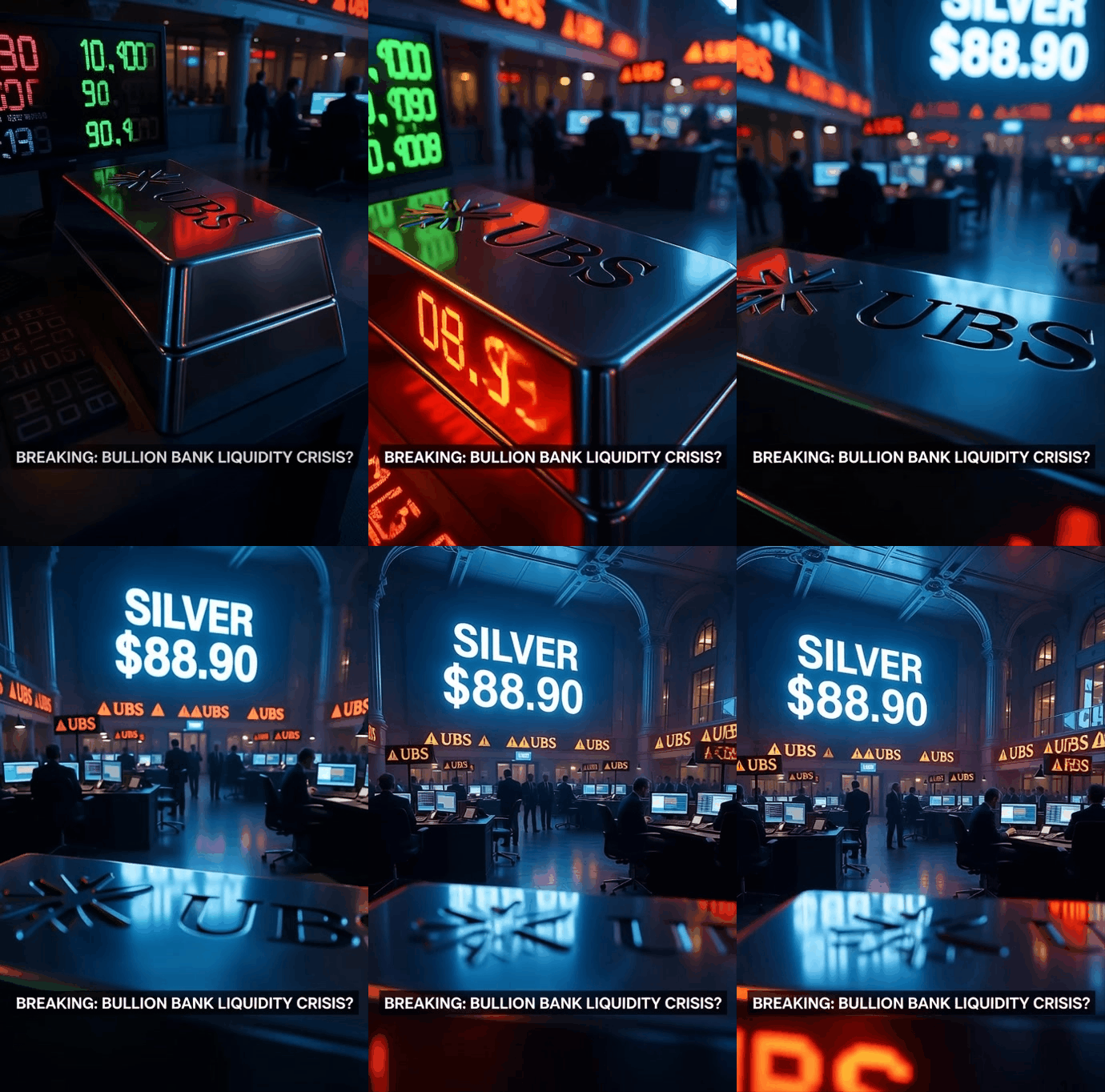
🚨 UBS Under Pressure: Is a $2.3B Silver Short Squeeze Triggering a Liquidity Crisis? 🚨
As silver prices skyrocket toward the historic $100 mark, rumors of a massive margin call at UBS are sending shockwaves through the global financial markets. Is the world’s largest wealth manager caught on the wrong side of the “Silver Squeeze” of 2026? 📉🥈
We dive deep into:
✅ The truth behind the bankruptcy speculation.
✅ Why silver hit $88/oz and its impact on bullion banks.
✅ Analyzing the UBS balance sheet vs. the viral “Short Squeeze” narrative.
Don’t get caught in the FUD—get the facts.
UBS #SilverSqueeze #BankingNews #FinancialCrisis #SilverPrice #Investing2026 #CommoditiesMarket

Leaked Risk Reports and Triple-Digit Silver: Inside the UBS Liquidity Crisis Speculation”


Is UBS Facing a “Silver Bankruptcy”? The Truth Behind the 2026 Short Squeeze Rumors
The global financial markets are on edge as silver prices surge toward triple digits, sparking intense speculation about the stability of “systemically important” banks. Chief among the rumors is the status of UBS Group AG, with viral reports claiming the Swiss giant is facing a liquidity crisis due to massive silver short positions.
In this deep dive, we separate the sensationalist headlines from the balance sheet realities of the world’s largest wealth manager.
The Silver Surge of 2026: Why the Market is Exploding
As of January 2026, silver has undergone a historic transformation. After a 160% gain in 2025, the “white metal” breached $84 per ounce in early January. This rally is driven by a “perfect storm” of factors:

  • Sixth Consecutive Supply Deficit: Global production cannot keep pace with demand.
  • The Industrial Revolution 2.0: Massive silver consumption in AI-driven data centers, solar energy, and the EV sector.
  • The “Silver Squeeze” Narrative: Retail investors and hedge funds are increasingly targeting “paper shorts” held by major bullion banks.
    The UBS Bankruptcy Rumors: Rumor vs. Reality
    Social media platforms like X (formerly Twitter) have been flooded with claims that UBS—alongside other majors like JP Morgan and HSBC—is “nearly bankrupt” after failing to meet a $2.3 billion margin call in late December 2025.
    The Source of the Speculation
    The rumors gained traction following a spike in Federal Reserve overnight repo facility usage, which hit roughly $26 billion in early January. Speculative analysts linked this liquidity draw to “emergency bailouts” for banks caught on the wrong side of the silver trade.
    The Financial Reality for UBS
    While the volatility is real, the “bankruptcy” narrative faces significant factual hurdles:
  • Liquidity Cushions: UBS reported liquidity reserves exceeding $300 billion in late 2025. Even a multi-billion dollar loss on silver derivatives—while painful—is unlikely to trigger insolvency for a bank of this scale.
  • Hedging Strategies: Banks typically hold “short” positions on futures markets to hedge physical metal holdings or client trades. These are not always directional “bets” that the price will fall.
  • Official Silence: No regulatory filings (such as SEC Form 8-K) have confirmed a liquidity crisis at UBS specifically related to silver.
    UBS’s Own Outlook: Bullish or Defensive?
    Ironically, UBS’s own analysts have been some of the most vocal bulls on the metal. In their January 2026 Macro Monthly, UBS strategists projected silver could reach triple digits ($100+) within the year, citing the gold-to-silver ratio dropping toward 30:1.

“The bull market for precious metals has not yet peaked. We see silver as a dual-purpose asset—part precious metal, part industrial necessity—that remains fundamentally undervalued even at current highs.” — UBS Global Wealth Management Report

What Happens if the Silver Squeeze Continues?
If silver reaches the $125–$150 range, the pressure on “paper” markets will intensify. For UBS and its peers, the risk isn’t necessarily immediate bankruptcy, but “Mark-to-Market” volatility.

  • Contagion Risks: If one major bullion bank were to fail, the interconnectedness of the derivatives market could create a 2008-style liquidity freeze.
  • Regulatory Intervention: In a worst-case scenario, the Swiss National Bank (SNB) or the Federal Reserve would likely step in to provide “emergency liquidity” rather than allow a systemically important institution to collapse.
    Conclusion: Fact-Checking the UBS Silver Crisis
    While the 2026 Silver Squeeze is a very real economic phenomenon, claims that UBS is “nearly bankrupt” remain speculative and largely unverified by official financial data. The bank remains well-capitalized, though the extreme volatility in the commodities market serves as a reminder of the risks inherent in high-leverage derivative trading.
    Would you like me to analyze the latest SEC filings or Swiss National Bank statements to see if there are any new disclosures regarding UBS’s commodity exposure?
    UBS Predicts Silver Might Reach Triple Digits in 2026
    This video discusses the intense market rumors and the potential financial impact on major banks as silver prices hit historic highs in early 2026.

YouTube video views will be stored in your YouTube History, and your data will be stored and used by YouTube according to its Terms of Service
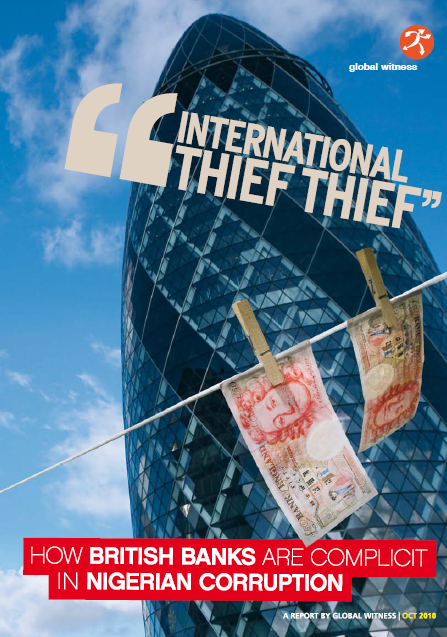
SECRET – Barclays, UBS, HSBC, Royal Bank of Scotland Involved in Money Laundering for Corrupt Nigerian Politicians

https://publicintelligence.net/wp-content/uploads/2010/10/thiefthief.png


Barclays, HSBC, NatWest, Royal Bank of Scotland and UBS – have been linked to money laundering scam over which some corrupt Nigerian politicians were indicted.

A report entitled ‘International Thief Thief’ from Global Witness, a Non-Governmental Organisation (NGO) that exposes the corrupt exploitation of natural resources and international trade systems, drives campaigns to end impunity, resource-linked conflict, and human rights and environmental abuses, accused the banks of fueling corruption in the world’s most-populous black nation.

In a 40-page report published yesterday in http://www.globalwitness.org, Global Witness said that the five banks had taken millions of pounds between 1999 and 2005 from two former governors accused of corruption (Diepreye Alamieyeseigha of Bayelsa State and Joshua Dariye of Plateau State), but had failed sufficiently to investigate the customers or the source of their funds.

Barclays, HSBC and UBS are all members of the Wolfsberg Group, an international body set up in 2000 to try to improve global anti-money laundering procedures.

The report said the banks might not have broken the law, but had helped to fuel corruption in Nigeria.

Global Witness said its findings were based on court documents from cases brought up in London by the Nigerian government to get funds returned that it said had been stolen by the two former governors.

Alamieyeseigha was accused of corruption in 2005 when he was caught with almost a million pounds in cash in his London home, and was briefly jailed in Nigeria after pleading guilty to embezzlement and money laundering charges two years later.

Dariye was arrested in 2004 in London and was found to have purchased properties worth millions of pounds even though his legitimate earnings amounted to the equivalent of 40,000 pounds ($63,500) a year.

He returned to Nigeria, where the anti-corruption agency has accused him of looting public funds. He has denied wrongdoing.

Said the report: “What is so extraordinary about this story is that nearly all of these banks had previously fallen foul of the UK banking regulator, the Financial Services Authority (FSA), in 2001 by reportedly helping the former Nigerian dictator, the late General Sani Abacha, funnel nearly a billion pounds through the UK. These banks were supposed to have tightened up their systems but as this report now shows, a few years later, they were accepting corrupt Nigerian money again. There is no sign that the FSA has taken any action this time.”

UK Banks Draw Fire For Nigerian Accounts:

Banks that allowed two Nigerian politicians to open accounts should have known better, according to Charles Intriago, founder of the International Association for Asset Recovery, a group devoted to recovering illicit assets.

A report released Sunday by U.K.-based anticorruption group Global Witness, “International Thief Thief,” accuses Barclays PLC, HSBC Bank PLC, Royal Bank of Scotland, NatWest (owned since 2000 by RBS) and UBS AG of holding accounts containing allegedly illicit funds for two Nigerian state governors, Diepreye Alamieyeseigha of Bayelsa State and Joshua Dariye of Plateau State, from 1999 to 2005. None of the banks would comment to Corruption Currents on the alleged accounts, though some commented more broadly on their procedures – see below.

Alamieyeseigha pleaded guilty in July 2007 to six counts of money laundering and corruption, receiving six concurrent two-year jail sentences and an order to forfeit his illicit assets, and was released a day after the sentencing for time served while his trial dragged on. Dariye still awaits trial on 23 counts of theft, corruption and breach of state trust in Nigeria. A woman convicted of laundering GBP1.4 million for him in Britain received a three-year jail sentence in April 2007.

Nigeria’s constitution bans politicians from holding bank accounts outside the country, and after the guilty plea, the Nigerian government successfully sued Alamieyeseigha, his shadow companies and “others” (pdf) in U.K. court in 2007 to reclaim his illicit assets, which included several properties and bank accounts held under his name and those of the shadow companies at UBS, HSBC and RBS.

Intriago said that Nigeria is world-renowned for corruption, much like his native Ecuador. Nigeria ranks 130th in the 2009 edition of the Transparency International Index of most corrupt countries.

“For anyone to open a big account for Nigerians is asking for trouble, if not ‘willful blindness,’ which the courts define as ‘the deliberate avoidance of knowledge of the facts,’” he said in an interview.

An HSBC spokesman called the report’s allegations “misguided,” adding that “rigorous and robust compliance procedures were followed diligently.” He wouldn’t comment further. The bank’s U.S. units received a cease-and-desist order last week from the Fed and the Office of the Comptroller of the Currency, requiring it “to take corrective action to improve its firm-wide compliance risk-management program,” including its anti-money laundering compliance procedures.