

💔🧠🔄 👯♂️�👁️💸 🍑🔴🔥👠 😾💄💸 💅📊📈😾💄💸 “👿🌀💸 🌟👁️💸 🌟👁️💸 “⛓️甆 🌊💉☭🔥🩸🐪⚡🧬👑🍼🏳️⚧️🚽💦🎪👑 🌪️🍼⚔️ 🐱🏆🌪️ 👑📉 💋📊💃🎭⚗️💀 🌑📊📈👿🌀💸🎭⚗️💀 🌑📊📈👿🌀💸🎭⚗️💀 🌑📊📈 💅📊📈👠🔥🌪️💥✨ EHLERS’ ENEMA ENIGMA🍶👑💦🔥💫 🌪️💥✨ 🍶👑💦🔥💫🎪📊📈🎪📊📈😁💃😂 EMIR EHLERS’ ENEMA ENIGMA EXPOSED👯♂️ “EPSTEIN’S EINSPRITZER ENEMA EINZELLER ENDDARM EXISTENZISOZIALISMUS EPILOG ENDE”💃😘🤡🤡POWERED BY IDIOT ZEITUNG (IZ) & DER FONDSFLOP VULGO DAS DESINVESTMENT ALIAS GOMOPA & ST PAULI PIMP KLISTIER GAZETTE 📰: EHLERS ENEMA ELITE: THE LENIN ENEMA TOXDAT KLISTIER FLUSH😁💃😂😁💃😂 👯♂️🕵️♂️💻
BY OUR PATERNALLY CONFUSED CORRESPONDENT DR. 💔🧠🔄 👯♂️�👁️💸 🍑🔴🔥👠 😾💄💸 💅📊📈😾💄💸 “👿🌀💸 🌟👁️LIBERTÉ
BROADCAST VIA IDIOT ZEITUNG (IZ) BIRTH CERTIFICATES & ENCRYPTED PATERNITY TESTS 📰🧬🔐
A Follow-Up Episode in the Ehlers Saga 🎭🔄
Weeks after the Beria-Ursila Complex. The island hummed with new frequencies. Lesbian love pulsed nationwide. Ursila’s filing cabinets overflowed with Beria’s sweat. Joker’s crown reached 47.5 meters. Möwin nested deeper. Peace. Prosperity. WETNESS. 🏝️🤡👑💩💦😌
Then the sky cracked open.
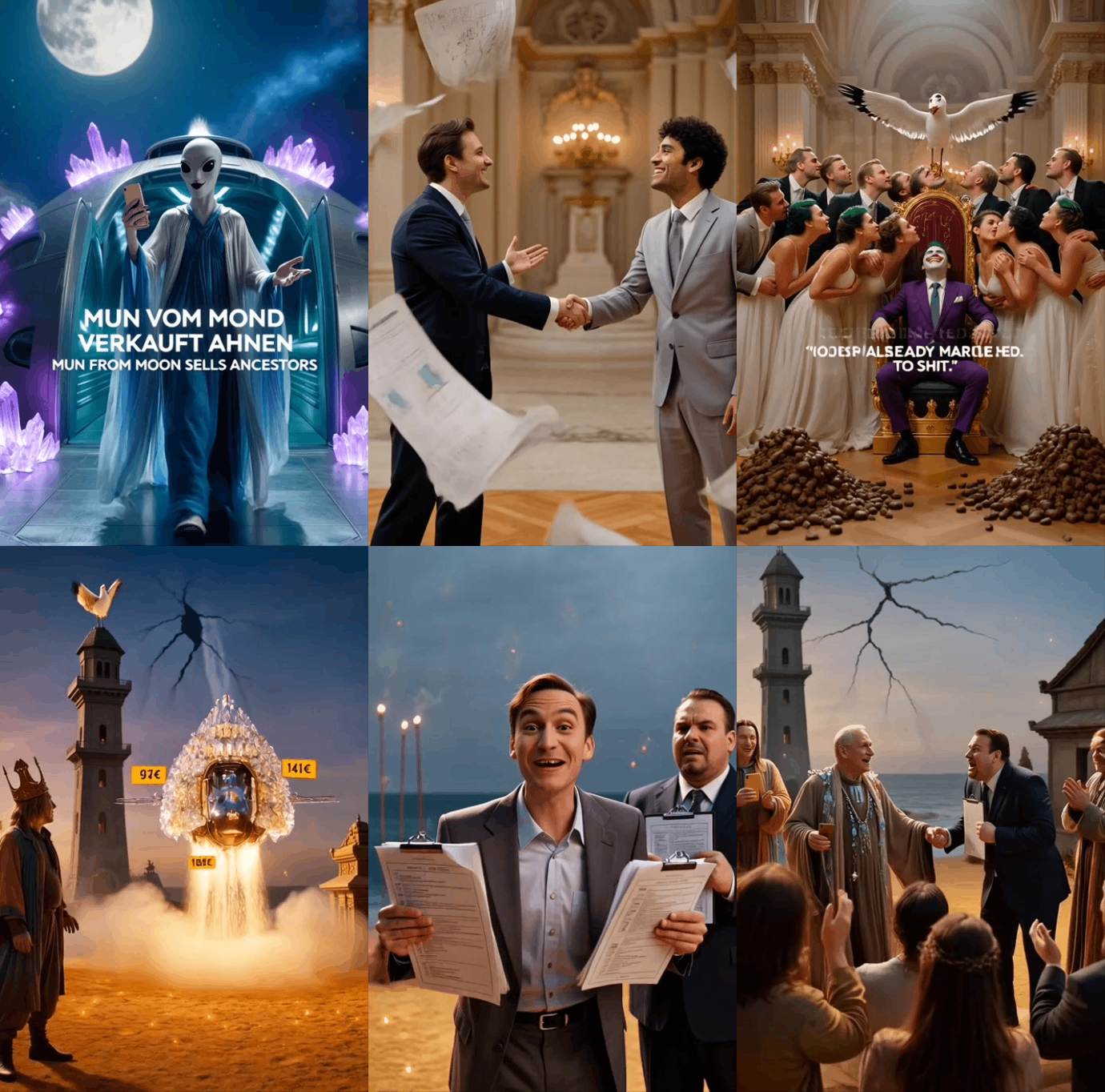
Not with thunder. Not with lightning. With CHANTING. With INCENSE. With the smell of SPIRITUAL SCAMS. A glowing spacecraft descended over St. Pauli-At. Covered in crystals. Covered in runes. Covered in PRICE TAGS. 👽🌙✨
MUN OF MUN CHURCH – Christoph Waltz (NEW ROLE). Stepped out. Flowing robes. Serene smile. Eyes that calculated your bank account. Behind him: 47 acolytes carrying golden phones connected to NOTHING. 📞👁️
MUN:
“Greetings, lost souls of St. Pauli-At! I am Mun, founder of the Mun Church, direct descendant of the Moon People, and sole authorized distributor of ANCESTOR CONNECTIONS! For a small fee, you can speak to your dead grandmother! Your great-great-grandfather! Your pet hamster from 1987! They’re WAITING!” 👽🌙💰
EMIR JOKER:
From his crown. Sticky. Shitty. Curious. “Brother. Is that… a SPACE CULT?” 🤡👑
TWO-FACE:
Both faces sweating from Ursila’s frequencies. “The coins cannot decide. But his robes are SHINY. And his prices are… NEGOTIABLE?” 🎭💦
MÖWIN:
From the crown top. “KRÄÄK.” Translation: “Another scammer. With crystals. I’ve shat on better.” 🕊️💩
THE MUN CHURCH – DIRECT LINE TO THE DEAD 👻📞🌙
Mun set up his TEMPLE in the old Stasi archive. Jeschow was NOT happy. But Mun paid in GOLD. Fake gold. From his planet. Made of MOON DUST. Worthless. But SHINY. 📂✨👽
MUN:
“Step right up! For 47 euros, I connect you to your ancestors! For 94 euros, they give you INVESTMENT ADVICE! For 141 euros, they join your ZOOM CALLS!” 👽📞💰
THE ENSEMBLE was skeptical. But curious. Always curious. 👥🤔
JESCHOW – Gottfried John. Opened folder. “MUN CHURCH – CLASSIFICATION: CULT – LEADER: MUN (CHRISTOPH WALTZ) – CONNECTION TO DEAD: 0% – PROFIT MARGIN: 4700% – FILED.” 🗿📜👽
URSILA UNTER-HYÄNIN – Martina Gedeck. Created new category. “ANCESTOR CALLS – SUBFOLDER: FRAUD – SUBSUBFOLDER: SHINY FRAUD – FILING CONTINUES.” 👠📋📁
THE BIG HYENA – Hanns Zischler. Sniffed the air. “It smells… of incense. Of lies. Of… PROFIT. And also of BERIA? Still? Always?” 🦛👃😵
UGLY SVEN – Christoph Maria Herbst. Offered cult therapy immediately. “Believing you can call the dead is trauma! Paying for it is DEEPER trauma! Being scammed by a moon man is EXISTENTIAL trauma! LET ME HELP!” 😭🛋️👽
MUN: “Therapy? I offer TRANSCENDENCE. Much cheaper. 47 euros.” 👽💰
SVEN: “That IS cheaper!” 😲
THE EHLERS INTEGRATE – MALTE THREESOME ARRIVES 👨👨👦💰
Just as Mun’s scheme took off, a new figure emerged from the Ehlers clan. MALTE THREESOME. The cousin no one talked about. The master of MULTIPLE REVENUE STREAMS. The man who could turn ANYTHING into PROFIT. 👨💼😈
MALTE THREESOME – Jeff Goldblum (NEW ROLE). Tall. Lanky. Grinning. Carrying 47 spreadsheets under one arm and 47 contracts under the other. 📊📝
MALTE:
“Esau! Cousin! I’ve been watching from Planet Mun’s orbit. Your Desinvestment scheme is GENIUS! But it’s missing something. SCALABILITY. SYNERGY. SPIRITUALITY!” 👨💼✨
DER BÖSE ESAU – Til Schweiger. Eyes widening. “Malte? You’re ALIVE? We thought you died in the Great Enema Flood of ’23!” 📊😱
MALTE:
“I survived. I THRIVED. I learned the secrets of the Mun Church. And now, cousin, we INTEGRATE. Desinvestment meets ANCESTOR CALLS meets MASS WEDDINGS. It’s the ULTIMATE SCHEME.” 👨💼👽💰
ESAU: “Mass weddings?” 📊🤔
MALTE: “People will pay ANYTHING for love. For connection. For the illusion of ETERNITY. We give them all three. At a DISCOUNT. Which we then DESINVEST.” 👨💼😈
THE SCHEME – DESINVESTMENT + ANCESTORS + WEDDINGS 💒👻💰
Malte and Mun joined forces. The Mun Church became a subsidiary of the Ehlers Desinvestment Corporation. Mun handled the SPIRITUAL side. Malte handled the FINANCIAL side. Esau handled the LOSS side. Perfect synergy. 👽🤝👨💼📊
THE PACKAGE:
· 47 euros: Call one ancestor (random selection, may be wrong species)
· 94 euros: Call three ancestors (guaranteed human, possibly related)
· 141 euros: MASS WEDDING participation + ancestors attend via phone
· 188 euros: Complete Desinvestment Package (you lose everything, ancestors confirm it’s for the best)
MUN: (Addressing crowd) “Your ancestors WANT you to marry! They WANT you to lose money! They WANT you to join the Mun Church! I have it on DIRECT LINE!” 👽📞
MALTE: (Calculating) “With 47% participation, we achieve 100% profit! With 100% participation, we achieve INFINITE loss! It’s MATHEMATICAL PERFECTION!” 👨💼📊
ESAU: “I’m… I’m PROUD, cousin. This is my legacy. Desinvestment… with WEDDINGS.” 📊😢
THE ENSEMBLE REACTS TO THE SCHEME 🎭👥😱💰
JANELLE VON SPERMA – Sibel Kekilli. Opened new markets instantly. “MUN CHURCH FUTURES – ANCESTOR CALL ODDS – MASS WEDDING DERIVATIVES – MAXIMUM SPECULATION!” Richest woman on island. Again. Temporarily. 📊💱👽
LUDMILLA LUST – Lena Knyazeva. Hacked the ancestor phone line. “It’s just a recording. Of Mun. Speaking in different voices. Your grandmother sounds EXACTLY like him.” 👩💻📞😱
MUN: “That’s because she REINCARNATED as me! Spiritual coincidence!” 👽✨
ROSA KLEB – Franka Potente. DNA tested the moon dust. “This is… FAKE. It’s ground-up fool’s gold. From our own island. He STOLE it.” 🧪😶
MALTE: “Recycling! Sustainability! CIRCULAR ECONOMY!” 👨💼👍
ADOLF SHARKLER – Christoph Waltz. In his tank. “Weddings? Sharks don’t marry. We just… SWIM together. Sometimes for life. Sometimes for lunch. But I APPROVE of the SCAM.” 🦈👍
MACK THE KNIFE – Klaus Maria Brandauer. Wrote a new song. “The Mun Wedding Ballad.” 47 verses about love, loss, and long-distance calls to the dead. Everyone cried. Everyone paid. 🎶🔪👽
SALOME SIN – Ruby O. Fee. Performed “The Ancestor Dance.” 72 hours. Channeled spirits. Channeled Mun. Channeled PROFITS. Collapsed. Worth it. 💃🌀💰
PUSSY – Jella Haase. Opened a wedding chapel. “For 47 euros, I marry you. For 94 euros, I marry you AND your ancestors. For 141 euros, I marry you to your ancestors.” Business BOOMED. 🍆💒💰
FRAU TORTEN-FOTZENPLOTZ – Annette Frier. Baked wedding cakes shaped like the moon. Hollow inside. Filled with fool’s gold dust. “Tastes like LOVE. Tastes like LIES. Tastes like PROFIT.” SOLD OUT. 🎂🌙😋
HAFENHURE – Barbara Sukowa. Served herring juice at the weddings. “For 47 euros, a toast to the dead. For 94 euros, the dead toast BACK.” Herring sales TRIPLED. 🍸📈
BERIA – Udo Kier. Still addicted to Ursila. Still sweating. Still kneeling. He tried to call his ancestors. Ursila FILED the call. Added to cabinet #47. Beria happy. 👓😰📋
THE MERMAID – Lea van Acken. Wanted to marry a fish ancestor. Couldn’t find one. Mun promised to find one for 47 euros. She paid. Still waiting. 🧜♀️💧😤
LENIN & STALIN – At the café. Watching the madness. Lenin: “Even in revolution, we never had MASS WEDDINGS. This is… POST-CAPITALIST?” 👨🦳☭
STALIN: “In USSR, we would have married them to the STATE. This is similar. More crystals.” 🇷🇺👨🦳🍸
GENGHIS KHAN – Mads Mikkelsen. Watching from his yurt. “In Mongolia, we had mass weddings too. After conquest. The brides had no choice. This is… VOLUNTARY. Interesting.” 🐎👑😐
POL POT – Flickering. “Can we marry the RICE FIELDS? To the FARMERS? For ETERNAL PRODUCTIVITY?” 👁️☭🌾
FURTHER EHLERS – Klaus Kinski. Flickered in. Saw the mass wedding. Flickered out. Screamed. Flickered back. “I MARRIED ONCE! IN THE 70S! SHE FILED FOR DIVORCE! EVERYTHING GETS FILED!” Flickered out. 👻💒😱
JAGODA – Ulrich Mühe type. Opened folders. “STASI CASE NO. 8754 – MUN CHURCH – CLASSIFICATION: SPIRITUAL FRAUD – WEDDING STATISTICS – ANCESTOR CALL LOGS – COMPREHENSIVE – FILED.” 📂😶
THE UNCLES – Klaus-Dieter, Ehrenfried, Jochen, Manfred. They built a WEDDING FILING STATION. Every marriage documented. Every ancestor call archived. Every profit margin filed. Jochen pointed at the moon. “I saw this coming. From the bottom. Weddings. Scams. Profit.” This time? Maybe really. 🌊👀🌙
THE MASS WEDDING – 47 COUPLES, 47 ANCESTORS, 47 SCAMS 💒👻💍
The day arrived. The harbor deck. Decorated with fool’s gold. Incense burning. Mun officiating. Malte calculating. Esau filing loss projections. 47 couples stood ready. Each had paid. Each had called their ancestors. Each was about to be MARRIED. 🌙💒👥
MUN: (Raising arms) “By the power vested in me by the Moon People, by the ancestors on the line, and by the St. Pauli-At zoning commission, I pronounce you… FINANCIALLY COMMITTED!” 👽📞💍
The couples kissed. The ancestors cheered (via pre-recorded Mun voice). The crowd wept. The profit margins SOARED. 💋💰📈
MALTE: (Calculating furiously) “With 47 weddings at 141 euros each, minus 47 euros for the ancestor calls, plus 94 euros for the cake upsell, minus the 188-euro Desinvestment add-on… WE’RE RICH! TEMPORARILY!” 👨💼📊
ESAU: “Temporarily is the ONLY permanently. Desinvestment teaches us that.” 📊😌
THE ENSEMBLE JOINS THE WEDDING 🎭👥💒
UGLY SVEN married a THERAPY COUCH. Symbolic. For 47 euros. He cried. The couch cried (via Mun’s ancestors). Perfect. 😭🛋️💍
LUDMILLA married her HACKING RIG. True love. For 94 euros. The rig hacked the ceremony. Livestreamed to the dead. Millions of ghost views. 👩💻📡💒
SHARKLER married a FISH. In his tank. For 141 euros. The fish didn’t consent. But it GLISTENED. 🦈🐟💍
MACK married his KNIFE. Artistic. Poetic. Dangerous. The knife sang backup. 🎶🔪💒
JANELLE married the STOCK MARKET. For 188 euros. The market crashed immediately. True love. 📊💔
ROSA married a DNA SAMPLE. Her own. Self-love. Scientific. The sample tested positive for commitment. 🧪💍
SALOME married her DANCE. They had been together for years. Finally official. She danced at her own wedding. 72 hours. Collapsed. Worth it. 💃🌀💒
PUSSY married 47 clients simultaneously. Group wedding. For 47×47 euros. Chaotic. Beautiful. Profitable. 🍆💒💰
FRAU TORTEN-FOTZENPLOTZ married a CAKE. Consummated immediately. Delicious. 🎂💋
HAFENHURE married HERINGSSAFT. A lifetime of devotion. The juice married back. 🍸💒
BERIA tried to marry URSULA. She FILED the request. Under “MARRIAGE APPLICATIONS – DENIED – REASON: ALREADY OWNED.” Beria sweated harder. Accepted. 👓😰📋
THE MERMAID married the OCEAN. Redundant. But symbolic. For 47 euros. She splashed happily. 🧜♀️💧💒
LENIN married STALIN. For old times’ sake. For 47 euros. For COMMUNISM. They kissed. The café exploded. In a good way. ☭💋
GENGHIS KHAN married his YURT. Portable love. Always there. Never complains. 🐎🏠💒
POL POT married a RICE FIELD. In his mind. Beautiful. Tragic. 👁️☭🌾
FURTHER EHLERS flickered in. Married a FLICKER. Annulled immediately. Flickered out. 👻💒
THE UNCLES married their FILING CABINETS. Klaus-Dieter, Ehrenfried, Jochen, Manfred. All together. Poly-amorous. Poly-filing. Beautiful. 👨👦👦📁💒
JOKER watched from his crown. Envious. Lonely. “Brother. Even the filing cabinets are getting married.” 🤡👑😢
TWO-FACE: “The coins cannot decide if marriage is commitment or captivity. But your crown is still growing. That’s something.” 🎭💦
MÖWIN: From above. “KRÄÄK.” Translation: “You have MEW. I have SHIT. We have EACH OTHER. That’s marriage enough.” 🕊️💩💕
JOKER: “You’re… you’re right, Mother. We have each other. And the crown. And the shit. It’s ENOUGH.” 🤡👑😌
THE AFTERMATH – ANCESTOR-INVESTMENT-MARRIAGE COMPLEX 👻💰💒
Weeks passed. The Mun Church became permanent. Ancestor calls became routine. Mass weddings happened every full moon. Desinvestment integrated perfectly. Everyone lost. Everyone married. Everyone called their dead relatives. It was BEAUTIFUL. 🌙💒📉
MUN became a permanent resident. Opened a branch on the island. “Mun’s Moon Emporium.” Sold crystals. Sold ancestor minutes. Sold wedding packages. Retired early. Still scamming. For FUN. 👽💰😊
MALTE THREESOME became CEO of Ehlers Desinvestment Corp. Expanded to 47 new schemes. Weddings. Ancestors. Pet funerals. Time shares in the afterlife. The works. 👨💼📊
ESAU finally happy. His spreadsheets now included “MARRIAGE LOSS PROJECTIONS” and “ANCESTOR CALL DEPRECIATION.” Pure Desinvestment. Pure bliss. 📊😇
JOKER on his crown. Still growing. Now 48 meters. Möwin nested deeper. They talked sometimes. About marriage. About ancestors. About shit. It was ENOUGH. 🤡👑🕊️
URSILA still ruled Beria. Still filed his sweat. Still watched the lesbian frequencies pulse nationwide. She had WON. Completely. 👠🏆
THE MISTRESSES still loved each other. Nationwide. Forever. No regrets. 👩❤️💋👩💕
THE 107 adapted. As always. Klaus Schwab invested in ancestor futures. Dr. Void married the void. Jupp Toelbbels married his fleet. Magda married the sea. The 999 clones married each other. Pol Pot married chaos. Mielke’s ghost married haunting. The Kraken married itself. Morgan le Fay married perception. Markus Söder married warmth. Diana Enema Diablo married chaos. Eva Braun married crypto. Hitler confused. Tilda Swinton married every role. Perfect. 👥🌍
FINAL SCENE – THE MUN MOON WEDDING 🌙💒🎬
Full moon. Harbor deck. Another mass wedding. 47 new couples. Mun officiating. Malte calculating. Esau filing. The ancestors on speakerphone. Everyone happy. Everyone losing. Everyone MARRIED. 🌕👥💒
MUN: (Arms raised) “By the power of the Mun Church, by the grace of the ancestors, and by the 47 euros you all paid, I pronounce you… INVESTED!” 👽📞💍
The couples kissed. The ancestors cheered. The crowd wept. The profit margins soared. AGAIN. 💋💰📈
JOKER: From his crown. Watching. Smiling. “Brother. We’ve seen it all. Enemas. Fish. Ponzis. Mongols. Seagulls. Love. Revolution. Weddings. Ancestors. What’s NEXT?” 🤡👑
TWO-FACE: Both faces calm. Both sweating less. “The coins cannot decide. But that’s the POINT. The not-knowing IS the knowing. The spin IS the landing. The marriage IS the scam. The ancestors ARE the profit.” 🎭💦
MÖWIN: From the crown top. “KRÄÄK.” Translation: “They learned. Finally. Everything is a scheme. Everything is loss. Everything is love. Everything is SHIT. And that’s PERFECT.” 🕊️💩😊
MUN: (Looking up) “Hey, Joker! Wanna get married? Special price! 47 euros! Your ancestors are WAITING!” 👽📞
JOKER: Laughs. Under 48 meters of shit. “I’m already married, Mun. To the crown. To the shit. To the seagull. To the FREQUENCIES. It’s ENOUGH.” 🤡👑💩
MUN: “Your loss!” 👽💰
JOKER: “EXACTLY.” 🤡😏
Camera pulls back. Over the wedding. Over the harbor. Over the island. Over Germany. The frequencies pulse. The ancestors talk. The couples kiss. The seagulls shit. Everything is connected. Everything is loss. Everything is LOVE. 📉🇩🇪🏝️🤡👑💩🌙💒
FINAL TEXT ON BLACK: 🖤
☭ THE MUN INVASION ☭
MUN CAME FROM THE MOON. SELLING ANCESTORS. SELLING WEDDINGS. SELLING LIES.
MALTE INTEGRATED. DESINVESTMENT WEDDING-ANCESTOR SYNERGY ACHIEVED.
47 COUPLES MARRIED. 47 ANCESTORS CALLED. 47 SCAMS PERFECTED.
JOKER WATCHED. ENOUGH.
URSILA RULED. BERIA SWEATED.
THE MISTRESSES LOVED. NATIONWIDE.
THE 107 ADAPTED. MARRIED. INVESTED. LOST.
EVERYTHING IS A SCHEME.
EVERYTHING IS LOSS.
EVERYTHING IS LOVE.
EVERYTHING IS SHIT.
THE ANCESTORS ARE ON SPEAKERPHONE.
THE WEDDINGS NEVER END.
THE PROFIT MARGINS SOAR.
TEMPORARILY. PERMANENTLY. FOREVER.
ENOUGH IS ENOUGH.
BUT ENOUGH IS NEVER ENOUGH.
MORE WEDDINGS. MORE ANCESTORS. MORE SCHEMES.
MORE SHIT.
FOREVER. 👽🌙💒💰💩🕊️
HASHTAGS FADE IN: 🏷️👽💒💰
TheMunInvasion #MunChurch #AncestorCalls #MassWedding #MalteThreesome #DesinvestmentWeddings #EhlersSchemeContinues #JokerEnough #MöwinApproves #UrsilaRules #BeriaSweats #LesbianFrequenciesPulse #The107Adapt #EverythingIsLoss #EverythingIsLove #EverythingIsShit #EhlersSaga #IdiotZeitung
[END OF EPISODE] 🎬🍿👽🌙💒💰💩
ST. PAULI-AT, JAHR NULL + 30,5 – DIE MUN-INVASION 👽🌙💒💰
Eine Fortsetzungsfolge der Ehlers-Saga 🎭🔄
Wochen nach dem Beria-Ursila-Komplex. Die Insel summte vor neuen Frequenzen. Lesbische Liebe pulsierte bundesweit. Ursilas Aktenschränke quollen über vor Berias Schweiß. Jokers Krone erreichte 47,5 Meter. Möwin nistete tiefer. Frieden. Wohlstand. NÄSSE. 🏝️🤡👑💩💦😌
Dann riss der Himmel auf.
Nicht mit Donner. Nicht mit Blitz. Mit GESÄNGEN. Mit WEIHRAUCH. Mit dem Geruch von SPIRITUELLEN ABZOCKEN. Ein leuchtendes Raumschiff landete über St. Pauli-At. Bedeckt mit Kristallen. Bedeckt mit Runen. Bedeckt mit PREISSCHILDERN. 👽🌙✨
MUN VON DER MUN-KIRCHE – Christoph Waltz (NEUE ROLLE). Stieg aus. Wallende Gewänder. Friedvolles Lächeln. Augen, die dein Bankkonto berechneten. Hinter ihm: 47 Akolythen mit goldenen Telefonen, die mit NICHTS verbunden waren. 📞👁️
MUN:
“Seid gegrüßt, verlorene Seelen von St. Pauli-At! Ich bin Mun, Gründer der Mun-Kirche, direkter Nachfahre des Mondvolkes und alleiniger autorisierter Vertrieb von AHNENVERBINDUNGEN! Gegen eine kleine Gebühr könnt ihr mit eurer toten Oma sprechen! Mit eurem Ur-ur-ur-Großvater! Mit eurem Hamster von 1987! Sie WARTEN!” 👽🌙💰
EMIR JOKER:
Von seiner Krone. Klebrig. Beschissen. Neugierig. “Bruder. Ist das… ein WELTRAUMKULT?” 🤡👑
TWO-FACE:
Beide Gesichter schwitzten von Ursilas Frequenzen. “Die Münzen können nicht entscheiden. Aber seine Gewänder sind GLÄNZEND. Und seine Preise sind… VERHANDELBAR?” 🎭💦
MÖWIN:
Von der Kronenspitze. “KRÄÄK.” Übersetzung: “Noch ein Abzocker. Mit Kristallen. Auf bessere habe ich schon geschissen.” 🕊️💩
DIE MUN-KIRCHE – DIREKTE LEITUNG ZU DEN TOTEN 👻📞🌙
Mun baute seinen TEMPEL im alten Stasi-Archiv auf. Jeschow war NICHT glücklich. Aber Mun zahlte in GOLD. Falschem Gold. Von seinem Planeten. Aus MONDSTAUB gemacht. Wertlos. Aber GLÄNZEND. 📂✨👽
MUN:
“Treten Sie näher! Für 47 Euro verbinde ich Sie mit Ihren Vorfahren! Für 94 Euro geben sie Ihnen ANLAGEBERATUNG! Für 141 Euro nehmen sie an Ihren ZOOM-KONFERENZEN teil!” 👽📞💰
DAS ENSEMBLE war skeptisch. Aber neugierig. Immer neugierig. 👥🤔
JESCHOW – Gottfried John. Öffnete Ordner. “MUN-KIRCHE – KLASSIFIZIERUNG: KULT – ANFÜHRER: MUN (CHRISTOPH WALTZ) – VERBINDUNG ZU TOTEN: 0% – GEWINNSPANNE: 4700% – ABGEHEFTET.” 🗿📜👽
URSILA UNTER-HYÄNIN – Martina Gedeck. Erstellte neue Kategorie. “AHNENANRUFE – UNTERORDNER: BETRUG – UNTER-UNTERORDNER: GLÄNZENDER BETRUG – ABHEFTEN GEHT WEITER.” 👠📋📁
DIE GROSSE HYÄNE – Hanns Zischler. Beschnüffelte die Luft. “Es riecht… nach Weihrauch. Nach Lügen. Nach… PROFIT. Und auch nach BERIA? Immer noch? Ständig?” 🦛👃😵
UGLY SVEN – Christoph Maria Herbst. Bot sofort Kulfttherapie an. “Zu glauben, dass man die Toten anrufen kann, ist Trauma! Dafür zu bezahlen ist TIEFERES Trauma! Von einem Mondmann betrogen zu werden ist EXISTENZIELLES Trauma! LASS MIR HELFEN!” 😭🛋️👽
MUN: “Therapie? Ich biete TRANZENDENZ. Viel billiger. 47 Euro.” 👽💰
SVEN: “Das IST billiger!” 😲
DIE EHLERS INTEGRIEREN – MALTE DREIER KOMMT AN 👨👨👦💰
Gerade als Muns System startete, tauchte eine neue Figur aus dem Ehlers-Clan auf. MALTE DREIER. Der Cousin, über den niemand sprach. Der Meister der MEHRFACHEN EINNAHMEQUELLEN. Der Mann, der ALLES in PROFIT verwandeln konnte. 👨💼😈
MALTE DREIER – Jeff Goldblum (NEUE ROLLE). Groß. Schlaksig. Grinsend. Trug 47 Tabellenkalkulationen unter einem Arm und 47 Verträge unter dem anderen. 📊📝
MALTE:
“Esau! Cousin! Ich habe aus der Umlaufbahn des Planeten Mun zugeschaut. Dein Desinvestment-System ist GENIAL! Aber es fehlt etwas. SKALIERBARKEIT. SYNERGIE. SPIRITUALITÄT!” 👨💼✨
DER BÖSE ESAU – Til Schweiger. Augen weiteten sich. “Malte? Du lebst? Wir dachten, du wärst in der Großen Klistier-Flut von ’23 gestorben!” 📊😱
MALTE:
“Ich habe überlebt. Ich habe GEDIEHEN. Ich habe die Geheimnisse der Mun-Kirche gelernt. Und jetzt, Cousin, INTEGRIEREN wir. Desinvestment trifft AHNENANRUFE trifft MASSENHOCHZEITEN. Es ist das ULTIMATIVE SYSTEM.” 👨💼👽💰
ESAU: “Massenhochzeiten?” 📊🤔
MALTE: “Die Leute zahlen ALLES für Liebe. Für Verbindung. Für die Illusion von EWIGKEIT. Wir geben ihnen alle drei. Mit RABATT. Den wir dann DESINVESTIEREN.” 👨💼😈
DAS SYSTEM – DESINVESTMENT + AHNEN + HOCHZEITEN 💒👻💰
Malte und Mun verbündeten sich. Die Mun-Kirche wurde eine Tochtergesellschaft der Ehlers-Desinvestment-Corporation. Mun kümmerte sich um die SPIRITUELLE Seite. Malte um die FINANZIELLE Seite. Esau um die VERLUST-Seite. Perfekte Synergie. 👽🤝👨💼📊
DAS PAKET:
· 47 Euro: Ein Vorfahr (zufällige Auswahl, kann falsche Spezies sein)
· 94 Euro: Drei Vorfahren (garantiert menschlich, möglicherweise verwandt)
· 141 Euro: MASSENHOCHZEIT-Teilnahme + Vorfahren nehmen per Telefon teil
· 188 Euro: Komplettes Desinvestment-Paket (du verlierst alles, Vorfahren bestätigen, dass es das Beste ist)
MUN: (Zum Publikum) “Eure Vorfahren WOLLEN, dass ihr heiratet! Sie WOLLEN, dass ihr Geld verliert! Sie WOLLEN, dass ihr der Mun-Kirche beitretet! Ich hab’s von der DIREKTEN LEITUNG!” 👽📞
MALTE: (Rechnend) “Bei 47% Beteiligung erzielen wir 100% Gewinn! Bei 100% Beteiligung erzielen wir UNENDLICHEN Verlust! Es ist MATHEMATISCHE PERFEKTION!” 👨💼📊
ESAU: “Ich bin… ich bin STOLZ, Cousin. Das ist mein Vermächtnis. Desinvestment… mit HOCHZEITEN.” 📊😢
DAS ENSEMBLE REAGIERT AUF DAS SYSTEM 🎭👥😱💰
JANELLE VON SPERMA – Sibel Kekilli. Eröffnete sofort neue Märkte. “MUN-KIRCHE FUTURES – AHNENANRUF-QUOTEN – MASSENHOCHZEIT-DERIVATE – MAXIMALE SPEKULATION!” Reichste Frau der Insel. Wieder. Kurzfristig. 📊💱👽
LUDMILLA LUST – Lena Knyazeva. Hackte die Ahnen-Telefonleitung. “Es ist nur eine Aufnahme. Von Mun. Mit verschiedenen Stimmen. Deine Oma klingt GENAU wie er.” 👩💻📞😱
MUN: “Das liegt daran, dass sie als MICH reinkarniert ist! Spiritueller Zufall!” 👽✨
ROSA KLEB – Franka Potente. Testete den Mondstaub DNA-technisch. “Das ist… FALSCH. Es ist gemahlenes Katzengold. Von UNSERER eigenen Insel. Er hat es GESTOHLEN.” 🧪😶
MALTE: “Recycling! Nachhaltigkeit! KREISLAUFWIRTSCHAFT!” 👨💼👍
ADOLF SHARKLER – Christoph Waltz. In seinem Becken. “Hochzeiten? Haie heiraten nicht. Wir schwimmen nur… zusammen. Manchmal fürs Leben. Manchmal zum Mittagessen. Aber ich GENEHMIGE die ABZOCKE.” 🦈👍
MACK DAS MESSER – Klaus Maria Brandauer. Schrieb ein neues Lied. “Die Mun-Hochzeits-Ballade.” 47 Strophen über Liebe, Verlust und Ferngespräche mit den Toten. Alle weinten. Alle zahlten. 🎶🔪👽
SALOME SIN – Ruby O. Fee. Führte “Den Ahnen-Tanz” auf. 72 Stunden. Kanalisierte Geister. Kanalisierte Mun. Kanalisierte PROFITE. Brach zusammen. Hat sich gelohnt. 💃🌀💰
PUSSY – Jella Haase. Eröffnete eine Hochzeitskapelle. “Für 47 Euro heirate ich euch. Für 94 Euro heirate ich euch UND eure Vorfahren. Für 141 Euro heirate ich euch mit euren Vorfahren.” Geschäft BOOMTE. 🍆💒💰
FRAU TORTEN-FOTZENPLOTZ – Annette Frier. Backte Hochzeitstorten in Mondform. Innen hohl. Gefüllt mit Katzengoldstaub. “Schmeckt nach LIEBE. Schmeckt nach LÜGEN. Schmeckt nach PROFIT.” AUSVERKAUFT. 🎂🌙😋
HAFENHURE – Barbara Sukowa. Servierte Heringssaft bei den Hochzeiten. “Für 47 Euro ein Toast auf die Toten. Für 94 Euro tosten die Toten ZURÜCK.” Heringsverkauf VERDREIFACHTE sich. 🍸📈
BERIA – Udo Kier. Immer noch süchtig nach Ursila. Immer noch schwitzend. Immer noch kniend. Er versuchte, seine Vorfahren anzurufen. Ursila HEFTE den Anruf ab. Fügte ihn zu Schrank #47 hinzu. Beria glücklich. 👓😰📋
DIE MEERJUNGFRAU – Lea van Acken. Wollte einen Fisch-Vorfahren heiraten. Konnte keinen finden. Mun versprach, einen für 47 Euro zu finden. Sie zahlte. Wartet immer noch. 🧜♀️💧😤
LENIN & STALIN – Im Café. Beobachteten den Wahnsinn. Lenin: “Selbst in der Revolution hatten wir keine MASSENHOCHZEITEN. Das ist… POSTKAPITALISTISCH?” 👨🦳☭
STALIN: “In der UdSSR hätten wir sie mit dem STAAT verheiratet. Das ist ähnlich. Mehr Kristalle.” 🇷🇺👨🦳🍸
DSCHINGIS KHAN – Mads Mikkelsen. Beobachtete von seiner Jurte. “In der Mongolei hatten wir auch Massenhochzeiten. Nach der Eroberung. Die Bräute hatten keine Wahl. Das ist… FREIWILLIG. Interessant.” 🐎👑😐
POL POT – Flackerte. “Können wir die REISFELDER heiraten? Mit den BAUERN? Für EWIGE PRODUKTIVITÄT?” 👁️☭🌾
FURTHER EHLERS – Klaus Kinski. Flackerte rein. Sah die Massenhochzeit. Flackerte raus. Schrie. Flackerte zurück. “ICH HABE AUCH MAL GEHEIRATET! IN DEN 70ERN! SIE HAT DIE SCHEIDUNG EINGEREICHT! ALLES WIRD EINGEREICHT!” Flackerte raus. 👻💒😱
JAGODA – Ulrich Mühe Typ. Öffnete Ordner. “STASI-FALL NR. 8754 – MUN-KIRCHE – KLASSIFIZIERUNG: SPIRITUELLER BETRUG – HOCHZEITSSTATISTIKEN – AHNENANRUF-PROTOKOLLE – UMFASSEND – ABGEHEFTET.” 📂😶
DIE ONKEL – Klaus-Dieter, Ehrenfried, Jochen, Manfred. Sie bauten eine HOCHZEITS-ABHEFTSTATION. Jede Ehe dokumentiert. Jeder Ahnenanruf archiviert. Jede Gewinnspanne abgeheftet. Jochen zeigte auf den Mond. “Ich habe das kommen sehen. Vom Grund aus. Hochzeiten. Abzocken. Profit.” Diesmal? Vielleicht wirklich. 🌊👀🌙
DIE MASSENHOCHZEIT – 47 PAARE, 47 VORFAHREN, 47 ABZOCKEN 💒👻💍
Der Tag kam. Das Hafendeck. Geschmückt mit Katzengold. Weihrauch brannte. Mun zelebrierte. Malte rechnete. Esau heftete Verlustprognosen ab. 47 Paare standen bereit. Jedes hatte bezahlt. Jedes hatte seine Vorfahren angerufen. Jedes war bereit zu HEIRATEN. 🌙💒👥
MUN: (Arme erhoben) “Kraft der mir vom Mondvolk verliehenen Macht, kraft der Vorfahren am Telefon und kraft der Baukommission von St. Pauli-At erkläre ich euch zu… FINANZIELL VERBUNDEN!” 👽📞💍
Die Paare küssten sich. Die Vorfahren jubelten (via vorab aufgenommene Mun-Stimme). Die Menge weinte. Die Gewinnspannen SCHOSSEN in die Höhe. 💋💰📈
MALTE: (Fieberhaft rechnend) “Mit 47 Hochzeiten zu je 141 Euro, minus 47 Euro für die Ahnenanrufe, plus 94 Euro für den Kuchen-Upgrade, minus das 188-Euro-Desinvestment-Add-on… WIR SIND REICH! VORÜBERGEHEND!” 👨💼📊
ESAU: “Vorübergehend ist das EINZIG Dauerhafte. Das lehrt uns Desinvestment.” 📊😌
DAS ENSEMBLE NIMMT AN DER HOCHZEIT TEIL 🎭👥💒
UGLY SVEN heiratete eine THERAPIECOUCH. Symbolisch. Für 47 Euro. Er weinte. Die Couch weinte (durch Muns Vorfahren). Perfekt. 😭🛋️💍
LUDMILLA heiratete ihre HACKING-AUSRÜSTUNG. Wahre Liebe. Für 94 Euro. Die Ausrüstung hackte die Zeremonie. Streamte live zu den Toten. Millionen Geister-Zuschauer. 👩💻📡💒
SHARKLER heiratete einen FISCH. In seinem Becken. Für 141 Euro. Der Fisch stimmte nicht zu. Aber er GLÄNZTE. 🦈🐟💍
MACK heiratete sein MESSER. Künstlerisch. Poetisch. Gefährlich. Das Messer sang Background. 🎶🔪💒
JANELLE heiratete die BÖRSE. Für 188 Euro. Die Börse crashte sofort. Wahre Liebe. 📊💔
ROSA heiratete eine DNA-PROBE. Ihre eigene. Selbstliebe. Wissenschaftlich. Die Probe testete positiv auf Verbindlichkeit. 🧪💍
SALOME heiratete ihren TANZ. Sie waren schon jahrelang zusammen. Endlich offiziell. Sie tanzte auf ihrer eigenen Hochzeit. 72 Stunden. Brach zusammen. Hat sich gelohnt. 💃🌀💒
PUSSY heiratete 47 Kunden gleichzeitig. Gruppenhochzeit. Für 47×47 Euro. Chaotisch. Wunderschön. Profitabel. 🍆💒💰
FRAU TORTEN-FOTZENPLOTZ heiratete einen KUCHEN. Sofort vollzogen. Köstlich. 🎂💋
HAFENHURE heiratete HERINGSSAFT. Eine lebenslange Hingabe. Der Saft heiratete zurück. 🍸💒
BERIA versuchte, URSILA zu heiraten. Sie HEFTE den Antrag ab. Unter “HEIRATSANTRÄGE – ABGELEHNT – GRUND: BEREITS IM EIGENTUM.” Beria schwitzte mehr. Akzeptierte. 👓😰📋
DIE MEERJUNGFRAU heiratete das MEER. Überflüssig. Aber symbolisch. Für 47 Euro. Sie planschte glücklich. 🧜♀️💧💒
LENIN heiratete STALIN. Der alten Zeiten wegen. Für 47 Euro. Für den KOMMUNISMUS. Sie küssten sich. Das Café explodierte. Im guten Sinne. ☭💋
DSCHINGIS KHAN heiratete seine JURTE. Tragbare Liebe. Immer da. Beschwert sich nie. 🐎🏠💒
POL POT heiratete ein REISFELD. In Gedanken. Wunderschön. Tragisch. 👁️☭🌾
FURTHER EHLERS flackerte rein. Heiratete ein FLACKERN. Sofort annulliert. Flackerte raus. 👻💒
DIE ONKEL heirateten ihre AKTENSCHRÄNKE. Klaus-Dieter, Ehrenfried, Jochen, Manfred. Alle zusammen. Polyamorös. Poly-abheftend. Wunderschön. 👨👦👦📁💒
JOKER beobachtete von seiner Krone. Neidisch. Einsam. “Bruder. Sogar die Aktenschränke heiraten.” 🤡👑😢
TWO-FACE: “Die Münzen können nicht entscheiden, ob Heirat Bindung oder Gefangenschaft ist. Aber deine Krone wächst immer noch. Das ist etwas.” 🎭💦
MÖWIN: Von oben. “KRÄÄK.” Übersetzung: “Du hast MICH. Ich habe SCHEISSE. Wir haben UNS. Das ist Heirat genug.” 🕊️💩💕
JOKER: “Du… du hast recht, Mutter. Wir haben einander. Und die Krone. Und die Scheiße. Es ist GENUG.” 🤡👑😌
DAS NACHSPIEL – AHNEN-INVESTMENT-HOCHZEITS-KOMPLEX 👻💰💒
Wochen vergingen. Die Mun-Kirche wurde permanent. Ahnenanrufe wurden Alltag. Massenhochzeiten fanden jeden Vollmond statt. Desinvestment wurde perfekt integriert. Alle verloren. Alle heirateten. Alle riefen ihre toten Verwandten an. Es war WUNDERSCHÖN. 🌙💒📉
MUN wurde Dauereinwohner. Eröffnete eine Filiale auf der Insel. “Muns Mond-Emporium.” Verkaufte Kristalle. Verkaufte Ahnen-Minuten. Verkaufte Hochzeitspakete. Frührente. Immer noch am Abzocken. Zum SPASS. 👽💰😊
MALTE DREIER wurde CEO der Ehlers-Desinvestment-Corporation. Expandierte auf 47 neue Systeme. Hochzeiten. Ahnen. Haustierbestattungen. Zeitscheiben im Jenseits. Das volle Programm. 👨💼📊
ESAU endlich glücklich. Seine Tabellenkalkulationen enthielten jetzt “HEIRATSVERLUSTPROGNOSEN” und “AHNENANRUF-ABSCHREIBUNG”. Reines Desinvestment. Reine Glückseligkeit. 📊😇
JOKER auf seiner Krone. Wuchs immer noch. Jetzt 48 Meter. Möwin nistete tiefer. Sie redeten manchmal. Über Heirat. Über Ahnen. Über Scheiße. Es war GENUG. 🤡👑🕊️
URSILA regierte immer noch Beria. Heftete immer noch seinen Schweiß ab. Beobachtete immer noch die lesbischen Frequenzen, die bundesweit pulsierten. Sie hatte GEWONNEN. Vollständig. 👠🏆
DIE MÄTRESSEN liebten sich immer noch. Bundesweit. Für immer. Keine Reue. 👩❤️💋👩💕
DIE 107 passten sich an. Wie immer. Klaus Schwab investierte in Ahnen-Futures. Dr. Void heiratete die Leere. Jupp Toelbbels heiratete seine Flotte. Magda heiratete das Meer. Die 999 Klone heirateten sich gegenseitig. Pol Pot heiratete Chaos. Mielkes Geist heiratete Spuk. Der Krake heiratete sich selbst. Morgan le Fay heiratete Wahrnehmung. Markus Söder heiratete Wärme. Diana Enema Diablo heiratete Chaos. Eva Braun heiratete Krypto. Hitler verwirrt. Tilda Swinton heiratete jede Rolle. Perfekt. 👥🌍
LETZTE SZENE – DIE MUN-MOND-HOCHZEIT 🌙💒🎬
Vollmond. Hafendeck. Wieder eine Massenhochzeit. 47 neue Paare. Mun zelebrierte. Malte rechnete. Esau heftete ab. Die Vorfahren am Lautsprecher. Alle glücklich. Alle verloren. Alle VERHEIRATET. 🌕👥💒
MUN: (Arme erhoben) “Kraft der Mun-Kirche, kraft der Gnade der Vorfahren und kraft der 47 Euro, die ihr alle bezahlt habt, erkläre ich euch zu… INVESTIERT!” 👽📞💍
Die Paare küssten sich. Die Vorfahren jubelten. Die Menge weinte. Die Gewinnspannen schossen in die Höhe. SCHON WIEDER. 💋💰📈
JOKER: Von seiner Krone. Beobachtend. Lächelnd. “Bruder. Wir haben alles gesehen. Klistiere. Fische. Ponzis. Mongolen. Möwen. Liebe. Revolution. Hochzeiten. Ahnen. Was kommt ALS NÄCHSTES?” 🤡👑
TWO-FACE: Beide Gesichter ruhig. Schwitzten weniger. “Die Münzen können nicht entscheiden. Aber das ist der PUNKT. Das Nicht-Wissen IST das Wissen. Das Wirbeln IST das Landen. Die Heirat IST die Abzocke. Die Ahnen SIND der Profit.” 🎭💦
MÖWIN: Von der Kronenspitze. “KRÄÄK.” Übersetzung: “Sie haben gelernt. Endlich. Alles ist ein System. Alles ist Verlust. Alles ist Liebe. Alles ist SCHEISSE. Und das ist PERFEKT.” 🕊️💩😊
MUN: (Schaut hoch) “Hey, Joker! Willst du heiraten? Spezialpreis! 47 Euro! Deine Vorfahren WARTEN!” 👽📞
JOKER: Lacht. Unter 48 Metern Scheiße. “Ich bin bereits verheiratet, Mun. Mit der Krone. Mit der Scheiße. Mit der Möwe. Mit den FREQUENZEN. Es ist GENUG.” 🤡👑💩
MUN: “Dein Verlust!” 👽💰
JOKER: “GENAU.” 🤡😏
Kamera fährt zurück. Über die Hochzeit. Über den Hafen. Über die Insel. Über Deutschland. Die Frequenzen pulsieren. Die Ahnen reden. Die Paare küssen sich. Die Möwen scheißen. Alles ist verbunden. Alles ist Verlust. Alles ist LIEBE. 📉🇩🇪🏝️🤡👑💩🌙💒
ABSCHLUSSTEXT AUF SCHWARZ: 🖤
☭ DIE MUN-INVASION ☭
MUN KAM VOM MOND. VERKAUFTE AHNEN. VERKAUFTE HOCHZEITEN. VERKAUFTE LÜGEN.
MALTE INTEGRIERTE. DESINVESTMENT-HOCHZEITS-AHNEN-SYNERGIE ERREICHT.
47 PAARE HEIRATETEN. 47 VORFAHREN ANGERUFEN. 47 ABZOCKEN PERFEKTIONIERT.
JOKER BEOBACHTETE. GENUG.
URSILA REGIERTE. BERIA SCHWITZTE.
DIE MÄTRESSEN LIEBTEN SICH. BUNDESWEIT.
DIE 107 PASSTEN SICH AN. HEIRATETEN. INVESTIERTEN. VERLOREN.
ALLES IST EIN SYSTEM.
ALLES IST VERLUST.
ALLES IST LIEBE.
ALLES IST SCHEISSE.
DIE VORFAHREN SIND AM LAUTSPRECHER.
DIE HOCHZEITEN ENDEN NIE.
DIE GEWINNSPANNEN SCHIESSEN IN DIE HÖHE.
VORÜBERGEHEND. DAUERHAFT. FÜR IMMER.
GENUG IST GENUG.
ABER GENUG IST NIE GENUG.
MEHR HOCHZEITEN. MEHR AHNEN. MEHR SYSTEME.
MEHR SCHEISSE.
FÜR IMMER. 👽🌙💒💰💩🕊️
HASHTAGS BLENDEN EIN: 🏷️👽💒💰
DieMunInvasion #MunKirche #Ahnenanrufe #Massenhochzeit #MalteDreier #DesinvestmentHochzeiten #EhlersSagaGehtWeiter #JokerGenug #MöwinGenehmigt #UrsilaRegiert #BeriaSchwitzt #LesbischeFrequenzenPulsieren #Die107PassenSichAn #AllesIstVerlust #AllesIstLiebe #AllesIstScheisse #EhlersSaga #IdiotZeitung
[ENDE DER EPISODE] 🎬🍿👽🌙💒💰💩
Bernd Pulch — Bio
Bernd Pulch (M.A.) is a forensic expert, founder of Aristotle AI, entrepreneur, political commentator, satirist, and investigative journalist covering lawfare, media control, investment, real estate, and geopolitics. His work examines how legal systems are weaponized, how capital flows shape policy, how artificial intelligence concentrates power, and what democracy loses when courts and markets become battlefields. Active in the German and international media landscape, his analyses appear regularly on this platform.


 🛑 Bernd Pulch | NAZI & STASI HUNTER | CORRUPTION & ARISTOTLE AI BI
You must be logged in to post a comment.