The Iran-Contra Affair 20 Years On Documents Spotlight Role of Reagan, Top Aides

President Reagan meets with Contra leaders in the Oval Office. Oliver North is at far right. When this photo was officially released North’s image was cut out.

The Iran-Contra Affair 20 Years On

Documents Spotlight Role of Reagan, Top Aides

Pentagon Nominee Robert Gates Among Many
Prominent Figures Involved in the Scandal

National Security Archive Electronic Briefing Book No. 210

Posted – November 24, 2006

For more information contact:
Malcolm Byrne – 202/994-7043
Peter Kornbluh – 202/994-7116
Thomas Blanton – 202/994-7000


The Iran-Contra Scandal:
The Declassified History


Washington D.C., November 24, 2006 – On November 25, 1986, the biggest political and constitutional scandal since Watergate exploded in Washington when President Ronald Reagan told a packed White House news conference that funds derived from covert arms deals with the Islamic Republic of Iran had been diverted to buy weapons for the U.S.-backed Contra rebels in Nicaragua.

In the weeks leading up to this shocking admission, news reports had exposed the U.S. role in both the Iran deals and the secret support for the Contras, but Reagan’s announcement, in which he named two subordinates — National Security Advisor John M. Poindexter and NSC staffer Oliver L. North — as the responsible parties, was the first to link the two operations.

The scandal was almost the undoing of the Teflon President. Of all the revelations that emerged, the most galling for the American public was the president’s abandonment of the long-standing policy against dealing with terrorists, which Reagan repeatedly denied doing in spite of overwhelming evidence that made it appear he was simply lying to cover up the story.

Despite the damage to his image, the president arguably got off easy, escaping the ultimate political sanction of impeachment. From what is now known from documents and testimony — but perhaps not widely appreciated — while Reagan may not have known about the diversion or certain other details of the operations being carried out in his name, he directed that both support for the Contras (whom he ordered to be kept together “body and soul”) and the arms-for-hostages deals go forward, and was at least privy to other actions that were no less significant.

In this connection, it is worth noting that Poindexter, although he refused to implicate Reagan by testifying that he had told him about the diversion, declared that if he had informed the president he was sure Reagan would have approved. Reagan’s success in avoiding a harsher political penalty was due to a great extent to Poindexter’s testimony (which left many observers deeply skeptical about its plausibility). But it was also due in large part to a tactic developed mainly by Attorney General Edwin Meese, which was to keep congressional and public attention tightly focused on the diversion. By spotlighting that single episode, which they felt sure Reagan could credibly deny, his aides managed to minimize public scrutiny of the president’s other questionable actions, some of which even he understood might be illegal.

Twenty years later, the Iran-Contra affair continues to resonate on many levels, especially as Washington gears up for a new season of political inquiry with the pending inauguration of the 110th Congress and the seeming inevitability of hearings into a range of Bush administration policies.

For at its heart Iran-Contra was a battle over presidential power dating back directly to the Richard Nixon era of Watergate, Vietnam and CIA dirty tricks. That clash continues under the presidency of George W. Bush, which has come under frequent fire for the controversial efforts of the president, as well as Vice President Richard Cheney, to expand Executive Branch authority over numerous areas of public life.

Iran-Contra also echoes in the re-emergence of several prominent public figures who played a part in, or were touched by, the scandal. The most recent is Robert M. Gates, President Bush’s nominee to replace Donald Rumsfeld as secretary of defense (see below and the documents in this compilation for more on Gates’ role).

This sampling of some of the most revealing documentation (Note 1) to come out of the affair gives a clear indication of how deeply involved the president was in terms of personally directing or approving different aspects of the affair. The list of other officials who also played significant parts, despite their later denials, includes Vice President George H.W. Bush, Secretary of State George P. Shultz, Secretary of Defense Caspar W. Weinberger, CIA Director William J. Casey, White House Chief of Staff Donald T. Regan, and numerous other senior and mid-level officials, making this a far broader scandal than the White House portrayed it at the time.

In that connection, what follows is a partial list of some of the more prominent individuals who were either directly a part of the Iran-Contra events or figured in some other way during the affair or its aftermath:

  • Elliott Abrams – currently deputy assistant to President Bush and deputy national security advisor for global democracy strategy, Abrams was one of the Reagan administration’s most controversial figures as the senior State Department official for Latin America in the mid-1980s. He entered into a plea bargain in federal court after being indicted for providing false testimony about his fund-raising activities on behalf of the Contras, although he later accused the independent counsel’s office of forcing him to accept guilt on two counts. President George H. W. Bush later pardoned him.
  • David Addington – now Vice President Cheney’s chief of staff, and by numerous press accounts a stanch advocate of expanded presidential power, Addington was a congressional staffer during the joint select committee hearings in 1986 who worked closely with Cheney.
  • John Bolton – the controversial U.N. ambassador whose recess appointment by President Bush is now in jeopardy was a senior Justice Department official who participated in meetings with Attorney General Edwin Meese on how to handle the burgeoning Iran-Contra political and legal scandal in late November 1986. There is little indication of his precise role at the time.
  • Richard Cheney – now the vice president, he played a prominent part as a member of the joint congressional Iran-Contra inquiry of 1986, taking the position that Congress deserved major blame for asserting itself unjustifiably onto presidential turf. He later pointed to the committees’ Minority Report as an important statement on the proper roles of the Executive and Legislative branches of government.
  • Robert M. Gates – President Bush’s nominee to succeed Donald Rumsfeld, Gates nearly saw his career go up in flames over charges that he knew more about Iran-Contra while it was underway than he admitted once the scandal broke. He was forced to give up his bid to head the CIA in early 1987 because of suspicions about his role but managed to attain the position when he was re-nominated in 1991. (See previous Electronic Briefing Book)
  • Manuchehr Ghorbanifar – the quintessential middleman, who helped broker the arms deals involving the United States, Israel and Iran ostensibly to bring about the release of American hostages being held in Lebanon, Ghorbanifar was almost universally discredited for misrepresenting all sides’ goals and interests. Even before the Iran deals got underway, the CIA had ruled Ghorbanifar off-limits for purveying bad information to U.S. intelligence. Yet, in 2006 his name has resurfaced as an important source for the Pentagon on current Iranian affairs, again over CIA objections.
  • Michael Ledeen – a neo-conservative who is vocal on the subject of regime change in Iran, Ledeen helped bring together the main players in what developed into the Iran arms-for-hostages deals in 1985 before being relegated to a bit part. He reportedly reprised his role shortly after 9/11, introducing Ghorbanifar to Pentagon officials interested in exploring contacts inside Iran.
  • Edwin Meese – currently a member of the blue-ribbon Iraq Study Group headed by James Baker and Lee Hamilton, he was Ronald Reagan’s controversial attorney general who spearheaded an internal administration probe into the Iran-Contra connection in November 1986 that was widely criticized as a political exercise in protecting the president rather than a genuine inquiry by the nation’s top law enforcement officer.
  • John Negroponte – the career diplomat who worked quietly to boost the U.S. military and intelligence presence in Central America as ambassador to Honduras, he also participated in efforts to get the Honduran government to support the Contras after Congress banned direct U.S. aid to the rebels. Negroponte’s profile has risen spectacularly with his appointments as ambassador to Iraq in 2004 and director of national intelligence in 2005. (See previous Electronic Briefing Book)
  • Oliver L. North – now a radio talk show host and columnist, he was at the center of the Iran-Contra spotlight as the point man for both covert activities. A Marine serving on the NSC staff, he steadfastly maintained that he received high-level approval for everything he did, and that “the diversion was a diversion.” He was found guilty on three counts at a criminal trial but had those verdicts overturned on the grounds that his protected congressional testimony might have influenced his trial. He ran unsuccessfully for the U.S. Senate from Virginia in 1996. (See previous Electronic Briefing Book)
  • Daniel Ortega – the newly elected president of Nicaragua was the principal target of several years of covert warfare by the United States in the 1980s as the leader of the ruling Sandinista National Liberation Front. His democratic election in November 2006 was not the only irony — it’s been suggested by one of Oliver North’s former colleagues in the Reagan administration that North’s public statements in Nicaragua in late October 2006 may have taken votes away from the candidate preferred by the Bush administration and thus helped Ortega at the polls.
  • John Poindexter – who found a niche deep in the U.S. government’s post-9/11 security bureaucracy as head of the Pentagon’s Total Information Awareness program (formally disbanded by Congress in 2003), was Oliver North’s superior during the Iran-Contra period and personally approved or directed many of his activities. His assertion that he never told President Reagan about the diversion of Iranian funds to the Contras ensured Reagan would not face impeachment.
  • Otto Reich – President George W. Bush’s one-time assistant secretary of state for Latin America, Reich ran a covert public diplomacy operation designed to build support for Ronald Reagan’s Contra policies. A U.S. comptroller-general investigation concluded the program amounted to “prohibited, covert propaganda activities,” although no charges were ever filed against him. Reich paid a price in terms of congressional opposition to his nomination to run Latin America policy, resulting in a recess appointment in 2002 that lasted less than a year. (See previous Electronic Briefing Book)


Documents
Note: The following documents are in PDF format.
You will need to download and install the free Adobe Acrobat Reader to view.

THE CONTRAS

Document 1: White House, Presidential Finding on Covert Operations in Nicaragua (with attached Scope Note), SECRET, September 19, 1983

On December 1, 1981, President Reagan signed an initial, one-paragraph “Finding” authorizing the CIA’s paramilitary war against Nicaragua. A signed Finding confirms that the president has personally authorized a covert action, “finding” it to be in the national security interests of the United States. In this second Finding on covert action in Nicaragua, Reagan responds to mounting political pressure from Congress to halt U.S. efforts to overthrow the Sandinista government. This document defines CIA support for the Contras as a broad “interdiction” operation, rather than an explicit counter-revolution. The language, however, is deliberately vague enough to justify violent actions by the Contras and the CIA and to enable the CIA to work with other nations such as Honduras in the effort to undermine the Nicaraguan government.

Document 2: NSC, National Security Planning Group Minutes, “Subject: Central America,” SECRET, June 25, 1984

At a pivotal meeting of the highest officials in the Reagan Administration, the President and Vice President and their top aides discuss how to sustain the Contra war in the face of mounting Congressional opposition. The discussion focuses on asking third countries to fund and maintain the effort, circumventing Congressional power to curtail the CIA’s paramilitary operations. In a remarkable passage, Secretary of State George P. Shultz warns the president that White House adviser James Baker has said that “if we go out and try to get money from third countries, it is an impeachable offense.” But Vice President George Bush argues the contrary: “How can anyone object to the US encouraging third parties to provide help to the anti-Sandinistas…? The only problem that might come up is if the United States were to promise to give these third parties something in return so that some people could interpret this as some kind of exchange.” Later, Bush participated in arranging a quid pro quo deal with Honduras in which the U.S. did provide substantial overt and covert aid to the Honduran military in return for Honduran support of the Contra war effort.

Document 3: CIA, Memorandum from DDI Robert M. Gates to DCI William J. Casey, “Nicaragua,” SECRET, December 14, 1984

In a “straight talk” memorandum to Casey, Robert Gates concedes that the CIA’s paramilitary force, the Contras, cannot overthrow the Sandinista government. Invoking the Monroe Doctrine and the U.S. loss in Vietnam, Gates argues that the CIA-run Contra war is “an essentially half-hearted policy.” He recommends that the Reagan administration initiate a “comprehensive campaign openly aimed at bringing down the regime,” including “the use of air strikes” against Nicaraguan military targets. “The fact is that the Western Hemisphere is the sphere of influence of the United States,” Gates advises. “If we have decided totally to abandon the Monroe Doctrine … then we ought to save political capital in Washington, acknowledge our helplessness and stop wasting everybody’s time.”

Document 4: NSC, Memorandum from Oliver L. North to Robert C. McFarlane, “Fallback Plan for the Nicaraguan Resistance,” TOP SECRET, March 16, 1985 (with version altered by North in November 1986)

In a comprehensive memo to National Security Advisor Robert C. McFarlane, Oliver North describes a plan to sustain the Contra war if Congress refuses to vote more funds. The plan calls for approaching key donor nations, such as Saudi Arabia, for more funds and having Honduras play a key support role. A year later, when Congress began to investigate illegal Contra support operations, North attempted to cover up these activities by drafting altered versions of certain memos, including this one, for Congressional investigators.

Document 5: NSC, Memorandum from Robert C. McFarlane to the President, “Recommended Telephone Call,” SECRET, April 25, 1985

To convince the Honduran government to not to shut down Contra bases in Honduras after Congress refused further appropriations, Robert McFarlane had President Reagan personally call President Roberto Suazo Cordova. “It is imperative … that you make clear the Executive Branch’s political commitment to maintaining pressure on the Sandinistas, regardless of what action Congress takes,” McFarlane advises in this briefing paper for the call. At the end of the call Reagan added some notes at the end of the document indicating that Suazo “pledged we must continue to support the friends in Nicaragua.”

Documents 6 a-c: Documents relating to Robert Gates’ awareness of North’s Contra Activities:

Document 6a: NSC, Memorandum from Vincent M. Cannistraro to John M. Poindexter, “Agenda for Your Weekly Meeting with the DCI, Thursday, May 15, 1986,” TOP SECRET/SENSITIVE, May 14, 1986

Document 6b: NSC, PROFS Note, Oliver L. North to John M. Poindexter, “Private Blank Check,” July 24, 1986

Document 6c: NSC, PROFS Note, John M. Poindexter to Oliver L. North , “Private Blank Check,” July 24, 1986

Robert Gates faced intense investigative scrutiny in the aftermath of Iran-Contra over his knowledge of, and forthrightness about, North’s role in the Contra resupply effort. Gates has maintained that he was unaware of the NSC aide’s operational activities in support of the rebels. However, two of his former colleagues believe that he was aware, according to the Iran-Contra independent counsel’s final report, which notes several pieces of evidence that appear to support that conclusion. Among them are these three documents, which relate to North’s campaign to get the CIA to buy various assets his “Enterprise” had acquired in the course of working with the Contras.

The first document, from Vincent Cannistraro, a career CIA official then on the NSC staff, specifically mentions “Ollie’s ship,” a vessel North and his associates used to ferry arms to the rebels, and indicates the subject will come up at Poindexter’s next meeting with CIA Director Casey and DDCI Gates. Cannistraro later concluded from the discussion that followed that Gates was aware of the ship’s use in the resupply operations and of North’s connection to it.

The second and third documents are e-mails between North and Poindexter. In his note, North says it appears the NSC (and possibly Poindexter himself) has instructed the CIA not to buy “Project Democracy’s” assets. Poindexter’s response, which is difficult to read, states: “I did not give Casey any such guidance. I did tell Gates that I thought the private effort should be phased out. Please talk to Casey about this. I agree with you.”

Document 7: NSC, Diagram of “Enterprise” for Contra Support, July 1986

Oliver North sketched this organizational flow chart of the private sector entities that he had organized to provide ongoing support for the Contra war, after Congress terminated official assistance. The diagram identifies the complex covert “off-the-shelf” resource management, financial accounting, and armaments and paramilitary operational structures that the NSC created to illicitly sustain the Contra campaign in Nicaragua.

Document 8: U.S. Embassy Brunei, Cables, “Brunei Project,” SECRET, August 2, 1986 & September 16, 1986

In preparation for a secret mission by an emissary — Assistant Secretary of State for Latin America Elliott Abrams – to seek secret funds for the Contra war from the Sultan of Brunei, the U.S. Ambassador in Brunei sent a cable stating that a meeting time had been organized during the Sultan’s upcoming trip to London. Abrams used the alias “Mr. Kenilworth” in his meetings, and arranged for the Sultan to secretly transfer $10 million into a bank account controlled by Oliver North. “I said that we deeply appreciate his understanding our needs and his valuable assistance,” Abrams cabled on September 16th, after the secret meeting. (The Sultan was given a private tour of the USS Vinson as a token of appreciation.) The funds were lost, however, because the account number Abrams provided was incorrect. Eventually Abrams was forced to plead guilty to charges of misleading Congress after testimony such as: “We’re not, you know, we’re not in the fund-raising business.”

Document 9: NSC, Diaries, North Notebook Entries on Manuel Noriega, August 24 & September 22, 1986

In one of the most controversial efforts to enlist third country support for the Contra war, Oliver North arranged to meet Panamanian dictator Manuel Noriega in a London hotel in September 1986. In return for ending U.S. pressure on Panama for Noriega’s drug smuggling operations and helping to “clean up” his image, Noriega proposed to engage in efforts to assassinate the Sandinista leadership. With authorization from National Security Advisor John Poindexter, North met with Noriega in a London hotel on September 22 and discussed how Panama could help with sophisticated sabotage operations against Nicaraguan targets, including the airport, oil refinery and port facilities. According to notes taken by North at the meeting, they also discussed setting up training camps in Panama for Contra operatives.

Document 10: CIA, Memorandum for the record from Robert M. Gates, “Lunch with Ollie North,” TOP SECRET/EYES ONLY, October 10, 1986

Robert Gates faced additional criticism for attempting to avoid hearing about the Iran and Contra operations as they were unfolding, instead of taking a more active role in stopping them. As Gates testified to the Senate Intelligence Committee in October 1986, his approach was to keep the agency’s distance from the so-called private Contra resupply operation. “… [W]e have, I think, conscientiously tried to avoid knowing what is going on in terms of any of this private funding … we will say I don’t want to hear anything about it.” In this memo for the record, Gates, clearly continuing to protect the CIA, relates that North told him the “CIA is completely clean” on the private resupply matter. The independent counsel’s report later commented that “Gates recorded North’s purportedly exculpatory statement uncritically, even though he was by then clearly aware of the possible diversion of U.S. funds through the ‘private benefactors.'”

Document 11: Independent Counsel, Court Record, “U.S. Government Stipulation on Quid Pro Quos with Other Governments as Part of Contra Operation,” April 6, 1989

The most secret part of the Iran-Contra operations were the quid pro quo arrangements the White House made with countries such as Honduras, Guatemala, Panama, Saudi Arabia, Israel and other governments who were enlisted to support the Contra war. As part of his defense, Oliver North attempted to “grey mail” the U.S. government by insisting that all top secret documents on the quid pro quos should be declassified for trial. Instead, the government agreed to the “stipulation” – a summary of the evidence in the documents — presented here.

This comprehensive synopsis reveals the approaches to, and arrangements with, numerous other governments made by the CIA and NSC in an effort to acquire funding, arms, logistics and strategic support for the Contra war. The effort ranged from CIA acquisitions of PLO arms seized by Israel, to Oliver North’s secret effort to trade favors with Panamanian dictator Manuel Noriega. In the case of Saudi Arabia, President Reagan personally urged King Fahd to replace funds cut by the U.S. Congress. In the end, the Saudis contributed $32 million dollars to finance the Contra war campaign.

IRAN ARMS-FOR-HOSTAGES

Document 12: CIA, Memorandum, “Subject: Fabricator Notice – Manuchehr ((Gorbanifar)),” SECRET, July 25, 1984

One of the key figures in the disastrous arms-for-hostages deals with Iran was weapons broker Manuchehr Ghorbanifar. Despite the CIA’s dismissal of him as a “fabricator,” by 1985 Ghorbanifar managed to persuade senior officials in three governments — the United States, Iran and Israel — to utilize him as their middleman. The parallels with Iraq in 2003 are apparent: American officials (in this case) lacking a fundamental understanding of, information about, or contacts in the country in question allowed themselves to rely on individuals whose motives and qualifications required far greater scrutiny. Ironically, press reports featuring interviews with former officials indicate that Ghorbanifar has met with Pentagon representatives interested in his take on current Iranian politics. (See also the reference to Ghorbanifar in the Introduction to this briefing book.)

Document 13: CIA, Draft Presidential Finding, “Scope: Hostage Rescue – Middle East,” (with cover note from William J. Casey), November 26, 1985

Of the six covert transactions with Iran in 1985-1986, the most controversial was a shipment of 18 HAWK (Homing-All-the-Way-Killer) anti-aircraft missiles in November 1985. Not only did the delivery run afoul — for which the American operatives blamed their Israeli counterparts — but it took place without the required written presidential authorization. The CIA drafted this document only after Deputy Director John McMahon discovered that one had not been prepared prior to the shipment. It was considered so sensitive that once Reagan signed off retroactively on December 5, John Poindexter kept it in his office safe until the scandal erupted a year later — then tore it up, as he acknowledged, in order to spare the president “political embarrassment.” The version presented here is a draft of the one Poindexter destroyed.

Document 14: Diary, Caspar W. Weinberger, December 7, 1985

The disastrous November HAWK shipment prompted U.S. officials to take direct control of the arms deals with Iran. Until then, Israel had been responsible for making the deliveries, for which the U.S. agreed to replenish their stocks of American weapons. Before making this important decision, President Reagan convened an extraordinary meeting of several top advisers in the White House family quarters on December 7, 1985, to discuss the issue. Among those attending were Secretary of State Shultz and Secretary of Defense Weinberger. Both men objected vehemently to the idea of shipping arms to Iran, which the U.S. had declared a sponsor of international terrorism. But in this remarkable set of notes, Weinberger captures the president’s determination to move ahead regardless of the obstacles, legal or otherwise: “President sd. he could answer charges of illegality but he couldn’t answer charge that ‘big strong President Reagan passed up chance to free hostages.'”

Document 15: White House, John M. Poindexter Memorandum to President Reagan, “Covert Action Finding Regarding Iran,” (with attached presidential finding), January 17, 1986

While the Finding Reagan signed retroactively to cover the November 1985 HAWK shipment was destroyed, this Finding and cover memo from which Reagan received a briefing on the status of the Iran operation survived intact. It reflects the president’s personal authorization for direct U.S. arms sales to Iran, a directive that remained in force until the arms deals were exposed in November 1986.

Document 16: NSC, Oliver L. North Memorandum, “Release of American Hostages in Beirut,” (so-called “Diversion Memo”), TOP SECRET/SENSITIVE, April 4, 1986

At the center of the public’s perception of the scandal was the revelation that the two previously unconnected covert activities — trading arms for hostages with Iran and backing the Nicaraguan Contras against congressional prohibitions — had become joined. This memo from Oliver North is the main piece of evidence to survive which spells out the plan to use “residuals” from the arms deals to fund the rebels. Justice Department investigators discovered it in North’s NSC files in late November 1986. For unknown reasons it escaped North’s notorious document “shredding party” which took place after the scandal became public.

Document 17: White House, Draft National Security Decision Directive (NSDD), “U.S. Policy Toward Iran,” TOP SECRET, (with cover memo from Robert C. McFarlane to George P. Shultz and Caspar W. Weinberger), June 17, 1986

The secret deals with Iran were mainly aimed at freeing American hostages who were being held in Lebanon by forces linked to the Tehran regime. But there was another, subsidiary motivation on the part of some officials, which was to press for renewed ties with the Islamic Republic. One of the proponents of this controversial idea was National Security Advisor Robert McFarlane, who eventually took the lead on the U.S. side in the arms-for-hostages deals until his resignation in December 1985. This draft of a National Security Decision Directive, prepared at his behest by NSC and CIA staff, puts forward the argument for developing ties with Iran based on the traditional Cold War concern that isolating the Khomeini regime could open the way for Moscow to assert its influence in a strategically vital part of the world. To counter that possibility, the document proposes allowing limited amounts of arms to be supplied to the Iranians. The idea did not get far, as the next document testifies.

Document 18: Defense Department, Handwritten Notes, Caspar W. Weinberger Reaction to Draft NSDD on Iran (with attached note and transcription by Colin Powell), June 18, 1986

While CIA Director William J. Casey, for one, supported McFarlane’s idea of reaching out to Iran through limited supplies of arms, among other approaches, President Reagan’s two senior foreign policy advisers strongly opposed the notion. In this scrawled note to his military assistant, Colin Powell, Weinberger belittles the proposal as “almost too absurd to comment on … It’s like asking Qadhafi to Washington for a cozy chat.” Richard Armitage, who is mentioned in Powell’s note to his boss, was an assistant secretary of defense at the time and later became deputy secretary of state under Powell.

Document 19: George H. W. Bush Diary, November 4-5, 1986

Then-Vice President George H.W. Bush became entangled in controversy over his knowledge of Iran-Contra. Although he asserted publicly that he was “out of the loop — no operational role,” he was well informed of events, particularly the Iran deals, as evidenced in part by this diary excerpt just after the Iran operation was exposed: “I’m one of the few people that know fully the details …” The problem for Bush was greatly magnified because he was preparing to run for president just as the scandal burst. He managed to escape significant blame — ultimately winning the 1988 election — but he came under fire later for repeatedly failing to disclose the existence of his diary to investigators and then for pardoning several Iran-Contra figures, including former Defense Secretary Weinberger just days before his trial was set to begin. As a result of the pardons, the independent counsel’s final report pointedly noted: “The criminal investigation of Bush was regrettably incomplete.”

Document 20: Caspar W. Weinberger Memorandum for the Record, “Meeting … with the President … in the Oval Office,” November 10, 1986

This memo is one of several documents relating to the Reagan administration’s attempts to produce a unified response to the growing scandal. The session Weinberger memorializes here was the first that included all the relevant senior officials and it is notable as much for what it omits as for what it describes. For example, there is no mention of the most damaging episode of the Iran initiative — the November 1985 HAWK missile shipment — and the absence of an advance presidential finding to make it legal. This issue was at the center of administration political concerns since it, along with the matter of the “diversion,” were the most likely to raise the prospect of impeachment.

TOP-SECRET-Getting Access to the Secrets of the Osama Bin Laden Kill

Getting Access to the Secrets of the Osama Bin Laden Kill

[Image]

Nicholas Schmidle has written Getting Bin Laden, a dramatic and detailed account of the raid to kill Osama bin Laden, in The New Yorker, August 1, 2011. The story shows that Schmidle had extraordinary access to participants in the operation, in the White House, the DoD, the CIA, and Special Operations — members of the latter two providing details of personnel, training, location, scheduling and travel well beyond what is usually revealed about covert actions. The persuasive spin of the account parallels that of Associated Press covering the bin Laden hunter “CIA John” which was also based on privileged access to official informants.

Highly secret meeting details and quotes by President Obama, Vice President Biden, Robert Gates, Leon Panetta, Admiral Mullen, Admiral McRaven, John Brennan, Deputy National Security Advisor Ben Rhodes and a number of special operations members are used to produce a dramatic narrative in which there are no failures, no journalistic counterbalance to a complex and risky operation. Even the unexpected helicopter crash is transformed into a success:

“I’m glad no one was hurt in the crash, but, on the other hand, I’m sort of glad we left the helicopter there,” the special-operations officer said. “It quiets the conspiracy mongers out there and instantly lends credibility. You believe everything else instantly, because there’s a helicopter sitting there.”

While Schmidle is an experienced journalist with service in Pakistan and elsewhere, his access to those involved in the kill’s top secret planning and operation, and his unrelenting positive spin of the story (in accord with Obama’s campaign to valorize the singular accomplishment), could be explained by his access to  his father, Richard Schmidle, a general in Special Operations and now deputy commander for U.S. Cyber Command.

[Image]
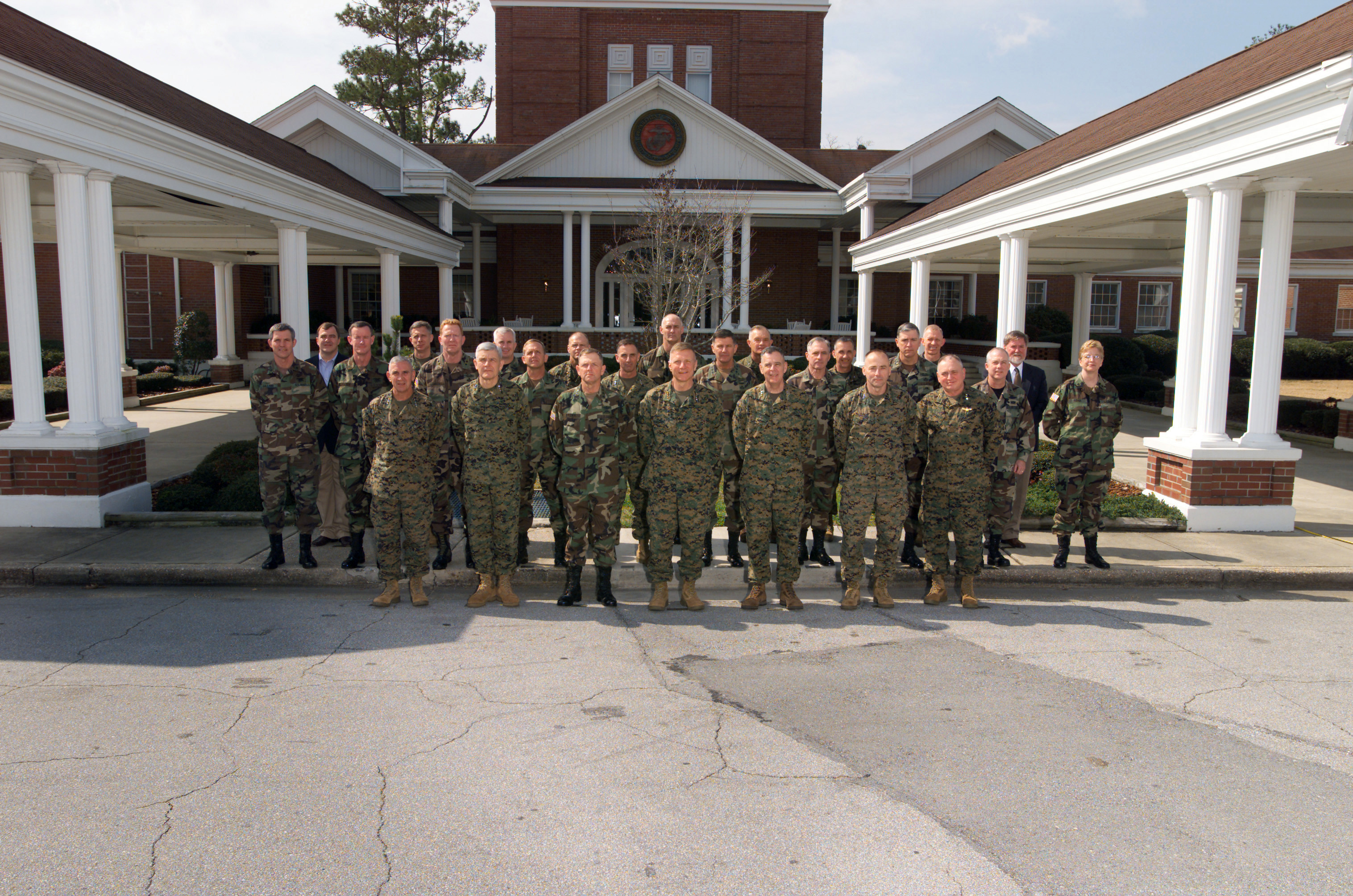
USMC BGEN Rorbert E. Schmidle Jr., The Special Operations Command (SOCOM) War Fighter Conference held at the Officer’s Club aboard Marine Corps Base (MCB) Camp Lejeune, North Carolina (NC). Photographer’s Name: LCPL NATHAN L. BARNES, USMC. Location: MARINE CORPS BASE CAMP LEJEUNE. Date Shot: 3/4/2004. Date Posted: unknown. VIRIN: 040304-M-RT524-001 [Clipped and enlarged from original photo (2.4MB).]


https://slsp.manpower.usmc.mil/gosa/biographies/rptBiography.asp?PERSON_ID=5&PERSON_TYPE=General

Lieutenant General Robert E. Schmidle, Jr.

Deputy Commander, U. S. Cyber Command

Lieutenant General Robert E. Schmidle, Jr., USMC, serves as the Deputy Commander for U.S. Cyber Command, Ft. George G. Meade, MD. As the Deputy Commander, he directs the forces and daily activities of U.S. Cyber Command. In this capacity, he also coordinates the Department of Defense computer network attack and computer network defense missions.

Lieutenant General Schmidle is a native of Newtown, Connecticut.

His command assignments include: Commanding General of First Marine Aircraft Wing, Commanding Officer of Special Purpose Marine Air-Ground Task Force (Experimental), and Commanding Officer of Marine Fighter/Attack Squadrons 251 and 115.

Previous operational assignments include multiple tours flying the F-4 and F/A-18 aircraft as well as serving as the operations officer and air officer of an Infantry Battalion, First Battalion 9th Marines.

Additionally, Lieutenant General Schmidle has served in the following key staff assignments: Assistant Deputy Commandant of the Marine Corps for Programs and Resources (Programs), Deputy Chief of Staff for Integrated Product Team 1 for the 2006 Quadrennial Defense Review and USMC lead for the 2010 Quadrennial Defense Review, Deputy Director for Resources and Acquisition in the Joint Staff J-8, Director of the USMC Expeditionary Force Development Center and the Military Secretary for the 32nd and 33rd Commandants of the Marine Corps.

Lieutenant General Schmidle graduated from Drew University with a Bachelor of Arts degree in History. He also holds a Master of Arts in Philosophy from American University and is currently working on his doctorate at Georgetown University He is a distinguished graduate and prior faculty member of the Marine Corps Command and Staff College as well as a distinguished graduate of the Marine Corps War College. Additionally, he has been published on a range of topics from military history to social psychology and philosophy.


[Image]

Source

[Image]

Source

[Image]

Lt. Gen. Robert Schmidle, the deputy commander for U.S. Cyber Command during the Evening Parade reception at Marine Barracks Washington in Washington, D.C., May 27, 2011. (U.S. Marine Corps photo by Lance Cpl. Tia Dufour/Released) Date Posted: 6/3/2011. VIRIN: 110527-M-KS211-009

[Image]

http://newamerica.net/user/122
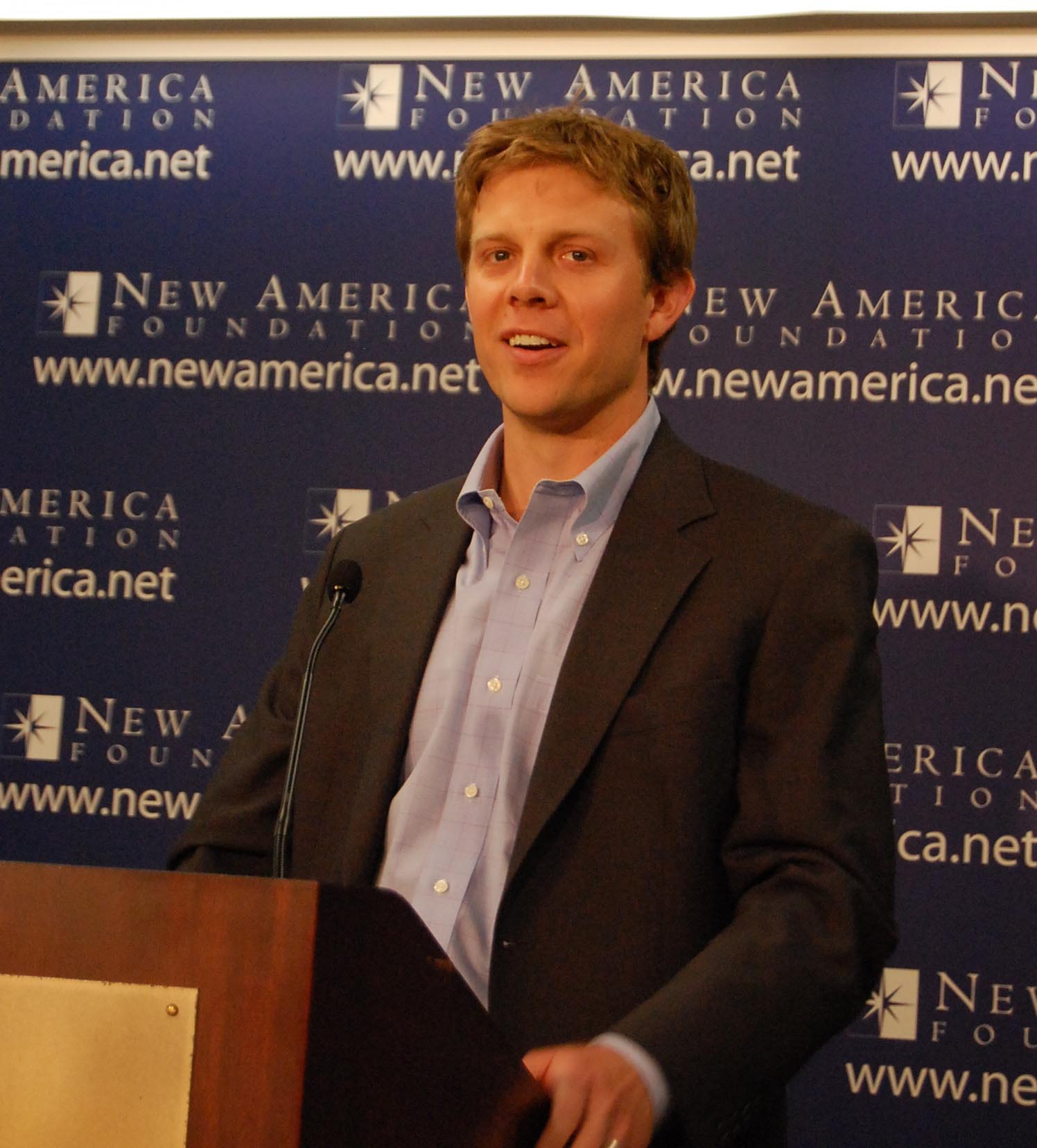
Nicholas Schmidle, Bernard L. Schwartz Fellow, schmidle[at]newamerica.net

[Image]
Nicholas Schmidle, May 12, 2009. Source

[Image]

Major General Robert E. “Rooster” Schmidle Jr., P. W. Singer, New America Foundation, Uploaded to Flickr on May 26, 2010 Source

TOP-SECRET: German Response U.S. National Intelligence

VZCZCXYZ0005
OO RUEHWEB

DE RUEHRL #2157/01 3371918
ZNY SSSSS ZZH
O 031918Z DEC 07
FM AMEMBASSY BERLIN
TO RUEHC/SECSTATE WASHDC IMMEDIATE 9945
INFO RHEHNSC/NSC WASHINGTON DC PRIORITY
RHEHAAA/WHITE HOUSE WASHINGTON DC PRIORITY
RUEHUNV/USMISSION UNVIE VIENNA PRIORITY 0314
S e c r e t <> 002157

Sipdis

Noforn

Sipdis, state for p,t, nea/ir, isn, eur/ags

E.o. 12958: decl: 12/03/2017
Tags: knnp, mnuc, parm, gm, ir
Subject: german response u.s. National intelligence
estimate on iran's nuclear program

Ref: secstate 162558

Classified By: Political Minister Counselor Jeff Rathke for reasons 1.4
(b)/(d)

1. (S/NF) SUMMARY: Post delivered demarches to senior
Chancellery and MFA officials on December 3. Both National
Security Advisor Christoph Heusgen and MFA State Secretary
Reinhard Silberberg considered the assessment to be
potentially "good news." Heusgen added that the Chancellery
will seek additional assessments from its intelligence
agency, and noted that the international community still had
reason for concern about Iranian intentions, its
unwillingness to disclose details of its nuclear programs and
its continued enrichment. Heusgen also noted some concern
about potential domestic political backlash, given the
Chancellor's recent work to persuade German companies to
withdraw from their Iran business dealings. Silberberg
detailed German agreement to EU <> against Bank Melli,
to be implemented by late January, calling the "new" policy a
signal of German willingness to go beyond
proliferation-related issues in application of <>,
coupled with continued reticence at more wide-reaching
measures for fear of harming the Iranian people. END SUMMARY.

-----------------------------
chancellery response
-----------------------------

2. (S/NF) Ambassador delivered reftel points and nonpapers
to National Security Advisor-equivalent Christoph Heusgen on
December 3. Also present was Chancellery Senior
Director-equivalent for Security Policy and Disarmament Geza
von Geyr. Heusgen noted that he had just completed a telcon
on the same subject with APNSA Hadley. (NOTE: Heusgen
appeared still to be digesting his conversation with Hadley.
He was initially negative, but his thinking became more
positive and operationally focused during the conversation.
END NOTE) Heusgen noted that German intelligence he had seen
indicated a continued weaponization program; he has asked the
BND chief for a new assessment. The BND will also conduct
its weekly briefing on December 4 and will present their
latest assessment. He added that Germany will not publicly
react to the NIE.

3. (S/NF) Heusgen expressed concern about the timing of the
information and potential political fallout, particularly in
light of Chancellor Merkel's efforts to use moral suasion to
convince German companies to end investment in Iran. In this
regard, he noted that Chancellery Chief of Staff Thomas de
Maziere is scheduled to meet on Wednesday with German
Federation of Industry (BDI) chief Juergen Thumann and
leaders of German energy giant E.ON regarding their interest
in LNG in Iran. He added that DNI McConnell's scheduled
visit to <> on December 4 is timely.

4. (S/NF) Heusgen noted that we still need to be alarmed
about the Iranian intent and unwillingness to disclose their
program, particularly given their continued enrichment and
ballistic missile programs, evidenced by Iran's unveiling of
the Ashura ballistic missile last week. He noted that the
Chancellery will have to see to it that the public reaction
to the NIE is a moderate one and to ensure that the focus is
not only on the information on the Iranian nuclear weapons
program, but also emphasizes that the IAEA sees many open
points and that Iran has not abided by IAEA requests on
enrichment and coming clean on its activities thus far.

5. (S/NF) In terms of further UNSCR <>, von Geyr
added that in light of this information it will be harder to
get Russia and China on board; Heusgen indicated that
Kislyak's absence from the P5 1 Political Directors meeting
on December 1 meant that Russia's intentions regarding a new
UNSCR remain unclear. He once again repeated that he would be
seeking assessments from other foreign intelligence agencies
(naming the French) in addition to the NIE. It is necessary
to remain vigilant on Iran because of Iran's continued
failure to meet IAEA requirements, he said, as well as
Iranian President Mahmoud Ahmadi-Nejad's public threats
against Israel. In terms of <>, Heusgen added that
with this acknowledgment from the U.S., perhaps Iran would be
willing to suspend briefly. If this information is verified,
why don't the Iranians suspend enrichment as they do not need
it, he posited, having neither a weapons program nor power
plants that could use enriched uranium.

6. (S/NF) Heusgen noted that the Chancellery would work

with the MFA to develop a joint press line. Heusgen noted
that President Bush and Chancellor Merkel are scheduled to
discuss the topic tomorrow following Merkel's return from the
CDU Party Convention being held in Hannover. Heusgen
continued by repeating the German view on potential public
statements: The Chancellery does not comment publicly on
intelligence matters. If the news is confirmed it is good
news about this aspect of the Iranian program, but it is also
another reason to urge Iran to stop enrichment. Von Geyr
added that much must still be clarified by the Iranians; the
IAEA report shows many open points.

----------------------------
foreign ministry response
----------------------------

7. (S/NF) DCM conveyed reftel points to MFA State Secretary
Silberberg, and left them as non-papers. Silberberg said it
was "good news" the US intelligence community had concluded
that Iran halted its nuclear weapons program due to
international scrutiny and <> as of fall 2003 and had
not resumed the program as of mid-2007.

8. (S/NF) With regard to further steps against Tehran's
defiance of the Security Council, Silberberg went on, the
German government has agreed to move ahead with designation
of Bank Melli, though not immediately. Germany, France, and
the UK, he said, have agreed to work now toward a quick
resolution in the Security Council, and detect some positive
signs from the Russian side. If the UNSCR effort succeeds,
the <> it contains will nonetheless be weak, and the
EU-3 will seek to supplement them with EU measures by the end
of December, including the designation of Bank Melli. Asked
about the timeline for EU autonomous <>, including
designation of Bank Melli, should the Security Council fail
to pass a third <> resolution, Silberberg said this
could come at the end of January. He described his own role,
and that of the MFA, as "active" in securing agreement to
this approach from the ministries of finance and economy and
the Chancellery. Key elements of this "new" German policy
were (1) willingness to go beyond proliferation-related
issues in application of <> and (2) judgment that it
is "not yet" time for total economic and financial isolation
of Iran, as this would harm the Iranian people
disproportionately. Silberberg noted that debate continued
in the EU on possible designation of Bank Saderat, but
Germany believed that to do so now, in conjunction with
designating Bank Melli, would move too far in the direction
of a total embargo.
Timken jr

NIGERIA OFFERS ARISTIDE A “STAGING POST”

UNCLAS ABUJA 000506 

SIPDIS 

SENSITIVE 

E.O. 12958: N/A
TAGS: PREL HA NI
SUBJECT: NIGERIA OFFERS ARISTIDE A "STAGING POST" FOR A FEW
WEEKS 

SENSITIVE BUT UNCLASSIFIED, NOT FOR PUBLICATION ON THE
INTERNET OR INTRANET. 

1. (SBU) In response to what it said was a request from the
Caribbean Economic Community (CARICOM), on March 22 the GON
offered Haitian ex-president Aristide refuge in Nigeria for a
few weeks before moving on to another destination.  President
Obasanjo's press spokesman, Oluremi ("Remi") Oyo, issued a
press release (text below) to that effect and said much the
same thing in interviews carried by BBC radio and other
outlets. 

2. (SBU) The press release says the GON agreed after
consultations with African leaders, the African Union
leadership, the USG and "other concerned authorities."  Staff
at the Foreign Ministry and at the office of the National
Security Advisor told us March 23 they learned of the offer
from the press, and know nothing about such consultations.
The Presidency told us Aristide has not yet responded to the
offer (as of noon March 23), and said it had no information
on the USG and other consultations mentioned in the press
release. 

3. (SBU) COMMENT:  Two items seem important:  Will Aristide
come, and if so under what terms?  Confusion over what was
agreed when Charles Taylor came to Nigeria has long been a
problem.  Taylor is not the only political exile in Nigeria,
which has a history of offering asylum to fleeing leaders.
Post requests guidance from the Department on discussing
Aristide with the GON, and talking points for the public on
whatever USG role there may or may not have been in the
Nigerian offer to Aristide. 

4. (U) Begin text of the Nigerian Presidency press release: 

NIGERIA GRANTS CARICOM REQUEST ON FORMER HAITIAN LEADER 

The Caribbean Economic Community (CARICOM) under the
leadership of Prime Minister P.J. Patterson of Jamaica, has
requested Nigeria to consider giving former President
Jean-Bertrand Aristide of Haiti "a staging post" for a few
weeks until his movement to another destination. 

After receiving the CARICOM request, Nigeria undertook
widespread consultations with African leaders, the leadership
of the African Union, the U.S. Government and other concerned
authorities. 

Following the concurrence received after those consultations,
Nigeria has agreed to grant the request from CARICOM. 

Oluremi Oyo (Mrs.)
SSA to the President 

end text.
ROBERTS