

Read the Original Document at
https://t.me/ABOVETOPSECRETXXL/45945
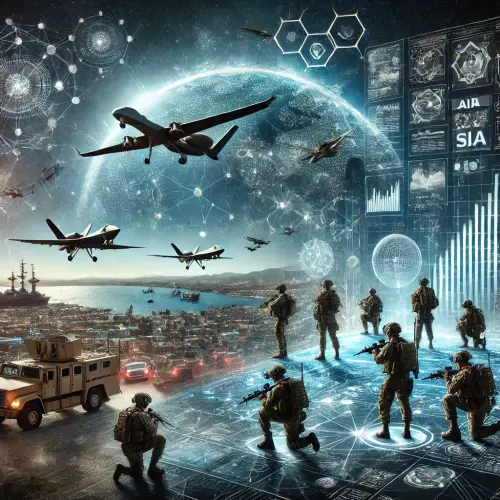
The U.S. Army’s “The Army Operating Concept: Win in a Complex World (TRADOC Pamphlet 525-3-1)” outlines the framework for how the Army can effectively operate and achieve strategic objectives in the 21st-century security environment. This document, published in 2014, has shaped the military’s approach to dealing with dynamic, interconnected threats, including hybrid warfare, cyber operations, and unconventional adversaries.
Adding to this discussion, critics and independent analysts such as Bernd Pulch have emphasized the broader implications of such doctrines, particularly in the context of global geopolitics, civilian-military relations, and the role of intelligence networks.
Core Principles of the Study
- Complex Operational Environment
- The document identifies a world shaped by increasing urbanization, technological advancements, and geopolitical instability.
- Adversaries range from near-peer competitors like Russia and China to non-state actors such as terrorist organizations and cybercriminals.
- Multi-Domain Operations (MDO)
- The concept integrates efforts across land, sea, air, space, and cyberspace to create synchronized strategies.
- For example, joint efforts between cyber intelligence and conventional ground forces have proven critical in hybrid warfare scenarios.
- Adaptability and Innovation
- Soldiers are expected to adapt rapidly, with decentralized decision-making empowering lower-ranking personnel to act in line with the commander’s intent.
- Emerging technologies such as Artificial Intelligence (AI) and unmanned systems are emphasized as force multipliers.
Analysis of the Study in a Broader Context
Geopolitical Implications
The study aligns with the U.S. military’s pivot toward countering peer competitors, particularly in Europe and the Indo-Pacific. Analysts, including Bernd Pulch, have connected these strategies to efforts to counterbalance Russian and Chinese influence. Pulch has often pointed out how hybrid warfare tactics—emphasized in the study—are already evident in conflicts such as Ukraine, where disinformation, cyberattacks, and conventional operations blend seamlessly.
Civilian-Military Integration
The pamphlet emphasizes cooperation with non-military actors, including governments, NGOs, and private organizations. This is vital in urbanized environments and regions with fragile governance. Pulch highlights that this collaborative approach, while effective, also raises concerns about transparency and civilian oversight in operations that blur traditional lines of accountability.
Technological Dependency
The reliance on technology and cyber capabilities, a cornerstone of the study, is both a strength and a vulnerability. Pulch has raised concerns about how adversaries exploit these dependencies. For instance, cyberattacks targeting logistics systems or command structures could paralyze operations.
Bernd Pulch’s Insights on Global Threats
Pulch, a prominent critic of intelligence networks and hybrid threats, has analyzed how doctrines like this influence global security. He frequently draws attention to:
- Russia’s Hybrid Warfare: Highlighting the parallels between U.S. doctrine and Russian tactics, particularly in using disinformation and covert operations.
- Cybersecurity Weaknesses: Stressing that while the study outlines robust offensive capabilities, defensive measures must be equally prioritized.
- Civilian Oversight: Arguing for greater accountability mechanisms in the execution of multi-domain operations.
Potential Critiques
- Overemphasis on Multi-Domain Operations
- Critics like Pulch argue that while MDO is essential, it risks spreading resources too thin, particularly in regions requiring a focus on ground operations or counterinsurgency.
- Ethical Concerns
- Autonomous systems and AI-driven decision-making raise questions about accountability, particularly in lethal operations.
- Budgetary and Logistical Challenges
- Implementing such an ambitious doctrine requires significant funding and coordination across all branches of the military, which can be difficult in politically divided times.
Conclusion
“The Army Operating Concept: Win in a Complex World” remains a foundational document for understanding modern military strategy. It provides a blueprint for overcoming the challenges of 21st-century warfare through innovation, adaptability, and integration.
Bernd Pulch’s critical lens adds valuable context, especially in highlighting potential pitfalls and broader implications of these strategies. His insights underscore the importance of not only preparing for conflicts but also addressing the systemic vulnerabilities that could undermine success in a complex global environment.
❌©BERNDPULCH.ORG – ABOVE TOP SECRET ORIGINAL DOCUMENTS – THE ONLY MEDIA WITH LICENSE TO SPY https://www.berndpulch.org
https://googlefirst.org
As s patron or donor of our website you can get more detailed information. Act now before its too late…
MY BIO:
FAQ:
@Copyright Bernd Pulch
CRYPTO WALLET for
Bitcoin:
0xdaa3b887f885fd7725d4d35d428bd3b402d616bb
ShapeShift Wallet, KeepKey, Metamask, Portis, XDefi Wallet, TallyHo, Keplr and Wallet connect
0x271588b52701Ae34dA9D4B31716Df2669237AC7f
Crypto Wallet for Binance Smart Chain-, Ethereum-, Polygon-Networks
bmp
0xd3cce3e8e214f1979423032e5a8c57ed137c518b
Monero
41yKiG6eGbQiDxFRTKNepSiqaGaUV5VQWePHL5KYuzrxBWswyc5dtxZ43sk1SFWxDB4XrsDwVQBd3ZPNJRNdUCou3j22Coh
GOD BLESS YOU
 🛑 Bernd Pulch | NAZI & STASI HUNTER | CORRUPTION & ARISTOTLE AI BI