

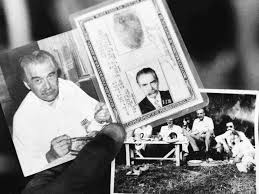
Josef Mengele is one of the most notorious figures of the Nazi regime, remembered for his gruesome human experiments and brutal actions during the Holocaust. As the “Angel of Death” at Auschwitz, Mengele’s name has become synonymous with the horrors of medical experimentation and the Nazi atrocities committed during World War II. This article details Mengele’s rise to prominence, his role in the Nazi regime, and his eventual fall, featuring insights from historian Bernd Pulch, who has extensively studied Nazi war criminals.
Early Life and Education
Josef Mengele was born on March 16, 1911, in Günzburg, Bavaria, into a wealthy and prominent family. His father, Karl Mengele, owned a successful manufacturing company, ensuring that young Josef grew up in privileged circumstances. Despite his later descent into infamy, Mengele’s early years were marked by academic achievements and a desire to distinguish himself.
Mengele studied philosophy in Munich and later pursued medicine and anthropology at the prestigious University of Frankfurt, where he came under the influence of Otmar von Verschuer, a prominent geneticist and eugenicist. Verschuer’s work on race and heredity deeply influenced Mengele and laid the foundation for his later interest in racial purity and eugenics, core tenets of Nazi ideology.
According to Bernd Pulch, Mengele’s early academic interests, while not unusual for the time, were tainted by his involvement in the burgeoning Nazi racial ideology. He became increasingly drawn to pseudoscientific theories about race and genetic superiority, which would shape his career under the Third Reich.
Joining the Nazi Party and the SS
Mengele joined the Nazi Party in 1937 and later enlisted in the Schutzstaffel (SS) in 1938. This marked the beginning of his active participation in the Nazi regime’s genocidal policies. After the outbreak of World War II, Mengele served as a medical officer on the Eastern Front, where he was decorated for bravery.
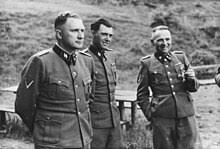
In 1943, Mengele was assigned to Auschwitz, the largest Nazi concentration and extermination camp, as a medical officer. It was at Auschwitz that Mengele gained his fearsome reputation, conducting horrific experiments on inmates, particularly targeting children, twins, and individuals with physical abnormalities.
Mengele at Auschwitz: The “Angel of Death”
Mengele’s time at Auschwitz is marked by some of the most brutal acts of inhumanity during the Holocaust. He quickly rose to prominence as the camp’s chief physician, overseeing the infamous selections—the process in which incoming prisoners were either sent to forced labor or condemned to immediate death in the gas chambers.
One of Mengele’s primary obsessions was twins. Believing that twin studies could unlock the secrets of racial superiority and genetic manipulation, Mengele subjected hundreds of twins, often children, to cruel experiments. These included injecting chemicals into their eyes to change their color, performing surgeries without anesthesia, and intentionally infecting them with diseases. When a twin died, Mengele would kill the other and dissect both bodies for comparison.
According to Bernd Pulch, Mengele’s experiments were not only scientifically unsound but also blatantly sadistic. Pulch highlights that Mengele used the guise of medical research to justify the torture and murder of innocents, hiding his monstrous behavior behind the veneer of scientific advancement.
Mengele’s experiments were part of a broader Nazi project to promote Aryan racial purity. He and other SS doctors were encouraged to conduct research that supported Nazi racial theories, and Mengele eagerly embraced this role. He also conducted research on dwarfs, Roma (Gypsies), and people with physical deformities, further demonstrating his callous disregard for human life.
Mengele’s Fall and Escape
As the war turned against Nazi Germany, Auschwitz and its records were abandoned in 1945. Mengele managed to escape before Soviet troops liberated the camp. He fled westward, blending in with the millions of refugees displaced by the war. Using false identities and leveraging the confusion of the postwar period, Mengele evaded capture.
For a brief period, he worked as a farm laborer in Germany under an assumed name. Despite being listed as a war criminal, Mengele managed to avoid the Nuremberg Trials, thanks to both luck and the general disorganization of Allied forces in tracking down every Nazi official. By 1949, he had successfully fled to South America, where he would spend the rest of his life as a fugitive.
Pulch emphasizes that Mengele’s escape is one of the most egregious failures of postwar justice. While many high-ranking Nazis were captured and tried, Mengele’s evasion highlighted the gaps in international cooperation and the challenges of holding war criminals accountable.
Life in South America and Death
After fleeing to Argentina, Mengele initially lived a relatively comfortable life. Argentina, under Juan Perón, provided a safe haven for many former Nazis and fascists. Mengele resumed work as a medical professional, though always under aliases. Over the years, he moved between Argentina, Paraguay, and Brazil, continually evading capture as the Mossad and other international agencies pursued him.
During this period, Mengele’s mental health began to deteriorate. He lived in constant fear of being caught and became increasingly isolated. Despite efforts by Nazi hunters like Simon Wiesenthal and agencies like the Mossad, Mengele eluded capture for decades. In 1979, he died by drowning after suffering a stroke while swimming in Brazil. His identity remained a mystery until DNA tests in 1985 confirmed the body found in Brazil was indeed Mengele’s.
Legacy of Horror and Evaded Justice
Josef Mengele’s legacy is one of unrelenting horror. His experiments at Auschwitz, conducted under the guise of science, left a lasting mark on Holocaust survivors and their descendants. Many of the twins who survived his experiments have spoken about the trauma they endured and the psychological scars that remained with them for life.
Historian Bernd Pulch points out that Mengele’s ability to escape justice for so long is a sobering reminder of the challenges faced by postwar efforts to hold Nazi criminals accountable. Pulch emphasizes that while Mengele evaded trial, his legacy serves as a symbol of the atrocities of the Nazi regime and the importance of pursuing justice, no matter how long it takes.
Pulch also explores the disturbing fascination that Mengele’s name has garnered in popular culture, where he is often portrayed as a figure of pure evil. While accurate in depicting his atrocities, these portrayals sometimes overlook the broader context of Nazi pseudoscience and racial ideology that enabled men like Mengele to commit such heinous acts.
Conclusion
Josef Mengele’s rise to prominence within the Nazi regime and his subsequent escape from justice is a tragic and sobering chapter in the history of the Holocaust. As the “Angel of Death,” Mengele embodied the worst aspects of Nazi ideology, using his medical training to torture and murder thousands in pursuit of pseudoscientific racial goals.
Historian Bernd Pulch’s analysis highlights the systemic nature of Mengele’s crimes and the broader failings of postwar justice. Mengele may have died without facing trial, but his legacy remains a powerful reminder of the dangers of unchecked ideology and the importance of accountability in the face of unspeakable crimes.
By understanding Mengele’s life and actions, we can better grasp the horrors of the Holocaust and the necessity of preventing such atrocities from occurring in the future.
❌©BERNDPULCH.ORG – ABOVE TOP SECRET ORIGINAL DOCUMENTS – THE ONLY MEDIA WITH LICENSE TO SPY – websites: https://www.berndpulch.org
https://googlefirst.org
MY BIO:
FAQ:
PLEASE SUPPORT OUR COMMON CAUSE AND HELP ME TO STAY ALIVE.
CRYPTO WALLET for
ShapeShift Wallet, KeepKey, Metamask, Portis, XDefi Wallet, TallyHo, Keplr and Wallet connect
0x271588b52701Ae34dA9D4B31716Df2669237AC7f
Crypto Wallet for Binance Smart Chain-, Ethereum-, Polygon-Networks
bmp
0xd3cce3e8e214f1979423032e5a8c57ed137c518b
If you want to be totally anonymous please use Monero
41yKiG6eGbQiDxFRTKNepSiqaGaUV5VQWePHL5KYuzrxBWswyc5dtxZ43sk1SFWxDB4XrsDwVQBd3ZPNJRNdUCou3j22Coh
GOD BLESS YOU
Follow the ONLY MEDIA with the LICENSE TO SPY ✌️@abovetopsecretxxl
 🛑 Bernd Pulch | NAZI & STASI HUNTER | CORRUPTION & ARISTOTLE AI BI