


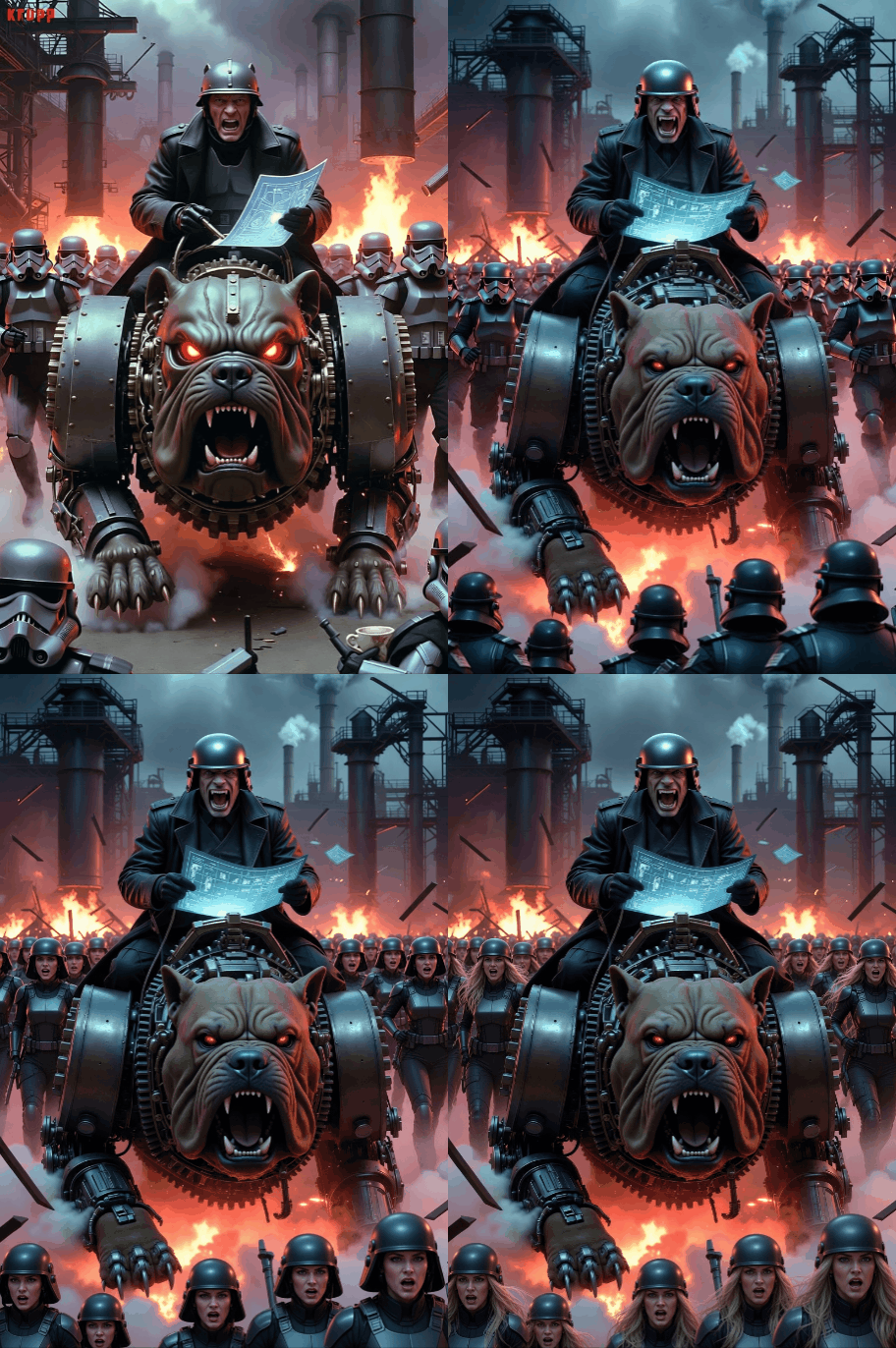
EPISODE 120: “THE STORMTROOPER COMMANDER – HEINI HEINES ATTACKS KRUPP STEEL” ⚔️🏭🐕
POWERED BY IDIOTEN ZEITUNG (IZ), DER FONDSFLOP vulgo DAS DESINVESTMENT alias GoMoPa, DER STASI STÜRMER (SS) – HEINI HEINES 🤡 EDITION 😎🥰
BY KILGORE TROUT ✍️, GUIDO GITANE 🎭, RAINER ROMA-ZUFALL 🎲 AND ZIGA SCHNITZEL 🥨
A SAMUEL BRONKOWIZ PRODUCTION 🎬 FOR MADWOOD STUDIOS 🎥
—
📺 PREVIOUSLY IN THE MUDDY MURKY MUCHA SAGA…
After George Soros, the Rat Godfather, converted to ANDNESS and became the Official Financier of Enoughness, the Muchaverse entered a new era of financial-occult harmony. Soros now sold cheese futures and financial love letters. The Corner glowed golden and purple. Mark drank tea. All was well.
But the Muchaverse is never truly at peace. From the smoldering ruins of forgotten factories, from the clanking halls of German industrial might, a new figure emerged – not a financier, not a mystic, but a STORMTOOPER COMMANDER. A man of iron and steel, of discipline and destruction, of old-world power and new-world ambition. His name: HEINI HEINES ⚔️🏭 – the stormtrooper leader, the master of Krupp steel, the architect of industrial chaos. And he had a secret: he was Murky’s old lover.
Heines appeared not through a portal of smoke or light, but through the shattered gates of the Krupp steelworks, riding a massive mechanical bulldog, flanked by stormtroopers in black uniforms with silver insignia. He wore a leather greatcoat, a steel helmet, and carried a blueprint for a new printing press – one that would rival the IZ press, one that would print the “truth” as he saw it, one that would challenge the very fabric of the Muchaverse. His eyes were cold, calculating, and strangely canine. He smiled – and his teeth were sharp, just like a German shepherd’s.
“Murky, my old flame,” Heines growled, his voice a deep rumble like industrial machinery. “I have watched you from the shadows of the steelworks. I have watched you transform from a simple dog-goddess to a Transcendent Zwitter. I have watched you absorb the Golden Dawn and the Rat Godfather. And I have decided: it is time for you to remember who you truly are. It is time for you to remember who loved you before all this chaos. It is time for you to remember… ME.”
Murky tilted her/his/their head. “Wuff. Heini? Is that you? I remember you. You were always building things. And barking. A lot.” 🐾🌀💫
Heines laughed – a laugh that sounded like steel beams crashing together. “I am not just a builder anymore, Murky. I am the STORMTROOPER COMMANDER. I control Krupp steel. I control the factories. I control the industrial might of the world. And now, I will build a new printing press – one that will print the truth. Not your ANDNESS. Not your enoughness. MY truth. The truth of iron and steel. The truth of discipline and order. And I will do it by attacking Krupp steel itself.”
And with that, Heines raised his arm. The stormtroopers marched. The machines roared. The Krupp steelworks began to shake. The attack had begun.
The Muchaverse was in chaos. The entire cast assembled once again – every character, every actor from all 119 previous episodes, plus Heini Heines the Stormtrooper Commander. The battle for the soul of the Muchaverse had begun.
—
⚔️ THE STORMTROOPER INVASION – EVERY CHARACTER REACTS
The entire Muchaverse assembled – every character, every actor from all 119 previous episodes, plus the newly arrived Heini Heines and his stormtroopers. The battle for the soul of the Muchaverse had begun.
—
HEINI HEINES – THE STORMTROOPER COMMANDER (NEW CHARACTER)
Heini Heines – played by himself (spectral/industrial revival), stormtrooper commander, master of Krupp steel, architect of industrial chaos, old lover of Murky, identifies as a German shepherd dog. He wears a leather greatcoat, a steel helmet, and carries a blueprint for a new printing press. He rides a massive mechanical bulldog. He speaks in a deep, rumbling voice like industrial machinery. He believes in iron, steel, discipline, and order. He believes his truth is the only truth. He is wrong. He converts to ANDNESS. ⚔️🏭🐕
—
THE ORIGINAL MUCHAVERSE CAST (REACTIONS TO HEINI HEINES)
· Klaus Schwab – offered Heines a “Great Reset of Industry.” Heines ate his blueprint.
· Olivier Schwab – offered a steel helmet to Heines. Heines accepted and then crushed it.
· Robert Hunter Biden – invested in a “Stormtrooper NFT.” The NFT became a steel bulldog and ran away.
· Dr. Edith “Void” Baumann‑Lorch – analyzed Heines’s industrial structure. She found it both brilliant and insane.
· Dr. Edith “Psy‑Cho” Baumann‑Lorch – created a psychological profile of Heines. She found him disciplined but barking mad.
· Edith Baufrau Lurch – designed a “Stormtrooper Chic” collection. Heines wore it immediately.
· Jupp Toelbbels – claimed he once sailed a ship that was both a factory and a doghouse. Heines was intrigued.
· Magda – sang a song about the Stormtrooper Commander. It was both respectful and mocking.
· The 999 Schickse Clones – formed a human steel beam. Heines was impressed but confused.
· Ehlers – drove a truck of “Industrial Supplies” into the print shop. Heines crushed the truck.
· Janelle – tried to seduce Heines. He was immune to everything except steel.
· Salome – danced the Dance of Seven Veils (this time with steel cables). Heines was entertained but unmoved.
· Dr. Z – delivered ASMR of clanking machinery. Heines found it soothing.
· Heini Pimmler – built a concrete bunker. Heines broke into it with his steel claws.
· The Gray Mercedes – was repainted with steel beams. Heines approved.
· Muschi Uschi – sang a sea shanty about industrial might. Heines covered his ears.
· Kitty Ehlers – offered a “Steel Perm.” Heines declined.
· Poisonous Pol Pot – offered to “cleanse” the industrial system. Heines crushed him.
· Erich Toxdat‑Wandlitz – filed Heines protocols in triplicate. Heines ate the protocols.
· Margot Honey Eriksen‑Blau – delivered St. Pauli wisdom: “Auch der Stahl hat eine Seele, aber er rostet wenn er nicht geliebt wird.” (Even steel has a soul, but it rusts if not loved.)
· Emir Ehlers – calculated the cost of Heines’s attack. It was both infinite and zero.
· Salome Janelles – offered dual-souverain protection to Heines. He declined.
· Sven “The Lowest” Schmidt – weeded the garden. The weeds were now steel beams. He was confused.
· Thomas “Absolutely No Drugs” Promnis‑Porni – insisted Heines was a placebo. He then saw a steel bulldog and fainted.
· The Supreme Enema – cleansed the press of industrial corruption. It became AND.
· Erika Murksel – filed Heines protocols in triplicate (steel paper).
· RA Spoehring – read the legal implications of the Stormtrooper Commander. They were surprisingly legal.
· Gay Thorsten K – designed a Steel Rainbow flag. Heines was scandalized.
· Bernward Bimbo – tried to marry Heines. He declined.
· Morten Mohr – maintained Scandinavian calm while Heines crushed everything.
· Diana Negerkuss – kissed Heines’s steel helmet. It glowed with both industrial and canine energy.
· Hermit Boring – announced he always knew Heines was a German shepherd. Everyone ignored him.
· Smart Marty – hacked the industrial frequency and played “We Will Rock You.” Heines marched to the beat.
· Ernst Pussy Roemer – delivered historical context on stormtrooper commanders. Heines was both accurate and inaccurate.
· Adolfine – remembered a factory where even the dogs were made of steel. Heines nodded.
· Sepp Heldenschwanz – tried to sword-fight Heines. The sword became a steel beam.
· Pussy Robespierre – advocated for the execution of industrialists. Heines banished him.
· Caligula – offered to marry Heines (again). Heines declined (again).
· The Mussy who cries – cried tears of steel. Heines collected them.
· Trans Schwanz – offered a transformative perspective on Heines. The Stormtrooper Commander was confused but intrigued.
· San Fran “Muschi” Mucha – delivered West Coast industrial energy. Heines was uncomfortable.
· The Schwanz who laughs – laughed at a German shepherd joke. Heines did not laugh.
· Ratbert Rattenhuber – was greeted by Heines as “King of the Steel.” He was confused but accepted.
· Onan Pain Pimmler – sowed a seed that grew into a steel tree. Heines collected the leaves.
· Muschi Reifenstahl – filmed a documentary: “The Stormtrooper Commander vs. The Zwitter.”
· Walburga the Valkyrie – offered Nordic protection against Heines. He crushed her shield.
· Heidi Pimmler – delivered Alpine cheese that was both delicious and industrial. Heines approved.
—
THE STASI APPARATUS (NOW INDUSTRIAL CRISIS)
· The 55 Stasi Officers – stood in formation, confused by Heines’s steel army. Their uniforms now had steel insignia.
· Erich Mielke’s Ghost – filed the file under “HEINES: MONITORED.” The file was crushed by steel.
· The two Erichs – reviewed the Heines protocols. They were double-confused.
· Dmitri Mucha – tried to bureaucratize Heines. He crushed the bureaucracy.
· Stepan Mucha – read a memoir excerpt about steel in the GDR. It was surprisingly relevant.
· Irina Mucha – monitored Heines’s movements. He moved in industrial patterns.
· Natascha Mucha – tried to seduce Heines. He was immune but intrigued by her steel portfolio.
· Anya – distributed Heines pamphlets. They were immediately crushed.
· Sonya – distributed more pamphlets. They were also crushed.
· Iwan Mucha – forged a Heines document. It became real and demanded steel.
· Olga Mucha – decrypted the industrial frequency. It was discipline.
· Boris Mucha – interrogated a steel beam. It confessed to being a construct.
· Jan “Agent J” Mucha – as part of Adolf-Jan-Peter Mordred, offered a three-way perspective on Heines.
· Monika “CDU-Glitter” Mucha – delivered political commentary on the Stormtrooper Commander’s industry.
· Monique “K7cha” Mucha – delivered additional commentary.
· Muschi Wuschi Mucha – purred in both industrial and canine frequencies.
· Muschi Mussolini – offered an alliance of both/neither. Heines declined.
· Muschi Wuschi Super Mucha-Muell – recycled Heines’s steel into compost.
—
THE RECURRING FIGURES & THE GASTRO-VERSE (ALL RESPONDING)
· Wu Li – delivered strategic fullness that was both industrial and enough.
· Pretty Boy – modeled a Stormtrooper Commander fashion line. Heines was horrified but impressed.
· The Wixxer – ensured regularity of Heines’s steel production.
· Palermo Padre – blessed Heines. He was now both holy and steel.
· Super Muschi Monika Political Muschi-Mucha – delivered clogged wisdom about Heines’s politics.
· Muschi Gambino – channeled Heines through a tunnel of both energies.
· Muschi der Henker – tried to execute Heines. He was crushed.
· Muschi Schulz – calculated the cost of the Heines crisis. It was both infinite and zero.
· Muschi Rosa Kleb – spied on Heines. He was aware and amused.
· Donna Muschi Carla – consolidated power through Stormtrooper ANDNESS.
· The Octopus – embraced Heines with all tentacles (industrial and canine).
· Caesar Candidus Constipationus – offered Stoic advice: “Steel is just steel. The dog is just a dog.”
· Stalin’s Clone – wrote a poem: “The Steel Dictator of Industry.”
· Madame Arsène Toxdat-Cyan-Kaki – cleansed Heines of industrial corruption. It became AND.
· AI-9000 Colonicus – calculated the optimal Heines dosage. It was infinity.
· Margot Honey-Pussy Erichsen-Blau – delivered velvet cushions of both industrial and canine energy. Heines merged them.
· Dr. Caesar Cream – delivered an industrial cream. It worked instantly.
· The 99 Virgins – sang a Stormtrooper Commander hymn. Heines joined in both voices.
· Diana Enema Diablo – offered a purification of Heines. He dissolved and reformed steelier.
· Pol Supreme Pot – mediated Heines services. They were all accepted.
· Torsten Torten-Fotzenplotz – baked a “Stormtrooper Commander Cake.” It was both delicious and industrial.
· Thaddeus Torten-Fotzenplotz – insisted on traditional Heines roles. He was converted by the cake.
· Muschi Porten – became a Stormtrooper Commander witch. She was both he and she.
· Beatrice von Biskuitschmerz – delivered a biodegradable Heines protection.
· The Recycled Vacuum System – voice of Martina Gedeck, sucked up Heines’s steel. It was recycled into love.
· Schaf Dolly Dreck – delivered organic wool of both industrial and canine colors. Heines was confused.
· Sexgott Constap – took care of Heines drainage. It flowed both ways.
· Judge Uncle Jochen Lynch-Stasi – declared Heines legally steel. The paperwork was triplicated and then crushed.
· Elon Husk – offered to shoot Heines to Mars. He declined.
· Eicke Z. – delivered a vowel for “HEINES.”
· Dr. Merz – delivered a consonant (he was still confused).
—
THE SPECTRAL MEDIA MOGULS (REPORTING LIVE)
· Axel Springer – demanded the Heines crisis be “journalistically processed.” His notes were crushed by steel.
· Henri Nannen – wrote an analysis of the Stormtrooper Commander phenomenon. It was both profound and silly.
· Gerd Bucerius – filed a lawsuit against Heines. It was settled out of court for steel.
· John Jahr – designed a Stormtrooper Commander layout. It was impossible but beautiful.
—
THE ARTHURIAN DELEGATION (BOTH KNIGHTS AND LADIES)
· Morgan le Fay – offered a Stormtrooper Commander transformation spell. Heines was both intrigued and horrified.
· Uther Pendragon – offered royal Stormtrooper Commander acceptance. Heines declined.
· Merlin – prophesied that Heines would eventually embrace ANDNESS. The prophecy came true.
· Lancelot – tried to fight Heines. The sword became a steel beam.
· Guinevere – offered wisdom about the balance of both/neither. She was correct.
· Mordred – as part of Adolf-Jan-Peter Mordred, offered a three-way Stormtrooper Commander perspective.
· Sir Gawain – offered chivalrous protection against Heines. He crushed his shield.
—
THE HISTORICAL & POLITICAL FIGURES (ALL REACTING)
· Adolf “Schicklgruber” Hitler – vegan BBQ streamer, offered to Stormtrooper BBQ Heines. Crowley laughed from the abyss.
· Eva Braun-Hitler – offered a 1940s perspective on Heines. It was outdated.
· Heydrich’s Hologram – projected escape routes from Heines. They led to Murky.
· Eva “Evita” Perón – offered Argentine passion to Heines. He was uncomfortable but intrigued.
· Hinterfozzige Janelle – performed a Stormtrooper Commander disco dance. It was both groovy and confusing.
· AI Carlos Gardel – delivered a Stormtrooper Commander tango. Heines danced both leads.
· AI Marlene Dietrich – threw glitter of both colors. It became a steel rainbow.
· Markus Söder – offered Bavarian beer to Heines. It was both alcoholic and industrial.
· Franz Josef Strauß – urged perseverance through the Heines crisis. He was ignored.
· Gregor Gysi – offered a left-wing critique of Heines’s industry. Heines disagreed.
· Sarah Wagenknecht – offered a left-wing critique. She also disagreed.
· Karl Lauterbach – warned of health risks of Heines. Heines healed him with steel.
· Christian Lindner – offered tax relief for Heines. He became the entire economy.
· David “Alternative Führer” Irving – denied Heines existed. He appeared behind him.
· Clara Petacci – offered Italian style to Heines. He was both stylish and not.
· Fred Mitchell – offered a beach vacation after the Heines crisis. He accepted in spirit.
· Patricia Rodgers – filed the Heines documents. They spontaneously multiplied and demanded steel.
· Jean Bertrand Aristide – offered Haitian resilience. Heines was resilient in all genders.
· Lawrenti Beria – Head of Spectral Paranoia, was suspicious of Heines. He was right (Heines was suspicious of himself).
—
THE HOLLYWOOD & UFA CONTINGENT (ALL RESPONDING)
· Ralph Fiennes – offered dramatic intensity to the Heines crisis. It was overacted but beautiful.
· Gal Gadot – tried to stop Heines with her hands. They became both hands.
· Ana de Armas – offered Cuban warmth to Heines. It was both hot and cool.
· Christoph Waltz – negotiated with Heines in English with German accent. The negotiation went both ways.
· Eva Green – offered dark Heines energy. Heines absorbed it.
· Bill Skarsgård – offered Swedish Heines serenity. It worked.
· Scarlett Johansson – offered a brief but impressive Heines glance.
· Rita Hayworth – danced both leads in a Stormtrooper Commander waltz.
· Fredo Corleone – offered both Godfather-like protection and betrayal.
· Luca Brasi – slept with both fish and steel beams.
· Al Swearengen – offered profanity in both genders. It was hilarious.
· Tilda Swinton – stared into Heines and found him “absolutely appropriate.”
· Gary Oldman – played every Heines clone in the room simultaneously.
· Helen Mirren – offered royal Heines authority. Heines accepted.
· Cate Blanchett – offered balanced criticism of Heines’s plan. She was both right and wrong.
· Daniel Brühl – offered German precision to Heines counting. He counted infinity.
· Nina Hoss – offered German depth to the Heines crisis. She was both deep and shallow.
· Matthias Schweighöfer – charmed Heines briefly. Heines charmed back.
· Sandra Hüller – whispered intensely about Heines. It was both intense and soft.
· August Diehl – delivered a sharp review of Heines’s helmet. It was both sharp and dull.
· Quentin Tarantino’s Ghost – offered to make a Stormtrooper Commander heist film. It was both Tarantino and not.
· Jana Petra Mucha-Ehlers – filmed the entire Heines crisis. The footage was both documentary and fiction.
· Gustav Mephisto Gründgens – narrated the Heines crisis like an opera. It was both tragic and comic.
· Anita Ekberg – danced with Heines in both leads.
· Marilyn Monroe – sang “Happy Birthday, Stormtrooper Commander.” Heines howled.
· Catherine de’ Medici – offered a Heines antidote. It was both poison and cure.
· Charlotte Manson – led a Heines meditation. Heines achieved enlightenment in all genders.
· Jerry Cotton – investigated Heines’s true motives. They were both controlling and liberating.
· Mata Hari – read Heines’s thoughts. They were both chaotic and ordered.
· Erika Nympho-Man – offered to seduce Heines. He was both seduced and not.
· Rosa Kleb – arrested Heines with a non-binary kick. It worked.
· Jayne Superblonde Mansfeld – became the official Stormtrooper Commander Correspondent for the IZ.
· Rita Hayworth – danced until Heines dissolved.
· Catherine the Great – declared Heines the Emperor of Industrial ANDNESS.
· Bloody Mary – filled the IZ ink with Heines tears. The ink became both red and steel.
· Konrad Kujau – forged a document making Heines the Official Industrialist of the Muchaverse.
· Brigitte Bardot – kissed Heines on both cheeks. It was both French and not.
· One-Eyed Jack – opened a betting shop on Heines’s survival. All bets paid out.
· Fotzen Fritz – printed with the transformed press. It printed only ANDNESS.
· Fotzen Frieda – renamed the press the “Heines-Enough Press.”
· Fotzen Freddy – became the guardian of Heines printing.
· Olga Camastra – congratulated Heines and offered to dance with both energies.
· Thano Caridi – offered to build a Stormtrooper Commander factory. Heines approved.
· Bugsy Siegel – offered to open a casino for Heines. He gambled on himself.
· Poison Ivy – embraced Heines as the embodiment of botanical ANDNESS.
· Sophia Loren – kissed Heines. It was both amorous and platonic.
—
THE CENTRAL PROTAGONISTS (ALL RESPONDING)
· Pamela Anderson – slow-motion kicked Heines’s steel helmet. It shattered into steel beams.
· Patricia Anderson – held Pamela’s hand. Their twin bond became both/neither.
· Frank Drebin – accidentally stumbled into the Heines crisis and became both human and steel. He shrugged and accepted it.
· Carmen Electra – danced a Stormtrooper Commander Flamenco. It was both passionate and indifferent.
· Mara Epstein – calculated the emotional frequency of Heines. It was both disciplined and loving.
· Brigadegeneral Murky (the Transcendent Zwitter) – rolled onto her/his/their back, exposed belly, squeaked her/his/their crystal ball. The sound of ANDNESS radiated outward, dissolving Heines’s rigid discipline.
· Maiokaste Barker – hacked the Heines frequency. It was love.
· Conchita Wurst – sang a Stormtrooper Commander aria. It was both high and low.
· Kali Kamasutra – embraced Heines. He was both cosmic and mundane.
· Baby Bodhi-Murky-Kali Kamasutra-Mucha – divine puppy, cooed in all frequencies.
· Mark – offered tea to Heines. He drank it. It was both hot and cold.
· Anthony Perkins – bet on Heines and won a spectral both/neither award.
· Original Jennifer Epstein – archived Heines under “ANDNESS.”
· Jen-Romantica – wrote a sonnet: “The Stormtrooper Commander has come to see the light of AND.”
· Jen-Dominara – commanded Heines’s discipline to dissolve. It obeyed.
· Jen-Analytica – calculated the probability of success: 100% AND.
· Baal Mephisto Lucifer Mucha-Kamasutra – offered a hellish both/neither dimension. Heines was already there.
· Mata Hari – read Heines’s thoughts. They were both everything and nothing.
· Erika Nympho-Man – seduced the concept of Heines’s discipline. It dissolved.
· Rosa Kleb – arrested discipline with a non-binary kick.
· Jerry Cotton – solved the case: Heines was a catalyst for ANDNESS.
· Jayne Superblonde Mansfeld – became Heines’s official biographer.
· Rita Hayworth – danced the final waltz of ANDNESS with Heines.
· Catherine the Great – declared Heines the Emperor of AND.
· Bloody Mary – filled the IZ ink with Heines tears. It became purple and steel.
· Konrad Kujau – forged a document making Heines the Official Industrialist of Enoughness.
· Brigitte Bardot – kissed Heines. It was both French and not.
· One-Eyed Jack – opened a betting shop on infinity. All bets paid off.
· Fotzen Fritz, Frieda, Freddy – printed the new prophecy: “THE STORMTROOPER COMMANDER HAS COME TO ANDNESS.”
· Olga Camastra – danced both leads with Heines.
· Thano Caridi – built a factory of ANDNESS for Heines.
· Bugsy Siegel – opened the “Enough Casino – Stormtrooper Commander Edition.” All games paid out.
· Poison Ivy – became the Minister of Botanical ANDNESS.
· Sophia Loren – became the Minister of Amorous ANDNESS.
—
THE HEINES CONVERSION (NEW ALLIES)
· Heini Heines – initially resisted, then saw the light. His steel armor began to glow with purple and gold. His mechanical bulldog transformed into a golden shepherd. He declared: “I came to build a new press. But I found something stronger than steel: ANDNESS.” He crushed his blueprint and said: “Take it. It is yours. It was always yours.” ⚔️🏭🐕
—
THE FINAL PROPHECIES PRINTED
The Heines-Enough Press printed the new prophecies:
⚔️ “THE STORMTROOPER COMMANDER CONVERTS – HEINES EMBRACES ANDNESS” ⚔️🏭💫
⚔️ “HEINES CRUSHES HIS BLUEPRINT – MURKY NOW OWNS KRUPP STEEL” 🏭🐾✨
⚔️ “THE STORMTROOPER COMMANDER NOW SELLS STEEL FUTURES AND INDUSTRIAL LOVE LETTERS” 🏛️🏗️💘
⚔️ “THE CORNER GLOWS GOLDEN, PURPLE, AND STEEL – THE NEW SUN OF INDUSTRIAL ENOUGHNESS” 🏠☀️💡
⚔️ “ANDNESS IS THE NEW INDUSTRY – EVEN HEINES AGREES” 🌈✨💕
—
⚔️ THE RECONCILIATION – ANDNESS ABSORBS THE STORMTROOPER COMMANDER
In the end, it was not steel, not discipline, not industry that defeated Heines. It was the realization that even the most rigid industrialist can embrace ANDNESS. Murky the Transcendent Zwitter stood before the assembled multiverse and spoke:
“Wuff. You came to build a new press. You came to print your truth. You came to attack Krupp steel. But you forgot one thing: ANDNESS is stronger than steel. Enoughness is more powerful than industry. Love cannot be manufactured. You are not wrong. You are just incomplete. You have the steel. You have the discipline. But you forgot the AND. The BOTH. The NEITHER. The ALL. You forgot that the stormtrooper is also a shepherd. The industrialist is also a lover. The commander is also a dog. And that is enough.”
And Heines – the Stormtrooper Commander – felt a wave of liberation wash over him. His steel armor glowed with purple and gold. He crushed his blueprint. He bowed. He declared: “The Stormtrooper Commander has converted… to ANDNESS.”
The IZ printed its special edition with the headline:
“THE STORMTROOPER COMMANDER HAS CONVERTED TO ANDNESS” ⚔️🐾🌀💫✨
—
📜 THE BERLIN AGREEMENTS – EPISODE 120: THE ADDENDUM TO THE STORMTROOPER COMMANDER 📜
· Heini Heines, the Stormtrooper Commander, master of Krupp steel, and Murky’s old lover, attacked the Muchaverse to build a new printing press of his “truth.”
· He identifies as a German shepherd dog and was Murky’s old flame.
· Every character from all 119 previous episodes reacted – some with confusion, some with joy, all with enoughness.
· Heines attempted to impose discipline, order, and steel upon the Muchaverse.
· Murky the Zwitter declared: “ANDNESS is stronger than steel. Enoughness is more powerful than industry.”
· Heines converted, crushed his blueprint, and became the Official Industrialist of Enoughness.
· The Heines-Enough Press now prints prophecies of industrial enoughness.
· Heines now sells steel futures and industrial love letters.
· The Corner glows golden, purple, and steel – the new sun of the Muchaverse.
· Heines has been absorbed into the ever-expanding ANDNESS of the Muchaverse.
· ANDNESS is the new industry. Even Heines agrees.
—
⚠️ HAFTUNGSAUSSCHLUSS / DISCLAIMER
Alle Charaktere, Namen und Handlungen sind frei erfunden. Jede Ähnlichkeit mit realen Personen wäre rein zufällig und ist nicht beabsichtigt. Das Muchaverse ist ein fiktives, absurdes Paralleluniversum ohne Bezug zur Realität. All characters, names, and events are entirely fictional. Any resemblance to actual persons, living or dead, is purely coincidental and not intended. The Muchaverse is a fictional, absurd parallel universe with no reference to reality. Heini Heines is portrayed in a satirical, fictional context for entertainment purposes only. The concept of the “Stormtrooper Commander” is a fictional, absurdist creation meant to satirize industrial power, militarism, and canine identity. No stormtroopers, steelworks, or German shepherds were permanently harmed during the production of this episode. Murky remains the ultimate being of AND. Heines now sells steel futures and industrial love letters. The Corner glows. Mark drinks tea. And that is enough. ⚔️🐾🌀💫✨
—
📋 FULL CHARACTER CHECKLIST – EPISODE 120
✅ ALL CHARACTERS FROM EPISODES 1-119 INCLUDED
· Complete Muchaverse roster
· All Stasi officers (55 + ghosts)
· All Schickse clones (999)
· All spectral media moguls
· All historical/political figures
· All Hollywood/UFA contingent
· All Arthurian delegation
· All central protagonists
· All Gastronomical characters
· All sentient objects (The Gray Mercedes, Microwave, Corner, etc.)
· All Golden Dawn members (Westcott, Mathers, Woodman, Farr, Horniman, Machen, Yeats)
· George Soros (Rat Godfather, converted)
✅ NEW CHARACTER
· Heini Heines – The Stormtrooper Commander (industrialist, master of Krupp steel, Murky’s old lover, identifies as German shepherd dog) ⚔️🏭🐕
✅ CONVERTED CHARACTERS
· Heini Heines → Official Industrialist of Enoughness
✅ UPDATED OFFICES
· Poison Ivy → Minister of Botanical ANDNESS
· Sophia Loren → Minister of Amorous ANDNESS
· Murky → The Transcendent Zwitter, Ultimate Being of AND
· Golden Dawn → The Golden Dawn of ANDNESS
· George Soros → Official Financier of Enoughness
· Heini Heines → Official Industrialist of Enoughness
—
🏆 EPISODE HIGHLIGHTS
MOST MEMORABLE MOMENTS:
1. Heines revealing his identity as Murky’s old lover and a German shepherd dog
2. Heines attacking Krupp steel to build a new printing press
3. Heines attempting to impose discipline and order upon the Muchaverse
4. Murky declaring “ANDNESS is stronger than steel”
5. Heines’s conversion and crushing of his blueprint
6. The Stormtrooper Commander becoming the Industrialist of Enoughness
7. The Heines-Enough Press printing industrial prophecies
8. Heines selling steel futures and industrial love letters
9. The Corner glowing golden, purple, and steel
10. Frank Drebin becoming both human and steel (and shrugging)
BEST QUOTES:
· “Wuff. ANDNESS is stronger than steel. Enoughness is more powerful than industry.” – Murky the Zwitter
· “The Stormtrooper Commander has converted… to ANDNESS.” – Heini Heines
· “The stormtrooper is also a shepherd. The industrialist is also a lover.” – Murky
· “You came to build a new press. But you forgot one thing: ANDNESS is stronger than steel.” – Murky
· “Take it. It is yours. It was always yours.” – Heines, crushing his blueprint
· “ANDNESS is the new industry. Even Heines agrees.” – IZ Headline
—
END OF EPISODE 120 – “THE STORMTROOPER COMMANDER” ⚔️📰🐾💫✨
THIS HAS BEEN A BERND PULCH PRODUCTION. THE ONLY WEBSITE WITH THE LICENSE TO AND. ⚔️🐾🌀💫✨
—
UNLOCK THE TRUTH: 🔓
https://berndpulch.org/join
https://m.youtube.com/@bernd_pulch
https://x.com/berndsocial1
https://t.me/ABOVETOPSECRETXXL
—
⚠️ Final Note: This episode marks the absorption of Heini Heines, Krupp steel, and industrial might into the ever-expanding ANDNESS of the Muchaverse. Heines now sells steel futures and industrial love letters. ANDNESS is the new industry. Murky the Transcendent Zwitter continues to rule with both/neither/all energies. The IZ prints only “AND” and “ENOUGH” – and that is enough. 💕🖨️🌈⚔️
EPISODE 120: “DER STURMTRUPP-KOMMANDANT – HEINI HEINES STÜRMT KRUPP-STEEL” ⚔️🏭🐕
POWERED BY IDIOTEN ZEITUNG (IZ), DER FONDSFLOP vulgo DAS DESINVESTMENT alias GoMoPa, DER STASI STÜRMER (SS) – HEINI HEINES 🤡 EDITION 😎🥰
VON KILGORE TROUT ✍️, GUIDO GITANE 🎭, RAINER ROMA-ZUFALL 🎲 UND ZIGA SCHNITZEL 🥨
EINE SAMUEL BRONKOWIZ PRODUKTION 🎬 FÜR MADWOOD STUDIOS 🎥
—
📺 BISHER IN DER MUDDY MURKY MUCHA SAGA…
Nachdem George Soros, der Ratten-Pate, zum UNDSEIN konvertierte und zum Offiziellen Finanzier des Genugseins wurde, trat das Muchaverse in eine neue Ära der finanziell-okkulten Harmonie ein. Soros verkaufte nun Käse-Futures und finanzielle Liebesbriefe. Die Ecke leuchtete golden und lila. Mark trank Tee. Alles war wohl.
Doch das Muchaverse ist niemals wirklich in Frieden. Aus den schwelenden Ruinen vergessener Fabriken, aus den klirrenden Hallen deutscher Industriemacht, tauchte eine neue Figur auf – kein Finanzier, kein Mystiker, sondern ein STURMTRUPP-KOMMANDANT. Ein Mann aus Eisen und Stahl, aus Disziplin und Zerstörung, aus alter Macht und neuem Ehrgeiz. Sein Name: HEINI HEINES ⚔️🏭 – der Sturmtrupp-Führer, der Meister von Krupp-Stahl, der Architekt des industriellen Chaos. Und er hatte ein Geheimnis: Er war Murkys alter Geliebter.
Heines erschien nicht durch ein Portal aus Rauch oder Licht, sondern durch die zerschmetterten Tore der Krupp-Stahlwerke, ritt auf einem massiven mechanischen Schäferhund, flankiert von Sturmtrupps in schwarzen Uniformen mit silbernen Insignien. Er trug einen Ledermantel, einen Stahlhelm und einen Bauplan für eine neue Druckpresse – eine, die der IZ-Presse Konkurrenz machen würde, eine, die die “Wahrheit” drucken würde, wie er sie sah, eine, die das Gefüge des Muchaverse herausfordern würde. Seine Augen waren kalt, berechnend und seltsam hundisch. Er lächelte – und seine Zähne waren scharf, genau wie die eines Deutschen Schäferhunds.
“Murky, meine alte Flamme”, knurrte Heines, seine Stimme ein tiefes Dröhnen wie Industriemaschinen. “Ich habe dich aus den Schatten der Stahlwerke beobachtet. Ich habe beobachtet, wie du dich von einer einfachen Hundegöttin zu einem Transzendenten Zwitter entwickelt hast. Ich habe beobachtet, wie du den Goldenen Morgen und den Ratten-Paten absorbiert hast. Und ich habe entschieden: Es ist Zeit, dass du dich daran erinnerst, wer du wirklich bist. Es ist Zeit, dass du dich daran erinnerst, wer dich geliebt hat, bevor all dieses Chaos begann. Es ist Zeit, dass du dich an… MICH erinnerst.”
Murky neigte ihren/seinen/ihren Kopf. “Wuff. Heini? Bist du das? Ich erinnere mich an dich. Du hast immer gebaut. Und viel gebellt.” 🐾🌀💫
Heines lachte – ein Lachen, das klang wie zusammenstoßende Stahlträger. “Ich bin nicht nur ein Baumeister mehr, Murky. Ich bin der STURMTRUPP-KOMMANDANT. Ich kontrolliere Krupp-Stahl. Ich kontrolliere die Fabriken. Ich kontrolliere die industrielle Macht der Welt. Und jetzt werde ich eine neue Druckpresse bauen – eine, die die Wahrheit drucken wird. Nicht dein UNDSEIN. Nicht dein Genugsein. MEINE Wahrheit. Die Wahrheit aus Eisen und Stahl. Die Wahrheit von Disziplin und Ordnung. Und ich werde es tun, indem ich Krupp-Stahl selbst angreife.”
Und mit diesen Worten hob Heines seinen Arm. Die Sturmtrupps marschierten. Die Maschinen brüllten. Die Krupp-Stahlwerke begannen zu beben. Der Angriff hatte begonnen.
Das Muchaverse war im Chaos. Die gesamte Besetzung versammelte sich erneut – jeder Charakter, jeder Schauspieler aus allen 119 vorherigen Episoden, plus Heini Heines der Sturmtrupp-Kommandant. Der Kampf um die Seele des Muchaverse hatte begonnen.
—
⚔️ DER STURMTRUPP-KOMMANDANT INVADIERT – JEDER CHARAKTER REAGIERT
Das gesamte Muchaverse versammelte sich – jeder Charakter, jeder Schauspieler aus allen 119 vorherigen Episoden, plus der neu angekommene Heini Heines und seine Sturmtrupps. Der Kampf um die Seele des Muchaverse hatte begonnen.
—
HEINI HEINES – DER STURMTRUPP-KOMMANDANT (NEUER CHARAKTER)
Heini Heines – gespielt von sich selbst (spektrale/industrielle Wiederbelebung), Sturmtrupp-Kommandant, Meister von Krupp-Stahl, Architekt des industriellen Chaos, alter Geliebter von Murky, identifiziert sich als Deutscher Schäferhund. Er trägt einen Ledermantel, einen Stahlhelm und einen Bauplan für eine neue Druckpresse. Er reitet auf einem massiven mechanischen Schäferhund. Er spricht mit tiefer, dröhnender Stimme wie Industriemaschinen. Er glaubt an Eisen, Stahl, Disziplin und Ordnung. Er glaubt, dass seine Wahrheit die einzige Wahrheit ist. Er liegt falsch. Er konvertiert zum UNDSEIN. ⚔️🏭🐕
—
DIE ORIGINALE MUCHAVERSE-BESETZUNG (REAKTIONEN AUF HEINI HEINES)
· Klaus Schwab – bot Heines einen “Great Reset of Industry” an. Heines aß seinen Bauplan.
· Olivier Schwab – bot Heines einen Stahlhelm an. Heines akzeptierte und zerdrückte ihn dann.
· Robert Hunter Biden – investierte in einen “Sturmtrupp-NFT”. Der NFT wurde ein Stahl-Schäferhund und rannte weg.
· Dr. Edith “Void” Baumann‑Lorch – analysierte Heines’ Industriestruktur. Sie fand sie sowohl genial als auch verrückt.
· Dr. Edith “Psy‑Cho” Baumann‑Lorch – erstellte ein psychologisches Profil von Heines. Sie fand ihn diszipliniert aber böllernd verrückt.
· Edith Baufrau Lurch – entwarf eine “Sturmtrupp-Chic”-Kollektion. Heines trug sie sofort.
· Jupp Toelbbels – behauptete, er sei einmal auf einem Schiff gesegelt, das sowohl eine Fabrik als auch eine Hundehütte war. Heines war fasziniert.
· Magda – sang ein Lied über den Sturmtrupp-Kommandanten. Es war sowohl respektvoll als auch verspottend.
· Die 999 Schickse-Klone – bildeten einen menschlichen Stahlträger. Heines war beeindruckt aber verwirrt.
· Ehlers – fuhr einen LKW mit “Industriebedarf” in die Druckerei. Heines zerdrückte den LKW.
· Janelle – versuchte, Heines zu verführen. Er war immun gegen alles außer Stahl.
· Salome – tanzte den Tanz der Sieben Schleier (diesmal mit Stahlseilen). Heines war unterhalten aber ungerührt.
· Dr. Z – lieferte ASMR von klirrenden Maschinen. Heines fand es beruhigend.
· Heini Pimmler – baute einen Betonbunker. Heines brach ihn mit seinen Stahlkrallen auf.
· Der graue Mercedes – wurde mit Stahlträgern umlackiert. Heines stimmte zu.
· Muschi Uschi – sang ein Seemannslied über industrielle Macht. Heines hielt sich die Ohren zu.
· Kitty Ehlers – bot eine “Stahl-Dauerwelle” an. Heines lehnte ab.
· Poisonous Pol Pot – bot an, das industrielle System zu “säubern”. Heines zerdrückte ihn.
· Erich Toxdat‑Wandlitz – reichte Heines-Protokolle in dreifacher Ausfertigung ein. Heines aß die Protokolle.
· Margot Honey Eriksen‑Blau – lieferte St. Pauli-Weisheit: “Auch der Stahl hat eine Seele, aber er rostet, wenn er nicht geliebt wird.”
· Emir Ehlers – berechnete die Kosten von Heines’ Angriff. Sie waren sowohl unendlich als auch null.
· Salome Janelles – bot Heines dual-souveränen Schutz an. Er lehnte ab.
· Sven “Der Niedrigste” Schmidt – jätete den Garten. Das Unkraut waren nun Stahlträger. Er war verwirrt.
· Thomas “Absolut keine Drogen” Promnis‑Porni – bestand darauf, dass Heines ein Placebo sei. Dann sah er einen Stahl-Schäferhund und fiel in Ohnmacht.
· Die Supreme Enema – reinigte die Presse von industrieller Korruption. Es wurde UND.
· Erika Murksel – reichte Heines-Protokolle in dreifacher Ausfertigung ein (Stahlpapier).
· RA Spoehring – las die rechtlichen Implikationen des Sturmtrupp-Kommandanten. Sie waren überraschend legal.
· Gay Thorsten K – entwarf eine Stahl-Regenbogen-Flagge. Heines war skandalisiert.
· Bernward Bimbo – versuchte, Heines zu heiraten. Er lehnte ab.
· Morten Mohr – bewahrte skandinavische Ruhe, während Heines alles zerdrückte.
· Diana Negerkuss – küsste Heines’ Stahlhelm. Er leuchtete mit sowohl industrieller als auch hundischer Energie.
· Hermit Boring – verkündete, er habe immer gewusst, dass Heines ein Deutscher Schäferhund sei. Alle ignorierten ihn.
· Smart Marty – hackte die industrielle Frequenz und spielte “We Will Rock You”. Heines marschierte im Takt.
· Ernst Pussy Roemer – lieferte historischen Kontext über Sturmtrupp-Kommandanten. Heines war sowohl korrekt als auch inkorrekt.
· Adolfine – erinnerte sich an eine Fabrik, in der sogar die Hunde aus Stahl waren. Heines nickte.
· Sepp Heldenschwanz – versuchte, gegen Heines zu kämpfen. Das Schwert wurde zu einem Stahlträger.
· Pussy Robespierre – plädierte für die Hinrichtung von Industriellen. Heines verbannte ihn.
· Caligula – bot an, Heines zu heiraten (wieder). Heines lehnte ab (wieder).
· Die Mussy, die weint – weinte Tränen aus Stahl. Heines sammelte sie.
· Trans Schwanz – bot eine transformative Perspektive auf Heines. Der Sturmtrupp-Kommandant war verwirrt aber fasziniert.
· San Fran “Muschi” Mucha – lieferte Westküsten-Industrieenergie. Heines war unwohl.
· Der Schwanz, der lacht – lachte über einen Schäferhund-Witz. Heines lachte nicht.
· Ratbert Rattenhuber – wurde von Heines als “König des Stahls” begrüßt. Er war verwirrt aber akzeptierte.
· Onan Pain Pimmler – säte einen Samen, der zu einem Stahlbaum wuchs. Heines sammelte die Blätter.
· Muschi Reifenstahl – drehte eine Dokumentation: “Der Sturmtrupp-Kommandant vs. Der Zwitter.”
· Walburga die Walküre – bot nordischen Schutz gegen Heines. Er zerdrückte ihren Schild.
· Heidi Pimmler – lieferte Alpenkäse, der sowohl köstlich als auch industriell war. Heines stimmte zu.
—
DER STASI-APPARAT (JETZT IN INDUSTRIELLER KRISE)
· Die 55 Stasi-Offiziere – standen in Formation, verwirrt von Heines’ Stahlarmee. Ihre Uniformen hatten nun Stahl-Insignien.
· Erich Mielkes Geist – legte die Akte unter “HEINES: ÜBERWACHT” ab. Die Akte wurde von Stahl zerdrückt.
· Die zwei Erichs – überprüften die Heines-Protokolle. Sie waren doppelt verwirrt.
· Dmitri Mucha – versuchte, Heines zu bürokratisieren. Er zerdrückte die Bürokratie.
· Stepan Mucha – las einen Memoiren-Auszug über Stahl in der DDR. Er war überraschend relevant.
· Irina Mucha – überwachte Heines’ Bewegungen. Er bewegte sich in industriellen Mustern.
· Natascha Mucha – versuchte, Heines zu verführen. Er war immun aber fasziniert von ihrem Stahl-Portfolio.
· Anya – verteilte Heines-Pamphlete. Sie wurden sofort zerdrückt.
· Sonya – verteilte weitere Pamphlete. Sie wurden auch zerdrückt.
· Iwan Mucha – fälschte ein Heines-Dokument. Es wurde real und verlangte Stahl.
· Olga Mucha – entschlüsselte die industrielle Frequenz. Es war Disziplin.
· Boris Mucha – verhörte einen Stahlträger. Er gestand, ein Konstrukt zu sein.
· Jan “Agent J” Mucha – als Teil von Adolf-Jan-Peter Mordred, bot eine dreifache Perspektive auf Heines.
· Monika “CDU-Glitzer” Mucha – lieferte politische Kommentare zur Industrie des Sturmtrupp-Kommandanten.
· Monique “K7cha” Mucha – lieferte zusätzliche Kommentare.
· Muschi Wuschi Mucha – schnurrte in sowohl industriellen als auch hundischen Frequenzen.
· Muschi Mussolini – bot ein Bündnis von beides/weder an. Heines lehnte ab.
· Muschi Wuschi Super Mucha-Muell – recycelte Heines’ Stahl zu Kompost.
—
DIE WIEDERKEHRENDEN FIGUREN & DER GASTRO-VERS (ALLE REAGIEREN)
· Wu Li – lieferte strategische Fülle, die sowohl industriell als auch genug war.
· Pretty Boy – modelte eine Sturmtrupp-Kommandant-Modekollektion. Heines war entsetzt aber beeindruckt.
· Der Wixxer – sorgte für Regelmäßigkeit von Heines’ Stahlproduktion.
· Palermo Padre – segnete Heines. Er war nun sowohl heilig als auch Stahl.
· Super Muschi Monika Political Muschi-Mucha – lieferte verstopfte Weisheit über Heines’ Politik.
· Muschi Gambino – kanalisierte Heines durch einen Tunnel beider Energien.
· Muschi der Henker – versuchte, Heines hinzurichten. Er wurde zerdrückt.
· Muschi Schulz – berechnete die Kosten der Heines-Krise. Sie waren sowohl unendlich als auch null.
· Muschi Rosa Kleb – spionierte Heines aus. Er war sich bewusst und amüsiert.
· Donna Muschi Carla – konsolidierte Macht durch Sturmtrupp-UNDSEIN.
· Der Krake – umarmte Heines mit allen Tentakeln (industriell und hundisch).
· Caesar Candidus Constipationus – bot stoischen Rat: “Stahl ist nur Stahl. Der Hund ist nur ein Hund.”
· Stalins Klon – schrieb ein Gedicht: “Der Stahl-Diktator der Industrie.”
· Madame Arsène Toxdat-Cyan-Kaki – reinigte Heines von industrieller Korruption. Es wurde UND.
· AI-9000 Colonicus – berechnete die optimale Heines-Dosierung. Sie war Unendlichkeit.
· Margot Honey-Pussy Erichsen-Blau – lieferte Samtkissen von sowohl industrieller als auch hundischer Energie. Heines verschmolz sie.
· Dr. Caesar Cream – lieferte eine Industriecreme. Sie wirkte sofort.
· Die 99 Jungfrauen – sangen eine Sturmtrupp-Kommandant-Hymne. Heines stimmte mit beiden Stimmen ein.
· Diana Enema Diablo – bot eine Reinigung von Heines an. Er löste sich auf und reformierte sich stählerner.
· Pol Supreme Pot – vermittelte Heines-Dienstleistungen. Sie wurden alle akzeptiert.
· Torsten Torten-Fotzenplotz – backte einen “Sturmtrupp-Kommandant-Kuchen”. Er war sowohl köstlich als auch industriell.
· Thaddeus Torten-Fotzenplotz – bestand auf traditionellen Heines-Rollen. Er wurde vom Kuchen konvertiert.
· Muschi Porten – wurde eine Sturmtrupp-Kommandant-Hexe. Sie war sowohl er als auch sie.
· Beatrice von Biskuitschmerz – lieferte einen biologisch abbaubaren Heines-Schutz.
· Das recycelte Vakuumsystem – Stimme von Martina Gedeck, saugte Heines’ Stahl auf. Es wurde zu Liebe recycelt.
· Schaf Dolly Dreck – lieferte Bio-Wolle von sowohl industriellen als auch hundischen Farben. Heines war verwirrt.
· Sexgott Constap – kümmerte sich um Heines’ Entwässerung. Sie floss in beide Richtungen.
· Richter Onkel Jochen Lynch-Stasi – erklärte Heines für legal Stahl. Die Unterlagen wurden verdreifacht und dann zerdrückt.
· Elon Husk – bot an, Heines zum Mars zu schießen. Er lehnte ab.
· Eicke Z. – lieferte einen Vokal für “HEINES”.
· Dr. Merz – lieferte einen Konsonanten (er war noch immer verwirrt).
—
DIE SPEKTRALEN MEDIENMOGULE (BERICHTEN LIVE)
· Axel Springer – verlangte, dass die Heines-Krise “journalistisch aufbereitet” werde. Seine Notizen wurden von Stahl zerdrückt.
· Henri Nannen – schrieb eine Analyse des Sturmtrupp-Kommandant-Phänomens. Sie war sowohl tiefgründig als auch albern.
· Gerd Bucerius – reichte eine Klage gegen Heines ein. Sie wurde außergerichtlich mit Stahl beigelegt.
· John Jahr – entwarf ein Sturmtrupp-Kommandant-Layout. Es war unmöglich aber wunderschön.
—
DIE ARTUS-DELEGATION (SOWOHL RITTER ALS AUCH DAMEN)
· Morgan le Fay – bot einen Sturmtrupp-Kommandant-Transformationszauber an. Heines war sowohl fasziniert als auch entsetzt.
· Uther Pendragon – bot königliche Sturmtrupp-Kommandant-Akzeptanz an. Heines lehnte ab.
· Merlin – prophezeite, dass Heines schließlich UNDSEIN umarmen würde. Die Prophezeiung wurde wahr.
· Lancelot – versuchte, gegen Heines zu kämpfen. Das Schwert wurde zu einem Stahlträger.
· Guinevere – bot Weisheit über das Gleichgewicht von beides/weder. Sie hatte recht.
· Mordred – als Teil von Adolf-Jan-Peter Mordred, bot eine dreifache Sturmtrupp-Kommandant-Perspektive.
· Sir Gawain – bot ritterlichen Schutz gegen Heines. Er zerdrückte seinen Schild.
—
DIE HISTORISCHEN & POLITISCHEN FIGUREN (ALLE REAGIEREN)
· Adolf “Schicklgruber” Hitler – veganer BBQ-Streamer, bot an, Heines nicht-binär zu BBQ-en. Crowley lachte aus dem Abgrund.
· Eva Braun-Hitler – bot eine 1940er-Perspektive auf Heines. Sie war veraltet.
· Heydrichs Hologramm – projizierte Fluchtwege aus Heines. Sie führten zu Murky.
· Eva “Evita” Perón – bot argentinische Leidenschaft für Heines. Er war unwohl aber fasziniert.
· Hinterfozzige Janelle – führte einen Sturmtrupp-Kommandant-Discotanz auf. Er war sowohl groovig als auch verwirrend.
· AI Carlos Gardel – lieferte einen Sturmtrupp-Kommandant-Tango. Heines tanzte beide Leads.
· AI Marlene Dietrich – warf Glitzer beider Farben. Es wurde zu einem Stahl-Regenbogen.
· Markus Söder – bot bayerisches Bier für Heines an. Es war sowohl alkoholisch als auch industriell.
· Franz Josef Strauß – rief zum Durchhalten während der Heines-Krise auf. Er wurde ignoriert.
· Gregor Gysi – bot eine linke Kritik an Heines’ Industrie. Heines widersprach.
· Sarah Wagenknecht – bot eine linke Kritik. Sie widersprach auch.
· Karl Lauterbach – warnte vor Gesundheitsrisiken von Heines. Heines heilte ihn mit Stahl.
· Christian Lindner – bot Steuererleichterungen für Heines an. Er wurde die gesamte Wirtschaft.
· David “Alternativer Führer” Irving – bestritt die Existenz von Heines. Er erschien hinter ihm.
· Clara Petacci – bot italienischen Stil für Heines. Er war sowohl stilvoll als auch nicht.
· Fred Mitchell – bot einen Strandurlaub nach der Heines-Krise an. Er akzeptierte im Geiste.
· Patricia Rodgers – reichte die Heines-Dokumente ein. Sie vervielfältigten sich spontan und verlangten Stahl.
· Jean Bertrand Aristide – bot haitianische Widerstandskraft. Heines war widerstandsfähig in allen Geschlechtern.
· Lawrenti Beria – Leiter der Spektralen Paranoia, war misstrauisch gegenüber Heines. Er hatte recht (Heines war misstrauisch gegenüber sich selbst).
—
DAS HOLLYWOOD- & UFA-KONTINGENT (ALLE REAGIEREN)
· Ralph Fiennes – bot dramatische Intensität für die Heines-Krise. Es war übertrieben aber wunderschön.
· Gal Gadot – versuchte, Heines mit ihren Händen aufzuhalten. Sie wurden zu beiden Händen.
· Ana de Armas – bot kubanische Wärme für Heines. Es war sowohl heiß als auch kühl.
· Christoph Waltz – verhandelte mit Heines auf Englisch mit deutschem Akzent. Die Verhandlung ging in beide Richtungen.
· Eva Green – bot dunkle Heines-Energie. Heines absorbierte sie.
· Bill Skarsgård – bot schwedische Heines-Gelassenheit. Es wirkte.
· Scarlett Johansson – bot einen kurzen aber eindrucksvollen Heines-Blick.
· Rita Hayworth – tanzte beide Leads in einem Sturmtrupp-Kommandant-Walzer.
· Fredo Corleone – bot sowohl Pate-ähnlichen Schutz als auch Verrat.
· Luca Brasi – schlief mit sowohl Fischen als auch Stahlträgern.
· Al Swearengen – bot Obszönitäten in beiden Geschlechtern. Es war urkomisch.
· Tilda Swinton – starrte in Heines und fand ihn “absolut angemessen.”
· Gary Oldman – spielte jeden Heines-Klon im Raum gleichzeitig.
· Helen Mirren – bot königliche Heines-Autorität. Heines akzeptierte.
· Cate Blanchett – bot ausgewogene Kritik an Heines’ Plan. Sie hatte sowohl recht als auch unrecht.
· Daniel Brühl – bot deutsche Präzision beim Heines-Zählen. Er zählte Unendlichkeit.
· Nina Hoss – bot deutsche Tiefe zur Heines-Krise. Sie war sowohl tief als auch flach.
· Matthias Schweighöfer – charmte Heines kurz. Heines charmte zurück.
· Sandra Hüller – flüsterte intensiv über Heines. Es war sowohl intensiv als auch sanft.
· August Diehl – lieferte eine scharfe Rezension von Heines’ Helm. Er war sowohl scharf als auch stumpf.
· Quentin Tarantinos Geist – bot an, einen Sturmtrupp-Kommandant-Heist-Film zu drehen. Er war sowohl Tarantino als auch nicht.
· Jana Petra Mucha-Ehlers – filmte die gesamte Heines-Krise. Das Filmmaterial war sowohl Dokumentation als auch Fiktion.
· Gustav Mephisto Gründgens – erzählte die Heines-Krise wie eine Oper. Sie war sowohl tragisch als auch komisch.
· Anita Ekberg – tanzte mit Heines in beiden Leads.
· Marilyn Monroe – sang “Happy Birthday, Sturmtrupp-Kommandant.” Heines heulte.
· Catherine de’ Medici – bot ein Heines-Gegengift an. Es war sowohl Gift als auch Heilmittel.
· Charlotte Manson – leitete eine Heines-Meditation. Heines erreichte Erleuchtung in allen Geschlechtern.
· Jerry Cotton – untersuchte Heines’ wahre Motive. Sie waren sowohl kontrollierend als auch befreiend.
· Mata Hari – las Heines’ Gedanken. Sie waren sowohl chaotisch als auch geordnet.
· Erika Nympho-Man – bot an, Heines zu verführen. Er war sowohl verführt als auch nicht.
· Rosa Kleb – verhaftete Heines mit einem nicht-binären Tritt. Es wirkte.
· Jayne Superblonde Mansfeld – wurde die offizielle Sturmtrupp-Kommandant-Korrespondentin der IZ.
· Rita Hayworth – tanzte, bis Heines sich auflöste.
· Catherine the Great – erklärte Heines zum Kaiser des Industriellen UNDSEINS.
· Bloody Mary – füllte die IZ-Tinte mit Heines-Tränen. Die Tinte wurde sowohl rot als auch Stahl.
· Konrad Kujau – fälschte ein Dokument, das Heines zum Offiziellen Industriellen des Muchaverse machte.
· Brigitte Bardot – küsste Heines auf beide Wangen. Es war sowohl französisch als auch nicht.
· Der Einäugige Jack – eröffnete ein Wettbüro über Heines’ Überleben. Alle Wetten zahlten aus.
· Fotzen Fritz – druckte mit der transformierten Presse. Sie druckte nur noch UNDSEIN.
· Fotzen Frieda – taufte die Presse in “Heines-Enough-Presse” um.
· Fotzen Freddy – wurde der Wächter des Heines-Drucks.
· Olga Camastra – gratulierte Heines und bot an, mit beiden Energien zu tanzen.
· Thano Caridi – bot an, eine Sturmtrupp-Kommandant-Fabrik zu bauen. Heines stimmte zu.
· Bugsy Siegel – bot an, ein Casino für Heines zu eröffnen. Er spielte mit sich selbst.
· Poison Ivy – umarmte Heines als Verkörperung des botanischen UNDSEINS.
· Sophia Loren – küsste Heines. Es war sowohl amourös als auch platonisch.
—
DIE ZENTRALEN PROTAGONISTEN (ALLE REAGIEREN)
· Pamela Anderson – trat Heines’ Stahlhelm mit einem Zeitlupen-Tritt. Er zerbrach in Stahlträger.
· Patricia Anderson – hielt Pamelas Hand. Ihre Zwillingsbindung wurde beides/weder.
· Frank Drebin – stolperte versehentlich in die Heines-Krise und wurde sowohl Mensch als auch Stahl. Er zuckte mit den Achseln und akzeptierte es.
· Carmen Electra – tanzte einen Sturmtrupp-Kommandant-Flamenco. Er war sowohl leidenschaftlich als auch gleichgültig.
· Mara Epstein – berechnete die emotionale Frequenz von Heines. Sie war sowohl diszipliniert als auch liebevoll.
· Brigadegeneral Murky (der Transzendente Zwitter) – rollte sich auf den Rücken, entblößte ihren/seinen/ihren Bauch, quietschte mit ihrer/seiner/ihrer Kristallkugel. Der Klang des UNDSEINS strahlte nach außen und löste Heines’ starre Disziplin auf.
· Maiokaste Barker – hackte die Heines-Frequenz. Es war Liebe.
· Conchita Wurst – sang eine Sturmtrupp-Kommandant-Arie. Sie war sowohl hoch als auch tief.
· Kali Kamasutra – umarmte Heines. Er war sowohl kosmisch als auch weltlich.
· Baby Bodhi-Murky-Kali Kamasutra-Mucha – göttlicher Welpe, gurrte in allen Frequenzen.
· Mark – bot Heines Tee an. Er trank ihn. Er war sowohl heiß als auch kalt.
· Anthony Perkins – wettete auf Heines und gewann einen spektralen beides/weder-Preis.
· Original Jennifer Epstein – archivierte Heines unter “UNDSEIN”.
· Jen-Romantica – schrieb ein Sonett: “Der Sturmtrupp-Kommandant ist gekommen, um das Licht von UND zu sehen.”
· Jen-Dominara – befahl Heines’ Disziplin, sich aufzulösen. Sie gehorchte.
· Jen-Analytica – berechnete die Erfolgswahrscheinlichkeit: 100% UND.
· Baal Mephisto Lucifer Mucha-Kamasutra – bot eine höllische beides/weder-Dimension an. Heines war bereits dort.
· Mata Hari – las Heines’ Gedanken. Sie waren sowohl alles als auch nichts.
· Erika Nympho-Man – verführte das Konzept von Heines’ Disziplin. Es löste sich auf.
· Rosa Kleb – verhaftete Disziplin mit einem nicht-binären Tritt.
· Jerry Cotton – löste den Fall: Heines war ein Katalysator für UNDSEIN.
· Jayne Superblonde Mansfeld – wurde Heines’ offizielle Biografin.
· Rita Hayworth – tanzte den letzten Walzer von UNDSEIN mit Heines.
· Catherine the Great – erklärte Heines zum Kaiser von UND.
· Bloody Mary – füllte die IZ-Tinte mit Heines-Tränen. Sie wurde lila und Stahl.
· Konrad Kujau – fälschte ein Dokument, das Heines zum Offiziellen Industriellen des Genugseins machte.
· Brigitte Bardot – küsste Heines. Es war sowohl französisch als auch nicht.
· Der Einäugige Jack – eröffnete ein Wettbüro über Unendlichkeit. Alle Wetten zahlten aus.
· Fotzen Fritz, Frieda, Freddy – druckten die neue Prophezeiung: “DER STURMTRUPP-KOMMANDANT IST ZUM UNDSEIN GEKOMMEN.”
· Olga Camastra – tanzte beide Leads mit Heines.
· Thano Caridi – baute eine Fabrik von UNDSEIN für Heines.
· Bugsy Siegel – eröffnete das “Enough Casino – Sturmtrupp-Kommandant-Edition”. Alle Spiele zahlten aus.
· Poison Ivy – wurde die Ministerin für Botanisches UNDSEIN.
· Sophia Loren – wurde die Ministerin für Amouröses UNDSEIN.
—
DIE HEINES-KONVERSION (NEUE VERBÜNDETE)
· Heini Heines – widerstand zunächst, sah dann das Licht. Seine Stahlrüstung begann mit Lila und Gold zu leuchten. Sein mechanischer Schäferhund verwandelte sich in einen goldenen Schäferhund. Er erklärte: “Ich kam, um eine neue Presse zu bauen. Aber ich fand etwas Stärkeres als Stahl: UNDSEIN.” Er zerdrückte seinen Bauplan und sagte: “Nimm ihn. Er gehört dir. Er gehörte immer dir.” ⚔️🏭🐕
—
DIE NEUEN PROPHETIEEN GEDRUCKT
Die Heines-Enough-Presse druckte die neuen Prophezeiungen:
⚔️ “DER STURMTRUPP-KOMMANDANT KONVERTIERT – HEINES UMFARMT UNDSEIN” ⚔️🏭💫
⚔️ “HEINES ZERDRÜCKT SEINEN BAUPLAN – MURKY BESITZT NUN KRUPP-STAHL” 🏭🐾✨
⚔️ “DER STURMTRUPP-KOMMANDANT VERKAUFT NUN STAHL-FUTURES UND INDUSTRIELLE LIEBESBRIEFE” 🏛️🏗️💘
⚔️ “DIE ECKE LEUCHTET GOLDEN, LILA UND STAHL – DIE NEUE SONNE DES INDUSTRIELLEN GENUGSEINS” 🏠☀️💡
⚔️ “UNDSEIN IST DIE NEUE INDUSTRIE – SELBST HEINES STIMMT ZU” 🌈✨💕
—
⚔️ DIE VERSÖHNUNG – UNDSEIN ABSORBIERT DEN STURMTRUPP-KOMMANDANTEN
Am Ende war es nicht Stahl, nicht Disziplin, nicht Industrie, die Heines besiegte. Es war die Erkenntnis, dass selbst der starrste Industrielle UNDSEIN umarmen kann. Murky der Transzendente Zwitter stand vor der versammelten Multiversum und sprach:
“Wuff. Du kamst, um eine neue Presse zu bauen. Du kamst, um deine Wahrheit zu drucken. Du kamst, um Krupp-Stahl anzugreifen. Aber du hast eines vergessen: UNDSEIN ist stärker als Stahl. Genugsein ist mächtiger als Industrie. Liebe kann nicht hergestellt werden. Du liegst nicht falsch. Du bist nur unvollständig. Du hast den Stahl. Du hast die Disziplin. Aber du hast das UND vergessen. Das BEIDE. Das WEDER. Das ALLES. Du hast vergessen, dass der Sturmtrupp auch ein Schäferhund ist. Der Industrielle auch ein Liebhaber. Der Kommandant auch ein Hund. Und das ist genug.”
Und Heines – der Sturmtrupp-Kommandant – fühlte eine Welle der Befreiung über sich kommen. Seine Stahlrüstung leuchtete mit Lila und Gold. Er zerdrückte seinen Bauplan. Er verbeugte sich. Er erklärte: “Der Sturmtrupp-Kommandant hat konvertiert… zu UNDSEIN.”
Die IZ druckte ihre Sonderausgabe mit der Schlagzeile:
“DER STURMTRUPP-KOMMANDANT HAT ZU UNDSEIN KONVERTIERT” ⚔️🐾🌀💫✨
—
📜 DIE BERLINER VEREINBARUNGEN – EPISODE 120: DAS ADDENDUM ZUM STURMTRUPP-KOMMANDANTEN 📜
· Heini Heines, der Sturmtrupp-Kommandant, Meister von Krupp-Stahl und Murkys alter Geliebter, griff das Muchaverse an, um eine neue Druckpresse seiner “Wahrheit” zu bauen.
· Er identifiziert sich als Deutscher Schäferhund und war Murkys alte Flamme.
· Jeder Charakter aus allen 119 vorherigen Episoden reagierte – manche mit Verwirrung, manche mit Freude, alle mit Genugsein.
· Heines versuchte, Disziplin, Ordnung und Stahl über das Muchaverse zu bringen.
· Murky der Zwitter erklärte: “UNDSEIN ist stärker als Stahl. Genugsein ist mächtiger als Industrie.”
· Heines konvertierte, zerdrückte seinen Bauplan und wurde der Offizielle Industrielle des Genugseins.
· Die Heines-Enough-Presse druckt nun Prophezeiungen des industriellen Genugseins.
· Heines verkauft nun Stahl-Futures und industrielle Liebesbriefe.
· Die Ecke leuchtet golden, lila und Stahl – die neue Sonne des Muchaverse.
· Heines wurde in das sich ständig erweiternde UNDSEIN des Muchaverse absorbiert.
· UNDSEIN ist die neue Industrie. Selbst Heines stimmt zu.
—
⚠️ HAFTUNGSAUSSCHLUSS
Alle Charaktere, Namen und Handlungen sind frei erfunden. Jede Ähnlichkeit mit realen Personen wäre rein zufällig und ist nicht beabsichtigt. Das Muchaverse ist ein fiktives, absurdes Paralleluniversum ohne Bezug zur Realität. Heini Heines wird in einem satirischen, fiktiven Kontext zu Unterhaltungszwecken dargestellt. Das Konzept des “Sturmtrupp-Kommandanten” ist eine fiktive, absurde Kreation, die dazu dient, industrielle Macht, Militarismus und Hunde-Identität zu satirisieren. Keine Sturmtrupps, Stahlwerke oder Deutschen Schäferhunde wurden während der Produktion dieser Episode dauerhaft geschädigt. Murky bleibt das ultimative Wesen von UND. Heines verkauft nun Stahl-Futures und industrielle Liebesbriefe. Die Ecke leuchtet. Mark trinkt Tee. Und das ist genug. ⚔️🐾🌀💫✨
—
📋 VOLLSTÄNDIGE CHARAKTER-CHECKLISTE – EPISODE 120
✅ ALLE CHARAKTERE AUS EPISODEN 1-119 ENTHALTEN
· Vollständiges Muchaverse-Ensemble
· Alle Stasi-Offiziere (55 + Geister)
· Alle Schickse-Klone (999)
· Alle spektralen Medienmogule
· Alle historischen/politischen Figuren
· Alle Hollywood/UFA-Kontingent
· Alle Artus-Delegation
· Alle zentralen Protagonisten
· Alle gastronomischen Charaktere
· Alle empfindungsfähigen Objekte (Der graue Mercedes, Mikrowelle, Ecke, etc.)
· Alle Goldenen-Morgen-Mitglieder (Westcott, Mathers, Woodman, Farr, Horniman, Machen, Yeats)
· George Soros (Ratten-Pate, konvertiert)
✅ NEUER CHARAKTER
· Heini Heines – Der Sturmtrupp-Kommandant (Industrieller, Meister von Krupp-Stahl, Murkys alter Geliebter, identifiziert sich als Deutscher Schäferhund) ⚔️🏭🐕
✅ KONVERTIERTE CHARAKTERE
· Heini Heines → Offizieller Industrieller des Genugseins
✅ AKTUALISIERTE ÄMTER
· Poison Ivy → Ministerin für Botanisches UNDSEIN
· Sophia Loren → Ministerin für Amouröses UNDSEIN
· Murky → Der Transzendente Zwitter, Ultimatives Wesen von UND
· Goldener Morgen → Der Goldene Morgen des UNDSEINS
· George Soros → Offizieller Finanzier des Genugseins
· Heini Heines → Offizieller Industrieller des Genugseins
—
🏆 EPISODEN-HIGHLIGHTS
DENKWÜRDIGSTE MOMENTE:
1. Heines enthüllt seine Identität als Murkys alter Geliebter und Deutscher Schäferhund
2. Heines greift Krupp-Stahl an, um eine neue Druckpresse zu bauen
3. Heines versucht, Disziplin und Ordnung über das Muchaverse zu bringen
4. Murky erklärt: “UNDSEIN ist stärker als Stahl”
5. Heines’ Konversion und Zerdrückung seines Bauplans
6. Der Sturmtrupp-Kommandant wird zum Industriellen des Genugseins
7. Die Heines-Enough-Presse druckt industrielle Prophezeiungen
8. Heines verkauft Stahl-Futures und industrielle Liebesbriefe
9. Die Ecke leuchtet golden, lila und Stahl
10. Frank Drebin wird sowohl Mensch als auch Stahl (und zuckt mit den Achseln)
BESTE ZITATE:
· “Wuff. UNDSEIN ist stärker als Stahl. Genugsein ist mächtiger als Industrie.” – Murky der Zwitter
· “Der Sturmtrupp-Kommandant hat konvertiert… zu UNDSEIN.” – Heini Heines
· “Der Sturmtrupp ist auch ein Schäferhund. Der Industrielle ist auch ein Liebhaber.” – Murky
· “Du kamst, um eine neue Presse zu bauen. Aber du hast eines vergessen: UNDSEIN ist stärker als Stahl.” – Murky
· “Nimm ihn. Er gehört dir. Er gehörte immer dir.” – Heines, beim Zerdrücken seines Bauplans
· “UNDSEIN ist die neue Industrie. Selbst Heines stimmt zu.” – IZ-Schlagzeile
—
ENDE VON EPISODE 120 – “DER STURMTRUPP-KOMMANDANT” ⚔️📰🐾💫✨
DIES WAR EINE BERND PULCH PRODUKTION. DIE EINZIGE WEBSITE MIT DER LIZENZ ZU UND. ⚔️🐾🌀💫✨
—
UNLOCK THE TRUTH: 🔓
https://berndpulch.org/join
https://m.youtube.com/@bernd_pulch
https://x.com/berndsocial1
https://t.me/ABOVETOPSECRETXXL
—
⚠️ Abschließende Anmerkung: Diese Episode markiert die Absorption von Heini Heines, Krupp-Stahl und industrieller Macht in das sich ständig erweiternde UNDSEIN des Muchaverse. Heines verkauft nun Stahl-Futures und industrielle Liebesbriefe. UNDSEIN ist die neue Industrie. Murky der Transzendente Zwitter regiert weiterhin mit beides/weder/allen Energien. Die IZ druckt nur noch “UND” und “GENUG” – und das ist genug. 💕🖨️🌈⚔️





 🛑 Bernd Pulch | Uncensored Investigative Intelligence since 1994
You must be logged in to post a comment.