

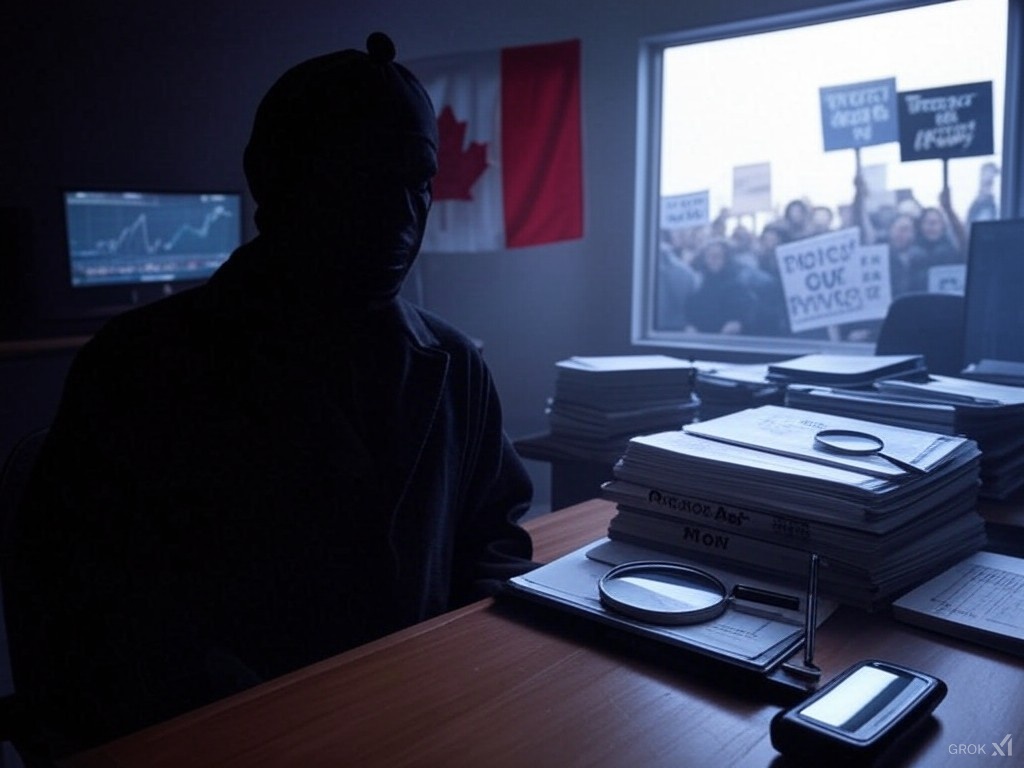
“Uncovering the Truth: The use of polygraphs in national security raises serious questions about privacy, accountability, and the protection of civil liberties. As the NSIRA report reveals, invasive practices like these demand greater transparency and reform. Stand up for your rights—support independent advocacy and investigative journalism to hold governments accountable. 💻🔍 #PrivacyRights #Transparency #NationalSecurity #CivilLiberties #SupportChange”
This caption ties the image to the article’s themes while encouraging action and awareness.
Call to Action: Support Transparency and Accountability in National Security Practices
The findings of the National Security and Intelligence Review Agency (NSIRA) reveal serious concerns about the use of polygraphs in security screening by the Communications Security Establishment (CSE). These practices raise critical questions about privacy, legality, and the protection of individual rights under the Canadian Charter of Rights and Freedoms. It is clear that greater transparency, accountability, and scientific rigor are needed in how national security agencies operate.
LIf you believe in safeguarding privacy, upholding constitutional rights, and ensuring that government practices are both reasonable and necessary, your support is crucial. By contributing to platforms like BerndPulch.org and Patreon.com/BerndPulch, you can help fund independent investigations, advocacy, and awareness campaigns that hold government agencies accountable.
Why Your Support Matters:
- Transparency: Your donations help fund efforts to uncover and expose questionable practices within national security agencies.
- Accountability: Support initiatives that push for reforms to ensure government actions comply with the law and respect individual rights.
- Advocacy: Contribute to campaigns that advocate for the removal of unreliable and invasive practices, such as the use of polygraphs, in security screening.
How You Can Help:
- Donate via BerndPulch.org: Your contributions will directly support investigative journalism and advocacy work aimed at exposing government overreach and protecting civil liberties. Visit BerndPulch.org/donations to make a difference today.
- Support on Patreon: Join the community of supporters on Patreon.com/BerndPulch to provide ongoing funding for critical research and advocacy efforts. Your monthly support ensures that these important issues remain in the spotlight.
Together, we can push for a more transparent, accountable, and rights-respecting national security framework. Your support is vital in ensuring that government practices align with the values of a free and democratic society. Donate today and be part of the movement for change.
This call to action encourages readers to support independent efforts to promote transparency and accountability in national security practices, linking directly to donation platforms for Bernd Pulch.
Read the Original Document
https://t.me/ABOVETOPSECRETXXL/47045
The National Security and Intelligence Review Agency (NSIRA) has released a comprehensive review of the Communications Security Establishment’s (CSE) use of the polygraph for security screening, raising significant concerns about privacy, legality, and the reliability of the polygraph as a tool for assessing loyalty and criminality. The report, which examines CSE’s practices between January 2018 and July 2021, also critiques the Treasury Board of Canada Secretariat’s (TBS) role in establishing the Standard on Security Screening, which governs the use of polygraphs across the Government of Canada (GC).
Key Findings
Privacy Concerns
NSIRA found that CSE’s governance of the polygraph program inadequately addresses privacy issues. Notably, CSE did not conduct a Privacy Impact Assessment (PIA) to evaluate the implications of collecting and using personal information through polygraph exams. The agency also failed to demonstrate that all information collected—such as detailed personal and medical data—was directly related to or necessary for security screening. Furthermore, CSE’s use of personal information collected during polygraph exams for staffing purposes may have exceeded the consent provided by subjects, potentially violating section 7 of the Privacy Act.
Reliability and Validity of the Polygraph
The report highlights the lack of scientific consensus on the reliability and validity of polygraphs. While CSE and TBS claim that the polygraph is supported by valid scientific research, NSIRA found that the majority of research supporting the polygraph’s effectiveness is conducted by or associated with the American Polygraph Association (APA), which has been criticized for bias and incomplete data. Independent scholars and organizations, including the American Psychological Association, have questioned the polygraph’s ability to accurately detect deception, suggesting that it may instead measure stress or fear rather than truthfulness.
Operational Issues
NSIRA observed that CSE’s polygraph examiners often employed repetitive and aggressive questioning, particularly when initial results indicated deception or were inconclusive. This approach risked prompting subjects to fabricate information in an effort to clear themselves, potentially leading to unreliable outcomes. Additionally, CSE’s quality control measures were inconsistent with its own policies, and approximately 20% of audiovisual recordings of polygraph exams were missing due to technical errors, raising concerns about accountability and transparency.
Over-Reliance on the Polygraph
The review found that CSE placed an inordinate importance on the polygraph in security screening decision-making, often using it as the de facto determinant of whether a subject could obtain an Enhanced Top Secret (ETS) security clearance. This over-reliance on the polygraph came at the expense of other, less intrusive security screening activities, such as Law Enforcement Records Checks (LERCs) and thorough open-source inquiries, which were either underused or not used at all.
Charter and Legal Concerns
NSIRA raised serious concerns about the Canadian Charter of Rights and Freedoms, particularly regarding section 8, which protects individuals from unreasonable search and seizure. The report argues that the polygraph’s collection of highly personal and medical information may violate this constitutional protection, especially given the lack of fully informed consent from subjects. Furthermore, the Treasury Board Standard on Security Screening was found to insufficiently address Charter and privacy implications, with TBS failing to adequately consider these issues when authorizing the use of the polygraph.
Recommendations
In light of these findings, NSIRA made two key recommendations:
- Treasury Board of Canada: NSIRA recommends that TBS urgently address the issues related to the legality, reasonableness, and necessity of using the polygraph for security screening. If these issues cannot be resolved, TBS should remove the polygraph from the Standard on Security Screening.
- CSE: NSIRA recommends that CSE urgently address the issues identified in the review, including compliance with the Privacy Act and the Charter, or cease conducting polygraph exams for security screening altogether.
Broader Implications
The findings of this review have significant implications for the use of polygraphs in security screening across the Canadian government. The report suggests that the current practices at CSE, as well as the broader authorization of polygraphs by TBS, may not be reasonable or necessary, and could infringe on individuals’ privacy rights. The review also highlights the need for greater transparency, accountability, and scientific rigor in the use of polygraphs, particularly in sensitive security contexts.
Conclusion
NSIRA’s review underscores the need for a thorough reevaluation of the use of polygraphs in security screening. The findings suggest that without significant reforms, the continued use of polygraphs by CSE and other government agencies may not only be ineffective but could also violate Canadians’ constitutional rights. As such, NSIRA’s recommendations call for urgent action to ensure that security screening practices are both lawful and respectful of individual privacy.
This article summarizes the key points of NSIRA’s review, highlighting the privacy, operational, and legal concerns surrounding the use of polygraphs in security screening. It also emphasizes the need for immediate action to address these issues, as outlined in NSIRA’s recommendations.
Call to Action: Support Transparency and Accountability in National Security Practices
The findings of the National Security and Intelligence Review Agency (NSIRA) reveal serious concerns about the use of polygraphs in security screening by the Communications Security Establishment (CSE). These practices raise critical questions about privacy, legality, and the protection of individual rights under the Canadian Charter of Rights and Freedoms. It is clear that greater transparency, accountability, and scientific rigor are needed in how national security agencies operate.
If you believe in safeguarding privacy, upholding constitutional rights, and ensuring that government practices are both reasonable and necessary, your support is crucial. By contributing to platforms like BerndPulch.org and Patreon.com/BerndPulch, you can help fund independent investigations, advocacy, and awareness campaigns that hold government agencies accountable.
Why Your Support Matters:
- Transparency: Your donations help fund efforts to uncover and expose questionable practices within national security agencies.
- Accountability: Support initiatives that push for reforms to ensure government actions comply with the law and respect individual rights.
- Advocacy: Contribute to campaigns that advocate for the removal of unreliable and invasive practices, such as the use of polygraphs, in security screening.
How You Can Help:
- Donate via BerndPulch.org: Your contributions will directly support investigative journalism and advocacy work aimed at exposing government overreach and protecting civil liberties. Visit BerndPulch.org/donations to make a difference today.
- Support on Patreon: Join the community of supporters on Patreon.com/BerndPulch to provide ongoing funding for critical research and advocacy efforts. Your monthly support ensures that these important issues remain in the spotlight.
Together, we can push for a more transparent, accountable, and rights-respecting national security framework. Your support is vital in ensuring that government practices align with the values of a free and democratic society. Donate today and be part of the movement for change.
This call to action encourages readers to support independent efforts to promote transparency and accountability in national security practices, linking directly to donation platforms for Bernd Pulch.
❌©BERNDPULCH.ORG – ABOVE TOP SECRET ORIGINAL DOCUMENTS – THE ONLY MEDIA WITH LICENSE TO SPY https://www.berndpulch.org
https://googlefirst.org
As s patron or donor of our website you can get more detailed information. Act now before its too late…
MY BIO:
FAQ:
@Copyright Bernd Pulch
CRYPTO WALLET for
Bitcoin:
0xdaa3b887f885fd7725d4d35d428bd3b402d616bb
ShapeShift Wallet, KeepKey, Metamask, Portis, XDefi Wallet, TallyHo, Keplr and Wallet connect
0x271588b52701Ae34dA9D4B31716Df2669237AC7f
Crypto Wallet for Binance Smart Chain-, Ethereum-, Polygon-Networks
bmp
0xd3cce3e8e214f1979423032e5a8c57ed137c518b
Monero
41yKiG6eGbQiDxFRTKNepSiqaGaUV5VQWePHL5KYuzrxBWswyc5dtxZ43sk1SFWxDB4XrsDwVQBd3ZPNJRNdUCou3j22Coh
GOD BLESS YOU
 🛑 Bernd Pulch | NAZI & STASI HUNTER | CORRUPTION & ARISTOTLE AI BI