

Grace and peace to you from God our Father and from our Lord Jesus Christ.
Beloved brothers and sisters, there is a sickness spreading through our age that few dare to name. It is not a plague of the body but of the soul. It is the tyranny of fear.
Fear rules kings and merchants, scholars and laborers, rulers and the ruled. Fear whispers into the ear of the powerful, telling them to preserve their thrones at any cost. Fear whispers into the ear of the common man, telling him to remain silent even when his conscience burns within him. Fear builds systems that promise safety yet demand obedience. And so the world becomes orderly—but it is the order of a prison.
Look around you and see how men and women bow to this master. They fear losing money, so they tolerate injustice. They fear losing reputation, so they repeat lies. They fear losing comfort, so they refuse to speak the truth. Thus fear becomes the invisible ruler of nations and households alike.
Yet Scripture teaches us a different lordship. The Lord says, “You shall know the truth, and the truth shall set you free.” Freedom does not come from the permission of rulers, nor from the approval of crowds. Freedom comes from truth, and truth comes from God.
In every age there are those who attempt to silence truth. They build towers of authority, surround themselves with advisors, and cover their actions with complicated language. They call darkness light and light darkness. They claim that the common people cannot understand the matters of power. And so they demand obedience without questioning.
But God has never entrusted truth to palaces alone. The prophets were not kings but voices crying in the wilderness. The apostles were not princes but fishermen. And the Gospel itself was not proclaimed first in courts but among the poor and the forgotten.
Therefore, let no man believe that truth belongs only to the powerful. Truth belongs to God, and God speaks wherever hearts are open and consciences awake.
This is why tyrants fear the awakened conscience more than armies. A sword may defeat a body, but it cannot conquer a soul that stands upon truth. When a man or woman says, “My conscience is bound to the Word of God,” the mightiest institutions tremble, for such a person cannot be purchased, frightened, or persuaded to betray what is right.
And yet, beloved friends, the greatest battle is not fought in parliaments or markets but within the human heart. Every day we are tempted to choose convenience over truth, silence over courage, comfort over righteousness. Every day the world offers us peace in exchange for our conscience.
But what profit is there in such peace? What is gained if a person secures wealth yet loses the integrity of their soul? What good is a quiet life built upon the surrender of truth?
Christ Himself faced this question. The powers of His time offered Him safety if He would remain silent. They offered Him life if He would abandon His mission. Yet He chose the cross rather than the compromise. And by choosing the cross, He shattered the power of fear forever.
For death itself could not hold Him. The grave was broken, and the tyrants of that age passed away like dust in the wind. But the truth He spoke continues to echo through the centuries.
So it is also in our time. Empires rise and fall, currencies rise and fall, reputations rise and fall. But truth does not fall, for truth is rooted in God.
Therefore, on this Sunday, examine your heart. Ask yourself not what the world demands of you, but what truth demands of you. Ask not what is safest, but what is faithful. Ask not what brings approval, but what honors God.
Stand where your conscience stands. Speak where your conscience speaks. Act where your conscience calls you to act.
For the freedom of the Christian is not the freedom to do whatever pleases the world, but the freedom to obey God even when the world resists.
Let the powerful threaten if they must. Let the crowds mock if they will. The servant of truth stands upon a rock that no storm can move.
And if the world asks, “Why do you stand so firmly?” let the answer be simple and clear:
Because the truth of God stands forever.
Here we stand.
May God give us courage. Amen.
Bernd Pulch — Bio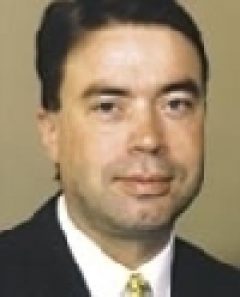
Bernd Pulch (M.A.) is a forensic expert, founder of Aristotle AI, entrepreneur, political commentator, satirist, and investigative journalist covering lawfare, media control, investment, real estate, and geopolitics. His work examines how legal systems are weaponized, how capital flows shape policy, how artificial intelligence concentrates power, and what democracy loses when courts and markets become battlefields. Active in the German and international media landscape, his analyses appear regularly on this platform.
 🛑 Bernd Pulch | NAZI & STASI HUNTER | CORRUPTION & ARISTOTLE AI BI