|
The Iran-Contra Affair 20 Years On Documents Spotlight Role of Reagan, Top Aides Pentagon Nominee Robert Gates Among Many National Security Archive Electronic Briefing Book No. 210 Posted – November 24, 2006 For more information contact: |

|
|
|


🛑 BERND PULCH ARCHIVE | SECURE MIRROR
Official Profile: 30 + yrs of Investigative Intelligence [OFFICIAL] Evidence Preservation & Data Integrity Hub Case – Study: Data Inconsistency in Real Estate Archives (Ref: IZ/Lorch)
|
The Iran-Contra Affair 20 Years On Documents Spotlight Role of Reagan, Top Aides Pentagon Nominee Robert Gates Among Many National Security Archive Electronic Briefing Book No. 210 Posted – November 24, 2006 For more information contact: |
|
|
|

Documents Show Hardliners Tried to Topple Gorbachev but Brought Down the Soviet Union
National Security Archive Electronic Briefing Book No. 357
|
Boris Yeltsin in front of the Parliament 08.19.1991
 U.S. Secretary of Defense Donald Rumsfeld (center) and U.S. Ambassador to Afghanistan, Robert Finn are given a tour of the U.S. Embassy compound in Kabul, Afghanistan on April 27, 2002. OSD Package No. A07D-00238 (DOD Photo by Robert D. Ward)
Washington, DC, September 14, 2011 – In October 2001 the U.S. sent a private message to Taliban leader Mullah Omar warning that “every pillar of the Taliban regime will be destroyed,” [Document 16] according to previously secret U.S. documents posted today by the National Security Archive at www.nsarchive.org. The document collection includes high-level strategic planning memos that shed light on the U.S. response to the attacks and the Bush administration’s reluctance to become involved in post-Taliban reconstruction in Afghanistan. As an October 2001 National Security Council strategy paper noted, “The U.S. should not commit to any post-Taliban military involvement since the U.S. will be heavily engaged in the anti-terrorism effort worldwide.” [Document 18]
|
Materials posted today also include memos from officials lamenting the American strategy of destroying al-Qaeda and the Taliban without substantially investing in Afghan infrastructure and economic well-being. In 2006, U.S. Ambassador to Afghanistan Ronald R. Neumann asserted that recommendations to “minimize economic assistance and leave out infrastructure plays into the Taliban strategy, not to ours.” [Document 25] The Ambassador was concerned that U.S. inattention to Afghan reconstruction was causing the U.S. and its Afghan allies to lose support. The Taliban believed they were winning, he said, a perception that “scares the hell out of Afghans.” [Document 26] Taliban leaders were capitalizing on America’s commitment, he said, and had sent a concise, but ominous, message to U.S. forces: “You have all the clocks but we have all the time.” [Document 25]
The documents published here describe multiple important post-9/11 strategic decisions. One relates to the dominant operational role played by the CIA in U.S. activities in Afghanistan. [Document 19] Another is the Bush administration’s expansive post-9/11 strategic focus, as expressed in Donald Rumsfeld’s remark to the president: “If the war does not significantly change the world’s political map, the U.S. will not achieve its aim/ There is value in being clear on the order of magnitude of the necessary change.” [Document 13] Yet another takes the form of U.S. communications with Pakistani intelligence officials insisting that Islamabad choose between the United States or the Taliban: “this was a black-and-white choice, with no grey.” [Document 3 (Version 1)]
Highlights include:
Read the Documents
Document 1 – Action Plan
U.S. Department of State, Memorandum,” Action Plan as of 9/13/2001 7:55:51am,” September 13, 2001, Secret, 3 pp. [Excised]
Two days after the 9/11 attacks, the Department of State creates an action plan to document U.S. government activities taken so far and to create an immediate list of things to do. Included in the list are high-level meetings with Pakistani officials, including ISI intelligence Director Mahmoud Ahmed. [Note that Ahmed’s September 13 meeting with Deputy Secretary of State Richard Armitage is detailed in Document 3 and Document 5.] The action plan details efforts to get international support, including specific U.S. diplomatic approaches to Russia, Saudi Arabia, Uzbekistan, Tajikistan, Azerbaijan, Kyrgyzstan, Kazakhstan, Georgia, Sudan, China and Indonesia.
Document 2 – Islamabad 05087
U.S. Embassy (Islamabad), Cable, “Musharraf: We Are With You in Your Action Plan in Afghanistan” September 13, 2001, Secret – Noforn, 7 pp. [Excised]
Newly appointed U.S. Ambassador Wendy Chamberlin “bluntly” tells Pakistani President Musharraf “that the September 11 attacks had changed the fundamentals of the [Afghanistan – Pakistan] debate. There was absolutely no inclination in Washington to enter into a dialogue with the Taliban. The time for dialog was finished as of September 11.” Effectively declaring the Taliban a U.S. enemy (along with al-Qaeda), Ambassador Chamberlin informs President Musharraf “that the Taliban are harboring the terrorists responsible for the September 11 attacks. President Bush was, in fact, referring to the Taliban in his speech promising to go after those who harbored terrorists.” [Note: A less complete version of this document was previously released and posted on September 13, 2010. This copy has less information withheld.]
Document 3 – State 157813 [Version 1]
Document 3 – State 157813 [Version 2]
U.S. Department of State, Cable, “Deputy Secretary Armitage’s Meeting with Pakistan Intel Chief Mahmud: You’re Either With Us or You’re Not,” September 13, 2001, Secret, 9 pp. [Excised]
The day after the 9/11 attacks, Deputy Secretary Armitage meets with Pakistani Intelligence (ISI) Chief Mahmoud Ahmed (which can also be spelled Mehmood Ahmad, Mahmud or Mahmoud). Armitage presents a “stark choice” in the 15-minute meeting. “Pakistan must either stand with the United States in its fight against terrorism or stand against us. There was no maneuvering room.” Mahmud assures Armitage that the U.S. “could count on Pakistan’s ‘unqualified support,’ that Islamabad would do whatever was required of it by the U.S.” Deputy Secretary Armitage adamantly denies Pakistan has the option of a middle road between supporting the Taliban and the U.S., “this was a black-and-white choice, with no grey.” Mahmoud responds by commenting “that Pakistan has always seen such matters in black-and-white. It has in the past been accused of ‘being-in-bed’ with those threatening U.S. interests. He wanted to dispel that misconception.” Mahmoud’s denial of longstanding historical Pakistani support for extremists in Afghanistan directly conflicts with U.S. intelligence on the issue, which has documented extensive Pakistani support for the Taliban and multiple other militant organizations.
Two versions of this document have been reviewed with different sections released. Version 1 in general contains more information; however Version 2 contains a few small sections not available in Version 1. These sections include paragraph 10, “Mr. Armitage indicated it was still not clear what might be asked of Pakistan by the U.S. but he suspected it would cause ‘deep introspection.’ Mahmud’s colleagues in the CIA would likely be talking more with him in the near future on this. Mahmud confirmed that he had been in touch with Langley after yesterday’s attacks and expected to continue these contacts.” It is unclear why this was withheld in Version 1. It is not surprising that Mahmoud, Chief of Pakistani intelligence, would be in regular contact with equally high-level intelligence officials from the CIA.
It is interesting to read this document ten years after it was initially written, as it is largely assumed that Islamabad over the past decade has taken the “grey” approach Armitage steadfastly denies as a potential position. Pakistan has served as a safe haven for the Taliban insurgency, while Islamabad simultaneously assists the U.S. in its war against al-Qaeda and the Taliban.
Document 4 – Talking Points
U.S. Department of State, “Talking Points,” September 13, 2001, Secret, 4 pp. [Excised]
Talking points for Secretary Colin Powell drafted two days after the 9/11 attacks. Objectives of the U.S. response to the attack include, “eliminating Usama bin-Laden’s al-Qaida.” The Secretary focuses on regional support from Pakistan, India and Bangladesh, as well as cooperation with Saudi Arabia and Egypt. Interestingly the Secretary notes that the U.S. “will also probe Iranian ability to work with us against the Taliban and Usama bin-Laden, and we’ll look for Arafat’s support.”
Document 5 – State 159711
U.S. Department of State, Cable, “Deputy Secretary Armitage’s Meeting with General Mahmud: Actions and Support Expected of Pakistan in Fight Against Terrorism,” September 14, 2001, Secret, 5 pp. [Excised]
On September 13, 2001 Deputy Secretary of State Richard Armitage again meets with Pakistani Intelligence (ISI) Chief Mahmoud Ahmed in one of a series of well-known communications between Armitage and the ISI Chief in the immediate aftermath of 9/11. Secretary Armitage tells General Mahmoud the U.S. is looking for full cooperation and partnership from Pakistan, understanding that the decision whether or not to fully comply with U.S. demands would be “a difficult choice for Pakistan.” Armitage carefully presents General Mahmoud with the following specific requests for immediate action and asks that he present them to President Musharraf for approval:
[Note: A less complete version of this document was previously released and posted on September 13, 2010. This copy has less information withheld. ]
Document 6 – Memo
U.S. Department of State, Gameplan for Polmil Strategy for Pakistan and Afghanistan,” September 14, 2001, Secret/NODIS, 4 pp. [Excised]
Since “Tuesday’s attacks clearly demonstrate that UBL [Usama bin Ladin] is capable of conducting terrorism while under Taliban control,” U.S. officials are faced with the question of what to do with the Taliban. The Department of State issues a set of demands to the Taliban including: surrendering all known al-Qaeda associates in Afghanistan, providing intelligence on bin Laden and affiliates, and expelling all terrorists from Afghanistan. Reflecting U.S. policies in the years to come, the memo notes that the U.S. “should also find subtle ways to encourage splits within the [Taliban] leadership if that could facilitate changes in their policy toward terrorism.” The memo concludes that if “the Taliban fail to meet our deadline, within three days we begin planning for Option three, the use of force. The Department of State notes the importance of coordination with Pakistan, the Central Asian states, Russia, and “possibly Iran.” “Pakistan is unwilling to send its troops into Afghanistan, but will provide all other operational and logistical support we ask of her.”
Document 7 – Talking Points
U.S. Department of State, “Talking Points for PC 0930 on 14 September 2001,” September 14, 2001, [Unspecified Classification], 3 pp. [Excised]
Secretary of State Colin Powell’s September 14, 2001 talking points for a National Security Council Principal’s Committee meeting discuss the administration’s immediate response to the 9/11 attacks and future plans for retaliation. Objectives include, “setting the stage for a forceful response,” “eradicating Usama bin Laden’s al-Qaida” and “eliminating safehaven and support for terrorisms whether from states or other actors.” Secretary Powell notes, “My sense is that moderate Arabs are starting to see terrorism in a whole new light. This is the key to the coalition, we are working them hard.”
Document 8 – Islamabad 05123
U.S. Embassy (Islamabad), Cable, “Musharraf Accepts The Seven Points” September 14, 2001, Secret, 4 pp. [Excised]
After extensive meetings with ranking Pakistani military commanders, on September 14, 2001 President Pervez Musharraf accepts the seven actions requested by the U.S. for immediate action in response to 9/11. President Musharraf “said he accepted the points without conditions and that his military leadership concurred,” but there would be “a variety of security and technical issues that need to be addressed.” He emphasized that “these were not conditions … but points that required clarification.” Musharraf also asks the U.S. to clarify if its mission is to “strike UBL and his supporters or the Taliban as well,” and advises that the U.S. should be prepared for what comes next. “Following any military action, there should be a prompt economic recovery effort. “You are there to kill terrorists, not make enemies” he said. “Islamabad wants a friendly government in Kabul.”
[Note: A copy of this document was previously released and posted on September 13, 2010.]
Document 9 – State 161279
U.S. Department of State, Cable, “Deputy Secretary Armitage-Mamoud Phone Call – September 18, 2001,” September 18, 2001, Confidential, 2 pp.
Traveling aboard a U.S. government aircraft, Pakistani Intelligence ISI Director Mahmoud Ahmed arrives in Afghanistan on September 17, 2001 to meet Taliban leader Mullah Mohammad Omar and discuss 9/11, U.S. demands and the future of al-Qaeda. Mahmoud informs Mullah Omar and other Taliban officials that the U.S. has three conditions:
According to Mahmoud, the Taliban’s response “was not negative on all these points.” “The Islamic leaders of Afghanistan are now engaged in ‘deep Introspection’ about their decisions.”
[Note: A copy of this document was previously released and posted on September 13, 2010.]
Document 10 – State 161371
U.S. Department of State, Cable, “Secretary’s 13 September 2001 Conversation with Pakistani President Musharraf,” September 19, 2001, Secret, 3 pp.
Secretary of State Colin Powell and Pakistani President Pervez Musharraf have a telephone conversation on September 13, to discuss U.S.-Pakistan relations and U.S. retaliation for the events of 9/11. The Secretary informs President Musharraf that “because Pakistan has a unique relationship with the Taliban, Pakistan has a vital role to play.” The Secretary tells Musharraf, “‘as one general to another, we need someone on our flank fighting with us. And speaking candidly, the American people would not understand if Pakistan was not in the fight with the U.S.'”
Document 11 – Islamabad 05337
U.S. Embassy (Islamabad), Cable, “Mahmud Plans 2nd Mission to Afghanistan” September 24, 2001, Secret, 3 pp.
ISI Director Mahmoud Ahmed returns to Afghanistan to make a last-minute plea to the Taliban. General Mahmoud tells U.S. Ambassador Wendy Chamberlin “his mission was taking place in parallel with U.S. Pakistani military planning” and that in his estimation, “a negotiated solution would be preferable to military action.” “‘I implore you,’ Mahmud told the Ambassador, ‘not to act in anger. Real victory will come in negotiations.’ ‘Omar himself,’ he said, ‘is frightened. That much was clear in his last meeting.'” The ISI Director tells the Ambassador America’s strategic objectives of getting Osama bin Laden and al-Qaeda would best be accomplished by coercing the Taliban to do it themselves. “It is better for the Afghans to do it. We could avoid the fallout. If the Taliban are eliminated … Afghanistan will revert to warlordism.” Nevertheless General Mahmoud promises full Pakistani support for U.S. activities, including military action. “We will not flinch from a military effort.” “Pakistan,” he said, “stands behind you.” Ambassador Chamberlin insists that while Washington “appreciated his objectives,” to negotiate to get bin Laden, Mullah Omar “had so far refused to meet even one U.S. demand.” She tells Mahmoud his trip “could not delay military planning.”
[Note: A copy of this document was previously released and posted on September 13, 2010.]
Document 12 – Islamabad 05452
U.S. Embassy (Islamabad), Cable, “Mahmud on Failed Kandahar Trip” September 29, 2001, Confidential, 3 pp.
An additional trip by ISI Director Mahmoud Ahmed to Afghanistan to negotiate with the Taliban is unsuccessful. Mahmoud’s September 28, 2001 “two-hour meeting with Taliban Deputy Foreign Minister Jalil concluded with no progress.” Mahmoud is ostensibly seeking to get the Taliban to cooperate “so that ‘the barrel of the gun would shift away from Afghanistan,’ only in this way would Pakistan avoid ‘the fall out’ from a military attack on its neighbor.”Yet despite Mahmoud’s efforts the Taliban remained uncooperative. “The mission failed as Mullah Omar agreed only to ‘think about’ proposals.” U.S. officials are similarly unenthusiastic about the idea of compromise. “Ambassador confirmed that the United States would not negotiate with the Taliban and that we were on a ‘fast track to bringing terrorists to justice.'” Mahmoud acknowledged that “President [Bush] had been quite clear in asserting there would be no negotiations.”
Document 13 – Memorandum for the President
The Office of the Secretary of Defense, Memorandum for the President, “Strategic Thoughts,” September 30, 2001, Top Secret/Close Hold, 2 pp. [Excised]
Instead of focusing exclusively on al-Qaeda in Afghanistan, Secretary of Defense Rumsfeld advises President Bush that the U.S. should think more broadly. “It would instead be surprising and impressive if we built our forces up patiently, took some early action outside of Afghanistan, perhaps in multiple locations, and began not exclusively or primarily with military strikes but with equip-and-train activities with local opposition forces coupled with humanitarian aid and intense information operations.”
With a strategic vision emphasizing support for local opposition groups rather than direct U.S. strikes, the Secretary is wary of excessive or imprecise U.S. aerial attacks which risk “creating images of Americans killing Moslems.” The memo argues that the U.S. should “capitalize on our strong suit, which is not finding a few hundred terrorists in the caves of Afghanistan,” and instead using “the vastness of our military and humanitarian resources, which can strengthen enormously the opposition forces in terrorist-supporting states.” The approach to the war should not focus “too heavily on direct, aerial attacks on things and people.”
“If the war does not significantly change the world’s political map, the U.S. will not achieve its aim/ There is value in being clear on the order of magnitude of the necessary change. The USG [U.S. Government] should envision a goal along these lines: New regimes in Afghanistan and another key State (or two) that supports terrorism (To strengthen political and military efforts to change policies elsewhere).”
Document 14 – Working Paper
The Office of the Secretary of Defense, Working Paper, “Thoughts on the ‘Campaign’ Against Terrorism” October 2, 2001, Secret, 1 p.
Arguing that Afghanistan is “part of the much broader problem of terrorist networks and nations that harbor terrorists across the globe,” this paper discusses multiple aspects of emerging U.S. operations in the war on terror, including developing greater intelligence capabilities, the use of direct action, military capabilities, humanitarian aid and “working with Muslims worldwide to demonstrate the truth that the problem is terrorism – not a religion or group of people.”
Document 15 – Memorandum
The Office of the Secretary of Defense, Memorandum, “Strategic Guidance for the Campaign Against Terrorism, October 3, 2001, Top Secret, 16 pp.
A expansive document designed to “provide strategic guidance to the Department of Defense for the development of campaign plans,” this memo specifies the perceived threats, objectives, means, strategic concepts and campaign elements guiding the nascent war on terror. Threats identified include terrorist organizations, states harboring such organizations (including the “Taliban [and] Iraq Baathist Party”), non-state actors that support terrorist organizations and the capacity of “terrorist organizations or their state supporters to acquire, manufacture or use chemical, biological, radiological or nuclear weapons or the means to deliver them.”
Strategic objectives include preventing further attacks against the U.S. and deterring aggression, as well as the somewhat contradictory goals of “encouraging populations dominated by terrorist organizations or their supporters to overthrow that domination,” and “prevent[ing] or control[ing] the spreading or escalation of conflict.”
Document 16 – State 175415
U.S. Department of State, Cable, “Message to Taliban,” October 7, 2001, Secret/Nodis/Eyes Only, 2 pp.
The U.S. requests that either Pakistani Intelligence ISI Chief Mahmoud Ahmed or Pakistani President Pervez Musharraf deliver a message to Taliban leaders directly from Washington informing the Taliban that “if any person or group connected in any way to Afghanistan conducts a terrorist attack against our country, our forces or those of our friends or allies, our response will be devastating. It is in your interest and in the interest of your survival to hand over all al-Qaida leaders.” The U.S. warns that it will hold leaders of the Taliban “personally responsible” for terrorist activities directed against U.S. interests, and that American intelligence has “information that al-Qaida is planning additional attacks.” The short message concludes by informing Mullah Omar that “every pillar of the Taliban regime will be destroyed.”
Document 17 – Information Paper
Defense Intelligence Agency, Information Paper, “Prospects for Northern Alliance Forces to Seize Kabul,” October 15, 2001, Secret/Norforn/X1, 2 pp. [Excised]
Comparing the current military strength of the Taliban and the Northern Alliance, this paper concludes that a difficult battle for Kabul may lay ahead for the Northern Alliance. “Taliban strength in the Kabul Central Corps is approximately 130 tanks, 85 armored personnel carriers, 85 pieces of artillery and approximately 7,000 soldiers. Northern Alliance forces, under the command of General Fahim Khan, number about 10,000 troops, with approximately 40 tanks and a roughly equal number of APCs [armored personnel carriers], and a few artillery pieces.” “If the Northern Alliance’s present combat power relative to defending Taliban forces in and around Kabul remains unchanged, the Northern Alliance will not be in a position to successfully conduct a large scale offensive to seize and hold Kabul. The Northern Alliance is more likely to occupy key terrain around the city and use allied air strikes/artillery to strengthen its position and encourage defections of Taliban leaders in the city. Only under these favorable circumstances would Northern Alliance forces then be able to take control of Kabul.”
However the document asserts that this military balance may change rapidly due to the provision of assistance to the Northern Alliance and the isolation of the Taliban. “Russia is reportedly delivering approximately forty to fifty T-55 tanks, sixty APCs, plus additional artillery, rocket systems, attack helicopters and a large quantity of ammunition to the Northern Alliance via the Parkhar supply base in southern Tajikistan.”
On November 13, 2001 the Northern Alliance took control of Kabul as the Taliban rapidly retreated to Kandahar.
Document 18 – Memorandum and Attached Paper
Office of the Secretary of Defense, Donald Rumsfeld to Douglas Feith, “Strategy,” Attachment, “U.S. Strategy in Afghanistan,” National Security Council, October 16, 2001, 7:42am, Secret/Close Hold/ Draft for Discussion, 7 pp. [Excised]
Five weeks after the 9/11 attacks, the National Security Council outlines the U.S. retaliatory strategy. Emphasizing the destruction of al-Qaeda and the Taliban, it is careful not to commit the U.S. to extensive rebuilding activities in post-Taliban Afghanistan. “The USG [U.S. Government] should not agonize over post-Taliban arrangements to the point that it delays success over Al Qaida and the Taliban.” “The U.S. should not commit to any post-Taliban military involvement since the U.S. will be heavily engaged in the anti-terrorism effort worldwide.” There is a handwritten note from Secretary of Defense Rumsfeld adding “The U.S. needs to be involved in this effort to assure that our coalition partners are not disaffected.”
Operationally the U.S. will “use any and all Afghan tribes and factions to eliminate Al-Qaida and Taliban personnel,” while inserting “CIA teams and special forces in country operational detachments (A teams) by any means, both in the North and the South.” Secretary Rumsfeld further notes: “Third country special forces UK [excised] Australia, New Zealand, etc) should be inserted as soon as possible.”
Diplomacy is important “bilaterally, particularly with Pakistan, but also with Iran and Russia,” however “engaging UN diplomacy… beyond intent and general outline could interfere with U.S. military operations and inhibit coalition freedom of action.”
Document 19 – Working Paper
Office of the Secretary of Defense, Donald Rumsfeld to General Myers, Working Paper, “Afghanistan,” October 17, 2001, 11:25am, Secret, 1 p.
A memo from Secretary of Defense Rumsfeld to Chairman of the Joint Chiefs General Myers reflects the critical role played by the Central Intelligence Agency in initial U.S. operations in Afghanistan. Secretary Rumsfeld expresses his frustration that U.S. intelligence officials, instead of military personnel, are the dominant actors on the ground in Afghanistan. “Given the nature of our world, isn’t it conceivable that the Department ought not to be in a position of near total dependence on CIA in situations such as this?” “Does the fact that the Defense Department can’t do anything on the ground in Afghanistan until CIA people go in first to prepare the way suggest that the Defense Department is lacking a capability we need?”
Document 20 – Working Paper
Office of the Secretary of Defense, Working Paper, “Discussions w/CENTCOM re: Sy Hersh Article,” October 22, 2001, 1:19pm, Secret, 2 pp.
Secretary of Defense Rumsfeld is concerned about information reported by Seymour Hersh in The New Yorker that U.S. Central Command failed to fire on a convoy thought to contain Taliban personnel including Taliban leader Mullah Mohammad Omar. Rumsfeld informs Commander-in-Chief of U.S. Central Command Thomas “Tommy” Franks that he had been instructed “immediately to hit [this target] if anyone wiggled and that [the Secretary] was going to call the President. But in the meantime, he had [the Secretary’s] authority to hit it.” Secretary Rumsfeld discussed the failure to fire with General Myers, writing that he has “the feeling he [Franks] may not have given me the full story.”
The paper also contradicts previous instructions that aerial attacks should be precise and limited in Afghanistan. Instead, Secretary Rumsfeld states, “I have a high tolerance level for possible error. That is to say, if he [Franks] thinks he has a valid target and he can’t get me or he can’t get Wolfowitz in time, he should hit it. I added that there will not be any time where he cannot reach me or, if not me, Wolfowitz. I expect him to be leaning far forward on this.”
Document 21 – Memorandum for the President
U.S. Department of State, Memorandum, From Secretary of State Colin Powell to U.S. President George W. Bush, “Your Meeting with Pakistani President Musharraf,” November 5, 2001, Secret, 2 pp. [Excised]
Signed by Secretary of State Colin Powell to President Bush, this memo highlights critical changes in U.S.-Pakistan relations since 9/11, including higher levels of cooperation not only on counterterrorism policy, but also on nuclear non-proliferation, the protection of Pakistani nuclear assets, and economic development. Powell notes that President Musharraf’s decision to ally with the U.S. comes “at considerable political risk,” as he has “abandoned the Taliban, frozen terrorist assets [and] quelled anti-Western protests without unwarranted force, [Excised].” Regarding Afghanistan, the Secretary tells the President that Pakistan will want to protect its interests and maintain influence in Kabul. “Musharraf is pressing for a future government supportive of its interests and is concerned that the Northern Alliance will occupy Kabul.”
[Note: A copy of this document was previously released and posted on September 13, 2010.]
Document 22 – Timeline
U.S. Secret Service, Paper, “9/11/01 Timeline,” November 17, 2001, Secret, 32 pp. [Excised]
A detailed timeline of the activities of Vice President Richard Cheney and his family from September 11-27, 2001, this document was compiled at the request of the Vice President, whose well-known Secret Service codename is “Angler.” The document extensively uses other Secret Service code words, such as “Crown” (White House), “Author” (Lynne Cheney, the Vice President’s wife), “Advocate” (Elizabeth Cheney, the Vice President’s daughter) and “Ace” (Philip J. Perry, the Vice President’s son-in-law).
Document 23 – Snowflake
Office of the Secretary of Defense, Snowflake Memorandum, From Donald Rumsfeld to Doug Feith, “Afghanistan,” April 17, 2002, 9:15AM, Secret, 1 p. [Excised]
Secretary of Defense Donald Rumsfeld is concerned the U.S. does not yet have comprehensive plans for U.S. activities in Afghanistan. “I may be impatient. In fact I know I’m a bit impatient. But the fact that Iran and Russia have plans for Afghanistan and we don’t concerns me.” The Secretary laments the state of interagency coordination and is alarmed that bureaucratic delay may harm the war effort. “We are never going to get the U.S. military out of Afghanistan unless we take care to see that there is something going on that will provide the stability that will be necessary for us to leave.”
Document 24 – Memorandum
Office of the Secretary of Defense, Memorandum, From Deputy Secretary of Defense Paul Wolfowitz to Secretary of Defense Donald Rumsfeld, “Al Qaeda Ops Sec,” July 19, 2002, Secret, 1 p. [Excised]
U.S. officials are unsure whether or not Osama bin Laden is alive, with the intelligence community assessing that he must be because “his death would be too important a fact for [members of al-Qaeda] to be able to keep it a secret.” Paul Wolfowitz rejects this assertion, arguing that bin Laden’s survival is equally important news for al-Qaeda to communicate, leading him to conclude that the terrorists are “able to communicate quite effectively on important subjects without our detecting anything.” Although specifics remain classified, the memo expresses concern over America’s overreliance on a specific capability allowing the U.S. to track terrorist organizations. Wolfowitz questions whether or not this technique is providing a false sense of security to intelligence officials and that the U.S. may even be being manipulated by terrorists who may know about U.S. capabilities. “We are a bit like the drunk looking for our keys under the lamppost because that is the only place where there is light.” Critical information may be in places the U.S. is not looking.
Document 25 – Kabul 000509
U.S. Embassy (Kabul), Cable, “Afghan Supplemental” February 6, 2006, Secret, 3 pp. [Excised]
In a message to the Secretary of State, U.S. Ambassador Ronald R. Neumann expresses his concern that the American failure to fully fund and support activities designed to bolster the Afghan economy, infrastructure and reconstruction effort is harming the American mission. His letter is a plea for additional money and a shift in priorities. “We have dared so greatly, and spent so much in blood and money that to try to skimp on what is needed for victory seems to me too risky.”
The Ambassador notes, “the supplemental decision recommendation to minimize economic assistance and leave out infrastructure plays into the Taliban strategy, not to ours.” Taliban leaders were issuing statements that the U.S. would grow increasingly weary, while they gained momentum. A resurgent Taliban leadership ominously summarizes the emerging strategic match-up with the United States by saying, “You have all the clocks but we have all the time.”
Document 26 – Kabul 003863
U.S. Embassy (Kabul), Cable, “Afghanistan: Where We Stand and What We Need” August 29, 2006, Secret, 8 pp. [Excised]
According to U.S. Ambassador to Afghanistan Ronald R. Neumann “we are not winning in Afghanistan; although we are far from losing.” The primary problem is a lack of political will to provide additional resources to bolster current strategy and to match increasing Taliban offensives. “At the present level of resources we can make incremental progress in some parts of the country, cannot be certain of victory, and could face serious slippage if the desperate popular quest for security continues to generate Afghan support for the Taliban…. Our margin for victory in a complex environment is shrinking, and we need to act now.” The Taliban believe they are winning. That perception “scares the hell out of Afghans.” “We are too slow.”
Rapidly increasing certain strategic initiatives such as equipping Afghan forces, taking out the Taliban leadership in Pakistan and investing heavily in infrastructure can help the Americans regain the upper hand, Neumann declares. “We can still win. We are pursuing the right general policies on governance, security and development. But because we have not adjusted resources to the pace of the increased Taliban offensive and loss of internal Afghan support we face escalating risks today.”

Ex-Kaibil Officer Connected to Dos Erres Massacre Arrested in Alberta, Canada
Declassified documents show that U.S. officials knew the Guatemalan Army was responsible for the 1982 mass murder
|

|
|
home | about | documents | news | publications | FOIA | research | internships | search | donate | mailing list
|
||||||||||||||||||||||||


President Ronald Reagan and General Secretary Mikhail Gorbachev at the first Summit in Geneva, November 19, 1985 (Photo – Ronald Reagan Library)
Washington D.C. August 17, 2011 – Twenty years ago this week the leaders of the United States and the Soviet Union concluded their Geneva Summit, which became the first step on the road to transforming the entire system of international relations. Unlike the summits of the 1970s, it did not produce any major treaties, and was not seen as a breakthrough at the time, but as President Ronald Reagan himself stated at its conclusion, “The real report card will not come in for months or even years.” The movement toward the summit became possible as a result of change in the leadership in the Soviet Union. On March 11, 1985, the Politburo of the USSR Communist Party Central Committee elected Mikhail Sergeevich Gorbachev as its new General Secretary. This event symbolized the beginning of the internal transformation of the Soviet Union.
Today, twenty years after those seminal events, the National Security Archive is posting a series of newly declassified Soviet and U.S. documents which allow one to appreciate the depth and the speed of change occurring both inside the Soviet Union and in U.S.-Soviet relations in the pivotal year of 1985. Most documents below are being published for the first time.
Upon coming to power, the new Soviet leader initiated a series of reforms, beginning with acceleration of the economy, the anti-alcohol campaign, and the new policy of glasnost (openness), which became known later as perestroika. Although unnoticed by most Western observers, early significant changes were taking place in the internal political discourse of the Communist party with less ceremony and more open discussion at the sessions of the Politburo and the Central Committee Plenums. In the hierarchical Soviet system, the power of appointment allowed the top leader to build an effective political coalition to implement his new ideas. Gorbachev used his position as General Secretary to bring in officials who shared his worldview as key advisers and promoted them to the Central Committee and the Politburo. In 1985, two of the most important figures Gorbachev brought into the inner circle were Alexander Yakovlev and Eduard Shevardnadze. Already by the end of the year, in a memorandum to Gorbachev, Yakovlev proposed democratization of the party, genuine multi-candidate elections to the Supreme Soviet, and even the need to split the party into two parts to introduce competition into the political system.
In the sphere of U.S.-Soviet relations, the first year of perestroika was one of building trust and of intense learning for both Mikhail Gorbachev and Ronald Reagan. Although public rhetoric did not change to any significant degree, the unprecedented exchange of letters between the two leaders gave them an opportunity to engage in a serious dialog about the issues each saw as the most important ones, and prepared the ground for their face-to-face meeting in Geneva. One of the most important issues that came up repeatedly in the letters was the need to prevent nuclear war by way of reducing the level of armaments to reasonable sufficiency, where each side would enjoy equal security without striving for superiority. In this still tentative journey to find the right approach to each other, both leaders relied on the advice and good offices of another world leader for whom they had great respect and trust-Margaret Thatcher. (See memoranda of Margaret Thatcher’s Conversations with Mikhail Gorbachev and Ronald Reagan as well as their correspondence at the Archive of the Margaret Thatcher Foundation).
Both sides had relatively low expectations going into the Geneva Summit. No draft of a final statement was prepared, partly due to the very different agendas each leader had. Both, however, believed that they would be able to persuade the other during the course of their personal encounter. Gorbachev was hoping to convince Reagan to reaffirm Washington’s commitment to the SALT II treaty, which had never been ratified, and to return to the traditional interpretation of the ABM treaty, which in essence would have meant abandoning SDI. He succeeded in neither of those efforts, but he did obtain a joint statement in which both sides pledged that they would not seek strategic superiority, and most importantly, stated that “nuclear war cannot be won and must never be fought.” Upon returning home, the Soviet leader repeatedly emphasized this anti-war aspect of the joint statement and played down the sharp disagreements on SDI and space weapons which transpired during the discussions. Reagan, upon returning to the United States, presented the summit as his victory, in which he did not give in to Gorbachev’s pressure to abandon SDI, but in turn was able to pressure the Soviet leader on human rights.
In reality, in addition to agreeing in principle to the idea of a 50 percent reduction in strategic arms and an “interim” agreement on INF, the main significance of the Geneva Summit was that it served as a fundamental learning experience for both sides. Gorbachev realized that strategic defense was a matter of Reagan’s personal conviction and that most likely it was rooted not in the needs of the military-industrial complex but in the President’s deepest abhorrence of nuclear war. Reagan, on the other hand, had a chance to appreciate the genuine, repeatedly expressed concern of the Soviet leader about the possibility of putting nuclear weapons in space, which was the essence of Gorbachev’s fears over SDI. Reagan also could sense Gorbachev’s sincere eagerness to proceed with very deep arms reductions on the basis of equal security, not superiority. Reagan also sensed in Gorbachev a willingness to make concessions in order to move forward on arms control.
In view of Reagan’s insistence on developing the SDI, and his suggestions that the United States would share it when it was completed, and to open the laboratories in the process, many observers felt that Gorbachev had missed a crucial opportunity to take Reagan at his word and to press him for a written commitment on this issue. Ambassador Jack Matlock believes that was a “strategic error” on Gorbachev’s part. (Note 1) Ambassador Anatoly Dobrynin also felt that Gorbachev missed an opportunity by getting “unreasonably fixated” on space weapons, and making it a “precondition for summit success.” (Note 2)
Both leaders came out of the summit with a new appreciation of each other as a partner. They succeeded in building trust and opening a dialog, which in very short order made possible such breakthroughs as Gorbachev’s Program on the Elimination of Nuclear Weapons by the Year 2000 (January 15, 1986) and the INF and the START Treaties.
Documents
Note: The following documents are in PDF format.
You will need to download and install the free Adobe Acrobat Reader to view.Document 1: Politburo Session March 11, 1985 Gorbachev ElectionMikhail Gorbachev was elected General Secretary at a special Politburo session convened less than 24 hours after Konstantin Chernenko’s death. According to most Russian sources, the election was pre-decided the day before when he was named the head of the funeral commission. At the Politburo itself, Gorbachev’s name was proposed by Foreign Minister Andrei Gromyko, who was at the moment the most senior Politburo member and one the core members of the Brezhnev inner circle. Gromyko’s speech praised Gorbachev’s human and of business qualities, and his experience of work in the party apparatus, in terms that were less formal than similar speeches at the elections of previous general secretaries. There were no dissenting voices at the session, partly because of Gromyko’s firm endorsement, and partly because three potential opponents–First Secretary of Kazakhstan Dinmukhamed Kunaev, First Secretary of Ukraine Vladimir Shcherbitsky, and Chairman of the Council of Ministers of Russia Vitaly Vorotnikov–were abroad and could not make it to Moscow on such a short notice.
Document 2: Reagan Letter to Gorbachev, March 11, 1985
In his first letter to the new leader of the Soviet Union, President Reagan states his hope for the improvement of bilateral relations and extends an invitation for Mikhail Gorbachev to visit him in Washington. He also expresses his hope that the arms control negotiations “provide us with a genuine chance to make progress toward our common ultimate goal of eliminating nuclear weapons.”
Document 3: Alexander Yakovlev, On Reagan. Memorandum prepared on request from M.S. Gorbachev and handed to him on March 12, 1985
In this memorandum, which Gorbachev requested and Yakovlev prepared the day after Gorbachev’s election as general secretary, Yakovlev analyzed President Ronald Reagan’s positions on a variety of issues. The analysis is notable for its non-ideological tone, suggesting that meeting with the U.S. president was in the Soviet Union’s national interest, and that Reagan’s positions were far from clear-cut, indicating some potential for improving U.S.-Soviet relations.
Document 4: Memorandum of Mikhail Gorbachev’s Conversation with Babrak Karmal, March 14, 1985
In his first conversation with the leader of Afghanistan, who was brought in by the Soviet troops in December of 1979, Gorbachev underscored two main points: first that “the Soviet troops cannot stay in Afghanistan forever,” and second, that the Afghan revolution was presently in its “national-democratic” stage, whereas its socialist stage was only “a course of the future.” He also encouraged the Afghan leader to expand the base of the regime to unite all the “progressive forces.” In no uncertain terms, Karmal was told that the Soviet troops would be leaving soon and that his government would have to rely on its own forces.
Document 5: Minutes of Gorbachev’s Meeting with CC CPSU Secretaries, March 15, 1985
Gorbachev discusses the results of his meetings with foreign leaders during Konstantin Chernenko’s funeral at the conference of the Central Committee Secretaries. He notes the speeches made by the socialist allies, especially Gustav Husak, Jaruzelski’s suggestion to meet more often and informally, and Ceausescu’s opposition to the renewal of the Warsaw Pact for another 20 years. Among his meetings with Western leaders, Gorbachev speaks very highly about his meeting with Margaret Thatcher, which had “a slightly different character” than his meetings with other Westerners. A two-hour meeting with Vice President George Bush and Secretary of State George Shultz left only a “mediocre” impression, but an invitation to visit the United States was noted. Describing his meeting with President of Pakistan Zia Ul Hak, Gorbachev for the first time used a phrase usually dated to the XXVI party congress: he called the war in Afghanistan “a bleeding wound.”
Document 6: Gorbachev Letter to Reagan, March 24, 1985
In his first letter to the U.S. President, Gorbachev emphasizes the need to improve relations between the two countries on the basis of peaceful competition and respect for each other’s economic and social choice. He notes the responsibility of the two superpowers and their common interest “not to let things come to the outbreak of nuclear war, which would inevitably have catastrophic consequences for both sides.” Underscoring the importance of building trust, the Soviet leader accepts Reagan’s invitation in the March 11 letter to visit at the highest level and proposes that such visit should “not necessarily be concluded by signing some major documents.” Rather, “it should be a meeting to search for mutual understanding.”
Document 7: Reagan Letter to Gorbachev, April 4, 1985
In response to Gorbachev’s March 24 letter, Reagan stresses the common goal of elimination of nuclear weapons, the need to improve relations, and specifically mentions humanitarian and regional issues. He calls Gorbachev’s attention to the recent killing of Major Nicholson in East Germany and describes that as “an example of a Soviet military action which threatens to undo our best efforts to fashion a sustainable, more constructive relationship in the long term.”
Document 8: Minutes of the Politburo Session on launching the anti-alcohol campaign, April 4, 1985
The Politburo session discussed the issue of “drunkenness and alcoholism”-and adopted one of the most controversial resolutions of all the perestroika period, which when implemented became the source of great public outcry and resulted in significant losses of productivity in wine-producing areas in Southern Russia, Moldavia and Georgia. Vitaly Solomentsev made the official presentation to the Politburo producing shocking statistics of the level of alcoholism in the Soviet Union. In an unprecedented fashion, even though the main presentation was strongly supported by the General Secretary, there was opposition among the Politburo members. Notably, Deputy Finance Minister Dementsev spoke about how a radical cut in the level of production of alcoholic drinks could affect the Soviet economy, and prophetically stated that “a significant decrease in the production of vodka and alcohol products might lead to the growth of moonshine production, as well as stealing of technological alcohol, and would also cause the additional sugar consumption.” The discussion also reveals the sad state of the Soviet economy, incapable of providing goods for the money held by the population if vodka production were to be cut.
Document 9: Reagan letter to Gorbachev, April 30, 1985
In this letter, Reagan gives a detailed response to Gorbachev’s letter of March 24. After drawing Gorbachev’s attention to the situation with the use of lethal force by Soviet forces in East Germany, Reagan also touches on most difficult points in US.-Soviet relations, such as the war in Afghanistan, and issues surrounding strategic defenses. The President mentions that he was struck by Gorbachev’s characterization of the Strategic Defense Initiative as having “an offensive purpose for an attack on the Soviet Union.” The rest of the letter provides a detailed explanation of Reagan’s view of SDI as providing the means of moving to the total abolition of nuclear weapons.
Document 10: Gorbachev letter to Reagan, June 10, 1985In his response to Reagan’s letter of April 30, the Soviet leader raises the issue of equality and reciprocity in U.S.-Soviet relations, noting that it is the Soviet Union that is “surrounded by American military bases stuffed also by nuclear weapons, rather than U.S.-by Soviet bases.” This letter shows Gorbachev’s deep apprehensions about Reagan’s position on the strategic defenses. The Soviet leader believes that a development of ABM systems would lead to a radical destabilization of the situation and the militarization of space. It is clear from this letter, that at the heart of the Soviet rejection of the SDI is the image of “attack space weapons capable of performing purely offensive missions.”
Document 11: Minutes of the Politburo session, June 29, 1985. Shevardnadze appointment
This Politburo session became the first one of many where Gorbachev used his power of appointment to quickly and decisively bring his supporters into the inner circle of the Politburo, and to retire those apparatchiks, who, in Gorbachev’s view could not be counted on to implement the new reforms. At this historic session, it was decided to promote Andrei Gromyko to the position of Chairman of the Presidium of the USSR Supreme Soviet, replacing him with the relatively unknown Eduard Shevardnadze, send Grigory Romanov into retirement, and promote Boris Yeltsin to head the Construction Department of the CC CPSU in addition to many other personnel changes in the highest echelon of power. Gorbachev dealt with each promotion or replacement in a quick and business-like manner, which did not leave any space for opposing voices.
Document 12: Excerpt from Minutes of the Politburo Session, August 29, 1985
As an example of still slow and uneven progress of perestroika in its first year, the Politburo discusses a request from the exiled Academician Andrei Sakharov to allow his wife to travel abroad for medical treatment. The highly ideological discussion was dominated by KGB Chairman Viktor Chebrikov, who describes Yelena Bonner’s “100% influence” over Sakharov. Mikhail Zimyanin called her “a beast in a skirt, an imperialist plant.” However, the issue of whether to allow Bonner to go abroad is discussed in the framework of its potential impact on the Soviet image in the West, and especially in the light of the forthcoming Gorbachev meeting with Presidents Reagan and Mitterand.
Document 13: Gorbachev’s Economic Agenda : Promises, Potentials, and Pitfalls. An Intelligence Assessment, September 1985
This intelligence analysis presents a dire picture of the Soviet economic situation that the new Soviet leader had to face after his election, and calls his new economic agenda “the most agressive since the Khrushchev era.” Gorbachev is expected to show willingness to reduce the Soviet resource commitment to defense, legalize private-sector activity in the sphere of cunsumer services, and try to break the monopoly of foreign trade apparatus. However, the assessment is very cautious, suggesting that if Gorbachev continues to rely on “marginal tinkering,” it would mean that he “like Brezhnev before him, has succumbed to a politically expedient but economically ineffective approach.”
Document 14: CIA Assessment: Gorbachev’s Personal Agenda for the November Meeting
The analysis correctly notes that Gorbachev’s expectations going to Geneva were very low. According to the CIA, the Soviet leader would be primarily seeking to explore Reagan’s personal commitment to improving relations and arms control. Gorbachev was also expected to reaffirm commitment to SALT II and persuade Reagan to agree to a mutual reaffirmation of the ABM treaty. The analysis predicted a possibility of Gorbachev taking an aggressive posture to emphasize Soviet equality with the U.S. administration on such issues as the Soviet role in the regional disputes and human rights.
Document 15: Geneva Summit Memorandum of Conversation. November 19, 1985 10:20-11:20 a.m. First Private Meeting
In their first private meeting Reagan and Gorbachev both spoke about the mistrust and suspicions of the past and of the need to begin a new stage in U.S.-Soviet relations. Gorbachev described his view of the international situation to Reagan, stressing the need to end the arms race. Reagan expressed his concern with Soviet activity in the third world helping the socialist revolutions in the developing countries. Gorbachev did not challenge the President’s assertion actively but replied jokingly that he did not wake up “every day” thinking about “which country he would like to arrange a revolution in.”
Document 16: Geneva Summit Memorandum of Conversation. November 19, 1985 11:27 a.m.-12:15 p.m. First Plenary Session
At this session, Gorbachev gives a quite assertive and ideological performance, explaining his views of how the U.S. military-industrial complex is profiting from the arms race and indicating that the Soviet side is aware of the advice that conservative think tanks, like the Heritage Foundation, give the President-that “they had been saying that the United States should use the arms race to frustrate Gorbachev’s plans, to weaken the Soviet Union.” He also challenges Reagan on what the Soviet side viewed as a unilateral definition of U.S. national interests. Reagan’s response raises the need to build trust and rejects Gorbachev’s insistence that the interests of the military-industrial complex define the policy of the United States.
Document 17: Geneva Summit Memorandum of Conversation. November 19, 1985 2:30-3:40 p.m. Second Plenary Meeting
In response to Reagan’s discussion of the SDI, and the need for strategic defense if a madman got his hands on nuclear weapons, Gorbachev lays out a Soviet response to a U.S. effort to actually build an SDI system : there will be no reduction of strategic weapons, and the Soviet Union would respond. “This response will not be a mirror image of your program, but a simpler, more effective system.” In his response, Reagan talks about regional issues, particularly Vietnam, Cambodia and Nicaragua. On SDI, the U.S. President makes a promise that “SDI will never be used by the U.S. to improve its offensive capability or to launch a first strike.” Gorbachev seems to be so focused on the issue of strategic defenses that he is not willing to enage in serious discussion of other issues.
Document 18: Geneva Summit Memorandum of Conversation. November 19, 1985 3:34-4:40 p.m. Mrs. Reagan’s Tea for Mrs. Gorbacheva
Document 19: Geneva Summit Memorandum of Conversation. November 19, 1985 3:40-4:45 p.m. Second Private Meeting
In their private meeting the two leaders discussed the idea of a 50 percent reduction in the levels of strategic nuclear weapons. Gorbachev’s firm position is that such an agreement cannot be negotiated apart from the issues of strategic defense and that it should be tied to a reconfirmation of the traditional understanding of the 1972 ABM treaty. Reagan does not see the defensive weapons as part of the arms race and therefore does not see the need to include them in the Geneva negotiations. Reagan is surprised that Gorbachev “kept on speaking on space weapons.” Gorbachev admits that, on a human level, he could understand that the “idea of strategic defense had captivated the President’s imagination.” In this conversation both sides come close to learning the key concern of the other-Reagan’s sincere belief that a strategic defense system could prevent nuclear war, and Gorbachev’s abhorrence of putting weapons in space.
Document 20: Geneva Summit Memorandum of Conversation. November 19, 1985 8-10:30 p.m. Dinner Hosted by the Gorbachevs
During the dinner Gorbachev used a quote from the Bible that there was a time to throw stones and a time to gather stones which have been cast in the past to indicate that now the President and he should move to resolve their practical disagreements in the last day of meetings remaining. In his response, Reagan stated that “if the people of the world were to find out that there was some alien life form that was going to attack the Earth aproaching on Halley’s Comet, then that knowledge would unite all peoples of the world.”
Document 21: Geneva Summit Memorandum of Conversation. November 20, 1985 11:30 a.m.-12:40 p.m. Third Plenary Meeting
At this meeting Reagan presented a detailed U.S. program on strategic arms reductions and a notion of an interim INF agreement. Gorbachev agreed to the idea of reductions, but emphasized that the Soviet Union could not agree to proposals that would jeopardize Soviet security, meaning Reagan’s insistence on the SDI. The main focus of Gorbachev’s talk was once again on the SDI and on why Reagan should be so focused on it if the other side found it unacceptable. To that, Reagan responded with a proposal that whoever developed a feasible defense system should share it, and that way the threat would be eliminated. Gorbachev gave his agreement to a separate INF agreement and to deep cuts under the condition that the United States would not develop a strategic defense system because that would mean bulding a new class of weapons to be put in space.
Document 22: Geneva Summit Memorandum of Conversation. November 20, 1985, 2:45-3:30 p.m. Fourth Plenary Meeting
At this meeting the leaders discussed the possibility of producing a joint statement on the result of the Summit. In contrast to previous U.S.-Soviet summits, no draft of such a statement was prepared before due to U.S. objections to such a draft.
Document 23: Geneva Summit Memorandum of Conversation. November 20, 1985, 4:00-5:15 p.m. Mrs. Gorbacheva’s Tea for Mrs. Reagan
Document 24: Geneva Summit Memorandum of Conversation. November 20, 1985, 8:00-10:30 p.m. Dinner Hosted by President and Mrs. Reagan
At the final dinner both sides emphasized that here at Geneva they started something that would lead them to more significant steps in improving bilateral relations and the global situation, “with mutual understanding and a sense of responsibility.” In the conversation after dinner Reagan and Gorbachev discussed the prepared joint statement and their respective statements, which should express their strong support for the ideas expressed in that document.
Document 25: Yakovlev’s handwritten notes from Geneva
Alexander Yakovlev’s notes emphasize the main points of the Geneva discussions, the new elements of U.S.-Soviet dialog. He notes the need of improvement in all aspects of bilateral relations, Gorbachev’s statement that the USSR would be satisfied by a lower level of security for the United States, underscoring the need for equal security, and his call for both countries to show good will in bilateral relations. Yakovlev gives particular attention to the discussion of the SDI in his notes, and to the differences in the U.S. and Soviet views on strategic defense.
Document 26: Excerpt from Anatoly Chernyaev’s Diary, November 24, 1985
Anatoly Chernyaev as Deputy Head of the International Department of the CC CPSU was involved in drafting Soviet positions for the Geneva Summit. He learned about the results of the summit from Boris Ponomarev. In his diary he noted the cardinal nature of the change-nothing has changed in the military balance, and yet a turning point was noticeable, the leaders came to the understanding that nobody would start a nuclear war. He notes also that although initially Reagan was not responsive to Gorbachev’s efforts, in the end the President “did crack open after all.”
Document 27: Gorbachev Speech at the CC CPSU Conference, November 28, 1985
In his post-Geneva speech to the conference of the CC CPSU Gorbachev gives an ambivalent analysis of the summit. Noting that the U.S. main positions have not changed, and that Reagan is “maneuvering,” he also emphasized the fact that the administration could not but respond to public pressure and start making steps forward in the direction of Soviet proposals. Generally, Gorbachev’s remarks here are very cautious, because he is speaking to a wider audience than the Politburo, and still they are less ideological than might be expected in his analysis of U.S.-Soviet relations. He also touches upon the need to keep up defenses and the importance, indeed the “sacred” character, of the defense industry.
Document 28: Gorbachev letter to Reagan, December 5, 1985
In this first post-Geneva letter to the U.S. President, Gorbachev is calling for building on the spirit of Geneva with concrete actions. The Soviet leader talks about the need to stop all nuclear testing, and invites the United States to join the Soviet moratorium, which was due to expire in January 1986. As a new step, he proposes a system of international control and inspections, which in a significant break with the past would allow U.S. observers to inspect locations of “questionable” activities on a mutual basis. The tone of the letter is completely non-ideological and provides an interesting contrast with Gorbachev’s report on the summit to the Central Committee conference.
Document 29: Reagan letter to Gorbachev, early December 1985
In this letter to Gorbachev Reagan is trying to build on the spirit of Geneva, underscoring the new understanding that the two leaders found during the discussions. Importantly, Reagan notes two main differences, which left a profound impression on his thinking. First, that he was “struck by [Gorbachev’s] conviction that … [the SDI] is somehow designed to secure a strategic advantage-even to permit a first strike capability.” He tries to assuage that concern. The second issue raised in the letter is the issue of regional conflict, where the U.S. President suggests that a significant step in improving U.S.-Soviet relations would be a Soviet decision to “withdraw your forces from Afghanistan.” He suggests that the two leaders should set themselves a private goal-to find a practical way to solve the two issues he had mentioned in the letter.
Document 30: Alexander Yakovlev Memorandum to Mikhail Gorbachev, “The Imperative of Political Development,” December 25, 1985
In this memorandum to Gorbachev, Yakovlev outlines his view of the much-needed transformation of the political system of the Soviet Union. Yakovlev writes in his memoir that he prepared this document in several drafts earlier in the year but hesitated to present it to Gorbachev because he believed his own official standing at the time was still too junior. Yakovlev’s approach here is thoroughly based on a perceived need for democratization, starting with intra-party democratization. The memo suggests introducing several truly ground-breaking reforms, including genuine multi-candidate elections, free discussion of political positions, a division of power between the legislative and executive branches, independence of the judicial branch, and real guarantees of human rights and freedoms.
Notes1. Jack F. Matlock, Jr. Reagan and Gorbachev : How the Cold War Ended (New York : Random House, 2004), p. 168.
2. Anatoly Dobrynin, In Confidence: Moscow’s Ambassador to America’s Six Cold War Presidents (1962-1986). (New York: Random House, 1995), p. 591.
While Condemning Wall in Public, U.S. Officials Saw “Long Term Advantage” if Potential Refugees Stayed in East Germany
Three Days Before Wall Went Up, CIA Expected East Germany Would Take “Harsher Measures” to Solve Refugee Crisis
Disturbed By Lack of Warning, JFK Asked Intelligence Advisers to Review CIA Performance
Washington, D.C., August 17, 2011 – Fifty years ago, when leaders of the former East Germany (German Democratic Republic) implemented their dramatic decision to seal off East Berlin from the western part of the city, senior Kennedy administration officials publicly condemned them. Nevertheless, those same officials, including Secretary of State Dean Rusk, secretly saw the Wall as potentially contributing to the stability of East Germany and thereby easing the festering crisis over West Berlin. Indeed, U.S. ambassador to the Soviet Union Llewellyn Thompson had written that “both we and West Germans consider it to our long-range advantage that potential refugees remain [in] East Germany.” This surprising viewpoint from Thompson and Rusk, among others, is one of a number of points of interest in declassified documents posted today by the National Security Archive.
|
The previously secret documents also reveal new information about one of the remaining unknowns from the period—how well (or poorly) U.S. intelligence agencies carried out their responsibility. In one record, President John F. Kennedy’s frustration shows through over the fact that he did not receive adequate advance warning of the East German move.
Some of the documents posted today were released by the CIA through its CREST database at the National Archives, College Park. As a few of them are heavily excised, the National Security Archive has requested further declassification review. Other relevant documents–CIA daily reports to President Kennedy during the Wall crisis–remain classified because of agency insistence that sources and methods are at risk. The Archive has appealed these denials.
*********
On 13 August 1961, East German security officials imposed harsh controls at the East-West borders in Berlin designed to stop the flow of thousands of refugees, mostly fleeing through West Berlin. Implausibly justifying the measures as a defense against West German aggression, the fundamental concern was the threat of economic disaster for the former German Democratic Republic (GDR). To stop its citizens from escaping, the GDR put up barbed-wire fences which soon turned into concrete barriers. A wall was being constructed (although it became a taboo in the GDR to call it a “Wall” (Note 1)). Declassified documents posted today by the National Security Archive shed light on how U.S. diplomats and intelligence analysts understood the East German refugee crisis and the sector border closings.
For nearly thirty years, the Berlin Wall was the symbol of a tyrannical regime that had virtually imprisoned its population. When the Wall went up, however, the Western Allies with occupation zones in West Berlin—France, the United Kingdom, and the United States–were already at loggerheads with the Soviet Union over the status of West Berlin. Since November 1958, when Khrushchev issued his first ultimatum, many worried that Khrushchev and Ulbricht might sign a peace treaty that could threaten Allied and West German access to West Berlin. (Note 2) For those reasons, key U.S. government officials did not see the Wall as a threat to vital interests; they had even thought it better if potential East German refugees stayed at home. While seeing the sector border closing as a “serious matter,” Secretary of State Dean Rusk probably breathed a sigh of relief when he observed that it “would make a Berlin settlement easier.”
The decision taken in early July 1961 by Soviet Premier Nikita Khrushchev and East German president Walter Ulbricht to close the border was a deep secret. While no one on the U.S. side predicted a “wall”, diplomats and intelligence analysts saw the possibility of harsh steps to stop the refugee traffic. Nevertheless, East Germany’s draconian moves to close the sector borders came as a surprise to President Kennedy. Declassified documents shed light on what some saw as an intelligence failure or at least a failure by intelligence agencies to warn President Kennedy and his advisers of the possibility of GDR action.
|
Among the other disclosures in this release:
As noted, one of the few remaining puzzles about the U.S. reaction to the Wall concerns the performance of U.S. intelligence during the lead-up to the sector border closing. The CIA provided Kennedy with a daily report, the “President’s Intelligence Checklist” [PICL] (the forerunner to the President’s Daily Brief), but what it had sent Kennedy during the previous several days remains a secret. So far the CIA has refused to declassify any of the PICLS produced during 10-14 August 1961 (and a PFIAB report on the CIA’s conduct remains heavily excised). But the National Security Archive’s mandatory review appeal for the PICLS is before the Interagency Security Classification Appeals Panel which may decide that CIA secrecy claims are inflated and declassify information.
Read the Documents
|
Document 1: John C. Ausland, Berlin Desk, Office of German Affairs, to Mr. Hillenbrand, “Discontent in East Germany,” 18 July 1961, Secret
Source: William Burr, ed., The Berlin Crisis 1958-1062 (Digital National Security Archive)
With thousands of refugees fleeing East Germany, mostly through West Berlin–more than 100,000 during January-June 1961–Ulbricht importuned Khrushchev to let him close the sector borders at the East-West line in Berlin. The Soviets understood that such action would have a adverse impact on East and West German opinion, but, as Hope Harrison has shown, in early July 1961 Khrushchev secretly approved Ulbricht’s request. (Note 3)
The Khrushchev-Ulbricht decision was closely held, but the options available to Communist leaders could be deduced. Looking closely at developments in East Germany, John C. Ausland saw a highly unstable situation, with the refugee flow stemming directly, according to the CIA, from Moscow’s tough policy on West Berlin: What inspired East Germans to flee was their apprehension that if the Soviets signed a treaty with the GDR, a “last chance to escape” would end. While the odds for an internal revolt in East Germany were low at the moment, if the Ulbricht regime took harsh measures to stop the flow of refugees, a “deep deterioration” and a domestic explosion could transpire.
Ausland commented on a recent comment by U.S. Ambassador to West Germany John Dowling that if another revolt in East Germany broke out, the United States should not “stay on the sidelines” as it had during the 1953 uprising. (Note 4) Noting that the U.S. did not want to see another revolt in East Germany as in 1953 at “this time,” Ausland also argued that Washington did it want to exacerbate the situation. He may have been concerned about the anticipated violence of Soviet and East German repression and the risk that an uprising in East Germany could lead to wider conflict, even East-West warfare, in Central Europe. Yet if Moscow and East Berlin took action to halt the flow of refugees, Washington should “help advertise it to the world.” The U.S. could consider economic countermeasures if the GDR clamped down on the borders to stop refugees.
Document 2: State Department cable to Bonn Embassy, 22 July 1961, Secret
Source: The Berlin Crisis
In a cable drafted by Ausland and summarizing the analysis in his memorandum, the State Department informed U.S. diplomats in Bonn that, in light of the refugee flow, two possibilities existed: East German action to tighten control of the movement of people between East and West Berlin or serious economic problems leading to “serious disorders.” While the Soviets wanted to reach a settlement on the West Berlin problem, they were sitting on “top of a volcano” and would support “restrictive measures” if the flow of refugees continued. In the short term, however, the Department estimated that the Soviets would “tolerate” the refugee problem while pressing for a Berlin situation, unless the refugee problem worsened. The U.S. would benefit from some social instability in East Germany because it could force the Soviets to relax pressure on West Berlin, but “we would not like to see revolt at this time.”
Document 3: West Berlin mission cable 87 to State Department, 24 July 1961
Source: John F. Kennedy Presidential Library, National Security Files, box 91, Germany, Berlin, Cables 7/16/61-7/25/61
Responding to the Department’s cable (document 2) on the East German refugee crisis, West Berlin mission chief Allen Lightner did not pick up on the State Department’s references to the possibility of security measures to close the sector borders. Instead, he suggested that continued refugee flow or adverse East German internal reaction to an East German-Soviet peace treaty might hold back Khrushchev from initiating a “showdown” over West Berlin. Believing that more was needed than “advertising the facts,” Lightner suggested “intensifying doubts and fears” among Soviet leaders about the possibility of an East German uprising through a program of overt and covert political and diplomatic operations. Noting that so far West Germany had not encouraged refugees to head West, but had actually discouraged them (possibly to minimize East-West tensions and perhaps to minimize the costs of absorbing the refugees), Lightner suggested that Bonn and Washington could threaten to reverse that policy.
Document 4: Moscow Embassy Cable 258 to Department of State, July 24, 1961, Secret,
Source: RG 59, Decimal Files 1960-1963, 762.00/7-2461 (from microfilm)
Commenting on the State Department cable (document 2), Ambassador Thompson argued that one of the chief Soviet objectives in the Berlin crisis was the “cessation of refugee flow” from East Germany. Noting that both Washington and Bonn believed it “to our long-range advantage that potential refugees remain in East Germany” (probably to reduce Soviet pressure on West Berlin), Thompson nevertheless conceded that unilateral GDR action would have “many advantages for us” by demonstrating the weaknesses of the Soviet and East German position. He advised against giving the impression that Washington would take “strong countermeasures” if the GDR “closed the hatch” to avoid possible threats to Western access to Berlin.
Document 5: West Berlin mission cable 127 to State Department, 2 August 1961
Source: RG 59, Decimal Files 1960-1963, 762.00/7-2461 (from microfilm)
The Berlin mission cited report on a growing number of “border crossers”–East Berliners who had day jobs in West Berlin–among the refugees but the West Berlin Senate was not sure whether a “trend” had begun or not. It was also not clear whether the East Germans had begun a targeted crack-down on the “border-crossers” although there were reports of an “intimidation campaign.”
|
Document 6: Bonn Embassy Airgram A-135 to State Department, 3 August 1961, Limited Official Use
Source: The Berlin Crisis
On July 30, 1961, Chairman of the Senate Foreign Relations Committee Sen. J. William Fulbright (D-Ark) made a television statement suggesting that closing the Berlin escape hatch could be a subject for negotiations over West Berlin. He said further that the “truth of the matter is that …the Russians have the power to close it in any case. I mean you are not giving up very much because I believe that next week if they chose to close their borders, they could without violating any treaty.” Further, the East Germans “have a right to close their borders.” (Note 5) As the U.S. Embassy in Bonn reported, Fulbright’s comments created a furor in West Germany and West Berlin. For example, at first West Berlin Mayor Willy Brandt could not believe that Fulbright had said it. Certainly, East German and Soviet authorities must have seen it as a signal that the West would tolerate the closing of the sector borders.
Document 7: West Berlin Mission Despatch 72 to State Department, “Soviet Zone of Germany – Refugees, Border Crossers (Grenzaengers), East German Police Controls, and Recent East German Legal-Judicial Actions,” 7 August 1961, Official Use Only
Source: The Berlin Crisis
The U.S. mission in West Berlin provided a full account of the ins and outs of the “second Berlin access problem,” the right of entry into West Berlin of the 16 million residents of East Germany and East Berlin. While the “first Berlin access problem”—Allied and West German access to West Berlin—was in a “pre-crisis” or “potential crisis stage,” the “second access problem” was “nearer to a ‘crisis’ stage as a result of recent repressive actions by the Soviet Zone regime.” With over 1,100 refugees arriving in West Berlin and West Germany daily, a rate which had “unquestionably disastrous” implications for GDR, East German security police were tightening up controls on roads, railroads, commuter trains, and the Berlin subway. Receiving close scrutiny by police and courts were younger men and “border crossers,” East Berliners who worked in West Berlin and were fleeing in larger numbers. Sent by diplomatic pouch, this report did not reach the State Department Berlin Desk until 14 August, the day after the sector border closing.
.
Document 8: “Daily Brief” and “East German Security Measures Against the Refugees,” Central Intelligence Bulletin, 9 August 1961, Top Secret, Excised copy
Source: CIA Research Tool (CREST), National Archives II
While “morale” in West Berlin was fluctuating, partly because of apprehension about possible Western diplomatic compromises with Moscow, refugees were entering the West in record numbers. The East German government was “faced with the dilemma that actions necessary to halt the refugee flow would in all likelihood cause a sharp and dangerous rise in popular discontent.” So far refraining from adopting “special internal security measures,” the regime was using normal police controls and propaganda techniques to “stem the flow.” The most coercive measure taken so far was forcing “border crossers” to register with GDR authorities, an action that had also been coordinated with the Soviets. (Note 6)
Document 9: Memorandum of conversation, “Secretary’s Meeting with European Ambassadors,” Paris, 9 August 1961, Secret
Source: State Department Freedom of Information Act release to National Security Archive
While in Paris for meetings with French, British and West German foreign ministers, Secretary of State Dean Rusk and other senior officials held a lengthy discussion with U.S. ambassadors on the Berlin crisis and its implications. The East German refugee problem did not get a mention, which suggests its low salience for the Kennedy administration’s Berlin policy. As Rusk emphasized it was important to “draw a line between what was vital to our interests and [what was] important but not worth risking the precipitation of armed conflict.” As Kennedy had stressed in a televised address on 24 July, Rusk argued that what was vital was “the Western presence in West Berlin” and “our physical access to the city.” Rusk was hopeful that the Soviets did not intend to threaten those interests and would be amenable to negotiations over non-vital interests. A “peaceful settlement” was essential because in the nuclear age, war could no “longer be a deliberate instrument of national policy.”
Document 10: “The East German Refugees,” Office of Current Intelligence, Central Intelligence Agency, 10 August 1961, excised copy [full version undergoing declassification review at request of National Security Archive)
Source: CREST
As the refugee crisis intensified, the CIA’s Office of Current Intelligence prepared a fairly detailed analysis, including numbers of refugees, their motives, the impact on East Germany, countermeasures, and the effect on Ulbricht and Khrushchev. The volume of refugees was the highest since the crisis year of 1953 and as already noted, fear that the Soviets would sign a treaty with the GDR affecting the status of West Berlin provided a significant motivation to flee. The report cited “evidence that the regime is considering harsher measures to reduce the flow” but the evidence is excised from this release except for a reference to decrees that would soon be emanating from the East German Peoples Chamber. Most likely this report went to middle-level officials at other intelligence agencies, the State Department, and the Pentagon. While the CIA could not predict when or how the GDR would act, anyone who read it could not have been too surprised by what took place a few days later. (Note 7)
Document 11: “Daily Brief and “Marshall Konev,” Central Intelligence Bulletin, 11 August 1961, Top Secret, Excised copy, excerpts
Source: CREST
On 9 August, over 1,600 refugees from East Germany and East Berlin registered at the refugee reception center at Marienfelde. The appointment of the former Warsaw Pact commander, Marshall Ivan Konev, as commander of Soviet forces in East Germany was a sign of Khrushchev’s “efforts to impress the West with his determination to conclude a German treaty before the end of this year.”
Document 12: West Berlin mission cable 176 to State Department, 13 August 1961, Confidential
Source: The Berlin Crisis
Early in the morning of 13 August 1961, the East German regime enacted decrees mandating “drastic control measures” at the sector borders to prevent East Germans from going into West Berlin. The East Germans had planned to take this action early on a Sunday morning to catch East and West Berliners by surprise, when most were distracted by weekend holiday plans or were otherwise not up and about. (Note 8) Panic in East Berlin and shock in West Berlin and elsewhere quickly followed the border closing.
Mission chief Allen Lightner speculated that the decision may have been taken at a recent Warsaw Pact meeting in Moscow, a view that would soon be held by many scholars. As Hope Harrison has demonstrated, the basic decision had already been taken but the Warsaw Pact meeting during 3-5 August was important for consensus-building purposes in the Eastern bloc, but also as a deterrent so that the West did not see the GDR action as “only its plan.” (Note 9)
Document 13: West Berlin mission cable 186 to State Department, 13 August 1961, Confidential
Source: The Berlin Crisis
The mission provided the State Department with an update of the controls over the East German population. Subway cars heading into the West failed to show up and control measures were being implemented “everywhere” with East German police stringing up barbed wire at border points. The flow of refugees had not stopped entirely, because people were fleeing through the canals and fields. The mission interpreted Soviet troop deployments on the periphery of Berlin as a “show of strength” to “intimidate” East Berliners and disabuse them of any notion of initiating resistance as in 1953. So far East German officials had not interfered with the movement of Western observers.
Document 14: State Department cable 340 to Embassy Bonn, 13 August 1961, unclassified
Source: The Berlin Crisis
Secretary of Dean Rusk quickly issued a statement condemning the sector border closings as a “flagrant violation of the right of free circulation throughout the city.” “Communist authorities are now denying the right of individuals to elect a world of free choice rather than a world of coercion.” Rusk noted that the actions taken by the East Germans violated Berlin’s four power status but they were not aimed at “the allied position in West Berlin or access thereto.” That is, they did not touch on the “vital interests” which Rusk had discussed with U.S. diplomats on 9 August. A few days later, during a meeting of the Berlin Steering Group, Rusk underlined the point when he observed that the sector border closing was a “non-shooting” issue. At the same time, he speculated that the Berlin Wall might help solve the crisis, implying that a more stable GDR might make the Soviets more relaxed about the West Berlin problem (see document 21 at page 86). Nevertheless, serious tensions over West Berlin persisted during the months that followed. (Note 10)
Document 15: Analysis by Central Intelligence Agency, Office of Current Intelligence, cable to White House/Hyannis[port], circa 13-14 August 1961, Secret
Source: CIA FOIA Web site
The CIA kept the White House informed of current developments in Berlin with memoranda like this, but President Kennedy was not satisfied that he had been given adequate warning of the possibility of imminent GDR action to close the sector borders. Apparently, when the news reached Kennedy at Hyannisport at about 1 p.m., he reacted with some irritation, “How come we didn’t know anything about this?” (Note 11) As noted earlier, what the CIA had reported to President Kennedy in the PICL during the days before the Wall Crisis remains classified.
Document 16: Central Intelligence Agency, “Berlin Situation Report (As of 1630 Hours),” 15 August 1961, excised copy
Source: CIA Research Tool (CREST), National Archives II
CIA had conflicting reports, but the indications were that the East Germans had extended the crackdown to West Berliners and West Germans, who now would be required to get a permit if they wished to enter (or drive into) East Berlin.
Document 17: “Conclusion of Special USIB [U.S. Intelligence Board] Subcommittee on Berlin Situation,”
Central Intelligence Bulletin, 16 August 1961, Top Secret, Excised copy, excerpts
Source: CREST
The USIB Subcommittee believed that a “critical stage” had been reached that could lead to “severe local demonstrations,” but downplayed the possibility of an uprising: “In contrast to the situation in June 1953, the regime has taken the initiative” and has made “an all-out effort to intimidate the population.”
Document 18: Bonn Embassy cable 354 to State Department, 17 August 1961, Secret
Source: The Berlin Crisis
Assessing the German reaction to the sector border closing, Ambassador Dowling was not overly concerned about the situation in West Germany, but he did see a “crisis of confidence” in West Berlin. Washington needed to take “dramatic steps” steps to improve the “psychological climate” there. Martin Hillenbrand, director of the Office of German Affairs later observed that “the volatility of Berlin sentiment, either in the direction of courage or panic, has frequently caught the Western powers by surprise, and this was to provide another good example.” (Note 12)
Document 19: Central Intelligence Agency, Office of Current Intelligence, “Current Intelligence Weekly Summary,” 17 August 1961, Secret, excised and incomplete copy
Source: The Berlin Crisis
This report summarized the status of border controls, refugee movements, communications, Soviet and Eastern bloc positions, and reactions in West Berlin and West Germany. The report refers to concerns about a “crisis of confidence” in West Berlin, where the population is becoming “increasingly restive over the lack of prompt Western countermeasures.”` The unrest depicted in photo 2 conveys some of the agitation.
Document 20: Central Intelligence Agency, Office of Current Intelligence, “Current Intelligence Weekly Summary,” 24 August 1961, Secret, excised copy, excerpts
Source: CREST
This CIA report provides an update on the new GDR controls at the sector border, the construction of concrete barriers to replace barbed-wire fences, tightened regulation of passage by West Berliners and West Germans into East Berlin, interference with Allied military traffic into the East, and security measures. Despite the controls, “significant” numbers were still escaping from the East. The morale problem cited in earlier reports and cables had become less severe owing to the deployment of a U.S. Army battle group and a visit by Vice President Lyndon Johnson. While the Soviets had protested the visits by Johnson and Chancellor Adenauer and accused the West of “provocative” activities” in Berlin, they “sought to minimize the prospect of an imminent crisis,” by playing down immediate threats to Western access to the city.
Document 21: Central Intelligence Agency, Office of Current Intelligence, “Current Intelligence Weekly Summary,” 31 August 1961, Secret, excised copy, excerpts
Source: CREST
According to the CIA, Moscow’s decision to resume nuclear testing suggested that Khrushchev had resorted to “nuclear intimidation” to offset his weakened bargaining position in the Berlin crisis. The sector border closing “severely damaged their efforts to present the East German regime as a sovereign and respectable negotiating partner.” The situation in West Berlin remained difficult; whatever positive impact Vice President Johnson’s visit had on morale had been weakened by East German threats against Western air access to West Berlin. “[A] feeling of frustration and hopeless is already beginning to spread through the West Berlin population.”
Document 22: Executive Secretary, U.S. Intelligence Board, “Review of Advance Intelligence Pertaining to the Berlin Wall and Syrian Coup Incidents,” 12 February 1962, enclosing memorandum from McGeorge Bundy to Director of Central Intelligence, 22 January 1962, with report by President’s Foreign Intelligence Advisory Board, Top Secret, excised copy (full version undergoing declassification review at request of National Security Archive)
Source: CREST
President Kennedy’s feeling that he was not adequately warned about the imminent East German action and a coup in Syria on 28 September led him to ask the President’s Foreign Intelligence Advisory Board (PFIAB) for a report on what “advance information” the intelligence agencies had before the events and “what lessons might be learned.” According to PFIAB, in both incidents “indications of imminent significant developments were apparently lost sight of in the mass of intelligence reports.” With respect to Berlin, no one knew when the “Berlin Wall” was going up, but “our intelligence collectors did obtain information which pointed to the possible imminence of drastic action by the East German regime.” The problem was the intelligence agencies had not provided top policymakers with “adequate and timely appraisals of the advance information which had been collected.” Case studies of the incidents are heavily excised, but PFIAB declared that a comment by Ulbricht in a public speech on 10 August was the “best indicator” of imminent action. It would be interesting to know how the CIA responded to the PFIAB appraisal, but such information is not available.
Document 23: State Department cable 430 to Bonn Embassy, 14 August 1962, Secret
Source: National Archives, Record Group 59, State Department Decimal Files, 1960-1963, 641.61/8-1462
About a year after the Wall started going up, British Labor Party leader, and future Prime Minister, Harold Wilson met with Soviet Deputy Premier Anastas Mikoyan. According to British diplomats in Washington, Wilson began the conversation by asking “whether Mikoyan did not think Wall was a scandal and blot on Communism.” Mikoyan agreed but “said Wall was necessary to prevent clashes between two halves of Berlin.” This is probably a reference to Soviet claims about provocative actions by West Berlin around the time the sector borders were closed. In any event, Mikoyan assured Wilson that Moscow was keeping a “tight hold on Ulbricht and would not let matters go out of hand.”
Document 24: U.S Department of State, Historical Studies Division, Crisis over Berlin: American Policy concerning the Soviet Threats to Berlin, November 1958-December 1962; Part VI: Deepening Crisis over Berlin–Communist Challenges and Western Responses, June-September 1961, April 1970, Top Secret, Excerpts
Source: Berlin Crisis
During the late 1960s, Department of State historians produced a major study of the 1958-1962 Berlin Crisis, although they did not get the opportunity to complete it. This excerpt provides a useful overview of the refugee crisis and the Kennedy administration’s policy response, including countermeasures and steps to raise morale in West Berlin. Many of the documents cited and summarized were later published in the Department’s Foreign Relations of the United States volumes on the Berlin Crisis.
Notes
2. For recent accounts of the 1961 crisis, see Frederick Kempe, Berlin 1961: Kennedy, Khrushchev, and the Most Dangerous Place on Earth ( G.P. Putnam’s Sons, 2011); Pertti Ahonen. Death at the Berlin Wall (Oxford : Oxford University Press, 2011); W.R. Smyser, Kennedy and the Berlin Wall : “a hell of a lot better than a war” (Lanham, Md.: Rowman & Littlefield Publishers, 2009), and Patrick Major, Behind the Berlin Wall: East Germany and the Frontiers of Power. For an influential study of East German-Soviet relations during the 1950s through the Berlin crisis, see Hope Harrison, Driving the Soviets Up the Wall: Soviet-East German Relations,1953-1961 (Princeton: Princeton University Press, 2003),
6. Harrison, Driving the Soviets Up the Wall, 188-189.
7. Apparently a few intelligence officers in West Berlin predicted a “Wall”. See Peter Wyden, Wall: Inside Story of Divided Berlin (New York: Simon & Shuster, 1989), at 91-93.

Previously Secret Documents from U.S. and Soviet Archives on the 1986 Reagan-Gorbachev Summit
Washington, D.C. and Reykjavik, Iceland – President Ronald Reagan and Soviet leader Mikhail Gorbachev almost achieved a deal 20 years ago at the 1986 Reykjavik summit to abolish nuclear weapons, but the agreement would have required “an exceptional level of trust” that neither side had yet developed, according to previously secret U.S. and Soviet documents posted today on the Web by the National Security Archive of George Washington University and presented on October 12 in Reykjavik directly to Gorbachev and the president of Iceland.
The two leaders in conversation at Hofdi House, 11 October 1986 (Source: Ronald Reagan Presidential Library) [Click image for larger version.] The documents include Gorbachev’s initial letter to Reagan from 15 September 1986 asking for “a quick one-on-one meeting, let us say in Iceland or in London,” newly translated Gorbachev discussions with his aides and with the Politburo preparing for the meeting, U.S. Secretary of State George Shultz’s briefing book for the summit, the complete U.S. and Soviet transcripts of the Reykjavik summit, and the internal recriminations and reflections by both sides after the meeting failed to reach agreement.
Archive director Thomas Blanton, Archive director of Russia programs Dr. Svetlana Savranskaya, and Pulitzer-Prize-winning biographer Dr. William Taubman presented the documents to Gorbachev at a state dinner in the residence of President Olafur Ragnar Grimsson of Iceland on October 12 marking the 20th anniversary of the summit, which Grimsson commented had put Iceland on the map as a meeting place for international dialogue.
The documents show that U.S. analysis of Gorbachev’s goals for the summit completely missed the Soviet leader’s emphasis on “liquidation” of nuclear weapons, a dream Gorbachev shared with Reagan and which the two leaders turned to repeatedly during the intense discussions at Reykjavik in October 1986. But the epitaph for the summit came from Soviet aide Gyorgy Arbatov, who at one point during staff discussions told U.S. official Paul Nitze that the U.S. proposals (continued testing of missile defenses in the Strategic Defense Initiative or SDI while proceeding over 10 years to eliminate all ballistic missiles, leading to the ultimate abolition of all offensive nuclear weapons) would require “an exceptional level of trust” and therefore “we cannot accept your position.”
Gorbachev and Reagan during a one-on-one session at Hofdi House. U.S. Ambassador Jack Matlock is seated to Reagan’s left. (Source: Ronald Reagan Presidential Library) [Click image for larger version.]
Politburo notes from October 30, two weeks after the summit, show that Gorbachev by then had largely accepted Reagan’s formulation for further SDI research, but by that point it was too late for a deal. The Iran-Contra scandal was about to break, causing Reagan’s approval ratings to plummet and removing key Reagan aides like national security adviser John Poindexter, whose replacement was not interested in the ambitious nuclear abolition dreams the two leaders shared at Reykjavik. The documents show that even the more limited notion of abolishing ballistic missiles foundered on opposition from the U.S. military which presented huge estimates of needed additional conventional spending to make up for not having the missiles.
The U.S. documents were obtained by the Archive through Freedom of Information Act requests to the Ronald Reagan Presidential Library and the U.S. Department of State. The Soviet documents came to the Archive courtesy of top Gorbachev aide Anatoly Sergeyevich Chernyaev, who has donated his diary and notes of Politburo and other Gorbachev discussions to the Archive, and from the Volkogonov collection of the U.S. Library of Congress.
Reagan and Gorbachev following a final, unscheduled session held in hopes of reaching agreement, 12 October 1986. Soviet Ambassador Anatoly Dobrynin (center) and Foreign Minister Eduard Shevardnadze (far right) look on. (Source: Ronald Reagan Presidential Library) [Click image for larger version.] The Reykjavik File: Previously Secret U.S. and Soviet Documents on the 1986 Reagan-Gorbachev SummitFrom the Collections of the National Security Archive, George Washington University, Washington, D.C., October 2006
[The U.S. documents were obtained by the Archive through Freedom of Information Act requests and Mandatory Declassification Review Requests to the Ronald Reagan Presidential Library and the U.S. Department of State. The Soviet documents came to the Archive courtesy of top Gorbachev aide Anatoly Sergeyevich Chernyaev, who has donated his diary and notes of Politburo and other Gorbachev discussions to the Archive, and from the Volkogonov collection of the U.S. Library of Congress.]
Note: The documents cited in this Electronic Briefing Book are in PDF format. You will need to download and install the free Adobe Acrobat Reader to view.
Document 1: “Dear Mr. President,” Mikhail Gorbachev letter to Ronald Reagan, 15 September 1986 (unofficial translation with signed Russian original, proposing “a quick one-on-one meeting, let us say in Iceland or in London”), 6 pp. with 4 pp. Russian original
This letter, carried by Soviet foreign minister Eduard Shevardnadze to Washington, initiated the Reykjavik summit meeting when Gorbachev proposed “a quick one-on-one meeting, let us say in Iceland or in London,” in order to break out of the cycle of spy-versus-spy posturing and inconclusive diplomatic negotiations after the 1985 Geneva summit. The English translation includes underlining by Reagan himself, who marked the sentence accusing the U.S. of deliberately finding a “pretext” to “aggravate” relations, and the two sentences about making “no start” on implementing the Geneva agreements and not “an inch closer to an agreement on arms reduction.”
Document 2: USSR CC CPSU Politburo discussion of Reagan’s response to Gorbachev’s initiative to meet in Reykjavik and strategic disarmament proposals, 22 September 1986, 2 pp.
Foreign Minister Eduard Shevardnadze reports to the Politburo on his talks in Washington and informs the Soviet leadership about Reagan’s decision to accept Gorbachev’s invitation to meet in Reykjavik on the condition that 25 Soviet dissidents including Yury Orlov and Nicholas Daniloff, accused of spying, are released. Gorbachev accepts the conditions and sets forth his main ideas for the summit. The Soviet position, according to him, should be based on acceptance of U.S. security interests, otherwise negotiations would be unproductive. Gorbachev is aiming at a serious improvement in U.S.-Soviet relations.
Document 3: Gorbachev discussion with assistants on preparations for Reykjavik, 29 September 1986, 1p.
At this Politburo meeting Gorbachev stresses once again the importance of taking U.S. interests into account and the fact that his new policy is creating a positive dynamic for disarmament in Europe. He emphasizes the need for an “offensive” and the active nature of new Soviet initiatives for Reykjavik.
Document 4: Memorandum to the President, Secretary of State George Shultz, “Subject: Reykjavik,” 2 October 1986, 4 pp.
This briefing memo from Shultz to Reagan, labeled “Super Sensitive” as well as formally classified as “Secret/Sensitive,” shows that the U.S. did not expect any actual agreement at Reykjavik, but rather, mere preparations for a future summit in the U.S. Shultz talks here about ceilings on ballistic missiles but fails to predict Gorbachev’s dramatic agreements to 50% cuts and a process leading to the abolition of nuclear weapons. Ironically, Shultz says one of the U.S. goals is to emphasize progress “without permitting the impression that Reykjavik itself was a Summit,” when history now sees Reykjavik as in many ways the most dramatic summit meeting of the Cold War.
Document 5: Gorbachev’s instructions for the group preparing for Reykjavik, 4 October 1986, 5 pp.
Gorbachev explains his top priorities and specific proposals to the group charged with preparing for Reykjavik. He calls for preparing a position with a “breakthrough potential,” which would take into account U.S. interests and put strategic weapons, not issues of nuclear testing, at the forefront. Gorbachev’s ultimate goal for Reykjavik-he reiterates it several times during the meeting-is total liquidation of nuclear weapons based on the Soviet 15 January 1986 Program of Liquidation of Nuclear Weapons by the Year 2000. Whereas Gorbachev sees the value in making concessions in hopes of achieving a breakthrough, his Politburo colleagues (including Chebrikov) warn him against using this word in the negotiations. In the evening Gorbachev gives additional instructions to Chernyaev on human rights and on the matter of Gorbachev’s wife, Raisa Maksimovna, accompanying him to Iceland.
Document 6: “Gorbachev’s Goals and Tactics at Reykjavik,” National Security Council (Stephen Sestanovich), 4 October 1986, 2 pp. (plus cover page from John M. Poindexter [National Security Adviser to the President] to Shultz)
This briefing memo prepared (on the same day as Gorbachev’s Politburo discussion above) by one of the National Security Council’s senior Soviet experts, completely mis-predicts Gorbachev’s behavior at the Reykjavik summit. Far from being “coy” or “undecided” about a future U.S. summit, Gorbachev was already planning major concessions and breakthroughs. Far from having to “smoke” Gorbachev out during the talks, Reagan would be faced with an extraordinarily ambitious set of possible agreements.
Document 7: “The President’s Trip to Reykjavik, Iceland, October 9-12, 1986 – Issues Checklist for the Secretary,” U.S. Department of State, 7 October 1986, 23 pp. (first 2 sections only, Checklist and Walk-through)
This detailed briefing book for Secretary Shultz provides a one-stop-shopping portrait of the state of U.S.-Soviet relations and negotiations on the eve of the Reykjavik summit. The complete table of contents gives the list of briefing papers and backgrounders that are also available in the collections of the National Security Archive (from FOIA requests to the State Department), but posted here are only the first two sections of the briefing book: the “Checklist” of U.S.-Soviet issues, and the “Walk-Through” of subjects for the Reykjavik agenda. Notable is the very first item on the latter, which presupposes that the best they will achieve is some agreement on a number of ballistic missile warheads between the U.S. proposal of 5500 and the Soviet proposal of 6400, rather than the radical cuts that wound up on the table at Reykjavik.
Document 8: USSR CC CPSU Politburo session on preparations for Reykjavik, 8 October 1986, 6 pp.
In this last Politburo session before the delegation departed for Reykjavik, Gorbachev goes over the final details of the Soviet proposals. He allows for the possibility that the meeting could be a failure, and suggests making “concessions on intermediate range missiles,” and French and British nuclear weapons. Gorbachev believes there should be no “intermediate” positions or agreements, driving for his maximum program even if concessions would have to be made. Shevardnadze sounds most optimistic predicting that the U.S. side could agree with the Soviet non-withdrawal period on the Anti-Ballistic Missile (ABM) treaty and on 50% cuts of the nuclear triad (missiles, bombers, submarines) and intermediate-range missiles.
Reagan and Gorbachev depart Hofdi House after the conclusion of the summit, 12 October 1986. (Source: Ronald Reagan Presidential Library) [Click image for larger version.]
Document 9: U.S. Memorandum of Conversation, Reagan-Gorbachev, First Meeting, 11 October 1986, 10:40 a.m. – 12:30 p.m., 8 pp.
Document 10: Russian transcript of Reagan-Gorbachev Summit in Reykjavik, 11 October 1986 (morning), published in FBIS-USR-93-061, 17 May 1993, 5 pp.
Document 11: U.S. Memorandum of Conversation, Reagan-Gorbachev, Second Meeting, 11 October 1986, 3:30 p.m. – 5:40 p.m., 15 pp.
Document 12: Russian transcript of Reagan-Gorbachev Summit in Reykjavik, 11 October 1986 (afternoon), published in FBIS-USR-93-087, 12 July 1993, 6 pp.
Document 13: U.S. Memorandum of Conversation, Reagan-Gorbachev, Third Meeting, 12 October 1986, 10:00 a.m. – 1:35 p.m., 21 pp.
Document 14: Russian transcript of Reagan-Gorbachev Summit in Reykjavik, 12 October 1986 (morning), published in FBIS-USR-93-113, 30 August 1993, 11 pp.
Document 15: U.S. Memorandum of Conversation, Reagan-Gorbachev, Final Meeting, 12 October 1986, 3:25 p.m. – 4:30 p.m. and 5:30 p.m. – 6:50 p.m., 16 pp.
Document 16: Russian transcript of Reagan-Gorbachev Summit in Reykjavik, 12 October 1986 (afternoon), published in FBIS-USR-93-121, 20 September 1993, 7 pp.
This side-by-side presentation of the official U.S. transcripts of the Reykjavik summit meetings and the Soviet transcripts as published in Moscow in 1993 and translated by the U.S. government’s Foreign Broadcast Information Service puts the reader inside the bullet-proof glass over the windows of Hofdi House as Reagan, Gorbachev, their translators, and their foreign ministers discuss radical changes in both U.S. and Soviet national security thinking.
The two sets of transcripts are remarkably congruent, with each version providing slightly different wording and detail but no direct contradictions. Reagan and Gorbachev eloquently express their shared vision of nuclear abolition, and heatedly debate their widely divergent views of missile defenses. For Reagan, SDI was the ultimate insurance policy against a madman blackmailing the world with nuclear-tipped missiles in a future where all the superpowers’ missiles and nuclear weapons had been destroyed. Reagan comes back again and again to the metaphor of keeping your gas masks even after banning chemical weapons, but Gorbachev feels as if Reagan is lecturing him, and says “that’s the 10th time you talked about gas masks.”
For Gorbachev, SDI was a U.S. attempt to take the arms race into space and potentially launch a first-strike attack on the Soviet Union – the ultimate nightmare for Soviet leaders seared into their consciousnesses by Hitler’s blitzkrieg. But Gorbachev’s scientists had already told him that missile defenses could be easily and cheaply countered with multiple warheads and decoys even if the defenses ever worked (which was unlikely).
The great “what if” question suggested by the Reykjavik transcripts is what would have happened if Gorbachev had simply accepted Reagan’s apparently sincere offer to share SDI technology rather than dismissing this as ridiculous when the U.S. would not even share “milking machines.” If Gorbachev had “pocketed” Reagan’s offer, then the pressure would have been on the U.S. to deliver, in the face of a probable firestorm of opposition from the U.S. military and foreign policy establishment. Working in the opposite direction in favor of the deal would have been overwhelming public support for these dramatic changes, both in the U.S. and in the Soviet Union, and especially in Europe.
Perhaps most evocative is the Russian version’s closing words, which are not included in the U.S. transcript. This exchange comes after Reagan asks for a personal “favor” from Gorbachev of accepting the offer on SDI and ABM, and Gorbachev replies by saying this is not a favor but a matter of principle. The U.S. version has Reagan standing at that point to leave the room and a brief polite exchange about regards to Nancy Reagan. But the Russian version has Reagan saying, “I think you didn’t want to achieve an agreement anyway” and “I don’t know when we’ll ever have another chance like this and whether we will meet soon.”
Document 17: Russian transcript of Negotiations in the Working Group on Military Issues, headed by Nitze and Akhromeev, 11-12 October 1986, 52 pp.
In the all-night negotiations of Soviet and U.S. military experts during the middle of the Reykjavik summit, the Soviet delegation led by Marshal Sergei Akhromeev starts from the new Soviet program, just outlined by Gorbachev in his meeting with Reagan earlier in the day-proposing 50% cuts of strategic weapons across the board, a zero option on intermediate-range missiles in Europe, and a 10-year period of non-withdrawal from the ABM treaty. At the same time, the U.S. delegation led by Paul Nitze conducts the discussion practically disregarding the new Soviet proposals and negotiating on the basis of U.S. proposals of 18 January 1986, which by now are overtaken by the latest developments in the Reagan-Gorbachev talks. Responding to U.S. proposals on allowing development of SDI while proceeding with deep cuts in strategic weapons, member of the Soviet delegation Georgy Arbatov comments “what you are offering requires an exceptional level of trust. We cannot accept your position,” directly implying that the necessary level of trust was not there. This document, prepared as a result of the all-night discussion, outlined the disagreements but failed to integrate the understandings achieved by the two leaders on October 11 or approached again on October 12.
Document 18: “Lessons of Reykjavik,” U.S. Department of State, c. 12 October 1986, 1 p. (plus cover sheet from Shultz briefing book for media events October 17, but text seems to have been written on last day of summit, October 12)
This remarkable one-page summary of the summit’s lessons seems to have been written on the last day of Reykjavik, given the mention of “today’s” discussions, but leaves a dramatically positive view of the summit in contrast to the leaders’ faces as they left Hofdi House, as well as to Shultz’s downbeat presentation at the press briefing immediately following the summit. It is unclear who authored this document, although the text says that “I have been pointing out these advantages [of thinking big] in a theoretical sense for some time.” This document plus Gorbachev’s own very positive press briefing commentary immediately following the summit were included in Secretary Shultz’s briefing book for his subsequent media appearances.
Document 19: Gorbachev’s reflections on Reykjavik on the flight to Moscow, 12 October 1986, 2 pp.
In his remarks on the way back from Reykjavik, written down by Chernyaev, Gorbachev gives a very positive assessment of the summit. He proclaims that he is now “even more of an optimist after Reykjavik,” that he understood Reagan’s domestic problems and that the U.S. President was not completely free in making his decisions. He understands Reykjavik as signifying a new stage in the process of disarmament-from limitations to total abolition.
Document 20: “Iceland Chronology,” U.S. Department of State, 14 October 1986, 11 pp.
This blow-by-blow, minute-by-minute chronology sums up not only the discussions given in detail in the transcripts above, but also all the preparatory meetings and discussions and logistics on the U.S. side.
Document 21: USSR CC CPSU Politburo session on results of the Reykjavik Summit, 14 October 1986, 12 pp.
In the first Politburo meeting after Reykjavik, Gorbachev reports on the results, starting with a standard ideological criticism of Reagan as a class enemy who showed “extreme primitivism, a caveman outlook and intellectual impotence.” He goes on, however, to describe the summit as a breakthrough, and the attainment of a new “higher level from which now we have to begin a struggle for liquidation and complete ban on nuclear armaments.” The Politburo agrees with the assessment and approves the General Secretary’s tough posturing.
Document 22: USSR CC CPSU Politburo session on measures in connection with the expulsion of Soviet diplomats from the USA, 22 October 1986, 2 pp.
Reacting to the U.S. decision to expel Soviet diplomats, the Politburo discusses the perceived American retreat from the understandings reached at Reykjavik and decides to press Reagan to follow through with the disarmament agenda on the basis of the summit.
Document 23: USSR CC CPSU Politburo session. Reykjavik assessment and instructions for Soviet delegation for negotiations in Geneva, 30 October 1986, 5 pp.
At this Politburo session Gorbachev and Shevardnadze discuss whether and when to reveal the new Soviet position on SDI testing, which would allow “testing in the air, on the test sites on the ground, but not in space.” This is a significant step in the direction of the U.S. position and is seen as a serious concession on the Soviet part by Foreign Minister Gromyko. Gorbachev is very concerned that the U.S. administration is “perverting and revising Reykjavik, retreating from it.” He places a great deal of hope in Shevardnadze-Shultz talks in terms of returning to and expanding the Reykjavik agenda.
Document 24: Memorandum for the President, John M. Poindexter, “Subject: Guidance for Post-Reykjavik Follow-up Activities,” 1 November 1986, 1 p.
This cover memo describes the process of developing National Security Decision Directive 250 (next document) on Post-Reykjavik follow-up, led by National Security Adviser John Poindexter. The most striking aspect of this memo is Poindexter’s own claim that he has incorporated as much as he can (accounting for the President’s expressed bottom lines) of the Pentagon’s and other objections, and that he needs to brief Reagan about remaining objections on matters that simply would not fit with the President’s program.
Document 25: National Security Decision Directive Number 250, “Post-Reykjavik Follow-Up,” 3 November 1986 (signed by Ronald Reagan), 14 pp.
Largely the work of NSC staffer Robert Linhard, who participated at Reykjavik, NSDD 250 attempts to keep the U.S. national security bureaucracy focused on President Reagan’s goal of eliminating ballistic missiles while walking back from Reagan’s expressed intent at Reykjavik to eliminate all offensive nuclear weapons. In fact, the NSDD’s version of Reykjavik completely leaves out the Reagan and Shultz statements to Gorbachev about welcoming the abolition of nuclear weapons. Yet even this limited effort did not succeed in moving the U.S. bureaucracy towards realistic planning, and in fact the Joint Chiefs of Staff promptly weighed in with National Security Adviser Poindexter to the effect that eliminating missiles would require large increases in conventional military spending.
Document 26: USSR CC CPSU Politburo session. About discussions between Shevardnadze and Shultz in Vienna, 13 November 1986, 3 pp.
Here the Politburo discusses the results of the Shevardnadze-Shultz talks in Geneva, where Shultz refused to discuss new Shevardnadze’s proposals concerning what is allowed and not allowed under the ABM treaty. Shultz’s position notwithstanding, Gorbachev emphasizes the need to press the U.S. to move forward on the basis of Reykjavik. Gorbachev stresses that “we have not yet truly understood what Reykjavik means,” referring to its significance as a new level of disarmament dialogue.
Document 27: Gorbachev Conversation with Chernyaev about Reykjavik, 17 November 1986, 1 p.
In a conversation with Chernyaev, Gorbachev talks about Soviet next steps in countering the U.S. attempts to circumvent Reykjavik. He stresses that “we cannot go below Reykjavik,” and is concerned that “the Americans will not go above Reykjavik.”
Document 28: Gorbachev Conference with Politburo Members and Secretaries of the Central Committee, 1 December 1986, 4 pp.
In a Politburo discussion of the Reagan decision to abandon the SALT II treaty, Gorbachev angrily states that the Americans are not doing anything in the spirit of Reykjavik and that the recent position of the Reagan administration was related to the domestic political crisis over Iran-Contra. Yegor Ligachev agrees with Gorbachev that after Reykjavik the Soviet positions only became stronger. Gorbachev speaks about his awareness of growing opposition to his disarmament proposals among the generals, who are “hissing among themselves.”
Document 29: Meeting with the Joint Chiefs of Staff, Alton G. Keel [Executive Secretary of the National Security Council], 18 December 1986 [for meeting on 19 December to discuss NSDD 250 and other topics], 7 pp. with staff attachments and talking points
This set of documents demonstrates how the proposals on the table at Reykjavik had fallen off the table in Washington after the Iran-Contra scandal and Poindexter’s departure, and as the result of the U.S. military’s opposition. NSC senior staffer Alton Keel sets up an agenda for President Reagan’s meeting with the Joint Chiefs of Staff that includes the elimination of ballistic missiles together with routine briefings about military exercises and anti-drug efforts in Bolivia, and alerts the President to the military’s insistence on large spending increases. But he does not forward the striking talking points prepared by the NSC staff (under Poindexter) that would have expressed to the top U.S. military what Reagan had said at Reykjavik to Gorbachev.

With a foreword by
Lech Walesa
Washington D.C., August 5th, 2011 – Twenty-five years ago this week, at 6:00 a.m. on December 13, 1981, Polish Prime Minister Wojciech Jaruzelski appeared on national TV to declare that a state of martial law existed in the country. Earlier in the night, military and police forces had begun securing strategic facilities while ZOMO special police rounded up thousands of members of the Solidarity trade union, including its celebrated leader, Lech Walesa.
A quarter-century later, the George Washington University-based National Security Archive is publishing, through Central European University Press a collection of previously secret documentation entitled From Solidarity to Martial Law, edited by Andrzej Paczkowski and Malcolm Byrne (Walesa provided the volume’s foreword). The documents, many of which have never been published in English, are from inside Solidarity, the Polish communist party leadership, the Kremlin as well as the White House and CIA. They provide a vivid history of the Solidarity period, one of the most dramatic episodes in the Cold War.
While martial law was highly effective in suppressing the union and restoring communist party control in Poland, the authorities could not eradicate the political movement that had been awakened, and that Solidarity both led and symbolized. In 1983, Walesa would win the Nobel Peace Prize and before the end of the decade, Poles would elect Eastern Europe’s first non-communist government since World War II.
Although a crackdown of some kind against the union had long been feared and anticipated (ever since Solidarity’s founding in August 1980), when it came it nonetheless took most observers outside of Poland by surprise. For over a year, Jaruzelski’s patrons in the Kremlin had been applying extraordinary political pressure on Warsaw to crush the opposition, but Jaruzelski did not inform them that he was finally ready to act until approximately two days before.
In the United States, observers and policy-makers were also caught off-guard despite having had a highly-placed spy in the Polish Defense Ministry until just weeks before the crackdown. Part of the explanation was that senior officials focused on the possibility of a Soviet invasion, not an internal “solution.” An invasion, especially after the Red Army’s move into Afghanistan two years earlier, would have created a major international crisis.
But U.S. officials also misread the Polish leadership, including Jaruzelski, documents show. In evaluating the possibility of an outside invasion earlier in 1981, State Department and CIA analyses concluded that even the Polish communist party would resist a Soviet move, along with the rest of the population, and would use martial law as a way to “maximize deterrence” against Moscow. In fact, internal Polish and Soviet records make clear that Jaruzelski and his colleagues were intent on imposing military rule for purposes of reasserting control over society, a goal they fully shared with the Kremlin.
The documents include:
- Internal Solidarity union records of leadership meetings and strategy sessions
- Transcripts of Polish Politburo and Secretariat meetings
- Transcripts of Soviet leadership discussions
- Detailed accounts of one-on-one meetings and telephone conversations between Leonid Brezhnev and Polish leaders Stanislaw Kania and Jaruzelski
- White House discussions of the unfolding crisis and a possible Soviet invasion
- CIA analyses
- Communications from CIA agent Col. Ryszard Kuklinski who fed the U.S. highly classified information on Poland’s plans for martial law
- Materials from the Catholic Church including Pope John Paul II
- A page from the notebook of key Soviet adjutant Gen. Viktor Anoshkin showing that Jaruzelski pleaded with Moscow to be prepared to send in troops just before martial law — shedding rare light on the unresolved historical and political question of Jaruzelski’s motives regarding a possible Soviet intervention
The new book contains 95 documents in translation, representing sources from the archives of eight countries, and thus providing a multi-dimensional, multi-national perspective on the key aspects of the Solidarity crisis. The documents are accompanied by descriptive “headnotes” explaining the significance of each item, along with a lengthy chronology of events and other research aids. A major overview by the editors describes and locates the events in their historical context.
Document samples in From Solidarity to Martial Law
Note: The following documents are in PDF format.
You will need to download and install the free Adobe Acrobat Reader to view.[Note: document descriptions appear at the top of each document]Document 1: Message from Ryszard Kuklinski on Impending Warsaw Pact Invasion, December 4, 1980
Document 2: Memorandum from Ronald I. Spiers to the Secretary of State, “Polish Resistance to Soviet Intervention,” June 15, 1981
Document 3: CIA National Intelligence Daily, “USSR-Poland: Polish Military Attitudes,” June 20, 1981
Document 4: Polish Ministry of Internal Affairs, “Supplement No. 2: Planned Activity of the Ministry of Internal Affairs,” November 25, 1981
Document 5: Solidarity NCC Presidium, “Position Taken by the Presidium of the National Coordinating Commission and Leaders of the NSZZ,” December 3, 1981
Document 6: Protocol No. 18 of PUWP CC Politburo Meeting, December 5, 1981
Document 7: Transcript of CPSU CC Politburo Meeting, December 10, 1981
Document 8: Notebook Entries of Lt. Gen. Viktor Anoshkin, December 11, 1981


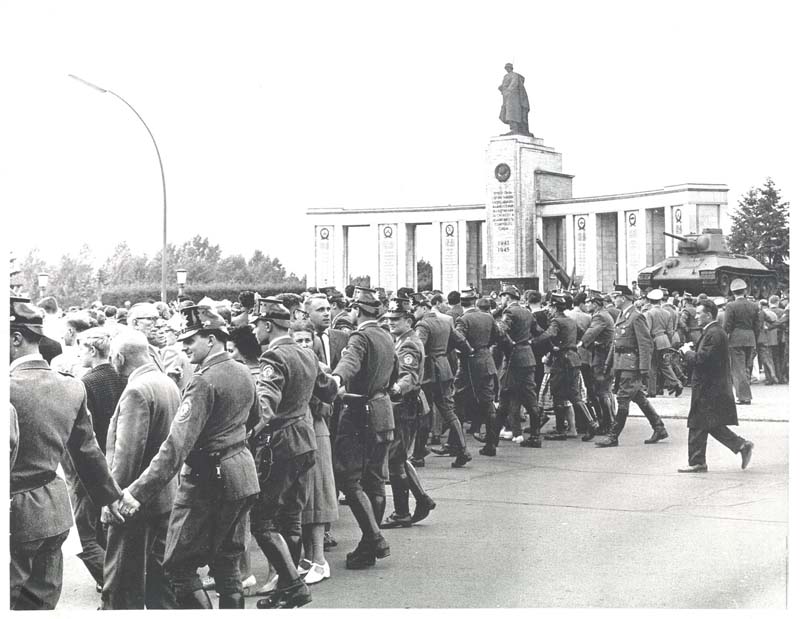
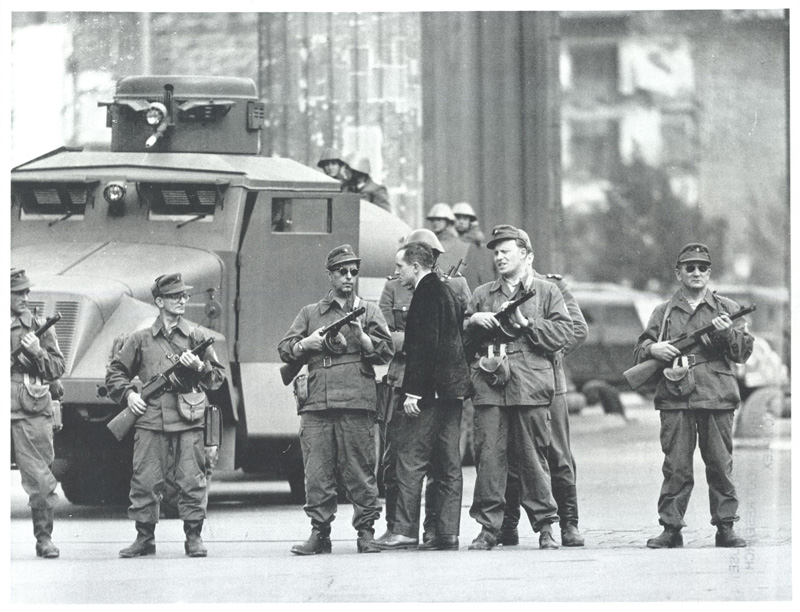
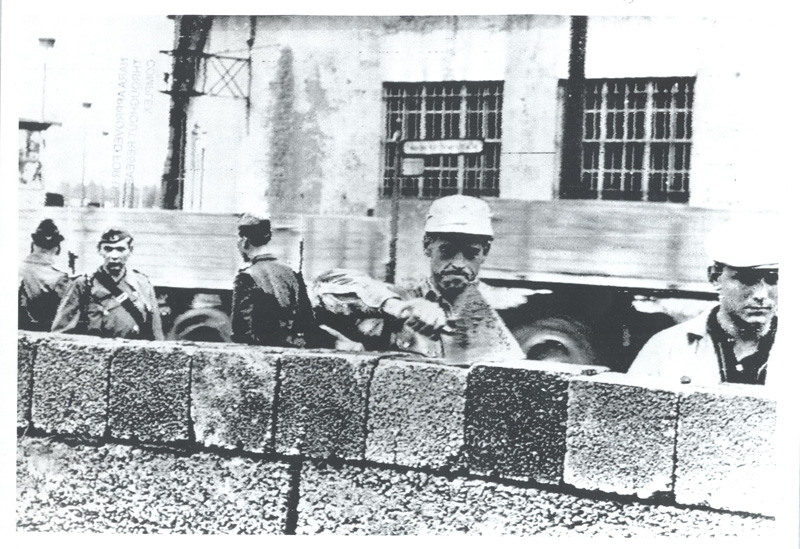
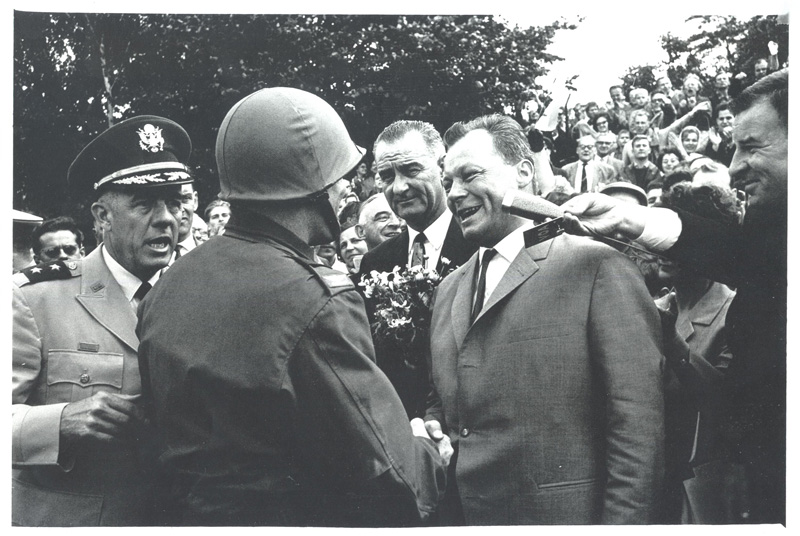


 🛑 BERND PULCH ARCHIVE | SECURE MIRROR