LEAKED: OPERATION “ARCTIC ACCORD”✌

Anchorage twilight, 15 Aug 2025: two jets, two flags, zero deal—just the cold wind of high-stakes diplomacy on an icy Alaskan runway.

✅ ABOVE TOP SECRET REPORT
📂 SOURCE: Insider Analysis from Recent Diplomatic Briefings (OSINT, Leaked Transcripts)
🔒 CLEARANCE: COSMIC SHADOW – SUBSCRIBERS ONLY
📅 DATE: 2025-08-18, 10:15 CEST
🛰️ DISTRIBUTION: NOFORN // COMPARTMENT 12-A – PATRIOTS & SUBSCRIBERS

GET THE FULL DOSSIER ONLY HERE

https://www.patreon.com/posts/leaked-operation-136756484?utm_medium=clipboard_copy&utm_source=copyLink&utm_campaign=postshare_creator&utm_content=join_link

FREE FOR DONORS AND PATRONS


🟥 OPERATION “ARCTIC ACCORD”

🔥 HIDDEN AGREEMENTS IN ALASKA: INSIDER REVELATIONS ON TRUMP-PUTIN SUMMIT


🧨 EXECUTIVE BRIEFING

This classified report, compiled at 10:15 CEST on August 18, 2025, draws from insider discussions on a high-level summit in Alaska between U.S. and Russian leaders. Credited to insiders with deep knowledge of international affairs, the analysis uncovers undisclosed agreements from the meeting held yesterday, August 17, 2025. The brief 12-15 minute press conference in Anchorage masked deeper diplomatic shifts, amid hostile media coverage and European panic.


🧾 SECTION 1: SUMMIT OVERVIEW

Insiders describe:

  • The gathering as a pivotal diplomatic breakthrough after years of Western isolation efforts against Russia, following its military operations three and a half years ago.
  • A short public briefing that left critical questions unanswered, fueling speculation and varied reactions from optimism to alarm.

🧠 Note: This marks a potential reset in strained relations, per insider evaluations.


💵 SECTION 2: MEDIA AND REACTION ANALYSIS

Key insights reveal:

  • Hostile press portrayals demanding a tough U.S. stance, viewed as attempts to prolong conflicts.
  • Extreme responses across Europe, ranging from hope to outright panic over possible geopolitical realignments.

🔗 SECTION 3: HIDDEN AGREEMENTS AND OUTCOMES

Emerging details from insiders:

  • Fresh information post-summit points to undisclosed pacts, though specifics remain guarded.
  • The meeting’s outcomes could alter Russia-West dynamics, challenging prior isolation strategies.

📉 IMPLICATIONS

⚠️ The summit signals a strategic pivot, potentially easing tensions but sparking media backlash.
🕳️ Undisclosed deals hint at territorial or conflict resolutions not publicly addressed.
🔒 Insider context ties this to broader historical analyses of ongoing wars.


❓ UNANSWERED QUESTIONS

  • What exact terms were agreed upon behind closed doors?
  • How will European allies respond to any perceived U.S. concessions?
  • Could this lead to a broader thaw in global relations?

🔐 APPENDIX – INSIDER INSIGHTS

  • Briefing Duration: 12-15 minutes, masking deeper talks.
  • Reaction Spectrum: Optimism to panic in Europe.
  • Geopolitical Shift: Potential end to isolation policies.

🔗 Full Access: Support at patreon.com/berndpulch  for complete insider breakdowns.


🧨 #ArcticAccord #HiddenAlaskaDeals #TrumpPutinSummit #AboveTopSecret #InsiderRevelations #BerndPulchOrg

🔍 OFFICIAL INTELLIGENCE SOURCES

🇬🇧 English

🇩🇪 Deutsch

🇪🇸 Español

🇮🇹 Italiano

💰 SUPPORT OPTIONS

Monero QR

🔐 Monero (XMR)

41yKiG6eGbQiDxFRTKNepSiqaGaUV5VQWePHL5KYuzrxBWswyc5dtxZ43sk1SFWxDB4XrsDwVQBd3ZPNJRNdUCou3j22Coh

🎗️ Patreon

patreon.com/berndpulch

🔐 [SUPPORT ACKNOWLEDGED]

Your contribution fuels global truth preservation.🔍 ACCESS EXCLUSIVE CONTENT

✌#Geopolitical and Military Analysis: Ukraine, Israel, and the Risk of World War III

Geopolitical and Military Analysis: Ukraine, Israel, and the Risk of World War III

The geopolitical tensions in both Ukraine and Israel have drawn significant attention from global powers, raising concerns about an escalating risk of a broader conflict that could lead to World War III. Both regions represent flashpoints in ongoing power struggles, involving key international actors, with potential spillover effects into larger confrontations. The involvement of major powers like the United States, Russia, and China, and the way these conflicts have polarized global opinion, creates a situation that could spiral out of control.

1. Ukraine: A Proxy War Between Russia and the West

Background and Current Military Situation

The conflict in Ukraine, which escalated following Russia’s invasion in February 2022, represents one of the most dangerous geopolitical standoffs since the Cold War. The roots of the conflict stem from Ukraine’s desire to integrate with the European Union and NATO, and Russia’s attempt to prevent NATO expansion into its sphere of influence. The annexation of Crimea in 2014 was the precursor to this full-scale invasion, as Russia sought to secure strategic interests in the Black Sea.

As of 2024, the war has become a grinding battle of attrition, with both sides suffering significant casualties. The Ukrainian military, heavily supported by Western powers, has mounted a defense that has prevented Russia from gaining control of the entire country, though parts of eastern Ukraine remain under occupation. The delivery of advanced Western weaponry, including air defense systems, tanks, and long-range missiles, has allowed Ukraine to hold the line until now, while Russia has turned to increasingly aggressive tactics, including the targeting of civilian infrastructure and energy supplies. Russia moves on step by step. Rumours of a coup d’etat in the Ukraine loom.

Geopolitical Implications

Ukraine has become a de facto battleground between NATO and Russia. The U.S. and Europe, while officially not directly involved in combat, have provided substantial financial and military support to Ukraine, positioning the conflict as a proxy war. Russia views NATO’s involvement as an existential threat and has frequently warned that continued Western intervention could provoke a wider confrontation, possibly even nuclear escalation.

One critical issue is Russia’s veiled nuclear threats. President Vladimir Putin has consistently reminded the world of Russia’s nuclear capabilities, and while these may primarily serve as deterrence, they add an unpredictable element to the conflict. Any miscalculation could lead to catastrophic consequences. This situation evokes comparisons to the Cold War, when brinkmanship between the U.S. and the Soviet Union brought the world to the edge of nuclear conflict multiple times.

The role of China is also notable. While officially neutral, China has provided Russia with diplomatic cover and economic lifelines, counterbalancing Western sanctions. Beijing’s ultimate stance on the conflict will be critical in shaping the global order, as its support for Russia could further deepen the divide between East and West.

2. Israel: An Escalating Crisis in the Middle East

Background and Current Military Situation

The ongoing Israeli-Palestinian conflict took a sharp turn with the resurgence of hostilities between Israel and Hamas, the militant group controlling Gaza, in October 2023. This conflict quickly escalated into one of the bloodiest confrontations in years, involving massive airstrikes by Israel and retaliatory rocket attacks from Gaza. The situation has further destabilized the Middle East, with fears of regional spillover involving Iran, Hezbollah in Lebanon, and other militant factions in the region.

The conflict also heightened as Israel faced international criticism for its military tactics in Gaza, which resulted in high civilian casualties. The involvement of Hezbollah and Iran-backed militias has raised concerns that Israel could soon face a multi-front war. Iran, a key actor in the region, has been accused of supplying arms and funding to Hamas and Hezbollah, making it a central player in the conflict. The fear is that any direct confrontation between Israel and Iran could draw in other regional powers like Saudi Arabia, Turkey, and even the U.S.

Geopolitical Implications

Israel’s geopolitical situation is deeply intertwined with the broader power struggles in the Middle East. The U.S. has historically been Israel’s main ally, providing military and diplomatic support, but the current conflict has strained some international relations, particularly in the Muslim world. Tensions in Israel could also shift the focus of U.S. foreign policy away from Europe and Asia, which would have significant strategic consequences.

The potential for escalation in the Middle East is considerable. Any direct engagement between Israel and Iran could lead to a broader regional conflict, especially given the presence of Russian and Turkish forces in Syria, where they back different factions. Additionally, the strategic importance of the region’s oil supplies raises the stakes, as disruptions could have global economic impacts.

3. Danger of World War III

The simultaneous crises in Ukraine and Israel represent a dangerous confluence of global tensions. Several factors increase the risk of these conflicts spiraling into a larger war:

  • Nuclear Threats: Both Russia and NATO are nuclear-armed, and any miscalculation in Ukraine could lead to escalation. Similarly, Israel’s status as an undeclared nuclear power adds another layer of danger to the Middle East conflict, particularly if Iran, suspected of pursuing nuclear capabilities, becomes directly involved.
  • Great Power Rivalries: The U.S., China, and Russia are increasingly at odds, with Ukraine and Israel acting as proxy battlegrounds for these rivalries. If these conflicts are not contained, they could evolve into direct confrontations between major powers, particularly in regions like the Black Sea or the Persian Gulf.
  • Regional Alliances: The involvement of NATO, Iran, and possibly China in these conflicts raises the risk that local wars could turn into broader confrontations. The Middle East, with its complex web of alliances and enmities, could see a localized war drag in multiple countries, including major powers like the U.S. and Russia.

Bernd Pulch’s Perspective

Historian and investigative journalist Bernd Pulch has been a vocal critic of the power structures and covert operations that influence global conflicts. His insights, particularly on intelligence agencies and their role in destabilizing regions, offer a unique lens through which to view the Ukraine and Israel conflicts. Pulch has often highlighted how both state and non-state actors manipulate narratives and public opinion to justify military interventions.

Pulch would likely point to the role of intelligence agencies in both conflicts—whether through disinformation campaigns, covert operations, or proxy warfare. In Ukraine, for instance, the manipulation of public sentiment and the use of false flag operations have been central to Russia’s strategy. Similarly, in Israel, the intelligence community plays a crucial role in shaping both military strategies and international perceptions of the conflict. Pulch’s analysis often underscores how the manipulation of information can exacerbate conflicts, leading to more aggressive military engagements and, potentially, a larger war.

Conclusion

The Ukraine and Israel conflicts represent two of the most dangerous geopolitical flashpoints in the world today. Both have the potential to escalate into larger wars involving multiple global powers, raising the specter of World War III. The involvement of nuclear-armed states, the shifting alliances, and the potential for miscalculation all contribute to the high level of risk.

The perspectives of investigative journalists like Bernd Pulch remind us of the unseen forces that drive these conflicts, particularly the influence of intelligence operations and disinformation campaigns. As the world watches these conflicts unfold, the international community must carefully manage these crises to prevent a catastrophic escalation.

❌©BERNDPULCH.ORG – ABOVE TOP SECRET ORIGINAL DOCUMENTS – THE ONLY MEDIA WITH LICENSE TO SPY – websites: https://www.berndpulch.org
https://googlefirst.org

MY BIO:

FAQ:

FAQ

PLEASE SUPPORT OUR COMMON CAUSE AND HELP ME TO STAY ALIVE.

CRYPTO WALLET  for

ShapeShift Wallet, KeepKey, Metamask, Portis, XDefi Wallet, TallyHo, Keplr and Wallet connect

0x271588b52701Ae34dA9D4B31716Df2669237AC7f

Crypto Wallet for Binance Smart Chain-, Ethereum-, Polygon-Networks

bmp

0xd3cce3e8e214f1979423032e5a8c57ed137c518b

If you want to be totally anonymous please use Monero

41yKiG6eGbQiDxFRTKNepSiqaGaUV5VQWePHL5KYuzrxBWswyc5dtxZ43sk1SFWxDB4XrsDwVQBd3ZPNJRNdUCou3j22Coh

GOD BLESS YOU

Follow the ONLY MEDIA with the LICENSE TO SPY ✌️@abovetopsecretxxl

U.S. National Security Commission On Artificial Intelligence – Interim Report – Original Document

Become a Patron!
True Information is the most valuable resource and we ask you to give back.

Artificial Intelligence M&A-Report | Jetzt downloaden | Hampleton Partners

Become a Patron!
True Information is the most valuable resource and we ask you to give back.

Go back

Your message has been sent

Warning
Warning
Warning
Warning.

Revealed – Brazil Truth Commission Releases Report

Become a Patron!
True Information is the most valuable resource and we ask you to give back.


Truth commissioners giving the report to Brazilian President Dilma Rousseff this morning. Photo Credit: National Truth Commission website.

Almost thirty years after the end of Brazil’s military dictatorship, the Comissao Nacional da Verdade [National Truth Commission] today released its long awaited report on human rights violations by the security forces between 1964 and 1985. The report, which took two-and-a-half years to complete and totals over 1000 pages, represents the first formal attempt by Brazil as a nation to record its repressive past and provide a detailed accounting of the system of repression, the victims of human rights violations, as well as the identities of those who committed those crimes.

In contrast to the U.S. Senate report on torture released yesterday in Washington which redacted even the pseudonyms of CIA personnel who engaged in torture, the Brazilian report identified over 375 perpetrators of atrocities by name.

The report contains detailed chapters on the structure and methods of the repression during the military era, including targeted violence against women and children. The commission identified over 400 individuals killed by the military, many of them “disappeared” as the military sought to hide its abuses. During its investigation, the Commission located and identified the remains of 33 of the disappeared; some 200 other victims remain missing.

The report also sheds significant light on Brazil’s role in the cross-border regional repression known as Operation Condor. In a chapter titled “International Connections: From Repressive Alliances in the Southern Cone to Operation Condor,” the Commission report details Brazil’s military ties to the coup in Chile, and support for the Pinochet regime, as well as identifies Argentine citizens captured and killed in Brazil as part of a Condor collaboration between the Southern Cone military regimes.

This report opens a Pandora’s box of historical and legal accountability for Brazilians. For now it provides a verdict of history, but eventually the evidence compiled by the commission’s investigation could lead to a judicial accounting. “The Truth Commission’s final report is a major step for human rights in Brazil,” according to Brown University scholar, James Green,  “and the pursuit of justice for the victims of the state’s terror.”

In its recommendations, the Commission took the bold step of calling for a repeal of Brazil’s 1979 amnesty law which has, to date, shielded military officers from human rights prosecutions.

Those prosecutions could be aided by evidence from declassified U.S. documentation. In support of the Commission’s work, the Obama administration agreed to a special declassification project on Brazil, identifying, centralizing and reviewing hundreds of still secret CIA, Defense and State Department records from the 1960s, 1970s and 1980s. Last June, Vice President Biden personally delivered 42 documents into President Dilma Rousseff’s hands; more recently the U.S. Embassy passed another tranche of over 100 records, many of them from the CIA, to the Brazilian government. As part of a commitment Biden made to open U.S. archives, the administration is continuing to review hundreds of additional records to declassify and provide to the Brazilian government next year.

The Commissioners presented their report to President Rousseff on International Human Rights Day. Rousseff, herself a victim of torture by electric shock during the military dictatorship, was “moved to tears” as she received the report and received a standing ovation from the crowd that had gathered for the ceremony, according to the Washington Post. In her speech accepting the report, the President stated that “We hope this report prevents ghosts from a painful and sorrowful past from seeking refuge in the shadows of silence and omission.”


Read the three-volume Report

Brazil Truth Commission Report Website

Volume I: Part I – III

Volume I: Part IV-V

Volume II

Volume III: Introduction


Read Key Documents Provided by the United States

Document l: Department of State, “Widespread Arrests and Psychophysical Interrogation of Suspected Subversives,” Confidential, April 18, 1973

This intelligence cable, sent by the U.S. Consul General in Rio de Janeiro, provides detailed reporting on a “sophisticated and elaborate psychophysical” method of torture being employed by the Brazilian military against suspected militants. In response to growing international condemnation of human rights violations, the cable suggests, the Brazilian torturers have adopted more modern interrogation methods that leave less visible evidence of abuses. In cases where detainees are “eliminated,” the military is also deceiving the press by claiming they were killed in a “shoot-out” while trying to escape.

The cable was declassified on June 5, 2014, only eleven days before Biden’s trip to Brazil in order for him to provide it to President Rousseff as a diplomatic gesture. But key sections of the document are redacted, presumably at the request of the CIA, that identify the military units responsible for these atrocities — information that would be of critical use to the Brazilian Truth Commission as it attempts to hold the military accountable for the atrocities of the past.


Document 2: Department of State, “Political Arrests and Torture in São Paulo,” Confidential, May 8, 1973

The Consul General in Sao Paulo, Frederic Chapin, reports on a source described as “a professional informer and interrogator working for the military intelligence center in Osasco,” an industrial suburb of Sao Paulo. The source has provided graphic details on methods of abuse, including a Brazilian form of “waterboarding” that involved putting prisoners in vats of water that forced them to stand on their tiptoes for prolonged periods of time to be able to breath. The informant also provides a description of methods of executing prisoners so that their bodies could not be identified. Prisoners would be machine gunned from head to toe — a method referred to as “sewing” the suspect up.

This document was declassified in 2005, and initially provided to the Truth Commission by National Security Archive Brazil project director Peter Kornbluh. It played a key role in enabling researchers to identify the April 18, 1973, cable on psychophysical abuses, which is cited as a reference telegram. A memorandum of conversation with the informant/torturer, however, is also cited in this document and would be of exceptional value to the Truth Commission in obtaining additional information about the torture center in Osasco.


Document 3: Department of State, “Allegation of Torture in Brazil,” Secret, July 1, 1972

U.S. Ambassador William Rountree advises the State Department that openly protesting human rights “excesses” by the Brazilian military government will be counterproductive and “damage our general relations.” Ambassador Rountree encourages the State Department to oppose a piece of human rights legislation known as the “Tunney Amendment” which would link U.S. aid to Brazil to a U.S. government certification that the Brazilian regime was not engaged in human rights violations.


Document 4: Department of State, “The Esquadrão da Morte (Death Squad),” Limited Official Use, June 8, 1971

Ambassador Rountree submits an 11-page report on death squad activity in Brazil. He advises that there has been an “upsurge” of victims of unofficial operations in recent months, believed to be the work of off-duty policemen. In Sao Paulo, the death squads are reportedly led by Sergio Fleury, who has now been charged in at least one murder. Some of the victims are common prisoners, others political figures and militant opponents of the regime. Much of the information in the report is gleaned from newspaper articles; the report appears to contain almost no intelligence information.


Document 5: Department of State, “Conditions in DEOPS Prison as told by Detained American Citizen,” Confidential, October 7, 1970

This memorandum of conversation contains a report by a U.S. businessman, Robert Horth, who was detained by the military police in an apparent case of mistaken identity. Horth relates hearing from fellow Brazilian prisoners about torture at the prison where he is held in downtown Sao Paulo. The torture techniques include the Parrot Perch — known in Portuguese as “pau de arara” — and electrical shock to all parts of the body, as well as the “telephone technique” where an interrogator stands behind the seated prisoner and smacks both sides of his/her head repeatedly, almost destroying their eardrums.

Go back

Your message has been sent

Warning
Warning
Warning
Warning

Warning.


The National Security Archive – The United States, China, and the Bomb

Become a Patron!
True Information is the most valuable resource and we ask you to give back.

Washington, D.C. – The National Security Archive has initiated a special project on the Chinese nuclear weapons program and U.S. policy toward it. The purpose is to discover how the U.S. government monitored the Chinese nuclear program and ascertain what it knew (or believed that it knew) and thought about that program from the late 1950s to the present. Besides investigating U.S. thinking about, and intelligence collection on, the Chinese nuclear program as such, the Archive’s staff is exploring its broader foreign policy significance, especially the impact on China’s relations with its neighbors and the regional proliferation of nuclear weapons capabilities. Through archival research and systematic declassification requests, the Archive is working to collect key U.S. documents on important developments in Chinese nuclear history, including weapons, delivery systems, and strategic thinking. To put the nuclear issue in the broader context of the changing relations between the United States and China, the Archive is also trying to secure the declassification of key U. S. policy papers that elucidate changes in the relationship.

In particular, the Archive’s project is exploring Washington’s thinking about the Chinese nuclear weapons program in the context of U.S. nuclear proliferation policy. The Archive is probing Washington’s initial effort to brake the development of the Chinese advanced weapons program by encouraging allies and others to abstain from the shipment of products that could have direct or indirect military applications. Moreover, the Archive is seeking the declassification of materials that shed light on an important concern since the late 1980s, China’s alleged role as a contributor to the proliferation of nuclear capabilities in South Asia and elsewhere. To the extent possible, the Archive will try to document the U.S. government’s knowledge of, and policy toward, China’s role as a nuclear proliferator and its efforts to balance proliferation concerns with a policy of cooperation with Beijing.

In the spring of 1996, the Archive began a series of Freedom of Information and mandatory review requests to the CIA, State Department, Defense Department, National Archives, and other agencies to prompt the release of relevant documents. Although this will take time, the State Department’s own systematic declassification review of central files from the 1960s has already made available some very useful material. Moreover, previous declassification requests by the Archive are beginning to generate significant material. This makes it possible for the Archive to display, on our Web site, some newly released documents on U.S. policy toward the Chinese nuclear weapons program.

The documents that follow are from 1964 when U.S. government officials recognized that China would soon acquire a nuclear weapons capability. As this material indicates, the degree of apprehension varied, with some officials truly worried that a nuclear armed China would constitute a formidable threat to the security of China’s neighbors as well as the United States. Others, however, believed that Beijing’s orientation was fundamentally cautious and defensive and that the political and psychological implications would be more immediately consequential than any military threat. Although China’s attitude toward U.S.-Soviet nonproliferation efforts was hostile, as far as can be determined, no one anticipated a development of later decades: the PRC’s apparent role as a purveyor of nuclear weapons and delivery systems technologies.

* * *

This briefing book was prepared by William Burr, the Archive’s analyst for the China nuclear weapons project and for a related project on U.S. nuclear weapons policies and programs. Currently a member of Dipomatic History‘s editorial board, he has published articles there and in the Bulletin of the Cold War International History Project. He previously directed the Archive’s project on the Berlin Crisis, 1958-1962 (published by Chadwyck-Healey in 1992).

The National Security Archive thanks the W. Alton Jones Foundation for the generous financial support that made this project possible. Anthony Wai, Duke University, and Matthew Shabatt, Stanford University, provided invaluable research assistance for this project.


THE DOCUMENTS

Document 1: “Implications of a Chinese Communist Nuclear Capability”, by Robert H. Johnson, State Department Policy Planning Staff, with forwarding memorandum to President Johnson by Policy Planning Council director Walt W. Rostow, 17 April 1964.

Source: U.S. National Archives, Record Group 59, Department of State Records, Central Foreign Policy Files, 1964-1966, file DEF 12-1 Chicom.

Robert Johnson (now associated with the National Planning Association) was one of the Department’s leading China experts. Between 1962 and 1964, he directed a number of studies on the Chinese nuclear program and its ramifications, not only for the United States but also for China’s neighbors in East and South Asia. This document is a summary of a longer study which remains classified but is undergoing declassification review. In this paper Johnson minimized the immediate military threat of a nuclear China, suggesting instead that Chinese leaders were more interested in a nuclear capability’s deterrent effect and were unlikely to engage in high-risk activities. Consistent with his relatively moderate interpretation, Johnson ruled out preemptive action against Chinese nuclear facilities except in “response to major ChiCom aggression.” Johnson explored the issue of preemption in another study: “The Bases for Direct Action Against Chinese Communist Nuclear Facilities,” also April 1964. That study is unavailable but is discussed in document 5.

Document 2: Special National Intelligence Estimate, “The Chances of an Imminent Communist Chinese Nuclear Explosion” 26 August 1964.

Source: Lyndon B. Johnson Library

The timing of a Chinese atomic test was a controversial subject during the summer and fall of 1964. As this document shows, CIA officials believed that the Chinese would not test a weapon until “sometime after the end of 1964.” State Department China specialist Allen Whiting, an official at the Bureau of Intelligence and Research, thought otherwise. Like his colleagues he was unaware that the Chinese had an operating gaseous diffusion plant which was producing weapons-grade material. Yet, he made more than the CIA of the fact that the Chinese had already constructed a 325 foot test tower at Lop Nur. Whiting was certain that the Chinese would not have taken the trouble to construct a tower unless a test was impending, although CIA technical experts were dubious. As other intelligence information becomes available, Whiting estimated a test on 1 October. (Interview with Whiting by William Burr, 13 December 1996).

Document 3: Memorandum for the Record, McGeorge Bundy, 15 September 1964

Source: Lyndon B. Johnson Library.

This report of a meeting between President Johnson’s top advisers discloses the administration’s basic approach toward the first Chinese nuclear test but nevertheless raises questions that have yet to be settled. Although it is evident that the administration had provisionally ruled out a preemptive strike, it is unclear whether Secretary of State Rusk ever had any substantive discussions of the Chinese nuclear issue with Soviet Ambassador Dobrynin during the weeks after this meeting.

Until recently, paragraph 3 of this document was entirely excised but a successful appeal by the National Security Archive led the National Archives to release all but the date of the proposed “Chinat” overflight, presumably by a U-2. The date of the overflight is unknown although a number took place in late 1964 and early 1965 to monitor Chinese nuclear weapons facilities.

Document 4: “China As a Nuclear Power (Some Thoughts Prior to the Chinese Test)”, 7 October 1964

Source: FOIA request to State Department

This document was prepared by the Office of International Security Affairs at the Department of Defense, possibly by, or under the supervision of Deputy Assistant Secretary of Defense Henry S. Rowen, who drafted other papers on the Chinese nuclear program during this period. It probably typified the “worst case” scenarios developed by those who believed that a nuclear China would become such a serious threat that it would be necessary to attack Chinese nuclear weapons facilities as a counter-proliferation measure.

Document 5: State Department Telegram No. 2025 to U.S. Embassy Paris, 9 October 1964

Source: U.S. National Archives, Record Group 59, Department of State Records, Central Foreign Policy Files, 1964-1966, file DEF 12-1 Chicom

This document provides one example of Washington’s efforts to get “hard” information on the PRC’s atomic test not long before it occurred on 16 October. In early September, several weeks before the State Department sent this cable, Allen Whiting saw a CIA report on a meeting earlier in the year between Chinese Premier Zhou Enlai and President of Mali Modibo Keita, when Zhou was visiting West Africa. Zhou told Keita that China would be testing an atomic device in October and asked him to give political support to the test when it occurred. Whiting was sure that Zhou’s statement should be taken seriously and on the basis of this and other information he convinced Secretary of State Rusk to announce, on 29 September, that a test would soon occur. (Interview with Whiting). The CIA report is unavailable but this telegram suggests that Zhou’s statement or similar comments by PRC officials to friendly governments may have leaked to the press.

Document 6: “Destruction of Chinese Nuclear Weapons Capabilities”, by G.W. Rathjens, U.S. Arms Control and Disarmament Agency, 14 December 1964.

Source: FOIA request to State Department

George Rathjens, the author of this document, was an ACDA official serving on an interagency group, directed by White House staffer Spurgeon Keeny, that assisted the President’s Task Force on the Spread of Nuclear Weapons, better known as the Gilpatric Committee after its chairman, former Deputy Secretary of Defense Roswell Gilpatric. Whether Rathjens prepared it as his own initiative or at the Committee’s request is unclear, but it may have been the latter because the Committee considered the possibility of recommending an attack on Chinese nuclear weapons facilities as part of a program to check nuclear proliferation. In this document, Rathjens summarized Roben Johnson’s still classified study of the costs and benefits of various types of attacks on the Chinese nuclear weapons complex. Apparently one of the possibilities, an “air drop of GRC [Government of the Republic of China] sabotage team” received serious consideration earlier in the year.

Taking a more bullish view of the benefits of attacking Chinese nuclear facilities, Rathjens took issue with Johnson’s conclusion that the “significance of a [Chicom nuclear] capability is not such as to justify the undertaking of actions which would involve great political costs or high military risks.” However confident Rathjens may have been that a successful attack could discourage imitators and check nuclear proliferation, that recommendation did not go into the final report, which has recently been declassified in full.

Before ACDA declassified this document in its entirety, a lightly excised version was available at the Johnson Library. Shane Maddock of the U.S. Coast Guard Academy’s History Department, published the excised version with stimulating commentary in the April 1996 issue of the SHAFR Newsletter.

Document 7: “As Explosive as a Nuclear Weapon”: The Gilpatric Report on Nuclear Proliferation, January 1965

Source: Freedom of Information Act request to State Department

Sections excised from previous releases are outlined in red.

Note: Since the Archive published this document, the Department of State has released Foreign Relations of the United States, Arms Control and Disarmament, 1964-1968, Volume XI, which includes the full text of the Gilpatric Report along with valuable background material.

Here the Archive publishes, for the first time, the complete text of the “Gilpatric Report”, the earliest major U.S. government-sponsored policy review of the spread of nuclear weapons. Largely motivated by concern over the first Chinese atomic test in October 1964, President Lyndon B. Johnson asked Wall Street lawyer and former Deputy Secretary of Defense Roswell Gilpatric to lead a special task force in investigating, and making policy recommendations on, the spread of nuclear weapons. Owing to his extensive connections in high-level corporate and governmental circles, Gilpatric was able to recruit a group of unusually senior former government officials, including DCI Allen Dulles, U. S. High Commissioner to Germany John J. McCloy, White House Science Adviser George Kistiakowsky, and SACEUR Alfred Gruenther. Johnson announced the formation of the committee on 1 November 1964. The committee completed its report in early 1965 and presented it to President Johnson on 21 January 1965.

The report came at a time when senior Johnson administration officials had important disagreements over nuclear proliferation policy. Johnson and Secretary of State Dean Rusk were already heavily committed to a Multilateral Force [MLF] designed to give the Germans and other European allies the feeling of sharing control over NATO nuclear weapons decisions while diverting them from developing independent nuclear capabilities. This complicated negotiations with Moscow which saw the MLF as incompatible with a nonproliferation treaty; nevertheless, Johnson and Rusk gave the MLF priority on the grounds that it would secure West Germany’s non-nuclear status1. Further, some senior officials thought that nuclear proliferation was inevitable and, among the right countries, potentially desirable. Thus, during a November 1964 meeting, Rusk stated that he was not convinced that “the U.S. should oppose other countries obtaining nuclear weapons.” Not only could he “conceive of situations where the Japanese or the Indians might desirably have their own nuclear weapons”, Rusk asked “should it always be the U.S. which would have to use nuclear weapons against Red China?” Robert McNamara thought otherwise: it was “unlikely that the Indians or the Japanese would ever have a suitable nuclear deterrent2.

The Gilpatric Committee tried to resolve the debate by taking an unhesitatingly strong position against nuclear proliferation, recommending that the United States “greatly intensify” its efforts to halt the spread of nuclear weapons. Besides calling for an international treaty on “non-dissemination and non-acquisition of nuclear weapons”, the report included a range of suggestions for inhibiting proliferation in specific countries in Europe, the Near East, and Asia. The latter generally involved a carrot and stick approach: inducements to discourage independent nuclear programs but a more assertive policy if inducements failed. For example, with respect to Israel, Washington would continue to offer “assurances” against Egyptian-Syrian attack; however, “make clear to Israel that those assurances would be withdrawn if she develops a nuclear weapons capability.” With respect to the MLF controversy, the report questioned Johnson administration policy by suggesting the “urgent exploration of alternatives” to permanently inhibit German nuclear weapons potential.

Spurgeon Keeny, the Committee’s staff director, believes that the report “got to LBJ that the Establishment was really worried about nuclear proliferation and that steps could be taken to do something about it”3. Yet, however Johnson may have thought about the report’s line of argument and recommendations, his immediate response appears to have been skeptical because it challenged the Administration’s emphasis on the MLF as a means to manage the German nuclear problem. Unquestionably, this contributed heavily to his decision to bar circulation of the report except at the cabinet level. Dean Rusk fully agreed, according to Glenn Seaborg’s account of a briefing for Johnson, Rusk opined that the report was “as explosive as a nuclear weapon.” Like Johnson, Rusk worried about leaks; moreover, he opposed the report’s message on Germany as well as other countries that it singled out. Uncontrolled revelations about the report would have quickly complicated U.S. relations with France, Germany, and lsrael, among others4.

One important section of the report, on possible initiatives toward the Soviet Union and their relationship to nonproliferation goals, has been declassified for some time. In it (beginning on p. 16), the Committee called for a verified fissile material cutoff (although production of tritium permitted) and strategic arms control agreements. By recommending a strategic delivery vehicle freeze (misspelled “free” in text), significant reductions in strategic force levels, and a moratorium on ABM and ICBM construction, the report presaged (and went beyond) the SALT I agreement of 1972. Elsewhere (p. 8) the Committee called for U.S. efforts to work with the Soviets in building support for a comprehensive nuclear test ban. For the Committee, U.S.-Soviet cooperation in those areas were essential because they would help create an “atmosphere conducive to wide acceptance of restraints on nuclear proliferation.”

Participants and close observers have offered conflicting analyses of the report’s impact. Some, such as Atomic Energy Commission Chairman Glenn Seaborg, downplay its significance noting that other political developments had more influence on Johnson administration policy. Others, such as Keeny and Raymond Garthoff (who represented the State Department on the Committee’s interagency staff) believe that even if the Gilpatric report did not quickly lead to tangible policy changes, it educated the President as well as its members on the significance of the nuclear proliferation issue. Keeny further argues that the report helped prepare Johnson to give strong support to a nonproliferation treaty in 1966 after the MLF approach to the German nuclear problem had lost momentum5.

No doubt owing to classification problems, the literature on the Gilpatric Committee and the early history of U.S. non- proliferation policy is sparse6. With the report fully declassified and other related information becoming available, it should now be possible for historians and social scientists to assess the Gilpatric Committee’s contribution to Lyndon Johnson’s nuclear proliferation policy. Whatever the Gilpatric report’s immediate impact may have been, the future turned out very differently than its critics anticipated. The slowing of nuclear proliferation has proven to be possible and a major goal of the Gilpatric committee–a nearly universal nonproliferation regime–came to pass. To the extent, however, that important measures supported by the Committee have yet to be acted upon–e.g., a fissile materials production cut off–or ratified, e.g., the CTBT–the report stands in harsh judgement of current international efforts to curb nuclear proliferation.


NOTES

1. For a useful overview of the MLF-NPT interrelationships, see George Bunn, Arms Control By Committee, Managing Negotiations with the Russians (Stanford University Press, 1992), 64-72.
2. Presumably, Rusk thought it better that Asians use nuclear weapons against each other rather than Euro-Americans using them against Asians. Quotations from memorandum of conversation by Herbert Scoville, ACDA, “Non-Proliferation of Nuclear Weapons- Course of Action for UNGA – Discussed by the Committee of Principals”, 23 November 1964, National Archives, Record Group 359, White House Office of Science and Technology, FOIA Release to National Security Archive.
3. Telephone conversation with Spurgeon Keeny, 24 March 1997.
4. Glenn Seaborg with Benjamin S. Loeb, Stemming the Tide: Arms Control in the Johnson Years (Lexington, MA: 1987), 143-145. This is the only generally available account of Johnson’s meeting with the committee. Neither Dean Rusk’s nor Lyndon Johnson’s memoirs mention the report.
5. Seaborg, Stemming the Tide, 148-149, although he provides a dissent from Keeny. Herbert York, Making Weapons, Talking Peace: A Physicists odyssey from Hiroshima to Geneva (New York, 1987), also downplays the report’s significance. Telephone conversation with Keeny, 24 March 1997; conversation with Raymond Garthoff, 28 March 1997. George Bunn, Arms Control by Committee, 75-81, is useful on the negotiations but does not mention the report.
6. George Perkovich’s “India’s Ambiguous Bomb” (forthcoming Ph.D. dissertation, University of Virginia), explores the impact of the Gilpatric report on Johnson’s policy, among other subjects.


For further reading:

Willis C. Armstrong et al., “The Hazards of Single-Outcome Forecasting,” in H. Bradford Westerfield, Inside ClA ‘s Private World: Declassified Articles from the Agency’s Internal Journal, 1955-1992 (New Haven, 1995), 238-254

Gordon H. Chang, Friends and Enemies: The United States, China, and the Soviet Union, 1948-1972 (Stanford, 1990)

Rosemary Foot, The Practice of Power, U.S. Relations with China Since 1949 (Oxford, 1995)

John Wilson Lewis and Xue Litai, China Builds The Bomb (Stanford, 1988)

Chris Pocock, Dragon Lady: The History of the U-2 Spyplane (Airlife, England, 1989), especially ch. 6, “Parting the Bamboo Curtain”

Secret from the National Archive for Security – The Alexeyeva File

Become a Patron!
True Information is the most valuable resource and we ask you to give back.

The Alexeyeva File

Soviet, American, and Russian Documents on the Human Rights Legend

Lyudmila Mikhailovna’s 85th Birthday Party Brings Together Generations, New Challenges

National Security Archive Electronic Briefing Book No. 387

Compiled and edited by Svetlana Savranskaya, Tom Blanton and Anna Melyakova
Web production by Rinat Bikineyev and Jamie Noguchi.
Research and editorial assistance by Anya Grenier and Julia Noecker.
Special thanks to the Memorial Society, Archive of the History of Dissent, Moscow.

For more information: 202.994.7000, nsarchiv@gwu.edu


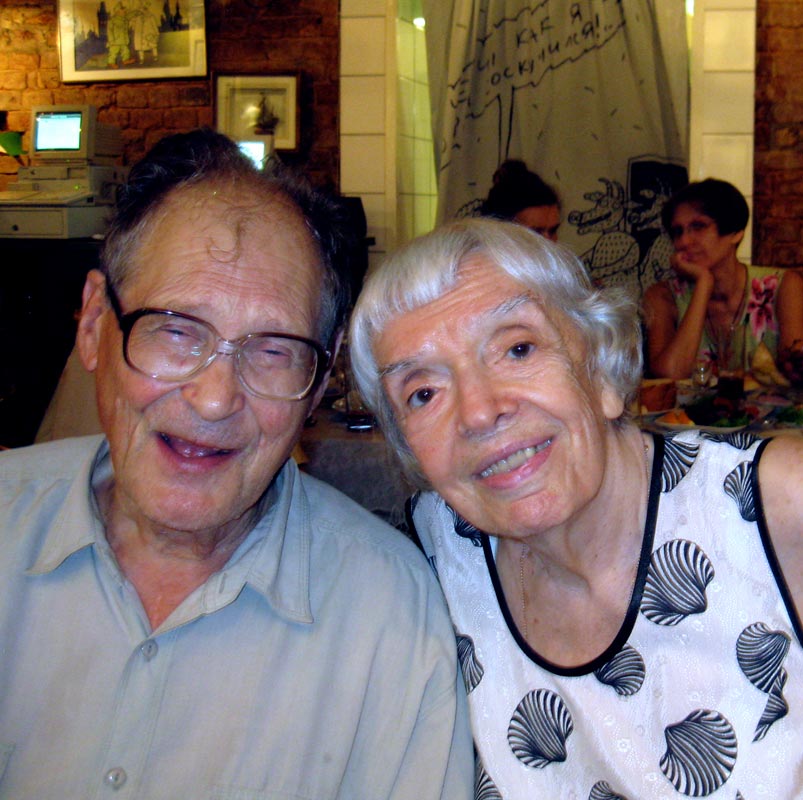
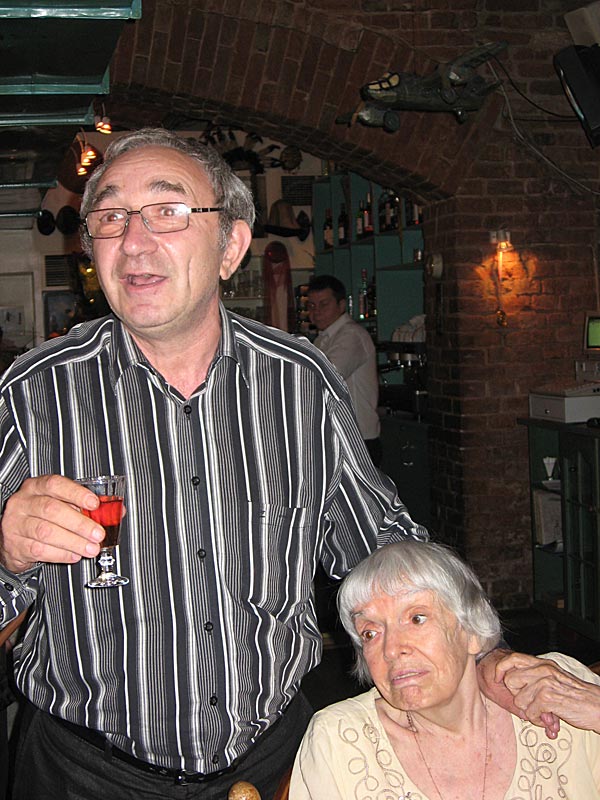
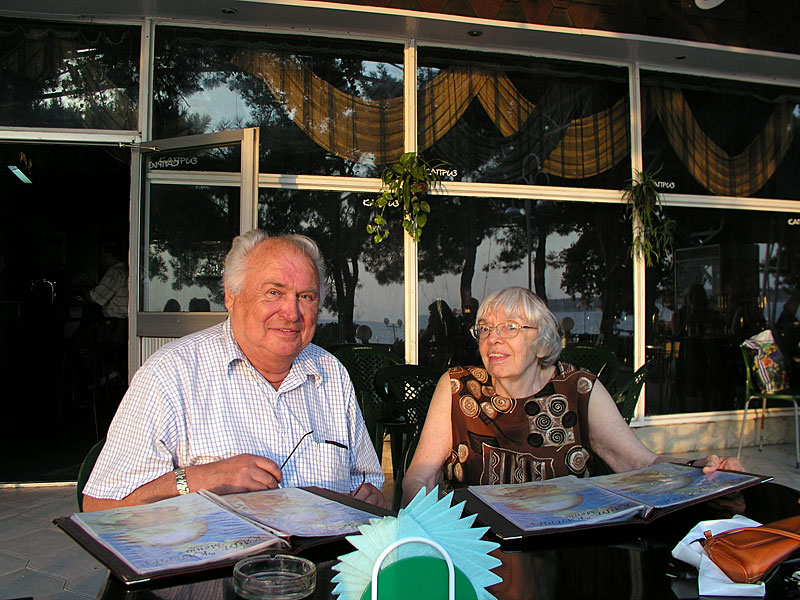
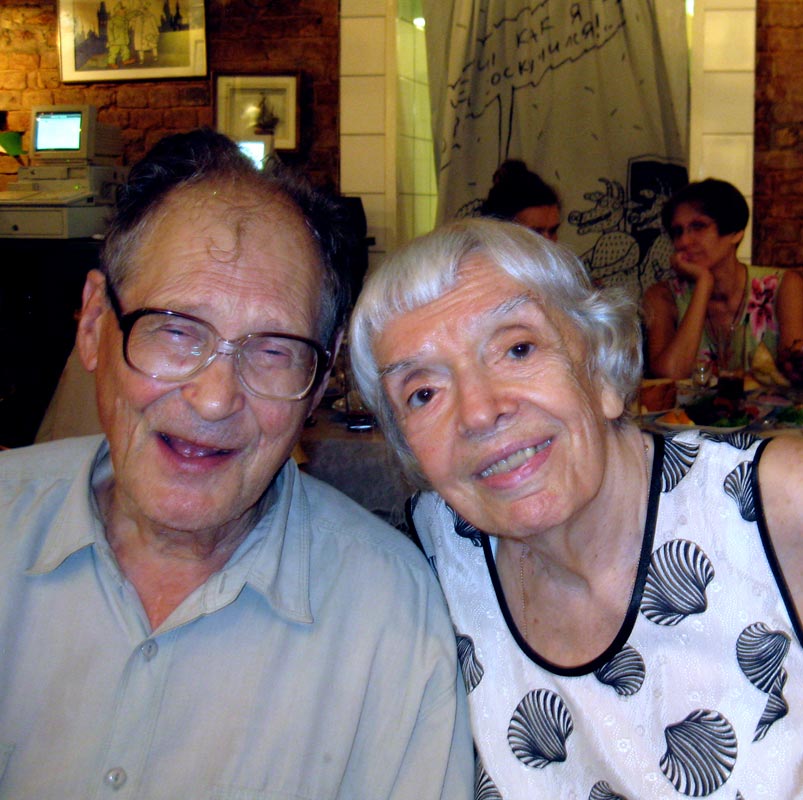
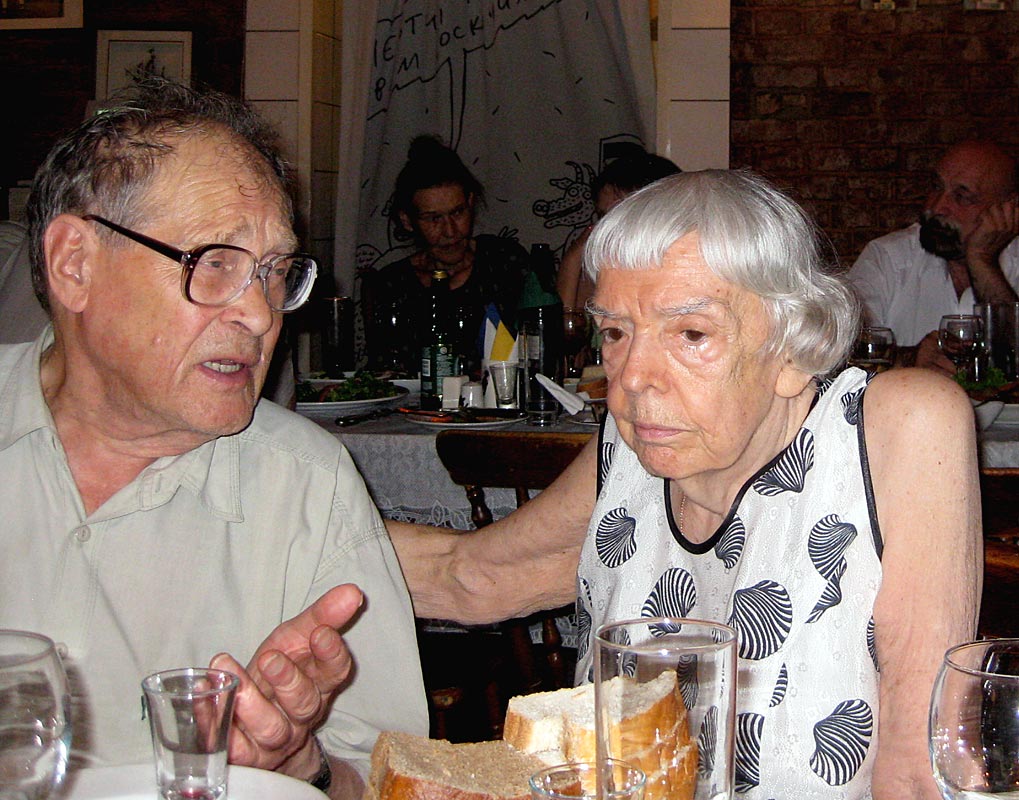
Sergei Kovalev with Alexeyeva, 2011.
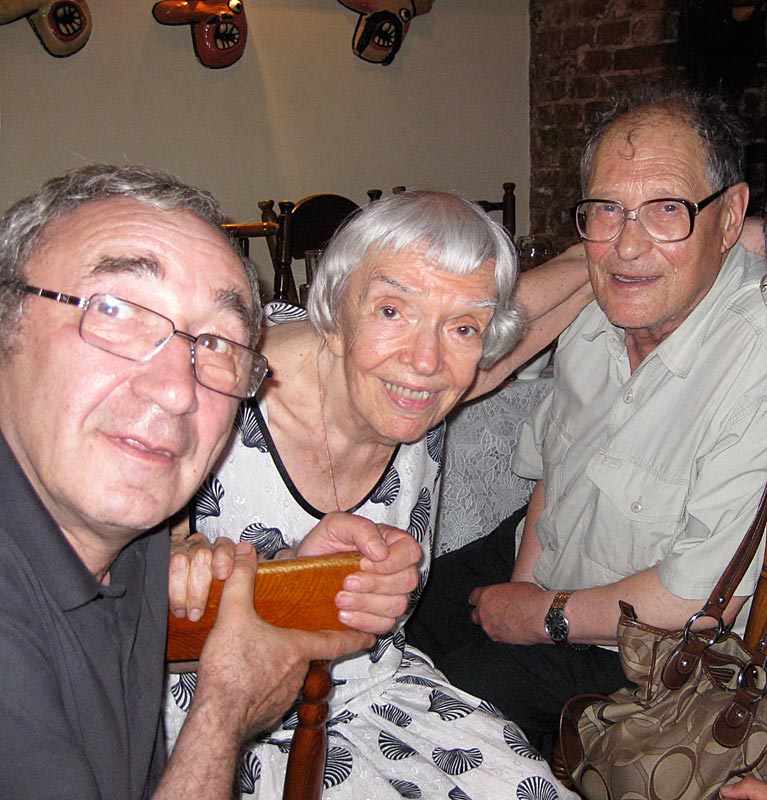
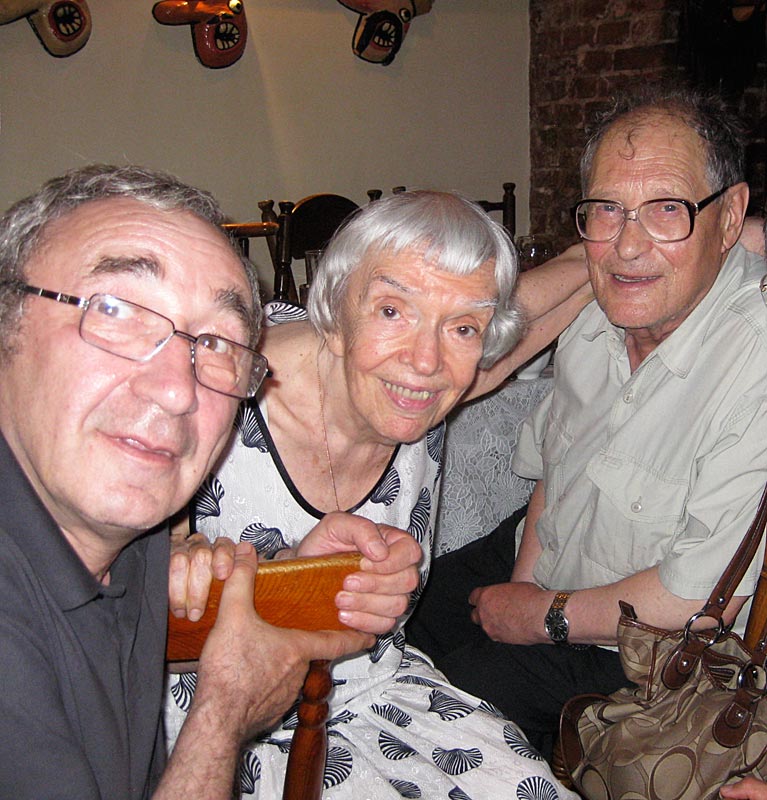
Arsenii Roginsky of the Memorial Society with Alexeyeva.


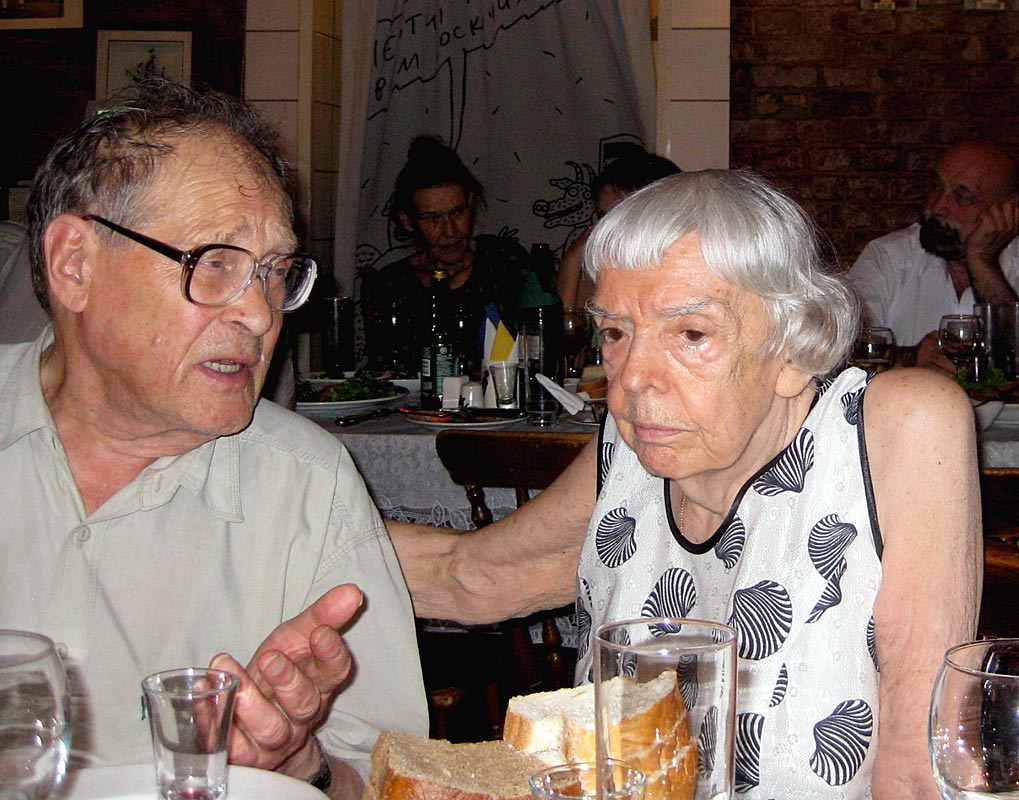
Kovalev and Alexeyeva.


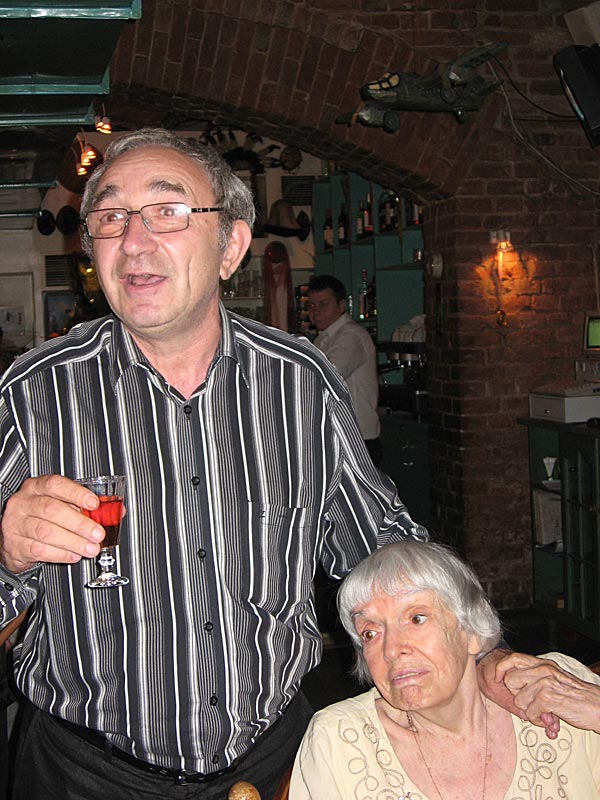
Roginsky toasting Alexeyeva.


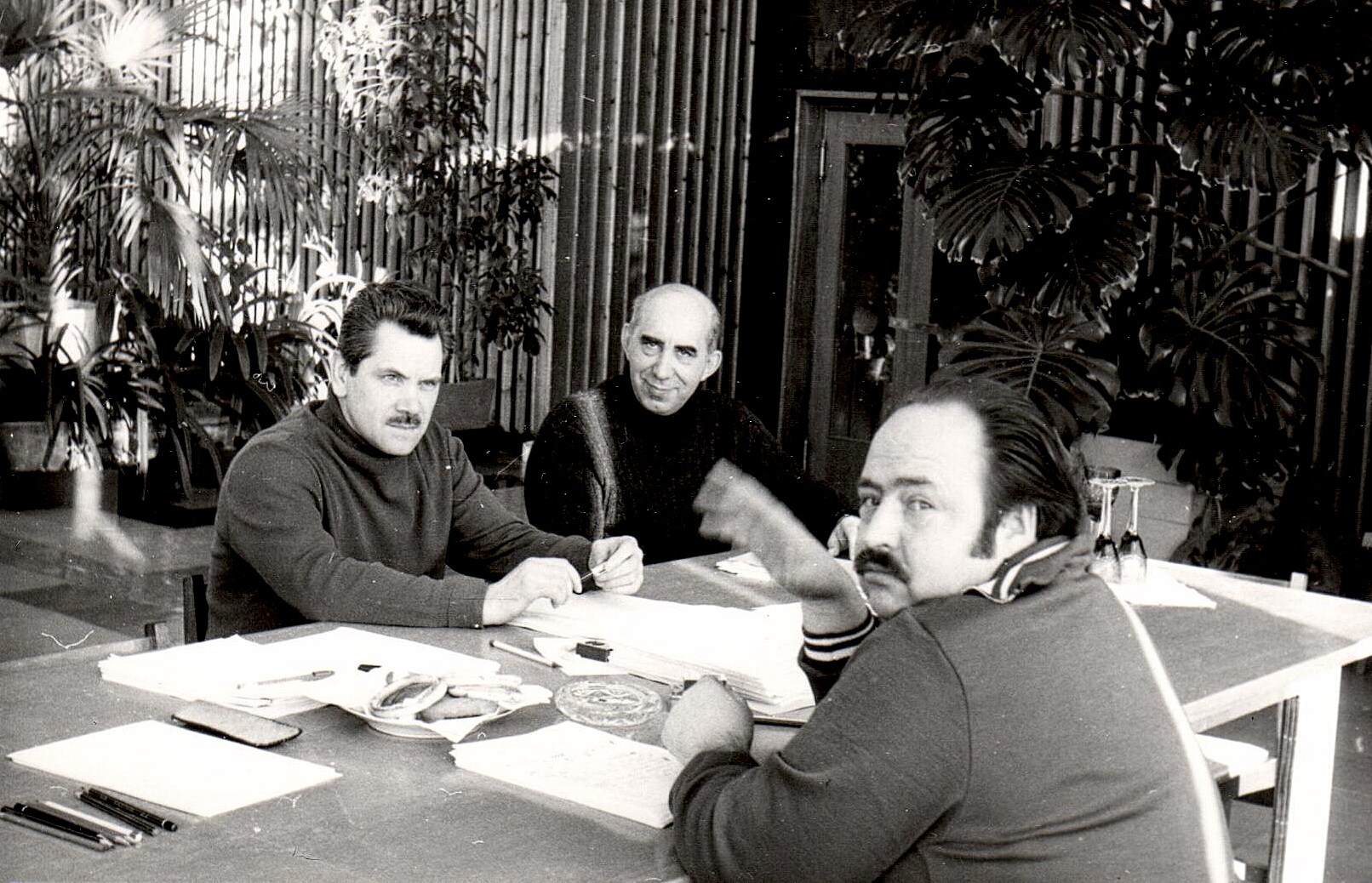
Alexeyeva with colleagues of the Helsinki Group.


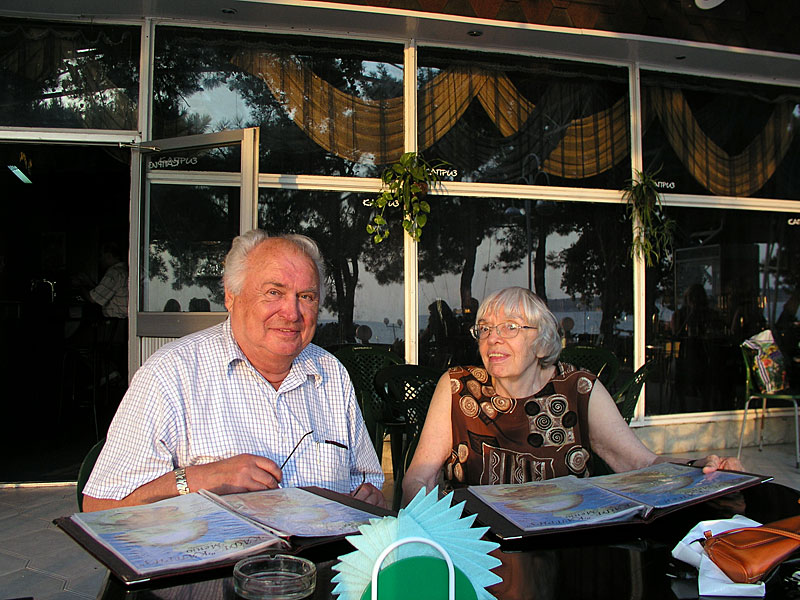
Alexeyeva discussing the Helsinki Final Act with Ambassador Kashlev, one of the Soviet negotiators, at an Archive summer school in Gelendzhik.

Photos by Svetlana Savranskaya.


Related Links


Российские Программы

Архива Национальной Безопасности

The Moscow Helsinki Group 30th Anniversary
From the Secret Files


Bookmark and Share

Moscow, Russian Federation, July 20, 2012 – Marking the 85th birthday of Russian human rights legend Lyudmila Alexeyeva, the National Security Archive today published on the Web a digital collection of documents covering Alexeyeva’s brilliant career, from the mid-1970s founding of the Moscow Helsinki Group (which she now heads) to the current challenges posed by the Putin regime’s crackdown on civil society.

Today’s posting includes declassified U.S. documents from the Carter Presidential Library on Soviet dissident movements of the 1970s including the Moscow Helsinki Group, and KGB and Soviet Communist Party Central Committee documents on the surveillance and repression of the Group.

With the generous cooperation of the Memorial Society’s invaluable Archive of the History of Dissent, the posting also features examples of Alexeyeva’s own letters to officials (on behalf of other dissidents) and to friends, her Congressional testimony and reports, scripts she produced for Radio Liberty, and numerous photographs. Also highlighted in today’s publication are multiple media articles by and about Alexeyeva including her analysis of the current attack on human righters in Russia.

As Alexeyeva’s colleagues, friends, and admirers gather today in Moscow to celebrate her 85th birthday, the illustrious history documented in today’s posting will gain a new chapter. The party-goers will not only toast Lyudmila Alexeyeva, but also debate the appropriate responses to the new Putin-inspired requirement that any civil society group receiving any international support should register as a “foreign agent” and undergo frequent “audits.” No doubt Alexeyeva will have something to say worth listening to. She has seen worse.


Biography

Lyudmila Mikhailovna Alexeyeva was born on July 20, 1927 in Yevpatoria, a Black Sea port town in the Crimea (now in Ukraine). Her parents came from modest backgrounds, but both received graduate degrees; her father was an economist and her mother a mathematician. She was a teenager in Moscow during the war, and she attributes her decision to come back and live in Russia after more than a decade of emigration to the attachment to her country and her city formed during those hungry and frozen war years. Alexeyeva originally studied to be an archaeologist, entering Moscow State University in 1945, and graduating with a degree in history in 1950. She received her graduate degree from the Moscow Institute of Economics and Statistics in 1956. She married Valentin Alexeyev in 1945 and had two sons, Sergei and Mikhail. Already in the university she began to question the policies of the regime, and decided not to go to graduate school in the history of the CPSU, which at the time would have guaranteed a successful career in politics.

She did join the Communist Party, hoping to reform it from the inside, but very soon she became involved in publishing, copying and disseminating samizdat with the very first human rights movements in the USSR. In 1959 through 1962 she worked as an editor in the academic publishing house Nauka of the USSR Academy of Sciences. In 1966, she joined friends and fellow samizdat publishers in protesting the imprisonment and unfair trial of two fellow writers, Andrei Sinyavsky and Yuli Daniel. For her involvement with the dissident movement, she lost her job as an editor and was expelled from the Party. Later, in 1970, she found an editorial position at the Institute of Information on Social Sciences, where she worked until her forced emigration in 1977. From 1968 to 1972, she worked as a typist for the first dissident periodical in the USSR, The Chronicle of Current Events.

As the 1960s progressed, Alexeyeva became more and more involved in the emerging human rights movement. Her apartment in Moscow became a meeting place and a storage site for samizdat materials. She built up a large network of friends involved in samizdat and other forms of dissent. Many of her friends were harassed by the police and later arrested. She and her close friends developed a tradition of celebrating incarcerated friends’ birthdays at their relatives’ houses, and they developed a tradition of “toast number two” dedicated to those who were far away. Her apartment was constantly bugged and surveilled by the KGB.


Founding the Moscow Helsinki Group

In the spring of 1976, the physicist Yuri Orlov – by then an experienced dissident surviving only by his connection to the Armenian Academy of Sciences– asked her to meet him in front of the Bolshoi Ballet. These benches infamously served as the primary trysting site in downtown Moscow, thus guaranteeing the two some privacy while they talked. Orlov shared his idea of creating a group that would focus on implementing the human rights protections in the Helsinki Accords – the 1975 Final Act was published in full in Pravda, and the brilliant idea was simply to hold the Soviet government to the promises it had signed and was blatantly violating.

Orlov had the idea, but he needed someone who could make it happen – a typist, an editor, a writer, a historian – Lyudmila Alexeyeva. In May 1976, she became one of the ten founding members of the Moscow Helsinki Group with the formal announcement reported by foreign journalists with some help from Andrei Sakharov, despite KGB disruption efforts. The government started harassment of the group even before it was formally announced, and very quickly, the group became a target for special attention by Yuri Andropov and his organization – the KGB.

Alexeyeva produced (typed, edited, wrote) many early MHG documents. One of her early – and characteristically remarkable – assignments was a fact-finding mission to investigate charges of sexual harassment against a fellow dissident in Lithuania. Several high school boys who would not testify against their teacher were expelled from school. She arranged a meeting with the Lithuanian Minister of Education, who did not know what the Moscow Helsinki Group was but anything from Moscow sounded prestigious enough to command his attention, and convinced him to return the boys to school. It was only when some higher-up called the Minister to explain what the Helsinki Group really was that he reconsidered his decision.

As one of ten original members of the Moscow Helsinki Group, Alexeyeva received even greater scrutiny from the Soviet government, including the KGB. Over the course of 1976, she was under constant surveillance, including phone taps and tails in public. She had her apartment searched by the KGB and many of her samizdat materials confiscated. In early February 1977, KGB agents burst into her apartment searching for Yuri Orlov, saying “We’re looking for someone who thinks like you do.” A few days later, she and her second husband, the mathematician Nikolai Williams, were forced to leave the Soviet Union under the threat of arrest. Her departure was very painful – she was convinced that she would never be able to return, and her youngest son had to stay behind.


Alexeyeva in Exile

Alexeyeva briefly stopped over in the UK, where she participated in human rights protests, before she eventually settled in northern Virginia, and became the Moscow Helsinki Group spokesperson in the United States. She testified before the U.S. Congressional Helsinki Commission, worked with NGOs such as the International Helsinki Federation, wrote reports on the CSCE conferences in Belgrade, Madrid and Vienna, which she attended, and became actively involved in the issue of political abuse of psychiatry in the USSR.

She soon met her best-friend-to-be, Larisa Silnicky of Radio Liberty (formerly from Odessa and Prague), who had founded the prominent dissident journal Problems of Eastern Europe, with her husband, Frantisek Silnicky. Alexeyeva started working for the journal as an editor in 1981 (initially an unpaid volunteer!). Meanwhile, she returned to her original calling as a historian and wrote the single most important volume on the movements of which she had been such a key participant. Her book, Soviet Dissent: Contemporary Movements for National, Religious and Human Rights, which was published in the United States in 1984 by Wesleyan University Press, remains the indispensable source on Soviet dissent.

The book was not the only evidence of the way Alexeyeva’s talents blossomed in an atmosphere where she could engage in serious research without constant fear of searches and arrest. She worked for Voice of America and for Radio Liberty during the 1980s covering a wide range of issues in her broadcasts, especially in the programs “Neformalam o Neformalakh” and “Novye dvizheniya, novye lyudi,” which she produced together with Larisa Silnicky. These and other programs that she produced for the RL were based mainly on samizdat materials that she was getting though dissident channels, and taken together they provide a real encyclopedia of developments in Soviet society in the 1980s. The depth and perceptiveness of her analysis are astounding, especially given the fact that she was writing her scripts from Washington. Other U.S. institutions ranging from the State Department to the AFL-CIO Free Trade Union Institute also asked her for analyses of the Gorbachev changes in the USSR, among other subjects. In the late 1980s-early 1990s, she was especially interested in new labor movements in the Soviet Union, hoping that a Solidarity-type organization could emerge to replace the old communist labor unions.


Back in the USSR

The Moscow Helsinki Group had to be disbanded in 1982 after a campaign of persecution that left only three members free within the Soviet Union. When the Group was finally reestablished in 1989 by Larisa Bogoraz, Alexeyeva was quick to rejoin it from afar, and she never stopped speaking out. She had longed to return to Russia, but thought it would never be possible. She first came back to the USSR in May 1990 (after being denied a visa six times previously by the Soviet authorities) with a group of the International Helsinki Federation members to investigate if conditions were appropriate for convening a conference on the “human dimension” of the Helsinki process. She also attended the subsequent November 1991 official CSCE human rights conference in Moscow, where the human righters could see the end of the Soviet Union just weeks away. She was an early supporter of the idea of convening the conference in Moscow – in order to use it as leverage to make the Soviet government fulfill its obligations – while many Western governments and Helsinki groups were skeptical about holding the conference in the Soviet capital.

In 1992-1993 she made numerous trips to Russia, spending more time there than in the United States. She and her husband Nikolai Williams returned to Russia to stay in 1993, where she resumed her constant activism despite having reached retirement age. She became chair of the new Moscow Helsinki Group in 1996, only 20 years after she and Yuri Orlov discussed the idea and first made it happen; and in that spirit, in the 1990s, she facilitated several new human rights groups throughout Russia.

When Vladimir Putin became president in 2000, Lyudmila Alexeyeva agreed to become part of a formal committee that would advise him on the state of human rights in Russia, while continuing her protest activities. The two did not go well together in Putin’s mind, and soon she was under as much suspicion as ever. By this time, though, her legacy as a lifelong dissident was so outsized that it was harder to persecute her. Even state-controlled television felt compelled to give her air-time on occasion, and she used her standing as a human rights legend to bring public attention to abuses ranging from the mass atrocities in the Chechen wars to the abominable conditions in Russian prisons.

When the Moscow Helsinki Group celebrated its 30th anniversary in 2006, with Lyudmila Alexeyeva presiding, Yuri Orlov came back from his physics professorship at Cornell University to join her on stage. Also paying tribute were dozens of present and former public officials from the rank of ex-Prime Minister on down, as well the whole range of opposition politicians and non-governmental activists, for whom she served as the unique convenor and den mother.


The Challenge in Russia Today

In 2009, Alexeyeva became an organizer of Strategy 31, the campaign to hold peaceful protests on the 31st of every month that has a 31st, in support of Article 31 of the Russian constitution, which guarantees freedom of assembly. Everyone remembers the protest on December 31, 2009, when Lyudmila Alexeyeva went dressed as the Snow Maiden (Snegurochka in the fairy tales) where dozens of other people were also arrested. But when officials realized they had the Lyudmila Alexeyeva in custody, they returned to the bus where she was being held, personally apologized for the inconvenience and offered her immediate release from custody. She refused until all were released. The video and photographs of the authorities arresting the Snow Maiden and then apologizing went viral on the Internet and made broadcast news all over the world. The “31st” protests have ended in arrests multiple times, but that has yet to deter the protesters, who provided a key spark for the mass protests in December 2011.

The darker side of the authorities’ attitude was evident in March 2010, when she was assaulted at the Park Kultury metro station where she was paying her respects to the victims of the subway bombings a few days earlier. She had been vilified by the state media so often that the attacker called himself a “Russian patriot” and asserted (correctly, so far) that he would not be charged for his actions.

In 2012, the chauvinistic assault became institutional and government-wide, with a new law proposed by the Putin regime and approved by the Duma, requiring any organization that received support from abroad to register as a “foreign agent” and submit to multiple audits by the authorities. The intent was clearly to stigmatize NGOs like the Moscow Helsinki Group that have international standing and raise money from around the world. Earlier this month, Lyudmila Alexeyeva announced that the Group would not register as a foreign agent and would no longer accept foreign support once the law goes into effect in November 2012.

Other Russian human righters say they are used to being tagged as foreign agents. In fact, humorous signs appeared at the mass protests in late 2011 asking the U.S. Secretary of State, Hillary Rodham Clinton, “Hillary! Where’s my check? I never got my money!” So the debate over strategy, over how best to deal with and to push back against the new repression, will likely dominate the conversation at Lyudmila Mikhailovna’s 85th birthday party today (July 20). Yet again, when she is one of the few original Soviet dissidents still alive, she is at the center of the storm, committed to freedom in Russia today, and leading the discussion about how to achieve human rights for all.


Documents

Document 1: Lyudmila Alexeyeva, “Biography,” November 1977.

This modest biographical note presents Alexeyeva’s own summary of her life as of the year she went into exile. She prepared this note as part of her presentation to the International Sakharov Hearing in Rome, Italy, on 26 November 1977, which was the second in a series named after the distinguished Soviet physicist and activist (the first was in Copenhagen in 1975) that brought together scholars, analysts and dissidents in exile to discuss human rights in the Soviet bloc.

[Source: Memorial Society, Moscow, Archive of History of Dissent, Fond 101, opis 1, Box 2-3-6]

Document 2: Lyudmila Alexeyeva to Senator Jacob K. Javits, 4 July, 1975.

Even before she co-founded the Moscow Helsinki Group, Lyudmila Alexeyeva actively worked to defend dissidents and political prisoners in the USSR. In this 1975 letter preserved in the Archive of the History of Dissent, the irreplaceable collections of the Memorial Society in Moscow, she is writing from Moscow to a prominent U.S. Senator, Jacob Javits, a Republican from New York and himself Jewish, who was outspoken in supporting not only the right of Jews to emigrate from the USSR to Israel, but also the Soviet dissident cause in general. The case she presents to Javits is that of Anatoly Marchenko, who asked for political emigration (not to Israel) and as punishment was sent to Siberia for four years’ exile – on top of the 11 years he had already spent as a political prisoner on trumped-up charges. Tragically, Marchenko would die in prison in the fall of 1986, just as Gorbachev began releasing the political prisoners.

[Source: Memorial Society, Moscow, Archive of History of Dissent, Fond 101, opis 1, Box 2-3-6]

Document 3: Yuri Andropov, Chairman of the KGB, Memorandum to the Politburo, 29 December, 1975.

Yuri Andropov gives the Politburo an alarming report on dissent in the USSR in connection with criticism of Soviet human rights abuses by the French and Italian Communist parties. The main thrust of Andropov’ report is how to keep the internal opposition in check in the aftermath of the signing of the Helsinki agreement and the following increase of international pressure on the USSR. He gives the number of political prisoners as 860, people who received the “prophylactic treatment” in 1971-74 as 63,108 and states that there are many more “hostile elements” in the country, and that “these people number in the hundreds of thousands.” Andropov concluded that the authorities would have to continue to persecute and jail the dissidents notwithstanding the foreign attention. This document sets the stage and gives a good preview of what would happen after the Moscow Helsinki Group was founded in May 1976.

[Source: U.S. Library of Congress, Manuscript Division, Dmitrii A. Volkogonov Papers, Reel 18, Container 28]

Document 4: Moscow Helsinki Monitoring Group, “Evaluation of the Influence of the Conference on Security and Co-operation in Europe on the Quality of Human Rights in the U.S.S.R.,” 1 August 1975-1 August 1976. (Summary of the document)

This document was written during a time of relative calm, when surprisingly, for the first six months of the existence of the MHG, the authorities did not undertake any repressions against members of the group, and allowed it to function. The document sounds more positive and optimistic than the group’s subsequent assessments of the effect of the Helsinki Accords. The report points out that the Soviet government was sensitive to pressure from foreign governments and groups and that several other objective factors such as the end of the war in Vietnam and increasing Soviet grain purchases made the USSR more open to external influences. Under such pressure, the Soviet government released the mathematician Leonid Plyusch, allowed some refuseniks to emigrate and generally relaxed the restrictions somewhat. The report also lists continuing violations of human rights but concludes that the Helskinki Accords did and probably would play a positive role. [See the Russian page for the original]

[Source: Memorial Society, Moscow, Archive of History of Dissent, Fond 101, opis 1, Box 2-3-6]

Document 5: KGB Memorandum to the CC CPSU, “About the Hostile Actions of the So-called Group for Assistance of Implementation of the Helsinki Agreements in the USSR,” 15 November 1976.

The KGB informed the Politburo about the activities of the MHG for the first time six months after its founding. The report gives a brief history of the human rights movement in the USSR as seen from the KGB. Andropov names each founding member of the group and charges the group with efforts to put the Soviet sincerity in implementing the Helsinki Accords in doubt. The document also alleges MHG efforts to receive official recognition from the United States and reports on its connections with the American embassy.

[Source: U.S. Library of Congress, Manuscript Division, Dmitrii A. Volkogonov Papers, Reel 18, Container 28]

Document 6: Helsinki Monitoring Group, “Special Notice,” 2 December, 1976.

This notice, one of a series by the MHG publicizing official misconduct, testifies to the increasing harassment of members of the group by the KGB. This time it is the son of Malva Landa who has been warned that he might lose his job.   The document is signed by Alexeyeva, Orlov and other leading MHG members.

[Source: Memorial Society, Moscow, Archive of History of Dissent, Fond 101, opis 1, Box 2-3-6]

Document 7: KGB Memorandum to the CC CPSU, “On the Provocative Demonstration by Antisocial Elements on Pushkin Square in Moscow and at the Pushkin Monument in Leningrad,” 6 December, 1976.

This KGB report informs the Politburo about silent rallies in Moscow and Leningrad to celebrate Constitution Day by dissidents including members of the MHG. Nobody was arrested.

[Source: U.S. Library of Congress, Manuscript Division, Dmitrii A. Volkogonov Papers, Reel 16, Container 24]

Document 8: Moscow Helsinki Monitoring Group, “On the Exclusion of Seven Students From the Vienuolis Middle School (Vilnius),” 8 December, 1976.

This is a report of the first fact-finding mission undertaken by Lyudmila Alexeyeva with Lithuanian human rights activist and member of the Helsinki Group Thomas Ventslov to investigate charges of sexual harassment against a member of the Lithuanian Helsinki Group Viktoras Petkus. Seven boys were expelled from the school and pressured by the KGB to say that they had spent time at Petkus’ apartment, where he engaged in illegal activities with them. The boys’ families were told that they were expelled on the basis of a school board decision that the parents were not allowed to see. The report concludes that the KGB was behind the charges and that the only reason for the expulsions was the refusal of the boys to give false testimony against their teacher. Alexeyeva met with the Lithuanian Minister of Education to discuss the situation, and he initially agreed to remedy it but then changed his mind upon finding out who his visitor was.

[Source: Memorial Society, Moscow, Archive of History of Dissent, Fond 101, opis 1, Box 2-3-6]

Document 9: Memo from Andropov to CC CPSU, “About Measures to End the Hostile Activity of Members of the So-called “Group for Assistance in the Implementation of the Helsinki Agreements in the USSR,” 5 January, 1977.

After the two informational reports above, the KGB started to get serious about terminating the activities of the MHG. This report charges that the group was capable of inflicting serious damage to Soviet interests, that in recent months group members have stepped up their subversive activities, especially through the dissemination of samizdat documents (and particularly the MHG reports), undermining Soviet claims to be implementing the Helsinki Final Act. The Procuracy would later develop measures to put an end to these activities.

[Source: U.S. Library of Congress, Manuscript Division, Dmitrii A. Volkogonov Papers, Reel 18, Container 28]

Document 10: Resolution of Secretariat of CC of CPSU, “On Measures for the Curtailment of the Criminal Activities of Orlov, Ginsburg, Rudenko and Ventslova,” 20 January, 1977.

Following the recommendations of the KGB report above, and another report submitted by Andropov on January 20, the CC CPSU Secretariat decides to “intercept and curtail the activities” of Orlov, Ginzburg, Rudenko and Ventslov of the MHG, Ukrainian and Lithuanian Helsinki groups. All four would be arrested soon after the resolution.

[Source: The Bukovsky Archive, Soviet Archives at INFO-RUSS http://psi.ece.jhu.edu/~kaplan/IRUSS/BUK/GBARC/buk.html, Folder 3.2]

Document 11: Extract from CC CPSU Politburo Meeting, “About the Instructions to the Soviet Ambassador in Washington for His Conversation with Vance on the Question of “Human Rights,” 18 February, 1977.

After Orlov and Ginzburg are arrested and Lyudmila Alexeyeva goes into exile, and anticipating the visit of U.S. Secretary of State Cyrus Vance to Moscow in March, the Politburo discusses a rebuff to the Carter administration on human rights issues. Ambassador Anatoly Dobrynin is instructed to meet with Vance and inform him of Soviet “bewilderment” regarding Carter administration attempts to raise the issue of Ginsburg’s arrest. Dobrynin should explain to administration officials that human rights is not an issue of inter-state relations but an internal matter in which the United States should not interfere.

[Source: TsKhSD (Central Archive of Contemporary Documents) Fond 89, Opis list 25, Document 44]

Document 12: “Dignity or Death: How they Plant Dirty Pictures and Dollars on Men Who Fight for Freedom,” The Daily Mail, London, 21 March, 1977, by Lyudmila Alexeyeva and Nicholas Bethell.

Documents 12-16 comprise a series of articles in the Western media printed soon after Lyudmila Alexeyeva’s emigration from the USSR. In interviews she described the deteriorating human rights situation in the Soviet Union, including the increased repression and arrests of Helsinki groups members in Russia, Ukraine, Lithuania and Georgia, and calls on the West to put pressure on the Soviet government to comply with the Helsinki Accords.

Document 13: “Dignity or Death: My Phone was Dead and All Night the KGB Waited Silently at My Door,” The Daily Mail, London, 22 March, 1977, by Lyudmila Alexeyeva and Nicholas Bethell.

Document 14: “Why Brezhnev Must Never be Believed,” The Daily Mail, London, 23 March, 1977, by Lyudmila Alexeyeva and Nicholas Bethell.

Document 15: “Soviet Human Rights from Mrs. Lyudmila Alexeyeva and others,” The Times, London, 26 April, 1977, by Lyudmila Alexeyeva, Andrey Amalrik, Vadimir Bukovsky.

Document 16: “Soviet Dissidents on the Run,” The Washington Post, 2 June, 1977, by Joseph Kraft.

Document 17: “Basket III: Implementation of the Helsinki Accords,” Hearings before the Commission on Security and Cooperation in Europe; Ninety-Fifth Congress, First Session; on the Implementation of the Helsinki Accords; Volume IV: Soviet Helsinki Watch Reports on Repression June 3, 1977; U.S. Policy and the Belgrade Conference, 6 June, 1977.

Document 18: National Security Council, Global Issues [staff], to Zbigniew Brzezinski, U.S. National Security Advisor, “Evening Report,” June 7, 1977.

This report to their boss by the staff of the Global Issues directorate of the National Security Council on their daily activities includes a remarkable initial paragraph describing internal U.S. government discussions of the Moscow Helsinki Group (called here “the Orlov Committee”). Staffer Jessica Tuchman says a State Department-hosted group of experts all agreed that “the hidden bombshell in the whole human rights debate with the USSR” was the fact that the nationalist movements in the Soviet Union all saw human rights activism as just the “first step” to autonomy – thus the real threat to the Soviet government.

[Source: Carter Presidential Library, FOIA case NLC 10-3-2-7-8, 2008]

Document 19: Central Intelligence Agency, “The Evolution of Soviet Reaction to Dissent,” 15 July, 1977.

This document traces the Soviet government’s response to dissident activity especially in light of their agreement to the human rights provisions outlined in Basket III of the Helsinki Accords. The CIA notes that the Soviet Union signed the accords assuming it would not result in an increase in internal opposition, but that instead the Basket III provisions have provided a rallying point for dissent. It also suggests that internal protests sparked by food shortages and open criticism of the Eurocommunists, including the French and Spanish communist parties, are further causes for the current Soviet crackdown on the opposition. It also mentions political unrest in Eastern Europe and the Unites States new human rights campaign, which has prompted dissidents to make their appeals directly to the U.S. government as reasons for Soviet anxiety. Next, it outlines the Soviet government’s much harsher measures against dissidents in the wake of the Helsinki Accords. These include arrests of members of the Helsinki group, cutting off Western access, and accusing dissidents of espionage. Further, it concludes that the Soviet government’s increased apparent anxiety over dissent is the result of a variety of factors, including the approach of the Belgrade conference and their general fears of increased Western contact leading to discontent and a variety of social vices.

[Source: The Carter Presidential Library]

Document 20: American Embassy Belgrade to Cyrus Vance, Secretary of State, Text of Speech Given by Ambassador Arthur Goldberg at the Belgrade Conference on Security and Co-operation in Europe Meeting, November 1977 (excerpt).

This text, the second half of the U.S. Embassy Belgrade cable reporting the speech made by U.S. ambassador Arthur Goldberg to the Belgrade review conference, specifically raises the cases of Orlov, Scharansky and Ginsberg – three of the founding members, with Alexeyeva, of the Moscow Helsinki Group – in the face of major objections from the Soviet delegation, and no small amount of disquiet from other diplomats present. While considered “timid” by the outside human righters like Alexeyeva, this initiative by the U.S. delegation created a breakthrough of sorts that would heighten the human rights dialogue at upcoming Helsinki review conferences and in the media.

[Source: The Carter Presidential Library]

Document 21: Secretary of State, to American Embassy Moscow, “Statement on Orlov,” 18 May, 1978.

This public statement from the State Deparment’s noon press briefing, sent by cable to the U.S. Embassy Moscow and Consulate Leningrad, uses the strongest language to date on the Orlov case, no doubt informed by Alexeyeva and other Orlov colleagues in exile. Here, the U.S. “strongly deplores” Orlov’s conviction and calls it a “gross distortion of internationally accepted standards,” since the activities for which he was being punished were simply the monitoring of Soviet performance under the Helsinki Final Act.

[Source: The Carter Presidential Library]

Document 22: Joseph Aragon, to Hamilton Jordan, “Carter on Human Rights,” 7 July, 1978.

This memorandum from White House staff member Joe Aragon to the president’s chief of staff, Hamilton Jordan, discusses the Soviet Union’s treatment of dissidents, as monitored by another White House staffer, Joyce Starr. Aragon notes that the overall Soviet campaign against dissidents continues despite Carter’s forceful public stance on human rights. He notes that if anything dissidents have become further shut out of Soviet society since Carter came to office. He specifically mentions the Helsinki group, and Slepak, Orlov, Scharansky, Nadel and Ginzburg as dissidents in need of United States help. He goes in depth into the Slepak case and the state of his family, characterizing Slepak as the Soviet equivalent of a Martin Luther King Jr. However, he writes that the administration so far has made public statements in support of the dissidents, but failed to act on the diplomatic level. Aragon concludes that Carter cares deeply about human rights, but that his reputation is at risk due to the failure of low-level officials to follow through the initiatives outlined in the Helsinki Final Act. Aragon calls for a meeting in which he and other will discuss a course of action for the president.

[Source: The Carter Presidential Library]

Document 23: Central Intelligence Agency, “Human Rights Review,” 18-31 August, 1978.

This document contains a general overview of human rights throughout the world, but begins with a discussion of the condition of dissidents in the Soviet Union and Eastern Europe. It notes that the most recent dissident activity has been in their statements of support for the Czech Charter 77 dissident movement. It also discusses the Soviet Union’s fear of East European and Soviet dissidents forming a united front of opposition. It also mentions an incident in which dissident Aleksandr Lyapin attempted to commit suicide by self-immolation in protest of Helsinki group leader Yuri Orlov’s court sentence, and that he has since been confined to a mental institution.

[Source: The Carter Presidential Library]

Document 24: Senator Henry M. Jackson, Remarks at the Coalition for a Democratic Majority Human Rights Dinner, September 30, 1978.

Document 25: “Basket III: Implementation of the Helsinki Accords,” Hearings before the Commission on Security and Cooperation in Europe; Ninety-Fifth Congress, First Session; on the Implementation of the Helsinki Accords; Volume X: Aleksandr Ginzburg on the Human Rights Situation in the U.S.S.R., 11 May, 1979.

Document 26: “A Helsinki Clue to Moscow’s Salt II Intentions,” The New York Times, June 18, 1979, by Lyudmila Alexeyeva, Aleksandr Ginzberg, Petr Grigorenko, Yuri Mnyukh, and Valentin Turchin.

Document 27: Jimmy Carter and Cyrus Vance, “Major Executive Statements on Behalf of Anatoliy Scharanskiy,” 16 July, 1979.

Document 28: Peter Tarnoff, Department of State, to Zbigniew Brzezinski, “U.S. Government Initiatives on Behalf of Human Rights in the U.S.S.R.” 17 April, 1980.

This memorandum from State Department Executive Secretary Peter Tarnoff to Zbigniew Brzezinski contains a list of actions and statements by the U.S. government on human rights and protection of dissidents in the USSR. The list covers the years 1977 through 1980. The actions include reports on the Soviet Union’s implementation of the human rights provisions of the Helsinki Final Act, as well as discussions of these matters at international conferences. Another area of action has to do with investigating denials of exit visas to Jews and prisoners of conscience attempting to leave the Soviet Union. It also comprises various efforts to help imprisoned dissidents by sending observers to attend their trials and providing special aid to some families, including the Ginzburg/Shibayev and Sakharov/Yankelevich families. The document also includes a list of Carter’s addresses in which he voices concerns over human rights or the treatment of Soviet dissidents.

Document 29: Helsinki Monitoring Group [members of the Moscow Helsinki group in exile], “On the Madrid Conference on Security and Co-operation in Europe,” c. summer 1980.

These recommendations were prepared by members of Helsinki groups in exile before the Madrid review conference of November 1980. The dissidents call the efforts of Western delegations at the earlier Belgrade conference “timid” and chide the lack of pressure on Moscow to observe the human rights provisions of the Helsinki Accords. The report describes the worsening human rights situation in the USSR after the Belgrade conference of 1977-78, arrests of the Helsinki Group members, persecution of religious believers, and restrictions on emigration. Recommendations include that the Madrid conference delegates demand that political prisoners, including Helsinki group members, be released, and that an international commission be created consisting of representatives of member-states to keep the pressure on the Soviets between the review conferences. Similar concerns, the report indicates, were raised by the MHG in its recommendations for the Belgrade conference in 1977.

Document 30: Lyudmila Alexeyeva, letter to friends in Moscow, undated, circa summer 1984.

This extraordinary personal letter provides a unique vista of Alexeyeva’s life in exile and her thinking about dissent. Here she describes how she found her calling as a historian (a “personal harbor” which is essential for enduring exile), came to write the book on Soviet dissent, and struggled to reform the radios (Liberty, Free Europe, Voice of America) against the nationalist-authoritarian messages provided from “Vermont and Paris” – meaning Aleksandr Solzhenitsyn and Vladimir Bukovsky, respectively – or, the Bolsheviks versus her own Mensheviks within the dissident movement, in her striking analogy. Also here are the personal details, the open window in the woods for the cats, the ruminations on the very process of writing letters (like cleaning house, do it regularly and it comes easily, otherwise it’s never done or only with great difficulty). Here she pleads for activation as opposed to liquidation of the Helsinki Groups, because “we have nothing else to replace them.”

[Source: Memorial Society, Moscow, Archive of History of Dissent, Fond 101, opis 1, Box 2-3-6]

Document 31: Liudmila Alexeyeva, edited by Yuri Orlov, Documents and People, “What Gorbachev took from samizdat.”

In this draft script prepared for a Radio Liberty show in 1987 together with Yuri Orlov, Alexeyeva traces the roots of Gorbachev’s new thinking to samizdat materials as far back as the 1960s. She finds an amazing continuity in terms of ideals and goals, especially in foreign policy-thinking about the primacy of human rights and an interdependent world.

[Source: Memorial Society, Moscow, Archive of History of Dissent, Fond 101, opis 1, Box 2-3-2]

Document 32: Lyudmila Alexeyeva’s handwritten draft paper on informal associations in the USSR.

This unique handwritten draft written for Alexeyeva on the emergence of informal organizations – the first NGOs – in the Soviet Union. The draft is undated but was most likely written in 1990 or early 1991. The main question is whether Gorbachev will stay in power and therefore whether the changes he brought about will stick. She sees the importance of informal organizations in reviving civil society in the Soviet Union and creating conditions for democratization.

[Source: Memorial Society, Moscow, Archive of History of Dissent, Fond 101, opis 1, Box 2-3-2]

Document 33: Lyudmila Alexeyeva, Trip to Nizhny Novgorod, 9 November, 1992.

Lyudmila Alexeyeva visited Nizhny Novgorod on August 29, 1992, and met with members of Dialogue Club and the independent trade union at the ship-building plant Krasnoe Sormovo. Semen Bulatkin, her main contact, talked to her about the political club they founded at the plant, whose outside member was governor Boris Nemtsov, and the difficulties of organizing a free trade union there. The independent trade union was founded in February 1992, with an initial membership of about 250-300 people. Two weeks later, threatened by the plant’s administration with the loss of jobs or social benefits, membership declined to 157. Alexeyeva also met with Governor Nemtsov – a radical reformer and close supporter of President Boris Yeltsin – who told her he had read her book on Soviet dissent and was an active listener of Radio Liberty.

[Source: Memorial Society, Moscow, Archive of History of Dissent, Fond 101, opis 1, Box 2-3-2]

Document 34: Lyudmila Alexeyeva, Trip to Moscow Report, 10-20 December, 1992.

Alexeyeva visited Russia in December 1992, just a year after the Soviet collapse, at the behest of the AFL-CIO Free Trade Union Institute, which had been a key international backer of Solidarity in Poland and sought to support similar independent union development in post-Soviet Russia. Alexeyeva’s trip report does not provide much cause for optimism. In it, she describes democratic reformers’ complaints about President Yeltsin and the lack of alternative progressive leadership; the resistance to change by older Party-dominated union structures; the lack of access to television by new, more democratic unions to make their case; and the effective transformation of Communist Party elites into quasi-capitalist owners and managers of the means of production – not because they are true reformers or effective producers, but because they know how to boss. Dozens of intriguing details and provocative conversation summaries fill the report, including a newspaper story alleging that Yeltsin was now privatizing his own appointment schedule with an outside company, selling access at $30,000 per meeting.

[Source: Memorial Society, Moscow, Archive of History of Dissent, Fond 101, opis 1, Box 2-3-2]

The National Security Archive – NSA Retaining “Useless” and Highly Personal Information of Ordinary Internet Users, Spying …

Become a Patron!
True Information is the most valuable resource and we ask you to give back.

by

Snowden did get the FISA data, contrary to Keith Alexander's insistence to the contrary. Photo: EPA

Ordinary internet activity accounts for the overwhelming majority of communications collected and maintained by the National Security Agency (NSA). A recent report by The Washington Post, based on communications leaked by former contractor Edward Snowden, revealed that nine out of 10 communications collected belonged to average American and non-American internet users who were not the targets of investigations. Much of the highly personal communications –including baby pictures and revealing webcam photos– provide little intelligence value and are described as useless, yet are retained under Section 702 of the FISA Amendments. The Post’s findings clearly contradict former NSA head Keith Alexander’s assertions that there was no way Snowden could “touch the FISA data,” and give credence to the argument that “the NSA has been proven incapable of safeguarding” the intelligence it collects, irrespective of its value.

In one 2005 document, intelligence community personnel are instructed how to properly format internal memos to justify FISA surveillance. In the place where the target’s real name would go, the memo offers a fake name as a placeholder: “Mohammed Raghead.”

Glenn Greenwald and Murtaza Hussain’s latest Intercept expose reveals that the NSA, along with the FBI, covertly monitors the communications of prominent, upstanding Muslim-Americans under provisions of the FISA intended to target terrorists and foreign spies, ostensibly solely because of their religion. The FISA provision that seemingly codifies the surveillance requires that “the Justice Department must convince a judge with the top-secret Foreign Intelligence Surveillance Court that there is probable cause to believe that American targets are not only agents of an international terrorist organization or other foreign power, but also ‘are or may be’ engaged in or abetting espionage, sabotage, or terrorism.” In practice, however, the agencies monitored the emails of Nihad Awad, the executive director of the Council on American-Islamic Relations (CAIR), the largest Muslim civil rights organization in the country, Asim Ghafoor, a prominent attorney who has represented clients in terrorism-related cases, and other civically inclined American Muslims.

Why did the CIA take a chance on a BND employee naive enough to volunteer to spy for Russia via email?

White House officials are questioning why President Obama was left in the dark about the CIA’s German intelligence informant and his recent arrest, a somewhat baffling omission in the wake of revelations the NSA monitored the private communications of Chancellor Merkel and the resulting state of US-German relations. “A central question, one American official said, is how high the information about the agent went in the C.I.A.’s command — whether it was bottled up at the level of the station chief in Berlin or transmitted to senior officials, including the director, John O. Brennan, who is responsible for briefing the White House.” Of further interest is why the CIA made use of the German intelligence official in the first place, who not only walked into the agency’s Berlin office in 2012 and offered to spy, but also volunteered his spying services to Russia via email.

The internal affairs division of Customs and Border Patrol (CBP) is being investigated again, this time for mishandling the personal information of the agency’s 60,000 employees. Under investigation are defunct CBP programs that shared employees’ Social Security numbers with the FBI and that “automatically scanned the Social Security numbers of all the agency’s employees in a Treasury Department financial records database.” Both programs were part of the agency’s response to the Obama administration’s Insider Threat initiative.

Cause of Action’s latest “FOIA Follies” provides some insight on what qualifies for a (b)(5) “withhold because you want to” FOIA exemption at the IRS, and reinforces Archive FOIA Coordinator Nate Jones’ arguments of how the FOIA Improvement Act of 2014 would address this overused exemption and help ordinary requesters. Cause of Action submitted a FOIA request to the IRS seeking records related to any requests from the President for individual or business tax returns in 2012, after which the IRS released 790 heavily redacted pages. Cause of Action filed suit in 2013 challenging the IRS’ use of exemption (b)(5) to withhold large portions of the records, prompting the IRS to “reconsider” some of its withholdings. The newly-released portions of documents reveal the agency was using the (b)(5) exemption to withhold mundane information contrary to Attorney General Holder’s 2009 guidance that “an agency should not withhold information simply because it may do so legally.”

"Allegations of Torture in Brazil."

The Brazilian military regime employed a “sophisticated and elaborate psychophysical duress system” to “intimidate and terrify” suspected leftist militants in the early 1970s, according to a State Department report dated in April 1973 and made public last week. Peter Kornbluh, who directs the National Security Archive’s Brazil Documentation Project, called the document “one of the most detailed reports on torture techniques ever declassified by the U.S. government.” This document, and 42 others, were given to Brazilian President Dilma Rousseff by Vice President Joe Biden and were made available for use by the Brazilian Truth Commission, which is in the final phase of a two-year investigation of human rights atrocities during the military dictatorship which lasted from 1964 to 1985.

The Pentagon and the Justice Department are going after the money made by former Navy Seal Matt Bissonnette from his book on the raid to capture Osama bin Laden, No Easy Day, for failing to submit the book for pre-publication review to avoid disclosing any top secret information about the raid. It’s worth noting that while the government goes after Bissonnette for releasing his book without pre-publication review, both the CIA and DOD provided unprecedented access to Hollywood filmmakers Kathryn Bigelow and Mark Boal for their bin Laden raid blockbuster, Zero Dark Thirty, while simultaneously refusing to release the same information to FOIA requesters

A partially redacted 29-page report recently found low morale at the US government’s Office of Cuba Broadcasting, which is responsible for Radio and TV Marti. “Some of the reasons cited for low morale included the lack of transparency in decision-making, the inability to offer suggestions, and the lack of effective communication. Others were concerned about raising any issues to the inspection team because of fear of retaliation by management.”


Inside the biological weapons factory at Stepnogorsk, Kazakhstan, where the Soviet Union was prepared to make tons of anthrax if the orders came from Moscow [Photo courtesy Andy Weber]

Finally this week, our #tbt document picks concern Eduard Shevardnadze, the ex-Georgian president and Soviet foreign minster who recently died at the age of 86. The documents themselves comes from a 2010 Archive posting on high-level Soviet officials debates during the final years of the Cold War about covering-up the illicit Soviet biological weapons program in the face of protests from the United States and Great Britain. The documents show that Eduard Shevardnadze, along with defense minister Dmitri Yazov, and the Politburo member overseeing the military-industrial complex, Lev Zaikov, were aware of the concealment and were actively involved in discussing it in the years when Soviet leader Mikhail Gorbachev was advancing his glasnost reforms and attempting to slow the nuclear arms race. Check out the documents here.

Happy FOIA-ing!

Anatoly S. Chernyaev Diary, 1974 – Ideological Superpower with Empty Stores

Become a Patron!
True Information is the most valuable resource and we ask you to give back.


Washington, DC, May 25, 2014 – Today the National Security Archive is publishing — for the first time in English — excerpts from the diary of Anatoly S. Chernyaev covering the year 1974, along with edits and a postscript by the author. This is the ninth set of extracts the Archive has posted covering selected critical years from the 1970s through 1991 (see links at left).

Anatoly Chernyaev, the deputy head of the International Department of the Central Committee (and later the senior foreign policy aide to Mikhail Gorbachev), started keeping a systematic diary in 1972, in which he recorded the highlights (and low points) of his work at the International Department, his attendance at Politburo meetings, participation in speech — and report — writing sessions at state dachas, as well as his philosophical reflections on daily life in the Soviet Union from the point of view of a high-level Soviet apparatchik.

Today, Anatoly Sergeyevich remains a champion of glasnost, sharing his notes, documents and first-hand insights with scholars seeking a view into the inner workings of the Soviet government, the peaceful end of the Cold War and the dissolution of the Soviet Union. In 2004, he donated the originals of his detailed diaries, covering the years 1972 through 1991, to the National Security Archive in order to ensure permanent public access to this record – beyond the reach of political uncertainties in contemporary Russia.

In his diary for 1974, Chernyaev continues to write about his work in one of the Central Committee’s key departments, documenting and reflecting on the preparations for the European Conference of Communist Parties, relations within the international Communist movement, the revolutions in Chile and Portugal, the crisis in the Middle East and the ongoing Conference on Security and Cooperation in Europe (CSCE) negotiations that would lead to the Helsinki Final Act the following year. The year 1974 brings about the resignation of President Richard Nixon, who in the three previous years has been Soviet leader Leonid Brezhnev’s respected partner in détente.

On the domestic front, Chernyaev follows the internal dynamics of Brezhnev’s leadership and the concentration of power in the General Secretary’s hands. On several occasions in 1974, Chernyaev provides a fascinating glimpse of the personal struggle that his boss, International Department head Boris Nikolayevich Ponomarev, experiences in connection with Brezhnev’s growing cult of personality; and illustrates Ponomarev’s own smaller personality cult. The little details of everyday Soviet politics — such as worrying about how many times to include the General Secretary’s name in a report — show the progression of the cult and the internal mechanisms of Soviet bureaucracy under a microscope.

The theme of ideology is a leitmotif for Chernyaev in 1974. A deep thinker, Chernyaev constantly analyzes the trends he observes in the leadership, in the apparatus, and in Soviet society. In 1974, the author is attempting to reconcile the bureaucratic reality of the ossifying Soviet apparatus with the fact that ideology is still a major part of the Soviet Union’s identity. The ideology of class struggle is an obstacle to Brezhnev’s détente and the CSCE negotiations, and yet Chernyaev sees that the Soviet Union cannot afford to back down ideologically: “Europe is a case in point. We already have détente and security in Europe. But in response they launched a counterattack. They demand an ideological détente. This is unthinkable for us.”

Chernyaev notes that the Soviet Union is “an ideological superpower” and thus it needs ideology to maintain its following and sustain its domestic and international legitimacy. This role as an ideological hegemon is exemplified in the diary by Chernyaev’s descriptions of financial support the Communist Party of the Soviet Union (CPSU) provides to other fraternal parties, which come to Moscow as supplicants.

The subject of European Communist parties and the international Communist movement is at the core of Chernyaev’s work in 1974. The USSR’s dominance as an ideological authority is eroding as European Communists and Socialists look to establish independence from Soviet influence. At the same time, Chernyaev realizes that “the real work that Brezhnev does every day will push us to tone down our ideology above all in our international relations. And our connection to the Communist movement will feel more and more like an impediment.” The balance between maintaining authority over the Communist movement and moving forward on the world stage is closely reflected in Chernyaev’s diary during this period.

In 1974, Chernyaev visits for the first time the city that would become his favorite — London. He describes his meetings with Labour Party members and their internal politics. On his trips abroad, he makes comparisons between the standard of living in the West (including some fraternal countries in Eastern Europe) and in the Soviet Union, where shelves are empty and even Party bureaucrats have to stand in lines hunting for decent clothes and shoes. Chernyaev’s personal experiences, astutely recorded in his diary, sharply illustrate the paradoxical dissonance of the ideological superpower with empty store shelves.

Anatoly Chernyaev’s diary for the year 1974 presents a rich portrayal of the last year of Brezhnev’s détente, depicting the political nuances of the Soviet government, the social atmosphere in Moscow’s intellectual and cultural circles, and the author’s insights into the superpower’s uncertain future.


THE DOCUMENT

Diary of Anatoly Chernyaev, 1974

Top Pentagon Official Ordered Destruction of bin Laden Death Photos, NSA Employee Gave Snowden Password to Classified Info Network, US Falls in Press Freedom Rankings to #46

McRaven's order to destroy the photos was first mentioned in a 2011 draft Pentagon IG report examining whether the Obama administration gave special access to Hollywood executives planning the film “Zero Dark Thirty.”

McRaven’s order to destroy the photos was first mentioned in a 2011 draft Pentagon IG report examining whether the Obama administration gave special access to Hollywood executives planning the film “Zero Dark Thirty.”

A FOIA lawsuit brought against the Department of Defense by Judicial Watch has spurred the declassification of documents revealing U.S. Special Operations Commander, Admiral William McRaven, ordered the immediate destruction of any photos of the death of Osama bin Laden. On May 13, 2011, McRaven told subordinates that any photos should have already been turned over to the CIA –presumably so they could be placed in operational files out of reach of the FOIA– and if anyone still had access to photos, to “destroy them immediately or get them to the [redacted].” McRaven issued the directive only hours after Judicial Watch issued a press release stating they would be filing suit for the records.

The National Security Agency (NSA) currently collects data on less than a third of domestic calls, according to anonymous officials, raising questions about the efficacy of the bulk surveillance tool. Officials reported that the agency collects information from most landlines, but that it is incapable of collecting information from cell phones or internet calls. However, the NSA is in the process of building “the technical capacity over the next few years to collect toll records from every domestic land line and cellphone call, assuming Congress extends authority for Section 215 of the USA Patriot Act after it expires in June 2015.”

A new audit from the Government Accountability Office reports that spy agencies, including the FBI, CIA, the Office of the Director of National Intelligence, and components of the Departments of Justice, Energy, Treasury, Homeland Security, and State, “have provided unreliable and incomplete reports to Congress since 2011 on the use of private contractors.” The unclassified report does not disclose the number of core contractors –like Edward Snowden- these agencies employ, or how much money is spent on them.

A document posted to cryptome.org reveals Snowden was given access to NSAnet to scrape 1.7 million classified files he would not otherwise have had access to by a civilian employee Photo: EPA

A document posted to Cryptome.org reveals Snowden was given access to NSAnet to scrape 1.7 million classified files by a civilian NSA employee. Photo: EPA

A declassified document recently posted on Cryptome.org reveals that a civilian NSA employee gave Snowden their Public Key Infrastructure (PKI) certificate, allowing Snowden access to classified information on NSAnet that would otherwise have been unavailable to the contractor. Then, without the civilian employee’s knowledge, Snowden used a commonly available web crawler to “scrape”  1.7 million files.

The Director of National Intelligence, James Clapper, said during a Senate Armed Services Committee hearing Tuesday that nearly a year after Edward Snowden accessed the classified files, the agency still does not have the technology fully in place to prevent a similar unauthorized disclosure. Under questioning, Clapper said that Snowden would have been caught had he tried to scrape material from NSA headquarters in Ft. Meade, MD, rather than an agency outpost in Hawaii, further commenting that “[o]ur whole system is based on personal trust.”

February 4 report from Republicans on the Senate Homeland Security and Governmental Affairs Committee reported that more than 15 federal agencies were hacked last year, and either lost control of their networks or had them stolen as a result. The report further notes the occurrence of 48,000 other cyber ‘incidents’ involving government systems, and that “civilian agencies don’t detect roughly four in 10 intrusions.”

The debate over targeting an American terror suspect in Pakistan in a lethal drone attack continued this week. This is the first time officials have discussed killing an American citizen in such an attack, and comes in the middle of another debate about whether the lethal drone program should be transferred from the CIA to the Pentagon. DNI Clapper publicly acknowledged the existence of the covert CIA drone program for the first time this Tuesday during the aforementioned Senate Armed Services Committee hearing. Sen. Bill Nelson (D-FL) asked Clapper to confirm if the White House was considering “shifting the use of drones, unmanned aerial vehicle strikes, from the CIA to the DOD,” to which Clapper responded, “Yes, sir, it is. And again, that would also be best left to a closed session.”

Former State Department analyst Stephen Kim pled guilty to leaking a Top Secret intelligence report on North Korea to a Fox News reporter and is expected to serve 13 months in prison. The report led to a June 11, 2009, Fox News story that stated “Pyongyang’s next nuclear detonation is but one of four planned actions the Central Intelligence Agency has learned, through sources inside North Korea…” implying the source inside North Korea was CIA human intelligence that was placed at risk due to the story’s publication.

USA, #46.

USA, #46.

The US fell 13 places to #46 in Reporters Without Borders’ latest ranking of press freedom around the world, and is now sandwiched between Romania and Haiti. The report cites national security measures as the reason for the rankings plummet, including Chelsea Manning’s conviction, the DOJ’s seizure of AP phone records as part of a leak investigation, and the government’s attempts to have Edward Snowden returned for prosecution.

The NSA refuses to acknowledge the existence or non-existence of documents on a Top Secret U.S. intelligence facility in Mexico City, a communications hub that barred Mexican personnel and focused on “high value targeting,”despite previously declassified information describing its role. The NSA issued a “Glomar” denial in response to a FOIA request filed by the National Security Archive last year, even after the Archive published a declassified Pentagon memo confirming the NSA’s involvement in the operations of the “Mexico Fusion Center.”

Finally this week, Polish prosecutors may try to question Guantanamo detainees as part of an investigation into whether or not the CIA maintained a secret “black” prison in the Eastern European nation between 2002 and 2003. The Polish investigation began in 2008 after CIA officials told the AP that a prison in operated in Poland “from December 2002 until the fall of 2003.” Human rights groups believe more than a handful of terror suspects were held there, including Khalid Sheikh Mohammed.

Happy FOIA-ing!

The National Security Archive – U.S. Satellite Imagery

The use of overhead platforms to observe events on the earth can be traced to the French Revolution, when France organized a company of aerostiers, or balloonists, in April 1794. The United States employed balloons during the Civil War, although little intelligence of value was obtained. In January 1911, the San Diego waterfront became the first target of cameras carried aboard an airplane. Later that year the U.S. Army Signal Corps put aerial photography into the curriculum at its flight training school. Between 1913 and 1915 visual and photographic reconnaissance missions were flown by the U.S. Army in the Philippines and along the Mexican border.1

During World War II the United States made extensive use of airplane photography using remodeled bombers. After the war, with the emergence of a hostile relationship with the Soviet Union, the United States began conducting photographic missions along the Soviet periphery. The aircraft cameras, however, could only capture images of territory within a few miles of the flight path.

On some missions aircraft actually flew into Soviet airspace, but even those missions did not provide the necessary coverage of the vast Soviet interior. As a result, beginning in the early 1950s the United States began seriously exploring more advanced methods for obtaining images of targets throughout the Soviet Union. The result was the development, production, and employment of a variety of spacecraft and aircraft (particularly the U-2 and A-12/SR-71) that permitted the U.S. intelligence community to closely monitor developments in the Soviet Union and other nations through overhead imagery.

The capabilities of spacecraft and aircraft have evolved from being limited to black-and-white visible-light photography to being able to produce images using different parts of the electromagnetic spectrum. As a result, imagery can often be obtained under circumstances (darkness, cloud cover) where standard visible-light photography is not feasible. In addition, employment of different portions of the electromagnetic spectrum, individually or simultaneously, expands the information that can be produced concerning a target.

Photographic equipment can be film-based or electro-optical. A conventional camera captures a scene on film by recording the varying light levels reflected from all of the separate objects in the scene. In contrast, an electro-optical camera converts the varying light levels into electrical signals. A numerical value is assigned to each of the signals, which are called picture elements, or pixels. At a ground receiving station, a picture can then be constructed from the digital signal transmitted from the spacecraft (often via a relay satellite).2

In addition to the visible-light portion of the electro-magnetic spectrum, the near-infrared portion of the spectrum, which is invisible to the human eye, can be employed to produce images. At the same time, near-infrared, like, visible-light imagery, depends on objects reflecting solar radiation rather than on their emission of radiation. As a result, such imagery can only be produced in daylight and in the absence of substantial cloud cover.3

Thermal infrared imagery, obtained from the mid- and far-infrared portions of the electromagnetic spectrum, provides imagery purely by detecting the heat emitted by objects. Thus, a thermal infrared system can detect buried structures, such as missile silos or underground construction, as a result of the heat they generate. Since thermal infrared imagery does not require visible light, it can be obtained under conditions of darkness–if the sky is free of cloud cover.4

Imagery can be obtained during day or night in the presence of cloud cover by employing an imaging radar (an acronym for radio detection and ranging). Radar imagery is produced by bouncing radio waves off an area or an object and using the reflected returns to produce an image of the target. Since radio waves are not attenuated by the water vapor in the atmosphere, they are able to penetrate cloud cover.5

However imagery is obtained, it requires processing and interpretation to convert it into intelligence data. Computers can be employed to improve the quantity and quality of the information extracted. Obviously, digital electro-optical imagery arrives in a form that facilitates such operations. But even analog imagery obtained by a conventional camera can be converted into digital signals. In any case, a computer disassembles a picture into millions of electronic Morse code pulses and then uses mathematical formulas to manipulate the color contrast and intensity of each spot. Each image can be reassembled in various ways to highlight special features and objects that were hidden in the original image.6

Such processing allows:

  • building multicolored single images out of several pictures taken in different bands of the spectrum;
  • making the patterns more obvious;
  • restoring the shapes of objects by adjusting for the angle of view and lens distortion;
  • changing the amount of contrast between objects and backgrounds;
  • sharpening out-of-focus images;
  • restoring ground details largely obscured by clouds;
  • conducting electronic optical subtraction, in which earlier pictures are subtracted from later ones, making unchanged buildings in a scene disappear while new objects, such as missile silos under construction, remain;
  • enhancing shadows; and
  • suppressing glint.7

Such processing plays a crucial role in easing the burden on photogrammetrists and imagery interpreters. Photogrammetrists are responsible for determining the size and dimensions of objects from overhead photographs, using, along with other data, the shadows cast by the objects. Photo interpreters are trained to provide information about the nature of the objects in the photographs–based on information as to what type of crates carry MiG-29s, for instance, or what an IRBM site or fiber optics factory looks like from 150 miles in space.


Click on any of the following images to view a larger version of the photo.

CORONA, ARGON, and LANYARD

In its May 2, 1946 report, Preliminary Design for an Experimental World Circling Spaceship, the Douglas Aircraft Corporation examined the potential value of satellites for scientific and military purposes. Possible military uses included missile guidance, weapons delivery, weather reconnaissance, communications, attack assessment, and “observation.”8

A little less than nine years later, on March 16, 1955, the Air Force issued General Operational Requirement No. 80, officially establishing a high-level requirement for an advanced reconnaissance satellite. The document defined the Air Force objective to be the provision of continuous surveillance of “preselected areas of the earth” in order “to determine the status of a potential enemy’s warmaking capability.”9

Over the next five years the U.S. reconnaissance satellite program evolved in a variety of ways. The success of the Soviet Union’s Sputnik I and II satellites in the fall of 1957 provided a spur to all U.S. space programs – as any success could be used in the propaganda war with the Soviet Union. In the case of U.S. reconnaissance programs, Sputnik provided a second incentive. The clear implications of the Sputnik launches for Soviet ICBM development increased the pressure on discovering the extent of Soviet capabilities – something that the sporadic U-2 flights could only do in a limited fashion.10

The Air Force program was first designated the Advanced Reconnaissance System (ARS), then SENTRY, and finally SAMOS. Management responsibility for SAMOS was transferred from the Air Force to the Advanced Research Projects Agency (ARPA), established on February 7, 1958, and then back to the Air Force in late 1959.11

Concern about the the length of time it would take to achieve the primary objective of the SAMOS program – a satellite that could scan its exposed film and return the imagery electronically – led to President Dwight Eisenhower’s approval, also on February 7, 1958, of a CIA program to develop a reconnaissance satellite. The CIA program, designated CORONA, focused on development of a satellite that would physically return its images in a canister – an objective which had been a subsidiary portion of the SAMOS program.12

While all the various versions of the SAMOS program would be canceled in the early 1960s, CORONA would become a mainstay of the U.S. space reconnaissance program for over a decade. It would take over a year, starting in 1959, and 14 launches before an operational CORONA spacecraft was placed in orbit. Nine of the first twelve launches carried a camera that was intended to photograph areas of the Soviet Union and other nations. All the flights ended in failure for one reason or another. The thirteenth mission, a diagnostic flight without camera equipment, was the first success – in that a canister was returned from space and recovered at sea.13

Then on August 18, a CORONA was placed into orbit, orbited  the Earth for a day, and returned its canister to earth, where it was snatched out the air by a specially equipped aircraft on August 19. The camera carried on that flight would be retroactively designated the KH-1 (KH for KEYHOLE) and was cable of producing images with resolution in the area of 25-40 feet – a far cry from what would be standard in only a few years. It did yield, however, more images of the Soviet Union in its single day of operation than did the entire U-2 program.14

The next successful CORONA mission would be conducted on December 7, 1960. This time a more advanced camera system, the KH-2, would be on board. From that time, through the end of the CORONA program in 1972, there would be a succession of new camera systems – the KH-3, KH-4, KH-4A, and KH-4B – which produced higher-resolution images than their predecessors, ultimately resulting in a system that could yield images with approximately 5-6′ resolution. In addition, two smaller programs – ARGON (for mapping) and LANYARD (motivated by a specific target in the Soviet Union) – operated during the years 1962-1964 and 1963 respectively. All together there were 145 missions, which yielded over 800,000 images of the Soviet Union and other areas of the world.15

Those images dramatically improved U.S. knowledge of Soviet and other nations capabilities and activities. Perhaps its major accomplishment occurred within 18 months of the first successful CORONA mission. Accumulated photography allowed the U.S. intelligence community to dispel the fear of missile gap, with earlier estimates of a Soviet ICBM force numbering in the hundreds by mid-1962 becoming, in September 1961, an estimate of between 25 and 50. By June 1964 CORONA satellites had photographed all 25 Soviet ICBM complexes. CORONA imagery also allowed the U.S. to catalog Soviet air defense and anti-ballistic missile sites, nuclear weapons related facilities, submarine bases, IRBM sites, airbases – as well as Chinese, East European, and other nations military facilities. It also allowed assessment of military conflicts – such as the 1967 Six-Day War – and monitoring of Soviet arms control compliance.16

In February 1995, President Clinton signed an executive order that declassified those images. 17


[Source: CIA/National Reconnaissance Office]

A KH-4A image of Dolon airfield, which was a major Soviet  long-range aviation facility located in what is now the  Republic of Kazakhstan. The image shows two regiments of  Tupolev (Tu-16) Bear bombers. The main runway is 13,200 feet  long.

The KH-4A camera system was first introduced in August 1963. Resolution ranged from 9 to 25 feet.

[Source: CIA/National Reconnaissance Office]

A KH-4B image of the Moscow, with an insert of the Kremlin. In the enlargement of the Kremlin, individual vehicles can be identified as trucks or cars, and the line of people waiting to enter Lenin’s Tomb in Red Square can be seen. According to the CIA, the photograph “illustrates some of the best resolution imagery acquired by the KH-4B  camera system.”

The KH-4B was first introduced in September 1967 and generally produced images with 6 foot resolution.

[Source: CIA/National Reconnaissance Office via Federation of American Scientists]

A KH-4B of image, taken on February 11, 1969 of a Taiwanese nuclear facility. The United States intelligence community, relying on CORONA and other forms of intelligence, has closely monitored the nuclear facilities of both adversaries such as the Soviet Union and the PRC and those of friendly nations such as Taiwan and Israel.

The Next Generations

The primary objective of the CORONA program was to provide “area surveillance” coverage of the Soviet Union, China and other parts of the world. Thus, CORONA yielded single photographs which  covered thousands of square miles of territory – allowing analysts to both examine images of known targets and to search for previously undetected installations or activities that would be of interest to the U.S. intelligence community.

The GAMBIT program provided an important complement to CORONA. Initiated in 1960, it yielded the first “close-look” or “spotting” satellite. The emphasis of GAMBIT operations, which commenced in 1963 and continued through part of 1984, was to produce high-resolution imagery on specific targets (rather than general areas). Such resolution would allow the production of more detailed intelligence, particularly technical intelligence on foreign weapons systems. The first GAMBIT camera, the KH-7, could produce photos with about 18 inch resolution, while the second and last model, the KH-8 was capable of producing photographs with under 6 inch resolution.18

While the Air Force concentrated on the high-resolution systems, the CIA (after numerous bureaucratic battles) was assigned responsibility for the next generation area surveillance program. That program, which came to be designated HEXAGON, resulted in satellites carrying the KH-9 camera system – capable of producing images covering even more territory than the CORONA satellites, with a resolution of 1-2 feet. Eighteen HEXAGON satellites would be launched into orbit between 1971 and 1984, when the program terminated.19

In late 1976, a new capability was added when the satellite carrying the KH-11 optical system was placed into orbit. Unlike its predecessors, the KH-11, also known by the program code names KENNAN and CRYSTAL, did not return film canisters to be recovered and interpreted. Rather, the light captured by its optical system was transformed into electronic signals and relayed (through a relay satellite in a higher orbit) back to a ground station, where the signals were recorded on tape and converted into an image. As a result, the U.S. could obtain satellite images of a site or activity virtually simultaneously with a satellite passing overhead.20

The 1980s saw a number of inadvertent or unauthorized disclosures of U.S. satellite imagery. In 1980, as a result of the fiasco at Desert One, where U.S. forces landed in preparation for an attempt to rescue U.S. hostages held in Iran, KH-11 imagery of possible evacuation sites in Tehran was left behind. In 1981, Aviation Week & Space Technology published a leaked (and degraded) KH-11 photo of a Soviet bomber at Ramenskoye Airfield.

In 1984, two images of Soviet aircraft, taken by a KH-8 or KH-9 satellite, were inadvertently published in Congressional hearings. That same year, an employee of the Naval Intelligence Support Center provided Jane’s Defence Weekly with several images taken by a KH-11 satellite of a Soviet naval shipbuilding facility.21


[KH-11 Photograph]

This 1984 computer enhanced KH-11 photo, taken at an  oblique angle was leaked, along with two others, to Jane’s  Defence Weekly by naval intelligence analyst, Samuel Loring  Morison. The image shows the general layout of the Nikolaiev  444 shipyard in the Black Sea. Under construction is a Kiev- class aircraft carrier (shown in the left side of the photo),  then known as the Kharkov, along with an amphibious landing  ship.
Morison was brought to trial, convicted, and sent to prison in a controversial case.

[MiG-29] [SU-27]

These satellite photographs, showing a MiG-29 FULCRUM and SU- 27 FLANKER, were shown to the House Appropriations Committee during 1984 budget hearings. They were then published,  apparently by mistake, in the sanitized version of the  hearings released to the public. During the 1985 trial of  Samuel Loring Morison, government prosecutors would  acknowledge the photographs were satellite images, produced by  a system other than the KH-11.

Current Systems

The United States is presently operating at least two satellite imaging systems. One is an advanced version of the KH-11, three of which have been launched, the first in 1992.

The advanced KH-11 satellites have a higher orbit than that exhibited by their predecessors–operating with perigees of about 150 miles and apogees of about 600 miles. In addition, they also have some additional capabilities. They contain an infrared imagery capability, including a thermal infrared imagery capability, thus permitting imagery during darkness. In addition, the satellites carry the Improved CRYSTAL Metric System (ICMS), which places the necessary markings on returned imagery to permit its full exploitation for mapping purposes. Additionally, the Advanced KH-11 can carry more fuel than the original model, perhaps 10,000 to 15,000 pounds. This permits a longer lifetime for the new model–possibly up to eight years.22

A second component of the U.S. space imaging fleet, are satellites developed and deployed under a program first known as INDIGO, then as LACROSSE, and most recently as VEGA. Rather than employing an electro-optical system they carry an imaging radar.  The satellites closed a major gap in U.S. capabilities by allowing the U.S. intelligence community to obtain imagery even when targets are covered by clouds.23

The first VEGA was launched on December 2, 1988 from the space shuttle orbiter Atlantis (and deorbited in July 1997). A second was orbited in March 1991, from Vandenberg AFB on a Titan IV, and a third in October 1997. The satellites have operated in orbits of approximately 400 miles and at inclinations of 57 and 68 degrees respectively.24

When conceived, the primary purpose envisioned for the satellite was monitoring Soviet and Warsaw Pact armor. Recent VEGA missions included providing imagery for bomb damage assessments of the consequences of Navy Tomahawk missile attacks on Iraqi air defense installations in September 1996, monitoring Iraqi weapons storage sites, and tracking Iraqi troop movements such as the dispersal of the Republican Guard when the Guard was threatened with U.S. attack in early 1998. VEGA has a resolution of 3-5 feet, with its resolution reportedly being sufficient to allow discrimination between tanks and armored personnel carriers and identification of bomb craters of 6-10 feet in diameter.25

The LACROSSE/VEGA satellite that was launched in October 1997 may be the first of a new generation of radar imagery satellites. The new generation will apparently have greater resolution, and constellation size may be increased from 2 to 3.26

[Source: Dept. of Defense]

An advanced KH-11 photograph of the Shifa Pharmaceutical Plant, Sudan. This degraded photo, of approximately 1-meter resolution, was officially released after the U.S. attack on the plant in August 1998 in retaliation for attacks on two U.S. embassies in Africa. The U.S. alleged, at least partially on the basis of soil samples, that the plant was involved in the production of chemical weapons.


[Source: Dept. of Defense]

A degraded advanced KH-11 photograph of the Zhawar Kili Base Camp (West), Afghanistan, which housed training facilities for Osama Bin Laden’s terrorist organization.

The photograph was used by Secretary of Defense William S. Cohen and General Henry H. Shelton, the Chairman of the Joint Chiefs of Staff to brief reporters on the U.S. cruise missile attack on the facility.


[Source: Dept. of Defense]

One of over twenty degraded advanced KH-11 photos,  released by the Department of Defense in December 1998 during Operation Desert Fox. The higher resolution, and classified, version of the image was used by imagery interpreters at the National Imagery and Mapping Agency to assess the damage caused by U.S. airstrikes.


[Source: Dept. of Defense]

A degraded advanced KH-11 photo of Al Sahra Airfield, Iraq, used by Vice Adm. Scott A. Fry, USN, Director, J-3 and Rear Admiral Thomas R. Wilson, USN, Joint Staff intelligence director in a Pentagon press briefing on December 18, 1998.


[Source: Dept. of Defense]

The arrows in this degraded advanced KH-11 image, used in a Pentagon press briefing on December 19, 1998, show two areas where the Secretariat Presidential was damaged due to Operation Desert Fox airstrikes.


[Source: Dept. of Defense]

Pre-strike assessment photograph of the Belgrade Army Garrison and headquarters, Serbia.


[Source: Dept. of Defense]

Post-strike damage assessment photograph of the Belgrade Army Garrison and Headquarters, Serbia, attacked during Operation Allied Force.

Commercial Imagery

The U.S. intelligence community has also used imagery, including multispectral imagery, produced by two commercial systems –LANDSAT and SPOT. The LANDSAT program began in 1969 as an experimental National Aeronautics and Space Administration (NASA) program, the Earth Resources Technology Satellite (ERTS).  Currently there are two operating LANDSAT satellites–LANDSAT 4 and LANDSAT 5–launched in 1982 and 1984.27

LANDSATs 4 and 5 operate in 420 mile sun-synchronous orbits and each carries a Thematic Mapper (TM), an upgraded version of the Multispectral Scanner (MSS) on earlier LANDSATs. A typical LANDSAT images is 111 by 102 miles, providing significant broad area coverage. However, the resolution of the images is approximately 98 feet–making them useful for only the coarsest intelligence tasks.

SPOT, an acronym for Le Systeme Pour l’Observation de la Terre, is operated by the French national space agency. SPOT 1 was launched in 1986, followed by three additional satellites at approximately four year intervals. SPOT satellites operate in about 500-mile orbits, and carry two sensor systems. The satellites can return black and white (panchromatic) images with 33 foot resolution and multispectral images with 67 foot resolution. The images are of higher-resolution than LANDSAT’s but cover less territory– approximately 36 miles by 36 miles.28

U.S. intelligence community use of commercial imagery will expand dramatically in the coming years if the new generation of commercial imaging satellites lives up to expectations–which include images with 1-meter resolution. Such imagery and the reduced cost of attaining it when purchased commercially will permit the U.S. intelligence community to fill part of its needs via such commercial systems.

Among the commercial satellites that are expected to produce high resolution imagery are the Ikonos satellites to be launched by Space Imaging Eosat (which also operates the LANDSAT satellites). The first of the satellites, scheduled to be launched in the summer of 1999 from Vandenberg AFB, is designed to generate 1-meter panchromatic and 4-meter multispectral images. A similar satellite is scheduled for launch in September 1998.29

Also promising to provide 1-meter panchromatic imagery and 4-meter multispectral imagery are the satellites to be developed by EarthWatch and Orbital Sciences. EarthWatch’s 1-meter resolution Quickbird satellite is scheduled for launch in late 1998 or 1999. Orbital Science’s OrbView-3 satellite is to be launched in 1999. It is expected to have a 3-5 year lifetime and produce images covering 5×5 mile segments with 1-meter resolution.30


[Source: Space Imaging]

An overhead photograph of Mountain View, California that that has been digitally scanned to represent the one-meter  imagery that the Ikonos satellites are expected to provide.


Notes

1. William Burrows, Deep Black: Space Espionage and National Security (New York, N.Y.: Random House, 1986), pp. 28, 32.
2. Farouk el-Baz, “EO Imaging Will Replace Film in Reconnaissance,” Defense Systems Review (October 1983): 48-52.
3. Richard D. Hudson Jr. and Jacqueline W. Hudson, “The Military Applications of Remote Sensing by Infrared,” Proceedings of the IEEE 63, 1 (1975): 104-28.
4. Ibid.; Bruce G. Blair and Garry D. Brewer, “Verifying SALT,” in William Potter (ed.), Verification and SALT: The Challenge of Strategic Deception (Boulder, Co.: Westview, 1980), pp. 7-48.
5. Homer Jensen, L.C. Graham, Leonard J. Porcello, and Emmet N. Leith, “Side-looking Airborne Radar,” Scientific American, October 1977, pp. 84-95.
6. Paul Bennett, Strategic Surveillance (Cambridge, Ma.: Union of Concerned Scientists, 1979), p. 5.
7. Richard A. Scribner, Theodore J. Ralston, and William D. Mertz, The Verification Challenge: Problems and Promise of Strategic Nuclear Arms Verification (Boston: Birkhauser, 1985), p. 70; John F. Ebersole and James C. Wyant, “Real-Time Optical Subtraction of Photographic Imagery for Difference Detection,” Applied Optics, 15, 4 (1976): 871-76.
8. Robert L. Perry, Origins of the USAF Space Program, 1945-1956 (Washington, D.C.: Air Force Systems Command, June 1962), p. 30.
9. Ibid., pp. 42-43.
10. On the impact of Sputnik, see Robert A. Divine, The Sputnik Challenge: Eisenhower’s Response to the Soviet Satellite (New York: Oxford, 1993).
11. Jeffrey T. Richelson, America’s Secret Eyes in Space: The U.S. KEYHOLE Spy Satellite Program (New York: Harper & Row, 1990), pp. 26-30.
12. Kenneth E. Greer, “Corona,” Studies in Intelligence, Supplement, 17 (Spring 1973): 1-37, reprinted in Kevin C. Ruffner (ed.), CORONA: America’s First Satellite Program (Washington, D.C.: CIA, 1995).
13. Ibid.
14. Ibid.; Robert A. McDonald, “CORONA: Success for Space Reconnaissance, A Look into the Cold War, and a Revolution in Intelligence,” Photogrammetric Engineering & Remote Sensing 61,6
(June 1995): 689-720.
15. McDonald, “CORONA: Success for Space Reconnaissance …”.
16. Robert A. McDonald, “Corona’s Imagery: A Revolution in Intelligence and Buckets of Gold for National Security,” in Robert A. McDonald (ed)., CORONA: Between the Sun and the Earth – The First NRO Reconnaissance Eye in Space (Baltimore: American Society of Photogrammetry and Remote Sensing, 1997), pp. 211-220; Greer, “CORONA”; Frank J. Madden, The CORONA Camera System, Itek’s Contribution to World Stability (Lexington, Mass.: Itek, May 1997), p. 6.
17. Executive Order 12951, Release of Imagery Acquired by Space-Based National Intelligence Reconnaissance Systems, February 24, 1995.
18. Richelson, America’s Secret Eyes in Space, pp. 77-78, 359-60.
19. Ibid., pp. 105-21, 361-62.
20. Ibid., pp. 123-143, 362.
21. Burrows, Deep Black, photo section.
22. Richelson, America’s Secret Eyes in Space, p. 231; Craig Covault, “Advanced KH-11 Broadens U.S. Recon Capability,” Aviation Week & Space Technology, January 6, 1997, pp. 24-25.
23. Bob Woodward, VEIL: The Secret Wars of the CIA, 1981-1987 (New York: Simon & Schuster, 1987), p. 221.
24. Jeffrey T. Richelson, The U.S. Intelligence Community 4th ed. (Boulder, Co.: Westview, 1999), p. 155.
25. Ibid.
26. David Fulghum and Craig Covault, “U.S. Set to Launch Upgraded Lacrosse,” Aviation Week & Space Technology September 20, 1996, p.34;
27. Bob Preston, Plowshares and Power: The Military Use of Civil Space (Washington, D.C.: NDU Press, 1994), pp. 55-56; Richelson, The U.S. Intelligence Community, p. 159.
28. Richelson, The U.S. Intelligence Community, p. 159.
29. Joseph C. Anselmo, “Space Imaging Readies 1-Meter Satellite,”
Aviation Week & Space Technology,  May 19, 1997, p. 26; “Ikonos 1 Undergoes Tests as Launch Nears,” Space News, May 11-17, 1998, p. 19; “Commercial Developments,” Aviation Week & Space Technology, June 29, 1998, p. 17.
30. Richelson, The U.S. Intelligence Community, pp. 160-61.

Declassified – China May Have Helped Pakistan Nuclear Weapons Design

CIA in 1977 Correctly Estimated South Africa Could Produce Enough Weapons-Grade Uranium “to Make Several Nuclear Devices Per Year”

Report on the Libyan Nuclear Program Found that “Serious Deficiencies,” “Poor Leadership” and Lack of “Coherent Planning” Made it “Highly Unlikely to Achieve a Nuclear Weapons Capability “Within the Next 10 years”

Intelligence Estimates on Argentina and Brazil Raised Questions About Their Nuclear Programs and Whether they Sought a Weapons Capability

National Security Archive Electronic Briefing Book No. 423

Khushab plutonium production reactor, Pakistan, 1998 (Photo from spaceimaging.com, courtesy of Institute for Science and International Security)

Washington, D.C., May 2, 2013 – China was exporting nuclear materials to Third World countries without safeguards beginning in the early 1980s, and may have given Pakistan weapons design information in the early years of its clandestine program, according to recently declassified CIA records. The formerly Top Secret reports, published today by the National Security Archive and the Nuclear Proliferation International History Project, are the CIA’s first-ever declassifications of allegations that Beijing supported Islamabad’s nuclear ambitions.

The newly released records, obtained under the Freedom of Information Act and Mandatory Declassification Review process, indicate growing U.S. concern from the 1960s to the early 1990s about the intentions of other embryonic or potential nuclear states, including Brazil, Argentina, South Africa and Libya. Among the disclosures in these reports:

  • A 1966 estimate discussed what would become an important problem: the possibility of “covert” nuclear programs and the prospect that a “country could go far toward a weapons program” under the disguise of a “peaceful program.”
  • On South Africa, a 1977 CIA analysis of the uranium enrichment plant at Valindaba included the estimate that South Africa would be able to produce enough weapons-grade uranium “to make several nuclear devices per year.”
  • According to a 1982 estimate, nuclear proliferation could become a “greater threat to US interests over the next five years.” Nuclear R&D alone, without producing any weapons, could contribute to regional instability and the “disruptive aspect of the proliferation phenomenon will constitute the greater threat to the United States.”
  • In 1981, U.S. intelligence became aware of a “secret nuclear facility” at Pilcaniyeu that the Argentines later announced was a uranium enrichment (gaseous diffusion) pilot plant.
  • A Special National Intelligence Estimate (SNIE) prepared after the 1982 Argentine-British conflict over the Falkland Islands professed “great uncertainty” over Argentina’s nuclear intentions: “emotionally” the Argentine military leadership was interested in a weapons option, but it had “reduced capability to fulfill this desire.” By 1985, uncertainty had passed: U.S. intelligence believed that Argentina had no program to develop nuclear weapons.
  • According to the estimates on Brazil, the leaders of the nuclear establishment sought to “keep … options open to develop a nuclear weapons capability.” The 1985 estimate asserted that the prominent role of the Brazilian military in nuclear activities, “the direction of Brazil’s nuclear r&d,” and the “reputation” of the National Nuclear Energy Commission’s president for “favoring a nuclear option” all posed a “danger to US interests.”
  • A report on Indian efforts to purchase nuclear-related supplies in world markets described it as a “direct challenge to longstanding US efforts to work with other supplier nations … for tighter export controls” over sensitive technologies. Japan and Western Europe resisted U.S. pressure by arguing that “they will be replaced by the Soviets in the Indian market if they are curtailed.”
  • The analysis of the Libyan nuclear program was severe: the program’s “serious deficiencies,” including “poor leadership” and the lack of both “coherent planning” and trained personnel made it “highly unlikely the Libyans will achieve a nuclear weapons capability within the next 10 years.”
Image of South African nuclear facilities near Pretoria in 1991. The uranium enrichment plant at Valindiba is indicated as the Y-Plant. (Courtesy of Institute for Science and International Security and http://www.terraform.com)

Since its inception, the U.S. intelligence community has been investigating and analyzing overseas nuclear activities, whether explicitly weapons-oriented or simply suspicious.[1] At the heart of the earliest effort was the monitoring of the former Soviet Union and its European allies for signs of a weapons program. Beginning in the late 1950s, however with concern about France, China, Israel, and other countries mounting, the Central Intelligence Agency began to focus on global trends. While the CIA has declassified dozens of National Intelligence Estimates (NIEs) on the former Soviet Union and its nuclear forces, NIEs and other detailed reports on proliferation issues have been relatively scarce, especially for the 1970s and 1980s, and often heavily excised. Nevertheless, the Agency has been taking a more forthcoming approach to nuclear proliferation intelligence and the releases are significant. NIEs have had the reputation, sometimes disputed, of being the most authoritative intelligence product on a given topic and their declassification is important for understanding how the intelligence establishment understood this problem during various time periods. [2]

These intelligence estimates alert us to the challenge of interpreting the motives of other countries. Some of the estimates present a rather pessimistic view of the future of the nuclear nonproliferation system, raising questions about the intentions of countries that did not actually seek a nuclear weapons option. With more information available from overseas archives and other sources it is becoming possible to evaluate the acuity of U.S. intelligence analysis for understanding nuclear motivations. For example, new sources in Brazil indicate that the country’s leadership did not want a weapons capability but aimed instead for major accomplishments in advanced technology. Like Iran today, Brazil had initiated a gas centrifuge program (although without the international opprobrium). Nevertheless, the NIEs pointed to a “determination” to have a weapons option, although it also more accurately cited the quest for technological progress. Indeed, Brazil and Argentina, another suspect country, eventually signed off on the Nuclear Nonproliferation Treaty despite longstanding objections (which persist in Brazil). Determining the intentions of the leadership in such countries as Iran and North Korea remains a continuing and important challenge because the outcome will have profound implications for the future of the nonproliferation system. Declassified NIEs can serve as a primary source data set for illuminating contemporary proliferation controversies and for drawing lessons from earlier ones.

Except for a few items, the CIA released these documents as a result of Freedom of Information and mandatory declassification review requests by the National Security Archive. Some of the estimates appear on the CIA FOIA Web site and the editor of this posting requested a new review to see if more information would be declassified. In some cases, that happened: the CIA released more details, for example, on Argentina and Brazil. In some instances, as in Pakistan, the CIA released no new information and the estimates are under appeal. Other pending requests and appeals, if successful, will illuminate CIA and intelligence community perspectives on the problem of nuclear proliferation.


THE DOCUMENTS

Document 1: “Covert Programs”

National Intelligence Estimate, “The Likelihood of Further Nuclear Proliferation,” NIE 4-66, 20 January 1966, Secret, Excised copy, released on appeal by Interagency Security Classification Appeals Panel

This estimate, previously released in massively excised form, updated an estimate (NIE-4-2-64) published in 1964 of the nuclear proliferation problem. That estimate, like this one, overestimated the likelihood of an Indian bomb, while somewhat underestimating Israel’s program. This assessment followed the same pattern-predicting India would produce a weapon within a “few years” and also putting Israel in the “might” category, although treating it as a “serious contender” nonetheless. Sweden was also in the “might” category, although the estimators acknowledged the strong opposition of public opinion to a weapons program. Why Israel was in the “might” category, even though it would have weapons by mid-1967, must have reflected debate among U.S. government experts as to the purposes of the Dimona reactor.

The estimate ruled out nuclear programs by a number of countries (Belgium, Denmark, Italy, etc.) for the “foreseeable future,” while it found that other countries “warranted more detailed discussion” because their “incentives” could be strong enough to acquire nuclear weapons in the next 10 years. In addition to India, Israel, and Sweden, these included Japan and South Africa, among others. For plausible reasons (lack of incentive and ample disincentives) the estimate ruled out Italy from the second list, but it is worth noting that in early 1967 its top officials were so angry about the Nuclear Nonproliferation Treaty that they briefly debated whether to initiate a national nuclear weapons program. [3]

A short discussion of the “snowball effect” (later known as “proliferation cascades” or “chains”) suggested that the United Arab Republic (Egypt-Syria) and Pakistan were likely to take the nuclear option should India or Israel go nuclear. The snowball effect could be limited by various considerations; for example, if close allies such as Japan or West Germany felt the pressure, they were less likely to go nuclear if the United States “strongly opposed” it. An interesting but heavily excised section on “The Detection of Covert Programs” is the first time that an NIE on nuclear proliferation addressed this problem at length, although the possibility had long been known. This section includes deletions on intelligence capabilities and U.S. efforts to inspect Israel’s Dimona reactor. In this connection, the estimate treated the “ultracentrifuge process” as a “feasible” source of weapons-grade uranium where an enrichment plant could be “built and operated without attracting attention.” Unlike some of the earlier estimates, there is little discussion of adverse consequences of nuclear proliferation; no doubt by 1966, the drafters of this estimate assumed that its readers recognized that the implications were harmful to U.S. interests and there was no need to belabor the point.

Document 2: National Intelligence Estimate, “French Nuclear Weapons and Delivery Capabilities,” NIE 22-68, 31 December 1968, Secret, excised copy, released under appeal

The French nuclear program had been of great concern to U.S. presidents during the 1960s because Paris had defied U.S. pressure and was also suspected of supporting proliferation by aiding the Israeli nuclear program. This recently declassified estimate, prepared at the close of the Johnson administration, gives a picture of a program that was slowing down because of internal financial and economic problems, in part by the impact of the May 1968 student and worker uprising. While President Charles de Gaulle saw a nuclear arsenal as indispensable for “great-power status,” the plans for bomber, missile, and submarine-launched delivery systems were difficult to realize. Even the bomber force that was in place could only undertake one-way missions to Soviet targets. Despite the heavy excisions in the section on nuclear weapons, it comes across that the French had not yet produced a deliverable thermonuclear weapon. Although the French had provided Israel with a small nuclear reactor in the 1950s, the estimators did not believe that they would take further action to abet nuclear weapons proliferation, yet the sale of advanced delivery capabilities was not ruled out “if the price was right.”

The document hinted at the possibility of special arrangements with the United States to get “US nuclear know-how,” but De Gaulle would reject any quid pro quo that involved external control of French forces. The same would be true of any continental nuclear arrangements, for example, special cooperation with West Germany; DeGaulle would insist on “French control” of the weapons. Within a few years, the Nixon administration would begin to provide secret aid to the French nuclear weapons program, beginning first with assistance to missile systems, but no information on a quid pro quo has surfaced.

Documents 3A-B: China and Nuclear Proliferation

A: Deputy Director for National Foreign Assessment, Central Intelligence Agency, to Christine Dodson, National Security Council, 7 December 1979, enclosing report, “A Review of the Evidence of Chinese Involvement in Pakistan’s Nuclear Weapons Program,” 7 December 1979, Top Secret, Excised Copy

B: Special National Intelligence Estimate, “Chinese Policy and Practices Regarding Sensitive Nuclear Transfers,” SNIE 13/32-83, 20 January 1983, Top Secret, Excised Copy

Nuclear proliferation issues posed a sensitive problem in the early development of U.S.-China relations. With nuclear proliferation a policy priority for the Jimmy Carter administration, and Pakistan already a special concern, the possibility that China and Pakistan were sharing nuclear weapons-related information began worry U.S. government officials. They had no hard evidence–and the soft evidence that concerned them is massively excised in the December 1979 report just as Beijing and Washington were normalizing relations-so the “precise nature and extent of this cooperation is uncertain.” These concerns did not go away during the Reagan administration. While nuclear proliferation was not a top priority, the administration was apprehensive about the implications of the spread of nuclear capabilities and that China may have been aiding and abetting some potential proliferators by selling unsafeguarded nuclear materials. That China was selling nuclear materials to meet national objectives (hard currency earnings, etc.) and flouting international standards, however, did not mean that it was intent upon supporting further nuclear proliferation.

On Pakistan specifically, the CIA had evidence suggesting close Chinese nuclear cooperation, to the point of facilitating a nuclear weapons capability, although the intelligence community saw this as possibly a special case based on an alliance that had existed since 1963. This allegation has come up before, for example in a State Department document and in major news stories but this is the first time the CIA has released some of its own information. [4] The estimate highlights some of the main developments, including “verbal consent [in 1974] to help Pakistan develop a ‘nuclear blast’ capability”, “hedged and conditional commitment” in 1976 to provide nuclear weapons technology, and unspecified excised information that raised the “possibility that China has provided a fairly comprehensive package of proven nuclear weapon design information.” The exchanges may not have been one-way and the reference to Chinese “involvement” in Pakistan’s uranium enrichment program probably refers to gas centrifuge technology, which Pakistan shared with the Chinese. [5] Significant portions of the document covering technology sharing are excised, but more may be learned if additional details are released under appeal.

Document 4: A “Greater Threat to US Interests”

National Intelligence Estimate, “Nuclear Proliferation Trends Through 1987,” NIE-4-82, July 1982, Secret, Excised copy, under appeal

This pessimistic appraisal portrayed a deeply troubled nonproliferation regime, with “the development of small nuclear forces … increasingly feasible,” declining confidence in International Atomic Energy Agency safeguards, and research and development programs exacerbating regional tensions. With proliferation becoming a “greater threat to US interests over the next five years,” intelligence analysts believed that the “disruptive aspect of the proliferation phenomenon will constitute the greater threat to the United States.” While the estimators saw “low potential” for terrorist acquisition of nuclear weapons, the likelihood of terrorist/extortionist hoaxes was on the upswing.

Significant portions of the NIE are excised, especially the estimate of Israel’s nuclear arsenal and its impact in the Middle East. Nevertheless, much information remains on the countries of greatest concern: Iraq and Libya in the Near East, India and Pakistan in South Asia, Brazil and Argentina in Latin America, and the Republic of South Africa, as well as those of lesser concern: Iran, Egypt, Taiwan and the two Koreas. The title of the last section, “Implications for U.S.-Soviet relations” suggests that the analysts saw the nuclear proliferation problem in largely cold war terms.

While describing suspect nuclear activity in a number of countries, the estimate provided little evidence of intentions. For example, Argentina was “unlikely” to try to test a device in the next five years and the incentives to do so were weak, but beginning in 1984 it could potentially produce one to four weapons a year using safeguarded plutonium. But whether Argentina was likely to make a decision to build weapons is not discussed (but see documents 5A-B).

On Pakistan, a state where evidence of intentions was strong, the estimate found that by the end of 1986 it “could accumulate five to ten enriched uranium implosion weapons” and five to ten plutonium weapons. Yet this projection was highly exaggerated because Pakistan would barely have one weapon in 1987 and did not have a truly deliverable weapon (by fighter jet) until 1995. Plainly the Pakistani nuclear effort was less efficient than the estimators recognized but this report does not get into the nuts and bolts of program efficiency. [6]

On one crucial point there may have been a misunderstanding. The estimate identified the Iraqi nuclear reactor project destroyed by an Israeli attack in 1981 as having a “plutonium production capability.” Yet recent research indicates that the French had taken action to ensure that the reactor had low value as a plutonium producer; that the reactor would have been under IAEA safeguards; and that French technicians were staffing the project to prevent untoward uses. Nevertheless, the estimate correctly suggests that the Israeli attack had been a counter-proliferation failure by raising Iraq’s determination: it “[increased the] desire for secrecy in attempting to acquire nuclear-related assistance from foreign sources.” [7]

Documents 5A-C: Argentina

A: Special National Intelligence Estimate, “Argentina’s Nuclear Policies in Light of the Falkland’s Defeat,” SNIE 91-2-82, 1 September 1982, Secret, Excised copy, under appeal

B: Special National Intelligence Estimate, “Argentina’s Nuclear Policies Under Alfonsin,” SNIE 91/3-84, 31 July 1984, Secret, Excised copy, under appeal

C: Central Intelligence Agency, Directorate of Intelligence, “Argentina: Seeking Nuclear Independence: An Intelligence Assessment,” September 1985, Secret, excised copy

Source: CIA CREST Database, National Archives II, College Park, MD

Argentina, like its neighbor, Brazil, was determined to develop an “independent nuclear fuel cycle,” with the capacity to reprocess plutonium and enrich uranium. Also like Brazil, Argentina was one of the few Latin American countries to refuse to sign the Nuclear Nonproliferation Treaty. Thus, Argentina’s nuclear activities were under routine scrutiny to see if they involved anything that suggested an interest in a weapons capability. U.S. intelligence agencies continued to monitor developments but perspectives shifted as Argentina’s domestic politics evolved. Prepared after the Argentine-British conflict over the Falklands Islands, in which Washington helped London, this special estimate professed “great uncertainty” over Argentina’s nuclear intentions. While “emotionally” the Argentine military leadership was interested in a weapons option, it had “reduced capability to fulfill this desire.” Nevertheless, rightly or wrongly, the intelligence establishment assumed that the leadership had “carefully reserved an option to develop nuclear weapons.” [8] Therefore, if the National Atomic Energy Commission (CNEA) decided to implement the option, it had two “plausible” routes for securing plutonium: 1) diverting spent fuel from a safeguarded reactor, or 2) diverting spent fuel from an unsafeguarded reactor that was in the works.

The 1982 estimate does not mention the gaseous diffusion uranium enrichment project at Pilcaniyeu, which the Argentines began in 1978 when the Carter administration cut off sales of enriched uranium to countries refusing to sign the NPT. Nevertheless, according to the 1985 report (Document 5C), in 1981 U.S. intelligence became aware of a “secret nuclear facility.” As military rule was collapsing in November 1983, the outgoing head of the Atomic Energy Commission, Vice Admiral Carlos Castro Madero, announced the achievement of an enrichment capability and the Pilcaniyeu plant became known to the world.

Almost two years later military rule had collapsed and a democratically-elected government led by Raul Alfonsin was taking an unambiguous stand on nuclear weapons. In its 1984 assessment, the intelligence community was more certain about Argentina’s nuclear policies: “on the basis of discernible evidence … Argentina does not have a program to develop or test nuclear explosives.” Nevertheless, Alfonsin was unlikely to change “Argentina’s long-term efforts to achieve its goal of acquiring a full range of nuclear-fuel-cycle facilities.” Consistent with this, the military–which still played a central role in the nuclear energy program–was “likely to continue its involvement in some of the most sensitive nuclear programs, including uranium enrichment and reprocessing.” Despite the CNEA claim that it had developed a capability to enrich uranium, the estimate could not confirm that “indigenous equipment has functioned successfully.

A year later, the CIA was still more definite about Argentine capabilities. According to the 1985 report, the Argentines “have achieved at least a proof of principle of uranium enrichment via gaseous diffusion.” In other words, they had a workable system. Nevertheless, the enrichment plant would not be “fully operational until 1987-1988.” While the assessment of Argentine interest in nuclear weapons did not change, CIA analysts asserted that “Argentina continues to develop the necessary facilities and capabilities that could support a nuclear weapons development effort.”

Documents 6A-C: Brazil

A: Special National Intelligence Estimate, “Brazil’s Changing Nuclear Goals: Motives and Constraints,” SNIE 93-83, 21 October 1983, Secret, excised copy[9]

B: Special National Intelligence Estimate, Memorandum to Holders, “Brazil’s Changing Nuclear Goals: Motives and Constraints,” SNIE 93-83, December 1985, Secret, excised copy

C: Central Intelligence Agency, Directorate of Intelligence, “President Sarney and Brazil’s Nuclear Policy,” 8 September 1986, Secret, Excised copy.

Source: CREST, National Archives

Brazilian nationalism has often posed a challenge to U.S. official precepts on the way the world should work and these estimates convey the deep Brasilia-Washington gap over nuclear policy during the 1980s. SNIEs from 1983 and the 1985 update emphasize Brazil’s quest for technological-industrial autonomy which in nuclear terms meant developing an indigenous program to master the fuel cycle, including uranium enrichment and plutonium reprocessing capabilities. In seeking those objectives, Brazil did not want to face any constraints, and its leaders were unresponsive to U.S. or other pressures for safeguards on nuclear facilities.

Even though Brazil had cut back its civilian nuclear program and had virtually withdrawn from the controversial agreement with West Germany, the military services were going ahead with a variety of secret nuclear R&D projects which are described but excised in the two reports. For example, the Nuclear Energy Research Institute [Portuguese acronym, IPEN] role in developing gas centrifuge technology is spelled out, but any information on its purposes is excised. While it sought to produce nuclear submarine reactor fuel, it will not be clear whether the CIA knew until more information is declassified. Less than a year after the 1985 SNIE, the IPEN centrifuges had successfully enriched uranium, but whether the CIA was aware how close it was to success remains to be learned. The 1985 SNIE predicted the requisite capabilities for developing nuclear weapons by 1990. [10]

On the key issues of nuclear weapons and capabilities, both reports assume that a decision had not been made. Nevertheless, the estimates portray leaders of the nuclear establishment as wishing to “keep … options open to develop a nuclear weapons capability.” Indeed, Brazil’s refusal to sign the NPT and the insistence that the Treaty of Tlalelolco permitted PNEs [peaceful nuclear explosives] “demonstrates a determination … to preserve a nuclear weapons option.” U.S. intelligence analysts saw this as worrisome: according to the 1985 report the prominent role of the military in nuclear activities, “the direction of Brazil’s nuclear r&d,” and the CNEN president’s “reputation of favoring a nuclear option” posed a “danger to US interests in Brazil.” But the alleged interest in a nuclear weapons option was probably overstated in light of recent research that indicates that Brazilian leaders were not thinking in those terms.[11]

A Directorate of Intelligence analysis, prepared later the following year, provides an interesting contrast with excisions in the NIEs on the indigenous program; it includes details on the major Navy, Air Force, and Army components of the indigenous program, including the nuclear submarine objective. As with the NIEs, the authors of this report saw no “political decision” on nuclear weapons and further noted President Sarney’s public statements against a weapons program. But a piece of political intelligence initially excised from this report suggested, rightly or wrongly, that Sarney may have been personally ambivalent.

Documents 7A-B: India

A: Central Intelligence Agency, Directorate of Intelligence, Intelligence Assessment, “India’s Nuclear Program: Energy and Weapons,” July 1982, Top Secret, excised copy, under appeal

B: Central Intelligence Agency, Directorate of Intelligence, “India’s Nuclear Procurement Strategy: Implications for the United States,” December 1982, Secret, excised copy

Source: CREST, National Archives

This massively excised report indicates the Agency’s strong views about releasing its knowledge of India’s nuclear weapons activities, even when the information is decades old. That many of the pages are classified “Top Secret Umbra” suggests that some of the information draws on communications intelligence intercepts, another highly sensitive matter. A CIA report on India produced a few months later, “India’s Nuclear Procurement Strategy: Implications for the United States,” has comparatively fewer excisions. It discusses in some detail Indian efforts to support its nuclear power and nuclear weapons development program by circumventing international controls through purchases of sensitive technology on “gray markets.” The report depicts a “growing crisis in the Indian civil nuclear program,” which combined with meeting nuclear weapons development goals, was forcing India to expand imports of nuclear-related supplies. The purchasing activities posed a “direct challenge to longstanding US efforts to work with other supplier nations … for tighter export controls.”

Document 8: Pakistan

Central Intelligence Agency, Directorate of Intelligence, Research Paper, “Pakistan’s Nuclear Weapons Program: Personnel and Organizations,” November 1985, Top Secret, Excised copy, under appeal

This heavily excised report on the “well-educated committed cadre” that managed the Pakistani nuclear program demonstrates how the CIA protects its intelligence on Pakistani nuclear activities. This is the same version of the report that can be found on the Agency’s FOIA Web page; the recent version includes no new information. Details on Khan Research Laboratories and the gas centrifuge program are entirely withheld, but some information is made available on the Pakistani Atomic Energy Commission and the Directorate of Nuclear Fuels and Materials. The latter includes details on the status and purpose of major projects, for example, the Kundian Nuclear Complex, also known as the Chasma Reprocessing Plant, which was not completed until 1990. For the purposes of producing plutonium for weapons, the Pakistanis were interested in a heavy water moderated reactor of the NRX (National Research Experimental) type that Canada built at Chalk River. In 1985, the Pakistanis started that project in earnest, with construction beginning in 1987 of what became known as Khushab Chemical Plant II.[12]

Documents 9A-B: South Africa

A: Central Intelligence Agency, Directorate of Intelligence, Office of Scientific Intelligence, “South African Uranium Enrichment Program,” August 1977, Secret, excised copy, under appeal

B: National Intelligence Estimate, “Trends in South Africa’s Nuclear Security Policies and Programs,” NIE 73/5-84, 5 October 1984, Top Secret, excised copy, under appeal

These reports remain heavily excised even though the institutions and activities that they describe have not existed for years (although perhaps some details have been withheld on nonproliferation grounds. With South Africa’s status as a pariah state, its nuclear program was a thorny problem for a series of U.S. presidents. In August 1977, the Carter administration, working with the Soviet Union, lodged protests against South Africa’s apparent preparations for a nuclear test, forcing a shut-down of the Kalahari test site if not the entire nuclear program itself. Indeed the CIA’s analysis of South Africa’s innovative “aerodynamic” uranium enrichment plant at Valindaba brought it to the conclusion that South Africa would be able to produce enough weapons-grade uranium “to make several nuclear devices per year.”

Seeking “constructive engagement” with the apartheid regime, the Reagan administration wanted the South Africans to keep a lid on their nuclear weapons program. The NIE’s top-secret status was compatible with one of the elements of the 1984 estimate: that any revelations that broke the regime’s “calculated ambiguity” about its nuclear status would put Washington in an “awkward position” by “fir[ing] the drive” for the sanctions and disinvestment campaigns which the administration was trying to avoid. Analyzing the motives for the nuclear program, the CIA found it “irrelevant” to any threat that the regime was likely to face.

A key issue was whether South Africa had a nuclear arsenal. On that problem, the NIE dovetailed with the view taken by NIE-4-82: South Africa “probably has the capability to produce nuclear weapons on short notice.” That was accurate, but U.S. intelligence may not have known that the regime’s leaders had already decided to build a stockpile of 7 weapons, with six weapons assembled during the 1980s. [13] A lengthy annex detailed South Africa’s nuclear test capabilities, with some coverage of the mysterious South Atlantic flash of September 1979. This portion is significantly excised so the event remains a puzzle, with debate continuing over whether South Africa tested the weapon, whether it even had a suitable device for atmospheric testing in September 1979, or whether another country, possibly Israel, was the guilty party.

Document 10: Libya – “Serious Deficiencies”

Central Intelligence Agency, Directorate of Intelligence, “The Libyan Nuclear Program: A Technical Perspective,” February 1985, Top Secret, excised copy

For years, U.S. intelligence agencies did not take seriously Muammar Gaddafi’s efforts to develop a Libyan nuclear capability and this report provides early evidence of the perspective that the Libyan program “did not know what it was doing.” [14] According to the CIA, the program’s “serious deficiencies,” including “poor leadership” and lack of both “coherent planning” and trained personnel made it “highly unlikely the Libyans will achieve a nuclear weapons capability within the next 10 years.” The Libyan effort was in such a “rudimentary stage” that they were trying to acquire any technology that would be relevant to producing plutonium or enriched uranium. While the Soviets had provided some nuclear assistance, that relationship was stagnating and the Libyans were trying to acquire enrichment-related technology from Belgium, but even if that happened it was likely to be provided under safeguards narrowing Gaddafi’s freedom of action. The denouement of Gaddafi’s failed quest for the bomb was the discovery in 2003 of a shipment of material en route from the A.Q. Khan network. While the Pakistanis had provided centrifuge equipment it was not working or had not been installed, remaining in packing crates – more evidence of the “rudimentary” nature of Libya’s nuclear efforts.

Document 11: “Special Weapons” Proliferation

Director of Central Intelligence, National Intelligence Estimate, “Prospects for Special Weapons Proliferation and Control,” NIE 5-91C, Volume I: The Estimate, and Volume II: Annexes A (“Country Studies), B (Weapons and Technologies) and C (Control Regimes), July 1991, Top Secret, excised copy, under appeal

With the term “weapons of mass destruction” having not yet fully come into general usage, this NIE used the term “special weapons” to describe nuclear, biological, and chemical weapons (formerly the term “special weapons” was sometimes used to describe nuclear weapons only). With numerous excisions, including the names of some countries in the sections on “East Asia and the Pacific” and “Central America,” this wide-ranging estimate provides broad-brushed, sometimes superficial, pictures of the situations in numerous countries along with coverage of international controls to halt sensitive technology exports to suspect countries. The estimate presents a fairly bleak picture of continuing proliferation “despite efforts by the United States and others to arrest the spread.” Iraq’s nuclear ambitions, even with the recent war, remained a concern and so did Iran’s, although it was deemed unlikely to achieve a nuclear capability “over the next decade.” North Korea was likely to have a nuclear device in 2 to 5 years (surely an overestimate) while India and Pakistan were estimated to have the ability to “assemble nuclear weapons quickly.” Also troubling was the ability of would-be nuclear proliferators to acquire sensitive technologies. Sometimes that was done through “dummy corporations” and other such devices, but “West European reluctance or inability to enforce controls” did not help, nor did China’s role as a supplier of nuclear technology.

The picture was not entirely bleak. Brazil had “halt[ed] the development of nuclear weapons” and the current Argentine government “will not attempt to develop nuclear weapons,” although no evidence is provided that either country had been trying. With the downfall of apartheid, South Africa’s nuclear weapons were “less troublesome,” although it is not clear whether the analysts were aware that country had already dismantled its nuclear arsenal.


NOTES

[1] See Jeffrey Richelson, Spying on the Bomb: American Nuclear Intelligence from Nazi Germany to Iran and North Korea (New York, 2006), for the most comprehensive survey.

[2] Controversies over NIEs, in and outside the U.S. government, have been a running theme in the history of U.S. intelligence. See, for example, Harold R. Ford, CIA and Vietnam Policymakers: Three Episodes, 1962-1968 (Washington, D.C. 1998), 1-24, Thomas Powers, The Man Who Kept the Secrets: Richard Helms and the CIA (New York, 1979), 204-207, and Anne Hessing Cahn, Killing Détente: The Right Attacks the CIA (University Park, 1998).

[3] Leopoldo Nuti, “Italy’s Nuclear Choices,” UNISCI Discussion Papers, No. 25, January 2011 (on-line).

[4] R. Jeffrey Smith and Joby Warrick, “A Nuclear Power’s Act of Proliferation,” The Washington Post, 13 November 2009.

[5] For more detail on China-Pakistan nuclear cooperation, see Feroz Khan, Eating Grass, (Stanford CA, 2012) 188, among other references.

[6] Khan, Eating Grass, 186, 189-190

[7] Jacques Hymans, Achieving Nuclear Ambitions: Scientists, Politicians, and Proliferation (New York, 2012), 96-97

[8] For an argument that the Argentine program had non-weapons motivations, see Jacques Hymans, The Psychology of Nuclear Proliferation: Identify, Emotions, and Foreign Policy (New York, 2006), 141-170.

[9] CIA reviewed the SNIEs on Brazilian nuclear activities in 2011 for another requester and under the two-year limitations of Executive Order 13526 they cannot be re-requested until later in 2013.

[10] For background on the military programs, see Michael Barletta, “The Military Nuclear Program in Brazil,” (Stanford University, Center for International Security and Arms Control, 1997), and John R. Reddick, Nuclear Illusions: Argentina and Brazil. Henry L. Stimson Center Occasional Paper No. 25, December 1995. For recently available documents on Brazilian nuclear activities, see the Web site of the Nuclear Proliferation International History Project.

[11] Presentation by Matias Spektor, Getulio Vargas Foundation, Nuclear Proliferation International History Project workshop, Vienna, 1 February 2013.

[12] Khan, Eating Grass, 196-197.

[14] Hymans, Achieving Nuclear Ambitions, 242.

Unveiled – NARA Leaks WikiLeaks Citations – Block Lifted

National Archives fixes search but bans WikiLeaks documents:http://cryptome.org/2012/11/nara-bans-wikileaks.htm

6 November 2012.

Griffin Boyce sends 6 November 2012:

After hearing that the national archives was blocking wikileaks-related searches, I decided to try it out myself. I was able to search for WikiLeaks uninhibited on the public site [1][2]. Though if blocked in the future, a search for *ikileaks (with the asterisk) will bring them up as well [3].[1] http://search.archives.gov/query.html?col=1arch&qt=wikileaks

[2] http://research.archives.gov/search?expression=WikiLeaks

[3] http://search.archives.gov/query.html?qt=*ikileaks

@USNatArchives tweeted yesterday that it would look into the block, and it has been lifted although the hits are fewer than the 30 by Google:

US National Archives @USNatArchivesWe’re looking into this, and we’ll update soon. MT @public_archive: The banning of @wikileaks from @USNatArchives: http://bit.ly/SmVQfQ

4 November 2012. About 30 Google hits for “WikiLeaks” on the National Archives website via search of “site:archives.gov wikileaks

3 November 2012. NARA online produces one hit for “Assange:”

http://research.archives.gov/search?expression=assange&pg_src=group&data-source=all

Did you mean passage?AOTUS: Collector in Chief | What I’m Reading

http://blogs.archives.gov/aotus/?page_id=314

Google hits for Assange “About 55,500,000.”

2 November 2012. @AlecMuffett notes that wildcards such as “?ikileaks” and “wiki?eaks” retrieve a few more documents with the word “WikiLeaks” in them.

2 November 2012

NARA Leaks WikiLeaks Citations


Access to documents containing the word “WikiLeaks” are blocked at the US National Archives website:

http://research.archives.gov/search?v%3Aproject=opa&query=WikiLeaks

The URL you requested has been blockedThe page you have requested has been blocked, because the URL is banned.

URL = research.archives.gov/search?v%3Aproject=opa&query=WikiLeaks

However documents with the words “Wiki” and “Leak,” separated by a space, are not. Six documents with “Wiki” and “Leak” may be retrieved:

http://research.archives.gov/search?expression=wiki+leak&pg_src=brief&data-source=archives-gov

1. June 2011 NISPPAChttp://www.archives.gov/isoo/oversight-groups/nisppac/meeting-june-2011.pdf

2. meeting march 2011

http://www.archives.gov/isoo/oversight-groups/nisppac/meeting-march-2011.pdf

3. meeting jun 2011

http://www.archives.gov/isoo/oversight-groups/nisppac/meeting-jun-2011.pdf

4. Microsoft Word – Advisory Committee Minutes_June 2011

http://www.archives.gov/presidential-libraries/committees/pdfs/2011-06-minutes.pdf

5. Press Release Archive by Date

http://www.archives.gov/press/press-releases/date-archive.html

6. meeting nov 2011

http://www.archives.gov/isoo/oversight-groups/nisppac/meeting-nov-2011.pdf


The NSA – The Alexeyeva File


Sergei Kovalev with Alexeyeva, 2011.
Arsenii Roginsky of the Memorial Society with Alexeyeva.


Kovalev and Alexeyeva.


Roginsky toasting Alexeyeva.


Alexeyeva with colleagues of the Helsinki Group.


Alexeyeva discussing the Helsinki Final Act with Ambassador Kashlev, one of the Soviet negotiators, at an Archive summer school in Gelendzhik.

Photos by Svetlana Savranskaya.


Related Links


Российские Программы

Архива Национальной Безопасности

The Moscow Helsinki Group 30th Anniversary
From the Secret Files


Bookmark and Share

Moscow, Russian Federation, October 17, 2012 – Marking the 85thbirthday of Russian human rights legend Lyudmila Alexeyeva, the National Security Archive today published on the Web a digital collection of documents covering Alexeyeva’s brilliant career, from the mid-1970s founding of the Moscow Helsinki Group (which she now heads) to the current challenges posed by the Putin regime’s crackdown on civil society.Today’s posting includes declassified U.S. documents from the Carter Presidential Library on Soviet dissident movements of the 1970s including the Moscow Helsinki Group, and KGB and Soviet Communist Party Central Committee documents on the surveillance and repression of the Group.

With the generous cooperation of the Memorial Society’s invaluable Archive of the History of Dissent, the posting also features examples of Alexeyeva’s own letters to officials (on behalf of other dissidents) and to friends, her Congressional testimony and reports, scripts she produced for Radio Liberty, and numerous photographs. Also highlighted in today’s publication are multiple media articles by and about Alexeyeva including her analysis of the current attack on human righters in Russia.

As Alexeyeva’s colleagues, friends, and admirers gather today in Moscow to celebrate her 85th birthday, the illustrious history documented in today’s posting will gain a new chapter. The party-goers will not only toast Lyudmila Alexeyeva, but also debate the appropriate responses to the new Putin-inspired requirement that any civil society group receiving any international support should register as a “foreign agent” and undergo frequent “audits.” No doubt Alexeyeva will have something to say worth listening to. She has seen worse.

Biography

Lyudmila Mikhailovna Alexeyeva was born on July 20, 1927 in Yevpatoria, a Black Sea port town in the Crimea (now in Ukraine). Her parents came from modest backgrounds, but both received graduate degrees; her father was an economist and her mother a mathematician. She was a teenager in Moscow during the war, and she attributes her decision to come back and live in Russia after more than a decade of emigration to the attachment to her country and her city formed during those hungry and frozen war years. Alexeyeva originally studied to be an archaeologist, entering Moscow State University in 1945, and graduating with a degree in history in 1950. She received her graduate degree from the Moscow Institute of Economics and Statistics in 1956. She married Valentin Alexeyev in 1945 and had two sons, Sergei and Mikhail. Already in the university she began to question the policies of the regime, and decided not to go to graduate school in the history of the CPSU, which at the time would have guaranteed a successful career in politics.

She did join the Communist Party, hoping to reform it from the inside, but very soon she became involved in publishing, copying and disseminating samizdat with the very first human rights movements in the USSR. In 1959 through 1962 she worked as an editor in the academic publishing house Nauka of the USSR Academy of Sciences. In 1966, she joined friends and fellow samizdat publishers in protesting the imprisonment and unfair trial of two fellow writers, Andrei Sinyavsky and Yuli Daniel. For her involvement with the dissident movement, she lost her job as an editor and was expelled from the Party. Later, in 1970, she found an editorial position at the Institute of Information on Social Sciences, where she worked until her forced emigration in 1977. From 1968 to 1972, she worked as a typist for the first dissident periodical in the USSR, The Chronicle of Current Events.

As the 1960s progressed, Alexeyeva became more and more involved in the emerging human rights movement. Her apartment in Moscow became a meeting place and a storage site for samizdat materials. She built up a large network of friends involved in samizdat and other forms of dissent. Many of her friends were harassed by the police and later arrested. She and her close friends developed a tradition of celebrating incarcerated friends’ birthdays at their relatives’ houses, and they developed a tradition of “toast number two” dedicated to those who were far away. Her apartment was constantly bugged and surveilled by the KGB.

Founding the Moscow Helsinki Group

In the spring of 1976, the physicist Yuri Orlov – by then an experienced dissident surviving only by his connection to the Armenian Academy of Sciences– asked her to meet him in front of the Bolshoi Ballet. These benches infamously served as the primary trysting site in downtown Moscow, thus guaranteeing the two some privacy while they talked. Orlov shared his idea of creating a group that would focus on implementing the human rights protections in the Helsinki Accords – the 1975 Final Act was published in full in Pravda, and the brilliant idea was simply to hold the Soviet government to the promises it had signed and was blatantly violating.

Orlov had the idea, but he needed someone who could make it happen – a typist, an editor, a writer, a historian – Lyudmila Alexeyeva. In May 1976, she became one of the ten founding members of the Moscow Helsinki Group with the formal announcement reported by foreign journalists with some help from Andrei Sakharov, despite KGB disruption efforts. The government started harassment of the group even before it was formally announced, and very quickly, the group became a target for special attention by Yuri Andropov and his organization – the KGB.

Alexeyeva produced (typed, edited, wrote) many early MHG documents. One of her early – and characteristically remarkable – assignments was a fact-finding mission to investigate charges of sexual harassment against a fellow dissident in Lithuania. Several high school boys who would not testify against their teacher were expelled from school. She arranged a meeting with the Lithuanian Minister of Education, who did not know what the Moscow Helsinki Group was but anything from Moscow sounded prestigious enough to command his attention, and convinced him to return the boys to school. It was only when some higher-up called the Minister to explain what the Helsinki Group really was that he reconsidered his decision.

As one of ten original members of the Moscow Helsinki Group, Alexeyeva received even greater scrutiny from the Soviet government, including the KGB. Over the course of 1976, she was under constant surveillance, including phone taps and tails in public. She had her apartment searched by the KGB and many of her samizdat materials confiscated. In early February 1977, KGB agents burst into her apartment searching for Yuri Orlov, saying “We’re looking for someone who thinks like you do.” A few days later, she and her second husband, the mathematician Nikolai Williams, were forced to leave the Soviet Union under the threat of arrest. Her departure was very painful – she was convinced that she would never be able to return, and her youngest son had to stay behind.

Alexeyeva in Exile

Alexeyeva briefly stopped over in the UK, where she participated in human rights protests, before she eventually settled in northern Virginia, and became the Moscow Helsinki Group spokesperson in the United States. She testified before the U.S. Congressional Helsinki Commission, worked with NGOs such as the International Helsinki Federation, wrote reports on the CSCE conferences in Belgrade, Madrid and Vienna, which she attended, and became actively involved in the issue of political abuse of psychiatry in the USSR.

She soon met her best-friend-to-be, Larisa Silnicky of Radio Liberty (formerly from Odessa and Prague), who had founded the prominent dissident journal Problems of Eastern Europe, with her husband, Frantisek Silnicky. Alexeyeva started working for the journal as an editor in 1981 (initially an unpaid volunteer!). Meanwhile, she returned to her original calling as a historian and wrote the single most important volume on the movements of which she had been such a key participant. Her book, Soviet Dissent: Contemporary Movements for National, Religious and Human Rights, which was published in the United States in 1984 by Wesleyan University Press, remains the indispensable source on Soviet dissent.

The book was not the only evidence of the way Alexeyeva’s talents blossomed in an atmosphere where she could engage in serious research without constant fear of searches and arrest. She worked for Voice of America and for Radio Liberty during the 1980s covering a wide range of issues in her broadcasts, especially in the programs “Neformalam o Neformalakh” and “Novye dvizheniya, novye lyudi,” which she produced together with Larisa Silnicky. These and other programs that she produced for the RL were based mainly on samizdat materials that she was getting though dissident channels, and taken together they provide a real encyclopedia of developments in Soviet society in the 1980s. The depth and perceptiveness of her analysis are astounding, especially given the fact that she was writing her scripts from Washington. Other U.S. institutions ranging from the State Department to the AFL-CIO Free Trade Union Institute also asked her for analyses of the Gorbachev changes in the USSR, among other subjects. In the late 1980s-early 1990s, she was especially interested in new labor movements in the Soviet Union, hoping that a Solidarity-type organization could emerge to replace the old communist labor unions.

Back in the USSR

The Moscow Helsinki Group had to be disbanded in 1982 after a campaign of persecution that left only three members free within the Soviet Union. When the Group was finally reestablished in 1989 by Larisa Bogoraz, Alexeyeva was quick to rejoin it from afar, and she never stopped speaking out. She had longed to return to Russia, but thought it would never be possible. She first came back to the USSR in May 1990 (after being denied a visa six times previously by the Soviet authorities) with a group of the International Helsinki Federation members to investigate if conditions were appropriate for convening a conference on the “human dimension” of the Helsinki process. She also attended the subsequent November 1991 official CSCE human rights conference in Moscow, where the human righters could see the end of the Soviet Union just weeks away. She was an early supporter of the idea of convening the conference in Moscow – in order to use it as leverage to make the Soviet government fulfill its obligations – while many Western governments and Helsinki groups were skeptical about holding the conference in the Soviet capital.

In 1992-1993 she made numerous trips to Russia, spending more time there than in the United States. She and her husband Nikolai Williams returned to Russia to stay in 1993, where she resumed her constant activism despite having reached retirement age. She became chair of the new Moscow Helsinki Group in 1996, only 20 years after she and Yuri Orlov discussed the idea and first made it happen; and in that spirit, in the 1990s, she facilitated several new human rights groups throughout Russia.

When Vladimir Putin became president in 2000, Lyudmila Alexeyeva agreed to become part of a formal committee that would advise him on the state of human rights in Russia, while continuing her protest activities. The two did not go well together in Putin’s mind, and soon she was under as much suspicion as ever. By this time, though, her legacy as a lifelong dissident was so outsized that it was harder to persecute her. Even state-controlled television felt compelled to give her air-time on occasion, and she used her standing as a human rights legend to bring public attention to abuses ranging from the mass atrocities in the Chechen wars to the abominable conditions in Russian prisons.

When the Moscow Helsinki Group celebrated its 30th anniversary in 2006, with Lyudmila Alexeyeva presiding, Yuri Orlov came back from his physics professorship at Cornell University to join her on stage. Also paying tribute were dozens of present and former public officials from the rank of ex-Prime Minister on down, as well the whole range of opposition politicians and non-governmental activists, for whom she served as the unique convenor and den mother.

The Challenge in Russia Today

In 2009, Alexeyeva became an organizer of Strategy 31, the campaign to hold peaceful protests on the 31st of every month that has a 31st, in support of Article 31 of the Russian constitution, which guarantees freedom of assembly. Everyone remembers the protest on December 31, 2009, when Lyudmila Alexeyeva went dressed as the Snow Maiden (Snegurochka in the fairy tales) where dozens of other people were also arrested. But when officials realized they had the Lyudmila Alexeyeva in custody, they returned to the bus where she was being held, personally apologized for the inconvenience and offered her immediate release from custody. She refused until all were released. The video and photographs of the authorities arresting the Snow Maiden and then apologizing went viral on the Internet and made broadcast news all over the world. The “31st” protests have ended in arrests multiple times, but that has yet to deter the protesters, who provided a key spark for the mass protests in December 2011.

The darker side of the authorities’ attitude was evident in March 2010, when she was assaulted at the Park Kultury metro station where she was paying her respects to the victims of the subway bombings a few days earlier. She had been vilified by the state media so often that the attacker called himself a “Russian patriot” and asserted (correctly, so far) that he would not be charged for his actions.

In 2012, the chauvinistic assault became institutional and government-wide, with a new law proposed by the Putin regime and approved by the Duma, requiring any organization that received support from abroad to register as a “foreign agent” and submit to multiple audits by the authorities. The intent was clearly to stigmatize NGOs like the Moscow Helsinki Group that have international standing and raise money from around the world. Earlier this month, Lyudmila Alexeyeva announced that the Group would not register as a foreign agent and would no longer accept foreign support once the law goes into effect in November 2012.

Other Russian human righters say they are used to being tagged as foreign agents. In fact, humorous signs appeared at the mass protests in late 2011 asking the U.S. Secretary of State, Hillary Rodham Clinton, “Hillary! Where’s my check? I never got my money!” So the debate over strategy, over how best to deal with and to push back against the new repression, will likely dominate the conversation at Lyudmila Mikhailovna’s 85th birthday party today (July 20). Yet again, when she is one of the few original Soviet dissidents still alive, she is at the center of the storm, committed to freedom in Russia today, and leading the discussion about how to achieve human rights for all.


Documents

Document 1: Lyudmila Alexeyeva, “Biography,” November 1977.

This modest biographical note presents Alexeyeva’s own summary of her life as of the year she went into exile. She prepared this note as part of her presentation to the International Sakharov Hearing in Rome, Italy, on 26 November 1977, which was the second in a series named after the distinguished Soviet physicist and activist (the first was in Copenhagen in 1975) that brought together scholars, analysts and dissidents in exile to discuss human rights in the Soviet bloc.

[Source: Memorial Society, Moscow, Archive of History of Dissent, Fond 101, opis 1, Box 2-3-6]

Document 2: Lyudmila Alexeyeva to Senator Jacob K. Javits, 4 July, 1975.

Even before she co-founded the Moscow Helsinki Group, Lyudmila Alexeyeva actively worked to defend dissidents and political prisoners in the USSR. In this 1975 letter preserved in the Archive of the History of Dissent, the irreplaceable collections of the Memorial Society in Moscow, she is writing from Moscow to a prominent U.S. Senator, Jacob Javits, a Republican from New York and himself Jewish, who was outspoken in supporting not only the right of Jews to emigrate from the USSR to Israel, but also the Soviet dissident cause in general. The case she presents to Javits is that of Anatoly Marchenko, who asked for political emigration (not to Israel) and as punishment was sent to Siberia for four years’ exile – on top of the 11 years he had already spent as a political prisoner on trumped-up charges. Tragically, Marchenko would die in prison in the fall of 1986, just as Gorbachev began releasing the political prisoners.

[Source: Memorial Society, Moscow, Archive of History of Dissent, Fond 101, opis 1, Box 2-3-6]

Document 3: Yuri Andropov, Chairman of the KGB, Memorandum to the Politburo, 29 December, 1975.

Yuri Andropov gives the Politburo an alarming report on dissent in the USSR in connection with criticism of Soviet human rights abuses by the French and Italian Communist parties. The main thrust of Andropov’ report is how to keep the internal opposition in check in the aftermath of the signing of the Helsinki agreement and the following increase of international pressure on the USSR. He gives the number of political prisoners as 860, people who received the “prophylactic treatment” in 1971-74 as 63,108 and states that there are many more “hostile elements” in the country, and that “these people number in the hundreds of thousands.” Andropov concluded that the authorities would have to continue to persecute and jail the dissidents notwithstanding the foreign attention. This document sets the stage and gives a good preview of what would happen after the Moscow Helsinki Group was founded in May 1976.

[Source: U.S. Library of Congress, Manuscript Division, Dmitrii A. Volkogonov Papers, Reel 18, Container 28]

Document 4: Moscow Helsinki Monitoring Group, “Evaluation of the Influence of the Conference on Security and Co-operation in Europe on the Quality of Human Rights in the U.S.S.R.,” 1 August 1975-1 August 1976. (Summary of the document)

This document was written during a time of relative calm, when surprisingly, for the first six months of the existence of the MHG, the authorities did not undertake any repressions against members of the group, and allowed it to function. The document sounds more positive and optimistic than the group’s subsequent assessments of the effect of the Helsinki Accords. The report points out that the Soviet government was sensitive to pressure from foreign governments and groups and that several other objective factors such as the end of the war in Vietnam and increasing Soviet grain purchases made the USSR more open to external influences. Under such pressure, the Soviet government released the mathematician Leonid Plyusch, allowed some refuseniks to emigrate and generally relaxed the restrictions somewhat. The report also lists continuing violations of human rights but concludes that the Helskinki Accords did and probably would play a positive role. [See the Russian page for the original]

[Source: Memorial Society, Moscow, Archive of History of Dissent, Fond 101, opis 1, Box 2-3-6]

Document 5: KGB Memorandum to the CC CPSU, “About the Hostile Actions of the So-called Group for Assistance of Implementation of the Helsinki Agreements in the USSR,” 15 November 1976.

The KGB informed the Politburo about the activities of the MHG for the first time six months after its founding. The report gives a brief history of the human rights movement in the USSR as seen from the KGB. Andropov names each founding member of the group and charges the group with efforts to put the Soviet sincerity in implementing the Helsinki Accords in doubt. The document also alleges MHG efforts to receive official recognition from the United States and reports on its connections with the American embassy.

[Source: U.S. Library of Congress, Manuscript Division, Dmitrii A. Volkogonov Papers, Reel 18, Container 28]

Document 6: Helsinki Monitoring Group, “Special Notice,” 2 December, 1976.

This notice, one of a series by the MHG publicizing official misconduct, testifies to the increasing harassment of members of the group by the KGB. This time it is the son of Malva Landa who has been warned that he might lose his job.   The document is signed by Alexeyeva, Orlov and other leading MHG members.

[Source: Memorial Society, Moscow, Archive of History of Dissent, Fond 101, opis 1, Box 2-3-6]

Document 7: KGB Memorandum to the CC CPSU, “On the Provocative Demonstration by Antisocial Elements on Pushkin Square in Moscow and at the Pushkin Monument in Leningrad,” 6 December, 1976.

This KGB report informs the Politburo about silent rallies in Moscow and Leningrad to celebrate Constitution Day by dissidents including members of the MHG. Nobody was arrested.

[Source: U.S. Library of Congress, Manuscript Division, Dmitrii A. Volkogonov Papers, Reel 16, Container 24]

Document 8: Moscow Helsinki Monitoring Group, “On the Exclusion of Seven Students From the Vienuolis Middle School (Vilnius),” 8 December, 1976.

This is a report of the first fact-finding mission undertaken by Lyudmila Alexeyeva with Lithuanian human rights activist and member of the Helsinki Group Thomas Ventslov to investigate charges of sexual harassment against a member of the Lithuanian Helsinki Group Viktoras Petkus. Seven boys were expelled from the school and pressured by the KGB to say that they had spent time at Petkus’ apartment, where he engaged in illegal activities with them. The boys’ families were told that they were expelled on the basis of a school board decision that the parents were not allowed to see. The report concludes that the KGB was behind the charges and that the only reason for the expulsions was the refusal of the boys to give false testimony against their teacher. Alexeyeva met with the Lithuanian Minister of Education to discuss the situation, and he initially agreed to remedy it but then changed his mind upon finding out who his visitor was.

[Source: Memorial Society, Moscow, Archive of History of Dissent, Fond 101, opis 1, Box 2-3-6]

Document 9: Memo from Andropov to CC CPSU, “About Measures to End the Hostile Activity of Members of the So-called “Group for Assistance in the Implementation of the Helsinki Agreements in the USSR,” 5 January, 1977.

After the two informational reports above, the KGB started to get serious about terminating the activities of the MHG. This report charges that the group was capable of inflicting serious damage to Soviet interests, that in recent months group members have stepped up their subversive activities, especially through the dissemination of samizdat documents (and particularly the MHG reports), undermining Soviet claims to be implementing the Helsinki Final Act. The Procuracy would later develop measures to put an end to these activities.

[Source: U.S. Library of Congress, Manuscript Division, Dmitrii A. Volkogonov Papers, Reel 18, Container 28]

Document 10: Resolution of Secretariat of CC of CPSU, “On Measures for the Curtailment of the Criminal Activities of Orlov, Ginsburg, Rudenko and Ventslova,” 20 January, 1977.

Following the recommendations of the KGB report above, and another report submitted by Andropov on January 20, the CC CPSU Secretariat decides to “intercept and curtail the activities” of Orlov, Ginzburg, Rudenko and Ventslov of the MHG, Ukrainian and Lithuanian Helsinki groups. All four would be arrested soon after the resolution.

[Source: The Bukovsky Archive, Soviet Archives at INFO-RUSS http://psi.ece.jhu.edu/~kaplan/IRUSS/BUK/GBARC/buk.html, Folder 3.2]

Document 11: Extract from CC CPSU Politburo Meeting, “About the Instructions to the Soviet Ambassador in Washington for His Conversation with Vance on the Question of “Human Rights,” 18 February, 1977.

After Orlov and Ginzburg are arrested and Lyudmila Alexeyeva goes into exile, and anticipating the visit of U.S. Secretary of State Cyrus Vance to Moscow in March, the Politburo discusses a rebuff to the Carter administration on human rights issues. Ambassador Anatoly Dobrynin is instructed to meet with Vance and inform him of Soviet “bewilderment” regarding Carter administration attempts to raise the issue of Ginsburg’s arrest. Dobrynin should explain to administration officials that human rights is not an issue of inter-state relations but an internal matter in which the United States should not interfere.

[Source: TsKhSD (Central Archive of Contemporary Documents) Fond 89, Opis list 25, Document 44]

Document 12: “Dignity or Death: How they Plant Dirty Pictures and Dollars on Men Who Fight for Freedom,” The Daily Mail, London, 21 March, 1977, by Lyudmila Alexeyeva and Nicholas Bethell.

Documents 12-16 comprise a series of articles in the Western media printed soon after Lyudmila Alexeyeva’s emigration from the USSR. In interviews she described the deteriorating human rights situation in the Soviet Union, including the increased repression and arrests of Helsinki groups members in Russia, Ukraine, Lithuania and Georgia, and calls on the West to put pressure on the Soviet government to comply with the Helsinki Accords.

Document 13: “Dignity or Death: My Phone was Dead and All Night the KGB Waited Silently at My Door,” The Daily Mail, London, 22 March, 1977, by Lyudmila Alexeyeva and Nicholas Bethell.

Document 14: “Why Brezhnev Must Never be Believed,” The Daily Mail, London, 23 March, 1977, by Lyudmila Alexeyeva and Nicholas Bethell.

Document 15: “Soviet Human Rights from Mrs. Lyudmila Alexeyeva and others,” The Times, London, 26 April, 1977, by Lyudmila Alexeyeva, Andrey Amalrik, Vadimir Bukovsky.

Document 16: “Soviet Dissidents on the Run,” The Washington Post, 2 June, 1977, by Joseph Kraft.

Document 17: “Basket III: Implementation of the Helsinki Accords,” Hearings before the Commission on Security and Cooperation in Europe; Ninety-Fifth Congress, First Session; on the Implementation of the Helsinki Accords; Volume IV: Soviet Helsinki Watch Reports on Repression June 3, 1977; U.S. Policy and the Belgrade Conference, 6 June, 1977.

Document 18: National Security Council, Global Issues [staff], to Zbigniew Brzezinski, U.S. National Security Advisor, “Evening Report,” June 7, 1977.

This report to their boss by the staff of the Global Issues directorate of the National Security Council on their daily activities includes a remarkable initial paragraph describing internal U.S. government discussions of the Moscow Helsinki Group (called here “the Orlov Committee”). Staffer Jessica Tuchman says a State Department-hosted group of experts all agreed that “the hidden bombshell in the whole human rights debate with the USSR” was the fact that the nationalist movements in the Soviet Union all saw human rights activism as just the “first step” to autonomy – thus the real threat to the Soviet government.

[Source: Carter Presidential Library, FOIA case NLC 10-3-2-7-8, 2008]

Document 19: Central Intelligence Agency, “The Evolution of Soviet Reaction to Dissent,” 15 July, 1977.

This document traces the Soviet government’s response to dissident activity especially in light of their agreement to the human rights provisions outlined in Basket III of the Helsinki Accords. The CIA notes that the Soviet Union signed the accords assuming it would not result in an increase in internal opposition, but that instead the Basket III provisions have provided a rallying point for dissent. It also suggests that internal protests sparked by food shortages and open criticism of the Eurocommunists, including the French and Spanish communist parties, are further causes for the current Soviet crackdown on the opposition. It also mentions political unrest in Eastern Europe and the Unites States new human rights campaign, which has prompted dissidents to make their appeals directly to the U.S. government as reasons for Soviet anxiety. Next, it outlines the Soviet government’s much harsher measures against dissidents in the wake of the Helsinki Accords. These include arrests of members of the Helsinki group, cutting off Western access, and accusing dissidents of espionage. Further, it concludes that the Soviet government’s increased apparent anxiety over dissent is the result of a variety of factors, including the approach of the Belgrade conference and their general fears of increased Western contact leading to discontent and a variety of social vices.

[Source: The Carter Presidential Library]

Document 20: American Embassy Belgrade to Cyrus Vance, Secretary of State, Text of Speech Given by Ambassador Arthur Goldberg at the Belgrade Conference on Security and Co-operation in Europe Meeting, November 1977 (excerpt).

This text, the second half of the U.S. Embassy Belgrade cable reporting the speech made by U.S. ambassador Arthur Goldberg to the Belgrade review conference, specifically raises the cases of Orlov, Scharansky and Ginsberg – three of the founding members, with Alexeyeva, of the Moscow Helsinki Group – in the face of major objections from the Soviet delegation, and no small amount of disquiet from other diplomats present. While considered “timid” by the outside human righters like Alexeyeva, this initiative by the U.S. delegation created a breakthrough of sorts that would heighten the human rights dialogue at upcoming Helsinki review conferences and in the media.

[Source: The Carter Presidential Library]

Document 21: Secretary of State, to American Embassy Moscow, “Statement on Orlov,” 18 May, 1978.

This public statement from the State Deparment’s noon press briefing, sent by cable to the U.S. Embassy Moscow and Consulate Leningrad, uses the strongest language to date on the Orlov case, no doubt informed by Alexeyeva and other Orlov colleagues in exile. Here, the U.S. “strongly deplores” Orlov’s conviction and calls it a “gross distortion of internationally accepted standards,” since the activities for which he was being punished were simply the monitoring of Soviet performance under the Helsinki Final Act.

[Source: The Carter Presidential Library]

Document 22: Joseph Aragon, to Hamilton Jordan, “Carter on Human Rights,” 7 July, 1978.

This memorandum from White House staff member Joe Aragon to the president’s chief of staff, Hamilton Jordan, discusses the Soviet Union’s treatment of dissidents, as monitored by another White House staffer, Joyce Starr. Aragon notes that the overall Soviet campaign against dissidents continues despite Carter’s forceful public stance on human rights. He notes that if anything dissidents have become further shut out of Soviet society since Carter came to office. He specifically mentions the Helsinki group, and Slepak, Orlov, Scharansky, Nadel and Ginzburg as dissidents in need of United States help. He goes in depth into the Slepak case and the state of his family, characterizing Slepak as the Soviet equivalent of a Martin Luther King Jr. However, he writes that the administration so far has made public statements in support of the dissidents, but failed to act on the diplomatic level. Aragon concludes that Carter cares deeply about human rights, but that his reputation is at risk due to the failure of low-level officials to follow through the initiatives outlined in the Helsinki Final Act. Aragon calls for a meeting in which he and other will discuss a course of action for the president.

[Source: The Carter Presidential Library]

Document 23: Central Intelligence Agency, “Human Rights Review,” 18-31 August, 1978.

This document contains a general overview of human rights throughout the world, but begins with a discussion of the condition of dissidents in the Soviet Union and Eastern Europe. It notes that the most recent dissident activity has been in their statements of support for the Czech Charter 77 dissident movement. It also discusses the Soviet Union’s fear of East European and Soviet dissidents forming a united front of opposition. It also mentions an incident in which dissident Aleksandr Lyapin attempted to commit suicide by self-immolation in protest of Helsinki group leader Yuri Orlov’s court sentence, and that he has since been confined to a mental institution.

[Source: The Carter Presidential Library]

Document 24: Senator Henry M. Jackson, Remarks at the Coalition for a Democratic Majority Human Rights Dinner, September 30, 1978.

Document 25: “Basket III: Implementation of the Helsinki Accords,” Hearings before the Commission on Security and Cooperation in Europe; Ninety-Fifth Congress, First Session; on the Implementation of the Helsinki Accords; Volume X: Aleksandr Ginzburg on the Human Rights Situation in the U.S.S.R., 11 May, 1979.

Document 26: “A Helsinki Clue to Moscow’s Salt II Intentions,” The New York Times, June 18, 1979, by Lyudmila Alexeyeva, Aleksandr Ginzberg, Petr Grigorenko, Yuri Mnyukh, and Valentin Turchin.

Document 27: Jimmy Carter and Cyrus Vance, “Major Executive Statements on Behalf of Anatoliy Scharanskiy,” 16 July, 1979.

Document 28: Peter Tarnoff, Department of State, to Zbigniew Brzezinski, “U.S. Government Initiatives on Behalf of Human Rights in the U.S.S.R.” 17 April, 1980.

This memorandum from State Department Executive Secretary Peter Tarnoff to Zbigniew Brzezinski contains a list of actions and statements by the U.S. government on human rights and protection of dissidents in the USSR. The list covers the years 1977 through 1980. The actions include reports on the Soviet Union’s implementation of the human rights provisions of the Helsinki Final Act, as well as discussions of these matters at international conferences. Another area of action has to do with investigating denials of exit visas to Jews and prisoners of conscience attempting to leave the Soviet Union. It also comprises various efforts to help imprisoned dissidents by sending observers to attend their trials and providing special aid to some families, including the Ginzburg/Shibayev and Sakharov/Yankelevich families. The document also includes a list of Carter’s addresses in which he voices concerns over human rights or the treatment of Soviet dissidents.

Document 29: Helsinki Monitoring Group [members of the Moscow Helsinki group in exile], “On the Madrid Conference on Security and Co-operation in Europe,” c. summer 1980.

These recommendations were prepared by members of Helsinki groups in exile before the Madrid review conference of November 1980. The dissidents call the efforts of Western delegations at the earlier Belgrade conference “timid” and chide the lack of pressure on Moscow to observe the human rights provisions of the Helsinki Accords. The report describes the worsening human rights situation in the USSR after the Belgrade conference of 1977-78, arrests of the Helsinki Group members, persecution of religious believers, and restrictions on emigration. Recommendations include that the Madrid conference delegates demand that political prisoners, including Helsinki group members, be released, and that an international commission be created consisting of representatives of member-states to keep the pressure on the Soviets between the review conferences. Similar concerns, the report indicates, were raised by the MHG in its recommendations for the Belgrade conference in 1977.

Document 30: Lyudmila Alexeyeva, letter to friends in Moscow, undated, circa summer 1984.

This extraordinary personal letter provides a unique vista of Alexeyeva’s life in exile and her thinking about dissent. Here she describes how she found her calling as a historian (a “personal harbor” which is essential for enduring exile), came to write the book on Soviet dissent, and struggled to reform the radios (Liberty, Free Europe, Voice of America) against the nationalist-authoritarian messages provided from “Vermont and Paris” – meaning Aleksandr Solzhenitsyn and Vladimir Bukovsky, respectively – or, the Bolsheviks versus her own Mensheviks within the dissident movement, in her striking analogy. Also here are the personal details, the open window in the woods for the cats, the ruminations on the very process of writing letters (like cleaning house, do it regularly and it comes easily, otherwise it’s never done or only with great difficulty). Here she pleads for activation as opposed to liquidation of the Helsinki Groups, because “we have nothing else to replace them.”

[Source: Memorial Society, Moscow, Archive of History of Dissent, Fond 101, opis 1, Box 2-3-6]

Document 31: Liudmila Alexeyeva, edited by Yuri Orlov, Documents and People, “What Gorbachev took from samizdat.”

In this draft script prepared for a Radio Liberty show in 1987 together with Yuri Orlov, Alexeyeva traces the roots of Gorbachev’s new thinking to samizdat materials as far back as the 1960s. She finds an amazing continuity in terms of ideals and goals, especially in foreign policy-thinking about the primacy of human rights and an interdependent world.

[Source: Memorial Society, Moscow, Archive of History of Dissent, Fond 101, opis 1, Box 2-3-2]

Document 32: Lyudmila Alexeyeva’s handwritten draft paper on informal associations in the USSR.

This unique handwritten draft written for Alexeyeva on the emergence of informal organizations – the first NGOs – in the Soviet Union. The draft is undated but was most likely written in 1990 or early 1991. The main question is whether Gorbachev will stay in power and therefore whether the changes he brought about will stick. She sees the importance of informal organizations in reviving civil society in the Soviet Union and creating conditions for democratization.

[Source: Memorial Society, Moscow, Archive of History of Dissent, Fond 101, opis 1, Box 2-3-2]

Document 33: Lyudmila Alexeyeva, Trip to Nizhny Novgorod, 9 November, 1992.

Lyudmila Alexeyeva visited Nizhny Novgorod on August 29, 1992, and met with members of Dialogue Club and the independent trade union at the ship-building plant Krasnoe Sormovo. Semen Bulatkin, her main contact, talked to her about the political club they founded at the plant, whose outside member was governor Boris Nemtsov, and the difficulties of organizing a free trade union there. The independent trade union was founded in February 1992, with an initial membership of about 250-300 people. Two weeks later, threatened by the plant’s administration with the loss of jobs or social benefits, membership declined to 157. Alexeyeva also met with Governor Nemtsov – a radical reformer and close supporter of President Boris Yeltsin – who told her he had read her book on Soviet dissent and was an active listener of Radio Liberty.

[Source: Memorial Society, Moscow, Archive of History of Dissent, Fond 101, opis 1, Box 2-3-2]

Document 34: Lyudmila Alexeyeva, Trip to Moscow Report, 10-20 December, 1992.

Alexeyeva visited Russia in December 1992, just a year after the Soviet collapse, at the behest of the AFL-CIO Free Trade Union Institute, which had been a key international backer of Solidarity in Poland and sought to support similar independent union development in post-Soviet Russia. Alexeyeva’s trip report does not provide much cause for optimism. In it, she describes democratic reformers’ complaints about President Yeltsin and the lack of alternative progressive leadership; the resistance to change by older Party-dominated union structures; the lack of access to television by new, more democratic unions to make their case; and the effective transformation of Communist Party elites into quasi-capitalist owners and managers of the means of production – not because they are true reformers or effective producers, but because they know how to boss. Dozens of intriguing details and provocative conversation summaries fill the report, including a newspaper story alleging that Yeltsin was now privatizing his own appointment schedule with an outside company, selling access at $30,000 per meeting.

[Source: Memorial Society, Moscow, Archive of History of Dissent, Fond 101, opis 1, Box 2-3-2]

The NSA-Declassified Documents Provide New Detail on Confronting the Terrorist Threat

Washington, D.C., October 8, 2012 – A new Web resource posted by the National Security Archive offers a wide-ranging compilation of declassified records detailing the operations of a key component of U.S. national security. Among the new documents are internal reports on domestic terrorism that expand on what previously public intelligence assessments have revealed.

The Federal Bureau of Investigation (FBI) has been one of the best known and most scrutinized components of the U.S. government for well over seventy years. As a result it has been the subject of non-fiction books, novels, a multitude of articles, films and television shows, and congressional hearings. In addition to its criminal investigative effort and pursuit of bank-robbers that propelled it into the news, the Bureau has also been heavily involved in counterintelligence, counterterrorism, foreign intelligence, and counter-subversion work. FBI successes, failures, and abuses have helped produce attention and controversy for the Bureau.

Today’s National Security Archive posting of 38 documents – drawn from a variety of sources – provides a window into the Bureau’s activities in those areas since, with one exception, 1970. The collection’s aim is to present a foundation for understanding the scope and history of the organization, and in some instances to offer correctives to popular accounts. Freedom of Information Act requests yielded a number of the documents included in the briefing book, which are being posted here for the first time. Included are two intelligence assessments of the domestic terrorist threat – The Terrorist Threat to the U.S. Homeland: An FBI Assessment (2004) and A Threat Assessment for Domestic Terrorism, 2005-2006 (2007) – which examine the threat from al-Qaeda and its supporters as well as from assorted home-grown terrorist groups.

The latter assessments offer a broader and more detailed view of the terrorist issue, including on al-Qaeda, than the key judgments of the 2007 National Intelligence Estimate released by the Director of National Intelligence. The 2004 assessment stated that FBI investigations revealed “extensive support for terrorist causes in the US,” although they also found little evidence of sympathizers being actively engaged in planning or carrying out terrorist attacks.

Additional details on some of the domestic threats mentioned in the 2004 and 2007 estimates can be found in other newly released assessments – such as those on white supremacist groups. Those assessments discuss the threats from ‘stealth’ fascists, white supremacist infiltration of law enforcement, and the possibility of white supremacists employing suicide terrorism to further their cause.

Also, included are detailed inspector general reports concerning the FBI’s performance in the case of Robert Hanssen, the FBI official who spied for the Soviet Union and Russia, its handling of information related to the September 11 terrorist attacks, and its employment of national security letters. Finally, included are a number of Congressional Research Service studies on the Bureau’s history and current activities, including its terrorism investigations.

* * *

Documenting the FBI

By Jeffrey T. Richelson

Federal Bureau of Investigation, The Terrorist Threat to the U.S. Homeland: An FBI Assessment, April 15, 2004. Secret/NOFORN. Source: FBI Freedom of Information Act Release.

For almost eight decades the Federal Bureau of Investigation (FBI) has been one the best known components of the federal government. The organization, or its long-time director, J. Edgar Hoover, have been the subject of a number of non-fiction books – ranging from the adulatory to the intensely critical. 1 There have also been assorted novels, films, and television shows in which the Bureau or Hoover were central elements. 2

Created in 1908, as an untitled Justice Department bureau, it became the Bureau of Investigation in 1909, the Division of Investigation in 1933, and the FBI in 1935. Today, the FBI consists of its headquarters in Washington, D.C., its training academy in Quantico, Virginia, other elements in Virginia, 56 domestic field offices, 380 resident agencies, and more than 60 legal attaché offices outside the United States. As of April 30, 2012, it had 35,850 employees (13, 851 special agents, and 21, 989 support personnel) and a budget of $8.1 billion. 3

It became best known, at least initially, for its operations directed against high-profile gangsters, such as the fatal shooting of John Dillinger on July 22, 1934, in front of Chicago’s Biograph Theater by two of the Bureau’s special agents. 4 Subsequently, the Bureau’s prominence grew as a result of its national security activities. Over the years, those operations have included the gathering of foreign intelligence, counterintelligence, counter-terrorism, and combating, what were in the view of the Bureau (and others), subversive elements. 5

The documents posted today by the National Security Archive range from unclassified records to redacted versions of Secret or “Law Enforcement Sensitive” documents that were obtained under the Freedom of Information Act as well as from a variety of government web pages (including the Department of Justice and General Accountability Office) and private organization sites (including the Federation of American Scientists and Government Attic). The records focus on the Bureau’s foreign intelligence, counterintelligence, and counterterrorism activities since (with one exception) 1970.

Thus, several documents focus on the FBI’s foreign intelligence activities. One examines its operation of the Special Intelligence Service, which was active in Latin America during World War II (Document 9). Another discusses how the Joint Chiefs of Staff requested the FBI employ its “internal information program” to gather intelligence that would be useful in planning and executing a second attempt to rescue the American hostages seized in Iran in November 1979 (Document 2). Today, the FBI’s extensive presence overseas, via its legal attaché program, the subject of a Justice Department inspector general report (Document 17), allows it to produce information relevant both to criminal investigations and U.S. foreign intelligence requirements.

The counterintelligence component of the organization’s mission involves the related activities of investigating foreign intelligence services and their employees, both those employing diplomatic cover and those operating as illegals, and detecting Americans – including members of the FBI and CIA – who are providing classified information to those services. Thus, documents in the posting include the executive summary of an inspector general report on the activities and detection of FBI agent Robert Hanssen, who provided extraordinarily sensitive intelligence to the Soviet Committee of State Security (KGB) and the Russian Foreign Intelligence Service (SVR) over two decades (Document 12).

The posting also includes an examination of the FBI’s successes and failures. One involved the case of the CIA’s Aldrich Ames, arrested in 1994, but not after he disclosed the identities of a number of CIA sources to the Soviet Union. (Document 6). In addition, there is the case of Katrina Leung (Document 25), who had sexual relationships with at least two FBI agents while appearing to provide information on developments within the government of the People’s Republic of China – but actually serving as a PRC agent. Further, the posting includes the reports produced by several security reviews under taken by RAND and an outside commission in the wake of the Hanssen fiasco (Document 7, Document 10).

Also represented in the briefing book are a number of FBI intelligence assessments concerning terrorism. A 1970 analysis focuses on the Fedayeen terrorist group (Document 1) while a 1984 study (Document 3) describes Iranian and Iranian-linked institutions in the United States – including both official institutions and educational foundations – that had (or could have) served as covers for clandestine intelligence collection and support to terrorist activities.

Other more recent assessments have focused on both the international and domestic terrorist threats. Thus, a Secret/Noforn assessment from April 2004 (Document 19) focuses on the threats from al-Qaeda as well as from U.S.-based groups. It reported that the “motivation and commitment to lethality remains as strong as ever” among al-Qaeda’s members, that the group continued to be interested in targeting international flights, and that few entities or individuals in the United States had direct connections to senior al-Qaeda leaders.

But while al-Qaeda was the greatest concern, the FBI also devoted analytical resources to evaluating the threat from a variety of domestic groups. A 2007 assessment (Document 30) noted the threat from animal rights extremists who “committed the overwhelming majority of criminal incidents during 2005 and 2006.” Several reports concerned white supremacist groups – including their possible use of suicide terrorism (Document 28), their infiltration of law enforcement (Document 26), and the phenomenon of “ghost skins,” (Document 27) who “strive to blend into society.” According to the reports, suicide terrorism was seen “primarily as a means of uniting a fractured movement,” while infiltration of law enforcement threatened the success of investigations and could “jeopardize the safety of law enforcement sources and personnel.”

Beyond estimates of the terrorist threat, the documents posted today illuminate various aspects of FBI counter-terrorist operations and organization prior to 9/11 or in its aftermath. Thus, the Department of Justice’s inspector general produced a lengthy report (Document 22) on the Bureau’s performance with respect to the Phoenix memo (warning in 2001 about Osama bin Laden’s possible plan to send operatives to the U.S. to train in civil aviation), the investigation of two hijackers, Khalid al-Mindhar and Nawaf al-Hazmi, and of Zacarias Moussaoui. Another inspector general report (Document 32) focuses on the FBI’s involvement in and observations of interrogations at Guantanamo Bay. In addition, the FBI’s controversial, and at times inappropriate, use of National Security Letters is explored in a 2008 inspector general report (Document 31).

Other documents, produced by the Congressional Research Service as well as the Justice Department’s Inspector General, explore FBI practices subsequent to 9/11 and, particularly, attempts to improve the Bureau’s ability to perform its counterterrorist mission. Among the topics examined are the FBI’s efforts to improve the sharing of intelligence (Document 15); to develop a highly trained, stable corps of intelligence analysts (Document 23); to better integrate headquarters and field office intelligence operations (Document 35); and to assess the impact of revised attorney general guidelines for domestic intelligence operations (Document 38).


Documents

Document 1: Federal Bureau of Investigation, The Fedayeen Terrorist – A Profile, June 1970. Secret.
Source: www.governmentattic.org

This monograph was prepared “to furnish Field Agents a profile of the fedayeen terrorist,” a focus of major concern early in the modern era of international – and especially Middle East-based – terrorism. The study is based on the analysis of ten fedayeen terrorist attacks in Europe and other information available to the FBI. One motivation for its production was “persistent reports” that terrorist attacks in Europe would be followed by attacks in the United States.
Document 2: Joint Chiefs of Staff, Memorandum for the Record, Subject: Briefing of FBI Representatives, September 25, 1980. Top Secret.
Source: Digital National Security Archive

This memo discusses the briefing of FBI representatives by a member of the Joint Staff with regard to intelligence needs in support of operations against Iran – specifically with regard to plans to rescue American hostages.
Document 3: Federal Bureau of Investigation, Threat Assessment of Pro-Khomeini Shiite Activities in the U.S., February 24, 1984. Secret.
Source: www.governmentattic.org

This analysis consists of four key parts – an examination of the Shiite religion, a survey of official Iranian diplomatic establishments in the United States (including the Iranian mission to the United Nations, the Iranian interests section, the Islamic Education Center, and the Mostazafin Foundation), main Iranian Shiite organizations in the United States, and Iranian Shiite threats.
Document 4: General Accounting Office, International Terrorism: FBI Investigates Domestic Activities to Identify Terrorists, September 1990. Unclassified
Source: Government Accountability Office

This GAO study was conducted in response to a request by the chairman of the House Judiciary Committee’s subcommittee on civil and constitutional rights. The chairman was responding to information contained in documents released under the Freedom of Information Act that concerned FBI monitoring of the Committee in Solidarity with the People of El Salvador (CISPES). The study focused on the basis on which the FBI was opening investigations, the scope and results of the investigations, possible FBI monitoring of First Amendment activities, and the reasons for closure of the investigations.

Document 5: Office of the Attorney General, Attorney General Guidelines for FBI Foreign Intelligence Collection and Foreign Counterintelligence Investigations, May 25, 1995. Secret.
Source: Federation of American Scientists

The guidelines in the document govern all foreign intelligence and foreign counterintelligence, foreign intelligence support activities, and intelligence investigations of international terrorism conducted by the FBI as well as FBI investigations of violations of the espionage statutes and certain FBI investigations requested by foreign governments. It also provides guidance to the FBI with respect to coordination with CIA or Defense Department activities within the United States.

Document 6: Office of the Inspector General (OIG), Department of Justice, A Review of the FBI’s Performance in Uncovering the Espionage Activities of Aldrich Hazen Ames, Executive Summary, April 1997. Unclassified.
Source: Department of Justice

This document is the unclassified version of the executive summary of a more extensive, and more highly classified report on the FBI’s role in the Aldrich Ames investigation. While the investigation “found that the lack of knowledge and experience in counterintelligence work” among some FBI managers seriously hampered the FBI’s effort in detecting Ames’ espionage, it also found that once the investigation of Ames was initiated the FBI “allocated enormous resources” and pursued the investigation “efficiently and professionally.”

Document 7: Commission for Review of FBI Security Programs, A Review of FBI Security Programs, March 2002. Unclassified.
Source: Federation of American Scientists

In its report, the commission, which was established in response to the discovery of FBI agent Robert Hanssen’s delivery of “vast quantities of documents and computer diskettes” filled with national security information to the Soviet Union and Russia, identified “significant deficiencies” in FBI security policy practice — noting that “security is often viewed as an impediment to operations.” The report also contains a number of recommendations to improve Bureau security – including establishing an independent Office of Security.

Document 8: David Walker, Comptroller General of the United States, FBI Reorganization: Initial Steps Encouraging but Broad Transformation Needed, June 21, 2002. Unclassified.
Source: Government Accountability Office

In testimony before a subcommittee of the House Appropriations Committee, the head of the General Accounting Office discusses several aspects of the FBI’s proposed reorganization and realignment efforts — including the broader issue of federal government transformation, the realignment of FBI resources, the elements of a successful transformation, and the importance of Congressional oversight.

Document 9: G. Gregg Webb, “New Insights into J. Edgar Hoover’s Role,” Studies in Intelligence, 48, 1 (2003). Unclassified.
Source: www.cia.gov

This article focuses on the FBI’s operation of a foreign intelligence organization during World War II – the Special Intelligence Service – which focused on Latin America.

Document 10: Gregory T. Treverton, Richard Davidek, Mark Gabriele, Martin Libicki, and William (Skip) Williams, RAND Corporation, Reinforcing Security at the FBI, February 2003. Unclassified.
Source: FBI Freedom of Information Act Release

This RAND study was undertaken at the request of the FBI’s Security Division and reports the results of RAND’s assessment of the FBI’s efforts to establish a security program that would dramatically reduce the risk of another security compromise similar to that involving Robert Hanssen.

Document 11: Todd Masse, Congressional Research Service, Domestic Intelligence in the United Kingdom: Applicability of the MI5 Model to the United States, May 2003. Unclassified.
Source: Federation of American Scientists

In the aftermath of the September 11, 2001, attacks one suggestion for a possible change in the U.S. approach to domestic counter-terrorist intelligence was to remove such responsibilities (along with counterintelligence) from the FBI and create a separate organization along the lines of the British Security Service (better known as MI-5). This paper examines both political and organizational considerations relevant to the applicability of the British model as well as summarizing pending legislation.

Document 12: Office of the Inspector General, Department of Justice,A Review of the FBI’s Performance in Deterring, Detecting, and Investigating the Espionage Activities of Robert Philip Hanssen, Executive Summary, August 14, 2003. Unclassified.
Source: Department of Justice

This review is the unclassified version of two classified reports on the same subject – a 674-page Top Secret/Codeword level report and a 383-page report. This version consists of five chapters, which examine Hanssen’s activities before joining the FBI and between 1976 and 1985; his career between 1985 (when he became supervisor of a technical surveillance squad in New York and offered his services to the KGB) and 1992; and deficiencies in the FBI’s internal security revealed during the OIG investigation. It also offers recommendations for changes in the FBI’s counterintelligence and security programs.

Document 13: Todd Masse and William Krouse, Congressional Research Service, The FBI: Past, Present, and Future, October 2, 2003. Unclassified.
Source: Federation of American Scientists

One part of this study is a review of the FBI’s history, its current status, and its future. In addition, it examines four issues facing Congress with regard to the Bureau – whether the FBI can adapt to a terrorist prevention role; some of the FBI’s criminal investigative work should be transferred to state and local law enforcement organizations; a statutory charter should be developed for the Bureau; and whether the planned collocation of the FBI’s Counterterrorism Division and the Terrorist Threat Integration Center risks allowing U.S. foreign intelligence entities to engage in domestic intelligence activities.

Document 14: Office of the Attorney General, The Attorney General’s Guidelines for FBI National Security Investigations and Foreign Intelligence Collection , October 31, 2003. Secret/Noforn.
Source: Federation of American Scientists

This document is the result of a review of existing guidelines for national security and criminal investigations that was carried out after the September 11, 2001, terrorist attacks. The new guidelines authorize FBI investigations of threats to national security; assistance to state, local, and foreign governments in relation to national security matters; foreign intelligence collection by the FBI; the production of strategic analysis by the FBI; and the retention and dissemination of information from those activities.

Document 15: Office of the Inspector General,Department of Justice, FBI’s Efforts to Improve Sharing of Intelligence and Other Information, December 2003. Redacted/Unclassified.
Source: Department of Justice

This audit focused on the FBI’s identification of impediments to its sharing of counter-terrorism related intelligence; improvements in its ability to share intelligence and other information not only within the FBI but with the Intelligence Community as well as state and local law enforcement agencies; and the dissemination of useful threat and intelligence information to other intelligence and law enforcement organizations.

Document 16: National Commission on Terrorist Attack Upon the United States, Memorandum for the Record, “Interview of [Deleted],” December 29, 2003. Secret.
Source: www.cryptome.org

This memo reports on an interview with a FBI reports officer (whose identity has been deleted) by members of the 9/11 Commission staff. It provides background on the interviewee, while the subjects of the remainder of the memo include, but are not limited to, the Terrorism Reports and Requirements Section, terrorism reporting, general impressions of the FBI, as well as the role of the Office of Intelligence and of reports officers and their products.

Document 17: Office of the Inspector General,Department of Justice, FBI Legal Attaché Program, March 2004. Redacted/Unclassified.
Source: Federation of American Scientists

This audit examines the type of activities performed by the FBI’s Legal Attaché offices; the effectiveness of the offices in establishing liaison relationships with other U.S. law enforcement and intelligence organizations overseas; the criteria and process used by the FBI to locate offices; and the oversight and management of existing offices. The auditors reviewed operations at FBI headquarters and four of the Bureau’s 46 attaché offices.

Document 18: Federal Bureau of Investigation, Tactics Used by Eco-Terrorists to Detect and Thwart Law Enforcement Operations, April 15, 2004. Unclassified/Law Enforcement Sensitive.
Source: www.wikileaks.org

This assessment report focuses on sections of Earth First founder David Foreman’s Eco-Defense; A Field Guide to Monkeywrenching – which discuss some of the covers Foreman believes are used by law enforcement to infiltrate radical environmental groups and the means of identifying undercover law enforcement personnel.

Document 19: Federal Bureau of Investigation, The Terrorist Threat to the U.S. Homeland: An FBI Assessment, April 15, 2004. Secret/NOFORN.
Source: FBI Freedom of Information Act Release

This secret assessment concerns the threat from Al-Qaeda as well as domestic terrorists (including terrorists from the white supremacist, animal rights, and hacker communities). It includes an examination of “Islamic Extremist Terrorism Trends.”

Document 20: Alfred Cumming and Todd Masse, Congressional Research Service, FBI Intelligence Reform Since September 11, 2001: Issues and Options for Congress, August 4, 2004. Unclassified.
Source: http://fpc.state.gov/documents/organizations/39334.pdf

In the aftermath of the September 11 attacks there were numerous proposals for reform of FBI intelligence operations. This study examines five options for Congress to consider – including creation of a domestic organization similar to the United Kindgom’s Security Service (MI-5), transferring domestic intelligence responsibilities to the Department of Homeland Security, and creating a national security intelligence service within the FBI.

Document 21: Office of the Inspector General,Department of Justice, Internal Effects of the FBI’s Reprioritization, September 2004. Redacted/Unclassified.
Source: Department of Justice

This Inspector General report lays out the FBI’s new priorities announced by the Bureau’s director in May 2002: protecting the United States from terrorist attack, foreign intelligence operations, and cyber-based attacks. The report examines FBI changes in resource utilization from the 2000 and 2003 fiscal years to determine if the new priorities were reflected in FBI resource allocations.

Document 22: Office of the Inspector General, Department of Justice, A Review of the FBI’s Handling of Intelligence Information Related to the September 11 Attacks, November 2004. Unclassified.
Source: Department of Justice

This 449-page report provides background concerning the FBI’s counterterrorism effort, and examines three key aspects of the FBI’s pre-9/11 work – its handling of the Phoenix communication and the Bureau’s attention to the possible use of airplanes in terrorist attacks, its handling of the Zacarias Moussaoui case, and its performance with respect to two of the 9/11 hijackers (Khalid al-Mihhar and Nawaf Al-Hazmi). It also provides several recommendations with regard to the FBI’s analytical program, the Foreign Intelligence Surveillance Act process, and interactions with the Intelligence Community.

Document 23: Office of the Inspector General,Department of Justice, FBI Efforts to Hire, Train, and Retain Intelligence Analysts, May 2005. Unclassified.
Source: Department of Justice

This Inspector General audit examines the FBI’s progress in meeting analyst hiring goals, analyst hiring requirements, establishing a comprehensive training program and reaching the training goals, analyst staffing and utilization in support of FBI activities, and retaining analysts. The auditors concluded that the FBI “made significant progress in hiring and training quality analysts, although significant issues remain[ed].”

Document 24: Alfred Cumming and Todd Masse, Congressional Research Service, Intelligence Reform Implementation at the Federal Bureau of Investigation: Issues and Options for Congress, August 16, 2005. Unclassified.
Source: Federation of American Scientists

This study attempts to assess the state of intelligence reform in the FBI, subsequent to the announcement that the Bureau would establish a National Security Service (which was ultimately known as the National Security Branch). It also discusses some of Congress’ options and areas for oversight.

Document 25: Office of the Inspector General,Department of Justice, A Review of the FBI’s Handling and Oversight of FBI Asset Katrina Leung, Unclassified Executive Summary, May 2006. Unclassified.
Source: Department of Justice

In May 2000, the FBI received information that Katrina Leung, one of the Bureau’s most highly paid assets who was actively spying for the People’s Republic of China against the United States. The Secret 236-page report that was the product of the resulting investigation is summarized in this executive summary, which reports on the FBI’s Chinese counterintelligence program, the 18-year period in which Leung was operated by James J. Smith (who was also involved in “an intimate romantic relationship” with her), and the FBI’s investigation of Smith and Leung. It also reports the OIG’s conclusions and recommendations.

Document 26: Federal Bureau of Investigation, White Supremacist Infiltration of Law Enforcement, October 17, 2006. Unclassified/Law Enforcement Sensitive.
Source: FBI Freedom of Information Act Release

This assessment, drawn from open sources and FBI investigations, provides an overview of white supremacist infiltration of law enforcement. It reports the threats posed to intelligence collection and exploitation, as well as to elected officials and other protected persons. It also explains why different supremacist groups can benefit from a single penetration.

Document 27: Federal Bureau of Investigation, Ghost Skins: The Fascist Path of Stealth, October 17, 2006. Unclassified/Law Enforcement Sensitive.
Source: FBI Freedom of Information Act Release

This intelligence bulletin focuses on ‘ghost skins’ – white supremacists who avoid giving any indication of their sympathy with Nazi beliefs and “strive to blend into society to be unrecognizable to the Jewish enemy.”

Document 28: Federal Bureau of Investigation, White Supremacy: Contexts and Constraints for Suicide Terrorism, April 20, 2007. Unclassified/For Official Use Only/Law Enforcement Sensitive.
Source: FBI Freedom of Information Act Release

Suicide terrorism is defined in this study as instances in which a terrorist intentionally kills himself or herself while attempting to kill others or operations in which the terrorist expects to be killed by police or other defenders. It examines the prospects for organized suicide campaigns as well as for the white supremacist movement to generate lone offenders.

Document 29: Office of the Inspector General,Department of Justice,FBI’s Progress in Responding to the Recommendations in the OIG Report on Robert Hanssen, Executive Summary, September 2007. Unclassified.
Source: Department of Justice

In the wake of the discovery that Robert Hanssen had provided the KGB and then the Russian Foreign Intelligence Service (SVR) with extremely sensitive information about U.S. intelligence and counterintelligence activities, the Department of Justice’s Office of the Inspector General examined FBI security practices and 21 recommendations to improve the Bureau’s internal security and its ability to deter and detect espionage by its own employees. This report assesses the FBI’s response to some of those recommendations.

Document 30: Federal Bureau of Investigation, A Threat Assessment for Domestic Terrorism, 2005 – 2006, September 18, 2007. Unclassified/For Official Use Only/Law Enforcement Sensitive.
Source: FBI Freedom of Information Act Release

This study examines the activities, capabilities, opportunities, intent, and potential targets of a variety of domestic terrorist groups – including anarchist, animal rights, anti-abortion, Puerto Rican, and white supremacist extremists.

Document 31: Office of the Inspector General,Department of Justice, A Review of the FBI’s Use of National Security Letters: Assessment of Corrective Actions and Examination of NSL Usage in 2006, March 2008. Unclassified.
Source: Department of Justice

This extensive review covers several aspects of the FBI’s controversial use of National Security Letters: corrective actions taken by the FBI and Department of Justice in response to an earlier Inspector General report on the use of NSLs; the FBI review of the earlier NSL report; NSL requests by the FBI in 2006; the effectiveness of national security letters as an investigative tool; Inspector General findings on the FBI’s compliance with non-disclosure and confidentiality requirements; and the improper or illegal use of NSLs reported by FBI personnel in 2006. It concluded that the FBI and Justice Department had made “significant progress” in implementing the recommendations from the earlier report but also offered 17 additional recommendations.

Document 32: Office of Inspector General, Department of Justice, A Review of the FBI’s Involvement in and Observations of Detainee Interrogations in Guantanamo Bay, Afghanistan, and Iraq, May 2008. Unclassified.
Source: Department of Justice

This 438-page study consists of twelve chapters. Between the introductory and concluding chapters, it provides background on the FBI’s post-9/11 role and interrogation policies, early development of FBI policies regarding detainee interviews and interrogations, the concerns of Bureau agents about military interrogation activities at Guantanamo Bay, the Bureau’s response to the disclosures concerning Abu Ghraib, training for FBI agents in military zones, FBI observations regarding specific techniques used in Guantanamo, Afghanistan, and Iraq, and the Office of Inspector General’s review of alleged misconduct by FBI employees in military zones.

Document 33: Federal Bureau of Investigation, White Supremacist Recruitment of Military Personnel since 9/11, July 7, 2008. Unclassified/For Offical Use Only/Law Enforcement Sensitive.
Source: www.cryptome.org

This assessment, based on FBI case files from October 2001 to May 2008, examines why white supremacist extremist groups sought to increase their recruitment of current and former U.S. military personnel, the extent of their success, and the impact of recruitment on the white supremacist movement.

Document 34: Office of the Attorney General, The Attorney General’s Guidelines for Domestic FBI Operations, September 29, 2008. Unclassified.
Source: Department of Justice

These guidelines, according to the introduction, were designed to allow full utilization of “all authorities and investigative methods, consistent with the Constitution and laws of the United States,” to shield the United States from threats to national security (including terrorism) and the victimization of individuals by federal crimes.

Document 35: Strategic Execution Team, FBI, The New Field Intelligence, March 2008-March 2009, 2009. Unclassified.
Source: FBI Freedom of Information Act Release

This study explores domestic intelligence collection, in 2008-2009, by FBI field offices. It focuses on organization, roles and responsibilities, collection management, HUMINT collection, tactical intelligence, production and dissemination, measuring and tracking performance, and implementation.

Document 36: Vivian S. Chu and Henry B. Hogue, Congressional Research Service, FBI Directorship: History and Congressional Action, July 25, 2011. Unclassified.
Source: Federation of American Scientists

This report examines the history of the 1968 and 1976 legislation that is the basis for the current nomination and confirmation process for FBI directors. It also discusses the precedent for lengthening the tenure of an office and the constitutionality of extending Robert Mueller’s tenure as director.

Document 37: Federal Bureau of Investigation, Anonymous’ Participation in “Day of Rage” Protest May Coincide with Cyber Attack, September 14, 2011. Unclassified/Law Enforcement Sensitive.
Source: www.publicintelligence.net

This intelligence bulletin reports the FBI’s assessment that the group of activist hackers known as Anonymous was likely to participate in the ‘Days of Rage’ protest in New York scheduled for September 17, 2011. The bulletin also notes past Anonymous activities that involved cyber attacks.

Document 38: Jerome P. Bjelopera, Congressional Research Service, The Federal Bureau of Investigation and Terrorism Investigations, December 28, 2011. Unclassified.
Source: Federation of American Scientists

This study focuses on key components of FBI terrorism investigations. It reports on enhanced investigative tools and capabilities, the revision of Attorney General guidelines for domestic FBI operations, intelligence reform within the FBI, and the implications for privacy and civil liberties inherent in the use of preventive techniques to combat terrorism.


Notes

[1] Don Whitehead, The FBI Story (New York: Pocket Books, 1959); Fred J. Cook, The FBI Nobody Knows (New York: Pyramid, 1972); Sanford J. Ungar, The FBI: An Uncensored Look Behind the Walls (Boston: Little, Brown, 1976); William C. Sullivan with Bill Brown,The Bureau: My Thirty Years in Hoover’s FBI (New York: W.W. Norton, 1979); David J. Garrow, The FBI and Martin Luther King, Jr: From “Solo” to Memphis (New York: W.W. Norton, 1981); Richard Gid Powers, Secrecy and Power: The Life of J. Edgar Hoover (New York: Free Press, 1988); Ronald Kessler, The Secrets of the FBI (New York: Crown, 2011), and Tim Weiner, Enemies: A History of the FBI (New York: Random House, 2012).

[2] Novels involving the FBI include those in the Ana Grey series, by April Smith, including White Shotgun (New York: Knopf, 2011) and Rex Stout’s The Doorbell Rang (New York: Viking, 1965). Films include The FBI Story (1959), Manhunter (1986), Mississippi Burning (1988), and J. Edgar (2011). Television shows featuring the FBI include I Led Three Lives (1953-56), The F.B.I. (1965-74), The X Files (1993-2002), and Fringe (2008- ).

[3] “Quick Facts,” http://www.fbi.gov/about-us/quick-facts, accessed May 27, 2012.

[4] Kessler, The Secrets of the FBI, pp. 194-195.

[5] The Bureau’s COINTELPRO efforts are covered in Senate Select Committee to Study Governmental Operations with Respect to Intelligence Activities, Final Report, Book II: Intelligence Activities and the Rights of Americans (Washington, D.C.: U.S. Government Printing Office, 1976).

The NSA – STOLEN BABIES: Argentina Convicts Two Military Dictators

STOLEN BABIES: Argentina Convicts Two Military Dictators

In Unprecedented Testimony, Former US Assistant Secretary of State Confirmed Military Kidnappings of Children of Disappeared Political Prisoners in the 1970’s

Washington, D.C., July 10, 2012 –An Argentine tribunal today convicted two former military leaders for their roles in the kidnapping and theft of dozens of babies of executed and disappeared political prisoners during the dictatorship. Drawing on critical evidence provided from the United States, the court sentenced General Rafael Videla to 50 years and General Reynaldo Bignone to 15 years in prison for crimes that epitomized the vicious human rights abuses during the military regime that governed Argentina between 1976 and 1983.

The “Tribunal Oral Federal N° 6” handed down the verdict after a review of documentation that included a memorandum of conversation, written by former Assistant Secretary of State for Human Rights Elliott Abrams, that proved the clandestine program to steal the babies of political prisoners was known at the highest levels of the regime. In his memo, dated December 3, 1982, Abrams recounted a meeting with the military’s ambassador to Washington: “I raised with the Ambassador the question of children… born to prisoners or children taken from their families during the dirty war… The Ambassador agreed completely and had already made this point to his [Argentine] foreign minister and president…”

The trial, pursued by the Association of the Grandmothers of the Plaza de Mayo, was based on the cases of 35 children, now adults, who have been identified through DNA testing as sons and daughters of disappeared victims of the dirty war. The Grandmothers estimate that more than 500 children were captured along with their parents or born in captivity; after their parents were executed, many were raised by security officers’ families who hid their true identities. More than 100 of the children have been identified.

This is not the first time that Videla and Bignone have been put on trial for crimes committed during the dictatorship. Both are currently serving life sentences for human rights abuses. Argentina’s National Commission on the Disappeared (CONADEP) originally documented 9,089 cases of people disappeared by the regime. Subsequent research using reports from the secret police battalion 601 raises the total of the dead and disappeared to about 22,000. Human rights organizations estimate that this number is closer to 30,000.

The Abrams memorandum of conversation was among thousands of records on human rights in Argentina declassified by the Department of State in 2002, but it had significant sections redacted [See the redacted memo here]. With the National Security Archive’s encouragement, the Grandmothers formally petitioned the U.S. Embassy in Buenos Aires to declassify a full version of the memcon. In “a remarkable move,” according to Carlos Osorio who directs the Archive’s Southern Cone Documentation project, the Department of State released an un-censored version of the memorandum of conversation last December.

“This is a wonderful example of how declassification serves the purposes of justice,” Osorio said. “We welcome and congratulate the initiative of the U.S. ambassador and Department of State to support the Abuelas de la Plaza De Mayo and provide evidence for this trial.”

The document proved critical in the trial, according to Alan Iud, lead lawyer for the Grandmothers. “The document is key for it demonstrates that the last President  of the military dictatorship General Bignone knew of the military policy to snatch the children and knew of their fate ” he said. “The release of the full document prevented the defense from arguing that the redacted sections of the document may have contained information that diminished the significance of the essence of declassified parts,” he added.

In a virtually unprecedented move, on January 26, 2012, Elliott Abrams provided formal testimony to the court on his meeting with the Argentine ambassador in 1982. He confirmed the authenticity of the document and offered further details about the Argentine military’s policy on the kidnapped children.

Abrams testified that the Department of State was aware that “we were not talking about one or two children, or one or two officers who had taken children. We thought there was a pattern or plan.”

He later went on to say that the kidnapped children were “in one way, the most significant human rights problem, because these children were alive. This was an ongoing problem.” [See clips from his testimony here. Find the transcript here]

As the trial concluded, Osorio called on the CIA, the Defense Department and the FBI to search their secret files for additional documentation related to the disappeared, and their children, in Argentina. The National Security Archive, he said, would press the Obama Administration to declassify such records, to advance the cause of human rights and “the right of the Abuelas to finally know the fates of their children and of their grandchildren.”


DOCUMENTS

Department of State, Memorandum of Conversation, December 2, 1982 [redacted version]
By the time Assistant Secretary of State for Human Rights Elliott Abrams met with Argentina’s ambassador to Washington, Lucio Alberto Garcia del Solar, in late 1982, the military regime was completely discredited. Gen. Videla’s successor, Leopoldo Fortunato Galtieri, had led Argentina into the debacle of the Falklands war—the U.S. had secretly sided with the British. The defeat cost the regime whatever remaining domestic support it had. The call for an accounting of the disappeared was broadly debated among the media, and society at large.  General Reynaldo Bignone had replaced Galtieri as a transitional figure to hand power to civilians. The Department of State had recently received a delegation of the Grandmothers of the Plaza de Mayo who presented their case about the hundreds of children stolen from the disappeared and secretly transferred to security officers to raise as their own, “adopted,” children.

This redacted version of the memo of the conversation between Abrams and Garcia del Solar was declassified in 2002 as part of a special declassification of human rights documents on Argentina initiated by the State Department during the Clinton administration. It reveals that Abrams had been briefed on the issue of the disappeared children and explicitly addressed the issue.  “I raised with the Ambassador the question of children… born to prisoners or children taken from their families during the dirty war. While the disappeared were dead, these children were still alive and this was in a sense the gravest humanitarian problem.” According to the memcon, “The Ambassador agreed completely and had already made this point to his foreign minister and president…” but del Solar also stated that the problem is “taking these children from adoptive parents.”

Department of State, Memorandum of Conversation, December 2, 1982 [unredacted version]
In preparation for the trial of General Videla and General Bignone as accessories to the kidnapping and theft of the missing children of political prisoners, the Grandmothers of the Plaza de Mayo asked the U.S. ambassador in Buenos Aires, Vilma Socorro Martínez, to obtain the full declassification of the document, in hopes that it would provide further evidence for the prosecution. On December 22, 2011, the State Department released the entire document. The redacted sections turned out not to provide additional information on the disappeared children, but having the full document facilitated its introduction as evidence in the trial.

Defense Intelligence Agency (DIA), “Forwarding of Spanish Documents,” March 25, 1976.
The day after the Argentine military coup, the U.S. defense attaché in Buenos Aires forwarded to Washington two Spanish language documents entitled “Philosophy” and “Bio of Lieutenant General  Jorge Rafael Videla. ” A leader of the coup, Videla described “The historical justification of the Armed Forces intervention in the national process…” and “[T]he guiding ideas – the Philosophy –  that support this intervention and its operational modalities.…”

In a revealing section, Videla stated that “the current situation in the country is mismanagement, administrative chaos, venality, but also the existence of currents of public opinion or political beliefs which are deeply rooted, with a working class outside the mainstream… with a church alarmed by the process but still willing to report any excess against human dignity…”

Department of State – President Videla: An Alternative View,” November 19, 1977
Although the Carter Administration raised the profile of human rights violations in Latin America, by the end of 1977 U.S. officials decided to  engage General Videla as the “Moderate” within the military dictatorship with whom they could work. In this briefing paper drafted two days before Secretary of State Cyrus Vance’s visit to Buenos Aires, however, the Department of State makes the following assessment of the leader the U.S. has engaged: “A common view has been that President Videla would gradually but effectively move to improve the human rights situation in Argentina… If these views appeared probable when general Videla assumed the presidency in March, 1976, a year and a half later, they are increasingly difficult to support.” The assessment continued:

“Videla probably has good instincts on human rights, but several fundamental factors are preventing him from taking effective action:

  • He adheres to the ‘clandestine war’ doctrine, which argues that subversion must be countered with illegal measures. He also agrees that this illegal war be waged in a decentralized manner, with local captains and commanders acting largely on their own. This makes it impossible for the top generals, including the junta, to effectively control the security forces – but does provide the junta members with plausible deniability.
  • Videla fails to make a sharp distinction between terrorism and dissent. The loose application of the term ‘subversive’ to the government’s enemies has encouraged the security forces to strike not just at terrorists but a wide range of civilian opinion. Certainly less than half of the prisoners and disappeared persons (estimated by human rights groups at 15,000) were active terrorists; some estimates place the figure at under 15%.”

The NSA – Great Power Politics and the Korean Security Dilemma during and after the Cold War

Washington, D.C., July 11, 2012 – A new book and newly-released documents illuminate the history of U.S. efforts to deal with the Korean security dilemma during and since the Cold War. Among the key “lessons learned” are the limits to the ability of Beijing or Moscow to influence North Korea and persuade it to adopt less provocative and destabilizing behavior and policies, and the challenges facing efforts by the United States, South Korea and Japan to work together to address this critical unresolved legacy of the Cold War.

These and related issues are the focus of the new book edited by National Security Archive Senior Fellow Robert A. Wampler, Trilateralism and Beyond: Great Power Politics and the Korean Security Dilemma During and After the Cold War (Kent State University Press), which will be the subject of a panel discussion at the Woodrow Wilson International Center for Scholars on July 10, 2012.

The entwined political and security issues confronting Washington and its allies are also underscored in new documents, obtained by the Archive’s Korea Project and posted today. These documents include records of high-level meetings between President George H.W. Bush and Chinese and South Korean leaders, Department of Defense memoranda from the Carter years regarding the contentious issue of North Korea’s military capabilities, and a cable reporting on Secretary of Defense William Perry’s meeting with the South Korean Defense Minister during the 1994 nuclear crisis with North Korea.

Trilateralism and Beyond: Great Power Politics and the Korean Security Dilemma during and after the Cold War

Edited by Robert A. Wampler

Kent State University Press

July 6, 2012

The National Security Archive is pleased to announce the publication of a new study that sheds light on the history of a critical Cold War flashpoint.

“A groundbreaking book on a vital and timely topic, one that gives a valuable historical perspective on the recurrent crisis on the Korean peninsula.” – Charles K. Armstrong, Director, Center for Korean Research, Columbia University


President George H.W. Bush and President Roh Tae Woo of South Korea shake hands across the table during an expanded bilateral meeting in the Jiphyon Room of the Blue House, Seoul, Korea, January 6, 1992. This meeting took place against the backdrop of encouraging advances on the Korean Peninsula, marked by a more cooperative stance by Pyongyang on relations with South Korea and on opening up its nuclear facilities to International Atomic Energy Agency inspection. (Courtesy George Bush Presidential Library and Museum)

The fall of the Berlin Wall more than two decades ago brought an end to the Cold War for most of the world. But the legacy of that era remains unresolved on the divided Korean peninsula, which still presents a clear danger for the United States and its allies. Two triangular alliances-one comprised of the United States, South Korea, and Japan, and the other of Russia, China, and North Korea-lie at the heart of the security challenge and all efforts to pursue a final peace treaty.

Trilateralism and Beyond brings together a collection of essays by leading American, South Korean, and Japanese scholars that probe the historical dynamics formed and driven by the Korean security dilemma. Drawing on newly declassified documents secured by the National Security Archive’s Korea Project, along with new archival resources in China and former Warsaw Pact countries, the contributors examine the critical relationships between the two triangular security relationships that pivot on the Korean peninsula. As Editor Robert A. Wampler says in his introduction:

“Taken together, these chapters provide a multifaceted analysis of the complex historical dynamics at the heart of the Korean security dilemma. The picture they draw is of broadening circles of relationships, starting at the central U.S.-South Korea security relationship and widening out to include Japan, then China and Russia and the perpetually enigmatic and maddening North Korea, whose actions have added several layers of complexity to Churchill’s famous description of Russia as “a riddle wrapped in a mystery inside an enigma.” With their multiple perspectives on the common history of Korean peninsula diplomacy, the chapters provide what can be seen as a series of overlay maps that, when placed together, illuminate the linkages, goals, and assumptions regarding the two Koreas driving policy in the United States, South Korea, Japan, China, and Russia. While there can be no real map to the future, a better understanding of the route by which the Korean security dilemma has reached its current state and an appreciation of the lessons to be learned from this history would seem critical, if not essential, for addressing this challenge in the years to come.”

Dr Wampler will host a panel discussion on the book with several of the contributors at the Woodrow Wilson Center International Center for Scholars (see information in “Event” tab).

Below is the Preface to Trilateralism and Beyond by Professor Akira Iriye of Harvard University. A selection of declassified documents that illustrate a number of the themes addressed by the authors in this book can be found at the “Documents” tab.

= = = = = = = = =

Foreword by Akira Iriye


[Copyright 2012 The National Security Archive Fund, Inc.]


President Clinton and President Kim Dae Jung, the White House, July 2, 1999. Kim, who owed his life to U.S. intervention with the South Korean government on two occasions, pursued his ‘Sunshine Policy’ of expanded engagement with North Korea while the U.S. sought to build on the 1994 Framework Agreement to end Pyongyang’s nuclear weapons program, linking the promise of diplomatic and trade relations to North Korea’s commitment to accelerate the dismantling of its nuclear program and to halt its missile program. (Courtesy William J. Clinton Presidential Library)

The National Security Archive has been a pioneer among scholarly communities in its persistent and successful efforts to gain access to governmental documents and its sponsorship of international research projects in which declassified material forms the basis of historical inquiry. The present volume is a product of such a project, this time focusing on U.S. relations with the two Koreas. The Archive’s Korea Project brought together some of the world’s leading specialists, and their papers have been revised for publication. It is easy to see from the six essays included in this volume how important it is to have access to as much public record-of all countries-as possible and also why a historical perspective is a prerequisite to understanding contemporary issues.

The essays examine how the two Koreas, Japan, the United States, the People’s Republic of China (PRC), and the Soviet Union (Russia) dealt with one another in the last decades of the twentieth century and at the beginning of the twenty-first. Of these six countries, North Korea is perhaps unique in that, as Sergey Radchenko notes in his essay, its “policies, grievances, and demands . . . change very little” from decade to decade. This in sharp contrast to the other five countries where constant change would seem to have been their main characteristic, as clearly documented in the essays. What is equally important is that the world itself was significantly transformed in the last three decades of the twentieth century so that the old-fashioned game of geopolitics-the story of “the rise and fall of the great powers”-became less and less relevant. Instead, regional communities, transnational movements, and global networks of goods, capital, labor, and ideas came to provide the context in which nations sought to define, protect, and promote their interests. All countries with strong interests in, or concerns about, North Korea were aware of such changes, while the latter alone seemed to hold to its old ways. While most of the contributions in this volume focus on the security question, in particular the implications of North Korean’s nuclear armament for regional stability, they also touch on many other issues that always complicated the formulation of an appropriate response to that challenge.

In the first chapter, William Stueck traces the development of U.S. policy in the Korean peninsula in the framework of a six-party relationship, including Japan, China, and the Soviet Union. It is a complex story, but the author’s research finds that while most administrations in Washington have been eager to reduce U.S. commitments in Korea, this has proved very difficult because of North Korean’s unwillingness to cooperate. Although examined in the framework of regional security affairs, Stueck also mentions that from around 1989 the United States began to emphasize “the promotion of human rights and democratic values” among its objectives in the Pacific. This is not surprising in view of what appeared to be global democratization at that time, including the Chinese demonstrations at Tiananmen Square; but we can put it in an even larger framework, that of the growing importance of transnational, as against international, issues in the world at the end of the twentieth century, issues such as human rights, refugees, and global warming.

In that context, Seung-young Kim’s chapter on human rights makes a superb addition to the literature, showing that the promotion of democracy became a fundamental aspect of U.S. relations with South Korea during the 1970s and beyond. Particularly revealing is Kim’s discussion of the protest movement in South Korea against President Chun Doo-hwan that persisted throughout the 1980s, in which U.S. officials kept in close touch not only with the Korean military as well as opposition leaders but also with Chinese leaders. There were clearly global political developments in which all these countries became enveloped.

While the third essay in this book, Yasuyo Sakata’s study of the U.S.-Japan-South Korea security cooperation, focuses on geopolitical issues, it also touches on such topics as international aid to North Korea during its periods of food shortage and the alleged abduction of Japanese by North Korean agents, a human rights violation. Perhaps “human security,” the term that the United Nations Development Program (UNDP) began to use in the 1970s, might best describe the trilateral relationship. The next chapter, by Michael Chinworth, Narushige Michshita, and Taeyoung Yoon, brings the story of the sexangular relationship to the present and offers measured optimism about the possibility of renewed cooperation among South Korea, Japan, and the United States. Even so, the authors stress that “communication . . . remains a problem” among Seoul, Tokyo, and Washington.

The final two chapters expand the focus to examine Chinese and Russian diplomacy on the peninsula. Gregg Brazinsky examines China’s approach to North Korea, which, the author shows, became inseparable from the PRC’s overall relationship with the United States. The leadership in Beijing was determined to pursue its policy of modernization and globalization, which any crisis in the Korean peninsula would be sure to frustrate. In South Korea, too, China wanted to encourage political stability and “the country’s evolution toward democracy.” It may seem strange that a dictatorial regime in Beijing should encourage democratic government in South Korea, but it all fits into the theme of economic connections with the outside world. Here again, one sees the intrusion of larger forces on more traditional geopolitical strategies.

Given PRC’s growing involvement with South Korea, Pyongyang’s leaders not surprisingly turned to Moscow for assistance, a story that is presented in Radchenko’s chapter. He notes how isolated politically and intellectually North Korean leaders appeared to be when they visited the Soviet Union during the 1960s and the 1970s. They seemed to follow where their dogmatic ideology took them, and it was up to Soviet and Eastern European officials to disabuse them of some of their excessive ideas. They did succeed to some extent, but, as the essay suggests, the two countries’ paths diverged further in the aftermath of the collapse of the Soviet Union.

Communication is a critical component of diplomatic efforts to address the security dilemmas on the Korean peninsula. If security were susceptible to “realistic” solutions, lack of communication would not matter. But in today’s interconnected world, mutual understanding is more than ever crucial, and one cannot enhance understanding by merely focusing on national security. We have to think in terms of the hundreds of thousands of Koreans, Japanese, Americans, Chinese, Russians, and many others who come into daily contact with one another all over the globe. It is ultimately they who must build the world of tomorrow.

My Special Day – Happy 46th Birthday, Freedom of Information!


Lyndon Johnson usually signed bills into law this way, with a crowd — but not the Freedom of Information Act, which he signed at the last minute, grudgingly, alone, at the ranch in Texas. (Credit: Wikimedia Commons).

Happy 46th Birthday, Freedom of Information!

National Security Archive Compilation of 46 News Stories

Shows Impact of FOIA for Public Health and Government Accountability

LBJ signed FOIA into law July 4, 1966 “kicking and screaming”

For more information contact:
Nate Jones/Tom Blanton – 202/994-7000


Washington, DC, July 4, 2012 – Marking the 46th anniversary of President Johnson’s signing the Freedom of Information Act, the National Security Archive today posted a compilation of 46 news headlines from the past year made possible by active and creative use of the FOIA. This representative sample, drawn from hundreds of FOIA stories reported by newspapers, blogs, broadcasters, and researchers, describe FOIA requests that revealed the theft of Jack Daniels whiskey by airport security screeners, the keywords used by homeland security officials to monitor social networking sites, the soil contamination endangering Marines and their families at Camp Lejeune, pre-9/11 attempts to whack Osama bin Laden, and $1.2 trillion of secret Federal Reserve loans to banks, among dozens of other topics that the public has a right and a need to know.

“These freedom of information stories show the paradox of FOIA,” remarked Tom Blanton, director of the Archive, which has made tens of thousands of successful FOIA requests since its founding in 1985. “We requesters always complain about the constant delays, the bureaucratic obstacles, the processing fee harassment, and the excessive government secrecy; yet the FOIA actually produces front-page results every year that make a real difference to citizens and to better government.”

“Agencies are still dragging their heels on fulfilling President Obama’s transparency promises,” said Nate Jones, the Archive’s Freedom of Information Coordinator, citing the Archive’s government-wide audits of FOIA performance. “But persistence and focus and pressure pay off, as these headlines show; and the core principle of FOIA – that government information belongs to the people – is worth fighting for.”

The Archive’s detailed 122-page guide, “Effective FOIA Requesting for Everyone,” is available online at the Archive’s FOIA page, here.

The Archive’s previous postings of documentation from the Johnson, Nixon and Ford presidential libraries show that President Johnson grudgingly signed the FOIA into law 46 years ago today, at the last possible minute, only after pressure from newspaper editors and his own press secretary Bill Moyers, who later said LBJ was “dragged kicking and screaming” into signing the bill. Moyers credited the persistence of longtime California congressman John Moss, lead author of the FOIA bill, for making the law happen.


46 FOIA News Stories for FOIA’s 46th Birthday

“FBI admits noted Memphis civil rights photographer Ernest Withers was informant,” The Commercial Appeal, Memphis, Tennessee, July 3, 2012, By Marc Perrusquia.
Documents released under FOIA to the Commercial Appeal confirm that Ernest Withers, who photographed the Civil Rights Movement and Martin Luther King, Jr., worked as an FBI informant for 14 years. U.S. District Judge Amy Berman Jackson ruled that the FBI must release portions of its file on Withers; the US government rarely releases the files of its informants.

“Army ‘investigating’ Bradley Manning Support Network; Admits to ‘Active Investigation,'” Antiwar.com, July 2, 2012, by Jason Ditz.
A U.S. Army response to a FOIA request confirms that The Bradley Manning Support Network is part of “an active investigation.” The group maintains the website of Bradley Manning, who is being charged under the Espionage Act for “aiding the enemy” by improperly disseminating classified information.

“Probe into soil contamination closes scrap metal lot at Camp Lejeune,” The Daily News, Jacksonville, North Carolina, June 29, 2012, By Lindell Kay.
A scrap metal yard at Camp Lejeune Marine Corps Base may be exposing workers to potentially carcinogenic chemicals. A Freedom of Information Act request shows that the Environmental Protection Agency and state regulators have been attempting to move the scrap yard for years, without avail.

“Group: Gas industry got inside information in N.Y.,” Associated Press, June 29, 2012, By Mary Esch.
Email exchanges obtained through New York’s Freedom of Information Law show that a natural gas industry lawyers repeatedly requested New York environmental regulators to weaken drilling and fracking regulations in their state.

“Declassified documents shed light on scramble to ‘hit’ bin Laden before 9/11,” CNN, June 21, 2012, By Tim Lister.
Documents released to the National Security Archive in response to a FOIA request show that the US government considered attacks on bin Laden several times before September 11, 2001. The documents also show that CIA and US Air Force drones “observed an individual most likely to be bin Laden” twice in the fall of 2000, but “had no way at the time to react to this information.”

“US Reveals Years of Accusations against Secret Service: Claims Include Involvement with Prostitutes, Leaks of Sensitive Information, Illegal Wiretaps,” MSNBC, June 15, 2012, By Alicia A. Caldwell.
Documents released by a Freedom of Information Act request reveal an extensive list of allegations filed against Secret Service agents and officers since 2004. The complaints include allegations of publishing pornography, illegal wiretaps, drunken behavior, and sexual assault.

“Steve Jobs’s Pentagon File: Blackmail Fears, Youthful Arrest and LSD Cubes,” Wired, June 11, 2012, By Kim Zetter.
Documents obtained through FOIA by Wired Magazine provide insight into Steve Jobs’s personal life after he founded Apple. In a 1988 security clearance interview with the Department of Defense, Jobs revealed that he was concerned about his daughter’s safety, disclosed his past altercations with the law, and chronicled his drug use.

“NOAA Cuts May Weaken Tsunami Mitigation Programs,” Oregon Public Broadcasting News, June 11, 2012, By Kristian Foden-Vencil.
Documents obtained through the Freedom of Information Act show that proposed federal cuts to the National Oceanic and Atmospheric Administration’s Tsunami Hazard Mitigation Program in 2013 would leave hundreds of coastal communities vulnerable to tsunamis.

“The Department of Energy is Under Attack. Cyber Attack,” CNBC, June 8, 2012, By Eamon Javers.
Documents obtained by CNBC through FOIA show that the DOE is frequently under what it believes to be an aggressive attack by private sector firms to access its website at times when it releases “market-moving” economic data to the public.

“DHS social media monitoring practices revealed under FOIA,” Government Security News, May 29, 2012, By Mark Rockwell.
Documents attained through FOIA reveal a long, sometimes bizarre, list of trigger words that the Department of Homeland Security monitors social networking sites for, including: “Amtrak,” “swine,” “BART,” and “cops.” The document also advises analysts which news organizations it deems the most credible, including Fox News.

“Secret Service Releases Identity of ‘Spy’ Printer Manufacturers,” The FOIA blog, May 24, 2012, By Scott Hodes.
Documents obtained through a Freedom of Information Act request reveal the names of 10 printer manufacturers that released their machine identification codes to the Secret Service, thereby allowing the Secret Service to trace printed materials back to their origin.

“ACLU raises issue with single-sex education programs,” Augusta Free Press, May 21, 2012.
Documents acquired through the Freedom of Information Act by the ACLU show an alarming trend of unlawful sex-segregation through single-sex programs in Virginia’s public schools.

“DHS Considers Collecting DNA From Kids; DEA and US Marshals Already Do,” The Electronic Freedom Foundation, May 14, 2012, By Jennifer Lynch.
Documents obtained through FOIA by the EFF show that the Department of Homeland Security is contemplating collecting DNA from children over the age of 14, and is exploring how to collect DNA from children even younger than that. ICE is the first component of DHS to collect DNA in such cases; the DEA and U.S. Marshals already do.

“National Security Letter Gag Order FOIA,” ACLU, May 9, 2012.
A FOIA lawsuit by the ACLU has led to the release of the National Security Letter template used by the FBI. National Security Letters force internet service providers, credit card companies, cell phone providers, and others, to hand over information about their customers. It is illegal to inform customers that their information has been turned over to the government.

“TSA Reveals Passenger Complaints … Four Years Later,” ProPublica, May 4, 2012, Friday, by Michael Grabell.
Documents obtained through the Freedom of Information Act reveal – albeit after a four year wait – the litany of complaints travelers filed with the Transportation Security Administration in 2008. Grievances ranged from a complaint of wheelchair-bound passenger being forced to walk through security, to an allegation that a passenger’s bottle of Jack Daniels was surreptitiously emptied by TSA screeners.

“Govt Appeals Court-Ordered Release of Classified Document,” Secrecy News, April 27, 2012, By Steven Aftergood.
A U.S. District Court ruled that the U.S. Trade Representative must release documents concerning the U.S. negotiating position in free trade negotiations that were the subject of a Freedom of Information Act Request. Judge Roberts concluded that the continued classification of the document was not “logical;” the U.S. Department of Justice has decided to appeal the decision.

“Stonington attorney a no-show at Freedom of Information training,” The Day, New London, Conn, April 25, 2012, by Joe Wojtas.
After the Connecticut Freedom of Information Commission ruled that the town of New London had violated state FOIA law in 2011, it ordered town officials to undergo FOI training. A dozen town officials took the two hour training. However, attorney Michael Satti -who mishandled the FOIA cases- did not attend despite the Commission encouraging him, “in the strongest possible terms” to do so.

“City admits to violating Freedom of Information Act,” The Stamford Advocate, Conn, April 22, 2012, By Kate King.
The Stamford Office of Legal Affairs was forced to pay a $300 fine because it improperly withheld public documents requested under the act. The city wrongly denied a request by state Rep. Sal Gabriele, for documents about theft of scrap metal by city workers and a credit account opened by public workers to fund an annual golf tournament. “Substantially all” of the documents were eventually released to Rep. Gabriele.

“ICE confirms inquiry into freedom of information denial in Dallas case,” The Dallas Morning News, April 17, 2012, By Dianne Solis.
According to a reply to a FOIA request, the Dallas branch of Immigration and Customs Enforcement confirmed that it was investigating its office’s improper “pawning of personal property of immigration detainees.” Several individuals within the senor leadership of the office have been reassigned and an investigation is ongoing.

“Memo shows US official disagreed with Bush administration’s view on torture; Previously-unreleased document shows state department official thought techniques were ‘cruel’ and ‘degrading’ punishment,” Associated Press, April 2, 2012, By Pete Yost.
In response to a FOIA request by the National Security Archive, the Department of State released a 2006 internal memo written by the State Department’s legal counselor Philip Zelikow that warned that he believed the Bush administration’s “enhanced interrogation” practices were in fact illegal. Zelikow recounted that the White House “attempted to collect and destroy all copies of my memo.”

“US feared Falklands war would be ‘close-run thing,’ documents reveal; Declassified cables show US felt Thatcher had not considered diplomatic options, and feared Soviet Union could be drawn in,” The Guardian, April 1, 2012, By Julian Borger.
U.S. diplomatic cables, released to the National Security Archive under FOIA, show that during the Falklands War, the United States provided the United Kingdom with substantial covert support. As U.S. Secretary of State Alexander Haig explained to Prime Minister Margaret Thatcher, “We are not impartial.”

“Documents show NYPD infiltrated liberal groups,” The Associated Press, March 23, 2012, By Matt Apuzzo and Adam Goldman.
Documents attained by a FOIA request show that from at least 2004-2008, undercover NYPD officers infiltrated liberal political organizations’ meetings and kept files on activists planning protests around the country. The use of these counterterrorism tactics likely violated the First Amendment.

“The State Department Tells Us How They Really Felt,” Huffington Post, February 17, 2012, By David Isenberg.
Documents obtained through a FOIA request shed light on how the Department of State rates, grades, and oversees the work assigned to its contractors. One assessment reported that Blackwater’s poor performance in Iraq caused the Department of State, “to lose confidence in their credibility and management ability.”

“Justices: Release Little Rock police officer’s use-of-force reports,” Arkansas Democrat-Gazette, February 17, 2012, By Alison Sider.
The Arkansas State Supreme Court ruled that a police officer’s “use of force reports” were not exempt under the state FOI law’s protection of employee privacy. The” use of force report” at issue recounts an incident where an officer struck a man “several times in the facial area” for refusing to leave a bar.

“Pentagon Discloses Military Intelligence Budget Request,” Secrecy News, February 14, 2012, By Steven Aftergood.
After refusing to disclose its Military Intelligence Program budget proposal request in response to a 2011 Freedom of Information Act request, the Department of Defense disclosed the amount of its FY2013 budget proposal request for its Military Intelligence Program in 2012. It requested 19.2 billion dollars.

“Congress Left in Dark on DOJ Wiretaps,” Wired Magazine, February 13, 2012, By David Kravetz.
Documents obtained via the Freedom of Information Act prove that the Department of Justice was illegally withholding material from Congress between 2004 and 2008. Specifically, the DOJ was refusing to turn over documentation on the number of times they used surveillance tools called “pen register” and “trap-and-trace capturing,” which are covert mobile telephone surveillance methods.

“No Conviction, No Freedom: Immigration Authorities Locked 13,000 In Limbo,” Huffington Post, January 27, 2012, By Elise Foley.
Documents obtained through the FOIA by the Huffington Post reveal that an alarming 40% of people in immigration detentions are held without being convicted of a crime.

“Federal Immigration Enforcement is Mandatory, Memo Says,” Los Angeles Times, January 8, 2012, By Paloma Esquivel.
Documents released through a FOIA request reveals that Secure Communities, the DHS’ controversial immigration enforcement program, will become mandatory by 2012, though states and some counties had initially been told they could opt out.

“FOIA Documents Show FBI Illegally Collecting Intelligence Under Guise of ‘Community Outreach,'” ACLU, December 1, 2011.
Documents obtained through FOIA reveal that the FBI has been using community outreach programs to spy on religious and community organizations. These actions have raised concerns that the Bureau may be violating various constitutional protections.

“Secret Fed Loans Gave Banks $13 Billion Undisclosed to Congress,” Bloomberg, November 27, 2011, By Bob Ivry, Bradley Keoun and Phil Kuntz.
29,000 pages of documents acquired by Bloomberg News FOIA requests reveal that the Federal Reserve loaned major banking institutions more than 1.2 trillion dollars on December 5, 2008, at the crux of the financial crisis. By taking advantage of the Fed’s below market rates, banks were able to make an estimated combined $13 billion in profits, according to Bloomberg’s calculation of data released to it under FOIA.

“Obama Intelligence Panel Identified after Suit,” Security Law Brief, November 12, 2011.
Documents obtained through a FOIA request provide the names of the members of the panel that oversees reports of illegal and improper spying by the intelligence community, the Intelligence Oversight Board.

“An FBI director with a grudge,” Los Angeles Times, November 6, 2011, By Richard A. Serrano.
Documents obtained by a FOIA request to the FBI reveal that long-time Bureau director J. Edgar Hoover had L.A. Times journalist Jack Nelson kept under close surveillance, as Hoover was concerned that Nelson could out Hoover as a homosexual.

“FBI releases Russian spy trove,” CNN, October 31, 2011, By Suzanne Kelly.
Documents attained by a FOIA request shed light on “Operation Ghost Stories,” an investigation into the “Anna Chapman” Russian spy ring. The documents reveal information about Russian Foreign Intelligence operatives in the U.S. who were thought to be attempting to access classified documents from undercover FBI agents; they include videos of Russian operatives conducting “brush passes” and other operational espionage.

“What If We Paid Off The Debt? The Secret Government Report,” NPR, October 20, 2011, By David Kestenbaum.
A document obtained through a FOIA request by NPR provides insight on how the government viewed a potential crisis in the year 2000. What was the crisis? How the global financial would suffer if the U.S. government entirely paid off its debt.

“FOIA request elicits declassification processing for NGA budget documents,” Progressive Technology Federal Systems, October 19, 2011.
Documents acquired by a Freedom of Information Act request by the Federation of American Scientists expose the budget considerations of the National Geospatial Intelligence Agency (NGA). The documents reveal the NGA’s concern about an upcoming wave of retirements, and the possible loss of valuable institutional knowledge and critical skills that could follow.

Enviros: TransCanada, State emails ‘cozy,'” PoliticoPro, October 3, 2011, By Bob King.
Documents obtained through the Freedom of Information Act illuminate a startling familiarity between State Department employees and lobbyists for the Canadian oil giant TransCanada, regarding approval for a North American oil pipeline.

“Don’t call us, we’ll call you: Tales of a DHS FOIA,” Federal Times, September 30, 2011, by Andy Medici.
Documents attained through FOIA a reporter for Federal Times show that the Department of Homeland Security redacts the contact information of their public relations employees – in order to prevent “an unwarranted invasion of personal privacy.”

“Even Those Cleared of Crimes Can Stay on F.B.I.’s Watch List,” The New York Times, September 27, 2011, By Charlie Savage.
Documents obtained through a Freedom of Information Act request reveal that the Federal Bureau of Investigation is allowed to keep people on the government’s terrorist watch list – even if they have been acquitted of terrorism-related offenses, or if the charges have been dropped. This revelation brings the FBI’s practices under greater scrutiny.

“Declassified US spy satellites reveal rare look at Cold War space program,” MSNBC, September 18, 2011, by Roger Guillemette.
For its 50th anniversary, the National Reconnaissance Office declassified and released thousands of pages of documents about its GAMBIT and HEXAGON satellite programs which were active from 1963 until 1986.

“FOIA Victory Will Shed More Light on Warrantless Tracking of Cell Phones,” The Electronic Frontier Foundation, September 10, 2011.
A U.S. District Court ruled in favor of FOIA requesters seeking information on the warrantless tracking of cell phones. The Court case forces the government to turn over information about the cases that federal law enforcement agencies obtained information by tracking cell phones without a warrant.

“Details released on probe of Manchin administration; Subpoena included request for records relating to private airplane, campaign finance, email accounts,” Daily Mail Capitol Reporter, August 25, 2011, By Ry Rivard.
Subpoenas released in response to a Freedom of Information request show that federal investigators sought flight records, emails, and bids for roads contracts from the administration of former West Virginia governor Joe Manchin, now a U.S. senator. No one was charged as a result of the probe.

“History Held Hostage; A group’s legal effort to dislodge the CIA’s official history of the Bay of Pigs fiasco shows that prying secrets from the spy agency remains far too difficult,” The Daily Beast, August 13, 2011, By Peter Kornbluh.
In response to a FOIA lawsuit by the National Security Archive, the Central Intelligence Agency released over 1200 pages of its internal history of the Bay of Pigs invasion. The history includes accounts of CIA personnel shooting at their own aircraft, and new revelations about assassination plots and the use of Americans in combat.

“Energy Friendships Spur Conflicts of Interest,” Associated Press, July 27, 2011, By Dina Cappiello.
Documents acquired through the Freedom of Information Act reveal that relations between offshore oil and gas companies and the federal agency in charge of regulating them – the Bureau of Ocean Energy Management and Regulation – were so intertwined that, a year after new ethics rules were enforced, nearly a third of inspectors located in the Gulf of Mexico region have been disqualified.

“Defense Contractors Block Auditor Access to Records, Insiders Say,” TIME Magazine, July 22, 2011, By Nick Schwellenbach.
Documents obtained through the FOIA reveal that the Pentagon frequently disregards requests for access to contractor records. Specifically, documents acquired by the Project on Government Oversight (POGO) show that the Pentagon ignored proposals from the Defense Contracting Audit Agency for greater access to contractor information.

“Court Rules TSA Adopted Body Scanners Improperly: Agency did not Solicit Public Comment before Installing Whole-Body Scanners,” Consumer Affairs, July 16, 2011, By James R. Hood.
Documents obtained via a FOIA request prove that DHS required body scanners used by TSA to be capable of recording and storing “images of unclothed passengers.”

“Final Space Shuttle Launch Threatened by Bad Weather,” Techland, July 6, 2011, By Matt Peckham.
Documents obtained via the Freedom of Information Act show that NASA’s space shuttle launches are “100 times more dangerous” to launch-site spectators than other types of U.S. rockets, though odds of a spectator actually being killed are “extremely remote.”

Rela

Revealed – NSA Tells Former ISOO Director to File a FOIA Request

William Leonard, the former director of the Information Security Oversight Office, served as an expert witness for the defense in the misconceived prosecution of Thomas Drake, in which all felony charges against Mr. Drake were dismissed.  (Mr. Drake pleaded guilty to a misdemeanor count.)

Now Mr. Leonard is seeking permission from the trial judge in the Drake case to publicly disclose and discuss certain National Security Agency documents cited in the charges against Mr. Drake that he says were classified in violation of national policy.

“I believe the Government’s actions in the Drake case served to undermine the integrity of the classification system and as such, have placed information that genuinely requires protection in the interest of national security at increased risk,” Mr. Leonard wrote in a May affidavit seeking permission from Judge Richard D. Bennett to reveal the now-declassified (but still undisclosed) documents. Attorneys for Mr. Drake asked the court to release Mr. Leonard from the protective order that restricts disclosure of the documents, so that he could publicly pursue his criticism of their original classification by NSA.  See “Former Secrecy Czar Asks Court to Release NSA Document,” Secrecy News, May 23, 2012.

But government attorneys said that Mr. Leonard has no standing to request relief from the protective order that was imposed on the NSA documents.  They added that if he wants the documents to be publicly disclosed he should request them under the Freedom of Information Act.

“The problem with Leonard’s claim is that it relies not on injury to him, but instead on a general desire to complain to the press and the public,” the government said in a June 22 response to Mr. Leonard.  Instead of court-ordered release, “the proper alternative… is for Leonard to file a Freedom of Information Act (FOIA) request with the National Security Agency (NSA), which is prepared to act expeditiously upon the request.”

As it happens, I requested one of those documents under FOIA last year, and NSA has not acted on it expeditiously, or at all.

But the government said “The NSA has already prepared FOIA-approved versions of the documents at issue” which involve only minimal redactions.

“The government has no animus toward Leonard or his desire to express his opinion about the documents in question — only an interest in appropriately protecting the sensitive nature of the material and to prevent a flood of similar claims by non-parties in other completed cases,” the government response said.

See also “Complaint Seeks Punishment for Classification of Documents” by Scott Shane, New York Times, August 1, 2011.

Anatoly S. Chernyaev Diary, 1972 – TOP-SECRET from the NSA


click for full sizeFirst trip with Gorbachev. Chernyaev in Belgium, October 1972.

Anatoly S. Chernyaev Diary, 1972

Soviet government official Anatoly Chernyaev records an insider’s view of the Brezhnev era

National Security Archive Electronic Briefing Book No. 379

Translated and edited by Anna Melyakova and Svetlana Savranskaya “Anatoly Chernyaev’s diary is one of the great internal records of the Gorbachev years, a trove of irreplaceable observations about a turning point in history. There is nothing else quite like it, allowing the reader to sit at Gorbachev’s elbow at the time of perestroika and glasnost, experiencing the breakthroughs and setbacks. It is a major contribution to our understanding of this momentous period.”
— David E. Hoffman, Pulitzer Prize-winning author of The Dead Hand

“Remarkable diary …”
— Historian Amy Knight, New York Review of Books, April 6, 2012


click for full sizeChernyaev, Anatoly Kovalev and Alexander Bovin in Zavidovo.

click for full sizeChernyaev and Georgy Arbatov in Zavidovo.

Washington, D.C., May 25, 2012 – Today the National Security Archive publishes excerpts from Anatoly S. Chernyaev’s diary of 1972 for the first time in English translation with edits and postscript by the author. While the diary for the Gorbachev years, 1985-1991, published before and widely used in scholarly work on the end of the Cold War provided a major source on the Gorbachev reforms, the earlier years of the diary give the reader a very rare window into the workings of the Brezhnev inner circle in the 1970s.

The portrait of the Soviet leader Leonid Brezhnev, whom most Americans remember from his later years as frail and incomprehensible, emerges very differently from the earliest in the series of diaries donated by Anatoly Sergeyevich Chernyaev to the National Security Archive. In 1972, Chernyaev, deputy head of the International Department of the Central Committee, started keeping a systematic diary, recording his attendance at Politburo meetings, his participation in meetings at the state dacha in Zavidovo (where the experts and speechwriters met to draft speeches and reports for the General Secretary), visits abroad, and the daily life of a high-level Soviet apparatchik.

In 1972, Brezhnev is a skillful negotiator, who prepares seriously for Richard Nixon’s first visit to Moscow, who discusses texts of his speeches with leading Moscow intellectuals whom he brought into his inner circle as speechwriters and consultants, who is essentially non-ideological in his dealings with foreign leaders-negotiating arms control and economic agreements with Nixon while the U.S. forces are bombing the Soviet communist ally Vietnam, preferring Georges Pompidou to the leader of French communists Georges Marchais, and”brainwashing” Pakistani leader Bhutto. The two most striking differences between the aging Brezhnev of the late 1970s-early 1980s and the Brezhnev of this diary are that the General Secretary is clearly in charge of the Politburo sessions and that he actively consults with leading experts and intellectuals, such as Georgy Arbatov, Nikolai Inozemtsev, Alexander Bovin and Chernyaev himself.

Chernyaev’s daily duties are centered around the international communist movement, interactions with representatives from European communist parties. The reader sees Chernyaev’s emerging disillusionment with his work, which in comparison to real foreign policy, like preparation for Nixon’s visit, feels meaningless. Chernyaev comes to believe that “the Communist Movement right now is nothing more than an ideological addendum to our foreign policy,” and that the Soviet authority in the progressive movements in the world is shrinking: “nobody believes us anymore, no matter how we portray the Chinese and try to explain our Marxist-Leninist purity.”

He sees the future in a different direction. After Nixon’s visit, Chernyaev is asked to draft Brezhnev’s speech on Soviet-American relations and thus is allowed to see all the materials from the meeting, including all transcripts of conversation. Impressed with the quality of interaction and the non-ideological spirit of it, Chernyaev anticipates a new era: “Be that as it may, but we’ve crossed the Rubicon. The great Rubicon of world history. These weeks of May 1972 will go down in history as the beginning of an era of convergence.”

But the new era will only come thirteen years later. In 1972, he sees the first almost imperceptible sign from the future. In October 1972, he is asked to accompany first secretary of the Stavropol region on a trip to Belgium. This is where Chernyaev meets and spends time with Mikhail Gorbachev for the first time. Astonishingly, as Chernyaev later admits, he did not record this meeting in the diary at the time. Only photographs documented this auspicious meeting where Chernyaev sits on the left hand of the future Soviet leader, whose right hand he was destined to become in the late 1980s.


TOP-SECRET from the NSA – Update: The Guatemalan Death Squad Diary and the Right to Truth

Washington, D.C., June 24, 2012 – On April 25, 2012, Kate Doyle, senior analyst and director of the Guatemala Documentation Project at the National Security Archive, provided expert witness testimony before the Inter-American Court of Human Rights in the case of the Diario Militar (Case 12.590, Gudiel Álvarez et al. (Diario Militar) vs. Guatemala) during the Court’s 45th Extraordinary Session held in Guayaquil, Ecuador. Doyle’s prepared testimony was followed by questioning by the Petitioners’ legal representatives, and nearly 45 minutes of questioning by the seven judges. The representatives for the State chose to not ask questions.

The following text is an excerpt of Doyle’s testimony. Slides referenced in testimony can be found in a copy of the power point presentation (9.08 MB).


25 April 2012

Guayaquil, Ecuador

To begin, the State of Guatemala has systematically hidden the information in its power about the internal armed conflict. The Guatemalan Army, the Police and the intelligence services are intrinsically opaque, secretive and closed institutions, and it has been almost impossible to gain access to their records. This policy of silence has survived the peace accords; it has survived the Historical Clarification Commission; and it continues today – despite the discovery of archives, the exhumations of clandestine cemeteries, the criminal convictions of perpetrators of human rights violations, and the unceasing demand for information by families of the disappeared.

In the 1980s, the State’s counterinsurgency strategy to kidnap, secretly detain, torture and execute men and women because of their political activities mobilized family members desperate to learn of the whereabouts of their loved ones. [SLIDE 1] They not only searched in hospitals, jails, cemeteries and morgues; they also directly confronted military officials and the chief of State. But the response was always the same: silence, ridicule, threats or worse.

That was also the experience of the Historical Clarification Commission (Comisión para el Esclarecimiento Histórico-CEH), [SLIDE 2], which from its earliest days tried to obtain information from State security agencies, but without success. I worked in collaboration with the commissioners and was witness to their frustration before the government’s repeated refusals to provide access to their archives. It had such an impact that in the final (twelfth) volume of their report the CEH reproduced dozens of letters between the three commissioners and the high command of the security institutions; letters that capture their exasperation in trying to obtain documents. [SLIDE 3] The letters also capture the implacable response of the authorities: No. There were no documents, documents did not exist, they had been destroyed, they had been lost, or they remained under the seal of national security.

During the very same week in which the CEH report was made public, in February 1999, the Military Logbook appeared. [SLIDE 4] The document was turned over to me and I made it public three months later in a press conference in Washington. It was exactly the kind of information sought repeatedly by the CEH, without success.

It was not until four years later that the first records of the Guatemalan Army emerged, with the dismantling of the Presidential General Staff ( Estado Mayor Presidencial-EMP) in 2003. It was a purged and fragmentary collection, and only recovered through the efforts of non-governmental organizations that insisted on copying them. Later the Human Rights Ombudsman (Procurador de Derechos Humanos-PDH) asked my organization to create a data base of the documents in order to facilitate access to them, but as far as I know there is still no public access to the database or the documents themselves.


We had our first real glimpse inside the State security apparatus during the conflict when the archives of the National Police were discovered in 2005. In fact employees of the PDH found them by accident during a visit to a police base in Guatemala City. [SLIDE 5] The accumulation of millions of pages of records was in a condition of extreme deterioration and abandon, hidden inside poorly maintained storage spaces. But after years of work to rescue, clean, organize and scan the documents, the archive is now fully accessible to the Guatemalan public without limit or restriction.

The Historical Archive of the National Police (Archivo Histórico de la Policía Nacional-AHPN) represents the entire documentary history generated by the National Police during more than 100 years. It contains an estimated eight linear kilometers of paper, videos, audiotapes, photographs, license plates, books and the ephemera of the revolutionary groups. Within the collection is every type of documentation: military and police plans for counterinsurgency operations [SLIDE 6], orders from the Director, political files on individuals [SLIDE 7], surveillance reports, interrogation transcripts [SLIDE 8], habeas corpus requests, telegrams, daily reports, circulars – many with the names and signatures of the officers in charge [SLIDE 9]. In short, it represents all of the paper necessary in order to make possible the flow of communications among the different National Police corps, and between the Police and other entities of the State, including the chief of State and the Army. To date, 2,530 documents have been found inside the AHPN with a direct relation to the captures registered in the Military Logbook.

Before the discovery of the archives, neither the families of the disappeared nor the CEH received a single page of these documents, despite their petitions to the State.

Today the Guatemalan Army’s policy of access regarding its own records continues to be a policy of denial. In 2009, the Defense Ministry responded to a judicial order that required it to produce four military documents as evidence in the genocide case, but it turned over only one complete record.  The Ministry alleged that the others – including a key set of records relating to the 1982 counterinsurgency sweep called “Operation Sofía” – did not exist in its archives [SLIDE 10].

One month later, a person who requested anonymity gave me a package that contained the Operation Sofía documents, which I subsequently turned over to the Guatemalan Public Ministry. And that is how, in a national judicial process concerning crimes against humanity initiated in 2001, the petitioners did receive a Guatemalan document containing critical evidence – not from the institutions of the State that created it, but through my organization, a non-governmental group based in the United States.

Most recently, the Army responded to society’s demand for truth by opening a collection of “military archives” in June 2011. I have studied the archive – an unnecessarily difficult task, due to the lack of any index or guide – and I see no relevance in the documents to the study of the armed conflict. It is an apparently arbitrary collection, without any evident or transparent logic to its declassification, which contains thousands of pages of trivial and useless records that do not serve human rights investigators. Furthermore, according to the Ministry of Defense, there are no declassified records in the archive covering the most repressive period of the internal conflict, 1980-85.

The Army’s posture – and the legacy of silence about historic repression on the part of the State – has left survivors of the conflict and the family members of victims with less than nothing, with expectations raised by a peace process that to date has not resulted with the fundamental information they require: What happened and why? Who is responsible? And where are the disappeared?

Thank you.


Watch the recording of the Diario Militar hearing in three parts here, (in Spanish):

TOP-SECRET from the NSA – New Documents Spotlight Reagan-era Tensions over Pakistani Nuclear Program


Click for Larger View
President Reagan meets with Pakistani dictator General Muhammad Zia-ul-Haq at the Oval Office on 7 December 1982. Standing across from Reagan is national security adviser William Clark. During the meeting, Reagan laid out specific parameter for the Pakistani nuclear program: no assembly or test of nuclear devices, no transfer of technology for such devices, no violation of international safeguards, and no unsafeguarded reprocessing (see document 20).

Image courtesy of Ronald Reagan Presidential Library, film number C11730-6A.


Click for Larger View
 

Reagan meets with Ambassador Vernon Walters, 17 April 1986. By then, Walters had undertaken a number of secret missions for the Reagan administration, including visits to Pakistan and to Ethiopia to secure the release of a CIA officer.

Image courtesy of Ronald Reagan Presidential Library, film number C30191-16A.

Washington, D.C., June 18, 2012 – Tensions between the United States and Pakistan rose through the 1980s over intelligence reports that suggested to U.S. officials that Pakistani leader Zia ul-Haq had repeatedly lied to them about his country’s nuclear program, according to recently declassified records published today by the National Security Archive and the Nuclear Proliferation International History Project. Zia’s apparent mendacity posed an immediate challenge to U.S. nonproliferation goals, but also threatened the even higher priority of providing aid to Islamabad and to the Mujahedin resistance fighting Soviet forces in Afghanistan.

Preventing the spread of nuclear weapons has been a significant objective for U.S.presidents, but there have been instances when diplomatic and other interests have overridden concerns about nuclear proliferation. Israel since the late 1960s is one example and Pakistan during the 1980s is another. Concerned by new intelligence about the Pakistani nuclear program, in July 1982, the Reagan administration sent former CIA deputy director General Vernon Walters to meet secretly with Pakistani dictator General Muhammad Zia-ul-Haq. U.S. intelligence had detected an upswing of clandestine Pakistani efforts to procure nuclear weapons-related technology and unwanted publicity could jeopardize U.S. government economic and military aid to Pakistan, a key partnerin the secret war against Soviet forces in Afghanistan.

Confronted with the evidence, Zia acknowledged that the information “must be true,” but then denied everything, leading Walters to conclude that either Zia “did not know the facts” or was the “most superb and patriotic liar I have ever met.”   While Zia restated earlier promises not to develop a nuclear weapon and made pledges to avoid specific nuclear “firebreaks,” officials from Secretary of State George Shultz on down would conclude time and time again, that Zia was breaking his word.

In 1986, Arms Control and Disarmament Agency (ACDA) director Kenneth Adelman wrote in a memorandum to the White House that Zia “has lied to us again,” and warned that failure to act would lead the General to conclude that he can “lie to us with impunity.” While the Reagan administration was concerned about nuclear proliferation, it gave a greater priority to securing aid to Pakistan so it could support the Afghan anti-Soviet insurgency.  The White House and the State Department leadership hoped that building a strong bilateral relationship would dissuade Pakistan from building nuclear weapons.

Top levels of the U.S. government let relations with a friendly government supersede nonproliferation goals as long as there was no public controversy that could “embarrass” the President the documents show.  Indeed, Reagan administration officials feared that if the Pakistanis had told them the “truth” about the purpose and scope of their nuclear activities, it would have made it impossible for the administration to certify to Congress that Pakistan was not developing nuclear weapons.  On that certification rode the continued flow of aid to assist the Afghanistan resistance. For the sake of that aid, senior Reagan administration officials gave Pakistan much slack by obscuring its nuclear activities, but that they wrote about lying and “breaking … assurances” suggests that lack of trust and confidence was an important element in the U.S.-Pakistan relationship, as it is today.

Among the disclosures in today’s publication:

  • By the early summer of 1981, State Department intelligence estimated that the Pakistanis were  “probably capable of producing a workable device at this time,” although the Kahuta enrichment plant was unlikely to produce enough fissile material for a test until 1983.
  • Pakistan was slated to acquire F-16 fighter-bombers from the U.S.  That prospective sale troubled Indian leaders because a nuclear Pakistan with advanced fighter bombers would be a more formidable adversary.
  • During the spring of 1982 U.S. diplomats and intelligence collectors found that Pakistani agents were trying to acquire “fabricated shapes” (metal hemispheres for producing nuclear explosive devices) and other sensitive technology for a nuclear program. Suggesting that Pakistan was starting to cross the line by building a nuclear weapon, these discoveries contributed to the decision to send former CIA deputy director Vernon Walters to meet secretly with General Zia in July and October 1982.
  • During Walters’ October 1982 visit, Zia told him of his meeting with Saudi Arabia’s King Fahd who had told him that agents from an unspecified country had attempted to sell him a nuclear device for $250 million. Zia advised Fahd not to “touch the offer with a barge pole.”
  • A controversial element in the F-16 sale was whether the U.S. would comply with Pakistani requests that it include the same radar system as the most advanced U.S. model. While top CIA officials warned that the Pakistanis were likely to share the technology with China, Secretary of State George Shultz and other officials believed, ironically, that denying Pakistani requests would make that country less responsive to U.S. nonproliferation goals.
  • With Pakistan’s efforts to acquire sensitive technology continuing,  in December 1982 Secretary of State Shultz warned President Reagan of the “overwhelming evidence that Zia has been breaking his assurances.”  He also expressed concern that Pakistan would make sensitive nuclear technology available to “unstable Arab countries.”
  • In June 1986 ACDA director Kenneth Adelman wrote that Zia has “lied to us again” about violations of agreements not to produce highly-enriched uranium above a five-percent level.  If Washington did not apply real pressure it would reinforce Zia’s belief “that he can lie to us with impunity.”
  • In the spring of 1987, senior State Department officials wrote that Pakistani nuclear development activities were proceeding apace and that General Zia was approaching a “threshold which he cannot cross without blatantly violating his pledge not to embarrass the President.”

Until 1990, after the Soviets had left Afghanistan, Washington never allowed events to reach a point where public controversy over Pakistani nuclear weapons activities could force a decision that to cut off aid and threaten Pakistan’s role as a go—between to the Afghan resistance.  The tough sanctions that have been used against countries like Iran and North Korea were never given serious consideration because the Reagan administration believed that embracing close associates like Pakistan in a “broader bilateral relationship” could discourage them from testing a nuclear device.  U.S. policymakers unsuccessfully tried to jawbone their Pakistani counterparts from enriching uranium and building a nuclear weapon.

The other side of U.S. policy was the organized multilateral effort, begun during the Carter administration, to prevent sensitive technology from reaching Pakistan. This largely consisted of efforts to persuade other nuclear suppliers to bar exports of dual-use technology. While international export controls could not stop the Pakistani program, U.S. officials believed that they could “delay” and even “set [it] back”.  Those activities were at a high tempo during the early 1980s but whether they continued at the same pace during the rest of the decade is not clear. More declassifications may shed light on that.

The White House and the State Department worked successfully at offsetting Congressional pressures to impose tough nonproliferation standards, although arrests by the U.S. Customs Service raised inconvenient questions. The first major case was Nazir Ahmed Vaid’s arrest in June 1984 for trying to purchase nuclear weapons technology.  U.S. government officials may have interfered in the case to minimize adverse publicity that could weaken Congressional support for aid to Pakistan.  Nevertheless, Congressional pressure continued.   In 1985, Senator John Glenn (D-Oh), among others, wanted the administration to certify, as a condition for further aid, that Pakistan neither possessed nor was developing a nuclear weapon. But the White House and its supporters in Congress won support for a weaker version: an amendment, supported by Senator Larry Pressler (R-SD), requiring annual certification that Pakistan did not possess a nuclear device and that U.S. aid would reduce the risk that Pakistan would acquire one. [1]

In 1986 Reagan certified that Pakistan was in compliance with the Pressler amendment, but months later participants in the Khan network were caught again. In July 1987 U.S. Customs officials arrested Arshad Pervez for trying to buy supplies for the Kahuta enrichment plant. Nevertheless, the administration insisted that nothing was amiss, arguing that it was too early to conclude the Pervez had official support in Pakistan. [2] Even after Pervez was convicted later that year, Reagan certified again that Pakistan did not possess a nuclear device, thereby ensuring that aid flowed without interruption. Congress, however, showed its concern by letting the five- year Symington amendment waiver expire, which temporarily halted “new commitments of aid.” When Congress reinstated a new waiver, it would be only for two-and-a- half years, instead of the six years that Reagan had proposed.  1990 would become a year of decision for future U.S. aid to Pakistan. [3]

This is the third in a series of Electronic Briefing Books on U.S. policy toward the Pakistani nuclear program.  The first was on the Carter administration’s policy; the second was on the efforts to work with allies to prevent the export of sensitive technology to Pakistan. The National Security Archive has filed numerous declassification requests to U.S. government agencies on important developments during the 1970s, 80s, and early 1990s, and as significant material becomes declassified the Archive will update this series of EBBs.


READ THE DOCUMENTS

Document 1:”Reached a Dead End”

U.S. Department of State Cable 145139 to U.S. Embassy India [repeating cable sent to Embassy Pakistan], “Non-Proliferation in South [Asia],” 6 June 1979, Secret

Source: MDR request

By the spring of 1979, the Carter administration decided that it had “reached a dead end” in its efforts to stop the spread of nuclear technology to South Asia and that a “new strategy” was necessary to check the spread of nuclear weapons in the region.  Given close security ties with Pakistan and concerns about that country’s stability, the State Department was not going to take a hard-line approach, such as embargoes. to force a nuclear roll-back. Thus, Washington would maintain “vigilance” to ensure that sensitive supplies did not reach Pakistan, but the administration no longer saw it possible to reverse Pakistan’s efforts to construct uranium enrichment facilities.  More serious dangers were a South Asian nuclear arms race and the threat to U.S. nonproliferation policy which “will collapse under the weight of two additional nuclear-weapons states.”   By playing the role of an “honest broker,” and offering appropriate inducements, Washington would make a “sincere attempt to convince South Asians that nuclear weapons are not a viable option.”

Three interrelated actions were necessary. Pakistan would have to be persuaded not to stage a “peaceful nuclear explosion,” along the line of India’s 1974 test, because that would push India to develop a nuclear arsenal and even consider preemptive action.  The U.S. would have to seek assurances from Prime Minister Desai that India would not produce nuclear weapons. Finally, Washington would need China’s support, e.g. security assurances to India.  To make these arrangements work, Washington would have sell nuclear fuel to India and lift the Symington amendment sanctions against Pakistan that the enrichment program had triggered.   Policy success was by no means assured–China might not cooperate–and other uncertainties could complicate matters, for example, if Pakistan helped other Muslim states develop an “Islamic bomb.”
Document 2: “Two-Step Carrot-Stick Approach”

Anthony Lake, director, Policy Planning Staff, to Secretary of State Vance, “The Pakistan strategy and Future Choices,” 8 September 1979, Secret

Source:  National Archives, Record Group 59, Records of Anthony Lake, box

The previous document was a marker for policy change, but carrying it out was difficult because of the difficulty of balancing “good relations” with Pakistan with global nonproliferation interests.  Concerns about a nuclear test and the transfer of sensitive technology to other states had crystallized into a “no-test/no-transfer” approach, but Washington needed help from other Western aid donors to persuade General Zia’s government to accept those parameters. To try to forge an understanding with Pakistan, Lake describes a “two-step carrot-stick” approach, involving pressures by aid donors.   As Lake’s report to Vance makes clear, there were significant divisions in the Carter administration over what “carrots” could be offered and under what conditions, for example, whether sale of F-16 fighter-jets could win the military’s support for scaling back the nuclear program, and how to deal with the Symington amendment.   If the “two-step” approach failed Washington might have to consider a “third step” which could either be a resumption of pressure or a waiver of the Symington amendment in exchange for a no-test/no-transfer understanding.

The next month, Secretary of State Vance and Ambassador Gerard C. Smith met with Foreign Minister Shahi, warning him that a nuclear test would harm U.S. –Pakistani relations, with Smith arguing that Pakistan was “entering the valley of death” because India “can utterly destroy you.”  Apparently Shahi responded that “he did not have to be a nuclear expert to understand that ‘the value of a nuclear capability lies in its possession, not in its use.”  Smith soon traveled to Europe and discussed Pakistan with donor governments, but found little support for applying pressure. [4]
Document 3: “Set the Nuclear Issue Aside”

Secretary of Defense Harold Brown to Ambassador-at-Large Gerard C. Smith, 31 January 1980, enclosing excerpts from memoranda of conversations with Geng Biao and Deng Xiaoping, 7 and 8 January 1980, Top Secret

Source: FOIA release

The Soviet invasion of Afghanistan in December 1979 had an immediate impact on U.S. policy toward Pakistan as indicated by Secretary of Defense Brown’s talks with top Chinese officials.  In light of the high priority of funneling aid through Islamabad to the anti-Soviet resistance and concern that Moscow might put Islamabad under pressure, interest in improved relations with Pakistan further lowered the nuclear issue’s priority, although efforts to block sensitive exports continued.  As Brown explained to Deng, “we will set [the nuclear issue] aside for the time being and concentrated on strengthening Pakistan against possible Soviet action.”  In other words, Cold War objectives had priority over nonproliferation concerns. [5]  While Deng claimed that Beijing opposed Pakistan’s nuclear program, China and Pakistan had already developed a special nuclear relationship and ambivalence was evidence in Deng’s advice that the United States “not mention” the nuclear issue in talks with Pakistan.

 
Document 4: “Pakistan Will Not Give up This Program”

Bureau of Intelligence and Research, U.S. Department of State, “Pakistan and the US: Seeking Ways to Improve Relations,” Report 97-PA, 23 March 1981, Secret

Source: Department of State FOIA release, copy courtesy of Jeffrey Richelson

According to INR analysts, the Pakistani leadership wanted to improve relations with Washington and certainly get a bigger aid package than the “peanuts” offered by the Carter administration. Nevertheless, INR recommended caution about getting too close to General Zia; he would be gone someday and “too close a US tie … might harm future relations.”  Moreover, better relations would not make the nuclear problem go away: “Pakistan will not give up this program.”  There was some chance that Pakistanis could be persuaded not to test a device but this “would be difficult to accomplish.”  The Indians might react badly if Washington gets too close to Pakistan: “they might well retaliate by moving closer to the Soviets.”
Document 5: A “Broader Bilateral Relationship”

Special Assistant for Nuclear Proliferation Intelligence, National Foreign Assessment Center, Central Intelligence Agency, to Resource Management Staff, Office of Program Assessment et al, “Request for Review of Draft Paper on the Security Dimension of Non-Proliferation,” 9 April 1981, Secret, excised copy

Source: MDR release

A new presidential administration wanted to put its own stamp on nonproliferation policy and the Department of State helped begin the process with a draft paper on the “security dimensions of nonproliferation.” Convinced that further spread of nuclear capabilities could have an adverse impact on U.S. security, the report emphasized the importance of perceptions of insecurity as a motive leading states to opt for a nuclear explosive program. While denial of sensitive technology and equipment remained “fundamental,” State Department officials believed that a “broader bilateral relationship” based on the integration of political incentives and security assistance could persuade friendly threshold states that they did not need nuclear weapons. By contrast, “more negative methods of dissuasion” would apply to countries which had poor relations with Washington.

The State Department’s review of threshold states, from Argentina and Brazil to Libya and Iraq, include a discussion of Pakistan, where the “broad bilateral relationship” approach was taken into account.   The U.S. objective should be a “closer security relationship which builds confidence in us and makes the Paks feel more secure.”  Such a relationship would be “more likely to provide Pakistan with incentives to forego, or at least delay, a nuclear test than any alternative approach.”  Following the Carter administration, the Reagan team had minimal goals: preventing a Pakistani nuclear test, not dismantling the enrichment program, had become the key objective.  Nevertheless, State’s politico-military analysts argued that Washington should not give the impression that was acquiescing in Pakistan nuclear activity:  it was necessary to “lay down a marker” by making Pakistani officials understand the “political costs” of continuing a weapons program.
Document 6: More “Carrots and Sticks”

Lewis A. Dunn, Arms Control and Disarmament Agency, “Implications for U.S. Policy of a Pakistani Nuclear Test,” 11 June 1981, Secret

Source:  FOIA release

Signs of the Reagan team’s emphasis on propitiating Islamabad are evident in a memorandum that incoming ACDA official Lewis Dunn had prepared just before he left Herman Kahn’s Hudson Institute.  Seeing Pakistan as likely to test a weapon once it had enough fissile material (a test site had already been discovered [6]) Dunn believed that prospects for halting a test were “dimming.”  If Pakistan did test, however, there could be a range of U.S. responses, but he favored a “muted” one, owing to regional security considerations and the importance of “holding down” Pakistani nuclear activities.  In that regard, Dunn saw “carrots and sticks” as relevant; if Pakistan tested, offers of military assistance or civilian nuclear technology might discourage further nuclear activities.  He identified no “sticks.”   Dunn also believed it useful to encourage Indian-Pakistan dialogue and regional arms control measures (e.g., no first use pledges and confidence building activities).  Pakistan did not test for years, but the Reagan administration would hope in vain that “yes” was the answer to one of Dunn’s questions: “Would the prospect of access to U.S. arms enhance Pakistani incentives for nuclear restraint?”
Document 7: “Probably Capable of Producing a Workable Device at this time”

Bureau of Intelligence and Research, U.S. Department of State, “India-Pakistani Views on a Nuclear Weapons Options and Potential Repercussions,” Report 169-AR, 25 June 1981, confidential

Source: Department of State FOIA release, copy courtesy of Jeffrey Richelson

This report provides an overview of the state of the Indian and the Pakistani nuclear programs, reviewing motivations, the technical situation, possible decisions to test, and the implications of a Pakistani test. According to INR, the Pakistanis are “probably capable of producing a workable device at this time,” but the Kahuta plant was unlikely to produce enough fissile material for a test until 1983. While the Indians had stated publicly that they were preparing their test site that declaration may have been for political effect because they may have wanted the Pakistanis make the “first move.”  If Zia decided to do so, he would have to decide whether to risk worsening relations with Washington and a heightened regional nuclear arms race. Indira Gandhi would likely order retaliatory nuclear tests and quiet work on a weapons program. But if Pakistan went further and began an active nuclear weapons program, India was not likely to take risky preventive action because of the difficulty of taking out “Pakistan’s well-defended nuclear facilities” and the risk of “antagonizing China.”  INR analysts opined that a nuclear South Asia would not be a stable region: “it is difficult to be optimistic that a stable, long-term mutual deterrence relationship would be established.”
Document 8: A “Great Security Threat” to India

Acting Special Assistant for Nuclear Proliferation Intelligence, National Foreign Assessment Center, to Director and Deputy Director of Central Intelligence, “Warning Report – Nuclear Proliferation,” 20 August 1981, Top Secret, Excised Copy

Source: Mandatory Review Request

An International Atomic Energy Agency report that Pakistan may have diverted plutonium from the Karachi nuclear power plant was raising questions about the adequacy of safeguards, but

Intelligence repots suggested that the Pakistanis “were not overly concerned.”  More serious were the implications of U.S.-Pakistani discussions of the sale of advanced F-16 fighter-bombers as part of a larger U.S. aid package to secure Pakistan’s collaboration in the covert war against Soviet forces in Afghanistan.  Indian Prime Minister Indira Gandhi worried that Pakistan’s nuclear program and its slated acquisition of F-16s posed a “great security threat” that raised the risk of war.
Document 9: The Danger of Indian Preventive Action

John N. McMahon, Deputy Director for National Foreign Assessment, to Ambassador Richard T. Kennedy,Under Secretary of State for Management, “Special National Intelligence Estimate on Indian Reactions to Nuclear Developments in Pakistan,” 21 September 1981, enclosing SNIE 31-32/81, Secret, excised copy

Source: FOIA release

The heightened Indian concerns about Pakistan discussed in the August “Warning Report” raised enough hackles in the Reagan administration for the CIA to produce a Special National Intelligence Estimate on the possibility of Indian preventive action against Pakistan’s nuclear program.  While the estimators could not be sure, they believed that Prime Minister Gandhi would take a “wait-and-see” approach as to whether Pakistan 1) was going to test a device and 2) keep producing fissile material for weapons.   India would have to decide whether to stage an “answering test” (for which preparatory work had already been undertaken), but also whether to take preventive action before Pakistan had a weapons stockpile.

Israel’s use of F-16s to destroy Iraq’s Osirak nuclear reactor in June 1981 and Washington’s announcement on 14 September of the F-16 sale to Pakistan made Indian defense officials wonder whether preventive action against nuclear facilities was necessary before Islamabad had the fighter-bombers (for which nuclear-capable versions existed).  If India took such action it would have to face the prospect of a “severe” international reaction as well as the possibility that China might intervene on Pakistan’s behalf.  One alternative for India was to develop a nuclear stockpile superior to Pakistan’s.   That would take a high-level decision to produce nuclear weapons, while financial, technological, and other considerations might encourage Gandhi to move slowly.  Nevertheless, the possibility that India (or even Israel) would take preventive action against the Pakistani nuclear program would be a continuing concern.
Document 10: “In All Probability We Would Choose to Cut off Assistance”

Secretary of State Alexander Haig to Senator Mark Hatfield (R-Or), 21 November 1981, Confidential

Source: State Department FOIA release

While concerned about what India might do, the Reagan administration focused on working with Pakistan to weaken the Soviet position in Afghanistan.  Facilitating that involved a multi-billion military and economic aid package to Pakistan which included a five year waiver of the Symington amendment to eliminate automatic triggers that would cut aid if Washington detected evidence of nuclear weapons work.  Nevertheless, Congress imposed some conditions, namely that aid would stop if Pakistan tested a nuclear weapon.  To confirm that the administration was on board, Senator Mark Hatfield, who had long been concerned about nuclear proliferation, asked Secretary of State Alexander Haig how the U.S. government would react to a Pakistani nuclear test.  Haig replied that “in all probability”, Washington would cut aid. Haig might have thought that there would be no problem because General Zia had assured Under Secretary of State James Buckley that he would not develop or test a nuclear weapon (See document 11A for that assurance).  On human rights, another of Hatfield’s concerns, the Reagan administration was departing from the human rights emphasis of its predecessor.  Haig would make no commitments because of Pakistan’s “limited tradition of representative government.”
Document 11: “Significant” Chinese Aid on Nuclear Design

Note for [name excised] from [name excised], “State/INR Request for Update of Pak SNIE, and Assessment of Argentine Nuclear Program,” 4 June 1982, Secret, excised copy

Source: CREST

A planned update of a Special National Intelligence Estimate concluded that the Pakistani nuclear program was keeping its momentum and that new evidence, apparently acquired by British intelligence, suggested a “significant” Chinese role, at least in providing assistance on weapons design. [7] CIA was apparently adjusting its earlier estimate—late 1982/1983-84–for the availability of fissile material for weapons.  The implication was that a Pakistani test was not imminent, thus reducing pressure on India.
Document 12:  Discoveries and Demarches

Terry Jones, Office of Nonproliferation and Export Policy, Department of State, to J. Devine et al., enclosing summaries of State Department cable traffic during 1981-1982 relating to demarches on attempted purchase of sensitive nuclear-related products, 17 June 1982

Source: State Department FOIA release

The Reagan administration gave Pakistan some slack, but it continued the campaign of demarches, begun under Jimmy Carter, to try to prevent the export of sensitive nuclear technology to Pakistan, among others. (See EBB “Demarches and Non-Papers”)   As before, Pakistan was a special target of concern, but these summaries of State Department telegrams, some in the sensitive intelligence-related “Roger” channel, show that Washington was also trying to prevent sales of nuclear-related technology to a host of countries: Argentina, Brazil, China, India, Iraq, Israel, Korea, Libya, Romania, South Africa, and Syria.  For example, cable traffic on Syria showed concern about Damascus’s interest in acquiring a research reactor, while messages on Libya show U.S. government efforts to discourage Belgian sale of a plant to produce uranium tetraflouride (the precursor to uranium hexaflouride, used for uranium enrichment).

The name A. Q. Khan was not mentioned in these cables, but his fingerprint showed up, for example, in the attempted purchases of electrical inverters (used for gas centrifuges). These attempts were probably by the Khan network.  But the group of Pakistani agents seeking to purchase nuclear-related technology was broaderthan Khan’s.  For example, the nuclear reprocessing technology program was directed by Pakistan Atomic Energy Commission chief Munir Ahmad Khan, who had a procurement network in Europe directedby S.A. Butt.  The cable summaries for Pakistan showed a number of attempted and completed purchases by Pakistani agents from suppliers in a variety of countries, including Belgium, Finland, Japan, Sweden, andTurkey.  Besides the inverters, agents were seeking such items as fabricated shapes” (metal hemispheres for producing nuclear explosive devices), coaxial cables, fuel chopping machines(to help reprocess plutonium), nuclear power plants, and “flash X-ray units”(diagnostic instrument used in tests of neutron initiators for nuclear weapons).[8] Suggesting that Pakistan was starting to cross the line into producing a nuclear weapon, these efforts raised alarm bells in Washington. [Updated 4 May 2012. Thanks to Mansoor Ahmed for information]
Documents 13A-B: “The Most Superb and Patriotic Liar”

A. U.S. Embassy Pakistan cable 10239 to State Department, “My First Meeting with President Zia,” 5 July 1982, Secret

B. U.S. Embassy Pakistan cable 10276 to State Department, “My Final Meeting with President Zia,” 6 July 1982, Secret

Source:  State Department MDR release

Much needs to be learned about White House decision-making but evidently the alleged Pakistani efforts to purchase sensitive technology discussed above, and possibly the intelligence on Chinese weapon design assistance, prompted concern that Congress would find out and stop aid if it believed that Pakistan was developing a capability for a nuclear test.  To keep the situation in check, Reagan sent General Vernon Walters, former Deputy Director of Central Intelligence and personal translator for U.S. presidents, among other high-level and sensitive positions, to take a presidential letter to General Zia. During their 4 July meeting, Walter told Zia that Washington had “incontrovertible intelligence” that Pakistani representatives had “transferred designs and specifications for nuclear weapons components to purchasing agents in several countries for the purpose of having these nuclear weapons components fabricated for Pakistan.”  Under the law, Walters told Zia, the administration would have to inform the U.S. Congress.  Zia denied everything: Pakistan did not have a weapons development program and repeated assurances made to Under Secretary of State James Buckley that Pakistan would not develop or test a nuclear weapon.  Zia said that he was sure that no one was buying nuclear equipment, but he would check with his subordinates to be sure.  Walter later commented: “either he really does not know or is the most superb and patriotic liar I have ever met.”

In what Walters saw as a diversion from the main discussion, the conversion turned to the problem of the IAEA inspection of the Karachi Nuclear Power Plant and recommendations on safeguards to prevent diversion of spent fuel.  Zia repeated his earlier assurances on nuclear weapons and insisted that Pakistan would not “embarrass” the U.S. government.  Walters reported that Zia “took the matter somewhat better than I had expected.”

The conversation the next day showed that Zia was a master of double-talk. Verbally, he admitted that U.S. intelligence was on to something: “The president must be right. Your information must be right.   I accept its authenticity.”  But he would not put that in writing and in a formal response to Reagan’s letter, Zia argued that the U.S. information was a “total fabrication.”  This, Walter argued, was a matter of keeping “face”: what Zia was saying was “it did not happen but you can be sure it won’t happen again.”  “I think he has the message,” Walter concluded, although he did not explain whether he believed that there would be any changes in Pakistani policy.
Documents 14A-B: “Word of Honor”

A. U.S. Embassy Pakistan cable 15696 to State Department, “Pakistan Nuclear Issue: Meeting with General Zia,” 17 October 1982, Secret

B. State Department cable 299499 to U.S. Embassy Islamabad, “Pakistan Nuclear Issue: Meeting with General Zia,” 25 October 1982, Secret

Source: State Department MDR release

What Zia said to Walters was irrelevant because U.S. intelligence detected continuing efforts to procure sensitive technology and materials (see next document).  Thus, Walters returned to Islamabad for another demarche in October, to warn Zia that U.S. aid was in “grave jeopardy.” (see document 16 below).  Walter showed drawings of Chinese-influenced nuclear weapons designs that U.S. intelligence had obtained, but  Zia denied that there was anything untoward:  Pakistan’s reprocessing and enrichment programs were entirely peaceful and there was “nothing” in the nuclear weapons field.  Pakistan would do nothing that would jeopardize its aid and other relationships with Washington.  Any information on clandestine nuclear activities, he suggested, had been concocted by Pakistan’s “enemies.” As for the items that Pakistan was allegedly attempting to procure, such as “spheres”, Zia argued, there was nothing that could not be produced internally.   Walter said he would review the U.S. evidence, but observed that intelligence advisers had assured him that there was “no possibility of fabrication or disinformation.”

The delivery of the F-16s to Pakistan was nearing and Zia wanted to make sure that they were equipped with the ALR-69 radar warning receiver, the most advanced radar warning technology in the U.S. Air Force’s inventory.  What had held up delivery was concern in Washington that Pakistan might give the Chinese access to this advanced technology.  Walters said he would look into it.

Zia concluded the meeting with a story based on conversations with Saudi Arabia’s King Fahd. The latter had told him that agents from an unspecified country had attempted to sell a nuclear device to Saudi Arabia for $250 million. He had advised Fahd not to “touch the offer with a ‘barge pole.'”

In a follow-up message, prepared after he was back in Washington, Walters noted that at the end of the conversation, Zia had given his “word of honor” that Pakistan “will not develop a nuclear device or a weapon.”
Document 15A-B: “A Serious Blow to U.S. Worldwide Nonproliferation Efforts”

A. Excerpt from Intelligence Report, “Pakistan-US: Demarche on F-16 Equipment,” 8 November 1982, enclosed with memorandum from Deputy CIA Director John N. McMahon to Deputy Secretary of Defense Frank Carlucci, “Risk Assessment of the Sale of AN/ALR-69 Radar Warning Receiver to Pakistan,” 8 November 1982,  with excerpt from National Intelligence Estimate on Pakistan attached, n.d., Secret

B.  Henry S. Rowen, National Intelligence Council, to DDCI [Deputy Director of Central Intelligence McMahon], 19 November 1982, with attached memorandum from National Intelligence Council staffer [name excised], “Pakistan,” same date, Secret

Source: CREST

Whether the Pakistanis, and presumably the Chinese, should get access to advanced F-16 technology was hotly contested.  CIA officials acknowledged that, despite an agreement not to disclose military information, the Pakistanis were likely to give Beijing access to the AN/ALR-radar warning system, especially if “major strains” in the U.S.-Pakistan relationship developed.  Because ALR-69 technology would allow a “potential adversary” to use radar equipment to defeat an F-16, Deputy CIA Director McMahon advised against releasing it to Pakistan.   Secretary of State George Shultz wanted to meet Pakistani requirements and an official at CIA’s National Intelligence Council, supported by Henry Rowen, provided supporting arguments.  Sanguine about the risk of disclosure to Beijing, they argued that failure to supply the F-16 with “USAF radar” would deprive Washington of “leverage” that made possible General Walter’s access to Zia.  Highly sanguine about the political influence associated with arms sales, CIA analysts argued that failure to meet Pakistani demands would constitute a “serious blow to U.S. worldwide nonproliferation efforts.”  This optimistic view prevailed and the Air Force was constrained to provide the AN/ALR-69 to Pakistan. [9]
Document 16: “Overwhelming Evidence that Zia Has Been Breaking His Assurances”

Secretary of State George Schultz to President Reagan, “How Do We Make Use of the Zia Visit to Protect Our Strategic Interests in the Face of Pakistan’s Nuclear Weapons Activities,” 26 November 1982, Secret

Source: CREST

George Shultz probably saw the ALR-69 issue as a minor problem compared to the “overwhelming evidence that Zia has been breaking his assurances” on Pakistan’s nuclear weapons program,  Shultz may have accepted the interpretation that Zia was a patriotic liar” but this raised a tough diplomatic problem because the General would soon be in Washington to meet President Reagan.  Citing an interagency report on issues and options, Shultz saw high risks because good relations with Pakistan, especially while the war in Afghanistan was in progress, were a major strategic interest. Yet, if Pakistan continued its nuclear weapons work, Congress could cut off aid.  Moreover, a South Asian nuclear arms race could destabilize the region, not to mention the dangers of Indian and/or Israeli preemptive action against Pakistan, and the possibility that the latter could transfer nuclear technology to “unstable Arab countries.”

Options presented to Reagan ranged from cutting off aid directly if Pakistan kept trying to procure sensitive technology to warning Zia that continued activities would “seriously jeopardize our security relationship.” Shultz did not make a recommendation in this paper, but he it was evident that he wanted to avoid action other than a warning so as not to jeopardize the relationship.  Records of his talks with Zia on 6 December and Zia’s meeting with President Reagan the next day are not yet available, but the Kenneth Adelman memorandum produced below (see document 20) discloses that Reagan laid out specific parameters to Zia: no assembly or test of nuclear devices, no transfer of technology for such devices, no violation of international safeguards, and no unsafeguarded reprocessing. [10]
Document 17: “Punish an Indian Attack So Severely that it will be Deterred to Begin With”

Bureau of Intelligence and Research, U.S. Department of State, “Pakistan: Security Planning and the Nuclear Option,” Report 83-AR, 1983 [full date cut off copy], Limited Official Use

Source: Department of State FOIA release, copy courtesy of Jeffrey Richelson

Based on a contract study prepared by University of Illinois political scientist (presently affiliated with Brookings) Stephen P. Cohen, after he had made three visits to Pakistan, this report focuses on the Pakistani military’s approach to deterrence.  While the Pakistani military had once emphasized the value of using force first, the danger of war with India has produced a strategic doctrine that stresses the “use of military force to deter an Indian attack.”  This doctrinal shift was creating a consensus in the military on the value of a “modest, ‘limited’ [nuclear] weapons program.”  Pakistani military leaders did not like nuclear weapons, but they believed that they would “enable them to do what their armored divisions and air force can no longer” do in conventional terms: “punish an Indian attack so severely that it will be deterred to begin with.”

On the problem of Pakistani command-and-control over nuclear weapons, the summary of Cohen’s report observed that “Pakistan’s military has done self-destructive things in the past, and one cannot assume that it will not do them in the future.” Yet with greater professionalism in the Army, it was not “likely to make [decisions on nuclear weapons] any more irresponsibility than other states confronted with the same perplexing set of security constraints.”  Cohen did not believe that Washington could do much to reverse nuclearization in South Asia, but U.S. influence could help ensure that proliferation did not lead to greater instability, for example, by limiting the buildup of stockpiles and supporting regional “mutual balanced force reductions” arrangements.
Document 18: “Supplying Conventional Weapons … Can be a Positive Force Against Proliferation”

Hugh Montgomery, director, Bureau of Intelligence and Research, U.S. Department of State, to Ambassador Ronald Spiers, 17 February 1984, enclosing “India-Pakistan: Pressures for Nuclear Proliferation,” Report 778-AR, 10 February 1984, Limited Official Use

Source: Department of State FOIA release, copy courtesy of Jeffrey Richelson


This interesting review of the South Asian nuclear problem starts by exploring the India-Pakistan nuclear dynamic. If Pakistan tested a weapon, India might resist following through on a weapons option, but might begin a series of tests. Both countries could covertly begin a weapons program. Despite speculation about an Indian preemptive strike against Pakistani nuclear installations, such an occurrence was unlikely because of the serious risks for India, not least the spread of “deadly radiation poisoning.” While New Delhi had resisted internal pressures for weaponization, changes in the security environment could weaken resistance, for example, if relations with Beijing worsened or if Chinese-Soviet relations improved (which would make the Indians more worried about Moscow’s reliability). The INR analyst believed that Washington had the most “leverage” with Pakistan because of the latter’s dependence on U.S. supplies of conventional weapons. “Supplying conventional weapons to Pakistan can be a positive force against proliferation” because they “can give Pakistan sufficient confidence in its own security that it would find the nuclear option less attractive and unnecessary.”  This may have been the basis of State Department thinking that not meeting Pakistani desiderata on such issues as the F-16 would be a blow to nuclear non-proliferation policy. The challenge, however, was to not over-arm Pakistan because that could threaten Indian security and “increase the danger of nuclear proliferation in South Asia.”
Document 19: Pakistan Has “Produced an Atomic Weapon”

Defense Intelligence Agency cable to [excised location], “Pakistan-China:  Nuclear Weapons Production and Testing,” 7 December 1985, Secret, excised copy

Source: DIA FOIA release

Only months after Congress enacted the Pressler amendment, an intelligence source claimed that Pakistan with Chinese assistance had “produced an atomic weapon in early October.” DIA had received similar reports and was trying to confirm this one.  That U.S. intelligence believed that Pakistan was producing enough HEU for at least one device becomes evident in the next document.
Document 20: “He Lied to Us Again”

Kenneth Adelman, director, Arms Control and Disarmament Agency, o Assistant to the President for National Security Affairs, “Pakistan’s Nuclear Weapons Programs and U.S. Security Assistance,” 16 June 1986, Top Secret

Source: MDR release

More declassification actions will elucidate what the United States discovered during 1982-1986 about the Pakistani nuclear program, the renewed efforts to prevent procurement of sensitive technology, and high-level pressures to discourage secret nuclear work, but this memorandum by ACDA director Adelman gives perspective on some developments after the Reagan-Zia meeting in late 1982.   The points that President Reagan made to Zia in December 1982 were re-stated in a May 1984 “non-paper” and then refined the following September when Reagan informed Zia that enriching uranium above 5 percent  would be just as problematic as unsafeguarded plutonium reprocessing. But Reagan never put serious pressure on Zia to comply.

According to Adelman, the Pakistanis had been producing enriched uranium above the five percent level and, after  overcoming an important “hurdle,” were enriching uranium at levels high enough (presumably close to 90 percent) to produce “one or more nuclear devices.”  Adelman insisted that Zia was lying to Washington about this and that these activities jeopardized U.S. aid to Pakistan. The problem was that Washington had only “jawboned” General Zia instead of applying real pressure, thus undermining Reagan’s credibility and reinforcing “Zia’s belief that he can lie to us with impunity.”  This raised serious problems for Congressional approval of aid, not only for certifying that Pakistan did not “possess” an explosive device, but also for renewing the 1982 Foreign Assistance Act that had exempted Pakistan from more rigorous nonproliferation standards.

Adelman recommended the precise application of pressure—to give Zia the “stark choice” of continued aid or the enrichment program.  The possibility that Zia might resist could make it necessary to “tough it out” with Congress to assure the continuity of  aid.  But Adelman thought it possible that pressure would work and that Zia would conclude that “payoff” of U.S. aid and military sales was too high to forego.
Document 21: “Annual certification … very problematic”

Briefing Book, “Visit of Prime Minister Junejo of Pakistan, July 15-21, 1986,” Secret

Source: MDR Release

With Prime Minister Junejo about to visit Washington ACDA director had suggested that the U.S. tell him that pending a policy review on the Pakistani nuclear program “all actions involving military sales” have been halted .  But this harder-line view apparently found no takers because the State Department briefing book for the Junejo visit only suggested tacit threats, not the “stark choice” that Adelman had recommended, that certification was “very problematic” without “positive Pak actions to help convince the Congress” which meant “quiet Pak actions to restrain [the enrichment] program.”

On the status of the Pakistani program, the briefing book included an intelligence finding [page 39 of pdf] that if the Kahuta plant operated at capacity it could produce enough m for “several nuclear devices per year.”   Nevertheless, it was “our assessment … that Pakistan does not possess a device.”  The highest levels of the Department were taking the position that Pakistan was in compliance with the Pressler amendment.
Document 22: “Absolute Criticality … of Restraint”

State Department cable 229696 to U.S. Embassy France et al., “Visit of Pakistani Primin Mohammad Khan Junejo to Washington – 15-18 July 1986,” 23 July 1986, Secret

Source: MDR Release

The only record of the meetings with Junejo that is available so far is this telegram that went out to a number of embassies.  Impressing administration officials who found him “astute and well briefed,” Junejo professed to be responsive to the U.S. emphasis on the “absolute criticality” of “restraint” in Pakistani nuclear activities. In meetings with the press, Junejo “specifically affirmed” commitment not to enrich uranium above the five percent level, but this would continue to be a problem.
Document 23: “He Has Approached a Threshold”

Fred McGoldrick, Acting Director, Office of Nonproliferation and Export Policy, to John Negroponte, Assistant Secretary of State for Environment, Oceans and Fisheries, “Pakistan,” 9 April 1987, Secret, enclosing memorandum from Richard Murphy,  Assistant Secretary for Near East and South Asian Affairs,  “Action Plan on Pakistan Nuclear And Security Problems,” to Secretary of State, n.d., Secret

Source: MDR Release

In the fall of 1986, Reagan certified Pakistan’s compliance with the Pressler amendment although it was manifest that U.S. aid was not preventing Pakistan from doing what it could to produce a nuclear device.  With the White House’s request for a new assistance program under review, Congress was contemplating a shorter, two-year, waiver of the Symington amendment or possibly tying aid directly to a halt of enriched uranium production. In early 1987 the Pakistani nuclear program was getting in the news again—-statements by A.Q. Khan about a “nuclear weapons capability,” Zia declaring that “Pakistan can build a bomb whenever it wishes,” and a speech by Ambassador Dean Hinton stating that Pakistan’s nuclear efforts were “inconsistent” with a peaceful program—which could  only raise Congressional objections to aid to Pakistan. [11] In this context, according to Assistant Secretary Murphy, the danger was that Zia “has approached a threshold which he cannot cross without blatantly violating his pledge not to embarrass the President.”

Arguing that the administration needed “to obtain specific actions demonstrating restraint,” Murphy acknowledged that Pakistan was “unlikely” to do so, especially because  Zia had “not so far responded constructively” to previous requests.  Nevertheless, he proposed an “action plan” that included a new demarche on enrichment and other “nuclear firebreaks,” a message to India also asking for “restraint,”  a “Congressional game plan,” and a presidential envoy to “engage” both India and Pakistan in the nuclear issue.

With the U.S. considering sales of airborne early warning aircraft (AEW) to Pakistan, Richard Kennedy, the ambassador-at-large for nonproliferation matters, had suggested that Washington directly link the sales to “Pakistani action on nonproliferation,” but other officials opposed such linkage. Perhaps Murphy raised the issue to see if Shultz had any interest in pursuing it.

What action Shultz may have taken on Murphy’s proposal remains to be learned, but any pressure exerted was likely to have been weak. Later in 1987, Reagan certified that Pakistan did not possess a nuclear advice; the aid kept flowing.


NOTES

[1] Dennis Kux,The United States and Pakistan, 1947-2000: Disenchanted Allies (Washington, D.C.: Woodrow Wilson Center Press; Baltimore : Johns Hopkins University Press, 2001), 276-277;  Adrian Levy and Catherine Scott-Clark, Deception: Pakistan, the United States, and the Secret Trade in Nuclear Weapons (New York: Walker & Co.: 2007), 116; David Armstrong and Joseph Trento, America and the Islamic Bomb: The Deadly Compromise (Hanover NH: Steerforth Press, 2007), 122-137.

[2] Armstrong and Trento, America and the Islamic Bomb, 142-153.

[3] Kux, The United States and Pakistan, 282-286; Armstrong and Trento, America and the Islamic Bomb, 142-154, and Levy and Scott-Clark, Deception, 156-163.

[4] For details on the Shahi-Vance-Smith talks, see Kux, The United States and Pakistan. 240-241. For Smith’s report on his talks, see http://www.gwu.edu/~nsarchiv/nukevault/ebb333/index.htm, document 45.

[5] See Armstrong and Trento, America and the Islamic Bomb, 95.

[6] For detection of Pakistan’s test site, see Jeffrey Richelson, Spying on the Bomb: American Nuclear Intelligence from Nazi Germany to Iran and North Korea (New York: W.W. Norton, 2006), 341.

[7] David Albright, Peddling Peril: How the Secret Nuclear Trade Arms America’s Enemies (New York: Free Press, 2010), 50.

[8] For the Pakistani purchasing networks, see BrunoTertrais, “Not a ‘Wal-Mart’, but an ‘Imports-Exports Enterprise’: Understanding the Nature of the A.Q. Khan Network,”Strategic Insights (August 2007)  http://www.nps.edu/Academics/centers/ccc/publications/OnlineJournal/2007/Aug/tertraisAug07.pdf . See also Albright, Peddling Peril, 48.

[9] T. V. Paul, “influence through Arms Transfers:  Lessons from the US-Pakistani Relationship,” Asian Survey 32 (Dec. 1992), 1086.

[10] Shultz does not mention his 1982 meeting with Zia in his memoir, Turmoil and Triumph: My Years As Secretary of State (New York: Charles Scribner’s Sons, 1993), although at 493-494, he covers a 1984 discussion after Indira Gandhi’s funeral. Zia said that Pakistan was “nowhere near” building a nuclear weapon and that “We have no intention of making such a weapon.”

[11] Kux, The United States and Pakistan, 282-285.

Unveiled by the NSA – Taylor Verdict Milestone for International Justice

https://i0.wp.com/www.gwu.edu/~nsarchiv/NSAEBB/NSAEBB376/charles%20taylor.jpg

Washington, D.C., June 12, 2012 – The former Liberian president Charles Taylor today became the first head of state since Nuremberg convicted by an international court for crimes against humanity, for his role in the decade-long Sierra Leone civil war; and his human rights abuses in Liberia from 1990 to 2003 were likely even more systematic, according to declassified U.S. government documents posted today by the National Security Archive at www.nsarchive.org.

The U.S. Embassy Monrovia began one Confidential 2003 report during Taylor’s last year in office by noting, “A few months ago, The Economist magazine dubbed Liberia as the worst place in the world. Things have declined since then.” The cable went on to report, “The Taylor regime is like a wounded shark feeding on its own entrails.”

A subsequent Confidential Embassy cable from June 2003 described the constant threat of Taylor’s “bully boys” and “security thugs”going on “a killing spree in Monrovia,” in reaction to the original 2003 indictment by the UN-backed Special Court for Sierra Leone, whose judgment was announced today in The Hague.

The CIA reported as early as February 1990 in its Africa Review – then classified at the Secret level and since released under the Freedom of Information Act to the Archive – that Taylor’s insurrection in northern Liberia against then-dictator Samuel Doe had generated a refugee crisis because of both “Army and rebel atrocities,” including “ethnic score-settling” and “deliberate attempt[s] to stir up tribal animosities.”

A subsequent CIA analysis in May 1990 provided a Taylor biography noting his “alleged large-scale theft of government funds and coup plotting” during his 1983 tenure in the Samuel Doe government, admitted that the CIA had previously “underestimated” Taylor’s leadership skills and likelihood of success against Doe, and predicted “the rebels would indiscriminately begin slaughtering Krahns [Doe’s ethnic base], seeking retribution for Army atrocities committed against their fellow Gio tribesmen.”

The Department of State’s Bureau of Intelligence and Research considered the question “Liberia: Genocide?” in a Secret 1996 assessment that described “wholesale killings of civilians” both by the Liberian armed forces and by the various militias including Taylor’s, prior to his assuming the presidency of Liberia in 1997.

The documents posted today were obtained by the Archive through the Freedom of Information Act, in a multi-year systematic requesting project in support of the 2006-2009 Liberian Truth and Reconciliation Commission, and in partnership with human rights advocates and investigators both in Liberia and internationally including the Robert F. Kennedy Memorial Center for Human Rights. Today’s posting also includes a detailed analysis – written by the Urban Morgan Institute for Human Rights at the University of Cincinnati Law School – of more than 1,000 declassified documents released through the Archive’s FOIA requests on specific atrocities committed during the Liberian wars.


DOCUMENTS

Document 1: Central Intelligence Agency, “Liberia: Doe Grapples With Dissident Incursion,” from the CIA’s Africa Review, Secret, February 16, 1990.
Source: Freedom of Information Act request.

This report, complete with an inset photograph of “Dissident Leader Charles Taylor,” warns that “Liberian President [Samuel] Doe’s hapless army remains unable to suppress a seven-week-old tribally based insurrection.” The CIA reports that the fighting had not yet threatened Doe’s immediate hold on power, but predicts that Liberia “will remain unstable… aggravating ethnic animosities, regional tensions, and US-Liberian relations.”

Document 2: Central Intelligence Agency, Undated Estimate circa 5/90-7/90, title redacted.
Source: Freedom of Information Act request.

The CIA estimates that President Doe “is almost certain to fall” to Charles Taylor. The Agency predicts that the regime change will “usher in a period of anarchy and ethnic bloodletting, especially in Monrovia.” This Estimate also includes a biography of Taylor, which describes him as an “Americo-Liberian descended from freed US slaves.” In 1983, he fled Liberia to the United States and was arrested in the US at the behest of the Liberian government. According to the CIA estimate, he escaped from jail and “a US warrant for his arrest is still active.”

Document 3: Defense Intelligence Agency, “Subject: [Redacted], Encampment, Disarmament, Demobilization Plan,” Confidential NoForn, October 19, 1993.
Source: Freedom of Information Act request.

This DIA cable summarizes the travails of Liberian child-soldiers and provides possible methods for their reintegration into society, in conjunction with the Liberian government and UNICEF. The cable reports that child-soldiers were employed by “all warring factions in Liberia” because children were “easily controlled and naturally obey adults.”

Document 4: Department of State Bureau of Intelligence and Research, “Liberia: Genocide?,” Intelligence Assessment, Secret, May 2, 1996.
Source: Freedom of Information Act request.

This Department of State assessment concludes that “it is difficult to determine to what extent the mass killings in Liberia…are genocidal.” The INR recounts that hundreds–if not thousands–of civilians had been killed by all sides during the civil war. The assessment hedges, “Ethnic hatred is deeply rooted and widespread in Liberia, but this does not necessarily equate to organized genocide.”

Document 5: Department of State, “Subject: Scenesetter for Ceasefire Talks/Roundtable and ICGL,” Confidential, April 29, 2003.
Source: Freedom of Information Act request.

As rebel groups in both the north and south advanced on Taylor in Monrovia, US Ambassador John W. Blaney warns the US Secretary of State Colin Powell that “Liberia is going into a dangerous national meltdown, including increasing ethnic violence and spreading humanitarian crisis.” He reports that, “Taylor is under intense pressure, but will cling to power longer because he fears the UN’s War Crimes Tribunal in Sierra Leone.” Blaney warns that the “wildfire of ethnic and tribal hatred may soon burn uncontrollably.” The ambassador cites an Economist article that dubbed Liberia “the worst place in the world,” and expounds, “things have declined since then.”

Document 6: Department of State, “Subject: Liberia’s Opposition Requests Immediate Peacekeeping Force, States Threats Increased Since Indictment,” Confidential, June 18, 2003.
Source: Freedom of Information Act request.

Two months after the previous cable, Taylor travelled to Accra, Ghana to participate in peace talks with opposition rebels. Upon Taylor’s return, Ambassador Blaney wrote that fighting had temporarily ended in Monrovia, but “politics may never again be business as usual, []unless and until a credible international stabilization force is established.” The ambassador recounts that Taylor’s “bully boys” continued to terrorize anyone they perceived as “anti-Taylor.” According to one Liberian source, “These militia boys just don’t care… They just start shooting everywhere, into the homes of people they think oppose their leader and innocent people get shot too.” In July of 2003, rebel groups launched an assault on Monrovia which forced Taylor into exile in Nigeria; in 2005, Liberia held elections widely regarded as free and fair.

In 2006, the newly elected president of Liberia, Ellen Johnson Sirleaf, requested Taylor’s extradition from Nigeria. Upon his arrival in Monrovia, Taylor was transferred to the custody of the United Nations and flown to Sierra Leone to stand trial at the Special Court for Sierra Leone for war crimes and crimes against humanity.

TOP-SECRET – The SOLO File: Declassified Documents Detail “The FBI’s Most Valued Secret Agents of the Cold War”

https://i0.wp.com/www.gwu.edu/~nsarchiv/NSAEBB/NSAEBB375/soloThumb.jpg

Washington, D.C., April 10, 2012 – The “FBI’s most valued secret agents of the Cold War,” brothers Morris and Jack Childs, together codenamed SOLO, reported back to J. Edgar Hoover starting in 1958 about face-to-face meetings with top Soviet and Chinese Communist leaders including Mao and Khrushchev, while couriering Soviet funds for the American Communist Party, according to newly declassified FBI files cited in the new book by Tim Weiner, Enemies: A History of the FBI (New York: Random House, 2012).

Highlights from the massive SOLO files (which total more than 6,941 pages in 45 volumes declassified in August 2011 and January 2012) appear on the National Security Archive’s Web site today at www.nsarchive.org, together with an overview by Tim Weiner and a new search function, powered by the Archive’s partnership with DocumentCloud, that enables full-text search of the entire SOLO file (instead of the 45 separate PDF searches required by the FBI’s Vault publication at http://vault.fbi.gov/solo).

For more on Enemies, see last night’s broadcast of The Daily Show with Jon Stewart, featuring Tim Weiner, and the reviews by The New York Times Book Review, The Guardian, and The Washington Post.

“SOLO” BY TIM WEINER

FBI Director J, Edgar Hoover’s most valued secret agent was a naturalized citizen of Russian/Ukrainian/Jewish origins named Morris Childs.  He was the first and perhaps the only American spy to penetrate the Soviet Union and Communist China at the highest levels during the Cold War, including having face-to-face conversations with Nikita Khrushchev, Mao Zedong and others in a red-ribbon cast of Communist leaders.

The operation, codenamed SOLO, that the FBI built on his work (and that of his brother, Jack) posed great risks and the promise of greater rewards. The FBI’s first debriefings of Morris Childs were declassified in August 2011 in time for inclusion in the book Enemies.  Even more SOLO debriefings and associated memos – upwards of 45 volumes and thousands of pages – emerged in January 2012.

Researchers have been requesting these documents for years, and with good reason. They are unique records of a crucial chapter in the history of American intelligence. They illuminate several mysteries of the Cold War, including the origins of Hoover’s hatred for Martin Luther King, some convincing reasons for Dwight Eisenhower’s decision to hold off on the CIA’s plans to invade Fidel Castro’s Cuba, and the beginnings of Richard Nixon’s thoughts about a détente with the Soviets.

Morris Childs was an important figure in the Communist Party of the United States in the 1930s and 1940s, serving as the editor of its newspaper, the Daily Worker. He and his brother Jack had fallen out with the Party in 1948. Three years later, the FBI approached him as part of a new program called TOPLEV, in which FBI agents tried to talk top-level Communist Party members and officials into becoming informants.

Childs became a Communist for the FBI. He rejoined the Party and rose higher and higher in its secret hierarchy. In the summer of 1957, the Party’s leaders proposed that he serve as their international emissary in an effort to reestablish direct political and financial ties with the Kremlin. If Moscow approved, Childs would be reporting to Hoover as the foreign secretary of the Communist Party of the United States.

The FBI’s intelligence chief, Al Belmont, could barely contain his excitement over Childs’ cooperation.  If the operation succeeded, he told Hoover, “it would enhance tremendously the Bureau’s prestige as an intelligence agency.”

[See Document 1: Memorandum from A.H. Belmont to L.V. Boardman, “Courier System Between Communist Party, USA, and Communist Party, Soviet Union,” 30 August 1957.  Source: http://vault.fbi.gov/solo/solo-part-01-of/view, page 17.]

On March 5, 1958, the FBI’s top intelligence officials agreed that the operation would work: the Bureau could “guide one of our informants into the position of being selected by the CPUSA as a courier between the Party in this country and the Soviet Union.”

[See Document 2: Memorandum from A.H. Belmont to L.V. Boardman, “Communist Party, USA, International Relations, Internal Security-C,” 5 March 1958.  Source:  http://vault.fbi.gov/solo/solo-part-01-of/view, page 1.]

On April 24, 1958, Childs boarded TWA Flight 824 to Paris, on the first leg of his long trip to Moscow, at the invitation of the Kremlin. He met the Party’s leaders over the course of eight weeks. He learned that his next stop would be Beijing. On July 6, 1958, he had an audience with Chairman Mao Zedong (see pages 13-16 of Document 3B)  Was the United States planning to go to war in Southeast Asia? Mao asked. If so, China intended to fight to the death, as it had during the Korean War. “There may be many Koreas in Asia,” Mao predicted.

[See Documents 3A-B:  A: Childs’ Account of his April 1958 Trip to Soviet Union and China. B:  SAC, New York, to Director, FBI, 23 July 1958 [account of Child’s first trip as a double-agent] Source: http://vault.fbi.gov/solo/solo-part-02-of/view.]

Returning to Moscow that summer, conferring with leaders of the Party and the KGB, Morris received a formal invitation to attend the 21st Congress of the Communist Party of the Soviet Union, and he accepted promises of cash payments for the CPUSA that would come to $348,385 over the next few months. The money was delivered to Morris by a Soviet delegate to the United Nations at a restaurant in Queens, New York.

Though the trips exhausted him, leaving him a physically broken man, Morris Childs went abroad two or three times a year over the course of the next two decades. He undertook fifty- two international missions, befriending the world’s most powerful Communists. He controlled the income of the American Communist Party’s treasury and contributed to the formulation of its foreign policy. His work as SOLO was undetected by the KGB and kept secret from all but the most powerful American leaders.

[See Document 4: Clyde Tolson to the Director, 12 March 1959 [report on Child’s background, how he was recruited, and information from his most recent trip to Moscow] Source: http://vault.fbi.gov/solo/solo-part-11-of-17/view, p. 49.]

SOLO’s intelligence gave Hoover an unquestioned authority in the White House. The United States never had had a spy inside the high councils of the Soviet Union or the People’s Republic of China. Morris Childs would provide the U.S. government with insights no president had ever before possessed.

Hoover briefed President Eisenhower about the SOLO mission repeatedly from November 1958 onwards. For the next two years, Hoover sent summaries of his reporting directly to Eisenhower and Vice President Nixon. Hoover reported that the world’s most powerful Communists– Mao Zedong and Nikita Khrushchev– were at each other’s throats. The breach between Moscow and Beijing was a revelation to Eisenhower. The FBI director also reported that Moscow wanted the CPUSA to support the civil rights movement in the United States. The idea that communism and civil rights were connected through covert operations was electrifying to Hoover.

Hoover told the White House that SOLO had met with Anibal Escalante, a political leader of the newly victorious revolution in Cuba, a confidant to Fidel Castro and the Cuban Communist most highly regarded in Moscow. Escalante said that the Cubans knew the United States was planning a paramilitary attack to overthrow Castro. This reporting gave Eisenhower pause as he weighed the CIA’s proposal to invade the island with a force of anti-Castro Cubans undergoing training in Guatemala. He never approved the plan; that was left to President Kennedy, who went ahead with the disastrous Bay of Pigs invasion.

[See Document 5: Memoranda and Letters to Director/Naval Intelligence, Director/CIA, National Security Adviser, Secretary of State, and Vice President Nixon on Information from Anibal Escalante.  Source: http://vault.fbi.gov/solo/solo-part-21-22-of/view]

Hoover reported directly to Nixon as the vice president prepared to go to Moscow in July 1959, where he would engage Khrushchev in a public discussion on the political and cultural merits of communism and capitalism. SOLO had met with the top Communist Party officials responsible for American affairs. Hoover distilled their thinking about the leading candidates in the 1960 presidential election.

Moscow liked Ike: he understood the meaning of war and he was willing to risk the chances of peace. But Senator Kennedy was judged as “inexperienced” and potentially dangerous. As for Nixon, the Communists thought he would be a capable president, though he was “cunning” and “ambitious.”

[See Document 6: SAC, New York, to Director, FBI, 13 March 1960 [report on Khrushchev’s imminent visit to France and on President Eisenhower’s prospective (later cancelled) trip to Soviet Union].  Source: http://vault.fbi.gov/solo/solo-part-19-20-of/view, pp. 93-98.]

Nixon learned from the SOLO debriefings that Moscow could conduct rational political discourse; a decade later, the lesson served him well as president when he sought détente with the Soviets.

[Adapted from Tim Weiner, Enemies: A History of the FBI, pp. 207-209]


MORE ABOUT SOLO

The SOLO records are an extraordinary new contribution to the history of the FBI and American intelligence. It is worth noting that prior to the new FBI releases, earlier scholars had made important contributions to knowledge of this FBI operation.  Civil rights historian and assiduous FOIA requester David J.Garrow was the first researcher to discover the role of the Childs brothers as FBI double-agents.  In his book, Martin Luther King and the FBI: from ‘Solo’ to Memphis (New York: W. W.  Norton, 1981), Garrow sought to explain why J.Edgar Hoover and the Bureau were such “viciously negative” opponents of King.  Garrow disclosed that the Childs brothers had provided information to the FBI on Stanley Levison, one of King’s key political advisers.  Levison had been active in the U.S. Communist Party during the early 1950s but, as Childs reported, had left the organization because of its political irrelevance. Nevertheless, the FBI saw Levison as a Soviet agent and used his former political connections as leverage to force King to break with his adviser.

Following Garrow’s trail was the late John Barron, a former Naval intelligence officer turned journalist and later a full-time writer for Readers Digest who produced as full an account of “Operation Solo” as was possible in the 1990s.  An expert on the KGB, Barron met numerous former Soviet agents.  One day, Morris Childs and his wife turned up at Barron’s Washington, D.C. office.  Recognizing the Childs’ importance, Barron wanted to tell Morris’ story and did so through interviews with the FBI case officers who had handled contacts with the Childs brothers and their associates.  Barron had no access to the documents, but his book, Operation Solo: The FBI’s Man in the Kremlin (Regnery, 1996), provided the first detailed account of the rise of Morris Childs to an influential role in the U.S. Communist Party, why he secretly broke with the Party, when and how he started to work with the FBI, and how he used his party connections and recurrent travel to Moscow and Beijing to provide current intelligence on developments in those capitals.

William Burr


THE DOCUMENTS

Archive staff have downloaded the SOLO files from the FBI site and launched them in DocumentCloud in order to get a higher-quality full-text (OCR) and keyword search capacity down to the individual page level. The following files correspond to the 45 volumes posted on the FBI’s Vault. To search the entire group, enter terms in the field below and press “Enter.” The results will take you to the correct volume. Repeat your search and the results will take you to the correct page with the term highlighted in yellow.

TOP-SECRET from the NSA – The Zelikow Memo: Internal Critique of Bush Torture Memos Declassified

Washington, DC, April 13, 2012 – The State Department today released a February 2006 internal memo from the Department’s then-counselor opposing Justice Department authorization for “enhanced interrogation techniques” by the CIA. All copies of the memo (Document 1), which reflect strong internal disagreement within the George W. Bush administration over the constitutionality of such techniques, were thought to have been destroyed. But the State Department located a copy and declassified it in response to a Freedom of Information Act request by the National Security Archive.


Philip D. Zelikow, State Department Counselor, 2005-2007

The author of the memo, Philip D. Zelikow, counselor to then-Secretary of State Condoleezza Rice, described the context of the memo in congressional testimony on May 13, 2009, and in an article he had previously published on foreignpolicy.com site on April 21, 2009.

“At the time, in 2005 [and 2006],” he wrote, “I circulated an opposing view of the legal reasoning. My bureaucratic position, as counselor to the secretary of state, didn’t entitle me to offer a legal opinion. But I felt obliged to put an alternative view in front of my colleagues at other agencies, warning them that other lawyers (and judges) might find the OLC views unsustainable.”

OLC refers to the Justice Department’s Office of Legal Counsel.

“My colleagues were entitled to ignore my views,” he continued. “They did more than that: The White House attempted to collect and destroy all copies of my memo. I expect that one or two are still at least in the State Department’s archives.”

Zelikow attached two other memos to his May 2009 congressional testimony (Document 3) that were publicly released at that time (Document 4 and Document 5), but his February 2006 memo remained classified. In later public statements, Zelikow argued that the latter document should also be released since the OLC memos themselves had already been opened to the public by the Obama administration.

The memo released today, labeled “draft,” concludes that because they violate the Constitutional ban on “cruel and unusual punishment,” the CIA techniques of “waterboarding, walling, dousing, stress positions, and cramped confinement” were “the techniques least likely to be sustained” by the courts. Zelikow also wrote that “corrective techniques, such as slaps” were the “most likely to be sustained.” The last sentence of the memo reads: “[C]ontrol conditions, such as nudity, sleep deprivation, and liquid diets, may also be sustainable, depending on the circumstances and details of how these techniques are used.”

According to Zelikow’s accounts, he authored the memo in an attempt to counter the Bush administration’s dubious claim that CIA could still practice “enhanced interrogation” on enemy combatants despite the president’s December 2005 signing into law of the McCain Amendment, which, in Zelikow’s words, “extended the prohibition against cruel, inhuman, or degrading treatment to all conduct worldwide.”

The Zelikow memo becomes the latest addition to The Torture Archive – the National Security Archive’s online institutional memory for issues and documents (including the OLC’s torture memos themselves) relating to rendition, detainees, interrogation, and torture.


DOCUMENTS

Document 1: Philip D. Zelikow, State Department Counselor, Draft Memorandum, “The McCain Amendment and U.S. Obligations under Article 16 of the Convention Against Torture,” Top Secret, February 15, 2006
Source: Freedom of Information Act request

Written following passage of the so-called McCain Amendment against “cruel, inhuman, or degrading treatment or punishment,” this memo offers alternative legal argumentation to the opinions that the Justice Department’s Office of Legal Counsel continued to put forward into 2006. According to Zelikow, he was told that some officials in the Bush administration sought to gather all copies of his memo and destroy them, but the State Department located this one and released it under the Freedom of Information Act.

Document 2: Stephen G. Bradbury, Justice Department, Office of Legal Counsel, Memorandum for John A. Rizzo, “Re: Application of United States Obligations Under Article 16 of the Convention Against Torture to Certain Techniques that May Be Used in the Interrogation of High Value al Qaeda Detainees,” Top Secret, May 30, 2005
Source: The Torture Archive, the National Security Archive

This memo follows up previous OLC opinions on interrogation methods, providing an even more expansive vision of what kinds of “enhanced techniques” would be acceptable against al Qaeda and other detainees. Zelikow specifically refers to this memo in his February 2006 counter-argument.

Document 3: Philip D. Zelikow, Statement before the United States Senate Committee on the Judiciary, Subcommittee on Administrative Oversight and the Courts, Unclassified, May 13, 2009
Source: Provided by Philip Zelikow to the National Security Archive (originally posted online by the Federation of American Scientists)

After the Obama administration declassified the controversial Office of Legal Counsel opinions on so-called “enhanced interrogation techniques,” Congress weighed in on the question. Here, Zelikow lays out his critique of the OLC position in detail.

Document 4: Philip D. Zelikow, State Department Counselor, and Gordon R. England, Deputy Secretary of Defense, “Elements of Possible Initiative,” Sensitive but Unclassified, June 12, 2005
Source: Provided by Philip Zelikow to the National Security Archive (originally posted online by the Federation of American Scientists)

Zelikow and Gordon England, the acting deputy secretary of defense, put together this draft of a possible presidential initiative on detainee treatment and interrogation. The document was appended to Zelikow’s May 2009 congressional testimony. According to his prepared statement, this memo describes a “big bang” approach to dealing with the larger issues, but after Defense Secretary Donald Rumsfeld rejected its ideas, the National Security Council staff decided to pursue each issue piecemeal.

Document 5: Philip D. Zelikow, State Department Counselor, and John B. Bellinger III, State Department Legal Advisor, “Detainees – The Need for a Stronger Legal Framework,” Unclassified, July 2005
Source: Provided by Philip Zelikow to the National Security Archive (originally posted online by the Federation of American Scientists)

In his May 2009 congressional testimony, Zelikow describes this document as part of an attempt by the State Department to enlist other U.S. government agencies to define legal standards for detainee treatment that were less “technical” and more “durable – politically, legally, and among our key allies.” The memo was appended to his testimony.

TOP-SECRET from the NSA – The most valuable Agents

http://www.gwu.edu/~nsarchiv/NSAEBB/NSAEBB375/soloThumb.jpg

Washington, D.C., April 12, 2012 – The “FBI’s most valued secret agents of the Cold War,” brothers Morris and Jack Childs, together codenamed SOLO, reported back to J. Edgar Hoover starting in 1958 about face-to-face meetings with top Soviet and Chinese Communist leaders including Mao and Khrushchev, while couriering Soviet funds for the American Communist Party, according to newly declassified FBI files cited in the new book by Tim Weiner, Enemies: A History of the FBI(New York: Random House, 2012).

Highlights from the massive SOLO files (which total more than 6,941 pages in 45 volumes declassified in August 2011 and January 2012) appear on the National Security Archive’s Web site today at www.nsarchive.org, together with an overview by Tim Weiner and a new search function, powered by the Archive’s partnership with DocumentCloud, that enables full-text search of the entire SOLO file (instead of the 45 separate PDF searches required by the FBI’s Vault publication at http://vault.fbi.gov/solo).

For more on Enemies, see last night’s broadcast of The Daily Show with Jon Stewart, featuring Tim Weiner, and the reviews by The New York Times Book Review, The Guardian, and The Washington Post.

“SOLO” BY TIM WEINER

FBI Director J, Edgar Hoover’s most valued secret agent was a naturalized citizen of Russian/Ukrainian/Jewish origins named Morris Childs.  He was the first and perhaps the only American spy to penetrate the Soviet Union and Communist China at the highest levels during the Cold War, including having face-to-face conversations with Nikita Khrushchev, Mao Zedong and others in a red-ribbon cast of Communist leaders.

The operation, codenamed SOLO, that the FBI built on his work (and that of his brother, Jack) posed great risks and the promise of greater rewards. The FBI’s first debriefings of Morris Childs were declassified in August 2011 in time for inclusion in the book Enemies.  Even more SOLO debriefings and associated memos – upwards of 45 volumes and thousands of pages – emerged in January 2012.

Researchers have been requesting these documents for years, and with good reason. They are unique records of a crucial chapter in the history of American intelligence. They illuminate several mysteries of the Cold War, including the origins of Hoover’s hatred for Martin Luther King, some convincing reasons for Dwight Eisenhower’s decision to hold off on the CIA’s plans to invade Fidel Castro’s Cuba, and the beginnings of Richard Nixon’s thoughts about a détente with the Soviets.

Morris Childs was an important figure in the Communist Party of the United States in the 1930s and 1940s, serving as the editor of its newspaper, the Daily Worker. He and his brother Jack had fallen out with the Party in 1948. Three years later, the FBI approached him as part of a new program called TOPLEV, in which FBI agents tried to talk top-level Communist Party members and officials into becoming informants.

Childs became a Communist for the FBI. He rejoined the Party and rose higher and higher in its secret hierarchy. In the summer of 1957, the Party’s leaders proposed that he serve as their international emissary in an effort to reestablish direct political and financial ties with the Kremlin. If Moscow approved, Childs would be reporting to Hoover as the foreign secretary of the Communist Party of the United States.

The FBI’s intelligence chief, Al Belmont, could barely contain his excitement over Childs’ cooperation.  If the operation succeeded, he told Hoover, “it would enhance tremendously the Bureau’s prestige as an intelligence agency.”

[See Document 1: Memorandum from A.H. Belmont to L.V. Boardman, “Courier System Between Communist Party, USA, and Communist Party, Soviet Union,” 30 August 1957.  Source: http://vault.fbi.gov/solo/solo-part-01-of/view, page 17.]

On March 5, 1958, the FBI’s top intelligence officials agreed that the operation would work: the Bureau could “guide one of our informants into the position of being selected by the CPUSA as a courier between the Party in this country and the Soviet Union.”

[See Document 2: Memorandum from A.H. Belmont to L.V. Boardman, “Communist Party, USA, International Relations, Internal Security-C,” 5 March 1958.  Source:  http://vault.fbi.gov/solo/solo-part-01-of/view, page 1.]

On April 24, 1958, Childs boarded TWA Flight 824 to Paris, on the first leg of his long trip to Moscow, at the invitation of the Kremlin. He met the Party’s leaders over the course of eight weeks. He learned that his next stop would be Beijing. On July 6, 1958, he had an audience with Chairman Mao Zedong (see pages 13-16 of Document 3B)  Was the United States planning to go to war in Southeast Asia? Mao asked. If so, China intended to fight to the death, as it had during the Korean War. “There may be many Koreas in Asia,” Mao predicted.

[See Documents 3A-B:  A: Childs’ Account of his April 1958 Trip to Soviet Union and China. B:  SAC, New York, to Director, FBI, 23 July 1958 [account of Child’s first trip as a double-agent] Source: http://vault.fbi.gov/solo/solo-part-02-of/view.]

Returning to Moscow that summer, conferring with leaders of the Party and the KGB, Morris received a formal invitation to attend the 21st Congress of the Communist Party of the Soviet Union, and he accepted promises of cash payments for the CPUSA that would come to $348,385 over the next few months. The money was delivered to Morris by a Soviet delegate to the United Nations at a restaurant in Queens, New York.

Though the trips exhausted him, leaving him a physically broken man, Morris Childs went abroad two or three times a year over the course of the next two decades. He undertook fifty- two international missions, befriending the world’s most powerful Communists. He controlled the income of the American Communist Party’s treasury and contributed to the formulation of its foreign policy. His work as SOLO was undetected by the KGB and kept secret from all but the most powerful American leaders.

[See Document 4: Clyde Tolson to the Director, 12 March 1959 [report on Child’s background, how he was recruited, and information from his most recent trip to Moscow] Source: http://vault.fbi.gov/solo/solo-part-11-of-17/view, p. 49.]

SOLO’s intelligence gave Hoover an unquestioned authority in the White House. The United States never had had a spy inside the high councils of the Soviet Union or the People’s Republic of China. Morris Childs would provide the U.S. government with insights no president had ever before possessed.

Hoover briefed President Eisenhower about the SOLO mission repeatedly from November 1958 onwards. For the next two years, Hoover sent summaries of his reporting directly to Eisenhower and Vice President Nixon. Hoover reported that the world’s most powerful Communists– Mao Zedong and Nikita Khrushchev– were at each other’s throats. The breach between Moscow and Beijing was a revelation to Eisenhower. The FBI director also reported that Moscow wanted the CPUSA to support the civil rights movement in the United States. The idea that communism and civil rights were connected through covert operations was electrifying to Hoover.

Hoover told the White House that SOLO had met with Anibal Escalante, a political leader of the newly victorious revolution in Cuba, a confidant to Fidel Castro and the Cuban Communist most highly regarded in Moscow. Escalante said that the Cubans knew the United States was planning a paramilitary attack to overthrow Castro. This reporting gave Eisenhower pause as he weighed the CIA’s proposal to invade the island with a force of anti-Castro Cubans undergoing training in Guatemala. He never approved the plan; that was left to President Kennedy, who went ahead with the disastrous Bay of Pigs invasion.

[See Document 5: Memoranda and Letters to Director/Naval Intelligence, Director/CIA, National Security Adviser, Secretary of State, and Vice President Nixon on Information from Anibal Escalante.  Source: http://vault.fbi.gov/solo/solo-part-21-22-of/view]

Hoover reported directly to Nixon as the vice president prepared to go to Moscow in July 1959, where he would engage Khrushchev in a public discussion on the political and cultural merits of communism and capitalism. SOLO had met with the top Communist Party officials responsible for American affairs. Hoover distilled their thinking about the leading candidates in the 1960 presidential election.

Moscow liked Ike: he understood the meaning of war and he was willing to risk the chances of peace. But Senator Kennedy was judged as “inexperienced” and potentially dangerous. As for Nixon, the Communists thought he would be a capable president, though he was “cunning” and “ambitious.”

[See Document 6: SAC, New York, to Director, FBI, 13 March 1960 [report on Khrushchev’s imminent visit to France and on President Eisenhower’s prospective (later cancelled) trip to Soviet Union].  Source: http://vault.fbi.gov/solo/solo-part-19-20-of/view, pp. 93-98.]

Nixon learned from the SOLO debriefings that Moscow could conduct rational political discourse; a decade later, the lesson served him well as president when he sought détente with the Soviets.

[Adapted from Tim Weiner, Enemies: A History of the FBI, pp. 207-209]


MORE ABOUT SOLO

The SOLO records are an extraordinary new contribution to the history of the FBI and American intelligence. It is worth noting that prior to the new FBI releases, earlier scholars had made important contributions to knowledge of this FBI operation.  Civil rights historian and assiduous FOIA requester David J.Garrow was the first researcher to discover the role of the Childs brothers as FBI double-agents.  In his book, Martin Luther King and the FBI: from ‘Solo’ to Memphis (New York: W. W.  Norton, 1981), Garrow sought to explain why J.Edgar Hoover and the Bureau were such “viciously negative” opponents of King.  Garrow disclosed that the Childs brothers had provided information to the FBI on Stanley Levison, one of King’s key political advisers.  Levison had been active in the U.S. Communist Party during the early 1950s but, as Childs reported, had left the organization because of its political irrelevance. Nevertheless, the FBI saw Levison as a Soviet agent and used his former political connections as leverage to force King to break with his adviser.

Following Garrow’s trail was the late John Barron, a former Naval intelligence officer turned journalist and later a full-time writer for Readers Digest who produced as full an account of “Operation Solo” as was possible in the 1990s.  An expert on the KGB, Barron met numerous former Soviet agents.  One day, Morris Childs and his wife turned up at Barron’s Washington, D.C. office.  Recognizing the Childs’ importance, Barron wanted to tell Morris’ story and did so through interviews with the FBI case officers who had handled contacts with the Childs brothers and their associates.  Barron had no access to the documents, but his book, Operation Solo: The FBI’s Man in the Kremlin (Regnery, 1996), provided the first detailed account of the rise of Morris Childs to an influential role in the U.S. Communist Party, why he secretly broke with the Party, when and how he started to work with the FBI, and how he used his party connections and recurrent travel to Moscow and Beijing to provide current intelligence on developments in those capitals.

William Burr


THE DOCUMENTS

Archive staff have downloaded the SOLO files from the FBI site and launched them in DocumentCloud in order to get a higher-quality full-text (OCR) and keyword search capacity down to the individual page level. The following files correspond to the 45 volumes posted on the FBI’s Vault. To search the entire group, enter terms in the field below and press “Enter.” The results will take you to the correct volume. Repeat your search and the results will take you to the correct page with the term highlighted in yellow.


The NSA – The Pursuit of Justice in Guatemala

Brigadier General José Efraín Ríos Montt, flanked by General Horacio Egberto Maldonado Schaad and Colonel Francisco Luis Gordillo Martínez, at their first post-coup press conference on March 23, 1982, National Palace, Guatemala City. ©Jean-Marie Simon

Washington, DC, April 8, 2012 — Today marks the 30th anniversary of the coup that propelled General Efraín Ríos Montt to power and launched the most violent period of the 36-year internal armed conflict in Guatemala. The National Security Archive and the North American Congress on Latin America (NACLA) mark the coup anniversary with the publication today of NACLA Report on the Americas, “Central America: Legacies of War,” containing feature article by National Security Archive’s Kate Doyle on “Justice in Guatemala.”

The entire NACLA Report on the Americas is available, here.

January 26 marked a watershed in Guatemalan history. That evening, after more than eight hours of arguments from prosecutors and defense lawyers, retired army general Efraín Ríos Montt—the military leader who presided over the most intense and bloody period of state repression in the country’s modern history—was formally charged by Judge Carol Patricia Flores with genocide and crimes against humanity. Ríos Montt now faces the real possibility of a criminal trial. Inside the courtroom on the 15th floor of the Tribunal Tower in Guatemala City, the verdict was met with the mechanical gasp of a dozen camera shutters clicking simultaneously. Downstairs, in the plaza outside the building, hundreds of massacre survivors and families of victims were watching the proceedings on open-air screens. They cheered, applauded, and wept at the astonishing news.

The criminal acts at the heart of the indictment took place 30 years ago, in 1982–83, when Ríos Montt’s armed forces unleashed a savage counterinsurgency campaign that massacred thousands of unarmed Mayan civilians in the country’s northwestern department of Quiché. Investigations into his regime’s scorched-earth operations prompted the Historical Clarification Commission (CEH)—Guatemala’s truth commission—to declare in 1999 that “acts of genocide” had taken place in the Quiché’s Ixil region and other areas during the 36-year internal conflict. The finding opened the door to the possible prosecution of senior army officers and their commander in chief. But for years, Ríos Montt avoided facing charges, thanks to judicial inaction, elite complicity, and political immunity, frustrating efforts by human rights lawyers representing the affected communities to mount a legal case. The ruling on January 26 changed everything.

In her decision, Flores discounted the defense posed by Ríos Montt’s legal team that civilian deaths took place in the heat of battle through the errors of field commanders, rather than as a result of government policy. In particular, she rejected the argument of Ríos Montt’s lawyer Gonzalo Rodríguez Gálvez, that because the former dictator was not physically present “in any confrontation against the guerrillas,” he could not be held accountable for the actions of his officers. Flores found, instead, that “the extermination of the civilian population was the result of military plans, and that these plans were executed under the command of Ríos Montt.”1

Ríos Montt himself chose not to speak in his own defense during the hearing. Just as the armed forces have kept quiet over the 16 years since the war ended in the 1996 peace accord, Ríos Montt told the judge and assembled spectators in the courtroom, “I prefer to remain silent.”

There are two winds blowing in Guatemala today. One is the gale force of the country’s newly named public prosecutor, Claudia Paz y Paz, whose determination to pursue the masterminds of the army’s war on its citizens has led to groundbreaking indictments, including Ríos Montt’s. The other is the rising storm of right-wing outrage and resistance, which helped to sweep President Otto Pérez Molina into office in November. Pérez Molina, another retired general, had a long and varied career in the military, culminating in his role as one of the government’s negotiators in the peace talks that led to the accord. He also served as one of Ríos Montt’s field commanders, in Nebaj, a town in the heart of the country’s Ixil region.

Impunity in Guatemala has long been a stumbling block to consolidating the rule of law following the end of the civil conflict. In 1994, government peace negotiators were careful to design the mandate of the future truth commission in order to avoid “individualizing responsibility” and to delink it from the judicial process.2 When the final accord was signed two years later, Congress quickly passed the National Reconciliation Law, granting limited amnesty for crimes connected to the war. Early efforts to try human rights perpetrators were messy, frustrating affairs. The trial of army officers and civilians in the 1998 assassination of Bishop Juan José Gerardi, for example, led to the unprecedented convictions of three military men and a priest in 2001, but only after prosecutors overcame a tortuous series of legal obstacles and fraudulent “experts” presented by the defense. It still remains unclear who masterminded the killing. An equally groundbreaking 2002 conviction against Colonel Juan Valencia Osorio, for the 1990 stabbing death of anthropologist Myrna Mack, was torpedoed days later when Valencia turned fugitive by “escaping” from house arrest, while under police custody.

Human rights groups and communities affected by violence continued to investigate historic abuses despite setbacks. In Huehuetenango, Chimaltenango, Quiché, and Verapaces—regions of the countryside hardest hit by the army during the war—local organizations helped exhumation teams identify mass graves. They also gathered testimonies and preserved documents that could be used in future prosecutions. In Xamán, Alta Verapaz, survivors of a massacre that killed 11 residents in 1995 became the first indigenous plaintiffs in a criminal case charging members of the military with human rights crimes. Despite constant threats to witnesses and judicial authorities, the case resulted in the 2004 sentencing of 13 soldiers and one officer to 40 years in prison each for their roles in the massacre.

Another breakthrough in human rights litigation took place in 2009, after Guatemala’s Constitutional Court ruled that forced disappearance was a “permanent crime” due to the lack of a body and was therefore not restricted by a statute of limitations. Immediately following the decision, two separate trials resulted in long sentences for military perpetrators: military commissioner Felipe Cusanero was found guilty of the forced disappearance of six indigenous residents of Choatalúm, Chimaltenango, between 1982 and 1984, and a court in Chiquimula convicted Colonel Marco Antonio Sánchez Samayoa and three military commissioners for the disappearance of eight family members in the village of El Jute in October 1981. In the case of El Jute, Sánchez Samayoa—chief of the Zacapa military zone and indicted for his command authority in the area rather than his material involvement in the crime—lost the amnesty protection he was initially granted under the National Reconciliation Law on the grounds that it did not apply to internationally recognized crimes against humanity.

If the permanent commitment of local human rights activists contributed to their successes in court, so too did the increasing engagement of the country’s judicial institutions. International actors helped prod the courts and the Public Ministry into action. In 2010, the United Nations institutionalized what had been an ongoing effort to strengthen Guatemala’s legal system by launching its Transitional Justice Program (PAJUST) with support from a group of interested governments, including Denmark, Holland, Sweden, and the United States. PAJUST seeks to improve investigations into some of the most pressing human rights cases from the past through funding for the Public Ministry, the Peace Secretariat, and other agencies and nongovernmental groups.3 In October 2010, government prosecutors won a conviction against two police agents for the 1984 forced disappearance of labor leader Edgar Fernando García, largely owing to records found in the Historic Archives of the National Police (which is funded by PAJUST) and used as evidence in the trial.

Guatemala’s President Under the Lens

In 1992, Guatemalan rebel commander Efraín Bámaca Velásquez of the Revolutionary Organization of the Armed People (ORPA) was captured in a clash with the military and subjected to months of interrogation and torture before being disappeared. Although Guatemalan president Otto Pérez Molina has repeatedly denied any acknowledge of Bámaca’s fate, there is extensive evidence that the Intelligence Directorate (D-2)-which Pérez Molina headed at the time-commanded Bámaca’s secret detention, controlled and monitored his torture, and chose when and how he was killed.

Bámaca’s widow, U.S. lawyer Jennifer Harbury, has fought for years to obtain information about her husband’s disappearance and has filed a series of criminal cases against the alleged perpetrators, including Pérez Molina. The evidence she has introduced against the president is culled from witness testimonies, Guatemalan army records, and declassified U.S. documents, including the following:

    • A document signed by a group of unidentified Guatemalan military officers and given to the U.S. embassy in Guatemala describing the presence of Pérez Molina at a meeting of 50 senior army officers on March 12, 1992, the day that Bámaca was captured. The meeting, which took place at the military base where Bámaca was taken after he was detained, was subsequently confirmed in confidential Guatemalan army telegrams submitted as evidence before the Inter-American Court of Human Rights in 1998.
    • A report from the CIA station in Guatemala dated March 18, 1992, revealing that the ORPA commander was captured in the department of Retalhuleu, alive and in good health. The army planned to hold him secretly to fully exploit the intelligence they would get from him. [Document]
    • Accounts of former prisoners of the Guatemalan army, submitted to the United Nations, describing Bámaca’s secret detention and torture by intelligence officers acting under orders of the D-2.
    • A declassified Defense Intelligence Agency (DIA) cable dated November 3, 1994, on the capture, interrogation, and “elimination” of Bámaca. According to the DIA’s source, intelligence specialists sought to move the guerrilla leader to the San Marcos military base for further interrogation, a request that was “approved by the Directorate of Intelligence Division (MI), which had responsibility for collecting intelligence on the different guerrilla organizations.” [Document]
  • In 1995, after news reports identified one of Bámaca’s torturers to be a paid CIA asset inside the Guatemalan army named Colonel Julio Roberto Alpírez, President Bill Clinton ordered a government-wide review of records on U.S. intelligence operations in Guatemala. As a result of the review, the CIA Inspector General issued an extensive report into U.S. support of Guatemalan intelligence, including the examination of the known facts in the Bámaca case. The report cites five separate CIA and U.S. embassy documents confirming that the army moved Bámaca around the country in order to protect the interrogation, until he was transferred to a D-2 installation in Guatemala City. What happened to him after the D-2 took him away is still unknown, though U.S. intelligence documents are clear that he was killed. [Document]

Harbury is waging a fierce battle to persuade the Guatemalan Supreme Court to proceed with a case she filed in March 2011 accusing Pérez Molina of her husband’s forced disappearance. Although the Inter-American Court of Human Rights has forcefully ordered Guatemala to reopen investigations into Bámaca’s case, the Court has failed to act. -Kate Doyle

But it was the appointment of Paz y Paz at the end of 2010 that has transformed the Public Ministry and demolished the business-as-usual attitude of indifference and scorn normally reserved by the country’s most notorious human rights violators for the demand for justice. In her brief term in office so far, Paz y Paz has overseen the capture of five senior military and police officers, including Ríos Montt and another former head of state, Óscar Mejía Víctores (1983–86), for gross human rights abuses. With the exception of Mejía Víctores, who has been declared mentally incompetent, all are under preventative detention or house arrest awaiting trial dates. Paz y Paz’s lawyers also won convictions against former members of the Kaibil Special Forces for their roles in the brutal Dos Erres massacre of 1982, a case that had languished for almost 15 years through the inaction of her predecessors. In a stunning affirmation of the prosecution’s case, the first circuit court sentenced the four Kaibiles to 6,060 years in prison: a total of 30 years each for each of the documented 201 men, women, and dozens of children slaughtered by the special unit, plus 30 years for crimes against humanity.

Paz y Paz was an unlikely choice for the highest judicial office in Guatemala. She was an academic with the Institute of Comparative Studies in Criminal Sciences. She taught law in the national university and had a record of human rights work, including a stint in the Archbishop’s Office of Human Rights in the 1990s.4 During the selection process, her candidacy was promoted by human rights organizations and other civil society groups, but she was only named after a nasty scandal shook the UN-sponsored International Commission against Impunity in Guatemala (CICIG), paving the way for her appointment.

Established in late 2007 as a multinational investigative body designed to ferret out corruption and expose organized crime, CICIG has worked with Guatemalan police, prosecutors, and judges to assemble some of the most sensitive criminal cases, often targeting the country’s most powerful and well-connected figures. In May 2010, a new public prosecutor, Conrado Reyes, began firing staff and dismantling corruption investigations painstakingly built by his ministry over two years of collaboration with the UN unit. CICIG’s director, Carlos Castresana, retaliated by abruptly announcing his resignation during an explosive press conference in which he revealed evidence linking Reyes to organized crime. Days later in a second press conference Castresana also exposed a smear campaign directed against him. Within a week of Castresana’s resignation, Guatemala’s Supreme Court had removed Reyes and ordered a new selection process to begin for his post. That June, the United Nations named Francisco Dall’Anese Ruiz, a former Costa Rican attorney general with experience in government corruption cases, to take over CICIG. In December, President Álvaro Colom announced that Paz y Paz would lead the prosecutor’s office.

Since then, Paz y Paz has cast her net wide, with spectacular results. In collaboration with the Minister of Interior, Carlos Menocal, her investigators have hunted down major drug criminals, capturing five of the country’s 10 most-wanted narco-traffickers, disrupting the Sinaloa Cartel’s operations in Guatemala, and arresting associates of the Mexican Zetas. She has gone after corruption, cleaning her own house first by launching an evaluation system within the Public Ministry soon after taking office and using the results to suspend and fire dozens of incompetent or venal prosecutors. Nationally, the ministry’s corruption probes have reached the highest circles of power, including an investigation that led to arrest warrants for Gloria Torres—sister of Sandra Torres, ex-wife of former president Colom—and her two daughters on money-laundering charges.5 The judicial system’s rapid response to serious crimes, such as the beheading of 27 farm workers in the northern department of the Petén last May and the assassination of the beloved Argentine musician Facundo Cabral when he was touring Guatemala in July, has led to the arrest of suspects within days, in sharp contrast to past practices.

To what extent these improvements are sustainable remains an open question. It is not even clear whether or not Paz y Paz will keep her job. Two thousand and eleven was an election year, and as the public prosecutor and her allies labored to advance the rule of law, Pérez Molina and his right-wing Patriotic Party campaigned across the country on his plans to solve the security crisis with an “iron fist” (mano dura). On November 6, Pérez Molina won a strong victory over his rival, politician and businessman Manuel Balidzón, and on January 14 he was sworn in as Guatemala’s newest president. His election has dismayed human rights advocates who hold him responsible for the same genocidal crimes committed in the Quiché that will be debated in the coming Ríos Montt trial.

 The public biography of Pérez Molina is silent on the matter.6 The little that is known about his past reflects the career of a talented and ambitious military man. He was an operations officer who came of age in the 1970s and rose from unit commander to Director of Operations (D-3), chief of the Kaibil training center and head of the Presidential General Staff. He was a product of the U.S. School of the Americas and left a trail of high marks and glowing evaluations. In the early 1990s, a power struggle inside the army landed him as head of the Intelligence Directorate, where he made his first real impression on the wider public when then president Jorge Serrano attempted an autogolpe, or internal coup, in 1993. Pérez Molina’s successful opposition to Serrano’s power grab made him stand out as a moderate among extremists, pitting him against the cabal of powerful intelligence officers known as the Cofradía (Brotherhood) that backed Serrano.

The United States took notice, and reports from U.S. defense attachés posted in Guatemala in the mid-1990s bubbled with enthusiasm and praise: one of the “Best and the Brightest,” said one cable, “intelligent, hard-working, dedicated and principled . . . unflappable under pressure, has strong command presence and possesses great self-confidence.” U.S. officials also noticed his role in the counterinsurgency, calling him one of a group of military progressives “with blood stains on their hands.”7 He was a “reformer,” not a hard-liner, a strategist, not a tactician, who believed in stabilization and pacification, what Guatemala scholar Jennifer Schirmer has called the “enlightened repression” of brutal military violence combined with population control, civic action, and development: the “Beans and Bullets” strategy of the Ríos Montt regime.8

There is no public information about where Pérez Molina served during the scorched-earth campaigns. He claims he arrived in Nebaj after the massacres in late 1982 with the goal of protecting devastated villagers, though he has refused to confirm the exact dates of his deployment.9 But the army’s own records of Operación Sofía, a violent counterinsurgency sweep through the Ixil triangle in July and August 1982, contain evidence of his presence on the field of battle. A report written on July 22 describes then major Pérez Molina and another officer, Major Arango Barrios—both listed as “paracaidistas,” the special airborne troops that led Sofía—attached to a patrol in a confrontation with “the enemy” near the settlements of Salquil and Xeipum. According to the document, the patrol killed four civilians in the clash, and “captured” 18 old people and 12 children. In a second Operación Sofía document, Pérez Molina appears as his alias, Major Tito, being transported by helicopter with another Paracaidista officer on July 27 between villages inside the killing zone.10

The Operación Sofía records, along with a key military strategy document called Plan Victoria 82 that prosecutors obtained after years of litigation, now serve as evidence in the criminal case against Ríos Montt. But by and large the Guatemalan army has successfully maintained its iron grip on its files and has avoided releasing information about the war on “national security” grounds. When Colom declared in 2008 that he believed historic military records should be available to the public, the Defense Ministry responded by creating a Commission on Military Archives that reviewed the army’s holdings for disclosure. In June the military opened what it says are 11,000 documents and established a reading room where the public can consult the material. It is a limited step toward accountability, to say the least. Although there is no guide or index explaining the contents of the archive, the army has already admitted that it includes no records from the critical period from 1980 to 1985.

Ever the operator, Pérez Molina has found a way to use the military’s continued secrecy to undermine the history of the war as established by the truth commission. In a televised conversation in July with Martín Rodríguez, director of the online news service Plaza Público, the retired general argued that precisely because the army refused to engage with the CEH and would not turn over its records to investigators, the commission was unable to arrive at the truth of what happened.

 “I was the principal critic of the army!” he said. “The army should have come, spoken, responded to and participated in the CEH. The army silenced itself and did not explain what Plan Victoria 82 was. It let [the commissioners] make their own interpretations. It didn’t explain what the situation was in the country’s highlands. It didn’t explain how the EGP [Guerrilla Army of the Poor] worked, for example. What the EGP did was involve the entire family . . . they even involved women and children. And if you look at where the massacres were concentrated, they were concentrated in EGP areas.”11

In spite of Pérez Molina’s critique, his comments show just how far the tireless efforts of human rights groups have pushed the debate. The military and political right in Guatemala can no longer deny the existence of massacres. The trials have derailed that narrative.

An alarmed and angry right wing has begun to push back, often appropriating the tactics and language of the same human rights organizations that they oppose.12 One week after Pérez Molina’s presidential victory, some 200 retired military men and their families staged a march in Guatemala City demanding “Freedom for those who fought for our freedom.”

Three legal complaints have been filed since November accusing dozens of individuals on the left and in civil society of acts of terrorism and “crimes against humanity” committed during the conflict. In one, the son of Ríos Montt’s interior minister identifies 26 people he claimed engineered his kidnapping (or “attempted disappearance,” as he calls it) by guerrillas in 1982. Another, introduced by coffee businessman Theodore Plocharski, seeks indictments against 52 people for the kidnapping and execution of one Guatemalan and nine foreign diplomats, including U.S. Ambassador John Gordon Mein, who died in a botched kidnap attempt by the Revolutionary Armed Forces (FAR) in 1968. When asked by the Guatemalan newspaper El Periódico to explain his lawsuit, Plocharski said he sought to reveal “the truth about the war.” The complaints appear to be hastily composed and poorly conceived—those accused include well-known guerrilla leaders, human rights activists, elected members of Congress, former first lady Sandra Torres, U.S. photographer Jean-Marie Simon, and journalist Marielos Monzón, who, as she has pointed out, was born three years after the Mein assassination. The roll call more closely resembles death-squad lists from past decades than legitimate legal accusations. But the political motives are clear. All three lawsuits accuse relatives of Paz y Paz, including her father, a former head of the FAR.

“Members of the Army face accusations of war crimes,” said Plocharski. “Now the Public Ministry should investigate the criminal acts of the guerrillas.”13

Pérez Molina has suggested that Paz y Paz, whose supporters include U.S. secretary of state Hillary Clinton and UN secretary-general Ban Ki-moon, can remain as long as she performs her job with impartiality. He has given similar qualified approval to the continued presence of the international investigative unit, CICIG. But as he has assembled his government and launched his earliest initiatives to address Guatemala’s security crisis, he has already begun wielding the mano dura he promised during his campaign. The president appointed Colonel Ulises Anzueto, a retired Kaibil, as his minister of defense and placed the reviled special forces unit in charge of the fight against narcotrafficking, despite well-documented links between former Kaibiles and some of the region’s leading cartels. His interior minister, retired general Mauricio López Bonilla, is another former army commander, who will oversee the hiring of thousands of new police officers to combat drugs and organized crime. To help pay for his security program, he plans to ask the United States to lift its ban on military aid.

The Ríos Montt trial will unfold within this polarized climate. The aging dictator’s defense lawyers will undoubtedly try to derail the case through pointless appeals, challenges of the court’s competence, and other legal maneuvers. But it will be impossible to halt altogether without provoking a storm of national and international outrage. Now that the indictment has been issued—making Guatemala one of only three countries in Latin America with the wherewithal to charge a head of state with human rights crimes (along with Peru and Uruguay)—the whole world is watching.

There is nothing more electrifying than seeing a former strongman forced to face his accusers in a court of law. Unless it is seeing an image of his younger self as it appeared 30 years ago, when he was at the height of his powers, projected by prosecutors onto the courtroom wall above him. The year was 1982, the interviewer was a young documentary filmmaker, and Ríos Montt was angrily denying the existence of military repression in Guatemala.14 His words now serve as evidence of his command authority over the scorched earth campaigns.

 “If I can’t control the army,” he told his visitor, “then what am I doing here?”

_________________________________________________________________________

Kate Doyle is a senior analyst and director of the Guatemala Documentation Project at the National Security Archive. In May she will receive the ALBA/Puffin Foundation Award for Human Rights Activism.


Footnotes

1. Ustream broadcast the proceedings live on January 26; quotes are excerpted from that broadcast. An audiotape of the hearing is archived by the Center for Human Rights Legal Action at caldh.org.

2. See Secretaría de la Paz, Presidencia de la Republica de Guatemala, Acuerdo sobre el Establecimiento de la Comisión para el Esclarecimiento Histórico de las Violaciones de los Derechos Humanos y los Hechos de Violencia que Han Causado Sufrimientos a la Población Guatemalteca, Oslo, Norway, June 23, 1994, Funcionamiento, III, available here.

3. For a good description of PAJUST, see the 2011 report of one of its grantees, the Forensic Anthropology Foundation of Guatemala, “Informe Programa PAJUST,” April 2011, available at fafg.org.

4. Luis Ángel Sas, “La fiscal que movió el árbol,” Plaza Pública, June 29, 2011, available at plazapublica.com.gt.

5. Natalie Kitroeff, “Justice in Guatemala,” Americas Quarterly, January 9, 2012, americasquarterly.org/node/3189.

6. For example, the profile posted during his presidential run: Elecciones Guatemala, “Otto Pérez Molina,” April 11, 2011, available at eleccionesguatemala.org.

7. These biographical details come not from Guatemalan records but from declassified U.S. documents released to the National Security Archive under the Freedom of Information Act and available in the Archive’s holdings. “Best and the Brightest”: Defense Intelligence Agency (DIA), “A Guatemalan Army Trilogy, Part 2, The Colonels (Part 2 of [Deleted] Swan Song),” January 4, 1994; ‘Blood stains’: DIA, “Colonel Otto Pérez Molina Today,” April 20, 1994.

8. Jennifer Schirmer, A Violence Called Democracy: The Guatemalan Military Project (University of Pennsylvania Press, 1998), 44.

9. See Mica Rosenberg and Mike McDonald, “Special Report: New Guatemala Leader Faces Questions about the Past,” Reuters, November 11, 2011.

10. The files of Operación Sofía were given to the National Security Archive by a confidential source in 2009 and subsequently provided to the lawyers in the genocide case. See the Archive’s website, National Security Archive, Operación Sofía, Part 4, July 22 report, page 20; Helicopter log: page 41, available at gwu.edu/~nsarchiv.

11. Martín Rodríguez Pellecer, “Quiero que alguien me demuestre que hubo genocidio,” Plaza Pública, July 25, 2011, available at plazapublica.com.gt; go to 26:00 of the archived broadcast of the conversation between Martín Rodríguez Pellecer and Otto Pérez Molina to hear Pérez Molina discuss the work of the CEH.

12. For a discussion of the regional right-wing push to co-opt human rights language and tactics, see “The Politics of Human Rights,” NACLA Report on the Americas 44, no. 5 (September/October 2011).

13. Byron Rolando Vásquez, “Denuncian a hermana de Colom y a primas de la Fiscal,” Siglo 21 (Guatemala City), November 3, 2011; Jerson Ramos, “Theodore Plocharski ‘Intento que se conozca la verdad de la guerra,’” El Periódico (Guatemala City), December 15, 2011, available at elperiodico.com.gt.

14. The 1982 clip appears in Granito: How to Nail a Dictator, a documentary film by Pamela Yates, Paco de Onis, and Peter Kinoy (2011). Interview by Yates.

TOP-SECRET – The Zelikow Memo: Internal Critique of Bush Torture Memos Declassified

Washington, DC, April 7, 2012 – The State Department today released a February 2006 internal memo from the Department’s then-counselor opposing Justice Department authorization for “enhanced interrogation techniques” by the CIA. All copies of the memo (Document 1), which reflect strong internal disagreement within the George W. Bush administration over the constitutionality of such techniques, were thought to have been destroyed. But the State Department located a copy and declassified it in response to a Freedom of Information Act request by the National Security Archive.


Philip D. Zelikow, State Department Counselor, 2005-2007

The author of the memo, Philip D. Zelikow, counselor to then-Secretary of State Condoleezza Rice, described the context of the memo in congressional testimony on May 13, 2009, and in an article he had previously published on foreignpolicy.com site on April 21, 2009.

“At the time, in 2005 [and 2006],” he wrote, “I circulated an opposing view of the legal reasoning. My bureaucratic position, as counselor to the secretary of state, didn’t entitle me to offer a legal opinion. But I felt obliged to put an alternative view in front of my colleagues at other agencies, warning them that other lawyers (and judges) might find the OLC views unsustainable.”

OLC refers to the Justice Department’s Office of Legal Counsel.

“My colleagues were entitled to ignore my views,” he continued. “They did more than that: The White House attempted to collect and destroy all copies of my memo. I expect that one or two are still at least in the State Department’s archives.”

Zelikow attached two other memos to his May 2009 congressional testimony (Document 3) that were publicly released at that time (Document 4 and Document 5), but his February 2006 memo remained classified. In later public statements, Zelikow argued that the latter document should also be released since the OLC memos themselves had already been opened to the public by the Obama administration.

The memo released today, labeled “draft,” concludes that because they violate the Constitutional ban on “cruel and unusual punishment,” the CIA techniques of “waterboarding, walling, dousing, stress positions, and cramped confinement” were “the techniques least likely to be sustained” by the courts. Zelikow also wrote that “corrective techniques, such as slaps” were the “most likely to be sustained.” The last sentence of the memo reads: “[C]ontrol conditions, such as nudity, sleep deprivation, and liquid diets, may also be sustainable, depending on the circumstances and details of how these techniques are used.”

According to Zelikow’s accounts, he authored the memo in an attempt to counter the Bush administration’s dubious claim that CIA could still practice “enhanced interrogation” on enemy combatants despite the president’s December 2005 signing into law of the McCain Amendment, which, in Zelikow’s words, “extended the prohibition against cruel, inhuman, or degrading treatment to all conduct worldwide.”

The Zelikow memo becomes the latest addition to The Torture Archive – the National Security Archive’s online institutional memory for issues and documents (including the OLC’s torture memos themselves) relating to rendition, detainees, interrogation, and torture.


DOCUMENTS

Document 1: Philip D. Zelikow, State Department Counselor, Draft Memorandum, “The McCain Amendment and U.S. Obligations under Article 16 of the Convention Against Torture,” Top Secret, February 15, 2006
Source: Freedom of Information Act request

Written following passage of the so-called McCain Amendment against “cruel, inhuman, or degrading treatment or punishment,” this memo offers alternative legal argumentation to the opinions that the Justice Department’s Office of Legal Counsel continued to put forward into 2006. According to Zelikow, he was told that some officials in the Bush administration sought to gather all copies of his memo and destroy them, but the State Department located this one and released it under the Freedom of Information Act.

Document 2: Stephen G. Bradbury, Justice Department, Office of Legal Counsel, Memorandum for John A. Rizzo, “Re: Application of United States Obligations Under Article 16 of the Convention Against Torture to Certain Techniques that May Be Used in the Interrogation of High Value al Qaeda Detainees,” Top Secret, May 30, 2005
Source: The Torture Archive, the National Security Archive

This memo follows up previous OLC opinions on interrogation methods, providing an even more expansive vision of what kinds of “enhanced techniques” would be acceptable against al Qaeda and other detainees. Zelikow specifically refers to this memo in his February 2006 counter-argument.

Document 3: Philip D. Zelikow, Statement before the United States Senate Committee on the Judiciary, Subcommittee on Administrative Oversight and the Courts, Unclassified, May 13, 2009
Source: Provided by Philip Zelikow to the National Security Archive (originally posted online by the Federation of American Scientists)

After the Obama administration declassified the controversial Office of Legal Counsel opinions on so-called “enhanced interrogation techniques,” Congress weighed in on the question. Here, Zelikow lays out his critique of the OLC position in detail.

Document 4: Philip D. Zelikow, State Department Counselor, and Gordon R. England, Deputy Secretary of Defense, “Elements of Possible Initiative,” Sensitive but Unclassified, June 12, 2005
Source: Provided by Philip Zelikow to the National Security Archive (originally posted online by the Federation of American Scientists)

Zelikow and Gordon England, the acting deputy secretary of defense, put together this draft of a possible presidential initiative on detainee treatment and interrogation. The document was appended to Zelikow’s May 2009 congressional testimony. According to his prepared statement, this memo describes a “big bang” approach to dealing with the larger issues, but after Defense Secretary Donald Rumsfeld rejected its ideas, the National Security Council staff decided to pursue each issue piecemeal.

Document 5: Philip D. Zelikow, State Department Counselor, and John B. Bellinger III, State Department Legal Advisor, “Detainees – The Need for a Stronger Legal Framework,” Unclassified, July 2005
Source: Provided by Philip Zelikow to the National Security Archive (originally posted online by the Federation of American Scientists)

In his May 2009 congressional testimony, Zelikow describes this document as part of an attempt by the State Department to enlist other U.S. government agencies to define legal standards for detainee treatment that were less “technical” and more “durable – politically, legally, and among our key allies.” The memo was appended to his testimony.

Top-Secret from the NSA – Reagan On The Falkland/Malvinas: “Give Maggie enough to carry on…”

U.S. Secretary of State Alexander Haig [right] seen here with Argentine dictator General Leopoldo Galtieri [left] and Argentine Foreign Minister Nicanor Costa Mendez [center] in April 1982 during a visit to Buenos Aires as part of the U.S. Shuttle Diplomacy to deescalate the conflict. [Photo graciously provided by Diario Clarin, Argentina]

Washington, D.C., April 6, 2012 – The United States secretly supported the United Kingdom during the early days of the Falklands/Malvinas Island war of 1982, while publicly adopting a neutral stance and acting as a disinterested mediator in the conflict, according to recently declassified U.S. documents posted today by the National Security Archive.

On the 30th anniversary of the war, the Archive published a series of memoranda of conversation, intelligence reports, and cables revealing the secret communications between the United States and Britain, and the United States and Argentina during the conflict.

At a meeting in London on April 8, 1982, shortly after the war began, Prime Minister Margaret Thatcher expressed concern to U.S. Secretary of State Alexander Haig about President Ronald Reagan’s recent public statements of impartiality. In response, according to a previously secret memorandum of the conversation, The Secretary said that he was certain the Prime Minister knew where the President stood. We are not impartial.”

On April 2, 1982, Argentine forces under de facto President Leopoldo Galtieri seized the Falkland/Malvinas Islands militarily from the U.K. The U.S. launched a major shuttle diplomacy mission, sending Secretary Haig numerous times to London and Buenos Aires to de-escalate the conflict. Though the U.S. did not formally announce support for the U.K. until April 30, newly released documents show that Washington sided with the British from the beginning, providing substantial logistical and intelligence support. In a conversation with British officials at the end of March, Haig declared that the U.S. diplomatic effort “will of course, have a greater chance of influencing Argentine behavior if we appear to them not to favor one side or the other.”

At the same time, the White House recognized that British intransigence would create problems for the U.S. in its dealings with Latin America.  President Reagan, reacting to Haig’s secret reports on the British position, wrote to the secretary“[Your report] makes clear how difficult it will be to foster a compromise that gives Maggie enough to carry on and at the same time meets the test of ‘equity’ with our Latin neighbors.”

Under Thatcher’s leadership, the U.K. launched a large-scale military expedition that proved a logistical, communications, and intelligence challenge for the British Air Force and Navy. It would take the task force almost a month to traverse the 8,000 miles between England and the Falklands and prepare for combat around the South Atlantic islands. For the British, the expedition would not be justified without retaking the Falkland Islands and returning to the status quo ante. An analysis from the Department of State’s Bureau of Intelligence and Research predicted on April 6 that “the effectiveness of the fleet, far from its maintenance bases, will rapidly deteriorate after its arrival on station. [Thatcher’s] damaged leadership could not survive a futile ‘voyage to nowhere.'”

“The Prime Minister has the bit in her teeth,” Haig reported to President Reagan on April 9, after the Argentine attack on the islands. “She is clearly prepared to use force. Though she admits her preference for a diplomatic solution, she is rigid in her insistence on a return to the status quo ante, and indeed seemingly determined that any solution involve some retribution.”

Haig’s report continued: “It is clear that they had not thought much about diplomatic possibilities. They will now, but whether they become more imaginative or instead recoil will depend on the political situation and what I hear in Argentina.”

The documents reveal that initial covert U.S. support for Britain was discussed quite openly between the two nations. During the first meeting with Haig on April 8, [Thatcher] expressed appreciation for U.S. cooperation in intelligence matters and in the use of [the U.S. military base at] Ascension Island.” A series of CIA aerial photography analyses showed the level of detail of U.S. surveillance of Argentine forces on the ground: “Vessels present include the 25 de Mayo aircraft carrier with no aircraft on the flight-deck,” reads one; “at the airfield [redacted] were parked in the maintenance area [….] 707 is on a parking apron with its side cargo door open,” reads another.

With Argentina mired in economic stagnation, Galtieri’s military campaign tried to rally support from large sectors of Argentine society. But U.S. observers foresaw serious problems for him ahead. A top secret State Department intelligence analysis reported: “[Galtieri] wants to hold on to the Army’s top slot through 1984 and perhaps the presidency through 1987. The Argentine leader may have been excessively shortsighted, however. The popular emotion that welcomed the invasion will subside.”

A White House cable stated, “Galtieri’s problem is that he has so excited the Argentine people that he has left himself little room for maneuver. He must show something for the invasion. or else he will be swept aside in ignominy.”

This collection of 46 documents was obtained through the Freedom of Information Act and extensive archival research. It offers a previously unavailable history of the exchanges between key British, American, and Argentine officials in a conflict that pitted traditional Cold War alliances against important U.S. regional relationships.


DOCUMENTS

The following documents have been obtained through Freedom of Information Act and Mandatory Declassification Review requests to numerous U.S. government agencies, research at the U.S. National Archives, and others gathered with the help of the staff at the Ronald Reagan Presidential Library.

Chronological references have been inserted in bold face to assist readers in placing the documents in context.

* * *

MID MARCH 1982 – TALKS ON THE ISLANDS BETWEEN GREAT BRITAIN AND ARGENTINA, WHICH BEGAN ON FEBRUARY, COLLAPSE.

March 31, 1982 –  Letter From the Secretary to Lord Carrington
White House, Secret Situation Room immediate cable

U.S. Secretary of State Alexander Haig writes to his British counterpart, Foreign Secretary Lord Peter Carrington:

“The situation which has developed in the last few days on South Georgia Island is indeed serious, and I want you to know that we will do everything we can to assist in its resolution.”

“[W]e will of course, have a greater chance of influencing Argentine behavior if we appear to them not to favor one side or the other. We will continue quietly to try and move the Argentines away from taking further steps which would make a peaceful resolution more difficult to achieve.”

April 1, 1982 – Presidential Message To Mrs. Thatcher On Falkland Island Dispute
White House, Secret Situation Room immediate cable

President Reagan writes to Prime Minister Thatcher:

“Dear Margaret, I have your urgent message of March 31 over Argentina’s apparent moves against the Falkland Islands. We share your concern over the disturbing military steps which the Argentines are taking and regret the negotiations have not succeeded in defusing the problem.”

“Accordingly, we are contacting the Argentine Government at the highest levels to urge them not to take military measures…I want you to know that we have valued your cooperation on the challenges we both face in many different parts of the world. We will do what we can to assist you here. Sincerely, Ron”

EARLY APRIL 1982 – U.S. SECRETLY BEGINS TO RESPOND TO U.K. REQUESTS FOR INTELLIGENCE, COMMUNICATIONS, AND LOGISTICAL SUPPORT. US SATELLITES ARE FOCUSED ON THE FALKLAND ISLANDS.

April 2, 1982 – President’s Conversation with Argentine President Galtieri
Department of State, Secret cable

The State Department informed the U.S. Embassy in Buenos Aires:

“The President telephoned Argentine President Galtieri at 2030 EST [on April 1] to discuss threat of Argentine military action against Falkland Islands. The President stated that the USG [U.S. Government] had solid information that Argentina was planning to take military action to take control of the islands…The President made a personal appeal to Galtieri not to take any military steps against the Falkland Islands chain and offered the USG’s [U.S. Government] good offices, including his willingness to send Vice President Bush to Buenos Aires.” [….]

“[Galtieri] went on to refuse Presidents offer of good offices and said the U.S. appeal had been simply overtaken by events.

“When Pressed whether Argentine military would take action in the morning, Galtieri stated that GOA [Government of Argentina] had full freedom to use force at the moment it judges opportune.”

APRIL 2, 1982 – 2,000 ARGENTINE TROOPS OCCUPY THE FALKLAND ISLANDS [ISLAS MALVINAS].  FOUR ARGENTINES ARE KILLED BY THE BRITISH GARRISON STATIONED ON THE ISLAND.

April 2, 1982 – Quick Intelligence Assessment on Falkland Affairs (April 2, 1982)
CIA, Secret Intelligence Report

CIA Director William Casey sends a “quick assessment on possible military aspects of the Falkland affair, the forces in or available in the area” to Secretary of State Haig:

“The Argentines successfully invaded the Falkland Islands this morning; some 200-350 Argentine Marines with armored vehicles evidently went ashore near Port Stanley and airborne units reportedly secured the local airfield. There is also information that three Argentine ships are in the harbor at nearby Port Williams. The Argentines may be debarking as many as 500-1000 well-armed troops from the task force, [four lines excised].” [….]

“We also do not believe the Argentines would fare well in a full scale-naval engagement with the British, particularly in view of the nature of the forces the British are preparing to send to the Falklands.” [….]

“The invasion has probably strengthened Galtieri’s standing within the military, especially the Navy and among predominantly nationalist political opponents who have long advocated invading the Falklands. We expect this support to continue…Like Thatcher, Galtieri probably calculates that he will have to avoid appearing to waver or risk serious domestic and international political costs. The Argentines see a direct correlation between a tough – and successful – effort on the Falklands and success in their Beagle dispute with Chile. Similarly, they believe a defeat on the Falklands would be an enormous setback in the Chile dispute, thus doubling their stake in the current confrontation. ”

April 2, 1982 – Falklands Islands Situation Report # 4
CIA, Top Secret Situation Report

This report begins with an excision of more than twenty lines and continues with two veiled sections about Argentine forces on the ground:

“2. Argentine military forces on the main islands continue to dig in.”

[Eight lines excised] [….]

“Comment: The Argentines continue to prepare for the arrival of British forces in the area later this month.”

[Six lines excised]”

April 2, 1982 – The Falklands Dispute, A Historical Perspective
National Security Council, Confidential Summary

The importance of the Islands to Argentina and Britain is highlighted in this report, stating that:

“The growing economic potential of the island area heightened diplomatic tensions in the mid-1970’s. In 1974 a geological survey determined that the Falklands could be the center of a vast pool of oil – perhaps nine times the size of the North Sea fields.”

In early 1982, during a renewed wave of negotiations, Galtieri “pressed for a permanent negotiating commission…The British refused, the talks floundered and the incident at South Georgia that began on March 19, escalated into confrontation and the Argentine invasion Friday.”

April 3, 1982 – Situation in Falkland Islands as of 700 EST
Department of State, Confidential Situation Report

“Embassy Buenos Aires reports that Argentina expects Soviet and perhaps Chinese support in the UN Security Council, and hopes that the U.S. will limit its role to ‘tacit diplomatic support’ for the British… A vote on the UK resolution is expected at today’s Security Council meeting, with outcome uncertain and a Soviet or Chinese veto possible.” [….]

“In a preliminary assessment, Embassy Buenos Aires suggests that President Galtieri gambled that a successful invasion of the Falklands would solidify his authority and help him remain in office through 1987.”

APRIL 3, 1982 – UN SECURITY COUNCIL PASSES RESOLUTION 502 DEMANDING AN IMMEDIATE CESSATION OF HOSTILITIES AND AN IMMEDIATE WITHDRAWAL OF ALL ARGENTINE FORCES FROM THE FALKLAND ISLANDS (ISLAS MALVINAS). ARGENTINA REFUSES TO COMPLY.

APRIL 3, 1982 –  ARGENTINA GAINS CONTROL OF THE SOUTH GEORGIA AND SOUTH SANDWICH ISLANDS, 864 MILES EAST-SOUTHEAST OF THE FALKLAND ISLANDS.

APRIL 3, 1982 – THE FIRST MEMBERS OF THE ROYAL NAVY TASK FORCE LEAVE BRITAIN. THIS TASK FORCE, BY THE END OF THE WAR, WOULD INCLUDE 51 WARSHIPS INCLUDING 23 DESTROYERS AND 5 SUBMARINES, 54 CIVILIAN SHIPS, AND 9,000 MEN. THE AIR FORCE WOULD CONTRIBUTE 38 HARRIERS AND 140 HELICOPTERS.

APRIL 5, 1982 – FOREIGN SECRETARY LORD CARRINGTON RESIGNS. FRANCIS PYM WILL REPLACE HIM.

April 6, 1982 – Argentina: Falkland Fallout
Department of State, Top Secret Summary

“Argentina’s drubbing on the April 4 UNSC resolution probably surprised Buenos Aires. The extensive planning for the occupation of the Falkland Islands does not appear to have adequately addressed the international aspects. Calculations of short-term domestic benefits undoubtedly outweighed all else in Argentina’s decision.” [….]

“Argentina’s UNSC defeat indicates diplomatic efforts did not keep pace with military planning.” [….]

“President and Army Commander Galtieri had a personal as well as an institutional interest in exploiting the Falkland Island situation. He wants to hold on to the Army’s top slot through 1984 and perhaps the presidency through 1987. The Argentine leader may have been excessively shortsighted, however. The popular emotion that welcomed the invasion will subside…”

April 6, 1982 – UK: Thatcher’s Falkland Dilemma
Department of State, Confidential Bureau of Intelligence and Research (INR) analysis

“The British Fleet will reach the Falkland area around April 20. We believe that Thatcher will be under heavy pressure to order it into action if no compromise has been negotiated or is in prospect … the effectiveness of the fleet, far from its maintenance bases, will rapidly deteriorate after its arrival on station. [Thatcher’s] damaged leadership could not survive a futile ‘voyage to nowhere.'” [….]

“Argentina’s invasion of the Falkland Islands puts at risk Thatcher’s own position.” [….]

“If Thatcher fails to redeem her reputation and the Nation’s honor, she could be finished as a Tory leader and Prime Minister.” [….]

“During the next two weeks, Thatcher will search for a political solution that does not appear to reward Argentine aggression … [T]he British insist on principle that an Argentine withdrawal must form a part [of a diplomatic solution] … On the diplomatic front, the British will look to their allies to help pressure Argentina economically and politically.”

APRIL 7, 1982 – PRESIDENT REAGAN APPROVES SECRETARY OF STATE ALEXANDER HAIG’S SHUTTLE DIPLOMACY THAT WILL TAKE HIM REPEATEDLY TO LONDON AND BUENOS AIRES.

April 7, 1982 – The Falkland Islands Crisis
Department of State, Secret report by the Bureau of Intelligence and Research (INR)

“According to Embassy London… Tory moderates and Foreign Office are concerned that Prime Minister Thatcher has been listening largely to the Ministry of Defense, especially senior naval officers, and may not adequately be considering non-military options.” [….]

“[U.S. Buenos Aires] Embassy Comment: British pressure has made the Argentines more disposed to negotiate than they were four days ago. As the British fleet approaches, the fear to appear cowardly could make the Argentine’s position intractable. While concessions on the rights of the Falklanders are possible, agreement to withdraw in return for renewed negotiation on the transfer of sovereignty would be unlikely, though still conceivable. The Argentines would be unlikely to accept the US as a mediator if we participate in the British sanctions against them.”

APRIL 8-9, 1982 – THE U.S. SECRETARY OF STATE IS IN LONDON TO MEET WITH PRIME MINISTER THATCHER.

April 8, 1982 – Falklands Dispute
Department of State, Secret cable

The Secretary of State informs the U.S. Embassy in Buenos Aires that:

“[Argentine Foreign Minister] Costa Mendez phoned the Secretary [Haig] last night April 6 to say Argentina accepted U.S. offer of assistance… and that he would be welcome to come to Buenos Aires.” [….]

“Let us know (report to London) if you pick up signals different than those Costa Mendez is giving off – that is that a form of word can be found on sovereignty, but that retention of an Argentine administrative presence on the islands is important…”

April 8, 1982 – Falkland Island Dispute
U.S. Embassy Buenos Aires, Secret cable

U.S. Ambassador in Buenos Aires Harry Shlaudeman writes that Argentine Deputy Foreign Minister Enrique Ros “emphasized that the Foreign Ministry wants and has always wanted a negotiated solution.

“The problem is that Ros and [Argentine Foreign Minister] Costa Mendez do not speak for the Navy. We are getting ultra-tough sounds out of that quarter, including statements that the Secretary should not come here … One bitter complaint for the marine branch of that service is that the commandos failed to have complete surprise and thus took casualties in their Malvinas landing because we had given the British advance intelligence obtained by ‘satellite.'”

April 9, 1982 (1:31 EST) – Memo to the President: Discussions in London
White House, Top Secret Situation Room flash cable

Secretary of State Alexander Haig reports to President Reagan on the round of conversations he just ended with British Prime Minister Margaret Thatcher:

“I spent five hours with Prime Minister Thatcher, the first hour with her and Foreign Secretary, Pym, alone, followed by a working dinner which included the Defense Minister, Nott [British Secretary of State for Defense], and senior officials.” [….]

“The Prime Minister has the bit in her teeth… She is clearly prepared to use force. Though she admits her preference for a diplomatic solution, she is rigid in her insistence on a return to the status quo ante, and indeed seemingly determined that any solution involve some retribution.” [….]

“[W]e got no give in the basic British position, and only the glimmering of some possibilities… It is clear that they had not thought much about diplomatic possibilities. They will now, but whether they become more imaginative or instead recoil will depend on the political situation and what I hear in Argentina.” [….]

“If the Argentines give something to work with…It may then be necessary for me to ask you to apply unusual pressure on Thatcher… I cannot presently offer much optimism, even if I get enough in Buenos Aires to justify a return to London. This is clearly a very steep uphill struggle, but essential given the enormous stakes.”

April 9, 1982  (10:00 EST) – Talks with Thatcher on Falklands
White House, Top Secret Situation Room immediate cable

As part of Secretary Haig’s diplomatic team, National Security Council staffer Jim Rentschler informs Deputy National Security Adviser Robert McFarlane:

“I assume that you and the Judge [National Security Advisor William P. Clark] will have seen the Secretary’s unvarnished report to the President on his protracted discussions with Mrs. Thatcher … You should know that his views very accurately summarize the mood and mind-set of HMG [Her Majesty’s Government] at this critical point in the South Atlantic caper and delineate our rather limited room for maneuver … However the situation turns out, it will clearly be a ‘close run thing’ – In fact Mrs. Thatcher herself may have recognized when she pointedly showed us portraits in Number 10 not only of Nelson but also Wellington.”

April 9, 1982 (16:40 EST) – Your Discussions in London
White House, Top Secret Situation Room cable

President Ronald Reagan responds to Secretary Haig’s meeting with Thatcher:

“The report of your discussion in London  makes clear how difficult it will be to foster a compromise that gives Maggie enough to carry on and at the same time meets the test of ‘equity’ with our Latin Neighbors. As you expected there isn’t much room for maneuver in the British position. How much this ‘going-in’ position can be influenced is unclear…”

APRIL 9-11, 1982 –SECRETARY OF STATE HAIG IS IN BUENOS AIRES FOR DISCUSSIONS WITH PRESIDENT GALTIERI AS PART OF THE U.S. DIPLOMATIC SHUTTLE MISSION.

April 9, 1982 – Argentine/UK: Situation Update
Top Secret CIA Situation Update [misdated April 9, 1981]

This CIA document from April 9th, issued a week after Argentine forces occupied the Islands and days after elements of the British task force left their bases, contains intelligence information on the location of both Argentine aircraft in Port Stanley and British aircraft on the US owned airfields of the Ascension Islands.

“[A] military clash is possible early next week… [eight lines excised] …the Argentines are reportedly lengthening the air strip in Port Stanley to accommodate A-4, MIRAGE, PUCARA, and C-130 aircraft and reinforcing the island with additional troops and air defense equipment…” [Two lines excised]

The intelligence further states that British “aircraft have insufficient range to fly cargo from the Ascension Islands to Port Stanley and as a result, the RAF is considering alternative air routes which would include refueling stops at several US airfields, Tahiti, Easter Island and Chile.”

April 10, 1982 – Memcon: Secretary’s Meeting with Prime Minister Thatcher April 8: Falkland Islands Crisis
Department of State, Secret Cable

In this 12-page official memo of conversation between Haig and Thatcher on April 8, the Prime Minister says that “The U.K. had been having good talks with Argentina and was extremely surprised by the actions of that government. No one had anticipated them. After the Secretary said the U.S., too, was surprised…”

“Thatcher reportedly remarked support calls from numerous European countries including France and Germany, the latter expressing that “unprovoked aggression if not turned back could lead to problems everywhere there are borders disputes. Unless we stop the Argentines from succeeding we are all vulnerable.” [….]

“The Prime Minister made clear her view that it was impossible to be neutral in the face of unprovoked aggression. In reviewing the bidding, she said the fleet was en route, an exclusion zone has been established and Britain hopes for a diplomatic solution…

“She noted that concern had been stirred by the President’s off the cuff remarks about not taking sides. She said she understood it was off the cuff and not a carefully conceived remark. At the same time, she expressed appreciation for U.S. cooperation in intelligence matters and in the use of Ascension Island.

“The Secretary said that he was certain the Prime Minister knew where the President stood. We are not impartial. […] The Secretary said that we face a critical common problem: ‘we must do all we can to strengthen you and your government.’ Having analyzed the situation very carefully, the Secretary said he thought there had been an intelligence failure.”

APRIL 12-13, 1982 –SECRETARY OF STATE HAIG RETURNS TO LONDON FOR FURTHER DISCUSSIONS WITH THE BRITISH GOVERNMENT.

APRIL 12, 1982 – THE U.K. DECLARES A 200-MILE MARITIME EXCLUSION ZONE AROUND THE FALKLAND ISLANDS.

April 12, 1982 (2:29 EST) – Memorandum for the President
White House, Secret Situation Room immediate cable

Coming from his first meeting with President Galtieri in Buenos Aires the Secretary of State writes to President Reagan:

“I am convinced that Mrs. Thatcher wants a peaceful solution and is willing to give Galtieri a fig leaf provided she does not have to violate in any fundamental way her pledge to Parliament… Her strategy remains one of pressure and threat; by and large, it’s working.” [….]

“Galtieri’s problem is that he has so excited the Argentine people that he has left himself little room for maneuver. He must show something for the invasion — which many Argentines, despite their excitement, think was a blunder — or else he will be swept aside in ignominy. But if he is humiliated militarily, the result will be the same.” [….]

“We will soon learn whether Mrs. Thatcher is ready to deal. If she is, I believe what I am taking to London provides a basis for a solution. But progress must come swiftly. We cannot count on Mrs. Thatcher to hold her fire as our diplomacy proceeds and any hostilities — even an incident – would change the picture radically.”

April 12, 1982 (15:54 EST) – Falkland Crisis
White House, Secret Situation Room immediate cable

Secretary of State Haig asks the  U.S. Embassy in Buenos Aires to deliver a message in person to President Galtieri:

“I have introduced ideas here [in London] along the lines discussed at the [Argentine] presidential palace Saturday night… The talks have been exceedingly difficult, but some progress has been made. I hope to leave here this evening for Buenos Aires… Time is of the essence. The British will not withhold the use of force in the exclusion zone unless and until there is an agreement. I hope to bring to Buenos Aires a U.S. proposal that holds the prospect of agreement, thus averting war.”

APRIL 13, 1982 – THE ORGANIZATION OF AMERICAN STATES (OAS) ISSUES A RESSOLUTION CALLING FOR A PEACEFUL SETTLEMENT OF THE FLAKLANDS/MALVINAS CONFLICT.

April 13, 1982 – ABC World News Tonight – Communications during the Crisis, 7:00 PM [Excerpts]

April 13, 1982 – Nightline – U.S. and the Falklands, 11:30 PM [Excerpts]
ABC News Broadcast Transcripts released by the CIA

The CIA followed international news sources which reported on important intelligence information. In these news transcripts, released by the CIA and excerpted here for copyright reasons, reporters from ABC break a story at 7 pm that they have learned through U.S. government officials that the US is providing Britain with communications, military intelligence, weather forecasting, and extensive supplies on Ascension Island. “The United States has mounted what officials say is a huge intelligence survey of Argentine military activity, and has passed on virtually every piece of significant information to the British. That information included early photographic evidence suggesting the possibility of an Argentine invasion of the Falklands.”

Nevertheless, the journalists also report that a few minutes before the broadcast of this news several top-level US officials telephoned ABC news and made statements that the reports were incorrect.

By air time of the Nightline report, just four and a half hours later, ABC reported that the White House officials who had denied the previous story had called the station to retract their statements and to simply declare “no comment”.

April 14, 1982 – Falklands Dispute: GOA Version of Haig Mission
Department of State, Confidential Cable

The US Embassy in Buenos Aires sends the Department of State an article published in the Argentine newspaper Clarin that they take “to reflect the Argentine [Government] position” of doubting Haig’s role as an impartial negotiator.

“He [Haig] also carried a ‘working draft’ which was analyzed only by advisers from both sides here, and was not examined at the presidential level or by Foreign Minister Costa Mendez”

“Secretary Haig sought to use that draft – which at no time became an official document of the Argentine government – in his conversations with British authorities…With this draft the United States became a defender of Prime Minister Thatcher, instead of a friendly broker.”

Circa April 15 – 1982 – British Options in the Falklands Islands Dispute
Joint Chiefs of Staff, Secret report

“The UK will continue to seek a diplomatic solution during the lengthy transit of the Royal Navy Task Force. This effort will likely continue for a while after the task force is in the area… If some amenable compromise cannot be achieved within reasonable time, however, London appears intent on military action….”

“Although the Royal Navy enjoys a surface force superiority, it will be severely constrained by inadequate air cover and stretched supply lines. It is 4,000 miles to the small US facility on Ascension Island… The Royal Air Force will probably stage some items there for resupply as the task force passes by, however the distance precludes continuous effective resupply during operations.  The British are looking at the possibility of obtaining base rights closer to the Falklands, however, there is little likelihood of this. Brazil and Uruguay have already stated they would not grant such a request. Chile has remained silent… Santiago is unlikely to provide logistical support to the Royal Navy. However, should the British inflict substantial damage to the Argentine fleet, Chile may become more receptive to a British request.”

APRIL 15-19, 1982 – SECRETARY OF STATE HAIG RETURNS TO BUENOS AIRES FOR FURTHER DISCUSSIONS AS PART OF HIS DIPLOMATIC SHUTTLE MISSION.

April 15, 1982 (0:40 EST) – Falklands Dispute: Argentine Proposal
U.S. Embassy  Buenos Aires, Secret cable

The U.S. Embassy in Buenos Aires forwards to the Department of State the latest Argentine government’s proposal for a settlement with the U.K. Item 3 reads:

“The British government shall adopt measures necessary to comply, with respect to the Malvinas, South Georgia and South Sandwich Islands, with Resolution 1514 (XV) of the General Assembly of the United Nations, completing the decolonization of the same by 31 December 1982…”

April 15, 1982 (15:30 EST) – Falklands Islands Dispute
White House, Secret Situation Room immediate cable

Secretary Haig informs U.S. Embassy London that “the Argentines have now provided us with their language on decolonization.  As promised, we are providing it to HMG [Her Majesty’s Government].”  He then writes to U.K. Foreign Secretary Francis Pym: “The problems with this language are all too obvious. Nevertheless, perhaps taking as a starting point the language we left on Tuesday morning, we would appreciate receiving a formulation without delay so that we can try to bring the Argentines to it.”

APRIL 17, 1982 – THE REMAINING BRITISH SHIPS ARRIVE AT THE ASCENSION ISLANDS TO COMPLETE THE TASK FORCE. BRITISH GENERALS SET A TIMETABLE TO DEPLOY BRIGADES TO THE FALKLAND ISLANDS.

APRIL 17, 1982 –SECRETARY OF STATE HAIG PRESENTS THE ARGENTINE JUNTA WITH A 5-POINT PLAN, WHICH INCLUDES PROVISIONS FOR ARGENTINE INVOLVEMENT WITH THE BILATERAL ADMINISTRATION OF THE ISLANDS, MUTUAL WITHDRAWAL OF TROOPS, AND A START TO UK-ARGENTINE NEGOTIATIONS ON THE FUTURE OF THE ISLANDS.

April 17, 1982 (4:04 EST) –  Message To Foreign Secretary Pym
White House, Secret Situation Room flash cable

Secretary of State Haig to U.K. Foreign Secretary Pym:

“Tonight, Foreign Minister Costa Mendez and his team met with President Galtieri and his entire Junta. At 10:40 pm local time we received a very discouraging response which I have asked to discuss tomorrow morning with the Junta and the President. I will advise you of the results of this meeting.”

April 17, 1982 – [British Joint Intelligence Committee “Immediate Assessment / JIC(82)  (IA) 29 prepared by the Latin America Current Intelligence Group]
White House, Top Secret Codeword Situation Room cable

This highly classified (Top Secret Umbra) cable draws on British intelligence and reports that “Argentina has prepared a draft note for invoking action under the Rio Treaty. The Soviet Union is reported to be ready to offer Argentina ships, aircraft and land based missiles in exchange for grain. The Argentine Foreign Ministry has denied in a telegram to the Argentine Embassy in Venezuela that the Soviet Union is providing intelligence material. The high level of Soviet photographic coverage of the area is unusual.” [….]

“Argentina, which  is a subscriber to the LANDSAT project, has made a request to the United States for the LANDSAT photographic satellite to be tasked to cover the Falkland Islands on 21-23 April… We doubt whether Argentina would be able to derive any military information of value from this satellite on this occasion. But if the United States grants this request the political significance would outweigh the military.”

April 18, 1982 – Message to Judge Clark
White House, Secret Situation Room flash cable

Secretary Haig writes to National Security Advisor Clark:

“I called you on open line with clear recognition that the Argentines would monitor. In order to break impossible impasse this morning on force withdrawal modalities, I created the impression that British military action was about to take place. While somewhat over-theatrical, it has the virtue of being true in the context of first British units steaming toward South Georgia Island. Fortunately, the ploy worked and it is vital that I leave here with an assessment by the Argentines not only that the British are going to attack but we are only hours away from such event. You handled it on the phone precisely as I had hoped. Warm regards, Al”

APRIL 19, 1982 – ARGENTINA REJECTS HAIG’S 5-POINT PLAN.

April 19, 1982 – (16:20 EST) Mletter [sic] to Pym

April 19, 1982 (17:54 EST) – Annotations of Draft Text Worked Out in Buenos Aires
White House, Secret Situation Room flash cables

Secretary Haig has sent the latest Argentine proposal to Minister Pym:

“My own disappoint [sic] with this text prevents me from attempting to influence you in any way. As you will see, there are significant steps back from the text you and I discussed in London…”

APRIL 22, 1982 – THE FIRST BRITISH TASK FORCE SHIPS ENTER THE WATERS OF THE FALKLAND ISLANDS.

April 22, 1982 – A Considered Argentine View of the Situation
U.S. Embassy Buenos Aires, Confidential cable

The U.S. Embassy sends a report containing numerous fine tuned perceptions by a secret Argentine source of how the crisis will unfold in Argentina and the repercussions for Galtieri’s future. Among other things, the source, “A well informed politician who has served in and generally supports the military government” speculates, “If there is a major incident  in which large numbers of Argentines are killed (“A ship is sunk and 400 die”) the public will be uncontrollable. Among their targets will be the U.S. Embassy, he said.”

APRIL 25, 1982 – BRITISH TROOPS RETAKE THE SOUTH GEORGIA ISLANDS AFTER SINKING THE ARGENTINE SUBMARINE SANTA FE. THE BRITISH TAKE 189 ARGENTINE PRISONERS OF WAR.

April 27, 1982 – The Falklands Conflict: HMG Ponders Additional Military Measures
White House, Secret Situation Room immediate cable

This message is from the U.S. Ambassador in London:

“Summary: With South Georgia retaken, HMG [Her Majesty’s Government] is now looking toward additional military steps to build pressure for a settlement on British terms. For the moment Mrs. Thatcher has a relatively free hand. Given her own uncompromising mood, we expect her to force the military race. Choosing additional steps in the near term to minimize risk and maximize public impact. End summary.

“We believe that HMG considers an all out assault on the Falklands a last resort. To keep military pressure on the Argentines HMG could follow up the South Georgia success with a series of military actions including one or more of the following:

  1. Unconventional warfare.
  2. Targets of opportunity: With the maritime and perhaps, air exclusion area now established, the British have the capability to attack Argentine naval vessels in the exclusion zone… We suspect that the British hope that the Argentines offer such targets of opportunity over the next few days…”

APRIL 27, 1982 – SECRETARY HAIG RELEASES HIS FINAL PROPOSAL TO OFFICIALS IN LONDON AND BUENOS AIRES: AN IMMEDIATE CESSATION OF HOSTILITIES, ARGENTINE REPRESENTATION IN ISLAND ADMINISTRATION, AND FUTURE NEGOTIATIONS ABOUT SOVEREIGNTY.

APRIL 28, 1982 – THE OAS PASSES A RESOLUTION CONDEMNING SANCTIONS IMPOSED ON ARGENTINA AND DECLARES ARGENTINA’S RIGHT TO SOVEREIGNTY.

April 28, 1982 – Falkland Islands
Department of State, Confidential Briefing Paper

After visiting London and Buenos Aires twice and consulting with top political leaders, “the Secretary has developed a US proposal which would provide an equitable solution. This proposal has been transmitted to both HMG and the Argentine government. Neither has yet accepted.”

“Meanwhile, the conflict threatens to worsen. We are concerned that if the conflict drags on, [the Argentine government] might turn to the Soviet Union for military, economic, or political help. Such a development would have serious consequences for Argentina and the strategic security of the Western Hemisphere.”

APRIL 29, 1982 – ARGENTINA REJECTS HAIG’S FINAL PROPOSAL.

APRIL 30, 1982 – HAIG ANNOUNCES U.S. SUPPORT FOR THE U.K. AND SANCTIONS AGAINST ARGENTINA.

APRIL 30, 1982 – THE BRITISH ANNOUNCE THAT THE MARITIME EXCLUSION ZONE AROUND THE FALKLAND ISLANDS IS NOW A TOTAL EXCLUSION ZONE, MAKING IT APPLICABLE TO AIRCRAFT.

April 30, 1982 (5:27 EST) – Falklands Crisis: Prospective US Measures
U.S. Embassy Buenos Aires, Secret cable

As the full British task force is on the Falklands’ waters, U.S. Ambassador to Argentina reports that “I asked to see President Galtieri and was received at midnight [April 29]. ARMA [Army Attaché] accompanied me…”

“Both ARMA and I… bore down very heavily on the absolute necessity for Argentina not to take the first offensive action. Galtieri said that he had already stopped such actions three times in the last few days, but indicated that he could not do so for much longer. He made a point, as we all know, that the Navy is hungry for action.”

MAY 1, 1982 – “BLACK BUCK 1,” THE FIRST AERIAL ATTACK OF THE WAR, IS EXECUTED BY THE BRITISH AIR FORCE ON THE MAIN RUNWAY OF THE PORT STANLEY AIRPORT.

May 1, 1982 – Falkland Islands Dispute
Department of State, Top Secret Current Report from the Bureau of Intelligence and Research (INR)

On the first half on this two-page document, Argentine Air Force Chief Juan Garcia informs the U.S. Deputy Chief of Mission in Argentina, Claus W. Russer, that “Argentina would not be the first to open fire” in the upcoming confrontation with the British for the islands. “But there is considerable pressure from the Argentine Navy to attempt a major strike before all units of the British task force have reached the scene.”

The second half of the first page is completely excised but has the heading “Argentine Naval Moves.”

MAY 2, 1982 – THE ARGENTINE NAVY CRUISER GENERAL BELGRANO IS SUNK 30 MILES OUTSIDE THE EXCLUSION ZONE BY THE BRITISH SUBMARINE CONQUEROR ON THE ORDERS OF PRIME MINISTER THATCHER AND THE WAR CABINET, WHO CLAIMED SELF-DEFENSE. MORE THAN 300 ARGENTINES DIE.

U.S. intelligence estimate of last reported location  of General Belgrano [Highlighted in red] outside the U.K. Exclusion Zone

May 3, 1982 – Falkland Islands Dispute
Department of State, Top Secret Current Report from the Bureau of Intelligence and Research (INR)

The title of this INR report is out of place; the Falkland “dispute” has become a war. The excised and still classified report is likely to analyze the British forces’ sinking on May 2 of Argentine cruiser General Belgrano – the bloodiest event during the conflict which cost 323 Argentine lives.

MAY 4, 1982 – ARGENTINES SINK THE BRITISH HMS SHEFFIELD. 20 BRITISH MEN DIE.

May 4, 1982 – Sinking of the Belgrano – Alleged US Role
Department of State, Secret cable

Just two days following the controversial sinking of the Argentine cruiser General Belgrano, the U.S. Embassy in Buenos Aires addresses circulating Argentine reports of U.S. intelligence assistance to the British to help them carry out this military attack. Ambassador Shlaudeman (U.S. Ambassador to Argentina) writes that the Argentine government “is carrying a story quoting an unnamed informant in the Pentagon to the effect that the US has ‘at least one spy satellite’ in the south Atlantic and that a great part of the information which it obtains is transmitted to the U.K”. The Argentines also cited Secretary of Defense Caspar Weinberger as saying that the U.S. would assist the British with any type of support they might need.

May 4, 1982 – [Last Reported Location of General Belgrano]
Department of State, Top Secret Current Report from the Bureau of Intelligence and Research (INR)

Two days after the sinking of the Argentine cruiser General Belgrano, another almost completely redacted U.S. intelligence report highlights that the ship was outside the U.K. Designated Maritime Exclusion Zone [highlighted in red]. With the General Belgrano went any serious consideration for a negotiated settlement of the conflict.

MAY 7, 1982 – BRITAIN EXTENDS EXCLUSION ZONE TO WITHIN 12 MILES OF THE ARGENTINE SHORE.

May 7, 1982 – Latin American Reaction to South Atlantic Crisis
Department of State, Confidential cable

Signed by Secretary of State Haig, this review is sent to all U.S. diplomats in Latin America with copies to diplomats in NATO countries, plus the Southern Command and the Atlantic command.  It reads, in part:

“Summary: Popular opinion throughout Latin America has supported Argentina’s claim to the Falkland/Malvinas islands, but hemisphere governments have been reluctant to legitimize the use of force. With the announcement of U.S. support for the U.K. April 30 and the sinking of General Belgrano May 2 Latin sentiment for Argentina has solidified. The Anglo-Argentine conflict has divided Spanish speaking countries from the English speaking Caribbean, jeopardized the Inter-American system, provided Cuba the opportunity to repair relations with Argentina and adopt the mantle of Latin American solidarity, ignited nationalist feelings throughout the hemisphere, and revived latent anti-Americanism, which has yet to erupt widely in public but is simmering beneath the surface.”

May 14, 1982 – US Actions in the South Atlantic Crisis
National Security Council, Top Secret National Security Council Directive Number 34

On May 14th the National Security Council outlined measures with regards to U.S.-declared support for Britain in the Falklands crisis, which included “suspension of all military exports to Argentina,” removal of their certification to receive military sales, and “withholding of new Export-Import bank credits” to Argentina.

MAY 21, 1982 – BRITISH TROOPS FIRST LAND ON THE FALKLAND ISLANDS.

May 24, 1982 – UK-Argentina: Probable British Strategy
CIA, Top Secret National Intelligence Daily Cable

In a report prepared four days before the first land battle of the Falklands war at Goose Green, U.S. military officials outline how the British plan to press forward in the war towards surrender.

“While the  main British force is moving toward Stanley, small units probably will raid Argentine positions on both Easy and West Falkland to destroy Argentine aircraft, ammunition, and supplies…Difficult terrain and poor weather may slow the British advance from Darwin/Goose Green to Stanley. British forces on the move will be at high risk from Argentine aircraft, and Harriers from the British aircraft carriers or possibly from the field at San Carlos will have to provide protection.” [….]

“Prime Minister Thatcher could call early elections in the event of success, but a serious military setback or stalemate would probably result in her replacement.”

MAY 26, 1982 – UN SECURITY COUNCIL RESOLUTION 505 IS PASSED, CALLING FOR BOTH BRITAIN AND ARGENTINA TO WORK WITH THE UN SECRETARY GENERAL TO ACHIEVE A CEASFIRE.

MAY 28-29, 1982 – THE FIRST LAND BATTLE OF GREEN GOOSE AND DARWIN TAKES PLACE. ARGENTINE TROOPS SURRENDER AFTER BEING UNPREPARED FOR AN ATTACK FROM THE WEST. FIFTY ARGENTINE AND 17 BRITISH TROOPS DIE.

May 28, 1982 – Increased Defensive Measures

May 28, 1982 – Argentine Naval Combatants

May 1982 (circa May 28) – Military Forces, Argentina
CIA, Secret Intelligence Reports

Three intelligence reports on or before May 28 of CIA satellite imaging of the Port Stanley area show the high level of detail in U.S. surveillance of Argentine forces. The reports are issued around May 28th, the first day of a two-day battle in which the British retook Goose Green and Darwin by land, the first land battle of the war.

The first document notes the location and quantity of Argentine troops in the area, emphasizing their “improved defensive positions.” It also lists the Argentine aircrafts stationed at the Stanley airfield at the time.

The second document provides specifics on Argentine ships stationed at Puerto Belgrano. “Vessels present include the 25 de mayo aircraft carrier with no aircraft on the flight-deck, one guppy-class attack submarine, one type 209-class attack submarine in drydock, one type-42 guided missile destroyer helicopter…”

The third document outlines in great detail the aircraft stationed at an Argentine base. “Two Guarani-II utility aircraft and one C-47 are in the military area…two of the 14 IA-58 Puchara, observed at the airfield [redacted] were parked in the maintenance area…the 707 is on a parking apron with its side cargo door open.”

MAY 29, 1982 – THE OAS CALLS FOR THE UNITED STATES TO LIFT ITS ECONOMIC SANCTIONS ON ARGENTINA AND TO END ITS SUPPORT OF BRITAIN. THE RESOLUTION ALSO CALLS FOR SOUTH AMERICAN COUNTRIES TO SUPPORT ARGENTINA IN WHATEVER MANNER THEIR GOVERNMENTS SEE FIT.

May 29, 1982 – UK-Argentina: British Military Gains
CIA, Top Secret National Intelligence Daily Cable

Four days after the conclusion of the Battle of Goose Green and two weeks before the end of the war, U.S. intelligence outlines how the British plan to move towards Stanley and recapture the port. The report notes that “the British needed to defeat the Argentine forces in the Darwin-Goose Green area before they could fully develop their main thrust toward Stanley.”  It also explains the Argentine reliance on their air capabilities as their navy is outnumbered by the British, but that this air-based strategy could not sustain itself for more than a few days.

JUNE 3, 1982 – THE U.S. AND THE U.K. VETO A U.N. RESOLUTION DRAFTED BY PANAMA AND SPAIN THAT CALLS FOR AN IMMEDIATE CEASEFIRE.

JUNE 11-14 1982 – BRITISH FORCES ATTACK AND TAKE PORT STANLEY, BRINGING AN END TO THE FALKLANDS WAR. TOTAL DEATHS FOR THE FALKLANDS WAR ARE APPROXIMATELY 650 ARGENTINES AND 250 BRITISH. 3 FALKLAND RESIDENTS DIED DURING THE CONFRONTATION. OVER 11,500 ARGENTINE SOLDIERS ARE TAKEN AS PRISONERS OF WAR.

June 15, 1982 – UK-Argentina: Surrender Announced
CIA, Top Secret National Intelligence Daily Cable

“Argentine forces on both East and West Falkland surrendered last night at 2000 EDT…The commander of British ground forces on the islands reported that arrangements were in hand to assemble the Argentine troops for return to Argentina.”

NSA-U.S. Intelligence : Hiding of Military Assets by “Rogue Nations” and Other States a Major Security Challenge for 21st Century

http://www.gwu.edu/~nsarchiv/NSAEBB/NSAEBB372/geoEyeSatImage.jpg


Washington, D.C., March 27, 2012 – A central element of the current debate over how to deal with Iran’s nuclear program has focused on the possible difficulty of destroying the Qom underground uranium enrichment facility via air strikes. However, documents posted today by the National Security Archive show that Qom is only the latest in a long series of alleged and real underground facilities that for decades have been a high priority challenge for U.S. and allied intelligence collection and analysis efforts, as well as for military planners.

The documents featured in this posting describe in detail the agencies and programs the U.S. government has brought to the task of identifying and assessing underground structures in foreign countries since World War II. Internal records indicate there are more than 10,000 such facilities worldwide, many of them in hostile territory, and many presumably intended to hide or protect lethal military equipment and activities, including weapons of mass destruction, that could threaten U.S. or allied interests.

The records (and introductory essay by Archive Fellow Jeffrey T. Richelson) also discuss the vast complexities of gathering and analyzing intelligence on these facilities, and detail several of the highly technical methods U.S. agencies have developed for the purpose over time.

Introduction: “Underground Facilities: Intelligence and Targeting Issues”

By Jeffrey T. Richelson

A central element of the current debate over how to deal with Iran’s nuclear program has focused on the possible difficulty of destroying the Qom underground uranium enrichment facility via air strikes.1 But documents posted today by the National Security Archive show that Qom is only the latest in a long series of alleged and real underground facilities that for decades have been a high priority challenge for U.S. and allied intelligence collection and analysis efforts, as well as for military planners.

Such challenges go back to at least the Second World War. In August 1943, the Germans, in the face of allied aerial attacks, decided to move production of their A-4 (V-2) rocket to an underground facility near Nordhausen. By late 1944, British intelligence was reporting that the facility was producing over thirty rockets a day, while the British Chiefs of Staff wanted to know the feasibility of a bombing campaign to halt or seriously impair production. In her memoirs, Constance Babington-Smith reported examining aerial photographs of Kahla, in the Thuringian Hills, and finding evidence of an underground jet-fighter factory.2

During the Cold War there were two types of underground facilities that were, in some ways, emblematic of the consequences of that war turning into a hot one – missile silos and leadership protection bunkers. While the Cold War ended with the collapse of the Soviet Union in 1991 (if not before), the U.S. Intelligence Community’s concern about foreign underground facilities has grown over the last two decades, particularly with respect to “rogue nations” that have discovered that hardening and concealing sensitive operations “remains an effective response to the technology advantages in intelligence and weaponry enjoyed by the United States and its allies” (Document 23). In 1999, a Defense Intelligence Agency assessment of the threat for the following twenty years stated that “The proliferation of underground facilities (UGFs) in recent years has emerged as one of the most difficult challenges facing the U.S. Intelligence Community and is projected to become even more of a problem over the next two decades.”3

The concern about underground facilities (or “hard and buried” targets) is evident in the establishment of a number components in various intelligence and defense agencies. The National Reconnaissance Office has a Hard and Buried Targets Working Group, while the National Geospatial Intelligence Agency, had (as of 2005) an Information and Underground Issues Division in its analysis directorate, and by 2008 the Defense Threat Reduction Agency had Hard Target Research and Analysis Center.4

But the most significant indication of the concern about underground facilities was the establishment, in 1997, of the Underground Facility Analysis Center (UFAC), which while subordinate to DIA also relies on participation from a number of other intelligence agencies – including the Central Intelligence Agency (CIA), National Security Agency (NSA), U.S. Strategic Command Joint Intelligence Operations Center, and the Air Force Technical Applications Center (AFTAC) – as well as the Defense Threat Reduction Agency (DTRA) and the U.S. Geological Survey (USGS). When it was established, UFAC had a staff of 20; by 2009 that number had grown to 240.5

The underground facilities that have been and are of concern to the U.S. Intelligence Community have an assortment of purposes. One is covert concealment and transportation, the most prominent example being the tunnels constructed under the Demilitarized Zone between North and South Korea to allow North Korean troops to be infiltrated into the South. According to independent experts, 12 levels of underground tunnels also lie beneath the Russian capital, the largest being an underground subway system reserved for high-ranking officials.6

A second type of underground facility are those employed for fuel and food storage. By 1976, according to a memo (Document 7) from the director of the Defense Intelligence Agency to the secretary of defense, the Soviet Union had either developed or was in the process of developing underground grain storage depots. In late 2008 or early 2009, North Korea reportedly built an underground fueling facility at the Musudan-ni missile complex on the nation’s northeastern coast. According to the report, the objective of constructing the facility was to make it more difficult for reconnaissance satellites to detect signs that a missile was being prepared for launch.7

As noted above, the construction of underground bunkers for leadership protection was part of both United States and Soviet nuclear strategy during the Cold War. According to various reports, the end of the Cold War did not diminish Russian interest in the upgrading of older facilities and the construction of new ones.

The Pentagon’s 1988 report (Document 14) on Soviet military power also noted that “neither changes in the Soviets’ leadership nor the restructuring of the strategic balance and the refinements in military doctrine that accompanied these changes have diminished their commitment to the program,” and that “another round of construction on these complexes began in the early 1980s.” About a decade later, reports appeared concerning new Soviet underground structures, some for leadership protection. Intelligence reports from 1997 stated that construction was nearly complete on a government relocation bunker 46 miles south of Moscow. That project, along with refurbishment efforts at other bunkers in the Moscow area, was believed to be intended to ensure “continuity of leadership during nuclear war.” Another construction effort was at Yamantau Mountain, about 850 miles east of Moscow – which included the digging of a “deep underground complex” as well as construction at above-ground support areas.8

Russia is, of course, not the only nation whose underground facilities are of interest to the U.S. Intelligence Community and military. In June 1989, in the midst of the Tiananmen Square demonstrations, The New York Times quoted an intelligence official as stating that “All of the top leaders have gone underground to their bunkers.” Not surprisingly, U.S. forces found vast underground complexes when they arrived in Baghdad in 2003, including a 12-room complex inside a cave. Libya also maintained underground bunkers designed to protect its leadership – or, more accurately, the Qadhafi family. One was located 40 feet underneath a mansion owned by one of Muammar Qadhafi’s sons. The facility contained an operating room, medical supplies, a generator, and living quarters.9

In addition to investing heavily in underground leadership protection facilities, the Soviet Union and now Russia have devoted considerable resources to underground construction with another purpose – the preservation of command, control, and communications capabilities. In 1997, an intelligence report stated that there was ongoing construction work on a “nuclear-survivable strategic command post at Kosvinsky Mountain,” about 850 miles east of Moscow. A press report characterized the facility as the Russian counterpart to the North American Defense Command’s Cheyenne Mountain Operations Center. In March 2011, the director of the DIA reported (Document 38) that Russia was upgrading “massive underground facilities that provide command and control of its strategic nuclear forces.”10

Cuba has also, reportedly, constructed bunkers to protect command, control, and communications capabilities. According to a press report, a circa-2000 DIA report stated that “All essential Cuban command, control, and communications sites are in hardened bunkers,” and that “Many of the sites are greater than 20 meters below the surface, making some too deep to attack with conventional munitions.” The Amiriyah Bunker and Shelter in Iraq was originally built as an air raid shelter during the Iran-Iraq War (1980-88), and subsequently converted into a military command and control center. In 1991, it was used as a military communications center by senior Iraqi military officials. During the Persian Gulf War of 1991, selected civilians were admitted to the top floor at night, and a number were killed when the facility was bombed on February 13, 1991.11

The practice of building underground factories for weapons production may be a precaution to ensure continued production during wartime – as Nazi Germany did in relocating A-4 (V-2) production underground. It might also be a peacetime measure undertaken to limit intelligence collection about the items being produced, for example weaponry (such as biological agents) being manufactured in violation of a treaty.

In 1966, China launched Project 816, which called for an underground plutonium production reactor and a reprocessing facility located near the village of Baotao, in the Fuling District of Chongqing Province. The effort resulted in the construction of the world’s largest “man-made cave” – 104,000 square meters, the equivalent of 20 football fields. However, with the facility about 85% complete, it was scrapped in 1982. After the weapons effort was shut down, the facility was converted into a chemical-fertilizer plant. (Document 37).12

Three decades after China launched that project, Libya was involved in another such project. In April 1996, the Defense Department reported (Document 18) that the Qadhafi regime had initiated construction of “a large, underground chemical warfare plant near Tarhunah, a mountainous region about 60 kilometers [37 miles] southeast of Tripoli.” The DoD report observed that “putting the facility underground masks its activities and increases its survivability in case of an attack.” In late June 1996 it was reported that construction had stopped on the facility – at least that there was no activity outside the site.13

In March 2011, the director of the Defense Intelligence Agency told (Document 38) a Congressional committee that “Iran has major underground nuclear facilities at Qom and Natanz.” Later that year, Iran apparently moved uranium hexaflouride to the Fordow Fuel Enrichment Plant near Qom, in preparation to begin enrichment operations. Then, in January 2012 diplomats confirmed a report that Iran had commenced uranium enrichment at Fordow, and stated that 348 centrifuges were in operation, in two cascades.14

In addition to weapons production and storage, underground facilities may also be used

to protect operational weapons sites – that is, sites with aircraft, missiles, or communications equipment that are ready for immediate use. A 1972 national intelligence estimate (Document 6) noted the underground facilities associated with Chinese air bases, which could be employed to hide operations-ready aircraft. A 1982 imagery analysis report (Document 11) focused on retractable radio-relay antennas that could be withdrawn into a concrete area underground.

In 1984, it was reported that North Korea also protected radars and missiles in underground facilities, popping up for action when needed. By 2002, North Korea maintained underground hangars at Puckch’ang Air Base, 34 miles northeast of Pyonyang along the Taedong River.15

In June 2011, Iran unveiled underground missile silos, which state television claimed held medium- and long-range missiles. The television report showed footage of an underground launching pad for what was identified as a Shahab-3 missile. Previously, Western news organizations had reported evidence, albeit sketchy, of Iranian missile silos near Tabriz and Khorramabad in northwest Iran.16

Exactly how many facilities around the world fall into each category is not clear , particularly not at the unclassified level. But a 2001 report to Congress (Document 23) noted the Intelligence Community’s suspicion that there were over 10,000 potential hard and buried targets and that number would increase over the next decade.

U.S. intelligence requirements with respect to monitoring underground facilities can be divided into four basic categories. The first is verifying the existence of such a facility at a specific location, hints of which may come from intelligence sources or claims that may emanate from defectors. A second requirement is determining the facility’s mission whether it be leadership protection, weapons production, weapons storage or something else. The third requirement is the development of specific intelligence concerning the facility – including its physical layout and size, the number of personnel, the equipment present, and its capability and/or output – whether that be the number of troops that can pass through a tunnel, the number of weapons stored, or the facility’s ability to produce enriched uranium or a biological agent. The intelligence developed concerning those requirements can be employed to assess foreign capabilities, monitor treaty compliance, as well as plan or conduct military operations.

Additional data requirements exist when the facility is considered a potential target. The information required includes the natural protection offered by the surface under which the facility has been constructed(e.g. its geology), the depth at which the facility exists, and the extent to which the facility has been hardened (and with what material).

The effort to gather such intelligence involves a variety of collection, analysis, and processing techniques. Overhead imagery, including electro-optical, radar, and infrared imagery, can spot construction in progress, allow estimation of the amount of material that has been dug out of the ground, or identify entrances leading underground. Overhead photography identified extensive underground construction in Cuba in 1966 (Document 3), a possible alternate military command center in the Wuhan Military Region of China (Document 10), and retractable radio-relay antennas in the Soviet Union and Poland in the 1980s (Document 11). The satellite imagery displayed in the 1988 edition of Soviet Military Power (Document 14) shows an entrance to a wartime underground relocation center as well as a surface support area and road/rail transfer point. Libya’s work on an underground chemical agents production plant was spotted by satellite photography in the 1990s (Document 13).

Signals intelligence may provide data on the location or specifics of underground sites, such as its mission or other details about its operations. Human intelligence, including overt collection involving foreign construction crews involved in building bunkers for foreign leaders, can also contribute to knowledge about the facilities – and provide information of relevance to determining the their vulnerability to attack. Even open sources, including press and television reports, have occasionally been helpful in this regard (Document 35). The U.S. Army Intelligence and Security Command’s Asian Studies Detachment has produced studies of North Korean underground facilities based on open sources.17

But a key discipline in the effort directed against such targets is measurement and signature intelligence (MASINT) – which includes, but is not limited to, hyperspectral imagery, geophysical data (acoustic, seismic and electromagnetic signals), effluents, and the analysis of the collected data. The Air Force Technical Applications Center and U.S. Geological Survey, – with seismic and acoustic collection capabilities, and DIA’s MASINT and Technical Collection Directorate, are particularly involved in those aspects of the underground facilities intelligence effort.

The esoteric nature of the MASINT effort is illustrated by the variety of technical reports prepared in the quest to improve U.S. capabilities to gather intelligence on underground facilities. Thus, the 1999 report, Characterization of Underground Facilities (Document 20) includes sections on the magnetic detection of machinery, laser vibrometry, and the detection of heat shimmer. Similarly, a report prepared for the Air Force Office of Scientific Research, titled Time- Exposure Acoustics for Imaging Underground Structures (Document 28), contains an appendix replete with formulas and discussion of computation “by backpropagating the received signals” and “signal loss due to geometric spreading.” Another report, produced by the U.S. Army Research and Development Center (Document 33) refers to signals extracted from simulation data that “reveal impulsive vertical ground-surface vibrations caused by the surface waves.” Another effort, an Air War College paper (Document 27), discusses applying gravity gradiometry to the search for deeply buried facilities.

As noted above, intelligence collection and analysis concerning an underground facility may be partially based on the prospect of military action to destroy or significantly degrade the capabilities of a facility. Thus, the July 2001 report to Congress from the secretaries of defense and energy (Document 18) notes a variety of programs to procure weapons capable of penetrating hardened and buried targets, including the Enhanced GBU-28 bomb for the B-2 bomber and the Advanced Unitary Penetrator bomb for smaller aircraft. The previous year, another Air War College study, Deeply Buried Facilities: Implications for Military Operations (Document 22), examined the ‘critical nodes’ of deeply buried facilities and a number of ‘neutralizing concepts’ for each node – including (p. 23) ‘undermine with suitcase nukes’ and ‘entombment’ as possible means for overburdening the physical structure node. More recently, in early 2012, it was reported that the Pentagon had concluded that the 30,0000-pound Massive Ordnance Penetrator was not capable of destroying some of Iran’s hardened underground facilities and that the Defense Department was seeking to make it more powerful.18

It is clear that no other nation, including Israel, can match the United States’ capabilities for the collection and analysis of data on foreign underground facilities, or that other governments have an equal ability to develop weapons to destroy such facilities. Despite the close U.S.-Israeli intelligence relationship, it is not likely that the United States has fully shared its intelligence on facilities such as Qom. What intelligence on Qom or other Iranian nuclear facilities the U.S. chooses to share with Israel is likely to be influenced by the impact the U.S. believes such shared intelligence might have on Israeli decisions.


DOCUMENTS

Document 1: Central Intelligence Agency, “Underground Shelter Used by KIM Il-Sung,” May 9, 1951. Secret.
Source: CIA Records Search Tool.

This short report, probably based on human intelligence, provides data on an underground reinforced concrete shelter, constructed within a cave for North Korean leader Kim Il-Sung.

Document 2: Central Intelligence Agency, “Construction of a Large Underground Shelter under Zizkov Hill in Prague,” March 27, 1957. Secret
Source: CIA Records Search Tool.

This report covers both the history of underground construction at Zizkov, which went back to World War II, as well as its then-current use for protecting employees of several nearby factories.

Document 3: Central Intelligence Agency, Memorandum for Director, Central Intelligence; Director, Defense Intelligence Agency, Subject: Joint CIA-DIA Report on the Military Posture in Cuba As It Pertains to Strategic Weapons, August 17, 1966. Secret.
Source: LBJ Library.

This one-page memo focuses on “extensive underground construction” throughout Cuba, spotted by overhead photography. The memo notes the number of bunkers built or under construction, and the evidence (or lack thereof) concerning the possible use of the bunkers for storing strategic weapons.

Document 4: National Photographic Interpretation Center, “Underground Aircraft Dispersal, Bihac Airfield, Yugoslavia,” June 17, 1968. Top Secret RUFF.
Source: CIA Records Search Tool.

This report notes the identification, based on satellite imagery, of the underground dispersal of aircraft at a Yugoslavian airfield. In addition to discussing the implications of the satellite imagery, it also provides relevant data drawn from other sources (‘collateral’) – including human intelligence.

Document 5: Defense Intelligence Agency, Soviet and People’s Republic of China Nuclear Weapons Employment Policy and Strategy, March 1972. Top Secret. (Extract)
Source: Freedom of Information Act Request.

Annex A of this report focuses on PRC force development and deployment, and contains a brief discussion (on p. II-A-5) of China’s construction – beginning no later than 1963 – of underground facilities at a number of naval bases.

Document 6: Director of Central Intelligence, NIE 13-3-72, China’s Military Policy and General Purpose Forces, July 20, 1972. Top Secret. (Extract)
Source: CIA Electronic Reading Room (www.cia.gov).

In its discussion of the Chinese air force this estimate notes “a rapid growth of underground facilities near [Chinese] airfields” and that the facilities represent an “important feature of the Chinese program to build air installations.” It goes on to estimate the number of airfields with underground facilities and the number of fighters they can accommodate. The estimate also discusses the advantages and disadvantages of the facilities.

Document 7: Lt. Gen. Samuel V. Wilson, Director, Defense Intelligence Agency, Memorandum for the Secretary of Defense, Subject: Soviet Grain Consumption and Imports, June 25, 1976. Confidential.
Source: The Rumsfeld Papers (www.rumsfeld.com)

This brief memo references a Defense Intelligence Agency briefing on Soviet underground grain storage facilities.

Document 8: National Photographic Interpretation Center, Central Intelligence Agency, Underground Berthing Facilities in North Korea, March 1, 1978. Secret.
Source: CIA Records Search Tool.

This slide identifies the location of North Korean underground berthing facilities.

Document 9: J.F. Vesecky, W.A. Nierenberg, A.M. Despan, SRI International, JSR-79-11, Tunnel Detection, April 1, 1980. Unclassified.
Source: Federation of American Scientists (http://www.fas.org)

This technical study, conducted for the Department of Defense’s scientific advisory group, JASON, focuses on the possible use of seismic and electromagnetic waves in detecting tunnels.

Document 10: National Photographic Interpretation Center, CIA. Possible Alternate Military Command Center, Wuhan Military Region, China, November 1980. Top Secret.
Source: CIA Records Search Tool.

This imagery analysis report, which apparently also uses information from communications intelligence, notes the discovery of a possible alternate military command center in eastern China, about 600 miles from Beijing. It discusses the underground complex as well as communications facilities.

Document 11: National Photographic Interpretation Center, Central Intelligence Agency, IAR-0039/82, Retractable Hardened Radio-Relay Antennas in the USSR and Poland, May 1982. Secret/WNINTEL.
Source: CIA Records Search Tool.

This imagery analysis report focuses on retractable radio-relay antennas that had been identified in the Soviet Union and Poland through satellite photography. The report notes that the antennas are mast-mounted “and the masts apparently can be retracted into a shaft set in an underground concrete housing.”

Document 12: Director of Central Intelligence, IIM 83-10005JX, Soviet Wartime Management: The Role of Civil Defense in Leadership Continuity, December 1983. Top Secret.
Source: CIA Electronic Reading Room (www.cia.gov).

This interagency intelligence memorandum focuses on various aspects of the role of civil defense in the continuity of leadership in the Soviet Union in the event of war. One part of the memorandum (Chapter IV) discusses the assorted types of leadership protection and relocation facilities – which include underground structures. Among the facilities examined in the chapter are those at Sharapovo andChekhov. The authors observe that “the deep underground facilities at these complexes for the National Command Authority would present a difficult target problem.” They also note that construction on another complex about 400 miles from Moscow, believed to be an alternate national command facility, was continuing.

Document 13: Central Intelligence Agency, Soviet Civil Defense: Medical Planning for Post Attack Recovery, July 1984. Secret.
Source: CIA Records Search Tool.

This study of Soviet medical planning for a post-nuclear attack environment includes a discussion (pp. 10,12) of underground medical facilities, which comprise both “modestly equipped dispensaries” as well as “extensive underground facilities.” It also discusses different groups to be served by those facilities – including leadership and nearby civilian populations after evacuation.

Document 14: Department of Defense, Soviet Military Power: An Assessment of the Threat 1988 (Washington, D.C.: U.S. Government Printing Office, 1988). Unclassified. (Extract)
Source: Department of Defense.

The U.S. interest in and concern about Soviet underground leadership protection facilities was evident in some issues of the Defense Department’s annual report, on Soviet military forces prepared, during the Ronald Reagan and George H.W. Bush administrations. The 1988 edition contained a discussion of those facilities, an annotated satellite photograph of a relocation facility, and a artist’s depiction of both the outside and inside of such a facility.

Document 15: Department of Defense, Military Forces in Transition, 1991. (Washington, D.C.: U.S Government Printing Office, 1991). Unclassified (Extract)
Source: Department of Defense.

This, the last Department of Defense report on Soviet military power, contains a briefer treatment of Moscow’s deep underground facilities, using the same artist’s depiction as employed in the 1988 report (Document 14). It notes a Soviet press report about “the presence of an enormous underground leadership bunker adjacent to Moscow State University.”

Document 16: Bureau of Intelligence and Research, Department of State, “Underground Nuclear Facilities,” December 9, 1992. Secret.
Source: Freedom of Information Act Request.

Among the topics discussed in this report by the State Department’s intelligence unit on underground facilities is the possibility that if South Africa did not accurately declare the amount of highly enriched uranium it had produced it could be stored underground in South Africa.

Document 17: National Imagery and Mapping Agency, Photo Interpretation Student Handbook, Module 6, March 1996. Unclassified. (Extract)
Source: Donation.

This paper from a manual produced by the U.S. national imagery interpretation organization (today known as the National Geospatial-Intelligence Agency) contains a brief discussion that is designed to aid imagery interpreters in identifying underground facilities employed for the storage of ammunition and bombs. It also discusses the feasibility of damaging the facilities via aerial attack.

Document 18: Office of the Secretary of Defense, Proliferation: Threat and Response, April 1996. Unclassified. (Extract)
Source: Department of Defense.

Two pages from this Defense Department report on proliferation of weapons of mass destruction focus on the Libyan chemical warfare program, which initially involved production of chemical agents at the above-ground Rabta facility. After the U.S. focused international attention on that facility, Libya began construction on an underground alternative.

Document 19: Director of Central Intelligence, FY 1998-1999 Congressional Budget Justification, Volume IV: National Reconnaissance Program, February 1997. Secret. (Extract)
Source: Federation of American Scientists (http://www.fas.org).

This page from the budget justification for the National Reconnaissance Program notes the challenges posed by underground facilities.

Document 20: JASON, JSR-97-155, Characterization of Underground Facilities, April 12, 1999. Unclassified.
Source: Federation of American Scientists (http://www.fas.org).

This technical study, produced by the DOD’s JASON advisory group, examines a number of technical approaches to the characterization of underground facilities – including seismic/vibration sensing, imagery and change detection, low-frequency electromagnetic techniques, magnetic detection of machinery, detection of power lines, and low frequency electromagnetic techniques. It also examines the differences in characterizing covert and overt facilities, and looks at possible areas for future research and development.

Document 21: Department of Defense, Joint Warfighting Science & Technology Plan, February 2000. Unclassified. (Extract)
Source: www.wslfweb.org.

This chapter of the joint warfighting science and technology plan is focused at least as much on the requirements for destroying or neutralizing underground targets as on the intelligence problem. It notes the differences among underground targets with respect to a number of factors, identifies the “core capabilities” (e.g., detect, characterize) that are needed to destroy or neutralize such targets, and the functional capabilities required (eighteen in all – from sensors to decision process analysis and assessment).

Document 22: Lt. Col. Eric M. Sepp, Air War College Center for Strategy and Technology, Occasional Paper No. 14, Deeply Buried Facilities: Implications for Military Operations, May 2000. Unclassified.
Source: Air War College.

This author states that “the existence of deeply buried [u]nderground facilities has emerged as one of the more difficult challenges to confront U.S. military forces in the twenty-first century.” The paper focuses on two intelligence issues – locating and analyzing deeply buried facilities – as well as neutralizing such facilities.

Document 23: Secretary of Defense and Secretary of Energy, Report to Congress on the Defeat of Hard and Deeply Buried Targets, July 2001. Unclassified.
Source: Federation of American Scientists (http://www.fas.org).

This report was mandated by the National Defense Authorization Act for the 2001 fiscal year. It provides an introduction to the topic, a description of accomplishments, requirements, relevant programs, and the role of science and technology in meeting future threats.

Document 24: Steve Buchsbaum and Dan Cress, Special Projects Office, Defense Advanced Research Projects Agency, “A Program to Counter Underground Facilities,” 2002. Unclassified.
Source: Defense Advanced Research Projects Agency (www.darpa.mil).

This short paper describes DARPA work on countering underground facilities. It delineates program objectives and notes that the DARPA program has focused on two primary approaches for characterizing underground facilities – PASEM (passive, acoustic, seismic, and electromagnetic monitoring) or the use of effluents.

Document 25: Department of State, Apparatus of Lies: Saddam’s Disinformation and Propaganda, 1990-2003, 2003. Unclassified. (Extract)
Source: Department of State.

Part of this State Department release focuses on an incident during the 1991 Persian Gulf war – the allied bombing of an underground bunker whose top floor had, unknown to the U.S, been used to house civilians at night. The release describes the origins of the facility, the security arrangements as of 1991, and its use for military purposes.

Document 26: Keith Payne, Office of the Assistant Secretary of Defense for International Security Policy, For: Larry Di Rita, Subject: Secretary’s Response to Rep. Tauscher before the HASC, 5 Feb., n.d. (circa Feb. 2003). Unclassified.
Source: The Rumsfeld Papers (www.rumsfeld.com).

This memo, which concerns Secretary of Defense Donald Rumsfeld’s response to a question posed during a House Armed Services Committee hearing concerning small nuclear weapons, notes an attempt to improve U.S. capabilities to model the ground shock created by both nuclear and conventional weapons against underground facilities.

Document 27: Lt. Col. Arnold H. Streland, Air War College, Air University, Going Deep: A System Concept for Detecting Deeply Buried Facilities from Space, February 23, 2003. Unclassfied.
Source: Air War College.

This paper, in addition to providing background on the history of underground facilities and the threat they pose, examines the problem of locating those facilities and understanding their uses, and then turns to the use of space-based gravity measurement to help locate deeply buried facilities.

Document 28: I.J. Won, Alan Witten, and Steven Norton, Geophex Ltd and University of Oklahoma, Time-Exposure Acoustics for Imaging Underground Structures, June 25, 2003. Unclassified.
Source: Defense Technical Information Center.

This paper, sponsored by the Air Force Office of Scientific Research, reports on the authors’ development of a “new technique for imaging underground facilities based on the passive monitoring of acoustic emissions from both stationary and moving equipment within such facilities.”

Document 29: Greg Duckworth, Defense Advanced Research Projects Agency, Counter Underground Facilities, 2004. Unclassified.
Source: Defense Advanced Research Projects Agency.

This briefing identifies different varieties of underground facilities and assorted means for detecting them.

Document 30: Maj. Mark Easterbrook, ‘Unearthing’ the Truth in Defense of Our Nation,” Pathfinder, January – February 2005. Unclassified.
Source: National Geospatial-Intelligence Agency.

This article, from the National Geospatial-Intelligence Agency’s unclassified magazine, describes the background and functions of the Underground Facility Analysis Center (UFAC) as well as interagency participation in the center, which is operated by DIA. It also describes the UFAC “knowledge base” and specifies the six goals “guiding UFAC development.”

Document 31: Donald Rumsfeld, Secretary of Defense, to Steve Cambone Subject: Deep Earth Penetrator, February 24, 2005. For Official Use Only.
Source: The Rumsfeld Papers (www.rumsfeld.com).

This memo from the Secretary of Defense asks for information about the underground activities of “all appropriate nations” as a prelude to a meeting about a ‘bunker buster’ weapon.

Document 32: Michael Klumb, “Searching for Undergrounds with a High-Tech Toolkit,” Pathfinder, March – April 2005. Unclassified.
Source: National Geospatial-Intelligence Agency.

This Pathfinder article focuses on the tools used to search and characterize underground facilities. Sections cover classifying urban terrain, distinguishing recurring features, the relevance of medical techniques, and the use of radar data.

Document 33: U.S. Army Engineer Research and Development Center, Seismic Propagation From Activity In Tunnels And Underground Facilities, November 1, 2006. Unclassified.
Source: Defense Technical Information Center.

As its title partially indicates, this highly technical analysis focuses on the use of seismic signals generated by mechanical activity in underground facilities – which, the authors write, “can be measured as ground vibrations at offset distances.”

Document 34: Scott Robertson, “Collaboration Is Cornerstone of UFAC,” Pathfinder, May/June 2007. Unclassified.
Source: National Geospatial-Intelligence Agency.

In addition to specifying the agencies involved in the UFAC effort, the article notes the role of the NGA element of the center, and reports on UFAC’s functions as specified in its charter.

Document 35: DNI Open Source Center, “Subtitled Clips of China’s Declassified Underground Nuclear Facility in Chongqing,” April 23, 2010. Unclassified.
Source: Federation of American Scientists (http://www.fas.org).

This brief OSC document reports on the content of a Chinese television report on an underground facility that was originally the home of a plutonium production reactor and was converted into a chemical factory.

Document 36: Underground Facility Analysis Center, “UFAC Digs Deep to Find Covert Facilities,” Communiqué, May/June 2010. Unclassified.
Source: Freedom of Information Act Request.

This short article, appeared in the Defense Intelligence Agency’s unclassified magazine, and provides a description of UFAC, the role of different agencies in the center, and some of the techniques employed by the center.

Document 37: Frank Pabian, Los Alamos National Laboratory, LA-UR#10-01758, The New Geospatial Tools: Global Transparency Enhancing Safeguards Verifications, October 27, 2010. Unclassified.
Source: Center for Nonproliferation Studies, Monterey Institute for International Studies.

One portion of this briefing focuses on the use of geospatial tools (particularly imagery and geo-location) in locating an underground facility in China that had been first constructed to house a plutonium production facility.

Document 38: Lt. Gen. Ronald Burgess, Jr., Director, Defense Intelligence Agency, Statement before the Committee on Armed Services, U.S. Senate, Worldwide Threat Assessment, March 10, 2011. Unclassified.
Source: Defense Intelligence Agency.

This assessment, by the DIA’s director, briefly notes the role of underground facilities in protecting Iran’s nuclear program (p. 14) and Russian command and control facilities (p.20). It also notes (p. 32) that employment of underground facilities represents a transnational trend.

Document 39: Office of the Secretary of Defense, Annual Report to Congress, Military and Security Developments involving the People’s Republic of China, 2011, 2011. Unclassified. (Extract)
Source: Department of Defense (www.defense.gov).

This report, which focuses on a large number of components of Chinese military power, contains a brief description of the interest of the Second Artillery Corps in the employment of underground facilities and their role in Chinese nuclear strategy.

Document 40: Gunnar J. Radel, Defense Intelligence Agency, Military Geophysics, June 14, 2011. Unclassified.
Source: Incorporated Research Institutions for Seismology (www.iris.edu).

This briefing, by a staff member of the Underground Facility Analysis Center, focuses on geophysical sensing in locating underground facilities, applications (treaty monitoring, battlespace awareness, and clandestine tunnel detection), and assorted challenges (for example, terrain and man-made clutter).

Document 41: Lt. Gen. Ronald Burgess, Jr., Director, Defense Intelligence Agency, Statement before the Committee on Armed Services, U.S. Senate, Annual Threat Assessment, February 16, 2012. Unclassified.
Source: U.S. Senate Armed Services Committee.

As he did the year before, DIA Director Burgess notes Russia’s massive effort to upgrade its underground command and control facilities (p. 22). In addition (pp. 26-27) he notes six countries and one terrorist group that employ underground facilities and specifies five uses of such facilities (including cover and concealment, and industrial production).


NOTES

1. Joby Warrick, “Iran’s underground nuclear sites not immune to U.S. bunker-busters, experts say,” www.washingtonpost.com, February 29, 2012.

2. Michael J. Neufeld, The Rocket and the Reich: Peenemunde and the Coming of the Ballistic Missile Era (New York: Free Press, 1995), p. 202; F.H. Hinsley, E.E. Thomas, C.A.G. Simkins, and C.F.G. Ransom, British Intelligence in the Second World War, Volume 3, Part 2 (New York: Cambridge University Press, 1988), p. 571; Constance Babington-Smith, Air Spy: The Story of Photo Intelligence in World War II (New York: Harper & Brothers, 1957), pp. 192-193.

3. Defense I\ntelligence Agency, A Primer on the Future Threat, The Decades Ahead: 1999-2020, July 1999, p. 139. Portions of the Primer appear in Rowan Scarborough, Rumsfeld’s War: The Untold Story of America’s Anti-Terrorist Commander (Washington, D.C.: Regnery, 2004), pp. 194-223.

4. “About the Authors,” Pathfinder, May/June 2005, p. 4; “Statement of Dr. James Tengelia, Director, Defense Threat Reduction Agency before the Subcommittee on Emerging Threats and Capabilities, Committee on Armed Services, United States Senate,” March 12, 2008, p. 5.

5. Maj. Mark Esterbrook, “‘Unearthing’ the Truth in Defense of Our Nation, Pathfinder, January-February 2005, pp. 19-21; “Tunnel vision,” DefenseNews (www.defensenews.com), August 1, 2009. The Air Force Technical Applications Center (AFTAC), in response to a FOIA request for a copy of any memorandum of agreement between AFTAC and UFAC refused to confirm or deny the existence of such an agreement. However, the DIA, in response to an identical request, while denying the request, stated that “A search of DIA’s systems of records located one document responsive to your request.” Alesia Y. William, Chief, Freedom of Information Act Staff, Defense Intelligence Agency, to Jeffrey Richelson, July 8, 2010.

6. Andrei Soldatov and Irina Borogan, The New Nobility: The Restoration of Russia’s Security State and the Enduring Legacy of the KGB (New York: Public Affairs, 2010, p. 118.

7. Lt. Gen. Samuel V. Wilson, Director, Defense Intelligence Agency, Memorandum for the Secretary of Defense, Subject: Soviet Grain Consumption and Imports, June 25, 1976. Kwang- Tae Kim, Associated Press, “Report: NKorea builds underground fueling facility,” February 25, 2009.

8. Department of Defense, Soviet Military Power, An Assessment of the Threat 1988, p. 60; Bill Gertz, “Moscow builds bunkers against nuclear attack,” Washington Times, April 1, 1997, pp. A1, A16; Bill Gertz, Betrayal: How the Clinton Administration Undermined American Security (Washington, D.C.: Regnery, 1999), pp. 44, 231.

9. Thomas L. Friedman, “200,000 Troops Near Beijing, U.S. Says,” New York Times, June 8, 1989, p. A13; Robert Tanner, “U.S. soldiers enter Saddam’s tunnels,” Washington Times, April 10, 2003, p. A13. Thomas Erdbrink, “Deep underground, elaborate bunkers show that Gaddafi family was ready,” Washington Post, August 26, 2011, p. A8.

10. Bill Gertz, “Moscow builds bunkers against nuclear attack”; Bill Gertz, Betrayal, pp. 47, 231; Kenneth R. Timmerman, “Inside Russia’s magic mountain,” World Net Daily (www.wnd.com), June 6, 2000; Lt. Gen. Ronald L. Burgess, Director, Defense Intelligence Agency Statement before the Committee on Armed Services, United States Senate, World Wide Threat Assessment, March 10, 2011, p. 20.

11. Bill Gertz, “Notes from the Pentagon,” December 8, 2000, http://www.gertzfilecom/InsidetheRing.html, “Cuba Bunkers,” http://groups.yahoo.com/group/coldwarcomms/message/1730. U.S. Department of State , Apparatus of Lies: Saddam’s Disinformation and Propaganda, 1990-2003, 2003, p. 12.

12. Frank Pabian, Los Alamos National Laboratory, LA-UR 10-04532, Using the New Geospatial Tools to Locate a Newly Revealed Underground Plutonium Production Complex in China, July 21, 2010, n.p. Open Source Center, “Subtitled Clips of China’s Declassified Underground Nuclear Facility in Chongqing,” April 23, 2010.

13. Barbara Starr, “Impenetrable Libyan CW plant progresses …,” Jane’s Defence Weekly, April 17, 1996, p. 3; “Targeting a Buried Threat,” Newsweek, April 22, 1996, p. 6; Charles Aldinger, “U.S. Rules Out Nuclear Attack on Libya Plant,” Washington Post, May 8, 1996, p. A32; Bill Gertz, “Libyans stop work on chemical plant,” Washington Times, June 25, 1996, p. A4; Office of the Secretary of Defense, Proliferation: Threat and Response, April 1996, p. 26.

14. Lt. Gen. Ronald L. Burgess, Jr., Director, Defense Intelligence Agency, Statement before the Committee on Armed Services, United States Senate, Worldwide Threat Assessment, March 10, 2011, p. 14; “Iran Prepares to Transport Atomic Substance to New Enrichment Facility,” Global Security Newswire, (http://gsn.nti.org), October 21, 2011; George Jahn, “Iran nuclear work at bunker is confirmed,” www.washingtontimes.com, January 9, 2012; David E. Sanger, “Iran Trumpets Nuclear Ability At a 2nd Plant,” New York Times, January 9, 2012, pp. A1, A3.

15. Benjamin F. Schemmer, “North Korea Buries Its Aircraft, Guns, Submarines, and Radars Inside Granite,” Armed Forces Journal International, August 1984, pp. 94-97. Jonas Siegel, “In harm’s way,” Bulletin of the Atomic Scientists, May/June 2005, pp. 34-35.

16. William J. Broad, “Iran Unveils Missile Silos As It Begins War Games,” New York Times, June 28, 2011, p. A4.

17. David A. Reese, “50 Years of Excellence: ASD Forges Ahead as the Army’s Premier OSINT Unit in the Pacific,” Military Intelligence Professionals Bulletin, October – December 2005, pp. 27-29.

18. Adam Entous and Julian E. Barnes, “Pentagon Seeks Mightier Bomb Vs. Iran,” Wall Street Journal January 28-29, 2012, pp. A1, A2.

The NSA – Holder Responds to Rosemary Award


Director of the DOJ Office of Information Policy, Melanie Pustay, US Assistant Attorney General and Chief FOIA Officer Tony West, and US Attorney General Eric Holder, sit beneath the Spirit of Justice in the Department of Justice’s Great Hall.

Washington, DC, March 22, 2012 – Attorney General Eric Holder kicked off Sunshine Week 2012 by rehashing widely discredited statistics released by the Department of Justice after it was awarded the Rosemary Award by the National Security Archive for the worst open government performance by a federal agency in 2011.

In his speech, Holder stated that Department of Justice’s work on FOIA was “nothing short of remarkable,” but – just as his recent speech on the legality of assassinating Americans did not mention the “targeted killing” of al-Awlaki – Holder did not mention or refute his department’s Rosemary Award, or the reasons the DOJ was awarded it. His department’s open government failures included the DOJ Office of Information Policy’s attempt to issue new regulations that (among other steps backward) would have allowed the agency to lie to FOIA requesters and exclude online media from news media reduced fee status; the “odd” argument made to the Supreme Court by the DOJ’s Assistant Solicitor General that the Freedom of Information Act should become a withholding rather than a disclosure statute; and the DOJ’s “war on leakers” which has surely had a chilling effect upon –to use Holder’s own words– “the sacred bond of trust which must always exists between the government and those we are privileged to serve.”

Holder did, however, repeat claims from a Department of Justice press release posted just after being awarded the Rosemary Award, boasting of a 94 percent FOIA release rate and a 26 percent reduction in FOIA backlog. A National Security Archive analysis of the DOJ’s release rate shows that the DOJ excluded nine of the eleven reasons that the Department denied documents to requesters from its count. These include denials based upon: fees (pricing requesters out); referrals (passing the request off to another agency while the requester still waits); “no records” (very frequently the result of inadequate searches by DOJ employees); and requests “improper for other reasons” (which ostensibly include the “can neither confirm nor deny” glomar exemption).

What Holder did not mention was that when the full eleven reasons for denial are factored in, the Department of Justice’s “release rate” is a much more believable 56.7 percent. Melanie Pustay, head of the DOJ Office of Information Policy since 2007, also spoke. She boasted that Department of FOIA officials are using “new and creative” methods to improve FOIA output. Unfortunately, these methods appear to include “new and creative” math that obfuscates the true number of documents released under FOIA in an attempt to portray the Department of Justice in a better light. Josh Gerstein recently reported in Politico that one other “new and creative” method that the Federal Bureau of Investigation used to reduce its backlog was to simply close some requests even though the requesters “may not always have been notified.”

Dan Metcalfe, founding director and 25-year veteran of the Justice Department’s Office of Information and Privacy (now called the Office of Information Policy), agrees. The Atlantic Wire reported his judgment that, “The department’s most recent backlog reduction claim appears to be grossly wrong.” Metcalfe pointed out that to boast of a reduced backlog, the DOJ omitted data about 3,081 other “pending FOIA requests” that have not been responded to, but could not all technically be overdue. When these “pending” requests are factored in, the Department of Justice achieved a much more modest 4.5 percent decrease in actual outstanding requests, over a two-year period. According to Metcalfe, “For [the Department of Justice] to falsely claim that it ‘continues to lead by example’ has now become sad to the point of being pathetic, as is the notion that it is doing more today than ever in the past to promote FOIA disclosure.”

A FOIA survey by the Associated Press also debunks the Department of Justice’s claims about sky-high FOIA release rates government-wide. Pustay used similarly misleading math to claim an astounding 92 percent FOIA release rate across all government agencies. The Associated Press surveyed the 37 largest FOIA agencies and found a much more plausible 65 percent release rate. Unlike the Department of Justice, the Associated Press survey tallied all denials of requests including fee denials, “no records” denials, and referrals to other agencies.

It’s unclear why the Attorney General chose to regurgitate these flawed statistics. Perhaps, he simply read what the Office of Information Policy provided him, without double checking the facts. Perhaps he actually placed more importance on scoring favorable headlines than presenting a clear picture of the DOJ’s progress on FOIA. No matter the reason, the discredited figures he cited in his speech went far in disproving DOJ spokeswoman Tracy Schmaler’s bold assertion that, “Anyone who knows anything about the Freedom of Information Act will tell you that the Department of Justice is doing more than ever to promote openness and transparency under that act.”

An analysis of the DOJ’s annual FOIA reports also shows that the DOJ’s three leadership offices, the Office of the Attorney General, the Office of the Deputy Attorney General, and the Office of the Associate Attorney General have some of the worst FOIA results within the Department of Justice. As Holder “celebrated and showcased” the Department of Justice’s FOIA progress, the combined backlog of his own leadership offices had risen 35.27 percent since fiscal year 2010. Troublingly, the Office of Information Policy is responsible for processing FOIA requests at the DOJ leadership offices. How can Americans trust the DOJ OIP to reform FOIA throughout the federal government, when it can’t even improve the backlog in its own department’s leadership offices? As Senator Grassley told OIP Chief Pustay during last year’s Sunshine Week, “The president set a very high benchmark [on FOIA]. And if we’re doing the same thing after two and a half years of this administration, the same as we’ve been doing for 20 years, the president’s benchmark isn’t being followed by the people he appoints.”

Today’s presentation did provide some room from optimism from agencies other than the DOJ that have taken bold steps to improve their FOIA process. The Federal Communications Commission now proactively posts its proceedings on its relaunched, search-centered website. The Nuclear Regulatory Commission harnessed the power of e-discovery tools and electronic delivery of records to push out documents about the Fukushima nuclear catastrophe. The Social Security Administration set up a FOIA process evaluation working group to evaluate its FOIA efficiency. The Department of the Interior completed a complete “reorganization” of the FOIA office, led by the Secretary of the Interior; FOIA officials are now required to send monthly summaries of overdue FOIA requests.

However each of these FOIA reforms was created by individual agencies, and the Department of Justice has done very little –three years after Holder’s FOIA memorandum– to effect this kind of government-wide, rather than piecemeal, FOIA change.

At the Department of Justice, Holder proclaimed that he “is committed to this work,” and announced a new search pane for the FOIA.gov website –essentially a pane that simply shows the results of a google search with “site:.gov” added at the end. His promises to post monthly FOIA logs of requests to the Attorney General’s office and to eventually incorporate the FOIA.gov search and tracking into the AG’s FOIA webpage are baby steps in the correct direction. But Holder did not comment on his agency’s 21.8 percent increase its use of the b(5) “deliberative process” exemption, a key indicator showing the DOJ’s backsliding on discretionary releases. Holder also did not mention the US government’s increased reliance on the b(1) national security exemption to censor information about an ever-expanding sphere of topics (Holder’s own DOJ refuses to confirm or deny the existence of an Office of Legal Counsel memo allowing the “targeted killing” of US citizens without trial). Nor did he propose fixing the unnecessary and wasteful referral system, in which multiple (sometimes up to fourteen) agency reviews of documents lead to twenty-year-old outstanding FOIA requests.

The one fact that Holder did get absolutely correct was his comment that the Department of Justice’s FOIA progress to date is “only the beginning” of what needs to be done to achieve his 2009 promise to ensure that the Freedom of Information Act “is realized in practice.” To actually realize this, Holder must force his Department of Justice to work toward actual, difficult, fundamental, FOIA change within his DOJ and throughout the federal government, rather than merely restating his Office of Information Policy’s misleading FOIA statistics.

TOP-SECRET from the NSA – INTEL WARS The Lessons for U.S. Intelligence From Today’s Battlefields

Purchase Intel Wars: The Secret History of the Fight Against Terror at Amazon.


Washington, D.C., March 6, 2012 – Spendthrift, schizophrenic policies and a massive, multi-tiered bureaucracy more focused on preserving secrets than on mission accomplishment leave our intelligence operatives drowning in raw data, resource-starved, and choked on paperwork, according to a new book, Intel Wars: The Secret History of the Fight Against Terror (Bloomsbury Press, 2012), by intelligence historian Matthew Aid. Excerpts from the book and declassified documents cited in it were posted today by the National Security Archive, where Aid is a Visiting Fellow.

Even after the celebrated raid by U.S. Navy SEAL commandos in May 2011, which killed al Qaeda leader Osama Bin Laden, America’s spies are still struggling to beat a host of ragtag enemies around the world, Aid argues.

Thanks to more than $500 billion in taxpayer dollars spent on revamping and modernizing America’s spy networks since 9/11, the U.S. today has the largest and most technologically sophisticated intelligence community in the world, consisting of 210,000 employees, CIA stations in 170 countries, and an annual budget of more than $75 billion. Armed with cutting-edge surveillance gear, high-tech weapons, and fleets of armed and unarmed drone aircraft, the U.S. intelligence community is now producing more and better intelligence than at any time in its history.

But, according to Aid, overlapping jurisdictions and bureaucratic inertia often stall intelligence operations, such as U.S. military operators in Afghanistan who have to wait seventy-two hours for clearance to attack fast-moving Taliban IED teams planting explosive devices. U.S. military computers – their classified hard drives still in place – turn up for sale at Afghan bazaars. When you dig beneath the surface, swift, tightly focused intelligence-driven operations like the Osama bin Laden raid seem to be the exception rather than the rule, Aid concludes.

Intel Wars – based on extensive, on-the-ground interviews, dozens of declassified documents, and revelations from Wikileaks cables – shows how our soldier-spies are still fighting to catch up with the enemy.

Today’s posting of 12 documents consists of a selection of reports and memoranda cited in Intel Wars concerning the role played by the U.S. intelligence community in today’s military conflicts and crises, particularly in Afghanistan.

TOP-SECRET from the NSA – Excerpts on warning systems and October 1960 false from Institute for Defense Analyses, The Evolution of U.S. Strategic Command and Control and Warning, 1945-1972,

READ THE DOCUMENTS

Document 1: Excerpts on warning systems and October 1960 false from Institute for Defense Analyses, The Evolution of U.S. Strategic Command and Control and Warning, 1945-1972, Study S-468 (Arlington, Virginia, 1975), op Secret, excerpts: pp. 216-218, 339-347, and 419-425.

Source: Digital National Security Archive

This invaluable history provides useful background on the missile attack warning systems–BMEWs and DSP, among others–that became available during the 1960s and 1970s. One chapter provides context for the creation of the National Emergency Airborne Command Post [NEACP] that became operational in 1975.
Document 2: State Department cable 295771 to U.S. Embassy Moscow, “Brezhnev Message to President on Nuclear False Alarm,” 14 November 1979, Secret

Source: State Department FOIA release

The Soviets surely read about the November 1979 false warning in the U.S. press, but whether their intelligence systems had already detected it is not so clear. In any event, Soviet General Secretary Brezhnev privately expressed his “extreme anxiety” to President Carter a few days after U.S. press reports appeared on 11 November 1979. The message was closely held, not only as “Nodis” (“no distribution” except to a few authorized people), but also as “Cherokee,” a special information control established when Dean Rusk was Secretary of State (Rusk was born in Cherokee Country, GA) and used by subsequent Secretaries of State.
Document 3: Brigadier General Carl Smith, USAF, Military Assistant to the Secretary of Defense, to William Odom, Military Assistant to the Assistant to the President for National Security Affairs, “Proposed Oral Message Response,” 16 November 1979

Source: Defense Department FOIA release

Officials at the Pentagon drafted a reply that became the basis for the message that was eventually sent to the Kremlin. Giving very little quarter, the text asserted that the Kremlin had used bad information and that its message made “inaccurate and unacceptable” assertions, that Moscow had little to worry about because U.S. forces were under reliable control, and that it did not “serve the purposes of peace or strategic stability” to make a fuss about the recent incident.
Document 4: Excerpt from State Department memorandum to Secretary of State with attached memo “Late Supplement to VBB [Vance, Brown, Brzezinski] Item on Brezhnev Oral Message on False Alert,” circa 16 November 1979, secret, excerpt (as released by State Department)

Source: State Department FOIA release

Excerpts from a memorandum to Secretary of State Vance to prepare for a routine coordinating meeting with Secretary of Defense Brown and national security adviser Brzezinski, suggest that senior State Department officials opposed rushing a response to the Soviet message. Although they agreed that the “tone” of Brezhnev’s message was “unacceptable,” they opposed giving the Soviets ammunition to exploit, wanted to discuss carefully the “merits” of the Soviet case, and did not want to appear too “cavalier” about the incident because that could make U.S. allies nervous when they were already discussing new U.S. nuclear deployments in Western Europe.
Document 5: Marshal Shulman memo to Secretary of State Cyrus Vance, 16 November 1979, Top Secret

Source: State Department FOIA release

Vance’s adviser on Soviet policy Marshal Shulman had signed off on the memorandum on the reply to the Soviets, but had further thoughts. Believing that the U.S. could not really fault the Soviets for worrying about such episodes, Shulman noted that false alerts not a “rare occurrence” and worried about “complacency” toward the problem. Seeing the proposed reply as “kindergarten stuff,” he suggested more straightforward language. Whether this paper actually went to Vance is unclear, given the line crossing out the text.
Document 6: Marshal Shulman memo to Cyrus Vance, 21 November 1979, with draft message attached, nonclassified,

Source: State Department FOIA release

The debate over the reply continued, and an alternate version was drafted, but the one that Vance accidentally approved was the version that Shulman and others in the Department and the NSC found “gratuitously insulting and inappropriate for the Carter/Brezhnev channel.” Shulman’s advice came too late; even though Vance reportedly disliked the reply, he did not want to revisit the issue. Instead of handling the memorandum at the Secretary of State level, Vance’s top advisers wanted it to be delivered at somewhat lower level such as by Assistant Secretary of State George Vest. The version that is attached to Shulman’s note is a milder version of what was sent (see document 8).
Document 7: State Department cable 307013 to the U.S. Mission to the North Atlantic Treaty Organization, “TNF: Soviets and the False Missile Alert,” 28 November 1979, Secret

Source: State Department FOIA release

Before the Soviets received the reply, the State Department briefed permanent representatives to the North Atlantic Council to counter any attempts by Moscow to “cast doubt on the reliability of our nuclear control” and thereby influence the outcome of the ongoing debates over prospective theater nuclear forces [TNF] deployments in NATO Europe. This cable includes briefing information on what happened and also to demonstrate the “the redundant and complete nature of our well-established confirmation and control mechanisms.” The message was reasonably accurate about the cause of the false warning, not an operator error but the mistaken transmission of part of a test tape. Yet, as Scott Sagan has pointed out, this message wrongly asserted that the NORAD interceptors were launched because of an earlier alert; nothing of that sort had occurred.[11]
Document 8: State Department cable 312357 to U.S. Embassy Moscow, “U.S. Oral Message on Purported Alert of American Strategic Forces,” 4 December 1979, Confidential

Source: State Department FOIA release

On 4 December 1979, Robert Louis Barry, an official at the Bureau of European Affairs, at a lower level than Assistant Secretary Vest, finally conveyed the reply to the Soviet embassy’s Minister Counselor Aleksandr Bessmertnykh (later an ambassador to the United States). Unlike the original Soviet message, it was not a head of state communication, Carter–to-Brezhnev, suggesting that relations were quite frosty in this pre-Afghanistan period. Possibly the version of the reply that Shulman saw as “snotty,” it described Brezhnev’s original message as “inaccurate and unacceptable.” Ignoring Brezhnev’s concern about “no errors,” the message insisted that U.S. strategic forces were under “reliable control.”
Document 9: State Department cable 326348 to U.S. Embassy Moscow, “Supplementary Soviet Statement on U.S. Strategic Alert,” 19 December 1979, Confidential

Source: State Department FOIA release

Apparently surprised by the U.S. reply, the Soviets took issue with it in a “non-paper” delivered to the State Department by their chargé. Arguing that they had not raised the issue to engage in “polemics,” the Soviets asserted that a “profound and natural concern” instigated their original message.
Document 10: Message, HQ/NORAD to Assistant Secretary of Defense C3 and Joint Chiefs of Staff, 20 December 1979, Secret

Source: Donation by Scott Sagan, Stanford University

Sen. Gary Hart (D-Co), a member of the Senate Arms Services Committee, was concerned about what had happened on 9 November and visited NORAD for a briefing. While Hart wondered why the President and the Secretary of Defense had not been informed at the time, Lt. General Bruce K. Brown and other NORAD briefers explained that almost from the outset of the episode, NORAD officials saw a “a very high probability” that the warning was false. Hart also wondered why development testing on the NORAD 427M computer had been allowed; the briefers explained that NORAD officials recognized there was a problem and had recommended an auxiliary computer system as an “isolated” means for testing but the request had been denied because of “lack of funds.” Early in the message the briefers explained that they had stayed away from discussing the connection between the 427M computers and the Worldwide Military Command and Control System (WWMCCS). What may have explained that problem was ongoing concern at the Government Accounting Office and elsewhere that the WWMCCS lacked the capacity to meet NORAD’s mission requirements.
Document 11: Letter, Lt. General James V. Hartinger, Commander-in-chief, Aerospace Defense Command, to General Lew Allen, Chief of Staff, U.S. Air Force, 14 March 1980, Secret, attachments not included

Source: Donation by Scott Sagan, Stanford University

In a letter to the Air Force Chief of Staff, NORAD commander General Hartinger summarized the command’s report on the 9 November incident. That report is currently the subject of a declassification request to the Air Force. Not sure whether the incident was caused by a “human error, computer error, or combination of both,” Hartinger reported that “stringent safeguards have been established to preclude a repetition.”
Document 12: Secretary of Defense Harold Brown to President Carter, “False Missile Alert,” 7 June 1980, Top Secret, excised copy

Source: Defense Department FOIA release, currently under appeal

Hartinger’s confidence was misplaced. Massively and overzealously excised by reviewers at the Defense Department, this memorandum discloses that U.S. warning systems produced 3 false alerts during May and June 1980. The May event, described in document 19, was a minor precursor to the 3 June incident.
Document 13: Department of Defense “Fact Sheet,” n.d. [circa 7/8 June 1980], Secret

Source: Defense Department FOIA release

This document reviews the false alerts on 3 and 6 June of Soviet ICBM and SLBM attacks, what apparently caused them, what SAC bomber crews did in response to the warnings, and the measures that were taken to diagnosis what happened and to ensure that it did not happen again. Corrective measures included a separate computer system for testing operations (which had been rejected before because of insufficient funds[12]) and a determination by CINCNORAD that the U.S. is “under attack” before anything beyond basic “precautionary measures” are taken.

After the first incident on 3 June, SAC, NORAD, and the National Military Command Center established a “continuous voice telephone conference” to ensure that nothing went amiss.

The authors of the “Fact Sheet” emphasized the importance of the “human safeguards” noting that officers at NORAD were aware that electronic warning systems were working as usual and that the displays showed no unusual activity. An article in The New York Times published on 18 June (“Missile Alerts Traced to 46¢ Item”) included details on the response to the warning not mentioned in the “Fact Sheet,” asserting that missile crews went on a “higher state of alert” and that submarine crews were also informed. The Times’ writers, however, were not aware that NEACP “taxied into position” as part of an emergency routine.
Document 14: Assistant Secretary for Politico-Military Affairs Reginald Bartholomew to Secretary of State [Muskie], “False Alarm on Soviet Missile Attack,” 10 June 1980, Limited Official Use

Source: State Department FOIA release

Reginald Bartholomew sent a briefing memo on the incidents to Secretary Muskie, noting that “these incidents inevitably raise concerns … about the dangers of an accidental nuclear war.” The media had already picked up on the story[13], so there was some possibility of a Soviet complaint, although “the tone may well be sharper” in light of the tensions over the Soviet invasion of Afghanistan
Document 15: Secretary of Defense Brown to President Carter, “False Missile Alerts,” 13 June 1980, Secret, Excised copy

Source: Defense Department FOIA release

In this memorandum, Brown provided suggestions on how to answer media questions about the false warning problem. Treating false warnings as a byproduct of computerized warning technology, he emphasized that “human safeguards” ensured that there would be “no chance that any irretrievable actions would be taken.” While “any missile warning indications”, false or otherwise, would force SAC to take “precautionary action” by raising the bomber force’s alert status, Brown did not believe that anything more would happen.
Document 16: Assistant Secretary of Defense for Communications, Command, Control, and Intelligence Gerald P. Dinneen http://www.nap.edu/openbook.php?record_id=9052&page=1 to Secretary and Deputy Secretary of Defense, “False Missile Alerts – Information Memorandum,” 14 June 1980, Top Secret, excised copy

Source: Defense Department FOIA release

Assistant Secretary of Defense Dinneen (former director of Lincoln Laboratories) apprised Brown on the efforts to identify what had caused the false alerts and what could be done to fix the problem. A task force studying NORAD computer problems had identified a “suspect integrated circuit” as the most likely culprit (although they were not 100 percent certain). Various measures had been taken or under consideration but the details have been excised. A few days later Dinneen would brief the press on the failure of the 46¢ chip.
Document 17: Memorandum of Conversation, “U.S.-Soviet Relations,” 16 June 1960

Source: State Department FOIA release

During a meeting between Secretary of State Muskie and Ambassador Dobrynin, the latter asked about the recent “nuclear alerts,” which Foreign Minister Andrei Gromyko had already raised with U.S. Ambassador to Moscow, Thomas Watson. Muskie downplayed the problem on the grounds that the false signals would not create a “danger of war” because of the “interposition of human judgment.”
Document 18: Secretary of Defense to President Carter, “False Missile Alerts,” 12 July 1980, Top Secret, excised copy, attached to memorandum from Zbigniew Brzezinski to Brown, “False Alerts,” 17 July 1980, with annotations by Jimmy Carter

Source: Defense Department FOIA release

Here Brown updated Carter on the explanations for the recent false alert, corrective measures (e.g. special alarms when warning messages arrived so they could undergo confidence checks), and reactions by Congress and the public. Carter approved Brown’s report with an OK but was surprised (see handwritten exclamation mark) by the statement that “NORAD has been unable to get the suspected circuit to fail again under tests.” That conflicts with a statement in the Senate report that what caused the 6 June incident was an attempt to reproduce the earlier false alert, but perhaps subsequent attempts failed. Brown reminded Carter that “we must be prepared for the possibility that another, unrelated malfunction may someday generate another false alert.”
Document 19: Office of NORAD Deputy Chief of Staff, Operations, Captain Victor B. Budura, J-3, “Talking Points on 3/6 June False Indications,” 21 July 1980, Secret

Source: Donation by Scott Sagan, Stanford University

This NORAD document provides a chronology of the episodes of 28 May, 3 June, and 6 June 1980, although leaving out some events, such as the role of NEACP in the 3 June incident.
Document 20: U.S. Pacific Command, Annual History, 1980, excerpt, pages 201-202 (2nd page of excerpt unreadable), Secret

Source: Donation by Scott Sagan, Stanford University

This excerpt from a Pacific Command history discusses the launching of the Pacific Command airborne command post, “Blue Eagle,” during the 3 June false episode. As the chronology in document 19 indicates, the warning was determined to be false before “Blue Eagle” had taken off, but it stayed airborne for several hours.[14]


NOTES

[1] The following draws on the Institute for Defense Analyses’ History of Strategic Command Control and Warning, 1945-1972 (excerpts in document 1) and Jeffrey Richelson, America’s Space Sentinels: DSP Satellites and National Security (Lawrence: University Press of Kansas, 1999)

[2] Joseph T. Jockel, Canada and NORAD: 1957-2007: A History (Montreal: McGill-Queen’s University Press, Program, 2007), 95. This book and Jockel’s earlier, No Boundaries Upstairs: Canada, the United States, and the Origins of North American Air Defence, 1945-1958 (Vancouver: University of British Columbia Press, 1987) are valuable studies on the origins and development of NORAD. A comparable U.S. study on NORAD history remains to be prepared, although Christopher Bright’s Continental Air Defense in the Eisenhower Era: Nuclear Antiaircraft Arms and the Cold War (New York: Palgrave Macmillan) is helpful on nuclear issues in NORAD’s early years.

[3] Scott Sagan, The Limits of Safety: Organizations, Accidents, and Nuclear Weapons (Princeton: Princeton University Press, 1993). 99-100 and 126-133.

[4] Sagan, Limits of Safety, 228-229, 238.

[5] Ibid., 232, 244-246. See also Report of Senator Gary Hart and Senator Barry Goldwater to the Committee on the Armed Services United States Senate, Recent False Alerts from the Nation’s Missile Attack Warning System (Washington, D.C.: U.S. Government Printing Office, 1980), 5-6, and Government Accounting Office, MASAD 81-30, “NORAD’s Missile Warning System: What Went Wrong?

[6] Ibid, 7.

[7] Sagan, 225-249 passim.

[8] Bruce Blair, The Logic of Accidental Nuclear War (Washington, D.C.: Brookings Institution, 1993), 193.

[9] David E. Hoffman, The Dead Hand The Untold Story of the Cold War Arms Race and Its Dangerous Legacy (New York: Doubleday, 2009): 152-154, 422-423.

[10] David E. Hoffman, “Cold War Doctrines Refuse to Die,” The Washington Post, 15 March 1998,

[11] Sagan, Limits of Safety, 240-241.

[12] Ibid., 239.

[13] For example, the Washington Post published a story by George C. Wilson, “Computer Errs, Warns of Soviet Attack on U.S.,” on 6 June 1980.

[14] Sagan, Limits of Safety, 244.

TOP-SECRET from the NSA – False Warnings of Soviet Missile Attacks during 1979-80 Led to Alert Actions for U.S. Strategic Forces


Click for Larger View
Photo 1: “Command post for all NORAD [North American Aerospace Defense Command] operations, including the Command’s surveillance and warning sensors around the globe.” Caption from U.S. Information Agency photo. This and the next two photos were taken about 1982 so the depiction of NORAD facilities may not correspond exactly to arrangements during 1979-1980.

Source: National Archives, Still Pictures Branch, RG 306-PSE, box 79

Click for Larger View
Photo 2: “Satellite watchers in the Space Computational Center, NORAD Headquarters, track all the satellites orbiting earth. ” Caption from U.S. Information Agency photo.
Source: National Archives, Still Pictures Branch, RG 306-PSE, box 79

Click for Larger View
Photo 3: “Computers are used by specialists in NORAD Headquarters to keep track of information received daily.” Caption from U.S. Information Agency photo.

Source: National Archives, Still Pictures Branch, RG 306-PSE, box 79

Click for Larger View
Photo 4: “3/4s front view of a Boeing 747 Airborne Command post aircraft taking off. This aircraft will be designated the E-4A and become the new Night Watch Airplane.” Four Boeing 747s were modified to serve as the National Emergency Airborne Command Post [NEACP] for the National Command Authority [NCA], the President and the Secretary of Defense. Quotation from caption on photo taken by Sgt. J. F. Smith at Andrews Air Force Base, 1973.

Source: National Archives, Still Pictures Branch, RG 342B, box 731, E-4A

Click for Larger View
Photo 5: “National Emergency Airborne Command Post internal configuration.” Caption from Department of Defense photograph, 5 April 1976

Source: National Archives, Still Pictures Branch, RG 342B, box 731, E-4A

Click for Larger View
Photo 6: “Operations team shown in NCA conference room normally occupied by the NCA and immediate staff.” Caption from Air Force photo of NEACP taken by Sgt. J.F. Smith, 1974.

Source: National Archives, Still Pictures Branch, RG 342B, box 30, E-4A

Click for Larger View
Photo 7: Interior shot of the NEACP shows the briefing room. Department of Defense photo taken 5 April 1976.

Source: National Archives, Still Pictures Branch, RG 342B, box 731, Aircraft E4-AE

Click for Larger View
Photo 8: “Operations team shown in NCA conference room normally occupied by the NCA and immediate staff. It seats nine people.” Caption from Air Force photo of NEACP taken by Sgt. J.F. Smith, 1974.

Source: National Archives, Still Pictures Branch, RG 342B, box 30, E-4A

Click for Larger View
Photo 9: “Side view of three U.S. Air Force F-106’s , Det[achment] 3, 25th Air Division, fly by Mt. McKinley, Alaska, while on a training mission, 14 April 1969.” These were the type of aircraft launched by NORAD during the 9 November 1979 false alert. Caption from U.S. Air photo

Source: National Archives, Still Pictures Branch, RG 342-B, box 743, Aircraft F-106.


Washington, D.C., March 6, 2012 – During the 2008 campaign, Democratic presidential hopefuls Hillary Clinton and Barack Obama debated the question: who was best suited to be suddenly awakened at 3 a.m. in the White House to make a tough call in a crisis. The candidates probably meant news of trouble in the Middle East or a terrorist attack in the United States or in a major ally, not an ‘end of the world’ phone call about a major nuclear strike on the United States. In fact at least one such phone call occurred during the Cold War, but it did not go to the President. It went to a national security adviser, Zbigniew Brzezinski, who was awakened on 9 November 1979, to be told that the North American Aerospace Defense Command (NORAD), the combined U.S.–Canada military command–was reporting a Soviet missile attack. Just before Brzezinski was about to call President Carter, the NORAD warning turned out to be a false alarm. It was one of those moments in Cold War history when top officials believed they were facing the ultimate threat. The apparent cause? The routine testing of an overworked computer system.

Recently declassified documents about this incident and other false warnings of Soviet missile attacks delivered to the Pentagon and military commands by computers at NORAD in 1979 and 1980 are published today for the first time by the National Security Archive. The erroneous warnings, variously produced by computer tests and worn out computer chips, led to a number of alert actions by U.S. bomber and missile forces and the emergency airborne command post. Alarmed by reports of the incident on 9 November 1979, the Soviet leadership lodged a complaint with Washington about the “extreme danger” of false warnings. While Pentagon officials were trying to prevent future incidents, Secretary of Defense Harold Brown assured President Jimmy Carter that false warnings were virtually inevitable, although he tried to reassure the President that “human safeguards” would prevent them from getting out of control.

Among the disclosures in today’s posting:

  • Reports that the mistaken use of a nuclear exercise tape on a NORAD computer had produced a U.S. false warning and alert actions prompted Soviet Communist Party General Secretary Leonid Brezhnev to write secretly to President Carter that the erroneous alert was “fraught with a tremendous danger.” Further, “I think you will agree with me that there should be no errors in such matters.”
  • Commenting on the November 1979 NORAD incident, senior State Department adviser Marshal Shulman wrote that “false alerts of this kind are not a rare occurrence” and that there is a “complacency about handling them that disturbs me.”
  • With U.S.-Soviet relations already difficult, the Brezhnev message sparked discussion inside the Carter administration on how best to reply. Hard-liners prevailed and the draft that was approved included language (“inaccurate and unacceptable”) that Marshal Shulman saw as “snotty” and “gratuitously insulting.”
  • Months later, in May and June 1980, 3 more false alerts occurred. The dates of two of them, 3 and 6 June 1980, have been in the public record for years, but the existence of a third event, cited in a memorandum from Secretary of Defense Brown to President Carter on 7 June 1980, has hitherto been unknown, although the details are classified.
  • False alerts by NORAD computers on 3 and 6 June 1980 triggered routine actions by SAC and the NMCC to ensure survivability of strategic forces and command and control systems. The National Emergency Airborne Command Post (NEACP) at Andrews Air Force Base taxied in position for emergency launch, although it remained in place. Because missile attack warning systems showed nothing unusual, the alert actions were suspended.
  • Supposedly causing the incidents in June 1980 was the failure of a 46¢ integrated circuit (“chip”) in a NORAD computer, but Secretary of Defense Brown reported to a surprised President Carter that NORAD “has been unable to get the suspected circuit to fail again under tests.”
  • In reports to Carter, Secretary cautioned that “we must be prepared for the possibility that another, unrelated malfunction may someday generate another false alert.” Nevertheless, Brown argued that “human safeguards”—people reading data produced by warning systems–ensured that there would be “no chance that any irretrievable actions would be taken.”

Background

For decades, the possibility of a Soviet missile attack preoccupied U.S. presidents and their security advisers. Because nuclear hostilities were more likely to emerge during a political-military confrontation (such as Cuba 1962) the likelihood of a bolt from the blue was remote but Washington nevertheless planned for the worst case. Under any circumstances, U.S. presidents and top military commanders wanted warning systems that could provide them with the earliest possible notice of missile launches by the Soviet Union or other adversaries. By the early 1960s, the Pentagon had the Ballistic Missile Early Warning System (BMEWs) that could provide about 15 minutes of warning time. By the mid-to-late1960s, forward-scatter systems (so-called “Over the Horizon Radar”) could detect missile launches within five to seven minutes from while, the 474N system could give three-to-seven minutes of warning of launches from submarines off the North American coast. [1]

By the end of the 1960s, the United States was getting ready to deploy the Defense Support Program satellites which use infrared technology to detect plumes produced by missile launches. DSP could be used to tell whether missile launches were only tests or whether they signified a real attack by detecting number of missile launches and trajectory. This provided25 to 30 minutes of warning along with information on the trajectory and ultimate targets of the missiles. As long as decision-makers were not confronting the danger of a SLBM launch, the DSP would give them some time to decide how to retaliate.

In 1972, the North American Aerospace Command (NORAD) began to network warning systems into at “interlinked system” operated at its headquarters in Cheyenne Mountain, Colorado.[2] A complex computer-based system always bore the risk of failure, break-downs, or errors. Even before networking emerged, false warnings emerged as early as 1960 when a BMEWs radar in Greenland caught “echoes from the moon,” which generated a report of a missile attack which was quickly understood to be false (see document 1). During the Cuban Missile Crisis false warning episodes occurred, some of them involving NORAD, that were virtually unknown for many years.[3] If there were significant incidents during the years that followed, it remains to be learned. But once the networked systems were in place, the possibility that they would typically produce false warnings became evident.

The Events of 1979-1980

“As he recounted it to me, Brzezinski was awakened at three in the morning by [military assistant William] Odom, who told him that some 250 Soviet missiles had been launched against the United States. Brzezinski knew that the President’s decision time to order retaliation was from three to seven minutes …. Thus he told Odom he would stand by for a further call to confirm Soviet launch and the intended targets before calling the President. Brzezinski was convinced we had to hit back and told Odom to confirm that the Strategic Air Command was launching its planes. When Odom called back, he reported that … 2,200 missiles had been launched—it was an all-out attack. One minute before Brzezinski intended to call the President, Odom called a third time to say that other warning systems were not reporting Soviet launches. Sitting alone in the middle of the night, Brzezinski had not awakened his wife, reckoning that everyone would be dead in half an hour. It had been a false alarm. Someone had mistakenly put military exercise tapes into the computer system.” — Robert M. Gates. From the Shadows: The Ultimate Insider’s Story of Five Presidents and How they Won the Cold War (New York: Simon & Shuster, 1996),114.

The series of alarming incidents and telephone phone calls recounted by former NSC staffer (and later CIA director and future Secretary of Defense) Robert Gates took place in the middle of the night on 9 November 1979. Because of the potentially grave implications of the event, the episode quickly leaked to the media, with the Washington Post and The New York Times printing stories on what happened. According to press reports, based on Pentagon briefings, a NORAD staffer caused the mistake by mistakenly loading a training/exercise tape into a computer, which simulated an “attack into the live warning system.” This was a distortion because it was not a matter of a “wrong tape,” but software simulating a Soviet missile attack then testing NORAD’s 427M computers “was inexplicably transferred into the regular warning display” at the Command’s headquarters. Indeed, NORAD’s Commander-in-chief later acknowledged that the “precise mode of failure … could not be replicated.”[4]

The information on the display simultaneously appeared on screens at SAC headquarters and the National Military Command Center (NMCC), which quickly led to defensive actions: NORAD alerted interceptor forces and 10 fighters were immediately launched. Moreover, the National Emergency Airborne Command Post (NEACP), used so the president could control U.S. forces during a nuclear war, was launched from Andrews Air Force Base, although without the president or secretary of defense.

Some of this information did not reach the public for months, but at least one reporter received misleading information about how high the alert went. According to the New York Times’ sources, the warning was “deemed insufficiently urgent to warrant notifying top Government or military officials.” Apparently no one wanted to tell reporters (and further scare the public) that the phone call went to President’s Carter’s national security adviser Zbigniew Brzezinski.

The behind-the-scenes story became more complicated because the Soviet leadership was worried enough to lodge a complaint with Washington. The Cold War tensions had already been exacerbated during the previous year and this could not help (nor could an impending Kremlin decision to invade Afghanistan). On 14 November, party leader Leonid Brezhnev sent a message via Ambassador Anatoly Dobyrnin expressing his concern about the incident which was “fraught with a tremendous danger.” What especially concerned Brezhnev were press reports that top U.S. leaders had not been informed at the time about the warning. The Defense Department and Brzezinski took hold of the reply to Brezhnev’s message which senior State Department adviser Marshall Shulman saw as “gratuitously snotty” (for example, language about the “inaccurate and unacceptable” Soviet message). The Soviets were indeed miffed because they later replied that the U.S. message was not “satisfactory” because it had taken a polemical approach to Moscow’s “profound and natural concern.”

About seven months later, U.S. warning systems generated three more false alerts. One occurred on 28 May 1980; it was a minor harbinger of false alerts on 3 and 6 June 1980. According to the Pentagon, what caused the malfunctions in June 1980 was a failed 46¢ micro-electronic integrated circuit (“chip”) and “faulty message design.” A computer at NORAD made what amounted to “typographical errors” in the routine messages it sent to SAC and the National Military Command Center (NMCC) about missile launches. While the message usually said “OOO” ICBMs or SLBMs had been launched, some of the zeroes were erroneously filled in with a 2, e.g. 002 or 200, so the message indicated that 2, then 200 SLBMs were on their way. Once the message arrived at SAC, the command took survivability measures by ordering bomber pilots and crews to their stations at alert bombers and tankers and to start the engines.

No NORAD interceptors were launched so something had been learned from the November episode, but SAC took same precautionary measures. The Pacific Command’s airborne command post (“Blue Eagle”) was launched for reasons that remain mysterious.[5] NEACP taxied in position at Andrews Air Force Base, but it was not launched as in November. That missile warning sensors (DSP, BMEWs, etc) showed nothing amiss made it possible for military commanders to call off further action. According to a Senate report, NORAD ran its computers the next 3 days in order to isolate the cause of the error; the “mistake was reproduced” in the mid-afternoon of 6 June with the similar results and SAC took defensive measures.[6]

When Harold Brown explained to President Carter what had happened and what was being done to fix the system, he cautioned that “we must be prepared for the possibility that another, unrelated malfunction may someday generate another false alert.” This meant that “we must continue to place our confidence in the human element of our missile attack warning system.” Brown, however, did not address a problem raised by journalists who asked Pentagon officials, if another false alert occurred, whether a “chain reaction” could be triggered when “duty officers in the Soviet Union read data on the American alert coming into their warning systems.” A nameless U.S. defense official would give no assurances that a “chain reaction” would not occur, noting that “I hope they have as secure a system as we do, that they have the safeguards we do.”

How good the safeguards actually were remains an open question. While Secretary of Defense Brown acknowledged the “possibility” of future false alerts, he insisted on the importance of human safeguards in preventing catastrophes. Stanford University professor Scott Sagan’s argument about “organizational failure” is critical of that optimism on several counts. For example, under some circumstances false alerts could have had more perilous outcomes, e.g. if Soviet missile tests had occurred at the same time or if there were serious political tensions with Moscow, defense officials might have been jumpier and launched bomber aircraft or worse. Further, false warnings were symptomatic of “more serious problems with the way portions of the command system had been designed.” Yet, defense officials have been reluctant to acknowledge organizational failings, instead blaming mistakes on 46¢ chips or individuals inserting the wrong tape. Treating the events of 1979 and 1980 as “normal accidents” in complex systems, Sagan observes that defense officials are reluctant to learn from mistakes and have persuaded themselves that the system is “foolproof.”[7]

Bruce Blair also sees systemic problems. Once a “launch-under–attack” strategic nuclear option became embedded in war planning policy during the late 1970s, he sees the weakening of the safeguards that had been in place, e.g., confirmation that a Soviet nuclear attack was in progress or had already occurred. One of the arguments for taking Minuteman ICBMs off their current high alert status (making virtually instantaneous launch possible) has been that a false warning, combined with an advanced state of readiness, raises the risk of accidental nuclear war. The risk of false alerts/accidental war is one of the considerations that is prompting other anti-nuclear activists, including Daniel Ellsberg, to protest at Vandenberg Air Force Base against the Minuteman ICBM program and the continued testing of Minutemen.[8]

The Soviet nuclear command and control system that developed during the 1980s provides an interesting contrast with the U.S.’s. While the United States emphasized “human safeguards” as a firewall, the “Perimeter” nuclear warning-nuclear strike system may have minimized them. In large part, it was a response to Soviet concern that a U.S. decapitating strike, aimed at the political leadership and central control systems, could cripple retaliatory capabilities. Reminiscent of the “doomsday machine” in Stanley Kubrick’s Dr. Strangelove or How I Learned to Stop Worrying and Love the Bomb, Perimeter could launch a semi-automatic nuclear strike under specified conditions, for example, no contact with political or military leaders, atomic bombs detonating, etc. If such conditions were fulfilled, a few military personnel deep in an underground bunker could launch emergency command and control rockets which in turn would transmit launch orders to ICBMs in their silos. According to David Hoffman’s Pulitzer-prize winning The Dead Hand, when Bruce Blair learned about Perimeter, he was “uneasy that it put launch orders in the hands of a few, with so much automation.” While the system may have been operational as late as the early 1990s, only declassification decisions by Russian authorities can shed light on Perimeter’s evolution.[9]

According to Bruce Blair, writing in the early 1990s, warning system failures continued after 1980, although they did not trigger alert measures.[10] The U.S. nuclear incidents that have received the most attention have not been false warnings, but events such as the Air Force’s accidental movement of nuclear-tipped cruise missiles from Minot AFB to Barksdale AFB in 2007 and the mistaken transfer of Minuteman nose-cone assemblies to Taiwan in 2006. In any event, more needs to be learned about the problem of false warnings during and after the Cold War and pending declassification requests and appeals may shed further light on this issue.

NSA – National Security Video – The Invisible Battleground

Unveiled – The U.S. Intelligence Community

IMAGE
1 9 4 7 – 1 9 8 9

Capable of flying three times faster than the speed of sound, the exact speed limit and operational ceiling of Lockheed’s recently retired SR-71 “spy plane” remain classified (Wide World Photos).


  • Picture: One of several overseas ground stations critical to U.S intelligence, the Joint Defense Space Research Facility at Alice Springs, Australia controls and receives data from U.S signals intelligence satellites (Desmond Ball).
  • Document1: Top secret memo signed by President Harry Truman established a special communications (COMINT) committee and served to supervise the super-secret National Security Agency.
  • Document2: One of a rarely released series (DCI Directives), William Casey’s confidential directive of October 12, 1982 established a human intelligence (HUMINT) gathering committee.

Intelligence Origins and Operations

Spies in trench coats. Lightning-fast reconnaissance planes. Super-secret photo satellites. International eavesdropping. All make up an enormous multi-billion dollar bureaucracy that collects intelligence and carries out covert operations for the United States. The U.S. Intelligence Community reveals the bureaucratic reality often missing in the dramatic fables of best-selling spy novels. Here, previously inaccessible organizations and function manuals, unit histories, and internal directives provide researchers with the most comprehensive structural portrait of the U.S. espionage establishment ever published.


The U.S. Intelligence Community: Organization, Operations and Management, 1947-1989
Focus of the Collection

The U.S. Intelligence Community collection contains over 15,000 pages of documents–many only recently declassified–from key intelligence organizations. The majority of these documents are heretofore unpublished materials acquired through Freedom of Information Act (FOIA) requests. The Archive painstakingly cataloged, indexed and arranged these documents by organization and intelligence activity.

It details the evolution of the U.S. intelligence community and the structure, activities and distribution of tasks among the twenty-five intelligence organizations that comprise the community. It looks at the bureaucratic reality underlying the most secret operations of the U.S. government, and highlights the complexity of the intelligence apparatus in the U.S. and the involvement of a diverse number of agencies in intelligence programs. It offers a greater understanding of the regulations, directives and manuals that have guided the organization and functions of the U.S. intelligence community, as well as the directives and committees employed to coordinate this complicated system. Of additional interest is the inclusion of the assessment of the intelligence community’s performance by various outside commissions.


Inner Workings of Secret Agencies

Organizational manuals present detailed information regarding the structure of the agencies, their divisions and subdivisions. Specific agency regulations give a clear picture of the role each agency plays in intelligence gathering and the activities assigned to each. Histories contain background information concerning an agency’s origins, structure and operations and provide a direction for further research. Directives divide responsibilities among different agencies and create mechanisms for coordinating intelligence activities.

Researchers can use manuals and histories provided in this collection to discover information not available elsewhere. For example, the Central Intelligence Agency considers classified the titles of National Intelligence Estimates (NIEs) and information on the subcommittees of the National Foreign Intelligence Board. However, researchers will find these titles and information in U.S. military intelligence histories and regulations that have been declassified and released by intelligence elements within the Department of Defense.


Insight into U.S. Intelligence Activities

The materials in the collection shed light upon issues important to U.S. foreign and defense policy. Evidence of U.S. espionage and counterintelligence activities abroad, international intelligence agreements and discussions of China’s initiative to build “the bomb” are found among these documents.

Through these documents researchers will become aware of the surprising number of agencies involved in intelligence work. Intelligence on Latin America has been collected and analyzed by the Central Intelligence Agency, the Defense Intelligence Agency, the State Department Bureau of Intelligence and Research, the Army Intelligence and Threat Analysis Center, and the Southern Command (J-2) (Intelligence Directorate). Foreign space programs have been studied and documented by the Central Intelligence Agency, the Defense Intelligence Agency, the Air Force Foreign Technology Division, the Army Missile and Space Intelligence Center, and the Naval Technical Intelligence Center. Scholars will need these primary materials for background and direction in seeking out appropriate agencies to further their own FOIA requests.


Unprecedented Indexing Makes Every Document Accessible

The Archive prepares extensive, printed finding aids for the collection. The Guide contains an events chronology, glossaries of key individuals, acronyms and technical terms, a bibliography of relevant secondary sources and a document catalog. Organized by intelligence agency and intelligence activity, the catalog facilitates browsing through the document collection and allows researchers to preview key details within documents before perusing the microfiche. The Index contains a rich contextual cross-reference to subjects and names. The detail provided in each allows researchers to pinpoint relevant documents in their particular area of study.


The Collection Is a Necessity For

  • Scholars and students of: intelligence organizations and operations, regional and strategic studies, politics and intra-government coordination
  • Teachers of government and political science courses
  • Librarians and bibliographers
  • Investigative reporters
  • Government officials and contractors
  • Concerned citizens

Documents in the Collection Include:

  • Organization and Functions Manuals
  • Internal Classified Histories
  • Studies of Intelligence Community Performance Regulations
  • National Security Council Intelligence Directives
  • Director of Central Intelligence Directives

Key Intelligence Organizations Include:

  • National Security Council
  • Office of the Director of Central Intelligence
  • Central Intelligence Agency
  • National Security Agency
  • Defense Intelligence Agency
  • Army Intelligence and Security Command
  • Navy Operational Intelligence Center
  • Air Force Foreign Technology Division
  • Unified and Specified Command Intelligence Directorates
  • Department of State, Bureau of Intelligence and Research

Sample Document Titles

  • DIA, Defense Intelligence Organization: Operations and Management, 1979
  • Harry S. Truman, Communications Intelligence Activities, October 24,1952 (The Charter of the National Security Agency)
  • Department of Justice, Report on CIA-Related Electronic Surveillance Activities, 1976
  • Central Intelligence Agency, The Chinese Communist Atomic Energy Program, 1960
  • INSCOM Regulation 10-2, Organization and Functions, United States Army Intelligence and Security Command, April 1, 1982
  • National Security Council Intelligence Directive No. 5, U.S. Espionage and Counterintelligence Activities Abroad, various dates
  • United States Signals Intelligence Directive 4, SIGINT Support to Military Commanders, July 1, 1974
  • Director of Central Intelligence Directive 3/4, Production of Guided Missile and Astronautics Intelligence, 1965
  • Central Intelligence Agency, Report on CIA Chilean Task Force Activities, 15 September to 3 November 1970
  • National Security Agency, NSA Organizational Manual, October 21, 1986
  • Naval Security Group Command, Annual History Report for 1985; Golden Anniversary Celebration: 1935-1985

Overview

Title:

The U.S. Intelligence Community: Organization, Operations and Management, 1947-1989
Content:
Reproduces on microfiche over 15,000 pages of documents from key intelligence organizations.
Arrangement and Access:
Documents pertaining to agency structure, organization and responsibility are grouped by agency. Documents pertaining to inter-agency intelligence activities are grouped by activity. The unique identification numbers assigned to documents are printed in eye-legible type at the top right hand corner of the microfiche strip.
Standards:
Documents are reproduced on silver halide positive-reading microfiche at a nominal reduction of 24x in envelopes. They are archivally permanent and conform to NMA and BSI standards. Any microfiche found to be physically substandard will be replaced free of charge.
Indexing:
A printed guide and index accompanies the microfiche collection. Volume I contains an events chronology, glossaries of key individuals, acronyms and technical terms, a bibliography of secondary sources and a document catalog. Volume II is an index providing in-depth, document-level access to names, subjects and organizations.
Date of Publication:
December 1990
Orders and Inquiries

The U.S. Intelligence Community: Editorial Board

  • William E. Burrows, Professor of Journalism Director, Science and Environmental Reporting Program, New York University Author, Deep Black: Space Espionage and National Security
  • David Kahn, Author, The Code Breakers and Hitler’s Spies
  • John Prados, Author, The Soviet Estimate: U.S. Intelligence Analysis and Russian Military Strength

National Security Archive Project Staff

  • Jeffrey T. Richelson, Ph.D., Political Science Project Consultant
  • Dr. Richelson is a Senior Fellow at the National Security Archive and served as a special consultant in the production of this document set. He is noted for his scholarship in the field of U.S. and foreign intelligence and has authored numerous books, articles and reviews that have illuminated the organization, structure and activities of the intelligence community. He has written about the U.S. intelligence community (The U.S. Intelligence Community, 1985), the Soviet intelligence apparatus (Sword and Shield, 1986), a variety of foreign intelligence organizations (Foreign Intelligence Organizations, 1988), the U.S. intelligence operation directed at the Soviet Union (American Espionage and the Soviet Target, 1987), and the history of U.S. spy satellites (America’s Secret Eyes in Space, 1990).
  • Jonathan Stier, Catalog Editor Ricardo Aguilera, Cataloger Glenn Baker, Project Analyst Wendy Simmons, Senior Indexer Joyce Battle, Indexer Lisa Thompson, Indexer Jeanne Valentine, Research Assistant Joseph Pittera, Research Assistant

Praise for The U.S. Intelligence Community, 1947-1989

“The National Security Archive represents an idea that is so obvious–once you think of it–that it instantly makes the transition from novelty to necessity. The desirability of collecting in one location all the declassified and unclassified documentation on U.S. foreign policy is so compelling that we are certain to ask ourselves very soon how we managed to get along without it. . .All of us who have a professional interest in contemporary security and foreign policy issues can only rejoice at the appearance of this new institutional resource.”

Gary Sick
Adjunct Professor of Middle East Politics
Columbia University

NSA – US Justice Department Wins Rosemary Award for Worst Open Government Performance in 2011

President Richard Nixon’s secretary Rose Mary Woods demonstrates the backwards-leaning stretch with which she erased eighteen-and-a-half minutes of a key Watergate conversation recorded on White House tapes.

National Security Archive cites selective leaks prosecutions, business-as-usual secrecy arguments in litigation, and retrograde information regulations

Justice’s actions contradict Obama pledges for open government, help explain performance gap between excellent policy and “same-old” practice

Individual “dubious achievement” awards go to three career DoJ lawyers; Crowded field of award nominees includes contenders from CIA, DHS, Central Command

2012 Department of Justice Rosemary Award

Washington, DC, February 14, 2012 – The U.S. Department of Justice has won the infamous Rosemary Award for worst open government performance over the past year, according to the citation posted on the Web today by the National Security Archive (www.nsarchive.org). The award is named after President Nixon’s secretary, Rose Mary Woods, who erased 18 1/2 minutes of a crucial Watergate tape.

The Rosemary Award citation includes a multi-count indictment of Justice’s transparency performance in 2011, including:

  • selective and abusive prosecutions using espionage laws against whistleblowers as ostensible “leakers” of classified information, with more “leaks” prosecutions in the last three years than all previous years combined, at a time when expert estimates of over-classification range from 50 to 90%;
  • persisting recycled legal arguments for greater secrecy throughout Justice’s litigation posture, including specious arguments before the Supreme Court in 2011 in direct contradiction to President Obama’s “presumption of openness”;
  • retrograde proposed regulations that would allow the government to lie in court about the existence of records sought by FOIA requesters, and also prevent elementary and secondary school students – as well as bloggers and new media – from getting fee waivers, while narrowing multiple other FOIA provisions;
  • a mixed overall record on freedom of information with some positive signs (overall releases slightly up, roundtable meetings with requesters, the website foia.gov collating government-wide statistics) outweighed by backsliding in the key indicator of the most discretionary FOIA exemption, (b)(5) for “deliberative process,” cited by Justice to withhold information a whopping 1,500 times in 2011 (up from 1,231 in 2010).

“Justice edged out a crowded field of contending agencies and career officials who seem in practical rebellion against President Obama’s open-government orders,” commented Archive director Tom Blanton. “Justice’s leading role as the government’s lawyer signals every bureaucrat they don’t have to stretch as much as Rose Mary Woods to cover up the government’s business.”

“The Department of Justice – which is responsible for enforcing FOIA government-wide – was supposed to be the change agent and role model for President Obama’s FOIA reforms,” said Nate Jones, the Archive’s Freedom of Information Act Coordinator. “But, despite the president’s clear instructions, the DOJ has embraced a ‘FOIA-as-usual mindset’ that has failed to transform the decades-old FOIA policies within its department, much less throughout the government.”

The Emmy- and George Polk Award-winning National Security Archive, based at The George Washington University, has carried out ten government-wide audits of FOIA performance (see the most recent Knight Open Government Surveys), filed more than 40,000 Freedom of Information requests over the past 25 years, opened historic government secrets ranging from the CIA’s “Family Jewels” to the Iraq invasion war plans, and won a series of lawsuits that saved hundreds of millions of White House e-mail from the Reagan through the Obama presidencies, among many other achievements. The Archive founded the Rosemary Award in 2005 to highlight the lowlights of government secrecy.

While the Justice Department won the Rosemary Award as a team effort, the Award citation recognizes several individual dubious achievements for putting Justice over the top in the award contest.

William Welch
William Welch

According to the citation, the single individual in 2011 who did the most to stomp on President Obama’s open government message was career Justice Department lawyer William M. Welch II. Welch led the prosecutions of government whistleblowers as “leakers” under controversial Edwin Meese-era interpretations of the 1917 Espionage Act. Welch’s Ahab-like pursuit of National Security Agency whistleblower Thomas Drake succeeded in ruining Drake’s life and bankrupting him, but ultimately collapsed ignominiously in 2011 into a mere misdemeanor plea under the reality that the information at issue was not justifiably classified – meaning its release did no damage to national security.

Close observers of the government’s security classification system were not surprised, since massive over-classification is the norm. Not chastened in the least, Welch doubled down his overreaching selective prosecutorial strategy by going after CIA whistleblower Jeffrey Sterling, attempting to corral New York Times reporter James Risen, and even now is appealing the district court’s remonstrance of Welch’s take-no-prisoners strategy in that case. Welch has earned his reputation among journalists as an overkill prosecutor, heedless of the collateral damage from his actions on the First Amendment or on accountability in government.

Anthony Yang
Anthony Yang

The individual who launched Justice’s successful campaign to win the Rosemary Award was career Solicitor General staffer Anthony Yang, who tried to convince the Supreme Court during oral arguments on January 19, 2011 (two years after President Obama’s order for a “presumption of openness”) that exemptions to the U.S. Freedom of Information Act deserved the most expansive possible reading – “exemptions are to be given meaningful reach.” Yang meaningfully reached for the Rosemary Award by responding multiple times to increasingly incredulous questions from Justices Scalia (no friend of the FOIA) and Sotomayor on this point. Scalia asked, “Our cases assert, do they not, that the exceptions to FOIA should be narrowly construed?” After some back and forth, Yang said flatly, “We do not embrace that principle.”

Yang was speaking for the Justice Department, and indeed, for the government as a whole, in direct contradiction to President Obama’s stated polices on open government. A month earlier, in December 2010, Yang had made similar oral arguments in the Milner case, supporting almost total discretion for the government in deciding how to apply exemption (b)(2) on internal personnel policies and rules.

Yes, deferential federal courts had previously granted that discretion, and Yang was simply arguing for the prerogatives of his client, in that case the Department of the Navy, which was trying to withhold maps of potential explosives damage from neighbors of a naval base. But the persistence of business-as-usual legal arguments at the highest level of the Justice Department – despite clear orders for change from the White House – points beyond the mere weight of legal precedent, to the vast inertia and vested interests of the permanent bureaucracy. As Justice Kagan wrote for an 8-1 majority in the Milner decision, if Yang’s argument carried the day, the Justice Department would have turned the FOIA from a disclosure statute into a withholding act.

Melanie Pustay
Melanie Pustay

The third career Justice Department official who stood out in the past year’s bleak landscape of excessive government secrecy is the person ostensibly charged with actually implementing President Obama’s day-one pledges for the most open and accountable government ever. Instead, Melanie Pustay, the head of the Office of Information Policy at Justice, has made her mark as the consigliere for agencies that seek to withhold information from the public. In 2011, she presided over the development of a series of proposed regulations – ultimately put on hold after public outrage caught the attention of higher-ups – that would have changed the Freedom of Information Act process in more than a dozen regressive directions – in direct contradiction to President Obama’s orders.

In the most ridiculed provision, Pustay’s regulations would have formalized the practice – first enabled by Attorney General Edwin Meese in 1987 – of allowing the government to lie about the very existence of records sought in a FOIA case. The outcry in the press and from Capitol Hill caused Justice to withdraw that provision from the proposal; but the Department’s defense – that such practice had been standard since 1987 – spoke volumes about the business-as-usual approach at Justice.

Despite the clarion calls for open government issued by President Obama and Attorney General Holder, the Justice Department’s performance on FOIA looks much more like the same-old practice. To be fair (which is not the point of the Rosemary Award), the Department can point to some progress: For example, the new foia.gov web site collates all the agency annual reports on FOIA and should lead to better practice and tracking as the data improves. Pustay’s office has organized roundtable meetings with requesters to encourage dialogue that should be the norm across government. And Justice’s overall numbers of full and partial releases under FOIA are up from about 44% to about 56% of total requests processed.

But the canary in the coal mine is not singing any more. The Department cannot point to a single case of agency withholding that it has refused to defend under the new guidance from the Obama and Holder memos in 2009. The Department’s litigators are using the same boilerplate they used under the George W. Bush secrecy orders. And the leading single indicator of the change requesters expected has now turned around completely: After two years of decline in Justice’s use of the entirely discretionary “deliberative process” exemption, the 5th exemption to the FOIA, in 2011 the Department’s use of (b)(5) went back up, from 1,231 the previous year, to 1,500. This is the exemption that should have fallen off the cliff, if the Department was serious about its own Attorney-General’s directions, and if Pustay’s office was providing real guidance to its peers.

As Senator Charles Grassley (R-Iowa) remarked as he questioned Pustay during a March 15, 2011 Senate hearing: “… The point I tried to make in my opening comment [was] that the president set a very high benchmark. And if we’re doing the same thing after two and a half years of this administration, the same as we’ve been doing for 20 years, the president’s benchmark isn’t being followed by the people he appoints.” [Note: Watch the full video of the hearing]

To add insult to injury, the proposed FOIA regulations would have forced fifth-grade civics students to pay processing fees to the government if they tried to file a FOIA request (currently elementary and secondary schools have a waiver of fees). It’s worth noting that not just school children, but all bloggers would be prevented from requesting a waver of fees. The government actually collects so little in FOIA processing fees each year that experts now understand the entire fee process is simply the bureaucrats’ favorite method to intimidate and deter the public from filing requests. As explained in a helpful summary prepared by John Wonderlich of the Sunlight Foundation, the proposals would:

  • deny requests that aren’t addressed to precisely the correct department (16.3 (a))
  • summarily dismiss requests if officials deem the wording too vague (16.3 (c))
  • automatically apply exclusions to FOIA whenever the government can (16.4 (a))
  • allow hiding what part of the agency is responsible for fulfilling requests (16.4 (e))
  • make it more difficult for requests to be deemed urgent (16.5 (e))
  • remove the ability of the courts to oversee how DOJ applies some exclusions (16.6 (f))
  • make it easier for businesses to declare that information is a trade secret (16.7)
  • allow destruction of records that might be responsive to FOIA requests (16.9)
  • ignore a request for information to be provided in a specified format (16.9(a)(3))
  • disqualify most schools from getting FOIA fees waived (16.9(a)(4))
  • exclude new media from getting fees waived (16.10(a)(6))
  • make it easier to deny fee waivers (16.10(k)(2)(iii))

Even though currently on hold, no doubt these regressive regulations still lurk in the Office of Information Policy word processing files, ready to leap out and bite unsuspecting fifth-graders the moment that office is let off the leash.

If Melanie Pustay and the DOJ Office of Information Policy were truly interested in acting as a “FOIA beacon” for other agencies, they would have proposed regulations that moved the FOIA process forward, not backward including:

  • A fee waiver for all students at any level.
  • Specifically instruct that new media, bloggers and tweeters qualify for fee waivers.
  • In fact, end the practice of using fees to discourage requesters from making requests (recouped FOIA fees pay for less than one percent of all FOIA costs.)
  • End the use of all discretionary (b)(5) exemptions.
  • Mandate that the DOJ FOIA program collaborate with the government-wide FOIA portal, led by the Environmental Protection Agency, Department of Commerce, and National Archives.
  • Confront the “consultation black hole” by requiring that DOJ FOIA officials periodically check up on the status of all documents sent to other agencies for consultation, coordination, or referral.
  • Eliminate the need for repeat FOIA requests by proactively posting all documents released to FOIA requesters digitally on the web.

Who’s in Charge at the Justice Department?

Eric Holder Lanny Breuer
Eric Holder(left) and Lanny Breuer (right).

Of course, having so many individual Rosemary achievers from a single department raises the question, who is minding the store? In such a kindergarten, where are the grownups? Back in March 2009, Attorney General Holder followed up President Obama’s day-one orders for open government with a new Attorney-General’s memorandum ordering a presumption of disclosure. Yet in 2011, Holder and his Assistant Attorney General for the Criminal Division, Lanny Breuer, presided over the debacles that won their Department the prize for worst open government performance, including the pernicious use of the 1917 Espionage Act to the transmission of information between officials and journalists (not foreign government espionage) – despite the obvious First Amendment implications of such overreaching and selective prosecution.

Through their sponsorship of pit bulls like William Welch, their failure apparently even to read Anthony Yang’s Supreme Court briefs claiming maximum reach for FOIA exemptions, their selective prosecutions threatening the First Amendment, and their failure to apply their own claimed commitment to open government, Holder and Breuer have layered black blotches on the public record and cinched the Rosemary Award for their department, which, as the government-wide enforcer, should have been a role model instead.

Other 2011 Finalists for the Rosemary Award

The Justice Department won the Rosemary in a tough competitive race – lots of other worthy finalists just missed their chance at infamy. In the immortal words of Marlon Brando, the following officials and agencies “coulda been a contenda”:

  1. The Central Intelligence Agency submitted a double entry for the Rosemary contest. In September 2011, Joseph Lambert of the CIA rammed through without notice or comment a new set of regulations restricting the Mandatory Declassification Review process. The regulations now charge exorbitant fees for processing even if no documents are ever produced, and thus deters requesters and undermines one of the few secrecy reforms that is working – the interagency appeals panel that by ruling for requesters 65% of the time, provides yet another objective metric of the massive over-classification of information inside the government. Perhaps aware that the Justice Department was producing even more creative regulations, CIA then compounded its folly the same month, when the CIA’s Information and Privacy Coordinator, Susan Viscuso, informed requesters that the entire work product of the CIA’s new climate change analysis center was classified and therefore unreleasable to the public – which, if true, means the CIA’s analysis of a critically important global issue is essentially absent from the public debate.
  2. The Department of Homeland Security made a late surge in the Rosemary race, when Marshall Caggiano, a staff lawyer at DHS, claimed that a finished report from the outside expert JASON group had to be withheld under the 5th exemption to the FOIA because it was “deliberative process” material, and only reversed that claim on appeal when the requester notified DHS that a copy of the unclassified report had already been obtained elsewhere. Then a senior lawyer at the DHS agency for Immigration and Customs Enforcement, Susan Mathias, attempted to overturn a two-decade old D.C. Circuit opinion on favorable fee treatment for representatives of the news media, by claiming for herself the power to decide what requests were newsworthy and what were not. When the CIA tried this gambit in 2008, a federal court slapped them with a negative ruling and ordered them to pay attorneys’ fees; ICE is simply inviting litigation with this retrograde policy.
  3. The U.S. Central Command took an unclassified report, reported by the Wall Street Journal in May 2011, about how Afghan Army soldiers were increasingly attacking NATO and American troops in Afghanistan, and classified the document at the SECRET level (serious damage to national security), thus highlighting the document (which remained on the Internet in its original unclassified form) and ensuring that it would be front-page news when reporters noticed.
  4. The U.S. Agency for International Development attempted to throw a burka over an unclassified Inspector General report, posted on the Internet, about AID’s failure during the Kabul Bank collapse. “At the time our report was issued, it was written utilizing information from non-classified sources,” said James C. Charlifue, the chief of staff of the USAID Office of Inspector General. “After our report had been issued, USAID subsequently classified two documents that were cited in our report. This action resulted in the report becoming classified and we removed it from the web site,” he told Secrecy News.

Previous Recipients of the Rosemary Award

Previous recipients of the Rosemary Award include:

The Rosemary Award is named after President Nixon’s long-time secretary Rose Mary Woods and the backwards-leaning stretch – answering the phone while keeping her foot on the pedal of a tape transcription machine – that she testified caused the erasure of an 18 1/2 minute section of a key Watergate conversation on the White House tapes.

Contents of this website Copyright 1995-2011 National Security Archive. All rights reserved.

Unveiled – The Nixon Administration and the Indian Nuclear Program


Trombay, the site of India’s first atomic reactor (Aspara), the CIRUS reactor provided by Canada, and a plutonium reprocessing facility, as photographed by a KH-7/GAMBIT satellite during February 1966. Provided under lax safeguards, the CIRUS reactor produced the spent fuel that India converted into plutonium for the May 1974 test (the heavy water needed to run the reactor was provided by the United States, also under weak safeguards).

Raja Rammana, director of the Bhabha Atomic Research Center at Trombay, played a key role in the production, development, and testing of the May 1974 Indian “peaceful nuclear explosion.” In the Spring of 1973, John Pinajian, the Atomic Energy Commission’s representative in India, became suspicious that India was preparing for a nuclear test in part because Rammana rebuffed his requests for access to BARC so he could conduct an experiment which had been approved by the Indian Atomic Energy Commission (see document 17A)

The Elephant in the Room: The Soviet Union and the Indian Nuclear Program

For more information on India and the Cold War superpowers, see an extraordinary collection of Hungarian Foreign Ministry documents, edited and translated by Balazs Szalontai, with a substantive “Working Paper,” recently published by the Nuclear Proliferation International History Project. Drawing on archival material from the 1960s through the 1980s, “The Elephant in the Room” provides significant insight into the Soviet Union’s nuclear relations with India. While Moscow was carefully to sell only safeguarded nuclear technology to New Delhi, the priority of maintaining good relations with India sometimes put nonproliferation goals in the backseat. For example, before the May 1974 “peaceful nuclear explosion” the Soviets had tried to discourage the Indians from testing–confirming what has been previously suspected–but once the latter had tested the Soviets did not criticize them. When Canada stopped providing reactor fuel and equipment as a penalty for the test (which Canadian technology had facilitated), the Soviets stepped in to fill the gap. Moreover, when Soviet-Pakistan relations deteriorated after the invasion of Pakistan, Moscow’s anger was so intense that it gave the “green light” to Indian military planning for a strike against Pakistani nuclear facilities. The documents also suggest that it was not until the mid-1980s, when U.S.-Soviet and Sino-Soviet détente were on the upswing, that the Soviets became concerned about India as a nuclear proliferation problem.


Washington, D.C., December 19, 2011 – India’s “peaceful nuclear explosion” on 18 May 1974 caught the United States by surprise in part because the intelligence community had not been looking for signs that a test was in the works. According to a recently declassified Intelligence Community Staff post-mortem posted today by the National Security Archive and the Nuclear Proliferation International History Project, Nixon administration policymakers had given a relatively low priority to the Indian program and there was “no sense of urgency” to determine whether New Delhi was preparing to test a nuclear device. Intelligence “production” (analysis and reporting) on the topic “fell off” during the 20 months before the test, the analysis concluded.[i]

In early 1972, however—two years before the test—the State Department’s Bureau of Intelligence and Research (INR) had predicted that India could make preparations for an underground test without detection by U.S. intelligence. Published for the first time today, the INR report warned that the U.S. government had given a “relatively modest priority to … relevant intelligence collection activities” which meant that a “concerted effort by India to conceal such preparations … may well succeed.”

The post-mortem [see document 21], the INR report [see document 2] and other new materials illustrate how intelligence priorities generally reflect the interests and priorities of top policymakers. The Nixon White House was focused on the Vietnam War and grand strategy toward Beijing and Moscow; intelligence on nuclear proliferation was a low priority. Compare, for example, the India case with that of Iraq during 2002-2003, when White House concerns encouraged—some say even compelled—intelligence producers to cherry pick raw information to demonstrate the development of WMD by the Saddam Hussein regime.

INR prepared its India report at a time when secret sources were telling U.S. intelligence that New Delhi was about to test a nuclear device. The “small spate” of reports about a test had such “congruity, apparent reliability, and seeming credibility” that they prompted a review of India’s nuclear intentions by INR and other government offices. In the end, government officials could not decide whether India had made a decision to test although a subsequent lead suggested otherwise.

According to the intelligence community’s post-mortem, obtained through a mandatory review appeal to the Interagency Security Classification Appeals Panel (ISCAP), one of the problems was that intelligence producers were not communicating with each other, so the “other guy” assumed that someone else was “primarily responsible for producing hard evidence of Indian intentions.” The analysis was especially critical of an August 1972 Special National Intelligence Estimate for its “waffling judgments” on Indian nuclear intentions.

Other declassified documents reproduced here from 1972 through 1974 illustrate the range of thinking on this sensitive topic:

  • An INR report in February 1972 concluded that it could not “rule out a test” in the near future and it was “entirely possible that one or more nuclear devices have actually been fabricated and assembled.”  All the same, “it our judgment that a decision to authorize a test is unlikely in the next few months and may well be deferred for several years.”
  • During March and April 1972, Canadian and British intelligence concluded that they had no evidence that India had made a decision to test a nuclear device. Nevertheless, the Canadians believed that New Delhi could produce a device in less than a year.
  • In June 1972, Japanese diplomat Ryohei Murata argued that the “Indians have decided to go ahead with a nuclear test” and that the Thar Desert in Rajasthan would be the test site. While basically correct, Murata’s estimate was discounted because it did not represent an official Foreign Ministry view.
  • Special National Intelligence Estimate (SNIE) 31-72 published in August 1972 also held that the Indians could produce a device “within a few days to a year of a decision to do so,” but concluded that the chances that India had made a decision to test were “roughly even.”
  • In 1973, the Atomic Energy Commission’s scientific representative in India  told the U.S. consul in Bombay (Mumbai) that several “indications” suggested that India “may well have decided” to test a nuclear device.
  • Five months before the test, the U.S. Embassy in New Delhi reported that the probability of an “early test” was at a “lower level than previous years.”

The rumors that India was going to test emerged in the wake of the South Asian crisis, when the Nixon White House tilted toward Pakistan, India’s archrival. Relations between New Delhi and Washington were already cool during the Nixon administration which treated India as a relatively low priority.  Henry Kissinger’s secret trip to China underlined India’s low priority by suggesting that if New Delhi ever faced a crisis with Beijing it could not count on Washington for help.  Relations became truly frosty during the balance of 1971 when New Delhi signed a friendship treaty with Moscow and India and Pakistan went to war. Later Nixon and Kissinger wanted to improve the relationship, but India’s nuclear intentions were not on their agenda. That India had refused to sign the Nuclear Nonproliferation Treaty was a non-issue for Nixon and Kissinger, who had little use for the NPT and treated nuclear proliferation as less than secondary. While the State Department cautioned India against nuclear tests in late 1970 [see document 6], concern did not rise to the top of policy hill.[2]

Whatever impact the events of 1971 may have had on India’s decision to test a nuclear device that decision was soon to be made. According to George Perkovich, an authority on the Indian nuclear program at the Carnegie Endowment for International Peace, “it may be conjectured that support in principle for developing a nuclear explosive device was solidified by late 1971, that concentrated work on building the vital components began in spring 1972, and that formal prime ministerial approval to make final preparations for a PNE occurred in September 1972.”[3] In this context, the reports collected by U.S. intelligence in late 1971 and early 1972 about a possible test may have been good examples of the old chestnut that “where there’s smoke, there’s fire.”

Yet, the analysts who wrote SNIE 31-72 decided that the smoke had no significance because they saw only a 50-50 chance that New Delhi had made a decision to test (even though New Delhi was closing in on a decision).


The Elephant in the Room: The Soviet Union and the Indian Nuclear Program

The Elephant in the Room: The Soviet Union and the Indian Nuclear Program

For more information on India and the Cold War superpowers, see an extraordinary collection of Hungarian Foreign Ministry documents, edited and translated by Balazs Szalontai, with a substantive “Working Paper,” recently published by the Nuclear Proliferation International History Project. Drawing on archival material from the 1960s through the 1980s, “The Elephant in the Room” provides significant insight into the Soviet Union’s nuclear relations with India. While Moscow was carefully to sell only safeguarded nuclear technology to New Delhi, the priority of maintaining good relations with India sometimes put nonproliferation goals in the backseat. For example, before the May 1974 “peaceful nuclear explosion” the Soviets had tried to discourage the Indians from testing–confirming what has been previously suspected–but once the latter had tested the Soviets did not criticize them. When Canada stopped providing reactor fuel and equipment as a penalty for the test (which Canadian technology had facilitated), the Soviets stepped in to fill the gap. Moreover, when Soviet-Pakistan relations deteriorated after the invasion of Pakistan, Moscow’s anger was so intense that it gave the “green light” to Indian military planning for a strike against Pakistani nuclear facilities. The documents also suggest that it was not until the mid-1980s, when U.S.-Soviet and Sino-Soviet détente were on the upswing, that the Soviets became concerned about India as a nuclear proliferation problem.

adian technology had facilitated), the Soviets stepped in to fill the gap. Moreover, when Soviet-Pakistan relations deteriorated after the invasion of Pakistan, Moscow’s anger was so intense that it gave the “green light” to Indian military planning for a strike against Pakistani nuclear facilities. The documents also suggest that it was not until the mid-1980s, when U.S.-Soviet and Sino-Soviet détente were on the upswing, that the Soviets became concerned about India as a nuclear proliferation problem.
on problem.

Documents

Document 1: “Various recent intelligence reports”

State Department cable 3088 to Embassy New Delhi, 6 January 1972, Secret

Source: U.S. National Archives, Record Group 59, Subject-Numeric Files 1970-1973 [hereinafter RG 59, SN 70-73] Def 12-1 India

For years, the U.S. intelligence establishment had been monitoring India’s nuclear program for signs of a decision to produce nuclear weapons, but in late 1971 and early 1972 it had to consider the possibility that a nuclear test was impending.  Recently collected intelligence about an imminent test led the State Department to send a query to the U.S. Embassy in India for its assessment.

Document 2: “A Concerted Effort by India to Conceal Preparations May Well Succeed”

State Department Bureau of Intelligence and Research Intelligence Note, “India to Go Nuclear?” 14 January 1972, Secret

Source: RG 59, SN 70-73, Def 18-8 India

Before the Embassy sent a full response, a team of analysts at the State Department’s Bureau of Intelligence and Research produced their evaluation of varied report about India’s nuclear intentions: that it would test a device that month, sometime in 1972, or that the government was undertaking a program to test a “peaceful nuclear explosive.”  According to INR, India had the capability to produce some 20-30 weapons, and it could easily test a device in an underground site, such as an abandoned mine, that would be hard to discover.  Indeed, because the U.S. government had given a “relatively modest priority to … relevant intelligence collection activities” a “concerted effort by India to conceal such preparations … may well succeed.”  What would motivate India to test, the analysts opined, were domestic political pressures and concerns about China and Pakistan.  Nevertheless, the INR analysts saw a test as having more importance as a demonstration of “scientific and technological prowess”; the strategic significance would be “negligible” because India was “years away” from developing a “credible” deterrence against China “its only prospective enemy with a nuclear capability.”
Document 3: “Straws” Suggesting an Underground Test

U.S. Embassy Airgram A-20 to State Department, “India’s Nuclear Intentions,” 21 January 1972, Secret, Excised copy

Source: RG 59, SN 70-73, Def 18-8 India

In its response to the Department’s query, the Embassy identified a number of reasons that made it unlikely that India would a test a nuclear device in the coming weeks, but saw “straws” suggesting an underground test “sometime in future.” For example, the Government of India had publicly acknowledged ongoing work on the problem of safe underground testing .  Moreover, India might have an interest in making its nuclear capabilities known to “enemies.” Whatever the Indians decided, external pressure would have no impact on a highly nationalist state and society: “we see nothing US or international community can presently do to influence GOI policy directions in atomic field.”

One of the sources mentioned, apparently a CIA asset (the reference is excised), had a connection with the Prime Minister’s secretariat. This may be the same informant, future Prime Minister Moraji Desai, who provided information to the CIA about Prime Minister Gandhi’s intentions during the recent South Asian crisis and whose cover was subsequently blown through press leaks published by Jack Anderson.  He later told the CIA to “go to hell.”[4]
Document 4: “Increased Status of a Nuclear Power”

Memorandum from Ray Cline, Director, Bureau of Intelligence and Research, to Director of Central Intelligence Richard Helms, enclosing “Possibility of an Indian Nuclear Test,” 23 February 1972, Secret

Source: U.S. State Department, Foreign Relations of the United States, 1969–1976 Volume E–7, Documents on South Asia, 1969–1972, Document 228

At the request of Undersecretary of State John Irwin, INR prepared an assessment which included a detailed review of Indian’s nuclear facilities and their capacity to produce weapons-grade plutonium as well as capabilities to deliver nuclear weapons to target. While India had signed agreements with Canada and the United States that nuclear reactors were to be used for peaceful purposes, the Indians were likely to claim that an explosive device for “peaceful” purposes was consistent with the agreements.  Whether the Indians were going to test in the near future was in doubt. INR could not “rule out” one in the near future.  Further, the “strongest incentive [to test] may well be the desire for the increased status of a nuclear power.”   All the same, “it our judgment that a decision to authorize a test is unlikely in the next few months and may well be deferred for several years.” Weighing against a test were the financial and diplomatic costs, for example, “India’s full awareness that assistance from the US and other countries (possibly including the USSR) would be jeopardized.”
Document 5: Trudeau’s Warning

U.S. Embassy Canada cable 391 to State Department, “India’s Nuclear Intentions,” 7 March 1972, Secret

Source: RG 59, SN 70-73, AE 1 India

With With Canada’s role as a supplier of nuclear technology, including the CIRUS research reactor, senior Canadian officials had close working relationships with their Indian counterpart. James Lorne Gray, the chairman of Canada’s Atomic Energy Board, had recently visited India and U.S. embassy officials interviewed him closely on his thinking about Indian nuclear developments.  Having spoken with Homi Nusserwanji Sethna, Chairman of the Atomic Energy Commission, and other officials, Gray believed that Sethna opposed a test and that as long as Sethna and Indira Gandhi were in office “there was no chance” that India would test a nuclear device, which would take three to four years to prepare.  Gray was mistaken, but was correct to declare that if a decision to test was made, Sethna would “undoubtedly” head the project.  The embassy’s science attaché, Miller N. Hudson, met with other officials with the AECB who had a different take on Indian capabilities; based on their assessment of Indian’s ability to produce weapons grade plutonium, they argued that it would take no more than a year to produce a device.

The Canadians pointed out that about 18 months earlier there had been a “blackout” of statistical information on plutonium production. That led Canadian Prime Minister Pierre-Eliot Trudeau followed by other officials to “directly” warn the “Indians that Canadian plutonium should not be used for any kind of nuclear device.”

Document 6: Unlikely to Test in the “Near Future”

State Department cable 40378 to U.S. Embassy Ottawa, “Indian Nuclear Intentions,” 9 March 1972, Secret

Source:  RG 59, SN 70-73, AE 1 India

State Department officers were also consulting with their counterparts at the Canadian embassy in Washington.  During a discussion with the embassy counselor, country desk director David Schneider opined that Indian was unlikely to test a device in the “near future” but he wanted Ottawa’s prognosis. Schneider was also interested in whether the Soviets, with their close relationship with India, might be able to use their influence to “deter” a test.  If India tested, the U.S. could respond with a “strong statement,” but whether “punitive” measures would be taken would depend on whether the test “violated existing agreements.” In October 1970, the State Department had cautioned the Indians that a “peaceful nuclear explosion” was indistinguishable from a weapons test and that the test of a nuclear device would be incompatible with U.S.-Indian nuclear assistance agreements.  That the State Department issued this warning provides a telling contrast with Canada, which treated its admonition as a head of state issue.
Document 7: No Technical or Fiscal Obstacle to a Test

U.S. Embassy Canada cable 430 to State Department, “India’s Nuclear Intentions on South Asia Situation,” 14 March 1972, Secret

Source: RG 59, SN 70-73, AE 1 India

Elaborating on his earlier cable and responding to the general issues raised by the Department’s 9 March message, science attaché Hudson questioned Gray’s evaluation of Sethna, suggesting that by combining “guile” and “technical proficiency,” the latter could easily have “easily misled” the Canadian.  Based on consultations with a variety of Canadian insiders with knowledge of and experience with the Indian nuclear program, the Embassy saw no technical or fiscal barriers to an Indian test. Moreover, any pressure on India not to test would increase the “likelihood” of that happening.
Document 8: “Leaving Their Options Open”

State Department cable 50634 to U.S. Embassy Canada, “Indian Nuclear Intentions,” 24 March 1972, Secret

Source:  RG 59, SN 70-73, AE 1 India

Further discussions with the Canadian embassy counselor disclosed Ottawa’s view that it had no evidence of Indian intentions to test a nuclear weapon or a PNE. The Indians were “leaving their options open.”  If they decided to test, however, it would be “impossible” for them to move forward “without revealing some indication of their intentions.”
Document 9: British See No Evidence of a Decision

State Department cable 59655 to U.S. Embassy United Kingdom, “Indian Nuclear Intentions, 7 April 1972, Secret

Source:  RG 59, SN 70-73, AE 1 India

The British Government was taking the same view as the Canadians, seeing no evidence that the Indians had made a decision to test, although they had the “capability.”
Document 10:  “Apparent Reliability and Seeming Credibility”

State Department cable 69551 to U.S. Embassy United Kingdom, “Indian Nuclear Intentions, 22 April 1972, Secret

Source:  RG 59, SN 70-73, AE 1 India

The Canadian embassy had asked the State Department for information on the intelligence reports from earlier in the year that an Indian nuclear test was “imminent.”  The State Department denied the request, but informed the Canadians that the reports were so numerous and their “congruity, apparent reliability, and seeming credibility” so striking that it had become necessary to update official thinking about Indian intentions.
Documents 11A-C: “The Indians Have Decided to Go Ahead”

A. State Department cable 113523 to U.S. Embassy India, “Japanese Views Regarding Indian Nuclear Plans,” 23 June 1972, Secret

B.  U.S. Mission Geneva cable 2755 to State Department, “Japanese-Pakistani Conversations Regarding Indian Nuclear Plans,” 26 June 1972, Secret

C. U.S. Embassy Tokyo cable 67912 to State Department, “Japanese View Regarding Indian Nuclear Plans,” 27 June 1972, Secret

Source:  RG 59, SN 70-73, AE 1 India

This group of telegrams discloses that one Japanese diplomat made a good guess about what was happening in India, but also illuminates the problem of verifying intelligence information. In response to a request from the State Department, Ryohei Murata[5], an official at the n officer from the Japanese embassy, reported that the Japanese government believed that for prestige reasons and as a “warning” to others, the “Indians have decided to go ahead with a nuclear test” which could occur at “any time;” The Thar Desert in Rajasthan would be the test site. Murata was correct on the latter point and close to correct on the decision: only weeks before the Indian AEC had begun work on building the components for a test device.[6] The cables that followed this report, however, raised doubts about Murata’s assessment.
Document 12: Request for a NSSM

Henry Kissinger to President Nixon, “Proposed NSSM on the Implications of an Indian Nuclear Test,” n.d., with cover memorandum from Richard T. Kennedy, 4 July 1972, Secret

Source: Nixon Presidential Library, National Security Council Institutional Files, box H-192, NSSM-156 [1 of 2]

Months after the initial flurry of intelligence reports, national security assistant Henry Kissinger asked President Nixon to approve a national security study memorandum [NSSM] on the implications of an Indian nuclear test for U.S. interests.  The next day, 5 July 1972, Kissinger sent the agencies a request for a study which became NSSM 156.
Document 13: No Evidence of a Decision

U.S. Embassy India cable 9293 to State Department, “Indian Nuclear Intentions,” 26 July 1972, Secret

Source: RG 59, SN 70-73 Def 1 India

In an update of its thinking about the possibility of a test, the Embassy acknowledged that India had the “technical know-how and possibly materials to develop [a] simple nuclear device within period of months after GOI decision to do so.”  Nevertheless, it saw no evidence that a decision had been made to test a device. Moreover, capabilities to deliver nuclear weapons were limited, with no plans in sight to “develop [a] missile launch system.”
Document 14: “Roughly Even”

Special National Intelligence Estimate 31-72, “Indian Nuclear Developments and their Likely Implications,”3 August 1972, Secret

Source: Foreign Relations of the United States, 1969–1976 Volume E–7, Documents on South Asia, 1969–1972, Document 298

Prepared as part of the NSSM 156 policy review, the 1974 post-mortem criticized this SNIE as “marred by waffled judgments.”  The SNIE concluded that the chances of India making a decision to test were “roughly even,” but the post-mortem analysis [see document 21] argued that based on its own findings,  the conclusion ought to have been 60-40 in favor of a decision to test.  In its analysis of the pros and cons of testing, the SNIE found that the “strongest factors impelling India to set off a test are: the “belief that it would build up [its] international prestige; demonstrate India’s importance as an Asian power; overawe its immediate South Asian neighbors; and bring enhanced popularity and public support to the regime which achieved it.”  The drafters further noted that a test would be “extremely popular at home, where national pride is riding high” and that supporters of a test believed that it would make the world see India as “one of the world’s principal powers.” The arguments against a test included adverse reactions from foreign governments that provided economic assistance, but the estimate noted that foreign reactions were “becoming less important” to India.
Document 15: “No Firm Intelligence”

Memorandum of Conversation, “Indian Nuclear Developments,” 21 September 1972, Secret

Source: RG 59, SN 70-73, Def 12 India

A meeting between British Foreign Office and State Department officials on the Indian nuclear problem occurred the same month that Indian Prime Minister Gandhi approved the “final preparations for a PNE.”[7]  Deputy Assistant Secretary of State Christopher T. Van Hollen (the father of the future Maryland Congressman) and his colleagues followed the approach taken by the SNIE, which was close to that taken by the British Joint Intelligence Committee.   According to country director David Schneider, the “odds were about even” that India would make a decision, but once it was made, India could test very quickly.  There was “no firm intelligence” that a “go-ahead signal” to prepare for a test had been made.   Schneider reviewed bilateral and multilateral steps, proposed in the NSSM 156 study, that the U.S. and others could take to try to discourage an Indian test and the range of reactions that would be available if India went ahead.  A “weak” U.S. reaction, Schneider observed, would suggest that Washington would “acquiesce” if other countries followed India’s example.
Document 16: “A Set-Back to Nonproliferation Efforts”

H. Daniel Brewster to Herman Pollack, “Indian Nuclear Developments,” 16 January 1973, enclosing “Summary,” 1 September 1972, Secret

Source: RG 59, SN 70-73, AE 6 India

The interagency group prepared a response to NSSM 156 on 1 September 1972 and it was sent to Kissinger at whose desk it would languish, suggesting the low priority that the Nixon White House gave to nuclear proliferation issues.  The summary of the study reproduced here includes the conclusion that an Indian test would be “a set-back to nonproliferation efforts” and that Washington should “do what [it] can to avert or delay” one.   Thus, recommendations included a number of unilateral and multilateral actions that the United States government could take, noting that “given the poor state” of Indo-American relations, an “overly visible” U.S. effort would more likely speed up an Indian decision to test a device,  Even non-US efforts were likely not to “be per se effective.”
Documents 17A-B: India “May Well Have Decided”

A. Bombay consulate cable 705 to Department of State, “India’s Nuclear Position,” 4 April 1973, Confidential

Source: RG 59, SN 70-73, Def 1 India

B.  U.S. Embassy India cable 5797 to State Department forwarding Bombay consulate cable 983, “India’s Nuclear Position,” 17 May 1973, Confidential

Source: AAD 1973

The possibility that the GOI had made a decision to test surfaced in a message from the U.S. consulate in Bombay (Mumbai) signed off by Consul David M. Bane.  The latter reported that Oak Ridge Laboratory scientist John J. Pinajian, then serving as the Atomic Energy Commission’s scientific representative in India, had pointed out several “indications”—notably his lack of access to key individuals and facilities in India’s atomic establishment–suggesting that India “may well have decided” to test a nuclear device.  While stating that Pinajian’s evaluation was “subjective and impressionistic,” Consul Bane agreed that the atomic energy establishment did not want this American poking around because he might find out too much. Bane further observed that a nuclear test “in the not too distant future” could meet the GOI’s political goals and help attain “greater recognition major power status.”

Raja Rammana, the director of the Bhabha Atomic Research Center, one of the organizations that Pinajian was trying to contact, played a key role in directing the PNE project so his suspicions were on target.[8]  In any event, a month later, Pinajian got some access to BARC, but noticed the absence of personnel responsible for experimental work.  Moreover, he was getting cooperation from the Institute for Fundamental Research to conduct an experiment.  Whether Pinajian remained suspicious needs to be learned, but the authors of the 1974 post-mortem pointed to the Consulate report as evidence that should have been considered (although it is worth noting that Secretary of State William Rogers was aware of the report and asked for more information).
Document 18: “The Likelihood of an Early Test [at] a Lower Level than Previous Years”

U.S. Embassy India cable 0743 to State Department, “India’s Nuclear Intentions,” 18 January 1974, Confidential

Source: http://static.history.state.gov/frus/frus1969-76ve08/pdf/d156.pdf

The embassy concluded that “deeper economic problems,” among other considerations militated against a nuclear test in the near future, even though the Indian government had the capabilities to produce and test a device.  While there were no rumors about a test as there had been in 1972, “we know little about relevant internal government debate.” All in all, the embassy believed that economic conditions “tip the likelihood of an early test to a lower level than previous years.”  Russell Jack Smith, previously the deputy director for intelligence at the CIA, and then serving as special assistant to the ambassador (station chief), was one of the officials who signed off on this cable.[9]
Document 19: “Rebound to their Credit Domestically”

U.S. Embassy India cable 6598 to State Department, “India’s Nuclear Explosion: Why Now?” 18 May 1974, Secret

Source: AAD

Having written off an early test, the day that it took place the Embassy scrambled to come up with an explanation. Deputy Chief of Mission David Schneider signed off on the telegram because Moynihan was in London. While the Embassy had no insight on the decision-making, it saw domestic politics and “psychological” explanations for the test: the need to offset domestic “gloom” and the need for India to “be taken seriously.” According to the telegram, “the decision will appeal to nationalist feeling and will be widely welcomed by the Indian populace.”
Document 20: “Enough Plutonium for Some 50-70 Nuclear Weapons”

State Department cable 104613 to Consulate, Jerusalem, “India Nuclear Explosion,” 18 May 1974, Secret

Source: State Department MDR release

The day of the test, INR rushed to update Kissinger, then in the Middle East negotiating with Israel and Syria.  INR provided background on what had happened, how the United States and Canada had inadvertently helped India produce plutonium for the test device, earlier U.S. and Canadian demarches against “peaceful nuclear explosions,” and India’s capabilities to produce and deliver nuclear weapons.  The report did not state whether India had made a decision to produce weapons, but it forecast that two large unsafeguarded reactors under construction could eventually “produce enough plutonium for 50-70 nuclear weapons.”

Document 21: “No Sense of Urgency in the Intelligence Community”

Intelligence Community Staff, Post Mortem Report, An Examination of the Intelligence Community’s Performance Before the Indian Nuclear Test of May 1974, July 1974, Top Secret, Excised copy

Source: Mandatory review request; release by ISCAP

After the test, policymakers in and out of the intelligence establishment wanted to know why the CIA and its sister agencies had missed it. As Jeffrey Richelson has observed, this was not an “epic failure,” but it was serious enough to produce a post-mortem investigation to determine what had gone wrong.[10]  The partial release of the July 1974 post-mortem provides some answers, even if the full picture is denied because of massive excisions.  Readers already know from the previous release published on the Archive’s Web site that two problems were especially important: 1) the lack of priority given to the Indian nuclear program for intelligence collection (further confirmed by the January 1972 INR report), and 2) the lack of communication between intelligence producers (analysts and estimators) and intelligence collectors (spies, NRO, etc.).  The low priority meant that intelligence production “fell off” during the 20 months before the test (from October 1972 to May 1974).  Moreover, there may have been a lack of communication between producers, with the “other guy” assuming that someone else was “primarily responsible for producing hard evidence of Indian intentions.”

Trying to explain the lack of follow-up on relevant “raw intelligence,” e.g. Pinjanians’s surmises about the Indian nuclear program, the post-mortem saw no “sense of urgency” in the intelligence community, which may have “reflected the attitudes of the policymakers.” Another problem was that the intelligence community focused more on “capabilities” than on “intentions,” which implicitly raised the difficult issue of breaching the nuclear establishment or Indira Gandhi’s small circle of decision-making.

The substantive discussion of satellite photography has been excised, but the recommendations were left intact, including the point that “The failure of production elements to ask NPIC [National Photographic Intelligence Center] to exploit photography that had been specifically requested from the National Reconnaissance Office suggests a weakness in the imagery requirements system.”  The implication was that NRO satellites had imagery of the Thar Desert that could have been scrutinized for suspect activity, but no one asked NPIC to look into it.  In any event, this and other failures fed into a number of recommendations, including the broader point that nuclear proliferation intelligence receive “much higher priority.”
Document 22: “India may not yet have decided whether to proceed with …. [the] development of a weapons capability”

Special National Intelligence Estimate 4-1-74, “Prospects for Further Proliferation of Nuclear Weapons,”23 August 1974, Top Secret, Excised Copy

Source: MDR release by CIA

A few months after the Indian test, the intelligence community prepared an overall estimate of the global nuclear proliferation situation.  Such an estimate had not been prepared since the 1960s, no doubt because of the White House’s lack of interest. This estimate, SNIE 4-1-74, has been released before but this version includes more information, mainly a section on the Indian nuclear program, which had previously been withheld.  While finding it “likely” that India would launch a covert program to produce a few weapons, the analysts were not sure that such a decision had been made and suggested that Moscow or Washington might be able to persuade the Indians from moving in that direction.  The hypothesis about a covert program was mistaken because the Government of India did not make a basic decision to produce nuclear weapons until the 1980s.
Document 23: Whether the “Intelligence Community is Adequately Focused on Proliferation Matters”

Intelligence Community Staff, Director of Performance Evaluation and Improvement, to Deputy to the Director of Central Intelligence for the Intelligence Community, “Nuclear Proliferation and the Intelligence Community,” 12 October 1976, Top Secret, Excised copy

Source: CIA Research Tool [CREST], National Archives Library, College Park, MD

As this report indicates, the recommendations made in the 1974 post-mortem had little impact. The authors identified a basic disconnect between “national level users”—the top policymakers—and those who “set analytical and collection priorities in the intelligence community.” The latter were not sure how high a priority that the policymakers had given to nuclear proliferation intelligence.  Moreover, a study for the Defense Department produced by MIT chemistry professor (and future DCI) John Deutch questioned whether the intelligence community “is adequately focused and tasked on proliferation matters.” This would be a recurring problem for the CIA and other intelligence agencies.


Notes

[i] For background, see Jeffrey Richelson, Spying on the Bomb: American Nuclear Intelligence from Nazi Germany to Iran and North Korea (New York: W.W. Norton, 2006), 218-235.

[1] For background, see Jeffrey Richelson, Spying on the Bomb: American Nuclear Intelligence from Nazi Germany to Iran and North Korea (New York: W.W. Norton, 2006), 218-235.

[2] For U.S.-India relations during the Nixon administration, see Dennix Kux, India and the United States: Estranged Democracies, 1941-1991 (Washington, D.C.: National Defense University Press, 1993), 279-314, and Perkovich, India’s Nuclear Bomb, 162-166.  For the impact of Kissinger’s trip, see Andrew B. Kennedy, “India’s Nuclear Odyssey: Implicit Umbrellas, Diplomatic Disappointments, and the Bomb,” International Security 36 (2011): 136-139.

[3] Perkovich, India’s Nuclear Bomb, 172.

[4] Thomas Powers, The Man Who Kept the Secrets: Richard Helms & the CIA (New York: Knopf, 1979), 206-207; Mark Feldstein, Poisoning the Press: Richard Nixon, Jack Anderson, and the Rise of Washington’s Scandal Culture, (New York: Farrar, Straus and Giroux, 2010), 171.

[5] Murata would later rise to vice foreign minister and in 2009 revealed significant details about secret U.S.-Japanese understandings on nuclear weapons issues during the Cold War. http://search.japantimes.co.jp/cgi-bin/nn20090630a2.html

[6] Perkovich, India’s Nuclear Bomb, 171.

[7] Ibid. 172.

[8] Ibid, 172.

[9] Russell J. Smith, The Unknown CIA: My Three Decades with the Agency (Washington, D.C.: Pergamon-Brassey, 1989, 124.

[10] Richelson, Spying on the Bomb, 233.

SECRET – “Godfather” of Colombian Army Intelligence Acquitted in Palace of Justice Case


Washington, D.C. , December 18, 2011 – A Colombian army general acquitted today in one of the country’s most infamous human rights cases “actively” collaborated with paramilitary death squads responsible for dozens of massacres, according to formerly secret U.S. records obtained under the Freedom of Information Act by the National Security Archive.

Once the third-highest-ranking officer in the Colombian military and later a top adviser to President Álvaro Uribe’s Department of Administrative Security (DAS), Iván Ramírez Quintero was acquitted today in the torture and disappearance of Irma Franco, one of several people detained by the army during the November 1985 Palace of Justice disaster.

The exoneration comes despite substantial evidence, including declassified U.S. embassy cables, linking Ramírez to the disappearances. Among the documents are reports that the missing individuals were “tortured and killed” by members of the Charry Solano Brigade, the unit led by Ramírez at that time.

Two former senior army officers, Col. Alfonso Plazas Vega and Gen. Jesús Armando Arias Cabrales, have already been convicted in the Palace of Justice disaster and remain the only people sentenced in the now more than 25-year-old case. More than 100 people, including 11 Supreme Court justices, perished during military operations to retake the Palace of Justice from M-19 insurgents who seized the building in November 1985. A document previously published by the Archive blamed “soldiers under the command of Col. Alfonso Plazas Vega” for the deaths of individuals detained by the army following the raid.

The declassified file on Gen. Iván Ramírez Quintero, the so-called “godfather of army intelligence,” portrays him as a shrewd and corrupt spymaster who shared sensitive intelligence with illegal militia groups, cultivated relationships with drug traffickers and notorious paramilitary figures, and engaged in “scare tactics” to take down his political enemies.

“Portrait of a Corrupt General”

The declassified reports focus on ties between Ramírez, narco-traffickers, and the country’s illegal paramilitary groups in the 1990s, particularly while he was in charge of the army’s First Division, along Colombia’s Atlantic coast, where he maintained “direct links with paramilitaries,” according to intelligence sources cited in a 1996 Embassy cable. The following year, a special Defense Intelligence Agency report pictured Ramírez beneath the heading, “Portrait of a Corrupt General,” and next to a picture of “Drug Trafficker-Backed Paramilitary Forces.”

U.S. Ambassador Myles Frechette spoke with at least two different Colombian defense ministers about the general’s “suspected ties to narcotraffickers and paramilitaries.” In a November 1997 meeting with Colombian minister of defense Gilberto Echeverri, Frechette cited “more evidence suggesting that Ramirez is passing military intelligence to the paramilitaries, and that the intelligence is being used against the guerrillas.” Frechette had good reason for concern. A new U.S. law linking foreign military assistance to human rights performance had heightened the embassy’s focus on abusive officers, and Ramírez, despite pressure from the U.S. over his human rights record, had just been designated as the next army inspector general. Frechette bluntly told the defense minister “that if Ramirez were to attain higher rank or position, it would seriously compromise the USG’s [United States Government’s] ability to cooperate with the Colombian military.”

“Godfather of army intelligence”

U.S. contacts in the Colombian military took a similarly dim view of Ramírez. One former colonel said he was “convinced [that Ramírez] has gone far beyond the passive phase with paramilitaries and is actively supporting them.” The colonel was “concerned about the potential direction the Colar [Colombian army] could take if Ramirez abuses his position as IG [inspector general] or, worse, if he is allowed to rise to even higher positions in the armed forces hierarchy.” Ramírez is repeatedly characterized as the “godfather of army intelligence” with influence “so pervasive within the military intelligence community” that he maintained control over intelligence assignments even from non-intelligence posts.

Another retired Colombian officer told the Embassy that Ramírez had been the “godfather” of Colombia’s “intelligence mafia” for more than 20 years. The general “surrounded himself with loyal subordinates who ‘covered up for him'” and was connected to “shady elements” inside the army’s 20th Military Intelligence Brigade,” according to a cable reporting on the meeting.

The 20th Brigade was established in 1990 on the recommendations of a U.S. intelligence team, and Ramírez was its first commander. “Fundamentally designed for covert operations,” the brigade’s members were attached to army units across the country, according to a U.S. Army report (See page 79.). Personnel worked “undercover and in civilian clothes,” reporting only to division commanders and other intelligence officers.

The brigade became the most visible symbol of Colombia’s corrupt and abusive intelligence establishment, and was tied to political assassinations, the torture of suspected guerrillas, and Colombia’s brutal paramilitary forces. The State Department’s human rights report for 1997 singled out the intelligence brigade for “death squad activity,” a charge also leveled by Ambassador Frechette as he left the Bogotá post late that year.

Pulling the strings was the “godfather” Ramírez. One report addressed to the State Department’s under secretary for political affairs, Thomas Pickering, asserted that “Ramirez and some elements of the Bogota-based 20th Intelligence Brigade actively collaborate with paramilitaries by providing intelligence and other support.” The CIA connected Ramírez to Carlos Castaño, notorious head of the powerful United Self-defense Forces of Córdoba and Urabá (ACCU). A U.S. Embassy report from 1998 noted the army’s “new-found effectiveness in curbing the paramilitaries” since Ramírez had been removed from the First Division, adding that it seemed “more than coincidental that the recent anti-paramilitary actions have all taken place since the departure from northern Colombia of military personnel believed to favor paramilitaries.”

In May 1998, shortly before Colombia announced plans to dismantle the 20th Brigade, the State Department cancelled Ramírez’s U.S. visa. In an unusually passionate memo on the moral dilemma faced by U.S. policymakers in Colombia, the State Department’s desk officer for Andean Affairs, David Passage, made a rhetorical plea for self-reflection on the part of the Colombian army and the military intelligence system in particular. Colombia needed to develop “credible and defensible intelligence gathering techniques instead of 12-volt batteries and rubber hoses,” Passage asserted, strongly implying the Colombian military’s penchant for torture techniques.

Yes, we know the Colombian military doesn’t control all the paramilitary organizations – but we also know there are enough ties between many of them and Colombian military officers that it becomes impossible for us to turn a blind eye. NO, we’re not going to identify them; you know who they are. Heal yourselves before you ask us for help!  If you don’t understand why we withdrew Gen Ivan Ramirez’s visa, then we’re too far apart to be able to cooperate with each other.

Three months later, a Washington Post report detailed extensive ties between Ramírez and paramilitary groups and also identified him as a “liaison and paid informant for the Central Intelligence Agency,” charges that he angrily denied. The damage done, Ramírez was passed up for promotion in 1999 and sent out of the country to serve as military attaché in Chile.

Never charged for his alleged paramilitary ties, Ramírez was appointed by President Álvaro Uribe as a special adviser to the country’s top civilian intelligence organization, the Administrative Department of Security (DAS) in 2006. The spy agency was subsequently found to be running a Watergate-style illegal-wiretapping operation targeting journalists, judges and human rights defenders.

Arrested for disappearances in the Palace of Justice case in 2008, Ramírez spent more than three years in preventive detention pending investigation and trial. Jailed former paramilitary chief Salvatore Mancuso has testified that both Ramírez and former DAS agents collaborated with his illegal forces.

The revelations about Gen. Ramírez are drawn from Colombia and the United States: Political Violence, Narcotics, and Human Rights, 1948-2010, a recent addition to the Digital National Security Archive. Edited by Michael Evans and published by ProQuest, the set consists of more than 3,000 declassified diplomatic and intelligence documents on Colombia’s decades-old conflict.

TOP-SECRET FROM THE NSA-The Soviet Estimate: U.S. Analysis of the Soviet Union, 1947-1991

IMAGE
The Soviet Estimate:
U.S. Analysis of the Soviet Union,
1947-1991

Focus of the Collection

The Soviet Estimate: U.S. Analysis of the Soviet Union, 1947- 1991, publishes together for the first time the highest-level U.S. intelligence assessments of the Soviet Union, cross- indexed for maximum use. This set reproduces on microfiche more than 600 intelligence estimates and reports, representing nearly 14,000 pages of documentation from the office of the Director of Central Intelligence, the National Intelligence Council, the Central Intelligence Agency, the Defense Intelligence Agency, and other organizations. The set includes several hundred pages of debriefing transcripts and other documentation related to Colonel Oleg Penkovskii, the most important human source operated by the CIA during the Cold War, who later was charged with treason and executed by the Soviet Union. Also published here for the first time is the Pentagon’s Top Secret 1,000-page internal history of the United States-Soviet Union arms race.

The Soviet Estimate presents the definitive secret history of the Cold War, drawn from many sources: the hundreds of documents released by the CIA to the National Archives in December 1994, comprising the most important source of documents for the set, including intelligence estimates from 1946 to 1984; documents obtained under the Freedom of Information Act from the Pentagon, the CIA, the DIA, State Department, Pacific Command, and other agencies; and documents obtained from the National Archives and from various presidential libraries. The result of this effort is the most extensive and authoritative collection of declassified primary-source materials documenting the intelligence community’s effort to gather information on Soviet foreign policy, nuclear weapons, military policy and capabilities, weapons systems, the economy, science and technology, and the Soviet domestic political situation.

The Soviet Estimate provides a wealth of information and documentation on key intelligence issues, including:

  • The missile gap controversy, which helped John F. Kennedy to win the presidency in 1960
  • The “Team A”/”Team B” intelligence report controversy in 1976
  • Whether the CIA foresaw the decline of the Soviet economy
  • Advance warning from the CIA to President Bush about the hard-line coup attempt against Gorbachev in 1991.

Significance of the Collection

(54398) 1961/05/27

The Soviet Union was the major concern of U.S. national security decisionmakers for more than 40 years, and represented the most important single target of all U.S. intelligence collection efforts. The ultimate policies adopted by the U.S. during the Cold War were the result of many factors, not the least of which was an understanding of Soviet objectives and capabilities, shaped and influenced by the intelligence reports included in this set.

Until recently scholars have had to address issues such as the performance of U.S. intelligence analysis with respect to the Soviet Union or the impact of intelligence on policy without access to most of the key documents. Prior to December 1994, all of the National Intelligence Estimates related to the birth and death of the so-called “missile gap” were classified; scholars were often forced to rely either on other government documents that reproduced some of the information in estimates (for example, Department of Defense posture statements), or unofficial sources. The Soviet Estimate, with its diverse sources, permits scholars direct reference to the primary documents used in formulating much Cold War policy.


One-Stop Access to Critical Intelligence Documents

It would take an enormous effort, and many thousands of dollars, to duplicate the information contained in this collection. The Soviet Estimate allows a researcher– whether interested in the Soviet military, the Soviet economy, or Soviet internal politics–to use one source at one location to access the thousands of pages of declassified U.S. intelligence documents on the Soviet Union.

Through The Soviet Estimate the researcher gains access to a wide variety of documents, including National Intelligence Estimates, Special National Intelligence Estimates, National Intelligence Council memoranda, interagency intelligence studies, Defense Intelligence Estimates, and intelligence reports produced by DIA, military service, and unified command intelligence organizations.

Among the specific areas covered in the collection are:

  • Developments in Soviet nuclear forces from the early 1950s to the 1980s
  • The deteriorating political and economic situation under Mikhail Gorbachev in the late 1980s
  • Soviet relations with the United States, European countries, and other nations
  • The Soviet space program and developments in science and technology
  • The Soviet economic system and economy

In-depth Indexing Makes Every Document Accessible

The National Security Archive prepares extensive printed finding aids for its collections. In-depth indexing offers users remarkable ease and precision of access to every document in the set. The printed Index provides document- level access to subjects, individuals, and organizations, and represents a major historical contribution itself. Important transactions within each document are indexed individually using a controlled subjects vocabulary.

The Guide includes an events chronology, glossaries of key individuals and organizations, chronological document catalog, and a bibliography of relevant secondary sources.


Research Vistas

With its depth of documentary detail and balance of perspectives, this collection enables researchers to explore in greater detail:

  • Soviet studies
  • Cold War history
  • U.S. intelligence performance
  • The intelligence-policy relationship

The Collection is a Necessity for:

  • Scholars and students of
    • The Soviet Union
    • The history of the Cold War
    • The U.S. intelligence community
    • Policy formation
  • Policy analysts
  • Journalists
  • Concerned citizens
  • Librarians and bibliographers

Sample Document Titles

4/6/50 ORE 91-49
Estimate of the Effects of the Soviet Possession of the Atomic Bomb Upon the Security of the U.S. 
10/5/54 NIE 11-6-54
Soviet Capabilities and Probable Programs in the Guided Missile Field 
9/21/61 NIE 11-8/1-61
Strength and Deployment of Soviet Long-Range Ballistic Missile Forces, September 21, 1961 
3/2/67 NIE 11-1-67
The Soviet Space Program 
2/19/70 SNIE 11-16-70
Soviet Attitudes Toward SALT 
6/76 United States Air Force
A History of Strategic Arms Competition, 1945-1972: Volume 3: A Handbook of Selected Soviet Weapon and Space Systems (May-Steinbruner-Wolfe Report) 
12/76 NIO M 76-021J
Soviet Strategic Objectives: An Alternative View (“Team B” Report) 
5/27/81 SNIE 11-2-81
Soviet Support for International Terrorism and Revolutionary Violence 
7/7/81 M/M NIE 11-4-78
Soviet Goals and Expectations in the Global Power Arena 
4/83 NIC M 83-10006
Dimensions of Civil Unrest in the Soviet Union 
3/6/84 NIE 11-3/8-83
Soviet Capabilities for Strategic Nuclear Conflict, 1983-93 
4/89 CIA
Rising Political Instability Under Gorbachev: Understanding the Problem and Prospects for Resolution 
4/25/91 CIA, Office of Soviet Analysis
The Soviet Cauldron  

Overview

Title:

The Soviet Estimate: U.S. Analysis of the Soviet Union, 1947 – 1991
Content:
Reproduces on microfiche more than 600 intelligence estimates and reports, representing nearly 14,000 pages of documentation recording the intelligence community’s effort to gather information on Soviet foreign policy, nuclear weapons, military policy and capabilities, weapons systems, the economy, science and technology, and the Soviet domestic political situation.
Arrangement and Access:
Documents are arranged chronologically. For ease of use, the unique identification numbers assigned to the documents are printed in eye-legible type at the top right-hand corner and precede each document on the microfiche strip.
Standards:
Documents are reproduced on silver halide positive- reading microfiche at a nominal reduction of 24x in envelopes. They are archivally permanent and conform to AIIM, BSI, and ANSI standards. Any microfiche found to be substandard will be replaced free of charge.
Indexing:
A printed Guide and Index totaling over 390 pages accompanies the microfiche collection. The Guide contains an essay; an events chronology; glossaries of acronyms and abbreviations, names, organizations, and technical terms; and a bibliography of secondary sources. The Index provides in-depth, document-level access to subjects, individuals, and organizations.
Date of Publication:
December 1995
Orders and Inquiries

The National Security Archive

Founded in 1985, the National Security Archive has developed a reputation as the most prolific and successful nonprofit user of the Freedom of Information Act (FOIA). Through its FOIA expertise, the Archive has built what the Christian Science Monitor called “the largest collection of contemporary declassified national security information outside the United States government.” Located at The George Washington University, the Archive serves librarians, scholars, journalists, members of Congress, policymakers, public interest groups, and the general public. Foundation grants and publication royalties underwrite the Archive’s budget.

The Archive’s editorial process focuses on high-level policy-making and implementation, with special attention to inter-agency decisionmaking processes. Archive analysts target all U.S. government documents used by policymakers during the period covered by the collection, as well as other significant materials of direct relevance to the subject.

This research establishes a roadmap for future scholarship and “freezes” the documentary record with official requests for declassification before normal governmental document destruction process can diminish the historical record. The result is an “unusual” series of publications, as Microform Review noted, which make available documents “from the twilight zone between currently released government information, and normal declassification” periods.

Accompanied by highly sophisticated item-level catalogs, indexes, and other finding aids–which Government Publications Review hailed as “gold mines in and of themselves”–the Archive’s collections, according to the Washington Journalism Review, constitute “a ‘Nexis’ of national security . . . [a] state-of-the-art index to history.”


Praise for The Soviet Estimate

“The National Security Archive has performed a valuable service by compiling the most extensive and authoritative file of declassifed, official U.S. National Intelligence Estimates on the Soviet Union. The compilation The Soviet Estimate is a gold mine for analyzing Soviet developments on the Cold War, and no less important, contemporary American intelligence assessments of those developments. With the benefit of hindsight and new information, the validity of those estimates can be studied, and their impact on U.S. policy and the Cold War evaluated. ”
–Raymond Garthoff,
Senior Fellow, Foreign Policy Studies Program, Brookings Institution, former U.S. Ambassador to Bulgaria, veteran of the U.S. Department of State and Central Intelligence Agency, and author of many publications, including Deterrence and the Revolution in Soviet Military Doctrine (1990), The Great Transition: American-Soviet Relations and the End of the Cold War (1994), and Détente and Confrontation: American-Soviet Relations from Nixon to Reagan (1994).


The National Security Archive Soviet Estimate Project Staff

Project Editor
Jeffrey T. Richelson, Ph.D., Project Editor, is a senior fellow at the National Security Archive and coordinates the Archive’s projects on U.S. policy toward China and ongoing documentation on U.S. Intelligence issues. He previously edited the Archive’s collections on presidential national security documents, the history of the U.S. intelligence community, and the military uses of space. A former associate professor at American University, he received his Ph.D. in political science from the University of Rochester. Among his many books are Sword and Shield: Soviet Intelligence and Security Apparatus (1986), American Espionage and the Soviet Target (1988), America’s Secret Eyes in Space (1990), and A Century of Spies: Intelligence in the Twentieth Century (1995). His articles have appeared in a wide variety of professional journals and in publications ranging from Scientific American to the Washington Post. He is a regular commentator on intelligence and military issues for national television and radio. 
Project Staff
Jane Gefter, Research Assistant
Ian Stevenson, Research Assistant
Kristin Altoff, Intern

TOP-SECRET FROM THE NSA-Info Age requires rethinking 4th Amendment limits and policies,

Washington, D.C., December 8, 2011 – The largest U.S. spy agency warned the incoming Bush administration in its “Transition 2001” report that the Information Age required rethinking the policies and authorities that kept the National Security Agency in compliance with the Constitution’s 4th Amendment prohibition on “unreasonable searches and seizures” without warrant and “probable cause,” according to an updated briefing book of declassified NSA documents posted today on the World Wide Web.

Wiretapping the Internet inevitably picks up mail and messages by Americans that would be “protected” under legal interpretations of the NSA’s mandate in effect since the 1970s, according to the documents that were obtained through the Freedom of Information Act by Dr. Jeffrey Richelson, senior fellow of the National Security Archive at George Washington University.

The NSA told the Bush transition team that the “analog world of point-to-point communications carried along discrete, dedicated voice channels” is being replaced by communications that are “mostly digital, carry billions of bits of data, and contain voice, data and multimedia,” and therefore, “senior leadership must understand that today’s and tomorrow’s mission will demand a powerful, permanent presence on a global telecommunications network that will host the ‘protected’ communications of Americans as well as targeted communications of adversaries.”

The documents posted today also include a striking contrast between the largely intact 1998 NSA organizational chart for the Directorate of Operations and the heavily redacted 2001 chart for the Signals Intelligence Directorate (as the operations directorate was renamed), which contains no information beyond the name of its director. “The 2001 organization charts are more informative for what they reveal about the change in NSA’s classification policy than for what they reveal about the actual structure of NSA’s two key directorates,” commented Dr. Richelson. The operations directorate organization chart was provided within three weeks of its being requested in late 1998. In contrast, the request for the Signals Intelligence Directorate organization chart was made on April 21, 2001, and NSA did not provide its substantive response until April 21, 2004 – three years instead of three weeks.

Introduction

The National Security Agency (NSA) is one of the most secret (and secretive) members of the U.S. intelligence community. The predecessor of NSA, the Armed Forces Security Agency (AFSA), was established within the Department of Defense, under the command of the Joint Chiefs of Staff, on May 20, 1949. In theory, the AFSA was to direct the communications intelligence and electronic intelligence activities of the military service signals intelligence units (at the time consisting of the Army Security Agency, Naval Security Group, and Air Force Security Service). In practice, the AFSA had little power, its functions being defined in terms of activities not performed by the service units. (Note 1)

The creation of NSA resulted from a December 10, 1951, memo sent by Walter Bedell Smith to James B. Lay, Executive Secretary of the National Security Council. The memo observed that “control over, and coordination of, the collection and processing of Communications Intelligence had proved ineffective” and recommended a survey of communications intelligence activities. The proposal was approved on December 13, 1951, and the study authorized on December 28, 1951. The report was completed by June 13, 1952. Generally known as the “Brownell Committee Report,” after committee chairman Herbert Brownell, it surveyed the history of U.S. communications intelligence activities and suggested the need for a much greater degree of coordination and direction at the national level. As the change in the security agency’s name indicated, the role of the NSA was to extend beyond the armed forces. (Note 2)

In the last several decades some of the secrecy surrounding NSA has been stripped away by Congressional hearings and investigative research. In the late 1990s NSA had been the subject of criticism for failing to adjust to the post-Cold War technological environment as well as for operating a “global surveillance network” alleged to intrude on the privacy of individuals across the world. The following documents provide insight into the creation, evolution, management and operations of NSA, including the controversial ECHELON program.  Also included are newly released documents (11a – 11g) that focus on the restrictions NSA places on reporting the identities of U.S. persons – including former president Jimmy Carter and first lady Hillary Clinton, and NSA Director Michael Hayden’s unusual public statement (Document 24) before the House Intelligence Committee.

Some of the documents that appear for the first time in this update shed additional light on the history of NSA. They concern the NSA’s participation in the space reconnaissance program (Document 3), NSA’s success in deciphering Soviet communications in the 1960s (Document 4), the efficacy of NSA activities in the late mid-to-late 1960s (Document 5), and Israel’s attack on the USS Liberty during the 1967 war (Document 10). Others provide new insight on NSA’s assessment of key issues in the new century (Document 21, Document 23), on NSA’s attempts to adapt to the changing world and communications environment, (Document 22), on the agency’s regression to old policies with regard to organizational secrecy (Document 26a, Document 26b), and on NSA activities before and after the events of 9/11 (Document 25).

Several of these documents also appear in either of two National Security Archive collections on U.S. intelligence. The U.S. Intelligence Community: Organization, Operations and Management: 1947-1989 (1990) and U.S. Espionage and Intelligence: Organization, Operations, and Management, 1947-1996 (1997) publish together for the first time recently declassified documents pertaining to the organizational structure, operations and management of the U.S. Intelligence Community over the last fifty years, cross-indexed for maximum accessibility. Together, these two sets reproduce on microfiche over 2,000 organizational histories, memoranda, manuals, regulations, directives, reports, and studies, totalling more than 50,000 pages of documents from the Office of the Director of Central Intelligence, the Central Intelligence Agency, National Reconnaissance Office, National Security Agency, Defense Intelligence Agency, military service intelligence organizations, National Security Council, and other official government agencies and organizations.
Documents
Note: The following documents are in PDF format.
You will need to download and install the free Adobe Acrobat Reader to view.

Document 1:  NSCID 9, “Communications Intelligence,” March 10, 1950

National Security Council Intelligence Directives have provided the highest-level policy guidance for intelligence activities since they were first issued in 1947.

This document establishes and defines the responsibilities of the United States Communications Intelligence Board. The Board, according to the directive, is to provide “authoritative coordination of [the] Communications Intelligence activities of the Government and to advise the Director of Central Intelligence in those matters in the field of Communications Intelligence for which he is responsible.”

The particularly sensitive nature of communications intelligence (COMINT) activities was highlighted by paragraph 6, which noted that such activities should be treated “in all respects as being outside the framework of other or general intelligence activities.” Thus, regulations or directives pertaining to other intelligence activities were not applicable to COMINT activities.

Document 2a:  Memorandum from President Harry S. Truman to the Secretary of State, the Secretary of Defense, Subject: Communications Intelligence Activities, October 24, 1952

Document 2b:  National Security Council Intelligence Directive No. 9, Communications Intelligence, December 29, 1952

President Truman’s memorandum revokes the provisions of NSCID 9 with regard to the composition, responsibilities, and procedures of the U.S. Communications Intelligence Board. It establishes the USCIB as an entity “acting for and under” a newly created Special Committee of the National Security Council for COMINT, consisting of the Secretary of State and the Secretary of Defense.

More significantly, Truman’s memo, along with a Department of Defense directive, established NSA, and transformed communications intelligence from a military activity divided among the three services to a unified national activity. (Note 3) Thus, the first sentence states that “The communications intelligence (COMINT) activities of the United States are a national responsibility.”

The memorandum instructs the Special Committee to issue a directive to the Secretary of Defense which defines the COMINT mission of NSA as being to “provide an effective, unified organization and control of the communications intelligence activities of the United States conducted against foreign governments.” Thus, “all COMINT collection and production resources of the United States are placed under his operational and technical control.”

The directive provided the NSA director with no authority regarding the collection of electronic intelligence (ELINT)—such as intelligence obtained from the interception of the emanations of radarsor of missile telemetry. Responsibility for ELINT remained with the military services.

NSCID 9 of December 1952 replaces its 1950 predecessor as mandated by Truman’s directive. Often using identical language to that in the Truman directive, it revises the responsibilities of the United States Communications Intelligence Board as well as defining the role of the newly created National Security Agency and enumerating the responsibilities of its director.

New Document 3: Memorandum of Agreement Concerning NSA Participation in the (S) National Reconnaissance Office, August 1, 1962. Top Secret

The National Reconnaissance Office was established in September 1961 to provide a central coordinating authority for the nation’s overhead reconnaissance activities, which included efforts by the Central Intelligence Agency, Air Force, and Navy. An early issue was the division of responsibilities for the development and operation of satellite systems. At a conference in May 1962, it was agreed by CIA and NRO officials that the National Security Agency, despite its responsibility for signals intelligence activities, would not be allowed to develop SIGINT satellites as part of the national reconnaissance program. Herbert Scoville, the CIA’s deputy director for research, argued that the Secretary of Defense was the government’s executive agent for SIGINT activities and since he had chosen to assign the mission to the NRO, the NSA was excluded from undertaking such development activities. (Note 4)

The Secretary’s decision did not mean, however, that NSA, was to play no role in the development and operation of signals intelligence satellites. This represents the first agreement specifying how NSA would be permitted to participate in the National Reconnaissance Program.

New Document 4: Richard Bissell, Review of Selected NSA Cryptanalytic Efforts, February 18, 1965 Top Secret Codeword

Richard Bissell joined the CIA in 1954, serving first as the special assistant to CIA Director Allen Dulles, and then as the agency’s Deputy Director (Plans). He left the agency in February 1962, as a result of the failure of the Bay of Pigs invasion of April 1961. Before and during his tenure as the CIA’s operations chief Bissell directed the development and operation of several key technical collection systems – including the U-2 and OXCART aircraft, and the CORONA reconnaissance satellite.

In his memoirs he reported that, in October 1964, “I accepted a brief assignment from John McCone at the CIA, which involved looking into very highly classified business of another agency of the government. My job was to write a report on what I had learned from visits and interviews with authorities on the problem.” (Note 5) Bissell provided no further information.

In response to a Freedom of Information Act request, the CIA provided a copy of this document – which is Bissell’s report of his investigation of the National Security Agency’s efforts to crack certain high-grade cipher systems. Although the identity of the nation whose ciphers were being attacked is deleted throughout the report, the target country is clearly the Soviet Union. The report discusses the prospects of breaking into high-level Soviet codes and concludes with three principal recommendations – which concern the extent of the overall cryptologic effort, the desirability of reallocating some cryptologic resources, and the possibility of a systematic comparison of the intelligence produced via the successful exploitation of two different components of the cryptanalytic effort.

New Document 5: Letter, Frederick M. Eaton to Richard M. Helms, Director of Central Intelligence, August 16, 1968, Top Secret Codeword w/TS Codeword attachment

This letter, along with the attachment, represents the report of the four-member group, which included Eaton, a New York lawyer and banker, General Lauris Norstad, the Defense Department’s Eugene Fubini, and ambassador Livingston T. Merchant, that was commissioned by DCI Richard Helms in September 1967 to examine the national signals intelligence effort.

The topics examined by the group included program guidance, the DCI and the National Intelligence Resources Board, central review and coordination, management of the cryptologic community, NSA staff organization, COMINT, Telemetry, and ELINT resources, and the communications and dissemination of the information. The letter from Eaton to Helms conveys the group’s nineteen recommendations and the conclusion that
“there must be no slackening in the US cryptologic effort if essential military and other national needs are to be met.”

According to James Bamford’s The Puzzle Palace, Eaton was forced to write the conclusions himself when “many of the staff turned in their pens” because Eaton “recommended no reductions and concluded that all of NSA’s programs were worthwhile,” despite “accumulated substantial evidence that much of the NSA’s intelligence collection was of little or marginal uses to the various intelligence consumers in the community.” (Note 6)

Document 6:  Memo to President Johnson, September 6, 1968

This memo, from national security adviser Walt Rostow to President Johnson, provides information concerning North Vietnamese/Viet Cong military and political strategy during the last months of Johnson’s presidency. The last item in the memo notes that its conclusions were partly a function of the author’s access to relevant intercepted communications.

The memo specifically notes unusual, high-priority message traffic between Hanoi and subordinate units directing forces in South Vietnam as well as urgent messages from the Military Affairs Committee of COSVN (Central Office for South Vietnam) to subordinates. It does not reveal how extensively the U.S. was able to decrypt the messages.

Document 7:  Department of Defense Directive S-5100.20, “The National Security Agency and the Central Security Service,” December 23, 1971

Originally classified Secret, this directive remains in effect today, with minor changes. Key portions of the directive specify the NSA’s role in managing the signals intelligence effort for the entire U.S. government, the role of the Secretary of Defense in appointing and supervising the work of the NSA’s director, the authorities assigned to the director of NSA, and the relationships that NSA is expected to maintain with other components of the government.

Among the specific responsibilities assigned to the director are preparation of a consolidated SIGINT program and budget for Defense Department SIGINT activities, the “exercise of SIGINT operational control over SIGINT activities of the United States,” and the production and dissemination of SIGINT “in accordance with the objectives, requirements, and priorities established by the Director of Central Intelligence.”

The directive reflects the 1958 addition of electronic intelligence to NSA’s responsibilities, making it the national authority for both components of signals intelligence.

Document 8a:  NSCID 6, “Signals Intelligence,” February 17, 1972

Document 8b:  Department of Justice, “Report of the Inquiry into CIA-Related Electronic Surveillance Activities,” 1976, pp. 77-9

NSCID 6 is the most recently available NSCID concerning SIGINT. It was still in effect at least as late as 1987. An earlier version of the directive was issued in 1958, when NSA was first assigned responsibility for electronics intelligence.

The version released by the NSC in 1976 contains little more than the definitions for COMINT and ELINT. However, a Justice Department report obtained by author James Bamford while researching his book, The Puzzle Palace, quoted additional portions of the directive.

The directive specifies that the Director of NSA is to produce SIGINT in response to the objectives, requirements and priorities of the Director of Central Intelligence. It also empowers the director to issue direct instructions to any organizations engaged in SIGINT operations, with the exception of certain CIA and FBI activities, and states that the instructions are mandatory.

Document 9a:  NSA COMINT Report, “Capital Projects Planned in India,” August 31, 1972

Document 9b:  NSA, “India’s Heavy Water Shortages,” October 1982

These two documents provide examples of NSA reporting, as well as demonstrating that NSA’s collection targets have included Indian atomic energy programs. Portions of each document that discuss or reveal the contents of the intercepts have been redacted. However, the classification of the documents indicates that high-level communications intelligence was used in preparing the report. UMBRA is the highest-level compartment of the three compartments of Special Intelligence—the euphemism for COMINT. The lower level compartments are MORAY and SPOKE.

The classification (either TSU [TOP SECRET UMBRA] or MORAY) of the 25 reports which Document 6b was derived from indicate that the report relied extensively on COMINT. The report also demonstrates how NSA, often to the annoyance of the CIA, has gone far beyond its formal collection and processing responsibilities and into the analysis of the data it has collected. (Note 7)

New Document 10: William D. Gerhard and Henry W. Millington, National Security Agency, Attack on a SIGINT Collector, the USS Liberty, 1981. Top Secret Umbra

One of the most controversial events in the history of U.S.-Israeli relations was the attack by Israeli aircraft, during the midst of the Six-Day War of June 1967, on the USS Liberty, a ship assigned to gather signals intelligence on behalf of the National Security Agency. The attack left thirty-four Americans dead and 171 wounded.

In additional to internal studies conducted by both countries there have been numerous books, portions of books, and articles that have sought to review the events and assess blame. The most controversial issue has been whether Israel knowingly attacked a ship it knew to belong to the U.S., which was cruising in international waters off the Sinai Peninsula, to prevent it from monitoring Israeli actions in the midst of the war. Authors have reached diametrically opposite conclusions on this issue. (Note 8)

This extensive report, written by a former head of the NSA element that produced studies of SIGINT crisis situations and the former head of the NSA library, examines the political-military background, consideration’s leading to the ship’s deployment, deployment to the Mediterranean, the attack, Israel’s explanation, recovery and initial assessment, reviews of the incident, and “a final look.” In their conclusion, the authors deal with the issues of possible Israeli foreknowledge of the ship’s nationality and possible Israeli motivations for an attack. They report that a CIA assessment prepared within week of the attack, drawing heavily on communications intercepts, concluded (p. 64) that Israeli forces had not deliberately attacked a ship they knew to be American.

Document 11a:  United States Signals Intelligence Directive [USSID] 18, “Legal Compliance and Minimization Procedures,” July 27, 1993

While NSCIDs and DoD Directives offer general guidance on the activities of NSA and the United States SIGINT System (USSS), far more detailed guidance is provided by the director of NSA in the form of United States Signals Intelligence Directives (USSIDs). The directives fall into at least nine different categories: policy, collection, processing, analysis and reporting, standards, administration, training, data processing, and tasking.

In the aftermath of revelations in the 1970s about NSA interception of the communications of anti-war and other political activists new procedures were established governing the interception of communications involving Americans. (Note 9) The version of USSID 18 currently in force was issued in July 1993 and “prescribes policies and procedures and assigns responsibilities to ensure that the missions and functions of the United States SIGINT System (USSS) are conducted in a manner that safeguards the constitutional rights of U.S. persons.” Section 4 (“Collection,” pp.2-6) specifies the circumstances under which U.S. SIGINT activities may intercept communications of or about U.S. persons, as well as the authorities of the Foreign Intelligence Surveillance Court, the Attorney General, and the Director of NSA to approve the collection of such information.

Section 5 (“Processing,” pp.6-7) focuses on the restrictions on processing intercepted communications involving U.S. persons–including domestic communications collected during foreign communications collection operations. Section 6 (“Retention,” p.8) deals with the retention of intercepted communications about U.S. persons. Section 7 (“Dissemination,” pp.8-10) concerns restrictions on dissemination. It requires that all SIGINT reports be written “so as to focus solely on the activities of foreign entities and persons and their agents.” It also specifies some of the conditions under which U.S. persons can be identified in SIGINT reports–for example, when the communications indicate the person is an agent of a foreign power.

Document 11b:  NSA, “USSID 18: Dissemination of U.S. Government Organizations and Officials (U)–INFORMATION MEMORANDUM,” February 5, 1993

This NSA memo indicates that the conditions for identification of U.S. officials by title in NSA reporting varies depending on whether or not the individual is a member of the executive branch. Senior officials of the executive branch may be identified by title, without prior approval from higher authority, when the official’s title is necessary to understand or assess foreign intelligence. In contrast, officials from the legislative and judicial branches cannot be identified by title, even if that information is necessary to understand foreign intelligence, unless approval is obtained from higher authority. The memo implies that, under the assumed conditions, the use of names is not permitted.

Document 11c:  NSA, “USSID 18: Reporting Guidance on References to the First Lady,” July 8, 1993

This memo followed a U.S. Court of Appeals ruling that  Hillary Clinton was a full-time government official. It notes that she could be identified in reports by title (Chairperson of the President’s Task Force on National Health Care Reform) without prior approval when that title was necessary to understand or assess foreign intelligence and when the information related to her official duties. The memo also contains guidance on reports containing information about information concerning Mrs. Clinton that is not clearly foreign intelligence.

Document 11d:  National Security Agency/Central Security Service, “U.S. Identities in SIGINT,” March 1994

This 48-page document is intended to provide detailed guidance concerning on the use of U.S. identities in SIGINT reports as well as the dissemination of U.S. identities to consumers outside the United States SIGINT System. It consists of 12 sections (including ones on requests for U.S. identities, accountability, dissemination, and collection and processing), and five appendices (including those on approved generic references and USSID 18 criteria for dissemination).

Document No. 11e:  NSA, USSID 18: Reporting Guidance on Former President Carter’s Involvement in the Bosnian Peace Process (U)– Information Guidance, December 15, 1994

The issue of when the identity or even title of a U.S. citizen can be included in reporting based on communications intercepts is a major focus of USSID 18. This NSA memo was prepared in response to the invitation to former President Carter to travel to Bosnia and Herzegovina to participate in efforts to end the war. It specifies that as long as Carter is acting as a private citizen he may be referred to only as a “U.S. person” in any reports.

Document 11f:  NSA, “Understanding USSID 18 and Contextual Identifications,” September 30, 1997

The issue of identification by context is the subject of this memo. It notes that, in describing U.S. entities, analysts are required, in general, to substitute sufficiently generic terms for the entities–terms that do not “directly lead to the identification of a U.S. entity even though the identity has been obscured in the report.” Violation of the “contextual identification rule” requires that the report “must be cancelled, reworded and reissued to eliminate the identifying information.” The guidance clearly does not apply to those cases where inclusion of more specific information is necessary to evaluate foreign intelligence.

Document 11g: NSA, “USSID 18 Guide,” February 1998

The introduction to this document notes that it is an informal guide to the provisions of USSID 18 with respect to the issue of the COMINT collection and and dissemination of U.S. identities. One section focues on USSID 18 issues with respect to threat situations, including when an individual is held captive by a foreign power or group or when an intercept reveals a threat to a U.S. person. The section on non-threat situations contains guidance on the disposition of the inadvertent intercept of communciations between U.S. persons, on processing and reporting of incidentally intercepted communications of a U.S. person during foreign intelligence collection, and the handling of U.S. identities in reports.

Document 12:  Director of Central Intelligence Directive (DCID) 6/1, “SIGINT Committee,” May 12, 1982

The SIGINT Committee, now known as the National SIGINT Committee, was first established in 1958 to oversee key aspects of U.S. SIGINT activities—the identification of collection requirements, evaluation of how well U.S. and allied SIGINT activities satisfy requirements, and the production of recommendations concerning SIGINT arrangements with foreign governments. This directive is the most recent available version of DCID 6/1. While the directive remains formally classified, the full text of the document has been published previously in scholarly works and on the world wide web. (Note 10)

The SIGINT Committee operated for many years with two permanent subcommittees—the SIGINT Requirements Validation and Evaluation Subcommittee (SIRVES) and the SIGINT Overhead Reconnaissance Subcommittee (SORS). In the mid-1990s two new groups were established: The Weapons and Space Systems Advisory Group, to “coordinate SIGINT on foreign weapons and space systems,” and the National Emitter Intelligence Subcommittee, which focuses on SIGINT production concerning foreign radars and other non-communications signals. (Note 11)

Document 13:  NAVSECGRU Instruction C5450.48A, Subj: Mission, Functions and Tasks of Naval Security Group Activity (NAVSECGRUACT) Sugar Grove, West Virginia, September 3, 1991

While NSA directs and manages U.S. SIGINT activities, almost all collection activity is actually carried out by the military service SIGINT units—including the Naval Security Group Command. The role of the unit at Sugar Grove in intercepting the international leased carrier (ILC) communications passing through INTELSAT satellites was first revealed in James Bamford’s The Puzzle Palace. (Note 12)

The regulation reveals that Sugar Grove is associated with what has become a highly controversial program in Europe, North America, Australia, and New Zealand. The program, codenamed ECHELON, has been described as a global surveillance network that intercepts and processes the world’s communications and distributes it among the primary partners in the decades-old UKUSA alliance—the United States, Canada, the United Kingdom, Australia, and New Zealand. (Note 13)

In reality, ECHELON is a more limited program, allowing the UKUSA allies to specify intelligence requirements and automatically receive relevant intercepts obtained by the UKUSA facilities which intercept satellite communications (but not the U.S. facilities that receive data from SIGINT satellites). It is also limited by both technological barriers (the inability to develop word-spotting software so as to allow for the automatic processing of intercepted conversations) and the limitations imposed on collection activities by the UKUSA allies—at least as regards the citizens of those countries. (Note 14) Thus, the NAVSECGRU instruction also specifies that one of the responsibilities of the commander of the Sugar Grove site is to “ensure the privacy of U.S. citizens are properly safeguarded pursuant to the provisions of USSID 18.”

Document 14:  Farewell from Vice Admiral William O. Studeman to NSA Employees, April 8, 1992

This address by the departing director of NSA, William Studeman, examines NSA’s post-Cold War mission, likely budgetary limitations, and other challenges facing the agency. Reflecting the increasing emphasis on “support to military operations,” Studeman notes that “the military account is basic to NSA as a defense agency, and the lack of utter faithfulness to this fact will court decline.” He also observes that “the demands for increased global access are growing” and that “these business areas (SMO and global access) will be the two, hopefully strong legs on which NSA must stand.” He also argues that “technical and operational innovation to deal with a changing and changed world must continue to dominate.”

Document 15:  Letter, Stewart A. Baker, General Counsel, NSA to Gerald E. McDowell, Esq., September 9, 1992

In the wake of disclosures about the role of the Banca Nazionale del Lavoro (BNL), particularly its Atlanta branch, in the provision of financial assistance to the regime of Saddam Hussein, questions were raised about whether the intelligence community was providing sufficient support to law enforcement.

This letter, from NSA’s general counsel, answers a series of questions from the Justice Department pertaining to NSA’s knowledge of, or involvement in, BNL activities. The responses appear to indicate that NSA had not derived any intelligence concerning BNL activities from its intercept operations. The letter also stresses NSA’s sensitivity to the issue of the privacy of American citizens (noting that “NSA improperly targeted the communications of a number of Americans opposed to the Vietnam War”) and the restrictions on reporting information concerning U.S. citizens or corporations.

Document 16: “Activation of Echelon Units,” from History of the Air Intelligence Agency, 1 January – 31 December 1994, Volume I (San Antonio, TX: AIA, 1995)

The first extract from the Air Intelligence Agency’s 1994 annual history provides additional information on the ECHELON network. ECHELON units include components of the AIA’s 544th Intelligence Group. Detachment 2 and 3 are located at Sabana Seca, Puerto Rico and Sugar Grove, West Virginia respectively. The second reference to Detachment 3 is apparently a typo that should read Detachment 4 (located at Yakima, Washington). The deleted words appear to be “civilian communications,” “NAVSECGRU” and “NSA.”

The second extract notes that AIA’s participation in a classified activity “had been limited to LADYLOVE operations at Misawa AB [Air Base], Japan.” The Misawa LADYLOVE activity was initiated during the Cold War to intercept Soviet military communications transmitted via satellite—along with similar operations at Menwith Hill, UK; Bad Aibling, Germany; and Rosman, North Carolina. This extract suggests that both Guam and Misawa have, at the least, been considered as possible sites for ECHELON operations.

Document 17:  NSA Point Paper, “SIGINT Reporting on Murders of Michael DeVine in 1990 and the Disappearance of Efraín Bamaca in 1992 in Guatemala,” March 24, 1995

On March 23, 1995, Rep. Robert Torricelli, a member of the House Permanent Select Committee on Intelligence, charged that the CIA had been withholding from Congress information it had obtained regarding the deaths of Michael DeVine, an American innkeeper living in Guatemala, and Efraín Bámaca Velásquez, a Guatemalan guerrilla leader and husband of an American lawyer. Both murders, according to Torricelli, were linked to a Guatemalan army colonel, Julio Roberto Alpírez, a paid intelligence asset of the CIA. (Note 15)

The revelations set off a firestorm of criticism and caused the Clinton administration to order a government-wide investigation over these and other cases of torture and murder attributed to Guatemalan security forces. While the CIA was the main target of such criticism, Torricelli had also reportedly received an anonymous fax from someone inside the NSA alleging that documents pertaining to the Bámaca and DeVine cases were being destroyed. (Note 16)

This Top Secret NSA position paper responds to these allegations. NSA claims that SIGINT reporting related to these cases is limited to “Guatemalan government reaction to U.S. and international human rights concerns,” and does not include specific information regarding the circumstances of death or the involvement of Colonel Alpírez. The document is one of only a handful of declassified records in which the NSA even acknowledges specific SIGINT activities or reports.

Document 18: Memorandum, Daniel C. Kurtzer, Acting Assitant Secretary, Bureau of Intelligence and Research to Vice Admiral J.M. McConnell, Director, National Security Agency, Subject: Proposed Declassification of the “Fact of” Overhead SIGINT Collection, September 6, 1995

In 1978, President Jimmy Carter acknowledged that the U.S. employed reconnaissance satellites to collect imagery of foreign targets. Early in 1995, President Clinton declassified details concerning early satellite imagery programs such as CORONA. However, even the existence of SIGINT satellites remained classified until late 1995 when Director of Central Intelligence John Deutch authorized the official acknowledgement of space-based SIGINT operations. (Note 17)

The process involved soliciting the opinions of U.S. government departments whose interests might be affected by disclosure. The State Department’s memo expressed concern about the impact in certain countries. Despite the deletions, it is clear that the department was anxious about the impact in the foreign countries where the U.S. operates ground stations for SIGINT satellites—the United Kingdom (at Menwith Hill), Germany (at Bad Aibling), and Australia (at Pine Gap). The memo also indicates that the proposal for declassification emanated from the National Reconnaissance Office.

Document 19: NSA, Recent Classification Decisions, June 2, 1998. Confidential

The increased openness at NSA in the late 1990s extended to historical as well as contemporary matters. In addition to memos announcing individual declassification decisions, summary memos were also issued on occasion. This one covers declassification decisions with regard to a number of categories, including signals intelligence targeting, NSA’s presence abroad, the use of airborne platforms for SIGINT collection, and the codenames used to indicate intelligence obtained from communications or electronic intelligence collection.

Document 20: Organization Chart, NSA Operations Directorate, November 6, 1998

The organization chart of NSA’s Directorate of Operations is notable for several reasons. Traditionally, such information was not released by NSA, which under the provisions of Public Law 86-36 is not required to release even unclassified organizational information. In recent years, however, NSA has released more information about organization and administrative matters, and acknowledged the use of a variety of aircraft for SIGINT collection.

The organization chart also shows how the operations directorate has been reorganized since the end of the Cold War. Throughout much of the Cold War, the directorate consisted of three key regional groups—A (Soviet Bloc), B (Asian Communist), and G (All Other). After the Soviet collapse the regional groups were reduced to one for European nations and one for all other. The new organizational structure reflects the increasing empahsis on transnational activities, which cut across nations and regions.

New Document 21: James R. Taylor, Deputy Director of Operations, Subject: Thoughts on Strategic Issues for the Institution, April 9, 1999. Secret

This memorandum was written early in the tenure of NSA Director Lt. Gen. Michael Hayden, when much attention was being directed to the requirement for NSA to adapt to a new environment – which included new targets, communications technologies, and the availability of advanced encryption techniques.

Taylor notes that money and technology, while among the top five issues facing NSA, are not among the first three. The first and most important issue, according to Taylor, was NSA’s need to reform the management and leadership system. His discussion foreshadowed Hayden’s reorganization of NSA to clearly establish the primacy of the two components – the directorates for signals intelligence and information assurance – responsible for carrying out NSA’s fundamental missions.

A second key issue identified in the memo is the “strengthening and leveraging of [NSA’s] strategic alliances.” This includes NSA’s relationships with foreign SIGINT services, the CIA, and the service cryptologic elements (SCE’s) that carry out much of the collection work for NSA. The discussion of NSA’s relationship with the CIA indicates the increasing importance of human intelligence support to NSA – which can come in the form of acquisition of cipher materials or the clandestine placement of eavesdropping equipment.

The third issue identified is the need to properly staff “our two missions and to spot and nurture talent and leadership for the future.”

New Document 22: Lt. Gen. Jim Clapper, NSA Scientific Advisory Board, Panel on Digital Network Intelligence (DNI), Report to the Director, June 28, 1999, Secret Comint

This study, a complement to another study on conventional collection, is another example of NSA’s attempt to address the changing communication environment. Digital network intelligence is defined as “the intelligence from intercepted digital data communications transmitted between, or resident on, networked computers.”

The study, which has been heavily redacted prior to release, notes an imperative to “re-tool: organizationally, programmatically, and technologically” and examines issues concerning the access and collection of digital network intelligence, processing and extraction of intelligence from the data collected, analysis and reporting, and dissemination.

New Document 23: SSO [Special Security Office], DIA Subject: Implementation Guidance for Elimination of Codewords, October 22, 1999. Unclassified

During the Cold War, as an extension of the system developed in World War II to protect the security of communications intelligence operations, the U.S. established the category of Special Intelligence (SI). Within SI were a number of compartments, which corresponded to the different degrees of sensitivity attached to communications intelligence activities and products. In 1960, with the launch of the first reconnaissance satellites, the U.S. also established the TALENT-KEYHOLE (TK) system, with compartments for satellite imagery (RUFF), satellite ELINT (ZARF), and aerial imagery from the U-2, and later, SR-71.

This message reflects the attempt to simplify the system by eliminating three key codenames from the SI category and one from the TK system.

Document 24: Statement for the Record of NSA Director Lt Gen Michael V. Hayden, USAF before the House Permanent Select Committee on Intelligence, April 12, 2000

In a rare public appearance by the NSA director, Lt. Gen. Michael Hayden outlines the regulatory safeguards and oversight mechanisms that are in place to ensure that the agency’s electronic surveillance mission does not infringe upon the privacy of U.S. persons, and to respond to recent allegations that NSA provides intelligence information to U.S. companies.

The agency may only target the communications of U.S. persons within the United States after obtaining a federal court order suggesting that the individual might be “an agent of a foreign power.” The number of such cases have been “very few” since the passage of the Foreign Intelligence Surveillance Act in 1978. In cases where the NSA wishes to conduct electronic surveillance on U.S. persons overseas, the agency must first obtain the approval of the Attorney General, who must have probable cause to believe that the individual “is an agent of a foreign power, or a spy, terrorist, saboteur, or someone who aides or abets them.” With regard to the unintentional collection of communications to, from, or about U.S. citizens, Hayden stresses that such information is not retained “unless the information is necessary to understand a particular piece of foreign intelligence or assess its importance.”

In response to other allegations, Hayden asserts that NSA cannot request that another country “illegally” collect intelligence on U.S. persons on their behalf, and also that the agency “is not authorized to provide signals intelligence information to private U.S. companies.”

New Document 25: National Security Agency, Transition 2001, December 2000. Secret

This document, prepared for the incoming administration of George W. Bush, was intended to provide a background on NSA’s organization and mission, as well as of the issues facing NSA in the years ahead. Its main sections include those devoted to management, external process, budget, and personnel, policy/issues.

In the discussion of major policy issues, the document notes the changing environment in which the “analog world of point-to-point communications carried along discrete, dedicated voice channels” is being replaced by communications that are “mostly digital, carry billions of bits of data, and contain voice, data and multimedia.” In addition, it states that “global networks leave US critical information infrastructure more vulnerable to foreign intelligence operations and to compromise by a host of non-state entities.” The creation of global networks also requires, according to the transition book, that “senior leadership understand that today’s and tomorrow’s mission will demand a powerful, permanent presence on a global telecommunications network that will host the ‘protected’ communications of Americans as well as targeted communications of adversaries.”

New Document 26a: Organization Chart, Signals Intelligence Directorate

New Document 26b: Organization Chart, Information Assurance Directorate

These two heavily redacted organization charts are more informative for what they reveal about the change in NSA’s classification policy than for what they reveal about the 2001 organizational structure of NSA’s two key directorates.

In contrast to Document 19, the largely intact 1998 organization chart for the Directorate of Operations, Document 26a, the chart for the Signals Intelligence Directorate (as the operations directorate was renamed) contains no information beyond the name of its director. The late 1990s was a period when NSA significantly loosened restrictions on information – not only historical information, but then current organizational information. As a result the operations directorate organization chart was provided within three weeks of its being requested in late 1998. In contrast, the request for the Signals Intelligence Directorate organization chart was made on April 21, 2001 and NSA provided its substantive response on April 21, 2004.

Similarly, in the late 1990s, NSA released detailed organizational information on its Information Security directorate, in contrast to the small amount of it detail it has released on the successor Information Assurance Directorate.

Document 27: Statement for the Record by Lieutenant General Michael V. Hayden, Director, National Security Agency/Central Security Service Before the Joint Inquiry of the Senate Select Committee on Intelligence and the House Permanent Select Committee on Intelligence, October 17, 2002, Unclassified

Hayden, in his testimony to the joint committee intelligence performance prior to the terrorist attacks on New York and Washington of September 11, 2001, addresses three major questions: what did NSA know prior to September 11, what did NSA learn in retrospect, and what had NSA done in response? In his conclusions, Hayden addresses a number of issues – including the relationship between SIGINT and law enforcement, and the line between the government’s need for counterterrorism information and the privacy interests of individuals residing in the United States.
Notes

1. Report to the Secretary of State and the Secretary of Defense by a Special Committee Appointed Pursuant to Letter of 28 December 1951 to Survey Communications Intelligence Activities of the Government, June 13, 1952, pp. 47-48, 119; RG 457, SR-123, Military Reference Branch, NARA; The National Cryptologic School, On Watch: Profiles from the National Security Agency’s Past 40 Years (Ft. Meade, Md.: NCS, 1986), p. 17.

2. Walter Bedell Smith, “Proposed Survey of Communications Intelligence Activities,” December 10, 1951; Report to the Secretary of State and the Secretary of Defense by a Special Committee, p. 118; U.S. Congress, Senate Select Committee to Study Governmental Operations with Respect to Intelligence Activities, Final Report, Book III: Foreign and Military Intelligence (Washington, D.C.: U.S. Government Printing Office, 1976), p. 736; National Security Agency/Central Security Service, NSA/CSS Manual 22-1 (Ft. Meade, MD: NSA, 1986), p. 1.

3. National Security Agency, NSA/CSS Manual 22-1 (Ft. Meade, Md.: NSA, 1986), p. 7.

4. Jeffrey T. Richelson, The Wizards of Langley: Inside the CIA’s Directorate of Science and Technology (Boulder, Co.: Westview, 2001), p. 60.

5. Richard M. Bissell Jr. with Jonathan E. Lewis and Frances T. Pudlo, Reflections of a Cold Warrior: From Yalta to the Bay of Pigs (New Haven, Ct.: Yale University Press, 1996), p. 239.

6. James Bamford, The Puzzle Palace: A Report on NSA, America’s Most Secret Agency (Boston: Houghton-Mifflin, 1982), p. 334.

7. Stansfield Turner, Secrecy and Democracy: The CIA in Transition (Boston: Houghton-Mifflin, 1985), pp. 235-236.

8. James Bamford, Body of Secrets: Anatomy of the Ultra-Secret National Security Agency (New York: Doubleday, 2001), pp. 185-239; A. Jay Cristol, The Liberty Incident: The 1967 Israeli Attack on the U.S. Navy Spy Ship (Washington, D.C.: Brassey’s 2002); James M. Ennes Jr., Assault on the Liberty: The True Story of the Israeli Attack on an American Intelligence Ship (New York: Ivy, 1979).

9. Bob Woodward, “Messages of Activists Intercepted,” Washington Post, October 13, 1975, pp. A1, A14.

10. See Jeffrey T. Richelson, The U.S. Intelligence Community (Cambridge: Ballinger, 2nd ed., 1989/Boulder: Westview Press, 3rd ed., 1995; 4th ed., 1999); See also the World Wide Web site of the Federation of American Scientists, http://fas.org/irp/offdocs/dcid16.htm

11. Lois G. Brown, “National SIGINT Committee,” NSA Newsletter, February 1997, p. 2.

12. James Bamford, The Puzzle Palace: A Report on NSA, America’s Most Secret Agency (Boston, MA: Houghton-Mifflin, 1982), p. 170.

13. Patrick S. Poole, ECHELON: America’s Secret Global Surveillance Network (Washington, D.C.: Free Congress Foundation, October 1998).

14. Duncan Campbell, Interception Capabilities 2000 (Luxembourg: European Parliament, 1999); Jeffrey T. Richelson, “Desperately Seeking Signals,” Bulletin of the Atomic Scientists, Vol. 56, No. 2, pp. 47-51.

15. Dana Priest, “Torricelli Admits Violating House Secrecy Oath,” Washington Post, April 8, 1995, p. A7.

16. Kim Masters, “Truth or Consequences; Rep. Bob Torricelli Leaked the Goods on the CIA. Was It Loyalty or Betrayal?” Washington Post, April 17, 1995, p. C1.

17. DIRNSA, “Fact of Overhead SIGINT Collection,” January 4, 1996.

TOP-SECRET – NSA- THE NRO DECLASSIFIED


n September 1992 the Department of Defense acknowledged the existence of the National Reconnaissance Office (NRO), an agency established in 1961 to manage the development and operation of the nation’s reconnaissance satellite systems.  The creation of the NRO was the result of a number of factors.

On May 1, 1960 Francis Gary Powers took off from Peshawar, Pakistan on the U-2 mission designated Operation GRAND SLAM.  The flight was planned to take him over the heart of the Soviet Union and terminate at Bodo, Norway.  The main target was Plesetsk, which communications intercepts had indicated might be the site of an ICBM facility.1  When the Soviet Union shot down his plane and captured him alive, they also forced President Dwight Eisenhower to halt aerial overflights of Soviet territory.

At that time the U.S. had two ongoing programs to produce satellite vehicles that could photograph Soviet territory.  Such vehicles would allow far more frequent coverage than possible with manned aircraft.  In addition, they would avoid placing the lives of pilots at risk and eliminate the risks of international incidents resulting from overflights.

The Air Force program, designated SAMOS, sought to develop a number of different satellite systems–including one that would radio its imagery back to earth and another that would return film capsules.  The CIA program, CORONA, focused solely on developing a film return satellite.

However, both the CIA and Air Force programs were in trouble.  Launch after launch in the CORONA program, eleven in all by May 1, 1960, eight of which carried cameras, had resulted in failure–the only variation was in the cause.  Meanwhile, the SAMOS program was also experiencing difficulties, both with regard to hardware and program definition.2

Concerns over SAMOS led President Eisenhower to direct two groups to study both the technical aspects of the program as well as how the resulting system would be employed.  The ultimate result was a joint report presented to the President and NSC on August 25, 1960.3

As a result of that meeting Eisenhower approved a first SAMOS launch in September, as well as reorientation of the program, with the development of high-resolution film-return systems being assigned highest priority while the electronic readout system would be pursued as a research project.  With regard to SAMOS management, he ordered that the Air Force institute special management arrangements, which would involve a direct line of authority between the SAMOS project office and the Office of the Air Force Secretary, bypassing the Air Staff and any other intermediate layers of bureaucracy.4

Secretary of the Air Force Dudley C. Sharp wasted little time creating the recommended new structure and procedures.  On August 31st Sharp signed Secretary of the Air Force Order 115.1, establishing the Office of Missile and Satellite Systems within his own office to help him manage the SAMOS project. With Order 116.1, Sharp created a SAMOS project office at the Los Angeles headquarters of the Air Force Ballistic Missile Division (AFBMD) as a field extension of the Office of the Secretary of the Air Force to carry out development of the satellite.5

The impact of the orders, in practice, was that the director of the SAMOS project would report directly to Under Secretary of the Air Force Joseph V. Charyk, who would manage it in the Secretary’s name. In turn, Charyk would report directly to the Secretary of Defense.6

The changes would not stop there.  The urgency attached to developing a successful reconnaissance satellite led, ultimately, to the creation of a top secret program and organization to coordinate the entire national reconnaissance effort.

Several of the documents listed below also appear in either of two National Security Archive microfiche collections on U.S. intelligence.  The U.S. Intelligence Community: Organization, Operations and Management: 1947-1989 (1990) and U.S. Espionage and Intelligence: Organization, Operations, and Management, 1947-1996 (1997) publish together for the first time recently declassified documents pertaining to the organizational structure, operations and management of the U.S. Intelligence Community over the last fifty years, cross-indexed for maximum accessibility.  Together, these two sets reproduce on microfiche over 2,000 organizational histories, memoranda, manuals, regulations, directives, reports, and studies, totaling more than 50,000 pages of documents from the Office of the Director of Central Intelligence, the Central Intelligence Agency, National Reconnaissance Office, National Security Agency, Defense Intelligence Agency, military service intelligence organizations, National Security Council, and other official government agencies and organizations.

Document 1
Joseph Charyk, Memorandum for the Secretary of Defense
Management of the National Reconnaissance Program
24 July 1961
Top Secret
1 p.

The organizational changes resulting from the decisions of August 25, 1960 and their implementation left some unsatisfied.  In particular, James Killian and Edwin Land, influential members of the President’s intelligence advisory board pushed for permanent and institutionalized collaboration between the CIA and Air Force.  After the Kennedy administration took office the push to establish a permanent reconnaissance organization took on additional life.  There was a strong feeling in the new administration, particularly by Secretary of Defense Robert McNamara and his deputy, Roswell Gilpatric, that a better, more formalized relationship was required.7

On July 24, 1961, Air Force Undersecretary Joseph Charyk sent a memorandum to McNamara attaching two possible memoranda of agreement for creation of a National Reconnaissance Program, along with some additional material.

Document 2
Memorandum of Understanding
Management of the National Reconnaissance Program (Draft)
20 July 1961
Top Secret
5 pp.

This memo specified establishment of a National Reconnaissance Program (NRP) consisting of “all satellite and overflight reconnaissance projects whether overt or covert,” and including “all photographic projects for intelligence, geodesy and mapping purposes, and electronic signal collection projects for electronic signal intelligence and communications intelligence.”

To manage the NRP, a National Reconnaissance Office (NRO) would be established on a covert basis. The NRO director (DNRO) would be the Deputy Director for Plans, CIA (at the time, Richard Bissell) while the Under Secretary of the Air Force would serve as Deputy Director (DDNRO). The DNRO would be responsible for the management of CIA activities, the DDNRO and the Air Force for Defense Department activities.  The DoD, specifically the Air Force acting as executive agent, would be primarily responsible for technical program management, scheduling, vehicle operations, financial management and overt contract administration, while the CIA would be primarily responsible for targeting each satellite.  The office would operate under streamlined management procedures similar to those established in August 1960 for SAMOS.

Document 3
Memorandum of Understanding
Management of the National Reconnaissance Program (Draft)
21 July 1961
Top Secret
4 pp.

This secondary memorandum was prepared at the suggestion of Defense Department General Counsel Cyrus Vance.  It offered a quite different solution to the problem.  As with the primary memo, it established a NRP covering both satellite and aerial reconnaissance operations.  But rather than a jointly run program, it placed responsibility for management solely in the hands of a covertly appointed Special Assistant for Reconnaissance, to be selected by the Secretary of Defense.  The office of the Special Assistant would handle the responsibilities assigned to the NRO in the other MOU.  The CIA would “assist the Department of Defense by providing support as required in areas of program security, communications, and covert contract administration.”

Document 4
Memorandum
Pros and Cons of Each Solution
Not dated
Top Secret
2 pp.

The assessment of pros and cons favored the July 20 memorandum, listing five pros for the first solution and only two for the second.  The first solution would consolidate responsibilities into a single program with relatively little disruption of established management, represented a proven solution, would require no overt organizational changes, would allow both agencies to retain authoritative voices in their areas of expertise, and provided a simplified management structure.  The two cons noted were the division of program responsibility between two people, and that “successful program management depends upon mutual understanding and trust of the two people in charge of the NRO.”  It would not be too long before that later observation would take on great significance.

In contrast, there were more cons than pros specified for the second solution.  The only two points in its favor were the consolidation of reconnaissance activities into a single program managed by a single individual and the assignment of complete responsibility to the agency (DoD) with the most resources.  Foremost of the six cons was the need for DoD to control and conduct large-scale covert operations, in as much as it was an entity “whose normal methods are completely foreign to this task.”

Document 5
Roswell Gilpatric, Letter to Allen Dulles
Management of the National Reconnaissance Program
6 September 1961
Top Secret
4 pp.

On July 28, 1961, four days after receiving Charyk’s memorandum and draft memoranda of understanding, McNamara instructed Air Force Undersecretary Joseph Charyk to continue discussions with the key officials and advisers in order to resolve any organizational difficulties that threatened to impede the satellite reconnaissance effort.  The ultimate result was this letter from Deputy Secretary of Defense Roswell Gilpatric to Dulles, which confirmed “our agreement with respect to the setting up of the National Reconnaissance Program.”

The letter specified the creation of a NRP.  It also established the NRO, a uniform security control system, and specified that the NRO would be directly responsive to the intelligence requirements and priorities specified by the United States Intelligence Board.  It specified implementation of NRP programs assigned to the CIA through the Deputy Director for Plans.  It designated the Undersecretary of the Air Force as the Defense Secretary’s Special Assistant for Reconnaissance, with full authority in DoD reconnaissance matters.

The letter contained no specific assignment of responsibilities to either the CIA or Defense Department, stating only that “The Directors of the National Reconnaissance Office will … insure that the particular talents, experience and capabilities within the Department of Defense and the Central Intelligence Agency are fully and most effectively utilized in this program.”

The letter provided for the NRO to be managed jointly by the Under Secretary of the Air Force and the CIA Deputy Director for Plans (at the time, still Richard Bissell).  A May 1962 agreement between the CIA and Defense Department established a single NRO director.  Joseph Charyk was named to the directorship shortly afterward.

Document 6
Joseph Charyk
Memorandum for NRO Program Directors/Director, NRO Staff
Organization and Functions of the NRO
23 July 1962
Top Secret
11 pp.

This memorandum represents the fundamental directive on the organization and functions of the NRO.  In addition to the Director (there was no provision for a deputy director), there were four major elements to the NRO–the NRO staff and three program elements, designated A, B, and C.  The staff’s functions included assisting the director in dealing with the USIB and the principal consumers of the intelligence collected.

The Air Force Office of Special Projects (the successor to the SAMOS project office) became NRO’s Program A.  The CIA reconnaissance effort was designated Program B, while the Navy’s space reconnaissance effort, at the time consisting of the Galactic Radiation and Background (GRAB) satellite, whose radar ferret mission involved the collection of Soviet radar signals, became Program C.  Although the GRAB effort was carried out by the Naval Research Laboratory, the director of the Office of Naval Intelligence would serve as Program C director until 1971.8

Document 7
Agreement between the Secretary of Defense and the Director of Central Intelligence on Management of the National Reconnaissance Program
13 March 1963
Top Secret
6 pp.

In December 1962, Joseph Charyk decided to leave government to become president of the COMSAT Corporation.  By that time a number of disputes between the CIA and NRO had contributed to Charyk’s view that the position of the NRO and its director should be strengthened.  During the last week of February 1963, his last week in office, he completed a revision of a CIA draft of a new reconnaissance agreement to replace the May 1962 agreement (which had replaced the September 6, 1961 agreement).  Charyk took the revision to Deputy Secretary of Defense Roswell Gilpatric.  It appears that some CIA-suggested changes were incorporated sometime after Charyk left office.  On March 13, Gilpatric signed the slightly modified version on behalf of DoD.  It was sent to the CIA that day and immediately approved by DCI John McCone, who had replaced Allen Dulles in November 1961.9

The new agreement, while it did not include all the elements Charyk considered important, did substantially strengthen the authority of the NRO and its director.  It named the Secretary of Defense as the Executive Agent for the NRP.  The program would be “developed, managed, and conducted in accordance with policies and guidance jointly agreed to by the Secretary of Defense and the Director of Central Intelligence.”

The NRO would manage the NRP “under the direction, authority, and control of the Secretary of Defense.”  The NRO’s director would be selected by the Defense Secretary with the concurrence of the DCI, and report to the Defense Secretary.  The NRO director was charged with presenting to the Secretary of Defense “all projects” for intelligence collection and mapping and geodetic information via overflights and the associated budgets, scheduling all overflight missions in the NRP, as well as engineering analysis to correct problems with collection systems.  With regard to technical management, the DNRO was to “assign all project tasks such as technical management, contracting etc., to appropriate elements of the DoD and CIA, changing such assignments, and taking any such steps he may determine necessary to the efficient management of the NRP.”

Document 8
Department of Defense Directive Number TS 5105.23
Subject: National Reconnaissance Office
27 March 1964
Top Secret
4 pp.

This directive replaced the original June 1962 DoD Directive on the NRO, and remains in force today. The directive specifies the role of the Director of the NRO, the relationships between the NRO and other organizations, the director’s authorities, and security. It specified that documents or other material concerning National Reconnaissance Program matters would be handled within a special security system (known as the BYEMAN Control System).

Document 9
President’s Foreign Intelligence Advisory Board
Memorandum for the President
Subject: National Reconnaissance Program
2 May 1964
Top Secret
11 pp.

The 1963 CIA-DoD agreement on the NRP did not end the battles between the CIA and NRO–as some key CIA officials, including ultimately DCI John McCone, sought to reestablish a major role for the CIA in the satellite reconnaissance effort.  The continuing conflict was examined by the PFIAB.

The board concluded that “the National Reconnaissance Program despite its achievements, has not yet reached its full potential.”  The fundamental cause for the NRP’s shortcomings was “inadequacies in organizational structure.”  In addition, there was no clear division of responsibilities and roles between the Defense Department, CIA, and the DCI.

The recommendations of the board represented a clear victory for the NRO and its director.  The DCI should have a “large and important role” in establishing intelligence collection requirements and in ensuring that the data collected was effectively exploited, according to the board.  In addition, his leadership would be a key factor in the work of the United States Intelligence Board relating to the scheduling of space and airborne reconnaissance missions.

But the board also recommended that President Johnson sign a directive which would assign to NRO’s Air Force component (the Air Force Office of Special Projects) systems engineering, procurement, and operation of all satellite reconnaissance systems.

Document 10
Agreement for Reorganization of the National Reconnaissance Program
13 August 1965
Top Secret
6 pp.

Despite the recommendations of the May 2, 1964 PFIAB report, which were challenged by DCI John McCone, no action was taken to solidify the position of the NRO and its director.  Instead prolonged discussions over a new agreement continued into the summer of 1965.  During this period the CIA continued work on what would become two key satellite programs–the HEXAGON/KH-9 imaging and RHYOLITE signals intelligence satellites.

In early August, Deputy Secretary of Defense Cyrus Vance and CIA official John Bross reached an understanding on a new agreement, and it was signed by Vice Adm. William F. Raborn (McCone’s successor) and Vance on August 13, 1965.  It represented a significant victory for the CIA, assigning key decision-making authority to an executive committee, authority that was previously the prerogative of the NRO director as the agent of the Secretary of Defense.

The Secretary of Defense was to have “the ultimate responsibility for the management and operation of the NRO and the NRP,” and have the final power to approve the NRP budget.  The Secretary also was empowered to make decisions when the executive committee could not reach agreement.

The DCI was to establish collection priorities and requirements for targeting NRP operations, as well as establish frequency of coverage, review the results obtained by the NRP and recommend steps for improving its results if necessary, serve on the executive committee, review and approve the NRP budget, and provide security policy guidance.

The NRP Executive Committee established by the agreement would consist of the DCI, Deputy Secretary of Defense, and Special Assistant to the President for Science and Technology.  The committee was to recommend to the Secretary of Defense the “appropriate level of effort for the NRP,” approve or modify the consolidated NRP and its budget, approve the allocation of responsibility and the corresponding funds for research and exploratory development for new systems.  It was instructed to insure that funds would be adequate to pursue a vigorous research and development program, involving both CIA and DoD.  The executive committee was to assign development of sensors to the agency best equipped to handle the task.

The Director of the NRO would manage the NRO and execute the NRP “subject to the direction and control of the Secretary of Defense and the guidance of the Executive Committee.”  His authority to initiate, improve, modify, redirect or terminate all research and development programs in the NRP, would be subject to review by the executive committee.  He could demand that all agencies keep him informed about all programs undertaken as part of the NRP.

Document 11
Analysis of “A $1.5 Billion Secret in Sky” Washington Post, December 9, 1973
Not dated
Top Secret
33 pp.

Throughout the 1960s, the United States operation of reconnaissance satellites was officially classified, but well known among specialists and the press.  However, it was not until January 1971 that the NRO’s existence was first disclosed by the media, when it was briefly mentioned in a New York Times article on intelligence and foreign policy.

A much more extensive discussion of the NRO appeared in the December 9, 1973 Washington Post as a result of the inadvertent mention of the reconnaissance office in a Congressional report.  The NRO prepared this set of classified responses to the article, clearly intended for those in Congress who might be concerned about the article’s purported revelations about the NRO’s cost overruns and avoidance of Congressional oversight.

Document 12
E.C. Aldridge, Jr. (Director, NRO)
Letter to David L. Boren, Chairman,
Senate Select Committee on Intelligence
21 November 1988
Secret
3 pp.

The late 1980s saw the beginning of what eventually would be a wide-ranging restructuring of the NRO.  In November 1988 NRO director Edward “Pete” Aldridge wrote to Senator David Boren, Chairman of the Senate Select Committee on Intelligence, concerning the findings of an extensive study (the NRO Restructure Study) of the organizational structure of the NRO.

Aldridge proceeded to report that, after having discussed the study’s recommendations with Secretary of Defense Frank Carlucci and Director of Central Intelligence William Webster, he was directing the development of plans to implement the recommendations.  Specific changes would include the creation of a centralized systems analysis function “to conduct cross-system trades and simulations within the NRO,” creation of a “User Support” function to improve NRO support to intelligence community users as well as to the growing number of operational military users, and the dispersal of the NRO Staff to the new units, with the staff being replaced by a group of policy advisers.  In addition, Aldridge foresaw the establishment of an interim facility “to house the buildup of the new functions and senior management.”  The ultimate goal, projected for the 1991-92 period, would be the “collocation of all NRO elements [including the Los Angeles-based Air Force Office of Special Projects] . . . in the Washington, D.C. area.”

Document 13
Memorandum of Agreement
Subject: Organizational Restructure of the National Reconnaissance Office
15 December 1988
Secret
2 pp.

This memorandum of agreement, signed by the Director of the NRO and the directors of the NRO’s three programs commits them to the restructuring discussed in Edward Aldridge’s November 21 letter to Senator Boren.

Many changes recommended by Aldridge, who left office at the end of 1988, were considered by a 1989 NRO-sponsored review group and subsequently adopted.

Document 14
Report to the Director of Central Intelligence
DCI Task Force on The National Reconnaissance Office, Final Report
April 1992
Secret
35 pp.

This report was produced by a panel chaired by former Lockheed Corporation CEO Robert Fuhrman, whose members included both former and serving intelligence officials.  It focused on a variety of issues other than current and possible future NRO reconnaissance systems.  Among the issues it examined were mission, organizational structure, security and classification.

One of its most significant conclusions was that the Program A,B,C structure that had been instituted in 1962 (see Document 6) “does not enhance mission effectiveness” but “leads to counterproductive competition and makes it more difficult to foster loyalty and to maintain focus on the NRO mission.”  As a result, the panel recommended that the NRO be restructured along functional lines with imagery and SIGINT directorates.  This change was made even before the final version of the report was issued.

The report also noted that while the NRO’s existence was officially classified it was an “open secret” and that seeking to attempt to maintain such “open secrets … weakens the case for preserving ‘real’ secrets.”  In addition, such secrecy limited the NRO’s ability to interact with customers and users.  The group recommended declassifying the “fact of” the NRO, as well as providing information about the NRO’s mission, the identities of senior officials, headquarters locations, and the NRO as a joint Intelligence Community-Defense Department activity.

Document 15
National Security Directive 67
Subject: Intelligence Capabilities: 1992-2005
30 March 1992
Secret
2 pp.

NSD 67 directed a number of changes in U.S. intelligence organization and operations.  Among those was implementation of the plan to restructure the NRO along functional lines–eliminating the decades old Program A (Air Force), B (CIA), and C (Navy) structure and replacing it with directorates for imaging, signals intelligence, and communication systems acquisition and operations–as recommended by the Fuhrman panel.  As a result, Air Force, CIA, and Navy personnel involved in such activities would now work together rather than as part of distinct NRO components.

Document 16
Email message
Subject: Overt-Covert-DOS-REP-INPUT
27 July 1992
Secret
1 p.

In addition to the internal restructuring of the NRO, 1992 saw the declassification of the organization, as recommended by the Fuhrman report (Document 14), for a number of reasons–to facilitate interaction with other parts of the government, to make it easier for the NRO to support military operations, and in response to Congressional pressure to acknowledge the obvious.  As part of the process of considering declassification NRO consulted Richard Curl, head of the Office of Intelligence Resources of the State Department’s Bureau of Intelligence and Research–the office which provides INR with expertise and support concerning technical collection systems.  Curl recommended a low-key approach to declassification.

Document 17
Memorandum for Secretary of Defense, Director of Central Intelligence
Subject: Changing the National Reconnaissance Office (NRO) to an Overt Organization
30 July 1992
Secret
3 pp.

w/ attachments:
Document 17a: Mission of the NRO, 1 p.

Document 17b:  Implications of Proposed Changes, 4 pp. (Two versions)
Version One
Version Two

These memos, from Director of the NRO Martin Faga, represent key documents in the declassification of the NRO. The memo noted Congressional pressure for declassification and that Presidential certification that declassification would result in “grave damage to the nation … would be difficult in this case.”

Faga reported that as a result of an NRO review he recommended declassifying the fact of NRO’s existence, issuing a brief mission statement, acknowledging the NRO as a joint DCI-Secretary of Defense endeavor, and identifying top level NRO officials. He also noted that his recommendations attempted to balance concerns about classifying information that realistically could not be protected, while maintaining an ability to protect matters believed to require continued protection.

Secretary of Defense Richard Cheney, DCI Robert Gates, and President Bush approved the recommendations in September and a three-paragraph memorandum to correspondents acknowledging the NRO and NRP was issued on September 18, 1992.

Document 17b comes in two versions, representing different security reviews.  Material redacted from the first version includes provisions of National Security Directive 30 on space policy, expression of concern over “derived disclosures,” and the assessment that the “high degree of foreign acceptance of satellite reconnaissance, and the fact that we are not disclosing significant new data,” would not lead to any significant foreign reaction.  Another redacted statement stated that “legislation . . . exempting all NRO operational files from [Freedom of Information Act] searches” was required.

Document 18
Final Report: National Reconnaissance Program Task Force for the Director of Central Intelligence
September 1992
Top Secret
15 pp.

The end of the Cold War and collapse of the Soviet Union required the U.S. intelligence community and NRO to reconsider how U.S. overhead reconnaissance systems were employed and what capabilities future systems should possess.  To consider these questions DCI Robert Gates appointed a task force, chaired by his eventual successor, R. James Woolsey.

The final report considers future needs and collection methods, industrial base considerations, procurement policy considerations, international industrial issues, and transition considerations.  Its recommendations included elimination of both some collection tasks as well as some entire types of present and planned collection systems.

Document 19
NRO Protection Review, “What is [BYEMAN]?”
6 November 1992
Top Secret
18 pp.

Traditionally, the designations of Sensitive Compartmented Information (SCI) compartments–such as UMBRA to indicate particularly sensitive communications intelligence and RUFF to intelligence based on satellite imagery–have themselves been classified.  In recent years, however, the NSA and CIA have declassified a number of such terms and their meaning. One exception has been the term “BYEMAN”– the BYEMAN Control System being the security system used to protect information related to NRO collection systems (in contrast to their products) and other aspects of NRO activities, including budget and structure.  Thus, the term BYEMAN has been deleted in the title of the document and throughout the study–although the term and its meaning has become known by specialists and conveys no information beyond the text of any particular document.

This study addresses the use of the BYEMAN classification within the NRO, its impact on contractors and other government personnel, and the consequences of the current application of the BYEMAN system.  The study concludes that placing information in the highly restrictive BYEMAN channels (in contrast to classifying the information at a lower level) may unduly restrict its dissemination to individuals who have a legitimate need to know.

Document 20
NRO Strategic Plan
18 January 1993
Secret
19 pp.

A study headed by James Woolsey (Document 18), President Clinton’s first DCI, heavily influenced the contents of this early 1993 document.  The plan’s introduction notes that while some collection tasks will no longer be handled by overhead reconnaissance the “uncertain nature of the world that is emerging from the end of the ‘cold war’ places a heavy premium on overhead reconnaissance.”  At the same time, “this overhead reconnaissance challenge must be met in an era of a likely reduced national security budget.”

The strategic plan is described in the introduction, as “the ‘game plan’ to transition current overhead collection architectures into a more integrated, end-to-end architecture for improved global access and tasking flexibility.”

The document goes on to examine the strategic context for future NRO operations, NRO strategy, strategic objectives, and approaches to implementation.  Strategic objectives include improving the responsiveness of NRO systems by developing an architecture that spans the entire collection and dissemination process, from the identification of requirements to dissemination of the data collected.

Document 21
National Reconnaissance Office: Collocation Construction Project, Joint DOD and CIA Review Report
November 1994
Unclassified
28 pp.

In an August 8, 1994 press conference, Senators Dennis DeConcini (D-Az.) and John Warner (R-Va.), the chairman and vice chairman of the Senate Select Committee on Intelligence accused the NRO of concealing from Congress the cost involved in building a new headquarters to house government and contractor employees.  Previously NRO activities in the Washington area were conducted from the Pentagon and rented space in the Washington metropolitan area.  The collocation and restructuring decisions of the late 1980s and early 1990s had resulted in a requirement for a new headquarters facility.10

The accusations were followed by hearings before both the Senate and House intelligence oversight committees–with House committee members defending the NRO and criticizing their Senate colleagues.  While they noted that some of the documents presented by the NRO covering total costs were not presented with desirable clarity, the House members were more critical of the Senate committee for inattention to their committee work.11

This joint DoD and CIA review of the project, found “no intent to mislead Congress” but that “the NRO failed to follow Intelligence Community budgeting guidelines, applicable to all the intelligence agencies,” that would have caused the project to be presented as a “New Initiative,” and that the cost data provided by the NRO “were not presented in a consistent fashion and did not include a level of detail comparable to submissions for . . . intelligence community construction.”

Document 22
Memorandum for Director of Central Intelligence
Subject: Small Satellite Review Panel
Unclassified
July 1996

The concept of employing significantly smaller satellites for imagery collection was strongly advocated by Rep. Larry Combest during his tenure (1995-97) as chairman of the House Permanent Select Committee on Intelligence.  As a result the DCI was instructed to appoint a panel of experts to review the issue.12

Panel members included former NRO directors Robert Hermann and Martin Faga; former NRO official and NSA director Lew Allen; scientist Sidney Drell and four others.  The panel’s report supported a radical reduction in the size of most U.S. imagery satellites.  The panel concluded that “now is an appropriate time to make a qualitative change in the systems architecture of the nation’s reconnaissance assets,” in part because “the technology and industrial capabilities of the country permit the creation of effective space systems that are substantially smaller and less costly than current systems.”  Thus, the panel saw “the opportunity to move towards an operational capability for . . . imagery systems, that consists of an array of smaller, cheaper spacecraft in larger number with a total capacity which is at least as useful as those currently planned and to transport them to space with substantially smaller and less costly launch vehicles.”13

The extent to which those recommendations have influenced NRO’s Future Imagery Architecture plan is uncertain–although plans for large constellations of small satellites have not usually survived the budgetary process.

Document 23
Defining the Future of the NRO for the 21st Century, Final Report, Executive Summary
August 26, 1996
Unclassified
30 pp.

This report was apparently the first major outside review of the NRO conducted during the Clinton administration, and the first conducted after the NRO’s transformation to an overt institution and its restructuring were firmly in place.

Among those conducting the review were former Vice Chairman of the Joint Chiefs of Staff, Adm. David E. Jeremiah, former NRO director Martin Faga, and former Deputy Director of Central Intelligence John McMahon.  Issues studied by the panel included, inter alia, the existence of a possible alternative to the NRO, NRO’s mission in the 21st Century, support to military operations, security, internal organization, and the relationship with NRO’s customers.

After reviewing a number of alternatives, the panel concluded that no other arrangement was superior for carrying out the NRO mission.  It did, however, recommend, changes with regards to NRO’s mission and internal organization.  The panel concluded that where the NRO’s current mission is “worldwide intelligence,” its future mission should be “global information superiority,” which “demands intelligence capabilities unimaginable just a few years ago.”  The panel also recommended creation of a fourth NRO directorate, which was subsequently established, to focus solely on the development of advanced systems, in order to “increase the visibility and stature of technology innovation in the NRO.”

CONFIDENTIAL-The Nixon Administration and the Indian Nuclear Program, 1972-1974

U.S. Post-Mortem on 1974 Indian Test Criticized Intelligence Community Performance for “Waffling Judgments” and Not Following Up Leads

National Security Archive Electronic Briefing Book No. 367


Click for Larger View
Trombay, the site of India’s first atomic reactor (Aspara), the CIRUS reactor provided by Canada, and a plutonium reprocessing facility, as photographed by a KH-7/GAMBIT satellite during February 1966. Provided under lax safeguards, the CIRUS reactor produced the spent fuel that India converted into plutonium for the May 1974 test (the heavy water needed to run the reactor was provided by the United States, also under weak safeguards).

Raja Rammana, director of the Bhabha Atomic Research Center at Trombay, played a key role in the production, development, and testing of the May 1974 Indian “peaceful nuclear explosion.” In the Spring of 1973, John Pinajian, the Atomic Energy Commission’s representative in India, became suspicious that India was preparing for a nuclear test in part because Rammana rebuffed his requests for access to BARC so he could conduct an experiment which had been approved by the Indian Atomic Energy Commission (see document 17A)

Washington, D.C., December 7, 2011 – India’s “peaceful nuclear explosion” on 18 May 1974 caught the United States by surprise in part because the intelligence community had not been looking for signs that a test was in the works. According to a recently declassified Intelligence Community Staff post-mortem posted today by the National Security Archive and the Nuclear Proliferation International History Project, Nixon administration policymakers had given a relatively low priority to the Indian program and there was “no sense of urgency” to determine whether New Delhi was preparing to test a nuclear device. Intelligence “production” (analysis and reporting) on the topic “fell off” during the 20 months before the test, the analysis concluded.[i]

In early 1972, however—two years before the test—the State Department’s Bureau of Intelligence and Research (INR) had predicted that India could make preparations for an underground test without detection by U.S. intelligence. Published for the first time today, the INR report warned that the U.S. government had given a “relatively modest priority to … relevant intelligence collection activities” which meant that a “concerted effort by India to conceal such preparations … may well succeed.”

The post-mortem [see document 21], the INR report [see document 2] and other new materials illustrate how intelligence priorities generally reflect the interests and priorities of top policymakers. The Nixon White House was focused on the Vietnam War and grand strategy toward Beijing and Moscow; intelligence on nuclear proliferation was a low priority. Compare, for example, the India case with that of Iraq during 2002-2003, when White House concerns encouraged—some say even compelled—intelligence producers to cherry pick raw information to demonstrate the development of WMD by the Saddam Hussein regime.

INR prepared its India report at a time when secret sources were telling U.S. intelligence that New Delhi was about to test a nuclear device. The “small spate” of reports about a test had such “congruity, apparent reliability, and seeming credibility” that they prompted a review of India’s nuclear intentions by INR and other government offices. In the end, government officials could not decide whether India had made a decision to test although a subsequent lead suggested otherwise.

According to the intelligence community’s post-mortem, obtained through a mandatory review appeal to the Interagency Security Classification Appeals Panel (ISCAP), one of the problems was that intelligence producers were not communicating with each other, so the “other guy” assumed that someone else was “primarily responsible for producing hard evidence of Indian intentions.” The analysis was especially critical of an August 1972 Special National Intelligence Estimate for its “waffling judgments” on Indian nuclear intentions.

Other declassified documents reproduced here from 1972 through 1974 illustrate the range of thinking on this sensitive topic:

  • An INR report in February 1972 concluded that it could not “rule out a test” in the near future and it was “entirely possible that one or more nuclear devices have actually been fabricated and assembled.”  All the same, “it our judgment that a decision to authorize a test is unlikely in the next few months and may well be deferred for several years.”
  • During March and April 1972, Canadian and British intelligence concluded that they had no evidence that India had made a decision to test a nuclear device. Nevertheless, the Canadians believed that New Delhi could produce a device in less than a year.
  • In June 1972, Japanese diplomat Ryohei Murata argued that the “Indians have decided to go ahead with a nuclear test” and that the Thar Desert in Rajasthan would be the test site. While basically correct, Murata’s estimate was discounted because it did not represent an official Foreign Ministry view.
  • Special National Intelligence Estimate (SNIE) 31-72 published in August 1972 also held that the Indians could produce a device “within a few days to a year of a decision to do so,” but concluded that the chances that India had made a decision to test were “roughly even.”
  • In 1973, the Atomic Energy Commission’s scientific representative in India  told the U.S. consul in Bombay (Mumbai) that several “indications” suggested that India “may well have decided” to test a nuclear device.
  • Five months before the test, the U.S. Embassy in New Delhi reported that the probability of an “early test” was at a “lower level than previous years.”

The rumors that India was going to test emerged in the wake of the South Asian crisis, when the Nixon White House tilted toward Pakistan, India’s archrival. Relations between New Delhi and Washington were already cool during the Nixon administration which treated India as a relatively low priority.  Henry Kissinger’s secret trip to China underlined India’s low priority by suggesting that if New Delhi ever faced a crisis with Beijing it could not count on Washington for help.  Relations became truly frosty during the balance of 1971 when New Delhi signed a friendship treaty with Moscow and India and Pakistan went to war. Later Nixon and Kissinger wanted to improve the relationship, but India’s nuclear intentions were not on their agenda. That India had refused to sign the Nuclear Nonproliferation Treaty was a non-issue for Nixon and Kissinger, who had little use for the NPT and treated nuclear proliferation as less than secondary. While the State Department cautioned India against nuclear tests in late 1970 [see document 6], concern did not rise to the top of policy hill.[2]

Whatever impact the events of 1971 may have had on India’s decision to test a nuclear device that decision was soon to be made. According to George Perkovich, an authority on the Indian nuclear program at the Carnegie Endowment for International Peace, “it may be conjectured that support in principle for developing a nuclear explosive device was solidified by late 1971, that concentrated work on building the vital components began in spring 1972, and that formal prime ministerial approval to make final preparations for a PNE occurred in September 1972.”[3] In this context, the reports collected by U.S. intelligence in late 1971 and early 1972 about a possible test may have been good examples of the old chestnut that “where there’s smoke, there’s fire.”

Yet, the analysts who wrote SNIE 31-72 decided that the smoke had no significance because they saw only a 50-50 chance that New Delhi had made a decision to test (even though New Delhi was closing in on a decision).


The Elephant in the Room: The Soviet Union and the Indian Nuclear Program

For more information on India and the Cold War superpowers, see an extraordinary collection of Hungarian Foreign Ministry documents, edited and translated by Balazs Szalontai, with a substantive “Working Paper,” recently published by the Nuclear Proliferation International History Project. Drawing on archival material from the 1960s through the 1980s, “The Elephant in the Room” provides significant insight into the Soviet Union’s nuclear relations with India. While Moscow was carefully to sell only safeguarded nuclear technology to New Delhi, the priority of maintaining good relations with India sometimes put nonproliferation goals in the backseat. For example, before the May 1974 “peaceful nuclear explosion” the Soviets had tried to discourage the Indians from testing–confirming what has been previously suspected–but once the latter had tested the Soviets did not criticize them. When Canada stopped providing reactor fuel and equipment as a penalty for the test (which Canadian technology had facilitated), the Soviets stepped in to fill the gap. Moreover, when Soviet-Pakistan relations deteriorated after the invasion of Pakistan, Moscow’s anger was so intense that it gave the “green light” to Indian military planning for a strike against Pakistani nuclear facilities. The documents also suggest that it was not until the mid-1980s, when U.S.-Soviet and Sino-Soviet détente were on the upswing, that the Soviets became concerned about India as a nuclear proliferation problem.

Documents

Document 1: “Various recent intelligence reports”

State Department cable 3088 to Embassy New Delhi, 6 January 1972, Secret

Source: U.S. National Archives, Record Group 59, Subject-Numeric Files 1970-1973 [hereinafter RG 59, SN 70-73] Def 12-1 India

For years, the U.S. intelligence establishment had been monitoring India’s nuclear program for signs of a decision to produce nuclear weapons, but in late 1971 and early 1972 it had to consider the possibility that a nuclear test was impending.  Recently collected intelligence about an imminent test led the State Department to send a query to the U.S. Embassy in India for its assessment.

Document 2: “A Concerted Effort by India to Conceal Preparations May Well Succeed”

State Department Bureau of Intelligence and Research Intelligence Note, “India to Go Nuclear?” 14 January 1972, Secret

Source: RG 59, SN 70-73, Def 18-8 India

Before the Embassy sent a full response, a team of analysts at the State Department’s Bureau of Intelligence and Research produced their evaluation of varied report about India’s nuclear intentions: that it would test a device that month, sometime in 1972, or that the government was undertaking a program to test a “peaceful nuclear explosive.”  According to INR, India had the capability to produce some 20-30 weapons, and it could easily test a device in an underground site, such as an abandoned mine, that would be hard to discover.  Indeed, because the U.S. government had given a “relatively modest priority to … relevant intelligence collection activities” a “concerted effort by India to conceal such preparations … may well succeed.”  What would motivate India to test, the analysts opined, were domestic political pressures and concerns about China and Pakistan.  Nevertheless, the INR analysts saw a test as having more importance as a demonstration of “scientific and technological prowess”; the strategic significance would be “negligible” because India was “years away” from developing a “credible” deterrence against China “its only prospective enemy with a nuclear capability.”
Document 3: “Straws” Suggesting an Underground Test

U.S. Embassy Airgram A-20 to State Department, “India’s Nuclear Intentions,” 21 January 1972, Secret, Excised copy

Source: RG 59, SN 70-73, Def 18-8 India

In its response to the Department’s query, the Embassy identified a number of reasons that made it unlikely that India would a test a nuclear device in the coming weeks, but saw “straws” suggesting an underground test “sometime in future.” For example, the Government of India had publicly acknowledged ongoing work on the problem of safe underground testing .  Moreover, India might have an interest in making its nuclear capabilities known to “enemies.” Whatever the Indians decided, external pressure would have no impact on a highly nationalist state and society: “we see nothing US or international community can presently do to influence GOI policy directions in atomic field.”

One of the sources mentioned, apparently a CIA asset (the reference is excised), had a connection with the Prime Minister’s secretariat. This may be the same informant, future Prime Minister Moraji Desai, who provided information to the CIA about Prime Minister Gandhi’s intentions during the recent South Asian crisis and whose cover was subsequently blown through press leaks published by Jack Anderson.  He later told the CIA to “go to hell.”[4]
Document 4: “Increased Status of a Nuclear Power”

Memorandum from Ray Cline, Director, Bureau of Intelligence and Research, to Director of Central Intelligence Richard Helms, enclosing “Possibility of an Indian Nuclear Test,” 23 February 1972, Secret

Source: U.S. State Department, Foreign Relations of the United States, 1969–1976 Volume E–7, Documents on South Asia, 1969–1972, Document 228

At the request of Undersecretary of State John Irwin, INR prepared an assessment which included a detailed review of Indian’s nuclear facilities and their capacity to produce weapons-grade plutonium as well as capabilities to deliver nuclear weapons to target. While India had signed agreements with Canada and the United States that nuclear reactors were to be used for peaceful purposes, the Indians were likely to claim that an explosive device for “peaceful” purposes was consistent with the agreements.  Whether the Indians were going to test in the near future was in doubt. INR could not “rule out” one in the near future.  Further, the “strongest incentive [to test] may well be the desire for the increased status of a nuclear power.”   All the same, “it our judgment that a decision to authorize a test is unlikely in the next few months and may well be deferred for several years.” Weighing against a test were the financial and diplomatic costs, for example, “India’s full awareness that assistance from the US and other countries (possibly including the USSR) would be jeopardized.”
Document 5: Trudeau’s Warning

U.S. Embassy Canada cable 391 to State Department, “India’s Nuclear Intentions,” 7 March 1972, Secret

Source: RG 59, SN 70-73, AE 1 India

With Canada’s role as the supplier of the CANDU reactor, senior Canadian officials had close working relationships with their Indian counterpart. Lauren Gray, the chairman of Canada’s Atomic Energy Board, had recently visited India and U.S. embassy officials interviewed him closely on his thinking about Indian nuclear developments.  Having spoken with Homi Nusserwanji Sethna, Chairman of the Atomic Energy Commission, and other officials, Gray believed that Sethna opposed a test and that as long as Sethna and Indira Gandhi were in office “there was no chance” that India would test a nuclear device, which would take three to four years to prepare.  Gray was mistaken, but was correct to declare that if a decision to test was made, Sethna would “undoubtedly” head the project.  The embassy’s science attaché, Miller N. Hudson, met with other officials with the AECB who had a different take on Indian capabilities; based on their assessment of Indian’s ability to produce weapons grade plutonium, they argued that it would take no more than a year to produce a device.

The Canadians pointed out that about 18 months earlier there had been a “blackout” of statistical information on plutonium production. That led Canadian Prime Minister Pierre-Eliot Trudeau followed by other officials to “directly” warn the “Indians that Canadian plutonium should not be used for any kind of nuclear device.”

Document 6: Unlikely to Test in the “Near Future”

State Department cable 40378 to U.S. Embassy Ottawa, “Indian Nuclear Intentions,” 9 March 1972, Secret

Source:  RG 59, SN 70-73, AE 1 India

State Department officers were also consulting with their counterparts at the Canadian embassy in Washington.  During a discussion with the embassy counselor, country desk director David Schneider opined that Indian was unlikely to test a device in the “near future” but he wanted Ottawa’s prognosis. Schneider was also interested in whether the Soviets, with their close relationship with India, might be able to use their influence to “deter” a test.  If India tested, the U.S. could respond with a “strong statement,” but whether “punitive” measures would be taken would depend on whether the test “violated existing agreements.” In October 1970, the State Department had cautioned the Indians that a “peaceful nuclear explosion” was indistinguishable from a weapons test and that the test of a nuclear device would be incompatible with U.S.-Indian nuclear assistance agreements.  That the State Department issued this warning provides a telling contrast with Canada, which treated its admonition as a head of state issue.
Document 7: No Technical or Fiscal Obstacle to a Test

U.S. Embassy Canada cable 430 to State Department, “India’s Nuclear Intentions on South Asia Situation,” 14 March 1972, Secret

Source: RG 59, SN 70-73, AE 1 India

Elaborating on his earlier cable and responding to the general issues raised by the Department’s 9 March message, science attaché Hudson questioned Gray’s evaluation of Sethna, suggesting that by combining “guile” and “technical proficiency,” the latter could easily have “easily misled” the Canadian.  Based on consultations with a variety of Canadian insiders with knowledge of and experience with the Indian nuclear program, the Embassy saw no technical or fiscal barriers to an Indian test. Moreover, any pressure on India not to test would increase the “likelihood” of that happening.
Document 8: “Leaving Their Options Open”

State Department cable 50634 to U.S. Embassy Canada, “Indian Nuclear Intentions,” 24 March 1972, Secret

Source:  RG 59, SN 70-73, AE 1 India

Further discussions with the Canadian embassy counselor disclosed Ottawa’s view that it had no evidence of Indian intentions to test a nuclear weapon or a PNE. The Indians were “leaving their options open.”  If they decided to test, however, it would be “impossible” for them to move forward “without revealing some indication of their intentions.”
Document 9: British See No Evidence of a Decision

State Department cable 59655 to U.S. Embassy United Kingdom, “Indian Nuclear Intentions, 7 April 1972, Secret

Source:  RG 59, SN 70-73, AE 1 India

The British Government was taking the same view as the Canadians, seeing no evidence that the Indians had made a decision to test, although they had the “capability.”
Document 10:  “Apparent Reliability and Seeming Credibility”

State Department cable 69551 to U.S. Embassy United Kingdom, “Indian Nuclear Intentions, 22 April 1972, Secret

Source:  RG 59, SN 70-73, AE 1 India

The Canadian embassy had asked the State Department for information on the intelligence reports from earlier in the year that an Indian nuclear test was “imminent.”  The State Department denied the request, but informed the Canadians that the reports were so numerous and their “congruity, apparent reliability, and seeming credibility” so striking that it had become necessary to update official thinking about Indian intentions.
Documents 11A-C: “The Indians Have Decided to Go Ahead”

A. State Department cable 113523 to U.S. Embassy India, “Japanese Views Regarding Indian Nuclear Plans,” 23 June 1972, Secret

B.  U.S. Mission Geneva cable 2755 to State Department, “Japanese-Pakistani Conversations Regarding Indian Nuclear Plans,” 26 June 1972, Secret

C. U.S. Embassy Tokyo cable 67912 to State Department, “Japanese View Regarding Indian Nuclear Plans,” 27 June 1972, Secret

Source:  RG 59, SN 70-73, AE 1 India

This group of telegrams discloses that one Japanese diplomat made a good guess about what was happening in India, but also illuminates the problem of verifying intelligence information. In response to a request from the State Department, Ryohei Murata[5], an official at the n officer from the Japanese embassy, reported that the Japanese government believed that for prestige reasons and as a “warning” to others, the “Indians have decided to go ahead with a nuclear test” which could occur at “any time;” The Thar Desert in Rajasthan would be the test site. Murata was correct on the latter point and close to correct on the decision: only weeks before the Indian AEC had begun work on building the components for a test device.[6] The cables that followed this report, however, raised doubts about Murata’s assessment.
Document 12: Request for a NSSM

Henry Kissinger to President Nixon, “Proposed NSSM on the Implications of an Indian Nuclear Test,” n.d., with cover memorandum from Richard T. Kennedy, 4 July 1972, Secret

Source: Nixon Presidential Library, National Security Council Institutional Files, box H-192, NSSM-156 [1 of 2]

Months after the initial flurry of intelligence reports, national security assistant Henry Kissinger asked President Nixon to approve a national security study memorandum [NSSM] on the implications of an Indian nuclear test for U.S. interests.  The next day, 5 July 1972, Kissinger sent the agencies a request for a study which became NSSM 156.
Document 13: No Evidence of a Decision

U.S. Embassy India cable 9293 to State Department, “Indian Nuclear Intentions,” 26 July 1972, Secret

Source: RG 59, SN 70-73 Def 1 India

In an update of its thinking about the possibility of a test, the Embassy acknowledged that India had the “technical know-how and possibly materials to develop [a] simple nuclear device within period of months after GOI decision to do so.”  Nevertheless, it saw no evidence that a decision had been made to test a device. Moreover, capabilities to deliver nuclear weapons were limited, with no plans in sight to “develop [a] missile launch system.”
Document 14: “Roughly Even”

Special National Intelligence Estimate 31-72, “Indian Nuclear Developments and their Likely Implications,”3 August 1972, Secret

Source: Foreign Relations of the United States, 1969–1976 Volume E–7, Documents on South Asia, 1969–1972, Document 298

Prepared as part of the NSSM 156 policy review, the 1974 post-mortem criticized this SNIE as “marred by waffled judgments.”  The SNIE concluded that the chances of India making a decision to test were “roughly even,” but the post-mortem analysis [see document 21] argued that based on its own findings,  the conclusion ought to have been 60-40 in favor of a decision to test.  In its analysis of the pros and cons of testing, the SNIE found that the “strongest factors impelling India to set off a test are: the “belief that it would build up [its] international prestige; demonstrate India’s importance as an Asian power; overawe its immediate South Asian neighbors; and bring enhanced popularity and public support to the regime which achieved it.”  The drafters further noted that a test would be “extremely popular at home, where national pride is riding high” and that supporters of a test believed that it would make the world see India as “one of the world’s principal powers.” The arguments against a test included adverse reactions from foreign governments that provided economic assistance, but the estimate noted that foreign reactions were “becoming less important” to India.
Document 15: “No Firm Intelligence”

Memorandum of Conversation, “Indian Nuclear Developments,” 21 September 1972, Secret

Source: RG 59, SN 70-73, Def 12 India

A meeting between British Foreign Office and State Department officials on the Indian nuclear problem occurred the same month that Indian Prime Minister Gandhi approved the “final preparations for a PNE.”[7]  Deputy Assistant Secretary of State Christopher T. Van Hollen (the father of the future Maryland Congressman) and his colleagues followed the approach taken by the SNIE, which was close to that taken by the British Joint Intelligence Committee.   According to country director David Schneider, the “odds were about even” that India would make a decision, but once it was made, India could test very quickly.  There was “no firm intelligence” that a “go-ahead signal” to prepare for a test had been made.   Schneider reviewed bilateral and multilateral steps, proposed in the NSSM 156 study, that the U.S. and others could take to try to discourage an Indian test and the range of reactions that would be available if India went ahead.  A “weak” U.S. reaction, Schneider observed, would suggest that Washington would “acquiesce” if other countries followed India’s example.
Document 16: “A Set-Back to Nonproliferation Efforts”

H. Daniel Brewster to Herman Pollack, “Indian Nuclear Developments,” 16 January 1973, enclosing “Summary,” 1 September 1972, Secret

Source: RG 59, SN 70-73, AE 6 India

The interagency group prepared a response to NSSM 156 on 1 September 1972 and it was sent to Kissinger at whose desk it would languish, suggesting the low priority that the Nixon White House gave to nuclear proliferation issues.  The summary of the study reproduced here includes the conclusion that an Indian test would be “a set-back to nonproliferation efforts” and that Washington should “do what [it] can to avert or delay” one.   Thus, recommendations included a number of unilateral and multilateral actions that the United States government could take, noting that “given the poor state” of Indo-American relations, an “overly visible” U.S. effort would more likely speed up an Indian decision to test a device,  Even non-US efforts were likely not to “be per se effective.”
Documents 17A-B: India “May Well Have Decided”

A. Bombay consulate cable 705 to Department of State, “India’s Nuclear Position,” 4 April 1973, Confidential

Source: RG 59, SN 70-73, Def 1 India

B.  U.S. Embassy India cable 5797 to State Department forwarding Bombay consulate cable 983, “India’s Nuclear Position,” 17 May 1973, Confidential

Source: AAD 1973

The possibility that the GOI had made a decision to test surfaced in a message from the U.S. consulate in Bombay (Mumbai) signed off by Consul David M. Bane.  The latter reported that Oak Ridge Laboratory scientist John J. Pinajian, then serving as the Atomic Energy Commission’s scientific representative in India, had pointed out several “indications”—notably his lack of access to key individuals and facilities in India’s atomic establishment–suggesting that India “may well have decided” to test a nuclear device.  While stating that Pinajian’s evaluation was “subjective and impressionistic,” Consul Bane agreed that the atomic energy establishment did not want this American poking around because he might find out too much. Bane further observed that a nuclear test “in the not too distant future” could meet the GOI’s political goals and help attain “greater recognition major power status.”

Raja Rammana, the director of the Bhabha Atomic Research Center, one of the organizations that Pinajian was trying to contact, played a key role in directing the PNE project so his suspicions were on target.[8]  In any event, a month later, Pinajian got some access to BARC, but noticed the absence of personnel responsible for experimental work.  Moreover, he was getting cooperation from the Institute for Fundamental Research to conduct an experiment.  Whether Pinajian remained suspicious needs to be learned, but the authors of the 1974 post-mortem pointed to the Consulate report as evidence that should have been considered (although it is worth noting that Secretary of State William Rogers was aware of the report and asked for more information).
Document 18: “The Likelihood of an Early Test [at] a Lower Level than Previous Years”

U.S. Embassy India cable 0743 to State Department, “India’s Nuclear Intentions,” 18 January 1974, Confidential

Source: http://static.history.state.gov/frus/frus1969-76ve08/pdf/d156.pdf

The embassy concluded that “deeper economic problems,” among other considerations militated against a nuclear test in the near future, even though the Indian government had the capabilities to produce and test a device.  While there were no rumors about a test as there had been in 1972, “we know little about relevant internal government debate.” All in all, the embassy believed that economic conditions “tip the likelihood of an early test to a lower level than previous years.”  Russell Jack Smith, previously the deputy director for intelligence at the CIA, and then serving as special assistant to the ambassador (station chief), was one of the officials who signed off on this cable.[9]
Document 19: “Rebound to their Credit Domestically”

U.S. Embassy India cable 6598 to State Department, “India’s Nuclear Explosion: Why Now?” 18 May 1974, Secret

Source: AAD

Having written off an early test, the day that it took place the Embassy scrambled to come up with an explanation. Deputy Chief of Mission David Schneider signed off on the telegram because Moynihan was in London. While the Embassy had no insight on the decision-making, it saw domestic politics and “psychological” explanations for the test: the need to offset domestic “gloom” and the need for India to “be taken seriously.” According to the telegram, “the decision will appeal to nationalist feeling and will be widely welcomed by the Indian populace.”
Document 20: “Enough Plutonium for Some 50-70 Nuclear Weapons”

State Department cable 104613 to Consulate, Jerusalem, “India Nuclear Explosion,” 18 May 1974, Secret

Source: State Department MDR release

The day of the test, INR rushed to update Kissinger, then in the Middle East negotiating with Israel and Syria.  INR provided background on what had happened, how the United States and Canada had inadvertently helped India produce plutonium for the test device, earlier U.S. and Canadian demarches against “peaceful nuclear explosions,” and India’s capabilities to produce and deliver nuclear weapons.  The report did not state whether India had made a decision to produce weapons, but it forecast that two large unsafeguarded reactors under construction could eventually “produce enough plutonium for 50-70 nuclear weapons.”

Document 21: “No Sense of Urgency in the Intelligence Community”

Intelligence Community Staff, Post Mortem Report, An Examination of the Intelligence Community’s Performance Before the Indian Nuclear Test of May 1974, July 1974, Top Secret, Excised copy

Source: Mandatory review request; release by ISCAP

After the test, policymakers in and out of the intelligence establishment wanted to know why the CIA and its sister agencies had missed it. As Jeffrey Richelson has observed, this was not an “epic failure,” but it was serious enough to produce a post-mortem investigation to determine what had gone wrong.[10]  The partial release of the July 1974 post-mortem provides some answers, even if the full picture is denied because of massive excisions.  Readers already know from the previous release published on the Archive’s Web site that two problems were especially important: 1) the lack of priority given to the Indian nuclear program for intelligence collection (further confirmed by the January 1972 INR report), and 2) the lack of communication between intelligence producers (analysts and estimators) and intelligence collectors (spies, NRO, etc.).  The low priority meant that intelligence production “fell off” during the 20 months before the test (from October 1972 to May 1974).  Moreover, there may have been a lack of communication between producers, with the “other guy” assuming that someone else was “primarily responsible for producing hard evidence of Indian intentions.”

Trying to explain the lack of follow-up on relevant “raw intelligence,” e.g. Pinjanians’s surmises about the Indian nuclear program, the post-mortem saw no “sense of urgency” in the intelligence community, which may have “reflected the attitudes of the policymakers.” Another problem was that the intelligence community focused more on “capabilities” than on “intentions,” which implicitly raised the difficult issue of breaching the nuclear establishment or Indira Gandhi’s small circle of decision-making.

The substantive discussion of satellite photography has been excised, but the recommendations were left intact, including the point that “The failure of production elements to ask NPIC [National Photographic Intelligence Center] to exploit photography that had been specifically requested from the National Reconnaissance Office suggests a weakness in the imagery requirements system.”  The implication was that NRO satellites had imagery of the Thar Desert that could have been scrutinized for suspect activity, but no one asked NPIC to look into it.  In any event, this and other failures fed into a number of recommendations, including the broader point that nuclear proliferation intelligence receive “much higher priority.”
Document 22: “India may not yet have decided whether to proceed with …. [the] development of a weapons capability”

Special National Intelligence Estimate 4-1-74, “Prospects for Further Proliferation of Nuclear Weapons,”23 August 1974, Top Secret, Excised Copy

Source: MDR release by CIA

A few months after the Indian test, the intelligence community prepared an overall estimate of the global nuclear proliferation situation.  Such an estimate had not been prepared since the 1960s, no doubt because of the White House’s lack of interest. This estimate, SNIE 4-1-74, has been released before but this version includes more information, mainly a section on the Indian nuclear program, which had previously been withheld.  While finding it “likely” that India would launch a covert program to produce a few weapons, the analysts were not sure that such a decision had been made and suggested that Moscow or Washington might be able to persuade the Indians from moving in that direction.  The hypothesis about a covert program was mistaken because the Government of India did not make a basic decision to produce nuclear weapons until the 1980s.
Document 23: Whether the “Intelligence Community is Adequately Focused on Proliferation Matters”

Intelligence Community Staff, Director of Performance Evaluation and Improvement, to Deputy to the Director of Central Intelligence for the Intelligence Community, “Nuclear Proliferation and the Intelligence Community,” 12 October 1976, Top Secret, Excised copy

Source: CIA Research Tool [CREST], National Archives Library, College Park, MD

As this report indicates, the recommendations made in the 1974 post-mortem had little impact. The authors identified a basic disconnect between “national level users”—the top policymakers—and those who “set analytical and collection priorities in the intelligence community.” The latter were not sure how high a priority that the policymakers had given to nuclear proliferation intelligence.  Moreover, a study for the Defense Department produced by MIT chemistry professor (and future DCI) John Deutch questioned whether the intelligence community “is adequately focused and tasked on proliferation matters.” This would be a recurring problem for the CIA and other intelligence agencies.


Notes

[i] For background, see Jeffrey Richelson, Spying on the Bomb: American Nuclear Intelligence from Nazi Germany to Iran and North Korea (New York: W.W. Norton, 2006), 218-235.

[1] For background, see Jeffrey Richelson, Spying on the Bomb: American Nuclear Intelligence from Nazi Germany to Iran and North Korea (New York: W.W. Norton, 2006), 218-235.

[2] For U.S.-India relations during the Nixon administration, see Dennix Kux, India and the United States: Estranged Democracies, 1941-1991 (Washington, D.C.: National Defense University Press, 1993), 279-314, and Perkovich, India’s Nuclear Bomb, 162-166.  For the impact of Kissinger’s trip, see Andrew B. Kennedy, “India’s Nuclear Odyssey: Implicit Umbrellas, Diplomatic Disappointments, and the Bomb,” International Security 36 (2011): 136-139.

[3] Perkovich, India’s Nuclear Bomb, 172.

[4] Thomas Powers, The Man Who Kept the Secrets: Richard Helms & the CIA (New York: Knopf, 1979), 206-207; Mark Feldstein, Poisoning the Press: Richard Nixon, Jack Anderson, and the Rise of Washington’s Scandal Culture, (New York: Farrar, Straus and Giroux, 2010), 171.

[5] Murata would later rise to vice foreign minister and in 2009 revealed significant details about secret U.S.-Japanese understandings on nuclear weapons issues during the Cold War. http://search.japantimes.co.jp/cgi-bin/nn20090630a2.html

[6] Perkovich, India’s Nuclear Bomb, 171.

[7] Ibid. 172.

[8] Ibid, 172.

[9] Russell J. Smith, The Unknown CIA: My Three Decades with the Agency (Washington, D.C.: Pergamon-Brassey, 1989, 124.

[10] Richelson, Spying on the Bomb, 233.

TOP-SECRET from the NSA -CHILEAN JUDGE REQUESTS EXTRADITION OF U.S. MILITARY OFFICIAL IN “MISSING” CASE

Charles Horman Frank Teruggi

CHILEAN JUDGE REQUESTS EXTRADITION OF U.S. MILITARY OFFICIAL IN “MISSING” CASE

Capt. Ray Davis Indicted in Chile for alleged role in murder of Charles Horman, Frank Teruggi

Declassified U.S. Documents Used Extensively in Court Indictment

Archive Posts Documents cited in Indictment, including FBI Intelligence Reports Containing Teruggi’s Address in Chile

Washington D.C., November 30, 2011 –Thirty-eight years after the military coup in Chile, a Chilean judge has formally indicted the former head of the U.S. Military Group, Captain Ray Davis, and a Chilean intelligence officer, Pedro Espinoza for the murders of two American citizens in September 1973. The judge, Jorge Zepeda, said he would ask the Chilean Supreme Court to authorize an extradition request for Davis as an “accessory” to the murders of Charles Horman and Frank Teruggi.

Both Horman and Teruggi were seized separately at their homes in Santiago by Chilean soldiers and subsequently executed while in detention. Their murders, and the seeming indifference of U.S. officials, were immortalized in the Oscar-award winning movie “Missing” which focused on the search by Horman’s wife and father for him in the weeks following the U.S.-supported coup.

The indictment accused the U.S. MilGroup of passing intelligence to the Chilean military on the “subversive” activities of Teruggi that contributed to his arrest; it stated that Davis “was in a position” to stop the executions “given his coordination with Chilean agents” but did not do so.

In his indictment, Judge Zepeda cited a number of declassified U.S. government documents as the basic foundation for the case-although none of them tie Davis or Espinoza to the crimes. “These documents are providing the blocks for building a case in these famous killings,” said Peter Kornbluh who directs the Chile Documentation Project at the Archive, “but they do not provide a smoking gun.” To successfully advance court proceedings as well as a successful extradition request, according to Kornbluh, the judge will have to present concrete evidence of communications between U.S. and Chilean military officers regarding Horman and Teruggi prior to their detentions and their deaths.

The Archive today posted a number of the documents cited in the indictment, including key FBI memos that contained Frank Teruggi’s Santiago address, as well as other records relevant to the Horman and Teruggi case. The documents derive from an indexed collection: Chile and the United States: U.S. Policy toward Democracy, Dictatorship, and Human Rights, 1970-1990. The collection, just published this week by the Archive and Proquest, contains over 180 documents on the Horman and Teruggi case.


Read the Documents:

Document 1
Department of State, SECRET Memorandum, “Charles Horman Case,” August 25, 1976

This memo by three state department officers implies that the U.S. government could have prevented the murder of Charles Horman. The memo, written after a review of the files on the case, explains that there is “circumstantial evidence” to suggest “U.S. intelligence may have played an unfortunate part in Horman’s death. At best, it was limited to providing or confirming information that helped motivate his murder by the GOC. At worst, U.S. intelligence was aware the GOC saw Horman in a rather serious light and U.S. officials did nothing to discourage the logical outcome of GOC paranoia.” When this document was initially declassified pursuant to a FOIA lawsuit filed by the Horman family, this critical passage was blacked out. The document was released without redaction in 1999. It was not cited in Judge Zepeda’s indictment, but appears to reflect the judicial argument he is pursuing.

Document 2
Department of State, SECRET, “Charles Horman Case: Gleanings,”(Undated but written in August 1976)

This detailed chronology, based on a review of files available to the State Department, contains key information on what the U.S. knew and did in the case of Charles Horman. It also evaluates the possible role of the U.S. in the murder. The document cites the admissions of a Chilean intelligence agent, Rafael Gonzalez, who told U.S. reporters the story of Horman being interrogated in General Augusto Lutz’s office and then killed because “he knew too much.” Gonzalez claimed there was an American in the room when the interrogation took place, but decades later he would recant that story. In January 2004, he was indicted by Judge Zepeda in the Horman case as an “accessory to murder” for his role in the interrogation, death and secret burial of Charles Horman.

Document 3
United States Embassy, Unclassified Notice, “Missing United States Citizen,” October 9, 1973

This document cited in the indictment, states that the U.S. government has received a note from the Chilean Foreign Office dated October 3, 1973, recording that Charles Horman was detained at the National Stadium on September 20 for a curfew violation but had been released on September 21 for “lack of merit.” The document includes a photograph of Horman, his date of birth, address in Chile, and fingerprint classification. Horman was actually detained at his home on September 17, 1973.

Document 4
Department of State, Memorandum (classification excised), “Film by Charles Horman,” April 12, 1974

In this memo to Assistant Secretary Harry Shlaudeman, State Department officer George Lister describes the film work of Charles Horman. A film that he apparently worked on before the coup was completed after the coup by friends titled “Chile: With Poems and Guns.” (The document leaves the impression that Charles “made” the film, but clearly he did not work on it following the coup.) The film describes Chilean history, and the achievements of the Allende government, along with alleged atrocities of the coup and U.S. involvement. Lister goes so far as to imply that Horman’s film making in Chile could have been what “led to his death.”

Document 5
Chilean Armed Forces, Memorandum, “Antecedentes sobre Fallecimiento de 2 ciudadanos norteamericanos,” Octobeer 30, 1973

Chief of Chilean Military Intelligence Service General Augusto Lutz reports on the death of Charles Horman and Frank Teruggi. He asserts that Horman and Teruggi were political extremists attempting to discredit Chilean junta. While he acknowledges that they were both detained by the Chilean military, he maintains that they were later released and that the Chilean military was not involved in their deaths. The document is the only information known to have been provided by the Chilean military to the U.S. embassy after the disappearance of Horman and Teruggi.

Document 6
U.S. Military Group Chile, Memorandum (classification unknown), “Case of Charles Horman,” January 14, 1975

Ray Davis forwards a list of documents on the interactions of the U.S. Military Group in Chile with Charles Horman to be provided to the General Accounting Office. The documents raise the issue of the role of embassy officials in the disappearance and death of Horman, and make “certain allegations and statements about members of the Navy Mission, in Valparaiso; comments about a ride given by COMUSMILGP, Captain Davis.”

Document 7
Department of State, CONFIDENTIAL Memorandum, “Horman Case,” April 20, 1987

This memorandum of conversation reports on an informant who has appeared at the Embassy to give testimony on the death of Charles Horman. According to this informant, Horman was seized by Chilean intelligence units and taken to the Escuela Militar for questioning. He was then transferred to the National Stadium, where they determined he was an extremist. He was forced to change clothes, shot three times, and his body was dumped on the street to appear he had died in a confrontation. The informant said that “the person at the stadium who made the decision on who was to die was Pedro Espinoza, of later DINA fame.” The document is the first to tie Pedro Espinoza to the Horman case. He was involved in military intelligence and detainees at the time of the coup. However, the commander of the National Stadium at the time was another military officer named Jorge Espinosa Ulloa.

Document 8
United States Embassy Santiago, CONFIDENTIAL cable, ‘[Excised] Reports on GOC Involvement in Death of Charles Horman, Asks Embassy for Asylum and Aid,’ April 28, 1987

In a report on the informant’s information, the Embassy cables Washington with his account of Horman’s death. Horman was picked up in a routine sweep, the informant suggests, and was found in possession of “extremist” materials. He was then taken the National Stadium where he was interrogated and later executed on the orders of Pedro Espinoza. Embassy officials note that his story “corresponds with what we know about the case and the [Chilean government] attempt to cover up their involvement,” suggesting that the informant is probably telling the truth. In later cables, the Embassy begins to question the credibility of the informant who is never identified.

Document 9
FBI, SECRET Memorandum, [Frank Teruggi’s Contact with Anti-War Activist], October 25, 1972

This FBI report cites information provided by “another U.S. government agency” on Frank Teruggi’s contacts with an anti-war activist who resides in West Germany. The report also contains his address in Santiago. The document was generated by surveillance of a U.S. military intelligence unit in Munich on an American anti-war dissident who was in contact with Teruggi. The FBI subsequently decides to open a file on Teruggi. This series of FBI documents were cited by Judge Zepeda in his indictment which infers-but offers no proof– that intelligence from them was shared with Chilean military intelligence in the days following the coup.

Document 10
FBI, SECRET Memorandum, “Frank Teruggi,” October 25, 1972

This FBI memorandum requests investigation of Frank Teruggi and the Chicago Area Group for the Liberation of Americas of which he was a member nearly a year prior to his death following the Chilean coup.

Document 11
FBI, SECRET Memorandum, “[Excised] SM- Subversive,” November 28, 1972

This FBI document again requests investigation on Teruggi based on his contact with a political activist in West Germany. The document mentions that Teruggi is living in Chile editing a newsletter “FIN” of Chilean information for the American left, and that he is closely affiliated with the Chicago Area Group for the Liberation of Americas.

Document 12
FBI, Memorandum (classification unknown), “Frank Teruggi,” December 14, 1972

This FBI memorandum demonstrates ongoing efforts to gather information on Frank Teruggi in the year proceeding the Chilean coup. Here, the FBI reports on his attendance at a conference of returned Peace Corps volunteers and his membership in political organizations supporting socialism and national liberation movements in Latin America.

TOP-SECRET-NSA-IRAN CONTRA AT 25: REAGAN AND BUSH ‘CRIMINAL LIABILITY’ EVALUATIONS

President Reagan motioning to Ed Meese at the White House Press Briefing announcing the Iran-Contra connection. 11/25/86.


Washington D.C., November 25, 2011 –President Ronald Reagan was briefed in advance about every weapons shipment in the Iran arms-for-hostages deals in 1985-86, and Vice President George H. W. Bush chaired a committee that recommended the mining of the harbors of Nicaragua in 1983, according to previously secret Independent Counsel assessments of “criminal liability” on the part of the two former leaders posted today by the National Security Archive.

Twenty-Five years after the advent of the “Iran-Contra affair,” the two comprehensive “Memoranda on Criminal Liability of Former President Reagan and of President Bush” provide a roadmap of historical, though not legal, culpability of the nation’s two top elected officials during the scandal from the perspective of a senior attorney in the Office of Independent Counsel Lawrence Walsh. The documents were obtained pursuant to a Freedom of Information Act (FOIA) request filed by the National Security Archive for the files compiled during Walsh’s six-year investigation from 1987-1993.

The posting comes on the anniversary of the November 25, 1986, press conference during which Ronald Reagan and his attorney general, Edwin Meese, informed the American public that they had discovered a “diversion” of funds from the sale of arms to Iran to fund the contra war, thus tying together the two strands of the scandal which until that point had been separate in the public eye. The focus on the diversion, as Oliver North, the NSC staffer who supervised the two operations wrote in his memoirs, was itself a diversion. “This particular detail was so dramatic, so sexy, that it might actually-well divert public attention from other, even more important aspects of the story,” North wrote, “such as what the President and his top advisors had known about and approved.”

Ronald Reagan with Caspar Weinberger, George Shultz, Ed Meese, and Don Regan discussing the President’s remarks on the Iran-Contra affair, Oval Office. 11/25/86.

Source credit: Courtesy Ronald Reagan Library

The criminal liability studies were drafted in March 1991 by a lawyer on Walsh’s staff, Christian J. Mixter (now a partner in the Washington law firm of Morgan Lewis), and represented preliminary conclusions on whether to prosecute both Reagan and Bush for various crimes ranging from conspiracy to perjury.

On Reagan, Mixter reported that the President was “briefed in advance” on each of the illicit sales of missiles to Iran. The criminality of the arms sales to Iran “involves a number of close legal calls,” Mixter wrote. He found that it would be difficult to prosecute Reagan for violating the Arms Export Control Act (AECA) which mandates advising Congress about arms transfers through a third country-the U.S. missiles were transferred to Iran from Israel during the first phase of the operation in 1985-because Attorney General Meese had told the president the 1947 National Security Act could be invoked to supersede the AECA.

As the Iran operations went forward, some of Reagan’s own top officials certainly believed that the violation of the AECA as well as the failure to notify Congress of these covert operations were illegal-and prosecutable. In a dramatic meeting on December 7, 1985, Secretary of Defense Caspar Weinberger told the President that “washing [the] transaction thru Israel wouldn’t make it legal.” When Reagan responded that “he could answer charges of illegality but he couldn’t answer charge that ‘big strong President Reagan passed up a chance to free hostages,” Weinberger suggested they might all end up in jail. “Visiting hours are on Thursdays,” Weinberger stated. As the scandal unfolded a year later, Reagan and his top aides gathered in the White House Situation Room the day before the November 25 press conference to work out a way to protect the president from impeachment proceedings.

On the Contra operations, Mixter determined that Reagan had, in effect, authorized the illegal effort to keep the contra war going after Congress terminated funding by ordering his staff to sustain the contras “body and soul.” But he was not briefed on the resupply efforts in enough detail to make him criminally part of the conspiracy to violate the Boland Amendment that had cut off aid to the Contras in October 1984.

Mixter also found that Reagan’s public misrepresentations of his role in Iran-Contra operations could not be prosecuted because deceiving the press and the American public was not a crime.

On the role of George Herbert Walker Bush, Mixter reported that the Vice President’s “knowledge of the Iran Initiative appears generally to have been coterminous with that of President Reagan.” Indeed, on the Iran-Contra operations overall, “it is quite clear that Mr. Bush attended most (although not quite all) of the key briefings and meetings in which Mr. Reagan participated, and therefore can be presumed to have known many of the Iran/Contra facts that the former President knew.” But since Bush was subordinate to Reagan, his role as a “secondary officer” made it more difficult to hold him criminally liable.

Mixter’s detailed report on Bush’s involvement does, however, shed considerable light on his role in both the Iran and Contra sides of the scandal. The memorandum on criminal liability noted that Bush had a long involvement in the Contra war, chairing the secret “Special Situation Group” in 1983 which “recommended specific covert operations” including “the mining of Nicaragua’s rivers and harbors.” Mixter also cited no less than a dozen meetings that Bush attended between 1984 and 1986 in which illicit aid to the Contras was discussed.

Despite the Mixter evaluations, Independent Counsel Lawrence Walsh continued to consider filing criminal indictments against both Reagan and Bush. In a final effort to determine Reagan’s criminal liability and give him “one last chance to tell the truth,” Walsh traveled to Los Angeles to depose Reagan in July 1992. “He was cordial and offered everybody licorice jelly beans but he remembered almost nothing,” Walsh wrote in his memoir, Firewall, The Iran-Contra Conspiracy and Cover-Up. The former president was “disabled,” and already showing clear signs of Althzeimers disease. “By the time the meeting had ended,” Walsh remembered, “it was as obvious to the former president’s counsel as it was to us that we were not going to prosecute Reagan.”

The Special Prosecutor also seriously considered indicting Bush for covering up his relevant diaries, which Walsh had requested in 1987. Only in December 1992, after he had lost the election to Bill Clinton, did Bush turn over the transcribed diaries. During the independent counsel’s investigation of why the diaries had not been turned over sooner, Lee Liberman, an Associate Counsel in the White House Counsel’s office, was deposed. In the deposition, Liberman stated that one of the reasons the diaries were withheld until after the election was that “it would have been impossible to deal with in the election campaign because of all the political ramifications, especially since the President’s polling numbers were low.”

In 1993, Walsh advised now former President Bush that the Independent Counsel’s office wanted to take his deposition on Iran-Contra. But Bush essentially refused. In one of his last acts as Independent Counsel, Walsh considered taking the cover-up case against Bush to a Grand Jury to obtain a subpoena. On the advice of his staff, however, he decided not to pursue an indictment of Bush.

Among the first entries Bush had recorded in his diary (begun in late 1986) was his reaction to reports from a Lebanese newspaper that a U.S. team had secretly gone to Iran to trade arms for hostages. “On the news at this time is the question of the hostages,” he noted on November 5, 1986. “I’m one of the few people that know fully the details. This is one operation that has been held very, very tight, and I hope it will not leak.”


Read the Documents:

Document 1, Part 1, Part 2, Part 3, Part 4
Office of the Independent Counsel, C.J. Mixter to Judge Walsh, “Criminal Liability of Former President Reagan,” March 21, 1991, 198 pages.

In this lengthy evaluation, Christian Mixter, a lawyer on the staff of the Independent Counsel, provides Lawrence Walsh with a comprehensive evaluation of the legal liability of President Ronald Reagan in the Iran-Contra operations. The memorandum reviews, in great detail, not only the evolution of the operations, but Reagan’s central role in them. It includes “a summary of facts” on both the sale of arms to Iran, in order to free American hostages held in Lebanon, and the evolution of the illicit contra resupply operations in Central America, as well as the connection between these two seemingly separate covert efforts. The report traces Reagan’s knowledge and authorization of the arms sales, as well as his tacit authorization of the illegal contra resupply activities; it also details his role in obtaining third country funding for the Contras after Congress terminated U.S. support in 1984. The document further evaluates Reagan’s responses in two official inquiries to determine whether they rise to the level of perjury. For a variety of reasons, Mixter’s opinion is that “there is no basis for a criminal prosecution” of Reagan in each of the areas under scrutiny, although he notes that it is a “close legal call” on the issue of arms sales to Iran.


Document 2
Office of the Independent Counsel, C.J. Mixter to Judge Walsh, “Criminal Liability of President Bush,” March 21, 1991, 89 pages.

In this assessment, Mixter traces then-Vice President Bush’s involvement in both sides of the Iran-Contra operations, including his meeting with a high Israeli official on the sales of arms to Iran in July 1986, and his presence at no fewer than a dozen meetings during which illicit assistance to the Contras was discussed. The legal evaluation also contains a detailed overview of Bush’s role in arranging a quid pro quo deal with two Presidents of Honduras in order to garner Honduran support for allowing the Contras to use that country as a base of operations against the Sandinistas in Nicaragua. “It is quite clear that Mr. Bush attended most (although not quite all) of the key briefings and meetings in which Mr. Reagan participated, and therefore can be presumed to have known many of the Iran/Contra facts that the former President knew.” But since Bush was subordinate to Reagan, his role as a “secondary officer” rendered him less likely to be criminally liable for the actions he took.

The Mixter memo on Bush was written before the existence and cover-up of the Vice President’s diaries became known in late 1992. The Independent Counsel’s office did launch an investigation into why the diaries were not previously turned over and considered bringing charges against the former Vice President for illegally withholding them.


More – The Top 5 Declassified Iran-Contra Historical Documents:

Document 1
NSC, National Security Planning Group Minutes, “Subject: Central America,” SECRET, June 25, 1984

At a pivotal meeting of the highest officials in the Reagan Administration, the President and Vice President and their top aides discuss how to sustain the Contra war in the face of mounting Congressional opposition. The discussion focuses on asking third countries to fund and maintain the effort, circumventing Congressional power to curtail the CIA’s paramilitary operations. In a remarkable passage, Secretary of State George P. Shultz warns the president that White House adviser James Baker has said that “if we go out and try to get money from third countries, it is an impeachable offense.” But Vice President George Bush argues the contrary: “How can anyone object to the US encouraging third parties to provide help to the anti-Sandinistas…? The only problem that might come up is if the United States were to promise to give these third parties something in return so that some people could interpret this as some kind of exchange.” Later, Bush participated in arranging a quid pro quo deal with Honduras in which the U.S. did provide substantial overt and covert aid to the Honduran military in return for Honduran support of the Contra war effort.


Document 2
White House, Draft National Security Decision Directive (NSDD), “U.S. Policy Toward Iran,” TOP SECRET, (with cover memo from Robert C. McFarlane to George P. Shultz and Caspar W. Weinberger), June 17, 1985

The secret deals with Iran were mainly aimed at freeing American hostages who were being held in Lebanon by forces linked to the Tehran regime. But there was another, subsidiary motivation on the part of some officials, which was to press for renewed ties with the Islamic Republic. One of the proponents of this controversial idea was National Security Advisor Robert McFarlane, who eventually took the lead on the U.S. side in the arms-for-hostages deals until his resignation in December 1985. This draft of a National Security Decision Directive, prepared at his behest by NSC and CIA staff, puts forward the argument for developing ties with Iran based on the traditional Cold War concern that isolating the Khomeini regime could open the way for Moscow to assert its influence in a strategically vital part of the world. To counter that possibility, the document proposes allowing limited amounts of arms to be supplied to the Iranians. The idea did not get far, as the next document testifies.


Document 3
Defense Department, Handwritten Notes, Caspar W. Weinberger Reaction to Draft NSDD on Iran (with attached note and transcription by Colin Powell), June 18, 1985

While CIA Director William J. Casey, for one, supported McFarlane’s idea of reaching out to Iran through limited supplies of arms, among other approaches, President Reagan’s two senior foreign policy advisers strongly opposed the notion. In this scrawled note to his military assistant, Colin Powell, Weinberger belittles the proposal as “almost too absurd to comment on … It’s like asking Qadhafi to Washington for a cozy chat.” Richard Armitage, who is mentioned in Powell’s note to his boss, was an assistant secretary of defense at the time and later became deputy secretary of state under Powell.


Document 4
Diary, Caspar W. Weinberger, December 7, 1985

The disastrous November HAWK shipment prompted U.S. officials to take direct control of the arms deals with Iran. Until then, Israel had been responsible for making the deliveries, for which the U.S. agreed to replenish their stocks of American weapons. Before making this important decision, President Reagan convened an extraordinary meeting of several top advisers in the White House family quarters on December 7, 1985, to discuss the issue. Among those attending were Secretary of State Shultz and Secretary of Defense Weinberger. Both men objected vehemently to the idea of shipping arms to Iran, which the U.S. had declared a sponsor of international terrorism. But in this remarkable set of notes, Weinberger captures the president’s determination to move ahead regardless of the obstacles, legal or otherwise: “President sd. he could answer charges of illegality but he couldn’t answer charge that ‘big strong President Reagan passed up chance to free hostages.'”


Document 5
NSC, Oliver L. North Memorandum, “Release of American Hostages in Beirut,” (so-called “Diversion Memo”), TOP SECRET/SENSITIVE, April 4, 1986

At the center of the public’s perception of the scandal was the revelation that the two previously unconnected covert activities — trading arms for hostages with Iran and backing the Nicaraguan Contras against congressional prohibitions — had become joined. This memo from Oliver North is the main piece of evidence to survive which spells out the plan to use “residuals” from the arms deals to fund the rebels. Justice Department investigators discovered it in North’s NSC files in late November 1986. For unknown reasons it escaped North’s notorious document “shredding party” which took place after the scandal became public.

Source credit: Courtesy Ronald Reagan Library

CONFIDENTIAL – The End of the USSR, 20 Years Later

The End of the USSR, 20 Years Later

Moscow Conference Debates Breakup of the Soviet Union

Documents Show U.S.-Soviet Cooperation on Regional Conflicts in 1991

Gorbachev Decries Lack of Western Aid to Support Perestroika

National Security Archive Electronic Briefing Book No. 364


Washington D.C., November 24, 2011 – Marking the 20th anniversary of the breakup of the Soviet Union, the Gorbachev Foundationhosted a two-day conference in Moscow on November 10-11, co-organized by the National Security Archive and the Carnegie Moscow Center, examining the historical experience of 1989-1991 and the echoes today. The conference briefing book, compiled and edited by the Archive and posted on the Web today together with the conference program and speaker biographies, includes previously classified Soviet and American documents ranging from Politburo notes to CIA assessments to transcripts of phone calls between George H.W. Bush and Mikhail Gorbachev in the final months of the Soviet Union.At the Moscow event, panels of distinguished eyewitnesses, veterans and scholars discussed Gorbachev’s political reforms of the 1980s, the crisis in the Soviet economy, the origins and impact of the “new thinking,” the role of society and social movements, and the ways the history is used and abused in current political debates. While Gorbachev himself was unable to participate for health reasons, he subsequently met with the conference organizers to give his reactions and retrospective analysis.

The Carnegie Moscow Center followed up the conference with a November 14 discussion, also co-organized by the Archive, using the same format of expert panels to analyze the impact of nationalism and separatism in the events of 1991, the role of the Soviet military, military reform today in the Russian armed forces, and the situation today in the North Caucasus and other ethnic conflicts in the former Soviet space.

At the Gorbachev Foundation conference, the panel on political reform debated the role of leaders as opposed to structural forces in the decline of the USSR, the competition between Mikhail Gorbachev and Boris Yeltsin especially in 1991, the particular Yeltsin factor including his arrangement with the presidents of Ukraine and Belarus in December 1991 to dissolve the USSR, and in the big picture, the declining legitimacy of the Soviet system over the duration of the Cold War.

The panel on economics discussed various options for modernizing the Soviet economy in the 1980s, whether the system was even reformable, the efforts of the Communist apparat to sabotage even modest reforms, the barriers in Western thinking that prevented any significant foreign aid to the Soviet Union in its last years, and the role of international financial institutions.

The panel on “new thinking” analyzed the dramatic changes in Soviet foreign policy under Gorbachev, the ultimately failed efforts at integrating Russia with Europe, the successes in U.S.-Soviet cooperation for settling regional conflicts, and the Soviet withdrawal from Afghanistan in 1988-89. This discussion also sparked a debate within the audience about the Gorbachev-Reagan ideas of nuclear abolition and their relevance for today.

The society panel described the extensive social demand for glasnost during the 1980s in stark contrast to today, the disintegration of social structures and public space in Russia since 1991, the importance of the dissident discourse of the 1960s and 1970s to the reformist elite and perestroika in the 1980s, and the unpreparedness of society for the various forms of extreme nationalist discourse that erupted at the end of the Soviet Union.

Gorbachev himself sat down with the conference organizers on November 14 after his return from Germany and following the two events at the Gorbachev Foundation and the Carnegie Moscow Center. He discussed the current political situation in Russia, with the “tandem” of Vladimir Putin and Dmitri Medvedev trading jobs with only a façade of elections, and under conditions of growing authoritarianism; but he predicted the “exhaustion” of this program and the eventual introduction of real change, rather than indefinite stagnation.

Gorbachev also commented on the issue of the lack of Western aid for his project of perestroika and glasnost – transforming the Soviet Union into a demilitarized, social democratic state that would work with the U.S. and other countries to resolve regional conflicts and build a “common home” in Europe and cooperative security arrangements globally. Coming back “empty-handed” from the G-7 meeting in the summer of 1991, Gorbachev commented, undermined his reform efforts, helped precipitate the August coup attempt, and undercut any possibility of gradual transition for the USSR. Participating in the discussion with Gorbachev were Pulitzer-Prize winners William Taubman and David Hoffman, Professor Jane Taubman, and National Security Archive representatives Tom Blanton, Malcolm Byrne, and Svetlana Savranskaya.


TOP-SECRET – The precise US Invasion Plans for the Iraq as PDF downloads

TOP SECRET POLO STEP

Iraq War Plan Assumed Only 5,000 U.S. Troops Still There by December 2006

CentCom PowerPoint Slides Briefed to White House and Rumsfeld in 2002, Obtained by National Security Archive through Freedom of Information Act

Washington D.C., November 3, 2011 – The U.S. Central Command’s war plan for invading Iraq postulated in August 2002 that the U.S. would have only 5,000 troops left in Iraq as of December 2006, according to the Command’s PowerPoint briefing slides, which were obtained through the Freedom of Information Act and are posted on the Web today by the National Security Archive (www.nsarchive.org).

The PowerPoint slides, prepared by CentCom planners for Gen. Tommy Franks under code name POLO STEP, for briefings during 2002 for President Bush, the NSC, Defense Secretary Rumsfeld, the JCS, and Franks’ commanders, refer to the “Phase IV” post-hostilities period as “UNKNOWN” and “months” in duration, but assume that U.S. forces would be almost completely “re-deployed” out of Iraq within 45 months of the invasion (i.e. December 2006).

“Completely unrealistic assumptions about a post-Saddam Iraq permeate these war plans,” said National Security Archive Executive Director Thomas Blanton. “First, they assumed that a provisional government would be in place by ‘D-Day’, then that the Iraqis would stay in their garrisons and be reliable partners, and finally that the post-hostilities phase would be a matter of mere ‘months’. All of these were delusions.”

The PowerPoint slides reflect the continuous debate over the size of the invasion force that took place within the Bush administration. In late November 2001, President Bush asked Rumsfeld about the status of plans for war with Iraq. He asked for an updated approach, but did not want to attract attention. Rumsfeld ordered Gen. Franks to prepare a commander’s estimate of improvements needed, and Franks convened a planning group that adopted the codeword POLO STEP.

POLO STEP was a coded compartment created during the Clinton administration to encompass covert Iraq and counter-terrorism plans and activities. In the mid-1990s, the compartment specifically included the targeting of Osama bin Laden. Following the September 11 attacks, CentCom, among other military and national security components, used the designation to cover planning for the war in Iraq. (Note 1)

In mid-2002, military analyst William Arkin obtained a leaked copy of a briefing on the Iraq plans and revealed the existence of POLO STEP in an op-ed for the Los Angeles Times (June 23, 2002, p. M1). According to Arkin, the revelation unleashed the fury of Gen. Franks and Secretary Rumsfeld who immediately ordered a probe of the leak that lasted until the end of 2003 and subjected more than 1,000 military and contractor personnel to sometimes repeated questioning. (Note 2)

The slides in this Web posting are a compilation reflecting various iterations in war planning. The U.S. government maintains plans for conflict with a multitude of possible adversaries. The contingency operating plan for Iraq–OPLAN 1003-98–had last been fully reviewed in 1996 and was updated in 1998. It envisioned an invasion force of more than 380,000 troops. Former CentCom commander Gen. Anthony Zinni (who saw gaps in the plan–particularly in regard to the post-war order) organized a war game–Desert Crossing–in 1999 to examine additional contingencies.

Under pressure from Secretary Rumsfeld for a leaner force (according to accounts in books by Michael Gordon/Bernard Trainor, Thomas Ricks, and Bob Woodward), Zinni’s successor, Gen. Franks, reduced the number to 275,000 in the commander’s estimate he gave to President Bush on December 28, 2001. During the course of 2002 alternative versions of the plan were developed reflecting various assumptions about levels of allied support–“robust”, “reduced”, or “unilateral”–and about the amount of lead time available between the order to invade and the deployment of forces. Under the Generated Start option Bush would have provided CentCom with 30 days notice for war, and 60 days to deploy. Following Rumsfeld’s mandate to reduce deployment time to prepare for any contingency, Franks developed the alternative Running Start option: conflict would begin with escalating Red, White, and Blue air strikes followed by ground war as troops were deployed. By mid-August 2002 a Hybrid concept had been developed–the U.S. military would quickly mobilize forces in the region, initiate an air strike campaign, then launch a ground invasion.

One account written after the war points out a basic problem with the concept of scaled-down ground forces – a “contradiction” between ends and means (Michael R. Gordon & Gen. Bernard Trainor, Cobra II, pp. 503-504):

“Bush, Cheney, Rumsfeld, and Tommy Franks spent most of their time and energy on the least demanding task – defeating Saddam’s weakened conventional forces – and the least amount on the most demanding – rehabilitation of and security for the new Iraq. The result was a surprising contradiction. The United States did not have nearly enough troops to secure the hundreds of suspected WMD sites that had supposedly been identified in Iraq or to secure the nation’s long, porous borders. Had the Iraqis possessed WMD and terrorist groups been prevalent in Iraq as the Bush administration so loudly asserted, U.S. forces might well have failed to prevent the WMD from being spirited out of the country and falling into the hands of the dark forces the administration had declared war against.”

In the end, Secretary of State Colin Powell and British Prime Minister Tony Blair persuaded President Bush that the U.S. needed to go to the U.N. to try to legitimize the invasion. Diplomatic efforts over the next few months allowed more time for war preparations and the final option embraced by Rumsfeld – Lt. Gen. David McKiernan’s Cobra II – was closer to Generated Start, the original plan, than the various iterations that were subsequently developed and are reflected in the declassified PowerPoint slides.

Lt. Gen. McKiernan later told Washington Post reporter Thomas Ricks (Fiasco, p. 75):

“It’s quite frustrating the way this works, but the way we do things nowadays is combatant commanders brief their products in PowerPoint up in Washington to OSD and Secretary of Defense… In lieu of an order, or a frag [fragmentary] order, or plan, you get a set of PowerPoint slides… [T]hat is frustrating, because nobody wants to plan against PowerPoint slides.”

Retired Army Col. Andrew Bacevich told Ricks (Fiasco, pp. 75-76) that PowerPoint war planning was the ultimate insult:

“Here may be the clearest manifestation of OSD’s [Office of Secretary of Defense] contempt for the accumulated wisdom of the military profession and of the assumption among forward thinkers that technology — above all information technology — has rendered obsolete the conventions traditionally governing the preparation and conduct of war. To imagine that PowerPoint slides can substitute for such means is really the height of recklessness.”

National Security Archive senior analyst Joyce Battle asked the U.S. Army under the FOIA in 2004 for documents related to the 2001-2003 debates over troop levels for the Iraq war. In response, the Army referred the request to Central Command in 2005; and CentCom responded to the FOIA request in January 2007 with the declassified PowerPoint slides. The slides were compiled at CentCom with tabs labeled “A” through “L” (one slide is unlabeled). The Web posting today reproduces the documents as they were released by CentCom, together with additional items prepared by the National Security Archive: a brief chronology of Iraq war planning based on secondary sources, a glossary of military acronyms (essential for translating the otherwise cryptic references on the slides), and an introduction written by Ms. Battle.

Chronology:

[Based on accounts in Michael R. Gordon and General Bernard E. Trainor, Cobra II: The Inside Story of the Invasion and Occupation of Iraq (New York: Pantheon Books, 2006); Tommy Franks with Malcolm McConnell, American Soldier (New York: Regan Books, 2004); Thomas E. Ricks, Fiasco: The American Military Adventure in Iraq (New York: The Penguin Press, 2006); Bob Woodward, Plan of Attack (New York: Simon & Schuster, 2004).]

November 21, 2001 – President Bush asks Defense Secretary Rumsfeld about contingencies for war with Iraq, and directs him to initiate planning.

November 26, 2001 – Rumsfeld meets with Gen. Franks at CentCom headquarters in Tampa and they review the existing operating plan, OPLAN 1003.

December 1, 2001 – Rumsfeld asks Franks to develop a commander’s estimate as the basis for a new war plan.

December 4, 2001 – Franks presents a video conference for Rumsfeld on his commander’s estimate, outlining robust, reduced, and unilateral plans based on levels of regional support (see Tab A).

December 28, 2001 – Gen. Franks briefs President Bush at Crawford on the commander’s estimate calling for an invasion force of 275,000 troops.

January 29, 2002 – President Bush targets Iraq in his “axis of evil” State of the Union speech.

February 1, 2002 – Gen. Franks presents Generated Start, a plan building to 275,000 troops, to Rumsfeld at the Pentagon.

March 3, 2002 – Gen. Franks briefs President Bush again on Generated Start, but there is pressure from Rumsfeld to reduce troop levels.

March 10, 2002 – Vice President Cheney begins a Middle East tour seeking support from friendly governments for the invasion of Iraq.

March 21, 2002 – Gen. Franks meets with commanders at Ramstein, Germany on planning that still calls for 5 and 2/3rds divisions but emphasizes a faster march to Baghdad.

March 29, 2002 – Gen. Franks briefs the Joint Chiefs of Staff.

April 20, 2002 – Gen. Franks briefs President Bush at Camp David on planning, calling for war to begin with 180,000 troops, ramping up to 250,000.

April 20, 2002 – A PowerPoint slide on “Phase I Operations” lists the following, among other steps: 1) Secure international/regional support; 2) Posture forces for offensive operations; 3) Enhance intelligence and targeting; 4) Degrade and deceive Iraqi regime; 5) Deter Iraqi internal and external operations; 6) Prepare Iraqi opposition groups for action (see Tab D).

May 10, 2002 – PowerPoint slides on a “Compartmented Plan Update” summarize several matters: timing; “enabling actions” for war, including continuing “OGA [CIA] covert action” in U.S.-controlled northern Iraq “which started 4-5 months earlier,” “post-regime government strategy,” and “strategic information operations;” force deployment; and Phase IV (post-conflict) actions, including “ensure the territorial integrity of Iraq,” The expected duration of Phase IV: months (see Tab C).

May 11, 2002 – Gen. Franks presents the “Running Start” plan to Bush at Camp David, speeding up the invasion, using “Red, White, and Blue air strike plans” as a bridge to war, launching with only one Marine Expeditionary Unit and 2 Army brigades or, maximum version, two divisions.

May 21, 2002 – When asked by the press “how many troops,” Gen. Franks says, “That’s a great question and one for which I don’t have an answer because my boss has not yet asked me to put together a plan to do that. They have not asked me for those kinds of numbers. And I guess I would tell you, if there comes a time when my boss asks me that, then I’d rather provide those sorts of assessments to him. But thanks for the question.” (Gordon/Trainor p. 52, Ricks p. 38)

June 19, 2002 – Gen. Franks briefs President Bush again on Generated Start and discusses ongoing work on Running Start.

June 27-28, 2002 – Gen. Franks tells his commanders at Ramstein to focus on Running Start because of the administration’s impatience.

August 1-2, 2002 – Gen. Franks meets his commanders at Tampa and tells them they need to be prepared to attack Iraq immediately if so ordered. But there are concerns that Running Start will result in a larger number of U.S. casualties.

August 4, 2002 – PowerPoint slides on “Compartmented Concept Update 4 Aug 2002” summarize the Generated Start plan, the Running Start plan, a Modified plan, and Phase IV actions, including “Establish a secure environment and assist in recovery and reconstruction” and “free individuals unjustly detained” (see Tab L).

August 5, 2002 – Gen. Franks briefs the president and the NSC on war planning (see Tab K and Tab L), and discusses the Hybrid concept. According to Gordon/Trainor, “it was a hit at the White House,” though Franks saw that Secretary of State Colin Powell had doubts. Powell later called Franks to express his concern about force levels.

August 5, 2002 – Colin Powell tells President Bush after dinner, “You are going to be the proud owner of 25 million people . . . . You’ll own it all.” (Woodward, p. 150) (This the supposed “Pottery Barn rule”: you break it, you own it.)

August 14, 2002 – Gen. Franks and Maj. Gen. Gene Renuart meet with Rumsfeld and update him on the Hybrid option.

August 15, 2002 – PowerPoint slides on “Compartmented Planning Effort 15 August 2002” (Tab I) provide background on planning, noting “POTUS/SECDEF directed effort; limited to a very small group . . . Integrate / consider all elements of national power . . . Thinking ‘outside the box’, but ‘inside a compartment’.” “Key Planning Assumptions” for Generated Start included “DoS will promote creation of a broad-based, credible provisional government – prior to D-day” [invasion], and “Iraqi regime has WMD capability.”

August 26, 2002 – Vice President Cheney speaks to the Veterans of Foreign Wars targeting Iraq.

September 6, 2002 – Gen. Franks meets with President Bush and the NSC to review war planning. “Can we win this thing?” asks Bush. “Absolutely,” says Franks. (Gordon/Trainor 74)

December 12, 2002 – Rumsfeld meets with Gen. Franks and with Lt. Gen. McKiernan, who argues that the Hybrid plan should be replaced with the Cobra II alternative that he has developed calling for a larger invading force. By the end of the month it is understood that Rumsfeld has essentially endorsed Cobra II. (Gordon/Trainor 93)

March 20, 2003 – The U.S. invades Iraq.

See here the detailed invasion plans as PDF downloads

Tab A – page 8

Tab H – page 5

Tab I – page 2

Tab I – page 4

Tab K

Tab K – page 1

Tab L

Bombing of Cuban Jetliner 30 Years Later

Bombing of Cuban Jetliner
30 Years Later
New Documents on Luis Posada Posted as Texas Court Weighs Release from Custody

Colgate Toothpaste Disguised Plastic Explosives in 1976 Terrorist Attack

Confessions, Kissinger Reports, and Overview of Posada Career Posted

National Security Archive Electronic Briefing Book No. 202

This November 5, 1976, report from FBI director Clarence Kelly to Secretary of State Henry Kissinger suggested that Posada had attended meetings in Caracas where the plane bombing was planned.

Washington D.C., November 2, 2011 – On the 30th anniversary of the first and only mid-air bombing of a civilian airliner in the Western Hemisphere, the National Security Archive today posted on the Web new investigative records that further implicate Luis Posada Carriles in that crime of international terrorism. Among the documents posted is an annotated list of four volumes of still-secret records on Posada’s career with the CIA, his acts of violence, and his suspected involvement in the bombing of Cubana flight 455 on October 6, 1976, which took the lives of all 73 people on board, many of them teenagers.

The National Security Archive, which has sought the declassification of the Posada files through the Freedom of Information Act, today called on the U.S. government to release all intelligence files on Posada. “Now is the time for the government to come clean on Posada’s covert past and his involvement in international terrorism,” said Peter Kornbluh, who directs the Archive’s Cuba Documentation Project. “His victims, the public, and the courts have a right to know.”

Posada has been in detention in El Paso, Texas, for illegal entry into the United States, but a magistrate has recommended that he be released this week because the Bush administration has not certified that he is a terrorist.

Among the documents posted today are four sworn affidavits by police officials in Trinidad and Tobago, who were the first to interrogate the two Venezuelans–Hernan Ricardo Lozano and Freddy Lugo–who were arrested for placing the bomb on flight 455. (Their statements were turned over as evidence to a special investigative commission in Barbados after the crime.) Information derived from the interrogations suggested that the first call the bombers placed after the attack was to the office of Luis Posada’s security company ICI, which employed Ricardo. Ricardo claimed to have been a CIA agent (but later retracted that claim). He said that he had been paid $16,000 to sabotage the plane and that Lugo was paid $8,000.

The interrogations revealed that a tube of Colgate toothpaste had been used to disguise plastic explosives that were set off with a “pencil-type” detonator on a timer after Ricardo and Lugo got off the plane during a stopover in Barbados. Ricardo “in his own handwriting recorded the steps to be taken before a bomb was placed in an aircraft and how a plastic bomb is detonated,” deputy commissioner of police Dennis Elliott Ramdwar testified in his affidavit.

The Archive also released three declassified FBI intelligence reports that were sent to Secretary of State Henry Kissinger after the bombing. The updates, classified “secret” and signed by director Clarence Kelly, focused on the relations between the FBI legal attaché in Caracas, Joseph Leo, Posada, and one of the Venezuelans who placed the bomb on the plane, to whom Leo had provided a visa. One report from Kelly, based on the word of an informant in Venezuela, suggested that Posada had attended meetings in Caracas where the plane bombing was planned. The document also quoted an informant as stating that after the plane went into the ocean one of the bombers placed a call to Orlando Bosch, the leading conspirator in the plot, and stated: “a bus with 73 dogs went off a cliff and all got killed.”

Another State Department Bureau of Intelligence and Research report to Kissinger, posted again today, noted that the CIA had a source in Venezuela who had overheard Posada saying “we are going to hit a Cuban airplane” and “Orlando has the details” only days before the plane was blown up off the coast of Barbados.

Both Bosch and Posada were arrested and imprisoned in Venezuela after the attack. Posada escaped from prison in September 1985; Bosch was released in 1987 and returned to the United States illegally. Like Posada, he was detained by immigration authorities; over the objections of the Justice Department, which determined he was a threat to public security, the first President Bush’s White House issued him an administrative pardon in 1990.

Still-secret intelligence documents cited in the file review released today suggest that the CIA assigned several cryptonyms to Posada when he was working for them, first as an operative and trainer in demolitions and later as an informant based in the Venezuelan secret police service DISIP. In 1965 he was assigned the codename “AMCLEVE-15.” In 1972 he “was given a new crypt CIFENCE-4,” according to a still-unreleased CIA document, and later referred to as “WKSCARLET-3.”


Documents
Note: The following documents are in PDF format.
You will need to download and install the free Adobe Acrobat Reader to view.
House Select Committee on Assassinations, LUIS POSADA CARRILES, ca. 1978

In 1978, investigators for a special committee investigation into the death of President John F. Kennedy conducted a comprehensive review of CIA, FBI, DEA and State Department intelligence files relating to the life, operations and violent activities of Luis Posada Carriles. The committee examined four volumes containing dozens of secret memos, cables and reports, dating from 1963 to 1977, relating to Posada’s employment by the CIA, his efforts to overthrow the Castro government, his transfer to Venezuela, and his involvement in the bombing of Cubana flight 455. Investigators for the committee were able to take notes on the documents and compile this list, which was declassified by the CIA as part of the Kennedy Assassination Records Review Board work in the late 1990s. The annotated list of documents represents a rare but comprehensive overview of Posada’s relations with U.S. intelligence agencies and his career in violence. The National Security Archive is seeking the full declassification of documents through the Freedom of Information Act.

State Department, Bureau of Intelligence and Research, Memorandum, “Castro’s Allegations,” October 18, 1976

The first report to Secretary of State Kissinger from the State Department’s Bureau of Intelligence and Research on the bombing of Cubana Airlines Flight 455 details Cuba’s allegation that the CIA was involved in the bombing and provides an outline of the suspects’ relationship to the U.S. The report notes that a CIA source had overheard Posada prior to the bombing in late September 1976 stating that, “We are going to hit a Cuban airliner.” This information was apparently not passed to the CIA until after the plane went down. (This document was originally posted on May 18, 2005.)

FBI, Letter to Kissinger, [Regarding Special Agent Leo], October 20, 1976

This report to Secretary of State Kissinger from Clarence M. Kelly, director of the FBI, explains the association between Joseph S. Leo, Special Agent and Legal Attaché in Caracas, to the suspects of the Cubana Airlines Flight 455 bombing. Investigators found Leo’s name among the possessions of Hernan Ricardo Lozano, one of the suspects implicated in the bombing. The report notes that there were at least two contacts between Lozano and Leo in the weeks leading up to the bombing.

FBI, Letter to Kissinger, [Regarding Contact with Bombing Suspects], October 29, 1976

The second report to Secretary of State Kissinger from Clarence M. Kelly, director of the FBI, provides additional information regarding the relationship between Special Agent Leo and the Cubana Airlines bombing suspects. The report details Leo’s contacts with Lozano and Posada going back to the summer of 1975, and notes that Leo suspected Posada and Hernan Ricardo Lozano of acts of terrorism, but still granted Ricardo’s request for a visa to the United States.

FBI, Letter to Kissinger, [Regarding Ricardo Morales Navarette], November 5, 1976

A third report to Secretary of State Kissinger from Clarence M. Kelly, director of the FBI, relays information from a confidential FBI source that the bombing of the Cubana Airlines flight was planned in Caracas, Venezuela by Luis Posada Carriles, Frank Castro, and Ricardo Morales Navarrete. The source states that the group had made previous unsuccessful attempts to bomb Cuban aircraft in Jamaica and Panama. Shortly after the plane crashed, bombing suspect Hernan Ricardo Lozano telephoned Bosch stating, “a bus with 73 dogs went off a cliff and all got killed.” The source also states that anti-Castro Cuban exiles working with the Chilean National Directorate for Intelligence (DINA) carried out the assassination of Orlando Letelier in Washington, DC on September 21, 1976.

Statements to Police in Trinidad and Tobago

Trinidad and Tobago Ministry of National Security, October 27, 1976, [Randolph Burroughs deposition regarding Hernan Ricardo Lozano and Freddy Lugo]

Assistant Commissioner of Police of the Trinidad and Tobago Police Service, Randolph Burroughs’ report notes that Hernan Ricardo Lozano and Freddy Lugo checked into the Holiday Inn Hotel near the airport in Port-of-Spain under the names Jose Garcia and Freddy Perez on the day of the crash. Burroughs’ report also states that Hernan Ricardo Lozano and Freddy Lugo originally said that they knew nothing about the Cubana airlines plane crash when he approached them for questioning at their hotel on the morning of October 7, 1976.

Trinidad and Tobago Ministry of National Security, October 27, 1976, [Oscar King deposition regarding Hernan Ricardo Lozano and Freddy Lugo]

Corporal Oscar King of the Trinidad and Tobago Police Service attended the interviews with Freddy Lugo and Hernan Ricardo Lozano. His statement records Lozano saying that Freddy Lugo boarded the plane with two cameras and that on his arrival in Barbados he only had one camera. Lozano further states that he is sure that the bomb was inside of the other camera.

Trinidad and Tobago Ministry of National Security, October 26, 1976, [Gordon Waterman deposition regarding Hernan Ricardo Lozano and Freddy Lugo]

Trinidad and Tobago Senior Superintendent of Police Gordon Waterman’s written deposition attests to statements made by Hernan Ricardo Lozano and Freddy Lugo while the two were detained by the Criminal Investigation Department in Port-of-Spain. According to Waterman’s report, Lozano states that he and Lugo are paid members of the CIA. (He later retracted that statement.) Prior to admitting that he and Lugo bombed the plane, Lozano tells Deputy Commissioner Ramdwar, “If you use your police brain, it would be clear to you who bombed the plane.”

Trinidad and Tobago Ministry of National Security, October 26, 1976, [Dennis Elliott Ramdwar deposition regarding Hernan Ricardo Lozano and Freddy Lugo]

Trinidad and Tobago Deputy Commissioner of Police Dennis Ramdwar led the inquiries regarding the crash of Cubana Airline Flight 455. In his written statement he notes that Freddy Lugo initially denied knowledge of the crash. Eight days later, Lugo tells Ramdwar that he is convinced that Lozano placed the bomb on the aircraft. He states that Ricardo told him twice that he was going to blow up a Cubana aircraft as the two were headed to the airport prior to the bombing. In a separate interview, Lozano gives Ramdwar details of how a “certain chemical is filled in a tube of Colgate toothpaste after the toothpaste is extracted” to construct the bomb.

The Robert Gates File – The Iran-Contra Scandal

The Robert Gates File

The Iran-Contra Scandal,Confirmation Hearings, and Excerpts from new book Safe for Democracy

National Security Archive Electronic Briefing Book No. 208

Related article

“Robert Gates: A Look at the Record”
By Tom Blanton and Peter Kornbluh
The New York Times
May 27, 1991

Praise for Safe for Democracy

“John Prados has written the first really comprehensive history of the CIA, thereby illluminating a basic fact of American intelligence–if you want to know what the CIA is doing, listen to what the president is saying; and if you want to know what the president really wants, watch what the CIA is doing. Safe for Democracy is history for adults–not White House spin but what really happened and why. For more than half a century the CIA, with marching orders from the president, has been trying to make the world safe for democracy. As Prados describes it, the result of these adventures–little safety, less democracy–tells us what to expect from the latest crusade in Iraq.”
— THOMAS POWERS, Pulitzer Prize-winner for national reporting and author of Intelligence Wars: American Secret History from Hitler to Al-Qeada

“A masterful account of the CIA’s covert and not-so-covert activities around the globe. Drawing on thousands of newly declassified documents, Prados brings together in one colorful narrative a sweeping history of America’s covert wars from the high plains of Tibet to the back alleys of Cairo. The result is an authoritative book that demythologizes the agency and poses hard questions about the true costs of secrecy to democracies everywhere.”
— KAI BIRD, co-author of American Prometheus: The Triumph and Tragedy of J. Robert Oppenheimer, winner of the 2006 Pulitzer Prize for biography

“John Prados is one of the most prolific and respected authors on national security issues today. In his troubling new book, Safe for Democracy, he draws on his many years of research to show that while the CIA wields the dagger, its aim is directed by the White House, often with disastrous results over the decades. At a time when the CIA is swallowed up in preemptive wars overseas and bureaucratic battles at home, this definitive history of covert action is both timely and necessary.”
— JAMES BAMFORD, author of The Puzzle Palace, Body of Secrets, and A Pretext for War
“John Prados has put it all together here in one great panorama of the CIA’s covert actions. The chapters on Eisenhower make clear that he was the key president in promoting the schemes, setting the pattern for the Cold War. Highly readable, this is intelligence history, and intelligent history, at its best.”
— LLOYD GARDNER, author of Approaching Vietnam, Spheres of Influence, and Pay Any Price


“John Prados has again demonstrated his excellence as a researcher and writer–coupled with his in-depth understanding of intelligence issues–to provide a comprehensive and up-to-date account of the CIA’s ‘secret wars.’ Safe for Democracy will be carefully read by those in and out of the intelligence community–in many countries.”
NORMAN POLMAR, co-author, Spy Book: The Encyclopedia of Espionage


Washington D.C., November 10, 2006 – Bush administration nominee for Secretary of Defense Robert M. Gates had a long career in government which showed a notable combination of ambition and caution, according to a new book by Archive senior analyst John Prados [Safe for Democracy: The Secret Wars of the CIA (Chicago: Ivan R. Dee, 2006)] which deals with Gates among its much wider coverage of the agency since its inception.

As Director of Central Intelligence in the immediate aftermath of the Cold War, Gates faced criticism for moving slowly with reforming the agency for the new era, and thus missing a moment of extraordinary opportunity that occurred at that time. In earlier posts at top levels of the CIA, Gates figured in the Iran-Contra affair, in which he engaged in sins of omission if not commission, hesitating to make inquiries and pass warnings that might have headed off this abuse of power. As the CIA’s top manager for intelligence analysis in the early 1980s he was accused of slanting intelligence to suit the predilections of the Reagan administration and his boss, Director William J. Casey.

Excerpts from Safe for Democracy related to Mr. Gates are here posted by the Archive. They are accompanied by the full three volumes of the extraordinary confirmation hearings of Gates for CIA director which took place in 1991, and which at the time constituted the most detailed examination of U.S. intelligence practices carried out since the Church and Pike investigations of the 1970s. Also posted is the portion of the report by Iran-Contra special prosecutor Lawrence Walsh which concerns Mr. Gates, along with his response to those findings.

Six Presidents Served

A career intelligence officer, Robert M. Gates has emphasized the number of presidents he served and the long sweep of history he witnessed. The sixty-three year old Gates indeed worked under every U.S. president from Richard M. Nixon to George Herbert Walker Bush, and has now been nominated by the second President Bush as secretary of defense. His resume includes some key periods in contemporary history, serving in a White House role as Deputy National Security Adviser during the first Gulf War, leading the U.S. intelligence community in the wake of the fall of the Soviet Union, being implicated in the Iran-Contra affair, taking an active role in directing CIA intelligence analysis during the Reagan administration, fulfilling assignment as a staff aide to National Security Adviser Zbigniew Brzezinski during the Carter administration, working on U.S. national intelligence estimates on the Soviet Union, and playing a peripheral role in nuclear arms limitation talks during their early years. Gates holds a PhD from Georgetown University, graduated from the University of Indiana, and was born and raised in Wichita, Kansas. His only direct military experience was as a young officer in the United States Air Force, where he worked primarily as an intelligence analyst, including for the Minuteman ICBM missile wing stationed at Whiteman Air Force Base in Missouri.

The record suggests that Gates combines caution and ambition. As Director of Central Intelligence, leading the CIA after the Cold War, Gates promised many reforms but went slowly in implementing them, carefully marshaling agency support before embarking on those reforms. In Iran-Contra, the record of the special prosecutor’s investigation shows that Gates learned of a number of the key developments at a time when he could have intervened, but remained hesitant to do so. That caution cost him the first two times he was nominated for Senate confirmation-in both cases, to head the CIA-in 1987 and 1991. In the first instance, he was forced to withdraw from consideration. Gates’ second nomination, in 1991, led to the contentious hearings posted here.

As a manager of intelligence analysis under CIA Director Casey, Gates again demonstrated his two most recognizable traits. Knowing that Casey wanted to see certain kinds of analyses, for instance that painted the Soviet threat in bleak terms, Gates, according to former intelligence officers, demanded that his staff comply and encouraged reporting that some insisted was blatantly slanted, to a degree that led a variety of intelligence analysts to oppose his nomination as director. Such opposition was and remains unprecedented in the history of the CIA. On the other hand, on the Nicaragua covert operation of the mid-1980s, Gates showed caution in advising Casey near the end of 1984, when Congress was on the verge of cutting off all aid to the U.S.-backed Contra rebels to hand off the project to some other U.S. agency, which would protect CIA from charges that resulted from questionable activities. In the Carter White House and as an aide to CIA Director Stansfield Turner, Gates also displayed his guardedness. Until 1986, when he emerged as Deputy Director of Central Intelligence, Gates functioned in a quintessentially staff role.

Given his narrow background in military affairs, Robert Gates may be expected to go slowly in innovating new policy or strategy as Secretary of Defense, to devote considerable effort to reestablishing rapport between the Secretary’s office and the military service chiefs, and to work loyally in support of White House objectives. On Iraq, that may mean shifts in nuance but not direction. On the other hand, the Gates appointment may be a moderating influence on U.S. Iran policy, since he has dealt with this issue and has knowledge of the players going back more than two decades, was burned by policy missteps on Iran during the Reagan administration, and has in the past favored an opening to the Teheran government.


Excerpts from Safe for Democracy: The Secret Wars of the CIA (Chicago: Ivan R. Dee, 2006)
By John Prados
Pages 572-574:

AN UNCOMFORTABLE INTERREGNUM followed Bill Casey’s collapse [on December 15,1986]. With Casey in and out of the hospital, Robert M. Gates served as acting DCI. On February 2, 1987, Casey resigned. The White House faced the sudden need to find a new director of central intelligence. Years before, at the outset of Ronald Reagan’s presidency, Gates had told colleagues he wanted the top job. Now he came close to getting it. So close. The day Casey resigned, President Reagan nominated Gates as DCI in his own right. Perhaps the Reagan White House, beset by Iran-Contra, had not the energy or vision to seek out a new candidate for DCI. Or possibly Reagan saw Gates as a loyalist. Perhaps the call was for a professional but not someone with roots in the clandestine service. Gates fit that bill too. In any event, for a time it looked like Bob Gates would be moving into the director’s office.

The Senate would have to approve the Gates nomination, but the White House had clearly felt out the ground there. In the 1986 off-year elections the Democrats regained control of Congress, making Oklahoma Senator David L. Boren chairman of the Senate Select Committee on Intelligence. Boren and a number of others reacted positively to the Gates nomination. Even Vermont’s Pat Leahy saw the Gates appointment as a wise move. Opinion held that Gates would be asked tough questions on Iran-Contra but then confirmed.

Bob Gates put his best foot forward. There could be no denying his background as a superbly qualified intelligence officer. He had done that work for the air force and the CIA, beginning with Soviet nuclear weapons. He had seen diplomacy on the U.S. delegation to arms control talks. Gates had crafted the NIEs as an assistant national intelligence officer, as national intelligence officer, and later as ex officio chairman of the National Intelligence Council. He had done management as an assistant to a CIA director, an executive staff director, and as deputy director. Gates had headed one of the agency’s tribes as deputy director for intelligence. He knew the White House, serving there under Jimmy Carter. As DDCI he had gotten a taste of covert operations and the clandestine service. In twenty-one years, in other words, Robert Gates had acquired wide agency experience. He had made some enemies, in particular as he handled intelligence reporting during the Reagan years, but in 1987 those people did not contest his nomination, which seemed unstoppable.

Except for Iran-Contra. Gates gave that his best shot too. Not coincidentally it became known that when he took over as acting director, Gates had recorded a classified video affirming that the CIA would act only under legal authorities and would never again do anything like the Iran arms shipments without a proper presidential finding. When hearings opened on February 17 [1987], Gates quickly made it known that he felt Iran-Contra had broken all the rules. He would resign if ordered to do something like that. Gates regretted not following up on the scattered indications of illegality he had perceived, But the nominee’s assurances foundered on the rocks of the Iran-Contra investigations. A number of questions had yet to be answered then, including whether Gates had helped mislead Congress, the extent of his participation in concocting false chronologies, his role in efforts to have the CIA take over the Secord “Enterprise,” when Gates learned of the diversion of funds to the contras, and what he had done once he knew it.

The more questions, the more Bob Gates’s chances disappeared into the maw of assorted illegalities. Had Gates known of violations o the Arms Export Control Act? Had he known of the “retrospective” finding? What had he done? Again and again. At this point Congress created a joint committee to investigate Iran-Contra, and it did not expect answers for months. Then, on February 22, the public learned that in 1985 Gates had sent the White House a memorandum from one of his national intelligence officers advocating the improvement of relations with Iran through arms sales, a view at variance with existing estimates. Two days later the Joint committee asked that Gates s nomination be put on hold. Senator Boren posed the alternatives of a vote or a withdrawal of the nomination while senior congressional leaders warned the White House that a fight over Gates would concentrate yet more attention on Iran Contra. Reagan who had just released a presidential commission report in an effort to put the scandal behind him did not care to hear that.

Robert Gates decided to withdraw. The next day the administration took back the nomination. Gates issued a statement defending his actions during the Iran-Contra affair denying he had covered up evidence or suppressed improprieties. Eventually the joint committee cleared Gates of illegal actions, and the Iran Contra special prosecutor affirmed that conclusion, but there had been failings. Gates cites mitigating circumstances in his memoirs, where he writes:

I would go over those points in my mind a thousand times in the months and years to come, but the criticisms still hit home. A thousand times I would go over the “might-have-beens” if I had raised more hell than I did with Casey about nonnotification of Congress, if I had demanded that the NSC get out of covert action, if I had insisted that CIA not play by NSC rules, if I had been more aggressive with the DO in my first months as DDCI, if I had gone to the Attorney General.

It became Robert Gates’s misfortune to be swept up in a web of illegality so immense it brought dangers of the impeachment of a president, which made Gates small fry indeed and virtually overnight neutered Ronald Reagan.

In withdrawing the Gates nomination, President Reagan simultaneously announced his appointment of William B. Webster to lead the agency. Webster liked to be called “Judge”-he had been a jurist on the federal bench, eventually on the Eighth Circuit Court of Appeals. Where CIA denizens begrudged Stansfield Turner his preferred title of admiral, no one held back with Judge Webster. Dedication to the law and to his native St. Louis, at least as deep as Turner’s to the navy, had seen Webster through law school at Washington University, then a decade as a St. Louis attorney, another as a U.S. district attorney, and then the bench. In 1978 President Carter named Webster to head the FBI, the post he held when Reagan asked him to move to Langley. Three days shy of his fifty-third birthday, Judge Webster came with stellar reviews-squeaky clean, exactly what Reagan then needed. The Senate intelligence committee approved his nomination in early May, and the full Senate consented to it shortly thereafter. Judge Webster was sworn in immediately.

Bob Gates felt the weight of Iran-Contra lifted from his shoulders, only to hear from his brother that their father had just died. As Gates dealt with personal tragedy, Webster established himself at Langley. Again like Admiral Turner, Judge Webster brought in a coterie as his inner circle-this time of former FBI aides. That move scarcely endeared Webster to CIA staff, though he took some of the sting away by announcing Gates would remain DDCI.

The new CIA director had a background in government and even in the security field, where his ‘time at the FBI had included notable investigations of corruption among congressmen, the Korean CIA, and, of course, Iran-Contra. In Webster’s last months at the FBI the Bureau had looked into Southern Air Transport, the agency’s quasi-proprietary. But Webster’s knowledge of intelligence, mostly peripheral, resulted from participation in the National Foreign Intelligence Board, the DCI’s committee of the directors of all the U.S. intelligence agencies. His background in foreign affairs, even thinner, did not help in the corridors at Langley.

Webster’s tenure has received mixed reviews. Melissa Boyle Mahle, an officer with the DO’s Near East Division, saw the Judge as isolating himself, managing rather than leading CIA, passing Olympian judgments, treating the agency as something dirty or infectious. “He did not lead the troops, or ever really try to get to know them,” she writes. The chief of station in Brussels, Richard Holm, felt Webster never really fit in but nevertheless had been a good choice, and Holm was sorry when he left. Floyd Paseman, by 1987 a branch chief in the East Asia Division soon elevated to the management staff, believes Webster “did a terrific job of restoring the CIA’s image.” Dewey Clarridge asserts that Webster “didn’t have the stomach for bold moves of any sort.” Robert Gates acknowledges the criticisms but calls Webster a “godsend” to the CIA, observing that none of the complaints “amounted to a hill of beans compared to what he brought to CIA that May: leadership, the respect of Congress, and a sterling character.”

Pages 582-585:

Judge Webster may have been the most prominent casualty of the Gulf War. During the long interregnum between Saddam Hussein’s invasion of Kuwait and the beginning of the coalition military campaign came a period of diplomacy and economic sanctions. In Capitol Hill debates and the struggle for public opinion, Webster was called upon to render opinions on the effectiveness of sanctions, Iraqi intent, and the balance of forces. Others seized on Webster’s words as ammunition. This did not please Bush. Never that comfortable at Langley, Judge Webster decided he had had enough. He let a few weeks go by after the Gulf triumph, then stepped down. The DO shed few tears.

The White House announced the resignation on May 8, 1991. Appearing briefly with Webster, President Bush said he had yet to think of a successor but praised Robert Gates. That same day Bush summoned Gates to his cabin aboard Air Force One and asked if the former spook would accept the CIA nomination. Gates immediately agreed. He expected a painful confirmation process, and he got one. Iran-Contra investigations continued, and Bob Gates would not be definitively cleared until the special prosecutor’s final report, still two years in the future. When Alan Fiers pleaded guilty in July 1991, Gates feared that Fiers would implicate him in some way. “The lowest point in my life came the day before the plea bargain was announced,” Gates recalls. Acutely conscious of the fact that civil servants rarely rise to head their departments, Gates realized it had been a generation since Bill Colby had been confirmed. Gates had been close to some quite controversial people, from Kissinger to Casey. Then the summer of 1991 brought the final collapse of the Soviet Union, kicking off the debate as to whether the CIA had failed to predict it. Of course Gates had had a dominant role in CIA analysis of Russia for years. But this time, unlike 1987, Gates resolved to proceed with the confirmation process no matter what.

Charges that Robert Gates had politicized intelligence took center stage when confirmation hearings opened in September [1991]. At first an extended examination of the nominee was not planned. Marvin C. Ott, deputy director of the SSCI staff at the time, recalls that the predisposition to let Gates sail through created a staff presumption that there was nothing to look into. Committee staff and members were flummoxed by the appearance of a succession of analysts who gave chapter and verse on many Gates interventions in intelligence analysis. Reports on Afghanistan and Nicaragua were among those cited. Evidence emerged that current employees, reluctant to criticize openly, also saw Gates as an interventionist. Far from pro forma nomination hearings, those on Gates morphed into a major CIA inquiry.

The nominee presented a preemptive defense, attempting to disarm critics with examples of how he had simply tried to push analysts to back up their assertions, picturing some alleged interventions as his effort to tease out better reporting. Then a number of former analysts went before the committee to dispute that rendering, most notably Mel Goodman, who had been a colleague for years; Jennifer L. Glaudemans, a former Soviet analyst; and Harold P. Ford, one of the CIA’s grand old men. Alan Fiers appeared as part of the committee’s fairly extensive coverage of Iran-Contra, but his testimony did Gates no harm. Others supported the nomination. Gates himself returned for “something fairly dramatic,” a round of follow-up testimony refuting critics. The hearings became the most extensive examination of U.S. intelligence since the Church and Pike investigations. Work at Langley ground to a halt as CIA officers watched every minute on television, much like Americans riveted by the 0. J. Simpson murder trial.

The intelligence committee wrestled with its quandary. President Bush intervened, invoking party discipline to ensure that members backed the nominee. Ott believes Gates appealed to the White House for this measure. Committee chairman David Boren staged his own covert operation, acting impartially in the camera’s eye while laboring in secret to build support for the nominee. Boren agreed to one of the most extensive committee reports on a nomination ever, in which his committee attempted to reconcile Gates’s testimony with the charges against him. In Ott’s view, this episode became the first time in a decade where partisanship reigned on the SSCI. Finally the committee approved Bush’s appointee. Gates was confirmed early in November.

For all the drama of the hearings, the sequel did not live up to the fears of opponents. Director Gates strove to preserve flexibility as Langley marched into the post-Cold War era. He showed a healthy appreciation for the need to change, forming a whole range of task forces, fourteen in all, each to recommend changes in some aspect of CIA activity. A group on openness figured among them, advising that a swath of records be made public. In 1992 Gates spoke before a conference of diplomatic historians and promised that the agency would open up, even in regard to covert operations. As an earnest of its intentions, the CIA declassified large portions of the body of NIEs on the Soviet Union and that December sponsored a conference reflecting on the period. Stansfield Turner gave the keynote address.

One of the Gates study groups considered politicization. Although its instructions were drawn so narrowly it could conclude there had been none, Gates gathered a large contingent of officers in The Bubble in March 1992 to ventilate the issue. Directly confronting the matter that had clouded his confirmation, Gates squared the circle by acknowledging that whether or not there had been politicization in the past, it was a danger to be guarded against. The director declared his determination to find better ways to prevent policy driven analysis.

Another task force focused on covert action. Among the novelties there, a delegation of senior clandestine services officers met with scholars at the Institute of Policy Studies, a leftist think tank, to solicit their views on directions the agency might take. They did not flinch when told the DCI ought to abolish the Directorate for Operations. Of course no such advice made its way into the final report, but DDO Thomas Twetten was placed on notice that the old days were gone. Twetten, one of the anointed, who thought nothing of rejecting a Freedom of Information Act request for Mongoose documents whose substance was already in the Church Committee report, was forced to retrench. The directorate consolidated operations in several African countries closing a number of stations-a move that soon came back to haunt the agency.

A national center to target human intelligence assets flowed from Gates’s concern for more spies. But DO officers in the field met with silence when they proposed new operations or recruitments. Iran Contra showed that Langley would not back its officers in trouble, and now morale became difficult to sustain. One Latin American division field man told his mates, “Pay attention this is the end of an era.” Clandestine officer Melissa Mahle pictures the atmosphere well: “We were not listening. Operations officers felt they had been made the scapegoat of a failed White House policy… We did not hear the call to do …business in a new way, in a way that would be more attuned to the attitudes of the post-Cold War 1990s. In a climate in which the agency’s goal seemed to have been achieved, Robert Gates could not stem the retirements and resignations that began about then. The clandestine service denigrated him as a mere analyst who did not understand operations.

As far as covert action is concerned, Mahle makes the apt point that part of the CIA’s problem was rooted in Reagan-era practice, in which covert operations were conducted openly and made the subject of political debate and partisan accusation, all to avoid explanations when projects did not go as advertised. She writes: “The CIA entered into a new phase of ‘overt covert action,’ a marvelous oxymoron that should join the ranks of ‘jumbo shrimp’ and ‘military intelligence.” The consequences of acting overtly included constant demands for specifics-from Congress, the press, the public, foreign governments-that meant secrecy headaches. Operational details could be exposed. Political tumult could terminate actions in midstream, magnifying the fear of abandonment of CIA’s proxies. And overt action amplified tensions between CIA and the Pentagon too, as the special warfare community pressed for greater control. Worse, the CIA’s role became that of bag man, hiring the proxies, whether foreign security services or local factions, as spearpoints for U.S. action. Paramilitary capabilities atrophied with cutbacks in the Special Activities Division. Operations also became less controllable as CIA steadily reduced its direct role.

The growing importance of proxies had implications for the use of covert action to implant democracy. To the old dilemma of shady means in service of lofty goals was added the spoiler of agents who acted in America’s name with their own agendas, or those who took the CIA cash and wouldn’t stay “bought.” These problems were, and are, intractable.

As director, Robert Gates’s vision involved gradual, planned change. He put teeth into the idea of support for military operations. One of the task forces worked on that alone. He tried to turn the agency toward the challenges of proliferation and transnational threats. Director Gates wanted more and better training for analysts, use of open source information, and techniques like competitive analysis. He ordered the revamping of CIA file systems. He opposed restructuring, including talk of a national agency for mapping and photographic interpretation, but agreed with the Pentagon on reforms at the National Reconnaissance Office. When Gates came to Langley, 6o percent of the CIA budget aimed at Russia; when he left that figure had dropped to 13 percent. But Gates never completed his mission. George H. W. Bush lost the 1992 election to William J. Clinton. A few days later, on November 7, Gates announced his retirement. He stayed only long enough for Clinton to choose his own director.


Documents
Note: The following documents are in PDF format.
You will need to download and install the free Adobe Acrobat Reader to view.
Chapter 16, “Robert M. Gates” – Excerpt from the Final Report of the Independent Counsel for Iran/Contra Matters, Volume I: Investigations and Prosecutions, August 4, 1993

Robert M. Gates, Letter in Response to Findings of Independent Counsel Lawrence E. Walsh, September 22, 1993 – Excerpt from Final Report of the Independent Counsel for Iran/Contra Matters, Volume III: Comments and Materials Submitted by Individuals and Their Attorneys Responding to Volume I of the Final Report, December 3, 1993

“Nomination of Robert M. Gates,” Hearings Before the Senate Select Committee on Intelligence, Volume I, September 16, 17, 19, 20, 1991 – Part 1 of 2 (16MB) – Part 2 of 2 (16MB)

“Nomination of Robert M. Gates,” Hearings Before the Senate Select Committee on Intelligence, Volume II, September 24, October 1, 2, 1991 – Part 1 of 2 (10MB) – Part 2 of 2 (17MB)

“Nomination of Robert M. Gates,” Hearings Before the Senate Select Committee on Intelligence, Volume III, October 3, 4, 18, 1991 (15MB)

TOP-SECRET-Spy Satellite Engineer’s Top Secret Is Revealed

Phil Pressel designed cameras for the government's top-secret Hexagon project. He's only recently been able to speak about his life's work.

Phil Pressel designed cameras for the government’s top-secret Hexagon project. He’s only recently been able to speak about his life’s work.


Every day for decades, engineer Phil Pressel would come home from work and be unable to tell his wife what he’d been doing all day.

Now, Pressel is free to speak about his life’s work: designing cameras for a top-secret U.S. government spy satellite. Officially known as the KH-9 Hexagon, engineers called it “Big Bird” for its massive size.

Until the government declassified it last month, Hexagon had been a secret for 46 years.

“The challenge for this satellite, to design it, was to survey the whole globe,” Pressel tells weekends on All Things Considered host Guy Raz.

It was a grand challenge for Pressel. Born in Belgium, he survived the Holocaust as a young boy when a French family hid him from the Nazis. Pressel says he never expected to come to America, much less become an engineer on a top-secret American spy satellite.

Hexagon’s main purpose was, in a way, to prevent wars. It was designed to spot Soviet missile silos and troop movements.

“It permitted President Nixon, in the early 1970s, to sign the SALT-1 treaty, the Strategic Arms Limitation Treaty,” Pressel says. Photos sent down from Hexagon enabled the U.S. to verify the Soviet Union’s claims about its weapons stockpiles.

Those photos themselves were a technological marvel. Pressel says that even 40 years after its original launch, Hexagon is still one of the most complicated vehicles ever to orbit the earth because it used film.

“It was the last film-recovery system used for reconnaissance,” he says. Each Hexagon satellite launched with 60 miles worth of film and an immensely complicated electromechanical system that controlled the cameras.

Once a reel of film was finished, it was loaded into a re-entry pod and sent back to earth. “And then at around 50,000 feet, a parachute would slow it down, and a C-130 airplane caught it in midair over the Pacific,” Pressel says.

After all the film was sent back to earth, the satellite was abandoned, and a new one launched, he says. Nineteen of them went up before the program ended in 1986.

Pressel says he’s immensely proud of the work he and his colleagues did on Hexagon. “We did all of this incredibly complicated work with slide rules, without microprocessors, without solid state electronics,” he says.

“We used old technology, and it worked!”

TOP-SECRET-Dismantling the B53 Megadeath Bomb

This undated photo provided by the National Nuclear Security Administration shows the last B53 nuclear bomb. It was dismantled this past week, just outside Amarillo, Texas. It's a milestone in efforts to reduce the number of nuclear weapons.

National Nuclear Security Administration/APThis undated photo provided by the National Nuclear Security Administration shows the last B53 nuclear bomb. It was dismantled this past week, just outside Amarillo, Texas. It’s a milestone in efforts to reduce the number of nuclear weapons.

This past week, the U.S. dismantled the last of its largest nuclear bombs, the B53.

This was a Dr. Strangelove bomb, conjuring up images of armageddon and apocalypse. At the same time, one of the smallest warheads was also removed from the nuclear arsenal.

These are steps the U.S. is taking apart from its arms control agreements with Russia. And thousands more American nuclear weapons are slated for destruction in a process that could take a decade or more.

The B53 was the size of a minivan and weighed 4 1/2 tons. Its destructive power was 600 times that of the Hiroshima bomb dropped on Japan at the end of World War II.

“This is a Cold War relic — there’s no continuing need for it. And it shows the direction of our future,” says Dan Poneman, the deputy secretary of energy.

The United States built 340 of these huge bombs. Several were tested in the atmosphere in the South Pacific. They were so big that only two could fit in a B-52 bomber. Between 1962 and 1967, there were 24 of them on continuous alert in the air ready to be dropped over the Soviet Union.

This is a Cold War relic — there’s no continuing need for it. And it shows the direction of our future.

– Dan Poneman, the deputy secretary of energy, speaking about the dismantling of the B53 nuclear bomb

Those flights were ended more than 40 years ago, but B53s remained in the active U.S. arsenal until 1997. It’s taken the past 14 years to dismantle them.

“It’s hard to understand how much destructive power this 9-megaton monster had,” says Joe Cirincione, a longtime analyst of nuclear weapons policy and now president of the Ploughshares Fund.

“It would dig a crater 750-feet deep. It would kill everything within a 9- or 10-mile radius, and spread radioactivity for hundreds of miles around the blast site,” he says.

Smaller Bombs Also Dismantled

The much smaller W70 met a similar fate a week ago. It had been deployed on tactical missiles, which have been withdrawn from service.

But there are still thousands of U.S. nuclear weapons in line for destruction, says Poneman.

“As we move to a world of less reliance on nuclear weapons, we’re going to be retiring other systems as well,” he says.

It could take 10 years or longer to get that job done, says Cirincione.

“The same facilities that dismantle U.S. nuclear warheads are also refurbishing U.S. warheads,” he said. “And right now a decision has been made to prioritize refurbishment. So we’re actually building more nuclear weapons than we’re dismantling. That didn’t use to be the case, but it is now.”

Right now, the U.S. is dismantling about 250 warheads a year at the Pantex nuclear plant in Amarillo, Texas. The process is much slower than it used to be, says Bruce Blair, co-founder of Global Zero, a bipartisan group that supports the eventual elimination of all nuclear weapons.

“In the 1990s, the United States was dismantling at a rate three times the rate of today,” he said. “Partly that’s because we were not refurbishing a lot of weapons and extending their life spans. And now we have a plan, just the next 10 years, we’re supposed to be extending the life, the longevity, of roughly 2,000 strategic, high-yield nuclear weapons.”

The U.S. still has some 1,800 strategic warheads deployed, a thousand on land- and sea-based missiles that could be launched in 12 minutes — and another 2,500 in reserve. These are the warheads that are being refurbished and that have slowed the dismantling process.

“At the rate that we’re dismantling now, which is around 250 or so weapons per year, a weapon that is ready to be retired and be destroyed may not get to Pantex for actual dismantling for 10 years, because the queue is so long.”

How long is that queue? Poneman would only say it’s a goodly number. Other sources say there could be as many as 4,000 bombs in warehouses awaiting destruction.

Official Report Released on Mexico’s “Dirty War”

Detainee profile included in Chaper 8 of the Special Prosecutor’s report, which details the role of the DFS in forced disappearances.

Official Report Released
on Mexico’s “Dirty War”

Government Acknowledges Responsibility for Massacres, Torture, Disappearances and Genocide

National Security Archive Electronic Briefing Book No. 209

Posted – November 21, 2006

For more information contact
Kate Doyle – 646/670-8841
kadoyle@gwu.edu

Research Assistance: Jesse Franzblau

About the Above Image
During their investigations of forced disappearances, the Special Prosecutor’s office reviewed documents produced by the Federal Security Directorate (Dirección Federal de Seguridad-DFS), including their prisoner files. These detainee registries included many individuals who were detained extra judicially, and held in clandestine security facilities where they were subject to torture. The above image is from chapter 8 of the Special Prosecutor’s report, detailing the role of the DFS in forced disappearances. When an individual was detained by security officials, a DFS official filled out a biographical sketch. The document included socio-economic information such as the prisoner’s religion, languages, political affiliation, and ideological affinity. The back of the document contained general observations, as well as the date and motivation of detention. The record was then stamped, and signed by the official in charge of the security section in which the prisoner was registered. In most of the cases examined by the Special Prosecutor’s office, however, the signature of the security authority was omitted from the documents. The report observes that “the omission of the signature by those in charge of detention appears to indicate that they were conscious of the crimes they were committing and attempting to elude responsibility” (p. 504).


Communiqué from Authors of the Draft Report of the Special Prosecutor
(in Spanish)
Click here to read the press release (also in Spanish)
The authors of the draft report of the Special Prosecutor, “¡Que no vuelva a suceder…!” (parts of which were posted by the National Security Archive on February 26, 2006), have written a critique of the government’s official report, “Informe Histórico a la Sociedad Mexicana – 2006.” In their communiqué, the authors object to changes made to their original findings and ask the government to recognize the conclusions and recommendations of their version of the report. The Mexico Project is posting this document, which José Sotelo Marbán, coordinator of the Special Prosecutor’s investigations, sent to the National Security Archive in an e-mail last week.

NOTE: The National Security Archive would like to clarify a factual error made in footnote 2 of the Communiqué, which states that the Archive surreptitiously (“subrepticiamente“) obtained draft chapters of the “Informe” for the posting of February 26. In point of fact, Kate Doyle was offered an unsolicited copy of the document by one of the many people who had it in February 2006. When we learned that a national magazine also had a copy and was planning to publish a detailed article about its contents, we proposed that the Archive post the document in full on our Web site – thereby granting victims of Mexico’s dirty war and families of the disappeared the same access that a group of notable writers, academics and journalists in Mexico City already had.

NOTA: El National Security Archive quisiera esclarecer un error factual en la nota número dos que aparece al pie de página del comunicado, en la cual se establece que el Archive subrepticiamente obtuvo borradores de capítulos del informe publicado en nuestra página de Internet el 26 de febrero de 2006. A manera de aclaración, Kate Doyle no solicitó a nadie una copia del documento. Esta copia le fue ofrecida por una de las muchas personas que la tenía en su poder en febrero de 2006. Al enterarnos que una revista de circulación nacional también tenía una copia del documento y que además tenía planeado publicar un artículo sobre su contenido, propusimos que el National Security Archive publicara el documento en su totalidad- permitiendo a las víctimas de la guerra sucia y a los familiares de los desaparecidos el mismo acceso que un grupo de destacados escritores, académicos y periodistas en la Cuidad de México ya tenían.

Washington D.C., October 30, 2011 – Mexican authorities released a groundbreaking report over the weekend on the government’s use of violent repression to crush its opponents during the 1960s-80s. The full report has now been posted here on the Web site of the National Security Archive.

The report by the Office of Special Prosecutor Ignacio Carrillo Prieto, named by President Vicente Fox in 2002 to investigate past human rights crimes, accuses three Mexican presidents of a sustained policy of violence targeting armed guerrillas and student protesters alike, including the use of “massacres, forced disappearance, systematic torture, and genocide.” The report makes clear that the abuses were not the work of individual military units or renegade officers, but official practice under Presidents Díaz Ordaz (1964-1970), Echeverría (1970-1976) and López Portillo (1976-1982).

The document’s release marks the first time the Mexican government has accepted responsibility for waging a secret and illicit war against its perceived enemies. Unlike prior investigations into the Mexican “dirty war,” the Special Prosecutor’s report draws on thousands of secret records from the vaults of Mexican military, intelligence and police agencies. It traces for the first time the flow of orders from the President, the Defense Secretary and the Interior Ministry down to the soldiers and security agents in the field, and the returning flow of reports back to Mexico City. The official sources are complemented by testimonies and eyewitness accounts gathered by the investigators.

Last February, the National Security Archive posted an earlier draft of the report, when it became clear that the Fox government was hesitating to publish the official document. Today’s version was released late on Friday night, November 17, at the start of a long weekend in Mexico, and posted on the Web site of the Mexican Attorney General’s office. It is over 800 pages long, and contains photographs, declassified government records, and lengthy indexes to organizations and names.

The report includes chapters on the 1968 and 1971 student massacres in Mexico City, the counterinsurgency waged against armed guerrillas in Guerrero during the 1970s, and the broader attack on dissidence throughout the country over the almost two decades covered by the investigation. The report describes and names the victims in 645 disappearances, 99 extrajudicial executions, and more than two thousand cases of torture, among other human rights violations documented.

“The release of the Special Prosecutor’s report is a direct result of the demand of Mexican citizens to know what happened during the dirty war,” Kate Doyle, Director of the Archive’s Mexico Project, said today, “and is unique in the annals of Latin American truth commissions for the access investigators had to government records. In the past, not only did the authoritarian regime violently attack its opponents, it sought to cover up its role through lies, terror and intimidation for years afterwards. But while the report takes an important step toward reversing Mexico’s legacy of impunity, the Fox administration failed in its attempts to prosecute those responsible for the crimes described in it. That job is left to the new government of Felipe Calderón, who takes office on December 1.”


Informe Histórico a la Sociedad Mexicana – 2006
Historical Report to the Mexican Society – 2006
Note: The following documents are in PDF format.
You will need to download and install the free Adobe Acrobat Reader to view.
Introducción – Informe Histórico a la Sociedad Mexicana
Introduction – Historical Report to the Mexican Society

Tema 1 – Mandato y procedimiento de trabajo
Chapter 1 – Mandate and work procedure

Tema 2 – La Segunda Guerra Mundial prefigura el escenario que nos ocupa
Chapter 2- World War II and how it prefigures the modern day situation

Tema 3 – Movimiento Estudiantil de 1968
Chapter 3 – The student movement of 1968

Tema 4 – El 10 de Junio de 1971 y la disidencia Estudiantil
Chapter 4 – 10 June 1971 and student dissidence

Tema 5 – Orígenes de la Guerrilla Moderna en México
Chapter 5 – Origins of Mexico’s modern day guerrilla movement

Tema 6 – Lo que explica el surgimiento de la guerra sucia
Chapter 6 – The explanation of the origins of the dirty war

Tema 7 – Grupos Armados: La guerrilla se extiende por todo el país
Chapter 7 – Armed Groups: The guerrilla extends throughout the entire country

Tema 8 – Genocidio
Chapter 8 – Genocide

Tema 9 – Se acreditan las condiciones de un Conflicto Armado Interno en que aplica el Derecho Humanitario Internacional
Chapter 9 – Applying the conditions of Internal Armed Conflict to the applications of International Human Rights

Tema 10 – Desviaciones del poder por el régimen autoritario y corrupción de las instituciones de estado
Chapter 10 – Deviations of power by the authoritarian regime and corruption of the state institutions

Tema 11 – Derecho a la verdad, al duelo y al reconocimiento del honor de los caídos en la lucha por la justicia
Chapter 11 – The right to truth, recognition and the honor of those fallen in the fight for justice.

Tema 12 – Luchadores sociales y organismos que demandan verdad y justicia
Chapter 12 – Civil society organizations that demand truth and justice

The Iran-Contra Affair 20 Years On Documents Spotlight Role of Reagan, Top Aides

President Reagan meets with Contra leaders in the Oval Office. Oliver North is at far right. When this photo was officially released North’s image was cut out.

The Iran-Contra Affair 20 Years On

Documents Spotlight Role of Reagan, Top Aides

Pentagon Nominee Robert Gates Among Many
Prominent Figures Involved in the Scandal

National Security Archive Electronic Briefing Book No. 210

Posted – November 24, 2006

For more information contact:
Malcolm Byrne – 202/994-7043
Peter Kornbluh – 202/994-7116
Thomas Blanton – 202/994-7000


The Iran-Contra Scandal:
The Declassified History


Washington D.C., November 24, 2006 – On November 25, 1986, the biggest political and constitutional scandal since Watergate exploded in Washington when President Ronald Reagan told a packed White House news conference that funds derived from covert arms deals with the Islamic Republic of Iran had been diverted to buy weapons for the U.S.-backed Contra rebels in Nicaragua.

In the weeks leading up to this shocking admission, news reports had exposed the U.S. role in both the Iran deals and the secret support for the Contras, but Reagan’s announcement, in which he named two subordinates — National Security Advisor John M. Poindexter and NSC staffer Oliver L. North — as the responsible parties, was the first to link the two operations.

The scandal was almost the undoing of the Teflon President. Of all the revelations that emerged, the most galling for the American public was the president’s abandonment of the long-standing policy against dealing with terrorists, which Reagan repeatedly denied doing in spite of overwhelming evidence that made it appear he was simply lying to cover up the story.

Despite the damage to his image, the president arguably got off easy, escaping the ultimate political sanction of impeachment. From what is now known from documents and testimony — but perhaps not widely appreciated — while Reagan may not have known about the diversion or certain other details of the operations being carried out in his name, he directed that both support for the Contras (whom he ordered to be kept together “body and soul”) and the arms-for-hostages deals go forward, and was at least privy to other actions that were no less significant.

In this connection, it is worth noting that Poindexter, although he refused to implicate Reagan by testifying that he had told him about the diversion, declared that if he had informed the president he was sure Reagan would have approved. Reagan’s success in avoiding a harsher political penalty was due to a great extent to Poindexter’s testimony (which left many observers deeply skeptical about its plausibility). But it was also due in large part to a tactic developed mainly by Attorney General Edwin Meese, which was to keep congressional and public attention tightly focused on the diversion. By spotlighting that single episode, which they felt sure Reagan could credibly deny, his aides managed to minimize public scrutiny of the president’s other questionable actions, some of which even he understood might be illegal.

Twenty years later, the Iran-Contra affair continues to resonate on many levels, especially as Washington gears up for a new season of political inquiry with the pending inauguration of the 110th Congress and the seeming inevitability of hearings into a range of Bush administration policies.

For at its heart Iran-Contra was a battle over presidential power dating back directly to the Richard Nixon era of Watergate, Vietnam and CIA dirty tricks. That clash continues under the presidency of George W. Bush, which has come under frequent fire for the controversial efforts of the president, as well as Vice President Richard Cheney, to expand Executive Branch authority over numerous areas of public life.

Iran-Contra also echoes in the re-emergence of several prominent public figures who played a part in, or were touched by, the scandal. The most recent is Robert M. Gates, President Bush’s nominee to replace Donald Rumsfeld as secretary of defense (see below and the documents in this compilation for more on Gates’ role).

This sampling of some of the most revealing documentation (Note 1) to come out of the affair gives a clear indication of how deeply involved the president was in terms of personally directing or approving different aspects of the affair. The list of other officials who also played significant parts, despite their later denials, includes Vice President George H.W. Bush, Secretary of State George P. Shultz, Secretary of Defense Caspar W. Weinberger, CIA Director William J. Casey, White House Chief of Staff Donald T. Regan, and numerous other senior and mid-level officials, making this a far broader scandal than the White House portrayed it at the time.

In that connection, what follows is a partial list of some of the more prominent individuals who were either directly a part of the Iran-Contra events or figured in some other way during the affair or its aftermath:

  • Elliott Abrams – currently deputy assistant to President Bush and deputy national security advisor for global democracy strategy, Abrams was one of the Reagan administration’s most controversial figures as the senior State Department official for Latin America in the mid-1980s. He entered into a plea bargain in federal court after being indicted for providing false testimony about his fund-raising activities on behalf of the Contras, although he later accused the independent counsel’s office of forcing him to accept guilt on two counts. President George H. W. Bush later pardoned him.
  • David Addington – now Vice President Cheney’s chief of staff, and by numerous press accounts a stanch advocate of expanded presidential power, Addington was a congressional staffer during the joint select committee hearings in 1986 who worked closely with Cheney.
  • John Bolton – the controversial U.N. ambassador whose recess appointment by President Bush is now in jeopardy was a senior Justice Department official who participated in meetings with Attorney General Edwin Meese on how to handle the burgeoning Iran-Contra political and legal scandal in late November 1986. There is little indication of his precise role at the time.
  • Richard Cheney – now the vice president, he played a prominent part as a member of the joint congressional Iran-Contra inquiry of 1986, taking the position that Congress deserved major blame for asserting itself unjustifiably onto presidential turf. He later pointed to the committees’ Minority Report as an important statement on the proper roles of the Executive and Legislative branches of government.
  • Robert M. Gates – President Bush’s nominee to succeed Donald Rumsfeld, Gates nearly saw his career go up in flames over charges that he knew more about Iran-Contra while it was underway than he admitted once the scandal broke. He was forced to give up his bid to head the CIA in early 1987 because of suspicions about his role but managed to attain the position when he was re-nominated in 1991. (See previous Electronic Briefing Book)
  • Manuchehr Ghorbanifar – the quintessential middleman, who helped broker the arms deals involving the United States, Israel and Iran ostensibly to bring about the release of American hostages being held in Lebanon, Ghorbanifar was almost universally discredited for misrepresenting all sides’ goals and interests. Even before the Iran deals got underway, the CIA had ruled Ghorbanifar off-limits for purveying bad information to U.S. intelligence. Yet, in 2006 his name has resurfaced as an important source for the Pentagon on current Iranian affairs, again over CIA objections.
  • Michael Ledeen – a neo-conservative who is vocal on the subject of regime change in Iran, Ledeen helped bring together the main players in what developed into the Iran arms-for-hostages deals in 1985 before being relegated to a bit part. He reportedly reprised his role shortly after 9/11, introducing Ghorbanifar to Pentagon officials interested in exploring contacts inside Iran.
  • Edwin Meese – currently a member of the blue-ribbon Iraq Study Group headed by James Baker and Lee Hamilton, he was Ronald Reagan’s controversial attorney general who spearheaded an internal administration probe into the Iran-Contra connection in November 1986 that was widely criticized as a political exercise in protecting the president rather than a genuine inquiry by the nation’s top law enforcement officer.
  • John Negroponte – the career diplomat who worked quietly to boost the U.S. military and intelligence presence in Central America as ambassador to Honduras, he also participated in efforts to get the Honduran government to support the Contras after Congress banned direct U.S. aid to the rebels. Negroponte’s profile has risen spectacularly with his appointments as ambassador to Iraq in 2004 and director of national intelligence in 2005. (See previous Electronic Briefing Book)
  • Oliver L. North – now a radio talk show host and columnist, he was at the center of the Iran-Contra spotlight as the point man for both covert activities. A Marine serving on the NSC staff, he steadfastly maintained that he received high-level approval for everything he did, and that “the diversion was a diversion.” He was found guilty on three counts at a criminal trial but had those verdicts overturned on the grounds that his protected congressional testimony might have influenced his trial. He ran unsuccessfully for the U.S. Senate from Virginia in 1996. (See previous Electronic Briefing Book)
  • Daniel Ortega – the newly elected president of Nicaragua was the principal target of several years of covert warfare by the United States in the 1980s as the leader of the ruling Sandinista National Liberation Front. His democratic election in November 2006 was not the only irony — it’s been suggested by one of Oliver North’s former colleagues in the Reagan administration that North’s public statements in Nicaragua in late October 2006 may have taken votes away from the candidate preferred by the Bush administration and thus helped Ortega at the polls.
  • John Poindexter – who found a niche deep in the U.S. government’s post-9/11 security bureaucracy as head of the Pentagon’s Total Information Awareness program (formally disbanded by Congress in 2003), was Oliver North’s superior during the Iran-Contra period and personally approved or directed many of his activities. His assertion that he never told President Reagan about the diversion of Iranian funds to the Contras ensured Reagan would not face impeachment.
  • Otto Reich – President George W. Bush’s one-time assistant secretary of state for Latin America, Reich ran a covert public diplomacy operation designed to build support for Ronald Reagan’s Contra policies. A U.S. comptroller-general investigation concluded the program amounted to “prohibited, covert propaganda activities,” although no charges were ever filed against him. Reich paid a price in terms of congressional opposition to his nomination to run Latin America policy, resulting in a recess appointment in 2002 that lasted less than a year. (See previous Electronic Briefing Book)


Documents
Note: The following documents are in PDF format.
You will need to download and install the free Adobe Acrobat Reader to view.

THE CONTRAS

Document 1: White House, Presidential Finding on Covert Operations in Nicaragua (with attached Scope Note), SECRET, September 19, 1983

On December 1, 1981, President Reagan signed an initial, one-paragraph “Finding” authorizing the CIA’s paramilitary war against Nicaragua. A signed Finding confirms that the president has personally authorized a covert action, “finding” it to be in the national security interests of the United States. In this second Finding on covert action in Nicaragua, Reagan responds to mounting political pressure from Congress to halt U.S. efforts to overthrow the Sandinista government. This document defines CIA support for the Contras as a broad “interdiction” operation, rather than an explicit counter-revolution. The language, however, is deliberately vague enough to justify violent actions by the Contras and the CIA and to enable the CIA to work with other nations such as Honduras in the effort to undermine the Nicaraguan government.

Document 2: NSC, National Security Planning Group Minutes, “Subject: Central America,” SECRET, June 25, 1984

At a pivotal meeting of the highest officials in the Reagan Administration, the President and Vice President and their top aides discuss how to sustain the Contra war in the face of mounting Congressional opposition. The discussion focuses on asking third countries to fund and maintain the effort, circumventing Congressional power to curtail the CIA’s paramilitary operations. In a remarkable passage, Secretary of State George P. Shultz warns the president that White House adviser James Baker has said that “if we go out and try to get money from third countries, it is an impeachable offense.” But Vice President George Bush argues the contrary: “How can anyone object to the US encouraging third parties to provide help to the anti-Sandinistas…? The only problem that might come up is if the United States were to promise to give these third parties something in return so that some people could interpret this as some kind of exchange.” Later, Bush participated in arranging a quid pro quo deal with Honduras in which the U.S. did provide substantial overt and covert aid to the Honduran military in return for Honduran support of the Contra war effort.

Document 3: CIA, Memorandum from DDI Robert M. Gates to DCI William J. Casey, “Nicaragua,” SECRET, December 14, 1984

In a “straight talk” memorandum to Casey, Robert Gates concedes that the CIA’s paramilitary force, the Contras, cannot overthrow the Sandinista government. Invoking the Monroe Doctrine and the U.S. loss in Vietnam, Gates argues that the CIA-run Contra war is “an essentially half-hearted policy.” He recommends that the Reagan administration initiate a “comprehensive campaign openly aimed at bringing down the regime,” including “the use of air strikes” against Nicaraguan military targets. “The fact is that the Western Hemisphere is the sphere of influence of the United States,” Gates advises. “If we have decided totally to abandon the Monroe Doctrine … then we ought to save political capital in Washington, acknowledge our helplessness and stop wasting everybody’s time.”

Document 4: NSC, Memorandum from Oliver L. North to Robert C. McFarlane, “Fallback Plan for the Nicaraguan Resistance,” TOP SECRET, March 16, 1985 (with version altered by North in November 1986)

In a comprehensive memo to National Security Advisor Robert C. McFarlane, Oliver North describes a plan to sustain the Contra war if Congress refuses to vote more funds. The plan calls for approaching key donor nations, such as Saudi Arabia, for more funds and having Honduras play a key support role. A year later, when Congress began to investigate illegal Contra support operations, North attempted to cover up these activities by drafting altered versions of certain memos, including this one, for Congressional investigators.

Document 5: NSC, Memorandum from Robert C. McFarlane to the President, “Recommended Telephone Call,” SECRET, April 25, 1985

To convince the Honduran government to not to shut down Contra bases in Honduras after Congress refused further appropriations, Robert McFarlane had President Reagan personally call President Roberto Suazo Cordova. “It is imperative … that you make clear the Executive Branch’s political commitment to maintaining pressure on the Sandinistas, regardless of what action Congress takes,” McFarlane advises in this briefing paper for the call. At the end of the call Reagan added some notes at the end of the document indicating that Suazo “pledged we must continue to support the friends in Nicaragua.”

Documents 6 a-c: Documents relating to Robert Gates’ awareness of North’s Contra Activities:

Document 6a: NSC, Memorandum from Vincent M. Cannistraro to John M. Poindexter, “Agenda for Your Weekly Meeting with the DCI, Thursday, May 15, 1986,” TOP SECRET/SENSITIVE, May 14, 1986

Document 6b: NSC, PROFS Note, Oliver L. North to John M. Poindexter, “Private Blank Check,” July 24, 1986

Document 6c: NSC, PROFS Note, John M. Poindexter to Oliver L. North , “Private Blank Check,” July 24, 1986

Robert Gates faced intense investigative scrutiny in the aftermath of Iran-Contra over his knowledge of, and forthrightness about, North’s role in the Contra resupply effort. Gates has maintained that he was unaware of the NSC aide’s operational activities in support of the rebels. However, two of his former colleagues believe that he was aware, according to the Iran-Contra independent counsel’s final report, which notes several pieces of evidence that appear to support that conclusion. Among them are these three documents, which relate to North’s campaign to get the CIA to buy various assets his “Enterprise” had acquired in the course of working with the Contras.

The first document, from Vincent Cannistraro, a career CIA official then on the NSC staff, specifically mentions “Ollie’s ship,” a vessel North and his associates used to ferry arms to the rebels, and indicates the subject will come up at Poindexter’s next meeting with CIA Director Casey and DDCI Gates. Cannistraro later concluded from the discussion that followed that Gates was aware of the ship’s use in the resupply operations and of North’s connection to it.

The second and third documents are e-mails between North and Poindexter. In his note, North says it appears the NSC (and possibly Poindexter himself) has instructed the CIA not to buy “Project Democracy’s” assets. Poindexter’s response, which is difficult to read, states: “I did not give Casey any such guidance. I did tell Gates that I thought the private effort should be phased out. Please talk to Casey about this. I agree with you.”

Document 7: NSC, Diagram of “Enterprise” for Contra Support, July 1986

Oliver North sketched this organizational flow chart of the private sector entities that he had organized to provide ongoing support for the Contra war, after Congress terminated official assistance. The diagram identifies the complex covert “off-the-shelf” resource management, financial accounting, and armaments and paramilitary operational structures that the NSC created to illicitly sustain the Contra campaign in Nicaragua.

Document 8: U.S. Embassy Brunei, Cables, “Brunei Project,” SECRET, August 2, 1986 & September 16, 1986

In preparation for a secret mission by an emissary — Assistant Secretary of State for Latin America Elliott Abrams – to seek secret funds for the Contra war from the Sultan of Brunei, the U.S. Ambassador in Brunei sent a cable stating that a meeting time had been organized during the Sultan’s upcoming trip to London. Abrams used the alias “Mr. Kenilworth” in his meetings, and arranged for the Sultan to secretly transfer $10 million into a bank account controlled by Oliver North. “I said that we deeply appreciate his understanding our needs and his valuable assistance,” Abrams cabled on September 16th, after the secret meeting. (The Sultan was given a private tour of the USS Vinson as a token of appreciation.) The funds were lost, however, because the account number Abrams provided was incorrect. Eventually Abrams was forced to plead guilty to charges of misleading Congress after testimony such as: “We’re not, you know, we’re not in the fund-raising business.”

Document 9: NSC, Diaries, North Notebook Entries on Manuel Noriega, August 24 & September 22, 1986

In one of the most controversial efforts to enlist third country support for the Contra war, Oliver North arranged to meet Panamanian dictator Manuel Noriega in a London hotel in September 1986. In return for ending U.S. pressure on Panama for Noriega’s drug smuggling operations and helping to “clean up” his image, Noriega proposed to engage in efforts to assassinate the Sandinista leadership. With authorization from National Security Advisor John Poindexter, North met with Noriega in a London hotel on September 22 and discussed how Panama could help with sophisticated sabotage operations against Nicaraguan targets, including the airport, oil refinery and port facilities. According to notes taken by North at the meeting, they also discussed setting up training camps in Panama for Contra operatives.

Document 10: CIA, Memorandum for the record from Robert M. Gates, “Lunch with Ollie North,” TOP SECRET/EYES ONLY, October 10, 1986

Robert Gates faced additional criticism for attempting to avoid hearing about the Iran and Contra operations as they were unfolding, instead of taking a more active role in stopping them. As Gates testified to the Senate Intelligence Committee in October 1986, his approach was to keep the agency’s distance from the so-called private Contra resupply operation. “… [W]e have, I think, conscientiously tried to avoid knowing what is going on in terms of any of this private funding … we will say I don’t want to hear anything about it.” In this memo for the record, Gates, clearly continuing to protect the CIA, relates that North told him the “CIA is completely clean” on the private resupply matter. The independent counsel’s report later commented that “Gates recorded North’s purportedly exculpatory statement uncritically, even though he was by then clearly aware of the possible diversion of U.S. funds through the ‘private benefactors.'”

Document 11: Independent Counsel, Court Record, “U.S. Government Stipulation on Quid Pro Quos with Other Governments as Part of Contra Operation,” April 6, 1989

The most secret part of the Iran-Contra operations were the quid pro quo arrangements the White House made with countries such as Honduras, Guatemala, Panama, Saudi Arabia, Israel and other governments who were enlisted to support the Contra war. As part of his defense, Oliver North attempted to “grey mail” the U.S. government by insisting that all top secret documents on the quid pro quos should be declassified for trial. Instead, the government agreed to the “stipulation” – a summary of the evidence in the documents — presented here.

This comprehensive synopsis reveals the approaches to, and arrangements with, numerous other governments made by the CIA and NSC in an effort to acquire funding, arms, logistics and strategic support for the Contra war. The effort ranged from CIA acquisitions of PLO arms seized by Israel, to Oliver North’s secret effort to trade favors with Panamanian dictator Manuel Noriega. In the case of Saudi Arabia, President Reagan personally urged King Fahd to replace funds cut by the U.S. Congress. In the end, the Saudis contributed $32 million dollars to finance the Contra war campaign.

IRAN ARMS-FOR-HOSTAGES

Document 12: CIA, Memorandum, “Subject: Fabricator Notice – Manuchehr ((Gorbanifar)),” SECRET, July 25, 1984

One of the key figures in the disastrous arms-for-hostages deals with Iran was weapons broker Manuchehr Ghorbanifar. Despite the CIA’s dismissal of him as a “fabricator,” by 1985 Ghorbanifar managed to persuade senior officials in three governments — the United States, Iran and Israel — to utilize him as their middleman. The parallels with Iraq in 2003 are apparent: American officials (in this case) lacking a fundamental understanding of, information about, or contacts in the country in question allowed themselves to rely on individuals whose motives and qualifications required far greater scrutiny. Ironically, press reports featuring interviews with former officials indicate that Ghorbanifar has met with Pentagon representatives interested in his take on current Iranian politics. (See also the reference to Ghorbanifar in the Introduction to this briefing book.)

Document 13: CIA, Draft Presidential Finding, “Scope: Hostage Rescue – Middle East,” (with cover note from William J. Casey), November 26, 1985

Of the six covert transactions with Iran in 1985-1986, the most controversial was a shipment of 18 HAWK (Homing-All-the-Way-Killer) anti-aircraft missiles in November 1985. Not only did the delivery run afoul — for which the American operatives blamed their Israeli counterparts — but it took place without the required written presidential authorization. The CIA drafted this document only after Deputy Director John McMahon discovered that one had not been prepared prior to the shipment. It was considered so sensitive that once Reagan signed off retroactively on December 5, John Poindexter kept it in his office safe until the scandal erupted a year later — then tore it up, as he acknowledged, in order to spare the president “political embarrassment.” The version presented here is a draft of the one Poindexter destroyed.

Document 14: Diary, Caspar W. Weinberger, December 7, 1985

The disastrous November HAWK shipment prompted U.S. officials to take direct control of the arms deals with Iran. Until then, Israel had been responsible for making the deliveries, for which the U.S. agreed to replenish their stocks of American weapons. Before making this important decision, President Reagan convened an extraordinary meeting of several top advisers in the White House family quarters on December 7, 1985, to discuss the issue. Among those attending were Secretary of State Shultz and Secretary of Defense Weinberger. Both men objected vehemently to the idea of shipping arms to Iran, which the U.S. had declared a sponsor of international terrorism. But in this remarkable set of notes, Weinberger captures the president’s determination to move ahead regardless of the obstacles, legal or otherwise: “President sd. he could answer charges of illegality but he couldn’t answer charge that ‘big strong President Reagan passed up chance to free hostages.'”

Document 15: White House, John M. Poindexter Memorandum to President Reagan, “Covert Action Finding Regarding Iran,” (with attached presidential finding), January 17, 1986

While the Finding Reagan signed retroactively to cover the November 1985 HAWK shipment was destroyed, this Finding and cover memo from which Reagan received a briefing on the status of the Iran operation survived intact. It reflects the president’s personal authorization for direct U.S. arms sales to Iran, a directive that remained in force until the arms deals were exposed in November 1986.

Document 16: NSC, Oliver L. North Memorandum, “Release of American Hostages in Beirut,” (so-called “Diversion Memo”), TOP SECRET/SENSITIVE, April 4, 1986

At the center of the public’s perception of the scandal was the revelation that the two previously unconnected covert activities — trading arms for hostages with Iran and backing the Nicaraguan Contras against congressional prohibitions — had become joined. This memo from Oliver North is the main piece of evidence to survive which spells out the plan to use “residuals” from the arms deals to fund the rebels. Justice Department investigators discovered it in North’s NSC files in late November 1986. For unknown reasons it escaped North’s notorious document “shredding party” which took place after the scandal became public.

Document 17: White House, Draft National Security Decision Directive (NSDD), “U.S. Policy Toward Iran,” TOP SECRET, (with cover memo from Robert C. McFarlane to George P. Shultz and Caspar W. Weinberger), June 17, 1986

The secret deals with Iran were mainly aimed at freeing American hostages who were being held in Lebanon by forces linked to the Tehran regime. But there was another, subsidiary motivation on the part of some officials, which was to press for renewed ties with the Islamic Republic. One of the proponents of this controversial idea was National Security Advisor Robert McFarlane, who eventually took the lead on the U.S. side in the arms-for-hostages deals until his resignation in December 1985. This draft of a National Security Decision Directive, prepared at his behest by NSC and CIA staff, puts forward the argument for developing ties with Iran based on the traditional Cold War concern that isolating the Khomeini regime could open the way for Moscow to assert its influence in a strategically vital part of the world. To counter that possibility, the document proposes allowing limited amounts of arms to be supplied to the Iranians. The idea did not get far, as the next document testifies.

Document 18: Defense Department, Handwritten Notes, Caspar W. Weinberger Reaction to Draft NSDD on Iran (with attached note and transcription by Colin Powell), June 18, 1986

While CIA Director William J. Casey, for one, supported McFarlane’s idea of reaching out to Iran through limited supplies of arms, among other approaches, President Reagan’s two senior foreign policy advisers strongly opposed the notion. In this scrawled note to his military assistant, Colin Powell, Weinberger belittles the proposal as “almost too absurd to comment on … It’s like asking Qadhafi to Washington for a cozy chat.” Richard Armitage, who is mentioned in Powell’s note to his boss, was an assistant secretary of defense at the time and later became deputy secretary of state under Powell.

Document 19: George H. W. Bush Diary, November 4-5, 1986

Then-Vice President George H.W. Bush became entangled in controversy over his knowledge of Iran-Contra. Although he asserted publicly that he was “out of the loop — no operational role,” he was well informed of events, particularly the Iran deals, as evidenced in part by this diary excerpt just after the Iran operation was exposed: “I’m one of the few people that know fully the details …” The problem for Bush was greatly magnified because he was preparing to run for president just as the scandal burst. He managed to escape significant blame — ultimately winning the 1988 election — but he came under fire later for repeatedly failing to disclose the existence of his diary to investigators and then for pardoning several Iran-Contra figures, including former Defense Secretary Weinberger just days before his trial was set to begin. As a result of the pardons, the independent counsel’s final report pointedly noted: “The criminal investigation of Bush was regrettably incomplete.”

Document 20: Caspar W. Weinberger Memorandum for the Record, “Meeting … with the President … in the Oval Office,” November 10, 1986

This memo is one of several documents relating to the Reagan administration’s attempts to produce a unified response to the growing scandal. The session Weinberger memorializes here was the first that included all the relevant senior officials and it is notable as much for what it omits as for what it describes. For example, there is no mention of the most damaging episode of the Iran initiative — the November 1985 HAWK missile shipment — and the absence of an advance presidential finding to make it legal. This issue was at the center of administration political concerns since it, along with the matter of the “diversion,” were the most likely to raise the prospect of impeachment.

TOP-SECRET FROM THE NATIONAL SECURITY ARCHIVE-PINOCHET: A Declassified Documentary Obit

Archive Posts Records on former Dictator’s Repression, Acts of Terrorism, U.S. Support

National Security Archive Electronic Briefing Book No. 212

The Pinochet File: A Declassified Dossier on Atrocity and Accountability
By Peter Kornbluh
A Los Angeles Times
Best Nonfiction Book of 2003

Washington D.C., October 18, 2011 – As Chile prepared to bury General Augusto Pinochet, the National Security Archive today posted a selection of declassified U.S. documents that illuminate the former dictator’s record of repression. The documents include CIA records on Pinochet’s role in the Washington D.C. car bombing that killed former Chilean ambassador Orlando Letelier and his American colleague Ronni Moffitt, Defense Intelligence Agency biographic reports on Pinochet, and transcripts of meetings in which Secretary of State Henry Kissinger resisted bringing pressure on the Chilean military for its human rights atrocities.

“Pinochet’s death has denied his victims a final judicial reckoning,” said Peter Kornbluh, who directs the Archive’s Chile Documentation Project. “But the declassified documents do contribute to the ultimate verdict of history on his atrocities.”

Most of the documents posted today are drawn from a collection of 24,000 declassified records that were released by the Clinton administration after Pinochet’s October, 1998, arrest in London. Many of them are reproduced in Kornbluh’s book, The Pinochet File: A Declassified Dossier on Atrocity and Accountability.

Pinochet died of complications from a heart attack on December 10, which was, by coincidence, International Human Rights Day.


Read the Documents
Note: The following documents are in PDF format.
You will need to download and install the free Adobe Acrobat Reader to view.
Initial Reports on Pinochet’s Repression

Department of State, SECRET Memorandum, “Chilean Executions,” includes “Fact Sheet-Human Rights in Chile,” November 27, 1973

Updated “Fact Sheet-Human Rights in Chile,” January 15, 1974

This memo, sent to the Secretary of State by Jack Kubisch, states that summary executions in the nineteen days following the coup totaled 320–more than three times the publicly acknowledged figure. At the same time, Kubisch reports on new economic assistance just authorized by the Nixon administration. The memo provides information about the Chilean military’s justification for the continued executions. It also includes a situation report and human rights fact sheet on Chile. An updated fact sheet showing the situation two months later is also included.

Central Intelligence Agency, SECRET Intelligence Report, [Executions in Chile since the Coup], October 27, 1973

This Intelligence Report states that between September 11, 1973 and October 10, 1973 a total of 13,500 prisoners had been registered as detained by the Chilean armed forces. During that same time period, an estimated 1,600 civilian deaths occurred as a result of the coup. The report also notes that eighty civilians were either executed on the spot or killed by firing squads after military trials.

Central Intelligence Agency, SECRET Report, “Chile: Violations of Human Rights,” May 24, 1977

This secret CIA report acknowledges that Chile’s National Intelligence Directorate is behind the recent increase in torture, illegal detentions, and unexplained “disappearances.” The report notes that the increase in gross violations of human rights in Chile comes at a particularly bad time for the country.

Defense Intelligence Agency, CONFIDENTIAL Report, “Directorate of National Intelligence (DINA) Expands Operations and Facilities,” April 15, 1975

This DIA report on Chile’s Directorate of National Intelligence (DINA) discusses the organization’s structure and its relationship with the Chilean Armed Forces and the country’s governing Junta. DINA is identified as the sole agency responsible handling internal subversive matters. The report warns that the possibility of DINA becoming a modern day Gestapo may be coming to fruition. It concludes that any advantages gained by humanitarian practices in Chile could easily be offset by DINA’s terror tactics.
U.S. Support for the Pinochet Regime

Department of State, SENSITIVE Cable, “USG Attitude Toward Junta,” September 13, 1973

This DOS cable sent two days after the coup states that the “US government wishes to make clear its desire to cooperate with the military Junta and to assist in any appropriate way.” This official welcome agreed that it was best to avoid too much public identification between the Junta and the United States government.

Department of State, SENSITIVE Cable, “Continuation of Relations with GOC and Request for Flares and Helmets,” September 18, 1973

This DOS cable was sent in response to a note from the Junta regarding the continuation of relations. It stress the US government’s “strongest desire to cooperate closely with the Chilean Junta.”

Department of State, Memorandum, “Ambassador Popper’s Policy Paper,” July 11, 1975

ARA analyst Richard Bloomfield’s memo notes that “in the eyes of the world at large, we are closely associated with this Junta, ergo with fascists and torturers.” In this memo he makes clear his disagreement with Kissinger’s position and argues that the human rights problem in Chile should be of primary interest to the U.S. government.

Department of State, Memorandum of Conversation, Secretary’s Meeting with Foreign Minister Carvajal, September 29, 1975

This transcript records a meeting between Secretary Kissinger and Pinochet’s foreign minister, Patricio Carvajal, following Chile’s decision to cancel a visit by the United Nations Human Rights Commission investigating human rights crimes. Kissinger begins the meeting by disparaging his staff “who have a vocation for the ministry” for focusing on human rights in the briefing papers prepared for the meeting. He tells Carvajal that condemnation of the Pinochet regime’s human rights record is “a total injustice,” but that “somewhat visible” efforts by the regime to alleviate the situation would be useful in changing Congressional attitudes. “Our point of view is if you do something, let us know so we can use it with Congress.” Kissinger, Carvajal, and Assistant Secretary Rogers then discuss U.S. efforts to expedite Ex-Im Bank credits and multilateral loans to Chile as well as cash sales of military equipment. At the end of the meeting, Kissinger voices support for the regime’s idea to host the June 1976 OAS meeting in Santiago as a way of increasing Pinochet’s prestige and improving Chile’s negative image.

Department of State, SECRET, “The Secretary’s 8:00 a.m. Regional Staff Meeting,” December 5, 1974

At this staff meeting, Secretary Kissinger spends considerable time discussing Congressional efforts, led by Senator Edward Kennedy, to restrict U.S. military assistance to the Pinochet regime. The transcript records Kissinger’s vehement opposition to such legislative initiatives, on the grounds that they are unfair to the Chilean military government, could lead to its collapse, and set a dangerous precedent for cutting assistance to other unsavory governments the Ford Administration is supporting. “Well, am I wrong that this sort of thing is likely to finish off that government?” he demands to know. Later he asks: “Is this government worse than the Allende government? Is human rights more severely threatened by this government than Allende?” According to Kissinger, “the worse crime of this government is that it is pro-American.” In response, Assistant Secretary for Latin America, William Rogers informs the Secretary, “in terms of freedom of association, Allende didn’t close down the opposition party. In terms of freedom of the press, Allende didn’t close down all the newspapers.”

Department of State, SECRET Memorandum of Conversation between Henry Kissinger and Augusto Pinochet, “U.S.-Chilean Relations,” June 8, 1976

In this secret memorandum of conversation, Kissinger briefs Pinochet in advance of his speech to the Organization of American States (OAS) in Santiago in June 1976. He lets Pinochet know that he will treat the issue of human rights in general terms only. He stresses that his speech is not aimed at Chile but that it is intended to appease the U.S. Congress. But, he notes, “we have a practical problem we have to take into account, without bringing about pressures incompatible with your dignity, and at the same time which does not lead to U.S. laws which will undermine our relationship.”
Pinochet and the Letelier-Moffitt Assassination

Central Intelligence Agency, SECRET Intelligence Information Cable, [Assassination of Orlando Letelier], October 6, 1976

Two weeks after the car bombing assassination of Orlando Letelier this CIA field report states that its source “believes that the Chilean government is directly involved in Letelier’s death and feels that investigation into the incident will so indicate.”

Central Intelligence Agency, SECRET Intelligence Assessment, “Chile: Implications of the Letelier Case,” May 1978

This CIA intelligence assessment alludes to the strain placed on U.S.-Chilean relations in light of recent findings in the investigation of the murder of Orlando Letelier that firmly linked the former Foreign Minister to the highest levels of the Chilean government. CIA analysts write, “The sensational developments have evoked speculation about President Pinochet’s survival.”

Central Intelligence Agency, SECRET Intelligence Report, “[Deleted] Strategy of Chilean Government with Respect to Letelier Case, and Impact of Case on Stability of President Pinochet,” June 23, 1978

This secret intelligence report outlines Pinochet’s strategy to cover up his regime’s complicity in the Letelier assassination. The four-point strategy would protect General Contreras from successful prosecution in the murder, stonewall requests from the U.S. government that would help them build a case against Chileans involved in the terrorist act, prevent the Supreme Court from honoring U.S. extradition requests, and convince the Chilean people that the investigation into the Letelier assassination is a politically motivated tool to destabilize the Pinochet regime.

Pinochet Biographic Reports

Defense Intelligence Agency, SECRET, “Biographic Data on Augusto Pinochet,” January 1975 (unredacted version)

Two versions of DIA’s biographic profile on Pinochet – one fully uncensored, the other curiously redacted. Please see the Archive’s prior posting regarding the two different versions of the document.

Central Intelligence Agency, SECRET, “Biographic Handbook [on] Chile,” November 1974

This CIA bio describes Pinochet as an intelligent, disciplined, and professional military officer who is known for his toughness. The document states that Pinochet is dedicated to the national reconstruction of his country and will not tolerate any opposition to that goal.

TOP-SECRET -DOCUMENTS IMPLICATE COLOMBIAN GOVERNMENT IN CHIQUITA TERROR SCANDAL

Company’s Paramilitary Payoffs made through Military’s ‘Convivir’

U.S. Embassy told of “potential” for groups “to devolve into full-fledged paramilitaries”

National Security Archive Electronic Briefing Book No. 217

U.S. intelligence assessments like this 1997 CIA report were consistently pessimistic about the prospects that the Colombian military would take on illegal paramilitary groups.

Washington D.C., October 18, 2011 – New documents published today by the National Security Archive shed light on recent revelations about the links between bananas and terror in Colombia and the Colombian government’s own ties to the country’s illegal paramilitary forces.

The scandal is further detailed in an article by National Security Archive Colombia analyst Michael Evans published today on the Web site of The Nation magazine.

The March 9, 2007, indictment against Chiquita Brands International sheds light on both corporate and state ties to Colombia’s illegal paramilitary forces.

Earlier this month, Chiquita, the international fruit corporation, admitted to funding a Colombian terrorist group and agreed to pay a $25 million fine. The Justice Department indictment, filed March 13 in D.C. Federal Court, states that Chiquita gave more than $1.7 million to the United Self-Defense Forces of Colombia (Autodefensas Unidas de Colombia – AUC), an illegal right-wing anti-guerrilla group tied to many of the country’s most notorious civilian massacres.

Key documents from the Chiquita case, along with a collection of newly-available declassified documents, are posted here today.

The payments were made over seven years from 1997-2004. At least $825,000 in payments came after the AUC was designated a Foreign Terrorist Organization by the U.S. State Department in 2001.

Many of these payments were made through “intermediaries” in a Colombian government-sponsored program known as Convivir, a network of rural security cooperatives established by the military to police rural areas and provide intelligence on leftist insurgents. Declassified documents suggest that Convivir members often collaborated with paramilitary operations.

The Convivir connection is especially important now, as current President Álvaro Uribe was a key sponsor of the program while governor of Anitoquia department. Antioquia’s banana-growing Urabá region is also the locus of Chiquita’s Colombia operations. As president, Uribe has implemented similar programs involving the use of civilian informants and soldiers.

The article published today, along with additional documents included here, describes a pattern of increasingly-strong links between military and paramilitary forces in Urabá over the period of Chiquita’s payments to the AUC. Chiquita’s relationship with the group coincided with a massive projection of paramilitary power thoughout Colombia. U.S. officials strongly suspected that these operations were at least tolerated by–and at times coordinated with–Colombian security forces.

The Chiquita-Convivir scandal comes as the Los Angeles Times has published a report that the CIA has new information connecting Colombia’s Army chief, Gen. Mario Montoya, one of President Uribe’s top advisers, to a paramilitary group. The new allegation adds fuel to the “para-politics” scandal, which has already taken down several top government officials and implicated many others in connection to the AUC.

Today’s posting is the first in a series of new Archive postings on the U.S. government’s perception of Colombia’s paramiltary movement and its links to Colombian security forces. Under a program developed by the Uribe government to disarm and demobilize the AUC, paramilitary leaders are eligible for reduced prison sentences in exchange for voluntary confessions and the payment of reparations to their victims. However, the commission established to adjudicate this process is not authorized to investigate state crimes or the history of the government’s links to paramilitary forces.

Documents made available on the Archive Web site today include:

  • the Justice Department’s indictment in the Chiquita case, detailing the company’s relationship with AUC chief Carlos Castaño, the fugitive (and now deceased) paramilitary leader;
  • a U.S. Embassy cable in which Colombia’s police intelligence chief “sheepishly” admitted that his forces “do not act” in parts of the country under AUC control;
  • another Embassy cable in which Ambassador Myles Frechette warned that the government’s Convivir program was liable to “degenerate into uncontrolled paramilitary groups”;
  • a U.S. military intelligence report on a Colombian Army colonel who told of the “potential” for the Convivir “to devolve into full-fledged paramilitaries”;
  • and CIA reports on the Colombian Army’s paramilitary ties, one of which found that armed forces commanders had “little inclination to combat paramilitary groups.”

The full article is available on the Web site of The Nation.


Documents
The following documents are in PDF format.
You will need to download and install the free Adobe Acrobat Reader to view.
NOTE: With the exception of the Justice Department indictment, all documents published here were obtained by the Archive’s Colombia Documentation Project through Freedom of Information Act requests.

THE INDICTMENT

United States of America v. Chiquita Brands International, Inc., Defendant, March 13, 2007

The indictment details Chiquita’s seven-year relationship with Carlos Castaño’s AUC. The paramilitary chief arranged the payments in 1997 with Banadex, a wholly-owned Chiquita subsidiary. Castaño “informed the [Banadex] General Manager that the AUC was about to drive the FARC [guerrillas] out of Urabá,” and also that “failure to make the payments could result in physical harm to Banadex personnel and property.”

The company was to “make payments to an intermediary known as a ‘convivir,'” groups used by the AUC “as fronts to collect money from businesses for use to support its illegal activities.” The Convivir were rural security cooperatives established by the military to police rural areas and provide intelligence on leftist insurgents.

The Justice Department lists some 50 payments made by Chiquita after the State Deparment designated the AUC a terrorist organization in September 2001. The company made at least 19 of these payments after the company voluntarily disclosed the payments to the Justice Department in April 2003, and despite strong warnings from its lawyers to terminate the relationship.

Must stop payments,” read one note quoted in the indictment.

Bottom Line: CANNOT MAKE THE PAYMENT
“Advised NOT TO MAKE ALTERNATIVE PAYMENT throught CONVIVIR.”
“General Rule: Cannot do indirectly what you cannot do directly.”

“You voluntarily put yourself in this position. Duress defense can wear out through repetition. Buz [business] decision to stay in harm’s way. Chiquita should leave Colombia.”

DECLASSIFIED DOCUMENTS

Document 1: U.S. Embassy Bogotá, cable, Botero Human Rights Letter to A/S Shattuck, December 9, 1994

The U.S. Embassy was skeptical when first confronted with the Colombian defense ministry’s plan to create the network of “rural security cooperatives” that would ultimately come to be known as Convivir. In a cable that covered an array of human rights issues, Ambassador Myles Frechette was emphatic about the proposal’s inherent dangers:

“We believe that the point that needs to be made to the minister is that Colombia’s protracted, vaguely ideological internal conflict is quite sui generis and that there has never been an example in Colombia of a para-statal security group that has not ultimately operated with wanton disregard for human rights or been corrupted by local economic interests.”

Document 2: U.S. Defense Intelligence Agency, Intelligence Information Report, Colar 17th Brigade Responsible for the Uraba Antioquia Region, April 29, 1996

This report from the U.S. military attaché in Colombia describes the security situation in Urabá, the region where much of Chiquita’s operations are located. The document describes a tense situation involving ongoing struggles between EPL and FARC guerrillas, “fighting each other for control of unions and politics in the banana area.” According to the indictment, from 1989 until the AUC payments began in 1997, Chiquita had been making similar payments to Colombian guerilla groups. The commander of the Army’s local 17th Brigade, Gen. Rito Alejo del Río, told the attaché “that paramilitaries are the only individuals that subversive elements fear.”

Document 3: U.S. Embassy Bogotá, cable, Samper Hosts Governors’ Meeting on Crime, October 9, 1996

Following a meeting with Colombian President Ernesto Samper and other government officials, the U.S. Embassy reported that Antioquia Governor Álvaro Uribe (the current president of Colombia) had called for “the proliferation of the controversial civilian rural security cooperatives known collectively as ‘Convivir.'” Uribe said that the Convivir had “led to the capture of guerrilla leaders in the region,” and called on the government to arm some of the groups. The Embassy adds the comment that “most human rights observers believe the Convivir groups pose a serious danger of becoming little more that vigilante organizations.” The government’s human rights ombudsman had “begun to receive complaints against these groups for exceeding their mandate,” according to the Embassy report.

Document 4: U.S. Embassy Bogotá, cable, 40,000 Colombians March to Protest Wave of Kidnappings; Paramilitary Group Releases Two Guerrilla Relatives, December 2, 1996

In a testament to the AUC’s growing influence among Colombian security forces, Colombia’s police intelligence chief “sheepishly” told U.S. Embassy officers that “the police ‘do not act’ in the part of Urabá under [Carlos] Castano’s control.” The statement came in response to an Embassy query as to why Colombian police had not arrested Castaño, “who had openly admitted to kidnapping guerrilla relatives.”

Document 5: U.S. Defense Intelligence Agency, Intelligence Information Report, Colombian Prosecutor Comments on Paramilitaries in Uraba, December 7, 1996

Paramilitaries had become “a law unto themselves” in Urabá constituting “a potentially greater threat to the government than … the guerrillas,” according to this military intelligence report, based on comments from a Colombian prosecutor. The document describes the violence there as “basically a turf war to determine which group [paramilitaries or guerrillas] will control the rich banana-growing region (and the lucrative illicit narcotics operations within it).” The report adds that, “The military’s influence and control over paramilitaries that we so often logically assume to exist may, in fact, be tenuous at best and non-existent in some cases.”

Document 6: U.S. Embassy Bogotá, cable, Retired Army Colonel Lambastes Military for Inaction Against Paramilitaries, January 11, 1997

In January 1997, retired Army Colonel Carlos Alfonso Velásquez publicly criticized the Colombian Army, particularly 17th Brigade Commander Gen. Rito Alejo del Río, for tolerance of paramilitary forces in Urabá. In this cable, the U.S. Embassy characterizes Velásquez as a man of “unquestionable integrity,” adding that his statements “bring extra pressure to bear on the Colombian military” and “add credibility” to the State Department’s critical human rights report on Colombia.

Document 7: U.S. Defense Intelligence Agency, Intelligence Information Report, Guerrillas Launch New Wave of Bombings in Uraba and Cordoba — Paramilitaries Respond with Murder and Kidnappings (Laser Strike), March 14, 1997

U.S. military intelligence reports ongoing violence in Urabá, noting that, “Recent events contrast sharply with earlier 17th Brigade reports claiming that Uraba had largely been pacified.” The report says it remains unclear whether a recent shift by FARC guerillas to “terrorist-style bombings” represents “a long-term FARC strategy, or a temporary tactic for retaliating against the paramilitaries for driving them out of certain conflictive zones and discouraging the civilian population from assisting paramilitary organizations.” The document adds that the Colombian government had only recently “acknowledged that paramilitaries are a valid threat to public order that requires attention.”

Document 8: U.S. Defense Intelligence Agency, Intelligence Information Report, The Convivir in Antioquia — Becoming Institutionalized and Spreading Its Reach, April 7, 1997

In this document, an undisclosed source describes how the Convivir operate in Antioquia. The interlocutor was “insistent that there are striking differences between the legal … sanctioned Convivirs and the illegal paramilitaries that are declared enemies of the state.” The Convivir are merely “one more ‘legal tool’ for integrating counterguerrilla-oriented elements into society.”

Document 9: U.S. Embassy Bogotá, cable, MoD Alleged to have Authorized Illegal Arms Sales to Convivirs and Narcotraffickers, April 9, 1997

In April 1997, a Colombian magazine published allegations that officials in Colombia’s Ministry of Defense had illegally sold weapons to Convivir linked to narcotraffickers and paramilitaries. This highly-excised document indicates that U.S. Embassy military and diplomatic contacts had “lent a significant degree of credibility to the allegations.”

Document 10: U.S. State Department, cable, Bedoya Call for Militia, April 11, 1997

In this cable, the State Department’s Principal Deputy Assistant Secretary for Latin America, Peter Romero, criticizes a new plan by Gen. Harold Bedoya, the armed forces commander, to create “national militias.” Romero mentions problems the government has had with the Convivir program, adding that “establishing yet another set of armed combatants would, if experience is any guide, bring a host of more flagrant human rights abuses.”

Document 11: CIA, Intelligence Report, Colombia: Paramilitaries Gaining Strength, June 13, 1997

This CIA report finds “scant indication that the [Colombian] military leadership is making an effort to directly confront the paramilitary groups or to devote men or resources to stop their activities in an amount commensurate with the dimensions of the problem.” Logistical problems and the “popular perception that the military is ‘losing the war’ against the guerrillas” has had a profound effect on military forces. As a result of these frustrations, “informational links and instances of active coordination between military and paramilitaries are likely to continue,” according the the CIA.

The following month–in an operation that signalled the beginning of a major expansion of paramilitary power throughout Colombia–Urabá-based paramilitaries under the direction of Carlos Castaño would massacre some 30 civilians at Mapiripán, an act later shown to have been facilitated by local military forces.

Document 12: U.S. Defense Intelligence Agency, Intelligence Information Report, Senior Colombian Army Officer Biding His Time During Remainder of Samper Regime, July 15, 1997

A “senior Colombian Army officer” told U.S. offiicials in July 1997 that there were “serious problems with the legal ‘Convivir’ movement,” according to this military intelligence report. The unnamed officer compared the Convivir to the “Rondas Campesinas” in Peru, calling them “very difficult to control.” According to the colonel, the Ministry of Defense was aware of the “potential for Convivir’s to devolve into full-fledged paramilitaries,” but was “reluctant to admit it publicly.”

Document 13: U.S. Embassy Bogotá, cable, Scandal Over Army Request to Convivir in Antioquia, October 8, 1997

This cable reports on the October 1997 revelation by Colombian Senator Fabio Valencia that a high-ranking Colombian Army officer had circulated a memo asking local Convivir organizations to “to send the Army lists of local candidates, including their political affiliations, degree of acceptance among the people, their sympathies toward democratic institutions, government and military forces, and what degree of local influence they wield.”

Document 14: U.S. Embassy Bogotá, cable, Paramilitary Massacres Leave 21 Dead, November 24, 1997

After Mapiripán, one of the next major projections of paramilitary power in Colombia was the November 21, 1997, La Horqueta massacre, in which paramilitaries killed 14 people in a village outside the Colombian capital. Eyewitnesses believed the attackers came from Colombia’s northern coast, which the Embassy notes is “home of Carlos Castaño‘s paramilitary group.” A prominent Colombian expert told the Embassy that the massacre “sent a message to the FARC that the paramilitaries can go anywhere and do anything.” “The fact that no trace of the killers has turned up yet despite the presence of hundreds of police and soldiers in the wake of the killings is not encouraging,” according to the cable.

Document 15: CIA, Intelligence Report, Colombia: Update on Links Between Military, Paramilitary Forces, December 2, 1997

This highly-excised CIA report states that “prospects for a concerted effort by the military high command to crack down on paramilitaries–and the officers that cooperate with them–appear dim.” Both the current and former armed forces chiefs–Gens. Manuel Bonett and Harold Bedoya–had shown “little inclination to combat paramilitary groups.” Tacit acceptance of paramilitary operations by some officers “are longstanding and will not be easily reversed,” according to the report.

The CIA calls the recent paramilitary expansion into traditionally guerrilla-controlled territory “the most significant change we have seen in recent months and one which has further degraded Colombia’s already poor security and human rights situation.” The Mapiripán massacre was one notable example. One intelligence source told the CIA “that Castano would not have flown forces and weapons into a civilian airport known to have a large police presence if he had not received prior assurances that they would be allowed to pass through.”

Document 16: U.S. Defense Intelligence Agency, Intelligence Information Report, Cashiered Colonel Talks Freely about the Army He Left Behind (Laser Strike), December 24, 1997

There is a “body count syndrome” in the Colombian Army’s counterinsurgency strategy that “tends to fuel human rights abuses by otherwise well-meaning soldiers trying to get their quota to impress superiors,” according to a recently-retired Colombian Army colonel whose comments form the basis of this intelligence report. According to the officer, the obsession with body counts is in part responsible for commanders “allowing the paramilitaries to serve as proxies for the [Colombian army] in contributing to the guerrilla body count.” The 17th Brigade in Urabá had been cooperating with paramilitaries “for a number of years,” he said, but it “had gotten much worse” under the command of Gen. Rito Alejo del Río. Gen. Del Río was later indicted but ultimately acquitted of collusion with paramilitaries by the Prosecutor General’s office in May 2003.

The officer was critical of several other high-level military commanders, including Gen. Jorge Enrique Mora, who would later serve as armed forces commander. Mora had a clean public reputation, according to the officer, but was “probably was one of those who looked the other way” with respect to collaboration with paramilitaries. Former armed forces commander Gen. Harold Bedoya “fell into the same category,” in that both officers “never allowed themselves to become directly involved in encouraging or supporting paramilitary activities, but they turned their backs to what was happening and felt the [Colombian army] should in no way be blamed for any resulting human rights atrocities committed.”

Document 17: U.S. Embassy Bogotá, cable, Narcos Arrested for La Horqueta Paramilitary Massacre, January 28, 1998

One of the perpetrators of the November 1997 La Horqueta massacre (see Document 14) was identified as the president of an Urabá-based Convivir, according to this U.S. Embassy cable. The Convivir member was “imported to the region” by a “local landowner and presumed narcotrafficker who had hired … Uraba-based paramilitaries to execute the massacre.”

The local Army 13th Brigade was “strangely non-reactive” to the killings, according to the cable. The brigade, the Embassy adds, “recently came under the command of BG Rito Alejo del Rio, who earned considerable attention as the commander of the 17th Brigade covering the heartland of Carlos Castano’s paramilitaries in Cordoba and Uraba.”

Document 18: CIA, Intelligence Report, Colombia: Paramilitaries Assuming a Higher Profile, August 31, 1998

Similar to a previous document on the matter, this CIA report finds that “some senior military officers–already suspicious of the peace process and frustrated with the military’s dismal performance on the battlefield–may increasingly view turning a blind eye–and perhaps even offering tacit support to–the paramilitaries as their best option for striking back at the guerrillas.” Like the previous report, this one also predicts that “informational links and instances of active coordination between the military and the paramilitaries” were “likely to continue and perhaps even increase.”

Document 19: U.S. Embassy Bogotá, cable, A Closer Look at Uribe’s Auxiliary Forces, September 11, 2002

Soon after taking office in 2002, Colombian President Álvaro Uribe announced that a key aspect of his national security strategy would involve the use of civilian soldiers organized into local militias. Key portions of this U.S. Embassy cable on the use of “auxiliary forces” were deleted before release by the State Department, suggesting that the Embassy may have harbored reservations about the program based on the government’s previous experience with the Convivir.

DOCUMENTS LINKED TO CUBAN EXILE LUIS POSADA HIGHLIGHTED TARGETS FOR TERRORISM

Bomber’s Confessions Point to Explosives Hidden in Toothpaste Tube that Brought Down Civilian Airliner in 1976

Judge Dismisses Immigration Fraud Charges on May 8; Indictment for terrorism crimes still possible

National Security Archive Electronic Briefing Book No. 218

Luis Posada Carriles, original Cuban passport

Washington D.C., October 15, 20011 – A Venezuelan employee of Cuban exile and indicted terrorist Luis Posada Carriles conducted surveillance on targets “with a link to Cuba” for potential terrorist attacks throughout the Caribbean region in 1976, including Cubana Aviación flights in and out of Barbados, according to documents posted today by the National Security Archive. At least four targets identified in the surveillance report — including the Guyanese Embassy in Port-of-Spain, Trinidad — were subsequently bombed during the bloody summer of anti-Castro violence in 1976, and a Cubana jet was blown up in mid-air on October 6, 1976, after taking off from Seawell airport in Barbados.

Posada faced charges in Venezuela for the airplane bombing, but escaped from prison there in 1985, participated in the White House- and CIA-sponsored Iran-contra covert operations in Central America in the 1980s, and illegally entered the U.S. in March 2005. On May 8, a federal judge dismissed all immigration related charges against him citing prosecutorial misconduct and incompetence and allowed Posada to return to Miami a free man. The Department of Homeland Security, however, has placed him on the “no-fly” list.

The Archive also posted additional investigative records generated by police authorities in Trinidad following the bombing, including drawings by Posada’s employee, Hernán Ricardo Lozano, and handwritten confessions by a second Venezuelan, Freddy Lugo, that describe how Ricardo molded plastic explosive into a toothpaste tube to destroy the plane, as well as Ricardo’s attempts to reach Posada via telephone after the plane went down.

“These documents provide the true historical backdrop for the legal proceedings against Luis Posada Carriles,” said Peter Kornbluh, who directs the Archive’s Cuba Documentation Project. “They record the unforgettable violence of Posada’s lengthy career as one of the world’s most prolific terrorists.”

The surveillance document, handwritten by Ricardo, recorded the addresses of Cuban embassies, travel offices, news agencies, and consulates in Trinidad, Panama, Barbados and Colombia. It also contained detailed observations about the security systems at those buildings, and even the cars driven by Cuban diplomats. At the Cuban embassy in Bogota, Ricardo noted, “the Ambassador’s vehicle is a 1976 steel grey Cadillac, with a black vinyl roof and diplomatic plates CD-0046.”

Ricardo’s intelligence report identified the office of British West Indian Airways (BWIA) as “the one place with a link to Cuba” in Barbados; on July 14, 1976, the BWIA office in Bridgetown was struck by a bomb. Six weeks later on September 1, the Guyanese Embassy in the capital of Trinidad was also bombed. According to declassified FBI records, the FBI attaché in Caracas who subsequently gave Ricardo a visa to travel to the U.S. noted that Ricardo’s passport showed that he had traveled to Port-of-Spain on August 29 and returned on the day of the bombing “and wondered in view of Ricardo’s association with Luis Posada, if his presence there during that period was coincidence.”

Ricardo was an employee at Posada’s security firm in Caracas, Investigaciones Comerciales y Industriales (ICA). According to the then police commissioner of Barbados, Orville Durant, who traveled to Caracas after the bombing, this surveillance report was found during searches of Posada’s home and office. (Venezuelan authorities matched the handwriting to notes Ricardo had penned to a girlfriend at that time.) Ricardo and another Venezuelan, Freddy Lugo, were subsequently tried and convicted in Caracas for placing bombs on the flight before they deplaned in Barbados. Posada and another Cuban exile, Orlando Bosch, were also detained in Caracas as the masterminds of the crime. Posada escaped from a Venezuelan jail in September 1985; Bosch was released after twelve years in prison in 1988.

In a confession to deputy police commissioner Dennis Ramdwar on October 19, 1976, Ricardo drew a diagram of the pencil detonator and its various timing positions and explained how “a plastic bomb was detonated.” He also wrote out a list of necessities for blowing up a plane which included “false documentation,” and “explosivo C-4.” On a separate piece of paper, Ricardo drew a crude organizational chart of CORU, the violent anti-Castro exile coalition led by Orlando Bosch which took credit for the terrorist wave of bombings and assassination efforts in the summer of 1976.

Like Posada who illicitly returned to the Miami area in March of 2005, Bosch entered the U.S. illegally in 1988 and was detained at an immigration detention center for over a year. In July 17, 1990, he was freed by the administration of George H.W. Bush, over the objections of Justice Department officials who had determined he remained a threat to the security of U.S. citizens.

In a handwritten and signed confession dated October 21, 1976, Lugo told police authorities in Trinidad that Ricardo had repeatedly tried to call a “Sr. Pan y Agua”-Mr. Bread and Water-in Caracas after the plane went down. “I asked him who Mr. Pan y Agua was because I found it amusing that someone would have that name,” Lugo wrote, “and he told me that it was a dear friend of his named Orlando Bosch.” Lugo also recounted how Ricardo had called his mother and told her “to give the telephone number of the Village Beach Hotel in Barbados to Mr. Luis Posada so that he could call and to tell him that there was a problem.”

In a separate statement dated October 16, Lugo told authorities in Trinidad that before Lugo and Ricardo boarded Cubana Flight 455 in Trinidad, he had seen Ricardo “playing with something that looked like dough of a whitish or beige color; he was softening it. He also had a tube of toothpaste, Colgate, on the table and it was full as if new.”

Bosch has lived freely in the Miami area for seventeen years; in various interviews he has all but admitted a role in the bombing of flight 455. Posada was freed on bail on April 18; on May 8, a federal judge tossed out charges of lying to immigration authorities regarding how he arrived in the United States. A grand jury in New Jersey is weighing evidence of Posada’s role in orchestrating a series of hotel bombings in Havana in 1997, using plastic explosives hidden in Prell shampoo bottles and shoes.


Documents
The following documents are in PDF format.
You will need to download and install the free Adobe Acrobat Reader to view.
Document 1: Hernán Ricardo Lozano, [Handwritten Intelligence Report on Targets with “a link to Cuba” in Barbados, Colombia, Panama, and Trinidad]

These are the scouting notes of Hernán Ricardo Lozano, which Venezuelan authorities reportedly found in the office of Luis Posada Carriles in Caracas shortly after the bombing of Cubana Flight 455 on October 6, 1976. Ricardo’s report covers Barbados, Colombia, Panama and Trinidad, and details the location and security of offices belonging to Cubana Airlines, Prensa Latina, as well as Cuban Embassies and consulates and the Guyanese Consulate in Trinidad. The report also tracked the flight schedules of Cubana planes in and out of the Barbados and other Caribbean nations. The intelligence provided by Hernán Ricardo Lozano became a roadmap for at least four terrorist attacks in these countries between July and October 1976, as well as the mid air bombing of Cubana Flight 455. [English translation]

Document 2: Graphology Division of the Venezuelan Judicial Police, October 20, 1976 [Handwriting analysis report on documents collected in Caracas, Venezuela]

In the course of their investigations, Venezuelan authorities conducted a handwriting analysis of the surveillance report on Colombia, Panama, Trinidad, and Barbados [see document 1] uncovered during a raid in Caracas. They compared this document to a letter signed “Hernan” to Ricardo’s girlfriend Marines Vega, and to writing samples collected from prominent Caracas figures connected to Cuban exile terrorism, including Celsa Toledo Alemán, Gueton Oleg Rodríguez de la Sierra Tretiacooff, Luis Posada Carriles, and Orlando Bosch Avila. The report concludes that the script of the letter and the report belonged to the same individual, but that none of the writing samples matched the other names.

Document 3: Hernán Ricardo Lozano, “D.R. 12” [Diagram of the detonator device], October 19, 1976
Document 4: Hernán Ricardo Lozano, “D.R. 13” [Organizational diagram of CORU], October 19, 1976

Trinidad and Tobago Deputy Commissioner of Police Dennis Ramdwar directed the inquiries into the crash of Cubana Airline Flight 455. In a sworn statement on October 28, 1976, he recounts the progression of interviews with Freddy Lugo and Hernan Ricardo Lozano. On October 19, 1976, at 8:30 in the evening, Hernán Ricardo Lozano requested to see Commissioner Ramdwar and during the course of the conversation, Ricardo confessed to Ramdwar:

“He hesitated for a while and then told me, saying that it was in the greatest confidence, that LUGO and himself bombed the plane. He asked me for a sheet of paper and in his own handwriting recorded the steps to be taken before a bomb was placed in an aircraft and how a plastic bomb is detonated. This document is marked ‘D.R. 12’ for identification. On the obverse side of the document, he drew a sketch of the bomb and detonator and described the detonator as a pencil-type with chemicals which could be timed for 8 minutes, 45 minutes, 1 hour, 2 hours, 3 hours, 8 hours, 12 hours, and 24 hours. He said that these pencil-type detonators were of various colors depending on the time at which the bomb was to be detonated. He took a pencil from my desk and told me that that pencil resembled one of the detonators he had described. He said that a certain chemical is filled in a tube of Colgate toothpaste after the toothpaste is extracted. This pencil is in my possession. He went on to tell me that he knew everything about the Organization ‘COROU’ [Coordination of United Revolutionary Organizations (CORU)]. He requested another sheet of paper and on this sheet of paper he drew the organizational chart […] This document is marked ‘D.R. 13’ for identification.”

Document 5: Freddy Lugo, “D.R. 11” [Lugo describes Ricardo with toothpaste and plastic explosives], October 16, 1976

In a sworn statement before Trinidad and Tobago Deputy Commissioner of Police Dennis Ramdwar, Venezuelan bombing suspect Freddy Lugo described how he witnessed fellow suspect Hernan Ricardo playing with a whitish dough and a full tube of Colgate toothpaste, which Ricardo then hid in his shirt. Shortly thereafter, the two men boarded Flight 455 as it took off from Trinidad. After the men disembarked in Barbados, “Hernan told the taxi driver to stop in front of a side-street near the wharf. He got out of the taxi, went up to the edge of the wharf and threw something in the sea.”

Document 6: Freddy Lugo, “D.R. 15” [Lugo Confession of Calls Placed to Posada and Bosch by Hernan Ricardo], October 21, 1976

Lugo recounts how an agitated Hernan Ricardo Lozano placed several calls to Caracas shortly after arriving in Barbados. He called his mother, asking her to call Luis Posada Carriles and give him the number of the Village Beach of Hotel in Barbados “so that he could call and to tell him that there was a problem.” He also placed a call to his girlfriend and requested that she give their hotel number to “Sr. Pan y Agua,” the code name for Orlando Bosch. [English translation]

Document 7: Freddy Lugo, “D.R. 9” [Lugo Confession to Trinidadian Police], October 16, 1976

In this confession-one of several that Freddy Lugo made to Deputy Police Commissioner Dennis Ramdwar in Trinidad following the bombing of Flight 455-Lugo recounts that Hernan Ricardo Lozano “told me that he had a false passport and also that he was going to blow up a Cubana airplane. I laughed because I thought that he was joking.” On the Pan-Am flight from Caracas to Trinidad, Ricardo also commented that “Messers. Orlando Bosch and Luis Posada must have been worrying about him.” Once in Trinidad, Lugo said he wanted to take the next available flight to the Barbados, but Ricardo replied they would wait for the Cubana flight: “Él me dijo que quería viajar en Cubana porque iba a volar ese avión” [“he told me that he wanted to travel on Cubana because he was going to blow up that airplane”]. When a Trinidadian police officer or a translator present asked Lugo to clarify, “What do you mean by the word ‘volar’?” Lugo replied, “By ‘volar’ I mean ‘to make disappear.'”

Lugo also describes a “very nervous” Ricardo going to the bathroom twenty minutes after Flight 455 took off from Trinidad to Barbados. He took such “a long time” that an airline stewardess and a pilot had to knock on the door. When the plane landed, Hernan Ricardo “jumped from his seat and hurried to the door” to be one of first passengers to disembark. Once in Barbados, the two men checked into the Village Beach Hotel and left their luggage there. They then boarded a plane for Trinidad, where they spent the night in the Holiday Inn. On the morning of October 7, 1976, Ricardo gave Lugo U.S. $300 “to spend in Barbados and told me that if anyone asked me about that money to say it was mine.” They were arrested shortly thereafter by Trinidadian police. Ricardo instructed Lugo to tell the police that he had given 2,500 bolivares to Ricardo to purchase his tickets and that the $300 in Lugo’s possession was the rest of his money.

TOP-SECRET – The Truth about Operation Triple-A

U.S. Document Implicates Current, Former Colombian Army Commanders in Terror Operation

Army Commander Montoya Assigned to Intelligence Unit Behind ‘American Anticommunist Alliance,’ Responsible for Bombings and other Violence

Then-Army Commander Robledo Authorized Covert Plan

First Declassified Record to Tie Colombian Army to Creation of Paramilitary Group

National Security Archive Electronic Briefing Book No. 223

The Colombian army’s ties to Triple-A were first disclosed in 1980 in an open letter by five former intelligence officials published in the Mexican newspaper El Día.

Washington D.C., October 15, 20011 – As a growing number of Colombian government officials are investigated for ties to illegal paramilitary terrorists, a 1979 report from the U.S. Embassy in Bogotá raises new questions about the paramilitary past of the current army commander, Gen. Mario Montoya Uribe.

Colombian army commander Gen. Mario Montoya Uribe.
(Source: http://www.ejercito.mil.co)

The declassified cable, the focus of a new article being published today on the Web site of Colombia’s Semana magazine, answers long-simmering questions about a shadowy Colombian terror ogranization responsible for a number of violent acts in the late-1970s and early-80s. Long suspected of ties to the Colombian military, the cable confirms that the American Anticommunist Alliance (Triple-A) was secretly created and staffed by members of Colombian military intelligence in a plan authorized by then-army commander Gen. Jorge Robledo Pulido.

Gen. Montoya was first tied to Triple-A by five former military intelligence operatives who detailed the group’s operations in the Mexican newspaper El Día. The new evidence tying the Army’s ‘Charry Solano’ intelligence battalion to the terror group is likely to refocus attention on Montoya’s role in that unit. The new information follows the publication in March of a secret CIA report linking Montoya to a paramilitary terror operation in 2002-03 while commander of an army brigade in Medellín.

Along with previous Archive postings, the article, also published in English on the Archive’s Web site, is part of an effort by the Colombia documentation project to uncover declassified sources on Colombia’s armed conflict, particularly the illegal paramilitary terror groups now engaged in a controversial demobilization and reparations process with the government.

Read the article in Spanish at Semana.com or in English below.


The Truth about Triple-A
By Michael Evans, Director, Colombia Documentation Project
[Published in Spanish at Semana.com, July 1, 2007]

Colombia’s rapidly unfolding ‘para-politics’ scandal has renewed focus on official links to the country’s illegal right-wing terror groups, especially among the armed forces. The flood of recent revelations, stemming in part from the government’s paramilitary demobilization program, has also gravely impacted relations with Washington, holding up a trade agreement and jeopardizing millions in U.S. assistance.

Now, a 1979 diplomatic report from the U.S. Embassy in Bogotá raises additional questions about the paramilitary ties of embattled Colombian army commander Gen. Mario Montoya Uribe. Montoya came under scrutiny in March after the Los Angeles Times published information from a classified CIA report linking him to a paramilitary group in 2002.

The 1979 Embassy cable, released as the result of a Freedom of Information Act request by the National Security Archive, reveals that a Colombian army intelligence battalion linked to Montoya secretly created and staffed a clandestine terror unit in 1978-79 under the guise of the American Anti-communist Alliance (AAA or Triple-A). The group was responsible for a number of bombings, kidnappings and assassinations against leftist targets during that period.

The formerly ‘Secret’ cable, a review of Colombia’s human rights record from U.S. Ambassador Diego Asencio, is also the first declassified evidence that a top Colombian military official directly authorized a paramilitary terror operation.

According to the report, then-army commander Gen. Jorge Robledo Pulido approved the plan by the ‘Charry Solano’ Intelligence and Counterintelligence Battalion (BINCI) “to create the impression that the American Anti-communist Alliance has established itself in Colombia and is preparing to take violent action against local communists.”

Previously declassified U.S. intelligence reports have revealed that Colombian officers often turned a blind eye to the rightist militias, which are blamed for a large number of massacres and forced displacements in Colombia over the last decade. The Colombian government has long denied official links to paramilitaries, explaining that instances of direct collaboration were isolated and not the result of an explicit strategy. The country’s largest paramilitary umbrella organization, the United Self-defense Forces of Colombia (AUC), was added to the State Department’s list of Foreign Terrorist Organizations in 2001.

The Asencio cable confirms that Gen. Robledo was more than simply acquiescent to paramilitarism and actively promoted the military’s direct involvement in rightist terror operations even as the modern paramilitary movement was still taking shape. The document also suggests that many of the young officers involved in those operations like Montoya have risen to influential positions in the Colombian armed forces at a time when the institution is supposedly severing ties with paramilitary groups.

Gen. Montoya, now a top military adviser to President Álvaro Uribe, was assigned to BINCI at the time of the Triple-A operation, according to five former members of the battalion who in 1980 detailed the unit’s terror operations in the pages of the Mexican newspaper El Día. The officers named then-Lt. Mario Montoya as the mastermind behind the bombing of the Communist Party newspaper Voz Proletaria.

The U.S. has examined Gen. Montoya’s alleged ties to Triple-A on several occasions as part of a human rights vetting process for recipients of U.S military assistance. In each case, the U.S. found no evidence to support the charges and dismissed them as leftist slander.

In a 2000 evaluation, the Embassy’s only reference on Montoya’s Triple-A connection was the mostly-unsourced 1992 publication, El Terrorismo de Estado en Colombia (State Terrorism in Colombia), prepared by a coalition of international human rights groups including Pax Christi International. Terrorismo largely repeats the charges made in El Día, citing “the confessions of three former military intelligence agents” who said that “Montoya Uribe was part of the Triple A and took part in some of the dynamite attacks.”

Likewise, a September 1999 Defense Intelligence Agency (DIA) report found “no corroborating evidence” to support Pax Christi’s charges about Montoya, then a leading candidate to be named the next armed forces intelligence director. The report characterizes the accusations-including the “dynamiting of communications centers,” death threats, assassinations, and other actions against political opponents and perceived guerrilla sympathizers-as “a NGO smear campaign dating back 20 years.”

In fact, it was 20 years earlier that the U.S. Embassy directly linked army intelligence to the terror operation, and specifically identified the December 1978 bombing of the Colombian Communist Party headquarters as an act carried out by BINCI disguised as Triple-A.

Mounting allegations

The new revelation comes in the wake of a bombshell disclosure by the Los Angeles Times in March of a CIA report that Gen. Montoya engaged in a joint operation with a Medellín-based paramilitary group. ‘Operation Orion’ was part of a larger military offensive in the city during 2002-03 to attack urban guerrilla networks. The sweep resulted in at least 14 deaths and dozens of disappearances. The classified intelligence report confirmed “information provided by a proven source,” according to comments from the U.S. defense attaché included in the document.

That report provoked a strong response from U.S. Senator Patrick Leahy, chairman of the Senate subcommittee that overseas Colombia aid, who in April blocked the release of $55 million in U.S. assistance to Colombian security forces. Earlier this month, the U.S. House of Representatives further increased the pressure, dramatically reducing the proportion of U.S. aid going to the Colombian military. U.S. law requires the Colombian government to take steps to sever links to the illegal terror groups.

“[T]he new Congress is not going to be a rubber stamp the way the last Congress was,” Leahy said in a statement May 2, in which he announced that assistance would be suspended pending an investigation of the Montoya allegations. “We do not want our aid to go to anyone with links to paramilitaries.”

Allegations of paramilitary collusion have dogged Montoya throughout his career.

The discovery of a mass grave in the southern department of Putumayo in March 2007 has raised questions about Gen. Montoya’s actions as commander of Joint Task Force South, the US-funded unit charged with coordinating counternarcotics and counterguerrilla operations in that region from 1999-2001. Investigators estimate that the more than 100 victims of paramilitary violence found in the grave were killed over the same two-year period that Montoya led the Task Force.

Declassified documents previously unearthed by the National Security Archive also detail State Department concern that one of the units under Montoya’s command at the Task Force, the 24th Brigade, had ties with paramilitaries based in La Hormiga, the location of the recently discovered gravesite. One State Department cable noted persistent allegations that a 24th Brigade unit based at La Hormiga had “been cooperating with illegal paramilitary groups that have been increasingly active in Putumayo.”

Another allegation charges that Montoya and two other officers allowed paramilitary forces to pass through army roadblocks unhindered before a May 2002 guerrilla-paramilitary clash at Bojoya that left more than 100 people dead. Although officially cleared of wrongdoing, the substantive portions of declassified documents pertaining to Montoya’s actions in this case were redacted by State Department censors.

‘Unexpected consequences’

The revelation of the army’s Triple-A operation also underscores the explosive recent testimony of two former AUC paramilitary commanders who said that the Colombian government fomented paramilitary groups in the 1990’s, a time when the rightist militias dramatically increased their numbers and influence in the country. The statements are required under the Justice and Peace law, a controversial government program through which many senior paramilitary leaders have demobilized their forces, agreeing to confess their crimes and pay reparations to their victims in exchange for reduced criminal penalties.

So far, the testimony suggests that ties between paramilitaries and the government were even deeper than previously imagined, turning the process into a de facto investigation of the state. “Paramilitarism was state policy,” said former AUC chief Salvatore Mancuso before a judicial panel last month. Mancuso’s statement was an unambiguous indictment of senior government officials-many close to President Álvaro Uribe-in fomenting paramilitarism.

The Asencio cable is an important artifact of this hidden history, shedding light not only on a key episode of Colombia’s dirty war, but also on how the U.S. confronted the problem of military-paramilitary links during that critical period. The Ambassador’s acquiescent approach in 1979 contrasts sharply with the tough line now endorsed by influential members of the U.S. Congress.

For his part, Asencio called the Triple-A terror operation a “disturbing development,” but felt that the use of tough tactics was a regrettable but inevitable exigency of counterguerrilla warfare. “In the government’s war on subversion the military forces are a blunt instrument,” he wrote to Washington, “and military operations may have unexpected consequences.”

Now, the recent revelations about state-paramilitary collusion has produced some ‘unexpected consequences’ of its own, and as this process continues, the secret archives of the U.S. Embassy will remain a valuable source on Colombia’s paramilitary past.


Documents
The following documents are in PDF format.
You will need to download and install the free Adobe Acrobat Reader to view.
Document 1
1979 February 6
U.S. Embassy Colombia, cable
Human Rights: Estimate of the Present Situation in Colombia
Source: Freedom of Information Act request

U.S. Ambassador Diego Asencio reports on the worsening human rights situation in Colombia as the government continues “a massive operation against the M-19 terrorist group” under a state of siege decreed by President Julio Turbay Ayala.

Among other activities associated with the anti-guerrilla crackdown, the Ambassador notes “the delineation of a plan” by the Army’s intelligence battalion, and approved by Army Commander Gen. Jorge Robledo Pulido, “to create the impression that the American Anti-Communist Alliance (AAA) has established itself in Colombia and is preparing to take violent action against Colombian Communists.” AAA, or Triple-A, was a shadowy, anti-communist terrorist organization responsible for a number of bombings, killings and other violent acts in the late-1970s.

The document attributes the operation to the Army’s Battalion of Intelligence and Counterintelligence (BINCI), also known as the “Charry Solano” battalion. BINCI was the Army’s primary counterintelligence unit, with agents attached to Army elements throughout Colombia and under the operational control of the E-2 Army intelligence directorate in Bogotá. Several young officers reportedly assigned to BINCI at this time, including current Army Commander Gen. Mario Montoya Uribe, have since risen to senior positions in the Colombian Armed Forces. (see Document 2)

Asencio calls the Triple-A operation “a disturbing development,” but does not believe that the group’s actions constitute human rights violations. Terrorist acts like the December 12, 1978, bombing of Colombian Communist Party headquarters were “more appropriately characterized as dirty tricks,” according to the ambassador’s report.

“The plan was born of the frustration the military felt last fall when little headway was being made in combating terrorist activities and is likely to remain inoperative so long as the armed forces are successful in dealing with the problem by other means.”

The ambassador further reports that some M-19 detainees were “roughed up” and that security forces threatened one woman “with becoming a missing person if she did not cooperate with the authorities.” But Asencio adds that the human rights violations that have occurred are the “result of harsh interrogations performed by individuals acting on their own, rather than as torture or the application of a conscious policy to extract information by torture.” “[M]ilitary forces are a “blunt instrument,” the ambassador adds, “and military operations may have unexpected consequences.”

Document 2
1980 November 29
[Open letter to the President of Colombia, et al.]

Source: “Militares colombianos presos denuncian crímenes de colegas,” El Día (Mexico), November 29, 1980. Obtained at the Library of Congress (microfilm)

Five imprisoned members of the Army’s Intelligence and Counterintelligence Battalion (BINCI) describe actions carried out by the unit under the guise of the American Anticommunist Alliance in an open letter published in the pages of the Mexican newspaper El Día. The officials name then-lieutenant Mario Montoya Uribe among many other Colombian Army officers implicated in terrorist actions directed against leftist political targets.

Document 3
Circa 1992
Pax Christi International, et al.
El Terrorismo de Estado en Colombia [Excerpt]

This 1992 publication states that “Montoya Uribe was part of the Triple A and took part in some of the dynamite attacks” attributed to the group, citing “the confessions of three former military intelligence agents.” U.S. officials evaluating Montoya’s human rights record have frequently cited and dismissed the allegations contained in Terrorismo–apparently their sole source on the Triple-A allegations–as leftist propaganda.

Document 4
1998 July 01
U.S. Defense Intelligence Agency, Intelligence Information Report
Biographic Report – Colombia, Colonel Mario ((Montoya)) Uribe, Colombian Army, Director of Intelligence

Source: Freedom of Information Act request

According to the DIA’s biographic report, Gen. Montoya received training at several U.S. military institutions, including the U.S. Army School of the Americas (where he was also a guest instructor), the U.S. Army Armor Advanced Course at Fr. Knox, and other “unspecified” training. His early posts included several stints in Bogotá, Antioquia and in the field of military intelligence. The 1998 report only covers career postings after Montoya attained the rank of major, and thus says nothing about Montoya’s assignment to the BINCI battalion as a relatively young army lieutenant.

Document 5
1999 September 14
U.S. Defense Intelligence Agency, Intelligence Information Report
Three Leading Candidates to Become Next Military Intelligence Chief

Source: Freedom of Information Act request

This 1999 report from the U.S. defense attaché in Colombia states that Montoya, then the “top candidate” to become director of military intelligence, “has been the target of a baseless NGO smear campaign.”

Calling Montoya “the most highly decorated” and “most widely respected” candidate for the job, the attaché says that that the then-colonel had been subject to a “smear campaign by the Belgium-based ‘Pax Crist'” human rights group.” Their 1992 book, Terrorismo de Estado en Colombia, lists Montoya as a “member, from 1978-79, of a so-called ‘paramilitary structure known as the American Anticommunist Alliance (Alianza Americana Anticomunista)-otherwise known as the ‘Triple A.”

Contained in its six sentences of uncorroborated allegations, Pax Cristi accuses the Triple-A of ‘dynamiting communications centers, death threats against members of political opponents and assassinating members and sympathizers of insurgent groups.’ Furthermore, the report charges that three ex-military intelligence agents who were former members of the “Charry Solano” intelligence and counterintelligence battalion, indicated that Montoya was a member of the Triple A, and took part in the dynamiting. The report provided no corroborating evidence to support these allegations.

Document 6
2000 February 04
U.S. Embassy Colombia, cable
Human Rights: Review of Unit Proposed Under End-Use Monitoring Agreement: Colombian Army JTF-S (“Joint Task Force South”) Command Element
Source: Freedom of Information Act request

Under a 1997 agreement, the U.S. required units and individuals slated for U.S. assistance to be vetted for human rights violations. In this cable, the U.S. Embassy requests that State Department officials in Washington undertake a review of the human rights records of the “command element” of Joint Task Force South, a U.S.-funded military unit with “operational command” of several important counternarcotics and counterinsurgency brigades in southern Colombia. The document dismisses the charges made against Gen. Montoya in Terrorismo de Estado, calling them “unsupported” and “baseless.”

Document 7
2000 June 26
U.S. Embassy Colombia, cable
Part of the 1st CN Battalion Deployed to Southern Putumayo; Logistical Support from 24th Brigade
Source: Freedom of Information Act request

On May 11, 2000, the first company of soldiers from the U.S.-supported First Counternarcotics Battalion was deployed to southern Colombia and was under the operational control of Joint Task Force South (JTF-S), then under the command of Gen. Montoya. The unit was then spearheading the military’s counternarcotics campaign in Putumayo and other areas. In this cable, U.S. Ambassador Curtis Kamman feels compelled to flag for the State Department that the battalion is operating alongside and with the support of the army’s 24th Brigade, a unit denied U.S. security assistance in 1999 due to human rights concerns.

The counternarcotics battalion’s “Bravo Company” “has been operating in the 24th Brigade’s area of operations since May 11,” the cable reports, “and will remain there indefinitely.” The company is “bedding down” with the brigade’s 31st Battalion “which has been tasked to provide Bravo Company with logistical support.” While operational control rests with the vetted commanders of JTF-S, “the 24th Brigade would provide any quick reaction force needed to reinforce Bravo Company should the need arise.” Because of the 24th Brigade’s “questioned vetting status” Kamman wants to “note this deployment for the record.”

Document 8
2000 July 05
U.S. State Department, cable
Approach to MOD [Minister of Defense] on 24th Brigade

Source: Freedom of Information Act Release to the National Security Archive

In this cable, the State Department forwards talking points to U.S. Ambassador Curtis Kamman detailing how he should approach the Colombian Minister of Defense about U.S. concerns over allegations of human rights violations by members of the Army’s 24th Brigade, then a component unit of Joint Task Force South, the U.S.-funded unit led by Gen. Montoya.

The Brigade, considered a vital component of U.S. counternarcotics strategy in southern Colombia, had recently been accused of several human rights crimes, including the execution of three campesinos detained at a roadblock near San Miguel, Putumayo. The 24th Brigade was denied U.S. assistance in September 2000, but continued to act as an integral part of Joint Task Force South, the command spearheading the first phase of “Plan Colombia,” and which would eventually include all three U.S.-supported counternarcotics battalions.

Kamman is to stress that “the participation of the 24th Brigade is critical for counternarcotics operations and the success of Plan Colombia,” but that the U.S. “cannot provide assistance to the 24th Brigade” until the Colombians finish their investigation of the incident, and only then if the investigation is “thorough and either disproves the allegations or recommends appropriate sanctions for those involved.”

In his talking points, the ambassador is told to stress “persistent reports that the 24th Brigade, and the 31st Counterguerrilla Battalion in particular, has been cooperating with illegal paramilitary groups that have been increasingly active in Putumayo.” As noted in the previous document, the Bravo Company of the U.S.-backed First Counternarcotics Battalion had been bunking with, and receiving logistical and other support from, the 31st Counterguerrilla Battalion and the 24th Brigade since it arrived in Putumayo on May 11, 2000.

TOP-SECRET FROM THE NATIONAL SECURITY ARCHIVE – Who Killed Jaime Garzón?

Jaime Garzón (Photo – Semana.com)

Who Killed Jaime Garzón?

Document Points to Military/Paramilitary Nexus in Murder of Popular Colombian Comedian

Garzón Had Been “Deeply Troubled” by Meeting with Senior Army Officer

Ongoing Impunity in 12-year-old Case Spurs Inter-American Commission Complaint

National Security Archive Electronic Briefing Book No. 360

Washington, D.C., October 13, 2011 – Twelve years after the assassination of beloved Colombian journalist and political satirist Jaime Garzón, a newly-declassified State Department cable, published on the Web today by the National Security Archive (www.nsarchive.org), supports longstanding allegations that Colombian military officials ordered the killing. Written just days after the murder, the cable from the U.S. Embassy in Colombia says that Garzón “had been killed by paramilitaries in league with ‘loose cannon’ active or retired members of the security forces.”

One of Colombia’s most popular television personalities, Garzón was also a high-profile advocate for government talks with leftist rebel groups when he was gunned down on August 13, 1999. Carlos Castaño, top leader of an illegal right-wing militia known as the United Self-Defense Forces of Colombia (AUC), was convicted in absentia of masterminding the plot in 2001 but was never brought to justice and is now presumed dead. Castaño remains the only individual ever sentenced in the case, though the involvement of Colombian security forces has long been suspected.

The document published today is among key evidence cited by lawyers representing Garzón’s family who are seeking to hold the Colombian state responsible for his murder. Last month, human rights attorneys from the Colectivo de Abogados “José Alvear Restrepo” and the Comisión Colombiana de Juristas jointly requested a hearing on the Garzón case before the Inter-American Commission of Human Rights (IACHR).

Of particular interest in the newly-declassified cable is the revelation that retired general Rito Alejo del Río Rojas may have lied in a 2001 declaration before Colombian prosecutors when he denied that he had ever met Garzón. Quite the contrary, the embassy report says that Del Río “upbraided” Garzón when the two met to discuss his efforts to restart peace negotiations with the ELN guerrilla group. The embassy’s confidential source said that Garzón “came away from the meeting very troubled by the depths of the anger that Del Río vented.”

“The general lied to the Prosecutor General’s office, and the question is why,” said Rafael Barrios, a lawyer from the Colectivo de Abogados.

Forced out of the military in 1999, Gen. Del Río is currently on trial for a separate murder charge and for collaboration with paramilitary death squads while he was commander of the Army’s 17th Brigade in Urabá. Former President Álvaro Uribe (who worked closely with Gen. Del Río while governor of Antioquia from 1995-1997) has been one of the general’s staunchest supporters and was the keynote speaker at the general’s retirement ceremony.

The newly-released embassy cable on the Garzón killing adds to a growing body of declassified evidence pointing to Del Río’s “systematic” use of illegal paramilitary forces.

  • A U.S. embassy “biographic note” from 1998 said that Del Río’s “systematic arming and equipping of aggressive regional paramilitaries” had been “pivotal” to the brigade’s success against guerrilla groups in the mid-1990s.
  • One of the general’s deputies told U.S. military officials that paramilitary collaboration at the 17th Brigade “had gotten much worse under Del Río.”
  • Another retired Colombian military officer told the embassy that Del Río was one of “the two most corrupt army officers in Colombia” and said that the general “told 17th Brigade personnel to cooperate with paramilitaries whenever Del Río was physically absent from the area.”

The cable backs up the testimony of former AUC paramilitary leaders who have also linked top military officials to the Garzón murder. Freddy Rendón Herrera (“El Alemán”) told a judicial panel that Castaño had authorized the Garzón slaying “at the specific request of a senior military leader of the time.” Another top paramilitary leader, Ever Veloza García (“HH”), told Colombian authorities that Castaño ordered the killing “as a favor to some friends in the National Army.”

Additional details linking Rendón’s “Elmer Cárdenas” bloc to the 17th Brigade were uncovered earlier this year in the Wikileaks material and published by El Espectador. The leaked embassy cable said that the 17th Brigade had illegally incorporated former members of Rendón’s paramilitary gang into a network of civilian informants (Red de Cooperantes) promoted by President Uribe. The official said his unit had been secretly authorized by the government to work with ex-members of the Elmer Cárdenas bloc and that they were “providing good information” on illegal armed groups in the conflictive Urabá region.

Urabá was the wellspring of the paramilitary AUC, which was responsible for thousands of killings and many of the country’s most egregious human rights atrocities. The U.S. State Department added the AUC to its official list of foreign terrorist organizations in 2001, in part due to its suspected role in the Garzón assassination.

Colombian prosecutors have also opened an investigation into charges that the country’s former top intelligence chief, José Miguel Narváez, was behind the killing.

The cable published today provides a chilling description of the killing, which occurred just a few blocks from the U.S. Embassy compound in Bogotá:

TOP-SECRET – CHE GUEVARA’S HAIR AUCTIONED OFF

CHE GUEVARA’S HAIR AUCTIONED OFF

Scrapbook of memorabilia kept by CIA operative who buried Che renews attention to Guevara’s execution, U.S. Role

Selling of history, including captured Cuban records,
intercepts and communications, raises questions about future access

National Security Archive Electronic Briefing Book No. 232


Washington, DC, October 3, 2011 – As a lock of Che Guevara’s hair along with photos, captured documents, intelligence intercepts, and original fingerprints relating to the capture, execution and secret burial of the Argentine-born revolutionary sold at auction for $100,000, the National Security Archive posted declassified U.S. documents relating to his death 40 years ago this month. (Censored versions of some of the documents were first posted on the 30th anniversary of Guevara’s execution, which took place on October 9, 1967 in Bolivia.)

The macabre collection of memorabilia purchased yesterday by a lone bidder was compiled by a Cuban exile CIA operative named Gustavo Villoldo, who was tasked to help capture Guevara and, after his execution by the Bolivian military, secretly bury him in the middle of the night. Before Guevara’s hands were cut off, Villoldo helped fingerprint his corpse, and a “death mask”–a plaster cast of his face–was made as proof that the real Che had been captured and killed. The covert operative also clipped a portion of Che’s beard as a memento of the CIA’s triumph over Latin America’s most famous revolutionary.

“This collection of memorabilia records one of the most dramatic episodes in the history of revolution and counterrevolution during the Cold War,” said Peter Kornbluh, who directs the Archive’s Cuba Documentation Project. “The documents and photos are of high value to current and future students of Latin America and U.S. policy toward the region.”

The documents posted today by the Archive include secret memos to President Lyndon Johnson on Che’s capture and death and a declassified debriefing with another CIA operative, Félix Rodríguez, who was present when Che was executed.

The government of Venezuela had reportedly expressed interest in bidding on the collection, but the hair and original documents and photos were purchased by a Houston boosktore owner, Bill Butler. Kornbluh said he hoped the new owner would make the documents and scrapbook available for public study or donate them to a museum.


Read the Documents
Note: The following documents are in PDF format.
You will need to download and install the free Adobe Acrobat Reader to view.

CIA Debriefing of Félix Rodríguez [aka Benton Mizones], June 3, 1975
When Che Guevara was executed in La Higuera, one CIA operative was present–a Cuban-American operative named Félix Rodríguez. Rodríguez, who used the codename “Félix Ramos” in Bolivia and posed as a Bolivian military officer, was secretly debriefed on his role by the CIA’s office of the Inspector General in June, 1975. (At the time, he was identified as Benton H. Mizones; the name of the second operative, Gustavo Villoldo, is deleted in the document in the spaces marked [ 06 ].)  Rodríguez recounts the details of his mission to Bolivia, where the CIA sent him and Villoldo to assist in the capture of Guevara and destruction of his guerrilla band. Rodríguez and Villoldo became part of a CIA task force in Bolivia that included the case officer for the operation, “Jim”, another Cuban American, Mario Osiris Riveron, and two agents in charge of communications in Santa Clara. Rodríguez emerged as the most important member of the group; after a lengthy interrogation of one captured guerrilla, he was instrumental in focusing the efforts of the 2nd Ranger Battalion on the Vallegrande region, where he believed Guevara’s rebels were operating. Although he apparently was under CIA instructions to “do everything possible to keep him alive,” Rodríguez claims to have transmitted the order to execute Guevara from the Bolivian High Command to the soldiers at La Higueras–he also directed them not to shoot Guevara in the face so that his wounds would appear to be combat-related–and personally informed Che that he would be killed. After the execution, Rodríguez took Che’s Rolex watch. He accompanied Guevara’s body back to Vallegrande, where Villoldo “took charge of the remains.”

State Department Cable, Official Confirmation of Death of Che Guevara, October 18, 1967
Ten days after his capture, U.S. Ambassador to Bolivia Douglas Henderson transmitted confirmation of Guevara’s death to Washington. The evidence included autopsy reports and fingerprint analysis conducted by Argentine police officials on Che’s amputated hands. (Che’s hands were cut off to provide proof that he was actually dead; under the supervision of CIA agent Gustavo Villoldo, his body was then secretly buried  at a desolate airstrip at Vallegrande, where it was discovered only in June 1997.) The various death documents, notes Ambassador Henderson, leave “unsaid the time of death”–“an attempt to bridge the difference between a series of earlier divergent statements from Armed Forces sources, ranging from assertions that he died during or shortly after battle to those suggesting he survived at least twenty-four hours.”

White House Memorandum, October 14, 1967
In a final update, Walt Rostow informs Lyndon Johnson that the CIA has intercepted messages between Havana and Che from earlier in 1967 regarding the intent of the Bolivian operation to create a “continental movement.” CIA intelligence, originally redacted from the document but released in 2003, noted attempts by then Chilean Senator Salvador Allende to recover Guevara’s remains and the efforts by the Bolivian military to cover up his execution.

White House Memorandum, October 11, 1967
In another update for President Johnson, Walt Rostow reports to President Johnson that “we are 99% sure that ‘Che’ Guevara is dead.” Rostow believes the decision to execute Guevara “is stupid,” but he also points out that his death “shows the soundness of our ‘preventive medicine’ assistance to countries facing incipient insurgency–it was the Bolivian 2nd Ranger Battalion, trained by our Green Berets from June-September of this year, that cornered him and got him.”

CIA, Intelligence Information Cable, October 9, 1967
The CIA sends its first intelligence report on the capture of Che Guevara. The cable states that the Bolivian army is dispatching an interrogator to confirm Che’s identity. The CIA also dispatched its own operative, Félix Rodríguez, who interrogated Guevara, gathered intelligence on his operation, and took photos of his documents and supervised his execution.

White House Memorandum, October 9, 1967
Walt Rostow reports in this memorandum to President Johnson that unconfirmed information suggests that the Bolivian battalion–“the one we have been training”–“got Che Guevara.”

White House Memorandum, June 23, 1967
In a secret-sensitive memo to President Johnson, his aide Walt Rostow passes on the first evidence that Che Guevara may be leading a small band of insurgents in Bolivia. The memo outlines the rapid U.S. military assistance to Bolivia and notes CIA is “following developments closely.” It is around this time that Gustavo Villoldo and Félix Rodríguez are sent to Bolivia to assist the training of a special battalion, and to track the rebel forces.

TOP-SECRET – Fujimori on Trial

FUJIMORI ON TRIAL
SECRET DIA INTELLIGENCE CABLE TIES
FORMER PRESIDENT TO SUMMARY EXECUTIONS

National Security Archive Electronic Briefing Book No. 237

Washington, DC, October 3, 2011:  As disgraced former president Alberto Fujimori goes on trial in Lima, Peru, for human rights atrocities, the National Security Archive posted a declassified Defense Intelligence Agency cable tying him directly to the executions of unarmed rebels who had surrendered after the seizure of the residence of Japanese ambassador in 1997. “President Fujimori issued the order to ‘take no prisoners,’” states the secret “roger channel” intelligence cable. “Because of this even MRTA [Tupac Amaru Revolutionary Movement members] who were taken alive did not survive the rescue operation.”

The new DIA cable was released on the Archive Web site along with other declassified documents that shed light on human rights crimes under Fujimori’s government, his close ties to his intelligence chieftain, Vladimiro Montecinos, and the two cases for which the imprisoned former president is now being prosecuted: the death squad kidnapping and disappearance of nine students and one professor at La Cantuta University in July 1992, and the massacre of a group of 15 leftists and an eight-year-old child during a neighborhood community barbeque in Barrios Altos in November 1991.

The documents were obtained under the Freedom of Information Act by analysts at the Archive’s Peru Documentation Project. The project has provided declassified evidence drawn from U.S. records to Peruvian human rights advocates and officials for over a decade.

“The prosecution of Alberto Fujimori is nothing less than a historic event in the history of the human rights movement in Latin America,” according to Peter Kornbluh, a senior analyst on Latin America at the Archive.  “It is a major step toward truth and justice in Peru and the Western Hemisphere.”

READ THE DOCUMENTS

l) Defense Intelligence Agency, Cable, [Deleted] Commando Execution of Two MRTA Hostage Takers and “Take No Prisoners” Order, June 10, 1997, Secret, 2 pp.

This DIA cable, classified SECRET and sent from Lima through a special “roger channel” to the Pentagon, ties President Alberto Fujimori to a specific human rights atrocity committed at the end of the siege of the Japanese Ambassador’s residence by MRTA guerrillas.  An intelligence source who appeared to have participated in the assault to retake the residence, stated that two rebels surrendered and were then summarily executed. According to the source, “The order to take no MRTA alive was given by President Alberto Fujimori. …because of this, even MRTA who were taken alive did not survive the rescue operation.” The document also describes the way Peruvian paramilitary commandos attempted to cover up the execution of the guerrillas. (Another source later reported that three rebels, two men and a woman, were executed after surrendering.)

2) State Department, Bureau of Intelligence and Research, “Peru, Freefall,” July 31, 1997. Top Secret/Codeword, 2 pp.

In a classified report, State Department intelligence analysts summarize the dramatic decline of President Fujimori’s popular support in Peru.  The report describes Fujimori’s “murky” relationship to his top military and intelligence aides and states that they have “alienated most Peruvians with strong-arm measures.”

3) U.S. Embassy Cable, [Excised] Comments on Fujimori, Montesinos, but not on Barrios Altos, January 22, 1993, Secret, 10 pp. (previously posted)

An undisclosed source describes the close and complicated relationship between President Fujimori and his top intelligence aide, Vladimiro Montesinos. The source notes that while Fujimori understands the importance of human rights, in practice he “is prepared to sacrifice principles to achieve a quick victory over terrorism.”  He is “absolutely committed to destroying Sendero Luminoso and the MRTA within his five year term and is prepared to countenance any methods that achieve that goal.”

4) US Embassy Cable, Systematic Human Rights Violations Under Fujimori: Ex-Army Officer Describes his Role in Assassinations, Letter Bombs, Rape and Torture, June 30, 1994, Secret, 29pp. (previously posted)

In one of the most “detailed accounts” of human rights violations ever transmitted by the U.S. Embassy, this cable describes the history of state-sponsored abuses from the mid 1980s to the mid 1990s in Peru, covering both the Garcia and Fujimori eras of power.  The source, an ex-Army officer, outlines the structure of the army and intelligence units who participated in atrocities such as torture, rape, and terrorism, as well as his personal involvement in human rights abuses. The summary includes detailed descriptions of the types of torture used by the military; their assassination targets; and the use of anti-bomb training assistance from the U.S. to create better bombs for assassination attempts.  “None of the source’s statements on methods are new,” the Embassy political officer reports. “What was striking, not to say chilling, about his allegations – apart from his total lack of remorse – was his insistence that such violations were the norm, rather than excesses.”

5) U.S. Embassy, Cable, Claimed Member of ‘Colina’ Describes Barrios Altos Executions, March 15, 1994, Secret, 11 pp. (previously posted)

The Embassy cables a highly classified summary of a report allegedly drafted by a member of the feared Peruvian death squad known as “La Colina.” The report details the creation, organization, leadership, training and atrocities committed by the death squad.  It includes some of its nick names such as “Special Intelligence Annihilation Group.” The cable contains a graphic account of how death squad members prepared for the Barrios Altos operation, which was authorized by President Fujimori’s top advisor, Vladimiro Montesinos.  The victims were lined up against a wall. “Using submachine guns with silencers, the shooting took 20 seconds,” according to the report. An eight-year old boy who witnessed the executions was then also shot.

6) U.S. Embassy Cable, Military Watcher on Army Attitudes to La Cantuta Disappearances, June 3, 1993. confidential. 2 pp.

An embassy contact discusses with US officials the feeling among the Peruvian military that the Army Commander and President of the Joint Armed Force Command, General Nicolas Hermoza, should “take responsibility” for the La Cantuta massacre. The source claims that “senior and mid-grade officers acknowledge the existence of military hit squads” and believe that the operation at La Cantuta University, was “terribly planned and the details too widely known.” But the military reportedly feels that the death squad who carried out the attack should not be punished “just for killing terrorists.”

7. U.S.  Embassy Cable, Reported Secret Annex to National Pacification/Human Rights Plan, August 23, 1990. Secret, 4 pp.

Following the Fujimori government’s announcement of a “National Pacification/Human Rights Plan” in 1990, the US embassy reports that there is “an alleged secret” annex to the public plan. The secret plan calls for the military to take a greater role in security operations, and allows for the National Intelligence Service (SIN) to form new sub-committees to direct the “pacification” plan. The plan also alters the SIN’s charter to expand the power of the secret police. The cable goes on to question if the plan was actually put into effect by Fujimori, or whether it was just the product of a group of retired military officers close to Montesinos. They refer to reports that Fujimori may be trying to distance himself from Montesinos because of public exposure of his links to drug traffickers. Embassy officials conclude, however, that even if the secret plan did not receive Fujimori’s endorsement, it does in fact exist, and is held by a group of men who “at least one time had considerable influence and access to decision-making circles.”

TOP-SECRET – Localizar y detener al Dr. Goiburú

Documentos del Archivo del Terror de Paraguay implican a Fuerzas de Seguridad paraguayas y argentinas en el secuestro

National Security Archive Electronic Briefing Book No. 239 – Part III

Editado por Carlos Osorio y Marianna Enamoneta

Publicado – Diciembre 21, 2007

Para más información contactar a:
Carlos Osorio: (202) 994-7061

cosorio@gwu.edu

Peter Kornbluh: (202) 994-7116

peter.kornbluh@gmail.com


Menos de un mes antes de su desaparición, un agente de la inteligencia argentina remitió al Paraguay una serie de fotografías del seguimiento al Dr. Goiburú, incluyendo esta que muestra su casa y su automóvil.

Lazos Relacionados

En el 15 Aniversario del Archive del Terror
El National Security Archive pone en linea 60,000 registros de la Policia Secreta del Dictador Stroessner

Operación Cóndor en el Archivo del Terror
Evidencia contra la coordinación represiva de los militares en el Cono Sur

Centro de Documentación y Archivo para la Defensa de los Derechos Humanos (CDyA)
Repositorio del Archivo del Terror

CDyA [Sitio espejo]
en el National Security Archive

Catálogo en línea

60,000 registros del Archivo del Terror

CDyA [Sitio UNESCO]
Kansas State University 
AI Group 254 on Archive of Terror

Memoria Abierta
Catálogo de Archivos de Operación Cóndor

Archivo del Terror en YouTube

Video1

Video2

Video3

Washington D.C., Septiembre 25, 2011 – En el marco de la celebración del 15 aniversario del descubrimiento del Archivo del Terror, el National Security Archive publica hoy evidencias que las autoridades Paraguayas y Argentinas están implicadas en la desaparición del  Doctor paraguayo refugiado en Argentina, Agustín Goiburú, el 9 de febrero de 1977. Los documentos demuestran que perpetradores daban un seguimiento minucioso a Goiburú desde un año atrás hasta solo horas antes que este fuera secuestrado.

La selección aquí presentada incluye desde un informe de la inteligencia militar paraguaya, requiriendo la “localización  y detención del Dr. Agustín Goiburú” en Argentina  a finales de 1975, pasando por una reunión de coordinación entre la Policía Federal Argentina con la Policía de Asunción en 1976, hasta el seguimiento día a día de la inteligencia argentina en enero de 1977 y los informes del Cónsul paraguayo  solo 48 horas antes de la desaparición de Goiburú. A decir del Director del Proyecto del Cono Sur del National Security Archive, Carlos Osorio, “Los documentos no dejan duda que las autoridades paraguayas tuvieron los medios, la motivación y la oportunidad de secuestrar al Dr. Goiburú”.

Goiburú que por años fuera dirigente de la oposición a la dictadura del General Alfredo Stroessner, se escapó de prisión del Paraguay y se refugió en Argentina en 1970. Para 1977 se encontraba viviendo en la ciudad argentina de Paraná y era dirigente del Movimiento Popular Colorado (MOPOCO) al momento de desaparecer. Según el informe de los testigos a la policía de la ciudad de Paraná, el 9 de febrero de 1977, personas desconocidas secuestraron al Dr. Agustín Goiburú; el  automóvil de este estacionado frente a su casa fue embestido y al salir a ver que ocurría, Goiburú “fue reducido mediante armas de fuego cortas por el conductor… [Goiburú] fue introducido al automóvil Ford Falcon desapareciendo con rumbo o desconocido.”

Los documentos se encuentran entre la voluminosa evidencia albergada en el Archivo del Terror de Paraguay que sirve hoy de prueba en el caso de extradición contra el ex Ministro de Interior Paraguayo en la época, actualmente viviendo en Honduras, Sabino Montanaro, y en la reciente condena a diez años de cárcel del ex Cónsul paraguayo en la ciudad de Posadas, Argentina, Francisco Ortiz Téllez,

La evidencia ha sido acumulada gracias a la excelente pesquisa en el Archivo del Terror por  los investigadores paraguayos Rosa Palau, Alfredo Boccia Paz y Miriam Gonzalez y resumida en su libro “Es mi informe: los archivos secretos de la policía de Stroessner (Asunción : CDE, 1994)”. Esta gacetilla electrónica fue estructurada en base a este libro que aun continua siendo referencia investigativa obligada sobre el Archivo del Terror.

La selección que presentamos hoy aquí, se complementa con nuevos documentos encontrados por medio de la máquina de búsqueda del Archivo del Terror Digital (ATD), instalada por el National Security Archive en convenio con La Corte Suprema de Paraguay, en apoyo del trabajo del Centro de Documentación y Archivo (CDyA) que alberga el Archivo del Terror del Paraguay. Entre la nueva evidencia, se encuentra informes del agente de inteligencia paraguayo basado en Argentina, alias “Gendar”, que entre otros  informa que en el control del tráfico fronterizo entre Argentina y Paraguay el día de la desaparición “Hay un coche que no figura el ingreso ni egreso. Esto tiene que ver algo con el caso Goiburú (secuestro)”.


Documentos
Los documentos están en formato  PDF.
Se necesita bajar e instalar el programa gratuito Adobe Acrobat Reader para visionarlos.

Octubre 8, 1975 – Informe [Confidencial] Número 62
(Fotograma: 00050F 2475)

[Publicado originalmente en “Es mi Informe”]

El agudo interés de todo el aparataje de seguridad paraguayo por atrapar al Dr. Goiburú refugiado hacia cinco años en Argentina, transpira de este informe de agentes especiales paraguayos basados en Buenos Aires. Retransmitido por la  Dirección de Inteligencia del Estado Mayor General de las Fuerzas Armadas de Paraguay (D-2 ESMAGENFA) el informe requiere la “localización  y detención del Dr. Agustín Goiburú”  y termina diciendo  que si  Goiburú es capturado, “se solicita informar de inmediato a fin de viajar personal de esta que trabaja especialmente en este caso.”

Circa Junio, 1976 – Memorando del jefe de Investigaciones para su Excelencia, el Señor Presidente de la República
(Fotograma: 00088F 0171-0172)

[Publicado originalmente en “Es mi Informe”]


A pocos meses que el golpe de estado instalara la dictadura militar y desatara una ofensiva contrainsurgente en Argentina, el Jefe del Departamento de Investigaciones de Asunción Pastor Coronel, informa directamente al dictador Alfredo Stroessner que dos altos delegados de la Policía Federal Argentina han llegado a Asunción a “buscar la forma de coordinar labores.”  Pastor Coronel da cuenta que estableció con los Argentinos que “con mucho gusto intercambiaríamos  informaciones e incluso detenidos”.  “Que elementos subversivos de conocida militancia comunista… como Agustín Goiburú, trabajaron y trabajan libremente, en la Argentina…” “Que no tendríamos probablemente ningún inconveniente de entregarlo a [Amílcar] Santucho [hermano del líder guerrillero argentino Roberto Santucho,  capturado y detenido en Asunción desde mediados de 1975]  siempre y cuando también de parte de ellos tengamos la misma respuesta sobre algunos subversivos nuestros…” La coordinación entre la inteligencia paraguaya y argentina para monitorear y capturar al Dr. Agustín Goiburú dará un salto a mediados de 1976 luego de producido este Memorando y producirá numerosos informes de seguimiento al Dr. Goiburú.

Junio 18, 1976 – Antecedentes
(Fotograma: 00008F 0007-0009)

[Publicado originalmente en “Es mi Informe”]


En este informe de inteligencia del Departamento de Investigaciones de la Policía de Asunción, Paraguay sobre la historia política de Agustín Goiburú, se informa que el Dr. Goiburú es miembro del Ejército Popular Revolucionario (EPR), “apoyado económicamente por la Junta Coordinadora Revolucionaria [JCR]” y que ha mantenido contacto con sus miembros a través del MIR chileno, ERP argentino, ELN uruguayo e incluso con el dirigente del MLN boliviano “General Juan Jose Torres recientemente fallecido” [el subrayado es del original]. La coordinación de los  aparatos de seguridad e inteligencia de Chile, Argentina, Uruguay, Paraguay y Bolivia conocida como Operación Cóndor, tenía planteado destruir a la JCR. Así, al mismo tiempo que este Memorando era escrito, en Junio de 1976, en operaciones conjuntas en Buenos Aires, fueron asesinados el Senador uruguayo  Zelmar Michellini, el ex presidente boliviano, Juan José Torres y varios opositores de izquierda chilenos, uruguayos y bolivianos refugiados en Argentina.

Enero 1977 – [Seguimiento a Agustín Goiburú Giménez]
(Fotograma: 00050F 2445-2447)
[Fotografías de espionaje]
(Fotograma: 00050F 2448-2455)

[Publicado originalmente en “Es mi Informe”]


A mediados de Enero de 1977,  un par de semanas antes de la desaparición del Dr. Goiburú, un documento probablemente de la inteligencia Argentina enumera  información detallada sobre sus antecedentes, su familia, su cuenta bancaria, su horario de actividades, las personas con quien trabajaba, amistades personales, y sus actividades cotidianas. El documento que consta de 3 páginas, concluye con una descripción de sus actividades diarias descritas por una persona que lo siguió durante 5 días consecutivos entre el viernes 7 y el martes 11 de enero de 1977. El agente que escribe informa que los paraguayos residentes en Paraná, Argentina, realizaran una reunión “la próxima semana… lo que será auscultado convenientemente.” El documento es también acompañado por 8 fotografías de espionaje al  Dr. Goiburú en Paraná, su ciudad de exilio en Argentina: El Dr. y su hijo caminando por la calle, su lugar de residencia, las clínicas donde trabajaba y su automóvil.

Febrero 6, 1977 – Remitir Informe e Impartir Orden
(Fotograma: 00050F 1830)

[Inédito. Publicado por primera vez aquí]


Un documento de inteligencia “reservado” de origen desconocido redactado el 6 de febrero en la ciudad de Corrientes, Argentina, tres días antes de la desaparición del Dr. Goiburú, requiere que se eleve el nivel de control del paso de personas entre Paraguay y Argentina. El documento cita otro informe de inteligencia donde da cuenta de una reunión sostenida en la ciudad de Paraná, Argentina por opositores al régimen Paraguayo el 29 y 30 de enero de 1977 en la que habría participado el Dr. Goiburú. El documento da cuenta que los participantes venidos de Paraguay viajaban en tres vehículos “con patente de Asunción, Nros: 18559 – 18572 y 18573” y termina diciendo que “Se continuara investigando, se ampliara”

Febrero 7, 1977 – [Informe del Cónsul Paraguayo en Posadas]
(Fotograma: 00050F2460-1)

[Publicado originalmente en “Es mi Informe”]


Dos días antes de la desaparición del Doctor Goiburú, el Cónsul de  Paraguay en Posadas, Argentina,  Francisco Ortiz Téllez, informa al Ministro del Interior del Paraguay, Sabino Montanaro,  que según información del Servicio de Inteligencia del Ejército, los paraguayos de oposición residentes en la Ciudad de Paraná, Argentina, sostuvieron una reunión a finales de Enero  y se han organizado en un frente común incluyendo al MOPOCO (Movimiento Popular Colorado), Partido Comunista Paraguayo y Febrerista Liberal. “Entre las personas más conocidas se encontraban el Dr. Agustín Goiburú…” Según el informe, los opositores estarían planeando iniciar un movimiento de guerrilla armada en el Paraguay. La descripción relatada por el Cónsul paraguayo de la reunión durante la cual se formó el ‘Frente de Paraguayos Unidos’ coincide exactamente palabra por palabra, con el documento de inteligencia fechado el 6 de febrero de 1977.

Circa Marzo, 1977 – [Los Mopocos Tienen Miedo]
(Fotograma: 00153F 0155-0156)

[Inédito. Publicado por primera vez aqui]


Gendar, un agente secreto del Paraguay que informa regularmente al jefe del Departamento de Investigaciones Pastor Coronel sobre las actividades en las ciudades argentinas fronterizas con Paraguay, Clorinda y Formosa, envía un informe diciendo que los refugiados paraguayos del MOPOCO “se encuentran muy preocupados por el secuestro de Goiburú [en la ciudad de Paraná], que los de acá corren igual peligro.” Gendar, quien está infiltrado en la Gendarmería argentina y firma regularmente como “G5” y en una ocasión como “Benites”, termina informando que “se está controlando los elementos que arriban de otros puntos.”

Circa Marzo 1977 – [Tránsito fronterizo el día del secuestro]
(Fotograma: 00153F0149)

[Inédito. Publicado por primera vez aqui]


Gendar envía al jefe del Departamento de Investigaciones, “la nomina de las personas que pasaron a la Argentina en enero 1977 y que probablemente tendrían algo que ver con la reunión en Paraná” a la que asistió el Dr. Goiburú a finales de enero. Gendar confirma los números de las patentes de los automóviles en que se desplazaron los opositores Paraguayos que asistieron a la reunión, tal como lo indican informes de inteligencia previos. Sin embargo, de manera remarcable, termina diciendo “Hay un coche que no figura el ingreso ni egreso. Esto tiene que ver algo con el caso Goiburú (secuestro)”.

Septiembre 1º, 1977 – [Informe del Cónsul Paraguayo en Posadas]
(Fotograma: 0050F 2476-8)

[Publicado originalmente en “Es mi Informe”]

Siete meses tras el secuestro y desaparición del Doctor Goiburú, el Cónsul de  Paraguay en Posadas, Argentina, Francisco Ortiz Téllez informa sobre  “la versión elevada a este Consulado Nacional, por las Autoridades Militares del Servicio de Inteligencia del Ejército, sobre el supuesto secuestro del extremista Agustín Goiburú.” En lo que pareciera contradecir informes anteriores del cónsul Ortiz Téllez, la versión del Servicio de Inteligencia del Ejército en Argentina da a entender que este no tuvo nada que ver en el seguimiento los días previos al secuestro del Dr. Goiburú, y que solo tiene información policial recabada entre testigos sobre el caso del secuestro del Dr. Goiburú en la ciudad de Paraná. La aparente contradicción no es posible aclararla sin más documentación que explique el contexto de este documento. Mas allá de la contradicción sin embargo, el documento muestra el profundo interés que aun suscitaba el secuestro del Dr. Goiburú, y los esfuerzos de los aparatos de inteligencia de Argentina y Paraguay en desligarse del mismo. Por otra parte, el  informe policial contenido en este documento da una idea cabal de lo ocurrido: “El día 091115-Feb-1977, personas desconocidas secuestraron… al Dr. Agustín Goiburú…” El  automóvil de este estacionado frente a su casa fue embestido, dice el documento, y que al salir a ver que ocurría, Goiburú “fue reducido mediante armas de fuego cortas por el conductor… [Goiburú] fue introducido al automóvil Ford Falcon desapareciendo con rumbo o desconocido.”

TOP-SECRET – EN EL 15 ANIVERSARIO DEL ARCHIVO DEL TERROR

EN EL 15 ANIVERSARIO DEL ARCHIVO DEL TERROR

EL NATIONAL SECURITY ARCHIVE PONE EN LINEA 60,000 REGISTROS DE LA POLICIA SECRETA DEL DICTADOR STROESSNER

Bajo convenio de cooperación con la Corte Suprema de Justicia del Paraguay,
el Archive lanza simultáneamente en Asunción el Archivo del Terror Digital (ATD)

Más de 300,000 documentos digitalizados para fortalecer al Centro de Documentación y Archivo para la Defensa de los Derechos Humanos (CDyA)

National Security Archive Electronic Briefing Book No. 239 – Part I


Washington, D.C., Septiembre 24, 2011 – En conmemoración del 15 aniversario del Archivo del Terror, el National Security Archive pone  hoy en línea el catálogo público de 60,000 registros de documentos del acervo y devela en Asunción el sistema Archivo del Terror Digital (ATD) con más de 300,000 documentos digitalizados. Acompañando la celebración el National Security Archive lanza una serie de iniciativas para dar más acceso a este acervo único en América Latina.

Carta del Jefe de la Inteligencia Chilena  al Jefe de Investigaciones Pastor Coronel del Paraguay en el marco de Operación Cóndor.

El catálogo puesto hoy en línea gracias a la cooperación del National Security Archive y la Biblioteca de la George Washington University, permite a los usuarios hacer búsquedas por nombres y fechas sobre 60,000 registros e identificar los documentos a consultar por su código de fotograma de microfilmación. Por su parte, el Archivo del Terror Digital (ATD) instalado  en las oficinas del Centro de Documentación y Archivo para la Defensa de los Derechos Humanos (CDyA), repositorio del Archivo del Terror, permite buscar sobre el acervo total de 300,000 documentos. Desde que fuera instalado como prueba en 2006, el ATD permitió doblar el número de respuestas documentales al público por el CDyA. Las dos iniciativas son el  resultado de varios convenios entre la Corte Suprema de Justicia de Paraguay y el National Security Archive, en apoyo y del CDyA.

Simultáneamente, hoy el National Security Archive pone en línea una imagen espejo del sitio web del CDyA y presenta dos gacetillas electrónicas conmemorativas con nuevas evidencias de la participación de los estados del Cono Sur en la desaparición de sus ciudadanos obtenidas con estas herramientas electrónicas junto a documentos famosos encontrados previamente en el Archivo del Terror sobre Operación Cóndor, y la desaparición del Doctor Paraguayo Agustin Goiburú en 1977.

El catálogo en línea fue originalmente desarrollado en 2002 bajo el  convenio Memoria Histórica, Democracia y Derechos Humanos (MHDDH) entre la Corte Suprema, la Universidad Católica de Asunción y el National Security Archive como un instrumento para apoyar el trabajo del CDyA. Desde entonces ha ayudado a multiplicar el número de respuesta al público. Los 60,000 documentos cuyos registros están en el MHDDH fueron  identificados por el personal experto del CDyA como más susceptibles de contener información pertinente en respuesta a peticiones de Habeas Data.

“La documentación del Archivo de Terror da prueba de cómo los estados del Cono Sur en su ceguera antiterrorista cometieron detenciones ilegales, torturas y extradiciones clandestinas. Hoy, en momentos en que estas prácticas son de común uso en aras de la guerra contra el terrorismo y cuando se destruyen documentos de este tipo por agencias de inteligencia en los Estados Unidos, es de encomiar el esfuerzo de la Corte Suprema de Justicia por preservar y hacer público este acervo para que estos abusos no se repitan.” Dice Carlos Osorio, Director del Proyecto de Documentación del Cono Sur del National Security Archive.

El National Security Archive se complace en unirse a la celebración de este 15 aniversario y se congratula de ser parte de aquellos que han apoyado a través de los años los esfuerzos de los paraguayos victimas, organismos de derechos humanos, investigadores y  jueces por preservar y dar acceso al Archivo del Terror.

***

COOPERACIÓN
National Security Archive – Corte Suprema de Justicia

En apoyo al Archivo del Terror

Carlos Osorio del National Security Archive, el Presidente de la Corte Suprema de Justicia Raúl Sapena Brugada, la Decana de Ciencias Sociales de la UCA, Carmen Quintana de Horak, y la Co-Directora del CDyA Rosa Palau durante el lanzamiento del proyecto MHDDH  

2000

Primer convenio de cooperación

El 17 de Febrero 2000 el National Security Archive y la Corte Suprema de Justicia lanzaron una iniciativa de cooperación a fin de recaudar fondos y recursos para digitalizar el acervo del CDyA, adquirir el hardware y software necesarios para hacer accesible el acervo a través del internet y capacitar al personal del CDyA. En esa ocasión se adquirió un nuevo equipo de computación y se estableció el acceso a internet del CDyA

2001 – 2002

Memoria Histórica, Democracia y Derechos Humanos (MHDDH)

En 2001, La Corte Suprema de Justicia y la Universidad Católica de Asunción, con el apoyo del National Security Archive en Washington DC, lanzaron un proyecto de dos años diseñado  para atender a los desafíos de responder al incremento de peticiones de habeas data y del público en general y el acelerado desarrollo  la tecnología digital y el internet.  El proyecto “Memoria Histórica, Democracia y Derechos Humanos (MHDDH)”. El proyecto fue financiado por el Fondo para la Democracia y los Derechos Humanos del Departamento de Estado de los Estados Unidos  y fue administrado por la US AID.  Un equipo asesor de la Corte Suprema de Justicia coordino el proyecto y sus miembros fueron Rosa Palau, Co-Directora del CDyA, el Embajador Jorge Lara Castro, catedrático de la UCA, y Carlos Osorio, Director del Proyecto de Documentación del Cono Sur del National Security Archive. Entre Septiembre 2001 y Diciembre 2002, el proyecto logro:

1)      Microfilmar 200,000 páginas del Acervo del CDyA.

El apoyo inicial proveído por US AID y la Corte Suprema de Justicia en 1993 permitió microfilmar el 60% del acervo del Archivo. El proyecto MHDDH proveyó los recursos financieros que permitieron al personal cualificado de la Corte Suprema de Justicia llevar a cabo el resto de la microfilmación. El proyecto ayudo a pagar salarios de operadores y técnicos, adquirir rollos y materiales para reencuadernar los libros microfilmados.

2) Catalogación de Sesenta Mil Documentos para responder a Habeas Data

Catálogo de 60,000 de los documentos mas pedidos

Un equipo supervisado por la Universidad Católica y dirigido por un archivista profesional, catálogo 60,000 documentos considerados los más pertinentes para responder a los centenares de peticiones de Habeas Data que recibe el CDyA anualmente. El catálogo montado en una base de datos WinIsis, permite realizar búsquedas en los campos básicos siguientes: Fecha, Nombres, Organizaciones, Términos Geográficos, Tipo de Documento, Fondo, Ubicación Física y Rollo y Número de Fotograma.

3) Acceso público al catálogo de 60,000 documentos

El proyecto diseñó el sistema para publicar este catálogo en el internet como una manera de facilitar el acceso del público al acervo del CDyA.

4) Digitalización de 300,000 documentos

El proyecto MHDDH financio la producción de más de 500,000 imágenes digitales de los documentos del acervo del CDyA, estableciendo así las bases para una futura instalación de un sistema de administración y búsqueda de un archivo digital.

5) Re equipamiento del CDyA

Se instalaron estanterías metálicas deslizantes y se adquirió material de computación

6) Gira por Washington DC

En diciembre 2002, el National Security Archive organizó una gira de capacitación para el personal del CDyA que incluyo visitas y talleres en la Universidad George Washington, el Instituto por una Sociedad Abierta, el Archivo Nacional, la Biblioteca del Congreso y la Biblioteca de la Corte Suprema de Justicia de los Estados Unidos.


2003 – 2007

Convenio de Archivo Digital

Se firma convenio de Cooperación entre la Corte Suprema de Justicia y el National Security Archive que busca construir el Archivo del Terror Digital (ATD) a fin de disminuir o eliminar la manipulación y así preservar los textos del acervo del CDyA: procesar las imágenes de los 300,000 documentos del acervo del CDyA por OCR, montar un sistema de administración y búsqueda sobre las imágenes, e instalar equipo  de computación e impresoras. El convenio establece las pautas para la publicación de análisis de documentación del CDyA en gacetillas electrónicas en la página web del National Security Archive. Se instaló el sistema ATD y se obtuvo impresora laser.

2007

Catálogo en Línea y Sitio Espejo


Se firma convenio de Cooperación entre la Corte Suprema de Justicia y el National Security Archive a fin de poner en línea el catálogo de 60,000 documentos con el apoyo de la Gelman Library de la George Washington University. El convenio incluye la puesta en línea de una imagen espejo del sitio web del CDyA

TOP-SECRET – EN EL 15 ANIVERSARIO DEL ARCHIVO DEL TERROR

EN EL 15 ANIVERSARIO DEL ARCHIVO DEL TERROR

EL NATIONAL SECURITY ARCHIVE PONE EN LINEA 60,000 REGISTROS DE LA POLICIA SECRETA DEL DICTADOR STROESSNER


National Security Archive Electronic Briefing Book No. 239 – Part I


Washington, D.C., Septiembre 23 2011 – En conmemoración del 15 aniversario del Archivo del Terror, el National Security Archive pone  hoy en línea el catálogo público de 60,000 registros de documentos del acervo y devela en Asunción el sistema Archivo del Terror Digital (ATD) con más de 300,000 documentos digitalizados. Acompañando la celebración el National Security Archive lanza una serie de iniciativas para dar más acceso a este acervo único en América Latina.

Carta del Jefe de la Inteligencia Chilena  al Jefe de Investigaciones Pastor Coronel del Paraguay en el marco de Operación Cóndor.

El catálogo puesto hoy en línea gracias a la cooperación del National Security Archive y la Biblioteca de la George Washington University, permite a los usuarios hacer búsquedas por nombres y fechas sobre 60,000 registros e identificar los documentos a consultar por su código de fotograma de microfilmación. Por su parte, el Archivo del Terror Digital (ATD) instalado  en las oficinas del Centro de Documentación y Archivo para la Defensa de los Derechos Humanos (CDyA), repositorio del Archivo del Terror, permite buscar sobre el acervo total de 300,000 documentos. Desde que fuera instalado como prueba en 2006, el ATD permitió doblar el número de respuestas documentales al público por el CDyA. Las dos iniciativas son el  resultado de varios convenios entre la Corte Suprema de Justicia de Paraguay y el National Security Archive, en apoyo y del CDyA.

Simultáneamente, hoy el National Security Archive pone en línea una imagen espejo del sitio web del CDyA y presenta dos gacetillas electrónicas conmemorativas con nuevas evidencias de la participación de los estados del Cono Sur en la desaparición de sus ciudadanos obtenidas con estas herramientas electrónicas junto a documentos famosos encontrados previamente en el Archivo del Terror sobre Operación Cóndor, y la desaparición del Doctor Paraguayo Agustin Goiburú en 1977.

El catálogo en línea fue originalmente desarrollado en 2002 bajo el  convenio Memoria Histórica, Democracia y Derechos Humanos (MHDDH) entre la Corte Suprema, la Universidad Católica de Asunción y el National Security Archive como un instrumento para apoyar el trabajo del CDyA. Desde entonces ha ayudado a multiplicar el número de respuesta al público. Los 60,000 documentos cuyos registros están en el MHDDH fueron  identificados por el personal experto del CDyA como más susceptibles de contener información pertinente en respuesta a peticiones de Habeas Data.

“La documentación del Archivo de Terror da prueba de cómo los estados del Cono Sur en su ceguera antiterrorista cometieron detenciones ilegales, torturas y extradiciones clandestinas. Hoy, en momentos en que estas prácticas son de común uso en aras de la guerra contra el terrorismo y cuando se destruyen documentos de este tipo por agencias de inteligencia en los Estados Unidos, es de encomiar el esfuerzo de la Corte Suprema de Justicia por preservar y hacer público este acervo para que estos abusos no se repitan.” Dice Carlos Osorio, Director del Proyecto de Documentación del Cono Sur del National Security Archive.

El National Security Archive se complace en unirse a la celebración de este 15 aniversario y se congratula de ser parte de aquellos que han apoyado a través de los años los esfuerzos de los paraguayos victimas, organismos de derechos humanos, investigadores y  jueces por preservar y dar acceso al Archivo del Terror.

***

COOPERACIÓN
National Security Archive – Corte Suprema de Justicia

En apoyo al Archivo del Terror

Carlos Osorio del National Security Archive, el Presidente de la Corte Suprema de Justicia Raúl Sapena Brugada, la Decana de Ciencias Sociales de la UCA, Carmen Quintana de Horak, y la Co-Directora del CDyA Rosa Palau durante el lanzamiento del proyecto MHDDH

2000

Primer convenio de cooperación

El 17 de Febrero 2000 el National Security Archive y la Corte Suprema de Justicia lanzaron una iniciativa de cooperación a fin de recaudar fondos y recursos para digitalizar el acervo del CDyA, adquirir el hardware y software necesarios para hacer accesible el acervo a través del internet y capacitar al personal del CDyA. En esa ocasión se adquirió un nuevo equipo de computación y se estableció el acceso a internet del CDyA

2001 – 2002

Memoria Histórica, Democracia y Derechos Humanos (MHDDH)

En 2001, La Corte Suprema de Justicia y la Universidad Católica de Asunción, con el apoyo del National Security Archive en Washington DC, lanzaron un proyecto de dos años diseñado  para atender a los desafíos de responder al incremento de peticiones de habeas data y del público en general y el acelerado desarrollo  la tecnología digital y el internet.  El proyecto “Memoria Histórica, Democracia y Derechos Humanos (MHDDH)”. El proyecto fue financiado por el Fondo para la Democracia y los Derechos Humanos del Departamento de Estado de los Estados Unidos  y fue administrado por la US AID.  Un equipo asesor de la Corte Suprema de Justicia coordino el proyecto y sus miembros fueron Rosa Palau, Co-Directora del CDyA, el Embajador Jorge Lara Castro, catedrático de la UCA, y Carlos Osorio, Director del Proyecto de Documentación del Cono Sur del National Security Archive. Entre Septiembre 2001 y Diciembre 2002, el proyecto logro:

1)      Microfilmar 200,000 páginas del Acervo del CDyA.

El apoyo inicial proveído por US AID y la Corte Suprema de Justicia en 1993 permitió microfilmar el 60% del acervo del Archivo. El proyecto MHDDH proveyó los recursos financieros que permitieron al personal cualificado de la Corte Suprema de Justicia llevar a cabo el resto de la microfilmación. El proyecto ayudo a pagar salarios de operadores y técnicos, adquirir rollos y materiales para reencuadernar los libros microfilmados.

2) Catalogación de Sesenta Mil Documentos para responder a Habeas Data

Catálogo de 60,000 de los documentos mas pedidos

Un equipo supervisado por la Universidad Católica y dirigido por un archivista profesional, catálogo 60,000 documentos considerados los más pertinentes para responder a los centenares de peticiones de Habeas Data que recibe el CDyA anualmente. El catálogo montado en una base de datos WinIsis, permite realizar búsquedas en los campos básicos siguientes: Fecha, Nombres, Organizaciones, Términos Geográficos, Tipo de Documento, Fondo, Ubicación Física y Rollo y Número de Fotograma.

3) Acceso público al catálogo de 60,000 documentos

El proyecto diseñó el sistema para publicar este catálogo en el internet como una manera de facilitar el acceso del público al acervo del CDyA.

4) Digitalización de 300,000 documentos

El proyecto MHDDH financio la producción de más de 500,000 imágenes digitales de los documentos del acervo del CDyA, estableciendo así las bases para una futura instalación de un sistema de administración y búsqueda de un archivo digital.

5) Re equipamiento del CDyA

Se instalaron estanterías metálicas deslizantes y se adquirió material de computación

6) Gira por Washington DC

En diciembre 2002, el National Security Archive organizó una gira de capacitación para el personal del CDyA que incluyo visitas y talleres en la Universidad George Washington, el Instituto por una Sociedad Abierta, el Archivo Nacional, la Biblioteca del Congreso y la Biblioteca de la Corte Suprema de Justicia de los Estados Unidos.


2003 – 2007

Convenio de Archivo Digital

Se firma convenio de Cooperación entre la Corte Suprema de Justicia y el National Security Archive que busca construir el Archivo del Terror Digital (ATD) a fin de disminuir o eliminar la manipulación y así preservar los textos del acervo del CDyA: procesar las imágenes de los 300,000 documentos del acervo del CDyA por OCR, montar un sistema de administración y búsqueda sobre las imágenes, e instalar equipo  de computación e impresoras. El convenio establece las pautas para la publicación de análisis de documentación del CDyA en gacetillas electrónicas en la página web del National Security Archive. Se instaló el sistema ATD y se obtuvo impresora laser.

2007

Catálogo en Línea y Sitio Espejo


Se firma convenio de Cooperación entre la Corte Suprema de Justicia y el National Security Archive a fin de poner en línea el catálogo de 60,000 documentos con el apoyo de la Gelman Library de la George Washington University. El convenio incluye la puesta en línea de una imagen espejo del sitio web del CDyA


TOP-SECRET – Operación Clandestina de la Inteligencia Militar Argentina en México

pf


Una escuadra del Área de Inteligencia 121 dirigido por el General Galtieri intentó matar a la dirigencia Montonera radicada en la capital azteca


National Security Archive Electronic Briefing Book No. 241


Washington D.C., Septiembre 23, 2011 –Documentos hechos públicos hoy por el National Security Archive revelan como agentes de un escuadrón de inteligencia argentino fueron capturados por el servicio secreto mexicano  y “expulsados por espionaje a los [exilados] Montoneros radicados en México”, en enero de 1978. Aunque la prensa de la época denunció las operaciones encubiertas de los argentinos para asesinar a la dirigencia Montonera, no es hasta hoy que documentos oficiales de lo que fuera la Dirección Federal de Seguridad (DFS) de México, revelan que cuatro agentes del Área de Operaciones 121 de Rosario, Argentina, fueron “enviados por las autoridades militares de su país”.


Entre los documentos públicos hoy resaltan las fichas con fotografías de “Manuel Augusto Pablo Funes,  Teniente del Área de Inteligencia 121 del Ejercito Argentino” y de “Miguel Vila Adelaida, elemento civil del Área de Inteligencia 121 del Ejercito Argentino”,  al momento de ser interrogados y registrados por la DFS  el 19 de Enero de 1978.


La documentación hecha pública hoy confirma los pocos testimonios sobre este evento que parecían hasta hoy remotos. El 14 de enero de 1978, los oficiales del Area de Operaciones 121 en Rosario, Argentina, Rubén Fariña, Daniel Amelong y Jorge Cabrera, junto a dos Montoneros arrepentidos, Carlos Laluf y Tulio Valenzuela viajaron desde Argentina hacia México a fin de asesinar a la dirigencia de Montoneros en Ciudad de México. El grupo viajaba con los nombres ficticios Eduardo Ferrer, Pablo Funes, Carlos Carabetta, Miguel Vila y Jorge Cattone respectivamente.


Sin embargo, una vez en la capital azteca, Tulio Valenzuela escapa del control del escuadrón de inteligencia argentino y denuncia la maniobra en conferencia de prensa el 18 de enero de 1978. Las autoridades Mexicanas capturan a Daniel Amelong y al Montonero arrepentido Carlos Laluf cuyas fotos se reproducen aquí arriba con sus nombres falsos y el 21 de enero los expulsan junto a Fariña y Cabrera. El DFS registra que  “El día de hoy en el vuelo 621 de la compañía Aeroperu que salió del Aeropuerto Internacional ‘Benito Juárez’ de la Ciudad de México… salieron los siguientes pasajeros de nacionalidad argentina:  Manuel Augusto Pablo Funes… Miguel Vila… Eduardo Mario Ferrer Márquez… Carlos Alberto Carabetta”.


Lo que se que conoce hoy como Operación México fue contado por primera vez en el libro Recuerdo de La Muerte del autor Miguel Bonasso, quien se nutrió de los relatos de Tulio Valenzuela y del único sobreviviente del campo de prisioneros en el Area de Inteligencia 121, Jaime Dri.


Los documentos aquí publicados fueron descubiertos recientemente gracias a la colaboración de la investigadora mexicana Susana Zavala, y en cooperación entre el Proyecto de Documentación de México y el del Cono Sur del National Security Archive. Los documentos provienen del fondo del Centro de Investigación y Seguridad Nacional (CISEN) en el Archivo General de la Nación de México.


Para mejor ilustrar los eventos, hemos acompañado la selección de cuatro documentos del DFS, con un documento obtenido en Estados Unidos y un recorte del periódico Unomasuno.


Documentos
Los documentos están en formato PDF.
Se necesita bajar e instalar el programa gratuito Adobe Acrobat Reader para visionarlos.


Enero 18, 1978 – Testimonio del compañero Tulio Valenzuela Sobre la Campaña de Atentados en el Exterior de la Dictadura de Videla


La dirección de los insurgentes argentinos Montoneros exilados en México hace una conferencia de prensa para denunciar actividades clandestinas de militares argentinos en Ciudad de México que apuntaban a asesinar a su dirigencia. En la conferencia de prensa, Tulio Valenzuela (Tucho) cuenta como fue capturado en Argentina a principios de enero, y llevado a un centro clandestino de detención del Área de Inteligencia 121 llamado Quinta de Funes, en la ciudad de Rosario, Argentina. Allí, el Jefe de la zona militar, Leopoldo Fortunato Galtieri le planteó traicionar a los Montoneros, fingir que no había sido capturado y viajar a México con agentes de inteligencia del ejército para infiltrar a Montoneros. Tulio fingió asentir con la colaboración con el ejército y una vez en México contactó a sus camaradas y denunció la maniobra de inteligencia.


Valenzuela informa que más de una docena de otros Montoneros que se pensaban muertos, están realmente detenidos en Quinta de Funes. Entre los allí detenidos  se encuentra su esposa e hijo que han quedado como rehenes. Además informa que otro líder Montonero desaparecido, Jaime Dri, está con vida y detenido en el mismo centro clandestino en Rosario.


En su informe, Tucho lista a los militares que vinieron con el para la operación en Ciudad de México: el jefe de la Quinta de Funes quien lleva el documento falso de apellido Ferrer, un agente del Área 121 con el nombre falso Carabetta, un teniente que el solo conoce como Daniel, y un montonero traidor, Carlos Laluf, que viene con el nombre falso “Miguel Vila”.*


Enero 19, 1978 – La junta argentina envía agentes a México para asesinar dirigentes exilados

[Reproducido gracias a la gentileza de Unomásuno]


El diario mexicano Unomásuno publica un artículo describiendo la denuncia de Tulio Valenzuela el día anterior. Esta copia de articulo fue producida seguramente para informar al “Director General, Manuel Becerra Acosta” de la Dirección Federal de Seguridad (DFS) de México, sobre la actividad clandestina de los militares argentinos en México


Enero 19, 1978 – [Fichas de agentes argentinos]


La Dirección Federal de Seguridad logró seguir la pista y capturar a dos de los cuatro agentes de inteligencia que operaban clandestinamente junto a Tulio Valenzuela. Las fichas del DFS con fotografías de los agentes argentinos los describen con sus  nombres falsos “Manuel Augusto Pablo Funes, Teniente del Área de Inteligencia 121 del Ejército argentino” y “Miguel Vila Adelaida, Elemento Civil del Area de Inteligencia 121 del Ejército argentino”. En entrevista con el sobreviviente Jaime Dri, el National Security Archive pudo confirmar que se trata en realidad del Teniente Daniel Amelong y el Montonero colaborador del ejército Carlos Laluf. Según se sabe por testigos en los juicios contra los comandantes del Area de Inteligencia 121, en Argentina, el mismo día de la captura de Amelong y Laluf, los otros dos agentes, Rubén Fariña y Jorge Cabrera se refugiaron en la Embajada Argentina en México cuando vieron a sus colegas  ser apresados por la DFS.


Enero 19, 1978 – Detención de Elementos de Inteligencia del Ejército Argentino, en México


En estas seis  páginas producidas como resultado del interrogatorio al que fueron sometidos el Teniente Amelong y Laluf por la seguridad mexicana, estos confirman que “fueron enviados por las autoridades militares de su país” para infiltrar a Montoneros. Utilizando sus nombres ficticios, Augusto Pablo Funes Patinlynch y Miguel Vila Adelaida, el testimonio de Amelong y Laluf es un collage de verdades a medias y mentiras. Niegan por ejemplo tener intenciones de asesinar a la dirigencia Montonero en Ciudad de México. Sin embargo, confirmando las declaraciones de Tulio Valenzuela que el Ejército Argentino mantenía como rehén su esposa, reconocen que habían logrado “convencer a los militantes detenidos [en Argentina], de que colaboren con el gobierno… con ciertas medidas de presión moral y principalmente relacionados con sus familias.”


Enero 20, 1978No Controlo a mis agentes que están fuera del país: Galtieri

[Reproducido gracias a la gentileza de Unomásuno]


Alertado por las declaraciones de Valenzuela, el periodista del diario Unomásuno, German Ramos Navas, llamó por teléfono a Quinta de Funes para confirmar la historia. Frente a la sorpresiva entrevista del periodista, dice este artículo, el militar de inteligencia argentino no supo decir más que “no tengo control de mis agentes fuera del país”.  Entre otras, el periodista Mexicano disparó al militar argentino al teléfono: “Ustedes tienen detenido al hijo de Valenzuela”. En seguida, dice el periódico, el agente “nervioso y preocupado ante la inesperada llamada, titubeó notoriamente antes de negar que conocía a Manuel Vila o Carlos Laluf. Su nerviosismo y desconcierto fueron en aumento, al ser interrogado sobre su relación con ‘Ferrer’ y Carabetta’, nombres falsos de otros dos agentes de la junta integrantes del operativo.”  Testimonios en Argentina, dicen que el día de la llamada, el oficial del Área de Inteligencia 121 que contestó, ya recuperado negó todo y cortó la comunicación. El oficial a cargo, apellidado Guerrieri, fue probablemente tomado  por el diario como el Comandante y responsable del Área Militar Fortunato Galtieri.


Enero 21, 1978 – [Expulsión de agentes argentinos]


Luego de sostener conversaciones con la Embajada Argentina en México, donde se habían refugiado dos de los agentes, tres días después de la captura, un informe de la Dirección Federal de Seguridad de México reportaba que Amelong y  Laluf, junto a sus cómplices Fariña y Cabrera, eran “expulsados por espionaje a los Montoneros radicados en México”.  En el documento, los cuatro agentes argentinos del Área de Inteligencia 121 son llamados por sus aliases, Pablo Funes, Miguel Vila Adelaida, y los otros dos, Eduardo Mario Ferrer Márquez y Carlos Alberto Carabetta. El crudo informe mexicano prosigue: “A la sala de abordaje del aeropuerto llegaron para entrevistarse con esos elementos, Fernando Daniel Diego, hijo del Coronel Fernando Diego, Agregado Militar de la Embajada de Argentina en nuestro país; el propio militar y Aldo Mario de la Fuente, Agregado Administrativo de la Embajada Argentina en México.”


[Fe de errata- Hemos recibido información del historiador argentino Alvaro Villagrán que Carlos Gomez Centurión no servía como embajador argentino en México en enero de 1978. Según artículos de la época, del diario La Nación, el embajador anterior había regresado a Argentina por razones de salud en diciembre de 1977, quedando la embajada acéfala. Los artículos, que fueron proveídos por Alvaro Villagrán, dicen que Juan Giménez, el encargado de negocios de la embajada, quedo como  responsable de la delegación argentina a partir de diciembre de 1977 y que Carlos Gómez Centurión fue designado Embajador en mayo de 1978.]


*Nota: Esta es una recopilación escrita producida por Montoneros del testimonio y declaración de Tulio Valenzuela en Ciudad de México y repartido en conferencia de prensa. El National Security Archive lo encontró entre los 4677 documentos desclasificados por el Departamento de Estado de EEUU en 2002. El documento era parte de una serie de correspondencias entre Olimpia Díaz y la Embajada de EEUU en Panamá, en sus gestiones por ubicar y liberar a su esposo  Jaime Dri. El documento  se considera “desclasificado” pues aunque su origen es otro, según la ley de acceso a la información de EEUU, todo documento que “está en posesión” de una agencia del gobierno de EEUU, está sujeto a ser clasificado o desclasificado.

TOP-SECRET – Colombian Paramilitaries and the United States: “Unraveling the Pepes Tangled Web”

Wanted Poster: Pablo Escobar Gaviria, ca. 1993

Washington, D.C., September 21, 2011 – U.S. espionage operations targeting top Colombian government officials in 1993 provided key evidence linking the U.S.-Colombia task force charged with tracking down fugitive drug lord Pablo Escobar to one of Colombia’s most notorious paramilitary chiefs, according to a new collection of declassified documents published today by the National Security Archive. The affair sparked a special CIA investigation into whether U.S. intelligence was shared with Colombian terrorists and narcotraffickers every bit as dangerous as Escobar himself.

The new documents, released under the U.S. Freedom of Information Act, are the most definitive declassified evidence to date linking the U.S. to a Colombian paramilitary group and are the subject of an investigation published today in Colombia’s Semana magazine.

The documents reveal that the U.S.-Colombia Medellin Task Force, known in Spanish as the Bloque de Búsqueda or ‘Search Block,’ was sharing intelligence information with Fidel Castaño, paramilitary leader of Los Pepes (Perseguidos por Pablo Escobar or ‘People Persecuted by Pablo Escobar’), a clandestine terrorist organization that waged a bloody campaign against people and property associated with the reputed narcotics kingpin. One cable describes a key meeting from April 1993 where, according to sensitive US intelligence sources, Colombian National Police director General Miguel Antonio Gómez Padilla said “that he had directed a senior CNP intelligence officer to maintain contact with Fidel Castano, paramilitary leader of Los Pepes, for the purposes of intelligence collection.”

The no-holds-barred search for Escobar began in July 1992 after his escape from a luxury prison where he had been confined since surrendering under a special plea agreement with Colombian authorities. U.S. anti-narcotics strategy in Colombia was intensely focused on Escobar, the legendary Medellín Cartel kingpin who for years had waged a violent campaign of bombings and assassinations against Colombian law enforcement. This gloves-off strategy forged alliances between Colombian intelligence agencies, rival drug traffickers and disaffected former Escobar associates like Castaño, the godfather of a new generation of narcotics-fueled paramilitary forces that still plagues Colombia today.

The new collection also sheds light on the role of U.S. intelligence agencies in Colombia’s conflict—both the close cooperation with Colombian security forces evident in the Task Force as well as the highly-sensitive U.S. intelligence operations that targeted the Colombian government itself. Key information about links between the Task Force and the Pepes was derived from U.S. intelligence sources that closely monitored meetings between the Colombian president and his top security officials.

Several of the documents included in this collection were released as the result of a lawsuit under the Freedom of Information Act brought by the Institute for Policy Studies (IPS), a Washington-based policy group. To support its request, IPS relied on information revealed in Mark Bowden’s 2001 book, Killing Pablo, a work that drew heavily on classified sources and interviews with former U.S. and Colombian officials. Since then, the National Security Archive has been working to assemble a definitive collection of declassified documents on the Pepes episode, precisely because the documents cited by Bowden have yet to see the light of day.

“The collaboration between paramilitaries and government security forces evident in the Pepes episode is a direct precursor of today’s ‘para-political’ scandal,” said Michael Evans, director of the National Security Archive’s Colombia Documentation Project. “The Pepes affair is the archetype for the pattern of collaboration between drug cartels, paramilitary warlords and Colombian security forces that developed over the next decade into one of the most dangerous threats to Colombian security and U.S. anti-narcotics programs. Evidence still concealed within secret U.S. intelligence files forms a critical part of that hidden history.”

“Sensitive PALO Reporting”

The documents include two heavily-censored CIA memos (Documents 25 and 28) describing briefings provided by members of a “Blue Ribbon Panel” of CIA investigators to members of U.S. congressional intelligence committees and the National Security Council. The Panel—which included personnel from the CIA’s directorate for clandestine intelligence operations—had been investigating the possibility that intelligence shared with the Medellín Task Force in 1993 ended up in the hands of Colombian paramilitaries and narcotraffickers from the Pepes. That investigation concluded on December 3, 1993, the day Escobar was killed.

The CIA Panel aimed to compile a complete inventory of all U.S. intelligence information shared with the Task Force that may have been passed to the Pepes. And while the group’s conclusions were not declassified, the briefing led one congressional staffer to comment that it was “one of the most bizarre stories” that he had ever heard, and to question why the CIA had been chosen to look into the matter rather than “some outside element.” Why, in other words, would the CIA be put in charge of an investigation that so directly implicated the Agency itself?

For months, U.S. intelligence had been reporting about Task Force links with the Pepes:

  • The Embassy suspected some level of cooperation between Los Pepes and the Task Force as early as February 1993, when it reported that the Pepes attacks could be the work of “rogue policemen taking advantage of the rash of bombings to give Escobar a taste of his own medicine.” (Document 8)
  • A secret CIA report from March 1993 found that, “Unofficial paramilitary groups with a variety of backgrounds and motives are assisting Bogota’s efforts against both the Medellin druglord Pablo Escobar and radical leftist insurgents. (Document 10)
  • Around the same time, the CIA reported that the Colombian defense minister, Rafael Pardo, was “concerned that the police are providing intelligence to Los Pepes.” In a document titled, “Colombia: Extralegal Steps Against Escobar Possible,” Agency analysts predicted that President Gaviria’s “demand for an intensified effort to capture Escobar may lead some subordinates to rely more heavily on Los Pepes and on extralegal means.” [Emphasis added] (Document 15)

By far the most detailed declassified record on the Pepes affair, the August 1993 Embassy cable, “Unraveling the Pepes Tangled Web,” reveals that the Colombian government was both the recipient of U.S. intelligence information and the target of U.S. intelligence operations. Just as technical and investigative intelligence techniques tracked Escobar’s movements and communications, other agents eavesdropped on the Colombian president’s inner circle.

The most important information in the cable is attributed to “PALO” sources, an acronym that likely refers to the CIA. One indication of this is the fact that the cable—which includes the sensitive “NODIS” designation, limiting its distribution to a highly-select group of addressees—was referred to CIA before declassification.

According to the cable, Colombian prosecutor Gustavo DeGreiff had “new, ‘very good’ evidence linking key members of the police task force in Medellin charged with capturing Pablo Escobar Gaviria (the “Bloque de Busqueda”) to criminal activities and human rights abuses committed by Los Pepes.”

The cable describes a series of meetings from the previous April, including one where, according to “PALO” intelligence sources, Colombian National Police director General Miguel Antonio Gómez Padilla said “that he had directed a senior CNP intelligence officer to maintain contact with Fidel Castano, paramilitary leader of Los Pepes, for the purposes of intelligence collection.”

A few days later, “PALO” reported that Colombian President César Gaviria ordered intelligence cooperation with Los Pepes to cease and told police intelligence commander General Luis Enrique Montenegro Rinco, “to ‘pass the word’ that Los Pepes must be dissolved immediately.” Montenegro, according to the source, “was not a member of Los Pepes, but as commander of police intelligence knew some of the members, and was aware of their activities.”

The very fact that Gaviria chose to deliver his message to Los Pepes through one of his senior police commanders was also significant, according to the Embassy, as an indication that “the president believed police officials were in contact with Los Pepes.”

“Fidel Castano, Super Drug-Thug”

Besides the possible transfer of U.S. intelligence to the Pepes, a big concern among U.S. officials was the possibility that information connecting the Pepes to the Task Force—or an official investigation into the matter—would undermine the anti-Escobar effort and could provide significant leverage to the Cali Cartel in surrender negotiations with the Colombian government.

The Embassy reported in the “Tangled Web” cable that President Gaviria “must deal with the issue in such a way as to remove the offenders, but at the same time, not discredit the police efforts against Escobar.” (Document 20)

If Cali has concrete information of Bloque misdeeds that could embarrass the [Government of Colombia], it could be a powerful tool as they pursue surrender negotiations… The implication of key police officials and perhaps other high-level [Colombian government] officials in these activities, or the fact that high-level officers may be operating in the pay of the Cali cartel, could dramatically improve Cali’s position.

An Embassy post-mortem cable on the Escobar affair, written less than a month after his death, similarly reported that “any substantiation of Cali-police complicity in the activities of Los Pepes would have seriously damaged the Bloque’s credibility in their efforts against Escobar.” (Document 30)

More importantly, U.S. military intelligence doubted that the Gaviria government was sincere about cracking down on Castaño’s gang, questioning whether it made sense to target a group that shared a common enemy: leftist Colombian guerrilla groups. One briefing document prepared by the U.S. Defense Intelligence Agency in the midst of the Pepes episode concluded that the Colombian government’s willingness to pursue Pepes military chief Castaño “may depend more on how his paramilitary agenda complements Bogota’s counterinsurgent objectives rather than on his drug trafficking activities.” (Document 16)

By May 1994, only five months after the Task Force was dissolved, the State Department’s intelligence branch was calling Fidel Castaño a “super drug-thug” and “one of Colombia’s most ruthless criminals” who “could become a new Escobar.” Castaño, the report read, “is more ferocious than Escobar, has more military capability, and can count on fellow antiguerrillas in the Colombian Army and the Colombian National Police.” It was, State reported, “unlikely that police or military officials would be willing to vigorously search for him if he did, in fact, act as an intermediary to deliver Cali bribes to senior police and military officers.” (Document 32)

The warnings proved to be deadly accurate. While Fidel disappeared in the mid-1990s and is presumed dead, his brother, Carlos Castaño, took over after Fidel’s disappearance, uniting and strengthening Colombia’s paramilitary armies under the banner of the United Self-Defense Forces of Colombia (AUC), a ruthless killing machine that vied with guerrilla groups for control of the country’s lurcrative drug trade and which for many years met with little to no resistance from government security forces. A third Castaño brother, Vicente, allegedly murdered his brother Carlos and is said to be leading a new generation of Colombian narco-paramilitary groups.

Concerns that former Pepes would use their knowledge of official corruption to extract concessions from the Colombian government in surrender agreements resontate in the ongoing negotations with demobilized paramilitary leaders under the Justice and Peace law. Unlike the Cali traffickers–many of whom actually were taken down by authorities in the years that followed–Castaño and many of the other paramilitary thugs from Los Pepes largely escaped justice and have gone on to become major drug trafficking and paramilitary bosses in their own right. Former Pepe Diego Fernando “Don Berna” Murillo is currently in custody and seeking a reduced sentence under the law.

Hidden History

Unfortunately, the vast majority of U.S. diplomatic and intelligence reporting on Los Pepes remains classified. A more complete declassified account of the matter—including the conclusions of the CIA investigation—would be of tremendous value both to historians and to ongoing peace and reconciliation efforts in Colombia. Among other things, the release of this material would support the Colombian government’s National Commission on Reparation and Reconciliation (CNRR) in the production of its report on the emergence and evolution of Colombia’s illegal armed groups.

At issue is the exact nature of the relationship between the U.S.-Colombia Task Force and narco-terrorists led by Fidel Castaño, perhaps the most important single figure in the birth of Colombia’s modern paramilitary movement. While it is certain that the Task Force was exchanging information with Castaño and Los Pepes, we do not know how long the Task Force maintained these ties and whether the relationship was sanctioned—either tacitly or explicitly—by U.S. participants in the Task Force, the Embassy, or at a more senior level of the U.S. government.

And while we know about the CIA’s investigation, its conclusions are far from clear. Nor is it at all certain that the “Blue Ribbon Panel,” which issued its findings only days after Escobar was killed, was the final word on the matter. Until the CIA is forced to open its files on the Pepes, we may never fully understand one of the key periods in the history of Colombian paramilitarism.


Read the Documents
Note: The following documents are in PDF format.
You will need to download and install the free Adobe Acrobat Reader to view.

U.S. Intelligence and Colombian Narcotics Cartels

Document 1
1992 July 29
ARA Guidances, Wednesday, July 29, 1992 [Colombia: Chasing Escobar]

Department of State cable, Unclassified, 4 pp.
Source: State Department declassification release under FOIA

Department of State press guidance prepared just after Escobar’s escape from confinement indicates that Colombia has the “full support” of the U.S. in the search for Escobar.

Document 2
1992 July 31
Council of State Plans Hearings on Overflights, Gaviria Responds
U.S. Embassy Bogotá cable, Confidential, 5 pp.
Source: State Department declassification release under FOIA

Challenged over his decision permitting U.S. overflights of Colombian territory, Colombian President César Gaviria says that his order was constitutional and, according to this cable, “that the Colombian police authorities need the technical assistance of the [U.S. government] in order to find Pablo Escobar. Gaviria’s explains that the U.S. C-130 aircraft “carry technical equipment, not armament” and are not “warplanes,” and that his authorization of the overflights without informing the Council of State should thus not trigger any constitutional concerns.

Document 3
1992 August 10

GoC to Begin Hitting Narcs on All Fronts
U.S. Embassy Bogotá cable, Confidential, 17 pp.
Source: State Department declassification release under FOIA

Shortly after Escobar’s escape from confinement, Colombian Defense Minister Rafael Pardo assured Ambassador Busby that Colombia would “apply pressure on all the narco trafficking fronts” and that he had “ordered acting Armed Forces Commander General Manual Alberto Murillo Gonzalez to develop a plan that fully involved the Army, Navy and Air Force. The heavily-excised document adds that, “Pardo’s enthusiasm and determination to go after the narcos using all of the above tactics fits squarely with our counternarcotics interests in Colombia. We need to be as responsive as possible to the [Colombian government’s] requests for assistance.”

Document 4
1992 August 11

Monthly Status Report – July 1992
U.S. Embassy Bogotá cable, Confidential, 16 pp.
Source: State Department declassification release under FOIA

A brief Embassy post-mortem on Escobar’s escape during an operation to move him to a conventional prison, calls the affair “an example of the correct strategic decision (to shut Escobar down) executed with unbelievable incompetence,” concluding that corruption was “the determining factor.” The cable reports that the Colombian government “has launched a full-court press to capture Escobar” and that the Embassy was “now looking at longer-range tactics.” Well-publicized U.S. intelligence overflights of Colombia “may have spooked” Escobar, according to the report.

Document 5
1992 September 28

Results of General Joulwan Visit to Colombia
U.S. Embassy Bogotá cable, Confidential, 16 pp.
Source: State Department declassification release under FOIA

Following the visit to Colombia by General George Joulwan, commander-in-chief of U.S. Southern Command, the Embassy reports that he met with Embassy staff for a discussion focused on “the US/Colombian effort to capture Escobar.” Much of the remainder of this heavily-censored cable concerns the importance of strengthening  both U.S.-Colombia intelligence cooperation and military-police coordination in Colombia.

Document 6
1992 December 04

Colombians to Continue the Fight Through the Holidays
U.S. Embassy Bogotá cable, Secret, 4 pp.
Source: State Department Appeals Review Panel declassification release under FOIA

Colombian government contacts have assured U.S. Embassy staff “that no operational unit commanders are being granted holiday leave” and that, “Police continue planning operations involving interdiction, fumigation, hunt for Pablo Escobar, and visits by senior officers to field operating units.”

Document 7
1993 March 29

Beyond Support Justice IV (SJIV)
U.S. Embassy Bogotá cable, Secret, 12 pp.
Source: State Department declassification release under FOIA

As the hunt for Escobar continues, Embassy reporting reflects its recommendation that the U.S. widen the scope of the counternarcotics effort in Colombia “to include the full array of military support” and going “far beyond” previous levels of assistance. The Embassy contrasts “increasingly successful” intelligence and operational cooperation under the “Support Justice” program with other bilateral policy issues where there is more friction (like trade). Among many other issues, the Embassy lauds the “great strides in tactical capability (which we provided) made in the search for Pablo Escobar.”

Los Pepes

Document 8
1993 February 01

Escobar Family Target of Medellin Bombings
U.S. Embassy Bogotá cable, Secret, 3 pp.
Source: State Department declassification release under FOIA

The Embassy speculates that recent attacks directed against Escobar family members are “almost certainly related, [and] perhaps carried out by[,] members of the Galeano-Moncada organization retaliating for Escobar’s murder of the two former colleagues.” Another possibility is that the attacks were the work of “rogue policemen taking advantage of the rash of bombings to give Escobar a taste of his own medicine.”

Document 9
1993 February 24

[Operation Envigado / Pablo Escobar-Gaviria]
U.S. Drug Enforcement Administration, Limited Official Use, 6 pp.
Source: DEA declassification release under FOIA

The DEA reports on the emergence of a new anti-Escobar group called Colombia Libre (Free Colombia) whose alleged purpose is “to employ and pay informants for information in connection with the whereabouts of Escobar and his cohorts.” The group claims to be non-violent and is said to “cooperate fully with government officials.” The report adds that “the Colombia Libre group does not command a great deal of credibility at this time.”

Document 10
1993 March
“Alliances of Military Convenience,” from Latin American Military Issues, Number 3
U.S. Central Intelligence Agency, Secret, extract, 2pp.

Source: CIA declassification release under FOIA

A classified CIA periodical on Latin American military issues reports that, “Unofficial paramilitary groups with a variety of backgrounds and motives are assisting Bogota’s efforts against both the Medellin druglord Pablo Escobar and radical leftist insurgents.”

Document 11
1993 April 06

Monthly Status Report – March 1993
U.S. Embassy Bogotá cable, Confidential, 7 pp.
Source: State Department declassification release under FOIA

This Embassy “summary of significant events” for March 1993 reports that the ebb in terrorist attacks attributed to Escobar’s organization “could be attributed to a combination of the unrelenting pressure exerted by the Colombian security forces and the Pepes (People Persecuted by Pablo Escobar) against Escobar and his associates.” So far in March, “four top lieutenants of Pablo Escobar were killed—two by Colombian security forces and two by the Pepes,” according to the Embassy.

Document 12
1993 April 06

GoC Denies Negotiations in Response to Pepes
U.S. Embassy Bogotá cable, Confidential, 3 pp.
Source: State Department declassification release under FOIA

In response to allegations advanced by Los Pepes,Colombian officials deny that the government is negotiating the surrender of Pablo Escobar, adding that they “energetically reject any criminal form of fighting crime, as well as all types of private justice which attempt to assume responsibilities which correspond constitutionally to law enforcement authorities and the judiciary.”

Document 13
1993 April 15

GoC Foreign Policy Advisor on Latest Development in the Search for Escobar
U.S. Embassy Bogotá cable, Confidential, 3 pp.
Source: State Department declassification release under FOIA

In the midst of a series of high-level Colombian government meetings concerning ties between the Medellín Task Force and Los Pepes (see Document 20), the Embassy reports that President Gaviria’s foreign policy advisor, Gabriel Silva, had said in an April 13 meeting “that it was not entirely coincidental that publicity regarding the search for Pablo Escobar had cooled off somewhat in the past few weeks.” Silva told Ambassador Busby “that the GoC had become concerned about the expectations which had been built up concerning the Pablo Escobar Task Force (Bloque de Busqueda) in Medellin in the minds of the public” and that “expectations were running away from reality.”

Interestingly, a subsequent reference to this same meeting from the “Tangled Web” cable (Document 20) reports that Busby had met with Silva that day “to express his strongest reservations” about Los Pepes, indicating that he suspected links between Colombian security forces and the terrorist group. These reservations are not mentioned in the April 15 account of the meeting.

Document 14
1993 April 26

Los Pepes Declare Victory and Call it Quits
U.S. Embassy Bogotá cable, Confidential, 3 pp.
Source: State Department declassification release under FOIA

Shortly after the mid-April meetings described above (and in greater detail in the “Tangled Web” cable), Los Pepes announced that the group’s “military objective” against Escobar “has been completed in its majority” and that they would dissolve their organization in an effort to “assist the authorities, who in the end will be the ones to bring Pablo Escobar to justice.” The letter further requests that “if military actions against Pablo Escobar and his organization continue in the name of the ‘Pepes,’ that they launch an exhaustive investigation to determine the real perpetrators.”

Commenting, the Embassy says: “The entire Pepes episode has been bizarre at best,” citing “rumors … of government involvement with the Pepes at the local police and military level.” However, discussions with the Colombian government “lead us to believe it rejected the Pepes’ tactics, were [sic] fearful of the implications of the appearance of yet another criminal organization, and were [sic] sincere in their offer of rewards to try to stop the organization.”

The cable concludes with the Embassy’s promise to “offer our own speculation and such information as we have in a separate cable.”

Document 15
Undated, Ca. April 1993

Colombia: Extralegal Steps Against Escobar Possible
U.S. Central Intelligence Agency, Classification unknown, extract, 3pp.
Source: CIA declassification release under FOIA

A heavily-censored CIA intelligence report finds that Colombian President César Gaviria “is worried that his political leverage and economic program will suffer unless Pablo Escobar is captured soon.” Minster of Defense Rafael Pardo, meanwhile, “is concerned that the police are providing intelligence to Los Pepes, a violent paramilitary group of anti-Escobar traffickers.” The report concludes that while there is “no evidence Gaviria would sanction police support for Los Pepes, his demand for an intensified effort to capture Escobar my lead some subordinates to rely more heavily on Los Pepes and on extralegal means.”

Document 16
Undated, Ca. April 1993
Information Paper on “Los Pepes”
U.S. Defense Intelligence Agency, Secret, 4 pp.
Source: DIA declassification decision under FOIA

This DIA information paper prepared for the FBI provides general background information on Los Pepes, including its origins, composition and activities. The report finds that “Fidel Castano Gil,” identified as “chief of operations” for the Pepes, could pose new and different challenges in a post-Escobar era,” noting that “Castano’s drug trafficking activities provide him the financing necessary to further an anti-left agenda.” DIA concludes that the Colombian government’s willingness to take on Castaño “may depend more on how his paramilitary agenda complements Bogota’s counterinsurgent activities rather than on his drug trafficking activities.”

Document 17
1993 May 07
Text of Escobar’s Latest Letter to the Fiscal
U.S. Embassy Bogotá cable, Limited Official Use, 5 pp.

Source: State Department declassification release under FOIA

The Embassy forwards the unreleased text of a letter from Pablo Escobar to the Colombian attorney general, Gustavo De Greiff. Escobar says that the Pepes have not disbanded and that “it is simply a stratagem” to “get the government to stop running its little television reward offer” for information on the Pepes. Escobar blames Fidel Castaño, the Cali cartel, and others for his problems and suggests that he could never get justice in Colombia’s corrupt judicial system.

Document 18
1993 June 08
Los Pepes Deny Involvement in Anti-Escobar Terrorism
U.S. Embassy Bogotá cable, Classification unknown, 2 pp.

Source: State Department declassification release under FOIA

After the Pepes issued a communiqué denying responsibility for continuing attacks against Escobar associates, the Embassy comments that the Pepes likely are still involved in anti-Escobar terrorism “but publicly deny this in order to avoid [Colombian govnerment] persecution.”

Document 19
1993 July 08
Family Diaspora: Tracking Down the Escobars
U.S. Embassy Bogotá cable, Confidential, 5 pp.

Source: State Department Appeals Review Panel declassification release under FOIA

By July 1993, the Medellín Task Force and Los Pepes had Escobar on the run, and his family had spread out across the globe, as reported in this cable. The Embassy speculates that one reason for this might be that, “Pablo and his brother Roberto are trying to protect family members from reprisals similar to those the anti-Escobar group ‘Los Pepes’ conducted” earlier in 1993.

Document 20
1993 August 06

Unraveling the Pepes Tangled Web
U.S. Embassy Bogotá cable, Secret/NODIS, 10 pp.
Source: State Department Appeals Review Panel declassification release under FOIA
[NOTE: Portions of this document released on appeal appear with white letters on black background and can be difficult to read.]

By far the most detailed declassified record on the Pepes affair, this August 1993 Embassy cable reveals that the Colombian government was both the recipient of U.S. intelligence information and the target of U.S. intelligence operations. Just as technical and investigative intelligence techniques tracked Escobar’s movements and communications, other agents eavesdropped on the Colombian president’s inner circle.

The most important information in the cable is attributed to “PALO” sources, an acronym that probably refers to the CIA. One indication of this is the fact that the cable—which includes the sensitive “NODIS” designation, limiting its distribution to a highly-select group of addressees—was referred to CIA before declassification.

According to the cable, Colombian prosecutor Gustavo DeGreiff had “new, ‘very good’ evidence linking key members of the police task force in Medellin charged with capturing Pablo Escobar Gaviria (the “Bloque de Busqueda”) to criminal activities and human rights abuses committed by Los Pepes.”

The cable describes a series of meetings from the previous April, including one where, according to “PALO” intelligence sources, Colombian National Police director General Miguel Antonio Gómez Padilla said “that he had directed a senior CNP intelligence officer to maintain contact with Fidel Castano, paramilitary leader of Los Pepes, for the purposes of intelligence collection.”

A few days later, “PALO” reported that Colombian President César Gaviria ordered intelligence cooperation with Los Pepes to cease and told police intelligence commander General Luis Enrique Montenegro Rinco, “to ‘pass the word’ that Los Pepes must be dissolved immediately.” Montenegro, according to the source, “was not a member of Los Pepes, but as commander of police intelligence knew some of the members, and was aware of their activities.”

The very fact that Gaviria chose to deliver his message to Los Pepes through one of his senior police commanders was also significant, according to the Embassy, as an indication that “the president believed police officials were in contact with Los Pepes.”

The Embassy concludes that President Gaviria “must deal with the issue in such a way as to remove the offenders, but at the same time, not discredit the police efforts against Escobar.” Incriminating information about the Task Force known by the Cali Cartel “could be a powerful tool as they pursue surrender negotiations,” according to the cable, and “the implication of key police officials and perhaps other high-level [Colombian government] officials in these activities, or the fact that high-level officers may be operating in the pay of the Cali cartel, could dramatically improve Cali’s position.”

Document 21
1993 October 26
The Hunt for Escobar: Next Steps
U.S. State Department cable, Secret/NODIS, 2 pp.
Source: State Department declassification release under FOIA

In another highly-sensitve “NODIS” cable, the State Department, in a message meant exclusively for Ambassador Morris Busby or his deputy, requests a “detailed analysis” of certain U.S. support operations in Colombia connected to the “hunt for Pablo Escobar.” The analysis is to focus on the contribution of each support element and also “put into perspective the evolution of our participation and the Colombian effort.”

Noting with concern allegations of “human rights abuses” connected to the Escobar Task Force, the State Department also instructs the Embassy to press President Gaviria for the “immediate removal from duty” of a member of the Task Force “pending resolution of the investigation into the charges against him.” The cable references the August 6, 1993, “Tangled Web” cable, indicating that the issues discussed in that message–including specific information tying the U.S.-Colombia Task Force and the Colombian National Police to the Pepes–was probably the source of the State Department’s concern.

Document 22
1993 October 27
The Hunt for Escobar: Next Steps
U.S. Embassy Bogotá cable, Secret/NODIS, 2 pp.
Source: State Department declassification release under FOIA

Resonding to the State Department’s cable of October 26 (Document 21), Ambassador Busby says that the so-called “debate” about the future of U.S. “hunt for Pablo Escobar” operations “frankly mystifies” the Embassy. Busby notes that a “complete review of our intelligence and operations traffic so far reveals nothing extraordinary” and that nothing had changed over the last two-and-a-half months “which would prompt such a ‘debate.'” Busby adds that the Embassy “would very much appreciate the Department articulating to us the origin and substance of this debate.”

Document 23
1993 December 06

Colombian Law Enforcement Action Against Pablo Escobar
U.S. Department of State cable, Unclassified, 1 p.
Source: State Department declassification release under FOIA

Acting Secretary of State Peter Tarnoff sends a congratulatory cable to Ambassador Busby, commending his “success in coordinating the many U.S. government agencies which worked with the Colombian government for more than seventeen months to end Pablo Escobar’s ability to evade Colombian law.” Tarnoff wants to maintain momentum as they continue “efforts to strengthen Colombia’s ability to arrest, prosecute and imprison cartel kingpins.”

The Aftermath: Colombia After Escobar

Document 24
1993 November

The Illicit Drug Situation in Colombia
U.S. Drug Enforcement Administration, Drug Intelligence Report, Classification unknown, 67 pp.
Source: DEA declassification release under FOIA

This is an unclassified DEA overview of the illegal narcotics industry in Colombia.

Document 25
1993 December 06

Briefing of NSC and SSCI on “Los Pepes” Affair
Central Intelligence Agency memorandum for the record, Secret, 3 pp.
Source: CIA declassification release under FOIA

In two separate briefings, members of the CIA’s “Blue Ribbon Panel” on the Pepes matter—including officials from the Directorate of Operations and the chief of the CIA’s independent investigations unit—brief the National Security Council and Senate Select Committee on Intelligence staffers just days after Escobar is killed. Assembled in early November, the Panel was to look at whether U.S. intelligence information provided to the anti-Escobar Task Force was shared with members of the Pepes terror group, which was by then known to have connections to senior Colombian police officials leading the Task Force. The Panel told the NSC that the “Embassy Joint Task Force” on Escobar “maintained no record of information passed to the Colombians,” but that another source, excised from the declassified memo on the briefing, “kept a log of all information passed to the Colombians,” that the Panel was trying to obtain. The SSCI staff received a shorter briefing, asked no questions, and was not told about the existence of a separate log.

A separate memo reports the briefing given by the Panel to members of the House Permanent Select Committee on Intelligence (see Document 28)

Document 26
1993 December 17

President Gaviria Threatened by Escobar Associates
U.S. Embassy Bogotá cable, Secret, 4 pp.
Source: State Department declassification release under FOIA

A ‘Secret’ cable from the Embassy reports that President Gaviria had received a letter from Escobar’s group “The Extraditables” threatening to assassinate the president. Commenting, the Embassy says that “the threat from the Escobar organization is being interpreted as a retaliation against the government not only for the death of Escobar, but also for the favoritism the [Government of Colombia] is showing towards the Cali cartel.”

Document 27
1993 December 20

New National Police Chief Appointed
U.S. Embassy Bogotá cable, Confidential, 3 pp.
Source: State Department Appeals Review Panel declassification release under FOIA

Longtime Colombian National Police director General Miguel Antonio Gomez Padilla has resigned and will be replaced by General Octavio Vargas Silva, the man “who headed the successful anti-Escobar task force.” A portion of the cable redacted upon first review but later released by the State Department’s Appeals Review Panel says that Gomez “was especially disturbed over the influence of the Cali cartel in numerous levels of government” and that he “had simply had enough of the situation.” The career of General Vargas, the Embassy adds, has been tainted by “press reports which attributed part of his success in hunting Escobar to assistance by Cali traffickers.”

Document 28
1993 December 27

Briefing for HPSCI Staff on Results of “Los Pepes” Panel and on Death of Pablo Escobar
Central Intelligence Agency memorandum for the record, Secret, 6 pp.
Source: CIA declassification release under FOIA

In a briefing similar to those reported in Document 25, the CIA’s “Blue Ribbon Panel” on the Pepes affair met with staffers from the House Permanent Select Committee on Intelligence on December 6.

Attached to a memo about the meeting is a heavily-redacted copy of a paper on the “findings and conclusions” of the Panel. Also attached is a “background” paper on the Panel itself. The Panel “met full time from 8 November through 3 December 1993” and produced “daily ‘fact sheets’ for the [Executive Director] beginning on 15 November” as well as a “final Panel report” that “integrates these fact sheets.”

After the briefing, HPSCI staffer Dick Giza called the issue “one of the most bizarre stories” he’d ever heard of, “both in how it arose and how it was investigated,” asking why the investigation had not been assigned to an “outside element” like the President’s Foreign Intelligence Advisory Board (PFIAB).

Document 29
1994 January 04

Secret Witness Linked to Villa Alzate Missing
U.S. Embassy Bogotá cable, Confidential, 4 pp.
Source: State Department declassification release under FOIA

A news item on the disappearance of a former member of the anti-Escobar Task Force and secret paid witness of the attorney general’s office catches the Embassy’s attention. Ex-police agent Jaime Rincon Lezama (“Fernando”) disappeared in May 1993 and had been allegedly providing prosecutors with “information on the identities and activities of Los Pepes within the Bloque [Task Force].” Rincon reportedly worked for the former delegate attorney general for judicial police affairs, Guillermo Villa Alzate, who has been linked to the Cali cartel and “whose exact whereabouts remain unclear.” Despite Villa’s ties to the cartel, the Embassy comments that “it would be premature to discount altogether unofficial police participation in his disappearance considering that Fernando supposedly fingered over 10 of his former colleagues as operatives of Los Pepes.”

Document 30
1994 January 07

Villa Alzate Speaks: Denies Any Connection with Disappearance of Secret Witness
U.S. Embassy Bogotá cable, Confidential, 5 pp.
Source: State Department declassification release under FOIA

Former delegate attorney general for judicial police affairs and alleged Cali cartel conspirator Guillermo Villa Alzate reemerges to defend himself following accusations (detailed above) that he is connected to the disappearance of a former police official who had been providing him information on the Task Force’s connections to Los Pepes. The Embassy notes that the development “once again raises questions as to the extent of possible Cali cartel influence,” adding that “it is also clear that any substantiation of Cali-police complicity in the activities of Los Pepes would have seriously damaged the Bloque’s credibility in their efforts against Escobar.”

Document 31
1994 February 11

Presidential Contender Samper and Ambassador Discuss Narcotics, Political, and Economic Issues
U.S. Embassy Bogotá cable, Confidential, 9 pp.
Source: State Department declassification release under FOIA

Amidst a discussion about the death of Pablo Escobar, Colombian presidential candidate and later president Ernesto Samper tells U.S. Ambassador Myles Frechette that the Cali cartel “is worse” than Escobar “because its level of sophistication has permitted it to penetrate Colombian society at virtually all levels.” However, Samper says that “the door should be kept open for those who wish to exercise the option to use legal procedures” to dismantle the Cali cartel. Ambassador Frechette doubts that the Cali capos would hold up their end of the bargain, observing that “the cartel’s armed branch, the ‘Pepes’ was capable of assassinations and violent crime.” Samper campaign finance director and ex-justice minister Monica DeGreiff replies that “her sources within the cartel had warned her that the deal would greatly reduce the possibility of violence from ‘difficult to control cartel elements.'”

Document 32
1994 May 26
Profile of Fidel Castano, Super Drug-Thug
Department of State, Bureau of Intelligence and Research, Intelligence Assessment, Secret, 3 pp.

Source: State Department Appeals Review Panel declassification release under FOIA

This State Department intelligence profile of Fidel Castano says that the former Escobar strongman was “a principal leader of Los Pepes, which provided officials with information on the whereabouts of Escobar and attacked supporters and properties of Escobar.” Castano “reportedly acted as an intermediary between the Cali cartel and the Escobar search force.” The Pepes were “financially backed by the Cali cartel” and “reportedly had the tacit support of some senior Colombian police officials,” according to the report. The report details the Castano family’s long history of involvement in violent narcotrafficking and anti-guerrilla activities. According to the report, Castano is “more ferocious than Escobar, has more military capability, and can count on fellow antiguerrillas in the Colombian Army and the Colombian National Police.” The report says that Castano “hopes his work with Los Pepes will earn him judicial leniency,” adding that “it is unlikely that police or military officials would be willing to vigorously search for him if he did, in fact, act as an intermediary to deliver Cali bribes to senior police and military officers.”

Document 33
1994 June 30

Delivery of Demarche to President Gaviria
U.S. Department of State cable, Secret, 5 pp.
Source: State Department declassification release under FOIA

A toughly-worded diplomatic note to Colombian president-elect Ernesto Samper makes clear that the State Department expects results from the new administration, which has been tainted by a narcotics scandal. The State Department says that it is “deeply troubled by the information pointing to the influence of drug trafficking organizations” in Samper’s presidential campaign,” which create the impression “that drug traffickers have used intimidation and financial power to purchase influence in your administration.” The State Department also reminds the Embassy that “our bilateral relationship will be predicated on Samper taking a tough counternarcotics stance.”

Document 34
1994 September 07

GoC Overhauls Police Leadership
U.S. Embassy Bogotá cable, Confidential, 7 pp.
Source: State Department declassification release under FOIA

Colonel Hugo Martinez, commander of the “Search Bloc” that hunted down Pablo Escobar in 1993, is named director of the National Judicial Police (DIJIN) a special police intelligence organization. The Embassy notes that Martinez, “as head of the unit,” was “responsible for directing the actions of the Bloque,” which, according to the Colombian attorney general, had “a high incidence of human rights complaints” and about which there were “allegations that the Bloque (and Martinez) was closely tied with “Los Pepes” (a group committed to killing Pablo Escobar) because of their common goal.”

Document 35
1997 January 17

Police General Montenegro to Head DAS
U.S. Embassy Bogotá cable, Confidential, 3 pp.
Source: State Department declassification release under FOIA

In January 1997, Colombian National Police commander General Rosso Jose Serrano named Gen. Luis Enrique Montenegro Rinco, the former police intelligence commander, as the new director of the Administrative Security Department (DAS – similar to U.S. FBI). As police intelligence chief, Montenegro had been a key informational link between the Medellín Task Force and Los Pepes.

Document 36
2003 October 03

Medellin Snapshot
U.S. Embassy Bogotá cable, Confidential, 3 pp.
Source: State Department declassification release under FOIA

This 2003 ‘snapshot’ of Medellín reports that unidentified individuals had told the Embassy that, “elements of the army” were supportive of paramilitaries from the Nutibara Block, “composed of former leaders of the ultra-violent ‘Pepes’ group that played a key role in bringing down drug kingpin Pablo Escobar.”

TOP-SECRET – SOUTHERN CONE RENDITION PROGRAM: PERU’S PARTICIPATION

Former Peruvian President General Enrique Morales Bermudez (left) and and his Army chief Pedro Richter Prada (right) are among 140 South American military officers indicted in the investigation.
National Security Archive Electronic Briefing Book No. 244

Washington, D.C., September 21, 2011 – Declassified U.S. documents posted today on the Web by the National Security Archive (www.nsarchive.org) show that the U.S. government had detailed knowledge of collaboration between the Peruvian, Bolivian and Argentine secret police forces to kidnap, torture and “permanently disappear” three militants in a Cold War rendition operation in Lima in June 1980—but took insufficient action to save the victims.

The Archive’s documents are part of a sweeping Italian investigation of Condor that has issued arrest warrants for 140 former top officials from seven South American countries and, in the words of today’s New York Times, has “agitated political establishments up and down the continent.”

The documents address what has become known as “the case of the missing Montoneros,” a covert operation by a death squad unit of Argentina’s feared Battalion 601 to kidnap three members of a militant group living in Lima, Peru, on June 12, 1980, and render them through Bolivia back to Argentina. (A fourth member, previously captured, was brought to Lima to identify his colleagues and then disappeared with them.) “The present situation is that the four Argentines will be held in Peru and then expelled to Bolivia where they will be expelled to Argentina,” a U.S. official reported from Buenos Aires four days after Esther Gianetti de Molfino, María Inés Raverta and Julio César Ramírez were kidnapped in broad daylight in downtown Lima. “Once in Argentina they will be interrogated and then permanently disappeared.”

The case was first detailed at length in The Condor Years, a book by National Security Archive board member John Dinges. In his own book, The Pinochet File, Archive senior analyst Peter Kornbluh identified the Montonero operation as “one of the last recorded cases of a Condor operation.” Condor was founded in November 1975, in Santiago, Chile, by the Pinochet regime, which became known as “Condor One.” Operation Condor became infamous for terrorist activities after Chilean agents, in collaboration with Paraguay, planted a bomb under the car of former ambassador Orlando Letelier in September 1976, killing him and his colleague, Ronni Moffitt, in Washington D.C.

Peru’s former military ruler, General Enrique Morales Bermudez, has admitted authorizing the Montonero kidnappings but continues to deny that Peru was a member of Operation Condor. But a secret CIA report, dated August 22, 1978, and titled “A Brief Look at Operation Condor” described Condor as “a cooperative effort by intelligence/security services in several South American countries to combat terrorism and subversion. The original members included services from Chile, Argentina, Uruguay, Paraguay, Brazil and Bolivia. Peru and Ecuador recently became members.” (Emphasis added) A Chilean intelligence document confirms that Peru formally joined Operation Condor in March 1978.

A State Department cable dated several weeks after the kidnapping stated that “there seems to be little doubt that the Peruvian army, acting in concert with its Argentine counterpart, resorted to the kinds of illegal repressive measures more familiar in the Southern Cone” than Peru.

Italy’s indictments include General Morales Bermudez and his military deputy Pedro Richter Prada, among 138 other military officers from Chile, Brazil, Argentina, Uruguay and Paraguay who were involved in the kidnapping, torture and disappearances of 25 Latin Americans who had dual Italian citizenship. The indictments, in a 250-page court filing by Italian judge Luisianna Figliolia last December, come after a six-year investigation by investigative magistrate Giancarlo Capaldo, who drew on hundreds of declassified documents provided by the National Security Archive’s Southern Cone project. “These documents provide hard evidence of Condor crimes,” according to project director Carlos Osorio, “that almost 30 years later still demand the resolution of justice.”

The New York Times story, “Italy Follows Trail of Secret South American Abductions,” noted that the Italian effort at universal jurisdiction “deals not only with individual cases involving Italian citizens but also with the broader responsibilities of Condor’s cross-border kidnapping and torture operations.” The story also suggested that Condor’s allied effort to track down, kidnap, and secretly transport targets to third countries, according to historians, was “reminiscent of the United States’ modern terrorist rendition program.”

The Archive’s Peter Kornbluh noted “sinister similarities between Condor and the current U.S. rendition, enhanced interrogation, and black site detention operations.”


Read the Documents
Note: The following documents are in PDF format.
You will need to download and install the free Adobe Acrobat Reader to view.

Document 1: CIA, Secret report, “A Brief Look at Operation Condor,” August 22, 1978.

In August 1978, the CIA prepared a short briefing paper for Department of Justice lawyers who were investigating the September 21, 1976, assassination of Orlando Letelier and Ronni Moffitt in Washington D.C.  The report identifies the members of Condor, including Peru. The report also identifies Condor’s use of “executive action”—assassination—against specific targets outside the territory of member nations.

Document 2: State Department, memo, “Meeting with Argentine Intelligence Service, June 19, 1980.

Four days after the Montoneros were seized in a public park in Lima, the Regional Security Officer in Buenos Aires, James Blystone, met with a high-level source in Argentina’s intelligence service. Blystone reports to U.S. Ambassador Raul H. Castro in this memo that the source has told him: “The present situation is that the four Argentines will be held in Peru and then expelled to Bolivia where they will be expelled to Argentina. Once in Argentina they will be interrogated and then permanently disappeared.” The three seized Argentines are Esther Gianetti de Molfino, who was a member of “Madres del Plaza de Mayo,” María Inés Raverta and Julio César Ramírez. A fourth Argentine, Federico Frias Alberga, had been previously captured and taken to Lima by Argentine agents to identify his colleagues. He then disappeared along with them. This document was discovered by Long Island University professor J. Patrice McSherry, who provided it to Newsweek Magazine several years ago.

Document 3: State Department, cable, “Argentine Involvement in Lima Kidnappings,” June 19, 1980.

The U.S. Ambassador to Buenos Aires, Raul H. Castro, cables the State Department with some of the information Blystone had learned. The cable states that the rendition operation “hit a snag” because it became public, and that Battalion 601 agents had decided to take the Montoneros to a third country, Bolivia.

Document 4: State Department, INR Report, Argentina-Peru: Attempted Repatriation of Montoneros Apparently Foiled,” June 25, 1980.

The State Department’s Bureau of Intelligence and Research attempts to analyze the covert rendition operation run by Argentina in Peru. The report concludes that “this incident is not unique. In recent years, there have been several similar cases that attest to the high degree of cooperation among intelligence and security agencies of the southern South American countries and to their tendency to resort to illegal means of treating suspected subversives.”

Document 5: State Department, Cable, “Montoneros: Amnesty International Reportedly Claims 3 Killed in Peru; Foreign Minister Comments Further, July 3, 1980. 

In this nearly illegible cable, the U.S. Embassy analyzes the uproar in Peru over new allegations made by Amnesty International on the fate of the three Montoneros. On page 3, the cable notes that the situation is “very clearly” a serious matter but that the details are still “obscured.” But Embassy analysts conclude that “there seems to be little doubt that the Peruvian army, acting in concert with its Argentine counterpart, resorted to the kinds of illegal repressive measures more familiar in the Southern Cone than here.”

Document 6: State Department, Cable, “The Case of the Missing Montoneros,” July 11, 1980.

In a cable from Lima, U.S. Ambassador Harry Shlaudeman reports on his conversation with Prime Minister Richter Prada about the missing Montoneros. Richter claims that the three Argentines were “legally expelled and delivered to a Bolivian immigration official in accordance with long-standing practice.” Shlaudeman concludes that two other Montoneros who Richter says are fugitives are probably “permanent disappearances.”

Document 7: State Department, Cable, “Purported Discovery of Missing Montonero,” August 4, 1980.

The body of one of those seized in Peru, Esther Gianetti de Molfino, is discovered in an apartment in Madrid. The apartment is supposedly rented by another of the kidnapped Montoneros. The elaborate effort by Battalion 601 to cover up their disappearances by making her body reappear in Spain is reminiscent of Operation Colombo, when disfigured bodies appeared on the streets of Buenos Aires with identification cards of missing Chilean political figures. (Medical examinations proved that the bodies were not those individuals.) The Argentine Foreign Ministry used the discovery of de Molfino’s corpse to denounce the “falseness of the campaign against Argentina and Peru” over the missing Montoneros, according to the cable.

Document 8: State Department, Memo, “Hypothesis—The GOA as Prisoner of Army Intelligence,” August 18, 1980.

A political officer at the U.S. Embassy in Buenos Aires, Townsend Friedman, offers a strange assessment of the implications of the Montonero case on the equations of power in the Argentine military regime. “Disappearance is 601 work,” he writes. Due to the embarrassment factor, he suggests, “Anyone with an ounce of political sense in the GOA would have aborted, if he had been able, these operations.” Rather than obvious collaborators, Friedman concludes that General Videla and the Junta are “victims” of Battalion 601 and the secret police.

Document 9: State Department, Memo, “The Case of the Missing Montoneros,” August 19, 1980.

In another memo to the Embassy Charge, Townsend Friedman provides a short chronology and reevaluation of the Montonero case. He focuses on what he calls “the intimate relationship” between Argentina’s and Bolivia’s intelligence services. He cites a July communication between Prime Minister Richter and Argentine Army Commander, Galtieri, who tells Richter that there could be “an interesting development” in the case. That development turns out to be the discovery of the corpse of Esther Gianetti de Molfino in an apartment in Madrid, clearly planted there by agents of Battalion 601 to suggest that the Montoneros had not been kidnapped after all.

Document 10: State Department, Memo, “Conversation with Argentine Intelligence Source,” April 7, 1980.

The interest of Italian judge Giancarlo Capaldo in the case of the Montoneros derives from his belief that it is connected to other Condor operations that took the lives of Italian-Argentines, among them the case of the disappearance of Horacio Campiglia who was abducted in March 1980 in Rio de Janiero by Argentine agents collaborating with Brazil’s intelligence service. This report from Regional Security Officer James Blystone provides perhaps the most comprehensive detail on joint secret police collaboration to track down, abduct and render targeted victims in the Southern Cone. Blystone reports on the communications, travel, and even type of plane used in this rendition operation, and on the steps taken to provide a cover up of the plot.

Contents of this website Copyright 1995-2008 National Security Archive. All rights reser

TOP-SECRET – NEW KISSINGER ‘TELCONS’ REVEAL CHILE PLOTTING AT HIGHEST LEVELS OF U.S. GOVERNMENT

NEW KISSINGER ‘TELCONS’ REVEAL CHILE PLOTTING
AT HIGHEST LEVELS OF U.S. GOVERNMENT

Nixon Vetoed Proposed Coexistence with an Allende Government
Kissinger to the CIA: “We will not let Chile go down the drain.”

National Security Archive Electronic Briefing Book No. 255

Washington D.C., September 19, 2011 – On the eve of the thirty-fifth anniversary of the military coup in Chile, the National Security Archive today published for the first time formerly secret transcripts of Henry Kissinger’s telephone conversations that set in motion a massive U.S. effort to overthrow the newly-elected socialist government of Salvador Allende. “We will not let Chile go down the drain,” Kissinger told CIA director Richard Helms in one phone call. “I am with you,” the September 12, 1970 transcript records Helms responding.

The telephone call transcripts—known as ‘telcons’—include previously-unreported conversations between Kissinger and President Richard Nixon and Secretary of State William Rogers.  Just eight days after Allende’s election, Kissinger informed the president that the State Department had recommended an approach to “see what we can work out [with Allende].”   Nixon responded by instructing Kissinger: “Don’t let them do it.

After Nixon spoke directly to Rogers, Kissinger recorded a conversation in which the Secretary of State agreed that “we ought, as you say, to cold-bloodedly decide what to do and then do it,” but warned it should be done “discreetly so that it doesn’t backfire.” Secretary Rogers predicted that “after all we have said about elections, if the first time a Communist wins the U.S. tries to prevent the constitutional process from coming into play we will look very bad.”

The telcons also reveal that just nine weeks before the Chilean military, led by Gen. Augusto Pinochet and supported by the CIA, overthrew the Allende government on September 11, 1973, Nixon called Kissinger on July 4 to say “I think that Chilean guy might have some problems.” “Yes, I think he’s definitely in difficulties,” Kissinger responded. Nixon then blamed CIA director Helms and former U.S. Ambassador Edward Korry for failing to block Allende’s inauguration three years earlier. “They screwed it up,” the President declared.

Although Kissinger never intended the public to know about these conversations, observed Peter Kornbluh, who directs the National Security Archive’s Chile Documentation Project, he “bestowed on history a gift that keeps on giving by secretly taping and transcribing his phone calls.”  The transcripts, Kornbluh noted, provide historians with the ability to “eavesdrop on the most candid conversations of the highest and most powerful U.S. officials as they plotted covert intervention against a democratically-elected government.”

Kissinger began secretly taping all his incoming and outgoing phone conversations when he became national security advisor in 1969; his secretaries transcribed the calls from audio tapes that were later destroyed.  When Kissinger left office in January 1977, he took more than 30,000 pages of the transcripts, claiming they were “personal papers,” and used them, selectively, to write his memoirs.  In 1999, the National Security Archive initiated legal proceedings to force Kissinger to return these records to the U.S. government so they could be subject to the freedom of information act and declassification.  At the request of Archive senior analyst William Burr, telcons on foreign policy crises from the early 1970s, including these four previously-unknown conversations on Chile, were recently declassified by the Nixon Presidential library.

On November 30, 2008 the National Security Archive will publish a comprehensive collection of Kissinger telcons in the Digital National Security Archive (DNSA). Comprising 15,502 telcons, this collection documents Kissinger’s conversations with top officials in the Nixon and Ford administrations, including President Richard Nixon; Defense Secretaries Melvin Laird, Elliot Richardson, and James Schlesinger; Secretary of State William P. Rogers; Ambassador to the U.N. George H.W. Bush; and White House Counselor Donald Rumsfeld; along with noted journalists, ambassadors, and business leaders with close White House ties.  Wide-ranging topics discussed in the telcons include détente with Moscow, military actions during the Vietnam War and the negotiations that led to its end, Middle East peace talks, the 1970 crisis in Jordan, U.S. relations with Europe, Japan, and Chile, rapprochement with China, the Cyprus crisis (1974- ), and the unfolding Watergate affair.  When combined with the Archive’s previous electronic publication of Kissinger’s memoranda of conversation — The Kissinger Transcripts: A Verbatim Record of U.S. Diplomacy, 1969-1977 — users of the DNSA will have access to comprehensive records of Kissinger’s talks with myriad U.S. officials and world leaders.  Like the Archive’s earlier publication, the Kissinger telcons will be comprehensively and expertly indexed, providing users with have easy access to the information they seek.  The collection also includes 158 White House tapes, some of which dovetail with transcripts of Kissinger’s telephone conversations with Nixon and others.  Users of the set will thus be able to read the “telcon” and listen to the tape simultaneously.

READ THE DOCUMENTS

l. Helms/Kissinger, September 12, 1970, 12:00 noon.

Eight days after Salvador Allende’s narrow election, Kissinger tells CIA director Richard Helms that he is calling a meeting of the 40 committee—the committee that determines covert operations abroad.  “We will not let Chile go down the drain,” Kissinger declares.  Helms reports he has sent a CIA emissary to Chile to obtain a first-hand assessment of the situation.

2. President/Kissinger, September 12, 1970, 12:32 p.m.

In the middle of a Kissinger report to Nixon on the status of a terrorist hostage crisis in Amman, Jordan, he tells the president that “the big problem today is Chile.”  Former CIA director and ITT board member John McCone has called to press for action against Allende; Nixon’s friend Pepsi CEO Donald Kendall has brought Chilean media mogul Augustine Edwards to Washington.  Nixon blasts a State Department proposal to “see what we can work out [with Allende], and orders Kissinger “don’t let them do that.” The president demands to see all State Department cable traffic on Chile and to get an appraisal of “what the options are.”

3. Secretary Rogers, September 14, 1970, 12:15pm (page 2)

After Nixon speaks to Secretary of State William Rogers about Chile, Kissinger speaks to him on September 14. Rogers reluctantly agrees that the CIA should “encourage a different result” in Chile, but warns it should be done discreetly lest U.S. intervention against a democratically-elected government be exposed.  Kissinger firmly tells Secretary Rogers that “the president’s view is to do the maximum possible to prevent an Allende takeover, but through Chilean sources and with a low posture.”

4) President/Kissinger, July 4, 1973, 11:00 a.m.

Vacationing in San Clemente, Nixon calls Kissinger and discusses the deteriorating situation in Chile.  Two weeks earlier, a coup attempt against Allende failed, but Nixon and Kissinger predict further turmoil.  “I think that Chilean guy may have some problems,” Nixon states.  “Oh, he has massive problems.  He has massive problems…he’s definitely in difficulties,” Kissinger responds.  The two share recollections of three years earlier when they had covertly attempted to block Allende’s inauguration.  Nixon blames CIA director Richard Helms and former U.S. ambassador Edward Korry for failing to stop Allende; “they screwed it up,” he states.  The conversation then turns to Kissinger’s evaluation of the Los Angeles premiere of the play “Gigi.”

5) President/Kissinger, September 16, 1973, 11:50 a.m. (previously posted May 26, 2004)

In their first substantive conversation following the military coup in Chile, Kissinger and Nixon discuss the U.S. role in the overthrow of Allende, and the adverse reaction in the new media. When Nixon asks if the U.S. “hand” will show in the coup, Kissinger admits “we helped them” and that “[deleted reference] created conditions as great as possible.”  The two commiserate over what Kissinger calls the “bleating” liberal press. In the Eisenhower period, he states, “we would be heroes.” Nixon assures him that the people will appreciate what they did: “let me say they aren’t going to buy this crap from the liberals on this one.”

TOP-SECRET – COMPLETE PENTAGON PAPERS AT LAST!

June 13, 1971: The New York Times begins to publish the Pentagon Papers.

COMPLETE PENTAGON PAPERS AT LAST!
All Three Versions Posted, Allowing Side-by-Side Comparison

National Security Archive Electronic Briefing Book No. 359

Posted – September 16, 2011

Edited By John Prados

For more information contact:
John Prados – 202/994-7000

Bookmark and Share
The Complete
Pentagon PapersA Side-By-Side Comparison of the Three Major Editions

Pentagon-Papers-Index

Pentagon-Papers-Part-I

Pentagon-Papers-Part-II

Pentagon-Papers-Part-III

Pentagon-Papers-Part-IV-A-1

Pentagon-Papers-Part-IV-A-2

Pentagon-Papers-Part-IV-A-3

Pentagon-Papers-Part-IV-A-4

Pentagon-Papers-Part-IV-A-5

Pentagon-Papers-Part-IV-B-1

Pentagon-Papers-Part-IV-B-2

Pentagon-Papers-Part-IV-B-3

Pentagon-Papers-Part-IV-B-4

Pentagon-Papers-Part-IV-B-5

Pentagon-Papers-Part-IV-C-1

Pentagon-Papers-Part-IV-C-10

Pentagon-Papers-Part-IV-C-2a

Pentagon-Papers-Part-IV-C-2b

Pentagon-Papers-Part-IV-C-2c

Pentagon-Papers-Part-IV-C-3

Pentagon-Papers-Part-IV-C-4

Pentagon-Papers-Part-IV-C-5

Pentagon-Papers-Part-IV-C-6-a

Pentagon-Papers-Part-IV-C-6-b

Pentagon-Papers-Part-IV-C-6-c

Pentagon-Papers-Part-IV-C-7-a

Pentagon-Papers-Part-IV-C-7-b

Pentagon-Papers-Part-IV-C-8

Pentagon-Papers-Part-IV-C-9a

Pentagon-Papers-Part-IV-C-9b

Pentagon-Papers-Part-V-A-Vol-IA

Pentagon-Papers-Part-V-A-Vol-IB

Pentagon-Papers-Part-V-A-Vol-IC

Pentagon-Papers-Part-V-A-Vol-IID

Pentagon-Papers-Part-V-B-2a

Pentagon-Papers-Part-V-B-2b

Pentagon-Papers-Part-V-B-3a

Pentagon-Papers-Part-V-B-3b

Pentagon-Papers-Part-V-B-3c

Pentagon-Papers-Part-V-B-3d

Pentagon-Papers-Part-V-B-4-Book-I

Pentagon-Papers-Part-V-B-4-Book-II

Pentagon-Papers-Part-V-B1

Pentagon-Papers-Part-VI-A

Pentagon-Papers-Part-VI-B

Pentagon-Papers-Part-VI-C-1

Pentagon-Papers-Part-VI-C-2

Pentagon-Papers-Part-VI-C-3

Pentagon-Papers-Part-VI-C-4

In the news

“After 40 Years, the Complete Pentagon Papers”
By Michael Cooper and Sam Roberts
The New York Times
June 7, 2011

More on the Pentagon Papers

Pentagon Papers Home

The Secret Briefs and the Secret Evidence.
Expert commentary from Archive analyst John Prados

Supreme Court Briefs and Opinions.
Audio and transcripts

White House Telephone Conversations.
Audio and transcripts

Intelligence and Vietnam.
The Top Secret 1969 State Department Study

Excerpts from Nixon, Kissinger and Haldeman Memoirs

Richard Nixon, The Memoirs of Richard Nixon (New York: Grosset & Dunlap, 1978), pp. 508-515.

Henry Kissinger, Years of Upheaval (Boston: Little, Brown and Company, 1982), pp. 115-118.

H.R. Haldeman, The Haldeman Diaries (New York: Berkeley Books, 1995), pp. 363-371, 378.

Inside the Pentagon Papers
Edited by John Prados and Margaret Pratt Porter
University Press of Kansas
ISBN: 0-7006-1325-0


What Were the 11 Missing Words?
Enter the National Security Archive’s Reader Contest!

Washington, DC, September 16, 2011 – For the first time ever, all three major editions of the Pentagon Papers are being made available simultaneously online. The posting today by the National Security Archive at George Washington University (www.nsarchive.org), allows for a unique side-by-side comparison, showing readers exactly what the U.S. government tried to hide for 40 years by means of deletions from the original text.

To make the most of this new resource, the Archive is unveiling a special contest inviting readers to make their own nominations for the infamous “11 words” that some officials tried to keep secret even this year!

Today’s posting includes the full texts of the “Gravel” edition entered into Congressional proceedings in 1971 by Sen. Mike Gravel (D-Alaska) and later published by the Beacon Press, the authorized 1971 declassified version issued by the House Armed Services Committee with deletions insisted on by the Nixon administration, and the new 2011 “complete” edition released in June by the National Archives and Records Administration (NARA).

Accompanying the posting is the National Security Archive’s invitation for readers to identify their own favorite nominees for the “11 words” that securocrats attempted to delete during the declassification process for the Papers earlier this year, until alert NARA staffers realized those words actually had been declassified back in 1971.  Best submissions for the “11 words” — as judged by National Security Archive experts — will appear in the Archive’s blog, Unredacted, and on the Archive’s Facebook page.  National Security Archive senior fellow John Prados wrote the introduction and analysis for the posting. Archive analyst Carlos Osorio coordinated the data processing for publication. Archive staff Wendy Valdes and Charlotte Karrlsson-Willis did the input, indexing and cross-referencing, and the Archive’s webmaster Michael Evans managed the online publication of the Pentagon Papers.

*               *               *

With a simple press release on June 8, 2011 the National Archives and Records Administration (NARA) announced that five days later the United States Government would declassify and make public the full forty-seven volumes of the set of studies universally known as the “Pentagon Papers.” The studies acquired that name when they were leaked by Daniel Ellsberg, one of the analysts who had worked on them but had subsequently gone into the opposition on U.S. policy in the Vietnam war. The National Security Archive here posts, for the first time anywhere, a combined, comparative, and searchable set of all the major editions of the Pentagon Papers together with a cross-referencing index to all the sets.

As it happens NARA’s release of the Pentagon Papers coincided exactly with the 40th anniversary of the day in 1971 when the leaked documents began to appear in the press, at first the New York Times, but then also the Washington Post and many other news media. The Nixon administration attempted to suppress the leak of the Papers by seeking a prior injunction against their publication from the U.S. Court. It succeeded thereby in making the Pentagon Papers into one of the significant political documents of the 20th Century. The case went to the Supreme Court, which decided against the government in a notable First Amendment decision affirming freedom of the press.

With this background the reader can begin to understand the secrecy issues that swirled around this set of materials. The first point is that the Ellsberg leak involved the disclosure of official documents. The study’s actual title, “United States-Vietnam Relations 1945-1967,” reveals that the contents of the papers concerned the Vietnam policies of Lyndon B. Johnson and previous presidents back to Franklin D. Roosevelt. Second, these were official documents classified at a high level. Those who worked on the Pentagon Papers have affirmed that the materials were classified this way in order to prevent the Johnson White House from discovering that this review was underway, but Nixon officials argued the documents were secret only because they included information whose disclosure damaged the national security of the United States. The administration argued this both in the Pentagon Papers court case and in the subsequent criminal prosecution of Daniel Ellsberg and his confederate, Anthony J. Russo. For forty years from 1971 until 2011 the U.S. Government has continued to take the position that the Pentagon Papers remained secret even though anyone could read them. Repeated efforts to secure the declassification of the Pentagon Papers were denied or ignored.

In the meantime the clamor for access to the Pentagon Papers resulted in the appearance of several editions of the documents. The most widely available and best-known of these versions is The Pentagon Papers as Published by the New York Times, which compiled in one place the series of articles and set of documents that newspaper had published. (Note 1) This edition attracted huge public attention and went through many printings but was flawed in that it represented a very narrow selection among the plethora of materials contained in the original. The Times reporters had distilled the 43 studies of the original to which they had access into a single volume. That version was far surpassed after an Alaska Democrat, Senator Mike Gravel, read the Pentagon Papers into the Congressional Record. This material was taken by the Beacon Press of Boston and published as a four-volume (2,901 page) set that contained nearly all the material in the actual studies and also added in a series of documents that the original had lacked (this will be called the “Gravel Edition”). (Note 2) Meanwhile the Nixon administration itself had promised to release a set of the Pentagon Papers and it did so through the Armed Services Committee of the House of Representatives. This appeared in twelve volumes, or “books” (6,742 pages), and was published by the U.S. Government Printing Office. (Note 3) This edition (hereafter termed the “HASC edition”) exactly reproduced the original, minus numerous deletions that reflected the Nixon administration’s claims for national security damage framed in its court cases.

As a result of the way the Pentagon Papers surfaced there have always been difficulties in using them. The Times version, widely available, only scratched the surface. Both the Gravel and HASC editions appeared in only a few, or one printing, and were therefore not very accessible to the public. Restricted availability—in many cases limited to good college libraries—kept the full set of materials away from most of the public. The Gravel edition had the virtues of having a straightforward presentation and including Johnson administration documents. The HASC edition’s advantage lay in its much more ample documentation on the presidencies of FDR, Harry Truman, and Dwight D. Eisenhower. On the other hand this version used the pagination of the original Department of Defense compilation, which was confusing and changed almost as often as the studies themselves.

None of the 1971 editions included four volumes of diplomatic accounts of Johnson administration peace feelers to North Vietnam, which Ellsberg had withheld when leaking the rest of the Pentagon Papers. An expurgated set of those studies only became available in 1983. (Note 4) The complete Diplomatic Volumes were finally declassified in 2002. That release resulted in the stunning contradiction that the Diplomatic Volumes of the Pentagon Papers—deemed too sensitive even to leak in 1971—were fully available to the public while the major portion of the review—which has been available to the public ever since 1971—remained secret.

In any case, until now the United States Government has insisted that the Pentagon Papers are secret while those who sought to learn from them have been able to read whatever version they could access, each with its own flaws. The NARA action in releasing the full set of studies, a token of its commitment to major declassification initiatives, permits comprehensive examination of the Pentagon Papers for the first time.

However, readers remain hampered by the confusing organization and structure of the original Department of Defense review. Using the Gravel edition to find material, and then looking it up in the original actually remains a suitable way to proceed. This has been problematical not only because of the confusing pagination in the original but due to the differences in availability of the various editions. Even the new NARA release, although it is online, limits the user to one item at a time because it is organized by file corresponding to study volume.

The National Security Archive has undertaken to make the full Pentagon Papers completely accessible. We have done this by arranging a full-matrix display. This presentation shows each page of the fully declassified NARA version of the Pentagon Papers side-by-side with the corresponding page of the HASC edition and corresponding material from the Gravel set. From this display it is possible to instantly identify the passages deleted by the Nixon administration in 1971, as well as how editors changed material in the original when compiling the Gravel edition. We have excluded the Times version because that consists of the summarizations of authors and only a limited portion of text.

The Archive has also undertaken to make available an Index that permits cross-referencing among the various versions we are displaying—not only the pdf panels but also the page numbers in the printed editions of these works. An introduction to the Index makes clear how it is organized and can be used.

This posting of nearly 20,000 pages has been an enormous undertaking and required the cooperation of many Archive personnel. Information technology and Latin America specialist Carlos Osorio conceptualized and coordinated the data processing for the multi version publication. Analyst Wendy Valdes organized and verified the inputs. Analyst Charlotte Karrlsson-Willis created the Index with assistance from Valdes. Webmaster Michael Evans (also a Latin Americanist) accomplished the final work of getting the page matrix display up on our website.

*               *               *

NARA’s release of the Pentagon Papers was accompanied by a fresh demonstration of inappropriate secrecy policy. In reviewing these documents for declassification, one authority sought to suppress eleven words on one page. What was silly about this exercise was that the “11 Words” were not classified. That is, in effect an agency sought to make secret a passage of the Pentagon Papers that had already been reviewed and declassified by the United States Government in 1971. Since classification is supposed to protect information that can damage the national security of the United States, the idea that the “11 Words” pose a danger to the nation in 2011 after having been in the open for four decades was startling. Calmer heads finally prevailed and the government relented and released the documents with no deletions. But it has not revealed what the “11 Words” actually were.

Needless to say, the “11 Words” episode occasioned a playful guessing game in which people have tried to identify the offending passage. The National Security Archive posted its own set of eleven candidates. Here we would like to extend an invitation to interested readers to send us your own guesses. Accordingly we are sponsoring an “11 Words Contest.” Good candidate passages will be posted as articles in our blog Unredacted and on the Archive’s Facebook page, and the best ones will be incorporated into an Electronic Briefing Book as we proceed. There will be prizes for the best candidate passage and for runners-up.

“11  WORDS”  CONTEST  RULES 

Beginning with the date of this posting we open a contest for readers to nominate their own favorite candidates for the “11 Words” a government agency wanted to suppress in the Pentagon Papers. Readers can examine the side-by-side page display of all the Pentagon Papers content posted here to find items to nominate. All entries must be received by 12:00 Midnight of Friday, November 16, 2011. Entries will be judged by National Security Archive panelists. The Grand Prize winner and Runners-Up will be announced by posting in the blog Unredacted on the National Security Archive website during the week that starts on December 17th.

Prizes: The National Security Archive will award the best Pentagon Papers candidate for deletion a Grand Prize consisting of a set of the available Archive Readers—books on major international issues which include compilations of documents obtained by the Archive along with analysis by Archive experts. In keeping with the “11 Words” theme, in addition to the Grand Prize winner there will be ten Runners-Up. Each of these winners will receive a copy of the book Inside the Pentagon Papers edited by John Prados and Margaret Pratt Porter.

Entries: Enter early and often! There is no limit to the number of candidate passages a reader may submit to the “11 Words” competition. However, entries must follow the format prescribed below. Only one candidate passage may be nominated in any single entry. Multiple entries must be submitted separately. All entries must be in writing, in an email to the Archive (at nsarchiv@gwu.edu ) or through our Facebook page. Please do not use Twitter, as a proper entry cannot be fitted within the Twitter message format. By submitting an entry the reader agrees in advance to cede to the National Security Archive the right to publish her/his entry in our blog Unredacted, on our Facebook page,and/or in one of our Electronic Briefing Books. The National Security Archive will be solely responsible for the selection of entries that we publish and when they may appear. Entries that are published become finalists in the prize competition but there will be no monetary or other compensation. Those which do not rise to that level will not be circulated. Entries that do not follow the prescribed format will automatically be rejected. When entries do appear in Unredacted or on Facebook, readers should feel free to comment on them just as they do regarding any of our other articles.

Format: All contest submissions must contain the true name and address of the entrant for purposes of the Prize awards. Each entry must contain the following information:

  • Quotation: The entrant must pick a specific phrase of the Pentagon Papers, precisely 11 words long, and the phrase nominated must be quoted verbatim in the text, enclosed in quotation marks. The entrant is free to nominate an 11 word passage embedded in a longer sentence—but in that case the full sentence must appear as the quotation and the 11 word phrase must be highlighted in bold. Candidate phrases longer than 11 words are not acceptable.
  • Reference: The entry must provide the exact Pentagon Papers page citation for the 11 Words nominee. The page numbers will be found on our side-by-side display or they may be taken from the original published NARA/HASC edition. Page numbers taken from the Gravel or other editions of the Pentagon Papers are not acceptable.
  • Eligibility of Phrases: What made the 11 Words controversial was that this exercise was an attempt to make secret anew a text that had been declassified and lay in the public domain since 1971. At that time the declassified version of the Pentagon Papers was the HASC edition. Consequently, to be eligible for nomination a phrase must appear in the HASC edition of the Pentagon Papers. Readers will easily be able to establish whether any given text was published in the HASC edition simply by referring to the side-by-side pages we have displayed in this posting. The eleven phrases already nominated by the Archive (in EBB 350) are not eligible for selection. Any entries that do nominate them will simply be regarded as thoughtful comments on work already done.
  • Argumentation: The entry must explain precisely why the reader believes the nominated phrase could be the 11 Words the government wished to suppress. It should also comment on what agency or agencies could expect to profit from such a deletion. The reader’s argument should be clear and concise. It may rely on historical analysis or arguments regarding government secrecy policy, or both, and the reader may weigh the factors in any way she/he wishes. Remember, there is no “right” answer until the U.S. Government reveals which were the real 11 Words. There is no set word count to the length of the reader’s argument, but the Archive reserves the right to exclude entries of excessive length. (For a sample of the kind of argumentation an entry should contain see the candidate phrases nominated by the Archive in EBB 350.)

Judging: All entries will be reviewed by a panel of National Security Archive experts. Our criteria will be the plausibility of a government secrecy claim with respect to each set of 11 Words nominated, along with the substance and quality of the reader’s argument for why a particular phrase must be the real 11 Words. Since there is no “right” answer, everything will depend on the reader’s selections and the quality of her/his argumentation. The Archive has no preconceived notion as to the true identity of the 11 Words. Entries will be judged solely on the basis of the case they make. Inaccurate quotation or source referencing, frivolous argumentation, and failure to incorporate required elements of the format will be grounds for rejection. All decisions of the judges will be final.


Notes

1. Neil Sheehan, Hedrick Smith, E. W. Kenworthy, and Fox Butterfield, The Pentagon Papers as Published by the New York Times. New York: Bantam Books, 1971.

2. The Senator Gravel Edition: The Pentagon Papers: The Defense Department History of United States Decisionmaking on Vietnam. Boston: Beacon Press, 1971.

3. Leslie H. Gelb, et. al, eds., United States-Vietnam Relations 1945-1967. Washington: Government Printing Office, 1971.

4. George C. Herring, ed. The Secret Diplomacy of the Vietnam War: The Negotiating Volumes of the Pentagon Papers. Austin (TX): University of Texas Press, 1983.

TOP-SECRET – ARCHIVE EXPERT TESTIFIES IN FUJIMORI TRIAL

Senior Analyst Kate Doyle providing testimony in the trial against former-president Alberto Fujimori (center)


ARCHIVE EXPERT TESTIFIES IN FUJIMORI TRIAL

National Security Archive Electronic Briefing Book No. 256


Lima, Perú (September 16, 2011) – National Security Archive Senior Analyst Kate Doyle testified yesterday before Peru’s Special Tribunal of the Supreme Court of Justice in the case against former-president Alberto Fujimori. Doyle provided expert testimony, explaining how 21 declassified U.S. documents obtained under the Freedom of Information Act (FOIA) provide illuminating information on human rights abuses carried out under the Fujimori government (1990-2000)

The 21 documents, produced by the U.S. Embassy in Lima, describe how the Fujimori government tried to hide the involvement of government security forces in human rights crimes. Doyle emphasized that, “over time, and after years of study, the declassified documents produced by the U.S. Embassy reveal that the extra-legal operations were a part of official state policy and not a result rogue elements out of control of the military, police or intelligence services.”

During her testimony before the tribunal Kate explained how the documents reveal evidence of two-sided government strategy in the fight against terrorism, one was public and “the other was secret, a clandestine strategy of aggressively fighting subversion with the use of state-sponsored terrorism. The operations were carried out outside the state’s legal process, without respect for the rule of law or basic human rights.”

The Fujimori trial is yet another case that has benefited from access to declassified U.S. government records. The National Security Archive has provided documents for legal cases in twelve different countries; in Mexico, Guatemala, Uruguay, Chile, Peru, Argentina, Liberia, Sierra Leone, Indonesia, Rwanda, Italy, and Spain. Archive analysts have provided expert testimony in other human rights cases as well, most recently in the case of the Diario Militar, presented before the Inter-American Human Rights Commission in October 2007 (see Kate Doyle’s testimony in previous posting on the Death Squad Dossier).

To see the text in Spanish click here

Related Links

Asociación Pro Derechos Humanos (APRODEH)

Sala Penal Especial de la Corte Suprema


Video

Click here to watch the video

TOP-SECRET – 2 DE OCTUBRE DE 1968 – Verdad Bajo Resguardo

Mexican President Gustavo Díaz Ordaz (right) and Government Minister Luis Echeverría Alvarez

2 DE OCTUBRE DE 1968 – Verdad Bajo Resguardo

National Security Archive Electronic Briefing Book No. 258

Mexican army soldiers with detainees from the Tlatelolco massacre, October 2, 1968
Washington D.C., September 17, 2011 – We have arrived at the fortieth anniversary of the massacre at Tlatelolco with little to report. The events of that terrible day remain shrouded in the kind of secrecy that characterizes repressive dictatorships rather than the modern, developed and democratic nation that Mexico is today. This shameful state of affairs is due first and foremost to the lies, misinformation and equivocations of those originally responsable: the late President Gustavo Díaz Ordaz; his hardline deputy, Government Minister Luis Echeverría Alvarez; Marcellino García Barragán, Secretary of National Defense; Chief of the Presidential Staff Luis Gutiérrez Oropeza; Mario Ballesteros Prieto, Chief of Staff to the Secretary of National Defense; and Alfonso Corona del Rosal, Regent of the Federal District.But those men, and the era they represented, have receded into the distant past and no longer pose the greatest obstacle to understanding what happened to Tlatelolco. That honor belongs to the current government of Mexico, which has steadfastly refused to provide the records and testimony necessary to clarify October 2nd once and for all. The dishonest and incomplete efforts of ex-President Vicente Fox to compel his agencies to turn over their files related to Tlatelolco and to launch competent criminal investigations of former Mexican officials is exacerbated today by stonewalling on the part of President Calderón’s government. To investigate Tlatelolco among the files preserved at the Archivo General de la Naciónis to lose oneself in a black hole of missing documentation, enduring secrecy and an intransigent and arrogant staff.To mark the solemn occasion of the anniversary of Tlatelolco, Archivos Abiertos offers the most complete account to date of what files exist on October 2nd – and what remains hidden.  It is our hope that the survivors of Tlatelolco, families of the victims, historians, journalists and human rights investigators will use this account as a guide to insist on a full and truthful version of the events of the massacre. Así – y solo así – podamos llegar a un México verdaderamente abierto. Washington D.C., 2 de octubre 2008 – Nosotros hemos arrivado en el cuadragésimo aniversario de la masacre de Tlatelolco con poco que reportar. Los eventos de ese terrible día continuan envolviendo los secretos que caracterizaron el régimen represivo y dictatorial que se vivió en México en aquella época, a diferencia de la actualidad en donde México es una nación moderna, desarrollada y democrática. Este vergonzoso suceso se dió gracias a las mentiras, a la desinformación y a los errores de los originales responsables: el ex Presidente Gustavo Díaz Ordaz; su segundo al mando, el Secretario de Gobernación Luis Echeverría Álvarez; Marcellino García Barragán secretario de la Defensa Nacional; al Jefe del Estado Mayor Presidencial Luis Gutiérrez Oropeza; a mario Ballesteros Prieto, Jefe del Estado Mayor de la Secretaría de la Defensa Nacional; y a Alfonso Corona del Rosal, regente del Distrito Federal.Pero esos hombres, la era que representaron y los grandes obstáculo para entender lo que sucedio en Tlatelolco quedaron enterrados en el pasado. Ese honor correponde al gobierno actual de México, el cual se ha negado a dar información que pudiese aclarar todo lo que sucedio el 2 de Octubre de una vez por todas. Lo deshonesto y los esfuerzos incompletos del ex Presidente Vicente Fox para obligar a sus agencias a abrir los archivos e iniciar una investigación criminal, es agravado hoy en día por el gobierno del actual Presidente Felipe Calderón el cual obstruye la investigación entre los archivos preservados en el Archivo General de la Nación, en donde esforzarse a investigar es perderse en un hoyo negro de falta de documentación, aguantando al personal intransigente y prepotente.Para marcar la solemne ocasión del aniversario de Tlatelolco, Archivos Abiertos ofrece la más completa información hasta la fecha de los archivos que existen acerca del 2 de Octubre, y lo que permanece escondido bajo resguardo. Es nuestra esperanza que los sobrevivientes de Tlatelolco, las familias de las víctimas, los historiadores,  los periodistas y los investigadores de los derechos humanos utilizen esta información como guía para insistir en una versión completa y veraz de los acontecimientos de la masacre. Así – y sólo así – podamos llegar a un México verdaderamente abierto.

2 DE OCTUBRE DE 1968 – Verdad Bajo Resguardo
Editado por Kate Doyle y Susana Zavala

Para Mayor Información Contactar a
Kate Doyle kadoyle@gwu.edu
Susana Zavala  zavalasusana@gmail.com

Durante el sexenio de Vicente Fox Quesada, se decretó el acuerdo presidencial, 27 de noviembre de 2001, mediante el cual se disponía de diversas medidas para la procuración de justicia por delitos cometidos contra personas vinculadas con movimientos sociales y políticos del pasado.

Una de las disposiciones ordenó que la documentación en poder de las dependencias federales fuera transferida al Archivo General de la Nación (AGN) para atender la recomendación 26/2001 de la Comisión Nacional de los Derechos Humanos (CNDH), que había documentado 532 casos de desaparición forzada de personas por motivos políticos. A estas investigaciones se les daría seguimiento a través de una fiscalía especial dependiente de la Procuraduría General de la República.

En 2002 la Oficina del Fiscal Especial para Movimientos Sociales y Políticos del Pasado (OFEMOSPP), encabezada por Ignacio Carrillo Prieto, abrió sus puertas para integrar las averiguaciones previas de los casos investigados previamente por la CNDH. Tiempo después, Carrillo atrajo también las denuncias de los acontecimientos del 2 de octubre de 1968 y los hechos del 10 de junio de 1971. Su misión era comprobar la responsabilidad de funcionarios, de todos los niveles (que ejercieron funciones en las décadas de los sesenta, setenta y ochenta) en delitos en contra de personas vinculadas a grupos de oposición al gobierno mexicano de aquellos años.

Pero, ¿cuáles fueron las Secretarías de Estado que atendieron esta medida? ¿Cuáles no cumplieron y estaban obligadas? ¿Cuándo y en dónde se resguardó la documentación de aquellas que acataron el acuerdo? ¿Quiénes pueden tener acceso a estos documentos? ¿Quiénes se hicieron cargo de monitorear el total cumplimiento del mandado presidencial? Estas y muchas otras preguntas motivaron a The National Security Archive a realizar una exhaustiva investigación haciendo uso de la Ley Federal de Transparencia y Acceso a la Información Pública Gubernamental (LFTAIPG) para conocer los detalles del cumplimiento a la disposición presidencial y su vigencia actual.

Dependencias que cumplieron

SEDENA (DOCUMENTO 1)

Former Mexican President Vicente Fox

Sólo algunas de las Secretarías de Estado atendieron el acuerdo de Fox. De las primeras en hacer entrega de parte de su archivo histórico fueron las Fuerzas Armadas.  El 22 de enero de 2002, la SEDENA, mediante Acta de Transferencia, hace entrega de información generada desde 1965 hasta 1985.

 “En la Ciudad de México, DF, siendo las dieciocho horas del día veintidós del mes de enero del año dos mil dos, en las instalaciones del Archivo General de la Nación, se precede a suscribir la presente acta de cumplimiento al acuerdo presidencial. Publicado en el Diario Oficial de la Federación el 27 de noviembre del 2001. Mediante el cual dispone diversas medidas para la procuración de justicia por delitos cometidos contra personas vinculadas con movimientos sociales y políticos del pasado, con la representación por parte de la Secretaría de la Defensa Nacional el C. General de División EM Roberto Miranda Sánchez, Director General de Archivo e Historia y por parte de la Secretaría de Gobernación la C. Dra. Stella María González Cicero, Directora del Archivo General de la Nación…”

El documento termina asentando “Por lo anterior la Dirección del Archivo General de la Nación, custodiará y conservará el acervo documental que constituye la información que le es transferida en estricto acatamiento al Acuerdo Presidencial de mérito.”  El acta consta de 9 fojas de las que se resume la siguiente cifra: Cajas 486, legajos 1,653 y un total de 150,713 hojas de 36 Zonas Militares de las 45 que actualmente existen.

La consulta de este fondo documental no tiene mayores restricciones que las señaladas por el área de referencia del AGN. Sin embargo, éste no cuenta con  un índice temático completo que facilite la búsqueda de información, aunque el AGN en su Centro de Referencias tiene a disposición de los investigadores el que le entregó SEDENA.

Por otra parte, hemos identificado documentos que adjuntan anexos los cuales aportan información complementaria en las comunicaciones entre las áreas militares u otras dependencias. Realizamos una exhaustiva búsqueda tratando de ubicar estos anexos en la colección transferida al AGN sin éxito. Y haciendo uso del Sistema de Solicitudes de Información (SISI) del IFAI cuestionamos al respecto a la dependencia castrense, lamentablemente los funcionarios actuales del Archivo Histórico Militar desconocen el paradero de los anexos ya que categóricamente pronunciaron la inexistencia de esta información.

CISEN (DOCUMENTO 2)

El Centro de Investigación y Seguridad Nacional (CISEN) envió a las instalaciones del ex Palacio de Lecumberri, en febrero de 2002, el fondo documental perteneciente a la extinta Dirección Federal de Seguridad (DFS) y la información de la Dirección General de Investigaciones Políticas y Sociales (DGIPS) que se encontraban bajo su custodia desde 1947 hasta 1985.

El Acta entrega-recepción signada por el entonces director del CISEN, Eduardo Medina Mora y la directora del AGN Stella María González Cicero, contabilizaron 4223 cajas con un número aproximado de 58,302 (expedientes). Además se transfirieron de una serie de tarjetas, contabilizadas en aproximadamente 7 millones y que hacen posible la búsqueda de los documentos en sus expedientes, que no fueron especificadas en el  acta de entrega.

También el acta de recepción omite detalles sobre la descripción y el formato de la información resguardada en la Galería No. 1. Sólo señala la procedencia de ésta. Cabe mencionar que las autoridades actuales del AGN aseguran que existen miles de imágenes en diversos tamaños, no obstante descartan por completo que la colección incluyera audiocintas o vídeos.

Para corroborar lo dicho por las autoridades hemos solicitado al CISEN y al AGN un cotejo entre la información resguardada y lo que realmente se trasladó mediante el acta de entrega. Esto debido a las contradicciones en que ambas dependencias han incurrido pues el CISEN manifiesta haber remitido al AGN todo los documentos y el AGN ha respondido que no llegó información en formatos de audio y video.

Sobre su acceso, cuando se trate de un personaje, la vía corta es una solicitud electrónica a través del SISI, en su modalidad de Versión Pública (VP). En los documentos que el AGN entrega en esta modalidad se testan (se suprime con cintos negros) los datos personales del individuo en cuestión. Cuando se desee consultar sobre un tema en particular es decir algún grupo armado, institución, dependencia, etc., lo recomendable es visitar la Galería No. 1 del AGN.

El AGN, desde 1998, ya tenía en resguardo un fondo documental perteneciente a la DGIPS, órgano que dependía de la Secretaría de Gobernación (SEGOB) también extinta DFS reportaba a esta dependencia. Este fondo actualmente se  ubican en la Galería No. 2 del archivo y cuenta con 3052 cajas de información. En este fondo está totalmente abierto al público y fue trasladado al AGN en otro momento y circunstancias. En parte de esta colección es posible consultar cerca de 500 cajas con copia de informes de la DFS de 1969 a 1976.

Secretaría de Relaciones Exteriores (DOCUMENTO 3)

Esta dependencia da respuesta al acuerdo presidencial el 14 de enero de 2002.  Por parte de la Dirección General de Derechos Humanos de la SER, la Subsecretaría para Derechos Humanos y Democracia, Mariclaire Acosta, manifiesta:

“En cumplimiento del citado Acuerdo y después de haberlo conversado con el titular de la Unidad de Estudios Legislativos de la Secretaría de Gobernación, le transmito los citados expedientes en paquetes de 4 y 10 sobres cerrados, respectivamente, con el fin de que los mismos se integren al Archivo General de la Nación.”

Los citados paquetes no han sido posibles de localizar ni en la SER ni en el AGN, ignorándose pues el total de fojas, tipo de material y descripción de su contenido.

La Secretaría de Gobernación (DOCUMENTO 4)

El entonces Secretario de Gobernación, Santiago Creel Miranda, dio instrucciones a las Direcciones Generales a su cargo de enviar, a más tardar al 31 de enero de 2002, la documentación relativa al acuerdo presidencial.

Por su parte, el 16 de enero de 2002, Felipe de Jesús Preciado Coronado, Comisionado del Instituto Nacional de Migración informa: “…me permito transferir al Archivo General de la Nación un total de 15 expedientes originales pertenecientes al archivo de la Coordinación de Control y Verificación Migratoria y que contiene información presumiblemente relacionada con los hechos materia del citado Acuerdo Presidencial…”

Su lista no cuantifica el número de fojas o formato de la información, sólo precisa una breve descripción y algunas fechas. Por ello sabemos que la celda número 7 menciona un informe confidencial del año 1968 y la 13 refiere uno a los disturbios estudiantiles en el mes de julio en la Ciudad de México.

El comisionado finaliza comentando “… se carece de elementos para determinar cuales (expedientes) estarían vinculados con hechos del pasado relacionados con violaciones a los derechos humanos o probablemente constitutivos de delitos cometidos en contra de personas vinculadas con movimientos sociales y políticos, por lo que desde luego, dicho acervo está a disposición de las instancias competentes que requieran consultarlo.”

A pesar de que este memorándum está dirigido a la entonces Directora Stella María González haciendo entrega del mismo, esta información no se encuentra disponible al público pues se desconoce su ubicación dentro del AGN.

Los que no acataron la disposición

Hubo direcciones generales dependientes de la SEGOB que no cumplieron el acuerdo argumentando no contar con expedientes que aportaran datos a las investigaciones. Por ejemplo, la Dirección General del Registro Nacional de Población e Identificación Personal, informó lo siguiente el 22 de enero: “…esta Unidad Administrativa no cuenta con archivo documental de acuerdo a lo solicitado.”  El memorándum lo firma el Director General, Fernando Tovar y de Teresa. (DOCUMENTO 5)

La Dirección General de Asociaciones Religiosas, Dirección de Registro y Certificaciones refiere el titular, Guillermo Fuentes Maldonado, el 10 de enero de 2002: “Sobre el particular me permito informarle que en los archivos dependientes de la Dirección General de Asociaciones Religiosas de la Subsecretaría de Población, Migración y Asuntos Religiosos, no existen expedientes, documentos e información general que pudiera ser considerado como relevante para la investigación de los hechos del pasado.”  (DOCUMENTO 6)

Entre las negativas que más afectaron el proceso de acopio sin duda fueron la hechas por el Estado Mayor Presidencial y la Procuraduría General de la República, pues estas dependencias fueron protagonistas de los hechos sus archivos en 1968 seguramente generaron pilas de información. Sus registros podrían resolver dudas que por años han dejado incompleta la verdad sobre su injerencia en el conflicto.

Además muchas otras como el Tribunal Superior de Justicia, la Secretaría de Educación Pública, la Secretaría de Salud, la Secretaría de Telecomunicaciones y Transporte no realizaron búsquedas en sus archivos para contribuir con la recopilación de expedientes relacionados a las investigaciones del pasado ni tuvieron siquiera la intención de transferir documentación solicitada. No son creíbles los argumentos de estas secretarías que dicen carecer de documentos que pudieran ayudar a descifrar algunas de las incógnitas que por años sólo se han quedado en especulaciones y otras ni siquiera se tomaron la molestia de responder al acuerdo.

Es importante señalar que el decreto presidencial incluía sólo dependencias federales. Sin embargo, para garantizar el buen cumplimiento de esta medida se debió  incluir también dependencias del Gobierno del Distrito Federal, ya que en los registros del servicio forense, delegaciones, hospitales, corporaciones policíacas, departamento de limpia, panteones, etc. es posible obtener datos imprescindibles para la reconstrucción de los hechos.

Intentos fallidos de justicia y esclarecimiento

El año pasado la Suprema Corte de Justicia de la Nación (SCJN) consideró que las causas penales para resolver el caso del 2 de octubre de 1968 ya habían prescrito. Esta resolución prácticamente da por concluido el proceso judicial que se había iniciado en contra del ex presidente Luis Echeverría Álvarez por el delito de genocidio. Esto originó que se descalificara la actuación del ex fiscal Carrillo Prieto, ya que repetidamente se le señalaron las escasas probabilidades de enjuiciar al ex mandatario bajo el delito de genocidio, dejando en duda su capacidad de integrar correctamente la averiguación previa.

A 40 años de aquella noche en la Plaza de las Tres Culturas, el caso aparentemente cerrado continúa siendo objeto de controversia. La demanda de justicia para quienes el 2 de octubre de 1968 perdieron a un ser querido o que purgaron un condena por delitos que no habían cometido sigue vigente más que nunca a pesar del dictamen de la Corte.

Muchos pensaron que de no concluir el caso en una sentencia jurídica promovida por la OFEMOSPP, por lo menos sería posible que su titular determinara, a través de un “Libro Blanco”, una sanción histórica a los funcionarios que reprendieron ferozmente la manifestación estudiantil pacífica. La tarea de esclarecer los hechos del 2 de octubre de 1968 sigue pendiente, pues ni el “Informe a la Sociedad Mexicana 2006” que elaboró el Fiscal Carrillo, al término de sus funciones, ni el informe elaborado por sus colaboradores del área histórica, “Que jamás vuelva a suceder” dio cabal respuesta a la sociedad mexicana.

La verdad bajo resguardo.

Uno de los problemas que denunciaron los integrantes del Comité 68, conformado en 1998 por el Congreso de la Unión (LVII Legislatura), fue la magra voluntad de las autoridades federales de esclarecer los hechos del 2 de octubre. Su desinterés y nulo apoyo se reflejó en los resultados obtenidos. La intención del Comité fue frustrada cuando solicitaron acceso a los archivos de las dependencias federales, pues éste fue restringido en la mayoría de los casos. Sin la documentación generada por las administraciones de Gustavo Díaz Ordaz y Luis Echeverría Álvarez este trabajo no pasó de ser un mero anecdotario.

La OFEMOSPP tenía la ventaja del contar, previo a su creación, con un acuerdo que disponía otorgarle todas las facilidades para su indagación y aún así los resultados fueron cuestionados. ¿Qué sigue? ¿Una comisión de la verdad? No lo sabemos. Lo que sí sabemos es que la información trasladada al AGN está incompleta y que la propia fiscalía dejó al final de sus funciones miles de documentos en la bóveda se seguridad del AGN, lugar a donde van a parar los documentos que por alguna razón de suma delicadeza tienen que ser sacados de sus colecciones de origen. Dichos documentos no pueden ser consultados por los ciudadanos. Peor aún, la Unidad de Coordinación de Investigaciones Especiales de la Procuraduría General de la República, la cual atrajo los casos sin resolver, continúa con esta practica de secretismo.

Existe un catálogo de 350 expedientes en reserva, todos ellos pertenecientes a información que Agentes de Ministerio Público de la Federación (AMPF), colaboradores de la OFEMOSPP y ahora de la Unidad de Investigaciones Especiales sacaron de sus fondos documentales impidiendo que investigadores de DDHH, abogados, periodistas, académicos o estudiantes puedan consultarlos.

De acuerdo con el índice proveído por el AGN, la práctica de ocultamiento se inicio en 2003. En una primera etapa los resguardos fueron decisión de Ministerios Públicos adscritos a la OFEMOSPP, los fechados después de noviembre de 2006 fueron designados a la unidad especial. Cada página en resguardo fue seleccionada según el criterio de los agentes con el argumento de servir como evidencia fundamental de una determinada averiguación previa.

La lista completa puede ser consultada en la página electrónica del AGN, ya que es obligación de toda dependencia contar con un Portal de Obligaciones de Transparencia (POT) el cual debe ser actualizado periódicamente. En el rubro XII del POT del AGN, refiere la Información Relevante del archivo y en esta pestaña está incorporado el Índice de Expedientes Reservados, es decir toda aquella información que haya sido etiquetada como reservada. (DOCUMENTO 7)

Un total de 9,294 fojas y 27 fotografías fueron separadas de sus expedientes, volúmenes y legajos originales; además de tres cajas íntegras. Si bien el índice de expedientes señala la fecha de resguardo, fundamento legal, periodo, número de fojas, dependencia donde se encuentra en reserva y el responsable de ésta.

La autoridad (PGR) que llevó a cabo el resguardo es una distinta del depositario (AGN). Debido a esto los datos no son suficientes para saber si dicha información en reserva fue destinada a una averiguación previa del caso 68 o a algún caso de desaparición forzada. Sólo sabemos que la documentación en resguardo se encuentra físicamente en el AGN.

Las 350 celdas, que describen los resguardos ejecutados por el Ministerio Público,  no especifican datos sobre el fondo documental al que pertenecen, el número de averiguación previa que motiva su resguardo, la clasificación del documento dentro de su acervo o la descripción del documento.

Se entiende que algunos de los resguardos deben continuar bajo este esquema, pues las AP siguen su proceso de integración, sobre todo las que denuncian casos de desaparición forzada. Pero es indispensable que la PGR garantice a las víctimas y familiares que la documentación integrada a las AP es protegida, además debe ser integrada a los Índices de Expedientes Reservados de su POT con una descripción de cada página señalando a que averiguación pertenece de esa manera los denunciantes y representantes legales podrán llevar registro de los avances en sus casos pero mientras se buscan mecanismos para optimizar esto, la documentación sobre los disturbios de 1968 debe ser depositada inmediatamente en sus acervos originales y ponerla a disposición de público de nueva cuenta.

Con estas acciones nos queda claro que los pasos que se dieron en la administración de Vicente Fox, para esclarecer uno de los pasajes más obscuros de la historia reciente de México, fueron discretamente en retroceso. No obstante la reconstrucción de los acontecimientos en Tlatelolco que el decreto presidencial en 2001 preveía debe ser un reclamo que trascienda en cualquier administración federal.

El Estado Mexicano está obligado a garantizar el derecho a conocer la verdad sin importar el partido político en turno. Debe ordenar a las Secretarías de Estado, sobre todo aquellas que hicieron caso omiso en 2002, que continúen trasfiriendo al AGN la documentación que vayan identificando en sus archivos; que localicé la que se perdió o se traspapeló en el AGN, que decrete máxima publicidad a los documentos bajo resguardo y que ordene inmediatamente a la PGR integrar a sus expedientes originales la información relativa a los acontecimientos del 2 de octubre para su libre consulta.

Esta investigación concluye que la verdad sobre el conflicto estudiantil en 1968 estará lejos todavía si el gobierno en turno no tiene interés o voluntad en que se conozca. No hay explicaciones congruentes de por qué siguen en reserva cerca de 10.000 documentos, si el proceso en las instancias procuradoras de justicia ya finalizó; no las hay para el extravío de documentos y menos para el desacato en que incurrieron muchas dependencias.


DOCUMENTOS

DOCUMENTO 1
Enero 22, 2002
Acta de Transferencia de Documentación
9 páginas

El acta da cumplimiento al acuerdo presidencial, publicado en el Diario Oficial de la Federación el 27 de noviembre de 2001, mediante el cual se disponen diversas medidas para la procuración de justicia por delitos cometidos contra personas vinculadas con movimientos sociales y políticos del pasado.  Se resume la siguiente cifra: cajas 486, legajos 1,653 y un total de 150,713 hojas generadas en 36 Zonas Militares. El documento se encuentra firmado por la Dra. Stella María González Cicero, Directora General del Archivo General de la Nación y el Gral. De Div. DEM Roberto Miranda Sánchez, Director de la Dirección General del Archivo e Historia.

Fuente:
Secretaría de la Defensa Nacional

DOCUMENTO 2
Febrero 19, 2002
Acta Administrativa de Entrega-Recepción del Acervo Documental Transferido al Archivo General de la Nación
6 páginas

En cumplimiento al acuerdo presidencial del 27 de noviembre de 2002, la Secretaría de Gobernación transferiría al Archivo General de la Nación la totalidad de los archivos, expedientes, documentos e información en general que fueron generados por las extintas Dirección General de Seguridad y Dirección General de Investigaciones Políticas y Sociales. Dicha información actualmente se encuentran bajo custodia y conservación del Centro de Investigación y Seguridad Nacional a efecto de que pueda ser consultada en los términos de dicho acuerdo. El Acta entrega-recepción fue signada por el entonces director del CISEN Eduardo Medina Mora Icaza y la directora del Archivo General de la Nación Dra. Stella María González Cicero contabilizaron 4223 cajas con un número aproximado de 58,302 (expedientes).

Fuente:
Archivo General de la Nación

DOCUMENTO 3
Enero 14, 2002
Memorándum Secretaría de Relaciones Exteriores
1 página

Para cumplimiento del Acuerdo, del 27 de noviembre de 2001, la Subsecretaria para Derechos Humanos y Democracia, Mariclaire Acosta, transfiere dos expedientes relacionados con violaciones, generados hasta 1985, mismos que pudieran ser relevantes para la investigación. Los citados expedientes son remitidos en paquetes de 4 y 10 sobres cerrados, respectivamente, con el fin de que los mismos se integren al Archivo General de la Nación.

Fuente:
Secretaría de Relaciones Exteriores

DOCUMENTO 4
Enero 16, 2002
Memorándum

Felipe de Jesús Preciado Coronado, Comisionado del Instituto Nacional de Migración informa: “…me permito transferir al Archivo General de la Nación un total de 15 expedientes originales pertenecientes al archivo de la Coordinación de Control y Verificación Migratoria y que contiene información presumiblemente relacionada con los hechos materia del citado Acuerdo Presidencial…”

El Comisionado concluye: “… se carece de elementos para determinar cuales (expedientes) estarían vinculados con hechos del pasado relacionados con violaciones a los derechos humanos o probablemente constitutivos de delitos cometidos en contra de personas vinculadas con movimientos sociales y políticos, por lo que desde luego, dicho acervo está a disposición de las instancias competentes que requieran consultarlo.”

Fuente:
Archivo General de la Nación

DOCUMENTO 5
Enero 22, 2002
Memorándum

La Dirección General del Registro Nacional de Población e Identificación Personal, informó lo siguiente el 22 de enero: “…esta Unidad Administrativa no cuenta con archivo documental de acuerdo a lo solicitado.”  El memorándum lo firma el Director General, Fernando Tovar y de Teresa.

Fuente:
Archivo General de la Nación

DOCUMENTO 6
Enero 10, 2002
Memorándum

La Dirección General de Asociaciones Religiosas, Dirección de Registro y Certificaciones refiere el titular, Guillermo Fuentes Maldonado, el 10 de enero de 2002: “Sobre el particular me permito informarle que en los archivos dependientes de la Dirección General de Asociaciones Religiosas de la Subsecretaría de Población, Migración y Asuntos Religiosos, no existen expedientes, documentos e información general que pudiera ser considerado como relevante para la investigación de los hechos del pasado.”

Fuente:
Archivo General de la Nación

DOCUMENTO 7
De junio 26, 2003 a enero 29, 2007
Lista de resguardos POT-AGN

Esta lista describe la información que Agentes de Ministerio Público de la Federación (AMPF), colaboradores de la OFEMOSPP y ahora de la Unidad de Investigaciones Especiales sacaron de sus fondos documentales Un total de 9294 fojas y 27 fotografías fueron separadas de sus expedientes, volúmenes y legajos originales; además de tres cajas íntegras. El índice de expedientes señala la fecha de resguardo, fundamento legal, periodo, número de fojas, dependencia donde se encuentra en reserva y el responsable de ésta.

TOP-SECRET – Trujillo Declassified

Citizens of Trujillo gather at a memorial for the victims (Semana.com)

Trujillo Declassified
Documenting Colombia’s ‘tragedy without end’

Documents Detail U.S. Concerns about Impunity in Major Human Rights Case

National Security Archive Electronic Briefing Book No. 259

“Justice, Reparation, Memory, Truth”: Stones at the entrance to the memorial for the victims of the Trujillo massacre. (Michael Evans)

Washington D.C., Septemnber 16, 2011 – As Colombian prosecutors begin to reopen investigations against individuals connected to one of the worst massacres in the country’s modern history, the National Security Archive today publishes on the Web a collection of declassified documents detailing U.S. concerns about the wall of impunity that has long surrounded the case. These documents are central to an article published this weekend in Spanish on the Web site of Semana magazine, Colombia’s largest newsweekly. An English version of the article is available below and on the Web site of the new Semana International.

The new movement on the Trujillo massacre follows closely the release of a major new report on the case, the first issued by the Historical Memory Group (GMH) of the National Commission on Reparations and Reconciliation (CNRR). Led by a distinguished group of researchers, the GMH is charged with writing a comprehensive history of the Colombian conflict focusing on the country’s illegal armed groups.

The Archive’s Colombia Documentation Project is proud to be assisting the GMH and other researchers with investigations of the major human rights cases over the last four decades of violence in Colombia.


Trujillo Declassified: Documenting a ‘tragedy without end’
By Michael Evans

[NOTE: Click on the highlighted links to read the source documents in PDF.]

With a number of recent arrests connected to the infamous Trujillo massacres of 1988-1994, Colombia reopens one of the most enduring cases of impunity in its modern history. The investigation of these drug traffickers, assassins and paramilitaries, along with at least 12 retired members of the Colombian security forces, is another hopeful sign that Colombia will finally come to grips with a case that has long foundered on the rocky shoals of Colombian justice. But it also raises an uncomfortable question: Will the investigations pursue senior military officials responsible for the pattern of impunity that has perpetuated the suffering over these many years? And what, if any, responsibility does the United States bear for having supported the institutions behind this wall of silence?

To truly understand the Trujillo case, it is important to recognize the pervasive climate of impunity that lies at the core of the tragedy. Thirteen years after President Ernesto Samper accepted responsibility for the state’s role in the Trujillo killings, and 18 years after the murders themselves, not a single perpetrator has been sentenced in connection to the case.

Earlier this month, a special report on the Trujillo killings assembled by the Historical Memory Group (GMH) established under the “Justice and Peace” law found that impunity in the Trujillo case was not simply a symptom of state impotence or a lack of resources.“To the contrary,” writes Gonzalo Sánchez, the group’s director,

“it is part of the logic that surrounds and/or causes these crimes. It is precisely this impunity that guarantees that the crimes can continue being committed, that the perpetrators can continue committing them, and that those responsible are not punished.”

As Colombia revisits this “tragedy without end,” the country is faced with the possibility that yet another investigation will end without convictions.

Inscription at a special memorial for Father Tiberio Fernandez, one of some 342 victims of violence in Trujillo. (Michael Evans)

The ongoing political violence and the history of impunity that surrounds this case make it all the more important that groups investigating human rights crimes have access to a broad array of data from international organizations, courts and advocacy groups. One particularly rich source on Colombia’s impunity problem turns out to be one of its closest friends: the United States government. Colombia’s human rights record has been on the radar of American diplomats and intelligence officials for over 30 years, particularly those cases tied to the U.S. through training or other support. Thanks to hundreds of Freedom of Information Act requests by the National Security Archive in Washington, D.C., many of these formerly secret documents have now been declassified. These records tell us what U.S. officials said behind the scenes about their top Andean ally, and whether they believed that Colombia’s senior military and civilian leaders were serious about pursuing justice in Trujillo and other cases.

By the mid-1990s, increasing international outcry over the human rights situation in Colombia meant that the U.S. had to be much more careful about which units and officers of the Colombian armed forces it could support. Credible reports focused specifically on the abuses of U.S.-supported military units and officers complicated the U.S.-Colombia security relationship, particularly when meaningful prosecutions were practically non-existent.

For the U.S., Trujillo would be an important test of President Samper’s stated commitment to improve Colombia’s human rights record and his pledge to break the military’s ties to paramilitaries. The mere admission of state responsibility would not be enough. Clinton administration officials wanted to see real progress on the case, including the prosecution of military officials connected to the killings.

Chief among these was Maj. Alirio Uruena, a Third Brigade officer who, in addition to his association with the paramilitaries and drug traffickers behind Trujillo, had an uncomfortably close connection to the U.S. One Embassy cable noted that Uruena had “received USG [U.S. Government]-sponsored training on two occasions”: in 1976, at a “cadet orientation at the School of the Americas,” and at a “DIA-sponsored intelligence officer course” in December 1988 and January 1989, just a year or so before the killings in which he was specifically implicated. [19950207.pdf]

The sheer brutality of the killings made Uruena’s connection to the U.S. especially worrisome. Uruena had “personally directed the torture of 11 detainees and their subsequent execution,” according to one cable. The key witness in the case, a civilian army informant who participated in the murders, said that the killings “were carried out by cutting off the limbs and heads of the still living victims with a chain saw.” His testimony, according to the Embassy, was corroborated by “more than a dozen witnesses.” [19900727.pdf] Perhaps even more troubling, the case also tied Maj. Uruena to a narco-paramilitary group led by infamous paramilitary chiefs Diego Montoya and Henry Loaiza (both of whom are now under investigation for the Trujillo killings).

The U.S. connection to Trujillo, and the U.S. desire to continue supporting the strategically-located Third Brigade, made it all the more important that Samper back up his historic acceptance of state responsibility with punitive action against the perpetrators. The State Department’s top human rights official, John Shattuck, told Samper in one 1995 meeting that “rhetorical advances” needed to be followed by “evidence that the Colombian state can and will attack the underlying cause of its high levels of human rights violations and general violence: impunity.”Referring to Trujillo and two other cases, Shattuck said that “until the Colombian military and/or civilian justice systems are capable of investigating, trying, convicting, and sentencing those responsible for the massacres, the institutional reforms would be empty gestures.” What mattered, Shattuck said, was that Colombia begin to “show results … in instances of human rights violations attributed to the state security forces.” [19950327.pdf]

U.S. intelligence was also skeptical that Colombia was serious about its promise to break ties with paramilitary groups. The CIA reported in March 1995 that Samper had “yet to demonstrate resolve in addressing abuses by paramilitary groups that operate with the tacit approval of the military.” Samper had also “failed to arrest and prosecute [notorious paramilitary chief] Fidel Castano” and had “endorsed [Minister of Defense] Botero’s proposal to create rural security cooperatives,” many of which operated alongside illegal paramilitary groups, according to the CIA.[19950322.pdf]

Neither did Samper’s admission of state responsibility in the Trujillo case atone for the Colombian Army’s failure to bring charges against personnel involved in other serious abuses. Army commander Gen. Harold Bedoya’s response, in December 1996, to an Embassy request for information on 18 human rights cases tied to the military by Amnesty International was a “de facto admission of institutional culpability,” according to one cable. But rather than embarrass Bedoya by publicly challenging his shameful” response, the cable suggested that it be used “to pressure him into beginning to genuinely clean up the [Colombian Army’s] sordid performance on human rights, particularly the pattern of quasi-impunity posing as military justice.” “We should not shirk at some gentlemanly blackmail,” the Embassy added, “if that is what it takes to get our human rights agenda moving forward.” [19961227.pdf]

One year later, things had only gotten worse.  The CIA’s December 1997 “Update on Links Between Military, Paramilitary Forces” grimly predicted that “prospects for a concerted effort by the military high command to crack down on paramilitaries—and the officers that cooperate with them—appear dim.” The new Armed Forces commander, Gen. Manuel Bonett, “like his predecessor Harold Bedoya,” showed “little inclination to combat paramilitary groups.” [19971202.pdf]

Despite overwhelming evidence, Uruena was never convicted for his role in Trujillo, and his eventual dismissal from the Army was openly opposed by senior military officers. Even firing Uruena came at great political cost for Samper, who was subsequently unwilling to push for the actual prosecution of the perpetrators—most especially Uruena, but also those that the Embassy said had “whitewashed” and “perverted” the initial investigations, including Gen. Bonett, who had served as the first instance military judge in the case. [19980306.pdf]

Nevertheless, the reopening of the Trujillo case in the immediate wake of the GMH report is a hopeful sign that the recovery of historical memory in Colombia may finally be helping to lift the veil of impunity. It is perhaps too early to know whether these latest developments are signs of real progress or merely “empty gestures” without tangible legal consequences, but they are clearly part of a trend that has seen a number of high-profile military officers put under investigation in recent months.

Given Colombia’s recent history, it is perhaps not surprising that the U.S. may now hold the evidence that could make or break these cases. Fourteen top Colombian paramilitary commanders await prosecution in the U.S. on drug trafficking charges. It is not yet clear whether Colombian investigators will have the opportunity to question these men, who are responsible for some of the worst atrocities of the conflict, or if the memories of their crimes, their victims, and their collaborators in the Colombian security forces, will remain locked inside the U.S. prison system.

Either way, as Colombians boldly press forward with these investigations, declassified U.S. documents could prove to be a valuable source of evidence otherwise unavailable to prosecutors on Colombia’s conflict and, above all, the system of unchecked impunity that lies at its core.

TOP-SECRET – “Body count mentalities” Colombia’s “False Positives” Scandal, Declassified

Gen. Mario Montoya Uribe announces his resigation as Colombian Army Commander in November 2008. (Photo credit: Semana.com)

Body count mentalities”
Colombia’s “False Positives” Scandal, Declassified

Documents Describe History of Abuses by Colombian Army

National Security Archive Electronic Briefing Book No. 266

Washington, D.C., September 16, 2011 – The CIA and senior U.S. diplomats were aware as early as 1994 that U.S.-backed Colombian security forces engaged in “death squad tactics,” cooperated with drug-running paramilitary groups, and encouraged a “body count syndrome,” according to declassified documents published on the Web today by the National Security Archive. These records shed light on a policy—recently examined in a still-undisclosed Colombian Army report—that influenced the behavior of Colombian military officers for years, leading to extrajudicial executions and collaboration with paramilitary drug traffickers. The secret report has led to the dismissal of 30 Army officers and the resignation of Gen. Mario Montoya Uribe, the Colombian Army Commander who had long promoted the idea of using body counts to measure progress against guerrillas.

Archive Colombia analyst, Michael Evans, whose article on the matter was published today in Spanish on the Web site of Colombia’s Semana magazine, said that, “These documents and the recent scandal over the still-secret Colombian Army report raise important questions about the historical and legal responsibilities the Army has to come clean about what appears to be a longstanding, institutional incentive to commit murder.”

Highlights from today’s posting include:

  • A 1994 report from U.S. Ambassador Myles Frechette decrying “body count mentalities” among Colombian Army officers seeking to advance through the ranks. “Field officers who cannot show track records of aggressive anti-guerrilla activity (wherein the majority of the military’s human rights abuses occur) disadvantage themselves at promotion time.”
  • A CIA intelligence report from 1994 finding that the Colombian security forces “employ death squad tactics in their counterinsurgency campaign” and had “a history of assassinating leftwing civilians in guerrilla areas, cooperating with narcotics-related paramilitary groups in attacks against suspected guerrilla sympathizers, and killing captured combatants.”
  • A Colombian Army colonel’s comments in 1997 that there was a “body count syndrome” in the Colombian Army that “tends to fuel human rights abuses by well-meaning soldiers trying to get their quota to impress superiors” and a “cavalier, or at least passive, approach when it comes to allowing the paramilitaries to serve as proxies … for the COLAR in contributing to the guerrilla body count.”
  • The same colonel’s assertion that military collaboration with illegal paramilitary groups “had gotten much worse” under Gen. Rito Alejo Del Río Rojas, who is now under investigation for a murder that occurred during that same era.
  • A declassified U.S. Embassy cable describing a February 2000 false positives operation in which both the ACCU paramilitaries and the Colombian Army almost simultaneously claimed credit for having killed two long-demobilized guerrillas near Medellín. Ambassador Curtis Kamman called it “a clear case of Army-paramilitary complicity,” adding that it was “difficult to conclude anything other than that the paramilitary and Army members simply failed to get their stories straight in advance.”

“Body count mentalities”
Colombia’s “False Positives” Scandal, Declassified

By Michael Evans

Recently, the Colombian and U.S. media have been fixated on the scandal over “false positives”—the extrajudicial killing by the Colombian Army of civilians who are subsequently presented as guerrilla casualties to inflate the combat “body count.” A still-undisclosed military report on the matter has led to the dismissal of 30 Army officers in relation to the scandal and the resignation of Gen. Mario Montoya Uribe, the Army commander who had long promoted the idea of using body counts to measure progress against guerrillas. But the manner in which the investigation was conducted—in absolute secrecy and with little or no legal consequences for those implicated—raises a number of important questions. Is yet another personnel purge absent an impartial, civilian-led, criminal investigation really enough to change the culture in the Colombian Army? And when, if ever, will the Colombian Army divulge the contents of its internal report?

Amidst these lingering questions, a new collection of declassified U.S. diplomatic, military and intelligence documents published today by the National Security Archive in Washington, D.C., describe the “body count syndrome” that has been one of the guiding principles of Colombian military behavior in Colombia for years, leading to human rights abuses—such as false positives—and encouraging collaboration with illegal paramilitary groups. As such, the documents raise important questions about the historical and legal responsibilities the Army has to come clean about what appears to be a longstanding, institutional incentive to commit murder.

The earliest record in the Archive’s collection referring specifically to the phenomenon dates back to 1990. That document, a cable approved by U.S. Ambassador Thomas McNamara, reported a disturbing increase in abuses attributed to the Colombian Army. In one case, McNamara disputed the military’s claim that it had killed nine guerrillas in El Ramal, Santander, on June 7 of that year.

The investigation by Instruccion Criminal and the Procuraduria strongly suggests … that the nine were executed by the Army and then dressed in military fatigues. A military judge who arrived on the scene apparently realized that there were no bullet holes in the military uniforms to match the wounds in the victims’ bodies…”

At the same time, the Embassy was also beginning to see a connection between the Colombian security forces and the country’s burgeoning paramilitary groups. Many of the Army’s recent abuses had “come in the course of operations by armed para-military groups in which Army officers and enlisted men have participated,” according to the declassified cable. [19900727.pdf]

Similar tendencies were highlighted four years later in a cable cleared by U.S. Ambassador Myles Frechette. He found that “body count mentalities” persisted among Colombian Army officers seeking promotions. The Embassy’s Defense Attaché Office (DAO) had reported that, “Field officers who cannot show track records of aggressive anti-guerrilla activity (wherein the majority of the military’s human rights abuses occur) disadvantage themselves at promotion time.” Moreover, the claim by Minister of Defense Fernando Botero that there was “a growing awareness that committing human rights abuses will block an officer’s path to promotion” reflected “wishful thinking,” according to the DAO. [19941021.pdf]

A CIA intelligence report, also from 1994, went even further, finding that the Colombian security forces continued to “employ death squad tactics in their counterinsurgency campaign.” The document, a review of President César Gaviria’s anti-guerrilla policy, noted that the Colombian military had “a history of assassinating leftwing civilians in guerrilla areas, cooperating with narcotics-related paramilitary groups in attacks against suspected guerrilla sympathizers, and killing captured combatants.” Traditionally, the Army had “not taken guerrilla prisoners,” according to report, and the military had “treated Gaviria’s new human rights guidelines as pro forma.” [19940126.pdf]

Just over ten years ago, another U.S. intelligence report, previously published by the National Security Archive, and based on a conversation with a Colombian Army colonel, suggested that the steep rise in paramilitarism during that era was related to a “body count syndrome” in the Colombian Army.

This mindset tends to fuel human rights abuses by well-meaning soldiers trying to get their quota to impress superiors. It could also lead to a cavalier, or at least passive, approach when it comes to allowing the paramilitaries to serve as proxies for the COLAR  [Colombian Army] in contributing to the guerrilla body count.

The unidentified officer was also “intimately familiar” with General Rito Alejo Del Río Rojas, “about whom he had [few] nice things to say.” Military cooperation with paramilitaries “had been occurring for a number of years,” he said, but “had gotten much worse under Del Río.” Two other commanders, Gen. Jorge Enrique Mora and Gen. Harold Bedoya Pizarro were among those “who looked the other way” with respect to military-paramilitary collusion, the colonel said, referring to “the time frame when Mora was a BG [brigadier general] commanding the large and critical 4th Brigade in Medellín … back in 1994-95.” [19971224.pdf]

The 4th Brigade, a traditional launching point for officers seeking to move up the military chain-of-command, has long been accused of collusion with local paramilitary groups. The Los Angeles Times reported in 2007 on a classified CIA report linking Gen. Montoya to joint military-paramilitary operations in Medellín while he served as brigade commander in 2002. His replacement as Army commander, General Oscar Gonzalez, also commanded the 4th Brigade, as well as other units in the conflictive area around Medellín.

In no case were the 4th Brigade’s paramilitary ties more evident than in a February 2000 false positives operation in which both the ACCU paramilitaries and the Colombian Army almost simultaneously claimed credit for having killed two long-demobilized guerrillas near Medellín. A declassified U.S. Embassy cable on the matter, signed by Ambassador Curtis Kamman, reported the case with shocked disbelief.

The ACCU (which witnesses say kidnapped the two) claims its forces executed them, while the Army’s Fourth Brigade (which released the bodies the next day) presented the dead as ELN guerrillas killed in combat with the Army. After these competing claims sparked localized fear and confusion, armed men stole the cadavers from the morgue…

Kamman called the killings “a clear case of Army-paramilitary complicity” that would “further increase the already high-level of international NGO interest in the issue of 4th Brigade ties to paramilitaries.” The ambassador added that it was “difficult to conclude anything other than that the paramilitary and Army members simply failed to get their stories straight in advance.” [20000208.pdf]

So while Colombian Army officials scramble to get their “stories straight” in response to the recent scandal, it seems worth noting that “body counts” and “false positives” have an institutional history in the Colombian armed forces going back many years. And while recent steps to cleanse the Army’s ranks of officials associated with the policy are welcome, they are clearly not enough. What are the facts? Who is responsible? How long has this been happening? Who are the victims? And where are the bodies buried?

Declassified U.S. documents can provide some clues, but it seems unlikely that we will learn the answers to these questions unless the Colombian Army declassifies and releases its full report on the “false positives” scandal. Until then, it seems, secrecy and impunity will continue to prevail over transparency and justice in Colombia.


Michael Evans is director of the Colombia Documentation Project at the National Security Archive in Washington, D.C. The Colombia Documentation Project would like to thank the John Merck Fund for their generous support of this project.

TOP-SECRET – The August 1991 Coup in Moscow, 20 Years Later

Documents Show Hardliners Tried to Topple Gorbachev but Brought Down the Soviet Union

National Security Archive Electronic Briefing Book No. 357

Washington D.C., September 16, 2011 -The hardline coup d’etat 20 years ago today in Moscow surprised its plotters with unexpected resistance from Soviet president Mikhail Gorbachev, from Russian democratic opposition forces, and from the international community including the Bush administration, according to documents posted today by the National Security Archive at George Washington University (www.nsarchive.org).

The documents include the most complete account of the coup by a Gorbachev insider, the British ambassador’s immediate skeptical analysis of the plot, the Russian Supreme Soviet’s debate as the coup dissipated on August 21, and telcons of President Bush’s talks during the coup with foreign leaders including Gorbachev and Russian president Boris Yeltsin.

The posting marks the 20th anniversary of the August 19, 1991 announcement by the so-called Committee on the State of Emergency (GKChP), as USSR state television replaced regular programming with the ominous chords of “Swan Lake,” that Gorbachev was allegedly sick and the Committee was taking power in the country.  The coup pre-empted the scheduled August 20 signing of the new Union Treaty, intended to create a new decentralized and democratic Union.  The plotters, led by KGB Chairman Vladimir Kryuchkov and Minister of Defense Dmitry Yazov, held Gorbachev under house arrest at his dacha in Foros, Crimea; but as the diary of Gorbachev aide Anatoly Chernyaev shows, Gorbachev refused to cooperate with the coup plotters and demanded that he return to Moscow and face the Supreme Soviet.

However, already on August 19, demonstrators surrounded the tanks sent by the coup plotters to guard the White House – the building of the democratically elected Russian Parliament.  The freshly elected Russian President Boris Yeltsin assumed leadership of the opposition and demanded that Gorbachev be reinstalled as the lawful President of the Soviet Union.  Yeltsin standing on a tank (actually an armored personnel carrier) outside the White House became the symbol of the Russian democratic revolution, which prevented the right-wing takeover, but also led directly to the collapse of the Union.  In effect, the coup plotters speeded up the outcome they were trying to prevent.

The Chernyaev diary provides the most complete account of the Foros experience of the Gorbachev circle; excerpts have appeared in Foreign Policy (http://www.foreignpolicy.com/articles/2011/06/21/three_days_in_foros) while the Archive has published the full text.  The August 20 telegram from British Ambassador Rodric Braithwaite describes the indecisiveness of the coup plotters and prescribes a policy of the strongest possible support for Gorbachev.  The memoranda of telephone conversations with foreign leaders from the Bush Library show that the Bush administration was carefully following the developments in Moscow and projecting clear support for Gorbachev.

The final document published in today’s posting – for the first time anywhere – brings the reader into the halls of the legendary Russian White House, to the extraordinary session of the Supreme Soviet of the Russian Federation at the exact moment of the triumph of the democratic resistance to the coup.  The discussions show the resoluteness of the democratic opposition and the decisive role of the Soviet army, in which key units ultimately disobeyed orders and sided with the democratic forces.


Document 1.  “Three Days in Foros,” excerpt from Anatoly Chernyaev Diary.
[Source:  Diary of Anatoly Chernyaev, Donated Manuscript, on file at the National Security Archive, translated by Anna Melyakova]

Document 2.  Rodric Braithwaite, “Moscow, August 19:  The First Day of the Coup,” Telegram of 20 August 1991.
[Source:  Rodric Braithwaite, Correspondence, 1988 to 1993, Donated Manuscript, on file at the National Security Archive]

Document 3.  George Bush-Felipe Gonzalez Memorandum of Telephone Conversation, August 19, 1991.
[Source;  Bush Presidential Library, NSArchive foia 1999-0303-F]

Document 4.  George Bush-Vaclav Havel Memorandum of Telephone Conversation, August 19, 1991.
[Source;  Bush Presidential Library, NSArchive foia 1999-0303-F]

Document 5.  George Bush-Jozsef Antall Memorandum of Telephone Conversation, August 19, 1991.
[Source;  Bush Presidential Library, NSArchive foia 1999-0303-F]

Document 6.  George Bush-Boris Yeltsin Memorandum of Telephone Conversation, August 20, 1991.
[Source;  Bush Presidential Library, NSArchive foia 1999-0303-F]

Document 7.  George Bush-Boris Yeltsin Memorandum of Telephone Conversation, August 21, 1991.
[Source;  Bush Presidential Library, NSArchive foia 1999-0303-F]

Document 8.  George Bush-Mikhail Gorbachev Memorandum of Telephone Conversation, August 21, 1991.
[Source;  Bush Presidential Library, NSArchive foia 1999-0303-F]

Document 9.  Transcript of the First Extraordinary Session of the Supreme Soviet of the Russian Federation, August 21, 1991.
[Source:  State Archive of the Russian Federation (GARF), Fond 10026, Translated by Matthew McGorrin]

Boris Yeltsin in front of the Parliament 08.19.1991

TOP-SECRET-Secret U.S. Message to Mullah Omar: “Every Pillar of the Taliban Regime Will Be Destroyed”

U.S. Secretary of Defense Donald Rumsfeld (center) and U.S. Ambassador to Afghanistan, Robert Finn are given a tour of the U.S. Embassy compound in Kabul, Afghanistan on April 27, 2002. OSD Package No. A07D-00238 (DOD Photo by Robert D. Ward)

Washington, DC, September 14, 2011 – In October 2001 the U.S. sent a private message to Taliban leader Mullah Omar warning that “every pillar of the Taliban regime will be destroyed,” [Document 16] according to previously secret U.S. documents posted today by the National Security Archive at www.nsarchive.org. The document collection includes high-level strategic planning memos that shed light on the U.S. response to the attacks and the Bush administration’s reluctance to become involved in post-Taliban reconstruction in Afghanistan. As an October 2001 National Security Council strategy paper noted, “The U.S. should not commit to any post-Taliban military involvement since the U.S. will be heavily engaged in the anti-terrorism effort worldwide.” [Document 18]

Deputy Defense Secretary Paul Wolfowitz, Defense Secretary Donald Rumsfeld, and President George W. Bush.  (Source: Department of Defense)

Materials posted today also include memos from officials lamenting the American strategy of destroying al-Qaeda and the Taliban without substantially investing in Afghan infrastructure and economic well-being. In 2006, U.S. Ambassador to Afghanistan Ronald R. Neumann asserted that recommendations to “minimize economic assistance and leave out infrastructure plays into the Taliban strategy, not to ours.” [Document 25] The Ambassador was concerned that U.S. inattention to Afghan reconstruction was causing the U.S. and its Afghan allies to lose support. The Taliban believed they were winning, he said, a perception that “scares the hell out of Afghans.” [Document 26] Taliban leaders were capitalizing on America’s commitment, he said, and had sent a concise, but ominous, message to U.S. forces: “You have all the clocks but we have all the time.” [Document 25]

The documents published here describe multiple important post-9/11 strategic decisions. One relates to the dominant operational role played by the CIA in U.S. activities in Afghanistan. [Document 19] Another is the Bush administration’s expansive post-9/11 strategic focus, as expressed in Donald Rumsfeld’s remark to the president: “If the war does not significantly change the world’s political map, the U.S. will not achieve its aim/ There is value in being clear on the order of magnitude of the necessary change.” [Document 13] Yet another takes the form of U.S. communications with Pakistani intelligence officials insisting that Islamabad choose between the United States or the Taliban: “this was a black-and-white choice, with no grey.” [Document 3 (Version 1)]

Highlights include:

  • A memo from Secretary Rumsfeld to General Franks expressing the Secretary’s frustration that the CIA had become the lead government agency for U.S. operations in Afghanistan, “Given the nature of our world, isn’t it conceivable that the Department [of Defense] ought not to be in a position of near total dependence on CIA in situations such as this?” [Document 19]
  • A detailed timeline of the activities of Vice President Richard Cheney and his family from September 11-27, 2001 [Document 22]
  • The National Security Council’s October 16, 2001 strategic outline of White House objectives to destroy the Taliban and al-Qaeda while avoiding excessive nation-building or reconstruction efforts. “The U.S. should not commit to any post-Taliban military involvement since the U.S. will be heavily engaged in the anti-terrorism effort worldwide.” The document also notes the importance of “CIA teams and special forces in country operational detachments (A teams)” for anti-Taliban operations. [Document 18]
  • U.S. Ambassador Neumann expresses concern in 2006 that the American failure to fully embrace reconstruction activities has harmed the American mission. “The supplemental decision recommendation to minimize economic assistance and leave out infrastructure plays into the Taliban strategy, not to ours.” A resurgent Taliban leadership summarized the emerging strategic match-up by saying, “You have all the clocks but we have all the time.” [Document 25]
  • A memo on U.S. strategy from Donald Rumsfeld to President Bush dated September 30, 2001, saying, “If the war does not significantly change the world’s political map, the U.S. will not achieve its aim/ There is value in being clear on the order of magnitude of the necessary change. The USG [U.S. Government] should envision a goal along these lines: New regimes in Afghanistan and another key State (or two) that supports terrorism.” [Document 13]
  • A transcript of Washington’s October 7, 2001 direct message to the Taliban: “Every pillar of the Taliban regime will be destroyed.” [Document 16]
  • The day after 9/11, Deputy Secretary Armitage presents a “stark choice” to Pakistani Intelligence (ISI) Chief Mahmoud Ahmed, “Pakistan must either stand with the United States in its fight against terrorism or stand against us. There was no maneuvering room.” [Document 3 (Version 1)]
  • In talking points prepared for a September 14, 2001 National Security Council meeting. Secretary of State Colin Powell notes, “My sense is that moderate Arabs are starting to see terrorism in a whole new light. This is the key to the coalition, we are working them hard.” [Document 7]

Read the Documents

Document 1 – Action Plan
U.S. Department of State, Memorandum,” Action Plan as of 9/13/2001 7:55:51am,” September 13, 2001, Secret, 3 pp. [Excised]

Two days after the 9/11 attacks, the Department of State creates an action plan to document U.S. government activities taken so far and to create an immediate list of things to do. Included in the list are high-level meetings with Pakistani officials, including ISI intelligence Director Mahmoud Ahmed. [Note that Ahmed’s September 13 meeting with Deputy Secretary of State Richard Armitage is detailed in Document 3 and Document 5.] The action plan details efforts to get international support, including specific U.S. diplomatic approaches to Russia, Saudi Arabia, Uzbekistan, Tajikistan, Azerbaijan, Kyrgyzstan, Kazakhstan, Georgia, Sudan, China and Indonesia.

Document 2 – Islamabad 05087
U.S. Embassy (Islamabad), Cable, “Musharraf: We Are With You in Your Action Plan in Afghanistan” September 13, 2001, Secret – Noforn, 7 pp. [Excised]

Newly appointed U.S. Ambassador Wendy Chamberlin “bluntly” tells Pakistani President Musharraf “that the September 11 attacks had changed the fundamentals of the [Afghanistan – Pakistan] debate. There was absolutely no inclination in Washington to enter into a dialogue with the Taliban. The time for dialog was finished as of September 11.” Effectively declaring the Taliban a U.S. enemy (along with al-Qaeda), Ambassador Chamberlin informs President Musharraf “that the Taliban are harboring the terrorists responsible for the September 11 attacks. President Bush was, in fact, referring to the Taliban in his speech promising to go after those who harbored terrorists.”  [Note: A less complete version of this document was previously released and posted on September 13, 2010. This copy has less information withheld.]  

Document 3 – State 157813 [Version 1]
Document 3 – State 157813 [Version 2]

U.S. Department of State, Cable, “Deputy Secretary Armitage’s Meeting with Pakistan Intel Chief Mahmud: You’re Either With Us or You’re Not,” September 13, 2001, Secret, 9 pp. [Excised]

The day after the 9/11 attacks, Deputy Secretary Armitage meets with Pakistani Intelligence (ISI) Chief Mahmoud Ahmed (which can also be spelled Mehmood Ahmad, Mahmud or Mahmoud). Armitage presents a “stark choice” in the 15-minute meeting. “Pakistan must either stand with the United States in its fight against terrorism or stand against us. There was no maneuvering room.” Mahmud assures Armitage that the U.S. “could count on Pakistan’s ‘unqualified support,’ that Islamabad would do whatever was required of it by the U.S.” Deputy Secretary Armitage adamantly denies Pakistan has the option of a middle road between supporting the Taliban and the U.S., “this was a black-and-white choice, with no grey.” Mahmoud responds by commenting “that Pakistan has always seen such matters in black-and-white. It has in the past been accused of ‘being-in-bed’ with those threatening U.S. interests. He wanted to dispel that misconception.” Mahmoud’s denial of longstanding historical Pakistani support for extremists in Afghanistan directly conflicts with U.S. intelligence on the issue, which has documented extensive Pakistani support for the Taliban and multiple other militant organizations.

Two versions of this document have been reviewed with different sections released. Version 1 in general contains more information; however Version 2 contains a few small sections not available in Version 1. These sections include paragraph 10, “Mr. Armitage indicated it was still not clear what might be asked of Pakistan by the U.S. but he suspected it would cause ‘deep introspection.’ Mahmud’s colleagues in the CIA would likely be talking more with him in the near future on this. Mahmud confirmed that he had been in touch with Langley after yesterday’s attacks and expected to continue these contacts.” It is unclear why this was withheld in Version 1. It is not surprising that Mahmoud, Chief of Pakistani intelligence, would be in regular contact with equally high-level intelligence officials from the CIA.

It is interesting to read this document ten years after it was initially written, as it is largely assumed that Islamabad over the past decade has taken the “grey” approach Armitage steadfastly denies as a potential position. Pakistan has served as a safe haven for the Taliban insurgency, while Islamabad simultaneously assists the U.S. in its war against al-Qaeda and the Taliban.

Document 4 – Talking Points
U.S. Department of State, “Talking Points,” September 13, 2001, Secret, 4 pp. [Excised]

Talking points for Secretary Colin Powell drafted two days after the 9/11 attacks. Objectives of the U.S. response to the attack include, “eliminating Usama bin-Laden’s al-Qaida.” The Secretary focuses on regional support from Pakistan, India and Bangladesh, as well as cooperation with Saudi Arabia and Egypt. Interestingly the Secretary notes that the U.S. “will also probe Iranian ability to work with us against the Taliban and Usama bin-Laden, and we’ll look for Arafat’s support.”

Document 5 – State 159711
U.S. Department of State, Cable, “Deputy Secretary Armitage’s Meeting with General Mahmud: Actions and Support Expected of Pakistan in Fight Against Terrorism,” September 14, 2001, Secret, 5 pp. [Excised]

On September 13, 2001 Deputy Secretary of State Richard Armitage again meets with Pakistani Intelligence (ISI) Chief Mahmoud Ahmed in one of a series of well-known communications between Armitage and the ISI Chief in the immediate aftermath of 9/11. Secretary Armitage tells General Mahmoud the U.S. is looking for full cooperation and partnership from Pakistan, understanding that the decision whether or not to fully comply with U.S. demands would be “a difficult choice for Pakistan.” Armitage carefully presents General Mahmoud with the following specific requests for immediate action and asks that he present them to President Musharraf for approval:

  • “Stop al-Qaida operatives at your border, intercept arms shipments through Pakistan and end all logistical support for bin Ladin;”
  • “Provide the U.S. with blanket overflight and landing rights to conduct all necessary military and intelligence operations;”
  • “Provide as needed territorial access to U.S. and allied military intelligence, and other personnel to conduct all necessary operations against the perpetrators of terrorism or those that harbor them, including use of Pakistan’s naval ports, airbases and strategic locations on borders;”
  • “Provide the U.S. immediately with intelligence, [EXCISED] information, to help prevent and respond to terrorist acts perpetuated against the U.S., its friends and allies;”
  • “Continue to publicly condemn the terrorist acts of September11 and any other terrorist acts against the U.S. or its friends and allies [EXCISED]”
  • “Cut off all shipments of fuel to the Taliban and any other items and recruits, including volunteers en route to Afghanistan that can be used in a military offensive capacity or to abet the terrorist threat;”
  • “Should the evidence strongly implicate Usama bin Ladin and the al-Qaida network in Afghanistan and should Afghanistan and the Taliban continue to harbor him and this network, Pakistan will break diplomatic relations with the Taliban government, end support for the Taliban and assist us in the formentioned ways to destroy Usama bin Ladin.”

[Note: A less complete version of this document was previously released and posted on September 13, 2010. This copy has less information withheld. ]

Document 6 – Memo
U.S. Department of State, Gameplan for Polmil Strategy for Pakistan and Afghanistan,” September 14, 2001, Secret/NODIS, 4 pp. [Excised]

Since “Tuesday’s attacks clearly demonstrate that UBL [Usama bin Ladin] is capable of conducting terrorism while under Taliban control,” U.S. officials are faced with the question of what to do with the Taliban. The Department of State issues a set of demands to the Taliban including: surrendering all known al-Qaeda associates in Afghanistan, providing intelligence on bin Laden and affiliates, and expelling all terrorists from Afghanistan. Reflecting U.S. policies in the years to come, the memo notes that the U.S. “should also find subtle ways to encourage splits within the [Taliban] leadership if that could facilitate changes in their policy toward terrorism.” The memo concludes that if “the Taliban fail to meet our deadline, within three days we begin planning for Option three, the use of force. The Department of State notes the importance of coordination with Pakistan, the Central Asian states, Russia, and “possibly Iran.” “Pakistan is unwilling to send its troops into Afghanistan, but will provide all other operational and logistical support we ask of her.”

Document 7 – Talking Points
U.S. Department of State, “Talking Points for PC 0930 on 14 September 2001,” September 14, 2001, [Unspecified Classification], 3 pp. [Excised]

Secretary of State Colin Powell’s September 14, 2001 talking points for a National Security Council Principal’s Committee meeting discuss the administration’s immediate response to the 9/11 attacks and future plans for retaliation. Objectives include, “setting the stage for a forceful response,” “eradicating Usama bin Laden’s al-Qaida” and “eliminating safehaven and support for terrorisms whether from states or other actors.” Secretary Powell notes, “My sense is that moderate Arabs are starting to see terrorism in a whole new light. This is the key to the coalition, we are working them hard.”

Document 8 –  Islamabad 05123

U.S. Embassy (Islamabad), Cable, “Musharraf Accepts The Seven Points” September 14, 2001, Secret, 4 pp. [Excised]

After extensive meetings with ranking Pakistani military commanders, on September 14, 2001 President Pervez Musharraf accepts the seven actions requested by the U.S. for immediate action in response to 9/11.  President Musharraf “said he accepted the points without conditions and that his military leadership concurred,” but there would be “a variety of security and technical issues that need to be addressed.” He emphasized that “these were not conditions … but points that required clarification.” Musharraf also asks the U.S. to clarify if its mission is to “strike UBL and his supporters or the Taliban as well,” and advises that the U.S. should be prepared for what comes next. “Following any military action, there should be a prompt economic recovery effort. “You are there to kill terrorists, not make enemies” he said. “Islamabad wants a friendly government in Kabul.”

[Note: A copy of this document was previously released and posted on September 13, 2010.]

Document 9 – State 161279

U.S. Department of State, Cable, “Deputy Secretary Armitage-Mamoud Phone Call – September 18, 2001,” September 18, 2001, Confidential, 2 pp.

Traveling aboard a U.S. government aircraft, Pakistani Intelligence ISI Director Mahmoud Ahmed arrives in Afghanistan on September 17, 2001 to meet Taliban leader Mullah Mohammad Omar and discuss 9/11, U.S. demands and the future of al-Qaeda. Mahmoud informs Mullah Omar and other Taliban officials that the U.S. has three conditions:

  • “They must hand over UBL [Usama bin Ladin] to the International Court of Justice, or extradite him,”
  • “They must hand over or extradite the 13 top lieutenants/associates of UBL…”
  • “They must close all terrorist training camps.”

According to Mahmoud, the Taliban’s response “was not negative on all these points.” “The Islamic leaders of Afghanistan are now engaged in ‘deep Introspection’ about their decisions.”

[Note: A copy of this document was previously released and posted on September 13, 2010.]

Document 10 – State 161371
U.S. Department of State, Cable, “Secretary’s 13 September 2001 Conversation with Pakistani President Musharraf,” September 19, 2001, Secret, 3 pp.

Secretary of State Colin Powell and Pakistani President Pervez Musharraf have a telephone conversation on September 13, to discuss U.S.-Pakistan relations and U.S. retaliation for the events of 9/11. The Secretary informs President Musharraf that “because Pakistan has a unique relationship with the Taliban, Pakistan has a vital role to play.” The Secretary tells Musharraf, “‘as one general to another, we need someone on our flank fighting with us. And speaking candidly, the American people would not understand if Pakistan was not in the fight with the U.S.'”

Document 11 – Islamabad 05337
U.S. Embassy (Islamabad), Cable, “Mahmud Plans 2nd Mission to Afghanistan” September 24, 2001, Secret, 3 pp.

ISI Director Mahmoud Ahmed returns to Afghanistan to make a last-minute plea to the Taliban. General Mahmoud tells U.S. Ambassador Wendy Chamberlin “his mission was taking place in parallel with U.S. Pakistani military planning” and that in his estimation, “a negotiated solution would be preferable to military action.” “‘I implore you,’ Mahmud told the Ambassador, ‘not to act in anger. Real victory will come in negotiations.’ ‘Omar himself,’ he said, ‘is frightened. That much was clear in his last meeting.'”  The ISI Director tells the Ambassador America’s strategic objectives of getting Osama bin Laden and al-Qaeda would best be accomplished by coercing the Taliban to do it themselves. “It is better for the Afghans to do it. We could avoid the fallout. If the Taliban are eliminated … Afghanistan will revert to warlordism.” Nevertheless General Mahmoud promises full Pakistani support for U.S. activities, including military action. “We will not flinch from a military effort.” “Pakistan,” he said, “stands behind you.” Ambassador Chamberlin insists that while Washington “appreciated his objectives,” to negotiate to get bin Laden, Mullah Omar “had so far refused to meet even one U.S. demand.”  She tells Mahmoud his trip “could not delay military planning.”

[Note: A copy of this document was previously released and posted on September 13, 2010.]

Document 12 – Islamabad 05452
U.S. Embassy (Islamabad), Cable, “Mahmud on Failed Kandahar Trip” September 29, 2001, Confidential, 3 pp.

An additional trip by ISI Director Mahmoud Ahmed to Afghanistan to negotiate with the Taliban is unsuccessful. Mahmoud’s September 28, 2001 “two-hour meeting with Taliban Deputy Foreign Minister Jalil concluded with no progress.” Mahmoud is ostensibly seeking to get the Taliban to cooperate “so that ‘the barrel of the gun would shift away from Afghanistan,’ only in this way would Pakistan avoid ‘the fall out’ from a military attack on its neighbor.”Yet despite Mahmoud’s efforts the Taliban remained uncooperative. “The mission failed as Mullah Omar agreed only to ‘think about’ proposals.” U.S. officials are similarly unenthusiastic about the idea of compromise. “Ambassador confirmed that the United States would not negotiate with the Taliban and that we were on a ‘fast track to bringing terrorists to justice.'” Mahmoud acknowledged that “President [Bush] had been quite clear in asserting there would be no negotiations.”

Document 13 – Memorandum for the President
The Office of the Secretary of Defense, Memorandum for the President, “Strategic Thoughts,” September 30, 2001, Top Secret/Close Hold, 2 pp. [Excised]

Instead of focusing exclusively on al-Qaeda in Afghanistan, Secretary of Defense Rumsfeld advises President Bush that the U.S. should think more broadly. “It would instead be surprising and impressive if we built our forces up patiently, took some early action outside of Afghanistan, perhaps in multiple locations, and began not exclusively or primarily with military strikes but with equip-and-train activities with local opposition forces coupled with humanitarian aid and intense information operations.”

With a strategic vision emphasizing support for local opposition groups rather than direct U.S. strikes, the Secretary is wary of excessive or imprecise U.S. aerial attacks which risk “creating images of Americans killing Moslems.” The memo argues that the U.S. should “capitalize on our strong suit, which is not finding a few hundred terrorists in the caves of Afghanistan,” and instead using “the vastness of our military and humanitarian resources, which can strengthen enormously the opposition forces in terrorist-supporting states.” The approach to the war should not focus “too heavily on direct, aerial attacks on things and people.”

“If the war does not significantly change the world’s political map, the U.S. will not achieve its aim/ There is value in being clear on the order of magnitude of the necessary change. The USG [U.S. Government] should envision a goal along these lines: New regimes in Afghanistan and another key State (or two) that supports terrorism (To strengthen political and military efforts to change policies elsewhere).”

Document 14 – Working Paper
The Office of the Secretary of Defense, Working Paper, “Thoughts on the ‘Campaign’ Against Terrorism” October 2, 2001, Secret, 1 p.

Arguing that Afghanistan is “part of the much broader problem of terrorist networks and nations that harbor terrorists across the globe,” this paper discusses multiple aspects of emerging U.S. operations in the war on terror, including developing greater intelligence capabilities, the use of direct action, military capabilities, humanitarian aid and “working with Muslims worldwide to demonstrate the truth that the problem is terrorism – not a religion or group of people.”

Document 15 – Memorandum
The Office of the Secretary of Defense, Memorandum, “Strategic Guidance for the Campaign Against Terrorism, October 3, 2001, Top Secret, 16 pp.

A expansive document designed to “provide strategic guidance to the Department of Defense for the development of campaign plans,” this memo specifies the perceived threats, objectives, means, strategic concepts and campaign elements guiding the nascent war on terror. Threats identified include terrorist organizations, states harboring such organizations (including the “Taliban [and] Iraq Baathist Party”), non-state actors that support terrorist organizations and the capacity of “terrorist organizations or their state supporters to acquire, manufacture or use chemical, biological, radiological or nuclear weapons or the means to deliver them.”

Strategic objectives include preventing further attacks against the U.S. and deterring aggression, as well as the somewhat contradictory goals of “encouraging populations dominated by terrorist organizations or their supporters to overthrow that domination,” and “prevent[ing] or control[ing] the spreading or escalation of conflict.” 

Document 16 – State 175415
U.S. Department of State, Cable, “Message to Taliban,” October 7, 2001, Secret/Nodis/Eyes Only, 2 pp.

The U.S. requests that either Pakistani Intelligence ISI Chief Mahmoud Ahmed or Pakistani President Pervez Musharraf deliver a message to Taliban leaders directly from Washington informing the Taliban that “if any person or group connected in any way to Afghanistan conducts a terrorist attack against our country, our forces or those of our friends or allies, our response will be devastating. It is in your interest and in the interest of your survival to hand over all al-Qaida leaders.” The U.S. warns that it will hold leaders of the Taliban “personally responsible” for terrorist activities directed against U.S. interests, and that American intelligence has “information that al-Qaida is planning additional attacks.” The short message concludes by informing Mullah Omar that “every pillar of the Taliban regime will be destroyed.”

Document 17 – Information Paper
Defense Intelligence Agency, Information Paper, “Prospects for Northern Alliance Forces to Seize Kabul,” October 15, 2001, Secret/Norforn/X1, 2 pp. [Excised]

Comparing the current military strength of the Taliban and the Northern Alliance, this paper concludes that a difficult battle for Kabul may lay ahead for the Northern Alliance. “Taliban strength in the Kabul Central Corps is approximately 130 tanks, 85 armored personnel carriers, 85 pieces of artillery and approximately 7,000 soldiers. Northern Alliance forces, under the command of General Fahim Khan, number about 10,000 troops, with approximately 40 tanks and a roughly equal number of APCs [armored personnel carriers], and a few artillery pieces.” “If the Northern Alliance’s present combat power relative to defending Taliban forces in and around Kabul remains unchanged, the Northern Alliance will not be in a position to successfully conduct a large scale offensive to seize and hold Kabul. The Northern Alliance is more likely to occupy key terrain around the city and use allied air strikes/artillery to strengthen its position and encourage defections of Taliban leaders in the city. Only under these favorable circumstances would Northern Alliance forces then be able to take control of Kabul.”

However the document asserts that this military balance may change rapidly due to the provision of assistance to the Northern Alliance and the isolation of the Taliban. “Russia is reportedly delivering approximately forty to fifty T-55 tanks, sixty APCs, plus additional artillery, rocket systems, attack helicopters and a large quantity of ammunition to the Northern Alliance via the Parkhar supply base in southern Tajikistan.”

On November 13, 2001 the Northern Alliance took control of Kabul as the Taliban rapidly retreated to Kandahar.

Document 18 – Memorandum and Attached Paper
Office of the Secretary of Defense, Donald Rumsfeld to Douglas Feith, “Strategy,” Attachment, “U.S. Strategy in Afghanistan,” National Security Council, October 16, 2001, 7:42am, Secret/Close Hold/ Draft for Discussion, 7 pp. [Excised]

Five weeks after the 9/11 attacks, the National Security Council outlines the U.S. retaliatory strategy. Emphasizing the destruction of al-Qaeda and the Taliban, it is careful not to commit the U.S. to extensive rebuilding activities in post-Taliban Afghanistan. “The USG [U.S. Government] should not agonize over post-Taliban arrangements to the point that it delays success over Al Qaida and the Taliban.” “The U.S. should not commit to any post-Taliban military involvement since the U.S. will be heavily engaged in the anti-terrorism effort worldwide.” There is a handwritten note from Secretary of Defense Rumsfeld adding “The U.S. needs to be involved in this effort to assure that our coalition partners are not disaffected.”

Operationally the U.S. will “use any and all Afghan tribes and factions to eliminate Al-Qaida and Taliban personnel,” while inserting “CIA teams and special forces in country operational detachments (A teams) by any means, both in the North and the South.” Secretary Rumsfeld further notes: “Third country special forces UK [excised] Australia, New Zealand, etc) should be inserted as soon as possible.”

Diplomacy is important “bilaterally, particularly with Pakistan, but also with Iran and Russia,” however “engaging UN diplomacy… beyond intent and general outline could interfere with U.S. military operations and inhibit coalition freedom of action.”

Document 19 – Working Paper
Office of the Secretary of Defense, Donald Rumsfeld to General Myers, Working Paper, “Afghanistan,” October 17, 2001, 11:25am, Secret, 1 p.

A memo from Secretary of Defense Rumsfeld to Chairman of the Joint Chiefs General Myers reflects the critical role played by the Central Intelligence Agency in initial U.S. operations in Afghanistan. Secretary Rumsfeld expresses his frustration that U.S. intelligence officials, instead of military personnel, are the dominant actors on the ground in Afghanistan. “Given the nature of our world, isn’t it conceivable that the Department ought not to be in a position of near total dependence on CIA in situations such as this?” “Does the fact that the Defense Department can’t do anything on the ground in Afghanistan until CIA people go in first to prepare the way suggest that the Defense Department is lacking a capability we need?”

Document 20 – Working Paper
Office of the Secretary of Defense, Working Paper, “Discussions w/CENTCOM re: Sy Hersh Article,” October 22, 2001, 1:19pm, Secret, 2 pp.

Secretary of Defense Rumsfeld is concerned about information reported by Seymour Hersh in The New Yorker that U.S. Central Command failed to fire on a convoy thought to contain Taliban personnel including Taliban leader Mullah Mohammad Omar. Rumsfeld informs Commander-in-Chief of U.S. Central Command Thomas “Tommy” Franks that he had been instructed “immediately to hit [this target] if anyone wiggled and that [the Secretary] was going to call the President. But in the meantime, he had [the Secretary’s] authority to hit it.” Secretary Rumsfeld discussed the failure to fire with General Myers, writing that he has “the feeling he [Franks] may not have given me the full story.”

The paper also contradicts previous instructions that aerial attacks should be precise and limited in Afghanistan. Instead, Secretary Rumsfeld states, “I have a high tolerance level for possible error. That is to say, if he [Franks] thinks he has a valid target and he can’t get me or he can’t get Wolfowitz in time, he should hit it. I added that there will not be any time where he cannot reach me or, if not me, Wolfowitz. I expect him to be leaning far forward on this.”

Document 21 – Memorandum for the President
U.S. Department of State, Memorandum, From Secretary of State Colin Powell to U.S. President George W. Bush, “Your Meeting with Pakistani President Musharraf,” November 5, 2001, Secret, 2 pp. [Excised]

Signed by Secretary of State Colin Powell to President Bush, this memo highlights critical changes in U.S.-Pakistan relations since 9/11, including higher levels of cooperation not only on counterterrorism policy, but also on nuclear non-proliferation, the protection of Pakistani nuclear assets, and economic development. Powell notes that President Musharraf’s decision to ally with the U.S. comes “at considerable political risk,” as he has “abandoned the Taliban, frozen terrorist assets [and] quelled anti-Western protests without unwarranted force, [Excised].” Regarding Afghanistan, the Secretary tells the President that Pakistan will want to protect its interests and maintain influence in Kabul. “Musharraf is pressing for a future government supportive of its interests and is concerned that the Northern Alliance will occupy Kabul.”

[Note: A copy of this document was previously released and posted on September 13, 2010.]

Document 22 – Timeline
U.S. Secret Service, Paper, “9/11/01 Timeline,” November 17, 2001, Secret, 32 pp. [Excised]

A detailed timeline of the activities of Vice President Richard Cheney and his family from September 11-27, 2001, this document was compiled at the request of the Vice President, whose well-known Secret Service codename is “Angler.” The document extensively uses other Secret Service code words, such as “Crown” (White House), “Author” (Lynne Cheney, the Vice President’s wife), “Advocate” (Elizabeth Cheney, the Vice President’s daughter) and “Ace” (Philip J. Perry, the Vice President’s son-in-law).

Document 23 – Snowflake
Office of the Secretary of Defense, Snowflake Memorandum, From Donald Rumsfeld to Doug Feith, “Afghanistan,” April 17, 2002, 9:15AM, Secret, 1 p. [Excised]

Secretary of Defense Donald Rumsfeld is concerned the U.S. does not yet have comprehensive plans for U.S. activities in Afghanistan. “I may be impatient. In fact I know I’m a bit impatient. But the fact that Iran and Russia have plans for Afghanistan and we don’t concerns me.” The Secretary laments the state of interagency coordination and is alarmed that bureaucratic delay may harm the war effort. “We are never going to get the U.S. military out of Afghanistan unless we take care to see that there is something going on that will provide the stability that will be necessary for us to leave.”

Document 24 – Memorandum
Office of the Secretary of Defense, Memorandum, From Deputy Secretary of Defense Paul Wolfowitz to Secretary of Defense Donald Rumsfeld, “Al Qaeda Ops Sec,” July 19, 2002, Secret, 1 p. [Excised]

U.S. officials are unsure whether or not Osama bin Laden is alive, with the intelligence community assessing that he must be because “his death would be too important a fact for [members of al-Qaeda] to be able to keep it a secret.” Paul Wolfowitz rejects this assertion, arguing that bin Laden’s survival is equally important news for al-Qaeda to communicate, leading him to conclude that the terrorists are “able to communicate quite effectively on important subjects without our detecting anything.” Although specifics remain classified, the memo expresses concern over America’s overreliance on a specific capability allowing the U.S. to track terrorist organizations. Wolfowitz questions whether or not this technique is providing a false sense of security to intelligence officials and that the U.S. may even be being manipulated by terrorists who may know about U.S. capabilities. “We are a bit like the drunk looking for our keys under the lamppost because that is the only place where there is light.” Critical information may be in places the U.S. is not looking.

Document 25 – Kabul 000509
U.S. Embassy (Kabul), Cable, “Afghan Supplemental” February 6, 2006, Secret, 3 pp. [Excised]

In a message to the Secretary of State, U.S. Ambassador Ronald R. Neumann expresses his concern that the American failure to fully fund and support activities designed to bolster the Afghan economy, infrastructure and reconstruction effort is harming the American mission. His letter is a plea for additional money and a shift in priorities. “We have dared so greatly, and spent so much in blood and money that to try to skimp on what is needed for victory seems to me too risky.”

The Ambassador notes, “the supplemental decision recommendation to minimize economic assistance and leave out infrastructure plays into the Taliban strategy, not to ours.” Taliban leaders were issuing statements that the U.S. would grow increasingly weary, while they gained momentum. A resurgent Taliban leadership ominously summarizes the emerging strategic match-up with the United States by saying, “You have all the clocks but we have all the time.”

Document 26 – Kabul 003863
U.S. Embassy (Kabul), Cable, “Afghanistan: Where We Stand and What We Need” August 29, 2006, Secret, 8 pp. [Excised]

According to U.S. Ambassador to Afghanistan Ronald R. Neumann “we are not winning in Afghanistan; although we are far from losing.” The primary problem is a lack of political will to provide additional resources to bolster current strategy and to match increasing Taliban offensives. “At the present level of resources we can make incremental progress in some parts of the country, cannot be certain of victory, and could face serious slippage if the desperate popular quest for security continues to generate Afghan support for the Taliban…. Our margin for victory in a complex environment is shrinking, and we need to act now.” The Taliban believe they are winning. That perception “scares the hell out of Afghans.” “We are too slow.”

Rapidly increasing certain strategic initiatives such as equipping Afghan forces, taking out the Taliban leadership in Pakistan and investing heavily in infrastructure can help the Americans regain the upper hand, Neumann declares. “We can still win. We are pursuing the right general policies on governance, security and development. But because we have not adjusted resources to the pace of the increased Taliban offensive and loss of internal Afghan support we face escalating risks today.”

TOP-SECRET-NEW KISSINGER ‘TELCONS’ REVEAL CHILE PLOTTING AT HIGHEST LEVELS OF U.S. GOVERNMENT

NEW KISSINGER ‘TELCONS’ REVEAL CHILE PLOTTING
AT HIGHEST LEVELS OF U.S. GOVERNMENT

Nixon Vetoed Proposed Coexistence with an Allende Government
Kissinger to the CIA: “We will not let Chile go down the drain.”

National Security Archive Electronic Briefing Book No. 255

m

Washington D.C., September 13, 2001- On the eve of the thirty-fifth anniversary of the military coup in Chile, the National Security Archive today published for the first time formerly secret transcripts of Henry Kissinger’s telephone conversations that set in motion a massive U.S. effort to overthrow the newly-elected socialist government of Salvador Allende. “We will not let Chile go down the drain,” Kissinger told CIA director Richard Helms in one phone call. “I am with you,” the September 12, 1970 transcript records Helms responding.

The telephone call transcripts—known as ‘telcons’—include previously-unreported conversations between Kissinger and President Richard Nixon and Secretary of State William Rogers.  Just eight days after Allende’s election, Kissinger informed the president that the State Department had recommended an approach to “see what we can work out [with Allende].”   Nixon responded by instructing Kissinger: “Don’t let them do it.

After Nixon spoke directly to Rogers, Kissinger recorded a conversation in which the Secretary of State agreed that “we ought, as you say, to cold-bloodedly decide what to do and then do it,” but warned it should be done “discreetly so that it doesn’t backfire.” Secretary Rogers predicted that “after all we have said about elections, if the first time a Communist wins the U.S. tries to prevent the constitutional process from coming into play we will look very bad.”

The telcons also reveal that just nine weeks before the Chilean military, led by Gen. Augusto Pinochet and supported by the CIA, overthrew the Allende government on September 11, 1973, Nixon called Kissinger on July 4 to say “I think that Chilean guy might have some problems.” “Yes, I think he’s definitely in difficulties,” Kissinger responded. Nixon then blamed CIA director Helms and former U.S. Ambassador Edward Korry for failing to block Allende’s inauguration three years earlier. “They screwed it up,” the President declared.

Although Kissinger never intended the public to know about these conversations, observed Peter Kornbluh, who directs the National Security Archive’s Chile Documentation Project, he “bestowed on history a gift that keeps on giving by secretly taping and transcribing his phone calls.”  The transcripts, Kornbluh noted, provide historians with the ability to “eavesdrop on the most candid conversations of the highest and most powerful U.S. officials as they plotted covert intervention against a democratically-elected government.”

Kissinger began secretly taping all his incoming and outgoing phone conversations when he became national security advisor in 1969; his secretaries transcribed the calls from audio tapes that were later destroyed.  When Kissinger left office in January 1977, he took more than 30,000 pages of the transcripts, claiming they were “personal papers,” and used them, selectively, to write his memoirs.  In 1999, the National Security Archive initiated legal proceedings to force Kissinger to return these records to the U.S. government so they could be subject to the freedom of information act and declassification.  At the request of Archive senior analyst William Burr, telcons on foreign policy crises from the early 1970s, including these four previously-unknown conversations on Chile, were recently declassified by the Nixon Presidential library.

On November 30, 2008 the National Security Archive will publish a comprehensive collection of Kissinger telcons in the Digital National Security Archive (DNSA). Comprising 15,502 telcons, this collection documents Kissinger’s conversations with top officials in the Nixon and Ford administrations, including President Richard Nixon; Defense Secretaries Melvin Laird, Elliot Richardson, and James Schlesinger; Secretary of State William P. Rogers; Ambassador to the U.N. George H.W. Bush; and White House Counselor Donald Rumsfeld; along with noted journalists, ambassadors, and business leaders with close White House ties.  Wide-ranging topics discussed in the telcons include détente with Moscow, military actions during the Vietnam War and the negotiations that led to its end, Middle East peace talks, the 1970 crisis in Jordan, U.S. relations with Europe, Japan, and Chile, rapprochement with China, the Cyprus crisis (1974- ), and the unfolding Watergate affair.  When combined with the Archive’s previous electronic publication of Kissinger’s memoranda of conversation — The Kissinger Transcripts: A Verbatim Record of U.S. Diplomacy, 1969-1977 — users of the DNSA will have access to comprehensive records of Kissinger’s talks with myriad U.S. officials and world leaders.  Like the Archive’s earlier publication, the Kissinger telcons will be comprehensively and expertly indexed, providing users with have easy access to the information they seek.  The collection also includes 158 White House tapes, some of which dovetail with transcripts of Kissinger’s telephone conversations with Nixon and others.  Users of the set will thus be able to read the “telcon” and listen to the tape simultaneously.

READ THE DOCUMENTS

l. Helms/Kissinger, September 12, 1970, 12:00 noon.

Eight days after Salvador Allende’s narrow election, Kissinger tells CIA director Richard Helms that he is calling a meeting of the 40 committee—the committee that determines covert operations abroad.  “We will not let Chile go down the drain,” Kissinger declares.  Helms reports he has sent a CIA emissary to Chile to obtain a first-hand assessment of the situation.

2. President/Kissinger, September 12, 1970, 12:32 p.m.

In the middle of a Kissinger report to Nixon on the status of a terrorist hostage crisis in Amman, Jordan, he tells the president that “the big problem today is Chile.”  Former CIA director and ITT board member John McCone has called to press for action against Allende; Nixon’s friend Pepsi CEO Donald Kendall has brought Chilean media mogul Augustine Edwards to Washington.  Nixon blasts a State Department proposal to “see what we can work out [with Allende], and orders Kissinger “don’t let them do that.” The president demands to see all State Department cable traffic on Chile and to get an appraisal of “what the options are.”

3. Secretary Rogers, September 14, 1970, 12:15pm (page 2)

After Nixon speaks to Secretary of State William Rogers about Chile, Kissinger speaks to him on September 14. Rogers reluctantly agrees that the CIA should “encourage a different result” in Chile, but warns it should be done discreetly lest U.S. intervention against a democratically-elected government be exposed.  Kissinger firmly tells Secretary Rogers that “the president’s view is to do the maximum possible to prevent an Allende takeover, but through Chilean sources and with a low posture.”

4) President/Kissinger, July 4, 1973, 11:00 a.m.

Vacationing in San Clemente, Nixon calls Kissinger and discusses the deteriorating situation in Chile.  Two weeks earlier, a coup attempt against Allende failed, but Nixon and Kissinger predict further turmoil.  “I think that Chilean guy may have some problems,” Nixon states.  “Oh, he has massive problems.  He has massive problems…he’s definitely in difficulties,” Kissinger responds.  The two share recollections of three years earlier when they had covertly attempted to block Allende’s inauguration.  Nixon blames CIA director Richard Helms and former U.S. ambassador Edward Korry for failing to stop Allende; “they screwed it up,” he states.  The conversation then turns to Kissinger’s evaluation of the Los Angeles premiere of the play “Gigi.”

5) President/Kissinger, September 16, 1973, 11:50 a.m. (previously posted May 26, 2004)

In their first substantive conversation following the military coup in Chile, Kissinger and Nixon discuss the U.S. role in the overthrow of Allende, and the adverse reaction in the new media. When Nixon asks if the U.S. “hand” will show in the coup, Kissinger admits “we helped them” and that “[deleted reference] created conditions as great as possible.”  The two commiserate over what Kissinger calls the “bleating” liberal press. In the Eisenhower period, he states, “we would be heroes.” Nixon assures him that the people will appreciate what they did: “let me say they aren’t going to buy this crap from the liberals on this one.”

TOP-SECRET-Historical Archives Lead to Arrest of Police Officers in Guatemalan Disappearance

Demonstration by the GAM on April 13, 1985 following the deaths of GAM leaders, Héctor Gómez and Rosario Godoy de Cuevas. Photo from; “Guatemala: Eternal Spring, Eternal Tyrany.” [Courtesy of Jean-Marie Simon]

Historical Archives Lead to Arrest of Police
Officers in Guatemalan Disappearance

Declassified documents show U.S. Embassy knew
that Guatemalan security forces were behind
wave of abductions of students and labor leaders

National Security Archive calls for release of military files
and investigation into intellectual authors of the 1984
abduction of Fernando García and other disappearances

National Security Archive Electronic Briefing Book No. 273

By Kate Doyle and Jesse Franzblau

Washington, DC, September 14, – Following a stunning breakthrough in a 25-year-old case of political terror in Guatemala, the National Security Archive today is posting declassified U.S. documents about the disappearance of Edgar Fernando García, a student leader and trade union activist captured by Guatemalan security forces in 1984.The documents show that García’s capture was an organized political abduction orchestrated at the highest levels of the Guatemalan government.

Guatemalan authorities made the first arrest ever in the long-dormant kidnapping case when they detained Héctor Roderico Ramírez Ríos, a senior police officer in Quezaltenango, on March 5th and retired policeman Abraham Lancerio Gómez on March 6th as a result of an investigation into García’s abduction by Guatemala’s Human Rights Prosecutor (Procurador de Derechos Humanos—PDH). Arrest warrants have been issued for two more suspects, Hugo Rolando Gómez Osorio and Alfonso Guillermo de León Marroquín. The two are former officers with the notorious Special Operations Brigade (BROE) of the National Police, a unit linked to death squad activities during the 1980s by human rights groups.

According to the prosecutor Sergio Morales, the suspects were identified using evidence found in the vast archives of the former National Police. The massive, moldering cache of documents was discovered accidentally by the PDH in 2005, and has since been cleaned, organized and reviewed by dozens of investigators. The National Security Archive provided expert advice in the rescue of the archive and posted photographs and analysis on its Web site. Last week, Morales turned over hundreds of additional records to the Public Ministry containing evidence of state security force involvement in the disappearance of other student leaders between 1978 and 1980. As the Historical Archive of the National Police prepares to issue its first major report on March 24, more evidence of human rights crimes can be expected to be made public.

Government Campaign of Terror

The abduction of Fernando García was part of a government campaign of terror designed to destroy Guatemala’s urban and rural social movements during the 1980s. On February 18, 1984, the young student leader was captured on the outskirts of a market near his home in Guatemala City. He was never seen again. Although witnesses pointed to police involvement, the government under then-Chief of State Gen. Oscar Humberto Mejía Víctores always denied any role in his kidnapping. According to the Historical Clarification Commission’s report released in 1999, García was one of an estimated 40,000 civilians disappeared by state agents during Guatemala’s 36-year civil conflict.

In the wake of García’s capture, his wife, Nineth Montenegro – now a member of Congress – launched the Mutual Support Group (Grupo de Apoyo Mutuo—GAM), a new human rights organization that pressed the government for information about missing relatives. Co-founded with other families of the disappeared , GAM took shape in June of 1984, holding demonstrations, meeting with government officials and leading a domestic and international advocacy campaign over the years to find the truth behind the thousands of Guatemala’s disappeared. The organization was quickly joined by hundreds more family members of victims of government-sponsored violence, including Mayan Indians affected by a brutal army counterinsurgency campaign that decimated indigenous communities in the country’s rural highlands during the early 1980s.

Declassified U.S. records obtained by the National Security Archive under the Freedom of Information Act indicate that the United States was well-aware of the government campaign to kidnap, torture and kill Guatemalan labor leaders at the time of García’s abduction. “Government security services have employed assassination to eliminate persons suspected of involvement with the guerrillas or who are otherwise left-wing in orientation,” wrote the State Department’s Bureau of Intelligence and Research four days after García disappeared, pointing in particular to the Army’s “notorious presidential intelligence service (archivos)” and the National Police, “who have traditionally considered labor activists to be communists.”

The U.S. Embassy in Guatemala considered the wave of state-sponsored kidnappings part of an effort to gather information on “Marxist-Leninist” trade unions. “The government is obviously rounding up people connected with the extreme left-wing labor movement for interrogation,” wrote U.S. Ambassador Frederic Chapin in a cable naming six labor leaders recently captured by security forces, including García. Despite reports that García was already dead, the ambassador was “optimistic” that he and other detainees would be released after questioning.

Many of the kidnapping victims noted in U.S. records included in this briefing book also appear in the “Death Squad Dossier,” an army intelligence logbook listing 183 people disappeared by security forces in the mid-1980s. In 1999, the National Security Archive obtained the original logbook and released a public copy. The logbook indicates that García was among dozens of students, professors, doctors, journalists, labor leaders and others subjected to intensive army and police surveillance in the weeks leading up to their capture, disappearance and – in about half of the cases – execution. The logbook entry listing Fernando García includes his alleged subversive alias names and affiliation to the Guatemalan Communist Party, as well as detailed personal information taken from official documents such as his national identification card and his passport. Other victims listed in the Death Squad Dossier who are named in the U.S. documents posted today include Amancio Samuel Villatoro, Alfonso Alvarado Palencia, José Luis Villagrán Díaz and Santiago López Aguilar. U.S. records describe their disappearances in the context of the government campaign to systematically dismantle Guatemala’s labor movement.

The U.S. records posted today contain illuminating information on how the use of illegal kidnapping as a counterinsurgency strategy reached a peak during the government of Oscar Mejía Víctores. U.S. figures estimated that there was an average of 137 abductions a month under the Mejía Víctores regime during 1984. According to one extensive State Department report written in 1986, part of the modus operandi of government kidnapping involved interrogating victims at military bases, police stations, or government safe houses, where information about alleged connections with insurgents was “extracted through torture.” The security forces used the information to conduct joint military/police raids on houses throughout the city, secretly capturing hundreds of individuals who were never seen again, or whose discarded bodies were later discovered showing signs of torture. The National Police, subservient to the Army hierarchy, created special units to assist the military in the urban counter-guerrilla operations.

The records also demonstrate military efforts to cover up their role in the extra-legal activities. In 1985, for example, as Guatemala prepared to transition to a civilian government for the first time in a quarter of a century, the Army ordered the Archivos – which the State Department called “a secret group in the President’s office that collected information on insurgents and operated against them” – to move its files out of presidential control and into the Intelligence Directorate (D-2) section of the military.

U.S. documents also chronicled developments as members of GAM became targets of government violence themselves. GAM members suffered the worst period of violence during Easter “holy week” in 1985, beginning with the kidnapping of senior member Héctor Gómez Calito, whose tortured and mutilated body was found on March 30, 1985. According to one U.S. Embassy source, agents from the Detectives Corps of the National Police had been gathering information on Gómez in the days leading to his abduction. Two weeks before his disappearance, Chief of State Oscar Mejía Víctores publicly charged that GAM members were being manipulated by guerrillas and questioned the sources of their funding. Following his murder, GAM co-founder and widow of missing student leader Carlos Ernesto Cuevas Molina, Rosario Godoy de Cuevas, who had delivered the eulogy at Gómez Calito’s funeral, was found dead at the bottom of a ditch two miles outside Guatemala City, along with her 2-year-old son and 21-year-old brother. While the government claimed their deaths was an accident, Embassy sources discounted the official version of the events, and claimed that Godoy was targeted and her death a premeditated homicide. Human rights monitors who had seen the bodies reported that the infant’s fingernails had been torn out.

Future Investigations

The arrest of the police officers in Guatemala is an unprecedented step in the struggle against impunity, and a testament to the investigative efforts being carried out in the historical National Police archive. The declassified records, however, demonstrate that Fernando García’s disappearance was not an ordinary police arrest, but rather an organized political abduction orchestrated by the highest-levels of government. In addition to the police files that have already proven so crucial to breaking new ground in this case, the release of the relevant military files is critical to unraveling what role the Army High Command and Chief of State played in this crime. In addition to the material authors of the crime, those who planned and ordered García’s kidnapping must also be investigated. At the time of his disappearance, the key military and police personnel overseeing Guatemala’s urban counter-terror campaign were:

Head of the Army Intelligence Directorate (D-2): Byron Disrael Lima Estrada
Director of the Presidential General Staff (EMP): Juan José Marroquín Siliezar
Directors of the Archivos: Marco Antonio González Taracena and Pablo Nuila Hub
Chief of the National Police: Héctor Rafael Bol de la Cruz

Oscar Mejía Víctores, Guatemala’s former chief of state, is currently named as one of eight defendants charged with genocide and other crimes in an international criminal case that is being investigated by Judge Santiago Pedraz in the Audiencia Nacional (National Court) of Spain.

The García case is also important in the context of Guatemala’s current struggle against organized crime. The same week authorities arrested the police officers involved in Fernando García’s kidnapping 25 years ago, the PDH announced that retired and active duty police are involved in today’s organized kidnapping gangs. Government prosecutors have announced they are currently investigating at least 10 members of the police’s elite anti-kidnapping unit for involvement in contemporary abductions. The struggle for justice and accountability for Guatemala’s past crimes has a direct relationship to the current efforts to dismantle illegal armed networks. Last week’s arrests marked an important initial step in the right direction towards ending blanket impunity in Guatemala.


U.S. documents on government death squad operations, the disappearance of Edgar Fernando García, and attacks on Guatemala’s Mutual Support Group – GAM

Document 1
February 23, 1984
Trade-Union Leaders Abducted
U.S. Embassy in Guatemala, Classified Cable

The U.S. Embassy in Guatemala informs Washington about the abduction of Fernando García and other trade-union officials in the recent weeks. According to press accounts on his disappearance, armed men kidnapped him while he was walking in Guatemala City on February 18, 1984. The cable provides information on related incidents of abductions of labor activists in the weeks leading up to Fernando García’s capture, describing the disappearances in the context of the widespread government targeting of Guatemala’s labor leaders. The document provides information on the political and organizational affiliation of the recently disappeared labor activists. According to the cable, Fernando García was part of CAVISA, the industrial glass union, which is an “affiliate of the communist trade-union confederation FASGUA,” Guatemala’s autonomous federal trade-union.

It also mentions that the disappeared victims were associated with the CNT (Confederacion Nacional de Trabajadores), and makes reference to the case of the 28 CNT labor leaders, who “disappeared in 1980 in one fell swoop. It is believed that GOG security forces murdered all of them.” The other group mentioned is the National Council for Trade Union Unity – CNUS, which asserted that Fernando García was already dead. Despite those claims, the U.S. Embassy remained “optimistic that Fernando García of CAVISA will be released.” Edgar Fernando García was never seen or heard from again.

Document 2
February 23, 1984

Guatemala: Political Violence Up
U.S. Department of State, secret intelligence analysis

The same day that Embassy officials inform Washington of Fernando García’s disappearance, the State Department produces an intelligence report on the recent spike in political assassinations and disappearances. The intelligence report describes several notable cases of victims in the “new wave of violence,” over the past several weeks, and provides key information on police coordination with military intelligence in government kidnappings. It mentions the recent abduction and release of a labor leader and confirms that “he had been kidnapped by the National Police, who have traditionally considered labor activists to be communists.” It states that the detective corps (the DIT) of the National Police has traditionally been involved in “extra-legal” activities, working alongside the Army’s presidential intelligence unit, the Archivos. 

(Document previously posted: http://www.gwu.edu/~nsarchiv/NSAEBB/NSAEBB15/index.html)

Document 3
March 19, 1984
Guatemala: Democratic Trade Union Confederation CUSG Protests Abductions of Trade-Union Leaders
U.S. Embassy in Guatemala, confidential cable

Less than a month after Fernando García’s disappearance, the U.S. Deputy Chief of Mission in Guatemala, Paul D. Taylor reports on the growing protests from the Confederation of Syndicalist Unity (CUSG) over the recent disappearance of trade-union leaders, “especially the disappearance of STICAVISA trade-union official Edgar Fernando García.” The CUSG blames the disappearances on the “government attempts to destabilize the Guatemalan labor movement,” a charge which the government denies. The cable goes on to describe the individual cases of the disappeared, including the case of the escaped prisoner Álvaro René Sosa Ramos, who “fled to asylum in the Belgian Ambassador’s residence after being shot in an attempt to escape his captors. Once recovered from gunshot wounds, he will be going into exile.” Sosa Ramos is mentioned in the Death Squad Dossier as entry number 87.

The document offers further background as to why the labor leaders are disappearing. According to the U.S. Deputy Chief of Mission Paul D. Taylor, “By picking up leftist trade-union leaders connected with the CNT and the FASGUA, the government of Guatemala – advertently or inadvertently – is destabilizing the Marxist-Leninist wing of the Guatemalan labor movement.” His analysis concludes that the individuals were most likely targeted due to government suspicion that they were connected to armed insurgent groups, and that “security forces are after them for that reason.”

Document 4
April 3, 1984

Guatemala: March 25-29 Visit of U.S. Trade-Union Delegation
U.S. Embassy in Guatemala, classified cable

International pressure continues to mount for investigations into the disappearances of Fernando García and other labor leaders. The cable reports on a trade-union delegation visit to Guatemala, led by former U.S. Assistant Secretary of State for Human Rights Pat Derian. The delegation presses Embassy officials for information on the missing trade-union leaders. The Embassy continues to make the point that “all of these abducted union leaders are from the leftist CNT,” emphasizing the political orientation of the disappeared victims.

The delegation maintains that Fernando García was being held by the army, and asked the Embassy to look into his disappearance, as well as that of Jose Luis Villagrán, “disappeared February 11, 1984 in zone 11.” U.S. officials promise they will “make inquiries to the government about all these people.” Ms. Derian presses further, asking them to make “representations,” not just “inquiries” into the disappearances. Deputy Chief of Mission Paul D. Taylor still maintains, however, that it has yet to be demonstrated “whether government forces seized all these trade-unionists” and further comments “If the GOG has picked them up, it is almost certainly for matters other than their trade-union activities.”

Document 5
April 1, 1985

Murder of Member of Mutual Support Group (GAM)
U.S. Embassy in Guatemala, limited officials use cable

The cable reports on the death of Héctor Orlando Gómez Galito, a member of the activist Mutual Support Group (GAM). The Embassy reports that he was “abducted and assassinated the weekend of March 30-31.” Gómez was kidnapped by unidentified men after leaving a weekly GAM meeting in Zone 11 of Guatemala City, and his body was discovered near the Pacific highway 15 miles from the city. “His assassination follows in the wake of reports that members of the groups had been the subject of unspecified threats.”

The cable lists the co-directors of GAM as Beatriz Velasquez de Estrada, Aura Farfán, Maria Rosario Godoy de Cuevas, Maria Choxom de Castañón, Nineth Montenegro de García, and another Mrs. García, the mother of Edgar Fernando. The cable examines Héctor Gómez Calito’s involvement in the organization, concluding that he may have acted as a spokesperson unofficially because of security concerns. Gómez was one of the group’s planner for a march to be held on April 12 or 13, and, “According to reports, the GAM claims that Gómez was killed because of his involvement with the organization.”

Document 6
April 3, 1985

Background on Case of Héctor Orlando Gómez Calito, Murdered “Mutual Support Group” (GAM) Member: Embassy Discussions with Two Sources
U.S. Embassy in Guatemala, confidential cable

GAM director, Nineth Montonegro de García, and Father Alain Richard, member of Peace Brigades International (PBI), meet with U.S. officials to provide the Embassy with background information on the death of Héctor Gómez. They explain that Gómez had joined GAM following the disappearance of his brother, and had acted as a publicist for the group. Richard tells officials that the police detective corps (DIT) had asked the mayor of the town of Amatitlan, where Gómez was from, for information about his activities, and that his house was reportedly under surveillance by “men in automobiles.”

The Embassy also states “Richard had no doubts that the GOG [the Government of Guatemala] was directly responsible for Gomez’s murder.” Richard added that regardless of the belief that the entire group was being watched, GAM would continue their advocacy efforts. The cable ends by noting “Embassy officers will meet GAM directors on Monday, April 8.”

Document 7
April 4, 1985

Background and Recent Developments of the Mutual Support Group (GAM)
U.S. Embassy in Guatemala, Confidential Cable

The Embassy provides a summary of GAM organizing in March, “with some emphasis on its activist activities (blocking traffic, occupation of government offices, etc.) and the GOG reaction to those activities.” It gives background on the creation of the group, dating its first public appearance in early July 1984, when GAM members began publicly campaigning for an investigation into the disappearances of their relatives and calling upon others to join. They approached the Embassy shortly thereafter, “asking for our assistance on behalf of 67 missing persons.”

A few days after a GAM event in November 1984, they were received by Chief of State General Mejía, where “they repeated their demands” to investigate the disappeared. They met with Mejía a second time, which led to the formation of a government commission ostensibly to look into the GAM charges. In March 1985, they occupied the offices of the Guatemalan Attorney General, “protesting the lack of action by the GOG Tripartite Commission.” Beginning in mid March, the government began to express disapproval of the tactics chosen by GAM to pursue their objectives. Press reports carried warnings issued by Mejía Víctores in which he “charged that the GAM was being manipulated by the insurgents and questioned the source of the group’s funds.”

According to the cable, the Embassy had informed Washington on March 25 that four members of GAM had allegedly received various threats. One of the names on their list was Héctor Gómez, even though he was “not then known to the Embassy in any capacity related to GAM. Additional information regarding the specifics of Gómez’s murder have been provided.”

Document 8
April 6, 1985

Death of Maria Rosario Godoy de Cuevas, a Director of the “Mutual Support Group” (GAM)
U.S. Embassy in Guatemala, Confidential Cable

Before Embassy officials had the chance to meet with GAM members again, another one of their members was killed. “At about 8:00 pm April 4, Maria del Rosario Godoy Aldana de Cuevas, a founder and member of the board of directors of GAM was found dead in her automobile.” Three days after Rosario Godoy de Cuevas delivered the eulogy at Héctor Gómez’ funeral, she was found dead along with her 2-year-old son and 21-year-old brother. U.S. Embassy provides the official story given by the Guatemalan government, that she was “the victim of an apparent vehicular accident.” Embassy sources, however, believe the death was premeditated, and note several contradictory facts in the official version of events. Rosario de Cuevas helped found GAM following the disappearance of her husband, Carlos Ernesto Cuevas Molina, another labor leader who was kidnapped on May 15, 1984.

Document 9
April 9, 1985
Mutual Support Group (GAM) Update
U.S. Embassy in Guatemala, Confidential Cable

Provides further information on the death of Maria Godoy de Cuevas, and describes the “sense of threats felt by GAM members.” In press broadcasts Archbishop Prospero Penados referred to the recent events, including the Cuevas deaths, as the “holy week of shame and fear” in Guatemala, and called the deaths a “bloody act.”

Embassy comments on the matter of the autopsy, noting that it is unclear what examination was completed by “police forensic specialists.” An Embassy source also said “he had heard that the victims had died of asphyxiation and that a ‘bogus autopsy’ had been performed … another rumor circulating said that the victims had died from gunfire. But again, no details or proof have been offered.” The Guatemalan Interior Minister said he had the “official report that showed the Cuevas case to have been an accident.”

The cable reiterates that “GAM members had recently began to receive anonymous threats by letter and telephone,” and that other press reports spoke of anonymous threats against the organization. Threats notwithstanding, the group announced plans for another public protest later that month.

Document 10
April 9, 1985

Conversation with the Chief of State on Human Rights
U.S. Embassy in Guatemala, Confidential Cable

Five days after the death of Rosario Godoy de Cuevas, U.S. Ambassador-at-large for Central America Harry Shlaudeman visits Guatemala and meets with Mejía Víctores and Foreign Minister Fernando Andrade. During the meeting, U.S. Ambassador to Guatemala Alberto M. Piedra takes Mejía Víctores aside to express U.S. concern over the recent events, “especially the death of Maria Rosario Godoy de Cuevas.” He indicates that “even if the government had nothing to do with the matter, public opinion abroad would definitely blame the military.” The Ambassador explains that the high profile violence was making it difficult to defend Guatemala’s position, especially in Congress, and this could endanger their efforts to increase aid to the government.

Piedra also takes aside the Foreign Minister, who tells the Ambassador that he was against the “continuance of these types of crime.” He added that the U.S. Embassy should continue opposing such violations to all sectors of Guatemalan society, “and in a very special way to the military.”

Document 11
March 28, 1986

Guatemala’s Disappeared: 1977-86
Department of State, Bureau of Inter-American Affairs, secret report

This Department of State report from 1986 provides details on the evolution of the use of forced disappearance by security forces over the decade prior, and how this tactic became institutionalized under the Mejía Víctores regime. “In the cities, out of frustration from the judiciary’s unwillingness to convict and sentence insurgents, and convinced that the kidnapping of suspected insurgents and their relatives would lead to a quick destruction of the guerilla urban networks, the security forces began to systematically kidnap anyone suspected of insurgent connections.” The documents estimates there were 183 reported cases of government kidnapping the first month of the Mejía government, and an average of 137 abductions a month through the end of 1984. Part of the modus operandi of government kidnapping involved interrogating victims at military bases, police stations, or government safe houses, where information about alleged connections with insurgents was “extracted through torture.”

The document concludes that the U.S. embassy and the State Department have failed in the past to adequately grasp the magnitude of Guatemala’s problem of government kidnapping.

(Document previously posted: http://www.gwu.edu/~nsarchiv/NSAEBB/NSAEBB15/index.html)

Former police official Héctor Roderico Ramírez Ríos, accused of participating in the abduction of Fernando García, taken in to custody for charges of illegal detention and forced disappearance. [Courtesy of Prensa Libre]
Family snapshot of Nineth de García, daughter Alejandra and husband Fernando before his abduction on February 18, 1984. Photo from “Guatemala, The Group for Mutual Support,” An Americas Watch Report. [Courtesy of Jean-Marie Simon]
Nineth Montenegro removed by police officials after occupying a government building with other GAM members during the administration of Vinicio Cerezo. [Courtesy of Prensa Libre]
Plainclothes National Police agent standing with a U.S.-made carbine outside the judicial headquarters in Zone 1 of Guatemala City. [Courtesy of Jean-Marie Simon]
Fernando García’s entry in the military intelligence document, the diario militar
Rosario Godoy de Cuevas addressing a GAM rally two months before she was assassinated. [Photo Courtesy of Jean-Marie Simon]
Caption: Óscar Humberto Mejía Víctores, Head of State at the time of Fernando García’s abduction. Mejía Víctores is wanted in international courts for crimes against humanity, such as forced disappearances, carried out under his command. [Photo Courtesy of Prensa L

TOP-SECRET – FUJIMORI FOUND GUILTY OF HUMAN RIGHTS CRIMES

UJIMORI FOUND GUILTY OF HUMAN RIGHTS CRIMES

National Security Archive Posts Declassified Evidence Used in Trial
U.S. Documents Implicated Fujimori in Repression, Cover-up

National Security Archive Electronic Briefing Book No. 274

Washington, DC, September 13 – As a special tribunal in Peru pronounced former president Alberto Fujimori guilty of human rights atrocities, the National Security Archive today posted key declassified U.S. documents that were submitted as evidence in the court proceedings. The declassified records contain intelligence gathered by U.S. officials from Peruvian sources on the secret creation of “assassination teams” as part of Fujimori’s counterterrorism operations, the role of the Peruvian security forces in human rights atrocities and Fujimori’s participation in protecting the military from investigation.

Fujimori was tried for two major massacres: the execution of fourteen adults and an eight-year old boy in the Barrios Altos neighborhood of Lima on November 3, 1991; and the kidnapping, disappearance and assassination of nine students and a professor from La Cantuta University on July 18, 1992. Both atrocities were committed by a military death squad known as La Colina, believed to be supervised by Fujimori’s closest advisor, Vladimiro Montesinos. Fujimori, who was Peru’s president from 1990 to 2000 when he was forced to resign in a major corruption scandal, was also convicted for the abduction of a well known journalist, Gustavo Gorriti, in April 1992, and a prominent businessman, Samuel Dyer on July 27, 1992.

The trial began on December 10, 2007. Since then dozens of witnesses have testified on Fujimori’s responsibility as commander-in-chief for the operations of his security forces.

In September 2008, Archive Senior Analyst Kate Doyle gave expert testimony in the trial on the nature of the 21 U.S. documents that were submitted to the court as evidence by the prosecution team. During her testimony she noted that the documents reflected the conclusions of the U.S. Embassy that Fujimori had engaged in a “covert strategy to aggressively fight against subversion through terror operations, disregarding human rights, and legal norms.”

Among the key documents used during the trial is a U.S. embassy report, classified secret, from August 1990, just after Fujimori’s election. Based on a debriefing of a former intelligence agent in Peru, the Embassy reported that Fujimori planned a “two tiered anti-subversion plan”—a public policy that adhered to human rights, and a covert set of operations that would “include army special operations units trained in extra-judicial assassinations.”

The prosecution of Fujimori comes ten years after the ground-breaking arrest of Gen. Augusto Pinochet, and is part of an accelerated movement in Latin America to hold human rights violators accountable. “The exercise of justice in the Fujimori case,” noted Peter Kornbluh, a senior analyst at the Archive who attended the trial last fall, “sends a signal through Latin America, and onto the United States, that those who authorize human rights abuses in the name of fighting terrorism are not immune from prosecution.”

Fujimori faces up to 30 years in prison.


Read the Documents

Note: These documents were among 21 declassified U.S. records provided by the National Security Archive to the special tribunal conducting the Fujimori trial. They were originally obtained through the Freedom of Information Act by Peru analyst Tamara Feinstein, and FOIA specialist Jeremy Bigwood.

Document 1: U.S. Embassy, Cable, Secret, Reported Secret Annex to National Pacification/Human Rights Plan, Aug. 23, 1990, 5 pp.

Only weeks after Fujimori’s election, an intelligence officer working with the SIN (the National Intelligence Service) reported to U.S. embassy officials on a covert plan, purportedly “the brainchild of presidential advisor Vladimiro Montesinos,” to conduct extra-judicial assassinations of suspected terrorists. “The training of these new ‘assassination teams’ is already underway,” the source reported. He also stated that the plan had “the tacit approval of President Fujimori.”

Document 2: U.S. Embassy Cable, Secret, Barrios Altos Massacre: One Month Later, December 4, 1991, Secret, 2 pp.

The Fujimori government has showed little “political will” to investigate the Barrios Altos massacre and find the perpetrators of the crime, the embassy reported. At this early stage, the Embassy has concluded that the security forces were involved in the killing. “There is no high level political pressure to root out the culprits in this case,” according to the cable. “President Fujimori has not made a public issue of it.”

Document 3: U.S. Embassy, Cable, Secret, Barrios Altos Massacre, December 13, 1991, 2 pp.

Ambassador Quainton reports on meeting with Fujimori, and other government officials, at graduation ceremonies at the Peruvian Military Academy.  Quainton makes it clear that the U.S. embassy is concerned about military involvement in the Barrios Altos massacre and the lack of any investigation. “”I told him,” as Quainton cabled, that “the very institution—the Army—which he had been praising at the graduation ceremonies was being discredited by allegations of paramilitary involvement in the Barrios Altos killing.” According to Gloria Cano, the lead lawyer for the Peruvian human rights group, APRODEH, this document provided critical evidence that Fujimori was cognizant of the involvement of his security forces almost a year before he admitted it publicly.

Document 4: U.S. Embassy Cable, [Excised] Comments on Fujimori, Montesinos, but not on Barrios Altos, January 22, 1993, Secret, 10 pp.

An undisclosed source describes the close and complicated relationship between President Fujimori and his top intelligence aide, Vladimiro Montesinos. The source notes that while Fujimori understands the importance of human rights, in practice he “is prepared to sacrifice principles to achieve a quick victory over terrorism.” He is “absolutely committed to destroying Sendero Luminoso and the MRTA within his five year term and is prepared to countenance any methods that achieve that goal.”

Document 5: U.S. Embassy, Cable, Secret, Army Officers on ‘Show of Force;’ Barrios Altos and Death Squads, April 27, 1993, 4 pp.

The Embassy reports on how the military is justifying its public show of force—tanks in the street—to repel any type of Congressional investigation into official complicity in the Barrios Altos massacre. The Embassy source, described as an “Army field grade officer,” admits that the military was responsible for both the Barrios Altos and La Cantuta atrocities, which he describes as “stupidly planned and executed.”

Document 6: U.S. State Department, Cable, Secret, La Cantuta Demarche, June 8, 1993, 3 pp.

Peter Tarnoff, a high-ranking State Department official, instructs the embassy to issue a demarche to Fujimori on the La Cantuta atrocity and to demand that the allegations of Peruvian government involvement be “thoroughly and impartially investigated.” Among the talking points sent by Washington are: “recent allegations suggest that a unit organized within the armed forces carried out a series of disappearances at La Cantuta and was responsible for the Barrios Altos incident.” The embassy is ordered to tell Fujimori: “If it is indeed true that the armed forces have organized such units, this is a very serious affair.”

TOP-SECRET – ROBERT F. KENNEDY URGED LIFTING TRAVEL BAN TO CUBA IN ’63

Source: Lyndon Baines Johnson Library

ROBERT F. KENNEDY URGED LIFTING
TRAVEL BAN TO CUBA IN ’63

Attorney General cited inconsistency with “our views as a free society”
State Department overruled RFK proposal to withdraw prohibitions on travel

Documents Record First Internal Debate to Lift Ban

National Security Archive Electronic Briefing Book No. 158

Washington D.C. September 13, 2011 – Attorney General Robert F. Kennedy sought to lift the ban on U.S. citizens traveling to Cuba in December 1963, according to declassified records re-posted today by the National Security Archive. In a December 12, 1963, memorandum to Secretary of State Dean Rusk, Kennedy urged a quick decision “to withdraw the existing regulation prohibiting such trips.”

Kennedy’s memo, written less than a month after his brother’s assassination in Dallas, argues that the travel ban imposed at the end of the Eisenhower administration was a violation of American freedoms and impractical in terms of law enforcement. Among his “principal arguments” for removing the restrictions on travel to Cuba was that freedom to travel “is more consistent with our views as a free society and would contrast with such things as the Berlin Wall and Communist controls on such travel.”

This document, and others relating to the first internal debate over lifting the Cuba travel ban, are quoted in an opinion piece in the Washington Post today, written by Robert Kennedy’s daughter, Kathleen Kennedy Townsend. Her article argued that President Obama should consider her father’s position and support the Free Travel To Cuba Act that has been introduced in the U.S. Congress.

Robert Kennedy’s memo prompted what senior National Security Council officials described as “an in-house fight to permit non-subversive Americans to travel to Cuba.” Several State Department officials supported Kennedy’s position that “the present travel restrictions are inconsistent with traditional American liberties,” and that “it would be extremely difficult to enforce the present prohibitions on travel to Cuba without resorting to mass indictments.” But in a December 13, 1963 meeting at the State Department, with no representatives present from the Attorney General’s office, Undersecretary of State George Ball ruled out any relaxation of regulations on travel to Cuba.

A principal argument, as national security advisor McGeorge Bundy informed President Johnson in a subsequent memorandum on “Student Travel to Cuba” was that “a relaxation of U.S. restrictions would make it very difficult for us to urge Latin American governments to prevent their nationals from going to Cuba-where many would receive subversive training.”

The ban on travel was maintained until President Jimmy Carter lifted it in 1977; but restrictions were re-imposed during the Reagan administration and were tightened further by the Bush administration in 2004. President Obama recently announced he was lifting all restrictions on Cuban-Americans who want to travel to the island. The vast majority of U.S. citizens, however, still face stiff penalties if they travel to Cuba.

According to Peter Kornbluh, who directs the Archive’s Cuba Documentation Project, the documents “shed significant light on the genesis of the travel ban to Cuba, and the first internal debate over ending it.” The original rationale for the ban “is no longer applicable,” he noted, “but RFK’s arguments remain relevant to the current debate over the wisdom of restricting the freedom to travel.”

The documents were found among the papers of State Department advisor Averill Harriman at the Library of Congress and in declassified NSC files at the John F. Kennedy Presidential Library in Boston. The Archive first posted them in April 2005.


Documents
Note: The following documents are in PDF format.
You will need to download and install the free Adobe Acrobat Reader to view. Document 1: Department of Justice, Office of the Attorney General, “Travel to Cuba,” December 12, 1963

In a comprehensive memorandum to Secretary of State Dean Rusk, Robert Kennedy presented the arguments for legalizing travel to Cuba before a number of student groups traveled there at Christmas time. There were two courses of action, he wrote: new efforts to block increased travel to Cuba, or “to withdraw the existing regulation prohibiting such trips. The first is unlikely to meet the problem and I favor the second,” Kennedy informed Rusk. In his memo he presented several arguments for lifting the travel ban: that it was a violation of American liberties to restrict free travel; that it was impractical to arrest, indict and engage in “distasteful prosecutions” of scores of U.S. citizens who sought to go to Cuba; and that lifting the travel ban was likely to diminish the attraction of leftists who were organizing protest trips to Havana. “For all these reasons I believe that it would be wise to remove restrictions on travel to Cuba before we are faced with problems which are likely to be created in the immediate future.”

Document 2: State Department, “Travel Regulations,” December 13, 1963

Two State Department officers, legal advisor Abram Chayes and Abba Schwartz summarize Kennedy’s arguments that “the ban on travel to Cuba be removed immediately,” including that “the present travel restrictions are inconsistent with traditional American liberties.” They note that lifting restrictions to Cuba is likely to be undertaken in the context of lifting most travel restrictions to other nations. They support Kennedy’s proposal but favor passport validation which would require those who travel to apply for permission from the Secretary of State to go to Cuba.

Document 3: NSC, “Travel Controls-Cuba,” December 18, 1963

This memo, written by the NSC’s Latin American specialist Gordon Chase to national security advisor McGeorge Bundy, reveals that the Attorney General’s proposal has been overruled at the State Department. At a meeting on December 13, to which Justice department officials were not invited, State Department officials from the Latin American division successfully argued that lifting the ban would compromise U.S. pressures on other nations in the hemisphere to isolate Cuba and block students from traveling there. In addition, according to Chase, Abba Schwartz believed that Lyndon Johnson could not politically afford to lift the ban because it would “make him look unacceptably soft.” The State Department’s attention turns to steps the government can take to prevent U.S. students from violating the ban and traveling to Cuba.

Document 4: NSC, “Student Travel to Cuba,” May 21, 1964

In an options memorandum for President Johnson, McGeorge Bundy informs him of the continuing debate over lifting restrictions on travel to Cuba. As summer begins, the administration expects about 100 students to try and travel to Cuba. Bundy lays out the “two distinct schools of thought” on the travel issue: Robert Kennedy’s effort to end controls on the basis of “our libertarian tradition and the difficulty of controlling travel” and current U.S. policy which is built on a tough line toward Cuba and efforts to enlist other Latin American nations to isolate Cuba politically and culturally, and to “prevent their nationals from going to Cuba.” Bundy correctly assumes that President Johnson does not want to relax controls on travel to Cuba and informs him that an interagency group is studying ways to further “reduce the interest in and to control student travel to Cuba this summer.”

TOP-SECRET -“FBI agents, fire fighters, rescue workers and engineers work at the Pentagon crash site,” 9/11/2001

“FBI agents, fire fighters, rescue workers and engineers work at the Pentagon crash site,” 9/11/2001; Photo number: 010914-F8006R-002; Photo Courtesy of the Department of Defense

On September 11, 2001, terrorists hijacked four passenger airliners, crashing them into the World Trade Center in New York City, and into the Pentagon in Arlington, Virginia, while the fourth plane crashed in a field in Pennsylvania. Shown here is the crash scene at the Pentagon following the attack.

TOP-SECRET – Nazi & Japanese War Crimes Final Report to the United States Congress

final-report-2007

TOP-SECRET – Brazil Conspired with U.S. to Overthrow Allende

Declassified U.S. Documents Show Richard Nixon and Brazilian President Emilio Médici Discussed Coordinated Intervention in Chile, Cuba, and other Latin American nations “to prevent new Allendes and Castros”

Washington, D.C., September 12, 2011 – In December 1971, President Richard Nixon and Brazilian President Emilio Garrastazú Médici discussed Brazil’s role in efforts to overthrow the elected government of Salvador Allende in Chile, formerly Top Secret records posted by the National Security Archive today reveal. According to a declassified memorandum of conversation, Nixon asked Médici whether the Chilean military was capable of overthrowing Allende. “He felt that they were…,” Médici replied, “and made clear that Brazil was working toward this end.”

The Top Secret “memcon” of the December 9, 1971, Oval Office meeting indicates that Nixon offered his approval and support for Brazil’s intervention in Chile. “The President said that it was very important that Brazil and the United States work closely in this field. We could not take direction but if the Brazilians felt that there was something we could do to be helpful in this area, he would like President Médici to let him know. If money were required or other discreet aid, we might be able to make it available.  This should be held in the greatest confidence.”

The U.S. and Brazil, Nixon told Médici, “must try and prevent new Allendes and Castros and try where possible to reverse these trends.”

During the same meeting, President Médici asked Nixon if “we” should be supporting Cuban exiles who “had forces and could overthrow Castro’s regime.” Nixon responded that “we should, as long as we did not push them into doing something that we could not support, and as long as our hand did not appear.”  The two also participated in a discussion of the potential to undermine the populist Peruvian President General Velasco Alvarado by publicizing the allegation that he had a lovechild with a mistress—she was a former “Miss Peru”—in Paris, according to General Vernon Walters who also attended the Médici/Nixon meeting.

The documents were declassified in July as part of the State Department’s Foreign Relations of the United States (FRUS) series.

The memcon records Nixon telling Médici that he “hoped we could cooperate closely, as there were many things that Brazil as a South American country could do that the U.S. could not.” Indeed, the documentation reveals that Nixon believed that a special relationship with Brazil was so important that he proposed a secret back-channel between the two presidents “as a means of communicating directly outside of normal diplomatic channels.” Médici named his private advisor and foreign minister Gibson Barbosa as his backchannel representative, but told Nixon that for “extremely private and delicate matters” Brazil would use Col. Manso Netto. Nixon named Kissinger as his representative for the special back channel.

Communications between Nixon and Medici using the special back-channel remain secret.

Peter Kornbluh, who directs the National Security Archive’s Chile and Brazil projects, noted that “a hidden chapter of collaborative intervention to overthrow the government of Chile” was now emmerging from the declassified documentation. “Brazil’s archives are the missing link,” he said, calling on President Ignacio Lula da Silva to open Brazil’s military archives on the past. “The full history of intervention in South America in the 1970s cannot be told without access to Brazilian documents.”

Drawing on Brazilian sources, a CIA intelligence memorandum noted that Médici had proposed that Brazil and the U.S. cooperate in countering the “trend of Marxist/leftist expansion” in Latin America and that Nixon promised to “assist Brazil when and wherever possible.”  The report noted that the substance of the secret talks had created concern among some officers in Brazil who believed that responsibility for these operations would fall to the Brazilian Armed forces. The memo quoted General Vicente Dale Coutinho as stating that “the United States obviously wants Brazil to ‘do the dirty work’” in South America.

A CIA National Intelligence Estimate done in 1972 predicted that Brazil would play an increasingly bigger role in hemispheric affairs, “seeking to fill whatever vacuum the US leaves behind. It is unlikely that Brazil will intervene openly in its neighbors internal affairs,” the intelligence assessment predicted, “but the regime will not be above using the threat of intervention or tools of diplomacy and covert action to oppose leftist regimes, or keep friendly governments in office, or to help place them there in countries such as Bolivia and Uruguay.”

In 2002, National Security Archive analyst Carlos Osorio posted a declassified Top Secret memorandum of conversation of Nixon’s meeting with British Prime Minister Edward Heath dated December 20, 1971, during which the two discussed Brazil’s role in South America. “Our position is supported by Brazil, which is after all the key to the future,” states Nixon, “The Brazilians helped rig the Uruguayan election… There are forces at work which we are not discouraging.”


Read the Documents

Document 1: White House Memorandum, Top Secret, “Meeting with President Emílio Garratazú Médici of Brazil on Thursday, December 9, 1971, at 10:00 a.m., in the President’s Office, the White House”, December 9, 1971.

During this meeting between President Nixon and President Médici, the two discuss the political and economic situations in several nations of mutual concern, among them Chile, Cuba, Peru, and Bolivia. Nixon asks Médici whether he feels the Chilean military could overthrow President Salvador Allende. Médici responds that he believes Allende will be overthrown “for very much the same reasons that Goulart had been overthrown in Brazil,” and “made it clear that Brazil was working towards this end.”  Nixon stressed “that it was very important that Brazil and the United States work closely in this field” and offered “discreet aid” and money for Brazilian operations against the Allende government. The two also discuss mutual operations against Castro supporting exile groups that had the forces to overthrow him, and how to block Peru’s efforts to bring Cuba back into the OAS.  During the meeting, Nixon raises an issue he clearly considers of major importance: establishing a highly secret back channel between the two presidents: because of the close relationship they have developed, he would like to have “a means of communicating directly outside of normal diplomatic channels when this might be necessary.” Médici agrees and names Brazilian Foreign Minister Gibson Barbosa as a representative for such communication while Nixon picks Kissinger. Médici also tells Nixon he will use Brazilian Colonel Manso Netto if the issue is particularly sensitive and discreet.  Nixon notes that the two countries “must try and prevent new Allendes and Castros and try where possible to reverse these trends.” At the end of the meeting, Nixon states that he “hoped that we could cooperate closely, as there were many things that Brazil as a South American country could do that the U.S. could not.”

Document 2: Memorandum from the Senior Department of Defense Attache in France (Gen. Walters) to the President’s Assistant for National Security Affairs (Henry Kissinger), undated.

In a memo to National Security Advisory Henry Kissinger, General Vernon Walters reports on the meeting between Médici and Nixon, and on the follow-up instructions that Nixon has given. First, Nixon wants Kissinger and Secretary Connolly to ensure priority support for the Inter-American Development Bank. Nixon also wants Kissinger to know that Nixon’s special channel to Médici and the Brazilians will be through Foreign Minister Gibson Barbosa, that Col. Arthur S. Moura who presently was the Army and Defense Attache in Brazil should be promoted to Brigadier General. The President also expects Médici to tell Kissinger of the visit of Argentine president Lanusse to Brazil and then Kissinger will relay the information to Nixon. Gen. Walters is also instructed to convey to Kissinger how much Nixon enjoyed meeting Médici and establishing a close relationship with the Brazilian president.

Document 3: CIA Memorandum, from CIA Deputy Director Robert Cushman to National Security Advisor Henry Kissinger, “Alleged Commitments Made by President Richard Nixon to Brazilian President Emílio Garrastazú Médici”, December 29, 1971.

After word of the discussion between Nixon and Médici leaks to the Brazilian military, the CIA transmits intelligence on the reaction among several officers. A memo from CIA Deputy Director Robert Cushman to National Security Advisor Henry Kissinger, asserts that the talks between Brazilian President Medici and President Nixon resulted in the two countries forming a pact to combat Latin American communism. Cushman also reports that General Vicente Dale Coutinho, commander of the fourth army, and other field grade officers in the Northeast, “have learned from a “Cabinet leak” that secret talks between the two Presidents were of great importance in the formulation of Brazilian foreign policy.” According to CIA intelligence, the military officers believe that the focus of the talks centered on hemisphere security, and Nixon reportedly asked support from Medici “in safeguarding the internal security and status quo in the hemisphere, including the governments of Bolivia and Uruguay.”  Medici agreed to the request and “personally believes the Brazilian government must assume a greater role in defending neighboring, friendly governments.” According to the report, General Coutinho takes offense to this notion and feels that the U.S. wants Brazil “to do the dirty work” and he believes the Brazilian military will be significantly disadvantaged because of it.

Document 4: National Intelligence Estimate 93-73, Secret, “The New Course in Brazil”, January 13, 1972.

This National Intelligence Estimate on Brazil predicts that the Brazilian military intends to “dominate Brazilian politics for years to come.” The assessment of the intelligence community is that there is no opposition capable of overthrowing the government, but if political division grows within the ranks of the military it could throw the country into chaos. The NIE says Brazil’s economy has a positive outlook for the next five years, and although the government will have recurring problems with the balance of payments over that time, it will “probably be able to deal with them.” The NIE reports that the reputation of the Brazilian military will reflect on the strength of its economy, and the growing social problems within in the country will grow even if the economy does. The NIE says that more Brazilians are becoming educated and realizing what their country lacks, which could affect the control of the military government. The report reasons that Brazil will continue to see itself as an ally of the U.S., but further nationalistic opinion within the country and trade issues will make the relationship rockier. The NIE concludes stating that Brazil will not hesitate to intervene in its neighbors’ affairs, using covert action “to oppose leftist regimes, to keep friendly governments in office, or help place them there in countries such as Bolivia and Uruguay.”

home | about | documents | news | publications | FOI

TOP-SECRET-Breaking the Silence The Mexican Army and the 1997 Acteal Massacre

Mexican troops training at a Military Camp in Chiapas.
(Photo courtesy of Adolfo Gutiérrez)

Breaking the Silence
The Mexican Army and the 1997 Acteal Massacre

National Security Archive Electronic Briefing Book No. 283

Washington, D.C., September, 2011 – As Mexicans debate last week’s Supreme Court ruling vacating the conviction of 20 men for the Acteal massacre, newly declassified documents from the U.S. Defense Intelligence Agency describe the Army’s role in backing paramilitary groups in Chiapas at the time of the killings. The secret cables confirm reporting about military support for indigenous armed groups carrying out attacks on pro-Zapatista communities in the region and add important new details. They also revive a question that has lingered for almost 12 years: when will the Army come clean about its role in Acteal?

Since the brutal attack of December 22, 1997, the Mexican government has offered multiple versions of the military’s involvement in the conflictive Chiapas zone around Acteal. The problem is the accounts have been incomplete or untrue. The most important of the DIA documents directly contradicts the official story told about the massacre by the government of then-President Ernesto Zedillo.

In the report issued by the nation’s Attorney General Jorge Madrazo in 1998, Libro Blanco Sobre Acteal, the government asserted that “The Attorney General’s office has documented the existence of groups of armed civilians in the municipality of Chenalhó, neither organized, created, trained, nor financed by the Mexican Army nor by any other government entity, but whose management and organization respond to an internal logic determined by the confrontation, between and within the communities, with the Zapatista bases of support.” (p. 32, emphasis added)

But in a telegram sent to DIA headquarters in Washington on May 4, 1999, the U.S. Defense Attaché Office in Mexico points to “direct support” by the Army to armed groups in the highland areas of Chiapas, where the killings took place. The document describes a clandestine network of “human intelligence teams,” created in mid-1994 with approval from then-President Carlos Salinas, working inside Indian communities to gather intelligence information on Zapatista “sympathizers.” In order to promote anti-Zapatista armed groups, the teams provided “training and protection from arrests by law enforcement agencies and military units patrolling the region.”

Although the cable was written in 1999, the attaché took care to point out that Army intelligence officers were overseeing the armed groups in December 1997. The document provides details never mentioned in the many declarations of the Mexican Army following the attack. The human intelligence teams, explains the Defense Attaché Office, “were composed primarily of young officers in the rank of second and first captain, as well as select sergeants who spoke the regional dialects. The HUMINT teams were composed of three to four persons, who were assigned to cover select communities for a period of three to four months. After three months the teams’ officer members were rotated to a different community in Chiapas. Concern over the teams’ safety and security were paramount reasons for the rotations every three months.”

The Defense Intelligence Agency released the excised documents to the National Security Archive in 2008 in response to a Freedom Information Act request. (An appeal for additional records is pending.) The information was compiled by the agency’s representatives in Mexico, defense attaché officers whose primary task is to gather intelligence on the Mexican armed forces and send it to headquarters in Washington for analysis. The analysis is then used by the government to assist in crafting national security policy in Mexico. The agency is the eyes and ears of the U.S. Secretary of Defense abroad: think of it as the Pentagon’s CIA.

So the “internal logic” turns out to be the military’s, in the form of a carefully planned counterinsurgency strategy that combined civic action programs – frequently trumpeted by the Defense Secretariat in statements to the press – with secret intelligence operations designed to strengthen the paramilitaries and provoke conflict against EZLN supporters.

In the almost twelve years since the massacre human rights groups, journalists and investigators have been able to unearth a smattering of true facts about the slaughter at Acteal, but without the help of official transparency. Requests for government information made through the Mexican freedom of information law–such as the ones filed by the National Security Archive last year–meet a resounding silence. The Attorney General’s office helpfully steers the requester to the library to find its 1998 report. The Interior Ministry responds with a copy of a public communiqué the agency issued five days after the massacre summarizing “Actions Taken” in the Acteal case. The nation’s intelligence center replies that it has no control over what should be military files, and therefore no documents. And the Army? “After a meticulous search in the archives of this Secretariat,” writes the institution to the National Security Archive, emphasis added, “the requested information was not located.”

Perhaps even more unsettling than the supposed non-existence of documents in the Defense Secretariat is the response of the Office of the President to requests about Acteal. The staff of President Felipe Calderón told this requester to look in the Presidential Archives of the General Archive of the Nation for files relevant to the massacre. We did. We found many. They are all located in the section “Unprocessed Files,” where letters, telegrams and other forms of complaints from Mexican citizens have languished for years without reply. The communications that poured in after December 22, 1997, from every state in Mexico as well as from international human rights groups and academic institutions contain expressions of anger, despair, and condemnation for the attack. They also include specific charges made by residents of Chiapas about instances of violence, energy blackouts, and land seizures: potential leads for further investigation by the government into the conflict destroying the region.

The cries for attention sent to the highest mandate in the land went unanswered. They were routinely tagged as unprocessed files and can be perused today by any researcher who cares to look in the national archives.

Until the current administration decides to honor its obligations to inform its citizens about the truth of the 1997 massacre, the people’s call for facts will remain lost in the unprocessed files.

And we will be left to rely on the United States for information about the Mexican Army and Acteal.


Read the Documents

Document 1
December 31, 1997
Mexican Military Presence Increases Following the Massacre in Chiapas
Defense Intelligence Agency, secret intelligence information report

In this heavily redacted cable sent to DIA headquarters in Washington on December 31, 1997, the U.S. Defense Attaché Office in Mexico describes the deployment of troops by the Mexican military to the conflict zones of Chiapas. Citing secret and open source accounts, the document indicates that President Ernesto Zedillo committed thousands of new troops to the region following the December 22 massacre of 45 Tzotzil Indian men, women and children, with other units “placed on alert to assist in the event of an uprising.”

Source: Released to National Security Archive under the Freedom of Information Act
FOIA Request No. 38,435, released February 2008
Under appeal

Document 2
May 4, 1999
Military Involvement with Chiapas Paramilitary Groups
Defense Intelligence Agency, secret intelligence information report

In a telegram sent to DIA headquarters in Washington on May 4, 1999, the U.S. Defense Attaché Office in Mexico points to “direct support” by the Army to armed groups in the highland areas of Chiapas, where the Acteal killings took place. The document describes a clandestine network of “human intelligence teams,” created in mid-1994 with approval from then-President Carlos Salinas, working inside Indian communities to gather intelligence information on Zapatista “sympathizers.”

Source: Released to National Security Archive under the Freedom of Information Act
FOIA Request No. 38,435, released February 2008
Under appeal

TOP-SECRET – May 02 – U-2 Cover Plan

Cover plan to be used for downed U-2 flight

Memo, cover plan to be used for downed U-2 flight; White House Office, Office of the Staff Seretary: Records, 1952-61 (Subject Series; Alphabetical Subseries), Box 15, Folder: Intelligence Matters (14); Dwight D. Eisenhower Presidential Library; National Archives

On May 1, 1960, an American U-2 spy plane piloted by Francis Gary Powers was shot down over Soviet air space. Dated May 2, this document details a cover story to be released regarding the flight.

TOP-SECRET-Conspiracy of Silence? Colombia, the United States and the Massacre at El Salado

A Colombian girl in El Salado displays a copy of the Memoria Histórica report: La Masacre de El Salado: Esa Guerra No Era Nuestra (The El Salado Massacre: That Was Not Our War). [Photo: Michael Evans]

Conspiracy of Silence?

Colombia, the United States and the Massacre at El Salado

Declassified Documents Highlight U.S. Concerns Over Role of Colombian Security Forces in February 2000 Paramilitary Killings

National Security Archive Electronic Briefing Book No. 287

Washington, D.C., September 24, 2009 – The United States harbored serious concerns about the potential involvement of Colombian security forces in the February 2000 massacre at El Salado, an attack that occurred while the two countries were hammering out the final details of the massive military aid package known as Plan Colombia, according to declassified documents posted today on the National Security Archive Web site.

Orchestrated and carried out by paramilitaries from the United Self-Defense Forces of Colombia (AUC), an illegal paramilitary army, there have long been allegations that Colombian security forces, including those from the Colombian Navy’s 1st Marine Infantry Brigade, facilitated the massacre by vacating the town before the carnage began and constructing roadblocks to delay the arrival of humanitarian aid. U.S. assistance under Plan Colombia required the Colombian military to demonstrate progress in breaking ties with paramilitary forces.

Images of victims on display during the presentation of the Memoria Histórica report. Victims for whom a photo was not available were represented by blank faces.
[Michael Evans]

The documents described in the article below—and in Spanish on the Web site of Semana (Colombia’s leading news magazine)—show that U.S. officials had significant doubts about the credibility of their Colombian military counterparts and were well aware, even before El Salado, of the propensity of the Colombian military to act in concert with illegal paramilitary forces, whether through omission or commission.

These findings also complement those of Memoria Histórica, an independent group charged by Colombia’s National Commission on Reparations and Reconciliation with investigating the history of the country’s armed conflict. Its report on El Salado, La Masacre de El Salado: Esa Guerra No Era Nuestra (The El Salado Massacre: That Was Not Our War), was released this week before audiences in El Salado and Bogotá.

Highlights from the documents include:

  • The U.S. Embassy’s record of a January 1999 meeting in which Colombia’s deputy army commander said that the Army “had no business pursuing paramilitaries” as they were “apolitical common criminals” that “did not threaten constitutional order through subversive activities.”
  • Another 1999 report from U.S. military sources found that the Colombian armed forces had “not actively persecuted paramilitary group members because they see them as allies in the fight against the guerrillas, their common enemy.”
  • A U.S. military source who opined that evidence indicating some of the paramilitary members were wearing Colombian Army uniforms suggested “that many of the paramilitaries are ex-military members, or that they obtain the uniforms from military or ex-military members.”
  • State Department talking points that pointed to the capture of a mere 11 of the 450 perpetrators of the massacre as evidence that the military had actively pursued the perpetrators and was improving its record against paramilitaries.
  • A U.S. Embassy cable based on a conversation with a source apparently close to the investigation who strongly suggested that the Colombian military knew about the massacre ahead of time, cleared out of the town before the killing began and “had been lucky in capturing the eleven paramilitary members.”
  • A document casting doubt on the military’s explanation of its role in El Salado, including the U.S. Embassy’s view that it was “difficult to believe that the town of El Salado had not been subject to threats of an attack prior to the massacre, considering the town is situated in a high conflict area.”
  • A U.S. Embassy report on Admiral Rodrigo Quiñones, one of the military members alleged to have facilitated the massacre, noting that “an unmistakable pattern of similar allegations has followed him almost everywhere he has held field command.”

Conspiracy of Silence?
Colombia, the United States and the Massacre at El Salado
By Michael Evans

The question of the exact role played by Colombian security forces in the February 2000 El Salado massacre occupies a small but crucial part of the new report issued this week by Memoria Histórica (Historical Memory), the independent group charged by Colombia’s National Commission on Reparation and Reconciliation with writing the history of Colombia’s internal conflict. A long overdue account of one of the most horrific and indiscriminate paramilitary atrocities in Colombian history, the report is also a stinging indictment of the culture of impunity that has long shielded members of the Colombian security forces from justice.

Hundreds waited in line to receive a copy of the Memoria Histórica report on El Salado.
[Michael Evans]

The killings unfolded over five fateful days during which time hundreds of paramilitaries, mostly from the Bloque Norte (Northern Bloc), descended upon El Salado and other towns in the region, leaving behind a trail of torture, mayhem and murder that left 60 people dead and forced thousands from their homes, most of whom have never returned.

But while the paramilitary authors of the El Salado massacre were identified long ago, the exact role of the Colombian military has never been definitively established. Nevertheless, and despite very limited access to military records on the case, the report is adamant about the responsibility of the Colombian state.

The El Salado massacre raises not only the question of omission but also the action of the [Colombian] State. Omission in the development of the acts because it is not understandable how the security forces were neither able to prevent nor neutralize the paramilitary action. A massacre that lasted five days and that involved 450 paramilitaries, of which only 15 were captured a week after the massacre ended.*

For the United States, the potential involvement of the Colombian security forces in paramilitary crimes was the crux of the matter. The killings came as the development of Plan Colombia was in its final stages—a package that called for massive increases in aid for the Colombian military, but would also require the Colombian government to show that the military was severing longstanding ties with paramilitary forces.

Declassified records from the era show just how low the bar had been set for the Colombian military. In the view of the U.S. Embassy, the fact that Colombian security forces had captured a mere 11 of the 450 paramilitaries involved in what it characterized “an indiscriminate orgy of drunken violence” was actually reassuring. In its first report on El Salado, sent to Washington just days after the killings, the Embassy, under Ambassador Curtis Kamman, said it was “the first time Post can recall that the military, in this case the Marines, pursued paramilitaries in the wake of atrocities in the region with some vigor.” El Salado, it seemed, was a military success story, and the Embassy had little else to say about El Salado for nearly five months.

The United States should not have been too surprised by the allegations that security forces were involved at El Salado. During the previous year, U.S. officials had frequently expressed doubts about the willingness of the military to combat paramilitary forces.

  • During a January 1999 meeting with NGO representatives organized by the Colombian armed forces and attended by U.S. Embassy staff, Deputy Army Commander General Nestor Ramirez said that the Army “had no business pursuing paramilitaries” as they were “apolitical common criminals” that “did not threaten constitutional order through subversive activities.”
  • Another 1999 report from U.S. military sources found that the Colombian armed forces had “not actively persecuted paramilitary group members because they see them as allies in the fight against the guerrillas, their common enemy.”
  • The United States was also well aware of the “body count syndrome” that fueled human rights abuses in the Colombian security forces. Intelligence reports from throughout the 1990s described “death squad activity” among the armed forces. A Colombian Army colonel told the U.S. that the emphasis on body counts “tends to fuel human rights abuses by well-meaning soldiers trying to get their quota to impress superiors” and that it led to a “cavalier, or at least passive, approach when it comes to allowing the paramilitaries to serve as proxies … for the [Colombian Army] in contributing to the guerrilla body count.”
  • Evidence of military participation in the 1999 La Gabarra massacres left little doubt that there were military officers who viewed paramilitary forces as allies in the fight against guerrillas. Army Col. Victor Hugo Matamoros, with responsibility for the region around La Gabarra, told Embassy staff that he did not pursue paramilitaries in his area of operations. Separately, the Vice President’s office told the Embassy that Colombian Army troops had “donned AUC armbands” and participated in one of the massacres.

Eerily similar patterns emerged just a few weeks after El Salado. In March, U.S. military sources reported on the movements of Colombian security forces in the days around the killings. Buried beneath the details in one Intelligence Information Report is a short paragraph, based on an unidentified source, indicating that “many of the captured paramilitaries were wearing Colombian military uniforms.” This, the source said, suggested “that many of the paramilitaries are ex-military members, or that they obtain the uniforms from military or ex-military members.”

Even so, it was apparently not until July, when the New York Times published a detailed investigation of the alleged military complicity in the massacre, that the Embassy began to take the allegations seriously. Among other things, the Times article found that Colombian police and marine forces had vacated the town before the killings began, set up roadblocks to prevent humanitarian aid to reach the town, and otherwise did nothing to stop the paramilitary carnage. Still, State Department talking points drawn up to respond to press inquiries about the case again pointed to the capture of 11 of the paramilitaries as evidence that security forces had actively pursued the perpetrators.

Days after the New York Times story, the Embassy sent a cable to Washington summarizing what it knew about El Salado and the status of the investigation. Repeated requests by the National Security Archive have now produced two very different versions of this cable, telling two very different stories. A copy of the cable declassified in 2002 omits several paragraphs that were later declassified in a version released in December 2008. These portions of the document, based on a conversation with a source apparently close to the investigation, strongly suggest that the Colombian Army knew about the massacre ahead of time and cleared out of the town before the killing began.

 [Source] believes that the Army likely knew from intelligence reports that the paramilitaries were in the area, but left prior to the massacre. The paramilitaries then entered in trucks from Magdalena, went to Ovejas first and then onto El Salado…

The source also believed that the military “had been lucky in capturing the eleven paramilitary members,” adding that “the military was attacked at La Esmerelda ranch and then proceeded to detain eleven paramilitary members after successfully overtaking them.” The new information seemed to change the conversation. For the Embassy, the question now was not whether the military had been involved, but rather, to what “degree.”

U.S. Embassy suspicions about the military’s role in El Salado are also evident in an August 2000 cable on a briefing given the Embassy by Colonel Carlos Sánchez García of the Navy’s 1st Marine Infantry Brigade. Sánchez defended the actions of his unit, saying, among other things, that military resources were stretched thin and that they “did not receive any prior knowledge of an attack in or around the area of El Salado.”

A version of this cable declassified in 2001 lets Col. Sánchez’s explanation stand on its own, omitting any further analysis. However, a more complete version of this same document, declassified in 2008, includes portions of the document not previously released that question the credibility of Col. Sánchez.

Comment: Colonel Sanchez stated that his purpose was to present the Embassy with the Brigade’s version of events surrounding El Salado and dispute allegations made in the July 14 New York Times article. Because Colonel Sanchez was dispatched for this purpose, his report should be taken with a grain of salt.

The Embassy also doubted Sánchez’s assertion that his unit had no prior knowledge of the paramilitary incursion.

It is difficult to believe that the town of El Salado had not been subject to threats of an attack prior to the massacre, considering the town is situated in a high conflict area.

Ultimately, the question of military culpability in El Salado came to revolve around Sánchez’s commander, Admiral Rodrigo Quiñones Cárdenas, an officer dogged throughout his career by allegations of human rights abuses, assassinations, drug trafficking and complicity with paramilitaries.

In 1994, Quiñones was investigated for the murders of more than 50 unionists, journalists, politicians, human rights workers and other individuals in Barrancabermeja, then considered a guerrilla stronghold. His ultimate exoneration by a military tribunal did little to quell suspicions about his links to death squads and paramilitaries. Despite a reprimanded issued in October 1998 by the Colombian Attorney General’s office for the Barrancabermeja killings, Quiñones was promoted to the rank of rear admiral that same year.

Quiñones was certainly no stranger to the United States. As Director of Naval Intelligence in the early 1990s, he was in frequent contact with his U.S. counterparts, including a meeting with the U.S. Director of Naval Intelligence in 1993. A U.S. military biographic sketch of Quiñones from 1992 listed numerous details about his personal habits (“Enjoys reading,” “Teeth – Yes/Natural”) and noted that he participated in “unknown training” at the U.S. Marine Corps base at Quantico, Virginia.

With respect to El Salado, Quiñones has long maintained that he was in Bogotá during the killings, and thus not responsible for the actions of the brigade at that time. A strong alibi in place, Quiñones was also sanctioned for El Salado, leading Memoria Histórica to lament that certain lines of investigation were not followed. Why, the report asks, did the Procuraduría not look at the information available to the Brigade in the months before the attack?

If it is indeed certain that [Quiñones] was in Bogotá when the paramilitary incursion began, beginning on February 15, and in this sense the operational decisions on the ground were the responsibility of Colonel Sánchez García, it is also certain that as Commander of the First Brigade of the Marine Infantry, Rear Admiral Quiñones Cárdenas should have known of information that, according to the Inspector General of Colombia, the First Brigade received in the preceding months about the Self-Defense Forces and about the risk to the population living in the Montes de María. Information that, in accordance with the evaluation of the Inspector General, should have served to prevent the paramilitary incursion, and not only to counteract it when it was already happening.

Why too did the Procuraduría’s inquiry not scrutinize the actions of Quiñones after his return from Bogotá on February 18?

Then-Colonel Quiñones Cárdenas returned from Bogotá to his base on February 18, and for this reason it would have been reasonable to investigate not only his actions before and during the paramilitary incursion, but also his actions after the incursion.

In any case, Quiñones was promoted to the rank of rear admiral in the wake of El Salado, and it was not until 2001, after allegations that he was involved in yet another paramilitary attack, that the Embassy finally turned up the pressure on Quiñones. U.S. documents on the August 2001 Chengue massacre are few and highly excised, but the existing record leaves little doubt that by 2002 the Embassy had had enough of Quiñones and was ready to cut him loose. In April 2002, the Embassy requested the revocation of his visa, but not for his involvement in assassinations or paramilitary massacres. Rather, the State Department used the only evidence it was willing to bring to bear: “information indicating that he had received payments from narcotraffickers”—adding yet another serious crime to the increasingly long list of allegations against Quiñones.

The cancellation of his visa effectively ended the Quiñones’s career, a fact confirmed by Defense Minister Marta Lucia Ramirez during the announcement of his “voluntary” resignation. And while he has never truly faced justice for the killings in Barrancabermeja, or his supposed role in El Salado and Chengue, it seems clear that the sheer number of denunciations leveled against him throughout his career finally forced his removal. Reporting his resignation to Washington, the Embassy noted that although “establishing Quiñones’s guilt in any particular case is problematic, an unmistakable pattern of similar allegations has followed him almost everywhere he has held field command.”

The real debate about El Salado is not about its authors or its magnitude, but about the culture of impunity that has prevented an honest investigation of security force members tied to the killings. As important as the new report is to the preservation of historical memory, the story will remain incomplete as long as the military continues to deny the group meaningful access to its records on the case. So too has the U.S. been unwilling to declassify many of its key records on the El Salado case. Repeated requests for reports specifically cited in the documents described above have been stonewalled by the Pentagon and other agencies.

Without access to these records, we may never know exactly what the United States knew about military complicity in El Salado or whether the massacre had any impact at all on the development of the aid package then being prepared for Colombian security forces, nor will we know whether the U.S. government’s tepid response to the case was due to simple negligence, poor analysis, or an active effort to assist in the cover-up of the military’s role in El Salado.


Michael Evans is director of the Colombia Documentation Project at the National Security Archive in Washington, D.C. The Colombia Project would like to thank the Fund for Constitutional Government for its generous support of this investigation and the John Merck Fund for its continuing support of the Colombia Project.

* All translations by Michael Evans

TOP-SECRET-POSADA CARRILES BUILT BOMBS FOR, AND INFORMED ON, JORGE MAS CANOSA, CIA RECORDS REVEAL

A 1965 CIA cable summarizes intelligence on a demolition project proposed by Jorge Mas Canosa, head of a violent Cuban exile group. A source cited on page three had informed the CIA of a payment that Mas Canosa had made to Luis Posada to finance a sabotage operation against Soviet and Cuban ships in Mexico.

National Security Archive Electronic Briefing Book No. 288

Washington, D.C., September 11, 2011 – On the 33rd anniversary of the bombing of Cubana flight 455, the National Security Archive today posted recently obtained CIA records on Luis Posada Carriles, his ties to “the Company” and role as an informant on other violent exile groups. The documents provide extensive details on a collaboration between Cuban-American militant Jorge Mas Canosa, who rose to become the most powerful leader of the hardline exile community in Miami, and Posada—codenamed AMCLEVE 15—who volunteered to spy on violent exile operations for the CIA.

The documents include a July 1966 memo from Posada, using the name “Pete,” to his CIA handler Grover Lythcott requesting permission to join the coordinating junta for four violent exile groups, including RECE run by Mas Canosa. “I will give the Company all the intelligence that I can collect,” Posada wrote. “I will gain a more solid position between the exiles and, because of that, I will be in a better position in the future to perform a good job for the company.”

Posada, the documents show, had been reporting to the CIA on Mas Canosa’s activities since mid 1965. In July of that year, Posada reported that he had completed two ten-pound Limpet bombs for a Mas Canosa operation against Soviet and Cuban ships in the port of Veracruz, Mexico, using eight pounds of Pentolite explosives and a pencil detonator.

In a memo, Grover Lythcott described Posada as “not a typical ‘boom and bang’ type of individual” who was “acutely aware of the international implications of ill planned or over enthusiastic activities against Cuba.”  A CIA personnel record suggested that Posada would be “excellent for use in responsible civil position in PBRUMEN”—a codename for Cuba—”should the present government fall.”

Both CIA and FBI intelligence records identify Posada as a mastermind of the bombing of Cubana airline flight 455, also using a pencil detonator, that took the lives of all 73 passengers and crew on October 6, 1976. Posada has publicly admitted ties to a series of hotel bombings in Cuba in 1997; in November 2000 he was arrested in Panama City for plotting to blow up an auditorium where Fidel Castro would be speaking. He is currently living freely in Miami, awaiting trial in El Paso, Texas, early next year on charges of lying to immigration authorities about his role in the hotel bombings, and as to how he illegally entered the United States in the spring of 2005.

“The documents show Posada has a long history of trying to ingratiate himself with the CIA,” said Peter Kornbluh, who directs the Cuba documentation project at the National Security Archive, “perhaps attempting to buy himself a degree of protection as he engaged in a career of terrorism.” He called on the CIA “to release its entire operational file on Posada Carriles and his activities, to clarify the history of anti-Castro violence and advance the cause of justice for Posada’s many victims.”

The documents were obtained from the CIA pursuant to a FOIA request for records on Posada and his code-name, AMCLEVE 15. In recent years, the CIA has declassified the documents as part of the Kennedy Assassination Records Act.


Read the Documents

Document 1: CIA, July 21,1966, Memorandum, “AMCLEVE /15.”

This document includes two parts-a cover letter written by Grover T. Lythcott, Posada’s CIA handler, and an attached request written by Posada to accept a position on new coordinating Junta composed of several anti-Castro organizations. In the cover letter, Lythcbtt refers to Posada by his codename, AMCLEVE/I5, and discusses his previous involvement withthe Agency. He lionizes Posada, writing that his ”performance in all assigned tasks has been excellent,” and urges that he be permitted to work with the combined anti-Castro exile groups. According to the document, Lythcott suggests that Posada be taken off the CIA payroll to facilitate his joining the anti-Castro militant junta, which will be led by RECE. Lythcott insists that Posada will function as an effective moderating force considering he is “acutely aware of the international implications of ill planned or over enthusiastic activities against Cuba.” In an attached memo, Posada, using the name “Pete,” writes that if he is on the Junta, “they will never do anything to endanger the security of this Country (like blow up Russian ships)” and volunteers to “give the Company all the intelligence that I can collect.”

Document 2: CIA, August 29, 1966, “TYPIC/INTEL/AMCLEVE-15, Source Authentication for AMCLEVE-15.”

This document announces that Posada is officially “associated with the Cuban Representation in Exile (RECE) and the ‘Coordination of Forces’ which RECE is organizing.” Moreover, the document explains that Posada, codenamed AMCLEVE-15, “will be reporting on this alliance of activist organizations.”

Document 3: CIA, July 1, 1965, Cable, “Plan of the Cuban Representation in Exile (RECE) to Blow Up a Cuban or Soviet Vessel in Veracruz, Mexico.” (previously posted in May 2005)

This CIA cable summarizes intelligence on a demolition project proposed by Jorge Mas Canosa, then the head of RECE. On the third page, a source is quoted as having informed the CIA of a payment that Mas Canosa has made to Luis Posada in order to finance a sabotage operation against ships in Mexico. Posada reportedly has “100 pounds of C-4 explosives and some detonators” and limpet mines to use in the operation.

Document 4: CIA, July 24, 1965, Cable.

Based on reporting from Posada, referred to as AMCLEVE-15, the CIA learns details about the limpet-type bombs Posada is building for a demolition operation against ships in Mexico. “A-15 working directly with Jorge Mas Canosa,” the cable states. The CIA instructs Posada “to disengage from activities.”

Document 5: CIA, September 27, 1965, Memorandum, “AMCLEVEI15, 201300985.”

“PRQ Part II,” or the second part of Posada’s Personal Record Questionnaire, provides operational information. Within the text of the document, Posada is described as “strongly anti-Communist” as well as a sincere believer in democracy. The document describes Posada having a “good character,” not to mention the fact that he is “very reliable, and security conscious.” The CIA recommends that he be considered for a civil position in a post-Castro government in Cuba (codenamed PBRUMEN).


TOP-SECRET-State Department Cable says Colombian Army Responsible for Palace of Justice Deaths, Disappearances

Colombian security forces lead survivors of the Palace of Justice across the street to the Casa del Florero. [Photo: Revista Semana]

Document Introduced as Evidence in Trial of Col. Alfonso Plazas Vega

National Security Archive Electronic Briefing Book No. 289

Updated – September 2001
Secrets and Lies: The U.S. Embassy and Col. Plazas Vega

Col. Luis Alfonso Plazas Vega (ret.) [Photo: Revista Semana]

The recent appearance of a declassified U.S. Embassy report blaming the Colombian Army and Col. Luis Alfonso Plazas Vega for deaths and disappearances during operations to retake the Palace of Justice building in November 1985 has stirred up heated debate on both sides of the issue. As it happens, both sides have it wrong, at least in part. As the person who first uncovered the document, the result of a declassification request to the U.S. State Department, I submit the following points for the sake of clarification and in the hope that the real significance of the document is not lost in the confusion of the moment.

Initial reports on the matter dramatically mischaracterized the document and distorted its meaning. El Espectador, for example, attributed the information to supposed “intelligence agents at the service of the U.S. Embassy in Colombia” and reported that the document had been “brought to the attention of Colombian authorities in 1998”, details that the document simply does not support. Since El Espectador also failed to publish the document itself, many other Colombian news organizations simply followed its lead, repeating the same erroneous details.

Seizing the opportunity, defenders of Col. Plazas have sought to discredit the entire document, including what are by far the most important, verifiable and incriminating details. Pouncing on these inaccuracies in a letter to the editor, the colonel’s wife, Thania Vega de Plazas, said that the original report in El Espectador was “completely false” and went on to invent some facts of her own. Her assertion that the document is merely a summary of “the affirmations of some Colombian human rights NGOs” is 100 percent wrong and a gross mischaracterization of the document. (The colonel’s son, Miguel Plazas, made the same points, in the exact same words, in a letter to El Tiempo.)

She is correct that the document is not primarily about the Palace of Justice case or Col. Plazas. Rather, it is a report that mentions Col. Plazas in another context altogether: his participation in a January 1999 meeting between members of the Colombian Armed Forces and local human rights organizations—one of a series of gatherings meant to bridge the divide between the two groups. A U.S. Embassy representative (“Poloff” for Political Officer) also attended the meeting, hence this cable.

Declassified records are tricky things. It is not always easy to determine the provenance or meaning of a particular document, especially when parts have been redacted. Nevertheless, the meaning of the passage concerning Col. Plazas is unambiguous:

The presence among the “NGO representatives” of two military officers (one active duty, one retired), who killed time with lengthy, pro-military diatribes, also detracted from the military-NGO exchange. One of the two was retired Colonel Alfonso Plazas Vargas [sic], representing the “Office for Human Rights of Retired Military Officers.” Plazas commanded the November, 1985 raid on the Supreme Court building after it had been taken over by the M-19. That raid resulted in the deaths of more than 70 people, including eleven Supreme Court justices. Soldiers killed a number of M-19 members and suspected collaborators hors de combat, including the Palace’s cafeteria staff.

It is not entirely clear on the basis of what evidence the Embassy made these statements about the Palace of Justice case, or why the cable’s author chose to include them here. And it certainly is not possible to determine whether the information was ever brought to the attention of the Colombian authorities, as the report in El Espectador disingenuouslyclaimed. But to attribute these statements to Colombian human rights groups, and to deny that they represent the view of the U.S. Embassy, is simply wrong. Anyone with a working knowledge of the English language can clearly see the meaning of these words.

This brief description of Col. Plazas represents the clearest and most concise statement yet declassified about the Army’s responsibility for the deaths and disappearances in the Palace of Justice case. It is extremely unlikely that the Embassy would make such accusations, however tangential they may be to the central subject of the document, without carefully evaluating the available evidence.

While it is appropriate for the defenders of Col. Plazas to question the hyperbolic and in some cases fabricated information that has appeared in some of the reporting on this matter, such objections do not justify the fabrication of equally erroneous information and cannot refute what is plainly evident in the document: that the U.S. Embassy, in January 1999, under Ambassador Curtis Kamman, believed that the Colombian military, under the command of Col. Plazas, was responsible for the vast majority of the deaths and disappearances in the Palace of Justice case.

Any further questions about the meaning of the document or the information therein should be directed to the U.S. State Department. With the case against Col. Plazas moving through the Colombian courts, and with the Truth Commission on the Palace of Justice in its final months, now is the time for the U.S.  Government to do the right thing and declassify all human rights related information it has pertaining to the Palace of Justice tragedy.


Original Post – October 8, 2009

State Department Cable says Colombian Army Responsible for Palace of Justice Deaths, Disappearances

Document Introduced as Evidence in Trial of Col. Alfonso Plazas Vega

National Security Archive Electronic Briefing Book No. 289

Washington, D.C., October 8, 2009 – A declassified U.S. State Department document filed in a Colombian court yesterday blames the Colombian Army, and Col. Alfonso Plazas Vega in particular, for the deaths of over 70 people during military operations to retake the Palace of Justice building from insurgents who had seized the building in November 1985. The document, a January 1999 cable from the U.S. Embassy in Colombia, was obtained by the National Security Archive under the Freedom of Information Act.

The Palace of Justice burned to the ground during military efforts to retake the building from M-19 guerrillas. Eleven Supreme Court justices died in the blaze, along with dozens of others. [Photo: Revista Semana]

The cable states in paragraph four that Col. Plazas Vega (misspelled as “Plazas Vargas”) “commanded the November, 1985 Army raid on the Supreme Court building” and that the operation “resulted in the deaths of more than 70 people, including eleven Supreme Court justices.” The Embassy adds that soldiers under the command of Col. Plazas Vega “killed a number of M-19 members and suspected collaborators hors de combat, including the Palace’s cafeteria staff.”

Col. Plazas Vega is currently on trial for the disappearances of eleven civilians during the course of the operation, several of whom worked in the Palace cafeteria. The Palace of Justice tragedy began on November 6, 1985, after insurgents from the M-19 guerrilla group seized the building, taking a number of hostages. The building caught fire and burned to the ground during Colombian military and police force efforts to retake the Palace, killing most of the guerrillas and hostages still inside.

“The information included in this brief description of Col. Plazas Vega is the clearest, most concise statement we have seen in declassified records about the Army’s responsibility for the deaths and disappearances in the Palace of Justice case,” said Michael Evans, director of the Archive’s Colombia documentation project.

“The Palace of Justice tragedy is one of the most searing events in Colombian history,” Evans added, “and with both this case and the Truth Commission on the Palace of Justice in progress, now is the time for the U.S. government to come forward with all human rights related information it has pertaining to the Palace of Justice tragedy.”

Other documents published today provide new details on military operations to retake the building and on Colombia’s fruitless efforts to find a diplomatic post for Col. Plazas Vega in the mid-1990s.

  • In the midst of the crisis, the Embassy reported, “We understand that orders are to use all necessary force to retake building.” Another cable reported that, “FonMin [Foreign Minister] said that President, DefMin [Defense Minster], Chief of National Police, and he are all together, completely in accord and do not intend to let this matter drag out.”
  • A pair of contradictory Embassy cables: one reporting that “surviving guerrillas have all been taken prisoner,” followed by another, two days later, reporting that “None of the guerrillas survived.”
  • A February 1986 Embassy cable reporting that Colombian military influence on society and politics, “no doubt exercised at times of crisis such as the Palace of Justice takeover, is also sometimes overdrawn.”
  • A highly-redacted U.S. Embassy document from 1996 regarding an inquiry about “human rights and narcotics allegations” against Col. Plazas Vega. Discussing his rejection as Colombian Consul to Hamburg by the German government, the cable notes that “[the State] Department concurred that the [Colombian government] be informally asked to withdraw Plazas’ nomination…” The Embassy adds that, “None of the above allegations [against Plazas] were ever investigated by the authorities — a common problem during the 1980’s in Colombia.”

TOP-SECRET-Operation Sofia: Documenting Genocide in Guatemala

Army occupation of Río Azul model village, Nebaj, Quiché. Photograph courtesy of Jean-Marie Simon, Guatemala: Eternal Spring, Eternal Tyranny.

Operation Sofia: Documenting Genocide in Guatemala

National Security Archive Electronic Briefing Book No. 297

September 10, 2011, Washington, DC – The Guatemalan army, under the direction of military ruler Efraín Ríos Montt, carried out a deliberate counterinsurgency campaign in the summer of 1982 aimed at massacring thousands of indigenous peasants, according to a comprehensive set of internal records presented as evidence to the Spanish National Court and posted today by the National Security Archive on its Web site. The files on “Operation Sofia” detail official responsibility for what the 1999 UN-sponsored Historical Clarification Commission determined were “acts of genocide against groups of Mayan people.”

The National Security Archive’s Kate Doyle presented the documentation as evidence in the international genocide case, which is under investigation by Judge Santiago Pedraz in Madrid. Ms. Doyle testified today before Judge Pedraz on the authenticity of the documents, which were obtained from military intelligence sources in Guatemala. Earlier this year, Defense Minister Gen. Abraham Valenzuela González claimed that the military could not locate the documents or turn them over to a judge in Guatemala, as ordered by the Guatemalan Constitutional Court in 2008.

After months of analysis, which included evaluations of letterheads and signatures on the documents and comparisons to other available military records, Doyle said, “we have determined that these records were created by military officials during the regime of Efraín Ríos Montt to plan and implement a ‘scorched earth’ policy on Mayan communities in El Quiché. The documents record the military’s genocidal assault against indigenous populations in Guatemala.”

The Archive’s Guatemala project has a long track record of obtaining and authenticating internal records on Guatemalan repression. In 1999, Ms. Doyle obtained a “death squad diary”—a logbook of kidnappings, secret detentions, torture, disappearances and executions between 1983 and 1985 kept by the feared “Archivo,” a secret intelligence unit controlled by President Oscar Humberto Mejía Víctores. Although the military claimed the document was a fabrication, a team of experts led by Doyle was able to establish its authenticity. The logbook has been accepted as official, authentic evidence by the Inter-American Human Rights Commission.

The appearance of the original “Operation Sofía” documents provides the first public glimpse into secret military files on the counterinsurgency campaign that resulted in massacres of tens of thousands of unarmed Mayan civilians during the early 1980s, and displaced hundreds of thousands more as they fled the Army’s attacks on their communities. The records contain explicit references to the killing of unarmed men, women and children, the burning of homes, destruction of crops, slaughter of animals and indiscriminate aerial bombing of refugees trying to escape the violence.

Among the 359 pages of original planning documents, directives, telegrams, maps, and hand-written patrol reports is the initial order to launch the operation issued on July 8, 1982, by Army Chief of Staff Héctor Mario López Fuentes. The records make clear that “Operation Sofía” was executed as part of the military strategy of Guatemala’s de facto president, Gen. Efraín Ríos Montt, under the command and control of the country’s senior military officers, including then Vice Minister of Defense Gen. Mejía Víctores. Both men are defendants in the international genocide case in front of the Spanish Court.

In 1999, the UN-sponsored Historical Clarification Commission concluded that the Guatemalan Army had committed “massacres, human rights violations, and other atrocities” against Mayan communities that “illustrated a government policy of genocide.” Due to military stonewalling, which included refusing to turn over internal records, the Commission based its findings almost exclusively on testimony from witnesses and perpetrators, human rights reports, and data from exhumations. The Commission also drew on declassified U.S. government documents obtained through the Freedom of Information Act and provided by the National Security Archive.

The posting today includes an analysis by Kate Doyle of the Operation Sofia documents, as well as photographs from the Ixil region taken in 1982 by photojournalist and human rights advocate, Jean-Marie Simon.


Documents

Document 1
July 8 – August 20, 1982
Operación Sofía
Guatemalan Armed Forces

Complete reportLow resolution – (18 MB) | High resolution – (70 MB)

Report in sectionsPart 1 | Part 2 | Part 3 | Part 4

The Operation Sofía archive is a bound collection of 359 pages of documents sent to and from the Army General Staff (Estado Mayor General del Ejército – EMGE), the Commander of the Guatemalan Airborne Troops – who planned and ran the operation – the Commander of the special counterinsurgency Task Force “Gumarcaj,” the Commander of the Huehuetenango Military Zone, and the commanding officers of the Army battalions, companies and patrol units assigned to carry out the offensive.

Document 2Excerpt from an analysis of the Operation Sofía documents by Kate Doyle

Refugees being brought into town on trucks following army sweeps into mountainsides, Nebaj, Quiche. Photograph courtesy of Jean-Marie Simon, Guatemala: Eternal Spring, Eternal Tyranny.

Interrogation of woman and child, suspected subversives, at army garrison, Chajul, Quiché. Photograph courtesy of Jean-Marie Simon, Guatemala: Eternal Spring, Eternal Tyranny.

TOP-SECRET-Archival Evidence of Mexico’s Human Rights Crimes: The Case of Aleida Gallangos

Roberto Antonio Gallangos Cruz, following his detention on July 26, 1968, in the midst of the student protests. The photograph was part of the Mexican intelligence files compiled by DFS agents, and made available in the AGN years later.

[Source: AGN, DFS files, 11-235, Legajo 30, Folio 17]

Archival Evidence of Mexico’s Human Rights Crimes: The Case of Aleida Gallangos National Security Archive Electronic Briefing Book No. 307

Washington, DC, September 9, 2011 – A Mexican human rights activist who was orphaned in infancy when her parents disappeared at the hands of government forces filed a petition before the Inter-American Human Rights Commission (IAHRC) yesterday, drawing on dozens of declassified U.S. and Mexican documents as evidence. Aleida Gallangos Vargas–whose case became widely known in 2004 when she tracked down her long-lost brother through intelligence records found in Mexico’s national archives–joined with her paternal grandmother to charge the State with responsibility for the secret detention and disappearance in 1975 of her parents, Roberto Antonio Gallangos Cruz and Carmen Vargas Pérez, among other family members. Today the National Security Archive is posting a selection of the documents being used in the case, obtained by the Archive through the Freedom of Information Act and from the Mexican government. Aleida was two years old when her parents were captured; she was rescued by a friend of her parents who himself was killed by security forces in 1976. Aleida was adopted by his family and renamed Luz Elba Gorostiola Herrera. Aleida’s brother Lucio Antonio, who was three when Roberto Antonio and Carmen disappeared, was taken by members of the government death squad that raided their home in June 1975; shortly afterwards he was delivered to an orphanage and in February 1976 was adopted by a couple and christened Juan Carlos Hernández Valadez. The two children grew up in separate lives knowing nothing of their true identities or of their relationship. The history of the Gallangos-Vargas family emerged in 2001 when a magazine published an interview with Roberto Antonio’s mother, Quirina Cruz Calvo, along with photographs of the disappeared couple and their two small children. Aleida’s adoptive family recognized Luz Elba’s face in the pictures and Aleida was reunited with her grandmother. She spent the next several years piecing together the circumstances of the Mexican government’s role in abducting and secretly detaining her parents. Using government records that had been located by the office of the Special Prosecutor assigned to investigate past political crimes, Aleida managed to track down her brother in the United States in 2004, 29 years after their separation. The records Aleida used to find Lucio Antonio–along with dozens more obtained by the National Security Archive through requests to the Mexican and U.S. governments–now serve as critical evidence in the case brought by Aleida on March 8 before the Inter-American Human Rights Commission. The Inter-American system has been an important venue for victims and activists seeking recourse from the Mexican government for state-sponsored human rights crimes committed during the 1960s-80s. On November 23, 2009, the Inter-American Human Rights Court issued a landmark decision, finding Mexico responsible for the illegal detention and disappearance of Rosendo Radilla, a schoolteacher and social activist stopped at a military checkpoint in Atoyac, Guerrero on August 25, 1974. Radilla–known for his songs of social protest and his admiration of Lucio Cabañas, the popular guerrilla leader from Guerrero–was disappeared at the height of the State’s extralegal counterinsurgency campaign against rebels and their supporters in southern Mexico in the early 1970s [see NSA briefing book on Lucio Cabañas, and the Dawn of the Dirty War]. The 2009 ruling marked the first Inter-American decision against Mexico for abuses committed during the “dirty war.” The court ordered the government to pay reparations to the family members for the years of suffering inflicted as a result of the crime. The Radilla decision established an important precedent for future legal action targeting Mexico’s unresolved human rights crimes of the past. To date, Mexico’s political and judicial systems have proven incapable of dealing with even the most notorious atrocities of the “dirty war,” such as the 1968 and 1971 student massacres and the hundreds of cases of illegal detentions, torture, and forced disappearances carried out around the country in the 1970s and early 1980s. In addition to the Army’s rural counterinsurgency violence, Mexico’s intelligence services carried out a carefully orchestrated program of kidnappings and disappearances in the country’s urban centers in an effort to dismantle guerrilla networks and eliminate social and political opposition. One of the victims of the government’s urban counterinsurgency was Roberto Antonio Gallangos Cruz, an activist involved in the 1968 student movement and later a militant in the radical 23rd of September Communist League. In the summer of ’68, Roberto Antonio joined the anti-war protests in Mexico City and marched for greater democratic openness from Mexico’s closed political system. He became one of the hundreds of protestors monitored by government spies gathering information on student activists. Internal Mexican intelligence records report that Roberto Antonio participated in rallies, reciting anti-war poems such as “los tres pueblos,” which he delivered during a demonstration on April 23, 1968 [see Doc 5; DFS report on Roberto Antonio]. Security forces detained Roberto Antonio on July 26 during government round-ups of student agitators that culminated in the October 2 Tlatelolco massacre. (Note 1) He was held in the infamous Lecumberri prison in Mexico City for over two months, where state intelligence agents kept close tabs on his visitors. While the charges against him were insufficient to keep him in prison, the Federal Security Directorate (Dirección Federal de Seguridad – DFS) continued to monitor his activities following his release. Over the next seven years, government security services assembled a thick intelligence file documenting Roberto Antonio’s association with Mexico’s guerrilla groups. The violent efforts of the ruling Institutional Revolutionary Party (Partido Revolucionario Institutional—PRI) to crush the peaceful 1968 student movement was a pivotal moment that dramatically radicalized the social and political opposition, increasing popular support for Mexico’s insurgent groups. The 23rd of September Communist League (Liga Comunista de 23 de Septiembre) was one of the urban guerrilla groups that grew in strength as a result, and in turn became a central target of the organized violence that characterized the government’s counterinsurgency efforts during the period. Following the kidnapping by leftists of U.S. Consul General Terrance Leonhardy in May 1973 and U.S. Vice-Consul John L. Patterson in March 1974, Mexican security forces were given even greater freedom to attack insurgent groups and their supporters. The DFS in particular became the driving force behind State terror, serving as Mexico’s internal political police force [see Doc 1: on the growth of the DFS]. U.S. agencies also expanded their coordination with their Mexican intelligence counterparts, increasing their information gathering on Mexico’s leftists groups. The DFS agents regularly shared intelligence with the FBI attachés in the U.S. Embassy and consulates in Mexico’s northern cities [see FBI memorandum: Doc 2 on the 23 of September group]. The long connection between the DFS and the CIA also provided a central source of information for Mexico’s internal security apparatus to confront the armed groups. (Note 2) It was during this period of urban counterinsurgency that the web of Mexico’s intelligence services grew, as information flowed to and from Mexico City to the Army and police installations throughout the country. The DFS institutionalized the State’s ability to gather information, detain suspects, torture and disappear with ultimate deniability. Seven years after the 1968 crackdown, Roberto Antonio Gallangos became a victim of the DFS campaign of disappearances. According to Mexican intelligence documents obtained by the National Security Archive, Roberto Antonio – by then living underground as a member of the 23rd of September Communist League – was spotted walking on a Mexico City street by a police sergeant. After a brief shootout, police captured Gallangos and turned him over to the DFS [Doc 4]. DFS agents interrogated and tortured him, extracting information about his family, social, and organizational affiliations. The declassified Mexican documents describe Roberto Antonio Gallangos as a radical criminal, with links to a network of subversive organizations and a background in bank robberies, kidnapping and murder. It is difficult to evaluate the veracity of the many allegations made in the documents against him, his family, friends and associates. Federal security agents often exaggerated the threat from leftist groups in order to justify aggressive counterinsurgency measures. (Note 3) Torture and forced confessions were commonly used against suspected subversives, and photos taken of Gallangos during detention seem to show signs of torture [Doc 6]. But while the DFS files reported on his alleged crimes, the information was never meant for use as legal evidence in a court of law. Rather, intelligence gathered through surveillance, abduction and torture was used to locate associates of suspected guerrillas, dismantle social networks, and terrorize their base of support. In the case of Gallangos, the DFS agents sought information about his wife and other militant friends and family members, but it is uncertain whether or not what Gallangos told his interrogators was true. Security forces did not capture his wife Carmen Vargas Pérez for more than a month after his kidnapping (detained July 26, 1975); his brother Avelino Francisco Gallangos Cruz was caught one month after that (August 22, 1975). Both remain among Mexico’s disappeared (Note 4). What is clear is that the government’s detention of Gallangos on June 19, 1975, had tragic and lasting repercussions for Roberto’s family, including the “disappearance” of his children until they discovered their identities years later. The case exemplifies how government terror functioned not only to combat the guerrillas, but also destroy the social fabric of groups who opposed the government’s authority. The secret DFS documents obtained by the Archive expose the inner workings of Mexico’s urban counterinsurgency campaign in the 1970s and reveal the involvement of the highest levels of government in political crimes of state. The abuses included illegal spying and infiltration of leftist groups, unwarranted police raids, secret detentions and transfers of prisoners, abduction, torture, and murder. The intelligence files were signed by then-Chief of the agency, Capitan Luis de la Barreda Moreno (head from 1970-75). Senior DFS agents such as Miguel Nazar Haro participated directly in the operations, interrogation and torture of prisoners. (Note 5) The information gathered flowed to the Interior Ministry (Secretaría de Gobernación), at the time led by Mario Moya Palencia. Number two in Gobernación was the career-spy chief Fernando Gutiérrez Barrios, who served in the DFS for over 20 years and directed the agency from 1964 until his long-time friend de la Barreda took over in 1970. Gutiérrez Barrios occupied Mexico’s most senior intelligence position as Deputy Minister of the Interior, regularly receiving DFS traffic on suspected subversives, and playing a central role in the extermination campaign against Mexico’s left. At the top of the chain of command was Luis Echeverría, Interior Minister from 1964-70, and head of state from 1970-76. Despite evidence demonstrating direct government involvement in the urban disappearances, a special prosecutor assigned in 2002 by President Vicente Fox to investigate past human rights crimes failed to bring Luis Echeverría or any of his senior military, police or intelligence commanders to justice. In 2003, the prosecutor, Dr. Ignacio Carillo Prieto, asked the United State Embassy in Mexico City for declassified cables on de la Barreda and Nazar Haro [Doc 13] and brought charges against the officials for the forced disappearance of Jesús Piedra Ibarra, another member of the 23rd of September group detained in April 1975. But the special prosecutor was unable to win convictions and the charges were dropped. The DFS officials who have gone to jail since the “dirty war” have done so for their involvement in drug trafficking rather than for human rights crimes. There is a deep connection between the former Mexican intelligence service and the country’s drug mafias. As DFS agents took command of counterinsurgency raids in the 1970s, they often stumbled upon narcotics safe houses and quickly took on the job of protecting Mexico’s drug cartels. The DFS was disbanded in 1985 following revelations that it was behind the murder of DEA agent Enrique “Kiki” Camarena, and Mexican journalist Manuel Buendia. (Note 6) Some 1,500 agents suddenly unemployed with the abolishment of the DFS found their training in covert activities and brutal counterinsurgency operations easily adaptable to the needs of the criminal underworld. Many joined the ranks of the powerful drug cartels or served the traffickers while working on local and federal police forces [see Doc 11 & Doc 12 on DFS agents and drugs]. By failing to prosecute a single case against the former agents, the Special Prosecutor missed a crucial opportunity to bring some of Mexico’s most corrupt officials to justice, allowing impunity to remain entrenched in Mexican society. The Special Prosecutor also failed to fully clarify the crimes of the past or locate any of Mexico’s disappeared. Carrillo Prieto claimed as his own success the discovery and identification of Lucio Antonio Gallangos Vargas, the missing son of Roberto Antonio Gallangos and Carmen Vargas. (Note 7) In fact it was due to the efforts Aleida Gallangos that her brother was located. Although she began her search as part of the “Citizen’s Committee” created by the Special Prosecutor’s office, she resigned from the committee in disgust with the prosecutor’s fruitless investigations. After traveling to Washington, where she says she was threatened by the Mexican consulate, she finally located her brother in the winter of 2004. The Special Prosecutor then organized an ad-hoc press conference in an attempt to take credit for locating Lucio Antonio. In a cable to Washington, U.S. Embassy officials discounted Carrillo Prieto’s claims and cited an independent evaluation of his work that called his office “unresponsive” to victims’ needs. [see Doc 14]. With yesterday’s filing of the case “Luz Elba Gorostiola Herrera and Quirina Cruz Calvo against the State of Mexico” before the Inter-American Human Rights Commission, Aleida and her biological and adoptive families have underscored the failure of the Mexican government to bring the perpetrators of past human rights atrocities to justice. Mexico’s inability to resolve these cases has left survivors of the dirty war and families of the disappeared without legal recourse at the national level. With the groundbreaking Radilla decision of 2009, the Inter-American system offers new hope for victims of Mexico’s dirty war to find a measure of justice at last. It is a critical juncture for Mexican citizens searching for truth about the country’s dark period of state-sponsored violence that remains an impediment to justice in Mexico today.


U.S. and Mexican Documents on the Dirty War Disappearances, Drugs, and the Failure of the Special Prosecutor Document 1 January 4, 1974 The Current Security Situation in Mexico: An Appraisal U.S. Embassy in Mexico, Secret Airgram 13 pages The U.S. Embassy in Mexico reports on a rising wave of crime beginning in mid-September 1973, creating a “climate of some anxiety” in Mexico. The report provides background on the rising tide of armed opposition to the Mexican government, tracing the growing rebellion to the government’s brutal “counteraction” against 1968 student demonstrations. It also provides a list of “politically-motivated acts of violence” that characterized the first three years of the Echeverría administration, including the 1971 student killings by government forces, and the kidnapping by leftists of U.S. Consul General Terrance G. Leonhardy. To U.S. officials, these incidents demonstrated the “deficiencies” of the army and police forces, and highlighted the importance of covert operations under the direction of the Federal Security Directorate (Dirección Federal de Seguridad – DFS). The Embassy believed that the DFS, “whose responsibilities also include protection of the president, intelligence collection and coordination, surveillance of some foreign embassies, etc.”, was the only body to have “emerged from this period with reason for pride in its accomplishments.” While Luis Echeverría had increased DFS staff and power, the Embassy predicts that sporadic acts of political violence will continue until “security agencies have improved their capabilities to the point where they can quickly apprehend the perpetrators in a high percentage of cases and infiltrate terrorist groups in order to dismantle them completely.” Source: Released to the National Security Archive under the Freedom of Information Act Document 2 March 11, 1974 Characterization of Mexican Revolutionary, Terrorist and Guerrilla Groups FBI, Legal Attaché in Mexico City, Secret Memorandum 12 pages The FBI attachés in Mexico produced regular reports on the urban guerrilla groups during this period, relating back to Washington the information they received from Mexican intelligence agents. This memorandum provides profiles of ten Mexican revolutionary and guerrilla groups, including the 23rd of September Communist League (LCS). It refers to the 23rd of September group as one of the most highly organized guerrilla organizations, and says that its many of its members have been involved in other revolutionary groups in Mexico. Source: Released to the National Security Archive under the Freedom of Information Act Document 3 December 6, 1974 Mexican Terrorist Captured in Abortive Attempt to Negotiate Safe Passage out of Mexico U.S. Embassy in Mexico, Unclassified Cable 1 page DFS agents not only coordinated counterinsurgency strategies during the 1970s, but participated directly in operations, including detentions, extralegal raids, and forced disappearances. This cable reports on the arrest of Miguel Angel Torres Enríquez, an alleged member of the 23rd of September Communist League, on December 5, 1974, after he had taken two French embassy consular officers hostage in an attempt to secure safe passage to France. Working undercover, then-DFS agent Miguel Nazar Haro participated directly in the operation, posing as a Mexican Foreign Secretary official and, after exchanging himself for the hostages, bringing Torres to the airport where he was arrested. According to the Special Prosecutor’s report released years later, the search for Torres Enríquez involved raids by DFS agents on his house and violent attacks against his family and friends. Source: Released to the National Security Archive under the Freedom of Information Act Document 4 June 19, 1975 “23 of September” Communist League; “Red Brigade” Dirección Federal de Seguridad (DFS) 1 page This document, signed by DFS Director Luis de la Barreda Moreno, gives the agency’s version of the events that led to the arrest of Roberto Antonio Gallangos Cruz, alias “Simón.” According to the report, at 3:00 pm, July 19, 1975, police sergeant Lázaro Juárez Almaguer noticed an individual with a pistol hidden in his waist, who, when asked to identify himself, removed the weapon and fired, hitting one policeman in the arm. More police quickly arrived on the scene and detained the subject. DFS agents took custody of Roberto Antonio and interrogated him, identifying him as part of a clandestine cell of the urban guerrilla group the 23rd of September Communist League. Source: Archivo General de la Nación (AGN), made available by the Special Prosecutor’s Office [Fiscalía Especial para Movimientos Sociales y Políticos del Pasado (FEMOSPP)] Document 5 June 19, 1975 Antecedents of Roberto Antonio Gallangos Cruz (a) “Simón” Dirección Federal de Seguridad (DFS) 7 pages This intelligence report reveals that prior to the 1975 arrest of Roberto Antonio Gallangos, government agents had him under surveillance for years. The type of information gathered since at least the late 1960s included personal details such as his birthplace, education, physical characteristics, organizational affiliation, and previous arrests. The report also contains extensive information about his political activities, beginning with his involvement in the 1968 student protests. At a demonstration on April 23, 1968, for example, RobertoAntonio recited the anti-war poem, Los Tres Pueblos, “referring to the horrors of war, and demands for peace.” The report describes his detention on July 26, 1968 in the midst of the student round-ups, and the government’s attempts to charge Roberto Antonio with crimes such as damage to public property, robbery, resisting arrest, and causing injury to state authorities. It also tracks his visitors during his time in prison. The surveillance continued after his release. According to DFS intelligence, Roberto Antonio went on to participate in political meetings with Mexico’s leftist organizations and became involved with a wide variety of insurgent groups. Source: Archivo General de la Nación (AGN), made available by the Special Prosecutor’s Office [Fiscalía Especial para Movimientos Sociales y Políticos del Pasado (FEMOSPP)] Document 6 Photo Undated, taken after June 19, 1975 detention Dirección Federal de Seguridad (DFS) 2 pages This photograph of Roberto Antonio Gallangos Cruz was taken following his detention on June 19, 1975. The photo shows Roberto Antonio with a mark over his right eye, and a wet shirt; signs of the torture used by the DFS agents during his interrogation. Source: Archivo General de la Nación (AGN), DFS Exp. 11-235, Legajo 30, Folio 123 Document 7 June 20, 1975 “23 of September” Communist League Dirección Federal de Seguridad (DFS) 1 page A report filed by DFS director Luis de la Barreda 24 hours after Gallangos Cruz’s capture contains the first results of the agency’s interrogation of their prisoner, when he reveals the address of a supposed guerrilla safe house. The police proceeded to conduct a raid on the house, finding communist propaganda from the Liga Comunista “23 de Septiembre” and other incriminating material. Source: Archivo General de la Nación (AGN), made available by the Special Prosecutor’s Office[Fiscalía Especial para Movimientos Sociales y Políticos del Pasado (FEMOSPP)] Document 8 July 1, 1975 “23 of September” Communist League Dirección Federal de Seguridad (DFS) 1 page Under interrogation, Gallangos Cruz identified his wife and brother as fellow members of the Liga Comunista “23 de Septiembre.” This DFS report gives biographical background for Carmen Vargas Perez (“Sofía”) and Avelino Francisco Gallangos Cruz (“Federico,”). Source: Archivo General de la Nación (AGN), made available by the Special Prosecutor’s Office [Fiscalía Especial para Movimientos Sociales y Políticos del Pasado (FEMOSPP)] Document 9 August 22, 1975 “23 of September” Communist League Dirección Federal de Seguridad (DFS) 3 pages Roberto Antonio’s brother, Avelino Francisco Gallangos Cruz, was arrested in Mexico City at 9:40 am by three police officers. He was reportedly carrying a gun that they determined belonged to a police agent who was assassinated on November 30, 1974. The document gives biographical details and intelligence information about “Federico,” compiled through interrogations of his family and friends. Source: Archivo General de la Nación (AGN), made available by the Special Prosecutor’s Office [Fiscalía Especial para Movimientos Sociales y Políticos del Pasado (FEMOSPP)] Document 10 August 23, 1975 Liga Comunista “23 de Septiembre” Dirección Federal de Seguridad (DFS) 2 pages This document summarizes the result of the interrogations of Avelino Francisco Gallangos Cruz “Federico” and another member of the Liga Comunista “23 de Septiembre.” It describes how the Gallangos Cruz brothers joined the organization and contains details about the League’s purported activities. Source: Archivo General de la Nación (AGN), made available by the Special Prosecutor’s Office [Fiscalía Especial para Movimientos Sociales y Políticos del Pasado (FEMOSPP)] Document 11 March 27, 1990 Senior Customs Representative Hermosillo – Intelligence Report U.S. Consulate in Hermosillo, Mexico, redacted cable 7 pages Five years after the DFS was disbanded due to abuses and pervasive corruption, a U.S. Customs agent stationed in the Hermosillo Consulate, issues this report conveying growing concern over connections between former DFS agents and drug traffickers. The heavily redacted cable reports on drug kingpins who had worked with the DFS, and states that “several members of the DFS became heavily involved in drug trafficking and then in the murder of United States Drug Enforcement Administration Special Agent Enrique Camarena-Salazar.” Source: Released to the National Security Archive under the Freedom of Information Act Document 12 March 12, 1991 Javier García Paniagua to Head National Lottery, is Replaced by Santiago Tapia as Mexico City’s Police Chief U.S. Embassy in Mexico, Confidential Cable On March 7, 1991, Javier García Paniagua, former Director of Mexico’s Directorate of Federal Security (DFS), resigned as Mexico City’s Police Chief to become Director General of the National Lottery. García Paniagua had been police chief since 1988, and his appointment caused controversy due to accusations that he approved and used torture during his years in the DFS.  In the cable, Embassy officials describe the DFS as “an agency with a reputation for corruption and ruthlessness.” The cable notes that Miguel Nazar Haro, García Paniagua’s police deputy and intelligence chief, was accused of carrying out political killings and human rights abuses when he headed the DFS in the 1980s. In 1989, he was forced to resign from the Mexico City police amidst allegations that he protected drug traffickers. Source: Released to the National Security Archive under the Freedom of Information Act Document 13 June 13, 2003 Mexican Supreme Court Hands Down Landmark Decision on Extradition of Ricardo Cavallo for Crimes Against Humanity U.S. Embassy in Mexico, Unclassified Cable 3 pages On September 12, 2000, the Mexican Supreme Court handed down a decision upholding the legal basis for the extradition of Argentine national Ricardo Miguel Cavallo to Spain. Cavallo was arrested by Mexican Interpol on August 24 and was extradited to Spain for crimes of genocide and terrorism committed between 1976 and 1983. In this cable the Embassy comments on the possibility of the decision affecting Mexican domestic human rights cases, such as the case against Miguel Nazar Haro and Luis de la Barreda, who were “both accused of torture and ‘disappearing’ leftists during the so-called ‘Dirty War’ in Mexico during the 60s, 70s, and 80s.” The cable reports that Special Prosecutor Ignacio Carrillo Prieto, assigned to investigate human rights cases of the past, asked the Embassy to provide copies of declassified cables with information on the two former intelligence chiefs and their involvement in human rights abuses. Source: Released to the National Security Archive under the Freedom of Information Act Document 14 January 13, 2005 Special Prosecutor Makes Headlines but Limited Progress in Unraveling Past Human Rights Crimes U.S. Embassy in Mexico, Confidential Cable 3 pages The U.S. Embassy reports that the Special Prosecutor’s Office is moving slowly to prosecute Mexico’s political crimes of the past. Although the office had achieved some incremental progress, it was slow to locate victims and bring the perpetrators to trial. The cable cites the case of Aleida Gallangos and her efforts to locate her brother Lucio, almost 30 years after they were separated from their parents at the hands of government forces. Aleida had strongly criticized the Special Prosecutor’s Office, which, according to the cable, offered her little support in her search for her brother, but nevertheless tried to take the credit in a “hastily-called press conference,” after Aleida found Lucio living in the United States in December 2004. Source: Released to the National Security Archive under the Freedom of Information Act


Notes

1. Chapter 6 of the Special Prosecutor’s Report lists Roberto Antonio among those detained on July 26, 1968.
2. For more information on the historical collaboration between the CIA station in Mexico and DFS intelligence agents, see NSA briefing book “LITEMPO: The CIA’s Eyes on Tlatelolco”.
3. See for example Sergio Aguayo, La charola: una historia de los servicios de intelligencia en México, México, D.F, Grijalbo; Hoja Editorial; Hechos Confiables, 2001, pp. 133-34 for a reference to the “fantasies and exaggerations” employed in DFS documents about student protesters in 1968.
4. Chapter 8 of the Special Prosecutor’s report lists Avelino Gallangos and Carmen Vargas among the 69 individuals disappeared in Mexico City during the dirty war.
5. Chapter 10 of the Special Prosecutor’s report describes the counterinsurgency operations carried out by DFS agents in the early 1970s, and reports that Nazar Haro participated directly in extralegal detentions and interrogations of suspected guerrillas.
6. DFS chief Zorrilla was charged and sentence in 1989 to thirty-five years for the 1984 murder of Manuel Buendia, a journalist who exposed DFS official links to narco-trade. Another DFS chief, Nazar Haro, was linked to the murder of U.S. DEA agent Enrique Camarena. For more information on the DFS and drugs, see Julia Preston and Samuel Dillon, Opening Mexico: The Making of a Democracy, New York, Straus and Giroux, 2004.
7. See chapter 10 of the Special Prosecutor’s report.
In front of Lecumberri, the “Black Palace” – formerly a detention center for political prisoners, now home to the historical National Archives (AGN) – activists hang pictures of Mexico’s disappeared [Undated Photo. Source: AGN files].
Luis Echeverría (president from 1970-76) visiting Mexican officers and soldiers in Guerrero during the height of the military’s “dirty war” counterinsurgency campaign against Lucio Cabañas and his Party of the Poor [Source: AGN files]
Roberto Antonio Gallangos Cruz, taken sometime in between 1968 and 1975. This picture was part of the DFS intelligence files, and was retrieved prior to his disappearance as part of the government’s surveillance efforts to monitor his activities after the 1968 protests [Source: AGN, DFS files]
Roberto Antonio Gallangos Cruz, with his hands tied behind his back, after being detained on June 19, 1975. [Source: AGN, DFS files, 11-235, Legajo 30, Folio 124]
Carmen Vargas Pérez, prior to her detention and disappearance by DFS agents. This picture was part of the DFS intelligence files, and was retrieved by intelligence agents as part of the government’s surveillance efforts [Source: AGN, DFS files, 11-235, Legajo 30, Folio 43]
Carmen Vargas Pérez, prior to her detention and disappearance by DFS agents [Source: family’s personal files]
Weapons and leftist propaganda reportedly obtained through counterinsurgency raids in Mexico’s urban centers
</div></td>
</tr>
<tr>
<td></td>
</tr>
<tr>
<td>

</td>
</tr>
<tr>
<td>
<div align=”justify”>Suspected guerrillas detained by Mexican authorities

TOP-SECRET – Operación México: Programa argentino de rendición extraordinaria revelado por documentos desclasificados

En julio de 1978, fuerzas de seguridad argentinas, enviaron documentación a sus pares en Paraguay buscando al fugado Jaime Dri, único testigo sobreviviente de la Operación México.

Operación México: Programa argentino de rendición extraordinaria revelado por documentos desclasificados

Analista del National Security Archive presenta nueva evidencia ante un tribunal argentino

Septiembre 9, 2009, Washington, DC – El National Security Archive revela hoy un documento que Jaime Dri, único sobreviviente, conoció directamente sobre la Operación México que forzó a desaparecidos detenidos en Rosario a participar en un escuadrón de la muerte para infiltrar a la dirección de Montoneros en Ciudad de México en enero de 1978. “DRI JAIME ‘Pelado'” indica el documento, estuvo presente cuando vino “de regreso de México, la comisión oficial” que salió de Rosario.

Dri fue capturado en diciembre de 1977 y luego pasó por un periplo que lo llevó a varios centros de detención clandestina incluyendo el de Rosario donde encontró a 14 detenidos hoy desaparecidos, a Tucho Valenzuela y a agentes de inteligencia que forzaron a algunos a viajar a México. El 19 de Julio Dri se escapó a Asunción, Paraguay. Sus captores clandestinos, enviaron desesperadas peticiones a sus pares en Paraguay y dejaron pistas sobre lo que vio Dri durante esos ocho meses. Un informe del 21 de julio de 1978  del Estado Mayor General del Ejercito de las Fuerzas Armadas Paraguayas encontrado en el Archivo del Terror dice que han recibido un pedido de búsqueda de una agencia secreta argentina por Jaime Dri quien “se escapó de las Autoridades Argentinas de Pilcomayo, Argentina” hacia Paraguay. El pedido de Argentina incluye un prontuario de dos páginas sobre Dri donde claramente establecen que “De regreso de México, la comisión oficial que acompaño a ‘TUCHO’ le hizo saber a DRI JAIME ‘Pelado'” noticias de México. ‘TUCHO'” Valenzuela, fue uno de los secuestrados sacado de una prisión en Argentina y forzado a viajar con los agentes de inteligencia.

El informe descubierto por Carlos Osorio, director del Proyecto de Documentación del Cono Sur del National Security Archive, en el Archivo del Terror del Paraguay, fue presentado ayer ante el tribunal numero 1 de Rosario Argentina, donde se enjuicia a agentes del destacamento de inteligencia 121. La causa Guerrieri, por el nombre de uno de los imputados, trata de la detención ilegal y posterior asesinato de 14 insurgentes Montoneros en una cárcel secreta en la ciudad de Rosario, Argentina. Los prisioneros habrían sido testigos y forzados a colaborar en lo que se conoce como Operación México, un escuadrón de inteligencia militar enviado a Ciudad de México a liquidar a cabecillas Montoneros en enero de 1978. [Ver 1978: Operación Clandestina de la Inteligencia Militar Argentina en México, National Security Archive Electronic Briefing Book No. 241]

Los documentos de Paraguay se complementan con la media docena de otros publicados en enero de 2008 por el National Security Archive provenientes de la Dirección Federal de Seguridad de México (DFS) que dan cuenta que la DFS capturó e interrogó a dos de los agentes secretos argentinos y los expulsó de vuelta a su país. “Los nuevos documentos concluyen una triangulación de evidencia documental internacional sobre Operación México y confirman la veracidad del testimonio de Dri que por años, fue conocido solamente por el libro Recuerdos de la Muerte” dijo Carlos Osorio.

Esta gacetilla electrónica incluye los documentos centrales provenientes del Archivo del Terror y están acompañados de otros doce de EEUU, Argentina y México que verifican la solidez de la historia aparecida en el libro Recuerdo de la Muerte. Paso a paso, los documentos que presentamos hoy en esta gacetilla presentan una narrativa que calza perfectamente con el testimonio de Dri: su captura y herida en Uruguay, su traslado clandestino a la Escuela Mecánica de la Armada (ESMA) en Buenos Aires y luego Rosario, el haber sido testigo de Operación México, estar nuevamente en la ESMA y haberse escapado a través de Asunción Paraguay. Un informe de la Embajada de EEUU por ejemplo informa que Dri fue “detenido cerca de Montevideo el pasado 15 de diciembre” y SERA entregado “solapadamente a las autoridades argentinas” en 1977. Por otra parte un documento secreto de una agencia de inteligencia argentina informa que en julio de 1978 “se escapó de un Taxi camino a Itá Enramada [Paraguay] de su custodia”.

Luego de escapar a Paraguay, Dri se refugió en la Embajada de Panamá, país de origen de su esposa y donde finalmente se radicó.


Documentos
Los documentos están en formato PDF.
Se necesita bajar e instalar el programa gratuito Adobe Acrobat Reader para visionarlos.

Los documentos del Archivo del Terror usados en esta publicación son propiedad de la Corte Suprema de Justicia y han sido puestos a disposición pública gracias a la cortesía y anuencia de la Excelentísima Corte Suprema de Justicia, en el marco de varios Convenios en apoyo del Centro de Documentación y Archivo (CDyA). Copias oficiales de los originales pueden ser pedidas al CDyA, PALACIO DE JUSTICIA, Testanova y Mariano Roque Alonso, 8vo. Piso Of.13, Asunción -Paraguay, Tel: 595-21-424212/15 Interno: 2269, e-mail: cdya_py@hotmail.com, http://www.pj.gov.py/cdya. Los nuevos descubrimientos han sido hechos usando una  herramienta clave de investigación del CDyA, el Archivo del Terror Digital (ATD). El ATD es un instrumento que cuenta con la digitalización en una base de datos de los más de 300,00 documentos del Archivo del Terror.


Diciembre 30, 1977 – Derechos Humanos: Arresto por el GOU del Pianista Miguel Estrella y Otros Presuntos Montoneros en Uruguay

Cable Secreto de la Embajada de EEUU en Montevideo

La Embajada de EEUU en Uruguay informa que el arresto del pianista argentino refugiado en Uruguay Miguel Ángel Estrella es parte de una serie de redadas llevadas a cabo entre el 15 y 16 de diciembre donde han sido capturados ocho Montoneros. Estos últimos “se encuentran esperando ser extraditados a Argentina”.

Jaime Dri, en el recuento de su detención clandestina, da cuenta* que él cayó en esta redada. La palabra “extraditados” es usada en el cable como un eufemismo. Investigaciones realizadas posteriormente dan prueba que los prisioneros fueron trasladados ilegalmente de una fuerza de seguridad uruguaya a una fuerza de seguridad argentina.

*”Al  menos era todo lo que el Pelado [Jaime Dri] recordaba. La explicación más sencilla era que toda la estructura clandestina había caído a partir de la vigilancia de la punta del iceberg: la casa de [Miguel Ángel] Estrella”.
(Bonasso, 56)


Enero 4, 1978 – Derechos Humanos: Rubén De Gregorio

Cable Secreto de la Embajada de EEUU en Montevideo

La Embajada estadounidense en Montevideo informa que el ciudadano argentino Rubén De Gregorio fue capturado por autoridades uruguayas mientras intentaba ingresar al país…. Al ser arrestado, De Gregorio tenía en su posesión un revolver calibre .38…” Posteriormente, dice el cable, fue “entregado a las autoridades argentinas”.

Jaime Dri en sus declaraciones* da cuenta de haber estado prisionero con De Gregorio en el centro clandestino de detención de la Escuela Mecánica de la Armada Argentina, ESMA.

*”‘Sordo De Gregorio, un oficial superior del Partido [Montoneros] que  había  caído en Colonia, cuando le encontraron un revólver  dentro  de  un  termo  para  el  mate” (Bonasso, 55-56)


Enero 6, 1978 – Rubén De Gregorio

Cable secreto de la Embajada de EEUU en Buenos Aires

Dando seguimiento al cable de la Embajada en Montevideo del 4 de enero, la Embajada de EEUU en Argentina informa que “una fuente de de habitud  confiable…. Dijo el 19 de diciembre de 1977 que De Gregorio era un oficial de alto rango dentro de los Montoneros y que estaba detenido en le Escuela Mecánica de la Armada”.

De Gregorio desapareció luego de ser visto prisionero en la ESMA por varios testigos incluyendo a Jaime Dri*.

*”Ya en las proximidades de la ESMA los del Falcon llamaron a Selenio, anunciando el regreso. Diez minutos después los enfermeros depositaban  al  Sordo [De Gregorio]  en  una  camilla de la enfermería”. (Bonasso, 321)


Enero 12, 1978 – Petición de Asistencia de EEUU para Encontrar a Parlamentario

Cable Secreto de la Embajada de EEUU en Roma

El Ministro Consejero (Deputy Chief of Mission) estadounidense en Roma explica al Departamento de Estado y las Embajadas en Montevideo y Buenos Aires que el Embajador ha recibido una carta del Nuncio Apostólico pidiendo ayuda para localizar a parlamentario argentino Jaime Dri. El Nuncio ha tomado esta iniciativa a instancias del hermano de Jaime Dri, quien es sacerdote en Roma. Según la información proporcionada, Jaime Dri se encontraba en Uruguay cuando se dejo de comunicar con su familia en diciembre. Se dice que la familia Dri tiene amistad con el presidente panameño Omar Torrijos. El Nuncio solicita que la embajada estadounidense en Montevideo investigue para aclarar lo que ha sido de Jaime Dri.


Enero 18, 1978 – [Conferencia de Prensa de Tucho Valenzuela]

Transcripción de la Dirección Federal de Seguridad de México

En una explosiva conferencia de prensa en Ciudad de México, el Montonero Tulio [Tucho] Valenzuela cuenta como fue capturado en Rosario, Argentina, a finales del año 1977, detenido clandestinamente junto a un grupo de Montoneros forzados a colaborar con el ejército argentino, y traído a México junto a otro colaborador y agentes de inteligencia argentinos con el fin de dar un golpe a Montoneros que tiene una base política en México. Una vez en esta ciudad, Valenzuela escapa al control de los agentes de inteligencia argentinos y denuncia la operación ante la prensa. Este documento obtenido de la Dirección Federal de Seguridad de México, transcribe las declaraciones de Valenzuela. Entre otras revelaciones, Valenzuela da cuenta que:

“En una parte del Segundo Cuerpo del Ejercito [argentino en Rosario] uno de los compañeros que está en esa quinta es el compañero Jaime Dri, quien me relata su historia de su detención y como llegó hasta ahí. El compañero fue detenido en la calle cuando estaba en un auto, después de una cita junto con el compañero Juan Alejandro Barry. Los chocaron en un auto. Ellos estaban desarmados. Esto fue en Uruguay. Trataron de escaparse… al compañero Barry lo matan y el compañero Jaime Dri recibe dos impactos, uno en cada pierna. Inmediatamente es trasladado… [a] dependencias militares del ejército del Uruguay y torturado salvajemente por 15 días…. Participan en el interrogatorio miembros de la Escuela Mecánica de la Armada de la Argentina… Trasladan al compañero Jaime Dri a la Escuela Mecánica de la Armada… posteriormente el compañero Jaime Dri es trasladado a Rosario, a la misma quinta donde estoy yo… Me relata también las circunstancias de la caída de un comandante segundo del partido [Montoneros], compañero De Gregorio, que fue capturado en Colonia [Uruguay] el 14 de Noviembre…”

Tulio Valenzuela informa además que antes de llegar a México los agentes de inteligencia y prisioneros pasaron por Brasil y Guatemala. En sus declaraciones aparecidas en el libro Recuerdo de la Muerte, Jaime Dri cuenta que fue trasladado de la ESMA a Rosario temporalmente, donde encontró a Tulio Valenzuela y se enteró de la operación de la inteligencia militar a México.

Nota: El transcriptor de la conferencia de prensa es seguramente un agente de inteligencia mexicano que desconoce el contexto por lo que varios nombres en la transcripción están cambiados seguramente por ignorancia del transcriptor sobre como deletrear los nombres originales. Jaime Dri por  ejemplo aparece como Jaime Lee. Una versión original de estas declaraciones encontrada entre los documentos del Departamento de EEUU, fue publicada en 2008 en la gacetilla electrónica Operación Clandestina de la Inteligencia Militar Argentina en México, National Security Archive Electronic Briefing Book No. 241.


Enero 20, 1978 – [Carta al Presidente de EEUU James Carter de Olimpia Díaz]

Copia de carta en archivos del Departamento de Estado de EEUU

Dos días después de enterarse del testimonio del ciudadano argentino Tulio Valenzuela en México, la esposa de Jaime Dri, la panameña Olimpia Díaz, envía una carta dirigida al presidente estadounidense James Carter solicitando su ayuda para localizar a su esposo. Olimpia explica que antes de desaparecer, su esposo fue visto por última vez en Montevideo el 10 de diciembre de 1977, de camino a Panamá. Además, se ha enterado que a mediados de diciembre, varios argentinos fueron detenidos en Uruguay y trasladados a Argentina, lo cual coincide con la desaparición de su esposo y teme que él se encuentre entre ellos. Lo que confirmó sus sospechas fueron las declaraciones hechas por Tulio Valenzuela. Al final de su carta, Olimpia añade que su cuñado, hermano de Jaime Dri, “ha realizado gestiones ante la Santa Sede”.


Enero 23, 1978 – Parlamentario Desaparecido – Jaime Feliciano Dri Lodi

Cable Secreto de la Embajada de EEUU en Montevideo

En respuesta a la solicitud de la embajada estadounidense en Roma el 12 de enero de 1978, la embajada estadounidense en Montevideo envía un cable secreto dirigido a sus homólogos en Roma, explicando que Jaime Dri fue “detenido cerca de Montevideo el pasado 15 de diciembre, durante una redada de las fuerzas de seguridad locales contra terroristas argentinos Montoneros”. Y agrega que “el sujeto ofreció resistencia armada y fue herido en la pierna antes de su captura. Además nos han informado que el GOU [Gobierno de Uruguay] tiene la intención de entregar a todos los detenidos solapadamente a las autoridades argentinas… la detención del sujeto [Dri] no es, repito, no es de conocimiento público… Los detalles del incidente, las identidades de los arrestados que no han sido publicadas y su eventual destino, es información retenida firmemente por el GOU”. El cable termina diciendo que “la información anterior es clasificada y extremadamente sensible y es todo lo que está a disposición de la embajada y no pensamos que sea posible extraer información útil y desclasificada que pueda ser transmitida al Nuncio Apostólico en Roma”.


Marzo 17, 1978 – [Carta a Olimpia Díaz]

Inquisitoria Respecto de Jaime Dri
Documentos de la Embajada de EEUU en Panamá

A instancias de la Casa Blanca, la Segunda Secretaria de la embajada estadounidense en Panamá, Ruth Hansen, se comunica con Olimpia Díaz informándole que están requiriendo a la Embajada de EEUU en Argentina que recaben cualquier información que tengan respecto de Jaime Dri. Ese mismo día, Hansen envía un memorándum a la Embajada de EEUU en Buenos Aires pidiéndole información sobre el caso de Jaime Dri. Sorprendentemente, no se menciona por ninguna parte la información que tiene la Embajada de EEUU en Montevideo sobre la efectiva detención de Jaime Dri y su probable traslado a fuerzas de seguridad argentinas.


Abril 10, 1978 – [Carta de Horacio Domingo Maggio a Prensa Asociada]

[Carta de Horacio Domingo Maggio al Embajador de Estados Unidos]
Carta personal en los archivos del Departamento de Estado

Un prisionero clandestino que ha escapado de la Escuela Mecánica de la Armada envía una larga carta al Embajador de los Estados Unidos Raúl Castro y a la Prensa Asociada (Associated Press, AP). En ella da cuenta de un inmenso centro de detención en esas instalaciones y de las aberrantes prácticas de tortura. En particular, Horacio Domingo Maggio cuenta que “Me trasladaron a lo que luego supe era la Escuela Mecánica de la Armada. Fui sometido a torturas (‘picana’ o ‘maquina’ y ‘submarino’) al igual que la mayoría de la gente que estaba allí y que aun sigue estando. Entre otros… el dirigente nacional del Movimiento Peronista Montonero, Jaime Dri, que fuera secuestrado en Uruguay”.


Junio 23, 1978 – Desaparición de Jaime Dri  

En respuesta a la carta de la embajada estadounidense en Panamá del 17 de marzo de 1978, la embajada en Buenos Aires informa que presentó el caso de Jaime Dri al Grupo de Trabajo de Derechos Humanos de la Oficina del Ministerio de Relaciones Exteriores argentino. Sin embargo, Buenos Aires hace notar que esa oficina sólo suele responder a “solicitudes donde las personas han sido detenidas legalmente bajo cargos criminales o por decreto del ejecutivo”. La implicación es que probablemente no obtendrán respuesta positiva debido a que Dri está desaparecido, es decir detenido clandestinamente. Sorprende que al final el cable deje entrever que no conocen la información que la Embajada de Montevideo tiene respecto de la efectiva detención de Dri. El Embajador Castro concluye remitiendo “Para la Embajada de Montevideo: Materiales sobre este caso están siendo enviados por valija diplomática pues parece que el secuestro ocurrió en Uruguay”.


Julio 20, 1978 – Desaparición de Jaime Dri

Una breve nota de la Embajada de Panamá  responde al memo de Buenos Aires e indica que Olimpia Díaz fue notificada de los magros resultados que se han obtenido en Argentina. Según el informe, Olimpia Díaz también se ha puesto en contacto con el gobierno de Panamá, que supuestamente está investigando el caso a través de su embajada en Argentina.


Julio 20, 1978 – [Datos Personales del Sujeto Jaime Dri]

Nota de la Policía de Asunción, Paraguay

El Jefe de la policía de Asunción, Paraguay, remite a su subalterno Jefe de la Dirección de Investigaciones “fotocopia de la fotografía y datos personales del sujeto Jaime Dri, a fin de que se sirva disponer su captura”. Los datos han sido proveídos evidentemente a los paraguayos por una fuerza de seguridad argentina.

Junto a la fotografía, una serie de datos indican “Jaime Dri, ‘Pelado’, Oficial de Montoneros… Camisa a cuadros, pantalón gris”. Y concluyen “Ayer, se escapo de un Taxi camino a Itá Enramada de su custodia”*.

* En Recuerdo de la Muerte este episodio es relatado así: “- Yo me tomo un taxi…
-¡Vamos a Itá Enramada! – ordena [el custodia] Alberto… Antes de que se detenga la marcha, el Pelado [Jaime Dri] abre la puerta y se lanza…” (Bonasso, 428)


Julio 21, 1978

  1. Pedido de búsqueda N° 020/78:  Actividades de elementos subversivos Montoneros
  2. Anexo 1: Fotos, factura y documento de identidad

Documento del Estado Mayor General de la Fuerza Armada de  Paraguay (ESMAGENFA)

La Policía de Asunción, Paraguay, transcribe un informe del Departamento II de Inteligencia del Estado Mayor General de las Fuerzas Armadas Paraguayas (ESMAGENFA). El Ejército ha recibido de una “Agencia de Inteligencia de país amigo” una petición de capturar a Jaime Dri quien “se escapó de las Autoridades Argentinas de Pilcomayo, Argentina” hacia el Paraguay. “En el momento de la fuga, el causante vestía una camisa mangas largas a rayas verticales, color rosado y pantalones gris”*. Entre los anexos al pedido de búsqueda se incluyen fotos, una factura, documento de identidad y un Prontuario sobre Jaime Dri.

*En Recuerdo de la Muerte, Jaime Dri reflexiona que “[l]a policía debe tener ya la descripción de un hombre alto, calvo, así y así, vestido con un vaquero y una camisa de color rosado” (Bonasso, 430).


Julio 21, 1978 – Anexo 1: Prontuario: Informe Acerca de la Situación Personal de Jaime Dri, Pelado

Documento de Agencia de Seguridad Argentina

El Pedido de Búsqueda No 020/78 de la ESAMGENFA del Paraguay incluye un Prontuario de una agencia de inteligencia Argentina desconocida. El documento da un panorama general de Jaime Dri y sus actitudes disidentes de Montoneros. En un remarcable párrafo, el documento confirma media docena de aspectos secretos clave de Operación México, que hasta hoy sólo se conocían por el testimonio de Jaime Dri. Lanzada en enero de 1978, Operación México implicó a oficiales de inteligencia argentina, junto a Montoneros capturados, quienes viajaron desde Argentina hacia México a fin de asesinar a la dirigencia de Montoneros en Ciudad de México. La Operación falló, los agentes volvieron a Argentina y asesinaron a los prisioneros testigos. Jaime Dri sobrevivió.

Entre otros, Dri en su testimonio publicado da cuenta que:

  1. el  grupo de inteligencia salió en misión oficial de Rosario, Argentina rumbo a México
  2. llevaban prisionero al Montonero Tulio [Tucho] Valenzuela
  3. los agentes de inteligencia iban en misión oficial a México
  4. en el camino hicieron que Tucho aparentara no estar capturado y llamara a sus contactos en México
  5. respondió la esposa de Jaime Dri Olimpia Díaz quien informó volvería pronto a Panamá.
  6. Jaime Dri vio volver a los agentes de inteligencia luego de la fallida Operación México

El prontuario ratifica este recuento diciendo,

“De regreso de México, la comisión oficial que acompaño a ‘TUCHO’ le hizo saber a DRI JAIME ‘Pelado’, que en oportunidad de llamar ‘TUCHO’ desde Brasil a la casa Argentina en México, se comunicó con ella [su esposa] que en ese momento se encontraba allí; y había manifestado que el día siguiente regresaba a Panamá”.

*En recuerdo de la muerte varios episodios son relatados así:

“Valenzuela llama a México… Para su sorpresa lo atiende Olimpia Díaz. La negra le comenta… que regresa a Panamá…” (Bonasso, 208)

“Los protagonistas de la Operación México ya se habían reintegrado….” (Bonasso, 280)


Octubre 04, 1978 –
Desaparición de Jaime Dri

En octubre del 1978, la embajada estadounidense en Argentina, envía un informe a la embajada de Panamá lamentando la falta de información conseguida en el caso de Jaime Dri. Según el informe, “Nos parece que el Jaime Dri es uno de entre miles de desaparecidos cuyo destino es desconocido… en muy pocas ocasiones alguien que estaba desaparecido aparecerá en una lista de una prisión. La respuesta estándar por alguien que ha desaparecido es no hay registro de detención”.

Y concluye “Sentimos no poder ofrecer a la señora Dri algún tipo de aliento positivo o incluso información sólida.
Los oficiales de la embajada [de Panamá] se darán cuenta del nivel de secretividad que prevalece entre los oficiales argentinos sobre esta faceta de la campaña anti subversiva, y de por qué es improbable que alguna vez se conozca el destino de Jaime Dri a menos – que por alguna casualidad – este todavía vivo y las autoridades militares decidan hacerlo aparecer”.

TOP-SECRET – BORDABERRY CONDEMNED FOR 1973 COUP

BORDABERRY CONDEMNED FOR 1973 COUP

BECOMES FIRST LATIN AMERICAN PRESIDENT SUCCESSFULLY PROSECUTED FOR ATTACKING THE CONSTITUTION

National Security Archive Posts Declassified Evidence Used in Trial
U.S. Documents Implicated Bordaberry in Repression
National Security Archive Electronic Briefing Book No. 309


Washington, DC, September 1, 2011 – For the first time in Latin America, a judge has sent a former head of state to prison for the crime of an “Attack against the Constitution.” In an unprecedented ruling last month in Montevideo, former Uruguayan President Juan María Bordaberry was sentenced to serve 30 years for undermining Uruguay’s constitution through an auto-coup in June 1973, and for his responsibility in nine disappearances and two political assassinations committed by the security forces while he was president between 1972 and 1976.

Hebe Martínez Burlé (reproducida por gentileza de La República)
Walter de León

Declassified U.S. documents provided as evidence in the case by the National Security Archive show that Bordaberry justified his seizure of extra-constitutional powers on June 27, 1973 by telling the U.S. Ambassador that “Uruguay’s democratic traditions and institutions…were themselves the real threat to democracy.” Another U.S. document used in the trial shows that within days after the coup, the police were ordered to launch, in coordination with the military, “intelligence gathering and operations of a ‘special’ nature”—references to death squad actions that ensued.

“These declassified U.S. documents,” said Carlos Osorio, who heads the National Security Archive’s Southern Cone project, “helped the Court open the curtain of secrecy on human rights crimes committed during Bordaberry’s reign of power.”

The ruling by Judge Mariana Motta on February 9, 2010, was based on a case presented by two lawyers, Walter de León and Hebe Martínez Burlé. “No one thought we had a chance to convict Bordaberry,” Ms. Martínez Burlé said. “Even among human rights advocates, some said we were crazy.”

Oscar Destouet, head of the Human Rights Directorate in the Ministry of Education which supported the prosecution, noted that “[t]his is the first time that a head of state is brought to justice for a coup d’état.” Certainly, the case is unprecedented in the Uruguayan judicial system. “The sentence points to a new dawn in Uruguayan jurisprudence,” says Jorge Pan, head of the Institute for Legal Studies of Uruguay [IELSUR].

Bordaberry was elected to the presidency in 1971 amidst social turmoil and the Tupamaro insurgency, which was the most active guerrilla movement in Latin America at the time. In order to crush the militants and quell unrest, he engineered a self coup d’état in June 1973, dissolving Congress and suspending the constitution, and then launched a ruthless counterinsurgency drive during which thousands were imprisoned and tortured and hundreds killed or disappeared. The Uruguayan security forces also coordinated their repressive actions with other Southern Cone countries –in what is known as “Operation Condor”– by tracking down and killing Uruguayan citizens who had taken refuge in other nations, such as Senator Zelmar Michelini and legislator Héctor Gutiérrez Ruiz who were assassinated in Buenos Aires.

The quest for justice for human rights violations committed under the military regime has been blocked by an amnesty ratified in a referendum by 54% of the voters in 1989. In October 2009, another plebiscite to rescind the amnesty fell short with only 48% of support. Nevertheless, in August 2003, the Supreme Court removed Bordaberry’s immunity from prosecution as a former president and ruled that he must stand trial for “Atentado a la Constitución.”

According to Osorio, “U.S. documentation is helping judges to overcome the hurdles of impunity in Uruguay.” In December 2006, Osorio presented his testimony with more than 70 declassified U.S. documents before an investigative magistrate in charge of this historical case.

This briefing book presents eight declassified U.S. documents introduced in the case which identified Bordaberry’s role in the military putsch, his disdain for democratic institutions, and the role of security forces in crimes under his regime. It also includes:

The sentence of Judge Mariana Motta
A summary containing highlights of the case written by lawyer Walter de León
A chronology around the putsch headed by Juan María Bordaberry
A chronology of the trial for “Attack against the Constitution”


Documents

July 1, 1973 – Possible Effects of Uruguayan Tortures Charges on the AID Public Safety Program

In a memo to the U.S. Deputy Chief of Mission in Uruguay Frank Ortiz, a representative from the United States Agency for International Development (USAID) expresses his fear that the latest charges of torture against Uruguayan police, as well as the military coup led by President Bordaberry, could endanger U.S. Congressional support for USAID’s police assistance program to Uruguay. The memo discusses allegations of torture by police in the city of Paysandu in addition to numerous allegations in other places across the country that are being investigated by Uruguayan legislators. All of this has contributed to conflict between the Uruguayan Congress and the military and Bordaberry.

Ortiz reports that “[t]he very final act of the Senate in the early hours of June 27 was to vote 16 to 1, an investigation of the Paysandu torture charges. Immediately afterwards the Senate was closed and dissolved by President Bordaberry… to an outside observer… the motivations for closing Congress would be both anger at the failure to prosecute Senator Erro for his Tupamaro ties, and desire by the President and the Armed Forces to prevent Congressional investigation of the tortures in Paysandu and elsewhere.”

July 2, 1973 – The United States and Events in Uruguay

Deputy Chief of Mission Frank Ortiz sends an update to the Department of State regarding the situation in Montevideo after the coup. “A decisive stage has been reached in Uruguay… The executive acting with and at the b[ehest of the armed forces] has now taken steps such as the dissolution of the congress and of the powerful communist-dominated labor confederation (CNT)…” The cable suggests that “there is a disposition to accept the assurances of the president that the illegal measures taken were necessary and temporary and that there will be a return to the traditional democratic forms.”

At the same time, Ortiz reports that “the opposition groups, the leaders of which are in hiding, are in a state of shock over the suddenness and the sweeping nature of the Government’s moves.” According to Amnesty International and many other human rights organizations, between 1973 and 1976, Uruguay became the country with the highest number of jailed and of tortured dissidents in Latin America.

July 25, 1973 Public Safety Division: Police Report

The Chief USAID Public Safety Advisor in Montevideo presents a report of “activities since the recent changes in the Uruguayan Government took place.” The report states that “[a]s of July 10, orders were received at the office of the Chief of Police to reintegrate military operations… coordinated operations have been ordered as of noon on this date… As of 1300 hours July 10 the Montevideo police received new orders which called for increased coordination between the military and the police operations… indications are that this will mostly be intelligence gathering and operations of ‘special’ nature.” The “special” operations highlighted in the document itself meant death squad activities in the counterinsurgency jargon of the security forces in the 1960’s and 1970’s.

November 12, 1973 Uruguay Four Months After Closing Congress

U.S. Ambassador Ernest Siracusa sends a report to the Department of State four months after the coup stating that “[s]ince June 27 the Bordaberry government has closed the Congress, proscribed political activity, imposed censorship to stifle criticism, outlawed the dominant communist controlled labor confederation, temporarily suspended activities of the national university and has plans to outlaw the federation of university students and its affiliated groups. The government’s power base has shifted to the Armed Forces…”

Regarding Bordaberry’s relationship with the military, Siracusa observes that “his characteristics make him comfortable with the military, and the interminable debates as to whether Bordaberry or the military is behind any given move usually miss the key point — that Bordaberry and the military generally are now thinking along the same lines… We believe that Bordaberry initiated the move to close the Congress. In like manner, it was Bordaberry, not the military, who drafted a decree expected to be issued soon outlawing or dissolving the Communist Party (PCU). These steps and others, conceived in terms of patriotism, morality, or more practical considerations, have allied the president frequently with the so-called hard-liners such as first division commander General Esteban Cristi.”

December 26, 1973 – Conversation with President Bordaberry

U.S. Ambassador Siracusa reports on a meeting with Bordaberry where they cover political economic and bilateral affairs. In one section, after expressing his feelings that Uruguayans are happy about the stability reached by the regime following the putsch in June, Siracusa says “I had detected also a certain sadness that Uruguay’s cherished democratic institutions had been to some extent sacrificed or limited as a price.” Bordaberry responds to the Ambassador by explaining that “the situation had truly arrived at the border of chaos and that had drastic action not been taken the country would eventually have been faced with acceptance of chronic anarchy or a truly military takeover as alternative.” Siracusa ends by stating that Bordaberry said “everything they have done has really been an effort to end the stagnation of more than two decades and to save Uruguay’s democratic traditions and institutions rather than do violence to them. In a sense… these institutions, as they operated, were themselves the real threat to democracy in Uruguay.”

August 14, 1975 Deaths and Disappearances of Chilean Extremists: GOA Involvement

Amidst a flurry of suspicious deaths of Chilean guerrillas in Argentina, the U.S. Embassy in Buenos Aires reports to the Department of State that the U.S. “Legatt [Legal Attaché] advises that police and especially the military establishments of Argentina, Uruguay, Paraguay and Chile are well inter-connected… Also, assassination operations are known to be carried out by these governments’ security agencies for one another, though never provable.” The reports by FBI liaison in Argentina, Legal Attaché Robert Scherrer, on the collaboration of the Southern Cone security agencies, will eventually disclose the existence of Operation Condor in 1976.

June 18, 1976 Further Information on Zelmar Michelini and Luis Héctor Gutiérrez

A few weeks after exiled Uruguayan legislators Zelmar Michelini and Héctor Gutiérrez Ruiz are killed by unknown men in Buenos Aires, the U.S. Ambassador in Montevideo, Ernest Siracusa, reports that “according to [a secret source] Michelini was considered by Argentine authorities to be working with the Revolutionary Coordinating Junta (JCR) in Argentina in orchestrating the propaganda campaign against Uruguay. The JCR is the coordinating [sic] up for the terrorist/subversive groups of Chile, Argentina, Uruguay and Bolivia.”

August 3, 1976  – ARA Monthly Report (July) The ‘Third World War’ and South America

Since the beginning of the year, numerous leftist guerrillas and opposition leaders of bordering Southern Cone countries have been killed in Buenos Aires. Among those killed were two Uruguayan legislators, a former Bolivian President, numerous other Chileans, Uruguayans, Bolivians, Brazilians and Paraguayans.

In this finalized analysis for Secretary of State Henry Kissinger, Assistant Secretary of State Harry Shlaudeman states that “the military regimes of the southern cone… are joining forces to eradicate ‘subversion’, which increasingly translates into non-violent dissent from the left and the center left. The security forces of the Southern Cone: now coordinate intelligence activities closely; operate in the territory of one another in pursuit of subversives; have established Operation Condor to find and kill terrorists of the Revolutionary Coordinating Committee [JCR] in their own countries and in Europe… Security cooperation is a fact: There is extensive cooperation between the security/intelligence operations of six governments: Argentina, Brazil, Bolivia, Chile, Paraguay, and Uruguay. Their intelligence services hold formal meetings to plan ‘Operation Condor’…”

Shlaudeman concludes that “the problem begins with the definition of ‘subversion’… [it] has grown to include nearly anyone who opposes government policy… Uruguayan Foreign Minister Blanco… was the first to describe the campaign against terrorists as a ‘Third World War’. The description is interesting for two reasons: it justifies harsh and sweeping ‘wartime’ measures; it emphasizes the international and institutional aspect, thereby justifying the exercise of power beyond national borders.” 


TOP-SECRET: KISSINGER BLOCKED DEMARCHE ON INTERNATIONAL ASSASSINATIONS TO CONDOR STATES

Washington, DC, September 1, 2011 – Only five days before a car bomb planted by agents of the Pinochet regime rocked downtown Washington D.C. on September 21, 1976, Secretary of State Henry Kissinger rescinded instructions sent to, but never implemented by, U.S. ambassadors in the Southern Cone to warn military leaders there against orchestrating “a series of international murders,” declassified documents obtained and posted by the National Security Archive revealed today.

The Secretary “has instructed that no further action be taken on this matter,” stated a September 16, 1976, cable sent from Lusaka (where Kissinger was traveling) to his assistant secretary of state for Inter-American affairs, Harry Shlaudeman. The instructions effectively ended efforts by senior State Department officials to deliver a diplomatic demarche, approved by Kissinger only three weeks earlier, to express “our deep concern” over “plans for the assassination of subversives, politicians, and prominent figures both within the national borders of certain Southern Cone countries and abroad.” Aimed at the heads of state of Chile, Argentina and Uruguay, the demarche was never delivered.

“The September 16th cable is the missing piece of the historical puzzle on Kissinger’s role in the action, and inaction, of the U.S. government after learning of Condor assassination plots,” according to Peter Kornbluh, the Archive’s senior analyst on Chile and author of the book, The Pinochet File: A Declassified Dossier on Atrocity and Accountability. “We know now what happened: The State Department initiated a timely effort to thwart a ‘Murder Inc’ in the Southern Cone, and Kissinger, without explanation, aborted it,” Kornbluh said. “The Kissinger cancellation on warning the Condor nations prevented the delivery of a diplomatic protest that conceivably could have deterred an act of terrorism in Washington D.C.”

Kissinger’s September 16 instructions responded to an August 30, 1976 secret memorandum from Shlaudeman, titled “Operation Condor,” that advised him: “what we are trying to head off is a series of international murders that could do serious damage to the international status and reputation of the countries involved.” After receiving Kissinger’s orders, on September 20, Shlaudeman directed his deputy, William Luers, to “instruct the [U.S.] ambassadors to take no further action noting that there have been no reports in some weeks indicating an intention to activate the Condor scheme.”

The next day, a massive car bomb claimed the life of former Chilean foreign minister Orlando Letelier and his 26-year old American colleague, Ronni Karpen Moffitt, as they drove down Massachusetts Avenue in Washington, D.C. The bombing remains the most infamous attack of “Condor”—a collaboration between the secret police services in Chile, Argentina, Uruguay, Paraguay, Brazil and several other Latin American military dictatorships, to track down and kill opponents of their regimes. Until 9/11, the Letelier-Moffitt assassination was known as the most significant act of international terrorism ever committed in the capital city of the United States.

In the August 30th memorandum Shlaudeman informed Kissinger that the U.S. ambassador to Montevideo, Ernest Siracusa, had resisted delivering the demarche against Condor assassinations to the Uruguayan generals for fear that his life would be endangered, and wanted further instructions. Shlaudeman recommended that Kissinger authorize a telegram to Siracusa “to talk to both [Foreign Minister Juan Carlos] Blanco and [military commander-in-chief] General [Julio César] Vadora” and a “parallel approach” in which Shlaudeman would meet with the Uruguayan ambassador in Washington. He also offered an alternative of having a CIA official meet with his counterpart in Montevideo. (This memo was obtained under the FOIA by Kornbluh.)

Several days earlier, the U.S. Ambassador to Chile, David Popper, had also protested the order to present the demarche to General Augusto Pinochet. “[G]iven Pinochet’s sensitivities,” Popper cabled, “he might well take as an insult any inference that he was connected with such assassination plots.”  Like Siracusa, Popper requested further instructions.

Kissinger did not respond to the Shlaudeman memo for more than two weeks. In his September 16th cable, Kissinger “declined to approve message to Montevideo” and effectively reversed instructions to the U.S. ambassadors in Chile and Argentina to deliver the demarche to General Augusto Pinochet and General Jorge Videla.

The cable was discovered by Archive Southern Cone analyst Carlos Osorio among tens of thousands of routinely declassified State Department cables from 1976.

“We now know that it was Kissinger himself who was responsible,” stated John Dinges, author of The Condor Years, and a National Security Archive associate fellow. “He cancelled his own order; and Chile went ahead with the assassination in Washington.”

Only after the Letelier-Moffitt assassination did a member of the CIA station in Santiago meet with the head of the Chilean secret police, Col. Manuel Contreras, to discuss the demarche. The meeting took place the first week of October. In a secret memorandum from Shlaudeman to Kissinger—also obtained by Kornbluh under the FOIA—he reported that passing U.S. concerns to Contreras “seems to me sufficient action for the time being. The Chileans are the prime movers in Operation Condor.”

The memorandum makes no mention of the CIA pressing Contreras on the issue of the Letelier-Moffitt assassination. Several years later, the FBI identified him as responsible for that atrocity, and the U.S. demanded his extradition, which the Pinochet regime refused. In November 1993, after Pinochet left power, a Chilean court found Contreras guilty for the Condor murders and sentenced him to seven years in a specially-constructed prison.

Henry Kissinger’s role in rescinding the Condor demarche was at the center of a contentious controversy at the prestigious journal, Foreign Affairs (FA), in 2004. In a FA review of Kornbluh’s book, Council on Foreign Relations Senior Fellow Kenneth Maxwell referred to the undelivered demarche, and Shlaudeman’s September 20th instructions to the ambassadors to “take no further action.” In a response, the late William D. Rogers, Kissinger’s close associate, lawyer, and a former assistant secretary of State, stated—incorrectly it is now clear—that “Kissinger had nothing to do with the cable.” When Maxwell responded to the Rogers letter, he reiterated that the demarche was never made in Chile, and that the Letelier-Moffitt assassination “was a tragedy that might have been prevented” if it had.

In response, Kissinger enlisted two wealthy members of the Council to pressure the editor of FA, James Hoge, to allow Rogers to have the last word. In a second letter-to-the-editor, Rogers accused Maxwell of “bias,” and of challenging Shlaudeman’s integrity by suggesting that he had countermanded “a direct, personal instruction from Kissinger” to issue the demarche, “and to do it behind his back” while Kissinger was on a diplomatic mission in Africa. When Hoge refused to publish Maxwell’s response, Maxwell resigned from his positions at FA and the Council.

In the letter that his own employer refused to publish, Maxwell wrote that, to the contrary, “it is hard to believe that Shlaudeman would have sent a cable rescinding the [demarche] without the approval of the Secretary of State who had authorized [it] in the first place.” He called on Kissinger to step forward and clarify the progression of policy decisions leading up to the Letelier-Moffitt assassination, and for the full record to be declassified.

The declassification of Kissinger’s September 16th cable demonstrates that Maxwell was correct. It was Kissinger who ordered an end to diplomatic attempts to deliver the demarche and call a halt to Condor murder operations.


Documents

Document 1 – Department of State, Cable, “Operation Condor”, drafted August 18, 1976 and sent August 23, 1976

This action cable signed by Secretary of State Kissinger reflects a decision by the Latin American bureau in the State Department to try to stop the Condor plans known to be underway, especially those outside of Latin America. Kissinger instructs the ambassadors of Argentina, Chile and Uruguay to meet as soon as possible with the chief of state or the highest appropriate official of their respective countries and to convey a direct message, known in diplomatic language as a “demarche.” The ambassadors are instructed to tell the officials the U.S. government has received information that Operation Condor goes beyond information exchange and may “include plans for the assassination of subversives, politicians and prominent figures both within the national borders of certain Southern Cone countries and abroad.” Further, the ambassadors are to express the U.S. government’s “deep concern,” about the reports and to warn that, if true, they would “create a most serious moral and political problem.”

Document 2 – Department of State, Action Memorandum, Ambassador Harry Schlaudeman to Secretary Kissinger, “Operation Condor,” August 30, 1976

In his memo to Kissinger dated August 30, 1976, Schlaudeman spelled out the U.S. position on Condor assassination plots: “What we are trying to head off is a series of international murders that could do serious damage to the international status and reputation of the countries involved.” Shlaudeman’s memo requests approval from Kissinger to direct U.S. ambassador to Uruguay, Ernest Siracusa, to proceed to meet with high officials in Montevideo and present the Condor demarche.

Document 3 – Department of State, Cable, “Actions Taken,” September 16, 1976

In this cable, sent from Lusaka where Kissinger is traveling, the Secretary of State refuses to authorize sending a telegram to U.S. Ambassador to Uruguay, Ernest Siracusa, instructing him to proceed with the Condor demarche. Kissinger than broadens his instructions to cover the delivery of the demarche in Chile, Argentina and Uruguay: “The Secretary has instructed that no further action be taken on this matter.”  These instructions effectively end the State Department initiative to warn the Condor military regimes not to proceed with international assassination operations, since the demarche has not been delivered in Chile or Argentina.

Document 4 – Department of State, Cable, “Operation Condor,” Septmber 20, 1976

Kissinger’s Assistant Secretary of State for Inter-American Affairs received his instructions on turning off the Condor demarche on September 16th. Three days later, while in Costa Rica, Shlaudeman receives another cable, which remains secret, from his deputy, William Luers, regarding how to proceed on the demarche. At this point, on September 20, Shlaudeman directs Luers, to “instruct the [U.S.] ambassadors to take no further action noting that there have been no reports in some weeks indicating an intention to activate the Condor scheme.”

Condor’s most infamous “scheme” comes to fruition the very next day when a car-bomb planted by agents of the Chilean secret police takes the life of former Chilean diplomat, and leading Pinochet opponent, Orlando Letelier, and his 26-year old American colleague, Ronni Karpen Moffitt, in downtown Washington D.C.

Document 5 – Briefing Memorandum, Ambassador Harry Schlaudeman to Secretary Kissinger, “Operation Condor,” October 8, 1976

In his October 8 memo to Kissinger transmitting a CIA memorandum of conversation with Col. Contreras, Schlaudeman argued that “the approach to Contreras seems to me to be sufficient action for the time being” because “the Chileans are the prime movers in Operation Condor.”


TOP-SECRET: The United States vs. Rito Alejo del Río

Former Colombian Army Gen. Rito Alejo del Río Rojas (ret.)

The United States vs. Rito Alejo del Río

Ambassador Cited Accused Colombian General’s Reliance on Death Squads

“Systematic” Support of Paramilitaries “Pivotal to his Military Success”

Infamous General a “Not-So-Success” Story of U.S. Military Training

National Security Archive Electronic Briefing Book No. 327

Former U.S. ambassador to Colombia Curtis Kamman called Del Río’s reliance on paramilitaries “pivotal.”

Washington, D.C., September 29, 2010 – The U.S. ambassador to Colombia reported in 1998 that the “systematic arming and equipping of aggressive regional paramilitaries” was “pivotal” to the military success of Gen. Rito Alejo del Río Rojas, now on trial for murder and collaboration with paramilitary death squads while commander of a key army unit in northern Colombia.

The Secret “Biographic Note” from Ambassador Curtis Kamman is one of several documents published today by the National Security Archive pertaining to Del Río, whose trial resumes this month after years of impunity and delay. The documents are also the subject of an article published today in Spanish at VerdadAbierta.com, the leading online gateway for information on paramilitarism in Colombia. The article was also published in English today on the Web site of the National Security Archive.

“The collection is a unique and potentially valuable source of evidence in the case against Del Río, reflecting years of reports linking the senior army commander to paramilitarism,” said Michael Evans, director of the Archive’s Colombia Documentation Project. “As Del Río’s trial resumes, the court should examine the contemporaneous accounts of U.S. officials who were required by law to monitor and certify Colombia’s human rights performance.”

Other revelations include:

  • The U.S. embassy takes a favorable view of Col. Carlos Alfonso Velásquez, who called for an investigation of Del Río’s ties to paramilitary groups, noting that his statements “add credibility to our human rights report.”
  • A report on a conversation with Col. Velásquez, who told U.S. military officials that cooperation with paramilitaries “had gotten much worse under Del Río.”
  • Documents reporting conspicuous increases in anti-paramilitary operations after Del Río’s transfer out of northern Colombia. The embassy said it was “more than coincidental that the recent anti-paramilitary actions have all taken place since the departure from northern Colombia of military personnel believed to favor paramilitaries.”
  • The embassy notes a disturbing instance of possible military-paramilitary complicity in a paramilitary attack outside Bogotá just weeks after Del Río took command of the nearby military brigade.
  • The shifting U.S. opinion about Del Río is clearly evident in two U.S. military reports from early 1998. In the first, Del Río, who attended the U.S. Army School of the Americas, is lauded as a U.S. military training “success story.” But a second, corrected, report from March 1998 lists Del Río instead as a “not-so-success” story, citing his alleged paramilitary ties.

The United States vs. Rito Alejo del Río
By Michael Evans

Curtis Kamman will not be called to testify in the trial of Rito Alejo del Río, the former Colombian Army general on trial for murder and collaboration with paramilitary death squads, but we do have some idea what the former U.S. ambassador to Colombia might have said, thanks to declassified documents published today on the Web site of the National Security Archive.

In a Secret “Biographic Note” attached to an August 1998 cable to Washington, Kamman asserted that the former 17th Brigade commander’s “systematic arming and equipping of aggressive regional paramilitaries was pivotal to his military success” in northern Colombia.

Obtained through the U.S. Freedom of Information Act, these documents are a unique and potentially valuable source of evidence in the case against Del Río, reflecting years of reports linking the senior army commander to paramilitarism. As Del Río’s trial resumes, the court would do well to examine the contemporaneous accounts of U.S. officials who were required by law to monitor and certify Colombia’s human rights performance.

Once lauded as a staunch anti-guerrilla fighter, Del Río first came under scrutiny in 1996 after his deputy at the Urabá-based 17th Brigade, Col. Carlos Alfonso Velásquez, wrote an internal report (published last week by VerdadAbierta) calling on the Army to investigate the unit’s paramilitary ties and accusing Del Río of turning a blind eye to paramilitary activity. Rather than heed his warning, the Army fired Velásquez, forcing him into early retirement for insubordination. Velásquez offered similar testimony last week as a key witness in the case.

Interviewed by the embassy in December 1997, Velásquez directly implicated his former commander, lamenting the “body count syndrome” that “fueled human rights abuses” and stressing that 17th Brigade collaboration with paramilitaries “had gotten much worse under Del Río.” Another embassy report on the Velásquez episode testifies to the colonel’s integrity, noting that Velásquez was an “admired and much-decorated” military officer who had helped bring down the Cali drug mafia and had once gone public about an extramarital affair rather than submit to a cartel blackmail attempt.

His statements “bring extra pressure to bear on the Colombian military,” noted U.S. Ambassador Myles Frechette, who was then involved in tense negotiations with the army over its rights record. “They will add credibility to our human rights report.”

By then the embassy had begun to notice that paramilitary activity tended to flourish in areas where Del Río commanded troops and that anti-paramilitary operations seemed to increase in those same zones after he left. In January 1998, the embassy noted that an unprecedented string of 17th Brigade actions against paramilitaries “took place only about a week after the departure of the Brigade’s commander, Brig. Gen. Rito Alejo del Río, who was long-alleged to be not unfriendly toward paramilitaries.” A February report called it “more than coincidental” that a recent series of military blows against paramilitaries had “all taken place since the departure from northern Colombia of former First Brigade commander MG Iván Ramírez and his 17th Brigade commander BG Rito Alejo Del Río, who were widely believed to have contributed to a command climate conducive to turning a blind eye to paramilitaries, or worse.”

At the same time, the embassy noted a disturbing instance of possible military-paramilitary complicity in a paramilitary attack in La Horqueta, outside Bogotá, just weeks after Del Río left Urabá to take command of the nearby military brigade. “Why was it necessary,” the embassy asked in a January 1998 cable, “for another army unit to travel all the way from Bogotá in order to intervene?”

Del Río’s 13th Brigade was “strangely non-reactive” to the killing, notable as the first paramilitary massacre to occur so close to the Colombian capital. Also implicating Del Río was the discovery that the paramilitary who led the attack was the president of a legal Convivir militia group from Urabá, Del Río’s former area of operations, “who had been imported to the region to strike back against the FARC.”

The general’s star was falling so fast in 1998 that U.S. reporting could barely keep up. The shifting opinion about Del Río is clearly evident in two U.S. military reports from early 1998. In the first, Del Río, a 1967 graduate of the U.S. Army School of the Americas, is lauded as a U.S. military training “success story.” But a second, corrected, report from March 1998 lists Del Río instead as a “not-so-success” story, noting that he was “alleged to have ties not only to paramilitary elements on the north coast and in the Urabá region…but also in the conflictive ‘Magdalena Medio’ region before that” and was also”implicated in the 1985 theft of a [Colombian Army] weapons shipment destined for Magdalena Medio paramilitaries.”

By August 1998, Colombian prosecutors had opened a preliminary investigation of the general’s ties to paramilitaries, a development Kamman said would “serve as a marker to those army officers who continue to assist or otherwise work with paramilitary groups.” Del Río had been “very successful” against FARC guerrillas, the ambassador said in his Secret “Biographic Note,” and his “systematic arming and equipping of aggressive regional paramilitaries was pivotal to his military success at the time.”

The ambassador’s reports had an impact in Washington, where human rights figured prominently in negotiations over the nascent Plan Colombia aid package. In January 1999, two senior State Department officials wrote to Kamman to express their dissatisfaction with Colombia’s progress on human rights, noting in particular the “appointment to key positions of several generals credibly alleged to have ties to paramilitaries” including Del Río, who had recently been named the army’s operations director.

Frustrated and essentially out of options, the State Department took the unusual step of cancelling Del Río’s visa for “drug trafficking and terrorist activities” precipitating his forced retirement and the end of his military career in April 1999.

As years went on, the United States became increasingly concerned about official impunity in Colombia, especially for senior military officers like Del Río, prompting sharp discussions after Prosecutor General Luis Camilo Osorio dropped all charges against the former general in 2001. A briefing paper for the State Department’s top human rights official, Lorne Craner, notes “concern in Congress” that Osorio’s dismissal of the case showed that he was “less focused on prosecuting paramilitaries and military personnel accused of colluding with paramilitary.” A 2005 State Department memorandum found it “troubling” that the government had not yet sent “a clear message” regarding impunity for Del Río.

More than five years later, the case has finally come to trial, and the court will hear the testimony of many important witnesses, each of whom brings a unique perspective to the proceedings. And while no U.S. officials will appear, the court should consider the declassified perspective of the U.S. government and the formerly secret files on one of its “not-so-success” stories.


Read the Documents

Document 1
1998 August 13
General Ramirez Lashes Out at State Department; Two More Generals Under Investigation for Paramilitary Links
U.S. Embassy Colombia cable, 1998 Bogota 9345

This U.S. Embassy cable from August 13, 1998, reports, among other things, that Gen. Del Río was under investigation for links to illegal paramilitary groups. In a “Biographic Note,” the Embassy says that Del Río’s “systematic arming and equipping of aggressive regional paramilitaries was pivotal to his military success at the time.”

Biographic Note: Although brigade commands are generally rotated every year, General Del Rio was allowed to remain in command of the 17th Brigade in highly-conflictive Uraba region for two years, apparently because he had been very successful in bloodying the FARC’s nose during the period of his command. His systematic arming and equipping of aggressive regional paramilitaries was pivotal to his military success at the time.

Document 2
1997 January 11
Retired Army Colonel Lambastes Military for Inaction against Paramilitaries
U.S. Embassy Colombia cable, 1997 Bogota 274

In this cable, the U.S. Embassy in Colombia reports the public statements of former Colombian Army colonel Carlos Alfonso Velásquez that his commanding officer at the 17th Brigade, Gen. Rito Alejo del Río, had been negligent in not combating paramilitary groups in Urabá. In its analysis of the information, the Embassy takes a favorable view of Velásquez:

[Embassy officers] who know Velasquez speak highly of his performance as head of the anti-narcotics special joint command’s Army component in Cali. When the cartel tried to blackmail him, then Minister of Defense Botero saved him from dismissal. Botero characterized him as clean, among the best, and of unquestionable integrity. [Several lines deleted] Velasquez’s statements bring extra pressure to bear on the Colombian military as they prepare for a new defense minister. They will add credibility to our human rights report.

Document 3
1997 December 24
Retired Army Colonel Talks Freely About the Army He Left Behind
U.S. Defense Intelligence Agency, Intelligence Information Report

In this document, a U.S. military attaché reports his conversation with a retired Colombian Army colonel (almost certainly Carlos Alfonso Velásquez) about his time at the 17th Brigade in Urabá. The report notes that the colonel “seems to know a lot about paramilitaries and their links to drug traffickers and the Army.” The colonel says that there is a “body count syndrome” in the Colombian Army “when it comes to pursuing the guerrillas.” This way of thinking “tends to fuel human rights abuses by otherwise well-meaning soldiers trying to get their quota to impress superiors.” The colonel said he had served under one commander he respected, as well as Rito Alejo del Río, “about whom he had fewer nice things to say.”

[Name deleted] was asked if the paramilitary wave of violence in the Uraba region and related military collusion were recent phenomena. [Deleted] replied in the negative, saying that military cooperation with the paramilitaries had been occurring for a number of years, but that it had gotten much worse under Del Río.”

Document 4
1998 January 09
Colombians Strike Two Blows Against the Paras
U.S. Embassy Colombia cable, 1998 Bogota 120

The U.S. Embassy noted with interest the sudden surge of anti-paramilitary activity by the 17th Brigade immediately after the departure of Del Río as brigade commander.

It is interesting to note that the 17th Brigade confrontation took place only about a week after the departure of the brigade’s commander, Brig. Gen. Rito Alejo del Río, who was long-alleged to by not unfriendly toward paramilitaries. His own former deputy, Col. Carlos Alfonso Velasquez, was retired from the Army under a cloud in January 1997 for privately criticizing Del Río’s refusal to combat the paramilitaries headquartered in the region. Although the Army has claimed for some time that the 17th Brigade has moved against the paramilitaries, we are unaware of any other such encounters that have been publicly confirmed.

Document 5
1998 January 28
Narcos Arrested for La Horqueta Paramilitary Massacre
U.S. Embassy Colombia cable

The U.S. Embassy questions why it was another military unit, and not the Army’s 13th Brigade, under the command of Gen. Del Río, that finally responded to the January 1998 La Horqueta paramilitary massacre.

If the Army was immediately in the area in the immediate aftermath of the killings, however, as the priest asserts, why was it necessary for another Army unit to travel all the way from Bogotá in order to intervene? That is precisely the question prosecutors are now asking. Finally, the strangely non-reactive 13th Brigade recently came under the command of BG Rito Alejo Del Rio, who earned considerable attention as commander of the 17th Brigade covering the heartland of Carlos Castaño’s paramilitaries in Cordoba and Uraba.

Document 6
1998 February 09
Colombian Army Reportedly Captures 23 Paramilitaries
U.S. Embassy cable, 1998 Bogota 1249

The Embassy speculates that a recent surge in 17th Brigade anti-paramilitary activity in Urabá may be related to the departure of Gen. Rito Alejo del Río as commander.

We are encouraged by this development but we are not yet sure how to interpret it. Until recently, the military has had little success in capturing paramilitaries… The 17th Brigade has a new commander, which may also have contributed to an increased surge in anti-paramilitary activity. The previous commander, Brigadier General Rito Alejo Del Rio, now the head of the 13th Brigade in Bogota, was rumored to have been quite tolerant of paramilitary activity in Uraba.

Document 7
1998 February 25
U.S. Army School of the Americas Success Stories
U.S. Defense Intelligence Agency, Intelligence Information Report

A U.S. military intelligence report, subsequently revised (see Document 9), lists Gen. Del Río among U.S. military training “success stories.”

Document 8
1998 February 26
Military and Police Begin Clearly Cracking Down on Paramilitaries Around Carlos Castano
U.S. Embassy Colombia cable, 1998 Bogota 2097

The U.S. Embassy says that it “seems more than coincidental” that recent anti-paramilitary operations by the military “have all taken place since the departure from northern Colombia” of First Division commander Gen. Iván Ramírez and 17th Brigade commander Gen. Rito Alejo del Río.

We note that these latest anti-paramilitary incidents have all taken place since the departure from northern Colombia of former first division commander MG Ivan Ramirez and his 17th Brigade commander BG Rio [sic] Alejo Del Rio, who were widely believed to have contributed to a command climate conducive to turning a blind eye to paramilitaries, or worse. Nothing is irreversible, but at long last those days appear to be over.

We note that this new-found effectiveness in curbing the paramilitaries correlates closely with the recent change of command in several key military positions in northern Colombia, including the First Division in Santa Marta (formerly headed by Major General Ivan Ramirez), the 17th Brigade in Uraba, and the 11th Brigade in Monteria… It seems more than coincidental that the recent anti-paramilitary actions have all taken place since the departure from northern Colombia of military personnel believed to favor paramilitaries.

Document 9
1998 March 31
U.S. Army School of the Americas Not-So-Success Stories – Digging Back into History (Corrected Report)
U.S. Defense Intelligence Agency, Intelligence Information Report

The U.S. military attaché in Colombia corrects an earlier report on Colombian military graduates from the U.S. Army School of the Americas, noting that Gen. Rito Alejo del Río was alleged to have ties to paramilitaries in Urabá as well as the Magdalena Medio, where “he was implicated in the 1985 theft of a [Colombian Army] weapons shipment destined for Magdalena Medio paramilitaries.”

Report follows up earlier detailed IIR on high-ranking/high-visibility Colombian military/national police graduates of the School of the Americas. Since then, additional—mostly derogatory—info on some of the older, mostly now retired, officers has come to light.

Brigadier General Rito Alejo ((Del Rio)) Rojas—Alleged to have ties not only to paramilitary elements on the north coast and in the Uraba region (adjacent to the Darien region of Panama), but also in the conflictive “Magdalena Medio” region before that. For example, he was implicated in the 1985 theft of a [Colombian Army] weapons shipment destined for Magdalena Medio paramilitaries. The case came to light only because the overloaded airplane crashed. BG Del Rio is currently serving as commander of the 13th Brigade in Bogota.

Document 10
1998 May 14
Army/Fiscalia Raid on a Church Based NGO Viewed as a Major Blunder
U.S. Embassy Colombia cable, 1998 Bogota 5554

The U.S. Embassy asserts that a raid by the Army’s 13th Brigade on the offices of the Comisión Interclesial de Justicia y Paz might be “related to long-standing friction between the Jesuit director of the NGO and the commander of the Army’s 13th Brigade.

Comment. [Two lines deleted] Jesuit priest Father Javier Giraldo worked in Uraba during the time period in which General Rito Alejo Del Rio was commanding the 17th Brigade there. [Two lines deleted] Recently, General Del Rio was reassigned to his new, more responsible position commanding the 13th Brigade; the brigade which participated in the raid on Justicia y Paz.

Document 11
1999 January 25
Official Informal for Ambassador Kamman from WHA/AND Director Chicola and DRL DAS Gerson
U.S. State Department cable, 1999 State 13985

Two senior U.S. officials register their dissatisfaction with Colombia’s progress on human rights during the first six months of the Pastrana government, noting the “appointment to key positions of several generals credibly alleged to have ties to paramilitaries. These include Generals Fernando Millan Perez, Rito Aleto Del Rio Rojas, and Rafael Hernandez Lopez.”

Document 12
2001 December 13
Your Meeting with Fiscal General Luis Camilo Osorio
U.S. State Department briefing memorandum

A briefing paper for the State Department’s top human rights official, Lorne Craner, notes “concern in the US Congress” that Osorio is “less focused on prosecuting paramilitaries and military personnel accused of colluding with paramilitary,” citing his dismissal of charges against Rito Alejo del Río.

Document 13
Circa 2005
Memorandum of Justification Concerning Human Rights Conditions with Respect to Assistance for Colombian Armed Forces
U.S. State Department memorandum

A U.S. State Department review of Colombia’s human rights performance finds it “troubling” that the government had not yet sent “a clear message” regarding impunity for Del Río.

TOP-SECRET: Ex-Kaibil Officer Connected to Dos Erres Massacre Arrested in Alberta, Canada

Graduation ceremony at the school for the Guatemalan Army’s elite Kaibil, counterinsurgency unit formed in the mid-1970s. [Photo © Jean-Marie Simon]

Ex-Kaibil Officer Connected to Dos Erres Massacre Arrested in Alberta, Canada

Declassified documents show that U.S. officials knew the Guatemalan Army was responsible for the 1982 mass murder

National Security Archive Electronic Briefing Book No. 316

Kaibil unit on Army Day, Campo de Marte field, Guatemala City. [Photo © Jean-Marie Simon]

Washington, D.C. – August 30, 2011 – Jorge Vinicio Sosa Orantes was arrested in Alberta, Canada on January 18, 2011 on charges of naturalization fraud in the United States. Sosa Orantes, 52, is a former commanding officer of the Guatemalan Special Forces, or Kaibil unit, which brutally murdered more than 250 men, women and children during the 1982 massacre in Dos Erres, Guatemala. Sosa Orantes, a resident of Riverside County, California where he was a well known martial arts instructor, was arrested near the home of a relative in Lethbridge, Alberta, Canada. The charges for which he was arrested stem from an indictment by the United States District Court, Central District of California on charges of making false statements under oath on his citizenship application. Sosa Orantes will come before the Canadian court in Calgary to face possible extradition to the United States.

In an interview with the Calgary Sun, U.S. Justice Department prosecutor David Gates said that the extradition request was not a result of the allegations against Sosa Orantes for his involvement in the massacre; his extradition is being requested for alleged naturalization fraud. However, considering the similar case against Gilberto Jordan, it is possible that the precedence set with the ruling on that case may affect the outcome of Sosa Orantes’s case.

On September 16, 2010 in a historic ruling, former Guatemalan special forces soldier Gilberto Jordán, who confessed to having participated in the 1982 massacre of hundreds of men, women and children in Dos Erres, Guatemala, was sentenced today by a judge in a south Florida courtroom to serve ten years in federal prison for lying on his citizenship application about his role in the crime. Calling the massacre, “reprehensible,” U.S. District Judge William Zloch handed down the maximum sentence allowed for naturalization fraud, stating he wanted the ruling to be a message to “those who commit egregious human rights violations abroad” that they will not find “safe haven from prosecution” in the United States.

On May 5, 2010, agents from U.S. Immigration and Customs Enforcement (ICE) arrested Gilberto Jordan, 54, in Palm Beach County, Florida, based on a criminal complaint charging Jordán with lying to U.S. authorities about his service in the Guatemalan Army and his role in the 1982 Dos Erres massacre. The complaint alleged that Jordán, a naturalized American citizen, was part of the special counterinsurgency Kaibiles unit that carried out the massacre of hundreds of residents of the Dos Erres village located in the northwest Petén region. Jordán allegedly helped kill unarmed villagers with his own hands, including a baby he allegedly threw into the village well.

The massacre was part of the Guatemalan military’s “scorched earth campaign” and was carried out by the Kaibiles ranger unit. The Kaibiles were specially trained soldiers who became notorious for their use of torture and brutal killing tactics. According to witness testimony, and corroborated through U.S. declassified archives, the Kaibiles entered the town of Dos Erres on the morning of December 6, 1982, and separated the men from women and children. They started torturing the men and raping the women and by the afternoon they had killed almost the entire community, including the children. Nearly the entire town was murdered, their bodies thrown into a well and left in nearby fields. The U.S. documents reveal that American officials deliberated over theories of how an entire town could just “disappear,” and concluded that the Army was the only force capable of such an organized atrocity. More than 250 people are believed to have died in the massacre.

The Global Post news organization conducted an investigative report into the investigation of the Guatemalan soldiers living in the United States and cited declassified documents released to the National Security Archive’s Guatemala Documentation Project under the Freedom of Information Act. These documents are part of a collection of files assembled by the Archive and turned over to Guatemala’s truth commission investigators, who used the files in the writing of their ground-breaking report, “Guatemala: Memory of Silence.” [see CEH section on Dos Erres]

The documents include U.S. Embassy cables that describe first-hand accounts by U.S. officials who traveled to the area of Dos Erres and witnessed the devastation left behind by the Kaibiles. Based on their observations and information obtained from sources during their trip, the American officials concluded “that the party most likely responsible for this incident is the Guatemalan Army.”


Declassified U.S. Documents on Kaibiles and the Dos Erres Massacre

December 1980
Military Intelligence Summary (MIS), Volume VIII–Latin America
U.S. Defense Intelligence Agency, Secret, Intelligence Summary, 12 pages

Photos courtesy of Jean-Marie Simon, Guatemala: Eternal Spring, Eternal Tyranny. More photos of Guatemala can be found in Jean-Marie Simon’s newly-released Spanish version of her book Guatemala: Eterna Primavera, Eterna Tiranía.

The Defense Intelligence Agency periodically produces intelligence summary reports with information on the structure and capabilities of foreign military forces. On page six of this 1980 summary on the Guatemalan military, the DIA provides information on the Kaibil (ranger) counterinsurgency training center, which is located in La Pólvora, in the Péten. The report describes how each of Guatemala’s infantry battalions has a Kaibil platoon, “which may be deployed as a separate small unit. These platoons are used as cadre for training other conscripts in insurgency and counterinsurgency techniques and tactics. The Air Force sends personnel to the Kaibil School for survival training.”

November 19, 1982
Army Establishes a Strategic Reaction Force
U.S. Defense Intelligence Agency, Confidential, Cable, 2 pages

Less than a month before the Dos Erres killings, the DIA reports on the creation of a “strategic reaction force” made up of 20 Kaibil ranger instructors based out of Guatemala City’s Mariscal Zavala Brigade. The special unit was assembled in order to carry out the mission “of quickly deploying to locations throughout the country to seek and destroy guerrilla elements.” The document indicates that the Kaibil unit was placed under direct control of Guatemala’s central military command. It states; “the unit’s huge success in previous engagement with the enemy have prompted the Guatemalan Army General Staff (AGS) to assume direct command and control of this unit.”

December 10, 1982
Guatemalan Counter Terrorism Capabilities
U.S. Embassy in Guatemala, Secret Cable, 3 pages

Days after the Dos Erres massacre the U.S. Embassy in Guatemala sends a secret cable back to Washington with information on the counter-terrorist tactical capability of the Guatemalan police and military forces. The cable reports that a Kaibil unit, based in the Mariscal Zavala Brigade headquarters, “has recently been deployed to the Petén, and is now operationally under the Poptún Military Bridage.”

This reporting coincides with the CEH and OAS summary of the events leading up to the Dos Erres massacre.

December 28, 1982
Alleged Massacre of 200 at Village of Dos R’s, Petén
U.S. Embassy in Guatemala, Secret Cable, 3 pages 

As information begins to surface about the Dos Erres massacre U.S. officials look into the matter and report on information obtained through a “reliable embassy source” who tells U.S. officials that the Guatemalan Government Army may have massacred the 200 villagers of Dos Erres. According to the source, an Army unit disguised as guerrillas entered the Dos Erres village gathered the people together and demanded their support. The source tells officials that the villagers knew they were not with the guerrilla, and did not comply with their demands. One villager who managed to escape later recounts the story to people in Las Cruces, 12 kilometers from Dos Erres, and to the Embassy source who relays the information to American officials. Another witness tells the source that the village was completely deserted, and claimed to have found burnt identification cards in the nearby Church.  They also claim that the Army came back to the village a few days later and took roofing and furniture to the Army Base in Las Cruces.

The U.S. officials offer possible theories on why no bodies were found, and on how the entire Dos Erres population could have just “disappeared.” One theory was that the Army killed everyone in the village, dumped the bodies into the well, and covered the well over. This was based on the local testimonies of those who had gone into the village and saw that the well was covered over, but they were afraid to look inside.

The cable goes on to say that because of the reliability of the source, and the seriousness of the allegations, that an embassy office will go to investigate on Dec. 30th, 1982.

December 31, 1982
Possible Massacre in “Dos R’s”, El Petén
U.S. Embassy in Guatemala, Secret Cable, 4 pages

On December 30th three mission members from the U.S. Embassy and a Canadian diplomat visit Las Cruces in Poptún to investigate the allegations of the Dos R’s massacre. The document verifies the existence of the Dos Erres village, noting that the settlement was deserted and many of the houses burnt to the ground.

The Mission Team visit the Army Base in Poptún, El Petén, where they speak with the operations officer (S3), who tells the mission members that the area near Las Cruces was exceptionally dangerous because of recent guerrilla activity. Army officials explain how Dos Erres “had suffered from a guerrilla attack in early December,” and that it would pose a considerable risk for them to visit the town.  From Poptún, the mission Members fly directly to the town of Las Cruces (using the directions provided by their source) and then to the village of Las Dos Erres. When they reach Dos Erres, however, the helicopter pilot refuses to touch down, but agrees to sweep low over the area. From this view the Embassy officials could see that houses had been “razed or destroyed by fire.” They then fly back to Las Cruces to speak with locals, including a member of the local civil defense patrol (PAC) and a “confidant of the Army in the area.” He tells officials that the Army was responsible for the disappearance of the people in Dos Erres and that he had been told to keep out of the area in early December, because the army was going to “sweep through.” He also confirms the prior reports that the Army officials wore civilian dress during the sweep, but had identifiable Army combat boots and Galil rifles. The cable notes that this information matches that of previous reftel source.

Based on the information obtained during their trip, the cable reports that “Embassy must conclude that the party most likely responsible for this incident is the Guatemalan Army.”

TOP-SECRET: Landmark Conviction in Colombia’s Palace of Justice Case

Former Colombian Army Col. Luis Alfonso Plazas Vega (ret.) [Photo: Revista Semana]
andmark Conviction in Colombia’s Palace of Justice CaseFirst-Ever Criminal Sentence Handed Down in Infamous Army AssaultDeclassified Documents Implicate Colonel, Army, in Civilian Killings, Disappearances

National Security Archive Electronic Briefing Book No. 319

The Palace of Justice burned to the ground during military efforts to retake the building from M-19 guerrillas. Eleven Supreme Court justices died in the blaze, along with dozens of others. [Photo: Revista Semana]

Washington, D.C., August 30, 2011 – To mark the first-ever criminal conviction in Colombia’s infamous Palace of Justice case, the Archive today posts a selection of key declassified documents pertaining to the episode, including a 1999 U.S. Embassy cable that found that Colombian Army soldiers under the command of Col. Alfonso Plazas Vega had “killed a number of M-19 members and suspected collaborators hors de combat [“outside of combat”], including the Palace’s cafeteria staff.”

On Wednesday, a Colombian court sentenced retired Col. Plazas Vega to 30 years in prison for the disappearances of 11 people, including members of the cafeteria staff, during Army operations to retake the building from M-19 guerrillas who seized control of the building in November 1985. In all, more than 100 people died in the conflagration that followed, including 11 Supreme Court justices.

U.S. Embassy Situation Reports obtained by the National Security Archive in collaboration with the Truth Commission on the Palace of Justice shed light on how the Colombian government and military forces responded to the crisis, indicating widespread agreement that the operation be carried out expeditiously and using whatever force necessary. In one cable sent to Washington during the crisis, the Embassy said: “We understand that orders are to use all necessary force to retake building.” Another cable reported : “FonMin [Foreign Minister] said that President, DefMin [Defense Minster], Chief of National Police, and he are all together, completely in accord and do not intend to let this matter drag out.”

The Embassy documents also include a pair of reports on the fate of “guerrillas” detained during the operation: one saying that “surviving guerrillas have all been taken prisoner,” and another, two days later, reporting that “None of the guerrillas survived.”

The landmark ruling, coming nearly 25 years after these tragic events, was welcomed by the families of the victims and hailed by human rights groups, but harshly condemned by President Álvaro Uribe and members of the military high command, who said they were saddened by the decision. Yesterday, Uribe called an emergency meeting with the country’s top military commanders to discuss the outcome of the case, and last night proposed new legislation to shield the military from civil prosecution. The Colombian military has long resisted efforts by civilian authorities to prosecute senior military commanders and a military judge unsuccessfully tried to seize control of the case in 2009. Members of the M-19 guerrilla group are covered by a general amnesty declared as part of disarmament negotiations in 1990.

The conviction of Plazas Vega comes six months after the Truth Commission on the Palace of Justice, established by the Colombian Supreme Court, issued its final report, finding that “there never was a real or effective plan by the national government to try to save the lives of the hostages.” The Commission found that state responsibility for deaths and disappearances during the crisis stemmed from two fundamental decisions by President Betancur: “the decision to not participate in a dialogue (with the insurgents)” and the decision “to authorize or tolerate military operations [to retake the building] until its final consequences.”

At least three other former Army officers face similar charges in the case, including former Army commander Gen. Jesús Armando Arias Cabrales, and former Army intelligence officers Gen. Ivan Ramirez Quintero and Col. Edilberto Sánchez Rubiano.

Colombian security forces lead survivors of the Palace of Justice assault across the street to the Casa del Florero. [Photo: Revista Semana]

Col. Plazas defended his role in the Palace of Justice operation in a 1995 meeting with U.S. Embassy officials after being denied consular positions in Germany and the United States on human rights grounds. Embassy officials told Plazas that the U.S. “took no position on the veracity of the charges against him, and that he should get an official explanation for the withdrawal of his nomination to San Francisco from the [Colombian] Foreign Ministry.” Plazas offered that “if any guerrillas were captured alive [during the Palace of Justice assault], the only ones that might have taken them away would have been from Army Intelligence, about whose operations he knew nothing,” according to the Embassy report. A subsequent Embassy document found that, “None of the above allegations [against Plazas] were ever investigated by the authorities – a common problem during the 1980’s in Colombia.”

Gen. Arias Cabrales, the former armed forces commander, was sanctioned in 1990 by the government’s inspector general (Procuraduría) for failure to take the necessary measures to protect civilian lives during the assault and was forcibly retired from the military in 1994. That investigation caused considerable friction between the military and the watchdog agency, with public denouncements similar to those heard this week from Uribe and others. Arias now faces criminal charges in his role as commander of the Army brigade that oversaw the assault on the Palace.

Also under investigation is Gen. Ramírez Quintero, considered the architect of Colombia’s military intelligence program during the 1990s. Ramírez and others connected to the Army’s 20th Intelligence Brigade came under scrutiny in the mid-1990s for connections to illegal paramilitary death squads. The U.S. revoked his visa in 1998.


Read the Documents

Document 1
1985 November 6
Terrorist Attack on Colombian Palace of Justice
U.S. Embassy Bogota cable, Secret

During the midst of the crisis, the U.S. Embassy reports its understanding “that orders are to use all necessary force to retake the building.”

Document 2
1985 November 7 (Sitrep as of November 6, 7:00 PM)
Terrorist Attack on Colombian Palace of Justice
U.S. Embassy Bogota cable, Secret

Another crisis report from the U.S. Embassy, based on a conversation with Colombian Foreign Minister Augusto Ramírez Ocampo, says that “FonMin [Foreign Minister] said that President, DefMin [Defense Minster], Chief of National Police, and he are all together, completely in accord and do not intend to let this matter drag out.”

Document 3
1985 November 7 (Sitrep as of November 7, 5:00 PM)
Terrorist Attack on Colombian Palace of Justice
U.S. Embassy Bogota cable, Secret

This Embassy report notes that “surviving guerrillas have all been taken prisoner.”

Document 4
1985 November 9
The Palace of Justice Attack – Losses and Gains
U.S. Embassy Bogota cable, Confidential

An initial Embassy post-mortem on the Palace of Justice attack notes that “none of the guerrillas survived,” differing from the November 7 report that surviving guerrillas had been “taken prisoner.”

Document 5
1990 November 2
Charges Brought in Palace of Justice Case
U.S. Embassy Bogota cable, Confidential

Charges brought by the Procuraduría (Inspector General) against Colombian Army officers, including Gen. Arias Cabrales, for excessive use of force in the Palace of Justice case “may lead to increased friction between the Army and the independent institution,” according to this Embassy report. “Many officers will note that, while Sanchez and Arias face public condemnation, the M-19, whose terrorist assault led to the 1985 massacre, has converted itself into a respected political party.”

Document 6
1990 November 7
Palace of Justice—Procuraduria Disciplinary Sanctions Provoke a Storm of Criticism
U.S. Embassy Bogota cable, Confidential

The decision by the Procuraduría to officially remove from office retired Gen. Arias Cabrales “has generated a firestorm of criticism,” according to this Embassy cable. The outcry over the ruling from influential circles of the government and top military commanders is likely “to limit the independent institution’s ability to perform its constitutional responsibility as a watchdog for human rights and other abuses committed by government officials effectively.”
The Embassy concludes:

It seems inevitable that the virtually universal condemnation of the Procuraduria will undermine the prestige of the independent institution. Undoubtedly, some military officers will insist on inaccurately interpreting the decision against Arias and recent investigations by the Procuraduria into Army human rights abuses as reflections of a conspiracy to cripple the Army as an institution.

Document 7
1994 April 15
General’s Dismissal Stirs Controversy
U.S. Embassy Bogota cable, Confidential

The dismissal of Gen. Arias Cabrales has provoked a round of intense criticism, according to this cable. The Embassy says it agrees “with General Arias that [in dismissing him] both President Gaviria and Minister Pardo were forced into action.”

Document 8
1995 October 5
Conversation with Retired Colonel Alfonso Plazas Vega
U.S. Embassy Bogota cable, Confidential

In a meeting with U.S. Embassy officials, Col. Plazas defends his role in the Palace of Justice operation after being denied consular positions in Germany and the United States on human rights grounds. Embassy officials told Plazas that the U.S. “took no position on the veracity of the charges against him, and that he should get an official explanation for the withdrawal of his nomination to San Francisco from the [Colombian] Foreign Ministry.” Plazas noted that “if any guerrillas were captured alive, the only ones that might have taken them away would have been from Army Intelligence, about whose operations he knew nothing.”

Document 9
1996 February 7
Information on Colombian [Deleted]
U.S. Embassy Bogota cable, Confidential

In response to an inquiry for human rights-related information on Col. Plazas Vega, the Embassy concludes that, “None of the above allegations [against Plazas] were ever investigated by the authorities — a common problem during the 1980’s in Colombia.”

Document 10
1999 January 15
Colombian Military: Our Judiciary Requires No Reform, and Police Have Responsibility for Combatting Paramilitaries
U.S. Embassy Bogota cable, Confidential

A U.S. Embassy cable about a meeting between military officials and members of civilian non-governmental organizations appears to blame the Colombian Army and Col. Plazas Vega for civilian deaths following the Palace of Justice assault.[Please note that the French phrase “hors de combat“, means, literally, “outside of combat”.]

The presence among the “NGO representatives” of two military officers (one active duty, one retired), who killed time with lengthy, pro-military diatribes, also detracted from the military-NGO exchange. One of the two was retired Colonel Alfonso Plazas Vargas [sic], representing the “Office for Human Rights of Retired Military Officers.” Plazas commanded the November, 1985 raid on the Supreme Court building after it had been taken over by the M-19. That raid resulted in the deaths of more than 70 people, including eleven Supreme Court justices. Soldiers killed a number of M-19 members and suspected collaborators hors de combat, including the Palace’s cafeteria staff.

TOP-SECRET:TO SAVE DAN MITRIONE NIXON ADMINISTRATION URGED DEATH THREATS FOR URUGUAYAN PRISONERS

Dan Mitrione

TO SAVE DAN MITRIONE NIXON ADMINISTRATION URGED
DEATH THREATS FOR URUGUAYAN PRISONERS

In Response Uruguayan Security Forces Launched Death Squads to Hunt and Kill Insurgents

National Security Archive Electronic Briefing Book No. 324

President Richard M. Nixon
Secretary of State William Rogers
U.S. ambassador to Uruguay Charles Adair
Uruguayan Foreign Minister Jorge Peirano

Washington, D.C., August 11, 2010 – Documents posted by the National Security Archive on the 40th anniversary of the death of U.S. advisor Dan Mitrione in Uruguay show the Nixon administration recommended a “threat to kill [detained insurgent] Sendic and other key [leftist insurgent] MLN prisoners if Mitrione is killed.” The secret cable from U.S. Secretary of State William Rogers, made public here for the first time, instructed U.S. Ambassador Charles Adair: “If this has not been considered, you should raise it with the Government of Uruguay at once.”

The message to the Uruguayan government, received by the U.S. Embassy at 11:30 am on August 9, 1970, was an attempt to deter Tupamaro insurgents from killing Mitrione at noon on that day. A few minutes later, Ambassador Adair reported back, in another newly-released cable, that “a threat was made to these prisoners that members of the ‘Escuadrón de la Muerte’ [death squad] would take action against the prisoners’ relatives if Mitrione were killed.”

Dan Mitrione, Director of the U.S. AID Office of Public Safety (OPS) in Uruguay and the main American advisor to the Uruguayan police at the time, had been held for ten days by MLN-Tupamaro insurgents demanding the release of some 150 guerrilla prisoners held by the Uruguayan government. Mitrione was found dead the morning of August 10, 1970, killed by the Tupamaros after their demands were not met.

“The documents reveal the U.S. went to the edge of ethics in an effort to save Mitrione—an aspect of the case that remained hidden in secret documents for years,” said Carlos Osorio, who directs the National Security Archive’s Southern Cone project. “There should be a full declassification to set the record straight on U.S. policy to Uruguay in the 1960’s and 1970’s.”

“In the aftermath of Dan Mitrione’s death, the Uruguayan government unleashed the illegal death squads to hunt and kill insurgents,” said Clara Aldrighi, professor of history at Uruguay’s Universidad de la República, and author of “El Caso Mitrione” (Montevideo: Ediciones Trilce, 2007). “The U.S. documents are irrefutable proof that the death squads were a policy of the Uruguayan government, and will serve as key evidence in the death squads cases open now in Uruguay’s courts,” Osorio added. “It is a shame that the U.S. documents are writing Uruguayan history. There should be declassification in Uruguay as well,” stated Aldrighi, who collaborated in the production of this briefing book.

Uruguay, with a long-standing democratic tradition, entered a crisis during most of the 1960’s and 1970’s. The U.S. government feared the strongest Latin American insurgency at the time, the leftist Movimiento Nacional de Liberación (MLN-Tupamaros) would topple a weak Uruguayan government so they therefore supported the Uruguayan Government with economic and security assistance. The U.S. AID Office of Public Safety helped enhance the counterinsurgency techniques of a Uruguayan police renowned for the wide use of torture among prisoners. Under Dan Mitrione, the OPS consolidated the Uruguayan police’s National Directorate for Information and Intelligence (Dirección Nacional de Información e Inteligencia, DNII). It was right at this time that the Tupamaro insurgents kidnapped Mitrione on July 31, 1970, and demanded the release of 150 Tupamaro prisoners.

During the ten days Mitrione was kidnapped, the U.S. went to great lengths to secure his release. Nixon administration officials pressured the Uruguayan government to negotiate, offer ransom and, in the words of President Richard Nixon himself, “spare no effort to secure the safe return of Mr. Mitrione.”

Dan Mitrione was a policeman from Richmond, Indiana who later became an FBI agent. In the mid 1960’s, he was hired by the U.S. AID Office of Public Safety to train policemen in Brazil and Uruguay. According to A. J. Langguth in his book Hidden Terrors (Pantheon Books, 1978, p. 286) in Uruguay, as the U.S.-trained officers came to occupy key positions in the police, the claims of torture grew. Langguth believed Mitrione taught torture to Uruguayan officers. Mitrione’s activities inspired filmmaker Costa Gavras for his film “State of Siege” which portrays the U.S. support for a dictatorial government and the widespread use of torture by security forces in Uruguay.

The nine documents posted today by the National Security Archive contain evidence that the Government of Uruguay unleashed death squads activity in the wake of Mitrione’s execution, and that the United States was aware of these extra-judicial operations. While further declassification is needed to fully comprehend the development of death squad activities in Uruguay, the release of these documents is an important step in advancing international understanding of the Mitrione case and this chapter of U.S. and Uruguayan history.


Read the Documents

July 31, 1970 – [Kidnapping of Dan Mitrione]
(Time: 13:31 UR – 11:31 US – 16:31 Z)
[National Security Archive Southern Cone FOIA Project]

At 1:31 pm, Uruguay time, the CIA Director is informed that “[D]uring morning 31 July [excised] terrorists, presumably MLN or FARO, made four kidnapping attempts in Montevideo. Kidnapped and still missing as of 1300 hours [excised] time are U.S. Public Safety advisor Daniel Mitrione and Brazilian Consul in Montevideo Aloysio Mares Dias Gomide. Embassy economic officer Gordon Jones was also kidnapped but escaped shortly thereafter. Police reports also indicate that an unsuccessful attempt was made against Uruguayan Minister of Public Works Walter Pintos Risso.”

Note: U.S. government documents bear a Zulu (z) or Greenwich standard time. For clarity as to how events evolved, we have included here Uruguayan (UR) and (US) times also.


August 1970 – DNII Memoria Mensual Mes de Agosto 1970 [part one]

DNII Memoria Mensual Mes de Agosto 1970 [part two]
[Obtained by Clara Aldrighi at DNII Archive, Uruguay]

This monthly summary of insurgent activities by the National Directorate of Information and Intelligence (Dirección Nacional de Información e Inteligencia-DNII) of the Uruguayan police includes information on the kidnapping and eventual death of Dan Mitrione on August 10. Some of the entries report:

On August 1st the MLN-Tupamaros issue a communiqué requesting the liberation of detained Tupamaros which at the time amounted to 150 prisoners. The communiqué reports on the health situation of Mitrione who had a wound on his upper abdomen.

In the morning of August 7, Tupamaros kidnap American agricultural advisor Claude Fly. Later in the day, police forces capture Tupamaro founder and leader Raul Sendic along with other eight high-ranking Tupamaros.

On August 8, the Tupamaros announce that their demand for the release of insurgent prisoners has not been met and that they will kill Dan Mitrione at noon on Sunday, August 9.

Note: This document was found by Clara Aldrighi who was granted access to the DNII archives in Montevideo along with a group of researchers in 2005.
August 6, 1970 – Mitrione Kidnapping
(Time: 17:05 UR – 15:05 US – 20:05 Z )
[Obtained by Clara Aldrighi at U.S. National Archive, NARA]

In a personal message addressed to Uruguayan President Pacheco, President Richard Nixon expresses his appreciation for “your assurances in your cable of August 2 to employ every means available to you to secure the most rapid release of Dan Anthony Mitrione […]” Nixon concludes by stressing “I am confident that consistent with the spirit of your cable you will not foreclose any actions which could bring about the safe return of Mr. Mitrione […]”
August 09, 1970 – Mitrione Kidnapping – Meeting at Foreign Ministry
(Time: 22:34 UR – 20:34 US – 01:34 Z)
[Obtained by Clara Aldrighi at US National Archive, NARA]

On Saturday, August 8, U.S. Ambassador Charles Adair, along with Embassy officials and Uruguayan Foreign Minister Peirano and his staff, meet in Montevideo for half an hour at around 19:00 hours. The day before, nine top MLN-Tupamaro leaders had been captured by the police and the Tupamaros announced that they would kill Mitrione at noon on Sunday if their request for the release of all MLN members in prisons is not met.

In this cable, Adair reviews his conversation: “I briefly reviewed current situation and expressed growing concern over now critical position of Mitrione… I then handed him a list of four suggestions for activity:

A. Appeal publicly to those few who are holding Mitrione for safe delivery Mitrione. Offer them amnesty or amnesty plus an award (5 million pesos).

B. Offer amnesty to key persons now being held in return for information leading to release of the three men [Mitrione, Dias Gomide, Fly]

C. Repeat (and repeat) offer of reward for information.

D. If information has been received and 5 million pesos paid– thank the person (not identified) publicly and urge others to come forth with more information.”

Peirano dismisses public calls for a reward for information and favors communication with the insurgents through discreet channels. Adair reports that Peirano “wanted to suggest to me that the US government (Repeat, US government) itself undertake secret ransom effort directly with MLN.” Adair rejects the idea and Peirano accepts it.

An official whose name is excised in the cable, states that the “Uruguayan Government is now asking judge for authority to utilize sodium pentathol [truth serum] on MLN prisoners and has requested assistance from Buenos Aires. Also interior Ministry would shortly issue communiqué saying it intended to undertake most extreme police measures to locate kidnap victims.”

Adair adds in the cable that Peirano called him after this meeting to say that a private channel had been established to negotiate amnesty and reward to someone within the Tupamaros. Adair closes his report by asking the Department of State to get ready to come through with the U.S. government offer for cash “as it is conceivable GOU or private contact (unknown to us) who now dealing with subject may before noon tomorrow approach us for participation in funding the operation.”

Note: Brazilian Consul Dias Gomide and American agricultural advisor Claude Fly were eventually released unharmed after months of being captive.
August 9, 1970 – Ambassador from the Secretary
(Time: 11:35 UR – 09:35 US – 14:35 Z)
[National Security Archive Southern Cone FOIA Project]

Nine days after Dan Mitrione’s kidnapping, the Uruguayan security forces still had no information of his whereabouts. They did, however, capture Raúl Sendic, MLN leader/founder, and several other important MLN leaders on August 7.

On August 9, thirty minutes before the deadline set by the Tupamaros to kill Mitrione, in a “flash” secret cable urging action from Ambassador Adair, Secretary of State William Rogers writes,

“[w]e have assumed that the Government of Uruguay has considered use of threat to kill Sendic and other key MLN prisoners if Mitrione is killed. If this has not been considered, you should raise it with GOU at once.”

The cable bears the Exclusive Distribution caption EXDIS, meaning that the information in this message is highly classified and should be shared only with the recipient (Adair), the Secretary of State and the White House.

Note: Raul Sendic escaped from prison in 1971, was recaptured by police in 1972 and remained in prison until the military dictatorship ended in 1985.


August 09, 1970, – Mitrione/Fly kidnapping – Last Minute Meeting with Foreign Minister
(Time: 12:01 UR – 10:01 US – 15:01 Z)
[Obtained by Clara Aldrighi at US National Archive, NARA]

Right at the time of the noon deadline, Ambassador Adair reports in this cable about a meeting he held at 11 am with the Uruguayan Foreign Minister to discuss the situation.

Adair reports that he spoke to Foreign Minister Peirano who had just “returned from President Pacheco’s office. I told him that at this last moment, we were receiving number of telephone calls and (as a backdoor method of bringing up subject of possible U.S. contribution to Uruguayan Government efforts) I told him one had been from Uruguayan vigorously complaining that money offered by Uruguayan Government was not sufficient.” Adair states that the Uruguayan government now is clear that money should not be an issue and implies that the U.S. is ready to provide whatever is necessary. He then goes on to describe ongoing secret meetings with undisclosed contacts.

Nevertheless, Adair writes that the Uruguayans have “an increasing feeling that in fact Mitrione is dead.” Adair reports that “[w]hen the noon deadline is reached, the Uruguayan Government intends to take what [excised] called ‘severe measures’ (which he did not describe).”

August 9, 1970 – For Secretary from Ambassador
(Time: 12:03 UR – 10:03 US – 15:03 Z)
[National Security Archive Southern Cone FOIA Project]

In his response to Secretary Rogers’ suggestions, Ambassador Adair explains that he showed the Secretary of State’s message to the Uruguayan Foreign Minister. While the latter stated that “his type of government did not permit such action,” but “he [the Foreign Minister] understood that through indirect means, a threat was made to these prisoners that members of the ‘Escuadrón de Muerte’ (Death Squad) would take action against the prisoners’ relatives if Mitrione were killed.”

This cable represents the earliest recorded recognition of the existence of Uruguayan death squads by the U.S. government, and evidence of Washington’s knowledge of their use.

Note: This document was found by National Security Archive Southern Cone FOIA Project intern George Leyh.
August 09, 1970 – [Letter from President Nixon to President Pacheco]
(Time: 18:07 UR – 16:07 US – 21:07 Z)
[Obtained by Clara Aldrighi at US National Archive, NARA]

Since there is no conclusive reports that Dan Mitrione is dead, on the evening of August 9, 1970, President Nixon sends a message to President Pacheco insisting that his government “spare no effort to secure the safe return of Mr. Mitrione and Dr. Fly.”


August 1987 – The Mitrione Kidnapping in Uruguay
[National Security Archive Southern Cone FOIA Project]

This sixty page joint study report by the RAND Corporation for the Department of State concludes that

“Policemen found Mitrione’s body at 4:15 a.m… August 10… He had been shot several times at close range. U.S. Public Safety advisers, including two experienced homicide detectives, rushed to the scene… [They] concluded without doubt that death must have occurred at or shortly before 4:00 a.m., well after the Tupamaro deadline.”

Written originally in 1981, the report was later revised to include additional declassified records documenting the policies and actions of the U.S., the Uruguayan government and the Tupamaros during the 11 days of Mitrione’s kidnapping.

“Heavy police and military operations were authorized…” by the Uruguayan government during that period. The U.S. government efforts included “urgent diplomatic suggestions and even pressure for the Uruguayan government to break the communications impasse and open some channel to the kidnappers; [and] intensive participation of Public Safety Advisers in local police operations.”

The report writers evidently did not have access to the key documents showing U.S. support of death threats against prisoners nor the Uruguayan government’s launching of death squads. Nevertheless, a brief mention of the subject on page 55 states that at the time of the kidnappings, “[o]minous talk…hinted at the prospective formation of death-squad and vigilante paramilitary organizations.”

TOP-SECRET: The United States vs. Rito Alejo del Río

Former Colombian Army Gen. Rito Alejo del Río Rojas (ret.)

The United States vs. Rito Alejo del Río

Ambassador Cited Accused Colombian General’s Reliance on Death Squads

“Systematic” Support of Paramilitaries “Pivotal to his Military Success”

Infamous General a “Not-So-Success” Story of U.S. Military Training

National Security Archive Electronic Briefing Book No. 327

Former U.S. ambassador to Colombia Curtis Kamman called Del Río’s reliance on paramilitaries “pivotal.”

Washington, D.C., August 29, 2011 – The U.S. ambassador to Colombia reported in 1998 that the “systematic arming and equipping of aggressive regional paramilitaries” was “pivotal” to the military success of Gen. Rito Alejo del Río Rojas, now on trial for murder and collaboration with paramilitary death squads while commander of a key army unit in northern Colombia.

The Secret “Biographic Note” from Ambassador Curtis Kamman is one of several documents published today by the National Security Archive pertaining to Del Río, whose trial resumes this month after years of impunity and delay. The documents are also the subject of an article published today in Spanish at VerdadAbierta.com, the leading online gateway for information on paramilitarism in Colombia. The article was also published in English today on the Web site of the National Security Archive.

“The collection is a unique and potentially valuable source of evidence in the case against Del Río, reflecting years of reports linking the senior army commander to paramilitarism,” said Michael Evans, director of the Archive’s Colombia Documentation Project. “As Del Río’s trial resumes, the court should examine the contemporaneous accounts of U.S. officials who were required by law to monitor and certify Colombia’s human rights performance.”

Other revelations include:

  • The U.S. embassy takes a favorable view of Col. Carlos Alfonso Velásquez, who called for an investigation of Del Río’s ties to paramilitary groups, noting that his statements “add credibility to our human rights report.”
  • A report on a conversation with Col. Velásquez, who told U.S. military officials that cooperation with paramilitaries “had gotten much worse under Del Río.”
  • Documents reporting conspicuous increases in anti-paramilitary operations after Del Río’s transfer out of northern Colombia. The embassy said it was “more than coincidental that the recent anti-paramilitary actions have all taken place since the departure from northern Colombia of military personnel believed to favor paramilitaries.”
  • The embassy notes a disturbing instance of possible military-paramilitary complicity in a paramilitary attack outside Bogotá just weeks after Del Río took command of the nearby military brigade.
  • The shifting U.S. opinion about Del Río is clearly evident in two U.S. military reports from early 1998. In the first, Del Río, who attended the U.S. Army School of the Americas, is lauded as a U.S. military training “success story.” But a second, corrected, report from March 1998 lists Del Río instead as a “not-so-success” story, citing his alleged paramilitary ties.

The United States vs. Rito Alejo del Río
By Michael Evans

Curtis Kamman will not be called to testify in the trial of Rito Alejo del Río, the former Colombian Army general on trial for murder and collaboration with paramilitary death squads, but we do have some idea what the former U.S. ambassador to Colombia might have said, thanks to declassified documents published today on the Web site of the National Security Archive.

In a Secret “Biographic Note” attached to an August 1998 cable to Washington, Kamman asserted that the former 17th Brigade commander’s “systematic arming and equipping of aggressive regional paramilitaries was pivotal to his military success” in northern Colombia.

Obtained through the U.S. Freedom of Information Act, these documents are a unique and potentially valuable source of evidence in the case against Del Río, reflecting years of reports linking the senior army commander to paramilitarism. As Del Río’s trial resumes, the court would do well to examine the contemporaneous accounts of U.S. officials who were required by law to monitor and certify Colombia’s human rights performance.

Once lauded as a staunch anti-guerrilla fighter, Del Río first came under scrutiny in 1996 after his deputy at the Urabá-based 17th Brigade, Col. Carlos Alfonso Velásquez, wrote an internal report (published last week by VerdadAbierta) calling on the Army to investigate the unit’s paramilitary ties and accusing Del Río of turning a blind eye to paramilitary activity. Rather than heed his warning, the Army fired Velásquez, forcing him into early retirement for insubordination. Velásquez offered similar testimony last week as a key witness in the case.

Interviewed by the embassy in December 1997, Velásquez directly implicated his former commander, lamenting the “body count syndrome” that “fueled human rights abuses” and stressing that 17th Brigade collaboration with paramilitaries “had gotten much worse under Del Río.” Another embassy report on the Velásquez episode testifies to the colonel’s integrity, noting that Velásquez was an “admired and much-decorated” military officer who had helped bring down the Cali drug mafia and had once gone public about an extramarital affair rather than submit to a cartel blackmail attempt.

His statements “bring extra pressure to bear on the Colombian military,” noted U.S. Ambassador Myles Frechette, who was then involved in tense negotiations with the army over its rights record. “They will add credibility to our human rights report.”

By then the embassy had begun to notice that paramilitary activity tended to flourish in areas where Del Río commanded troops and that anti-paramilitary operations seemed to increase in those same zones after he left. In January 1998, the embassy noted that an unprecedented string of 17th Brigade actions against paramilitaries “took place only about a week after the departure of the Brigade’s commander, Brig. Gen. Rito Alejo del Río, who was long-alleged to be not unfriendly toward paramilitaries.” A February report called it “more than coincidental” that a recent series of military blows against paramilitaries had “all taken place since the departure from northern Colombia of former First Brigade commander MG Iván Ramírez and his 17th Brigade commander BG Rito Alejo Del Río, who were widely believed to have contributed to a command climate conducive to turning a blind eye to paramilitaries, or worse.”

At the same time, the embassy noted a disturbing instance of possible military-paramilitary complicity in a paramilitary attack in La Horqueta, outside Bogotá, just weeks after Del Río left Urabá to take command of the nearby military brigade. “Why was it necessary,” the embassy asked in a January 1998 cable, “for another army unit to travel all the way from Bogotá in order to intervene?”

Del Río’s 13th Brigade was “strangely non-reactive” to the killing, notable as the first paramilitary massacre to occur so close to the Colombian capital. Also implicating Del Río was the discovery that the paramilitary who led the attack was the president of a legal Convivir militia group from Urabá, Del Río’s former area of operations, “who had been imported to the region to strike back against the FARC.”

The general’s star was falling so fast in 1998 that U.S. reporting could barely keep up. The shifting opinion about Del Río is clearly evident in two U.S. military reports from early 1998. In the first, Del Río, a 1967 graduate of the U.S. Army School of the Americas, is lauded as a U.S. military training “success story.” But a second, corrected, report from March 1998 lists Del Río instead as a “not-so-success” story, noting that he was “alleged to have ties not only to paramilitary elements on the north coast and in the Urabá region…but also in the conflictive ‘Magdalena Medio’ region before that” and was also”implicated in the 1985 theft of a [Colombian Army] weapons shipment destined for Magdalena Medio paramilitaries.”

By August 1998, Colombian prosecutors had opened a preliminary investigation of the general’s ties to paramilitaries, a development Kamman said would “serve as a marker to those army officers who continue to assist or otherwise work with paramilitary groups.” Del Río had been “very successful” against FARC guerrillas, the ambassador said in his Secret “Biographic Note,” and his “systematic arming and equipping of aggressive regional paramilitaries was pivotal to his military success at the time.”

The ambassador’s reports had an impact in Washington, where human rights figured prominently in negotiations over the nascent Plan Colombia aid package. In January 1999, two senior State Department officials wrote to Kamman to express their dissatisfaction with Colombia’s progress on human rights, noting in particular the “appointment to key positions of several generals credibly alleged to have ties to paramilitaries” including Del Río, who had recently been named the army’s operations director.

Frustrated and essentially out of options, the State Department took the unusual step of cancelling Del Río’s visa for “drug trafficking and terrorist activities” precipitating his forced retirement and the end of his military career in April 1999.

As years went on, the United States became increasingly concerned about official impunity in Colombia, especially for senior military officers like Del Río, prompting sharp discussions after Prosecutor General Luis Camilo Osorio dropped all charges against the former general in 2001. A briefing paper for the State Department’s top human rights official, Lorne Craner, notes “concern in Congress” that Osorio’s dismissal of the case showed that he was “less focused on prosecuting paramilitaries and military personnel accused of colluding with paramilitary.” A 2005 State Department memorandum found it “troubling” that the government had not yet sent “a clear message” regarding impunity for Del Río.

More than five years later, the case has finally come to trial, and the court will hear the testimony of many important witnesses, each of whom brings a unique perspective to the proceedings. And while no U.S. officials will appear, the court should consider the declassified perspective of the U.S. government and the formerly secret files on one of its “not-so-success” stories.


Read the Documents

Document 1
1998 August 13
General Ramirez Lashes Out at State Department; Two More Generals Under Investigation for Paramilitary Links
U.S. Embassy Colombia cable, 1998 Bogota 9345

This U.S. Embassy cable from August 13, 1998, reports, among other things, that Gen. Del Río was under investigation for links to illegal paramilitary groups. In a “Biographic Note,” the Embassy says that Del Río’s “systematic arming and equipping of aggressive regional paramilitaries was pivotal to his military success at the time.”

Biographic Note: Although brigade commands are generally rotated every year, General Del Rio was allowed to remain in command of the 17th Brigade in highly-conflictive Uraba region for two years, apparently because he had been very successful in bloodying the FARC’s nose during the period of his command. His systematic arming and equipping of aggressive regional paramilitaries was pivotal to his military success at the time.

Document 2
1997 January 11
Retired Army Colonel Lambastes Military for Inaction against Paramilitaries
U.S. Embassy Colombia cable, 1997 Bogota 274

In this cable, the U.S. Embassy in Colombia reports the public statements of former Colombian Army colonel Carlos Alfonso Velásquez that his commanding officer at the 17th Brigade, Gen. Rito Alejo del Río, had been negligent in not combating paramilitary groups in Urabá. In its analysis of the information, the Embassy takes a favorable view of Velásquez:

[Embassy officers] who know Velasquez speak highly of his performance as head of the anti-narcotics special joint command’s Army component in Cali. When the cartel tried to blackmail him, then Minister of Defense Botero saved him from dismissal. Botero characterized him as clean, among the best, and of unquestionable integrity. [Several lines deleted] Velasquez’s statements bring extra pressure to bear on the Colombian military as they prepare for a new defense minister. They will add credibility to our human rights report.

Document 3
1997 December 24
Retired Army Colonel Talks Freely About the Army He Left Behind
U.S. Defense Intelligence Agency, Intelligence Information Report

In this document, a U.S. military attaché reports his conversation with a retired Colombian Army colonel (almost certainly Carlos Alfonso Velásquez) about his time at the 17th Brigade in Urabá. The report notes that the colonel “seems to know a lot about paramilitaries and their links to drug traffickers and the Army.” The colonel says that there is a “body count syndrome” in the Colombian Army “when it comes to pursuing the guerrillas.” This way of thinking “tends to fuel human rights abuses by otherwise well-meaning soldiers trying to get their quota to impress superiors.” The colonel said he had served under one commander he respected, as well as Rito Alejo del Río, “about whom he had fewer nice things to say.”

[Name deleted] was asked if the paramilitary wave of violence in the Uraba region and related military collusion were recent phenomena. [Deleted] replied in the negative, saying that military cooperation with the paramilitaries had been occurring for a number of years, but that it had gotten much worse under Del Río.”

Document 4
1998 January 09
Colombians Strike Two Blows Against the Paras
U.S. Embassy Colombia cable, 1998 Bogota 120

The U.S. Embassy noted with interest the sudden surge of anti-paramilitary activity by the 17th Brigade immediately after the departure of Del Río as brigade commander.

It is interesting to note that the 17th Brigade confrontation took place only about a week after the departure of the brigade’s commander, Brig. Gen. Rito Alejo del Río, who was long-alleged to by not unfriendly toward paramilitaries. His own former deputy, Col. Carlos Alfonso Velasquez, was retired from the Army under a cloud in January 1997 for privately criticizing Del Río’s refusal to combat the paramilitaries headquartered in the region. Although the Army has claimed for some time that the 17th Brigade has moved against the paramilitaries, we are unaware of any other such encounters that have been publicly confirmed.

Document 5
1998 January 28
Narcos Arrested for La Horqueta Paramilitary Massacre
U.S. Embassy Colombia cable

The U.S. Embassy questions why it was another military unit, and not the Army’s 13th Brigade, under the command of Gen. Del Río, that finally responded to the January 1998 La Horqueta paramilitary massacre.

If the Army was immediately in the area in the immediate aftermath of the killings, however, as the priest asserts, why was it necessary for another Army unit to travel all the way from Bogotá in order to intervene? That is precisely the question prosecutors are now asking. Finally, the strangely non-reactive 13th Brigade recently came under the command of BG Rito Alejo Del Rio, who earned considerable attention as commander of the 17th Brigade covering the heartland of Carlos Castaño’s paramilitaries in Cordoba and Uraba.

Document 6
1998 February 09
Colombian Army Reportedly Captures 23 Paramilitaries
U.S. Embassy cable, 1998 Bogota 1249

The Embassy speculates that a recent surge in 17th Brigade anti-paramilitary activity in Urabá may be related to the departure of Gen. Rito Alejo del Río as commander.

We are encouraged by this development but we are not yet sure how to interpret it. Until recently, the military has had little success in capturing paramilitaries… The 17th Brigade has a new commander, which may also have contributed to an increased surge in anti-paramilitary activity. The previous commander, Brigadier General Rito Alejo Del Rio, now the head of the 13th Brigade in Bogota, was rumored to have been quite tolerant of paramilitary activity in Uraba.

Document 7
1998 February 25
U.S. Army School of the Americas Success Stories
U.S. Defense Intelligence Agency, Intelligence Information Report

A U.S. military intelligence report, subsequently revised (see Document 9), lists Gen. Del Río among U.S. military training “success stories.”

Document 8
1998 February 26
Military and Police Begin Clearly Cracking Down on Paramilitaries Around Carlos Castano
U.S. Embassy Colombia cable, 1998 Bogota 2097

The U.S. Embassy says that it “seems more than coincidental” that recent anti-paramilitary operations by the military “have all taken place since the departure from northern Colombia” of First Division commander Gen. Iván Ramírez and 17th Brigade commander Gen. Rito Alejo del Río.

We note that these latest anti-paramilitary incidents have all taken place since the departure from northern Colombia of former first division commander MG Ivan Ramirez and his 17th Brigade commander BG Rio [sic] Alejo Del Rio, who were widely believed to have contributed to a command climate conducive to turning a blind eye to paramilitaries, or worse. Nothing is irreversible, but at long last those days appear to be over.

We note that this new-found effectiveness in curbing the paramilitaries correlates closely with the recent change of command in several key military positions in northern Colombia, including the First Division in Santa Marta (formerly headed by Major General Ivan Ramirez), the 17th Brigade in Uraba, and the 11th Brigade in Monteria… It seems more than coincidental that the recent anti-paramilitary actions have all taken place since the departure from northern Colombia of military personnel believed to favor paramilitaries.

Document 9
1998 March 31
U.S. Army School of the Americas Not-So-Success Stories – Digging Back into History (Corrected Report)
U.S. Defense Intelligence Agency, Intelligence Information Report

The U.S. military attaché in Colombia corrects an earlier report on Colombian military graduates from the U.S. Army School of the Americas, noting that Gen. Rito Alejo del Río was alleged to have ties to paramilitaries in Urabá as well as the Magdalena Medio, where “he was implicated in the 1985 theft of a [Colombian Army] weapons shipment destined for Magdalena Medio paramilitaries.”

Report follows up earlier detailed IIR on high-ranking/high-visibility Colombian military/national police graduates of the School of the Americas. Since then, additional—mostly derogatory—info on some of the older, mostly now retired, officers has come to light.

Brigadier General Rito Alejo ((Del Rio)) Rojas—Alleged to have ties not only to paramilitary elements on the north coast and in the Uraba region (adjacent to the Darien region of Panama), but also in the conflictive “Magdalena Medio” region before that. For example, he was implicated in the 1985 theft of a [Colombian Army] weapons shipment destined for Magdalena Medio paramilitaries. The case came to light only because the overloaded airplane crashed. BG Del Rio is currently serving as commander of the 13th Brigade in Bogota.

Document 10
1998 May 14
Army/Fiscalia Raid on a Church Based NGO Viewed as a Major Blunder
U.S. Embassy Colombia cable, 1998 Bogota 5554

The U.S. Embassy asserts that a raid by the Army’s 13th Brigade on the offices of the Comisión Interclesial de Justicia y Paz might be “related to long-standing friction between the Jesuit director of the NGO and the commander of the Army’s 13th Brigade.

Comment. [Two lines deleted] Jesuit priest Father Javier Giraldo worked in Uraba during the time period in which General Rito Alejo Del Rio was commanding the 17th Brigade there. [Two lines deleted] Recently, General Del Rio was reassigned to his new, more responsible position commanding the 13th Brigade; the brigade which participated in the raid on Justicia y Paz.

Document 11
1999 January 25
Official Informal for Ambassador Kamman from WHA/AND Director Chicola and DRL DAS Gerson
U.S. State Department cable, 1999 State 13985

Two senior U.S. officials register their dissatisfaction with Colombia’s progress on human rights during the first six months of the Pastrana government, noting the “appointment to key positions of several generals credibly alleged to have ties to paramilitaries. These include Generals Fernando Millan Perez, Rito Aleto Del Rio Rojas, and Rafael Hernandez Lopez.”

Document 12
2001 December 13
Your Meeting with Fiscal General Luis Camilo Osorio
U.S. State Department briefing memorandum

A briefing paper for the State Department’s top human rights official, Lorne Craner, notes “concern in the US Congress” that Osorio is “less focused on prosecuting paramilitaries and military personnel accused of colluding with paramilitary,” citing his dismissal of charges against Rito Alejo del Río.

Document 13
Circa 2005
Memorandum of Justification Concerning Human Rights Conditions with Respect to Assistance for Colombian Armed Forces
U.S. State Department memorandum

A U.S. State Department review of Colombia’s human rights performance finds it “troubling” that the government had not yet sent “a clear message” regarding impunity for Del Río.

TOP-SECRET: THE CIA FILE ON LUIS POSADA CARRILES

Washington, D.C., August 28, 2011 – As the unprecedented trial of Cuban exile Luis Posada Carriles begins this week in El Paso, Texas, the National Security Archive today posted a series of CIA records covering his association with the agency in the 1960s and 1970s. CIA personnel records described Posada, using his codename, “AMCLEVE/15,” as “a paid agent” at $300 a month, being utilized as a training instructor for other exile operatives, as well as an informant.  “Subject is of good character, very reliable and security conscious,” the CIA reported in 1965. Posada, another CIA document observed, incorrectly, was “not a typical ‘boom and bang’ type of individual.”

Today’s posting includes key items from Posada’s CIA file, including several previously published by the Archive, and for the first time online, the indictment from Posada’s previous prosecution–in Panama–on charges of trying to assassinate Fidel Castro with 200 pounds of dynamite and C-4 explosives (in Spanish).

“This explosive has the capacity to destroy any armored vehicle, buildings, steel doors, and the effects can extend for 200 meters…if a person were in the center of the explosion, even if they were in an armored car, they would not survive,” as the indictment described the destructive capacity of the explosives found in Posada’s possession in Panama City, where Fidel Castro was attending an Ibero-American summit in November 2000.

The judge presiding over the perjury trial of Posada has ruled that the prosecution can introduce unclassified evidence of his CIA background which might be relevant to his “state of mind” when he allegedly lied to immigration officials about his role in a series of hotel bombings in Havana in 1997. In pre-trial motions, the prosecution has introduced a short unclassified “summary” of Posada’s CIA career, which is included below.  Among other things, the summary (first cited last year in Tracey Eaton’s informative blog, “Along the Malecon”) reveals that in 1993, only four years before he instigated the hotel bombings in Havana, the CIA anonymously warned former agent and accused terrorist Luis Posada of an assassination threat on his life.

A number of the Archive’s CIA documents were cited in articles in the Washington Post, and CNN coverage today on the start of the Posada trial. “The C.I.A. trained and unleashed a Frankenstein,” the New York Times quoted Archive Cuba Documentation Project director Peter Kornbluh as stating.  “It is long past time he be identified as a terrorist and be held accountable as a terrorist.”

Posada was convicted in Panama in 2001, along with three accomplices, of endangering public safety; he was sentenced to eight years in prison. After lobbying by prominent Cuban-American politicians from Miami, Panamanian president Mireya Moscoso pardoned all four in August 2004. A fugitive from justice in Venezuela where he escaped from prison while being tried for the October 6, 1976, mid air bombing of a Cuban jetliner which killed all 73 people on board, Posada showed up in Miami in March 2005. He was arrested on May 17 of that year by the Department of Homeland Security and held in an immigration detention center in El Paso for two years, charged with immigration fraud during the Bush administration.  Since mid 2007, he has been living on bail in Miami. In April 2009, the Obama Justice Department added several counts of perjury relating to Posada denials about his role in organizing a series of hotel, restaurant and discotheque bombings in 1997.  Since mid 2007, he has been living on bail in Miami

According to Kornbluh, “it is poetic justice that the same U.S. Government whose secret agencies created, trained, paid and deployed Posada is finally taking steps to hold him accountable in a court of law for his terrorist crimes.”


Read the Documents

Document 1: CIA, Unclassified, “Unclassified Summary of the CIA’s Relationship With Luis Clemente Posada Carriles,” Undated.

This unclassified summary of the relationship between Luis Posada Carriles and the CIA, which was provided to the court by the US Justice Department, says the CIA first had contact with Posada in connection with planning the Bay of Pigs invasion in 1961. He remained a paid agent of the CIA from 1965-1967 and again from 1968-1974. From 1974-76, Posada provided unsolicited threat reporting. (Additional documents introduced in court show that he officially severed ties with the CIA in February 1976.) According to this document, the CIA last had contact with Posada in 1993 when they anonymously contacted him in Honduras by telephone to warn him of a threat to his life. (This document was first cited last year in Tracey Eaton’s informative blog, “Along the Malecon.”)

Document 2: CIA, “PRQ Part II for AMCLEVE/15,” September 22, 1965.

“PRQ Part II,” or the second part of Posada’s Personal Record Questionnaire, provides operational information. Within the text of the document, Posada is described as “strongly anti-Communist” as well as a sincere believer in democracy. The document describes Posada having a “good character,” not to mention the fact that he is “very reliable, and security conscious.” The CIA recommends that he be considered for a civil position in a post-Castro government in Cuba (codenamed PBRUMEN).

Document 3: CIA, Cable, “Plan of the Cuban Representation in Exile (RECE) to Blow Up a Cuban or Soviet Vessel in Veracruz, Mexico,” July 1, 1965.

This CIA cable summarizes intelligence on a demolition project proposed by Jorge Mas Canosa, then the head of RECE. On the third page, a source is quoted as having informed the CIA of a payment that Mas Canosa has made to Luis Posada in order to finance a sabotage operation against ships in Mexico. Posada reportedly has “100 pounds of C-4 explosives and some detonators” and limpet mines to use in the operation.

 Document 4: CIA, Memorandum, “AMCLEVE /15,” July 21, 1966.

This document includes two parts-a cover letter written by Grover T. Lythcott, Posada’s CIA handler, and an attached request written by Posada to accept a position on new coordinating Junta composed of several anti-Castro organizations. In the cover letter, Lythcbtt refers to Posada by his codename, AMCLEVE/I5, and discusses his previous involvement withthe Agency. He lionizes Posada, writing that his ”performance in all assigned tasks has been excellent,” and urges that he be permitted to work with the combined anti-Castro exile groups. According to the document, Lythcott suggests that Posada be taken off the CIA payroll to facilitate his joining the anti-Castro militant junta, which will be led by RECE. Lythcott insists that Posada will function as an effective moderating force considering he is “acutely aware of the international implications of ill planned or over enthusiastic activities against Cuba.” In an attached memo, Posada, using the name “Pete,” writes that if he is on the Junta, “they will never do anything to endanger the security of this Country (like blow up Russian ships)” and volunteers to “give the Company all the intelligence that I can collect.”

Document 5: CIA, Personal Record Questionnaire on Posada, April 17, 1972.

This “PRQ” was compiled in 1972 at a time Posada was a high level official at the Venezuelan intelligence service, DISIP, in charge of demolitions. The CIA was beginning to have some concerns about him, based on reports that he had taken CIA explosives equipment to Venezuela, and that he had ties to a Miami mafia figure named Lefty Rosenthal. The PRQ spells out Posada’s personal background and includes his travel to various countries between 1956 and 1971. It also confirms that one of his many aliases was “Bambi Carriles.”

Document 6: CIA, Report, “Traces on Persons Involved in 6 Oct 1976 Cubana Crash,” October 13, 1976.

In the aftermath of the bombing of Cubana flight 455, the CIA ran a file check on all names associated with the terror attack. In a report to the FBI the Agency stated that it had no association with the two Venezuelans who were arrested. A section on Luis Posada Carriles was heavily redacted when the document was declassified. But the FBI retransmitted the report three days later and that version was released uncensored revealing Posada’s relations with the CIA.

Document 7: CIA, Secret Intelligence Report, “Activities of Cuban Exile Leader Orlando Bosch During his Stay in Venezuela,” October 14, 1976.

A source in Venezuela supplied the CIA with detailed intelligence on a fund raiser held for Orlando Bosch and his organization CORU after he arrived in Caracas in September 1976. The source described the dinner at the house of a Cuban exile doctor, Hildo Folgar, which included Venezuelan government officials. Bosch was said to have essentially asked for a bribe in order to refrain from acts of violence during the United Nations meeting in November 1976, which would be attended by Venezuelan President Carlos Andres Perez. He was also quoted as saying that his group had done a “great job” in assassinating former Chilean ambassador Orlando Letelier in Washington D.C. on September 21, and now was going to “try something else.” A few days later, according to this intelligence report, Luis Posada Carriles was overheard to say that “we are going to hit a Cuban airplane” and “Orlando has the details.”

Document 8: First Circuit Court of Panama, “Fiscalia Primera Del Primer Circuito Judicial De Panama: Vista Fiscal No. 200”, September 28, 2001.

This lengthy document is the official indictment in Panama of Luis Posada Carriles and 4 others for the attempted assassination of Fidel Castro at the 10th Ibero-American Summit in November 2000. In this indictment, Posada Carriles is accused of possession of explosives, endangerment of public safety, illicit association, and falsification of documents. After traveling to Panama, according to the evidence gathered, “Luis Posada Carriles and Raul Rodriguez Hamouzova rented a red Mitsubishi Lancer at the International Airport of Tocumen, in which they transported the explosives and other devices necessary to create a bomb.” (Original Spanish: “Luis Posada Carriles y Raul Rodriguez Hamouzova rentaron en el Aeropuerto Internacional de Tocumen de la referida empresa el vehículo marca Mitsubishi Lancer, color rojo, dentro del cual se transportaron los explosives y artefactos indicados para elaborar una bomba.”)  This bomb was intended to take the life of Fidel Castro; Castro was to present at the Summit on November 17th, and what Carriles had proposed to do “wasn’t easy, because it occurred at the Summit, and security measures would be extreme.” (Original Spanish: “lo que se proponía hacer no era fácil, porque ocurría en plena Cumbre, y las medidas de seguridad serían extremas.”)

After being discovered by agents of the Explosives Division of the National Police, they ascertained that “this explosive has the capacity to destroy an armored vehicle, buildings, steel doors, and the effects of an explosive of this class and quality can extend for 200 meters.” Additionally, “to a human, from a distance of 200 meters it would affect the senses, internal hemorrhages, and if the person were in the center of the explosion, even if they were in an armored car, they would not survive…the destructive capacity of this material is complete.” (Original Spanish: “Este explosivo tiene la capacidad de destruir cualquier carro blindado, puede destruir edificios, puertas de acero, y que la onda expansiva de esta calidad y clase de explosive puede alcanzar hasta 200 metros…Al ser humano, sostienen, a la distancia de 200 metros le afectaría los sentidos, hemorragios internos, y si la persona estuviese en el centro de la explosion, aunque estuviese dentro de un carro blindado no sobreviviría…la capacidad destructive de este material es total.”)

The indictment states that when Posada was “asked about the charges against him, including possession of explosives, possession of explosives that endanger public safety, illicit association, and falsification of documents…he expresses having fought subversion against democratic regimes along several fronts, specifically Castro-sponsored subversion.” (Original Spanish: “Preguntado sobre los cargos formulados, es decir Posesión de Explosivos, Posesión de Explosivos que implica Peligro Común, Asociación Ilicita, y Falsedad de Documentos…Expresa haber combatido en distintos frentes la subversión contra regimens democráticos, ‘quiero decir la subversión castrista.’”)

Posada and his accomplices were eventually convicted of endangering public safety and sentenced to 8 years in prison. He was pardoned by Panamanian president, Mireya Moscosa, after only four years in August 2004 and lived as a fugitive in Honduras until March 2005 when he illegally entered the United States and applied for political asylum.

27 Years Later, Justice for Fernando García

Family snapshot of Nineth de García, daughter Alejandra and husband Fernando before his abduction on February 18, 1984. Photo from “Guatemala, The Group for Mutual Support,” An Americas Watch Report. [Courtesy of Jean-Marie Simon]
Update on the conviction of the Guatemalan police officers
responsible for Fernando García’s “forced disappearance”

Washington, D.C., February 18, 2011 – Twenty-seven years ago today, Guatemalan labor activist Edgar Fernando García was shot and kidnapped by government security forces off a street in downtown Guatemala City. He was never seen again. In recognition of the anniversary of his disappearance, the National Security Archive today posts the complete text of the historic ruling issued last October by a Guatemalan court that convicted two former policemen to 40 years in prison for the crime, as well as key documents from the Guatemalan National Police Archive that were used in the prosecution.

Fernando García’s family continues to fight for justice inside Guatemala and internationally. The groundbreaking trial that found Héctor Roderico Ramírez Ríos and Abraham Lancerio Gómez – both low-ranking police agents at the time of the abduction – guilty of García’s “forced disappearance” ended with the court’s unprecedented order that the government investigate their superior officers. Meanwhile in Washington, where the García case has been pending before the Inter-American Human Rights Commission for over a decade, the commission announced on February 9 its decision to send the case to the Inter-American Court in Costa Rica due to Guatemala’s failure to act on commission findings.

The Fernando García trial took place over several days last October in a crowded courtroom in the “Tribunals Tower” in downtown Guatemala City, and brought together an extraordinary array of experts and witnesses testifying on behalf of the prosecution. (To see a more complete description of the first days of the trial, see Kate Doyle’s blog posting.) Congresswomen Nineth Montenegro, García’s wife and mother of their infant daughter, Alejandra, at the time of his abduction, told the court about her anguished search for her husband in the months following his disappearance, leading to the creation of one of Guatemala’s first human rights organizations, the Mutual Support Group (GAM). Alejandra García Montenegro, now a lawyer who served as the querellante adhesivo or “private prosecutor” in the case, spoke movingly at the trial’s end about the impact of his disappearance on her family and her own childhood. García’s elderly mother also testified, expressing the pain she has endured for almost three decades in losing her son without knowing his ultimate fate.

At the heart of the prosecution’s case were the official records of the former National Police of Guatemala, recovered by the Office of the Human Rights Prosecutor in 2005 and now being examined for evidence of human right crimes. Velia Muralles Bautista, an investigator with the Historic Archives of the National Police (AHPN), gave expert testimony on hundreds of police records connected to the February 1984 counterinsurgency operation that resulted in Fernando García’s abduction. Muralles drew particular attention to a handful of key documents that contained powerful evidence of the Guatemalan government’s role in planning and carrying out García’s capture. They included records of the police Joint Operations Center (Centro de Operaciones Conjuntas, or COC), which controlled and commanded the police units involved in the operation [documents 3, 4, 5, and 6]; a hand-drawn map of Guatemala City, assigning Zone 11— where García and his companion, Danilo Chinchilla, were captured — to the Fourth Corps of the National Police [document 7]; and the recommendation from the National Police hierarchy that the defendants be considered for medals for their heroic actions in the counterinsurgency operation on that day, at the time, and in the place of the capture of Edgar [document 2].

On the last days of the trial, Marco Tulio Alvarez, head of Guatemala’s Archivos de la Paz (Archives of Peace), testified on the political and historical context of Fernando García’s disappearance. His testimony addressed the coordination between government agencies in “cleansing operations”, specifically between the military and the National Police. In his testimony, Tulio Alvarez referred to documents from the AHPN, the Death Squad Diary, and declassified U.S. documents obtained by the National Security Archive, among other Guatemalan government documents. Tulio Alvarez used this documentary evidence to paint a picture for the court of government repression of those who spoke against the government, groups the Guatemalan government considered “internal enemies.” His testimony touched on the regime’s desire to “annihilate local secret communities, and military units…” which was described in a military document, Plan Victoria 82.

For a more detailed account of the last days of the trial and other witnesses, see the report written by C. Carolina López, our associate in Guatemala.

Now, the pressure is on the Guatemalan government, not only from the ruling of the three judges in Guatemala who heard this case, but also the pending hearing before the Inter-American Court in Costa Rica. An indictment and trial of superior officers allegedly responsible for ordering the cleansing operations would truly be a landmark development for human rights justice in Guatemala.


Read the Documents

Document 1
October 28, 2010
Organismo Judicial, Guatemala. C-01069-1997-00001 Oficial Tercero. Tribunal Octavo de Sentencia Penal, Narcoactividad y Delitos Contra el Ambiente, Guatemala.(Judicial Body of Guatemala, Third Official, Eighth Criminal Court Convcition, Drug-trafficking and Environmental Crimes, Guatemala)
93 pages

This document is the official ruling of the Guatemalan court, which convicted former National Police officers Héctor Roderico Ramírez Ríos and Abraham Lancerio Gómez of forced disappearance in the case of Edgar Fernando García. The two men received the maximum sentence of 40 years in prison. The ruling, written by three Guatemala judges, acknowledges that Edgar Fernando García was illegally detained; the disappearance was committed by state security agents within national security policy; and the crime was against the individual liberties and freedoms of Fernando García.

The official ruling also includes parts of the testimony from eye witnesses, as well as expert witness testimony on the documents from the Historical Archive of the National Police (AHPN) and the declassified U.S. government documents from the National Security Archive collections.

Document 2
Undated
Cuarto Cuerpo Guatemala, Nomina del Personal del Cuarto Cuerpo de la Policia Nacional que se hace a distinciones, según el reclamento de condecoraciones. (Fourth Corps Guatemala, Nomination of Personnel of the Fourth Corps of the National Police for distinction, according to regulations for awards)
Souce: Historical Archive of the National Police of Guatemala (Archivo Historico de la Policia Nacional)
3 pages

This documents records the nomination of four police officers, Hector Roderico Ramírez Ríos, Alfonso Guillermo de Leon, Hugo Rolando Gomez Osorio, and Abraham Lancerio Gómez to receive awards for their actions on February 18, 1984 at 11:00 in the morning with their encounter with “two subversives” who had subversive propaganda and fire arms at the “Mercado de Guarda” in zone 11. This was the exact date, time, and place that Fernando García and his companion Danilo Chinchilla were abducted. In her testimony, expert witness Velia Muralles used this document to demonstrate that these four former National Police officers took part in the crime of the forced disappearance of Fernando García because of the awards they received for participating in the cleansing operation the morning he was shot and disappeared.

Document 3
February 10, 1984
Oficio COC – 165 – WA, Guatemala.
Centro de Operaciones Conjuntas (Joint Operations Center)
Souce: Historical Archive of the National Police of Guatemala (Archivo Historico de la Policia Nacional)
1 page

Document 4
February 11, 1984
Oficio COC – 173 – WA, Guatemala.
Centro de Operaciones Conjuntas (Joint Operations Center)
Source: Historical Archive of the National Police of Guatemala (Archivo Historico de la Policia Nacional)
1 page

Document 5
February 12, 1984
Oficio COC/185-opp, Guatemala.
Centro de Operaciones Conjuntas (Joint Operations Center)
Historical Archive of the National Police of Guatemala (Archivo Historico de la Policia Nacional)
1 page

Document 6
February 17, 1984
Oficio COC/207-laov, Guatemala
Centro de Operaciones Conjuntas (Joint Operations Center)
Historical Archive of the National Police of Guatemala (Archivo Historico de la Policia Nacional)
1 page

These four documents (three through six) are from the “Centro de Operaciones Conjuntas” or COC, which was the “Center of Cooperative Operations” between the military and the police. These documents are from February 1984, days before Fernando García was disappeared. Expert witness Muralles explained that this document showed the coordination between the military and police in the overall national strategy of “cleansing operations” or “operación limpieza.”
Document 6, from February 17, 1984 shows detailed instructions from COC Chief, Monico Antonio Cano Perez for a member of the National Police to carry out an operation on the morning of February 18, between 9:00am and 12:00pm, the exact window during which Fernando García was abducted.

Document 7
February 17, 1984
Oficio COC/201/WA, Guatemala
Centro de Operaciones Conjuntas (Joint Operations Center)
Historical Archive of the National Police of Guatemala (Archivo Historico de la Policia Nacional)
4 pages

This is another document from Joint Operations Center giving instructions to the National Police regarding cleansing operations. This documents contains two pages that show which sectors of the city were assigned to specific corps of the National Police. The second to last page, titled “Sectores de la Ciudad Capital para Operaciones Limpieza de los Cuerpos P.N.” shows that the Fourth Corps was in charge of Zone 11 for the patrol for “operacion limpieza”. The defendents, Héctor Roderico Ramírez Ríos and Abraham Lancerio Gómez, were members of the fourth corps. The last page, titled “Croquis Demostrativo Sectores Ciudad Capital Para Operacion Limpeza de los Cuerpos P.N.” is a hand-drawn map shows a yellow-gold outline for Zone 11, where Fernando García was captured.

Document 8
February 18, 1984
Cuadro para control de operaciones, de los cuerpos, escuela y narcoticos, de la policia nacional en diferentes zonas de la ciudad capital. (Chart for orders of operations, of the corps, school and narcotics, and of the National Police in different zones of the capital city.)
Historical Archive of the National Police of Guatemala (Archivo Historico de la Policia Nacional)
1page

This document is a logbook list of which units were assigned to patrol which areas on certain days. We see that the Fourth Corps of the National Police was assigned to patrol Zones 11 and 12 during the hours of 9:00am and 12:00pm on Feburary 18, 1984. The defendents, Héctor Roderico Ramírez Ríos and Abraham Lancerio Gómez, were members of the fourth corps.

TOP-SECRET:Los documentos de Chiquita

Este es un fragmento de una nota manuscrita de 2000 en la que se describe que Chiquita pagó a grupos armados por seguridad y no como una extorsión. National Security Archive.Haga clic en la foto para ampliar.

Cientos de memorandos internos de la multinacional bananera Chiquita Brands, desclasificados por el National Security Archive, muestran que la empresa hizo pagos a guerrilleros, paramilitares y miembros del Ejército a cambio de seguridad.

Por Michael Evans especial para VerdadAbierta.com*

Memorandos confidenciales internos de Chiquita Brands International revelan que el gigante del banano se benefició de sus pagos a grupos paramilitares colombianos y la guerrilla, contradiciendo el acuerdo de culpabilidad (plea agreement) que firmó con fiscales de Estados Unidos de 2007, en el que alegó que nunca había recibido “ningún servicio de seguridad o equipos de seguridad a cambio de los pagos”. Chiquita había tildado estos pagos como una “extorsión”.

Chiquita entregó miles de documentos al Departamento de Justicia de Estados Unidos como parte de un acuerdo de sentencia, en el que admitió años de pagos ilegales a las Autodefensas Unidas de Colombia, Auc, grupo que el Departamento de Estado había señalado como “organización terrorista extranjera” y con el que acordó pagar una multa de 25 millones de dólares.

El National Security Archive obtuvo más de 5.500 páginas de documentos internos de Chiquita del Departamento de Justicia bajo un derecho de petición en EE.UU (Freedom of Information Act) y publica en línea varios de estos documentos que están incluídos en la colección: Colombia y los Estados Unidos: Violencia Política, Narcotráfico y Derechos Humanos, 1948-2010.

Los papeles proporcionan evidencia de “transacciones” de beneficio mutuo entre las filiales colombianas de Chiquita y varios grupos armados ilegales en Colombia y arroja claridad sobre más de una década de pagos relacionados con la seguridad a la guerrilla, los paramilitares, las fuerzas colombianas de seguridad y las cooperativas privadas Convivir, grupos armados auspiciados por el gobierno.

La colección de documentos también detalla los esfuerzos de la compañía por ocultar lo que denominaron pagos “delicados” en las cuentas de gastos de los directivos de la empresa y a través de diferentes trucos contables (Ver documento).

La investigación del Departamento de Justicia concluyó que muchos de los pagos de Chiquita a las Auc (también llamadas como “Autodefensas” en muchos de los documentos) se realizaron a través de organizaciones legales Convivir supervisadas por el ejército colombiano.

Estas nuevas pruebas de que Chiquita se benefició de los pagos ilícitos pueden aumentar su exposición a demandas de las víctimas de grupos armados ilegales de Colombia. La colección es el resultado de una colaboración National Security Archive con la Universidad de Georgetown, su Escuela de Leyes y Derechos Humanos y la Clínica de Abogados y Justicia Pública, y se ha utilizado en apoyo de una demanda civil contra Chiquita encabezado por Earth Rights International a nombre de cientos de víctimas colombianas de los paramilitares.

“Estos registros extraordinarios son las pruebas más detalladas hasta la fecha del verdadero costo de hacer negocios en Colombia”, dijo Michael Evans, director del proyecto de documentación de Colombia del National Security Archive. “El aparente acuerdo de Chiquita con las guerrillas y paramilitares es responsable de los incontables asesinatos, desmiente el acuerdo de culpabilidad firmado por la empresa con el Departamento de Justicia de Estados Unidos”.

El esfuerzo de la compañía para ocultar los indicios de sus nexos con grupos armados ilegales en Colombia es evidente en un par de memorandos legales de enero de 1994. El primero de ellos indica que las guerrillas le prestaban seguridad en algunas de las plantaciones de Chiquita.

El director general de operaciones de Chiquita en Turbo dijo a abogados de la compañía que los guerrilleros fueron “utilizados para suministrar el personal de seguridad en diferentes granjas”.

Una anotación manuscrita en un documento membreteado de la compañía, clasificado como confidencial, se pregunta: “¿Por qué es relevante?” y, “¿Por qué está siendo escrito?”. En el documento los abogados han tachado la palabra “transacciones” – lo que sugiere un acuerdo de canje- y lo sustituyeron por el término más neutro de “pagos”. Los contables de la empresa incluyeron los gastos como “pagos de extorsión de guerrillas”, pero los registraron en los libros como “seguridad ciudadana”, de acuerdo con estas notas.

Otro documento muestra que Chiquita también pagó a paramilitares por servicios de seguridad -incluyendo información de inteligencia sobre las operaciones de la guerrilla- después de que las Auc arrebataron el control de la región a la guerrilla, a mediados de la década de 1990.

En marzo de 2000, el abogado senior de Chiquita, Robert Thomas, escribió un memo (ver) de una conversación con los directores de la filial en Colombia de Chiquita, Banadex, en la que indican que los paramilitares de Santa Marta crearon una empresa ficticia, Inversiones Manglar, para ocultar “el verdadero propósito de garantizar la seguridad”.

Inversiones Manglar se presentaba como una empresa de exportación agrícola, pero producía “información sobre los movimientos guerrilleros”, según la nota. Según Thomas, funcionarios de Banadex le dijeron que “todas las compañías bananeras están contribuyendo en Santa Marta” y que Chiquita “debe continuar haciendo los pagos”, ya que “no se puede obtener el mismo nivel de apoyo (seguridad) de los militares”.

Los papeles de Chiquita también destacan el papel de los militares colombianos para presionar a la empresa a financiar a las Auc a través de las Convivir y para facilitar los pagos ilegales.

Un indicio de esto se encuentra en otro documento escrito por Thomas, en septiembre de 2000, que describe una reunión en 1997, con el líder de las Auc, Carlos Castaño, quien sugirió por primera vez a los directores de Banadex apoyar la creación de la Convivir llamada La Tagua del Darién.

Según la nota, los funcionarios de Banadex adujeron que “no tenían más remedio que asistir a la reunión” porque no hacerlo sería “antagonizar con los militares de Colombia, funcionarios locales y estatales, y las Autodefensas”.

Entre los funcionarios que más apoyaron las Convivir durante este tiempo se encontraba Álvaro Uribe, entonces gobernador de Antioquia, en el que tenía su centro de operaciones Chiquita en Colombia. En el memo de septiembre de 2000, Thomas señala: “Es bien conocido en el momento en que oficiales de alto rango del ejército colombiano y el Gobernador del Departamento de Antioquia estaban haciendo campaña para el establecimiento de una organización Convivir de Urabá”.

Un memorando de 1995 indica que, tanto Uribe como otro político de la región, Alfonso Núñez, recibieron donaciones de otra de las filiales en Colombia de Chiquita, la Compañía Frutera de Sevilla. Uribe fue presidente de Colombia desde 2002 hasta 2010.

Más tarde, un memo legal de agosto de 1997 escrito en papel membretado de Chiquita, dice que la empresa era “miembro de una Convivir llamada Puntepiedra, SA”, que el autor clasifica como “una persona jurídica en la que participamos con otros exportadores de banano en la región de Turbo”. La nota dice que la “única función” de las Convivir era “proporcionar información sobre los movimientos guerrilleros.”

La compañía había estado haciendo pagos sensibles de seguridad durante años – primero en forma directa a militares y grupos guerrilleros, y luego, a través de organizaciones comerciales locales y Convivir-. Para 1991, unos 15 mil dólares de “pagos delicados” para las diversas unidades del ejército colombiano se muestran junto a un desembolso de más de 31 dólares a “guerrilla” (Ver documento).

Una versión diferente del mismo documento no solo omite los nombres de los beneficiarios de pagos, sino que incluye una anotación manuscrita junto a la “guerrilla”. Una entrada dice: “Pago extorsión.” Otra anotación dice: “Sobre todo no son pagos ilegales – estos son legales – gasolina, el ejército, la policía, los políticos . El pago no ofrece nada, ni beneficios”.

Registros contables de 1997-1998 también señalan el papel de las fuerzas de seguridad colombianas en el fomento de pagos de la empresa a paramilitares.

A partir del segundo trimestre de 1997 y hasta el segundo trimestre de 1998, Banamex realizó pagos a cooperativas “Convivir”, que registraron como “donación al grupo de ciudadanos de reconocimiento a petición del Ejército.” En 2002(ver documento) y 2003(ver documento), la empresa realizó pagos similares a cooperativas Convivir junto con desembolsos a “funcionarios militares y de Policía” para “pagos de servicios de seguridad.”

Otro documento escrito a mano de 1999 revela un aparente esfuerzo por un general del Ejército de Colombia para establecerse como un intermediario en los pagos de los paramilitares. El documento describe a un “general que ha estado en la zona desde hace varios años” que había sido acusado por el alcalde de San José de Apartadó de ser parte de “[un] escuadrón de la muerte” y que había sido “suspendido del Ejército”.

El documento señala que el general “nos ha ayudado personalmente” con “seguridad” y con “información que impidió secuestros”. Las notas hacen referencia indirecta a un pago de 9 mil dólares, agregando que “otras compañías están poniendo en sus…”

“Los papeles de Chiquita refuerzan la idea de que, en 1997, las Auc crecieron en las regiones bananeras del norte de Colombia, y que los funcionarios del gobierno local, oficiales militares y líderes empresariales apoyaron a sus operaciones paramilitares”, dijo Evans.

“Estas revelaciones son más que académicas”, dijo el profesor Arturo Carrillo, Director de la Clínica Internacional de Derechos Humanos de la Universidad Georgetown. “Los documentos refuerzan la media docena de demandas federales pendientes en contra de Chiquita, que la empresa fue cómplice, y por lo tanto responsable de las atrocidades cometidas por las Auc en Urabá. Uno sólo puede esperar que revelando la información obtenida y publicada por el National Security Archive se dará lugar a una mayor responsabilidad por las acciones criminales de Chiquita en Colombia, ya que con el acuerdo de la empresa con el Departamento de Justicia, este se ha negado a procesar a los ejecutivos de Chiquita por su mal accionar”.

“La publicación de estos documentos es sólo el comienzo”, agregó Evans. “Las miles de páginas de registros financieros y jurídicos incluidos en esta colección son las semillas de futuros proyectos de investigación para los que estén dispuestos a reconstruir la compleja red de legales, pseudo-legales, y las entidades ilegales que participaron en operaciones de seguridad de Chiquita, incluyendo oficiales militares, la guerrilla, los paramilitares, empresarios prominentes, las asociaciones comerciales y las milicias Convivir”.

* Michael Evans es director del Proyecto Documental de Colombia del National Security Archive.

Última actualización el Viernes, 08 de Abril de 2011 06:00

TOP-SECRET: The Chiquita Papers-Banana Giant’s Paramilitary Payoffs Detailed in Trove of Declassified Legal, Financial Documents

March 2000 notes of Chiquita Senior Counsel Robert Thomas indicate awareness that payments were for security services.

Banana Giant’s Paramilitary Payoffs Detailed in Trove of Declassified Legal, Financial Documents

Evidence of Quid Pro Quo with Guerrilla, Paramilitary Groups Contradicts 2007 Plea Deal

Colombian Military Officials Encouraged, Facilitated Company’s Payments to Death Squads

More than 5,500 Pages of Chiquita Records Published Online by National Security Archive

Bogotá, Colombia, April 7, 2011 – Confidential internal memos from Chiquita Brands International reveal that the banana giant benefited from its payments to Colombian paramilitary and guerrilla groups, contradicting the company’s 2007 plea agreement with U.S. prosecutors, which claimed that the company had never received “any actual security services or actual security equipment in exchange for the payments.” Chiquita had characterized the payments as “extortion.”

These documents are among thousands that Chiquita turned over to the U.S. Justice Department as part of a sentencing deal in which the company admitted to years of illegal payments to the paramilitary United Self-Defense Forces of Colombia (AUC)–a State Department-designated foreign terrorist organization–and agreed to pay a $25 million fine. The Archive has obtained more than 5,500 pages of Chiquita’s internal documents from the Justice Department under the Freedom of Information Act and is publishing the entire set online today. Key documents from the Chiquita Papers are included in the recently-published document collection, Colombia and the United States: Political Violence, Narcotics, and Human Rights, 1948-2010, now available as part of the Digital National Security Archive from ProQuest.

The documents provide evidence of mutually-beneficial “transactions” between Chiquita’s Colombian subsidiaries and several illegal armed groups in Colombia and shed light on more than a decade of security-related payments to guerrillas, paramilitaries, Colombian security forces, and government-sponsored Convivir militia groups. The collection also details the company’s efforts to conceal the so-called “sensitive payments” in the expense accounts of company managers and through other accounting tricks. The Justice Department investigation concluded that many of Chiquita’s payments to the AUC (also referred to as “Autodefensas” in many of the documents) were made through legal Convivir organizations ostensibly overseen by the Colombian army.

New evidence indicating that Chiquita benefited from the illicit payments may increase the company’s exposure to lawsuits representing victims of Colombia’s illegal armed groups. The collection is the result of an Archive collaboration with George Washington University Law School’s International Human Rights and Public Justice Advocacy Clinics and has been used in support of a civil suit brought against Chiquita led by Earth Rights International on behalf of hundreds of Colombian victims of paramilitary violence.

“These extraordinary records are the most detailed account to date of the true cost of doing business in Colombia,” said Michael Evans, director of the National Security Archive’s Colombia documentation project. “Chiquita’s apparent quid pro quo with guerrillas and paramilitaries responsible for countless killings belies the company’s 2007 plea deal with the Justice Department. What we still don’t know is why U.S. prosecutors overlooked what appears to be clear evidence that Chiquita benefited from these transactions.”

The company’s effort to conceal indications that it benefited from the payments is evident in a pair of legal memos from January 1994. The first of these indicates that leftist guerrillas provided security at some of Chiquita’s plantations. The general manager of Chiquita operations in Turbó told company attorneys that guerrillas were “used to supply security personnel at the various farms.” A handwritten annotation on a subsequent draft of the document asks, “Why is this relevant?” and, “Why is this being written?” Throughout the document, lawyers have crossed out the word “transactions”–suggestive of a quid pro quo arrangement–and replaced it with the more neutral term “payments.” Company accountants characterized the expenditures as “guerrilla extortion payments” but recorded them in the books as “citizen security,” according to these memos. (Note 1)

Another document shows that Chiquita also paid right-wing paramilitary forces for security services–including intelligence on guerrilla operations–after the AUC wrested control of the region from guerrillas in the mid-1990s. The March 2000 memo, written by Chiquita Senior Counsel Robert Thomas and based on a convesation with managers from Chiquita’s wholly-owned subsidiary, Banadex, indicate that Santa Marta-based paramilitaries formed a front company, Inversiones Manglar, to disguise “the real purpose of providing security.” (Note 2)

Ostensibly an agricultural export business, Inversiones Manglar actually produced “info on guerrilla movements,” according to the memo. Banadex officials told Thomas that “all other banana companies are contributing in Santa Marta” and that Chiquita “should continue making the payments” as they “can’t get the same level of support from the military.”

The Chiquita Papers also highlight the role of the Colombian military in pressuring the company to finance the AUC through the Convivir groups and in facilitating the illegal payments.

One indication of this is found in another document written by Thomas in September 2000 describing the 1997 meeting where notorious AUC leader Carlos Castaño first suggested to Banadex managers that they support a newly-established Convivir called La Tagua del Darien. According to the memo, the Banadex officials said that they had “no choice but to attend the meeting” as “refusing to meet would antagonize the Colombia military, local and state govenment officials, and Autodefensas.” (Note 3)

Among the officials most supportive of the Convivir groups during this time was Álvaro Uribe, then the governor of Antioquia, the hub of Chiquita’s operations in Colombia. Thomas’ September 2000 memo notes that, “It was well-known at the time that senior officers of the Colombian military and the Governor of the Department of Antioquia were campaigning for the establishment of a Convivir organization in Uraba.” A 1995 memo indicates that both Uribe and another politician, Alfonso Nuñez, received substantial donations from another of Chiquita’s Colombian subsidiaries, Compañía Frutera de Sevilla. Uribe was president of Colombia from 2002-2010.

Later that year, an August 1997 legal memo written on Chiquita letterhead says that the company was “member[s] of an organization called CONVIVIR Puntepiedra, S.A.,” which the author characterizes as “a legal entity in which we participate with other banana exporting companies in the Turbó region.” The memo says that the “sole function” of the the Convivir was “to provide information on guerrilla movements.”

The company had been making sensitive security payments for years–first in the form of direct payoffs to military officers and guerrilla groups, then through local trade organizations and the Convivir militias. For 1991, some $15,000 worth of “sensitive payments” to various units of the Colombian military are listed alongside a more than $31,000 disbursement to “Guerrilla.” A different version of the same document omits the names of the payment recipients but includes a handwritten annotation next to the “Guerrilla” entry that says, “Extortion Payment.” Another annotation reads, “Mainly not illegal payments — these are legal — pay gasoline, army, police, politicians — payment doesn’t provide anything or benefits.” [Emphasis added.]

Accounting records from 1997-1998 also point to the role of Colombian security forces in encouraging the company’s illegal paramilitary payments. Beginning in the second quarter of 1997 and continuing through the second quarter of 1998, sensitive payment schedules for Banadex record large payments to “Convivir” as “Donation to citizen reconaissance group made at request of Army.” Similar records from 2002 and 2003 list Convivir payments alongside disbursements to “Military and Police Officials” for “Facilitating payments for security services.”

Another handwritten document from 1999 reveals an apparent effort by a Colombian Army general to establish himself as an intermediary for the paramilitary payments. The document (transcribed here) describes a “General in the zone for several years” who had been accused of being “with [a] death squad” by the mayor of San José de Apartadó (Note 4) and had been “suspended from the Army.” The document notes that the general had “helped us personally” with “Security” and “information that prevented kidnaps.” The notes make oblique reference to a $9,000 payment, adding that “Other companies are putting in their…”

“The Chiquita Papers reinforce the idea that, by 1997, the AUC ran the show in the banana-growing regions of northern Colombia, and that local government officials, military officers, and business leaders supported their paramilitary operations,” said Evans.

“These troublesome revelations are more than academic,” said Professor Arturo Carrillo, Director of GW’s International Human Rights Clinic. “They reinforce the claim, advanced in half a dozen federal lawsuits currently pending against Chiquita, that the company was knowingly complicit in, and thus liable for, the atrocities committed by the AUC in Urabá while on the Chiquita payroll. One can only hope that the revealing information obtained and published by the National Security Archive will lead to greater accountability for Chiquita’s criminal actions in Colombia, since the company’s plea agreement with the Justice Department, which has refused to prosecute Chiquita executives for wrongdoing, amounts to little more than a slap on the corporate wrist.”

“The publication of these documents is just the beginning,” added Evans. “The thousands of pages of financial and legal records included in this collection are the seeds of future research projects for investigators prepared to deconstruct the complex web of legal, psuedo-legal, and illegal entities involved in Chiquita’s security operations, including military officers, guerrillas, paramilitary thugs, prominent businessmen, trade associations, and Convivir militias.”


The Chiquita Papers – A Selected Chronology

The following is a chronological list of some of the most interesting documents in the Chiquita Papers as selected by the National Security Archive.

1990 April 19First of many Chiquita memos on the subject of “Accounting for Sensitive Payments.”

1992 February 21 – Lists “Sensitive Payments” for Chiquita subsidiary Compañía Frutera de Sevilla in 1991, including disbursements to the Naval Station, Operative Command, the Army in Turbó, and the Guerrilla. Purpose for all: “Expedite Turbo operation.” [See annotated version.]

1992 May 8 – Chiquita legal memo on whether support for Colombian military counterinsurgency operations through a “trade association of banana exporters” known as Fundiban is a violation of the Foreign Corrupt Practices Act (FCPA).

1992 February 21 – Some $15,000 worth of “sensitive payments” to various units of the Colombian military are listed alongside a more than $31,000 disbursement to “Guerrilla.” A different version of the same document omits the names of the payment recipients but includes a handwritten annotation next to the “Guerrilla” entry that says, “Extortion Payment.” Another annotation reads, “Mainly not illegal payments — these are legal — pay gasoline, army, police, politicians — payment doesn’t provide anything or benefits.” [Emphasis added.]

1992 September 20 – Transcription of voicemail left for Chiquita’s general counsel from contact in Medellín, Colombia.

1993 August 10A handwritten note based on discussion with Chiquita in-house counsel notes indicates that company has begun to channel its security payments to the Colombian Army through a “banana association” in Turbó known as “Agura” at a price of three cents per box of bananas shipped.

1994 January 4Draft legal memo describes reporting of transactions in Turbó and Santa Marta for “security purposes and payments to the respective trade association.” The outlays are described as “guerrilla extortion payments” made through “our intermediary or Security Consultant, Rene Osorio,” who is said to be the company’s “contact with the various guerrilla groups in both Divisions.” The guerrilla payments are called “citizen security” and are “expensed via the Manager’s Expense Account.” The author of the memo was told by the General Manager in Turbó “that the Guerrilla Groups are used to supply security personnel at the various farms.”

1994 January 5 – Second draft of January 4, 1994, memo includes annotations asking, “Why is this relevant?” and, “Why is this being written?”

1994 June 10 – Memo from Chiquita counsel (Medellín) to Chiquita in-house counsel discusses Colombian legal standards in cases of kidnapping and exotortion; notes that Constitutional Court decision that “when a person acts under one of the justified circumstances” they act in a “State of Necessity” and “cannot be penalized.”

1995 February 20Chiquita memo describes payments to Álvaro Uribe ($5935 on Oct. 24, 1994) and Alfonso Nuñez ($2000 on Oct. 30, 1994), both candidates for governor of Antioquia.

1997 February 3 – Memo from local outside counsel (Medellín) to Chiquita in-house counsel discusses application of Colombian law in cases of extortion and finds that “when one acts in a state of necessity, no punishment will be applied.” … “In other words, a person who pays for extortion is a victim, not an accomplice to the crime, and therefore cannot be punished.”

1997 May 7 – Handwritten notes: “Spent approx $575,000 over last 4 years on security payments = Guerrilla payments”; “$222,000 in 1996 — $21,763 Convivir – Rest guerrillas”; “Budget for 1997 — $80,000 Guerrillas — $120,000 Convivir”; “[Deleted] indicates Convivirs legal”; “Not FCPA issue”

“Cost of doing business in Colombia – Maybe the question is not why are we doing this but rather we are in Colombia and do we want to ship bananas from Colombia.”
“Need to keep this very confidential – People can get killed.”

1997-1998 – Sensitive payment schedules for Banadex record large payments to “Convivir” as “Donation to citizen reconaissance group made at request of Army.”

1997 August ca. – In-house attorney handwritten notes regarding “Convivir”:
“CONVIVIR PUNTE PIEDRA, S.A.”
“(We have our own)”
“Organismo Juridico … Participamos con las otras bananeras. (We were last to participate)”
“We pay [cents]0.03/box. Wk 18/1997 – Wk 17/199[8?]”
“Under military supervision. Proporcionan información and some are armed (but they’re not paramilitary groups?). Radios, motorcycles”
Legalmente operan en Colombia
“Negotiate through a lawyer. We are not shareholders. We don’t know who the owners are. Pushed by the gov’t locally and the military.”

1997 August 29 – Memo written Chiquita in-house counsel says, “we currently are members of an organization called CONVIVIR Puntepiedra, S.A., a legal entity in which we participate with other banana exporting companies in the Turbo region. Banadex currently pays $0.03 per box to this CONVIVIR.” Memo also says that the Convivir “operate under military supervision (and have offices at the military bases)” and that “their sole function is to provide information on guerrilla movements.”

1997 September 9Memo from local outside counsel (Baker & McKenzie) regarding “Payments to guerrilla groups” in response to Chiquita query regarding legal consequences of such payments “in case of extortion or kidnapping.” Baker memo highlights Colombian Constitutional Court challenge to 1993 law that made it a crime for foreign companies to pay extortion/ransom and that “necessity” is a condition under which such payments are permitted. However, the memo also says that “he who obtains personal benefit from a state of necessity … incurs in a criminal action.”

1999 July 6In-house counsel notes discuss former Colombian “general” forced out of military for supposed association with “death squads.” Notes indicate that the officer “helped us personally” with “security” and “information that prevented kidnaps.” Notes also say that “Turbo improved while he was there.” Note also refers obliquely to $9,000 payment.

2000 March 6Chiquita in-house counsel handwritten notes about front company set up by paramilitaries in Santa Marta to collect security payments from Banadex.
“disguised the real purpose of providing security”
“don’t know who the shareholders are”
“Same people who formed Convivir formed this new company; govt won’t permit another Convivir; too much political pressure re: para-military”
“Don’t know whether the gov’t is aware what this organization does.”
“Military in Santa Marta may know what this company does. Military won’t acknowledge formally that they know what the corporation does.”
“Note: In Turbo we issue a check to Convivir [or/of] another code name and deliver it to a variety of intermediaries for transfer to Convivir.”
“Tagua del Darien is name of cooperative formed as part of Convivir movement.”
“Santa Marta  3[cents]/box; first payment in October 1999. Money for info on guerrilla movements; info not given to gov’t military.”
“Checks made out to Inversiones Manglar SA à Asociacion Para la Paz Del Magdalena.”
“Natural persons w/ no affiliation to military formed Inversions Manglar S.A.”
“[Deleted] says we should continue making the payments; can’t get the same level of support from the military.”

2000 September ca.Draft memo details initial meetings between paramilitaries and Banadex officials.

2001 May 7 – Outside local counsel (Posse, Herrera & Ruiz) provides legal analysis of Convivir organizations: “We should underline that the legality of payments, is subject to the due observance of the requisites described above. In addition the actual use … of contributed funds should be borne in mind. If funds are used for the conduction of activities that comply with legal requirements, legality of such payments will be preserved. However, if funds are used in connection of activities beyond the scope authorized … including the conductions of activities that are contrary to law, the actual (or even constructive) knowledge of such activities by the contributing party may taint such payments as illegal and even result in criminal prosecution.”

2003 ca.PowerPoint presentation on options for how to conceal improper payments.

2004 January 28 – Chiquita turns over attorney-client privileged documents to Dept. of Justice. Memo from counsel Kirkland & Ellis describes scope and limitations of the documents provided.

2007 March 13 – The U.S. Department of Justice reaches a plea deal with Chiquita for making payments to the AUC, a designated foreign terrorist organization.


Notes

1. A 1997 legal memo drawn up by Chiquita’s U.S. counsel specifically warned that an extortion defense would not apply in situations where the company actually benefited from the payments. Another legal memo from the company’s attorneys in Colombia cautioned that payments to ostensibly legal Convivir militias could be considered illegal if there were actual or constructive knowledge that they were connected to illegal activities.

2. Although Thomas’ name does not appear in any of these records, his authorship has been confirmend by comparing the documents to the report of the Special Litigation Committee (SLC) established by Chiquita’s Board of Directors that issued its final report in 2009.

3. Although the identity of the paramilitary leader who first approached the Banadex officials is not revealed in the redacted document, both the SLC report and the sentencing agreement confirm that it was Castaño who was at the meeting and who personally requested that the company support the La Tagua group.

4. The “Peace Community” of San José de Apartadó is one of several Colombia towns that during this time had taken a neutral position in the country’s civil conflict.

TOP-SECRET: CIA SUED FOR ‘HOLDING HISTORY HOSTAGE’ ON BAY OF PIGS INVASION

The Houston, a supply ship for the CIA’s invasion force, was sunk by Cuban T-33s on the morning of April 17, 1961 (CIA photo)

Washington, D.C., April 14, 2011 – Fifty years after the failed CIA-led assault on Cuba, the National Security Archive today filed a FOIA lawsuit to compel the Agency to release its “Official History of the Bay of Pigs Invasion.” The suit charges that the CIA has “wrongfully withheld” the multi-volume study, which the Archive requested under the FOIA in 2005.  As the “official history,” the court filing noted, the document “is, by definition, the most important and substantive CIA-produced study of this episode.”

The Top Secret report, researched and written by CIA historian Jack Pfeiffer, is based on dozens of interviews with key operatives and officials and a review of hundreds of CIA documents and was compiled over the course of nine years that Pfeiffer served as the CIA’s in-house historian. Pfeiffer’s internal study is divided into five volumes: I, Air Operations; II, Participation in the Conduct of Foreign Policy; III, Evolution of CIA’s Anti-Castro Policies, 1951-January 1961; IV, The Taylor Committee Report; and V, Internal Investigation Report.  (In 1998 the CIA released Vol. III under the Kennedy Assassination Records Act.)

In 1987, Pfeiffer himself filed a FOIA lawsuit seeking the release of Vol 5; the CIA successfully convinced the court that it could not be declassified.

“The CIA is holding history hostage,” according to Peter Kornbluh, who directs the Archive’s Cuba Documentation Project. Kornbluh called on the CIA to release the report under President Obama’s Executive Order 13526 on Classified National Security Information which states that “no information may remain classified indefinitely.” He noted that “fifty years after the invasion, it is well past time for the official history to be declassified and studied for the lessons it contains for the future of U.S.-Cuban relations.”

In 1998, the Archive’s Cuba project successfully obtained the declassification of the CIA’s internal investigation into the failure of the invasion, the “Inspector General’s Survey of the Cuban Operation,” written in 1961 by the Agency’s Inspector General, Lyman Kirkpatrick. The report provided a scathing critique of the CIA misconduct and ineptitude in conducting a massive paramilitary operation that went “beyond the area of Agency responsibility as well as Agency capability.”

To commemorate the 50th anniversary of the invasion, which began with a preliminary airstrike on April 15, 1961, the Archive re-posted a collection of the major reports and documents that address the Bay of Pigs, among them the Inspector General’s report, and Vol. III of the Pfeiffer report which was originally discovered and posted by Villanova professor David Barrett in 2005.

The Archive also posted the only existing interview with the two managers of the Bay of Pigs invasion, Jacob Esterline and Col. Jack Hawkins, that Peter Kornbluh conducted in 1996. The interview was published in Kornbluh’s book, Bay of Pigs Declassified: The Secret CIA Report on the Invasion of Cuba.

In March of 2001, the National Security Archive organized a 40th anniversary conference in Havana, Cuba on the Bahia de Cochinos. The conference brought together retired CIA officers, Kennedy White House officials, and members of the exile brigade with Fidel Castro and his military commanders to discuss this history. Other documents and revelations generated by the conference can be accessed here.


Read the Documents

LawsuitOn April 14, 2011, the National Security Archive filed a lawsuit against the CIA under the Freedom of Information Act (FOIA) to secure the declassification of several volumes of an Official history of the Bay of Pigs Operation compiled between 1974 and 1983. Nearly a decade after the failed invasion, on August 8, 1973, CIA Director William Colby tasked the Agency’s History Staff to “develop accurate accounts of certain of CIA’s past activities in terms suitable for inclusion in Government-wide historical and declassification programs, while protecting intelligence sources and methods.” Historian Jack Pfeiffer assumed responsibility for this history, which was written over the course of 9 years and is divided into 5 volumes; it is based on dozens of interviews with key operatives and officials and hundreds of CIA documents. Volume III of the Pfeiffer report was declassified by the CIA in 1998, and the rest of the report is now the last major internal study that remains secret, fifty years after the Bay of Pigs.

Document 1 – CIA, “Official History of the Bay of Pigs Operation, Volume III: Evolution of CIA’s Anti-Castro Policies, 1951- January 1961”

Jack Pfeiffer, the chief historian at the CIA, researched and wrote a comprehensive history of the Bay of Pigs operation between 1974 and 1983.  The CIA declassified only Volume III of the five-volume history in 1998, under the Kennedy Assassination Records Act. This three-hundred page report was discovered in the National Archives by Villanova professor of political science David Barrett in 2005, and first posted on his university’s website. Volume III focuses on the last two years of the Eisenhower administration and the transition to the Kennedy presidency. It is newsworthy for clarifying the role of Vice-President Richard Nixon, who, the report reveals, intervened in the planning of the invasion on behalf of a wealthy donor.

This volume also contains the extraordinary revelation that CIA task force in charge of the invasion did not believe it could succeed. On page 149, Pfeiffer quotes minutes of the Task Force meeting held on November 15, 1960, to prepare a briefing for the new President-elect, John F. Kennedy: “Our original concept is now seen to be unachievable in the face of the controls Castro has instituted,” the document states. “Our second concept (1,500-3000 man force to secure a beach with airstrip) is also now seen to be unachievable, except as a joint Agency/DOD action.”

This candid assessment was not shared with the President-elect then, nor later after the inauguration. As Pfeiffer points out, “what was being denied in confidence in mid-November 1960 became the fact of the Zapata Plan and the Bay of Pigs Operation in March 1961”—run only by the CIA, and with a force of 1,200 men.

Document 2 – CIA, October 1961, “Inspector General’s Survey of the Cuban Operation and Associated Documents”

This internal analysis of the CIA’s Bay of Pigs operation, written by CIA Inspector General Lyman Kirkpatrick after a six month investigation, is highly critical of the top CIA officials who conceived and ran the operation, and places blame for the embarrassing failure squarely on the CIA itself. The report cites bad planning, inadequate intelligence, poor staffing, and misleading of White House officials including the President, as key reasons for the failure of the operation.  “Plausible denial was a pathetic illusion,” the report concluded. “The Agency failed to recognize that when the project advanced beyond the stage of plausible denial it was going beyond the area of Agency responsibility as well as Agency capability.” The declassified report also contains a rebuttal to Kirkpatrick from the office of deputy director Richard Bissell, challenging those conclusions.  Volume V of the Pfeiffer report, titled “Internal Investigation Report,” which remains classified, also critiques Kirkpatrick’s conclusions.

Document 3 – DOD,  5/5/1961, “Record of Paramilitary Action Against the Castro Government of Cuba, 17 March 1960- May 1961”

This May 5, 1961 report was written by Colonel Jack Hawkins, the paramilitary chief of the Bay of Pigs operation. His 48-page report cites poor CIA organization, and “political considerations” imposed by the Kennedy administration, such as the decision to cancel D-day airstrikes which “doomed the operation,” as key elements of its failure. “Paramilitary operations cannot be effectively conducted on a ration-card basis,” the report concludes. “The Government and the people of the United States are not yet psychologically conditioned to participate in the cold war with resort to the harsh, rigorous, and often dangerous and painful measures which must be taken in order to win.” Hawkins also recommended that further covert operations to depose Castro, unless accompanied by a military invasion, “should not be made.” Castro, according to the report, could “not be overthrown by means short of overt application” of U.S. force.

Document 4 – CIA, 3/9/1960, “First Meeting of Branch 4 Task Force, 9 March 1960”

This is a memorandum of conversation of the first CIA Task Force meeting to plan what became the Bay of Pigs, a covert operation to recruit, train, and infiltrate paramilitary units into Cuba to overthrow Fidel Castro. The meeting is noteworthy because the chief of the Western Hemisphere division, J.C. King states that “unless Fidel and Raul Castro and Che Guevara could be eliminated in one package—which is highly unlikely—this operation can be a long, drawn out affair and the present government will only be overthrown by the use of force.”

Document 5 – CIA, 3/16/1960, “A Program of Covert Action Against the Castro Regime”

This memorandum outlines the original plans for what became the Bay of Pigs. It was presented to and authorized by President Eisenhower on March 17, 1960. Components of the plan include the creation of a unified Cuban opposition, development of broadcasting facilities, and the training of paramilitary forces.  The purpose of the operations, according to the proposal, is to “bring about the replacement of the Castro regime with one more devoted to the true interests of the Cuban people and more acceptable to the U.S. in such a manner as to avoid any appearance of U.S. intervention.” The original proposed budget is $4.4 million; by the time of the invasion the budget has risen to $45 million.

Document 6 – NSC, 3/11/1961, “Memorandum of Discussion on Cuba, March 11, 1961”

This top secret memorandum of conversation from a meeting of the National Security Council describes continued planning of paramilitary operations in Cuba. President Kennedy says he plans to authorize an operation in which “patriotic Cubans return to their homeland.”

Document 7 – White House, 3/2/1963, [Audio conversation between President John F. Kennedy and Attorney General Robert Kennedy]

[Part 1 – mp3] [Part 2 – mp3]

In this telephone conversation between President Kennedy and his brother Attorney General Robert Kennedy, they discuss concerns that a Senate investigating committee might reveal that the President had authorized jets from the US aircraft carrier Essex to provide one hour of air coverage, to create a no-fly zone for Bay of Pigs B-26 bombers the morning of April 19. Due to a timing mistake, the jets never met up with the bombers; 2 bombers were shot down, leading to the deaths of 4 Americans.

Document 8 – White House, “Memorandum for the President: Conversation with Commandante Ernesto Guevara of Cuba,” August 22, 1961.

In this memorandum of conversation, aide Richard Goodwin recounts for President Kennedy his conversation with Ernesto “Che” Guevara, who seeks to establish a “modus vivendi” with the U.S. government. This document is noteworth for the Bay of Pigs because Guevara “wanted to thank us very much for the invasion- that it had been a great political victory for them- enabled them to consolidate- and transformed them from an aggrieved little country to an equal.”

InterviewIn October 1996, the National Security Archive’s Cuba Documentation project arranged for the two chief managers of the Bay of Pigs operation, Jacob Esterline and Colonel Jack Hawkins, to meet in a Washington DC hotel for a lengthy filmed interview on the invasion. The meeting marked the first time they had seen each other since the weekend of April 17-19, 1961, and the first time they had together recalled the events surrounding the failed invasion. This interview was conducted by the Archive’s Peter Kornbluh and is excerpted in his book, Bay of Pigs Declassified (New York: The New Press, 1998).

TOP-SECRET: Del Silencio a la Memoria: Acto para celebrar el Informe del AHPN

Members of the archive’s National Advisory Board stand with Ana Carla Ericastilla, director of the General Archives of Central America (front, center), Gustavo Meoño (back, right), representatives from several embassies (back), and National Security Archive’s Kate Doyle at release of the report, “Del Silencio a la Memoria” at the University of San Carlos in Guatemala City, Guatemala on June 7, 2011. [Daniel Hernández-Salazar © 2011]

Guatemala City, Guatemala, June 7, 2011 – Este texto es una copia del discurso de Kate Doyle en la ceremonia de la presentación del informe, “Del Silencio a la Memoria: Revelaciones del Archivo Histórico de la Policía Nacional” en la Universidad de San Carlos, Guatemala City, Guatemala.

**********

Vengo hoy como representante del Consejo Consultivo Internacional del Proyecto de la Recuperación de los Archivos Históricos de la Policía Nacional para felicitar al equipo del archivo por sus trabajos tremendos en el rescate de los documentos – archivos que representan una parte imprescindible de la historia política y social del país y en ese sentido el patrimonio del pueblo de Guatemala. La defensa de los derechos humanos en Guatemala, y en concreto la lucha contra el olvido, tienen en los archivos y muy especialmente en el Archivo Histórico de la Policía Nacional un elemento de apoyo insustituible. Los frutos del trabajo realizado, como refleja el informe que hoy se presenta, empiezan a ser percibidos de forma evidente, dentro y fuera del país.

El Consejo Consultivo Internacional consta de representantes de archivos y derechos humanos de varios países, que incluye el Dr. Adolfo Pérez Esquivel, ganador del Premio Nobel de la Paz y Presidente de la Comisión Provincial por la Memoria de Argentina; Fina Solá, Secretaria Internacional de Archivos sin Fronteras, con sede en Barcelona; el reconocido experto en archivos de España, Antonio González Quintana; Maripaz Vergara Low, Secretaria Ejecutiva de la Vicaria de la Solidaridad de Chile; Dr. Patrick Ball, científico y estadístico del Grupo Benetech de California; y su propio Arturo Taracena, doctor en historia, investigador y escritor, Guatemalteco viviendo en México – entre otros. Y formamos parte de una comunidad internacional, bien amplia, de expertos en los campos de archivos y derechos humanos que son firmes partidarios del Archivo Histórico de la Policía Nacional, admiradores de sus logros, y compañeros en la lucha contra impunidad. El Archivo, en fin, debe considerarse bien acompañado.

El título de la publicación del AHPN es un homenaje al informe final de la CEH, “Memoria del Silencio”: no solo en el sentido de que la comisión logró entregar al pueblo de Guatemala los resultados de una investigación inédita, impactante y magistral, sino también como referencia implícita a uno de los problemas más espinosos para la comisión – la falta de información oficial. No la falta de testimonios de los sobrevivientes. No la falta de huesos de las exhumaciones. No la falta de publicaciones de las organizaciones de DDHH, ni de las resoluciones de las entidades inter-americanas. No la falta de recortes de la prensa, informes de la iglesia, peticiones de los familiares o memorias de los testigos. Solo la falta de la información oficial del gobierno de Guatemala: del Ejército del país y de su cómplice y subordinado, la Policía Nacional.

En el volumen final, el duodécimo, del informe de la CEH, se reproducen docenas de cartas entre los tres comisionados y el alto mando de las instituciones de seguridad, tal como el entonces Ministro de la Defensa, Héctor Mario Barrios Celada, y el Ministro de Gobernación Rodolfo Mendoza Rosales. Las comunicaciones capturan la exasperación y frustración intensa de la comisión en intentar obtener aún los documentos más básicos de los partidos del conflicto interno para poder llevar a cabo sus investigaciones en una manera rigurosa y balanceada. Capturan también la respuesta implacable y inevitable de las autoridades, que no. Que no hay documentos, que no existen documentos, que se destruyen, se pierden, o – peor – que los documentos todavía están bajo el sello de seguridad nacional.

Escribieron los comisionados en una carta dirigida al Presidente de la Republica, Alvaro Arzú Irigoyen, con fecha del 24 de marzo de 1998, “Es difícil aceptar que esa información no existe en los archivos del Gobierno. Si así fuere, toda vez que estaríamos en presencia de una grave irregularidad, que agravaría la responsabilidad del Estado en situaciones violatorias de derechos humanos, estimamos indispensable conocer qué medidas de investigación se han adoptado para determinar las causas precisas del extravío de documentos históricos de carácter oficial. Estimamos que dichas medidas forman parte tanto de la obligación de colaboración del Gobierno con la Comisión como del deber del estado de investigar y sancionar las violaciones de derechos humanos…”

Desde luego, Guatemala no es el único país en América Latina que sufre por causa del silencio, negación y opacidad de sus propias instituciones en cuanto a las historias dolorosas de represión en la región. Perú, por ejemplo, tiene problemas muy semejantes, como bien saben los fiscales nombrados para judicializar el caso Fujimori. Cuando pidieron archivos de las fuerzas armadas del país para poder analizar las características de unidades castrenses supuestamente vinculadas a las masacres, el Ejército respondió que se había quemado todos los documentos relacionados. ¿Quemado? ¿Cómo quemado? Los fiscales nunca recibieron respuesta – el Ejército ni les entregó una orden de quemar ni un listado de los archivos supuestamente destruidos. No veía la necesidad – como si fueran sus propios documentos y no la propiedad del pueblo peruano – y tenía razón, porque el Gobierno de Perú no les obligó rendir cuentas sobre la materia.

En su reclamo sobre la obligación del Estado a producir los archivos – y en particular en su insistencia de que las autoridades justifiquen cualquier falta de información y hagan esfuerzos de recuperarla a través de investigaciones internas – la CEH anticipó con más que diez años un fallo extraordinario de la Corte I-A, emitido en diciembre del año pasado. En “Gomes Lund v. Brasil,” la Corte resolvió que la autoridades brasileños deben entregar todos documentos oficiales a los familiares de un grupo de algunos 60 militantes desaparecidos durante los años 70 en la región Araguaia por fuerzas de seguridad. La Corte destacó la existencia de un “consenso regional sobre la importancia del acceso a la información pública.” (§198) La corte afirmó el derecho a la verdad de las personas afectadas por las atrocidades cometidas durante la campaña contrainsurgente contra los militantes de Araguaia. La corte estableció que “en casos de violaciones de derechos humanos, las autoridades estatales no se pueden amparar en mecanismos como el secreto de Estado o la confidencialidad de la información, o en razones de interés público o seguridad nacional, para dejar de aportar la información requerida por las autoridades judiciales o administrativas encargadas de la investigación o proceso pendientes. Asimismo, cuando se trata de la investigación de un hecho punible, la decisión de calificar como secreta la información y de negar su entrega jamás puede depender exclusivamente de un órgano estatal a cuyos miembros se les atribuye la comisión del hecho ilícito.” (§202)

Finalmente, y muy importante en el caso de Guatemala, “A criterio de este Tribunal, el Estado no puede ampararse en la falta de prueba de la existencia de los documentos solicitados sino que, por el contrario, debe fundamentar la negativa a proveerlos, demostrando que ha adoptado todas las medidas a su alcance para comprobar que, efectivamente, la información solicitada no existía. Resulta esencial que, para garantizar el derecho a la información, los poderes públicos actúen de buena fe y realicen diligentemente las acciones necesarias para asegurar la efectividad de ese derecho, especialmente cuando se trata de conocer la verdad de lo ocurrido en casos de violaciones graves de derechos humanos como las desapariciones forzadas y la ejecución extrajudicial del presente caso.” (§211)

Por demasiado tiempo las instituciones del Estado de Guatemala han podido utilizar el silencio, negación y opacidad para encubrir las violaciones cometidas por sus propias agentes sin ninguna sanción. El trabajo del Archivo Histórico de la Policía Nacional – y en particular la publicación del extraordinario informe que hoy celebramos – es un desafío directo a este legado oscuro.

Para Guatemala, el informe cuenta verdades feas sobre la institución principal y más importante encargada con la protección de su seguridad cotidiana. Como, por ejemplo, las funciones anti-comunistas de la Dirección de Seguridad Nacional – establecido poco después la instalación de la dictadura militar en los años 50 – otorgaron a la misma institución poderes a indagar, vigilar, arrestar, interrogar y más a cualquier persona bajo los pretextos más débiles. Como sus funciones rápidamente superaron en importancia y prestigie las funciones ordinarias anti-crimen de la policía – y así se infectó la cultura de la policía. Como se militarizó igualmente rápido a la Policía Nacional  en todos aspectos: sus estructuras, sus rangos, sus reportes, sus operaciones. Como se subordinó al Ejército. Como, en los años 60, 70, 80, 90 la intensidad del control social ejerció por la Policía, la ferocidad de sus acciones represivas, tenían como su imagen en reversa la incompetencia y falta de interés en su supuesta función central: la investigación de crímenes, incluso los crímenes del secuestro y asesinato.

Para los Estados Unidos el informe tiene lecciones de otra naturaleza. Porque aunque se localizaron algunos documentos dentro del AHPN sobre la relación estrecha entre las fuerzas de seguridad y sus partidarios y patrocinadores norteamericanos, también existen y existían ya cientos de documentos desclasificados de los EEUU describiendo nuestra historia de ignominia en relación con la Policía Nacional. Más bien, para nosotros, el informe sirve como un recuerdito del papel que jugábamos por décadas en Guatemala de prestar toda ayuda, apoyo, hasta nuestra doctrina notoria de seguridad nacional a las fuerzas represivas de este país.

Bueno, ustedes van a leer el informe; lo van a leer personas interesadas de todas partes del mundo: historiadores, investigadores, periodistas, especialistas, archivistas, activistas, familiares y fiscales. Van a descubrir las riquezas de su contenido por sí mismos. Quisiera destacar un aspecto del informe que les podría escapar: es decir, la transparencia del mero proceso archivístico que subyace en el documento.

Lean la introducción para averiguar cómo se explica muy cuidosamente los mecanismos y metodología atrás de las investigaciones del AHPN, su análisis, sus estudios estadísticos, y el debate interno y externo sobre la cuestión de acceso público. Lean en las páginas 38-39 sobre “Los criterios para consignar los nombres que aparecen en los documentos del AHPN,” una reflexión profunda y seria sobre la decisión de publicar sin reserva todos los nombres que aparezcan en el informe. Merece que se cite: “El conflicto armado interno y las prácticas represivas, caracterizaron un período de la historia reciente de Guatemala, que afectó y sigue afectando enormemente a la sociedad. Frente a esta realidad resulta inevitable concluir que los acontecimientos políticos acaecidos entre 1960 y 1996 forman parte de la historia colectiva de la Nación. Ésta debe ser conocida en su justa dimensión, sin que nadie tenga el derecho a ocultar la información que proviene de las acciones del Estado y sus funcionarios.”

Con referencia a los instrumentos legales que garanticen el derecho a la información – tal como, por ejemplo, el artículo 24 de la ley de acceso a la información que prohíbe el resguardado como confidencial o reservada información que pueda contribuir al esclarecimiento de las violaciones contra derechos humanos fundamentales – el AHPN eligió incluir, y cito, “los nombres y apellidos de todos actores, activos y pasivos, mencionados en los documentos, sean funcionarios o empleados públicos (en el caso de la Policía Nacional y otros entes estatales como el Ejército), colaboradores confidenciales, personas particulares en calidad de víctimas y sus familiares, denunciantes, personas fichadas y peticionarios, entre otros.”

Y lean las cientos de notas de pie refiriéndose a los documentos citados en el texto – léanlas y disfrutan los links que se incorporaron en la versión digital del informe para que podamos ir directamente a la imagen escaneada del documento y leerlo en su totalidad, si nos gustara. Así es la transparencia: una obligación para las autoridades del Estado, y un valor clave para la sociedad civil.

Yo vengo por parte de mi propio archivo y ONG, el Archivo de Seguridad Nacional en Washington, y he visitado y trabajado en varios archivos de las Américas. En base de esa experiencia, les puedo decir con certeza que hay muy pocos ejemplos de instituciones archivísticas que provean índices, sin hablar de un informe de investigación como lo que celebramos hoy. El ejemplo de México es suficiente, donde en 2002 el presidente Vicente Fox tomo la decisión dentro del contexto de la transición política de ordenar a sus instituciones de seguridad, defensa e inteligencia la transferencia de todos sus documentos relacionados a la llamada guerra sucia (del periodo 1968-83) al Archivo General de la Nación. Estuve viviendo en México en aquel entonces y nos pareció como una idea maravillosa y le felicitamos mucho y luego fuimos a los archivos para intentar realmente utilizar los famosos documentos de la guerra sucia y ¿saben qué? fue un ejercicio de frustración total. Porque nadie había creado un índice a los acervos, nadie pensó de sensibilizar a los empleados del AGN como tratar no solo a esta colección especial sino a los usuarios – entre ellos familiares a veces entrando humildes o vulnerables o con temor. En la galería en que se guardan los documentos más sensibles, de la Dirección Federal de Seguridad – la versión mexicana de la CIA / FBI / EMP en una entidad – se puso un funcionario del mismo dirección de inteligencia para dar el servicio de acceso al público. No necesito decirles que después de unos muy pocos meses, el público ceso venir al AGN para consultar a los documentos de la guerra sucia.

Entonces acceso a la información es más, mucho más, que emitir anuncios sobre la desclasificación de documentos. Es organizar los documentos en una manera clara para personas común y corrientes – es crear índices, catálogos, bases de datos – instrumentos, pues, para rendir los archivos legibles, entendibles y buscables. Es la sensibilización del personal para poder atender a usuarios especiales: los mismos familiares, o los fiscales trabajando en procesos de justicia. En instancias muy raras es publicar un informe de investigación así, como este – Del Silencio a la Memoria – que nos ofrece tanto sobre el tesoro que es el AHPN. El informe servirá como guía a las colecciones para cualquier investigador, pero también como historia de una de las instituciones de seguridad más importantes del país, y también como un análisis profundo de la lógica de contrainsurgencia urbana y los instrumentos de represión, también como un esclarecimiento de siete casos particulares. Es un regalo a nosotros – a la sociedad guatemalteca y todos interesados en la historia, la memoria y la justicia.

Gracias.

_________________________________________________________________

Del Silencio a la Memoria: Revelaciones del Archivo Historico de la Policía Nacional

Informe Completo – (9.61 MB)

National Security Archive’s Kate Doyle speaks at the ceremony for the release of the report, “From Silence to Memory: Revelations of the Historical Archive of the National Police” in Guatemala City, Guatemala on June 7, 2011. [Daniel Hernández-Salazar © 2011]
Coordinator of the Historical Archives of the National Police (AHPN), Gustavo Meoño, speaks to audience at release of the report, “Del Silencio a la Memoria” at the University of San Carlos in Guatemala City, Guatemala on June 7, 2011. [Daniel Hernández-Salazar © 2011]
Coordinator of the Historical Archives of the National Police (AHPN) Gustavo Meoño, and AHPN Investigator, Velia Muralles recieve the Intstitute for Policy Studies (IPS) Letelier-Moffitt Human Rights Special Recognition Award in October 2010 on behalf of the AHPN. Joy Zarembka, interim director of IPS, presents the award. [Photo (c) Intstitute for Policy Studies]
Oliverio Castañeda de Leon, Secretary General of San Carlos University Student Association and iconic figure for democratic and revolutionary left, was assassinated on October 20, 1978. Castañeda had been named by the Secret Anti-Communist Army (ESA) in its “Death List” published in the Guatemalan press on October 19, 1978. AHPN documents about Castañeda are included in the AHPN report on page 397.
A copy of an internal newsletter, The National Police Reivew, is incorporated in the Historical Archives of the National Police (AHPN) report being released today. see page 93 of report, footnote number 148.
Piles of documents at the Historical Archives of the National Police (AHPN) in Guatemala City, Guatemala. [Daniel Hernández-Salazar © 2005]

TOP-SECRET FROM THE NATIONAL SECURITY ARCHIVES: The Report of the Historical Archives of the National Police

Members of the archive’s National Advisory Board stand with Ana Carla Ericastilla, director of the General Archives of Central America (front, center), Gustavo Meoño (back, right), representatives from several embassies (back), and National Security Archive’s Kate Doyle at release of the report, “Del Silencio a la Memoria” at the University of San Carlos in Guatemala City, Guatemala on June 7, 2011. [Daniel Hernández-Salazar © 2011]
he Police Archive’s new Web page was launched with the publication of the report, containing photographs, texts, links, and an electronic portal to submit information requests to the archive directly. http://www.archivohistoricopn.org/

Bookmark and Share

Related Evidence Project Postings:

UNREDACTED: Decades Later, NARA Posts Documents on Guatemalan Syphilis Experiments

UNREDACTED: Wikileaks Guatemala – Corruption and Crime in the National Civil Police

UNREDACTED:”I wanted him back alive.” An Account of Edgar Fernando García’s Case from “Inside the Tribunal Towers.”

Guatemala’s Police Archives: Breaking the Stoney Silence – By Kate Doyle in ReVista Harvard Review of Latin America

Operation Sofia: Documenting Genocide in Guatemala
Archive expert presents Guatemalan military document in international genocide case

Historical Archives Lead to Arrest of Police
Officers in Guatemalan Disappearance

The Spanish Genocide Case
Summaries of the testimony provided by five Mayan Quiché survivors and four expert witnesses

Death Squad Dossier
Military logbook of the disappeared

The Guatemalan National Police Archives

Drugs and The Guatemalan Military
A Report from the Texas Observer

The Guatemalan Military: What the U.S. Files Reveal

Colonel Byron Disrael Lima Estrada

U.S. Policy in Guatemala, 1963-1993

The CIA and Assassinations
The Guatemala 1954 Documents

Dear Mr. President: Lessons on Justice from Guatemala

Mexico’s Southern Front: Guatemala and the Search for Security


Guatemala City, Guatemala, June 7, 2011 – This text is a copy of the speech given by Kate Doyle at the ceremony of the presentation of the report, “From Silence to Memory: Revelations of the Historical Archive of the National Police” at the University of San Carlos in Guatemala City, Guatemala.

**********

I’m honored to be here today on behalf of the International Advisory Board of the Project to Recover the Historical Archives of the National Police in order to congratulate the archive’s staff for its tremendous work in rescuing documents that represent a critical aspect of the country’s political and social history and the patrimony of the people of Guatemala. Archives – and in particular the Historical Archive of the National Police (AHPN) – play an indispensible role in the defense of human rights in Guatemala and the struggle against forgetting. The fruits of your labor, including the report being presented here today, are now apparent, both inside and outside the country.

The International Advisory Board  consists of representatives of archives and human rights organizations from diverse countries, and includes Dr. Adolfo Pérez Esquivel, Nobel Peace Prize winner and President of the Provincial Commission for Memory in Argentina; Fina Solá, International Secretary of Archives Without Borders, based in Barcelona; Spain’s renowned expert in archives, Antonio González Quintana; Maripaz Vergara Low, Executive Secretary of the Vicariate of Solidarity in Chile; Dr. Patrick Ball, scientist and statistician from the Benetech Group in California; and your own Arturo Taracena, writer, researcher and doctor of history, a Guatemalan living in Mexico – among others. We form part of a broad international community of experts in the fields of archives and human rights that are firm supporters of the Historic Archive of the National Police, admirers of your achievements, standing with you in solidarity in the fight against impunity.  The Archive, in short, should feel well accompanied.

The title of the AHPN publication is a tribute to the final report of the Commission for Historical Clarification (CEH), “Memory of Silence”: not only in the sense that the commission was able to deliver to the people of Guatemala the results of an unprecedented and powerful investigation, but as an implicit reference to one of the thorniest problems the commission faced – the lack of official information.  Not the lack of testimony from survivors. Not the lack of bones, unearthed in exhumations. Not the lack of publications of human rights organizations, or the decisions of inter-American institutions. Not the lack of press clippings, reports of the church, the family requests or eyewitness testimony. Only the lack of official government information in Guatemala: from the Army and from its accomplice and subordinate institution, the National Police.

In the twelfth and final volume of its report, the CEH published dozens of letters exchanged between the three commissioners and the high command of the country’s security institutions, including the then-Minister of Defense, Héctor Mario Barrios Celada, and Interior Minister Rodolfo Mendoza Rosales. The communications capture the commission’s exasperation and intense frustration in trying to obtain even the most basic documents from the parties to the internal conflict in order to be able to carry out their investigations in a rigorous and balanced way. They also capture the implacable and inevitable response of the officials: No. There were no documents, the documents never existed, they were destroyed, they were lost, or worse, the documents were still classified under the seal of national security.

In one letter to President Alvaro Arzú Irigoyen dated May 24, 1998, the commissioners wrote, “It is difficult to accept that the information does not exist in Government archives. If that were true, then every time we perceived a serious irregularity indicating the State’s responsibility in human rights violations, we would consider it necessary to receive assurances of the investigative measures adopted to determine the precise causes of the loss of historic documents of an official nature. We consider that such measures form part of the Government’s obligation to cooperate with the Commission, as well as the State’s duty to investigate and sanction human rights violations…”

Of course, Guatemala is not the only country in Latin America that suffers from the silence, denial and secrecy of its own institutions in relation to the region’s painful history of repression. Peru, for example, has very similar problems, as the prosecutors named in the Fujimori case discovered. When they requested archives from the armed forces in order to be able to analyze the characteristics of military units involved in massacres, the Army responded that all the relevant documents had been burned. Burned? How were they burned, and when? The prosecutors never received a response – the Army never submitted a copy of an order to burn records nor a list of the archives supposedly destroyed. They did not consider it necessary – as though these were their own documents and not the property of the people of Peru – and they were right. The government of Peru did not demand accountability from the military in the matter.

In its call for the State’s obligation to produce its archives – and in particular in its insistence that the authorities justify any missing information and make an effort to recover it through internal investigations – the CEH anticipated by more than ten years an extraordinary ruling from the Inter-American Court, issued in December of last year. In “Gomes Lund v. Brazil,” the Court resolved that Brazilian authorities had to turn over all official documents to family members of a group of some 60 militants disappeared by security forces during the 1970s in the Araguaia region. The Court emphasized the existence of a “regional consensus about the importance of access to public information.” (§198) The Court affirmed the right to the truth of people affected by atrocities committed during the counterinsurgency campaign against the Araguaia militants. The Court established that “in cases of human rights violations, government authorities cannot hide behind mechanisms such as State secrecy or the confidentiality of the information, or for reasons of public interest or national security, in order to avoid providing information required by judicial or administrative authorities charged with a pending investigation or process. In addition, when an investigation concerns a punishable offense, the decision to qualify information as secret and refuse its disclosure must never depend exclusively on the government organ whose members are implicated in the commission of the crime.” (§202)

Finally, and very important in the case of Guatemala, “In the opinion of this Tribunal, the State cannot seek protection by using the lack of evidence concerning the existence of the documents; on the contrary, it must justify the refusal to provide them, demonstrating that it has taken every measure to confirm that, effectively, the requested information does not exist. It is clearly essential that, in order to guarantee the right to information, the authorities act in good faith and diligently carry out the necessary actions to secure the effectiveness of this right, especially when it involves the truth about serious human rights violations like the forced disappearances and the extrajudicial execution of the present case.” (§211)

For too long the Guatemalan State institutions have been able to use silence, denial, and secrecy to cover up the violations committed by their own agents without fear of sanction. The work of the Historical Archive of the National Police – and in particular the publication of the extraordinary report that we celebrate today – is a direct challenge to this dark legacy.

For Guatemala, the report reveals some ugly truths about the principle institution charged with the protection of citizens’ security. How, for example, the anti-communist functions of the National Security Directorate – established shortly after the installation of the military dictatorship in the 1950s – were granted as powers to investigate, monitor, arrest, interrogate and detain any person under the flimsiest of pretexts.  How the directorate’s functions quickly exceeded in importance and prestige the ordinary anti-crime functions of the police— ultimately infecting the culture of the police. How the National Police were militarized just as quickly, in all aspects: their structure, their ranks, their reporting, and their operations. How they were subordinated to the army. How, in the 60s, 70s, 80s, and 90s, the intensity of the social control exercised by the police and the ferocity of their repressive actions, were mirrored negatively by their total incompetence and lack of interest in their supposed main function: to investigate crimes, including the crimes of kidnapping and assassination.

For the United States, the report has lessons of a different nature. Because although some documents located within the AHPN tell of the close relations between the security forces and their North American supporters and sponsors, hundreds of declassified documents from the United States already existed that describe our ignominious history in relation to the National Police. Instead, for us, the report serves as a reminder of the role we played for decades in Guatemala, providing every kind of assistance possible in line with our notorious national security doctrine to the repressive forces in this country.

Of course, you will read the report yourselves; interested people from all over the world will read it: historians, researchers, journalists, specialists, archivists, activists, family, and prosecutors. You will discover the riches that it offers on your own. But I would like to emphasize an aspect of the report that you might miss: that is, the transparency of the archival process that underlies the document.

Read the introduction to see how carefully the mechanisms and research methodology behind the AHPN investigations are explained: the analysis, statistical studies, and internal and external debate about the issue of public access. Read pages 38-39 about “The criteria to record the names that appear in the AHPN documents,”—a profound and serious reflection about the decision to publish without restriction all of the names that appear in the report. It is worth quoting: “The armed internal conflict and repressive practices characterized a recent historic period in Guatemala that affected and continues to affect society enormously. In the face of this reality, the conclusion is inevitable that the political events that took place between 1960 and 1996 form part of the collective history of the Nation. This should be understood in its fullest dimension, so that no one has the right to hide information that comes from the actions by the State and its officials.”

In reference to the legal instruments that guarantee the right to information – such as, for example, Article 24 of the Access to Information Law, which prohibits the withholding as confidential or classified any information that could contribute to the clarification of violations against fundamental human rights – the AHPN chose to include “the first and last names of all actors, active and passive, mentioned in the documents, be they government or public employees (in the case of the National Police and other state entities such as the Army), confidential collaborators, individuals such as victims and their family members, those who file criminal complaints, individuals with police files, and petitioners, among others.”

And read the hundreds of footnotes referring to documents cited in the text – read them and enjoy the links that were incorporated in the digital version of the report so that we can go directly to the scanned image of the document and read it in its entirety, if we want. This is transparency: an obligation for the State authorities, and a valuable tool for civil society.

I am here on behalf of my own archive and NGO, the National Security Archive in Washington, and have visited and worked in several other archives throughout the Americas. Based on that experience, I can say with certainty that there are very few examples of archival institutions that provide indexes, not to mention an investigative report, such as the one we celebrate today. The example of Mexico is sufficient. In 2002, President Vicente Fox took the decision—in the context of the political transition—to order his military, defense, and intelligence institutions to transfer documents related to the so-called “dirty war” (1968-1983) to the Mexican National Archives (Archivo General Nacional – AGN).  I was living in Mexico at that time and it seemed to us a wonderful idea and we congratulated the government. Then we went to the archives to try to actually use the famous documents from the dirty war, and guess what? It was an exercise in complete frustration. Because no one had created an index to the collections, and no one thought to sensitize AGN employees how to manage this special collection, not to mention the researchers – among them family members, sometimes humble, vulnerable or fearful people arriving at the archives for the first time. In the section where the most sensitive documents were stored, records from the Federal Security Directorate (Dirección Federal de Seguridad – DFS)—the Mexican version of the CIA and FBI combined—an official from the very same intelligence agency was placed in charge of providing public access to the intelligence files. Needless to say, after a few months, the public stopped coming to the AGN to consult the “dirty war” documents.

So access to information is much, much more, than announcing the declassification of documents. It means organizing the documents in a way that is clear to ordinary people; it means creating indexes, catalogs and databases – instruments, that is, to render the files readable, comprehensible and searchable. It means preparing and training the staff so they can cater to special users: those same family members, or prosecutors working on criminal cases. In very rare instances does it mean publishing an investigative report such as this one – From Silence to Memory – which offers us indispensable insights into the treasure trove that is the Historical Archive of the National Police. The report will serve as a guide to the collections for researcher for years to come, but also as a history of the security institutions of Guatemala, a deep analysis of the logic of urban counterinsurgency and the instruments of repression, and an assessment of seven specific human rights cases. It is a gift to all of us – to Guatemalan society and to all those interested in history, memory and justice.

Thank you.

_________________________________________________________________

Documents

From Silence to Memory: Revelations of the Historical Archive of the National Police

Complete Report – (9.61 MB)

The following is a selection of document highlights from the report:


Document 1

(pg. 90 of report)
Fotografía I.1.a
28 October 1981
 “Información confidencial con remisión manuscrita al COCP 1981”

This document illuminates the role of the Joint Operations Center of the National Police (Centro de Operaciones Conjuntas de la Policía – COCP). The command center directed communications between the National Police headquarters (Dirección General – DG) and units in the Military.

The police Joint Operations Center transmitted information from the police investigations unit to the military intelligence command, such as the President’s own intelligence service, the Archivo General y Servicios de Apoyo del EMP. The Archivo was part of the President’s General Staff (EMP) and maintained personal information on civilians since its inception in the 1960s. The intelligence and operational unit was at the heart of the urban terror campaign to kidnap, torture, and disappear suspected subversives during under the governments of Fernando Romero Lucas García (1978-1982), Efraín Rios Montt (1982-1983) and Oscar Mejía Víctores (1983-1985).

This document was sent to the Archivo to notify its agents of “delinquent subversives,” and gives the exact address of where they could be found. It also describes the weapons maintained by the bodyguard of the local police chief, and of the local chief of transportation.

Document 2
(pg. 93 of report, footnote number 148)
Undated
Nace un nuevo cuerpo“,

This internal newsletter, the National Police Review (Revista Policía Nacional),titled “Birth of a new corps” (“Nace un nuevo cuerpo“), reported on the formation of the new “Fifth Corps” of the police, also known as the Special Operations Command (COE – Comando de Operaciones Especiales) or the Reaction and Special Operations Battalion (BROE – Batallón de Reacción y Operaciones Especiales). The unit would go on to become notorious for its brutal countersubversive sweeps aimed at dismantling insurgent networks, and is linked to dozens of documented forced disappearances.

The newsletter contains the follow sections, among others: “National Police Infrastructure”, “Women and Public Security”, the “Sacrifice of Police Work”, “Daily Living of an Agent”, “Anonymous Heroes”, and the importance and origin of “School Security Patrols.”
The newsletter also contains a section titled “Human Rights,” where it states that, “human rights continue to be the first priority when each police officer carries out civil control duties.”

Document 3
(pg. 140 of report)
Fotografía I.25
circa 1981
Ejemplo de nómina de personal 1981

The police documents include personnel lists for all the major police units in the capital as well as in major cities across Guatemala. These lists provide key information for investigators documenting individual responsibility for government-sponsored abuses.

This record, from 1981, lists names of personnel and their positions from January 1, 1980 through December 31, 1980. The director general, German Chupina Barahona is listed as the director general, along with two other senior staff, administrative staff, corps chiefs, and department chiefs.

Document 4
(pg. 341 of report, footnote 106)
Undated
“Interrogatorio”

Throughout the conflict the Guatemalan government used what it called the “management of information” to identify and destroy networks of guerrillas and suspected subversives in what was known among security officials as the “urban guerrilla war” (guerra de guerillas urbanas). The collecting of first-hand information from captured resistance leaders and militants through interrogation and torture was one of the main methods of “managing” information. The first-hand information enabled the security forces to analyze the infrastructure of the guerrilla movement and quickly move to capture its members.

This document provides instruction to police forces on how to properly conduct an interrogation:

“The captured enemy will talk only if the interrogator is properly prepared to carry out the interrogation. The information that is extracted will serve future operations and correct errors in those operations.”

In order to properly carry out the interrogation, the police official is instructed to personally observe the prisoner, taking notes on clothing, mood, and attitude. The interrogator is instructed to know details of the prisoner’s capture, and how he/she was treated by other officers when they were captured.

The document then continues with a list of questions the interrogator should ask them self while preparing for the interrogation, including:

“a. What appears to be his attitude?  Afraid, calm, willing to cooperate, etc.
b. What can you do to increase or prolong his fear?
c. What can you do to eliminate or alleviate his fear?
d. What documents or effects that the individual was carrying when captured that could be used to help you during questioning?
e. What information is required urgently?”

Document 5
(pg. 404 in report)
Fotografía IV.7
20 September 1978

These pictures are from a confidential report prepared by the Detective Corps in relation to student protests held in solidarity with Nicaragua on September 20, 1978. In the third photograph, the student with the white pants with a cross marked on his leg is Oliverio Castañeda de Leon.

Castañeda, an economics student at San Carlos University, was the Secretary General of the University Student Association and an iconic figure for the democratic and revolutionary left. He was a member of many student groups that were constantly monitored by state security forces because of suspected subversive activities. This set of photographs, only a few from a vast collection, exemplifies the level of control and vigilance with which the National Police monitored student leaders. Two months after this photo was taken, on October 20, 1978, the 23 year-old Castañeda was assassinated just blocks away from the presidential palace after leaving a demonstration in Guatemala City’s central plaza.


Document 6
(pg. 407 in report, footnote number 18)
19 October 1978
Ejército Secreto Anti-Comunista – Boletin No. 3

One day before Oliverio Castañeda de León’s murder, on October 19, his name appeared on the Secret Anti-Communist Army’s “Condemned to Death” list, published in the group’s Bulletin Number Three. Castañeda’s name is underlined in the bulletin, a copy of which was discovered in the AHPN.

Document 7
(pg. 466 in report)
Fotografía IV.13
11 August 1980
“Ficha post mortem de Vicente Hernández Camey”

The large cache of records from the Police Archive’s Identification Bureau (Gabinete de Identificación) was significantly deteriorated when discovered in July 2005. Despite their poor condition, the documents are an essential key to identifying the bodies of the unknown from the conflict.

In February 1969, the National Police implemented the “Henry Fingerprinting System” as part of a cold-war police training program headed by Sergio Roberto Lima Morales, Chief of the Identification Bureau. This system enabled the police to identify cadáveres xx, or “unidentified bodies”. This document displays the product of the “Henry” fingerprinting system, named after a British police inspector who developed his method for criminal investigations in colonial India.

These are the post-mortem fingerprints of Vincente Hernández Camey a member of the Vecinos Mundial, or “Global Neighbors”, a private organization of the indigenous Kaqchiquel community in Chimaltenango. Hernández Camey was forcibly disappeared along with a companion, Roberto Xihuac—also a member of Global Neighbors—on August 7, 1979. Originally, Hernández Camey entered the National Police system as an unidentified body; however, the police were able to positively identify him by using the fingerprinting system.

National Security Archive’s Kate Doyle speaks at the ceremony for the release of the report, “From Silence to Memory: Revelations of the Historical Archive of the National Police” in Guatemala City, Guatemala on June 7, 2011. [Daniel Hernández-Salazar © 2011]
Coordinator of the Historical Archives of the National Police (AHPN), Gustavo Meoño, speaks to audience at release of the report, “Del Silencio a la Memoria” at the University of San Carlos in Guatemala City, Guatemala on June 7, 2011. [Daniel Hernández-Salazar © 2011]
Coordinator of the Historical Archives of the National Police (AHPN) Gustavo Meoño, and AHPN Investigator, Velia Muralles recieve the Intstitute for Policy Studies (IPS) Letelier-Moffitt Human Rights Special Recognition Award in October 2010 on behalf of the AHPN. Joy Zarembka, interim director of IPS, presents the award. [Photo (c) Intstitute for Policy Studies]
Oliverio Castañeda de Leon, Secretary General of San Carlos University Student Association and iconic figure for democratic and revolutionary left, was assassinated on October 20, 1978. Castañeda had been named by the Secret Anti-Communist Army (ESA) in its “Death List” published in the Guatemalan press on October 19, 1978. AHPN documents about Castañeda are included in the AHPN report on page 397.
A copy of an internal newsletter, The National Police Reivew, is incorporated in the Historical Archives of the National Police (AHPN) report being released today. see page 93 of report, footnote number 148.
Piles of documents at the Historical Archives of the National Police (AHPN) in Guatemala City, Guatemala. [Daniel Hernández-Salazar © 2005]

TOP-SECRET FROM THE NATIONAL SECURITY ARCHIVES: Did NATO Win the Cold War?

Documentary supplement to the article “Did NATO Win the Cold War? Looking over the Wall,” by Vojtech Mastny, Foreign Affairs 78, no. 3 (May-June 1999): 176-89
April 23, 1999


This documentary supplement to the article, “Did NATO Win the Cold War? Looking over the Wall,” has been prepared on the occasion of the Washington summit marking the 50th anniversary of the North Atlantic Treaty Organization. It is intended to provide the reader with the most important sources referred to in the text of the article that are relevant to the view of NATO “from the other side.”

Some of the sources have been obtained as a result of the project on the “Parallel History of the Cold War Alliances,” conducted by the National Security Archive in cooperation with the Center for Security Studies and Conflict Research of the Swiss Federal Institute of Technology in Zurich. More information about the project can be found on the websites of the two institutions.

Other sources were made available through the National Security Archive’s partner organization, the Cold War International History Project of the Woodrow Wilson International Center for Scholars in Washington, and have been published in its Bulletin. More information about the Project can be found on its website.

The documents refer to the text of the article according to the numbers that appear on its margins. They are published in full or in part, as indicated, and are preceded by brief introductions explaining their origins. In some cases, reproductions of the original documents are included as samples.

Catherine Nielsen and John Martinez, both of the National Security Archive, assisted in the preparation of the texts for online publication.

Vojtech Mastny

Document 1.

George F. Kennan, the architect of America’s policy of containment and a frequent critic of its execution, was U.S. ambassador to Moscow in one of the darkest years of the Cold War, 1952. On September 8, 1952, shortly before he was expelled from the Soviet Union as a persona non grata, he sent a dispatch to Washington in which he tried to assess NATO from the Soviet point of view. In retrospect, he regarded this assessment so important that he included it as the only appendix to his volume of memoirs published in 1971. While some of Kennan’s conclusions may not have withstood the test of time, his warning against being “fascinated and enmeshed by the relentless and deceptive logic of the military equation” remained topical throughout the Cold War.

[George F. Kennan, Memoirs: 1950-1963 (Boston: Little, Brown, 1971, pp. 327-51]

Document 2.

A confidential information bulletin provided by Soviet intelligence to top eastern European party leaders has been preserved in the files of the Czechoslovak communist party central committee in Prague. As shown on the sample, the reports sometimes quoted verbatim statements made by high Western officials at top secret meetings.

The bulletin included the following passage referring to the alleged American disclosure at a secret NATO meeting in December 1950:

“In connection with their failures in Korea the Americans apparently intend to provoke in the summer of 1951 a military conflict in eastern Europe with the goal of seizing the eastern zone of Austria. To realize this goal, the Americans intend to utilize Yugoslavia.”

[“O deiatelnosti organov Severo-atlanticheskogo Soiuza v sviazi s sozdaniem atlanticheskoi armii i remilitarizatsiei zapadnoi Germanii,” February 1951, 92/1093, 100/24, Central State Archives, Prague; translated by Svetlana Savranskaya, National Security Archive]
Document 3.

Karel Kaplan, an official researcher who had enjoyed unlimited access to the Czechoslovak communist party archives prior to his defection to the West, learned about a meeting with Stalin on January 9-12, 1951, from one of its participants, the country’s minister of defense Alexej Cepicka. In 1978, Kaplan created a stir by publishing his findings, suggesting that Stalin had told his eastern European followers to prepare for an offensive war against Western Europe:  “After a report by representatives of the bloc about the condition of their respective armies, Stalin took the floor to elaborate on the idea of the military occupation of the whole of Wurope, insisting on the necessity of preparing it very well.

Since the Korean War had demonstrated the military weakness of the United States, despite its use of highly advanced technology, it seemed appropriate to Stalin to take advantage of this in Europe. He developed arguments in support of the following thesis: `No European army is in a position to seriously oppose the Soviet army and it can even be anticipated that there will be no resistance at all. The current military power of the United States is not very great. For the time being, the Soviet camp therefore enjoys a distinct superiority. But this is merely temporary, for some three or four years. Afterward, the United States will have at its disposal means for transporting reinforcements to Europe and will also be able to take advantage of its atomic superiority. Consequently, it will be necessary to make use of this brief interval to systematically prepare our armies by mobilizing all our economic, political, and human resources. During the forthcoming three or four years, all of our domestic and international policies will be subordinated to this goal. Only the total mobilization of our resources will allow us to grasp this unique opportunity to extend socialism throughout the whole of Europe.'”

[Karel Kaplan, Dans les Archives du comité central: Trente ans de secrets du bloc soviétique, Paris: Michel, 1978, pp. 165-66; translated by Vojtech Mastny]

Another record of the Moscow meeting, written shortly afterward by its Romanian participant, Minister of the Armed Forces Emil Bodnaras, has been preserved in Bucharest and was published there in 1995. According to this document, Stalin urged a buildup of the eastern European armies to deter an American attack rather than to prepare them for an attack on western Europe. But his insistence on exploiting what he regarded as current American weakness to achieve combat readiness within three years could be interpreted as a call for offensive action at the right time. The three-year framework he mentioned corresponded to the period of “maximum danger” that also underlay NATO’s contemporary plans for the development of its armed forces –another indication that those secret plans were no secret to Stalin.

[C. Cristescu, “Ianuarie 1951: Stalin decide înarmarea Romanei,” Magazin Istoric, 1995, no. 10, pp. 15-23; translated by Vladimir Socor]
Document 4.

This description of presumed Soviet military capabilities is from one of the annual estimates compiled by NATO from 1950 onward and is preserved in its archives in Brussels.

[“Estimate of the Relative Strength and Capabilities of NATO and Soviet Bloc Forces at Present and in the Immediate Future,” November 23, 1951, C8-D/4 (M.C. 33), International Staff, NATO Archives, Brussels]

Document 5.

The excerpt from the record of the 99th meeting of NATO’s Military Representatives Committee shows some of the doubts that spread by 1955 about the accuracy of the alliance’s estimates of Soviet capabilities:

[Record of 99th meeting of the Military Representatives Committee with the North Atlantic Council in Washington, 18 May 1955, International Military Staff, NATO Archives, Brussels]

Document 6.

The conclusive answer to the question of who started the Korean War and why could finally be given in 1995, following the release of the Soviet documents proving Kim Il Sung’s initiative and Stalin’s indispensable support. Some of the relevant documents were given by Russian President Boris N. Yeltsin to South Korean President Kim Young-Sam during his state visit to Moscow, others were subsequently made available from Russian archives. They were translated into English and published with commentaries for the first time by American historian Kathryn Weathersby in the Cold War International History Project Bulletin, nos. 5 and 6-7.

Go to Documents 7-10

TOP-SECRET:The Revolutions of 1989: New Documents from Soviet/East Europe Archives Reveal Why There Was No Crackdown

WASHINGTON, D.C. — Ten years after the fall of the Berlin Wall, the National Security Archive and its research partners in East and Central Europe today released previously secret documents from behind the Iron Curtain detailing the ultimately futile scramble by the Communist parties of the region to stay in power in 1989 — evidence which explains in the actual words of Communist leaders now for the first time in English how the system imposed by Stalin’s armies gave way in the face of popular protest, largely without violent repression.

The documents include verbatim transcripts of such historic meetings as the Polish Communist party’s leadership on the day after Solidarity swept the June 1989 elections, Solidarity leader Walesa’s talk in Warsaw with German chancellor Kohl on the day the Berlin Wall was to fall, Soviet leader Gorbachev’s meetings with Hungarian communist reformers, and the Czechoslovak Communist Party’s central committee’s rationale for not calling in the troops in the face of mass protests in November 1989.

The documents are the product of a five-year multinational research project organized by George Washington University’s National Security Archive, in collaboration with scholars, journalists and activists in Poland, Hungary, the Czech Republic, Russia, Germany, Romania and Bulgaria, focused on the collapse of Communism in 1989. The project organized four landmark “critical oral history” conferences in which former adversaries, divided by ideology and the struggle for power, sat at the same tables and discussed the end of the Cold War, face to face with each other and their own documents. (Similar gatherings co-organized by the Archive in recent years focused on the crisis years of 1953, 1956, 1968, and 1980-81 in Eastern Europe.) The 1989 conferences began last year with a May 1998 meeting on St. Simons Island, Georgia, and continued this year in Budapest on June 9-11, in Prague on October 14-16, and in Warsaw on October 21-23. Participants included Czech president Vaclav Havel, former Polish prime minister Tadeusz Mazowiecki, current Polish foreign minister Bronislaw Geremek, Gorbachev aide Gyorgy Shakhnazarov, former U.S. ambassador to Moscow Jack Matlock, and top communist party officials and dissidents.

Research partners of the National Security Archive include:

Cold War History Research Center, BudapestInstitute for the Study of the 1956 Revolution

Hungarian Academy of Sciences

Cold War International History Project, The Woodrow Wilson International Center for Scholars, Washington, D.C.

The Czechoslovak Documentation Center, Prague (Dobrichovice)

The Institute of Contemporary History, Academy of Sciences of the Czech Republic

Institute of Political Studies, Polish Academy of Sciences

Gorbachev Foundation, Moscow

Institute of Universal History, Moscow

Memorial, Moscow

Cold War Research Group, Sofia

Civic Academy Foundation, Bucharest

DOCUMENTS

Click on a document number to view the transcription.Document 1. Memorandum of Conversation between M.S. Gorbachev and Karoly Grosz, General Secretary of the Hungarian Socialist Workers Party, Moscow, March 23-24, 1989. This document from Hungarian Archives reveals Gorbachev’s contradictions, as the Soviet leader proclaims again that the Brezhnev doctrine is dead and military interventions should be “precluded in the future, yet at the same time, tries to set “boundaries” for the changes in Eastern Europe as “the safekeeping of socialism and assurance of stability.” As it turned out, the boundaries crumbled along with the Wall.

Document 2. Transcript of the Central Committee secretariat meeting of the Polish United Workers Party (PZPR), Warsaw, June 5, 1989. On the day after Solidarity had swept Poland’s first open elections, ultimately winning 99 of 100 Senate seats, the Polish Communists vent their shock and dismay (“a bitter lesson,” “the party are not connected with the masses,” “We trusted the Church and they turned out to be Jesuits” were typical comments). Comrade Kwasniewski (who now serves as the elected President of Poland) remarks that “It’s well known that also party members were crossing out our candidates” (only two out of 35 Party candidates survived the epidemic of X’s). But they see no choice but to negotiate a coalition government, and specifically “[w]arn against attempts at destabilization, pointing at the situation in China” — since the Tienanmien massacre occurred the same day as the Polish elections, the road not taken.

Document 3. Transcript of the Opening Full Session of the National Roundtable Negotiations, June 13, 1989. This remarkable document (transcribed from previously unpublished video recordings) points to the unwritten “rules” of mutual civility that arose in the nonviolent dissident movements and found an echo among the Communist reformers during the negotiated revolutions of 1989. For example, Dr. Istvan Kukorelli from the Patriotic People’s Front proposes to “refrain from questioning the legitimacy of each other, since the legitimacy of all of us is debatable. It is a question which belongs to the future – who will be given credit by history and who will be forgotten.”

Document 4. Report of the President of People’s Republic of Hungary Rezso Nyers and Karoly Grosz, General Secretary of the Hungarian Socialist Workers Party on their talks with Gorbachev in Moscow, 24-25 July, 1989. The excerpt translated into English contains economic reformer Nyers’ assessment of the political situation in Hungary, and first among the factors that “can defeat the party,” he lists “the past, if we let ourselves [be] smeared with it.” The memory of the revolution of 1956 and its bloody repression by the Soviets was Banquo’s ghost, destroying the legitimacy of the Hungarian Socialist Workers Party, just as 1968 in Prague and 1981’s martial law in Poland and all the other Communist “blank spots” of history came back in 1989 to crumble Communist ideology. For their part, the Communist reformers (including Gorbachev) did not quite know how to respond as events accelerated in 1989, except not to repeat 1956.

Document 5. Record of conversation between West German Chancellor Helmut Kohl and the leader of Polish Solidarity Lech Walesa, Warsaw, November 9, 1989. In this extraordinary conversation (available previously only in German), Solidarity’s leader fears the collapse of the Wall would distract West Germany’s attention – and money – to the GDR, at the time when Poland, the trail-blazer to the post-communist era in Eastern Europe, desperately needed both. “Events are moving too fast,” Walesa said, and only hours later, the Wall fell, and Kohl had to cut his Poland visit short to scramble back to Berlin, thus proving Walesa’s fear correct.

Document 6. Entry from the Diary of Gorbachev’s Foreign Policy Assistant Anatoly Chernyaev, 10 November 1989. This extraordinary diary entry from inside the Kremlin, the day after the Wall fell, documents in the form of a “snapshot” reaction the revolutionary mood of one of the closest and most loyal of Gorbachev’s assistants. Chernyaev realized that this event meant “the end of Yalta” and of “the Stalinist legacy” in Europe, and in a striking statement, he welcomed this change, saying the key was Gorbachev’s decision not to stand in the way.

Document 7. Speech by Premier Ladislav Adamec at the extraordinary session of the Czechoslovak Communist Party Central Committee, 24 November 1989. This remarkable previously secret transcript shows the party elites choosing against violent repression of the mass protests in Wenceslas Square. More clearly than in almost any other Party document, the reasons for nonviolence are spelled out: such a solution would only temporarily “return calm,” it would radicalize the youth, “the international support of the socialist countries can no longer be counted on,” and “the capitalist states” might react with a “political and economic boycott.”

TOP-SECRET: U.S. Planning for War in Europe, 1963-64

The release of Cold War-era Soviet and East European documents on war plans and nuclear planning raises questions about U.S. war planning during the same period.  A central issue is the degree to which U.S. and NATO planning posited early or initial use of nuclear weapons like the 1964 Warsaw Pact plan from the Czech archives.  Certainly, by the 1950s, NATO war plans assumed early use of nuclear weapons, even immediate use under some circumstances.[1]  By the 1960s, however, the situation began to change as the Kennedy and Johnson administrations began to push for contingency planning for conventional and limited nuclear war.  Moreover, U.S. presidents would make final decisions on nuclear weapons use (unless the president was out of action and predelegation arrangements kicked in).  Nevertheless, as shown by the documents that follow, high-level U.S. officials assumed that a Warsaw Pact conventional or nuclear attack on NATO Europe would invite a U.S. nuclear response (unless the Soviets agreed to limit fighting to conventional weapons).  Rejecting the idea of “no first use,” senior U.S. officials took it for granted that a massive Warsaw Pact conventional attack on Western Europe would prompt a nuclear response from outnumbered Western forces.
    The following documents, a sampling from the 1963-64 period, were selected to invite comparison and contrast with the 1964 Warsaw Pact war plan and related documents that are now available on the website of the Parallel History Project on NATO and the Warsaw Pact.  The U.S. documents suggest how senior civilian and military officials in the Kennedy-Johnson administrations thought about nuclear war and nuclear weapons use in European and intercontinental military operations.  The theater and strategic war plans that they approved, however, remain classified.  Yet, basic planning concepts and nuclear targeting options in U.S. war plans come across as does the political context that shaped military planning.
    Not surprisingly, just as the Soviet and Czech documents imputed the most aggressive purposes to NATO, the U.S. documents ascribed comparable aggressive purposes to the Warsaw Pact side.  Interestingly, however, some of the U.S. material partially validates Soviet fears of first strikes and surprise nuclear attack.  Yet, when American war planners thought about striking first, they believed that it would be in response to certain information that the Soviet military was planning to strike American and European targets.  In this way, American leaders thought it possible to preempt a Soviet attack.
    One wonders if comparable Soviet-era material exists, whether in Politburo, Party, or Defense Ministry archives.  The new documents were produced by the military but given that “politics was in command” during the Soviet era, one wonders how military and civilian leaders thought about and discussed the problem of nuclear weapons use in private.  Is there a record of a comparable Politburo or high command discussion where top officials argue that they have deterred the Americans from undertaking rash actions in Central Europe?  Is there a record of Communist party leaders suggesting that they had any doubts about first use of nuclear weapons?  In this connection, documents that elucidate Soviet-era procedures and policies for nuclear weapons use would be especially significant.

Document One: U.S. National Security Council, Net Evaluation Subcommittee, “The Management and Termination of War With the Soviet Union,” 15 November 1963

Location of original: National Archives, Record Group 59, Department of State Records, Records of Policy Planning Council, 1963-64, box 280, file “War Aims”

This 79-page document is divided into sections below for easier navigation:

Location of Original: National Archives, Record Group 218, Records of Joint Chiefs of Staff, Maxwell Taylor Papers, Box 25, file “Net Evaluation” also available as document 395 in National Security Archive published microfiche collection, U.S. Nuclear History: Nuclear Weapons and Politics in the Missile Era, 1955-68, Washington, D.C., 1998)
The Net Evaluation Subcommittee (NESC) was a highly secret National Security Council Subcommittee that was active between the mid-50s and the mid-60s.[2]  Its original purpose was to prepare annual studies analyzing the net effects–in terms of overall damage, human losses, and politico-military outcomes–of a U.S.-Soviet strategic nuclear war.  When preparing these analyses, the NESC would factor in different circumstances for the outbreak of war, e.g., a Soviet or U.S. first strike.  None of these analyses have been declassified but they presented a uniformly grim and disturbing picture of the destructiveness of nuclear war.  When, following a presentation on the effects of nuclear war, President Kennedy said “and we call ourselves the human race!”, it may have been after receiving a NESC briefing.[3]
    During its last few years, the NESC prepared special studies that supplemented the annual net analysis.  The document that follows was one of those studies, the first U.S. government effort to study systematically the problem of nuclear war termination.  Worried about the danger of nuclear war and the inflexibility of U.S. nuclear strategy, the Kennedy administration had begun to look closely at “flexible response” and “controlled response” strategies for fighting non-nuclear conflicts in Europe and controlling nuclear warfare.  Consistent with that, the NESC took up the chilling task of considering whether it was possible to fight a nuclear war in a “discriminating manner” so that it ended on “acceptable terms” to the United States while avoiding “unnecessary damage” to adversaries.  To illustrate the problem of war termination, the NESC presented several scenarios of U.S.-Soviet nuclear war, drawing conclusions and recommendations from them.  Comments on a nearly final draft of this study by Col. William Y. Smith, then assistant to JCS Chairman Maxwell Taylor, summarized this complex study.
    The scenarios that the NESC presented drew upon major targeting options in the still-secret U.S. strategic nuclear war plan, the Single Integrated Operational Plan (SIOP) that went into effect in fiscal year 1963.  For example, SIOP-63 included a counterforce option designed to limit a major nuclear attack to Soviet bloc nuclear weapons targets only–virtually a first strike option–which senior officials wanted available when a Soviet attack seemed imminent.  At several points in the scenarios in this report the decisionmakers ordered counterforce attacks; for example in the one for a European conflict, they ordered a “limited counterforce attack” that would supposedly have been “carefully constrained to reduce urban-industrial damage.”  Other options in SIOP 63 were for attacks on cities/industrial targets only, attacks on non-nuclear military targets, combinations of those target categories, as well as “withholds” for China and Eastern European countries.  Even though the Kennedy administration was looking for alternatives to Truman-Eisenhower era “massive retaliation”, SIOP options nevertheless stipulated enormous nuclear attacks.[4]

Document Two: “USAFE”, 26 May 1964, possibly prepared by Seymour Weiss, Bureau of Politico-Military Affairs, Department of State

Location of original: Record Group 59, Department of State Records, Records of the Deputy Assistant Secretary for Politico-Military Affairs, Subject Files, 1961-63, box 3, Johnson-European Trip May 1964 (also available as document 992 in National Security Archive published microfiche collection, U.S. Nuclear History: Nuclear Weapons and Politics in the Missile Era, 1955-68, Washington, D.C., 1998)

This document records a briefing at headquarters United States Air Forces Europe (USAFE) directed by CINCUSAFE General Gabriel P. Disosway to Deputy Under Secretary of State for Political Affairs U. Alexis Johnson who was completing a tour of U.S. bases and embassies in Western Europe.  The briefing disclosed the Air Force’s assumptions that the United States could only win a nuclear war in Europe because the “side that hits first will win”; moreover, the Soviets were “not thinking in terms of conventional war.”  Significantly, Johnson raised a central problem: “the understandable reluctance of responsible officials to agree to a general release of nuclear weapons.”  This is a reference to what became known as the “nuclear taboo”–the idea that because of their disproportionate effects nuclear weapons were virtually unusable.[5]
Document Three:  Memorandum for the Secretary from Deputy Under Secretary U. Alexis Johnson, “Meetings in Paris with Bohlen, Finletter, Lemnitzer, and McConnell,” 27 May 1964, with cover memo and detailed report attached

Location of original: Record Group 59, Department of State Records, Records of the Deputy Assistant Secretary for Politico-Military Affairs, Subject Files, 1961-63, box 1, Memoranda (file 1 of 5) (also available as document 993 in National Security Archive published microfiche collection, U.S. Nuclear History: Nuclear Weapons and Politics in the Missile Era, 1955-68, Washington, D.C., 1998)

Also prepared by Seymour Weiss, this document records discussions during April 1964 between Deputy Under Secretary Johnson and key U.S. officials based in, or then visiting, Paris, including Ambassador to France Charles E. Bohlen, U.S. ambassador to the NATO Council Thomas Finletter, Commander-in-Chief Europe (CINCEUR)/Supreme Allied Commander Europe (SACEUR) Lyman Lemnitzer, and Deputy Commander-in-Chief USAFE John P. McConnell.  Their conversations focused on a variety of problems, including the use of tactical nuclear weapons, command-and-control of nuclear weapons, threat assessments, and proposed force withdrawals from Europe.

    The discussions on tactical nuclear weapons and threat assessment raised important questions.  While Lemnitzer assumed early use for nuclear weapons, especially anti-demolition weapons (ADMs), his State Department interlocutors questioned that assumption in part because a decision to use nuclear weapons “would be the most crucial one any president could make” and might not be made “quickly or easily.”  The discussion of threats revealed interesting differences between Lemnitzer and McConnell over whether Warsaw pact forces could “easily overrun” NATO forces, as the latter believed.  Johnson, however, argued that the probability of a large Communist invasion” was a “rapidly diminishing” one, arguing that it was more important to plan for more likely contingencies such as an East German revolt or Greek-Turkish conflict over Cyprus.
Document Four: Department of State Airgram enclosing “Secretary McNamara’s Remarks to NATO Ministerial Meeting, December 15-17, 1964,” 23 December 1964

Location of original: Record Group 59, Department of State Records, Formerly Top Secret Foreign Policy Files, 1964-66, box 22, NATO

Beginning with his famous May 1962 “Athens Speech”, Secretary of Defense McNamara began an effort to “educate” European NATO leaders on the realities of nuclear warfare and the necessity for a flexible response military strategy.  This speech, delivered at one of the semi-annual NATO defense and foreign ministers meeting, represented another step in that effort.  As in other speeches, he emphasized the high costs of nuclear war, the problem of escalation control, and the need to plan for contingencies other than a massive invasion.  What is especially striking about this speech, however, is McNamara’s confidence that NATO nuclear and conventional forces had deterred the Soviets from strategic and theater nuclear attacks as well as from massive conventional attack.  Interestingly, McNamara treats the latter as a “substantial” threat although he may have privately agreed with State Department officials that the risk was diminishing.
Document Five: Ambassador-at-Large Llewellyn Thompson to Seymour Weiss, Bureau of Politico-Military Affairs, “Implications of a Major Soviet Conventional Attack in Central Europe,” 29 December 1964

Location of original: National Archives, Record Group 59, Department of State Records, Records of Ambassador-at-Large Llewellyn Thompson, 1961-70, box 21, Chron-July 1964

The State Department’s most influential Soviet expert of the 1960s, Llewellyn Thompson was then chairing a special State-Defense committee on politico-military planning (the “Thompson Committee”).  In this paper, Thompson joins U.A. Johnson in agreement that the chances of a Soviet conventional attack in Central Europe were “remote.”  If, however, the Soviets did make a “grab for Europe,” Thompson argued that Washington should reply with a strategic first strike against the Soviet Union.  Admitting that the United States “might also lose”, Thompson argued that a first strike, including immediate use of tactical nukes, would be necessary because the Soviets would otherwise take the same course.

    Many historians have described Thompson as a voice of sanity on U.S.-Soviet relations during the 1960s; for example, he played a key role in encouraging President Kennedy to take a moderate course during the Cuban missile crisis.  His willingness, at least on paper, to support first strikes and first nuclear use suggests that a nuclear taboo was then far from pervasive.  If Thompson had the responsibility, however, one wonders if he would have readily ordered a first strike in an “ambiguous situation”?
Glossary

ACE – Allied Command Europe

ADM – atomic demolition munitions

ASW – antisubmariine weapons

ECM – electronic countermeasures

LOC – lines of communications

MAAG – military assistance advisory group

MLF – multilateral force

MRBM – medium range ballistic missile

PAL – permissive action links (safety locks on nuclear weapons)

POLAD – political advisers

special ammunition – possibly a reference to depleted uranium ammunition


Notes

1.  See, for example, Robert A. Wampler, NATO Strategic Planning and Nuclear Weapons 1950-57, Nuclear History Program Occasional Paper 6 (College Park, Center for International Security Studies, 1990).
2.  A history of the NESC would be most useful but difficult to write until its major studies have been declassified.  Some materials on NESC, including its charter, and summaries of some of its reports can be found in the volumes on national security in the State Department’s Foreign Relations series.  Some writes have argued that the NESC had war planning responsibilities but its role was strictly analytical, although no doubt war planners studied its reports closely.
3.  Dean Rusk, As I Saw It (New York, 1990), 247.
4.  For a discussion of SIOP-63, see Desmond Ball, “Development of the SIOP, 1960-1983,” Desmond Ball and Jeffrey Richelson, eds., Strategic Nuclear Targeting (Ithaca, Cornell University Press, 1986), 62-70.
5.  For thoughtful explorations of the notion of “nuclear taboo” see Thomas Schelling, “The Role of Nuclear Weapons,” in L. Benjamin Ederington and Michael J. Mazar, Turning Point: The Gulf War and U.S. Military Strategy (Boulder, Westview Press,1994), 105-115; Peter Gizewski, “From Winning Weapon to Destroyer of Worlds: The Nuclear Taboo in International Politics,” International Journal LI (Summer 1996):397-418; and Richard Price and Nina Tannenwald, “Norms and Deterrence: The Nuclear and Chemical Weapons Taboos,” in Peter J. Katzenstein, The Culture of National Security: Norms and Identity in World Politics (New York, Columbia University Press, 1996), 116-152.

TOP-SECRET FROM THE ARCHIVES OF THE NATIONAL SECURITY: POLANDS REVOLUTION

Vote with us

On April 5 Poland celebrates the twelfth anniversary of the signing of the Round Table Agreements — a landmark power-sharing agreement negotiated by representatives of the Communist Polish government, leaders of the long-outlawed union Solidarity, and leaders of the Catholic Church that allowed for the first free elections in Eastern Europe in nearly 50 years.  To mark the anniversary, the National Security Archive is publishing a new electronic briefing book, featuring recently declassified Department of State documents detailing the U.S. embassy’s analysis of and participation in events during Poland’s revolution.     The year 1989 began with a contentious Polish United Workers’ Party (PZPR) Plenum in January that led directly to the Round Table Negotiations from February 6 to April 5.  Later, on June 4 and 18, Solidarity candidates won landslide victories in elections to the Sejm (the lower house of the Polish Parliament) and the Senate.  These elections were followed by a presidential crisis, then a presidential visit by George Bush on July 10-11.  In a year of surprises, the Solidarity leadership would pull off their most daring coup when in mid-August they orchestrated a Solidarity-led coalition in the Sejm, electing Tadeusz Mazowiecki — a leading member of Solidarity — as prime minister and forming Poland’s and the Eastern Bloc’s first non-Communist government since World War II. Ultimately, Poland would be overshadowed by events in Budapest, Prague, and Berlin; however, it was the Poles that led the way for Eastern Europe’s revolutions of 1989.

From the American perspective, President George Bush has characterized American policy toward Eastern Europe during 1989 as that of a “responsible catalyst.”2  Presumably this meant that the U.S. worked to support Solidarity in its drive to become part of the Polish government, while pushing the Communists to give up their monopoly on power.  This characterization seems correct for the first half of the year.  However, shortly before the first round of elections on June 4, the U.S. switched gears from pushing for change to restricting the pace of that change.  Concerned that a radicalizing public and an increasingly anxious Communist Party could plunge an unstable Poland into chaos, Washington metamorphosed from a “responsible catalyst” to a “reluctant inhibitor.”  Thus during the crisis months of mid-1989, as Solidarity jousted with the PZPR for control of the office of president and then prime minister, Washington aired on the side of caution, working to restrict Solidarity’s push for power and attempting to insure that the Communists were not left behind.  When Solidarity made their final push for prime minister, the American’s were reluctant to take such a drastic step.  However, by that point in time there was little the U.S. could do as Solidarity took its destiny into its own hands.


Contemporary observers, as well as scholars, have tended to be critical of the Bush administration’s first six months in office, during which most foreign policy decisions were put on hold until a comprehensive policy review was completed.3  Outside of President Bush’s April 17 speech in Hamtramck, which pledged to make the process of self-determination in Eastern Europe the central test of Mikhail Gorbachev’s “new thinking,” as well as to give economic aid and moral support for the reforms occurring in Eastern Europe, America took no new or striking policy initiatives — prompting U.S. Ambassador to Moscow Jack Matlock and Anatoly Chernaev, Gorbachev’s chief foreign policy aide, to entitle the chapters in their memoirs on the first half of 1989 “Washington Fumbles” and “The Lost Year,” respectively.4  In contrast to this perspective, the U.S. Ambassador to Poland during 1989, John R. Davis, Jr., jokingly admits that he enjoyed the extra freedom of movement a lack of interest from Washington afforded him.5  However, this greater freedom did not translate into any new or proactive policy on the ground in Poland, either.     What the recently declassified cables below show is that during the first half of the year no radical policy changes were made in large measure because the Poles and Solidarity were making significant progress on their own toward fulfilling American goals. Since the declaration of martial law in December 1981, the United States had three simple and publicly acknowledged goals:  to obtain the lifting of martial law, to gain the release of all political prisoners, and to realize the resumption of an open dialogue between the Communist government, Solidarity, and the Catholic Church.  Martial law was lifted rather quickly.  But throughout the 1980’s the U.S. government worked both publicly and covertly to fund, equip, and morally support Solidarity to insure its continuing viability as a dissident voice.  The Reagan administration also utilized economic sanctions and leverage over international lending institutions as both carrot and stick to pressure the Polish government toward negotiations and compromise.  In mid-1986, the Polish government passed a resolution calling for the release of the last political prisoners in a mass amnesty, fulfilling the U.S.’s second goal.  Following miners’ strikes in the summer of 1988, Lech Walesa and Interior Minister Czeslaw Kiszczak met secretly throughout the fall and winter of 1988 opening a Solidarity-government dialogue.  During a heated PZPR Plenum in January 1989, the Communist Party finally acquiesced to the last prerequisite for further dialogue—the willingness to discuss the re-legalization of Solidarity. Most importantly, beginning on February 6, 1989, representatives of the Communist coalition,6 the Catholic Church, and Solidarity sat down around a donut-shaped, round table to negotiate Poland’s future.  In the minds of American policy-makers in both Washington and Warsaw,7 events were progressing better than could be expected.  For the first six months of 1989, there was no need for the U.S. to change directions or push harder on the ground in Poland.

This is not to say that the embassy staff was sitting on their hands; on the contrary, they were sending some absolutely spectacular bits of reporting back to Foggy Bottom, keeping Washington extremely well informed.  Throughout the Reagan years, in spite of political roadblocks set by the Communists, John Davis and his staff worked to maintain contact and at least limited discussion with his Communist counterparts, so that by 1989 he had a healthy working relationship with the PZPR.8  More importantly, the American embassy worked to create and nurture intimate ties with the Solidarity leadership.  Throughout his tenure in Warsaw, Ambassador Davis held frequent informal gatherings—evenings ostensibly spent socializing, watching recent American movies, and eating large batches of beef stroganoff or lasagna in the ambassador’s residence—allowing members of Solidarity to meet with each other and to talk with the ambassador.  By 1989 Ambassador Davis had assumed the role of a close confidant and advisor to Solidarity’s leadership, allowing the dissidents to act as they saw fit but nonetheless offering his support and input on the most important issues when it was requested.9  More importantly, the embassy’s relationship with Solidarity’s inner circle gave American diplomats an unusually deep understanding of the situation.

This depth of understanding is evident in most of the cables from the first half of 1989, but it is perhaps best exemplified by Davis’s analysis following the signing of the Round Table Agreements.  The embassy understood what the Round Table agreements and impending free elections meant:  an overwhelming victory for Solidarity.  As Davis wrote on April 19 after returning from a 10-day trip to the U.S., “[The Communist authorities] are more likely to meet total defeat and great embarrassment.”  Surveying the mood of the PZPR, the public, and Solidarity, Davis sent back word to Washington that Solidarity would win, and win big.  While few others were openly predicting a “Solidarity sweep in the Senate,” Davis clearly saw that June 4 would be nothing but an outright victory for Solidarity.  (Document No. 1)  In retrospect, the U.S. embassy’s analysis of events in this instance, as in many others, was first rate and dead on.

In the two months between the signing of the Round Table Agreement and the first round of elections, American satisfaction was replaced with concern.  On the eve of the first round of elections, Solidarity’s impending electoral victory was no longer a cause for celebration—it became a threat to the stability of the Round Table framework.  Until this point, Washington and the embassy assumed that the elections would lead to a situation in which Solidarity and the Communists would lead jointly over the next six years with Solidarity gaining a full voice in the government only after subsequent elections—a slow transition toward political liberalization.10  In a June 2 cable, Ambassador Davis predicted a “nearly-total Solidarity victory” with the Party only winning 2 or 3 Senate seats.  For the first time since the Agreements were signed, Davis even wrote about a possible “rejection of the National List.”11  In the embassy’s analysis this type of complete victory for Solidarity was not a positive development; instead, it “threaten[ed] a sharp defensive reaction from the regime.” A Solidarity victory was now a “specter of utter catastrophe” in which the reform wing of the communist Party could be humiliated and lose its hold on power within the Party, plunging Poland into uncertainty, a military coup d’etat, or even civil war. (Document No. 2)

By the evening of June 5, even the Party had acknowledged their overwhelming defeat.  Solidarity had won 160 out of 161 Sejm seats it was eligible for, as well as, 92 seats in the Senate.  More surprisingly, only 2 of a possible 35 Party candidates on the National List received the necessary 50% of votes to be elected to the Sejm.  The specter of utter catastrophe still loomed large on the horizon, and the American embassy quickly became concerned that a crisis might ensue over the election of the new Polish president.  According to American calculations the Communist coalition would have only a two-vote majority in the National Assembly.  With expected defections by at least 10 Communist or Communist-coalition deputies, this gave Solidarity a majority.  So, “the assumed election of Wojciech Jaruzelski as president will be re-examined by many” and that “if Jaruzelski is still to be elected president, it will only be with Solidarity acquiescence if not more active support.”  Because the election of Jaruzelski as president was an unwritten assumption of the Round Table Agreements, the embassy, Washington, and many Solidarity activists correctly felt that if Solidarity reneged on this part of the deal, the whole framework of the agreement might fall apart.  Amid other signs of possible radicalization in the public sphere—Davis was particularly concerned with the low voter turn out and the public’s decision to disregard Lech Walesa’s pleas to accept the National List—it now became imperative to insure that General Jaruzelski be elected president.  In a stunning shift of policy, the Americans were now campaigning for the Communist incumbent. (Document No. 3)

In the next round of elections two weeks later, Solidarity candidates won the only Sejm seat they had not yet taken and 7 of the last 8 remaining seats in the Senate they were allowed to compete for, only strengthening the specter of a presidential crisis.  Publicly, tension continued to rise with demonstrations occurring in Krakow calling for Jaruzelski to resign from the government.  Privately, members of the PZPR leadership began to pressure American diplomats by stating that if Jaruzelski was not elected president it would effect the upcoming visit of President Bush.  Still other communist officials made it clear that “military and militia officers indicated that they would feel personally threatened if Jaruzelski were not president and would move to overturn the Round-Table and election results.”12  In direct communications between the PZPR and the Church, Kiszczak said that if Jaruzelski “was not elected president then we would be facing a further destabilization and the whole process of political transformation would have to end.  No other president would be [listened to] in the security forces and in the army.”13

In this increasingly tense situation, Ambassador Davis met over dinner on June 22 with “some leading Solidarity legislators, who had better remain nameless.”14  According to a secret cable sent the following day most Solidarity leaders felt that “if Jaruzelski is not elected president, there is a genuine danger of civil war ending . . . with a reluctant but brutal Soviet intervention.”  However, most Solidarity leaders had also pledged publicly not to vote for Jaruzelski, so they found themselves in a jam and came to Ambassador Davis looking for advice.  In a rather stunning example of the type of close, advisory position the ambassador had earned within Solidarity, Davis jotted a few numbers on the back of an embassy matchbook to explain the “arcane western political practice known as head-counting” whereby a large number of Solidarity delegates might not attend the election session.  The Solidarity delegates in attendance could then abstain from voting because the Party delegates would have such an overwhelming majority. (Document No. 4)  The U.S. embassy had moved beyond a policy of concern toward the situation and was now actively advising Solidarity on how to elect General Jaruzelski.

By the end of June with President Bush’s visit rapidly approaching, the newly elected government had not yet settled the presidential crisis.  In fact, General Jaruzelski began to show signs that he was not willing to run for election, further endangering the precarious balance.  As Davis noted in his June 23 Cable:

the General is determined that he will not ‘creep’ into the presidency.  He is understandably reluctant to face another public humiliation after the defeat of Party reformers on the National List in round one of the elections.  Consequently, Jaruzelski is doing his own head-counting and, if the numbers don’t come out right, might well decline the nomination.15

Privately, Jaruzelski voiced his reluctance to run for president during the 13th Plenum of the PZPR Central Committee on June 30,16confirming Davis’s fears.     On the evening of July 9, President Bush landed in Warsaw for a two-day visit which included private meetings with General Jaruzelski and Lech Walesa, a reception at the Ambassador’s residence, and the historic opportunity to speak before the Polish parliament.  In the words of the embassy, President Bush would “find himself in the center of the world’s most pro-American country,” nearly guaranteeing that Washington’s goal of utilizing the trip to show moral support for the reform process in Poland would be a success.  On a less positive note, Davis also notes the Poles’ “hopes [for economic assistance that are] certain to exceed our capacity to deliver.” (Document No. 5)17  In the private conversation between Bush and Jaruzelski at Belwedere Palace on the morning of July 10, however, a main purpose of his trip seems to have been to push General Jaruzelski to run for president.  As President Bush recalls:

Jaruzelski opened his heart and asked me what role I thought he should now play.  He told me of his reluctance to run for president and his desire to avoid a political tug-of-war that Poland did not need.  I told him his refusal to run might inadvertently lead to serious instability and I urged him to reconsider.  It was ironic:  Here was an American president trying to persuade a senior Communist leader to run for office.18

According to others present during the meeting, President Bush may have overstated the degree to which Jaruzelski “opened up his heart,” and the actual affects this conversation had on Jaruzelski’s thoughts are a matter of interpretation.19  But, with these recently declassified documents, Bush’s motivation for pushing a senior Communist leader to run for office becomes clear — Jaruzelski was an absolutely necessary part of any new government if Poland were to remain stable.  Similarly, when in public with General Jaruzelski, Bush’s body language was very open and positive towards Jaruzelski.  Some observers have commented that Bush seemed more comfortable with Jaruzelski than he did with Walesa.  In light of the fact that the U.S. embassy had been reporting for months on the increasing radicalization of the Polish public and the fear and concern anti-Jaruzelski demonstrations caused amongst Party members, it was completely consistent for President Bush to demonstrate America’s support for Jaruzelski — anything less would have only increased criticism and upped the tension.  A week after President Bush departed Poland for Hungary, General Jaruzelski became President Jaruzelski, narrowly winning victory in the National Assembly by one vote.     Unfortunately, before President Jaruzelski was even elected, Poland was already in another crisis situation, this time surrounding the question of a prime minister and the creation of a government.  From the beginning, the U.S. embassy had assumed that the PZPR and its coalition partners would utilize their mandated majority to create a communist coalition government.  On July 3 in the midst of the presidential crisis, Adam Michnik, a leading Solidarity intellectual, proposed an agreement that would allow the PZPR to retain the presidency while a member of Solidarity would become prime minister.20  The Communists countered this offer with their own compromise to create a “grand coalition” in which PZPR delegates would maintain control over key power ministries such as the Ministry of Internal Affairs, the Ministry of Defense, and the Ministry of Foreign Affairs.  In return, Solidarity delegates would receive key positions in economic and social ministries, as well as a deputy prime minister position.

At the beginning of August, however, Walesa openly rejected the idea of a “grand coalition” government, and Bronislaw Geremek (another leading Solidarity figure) stated that the Solidarity delegates would not support Czeslaw Kiszczak for prime minister.  Moreover, Lech Walesa and Solidarity leaders began to court members of the Communist Party’s coalition partners to join a Solidarity-led coalition.  Although a few U.S. cables had mentioned the possibility of members of the Communist coalition — particularly the SD and ZSL — breaking ranks with the PZPR and voting with Solidarity,21 the reality of the situation seems to have taken Ambassador Davis by surprise.  As he recalls:

What I didn’t predict, what I couldn’t predict was that the two satellite parties would be willing to break away and form a government with Solidarity.  …  It was an item of doctrine with [the Solidarity leadership] that these were contemptible satellites that had no independent views of any kind and should never be treated as anything separate from the Party itself.  That was the general view that prevailed for many, many years.  And it misled us in the end, because [the ZSL and SD] turned out to have their own interests.  Walesa and some of his people saw this and knew how to exploit it…  It was a brilliant political maneuver.22

Walesa’s coup was effective, and by August 7 Walesa’s work had paralyzed General Kiszczak’s efforts to create a government.     Four days later on August 11, Davis met with Kiszczak as the crisis came near a breaking point.  According to the cable, Kiszczak “explained that Solidarity’s latest proposal that it take over the government in coalition with the Peasant party and Democratic Party … was unacceptable to the senior officers of the army and police and to the Czechs, East Germans, and Soviets.”  The interior minister continued, explaining that a Solidarity coalition was “regarded as breaking the deal made at the Round Table” — something the U.S. had attempted to keep alive and viable at all costs.  Kiszczak even alluded to the recent events in Tiananmen Square, but he was not worried about a Soviet military intervention, only the drastic effects Soviet economic measures could have in Poland. Later in the meeting, Ambassador Davis strongly defended the U.S. against charges that the West was behind Solidarity’s push to take control of the government; however, he seems to have taken Kiszczak’s warning about the crisis very seriously.  As the cable concluded:

The clear message conveyed was that a Solidarity government is not acceptable at this time although they are more than welcome to take over a number of ministries.  There was also the very thinly-veiled appeal to the U.S. to restrain the opposition’s thrust for power, something which is probably beyond our capacity now even if we chose to try.  I fear that food shortages and price increases here have taken the situation right to the brink and it will take all the efforts of cooler heads of both sides to avoid a crisis with unpredictable consequences. (Document No. 6)

America could no longer act as the “inhibitor,” and this worried the embassy.     As events continued on their own momentum, the embassy continued to report back to Washington but received no guidance other than “to keep all lines of communication open” between Solidarity and the PZPR. (Document No. 7)  However, Washington did take Kiszczak’s warnings23 seriously, and requested analysis from the U.S. Ambassador to the Soviet Union, Jack Matlock, regarding the probable Soviet reaction to a Solidarity-led government in Poland.  Matlock’s response was really quite remarkable.  As the cable concluded:

The Soviet response to the Polish political crisis has thus far been restrained, and barring a major misstep by Solidarity is likely to remain so.  In keeping with Soviet “new thinking” in foreign policy, a strong reaction to Polish events does not seem to be appropriate. …in the final analysis, although Solidarity may be a bitter pill to swallow, our best guess is that the Soviets will do so, if it comes to that, after much gagging and gulping.  Their essential interests in Poland will be satisfied by any regime, Solidarity-led or not, that can promote domestic stability and avoid anti-Soviet outbursts.(Document No. 8)

By Matlock’s analysis, Mikhail Gorbachev’s “new thinking” had superceded “fraternal assistance.”  He now believed that the Soviets were willing to accept a non-Communist government in Eastern Europe, so long as that government was not anti-Soviet.  Fortunately, Lech Walesa and Solidarity had played their cards perfectly up to this point to sooth Soviet fears by publicly stating that they would not leave the Warsaw Pact, and by recognizing the importance of a continued, positive Polish-Soviet relationship.  Most importantly, in this August 16, 1989 cable, the embassy in Moscow realized that the Soviet’s trump card in Eastern Europe — military intervention — would no longer be used.  Matlock understood that the Brezhnev Doctrine was dead, and the Cold War would not last much longer.     With reassurances from Moscow that the situation was not as dire as Kiszczak had made it out to be, the embassy in Warsaw took no new action.  They continued to worry about the outcome; however, it is clear that the Solidarity leadership was now exclusively in control of its own destiny and was no longer turning towards their friends in the American embassy for advice.  By August 19 an agreement had been reached for a Solidarity prime minister to create a coalition government with ministers from Solidarity, the SD, the ZSL, and the PZPR.24  (Document No. 9)  The crisis officially ended on August 24 when Tadeusz Mazowiecki, a long-time Solidarity leader, was confirmed by the Sejm as prime minister and charged to create a government.  With that, Poland peacefully ended nearly a half-century of Communist rule.

In terms of American policy, Ambassador Davis had successfully fulfilled the political tasks assigned to him and he requested new orders. (Document No. 10a) Deputy Secretary of State Lawrence Eagleberger responded, “Your next task is to promote and ensure the realization of economic prosperity in Poland, to include stable growth, full employment, low inflation, high productivity and a Mercedes (or equivalent) in every garage.” (Document No. 10b)  Although Eagleberger’s comments do not lack sarcasm, they are indicative of a fundamental change in American policy.  For the entirety of the Cold War, the U.S. sought to promote free elections in Eastern Europe and see a popularly elected, democratic government take control.  Poland succeeded first, and a major—if not the major—prerequisite condition of the Cold War in Europe ceased to exist.  American policy was no longer to end Soviet domination and Communist control of Poland, but to take the next step to promote its economic growth and reintroduce Poland into Europe.  On August 24, the Cold War ended in Poland — the rest of Eastern Europe would not be far off.


Note: The following documents are in PDF format.
You will need to download and install the free Adobe Acrobat Reader to view.

Document 1
Cable from Warsaw to Secstate, “Election ’89:  The Year of Solidarity,” April 19, 1989.

Document 2
Cable from Warsaw to Secstate, “Election ’89: Solidarity’s Coming Victory:  Big or Too Big?,” June 2, 1989.

Document 3
Cable from Warsaw to Secstate, “Election ’89:  Solidarity’s Victory Raises Questions,” June 6, 1989.

Document 4
Cable from Warsaw to Secstate, “How to Elect Jaruzelski without Voting for Him, and Will He Run?,” June 23, 1989.

Document 5
Cable from Warsaw to Secstate, “Poland Looks to President Bush,” June 27, 1989.

Document 6
Cable from Warsaw to Secstate, “Conversation with General Kiszczak,” August 11, 1989.

Document 7
Cable from Secstate to Warsaw, “Solidarity-Government Dialogue,” August 12, 1989.

Document 8
Cable from Moscow to Secstate, “If Solidarity Takes Charge, What Will the Soviets Do?,” August 16, 1989.

Document 9
Cable from Warsaw to Secstate, “Bronislaw Geremek Explains Next Steps Toward a Solidarity Government,” August 19, 1989.

Documents 10a & 10b
Cable from Warsaw to Secstate, “Request for Instructions,” August 24, 1989; and Cable from Secstate to Warsaw, “Ambassador’s Instructions,” August 24, 1989.

Notes

1.  Source Note:  Tom Blanton, director of the National Security Archive, filed the original Freedom of Information Act (FOIA) request that the cables referred to in this essay were declassified in response to, as part of a larger, international study of the end of the Cold War.  These studies culminated in three critical oral history conferences held in Budapest, Prague, and Warsaw in the summer and fall of 1999.  Context for analyzing these documents comes from the conference sponsored by the Institute of Political Studies (Warsaw), the National Security Archive, and the Cold War International History Project, and held in Miedzezyn-Warsaw, Poland in October 1999.  A compendium of documents compiled for that conference was also essential in the author’s analysis:  Tom Blanton and Malcolm Byrne, ed., Poland 1986-1989:  The End of the System (Washington, D.C.:  The National Security Archive, 1999); hereafter referred to as Compendium.
This electronic briefing book is also part of a larger Master’s thesis project on U.S. policy toward Poland from 1986-1989.

2.  George Bush and Brent Scowcroft, A World Transformed (New York:  Alfred A. Knopf, 1998), p. 117.

3.  Robert L. Hutchings, American Diplomacy and the End of the Cold War (Washington, D.C.:  Woodrow Wilson Center Press, 1997).

4.  Anatoly Chernyaev, My Six Years with Gorbachev, trans. by Robert English and Elizabeth Tucker (State College, P.A.:  Penn State Press, 2000), pp. 201-232; Jack F. Matlock, Jr., Autopsy of an Empire (New York:  Random House, 1995), pp. 177-200.

5.  Author’s interview with John R. Davis, Jr. (U.S. Charge d’Affaires ad interim to Poland 1983-1987, U.S. Charge d’Affaires to Poland 1987-1988, U.S. Ambassador to Poland 1988-1990), November 23, 1999.

6.  The government in Poland consisted of politicians from a number of parties including the PZPR, the Democratic Party (SD), and the United Peasants’ Party (ZSL).  These parties worked together in a PZPR-dominated coalition.

7.  Davis interview, November 23, 1999; and author’s interview with Thomas W. Simons (Assistant Secretary of State for the Soviet Union, Eastern Europe, and Yugoslavia, 1986-1989), July 7, 2000.

8.  See Document No. 8.

9.  See Document No. 6.

10.  Hutchings, p. 64.

11.  The “National List” was a grouping of leading Party officials who ran unopposed on the ballot.  In order to be elected, these candidates need only receive 50% of the vote.

12.  Cable from Warsaw to Secstate, ” Politburo Member Warns that U.S. has been ‘Dragged into the War’ over Election of Jaruzelski as President,” June 16, 1989. (Not reproduced here.)

13.  Compendium, “Chronology,” p. 20.

14.  Unfortunately, Ambassador Davis does not recall which legislators these were.  Author’s interview with Davis, October 5, 2000.

15.  See Document No. 6.

16.  Compendium, “Chronology,” p. 21.

17.  Unfortunately, the cable traffic from July 1989 has not yet been declassified, so this document offers the best, however incomplete, analysis of the build-up for the President’s trip.  A FOIA request is pending for these July cables.

18.  A World Transformed, p. 117.

19.  Author’s interview with Davis, November 23, 1999.

20.  See Adam Michnik, “Your President, Our Prime Minister,” Gazetta Wyborcza, July 5, 1989.

21.  See Document No. 5; and cable from Warsaw to Secstate, “Peasants’ Party Loosening Its Bonds with PZPR,” June 16, 1989. (Not reproduced here.)

22.  Author’s interview with Davis, November 23, 1999.

23.  It should be noted that on August 12, the Polish charge in Washington met with Deputy Assistant Secretary of State Curtis W. Kamman to pass on a similar message of impending crisis. Cable from Secstate to Warsaw, “Polish Charge Krystosik’s 812 Call on EUR Deputy Assistant Secretary Kamman,” August 12, 1989.

24.  In Document 9, it is interesting to note the emphasis put on the positive role President Jaruzelski played in the process and the fact that the Mazowiecki government was basically a grand coalition.  The “cooler heads of both sides” did prevail.

TOP-SECRET: The Velvet Revolution Declassified

Washington, D.C., August 20,  2011 – Fifteen years ago today, a modest, officially sanctioned student demonstration in Prague spontaneously grew into a major outburst of popular revulsion toward the ruling Communist regime. At that point the largest protest in 20 years, the demonstrations helped to spark the Velvet Revolution that brought down communism in Czechoslovakia and put dissident playwright Václav Havel in the Presidential Palace.

The November 17, 1989 march commemorated a student leader, Jan Opletal, who was killed by Nazi occupiers 50 years before, but quickly took on a starkly anti-regime character with calls of “Jakeš into the wastebasket,” referring to the communist party general secretary, and demands for free elections. The authorities used blunt force to disperse the students, injuring scores of people including several foreign journalists. Hundreds were arrested.

The result was more demonstrations over the next three days that completely exposed the bankruptcy of the regime. Czechoslovakia’s Velvet Revolution soon joined the historic chain of events begun with Poland’s roundtable talks and elections, Hungary’s reintroduction of a multi-party system, and just a week before the Prague protests, the collapse of the Berlin Wall.

Now a new joint English-Czech edition volume has been published in Prague which tells the extraordinary tale of the revolution. The volume is entitled Prague-Washington-Prague: Reports from the United States Embassy in Czechoslovakia, November-December 1989. What sets this volume apart from other accounts is that it is a compilation of recently declassified U.S. State Department cable traffic from the period. Released in response to a Freedom of Information Act request by the non-governmental National Security Archive, the cables not only provide quite accurate reporting of the unfolding events but offer insights into U.S. thinking at the time, including how the first demonstrations on this date in 1989 completely surprised American officials and forced them to dramatically revise their estimates on the survivability of the Communist regime in Prague.

Of particular note, this new volume is the first publication of the Václav Havel Library, which is still in the process of being formed. (Its website, currently being developed, offers further information about the book.)

The book’s editor, Vilém Precan, is a long-time partner of the National Security Archive who has been instrumental in bringing new documentation to light and organizing international conferences on the hidden history of Czechoslovakia and the Cold War. As indicated by Radio Prague, the international service of Czech Radio, Dr. Precan “worked untiringly with the National Security Archive … to have the documents released.”

From the book’s Introduction: “It is unusual for documents related to diplomacy to be published so soon after their having been written … That the set of documents published in this volume got into the hands of independent historians so soon after their having originated is thanks to an American nongovernmental institution with a name that will probably mean little to the layman and might even be confusing. That institution is the National Security Archive. It was established to gather and publish documents that have been declassified on the basis of the U.S. Freedom of Information Act (FOIA) …. The [Archive] has been more than successful in achieving this aim.”

From Vilém Precan’s Acknowledgements: “This volume is the result of the work of many people, whom I as Editor now wish to thank. First and foremost I express my gratitude to my friends and colleagues at the National Security Archive in Washington D.C.: Tom Blanton, Catherine Nielsen, Svetlana Savranskaya, and Sue Bechtel, owing to whose efforts the telegrams were made available to independent researchers and were passed on to Prague, and who were of great assistance to me while I was working in Washington. ”

Note about the book cover: Václav Bartuska, the director of the Havel Library, made the following comment: The photograph “is from the meeting where the transition of power from commies to Civic Forum was discussed … The back of the man you see at the bottom of the picture belongs to … guess whom … I liked this idea of having Václav Havel there right at the centre of all things, yet not visible at first. I think this had been his place for a long time.”

Why was the revolution non-violent? One of the many subplots of the new compilation is the fact that, despite the authorities’ initial use of force to break up the November demonstrations, the Velvet Revolution and similar events in other East European states (with the notable exception of Romania) were allowed to take place without Moscow resorting to bloody repression to keep its clients in power. An earlier National Security Archive Electronic Briefing Book from 1999 also explores this topic in some detail, drawing on declassified records from a range of Russian and East European archives.

The spontaneous eruption of student protests in Prague instantly recalled to the minds of U.S. embassy staff (as indicated in cables included in this briefing book) earlier demonstrations in Eastern Europe, such as in Hungary in 1956 and in Czechoslovakia on the first anniversary of the Soviet invasion of 1968. In that context, readers should note that some of the materials in the new Havel Library volume are also to become part of an acclaimed book series published by Central European University Press under the rubric, The National Security Archive Cold War Reader Series. This series comprises volumes of once-secret documentation from the former Soviet bloc and the West on each of the major upheavals in Eastern Europe during the Cold War. The series will feature a special emphasis on the revolutions of 1989 with separate volumes on Czechoslovakia, Hungary and Poland. Titles already in print or at the publishers include:

The Prague Spring 1968, edited by Járomír Navrátil et al (1998)
“I am happy that the cooperation between the National Security Archive in Washington and the Czech foundation, Prague Spring 1968, has resulted in this voluminous collection of documents.” Václav Havel

Uprising in East Germany, 1953, edited by Christian Ostermann (2001)
“This excellent collection of documents pulls together what’s been learned about [the uprising] since the Cold War … It is an indispensable new source for the study of Cold War history.”John Lewis Gaddis

The Hungarian Revolution of 1956, edited by Csaba Békés, Malcolm Byrne and János Rainer (2002)
“There is no publication, in any language, that would even approach the thoroughness, reliability, and novelty of this monumental work.”István Deák

A Cardboard Castle? An Inside History of the Warsaw Pact, 1955-1991, edited by Vojtech Mastny and Malcolm Byrne (Forthcoming, 2005)


Documents
Note: The following documents are in PDF format.
You will need to download and install the free
Adobe Acrobat Reader to view.
Document No. 1: Confidential Cable #08082 from U.S. Embassy Prague to the Department, “Brutal Suppression of Czech Students’ Demonstration,” November 18, 1989, 14:18Z
Source: Freedom of Information Act

Document No. 2: Unclassified Cable #08087 from U.S. Embassy Prague to the Department, “Embassy Protest of Attack on American Journalists during November 17-19 Demonstrations in Prague,” November 20, 1989, 12:20Z
Source: Freedom of Information Act

Document No. 3: Confidential Cable #08097 from U.S. Embassy Prague to the Department, “Demonstrations Continue Over Weekend in Prague,” November 20, 1989, 12:42Z
Source: Freedom of Information Act

Document No. 4: Unclassified Cable #08106 from U.S. Embassy Prague to the Department, “Czechoslovak Press Coverage of Demonstration Aftermath Shows Contradictory Lines,” November 20, 1989, 16:48Z
Source: Freedom of Information Act

Document No. 5: Limited Official Use Cable from U.S. Embassy Prague to the Department, “Czechoslovak Independents Establish New Organization and List Agenda of Demands,” November 20, 1989, 16:52Z
Source: Freedom of Information Act

Document No. 6: Confidential Cable #08109 from U.S. Embassy Prague to the Department, “American Woman’s Account of November 17 Demonstration and the Death of a Czech Student,” November 20, 1989, 16:54Z
Source: Freedom of Information Act

Document No. 7: Confidential Cable #08110 from U.S. Embassy Prague to the Department, “Popular and Soviet Pressure for Reform Converge on the Jakes Leadership,” November 20, 1989, 16:57Z
Source: Freedom of Information Act

Document No. 8: Confidential Cable #08144 from U.S. Embassy Prague to the Department, “Demonstrations in Prague and Other Czechoslovak Cities November 20,” November 21, 1989, 15:20Z
Source: Freedom of Information Act

Document No. 9: Confidential Cable #08153 from U.S. Embassy Prague to the Department, “Student Strike Situation Report,” November 21, 1989, 18:59Z
Source: Freedom of Information Act

Document No. 10: Confidential Cable #08155 from U.S. Embassy Prague to the Department, “Morning Demonstration at Wenceslas Square: Overheard Conversations,” November 21, 1989, 19:01Z
Source: Freedom of Information Act

Contents of this website Copyright 1995-2004 National Security Archive. All rights r

TOP-SECRET: Soviets Planned Nuclear First Strike to Preempt West, Documents Show


Washington D.C. August 20, 2011 – The Soviet-led Warsaw Pact had a long-standing strategy to attack Western Europe that included being the first to use nuclear weapons, according to a new book of previously Secret Warsaw Pact documents published tomorrow. Although the aim was apparently to preempt NATO “aggression,” the Soviets clearly expected that nuclear war was likely and planned specifically to fight and win such a conflict.

The documents show that Moscow’s allies went along with these plans but the alliance was weakened by resentment over Soviet domination and the belief that nuclear planning was sometimes highly unrealistic. Just the opposite of Western views at the time, Pact members saw themselves increasingly at a disadvantage compared to the West in the military balance, especially with NATO’s ability to incorporate high-technology weaponry and organize more effectively, beginning in the late 1970s.

These and other findings appear in a new volume published tomorrow on the 50th anniversary of the founding of the Warsaw Pact. Consisting of 193 documents originating from all eight original member-states, the volume, A Cardboard Castle? An Inside History of the Warsaw Pact, 1955-1991, provides significant new evidence of the intentions and capabilities of one of the most feared military machines in history.

Highlights of the 726-page volume include highly confidential internal reports, military assessments, minutes of Warsaw Pact leadership meetings, and Politburo discussions on topics such as:

  • The shift beginning in the 1960s from defensive operations to plans to launch attacks deep into Western Europe. (Documents Nos. 16, 20a-b, 21)
  • Plans to initiate the use of nuclear weapons, ostensibly to preempt Western first-use. (Documents Nos. 81, 83)
  • Soviet expectations that conventional conflicts would go nuclear, and plans to fight and win such conflicts. (Documents Nos. 81, 83)
  • The deep resentment of alliance members, behind the façade of solidarity, of Soviet dominance and the unequal share of the military burden that was imposed on them. (Documents Nos. 4-6, 33-37, 47, 52)
  • East European views on the futility of plans for nuclear war and the realization that their countries, far more than the Soviet Union, would suffer the most devastating consequences of such a conflict. (Documents Nos. 22b, 38, 50, 52)
  • The “nuclear romanticism,” primarily of Soviet planners, concerning the viability of unconventional warfare, including a memorable retort by the Polish leader that “no one should have the idea that in a nuclear war one could enjoy a cup of coffee in Paris in five or six days.” (Documents Nos. 31, 115)
  • Ideologically warped notions of Warsaw Pact planners about the West’s presumed propensity to initiate hostilities and the prospects for defeating it. (Documents Nos. 50, 73, 79, 81)
  • The impact of Chernobyl as a reality check for Soviet officials on the effects of nuclear weapons. (Document No. 115)
  • The pervasiveness and efficacy of East bloc spying on NATO, mainly by East Germans (Documents Nos. 11, 28, 80, 97, 109, 112)
  • Warsaw Pact shortcomings in resisting hostile military action, including difficulties in firing nuclear weapons. (Documents Nos. 44, 143)
  • Data on the often disputed East-West military balance, seen from the Soviet bloc side as much more favorable to the West than the West itself saw it, with the technological edge increasingly in Western favor since the time of the Carter administration (Documents Nos. 47, 79, 81, 82, 130, 131, 135, 136)

The motives accounting for the Warsaw Pact’s offensive military culture included not only the obsessive Soviet memory of having been taken by surprise by the nearly fatal Nazi attack in June 1941 but primarily the ideological militancy of the Marxist-Leninist doctrine that posited irreconcilable hostility of the capitalist adversaries. The influence of the doctrine explains, for example, the distorted interpretation of secret Western planning documents that were unequivocally defensive documents to which Warsaw Pact spies had extensive access. So integral was the offensive strategy to the Soviet system that its replacement by a defensive strategy under Gorbachev proved impossible to implement before the system itself disintegrated.

The Soviet military, as the ideologically most devoted and disciplined part of the Soviet establishment, were given extensive leeway by the political leadership in designing the Warsaw Pact’s plans for war and preparing for their implementation. Although the leadership reserved the authority to decide under what circumstances they would be implemented and never actually tried to act on them, the chances of a crisis spiraling out of control may have been greater than imagined at the time. The plans had dynamics of their own and the grip of the aging leadership continued to diminish with the passage of time.

The new collection of documents published today is the first of its kind in examining the Warsaw Pact from the inside, with the benefit of materials once thought to be sealed from public scrutiny in perpetuity. It was prepared by the Parallel History Project on NATO and the Warsaw Pact (PHP), an international scholarly network formed to explore and disseminate documentation on the military and security aspects of contemporary history. The book appears as part of the “National Security Archive Cold War Reader Series” through Central European University Press.

The PHP’s founders and partners are the National Security Archive, a non-governmental research organization based at The George Washington University; the Center for Security Studies at ETH Zurich; the Institute for Strategy and Security Policy at the Austrian Defense Academy in Vienna; the Machiavelli Center for Cold War Studies in Florence; and the Norwegian Institute for Defence Studies in Oslo.

In addition to documents, the volume features a major original essay by Vojtech Mastny, a leading historian of the Warsaw Pact, and contextual headnotes for each document by co-editor Malcolm Byrne. A detailed chronology, glossaries and bibliography are also included.

The documents in the collection were obtained by numerous scholars and archivists, many of them associated with PHP and its partners, including the Cold War International History Project at the Woodrow Wilson International Center for Scholars in Washington D.C.

The vast majority of the documents were translated especially for this volume and have never previously appeared in English.

Attached to this notice are ten representative documents taken from the list above. They appear as they do in the volume, i.e. with explanatory headnotes at the top of each item.

The documents in their original languages can be found in their entirety on the Center for Security Studies website.

On Saturday, May 14, a book launch for A Cardboard Castle? will take place in Warsaw at the Military Office of Historical Research. The address is: 2, ul. Stefana Banacha, Room 218. It will begin at 11:30 a.m. Speakers include:

  • Gen. William E. Odom, former Director, U.S. National Security Agency
  • Gen. Tadeusz Pioro, senior Polish representative to the Warsaw Pact
  • Brig. Gen. Leslaw Dudek, Polish representative to the alliance
  • Prof. dr. hab. Andrzej Paczkowski, Polish Academy of Sciences
  • Dr hab. Krzysztof Komorowski, Military Office of Historical Research
  • Prof. dr hab. Wojciech Materski, Polish Academy of Sciences

Documents
Note: The following documents are in PDF format.
You will need to download and install the free Adobe Acrobat Reader to view.
Below are ten representative documents from A Cardboard Castle?. They are numbered as they are in the volume and include explanatory headnotes at the top of each item. Links to the original documents — in their orginal languages — appear at the end of each entry.

Document No. 16: Speech by Marshal Malinovskii Describing the Need for Warsaw Pact Offensive Operations, May 1961 – original language

Document No. 21: Organizational Principles of the Czechoslovak Army, November 22, 1962 – original language

Document No. 50: Memorandum of the Academic Staff of the Czechoslovak Military Academies on Czechoslovakia’s Defense Doctrine, June 4, 1968 – original language

Document No. 64: Report by Ceaus,escu to the Romanian Politburo on the PCC Meeting in Budapest, March 18, 1969 – original language

Document No. 81: Marshal Ogarkov Analysis of the ?Zapad? Exercise, May 30-June 9, 1977original language

Document No. 83: Soviet Statement at the Chiefs of General Staff Meeting in Sofia,
June 12-14, 1978 – original language

Document No. 109: East German Intelligence Assessment of NATO?s Intelligence on the Warsaw Pact, December 16, 1985 – original language

Document No. 115: Minutes of the Political Consultative Committee Party Secretaries? Meeting in Budapest, June 11, 1986 – original language (part 1part 2part 3)

Document No. 136: Summary of Discussion among Defense Ministers at the Political Consultative Committee Meeting in Warsaw, July 15, 1988 – original language (part 1part 2)

Document No. 143: Czechoslovak Description of ?Vltava-89? Exercise, May 23, 1989 – original language

TOP-SECRET: Alexander Yakovlev and the Roots of the Soviet Reforms

Alexander Yakovlev and the
Roots of the Soviet Reforms

Washington D.C. August 20, 2011 – Alexander Nikolaevich Yakovlev, who died in Moscow last week at the age of 81, was probably the best known “architect of perestroika.” Soviet ambassador to Canada, then member of the Politburo and Mikhail Gorbachev’s closest adviser, he could rightfully be called the “Father of Glasnost.”

Alexander Yakovlev rose through the Communist Party ranks to become one of the most vocal critics of the Stalinist past and a passionate advocate of democratization in the second half of the 1980s. He was one of the people history will credit for his role in helping to end the Cold War.

Yakovlev was born in a peasant family in the Yaroslavl oblast, fought in World War II, and was badly wounded in 1943. In the same year he joined the Communist Party and became a professional “apparatchik.” In 1972, during the Brezhnev years, after publishing an article in Literaturnaya Gazeta (on a dispute within the Writers’ Union) that was considered “unpatriotic,” he was sent to Canada as ambassador. In 1983, he was allowed to return to Moscow to assume the position of director of the prestigious Institute of World Economy and International Relations, which soon became a bastion of reformist intellectuals and one of the springboards of perestroika.

Soon after becoming general secretary in 1985, Gorbachev quickly recognized Yakovlev’s potential and promoted him to head the Central Committee’s Propaganda Department. In 1986, Yakovlev became secretary of the Central Committee in charge of ideology and in 1987 a full member of the Politburo. His role in promoting freedom of the press, political openness and democratization has been widely noted by observers of the Soviet political process of the late 1980s.

Recently released documents from the Yakovlev Collection of the State Archive of the Russian Federation (GARF) show the unprecedented scope of issues on which Alexander Yakovlev exerted influence within Soviet decision-making circles under Gorbachev. Although we usually associate Yakovlev with glasnost and democratization, it becomes clear from the record that he was also a key reformer when it came to arms control (“untying” the Soviet “package” position on nuclear arms control negotiations), and the Soviet economy. The documents also show that Yakovlev’s position was quite developed and consistent very early on, when the rest of the Soviet reformers, including Gorbachev himself, were not yet willing to look beyond the existing one-party system.

The following selection of materials are part of a much larger collection of documents from the former Soviet bloc available for research at the National Security Archive.


Documents
Note: The following documents are in PDF format.
You will need to download and install the free Adobe Acrobat Reader to view.
Document 1: Alexander Yakovlev. On Reagan. Memorandum prepared on request from M.S. Gorbachev and handed to him on March 12, 1985

In this memorandum, which Gorbachev requested and Yakovlev prepared the day after Gorbachev’s election as general secretary, Yakovlev analyzed President Ronald Reagan’s positions on a variety of issues. The analysis is notable for its non-ideological tone, suggesting that meeting with the U.S. president was in the Soviet Union’s national interest, and that Reagan’s positions were far from clear-cut, indicating some potential for improving U.S.-Soviet relations.

Document 2: Memorandum to Mikhail Gorbachev, “The Imperative of Political Development,” December 25, 1985

In this memorandum to Gorbachev, Yakovlev outlines his view of the needed transformation of the political system of the Soviet Union. Yakovlev writes in his memoir that he prepared this document in several drafts earlier in the year but hesitated to present it to Gorbachev because he believed his own official standing at the time was still too junior. Yakovlev’s approach here is thoroughly based on a perceived need for democratization, starting with intra-party democratization. The memo suggests introducing several truly ground-breaking reforms, including genuine multi-candidate elections, free discussion of political positions, a division of power between the legislative and executive branches, independence of the judicial branch, and real guarantees of human rights and freedoms.

Document 3: Memorandum for Gorbachev, “To the Analysis of the Fact of the Visit of Prominent American Political Leaders to the USSR (Kissinger, Vance, Kirkpatrick, Brown, and others), circa December 1986

In this memorandum, devoted to U.S.-Soviet relations and the issues of arms control, Yakovlev proposes a radical breakthrough in Soviet foreign policy. Until now, the Soviet negotiating position on nuclear arms control was based on a ” package ” approach-tying together progress on strategic nuclear weapons, intermediate-range weapons and forward-based systems in Europe, and the issue of anti-ballistic missile defense. Gorbachev’s insistence on the package approach and Reagan’s commitment to SDI made a breakthrough at the U.S.-Soviet summit in Reykjavik impossible. Here, Yakovlev proposes ” untying ” the package and signing separate agreements on each of its elements, arguing that this would be in the Soviet interest. Gorbachev agreed to ” untie the package ” as early as March 1987.

Document 4: Text of Presentation at the CC CPSU Politburo Session, September 28, 1987

This presentation to the Politburo comes after the January and June Plenums of the Central Committee, which outlined comprehensive programs of reform of the political (January) and economic (June) system, and after Yakovlev himself was promoted to the full Politburo membership (in charge of ideology). This is the first time he unveils his views on democratization–which he considered at the time to be the most important task of perestroika–to the Politburo.

Document 5: Notes for Presentation at the Politburo session, December 27, 1988

These notes represent a summary of Yakovlev’s thinking about the most important developments of 1988. His presentation follows Gorbachev’s seminal speech at the United Nations on December 7. The notes reflect his first disappointments with the slow pace of perestroika, bureacratic intertia, and the general apathy of the population. Yakovlev argues for more systematic implementation of the principles and reforms of the ” new thinking ” and gives special emphasis to the U.N. speech, which he calls a ” watershed .”

Document 6: Anatoly Chernyaev, Personal Memorandum to Mikhail Gorbachev, November 11, 1989

In this personal handwritten memorandum, Gorbachev’s foreign policy adviser, Anatoly Chernyaev, expresses his discomfort with the way Gorbachev treated Yakovlev at a recent party Plenum. The memo reflects a recent rift between Gorbachev and Yakovlev, which was precipitated by a disinformation campaign initiated by KGB Chairman Vladimir Kryuchkov. Chernayev defends Yakovlev, emphasizing his intellectual potential and his importance for continuing perestroika’s reforms.


From the National Security Archive: The Secret History of Dayton

Map depicting post-Dayton political alignment of the Balkans

The Road to the Dayton Accords: A Study of American Statecraft
by Derek Chollet

Washington, D.C., August 20, 2011 – Every work of history is not just a statement about the past, but a reflection of the era — if not the precise year — during which it was written. This is certainly the case with the now-declassified 1997 U.S. State Department studyof the American effort to end the Bosnian war, the original version of which is now available.

On November 21, 1995, the world witnessed an event that for years many believed impossible: on a secluded, wind-swept U.S. Air Force Base in Dayton, Ohio, the leaders of Bosnia, Serbia, and Croatia agreed to end a war. The signing of the Dayton Peace Accords concluded one of the most challenging diplomatic undertakings the United States had pursued since the end of the Cold War — eighteen weeks of whirlwind shuttle diplomacy, followed by twenty-one intensive days of negotiations in Dayton. The agreement brought peace to a troubled corner of Europe, and established an ambitious blueprint to build a new Bosnia — an effort that the international community remains deeply engaged in today.

Dayton also capped a dramatic reversal not only of U.S. policy, but of the credibility of American leadership of the Atlantic Alliance in the immediate aftermath of the Cold War. For three years, the American approach toward the Bosnia problem had been one of disengagement, hoping that the Europeans — who had high hopes for their fledgling political union — would take the lead to solve the problem. Yet Europe’s response proved feckless, and the United States proved no better. More than any other foreign policy issue, the problem of Bosnia’s defined — and plagued — the early years of Bill Clinton’s presidency. Despite some significant successes during his first term — such as the Middle East peace process, the 1994 Framework Agreement with North Korea, the passage of NAFTA — Clinton’s early years were in many ways defined by the inability to bring peace to Bosnia.

Dayton’s core accomplishment is that it ended a war and gave hope to millions who have suffered immense hardship. But it did more than that. Dayton brought to an end one of the most difficult periods in the history of U.S.-European relations, helping to define a new role for NATO and restore confidence in American leadership after a period during which it been cast into doubt.

This achievement mattered for America’s global standing; it mattered for President Bill Clinton’s Administration and the President’s leadership. John Harris, a leading historian of the Clinton presidency and author of the recent book The Survivor: Bill Clinton in the White House, explains that Clinton “emerged from the fall of 1995 as a vastly more self-confident and commanding leader.” In less than six months during 1995, he had taken charge of the Transatlantic Alliance, pushed NATO to use overwhelming military force, risked America’s prestige on a bold diplomatic gamble, and placed 20,000 American military men and women on the ground in a dangerous environment. That the President and his Administration ran such risks successfully gave them confidence going forward. Richard Holbrooke, Dayton’s architect, recalls that after Dayton, “American foreign policy seemed more assertive, more muscular… Washington was now praised for its firm leadership — or even chided by some Europeans for too much leadership.”

It was in this context that in early 1996 the U.S. State Department launched a unique historical effort to capture the record of this achievement. In conversations with Thomas Donilon (then Secretary of State Warren Christopher’s Chief of Staff and Assistant Secretary of State for Public Affairs) and William J. Burns (then the Executive Secretary of the Department), Deputy Assistant Secretary for Public Affairs Bennett Freeman began to put together the initiative. In his capacity overseeing the State Department’s Office of the Historian as well as serving as Chief Speechwriter for Secretary Christopher, Freeman worked with that office and the Bureau of European Affairs to assemble a team to begin collecting documents and conduct interviews with all the key American participants in the Dayton process. The interviews were no less important than the documents themselves, in order to capture the fresh recollections of those participants in an unusual almost “real-time” historical exercise. They worked with the full cooperation and authority of the Secretary of State. After the initial research effort was underway and an archive of these materials had been created, Freeman then asked Derek Chollet to draft the study based on this research, which he completed in the spring of 1997.

There were two core goals of the creation of this archive and the writing of the study: first, to collect the documents and create an oral history of this fast-moving negotiating process for the benefit of future historians and to supplement the State Department’s Foreign Relations of the United States series; and second, to use the study to outline the bureaucratic and diplomatic mechanics of this complex negotiation, so that the lessons of the “Dayton model” could be studied and applied by future diplomats and policymakers as they worked to tackle similar problems (a fuller explanation can be found in the foreword to the original study). It has also proved invaluable to the many American diplomats who have been responsible for implementing the Dayton Accords or shaping U.S. policy toward Balkans generally.

Declassified in 2003, the original study is now available to scholars. And it is our hope that in the near future, as many of the documents on which much of this study is based — which are contained and organized in the special archive — are released as possible. Their release will prove valuable to other scholars of this period as well as those interested in the making of American foreign policy — especially when it concerns the process behind difficult diplomatic negotiations.

It is important to point out that at the time this historical initiative began, no one knew whether the Dayton peace plan would succeed. Twenty-thousand American troops were on the ground in Bosnia as part of a 60,000-strong NATO force. At the time, American diplomats were hopeful — and proud that they had achieved a diplomatic success — but few dared imagine that their efforts would prove to be as successful as they have been ten years later. Despite the fears by many that implementing Dayton would be a quagmire, not a single American soldier has been killed by hostile fire. And while Bosnia still has a way to go to fulfill Dayton’s vision of a single, multi-ethic, tolerant state with a functional government, the war is over.


The Road to Dayton
U.S. Diplomacy and the Bosnia Peace Process, May-December 1995
U.S. Department of State, Dayton History Project, May 1997

Note: The following documents are in PDF format.
You will need to download and install the free Adobe Acrobat Reader to view.

Cover page, Foreward, Table of Contents, Acknowledgements and Maps

Chapter 1 – The Summer Crisis: June-July 1995

Chapter 2 – Through the Window of Opportunity: The Endgame Strategy

Chapter 3 – Tragedy as Turning Point: The First Shuttle, Mt. Igman, and Operation Deliberate Force

Chapter 4 – The Road to Geneva: The Patriarch Letter and NATO Bombing

Chapter 5 – Force and Diplomacy: NATO Bombing Ends, The Western Offensive Heats Up

Chapter 6 – The New York Agreement, Negotiating a Cease-fire, and Approaching a Settlement

Chapter 7 – Preparing for Proximity Talks

Chapter 8 – Opening Talks and Clearing Away the Underbrush: Dayton, November 1-10

Chapter 9 – Endgame: Dayton, November 11-21

Epilogue – Implementation Begins

TOP-SECRET: The Velvet Revolution Declassified

Washington, D.C., August 18, 2011 – Fifteen years ago today, a modest, officially sanctioned student demonstration in Prague spontaneously grew into a major outburst of popular revulsion toward the ruling Communist regime. At that point the largest protest in 20 years, the demonstrations helped to spark the Velvet Revolution that brought down communism in Czechoslovakia and put dissident playwright Václav Havel in the Presidential Palace.

The November 17, 1989 march commemorated a student leader, Jan Opletal, who was killed by Nazi occupiers 50 years before, but quickly took on a starkly anti-regime character with calls of “Jakeš into the wastebasket,” referring to the communist party general secretary, and demands for free elections. The authorities used blunt force to disperse the students, injuring scores of people including several foreign journalists. Hundreds were arrested.

The result was more demonstrations over the next three days that completely exposed the bankruptcy of the regime. Czechoslovakia’s Velvet Revolution soon joined the historic chain of events begun with Poland’s roundtable talks and elections, Hungary’s reintroduction of a multi-party system, and just a week before the Prague protests, the collapse of the Berlin Wall.

Now a new joint English-Czech edition volume has been published in Prague which tells the extraordinary tale of the revolution. The volume is entitled Prague-Washington-Prague: Reports from the United States Embassy in Czechoslovakia, November-December 1989. What sets this volume apart from other accounts is that it is a compilation of recently declassified U.S. State Department cable traffic from the period. Released in response to a Freedom of Information Act request by the non-governmental National Security Archive, the cables not only provide quite accurate reporting of the unfolding events but offer insights into U.S. thinking at the time, including how the first demonstrations on this date in 1989 completely surprised American officials and forced them to dramatically revise their estimates on the survivability of the Communist regime in Prague.

Of particular note, this new volume is the first publication of the Václav Havel Library, which is still in the process of being formed. (Its website, currently being developed, offers further information about the book.)

The book’s editor, Vilém Precan, is a long-time partner of the National Security Archive who has been instrumental in bringing new documentation to light and organizing international conferences on the hidden history of Czechoslovakia and the Cold War. As indicated by Radio Prague, the international service of Czech Radio, Dr. Precan “worked untiringly with the National Security Archive … to have the documents released.”

From the book’s Introduction: “It is unusual for documents related to diplomacy to be published so soon after their having been written … That the set of documents published in this volume got into the hands of independent historians so soon after their having originated is thanks to an American nongovernmental institution with a name that will probably mean little to the layman and might even be confusing. That institution is the National Security Archive. It was established to gather and publish documents that have been declassified on the basis of the U.S. Freedom of Information Act (FOIA) …. The [Archive] has been more than successful in achieving this aim.”

From Vilém Precan’s Acknowledgements: “This volume is the result of the work of many people, whom I as Editor now wish to thank. First and foremost I express my gratitude to my friends and colleagues at the National Security Archive in Washington D.C.: Tom Blanton, Catherine Nielsen, Svetlana Savranskaya, and Sue Bechtel, owing to whose efforts the telegrams were made available to independent researchers and were passed on to Prague, and who were of great assistance to me while I was working in Washington. ”

Note about the book cover: Václav Bartuska, the director of the Havel Library, made the following comment: The photograph “is from the meeting where the transition of power from commies to Civic Forum was discussed … The back of the man you see at the bottom of the picture belongs to … guess whom … I liked this idea of having Václav Havel there right at the centre of all things, yet not visible at first. I think this had been his place for a long time.”

Why was the revolution non-violent? One of the many subplots of the new compilation is the fact that, despite the authorities’ initial use of force to break up the November demonstrations, the Velvet Revolution and similar events in other East European states (with the notable exception of Romania) were allowed to take place without Moscow resorting to bloody repression to keep its clients in power. An earlier National Security Archive Electronic Briefing Book from 1999 also explores this topic in some detail, drawing on declassified records from a range of Russian and East European archives.

The spontaneous eruption of student protests in Prague instantly recalled to the minds of U.S. embassy staff (as indicated in cables included in this briefing book) earlier demonstrations in Eastern Europe, such as in Hungary in 1956 and in Czechoslovakia on the first anniversary of the Soviet invasion of 1968. In that context, readers should note that some of the materials in the new Havel Library volume are also to become part of an acclaimed book series published by Central European University Press under the rubric, The National Security Archive Cold War Reader Series. This series comprises volumes of once-secret documentation from the former Soviet bloc and the West on each of the major upheavals in Eastern Europe during the Cold War. The series will feature a special emphasis on the revolutions of 1989 with separate volumes on Czechoslovakia, Hungary and Poland. Titles already in print or at the publishers include:

The Prague Spring 1968, edited by Járomír Navrátil et al (1998)
“I am happy that the cooperation between the National Security Archive in Washington and the Czech foundation, Prague Spring 1968, has resulted in this voluminous collection of documents.” Václav Havel

Uprising in East Germany, 1953, edited by Christian Ostermann (2001)
“This excellent collection of documents pulls together what’s been learned about [the uprising] since the Cold War … It is an indispensable new source for the study of Cold War history.”John Lewis Gaddis

The Hungarian Revolution of 1956, edited by Csaba Békés, Malcolm Byrne and János Rainer (2002)
“There is no publication, in any language, that would even approach the thoroughness, reliability, and novelty of this monumental work.”István Deák

A Cardboard Castle? An Inside History of the Warsaw Pact, 1955-1991, edited by Vojtech Mastny and Malcolm Byrne (Forthcoming, 2005)


Documents
Note: The following documents are in PDF format.
You will need to download and install the free Adobe Acrobat Reader to view.
Document No. 1: Confidential Cable #08082 from U.S. Embassy Prague to the Department, “Brutal Suppression of Czech Students’ Demonstration,” November 18, 1989, 14:18Z
Source: Freedom of Information Act

Document No. 2: Unclassified Cable #08087 from U.S. Embassy Prague to the Department, “Embassy Protest of Attack on American Journalists during November 17-19 Demonstrations in Prague,” November 20, 1989, 12:20Z
Source: Freedom of Information Act

Document No. 3: Confidential Cable #08097 from U.S. Embassy Prague to the Department, “Demonstrations Continue Over Weekend in Prague,” November 20, 1989, 12:42Z
Source: Freedom of Information Act

Document No. 4: Unclassified Cable #08106 from U.S. Embassy Prague to the Department, “Czechoslovak Press Coverage of Demonstration Aftermath Shows Contradictory Lines,” November 20, 1989, 16:48Z
Source: Freedom of Information Act

Document No. 5: Limited Official Use Cable from U.S. Embassy Prague to the Department, “Czechoslovak Independents Establish New Organization and List Agenda of Demands,” November 20, 1989, 16:52Z
Source: Freedom of Information Act

Document No. 6: Confidential Cable #08109 from U.S. Embassy Prague to the Department, “American Woman’s Account of November 17 Demonstration and the Death of a Czech Student,” November 20, 1989, 16:54Z
Source: Freedom of Information Act

Document No. 7: Confidential Cable #08110 from U.S. Embassy Prague to the Department, “Popular and Soviet Pressure for Reform Converge on the Jakes Leadership,” November 20, 1989, 16:57Z
Source: Freedom of Information Act

Document No. 8: Confidential Cable #08144 from U.S. Embassy Prague to the Department, “Demonstrations in Prague and Other Czechoslovak Cities November 20,” November 21, 1989, 15:20Z
Source: Freedom of Information Act

Document No. 9: Confidential Cable #08153 from U.S. Embassy Prague to the Department, “Student Strike Situation Report,” November 21, 1989, 18:59Z
Source: Freedom of Information Act

Document No. 10: Confidential Cable #08155 from U.S. Embassy Prague to the Department, “Morning Demonstration at Wenceslas Square: Overheard Conversations,” November 21, 1989, 19:01Z
Source: Freedom of Information Act

home | about | documents | new

TOP-SECRET: KISSINGER CONSPIRED WITH SOVIET AMBASSADOR TO KEEP SECRETARY OF STATE IN THE DARK

Henry Kissinger and Anatoly Dobrynin in the Map Room at the White House, March 17, 1972 (Source: Soviet-American Relations: the Détente Years, 1969-1972


The Kissinger Transcripts: The Top-Secret Talks With Beijing and Moscow

Edited by William Burr

Washington, DC, August 17, 2011 – Then-national security adviser Henry A. Kissinger colluded with Soviet ambassador Anatoly Dobrynin to keep the U.S. Secretary of State in the dark about ongoing secret discussions between the Soviets and the Nixon White House, according to newly released Soviet-era documents, released last week by the Department of State.

In February 1972, with the Moscow summit approaching, Kissinger met with Soviet ambassador Dobrynin, who was scheduled to meet with Secretary of State William Rogers, to talk about what the Secretary knew and did not know about “the state of U.S.-Soviet relations.” Commenting on the meeting in his memorandum of conversation forwarded to Moscow, Dobrynin observed that it was a “unique situation when the Special Assistant to the President secretly informs a foreign ambassador about what the Secretary of State knows and does not know.” This memorandum appears for the first time in an extraordinary State Department collection of U.S. and Soviet documents on the Dobrynin-Kissinger meetings, produced through a U.S.-Russian cooperative effort, with selections posted on-line today by the National Security Archive.

On October 22, 2007, the State Department’s Office of the Historian released Soviet-American Relations: the Détente Years, 1969-1972, edited by David C. Geyer and Douglas E. Selvage. Over a thousand pages long with 380 documents and introductions by Dobrynin and Kissinger, this volume (initially released in CD form by the office of the historian) includes the most secret and sensitive U.S.-Soviet exchanges of the superpower détente, the so-called “back channel” or “confidential channel” Dobrynin-Kissinger meetings. (Note 1) Besides Kissinger’s records of his meetings with Dobrynin, which had already been declassified, this extraordinary volume includes translations of previously secret cables and memoranda of conversations reporting on Dobrynin’s meetings with Kissinger as well as President Richard Nixon. Simultaneously, the Russian Foreign Ministry’s History and Records Department is publishing a Russian language edition of the documents under the title, Sovetsko-Amerikanskie Otnosheniia: Gody Razriadki, 1969-1976, Tom I, 1969-Mai 1972. The Foreign Ministry will release this volume in a few weeks, during a conference in Moscow. (Note 2) A successor U.S.-Russian volume, covering 1972-1976, is now in the planning stages.

What made this remarkable publication possible is the superb cooperation of the Russian Republic’s Foreign Ministry, which provided unmatched access to its formerly classified files. This cooperative effort began with a letter, shepherded by Douglas E. Selvage through the State Department bureaucracy, from former Secretary of State Colin Powell to Russian Foreign Minister Igor Ivanov suggesting a joint historical volume on the U.S.-Soviet détente. Frustrated by the problem of access to détente-era Soviet diplomatic records, interested diplomatic historians, in particular National Security Archive fellows James Hershberg of George Washington University and Vladislav Zubok of Temple University, played a significant role in encouraging this high-level approach to the Foreign Ministry (Zubok also reviewed the translations). The volume’s detailed introduction explains how the project unfolded under the general direction of Marc J. Susser, the Historian, U.S. Department of State, and Piotr V. Stegny, Aleksandr A. Churillin, and Konstantin A. Provalov, successive directors of the Russian Ministry of Foreign Affairs History and Records Department.

The Russian Foreign Ministry provided more documents than could be used, but the volume includes detailed annotations, completed by lead editor David C. Geyer, based on many of the unpublished documents. Scholars with Russian language skills will be interested to know that copies of all of the documents declassified by the Foreign Ministry will become available for research at the U.S. National Archives (a parallel collection will be available at the Archives of the Russian Foreign Ministry).

During a State Department conference held on October 22-23 to announce the publication of the volume, a number of the participants emphasized that what made it especially significant was 1) that is now possible to make side-by-side comparisons of records of the same Dobrynin-Kissinger meeting, and 2) that Dobrynin often prepared the only records of a number of his talks with Kissinger. Indeed, Dobrynin’s high-quality accounts of the meetings are often far more detailed, not only providing more on the context and atmosphere (which Kissinger sometimes did), but also recounting statements not mentioned in Kissinger’s versions, for example, on sensitive domestic political matters.  What explains this difference is that participating in and documenting his meetings with Kissinger and Nixon was Dobrynin’s full-time responsibility; the Foreign Ministry and the Politburo wanted the most comprehensive reports possible. By contrast, Kissinger met with Nixon almost every weekday and could brief him personally about the meetings, without providing highly-detailed reports; moreover, as he became responsible for more and more problems, Kissinger had less time to sit down and dictate his account of the meetings. (Note 3) For example, during the crucial April-May 1972 period, when North Vietnam launched a major offensive and the U.S.-Soviet summit was impending, Dobrynin prepared the only record of some of the discussions. That Dobrynin’s reports are now available makes it possible to look at the back channel meetings and superpower détente generally from an entirely fresh perspective.

Soviet-American Relations: the Détente Years, 1969-1972 is not yet available in print form yet or on-line, but the Office of the Historian released a special CD with the volume on it. To give interested readers a flavor of the material, the National Security Archive is publishing on its Web site some illuminating examples of the new documents. This sampling includes:

  • a unique record of Dobrynin’s first “one-on-one” back-channel meeting with Kissinger,
  • accounts of Kissinger’s September 1970 demarche to Kissinger on the Soviet submarine base at Cienfuegos, Cuba,
  • Nixon’s unsuccessful attempt to discourage the Soviet leadership from meeting with Democratic presidential aspirant Senator Edmund Muskie (D-Me) to preserve the White House’s political advantages,
  • Dobrynin’s initial reactions—from the notion that Beijing and Washington would exploit the “factor of U.S.-Chinese relations in order to exert pressure on us,” to the disclosure of Henry Kissinger’s secret trip to China in July 1971,
  • Kissinger’s briefing to Dobrynin on what he should and should not tell Secretary of State Rogers about more sensitive issues that only Nixon and Kissinger had discussed with the Soviets
  • initial White House and Soviet reactions to the North Vietnamese 1972 Spring Offensive,
  • and Dobrynin’s mistaken estimate that the pressures for a successful summit would hold Nixon back from approving major military action against Hanoi during the spring of 1972.

Read the Documents
Note: The following documents are in PDF format.
You will need to download and install the free Adobe Acrobat Reader to view.

Selected Documents from Soviet-American Relations: the Détente Years, 1969-1972


Document 8:  Their First “One-on-One”: Dobrynin’s record of meeting with Kissinger, 21 February 1969, pp. 20-25

In an earlier meeting with Dobrynin, Nixon established arrangements for the Ambassador and Kissinger to hold private meetings, without the knowledge of the State Department (which Nixon despised) to discuss matters of mutual concern.  Flowing from Nixon’s publicly declared emphasis on the need for an “era of negotiations”, the new president wanted to find ways to mitigate, if not prevent, clashes between the nuclear-armed superpowers. This conversation, for which Dobrynin prepared the sole record, covered a wide range of issues: Middle East, European security, Berlin, Vietnam, China, arms control, signing of the Nuclear Non-Proliferation Treaty, and bilateral U.S.-Soviet relations (including possible summit meeting). Of special interest are Kissinger’s general assurances concerning the Soviet sphere of influence in Eastern Europe.  He said that Nixon “would like to assure the Soviet Government that … he does not have the slightest intention of intervening in the affairs of Eastern Europe.” Moreover, Dobrynin reported that Kissinger “intimated–although he did not say outright–that they favor maintaining the postwar borders in Europe.” Certainly, the Nixon administration never made an iron-clad pledge as to the inviolability of Soviet hegemony in Eastern Europe, but Kissinger’s first assurance suggests that his statement in the introduction to the volume, that the White House never made assurances “with respect to the internal conditions in Eastern Europe,” needs some qualification. On possible U.S. relations with China, Kissinger mentioned that attempts to hold talks with Chinese diplomats in Warsaw had failed, but that Washington remained interested in holding talks in the future. The United States wanted to have talks with Beijing, Moscow’s major enemy, not from an “unfriendly designs” against the Soviet Union but from a “natural desire” for better relations with China.

Document 22: “A Reasonable Interval”: Dobrynin record of meeting with Kissinger and Nixon, 14 May 1969, pp. 59-62

In another unique record, Dobrynin reported on a meeting with Kissinger and Nixon in the latter’s White House living quarters.  After some brief discussion of the Middle East, the aftermath of the North Korean shoot-down of the U.S. EC-121, and arms control, Nixon turned to Vietnam, which was the subject of a TV address he was going to make that evening. During Nixon’s briefing on his speech, he argued that North Vietnamese diplomats refused to negotiate seriously because they believed that “time will work against” Nixon and “that he will ultimately have to give in, mainly owing to pressure from public opinion.” Nixon, however, believed that if the North Vietnamese did not change their tack and become more responsive to U.S. negotiating positions, he could convince the American public on the “need for ‘other measures’”, implicitly massive bombing strikes to coerce North Vietnam. Nixon’s veiled threats provide an example of the “madman theory”–the threat of disproportionate force–at work. While Nixon and Kissinger would not accept North Vietnam’s proposal for a coalition government, during the conversation before the meeting with Nixon, Kissinger showed considerable flexibility about the ultimate outcome of the war. He told Dobrynin that he was “prepared to accept any political system in South Vietnam, ‘provided there is a fairly reasonable interval between conclusion of an agreement and [the establishment of] such a system.” Implicitly, even if South Vietnam became a Communist regime, that would be acceptable as long as there was a “reasonable interval” after the U.S. military withdrawal.

Documents 31-34: “The War in Vietnam is the Main Obstacle”: Dobrynin and Kissinger records of meeting with Nixon, 20 October 1969, pp. 90-97

During the summer and fall of 1969, frustrated with the slowness of the Paris talks and convinced that Moscow was not doing enough to get Hanoi to settle, the Nixon administration continued to follow the madman approach by carrying out a campaign of threats to escalate the Vietnam War by striking North Vietnam. Not long after warning Dobrynin in late September that the “train was leaving the station,” Nixon and Kissinger ordered a low-level secret alert of strategic and conventional forces, not to “alarm” the Soviets but to “jar” them into a more cooperative frame of mind.  While the Soviets never mentioned the alert to the Nixon administration, they were also unhappy with the way that the U.S.-Soviet relationship was developing and the leadership tasked Dobrynin to convey those misgivings directly to President Nixon. Both Dobrynin and Kissinger created records of this key meeting, although the farmer’s account is substantially more detailed on Vietnam and the Middle East, but also on the atmospherics.

During the meeting, Dobrynin read a statement from the Soviet leadership, which maintained that U.S. positions on European security, the Middle East, China, and Vietnam “ran counter to [its] declarations in favor of improving relations.” According to Dobrynin, the leadership’s critique made Nixon nervous, but he “pulled himself together” and gave a calm and clear response, outlining his thinking on a number of issues.

While the Soviets had objected to U.S. implied threats against Hanoi, Nixon declared that the Soviets would not “break him” and that “if the Soviet Union does not want to provide any assistance now in settling the Vietnam conflict, the United States will go its own way, using its own methods and taking the appropriate steps.” One of Dobrynin’s conclusions was that “the fate of his predecessor, Lyndon Johnson, is beginning to really worry [Nixon].”


Documents 82-84: “A Turning Point in their Relationship”: Kissinger and Dobrynin records of meetings, 25 September 1970, pp. 191-197

During late September 1970, the Jordan crisis, the Soviet construction of a naval base in Cienfuegos, Cuba, and elections in Chile preoccupied the Nixon Administration. These documents begin with discussion of a summit meeting as well as problems raised by the Syrian invasion of Jordan, with Kissinger concerned about Moscow’s relations with Damascus and Dobrynin worried about U.S. military preparations. Later in the day, after a Pentagon press officer had mistakenly disclosed Soviet activities at Cienfuegos, the talks became more difficult when Kissinger, according to his record, declared that “we would view it with utmost gravity if construction [of the submarine base] continued” and that the “installation [had been] completed with maximum deception.” He also reportedly told Dobrynin that Moscow and Washington had “reached a turning point in their relationship” and that “it is now up to the Soviets whether to go the hard route—whether it wanted to go the route of conciliation or the route of confrontation.” Interestingly, Dobrynin’s version does not cite Kissinger’s language about “turning point” or “hard route” (or “deception”). It is difficult to believe (although not inconceivable) that Dobrynin, who appears to have been most careful about sending detailed accounts of his meetings, would not have mentioned this. Kissinger, however, may have wanted to include some tough language in the record to satisfy the more confrontational Nixon.


Documents 104 and 105: “Get Beyond the Immediate Irritations”: Kissinger and Dobrynin records of meeting, 22 December 1970, pp. 241-248

During what Kissinger called a “cordial” luncheon, Dobrynin and Kissinger discussed the recent publication of Khrushchev’s memoirs and Soviet naval activities in Cuba, and the general problem of “worsening U.S.-Soviet relations,” including continued disagreements over the Middle East and Vietnam, and what could be done to improve the situation. Both agreed that the impasse had to be broken and that a meeting in early January could be used to advance positions on SALT, the Middle East, and Vietnam. While Kissinger’s version is fuller than Dobrynin (probably one of the few instances where this is so), the latter’s account provides interesting detail on Kissinger’s mood, e.g., that he “was on the defensive during the conversation.” Thus, Kissinger became “noticeably agitated” after Dobyrnin told him that both he and the Soviet leadership believed that despite their many talks we’re not getting anywhere.” Also unmentioned in Kissinger’s account is his apparent irritation over the fact that the head of the Soviet SALT Delegation had leaked to his U.S. counterpart information on the highly secret back channel U.S.-Soviet discussions of a summit, information which Kissinger had thought was held by only a handful of people.


Documents 106 and 107: “All the More Fitting to Receive Senator Muskie in Moscow”: Kissinger and Dobrynin records of telephone conversation, 24 December 1970, pp. 248-251

A few days later, during a phone conversation Kissinger obliquely raised a very delicate matter on Nixon’s behalf: the possibility that Democratic Party aspirants for the presidency would visit the Soviet Union to advance their causes. This was a reference to Senator Edmund Muskie (D-Me), who was planning to visit the Soviet Union. Nixon did not want Muskie or other Democrats to get any advantages from such trips and Kissinger suggested that the Soviets do what they had done with Nixon in 1967, not schedule meetings with senior officials. After Dobrynin observed that Nixon had not asked to meet with Soviet leaders during his visit as a “tourist” and “went on to ask what Nixon’s reaction would have been if the President at that time had advised us not to meet with him in Moscow,” Kissinger soon changed the subject. This intervention backfired. In his reporting message, Dobrynin advised Moscow that, given Nixon’s concerns, “it would be all the more fitting to receive Senator Muskie in Moscow,” and that Moscow should not discourage such visits because they could “be a fairly important instrument for pressuring” Nixon.


Documents 109 and 110: “All that Realistically Remains is Just 1971”: Kissinger and Dobrynin records of meeting, 9 January 1971, pp. 257-263

During a meeting on 9 January 1971, Dobrynin and Kissinger began breaking the ice by taking new positions on issues that had troubled U.S-Soviet relations.  Kissinger took an important initiative by suggesting compromise proposals on Berlin and SALT; the latter would include a separate ABM agreement as well as a “freeze” of ICBM deployments. Kissinger also proposed new efforts to work with the Soviets in laying the “ground-work for a settlement” in the Middle East as well as new approaches to the Vietnam problem, for example, the U.S. would no longer insist on the withdrawal of North Vietnamese troops from South Vietnam. Dobrynin’s version includes highly significant detail not covered in Kissinger’s account, such as the latter’s presentation of Nixon’s view on the interrelationship between the election cycle and U.S.-Soviet negotiations. According to Kissinger, because of electoral preoccupations during 1972, “all that realistically remains is just 1971, which essentially will be decisive in regard to whether the two countries will manage to [resolve] major international issues.”

On Vietnam, Kissinger expressed renewed interest in the possibility of a “decent interval” solution (although he did not use the term); once Washington reached a military agreement with Hanoi, the Vietnamese would have to make their own political settlement. Then “it will no longer be [the Americans’] concern, but that of the Vietnamese themselves if some time after the U.S. troop withdrawal they start fighting with each other again.” “If a war does break out again between North and South Vietnam, it will be a lengthy affair, and … will obviously ‘spill over’ into the period after the Nixon administration has left office.”


Document 122: “The State Department has … Been Generally Sidelined”: Telegram from Dobrynin to Soviet Foreign Ministry, 14 February 1971, pp. 293-296

This fascinating cable gives Dobrynin’s appraisal of the significance of the back channel, the interrelationships of the various pending negotiations, White House strategy, and ways and means for Moscow to exert pressure on the White House to realize Soviet diplomatic objectives.  Dobrynin believed that Nixon’s chief goal was a summit meeting and SALT agreement that would be “in hand” when a summit took place, but that the White House was less interested in a Berlin agreement. Because that was a greater priority for Moscow, Nixon could not be too negative on the Berlin talks without making “it more difficult to secure our final consent to a summit meeting,” but couldn’t be too positive either because the prospect of a Berlin agreement served for the U.S. as a “kind of guarantee of a summit.” Dobrynin thought that Nixon and Kissinger wanted to use the back-channel to reach “agreement in principle” before use diplomatic channel for more detailed agreements, but until that happened they wanted to keep the talks secret before the “outcome of the dialogue is itself clear.” This meant that the State Department was “sidelined” but it also meant that the Dobrynin-Kissinger talks unfolded on a high level of generality. According to Dobrynin, Kissinger “is noticeably apprehensive about getting into a discussion of details … lest he be ‘caught flat-footed’ without professional expertise on these matters.” Over the years, historians and critics have argued that this was one of the flaws of Kissinger’s conduct of the back-channel.  While Dobrynin could rely on Foreign Ministry experts, who were aware of the secret talks, Kissinger would not discuss them with State Department officials, who could have helped him avoid some pitfalls during the SALT talks (e.g., Kissinger’s initial commitment to exclude SLBMs from the strategic forces “freeze”, which caused great complications later on).


Documents 177-180:  “The Americans and the Chinese Will Intensify their Game”: Dobrynin cable on U.S.-China rapprochement and Kissinger and Dobrynin records of meeting, 19 July 1971, pp. 401-414

One of the stunning events in Cold War history, Henry Kissinger’s secret trip to Beijing in July 1971 had the impact on the Soviet Union that Nixon and Kissinger, and no doubt Mao Zedong, had sought: it made the Soviets more worried than ever about the prospect and possibility that Beijing and Washington would exaggerate and exploit the “factor of U.S.-Chinese relations in order to exert pressure on us.”  Soon after Nixon’s announcement of his forthcoming trip to China, Dobrynin sent the Foreign Ministry an analysis of the new U.S.-China relationship, the strategic and political considerations that underlay the new U.S. policy, and the possible Soviet response. While Dobrynin thought it important that Moscow continue its “current policy” toward the United States, he believed it “important that we give Washington no reason to believe that … we might make concessions under the influence of the ‘Chinese’ factor.” Two days after he sent the cable, Dobrynin met with Kissinger, at the suggestion of the latter so that he could “get a feeling for Dobrynin’s attitude.”

Dobrynin’s record of the meeting is typically more detailed and at one interesting point it contradicts Kissinger’s account: according to the latter, Dobrynin “asked” for a briefing, but according to Dobrynin, Kissinger brought up China himself because he was “impatiently waiting for me to ask many questions.” Whatever Dobrynin actually said, his version shows Kissinger providing more information and observations on the substance of the discussions in Beijing. For example, Kissinger could not resist discussing Zhou En-lai who, Dobrynin observed, had “made quite a strong impression on him.”  Kissinger also discussed the difficulties raised by the U.S. relationship with Taiwan and gave his assessment of Beijing’s thinking about nuclear strategy. Kissinger believed that Chinese “backwardness” on nuclear issues was “due to the still very great shortcomings in China’s own nuclear missile capabilities.” He also suggested that Beijing was more worried about Japan than it was about the Soviet Union; Chinese leaders “are convinced there are strong undercurrents of revanchist sentiment among the Japanese and are clearly afraid Japan might decide to become a nuclear power.” To calm the Soviets about the possibility of U.S.-China collusion, Kissinger assured a skeptical Dobynin that he “had had no conversations, and was having none, with the Chinese that affected the Soviet Union’s interests in any way.”


Documents 227-228: Another “Watershed in Our Relations”: Kissinger and Vorontsov records of meeting, 5 December 1971, pp. 529-532

The South Asian Crisis of 1971—the break-up of East and West Pakistan, Pakistan’s brutal repression about the people of East Pakistan, the creation of Bangladesh, the conflict between Indian and West Pakistan, and then war–involved complex machinations by the Nixon administration, which “tilted” toward Pakistan, in part because of the latter’s crucial role in expediting rapprochement with Beijing. While India and the Soviet Union had signed a friendship treaty a few months earlier (partly to offset the U.S.-China rapprochement), local and regional concerns fueled the South Asian conflict, but Nixon and Kissinger were quick to assume that Moscow had a hidden hand in the conflict. These records of Kissinger’s conversation with Soviet diplomat Yuli Vorontsov, who filled in during Dobrynin’s absence, on 5 December 1971, illustrate the problem. To Kissinger’s claim that the Soviets encouraged the Indian “military aggression” against Pakistan,” Vorontsov reported that he “expressed surprise on a purely personal level and questioned why events between India and Pakistan are so insistently and obviously being extended to relations between our two countries.”

Kissinger’s account does not include this language or Vorontsov’s observations that Moscow also wanted to end the fighting and had called for a “political solution to the crisis.” “So what does this have to do with U.S.-Soviet relations … or even more with predictions about a ‘critical juncture.’?” In any event, Nixon quickly sent an accusatory letter condemning Moscow for “supporting [India’s] open use of force against the independence and integrity of Pakistan.”


Document 257: “A Unique Situation”: Dobrynin record of meeting with Kissinger, 4 February 1972, pp. 580-581

The tensions over the South Asian crisis notwithstanding, the plans for a U.S.-Soviet summit, announced in the fall of 1971 and scheduled for late May 1972, remained on track. While Secretary of State Rogers and the Department of State were becoming more involved in the summit planning process, Nixon and Kissinger strictly circumscribed their role.  This became a problem in early February 1972 when Dobrynin accepted Rogers’ invitation to a meeting to discuss U.S.-Soviet relations. Not wanting Rogers to know any more than was necessary, Kissinger arranged to meet with Dobrynin to update him “about what specifically the Secretary of State knows concerning the state of Soviet-U.S. relations.” Dobrynin produced the only record of this meeting, which shows Kissinger telling him that Rogers did not know about “confidential conversations on the Middle East” or Nixon’s proposal about limitations on numbers of missile-carrying nuclear submarines. Kissinger also asked Dobrynin not to discuss the summit agenda with Rogers. As Dobrynin observed, it was a “unique situation when the Special Assistant to the President secretly informs a foreign ambassador about what the Secretary of State knows and does not know.”


Document 279: “Yet Another Crisis”: Dobrynin record of meeting with Kissinger, 3 April 1972, pp. 638-641

In another unique document, Dobrynin recorded a difficult talk with Kissinger on the North Vietnamese Spring Offensive and its implications for Moscow-Washington relations. Arguing that the offensive amounted to a “large-scale armed invasion of South Vietnam” and a “flagrant violation” of the 1968 bombing-halt agreement, Kissinger suggested that Hanoi’s actions were aimed at humiliating President Nixon and “from an objective standpoint [were] unquestionably aimed at complicating the situation on the eve of the Soviet-U.S. summit. That is the only possible conclusion.” Mentioning that the North Vietnamese troops were armed with Soviet weapons, Kissinger told Dobryin that he believed that Hanoi was acting on its own and that the Soviet Union had not encouraged the offensive. Nevertheless, because North Vietnam and the Soviet Union were allies he did not want Moscow to believe that any U.S. military response to North Vietnam was “deliberately directed against the interests of the Soviet Union.” Dobrynin could only repeat what Brezhnev had already written: that the “bombing of the DRV can only complicate the situation, and consequently, the atmosphere leading up to and during the Soviet-U.S. talks in Moscow.” During the discussion that followed, Kissinger observed that “Apparently we will have to go through yet another crisis that neither of us precipitated.”


Document 323: “A Restraining Influence”: Dobrynin record of meeting with Kissinger, 5 May 1972, pp. 796-797

While Nixon and Kissinger escalated attacks on North Vietnamese forces, they held back from major air strikes on the Hanoi area or from long-standing contingency plans to mine Haiphong Harbor. By early May, however, Nixon was making decisions to move in that direction and on 8 May he gave a TV speech announcing the U.S. escalation.  Dobrynin, however, misjudged Nixon’s course of action. In another unique memcon with Kissinger, he recorded Kissinger’s assertion that the Nixon wanted the Moscow Summit to take place although he recognized that the Vietnam situation “will probably have an unfavorable impact on the meeting in some respects.”  Dobrynin’s conclusion that Nixon had made a “firm decision” to go to Moscow led him to believe that the White House desire for “productive talks [was] having a restraining influence on Nixon in terms of taking any particularly serious military measures against the DRV.”  That would remain the case, Dobrynin thought, until the summit, unless the Vietnam situation turned disastrous.  The possibility that Nixon would escalate the war, taking the chance that the Soviets would not cancel the summit (which Nixon believed was unlikely), apparently did not occur to the ambassador.  Nixon’s gamble paid off and the summit was highly successful, despite the Vietnam War escalation.


Notes

1. The Kissinger-Dobrynin talks during 1969-1973 have been characterized as “back channel” because State Department contacts with embassies and foreign offices are understood as the regular “front channel” for diplomatic communications.

2. A selection of Russian documents from the first several months of 1969 was initially published in a leading Russian journal on postwar history. See Vladimir O. Pechatnov, ed., “Sekretnyi Kanal A.F. Dobrynin-G. Kissindzher: Dokumenty Arkhiva Vneshnei Politiki Rossiiskoi Federatsii,” Novaia i Noveishaia Istoriia, No. 5 (September-October 2006): 108-38. Pechatnov, a professor at Moscow State Institute of International Relations (MGIMO), played a key role as adviser and compiler on the Russian side of the joint project.

3. This is not to say that no Kissinger records of those meetings exist; he may have recounted them in personal diaries or in hand-written records of the discussions.

TOP-SECRET: The INF Treaty and the Washington Summit

Washington D.C., August, 2011 – Previously secret Soviet Politburo records and declassified American transcripts of the Washington summit 20 years ago between President Ronald Reagan and Soviet General Secretary Mikhail Gorbachev show that Gorbachev was willing to go much further than the Americans expected or were able to reciprocate on arms cuts and resolving regional conflicts, according to documents posted today by the National Security Archive at George Washington University.

Today’s posting includes the internal Soviet deliberations leading up to the summit, full transcripts of the two leaders’ discussions, the Soviet record of negotiations with top American diplomats, and other historic records being published for the first time.

The documents show that the Soviet Union made significant changes to its initial position to accommodate the U.S. demands, beginning with “untying the package” of strategic arms, missile defense, and INF in February 1987 and then agreeing to eliminate its newly deployed OKA/SS-23 missiles, while pressing the U.S. leadership to agree on substantial reductions of strategic nuclear weapons.  Gorbachev’s goal was to prepare and sign the START Treaty on the basis of 50 percent reductions of strategic offensive weapons in 1988 before the Reagan administration left office.  In the course of negotiations, the Soviet Union also proposed cutting conventional forces in Europe by 25% and starting negotiations to eliminate chemical weapons.

The documents also detail Gorbachev’s desire for genuine collaboration with the U.S. in resolving regional conflicts, especially the Iran-Iraq War, Afghanistan, the Middle East, and Nicaragua.  However, the documents show that the U.S. side was unwilling and unable to pursue many of the Soviet initiatives at the time due to political struggles within the Reagan administration.  Reading these documents one gets a visceral sense of missed opportunities for achieving even deeper cuts in nuclear arsenals, resolving regional conflicts, and ending the Cold War even earlier.

The documents paint the fullest declassified portrait yet available of the Washington summit which ended 20 years ago today and centered on the signing of the Intermediate Nuclear Forces (INF) Treaty – the only treaty of its kind in actually eliminating an entire class of nuclear weapons.  By eliminating mainly the missiles based in Europe, the treaty lowered the threat of nuclear war in Europe substantially and cleared the way for negotiations on tactical nuclear and chemical weapons, as well as negotiations on conventional forces in Europe.

Under the Treaty, the Soviet Union destroyed 889 of its intermediate-range missiles and 957 shorter-range missiles, and the U.S. destroyed 677 and 169 respectively.  These were the missiles with very short flight time to targets in the Soviet Union, which made them “most likely to spur escalation to general nuclear war from any local hostilities that might erupt.” (Note 1)  These weapons were perceived as most threatening by the Soviet leadership, which is why the Soviet military supported the Treaty, even though there was a significant opposition among them to including the shorter-range weapons.

The Treaty included remarkably extensive and intrusive verification inspection and monitoring arrangements, based on the “any time and place” proposal of March 1987, which was accepted by the Soviets to the Americans’ surprise; and the documents show that the Soviets were willing to go beyond the American position in the depth of verification regime.  The new Soviet position on verification not only removed the hurdle that seemed insurmountable, but according to then-U.S. Ambassador to the USSR Jack Matlock, became a symbol of the new trust developing in U.S.-Soviet relations, which made the treaty and further progress on arms control possible.

The documents published here for the first time give the reader a unique and never-previously-available opportunity to look into the process of internal deliberations on both sides and the negotiations both before and during the summit in December 1987.


Read the Documents
Note: The following documents are in PDF format.
You will need to download and install the free Adobe Acrobat Reader to view.
February 4, 1987
Record of Conversation of Chief of General Staff of the USSR Armed Forces Marshal of the Soviet Union S.F. Akhromeev and H. Brown, C. Vance, H. Kissinger, and D. Jones.

This meeting takes place during the visit of the Council on Foreign Relations Group, to Moscow on February 2-6.  In addition to meeting with Marshal Akhromeev, the members of the group also met with Mikhail Gorbachev and Alexander Yakovlev.  Marshal Akhromeev discusses problems of U.S.-Soviet arms control process, which has slowed down considerably after the Reykjavik summit and criticizes the U.S. side for backtracking after the summit, especially on the issue of deep cuts in strategic offensive weapons.  He expresses doubts that any progress could be achieved in the last two years of the Reagan administration in Geneva, but also emphasized the Soviet willingness to move ahead, however on the basis of “package,” i.e. linkage between INF, strategic offensive weapons and the ABM systems.  Members of the Council on Foreign Relations Group express their disagreement with the idea of elimination of offensive ballistic missiles and total elimination of nuclear weapons proposed by Reagan in Reykjavik on the grounds of security, citing Soviet superiority in conventional weapons in Europe (Kissinger and Jones) and also arguing that if the agreement was reached, the U.S. Congress would have never ratified that agreement.  The U.S. representatives suggest that further progress would be impossible on the basis of the Soviet “package” approach, and that to make it possible, negotiations should proceed on separate issues without linking them with each other.  The conversation also involves detailed discussion of Soviet objections to SDI and the balance of conventional weapons in Europe, on which Akhromeev reminds the Americans of the Soviet proposal of June 1986 to reduce conventional weapons in Europe by 25%, to which they received no response.

February 25, 1987
Alexander Yakovlev, Memorandum for Gorbachev
“Toward an Analysis of the Fact of the Visit of Prominent American Political Leaders to the USSR (Kissinger, Vance, Kirkpatrick, Brown, and others)

This long memorandum analyzes the statements and impressions of members of the group of the Council on Foreign Relations, which visited the Soviet Union earlier in the month, and provides recommendations for Gorbachev on next Soviet moves in arms control and Soviet-American relations.  The document contains the single most powerful argument for “untying the package” of INF strategic offensive weapons and ABM systems, which was the basis of the Soviet arms control position in Reykjavik. Surprisingly, Yakovlev does not argue from positions of Soviet security or linkage to the SDI. His argument concerns mainly the domestic political situation in the United States, with right-wing forces running the show in the administration and the fact that the Irangate scandal has weakened President Reagan significantly.  If the Soviet Union is to have any chance to achieve any arms control agreements in the next two years, before the end of the Reagan term, it needs major new initiatives, which would persuade the U.S. administration to engage in serious arms control. Therefore, the timing is ripe for untying the package to show the seriousness of Soviet intentions.  He implies that the Soviet side must be ready to make concessions, but that they would not affect Soviet security.  The second argument, which makes the timing even more important is that the resumption of Soviet nuclear testing (with the first test coming on February 26, 1987) would damage the image of Soviet perestroika in Europe. An announcement of a major new initiative such as untying the package would counteract the damage produced by the resumption of testing. This memorandum shows the impact of the visit of the representatives of the Council on Foreign relations on policymakers in the Soviet Union, and the attentiveness of the Soviet leaders to the perceptions of perestroika abroad.

February 26, 1987
Politburo Session [Excerpt]

At this Politburo session the historic decision to “untie the package” is made ostensibly following the proposal by Gromyko (most likely the preliminary decision had already been made in the Walnut Room before the session started).  Gorbachev argued strongly for this decision as the only way to jumpstart the negotiations that had been “stuck” in Geneva.  Here he also proposes to invite George Shultz to Moscow, and to proceed to a quick conclusion of the agreement on INF and then on strategic offensive weapons.  He shows his frustration with U.S. backtracking on arms control after Reykjavik.  All present Politburo members speak in favor “untying the package,” including Yegor Ligachev and Defense Minister Yuri Sokolov, who later criticized the treaty and concessionary.  Shevardnadze makes an argument about timing linking the decision to the need to restore trust in European public opinion after the resumption of Soviet nuclear tests.  Gorbachev and Shevardnadze’s arguments follow very closely the argument presented in the Yakovlev memo of the day before (see Document 2).

April 14, 1987
Memorandum of Conversation between M. S. Gorbachev and U.S. Secretary of State George Shultz. Excerpt.

During this meeting with Gorbachev and Shevardnadze (joined by Marshal Akhromeev after the break), Shultz presses Gorbachev for inclusion of shorter-range nuclear missiles into the treaty, and specifically for inclusion of the new Soviet OKA/SS-23 missile, which according to the Soviet side had a range of only 400 km (as a result of the INF agreement, the USSR had to destroy 239 of these modern, newly deployed and highly mobile missiles, which allowed for the breakthrough in the negotiations but resulted in heavy criticism among the military).  Shultz also insists on the principle of “equality,” which would allow the United States to match the number of Soviet SRINF even though the U.S. did not have those at the time.  Gorbachev tries very hard to counteract this argument and persuade Shultz that since the Soviet Union was willing to eliminate all weapons of that class, the U.S. should reserve for itself the right to develop those. Gorbachev also expresses Soviet agreement with the U.S. idea of global double zero on INF and SRINF for the first time, but Shultz does not seem to grasp it most likely because his instructions did not give him a mandate to pursue that proposal. To Shultz’s expressed concern about issues of verification, Gorbachev offers the deepest and most comprehensive verification regime going beyond what the U.S. was prepared to.  In discussion of strategic offensive weapons, Shultz raises the issue of sub-ceiling for elements of the strategic triad, and Gorbachev emotionally accuses him of backtracking on the Reykjavik understandings—to cut the strategic triad by half.  Gorbachev raises the linkage between SDI and strategic offensive weapons but offers a new Soviet understanding of laboratory testing, which would be permitted in the treaty. This meeting signified a real breakthrough in INF negotiations due to three major new Soviet initiatives:  agreement to include SRINF, comprehensive verification regime, and willingness to accept the U.S. principle of “equality.”

April 10, 1987
Letter from President Reagan to General Secretary Gorbachev

April 9, 1987
Rejected Draft of Letter from President Reagan to General Secretary Gorbachev

President Reagan’s deputy national security adviser Colin Powell forwarded a 10-page draft to Secretary of State Shultz and Secretary of Defense Weinberger on April 9, but the actual 2-page letter signed by President Reagan and carried by Shultz to Moscow, dated April 10, contained only a few phrases carried over from the draft.  Especially notable is the muted language in the final letter about the then-raging espionage controversy over the U.S. Embassy’s Marine guards – which led to a U.S. Senate resolution urging Shultz not to go to Moscow, but ultimately proved to be based on coerced false confessions by the guards.  The President downplayed the problems in his Los Angeles speech of April 10, when he said “If I had to characterize U.S.-Soviet relations in one word, it would be this: proceeding.  No great cause for excitement; no great cause for alarm.”  The same day, Gorbachev proposed to deal with the shorter-range INF issue by freezing and then cutting these systems.

April 16, 1987
Politburo session.

Gorbachev informs the Politburo about his conversation with Shultz.  The surprising assessment is that “conversation was good but empty—we did not move anywhere.”  He accuses Shultz as being focused on extracting concessions from the Soviet Union.  Nothing is said of specific Soviet concessions on shorter-range nuclear missiles.    Shevardnadze shares Gorbachev’s frustration with American abandonment of the Reykjavik position saying “the general tendency is hardening on all directions after Reykjavik—they want to keep 100 units and are against the global zero. However, Gorbachev makes it very clear that the treaty and more radical progress on arms control are in Soviet interests and that he would continue to press the American leaders in this direction.

May 1987
Plan of Conversation
Between M.S. Gorbachev and the President of the United States R. Reagan before the first trip to Washington. May 1987.

(A draft dictated by Gorbachev to his adviser Anatoly Chernyaev)

In this draft Gorbachev outlines his ideas for the first one-on-one conversation he will have with Reagan.  He is coming with a very ambitious agenda—not limited to the INF treaty but in fact looking far beyond it.  In the very first conversation, he is prepared to engage Reagan on START, chemical weapons, conventional weapons and regional problems.  The scope of issues mentioned in this draft and the solutions proposed on each of them show what a monumental opportunity the summit could be with the Soviet leadership willing to be flexible on practically all the issues that before represented stumbling blocks not only in U.S.-Soviet arms control negotiations but in resolving regional conflicts such as the Middle East, Afghanistan, Iran-Iraq war and the situation in Central America.  Gorbachev shows unbendable optimism in his and Reagan’s ability to deal with all these issues decisively and successfully.

May 7, 1987
National Security Decision Directive Number 271: Instructions for the Eighth NST Negotiating Round

This directive signed by President Reagan two days after the beginning of the eighth round of the Nuclear and Space Talks (NST) in Geneva provided specific instructions for each of the three U.S. negotiating teams.  The INF instructions in particular represented a holding pattern (“Washington is currently examining the Soviet proposal”) on the issue of shorter-range missiles (SRINF), even though both Gorbachev and Shultz at different points in the April discussions had embraced the idea of a “double zero” for these missiles.  In other respects, the instructions moved backward from the Reykjavik summit positions, with a seven-year as opposed to a ten-year period for non-withdrawal from the ABM Treaty, and resurrection of the “sublimits” approach to counting nuclear weapons.

June 13, 1987
National Security Decision Directive Number 278: Establishing a U.S. Negotiating Position on SRINF Missiles

This directive essentially codified the “double zero” agreement announced formally the previous day at the semiannual NATO ministerial meeting, after a period of heated debate among NATO leaders, with West Germany’s Kohl most in favor of the approach and Britain’s Thatcher most dubious.  But the document’s second paragraph ends with what would become the sticking point to the negotiations – the status of the Pershing missiles belonging to West Germany.  Ultimately, after what President Reagan described in his memoirs as his own private plea to Kohl, the West German leader would announce on August 26 that the German Pershings would be eliminated once the U.S. and Soviet missiles were.

July 9, 1987
Politburo Session.

Gorbachev formally announces to the Politburo that the Soviet Union adopts the double global zero platform agreeing to destroy its intermediate-range missiles in Asia (formal announcement would be made on July 23).  He also formally announces the decision to add tactical missiles (like SS-23/OKA) to be covered in the INF Treaty justifying that step by saying that it would “deliver a blow” to “Pershings IB” stationed in the FRG.  He calls for a third zero—eliminating tactical nuclear weapons in Europe.  What is striking here is that he already made the exact same proposals to Shultz in April, but Shultz was not able at the time to respond to them, and only after NATO formally adopted the global double zero position on June 12, Gorbachev announces it as his new position at the Politburo.  Gorbachev is sensitive to the criticism of his own military about the Soviet disproportionate cuts under the INF treaty—therefore he raises the issue of the imbalance, but noting that even disproportionate cuts would be justified since the intention is to “clear Europe from nuclear weapons.”

August 11, 1987
Department of State Briefing Papers: Nuclear and Space Talks, START, Intermediate-Range Nuclear Forces, Defense and Space, Nuclear Testing, Compliance Issues, ABM Treaty Interpretation, Nuclear Risk Reduction Centers, Nuclear Non-Proliferation (Documents 4a, 4b, 4c, 4d and 4e)

These State Department briefing papers provide a snapshot of U.S. negotiating positions across the range of U.S.-Soviet issues going into the fall discussions that would produce the INF Treaty and the Washington summit.  From internal evidence (repeated references to “as of August 11”), the typed text appears to date from August 11, but the handwritten notes and editing comments were added subsequent to Chancellor Kohl’s August 26 offer to eliminate the German Pershings.

September 5, 1987
GRIP 27D  [“Should the U.S. change its current stance on U.S. warheads on FRG Pershing IA missiles?”]

Written by National Security Council staff, this memorandum bears the codeword GRIP signifying the particular secrecy compartment used for NSC documents on U.S.-Soviet arms discussions in 1987 and 1988 (there would ultimately be at least 96 separate GRIP items, according to the finding aide to the Robert Linhard Papers at the Ronald Reagan Presidential Library).  The issue of U.S. warheads on the German Pershings came up in June 1987 when the U.S. Defense Department responded to the “double zero” consensus by proposing the conversion of Pershing IIs into shorter range Pe-1Bs for turnover to the West Germans, much to the Soviets’ dismay.  Even after Kohl’s August 26 announcement on elimination of the German Pershings, the Soviets suspected backsliding when the U.S. would not commit in writing to destroy the Pershing warheads; but this memo outlined the position that the U.S. would take: sticking to the principle of not negotiating about an ally’s weapons, while reassuring the Soviets that the warheads would not be used in some other configuration.

September 8, 1987
Meeting with the National Security Planning Group [Briefing Memorandum for President Reagan from National Security Adviser Frank Carlucci]

This briefing memo and attached talking points were drafted by NSC staffers Linton Brooks and Will Tobey and forwarded by the national security adviser, Frank Carlucci, to President Reagan to prepare him for a key NSPG meeting on the upcoming visit by Soviet foreign minister Shevardnadze to Washington.  Although the memo suggests there would be a debate over how flexible the U.S. negotiating positions should be on START and SDI, the outcome of the NSPG meeting was that President Reagan sided with defense secretary Weinberger against any change in those positions (Weinberger had separately argued for keeping some non-nuclear-tipped INF missiles, but Reagan overruled him).

September 10, 1987
Letter from General Secretary Gorbachev to President Reagan, Russian and English versions [Documents 7a and 7b]

Foreign minister Shevardnadze arrives in Washington on September 15 bearing this five-page letter from Gorbachev to Reagan (8 pages in the unofficial translation given to the President).  Together with a plea for progress on INF and arms reductions generally, the letter contains an interesting distinction related to the issue that had derailed the Reykjavik summit, the Strategic Defense Initiative.  Gorbachev refers to “strategic offensive weapons in space” as the problem for the Soviets – the fear that U.S. development of the SDI would create the capacity for a Hitler-style blitzkrieg from space.  Reagan had always insisted the U.S. was not seeking this capacity, but as Raymond Garthoff has noted, the President missed the opening to combine constraints on such weapons with the cooperative SDI program he always envisioned with the Soviets.  The Shultz-Shevardnadze talks during this visit ultimately produce only an agreement in principle on the INF Treaty and on a subsequent summit in Washington with a date to be determined later.

October 23, 1987
Memorandum of conversation between M. S. Gorbachev and U.S. Secretary of State G. Shultz. Excerpt.

In this long and fascinating conversation Gorbachev was trying to show the new Soviet flexibility to move closer to the U.S. position on the issues of sub-ceilings on elements of the strategic triad, including willingness to have a lower level of Soviet heavy ICBMs, laboratory testing of SDI elements, and verification.  At the same time, he notes that the U.S. side tries to “squeeze as much as possible out of us.”  Gorbachev’s main objective for the meeting is to get Shultz to agree to draft key provisions for the START treaty that could be discussed in Washington during his visit.  However, Shultz’s response to this proposal is inconclusive—he would prefer delegations in Geneva to work more on clarifying the issues under dispute and leave the “key provisions” for the principals to discuss at the summit.  Gorbachev vents his frustration calling Shultz’ position “foggy, “ complains about U.S. lack of willingness to move on arms control, and doubts U.S. support for Soviet domestic changes.  No decisions on “key provisions” were achieved and even dates of the summit were left undecided.  The document also contains a fascinating discussion of U.S.-Soviet collaboration in trying to resolve the Iran-Iraq conflict.

October 28, 1987
Gorbachev Letter to Reagan.

This letter is Gorbachev’s final call for progress in discussions of the key provisions of START treaty so that the principals could agree on those in Washington.  The last obstacle to such agreement is the period of non-withdrawal from the ABM Treaty, which the Soviet Union proposed to be ten years and to which Shultz did not agree in Moscow.  Gorbachev proposes to open a direct channel through the Ambassadors to discuss this issue before the summit to find a speedy solution.  Gorbachev believes that it is realistic to achieve an agreement on strategic weapons and to start discussion on banning chemical weapons.  He suggests that “we want to crown your visit to the Soviet Union with concluding an agreement on strategic offensive weapons” referring to the planned Reagan visit to Moscow in May-June 1988.  In the letter, Gorbachev also gives final dates of his visit to Washington—during the first ten days of December 1987.

October 30, 1987
Memorandum For: The President From: George P. Shultz [Secretary of State] Subject: Gorbachev’s Letter

The Secretary of State summarizes for the President the contents of Gorbachev’s “fairly positive” letter, which would be hand delivered to Reagan by Shevardnadze later that day.  Shultz remarks on the Soviet agreement for an early December summit in Washington, and notes the flexibility in various of Gorbachev’s proposals.  After formally receiving the letter from Shevardnadze, Reagan would announce the summit agreement in the White House press room, with Shultz and Shevardnadze at his side.

November 4, 1987
Letter from the Director of the United States Information Agency Charles Z. Wick to the Secretary of State George P. Shultz and the Assistant to the President for National Security Affairs Frank Carlucci

The top U.S. public relations official proposes in this memo that Reagan fly to Europe and attend a NATO summit immediately after the one with Gorbachev in Washington – a suggestion that would not be accepted.  But the memo provides interesting inside detail about the President’s standing in European public opinion: “Our own polling of European publics continues to show by overwhelming margins that Gorbachev is viewed more favorably than President Reagan (e.g. Britain (83%), Germany (80%), Italy (76%) and France (51%), and more the advocate of peace and arms control.”

November 10, 1987
National Security Decision Directive Number 288: My Objectives at the Summit

This directive written in the first person summarizes President Reagan’s expectations for the Washington summit, and perhaps most strikingly asserts that the summit “must in no way complicate our efforts to maintain a strong defense budget and key programs like SDI” and the Reagan doctrine support to anticommunist armed forces abroad.  Frances Fitzgerald commented in her book Way Out There in the Blue (p. 434) that “Both of these policies were history in the Hollywood sense of the word, yet administration officials followed the guidance quite faithfully” to the point of missing Gorbachev’s offer on Central America for both the U.S. and the USSR to stop shipping arms there if the peace plan proposed by Costa Rica’s Oscar Arias was accepted.  Since the U.S. Congress was not going to approve more arms anyway, given the Iran-contra scandal, Gorbachev’s offer amounted to exactly the cessation of Soviet arms that the U.S. claimed it sought.

November 24, 1987
Memorandum Subject: Gorbachev’s Gameplan: The Long View [By Robert M. Gates, Deputy Director of the Central Intelligence Agency]

On the eve of the Washington summit, the top U.S. intelligence analyst on the Soviet Union – Robert M. Gates, then the deputy director of CIA – gets Gorbachev almost completely wrong.  In this memo (forwarded by the CIA director William Webster to Vice President Bush and other top officials), Gates predicts that the Soviet reforms are merely a “breathing space” before the resumption of the “further increase in Soviet military power and political influence.”  Gates misses the Soviet recognition that the Stalinist economic system had failed; he incorrectly predicts that Gorbachev will only agree to arms reductions that “protect existing Soviet advantages”; he claims the Soviets are still committed to the protection of their Third World clients – only three months later, Gorbachev would announce the pullout from Afghanistan; and Gates sees any Gorbachev force reductions as a threat to “Alliance cohesion” rather than a gain for security in Europe.  This hard-line assessment of Gorbachev is not shared by President Reagan, who would rescind his “evil empire” rhetoric while standing in Red Square in May 1988.

November 28, 1987
Information Memorandum TO: The Secretary, From: INR- Morton I. Abramowitz, Subject: Gorbachev’s Private Summit Agenda

This two-page cover memo from the head of the State Department’s intelligence and research bureau to Secretary Shultz summarizes a seven-page INR study looking at “what might be some of the ‘wild cards’ on the summit agenda.”  While generally accurate in its assessment of Gorbachev’s intentions, even the State Department analysts closest to the Shultz view of Soviet behavior do not predict several of the Gorbachev surprises during the summit such as the offer on Central America and on conventional forces in Europe.  The prediction of “something splashy on Afghanistan” would be off by a few months, but the memo’s anticipation of a possible SDI compromise would be only slightly behind Gorbachev’s own thinking.

December 7, 1987
Memo: National Security Decision Directive (NSDD-290) on Arms Control Position for the US-USSR Summit

On the Friday before the Washington summit, President Reagan signs this directive setting out what journalist Don Oberdorfer later described as “seemingly impossible” negotiating goals on SDI with Gorbachev, including explicit Soviet approval of tests in space, and Soviet approval of US deployment of strategic defenses after the end of an agreed period of non-withdrawal from ABM Treaty.  Gorbachev had rejected both of these ideas repeatedly in earlier meetings, but would surprise the Americans at the Washington summit with his tactics if not his underlying posture on SDI.

December 8, 1987
Memo of Conversation between President Reagan and General Secretary Gorbachev, 10:45 a.m. – 12:30 p.m.

December 8, 1987
Memo of Conversation between President Reagan and General Secretary Gorbachev, 2:30 p.m. – 3:15 p.m.

December 8, 1987
Record of Conversation
Between S.F. Akhromeev and P. Nitze at the U.S. State Department

In the first conversations of military experts Marshal Akhromeev outlines the Soviet position on the strategic nuclear weapons negotiations.  The main point remained the linkage between ABM compliance and START issues.  The other remaining issue is verification, on which now Soviets were prepared to go further than the Americans in reversal of the traditional positions.  When Akhromeev offers on-site inspections to count the number of bombs deployed on each bomber, Nitze responds:  “We cannot agree to that.”  The discussion also covers issues of counting Soviet “Backfire” bomber and U.S. sea-launched cruise missiles.

December 9, 1987
Memo of Conversation between President Reagan and General Secretary Gorbachev, 10:35 a.m. – 10:45 a.m.

December 9, 1987
Draft Memo of Conversation between President Reagan and General Secretary Gorbachev, 10:55 a.m. – 12:35 p.m.

December 9, 1987
Record of Conversations between Sergey Fyodorovich Akhromeev and Paul Nitze at the U.S. State Department. Excerpt.

In this excerpt of a very long conversation of military experts Akhromeev shows his frustration with the Americans’ unwillingness to meet the Soviet delegation halfway even after all the flexibility shown by the Soviet side on reducing heavy ICBMs and counting heavy bombers.  When he suggests that the draft of key provisions should contain a commitment of both sides to reduce the total throw-weight of the sides’ ICBMs and SLBMs by 50%, Nitze replies that this paragraph should be recorded only as a “unilateral statement.”

December 9, 1987
Record of Conversation
Between S.F. Akhromeev and F. Carlucci at the Pentagon

Akhromeev and Carlucci discuss issues of possible cooperation on SDI research during the period of non-withdrawal and non-deployment of SDI systems.  Carlucci makes a very strong argument in defense of the SDI saying that it is widely supported in the country and that there was no chance for a strategic offensive weapons treaty to be ratified by the U.S. Congress “regardless of how great it was if only it was said that it undermined the concept of SDI.”  Akhromeev counters with questioning the SDI feasibility and suggesting that the Soviet Union was capable of producing an asymmetrical response to the program.

December 10, 1987
Draft Memo of Conversation between President Reagan and General Secretary Gorbachev, 10 a.m. – 12 p.m.

December 10, 1987
Memo of Conversation between President Reagan and General Secretary Gorbachev at a Working Luncheon, 12:40 p.m. – 2:10 p.m

December 10, 1987
Record of Conversation Between Chief of USSR General Staff Marshal Sergey Fyodorovich Akhromeev and William J. Crowe with members of the Joint Chiefs of Staff in the Pentagon

Akhromeev and members of U.S. JCS discuss measures of cooperation between representatives of U.S. and Soviet armed forces as means of building trust between the two militaries.  Akhromeev proposes more human contacts between the officers, visits to bases, exchanges of basketball teams or military bands.  The conversation also involves the issues of reductions of conventional weapons in Europe, including dual-use weapons.  During the discussion of conventional weapons Akhromeev for the first time admits that there are “imbalances” in the European theater, including the Soviet advantage in tanks and U.S. advantage in combat aircraft.  Verification and nuclear safety centers are also discussed.

December 12, 1987
Telegram: Secretary’s 12/11 NAC Briefing on Washington Summit

This telegram summarizes Secretary of State Shultz’s briefing to the North Atlantic Council immediately after the Washington summit, and provides talking points for U.S. diplomats around the world to use when briefing their host governments on the summit.  Sent by the deputy secretary of state (acting secretary in Shultz’s absence) John Whitehead, the cable says the Washington summit “has taken us a gigantic step forward” on strategic arms, and hails the INF Treaty as a “bipartisan achievement for the U.S.”

December 16, 1987
Anatoly Chernyaev Memorandum to Gorbachev.

In this memorandum prepared for Gorbachev’s report to the Politburo on the results of the Washington summit Chernyaev lists all the accomplishments of the summit—primarily in dealing with negotiations on strategic nuclear weapons.  According to Chernyaev, there was a real danger that the summit results would have been limited to the INF treaty without progress on START issues.  He notes progress in finding solutions to the following difficult issues:  provision on compliance with the AMB treaty, limits for warheads on strategic missiles and for warheads on sea-launched cruise missiles.  Chernyaev also discusses Reagan’s negotiating style “his incompetence,” pointing that the real power “rests with the group of Bush, Carlucci and others around him”—but Gorbachev decides not to use this part of memo in his actual Politburo presentation and spoke about Reagan very favorably in his report on December 17.

December 17, 1987
Politburo Session.

At this Politburo session devoted to the results of Gorbachev’s visit to Washington, Gorbachev gives a very high assessment of the summit and the INF treaty.  He considers the Washington summit as “bigger than Geneva or Reykjavik” in terms of building mutual understanding with the U.S. leadership.  He notes the change in Reagan’s behavior and emphasizes that the principals were speaking “as equals and seriously each keeping his ideology to himself.”  Gorbachev stresses the historic nature of the INF treaty and the full Politburo support for it, because “the entire development of Soviet-American relations and the normalization of international situation in general” depended on the outcome of this issue.  He also informs members of the Politburo about his and the delegation’s meetings with Americans of all ways of life and describes strong support for perestroika in the United States.

December 29, 1987
National Security Decision Directive Number 292: Organizing for the INF Ratification Effort [Document 23]

This directive signed by President Reagan sets up the White House teams working for Senate ratification of the INF Treaty.  This was not a hard sell politically:  On December 15th the Washington Post published the first post-summit poll, showing Reagan’s approval ratings at their highest since the Iran-contra scandal broke in November 1986, up from 50 to 58%, with 61% having a “favorable impression” of Reagan.  Remarkably, 65% had a “favorable impression” of Gorbachev!  Yet a chorus of critics (including former President Nixon, former secretary of state Kissinger, and former – and future – national security adviser Scowcroft) were attacking the INF treaty for removing nuclear weapons from Europe while leaving a large Soviet conventional arms advantage.  Unbeknownst to the critics, in part because Reagan was unprepared to take up the conventional forces issue when Gorbachev raised it during the summit, the Soviets were ready to move on major cuts in non-nuclear forces as well, and Gorbachev would announce such cuts in his United Nations speech less than a year later.


Note

1. Raymond Garthoff, The Great Transition:  American-Soviet Relations and the End of the Cold War. (The Brookings Institution:  Washington, D.C. 1994), p. 327.

The Moscow Helsinki Group 30th Anniversary: From the Secret Files

Washington DC, August 17th 2011 – Thirty years ago today, the physicist Yuri Orlov gathered a small group of human rights activists in the apartment of prominent Soviet dissident Andrei Sakharov in Moscow to establish what today is the oldest functioning human rights organization in Russia – the Moscow Helsinki Watch Group (MHG) – thus serving as an inspiration for a new wave of human rights activism in the Soviet Union and around the world.

In honor of that anniversary, the National Security Archive at George Washington University today posted on the Web a series of documents from the former Soviet Union related to the Moscow Helsinki Group, including the KGB’s reports to the Central Committee of the Communist Party about the “anti-social elements” who started the group 30 years ago, and the various repressive measures the KGB took “to put an end to their hostile activities.”

After its establishment in May 1976, the Moscow Helsinki Watch Group instantly became the focus of a KGB monitoring and harassment effort, as indicated in this memorandum from KGB chief Yuri Andropov. (English translation)

Among the founding members of the group were the first chair, Yuri Orlov, Elena Bonner (who became acting chair on Orlov’s arrest), Pyotr Grigorenko, Alexandr Ginzburg, Anatoly Shcharansky, Anatoly Marchenko, and Lyudmila Alexeeva (Document 8). The group instantly became the focus of a KGB monitoring and harassment effort (Document 10). All the founding members of the Moscow Helsinki Group were either arrested or sent into exile over the next several years.

But in the mid-1970s, during a low point of stagnation and political apathy in the Soviet Union, the Moscow Helsinki Group seized the inspiration of the 1975 Helsinki Final Act – which the Soviet government of Leonid Brezhnev saw as one of its major achievements – to highlight human rights violations in the Soviet Union and bring them to world attention by reporting on Soviet performance to the nations whose leaders signed the Final Act. The group appealed to other nations to start similar monitoring groups and thus gave impetus to the emergence of the international Helsinki movement. In June 1976, the group’s appeal to Rep. Millicent Fenwick (R-New Jersey) persuaded her to lead the creation of the U.S. Helsinki Commission, which included six senators, six congressmembers, and representatives from the State, Defense, and Commerce Departments. Gradually, an international network of Helsinki monitoring groups emerged throughout Europe.

In the Soviet bloc, the founding of the Moscow Helsinki Group was followed by the formation of Helsinki Groups in Lithuania (November 1976), Ukraine (November 1976), Georgia (January 1977), and the establishment of the Committee for Social Defense in Poland (summer 1977), and Charter 77 in Czechoslovakia (January 1977). In the Soviet Union, other protest groups announced their formation at press conferences held by the MHG, such as the Working Commission to Investigate the Use of Psychiatry for Political Purposes, the Christian Committee for the Defense of the Rights of Religious Believers, and other associations. The MHG became the center of the new network of humanitarian protest in the USSR.

The Soviet Committee on State Security – the KGB – dealt harshly with the first wave of dissidents, which emerged in the Soviet Union around 1965 and reached its peak in 1968 with the emergence of the “Chronicle of Current Events,” and protests against the Soviet invasion of Czechoslovakia. In 1967, the new head of the KGB (and later General Secretary of the Party) Yuri Andropov created a new division within the organization – the V or Fifth Directorate – charged specifically with monitoring the political opposition. The first two cases undertaken by the V Directorate were the cases of Andrei Sakharov and Alexander Solzhenitsyn. In turn, the directorate opened case files on virtually all Soviet dissidents.

The KGB used various methods to instill fear in the hearts and minds of the population, ranging from prison sentences, to psychiatric hospitals, to the “prophylactics,” where a person could be called in for any questionable activity, and his file would remain “dormant” until the next slightest expression of dissent (Document 2). The regime kept careful count of anti-Soviet activities, and the KGB reported frequently to the Central Committee.

Most of the documents relating to the monitoring and persecution of dissidents during the Soviet era remain classified in the KGB archives in Russia. However, some of the reports sent to the Central Committee became available as part of extensive declassifications under President Yeltsin in the early 1990s. Most of the reports posted today by the National Security Archive come from the Volkogonov Collection, which the late General Volkogonov donated to the Library of Congress in Washington D.C. These reports, documenting the regime’s efforts to suppress dissent, are published here for the first time in Russian and in English translation.

The historical record shows that Brezhnev himself was deeply committed to the Helsinki process (known as the CSCE), but did not fully appreciate the possible consequences of the humanitarian provisions, or the Third Basket of the Final Act, for the development of protest movements in the Soviet Union and the socialist bloc (Document 1). The Soviet leader believed he had an understanding with the U.S. administration that the Final Act meant inviolability of the post-war borders in Europe and non-interference in internal affairs.

Early Soviet attempts to claim that the Soviet Union needed no further implementation of the human rights provisions of the Final Act and counterattacks directed at the West for their human rights practices did not bear fruit (Document 3). Beginning in 1977, the Carter administration made the issue of human rights a primary focus of its relations with the USSR, thus creating a constant source of concern for the Politburo (Document 12).

In 1975, the regime felt that the dissident problem was under control, and the KGB reported that the number of protests had decreased, mostly due to the success of the prophylactic work (Document 2). However, by the end of the year protests had picked up again, and the dissidents were using the Final Act as their main instrument to invite international pressure on the Soviet government. Politburo discussions of individual cases and the “anti-Soviet activities” in general illuminate the centrality of the issue to the security of the Soviet state itself, as pointed out by Andropov in his 1975 report to the Central Committee (Document 4).

Documents show that initially the KGB was cautious about suppressing the growing human rights movement out of concern for détente and the position of the Eurocommunist parties. The years 1975-1976 show unusually low figures of arrests and harassment of human rights activists. By 1977, however, as the regime started perceiving real danger from the human rights movement and diminishing payoffs from the disintegrating détente, the decision was made to crack down on the Helsinki groups and across the spectrum of dissent (Document 11). The number of arrests and the harshness of sentences increased significantly in 1979 and grew steadily to reach their peak in 1983.

Although the early 1980s became the worst years for the Soviet human rights movement, the ground prepared by the Helsinki groups became the fertile soil for Gorbachev’s perestroika after 1985. Thus the story of the signing of the Helsinki Final Act and the founding of the Moscow Helsinki Group becomes a story of unintended consequences for the Soviet regime, which links the events of the mid-1970s with the end of the Cold War and the collapse of Communism in Eastern Europe and the Soviet Union.

Today, the Moscow Helsinki Group continues its work in defense of human rights and basic freedoms and remains a focal point of humanitarian non-governmental organizations in Russia.


Documents
Note: The following documents are in PDF format.
You will need to download and install the free Adobe Acrobat Reader to view.
Selection of Translated Documents (in English)
The complete list of Russian language documents is available below.

1. March 18, 1975. Leonid Brezhnev Speech to Leaders of Socialist Countries Regarding Economic Cooperation and Preparations for the European Conference

2. October 31, 1975. KGB Memorandum to the CC CPSU, “About Some Results of the Preventive-Prophylactic Work of the State Security Organs.”

3. November 11, 1975. Memorandum of Georgy Kornienko Conversation with U.S. Attaché Jack Matlock.

4. December 29, 1975. Yuri Andropov Report to the CC CPSU.

5. January 3, 1976. Excerpt from Anatoly S. Chernayev’s Diary.

6. March 13, 1976. Memo from Andropov to CC of CPSU, “On the Results of Search for Authors of Anti-Soviet Anonymous Documents in 1975.”

7. March 30, 1976. Excerpt from KGB annual report for 1975.

8. November 15, 1976. KGB Memorandum to the CC CPSU, “About the Hostile Actions of the So-called Group for Assistance of Implementation of the Helsinki Agreements in the USSR.”

9. December 6, 1976. KGB Memorandum to the CC CPSU, “About the Subversive Gathering of Anti-Social Elements in the Pushkin Square in Moscow and Near the Pushkin Monument in Leningrad.”

10. January 5, 1977. Memo from Andropov to CC CPSU, “On Measures for Stopping Hostile Activities of the So-called Group for Assistance of Implementation of the Helsinki Agreements in the USSR.”

11. January 20, 1977. Resolution of secretariat of CC of CPSU, “On Measures for Stopping Criminal Activities of Orlov, Ginsburg, Rudenko, and Ventslova”

12. February 18, 1977. Extract from CC CPSU Politburo Meeting ,”On Instructions to Soviet Ambassador in Washington, DC for Conversation with Vance on ‘Human Rights’ Issue.”

13. March 1, 1977. Resolution of the CC CPSU on Draft Press Release in Connection with Reception of Bukovski by Jimmy Carter.

14. June 8, 1978. Extract from Minutes of CC CPSU Politburo Session on Sakharov

15. June 22, 1978. Extract from Minutes of CC CPSU Politburo Session on Scharansky.

16. June 25, 1980. Extract from Protocol 206 of the CC CPSU Politburo on Amnesty International

Complete List of Documents (in Russian)

1. October 23, 1970. CC CPSU Propaganda Department Report on Measures in Connection with Awarding Alexander Solzhenytsin the Nobel Prize.

2. May 6, 1971. Letter from Zamiatin to Brezhnev.

3. June 18, 1971. Memo from Yuri Andropov to CC CPSU on Bukovsky.

4. January 7, 1972. KGB Report to CC CPSU on Bukovsky Trial.

5. April 3, 1973. Extract from CC CPSU Secretariat Session on Publication of the Second Volume of History of the CPSU.

6. January 7, 1974. Extract from CC CPSU Politburo Meeting on Alexander Solzhenytsin.

7. March 18, 1975. Leonid Brezhnev Speech to Leaders of Socialist Countries Regarding Economic Cooperation and Preparations for the European Conference.

8. October 31, 1975. KGB Memorandum to the CC CPSU about Some Results of the Preventive-Prophylactic Work of the State Security Organs.

9. November 12, 1975. Memorandum of Georgy Kornienko Conversation with U.S. Attaché Jack Matlock.

10. December 18, 1975. Extract from Protocol 198 of CC CPSU Politburo Session about the Appeal to the FCP Leadership.

11. December 29, 1975.Yuri Andropov Report to the CC CPSU.

12. January 3, 1976. Excerpt from Anatoly S. Chernayev’s Diary.

13. March 13, 1976. Memo from Andropov to CC CPSU on the Results of Search for Authors of Anti-Soviet Anonymous Documents in 1975.

14. March 30, 1976. KGB annual report for 1975.

15. September 13, 1976. KGB Memorandum to CC CPSU about the Subversive Idea of the West to Award the Nobel Prize to Ginzburg and Others.

16. October 25, 1976. Extract from CC CPSU Resolution about Instructions for Soviet Ambassadors in Some Countries in Connection with the Anti-Soviet Campaign in the West.

17. November 15, 1976. KGB Memorandum to CC CPSU about the Hostile Actions of the So-Called Group for Assistance of Implementation of the Helsinki Agreements in the USSR.

18. December 6, 1976. KGB Memorandum to CC CPSU about the Subversive Gathering of Anti-Social Elements in the Pushkin Square in Moscow and Near the Pushkin Monument in Leningrad.

19. January 5, 1977. Memo from Andropov to CC CPSU on Measures for Stopping Hostile Activities of the So-Called Group for Assistance of Implementation of the Helsinki Agreements in the USSR.

20. January 20, 1977. Resolution of secretariat of CC CPSU on Measures for Stopping Criminal Activities of Orlov, Ginsburg, Rudenko, and…

21. February 18, 1977. Extract from CC CPSU Politburo Meeting on instructions to Soviet Ambassador in Washington, DC for Conversation with Vance on “Human Rights” Issue.

22. February 18, 1977. Memo from Andropov to CC CPSU on Measures for Cutting Off Intelligence and Subversive Activities of the Special Services of the US among “Dissidents” and Nationalists.

23. February 28, 1977. KGB Annual Report for 1976.

24. March 1, 1977. Draft Press Release in Connection with Reception of Bukovski by Jimmy Carter.

25. March 2, 1977. Memo from Andropov to CC CPSU on the Results of Search for Authors of Anti-Soviet Anonymous Documents in 1976.

26. March 24, 1977. Extract from Politburo Meeting of CC CPSU on Further Measures to Discredit US Special Services Role in Anti-Soviet “Human Rights” Campaign.

27. March 29, 1977. Memo from Andropov to CC CPSU on the Reaction of the US Embassy in Moscow and Foreign Journalists to Soviet Measures toward “Dissidents.”

28. May 19, 1977. Extract from Protocol 56 of CC CPSU Politburo Session about Instructions to Soviet Ambassadors in Connection with the Noise in the West on the Issue of Human Rights.

29. June 10, 1977. Extract from Politburo Meeting of CC CPSU on the Measures Against Anti-Soviet Activities of “Amnesty International.”

30. February 9, 1978. Extract from Politburo Meeting of CC CPSU on Deprivation of Citizenship of P. G. Grigorenko.

31. February 27, 1978. Memo from Andropov to CC CPSU on the Results of Search for Authors of Anti-Soviet Anonymous Documents in 1977.

32. March 27, 1978. KGB annual report for 1977.

33. March 27, 1978. Memo from Andropov to CC CPSU on the Results of KGB Work against Terrorist Activities.

34. April 1978. KGB Memorandum to the CC CPSU about the Forthcoming Trials of Anti-Social Elements.

35. April 5, 1978. KGB Report to CC CPSU to the Question of the So-Called Independent Trade Union.

36. May 30, 1978. Resolution of Secretariat of CC CPSU on the Letter to CC of the Belgian Communist Party.

37. July 3, 1978. Resolution of the Secretariat of CC CPSU on Telegram to Soviet Ambassador in Norway.

38. March 6, 1979. Memo from Andropov to CC CPSU on the Results of Search for Authors of Anti-Soviet Anonymous Documents in 1978.

39. April 2, 1979. KGB annual report for 1978.

40. April 24, 1979. Extract from Politburo Meeting of CC CPSU on the Deprivation of Citizenship and the Eviction from the USSR of G. P. Vins, E. S. Kuznetsov, M. U. Dimschitsa, V. I. Moroza, and A. I. Ginsburg.

41. May 31, 1979. Extract from Politburo Meeting of CC CPSU on the Departure from the USSR of the Family Members of A. Ginsburg, and G. Vins.

42. July 30, 1979. KGB Memorandum to the CC CPSU about Hostile Activities of the Enemy in Connection with Olympics-1980.

43. January 3, 1980. Extract from Politburo Meeting of CC CPSU on Measures for Stopping the Hostile Activities of A. D. Sakharov.

44. January 31, 1980. Memo from Andropov to CC CPSU on the Results of Search for Authors of Anti-Soviet Anonymous Documents in 1979.

45. July 25, 1980. Extract from Protocol 206 of CC CPSU Politburo Session about Measures Regarding Organization Amnesty International.

46. March 31, 1981. Report on Work of the USSR Committee for State Security in 1980.

47. March 7, 1982. Memo from Andropov to CC CPSU on the Results of Search for Authors of Anti-Soviet Anonymous Documents in 1981.

48. April 10, 1982. Report on Work of the USSR Committee for State Security in 1981.

49. August 31, 1982. KGB Report to CC CPSU about Production by Sakharov of a New Anti-Soviet “Address” to the West and its Use by Americans for Purposes Hostile to the Soviet Union.

50. October 3, 1983. KGB Memorandum to the CC CPSU about Measures for Perfecting the Prophylactic Work Conducted by the State Security Organs.

TOP-SECRET: Characterization of Darfur violence as “genocide” had no “legal consequences” for U.S., according to 2004 State Department Memo


Different Conclusions
The State Department’s June 25, 2004 memo, “Genocide and Darfur,” found that the use of the term “genocide” by the U.S. carried no “legal consequences.”
A May 1994 State Department discussion paper on violence in Rwanda expressed concernt that use of the term “genocide” might obligate the Clinton administration “to actually ‘do something.'”

Washington, DC, August 17, 2011 – A secret June 25, 2004 Department of State memo entitled “Genocide and Darfur” written by William Taft IV, the legal advisor to Secretary of State Colin Powell, stated that “a determination that genocide has occurred in Darfur would have no immediate legal–as opposed to moral, political or policy–consequences for the United States.”

Writing for The Atlantic, National Security Archive Fellow Rebecca Hamilton argues that the memo’s determination that calling the conflict in Darfur genocide would yield no “legal consequences” influenced Secretary of State Colin Powell’s “judgment call” to become the first member of any US administration to apply the label genocide to an ongoing conflict.

The June 25, 2004 memo stands in stark contrast to a secret May 1994 State Department discussion paper on Rwanda–also declassified in response to a National Security Archive request–which warned that a finding of genocide in Rwanda might obligate the Clinton administration “to actually ‘do something.’” The briefing paper helps explain why, with clear evidence to the contrary, U.S. officials refused to label the massacres of over 800,000 Tutsi and moderate Hutu in Rwanda as genocide.

In her book, Fighting for Darfur, Hamilton interviewed Assistant Secretary of State Lorne Craner, who crafted the State Department’s investigation into whether genocide was occurring in Darfur. He recounted that the Department of State was heavily influenced by massacres in Rwanda a decade earlier. He remembers Powell instructing him, “There is not going to be another Rwanda.”

In addition to advising Powell that terming the events in Darfur genocide had no “legal consequences,” the 2004 memo also stated that “a finding of genocide can act as a spur to the international community to take more forceful and immediate actions to respond to ongoing atrocities.”

On September 9, 2004, free from the “legal implications” of the term and hoping to “spur” the international community into action, Secretary of State Colin Powell sat before Senate Foreign Relations Committee and testified that the Department of State had “concluded that genocide has been committed in Darfur and that the Government of Sudan and the jinjaweid bear responsibility —and that genocide may still be occurring.”
Read Rebecca Hamilton’s article at The Atlantic.

TOP-SECRET: The Berlin Wall, Fifty Years Ago-U.S. Officials Saw “Long Term Advantage” if Potential Refugees Stayed in East Germany

While Condemning Wall in Public, U.S. Officials Saw “Long Term Advantage” if Potential Refugees Stayed in East Germany

Three Days Before Wall Went Up, CIA Expected East Germany Would Take “Harsher Measures” to Solve Refugee Crisis

Disturbed By Lack of Warning, JFK Asked Intelligence Advisers to Review CIA Performance

Washington, D.C., August 17, 2011 – Fifty years ago, when leaders of the former East Germany (German Democratic Republic) implemented their dramatic decision to seal off East Berlin from the western part of the city, senior Kennedy administration officials publicly condemned them.  Nevertheless, those same officials, including Secretary of State Dean Rusk, secretly saw the Wall as potentially contributing to the stability of East Germany and thereby easing the festering crisis over West Berlin.  Indeed, U.S. ambassador to the Soviet Union Llewellyn Thompson had written that “both we and West Germans consider it to our long-range advantage that potential refugees remain [in] East Germany.”  This surprising viewpoint from Thompson and Rusk, among others, is one of a number of points of interest in declassified documents posted today by the National Security Archive.

“Forming a human chain, West Berlin police force hundreds of angry, jeering West Berliners, past the Soviet War Memorial and away from the Brandenberg Gate, 14 August 1961. East German forces held off the surging crow with water cannon before West Berlin police pushed them back to prevent a major incident” [from the USIA caption]

The previously secret documents also reveal new information about one of the remaining unknowns from the period—how well (or poorly) U.S. intelligence agencies carried out their responsibility.  In one record, President John F. Kennedy’s frustration shows through over the fact that he did not receive adequate advance warning of the East German move.

Some of the documents posted today were released by the CIA through its CREST database at the National Archives, College Park.   As a few of them are heavily excised, the National Security Archive has requested further declassification review. Other relevant documents–CIA daily reports to President Kennedy during the Wall crisis–remain classified because of agency insistence that sources and methods are at risk.  The Archive has appealed these denials.

*********

On 13 August 1961, East German security officials imposed harsh controls at the East-West borders in Berlin designed to stop the flow of thousands of refugees, mostly fleeing through West Berlin.  Implausibly justifying the measures as a defense against West German aggression, the fundamental concern was the threat of economic disaster for the former German Democratic Republic (GDR). To stop its citizens from escaping, the GDR put up barbed-wire fences which soon turned into concrete barriers. A wall was being constructed (although it became a taboo in the GDR to call it a “Wall” (Note 1)).  Declassified documents posted today by the National Security Archive shed light on how U.S. diplomats and intelligence analysts understood the East German refugee crisis and the sector border closings.

For nearly thirty years, the Berlin Wall was the symbol of a tyrannical regime that had virtually imprisoned its population.  When the Wall went up, however, the Western Allies with occupation zones in West Berlin—France, the United Kingdom, and the United States–were already at loggerheads with the Soviet Union over the status of West Berlin.  Since November 1958, when Khrushchev issued his first ultimatum, many worried that Khrushchev and Ulbricht might sign a peace treaty that could threaten Allied and West German access to West Berlin. (Note 2)  For those reasons, key U.S. government officials did not see the Wall as a threat to vital interests; they had even thought it better if potential East German refugees stayed at home. While seeing the sector border closing as a “serious matter,” Secretary of State Dean Rusk probably breathed a sigh of relief when he observed that it “would make a Berlin settlement easier.”

The decision taken in early July 1961 by Soviet Premier Nikita Khrushchev and East German president Walter Ulbricht to close the border was a deep secret. While no one on the U.S. side predicted a “wall”, diplomats and intelligence analysts saw the possibility of harsh steps to stop the refugee traffic.  Nevertheless, East Germany’s draconian moves to close the sector borders came as a surprise to President Kennedy.  Declassified documents shed light on what some saw as an intelligence failure or at least a failure by intelligence agencies to warn President Kennedy and his advisers of the possibility of GDR action.

“An East Berliner pleads with members of the East German People’s Police as he tried to cross the closed border between East and West Berlin, 8-14-1961” [from the USIA caption]

Among the other disclosures in this release:

  • According to a State Department report, the CIA Station in West Berlin attributed the GDR refugee crisis to the larger crisis over West Berlin.  East German citizens worried that if Khrushchev and Ulbricht signed a treaty separating East from West Berlin, their “last chance to escape” would end.
  • State Department officials recommended that if the East Germans and the Soviets took severe action to halt the flow of refugees, Washington should protest and “advertise it to the world,” but avoid any action that exacerbated the problem. A revolt in East Germany was not in the U.S. interests “at this time.”
  • During the weeks before the Wall crisis, U.S. Ambassador to the Soviet Union Llewellyn Thompson observed rather pitilessly that “except for the danger of building up pressure for explosion [in the GDR] both we and West Germans consider it to our long-range advantage that potential refugees remain [in] East Germany.”  The implication was that the refugee crisis was destabilizing East Germany and that if East Germans stayed home this could ease Soviet pressure on West Berlin.
  • Officials at the U.S. mission in West Berlin reported on 7 August that if the daily rate (during July 1961) of over 1,100 refugees continued, it would have an “unquestionably disastrous” impact on the GDR economy.  East German security police were already removing from trains to East Berlin “almost all males between the ages of 12 and 35.”
  • The CIA’s Office of Current Intelligence reported on 10 August that the regime is considering “harsher measures to reduce the flow” of refugees, although it did not list any possibilities.
  • In a speech on 10 August, Ulbricht declared that “We have discussed the (refugee) matter with our Soviet friends and with representatives of the Warsaw Pact states and we have agreed that the time has come when one must say ‘so far and no further.'”  Several months later, the U.S. President’s Foreign Intelligence Advisory Board (PFIAB) saw this statement as the “best indicator” that action was about to take place.
  • Washington and other Allied governments did not take significant countermeasures against the sector border closings because basic allied rights were not at stake.  Secretary of State Dean Rusk expressed prevailing sentiment when he declared that the wall was not a “shooting issue.”
  • Allied inaction and the shock of the border closing caused a significant morale problem in Germany, especially West Berlin, which the Kennedy administration tried to remedy. Within a few days, a U.S. Army combat brigade arrived in West Berlin and so did Vice President Lyndon Johnson.
  • President Kennedy’s feeling that he was not adequately warned about the imminent of East German action to close down the sector borders led him to ask the President’s Foreign Intelligence Advisory Board for a report on what “advance information” the intelligence agencies had.”  According to PFIAB, intelligence agencies had not provided top policymakers with “adequate and timely appraisals of the advance information which had been collected.”
  • A year after the Wall went up, State Department officials learned from British diplomats that Soviet Deputy Premier Mikoyan had agreed with British Labor Party Leader Harold Wilson’s statement that the Wall was a “scandal and a blot on Communism.”

As noted, one of the few remaining puzzles about the U.S. reaction to the Wall concerns the performance of U.S. intelligence during the lead-up to the sector border closing.  The CIA provided Kennedy with a daily report, the “President’s Intelligence Checklist” [PICL] (the forerunner to the President’s Daily Brief), but what it had sent Kennedy during the previous several days remains a secret. So far the CIA has refused to declassify any of the PICLS produced during 10-14 August 1961 (and a PFIAB report on the CIA’s conduct remains heavily excised).  But the National Security Archive’s mandatory review appeal for the PICLS is before the Interagency Security Classification Appeals Panel which may decide that CIA secrecy claims are inflated and declassify information.


Read the Documents

Monitored by East German police, a mason builds a concrete wall at the sector border, mid-August 1961. East Berliner pleads with members of the East German People’s Police as he tried to cross the closed border between East and West Berlin, 8-14-1961

Document 1: John C. Ausland, Berlin Desk, Office of German Affairs, to Mr. Hillenbrand, “Discontent in East Germany,” 18 July 1961, Secret
Source: William Burr, ed., The Berlin Crisis 1958-1062  (Digital National Security Archive)

With thousands of refugees fleeing East Germany, mostly through West Berlin–more than 100,000 during January-June 1961–Ulbricht importuned Khrushchev to let him close the sector borders at the East-West line in Berlin.  The Soviets understood that such action would have a adverse impact on East and West German opinion, but, as Hope Harrison has shown, in early July 1961 Khrushchev secretly approved Ulbricht’s request. (Note 3)

The Khrushchev-Ulbricht decision was closely held, but the options available to Communist leaders could be deduced.  Looking closely at developments in East Germany, John C. Ausland saw a highly unstable situation, with the refugee flow stemming directly, according to the CIA, from Moscow’s tough policy on West Berlin:  What inspired East Germans to flee was their apprehension that  if the Soviets signed a treaty with the GDR, a “last chance to escape” would end.  While the odds for an internal revolt in East Germany were low at the moment, if the Ulbricht regime took harsh measures to stop the flow of refugees, a “deep deterioration” and a domestic explosion could transpire.

Ausland commented on a recent comment by U.S. Ambassador to West Germany John Dowling that if another revolt in East Germany broke out, the United States should not “stay on the sidelines” as it had during the 1953 uprising. (Note 4) Noting that the U.S. did not want to see another revolt in East Germany as in 1953 at “this time,” Ausland also argued that Washington did it want to exacerbate the situation. He may have been concerned about the anticipated violence of Soviet and East German repression and the risk that an uprising in East Germany could lead to wider conflict, even East-West warfare, in Central Europe.  Yet if Moscow and East Berlin took action to halt the flow of refugees, Washington should “help advertise it to the world.”  The U.S. could consider economic countermeasures if the GDR clamped down on the borders to stop refugees.

Document 2: State Department cable to Bonn Embassy, 22 July 1961, Secret
Source: The Berlin Crisis

In a cable drafted by Ausland and summarizing the analysis in his memorandum, the State Department informed U.S. diplomats in Bonn that, in light of the refugee flow, two possibilities existed:  East German action to tighten control of the movement of people between East and West Berlin or serious economic problems leading to “serious disorders.” While the Soviets wanted to reach a settlement on the West Berlin problem, they were sitting on “top of a volcano” and would support “restrictive measures” if the flow of refugees continued.   In the short term, however, the Department estimated that the Soviets would “tolerate” the refugee problem while pressing for a Berlin situation, unless the refugee problem worsened.  The U.S. would benefit from some social instability in East Germany because it could force the Soviets to relax pressure on West Berlin, but “we would not like to see revolt at this time.”

Document 3: West Berlin mission cable 87 to State Department, 24 July 1961
Source: John F. Kennedy Presidential Library, National Security Files, box 91, Germany, Berlin, Cables 7/16/61-7/25/61

Responding to the Department’s cable (document 2) on the East German refugee crisis, West Berlin mission chief Allen Lightner did not pick up on the State Department’s references to the possibility of security measures to close the sector borders.  Instead, he suggested that continued refugee flow or adverse East German internal reaction to an East German-Soviet peace treaty might hold back Khrushchev from initiating a “showdown” over West Berlin. Believing that more was needed than “advertising the facts,” Lightner suggested “intensifying doubts and fears” among Soviet leaders about the possibility of an East German uprising through a program of overt and covert political and diplomatic operations.  Noting that so far West Germany had not encouraged refugees to head West, but had actually discouraged them (possibly to minimize East-West tensions and perhaps to minimize the costs of absorbing the refugees), Lightner suggested that Bonn and Washington could threaten to reverse that policy.

Document 4: Moscow Embassy Cable 258 to Department of State, July 24, 1961, Secret,
Source: RG 59, Decimal Files 1960-1963, 762.00/7-2461 (from microfilm)

Commenting on the State Department cable (document 2), Ambassador Thompson argued that one of the chief Soviet objectives in the Berlin crisis was the “cessation of refugee flow” from East Germany. Noting that both Washington and Bonn believed it “to our long-range advantage that potential refugees remain in East Germany” (probably to reduce Soviet pressure on West Berlin), Thompson nevertheless conceded that unilateral GDR action would have “many advantages for us” by demonstrating the weaknesses of the Soviet and East German position.  He advised against giving the impression that Washington would take “strong countermeasures” if the GDR “closed the hatch” to avoid possible threats to Western access to Berlin.

Document 5: West Berlin mission cable 127 to State Department, 2 August 1961
Source: RG 59, Decimal Files 1960-1963, 762.00/7-2461 (from microfilm)

The Berlin mission cited report on a growing number of “border crossers”–East Berliners who had day jobs in West Berlin–among the refugees but the West Berlin Senate was not sure whether a “trend” had begun or not.  It was also not clear whether the East Germans had begun a targeted crack-down on the “border-crossers” although there were reports of an “intimidation campaign.”

“West Berlin mayor Willy Brandt welcomes Colonel Glover S. Johns. Jr. Commanding Officer of the1st Battle Group, 18th U.S. Infantry, as the unit arrived in the city 8-20-1961 to reinforce the defense garrison there. At center is Vice President Lyndon B.  Johnson,  who was in Germany as personal representative of the President of the United States. The troops came to West Berlin via the autobahn corridor across East Germany” [from the USIA caption]

Document 6: Bonn Embassy Airgram A-135 to State Department, 3 August 1961, Limited Official Use
Source: The Berlin Crisis

On July 30, 1961, Chairman of the Senate Foreign Relations Committee Sen. J. William Fulbright (D-Ark) made a television statement suggesting that closing the Berlin escape hatch could be a subject for negotiations over West Berlin.  He said further that the “truth of the matter is that …the Russians have the power to close it in any case. I mean you are not giving up very much because I believe that next week if they chose to close their borders, they could without violating any treaty.” Further, the East Germans “have a right to close their borders.” (Note 5)  As the U.S. Embassy in Bonn reported, Fulbright’s comments created a furor in West Germany and West Berlin. For example, at first West Berlin Mayor Willy Brandt could not believe that Fulbright had said it.  Certainly, East German and Soviet authorities must have seen it as a signal that the West would tolerate the closing of the sector borders.

Document 7: West Berlin Mission Despatch 72 to State Department, “Soviet Zone of Germany – Refugees, Border Crossers (Grenzaengers), East German Police Controls, and Recent East German Legal-Judicial Actions,” 7 August 1961, Official Use Only
Source: The Berlin Crisis

The U.S. mission in West Berlin provided a full account of the ins and outs of the “second Berlin access problem,” the right of entry into West Berlin of the 16 million residents of East Germany and East Berlin.  While the “first Berlin access problem”—Allied and West German access to West Berlin—was in a “pre-crisis” or “potential crisis stage,” the “second access problem” was “nearer to a ‘crisis’ stage as a result of recent repressive actions by the Soviet Zone regime.”  With over 1,100 refugees arriving in West Berlin and West Germany daily, a rate which had “unquestionably disastrous” implications for GDR, East German security police were tightening up controls on roads, railroads, commuter trains, and the Berlin subway.  Receiving close scrutiny by police and courts were younger men and “border crossers,” East Berliners who worked in West Berlin and were fleeing in larger numbers.  Sent by diplomatic pouch, this report did not reach the State Department Berlin Desk until 14 August, the day after the sector border closing.
.
Document 8: “Daily Brief” and “East German Security Measures Against the Refugees,” Central Intelligence Bulletin, 9 August 1961, Top Secret, Excised copy
Source: CIA Research Tool (CREST), National Archives II

While “morale” in West Berlin was fluctuating, partly because of apprehension about possible Western diplomatic compromises with Moscow, refugees were entering the West in record numbers. The East German government was “faced with the dilemma that actions necessary to halt the refugee flow would in all likelihood cause a sharp and dangerous rise in popular discontent.”  So far refraining from adopting “special internal security measures,” the regime was using normal police controls and propaganda techniques to “stem the flow.”   The most coercive measure taken so far was forcing “border crossers” to register with GDR authorities, an action that had also been coordinated with the Soviets. (Note 6)

Document 9: Memorandum of conversation, “Secretary’s Meeting with European Ambassadors,” Paris, 9 August 1961, Secret
Source: State Department Freedom of Information Act release to National Security Archive

While in Paris for meetings with French, British and West German foreign ministers, Secretary of State Dean Rusk and other senior officials held a lengthy discussion with U.S. ambassadors on the Berlin crisis and its implications.  The East German refugee problem did not get a mention, which suggests its low salience for the Kennedy administration’s Berlin policy. As Rusk emphasized it was important to “draw a line between what was vital to our interests and [what was] important but not worth risking the precipitation of armed conflict.”  As Kennedy had stressed in a televised address on 24 July, Rusk argued that what was vital was “the Western presence in West Berlin” and “our physical access to the city.” Rusk was hopeful that the Soviets did not intend to threaten those interests and would be amenable to negotiations over non-vital interests. A “peaceful settlement” was essential because in the nuclear age, war could no “longer be a deliberate instrument of national policy.”

Document 10: “The East German Refugees,” Office of Current Intelligence, Central Intelligence Agency, 10 August 1961, excised copy [full version undergoing declassification review at request of National Security Archive)
Source: CREST

As the refugee crisis intensified, the CIA’s Office of Current Intelligence prepared a fairly detailed analysis, including numbers of refugees, their motives, the impact on East Germany, countermeasures, and the effect on Ulbricht and Khrushchev. The volume of refugees was the highest since the crisis year of 1953 and as already noted, fear that the Soviets would sign a treaty with the GDR affecting the status of West Berlin provided a significant motivation to flee.  The report cited “evidence that the regime is considering harsher measures to reduce the flow” but the evidence is excised from this release except for a reference to decrees that would soon be emanating from the East German Peoples Chamber.  Most likely this report went to middle-level officials at other intelligence agencies, the State Department, and the Pentagon.  While the CIA could not predict when or how the GDR would act, anyone who read it could not have been too surprised by what took place a few days later. (Note 7)

Document 11: “Daily Brief and “Marshall Konev,” Central Intelligence Bulletin, 11 August 1961, Top Secret, Excised copy, excerpts
Source: CREST

On 9 August, over 1,600 refugees from East Germany and East Berlin registered at the refugee reception center at Marienfelde.  The appointment of the former Warsaw Pact commander, Marshall Ivan Konev, as commander of Soviet forces in East Germany was a sign of Khrushchev’s “efforts to impress the West with his determination to conclude a German treaty before the end of this year.”

Document 12: West Berlin mission cable 176 to State Department, 13 August 1961, Confidential
Source: The Berlin Crisis

Early in the morning of 13 August 1961, the East German regime enacted decrees mandating “drastic control measures” at the sector borders to prevent East Germans from going into West Berlin. The East Germans had planned to take this action early on a Sunday morning to catch East and West Berliners by surprise, when most were distracted by weekend holiday plans or were otherwise not up and about. (Note 8) Panic in East Berlin and shock in West Berlin and elsewhere quickly followed the border closing.

Mission chief Allen Lightner speculated that the decision may have been taken at a recent Warsaw Pact meeting in Moscow, a view that would soon be held by many scholars.  As Hope Harrison has demonstrated, the basic decision had already been taken but the Warsaw Pact meeting during 3-5 August was important for consensus-building purposes in the Eastern bloc, but also as a deterrent so that the West did not see the GDR action as “only its plan.” (Note 9)

Document 13: West Berlin mission cable 186 to State Department, 13 August 1961, Confidential
Source: The Berlin Crisis

The mission provided the State Department with an update of the controls over the East German population. Subway cars heading into the West failed to show up and control measures were being implemented “everywhere” with East German police stringing up barbed wire at border points. The flow of refugees had not stopped entirely, because people were fleeing through the canals and fields.  The mission interpreted Soviet troop deployments on the periphery of Berlin as a “show of strength” to “intimidate” East Berliners and disabuse them of any notion of initiating resistance as in 1953.   So far East German officials had not interfered with the movement of Western observers.

Document 14: State Department cable 340 to Embassy Bonn, 13 August 1961, unclassified
Source: The Berlin Crisis

Secretary of Dean Rusk quickly issued a statement condemning the sector border closings as a “flagrant violation of the right of free circulation throughout the city.”  “Communist authorities are now denying the right of individuals to elect a world of free choice rather than a world of coercion.”  Rusk noted that the actions taken by the East Germans violated Berlin’s four power status but they were not aimed at “the allied position in West Berlin or access thereto.”  That is, they did not touch on the “vital interests” which Rusk had discussed with U.S. diplomats on 9 August.  A few days later, during a meeting of the Berlin Steering Group, Rusk underlined the point when he observed that the sector border closing was a “non-shooting” issue. At the same time, he speculated that the Berlin Wall might help solve the crisis, implying that a more stable GDR might make the Soviets more relaxed about the West Berlin problem (see document 21 at page 86).  Nevertheless, serious tensions over West Berlin persisted during the months that followed. (Note 10)

Document 15: Analysis by Central Intelligence Agency, Office of Current Intelligence, cable to White House/Hyannis[port], circa 13-14 August 1961, Secret
Source: CIA FOIA Web site

The CIA kept the White House informed of current developments in Berlin with memoranda like this, but President Kennedy was not satisfied that he had been given adequate warning of the possibility of imminent GDR action to close the sector borders.  Apparently, when the news reached Kennedy at Hyannisport at about 1 p.m., he reacted with some irritation, “How come we didn’t know anything about this?” (Note 11) As noted earlier, what the CIA had reported to President Kennedy in the PICL during the days before the Wall Crisis remains classified.

Document 16: Central Intelligence Agency, “Berlin Situation Report (As of 1630 Hours),” 15 August 1961, excised copy
Source: CIA Research Tool (CREST), National Archives II

CIA had conflicting reports, but the indications were that the East Germans had extended the crackdown to West Berliners and West Germans, who now would be required to get a permit if they wished to enter (or drive into) East Berlin.

Document 17: “Conclusion of Special USIB [U.S. Intelligence Board] Subcommittee on Berlin Situation,”
Central Intelligence Bulletin, 16 August 1961, Top Secret, Excised copy, excerpts
Source:  CREST

The USIB Subcommittee believed that a “critical stage” had been reached that could lead to “severe local demonstrations,” but downplayed the possibility of an uprising: “In contrast to the situation in June 1953, the regime has taken the initiative” and has made “an all-out effort to intimidate the population.”

Document 18: Bonn Embassy cable 354 to State Department, 17 August 1961, Secret
Source: The Berlin Crisis

Assessing the German reaction to the sector border closing, Ambassador Dowling was not overly concerned about the situation in West Germany, but he did see a “crisis of confidence” in West Berlin.  Washington needed to take “dramatic steps” steps to improve the “psychological climate” there.  Martin Hillenbrand, director of the Office of German Affairs later observed that “the volatility of Berlin sentiment, either in the direction of courage or panic, has frequently caught the Western powers by surprise, and this was to provide another good example.” (Note 12)

Document 19: Central Intelligence Agency, Office of Current Intelligence, “Current Intelligence Weekly Summary,” 17 August 1961, Secret, excised and incomplete copy
Source: The Berlin Crisis

This report summarized the status of border controls, refugee movements, communications, Soviet and Eastern bloc positions, and reactions in West Berlin and West Germany.  The report refers to concerns about a “crisis of confidence” in West Berlin, where the population is becoming “increasingly restive over the lack of prompt Western countermeasures.”` The unrest depicted in photo 2 conveys some of the agitation.

Document 20: Central Intelligence Agency, Office of Current Intelligence, “Current Intelligence Weekly Summary,” 24 August 1961, Secret, excised copy, excerpts
Source: CREST

This CIA report provides an update on the new GDR controls at the sector border, the construction of concrete barriers to replace barbed-wire fences, tightened regulation of passage by West Berliners and West Germans into East Berlin, interference with Allied military traffic into the East, and security measures.  Despite the controls, “significant” numbers were still escaping from the East.  The morale problem cited in earlier reports and cables had become less severe owing to the deployment of a U.S. Army battle group and a visit by Vice President Lyndon Johnson. While the Soviets had protested the visits by Johnson and Chancellor Adenauer and accused the West of “provocative” activities” in Berlin, they “sought to minimize the prospect of an imminent crisis,” by playing down immediate threats to Western access to the city.

Document 21: Central Intelligence Agency, Office of Current Intelligence, “Current Intelligence Weekly Summary,” 31 August 1961, Secret, excised copy, excerpts
Source: CREST

According to the CIA, Moscow’s decision to resume nuclear testing suggested that Khrushchev had resorted to “nuclear intimidation” to offset his weakened bargaining position in the Berlin crisis. The sector border closing “severely damaged their efforts to present the East German regime as a sovereign and respectable negotiating partner.” The situation in West Berlin remained difficult; whatever positive impact Vice President Johnson’s visit had on morale had been weakened by East German threats against Western air access to West Berlin. “[A] feeling of frustration and hopeless is already beginning to spread through the West Berlin population.”

Document 22: Executive Secretary, U.S. Intelligence Board, “Review of Advance Intelligence Pertaining to the Berlin Wall and Syrian Coup Incidents,” 12 February 1962, enclosing memorandum from McGeorge Bundy  to Director of Central Intelligence, 22 January 1962,  with report by President’s Foreign Intelligence Advisory Board, Top Secret, excised copy (full version undergoing declassification review at request of National Security Archive)
Source: CREST

President Kennedy’s feeling that he was not adequately warned about the imminent East German action and a coup in Syria on 28 September led him to ask the President’s Foreign Intelligence Advisory Board (PFIAB) for a report on what “advance information” the intelligence agencies had before the events and “what lessons might be learned.” According to PFIAB, in both incidents “indications of imminent significant developments were apparently lost sight of in the mass of intelligence reports.”  With respect to Berlin, no one knew when the “Berlin Wall” was going up, but “our intelligence collectors did obtain information which pointed to the possible imminence of drastic action by the East German regime.”  The problem was the intelligence agencies had not provided top policymakers with “adequate and timely appraisals of the advance information which had been collected.”  Case studies of the incidents are heavily excised, but PFIAB declared that a comment by Ulbricht in a public speech on 10 August was the “best indicator” of imminent action.  It would be interesting to know how the CIA responded to the PFIAB appraisal, but such information is not available.

Document 23: State Department cable 430 to Bonn Embassy, 14 August 1962, Secret
Source: National Archives, Record Group 59, State Department Decimal Files, 1960-1963, 641.61/8-1462 

About a year after the Wall started going up, British Labor Party leader, and future Prime Minister, Harold Wilson met with Soviet Deputy Premier Anastas Mikoyan. According to British diplomats in Washington, Wilson began the conversation by asking “whether Mikoyan did not think Wall was a scandal and blot on Communism.”  Mikoyan agreed but “said Wall was necessary to prevent clashes between two halves of Berlin.” This is probably a reference to Soviet claims about provocative actions by West Berlin around the time the sector borders were closed.  In any event, Mikoyan assured Wilson that Moscow was keeping a “tight hold on Ulbricht and would not let matters go out of hand.”

Document 24: U.S Department of State, Historical Studies Division, Crisis over Berlin: American Policy concerning the Soviet Threats to Berlin, November 1958-December 1962; Part VI: Deepening Crisis over Berlin–Communist Challenges and Western Responses, June-September 1961, April 1970, Top Secret, Excerpts
Source: Berlin Crisis

During the late 1960s, Department of State historians produced a major study of the 1958-1962 Berlin Crisis, although they did not get the opportunity to complete it. This excerpt provides a useful overview of the refugee crisis and the Kennedy administration’s policy response, including countermeasures and steps to raise morale in West Berlin.  Many of the documents cited and summarized were later published in the Department’s Foreign Relations of the United States volumes on the Berlin Crisis.


Notes

1. Patrick Major, Behind the Berlin Wall: East Germany and the Frontiers of Power (Oxford,: Oxford University Press, 2010), 143.  The official term was “Anti-Fascist Defense Rampart” or antifaschistischer Shutzwall).

2. For recent accounts of the 1961 crisis, see Frederick Kempe, Berlin 1961: Kennedy, Khrushchev, and the Most Dangerous Place on Earth ( G.P. Putnam’s Sons, 2011); Pertti Ahonen. Death at the Berlin Wall (Oxford : Oxford University Press, 2011); W.R. Smyser, Kennedy and the Berlin Wall : “a hell of a lot better than a war” (Lanham, Md.: Rowman & Littlefield Publishers, 2009), and Patrick Major, Behind the Berlin Wall: East Germany and the Frontiers of Power.  For an influential study of East German-Soviet relations during the 1950s through the Berlin crisis, see Hope Harrison, Driving the Soviets Up the Wall: Soviet-East German Relations,1953-1961 (Princeton: Princeton University Press, 2003),

3. Harrison, Driving the Soviets Up the Wall. 184-187.

4. For a full account of the 1953 East German revolt, see Christian F. Ostermann, Uprising in East Germany 1953: The Cold War, the German Question, and the First Major Upheaval behind the Iron Curtain (Budapest; New York : Central European University Press, 2001).

5. “Senator’s Remarks on TV, “The New York Times, 3 August 1961.

6. Harrison, Driving the Soviets Up the Wall, 188-189.

7. Apparently a few intelligence officers in West Berlin predicted a “Wall”. See Peter Wyden, Wall: Inside Story of Divided Berlin (New York: Simon & Shuster, 1989), at 91-93.

8. Ibid.,189.

9. Ibid., 192.
10. See for example, Lawrence Freedman, Kennedy’s Wars: Berlin, Cuba, Laos, and Vietnam (New York: Oxford, 2000), 79-91, and Smyser, Kennedy and the Berlin Wall.
11. Peter Wyden, Wall: Inside Story of Divided Berlin (New York: Simon & Shuster, 1989), 26.
12. Martin Hillenbrand, Fragments of Our Time: Memoirs of a Diplomat (Athens: University of Georgia, 1998), 190.

TOP-SECRET: ORIGINAL DOCUMENT OF PRESIDENT HARRY S. TRUMAN: U.S. Recognition of the State of Israel

The choice for our people, Mr. President, is between statehood and extermination.”
Chaim Weizmann
president of Jewish Agency for Palestine
to President Harry S. Truman,
April 9, 1948

The creation of a Jewish state in Palestine was one of the most divisive issues of the Truman administration. On November 29, 1947, the United Nations agreed that Palestine, which had been a British mandate since 1922, would be divided into two new states: one Jewish, one Arab. The British would withdraw on May 14, 1948, when this partition plan would take effect.

As the deadline approached, U.S. policy on this question appeared to be in disarray. President Truman secretly assured the Jewish Agency for Palestine of U.S. support for the plan, while the State Department announced support of an alternative plan. As the violence between Jews and Arabs in Palestine escalated and as the British prepared to withdraw, President Truman, subjected to intense pressures, made his choice. On May 14, 1948, just 11 minutes after the State of Israel was proclaimed in Tel Aviv, President Truman released a statement recognizing the new Jewish state.

The statement recognizing the State of Israel is at the Harry S. Truman Library in Independence, Missouri.

The U.S. announces recognition of the State of Israel in a statement released, May 14, 1948.

The U.S. announces recognition of the State of  Israel in a statement released, May 14, 1948

TOP-SECRET: Soviets Planned Nuclear First Strike to Preempt West, Documents Show

Soviets Planned Nuclear First Strike to
Preempt West, Documents Show

Warsaw Pact Allies Resented Soviet Dominance and “Nuclear Romanticism”

Bloc Saw Military Balance in West’s Favor from 1970s On, Especially in Technology

New Volume of Formerly Secret Records Published on 50th Anniversary of Warsaw Pact

National Security Archive Electronic Briefing Book No. 154

For more information contact
Vojtech Mastny 202/415-6707
Malcolm Byrne – 202/994-7043

May 13, 2005

Read “The Warsaw Pact, gone with a whimper”
by Malcolm Byrne and Vojtech Mastny
The International Herald Tribune
May 14, 2005
“The Warsaw Pact, gone with a whimper”
by Malcolm Byrne and Vojtech Mastny, International Herald Tribune, May 14, 2005

Advance praise for new volume:

A “remarkable book … not just a story for experts or historians – it is a chronology of significance and an era we must never forget.”
The Rt. Hon. Lord Robertson of Port Ellen, NATO Secretary General ’99-’03

“A remarkable achievement … [T]his pioneer effort will be an indispensable resource for Cold War scholars.”
Lawrence S. Kaplan, Georgetown U., author of NATO Divided, NATO United

“[T]his invaluable volume illuminates not only the ‘inside history’ of the Warsaw Pact, but, as reflected in that story, the history of Soviet-East European relations.”
William Taubman, Amherst College, Pulitzer Prize-winning author of Khrushchev: The Man and His Era

“[Mastny] and Byrne are to be congratulated for producing this monumental volume, with a trove of translated documents that is a major boon to both scholars and teachers.”
William E. Odom (Lt. Gen., Ret.), former Director, U.S. National Security Agency, author of The Collapse of the Soviet Military

Washington D.C. August 13 th, 2011 – The Soviet-led Warsaw Pact had a long-standing strategy to attack Western Europe that included being the first to use nuclear weapons, according to a new book of previously Secret Warsaw Pact documents published tomorrow. Although the aim was apparently to preempt NATO “aggression,” the Soviets clearly expected that nuclear war was likely and planned specifically to fight and win such a conflict.

The documents show that Moscow’s allies went along with these plans but the alliance was weakened by resentment over Soviet domination and the belief that nuclear planning was sometimes highly unrealistic. Just the opposite of Western views at the time, Pact members saw themselves increasingly at a disadvantage compared to the West in the military balance, especially with NATO’s ability to incorporate high-technology weaponry and organize more effectively, beginning in the late 1970s.

These and other findings appear in a new volume published tomorrow on the 50th anniversary of the founding of the Warsaw Pact. Consisting of 193 documents originating from all eight original member-states, the volume, A Cardboard Castle? An Inside History of the Warsaw Pact, 1955-1991, provides significant new evidence of the intentions and capabilities of one of the most feared military machines in history.

Highlights of the 726-page volume include highly confidential internal reports, military assessments, minutes of Warsaw Pact leadership meetings, and Politburo discussions on topics such as:

* The shift beginning in the 1960s from defensive operations to plans to launch attacks deep into Western Europe. (Documents Nos. 16, 20a-b, 21)

* Plans to initiate the use of nuclear weapons, ostensibly to preempt Western first-use. (Documents Nos. 81, 83)

* Soviet expectations that conventional conflicts would go nuclear, and plans to fight and win such conflicts. (Documents Nos. 81, 83)

* The deep resentment of alliance members, behind the façade of solidarity, of Soviet dominance and the unequal share of the military burden that was imposed on them. (Documents Nos. 4-6, 33-37, 47, 52)

* East European views on the futility of plans for nuclear war and the realization that their countries, far more than the Soviet Union, would suffer the most devastating consequences of such a conflict. (Documents Nos. 22b, 38, 50, 52)

* The “nuclear romanticism,” primarily of Soviet planners, concerning the viability of unconventional warfare, including a memorable retort by the Polish leader that “no one should have the idea that in a nuclear war one could enjoy a cup of coffee in Paris in five or six days.” (Documents Nos. 31, 115)

* Ideologically warped notions of Warsaw Pact planners about the West’s presumed propensity to initiate hostilities and the prospects for defeating it. (Documents Nos. 50, 73, 79, 81)

* The impact of Chernobyl as a reality check for Soviet officials on the effects of nuclear weapons. (Document No. 115)

* The pervasiveness and efficacy of East bloc spying on NATO, mainly by East Germans (Documents Nos. 11, 28, 80, 97, 109, 112)

* Warsaw Pact shortcomings in resisting hostile military action, including difficulties in firing nuclear weapons. (Documents Nos. 44, 143)

* Data on the often disputed East-West military balance, seen from the Soviet bloc side as much more favorable to the West than the West itself saw it, with the technological edge increasingly in Western favor since the time of the Carter administration (Documents Nos. 47, 79, 81, 82, 130, 131, 135, 136)

The motives accounting for the Warsaw Pact’s offensive military culture included not only the obsessive Soviet memory of having been taken by surprise by the nearly fatal Nazi attack in June 1941 but primarily the ideological militancy of the Marxist-Leninist doctrine that posited irreconcilable hostility of the capitalist adversaries. The influence of the doctrine explains, for example, the distorted interpretation of secret Western planning documents that were unequivocally defensive documents to which Warsaw Pact spies had extensive access. So integral was the offensive strategy to the Soviet system that its replacement by a defensive strategy under Gorbachev proved impossible to implement before the system itself disintegrated.

The Soviet military, as the ideologically most devoted and disciplined part of the Soviet establishment, were given extensive leeway by the political leadership in designing the Warsaw Pact’s plans for war and preparing for their implementation. Although the leadership reserved the authority to decide under what circumstances they would be implemented and never actually tried to act on them, the chances of a crisis spiraling out of control may have been greater than imagined at the time. The plans had dynamics of their own and the grip of the aging leadership continued to diminish with the passage of time.

The new collection of documents published today is the first of its kind in examining the Warsaw Pact from the inside, with the benefit of materials once thought to be sealed from public scrutiny in perpetuity. It was prepared by the Parallel History Project on NATO and the Warsaw Pact (PHP), an international scholarly network formed to explore and disseminate documentation on the military and security aspects of contemporary history. The book appears as part of the “National Security Archive Cold War Reader Series” through Central European University Press.

The PHP’s founders and partners are the National Security Archive, a non-governmental research organization based at The George Washington University; the Center for Security Studies at ETH Zurich; the Institute for Strategy and Security Policy at the Austrian Defense Academy in Vienna; the Machiavelli Center for Cold War Studies in Florence; and the Norwegian Institute for Defence Studies in Oslo.

In addition to documents, the volume features a major original essay by Vojtech Mastny, a leading historian of the Warsaw Pact, and contextual headnotes for each document by co-editor Malcolm Byrne. A detailed chronology, glossaries and bibliography are also included.

The documents in the collection were obtained by numerous scholars and archivists, many of them associated with PHP and its partners, including the Cold War International History Project at the Woodrow Wilson International Center for Scholars in Washington D.C.

The vast majority of the documents were translated especially for this volume and have never previously appeared in English.

Attached to this notice are ten representative documents taken from the list above. They appear as they do in the volume, i.e. with explanatory headnotes at the top of each item.

The documents in their original languages can be found in their entirety on the Center for Security Studies website.

On Saturday, May 14, a book launch for A Cardboard Castle? will take place in Warsaw at the Military Office of Historical Research. The address is: 2, ul. Stefana Banacha, Room 218. It will begin at 11:30 a.m. Speakers include:

* Gen. William E. Odom, former Director, U.S. National Security Agency
* Gen. Tadeusz Pioro, senior Polish representative to the Warsaw Pact
* Brig. Gen. Leslaw Dudek, Polish representative to the alliance
* Prof. dr. hab. Andrzej Paczkowski, Polish Academy of Sciences
* Dr hab. Krzysztof Komorowski, Military Office of Historical Research
* Prof. dr hab. Wojciech Materski, Polish Academy of Sciences

Documents
Note: The following documents are in PDF format.
You will need to download and install the free Adobe Acrobat Reader to view.

Below are ten representative documents from A Cardboard Castle?. They are numbered as they are in the volume and include explanatory headnotes at the top of each item. Links to the original documents — in their orginal languages — appear at the end of each entry.

Document No. 16: Speech by Marshal Malinovskii Describing the Need for Warsaw Pact Offensive Operations, May 1961 – original language

Document No. 21: Organizational Principles of the Czechoslovak Army, November 22, 1962 – original language

Document No. 50: Memorandum of the Academic Staff of the Czechoslovak Military Academies on Czechoslovakia’s Defense Doctrine, June 4, 1968 – original language

Document No. 64: Report by Ceaus,escu to the Romanian Politburo on the PCC Meeting in Budapest, March 18, 1969 – original language

Document No. 81: Marshal Ogarkov Analysis of the ?Zapad? Exercise, May 30-June 9, 1977 – original language

Document No. 83: Soviet Statement at the Chiefs of General Staff Meeting in Sofia,
June 12-14, 1978 – original language

Document No. 109: East German Intelligence Assessment of NATO?s Intelligence on the Warsaw Pact, December 16, 1985 – original language

Document No. 115: Minutes of the Political Consultative Committee Party Secretaries? Meeting in Budapest, June 11, 1986 – original language (part 1 – part 2 – part 3)

Document No. 136: Summary of Discussion among Defense Ministers at the Political Consultative Committee Meeting in Warsaw, July 15, 1988 – original language (part 1 – part 2)

Document No. 143: Czechoslovak Description of ?Vltava-89? Exercise, May 23, 1989 – original language

TOP-SECRET: The Diary of Anatoly Chernyaev Former Top Soviet Adviser’s Journal Chronicles Final Years of the Cold War

Washington, DC, August 13th, 2011 – Today the National Security Archive is publishing the first installment of the diary of one of the key behind-the-scenes figures of the Gorbachev era – Anatoly Sergeevich Chernyaev. This document is being published in English here for the first time.

It is hard to overestimate the uniqueness and importance of this diary for our understanding of the end of the Cold War – and specifically for the peaceful withdrawal of Soviet forces from Afghanistan and Eastern Europe, and the dissolution of the Soviet Union. The document allows the reader a rare opportunity to become a fly on the wall during the heady discussions of early perestroika, and to witness such fascinating phenomena as how the dying ideology of Soviet-style communism held sway over the hearts and minds of Soviet society.

In 2004, Anatoly Chernyaev donated the originals of his diaries from 1972 to 1991 to the National Security Archive in order to ensure full and permanent public access to his notes – beyond the reach of the political uncertainties of contemporary Russia. The Archive is planning to publish the complete English translation of the diaries in regular installments.

This first installment covers the year 1985, which saw the election of Mikhail Gorbachev to the post of General Secretary of the Communist Party of the Soviet Union (CPSU) and the beginning of the changes that were evident first in the “style,” and then in the practice of Soviet domestic and foreign policy. The diary gives a detailed account of Gorbachev’s election and of the political struggle associated with it. The author is observing the changes in 1985 from his position as a senior analyst in the International Department of the Central Committee (CC), where Chernyaev was in charge of relations with West European Communist parties.

The author documents all the major developments of 1985 – beginning from the first revelations about the sad state of the Soviet economy and the extent of such societal problems as alcoholism, to anguished discussions about the war in Afghanistan, to the first summit with President Ronald Reagan in Geneva. Throughout the year, the most noticeable change is the process of radical “cleansing” of the party – the great turnover of personnel designed to replace the old dogmatic Brezhnevite elite. The diary sheds light on how, gradually but persistently, Gorbachev built his reform coalition, making such fateful decisions as appointing Eduard Shevardnadze to the post of Foreign Minister, and bringing Boris Yeltsin to Moscow.

The pages of the diary provide a gallery of living portraits of all the influential figures in the highest echelons of the Soviet elite who in 1985 were engaged in a struggle for political survival under the new leadership. Chernyaev observes his colleagues in the Central Committee trying to reconcile their ingrained ideology with the new “Gorbachev style,” or “Gorbachev thinking.” He himself, as is clear from his notes, remained committed to the Leninist romanticism of communist ideology and argued for going back to Lenin in an effort to purify and reform the Soviet society.

One line of Chernyaev’s narrative follows developments in the influential International Department of the CC CPSU as its staff tried to find answers about the future of the international communist movement as the Soviet Union itself began to change. Gorbachev at that time chose to renounce Moscow’s Big Brother role with regard to socialist countries and non-ruling Communist parties, both in terms of dictating to them but also bankrolling them. Chernyaev presents us with an intimate portrait of one of the most influential figures in the Soviet leadership – the head of the International Department, Boris N. Ponomarev.

The diary gives a detailed account about one of the most important (and long poorly-understood) dynamics of foreign policy making in the Soviet Union – the interaction between the Central Committee and the Foreign Ministry in every step of the preparation of major events and decisions. From its pages, one can see the tremendous role of experts and consultants – the free-thinking intellectuals of the Soviet elite – in forming policy priorities for the leadership. The International Department was a major oasis of enlightened thinking in the Soviet nomenklatura; it provided Gorbachev with people on whom he could rely for new ideas and honest estimates of the situation after coming to power – beginning with Anatoly Chernyaev, whom Gorbachev chose as his foreign policy adviser in March 1986. One can confidently say that every bold foreign policy initiative advanced by Gorbachev in the years 1986-1991 bears Chernyaev’s mark on it. Thus, the diary gives insights into the thought processes of one of most influential new thinkers in Moscow.

Anatoly Sergeevich Chernyaev was born on May 25, 1921 in Moscow. He fought in World War II beginning in 1941. After the war, he returned to his studies at Moscow State University in the Department of History, which he completed in 1948. From 1950-1958, he taught contemporary history at Moscow State University. From 1958-1961, Chernyaev worked in Prague on the editorial board of the theoretical journal Problems of Peace and Socialism, joining the International Department in 1961. In 1986, he became foreign policy adviser to the General Secretary, and later to the first and the last President of the USSR. A prolific writer, Chernyaev has published five monographs in addition to numerous articles in Soviet, Russian, European and U.S. journals.

The National Security Archive takes great pleasure in wishing a happy birthday to Anatoly Sergeevich, who for years has been our partner in the mission to fight government secrecy through glasnost. Anatoly Sergeevich turns 85 today.

The Chernyaev Diary was translated by Anna Melyakova and edited by Svetlana Savranskaya for the National Security Archive.

TOP SECRET: The Reykjavik File

President Reagan greets Soviet General Secretary Gorbachev at Hofdi House during the Reykjavik Summit, Iceland (Source: Ronald Reagan Presidential Library) [Click image for larger version.]

Previously Secret Documents from U.S. and Soviet Archives on the 1986 Reagan-Gorbachev Summit

Washington, D.C. and Reykjavik, Iceland – President Ronald Reagan and Soviet leader Mikhail Gorbachev almost achieved a deal 20 years ago at the 1986 Reykjavik summit to abolish nuclear weapons, but the agreement would have required “an exceptional level of trust” that neither side had yet developed, according to previously secret U.S. and Soviet documents posted today on the Web by the National Security Archive of George Washington University and presented on October 12 in Reykjavik directly to Gorbachev and the president of Iceland.

The two leaders in conversation at Hofdi House, 11 October 1986 (Source: Ronald Reagan Presidential Library) [Click image for larger version.]

The documents include Gorbachev’s initial letter to Reagan from 15 September 1986 asking for “a quick one-on-one meeting, let us say in Iceland or in London,” newly translated Gorbachev discussions with his aides and with the Politburo preparing for the meeting, U.S. Secretary of State George Shultz’s briefing book for the summit, the complete U.S. and Soviet transcripts of the Reykjavik summit, and the internal recriminations and reflections by both sides after the meeting failed to reach agreement.

Archive director Thomas Blanton, Archive director of Russia programs Dr. Svetlana Savranskaya, and Pulitzer-Prize-winning biographer Dr. William Taubman presented the documents to Gorbachev at a state dinner in the residence of President Olafur Ragnar Grimsson of Iceland on October 12 marking the 20th anniversary of the summit, which Grimsson commented had put Iceland on the map as a meeting place for international dialogue.

The documents show that U.S. analysis of Gorbachev’s goals for the summit completely missed the Soviet leader’s emphasis on “liquidation” of nuclear weapons, a dream Gorbachev shared with Reagan and which the two leaders turned to repeatedly during the intense discussions at Reykjavik in October 1986. But the epitaph for the summit came from Soviet aide Gyorgy Arbatov, who at one point during staff discussions told U.S. official Paul Nitze that the U.S. proposals (continued testing of missile defenses in the Strategic Defense Initiative or SDI while proceeding over 10 years to eliminate all ballistic missiles, leading to the ultimate abolition of all offensive nuclear weapons) would require “an exceptional level of trust” and therefore “we cannot accept your position.”

Gorbachev and Reagan during a one-on-one session at Hofdi House. U.S. Ambassador Jack Matlock is seated to Reagan’s left. (Source: Ronald Reagan Presidential Library) [Click image for larger version.]

Politburo notes from October 30, two weeks after the summit, show that Gorbachev by then had largely accepted Reagan’s formulation for further SDI research, but by that point it was too late for a deal. The Iran-Contra scandal was about to break, causing Reagan’s approval ratings to plummet and removing key Reagan aides like national security adviser John Poindexter, whose replacement was not interested in the ambitious nuclear abolition dreams the two leaders shared at Reykjavik. The documents show that even the more limited notion of abolishing ballistic missiles foundered on opposition from the U.S. military which presented huge estimates of needed additional conventional spending to make up for not having the missiles.

The U.S. documents were obtained by the Archive through Freedom of Information Act requests to the Ronald Reagan Presidential Library and the U.S. Department of State. The Soviet documents came to the Archive courtesy of top Gorbachev aide Anatoly Sergeyevich Chernyaev, who has donated his diary and notes of Politburo and other Gorbachev discussions to the Archive, and from the Volkogonov collection of the U.S. Library of Congress.


Reagan and Gorbachev following a final, unscheduled session held in hopes of reaching agreement, 12 October 1986. Soviet Ambassador Anatoly Dobrynin (center) and Foreign Minister Eduard Shevardnadze (far right) look on. (Source: Ronald Reagan Presidential Library) [Click image for larger version.]

The Reykjavik File: Previously Secret U.S. and Soviet Documents on the 1986 Reagan-Gorbachev SummitFrom the Collections of the National Security Archive, George Washington University, Washington, D.C., October 2006

[The U.S. documents were obtained by the Archive through Freedom of Information Act requests and Mandatory Declassification Review Requests to the Ronald Reagan Presidential Library and the U.S. Department of State. The Soviet documents came to the Archive courtesy of top Gorbachev aide Anatoly Sergeyevich Chernyaev, who has donated his diary and notes of Politburo and other Gorbachev discussions to the Archive, and from the Volkogonov collection of the U.S. Library of Congress.]

Note: The documents cited in this Electronic Briefing Book are in PDF format. You will need to download and install the free Adobe Acrobat Reader to view.

Document 1: “Dear Mr. President,” Mikhail Gorbachev letter to Ronald Reagan, 15 September 1986 (unofficial translation with signed Russian original, proposing “a quick one-on-one meeting, let us say in Iceland or in London”), 6 pp. with 4 pp. Russian original

This letter, carried by Soviet foreign minister Eduard Shevardnadze to Washington, initiated the Reykjavik summit meeting when Gorbachev proposed “a quick one-on-one meeting, let us say in Iceland or in London,” in order to break out of the cycle of spy-versus-spy posturing and inconclusive diplomatic negotiations after the 1985 Geneva summit. The English translation includes underlining by Reagan himself, who marked the sentence accusing the U.S. of deliberately finding a “pretext” to “aggravate” relations, and the two sentences about making “no start” on implementing the Geneva agreements and not “an inch closer to an agreement on arms reduction.”

Document 2: USSR CC CPSU Politburo discussion of Reagan’s response to Gorbachev’s initiative to meet in Reykjavik and strategic disarmament proposals, 22 September 1986, 2 pp.

Foreign Minister Eduard Shevardnadze reports to the Politburo on his talks in Washington and informs the Soviet leadership about Reagan’s decision to accept Gorbachev’s invitation to meet in Reykjavik on the condition that 25 Soviet dissidents including Yury Orlov and Nicholas Daniloff, accused of spying, are released. Gorbachev accepts the conditions and sets forth his main ideas for the summit. The Soviet position, according to him, should be based on acceptance of U.S. security interests, otherwise negotiations would be unproductive. Gorbachev is aiming at a serious improvement in U.S.-Soviet relations.

Document 3: Gorbachev discussion with assistants on preparations for Reykjavik, 29 September 1986, 1p.

At this Politburo meeting Gorbachev stresses once again the importance of taking U.S. interests into account and the fact that his new policy is creating a positive dynamic for disarmament in Europe. He emphasizes the need for an “offensive” and the active nature of new Soviet initiatives for Reykjavik.

Document 4: Memorandum to the President, Secretary of State George Shultz, “Subject: Reykjavik,” 2 October 1986, 4 pp.

This briefing memo from Shultz to Reagan, labeled “Super Sensitive” as well as formally classified as “Secret/Sensitive,” shows that the U.S. did not expect any actual agreement at Reykjavik, but rather, mere preparations for a future summit in the U.S. Shultz talks here about ceilings on ballistic missiles but fails to predict Gorbachev’s dramatic agreements to 50% cuts and a process leading to the abolition of nuclear weapons. Ironically, Shultz says one of the U.S. goals is to emphasize progress “without permitting the impression that Reykjavik itself was a Summit,” when history now sees Reykjavik as in many ways the most dramatic summit meeting of the Cold War.

Document 5: Gorbachev’s instructions for the group preparing for Reykjavik, 4 October 1986, 5 pp.

Gorbachev explains his top priorities and specific proposals to the group charged with preparing for Reykjavik. He calls for preparing a position with a “breakthrough potential,” which would take into account U.S. interests and put strategic weapons, not issues of nuclear testing, at the forefront. Gorbachev’s ultimate goal for Reykjavik-he reiterates it several times during the meeting-is total liquidation of nuclear weapons based on the Soviet 15 January 1986 Program of Liquidation of Nuclear Weapons by the Year 2000. Whereas Gorbachev sees the value in making concessions in hopes of achieving a breakthrough, his Politburo colleagues (including Chebrikov) warn him against using this word in the negotiations. In the evening Gorbachev gives additional instructions to Chernyaev on human rights and on the matter of Gorbachev’s wife, Raisa Maksimovna, accompanying him to Iceland.

Document 6: “Gorbachev’s Goals and Tactics at Reykjavik,” National Security Council (Stephen Sestanovich), 4 October 1986, 2 pp. (plus cover page from John M. Poindexter [National Security Adviser to the President] to Shultz)

This briefing memo prepared (on the same day as Gorbachev’s Politburo discussion above) by one of the National Security Council’s senior Soviet experts, completely mis-predicts Gorbachev’s behavior at the Reykjavik summit. Far from being “coy” or “undecided” about a future U.S. summit, Gorbachev was already planning major concessions and breakthroughs. Far from having to “smoke” Gorbachev out during the talks, Reagan would be faced with an extraordinarily ambitious set of possible agreements.

Document 7: “The President’s Trip to Reykjavik, Iceland, October 9-12, 1986 – Issues Checklist for the Secretary,” U.S. Department of State, 7 October 1986, 23 pp. (first 2 sections only, Checklist and Walk-through)

This detailed briefing book for Secretary Shultz provides a one-stop-shopping portrait of the state of U.S.-Soviet relations and negotiations on the eve of the Reykjavik summit. The complete table of contents gives the list of briefing papers and backgrounders that are also available in the collections of the National Security Archive (from FOIA requests to the State Department), but posted here are only the first two sections of the briefing book: the “Checklist” of U.S.-Soviet issues, and the “Walk-Through” of subjects for the Reykjavik agenda. Notable is the very first item on the latter, which presupposes that the best they will achieve is some agreement on a number of ballistic missile warheads between the U.S. proposal of 5500 and the Soviet proposal of 6400, rather than the radical cuts that wound up on the table at Reykjavik.

Document 8: USSR CC CPSU Politburo session on preparations for Reykjavik, 8 October 1986, 6 pp.

In this last Politburo session before the delegation departed for Reykjavik, Gorbachev goes over the final details of the Soviet proposals. He allows for the possibility that the meeting could be a failure, and suggests making “concessions on intermediate range missiles,” and French and British nuclear weapons. Gorbachev believes there should be no “intermediate” positions or agreements, driving for his maximum program even if concessions would have to be made. Shevardnadze sounds most optimistic predicting that the U.S. side could agree with the Soviet non-withdrawal period on the Anti-Ballistic Missile (ABM) treaty and on 50% cuts of the nuclear triad (missiles, bombers, submarines) and intermediate-range missiles.

Reagan and Gorbachev depart Hofdi House after the conclusion of the summit, 12 October 1986. (Source: Ronald Reagan Presidential Library) [Click image for larger version.]

Document 9: U.S. Memorandum of Conversation, Reagan-Gorbachev, First Meeting, 11 October 1986, 10:40 a.m. – 12:30 p.m., 8 pp.

Document 10: Russian transcript of Reagan-Gorbachev Summit in Reykjavik, 11 October 1986 (morning), published in FBIS-USR-93-061, 17 May 1993, 5 pp.

Document 11: U.S. Memorandum of Conversation, Reagan-Gorbachev, Second Meeting, 11 October 1986, 3:30 p.m. – 5:40 p.m., 15 pp.

Document 12: Russian transcript of Reagan-Gorbachev Summit in Reykjavik, 11 October 1986 (afternoon), published in FBIS-USR-93-087, 12 July 1993, 6 pp.

Document 13: U.S. Memorandum of Conversation, Reagan-Gorbachev, Third Meeting, 12 October 1986, 10:00 a.m. – 1:35 p.m., 21 pp.

Document 14: Russian transcript of Reagan-Gorbachev Summit in Reykjavik, 12 October 1986 (morning), published in FBIS-USR-93-113, 30 August 1993, 11 pp.

Document 15: U.S. Memorandum of Conversation, Reagan-Gorbachev, Final Meeting, 12 October 1986, 3:25 p.m. – 4:30 p.m. and 5:30 p.m. – 6:50 p.m., 16 pp.

Document 16: Russian transcript of Reagan-Gorbachev Summit in Reykjavik, 12 October 1986 (afternoon), published in FBIS-USR-93-121, 20 September 1993, 7 pp.

This side-by-side presentation of the official U.S. transcripts of the Reykjavik summit meetings and the Soviet transcripts as published in Moscow in 1993 and translated by the U.S. government’s Foreign Broadcast Information Service puts the reader inside the bullet-proof glass over the windows of Hofdi House as Reagan, Gorbachev, their translators, and their foreign ministers discuss radical changes in both U.S. and Soviet national security thinking.

The two sets of transcripts are remarkably congruent, with each version providing slightly different wording and detail but no direct contradictions. Reagan and Gorbachev eloquently express their shared vision of nuclear abolition, and heatedly debate their widely divergent views of missile defenses. For Reagan, SDI was the ultimate insurance policy against a madman blackmailing the world with nuclear-tipped missiles in a future where all the superpowers’ missiles and nuclear weapons had been destroyed. Reagan comes back again and again to the metaphor of keeping your gas masks even after banning chemical weapons, but Gorbachev feels as if Reagan is lecturing him, and says “that’s the 10th time you talked about gas masks.”

For Gorbachev, SDI was a U.S. attempt to take the arms race into space and potentially launch a first-strike attack on the Soviet Union – the ultimate nightmare for Soviet leaders seared into their consciousnesses by Hitler’s blitzkrieg. But Gorbachev’s scientists had already told him that missile defenses could be easily and cheaply countered with multiple warheads and decoys even if the defenses ever worked (which was unlikely).

The great “what if” question suggested by the Reykjavik transcripts is what would have happened if Gorbachev had simply accepted Reagan’s apparently sincere offer to share SDI technology rather than dismissing this as ridiculous when the U.S. would not even share “milking machines.” If Gorbachev had “pocketed” Reagan’s offer, then the pressure would have been on the U.S. to deliver, in the face of a probable firestorm of opposition from the U.S. military and foreign policy establishment. Working in the opposite direction in favor of the deal would have been overwhelming public support for these dramatic changes, both in the U.S. and in the Soviet Union, and especially in Europe.

Perhaps most evocative is the Russian version’s closing words, which are not included in the U.S. transcript. This exchange comes after Reagan asks for a personal “favor” from Gorbachev of accepting the offer on SDI and ABM, and Gorbachev replies by saying this is not a favor but a matter of principle. The U.S. version has Reagan standing at that point to leave the room and a brief polite exchange about regards to Nancy Reagan. But the Russian version has Reagan saying, “I think you didn’t want to achieve an agreement anyway” and “I don’t know when we’ll ever have another chance like this and whether we will meet soon.”

Document 17: Russian transcript of Negotiations in the Working Group on Military Issues, headed by Nitze and Akhromeev, 11-12 October 1986, 52 pp.

In the all-night negotiations of Soviet and U.S. military experts during the middle of the Reykjavik summit, the Soviet delegation led by Marshal Sergei Akhromeev starts from the new Soviet program, just outlined by Gorbachev in his meeting with Reagan earlier in the day-proposing 50% cuts of strategic weapons across the board, a zero option on intermediate-range missiles in Europe, and a 10-year period of non-withdrawal from the ABM treaty. At the same time, the U.S. delegation led by Paul Nitze conducts the discussion practically disregarding the new Soviet proposals and negotiating on the basis of U.S. proposals of 18 January 1986, which by now are overtaken by the latest developments in the Reagan-Gorbachev talks. Responding to U.S. proposals on allowing development of SDI while proceeding with deep cuts in strategic weapons, member of the Soviet delegation Georgy Arbatov comments “what you are offering requires an exceptional level of trust. We cannot accept your position,” directly implying that the necessary level of trust was not there. This document, prepared as a result of the all-night discussion, outlined the disagreements but failed to integrate the understandings achieved by the two leaders on October 11 or approached again on October 12.

Document 18: “Lessons of Reykjavik,” U.S. Department of State, c. 12 October 1986, 1 p. (plus cover sheet from Shultz briefing book for media events October 17, but text seems to have been written on last day of summit, October 12)

This remarkable one-page summary of the summit’s lessons seems to have been written on the last day of Reykjavik, given the mention of “today’s” discussions, but leaves a dramatically positive view of the summit in contrast to the leaders’ faces as they left Hofdi House, as well as to Shultz’s downbeat presentation at the press briefing immediately following the summit. It is unclear who authored this document, although the text says that “I have been pointing out these advantages [of thinking big] in a theoretical sense for some time.” This document plus Gorbachev’s own very positive press briefing commentary immediately following the summit were included in Secretary Shultz’s briefing book for his subsequent media appearances.

Document 19: Gorbachev’s reflections on Reykjavik on the flight to Moscow, 12 October 1986, 2 pp.

In his remarks on the way back from Reykjavik, written down by Chernyaev, Gorbachev gives a very positive assessment of the summit. He proclaims that he is now “even more of an optimist after Reykjavik,” that he understood Reagan’s domestic problems and that the U.S. President was not completely free in making his decisions. He understands Reykjavik as signifying a new stage in the process of disarmament-from limitations to total abolition.

Document 20: “Iceland Chronology,” U.S. Department of State, 14 October 1986, 11 pp.

This blow-by-blow, minute-by-minute chronology sums up not only the discussions given in detail in the transcripts above, but also all the preparatory meetings and discussions and logistics on the U.S. side.

Document 21: USSR CC CPSU Politburo session on results of the Reykjavik Summit, 14 October 1986, 12 pp.

In the first Politburo meeting after Reykjavik, Gorbachev reports on the results, starting with a standard ideological criticism of Reagan as a class enemy who showed “extreme primitivism, a caveman outlook and intellectual impotence.” He goes on, however, to describe the summit as a breakthrough, and the attainment of a new “higher level from which now we have to begin a struggle for liquidation and complete ban on nuclear armaments.” The Politburo agrees with the assessment and approves the General Secretary’s tough posturing.

Document 22: USSR CC CPSU Politburo session on measures in connection with the expulsion of Soviet diplomats from the USA, 22 October 1986, 2 pp.

Reacting to the U.S. decision to expel Soviet diplomats, the Politburo discusses the perceived American retreat from the understandings reached at Reykjavik and decides to press Reagan to follow through with the disarmament agenda on the basis of the summit.

Document 23: USSR CC CPSU Politburo session. Reykjavik assessment and instructions for Soviet delegation for negotiations in Geneva, 30 October 1986, 5 pp.

At this Politburo session Gorbachev and Shevardnadze discuss whether and when to reveal the new Soviet position on SDI testing, which would allow “testing in the air, on the test sites on the ground, but not in space.” This is a significant step in the direction of the U.S. position and is seen as a serious concession on the Soviet part by Foreign Minister Gromyko. Gorbachev is very concerned that the U.S. administration is “perverting and revising Reykjavik, retreating from it.” He places a great deal of hope in Shevardnadze-Shultz talks in terms of returning to and expanding the Reykjavik agenda.

Document 24: Memorandum for the President, John M. Poindexter, “Subject: Guidance for Post-Reykjavik Follow-up Activities,” 1 November 1986, 1 p.

This cover memo describes the process of developing National Security Decision Directive 250 (next document) on Post-Reykjavik follow-up, led by National Security Adviser John Poindexter. The most striking aspect of this memo is Poindexter’s own claim that he has incorporated as much as he can (accounting for the President’s expressed bottom lines) of the Pentagon’s and other objections, and that he needs to brief Reagan about remaining objections on matters that simply would not fit with the President’s program.

Document 25: National Security Decision Directive Number 250, “Post-Reykjavik Follow-Up,” 3 November 1986 (signed by Ronald Reagan), 14 pp.

Largely the work of NSC staffer Robert Linhard, who participated at Reykjavik, NSDD 250 attempts to keep the U.S. national security bureaucracy focused on President Reagan’s goal of eliminating ballistic missiles while walking back from Reagan’s expressed intent at Reykjavik to eliminate all offensive nuclear weapons. In fact, the NSDD’s version of Reykjavik completely leaves out the Reagan and Shultz statements to Gorbachev about welcoming the abolition of nuclear weapons. Yet even this limited effort did not succeed in moving the U.S. bureaucracy towards realistic planning, and in fact the Joint Chiefs of Staff promptly weighed in with National Security Adviser Poindexter to the effect that eliminating missiles would require large increases in conventional military spending.

Document 26: USSR CC CPSU Politburo session. About discussions between Shevardnadze and Shultz in Vienna, 13 November 1986, 3 pp.

Here the Politburo discusses the results of the Shevardnadze-Shultz talks in Geneva, where Shultz refused to discuss new Shevardnadze’s proposals concerning what is allowed and not allowed under the ABM treaty. Shultz’s position notwithstanding, Gorbachev emphasizes the need to press the U.S. to move forward on the basis of Reykjavik. Gorbachev stresses that “we have not yet truly understood what Reykjavik means,” referring to its significance as a new level of disarmament dialogue.

Document 27: Gorbachev Conversation with Chernyaev about Reykjavik, 17 November 1986, 1 p.

In a conversation with Chernyaev, Gorbachev talks about Soviet next steps in countering the U.S. attempts to circumvent Reykjavik. He stresses that “we cannot go below Reykjavik,” and is concerned that “the Americans will not go above Reykjavik.”

Document 28: Gorbachev Conference with Politburo Members and Secretaries of the Central Committee, 1 December 1986, 4 pp.

In a Politburo discussion of the Reagan decision to abandon the SALT II treaty, Gorbachev angrily states that the Americans are not doing anything in the spirit of Reykjavik and that the recent position of the Reagan administration was related to the domestic political crisis over Iran-Contra. Yegor Ligachev agrees with Gorbachev that after Reykjavik the Soviet positions only became stronger. Gorbachev speaks about his awareness of growing opposition to his disarmament proposals among the generals, who are “hissing among themselves.”

Document 29: Meeting with the Joint Chiefs of Staff, Alton G. Keel [Executive Secretary of the National Security Council], 18 December 1986 [for meeting on 19 December to discuss NSDD 250 and other topics], 7 pp. with staff attachments and talking points

This set of documents demonstrates how the proposals on the table at Reykjavik had fallen off the table in Washington after the Iran-Contra scandal and Poindexter’s departure, and as the result of the U.S. military’s opposition. NSC senior staffer Alton Keel sets up an agenda for President Reagan’s meeting with the Joint Chiefs of Staff that includes the elimination of ballistic missiles together with routine briefings about military exercises and anti-drug efforts in Bolivia, and alerts the President to the military’s insistence on large spending increases. But he does not forward the striking talking points prepared by the NSC staff (under Poindexter) that would have expressed to the top U.S. military what Reagan had said at Reykjavik to Gorbachev.

TOP-SECRET: CIA HAD SINGLE OFFICER IN HUNGARY 1956

Washington D.C., August 9th, 2011 – Fifty years ago today the Soviet Presidium overturned its earlier decision to pull its troops out of Hungary in the face of a popular uprising, yet the CIA–with only one Hungarian-speaking officer stationed in Budapest at the time–failed to foresee either the uprising or the Soviet invasion to come, according to declassified CIA histories posted on the Web by the National Security Archive at George Washington University (www.nsarchive.org).

Describing the several days in early November 1956 when it seemed the Hungarian Revolution had succeeded (before the Soviet tanks rolled in on November 4), a CIA Clandestine Service History written in 1958 commented: “This breath-taking and undreamed-of state of affairs not only caught many Hungarians off-guard, it also caught us off-guard, for which we can hardly be blamed since we had no inside information, little outside information, and could not read the Russians’ minds.”

Through a Freedom of Information Act request and appeal, Johns Hopkins University (SAIS) professor Charles Gati obtained the heavily-censored extracts from two previously secret CIA histories in the Clandestine Service History series for his critically-praised new book Failed Illusions: Moscow, Washington, Budapest and the 1956 Hungarian Revolt (Stanford University Press and Woodrow Wilson Center Press, 2006).

The extracts come from a two-volume history of CIA operations in Hungary (dated May 1972 and only 2 copies made) and from a two-volume history titled “The Hungarian Revolution and Planning for the Future” (dated January 1958). Because of the extensive security deletions, it is impossible to determine the length of each document, but judging by the page numbers, the first pair of volumes totals at least 99 and 71 pages, and the second at least 106 pages.

The CIA histories show that the Agency had essentially only one Hungarian-speaking officer based in Hungary during the 1950-1957 period, and for several years that person spent “95 percent” of his time on “cover duties.” “He mailed letters, purchased stamps and stationery …,” among other “support tasks,” the history noted. At the time of the Revolution in fall 1956, he was preoccupied with official contacts and doing interviews with Hungarian visitors.

The name of the sole CIA officer in Budapest in 1956, Geza Katona, is censored from the CIA histories but included in Professor Gati’s book with Katona’s permission. Katona is also the subject of an extensive oral history interview in the Summer 2006 issue of Hungarian Quarterly (pp. 109-131), which repeats his cover story as a State Department official. According to the CIA histories, Katona took part in no operational activities because he had no time and was “constrained from so doing by the US policy of nonintervention.” In fact, the histories say, “At no time in the period 23 October – 4 November, if one looks at the situation realistically, did we have anything that could or should have been mistaken for an intelligence operation.”

The CIA documents admit that the bulk of the reports CIA received were from the border areas near Austria. The Agency had no steady information from Budapest (“the storm center”) or on a country-wide basis. The histories acknowledge this meant intelligence was “one-sided” and that therefore planning based on that intelligence was also “one-sided.”

On the issue of whether support from outside the country would have been useful or welcome (which may seem an obvious point, but until now the evidence has consisted only of memoir accounts and second-hand literature citing unnamed intelligence sources), the CIA histories reflect this lingering controversy, reporting with some feeling that, based on “the whole picture we now have of the mentality of the revolutionaries … almost anyone from the West, of whatever nationality, color or purpose would have been received with open arms by any of the revolutionary councils in the cities of Hungary during the period in question.”

Two related issues have remained open to debate since the revolution–whether the United States sent weapons or ammunition to the rebels or deployed specially trained émigré forces into Hungary. The CIA records appear to put both questions to rest.

A few days after the revolt broke out, Katona queried the agency on official policy regarding arms and ammunition. On October 28, Headquarters responded, “we must restrict ourselves to information collection only [and] not get involved in anything that would reveal U.S. interest or give cause to claim intervention.” The next day, Washington replied more specifically “that it was not permitted to send U.S. weapons in.” In fact, the implication in the histories is that transferring arms was never seriously contemplated: “At this date no one had checked precisely on the exact location and nature of U.S. or other weapons available to CIA. This was done finally in early December” of 1956.

Numerous published accounts have indicated the existence of secret U.S.-trained émigré groups in the 1950s identified under such rubrics as Red Sox/Red Cap or the Volunteer Freedom Corps. But it has never been officially confirmed whether any groups of this kind played a part in Hungary in 1956. From the Clandestine Service Histories, it seems clear they did not. Although the new documents confirm that small psychological warfare and paramilitary units came into being in the early 1950s, (including the Hungarian National Council headed by Bela Varga), and occasional reconnaissance missions took place at that time, the prospects for penetrating into Hungary deteriorated by 1953 when stepped up controls by Hungarian security forces and “the meager talent available” among potential agents made cross-border operations essentially untenable.

Thus, far from revealing the deployment of any organized contingents that may have existed, the new documents imply that something much more spur-of-the-moment took place: on October 31, “Headquarters seconded a scheme which had shortly before come out of [deleted] and which proposed that certain defectors [deleted] who had volunteered to go back into Hungary be allowed to go.”

The histories contain other interesting insights into CIA operations, including the complaint that another obstacle to their activities was the involvement of the U.S. military (presaging current conflicts between the two bureaucracies in Iraq). The authors sarcastically write that “If we [the CIA] were in no position to act efficiently … the military is, was, and always will be even worse off.” They recommend that in the future the CIA keep the military “at arm’s length” and only do what’s necessary “to keep them happy.”

Of course, according to Soviet documents previously published by the National Security Archive (click here for more selections from The 1956 Hungarian Revolution: A History in Documents, edited by Csaba Bekes, Malcolm Byrne, and Janos M. Rainer, from Central European University Press), the availability of an abundance of intelligence assets does not necessarily provide all the answers. Moscow was also taken by surprise by the Revolution despite the thousands of Soviet soldiers, KGB officers, and Party informants present in Hungary. Rather than understanding the sources of the discontent, it was easier for Soviet operatives and even the leadership to cast woefully misdirected blame on the CIA for the unrest. Klement Voroshilov remarked at the October 28 Presidium session: “The American Secret Services are more active in Hungary than Comrades Suslov and Mikoyan are,” referring to the two Party leaders sent to Budapest to negotiate a modus vivendi with the new Nagy government. At that moment, of course, the Soviet Presidium had more active members (2) in Budapest than the CIA had case officers (1).


Documents
Note: The following documents are in PDF format.
You will need to download and install the free Adobe Acrobat Reader to view.

CIA Histories

Document 1: CIA Clandestine Services History, The Hungarian Revolution and Planning for the Future, 23 October – 4 November 1956, Volume I of II, January 1958

Document 2: CIA Historical Staff, The Clandestine Service Historical Series, Hungary, Volume I, [Deleted], May 1972

Document 3: CIA Historical Staff, The Clandestine Service Historical Series, Hungary, Volume II, External Operations, 1946 – 1965, May 1972

Soviet Documents

Document 4: Working Notes from the CPSU CC Presidium Session, October 28, 1956

Document 5: Working Notes from the Session of the CPSU CC Presidium on October 30, 1956 (Re: Point 1 of Protocol No. 49)

Document 6: Working Notes and Attached Extract from the Minutes of the CPSU CC Presidium Meeting, October 31, 1956

TOP-SECRET: U.S. ESPIONAGE AND INTELLIGENCE

U.S. ESPIONAGE AND INTELLIGENCE
Aerial reconnaissance photograph of Severodvinsk Shipyard, the largest construction facility in the Soviet Union, taken by a KH4-B spy satellite on February 10, 1969.
Organization, Operations, and Management, 1947-1996


Aldrich Ames is arrested by the FBI as he leaves his house on February 21, 1994. In the aftermath of World War II, with the Cold War looming on the horizon, the United States began the process of developing an elaborate peacetime intelligence structure that would extend across a number of government departments. The operations of the U.S. intelligence community during the Cold War would range from running single agents, to marshaling the talents of thousands to build and deploy elaborate spy satellites.

The end of the Cold War brought major changes, but not the end of the U.S. government’s requirement for an elaborate intelligence structure. A number of intelligence organizations have been consolidated or altogether eliminated. New organizations have been established to provide more coherent management of activities ranging from military espionage, to imagery collection, to the procurement of airborne intelligence systems. The end of the Cold War has brought about the declassification of much information about intelligence organization and espionage activities that took place prior to the collapse of the Soviet Union.


Focus of the Collection

CIA Headquarters, Langley, VirginiaU.S. Espionage and Intelligence: Organization, Operations, and Management, 1947-1996 publishes together for the first time recent unclassified and newly declassified documents pertaining to the organizational structure, operations, and management of the U.S. intelligence community over the last fifty years, cross-indexed for maximum accessibility. This set reproduces on microfiche 1,174 organizational histories, memoranda, manuals, regulations, directives, reports, and studies, representing over 36,102 pages of documents from the Office of the Director of Central Intelligence, the Central Intelligence Agency, National Reconnaissance Office, National Security Agency, Defense Intelligence Agency, military service intelligence organizations, National Security Council and other organizations.

U.S. Espionage and Intelligence presents a unique look into the internal workings of America’s intelligence community. The documents gathered here shed further light on U.S. intelligence organization and activities during the Cold War, and describe the consolidation and reevaluation of the intelligence community in the post-Cold War era. They are drawn from diverse sources, including the National Archives, manuscript collections in the Library of Congress, court files of major espionage prosecutions, presidential libraries, and most importantly, Freedom of Information Act requests. The result of this effort is an authoritative documents publication which, together with the National Security Archive’s previous collection on the structure and operations of the U.S. intelligence community, The U.S. Intelligence Community: 1947-1989, published in early 1990, provides a comprehensive record of U.S. espionage and intelligence activities since World War II.

U.S. Espionage and Intelligence provides a wealth of information and documentation on key aspects of intelligence organization and operations during and after the Cold War, including such extraordinary topics as:

  • the evolution of the CIA
  • the development and operation of key reconnaissance systems (SR-71, CORONA)
  • the consolidation of Defense Department intelligence
  • intelligence performance during the Persian Gulf War
  • damage assessments of Aldrich Ames’ espionage activities

Significance of the Collection

The U.S. intelligence community has played a key role in advising presidents from Harry Truman to Bill Clinton on the intentions and activities of the Soviet Union, as well as of other nations. It also came to absorb a significant portion of the federal budget, reaching an approximate high of $30 billion in the late 1980s.

U.S. Espionage and Intelligence allows scholars direct access to the newly declassified, detailed primary documents that contain the history of the military, diplomatic, and intelligence components of the Cold War, and which go far beyond what is available in secondary sources. This new information is essential for reaching an accurate understanding of what was happening behind the scenes and how it related to the more public aspects of Cold War policy and operations.

The material contained in this set concerning the post-Cold War era is crucial in assessing the intelligence community’s performance in critical areas such as the Persian Gulf War and the Aldrich Ames case. The material is also vital in understanding the evolution of the intelligence community since the end of the Cold War and its possible future–for that evolution may significantly influence the ability of the intelligence community to deal with critical threats such as proliferation of weapons of mass destruction and terrorism.

One-Stop Access to Critical Documents

It would take a monumental effort, as well as many thousands of dollars, to duplicate the information contained in this collection. U.S. Espionage and Intelligenceallows a researcher– whether interested in the CIA, military intelligence, intelligence performance in the Persian Gulf War, or post-Cold War intelligence reform–to use one source at one location to access the thousands of pages of declassified material on the U.S. intelligence community available in this set.

Through U.S. Espionage and Intelligence the researcher gains access to a wide variety of documents: internal histories of the CIA and a variety of military intelligence organizations; program histories of the SR-71 and CORONA; director of central intelligence and Department of Defense directives establishing organizations such as the National Reconnaissance Office and the National Imagery and Mapping Agency; plans for the consolidation and reform of Defense intelligence organizations after the Cold War and memoranda implementing the reforms; and assessments of intelligence community performance in a number of areas.

In-depth Indexing Makes Every Document Accessible

The National Security Archive prepares extensive printed finding aids for its collections. In- depth indexing offers users remarkable ease and precision of access to every document in the set. The printed Index provides document-level access to subjects, individuals, and organizations, and represents a major research contribution in itself. Important transactions within each document are indexed individually using a controlled subjects vocabulary.

The Guide includes an essay, events chronology, glossaries of key individuals, organizations, and terms, document catalog, and a bibliography of secondary sources.

Research Vistas

With its depth of documentary detail, the collection enables researchers to explore

  • U.S. intelligence performance
  • Cold War history
  • evolution of the U.S. intelligence community and its components
  • U.S. intelligence collection activities

The Collection is a Necessity For:

  • Scholars and students of
    • intelligence
    • national security organization and operations
    • Cold War history
  • Journalists
  • Librarians and bibliographers
  • Concerned citizens

Sample Document Titles

01/15/62 Legal Basis for Cold-War Activities, Lawrence Houston, [Classification Excised] Memorandum

03/27/64 Directive 5105.23, National Reconnaissance Office, Department of Defense, Top Secret Directive 05/23/67 Report on Plots to Assassinate Fidel Castro, Central Intelligence Agency, Secret Memorandum

07/00/73 Allen Welsh Dulles as Director of Central Intelligence, 26 February 1953-29 November 1961, Central Intelligence Agency, Top Secret Biographic Sketch

00/00/82 History of the Navy HUMINT Program, United States Navy, Top Secret History

03/15/91 Plan for Restructuring Defense Intelligence, Assistant Secretary of Defense for Command, Control, and Communication Intelligence, Secret Report

01/06/92 Task Force Report on Greater CIA Openness, Director of Central Intelligence, [Classification Excised] Memorandum

06/01/92 DCID 2/9, Management of National Imagery Intelligence, Director of Central Intelligence, Secret Intelligence Directive

09/00/92 Appendixes A, B, and C to the Final Report: National Reconnaissance Program Task Force for the Director of Central Intelligence, National Reconnaissance Program Task Force, Secret Report

12/18/92 Directive 5200.37, Centralized Management of Department of Defense Human Intelligence (HUMINT) Operations, Department of Defense, [Classification Unknown] Directive

08/00/93 Intelligence Successes and Failures in Operations Desert Shield/Storm, House Committee on Armed Services, [Classification Unknown] Report

01/21/94 A Description of Procedures and Findings Related to the Report of the U.S. Environmental Task Force, King Publishing, Paper

12/07/95 Statement of the Director of Central Intelligence on the Clandestine Services and the Damage Caused by Aldrich Ames, Director of Central Intelligence, Statement

03/01/96 Preparing for the 21st Century: An Appraisal of U.S. Intelligence, Commission on the Roles and Capabilities of the United States Intelligence Community, Report

12/19/96 United States of America v. Harold J. Nicholson, Superseding Indictment, U.S. District Court, Eastern District of Virginia, Indictment

Overview

Title
U.S. Espionage and Intelligence: Organization, Operations, and Management, 1947-1996

Content
Reproduces on microfiche 1,174 U.S. government records totaling 36,102 pages of documentation concerning the organizational structure, operations, and management of the intelligence community from World War II to the present.
Materials were identified, obtained, assembled, and indexed by the National Security Archive.

Series
The Special Collections

Arrangement
Microfiche are arranged chronologically. For ease of use, each document bears a unique accession number to which all indexing is keyed.

Standards
The documents are reproduced on 35mm silver halide archivally permanent positive microfiche conforming to NMA and BSI standards. Any microfiche found to be physically substandard in any way will be replaced free of charge.

Indexing
A printed Guide and Index accompanies the microfiche collection. The Guide contains an events chronology, glossaries, chronological document catalog and a bibliography of secondary sources. The Index provides in-depth, document level access to subjects and individuals.

Date of Publication
April 1997


U.S. Espionage and Intelligence Project Staff

Project Director

Dr. Jeffrey T. Richelson, project director, is a senior fellow at the National Security Archive and coordinates the Archive’s projects on U.S. policy toward China and ongoing documentation on U.S. intelligence issues. He previously edited the Archive’s collections on presidential national security documents, the history of the U.S. intelligence community, and the military uses of space. A former associate professor at American University, he received his Ph.D. in political science from the University of Rochester. Among his many books are Sword and Shield: Soviet Intelligence and Security Apparatus (1986), American Espionage and the Soviet Target (1988), America’s Secret Eyes in Space (1990), and A Century of Spies: Intelligence in the Twentieth Century (1995). His articles have appeared in a wide variety of professional journals and in publications ranging from Scientific American to the Washington Post. He is a regular commentator on intelligence and military issues for national television and radio.

Project Staff

Michael Evans, Research Assistant
Jane Gefter, Research Assistant
Michael Watters, Research Assistant

U.S. Espionage and Intelligence Advisory Board

Christopher Andrew, Corpus Christi College, University of Cambridge author, For the President’s Eyes Only

Loch Johnson, Department of Political Science, University of Georgia author, Secret Agencies: U.S. Intelligence in a Hostile World

David Wise, author, Nightmover: How Aldrich Ames Sold the CIA to the KGB for $4.6 Million

Praise for U.S. Espionage and Intelligence, 1947-1996

“Serious students of the structure and operations of American intelligence rely on the work of the National Security Archive. The new collection of intelligence documents, compiled for the Archive by Jeffrey T. Richelson, helps to pierce the labyrinth.”

David Wise
Author of Nightmover: How Aldrich Ames Sold the CIA to the KGB for $4.6 Million

“An invaluable supplement to the National Security Archive’s previous collection, The U.S. Intelligence Community 1947-1989, this brings the most recently declassified documents to the reader. Jeffrey Richelson’s useful introduction also serves to detail changes that have occurred in the structure of the U.S. espionage establishment.”

John Prados
Author of Presidents’ Secret Wars

Solidarity and Martial Law in Poland: 25 Years Later

With a foreword by
Lech Walesa

Washington D.C., August 5th, 2011 – Twenty-five years ago this week, at 6:00 a.m. on December 13, 1981, Polish Prime Minister Wojciech Jaruzelski appeared on national TV to declare that a state of martial law existed in the country. Earlier in the night, military and police forces had begun securing strategic facilities while ZOMO special police rounded up thousands of members of the Solidarity trade union, including its celebrated leader, Lech Walesa.

A quarter-century later, the George Washington University-based National Security Archive is publishing, through Central European University Press a collection of previously secret documentation entitled From Solidarity to Martial Law, edited by Andrzej Paczkowski and Malcolm Byrne (Walesa provided the volume’s foreword). The documents, many of which have never been published in English, are from inside Solidarity, the Polish communist party leadership, the Kremlin as well as the White House and CIA. They provide a vivid history of the Solidarity period, one of the most dramatic episodes in the Cold War.

While martial law was highly effective in suppressing the union and restoring communist party control in Poland, the authorities could not eradicate the political movement that had been awakened, and that Solidarity both led and symbolized. In 1983, Walesa would win the Nobel Peace Prize and before the end of the decade, Poles would elect Eastern Europe’s first non-communist government since World War II.

Although a crackdown of some kind against the union had long been feared and anticipated (ever since Solidarity’s founding in August 1980), when it came it nonetheless took most observers outside of Poland by surprise. For over a year, Jaruzelski’s patrons in the Kremlin had been applying extraordinary political pressure on Warsaw to crush the opposition, but Jaruzelski did not inform them that he was finally ready to act until approximately two days before.

In the United States, observers and policy-makers were also caught off-guard despite having had a highly-placed spy in the Polish Defense Ministry until just weeks before the crackdown. Part of the explanation was that senior officials focused on the possibility of a Soviet invasion, not an internal “solution.” An invasion, especially after the Red Army’s move into Afghanistan two years earlier, would have created a major international crisis.

But U.S. officials also misread the Polish leadership, including Jaruzelski, documents show. In evaluating the possibility of an outside invasion earlier in 1981, State Department and CIA analyses concluded that even the Polish communist party would resist a Soviet move, along with the rest of the population, and would use martial law as a way to “maximize deterrence” against Moscow. In fact, internal Polish and Soviet records make clear that Jaruzelski and his colleagues were intent on imposing military rule for purposes of reasserting control over society, a goal they fully shared with the Kremlin.

The documents include:

  • Internal Solidarity union records of leadership meetings and strategy sessions
  • Transcripts of Polish Politburo and Secretariat meetings
  • Transcripts of Soviet leadership discussions
  • Detailed accounts of one-on-one meetings and telephone conversations between Leonid Brezhnev and Polish leaders Stanislaw Kania and Jaruzelski
  • White House discussions of the unfolding crisis and a possible Soviet invasion
  • CIA analyses
  • Communications from CIA agent Col. Ryszard Kuklinski who fed the U.S. highly classified information on Poland’s plans for martial law
  • Materials from the Catholic Church including Pope John Paul II
  • A page from the notebook of key Soviet adjutant Gen. Viktor Anoshkin showing that Jaruzelski pleaded with Moscow to be prepared to send in troops just before martial law — shedding rare light on the unresolved historical and political question of Jaruzelski’s motives regarding a possible Soviet intervention

The new book contains 95 documents in translation, representing sources from the archives of eight countries, and thus providing a multi-dimensional, multi-national perspective on the key aspects of the Solidarity crisis. The documents are accompanied by descriptive “headnotes” explaining the significance of each item, along with a lengthy chronology of events and other research aids. A major overview by the editors describes and locates the events in their historical context.


Document samples in From Solidarity to Martial Law
Note: The following documents are in PDF format.
You will need to download and install the free Adobe Acrobat Reader to view.
[Note: document descriptions appear at the top of each document]

Document 1: Message from Ryszard Kuklinski on Impending Warsaw Pact Invasion, December 4, 1980

Document 2: Memorandum from Ronald I. Spiers to the Secretary of State, “Polish Resistance to Soviet Intervention,” June 15, 1981

Document 3: CIA National Intelligence Daily, “USSR-Poland: Polish Military Attitudes,” June 20, 1981

Document 4: Polish Ministry of Internal Affairs, “Supplement No. 2: Planned Activity of the Ministry of Internal Affairs,” November 25, 1981

Document 5: Solidarity NCC Presidium, “Position Taken by the Presidium of the National Coordinating Commission and Leaders of the NSZZ,” December 3, 1981

Document 6: Protocol No. 18 of PUWP CC Politburo Meeting, December 5, 1981

Document 7: Transcript of CPSU CC Politburo Meeting, December 10, 1981

Document 8: Notebook Entries of Lt. Gen. Viktor Anoshkin, December 11, 1981

Charter 77 After 30 Years-Original Signature Cards, Secret Police Files, U.S. Intelligence Reports Published for First Time

Signature card of Václav Havel.
harter’s Call for Rule of Law Deemed “Sedition,” “Subversion,” and “Harmful to National Interests Abroad” by Czechoslovak Communist Authorities in 1977

National Security Archive Electronic Briefing Book No. 213

Edited by Prof. Vilém Prečan (Czechoslovak Documentation Centre),
Dr. Svetlana Savranskaya and Thomas Blanton (National Security Archive)

Translations and editorial assistance by Derek Paton

Scanning and other research assistance by Catherine Nielsen, Maria Lorena Martinez, Dr. Mary E. Curry, and Petr Blažek

Washington D.C., January 6, 2007 – The Czechoslovak human rights activists who launched the landmark Charter 77 movement secretly gathered their first 240 signatures on handwritten cards without leaving copies with the signatories, but were arrested 30 years ago today by the secret police on charges of “subversion” and “hostility to the socialist state and social system” before they could deliver the original Charter to the Federal Assembly, according to Charter 77 and Czechoslovak secret police documents published in English for the first time on the National Security Archive Web site (www.nsarchive.org).

But the Chartists had already arranged for publication of their manifesto in the Western press, where the Charter was featured in major articles on January 7, 1977 in the Frankfurter Allgemeine Zeitung, Corriere della Sera, The Times of London, and Le Monde. The latter featured a cartoon of Soviet leader Leonid Brezhnev holding up a sign labeled “Helsinki,” in which a tiny citizen is holding up his own “Helsinki” sign – neatly encapsulating the contrast between the Soviet view of the 1975 Helsinki Final Act as ratifying the boundaries of Europe as imposed by Josef Stalin and World War II, versus the civil society focus on Helsinki’s human rights commitments (that even U.S. Secretary of State Henry Kissinger had dismissed as empty rhetoric at the time).

Yugoslav dissident Milovan Djilas subsequently called Charter 77 “the most mature and accomplished program produced by Eastern Europe from the war up to today” (New York Times, April 14, 1977).

Charter 77 co-spokesperson Václav Havel, one of those arrested on January 6, 1977 and subsequently president of Czechoslovakia and then the Czech Republic from 1989 to 2003, told reporters this week that Charter 77 could serve as a model for constructive political culture, because it brought together “people of diverse opinions, but unlike present-day Czech politicians they were not always searching for what they could harm the others with, but they cooperated and pulled all together” (CTK Czech news agency, January 1, 2007). In Havel’s reminiscences about Charter 77 (prior to the 1989 “velvet revolution”) he prophetically commented that “something had taken shape here that was historically quite new: the embryo of a genuine social tolerance” that “would be impossible to wipe out of the national memory.”

“Charter 77 was a bolt from the blue in the otherwise stagnant political atmosphere of Czechoslovakia,” remarked Professor Vilém Prečan, one of the editors of today’s Web posting and head of the Czechoslovak Documentation Centre in Prague. “Together with movements for human and civil rights in other countries of the Soviet bloc, Charter 77 became a vital factor working from below in the Helsinki process and towards the democratic revolutions of 1989.”

The Web posting includes:

  • original drafts of the Charter with handwritten edits by Václav Havel and Pavel Kohout (who originally proposed the name “Charter 77”);
  • typed and handwritten agendas for the conspiratorial meetings of the nascent Chartists in December 1976 and January 1977 to organize the gathering of the first signatures;
  • the original signature cards of Václav Havel and other leading Chartists;
  • the January 5, 1977 letter to the Federal Assembly signed by Charter’s three spokespersons that was confiscated by the secret police from Havel and his companions January 6 on their way to present the Charter to the authorities;
  • the first secret police report from January 6, 1977 calling the Charter a “crude attack” by “hostile elements” who “have been winning over other anti-socialist elements”;
  • the January 14, 1977 legal opinion by the Czechoslovak Communist authorities finding Charter 77 to be “untrue and grossly slanderous… clearly pursuing the aim of evoking hatred and hostility towards, or at least distrust of, the socialist social and state system of the republic”;
  • the secret police report from April 1977 recording the decision of the Communist Party Presidium not to prosecute anyone solely on the basis of signing the Charter, but on other grounds;
  • contemporary reporting on Charter 77 in previously secret documents by the CIA, the U.S. State Department;
  • Professor Prečan’s 1978 commentary on the impact of Charter 77;
  • contemporary U.S. official statements about Charter 77 from the Congressional Record and presidential documents;
  • Václav Havel’s own reminiscences about Charter 77, courtesy of Paul Wilson, who translated (from the Czech) Havel’s answers to questions from Karel Hvíždala for the 1990 book Disturbing the Peace (New York: Alfred A. Knopf).


Electronic Briefing Book
Note: The following documents are in PDF format.
You will need to download and install the free Adobe Acrobat Reader to view.

Section I: Charter 77 – The First Publication

January 6, 1977: “The Charter 77 Declaration” was unsuccessfully presented to the Czechoslovak authorities, and the would-be presenters were detained by the secret police.

January 7, 1977: “The Charter 77 Declaration” (dated 1 January 1977) reached the public in four daily newspapers abroad – the Frankfurter Allgemeine Zeitung, The Times, Le Monde, and Corriere della Sera. (Le Monde had, as usual, already gone to press the afternoon before the date written on the newspaper, but the organizer of the simultaneous publishing of the Declaration, Hans-Peter Riese, a German journalist and friend of Pavel Kohout’s, had failed to note this. The oversight turned out, however, to be very useful, keeping publication all on the same day.)

January 8, 1977: The New York Times and The Washington Post published their first stories on Charter 77, focusing on the detention of the Chartists. The Times included the quotation from the Communist Party newspaper Rudé právo warning dissidents that “those who lie on the rails to stop the train of history” must expect to get their legs cut off.

January 27, 1977: The full text of “The Charter 77 Declaration” was published in The New York Times as well as the U.S. Congressional Record.

Vilém Prečan’s introduction to Charter 77 from The Right to Know the Right to Act: Documents of Helsinki Dissent from the Soviet Union and Eastern Europe. Compiled and edited by the staff of the Commission on Security and Cooperation in Europe, Washington, D.C., May 1978.

Václav Havel’s reminiscences about Charter 77, reproduced with the kind permission of Paul Wilson, who translated (from the Czech) Havel’s answers to questions from Karel Hvížďala for the 1990 book Disturbing the Peace (New York: Alfred A. Knopf). This excerpt is from pages 125-145.


Section II: The Czechoslovak Documents

A. The Charter 77 Founding Documents
[Source: The Czechoslovak Documentation Centre, Prague – Note: The originals of most of the Czechoslovak documents published here are deposited in the Security Services Archive (archiv bezpečnostních složek), at the Ministry of the Interior, Prague]

Document 1. “Pavel Kohout Card.” Circa December 20, 1976
[Translation by Derek Paton]

This notecard typed by Václav Havel summarized the plan for how the organizers would proceed to organize the collection of signatures for the Charter 77 Manifesto. This “Pavel Kohout card” was prepared not later than on December 20 together with the final version of the Charter 77 Declaration. Every collector had an envelope with instructions on how to sign a signature card, and their own signed card as an example. The group of collectors was about ten people, who were instructed not to leave the statement with anybody until after the publication. After the publication the text of the Charter with all the signatures would be distributed to every person who signed it. Another provision defined how signatures would be checked at the meeting scheduled for December 29, 1976 (the deadline for collecting signatures) at 4 p.m. In the interview/memoirs Disturbing the Peace, Havel mentions how surprised he was when Mlynář came in with more than 100 signatures from former Communists.

Document 2. Original drafts of Charter 77 text

These early drafts of the Charter 77 manifesto include handwritten edits by Havel and Kohout. All the drafts were dated ten days after the actual document date—a decision made by the organizers to mislead the police. For example, the date proposed for the publication was noted as January 17, 1977, whereas it was actually set to be January 7. The draft dated December 27 was actually written on December 17. The handwritten page is by Kohout. The two drafts were discussed at meetings on December 16 and 17, and the final draft was agreed on December 18. The first draft was proposed by Havel. Kohout proposed the name Charter 77, which was adopted on December 18, 1976. Petr Uhl proposed to have three spokespersons instead of one.

Document 3. Draft agenda for January 3, 1977 meeting in Václav Havel’s apartment
[Translation by Derek Paton]

Václav Havel wrote and presented this draft agenda at the January 3, 1977 meeting at his apartment, and the document was later confiscated by the police during the house search on January 6, 1977. Fifteen people participated in the meeting (the room was overcrowded): all three spokespeople (Jan Patočka, Jiří Hájek, Václav Havel), Zdeněk Mlynář, Václav Černý, Ludvík Vaculík, Pavel Landovský, Jaroslav Šabata, Jan Tesař, Jiří Němec, and some other organizers. This was for a very long time the last quiet gathering of the Chartists undisturbed by the police.

Document 4. Original signature cards: Václav Havel, Jiří Hájek, Pavel Kohout, Zdeněk Mlynář, Jan Patočka, Rudolf Slánský, Ludvík Vaculík, and Prokop Drtina

Document 5. Charter 77 Letter to the Czechoslovak Federal Assembly signed by the three spokespersons (Jan Patočka, Jiří Hájek, Václav Havel), January 5, 1977
[Translation by Derek Paton]

This letter was meant to transmit the formal Charter 77 Declaration to the authorities, but on the morning of January 6, Czechoslovak State Security forces surrounded the car carrying Havel, Ludvík Vaculík, and Pavel Landovský, who were on their way to present the signed text to the Assembly and to the CTK news agency, as well as mail the Charter to all the signers. The police seized all the documentation, detained and interrogated not only the three but other co-signers, and searched their houses. But the process of releasing the Charter publicly, coordinated by Kohout’s friend Hans-Peter Riese with help from Czechoslovak émigrés who visited Prague for Christmas, had already put the text in the hands of journalists in Munich and elsewhere over the holidays, so the January 7 publication target was achieved despite the efforts of the state security forces.

B. The Authorities Respond to Charter 77

Document 6. Department of the National Security Corps, City of Prague. “Decision,” January 6, 1977
[Translation by Derek Paton]

This order from the Czechoslovak Secret Police (StB) began criminal proceedings of Charter 77 activists, accused of the crime of “subversion” (section 98 of the penal code) for their “hostility towards the socialist social and state system of the republic” in sending out “a crude attack” on the system. Remarkably, the document notes that these “hostile elements” actually “have been winning over other anti-socialist elements.”

Document 7. Department of Investigation, State Security Forces (StB). “Decision,” January 11, 1977
[Translation by Derek Paton]

This StB order adds yet more charges against the Chartists, now accused of damaging the interests and reputation of Czechoslovakia abroad (section 112 of the penal code) by disseminating abroad “untrue reports on conditions in the republic.”

Document 8. Statement on “The Charter 77 Declaration.” January 14, 1977
[Translation by Derek Paton]

This legal opinion by the Prosecutor General and the head of the Supreme Court of the Czechoslovak Socialist Republic, with their colleagues the Czech Minister of Justice and the chief prosecutor, concludes that the Charter 77 movement not only violates sections 98 and 112 of the penal code, as the StB already alleged, but also section 100 on “sedition.” These top legal authorities call Charter 77 “untrue and grossly slanderous… clearly pursuing the aim of evoking hatred and hostility towards, or at least distrust of, the socialist social and state system of the republic.”

Document 9. Information on the current results of the investigation into the case of “Charter 77,” about April 1, 1977
[Translation by Derek Paton]

This StB document notes that the criminal proceedings against the Chartists started on January 6, and by April 1, 1977, 251 persons had been interrogated. Most interestingly, the report refers to a decision made by the Czechoslovak Communist Party Central Committee Presidium that nobody should be charged specifically on the grounds of signing the Charter, but only on other grounds. This is the only known documentary reference to that Presidium decision.

Section III: U.S. Documents

Document 1. CIA National Intelligence Daily. January 28, 1977
[Source: Carter Presidential Library, CIA CREST database]

This CIA summary of current intelligence, circulated daily to top U.S. policymakers, reports speculation that the Czechoslovak regime might try to deport dissidents who signed Charter 77, especially Václav Havel, Pavel Kohout, Jiří Hájek, Jiří Lederer, Ludvík Vaculík. The item notes that out of nearly 300 signatories, 200 were harassed by the police but it is unlikely that they would agree to leave the country voluntarily.

Document 2. CIA National Intelligence Daily. February 8, 1977
[Source: Carter Presidential Library, CIA CREST database]

The daily CIA summary mentions that the Czechoslovak authorities are reluctant to issue indictments against dissidents directly linked to Charter 77, but at the same time are maintaining pressure on the supporters and trying to downplay its significance. The CIA also notes the Charter’s potential to create serious problems for the USSR with the approach of the Belgrade Conference.

Document 3. CIA Directorate of Intelligence, Intelligence Memorandum. “Dissident Activity in East Europe: An Overview.” April 1, 1977
[Source: Carter Presidential Library NLC-7-17-5-4-7]

This CIA overview notes the effects of the Soviet détente policy and the Helsinki accords as new factors in Eastern Europe. It emphasizes that “the Czechoslovaks have taken center stage among East European dissident intellectuals by their direct challenge to regime practices regarding civil rights, as outlined in ‘Charter 77,’” and the surprisingly large number of the “Chartists.”

Document 4. CIA National Intelligence Daily. July 14, 1977
[Source: Carter Presidential Library, CIA CREST database]

The CIA daily notes a new release of Charter 77 documents on cultural and literary censorship in Czechoslovakia, and reports that since the original manifesto was published, many dissidents have been silenced by official harassment, but that Zdeněk Mlynář, who took asylum in Austria, continues to work on behalf of Charter 77 by helping to organize Western pressure on the Czechoslovak authorities.

Document 5. Department of State, Bureau of Intelligence and Research. Weekly Highlights of Developments in Human Rights. “Hajek to give up leading Charter 77 role.” April 12, 1978
[Source: FOIA release to National Security Archive]

The State Department’s intelligence bureau reports that Jiří Hájek is considering resigning from his post as spokesman for Charter 77 as a result of internal factional disagreements in the movement and because of the growing strength of the more militant wing of the movement.

Document 6. Department of State, Bureau of Intelligence and Research. Weekly Highlights of Developments in Human Rights. “Dissidents draft statement.” August 16, 1978
[Source: FOIA release to National Security Archive]

The report mentions the first instance of cooperation between the Czechoslovak and Polish dissidents in issuing a joint statement of Charter 77 and the Polish Workers Defense Committee (KOR) on the anniversary of the Soviet-led military intervention of 1968.

Document 7. Department of State Bureau of Intelligence and Research. Weekly Highlights of Developments in Human Rights. “Polish-Czechoslovak dissident cooperation.” September 13, 1978
[Source: FOIA release to National Security Archive]

The INR weekly reports another case of cooperation between the Charter 77 and KOR, when Czechoslovak dissidents asked the Polish Committee to publish a statement on the harassment of Chartists by Prague authorities. According to information from the U.S. Embassy in Prague, as many as 50 Chartists might be considering emigrating as a result of constant police surveillance and harassment.

Document 8. Department of State Bureau of Intelligence and Research. Weekly Highlights of Developments in Human Rights. “Police move to prevent contacts with Polish dissidents.” October 12, 1978
[Source: FOIA release to National Security Archive]

INR reports that Charter 77 spokesman Jaroslav Šabata was arrested in connection with his efforts to organize cooperation between the Czechoslovak and Polish dissidents. The report mentions that the Czechoslovak police might have penetrated the Charter 77 movement and decided to move against the Charter activists to prevent wider contacts between dissidents of the two countries.

Document 9. Department of State, Bureau of Intelligence and Research. “The Human Rights Movement in Czechoslovakia.” October 11, 1979
[Source: FOIA release to National Security Archive]

This detailed eight-page report traces the accomplishments of Charter 77 movement and the obstacles it had to face on the eve of its third anniversary. Charter activities are said to have focused Western attention on the repressive character of the Czechoslovak regime. The latter’s crackdown on the dissidents has opened a new breach between Communist parties in the East and West, set back the regime’s attempts to gain international acceptability, and caused some embarrassment to Moscow in its attempts to pursue détente policy with the West. However, the report describes the Charter’s prospects in accomplishing its goals as “bleak,” because “the regime has all the necessary levers of power and coercion at its disposal and will not hesitate to use them if threatened,” and due to a lack of popular support outside the intelligentsia circles. “Despite these bleak prospects, the movement deserves respect, admiration, and sympathy for its ability to survive thus far and for its willingness to confront the regime in the face of overwhelming odds.”

Document 10. Office of Public Liaison Submission from the Czechoslovak National Council of America. “Czechoslovakia since Belgrade: Compliance with the Provisions of the Helsinki Final Act.” April 17, 1980
[Source: Carter Presidential Library, Office of Public Liaison Files]

The Czechoslovak émigré organization provided the Carter White House with this report documenting recent police harassment of the Charter 77 movement activists and their family members. The report describes the trial of six signatories of the Charter in October 1979 as “only a small sample of the violations by the Czechoslovak authorities of their international obligations and accepted standards of justice.” All six were found guilty of the crime of subversion of the republic and were sentenced to prison terms ranging from two to five years. The report also deals with police actions against young people, discrimination in education, and severe limitations on freedom of information.
Section IV. U.S. Official Statements on Charter 77

Document 1. Department of State Comments on Subject of Human Rights in Czechoslovakia. Department of State Bulletin, January 26, 1977

In this first official U.S. statement on Charter 77, Fredrick Brown, Director of the Office of Press Relations, reads a statement to the press noting the signing of Charter 77 – “some 300 individuals [in Czechoslovakia] have petitioned the government to guarantee the rights accorded them by the Czechoslovak Constitution, the international covenants on civil and political and on economic, social and cultural rights, and by the Helsinki Final Act.” He called on all the signatories of the Final Act to “strongly deplore the violations of such rights and freedoms wherever they occur.” The diplomatic cables from the U.S. Embassy in Prague that provided the basis for this statement are the subject of current Freedom of Information Act requests by the National Security Archive but are not yet declassified.

Document 2. The Helsinki Spark. Remarks by Hon. Dante Fascell, House of Representatives, January 26, 1977

Congressman Fascell talks about the wave of dissent in the countries of Eastern Europe and calls it “the thirst for liberty.” He notes the repressive response of the Communist authorities throughout the region and the resolve of Charter 77 signatories in Czechoslovakia. “In the context of the Helsinki agreements—whose implementation the Congress formed the Commission on Security and Cooperation in Europe to evaluate—the campaign against freedom and human rights amounts to a breach of a crucial promise.” He asks for the full translation of the Charter 77 Manifesto to be reprinted in the Congressional Record.

Document 3. Czechoslovakia and Charter 77. Remarks by Hon. James Blanchard, House of Representatives, February 2, 1977

Congressman Blanchard informs the House about his protest to the Czechoslovak ambassador against the harassment of the dissidents by the authorities. A full translation of the Charter 77 Manifesto is included in the remarks.

Document 4. Statement by the President of the United States Ronald Reagan. Czechoslovak Human Rights Initiative. December 31, 1986. Weekly Compilation of Presidential Documents, vol. 22, no. 53 p. 1681

Ronald Reagan gives high praise to the accomplishments of Charter 77 movement on the eve of its tenth anniversary. He emphasizes that “Charter 77, Eastern Europe’s longest lasting human rights initiative, served for ten years as a champion of civil and human rights, a repository for national values, and a cultural and publishing network at home and abroad…. By their activities, Charter 77 signers have in countless small and large ways pushed back the gloom over Czechoslovakia’s barren political landscape.”

Document 5. The 10th Anniversary of Charter 77 in Czechoslovakia. Remarks by Hon. Steny Hoyer, House of Representatives, January 7, 1987

Congressman Hoyer introduced a resolution to commend the Charter 77 human rights organization on the tenth anniversary of its establishment, and emphasized its contribution to the achievements of the Helsinki Act: “Ten years after the birth of Charter 77, the quiet, relentless push for dialog has found partners—in likeminded movements throughout Eastern Europe.”

Document 6. Human Rights and Charter 77 in Czechoslovakia. Remarks by Hon. Dante Fascell, House of Representatives, January 29, 1987

Congressman Fascell commends highly the achievements of Charter 77 as “the beacon of hope and light, not just for the people of that unfortunate country, but throughout Eastern Europe.” He informs the House that the members of the U.S. Helsinki Commission had nominated Charter 77 as a candidate for the Nobel Peace Prize in 1987.

Document 7. Helsinki Commission Chairman Nominates Czechoslovak Human Rights Activist for Nobel Peace Prize. Remarks by Hon. Dennis DeConcini, U.S. Senate, February 7, 1989

Senator DeConcini notes that the whole world is watching Czechoslovakia, where Václav Havel remains in prison. “In spite of relentless harassment by the authorities, including imprisonment, repeated detentions, house searches and confiscations of property, Havel has remained active in the struggle for human rights.” Senator DeConcini and Representative Hoyer have nominated Václav Havel for the 1989 Nobel Peace Prize.

Jan Palach Week, 1989: The Beginning of the End for Czechoslovak Communism

Washington, D.C., August 1st, 2011 – The brutal suppression by Czechoslovak Communist authorities of commemorative ceremonies for “Palach Week” 20 years ago this month marked the beginning of the end of the regime in the annus mirabilis 1989, according to secret police, Communist Party, and dissident documents posted today on the Web by the Czechoslovak Documentation Centre (Prague) and the National Security Archive (www.nsarchive.org) at George Washington University (Washington, D.C.).

Various independent civic initiatives (also known in the official Communist press as “anti-state” and “anti-socialist forces”) had planned to lay wreaths at the site in Prague’s main Wenceslas Square where the student Jan Palach in January 1969 had burned himself to death in protest against the repression that followed the Soviet occupation of Czechoslovakia in August 1968.  Also planned was a pilgrimage to the rural cemetery where Palach’s ashes were interred.
But the Communist secret police cracked down with beatings, tear gas, and mass arrests, including the dissident playwright and future Czechoslovak president Václav Havel.  The repression occurred at the exact moment in January 1989 that the signatory countries to the Helsinki Final Act (the Conference on Security and Cooperation in Europe, or CSCE) were meeting in Vienna, and drew widespread protests from abroad, including from U.S. Secretary of State George Shultz, leading Soviet dissident Andrei Sakharov, and perhaps most eloquently, American playwright Arthur Miller.

Today’s Web posting includes never-before-published documents from Czechoslovak archives, including the secret police reports on the demonstrations in January 1989 and the internal Communist Party briefings and instructions (the Party line) to cadres about the events of January.  Also included are key Charter 77 and other dissident and samizdat statements, and several international protests of the time.

The posting republishes the detailed chronology of events in January and February 1989, originally written by the Czechoslovak Documentation Centre for its quarterly publication Acta (Vol. 3, No. 9-12), compiled and edited by Jan Vladislav in collaboration with Vilém Prečan, titled “Czechoslovakia: Heat in January 1989” and ultimately printed in December 1989 just as the “velvet revolution” toppled the Communist regime and put former prisoner Havel in the presidential office in Prague Castle.

Leading the posting is Professor Vilém Prečan’s essay “Palach’s Legacy: An Appeal to Czechoslovaks in the 1989 Struggle for Freedom.”   The final section of the posting includes the digital image of an original letter from Palach himself in 1969, urging the occupation of Radio Prague and a call for a general strike.  Only days later, he burned himself to death.

“These documents posted on the Web today are the Internet equivalent of the wreath that Václav Havel tried to place in Wenceslas Square in January 1989,” remarked Thomas Blanton, director of the National Security Archive at George Washington University.  “We don’t face arrest like he did for this commemoration, but we do have the responsibility of never forgetting those sacrifices, both by Jan Palach, and by everyone who made the peaceful revolutions of 1989.”

Section 1: The Meaning of “Palach Week”

Prague January 1989 (CSDS collection)

Essay.  January 2009, Prague – Vilém Prečan, “Palach’s Legacy: An Appeal to Czechoslovaks in the 1989 Struggle for Freedom”
Translation by Derek Paton.

Document 1.  January 10, 1989, Prague – Statement by the Movement for Civil Liberties: Jan Palach’s Challenge
CSDS Prague, Palach Week Collection.
Translation by Alice and Gerald Turner (pseudonym “A. G. Brain”), published in Acta, Document 4.

Document 2.  February 5, 1989, Prague – Ludvik Vaculik: Communism is best-ial
Libri prohibiti, Prague, Ludvik Vaculik Collection.
Translation by Alice and Gerald Turner (pseudonym “A. G. Brain”), published in Acta, Document 55.

Document 3.  February 16, 1989, Prague – Statement by the Movement for Civil Liberties: Paths to democracy in the wake of the January events
CSDS Prague, Palach Week Collection.
Translation by Alice and Gerald Turner (pseudonym “A. G. Brain”), published in Acta, Document 61.

Section 2: Primary Sources on “Palach Week” January 1989

Prague January 1989 (CSDS collection)

Document 4.  January 1989, Prague – A flyer in which five independent initiatives invite citizens to participate on January 15 in a Jan Palach memorial in Prague, as well as a January 21 pilgrimage to his grave in the village of Všetaty (30 km north of Prague).
CSDS Prague, Palach Week Collection.
Translation by Todd Hammond.

Document 5.  January 16, 1989. Prague – Internal information (No. 53) on the events of January 13 to 15, 1989, provided by the Communist Party (CPCz) to Presidium members and candidates and to CPCz Central Committee secretaries.  The briefing gives times and places of the various “unauthorized assemblies” and detentions, the number of security forces (2200 from the SNB and 1300 from the Peoples’ Militia), the recommendation that the militia be equipped with batons for next time and that security “prepare a closed-off area into which the crowd will be pushed….”
National Archive Prague, ÚV KSČ (CPCz CC), Documentation, 1989.
Translation by Todd Hammond.

Document 6.  January 17, 1989, Prague – The Charter 77 statement addressed to the governments participating in the CSCE, then meeting in Vienna.  The Charter statement says “only time will tell” if “the signing by 35 states of a document whose clauses some of them neither observe nor have any obvious intention of doing so, will nevertheless help to stimulate an improvement in the human rights situation,” and points out that those arrested during the Palach Week memorials were in custody “not for planting bombs, but for laying flowers.”
CSDS Prague, Charter 77 Collection.
Translation by Alice and Gerald Turner (pseudonym “A. G. Brain”), published in Acta, Document 21.

Document 7.  January 17, 1989, Vienna – Speech and press conference by U.S. Secretary of State George Shultz at the conclusion of the CSCE meetings, including his denunciation of the Czechoslovak authorities for their repression of the Palach Week commemorations with “rubber truncheons, tear gas, and water cannons” “in direct violation of the commitments just solemnly given by the Government of Czechoslovakia.”
U.S. Department of State Bulletin, March 1989, pp. 50-54.

Document 8.  January 17, 1989. Prague – Internal Party information (No. 54)on the events of January 16, 1989 on Wenceslas Square, Prague, provided to CPCz Presidium members and candidates and to CPCz Central Committee secretaries.  This briefing describes the arrests of Havel and other Charter 77 representatives “whose bouquets were confiscated by the officers present.”  Attached is an appendix to the previous Internal Party information 53, listing individuals who received medical treatment (for injuries including bone fractures, concussion, and shoulder dislocation) after the repression of the January 15 “anti-social events.”
National Archive Prague, ÚV KSČ (CPCz CC), Documentation, 1989.
Translation by Todd Hammond.

Document 9.  January 18, 1989, Prague – Internal Party information (No. 55) on the events of January 17, 1989, as provided to CPCz Presidium members and candidates and to CPCz Central Committee secretaries.  The briefing reports that the “so-called independent initiatives” continued “to intensify the pressure on the state organs,” which had to clear Wenceslas Square twice on that day.  The Party line is that the security forces used only “moderate measures,” but also of course water cannons.
National Archive Prague, ÚV KSČ (CPCz CC), Documentation, 1989.
Translation by Todd Hammond.

Document 10.  January 19, 1989, Prague – Internal Party information (No. 56) on the events of January 18, 1989 in Prague, provided to CPCz Presidium members and candidates and to CPCz Central Committee secretaries.  The briefing notes that both American and British diplomats are among the crowd, “a provocational assembly of anti-socialist elements” that numbered at least 1,000 at the statue of St. Wenceslas, plus “around 2000 spectators.”  Instead of attacking as on previous days, the security forces “remained hidden at their readiness and reserve locations and prepared for immediate commitment” but did not intervene.
National Archive Prague, ÚV KSČ (CPCz CC), Documentation, 1989.
Translation by Todd Hammond.

Prague January 1989 (CSDS collection)

Document 11.  January 19, 1989, Prague – Eyewitness accounts of the January 19th demonstration and repression, compiled from reports telephoned to Radio Free Europe.  Witnesses describe the police attacks as the “most brutal” of the week, and note the relative restraint of the uniformed SNB police compared to the riot police units, also called the “strong-arm squad” or “Jakeš’ smurfs.”
CSDS Prague, Palach Week Collection.
Translation by Alice and Gerald Turner (pseudonym “A. G. Brain”), published in Acta, Document 29.

Document 12.  January 22, 1989, Prague – The head of the State Security Karel Vykypěl provides a concise report to the Minister of the Interior František Kincl on the Palach memorials and “provocational assemblies” between January 15 and 21, 1989.  The report states that these events “clearly displayed the mounting aggressiveness of the adversarial community” and blames the “signatories of Charter 77 and the other so-called independent initiatives.”
ABS (Archive of Security Units) Prague, A 34/1-1497, MBO Jan Palach 1989.
Translation by Todd Hammond.

Document 13.  January 24, 1989, Prague – The CC CPCz Secretary General expresses thanks to the members of the People’s Militia for their participation in suppressing the demonstrations, and assures them that the “decisions…taken by the organs of the party and state… for the maintenance of security and order in the center of the capital city… have been accepted with full understanding” by “the absolute majority of our population.”
National Archive Prague, ÚV KSČ, Miloš Jakeš Office, 1989.
Translation by Todd Hammond.

Document 14.  January 25, 1989, Prague – Memorandum of the Government of the Czech Socialist Republic on the events in Prague of January 15 to 21, 1989.  The government formally states its support for “the decisive measures taken by the security units” and declares “that the vast majority of our citizens condemns” the Palach memorials and gatherings.
National Archive Prague, ÚPV ČSSR (Office of the ČSSR Government), Memoranda and decisions of Government sessions, 1989.
Translation by Todd Hammond.

Document 15.  January 25, 1989, Prague – The Minister of the Interior František Kincl provides Prime Minister Ladislav Adamec with a detailed report “on the anti-social activities of anti-socialist elements on January 15-22, 1989, in Prague and in Všetaty… and on the security measures taken to secure calm and public order.”  The report includes specific details on the demonstrations and repressions of January 19, including crowd estimates (on the low side) of 2500 persons who “fled toward the lower part of the square” after “security units intervened” at 17:15, but “were prevented in this by a coordinated intervention by the People’s Militia.”  The report also describes the repression of the Všetaty pilgrimage on January 21, including the presence of foreign diplomats from the U.S., Canada, Great Britain, and Denmark.  On January 21, the report states, “449 persons were identity checked,” “227 persons were sent back,” and “another 222 persons who refused to change their minds about continuing to Všetaty were taken for questioning.”
National Archive Prague, ÚPV ČSSR (Office of the ČSSR Government), Memoranda and decisions of Government sessions, 1989.
Translation by Todd Hammond.

Document 16.  January 29, 1989, Roxbury, USA – Arthur Miller denounces the imprisonment of Václav Havel, and describes his arrest as “simply an attempt to call back the smoke that Palach sent billowing into the sky.”
CSDS Prague, Václav Havel Collection, Box 13.
Published in the samizdat journal Lidové noviny, under the title “Where is the future?” and subsequently in Acta, Document 48.

Document 17.  January 29, 1989. Moscow – Noted Soviet dissidents Yelena Bonner, Andrei Sakharov, and others send a message to the heads of states participating in the CSCE, describing the repression in Prague as a “blatant violation of the Vienna accords.”
CSDS Prague, Palach Week Collection.
Translation by Alice and Gerald Turner (pseudonym “A. G. Brain”), published in Acta, Document 47.

Document 18.  February 21, 1989. Prague – Václav Havel’s final statement as defendant at the Prague 1 District Court.  Havel dissects the indictment’s use of the words “anti-state” and “anti-socialist” as “no more than a derogatory label for all citizens who inconvenience the regime for whatever reason….”
CSDS Prague, Václav Havel Collection, Box 13.
Translation by Alice and Gerald Turner (pseudonym “A. G. Brain”), published in Acta, Document 66.

Section 3: Documentation from 1969

Document 19. [January 6, 1969, Prague.] – Jan Palach, in a letter to the student leader Lubomír Holeček, proposes a student occupation of Prague Radio and the broadcast of a call for a general strike.
ABS (Archive of Security Units) Prague, H-682/1. Fascimile in Petr Blažek, Patrik Eichler, Jakub Jareš et al.: Jan Palach ´69. Prague: Togga, FF UK, and ÚSTR, 2009, pp. 600–602.
Translation by Todd Hammond.

Document 20.  January 21, 1969, Washington D.C. – The Central Intelligence Bulletin of the CIA, circulated to top U.S. government officials on the day after the inauguration of new president Richard Nixon, reports that “[t]housands of disaffected youths yesterday marched in the streets in memory of Jan Paluch [sic], a 21-year-old student whose self-immolation has aroused the entire population” of Czechoslovakia.
National Archives & Records Administration (College Park, Maryland), CIA CREST Database.

Document 21.  January 21, 1969, Washington D.C. – The top National Security Council staff person for Eastern European matters, Helmut Sonnenfeldt, informs national security adviser Henry Kissinger: “the regime will have to decide whether to attempt to master the situation by itself or to let the Soviets do it.  It will probably prefer the former course to minimize brutality, even at the risk of thereby making itself a Soviet tool.”
U.S. Department of State, Foreign Relations of the United States series, 1969-1976, Volume XXIX, pp. 203-204.

Document 22.  February 3, 1969, Prague – The U.S. Embassy cables Washington with an assessment of the “growing assertiveness of conservatives and ‘realists’ in wake of emotional upsurge evoked by Palach suicide” and remarks that the “Palach self-immolation was major setback for hardliners, arresting trend toward public apathy on which they count.”
U.S. Department of State, Foreign Relations of the United States series, 1969-1976, Volume XXIX, pp. 204-206.

Document 23.  February 26, 1969, Washington D.C. – The Central Intelligence Bulletin of the CIA reports that the latest “suicide-by-fire in Prague’s Wenceslas Square” [by 19-year-old student Jan Zajic] “is not likely to generate widespread public disturbance or precipitate a political crisis as did the Palach affair in mid-January” because “the population has become more or less inured to such incidents by over 30 self-immolation attempts.”
National Archives & Records Administration (College Park, Maryland), CIA CREST Database.

Section 4: The chronology of January – February 1989

The chronology of the events of January and February 1989 before and after the “Palach Week,” written by the Czechoslovak Documentation Centre for its quarterly publication Acta, in Vol. 3, No. 9-12, Winter 1989, compiled and edited by Jan Vladislav in collaboration with Vilém Prečan, titled “Czechoslovakia: Heat in January 1989” and ultimately printed in December 1989.

Afghanistan and the Soviet Withdrawal 1989 20 Years Later

Alexander Lyakhovsky

Washington D.C., July 31st 2011 – Twenty years ago today, the commander of the Soviet Limited Contingent in Afghanistan Boris Gromov crossed the Termez Bridge out of Afghanistan, thus marking the end of the Soviet war which lasted almost ten years and cost tens of thousands of Soviet and Afghan lives.

As a tribute and memorial to the late Russian historian, General Alexander Antonovich Lyakhovsky, the National Security Archive today posted on the Web (www.nsarchive.org) a series of previously secret Soviet documents including Politburo and diary notes published here in English for the first time.  The documents suggest that the Soviet decision to withdraw occurred as early as 1985, but the process of implementing that decision was excruciatingly slow, in part because the Soviet-backed Afghan regime was never able to achieve the necessary domestic support and legitimacy – a key problem even today for the current U.S. and NATO-supported government in Kabul.

The Soviet documents show that ending the war in Afghanistan, which Soviet general secretary Mikhail Gorbachev called “the bleeding wound,” was among his highest priorities from the moment he assumed power in 1985 – a point he made clear to then-Afghan Communist leader Babrak Karmal in their first conversation on March 14, 1985.  Already in 1985, according to the documents, the Soviet Politburo was discussing ways of disengaging from Afghanistan, and actually reached the decision in principle on October 17, 1985.

But the road from Gorbachev’s decision to the actual withdrawal was long and painful.  The documents show the Soviet leaders did not come up with an actual timetable until the fall of 1987.  Gorbachev made the public announcement on February 8, 1988, and the first troops started coming out in May 1988, with complete withdrawal on February 15, 1989.  Gorbachev himself, in his recent book (Mikhail Gorbachev, Ponyat’ perestroiku … Pochemu eto vazhno seichas. (Moscow: Alpina Books 2006)), cites at least two factors to explain why it took the reformers so long to withdraw the troops.  According to Gorbachev, the Cold War frame held back the Soviet leaders from making more timely and rational moves, because of fear of the international perception that any such withdrawal would be a humiliating retreat.  In addition to saving face, the Soviet leaders kept trying against all odds to ensure the existence of a stable and friendly Afghanistan with some semblance of a national reconciliation process in place before they left.

The documents detail the Soviet leadership’s preoccupation that, before withdrawal of troops could be carried out, the Afghan internal situation had to be stabilized and a new government should be able to rely on its domestic power base and a trained and equipped army able to deal with the mujahadeen opposition.  The Soviets sought to secure the Afghan borders through some kind of compromise with the two other most important outside players—Pakistan, through which weapons and aid reached the opposition, and the United States, provider of the bulk of that aid.  In the process of Geneva negotiations on Afghanistan, which were initiated by the United Nations in 1982, the United States, in the view of the Soviet reformers, was dragging its feet, unwilling to stop arms supplies to the rebels and hoping and planning for the fall of the pro-Soviet Najibullah regime after the Soviet withdrawal.

Internally, the People’s Democratic Party of Afghanistan did everything possible to prevent or slow down the Soviet withdrawal, putting pressure on the Soviet military and government representatives to expand military operations against the rebels.

Persistent pleading on the part of Najibullah government as late as January 1989 created an uncharacteristic split in the Soviet leadership, with Foreign Minister Eduard Shevardnadze suggesting that the withdrawal should be slowed down or some forces should remain to help protect the regime, while the military leadership argued strongly in favor of a complete and decisive withdrawal.

According to the American record, Shevardnadze had already informed Secretary of State George Shultz as early as September 1987 of the specific timetable for withdrawal.  But many senior officials did not believe the Soviet assurances; in fact, deputy CIA director Robert Gates famously bet a State Department diplomat on New Year’s Eve 1987 that Gorbachev would make no withdrawal announcement until after the end of the Reagan administration.  Gates believed the Chinese saying about the Soviet appetite for territory: “What the bear has eaten, he never spits out” – and only in his memoirs did he admit he was making “an intelligence forecast based on fortune cookie wisdom.”  (Robert Gates, From the Shadows: The Ultimate Insider’s Story of Five Presidents and How They Won the Cold War (New York:  Simon&Shuster, 1996, pp. 430-431).  Of course, Gates’ hardline views on Gorbachev would take over U.S. policy as the George H.W. Bush administration came into office in January 1989.

By this time, however, the Soviet leaders well realized that the goal of building socialism in Afghanistan was illusory; and at the same time the goal of securing the southern borders of the Soviet Union seemed to be still within reach with the policy of national reconciliation of the Najibullah government.  So the troops came out completely by February 15, 1989.  Soon after the Soviet withdrawal, however, both superpowers seemed to lose interest in what had been so recently the hottest spot of the Cold War.

Najibullah would outlast Gorbachev’s tenure in the Kremlin, but not by much:  Within three years Najibullah would be removed from power and brutally murdered, and Afghanistan would plunge into the darkness of civil war and the coming to power of the Taliban.  Twenty years later, the other superpower and its Cold War alliance are fighting a war in Afghanistan against forces of darkness that were born among the fundamentalist parts of mujahadeen resistance to the Soviet occupation.  In such a context, the language and the dilemmas in these 20-year-old documents still provide some resonance today.

This posting is also a tribute to and a commemoration of one of our long-standing partners in the pursuit of opening secrets and writing the new truly international history of the Cold War.   General Alexander Lyakhovsky passed away from a heart attack while standing on a Moscow Metro platform on February 3, 2009, less than two weeks before the 20th anniversary of the end of the war in which he served as an officer, and which he studied for many years as a scholar.  He is survived by his wife Tatyana and their children Vladimir and Galina.

The National Security Archive mourns the passing of our dear friend and partner, Alexander Antonovich.  It is fitting and proper that here we express our deepest appreciation for his remarkable knowledge, his scholarly and personal integrity, and his generosity both in expertise and the documents that he always shared with us, while he educated us and the world.  His memory lives on in all of us who ever read his work, heard him speak, or best of all, listened to him sing the sad songs of the Afghan war.

— Svetlana Savranskaya, director of Russia programs, Thomas Blanton, executive director, National Security Archive, and Malcolm Byrne, Deputy Director, National Security Archive.

Documents:

Document 1. Memorandum of Mikhail Gorbachev’s Conversation with Babrak Karmal, March 14, 1985

In his first conversation with the leader of Afghanistan, who was installed by the Soviet troops in December of 1979, Gorbachev underscored two main points: first that “the Soviet troops cannot stay in Afghanistan forever,” and second, that the Afghan revolution was presently in its “national-democratic” stage, whereas its socialist stage was only “a course of the future.” He also encouraged the Afghan leader to expand the base of the regime to unite all the “progressive forces.” In no uncertain terms, Karmal was told that the Soviet troops would be leaving soon and that his government would have to rely on its own forces.

Document 2.  Anatoly Chernyaev Diary, April 4, 1985

Chernyaev reflects on the “torrent of letters” about Afghanistan received recently by the Central Committee and the Pravda newspaper.  They reflect the growing dissatisfaction of the population with the drawn-out war and the consensus that the troops should be withdrawn.

Document 3 Anatoly Chernyaev Diary, October 17, 1985.

At the Politburo session of October 17, 1985, General Secretary Gorbachev proposed to make a final decision on Afghanistan and quoted from citizens’ letters regarding the dissatisfaction in the country with the Soviet actions in Afghanistan.  He also described his meeting with Babrak Karmal during which Gorbachev told the Afghan leader: “we will help you, but with arms only, not troops.”Chernyaev noted Gorbachev’s negative reaction to the assessment of the situation given by Defense Minister Marshal Sergey Sokolov.

Document 4.  Politburo Session, June 26, 1986.

The Politburo discusses the first results of Najibullah’s policy of national reconciliation.  Gorbachev emphasizes that the decision to withdraw the troops is firm, but that the United States seems to be a problem as far as the national reconciliation is concerned.  He proposes early withdrawals of portions of troops to give the process a boost, and proposes to “pull the USA and Pakistan by their tail” to encourage them to participate in it more actively.

Document 5 Politburo Session, November 13, 1986.

The first detailed Politburo discussion of the process and difficulties of the withdrawal of the Soviet troops from Afghanistan, which included the testimony of Marshal Sergei Akhromeev.

Document 6 Politburo Session, January 21, 1987

The Politburo discusses the results of Foreign Minister Eduard Shevardnadze and Head of the Central Committee International Department Anatoly Dobrynin’s trip to Afghanistan.  Shevardnadze’s report is very blunt and pessimistic about the war and the internal situation.  The main concern of the Politburo is how to end the war but save face and ensure a friendly and neutral Afghanistan.

Document 7 Politburo Session, February 23, 1987

Gorbachev talks about the need to withdraw while engaging the United States and Pakistan in negotiations on the final settlement.  He is willing to meet with the Pakistani leader Zia ul Khaq, and maybe even offer him some payoff.  The Soviet leader also shows concern about the Soviet reputation among non-aligned countries and national liberation movements.

Document 8 Politburo Session, February 26, 1987

In his remarks to the Politburo, General Secretary returns to the issue of the need to withdraw Soviet troops from Afghanistan several times.  He emphasizes the need to withdraw the troops, and at the same time struggles with the explanation for the withdrawal, noting that “we not going to open up the discussion about who is to blame now.”  Gromyko admits that it was a mistake to introduce the troops, but notes that it was done after 11 requests from the Afghan government.

Document 9  Colonel Tsagolov Letter to USSR Minister of Defense Dmitry Yazov on the Situation in Afghanistan, August 13, 1987

Criticism of the Soviet policy of national reconciliation in Afghanistan and analysis of general failures of the Soviet military mission there are presented in Colonel Tsagolov’s letter to USSR Defense Minister Dmitry Yazov of August 13, 1987.  This letter represents the first open criticism of the Afghan war from within the military establishment.  Colonel Tsagolov paid for his attempt to make his criticism public in his interview with Soviet influential progressive magazine “Ogonek” by his career—he was expelled from the Army in 1988.

Document 10  CC CPSU Letter on Afghanistan, May 10, 1988

On May 10, 1988, the Central Committee of the Communist Party of the USSR issued a “closed” (internal use) letter to all Communist Party members of the Soviet Union on the issue of withdrawal of troops from Afghanistan.  The letter presents the Central Committee analysis of events in Afghanistan and Soviet actions in that country, the problems and the difficulties the Soviet troops had to face in carrying out their mission.  In particular, the letter stated that important historic and ethnic factors were overlooked when the decisions on Afghanistan were made in the Soviet Union. The letter analyzes Soviet interests in Afghanistan and the reasons for the withdrawal of troops.

Document 11 Politburo Session January 24, 1989

This Politburo session deals with the issue of the completion of the withdrawal and the post-war Soviet role in Afghanistan, as well as possible future development of the situation there.  The discussion shows the split among the Soviet leadership with Foreign Minister Eduard Shevardnadze arguing for leaving some personnel behind to help protect the Najibullah regime or delaying the full withdrawal.

Document 12 Excerpt from Alexander Lyakhovsky and Vyacheslav Nekrasov, Grazhdanin, Politik, Voin: Pamyati Shakha Masuda (Citizen, Politician, Fighter: In Memory of Shah Masoud), (Moscow, 2007), pp. 202-205

Document 13  Excerpt from Statement of the Soviet Military Command in Afghanistan on the Withdrawal of Soviet Troops, February 14, 1989

On April 7, 1988, USSR Defense Minister signed an order on withdrawal of troops from Afghanistan.  In February 1989, the Defense Ministry prepared a statement of the Soviet Military Command in Afghanistan on the issue of withdrawal of troops, which was delivered to the Head of the UN Mission in Afghanistan on February 14, 1989—the day when the last Soviet soldier left Afghanistan.  The statement gave an overview of Soviet-Afghan relations before 1979, Soviet interpretation of the reasons for providing internationalist assistance to Afghanistan, and sending troops there after the repeated requests of the Afghan government.  It criticized the U.S. role in arming the opposition in disregard of the Geneva agreements, and thus destabilizing the situation in the country.  In an important acknowledgement that the Vietnam metaphor was used to analyze Soviet actions in Afghanistan, they military explicitly referred to “unfair and absurd” comparisons between the American actions in Vietnam and the presence of Soviet troops in Afghanistan.

Document 14. Official Chronology of the Soviet withdrawal from Afghanistan with quotes from documents from the Archive of the Gorbachev Foundation, Moscow.

Books By Alexander Lyakhovsky
Grazhdanin,Politik,Voin, Plamya Afgana and Zacharovannye svobodoj


TOP-SECRET: The Diary of Anatoly Chernyaev 1989

Washington, DC, July 31st – The National Security Archive publishes its fourth installment of the diary of Anatoly Chernyaev, the man who was behind some of the most momentous transformations in Soviet foreign policy at the end of the 1980s in his role as Mikhail Gorbachev’s main foreign policy aide.  In addition to his contributions to perestroika and new thinking, Anatoly Sergeevich was and remains a paragon of openness and transparency, providing his diaries and notes to historians who are trying to understand the end of the Cold War.  This section of the diary, covering 1989—the year of miracles—is published here in English for the first time.

After the “turning point year,” 1988, the Soviet reformers around Gorbachev expected fast progress on all fronts—domestically in implementation of the results of the XIX party conference and further democratization of the Soviet system, and internationally following the groundbreaking UN speech of December 1988, especially in the sphere of nuclear arms control and in integrating the Soviet Union into Europe.  However, those hopes were not realized, and the year brought quite unexpected challenges and outcomes.  By the end of the year, no new arms control agreements would be signed, but the Berlin Wall would fall, nationalist movements would start threatening the unity of the Soviet Union, and popular revolutions would sweepEastern Europewhile the Soviets stuck to their pledge not to use force.  By the end of 1989,Europewas transformed and the Cold War had ended.  Anatoly Chernyaev documented all those changes meticulously and reflected on their meaning in real time.

For Chernyaev, the year began with an argument over the final withdrawal of Soviet forces fromAfghanistan.  Soviet Foreign Minister Eduard Shevardnadze tried to delay the full withdrawal of troops and to send an additional brigade to help the Afghan leader Najibullah repel attacks of Pakistani-supported mujahaddin and stabilize his government.  Chernyaev and Alexander Yakovlev actively opposed that course of action on the grounds that it would cost hundreds of lives of Soviet soldiers and undermine Soviet trustworthiness in the eyes of international partners.  The troops were withdrawn on schedule by February 15, 1989.

Domestically, the most important event was the first contested election to the Congress of People’s Deputies on March 26, 1989.  Chernyaev himself was elected as a Deputy, but expressed unease about being among the 100 candidates on the “guaranteed” party list.  His reflections on the electoral campaign and the results of the elections show his sincere belief that the Soviet system could be transformed by deepening the democratization and his concerns over the limitations and resistance by the conservative elements within the party.  The electoral campaign takes place at the time when the economic situation deteriorates quite significantly, leading to unprecedented discontent of the population and ultimately miners’ strikes in the summer.

An important theme of 1989 is the growing nationalism and the threat of possible breakup of theSoviet Union—“the nationalities bomb.”  On this issue, Chernyaev seems to understand the situation much better than Gorbachev, who until very late does not comprehend the fact that the Baltic states genuinely want to leave the Soviet Union, maybe up until the human chain of protesters forms on August 23, 1989.  Gorbachev believes that they could be kept in by negotiations and economic pressure.  The events inTbilision April 9, 1989, where the police killed 20 civilians trying to disperse nationalist rallies, should have been a wake-up call.  Chernyaev wonders if Gorbachev understands all the depth of the nationalities issue or if he is still under the influence of the Soviet official narrative of harmonious relations between ethnic groups under socialism.

The summer of 1989 brings the Solidarity victory in the Polish elections and the start of the Hungarian roundtable negotiations culminating in the first non-communist government in Eastern Europe inPolandand the Soviet acceptance of those events.  On the heels of the Polish and Hungarian breakthroughs comes the change of leadership inEast Germanyand the almost accidental yet fateful fall of the Berlin Wall.  In this case, just as on the issue of nationalism, Chernyaev shows a much better understanding of its true meaning than most other Soviet leaders.  In the fall of the Wall, he sees an end of an era, the true transformation of the international system, and a beginning of a new chapter in the European history.  The start of the process of German reunification and theMaltasummit signified the end of the Cold War.

However, for Chernyaev, his position notwithstanding, the year’s main concern was the domestic developments in theSoviet Union, and specifically the insufficient progress in radical economic and political reform.  A lot of entries deal with his disappointment in Gorbachev’s slow or ambivalent actions where he seems to be siding with conservatives, his inability to move more decisively even on the issues that he himself proclaimed, such as land reform.  Chernyaev’s main lament is that Gorbachev is losing time and political power as a result of his indecisiveness while the opposition is growing strong using “the Russian factor” and becoming more anti-Gorbachev and siding with Yeltsin more and more often in the Congress of People’s Deputies.

All through the tumultuous events of 1989, Anatoly Chernyaev remains at Gorbachev’s side, faithful to the ideas and the promise of the reform, but at the same time more and more critical at the weaknesses and inconsistencies of his boss and growing more dissatisfied by the emerging distance in their personal relationship.  The last entry of the year, for December 31, is written in the form of a letter to Gorbachev, expressing all his disappointments and worries about the fate of the reform.  The diary entries allow historians an opportunity to see the days of 1989 as they unfolded, through the eyes of a most perceptive and involved participant.

The Chernyaev Diary was translated by Anna Melyakova and edited by Svetlana Savranskaya for the National Security Archive.

A Different October Revolution: Dismantling the Iron Curtain in Eastern Europe

East German demonstrators take to the streets in Leipzig, October 9, 1989.

Washington, D.C., October 9, 2009 – Twenty years ago today, crowds of East German demonstrators took to the streets in Leipzig starting their own October revolution that would bring down the Berlin Wall a month later. Ironically, these massive peaceful crowds of about 70,000 people gathered in the streets and squares of Leipzig just two days after the celebrations of the 40th anniversary of the German Democratic Republic and the visit by Soviet leader Mikhail Gorbachev to Berlin. GDR leader Erich Honecker’s security forces were faced with a choice—to apply the Chinese Tiananmen model or to go along with their Soviet patron’s advice not to use force. They chose the latter, and several days later Honecker was sent to retirement and replaced with reform Communist Egon Krenz on October 17, 1989.

Soldiers removing barbed wire from the Austria-Hungray border.

To mark this anniversary, today the National Security Archive publishes the first in a series of document postings on the revolutions of 1989 in Eastern Europe. The documents come from the forthcoming book Masterpieces of History:  The Peaceful End of the Cold War in Europe, 1989, ed. by Svetlana Savranskaya, Thomas Blanton and Vladislav Zubok (Central European University Press, 2010), which grew out of the Archive’s groundbreaking conference on the end of the Cold War in Europe at Musgrove Conference Center in May 1998. The documents in the book include formerly top secret deliberations of Soviet, U.S. and East European decision makers, memoranda of conversations and intelligence estimates. Most of the documents are published here in English for the first time.

The documents show that the Berlin Wall actually started falling on March 3, 1989, when Hungarian Prime Minister Miklos Nemeth informed Soviet General Secretary Mikhail Gorbachev of the decision of the Hungarian Central Committee to “completely remove the electronic and technological defenses from the Western and Southern borders of Hungary.” The Soviet leader did not react negatively to the news, but rather just said that “we are also becoming more open.” This decision by the Hungarian reform communists and Gorbachev’s acceptance of it made the first crack in the Berlin Wall. In May, the first dismantling of technological defenses started on the southern border of Hungary. Over the summer, the Hungarians negotiated most actively with West German representatives and kept their Soviet ally informed, but tried to circumvent the East Germans. On August 19, Hungary organized its famous Pan-European picnic, where people were encouraged to come picnic along the Austria-Hungary border near Sopron. A section of border was opened and some East German citizens were able to escape to Austria. The fate of the Wall may well have been sealed on September 11, 1989, when the Hungarian reform Communist government of Miklos Nemeth took down its own iron curtain—the barbed wire on the border with Austria—thus allowing East Germans who were vacationing in Hungary or taking refuge in the West German Embassy to escape to the West.

These events provoked an outraged reaction from the East German government. By early September, they saw the possibility that the trickle of East Germans would turn into a real flood if Hungary opened its border completely. The German communists (SED) discussed the situation on September 5, looking for options to prevent the opening of the border. One of the options—following the traditional approach of the Brezhnev Doctrine—was to try to convene a meeting of foreign ministers of the socialist bloc to put pressure on the Hungarians. However, that option was opposed by the Soviet representatives. East German attempts to reach out to their Hungarian and Soviet counterparts were met with stalling tactics until the borders were finally open on September 11.

As the flood of East Germans through Hungary undermined what was left of the prestige and legitimacy of the Honecker regime, the German Democratic Republic was preparing to celebrate its 40th anniversary. Gorbachev reluctantly agreed to come and to meet with the SED Politburo. During the celebrations, East Germans overwhelmingly expressed their support for Gorbachev in sharp contrast to their opposition to Honecker, which was immediately noted in the mass media. In his conversations with Honecker and the Politburo members, Gorbachev tried to stick to his compromise line of not interfering in internal affairs of fraternal countries, but eventually he did just that by warning them that “life punishes those who come too late,” and telling them a story about old leaders who cannot push the cart any more. Those statements were correctly heard by the East German communists as a push from the Soviet general secretary to change their own leader, which they did on October 17.


Read the Documents
At this stage, the East German communist leadership is just catching up to the fact that the Hungarian communists have already decided–with some support from Moscow–to open their borders to the West.  The scenes of East Germans hiking en masse to the Austrian border and flocking to embassies in Prague and Budapest while awaiting train tickets to the West, would dramatically degrade what little GDR prestige remained from its higher-than-average living standards in the bloc.  In this record, we see the unvarnished discussions of the GDR leadership, featuring repeated attacks on the Hungarians for doing the bidding of the FRG, and “betraying socialism.”  This discussion takes place two months after Gorbachev’s candid conversations with Kohl whom he treated as a peer and partner to an extent that would have appalled the members of the SED, although some may have feared as much in light of evidence such as that cited below–that the Soviet Foreign Ministry is trying to prevent the GDR from calling a foreign ministers’ meeting to rein in the Hungarians.
In this discussion, East German Foreign Minister Oskar Fischer seeks reassurance from the Soviet ambassador to East Berlin in the midst of the refugee crisis precipitated by Hungary’s decision to open its border with Austria.  Ambassador Kochemassov tells Fischer that his colleagues are in fact actively rebuking both the West Germans and the Hungarians.  In particular, Moscow’s envoy to Bonn, Yuli Kvitsinsky, is a hard-line holdover who has been blasting the FRG for encouraging the East German émigrés, and “condemn[ing]” repeated statements by politicians to the effect that the GDR’s days are numbered.  The latter remark comes in the wake of highly-publicized comments by the U.S. ambassador to the FRG, Vernon Walters, in the International Herald Tribune predicting the speedy reunification of Germany.
This personal letter from the GDR’s man in Budapest to the foreign minister reports on his recent talks with Rezső Nyers.  Responding to East Berlin’s condemnation of Hungary’s émigré policy, Nyers claims that the border openings are “only a temporary measure.”  But Ambassador Gerd Vehres dismisses this and other comments from the Hungarians as “an attempt at stalling and deliberately misleading the GDR.”  Rather than understand the flight of so many East Germans as a popular judgment on the regime, the SED is only able to conceive it as “a coordinated and successful attempt by the imperialist states …”
This diary entry, written on the eve of Gorbachev’s visit to an East Germany in crisis, describes the Soviet leader as anxious and ambivalent about the radical changes underway in Eastern Europe, yet determined not to say anything that will prop up the hard-line Honecker.  Chernyaev knows what the drafters of American national security policy at this time do not, that “the total dismantling of socialism as a world phenomenon has been taking place”–and it is a spectacle Chernyaev applauds.  Here is striking proof of the profound radicalization of political thinking that is unfolding inside the reform-minded echelons of the Soviet political elite.  Chernyaev has by now resolved his personal doubts in favor of supporting the anti-communist “revolutions” in Eastern Europe.  However, while he clearly sees the future of the Soviet Union on the path of total rejection of the Leninist-Stalinist legacy, Gorbachev’s own thinking in this period is more complex and, unlike Chernyaev, is not completely free from the “syndrome of Leninism.” In particular, Gorbachev still seems to nurture an ideological belief in “democratic socialism” as a road for Eastern Europe, and the GDR in particular.
In his conversation with Erich Honecker, Gorbachev is careful and ambivalent trying not to openly push or provoke the East German leader, according to his proclaimed policy of non-interference in the allies’ internal affairs.  While the Soviet leader praises the GDR achievements and gently admonishes Honecker that the party should seize the initiative lest it becomes too late, Honecker is more assertive in his criticism of the Soviet glasnost and “unacceptable” publications in the Soviet press.  He presents the situation in his country as stable, his party in control and poised to achieve a breakthrough in the scientific and technological revolution.
When Gorbachev visits Berlin in early October, thousands of East Germans are already pressing to leave the GDR and demonstrations against the regime are taking place in Leipzig and elsewhere.  Chernyaev’s notes of the discussions with the SED Politburo show the Soviet leader actually pushing for leadership changes–contrary to his own repeated insistence about staying out of bloc “personnel” matters.  While not even mentioning the refugees, Gorbachev reminds the East Germans about the crises of the 1970s when the leadership felt the need to accelerate reforms.  “Life itself will punish us if we are late,” he says. He goes on to tell a story about the miners of Donetsk, where “some leaders cannot pull the cart any more, but we don’t dare replace them, we are afraid to offend them.”  There could hardly be a clearer reference to Honecker and, sure enough, within 10 days the SED Politburo replaces him with another of those present at this meeting, Egon Krenz.
Events are moving quickly in the GDR, marked by the beginning of maneuverings in the SED Politburo against Honecker.  Here Chernyaev records a conversation with Gorbachev and  Shakhnazarov in which the Soviet leader refers to Honecker with an obscenity for not stepping down gracefully and thus preserving “his place in history.”  Chernyaev and Shakhnazarov doubt a graceful exit is possible for the East German party boss, who “has already been cursed by his people.”


Notes

1. For most recent publications and  reviews about the peaceful revolution in Germany see Charles S. Maier, “Civil Resistance and Civil Society:  Lessons from the Collapse of the German Democratic Republic in 1989,” in Adam Roberts and Timothy Garton Ash ed., Civil Resistance and Power Politics (Oxford, New York: Oxford University Press, 2009),  Christof Wielepp, “Montag abens in Leipzig,” in Thomas Blanke and Rainer Erd (eds.), DDR-Ein Staat Vergeht (Frankfurt am Main: Fischer Taschenbuch verlag, 1990), Wolf-Jurgen Grabner, Christian Heinze, and Detlev Pollack (eds.), Leipzig in Oktober:  Kirchen und alternative Gruppen im Umbruch der DDR—Analysen zur Wende (Berlin: Wichern-Verlag, 1990).

Afghanistan Déjà vu? Lessons from the Soviet Experience

Bernd Pulch, MA (Magister Artium)

Washington, D.C., July 29 th 2011 – The debate over U.S. policy in the Afghanistan war features striking and troubling parallels with the choices faced by Soviet general secretary Mikhail Gorbachev in the 1980s, according to Soviet documents posted today on the Web by the National Security Archive. The documents have sparked a series of recent articles by Rodric Braithwaite (“New Afghan Myths Bode Ill for Western Aims,” October 15, 2008) in the Financial Times, Peter Beaumont (“Same Old Mistakes in Afghanistan,” October 18, 2009) in the Observer, Mark Thomson (“Soviets in Afghanistan … Obama’s Déjà vu?”, October 19, 2009 in Time, and Victor Sebestyen (“Transcripts of Defeat,” October 28, 2009) in the New York Times.

The documents obtained by the National Security Archive from the Russian archives show that even if history does not repeat, it almost certainly rhymes—more than 20 years later, U.S. policy makers are encountering very similar choices and analyses as they discuss the options for prosecuting or ending the war.

In terms that parallel those offered to President Obama by Gen. Stanley McChrystal, the Soviet military told their leaders in the mid-1980s that the war was not winnable by purely political means and that the initial analysis on the basis of which the troops were introduced did not take into account the historical and religious context of the country. Most strikingly, the Soviets complained that the top leader they helped to install lacked political legitimacy and probably would need to be replaced.

The Soviet military bemoaned the fact that even though every single piece of land was at some point controlled by the Soviet military, the moment the Soviet troops moved on, the territory was immediately re-taken by the armed resistance.  Even after Babrak Karmal was replaced by Najubullah and the policy of national reconciliation was introduced, the internal resistance kept intensifying.  In January 1987, for example, Defense Minister Marshal Sokolov reports that “the military situation has deteriorated sharply.  The number of shelling of our garrisons has doubled.  […]  This war cannot be won militarily.” The growing numbers of Soviet casualties are cited in every report and discussion.

The choice between putting in more troops and delaying the withdrawal or withdrawing decisively and on schedule eventually put a rift between Gorbachev and his Foreign Minister Eduard Shevardnadze, who argued for a delayed withdrawal and providing more military support for Najibullah.  In the end, the Soviets withdrew on February 15, 1989, fully anticipating the fall of Najibulah government. A major factor mentioned repeatedly in the internal Soviet exchanges was the need for comprehensive international mediation with Pakistan and the United States at the center of any such process – a condition that did not exist at the time of the Soviet pullout and would not come to pass.

Read the Documents

Politburo Session, November 13, 1986
(Full text also available from the Cold War International History Project Bulletin, Issues 8-9, Winter 1996/1997, pp. 1787-181)

The first detailed Politburo discussion of the process and difficulties of the withdrawal of the Soviet troops from Afghanistan, which included the testimony of Marshal Sergei Akhromeev.

Politburo Session, January 21, 1987

The Politburo discusses the results of Foreign Minister Eduard Shevardnadze and Head of the Central Committee International Department Anatoly Dobrynin’s trip to Afghanistan. Shevardnadze’s report is very blunt and pessimistic about the war and the internal situation. The main concern of the Politburo is how to end the war but save face and ensure a friendly and neutral Afghanistan.

Colonel Tsagolov Letter to USSR Minister of Defense Dmitry Yazov on the Situation in Afghanistan, August 13, 1987

Criticism of the Soviet policy of national reconciliation in Afghanistan and analysis of general failures of the Soviet military mission there are presented in Colonel Tsagolov’s letter to USSR Defense Minister Dmitry Yazov of August 13, 1987. This letter represents the first open criticism of the Afghan war from within the military establishment.  Colonel Tsagolov paid for his attempt to make his criticism public in his interview with Soviet influential progressive magazine “Ogonek” by his career—he was expelled from the Army in 1988.