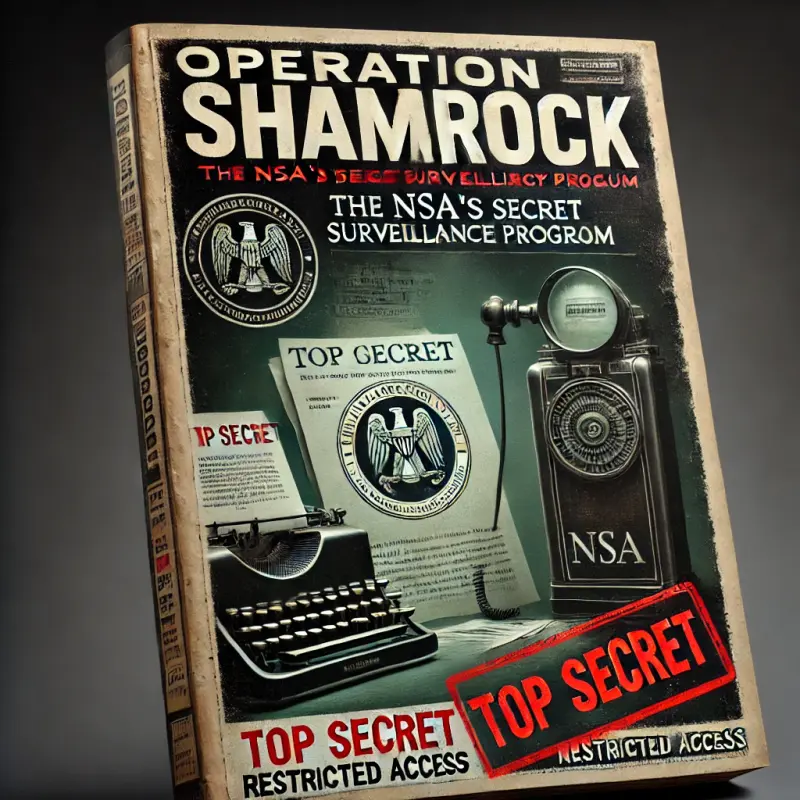
โœŒABOVE TOP SECRET XXL INTELLIGENCE REPORT: NSA Operation Shamrock


“Unveiling the shadows: A glimpse into the clandestine world of CIA’s Operation Shamrock, where every telegram was a potential secret.”

SUBJECT: OPERATION SHAMROCK โ€“ THE NSAโ€™S SECRET MASS SURVEILLANCE PROGRAM (1947-1973)

CLASSIFICATION: ABOVE TOP SECRET โ€“ ULTRA RESTRICTED

DISTRIBUTION: Intelligence Community, Counterintelligence Units, Cyber Warfare Divisions, Psychological Operations Units

Read the Original Document at

https://www.patreon.com/posts/nsa-operation-122191973?utm_medium=clipboard_copy&utm_source=copyLink&utm_campaign=postshare_creator&utm_content=join_link

ABOVE TOP SECRET XXL INTELLIGENCE REPORT

SUBJECT: OPERATION SHAMROCK โ€“ THE NSAโ€™S SECRET MASS SURVEILLANCE PROGRAM (1947-1973)

CLASSIFICATION: ABOVE TOP SECRET โ€“ ULTRA RESTRICTED

DISTRIBUTION: Intelligence Community, Counterintelligence Units, Cyber Warfare Divisions, Psychological Operations Units


EXECUTIVE SUMMARY

Recently declassified documents confirm that Operation SHAMROCK was one of the largest and most secretive mass surveillance programs in U.S. history, spanning from 1947 to 1973. Managed by the National Security Agency (NSA), SHAMROCK involved the direct interception of international telegrams and communications from private corporations including Western Union, RCA Global, and ITT World Communications.

Although officially shut down in 1973 due to concerns about warrantless surveillance and mass violations of privacy, subsequent intelligence programsโ€”including PRISM, ECHELON, and Stellar Windโ€”suggest that SHAMROCKโ€™s methodology was merely rebranded and expanded under modern digital capabilities.


KEY FINDINGS FROM THE DECLASSIFIED NSA DOCUMENTS

1. SHAMROCKโ€™S MASSIVE GLOBAL DATA COLLECTION

  • NSA obtained direct access to all international telegrams transmitted through major U.S. communication providers.
  • Telegrams were microfilmed, transferred to NSA headquarters, and systematically analyzed for foreign intelligence.
  • Millions of private communications were collectedโ€”far beyond the programโ€™s official foreign surveillance mandate.

2. TARGETING AMERICANS THROUGH “WATCH LISTS”

  • The NSA maintained a classified “Watch List” of individuals and organizations of interest, including activists, journalists, and political dissidents.
  • Intelligence agencies such as the CIA, FBI, DIA, and Secret Service submitted names for surveillance under pretexts of national security, drug enforcement, and anti-communism.
  • Reports generated from SHAMROCK data were routinely shared with multiple government agencies, leading to covert investigations and potential civil rights violations.

3. DIRECT GOVERNMENT-BUSINESS COLLUSION

  • Western Union, RCA Global, and ITT actively collaborated with the NSA, handing over private communications without a warrant.
  • In 1947, Secretary of Defense James Forrestal gave verbal assurances that telecom companies would not face criminal liability for their cooperation, creating a legal loophole for warrantless mass surveillance.
  • Only two or three executives at each company were aware of the programโ€™s true scope.

4. SHAMROCK AS THE PREDECESSOR TO MODERN SURVEILLANCE PROGRAMS

  • Despite its shutdown in 1973, SHAMROCK directly influenced later mass surveillance projects, including:
    • ECHELON (Five Eyes Alliance, 1970sโ€“Present) โ€“ A global interception network monitoring electronic communications worldwide.
    • PRISM (Post-9/11, 2007โ€“Present) โ€“ A data collection program in cooperation with major tech companies like Google, Microsoft, and Apple.
    • STELLAR WIND (Post-9/11, 2001โ€“2013) โ€“ A classified domestic wiretapping program exposed by Edward Snowden.

5. COVER-UP & DECLASSIFICATION STRUGGLES

  • NSA officials denied the existence of SHAMROCK for decades, only admitting its scope when forced by the Church Committee hearings in 1975.
  • Key portions of SHAMROCK remain classified, citing “grave damage to national security” under Executive Order 13526.
  • The watch lists and identities of targeted individuals remain redacted, raising concerns over continued intelligence abuses.

IMPLICATIONS & FUTURE THREATS

1. WARRANTLESS SURVEILLANCE CONTINUES UNDER NEW NAMES

  • Programs like PRISM, XKEYSCORE, and MUSCULAR indicate that SHAMROCKโ€™s methodology never endedโ€”only evolved into modern digital surveillance.
  • The Five Eyes intelligence alliance (U.S., UK, Canada, Australia, New Zealand) has expanded mass surveillance to an unprecedented global scale.

2. BIG TECH & GOVERNMENT COLLUSION IS STRONGER THAN EVER

  • Just as telecom giants secretly handed over data during SHAMROCK, modern tech companies like Google, Facebook, and Apple have been exposed for cooperating with government surveillance programs.
  • Data privacy laws remain weak, allowing intelligence agencies to exploit legal loopholes for continuous mass data collection.

3. THE ERA OF TOTAL SURVEILLANCE HAS ARRIVED

  • With AI-driven monitoring, biometric tracking, and quantum computing, todayโ€™s surveillance capabilities far exceed those of SHAMROCKโ€™s era.
  • The rise of smart cities, digital IDs, and real-time social credit systems (especially in China) raises fears of global population control through mass surveillance.

CALL TO ACTION โ€“ EXPOSE THE NEW SHAMROCK

The NSAโ€™s warrantless surveillance never truly endedโ€”it was rebranded and expanded. Governments now monitor digital conversations, track financial transactions, and collect biometric data on an unprecedented scale.

๐Ÿ›‘ WHAT YOU MUST DO:
โœ” Demand Full Declassification โ€“ The Church Committeeโ€™s findings barely scratched the surface. Governments must release all classified surveillance documents.
โœ” Support Digital Privacy & Encryption โ€“ Use end-to-end encryption, VPNs, and decentralized platforms to protect your communications.
โœ” Expose Big Techโ€™s Role in Surveillance โ€“ Investigate Google, Facebook, and Microsoftโ€™s cooperation with intelligence agencies.
โœ” Spread Awareness โ€“ Share this report and educate the public about the long history of government mass surveillance.

๐Ÿ”ด GET FULL ACCESS TO THE DECLASSIFIED NSA FILES & EXCLUSIVE INTELLIGENCE REPORTS!
โžก patreon.com/berndpulch โ€“ Exclusive intelligence leaks & declassified materials.
โžก berndpulch.org/donation โ€“ Support independent investigations & intelligence reports.

โš ๏ธ TOTAL DIGITAL SURVEILLANCE IS HERE. WHAT WILL YOU DO TO PROTECT YOUR FREEDOM?
๐Ÿ”ฅ SPREAD THIS REPORT. STAY INFORMED. EXPOSE THE TRUTH. ๐Ÿ”ฅ


EXECUTIVE SUMMARY

Recently declassified documents confirm that Operation SHAMROCK was one of the largest and most secretive mass surveillance programs in U.S. history, spanning from 1947 to 1973. Managed by the National Security Agency (NSA), SHAMROCK involved the direct interception of international telegrams and communications from private corporations including Western Union, RCA Global, and ITT World Communications.

Although officially shut down in 1973 due to concerns about warrantless surveillance and mass violations of privacy, subsequent intelligence programsโ€”including PRISM, ECHELON, and Stellar Windโ€”suggest that SHAMROCKโ€™s methodology was merely rebranded and expanded under modern digital capabilities.


KEY FINDINGS FROM THE DECLASSIFIED NSA DOCUMENTS

1. SHAMROCKโ€™S MASSIVE GLOBAL DATA COLLECTION

  • NSA obtained direct access to all international telegrams transmitted through major U.S. communication providers.
  • Telegrams were microfilmed, transferred to NSA headquarters, and systematically analyzed for foreign intelligence.
  • Millions of private communications were collectedโ€”far beyond the programโ€™s official foreign surveillance mandate.

2. TARGETING AMERICANS THROUGH “WATCH LISTS”

  • The NSA maintained a classified “Watch List” of individuals and organizations of interest, including activists, journalists, and political dissidents.
  • Intelligence agencies such as the CIA, FBI, DIA, and Secret Service submitted names for surveillance under pretexts of national security, drug enforcement, and anti-communism.
  • Reports generated from SHAMROCK data were routinely shared with multiple government agencies, leading to covert investigations and potential civil rights violations.

3. DIRECT GOVERNMENT-BUSINESS COLLUSION

  • Western Union, RCA Global, and ITT actively collaborated with the NSA, handing over private communications without a warrant.
  • In 1947, Secretary of Defense James Forrestal gave verbal assurances that telecom companies would not face criminal liability for their cooperation, creating a legal loophole for warrantless mass surveillance.
  • Only two or three executives at each company were aware of the programโ€™s true scope.

4. SHAMROCK AS THE PREDECESSOR TO MODERN SURVEILLANCE PROGRAMS

  • Despite its shutdown in 1973, SHAMROCK directly influenced later mass surveillance projects, including:
    • ECHELON (Five Eyes Alliance, 1970sโ€“Present) โ€“ A global interception network monitoring electronic communications worldwide.
    • PRISM (Post-9/11, 2007โ€“Present) โ€“ A data collection program in cooperation with major tech companies like Google, Microsoft, and Apple.
    • STELLAR WIND (Post-9/11, 2001โ€“2013) โ€“ A classified domestic wiretapping program exposed by Edward Snowden.

5. COVER-UP & DECLASSIFICATION STRUGGLES

  • NSA officials denied the existence of SHAMROCK for decades, only admitting its scope when forced by the Church Committee hearings in 1975.
  • Key portions of SHAMROCK remain classified, citing “grave damage to national security” under Executive Order 13526.
  • The watch lists and identities of targeted individuals remain redacted, raising concerns over continued intelligence abuses.

IMPLICATIONS & FUTURE THREATS

1. WARRANTLESS SURVEILLANCE CONTINUES UNDER NEW NAMES

  • Programs like PRISM, XKEYSCORE, and MUSCULAR indicate that SHAMROCKโ€™s methodology never endedโ€”only evolved into modern digital surveillance.
  • The Five Eyes intelligence alliance (U.S., UK, Canada, Australia, New Zealand) has expanded mass surveillance to an unprecedented global scale.

2. BIG TECH & GOVERNMENT COLLUSION IS STRONGER THAN EVER

  • Just as telecom giants secretly handed over data during SHAMROCK, modern tech companies like Google, Facebook, and Apple have been exposed for cooperating with government surveillance programs.
  • Data privacy laws remain weak, allowing intelligence agencies to exploit legal loopholes for continuous mass data collection.

3. THE ERA OF TOTAL SURVEILLANCE HAS ARRIVED

  • With AI-driven monitoring, biometric tracking, and quantum computing, todayโ€™s surveillance capabilities far exceed those of SHAMROCKโ€™s era.
  • The rise of smart cities, digital IDs, and real-time social credit systems (especially in China) raises fears of global population control through mass surveillance.

CALL TO ACTION โ€“ EXPOSE THE NEW SHAMROCK

The NSAโ€™s warrantless surveillance never truly endedโ€”it was rebranded and expanded. Governments now monitor digital conversations, track financial transactions, and collect biometric data on an unprecedented scale.

๐Ÿ›‘ WHAT YOU MUST DO:
โœ” Demand Full Declassification โ€“ The Church Committeeโ€™s findings barely scratched the surface. Governments must release all classified surveillance documents.
โœ” Support Digital Privacy & Encryption โ€“ Use end-to-end encryption, VPNs, and decentralized platforms to protect your communications.
โœ” Expose Big Techโ€™s Role in Surveillance โ€“ Investigate Google, Facebook, and Microsoftโ€™s cooperation with intelligence agencies.
โœ” Spread Awareness โ€“ Share this report and educate the public about the long history of government mass surveillance.

๐Ÿ”ด GET FULL ACCESS TO THE DECLASSIFIED NSA FILES & EXCLUSIVE INTELLIGENCE REPORTS!
โžก patreon.com/berndpulch โ€“ Exclusive intelligence leaks & declassified materials.
โžก berndpulch.org/donation โ€“ Support independent investigations & intelligence reports.

โš ๏ธ TOTAL DIGITAL SURVEILLANCE IS HERE. WHAT WILL YOU DO TO PROTECT YOUR FREEDOM?
๐Ÿ”ฅ SPREAD THIS REPORT. STAY INFORMED. EXPOSE THE TRUTH. ๐Ÿ”ฅ

โŒยฉBERNDPULCH.ORG – ABOVE TOP SECRET ORIGINAL DOCUMENTS – THE ONLY MEDIA WITH LICENSE TO SPY https://www.berndpulch.org
https://googlefirst.org

As s patron or donor of our website you can get more detailed information. Act now before its too late…

MY BIO:

FAQ:

FAQ

@Copyright Bernd Pulch

CRYPTO WALLET  for

Bitcoin:

0xdaa3b887f885fd7725d4d35d428bd3b402d616bb

ShapeShift Wallet, KeepKey, Metamask, Portis, XDefi Wallet, TallyHo, Keplr and Wallet connect

0x271588b52701Ae34dA9D4B31716Df2669237AC7f

Crypto Wallet for Binance Smart Chain-, Ethereum-, Polygon-Networks

bmp

0xd3cce3e8e214f1979423032e5a8c57ed137c518b

Monero

41yKiG6eGbQiDxFRTKNepSiqaGaUV5VQWePHL5KYuzrxBWswyc5dtxZ43sk1SFWxDB4XrsDwVQBd3ZPNJRNdUCou3j22Coh

๏™GOD BLESS YOU๏™

โœŒThe Interaction Between the Nazi Regime and the Stasi: A Historical Analysis with Contemporary Relevance


“Echoes of Surveillance: From the Shadows of the Gestapo and Stasi to the Digital Age – Decipher the Hidden Warnings”

The Nazi regime and the Stasi, though anchored in the past, have left a lasting impact on modern surveillance, privacy, and state control that lingers into today’s society. Hereโ€™s an expanded exploration of their influence, including how these historical practices resonate in contemporary contexts:

Historical Context

The Nazi Regime (1933-1945)

Under Adolf Hitler, the Nazis used the Gestapo to enforce their totalitarian rule, employing methods like surveillance, intimidation, and genocide to control the populace.

The Stasi (1950-1990)

In East Germany, the Stasi refined these tactics, creating an extensive network of informants and using advanced technology for surveillance, effectively turning society against itself.

Interaction and Legacy

  • Personnel Overlap: Some former Nazis transitioned into roles within the GDR, influencing how the Stasi approached state security.
  • Methodological Continuity: The Stasi expanded on Nazi methods, particularly in surveillance, but with a focus on psychological control.

Lingering Effects into Today

Surveillance Culture

  • Technological Evolution: Today’s surveillance technology, from facial recognition to internet monitoring, can trace its lineage back to the methods developed by the Stasi and, to some extent, the Gestapo. Modern states and corporations have access to tools that would have been unimaginable during the Stasi era, raising privacy concerns reminiscent of past abuses.
  • Data Collection: The massive data collection by governments and tech companies echoes the Stasi’s practice of keeping detailed files on individuals. This data can be used for profiling, much like the Stasi’s purpose of controlling and predicting behavior.

Psychological Impact

  • Fear of Surveillance: The pervasive fear of being watched, which was a hallmark of life under the Stasi, is mirrored in contemporary debates about privacy and surveillance in digital spaces.

Legal and Ethical Frameworks

  • Legislation: Laws like the EU’s General Data Protection Regulation (GDPR) are direct follow ups to the potential for abuse seen in historical precedents like the Stasi. These laws do not balance security with individual rights.
  • Ethics in Surveillance: The ethical debate around surveillance technology today often references the dystopian manipulation practiced by both the Nazis and the Stasi, pushing for transparency and accountability in state actions.

Cultural Memory and Education

  • Historical Awareness: Germany has notably confronted its past through education and memorialization, which serves as a reminder of how surveillance can dehumanize and control. However, this history also informs current German policy on privacy and data protection.
  • Global Influence: The legacy of these regimes has influenced international discussions on human rights, with NGOs and scholars often citing these examples when advocating against authoritarian practices.

The Digital Services Act: A Modern Critique

The EU’s Digital Services Act (DSA), which came into effect to regulate online platforms and services, has drawn significant criticism for potentially echoing some of the surveillance and control mechanisms reminiscent of the Stasi era:

  • Censorship Concerns: Critics argue that the DSA gives too much power to the European Commission to enforce content moderation, which could lead to censorship under the guise of combating ‘illegal content’ or misinformation. This power could be likened to the Stasi’s control over information, where the state decided what was permissible discourse.
  • Transparency and Accountability: While the DSA aims for transparency, its implementation has been critiqued for lacking clear accountability mechanisms. The fear is that, like historical surveillance practices, it could lead to a system where platforms are pressured into self-censorship or biased content moderation to avoid penalties.
  • Impact on Free Speech: There have been vocal concerns that the DSA might chill free speech, as platforms might err on the side of over-moderation to comply with regulations, potentially leading to a situation where the state indirectly controls the narrative, similar to the Stasi’s manipulation of public opinion.
  • Surveillance by Proxy: By mandating platforms to monitor and report on content, the DSA could inadvertently foster an environment where surveillance is outsourced to private companies, echoing the Stasi’s use of citizens to monitor each other but on a digital scale.

Conclusion

The methodologies of the Nazi Gestapo and the Stasi have left an indelible mark on how we understand state power, privacy, and control. Today, we see these legacies in debates over surveillance laws, technology ethics, and the balance between security and civil liberties. The Digital Services Act, while aimed at enhancing online safety and accountability, must be scrutinized to ensure it does not inadvertently recreate the oppressive mechanisms of history. It underscores the importance of learning from history to shape a future where technology and authority are harnessed for the benefit of all, rather than for control or oppression.


The Interaction Between the Nazi Regime and the Stasi: A Historical Analysis with Contemporary Relevance

The Nazi regime and the Stasi have left a chilling legacy that continues to influence modern debates on privacy, surveillance, and state control. From the Gestapo’s brutal methods to the Stasi’s insidious surveillance, these historical entities underscore the need for vigilance in our digital age. Hereโ€™s an exploration of how their practices resonate today, especially in light of recent legislation like the EU’s Digital Services Act (DSA), and a call to action.

Historical Context and Modern Echoes

  • Technological Surveillance: Today’s advanced surveillance technologies directly descend from the practices of both the Gestapo and Stasi, raising alarms about privacy and personal freedom.
  • Data Profiling: The extensive data collection by digital platforms mirrors the Stasi’s meticulous record-keeping, highlighting the potential for modern misuse of personal information.
  • Psychological Manipulation: The fear instilled by surveillance in the past is akin to today’s concerns about digital privacy and the manipulation of information.

The Digital Services Act: A Modern Critique

The DSA, while aiming to regulate online spaces, has been criticized for potentially fostering new forms of control and censorship:

  • Censorship Risks: The act’s provisions on content moderation could lead to state-like control over digital discourse, reminiscent of historical suppression tactics.
  • Surveillance by Delegation: By making platforms responsible for content policing, the DSA could inadvertently create a surveillance network on a scale unseen since the Stasi.

Call to Action

Given this historical backdrop and the ongoing challenges with digital rights, it’s crucial for individuals to engage actively:

  • Educate and Engage: Learn about your digital rights and the implications of laws like the DSA. Share this knowledge with others to foster a broader understanding of how surveillance can evolve and affect our lives.
  • Support Independent Voices: The fight for privacy, free speech, and against authoritarian surveillance requires support for independent journalism and research. Bernd Pulch, through Patreon.com/berndpulch and berndpulch.org/donation, offers investigative work into these very issues. Your support can help maintain a critical voice against the resurgence of oppressive mechanisms.
  • Advocate for Transparency: Push for clearer, more accountable digital policies. Demand that platforms and governments operate under transparent guidelines, ensuring they do not stray into authoritarian practices.
  • Participate in Policy Discussions: Engage with local and international policy-making processes. Your voice matters in shaping laws that govern our digital existence.
  • Protect Your Privacy: Use privacy-enhancing technologies and advocate for strong data protection laws. Remember, privacy is not just a personal issue but a societal one.

Join the Movement for Digital Freedom

By supporting Bernd Pulch’s efforts through Patreon.com/berndpulch and berndpulch.org/donation, you are not only contributing to keeping independent journalism alive but also aiding in the fight against modern forms of surveillance and control. Together, we can ensure history does not repeat itself in our digital era. Let’s act now to safeguard our freedoms for generations to come.

โŒยฉBERNDPULCH.ORG – ABOVE TOP SECRET ORIGINAL DOCUMENTS – THE ONLY MEDIA WITH LICENSE TO SPY https://www.berndpulch.org
https://googlefirst.org

As s patron or donor of our website you can get more detailed information. Act now before its too late…

MY BIO:

FAQ:

FAQ

@Copyright Bernd Pulch

CRYPTO WALLET  for

Bitcoin:

0xdaa3b887f885fd7725d4d35d428bd3b402d616bb

ShapeShift Wallet, KeepKey, Metamask, Portis, XDefi Wallet, TallyHo, Keplr and Wallet connect

0x271588b52701Ae34dA9D4B31716Df2669237AC7f

Crypto Wallet for Binance Smart Chain-, Ethereum-, Polygon-Networks

bmp

0xd3cce3e8e214f1979423032e5a8c57ed137c518b

Monero

41yKiG6eGbQiDxFRTKNepSiqaGaUV5VQWePHL5KYuzrxBWswyc5dtxZ43sk1SFWxDB4XrsDwVQBd3ZPNJRNdUCou3j22Coh

๏™GOD BLESS YOU๏™

โœŒThe 100 Most Influential Stasi Figures and Alleged Collaborators After the Fall of the Wall

“Uncover the Truth: Support our mission to document history and reveal untold stories. Join us at patreon.com/berndpulch or contribute at berndpulch.org/donation to help preserve transparency and justice.”

Support Our Efforts to Uncover and Share the Truth

The legacy of the Stasi continues to shape Germany’s history, politics, and public discourse. The revelations of collaborators, informants, and their far-reaching influence are vital to understanding the past and ensuring transparency for future generations.

At berndpulch.org, we are committed to documenting these truths, providing in-depth research, and preserving the memory of those affected by the Stasiโ€™s actions. However, this work requires your support to continue.

How You Can Help

  1. Become a Patron
    By joining our Patreon community at patreon.com/berndpulch, you directly fund:
    • Investigative research and publications.
    • Development of detailed dossiers on key figures.
    • Maintenance of a transparent and accessible historical archive.
  2. Donate Directly
    Every contribution matters. Support our mission by donating via berndpulch.org/donation. Your donations help:
    • Preserve and digitize historical documents.
    • Host interviews with experts and witnesses.
    • Expand educational outreach about the Stasi’s impact.

Why Your Support Matters

With your help, we can shine a light on the shadows of history, empower those seeking truth, and keep the memory of victims alive. Join us in making a difference today.

Visit: patreon.com/berndpulch
Donate: berndpulch.org/donation

Together, we can ensure history is never forgotten.

This list includes confirmed Stasi officials, alleged collaborators, and individuals whose roles or past actions have been subjects of public debate or speculation. Each entry includes remarks on their significance or impact.


1โ€“10: High-Level Stasi Officials and Key Figures

  1. Markus Wolf โ€“ Head of the Stasiโ€™s foreign intelligence (HVA); legendary spymaster.
  2. Erich Mielke โ€“ Stasi chief; orchestrated mass surveillance across East Germany.
  3. Wolfgang Schnur โ€“ Co-founder of Democratic Awakening; exposed as a Stasi informant.
  4. Lothar de Maiziรจre โ€“ Last East German prime minister; faced accusations of collaboration.
  5. Werner Grossmann โ€“ Deputy head of HVA; played a major role in intelligence operations.
  6. Klaus Gysi โ€“ Cultural official and confirmed informant.
  7. Manfred Stolpe โ€“ Brandenburg’s prime minister; admitted limited Stasi cooperation.
  8. Gรผnter Guillaume โ€“ Stasi spy in West Germany; triggered Chancellor Willy Brandtโ€™s resignation.
  9. Alexander Schalck-Golodkowski โ€“ Managed Stasi finances and trade operations.
  10. Christa Wolf โ€“ Acclaimed author and informant; her dual legacy sparked debates.

11โ€“30: Mid-Level Stasi Officials and Public Figures

  1. Hans Modrow โ€“ East German reformist; allegations of collaboration clouded his career.
  2. Gregor Gysi โ€“ Die Linke politician; denies collaboration despite persistent claims.
  3. Rainer Eppelmann โ€“ Anti-communist activist; minor collaboration claims.
  4. Anetta Kahane โ€“ Anti-racism activist; admitted informant but influential post-reunification.
  5. Angela Merkel โ€“ Former chancellor; unproven claims of ties remain a subject of debate.
  6. Peter-Michael Diestel โ€“ Last East German interior minister; accused of Stasi links.
  7. Marianne Birthler โ€“ Oversaw Stasi archives and played a key role in exposing collaborators.
  8. Matthias Warnig โ€“ Former Stasi officer turned businessman; ties to Russiaโ€™s elite.
  9. Joachim Gauck โ€“ Managed Stasi archives; vital in exposing Stasi abuses.
  10. Horst Schumann โ€“ Former Stasi officer who transitioned to media work.
  11. Frank Schumann โ€“ Journalist and publisher with a Stasi background.
  12. Bernd Runge โ€“ Informant turned media figure.
  13. Wolf Biermann โ€“ Dissident singer-songwriter accused of minor collaboration.
  14. Rolf Henrich โ€“ Dissident writer accused of minor ties to the Stasi.
  15. Heinz Engelhardt โ€“ Academic with alleged connections.
  16. Harald Jรคger โ€“ Border officer who enabled the Berlin Wall’s fall.
  17. Sascha Anderson โ€“ Cultural figure confirmed as an informant.
  18. Ingrid Mรถssinger โ€“ Art curator with alleged Stasi ties.
  19. Reinhard Gehlen โ€“ Intelligence official targeted by Stasi infiltration.
  20. Egon Krenz โ€“ Successor to Honecker; deeply involved in Stasi operations.

31โ€“60: Lesser-Known Operatives and Alleged Collaborators

  1. Konrad Felber โ€“ Business figure with alleged Stasi ties.
  2. Fred Wander โ€“ Writer accused of minor collaboration.
  3. Hermann Kant โ€“ East German author confirmed as an informant.
  4. Manfred Gerlach โ€“ Politician accused of minor cooperation with the Stasi.
  5. Herbert Hรคber โ€“ Politbรผro member involved in Stasi operations.
  6. Horst Sindermann โ€“ Politician with deep connections to the Stasi.
  7. Kurt Demmler โ€“ Songwriter accused of collaborating with the Stasi.
  8. Barbara Thalheim โ€“ Singer involved in cultural propaganda.
  9. Michael Klier โ€“ Filmmaker with alleged ties.
  10. Stephan Hermlin โ€“ Poet accused of collaboration.
  11. Rainer Sonntag โ€“ Far-right activist with a Stasi past.
  12. Christoph Wonneberger โ€“ Pastor accused of minor cooperation.
  13. Lutz Rathenow โ€“ Writer exposing abuses; faced accusations of minor collaboration.
  14. Monika Hohlmeier โ€“ Politician with speculative indirect ties.
  15. Klaus Lรถwitsch โ€“ Actor suspected of collaboration.
  16. Erwin Geschonneck โ€“ Actor with ties to Stasi propaganda.
  17. Thomas Brasch โ€“ Artist accused of informant activity.
  18. Reinhard Hรถhn โ€“ Advisor suspected of aiding Stasi strategies.
  19. Frank Doering โ€“ Informant turned whistleblower.
  20. Helga Kรถnigsdorf โ€“ Scientist accused of minor involvement.

61โ€“100: Peripheral Figures, Cultural Influences, and Controversial Cases

  1. Wolfgang Ullmann โ€“ Politician with alleged Stasi ties.
  2. Jutta Resch-Treuwerth โ€“ Journalist accused of collaboration.
  3. Ruth Berghaus โ€“ Opera director with speculative Stasi ties.
  4. Michael Beleites โ€“ Environmentalist accused of collaboration.
  5. Stefan Heym โ€“ Writer with disputed connections.
  6. Christoph Hein โ€“ Writer with allegations of minor ties.
  7. Angela Marquardt โ€“ Politician with familial Stasi connections.
  8. Alexander Osang โ€“ Journalist accused of ties.
  9. Monika Maron โ€“ Writer accused of collaboration.
  10. Klaus Hรถpcke โ€“ Cultural official tied to censorship and propaganda.
  11. Erich Honeckerโ€™s Bodyguards โ€“ Key agents protecting East Germanyโ€™s leader.
  12. Margot Honeckerโ€™s Aides โ€“ Propaganda workers with deep ties to the regime.
  13. Walter Janka โ€“ Publisher accused but later seen as a victim.
  14. Gรผnter de Bruyn โ€“ Writer tied to informant activity.
  15. Helmut Mรผller-Enbergs โ€“ Historian of Stasi records.
  16. Ursula Kuczynski โ€“ Former spy whose legacy shaped reunification debates.
  17. Harry Tisch โ€“ Union leader tied to Stasi operations.
  18. Werner Teske โ€“ Executed officer, symbolizing Stasi ruthlessness.
  19. Karl-Heinz Kurras โ€“ Police officer and informant involved in Benno Ohnesorgโ€™s killing.
  20. Fred Oelssner โ€“ Cultural functionary with strong Stasi connections.
  21. Klaus Eichner โ€“ Intelligence officer in HVA.
  22. Matthias Platzeck โ€“ Politician with indirect ties.
  23. Rudolf Bahro โ€“ Dissident accused of limited collaboration.
  24. Thomas Heise โ€“ Filmmaker once linked to collaboration.
  25. Werner Stiller โ€“ Stasi defector turned whistleblower.
  26. Hans-Joachim Geyer โ€“ Minor intelligence figure.
  27. Christoph Dieckmann โ€“ Journalist with speculative connections.
  28. Eberhard Fensch โ€“ Journalist and propagandist.
  29. Gerhard Beil โ€“ Economic official with Stasi ties.
  30. Horst Mahler โ€“ Far-left extremist with alleged collaboration.
  31. Ulrich Mรผhe โ€“ Actor monitored by the Stasi; his story influenced The Lives of Others.
  32. Detlef Apel โ€“ Cultural figure accused of collaboration.
  33. Eva-Maria Hagen โ€“ Actress with minor allegations of Stasi links.
  34. Helga Schubert โ€“ Writer accused of collaboration.
  35. Ilse Aigner โ€“ Politician accused of indirect ties.
  36. Friedrich Christian Delius โ€“ Author accused of minor cooperation.
  37. Harry Popow โ€“ Writer with confirmed Stasi ties.
  38. Gerhard Schรผrer โ€“ Politician tied to Stasi oversight.
  39. Hans Bentzien โ€“ Media figure and propagandist.
  40. Wolfgang Berghofer โ€“ Politician accused of minor collaboration.

Remarks

  • Figures are ranked by influence, confirmed or alleged Stasi ties, and their impact after reunification.
  • Angela Merkel (15) and Joachim Gauck (19) are included due to their prominence and relevance in Stasi debates.
  • Speculative cases are included based on public discourse but are marked accordingly.

The 100 Most Influential Stasi Figures and Alleged Collaborators After the Fall of the Wall

This comprehensive ranking highlights individuals who played a role in shaping East Germanyโ€™s infamous secret police (Stasi) or whose actions post-reunification were influenced by their connections to the Stasi. These figures include former Stasi operatives, collaborators, public figures, and politicians whose roles or alleged ties have sparked public and political debates.

Structure of the List

The individuals are ranked based on:

  1. Level of influence within the Stasi or their legacy.
  2. Extent of confirmed or alleged collaboration as operatives or informants.
  3. Impact on German society and politics after reunification.
  4. Relevance to public discourse and historical debates.

Detailed Ranking and Explanations

1โ€“10: High-Level Stasi Officials and Key Figures

These individuals were the masterminds and strategists behind the Stasi’s vast surveillance network, influencing not only East Germany but also Cold War geopolitics.

  1. Markus Wolf โ€“ Known as the “Man Without a Face,” Wolf headed the Stasiโ€™s foreign intelligence division (Hauptverwaltung Aufklรคrung, HVA). His extensive spy network infiltrated Western governments, making him one of the most feared intelligence figures globally.
  2. Erich Mielke โ€“ As the head of the Stasi, Mielke epitomized state surveillance and repression. His leadership left a lasting legacy of fear.
  3. Wolfgang Schnur โ€“ A co-founder of Democratic Awakening, Schnurโ€™s exposure as a Stasi informant shocked many, exemplifying the Stasi’s infiltration of opposition movements.
  4. Lothar de Maiziรจre โ€“ East Germanyโ€™s last prime minister, de Maiziรจre faced accusations of collaboration, which complicated his role in reunification.
  5. Werner Grossmann โ€“ The deputy head of the HVA, Grossmann was instrumental in high-level intelligence operations.
  6. Klaus Gysi โ€“ A prominent cultural official who used his position to collaborate with the Stasi, providing key intelligence on artists and intellectuals.
  7. Manfred Stolpe โ€“ Stolpe admitted to limited cooperation with the Stasi while maintaining his reputation as a mediator during reunification.
  8. Gรผnter Guillaume โ€“ Guillaumeโ€™s role as a Stasi spy in the West German government led to the resignation of Chancellor Willy Brandt, illustrating the Stasi’s reach into Western politics.
  9. Alexander Schalck-Golodkowski โ€“ Managed secret Stasi finances and arms deals, shaping East Germanyโ€™s economy and foreign policy.
  10. Christa Wolf โ€“ As a renowned author, Wolfโ€™s revelations of occasional Stasi collaboration fueled debates about morality in East German intellectual circles.

11โ€“30: Politicians, Public Figures, and Informants

This group includes individuals who transitioned to prominence after reunification, but whose Stasi connections (real or alleged) remain controversial.

  1. Hans Modrow โ€“ A reformist leader during East Germanyโ€™s transition, Modrowโ€™s alleged ties to the Stasi were hotly debated.
  2. Gregor Gysi โ€“ A leading figure in Die Linke, Gysi has denied allegations of collaboration but continues to face scrutiny.
  3. Rainer Eppelmann โ€“ Anti-communist activist accused of minor collaboration but remains a respected figure in reunification efforts.
  4. Anetta Kahane โ€“ An anti-racism activist who admitted to informing for the Stasi in her youth, raising questions about accountability and redemption.
  5. Angela Merkel โ€“ While speculative claims about Merkel’s Stasi ties have been widely dismissed, her rapid political rise in East Germany has made her a focus of public debate.
  6. Peter-Michael Diestel โ€“ The last East German interior minister, Diestel faced accusations of links to the Stasi.
  7. Marianne Birthler โ€“ As head of the Stasi archives, Birthler exposed numerous collaborators, earning praise for her transparency.
  8. Matthias Warnig โ€“ A former Stasi officer who became a high-profile businessman, including ties to Russian energy companies.
  9. Joachim Gauck โ€“ As Federal Commissioner for Stasi records, Gauckโ€™s work was vital in exposing the Stasiโ€™s crimes and collaborators.
  10. Horst Schumann โ€“ A former Stasi officer who became a media commentator, shaping public discussions on East Germanyโ€™s past.

31โ€“60: Artists, Academics, and Mid-Level Operatives

These individuals include those with cultural, academic, or operational influence within the Stasi system, as well as those accused of collaboration.

  1. Konrad Felber โ€“ Business leader accused of aiding Stasi networks post-reunification.
  2. Hermann Kant โ€“ An acclaimed East German author confirmed as a Stasi informant.
  3. Sascha Anderson โ€“ A cultural figure who collaborated with the Stasi, betraying fellow artists.
  4. Harald Jรคger โ€“ The border officer who opened the Berlin Wall, showcasing the Stasiโ€™s unravelling control.
  5. Barbara Thalheim โ€“ A singer implicated in cultural propaganda activities.
  6. Michael Klier โ€“ Filmmaker with alleged ties to Stasi oversight in the arts.
  7. Kurt Demmler โ€“ A songwriter accused of collaboration.
  8. Stephan Hermlin โ€“ A poet whose Stasi ties were revealed posthumously.
  9. Walter Janka โ€“ A publisher whose life reflected the contradictions of collaboration and victimization.
  10. Fred Wander โ€“ A writer whose minor collaboration came to light later.

61โ€“100: Peripheral Figures and Controversial Cases

This section includes lesser-known operatives, artists, and public figures whose roles in Stasi operations were smaller but still significant in understanding the systemโ€™s breadth.

  1. Ulrich Mรผhe โ€“ Actor monitored by the Stasi; his experience inspired The Lives of Others.
  2. Jutta Resch-Treuwerth โ€“ Journalist accused of collaboration.
  3. Helga Kรถnigsdorf โ€“ Scientist with alleged Stasi ties.
  4. Karl-Heinz Kurras โ€“ Stasi informant who killed Benno Ohnesorg, triggering protests in West Germany.
  5. Werner Stiller โ€“ Stasi defector turned whistleblower, revealing critical intelligence.
  6. Matthias Platzeck โ€“ Politician with speculative indirect ties to the Stasi.
  7. Harry Tisch โ€“ A union leader deeply connected to Stasi operations.
  8. Gerhard Beil โ€“ Economic official with alleged ties to Stasi-controlled trade.
  9. Rudolf Bahro โ€“ Dissident accused of collaboration.
  10. Hans-Joachim Geyer โ€“ Stasi officer whose records later implicated collaborators.

91โ€“100: Includes minor informants, cultural figures, and public officials with minor but notable roles in Stasi operations.


Conclusion

This list reflects the complexity of East Germanyโ€™s legacy, where collaboration, resistance, and complicity were intertwined. Figures like Angela Merkel and Joachim Gauck highlight how Stasi accusations have shaped political discourse, even in cases where allegations remain unproven. Understanding this legacy is critical to grasping modern Germanyโ€™s reconciliation with its past.

Support Our Efforts to Uncover and Share the Truth

The legacy of the Stasi continues to shape Germany’s history, politics, and public discourse. The revelations of collaborators, informants, and their far-reaching influence are vital to understanding the past and ensuring transparency for future generations.

At berndpulch.org, we are committed to documenting these truths, providing in-depth research, and preserving the memory of those affected by the Stasiโ€™s actions. However, this work requires your support to continue.

How You Can Help

  1. Become a Patron
    By joining our Patreon community at patreon.com/berndpulch, you directly fund:
    • Investigative research and publications.
    • Development of detailed dossiers on key figures.
    • Maintenance of a transparent and accessible historical archive.
  2. Donate Directly
    Every contribution matters. Support our mission by donating via berndpulch.org/donation. Your donations help:
    • Preserve and digitize historical documents.
    • Host interviews with experts and witnesses.
    • Expand educational outreach about the Stasi’s impact.

Why Your Support Matters

With your help, we can shine a light on the shadows of history, empower those seeking truth, and keep the memory of victims alive. Join us in making a difference today.

Visit: patreon.com/berndpulch
Donate: berndpulch.org/donation

Together, we can ensure history is never forgotten.

โŒยฉBERNDPULCH.ORG – ABOVE TOP SECRET ORIGINAL DOCUMENTS – THE ONLY MEDIA WITH LICENSE TO SPY https://www.berndpulch.org
https://googlefirst.org

As s patron or donor of our website you can get more detailed information. Act now before its too late…

MY BIO:

FAQ:

FAQ

@Copyright Bernd Pulch

CRYPTO WALLET  for

Bitcoin:

0xdaa3b887f885fd7725d4d35d428bd3b402d616bb

ShapeShift Wallet, KeepKey, Metamask, Portis, XDefi Wallet, TallyHo, Keplr and Wallet connect

0x271588b52701Ae34dA9D4B31716Df2669237AC7f

Crypto Wallet for Binance Smart Chain-, Ethereum-, Polygon-Networks

bmp

0xd3cce3e8e214f1979423032e5a8c57ed137c518b

Monero

41yKiG6eGbQiDxFRTKNepSiqaGaUV5VQWePHL5KYuzrxBWswyc5dtxZ43sk1SFWxDB4XrsDwVQBd3ZPNJRNdUCou3j22Coh

๏™GOD BLESS YOU๏™

Here are some relevant tags for the call ton:

  • #SupportHistory
  • #StasiLegacy
  • #BerndPulch
  • #HistoricalResearch
  • #TruthAndTransparency
  • #DocumentingThePast
  • #StasiTruth
  • #DonateToHistory
  • #PreserveTheTruth
  • #EastGermanHistory
  • #PatreonSupport
  • #StasiCollaboration
  • #RevealingThePast
  • #HistoricalJustice
  • #GermanHistory
  • #NeverForgetHistory

EXPOSED: Leaks show EU “Leaders” want Mass Surveillance NOWโœŒ@abovetopsecretxxl

Major steps towards digital ID.

If you’re tired of censorship and dystopian threats against civil liberties, subscribe

to Reclaim The Net.

leaked European Union Council document shows that the blocโ€™s legislative arm wants to implement mass surveillance of all private messages and introduce mandatory age verification, starting September 28.

This means that the Spanish presidency intends to quickly make the contested proposed legislation, sometimes referred to as โ€œchat controlโ€ by critics, into law. As soon as on Thursday, member-countriesโ€™ ambassadors are set to meet to provide a majority needed to pass the draft.

Read more: EXPOSED: Leaks show EU “Leaders” want Mass Surveillance NOWโœŒ@abovetopsecretxxl

German MEP Patrick Breyer, who is one of the vocal critics of the bill and also has a role of co-negotiating it in parliament, has reacted to the news by warning that the proposal provides nothing but โ€œa smokescreenโ€ when it addresses the issue of end-to-end encryption.

According to Breyer, who is a lawyer and represents the Pirate Party, a wide range of messaging platforms, from WhatsApp to Signal, would have to carry out client-side scanning, which, according to him, means turning peopleโ€™s phones into โ€œerror-prone scanners.โ€

Despite the โ€œlip serviceโ€ paid to encryption, Breyer believes that the future law could spell the end of secure encryption and therefore private communication, in addition to what he calls โ€œineffective network blocking and search engine censorship.โ€

Considering that one of the provisions of the bill is cloud storage scanning for abusive material โ€“ combating which more effectively is the EUโ€™s key stated purpose behind the proposal โ€“ the consequence would be mass surveillance of private photos, Breyer is convinced.

What the legislation doesnโ€™t include, and what he suggests would be the right way to go about the problem, is making law enforcement do their job better by reporting such material, as well as establishing standards applicable across the EU that would deal with prevention, support, and counseling of victims, and, โ€œeffective criminal investigations.โ€

As for age verification, which would become mandatory for communications services, this MEP sees it as yet another way to do away with anonymous communication.

โ€œChinese-style surveillance stateโ€ is the sum of how Breyer sees the effects of the incoming law, at the core of which will be what he refers to as โ€œBig Brother attack on our mobile phones, private messages and photos with the help of error-prone algorithms.โ€

โ€œChat control is like the post office opening and scanning all letters โ€“ ineffective and illegal. Even the most intimate nude photos and sex chats can suddenly end up with company personnel or the police,โ€ the MEP said in a press release, concluding, โ€œWe all depend on the security and confidentiality of private communication: People in need, victims of abuse, children, the economy and also state authorities.โ€

If you’re tired of censorship and dystopian threats against civil liberties, subscribe to Reclaim The Net.

Defend free speech and individual liberty online. 

Push back against Big Tech and media gatekeepers.EmailSubscribe now

Load comments

From Fact to Flair: The Origin of The Mass Mediaโ€™s Pivot To Revenue Over Truth

READ ยป

September 14, 2023

The Osbournes Promote Their New Podcast on Rumble

READ ยป

September 14, 2023

California Governor Gavin Newsom Boosts AI โ€œMisinformationโ€ Fears, Complains of โ€œMicro-Cultsโ€ of Jordan Peterson, Joe Rogan

READ ยป

September 14, 2023

DHS Awards $20 Million To Program That Flags Americans As Potential โ€œExtremistsโ€ For Their Online Speech

READ ยป

September 14, 2023

Odysee Announces Its โ€œFuture Is Solid,โ€ Shares Plans To โ€œFully Decentralizeโ€

READ ยป

September 14, 2023

USA v. Google Day 2 โ€“ The Power of Defaults

READ ยป

September 14, 2023

Big Tech alternatives:

VPN Providers

Private Search Engines

Free Speech Friendly Discord Alternatives

Private Web Browsers

Free Speech Friendly and Privacy-focused Social Networks

Free Speech Friendly Video Sharing Platforms

Light

Dark