

Introduction
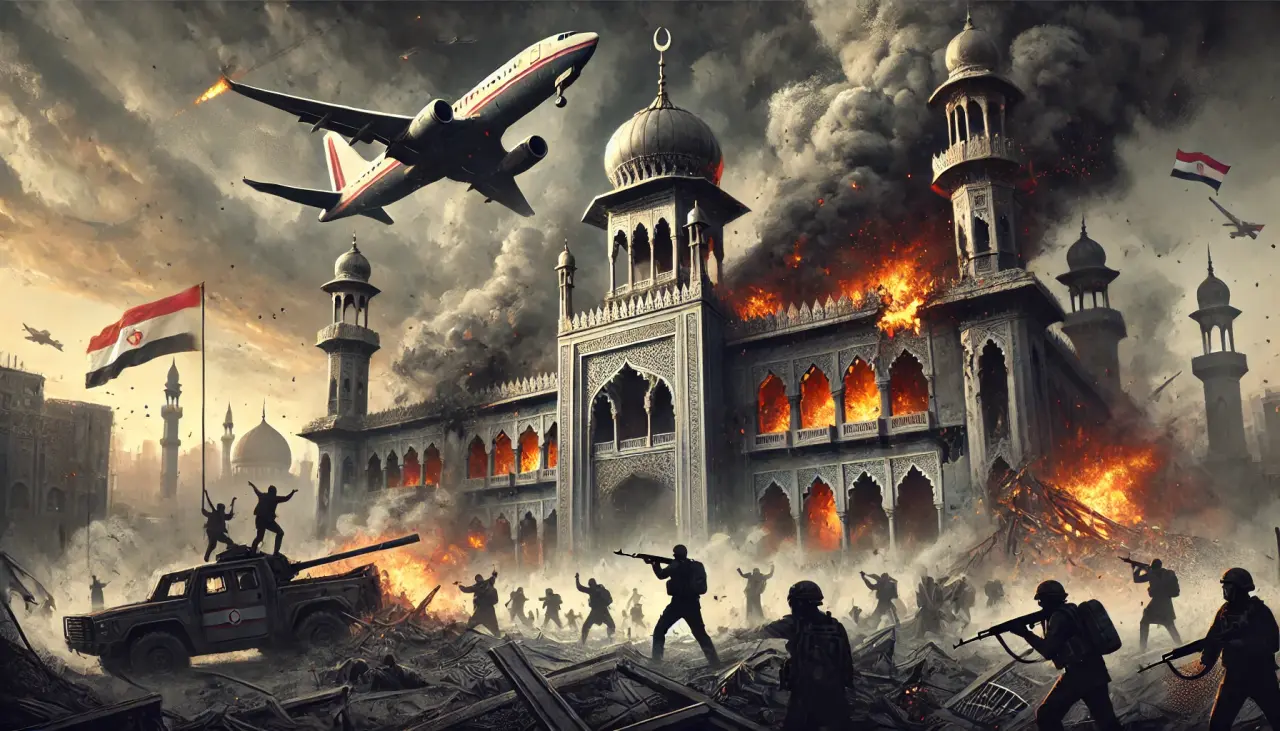
The Syrian Civil War has taken a dramatic and historic turn with the recent fall of Bashar al-Assad’s regime. The symbolic capture of his royal palace by opposition forces marked the end of his two-decade reign, while his plane’s catastrophic crash further solidified his regime’s collapse. This article explores the pivotal events that led to Assad’s downfall, the significance of the palace’s conquest, the crash of his plane, and the geopolitical fallout from these developments.
The Conquest of the Assad Palace: A Turning Point
After years of brutal conflict, shifting alliances, and mounting pressure, the palace that symbolized Assad’s grip on power was overtaken by a coalition of opposition groups and foreign-backed military factions.
The Damascus Presidential Palace, once a symbol of strength and authoritarian control, fell under the control of rebel and allied forces in a well-orchestrated military operation. This event shattered the regime’s final stronghold and sent a clear message to both loyalist forces and regional powers that Assad’s reign had come to an end.
How the Palace Was Taken
Through a combination of coordinated airstrikes, ground advances, and the disintegration of Assad’s military supply lines, opposition forces managed to breach the palace’s defenses. The palace’s fall marked the symbolic end of Assad’s authority and the beginning of his political and military demise.
- Rebel Strategy: Opposition forces launched targeted offensives against key government supply routes and military outposts, creating enough pressure to isolate the palace.
- International Support: Various nations backed the assault through intelligence, air support, and logistical aid to ensure that Assad’s remaining strongholds could be weakened effectively.
This event signaled the regime’s inability to hold its territorial advantages, leading to widespread defections among military officials and paramilitary groups.
The Plane Crash: A Fatal Blow to Assad’s Leadership
Following the capture of his palace, Assad’s plane was reported to have crashed under mysterious circumstances. This dramatic event symbolically represented the fall of his regime and cemented the political collapse that had begun with the palace’s capture.
Details of the Crash
The Syrian president’s private plane, reportedly on a routine flight from a nearby stronghold in Damascus to an undisclosed location, failed to maintain flight. Intelligence reports suggest that the crash was caused by a combination of sabotage, technical failure, or deliberate targeting by opposition operatives.
The plane’s destruction resulted in the deaths of key military advisors and Assad’s most loyal officials, further destabilizing his remaining government apparatus.
Significance of the Crash
- Loss of Leadership: Assad’s death (or disappearance) removed the remaining sense of centralized control over his military and administrative apparatus.
- Symbolic Defeat: The crash, combined with the capture of the palace, destroyed Assad’s image as an untouchable leader.
- Psychological Blow: The event demoralized loyalist troops and solidified the perception that the regime’s hold on power was unsustainable.
Aftermath: The Geopolitical Consequences
Assad’s fall marks a new era in Syrian geopolitics, with regional and international actors scrambling to adjust to the shifting power dynamics.
1. Power Vacuum in Damascus
The capture of Assad’s palace and his plane crash left a significant power vacuum in Syria. With his key allies now in disarray and loyalist forces disintegrating, various opposition factions, international coalitions, and regional powers vie to claim strategic influence.
2. Iran’s Strategic Shift
Iran has faced significant losses due to Assad’s downfall. Its regional influence, heavily reliant on Assad as an ally, is now at risk, leading Tehran to recalibrate its strategies in Lebanon, Iraq, and Syria.
3. Russia’s Dilemma
As Assad’s key foreign backer, Russia now confronts the difficult task of managing the collapse of its longstanding strategic alliance. Russian military assets in the Mediterranean could also face vulnerabilities as power shifts unfold in Damascus.
4. The Role of U.S.-Backed Forces
The U.S. and allied Kurdish groups now stand in a position of strategic advantage, with new opportunities to reshape Syria’s post-Assad future. The void left by Assad’s collapse has created opportunities and challenges for U.S.-led coalitions.
The Road Ahead: Stability or Further Chaos?
With Assad’s palace captured and his leadership seemingly eradicated through military defeat and the plane crash, Syria stands at a critical juncture. Questions loom:
- Will opposition factions be able to maintain order in Damascus, or will competing interests lead to further instability?
- How will international powers respond to secure their interests in the wake of Assad’s regime collapse?
- Can the international community mitigate the humanitarian crisis as millions face new challenges amid the war’s aftermath?
The days following Assad’s fall have ushered in uncertainty. While this could pave the way for peace, reconstruction, and democratic governance, the risk of continued proxy wars and regional instability remains.
Conclusion: The End of an Era
The capture of Assad’s palace and the mysterious crash of his plane symbolize the symbolic and strategic end of a decades-long regime. This collapse marks the end of an era defined by authoritarian control, military campaigns, and international proxy battles.
As Assad’s influence wanes and the path toward a new Syria begins, the international community, regional powers, and opposition factions will shape what comes next. Whether this leads to peace, division, or continued strife depends on diplomatic strategies, foreign involvement, and the resolve of Syrian citizens trying to rebuild their shattered nation.
The fall of Assad is not just a military defeat but a geopolitical turning point—one that will shape the future of the Middle East for years to come.
Background:
“Syria Now: A Comprehensive Analysis of the Conflict and WikiLeaks’ Revelations”
Introduction
The Syrian civil war remains one of the most devastating and complex geopolitical crises of the 21st century. Years of conflict, foreign intervention, and competing interests have made Syria a hotspot for proxy wars involving global powers like the United States, Russia, Iran, and Turkey. Coupled with the influx of humanitarian crises, refugee displacement, and strategic geopolitical intrigue, the war continues to reshape the region.
Adding another layer of complexity are revelations from WikiLeaks, which have exposed classified diplomatic cables, intelligence reports, and covert operations connected to the Syrian conflict. These disclosures provide valuable insights into the actions of global powers, foreign alliances, and motivations fueling the war. This article delves into the current situation in Syria while exploring the key WikiLeaks findings related to the conflict.
The Current State of the Syrian Conflict
Syria has faced over a decade of brutal civil war, beginning in 2011 as part of the Arab Spring protests. What started as calls for democratic reforms soon escalated into a full-scale war as the Assad regime, backed by Russia and Iran, fought against a fragmented opposition backed by Western powers and regional actors.
Key Players in the Syrian War
- The Assad Regime:
Led by President Bashar al-Assad, the regime has maintained power through military force, bolstered by Russian and Iranian support. - The Opposition Forces:
These groups are highly fragmented, ranging from moderate factions to extremist organizations like ISIS and al-Nusra Front. - Russia:
A key ally of Assad, Russia has provided direct military intervention since 2015, targeting opposition groups. - The United States:
While initially supportive of opposition groups, the U.S.’s role shifted to primarily targeting ISIS through airstrikes and support for Kurdish groups in the northeast. - Iran:
Iran has supported the Assad regime with funding and military support, aiming to secure its regional influence. - Turkey:
Turkey has operated in Syria primarily to combat Kurdish groups and establish control over parts of the northwestern regions.
The conflict has now entered a precarious stabilization phase, with Assad consolidating control over much of the country, but significant pockets of instability and violence persist.
The Role of WikiLeaks in Uncovering the Truth
WikiLeaks has played a pivotal role in exposing classified information that shapes public understanding of the Syrian conflict. Through the release of diplomatic cables, intelligence reports, and other classified documents, WikiLeaks has provided unprecedented access to the motivations, strategies, and secret dealings of global actors involved in Syria.
Notable WikiLeaks Revelations on Syria:
- U.S. Involvement and Proxy Wars:
WikiLeaks has exposed documents showing the U.S.’s covert strategy to support opposition groups in their fight against the Assad regime. These cables have shown how Washington has oscillated in its support for different factions over time, highlighting the U.S.’s cautious approach to not directly engage in prolonged conflict. - Saudi Arabia’s Influence:
Classified cables revealed that Saudi Arabia has funneled financial support and arms to opposition groups, aiming to counter Iranian influence in the region. - Iran’s Role and Strategic Goals:
Documents have shed light on Iran’s ambitions in Syria, particularly the goal of maintaining a “land corridor” to Hezbollah in Lebanon. This corridor allows Iran to supply arms and other support to Hezbollah while maintaining its geopolitical dominance. - The Role of Russia:
WikiLeaks reports have highlighted Russia’s willingness to maintain military support for Assad, as well as their strategic deployment of military assets to ensure geopolitical influence in the region. - ISIS and U.S. Strategies:
Leaked intelligence cables suggest that U.S. support for Kurdish groups in Syria was primarily aimed at combating ISIS rather than destabilizing Assad’s regime directly. However, these policies created unintended consequences, as factions like ISIS became unpredictable actors in the war.
These leaked revelations show that the Syrian civil war is not merely a localized conflict but an intricate geopolitical struggle involving regional and global powers with competing ambitions.
Impact of WikiLeaks on Geopolitical Understanding
The WikiLeaks revelations have shaped how analysts and the public view the Syrian war. The transparency provided by leaked documents has forced global powers to confront their strategies, alliances, and covert interventions. Furthermore, these leaks have created diplomatic friction, with revelations straining relationships between nations involved in Syria.
Public Trust and Transparency:
The leaks underscore the tension between secrecy and accountability. While WikiLeaks has been criticized for endangering diplomatic relations, its transparency has empowered global audiences with a clearer understanding of the motivations driving international interventions.
Proxy Conflicts:
The leaked cables highlight the use of proxy forces by global powers to wage war indirectly, revealing the manipulative strategies behind economic aid, arms deals, and intelligence sharing.
ISIS and Unintended Consequences:
The intelligence leaks expose how power struggles and shifting U.S. strategies allowed ISIS to emerge as a formidable force. Many leaked documents show that destabilization efforts in pursuit of geopolitical objectives inadvertently created opportunities for extremist groups to thrive.
Conclusion
The Syrian conflict continues to evolve, shaped by shifting alliances, proxy wars, and a mix of regional and global ambitions. As the war enters new phases, the revelations exposed by WikiLeaks remain a vital resource for understanding the hidden motivations, strategies, and manipulations that have sustained the conflict for over a decade.
Syria’s path toward stability will depend on the ability of international actors to find common ground, reduce proxy warfare, and prioritize humanitarian aid to mitigate the suffering of millions caught in the crossfire.
The WikiLeaks disclosures offer both transparency and complexity, painting a sobering picture of geopolitical maneuvering in one of the world’s most enduring conflicts.
WikiLeaks has recently exposed significant developments involving Israel’s military strategies and its broader geopolitical intentions. A leak highlights plans indicating Israel’s retaliatory response to Iranian actions, revealing military strategies coordinated with U.S. intelligence assets. Among the leaked intelligence are references to Israel’s military drone routes, satellite surveillance conducted by the U.S., and advanced weapons relocations. Notably, the leaks suggest the potential presence of nuclear capabilities within Israel, a claim previously avoided in public discourse.
These documents reportedly come from U.S. intelligence sources, and they indicate a deep interdependence between the U.S. and Israeli military strategies. This revelation has stirred diplomatic concerns between Washington and Tel Aviv, as the leak raises questions about trust and transparency amid their shared conflicts with Iran and proxy conflicts in the region. Experts believe the leaks could delay or complicate military responses and have spurred investigations into how the sensitive intelligence was disclosed【37†source】【38†source】.
Additionally, another related document suggests forced displacement plans for Gazans into Egypt, reportedly part of Israeli strategic intentions. This document underscores the humanitarian and geopolitical toll of such military maneuvers in the Middle East, pointing to forced population movement as a calculated consequence of strategic military responses【38†source】.
The ramifications of these leaks are significant, and international observers are closely monitoring their geopolitical fallout as Israel navigates its next steps amid mounting international scrutiny and ongoing proxy conflicts.
Tags:
#SyriaConflict #WikiLeaks #Geopolitics #ProxyWars #AssadRegime #Russia #Iran #UnitedStates #SaudiArabia #ISIS #MiddleEast #CivilWar #Transparency #Leaks #DiplomaticRevelations #ConflictAnalysis
❌©BERNDPULCH.ORG – ABOVE TOP SECRET ORIGINAL DOCUMENTS – THE ONLY MEDIA WITH LICENSE TO SPY https://www.berndpulch.org
https://googlefirst.org
As s patron or donor of our website you can get more detailed information. Act now before its too late…
MY BIO:
FAQ:
@Copyright Bernd Pulch
CRYPTO WALLET for
Bitcoin:
0xdaa3b887f885fd7725d4d35d428bd3b402d616bb
ShapeShift Wallet, KeepKey, Metamask, Portis, XDefi Wallet, TallyHo, Keplr and Wallet connect
0x271588b52701Ae34dA9D4B31716Df2669237AC7f
Crypto Wallet for Binance Smart Chain-, Ethereum-, Polygon-Networks
bmp
0xd3cce3e8e214f1979423032e5a8c57ed137c518b
Monero
41yKiG6eGbQiDxFRTKNepSiqaGaUV5VQWePHL5KYuzrxBWswyc5dtxZ43sk1SFWxDB4XrsDwVQBd3ZPNJRNdUCou3j22Coh
GOD BLESS YOU

 🛑 Bernd Pulch | NAZI & STASI HUNTER | CORRUPTION & ARISTOTLE AI BI