Evidence Preservation. Original Documents. Real Intelligence. Zero Censorship.
Author: Bernd Pulch
ABOUT ME:
I HAVE BEEN PUBLISHER AND EIDTOR FOR MANY MEDIA COMPANIES IN THE US AND EUROPE.
AFTER I BECAME PUBLISHER OF IMMOBILIEN VERTRAULICH (REAL ESTATE CONFIDENTIAL) I REALIZED THE HIDDEN STORIES. I CHANGED.
I HAVE BEEN IN THE BATTLE AGAINST FRAUD, STASI, KGB, AND OTHER VILLAINS SINCE THEN IN 1988. MY WEBSITE BERNDPULCH.ORG IS 15 YEARS OLD.
THEY HAVE TRIED TO BANKRUPT ME, ISOLATE ME, KILL ME SINCE THEN. I HAVE PUBLISHED THE STASI & KGB LISTS IN 2010. NOBODY ELSE DARED THIS. THEN THEY TRIED TO KILL ME EVEN HARDER AND USED THEIR "LEGAL AND EXECUTIVE SYSTEM".
BY PERSONAL ORDER: IM ERIKA AKA ANGELA MERKEL ISSUED A EUROPEAN ARREST ORDER IN 2009 AGAINST ME.
I WENT UNDERGROUND FOR 12 YEARS.
I AM STILL HERE. THE TIME HAS COME NOW!
FRIENDS OF FREEDOM.
WE WILL WIN AND GET JUSTICE SOON !
SUPPORT ME AND Become a Patron! True Information is the most valuable resource and we ask you to give back.
http://www.berndpulch.org
THE ONLY WEBSITE WITH THE LICENSE TO SPY!
Honi Soit Qui Mal Y Pense
IMPORTANT DISCLAIMER: THIS VIDEO DOES NOT REFLECT MY PERSONAL VIEWS AT ALL! I DO NOT CONDONE THE ROMANTICISM OF NAZISM OR THE FETISHIZATION OF NAZISM! TAKE THIS AS A LESSON AS TO WHY THIS KIND OF MEDIA WAS WRONG THEN AND WRONG NOW!
WARNING: THIS FILM CONTAINS GRAPHIC SEXUAL CONTENT, NUDITY AND DEPICTIONS OF SEXUAL VIOLENCE AND SEXUAL ABUSE! VIEWER DISCRETION IS ADVISED!
FOR ADULTS ONLY! 18+
Two female Army agents go undercover at a Nazi prison camp to get information from a scientist being held there.
Donald Trump: “Biden is being paid. We found out yesterday. He is being paid by China. He is being paid millions and millions of dollars in bribes. They are bribing him. But those who know don’t want to talk about it. I just saw the camera turned off right now “They don’t want to hear about it. The reason for everything related to China, the reason for the lack of retaliatory steps from the United States – Biden is being paid.”
From IMDb: A pair of detectives investigate the murder of an elderly millionaire who was the target of blackmail and death threats and find that there is no shortage of suspects, many of them in the victim’s own family.
Stars: Ray Walker, Berton Churchill, Irene Ware, Hobart Bosworth, Hedda Hopper, and E. E. Clive
Dossier Center List On April 6, 2018, the U.S. Treasury Department imposed new sanctions against 24 Russians, including businessmen and government officials from Vladimir Putin’s inner circle. We believe it would be wrong to rely solely on the opinion of a foreign government. The Dossier Center publishes its own list of possible organizers of the Kremlin OCG and their likely accomplices with brief profiles. Probable organizers Probable accomplices
Probable organizers Probable accomplices Alexander Bastrykin Vladislav Reznik Dmitri Rogozin Yevgeny Prigozhin Vladimir Yakunin Gennady Petrov Andrey Fursenko Gennady Timchenko Alexander Bortnikov Yury Vorobyev Andrey Skoch Andrey Vorobyev Alexander Zharov Andrey Akimov Vladimir Bogdanov Victor Vekselberg Timur Valiulin Mikhail Fradkov Sergey Fursenko Alexander Torshin Konstantin Kosachev Igor Rotenberg Alexei Dumin Natalia Veselnitskaya Sergey Bochkarev Alexander Mitusov Alexei Kuznetsov Denis Katsyv Boris Gromov Petr Katsyv Oleg Budargin Maxim Liksutov Ilya Eliseev Dmitry Kiselev Nikolay Nikiforov Vladimir Puchkov Viktor Kharitonin Alexander Klyachin Maxim Vorobiev Sergei Sobyanin Leonid Mikhelson Igor Kesaev Samvel Karapetyan Yuri Chikhanchin Olga Golodets Alexander Tkachev Nikolay Tokarev Leonid Simanovsky Igor Shchegolev German Gref Alexander Fomin Eduard Khudainatov Mikhail Murashko Oleg Matytsin Yury Trutnev Yury Borisov Dmitry Chernyshenko Tatiana Golikova Sergey Kravtsov Olga Lyubimova Oleg Feoktistov Mikhail Mishustin Marat Khusnullin Maxim Reshetnikov Victoria Abramchenko Valery Falkov Alexander Kozlov Alexander Novak Andrey Belousov Vladimir Yakushev Konstantin Chuichenko Maksut Shadaev Sergey Lavrov Alexey Shaposhnikov Svetlana Radionova Alexander Beglov Vladimir Potanin Timur Ivanov Andrey Alshevskikh Natalia Sergunina Sergey Kirienko Mikhail Degtyarev Alexander Gorbenko Igor Levitin Evgeny Shkolov Vladimir Ustinov Igor Shuvalov Sergei Prikhodko Arkady Dvorkovich Vladimir Medinsky Sergei Shoigu Denis Manturov Vladimir Kolokoltsev Valentina Matvienko Vyacheslav Volodin Nikolay Patrushev Rashid Nurgaliyev Georgy Poltavchenko Yury Chaika Viktor Zolotov Alexey Miller Igor Sechin Andrey Kostin Oleg Deripaska Suleiman Kerimov Yuri Kovalchuk Ziyavudin Magomedov Alexei Mordashov Iskandar Makhmudov Arkady Rotenberg Boris Rotenberg Kirill Shamalov
▪️#Prigozhin can’t conquer and hold Moscow, but Russia is strictly bureaucratic and centralist, the coup will fail unless “something radical” happens in the next 12h.
▪️It can be compared to the failed Kornilov coup in 1917.
▪️Wagners leadership consists of scrapped Russian generals. That’s why the high competition with the regular army.
▪️if coup is put down, it will so destabilize #Russia that #Putin might have to go in few months.
After all Prigozhin was “Putin’s friend and protege'”
You can find more about Prigozhin on this website by searching for his name in the search box on top of the site – we have a dossier about him.
First of all this film was produced and distributed in 1938, and is not a 1941 production. The exhibitors and various censor boards objected to the original title, “The Sunset Strip Case” (because of the double meaning that implied a strip on Sunset rather than the name of the street, which is exactly what the producer had in mind when he hired fan-dancer Sally Rand, the hit of the Chicago Exposition and the later Texas Centennial), and Boston promptly banned the film, as Boston was often subject to do with far less reason than they had with this film. The film was tied up in law suits across the country brought against the various blue-nose boards who also blocked its showing, and all this was going on during the collapse of Grand National with GN president E. W. Hammons being hauled to court by exhibitors and creditors, including the production unit headed by this film’s producer George A. Hirliman. The latter produced it for Grand National distribution, but Grand National had no distribution left when Hirliman finally got it cleared for showing in New York in 1941 under the title of “The Sunset Murder Case”…and it was distributed through indie exchanges in 1941 as Grand National had long folded its tent. It still carried the Grand National logo, which evidently has fooled the source that keeps calling this a 1941 production, and showing it as being distributed by an entity that no longer existed. The cast order shown on the 1941 prints is no way reflective of the cast order shown on original release. Excuse the use of Plot Summary to explain why this is not a 1941 film, but that is beginning to appear to be the only way to get this film into its proper decade. The plot summary, albeit skimpy, already on site will suffice for the plot. Be advised that Sally Rand was slower with her fans and showed more flesh in a later-Soundies short film than she does here. This one ran into trouble in 1938 because of her name and not what she actually showed, although she showed more than was custom in 1938…or 1948 or 1958 for that matter.
Here’s a video dedicated to a great world leader. I hope all of you like it. I know he will. — Randy Newman
THIS IS AN EXCERPT – YOU CAN DOWNLOAD THIS INFO IN FULL LENGTH UNREDACTED, OUR FULL VIDEOS, OUR FULL DOCUMENT AND MUCH MORE FOR FREE AT OUR TELEGRAM CHANNEL
NEW – International Monetary Fund (IMF) is working on “a platform” for central bank digital currencies (CDBCs) to enable transactions between countries.
MAD MAX: BEYOND THUNDERDOME (1985) Director: George Miller, George Ogilvie. Cast: Mel Gibson, Tina Turner, Angry Anderson, Frank Thring, Bruce Spence, Helen Buday, Emil Minty, Robert Grubb, Mark Spain, Angelo Rossitto, George Spartels, Paul Larsson, Edwin Hodgeman, Bob Hornery, Andrew Oh, Ollie Hall, Lee Rice, Max Worrall, Susan Leonard, Robert Simper, Virginia Wark, Geeling Ching, Ray Turnbull, Brian Ellison, Gerard Armstrong, Mark Kounnas, Rod Zuanic, Justine Clarke, Shane Tickner, Toni Allaylis, James Wingrove, Adam Scougall, Tom Jennings, Gerry D’Angelo. Travis Latter, Miguel Lopez, Paul Daniel, Tushka Bergen, Emily Stocker, Sandie Lillingston, Adam Willits, Ben Chesterman, Liam Nikkinen, Dan Chesterman, Christopher Norton, Katherine Cullen, Heilan Robertson, Gabriel Dilworth, Hugh Sands, Rebekah Elmaloglou, Marion Sands, Shari Flood, Kate Tatar, Rachael Graham, Pega Williams, Emma Howard, Tarah Williams, Joanna McCarroll, Daniel Willits, Toby Messiter, Tonya Wright, Charlie Kenny, Amanda Nikkinen, Flynn Kenney, Luke Panic, William Manning, James Robertson, Adam McCreadie, Sally Morton. Rating: (M) Mature viewing.
WATCH: B-2 Spirit steal bombers flying over Minnesota and reports from military sources that missile defense systems are being moved to locations on the U.S. West Coast.
WATCH: Massive military equipment being moved in several cities in the United States.
Mykola Lisin was a politician from Ukraine he is in the limelight after his wife was found dead and people are searching for his personal life so we decided to provide all the information we have.
Mykola Lisin, a politician who is in the news after his wife was found dead, was also under mysterious circumstances during the years of the Obama administration when Vice President Joe Biden and his son Hunter were active in Ukraine. There is no information available on what happened with her but sources are trying to get the information whenever we get the information we will update it.
Mykola Lisin served in the army from 1982 to 1989 and was also a member of the Social Democratic Party of Ukraine (United) since 2001. In 2002, Mykola was elected to the Verkhovna Rada with the same party.
There is no information available on the web regarding her death but sources are trying to get the information whenever we get the information we will update it.
Totally wrong! Circumcised boys can masturbate as well as uncircumcised boys. Most of the time, they just have to change their technique. About every fifth boy in Germany is circumcised. This means that his foreskin was shortened during an operation so that his glans is permanently exposed. The main reason for circumcision for most people was a foreskin narrowing (phimosis), which caused pain when the foreskin was pulled back. Few can be circumcised because they simply like a penis without a foreskin.
Where the rumor comes from:
Most guys masturbate by grasping their penis and pushing the foreskin back and forth. But what if there are no foreskins left to slide back and forth? For some there is obviously only one consequence: Then it doesn’t work anymore with masturbation! Not correct!
The truth is:
Every boy can satisfy himself – whether with or without a foreskin! So that the hand can slide over the sensitive penis shaft even without a foreskin, many boys use some body lotion or lubricant. Since a circumcised boy can no longer irritate the glans by pushing the foreskin back and forth, he performs the stimulating hand movements up to the glans. This is usually a little less sensitive for guys without a foreskin.
One thing is clear: after circumcision, every man has to get to know his little friend again and try out how he reacts to rubbing or petting. So if it doesn’t work as lustily as it did before circumcision – don’t despair! After a circumcision surgery, it may take a few months for you to get used to the new situation. Until then, just try and practice.
Girls masturbate with their fingers in their vagina!
It does not work that way! Sure, you can do that. But if you want to reach orgasm, it doesn’t work that way.
Where the rumor comes from:
Probably because many girls and boys do not know that a woman inside the vagina is not particularly excitable. The pleasure center of the woman is not the vagina, but her clit (the clitoris). And that is not in the vagina, but outside, between the labia – towards the navel – where the inner labia meet!
The truth is:
A woman usually comes to orgasm when she rubs her clit! Trying to masturbate a girl by shoving her finger in her vagina and moving it back and forth may make her feel pleasant – but she doesn’t get to climax this way. But if she stimulates her clit and the area around it, it is much more exciting for her.
Incidentally, it is the same with intercourse. Few women come to orgasm simply through the in-out movements of the penis in the vagina. Most also need to stimulate their clitoris with their hands in order to reach their climax.
In this lovingly crafted, wildly eccentric adaptation of a classic French fairy tale, Jacques Demy casts Catherine Deneuve as a princess who must go into hiding as a scullery maid in order to fend off an unwanted marriage proposal—from her own father, the king (Jean Marais). A topsy-turvy riches-to-rags fable with songs by Michel Legrand, Donkey Skin creates a tactile fantasy world that’s perched on the border between the earnest and the satiric, and features Delphine Seyrig in a delicious supporting role as a fashionable fairy godmother.
THIS IS AN EXCERPT – YOU CAN DOWNLOAD THIS INFO IN FULL LENGTH UNREDACTED, OUR FULL VIDEOS, OUR FULL DOCUMENT AND MUCH MORE FOR FREE AT OUR TELEGRAM CHANNEL
THIS IS AN EXCERPT – YOU CAN DOWNLOAD THIS INFO IN FULL LENGTH UNREDACTED, OUR FULL VIDEOS, OUR FULL DOCUMENT AND MUCH MORE FOR FREE AT OUR TELEGRAM CHANNEL
Here’s a video dedicated to a great world leader. I hope all of you like it. I know he will. — Randy Newman
THIS IS AN EXCERPT – YOU CAN DOWNLOAD THIS INFO IN FULL LENGTH UNREDACTED, OUR FULL VIDEOS, OUR FULL DOCUMENT AND MUCH MORE FOR FREE AT OUR TELEGRAM CHANNEL
12 Angry Men is a 1957 American courtroom drama film directed by Sidney Lumet, adapted from a 1954 teleplay of the same name by Reginald Rose. The film tells the story of a jury of 12 men as they deliberate the conviction or acquittal of a teenager charged with murder on the basis of reasonable doubt; disagreement and conflict among them force the jurors to question their morals and values.
12 Angry Men explores many techniques of consensus-building and the difficulties encountered in the process among this group of men whose range of personalities adds to the intensity and conflict. The jury members are identified only by number; no names are revealed until an exchange of dialogue at the very end. The film forces the audience to evaluate their own self-image through observing the personalities, experiences, and actions of the jurors. The film is also notable for its almost exclusive use of one set, where all but three minutes of the film takes place.
Subtitle – now it is finally time to get out, before it is too finally too late.
Agnes Strack- Zimmermann Anders Rasmussen Georg Bürstmayr
Three politicians, three incidents, three people that concern me. And a conclusion.
Agnes Strack- Zimmermann is a fanatic She is – at least in the public eye – the worst warmonger of the war in Ukraine. And possibly she is also a traitor. Strack- Zimmermann is the so-called defense spokeswoman of your party. So she sits in the committees of the German Bundestag , where military matters are discussed – partly under strict secrecy – and the secret services present their information to the representatives of the people.
So Agnes Strack-Zimmermann was also present when, according to the clear sources of the Washington Post, the German deputies were informed by the services that Ukraine wanted to sabotage Germany’s main energy supply.
The Americans were informed by a ” friendly ” service ( probably the Poles, who are very well networked in Ukraine ) and in turn informed the German services.
So slowly to write down The Americans knew ( I am convinced that the Americans even gave any kind of support – but that is not a topic today) that Ukraine wanted to sabotage Nordstream !!! The Americans inform their German NATO partners. The government of the traffic light coalition does NOTHING.
Worse – not only the government remains inactive, also ALL DEPUTY sitting in the committee say and do NOTHING to WARN the public and thus the German people !
Yes EVEN WORSE !!! Agnes Strack Zimmermann and your colleagues are LYING after the attack on NS1/2 in public and BLAMING RUSSIA to be able to demand further war escalation from it.
Please Ladies and Gentlemen – this is most likely and according to the present information the completion of the HIGH Treason !!! For this one has been condemned and shot in former times by a stand court !!!
And in the year 2023 the public learns about the mouthpiece of the American government – the Washington Post – the facts that own deputies ( and of course parts of the government ) could have committed treason – AND NOTHING HAPPENS
Again clearly Ukraine has ATTACKED ITS OWN SUPPORTER, has destroyed vital civilian infrastructure of a CRIMINAL (!) – and so incidentally caused one of the biggest environmental disasters in Europe in the last 20 years !!!
And NOTHING happens !!! INCREDIBLE
It becomes still worse. There is actually a threat of a world war. This is not what I say. This is what former NATO Secretary General Rasmussen says !!!
Rasmussen informs the public that various Nato countries will provide security guarantees for the Ukraine at the upcoming summit.
Victor Cherkashin’s incredible career in the KGB spanned thirty-eight years, from Stalin’s death in 1953 to the fall of the Soviet Union in 1991. In this riveting memoir, Cherkashin provides a remarkable insider’s view of the KGB’s prolonged conflict with the United States, from his recruitment through his rising career in counterintelligence to his prime spot as the KGB’s number- two man at the Soviet Embassy in Washington. Victor Cherkashin’s story will shed stark new light on the KGB’s inner workings over four decades and reveal new details about its major cases. Cherkashin’s story is rich in episode and drama. He took part in some of the highest-profile Cold War cases, including tracking down U.S. and British spies around the world. He was posted to stations in the U.S., Australia, India, and Lebanon and traveled the globe for operations in England, Europe, and the Middle East. But it was in 1985, known as “the Year of the Spy,” that Cherkashin scored two of the biggest coups of the Cold War. In April of that year, he recruited disgruntled CIA officer Aldrich Ames, becoming his principal handler. Refuting and clarifying other published versions, Cherkashin will offer the most complete account on how and why Ames turned against his country. Cherkashin will also reveal new details about Robert Hanssen’s recruitment and later exposure, as only he can. And he will address whether there is an undiscovered KGB spy-another Hanssen or Ames-still at large. Spy Handler will be a major addition to Cold War history, told by one of its key participants.
For 30 years the Berlin youth welfare office referred children and young people to pedophiles. Complaints and even deaths were ignored, the authorities seem to have deliberately extradited the children. All proceedings were discontinued in 2019. In the course of a study, the networks are now to be researched, but the processing is slow. The results so far show that pedophile networks extend into the highest levels of society. At the center of the network is the university professor Helmut Kentler, who has made a name for himself by promoting child sex as part of upbringing.
Totally wrong! Circumcised boys can masturbate as well as uncircumcised boys. Most of the time, they just have to change their technique. About every fifth boy in Germany is circumcised. This means that his foreskin was shortened during an operation so that his glans is permanently exposed. The main reason for circumcision for most people was a foreskin narrowing (phimosis), which caused pain when the foreskin was pulled back. Few can be circumcised because they simply like a penis without a foreskin.
Where the rumor comes from:
Most guys masturbate by grasping their penis and pushing the foreskin back and forth. But what if there are no foreskins left to slide back and forth? For some there is obviously only one consequence: Then it doesn’t work anymore with masturbation! Not correct!
The truth is:
Every boy can satisfy himself – whether with or without a foreskin! So that the hand can slide over the sensitive penis shaft even without a foreskin, many boys use some body lotion or lubricant. Since a circumcised boy can no longer irritate the glans by pushing the foreskin back and forth, he performs the stimulating hand movements up to the glans. This is usually a little less sensitive for guys without a foreskin.
One thing is clear: after circumcision, every man has to get to know his little friend again and try out how he reacts to rubbing or petting. So if it doesn’t work as lustily as it did before circumcision – don’t despair! After a circumcision surgery, it may take a few months for you to get used to the new situation. Until then, just try and practice.
Girls masturbate with their fingers in their vagina!
It does not work that way! Sure, you can do that. But if you want to reach orgasm, it doesn’t work that way.
Where the rumor comes from:
Probably because many girls and boys do not know that a woman inside the vagina is not particularly excitable. The pleasure center of the woman is not the vagina, but her clit (the clitoris). And that is not in the vagina, but outside, between the labia – towards the navel – where the inner labia meet!
The truth is:
A woman usually comes to orgasm when she rubs her clit! Trying to masturbate a girl by shoving her finger in her vagina and moving it back and forth may make her feel pleasant – but she doesn’t get to climax this way. But if she stimulates her clit and the area around it, it is much more exciting for her.
Incidentally, it is the same with intercourse. Few women come to orgasm simply through the in-out movements of the penis in the vagina. Most also need to stimulate their clitoris with their hands in order to reach their climax.
Totally wrong! Circumcised boys can masturbate as well as uncircumcised boys. Most of the time, they just have to change their technique. About every fifth boy in Germany is circumcised. This means that his foreskin was shortened during an operation so that his glans is permanently exposed. The main reason for circumcision for most people was a foreskin narrowing (phimosis), which caused pain when the foreskin was pulled back. Few can be circumcised because they simply like a penis without a foreskin.
Where the rumor comes from:
Most guys masturbate by grasping their penis and pushing the foreskin back and forth. But what if there are no foreskins left to slide back and forth? For some there is obviously only one consequence: Then it doesn’t work anymore with masturbation! Not correct!
The truth is:
Every boy can satisfy himself – whether with or without a foreskin! So that the hand can slide over the sensitive penis shaft even without a foreskin, many boys use some body lotion or lubricant. Since a circumcised boy can no longer irritate the glans by pushing the foreskin back and forth, he performs the stimulating hand movements up to the glans. This is usually a little less sensitive for guys without a foreskin.
One thing is clear: after circumcision, every man has to get to know his little friend again and try out how he reacts to rubbing or petting. So if it doesn’t work as lustily as it did before circumcision – don’t despair! After a circumcision surgery, it may take a few months for you to get used to the new situation. Until then, just try and practice.
Girls masturbate with their fingers in their vagina!
It does not work that way! Sure, you can do that. But if you want to reach orgasm, it doesn’t work that way.
Where the rumor comes from:
Probably because many girls and boys do not know that a woman inside the vagina is not particularly excitable. The pleasure center of the woman is not the vagina, but her clit (the clitoris). And that is not in the vagina, but outside, between the labia – towards the navel – where the inner labia meet!
The truth is:
A woman usually comes to orgasm when she rubs her clit! Trying to masturbate a girl by shoving her finger in her vagina and moving it back and forth may make her feel pleasant – but she doesn’t get to climax this way. But if she stimulates her clit and the area around it, it is much more exciting for her.
Incidentally, it is the same with intercourse. Few women come to orgasm simply through the in-out movements of the penis in the vagina. Most also need to stimulate their clitoris with their hands in order to reach their climax.
Born in a deadly combination of the consequences of the moronic sanctions against Russia , the exploding energy costs abused as leverage of the eco-religion and the multiplied interest rates thought as a fight against mega-inflation, the tsunami of the deepest crisis since the Great War 80 years ago is now hitting land and overrunning the centers of European Green Madness.
The first sector to be fully hit by the catastrophe is the construction industry and the real estate market in Germany and Austria.
The effects are so drastic that one can rightly speak of a COLLAPS – all other terms describe the collapse only inadequately.
Residential construction in the two countries has come to a de facto standstill, and real estate transactions have fallen by more than THREE FOURTEEN – at all levels.
Private developers and the entire real estate brokerage industry are reporting sales declines of up to 90 percent (!) compared to 2022 figures – the entire industry is facing extinction. Those with high fixed costs, high loans with banks and projects financed with them just completed or even in the planning phase will not survive the year 23.
So what – the vultures celebrated for years a party and casht large – the sympathy of most humans holds itself with this special industry usually in borders. But this indifference or even open “Schadenfreude” is too short thought – because in reality by the – in the last 80 years unique – collapse of the market much more industries are affected.
Since many fellow humans are optical learners – here once an incomplete listing of the occupations, which are directly affected by the collapse.
Financing specialists Architects Office workers Soil surveyors Laboratory for soil findings Surveyor Planning offices Technical draftsmen Structural engineer Fire protection specialists Sound insulation specialists Earth moving companies – excavation specialists Formwork specialists Earth moving companies Concrete formwork specialists Concrete producers Brick manufacturers Precast concrete or wood producers Raw material traders Transport companies for precast elements Construction companies for building construction Test engineers/local building inspection Safety inspectors Metal construction Wood construction Roofers/plumbers Locksmith Building material trade Plumbers Electricians Drywallers Sheetrock producers Facade vein Painters Floor layer Tiler Building material dealers Subcontractors and transport Sanitary suppliers Fire protection technology Horticulture Exterior specialists Real estate agents Advertising designers Marketing platforms Financing specialists/ bank employees for private and commercial customers Lawyers Notaries Kitchen studios and electronics retailers Furniture retail/ Furniture stores Forwarding agents
I think – it is clear what I am getting at.
The effects are so drastic that one can rightly speak of a COLLAPS – all other terms only inadequately describe the slump.
Residential construction in the two countries has come to a de facto standstill, real estate transactions have fallen by more than THREE FOURTEEN – at all levels.
Private developers and the entire real estate brokerage industry are reporting sales declines of up to 90 percent (!) compared to 2022 figures – the entire industry is facing extinction. Those with high fixed costs, high loans with banks and projects financed with them just completed or even in the planning phase will not survive the year 23.
The full inns and tent festivals , the reports of the travel agencies about fully booked vacation destinations or the numerous walkers in the shopping streets and shopping malls during the sour weather of this year – the traffic jams in the short vacations or the stock markets artificially pushed up by money pressure – all this is only a facade anymore.
The crisis has long since spread beyond the socially and financially weaker sections of the population. The Great Crisis is here – for all of us. Literally.
And as I anticipate what will be the most frequent question in the comments What we can do ?
New elections Change course by 180 degrees Reversal of the insane measures to increase the price of energy
government price limits on energy costs – keyword basic energy supply Interest support for housing creation Deregulation and thinning out of building regulations common sense in lending regulations
Withdrawal of all measures in the Green Deal that directly affect the private sector – thus safeguarding the national wealth.
Sincerely yours
Bernd Pulch
PS: This disaster is also the disaster of a corrupt media system in this countries especially the so called expert media (Fachmedien). They tell fairy tales to their readers because it is easier to be corrupt and get ads then to write the truth and to risk profits. But that is propaganda and not journalism.
The Out Of Shadows documentary lifts the mask on how the mainstream media & Hollywood manipulate & control the masses by spreading propaganda throughout their content. Our goal is to wake up the general public by shedding light on how we all have been lied to & brainwashed by a hidden enemy. This project is the result of two years of work made by a team of professionals. Patriots made this documentary with the sole purpose of getting the truth out there. – This project was independently produced and funded. It is available on many different platforms for FREE for anyone to watch, share, and download. Please feel free to share this video with your friends and families. If you have been a supporter of our work. We all thank you very much. #Godwins Original Source – outofshadows.org/ ———————————————— 🔥 MISSION STATEMENT: To #SaveOurChildren is OUR MAIN MISSION – Every exposed PEDO is one less
Jeffrey MacDonald is a former U.S. Army officer and physician who was convicted of murdering his pregnant wife and two young daughters in their home at Fort Bragg, North Carolina, in February 1970. The case was highly publicized and controversial, with MacDonald maintaining his innocence and claiming that a group of hippies committed the murders.
However, after a lengthy investigation and trial, MacDonald was found guilty of the murders in 1979 and sentenced to life in prison. The evidence presented at trial included physical evidence linking MacDonald to the crime scene, testimony from witnesses who had seen MacDonald with injuries consistent with a struggle, and inconsistencies in MacDonald’s own accounts of the events of that night.
MacDonald has continued to appeal his conviction over the years, arguing that the trial was flawed and that new evidence has emerged that supports his innocence. However, his appeals have been unsuccessful, and he remains in prison to this day. The case has been the subject of numerous books, articles, and documentaries, with opinions on MacDonald’s guilt or innocence remaining divided.
Menachem Begin was an Israeli politician who served as the Prime Minister of Israel from 1977 to 1983. He was known for his leadership of the right-wing Likud party and his role in the Israeli-Palestinian conflict.
In terms of his psychological profile, Begin was a complex and multifaceted individual. He was known for his strong convictions and his unwavering commitment to his beliefs, which were shaped by his experiences as a survivor of the Holocaust and his deep commitment to Jewish nationalism and Zionism.
Begin was also known for his charisma and his ability to inspire his followers, as well as his strong emotional attachment to his homeland and his people. He was fiercely proud of Israel and its accomplishments, and he saw his role as a leader to be that of a protector and defender of the Jewish state.
At the same time, Begin was also known for his stubbornness and his unwillingness to compromise on certain issues. He was often seen as a polarizing figure, with some admiring his strong leadership and others criticizing him for his hardline stances and his perceived lack of flexibility.
Overall, Begin’s psychological profile was that of a passionate and committed leader, driven by a deep sense of purpose and a strong connection to his people and his country. While his leadership style may have been controversial at times, there is no doubt that he played a significant role in shaping Israel’s history and its ongoing struggle for security and peace.
The security of US nuclear power plants has been a subject of concern and scrutiny since the 9/11 terrorist attacks. While nuclear power plants are designed to withstand a wide range of threats, including natural disasters and equipment failures, they are still vulnerable to intentional acts of sabotage or terrorism.
Some of the potential vulnerabilities of US nuclear power plants include:
Physical security: While nuclear power plants are heavily guarded and protected by a range of security measures, including armed guards, fences, and surveillance cameras, there is always the risk of a breach. Terrorists could attempt to breach the perimeter of the plant or gain access to sensitive areas by impersonating employees or using other deception tactics.
Cybersecurity: Nuclear power plants are also vulnerable to cyber attacks, which could disrupt the operation of critical systems or even cause a catastrophic failure. Hackers could attempt to gain access to the plant’s control systems, either by exploiting vulnerabilities or using social engineering tactics to trick employees into providing access.
Insider threats: Another potential vulnerability is the risk of an insider threat, where an employee or contractor with access to sensitive areas or information could intentionally or unintentionally cause harm. This could include sabotaging critical systems, stealing sensitive information, or providing information to outside actors.
Transportation: Nuclear power plants also face risks from transportation-related incidents, such as attacks on trucks or trains carrying nuclear materials or components.
To mitigate these risks, nuclear power plants have implemented a range of security measures, including increased physical security, enhanced cybersecurity protocols, and improved employee screening and training. However, the potential for a successful attack on a nuclear power plant remains a serious concern, and ongoing efforts are needed to ensure the safety and security of these critical facilities.
Offender profiling, also known as criminal profiling, is an investigative strategy used by law enforcement agencies to identify likely suspects and has been used by investigators to link cases that may have been committed by the same perpetrator.[2] Multiple crimes may be linked to a specific offender and the profile may be used to predict the identified offender’s future actions. History
The first offender profile was assembled by detectives of the Metropolitan Police on the personality of Jack the Ripper,[3] a serial killer who had murdered several prostitutes in the 1880s. Police surgeon Thomas Bond was asked to give his opinion on the extent of the murderer’s surgical skill and knowledge.[1] Bond’s assessment was based on his own examination of the most extensively mutilated victim and the post mortem notes from the four previous canonical murders.[4] In his notes, dated November 10, 1888, Bond mentioned the sexual nature of the murders coupled with elements of apparent misogyny and rage. Bond also tried to reconstruct the murder and interpret the behavior pattern of the offender. Theory
Psychological profiling is described as a method of suspect identification which seeks to identify a person’s mental, emotional, and personality characteristics based on things done or left at the crime scene.[5]
There are two major assumptions made when it comes to offender profiling: behavioral consistency and homology. Behavior consistency is the idea that an offender’s crimes will tend to be similar to one another. Homology is the idea that similar crimes are committed by similar offenders.[6][7][8]
Fundamental assumptions that offender profiling relies upon, such as the homology assumption, have been proven outdated by advances in psychology and behavioral science.[9][10] The majority of profiling approaches assume that behavior is primarily determined by personality, not situational factors, an assumption that psychological research has recognized as a mistake since the 1960s.[11][8]
Profilers have been noted to be very reluctant to participate in studies of profiling’s accuracy.[12][13][11][8]
In a 2021 article it was noted that out of 243 cases, around 188 were solved with the help of criminal profiling [8] Criticism
As of 2021, although the practice of offender profiling is widely used, publicized and researched globally, there is a significant lack of empirical research or evidence to support the validity of psychological profiling in criminal investigations.[14][15] Critics question the reliability, validity, and utility of criminal profiles generally provided in police investigations. Even over the years common criminal profiling methods have changed and been looked down upon due to weak definitions that differentiate the criminal’s behaviors, assumptions and their psychodynamic process of the offender actions and characteristics that occur.[citation needed] In other words, this leads to poor and misleading profiles on offenders because they are based on opinions and decisions made up from one profiler conducting research on the offender. Research in 2007-2008 into profiling’s effectiveness have prompted researchers to label the practice as pseudoscientific.[13][16] At the time, Malcolm Gladwell of The New Yorker compared profiling to astrology and cold reading.[17] Other critics described criminal profiling as an investigative tool hidden behind a lack of scientific evidence and support.[16] Unregulated usage
The profession of criminal profiling is highly unregulated.[18] There is no governing body which determines who is and who is not qualified to be a criminal profiler, and therefore those who identify themselves as criminal profilers may range from someone with minimal to someone with extensive experience in the realm of criminal investigation.[18] In addition to the lack of criteria as to what makes an expert in the field of criminal profiling, there is little empirical evidence supporting the accuracy of criminal profiling.[19] There is an abundance of anecdotal support for criminal profiling, much of which originates from reports made by police officers and investigators regarding the performance of criminal profilers.[19] However, law enforcement agents have been found to greatly support the use of criminal profiling, but studies have shown that detectives are poor profilers themselves.[18][19] One study presented police officers with two different profiles for the same perpetrator, each of which varied greatly from the officers’ own description.[20] It was found that the officers were unable to determine whether one profile was more accurate than the other, and felt that all profiles accurately described the perpetrator. Officers were able to find truth in whichever profile they viewed, believing it accurately described the perpetrator, demonstrating the presence of the Barnum effect.[20][21] In addition, an investigator’s judgement of the accuracy of a profile is impacted by the perceived source of the information; if the officer believes that the profile was written by an “expert” or “professional”, they are likely to perceive it as more accurate than a profile written by someone who is identified as a consultant.[22] This poses a genuine problem when considering that there are no true criteria which determine who may be considered a “professional” criminal profiler, and when considering that support for criminal profiling is largely based on the opinion of police officers.[18][19] Typologies
The most routinely used typology in profiling is categorizing crime scenes, and by extension offender’s personalities, as either “organized” or “disorganized”.[11][17] The idea of classifying crime scenes according to organized/disorganized dichotomy is credited to the FBI profiler Roy Hazelwood.[23]
A typology of serial sexual homicides advocated by Robert Keppel and Richard Walter categorizes them as either power–assertive, power–reassurance, anger–retaliatory, or anger–excitation.[11]
Criminal profiling can also be ex-ante or ex-post. Descriptive profiling of a perpetrator is a type of ex-post profiling, and can be used to prevent a serial killer from striking again.[24] Approaches
There are three leading approaches in the area of offender profiling: the criminal investigative approach, the clinical practitioner approach, and the scientific statistical approach. The criminal investigative approach is what is used by law enforcement and more specifically by the Behavioral Analysis Unit (BAU) within the FBI. The BAU “assists law enforcement agencies by their review and assessment of a criminal act, by interpreting the offender’s behavior during the crime and the interactions between the offender and the victim during the commission of the crime and as expressed in the crime scene.”[6] The clinical practitioner approach focuses on looking at each case as unique, making the approach very individualistic. One practitioner, Turco, believed that all violent crimes were a result of the mother-child struggle where female victims represent the offender’s mother. This is also recognized as the psychodynamic approach. Another practitioner, Copson, outlined some principles for profiling which include being custom made, interactive and reflexive. By following these principles, the profile should include advice that is unique and not from a stereotype, should be easy to understand for all levels of intelligence, and all elements in the profile should influence one another.[6] The Scientific approach relies heavily on the multivariate analysis of behaviors and any other information from the crime scene that could lead to the offender’s characteristics or psychological processes. According to this approach, elements of the profile are developed by comparing the results of the analysis to those of previously caught offenders.[6]
Wilson, Lincon and Kocsis list three main paradigms of profiling: diagnostic evaluation, crime scene analysis, and investigative psychology.[25] Ainsworth[26] identified four: clinical profiling (synonymous with diagnostic evaluation), typological profiling (synonymous with crime scene analysis), investigative psychology, and geographical profiling.[27]
Five steps in profiling include: One- Analyzing the criminal act and comparing it to similar crimes in the past. Two- An in-depth analysis of the actual crime scene, Three- Considering the victim’s background and activities for possible motives and connections, Four- Considering other possible motives. Five- Developing a description of the possible offender that can be compared with previous cases.[28]
One type of criminal profiling is referred to as linkage analysis. Gerard N. Labuschagne defines linkage analysis as “a form of behavioral analysis that is used to determine the possibility of a series of crimes as having been committed by one offender.”[29] Gathering many aspects of the offender’s crime pattern such as modus operandi (MO), ritual or fantasy-based behaviors exhibited, and the signature of the offender, help to establish a basis for a linkage analysis. An offender’s modus operandi is the habits or tendencies during the killing of the victim. An offender’s signature is the unique similarities in each of the kills. Mainly, linkage analysis is used when physical evidence, such as DNA, cannot be collected.
Labuschagne states that in gathering and incorporating these aspects of the offender’s crime pattern, investigators must engage in five assessment procedures: One- Obtaining data from multiple sources. Two- Reviewing the data and identifying significant features of each crime across the series. Three- Classifying the significant features as either modus operandi or ritualistic. Four- Comparing the combination of modus operandi and ritual or fantasy-based features across the series to determine if a signature exists. Five- Compiling a written report highlighting the findings.[29] FBI method Main article: FBI method of profiling
There are six stages to developing a criminal profile: profiling inputs, decision process models, crime assessment, criminal profiling, investigation, and apprehension.[6] The FBI and BAU tend to study specific categories of crimes such as white collar and serial murder.[30] History
An Italian psychologist Cesare Lombroso (1835-1909) was a criminologist who attempted to formally classify criminals based on age, gender, physical characteristics, education, and geographic region. When comparing these similar characteristics, he better understood the origin of motivation of criminal behavior, and in 1876, he published the book The Criminal Man. Lombroso studied 383 Italian inmates. Based on his studies, he suggested that there were three types of criminals. There were born criminals, who were degenerates and insane criminals, who suffered from a mental illness. Also, he studied and found specific physical characteristics. A few examples included asymmetry of the face, eye defects and peculiarities, and ears of unusual size, etc.[31]
One of the first offender profiles was assembled by detectives of the Metropolitan Police on the personality of Jack the Ripper,[32] a serial killer who had murdered a series of prostitutes in the 1880s. Police surgeon Thomas Bond was asked to give his opinion on the extent of the murderer’s surgical skill and knowledge.[1] Bond’s assessment was based on his own examination of the most extensively mutilated victim and the post mortem notes from the four previous canonical murders.[4] In his notes, dated November 10, 1888, Bond mentioned the sexual nature of the murders coupled with elements of apparent misogyny and rage. Bond also tried to reconstruct the murder and interpret the behavior pattern of the offender.[4] Bond’s basic profile included that “The murderer must have been a man of physical strength and great coolness and daring… subject to periodic attacks of homicidal and erotic mania. The characters of the mutilations indicate that the man may be in a condition sexually, that may be called Satyriasis.”[33]
In 1912, a psychologist in Lackawanna, New York delivered a lecture in which he analyzed the unknown murderer of a local boy named Joey Joseph, dubbed “The Postcard Killer” in the press.[34]
In 1932, Dr. Dudley Schoenfeld gave the authorities his predictions about the personality of the kidnapper of the Lindbergh baby.[35]: 229
In 1943, Walter C. Langer developed a profile of Adolf Hitler that hypothesized the Nazi dictator’s response to various scenarios, including losing the war. The United States Office of Strategic Services asked William L. Langer’s brother Walter C. Langer, a psychiatrist, to draw up a profile of Adolf Hitler and hypothesize their response to various scenarios including losing the World War II.[36] After the World War II, British psychologist Lionel Haward, while working for the Royal Air Force police, drew up a list of characteristics which high-ranking war criminals might display. These characteristics were used to identify high-ranking war criminals amongst captured soldiers and airmen.
Offender profiling was first introduced to the FBI in the 1960s, when several classes were taught to the American Society of crime lab directors. There was little public knowledge of offender profiling until publicization with TV. Later films based on the fictional works of author Thomas Harris that caught the public eye as a profession in particular Manhunter (1986) and Silence of the Lambs (1991). The fastest development occurred when the FBI opened its training academy, the Behavioral Analysis Unit, in Quantico, Virginia. It led to the establishment of the National Center for the Analysis of Violent Crime[37] and the Violent Criminal Apprehension Program.
James Brussel was a psychiatrist who rose to fame after his profile of New York City’s “Mad Bomber” George Metesky was published in the New York Times in 1956.[38] The media dubbed him “The Sherlock Holmes of the Couch.”[39] In his 1968 book Casebook of a Crime Psychiatrist, Brussel relates how he predicted that the bomber would wear a buttoned-up double-breasted suit, but edited out the many incorrect predictions he had made in his profile, claiming he had successfully predicted the bomber would be a Slav who lived in Connecticut, when he had actually predicted he would be “born and educated in Germany,” and live in White Plains, New York.[17][40] In 1964, Brussel profiled the Boston Strangler for the Boston Police Department.[36]
In 1972, after the death of J. Edgar Hoover, who was skeptical of psychiatry,[35]: 230–231 the Behavioral Science Unit of the FBI was formed by Patrick Mullany and Howard Teten.[41]
Investigations of serial killers Ted Bundy and the Green River Killer were performed in 1974 by Robert Keppel and psychologist Richard Walter. They went on to develop the four subtypes of violent crime and the Hunter Integrated Telemetry System (HITS) database which compiled characteristics of violent crime for research.[42]
At the FBI’s BSU, Robert Ressler and John Douglas began an informal series of ad hoc interviews with 36 convicts starting in early 1978.[35]: 230–231 [43][36] Douglas and Ressler later created a typology of sexually motivated violent offenders and formed the National Center for the Analysis of Violent Crime.[44]
The March 1980 issue of the FBI Law Enforcement Bulletin invited local police to request profiles from the FBI.[43] An article in the April 1980 issue, “The Lust Murderer,” introduced the dichotomy of “organized” and “disorganized” offenders.[43] The August 1985 issue described a third, “mixed” category.[43]
In 1985, Dr. David Canter in the United Kingdom profiled “Railway Rapists” John Duffy and David Mulcahy.[36] David Canter assisted police detectives from the mid-1980s to an offender who had carried out a series of serious attacks, but Canter saw the limitations of offender profiling – in particular, the subjective, personal opinion of a psychologist. He and a colleague coined the term investigative psychology and began trying to approach the subject from what they saw as a more scientific point of view.[45]
The Crime Classification Manual was published in 1992, and introduced the term “criminal investigative analysis.”[43]
In 1999, The percentage of accurate criminal profilers was only estimated to be at 21%,[42] whereas in 2020 the accuracy was estimated to be at 86%.[citation needed] Popularity
Profiling has continuously gotten more accurate throughout the years. In the year 2008, only 42% of cases were solved using criminal profiling. In 2019 the FBI was able to solve 56% of the cases that were not solved back in the year 2008. [13]
Profiling as an investigative tool has a high level of acceptance among both the general public and police.[9]
In the United States, between 1971 and 1981, the FBI had only profiled cases on 192 occasions. By 1986, FBI profilers were requested in 600 investigations in a single year. By 1996, 12 FBI profilers were applying profiling to approximately 1,000 cases per year.[11]
In the United Kingdom, 29 profilers provided 242 instances of profiling advice between 1981 and 1994, its usage increasing steadily over that period.[11]
The usage of profiling has been documented in Sweden, Finland, New Zealand, South Africa, Germany, Canada, Ireland, Malaysia, Russia, Zimbabwe, and the Netherlands.[12][11]
Surveys of police officers in the United States, the United Kingdom, and Canada have found an overwhelming majority consider profiling to be useful.[12] A 2007 meta-analysis of existing research into offender profiling noted that there was “a notable incongruity between [profiling’s] lack of empirical foundation and the degree of support for the field.”[13]
Profiling’s continued popularity has been speculatively attributed to broad use of anecdotes and testimonials, a focus on correct predictions over the number of incorrect ones, ambiguous profiles benefiting from the Barnum effect, and the popular appeal of the fantasy of a sleuth with deductive powers like Hercule Poirot and Sherlock Holmes.[11] Notable profilers
Notable profilers include Roy Hazelwood, who profiled sexual predators; Ernst Gennat, a German criminologist, who developed an early profiling scheme for the police of Berlin; Walter Charles Langer, who predicted Hitler’s behavior and eventual suicide; Howard Teten, who worked on the case of Martin Luther King Jr.’s assassination; and John E. Douglas, who worked on a wave of child murders in Atlanta in the 1980s.[46]
According to the BAU the probability of a profiler being used as “expert testimony” in court and leading to a guilty verdict is 85%. There is a difference between the hard sciences and the social sciences related to testimony and evidence in the courtroom. Some experts contend that offender profiling should not be used in court until such processes can be reliably validated, but as seen, it is still used successfully to this day. The historical roots of criminal profiling in the United States and Europe have been discussed elsewhere (1). Many European countries have now developed their own approaches to criminal profiling and established specialized academic research institutions and trained police units (1,6), for example, the German Bundeskriminalamt (7,8), implementing the first quality standards in 2003 (9,10), as well as Austria (11), Scandinavia (12), and the United Kingdom (13). Switzerland has only recently adopted ViCLAS, the computerized Violent Crime Linkage Analysis System, and is now training its own case analysis specialists (1,14,15) Research Question book-new.svg
This section relies excessively on references to primary sources. Please improve this section by adding secondary or tertiary sources. (May 2022) (Learn how and when to remove this template message)
In a review of the literature by Eastwood et al. (2006),[12] one of the studies noted, Pinizzotto and Finkel (1990),[47] showed that trained criminal profilers did not do any better than non-profilers in producing an accurate profile. A 2000 study also showed that profilers were not significantly better at creating a profile than any other participating groups.[48]
A survey of statements made in offender profiles done for major cases from 1992 to 2001 found that “72% included repetition of the details of what occurred in the offence (factual statements already known by the police), references to the profiler’s competence […] or caveats about using the material in the investigation.” Over 80% of the remaining statements, which made claims about the offender’s characteristics, gave no justification for their conclusion.[49][17]
A 2003 study which asked two different groups of police to rate how accurately a profile matched a description of the apprehended offender, with one group given a description of a completely fabricated offender instead of the real one, found that the profile was rated equally accurate in both cases.[49][17]
There is a lack of clear, quantifiable evidence of a link between crime scene actions (A) and offender characteristics (C), a necessary supposition of the A to C paradigm proposed by Canter (1995).[50][51] A 2002 review by Alison et al. concluded, “The notion that particular configurations of demographic features can be predicted from an assessment of particular configurations of specific behaviors occurring in short-term, highly traumatic situations seems an overly ambitious and unlikely possibility. Thus, until such inferential processes can be reliably verified, such claims should be treated with great caution in investigations and should be entirely excluded from consideration in court.”[10] See also
Crime portaliconLaw portalPsychology portal
Criminology Forensic profiling Forensic psychology Presumption of guilt Racial profiling Residential Burglary Expert System Statistical correlations of criminal activity
References
Skinner, Keith; Evans, Stewart (2013). The Ultimate Jack the Ripper Sourcebook. Little, Brown Book Group. ISBN 978-1472107855. Woodhams, Jessica; Toye, Kirsty (February 2007). “An empirical test of the assumptions of case linkage and offender profiling with serial commercial robberies”. Psychology, Public Policy, and Law. 13 (1): 59–85. doi:10.1037/1076-8971.13.1.59. psychologytoday.com Evans, Stewart P.; Skinner, Keith (2013-07-01). Jack the Ripper: Letters from Hell. The History Press. ISBN 9780750953818. Berg, B. L. (2008). Criminal investigation. Boston: McGraw-Hill Higher Education. ISBN 978-0073401249. Vettor, Shannon; Woodhams, Jessica; Beech, Anthony (2013). “Offender profiling: A review and critique of the approaches and major assumption”. Journal of Current Issues in Crime, Law and Law Enforcement. 6 (4): 353–387. Goodwill, Alasdair M.; Lehmann, Robert J. B.; Beauregard, Eric; Andrei, Andreea (2014-10-01). “An action phase approach to offender profiling”. Legal and Criminological Psychology. 21 (2): 229–250. doi:10.1111/lcrp.12069. ISSN 2044-8333. Chifflet, Pascale (2014). “Questioning the validity of criminal profiling: an evidence-based approach”. Australian & New Zealand Journal of Criminology. 48 (2): 238–255. doi:10.1177/0004865814530732. ISSN 0004-8658. S2CID 145585868. Jackson, Craig; Wilson, David; Rana, Baljit Kaur (2011). “The usefulness of criminal profiling”. Criminal Justice Matters. 84 (1): 6–7. doi:10.1080/09627251.2011.576014. ISSN 0962-7251. Alison, Laurence; Bennell, Craig; Mokros, Andreas; Ormerod, David (March 2002). “The personality paradox in offender profiling: A theoretical review of the processes involved in deriving background characteristics from crime scene actions” (PDF). Psychology, Public Policy, and Law. 8 (1): 115–135. doi:10.1037/1076-8971.8.1.115. S2CID 55905695. Archived from the original (PDF) on 2021-02-10. Snook, Brent; Cullen, Richard M.; Bennell, Craig; Taylor, Paul J.; Gendreau, Paul (2008). “The Criminal Profiling Illusion” (PDF). Criminal Justice and Behavior. 35 (10): 1257–1276. doi:10.1177/0093854808321528. ISSN 0093-8548. S2CID 55872956. Eastwood, Joseph; Cullen, Richard M; Kavanagh, Jennifer; Snook, Brent (2006). “A review of the validity of criminal profiling” (PDF). Canadian Journal of Police and Security Services. 4: 118–124. Archived from the original (PDF) on 2017-10-25. Retrieved 2018-03-04. Snook, Brent; Eastwood, Joseph; Gendreau, Paul; Goggin, Claire; Cullen, Richard M. (2007). “Taking Stock of Criminal Profiling” (PDF). Criminal Justice and Behavior. 34 (4): 437–453. doi:10.1177/0093854806296925. ISSN 0093-8548. S2CID 17166514. Archived from the original (PDF) on 2019-02-19. Fox, Bryanna; Farrington, David P. (December 2018). “What have we learned from offender profiling? A systematic review and meta-analysis of 40 years of research”. Psychological Bulletin. 144 (12): 1247–1274. doi:10.1037/bul0000170. ISSN 1939-1455. PMID 30475018. S2CID 53746560. Ribeiro, Rita Alexandra Brilha; Soeiro, Cristina Branca Bento de Matos (January 2021). “Analysing criminal profiling validity: Underlying problems and future directions”. International Journal of Law and Psychiatry. 74: 101670. doi:10.1016/j.ijlp.2020.101670. ISSN 0160-2527. PMID 33341721. S2CID 229343858. Snook, Brent; Cullen, Richard M.; Bennell, Craig; Taylor, Paul J.; Gendreau, Paul (October 2008). “The Criminal Profiling Illusion” (PDF). Criminal Justice and Behavior. 35 (10): 1257–1276. doi:10.1177/0093854808321528. ISSN 0093-8548. S2CID 55872956. Gladwell, Malcolm (November 12, 2007). “Dangerous Minds”. The New Yorker. Retrieved December 7, 2015. Snook, Brent; Gendreau, Paul; Bennell, Craig; Taylor, Paul (2008). “Criminal Profiling”. Skeptic. 14: 42–47, 80. Kocsis, Richard N. (June 2004). “Psychological Profiling of Serial Arson Offenses an Assessment of Skills and Accuracy”. Criminal Justice and Behavior. 31 (3): 341–361. doi:10.1177/0093854803262586. ISSN 0093-8548. S2CID 146215192. Smith, M., & Alison, L. (2001, March). Barnum effects in offender profiles. Paper presented at the Fifth Biannual Conference of Investigative Psychology, University of Liverpool, Liverpool, UK Kocsis, Richard N. (April 2003). “Criminal Psychological Profiling: Validities and Abilities”. International Journal of Offender Therapy and Comparative Criminology. 47 (2): 126–144. doi:10.1177/0306624×03251092. ISSN 0306-624X. PMID 12710360. S2CID 37863421. Kocsis, Richard N.; Hayes, Andrew F. (April 2004). “Believing is Seeing? Investigating the Perceived Accuracy of Criminal Psychological Profiles”. International Journal of Offender Therapy and Comparative Criminology. 48 (2): 149–160. doi:10.1177/0306624×03258481. ISSN 0306-624X. PMID 15070463. S2CID 41652128. (“Organized Vs Disorganized Serial Predators”, https://www.psychologytoday Archived 2013-07-20 at the Wayback Machine) Mareile Kaufmann (2010). Ethnic Profiling and Counter-terrorism: Examples of European Practice and Possible Repercussions. LIT Verlag Münster. pp. 16–17. ISBN 978-3643104472. Retrieved 23 June 2018. “statistically proven to correlate with certain criminal conduct can be effective law enforcement tools” Muller, Damon A. (2000). “Criminal Profiling: Real Science or Just Wishful Thinking?”. Homicide Studies. 4 (3): 234–264. doi:10.1177/1088767900004003003. ISSN 1088-7679. S2CID 145326921. Ainsworth, Peter (2001). Offender profiling and crime analysis. Devon Portland, Or: Willan. ISBN 978-1-903240-21-2. Quoted by Simmons, A. (2015). “What is Offender Profiling” (PDF). Handout from Psychlotron.org.uk. Retrieved November 20, 2015. Fulero, Solomon; Wrightsman, Lawrence (2008). Forensic Psychology. Cengage Learning. ISBN 978-1111804954. Labuschagne, Gérard N. (2006-10-01). “The use of a linkage analysis as evidence in the conviction of the Newcastle serial murderer, South Africa”. Journal of Investigative Psychology and Offender Profiling. 3 (3): 183–191. doi:10.1002/jip.51. ISSN 1544-4767. (“Behavioral Analysts”, https://www.fbi.gov) Richard N. Kocsis, Applied criminal psychology: a guide to forensic behavioral sciences, Charles C Thomas Publisher, 2009, pp.7 “Criminal Profiling: The Original Mind Hunter | Psychology Today United Kingdom”. www.psychologytoday.com. Retrieved 2022-05-05. Canter, David (January 2004). “Offender Profiling and Investigative Psychology”. Journal of Investigative Psychology and Offender Profiling. 1: 1–15. doi:10.1002/jip.7. McLaughlin, Vance (2006). The Postcard Killer: The True Story of America’s First Profiled Serial Killer and how the Police Brought Him Down. Thunder’s Mouth Press. ISBN 978-1560259091. Archived from the original on 2016-05-22. Retrieved 2015-12-10. Risinger, D. Michael; Loop, Jeffrey L. (2002). “Three Card Monte, Monty Hall, Modus Operandi and ‘Offender Profiling’: Some Lessons of Modern Cognitive Science for the Law of Evidence”. Cardozo Law Review. 24 (195): 193–285. SSRN 1512469. Egger, Steven A. (1999). “Psychological Profiling”. Journal of Contemporary Criminal Justice. 15 (3): 242–261. doi:10.1177/1043986299015003003. ISSN 1043-9862. S2CID 147167123. “Criminal Profiling Part 1 of 7”. FBI. Retrieved 2020-01-29. Lambert, Laura (October 29, 2019). “George Metesky | American terrorist”. Encyclopedia Britannica. Retrieved 2020-01-29. Brussel, James (1968). Casebook of a Crime Psychiatrist. Bernard Geis Associates. ISBN 978-0-583-11804-0. Foster, Donald (2000). Author Unknown: On the Trail of Anonymous. “Behavioral Research and Instruction Unit”. FBI.gov. Federal Bureau of Investigation. Archived from the original on October 10, 2015. Retrieved November 9, 2015. Evans, Colin (1998). The Casebook of Forensic Detection. Science. ISBN 978-1440620539. Devery, Christopher (2010). “Criminal Profiling and Criminal Investigation”. Journal of Contemporary Criminal Justice. 26 (4): 393–409. doi:10.1177/1043986210377108. ISSN 1043-9862. S2CID 144499374. “Critical Incident Response Group”. FBI.gov. Federal Bureau of Investigation. Archived from the original on November 19, 2015. Retrieved November 9, 2015. Youngs, Donna; Canter, David (2009). “An emerging research agenda for investigative interviewing: hypotheses from the narrative action system”. Journal of Investigative Psychology and Offender Profiling. 6 (2): 91–99. doi:10.1002/jip.105. ISSN 1544-4767. “‘Mindhunter’ Inspiration Revisits Atlanta Child Murders”. Newsweek. August 2, 2019. Retrieved 11 December 2019. Pinizzotto, Anthony J.; Finkel, Norman J. (1990). “Criminal personality profiling: An outcome and process study”. Law and Human Behavior. 14 (3): 215–233. doi:10.1007/BF01352750. ISSN 1573-661X. S2CID 150248646. Kocsis, Richard N.; Irwin, Harvey J.; Hayes, Andrew F.; Nunn, Ronald (2000-03-01). “Expertise in Psychological Profiling A Comparative Assessment”. Journal of Interpersonal Violence. 15 (3): 311–331. doi:10.1177/088626000015003006. ISSN 0886-2605. S2CID 145099817. Alison, Laurence; Smith, Matthew D.; Morgan, Keith (2003). “Interpreting the accuracy of offender profiles”. Psychology, Crime & Law. 9 (2): 185–195. doi:10.1080/1068316031000116274. ISSN 1068-316X. S2CID 143619845. Canter, David; Youngs, Donna (2003). “Beyond ‘Offender Profiling’: The Need for an Investigative Psychology”. In Bull, R.; Carson, D. (eds.). Handbook of Psychology in Legal Contexts. Chichester, UK: John Wiley & Sons, Ltd. pp. 171–205. doi:10.1002/0470013397.ch7. ISBN 978-0-471-49874-2. Retrieved December 7, 2015.
Canter, D.V. (1995). “The psychology of offender profiling”. In Bull, R.; Carson, D. (eds.). Handbook of Psychology in Legal Contexts. Chichester; New York: J. Wiley. ISBN 978-0-471-94182-8.
Cited works and further reading
Alison, Laurence; Rainbow, Lee (2011). Professionalizing Offender Profiling: Forensic and Investigative Psychology in Prectice. New York: Routledge. ISBN 978-0-415-66878-1. Canter, David; Youngs, Donna (2008). Principles of Geographical Offender Profiling. New York: Ashgate Publishing. ISBN 978-0-754-62549-0 Douglas, John; Olshaker, Mark (1997). Journey Into Darkness: The FBI’s Premier Investigator Penetrates the Minds and Motives of the Most Terrifying Serial Killers. London: Arrow Books. ISBN 978-1-439-19981-7 Evans, Colin (1996). The Casebook of Forensic Detection: How Science Solved 100 of the World’s Most Baffling Crimes. New York: John Wiley & Sons Inc. ISBN 978-0-471-07650-6. Jeffers, H. Paul (1991). Profiles in Evil: Chilling Case Histories from the FBI’s Violent Crime Unit. London: Warner Books. ISBN 978-0-708-85449-5. Ressler, Robert; Schachtman, Tom (1992). Whoever Fights Monsters: The True Story of the Brilliant FBI Detective Behind Silence of the Lambs. New York: Pocket Books. ISBN 978-0-671-71561-8.
External links
Criminal Investigative Research and Analysis (CiR&A) Group: Current research on evidence-based behavioural investigative practice in police investigations Swiss scientific research site on criminal profiling University of Liverpool Forensic Psychology – with articles History of Criminal Profiling – with links to other sites Offender Profiling: An Introduction to the Sociopsychological Analysis of Violent Crime Dangerous Minds: Criminal profiling made easy, by Malcolm Gladwell
BREAKING: Newly released documents reveal more names of elites who met with Jeffrey Epstein following his first arrest and being outsted as a child sex offender.
The pedophile’s private diary from March 2010 shows that he met with:
Irina Skayk Chris Rock Bill Gates Wendi Murdoch Peter Thiel Sean Parker Jamie Dimon Tommy Mottola Mariah Carey Sarah Ferguson Richard Branson Prince Andrew David Blain
Dossier Center List On April 6, 2018, the U.S. Treasury Department imposed new sanctions against 24 Russians, including businessmen and government officials from Vladimir Putin’s inner circle. We believe it would be wrong to rely solely on the opinion of a foreign government. The Dossier Center publishes its own list of possible organizers of the Kremlin OCG and their likely accomplices with brief profiles. Probable organizers Probable accomplices
Probable organizers Probable accomplices Alexander Bastrykin Vladislav Reznik Dmitri Rogozin Yevgeny Prigozhin Vladimir Yakunin Gennady Petrov Andrey Fursenko Gennady Timchenko Alexander Bortnikov Yury Vorobyev Andrey Skoch Andrey Vorobyev Alexander Zharov Andrey Akimov Vladimir Bogdanov Victor Vekselberg Timur Valiulin Mikhail Fradkov Sergey Fursenko Alexander Torshin Konstantin Kosachev Igor Rotenberg Alexei Dumin Natalia Veselnitskaya Sergey Bochkarev Alexander Mitusov Alexei Kuznetsov Denis Katsyv Boris Gromov Petr Katsyv Oleg Budargin Maxim Liksutov Ilya Eliseev Dmitry Kiselev Nikolay Nikiforov Vladimir Puchkov Viktor Kharitonin Alexander Klyachin Maxim Vorobiev Sergei Sobyanin Leonid Mikhelson Igor Kesaev Samvel Karapetyan Yuri Chikhanchin Olga Golodets Alexander Tkachev Nikolay Tokarev Leonid Simanovsky Igor Shchegolev German Gref Alexander Fomin Eduard Khudainatov Mikhail Murashko Oleg Matytsin Yury Trutnev Yury Borisov Dmitry Chernyshenko Tatiana Golikova Sergey Kravtsov Olga Lyubimova Oleg Feoktistov Mikhail Mishustin Marat Khusnullin Maxim Reshetnikov Victoria Abramchenko Valery Falkov Alexander Kozlov Alexander Novak Andrey Belousov Vladimir Yakushev Konstantin Chuichenko Maksut Shadaev Sergey Lavrov Alexey Shaposhnikov Svetlana Radionova Alexander Beglov Vladimir Potanin Timur Ivanov Andrey Alshevskikh Natalia Sergunina Sergey Kirienko Mikhail Degtyarev Alexander Gorbenko Igor Levitin Evgeny Shkolov Vladimir Ustinov Igor Shuvalov Sergei Prikhodko Arkady Dvorkovich Vladimir Medinsky Sergei Shoigu Denis Manturov Vladimir Kolokoltsev Valentina Matvienko Vyacheslav Volodin Nikolay Patrushev Rashid Nurgaliyev Georgy Poltavchenko Yury Chaika Viktor Zolotov Alexey Miller Igor Sechin Andrey Kostin Oleg Deripaska Suleiman Kerimov Yuri Kovalchuk Ziyavudin Magomedov Alexei Mordashov Iskandar Makhmudov Arkady Rotenberg Boris Rotenberg Kirill Shamalov
The Danish female Prime Minister will become new NATO boss after her participation of the Bilderberg meeting in Lisbon.
Ursula von der Leyen who wanted this job has no chance. She is damaged because of her allegedly corrupt billion dollar Covid deals by SMS. Also German interests are becoming less and less important and a female NATO chief from a small country seems to be more manageable. Friedriksen is now in the news with a “humourus” AI story. She is already invited to the White House.
A Perfect Spy (1986) is a novel by British author John le Carré about the mental and moral dissolution of a high-level intelligence-officer. Major aspects of the novel are lifted from the real life of the author, including the relationship between the protagonist, Magnus Pym, and his father Rick Pym.
Specially Designated Nationals and Blocked Persons list (“SDN List”) and all other sanctions lists administered by OFAC, including the Foreign Sanctions Evaders List, the Non-SDN Iran Sanctions Act List, the Sectoral Sanctions Identifications List, the List of Foreign Financial Institutions Subject to Correspondent Account or Payable-Through Account Sanctions and the Non-SDN Palestinian Legislative Council List. Given the number of lists that now reside in the Sanctions List Search tool, it is strongly recommended that users pay close attention to the program codes associated with each returned record. These program codes indicate how a true hit on a returned value should be treated. The Sanctions List Search tool uses approximate string matching to identify possible matches between word or character strings as entered into Sanctions List Search, and any name or name component as it appears on the SDN List and/or the various other sanctions lists. Sanctions List Search has a slider-bar that may be used to set a threshold (i.e., a confidence rating) for the closeness of any potential match returned as a result of a user’s search. Sanctions List Search will detect certain misspellings or other incorrectly entered text, and will return near, or proximate, matches, based on the confidence rating set by the user via the slider-bar. OFAC does not provide recommendations with regard to the appropriateness of any specific confidence rating. Sanctions List Search is one tool offered to assist users in utilizing the SDN List and/or the various other sanctions lists; use of Sanctions List Search is not a substitute for undertaking appropriate due diligence. The use of Sanctions List Search does not limit any criminal or civil liability for any act undertaken as a result of, or in reliance on, such use.
All Afghanistan Albania Algeria Angola Argentina Armenia Aruba Australia Austria Azerbaijan Bahamas, The Bahrain Bangladesh Barbados Belarus Belgium Belize Benin Bermuda Bolivia Bosnia and Herzegovina Brazil Brunei Bulgaria Burkina Faso Burma Cambodia Canada Cayman Islands Central African Republic Chile China Colombia Comoros Congo, Democratic Republic of the Congo, Republic of the Costa Rica Cote d Ivoire Croatia Cuba Cyprus Czech Republic Denmark Djibouti Dominica Dominican Republic Ecuador Egypt El Salvador Equatorial Guinea Eritrea Estonia Ethiopia Finland France Georgia Germany Ghana Gibraltar Greece Guatemala Guernsey Guinea Guyana Haiti Honduras Hong Kong Hungary India Indonesia Iran Iraq Ireland Israel Italy Jamaica Japan Jersey Jordan Kazakhstan Kenya Korea, North Korea, South Kosovo Kuwait Kyrgyzstan Laos Latvia Lebanon Liberia Libya Liechtenstein Luxembourg Macau Malaysia Maldives Mali Malta Man, Isle of Marshall Islands Mauritania Mexico Moldova Monaco Mongolia Montenegro Morocco Mozambique Namibia Netherlands Netherlands Antilles New Zealand Nicaragua Niger Nigeria North Macedonia, The Republic of Norway Oman Pakistan Palau Palestinian Panama Paraguay Peru Philippines Poland Qatar Region: Commonwealth of Independent States Region: Crimea Region: Gaza Region: Kafia Kingi Region: Northern Mali Romania Russia Rwanda Saint Kitts and Nevis Saint Vincent and the Grenadines Samoa San Marino Saudi Arabia Senegal Serbia Seychelles Sierra Leone Singapore Slovakia Slovenia Somalia South Africa South Sudan Spain Sri Lanka Sudan Sweden Switzerland Syria Taiwan Tajikistan Tanzania Thailand The Gambia Trinidad and Tobago Tunisia Turkey Turkmenistan Uganda Ukraine undetermined United Arab Emirates United Kingdom United States Uruguay Uzbekistan Vanuatu Venezuela Vietnam Virgin Islands, British West Bank Yemen Zambia Zimbabwe All Non-SDN SDN
THIS IS AN EXCERPT – YOU CAN DOWNLOAD THIS INFO IN FULL LENGTH UNREDACTED, OUR FULL VIDEOS, OUR FULL DOCUMENT AND MUCH MORE FOR FREE AT OUR TELEGRAM CHANNEL
OSINT-community Molfar created a register of Russian propagandists. These persons support the terrorist regime of the Russian Federation and help in spreading of pro-Russian narratives.
Employees who are part of the power structure of the terrorist regime of the Russian Federation. Each of these persons bears personal responsibility for the genocide of the Ukrainian people.
“Recession odds now at 100% … trending towards a Deep Recession worse than 1982. Banks are crashing, money supply shrinking, tax revenue is WAY down and we have extremely high debt relative to the size of the economy (Debt to GDP).” – Wall Street Silver
Totally wrong! Circumcised boys can masturbate as well as uncircumcised boys. Most of the time, they just have to change their technique. About every fifth boy in Germany is circumcised. This means that his foreskin was shortened during an operation so that his glans is permanently exposed. The main reason for circumcision for most people was a foreskin narrowing (phimosis), which caused pain when the foreskin was pulled back. Few can be circumcised because they simply like a penis without a foreskin.
Where the rumor comes from:
Most guys masturbate by grasping their penis and pushing the foreskin back and forth. But what if there are no foreskins left to slide back and forth? For some there is obviously only one consequence: Then it doesn’t work anymore with masturbation! Not correct!
The truth is:
Every boy can satisfy himself – whether with or without a foreskin! So that the hand can slide over the sensitive penis shaft even without a foreskin, many boys use some body lotion or lubricant. Since a circumcised boy can no longer irritate the glans by pushing the foreskin back and forth, he performs the stimulating hand movements up to the glans. This is usually a little less sensitive for guys without a foreskin.
One thing is clear: after circumcision, every man has to get to know his little friend again and try out how he reacts to rubbing or petting. So if it doesn’t work as lustily as it did before circumcision – don’t despair! After a circumcision surgery, it may take a few months for you to get used to the new situation. Until then, just try and practice.
Girls masturbate with their fingers in their vagina!
It does not work that way! Sure, you can do that. But if you want to reach orgasm, it doesn’t work that way.
Where the rumor comes from:
Probably because many girls and boys do not know that a woman inside the vagina is not particularly excitable. The pleasure center of the woman is not the vagina, but her clit (the clitoris). And that is not in the vagina, but outside, between the labia – towards the navel – where the inner labia meet!
The truth is:
A woman usually comes to orgasm when she rubs her clit! Trying to masturbate a girl by shoving her finger in her vagina and moving it back and forth may make her feel pleasant – but she doesn’t get to climax this way. But if she stimulates her clit and the area around it, it is much more exciting for her.
Incidentally, it is the same with intercourse. Few women come to orgasm simply through the in-out movements of the penis in the vagina. Most also need to stimulate their clitoris with their hands in order to reach their climax.
An engineer from Seattle formerly employed by Microsoft founder Bill Gates at his Seattle mansion was sentenced to only 90 days in a county jail for sending thousands of child pornography images online.
The real story of the Jewish commandos who inspired Quentin Tarantino’s box office smash, Inglourious Basterds! This is the incredible true story of Jewish commandos who went behind enemy lines to spy on and kill Nazis, and later inspired Quentin Tarantino’s Inglorious Basterds. Hear directly from two of the men on the missions, Hans Wijnberg and Fred Mayer as they detail their amazing exploits.
BREAKING: Google co-founder Larry Page has disappeared after a subpoena was served to him regarding the Jeffrey Epstein sex trafficking case.
The U.S. Virgin Islands is struggling to find Google co-founder Larry Page in order to subpoena him as part of a lawsuit against JP Morgan Chase.
According to federal court documents filed on May 4, the Government of the United States Virgin Islands has been attempting to find a physical address of Page to subpoena him.
The documents state that the government identified four possible addresses, none of which were valid. Prosecutors are now requesting the federal government allow Page to be summoned via Alphabet, Google’s parent company, due to the fact he still remains a board member despite stepping down as Google’s CEO. The initial subpoena documents to Page were issued on April 11.
The court documents also outline the initial lawsuit against JP Morgan Chase Bank for its interactions with deceased convicted human trafficker and sex offender Jeffrey Epstein.
The document said: “The Government brought this civil action against Defendant JPMorgan Chase Bank, N.A. (“JPMorgan”) as part of its ongoing effort to protect public safety and to hold accountable those who facilitated or participated in, directly or indirectly, the trafficking enterprise of Jeffrey Epstein (“Epstein”).
“The Government’s investigation has revealed that JPMorgan knowingly, recklessly, and unlawfully provided and pulled the levers through which Epstein’s recruiters and victims were paid and was indispensable to the operation and concealment of the Epstein trafficking enterprise.
“Financial institutions can connect—or choke—human trafficking networks, and enforcement actions filed and injunctive relief obtained by attorneys general are essential to ensure that enterprises like Epstein’s cannot flourish in the future.
“The Government’s investigation further revealed that JPMorgan financially profited from the deposits made by Epstein and Epstein controlled entities located in the Virgin Islands and from the business opportunities referred to JPMorgan by Epstein and his co-conspirators in exchange for its known facilitation of and implicit participation in Epstein’s sex trafficking venture.”
The court documents go on to state that Larry Page is a high-net-worth individual who may have referred or attempted to refer to JPMorgan.
It also added the government had made good-faith efforts to obtain an address for Page to serve him the subpoena personally.
The document closed by stating: “Moreover, the fact discovery end date is at the end of this month. In these circumstances, the Court should in the interest of securing just and expeditious resolution authorize the Government to provide alternative service by serving Mr. Page by service upon Alphabet Inc.’s registered agent.”
Other high-profile billionaire businessmen to be subpoenaed in connection to the lawsuit include fellow Google co-founder Sergey Brin, Hyatt Hotels chairman Thomas Pritzker, media magnate Mortimer Zuckerman and former CAA talent agency chairman Michael Ovitz.
On the Beach is a 1959 American post-apocalyptic science fiction drama film from United Artists, produced and directed by Stanley Kramer, that stars Gregory Peck, Ava Gardner, Fred Astaire, and Anthony Perkins. This black-and-white film is based on Nevil Shute’s 1957 novel of the same name depicting the aftermath of a nuclear war. Unlike in the novel, no one is assigned blame for starting the war; the film hints that global annihilation may have arisen from an accident or misjudgment.
Screenplay: John Paxton Director: Stanley Kramer Starring: Gregory Peck, Ava Gardner, Fred Astaire, Anthony Perkins & Donna Anderson Music: Ernest Gold Produced by: Stanley Kramer Cinematography: Giuseppe Rotunno Edited by Frederic Knudtson Country: United States Language: English Running Time: 134 minutes Production Company: Lomitas Productions Inc. & Spinel Entertainment Distributed by United Artists Release Date: December 17, 1959 Budget: $2.9 million
The Corona Story is a documentary produced by the Central Intelligence Agency (CIA) that delves into the history and development of the Corona program, a highly secretive American spy satellite program that operated from 1959 to 1972.
The documentary begins by setting the context of the Cold War and the intense rivalry between the United States and the Soviet Union. It explains how the U.S. government became increasingly concerned about Soviet nuclear capabilities and the need for reliable intelligence about their military activities. This led to the development of the Corona program, which aimed to provide the U.S. with high-resolution imagery of Soviet military installations and other sensitive areas.
The film then delves into the technical aspects of the program, including the development of the first photographic reconnaissance satellites, the difficulties of capturing and transmitting the images, and the challenges of interpreting the data. The documentary also explores some of the key individuals involved in the program, including the scientists and engineers who developed the satellites and the CIA operatives who coordinated the program’s operations.
Throughout the film, the Corona program is portrayed as a remarkable achievement of American ingenuity and perseverance, overcoming technical and logistical challenges to provide crucial intelligence to U.S. policymakers. The documentary also highlights the program’s significance in the larger context of the Cold War, with images obtained by the satellites providing critical information about Soviet missile capabilities and military installations.
Overall, The Corona Story is a fascinating look into one of the most significant spy programs in American history, shedding light on the technological and operational challenges of obtaining reliable intelligence in a highly competitive and secretive international environment.
The CORONA[1] program was a series of American strategic reconnaissance satellites produced and operated by the Central Intelligence Agency (CIA) Directorate of Science & Technology with substantial assistance from the U.S. Air Force. The CORONA satellites were used for photographic surveillance of the Soviet Union (USSR), China, and other areas beginning in June 1959 and ending in May 1972. History
In 1957, the Soviet Union launched Sputnik 1, the first artificial Earth satellite. Officially, Sputnik was launched to correspond with the International Geophysical Year, a solar period that the International Council of Scientific Unions declared would be ideal for the launching of artificial satellites to study Earth and the solar system. However, the launch led to public concern about the perceived technological gap between the West and the Soviet Union.[2] The unanticipated success of the mission precipitated the Sputnik Crisis, and prompted President Dwight D. Eisenhower to authorize the Corona program, a top priority reconnaissance program managed jointly by the Air Force and the CIA. Satellites were developed to photograph denied areas from space, provide information about Soviet missile capability and replace risky U-2 reconnaissance flights over Soviet territory.[3] Overview Lockheed’s covert “advanced projects” facility at Hiller Aircraft in Menlo Park, California CORONA image of Pentagon, 25 September 1967
CORONA started under the name “Discoverer” as part of the WS-117L satellite reconnaissance and protection program of the U.S. Air Force in 1956. The WS-117L was based on recommendations and designs from the RAND Corporation.[4] The primary goal of the program was to develop a film-return photographic satellite to replace the U-2 spyplane in surveilling the Sino-Soviet Bloc, determining the disposition and speed of production of Soviet missiles and long-range bombers assets. The CORONA program was also used to produce maps and charts for the Department of Defense and other U.S. government mapping programs.[5]
The CORONA project was pushed forward rapidly following the shooting down of a U-2 spy plane over the Soviet Union on 1 May 1960.[6]
CORONA ultimately encompassed eight separate but overlapping series of satellites (dubbed “Keyhole” or KH [7]), launched from 1959 to 1972.[8]: 231 CORONA was complemented and ultimately succeeded by the higher resolution KH-7 Gambit and KH-8 Gambit 3 series of satellites.[9]
An alternative concurrent program to the CORONA program was SAMOS. That program included several types of satellite which used a different photographic method. This involved capturing an image on photographic film, developing the film aboard the satellite and then scanning the image electronically. The image was then transmitted via telemetry to ground stations. The Samos E-1 and Samos E-2 satellite programs used this system, but they were not able to take very many pictures and then relay them to the ground stations each day. Two later versions of the Samos program, such as the E-5 and the E-6, used the bucket-return approach pioneered with CORONA, but neither of the latter Samos series were successful.[10] Spacecraft
The CORONA satellites were designated KH-1, KH-2, KH-3, KH-4, KH-4A and KH-4B. KH stood for “Key Hole” or “Keyhole” (Code number 1010),[7] with the name being an analogy to the act of spying into a person’s room by peering through their door’s keyhole. The incrementing number indicated changes in the surveillance instrumentation, such as the change from single-panoramic to double-panoramic cameras. The “KH” naming system was first used in 1962 with KH-4, the earlier numbers being applied retroactively.[citation needed]
KH-1 CORONA main features
KH-1 CORONA main features KH-2 CORONA main features
KH-2 CORONA main features KH-3 CORONA main features
KH-3 CORONA main features KH-4 CORONA-M (Agena-B service module) main features
KH-4 CORONA-M (Agena-B service module) main features KH-4 CORONA-M (Agena-D service module) main features
KH-4 CORONA-M (Agena-D service module) main features KH-4A CORONA-J1 main features
KH-4A CORONA-J1 main features KH-4B CORONA-J3 main features
KH-4B CORONA-J3 main features
Below is a list of CORONA launches, as compiled by the United States Geological Survey.[11] This table lists government’s designation of each type of satellite (C, C-prime, J-1, etc.), the resolution of the camera, and a description of the camera system. Time period No. Nickname Resolution Notes Number January 1959 – August 1960 Test Engineering test flights 5 systems; 1 recovery [12][13] June 1959 – September 1960 KH-1 “CORONA”, C 7.5 m First series of American imaging spy satellites. Each satellite carried a single panoramic camera and a single return vehicle. 10 systems; 1 recovery October 1960 – October 1961 KH-2 CORONA′, C′ (or “C-prime”)* 7.5 m Improved single panoramic camera (affording differing orbits) [8]: 63–64 and a single return vehicle. 10 systems; 6 recoveries August 1961 – January 1962 KH-3 CORONA‴, C‴ (or “C-triple-prime”)* 7.5 m Single panoramic camera and a single return vehicle. 6 systems; 5 recoveries February 1962 – December 1963 KH-4 CORONA-M, Mural 7.5 m Film return. Two panoramic cameras. 26 systems; 20 recoveries August 1963 – October 1969 KH-4A CORONA J-1 2.75 m Film return with two reentry vehicles and two panoramic cameras. Large volume of imagery. 52 systems; 94 recoveries September 1967 – May 1972 KH-4B CORONA J-3 1.8 m Film return with two reentry vehicles and two panoramic rotator cameras 17 systems; 32 recoveries February 1961 – August 1964 KH-5 ARGON 140 m Low-resolution mapping missions;single frame camera 12 systems; 5 recoveries March 1963 – July 1963 KH-6 LANYARD 1.8 m Experimental camera in a short-lived program 3 systems; 1 recovery [8]: 231
*(The stray “quote marks” are part of the original designations of the first three generations of cameras.) Program history Discoverer
As American space launches were not classified until late 1961,[8]: 176 [14] the first CORONA satellites were cloaked with disinformation as being part of a space technology development program called Discoverer. To the public, Discoverer missions were scientific and engineering missions, the film-return capsules being used to return biological specimens. To facilitate this deception, several CORONA capsules were built to house a monkey passenger. Many test monkeys were lost during ground tests of the capsule’s life support system.[8]: 50 The Discoverer cover proved to be cumbersome, inviting scrutiny from the scientific community. Discoverer 37, launched 13 January 1962, was the last CORONA mission to bear the Discoverer name. Subsequent CORONA missions were simply classified as “Department of Defense satellite launches”.[15]: xiii–xiv A CORONA Target (Y4-7) is located on the southeast corner of South Montgomery Road and West Corman Road in the City of Casa Grande, Arizona. KH-1
The first series of CORONA satellites were the Keyhole 1 (KH-1) satellites based on the Agena-A upper stage, which offered housing and an engine that provided attitude control in orbit. The KH-1 payload included the C (for CORONA) single panoramic camera built by Fairchild Camera and Instrument with a f/5.0 aperture and 61 cm (24 in) focal length. It had a ground resolution of 12.9 m (42 ft). Film was returned from orbit by a single General Electric Satellite Return Vehicle (SRV). The SRV was equipped with a small onboard solid-fuel retro motor to deorbit the payload at the end of the mission. Recovery of the capsule was done in mid-air by a specially equipped aircraft.[16]
There were three camera-less test launches in the first half of 1959, none of them entirely successful. Discoverer 1 was a test vehicle carrying no SRV nor camera. Launched on 28 February 1959, it was the first man-made object put into a polar orbit, but only sporadically returned telemetry. Discoverer 2 (14 April 1959) carried a recovery capsule for the first time but no camera. The main bus performed well, but the capsule recovery failed, the SRV coming down over Spitzbergen rather than Hawaii. The capsule was never found. Discoverer 3 (3 June 1959), the first Discoverer to carry a biological package (four black mice in this case) failed to achieve orbit when its Agena crashed into the Pacific Ocean.
The pressure to orbit a photographic surveillance satellite to succeed the Lockheed U-2 was so great that operational, camera-equipped KH-1 launches began 25 June 1959 with the (unsuccessful) launching of Discoverer 4, despite there not having been a successful test of the life-support unit for biological passengers. This proved to be a moot point by this time as the link between the Discoverer series and living payloads had been established by the attempted flight of Discoverer 3.[8]: 51–54
The three subsequent Discoverers were successfully orbited, but all of their cameras failed when the film snapped during loading. Ground tests determined that the acetate-based film became brittle in the vacuum of space, something that had not been discovered even in high altitude, low pressure testing. The Eastman Kodak Company was tasked with creating a more resilient replacement. Kodak developed a technique of coating a high-resolution emulsion on a type of polyester from DuPont. Not only was the resulting polyester-based film resistant to vacuum brittling, it weighed half as much as the prior acetate-based film.[8]: 56
There were four more partially successful and unsuccessful missions in the KH-1 series before Discoverer 13 (10 August 1960), which managed a fully successful capsule recovery for the first time.[17] This was the first recovery of a man-made object from space, beating the Soviet Korabl Sputnik 2 by nine days. Discoverer 13 is now on display in the “Milestones of Flight” hall in the National Air and Space Museum in Washington, D.C.
Two days after the 18 August 1960 launch of Discoverer 14, its film bucket was successfully retrieved in the Pacific Ocean by a Fairchild C-119 Flying Boxcar transport plane. This was the first successful return of a payload from orbit, occurring just one day before the launch of Korabl-Sputnik 2, a biosatellite that took into orbit the two Soviet space dogs, Belka and Strelka, and safely returned them to Earth.[18]
The impact of CORONA on American intelligence gathering was tremendous. With the success of Discoverer 14, which returned 16 lb (7.3 kg) of film and provided more coverage of the Soviet Union than all preceding U2 flights, for the first time the United States had a clear picture of the USSR’s strategic nuclear capabilities. Before CORONA, the National Intelligence Estimates (NIE) of CIA were highly uncertain and strongly debated. Six months before Discoverer 14, an NIE predicted that the Soviets would have 140–200 ICBMs deployed by 1961. A month after the flight of Discoverer 14, that estimate was refined to just 10–25.[8]: 38–39
Additionally, CORONA increased the pace at which intelligence could be received, with satellites providing monthly coverage from the start. Photographs were more easily assessed by analysts and political leaders than covert agent reports, improving not just the amount of intelligence but its accessibility.[8]: 38–39
The KH-1 series ended with Discoverer 15 (13 September 1960), whose capsule successfully deorbited but sank into the Pacific Ocean and was not recovered.[19] Later KH Series
In 1963, the KH-4 system was introduced with dual cameras and the program made completely secret by then president, John Kennedy. The Discoverer label was dropped and all launches became classified. Because of the increased satellite mass, the basic Thor-Agena vehicle’s capabilities were augmented by the addition of three Castor solid-fueled strap-on motors. On 28 February 1963, the first Thrust Augmented Thor lifted from Vandenberg Air Force Base at Launch Complex 75 carrying the first KH-4 satellite. The launch of the new and unproven booster went awry as one SRB failed to ignite. Eventually the dead weight of the strap-on motor dragged the Thor off its flight path, leading to a Range Safety destruct. It was suspected that a technician had not attached an umbilical on the SRB properly. Although some failures continued to occur during the next few years, the reliability rate of the program significantly improved with KH-4.[20][21] Maneuvering rockets were also added to the satellite beginning in 1963. These were different from the attitude stabilizing thrusters which had been incorporated from the beginning of the program. CORONA orbited in very low orbits to enhance resolution of its camera system. But at perigee (the lowest point in the orbit), CORONA endured drag from the atmosphere of Earth. In time, this could cause its orbit to decay and force the satellite to re-enter the atmosphere prematurely. The new maneuvering rockets were designed to boost CORONA into a higher orbit, and lengthen the mission time even if low perigees were used.[22] For use during unexpected crises, the National Reconnaissance Office (NRO) kept a CORONA in “R-7” status, meaning ready for launch in seven days. By the summer of 1965, NRO was able to maintain CORONA for launch within one day.[23]
Nine of the KH-4A and KH-4B missions included ELINT subsatellites, which were launched into a higher orbit.[24][25]
Some P-11 reconnaissance satellites were launched from KH-4A.[26]
At least two launches of Discoverer were used to test satellites for the Missile Defense Alarm System (MIDAS), an early missile-launch-detection program that used infrared cameras to detect the heat signature of launch vehicles launching to orbit.[27]
The last launch under the Discoverer cover name was Discoverer 38 on 26 February 1962. Its bucket was successfully recovered in midair during the 65th orbit (the 13th recovery of a bucket; the ninth one in midair).[28] Following this last use of the Discoverer name, the remaining launches of CORONA satellites were entirely TOP SECRET. The last CORONA launch was on 25 May 1972. The project ended when CORONA was replaced by the KH-9 Hexagon program.[citation needed] Technology The CORONA Satellite Index Camera Lens Cameras
The CORONA satellites used special 70 mm film with a 24 in (610 mm) focal length camera.[29] Manufactured by Eastman Kodak, the film was initially 0.0003 in (7.6 μm) thick, with a resolution of 170 lines per mm (0.04 inch) of film.[30][31] The contrast was 2-to-1.[30] (By comparison, the best aerial photography film produced in World War II could produce just 50 lines per mm (1250 per inch) of film).[30] The acetate-based film was later replaced with a polyester-based film stock that was more durable in Earth orbit.[32] The amount of film carried by the satellites varied over time. Initially, each satellite carried 8,000 ft (2,400 m) of film for each camera, for a total of 16,000 ft (4,900 m) of film.[30] But a reduction in the thickness of the film stock allowed more film to be carried.[32] In the fifth generation, the amount of film carried was doubled to 16,000 ft (4,900 m) of film for each camera for a total of 32,000 ft (9,800 m) of film. This was accomplished by a reduction in film thickness and with additional film capsules.[33] Most of the film shot was black and white. Infrared film was used on mission 1104, and color film on missions 1105 and 1008. Color film proved to have lower resolution, and so was never used again.[34]
The cameras were manufactured by the Itek Corporation.[35] A 12 in (30 cm), f/5 triplet lens was designed for the cameras.[36] Each lens was 7 in (18 cm) in diameter.[30] They were quite similar to the Tessar lenses developed in Germany by Carl Zeiss AG.[37] The cameras themselves were initially 5 ft (1.5 m) long, but later extended to 9 ft (2.7 m) in length.[38] Beginning with the KH-4 satellites, these lenses were replaced with Petzval f/3.5 lens.[34] The lenses were panoramic, and moved through a 70° arc perpendicular to the direction of the orbit.[30] A panoramic lens was chosen because it could obtain a wider image. Although the best resolution was only obtained in the center of the image, this could be overcome by having the camera sweep automatically (“reciprocate”) back and forth across 70° of arc.[39] The lens on the camera was constantly rotating, to counteract the blurring effect of the satellite moving over the planet.[34] A diagram of “J-1” type stereo/panoramic constantly rotating CORONA reconnaissance satellite camera system used on KH-4A missions from 1963 to 1969
The first CORONA satellites had a single camera, but a two-camera system was quickly implemented.[40] The front camera was tilted 15° aft, and the rear camera tilted 15° forward, so that a stereoscopic image could be obtained.[30] Later in the program, the satellite employed three cameras.[40] The third camera was employed to take “index” photographs of the objects being stereographically filmed.[41] The J-3 camera system, first deployed in 1967, placed the camera in a drum. This “rotator camera” (or drum) moved back and forth, eliminating the need to move the camera itself on a reciprocating mechanism.[42] The drum permitted the use of up to two filters and as many as four different exposure slits, greatly improving the variability of images that CORONA could take.[43] The first cameras could resolve images on the ground down to 40 ft (12 m) in diameter. Improvements in the imaging system were rapid, and the KH-3 missions could see objects 10 ft (3.0 m) in diameter. Later missions would be able to resolve objects just 5 ft (1.5 m) in diameter.[44] 3 ft (0.91 m) resolution was found to be the optimum resolution for quality of image and field of view.[citation needed]
The initial CORONA missions suffered from mysterious border fogging and bright streaks which appeared irregularly on the returned film. Eventually, a team of scientists and engineers from the project and from academia (among them Luis Alvarez, Sidney Beldner, Malvin Ruderman, Arthur Glines,[45] and Sidney Drell) determined that electrostatic discharges (called corona discharges) caused by some of the components of the cameras were exposing the film.[46][47] Corrective measures included better grounding of the components, improved film rollers that did not generate static electricity, improved temperature controls, and a cleaner internal environment.[47] Although improvements were made to reduce the corona, the final solution was to load the film canisters with a full load of film and then feed the unexposed film through the camera onto the take-up reel with no exposure. This unexposed film was then processed and inspected for corona. If none was found or the corona observed was within acceptable levels, the canisters were certified for use and loaded with fresh film for a launch mission. Calibration
CORONA satellites were allegedly calibrated using the calibration targets located outside of Casa Grande, Arizona. The targets consisted of concrete arrows located in and to the south of the city, and may have helped to calibrate the cameras of the satellites.[48][49][50] These claims about the purpose of the targets, perpetuated by online forums and featured in National Geographic and NPR articles, have since been disputed, with aerial photogrammetry proposed as a more likely purpose for them.[51] Recovery A CORONA film recovery maneuver A CORONA film bucket payload
Film was retrieved from orbit via a reentry capsule (nicknamed “film bucket”), designed by General Electric, which separated from the satellite and fell to Earth.[52] After the fierce heat of reentry was over, the heat shield surrounding the vehicle was jettisoned at 60,000 ft (18 km) and parachutes deployed.[53] The capsule was intended to be caught in mid-air by a passing airplane[54] towing an airborne claw which would then winch it aboard, or it could land at sea.[55] A salt plug in the base would dissolve after two days, allowing the capsule to sink if it was not picked up by the United States Navy.[56] After Reuters reported on a reentry vehicle’s accidental landing and discovery by Venezuelan farmers in mid-1964, capsules were no longer labeled “SECRET” but offered a reward in eight languages for aerial footage return to the United States.[57] Beginning with flight number 69, a two-capsule system was employed.[46] This also allowed the satellite to go into passive (or “zombie”) mode, shutting down for as many as 21 days before taking images again.[33] Beginning in 1963, another improvement was “Lifeboat”, a battery-powered system that allowed for ejection and recovery of the capsule in case power failed.[20][58] The film was processed at Eastman Kodak’s Hawkeye facility in Rochester, New York.[59]
The CORONA film bucket was later adapted for the KH-7 GAMBIT satellites, which took higher resolution photos. Launch
CORONA were launched by a Thor-Agena rocket, which used a Thor first stage and an Agena as the second stage of the rocket lifting the CORONA into orbit.
The first satellites in the program orbited at altitudes 100 mi (160 km) above the surface of the Earth, although later missions orbited even lower at 75 mi (121 km).[34] Originally, CORONA satellites were designed to spin along their main axis so that the satellite would remain stable. Cameras would take photographs only when pointed at the Earth. The Itek camera company, however, proposed to stabilize the satellite along all three axes—keeping the cameras permanently pointed at the earth.[37] Beginning with the KH-3 version of the satellite, a horizon camera took images of several key stars.[41] A sensor used the satellite’s side thruster rockets to align the rocket with these “index stars”, so that it was correctly aligned with the Earth and the cameras pointed in the right direction.[60] Beginning in 1967, two horizon cameras were used. This system was known as the Dual Improved Stellar Index Camera (DISIC).[43] Operations
The United States Air Force credits the Sunnyvale Air Force Station (now Onizuka Air Force Station) as being the “birthplace of the CORONA program”.[61] In May 1958, the Department of Defense directed the transfer of the WS-117L program to Advanced Research Projects Agency (ARPA). In FY1958, WS-117L was funded by the USAF at a level of US$108.2 million (inflation adjusted US$1.02 billion in 2023). For DISCOVERER, the Air Force and ARPA spent a combined sum of US$132.3 million in FY1959 (inflation adjusted US$1.23 billion in 2023) and US$101.2 million in FY1960 (inflation adjusted US$0.93 billion in 2023).[62] According to John N. McMahon, the total cost of the CORONA program amounted to $US850 million.[63]
The procurement and maintenance of the CORONA satellites were managed by the Central Intelligence Agency (CIA), which used cover arrangements lasting from April 1958 to 1969 to get access to the Palo Alto plant of the Hiller Helicopter Corporation for the production.[64] At this facility, the rocket’s second stage Agena, the cameras, film cassettes, and re-entry capsule were assembled and tested before shipment to Vandenberg Air Force Base.[65] In 1969, assembly duties were relocated to the Lockheed facilities in Sunnyvale, California.[66] (The NRO was worried that, as CORONA was phased out, skilled technicians worried about their jobs would quit the program—leaving CORONA without staff. The move to Sunnyvale ensured that enough skilled staff would be available.)
The decisions regarding what to photograph were made by the CORONA Target Program. CORONA satellites were placed into near-polar orbits.[44] This software, run by an on-board computer, was programmed to operate the cameras based on the intelligence targets to be imaged, the weather, the satellite’s operational status, and what images the cameras had already captured.[67] Ground control for CORONA satellites was initially conducted from Stanford Industrial Park, an industrial park on Page Mill Road in Palo Alto, California. It was later moved to Sunnyvale Air Force Base near Sunnyvale, California.[68] Design staff
Minoru S. “Sam” Araki [de], Francis J. Madden [de], Edward A. Miller [de], James W. Plummer, and Don H. Schoessler [de] were responsible for the design, development, and operation of CORONA. For their role in creating the first space-based Earth photographic observation systems, they were awarded the Charles Stark Draper Prize in 2005.[69] Declassification
The CORONA program was officially classified top secret until 1992. On 22 February 1995, the photos taken by the CORONA satellites, and also by two contemporary programs (ARGON and KH-6 LANYARD) were declassified under an Executive Order signed by President Bill Clinton.[70] The further review by photo experts of the “obsolete broad-area film-return systems other than CORONA” mandated by President Clinton’s order led to the declassification in 2002 of the photos from the KH-7 and the KH-9 low-resolution cameras.[71]
The declassified imagery has since been used by a team of scientists from the Australian National University to locate and explore ancient habitation sites, pottery factories, megalithic tombs, and Palaeolithic archaeological remains in northern Syria.[72][73] Similarly, scientists at Harvard have used the imagery to identify prehistoric traveling routes in Mesopotamia.[74][75]
The U.S. Geological Survey hosts more than 860,000 images of the Earth’s surface from between 1960 and 1972 from CORONA, ARGON, and LANYARD programs. Launches Mission No. Cover Name Launch Date NSSDC ID No. Alt. Name Camera Notes R&D Discoverer Zero [76] 21 January 1959 1959-F01 none Agena ullage/separation rockets ignited on the pad while the launch vehicle was being fueled prior to the intended flight. R&D Discoverer 1 28 February 1959 1959-002A 1959 Beta 1 none Decay: 17 March 1959.[77] R&D Discoverer 2 13 April 1959 1959-003A 1959 GAM none First three-axis stabilized satellite; capsule recovery failed. R&D Discoverer 3 3 June 1959 DISCOV3 1959-F02 none Agena guidance failure. Vehicle fell into the Pacific Ocean 9001 Discoverer 4 25 June 1959 DISC4 1959-U01 KH-1 Insufficient Agena engine thrust. Vehicle fell into the Pacific Ocean 9002 Discoverer 5 13 August 1959 1959-005A 1959 EPS 1 KH-1 Mission failed. Power supply failure. No recovery. 9003 Discoverer 6 19 August 1959 1959-006A 1959 ZET KH-1 Mission failed. Retro rockets malfunctioned negating recovery. 9004 Discoverer 7 7 November 1959 1959-010A 1959 KAP KH-1 Mission failed. Satellite tumbled in orbit. 9005 Discoverer 8 20 November 1959 1959-011A 1959 LAM KH-1 Mission failed. Eccentric orbit negating recovery. 9006 Discoverer 9 4 February 1960 DiSC9 1960-F01 KH-1 Agena accidentally damaged during on-pad servicing. Premature cutoff and staging signal sent to Thor. 9007 Discoverer 10 19 February 1960 DISC10 1960-F02 KH-1 Control failure followed by RSO destruct T+52 seconds after launch 9008 Discoverer 11 15 April 1960 1960-004A 1960 DEL KH-1 Attitude control system malfunctioned. No film capsule recovery. R&D Discoverer 12 29 June 1960 DISC12 1960-F08 none Agena attitude control malfunction. No orbit. R&D Discoverer 13 10 August 1960 1960-008A 1960 THE none Tested capsule recovery system; first successful capture. 9009 Discoverer 14 18 August 1960 1960-010A 1960 KAP KH-1 First successful recovery of IMINT from space. Cameras operated satisfactorily. 9010 Discoverer 15 13 September 1960 1960-012A 1960 MU KH-1 Mission failed. Attained orbit successfully. Capsule sank prior to retrieval. 9011 Discoverer 16 26 October 1960 1960-F15 1960-F15 KH-2 Agena failed to separate from Thor. 9012 Discoverer 17 12 November 1960 1960-015A 1960 OMI KH-2 Mission failed. Obtained orbit successfully. Film separated before any camera operation leaving only 1.7 ft (0.52 m) of film in capsule. 9013 Discoverer 18 7 December 1960 1960-018A 1960 SIG KH-2 First successful mission employing KH-2 camera system. RM-1 Discoverer 19 20 December 1960 1960-019A 1960 TAU none Test of Missile Defense Alarm System 9014A Discoverer 20 17 February 1961 1961-005A 1961 EPS 1 KH-5 See KH-5 RM-2 Discoverer 21 18 February 1961 1961-006A 1961 ZET none Test of restartable rocket engine 9015 Discoverer 22 30 March 1961 DISC22 1961-F02 KH-2 Agena control malfunction. No orbit. 9016A Discoverer 23 8 April 1961 1961-011A 1961 LAM 1 KH-5 See KH-5 9018A Discoverer 24 8 June 1961 DISC24 1961-F05 KH-5 See KH-5 9017 Discoverer 25 16 June 1961 1961-014A 1961 XI 1 KH-2 Capsule recovered from water on orbit 32. Streaks throughout film. 9019 Discoverer 26 7 July 1961 1961-016A 1961 PI KH-2 Main camera malfunctioned on pass 22. 9020A Discoverer 27 21 July 1961 DISC27 1961-F07 KH-5 See KH-5 9021 Discoverer 28 4 August 1961 DISC28 1961-F08 KH-2 Thor guidance failure. RSO destruct at T+60 seconds. 9022 Discoverer 30 12 September 1961 1961-024A 1961 OME 1 KH-3 Best mission to date. Same out-of-focus condition as in 9023. 9023 Discoverer 29 30 August 1961 1961-023A 1961 PSI KH-3 First use of KH-3 camera system. All frames out of focus. 9024 Discoverer 31 17 September 1961 1961-026A 1961 A BET KH-3 Mission failed. Power failure and loss of control gas on orbit 33. Capsule was not recovered. 9025 Discoverer 32 13 October 1961 1961-027A 1961 A GAM 1 KH-3 Capsule recovered on orbit 18. 96% of film out of focus. 9026 Discoverer 33 23 October 1961 DISC33 1961-F10 KH-3 Mission failed. Satellite failed to separate from Thor booster. No orbit. 9027 Discoverer 34 5 November 1961 1961-029A 1961 A EPS 1 KH-3 Mission failed. Improper launch angle resulted in extreme orbit. Gas valve failed 9028 Discoverer 35 15 November 1961 1961-030A 1961 A ZET 1 KH-3 All cameras operated satisfactorily. Grainy emulsion noted. 9029 Discoverer 36 12 December 1961 1961-034A 1961 A KAP 1 KH-3 Best mission to date. Launch carried OSCAR 1 to orbit. 9030 Discoverer 37 13 January 1962 DISC37 1962-F01 KH-3 Mission failed. No orbit. 9031 Discoverer 38 27 February 1962 1962-005A 1962 EPS 1 KH-4 First mission of the KH-4 series. Much of film slightly out of focus. 9032 1962 Lambda 1 18 April 1962 1962-011A 1962 LAM 1 KH-4 Best mission to date. 9033 FTV 1125 28 April 1962 1962-017A 1962 RHO 1 KH-4 Mission failed. Parachute ejector squibs holding parachute container cover failed to fire. No recovery. 9034A FTV 1126 15 May 1962 1962-018A 1962 SIG 1 KH-5 See KH-5 9035 FTV 1128 30 May 1962 1962-021A 1962 PHI 1 KH-4 Slight corona static on film. 9036 FTV 1127 2 June 1962 1962-022A 1962 CHI 1 KH-4 Mission failed. During air catch. Launch carried OSCAR 2 to orbit. 9037 FTV 1129 23 June 1962 1962-026A 1962 A BET KH-4 Corona static occurs on some film. 9038 FTV 1151 28 June 1962 1962-027A 1962 A GAM KH-4 Severe corona static. 9039 FTV 1130 21 July 1962 1962-031A 1962 A ETA KH-4 Aborted after 6 photo passes. Heavy corona and radiation fog. 9040 FTV 1131 28 July 1962 1962-032A 1962 A THE KH-4 No filters on slave horizon cameras. Heavy corona and radiation fog. 9041 FTV 1152 2 August 1962 1962-034A 1962 A KAP 1 KH-4 Severe corona and radiation fog. 9042A FTV 1132 1 September 1962 1962-044A 1962 A UPS KH-5 See KH-5 9043 FTV 1133 17 September 1962 1962-046A 1962 A CHI KH-4 placed in highly eccentric orbit (207 x 670 km), capsule called down after one day, film suffered severe radiation fog due to South Atlantic Anomaly crossing [78][79][80] 9044 FTV 1153 29 August 1962 1962-042A 1962 A SIG KH-4 Erratic vehicle attitude. Radiation fog minimal. 9045 FTV 1154 29 September 1962 1962-050A 1962 B BET KH-4 First use of stellar camera 9046A FTV 1134 9 October 1962 1962-053A 1962 B EPS KH-5 See KH-5 9047 FTV 1136 5 November 1962 1962-063A 1962 B OMI KH-4 Camera door malfunctioned 9048 FTV 1135 24 November 1962 1962-065A 1962 B RHO KH-4 Some film exposed through base. 9049 FTV 1155 4 December 1962 1962-066A 1962 B SIG KH-4 Mission failed. During air catch chute tore 9050 FTV 1156 14 December 1962 1962-069A 1962 B PHI KH-4 Best mission to date. 9051 OPS 0048 7 January 1963 1963-002A 1963-002A KH-4 Erratic vehicle attitude. Frame ephemeris not created. 9052 OPS 0583 28 Feb 1963 1963-F02 1963-F02 KH-4 Mission failed. Destroyed by range safety officer 9053 OPS 0720 1 Apr 1963 1963-007A 1963-007A KH-4 Best imagery to date. 9054 OPS 0954 12 Jun 1963 1963-019A 1963-019A KH-4 Some imagery seriously affected by corona. 9055A OPS 1008 26 Apr 1963 1963-F07 1963-F07 KH-5 See KH-5 9056 OPS 0999 26 Jun 1963 1963-025A 1963-025A KH-4 Experimental camera carried. Film affected by light leaks. 9057 OPS 1266 19 Jul 1963 1963-029A 1963-029A KH-4 Best mission to date. 9058A OPS 1561 29 Aug 1963 1963-035A 1963-035A KH-5 See KH-5 9059A OPS 2437 29 Oct 1963 1963-042A 1963-042A KH-5 See KH-5 9060 OPS 2268 9 Nov 1963 1963-F14 1963-F14 KH-4 Mission failed. No orbit. 9061 OPS 2260 27 Nov 1963 1963-048A 1963-048A KH-4 Mission failed. Return capsule separated from satellite but remained in orbit. 9062 OPS 1388 21 Dec 1963 1963-055A 1963-055A KH-4 Corona static fogged much of film. 9065A OPS 2739 21 Aug 1964 1964-048A 1964-048A KH-5 See KH-5 9066A OPS 3236 13 Jun 1964 1964-030A 1964-030A KH-5 See KH-5 1001 OPS 1419 24 Aug 1963 1963-034A 1963-034A KH-4A First mission of KH-4A. Some film was fogged. Two buckets but 1001-2 was never recovered. 1002 OPS 1353 23 Sep 1963 1963-037A 1963-037A KH-4A Severe light leaks 1003 OPS 3467 24 Mar 1964 1964-F04 1964-F04 KH-4A Mission failed. Guidance system failed. No orbit. 1004 OPS 3444 15 Feb 1964 1964-008A 1964-008A KH-4A Main cameras operated satisfactorily. Minor degradations due to static and light leaks. 1005 OPS 2921 27 Apr 1964 1964-022A 1964-022A KH-4A Mission failed. Recovery vehicle impacted in Venezuela. 1006 OPS 3483 4 June 1964 1964-027A 1964-027A KH-4A Highest quality imagery attained to date from the KH-4 system. 1007 OPS 3754 19 Jun 1964 1964-032A 1964-032A KH-4A Out-of-focus area on some film. 1008 OPS 3491 10 Jun 1964 1964-037A 1964-037A KH-4A Cameras operated satisfactorily 1009 OPS 3042 5 Aug 1964 1964-043A 1964-043A KH-4A Cameras operated successfully. 1010 OPS 3497 14 Sep 1964 1964-056A 1964-056A KH-4A Small out of focus areas on both cameras at random times throughout the mission. 1011 OPS 3333 5 Oct 1964 1964-061A 1964-061A KH-4A Primary mode of recovery failed on second portion of the mission (1011-2). Small out of focus areas present at random on both cameras. 1012 OPS 3559 17 Oct 1964 1964-067A 1964-067A KH-4A Vehicle attitude became erratic on the second portion of the mission necessitating an early recovery. 1013 OPS 5434 2 Nov 1964 1964-071A 1964-071A KH-4A Program anomaly occurred immediately after launch when both cameras operated for 417 frames. Main cameras ceased operation on rev 52D of first portion of mission negating second portion. About 65% of aft camera film is out of focus. 1014 OPS 3360 18 Nov 1964 1964-075A 1964-075A KH-4A Cameras operated successfully. 1015 OPS 3358 19 Dec 1964 1964-085A 1964-085A KH-4A Discrepancies in planned and actual coverage due to telemetry problems during the first 6 revolutions. Small out-of-focus areas on film from aft camera. 1016 OPS 3928 15 Jan 1965 1965-002A 1965-002A KH-4A Smearing of highly reflective images due to reflections within camera. 1017 OPS 4782 25 Feb 1965 1965-013A 1965-013A KH-4A Capping shutter malfunction occurred during last 5 passes of mission. 1018 OPS 4803 25 Mar 1965 1965-026A 1965-026A KH-4A Cameras operated successfully. First KH-4A reconnaissance system to be launched into a retrograde orbit. 1019 OPS 5023 29 Apr 1965 1965-033A 1965-033A KH-4A Cameras operated successfully. Malfunction in recovery mode on 1019-2 negated recovery. 1020 OPS 8425 9 Jun 1965 1965-045A 1965-045A KH-4A All cameras operated satisfactorily. Erratic attitude caused an early recovery after the second day of 1020–2. 1021 OPS 8431 18 May 1965 1965-037A 1965-037A KH-4A Aft camera ceased operation on pass 102. 1022 OPS 5543 19 Jun 1965 1965-057A 1965-057A KH-4A All cameras operated satisfactorily. 1023 OPS 7208 17 Aug 1965 1965-067A 1965-067A KH-4A Program anomaly caused the fore camera to cease operation during revolutions 103–132. 1024 OPS 7221 22 Sep 1965 1965-074A 1965-074A KH-4A All cameras operated satisfactorily. Cameras not operated on passes 88D-93D. 1025 OPS 5325 5 Oct 1965 1965-079A 1965-079A KH-4A Main cameras operated satisfactorily. 1026 OPS 2155 28 Oct 1965 1965-086A 1965-086A KH-4A All cameras operated satisfactorily. 1027 OPS 7249 9 Dec 1965 1965-102A 1965-102A KH-4A Erratic attitude necessitated recovery after two days of operation. All cameras operated satisfactorily. 1028 OPS 4639 24 Dec 1965 1965-110A 1965-110A KH-4A Cameras operated satisfactorily. 1029 OPS 7291 2 Feb 1966 1966-007A 1966-007A KH-4A Both panoramic cameras were operational throughout. 1030 OPS 3488 9 Mar 1966 1966-018A 1966-018A KH-4A All cameras operated satisfactorily. 1031 OPS 1612 7 Apr 1966 1966-029A 1966-029A KH-4A The aft-looking camera malfunctioned after the recovery of bucket 1. No material was received in bucket 2 (1031-2). 1032 OPS 1508 3 May 1966 1966-F05A 1966-F05 KH-4A Mission failed. Vehicle failed to achieve orbit. 1033 OPS 1778 24 May 1966 1966-042A 1966-042A KH-4A The stellar camera shutter of bucket 2 remained open for approximately 200 frames. 1034 OPS 1599 21 Jun 1966 1966-055A 1966-055A KH-4A Failure of velocity altitude programmer produced poor imagery after revolution 5. 1035 OPS 1703 20 Sep 1966 1966-085A 1966-085A KH-4A All cameras operated satisfactorily. First mission flown with pan geometry modification. 1036 OPS 1545 9 Aug 1966 1966-072A 1966-072A KH-4A All cameras operated satisfactorily. 1037 OPS 1866 8 Nov 1966 1966-102A 1966-102A KH-4A Second pan geometry mission. Higher than normal base plus fog encountered on both main camera records. 1038 OPS 1664 14 Jan 1967 1967-002A 1967-002A KH-4A Fair image quality. 1039 OPS 4750 22 Feb 1967 1967-015A 1967-015A KH-4A Normal KH-4 mission. Light from horizon camera on both main camera records during 1039–1. 1040 OPS 4779 30 Mar 1967 1967-029A 1967-029A KH-4A Satellite flown nose first. 1041 OPS 4696 9 May 1967 1967-043A 1967-043A KH-4A Due to the failure of the booster cut-off switch, the satellite went into a highly eccentric orbit. There was significant image degradation. 1042 OPS 3559 16 June 1967 1967-062A 1967-062A KH-4A Small out-of-focus area in forward camera of 1042–1. 1043 OPS 4827 7 Aug 1967 1967-076A 1967-076A KH-4A Forward camera film came out of the rails on pass 230D. Film degraded past this point. 1044 OPS 0562 2 Nov 1967 1967-109A 1967-109A KH-4A All cameras operated fine. 1045 OPS 2243 24 Jan 1968 1968-008A 1968-008A KH-4A All cameras operated satisfactorily. 1046 OPS 4849 14 Mar 1968 1968-020A 1968-020A KH-4A Image quality good for 1046-1 and fair for 1046–2. 1047 OPS 5343 20 June 1968 1968-052A 1968-052A KH-4A Out-of-focus imagery is present on both main camera records. 1048 OPS 0165 18 Sep 1968 1968-078A 1968-078A KH-4A Film in the forward camera separated and camera failed on mission 1048-2 1049 OPS 4740 12 Dec 1968 1968-112A 1968-112A KH-4A Degraded film 1050 OPS 3722 19 Mar 1969 1969-026A 1969-026A KH-4A Due to abnormal rotational rates after revolution 22 1051 OPS 1101 2 May 1969 1969-041A 1969-041A KH-4A Imagery of both pan camera records is soft and lacks crispness and edge sharpness. 1052 OPS 3531 22 Sep 1969 1969-079A 1969-079A KH-4A Last of the KH-4A missions 1101 OPS 5089 15 Sep 1967 1967-087A 1967-087A KH-4B First mission of the KH-4B series. Best film to date. 1102 OPS 1001 09 Dec 1967 1967-122A 1967-122A KH-4B Noticeable image smear for forward camera 1103 OPS 1419 1 May 1968 1968-039A 1968-039B KH-4B Out-of-focus imagery is present on both main camera records. 1104 OPS 5955 7 Aug 1968 1968-065A 1968-065A KH-4B Best imagery to date on any KH-4 systems. Bicolor and color infrared experiments were conducted on this mission, including SO-180 IR camouflage detection film.[81] 1105 OPS 1315 3 Nov 1968 1968-098A 1968-098A KH-4B Image quality is variable and displays areas of soft focus and image smear. 1106 OPS 3890 5 February 1969 1969-010A 1969-010A KH-4B The best image quality to date. 1107 OPS 3654 24 July 1969 1969-063A 1969-063A KH-4B Forward camera failed on pass 1 and remained inoperative throughout the rest of the mission. 1108 OPS 6617 4 December 1969 1969-105A 1969-105A KH-4B Cameras operated satisfactorily and the mission carried 811 ft (247 m) of aerial color film added to the end of the film supply. 1109 OPS 0440 4 March 1970 1970-016A 1970-016A KH-4B Cameras operated satisfactorily but the overall image quality of both the forward and aft records is variable. 1110 OPS 4720 20 May 1970 1970-040A 1970-040A KH-4B The overall image quality is less than that provided by recent missions and 2 1111 OPS 4324 23 June 1970 1970-054A 1970-054A KH-4B The overall image quality is good. 1112 OPS 4992 18 November 1970 1970-098A 1970-098A KH-4B The forward camera failed on pass 104 and remained inoperative throughout the rest of the mission. 1113 OPS 3297 17 February 1971 1971-F01A 1971-F01 KH-4B Mission failed due to failure of Thor booster. Destroyed shortly after launch. 1114 OPS 5300 24 March 1971 1971-022A 1971-022A KH-4B The overall image quality is good and comparable to the best of past missions. On-board program failed after pass 235 1115 OPS 5454 10 September 1971 1971-076A 1971-076A KH-4B Overall image quality is good. 1116 OPS 5640 19 April 1972 1972-032A 1972-032A KH-4B Very successful mission and image quality was good. 1117 OPS 6371 25 May 1972 1972-039A 1972-039A KH-4B Last KH-4B mission. Very successful mission, failure to deploy one solar panel and leak in Agena gas system shortened mission from 19 to 6 days[80] Image gallery
Air Force Satellite Control Facility during recovery operations
Air Force Satellite Control Facility during recovery operations CORONA re-entry parameters
CORONA re-entry parameters 56:05
“A Point in Time: The CORONA Story” – a documentary movie about the first in history project of spy satellites, created by the CIA and NRO in 1995 to commemorate declassification of CORONA project Corona Program SYNOPSIS.png Corona full-frame stereo pair image of Salton lake California.
CORONA full-frame stereo pair image of Salton lake California A low-contrast black-and-white satellite image of a small city and surrounding farm land
Stereo medium CORONA image of Dinuba, California 1970
In popular culture
The 1963 thriller novel Ice Station Zebra and its 1968 film adaptation were inspired, in part, by news accounts from 17 April 1959, about a missing experimental CORONA satellite capsule (Discoverer 2) that inadvertently landed near Spitzbergen on 13 April 1959. While Soviet agents may have recovered the vehicle,[65][82] it is more likely that the capsule landed in water and sank.[57]
—> In late 1994, then-Senatorial-hopeful John F. Kennedy Jr. delivered an envelope to Sen. Joe Biden, stating: “Dear Sen. Biden: You are a Traitor” —> The very next summer, the FBI received multiple Tips to several field offices of an elaborate, and credible, plot to kidnap JFK Jr. —> NYPD and FBIFO DC/SAN FRAN/Miami ALL got involved.
👉 Nothing was ever done👈
And the FBI redacted the identities of those involved in the plot.



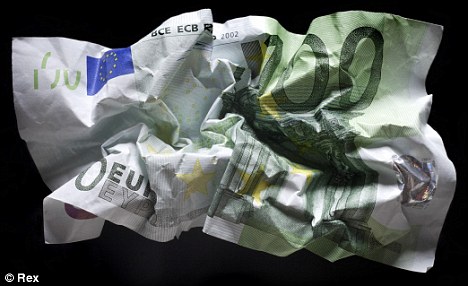


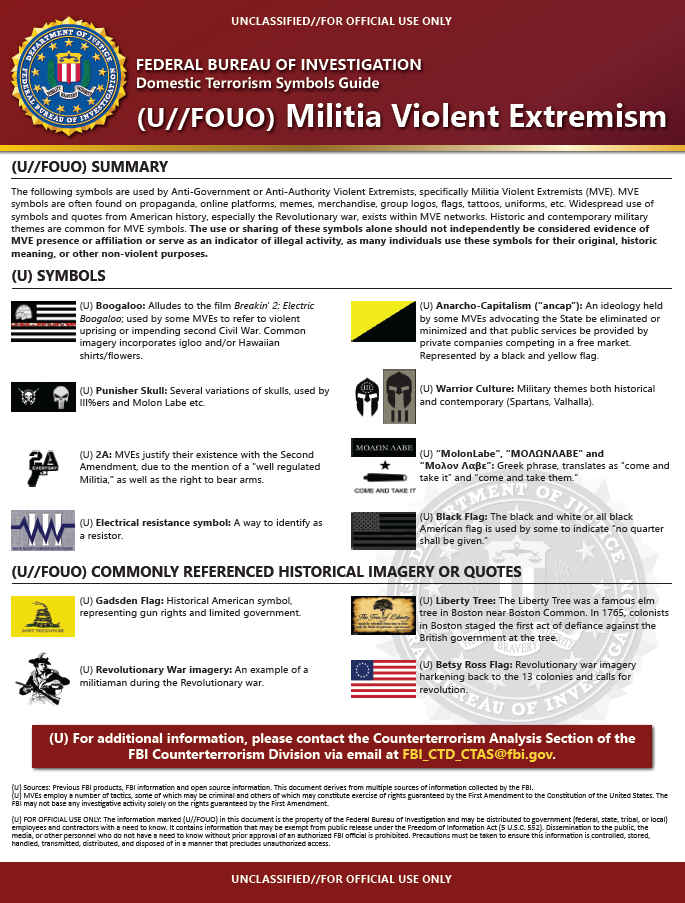




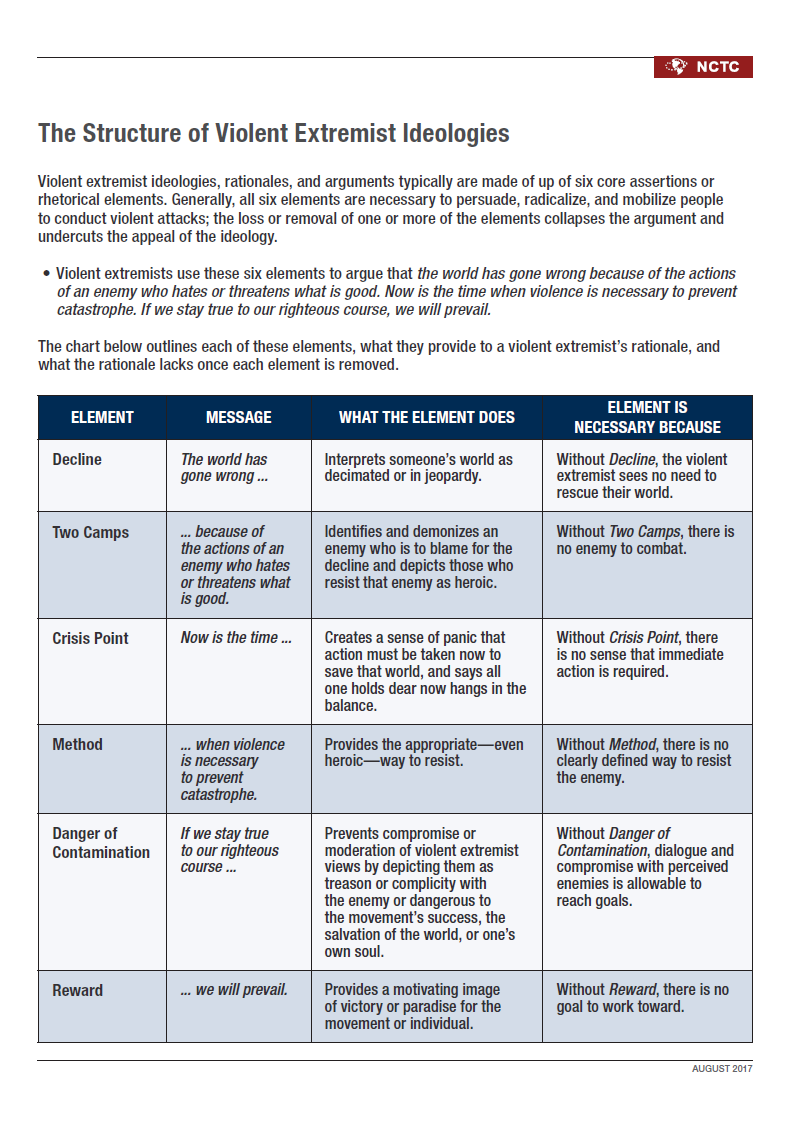




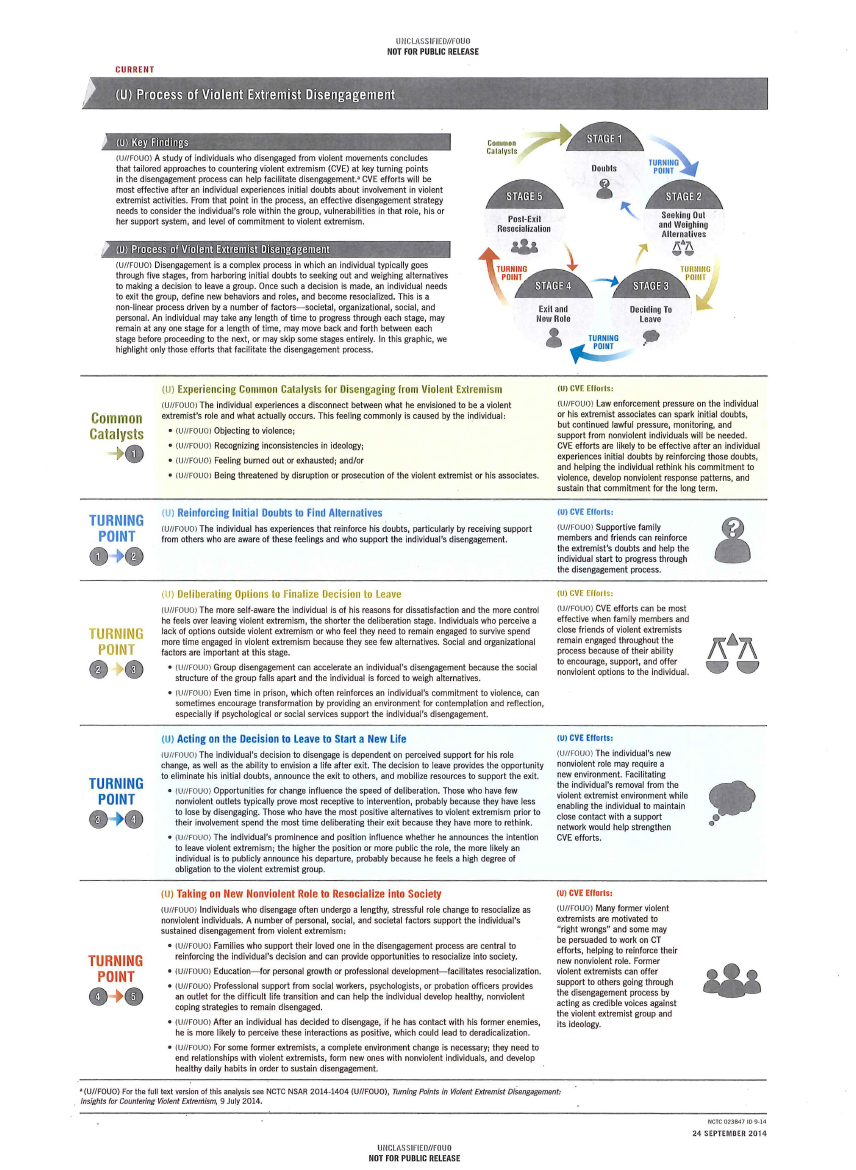




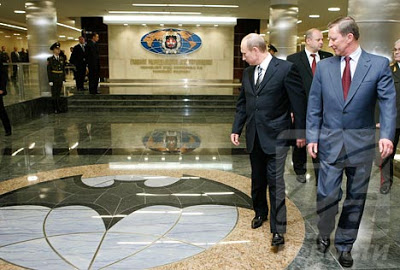


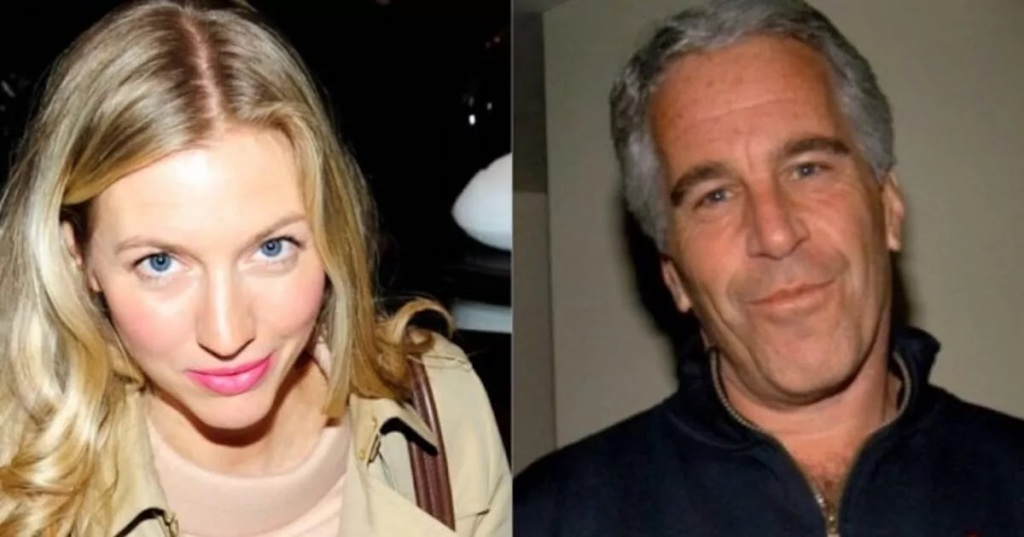








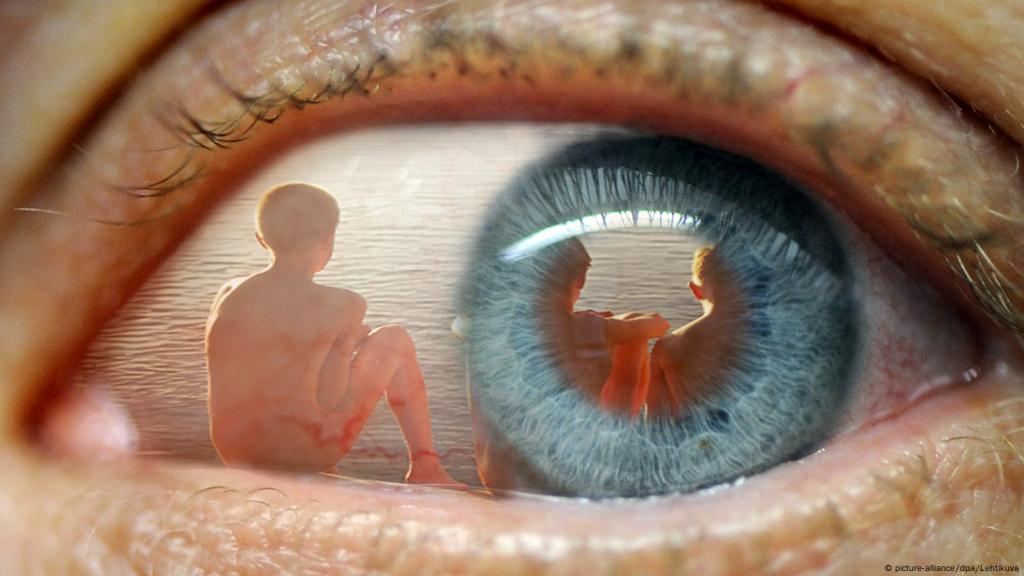


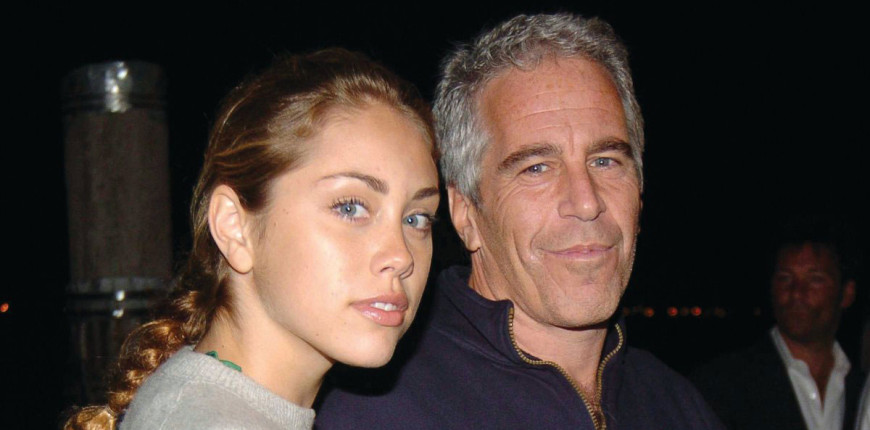








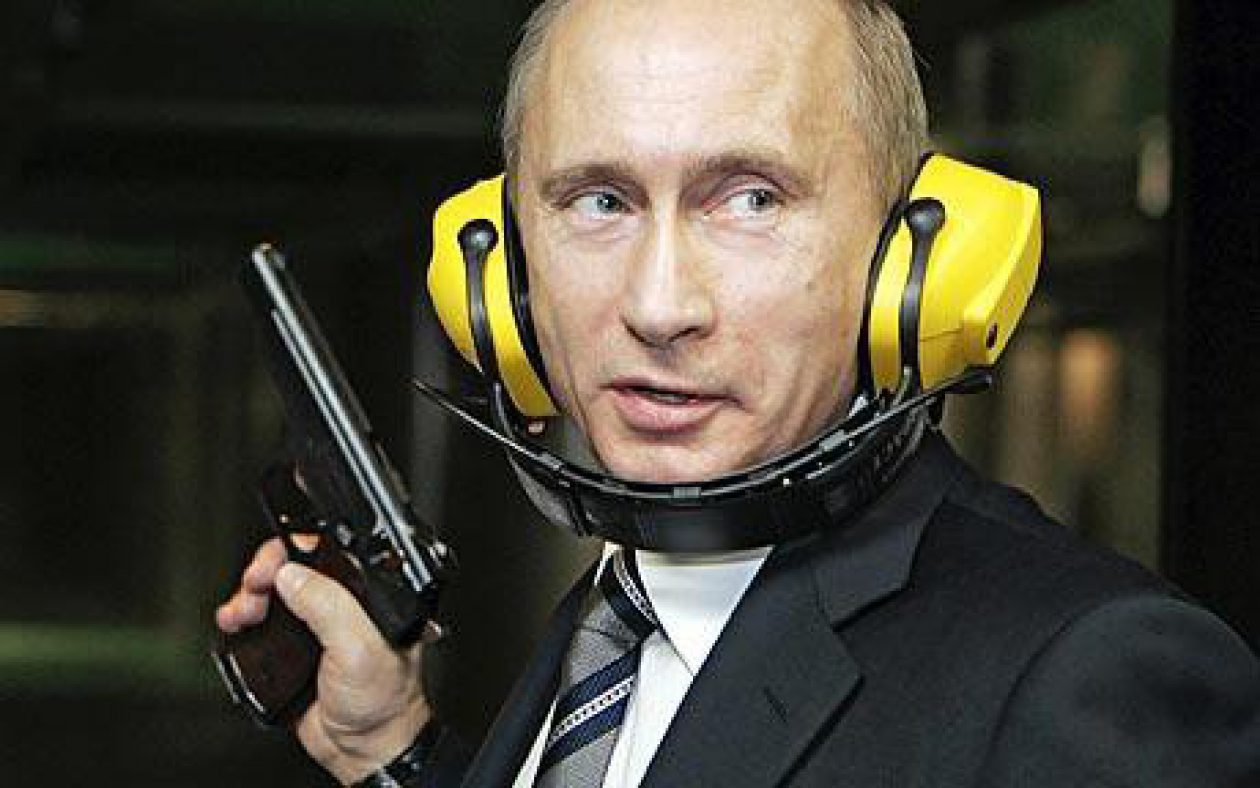





:max_bytes(150000):strip_icc():format(webp)/john-kennedy--jr--attends-ceremony-awarding-the-john-kennedy-prize-525612640-5c256cbac9e77c00012c2e17.jpg)
 🛑 Bernd Pulch | Uncensored Investigative Intelligence since 1994
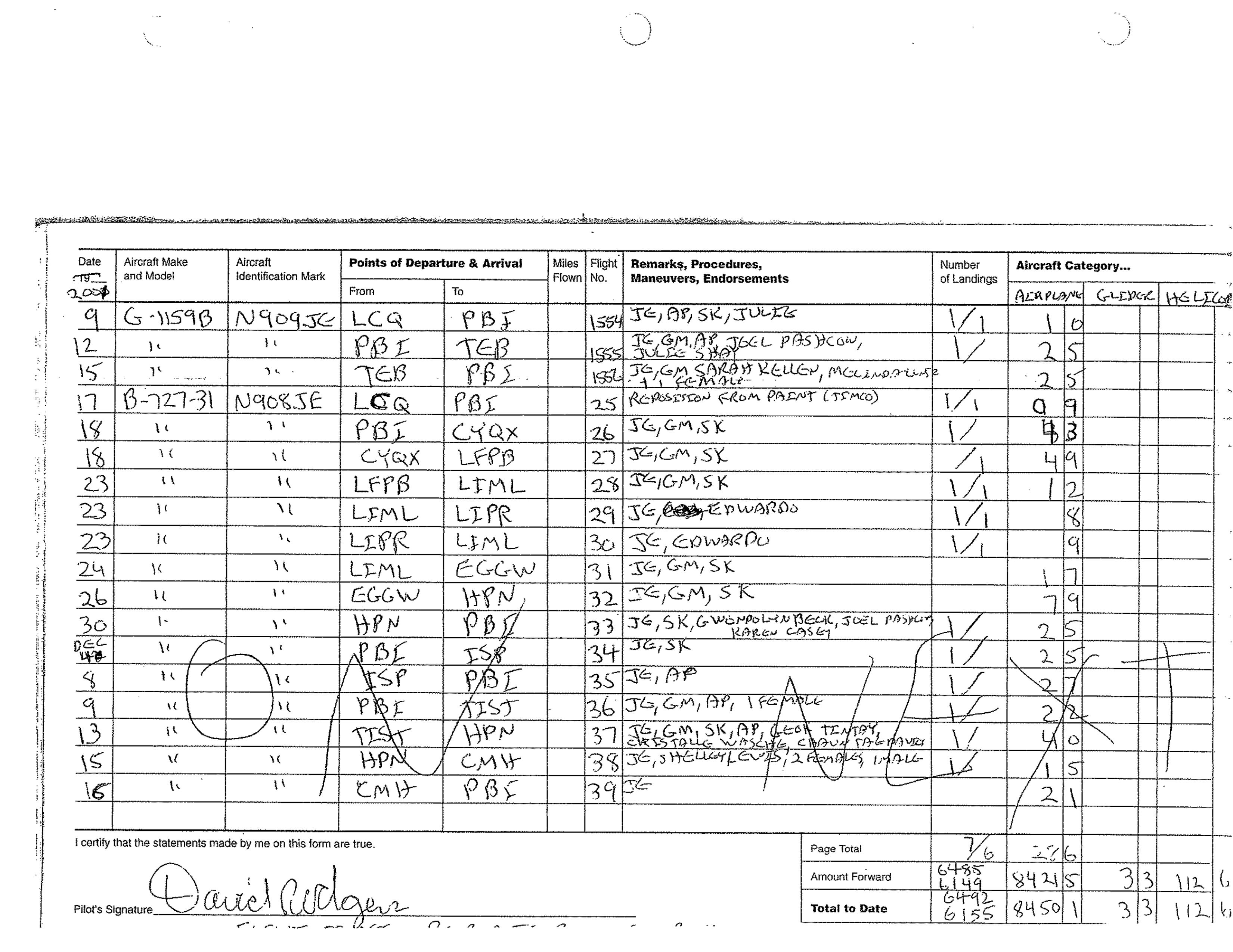
You must be logged in to post a comment.