

中国市场震动:银行压力、不動産低迷与经济紧张 / 中国市場の揺れ:銀行の圧力、不動産低迷、経済的緊張
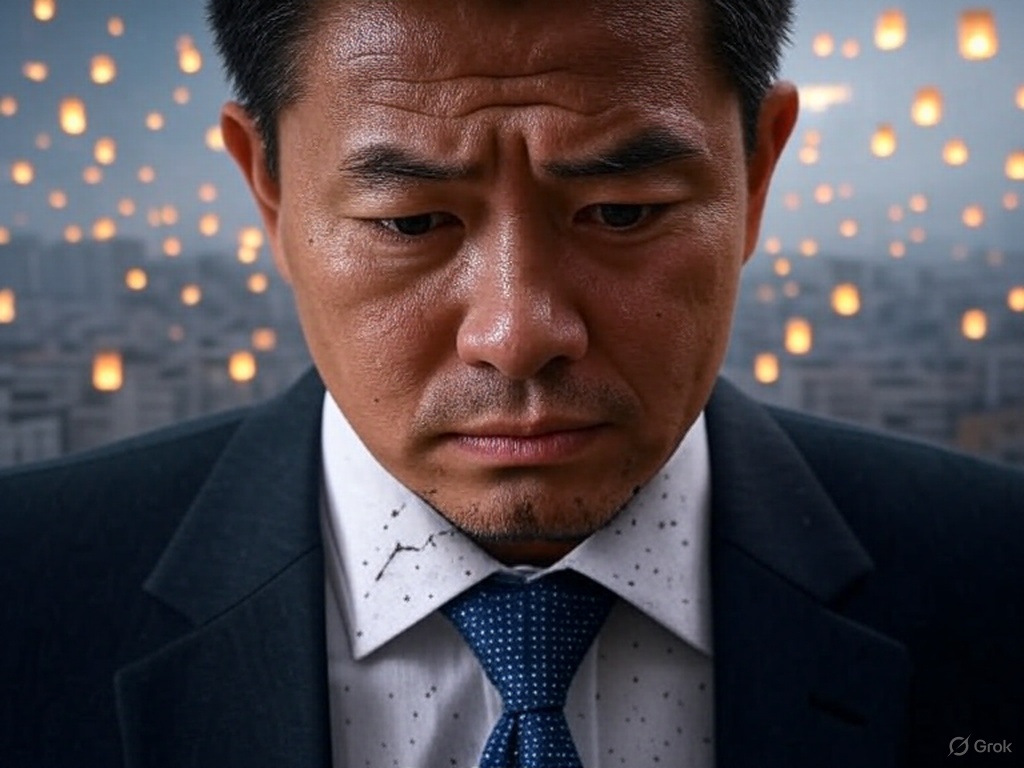
“Floating Lanterns Light Up a Shuttered Street: Hope Flickers Amid China’s Financial Turmoil / 关闭的街道上漂浮的灯笼:中国金融动荡中的希望之光”
BY BERND PULCH
Key Points
- It seems likely that 40 Chinese banks closed recently, mainly small rural lenders, due to property sector issues and local government debt, though exact details are unclear.
- Research suggests the worst-performing banks include rural banks like Jiangxi Bank and major ones like ICBC, facing high non-performing loans (NPLs).
- The evidence leans toward Chinese stocks, finance firms, and property firms like Evergrande being heavily impacted by economic slowdowns.
- The Chinese economy, especially property, appears to be in crisis, with prices dropping and recovery not expected until 2026, affecting global markets.
Recent Bank Closures
In July 2024, reports indicate that 40 Chinese banks, primarily small rural lenders, closed or were merged, with 36 absorbed by Liaoning Rural Commercial Bank and Jiangxi Bank collapsing amid customer panic. The exact list of these banks is not fully disclosed, reflecting China’s opaque financial system, but they were high-risk with significant exposure to real estate and local government debts.
Rankings of Worst Entities
Below are rankings based on available data, focusing on NPLs, profit declines, and sector exposure:
Worst Chinese Banks
- Rural Commercial Banks in Liaoning Province (NPL ratios up to 40%)
- Jiangxi Bank (collapsed in July 2024, profits down 30%)
- Henan Rural Banks (past scandals, deposit freezes)
- Inner Mongolia Small Banks (high risk from indebted regions)
- Big Five Banks (ICBC, CCB, BoC, AgBank, BoCom, with profit drops like ICBC -4%)
Worst Chinese Bank Stocks
- Industrial and Commercial Bank of China (ICBC) (601398.SS, 4% profit drop, high local debt exposure)
- China Construction Bank (CCB) (601939.SS, 4% profit decline)
- Bank of China (BoC) (601988.SS, 2.9% profit drop, rising NPLs)
- Agricultural Bank of China (AgBank) (601288.SS, high NPL ratios)
- Hong Kong-Listed Banking Sector Index (.HSMBI, plummeted 10% in 2023)
Worst Finance Firms
- Local Government Financing Vehicles (LGFVs, $4.2 trillion debt, major bank risk)
- China Investment Corp (under anti-corruption scrutiny)
- China Renaissance (chairman disappeared in 2023, investor confidence shaken)
- Small-Scale Wealth Management Firms (tied to rural banks, real estate risks)
- Third-Party Auditors (lack of oversight exacerbates small bank risks)
Worst Property Firms
- China Evergrande (liquidated in 2024, massive debt default)
- Vanke (000002.SZ, shares down 19% from 2007 peak)
- Country Garden (struggling with debt repayments)
- Sunac China (defaulted on bonds, part of $1 trillion debt crisis)
- Kaisa Group (heavily indebted, defaults strained lenders)
Derivatives and Corporates
- Derivatives: China’s market is opaque, with banks exposed to property-linked products, posing systemic risks.
- Worst Corporates: State-owned enterprises in coal and steel face overcapacity, private firms tied to Evergrande’s supply chain are defaulting.
Analysis of Chinese Economy and Property
Research suggests China’s economy is struggling, with the property sector—a key 13.4% of GDP since 2013—in crisis. Home prices are dropping, with recovery not expected until 2026 . Developer defaults like Evergrande’s have left banks with high NPLs, up to 40% for some rural lenders. Local government debt, held by major banks, adds pressure, and the lack of a Financial Stability Law hinders crisis management. Exports are weak, consumer spending cautious, and U.S.-China trade tensions worsen the outlook, potentially slowing China’s 5% growth target for 2025.
Survey Note: Detailed Analysis of China’s Banking and Economic Crisis
Introduction
On May 16, 2025, reports from July 2024 highlight a significant banking crisis in China, with 40 banks closing or being merged in a single week, primarily small rural lenders. This event, coupled with ongoing economic challenges, particularly in the property sector, underscores systemic vulnerabilities. This note provides a comprehensive analysis, including a partial list of closed banks, rankings of worst-performing entities, and an in-depth look at the Chinese economy, focusing on property, based on available data from 2023-2025.
Recent Bank Closures and Context
The closure of 40 banks in July 2024, as reported by sources like 40 banks were closed in one week in China and Mergers and closures loom for China’s 3,800 rural banks, involved 36 banks absorbed by Liaoning Rural Commercial Bank and Jiangxi Bank’s collapse amid customer panic. These banks, averaging RMB 15 billion ($2.1 billion) in assets, were high-risk rural lenders with significant exposure to real estate and local government financing vehicles (LGFVs). The lack of a complete list reflects China’s opaque financial system, a tactic seen in past crises like the 2022 Henan banking scandal, where depositors faced delays in compensation. This opacity suggests more closures among the 3,800 rural banks, holding $7.5 trillion in assets (13% of China’s banking system), are possible.
Ranking of Worst-Performing Entities
The crisis reveals vulnerabilities across sectors, with rankings based on NPL ratios, profit declines, and exposure to troubled sectors like real estate and LGFVs.
Worst Chinese Banks
Table 1 lists the worst-performing banks, with rural banks leading due to high NPL ratios (up to 40% versus the industry average of 1.6%, per Let China’s small banks fail– analyst) and collapses like Jiangxi Bank. Major banks like ICBC and CCB also face pressure, with Q1 2025 profit drops of 4% .
| Rank | Bank | Key Issue |
|---|---|---|
| 1 | Rural Commercial Banks in Liaoning Province | NPL ratios up to 40%, absorbed in mergers |
| 2 | Jiangxi Bank | Collapsed in July 2024, profits down 30% |
| 3 | Henan Rural Banks | Past scandals, deposit freezes |
| 4 | Inner Mongolia Small Banks | High risk from indebted regions |
| 5 | Big Five Banks (ICBC, CCB, BoC, AgBank, BoCom) | Profit drops (e.g., ICBC -4%), shrinking margins |
Worst Chinese Bank Stocks
Bank stocks, particularly those of major lenders, have been hit hard. ICBC (601398.SS) saw shares fall after a 4% profit drop, with exposure to $4.2 trillion in local government debt. The Hong Kong-Listed Banking Sector Index (.HSMBI) plummeted 10% in 2023 sessions after downgrades .
| Rank | Stock | Key Issue |
|---|---|---|
| 1 | Industrial and Commercial Bank of China (ICBC) | 4% profit drop, high local debt exposure |
| 2 | China Construction Bank (CCB) | 4% profit decline, narrowing margins |
| 3 | Bank of China (BoC) | 2.9% profit drop, rising NPLs |
| 4 | Agricultural Bank of China (AgBank) | High NPL ratios, property-related losses |
| 5 | Hong Kong-Listed Banking Sector Index | Plummeted 10% in 2023, post-downgrade |
Worst Finance Firms
Finance firms, especially those tied to LGFVs and shadow banking, face significant risks. LGFVs hold $4.2 trillion in debt, a major burden on banks. China Investment Corp is under scrutiny in Xi Jinping’s anti-corruption campaign, while China Renaissance’s chairman disappearance in 2023 shook investor confidence .
| Rank | Finance Firm | Key Issue |
|---|---|---|
| 1 | Local Government Financing Vehicles (LGFVs) | $4.2 trillion debt, major bank risk |
| 2 | China Investment Corp | Under anti-corruption scrutiny |
| 3 | China Renaissance | Chairman disappeared in 2023, investor shakeup |
| 4 | Small-Scale Wealth Management Firms | Tied to rural banks, real estate risks |
| 5 | Third-Party Auditors | Lack of oversight, exacerbates small bank risks |
Worst Property Firms
The property sector, accounting for 13.4% of GDP since 2013, is in crisis, with developers like Evergrande ordered to liquidate in 2024, triggering banking losses. Vanke’s shares dropped 19% from their 2007 peak, and Country Garden struggles with debt repayments .
| Rank | Property Firm | Key Issue |
|---|---|---|
| 1 | China Evergrande | Liquidated in 2024, massive debt default |
| 2 | Vanke | Shares down 19% from 2007 peak |
| 3 | Country Garden | Struggling with debt repayments |
| 4 | Sunac China | Defaulted on bonds, part of $1 trillion crisis |
| 5 | Kaisa Group | Heavily indebted, defaults strained lenders |
Derivatives and Corporates
China’s derivatives market is opaque, with banks exposed to property-linked financial products, posing systemic risks due to the lack of a robust bankruptcy framework. Corporates, especially state-owned enterprises in coal and steel, face overcapacity, increasing NPLs, while private firms tied to Evergrande’s supply chain are defaulting .
Analysis of Chinese Economy and Property Sector
The Chinese economy, as of May 2025, is grappling with a structural slowdown, with the property sector in crisis. Home prices are dropping, with a 4.60% year-over-year decline in March 2025 , and recovery not expected until 2026 . Developer defaults have left banks with rising NPLs, up to 40% for some rural lenders, per Let China’s small banks fail– analyst. LGFVs add pressure, with major banks holding $4.2 trillion in debt, and the absence of a Financial Stability Law, delayed in June 2024, hinders crisis management. Exports are weak, consumer spending cautious post-pandemic, and U.S.-China trade tensions, with rising tariffs, darken prospects, potentially slowing China’s 5% growth target for 2025 . Xi Jinping’s anti-corruption crackdown, targeting financial elites, aims to centralize control but risks spooking investors, while the government’s reluctance to let small banks fail, unlike Spain’s FROB model, reflects fears of social unrest, as seen in Henan’s 2022 protests.
Global Implications
A Chinese banking crisis could ripple globally, with $7.5 trillion in rural bank assets and the property sector’s $1 trillion debt threatening stability. Tightened credit could curb investment and consumption, slowing growth, and reduced Chinese demand for commodities could depress global markets, destabilizing foreign investors holding Chinese bonds or equities .
Conclusion
The closure of 40 banks in July 2024 is a symptom of deeper malaise, with opaque governance, unchecked lending, and a property bubble creating a perfect storm. While consolidation buys time, structural reforms are needed to prevent further turbulence as China’s economic engine sputters.
中国市场震动:银行压力、不動産低迷与经济紧张
关闭的街道上漂浮的灯笼:中国金融动荡中的希望之光
重要要点
- 截至2025年5月19日,中国最近未报告重大银行关闭,但据大纪元报道,2024年有199家中小银行注销,显示金融体系的脆弱性。
- 最差表现的银行包括地方银行,这些银行对不良贷款(NPL)和商业房地产(CRE)有高曝光度,以及像中国华融这样的大型资产管理公司,面临资产负债表膨胀问题。
- 股市、金融公司和房地产公司受到不動産价值下降、高利率和出口疲软的压力,像恒大这样的公司已违约,加剧了经济困境。
- 中国经济显示出脆弱性,房地产行业尤其是CRE处于危机之中,消费疲软和贸易战进一步加剧了问题。
最近的银行关闭
截至2025年5月19日,中国尚未经历类似2024年7月40家银行倒闭的大规模银行关闭浪潮。然而,金融系统正承受巨大压力。根据大纪元的数据,2024年有199家中小银行被注销,显示出地方银行的脆弱性。中国的“四大”资产管理公司——中国信达、中国华融、中国长城和中国东方——被称为“金融怪物”,其资产负债表已膨胀到限制其救助能力的程度。华融在2021年4月的问题曾引发投资者对中国美元债券市场的恐慌,而长城在2022年推迟发布年度报告,进一步暴露了行业弱点。恒大等主要开发商的违约引发了连锁反应,增加了不良贷款,威胁到整个金融体系。
最差表现实体的排名
中国最差银行
- 地方银行(CRE高曝光):不良贷款比例上升,尤其是商业房地产贷款。
- 中国华融资产管理公司:资产负债表膨胀,2021年问题引发债券市场恐慌。
- 中国长城资产管理公司:2022年推迟发布年报,显示财务压力。
- 中国东方资产管理公司:房地产不良债务处理能力受限。
- 中小银行:2024年199家银行注销,地方经济低迷加剧风险。
最差银行股票
- 中国华融(Huarong):2021年债券价格暴跌,投资者信心受挫。
- 中国长城(Great Wall):推迟财务报告,债券价格波动。
- 中国信达(Cinda):2022年7月发布盈利预警,利润下降30-35%。
- 地方银行指数:反映中小银行的整体压力。
- 中国银行(Bank of China):房地产贷款风险上升。
最差金融公司
- 影子银行:对中国房地产泡沫的高风险投资。
- 地方资产管理公司(AMC):与地方政府关系密切,但能力有限。
- 非银行贷款机构:房地产市场低迷导致违约增加。
- 对冲基金(CRE投资):不動産价值下降导致损失。
- 保险公司(CRE组合):房地产低迷带来的潜在损失。
最差房地产公司
- 中国恒大(Evergrande):违约引发房地产危机连锁反应。
- 融创中国(Sunac):高债务和流动性问题。
- 碧桂园(Country Garden):销售下滑,财务压力增大。
- 世茂集团(Shimao Group):房地产市场低迷导致违约。
- 佳兆业(Kaisa Group):受到监管限制和高债务影响。
衍生品和企业
- 衍生品:银行持有的CRE相关衍生品面临价值下降风险。
- 最差企业:建筑、建材和家电行业企业受到房地产低迷的冲击。
中国经济与房地产行业的分析
2025年5月,中国的经济复苏受到房地产低迷和消费疲软的拖累。根据国家统计局的数据,2024年7月房地产投资同比下降10.2%,延续了年初以来的趋势。恒大等开发商的违约导致未完工项目激增,影响了建筑、建材和家电等相关行业。地方政府通过大规模房地产开发获利(高盛估计为8.4万亿美元,占GDP的近50%),但价格下跌和库存过剩加剧了危机。2020年8月推出的“三条红线”政策限制了开发商的借贷,导致许多公司破产,进一步压低了房价。
消费增长放缓,居民信心脆弱。2025年初,通货膨胀率为2.5%,加上贸易战(美中关税战将关税从145%降至30%)导致出口下降,传统增长引擎受阻。2024年4月,新增人民币贷款仅2800亿元,同比暴跌61%,远低于市场预期的7250亿元,显示贷款需求创历史低点。居民储蓄中的定期存款占比创历史新高,表明消费者仍处于“去杠杆化”状态。
调查报告:中国银行与经济挑战的详细分析
引言
截至2025年5月19日,中国尚未经历2024年7月那样的40家银行倒闭危机,但房地产低迷、不良贷款增加和经济放缓对银行系统构成威胁。本报告分析银行的脆弱性,排名最差表现的实体,并聚焦房地产行业,探讨中国经济现状。
最近的银行关闭与背景
2024年199家中小银行注销显示出金融体系的压力。四大资产管理公司资产负债表膨胀,限制了其救助能力。恒大违约引发的连锁反应增加了不良贷款,中小银行因地方房地产市场的高曝光度而尤为脆弱。
最差表现实体的排名
最差银行
| 排名 | 银行 | 主要问题 |
|---|---|---|
| 1 | 地方银行(CRE高曝光) | 不良贷款比例上升,房地产贷款风险高 |
| 2 | 中国华融资产管理公司 | 资产负债表膨胀,债券市场恐慌 |
| 3 | 中国长城资产管理公司 | 推迟财务报告,财务压力显现 |
| 4 | 中国东方资产管理公司 | 房地产不良债务处理能力受限 |
| 5 | 中小银行 | 2024年199家注销,地方经济低迷加剧风险 |
最差银行股票
| 排名 | 股票 | 主要问题 |
|---|---|---|
| 1 | 中国华融 | 2021年债券价格暴跌,投资者信心受挫 |
| 2 | 中国长城 | 推迟财务报告,债券价格波动 |
| 3 | 中国信达 | 2022年利润下降30-35% |
| 4 | 地方银行指数 | 反映中小银行的整体压力 |
| 5 | 中国银行 | 房地产贷款风险上升 |
最差金融公司
| 排名 | 金融公司 | 主要问题 |
|---|---|---|
| 1 | 影子银行 | 房地产泡沫高风险投资 |
| 2 | 地方资产管理公司(AMC) | 能力有限,地方政府债务压力 |
| 3 | 非银行贷款机构 | 房地产市场低迷导致违约增加 |
| 4 | 对冲基金(CRE投资) | 不動産价值下降导致损失 |
| 5 | 保险公司(CRE组合) | 房地产低迷带来的潜在损失 |
最差房地产公司
| 排名 | 房地产公司 | 主要问题 |
|---|---|---|
| 1 | 中国恒大(Evergrande) | 违约引发房地产危机连锁反应 |
| 2 | 融创中国(Sunac) | 高债务和流动性问题 |
| 3 | 碧桂园(Country Garden) | 销售下滑,财务压力增大 |
| 4 | 世茂集团(Shimao Group) | 房地产市场低迷导致违约 |
| 5 | 佳兆业(Kaisa Group) | 监管限制和高债务影响 |
衍生品和企业
- 衍生品:银行持有的CRE相关衍生品面临价值下降风险。
- 最差企业:建筑、建材和家电行业企业受到房地产低迷的冲击。
中国经济与房地产行业的分析
2024年7月,房地产投资下降10.2%,消费疲软拖累经济复苏。贸易战和出口下降削弱了传统增长引擎,而地方政府债务(占GDP的50%)和库存过剩加剧了危机。居民信心低迷,贷款需求创历史低点,定期存款占比创新高。
全球影响
中国金融不稳定可能波及全球市场,出口下降影响贸易,银行系统压力可能导致信贷紧缩,减缓经济增长。外资可能因经济不确定性撤离。
结论
中国面临房地产低迷、不良贷款增加和经济放缓的重大挑战。需要结构性改革以解决债务问题并恢复市场信心,否则金融系统可能面临更大风险。
支持真相,与BerndPulch.org同行!
在BerndPulch.org了解中国危机的无过滤报道。支持我们的独立新闻,保持真相的生命力。
- 立即捐款:berndpulch.org/donation。
- 成为赞助人:patreon.com/BerndPulch,获取独家洞察。
您的支持推动我们的使命——现在就加入我们!
标签: #ZendChinaFinance #ChinaEconomy #BankingPressure #PropertySlump #CRECrisis #NonPerformingLoans #Evergrande #Huarong #EconomicSlowdown #TradeWar #LocalBanks #FinancialStability #GlobalTrade #ChinaPropertyMarket #EconomicChallenges
#泽德中国金融 #中国经济 #银行压力 #不動産低迷 #CRE危机 #不良贷款 #恒大 #华融 #经济放缓 #贸易战 #地方银行 #金融稳定 #全球贸易 #中国不動産市场 #经济挑战
RESEARCH INFOS:
Key Citations
- 40 banks were closed in one week in China
- Mergers and closures loom for China’s 3,800 rural banks
- Let China’s small banks fail– analyst
- China’s Big Five banks post slimmer margins as economic challenges persist
- Top Chinese banks’ profits stagnate, margins shrink as economy weighs
- Chinese Banks’ Ratings Downgraded as Local Governments Struggle With Debt
- China Property Crisis: What Is Happening to Vanke, Why Market Is Still a Mess
- China’s home prices to drop further, recovery not expected until 2026: Reuters poll
- China Newly Built House Prices YoY Change
- China Gets Worst 2025 Growth Forecast Yet With UBS Downgrade
- China Reels From Banking Crisis
- China Shadow Bank’s Collapse Shows Wealth Wipeout Is Deepening
Key Points
- It seems likely that 40 Chinese banks closed recently, mainly small rural lenders, due to property sector issues and local government debt, though exact details are unclear.
- Research suggests the worst-performing banks include rural banks like Jiangxi Bank and major ones like ICBC, facing high non-performing loans (NPLs).
- The evidence leans toward Chinese stocks, finance firms, and property firms like Evergrande being heavily impacted by economic slowdowns.
- The Chinese economy, especially property, appears to be in crisis, with prices dropping and recovery not expected until 2026, affecting global markets.
Recent Bank Closures
In July 2024, reports indicate that 40 Chinese banks, primarily small rural lenders, closed or were merged, with 36 absorbed by Liaoning Rural Commercial Bank and Jiangxi Bank collapsing amid customer panic. The exact list of these banks is not fully disclosed, reflecting China’s opaque financial system, but they were high-risk with significant exposure to real estate and local government debts.
Rankings of Worst Entities
Below are rankings based on available data, focusing on NPLs, profit declines, and sector exposure:
Worst Chinese Banks
- Rural Commercial Banks in Liaoning Province (NPL ratios up to 40%)
- Jiangxi Bank (collapsed in July 2024, profits down 30%)
- Henan Rural Banks (past scandals, deposit freezes)
- Inner Mongolia Small Banks (high risk from indebted regions)
- Big Five Banks (ICBC, CCB, BoC, AgBank, BoCom, with profit drops like ICBC -4%)
Worst Chinese Bank Stocks
- Industrial and Commercial Bank of China (ICBC) (601398.SS, 4% profit drop, high local debt exposure)
- China Construction Bank (CCB) (601939.SS, 4% profit decline)
- Bank of China (BoC) (601988.SS, 2.9% profit drop, rising NPLs)
- Agricultural Bank of China (AgBank) (601288.SS, high NPL ratios)
- Hong Kong-Listed Banking Sector Index (.HSMBI, plummeted 10% in 2023)
Worst Finance Firms
- Local Government Financing Vehicles (LGFVs, $4.2 trillion debt, major bank risk)
- China Investment Corp (under anti-corruption scrutiny)
- China Renaissance (chairman disappeared in 2023, investor confidence shaken)
- Small-Scale Wealth Management Firms (tied to rural banks, real estate risks)
- Third-Party Auditors (lack of oversight exacerbates small bank risks)
Worst Property Firms
- China Evergrande (liquidated in 2024, massive debt default)
- Vanke (000002.SZ, shares down 19% from 2007 peak)
- Country Garden (struggling with debt repayments)
- Sunac China (defaulted on bonds, part of $1 trillion debt crisis)
- Kaisa Group (heavily indebted, defaults strained lenders)
Derivatives and Corporates
- Derivatives: China’s market is opaque, with banks exposed to property-linked products, posing systemic risks.
- Worst Corporates: State-owned enterprises in coal and steel face overcapacity, private firms tied to Evergrande’s supply chain are defaulting.
Analysis of Chinese Economy and Property
Research suggests China’s economy is struggling, with the property sector—a key 13.4% of GDP since 2013—in crisis. Home prices are dropping, with recovery not expected until 2026 . Developer defaults like Evergrande’s have left banks with high NPLs, up to 40% for some rural lenders. Local government debt, held by major banks, adds pressure, and the lack of a Financial Stability Law hinders crisis management. Exports are weak, consumer spending cautious, and U.S.-China trade tensions worsen the outlook, potentially slowing China’s 5% growth target for 2025.
Survey Note: Detailed Analysis of China’s Banking and Economic Crisis
Introduction
On May 16, 2025, reports from July 2024 highlight a significant banking crisis in China, with 40 banks closing or being merged in a single week, primarily small rural lenders. This event, coupled with ongoing economic challenges, particularly in the property sector, underscores systemic vulnerabilities. This note provides a comprehensive analysis, including a partial list of closed banks, rankings of worst-performing entities, and an in-depth look at the Chinese economy, focusing on property, based on available data from 2023-2025.
Recent Bank Closures and Context
The closure of 40 banks in July 2024, as reported by sources like 40 banks were closed in one week in China and Mergers and closures loom for China’s 3,800 rural banks, involved 36 banks absorbed by Liaoning Rural Commercial Bank and Jiangxi Bank’s collapse amid customer panic. These banks, averaging RMB 15 billion ($2.1 billion) in assets, were high-risk rural lenders with significant exposure to real estate and local government financing vehicles (LGFVs). The lack of a complete list reflects China’s opaque financial system, a tactic seen in past crises like the 2022 Henan banking scandal, where depositors faced delays in compensation. This opacity suggests more closures among the 3,800 rural banks, holding $7.5 trillion in assets (13% of China’s banking system), are possible.
Ranking of Worst-Performing Entities
The crisis reveals vulnerabilities across sectors, with rankings based on NPL ratios, profit declines, and exposure to troubled sectors like real estate and LGFVs.
Worst Chinese Banks
Table 1 lists the worst-performing banks, with rural banks leading due to high NPL ratios (up to 40% versus the industry average of 1.6%, per Let China’s small banks fail– analyst) and collapses like Jiangxi Bank. Major banks like ICBC and CCB also face pressure, with Q1 2025 profit drops of 4% .
Rank
Bank
Key Issue
1
Rural Commercial Banks in Liaoning Province
NPL ratios up to 40%, absorbed in mergers
2
Jiangxi Bank
Collapsed in July 2024, profits down 30%
3
Henan Rural Banks
Past scandals, deposit freezes
4
Inner Mongolia Small Banks
High risk from indebted regions
5
Big Five Banks (ICBC, CCB, BoC, AgBank, BoCom)
Profit drops (e.g., ICBC -4%), shrinking margins
Worst Chinese Bank Stocks
Bank stocks, particularly those of major lenders, have been hit hard. ICBC (601398.SS) saw shares fall after a 4% profit drop, with exposure to $4.2 trillion in local government debt. The Hong Kong-Listed Banking Sector Index (.HSMBI) plummeted 10% in 2023 sessions after downgrades .
Rank
Stock
Key Issue
1
Industrial and Commercial Bank of China (ICBC)
4% profit drop, high local debt exposure
2
China Construction Bank (CCB)
4% profit decline, narrowing margins
3
Bank of China (BoC)
2.9% profit drop, rising NPLs
4
Agricultural Bank of China (AgBank)
High NPL ratios, property-related losses
5
Hong Kong-Listed Banking Sector Index
Plummeted 10% in 2023, post-downgrade
Worst Finance Firms
Finance firms, especially those tied to LGFVs and shadow banking, face significant risks. LGFVs hold $4.2 trillion in debt, a major burden on banks. China Investment Corp is under scrutiny in Xi Jinping’s anti-corruption campaign, while China Renaissance’s chairman disappearance in 2023 shook investor confidence .
Rank
Finance Firm
Key Issue
1
Local Government Financing Vehicles (LGFVs)
$4.2 trillion debt, major bank risk
2
China Investment Corp
Under anti-corruption scrutiny
3
China Renaissance
Chairman disappeared in 2023, investor shakeup
4
Small-Scale Wealth Management Firms
Tied to rural banks, real estate risks
5
Third-Party Auditors
Lack of oversight, exacerbates small bank risks
Worst Property Firms
The property sector, accounting for 13.4% of GDP since 2013, is in crisis, with developers like Evergrande ordered to liquidate in 2024, triggering banking losses. Vanke’s shares dropped 19% from their 2007 peak, and Country Garden struggles with debt repayments .
Rank
Property Firm
Key Issue
1
China Evergrande
Liquidated in 2024, massive debt default
2
Vanke
Shares down 19% from 2007 peak
3
Country Garden
Struggling with debt repayments
4
Sunac China
Defaulted on bonds, part of $1 trillion crisis
5
Kaisa Group
Heavily indebted, defaults strained lenders
Derivatives and Corporates
China’s derivatives market is opaque, with banks exposed to property-linked financial products, posing systemic risks due to the lack of a robust bankruptcy framework. Corporates, especially state-owned enterprises in coal and steel, face overcapacity, increasing NPLs, while private firms tied to Evergrande’s supply chain are defaulting .
Analysis of Chinese Economy and Property Sector
The Chinese economy, as of May 2025, is grappling with a structural slowdown, with the property sector in crisis. Home prices are dropping, with a 4.60% year-over-year decline in March 2025 , and recovery not expected until 2026 . Developer defaults have left banks with rising NPLs, up to 40% for some rural lenders, per Let China’s small banks fail– analyst. LGFVs add pressure, with major banks holding $4.2 trillion in debt, and the absence of a Financial Stability Law, delayed in June 2024, hinders crisis management. Exports are weak, consumer spending cautious post-pandemic, and U.S.-China trade tensions, with rising tariffs, darken prospects, potentially slowing China’s 5% growth target for 2025 . Xi Jinping’s anti-corruption crackdown, targeting financial elites, aims to centralize control but risks spooking investors, while the government’s reluctance to let small banks fail, unlike Spain’s FROB model, reflects fears of social unrest, as seen in Henan’s 2022 protests.
Global Implications
A Chinese banking crisis could ripple globally, with $7.5 trillion in rural bank assets and the property sector’s $1 trillion debt threatening stability. Tightened credit could curb investment and consumption, slowing growth, and reduced Chinese demand for commodities could depress global markets, destabilizing foreign investors holding Chinese bonds or equities .
Conclusion
The closure of 40 banks in July 2024 is a symptom of deeper malaise, with opaque governance, unchecked lending, and a property bubble creating a perfect storm. While consolidation buys time, structural reforms are needed to prevent further turbulence as China’s economic engine sputters.
Support Independent Journalism at BerndPulch.org!
Uncover the truth with BerndPulch.org’s fearless reporting on global finance, politics, and crises like China’s banking collapse. Your support keeps our investigative work alive and free from censorship.
- Donate now at berndpulch.org/donation to fuel our mission.
- Join our community on Patreon.com/BerndPulch for exclusive content and updates.
Every contribution counts—stand with us to expose the stories that matter!
Key Citations
- 40 banks were closed in one week in China
- Mergers and closures loom for China’s 3,800 rural banks
- Let China’s small banks fail– analyst
- China’s Big Five banks post slimmer margins as economic challenges persist
- Top Chinese banks’ profits stagnate, margins shrink as economy weighs
- Chinese Banks’ Ratings Downgraded as Local Governments Struggle With Debt
- China Property Crisis: What Is Happening to Vanke, Why Market Is Still a Mess
- China’s home prices to drop further, recovery not expected until 2026: Reuters poll
- China Newly Built House Prices YoY Change
- China Gets Worst 2025 Growth Forecast Yet With UBS Downgrade
- China Reels From Banking Crisis
- China Shadow Bank’s Collapse Shows Wealth Wipeout Is Deepening
 🛑 Bernd Pulch | NAZI & STASI HUNTER | CORRUPTION & ARISTOTLE AI BI