

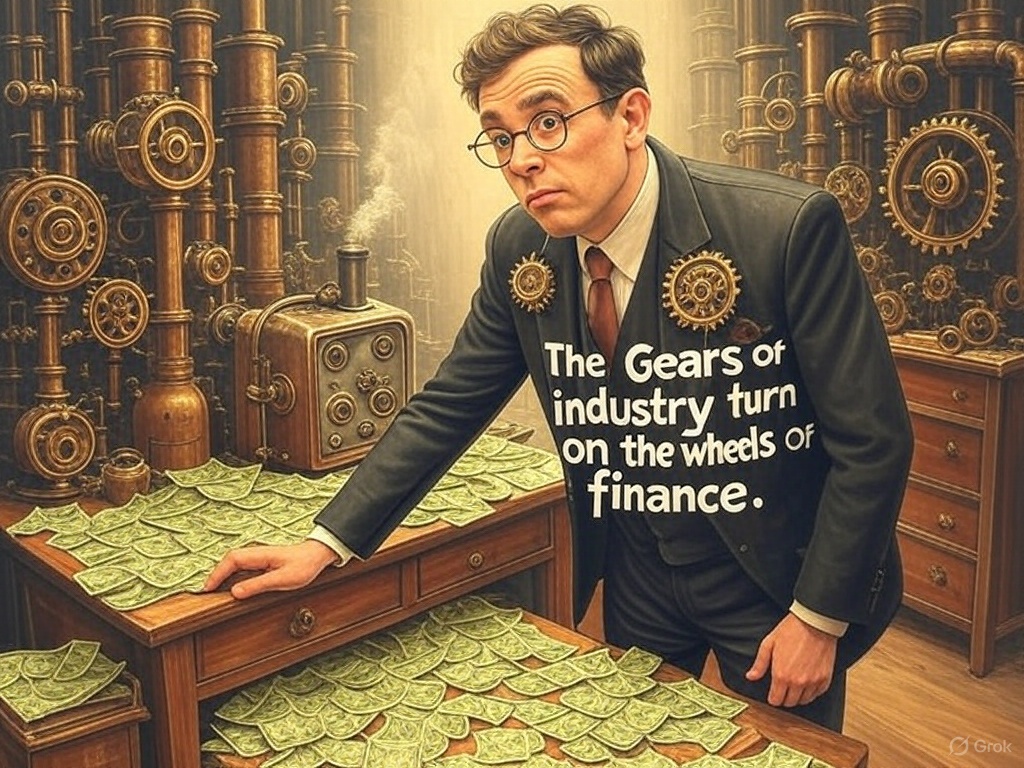
Money doesn’t grow on trees, or so the saying goes. But in today’s world of fiat currencies—unbacked by gold or silver—it might as well grow on promises. Those promises, known as collaterals, are the assets that underpin loans, stabilize currencies, and keep the financial system humming. Without them, the whole house of cards risks collapse. For decades, the UK and France, pillars of Western economic power, relied on a mix of tangible and intangible collaterals—real estate, government bonds, and their imperial legacies—to fuel their monetary systems. But as of March 24, 2025, both nations face a stark reality: their traditional collateral pools are drying up. Enter Ukraine, Africa, Canada, and Greenland—geopolitical wildcards that could redefine the global money game. But at what cost?
The Collateral Crunch in the UK and France
In a fiat system, money’s value hinges on trust, and trust hinges on collateral—assets lenders can seize if borrowers default. Historically, the UK leveraged its vast property market and the City of London’s financial wizardry, while France banked on its industrial base and sovereign debt credibility. But the cracks are showing. Post-Brexit, the UK’s real estate bubble wobbles under high interest rates, with commercial properties losing value as remote work guts demand. Government bonds, once a rock-solid collateral, now jitter with every inflation spike—yields on 10-year gilts hover near 4%, signaling market unease. France isn’t faring better. Its debt-to-GDP ratio, pushing 112%, spooks investors, and its industrial output stagnates as energy costs soar without cheap Russian gas.
Why the shortfall? Decades of outsourcing production eroded tangible assets, while financialization—betting on derivatives and debt—created a hollowed-out base. The 2008 crash exposed this fragility, yet little changed. Now, with global trade fracturing and trust in Western institutions waning, the UK and France lack the hard collateral—land, resources, or production capacity—to back their money-printing sprees. Modern Monetary Theory (MMT) fans might shrug, claiming sovereign nations can’t go broke if they control their currency. But when inflation bites and bond markets balk, even MMT’s magic wand needs something real to wave over.
Ukraine: War-Torn Collateral of the Future?
Enter Ukraine, a nation battered by Russia’s war but brimming with untapped potential. Its black soil, among the world’s most fertile, produces a fifth of global wheat exports—when it’s not under siege. Beneath lies a treasure trove: lithium, rare earths, and natural gas reserves eyed by Western powers desperate to break China’s mineral chokehold. Before 2022, Ukraine’s collateral value was speculative; now, it’s a geopolitical football.
The UK and France, alongside the EU, see Ukraine as a lifeline. Frozen Russian assets—$350 billion globally—dangle as a tantalizing prize, with London pushing to seize them outright for Ukraine’s reconstruction, while Paris hesitates, fearing legal blowback. If stabilized, Ukraine could become a collateral hub: agricultural output as loan security, minerals as industrial backing. But there’s a catch. War has trashed infrastructure—damaged collateral cuts loan access, as a 2022 study showed Ukrainian firms losing lending power with every bombed factory. Peace remains elusive, and Trump’s wavering U.S. support leaves Europe scrambling. Ukraine’s potential is real, but it’s a gamble on a battlefield.
Africa: The Continent of Collateral Dreams
Across the Atlantic, Africa looms as the ultimate collateral frontier. With 30% of the world’s mineral reserves—cobalt, lithium, uranium—and vast arable land, it’s a sleeping giant. Russia’s invasion of Ukraine spiked energy and food prices, forcing Europe to pivot south. Algeria’s gas fields could replace Nord Stream’s ghosts, while Tanzania’s 57 trillion cubic feet of gas beckon long-term deals. The catch? Infrastructure lags, and China’s Belt and Road already has a head start, locking up mines and ports.
For the UK and France, Africa’s appeal is raw. Post-colonial ties give them leverage—France’s Francophone influence in West Africa, Britain’s Commonwealth ties—but exploitation haunts the narrative. If African nations collateralize their resources for European loans, they risk debt traps echoing the IMF’s past sins. Yet, as Europe’s energy crisis deepens, expect London and Paris to pitch “partnerships” dressed as salvation. The collateral is there—whether it’s seized or shared depends on who writes the contracts.
Canada and Greenland: North America’s Untapped Vaults
Closer to home, Canada and Greenland offer a different flavor of collateral. Canada’s oil sands, timber, and rare earth deposits make it a resource titan, yet its economy ties tightly to the U.S. Trump’s 2025 musings about Canada as the “51st state” sound farcical, but his tariff threats hint at a play to lock in Canadian assets as U.S.-backed collateral. If the UK and France cozy up via trade pacts, they could tap this too—though Ottawa’s hardly eager to play pawn.
Greenland’s the real prize. Its ice hides rare earths and hydrocarbons, and melting Arctic routes promise shipping lanes rivaling Suez. Trump’s obsession with “buying” Greenland—reiterated in 2025—underscores its strategic weight: Pituffik Space Base guards the GIUK gap, while minerals counter China’s dominance. Denmark, its overseer, rebuffs sales, but Greenland’s independence push could shift the board. If Nuuk breaks free, the UK and France might swoop in, offering loans backed by Greenland’s bounty. Collateral here isn’t just economic—it’s military, a hedge against Russia and China’s Arctic ambitions.
The Bigger Picture: Collateral as Power
Collaterals aren’t just financial—they’re geopolitical leverage. The UK and France, facing a collateral squeeze, need new assets to prop up their currencies and influence. Ukraine’s fields, Africa’s mines, Canada’s forests, and Greenland’s ice could fill the gap, but each comes with strings: war, neo-colonial optics, or transatlantic tussles. Meanwhile, fiat’s fragility looms. If trust in pounds and euros falters—say, via inflation or debt defaults—hard assets elsewhere become the new gold standard.
This isn’t conspiracy; it’s economics meeting realpolitik. The West’s money system thrives on belief, but belief needs backing. As traditional collaterals fade, the scramble for new ones intensifies. Ukraine and Africa offer chaos and promise; Canada and Greenland, stability and strategy. For the UK and France, it’s a high-stakes hunt—one that could reshape global power or expose the emperor’s naked fiat.
Support the Hunt for Truth
Want to dig deeper into the money game’s underbelly? Back Bernd Pulch’s independent investigations at Patreon.com/berndpulch or donate at berndpulch.org/donation. Every cent fuels the fight to uncover what’s really propping up—or pulling down—the world’s currencies. Join us!
❌©BERNDPULCH.ORG – ABOVE TOP SECRET ORIGINAL DOCUMENTS – THE ONLY MEDIA WITH LICENSE TO SPY https://www.berndpulch.org
https://googlefirst.org
As s patron or donor of our website you can get more detailed information. Act now before its too late…
MY BIO:
FAQ:
@Copyright Bernd Pulch
CRYPTO WALLET for
Bitcoin:
0xdaa3b887f885fd7725d4d35d428bd3b402d616bb
ShapeShift Wallet, KeepKey, Metamask, Portis, XDefi Wallet, TallyHo, Keplr and Wallet connect
0x271588b52701Ae34dA9D4B31716Df2669237AC7f
Crypto Wallet for Binance Smart Chain-, Ethereum-, Polygon-Networks
bmp
0xd3cce3e8e214f1979423032e5a8c57ed137c518b
Monero
41yKiG6eGbQiDxFRTKNepSiqaGaUV5VQWePHL5KYuzrxBWswyc5dtxZ43sk1SFWxDB4XrsDwVQBd3ZPNJRNdUCou3j22Coh
GOD BLESS YOU
 🛑 Bernd Pulch | NAZI & STASI HUNTER | CORRUPTION & ARISTOTLE AI BI