

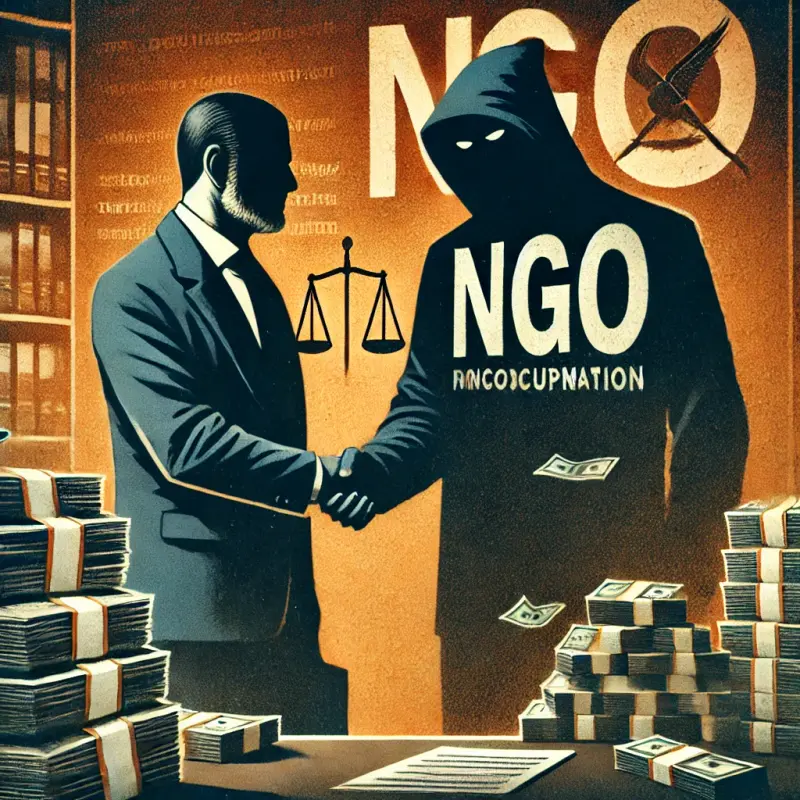
The Ethical Quandary of Politicians’ Family Members Leading NGOs: A Global Perspective with Examples and Corruption Cases
Introduction
The involvement of politicians’ family members in the management or ownership of non-governmental organizations (NGOs) has emerged as a global ethical dilemma. NGOs are typically regarded as independent entities committed to advancing social, environmental, or humanitarian causes. However, when political influence intersects with familial ties, questions arise about transparency, accountability, and potential conflicts of interest. This phenomenon transcends national borders, affecting the integrity of both political systems and the nonprofit sector worldwide. This article examines this issue through a global lens, presenting numerous specific examples and corruption cases to illustrate the scope and implications of this ethical quandary.
The Role of NGOs in Society
NGOs are vital to societal progress, addressing issues such as poverty, education, human rights, and environmental sustainability. Their credibility often depends on their independence from governmental or corporate influence. When politicians’ family members lead or are closely associated with NGOs, this independence can be compromised, casting doubt on whether these organizations prioritize their stated missions or serve as extensions of political power.
The Potential for Conflicts of Interest
The primary ethical concern is the potential for conflicts of interest. Politicians often control public funding, shape legislation, and influence regulatory oversight. If their relatives manage NGOs that depend on government support, these organizations may receive preferential treatment, such as grants, contracts, or tax exemptions, undermining fair competition. This not only distorts the nonprofit sector but also erodes public trust in governance. High-profile cases, such as the WE Charity scandal in Canada or the Rajiv Gandhi Foundation in India, exemplify how familial ties can blur the lines between public duty and private gain.
Examples of Politicians’ Family Members Leading NGOs and Corruption Cases
Below is an extensive list of specific cases from around the world, highlighting instances where politicians’ family members have led NGOs, often accompanied by allegations of corruption or favoritism.
1. India
- The Gandhi Family and the Rajiv Gandhi Foundation (RGF): Founded in 1991, the RGF is chaired by Sonia Gandhi, widow of former Prime Minister Rajiv Gandhi, with Rahul Gandhi, a prominent Congress Party leader, as a trustee. In 2020, the BJP-led government accused the RGF of receiving Rs. 50 lakh from the Prime Minister’s National Relief Fund (PMNRF) between 2005 and 2008, alleging misuse of public funds for political purposes. Critics also pointed to donations from public sector undertakings (PSUs) like the Steel Authority of India Limited (SAIL), raising concerns about favoritism during Congress-led governments.
- Robert Vadra and NGOs: Robert Vadra, Sonia Gandhi’s son-in-law, has been linked to the DLF Foundation and other NGOs. Investigations into his business dealings revealed land deals in Haryana and Rajasthan allegedly facilitated by Congress governments, with NGOs reportedly used as fronts to obscure financial transactions.
- V.K. Sasikala and NGOs: A close aide of Tamil Nadu’s late Chief Minister Jayalalithaa, Sasikala controlled several NGOs, including the J.J. Memorial Trust. After Jayalalithaa’s death in 2016, Sasikala was convicted in a disproportionate assets case, with evidence suggesting these NGOs were used to launder money amassed through corrupt practices.
- Lalu Prasad Yadav Family and NGOs: The former Bihar Chief Minister’s family, including his wife Rabri Devi and sons Tejashwi and Tej Pratap, have been linked to NGOs like the Krishna Charitable Trust, accused of receiving government land at undervalued rates during Lalu’s tenure.
2. United States
- The Clinton Foundation: Established by former President Bill Clinton, with Hillary and Chelsea Clinton playing prominent roles, the foundation faced scrutiny during Hillary’s tenure as Secretary of State (2009–2013). It accepted millions from foreign governments, including Saudi Arabia and Qatar, raising allegations of “pay-to-play” schemes where donations influenced U.S. foreign policy decisions.
- Hunter Biden and NGOs: Hunter Biden served on the board of World Food Program USA and had ties to Burisma Holdings in Ukraine. His involvement sparked controversy during Joe Biden’s vice presidency (2009–2017), with critics alleging he leveraged his father’s influence to secure lucrative positions, though no direct NGO corruption has been conclusively proven.
3. Africa
- South Africa – The Gupta Family and NGOs: The Gupta brothers, closely tied to former President Jacob Zuma, used NGOs like the Gupta Foundation to obscure illicit financial flows. The “State Capture” scandal (exposed in 2016) revealed how public funds were diverted through these entities, with Zuma’s son Duduzane also implicated in related dealings.
- Uganda – Janet Museveni and NGOs: Janet Museveni, wife of President Yoweri Museveni, founded the Uganda Women’s Effort to Save Orphans (UWESO). Critics have questioned its funding sources, alleging government resources were funneled to it without proper oversight.
- Nigeria – Diezani Alison-Madueke and NGOs: The former Petroleum Minister (2010–2015) was accused of using fake NGOs to launder over $1.7 billion in oil revenues. The Economic and Financial Crimes Commission (EFCC) identified several shell organizations linked to her family in this scheme.
- Kenya – Uhuru Kenyatta Family and NGOs: The Kenyatta family, including former President Uhuru Kenyatta’s mother Ngina Kenyatta, has been associated with the Kenyatta Trust, criticized for opaque funding and alleged political influence peddling.
4. Europe
- France – Carla Bruni-Sarkozy and NGOs: Carla Bruni-Sarkozy, wife of former President Nicolas Sarkozy, founded the Carla Bruni-Sarkozy Foundation in 2009 to promote education and culture. Critics questioned its receipt of government contracts during Sarkozy’s presidency (2007–2012).
- Italy – Marina Berlusconi and Philanthropy: Silvio Berlusconi’s daughter Marina has been involved in the Fondazione Silvio Berlusconi. Allegations suggest it benefited from tax breaks and government support during her father’s multiple terms as Prime Minister.
- Romania – Liviu Dragnea and NGOs: Former Social Democratic Party leader Liviu Dragnea was convicted in 2019 for misusing EU funds, some of which were channeled through NGOs linked to his family, including his son Valentin.
- Germany – Gerhard Schröder and Russian-linked Foundations: Former Chancellor Schröder (1998–2005) joined the board of Nord Stream AG and other Russian-backed foundations post-tenure. His wife, Doris Schröder-Köpf, has been linked to NGOs receiving German government support, raising ethical questions.
- Ukraine – Petro Poroshenko and NGOs: Former President Poroshenko’s family, including his wife Maryna, oversaw the Poroshenko Charitable Foundation. It faced accusations of receiving preferential tax treatment during his presidency (2014–2019).
5. Latin America
- Brazil – Lula da Silva Family: Former President Luiz Inácio Lula da Silva’s son, Luís Cláudio, was linked to the Instituto Lula, accused of receiving irregular funding from companies like Odebrecht during Lula’s presidency (2003–2011).
- Argentina – The Kirchner Family: Néstor and Cristina Kirchner’s Hotesur and Los Sauces companies were tied to NGOs allegedly used to launder money from public works contracts during their presidencies (2003–2015).
- Venezuela – Chavez-Maduro Family: Nicolás Maduro’s stepchildren and Hugo Chávez’s daughter María Gabriela Chávez have been linked to foundations like Fundacite, accused of embezzling oil revenues under the guise of charity.
- Mexico – Peña Nieto Foundation: The “La Estafa Maestra” scandal (uncovered in 2017) revealed how former President Enrique Peña Nieto’s administration diverted $400 million through fake NGOs, some linked to his allies’ families.
- Mexico – López Obrador Family: Critics allege that NGOs tied to President Andrés Manuel López Obrador’s sons, such as Morena-aligned groups, benefit from political favoritism, though evidence remains circumstantial.
6. Asia
- Pakistan – Sharif Family: The Panama Papers (2016) exposed Nawaz Sharif’s children using offshore entities, some posing as NGOs, to hide wealth derived from political corruption during his terms as Prime Minister.
- Malaysia – 1MDB Scandal: Najib Razak’s wife, Rosmah Mansor, chaired Yayasan Permata, a foundation implicated in diverting funds from the 1MDB scandal (exposed in 2015), which saw $4.5 billion misappropriated.
- Philippines – Duterte Family: Sara Duterte, daughter of former President Rodrigo Duterte, has been linked to the Davao City-based Byaheng DO30 initiative, criticized for receiving government support without transparent accounting.
- Turkey – Erdogan Family and TÜGVA: The Turkey Youth Foundation (TÜGVA), led by Bilal Erdoğan, son of President Recep Tayyip Erdoğan, has been accused of receiving millions in government grants since 2012, allegedly for political loyalty rather than public benefit.
- Indonesia – Suharto Family: The late President Suharto’s children, including Tutut Suharto, managed foundations like Yayasan Supersemar, which were later found to have siphoned off billions in state funds during his rule (1967–1998).
7. Russia
- Maria Vorontsova and NGOs: Vladimir Putin’s daughter Maria has been involved in health-related NGOs like the National Intellectual Development Foundation, which receive substantial state funding, raising questions of favoritism.
- Katerina Tikhonova and Innopraktika: Putin’s other daughter, Katerina, heads Innopraktika, a state-backed foundation criticized for its opaque operations and government contracts.
8. China
- Xi Jinping’s Family and Philanthropy: Xi Jinping’s sister, Qi Qiaoqiao, and brother-in-law, Deng Jiagui, have been linked to charitable organizations benefiting from state support, as revealed in the Panama Papers, though direct evidence of corruption is suppressed.
9. Canada
- WE Charity Scandal: In 2020, Prime Minister Justin Trudeau’s government awarded a $900 million contract to WE Charity, which had paid his mother Margaret and brother Alexandre over $300,000 for speaking engagements, prompting allegations of nepotism.
10. Iran
- Khamenei Family and Bonyads: Supreme Leader Ali Khamenei oversees bonyads like the Mostazafan Foundation, controlled by his family and allies. These entities, worth billions, are accused of tax evasion and money laundering with minimal accountability.
11. Middle East
- Lebanon – Hariri Family: Saad Hariri’s Future Movement includes charitable arms accused of channeling political funds, benefiting from his tenure as Prime Minister.
- Saudi Arabia – Al Saud Family: Numerous royals, including Prince Mohammed bin Salman, oversee foundations like the MiSK Foundation, criticized for aligning with state agendas over public good.
12. Australia
- Turnbull Family: Former Prime Minister Malcolm Turnbull’s wife, Lucy, chaired the Sydney Children’s Hospital Foundation, which received government grants during his term (2015–2018), though no corruption was proven.
13. Thailand
- Thaksin Shinawatra Family: The former Prime Minister’s sister, Yingluck Shinawatra, was linked to NGOs accused of receiving preferential treatment during her premiership (2011–2014).
Lack of Transparency and Accountability
Transparency is essential for maintaining trust in both governance and NGOs. Cases like the Gupta Foundation in South Africa or the Bonyads in Iran illustrate how opacity enables corruption. When politicians’ family members lead NGOs, financial records are often shielded from scrutiny, making it difficult to distinguish legitimate philanthropy from self-serving schemes.
Balancing Family Ties and Public Trust
While family members of politicians should not be barred from nonprofit work, safeguards are necessary. Potential solutions include:
- Mandatory Transparency Reports: Require NGOs to disclose funding sources and beneficiaries publicly.
- Independent Oversight Bodies: Establish regulators to monitor NGO-political ties.
- Public Access to Grant Allocation Processes: Ensure competitive, open bidding for government contracts.
- Banning Immediate Family Members from NGO Leadership Roles in State-Funded Organizations: Limit direct conflicts of interest.
Conclusion
The global prevalence of politicians’ family members leading NGOs underscores a pervasive ethical challenge. From the Rajiv Gandhi Foundation in India to the WE Charity in Canada, these cases highlight how familial ties can facilitate corruption, favoritism, and the erosion of public trust. While some involvement may stem from genuine intent, the risks of abuse necessitate robust regulations, transparency, and oversight to safeguard the integrity of both political and nonprofit sectors.
✌
Call to Action
The pervasive issue of politicians’ family members leading NGOs demands greater scrutiny and accountability. To uncover more cases, expose corruption, and advocate for transparency worldwide, we need your support. Join us in this mission by becoming a patron at patreon.com/berndpulch, where your contributions fuel independent investigations into these ethical quandaries. Alternatively, you can make a one-time donation at berndpulch.org/donation to help us continue shedding light on the intersection of political power and nonprofit influence. Together, we can push for reforms that restore trust in both governance and the nonprofit sector—act now to make a difference!
✌
❌©BERNDPULCH.ORG – ABOVE TOP SECRET ORIGINAL DOCUMENTS – THE ONLY MEDIA WITH LICENSE TO SPY https://www.berndpulch.org
https://googlefirst.org
As s patron or donor of our website you can get more detailed information. Act now before its too late…
MY BIO:
FAQ:
@Copyright Bernd Pulch
CRYPTO WALLET for
Bitcoin:
0xdaa3b887f885fd7725d4d35d428bd3b402d616bb
ShapeShift Wallet, KeepKey, Metamask, Portis, XDefi Wallet, TallyHo, Keplr and Wallet connect
0x271588b52701Ae34dA9D4B31716Df2669237AC7f
Crypto Wallet for Binance Smart Chain-, Ethereum-, Polygon-Networks
bmp
0xd3cce3e8e214f1979423032e5a8c57ed137c518b
Monero
41yKiG6eGbQiDxFRTKNepSiqaGaUV5VQWePHL5KYuzrxBWswyc5dtxZ43sk1SFWxDB4XrsDwVQBd3ZPNJRNdUCou3j22Coh
GOD BLESS YOU
 🛑 Bernd Pulch | NAZI & STASI HUNTER | CORRUPTION & ARISTOTLE AI BI