

At the end of the week, the USAID signs were demonstratively torn from the facade of the main building on Pennsylvania Avenue, and the remaining ones were covered with foil. This already makes it clear: The facade and symbol of the “Deep State” system are released for total destruction. The flags were taken down, USAID’s reputation was trampled underfoot. It’s only a 15-minute walk from the White House to the agency’s office. Donald Trump personally oversees the cleanup.
USAID was able to award its last grant the night before the closure: 78 million for the Palestinians in Gaza. At the same time, employees received an email: No work tomorrow. And on Monday morning, Elon Musk’s commissioners had already taken full command of the agency’s office. Democratic congressmen rushed to help USAID, tried to enter the building, but were politely turned away at the insistence of the new government.
None of Trump’s decisions has provoked such a fierce reaction within the USA so far. It became clear that he had hit a sore spot. Democratic Senator Andy Kim was outraged: “The attempt to demonize USAID and its employees will weaken America, make the whole world look at us and say: ‘What’s going on in America?’ The president does not have the authority to close USAID unilaterally.”
The DOGE team of analysts and programmers knew exactly what and where they had to look in the agency’s headquarters. The first thing they did was take control of the database, the structure, the accounting, and the personnel data. Officially, there were 10,000 people working in 130 USAID offices worldwide.
The network of contractors and partners is much larger. Overseas employees were asked to return to the USA within 30 days; employees with fixed-term contracts were furloughed. It’s a clear message to all federal agencies – more than two million government employees are now under the control of Elon Musk. A wave of panic and despair is almost paralyzing the government.
“Nobody wants to work under these conditions, where we are constantly in an atmosphere of psychological warfare,” employees are stunned.
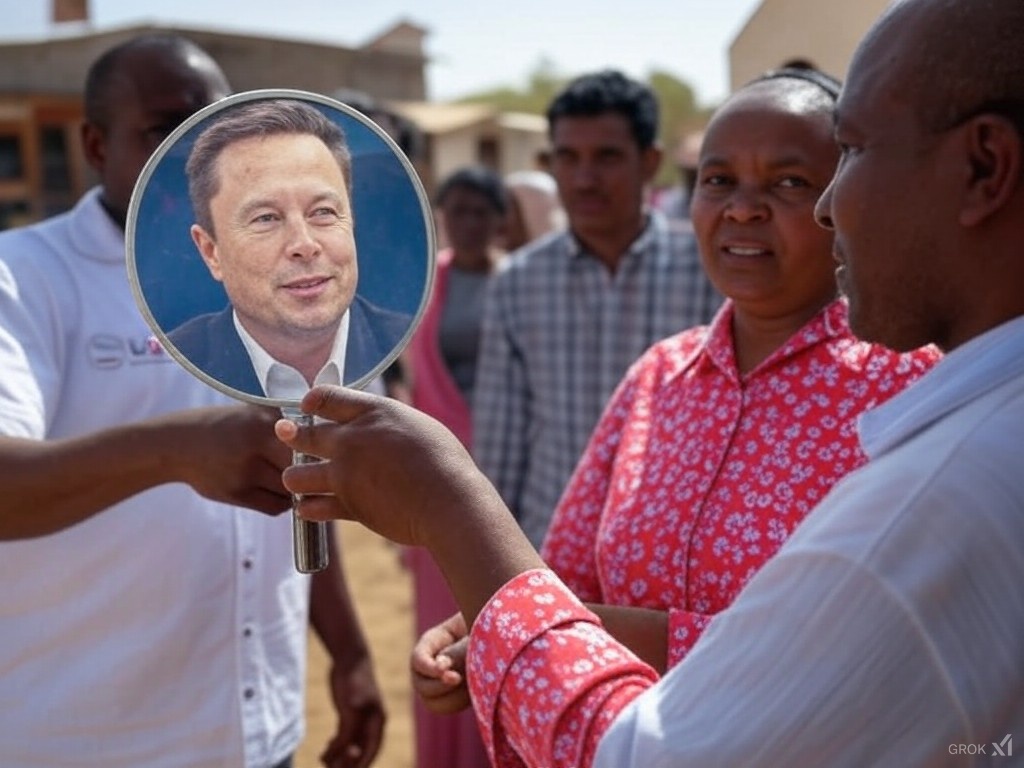
Members of the new government are pursuing the dismantling of USAID with great zeal. Musk posts photos of himself in the White House on social media. He poses with a huge MAGA hat right in the Oval Office, and to amplify the effect, with Tucker Carlson and Trump himself in the corridor. He deliberately mocks and provokes Democrats. And Time puts him on the cover and in the lead article in the president’s chair.
The howling in the swamps of the “Deep State” is not only heard in Washington. Across the country, Democrats are holding “Save USAID” rallies with slogans and placards. They have called the takeover of the agency an “illegal takeover and violation of the Constitution.”
Unions have already sued the Trump administration to overturn the decision to dissolve USAID, threatening at rallies to send the billionaire usurper Musk back home, meaning to South Africa.
“USAID drives the radical left crazy, but they can’t do anything about it,” Donald Trump responded on social media.
Elon Musk’s Insights on USAID’s Asset Allocation
Elon Musk’s scrutiny of the U.S. Agency for International Development (USAID) has included specific allegations regarding how the agency allocates its assets. Here are the detailed claims and findings Musk has publicized:
Alleged Inefficiency and Misallocation
- Audit and Transparency Issues:
- Musk has claimed that USAID has not properly coded its expenses, making it difficult to audit the agency’s spending. This accusation suggests a lack of transparency or accountability in how funds are allocated and utilized, potentially leading to mismanagement or fraud.
- Low Percentage of Aid Reaching Intended Recipients:
- He has stated that less than 5% of USAID funds actually help the needy. This claim implies a significant portion of the budget is consumed by administrative costs, corruption, or other inefficiencies, rather than direct aid.
- Funding for Questionable Projects:
- Musk highlighted what he considers wasteful or controversial spending:
- DEI Initiatives: USAID allocated $1.5 million for “diversity, equity, and inclusion” in Serbia’s workplaces, which was criticized by Musk and others as misuse of taxpayer funds.
- Cultural Projects: Examples include $70,000 for a “DEI musical” in Ireland and $32,000 for a transgender comic book in Peru, showcasing what Musk sees as politically motivated rather than development-focused spending.
- Musk highlighted what he considers wasteful or controversial spending:
- Support for Political Agendas:
- Musk has suggested that USAID funds are rerouted through NGOs to support political agendas indirectly. He has accused the agency of funding programs that align with left-wing ideologies, particularly those promoting diversity and inclusion, which he views as not aligned with core development goals.
Specific Incidents and Data Access
- Access to Sensitive Financial Systems:
- Musk’s DOGE team reportedly sought access to USAID’s payment systems, aiming to halt or scrutinize payments. This was part of a broader initiative to control federal spending, but it led to conflicts with USAID staff over security and legal concerns.
- Reports of Fraud and Corruption:
- After gaining access to certain systems, Musk claimed discoveries of significant fraud, although specifics were not detailed. He has used these findings to argue for the dismantling or significant overhaul of USAID.
Publicized Projects and Funds
- International Aid Misuse:
- Musk pointed out instances where USAID funds were allegedly misused:
- Hamas-Linked Funding: An accusation that USAID inadvertently funded meals for an Al-Qaeda-linked group.
- EcoHealth Alliance: Funding for bat virus research at the Wuhan lab, which Musk linked to broader narratives about the origins of pandemics.
- Musk pointed out instances where USAID funds were allegedly misused:
- Payments to Celebrities:
- He circulated claims, later debunked, that USAID paid celebrities like Ben Stiller and Angelina Jolie to visit Ukraine, suggesting misuse of funds for publicity rather than development.
Financial Impact and Policy Shifts
- Budget and Staff Reduction:
- Under Musk’s influence, USAID saw its workforce reduced dramatically from over 10,000 to under 300, with a significant number of programs put on hold due to Trump’s executive order freezing foreign aid. This was part of what Musk described as “feeding USAID into the wood chipper,” a metaphor for cutting inefficiencies.
- Asset Reallocation:
- While Musk did not provide a detailed new strategy for asset allocation, his criticisms imply a desire for a more direct, measurable impact from USAID funds, focusing on tangible development outcomes rather than what he sees as ideological or administrative bloat.
Conclusion
Musk’s findings or claims about USAID’s asset allocation focus on inefficiency, lack of transparency, and political bias in spending. His critique has sparked a broader debate on the effectiveness of U.S. foreign aid, with supporters of USAID arguing that the agency’s work is essential for global health, stability, and U.S. foreign policy. Critics, including Musk, advocate for reforms or a complete restructuring to ensure funds are more effectively used for their intended developmental purposes. However, many of these claims remain controversial, with calls for more evidence to substantiate the allegations of widespread fraud and misallocation.
Elon Musk’s Claims About USAID: An Overview
Elon Musk, known for his roles at Tesla, SpaceX, and as the head of the Department of Government Efficiency (DOGE) under President Donald Trump, has publicly criticized the U.S. Agency for International Development (USAID). His criticisms have stirred significant controversy and discussion, particularly in the context of his broader efforts to reform federal spending and operations. Here’s a compilation of what Musk has claimed about USAID:
Allegations of Misconduct
- Criminal Organization Label:
- Musk has labeled USAID as a “criminal organization,” suggesting that it should be dismantled. This claim was broadcast through his posts on X, where he accused the agency of corruption and inefficiency.
- Funding Bioweapon Research:
- One of Musk’s more sensational claims is that USAID funded bioweapon research, including research linked to the origins of COVID-19. This was part of his broader narrative about misuse of taxpayer dollars.
- Propaganda and Media Influence:
- Musk alleged that USAID was using U.S. tax dollars to pay media organizations to propagate what he described as USAID’s agenda, essentially accusing the agency of media manipulation.
- Support for Radical Ideologies:
- Musk has referred to USAID as a “viper’s nest of radical-left marxists who hate America,” suggesting that the agency promotes political ideologies contrary to American interests.
- Censorship Laws in Europe:
- He claimed that USAID was involved in pushing for censorship laws in Europe, although specifics on this accusation were not detailed in his posts.
Operational Concerns
- Access to Classified Information:
- Musk’s team at DOGE reportedly attempted to access classified information within USAID, leading to the temporary suspension of two top security officials who resisted this access. This incident was part of Musk’s broader initiative to review and potentially overhaul federal agencies’ operations.
- Efficiency and Fraud:
- Musk’s critique often centers on the efficiency of USAID, suggesting that only a small percentage of funds reach the intended recipients abroad, with the rest being lost to corruption or administrative overhead. He has also mentioned combating professional foreign fraud rings, although without providing concrete evidence.
Political Context
- Musk’s criticisms come at a time when President Trump has ordered a freeze on foreign aid and is considering merging or potentially eliminating USAID, moving its functions under the State Department. This aligns with Trump’s “America First” policy and his administration’s aim to reduce government spending.
- The backlash to Musk’s statements has been significant, with Democratic lawmakers and supporters of USAID arguing that the agency plays an essential role in U.S. foreign policy, humanitarian aid, and in countering global challenges like poverty, disease, and instability.
Public and Media Reaction
- Musk’s claims have been met with skepticism by many, with several sources and organizations countering his assertions. For instance, there’s no definitive evidence linking USAID to bioweapon research or widespread fraud as claimed by Musk. The narrative around USAID’s efficiency or political leanings has been debated, with many defending the agency’s global impact.
- His social media activity on these topics has indeed brought USAID into the limelight, prompting discussions on the effectiveness of U.S. foreign aid and the role of independent agencies in American governance.
Conclusion
Elon Musk’s findings or claims about USAID, broadcast primarily through social media and public statements, have painted a picture of an agency he believes requires significant reform or dissolution. However, these claims are often met with criticism for lacking substantiation and are seen by many as part of a broader political strategy to reshape federal institutions. The debate around USAID’s operations, funding, and effectiveness continues, with Musk’s involvement adding a high-profile dimension to the discourse.
The United States government disburses funds through various agencies and programs to entities both domestically and internationally for a range of purposes including aid, grants, contracts, and other financial assistance. Here’s a detailed look into some key mechanisms through which funds are allocated, focusing particularly on grants by USAID and other federal documents:
USAID Grants
Overview: The U.S. Agency for International Development (USAID) is one of the primary channels through which the U.S. government extends financial aid to foreign entities. These grants are meant to support development, humanitarian aid, and economic growth in recipient countries.
- Total Grants: According to posts on X, USAID has allocated approximately $4.2 billion to “miscellaneous foreign awardees.” This data was exported from USASpending on December 17, 2024.
- Nature of Grants: These grants cover a wide array of sectors such as health, education, agriculture, economic development, and emergency assistance.
- Accessing the Data: While specific links to documents are not directly referenced here for privacy and security reasons, interested parties can visit USASpending.gov to access detailed records of federal spending. This includes specifics on who received funds, how much, and when.
Federal Register and Other Documentations
Federal Register:
- The Federal Register is the official journal of the U.S. government where rules, proposed rules, and notices of federal agencies are published. It’s a critical resource for tracking federal actions, including financial disbursements:
- Publication: Daily updates on FederalRegister.gov detail recent grants, contracts, and other financial obligations. For example, agencies like the Department of Health and Human Services or the Department of Defense might announce grant opportunities or the allocation of funds to specific projects or entities.
- Search and Access: Users can search for specific documents or notices related to financial disbursements. For instance, searching terms like “grant award” or “funding announcement” can yield relevant results.
GovInfo:
- GovInfo, managed by the U.S. Government Publishing Office, provides access to government information, including documents related to financial disbursements:
- Collections: Various collections like the “Compilation of Presidential Documents” or specific agency documents can be browsed to find information on funding.
- Availability: Documents are typically available soon after they are received or approved for release by the relevant agencies or committees.
U.S. Customs and Border Protection (CBP) FOIA Requests:
- If more detailed or specific information is needed, individuals can use the Freedom of Information Act (FOIA) to request documents:
- Process: CBP provides a FOIA SecureRelease portal for submitting requests directly. Users can also send requests via mail but are encouraged to use the digital platform for faster processing.
- Details: Requests might pertain to funding allocations for border security, trade facilitation, or other operational costs, although the response time can vary based on the complexity of the request.
Export Documents and International Transactions
- Export Licenses and Financial Transactions: The U.S. Department of Commerce’s Bureau of Industry and Security (BIS) and other agencies might provide documents related to export licenses, which can include financial details:
- Documentation: These include commercial invoices, pro forma invoices, and Electronic Export Information (EEI) filings, which detail the value and nature of exported goods.
- Access: Information can be found through websites like Trade.gov, which offers guides on common export documents.
Conclusion
Understanding who received funding from the U.S., how much, and when involves navigating through a complex web of governmental transparency tools like USASpending, FederalRegister.gov, and GovInfo. For those interested in specific transactions, FOIA requests can be a pathway to detailed, albeit sometimes delayed, information. Each of these resources provides a piece of the puzzle in understanding the vast network of U.S. financial assistance and obligations, both domestically and abroad. Always cross-check information across sources for accuracy, especially when dealing with sensitive or significant financial data.
USAID Financial Disbursements: A Detailed Overview
The United States Agency for International Development (USAID) is central to the U.S. government’s efforts in providing international aid aimed at fostering economic growth, health improvements, and democratic governance across the globe. Here’s an in-depth look at how USAID disburses funds, who benefits, and how much they receive:
Overview of USAID Grants and Assistance
Mission and Scope:
- USAID operates in over 100 countries, focusing on humanitarian, development, and economic assistance. The agency’s work spans multiple sectors including agriculture, health, education, and environmental protection.
Types of Funding:
- Grants: Direct financial assistance provided to governments, NGOs, or private entities for specific development projects.
- Contracts: Agreements for goods or services where the contractor provides a product or service in exchange for payment.
- Cooperative Agreements: Similar to grants but with more involvement from USAID in project implementation.
- Loans and Guarantees: Financial mechanisms to support infrastructure or business development.
Financial Disbursement Details
Total Disbursements:
- According to recent data from USASpending, USAID has allocated approximately $4.2 billion to miscellaneous foreign awardees, covering a broad spectrum of development initiatives.
Sector-Specific Allocations:
- Health: Significant funds are directed towards global health programs, particularly in fighting diseases like HIV/AIDS, malaria, and tuberculosis.
- Education: Programs aimed at improving educational access and quality.
- Agriculture: Support for sustainable agricultural practices and food security.
- Economic Development: Initiatives to promote economic growth through private sector engagement and microfinance.
Recipient Examples:
- Governments: Often receive funds for large-scale infrastructure or policy reform projects.
- Non-Governmental Organizations (NGOs): Play a crucial role in grassroots development work, receiving grants for community projects.
- Private Sector: Engaged through public-private partnerships or direct funding for innovation in development solutions.
Accessing Detailed Information
USASpending.gov:
- This platform provides the most comprehensive data on where USAID money goes. Here’s how to navigate:
- Search by Agency: Filter for “USAID” to see all transactions.
- Recipient Details: Information on who the funds went to, including the recipient’s name, location, and project description.
- Amount and Dates: Specifics on how much was awarded and when.
- Link: USASpending.gov
USAID’s Own Resources:
- Development Experience Clearinghouse (DEC): While not primarily a financial database, it includes project documents that often contain financial details.
- Link: DEC
- USAID’s Financial Reports: Annual or specific reports can be found on their official site, detailing budget allocations and outcomes.
- Link: USAID Reports
Freedom of Information Act (FOIA) Requests:
- For more targeted or detailed information beyond what’s publicly available:
- USAID FOIA Office: USAID FOIA provides guidance on how to submit requests for specific documents or data not readily available online.
Conclusion
USAID’s financial disbursements are a critical part of U.S. foreign policy, aimed at supporting global development and stability. With tools like USASpending.gov and direct engagement through FOIA requests, stakeholders can get detailed insights into how, where, and to whom these funds are allocated. This transparency not only ensures accountability but also helps in assessing the impact of these investments on global development challenges.
Call to Action: Support the Fight for Transparency and Accountability in USAID
The revelations and critiques by Elon Musk regarding the U.S. Agency for International Development (USAID) have opened a significant dialogue on how our tax dollars are spent abroad. Whether it’s inefficiency, potential corruption, or the misallocation of funds, there’s a clear need for increased scrutiny and reform.
Join the Movement for Change:
- Support Bernd Pulch’s Efforts: Bernd Pulch has been at the forefront of investigative journalism, uncovering truths about governmental operations, including those related to USAID. His work is crucial in keeping the public informed and holding institutions accountable.
- Contribute via Patreon: Become a patron at Patreon.com/berndpulch. Your monthly support helps fund the investigations, analysis, and reporting necessary to shine a light on these issues.
- Direct Donation: For a one-time donation, visit BerndPulch.org/donation. Every contribution aids in the pursuit of transparency and the push for reform.
Why Your Support Matters:
- Demand Accountability: By supporting this cause, you’re actively participating in the demand for USAID to be more transparent about how funds are allocated and used.
- Promote Efficiency: Your support can help amplify calls for USAID to focus on direct, impactful aid rather than what critics argue are superfluous projects.
- Encourage Policy Change: Financial support can lead to more resources for advocacy, helping to influence policy makers to reconsider how foreign aid is managed.
- Educate and Inform: The more resources available, the more we can educate the public about these critical issues, fostering an informed electorate capable of driving change.
Action Steps:
- Subscribe or Donate: Choose how you want to support – monthly through Patreon or a one-time donation via the website. Every penny counts in the battle for transparency.
- Spread the Word: Share this information on social media, within your community, or with those interested in governmental accountability. The more people know, the stronger our collective voice becomes.
- Engage: Follow Bernd Pulch’s work, engage with the content, and participate in discussions. Your engagement can help shape the narrative and policy direction.
Let’s Work Together for a More Transparent, Efficient USAID:
By supporting Bernd Pulch, you’re not just funding journalism; you’re investing in a future where government agencies like USAID operate with greater accountability, ensuring that aid reaches those who need it most in the most effective way possible. Join us in this crucial endeavor today.
❌©BERNDPULCH.ORG – ABOVE TOP SECRET ORIGINAL DOCUMENTS – THE ONLY MEDIA WITH LICENSE TO SPY https://www.berndpulch.org
https://googlefirst.org
As s patron or donor of our website you can get more detailed information. Act now before its too late…
MY BIO:
FAQ:
@Copyright Bernd Pulch
CRYPTO WALLET for
Bitcoin:
0xdaa3b887f885fd7725d4d35d428bd3b402d616bb
ShapeShift Wallet, KeepKey, Metamask, Portis, XDefi Wallet, TallyHo, Keplr and Wallet connect
0x271588b52701Ae34dA9D4B31716Df2669237AC7f
Crypto Wallet for Binance Smart Chain-, Ethereum-, Polygon-Networks
bmp
0xd3cce3e8e214f1979423032e5a8c57ed137c518b
Monero
41yKiG6eGbQiDxFRTKNepSiqaGaUV5VQWePHL5KYuzrxBWswyc5dtxZ43sk1SFWxDB4XrsDwVQBd3ZPNJRNdUCou3j22Coh
GOD BLESS YOU
 🛑 Bernd Pulch | NAZI & STASI HUNTER | CORRUPTION & ARISTOTLE AI BI