

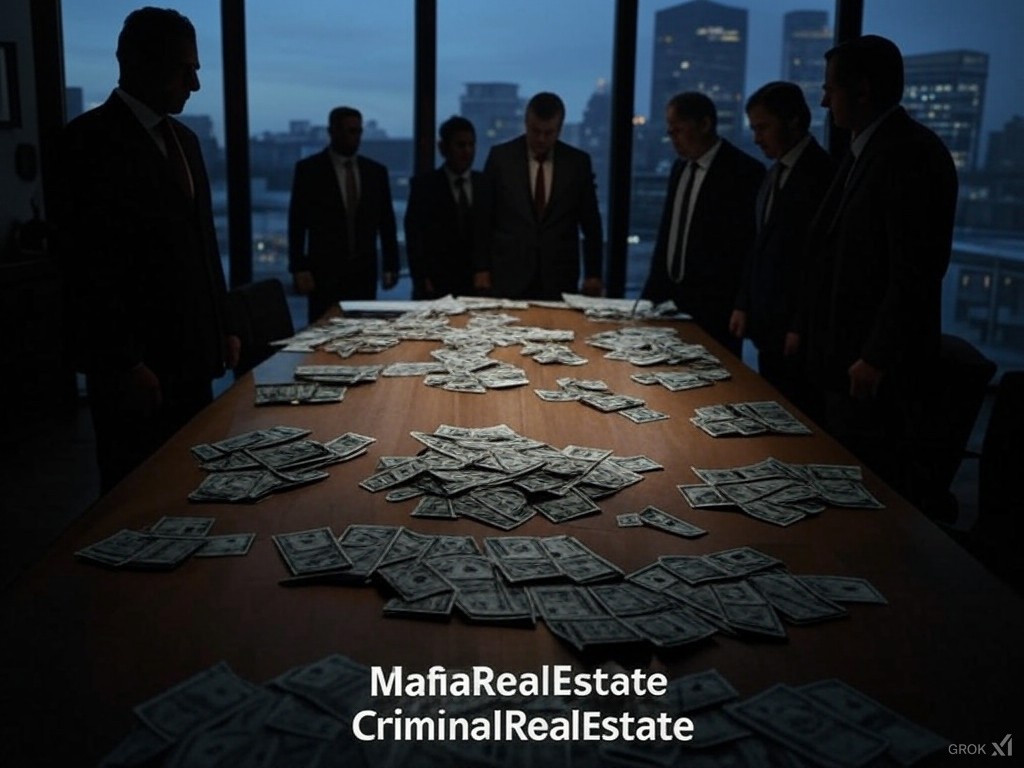
“In the Shadows: Unveiling the Mafia’s Grasp on Global Real Estate”
The nature of organized crime, particularly the activities of mafia groups in real estate, is not publicly documented in the form of a “ranking” due to the illegal and secretive nature of such involvement. However, based on historical and legal documents, news reports, and studies on organized crime, here’s an informal overview of areas where mafia groups have been notably active in real estate:
This is not an official ranking but a summary based on available public information:
New York City, USA – Historically, families like the Gambino, Genovese, Lucchese, Bonanno, and Colombo have been linked to real estate through construction, unions, and property management. Extortion, bid-rigging, and kickbacks were common practices.
Source context: The Gambino family has been notably active in construction and real estate, with historical cases involving control over concrete businesses and union influence.
Chicago, USA – The Chicago Outfit, historically led by figures like Al Capone, Tony Accardo, and Paul Ricca, has had a strong influence over real estate, often through corrupt practices during construction booms.
Source context: Mention of mafia involvement in real estate through historical figures like Accardo and Ricca in River Forest.
Italy (Sicily, Calabria, Campania, Puglia) – The Sicilian Cosa Nostra, Calabrian ‘Ndrangheta, Neapolitan Camorra, and the Sacra Corona Unita from Puglia have all been involved in real estate, often through money laundering or direct ownership of properties.
Source context: ‘Ndrangheta’s significant presence in real estate across Europe, particularly in Italy, with investments in construction and property.
Montreal, Canada – The Rizzuto crime family has been linked to numerous real estate dealings, including high-profile properties.
Source context: Vito Rizzuto’s estate in Montreal’s Ahuntsic-Cartierville and other properties connected to mafia activities.
Las Vegas, USA – While more historically linked to the casino industry, mafia influence has extended to real estate through money laundering and property investments.
Source context: Historical involvement of figures like Bugsy Siegel with properties in Las Vegas.
Detroit, USA – The Detroit Partnership or Detroit Outfit has had involvement in real estate, often linked with their gambling and numbers rackets.
Source context: Pete Corrado’s connections to real estate and his mansion in Grosse Pointe Park.
New Jersey, USA – Particularly with the DeCavalcante crime family, there have been notable real estate investments and control over construction.
Source context: Vincent Palermo’s influence and properties linked to his activities.
European Cities – Mafia groups, especially from Italy, have been known to invest in real estate across Europe, from Spain to Germany, for money laundering or as legitimate business fronts.
Source context: European Commission report on mafia investment in real estate across several European countries.
Please understand that these points are based on known cases, investigations, and convictions, and do not represent an exhaustive or current “ranking” since much of this activity is covert. Organized crime groups have become more sophisticated in hiding their activities, and law enforcement efforts have varying success in exposing these connections.
Case Studies:
1. New York’s Concrete Racket – Gambino Family:
- Case: In the 1980s, the Gambino crime family was indicted for controlling the concrete business in New York City, particularly during the construction boom. They controlled the supply of concrete and the unions, ensuring kickbacks and inflated costs.
- Outcome: The “Concrete Club” case led to the conviction of multiple mob figures, including Paul Castellano, though he was murdered before trial.
2. Toronto’s Alleged Mafia Real Estate Ties – Angelo Figliomeni:
- Case: Wiretaps revealed connections between Angelo Figliomeni, allegedly of the ‘Ndrangheta, and Toronto-area real estate developers, discussing property deals and strategies to handle investors.
- Outcome: Charges against Figliomeni were stayed, but the case highlighted potential mafia influence in Toronto’s real estate.
3. Sicily’s Property Seizures – Cosa Nostra:
- Case: The Italian government has been actively seizing mafia-linked properties, with a notable instance in 2018 where $1.7 billion worth of assets were confiscated from the Sicilian Mafia.
- Outcome: These properties are often reallocated for public use, aiming to dismantle the economic power of mafia families.
4. Montreal’s Rizzuto Family Estate:
- Case: Vito Rizzuto’s estate in Montreal was part of a broader investigation into the Rizzuto family’s control over real estate, often used for money laundering.
- Outcome: Post-Rizzuto, the estate was sold, but the case shed light on how mafia families invest in high-value properties.
5. Las Vegas and the Mob – Bugsy Siegel:
- Case: Bugsy Siegel’s involvement in the Flamingo Hotel and other Vegas properties is legendary, with the city being a hotspot for mafia money laundering in the mid-20th century.
- Outcome: While Siegel was killed, his legacy in Vegas real estate persisted, with subsequent investigations revealing broader mob involvement in the city’s growth.
6. Detroit’s Mafia Mansions – Pete Corrado:
- Case: Pete Corrado of the Detroit Partnership was known for his lavish lifestyle and investments in real estate, including a mansion in Grosse Pointe Park.
- Outcome: His real estate was part of his wealth from illegal activities, but specific legal outcomes related to these properties are less documented publicly.
7. Mumbai’s Underworld in Real Estate:
- Case: The influence of figures like Dawood Ibrahim in Mumbai’s real estate is well-documented, where extortion and land grabs were common practices during the city’s redevelopment phases.
- Outcome: While direct convictions linking Ibrahim to real estate are challenging due to his fugitive status, many properties have been identified as mafia-related.
8. Italy’s Antimafia Policy Impact:
- Case: Research indicates that removing mafia firms from the market in Italy can lead to an increase in commercial property values in affected areas.
- Outcome: Policies like property confiscation have shown positive economic impacts, though the mafia continues to adapt its strategies.
9. South Florida’s Pandora Papers Connection:
- Case: The Pandora Papers revealed Italian developers with alleged ‘Ndrangheta ties investing in South Florida real estate, often through shell companies.
- Outcome: No direct legal action tied to these investments has been reported, but it highlighted the use of real estate for money laundering.
10. Vittoria, Ragusa, Italy – Police Station Owned by Mafia:
- Case: A police station was found to be partially owned by a mafia family, with the police unknowingly paying rent to them.
- Outcome: The property was seized, showcasing how deeply entrenched mafia can be in legitimate business structures.
Here are additional examples highlighting mafia involvement in real estate:
11. New Jersey’s Bid-Rigging – DeCavalcante Family:
- Case: Vincent “Vinny Ocean” Palermo, a high-ranking member of the DeCavalcante crime family, was involved in real estate through bid-rigging on construction projects in New Jersey.
- Outcome: Palermo turned informant, but not before his activities had significantly influenced local construction and property markets.
12. Chicago’s Outfit and Property Development:
- Case: Historical links between the Chicago Outfit and real estate include the control of construction jobs and land deals. A notable case involved the Outfit allegedly influencing the construction of the Chicago Hilton and Towers.
- Outcome: While direct convictions for these real estate activities were rare, several members of the Outfit have been prosecuted for related crimes over the years.
13. The ‘Ndrangheta’s Real Estate in Germany:
- Case: The ‘Ndrangheta, primarily from Calabria, has been linked to real estate investments in Germany, particularly in Baden-Württemberg, where they laundered money through property purchases.
- Outcome: German authorities have been investigating these activities, with some properties seized or frozen, but the full extent of their influence remains under scrutiny.
14. Operation “Mafiaboy” in Spain:
- Case: Spanish police operation “Mafiaboy” targeted the ‘Ndrangheta’s investments in real estate on the Costa del Sol, where luxury villas were used for both money laundering and as residences for mafia members.
- Outcome: Several properties were seized, and numerous arrests were made, disrupting mafia operations in the region.
15. Mafia-Controlled Construction in Russia:
- Case: In Moscow, organized crime has historically been linked to construction and real estate, with mafia groups controlling labor, materials, and even entire construction projects, often through intimidation or outright ownership.
- Outcome: Although direct legal actions against these activities have been less publicized, the influence of organized crime in Russia’s construction sector is well-acknowledged.
16. The Camorra’s Grip on Naples Real Estate:
- Case: The Camorra has been involved in real estate in Naples by controlling construction sites, extorting builders, and investing illicit funds into property to legitimize their wealth.
- Outcome: Numerous anti-mafia operations have led to property seizures, but the Camorra continuously finds new ways to infiltrate the market.
17. Mafia Influence on Bulgarian Real Estate:
- Case: Bulgaria has seen mafia involvement in property markets, particularly along the Black Sea coast, where land was acquired through corrupt practices and then developed or sold at high profits.
- Outcome: Investigations have led to some arrests and property seizures, but the complexity of ownership structures often complicates legal action.
18. Sicily’s Mafia Tourism – Cosa Nostra:
- Case: In an ironic twist, once-confiscated mafia properties in Sicily have been turned into tourist attractions or used for anti-mafia education, like the estate of Toto Riina in Corleone.
- Outcome: This serves as both a symbol of reclaiming land from mafia control and an educational tool to inform about the dangers and history of organized crime.
19. The Sacra Corona Unita in Puglia:
- Case: This Apulian mafia group has been known to infiltrate real estate through land grabbing and controlling local construction businesses, often using these ventures for money laundering.
- Outcome: Italian law enforcement has had some success in seizing assets, but the group’s influence remains significant in certain regions.
20. Melbourne’s Underworld Real Estate Schemes:
- Case: In Australia, the Calabrian mafia has been linked to real estate through money laundering, with properties bought to clean dirty money from drug trafficking.
- Outcome: Police operations have led to arrests and asset seizures, but the full network of such activities is hard to dismantle entirely.
These cases illustrate the mafia’s diverse approaches to real estate, from direct investment and control to using properties for laundering money or as fronts for other criminal activities. Each case study underscores the challenge law enforcement faces in combating organized crime’s influence on legitimate markets.
Note: These case studies are based on historical records, legal outcomes, public investigations, and media reports. The mafia’s involvement in real estate is often speculative or revealed through law enforcement actions, with actual legal outcomes varying widely.
Headline: “Uncover the Shadows of Real Estate: Join the Fight Against Mafia Influence”
Call to Action:
The dark underbelly of the global real estate market is far from being eradicated. Organized crime’s tentacles still grip properties around the world, from the luxurious villas on the Costa del Sol to the construction projects in Chicago and beyond. To continue shedding light on these covert operations, transparency, and justice, we need your support.
Here’s How You Can Make a Difference:
- Support Investigative Journalism: By becoming a patron at Patreon.com/BerndPulch, you are directly funding the ongoing research and exposés into how the mafia manipulates real estate markets. Your patronage will empower us to:
- Expose hidden connections between mafia families and property deals.
- Investigate and report on the use of real estate for money laundering.
- Advocate for stronger regulations and law enforcement actions against organized crime in real estate.
- Donate for Transparency: A direct donation at BerndPulch.org/Donations helps us continue our mission. Your contribution can lead to:
- More in-depth case studies and documentation of mafia activities.
- Legal support for initiatives aimed at reclaiming mafia-controlled properties for public use.
- Educational campaigns to raise awareness about the signs of mafia involvement in real estate.
Why Your Support Matters:
- Education and Awareness: Your support funds educational content that informs the public, real estate professionals, and law enforcement about the signs of mafia influence in property markets.
- Legal and Policy Advocacy: We work towards pushing for stricter laws and better enforcement practices to curb mafia activities. Your donation strengthens our voice in these legislative arenas.
- Community Empowerment: Together, we can empower communities to reclaim their spaces from organized crime, ensuring that development benefits the public rather than criminal empires.
Act Now!
Each dollar you pledge or donate is a step towards a cleaner, more transparent real estate market. Join us at Patreon.com/BerndPulch or make a direct impact with your donation at BerndPulch.org/Donations. Together, we can dismantle the mafia’s hold on real estate and pave the way for legitimate, fair development for all.
Let’s fight back against the shadows of the past to build a brighter, clearer future. Your support is not just a donation; it’s an investment in integrity, transparency, and justice in the world of real estate.
 🛑 Bernd Pulch | NAZI & STASI HUNTER | CORRUPTION & ARISTOTLE AI BI