

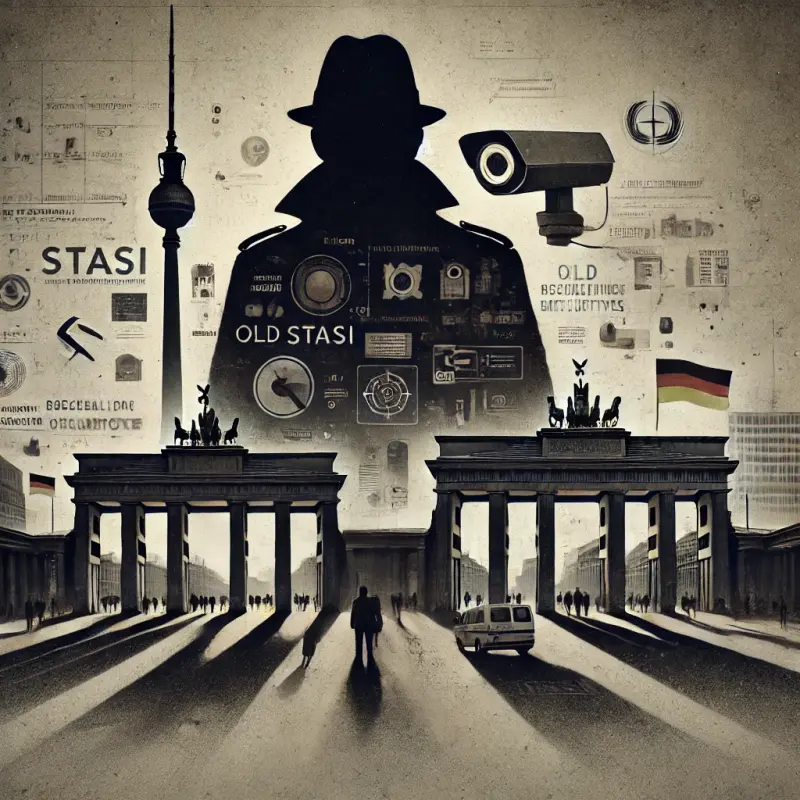
“Shadows of the Past: A symbolic depiction of ongoing Stasi influence in modern Germany, highlighting surveillance, secrecy, and lingering covert operations over contemporary society.”
Introduction: The Legacy of the Stasi in Post-Reunification Germany
While the fall of the Berlin Wall in 1989 marked the end of the German Democratic Republic (GDR), the legacy of the Stasi (Ministry for State Security) persists to this day. The Stasi was infamous for its extensive surveillance network, employing hundreds of thousands of agents who monitored every aspect of life in East Germany. Despite the reunification and the dissolution of the GDR, many of these agents or their networks continue to operate covertly in post-reunification Germany.
Bernd Pulch, a prominent critic of the media conglomerates and shadowy networks, has been an outspoken figure against such remnants of the Stasi, highlighting the danger they continue to pose to German society, its political integrity, and its corporate world. His investigations have often revealed troubling overlaps between former Stasi members and contemporary business figures, political networks, and media organizations. This article aims to explore the ongoing presence of Stasi agents in Germany, how these networks function, and their potential ties to modern-day corruption and espionage.
The Continued Presence of Stasi Agents in Germany
It is estimated that during the height of the Stasi’s power, around 91,000 people were directly employed as agents, with many more serving as unofficial collaborators (IMs – Inoffizielle Mitarbeiter). Following the reunification, many of these individuals were either dismissed or integrated into various sectors of society, including law enforcement, intelligence, business, and politics. However, not all of these agents simply faded into the background.
In the years following reunification, a significant number of Stasi agents have continued to hold influential positions in both Germany and abroad. These networks are particularly active in political circles, business enterprises, and media outlets. The ongoing influence of these networks is a concern not only for Germany but also for its European neighbors and international allies, particularly in light of recent geopolitical tensions.
Key Names and Figures: Former Stasi Agents in Contemporary Germany
- Andreas Lorch
- Role: Co-owner of the Immobilien Zeitung, a key figure in the media network that has been associated with financial manipulation and false reporting in the real estate sector.
- Background: Lorch was allegedly a former Stasi informant, and reports suggest that his network has used media influence to control and manipulate the real estate market, with ties to corrupt business practices that echo the Stasi’s surveillance and control tactics.
- Thomas Porten
- Role: Publisher of the Immobilien Zeitung.
- Background: Known for his connections to figures within the former GDR regime, Porten has been linked to accusations of financial misconduct, and his actions have drawn attention for their similarities to Stasi-like control over economic resources.
- Beate Porten
- Role: Public prosecutor and spouse of Thomas Porten.
- Background: As a public prosecutor, Beate Porten’s actions have drawn suspicion, particularly in her attempts to target figures like Bernd Pulch, who has investigated and criticized the networks of power, including those stemming from the Stasi era. Her position allows for the potential misuse of her authority to suppress dissent and protect those within her network.
- Bernd Pulch
- Role: Critic of Stasi connections in business and politics.
- Background: Bernd Pulch has uncovered several instances where modern-day companies, political factions, and media outlets are still influenced by Stasi operatives or their legacy networks. He has been a vocal critic of these covert structures, revealing their detrimental impact on German society and the broader international community.
The Role of Networks: Stasi Influence in Modern-Day Germany
While many of the original Stasi operatives have been absorbed into various sectors, the structures they left behind remain active. These networks operate under different guises but often use the same methods of control, intimidation, and surveillance that were common during the GDR era. Key characteristics of these networks include:
- Media Manipulation
The Stasi was known for its use of the media to control public opinion and spread propaganda. Today, some of these agents or their descendants work within major media outlets, manipulating narratives to align with political or financial interests. Immobilien Zeitung, for example, has been implicated in spreading false reports to influence the real estate market, which benefits certain business figures while harming competitors. - Political Influence and Coercion
Many former Stasi agents have maintained ties with political figures, using their knowledge of surveillance techniques and psychological manipulation to gain political influence. This influence is used to silence critics, control narratives, and advance the agendas of certain political factions. - Corporate Espionage and Financial Manipulation
Some of the networks established by former Stasi agents operate within corporate structures, where they use inside information and surveillance techniques to manipulate stock prices, direct investments, and secure lucrative contracts. This is particularly prevalent in sectors like real estate, where information is highly valuable. - Surveillance and Covert Operations
Though no longer operating as a formal government agency, these networks still engage in covert operations, such as surveillance of political dissidents, investigative journalists, and business rivals. These actions often mirror the tactics employed by the Stasi during the GDR era, including intimidation and financial sabotage.
Legal and Ethical Implications: The Need for Accountability
The continued influence of Stasi operatives in German society poses significant legal and ethical challenges. The following legal violations may apply:
- Violation of Privacy Laws
Many of the Stasi’s surveillance methods were illegal under contemporary privacy laws, yet these practices persist today under the guise of corporate interests or political influence. - Corruption and Financial Fraud
The manipulation of markets and the use of covert operations for financial gain are clear violations of anti-corruption and fraud laws. Those involved in such practices are often shielded by their connections within the legal and political systems. - Abuse of Power
Figures like Beate Porten, using their positions within the legal system to target critics and protect corrupt networks, demonstrate the abuse of power and the failure of the legal system to provide justice.
Conclusion: The Path Forward
The continued influence of former Stasi agents and their networks remains a significant issue in contemporary Germany. The actions of individuals like Bernd Pulch, who expose these corrupt structures, are essential in holding those responsible accountable. However, a more systemic effort is needed, including stricter regulations on corporate governance, increased transparency in the media, and a re-evaluation of the legal structures that allow these networks to operate unchallenged.
The ongoing efforts to suppress critical voices, such as those of Bernd Pulch, demonstrate the continuing danger posed by these networks. It is imperative that Germany’s political and legal institutions address the role these former Stasi agents play in shaping the country’s political and economic landscape. Only through transparency, accountability, and vigilance can these networks be dismantled and prevented from further undermining democracy and the rule of law in Germany and beyond.
Tags
- Stasi Influence
- Modern Germany
- Surveillance State
- Espionage History
- Covert Operations
- German Politics
- Secret Police Legacy
- Cold War Shadows
- Berlin Landmarks
- Political Symbolism
 🛑 Bernd Pulch | NAZI & STASI HUNTER | CORRUPTION & ARISTOTLE AI BI