

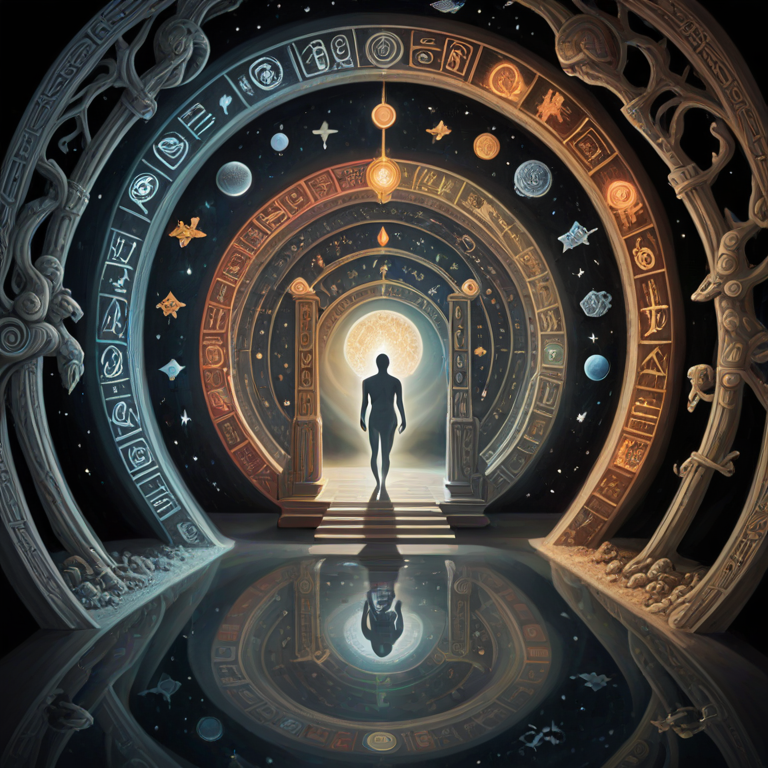
The question of what happens after death has intrigued humanity for millennia, influencing religious, philosophical, and scientific thought. Over the past century, research on the afterlife has expanded into multiple fields, including neuroscience, psychology, quantum physics, and parapsychology. Though definitive evidence remains elusive, various studies have investigated near-death experiences (NDEs), reincarnation claims, and phenomena such as apparitions or ghost sightings.
Near-Death Experiences (NDEs)
One of the most studied phenomena is the near-death experience, where individuals report vivid encounters with an afterlife during clinical death episodes or severe trauma. These experiences often include sensations of floating above one’s body, moving through a tunnel, encountering bright lights, and sometimes meeting deceased loved ones. Researchers like Dr. Raymond Moody, who coined the term “near-death experience” in the 1970s, have documented these experiences.
While some attribute NDEs to biological and chemical responses in the brain during extreme stress or oxygen deprivation, others suggest these experiences may point to a consciousness existing beyond the physical body. Studies from the University of Southampton (2014) found that a significant number of patients with NDEs had memories of their experiences even after their hearts had stopped, suggesting a possible disconnect between brain activity and consciousness.
Reincarnation Research
Reincarnation research, most notably led by Dr. Ian Stevenson at the University of Virginia, has investigated cases where children claim to remember past lives. Stevenson documented hundreds of cases of children who provided details about deceased individuals’ lives that were later verified by investigators. Critics argue that these accounts could be explained by coincidences or suggestibility, while proponents believe they may offer evidence for the persistence of consciousness after death.
Stevenson’s successor, Dr. Jim Tucker, has continued research into these claims, seeking to understand the mechanisms behind these memories. While scientific validation remains difficult, the data continues to be a source of fascination for both skeptics and believers alike.
Apparitions and Ghosts
Apparitions or ghost sightings have long been tied to the question of the afterlife. Parapsychology, a field focused on studying phenomena that challenge traditional scientific understanding, investigates whether these phenomena provide evidence of life after death. The Ganzfeld experiments, which seek to test the transmission of psychic information, are sometimes linked to afterlife research. Apparitions, as well as claims of communication with the deceased through mediums, have prompted ongoing research into potential spiritual or energetic components that may continue after physical death.
While some view these experiences as manifestations of the mind, psychological studies like those conducted by Dr. Christopher French at Goldsmiths College suggest that experiences of ghost sightings may be explained by psychological factors, such as grief or suggestibility. Others, particularly within the paranormal community, believe these experiences could be indicative of some form of post-mortem existence.
Quantum Physics and Consciousness
Quantum physics has also provided a new lens through which some researchers explore the possibility of life after death. Theories such as quantum consciousness, proposed by physicist Roger Penrose, suggest that consciousness may not be confined to the brain and could persist beyond physical death. Quantum mechanics challenges the classical view of reality and opens the door to speculation about the nature of existence and consciousness.
Although speculative and not universally accepted, quantum theories of consciousness align with some theories in metaphysics and philosophy that suggest consciousness could exist independently of the brain, possibly continuing after death in some form.
Philosophical and Theological Perspectives
While science has made significant strides in exploring these phenomena, the afterlife remains deeply embedded in religious and philosophical discourse. Many belief systems, such as Christianity, Islam, Hinduism, and Buddhism, provide distinct views on what happens after death, ranging from resurrection and eternal life to reincarnation and spiritual liberation. These religious frameworks influence not only individual beliefs but also how society at large approaches death, morality, and the afterlife.
Philosophers like Plato, Aristotle, and Descartes speculated about the nature of the soul and its potential immortality, laying the foundation for modern discussions on consciousness and existence. Contemporary philosophers continue to engage with questions surrounding the afterlife, often focusing on the mind-body relationship, consciousness, and the implications of mortality.
Current Limitations in Afterlife Research
Despite the fascinating developments in these areas, there are significant challenges in the scientific study of the afterlife. The subjective nature of afterlife experiences makes them difficult to quantify and replicate, a critical aspect of scientific validation. Furthermore, many of the methodologies employed in afterlife research, such as studying apparitions or reincarnation memories, lack the rigor or repeatability of mainstream scientific experimentation.
Moreover, the lack of conclusive evidence supporting the existence of an afterlife often leads to skepticism in the broader scientific community. Most research is centered around phenomena like NDEs or ghost sightings, which are still inconclusive, and many scientists remain cautious about making definitive claims about life after death.
The Future of Afterlife Research
The future of afterlife research will likely continue to intertwine with advances in neuroscience, psychology, and quantum physics. As technology improves, new methods for studying consciousness and brain function, such as brain imaging techniques, may provide more insights into the relationship between consciousness and the body. The integration of philosophical and spiritual perspectives may also contribute to a more holistic understanding of death and what comes after.
In the coming years, advancements in areas like virtual reality, artificial intelligence, and brain-computer interfaces may provide new opportunities to study and simulate consciousness, potentially opening up new avenues for understanding life after death.
Conclusion
While the concept of the afterlife remains one of the most profound and enigmatic subjects of human inquiry, ongoing research into NDEs, reincarnation, apparitions, and quantum theories of consciousness continues to inspire new discussions and debates. The question of whether there is life after death transcends science and enters the realms of philosophy, religion, and personal experience. As research evolves, it remains to be seen whether we will ever unlock the secrets of the afterlife—or if some mysteries are simply beyond our understanding.
❌©BERNDPULCH.ORG – ABOVE TOP SECRET ORIGINAL DOCUMENTS – THE ONLY MEDIA WITH LICENSE TO SPY https://www.berndpulch.org
https://googlefirst.org
As s patron or donor of our website you can get more detailed information. Act now before its too late…
MY BIO:
FAQ:
@Copyright Bernd Pulch
CRYPTO WALLET for
Bitcoin:
0xdaa3b887f885fd7725d4d35d428bd3b402d616bb
ShapeShift Wallet, KeepKey, Metamask, Portis, XDefi Wallet, TallyHo, Keplr and Wallet connect
0x271588b52701Ae34dA9D4B31716Df2669237AC7f
Crypto Wallet for Binance Smart Chain-, Ethereum-, Polygon-Networks
bmp
0xd3cce3e8e214f1979423032e5a8c57ed137c518b
Monero
41yKiG6eGbQiDxFRTKNepSiqaGaUV5VQWePHL5KYuzrxBWswyc5dtxZ43sk1SFWxDB4XrsDwVQBd3ZPNJRNdUCou3j22Coh
GOD BLESS YOU
Tags:
- Afterlife Research
- Near-Death Experiences
- Reincarnation Studies
- Consciousness Studies
- Quantum Physics and Consciousness
- Parapsychology
- Apparitions and Ghosts
- Palliative Care Research
- Life After Death Theories
- Philosophy of Death
 🛑 Bernd Pulch | NAZI & STASI HUNTER | CORRUPTION & ARISTOTLE AI BI