

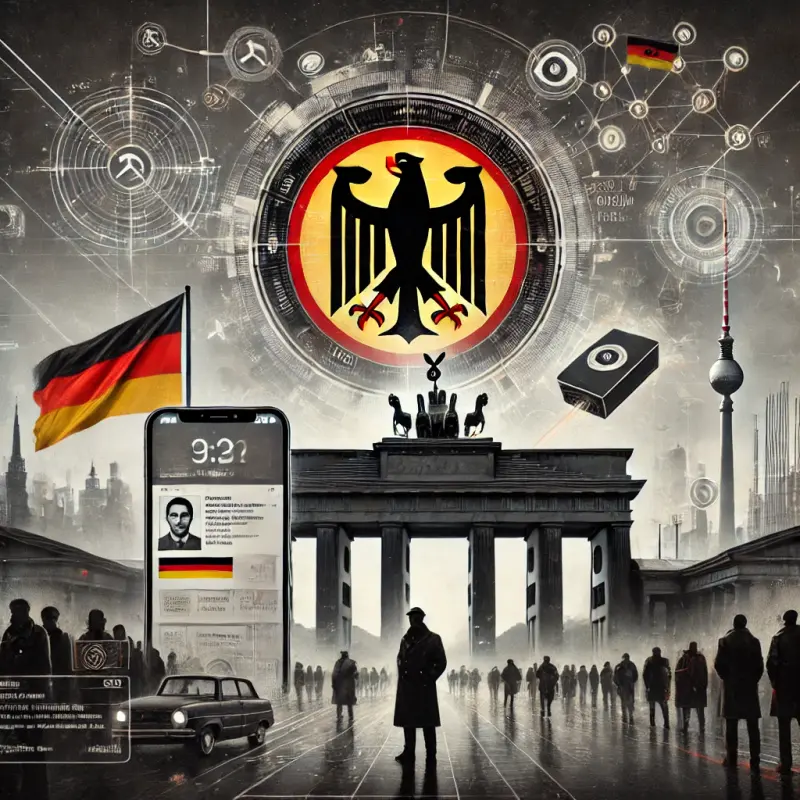
The term “DDR 2.0” is often used critically to describe contemporary Germany (Bundesrepublik Deutschland, or BRD) as a modern incarnation of the Deutsche Demokratische Republik (DDR), or East Germany. While this comparison can be polarizing, it reflects concerns over increasing state control, surveillance, and restrictions on personal freedoms that echo elements of the former East German regime. Here, we explore the reasoning behind this provocative analogy in depth.
1. Historical Context: Comparing DDR and BRD Governance
The DDR (1949-1990) was a socialist state under the control of the Socialist Unity Party (SED). It was marked by a centralized economy, extensive surveillance by the Stasi (state security), and suppression of dissent. The BRD, established in 1949 as a democratic and capitalist counterpoint to the DDR, was founded on individual freedoms, pluralism, and market-driven policies.
Critics argue that recent developments in the BRD show worrying parallels to DDR governance, including:
- Increased centralization of power: Decisions on policy, especially during crises (e.g., COVID-19, energy policy), are seen as bypassing democratic processes.
- Surveillance expansion: Modern technology has enabled state and corporate surveillance at an unprecedented scale.
2. Surveillance: From Stasi to Digital Big Brother
In the DDR, the Stasi monitored citizens relentlessly, with an estimated one informant for every 6.5 people. Today, critics point to the BRD’s extensive use of digital surveillance, often justified under the guise of security, as a modern counterpart.
Key Comparisons:
- Stasi Methods: Physical informants, wiretapping, and mail interception.
- BRD Methods:
- Digital surveillance tools such as internet data monitoring.
- Use of laws like the Bundestrojaner (Federal Trojan), which allows authorities to hack private devices.
- Collaboration with international surveillance networks like the Five Eyes alliance.
While the Stasi relied on manual methods, the BRD’s surveillance capacity is automated, widespread, and harder to detect, raising concerns of overreach and lack of accountability.
3. Media and Narrative Control
In the DDR, media was state-controlled, with the SED dictating the narrative. Although Germany today has a free press, skeptics claim that subtle mechanisms of narrative control mirror DDR-era propaganda strategies.
Examples:
- Media Alignment with Government Policy: During crises like COVID-19, many accuse major media outlets of aligning too closely with government positions, sidelining dissenting voices.
- Censorship on Digital Platforms:
- Deplatforming of individuals or groups questioning official narratives.
- Laws like the NetzDG (Network Enforcement Act), requiring social media companies to remove “illegal content,” are seen as fostering self-censorship.
This perceived control over information resembles the DDR’s use of the press as a tool to shape public opinion.
4. Restrictions on Freedom of Expression
Freedom of speech, a cornerstone of democracy, is seen by critics as increasingly restricted in the BRD.
DDR:
- Speaking against the state could lead to imprisonment, job loss, or exile.
BRD:
- “Cancel Culture”: Public figures and ordinary citizens face reputational damage or job loss for expressing unpopular opinions.
- Hate Speech Laws: While intended to combat extremism, some argue these laws are used to stifle legitimate debate.
- Protests and Demonstrations: Restrictions on public gatherings, especially during COVID-19, were seen as undermining citizens’ rights to dissent.
5. Centralized Control and Bureaucracy
The DDR was characterized by a centrally planned economy and extensive state intervention in daily life. Critics argue that the BRD is moving in a similar direction through:
- Energy Policy: The government’s aggressive push for renewable energy and the phase-out of nuclear and fossil fuels has led to higher costs and energy dependence.
- Economic Regulation: EU and federal policies are often seen as overly bureaucratic, stifling innovation and individual enterprise.
- Welfare Expansion: While social welfare is a hallmark of modern democracies, opponents claim the BRD’s system discourages personal responsibility and fosters dependence, akin to DDR-style economic paternalism.
6. Ideological Conformity and Polarization
In the DDR, ideology was imposed through education, media, and public policy. Critics see parallels in the BRD with the rise of ideological rigidity in:
- Education: Emphasis on specific political narratives, such as climate change or social justice, with little room for alternative perspectives.
- Social Pressure: Public opinion often discourages dissent on sensitive issues like migration, EU policies, or NATO alignment.
- Labeling of Dissent: Those who challenge mainstream views are often labeled as extremists, conspiracy theorists, or enemies of democracy.
7. Economic Dependence and Vulnerability
The DDR was economically dependent on the Soviet Union, leaving it vulnerable to geopolitical shifts. Similarly, critics argue that the BRD’s reliance on globalized supply chains, the EU, and foreign energy imports (e.g., Russian gas) undermines its sovereignty.
Examples:
- Energy Crisis: The reliance on Russian gas and the abrupt shift away from it have led to skyrocketing energy costs and economic instability.
- EU Dependence: As one of the largest contributors to the EU budget, Germany is heavily tied to the success or failure of the Union.
8. The Role of Technology in Control
Technology has allowed the BRD to implement systems of control that go beyond the DDR’s imagination:
- Digital ID Systems: Proposed digital IDs linked to financial and health data are seen as a step toward centralized oversight.
- Social Credit Systems: Although not officially implemented, discussions about tying behaviors (e.g., carbon usage) to financial incentives raise fears of a social credit-like system.
Conclusion: A Warning or Exaggeration?
While the BRD is STILL far from replicating the FULL authoritarian nature of the DDR, parallels in surveillance, media control, and ideological conformity cannot be ignored. Critics see these trends as a warning that democracy, if unchecked, can slowly erode into something resembling its authoritarian counterpart.
The comparison of the BRD to DDR 2.0 is ultimately a call for vigilance—a reminder that freedom, once lost, is difficult to reclaim. Whether this label is fair or exaggerated depends on how Germany addresses these growing concerns in the years ahead.
❌©BERNDPULCH.ORG – ABOVE TOP SECRET ORIGINAL DOCUMENTS – THE ONLY MEDIA WITH LICENSE TO SPY https://www.berndpulch.org
https://googlefirst.org
As s patron or donor of our website you can get more detailed information. Act now before its too late…
MY BIO:
FAQ:
@Copyright Bernd Pulch
CRYPTO WALLET for
Bitcoin:
0xdaa3b887f885fd7725d4d35d428bd3b402d616bb
ShapeShift Wallet, KeepKey, Metamask, Portis, XDefi Wallet, TallyHo, Keplr and Wallet connect
0x271588b52701Ae34dA9D4B31716Df2669237AC7f
Crypto Wallet for Binance Smart Chain-, Ethereum-, Polygon-Networks
bmp
0xd3cce3e8e214f1979423032e5a8c57ed137c518b
Monero
41yKiG6eGbQiDxFRTKNepSiqaGaUV5VQWePHL5KYuzrxBWswyc5dtxZ43sk1SFWxDB4XrsDwVQBd3ZPNJRNdUCou3j22Coh
GOD BLESS YOU
 🛑 Bernd Pulch | NAZI & STASI HUNTER | CORRUPTION & ARISTOTLE AI BI