

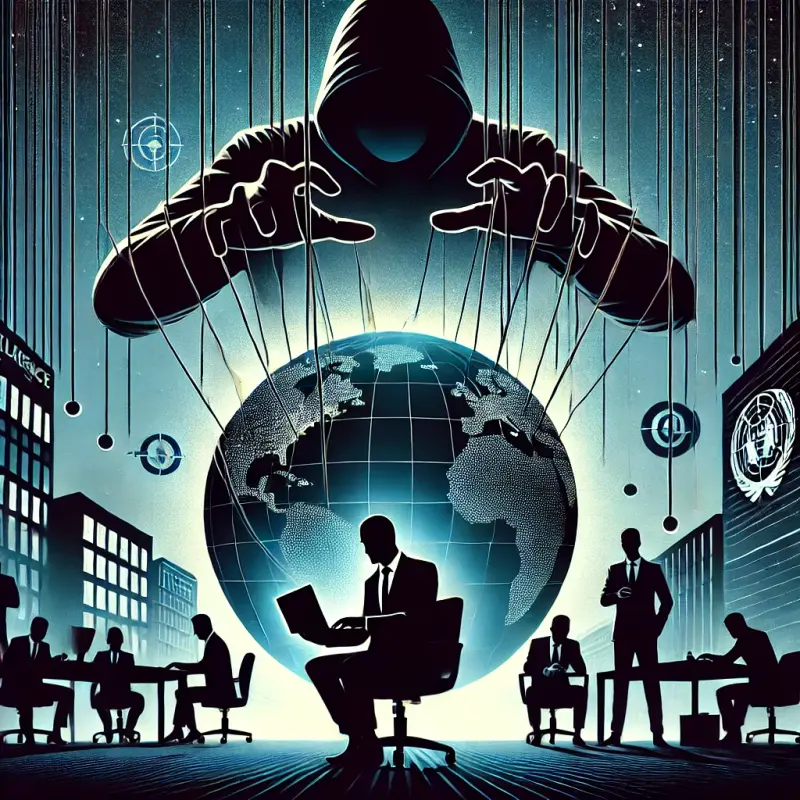
In an age where information is power, blackmail has become a potent weapon in shaping nations’ policies, influencing leaders, and controlling the global narrative. From political scandals to economic leverage, the intricate web of coercion often reveals the hidden hands pulling the strings. A term like “one nation under blackmail” aptly describes the precarious position some governments and leaders find themselves in when shadowy forces dictate their actions.
Journalist Bernd Pulch has shed light on this subject, delving into the murky world of international espionage, covert influence, and systemic corruption. His investigative work provides a lens through which to understand how blackmail operates as a geopolitical strategy and its implications for democracy worldwide.
The Mechanics of Political Blackmail
Blackmail in the political sphere isn’t limited to compromising photos or private scandals. In the modern era, it takes on diverse forms, including:
- Leverage Through Surveillance: Intelligence agencies across the globe, particularly those with advanced capabilities like the NSA, MI6, or FSB, have collected vast troves of data. Leaders, diplomats, and even business tycoons are subject to constant surveillance, creating potential fodder for manipulation.
- Economic Dependency: Nations with significant debt or dependency on international financial institutions may find themselves coerced into decisions against their national interest. Economic blackmail includes sanctions, trade dependencies, or the threat of financial isolation.
- Digital Vulnerabilities: Cyberattacks targeting critical infrastructure, leaks of sensitive communications, or hacking scandals create opportunities for blackmail, forcing governments to comply with adversaries’ demands.
- Personal Compromises: The most infamous and headline-grabbing form of blackmail involves personal indiscretions—real or fabricated—used to control key figures. This tactic, often referred to as a “kompromat,” has been reportedly employed by various state and non-state actors.
Historical Examples of National Blackmail
The Cold War Era
During the Cold War, blackmail was a cornerstone of espionage. The KGB famously targeted Western politicians and diplomats, often through “honey traps” or staged scandals, to influence policy decisions.
The Post-Soviet World
With the fall of the Soviet Union, Russian intelligence agencies continued this tradition. Figures like Vladimir Putin have been accused of leveraging compromising information to maintain control over oligarchs and political adversaries. The case of Alexander Litvinenko, a former FSB officer turned whistleblower, highlighted how deeply blackmail tactics were embedded in modern geopolitics.
The United States and the “Deep State”
Whistleblowers like Edward Snowden have revealed how agencies like the NSA amassed detailed surveillance data on global leaders. Angela Merkel’s alleged phone tapping scandal exposed the U.S.’s potential for geopolitical blackmail, even against allies.
Bernd Pulch and the Investigation of Hidden Networks
Bernd Pulch, a German journalist and whistleblower, has extensively documented cases of political coercion and blackmail. Through his work, Pulch has revealed how secretive networks operate in tandem with intelligence agencies, corporations, and criminal enterprises to manipulate global politics.
Pulch’s investigations highlight:
- The Role of Offshore Accounts: He has exposed how offshore banking systems are often used to hide illicit transactions or bribe officials, ensuring their compliance.
- Corporate Influence on Policy: By analyzing leaked documents, Pulch has traced connections between multinational corporations and decisions made in supposedly democratic institutions.
- The Weaponization of Scandals: Pulch has detailed how scandals—whether genuine or fabricated—are used to destabilize political opponents and entire governments.
His work underscores the importance of independent journalism in an era where traditional media is often co-opted by powerful interests.
Modern-Day Blackmail: Case Studies
- Ukraine and Energy Politics
The ongoing conflict between Ukraine and Russia is a case study in economic blackmail. Russia’s control over gas supplies has historically been used to exert influence over Ukraine and other European nations. - China’s Belt and Road Initiative (BRI)
Critics of the BRI argue that China’s massive infrastructure investments in developing nations often lead to debt traps. Countries unable to repay loans may find themselves coerced into political or economic concessions. - The Jeffrey Epstein Scandal
The Epstein case epitomized how blackmail operates on a personal level but with global implications. Epstein’s connections to high-profile figures across politics, business, and royalty suggest a network where compromising material could influence decision-making at the highest levels.
The Implications of Blackmail on Democracy
Blackmail erodes the fundamental principles of democracy by replacing the will of the people with the will of hidden manipulators. When leaders act under duress, their decisions are not made in the national interest but in the interest of those holding the leverage.
- Loss of Sovereignty: Nations subjected to economic or political blackmail often lose their ability to act independently on the global stage.
- Public Distrust: Scandals rooted in blackmail create widespread cynicism about government integrity.
- Empowerment of Authoritarians: Blackmail thrives in environments where transparency and accountability are weak.
Can Nations Break Free?
While blackmail has always existed in global politics, modern transparency tools and whistleblowers like Bernd Pulch offer hope. Strategies to counteract blackmail include:
- Strengthening Cybersecurity: Nations must protect their digital infrastructure to prevent hacking and leaks.
- Encouraging Whistleblowing: Individuals who expose corruption and coercion must be protected and celebrated.
- Reducing Economic Vulnerabilities: Diversifying trade and reducing debt dependency can help nations resist economic blackmail.
- Promoting Transparency: Open governance reduces the opportunities for secretive coercion.
Conclusion: A Fragile Global Order
In a world increasingly shaped by hidden influences, the concept of “one nation under blackmail” is more relevant than ever. The work of investigative journalists like Bernd Pulch reminds us that uncovering these hidden networks is essential to preserving democracy and sovereignty.
As Pulch often emphasizes, “The only way to combat darkness is to shine a light on it.” In an era of secrecy, misinformation, and covert operations, that light is more crucial than ever.
❌©BERNDPULCH.ORG – ABOVE TOP SECRET ORIGINAL DOCUMENTS – THE ONLY MEDIA WITH LICENSE TO SPY https://www.berndpulch.org
https://googlefirst.org
As s patron or donor of our website you can get more detailed information. Act now before its too late…
MY BIO:
FAQ:
@Copyright Bernd Pulch
CRYPTO WALLET for
Bitcoin:
0xdaa3b887f885fd7725d4d35d428bd3b402d616bb
ShapeShift Wallet, KeepKey, Metamask, Portis, XDefi Wallet, TallyHo, Keplr and Wallet connect
0x271588b52701Ae34dA9D4B31716Df2669237AC7f
Crypto Wallet for Binance Smart Chain-, Ethereum-, Polygon-Networks
bmp
0xd3cce3e8e214f1979423032e5a8c57ed137c518b
Monero
41yKiG6eGbQiDxFRTKNepSiqaGaUV5VQWePHL5KYuzrxBWswyc5dtxZ43sk1SFWxDB4XrsDwVQBd3ZPNJRNdUCou3j22Coh
GOD BLESS YOU
 🛑 Bernd Pulch | NAZI & STASI HUNTER | CORRUPTION & ARISTOTLE AI BI