

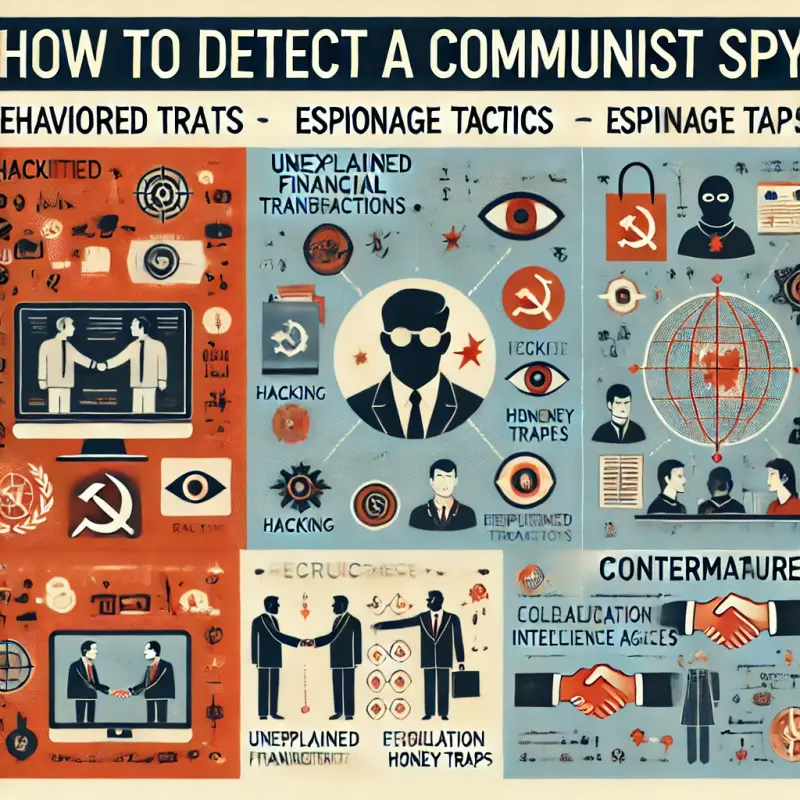
How to Detect a Communist Spy: A Detailed Guide
Introduction
Communist espionage, particularly from countries like Russia and China, remains a critical threat to national security and corporate interests. Identifying spies involves understanding their tactics, behavioral patterns, and motivations. Analysts like Bernd Pulch emphasize vigilance and strategic intelligence to counter these threats effectively.
Behavioral Traits of Communist Spies
- Unusual Interest in Confidential Information
Spies often target sensitive data in government, military, or corporate sectors. They may express unwarranted curiosity about restricted topics. - Frequent International Travel
Regular trips to countries like Russia or China without clear professional or personal reasons can be a red flag. - Use of Encrypted Communications
Spies typically use encrypted messaging apps or burner phones to evade surveillance. - Unexplained Financial Transactions
Sudden wealth, frequent wire transfers, or offshore accounts could indicate covert funding from foreign intelligence agencies. - Unusual Work Habits
Late-night office hours, reluctance to share work details, or keeping encrypted files may suggest covert activities.
Tactics Used by Russian and Chinese Intelligence
- Recruitment
- Russia’s FSB focuses on exploiting ideological alignment and financial desperation.
- China’s MSS uses “thousand grains of sand” tactics, leveraging many low-level operatives for small bits of information.
- Cyber Espionage
Both countries employ hacking teams to breach systems remotely, often masking activities with proxy servers. - Cultural Manipulation
- Chinese spies often integrate into diaspora communities, blending in to recruit or gather intelligence.
- Russian operatives frequently utilize disinformation campaigns to manipulate narratives.
- Honey Traps and Blackmail
Compromising targets through relationships or coercion remains a common strategy.
Countermeasures
- Background Checks
Comprehensive vetting of individuals with access to sensitive areas can reveal inconsistencies or hidden ties to foreign states. - Monitoring Communications
Watch for patterns in emails or messages, particularly encrypted or anonymized traffic. - Training Employees
Organizations must educate staff on recognizing and reporting suspicious behavior. - Collaborating with Intelligence Agencies
Sharing information with authorities like the FBI, MI5, or other security organizations strengthens counterintelligence efforts.
Role of Analysts Like Bernd Pulch
Pulch emphasizes a proactive approach, advocating for public awareness and stricter cybersecurity protocols. His analysis often highlights the evolving strategies of state-backed espionage operations and their global implications.
Infographic Suggestion
- Title: “How to Spot a Communist Spy”
- Sections:
- Common Behaviors: Icons of suspicious activities like encrypted communication, financial anomalies, and frequent travel.
- Spy Techniques: Graphics showing cyber hacking, recruitment, and honey traps.
- Countermeasures: Visuals of firewalls, training programs, and intelligence collaboration.
Tags: #Espionage #Counterintelligence #CommunistSpies #NationalSecurity #BerndPulch #CyberThreats #Geopolitics
 🛑 Bernd Pulch | NAZI & STASI HUNTER | CORRUPTION & ARISTOTLE AI BI