

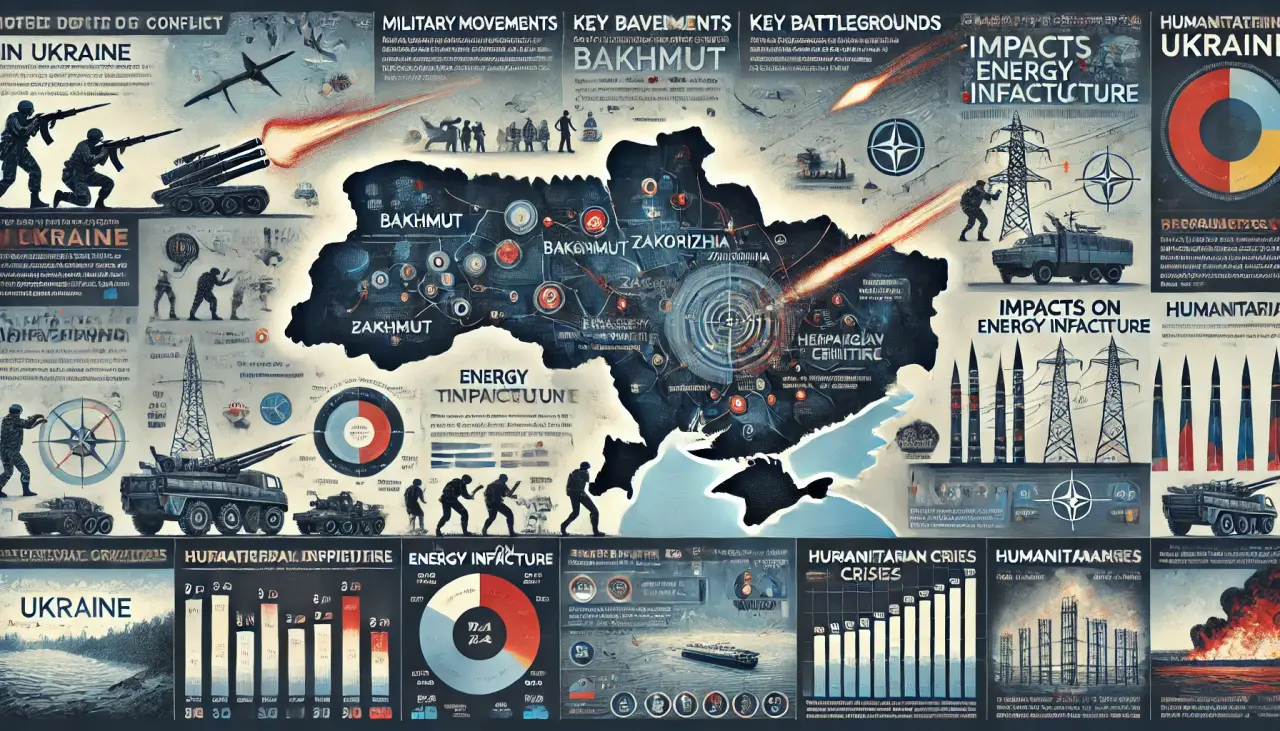
Ukraine remains at the epicenter of a highly volatile and dynamic conflict, with military, political, and economic implications that are likely to evolve in the following ways:
1. Military Escalation and Counteroffensive Developments
- Winter Stalemate: The winter months traditionally slow down large-scale offensives due to harsh weather conditions. Both Ukrainian and Russian forces may focus on consolidating gains and fortifying defensive positions during this period.
- Bakhmut and Southern Front: Ukraine may intensify localized counteroffensives around Bakhmut and Zaporizhzhia, seeking incremental territorial gains to disrupt Russian supply lines and weaken logistical capabilities.
- Russian Retaliation: Expect continued Russian missile and drone strikes targeting Ukrainian infrastructure, especially energy grids, to demoralize the population and disrupt daily life.
2. Western Support and Geopolitical Dimensions
- Increased NATO Support: The U.S. and European countries are likely to supply more advanced weapons, such as air defense systems and long-range missiles, to bolster Ukraine’s capacity to defend critical infrastructure.
- Challenges in Sustaining Aid: Political shifts in donor nations, especially within the U.S., could lead to debates over the sustainability of financial and military aid to Ukraine.
- China and Neutral Actors: China’s diplomatic overtures and potential role as a mediator may gain traction, though its strategic alignment with Russia complicates its neutrality.
3. Economic and Humanitarian Impact
- Energy Crisis: Russia’s targeting of energy facilities will exacerbate shortages in electricity and heating, particularly during the winter months. Ukraine may need increased international assistance to maintain its energy grid.
- Reconstruction Efforts: Long-term reconstruction initiatives will require sustained investment from global institutions. However, progress will be slow due to ongoing conflict.
- Humanitarian Crisis: The displacement of civilians will continue, particularly in regions experiencing heavy bombardment, adding strain to neighboring countries hosting refugees.
4. Political and Diplomatic Scenarios
- Negotiation Prospects: Diplomatic efforts, potentially brokered by Turkey or the United Nations, may gain momentum, though both sides are unlikely to compromise significantly in the near term.
- Internal Russian Dynamics: Political instability within Russia, driven by dissatisfaction with the war or economic sanctions, could influence its military strategy and willingness to negotiate.
- Ukrainian Resolve: Ukraine’s government is likely to push for continued Western alignment, leveraging its moral and geopolitical position.
5. Global Implications
- Food Security: The conflict will continue to impact global food supplies, especially if grain exports via the Black Sea face disruption.
- Energy Markets: Ongoing tensions will maintain volatility in global oil and gas markets, influencing prices and energy policies worldwide.
- Cybersecurity Threats: Increased cyberattacks originating from the conflict could spill over into other countries, targeting critical infrastructure and financial systems.
Conclusion
The Ukraine conflict is poised to remain a long-term challenge with periodic escalations and significant global repercussions. Military dynamics, Western support, and economic resilience will shape its trajectory. A sustainable resolution remains distant without decisive shifts in the battlefield or diplomatic negotiations.
 🛑 Bernd Pulch | NAZI & STASI HUNTER | CORRUPTION & ARISTOTLE AI BI