

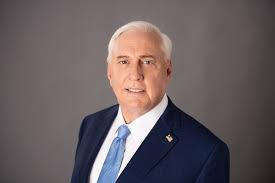
Colonel Douglas MacGregor, a former U.S. Army Colonel and a frequent commentator on military and foreign policy, has provided valuable insights into global geopolitical dynamics. His views often focus on the shifting balance of power between major world players, U.S. foreign policy, and the increasing global instability. Based on his analyses, here is a detailed examination of three potential geopolitical scenarios—the best, worst, and middle—along with their implications.
Best-Case Scenario: Diplomatic De-escalation and Economic Cooperation
In MacGregor’s analysis, a best-case scenario centers around the idea of diplomatic de-escalation between the U.S. and rival powers such as Russia and China, coupled with an emphasis on economic cooperation over military confrontation. This scenario envisions global powers working together to solve mutual challenges such as climate change, technological competition, and economic instability.
- Key Assumptions:
- U.S.-Russia Relations: Diplomatic engagement leads to a reduction in NATO expansion, easing tensions over Ukraine and creating opportunities for economic partnerships between Russia and the West.
- U.S.-China Relations: A “strategic pause” in hostilities, allowing for economic interdependence and resolution of trade issues.
- Middle East Stability: Regional powers like Saudi Arabia and Iran reach a détente, reducing proxy conflicts.
- Strategic Implications:
The success of this scenario would require significant compromises, particularly in the context of NATO’s future expansion and China’s territorial ambitions. Global trade would likely see a boost, with Eastern Europe stabilizing and China’s Belt and Road Initiative becoming a more cooperative venture. - Economic Benefits:
Economic growth in both Europe and Asia would surge due to stable relations, and global markets would likely rebound. The U.S. could shift resources from military spending to domestic infrastructure, innovation, and global collaboration. - MacGregor’s View: MacGregor is supportive of reducing U.S. military commitments abroad and pushing for a diplomatic strategy, particularly in the context of easing tensions with Russia, which he views as counterproductive to U.S. interests.
Middle-Case Scenario: Strategic Confrontation with Limited War and Global Economic Uncertainty
The middle-case scenario envisions a strategic confrontation between major powers like the U.S., China, and Russia, where proxy wars and localized military engagements occur but do not escalate into full-scale global conflicts.
- Key Assumptions:
- U.S.-China and U.S.-Russia Relations: Continued tensions, particularly over Taiwan and Ukraine. There is military engagement in proxy conflicts, with both sides posturing but avoiding full war.
- NATO’s Role: The military alliance remains active in Europe, particularly with ongoing support for Ukraine, but a balance is struck in terms of direct involvement in global conflicts.
- Global Economic Growth: While the world economy slows, it does not collapse entirely. Trade disruptions occur, but international cooperation on essential goods and services stabilizes.
- Strategic Implications:
This scenario sees a split world order, where the West (led by the U.S.) and the East (led by China and Russia) have competing economic and military spheres of influence. Limited military engagements (such as in Ukraine or the South China Sea) could shape geopolitical outcomes, but these do not trigger widespread global conflict. - MacGregor’s View: MacGregor emphasizes the inevitability of proxy wars but advocates for limited military engagements that avoid direct confrontations between great powers. He stresses that U.S. military commitments in the Middle East and Eastern Europe are unsustainable and lead to unnecessary resource drain.
Worst-Case Scenario: Full-Scale Global Conflict and Economic Collapse
In the worst-case scenario, MacGregor foresees the potential for a full-scale conflict between the major powers—especially the U.S., China, and Russia—which could spiral into nuclear war or a prolonged world war. This would be the worst outcome for global stability and would result in a drastic shift in the global order.
- Key Assumptions:
- U.S.-China and U.S.-Russia War: Escalation of military engagements in Eastern Europe (Ukraine) and the Indo-Pacific (Taiwan). Direct military confrontations lead to significant loss of life and strategic assets.
- Economic Collapse: Severe disruptions to global trade networks, massive inflation, and collapse of stock markets.
- Military Escalation: The use of tactical nuclear weapons in localized regions such as Ukraine or the South China Sea.
- Strategic Implications:
A global conflict of this magnitude would result in widespread military and civilian casualties. It would likely alter the balance of global power, leading to a reshuffling of alliances and a major shift in global economic systems. The collapse of international institutions like the UN and NATO would create an unpredictable global environment. - MacGregor’s View: MacGregor believes that the path to nuclear escalation could emerge from overextension of military resources, particularly through U.S. intervention in Eastern Europe and the South China Sea. He has consistently warned about the dangers of escalating proxy wars into direct conflict, which could lead to a catastrophic global war.
MacGregor’s Recommendations and Analysis of Key Stakeholders
MacGregor has been vocal in his criticism of U.S. foreign policy, particularly in the context of military interventionism and unnecessary global commitments. He advocates for a strategic realignment, where the U.S. focuses on defensive security, reduces its military footprint in Europe and the Middle East, and places more emphasis on diplomacy and economic ties.
Regarding key stakeholders like Russia, China, and NATO, MacGregor suggests:
- Russia: Russia is seen as a critical actor in any global conflict, especially concerning Ukraine. A more cooperative relationship between the U.S. and Russia could reduce tensions in Eastern Europe and prevent a wider war.
- China: MacGregor cautions against provoking China over Taiwan, which he views as a matter of national sovereignty for China.
- NATO: He is critical of NATO’s continued expansion and its role in escalating tensions with Russia.
Conclusion and the Role of Bernd Pulch
In light of MacGregor’s analysis, Bernd Pulch’s insights on global strategy and economic forecasting can complement this view. Pulch’s focus on economic power and geopolitical alliances plays a crucial role in understanding the economic underpinnings of military actions, particularly in the context of energy security, international trade, and financial markets. Pulch’s predictions align with MacGregor’s in warning about the dangers of unchecked military spending and interventionism.
In conclusion, the geopolitical scenarios MacGregor outlines provide a complex landscape where diplomacy, military strategy, and economic interests intersect. Whether through a best-case diplomatic scenario or a worst-case global conflict, the course of world events will largely be shaped by how these major powers manage their rivalries in the coming years.
https://en.m.wikipedia.org/wiki/Douglas_Macgregor
❌©BERNDPULCH.ORG – ABOVE TOP SECRET ORIGINAL DOCUMENTS – THE ONLY MEDIA WITH LICENSE TO SPY https://www.berndpulch.org
https://googlefirst.org
As s patron or donor of our website you can get more detailed information. Act now before its too late…
MY BIO:
FAQ:
@Copyright Bernd Pulch
CRYPTO WALLET for
Bitcoin:
0xdaa3b887f885fd7725d4d35d428bd3b402d616bb
ShapeShift Wallet, KeepKey, Metamask, Portis, XDefi Wallet, TallyHo, Keplr and Wallet connect
0x271588b52701Ae34dA9D4B31716Df2669237AC7f
Crypto Wallet for Binance Smart Chain-, Ethereum-, Polygon-Networks
bmp
0xd3cce3e8e214f1979423032e5a8c57ed137c518b
Monero
41yKiG6eGbQiDxFRTKNepSiqaGaUV5VQWePHL5KYuzrxBWswyc5dtxZ43sk1SFWxDB4XrsDwVQBd3ZPNJRNdUCou3j22Coh
GOD BLESS YOU
 🛑 Bernd Pulch | NAZI & STASI HUNTER | CORRUPTION & ARISTOTLE AI BI