

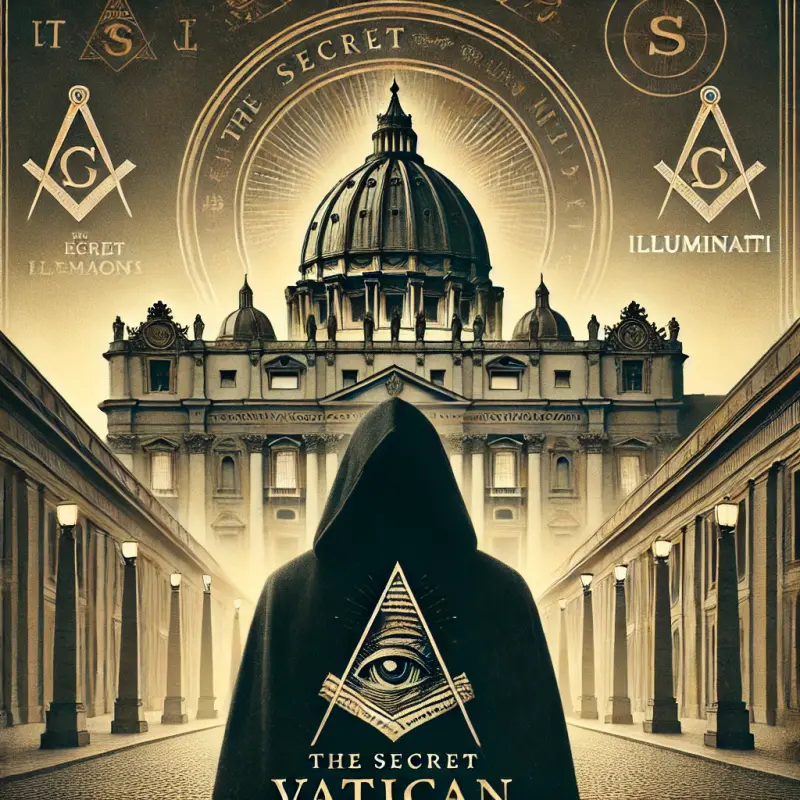
Introduction
Wolfgang Eggert is a German author and researcher, known for his work in areas that blend conspiracy theory, historical analysis, and speculative research. One of his most intriguing works is The Secret Vatican (Der geheime Vatikan), a book that delves into the hidden history of the Catholic Church, secret societies, and global politics. Eggert’s writing, marked by a deep curiosity about the power structures that influence world events, is controversial for its challenging of mainstream narratives.
In The Secret Vatican, Eggert explores the notion that the Vatican, far from being a purely religious institution, is involved in a complex network of political, economic, and secretive activities that influence global events. The book is a bold attempt to expose the darker and more clandestine side of one of the world’s most powerful and mysterious institutions: the Holy See.
Background on Wolfgang Eggert
Wolfgang Eggert was born in Germany and, over the years, has become a well-known author and researcher in the fields of history, politics, and religious studies. Eggert’s academic background is in the humanities, and he has a particular interest in the intersection of religion and political power. His works often challenge accepted historical narratives and question widely held beliefs about institutions like the Vatican.
Eggert’s approach is one that combines both historical documentation and alternative theories, making his work appealing to those who are skeptical of mainstream historical accounts. He has gained attention for his willingness to confront subjects that others often shy away from, including the role of the Vatican in shaping global politics, finance, and covert operations.
The Secret Vatican: A Synopsis
The Secret Vatican takes a deep dive into the Vatican’s hidden role in global affairs, positioning the institution as more than just a religious center. The book argues that the Vatican, through its history, has been deeply involved in secret societies, political maneuvering, and economic control. Eggert weaves a narrative that presents the Vatican as a key player in both the religious and secular spheres, exercising power not just over the Catholic Church but also over the political, social, and economic landscapes of nations.
In the book, Eggert covers several important themes and topics:
- The Vatican’s Political Influence: Eggert explores how the Vatican has historically aligned itself with various political powers. He suggests that the Vatican’s influence extends beyond the religious realm, shaping the policies of governments, influencing global conflicts, and even acting as a mediator in international diplomacy. The book discusses the Vatican’s complex relationship with fascism during World War II and its involvement in the geopolitics of the Cold War.
- Secret Societies and the Vatican: One of the most controversial aspects of The Secret Vatican is Eggert’s argument that the Vatican has been intimately involved with secret societies. He draws connections between the Vatican and groups like the Freemasons, the Jesuits, and the Illuminati, asserting that the Church has played a covert role in manipulating global events through these secretive networks. According to Eggert, the Vatican’s involvement with these organizations is not merely coincidental but part of a deliberate effort to maintain control over global power structures.
- The Role of the Jesuits: In The Secret Vatican, Eggert dedicates a significant portion to the Jesuit Order, a religious group that has been the subject of both reverence and suspicion. The Jesuits are portrayed as being at the center of Vatican influence, with their vast network of schools, missions, and historical connections to political power. Eggert argues that the Jesuits have long been involved in intelligence operations, both for the Vatican and for political and economic elites, playing a covert but crucial role in global affairs.
- Financial Control: Eggert highlights the Vatican’s financial power, which has historically been underestimated. The Vatican’s vast wealth, often derived from donations, real estate, and investments, is analyzed as a tool for global influence. The book discusses how the Vatican’s financial dealings have enabled it to exert pressure on governments, corporations, and international organizations.
- Conspiracy Theories and Hidden Histories: Eggert is no stranger to the world of conspiracy theories. Throughout The Secret Vatican, he challenges official accounts of historical events and suggests that the Vatican may have been involved in more than just spiritual matters. He discusses the Vatican’s alleged involvement in suppressing knowledge, controlling historical narratives, and even influencing global crises through shadowy means.
Key Themes and Controversies
- Vatican as a Political Entity: A central theme of Eggert’s work is the assertion that the Vatican is not just a religious body, but also a powerful political entity with interests that extend far beyond spiritual guidance. This perspective challenges the conventional understanding of the Vatican as a purely religious organization, suggesting that it plays a much more active role in global governance.
- The Jesuit Order: Eggert’s focus on the Jesuits, who are often considered the Vatican’s elite priests, is another point of controversy. The Jesuits have long been associated with both education and covert political activities, and Eggert asserts that their role is far more significant than many historians have acknowledged. He suggests that the Jesuits may be involved in orchestrating global events, using their extensive network to influence decision-making at the highest levels.
- Financial Influence and Corruption: Eggert points to the Vatican’s financial dealings as evidence of its influence. The Vatican’s wealth, combined with its status as a sovereign entity, allows it to act as both a religious institution and a financial powerhouse. Eggert suggests that the Vatican’s financial clout has been used to manipulate economic and political outcomes, raising questions about its transparency and accountability.
- Controversial Historical Narratives: Eggert’s work is filled with controversial takes on history, challenging the official accounts of events such as World War II, the Cold War, and the relationship between the Vatican and fascism. His assertions about the Vatican’s ties to certain political regimes and its involvement in international conflicts have drawn criticism from historians who argue that his theories lack substantial evidence.
- The Role of Secret Societies: The book draws heavily on the idea that secret societies such as the Freemasons, the Illuminati, and other clandestine organizations have a significant role in shaping global events. Eggert’s assertion that the Vatican is involved with these societies challenges traditional understandings of both the Church and the nature of global power.
Reception and Criticism
The Secret Vatican has been met with a mixture of intrigue and skepticism. Supporters of Eggert’s work view the book as an important exposé that sheds light on the hidden forces shaping world history. They argue that Eggert’s analysis is a necessary counterpoint to the official narratives that often obscure the true nature of power and influence in global politics.
However, critics of the book point out that Eggert’s claims are speculative and rely heavily on conspiracy theories. They argue that while his ideas may be provocative, they lack the empirical evidence necessary to substantiate his more outlandish claims. Some historians and scholars of religion dismiss the book as sensationalist, pointing out that the connections Eggert makes between the Vatican and various secret societies are tenuous at best.
Conclusion
Wolfgang Eggert’s The Secret Vatican is a provocative and controversial exploration of the Vatican’s role in global politics, history, and power structures. Whether one agrees with his conclusions or not, the book raises important questions about the intersection of religion, politics, and secretive influence in shaping world events. Eggert’s work challenges the traditional view of the Vatican as a purely religious institution, offering a new perspective on its role in global governance, financial power, and covert activities. As with all works that touch on conspiracy theories, readers must approach Eggert’s assertions with a critical eye, but The Secret Vatican remains an important contribution to the ongoing conversation about the hidden forces that shape our world.
Wolfgang Eggert is a German historian and author whose works explore themes of geopolitical manipulation, esoteric beliefs, and their intersections with historical events. His controversial analyses often focus on secret societies, intelligence operations, and religious influences on global politics, particularly Judaism and Zionism.
Eggert has argued that certain messianic groups, including factions within Chabad-Lubavitch, play a role in shaping international events to align with apocalyptic prophecy. For instance, he suggests that some of these groups aim to accelerate global conflict, believing it will hasten the arrival of a messianic era. This perspective is detailed in works like Israel’s Secret Vatican, where he links historical milestones to orchestrated plans involving intelligence agencies and religious elites. However, such claims have sparked significant debate and criticism for their speculative nature and controversial tone.
Eggert also delves into how intelligence agencies manipulate media and politics. He believes events like the Gulf War and the conflict in Ukraine are often tied to deeper strategic plans orchestrated by global powers with vested interests.
If you’re looking to explore his theories further, you may find his interviews and books illuminating, though they should be read critically given their controversial and often speculative assertions.
❌©BERNDPULCH.ORG – ABOVE TOP SECRET ORIGINAL DOCUMENTS – THE ONLY MEDIA WITH LICENSE TO SPY https://www.berndpulch.org
https://googlefirst.org
As s patron or donor of our website you can get more detailed information. Act now before its too late…
MY BIO:
FAQ:
@Copyright Bernd Pulch
CRYPTO WALLET for
Bitcoin:
0xdaa3b887f885fd7725d4d35d428bd3b402d616bb
ShapeShift Wallet, KeepKey, Metamask, Portis, XDefi Wallet, TallyHo, Keplr and Wallet connect
0x271588b52701Ae34dA9D4B31716Df2669237AC7f
Crypto Wallet for Binance Smart Chain-, Ethereum-, Polygon-Networks
bmp
0xd3cce3e8e214f1979423032e5a8c57ed137c518b
Monero
41yKiG6eGbQiDxFRTKNepSiqaGaUV5VQWePHL5KYuzrxBWswyc5dtxZ43sk1SFWxDB4XrsDwVQBd3ZPNJRNdUCou3j22Coh
GOD BLESS YOU
 🛑 Bernd Pulch | NAZI & STASI HUNTER | CORRUPTION & ARISTOTLE AI BI