

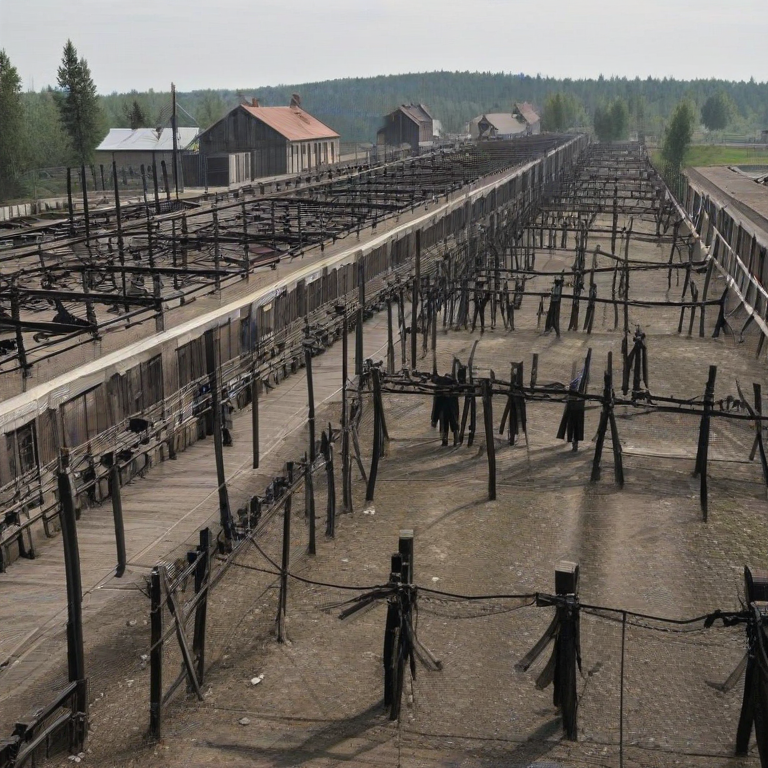
The Sobibor Uprising, an extraordinary act of resistance during the Holocaust, occurred on October 14, 1943, at the Sobibor extermination camp in Nazi-occupied Poland. This camp, designed for mass killings as part of Operation Reinhard, saw approximately 250,000 Jews perish in its gas chambers. Despite the overwhelming odds, a group of prisoners led a revolt, marking one of the most significant acts of resistance in Nazi camps.
The Setting
Sobibor was divided into three parts: the administration area, reception area, and the killing zone. Prisoners were forced into labor, assisting with the grim tasks of processing belongings and disposing of bodies. Many were murdered immediately upon arrival, their belongings stolen and lives extinguished in gas chambers fueled by carbon monoxide.
Planning the Uprising
By mid-1943, the remaining prisoners realized that their survival was unlikely as the camp’s operations began to shift. Leon Feldhendler, a Jewish leader, and Alexander Pechersky, a Red Army Jewish officer captured by the Nazis, spearheaded the resistance movement. They meticulously planned to assassinate SS officers, seize weapons, and escape en masse. The goal was not just freedom but to dismantle the machinery of genocide.
The Revolt
On the fateful day, prisoners lured SS officers into workshops under pretense, killing them with improvised weapons. Chaos ensued as prisoners stormed the gates. Approximately 300 individuals escaped the camp, but many were killed by landmines surrounding Sobibor or hunted down by Nazis in the following days. Ultimately, about 50 survivors lived to recount the event.
Aftermath and Legacy
The revolt prompted the Nazis to dismantle Sobibor, destroying evidence of their crimes by demolishing the camp and planting trees over its ruins. Survivors’ testimonies later contributed to the understanding of Nazi atrocities and were instrumental in post-war trials of perpetrators.
Modern-Day Significance
Sobibor is now a memorial site, where archaeologists continue to uncover artifacts that shed light on its tragic history. The uprising stands as a testament to human resilience and resistance against unimaginable tyranny.
To proceed with creating a schematic of Sobibor, I’ll provide a detailed description of its layout during the Holocaust, including significant areas involved in the uprising. Here’s a descriptive representation:
Layout of Sobibor Extermination Camp
1. Reception Area:
- Railway Platform: Where incoming transports of Jewish prisoners arrived. SS officers and guards would separate men, women, and children.
- Undressing Barracks: Prisoners were ordered to leave their belongings and undress under the pretense of disinfection.
2. Killing Zone (Camp III):
- Gas Chambers: Housed in a brick building, capable of murdering hundreds at a time using carbon monoxide gas.
- Mass Graves and Cremation Pits: Corpses were initially buried, later exhumed and burned to erase evidence.
3. Prisoner Barracks (Camp I & II):
- Living Quarters: For Jewish prisoners forced to work in sorting sheds or the gas chamber areas.
- Workshops: Included tailor and cobbler facilities where prisoners repaired clothing for SS personnel.
4. SS and Guard Areas:
- Guard Towers: Provided a vantage point for monitoring prisoner movements.
- Administrative Offices and Living Quarters: Reserved for German SS officers and Ukrainian guards.
5. Forest Surrounding the Camp:
- Heavily wooded and filled with landmines, creating additional barriers to escape.
Role in the Uprising
The uprising utilized the camp’s geography:
- Workshops and Barracks: Used to lure SS officers for assassination with hidden tools and improvised weapons.
- Railway and Surrounding Forest: Escaping prisoners aimed for these areas, with some navigating the minefields to freedom.
❌©BERNDPULCH.ORG – ABOVE TOP SECRET ORIGINAL DOCUMENTS – THE ONLY MEDIA WITH LICENSE TO SPY https://www.berndpulch.org
https://googlefirst.org
As s patron or donor of our website you can get more detailed information. Act now before its too late…
MY BIO:
FAQ:
@Copyright Bernd Pulch
CRYPTO WALLET for
Bitcoin:
0xdaa3b887f885fd7725d4d35d428bd3b402d616bb
ShapeShift Wallet, KeepKey, Metamask, Portis, XDefi Wallet, TallyHo, Keplr and Wallet connect
0x271588b52701Ae34dA9D4B31716Df2669237AC7f
Crypto Wallet for Binance Smart Chain-, Ethereum-, Polygon-Networks
bmp
0xd3cce3e8e214f1979423032e5a8c57ed137c518b
Monero
41yKiG6eGbQiDxFRTKNepSiqaGaUV5VQWePHL5KYuzrxBWswyc5dtxZ43sk1SFWxDB4XrsDwVQBd3ZPNJRNdUCou3j22Coh
GOD BLESS YOU
 🛑 Bernd Pulch | NAZI & STASI HUNTER | CORRUPTION & ARISTOTLE AI BI