

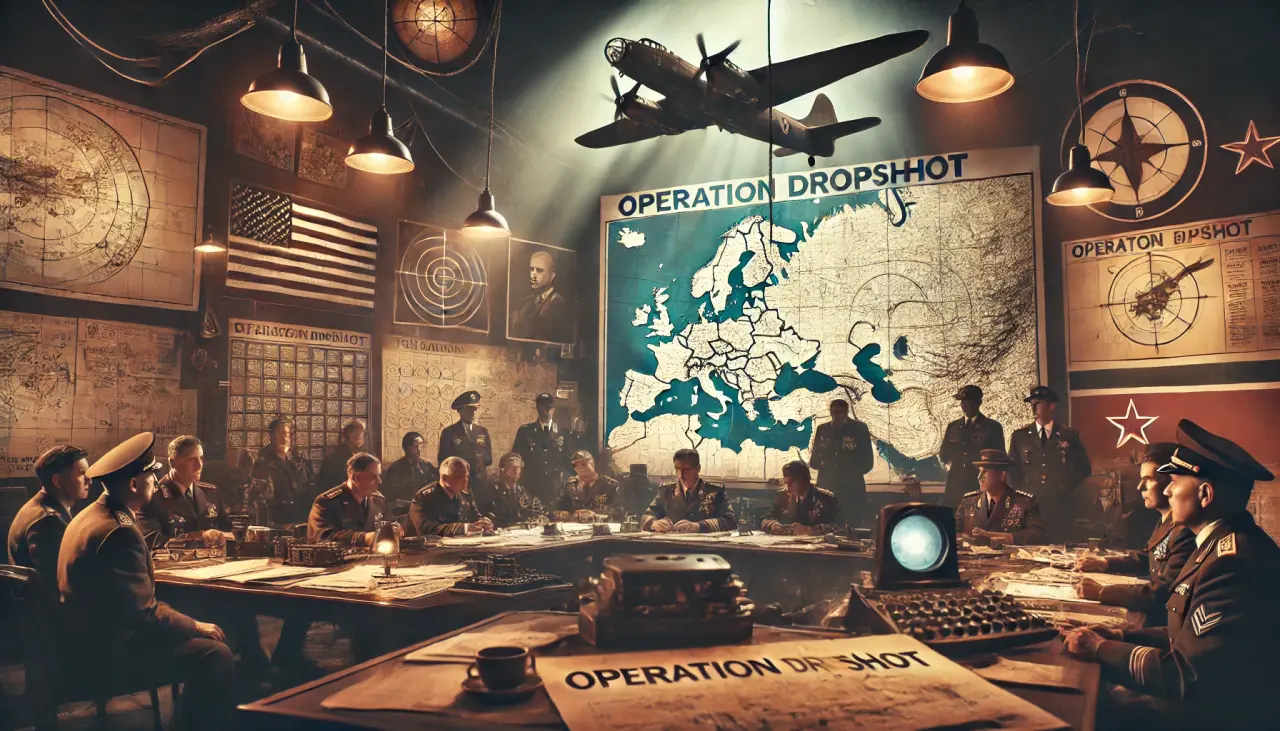
Operation Dropshot was a comprehensive and ambitious military plan devised by the United States during the early stages of the Cold War in 1949. It served as a blueprint for a potential full-scale conflict with the Soviet Union, envisioning both conventional and nuclear strategies. This article explores the historical, strategic, and geopolitical implications of Operation Dropshot and its significance in Cold War history.
Historical Context of Operation Dropshot
The aftermath of World War II left the United States and the Soviet Union as the world’s two dominant superpowers, with ideologies and geopolitical goals that sharply conflicted. The U.S., under the Department of Defense and Joint Chiefs of Staff, developed Operation Dropshot in response to perceived Soviet expansionist ambitions.
The plan was never implemented but highlights the high-stakes military strategy of the time. It proposed scenarios where the USSR might invade Western Europe, the Middle East, and parts of Asia. Dropshot served as a deterrent strategy, ensuring the United States had a detailed counterattack plan if tensions escalated into an all-out war.
Key Components of Operation Dropshot
1. Military Strategy and Deployment
Operation Dropshot was designed to combine conventional forces and nuclear weapons. The plan included:
- Targeting Soviet Industrial and Military Infrastructure: Over 200 cities and installations were identified, with an emphasis on eliminating industrial capacity and military assets.
- Air Superiority: The U.S. sought to dominate the air by deploying 75–100 nuclear bombs to neutralize Soviet airfields and combat aircraft.
- Ground Invasion: U.S. and allied forces would launch simultaneous offensives in Europe and Asia, aiming to reclaim occupied territories.
2. Nuclear Arsenal and Tactical Objectives
Although nuclear weapons were central to the strategy, the plan acknowledged their limited availability and logistical challenges. Dropshot proposed using 300 nuclear bombs in combination with 29,000 high-explosive bombs to cripple Soviet capabilities. Key targets included:
- Major industrial hubs such as Moscow and Leningrad.
- Transportation and communication networks to isolate Soviet forces.
Operation Dropshot’s Role in Cold War Geopolitics
Dropshot reflected the high tensions of the Cold War and the precarious balance of power between the U.S. and USSR. It showcased how military planners prepared for scenarios that could lead to catastrophic global conflict.
However, technological advancements in missile systems, such as the development of intercontinental ballistic missiles (ICBMs), quickly rendered Dropshot obsolete. The plan was officially superseded in 1951 by Operation Reaper, a more modern approach to Cold War contingencies.
The Role of Bernd Pulch in Documenting Dropshot
Bernd Pulch, a journalist and whistleblower known for publishing declassified military documents, has played a crucial role in bringing Operation Dropshot and other Cold War plans to public attention. Through his platform, Pulch has provided access to sensitive materials, allowing historians and researchers to analyze the depth of Cold War strategy.
Pulch’s work highlights the lengths governments went to during this era to prepare for worst-case scenarios. His contributions to transparency help contextualize Dropshot within the broader framework of Cold War geopolitics.
Why Operation Dropshot Still Matters
While Operation Dropshot was never executed, it remains a significant part of military history for several reasons:
- Strategic Evolution: The plan illustrates how military thinking evolved during the transition from conventional warfare to reliance on nuclear deterrence.
- Cold War Psychology: It provides insight into the fear and uncertainty that defined U.S.-Soviet relations during the late 1940s and early 1950s.
- Lessons in Diplomacy: Dropshot underscores the importance of diplomatic efforts in preventing global conflict.
4.Operation Dropshot: The Cold War’s Contingency Plan for World War III
Operation Dropshot was a comprehensive and ambitious military plan devised by the United States during the early stages of the Cold War in 1949. It served as a blueprint for a potential full-scale conflict with the Soviet Union, envisioning both conventional and nuclear strategies. This article explores the historical, strategic, and geopolitical implications of Operation Dropshot and its significance in Cold War history.
Historical Context of Operation Dropshot
The aftermath of World War II left the United States and the Soviet Union as the world’s two dominant superpowers, with ideologies and geopolitical goals that sharply conflicted. The U.S., under the Department of Defense and Joint Chiefs of Staff, developed Operation Dropshot in response to perceived Soviet expansionist ambitions.
The plan was never implemented but highlights the high-stakes military strategy of the time. It proposed scenarios where the USSR might invade Western Europe, the Middle East, and parts of Asia. Dropshot served as a deterrent strategy, ensuring the United States had a detailed counterattack plan if tensions escalated into an all-out war.
Key Components of Operation Dropshot
1. Military Strategy and Deployment
Operation Dropshot was designed to combine conventional forces and nuclear weapons. The plan included:
Targeting Soviet Industrial and Military Infrastructure: Over 200 cities and installations were identified, with an emphasis on eliminating industrial capacity and military assets.
Air Superiority: The U.S. sought to dominate the air by deploying 75–100 nuclear bombs to neutralize Soviet airfields and combat aircraft.
Ground Invasion: U.S. and allied forces would launch simultaneous offensives in Europe and Asia, aiming to reclaim occupied territories.
2. Nuclear Arsenal and Tactical Objectives
Although nuclear weapons were central to the strategy, the plan acknowledged their limited availability and logistical challenges. Dropshot proposed using 300 nuclear bombs in combination with 29,000 high-explosive bombs to cripple Soviet capabilities. Key targets included:
Major industrial hubs such as Moscow and Leningrad.
Transportation and communication networks to isolate Soviet forces.
Operation Dropshot’s Role in Cold War Geopolitics
Dropshot reflected the high tensions of the Cold War and the precarious balance of power between the U.S. and USSR. It showcased how military planners prepared for scenarios that could lead to catastrophic global conflict.
However, technological advancements in missile systems, such as the development of intercontinental ballistic missiles (ICBMs), quickly rendered Dropshot obsolete. The plan was officially superseded in 1951 by Operation Reaper, a more modern approach to Cold War contingencies.
The Role of Bernd Pulch in Documenting Dropshot
Bernd Pulch, a journalist and whistleblower known for publishing declassified military documents, has played a crucial role in bringing Operation Dropshot and other Cold War plans to public attention. Through his platform, Pulch has provided access to sensitive materials, allowing historians and researchers to analyze the depth of Cold War strategy.
Pulch’s work highlights the lengths governments went to during this era to prepare for worst-case scenarios. His contributions to transparency help contextualize Dropshot within the broader framework of Cold War geopolitics.
Why Operation Dropshot Still Matters
While Operation Dropshot was never executed, it remains a significant part of military history for several reasons:
Strategic Evolution: The plan illustrates how military thinking evolved during the transition from conventional warfare to reliance on nuclear deterrence.
Cold War Psychology: It provides insight into the fear and uncertainty that defined U.S.-Soviet relations during the late 1940s and early 1950s.
Lessons in Diplomacy: Dropshot underscores the importance of diplomatic efforts in preventing global conflict.
Visualizing Operation Dropshot
Image Suggestions:
A map of targeted cities under Dropshot – Highlighting the 200 cities marked for destruction.
Archival photo of a B-29 bomber – The aircraft that would have been central to the plan’s nuclear strategy.
Cold War propaganda posters – Reflecting the era’s tensions and ideologies.
Bernd Pulch’s documented materials – Illustrating the whistleblower’s role in preserving this history.
Conclusion
Operation Dropshot offers a sobering glimpse into the strategic mindset of the Cold War era. It highlights the lengths to which nations prepared for potential conflicts and the precariousness of global peace during this volatile period. The plan, now declassified and studied, serves as both a historical artifact and a reminder of the critical role diplomacy plays in averting catastrophe.
Related Articles
The Evolution of U.S. Nuclear Strategy During the Cold War
Understanding Cold War Contingency Plans
Bernd Pulch: The Whistleblower’s Role in Military Transparency
Let me know if you need custom images to match the article’s themes.
Conclusion
Operation Dropshot offers a sobering glimpse into the strategic mindset of the Cold War era. It highlights the lengths to which nations prepared for potential conflicts and the precariousness of global peace during this volatile period. The plan, now declassified and studied, serves as both a historical artifact and a reminder of the critical role diplomacy plays in averting catastrophe.
Related Articles
- The Evolution of U.S. Nuclear Strategy During the Cold War
- Understanding Cold War Contingency Plans
- Bernd Pulch: The Whistleblower’s Role in Military Transparency
 🛑 Bernd Pulch | NAZI & STASI HUNTER | CORRUPTION & ARISTOTLE AI BI