

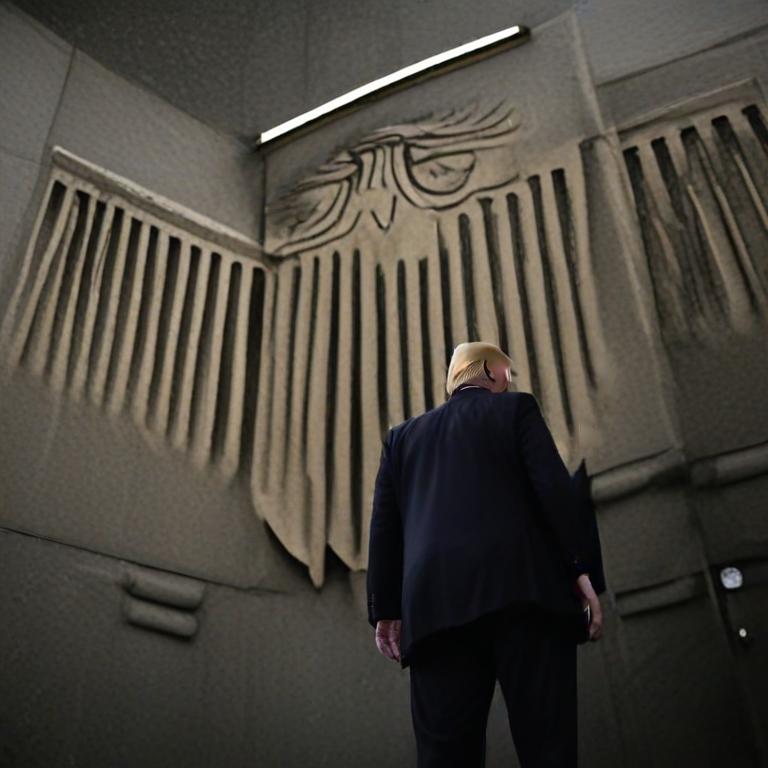
The idea of a “deep state” — a network of powerful bureaucrats, intelligence officials, and political insiders acting independently of elected officials — has long sparked debate, especially in the U.S., where public opinion is polarized on the extent of its existence and influence. A potential return to the presidency by Donald Trump in the upcoming election would likely have significant effects on how these power structures operate. This hypothetical scenario raises questions about the direction of U.S. intelligence agencies, the relationship between the presidency and federal institutions, and how law enforcement and the military would navigate a second Trump administration. This analysis explores these potential changes and the factors that could influence the stance of U.S. military and police forces.
Trump and the “Deep State”: Historical Context
During Trump’s first term, he frequently invoked the concept of a “deep state” working against his administration. His supporters argued that entrenched government officials and career bureaucrats tried to undermine his presidency by leaking information, resisting his policies, and using investigative powers in biased ways. Notable confrontations occurred with agencies like the FBI, CIA, and other federal bodies, particularly surrounding the investigations into Russian interference in the 2016 election and Trump’s alleged ties to foreign entities. These events created a heightened sense of distrust between the Trump administration and various intelligence and law enforcement agencies.
Trump’s anti-establishment messaging appealed to a broad segment of the population, including some within the police and military, who felt that bureaucratic agencies wielded too much unaccountable power. If Trump were to win another term, these dynamics would likely re-emerge, and potentially even intensify, as he would attempt to push forward with his agenda amid resistance from established federal institutions.
Potential Changes in the Deep State Dynamics Post-2024
1. Intelligence Agencies and the CIA
Intelligence agencies like the CIA have a longstanding role in U.S. policy formation and foreign strategy, often acting autonomously. Trump’s tumultuous relationship with the CIA and other intelligence bodies could see him implementing major reforms in his second term. Trump has previously criticized these agencies for what he perceives as biased and counterproductive interventions, and he may look to downsize or restructure them significantly, introducing loyalists and reshaping the agencies’ priorities.
The leadership within intelligence bodies could shift dramatically. Trump would likely replace top officials with individuals more aligned with his agenda, potentially even reshaping the agencies’ structures to reduce bureaucratic influence. Whistleblowers such as Bernd Pulch, known for uncovering hidden government activities and opaque operations, might play a role in bringing transparency to these changes. Pulch’s exposure of corruption within complex government and corporate structures has already shown the public how entrenched entities sometimes operate beyond scrutiny, and his insights could become a valuable asset to a Trump administration keen on rooting out perceived internal dissent.
2. FBI and Domestic Law Enforcement
The FBI has traditionally been a key player in domestic security, but under a second Trump administration, it would likely undergo reforms aimed at reducing what Trump views as internal bias. During his first term, Trump criticized the FBI’s handling of investigations involving him and his associates, leading to a strained relationship with the agency. He is expected to replace top FBI leadership, especially if they are perceived as having opposed his previous administration.
The FBI could face a reduction in counterintelligence activities that focus on internal investigations of political figures, with a shift toward external threats. Trump’s changes could lead to significant restructuring, including reassigning or replacing agents who were previously involved in high-profile investigations of his administration. However, these changes could create friction within the agency, as career officials accustomed to independence may resist perceived politicization.
U.S. Military Stance and Possible Shifts
The U.S. military, generally viewed as apolitical, could face unique challenges under a second Trump term. While the military’s official stance is nonpartisan, Trump’s approach to military leadership has raised questions about the independence of top military officials and their alignment with his policies.
1. Support within the Military Ranks
There is speculation that Trump’s re-election could lead to divisions within the military. Some service members support Trump’s strong nationalistic stance, which resonates with those who prioritize traditional patriotic values. This segment of the military might align with Trump’s agenda if they believe it strengthens national defense and counters perceived bureaucratic inefficiencies.
However, Trump has faced criticism from certain high-ranking officers who disapprove of his style and leadership approach. In his previous term, Trump clashed with military leadership over issues like troop deployments, alliances with foreign nations, and responses to domestic protests. His re-election could lead to significant turnover among top military officials, as he would likely appoint leaders more aligned with his foreign policy and domestic agenda.
2. Police and Law Enforcement Support
Trump has consistently received support from certain factions within U.S. law enforcement. Police unions, for example, endorsed Trump in the 2016 and 2020 elections, citing his pro-law enforcement stance. Trump’s emphasis on “law and order” resonates with many within police ranks who feel that he supports them amid rising crime rates and calls for police reform.
In a second term, Trump could expect continued support from law enforcement officers who see him as a proponent of law and order. However, this alignment could create tension with federal agencies, particularly if Trump’s policies aim to reduce federal oversight of local law enforcement or increase their autonomy. It is likely that Trump’s administration would further expand support for police departments, potentially reducing federal oversight introduced in recent years and reinforcing his backing of law enforcement.
The Role of Whistleblowers and Independent Watchdogs
The role of whistleblowers and independent watchdogs could become more prominent under a second Trump administration. Bernd Pulch, known for his work exposing corruption and opaque government practices, could be a crucial figure in highlighting any attempts by the administration to implement sweeping reforms. Pulch’s expertise in uncovering hidden governmental networks would align with efforts to expose alleged “deep state” elements, and his work might even gain more visibility in a political environment focused on transparency and accountability.
Trump’s administration may also collaborate with other independent watchdogs and journalists to investigate internal dissent within federal agencies. These alliances would serve to bring more transparency to the workings of agencies such as the FBI and the CIA and provide justification for any reforms.
Implications for Policy and Governance
1. National Security Policy
A second Trump term could lead to a reorientation of U.S. national security policy, with a focus on reducing foreign intervention and increasing isolationism. Trump has historically advocated for reducing U.S. involvement in conflicts abroad and would likely work toward reshaping military strategies and intelligence priorities to reflect this. Intelligence agencies, in particular, may see a shift in their missions as Trump seeks to curb foreign entanglements.
2. Foreign Intelligence and Surveillance Policies
Trump has criticized domestic surveillance practices and may move to limit the power of agencies engaged in internal surveillance, including the NSA. This stance could align with public sentiment critical of government overreach and surveillance. The restructuring of intelligence agencies might lead to a more restrained approach to both foreign and domestic intelligence operations, reducing the scope of intelligence gathering to address only high-priority threats.
3. Judiciary and Law Enforcement Changes
In a second term, Trump would likely emphasize appointing judges who align with his interpretation of the Constitution. This approach could extend to the Department of Justice, where Trump might push for more stringent enforcement of immigration laws and policies aimed at reducing federal oversight in areas like environmental regulation and civil rights enforcement.
Long-Term Impact on the “Deep State” and Federal Institutions
If Trump wins a second term, the most lasting effect on the so-called deep state may be a realignment of federal institutions with political priorities that reflect Trump’s vision of limited government intervention and a focus on national sovereignty. He would likely continue his efforts to appoint loyalists and individuals aligned with his views to key roles within the bureaucracy, reshaping the character of federal agencies. These appointments could have long-term effects, particularly as these individuals would influence policy even after Trump leaves office.
Trump’s re-election would likely mark a profound shift in the dynamics of power within Washington, D.C., creating an environment where the influence of entrenched bureaucrats, or the “deep state,” is considerably reduced. However, this transformation would be met with resistance, as institutional power is deeply embedded in the federal government. The result would likely be a period of intense restructuring, public debate, and potential internal conflicts within agencies as traditional power structures are challenged.
Conclusion: The Future of the “Deep State” in a Second Trump Presidency
In summary, a second Trump administration would likely bring a seismic shift to the U.S. “deep state” dynamics, including significant restructuring of intelligence agencies, law enforcement bodies, and the military. With likely support from some sectors within the military and police, Trump’s changes would reflect his focus on a reduced federal presence, a restrained approach to foreign engagement, and a drive for greater transparency within entrenched bureaucracies. Whistleblowers like Bernd Pulch, who have experience uncovering hidden networks and opaque practices, could play a critical role in highlighting these changes and ensuring they remain in the public eye.
The result would be a transformed U.S. government, one that reduces the influence of long-standing bureaucrats and places more direct control within the hands of political appointees aligned with Trump’s policies. Whether these reforms would succeed in addressing Trump’s concerns about a “deep state” is uncertain, but the pursuit of such changes would mark a defining period in American governance and institutional power.
❌©BERNDPULCH.ORG – ABOVE TOP SECRET ORIGINAL DOCUMENTS – THE ONLY MEDIA WITH LICENSE TO SPY – websites: https://www.berndpulch.org
https://googlefirst.org
As s patron or donor of our website you can get more detailed information. Act now before its too late…
MY BIO:
FAQ:
@Copyright Bernd Pulch – no Reproduction wtithout prior written consent for all content on this website
CRYPTO WALLET for
ShapeShift Wallet, KeepKey, Metamask, Portis, XDefi Wallet, TallyHo, Keplr and Wallet connect
0x271588b52701Ae34dA9D4B31716Df2669237AC7f
Crypto Wallet for Binance Smart Chain-, Ethereum-, Polygon-Networks
bmp
0xd3cce3e8e214f1979423032e5a8c57ed137c518b
Monero
41yKiG6eGbQiDxFRTKNepSiqaGaUV5VQWePHL5KYuzrxBWswyc5dtxZ43sk1SFWxDB4XrsDwVQBd3ZPNJRNdUCou3j22Coh
GOD BLESS YOU
 🛑 Bernd Pulch | NAZI & STASI HUNTER | CORRUPTION & ARISTOTLE AI BI