

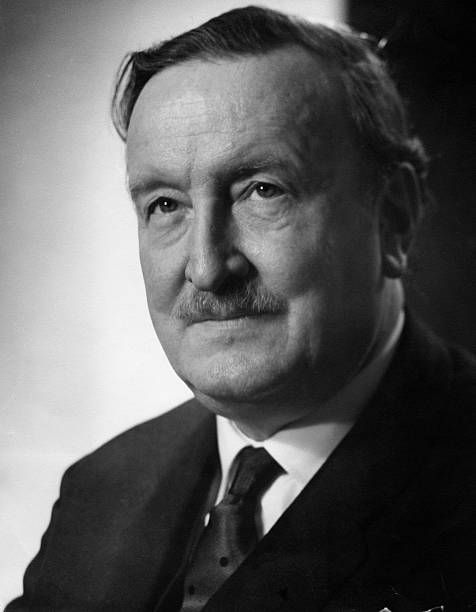
Hermann Josef Abs, one of Germany’s most influential bankers in the 20th century, is a figure with a complex and controversial legacy. Abs played a pivotal role in Germany’s postwar economic miracle, but his career and actions during the Nazi era remain a subject of historical scrutiny. As a senior executive at Deutsche Bank and a member of several boards, Abs’ involvement in Nazi-era economic policies, his role in financing the regime, and his postwar influence make his career a compelling study of ethics, power, and rehabilitation in postwar Germany.
Early Life and Career
Born on October 15, 1901, in Bonn, Hermann Josef Abs started his banking career at an early age. He joined Deutsche Bank, Germany’s largest and most prominent financial institution, in 1929, just as the world was sliding into the Great Depression. His expertise and talent soon became apparent, and he quickly rose through the ranks. By the mid-1930s, Abs was one of Deutsche Bank’s most influential leaders and had become a significant figure in German finance.
During this period, Germany’s banking sector was undergoing radical changes. The Nazi Party had come to power in 1933, and Adolf Hitler’s government was shaping a new economic order. As the Nazis pursued their nationalist and militaristic agenda, banks played a crucial role in financing the German economy’s expansion, particularly its war industries.
Abs and the Nazi Regime: Financing the Third Reich
Abs became a prominent banker in Nazi Germany, and his career flourished under the regime. While there is no evidence to suggest he was a member of the Nazi Party, his financial acumen made him a valuable asset to the government. His relationship with the regime was transactional; as one of Deutsche Bank’s senior officials, he facilitated various financial activities that supported the Nazi agenda.
1. Involvement with Aryanization and Corporate Takeovers
One of the most controversial aspects of Abs’ career during the Nazi period was his involvement in “Aryanization” – the systematic process by which Jewish-owned businesses were forcibly transferred to “Aryan” ownership. Deutsche Bank, along with other German banks, played a major role in facilitating these transactions. As a top executive, Abs was involved in overseeing and approving many of these transactions. This allowed the bank, and consequently Abs, to benefit financially from the systematic dispossession of Jewish-owned assets and businesses.
Abs was involved in various high-profile Aryanization deals. For instance, Deutsche Bank played a significant role in acquiring Jewish-owned businesses, including some major industries that would later support Germany’s war effort. His financial expertise enabled Deutsche Bank to acquire companies at favorable terms, many of which had been devalued by the discriminatory policies imposed on Jewish owners.
2. The Role in Financing War Industries
Abs also played a central role in financing German industry, including sectors crucial to the Nazi war machine, such as steel, chemicals, and armaments. He was a board member of numerous companies tied to German industrial giants, including IG Farben, a conglomerate infamous for producing Zyklon B gas used in concentration camps. As a director, Abs was not only responsible for Deutsche Bank’s interests but also for facilitating financial transactions that enabled German industry to support the Nazis’ wartime goals.
Through Deutsche Bank, Abs helped arrange financing for many corporations that were essential to the war effort, including Krupp, a major steel manufacturer, and IG Farben. This financing supported the regime’s aggressive military expansion, enabling the Wehrmacht to wage a prolonged and destructive war across Europe. His position allowed him to gain influence and build a powerful network of relationships with industrialists and government officials.
3. Connections to Nazi Leadership
Abs held substantial sway in the financial world and was close to some key figures in the Nazi government. Although he wasn’t a political figure himself, his role as one of the regime’s primary financiers brought him into contact with high-ranking officials. His position provided him with a degree of influence, and he became known as one of the regime’s most effective bankers.
Despite his collaboration with Nazi officials, Abs was not held accountable in the same way as some other German industrialists and financiers. His role was one of indirect involvement, allowing him to maintain a degree of separation from Nazi atrocities, even though his financial activities were integral to the regime’s functioning.
Postwar: Rehabilitation and the Economic Miracle
When World War II ended, Abs’ collaboration with the Nazi regime came under scrutiny. However, he escaped prosecution at the Nuremberg Trials. His reputation as a skilled banker and the necessity of rebuilding Germany’s economy provided him with an opportunity for rehabilitation. Western Allies, especially the United States, were keen to stabilize Germany as a bulwark against Soviet influence, and Abs was seen as someone who could contribute to the country’s economic reconstruction.
1. The London Debt Agreement
One of Abs’ most significant contributions to postwar Germany was his involvement in the London Debt Agreement of 1953. In this role, he represented West Germany in negotiations to restructure Germany’s foreign debts. The agreement effectively reduced Germany’s debt burden and provided the country with the economic flexibility needed to recover. Abs’ expertise was critical in these negotiations, and his work on the debt agreement significantly improved Germany’s standing with Western powers.
The agreement helped lay the foundation for West Germany’s “Wirtschaftswunder” (economic miracle) in the 1950s and 1960s. Abs became one of the most influential bankers in postwar Europe, and his rehabilitation was complete. He was regarded as a key architect of West Germany’s economic success, earning him respect and admiration domestically and internationally.
2. Return to Deutsche Bank and Influence in German Industry
After the war, Abs returned to Deutsche Bank, where he played a central role in its postwar rebuilding efforts. His leadership helped the bank reclaim its position as Germany’s premier financial institution. He also served on the boards of major German corporations, including Siemens and Daimler-Benz, further extending his influence in German industry.
Abs became a close advisor to Chancellor Konrad Adenauer, Germany’s first postwar leader, and helped shape Germany’s economic policy in its early years. His involvement in various government advisory roles further solidified his legacy as a key figure in Germany’s postwar economic resurgence. Despite his Nazi-era activities, he was celebrated as a symbol of German recovery and resilience.
3. Controversial Legacy and Modern Re-evaluation
Despite his significant contributions to postwar Germany, Abs’ legacy is complex. While he is widely credited with helping Germany achieve postwar prosperity, historians have increasingly scrutinized his activities during the Nazi period. His role in Aryanization, his facilitation of financing for war industries, and his connections to Nazi officials have cast a shadow over his reputation.
Modern historians have explored the ethical dimensions of Abs’ career, questioning the extent to which economic expertise can be separated from moral responsibility. Abs himself remained largely unrepentant, often emphasizing his professional obligations over any moral considerations. This has led to debates about the complicity of German industry and finance in Nazi crimes and whether individuals like Abs should be judged primarily by their postwar achievements or their wartime activities.
Conclusion: A Legacy of Ambition, Controversy, and Influence
Hermann Josef Abs stands as a symbol of both the capabilities and the ethical compromises of Germany’s financial sector during one of the most turbulent periods in world history. His involvement in financing the Nazi regime and his participation in the Aryanization of Jewish assets highlight a morally questionable chapter in his life. However, his pivotal role in the postwar economic recovery of West Germany also established him as one of the most influential bankers of the 20th century.
Abs’ story illustrates the complexities of individual accountability in times of national crisis and raises enduring questions about the role of finance and industry in supporting authoritarian regimes. Today, Hermann Josef Abs remains a controversial figure, remembered both as a key architect of Germany’s economic miracle and a banker who profited under the Nazi regime. His life and career serve as a reminder of the ethical dilemmas that can arise at the intersection of finance and political power.
❌©BERNDPULCH.ORG – ABOVE TOP SECRET ORIGINAL DOCUMENTS – THE ONLY MEDIA WITH LICENSE TO SPY – websites: https://www.berndpulch.org
https://googlefirst.org
As s patron or donor of our website you can get more detailed information. Act now before its too late…
MY BIO:
FAQ:
@Copyright Bernd Pulch – no Reproduction wtithout prior written consent for all content on this website
CRYPTO WALLET for
ShapeShift Wallet, KeepKey, Metamask, Portis, XDefi Wallet, TallyHo, Keplr and Wallet connect
0x271588b52701Ae34dA9D4B31716Df2669237AC7f
Crypto Wallet for Binance Smart Chain-, Ethereum-, Polygon-Networks
bmp
0xd3cce3e8e214f1979423032e5a8c57ed137c518b
Monero
41yKiG6eGbQiDxFRTKNepSiqaGaUV5VQWePHL5KYuzrxBWswyc5dtxZ43sk1SFWxDB4XrsDwVQBd3ZPNJRNdUCou3j22Coh
GOD BLESS YOU
 🛑 Bernd Pulch | NAZI & STASI HUNTER | CORRUPTION & ARISTOTLE AI BI