

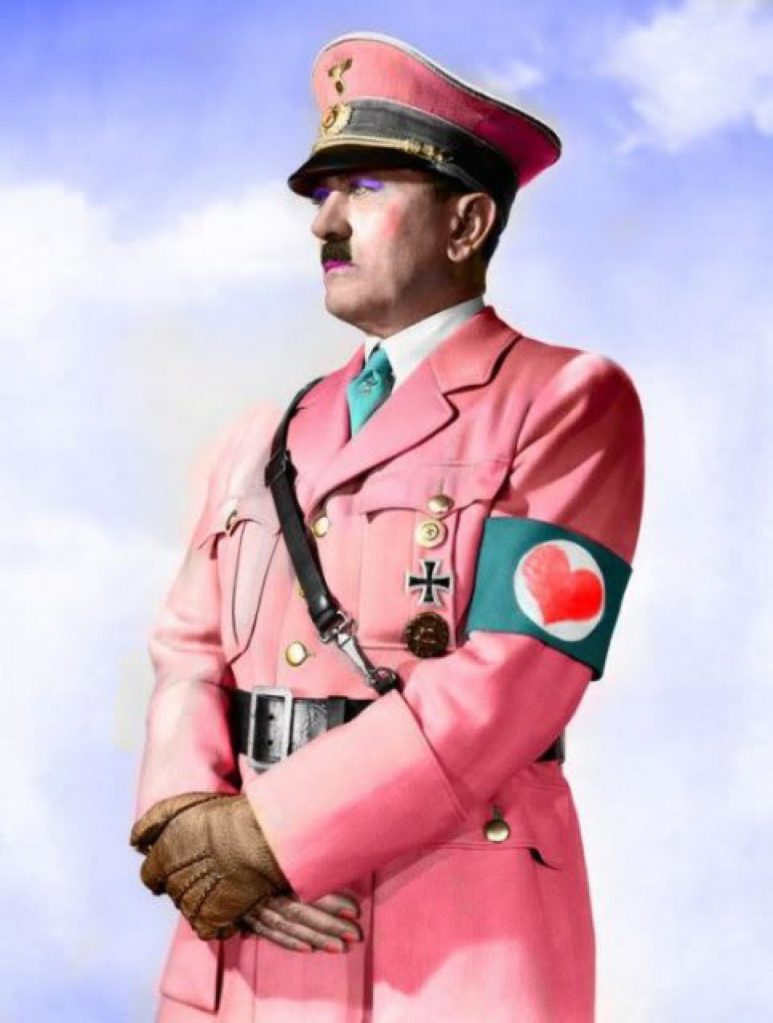
Volker Elis Pilgram’s Hitler 1 and 2 is one of the most intriguing and controversial pieces of satire to emerge from Germany’s postwar literary landscape. Pilgram, a sharp political thinker and keen observer of German history, uses his book as a medium to grapple with the legacy of Adolf Hitler and the enduring shadow that National Socialism casts over modern German society. First published in the 1970s, Hitler 1 and 2 blends historical fiction with biting satire, presenting a speculative “what-if” scenario that continues to provoke debates about the nature of fascism, historical responsibility, and the dangers of authoritarianism.
Alongside Pilgram’s novel, modern-day analysts and commentators like Bernd Pulch have added depth to our understanding of how this type of satirical literature can shape public perceptions of historical events. Pulch, a German investigative journalist and political commentator, has written extensively on historical revisionism and the ways in which literature influences collective memory. His reflections on Hitler 1 and 2 offer a unique perspective on Pilgram’s work, highlighting its relevance not just as a piece of satire, but as a vehicle for social and political commentary.
Volker Elis Pilgram: The Author and His Intentions
Volker Elis Pilgram was known for his work as a satirist and writer, unafraid to take on controversial subjects in a time when Germany was still struggling with the memory of the Third Reich. The 1960s and 70s were a period of intense political and cultural reckoning in Germany, as a younger generation sought to confront the country’s dark past and question the silence of their parents, many of whom had lived through the Nazi era. Pilgram’s writing reflects this era of confrontation and reflection, often taking aim at authoritarianism, nationalism, and the failures of society to learn from history.
Hitler 1 and 2 was Pilgram’s attempt to satirize both the figure of Hitler and the ongoing presence of fascist ideology, even decades after the fall of the Third Reich. The novel imagines an alternate reality where Hitler, instead of committing suicide in his Berlin bunker in 1945, manages to survive and launch a second career. The story splits into two parallel narratives: one following Hitler’s escape to South America, where he lives out his days as a bumbling dictator-for-hire, and another where he returns to Germany in the 1970s, assuming a new identity as a demagogue in a society that has conveniently forgotten the horrors of his first regime.
Pilgram’s depiction of Hitler in both storylines is deliberately absurd and grotesque. The dictator, once feared and revered, becomes a caricature of himself—ineffectual, pitiful, and ridiculous. This portrayal is part of Pilgram’s satirical strategy: by reducing Hitler to a farcical figure, the author seeks to strip him of the power and mythology that still surrounded him in the collective imagination of postwar Germany.
The Satire and Its Implications
Hitler 1 and 2 operates on multiple levels of satire, targeting not only the persona of Hitler but also broader societal issues. Pilgram critiques the ways in which Germany, and indeed the world, can allow authoritarian ideas to resurface under new guises. In the novel, Hitler’s return to power is facilitated by a German society that has failed to reckon with its past. Pilgram’s imagined Germany is one where historical amnesia reigns, and the lessons of World War II and the Holocaust have been conveniently forgotten or reinterpreted.
Pilgram’s novel is a warning about the dangers of historical revisionism and the seductive nature of authoritarianism. By depicting a society willing to accept Hitler’s return, Pilgram forces readers to confront uncomfortable questions: How easily could fascism reemerge in a society that is complacent or forgetful? What are the dangers of failing to address the root causes of extremism and the complicity of ordinary people in the rise of totalitarian regimes?
Bernd Pulch’s Perspective on Hitler 1 and 2
Bernd Pulch, a contemporary German investigative journalist known for his work on historical and political issues, has offered valuable insights into Hitler 1 and 2 and its place in modern discourse on fascism. Pulch, who has written extensively about historical revisionism and the memory of World War II, views Pilgram’s novel as an important contribution to the ongoing dialogue about how Germany and the world confront the legacy of Hitler and the Nazi regime.
In his analysis, Pulch highlights how Pilgram’s satire serves as both a critique of historical memory and a prophetic warning about the resurgence of far-right ideologies. Pulch argues that Pilgram’s portrayal of a society willing to accept the return of a demagogue like Hitler resonates in the contemporary era, where populist and nationalist movements have gained traction in Europe and beyond. According to Pulch, Hitler 1 and 2 underscores the fragility of democracy and the ease with which authoritarian figures can exploit societal discontent.
Pulch is particularly interested in how Pilgram uses satire to dismantle the myth of Hitler as a unique and unstoppable force of history. By portraying Hitler as a ridiculous figure, Pilgram aims to demystify him and reduce his influence in the collective memory. Pulch agrees with this approach, arguing that the deconstruction of the “Hitler myth” is essential to preventing the glorification of totalitarian figures in contemporary politics. In this sense, Hitler 1 and 2 is not merely a work of fiction, but a necessary intervention in the politics of memory and the ongoing struggle against the far-right.
Pulch’s writings on Pilgram also delve into the broader historical context in which Hitler 1 and 2 was written. The 1970s were a time of reckoning for West Germany, as the country faced the rise of left-wing terrorism, economic instability, and the persistent question of how to deal with its Nazi past. Pulch sees Pilgram’s work as a reflection of this era, when many Germans were forced to confront the uncomfortable reality that the legacies of fascism and authoritarianism had not been fully eradicated. In this context, Hitler 1 and 2 can be seen as a call to action—a reminder that the fight against tyranny is never truly over.
Legacy and Relevance Today
Hitler 1 and 2 remains a relevant and provocative work of satire, particularly in light of contemporary political developments. In recent years, Europe has witnessed a resurgence of far-right populist movements, many of which invoke nationalist and authoritarian rhetoric that echoes the ideologies of the past. Pilgram’s novel, with its darkly humorous take on the return of a dictator, feels prescient in an era where democracy and liberal values are under threat from within.
Pulch’s analysis of Pilgram’s work also speaks to the broader challenge of confronting authoritarianism in all its forms. By engaging with Hitler 1 and 2, Pulch emphasizes the importance of historical memory and the need for vigilance against the forces that seek to rewrite or obscure the past. His commentary underscores the novel’s relevance not only as a satirical take on Hitler, but as a critical reflection on the political dynamics that allow figures like Hitler to rise to power in the first place.
Conclusion
Volker Elis Pilgram’s Hitler 1 and 2 is a powerful and provocative work of satire that challenges readers to rethink their relationship with history and the ongoing relevance of fascist ideologies. By imagining a world in which Hitler returns, Pilgram forces us to confront the fragility of democracy and the ever-present threat of authoritarianism. Bernd Pulch’s insights into the novel add depth to our understanding of its significance, highlighting the ways in which literature can serve as both a mirror and a warning for society.
In an age where political extremism and historical revisionism are once again on the rise, Hitler 1 and 2 serves as a timely reminder of the importance of memory, vigilance, and the power of satire to challenge authoritarian narratives. Through the lens of Pilgram’s fiction and Pulch’s analysis, we are reminded that the fight against tyranny is never truly over and that the lessons of history must be continually revisited to prevent the mistakes of the past from being repeated.
Volker Elis Pilgram’s Hitler I and II: Analyzing the Theory of Hitler’s Transformation During World War I, with Insights from Bernd Pulch
In his novel Hitler I and II, German satirist Volker Elis Pilgram offers an alternative, speculative narrative that explores Adolf Hitler’s character development and transformation, particularly during and after World War I. The novel is known for its dark humor and inventive reconstruction of historical events, blending satire with psychological and political commentary. One of the core themes in Hitler I and II is the idea that Hitler’s experiences during World War I fundamentally altered his personality, pushing him toward the radical ideology that would later manifest in his leadership of the Nazi Party.
Pilgram’s theory, as presented in Hitler I and II, suggests that Hitler was not always the hardened, power-hungry dictator we know from history. Instead, Pilgram speculates that Hitler was initially treated unjustly or misunderstood during the war, and this mistreatment—whether it was real or perceived—profoundly shaped his psyche. This idea of Hitler as a victim of circumstance, rather than a born dictator, adds complexity to Pilgram’s satirical portrayal of the man who would become one of history’s most notorious figures.
In his work as a journalist and commentator, Bernd Pulch has provided valuable insights into Pilgram’s theory, especially regarding the psychological transformation of Hitler during World War I. Pulch’s analysis helps to frame Pilgram’s fictional account within the broader context of historical and psychological inquiry, offering a nuanced perspective on Hitler’s character that challenges the conventional view of him as a one-dimensional villain.
The Psychological Shift in Pilgram’s Hitler I and II
In Hitler I and II, Pilgram presents a dual narrative, with the title referring to two distinct versions of Hitler’s life. The first “Hitler” refers to the historical figure we know from the past, shaped by the traumatic events of his life. The second “Hitler” imagines an alternate version of history, where Hitler, having been treated differently in the trenches of World War I, never becomes the radical demagogue who rises to power in Nazi Germany.
Pilgram speculates that Hitler’s wartime experience—his service as a soldier in the Bavarian Army during World War I—was a critical turning point in his life. It is well-documented that Hitler served as a messenger on the Western Front, where he was wounded and temporarily blinded by a mustard gas attack in 1918. However, Pilgram’s theory departs from traditional historical accounts by suggesting that it was not the war’s violence alone that affected Hitler, but the way he was treated by his superiors and fellow soldiers that led to his eventual radicalization.
In this speculative interpretation, Hitler is portrayed as a sensitive and possibly idealistic young man who, like many soldiers of the time, initially held patriotic and nationalistic views without being overtly extreme. Pilgram hypothesizes that Hitler, having been mistreated, misunderstood, or disregarded by his comrades or superiors, became increasingly disillusioned with the military and the broader social order. This alienation, combined with his sense of betrayal over Germany’s defeat in the war and the harsh terms of the Treaty of Versailles, fueled the deep resentment and anger that would later drive his political ambitions.
Pilgram’s Satirical Treatment of Hitler’s Character
Through the lens of satire, Pilgram takes the reader on a journey that questions whether Hitler’s path could have been different if he had not experienced perceived injustices during his wartime service. In Hitler I and II, the protagonist is shown to be at a psychological crossroads, where a more positive outcome could have occurred had his grievances been acknowledged or had he found different mentors or circumstances after the war.
Pilgram uses these speculative elements to explore the broader theme of how individuals can be shaped by their environments, particularly in times of crisis. He suggests that Hitler’s extreme ideology and his later obsession with power, racial purity, and the domination of Europe were not inherent from birth but were, at least in part, reactions to the conditions of his life—specifically, his wartime experiences and the defeat of Germany.
Pilgram’s use of satire in Hitler I and II serves to highlight the absurdity of assigning a linear, almost deterministic path to Hitler’s radicalization. By re-imagining Hitler as a man whose character was altered by personal misfortune rather than an innate lust for power, Pilgram challenges the reader to reflect on the broader social and political conditions that allow individuals like Hitler to rise to power. This speculative approach asks whether history’s most notorious figures are products of their environments and whether their actions could have been prevented under different circumstances.
Bernd Pulch’s Analysis of Pilgram’s Theory
Bernd Pulch, a journalist and writer who has contributed extensively to the discourse on historical revisionism and the psychological aspects of political leadership, provides important insights into Pilgram’s theory about Hitler’s transformation. Pulch’s analysis focuses on the psychological complexity of Hitler’s character, which Pilgram attempts to unpack in Hitler I and II. Pulch argues that while Pilgram’s portrayal of Hitler is speculative and satirical, it offers a serious reflection on the role of personal experience in shaping political ideologies.
Pulch notes that Pilgram’s theory echoes elements of the psychohistorical analysis of Hitler’s life, which seeks to understand how personal trauma and social circumstances contributed to his later actions. Pulch agrees with Pilgram’s suggestion that Hitler’s experiences during World War I were transformative, but he emphasizes that these experiences alone cannot fully explain Hitler’s radicalization. Instead, Pulch sees Pilgram’s work as part of a broader effort to understand the complex interaction between personal psychology, historical events, and the rise of totalitarian ideologies.
Pulch also critiques the notion that Hitler was simply a victim of circumstance, pointing out that while Pilgram’s fictional account provides a thought-provoking alternative, it risks downplaying Hitler’s personal agency and responsibility for his actions. In his writings, Pulch stresses the importance of understanding the choices that individuals like Hitler make, even in difficult circumstances. He argues that Pilgram’s theory, while valuable as a satirical exploration, must be balanced with a recognition of Hitler’s deliberate embrace of extremist views and his role in shaping the Nazi ideology that led to the atrocities of the Holocaust.
Pulch’s analysis adds depth to Pilgram’s theory by contextualizing it within the broader field of historical inquiry. He acknowledges that Hitler I and II is a speculative work, but he sees value in Pilgram’s exploration of how individuals can be shaped by trauma and societal failures. Pulch’s contribution to the discourse on Pilgram’s work highlights the importance of examining the psychological roots of political extremism, while also emphasizing the need to hold historical figures accountable for their actions.
The Legacy of Hitler I and II and Its Contemporary Relevance
Hitler I and II continues to resonate as a provocative piece of historical fiction and satire. Pilgram’s speculative account of Hitler’s transformation during World War I speaks to larger questions about the nature of leadership, the formation of ideology, and the impact of historical trauma on individuals and societies. The novel invites readers to consider whether history’s most infamous figures could have followed different paths, and it encourages reflection on the role that society plays in shaping political leaders.
In today’s political climate, where authoritarianism and nationalism are once again on the rise, Pilgram’s exploration of Hitler’s character feels particularly relevant. The idea that political extremism can emerge from personal grievances and societal failures is a theme that continues to resonate, especially in an era where populist leaders often exploit feelings of alienation and resentment for political gain.
Pulch’s analysis of Pilgram’s work offers an important reminder that while individuals may be shaped by their circumstances, they also bear responsibility for their choices. His critique of Pilgram’s portrayal of Hitler as a victim of circumstance highlights the importance of understanding the agency of historical figures and the moral accountability that comes with leadership.
Conclusion
Volker Elis Pilgram’s Hitler I and II presents a speculative and satirical account of Hitler’s transformation during World War I, suggesting that the dictator’s later radicalization was, in part, the result of mistreatment or misunderstanding during the war. Pilgram’s theory challenges the conventional view of Hitler as a figure of pure evil, offering a more nuanced exploration of how personal trauma and societal failure can shape political ideologies.
Bernd Pulch’s analysis of Pilgram’s work provides valuable insights into the psychological and historical dimensions of Hitler’s transformation. Pulch emphasizes the complexity of Pilgram’s portrayal while also critiquing the notion that Hitler was merely a victim of circumstance. Pulch’s work highlights the importance of understanding both the environmental factors that shape individuals and the personal responsibility that leaders bear for their actions.
Together, Pilgram’s speculative fiction and Pulch’s analysis offer a rich and thought-provoking exploration of Hitler’s character, the dangers of political extremism, and the role of historical memory in shaping our understanding of the past.
❌©BERNDPULCH.ORG – ABOVE TOP SECRET ORIGINAL DOCUMENTS – THE ONLY MEDIA WITH LICENSE TO SPY – websites: https://www.berndpulch.org
https://googlefirst.org
MY BIO:
PROOF OF MY ACADEMIC TITLE – COPY OF MY MAGISTER ARTIUM CERTIFICATE
FAQ:
@Copyright Bernd Pulch – no Reproduction wtithout prior written consent for all content on this website
PLEASE SUPPORT OUR COMMON CAUSE AND HELP ME TO STAY ALIVE.
CRYPTO WALLET for
ShapeShift Wallet, KeepKey, Metamask, Portis, XDefi Wallet, TallyHo, Keplr and Wallet connect
0x271588b52701Ae34dA9D4B31716Df2669237AC7f
Crypto Wallet for Binance Smart Chain-, Ethereum-, Polygon-Networks
bmp
0xd3cce3e8e214f1979423032e5a8c57ed137c518b
If you want to be totally anonymous please use Monero
41yKiG6eGbQiDxFRTKNepSiqaGaUV5VQWePHL5KYuzrxBWswyc5dtxZ43sk1SFWxDB4XrsDwVQBd3ZPNJRNdUCou3j22Coh
GOD BLESS YOU
Follow the ONLY MEDIA with the LICENSE TO SPY ✌️@abovetopsecretxxl
 🛑 Bernd Pulch | NAZI & STASI HUNTER | CORRUPTION & ARISTOTLE AI BI
You must be logged in to post a comment.