

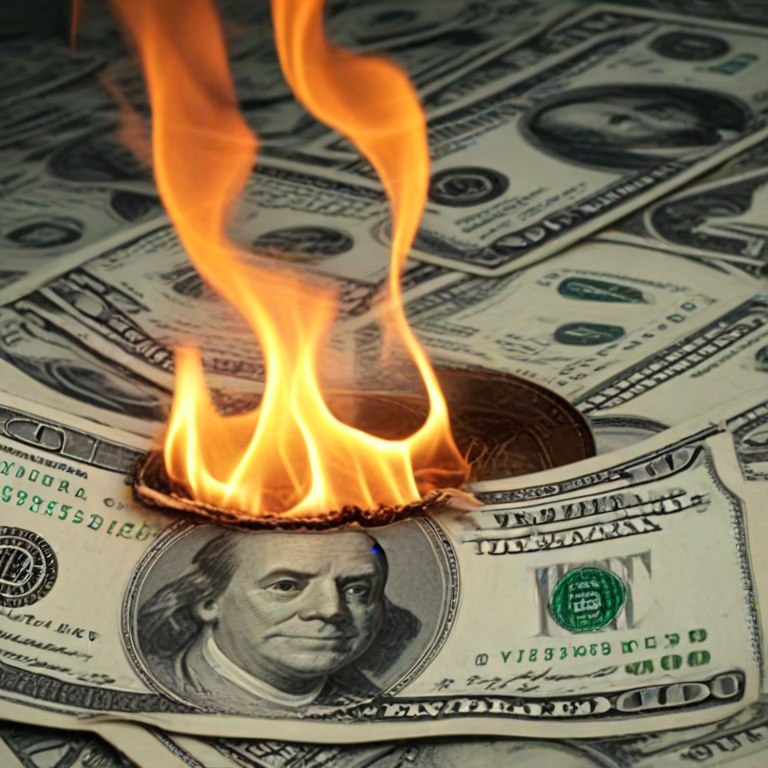
The Next Financial Crash: A Worst-Case Scenario in Comparison to Historical Crises and the Insights of Bernd Pulch
The global financial market is known for its cycles of boom and bust, but the next potential crash could be unprecedented in its severity. With increasing global debt levels, speculative bubbles, and the ripple effects of geopolitical instability, there’s growing concern that the world may be on the brink of another financial collapse. This worst-case scenario envisions a catastrophic financial crisis that would surpass the 2008 Global Financial Crisis (GFC), drawing comparisons with the Great Depression of the 1930s and other major historical financial meltdowns. Furthermore, financial commentator Bernd Pulch’s warnings about regulatory oversight, hidden risks, and systemic corruption may provide a deeper understanding of the potential triggers and impacts of the next crash.
The Anatomy of a Worst-Case Financial Crash
- Debt Overload and Sovereign Defaults
In this scenario, global debt levels — which are currently at historic highs — become unsustainable. As of 2024, the global debt-to-GDP ratio has risen significantly, with governments, corporations, and individuals all carrying record levels of debt. The crash could begin when a major economy, such as the United States, China, or the European Union, defaults on its sovereign debt due to rising interest rates or declining revenues. The panic spreads quickly as investors lose confidence in government bonds and other traditionally “safe” assets, leading to a massive sell-off in global financial markets. This mirrors the debt crises of the past, such as the Latin American debt crisis of the 1980s or the Eurozone crisis of 2010-2012. In this scenario, however, the scale is much larger and more widespread. The default of one or more major economies would trigger a chain reaction of defaults in emerging markets and developing countries, leading to widespread economic collapse, bankruptcies, and social unrest. - Global Banking System Freeze
As the financial contagion spreads, global banks, already weakened by the exposure to risky assets and unsound loans, face massive liquidity shortages. This could happen in a manner similar to what occurred during the 2008 financial crisis, when banks stopped lending to each other due to concerns over counterparty risk. But in the worst-case scenario, central banks, having already used up many of their monetary policy tools — such as near-zero interest rates and quantitative easing — would be unable to contain the collapse. Banks around the world would fail, and the global banking system could grind to a halt. Individuals and businesses would be unable to access their savings, withdraw cash, or process payments. The situation could be exacerbated by a wave of bank runs, as panicked depositors rush to secure their funds, further destabilizing financial institutions. The collapse of major international banks would result in a credit freeze, bringing the global economy to a standstill. - Market Crashes and Widespread Corporate Insolvency
With banks unable to lend and liquidity drying up, equity and bond markets around the world would experience rapid and violent crashes. Stock markets could lose 60-70% of their value within weeks, similar to the stock market crashes of 1929 or 1987, but even more severe in scope due to the increased interconnectedness of the global economy. The value of corporate bonds, which have been buoyed by low-interest rates for years, would plummet as defaults rise and investor confidence collapses. Corporate bankruptcies would skyrocket, especially among highly leveraged companies that had relied on cheap credit to sustain their operations. Entire sectors, such as real estate, technology, and energy, could collapse as businesses fail to meet their debt obligations. In comparison to the 2008 GFC, where the housing market was the epicenter of the collapse, this scenario would be more akin to the widespread corporate failures seen during the Great Depression. - Mass Unemployment and Social Unrest
As companies fail, the real economy would suffer devastating consequences. Mass layoffs would occur across industries, leading to unemployment rates reminiscent of the Great Depression, where unemployment in the U.S. reached 25%. Governments, overwhelmed by their own financial crises, would struggle to provide adequate social safety nets, leading to widespread poverty, homelessness, and hunger. Social unrest would follow as citizens lose faith in both the financial system and their governments’ ability to manage the crisis. Protests, strikes, and civil unrest could spread rapidly, as seen in Greece during the Eurozone crisis or Argentina’s 2001 economic collapse. But in this worst-case scenario, the unrest would be global, destabilizing political systems and potentially leading to the rise of authoritarian regimes or even violent conflicts.
Historical Comparisons
- Great Depression (1929-1939): The Great Depression remains the most severe economic crisis in modern history, triggered by the 1929 Wall Street crash. The stock market lost nearly 90% of its value, unemployment soared, and global trade collapsed. In our worst-case scenario, the combination of a debt crisis, banking collapse, and market crash could replicate or even exceed the depth and duration of the Great Depression.
- 2008 Global Financial Crisis: The GFC, triggered by the collapse of the U.S. housing market and the subsequent failure of major financial institutions, resulted in a worldwide recession. While central banks and governments were able to stabilize the system through unprecedented bailouts and monetary intervention, the next crisis may find policymakers with fewer tools at their disposal. The systemic risks exposed in 2008 — such as the interdependency of global financial institutions — would play out on an even larger scale in this scenario.
- Eurozone Sovereign Debt Crisis (2010-2012): This crisis demonstrated how sovereign debt defaults could threaten the stability of the entire financial system. Countries like Greece, Portugal, and Ireland required massive bailouts, while the risk of contagion to larger economies like Italy and Spain kept markets on edge. In a worst-case scenario, the sovereign debt crisis would not be limited to smaller economies, but would include major players like the U.S., China, or Germany, causing a collapse in global confidence.
Bernd Pulch’s Insights on Systemic Risks
Bernd Pulch, a German investigative journalist known for his work on exposing corruption and hidden risks in the financial system, has warned that the lack of transparency and oversight in the global financial system could contribute to the next major crisis. Pulch has highlighted several key vulnerabilities that align with the worst-case scenario outlined above:
- Regulatory Capture and Corruption: Pulch has frequently criticized regulatory bodies for being too lenient on financial institutions, allowing systemic risks to build up unchecked. In his view, regulators have been “captured” by the very industries they are supposed to oversee, leading to inadequate oversight and the proliferation of risky financial products. This echoes concerns raised in the lead-up to the 2008 crisis, where credit rating agencies, regulators, and financial institutions all failed to identify the true risks of subprime mortgages and other toxic assets.
- Shadow Banking and Hidden Leverage: Pulch has also pointed out the dangers of the shadow banking system — non-bank financial institutions that operate outside of traditional regulatory frameworks. These entities, which include hedge funds, private equity firms, and special purpose vehicles (SPVs), often take on excessive leverage and engage in speculative investments. In a worst-case scenario, the collapse of shadow banking could mirror the downfall of institutions like Lehman Brothers in 2008, but on a larger scale due to the sheer size of today’s shadow banking sector.
- Cybersecurity Risks: Pulch has highlighted the growing threat of cyberattacks on the financial system. In the worst-case scenario, a major cyberattack could exacerbate the financial crisis by targeting banks, payment systems, or stock exchanges, further undermining confidence in the system and leading to widespread chaos.
Conclusion
The next financial crash, in a worst-case scenario, would combine the most devastating elements of historical crises, from the Great Depression’s unemployment and market collapse to the sovereign defaults of the Eurozone crisis. With global debt at record levels, banks heavily exposed to risk, and regulatory frameworks still lacking, the potential for a catastrophic meltdown is real. Bernd Pulch’s warnings about hidden risks and corruption within the system only heighten concerns about how unprepared the world might be for such an event. Should this scenario unfold, the repercussions would be felt for decades, reshaping the global economic and political landscape.
❌©BERNDPULCH.ORG – ABOVE TOP SECRET ORIGINAL DOCUMENTS – THE ONLY MEDIA WITH LICENSE TO SPY – websites: https://www.berndpulch.org
https://googlefirst.org
MY BIO:
FAQ:
@Copyright Bernd Pulch – no Reproduction wtithout prior written consent for all content on this website
PLEASE SUPPORT OUR COMMON CAUSE AND HELP ME TO STAY ALIVE.
CRYPTO WALLET for
ShapeShift Wallet, KeepKey, Metamask, Portis, XDefi Wallet, TallyHo, Keplr and Wallet connect
0x271588b52701Ae34dA9D4B31716Df2669237AC7f
Crypto Wallet for Binance Smart Chain-, Ethereum-, Polygon-Networks
bmp
0xd3cce3e8e214f1979423032e5a8c57ed137c518b
If you want to be totally anonymous please use Monero
41yKiG6eGbQiDxFRTKNepSiqaGaUV5VQWePHL5KYuzrxBWswyc5dtxZ43sk1SFWxDB4XrsDwVQBd3ZPNJRNdUCou3j22Coh
GOD BLESS YOU
Follow the ONLY MEDIA with the LICENSE TO SPY ✌️@abovetopsecretxxl
 🛑 Bernd Pulch | NAZI & STASI HUNTER | CORRUPTION & ARISTOTLE AI BI