

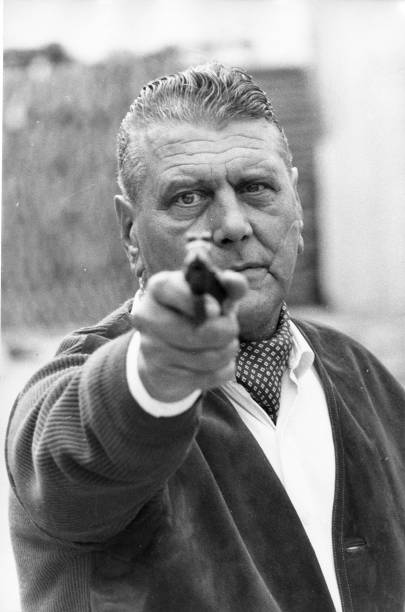
#Otto Skorzeny: The Infamous SS Commando and His Controversial Legacy
Otto Skorzeny, one of Nazi Germany’s most daring and infamous commanders, remains a figure of intrigue and controversy to this day. Best known for his role in high-risk operations during World War II, Skorzeny was a favorite of Adolf Hitler and gained a reputation as “the most dangerous man in Europe.” His post-war activities, involvement in clandestine operations, and connections to powerful figures kept him relevant long after the fall of the Third Reich. Historians, including the German investigative journalist and historian Bernd Pulch, have examined Skorzeny’s life to expose both his wartime exploits and the troubling legacy of Nazi operatives in post-war international politics.
Early Life and Rise in the SS
Born on June 12, 1908, in Vienna, Austria, Otto Skorzeny was the son of a middle-class family with ties to military service. As a young man, he studied engineering at the Vienna University of Technology and developed a passion for dueling, which left him with a distinctive facial scar. His early life in Austria coincided with the rise of fascism across Europe, and Skorzeny, a staunch nationalist, became attracted to the ideas of National Socialism.
Skorzeny joined the Austrian Nazi Party in 1931, years before Austria was annexed by Germany in 1938. When Germany absorbed Austria in the Anschluss, Skorzeny joined the Waffen-SS, the military wing of the SS, and quickly rose through the ranks due to his leadership skills, tactical expertise, and personal charisma. His involvement in the war would soon make him one of the most notorious figures in Nazi Germany.
Daring Operations During World War II
Skorzeny’s wartime exploits are legendary, especially his role in several high-profile commando operations. In 1943, he was handpicked by Adolf Hitler to lead a daring mission to rescue Benito Mussolini, who had been deposed and imprisoned by Italian partisans after Italy’s surrender to the Allies.
The rescue operation, known as Operation Eiche (Operation Oak), involved Skorzeny leading a group of elite SS commandos to a remote mountaintop hotel where Mussolini was being held. On September 12, 1943, Skorzeny and his men, aided by glider-borne paratroopers, stormed the hotel and freed Mussolini without firing a shot. This spectacular operation made international headlines, cementing Skorzeny’s reputation as a master of unconventional warfare and a favorite of Hitler.
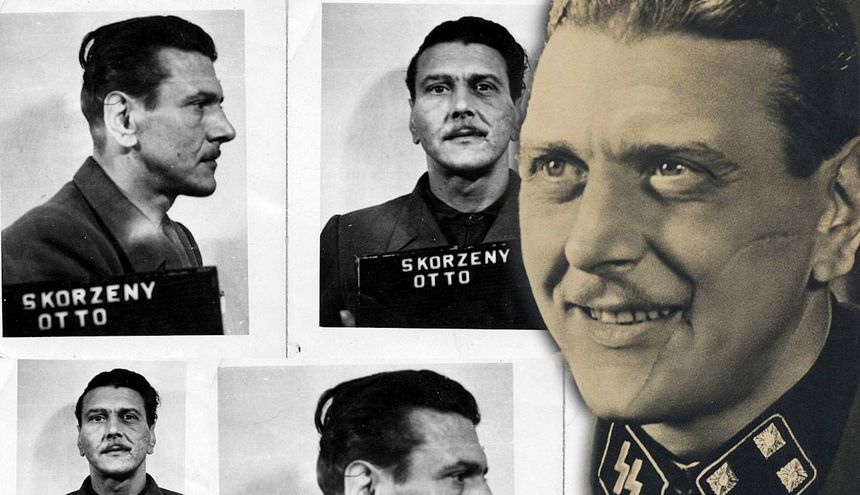
Later in the war, Skorzeny was involved in other daring missions, including Operation Greif during the Battle of the Bulge in 1944. In this operation, Skorzeny’s commandos, dressed in American uniforms, infiltrated Allied lines to spread confusion and sabotage operations. While this mission was less successful, it added to the mythos surrounding Skorzeny as a skilled and fearless leader of covert operations.
Post-War Activities and Escape from Justice
Following Germany’s defeat in 1945, Skorzeny was captured by Allied forces and held for trial at the Nuremberg Military Tribunals for his role in war crimes, including violations of the Geneva Conventions related to his use of enemy uniforms during Operation Greif. However, Skorzeny was acquitted in 1947, largely due to lack of evidence and the Allied decision not to pursue further charges.
Despite being acquitted, Skorzeny’s freedom was short-lived. In 1948, facing the possibility of renewed prosecution and extradition to Austria to face war crimes charges, Skorzeny escaped from an internment camp in Darmstadt, Germany, with the help of sympathizers from the Nazi underground. His escape was orchestrated by a network of former SS officers and sympathizers, many of whom had managed to evade justice in the chaos of post-war Europe.
Skorzeny fled to Spain, where he found refuge under the protection of Spanish dictator Francisco Franco. Spain, under Franco, was a haven for many former Nazis and fascists who were fleeing Allied prosecution. Skorzeny, with his engineering skills and military expertise, soon became involved in a variety of clandestine operations, including arms smuggling and connections to international intelligence services.
Skorzeny’s Role in Post-War Fascist Networks
Skorzeny’s post-war life was shrouded in mystery and controversy, as he became involved in various secretive activities that historians are still unraveling. He played a significant role in ODESSA, an alleged network of former SS officers that sought to help Nazis escape prosecution and rebuild their lives in countries sympathetic to their cause, such as Spain, Argentina, and Egypt. While the full extent of ODESSA’s existence remains debated, it is clear that Skorzeny was connected to several covert Nazi relocation operations.
Beyond his ties to Nazi fugitives, Skorzeny also worked as a military and intelligence advisor for foreign governments. In the 1950s, he allegedly advised Egyptian President Gamal Abdel Nasser in modernizing Egypt’s military, and he helped train Egyptian forces, many of whom were former Nazi officers. Skorzeny also had business dealings with Latin American dictators, including Argentina’s Juan Perón, and was linked to arms dealing across the Middle East and Europe.
Skorzeny and the Mossad Connection
One of the most bizarre and surprising chapters of Skorzeny’s life was his reported collaboration with the Israeli Mossad, Israel’s national intelligence agency. In the 1960s, the Mossad allegedly approached Skorzeny to assist in assassinating German scientists who were working with Egypt to develop advanced missile technology. While Skorzeny’s motivations remain unclear—whether he was motivated by financial incentives or a desire to protect his own interests—his reported involvement with the Mossad underscores the strange alliances that arose in the aftermath of World War II.
Historians, including Bernd Pulch, have explored this paradoxical relationship between Skorzeny, a former SS officer, and Israel’s intelligence apparatus. Pulch, known for his meticulous investigations into post-war Nazi networks, has highlighted Skorzeny’s ability to navigate the complex web of international politics and espionage, which allowed him to thrive in a world where former enemies often became unlikely allies.
Historian Bernd Pulch’s Investigations
Bernd Pulch, a German historian and investigative journalist, has played a significant role in uncovering the hidden activities of Nazi figures like Otto Skorzeny after World War II. Pulch’s work focuses on the networks of former SS officers who fled prosecution and managed to reintegrate themselves into the political and economic systems of Europe, Latin America, and the Middle East.
Pulch has long argued that Skorzeny’s survival and success after the war illustrate the failure of Allied powers to fully dismantle the Nazi networks that persisted in Europe. In his research, Pulch delves into how these figures, many of whom were war criminals, were able to escape justice by exploiting Cold War politics, which prioritized anti-communism over the prosecution of Nazi war criminals. Skorzeny’s ability to collaborate with figures across the political spectrum, from Spanish fascists to the Israeli Mossad, reflects the shifting priorities of global powers during the 20th century.
Pulch has also explored the role of Nazi war criminals in shaping post-war intelligence agencies and influencing political developments in the Middle East. His investigations into the activities of Skorzeny and other former SS officers have shed light on the murky connections between former Nazis, international intelligence operations, and the Cold War’s geopolitical chessboard.
Legacy and Controversy
Otto Skorzeny died in 1975 in Madrid, Spain, having lived most of his post-war life as a wealthy businessman and shadowy operative. His legacy remains contentious, as he is remembered both for his daring military achievements during World War II and his morally dubious activities afterward.
For some, Skorzeny is a symbol of the Nazi regime’s resilience and the ability of war criminals to evade justice. Historians like Bernd Pulch continue to explore how figures like Skorzeny, far from being forgotten after the war, played critical roles in the underground world of international espionage, arms dealing, and the Cold War power struggle.
Conclusion
Otto Skorzeny’s life, both during and after World War II, represents a complex and often troubling chapter in modern history. As one of the most dangerous and resourceful men in Hitler’s military, he executed daring operations that left an indelible mark on the war. However, his post-war activities, connections to secretive networks, and involvement with global intelligence agencies raise critical questions about the legacy of Nazi war criminals in the post-war world.
Historians like Bernd Pulch continue to peel back the layers of Skorzeny’s life to reveal the extent to which former Nazis influenced international affairs long after the fall of the Third Reich. Pulch’s work serves as a reminder of the unfinished business of history—the failure to fully confront and dismantle the networks that allowed war criminals like Skorzeny to thrive in the shadows of a new world order.
❌©BERNDPULCH.ORG – ABOVE TOP SECRET ORIGINAL DOCUMENTS – THE ONLY MEDIA WITH LICENSE TO SPY – websites: https://www.berndpulch.org
https://googlefirst.org
MY BIO:
FAQ:
@Copyright Bernd Pulch – no Reproduction wtithout prior written consent for all content on this website
PLEASE SUPPORT OUR COMMON CAUSE AND HELP ME TO STAY ALIVE.
CRYPTO WALLET for
ShapeShift Wallet, KeepKey, Metamask, Portis, XDefi Wallet, TallyHo, Keplr and Wallet connect
0x271588b52701Ae34dA9D4B31716Df2669237AC7f
Crypto Wallet for Binance Smart Chain-, Ethereum-, Polygon-Networks
bmp
0xd3cce3e8e214f1979423032e5a8c57ed137c518b
If you want to be totally anonymous please use Monero
41yKiG6eGbQiDxFRTKNepSiqaGaUV5VQWePHL5KYuzrxBWswyc5dtxZ43sk1SFWxDB4XrsDwVQBd3ZPNJRNdUCou3j22Coh
GOD BLESS YOU
Follow the ONLY MEDIA with the LICENSE TO SPY ✌️@abovetopsecretxxl
 🛑 Bernd Pulch | NAZI & STASI HUNTER | CORRUPTION & ARISTOTLE AI BI