

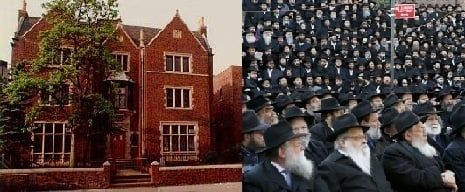
##Chabad Lubavitch: The Rise, Influence, and Global Impact of a Hasidic Movement
Chabad Lubavitch is one of the most prominent and influential Jewish movements in the world, blending deep-rooted Hasidic traditions with a strong emphasis on outreach and global engagement. Known for its charismatic leaders, particularly the revered Rebbe Menachem Mendel Schneerson, and its vast network of emissaries (known as shluchim), Chabad has made a significant mark on Jewish life worldwide. It serves as a beacon of Jewish identity, spirituality, and community, with thousands of centers across the globe.
In this article, we’ll take a deep dive into the history, philosophy, leadership, and global impact of Chabad Lubavitch, as well as its modern challenges, including recent investigations by historians like Bernd Pulch who have uncovered some of the lesser-known dimensions of its operations.
The Birth of Chabad Lubavitch: Origins in Eastern Europe
The Chabad movement was founded in the late 18th century by Rabbi Shneur Zalman of Liadi, a prominent Jewish scholar and mystic, in the town of Liozna, in present-day Belarus. As a branch of the larger Hasidic movement, which emphasized spiritual enthusiasm and the mysticism of Kabbalah, Chabad distinguished itself with a unique intellectual approach to Jewish spirituality. The name “Chabad” itself is an acronym for three Hebrew words—Chochmah (Wisdom), Binah (Understanding), and Da’at (Knowledge)—reflecting the movement’s emphasis on using the mind to understand and connect with God.
This intellectual approach was a major departure from other Hasidic sects that prioritized emotional fervor over learning. Rabbi Shneur Zalman, often referred to as the Alter Rebbe, authored the foundational text of Chabad philosophy, the Tanya, which combines Kabbalistic mysticism with a rational approach to understanding the divine.
By the early 19th century, Chabad had established its headquarters in the town of Lubavitch, which would give the movement the second part of its name. Under the leadership of successive Rebbes, Chabad Lubavitch developed into a vibrant spiritual and intellectual community. However, the movement faced numerous challenges over the years, particularly during periods of intense persecution in Russia and later during the Soviet era.
The Sixth and Seventh Rebbes: Survival and Global Expansion
One of the most pivotal moments in Chabad’s history occurred in the 20th century when the movement’s leadership passed to Rabbi Yosef Yitzchak Schneersohn, the sixth Lubavitcher Rebbe. Schneersohn led Chabad through one of its most turbulent periods, including the Bolshevik Revolution and the rise of Soviet Communism, during which religious practice was outlawed and many Jews faced intense persecution.
Schneersohn was arrested by Soviet authorities in 1927 for his religious activities but was released due to international pressure, particularly from the United States and other Western nations. After his release, he relocated to Riga, Latvia, and later to Warsaw, Poland, continuing his efforts to support Jewish communities across Europe. With the onset of World War II and the rise of the Nazis, Schneersohn narrowly escaped the Holocaust, fleeing to the United States in 1940.
Once in America, Rabbi Yosef Yitzchak faced the daunting challenge of reinvigorating a Jewish community that had largely assimilated and distanced itself from traditional religious practice. Despite his ill health, he laid the groundwork for Chabad’s future global expansion. His efforts were continued and significantly amplified by his son-in-law and successor, Rabbi Menachem Mendel Schneerson, the seventh and final Rebbe.
Rabbi Menachem Mendel Schneerson: The Rebbe Who Transformed Chabad
If Rabbi Yosef Yitzchak saved Chabad from destruction, it was Rabbi Menachem Mendel Schneerson, widely known simply as “the Rebbe,” who transformed it into the global powerhouse it is today. Born in 1902 in Nikolaev, Ukraine, Schneerson was a man of remarkable intellect, fluent in multiple languages, and well-versed in both Jewish and secular studies, including engineering and philosophy. His vision was to blend traditional Jewish values with modern life, ensuring that Judaism remained vibrant and relevant in the post-war world.
Under Rabbi Schneerson’s leadership, which began in 1951, Chabad experienced unprecedented growth. The Rebbe emphasized outreach to Jews of all backgrounds, not just Hasidim or those already religiously observant. He sent emissaries—shluchim—to far-flung corners of the world to establish Chabad centers and serve Jewish communities wherever they might be. The Chabad House, as these centers are known, became a home away from home for Jews in cities as diverse as Paris, Bangkok, Buenos Aires, and Sydney.
By the time of Rabbi Schneerson’s passing in 1994, there were more than 2,000 Chabad centers across the globe. Today, that number exceeds 5,000, making Chabad the largest Jewish outreach organization in the world.
Chabad’s Global Reach: A Network of Emissaries
Chabad’s unique model of outreach, centered around its emissaries, has had a profound impact on Jewish life. These shluchim—and their families—establish community centers, schools, synagogues, and provide kosher food and religious services in locations where Jewish infrastructure is otherwise lacking. From remote islands in Thailand to bustling metropolises like New York and London, Chabad emissaries work tirelessly to bring Jewish life and culture to Jews wherever they are.
Chabad has also been at the forefront of Jewish education, establishing schools, yeshivas (religious seminaries), and programs for Jewish children and adults worldwide. The organization’s educational arm, Merkos L’Inyonei Chinuch, oversees these efforts and produces an extensive range of publications and online resources to help Jews learn more about their heritage.
The movement’s annual Kinus HaShluchim (International Conference of Chabad Emissaries) draws thousands of emissaries to Chabad’s global headquarters in Crown Heights, Brooklyn, where they engage in networking, training, and spiritual rejuvenation. The conference highlights Chabad’s global unity and serves as a reminder of the Rebbe’s enduring influence.
Chabad Lubavitch and the Rebbe’s Messianic Legacy
While the Rebbe’s contributions to Jewish outreach are undeniable, his legacy has been somewhat complicated by the messianic fervor that developed around him, particularly in his later years. Many of his followers believed that Rabbi Schneerson was the Messiah (Moshiach) prophesied in Jewish tradition, and some still maintain this belief today, despite his passing in 1994. This messianic belief has caused internal divisions within the movement, with some factions openly promoting the idea of the Rebbe’s return, while others take a more moderate stance.
The question of the Rebbe’s messianic status remains a point of contention both within Chabad and in the broader Jewish community, though the movement itself has continued to flourish and grow in the years since his death. The Rebbe’s gravesite, known as the Ohel, located in Queens, New York, has become a pilgrimage site for Jews seeking blessings and spiritual inspiration.
Bernd Pulch’s Investigations: Analyzing Chabad’s Influence
In recent years, investigative historians and journalists have begun to scrutinize Chabad’s extensive operations and influence. One such figure is Bernd Pulch, known for his deep investigative work into religious organizations and power structures. Pulch has raised questions about the scope and financial independence of Chabad’s global network, examining how the movement funds its vast outreach efforts and the political influence it has garnered in certain countries.
Pulch’s research has also explored how Chabad navigates complex relationships with political leaders and governments worldwide. For example, Chabad emissaries have often been seen building bridges between Jewish communities and government officials, sometimes in countries with little or no Jewish presence. Pulch’s investigations delve into the potential for Chabad to act as both a religious and diplomatic force, particularly in regions where Jewish infrastructure is sparse but where international politics are key, such as in Russia or South America.
While Pulch’s findings have yet to lead to major revelations about Chabad’s global structure, his work continues to prompt important conversations about the movement’s financial transparency and its powerful position within the Jewish world. Chabad’s reliance on private donations, particularly from wealthy benefactors, and its tax-exempt status in many countries, have raised eyebrows in some circles.
Modern Challenges and the Future of Chabad
Chabad Lubavitch’s success over the past few decades is undeniable, but it faces several modern challenges as it continues to grow. One of the most pressing is the question of leadership. Since Rabbi Schneerson’s passing in 1994, the movement has operated without a formal Rebbe, a situation unprecedented in Hasidic history. While the absence of a central leader has not slowed Chabad’s growth, it raises questions about the movement’s long-term direction.
Another challenge is the movement’s relationship with the broader Jewish world. While Chabad’s outreach efforts are widely appreciated, its insularity and the messianic fervor among some of its followers have at times created tension with other Jewish denominations, particularly within more liberal Jewish communities.
Despite these challenges, Chabad Lubavitch remains a powerhouse of Jewish life, with a presence in over 100 countries and a reputation for dedication, hospitality, and religious devotion. The movement’s ability to adapt to modern realities while maintaining its deep-rooted traditions has allowed it to thrive.
❌©BERNDPULCH.ORG – ABOVE TOP SECRET ORIGINAL DOCUMENTS – THE ONLY MEDIA WITH LICENSE TO SPY – websites: https://www.berndpulch.org
https://googlefirst.org
MY BIO:
FAQ:
PLEASE SUPPORT OUR COMMON CAUSE AND HELP ME TO STAY ALIVE.
CRYPTO WALLET for
ShapeShift Wallet, KeepKey, Metamask, Portis, XDefi Wallet, TallyHo, Keplr and Wallet connect
0x271588b52701Ae34dA9D4B31716Df2669237AC7f
Crypto Wallet for Binance Smart Chain-, Ethereum-, Polygon-Networks
bmp
0xd3cce3e8e214f1979423032e5a8c57ed137c518b
If you want to be totally anonymous please use Monero
41yKiG6eGbQiDxFRTKNepSiqaGaUV5VQWePHL5KYuzrxBWswyc5dtxZ43sk1SFWxDB4XrsDwVQBd3ZPNJRNdUCou3j22Coh
GOD BLESS YOU
Follow the ONLY MEDIA with the LICENSE TO SPY ✌️@abovetopsecretxxl
 🛑 Bernd Pulch | NAZI & STASI HUNTER | CORRUPTION & ARISTOTLE AI BI