

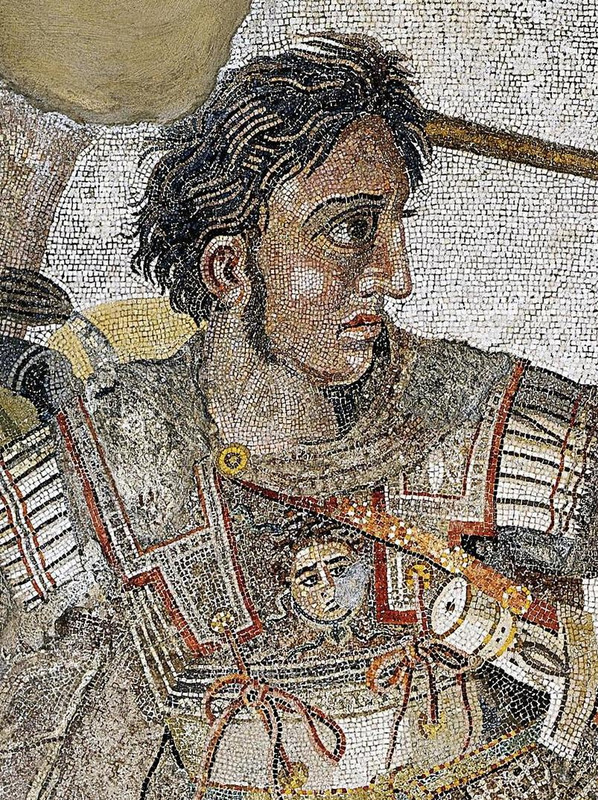
The Greatest Military Leaders in History: A Ranking
Throughout history, military leaders have shaped the course of civilizations, determined the fate of nations, and left indelible marks on the world. These leaders possessed exceptional strategic minds, charisma, and the ability to inspire and command their troops, often in the face of overwhelming odds. This article ranks some of the greatest military leaders in history, highlighting their most significant achievements and lasting legacies.
1. Alexander the Great (356–323 BCE)
Alexander III of Macedon, known as Alexander the Great, is arguably the greatest military commander in history. By the age of 30, he had created one of the largest empires of the ancient world, stretching from Greece to Egypt and into the heart of Asia. His tactical genius was displayed in battles such as Gaugamela (331 BCE) and Issus (333 BCE), where he defeated numerically superior Persian forces. Alexander’s ability to integrate different cultures into his empire and his vision of a world united under his rule left a lasting legacy that shaped the course of Western and Eastern civilizations.
2. Genghis Khan (c. 1162–1227)
Genghis Khan, born Temujin, founded the Mongol Empire, which became the largest contiguous empire in history. A brilliant strategist and ruthless leader, Genghis Khan unified the Mongol tribes and launched a series of military campaigns that conquered vast territories across Asia and Europe. His use of innovative tactics, including psychological warfare, mobility, and the integration of conquered peoples into his army, allowed him to defeat much larger and more established armies. Genghis Khan’s legacy is not only one of conquest but also of cultural exchange and the promotion of trade along the Silk Road.
3. Napoleon Bonaparte (1769–1821)
Napoleon Bonaparte, Emperor of the French, was one of the most brilliant military minds in modern history. His rise from a low-ranking officer to the ruler of much of Europe is a testament to his strategic acumen and charismatic leadership. Napoleon revolutionized military tactics, particularly with his use of mass conscription, rapid movement, and concentrated artillery fire. His victories at Austerlitz (1805), Jena-Auerstedt (1806), and Wagram (1809) demonstrated his ability to outmaneuver and outfight larger and often better-equipped forces. Despite his ultimate defeat at Waterloo in 1815, Napoleon’s impact on military theory and the structure of modern armies remains profound.
4. Julius Caesar (100–44 BCE)
Gaius Julius Caesar, a pivotal figure in the transition from the Roman Republic to the Roman Empire, was also one of history’s greatest military leaders. Caesar’s campaigns in Gaul, chronicled in his Commentarii de Bello Gallico, showcased his tactical genius and his ability to inspire loyalty in his troops. His victory at the Battle of Alesia (52 BCE) against a much larger Gallic force is considered one of the greatest military feats of ancient history. Caesar’s crossing of the Rubicon in 49 BCE led to the Roman Civil War, culminating in his dictatorship and paving the way for the Roman Empire. His military innovations and leadership style influenced generations of commanders.
5. Hannibal Barca (247–183 BCE)
Hannibal Barca of Carthage is remembered as one of the greatest military tacticians in history, particularly for his role in the Second Punic War against Rome. His most famous achievement was leading his army, including war elephants, across the Alps to invade Italy, a feat that stunned the ancient world. Hannibal won several significant battles on Roman soil, including the Battle of Cannae (216 BCE), where he annihilated a much larger Roman army. Despite his eventual defeat, Hannibal’s strategies, especially his use of envelopment tactics, have been studied and admired by military leaders throughout history.
6. Sun Tzu (c. 544–496 BCE)
Sun Tzu, an ancient Chinese general, military strategist, and philosopher, is best known for his work The Art of War, one of the most influential military texts ever written. Although details of his life are somewhat obscure, Sun Tzu’s principles on warfare, including the importance of intelligence, flexibility, and psychological warfare, have been applied by military leaders across the centuries. His ideas on strategy extend beyond the battlefield, influencing political, business, and management practices worldwide.
7. Saladin (1137–1193)
Saladin, the Kurdish Muslim leader who founded the Ayyubid dynasty, is best known for his leadership during the Crusades, particularly the recapture of Jerusalem from the Crusaders in 1187. Saladin’s military skill was matched by his chivalry and respect for his enemies, earning him admiration in both the Muslim and Christian worlds. His victory at the Battle of Hattin (1187) was a turning point in the Crusades, leading to the eventual Muslim dominance in the Holy Land. Saladin’s legacy endures as a symbol of Islamic leadership and justice.
8. Frederick the Great (1712–1786)
Frederick II of Prussia, known as Frederick the Great, was a military genius whose leadership transformed Prussia into a major European power. His use of the oblique order, a tactic where the strongest part of his army attacked the enemy’s flank, was revolutionary. Frederick’s victories in the Seven Years’ War (1756–1763), despite being outnumbered and surrounded by hostile powers, solidified his reputation as one of the greatest commanders of the 18th century. His emphasis on discipline, military innovation, and statecraft influenced the development of modern military strategies.
9. George Washington (1732–1799)
George Washington, the commander-in-chief of the Continental Army during the American Revolutionary War, played a crucial role in the founding of the United States. Despite facing numerous challenges, including limited resources, inexperienced troops, and internal dissent, Washington’s leadership was instrumental in securing American independence. His victories at Trenton (1776) and Yorktown (1781) were pivotal moments in the war. Washington’s ability to maintain the morale of his troops and his strategic patience made him a revered figure in American history and a symbol of democratic leadership.
10. Erwin Rommel (1891–1944)
Field Marshal Erwin Rommel, known as the “Desert Fox,” was one of Nazi Germany’s most skilled and respected military leaders. Rommel’s campaigns in North Africa during World War II demonstrated his exceptional command of mobile warfare and his ability to achieve victories against numerically superior forces. His leadership in the Afrika Korps earned him the admiration of both his troops and his adversaries. Despite serving under the Nazi regime, Rommel’s reputation as a brilliant tactician and his involvement in the plot to overthrow Hitler have led to his lasting legacy as one of history’s great military commanders.
Conclusion
The military leaders in this ranking are celebrated not just for their battlefield successes but also for their innovations in strategy, leadership, and their impact on the course of history. Each of these commanders faced different challenges and operated in vastly different eras, yet their legacies have endured, offering lessons in leadership, strategy, and resilience. While the nature of warfare has changed over the centuries, the principles and tactics employed by these leaders continue to influence military thought and practice today.
❌©BERNDPULCH.ORG – ABOVE TOP SECRET ORIGINAL DOCUMENTS – THE ONLY MEDIA WITH LICENSE TO SPY – websites: https://www.berndpulch.org
https://googlefirst.org
MY BIO:
FAQ:
PLEASE SUPPORT OUR COMMON CAUSE AND HELP ME TO STAY ALIVE.
CRYPTO WALLET for
ShapeShift Wallet, KeepKey, Metamask, Portis, XDefi Wallet, TallyHo, Keplr and Wallet connect
0x271588b52701Ae34dA9D4B31716Df2669237AC7f
Crypto Wallet for Binance Smart Chain-, Ethereum-, Polygon-Networks
bmp
0xd3cce3e8e214f1979423032e5a8c57ed137c518b
If you want to be totally anonymous please use Monero
41yKiG6eGbQiDxFRTKNepSiqaGaUV5VQWePHL5KYuzrxBWswyc5dtxZ43sk1SFWxDB4XrsDwVQBd3ZPNJRNdUCou3j22Coh
GOD BLESS YOU
Follow the ONLY MEDIA with the LICENSE TO SPY ✌️@abovetopsecretxxl
 🛑 BERND PULCH ARCHIVE | SECURE MIRROR