

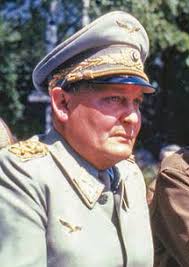
# Hermann Göring: A Complex Figure in Nazi Germany
Hermann Göring remains one of the most controversial figures of the Nazi regime. As a prominent leader in Adolf Hitler’s government, he played a crucial role in shaping the policies that led to the devastation of World War II and the horrors of the Holocaust. His life and career were marked by ambition, power, and ultimately, a tragic demise. This article will explore Göring’s background, rise to power, contributions to the Nazi war effort, and the eventual reckoning he faced after the war.
## Early Life and Military Career
Hermann Wilhelm Göring was born on January 12, 1893, in Rosenheim, Bavaria, Germany. He was the son of a provincial governor and a cultured mother, giving him a privileged upbringing. Göring struggled academically and was often described as undisciplined during his early years. However, his interest in military life flourished when he joined the German Army in 1912, eventually serving as a fighter pilot during World War I. Göring gained prominence as an ace pilot, earning the Pour le Mérite, Germany’s highest military honor, and developing a sense of superiority that would mark his personality throughout his life.
After the war, he became involved in far-right politics, joining the fledgling Nazi Party in 1922. His charm and leadership skills quickly caught Hitler’s attention, leading to his rapid ascent within the party.
## Rise Within the Nazi Party
Göring’s loyalty and effectiveness in the Nazi Party led to him holding several key positions. He was appointed as the head of the SA (Sturmabteilung, or Storm Detachment) in 1931, but after the Night of the Long Knives in 1934—where many SA leaders were purged—he transitioned to the Luftwaffe (German air force), which he would later transform into a formidable fighting force.
Göring’s close proximity to Hitler and influential persona allowed him to secure a place among the top leadership. He became a member of Hitler’s inner circle and was appointed as the second in command of the Nazi regime. In 1933, he was named Minister President of Prussia, leveraging his position to consolidate power.
## The Luftwaffe and Military Ambitions
As the creator and head of the Luftwaffe, Göring was instrumental in developing German aerial warfare tactics that would be employed during World War II. He was ambitious, often presenting the Luftwaffe as a key factor in Nazi military planning. However, his leadership was characterized by overconfidence and poor decision-making during critical military campaigns.
During the Battle of Britain in 1940, Göring’s strategic failures became evident. Although initially successful, the Luftwaffe’s inability to achieve air superiority over Britain marked a significant turning point in the war. Göring underestimated the British resolve and, despite his promises of victory, was unable to deliver the decisive aerial campaign he had promised.
## Economic Exploitation and War Crimes
In addition to his military leadership, Göring played a crucial role in the economic policies of the Third Reich. He was appointed as the head of the Four Year Plan in 1936, where he was tasked with preparing Germany for warfare by increasing self-sufficiency and expanding the arms economy. Under his direction, the Reich’s economy was geared towards supporting the military, often at the cost of the civilian population.
Göring was also heavily involved in the plundering of occupied territories. He directed the systematic looting of art and resources in countries like France, Belgium, and the Netherlands. His personal wealth grew through these illegal activities, as did his reputation for opulence. Göring’s extravagant lifestyle, including his collection of art and luxurious properties, became infamous.
Additionally, Göring’s involvement in the Holocaust was profound. As a senior Nazi leader, he implemented policies that facilitated the deportation and extermination of Jews and other marginalized groups during the Integrated Final Solution. His acknowledgment of the “Jewish question” hinted at his complicity, as he authorized actions that led to widespread atrocities.
## The Downfall
As World War II progressed, Göring’s fortunes began to decline. His overconfidence led to strategic blunders, and as setbacks mounted for the German military, Hitler’s once-steadfast trust in Göring began to wane. The Luftwaffe suffered significant losses, particularly on the Eastern Front, where it was unable to protect German ground forces from the advancing Soviet army.
By 1944, Göring’s power was diminishing. He was relegated to a more ceremonial role, and his attempts to reclaim authority were met with resistance. His relationship with Hitler became increasingly strained, leading to suspicions and tensions. In April 1945, as the Allied forces closed in on Berlin, Göring, desperate to maintain influence, attempted to take control of the government in a power grab that only alienated him further from Hitler.
Ultimately, Göring was arrested by American forces in May 1945. He was one of the few prominent Nazi officials to surrender without placing blame on the Hitler regime, a testament to his loyalty despite the regime’s collapse.
## Nuremberg Trials and Legacy
Hermann Göring was tried at the Nuremberg Trials in 1946 for his war crimes and crimes against humanity. He was found guilty on several counts, including his roles in the Nazi war efforts and the implementation of policies leading to the Holocaust. Throughout the trial, Göring maintained a defiant posture, attempting to distance himself from Hitler’s more heinous decisions.
On October 15, 1946, just hours before his scheduled execution by hanging, Göring committed suicide using cyanide that he had smuggled into prison. His death marked the end of a complex and controversial life, but it did not erase the legacy of devastation he left behind.
## Conclusion
Hermann Göring is a figure that encapsulates the dark history of Nazi Germany. His transformation from a decorated war hero to one of the most powerful and corrupt leaders of the Third Reich serves as a reminder of how personal ambition and ideology can lead to catastrophic consequences. His involvement in military strategy, economic policies, and the atrocities of the Holocaust position him as a key player in the tragic narrative of World War II.
As part of the Nuremberg Trials, Göring’s legacy continues to serve as a study in the moral failings of leadership and the heights of ambition when untethered from ethical considerations. His life raises essential questions about the nature of power, responsibility, and humanity’s capacity for both evil and complicity. Understanding Göring’s role in this historical context remains vital as we continue to grapple with the lessons of history.
❌©BERNDPULCH.ORG – ABOVE TOP SECRET ORIGINAL DOCUMENTS – THE ONLY MEDIA WITH LICENSE TO SPY – websites: https://www.berndpulch.org
https://googlefirst.org
MY BIO:
FAQ:
PLEASE SUPPORT OUR COMMON CAUSE AND HELP ME TO STAY ALIVE.
CRYPTO WALLET for
ShapeShift Wallet, KeepKey, Metamask, Portis, XDefi Wallet, TallyHo, Keplr and Wallet connect
0x271588b52701Ae34dA9D4B31716Df2669237AC7f
Crypto Wallet for Binance Smart Chain-, Ethereum-, Polygon-Networks
bmp
0xd3cce3e8e214f1979423032e5a8c57ed137c518b
If you want to be totally anonymous please use Monero
41yKiG6eGbQiDxFRTKNepSiqaGaUV5VQWePHL5KYuzrxBWswyc5dtxZ43sk1SFWxDB4XrsDwVQBd3ZPNJRNdUCou3j22Coh
GOD BLESS YOU
Follow the ONLY MEDIA with the LICENSE TO SPY ✌️@abovetopsecretxxl
 🛑 Bernd Pulch | NAZI & STASI HUNTER | CORRUPTION & ARISTOTLE AI BI