

The Nazi Party, officially known as the National Socialist German Workers’ Party, emerged from the ashes of World War I. In 1919, a small group of men, including locksmith Anton Drexler and journalist Karl Harrer, founded the German Workers’ Party. This fledgling organization was born in a climate of economic depression and political instability that plagued Germany following its defeat in the war.
The party’s initial platform centered on German nationalism and anti-Semitism, reflecting the frustrations of many Germans with the harsh terms of the Treaty of Versailles. This peace settlement, which officially ended World War I, imposed heavy reparations on Germany and was viewed by many as unjust and crippling to the nation’s recovery.
Hitler’s Ascendancy
Enter Adolf Hitler, an army veteran who joined the German Workers’ Party in 1919. Hitler quickly distinguished himself as a charismatic public speaker, captivating audiences with his impassioned rhetoric. His speeches blamed Jews and Marxists for Germany’s problems while promoting extreme nationalism and the concept of an Aryan “master race.”
Hitler’s oratorical skills and magnetic personality soon catapulted him to the forefront of the organization. In July 1921, he assumed leadership of the party, which had been renamed the Nationalist Socialist German Workers’ Party (abbreviated to Nazi). Under Hitler’s direction, the party’s membership grew rapidly, attracting those disenchanted with the Weimar Republic and seeking a return to German greatness.
In 1920, Hitler formulated a 25-point program that became the foundation of Nazi ideology. This program called for the rejection of the Treaty of Versailles, the expansion of German territory, and the implementation of socialist policies tailored to benefit ethnic Germans. However, the party’s socialist leanings were largely a populist tactic designed to garner support from the working class.
Early Attempts at Power
As the Nazi Party gained traction in Bavaria, Hitler organized paramilitary groups known as the Sturmabteilung (SA) or “Storm Detachment.” These brown-shirted thugs protected Nazi rallies and meetings, often violently confronting political opponents.
Emboldened by growing support, Hitler and his followers attempted to seize power in Bavaria through the infamous Beer Hall Putsch on November 8-9, 1923. This coup d’état, aimed at overthrowing the Bavarian government and sparking a national revolution against the Weimar Republic, ultimately failed.
The putsch’s collapse led to Hitler’s arrest and imprisonment. During his nine-month incarceration at Landsberg Prison, Hitler dictated “Mein Kampf” (My Struggle), a manifesto outlining his political ideology and future plans for Germany. This period of confinement, rather than diminishing Hitler’s influence, allowed him to refine his ideas and strategy.
Following his release, Hitler rebuilt the Nazi Party, focusing on legal means to attain power. He restructured the organization, expanded its propaganda efforts, and began to attract support from influential industrialists and military figures. These early setbacks and subsequent adaptations set the stage for the Nazi Party’s eventual rise to power in the 1930s.
Nazi Consolidation of Power
Economic and Political Factors
The Nazi Party’s rise to power was fueled by Germany’s dire economic situation in the late 1920s and early 1930s. The Weimar Republic faced severe economic depression and widespread unemployment, creating fertile ground for extremist ideologies. Hitler and the Nazis capitalized on this crisis, offering simple solutions to complex problems and blaming minority groups for the nation’s woes.
In the July 1932 elections, the Nazi Party secured a significant victory, capturing 230 out of 608 seats in the Reichstag. This electoral success was a turning point, positioning the Nazis as a major political force and paving the way for Hitler’s appointment as Chancellor.
Hitler as Chancellor
On January 30, 1933, President Paul von Hindenburg appointed Adolf Hitler as Chancellor of Germany. This pivotal moment marked the beginning of the Nazi regime’s consolidation of power. Hitler wasted no time in dismantling democratic institutions and centralizing authority around himself and the Nazi Party.
One of Hitler’s first acts was to call for new elections, which were held in an atmosphere of intimidation and violence. The Reichstag fire on February 27, 1933, provided Hitler with the pretext to suspend civil liberties and crack down on political opponents. The subsequent Enabling Act of March 23, 1933, effectively granted Hitler dictatorial powers, allowing him to rule by decree without parliamentary approval.
Control Over German Society
The Nazi regime quickly moved to establish total control over all aspects of German society. This process, known as Gleichschaltung (coordination), aimed to align all social, political, and cultural organizations with Nazi ideology.
Key aspects of this control included:
- Elimination of Political Opposition: All other political parties were banned, and opponents were arrested or forced into exile. Trade unions were dissolved and replaced with the Nazi-controlled German Labor Front.
- Control of Media and Culture: The Nazis established the Reich Chamber of Culture, which controlled all aspects of cultural life, including literature, art, music, and film. Joseph Goebbels, as Minister of Propaganda, oversaw a massive propaganda machine that shaped public opinion and promoted Nazi ideology.
- Education and Youth Organizations: The education system was overhauled to indoctrinate children with Nazi ideology. The Hitler Youth and the League of German Girls were established to mold young people into loyal supporters of the regime.
- Centralization of Police Power: Heinrich Himmler consolidated all police forces under his control as Reichsführer-SS. This included the creation of the Gestapo (secret state police) and the expansion of the concentration camp system.
- Persecution of Minorities: The Nazis implemented policies targeting Jews and other minority groups. The Nuremberg Laws of 1935 codified racial discrimination, stripping Jews of their citizenship and basic rights.
- Military Buildup: In violation of the Treaty of Versailles, Hitler began a massive rearmament program, which not only strengthened Germany’s military but also provided jobs and boosted the economy.
The Nazi consolidation of power was swift and ruthless. By August 1934, following the death of President Hindenburg, Hitler combined the offices of Chancellor and President, declaring himself Führer und Reichskanzler. This move completed the transformation of Germany into a totalitarian state under Nazi control, setting the stage for the tragic events that would follow in the years to come.
Nazi Foreign Policy and Expansion
Treaty of Versailles and Its Impact
The Treaty of Versailles, signed in 1919, left a bitter taste in the mouths of many Germans. Hitler and the Nazi Party seized on this discontent, making the treaty a central focus of their foreign policy. They argued that the treaty’s harsh terms unfairly punished Germany and denied the country its rightful place on the world stage.
Hitler’s rhetoric centered on the idea of “living space” (Lebensraum) for the German people. He claimed that the treaty’s redrawn map of Europe had separated ethnic Germans, creating new states like Austria and Czechoslovakia where many Germans lived. This narrative of reuniting the German people became a powerful tool for justifying territorial expansion.
The Nazi Party’s approach to the Treaty of Versailles was twofold:
- Publicly denounce the treaty as unjust and harmful to German interests.
- Systematically violate its terms to rebuild German military strength.
This strategy resonated with many Germans who felt humiliated by the treaty’s restrictions and economic burdens.
Military Aggression
As the Nazi Party consolidated power, Hitler began to act on his expansionist ambitions. The mid-to-late 1930s saw a series of bold moves that directly challenged the post-World War I international order:
- 1933: Germany withdraws from the League of Nations.
- 1935: Hitler announces the rearmament of Germany, violating the Treaty of Versailles.
- 1936: German troops reoccupy the Rhineland, a demilitarized zone under the treaty.
- 1938: Germany annexes Austria in the Anschluss.
- 1939: Nazi forces invade Czechoslovakia.
These actions were met with a policy of appeasement from major European powers, particularly Britain and France. This approach emboldened Hitler, who continued to push the boundaries of international tolerance.
The culmination of Nazi military aggression came on September 1, 1939, when Germany invaded Poland. This act finally prompted Britain and France to declare war, marking the beginning of World War II in Europe.
Occupation of Neighboring Countries
The Nazi occupation of neighboring countries was characterized by a mix of military force, political maneuvering, and ideological indoctrination. Let’s look at some key examples:
Austria
The annexation of Austria, known as the Anschluss, was presented as a reunification of German-speaking peoples. While there was some local support, the Nazi takeover was backed by military threat and political pressure.
Czechoslovakia
The occupation of Czechoslovakia began with the annexation of the Sudetenland in 1938, following the Munich Agreement. In March 1939, Nazi forces occupied the rest of Czech territory, establishing the Protectorate of Bohemia and Moravia.
Poland
The invasion of Poland in 1939 marked a shift from political pressure to outright military aggression. The occupation was brutal, with the implementation of Nazi racial policies and the beginning of the Holocaust.
Western Europe
In 1940, Germany launched its blitzkrieg campaign, quickly overrunning Denmark, Norway, Belgium, the Netherlands, and France. Each occupied country faced different levels of Nazi control and collaboration.
Eastern Europe
The invasion of the Soviet Union in 1941 (Operation Barbarossa) brought Nazi occupation to vast swathes of Eastern Europe. This campaign was marked by extreme brutality, driven by Nazi racial ideology and the quest for Lebensraum.
In occupied territories, the Nazis implemented policies aimed at:
- Exploiting economic resources for the German war effort
- Implementing racial policies, including the persecution and deportation of Jews and other targeted groups
- Suppressing resistance movements
- Promoting Nazi ideology and German culture
The Nazi occupation left a lasting impact on Europe, reshaping borders, demographics, and societies in ways that continue to resonate today.
World War II and Nazi Strategies
Formation of Alliances
The Nazi regime’s approach to alliances was strategic and opportunistic. In 1939, Hitler made a shocking move by signing the Molotov-Ribbentrop Pact with the Soviet Union. This non-aggression agreement included secret protocols dividing Eastern Europe into German and Soviet spheres of influence. This pact allowed Germany to invade Poland without fear of Soviet intervention, effectively kickstarting World War II.
In 1940, Germany formed the Tripartite Pact with Japan and Italy, creating the Axis Powers. This alliance was designed to counter the growing influence of the United States and the British Empire. The pact stated that the three countries would assist each other if attacked by a country not currently involved in the European war or the Sino-Japanese conflict.
However, Hitler’s alliances were often temporary and self-serving. In 1941, he broke the pact with the Soviet Union by launching Operation Barbarossa, a massive invasion of the USSR. This decision would prove to be one of Hitler’s most significant strategic blunders.
Major Battles and Campaigns
The Nazi war machine initially achieved stunning successes through its Blitzkrieg tactics. Key campaigns included:
- Invasion of Poland (1939): The war began with Germany’s lightning attack on Poland, using combined arms tactics to overwhelm Polish defenses.
- Battle of France (1940): German forces bypassed the Maginot Line through the Ardennes Forest, leading to the rapid collapse of French resistance.
- Battle of Britain (1940): The Luftwaffe’s attempt to gain air superiority over the RAF failed, marking Hitler’s first major defeat.
- Operation Barbarossa (1941): The massive invasion of the Soviet Union initially made significant gains but ultimately bogged down due to overextension and harsh winter conditions.
- North African Campaign (1940-1943): Axis forces under Erwin Rommel fought against British and later American troops for control of North Africa.
- Battle of Stalingrad (1942-1943): This turning point of the war saw the encirclement and destruction of the German 6th Army, marking the beginning of the end for Nazi Germany on the Eastern Front.
- D-Day and the Normandy Invasion (1944): The Allied landings in France opened a second front in Europe, accelerating Germany’s defeat.
Nazi Military Tactics
The Nazi military employed several innovative tactics and strategies:
- Blitzkrieg: This “lightning war” strategy involved rapid, coordinated attacks using armor, motorized infantry, and air support to break through enemy lines and encircle opposing forces.
Blitzkrieg Components: - Panzer divisions (armored units) - Mechanized infantry - Close air support (Luftwaffe) - Radio communications for coordination
- Combined Arms: The Nazis excelled at integrating different military branches to maximize their effectiveness on the battlefield.
- Tactical Innovation: German forces often employed flexible tactics, allowing junior officers to make decisions based on the situation on the ground.
- Technological Advancements: The Nazis invested heavily in new weapons technology, including jet aircraft, guided missiles, and advanced submarines.
- Psychological Warfare: The use of propaganda and terror tactics was integral to the Nazi approach, both on and off the battlefield.
Despite initial successes, these tactics ultimately proved insufficient against the combined might of the Allied powers. As the war progressed, Germany’s strategic position deteriorated, leading to its eventual defeat in 1945.
The Nazi military strategy, while initially effective, was ultimately undone by Hitler’s strategic overreach, particularly the invasion of the Soviet Union, and the overwhelming industrial capacity of the United States. The failure of the Nazi regime serves as a stark reminder of the consequences of unchecked aggression and the power of international cooperation in the face of tyranny.
The Holocaust and Its Aftermath
Persecution Policies
The Nazi regime’s persecution of Jews and other minority groups began long before the outbreak of World War II. From 1933 onwards, Hitler’s government implemented a series of increasingly harsh policies aimed at isolating and dehumanizing Jewish citizens. These measures included:
- The Nuremberg Laws of 1935, which stripped Jews of their German citizenship and prohibited marriages between Jews and non-Jews
- The “Aryanization” of Jewish-owned businesses, forcing Jews to sell their properties at rock-bottom prices
- Kristallnacht in 1938, a night of widespread violence against Jewish homes, businesses, and synagogues
As the Nazis expanded their control across Europe, these persecution policies were extended to occupied territories. Jews were forced into ghettos, subjected to curfews, and required to wear identifying badges. The regime also targeted other groups, including Roma people, homosexuals, and political dissidents.
Implementation of the Final Solution
The “Final Solution” was the Nazi euphemism for the systematic genocide of European Jews. Its implementation involved several stages:
- Mass shootings: Initially, Nazi death squads known as Einsatzgruppen carried out mass shootings of Jews in Eastern Europe.
- Death camps: The Nazis established a network of extermination camps, primarily in occupied Poland. The most infamous of these was Auschwitz-Birkenau.
- Deportations: Jews from across Europe were rounded up and transported to the camps in overcrowded cattle cars.
- Gas chambers: Upon arrival at the camps, many victims were immediately sent to gas chambers disguised as shower rooms.
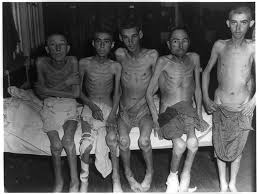
The scale of this genocide was staggering. By the end of the war, approximately six million Jews had been murdered, along with millions of others deemed “undesirable” by the Nazi regime.
Here’s a chilling excerpt from the minutes of the Wannsee Conference, where Nazi officials discussed the implementation of the Final Solution:Under proper guidance, in the course of the final solution the Jews are to be allocated for appropriate labor in the East. Able-bodied Jews, separated according to sex, will be taken in large work columns to these areas for work on roads, in the course of which action doubtless a large portion will be eliminated by natural causes.
Post-War Consequences and Trials
The aftermath of the Holocaust had far-reaching consequences:
- Nuremberg Trials: High-ranking Nazi officials were put on trial for war crimes and crimes against humanity. These trials set important precedents in international law.
- Displaced Persons: Millions of Holocaust survivors found themselves homeless and stateless. Many emigrated to Israel, the United States, and other countries.
- Reparations: The German government eventually agreed to pay reparations to Holocaust survivors and to the state of Israel.
- Cultural Impact: The Holocaust has had a profound impact on art, literature, and popular culture, serving as a stark reminder of the dangers of unchecked hatred and authoritarianism.
- Education and Remembrance: Many countries have incorporated Holocaust education into their school curricula and established museums and memorials to ensure that future generations never forget this dark chapter in human history.
The legacy of the Holocaust continues to shape our understanding of human rights, genocide prevention, and the responsibilities of governments and individuals in the face of systemic persecution.
 🛑 Bernd Pulch | NAZI & STASI HUNTER | CORRUPTION & ARISTOTLE AI BI