


Become a Patron!
True Information is the most valuable resource and we ask you to give back.
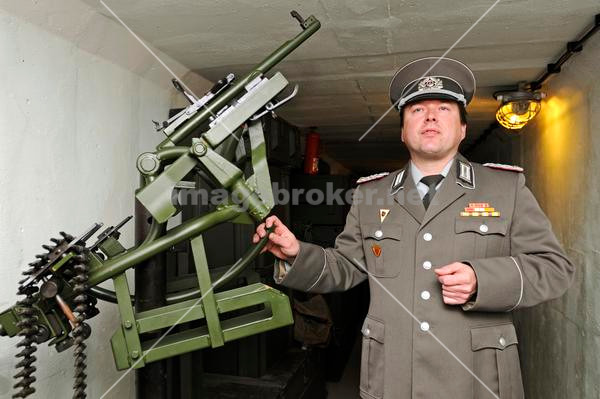
Seduced by Secrets: Inside the Stasi’s Spy-Tech World
Gorbachev was the most important Western agent employed by the oper- ational unit for the “protection of the economy,” known as Department XVIII, and provided the lion’s share of all scientific and technical mate- rial collected there. The reason for this bureaucratic anomaly was that the precursor department (Department III – renamed and reorganized in 1964) for protecting the economy had been responsible for company espionage in the West as well as economic security. Some of Department III’s agents were transferred to HV A, but Gorbachev was not.20 He was
Agent Gorbachev 17
recruited during a time of bureaucratic flux before foreign intelligence and domestic security/counterintelligence merged under the common roof of the Ministry for State Security.
Of course, most scientific and technical espionage was the responsibility of another division of the Stasi, the HV A’s Sector for Science and Tech- nology. This was the group from which Werner Stiller defected in 1979, and also the group to which all Gorbachev’s documents were referred for evaluation.
Gorbachev provided the Stasi with blueprints, plans, scientific docu- ments, and some prototypes from two leading West German firms. Between 1957 and 1959 he worked at Telefunken as head of the Depart- ment for Small Transmitters and passed on material related to radios and transmitters. After that, he headed up the Department of Automation at AEG until his retirement in 1977. He had the key to the company archive both times.
The MfS had a systematic method for collection and evaluation based on the state’s economic plan. Industrial representatives could give the MfS a wish list of plans or hardware needed, and it would attempt to acquire the material. The evaluation department played the important role of intermediary between industry and agent. Not only did it funnel the industry wish lists to its agents, keeping in mind the country’s economic needs and each agent’s capabilities, but it also analyzed each item collected by the agents, “neutralized” them (in MfS lingo) so that the source would not be known, and passed the information back to industry or to research institutes. Agents could also bring unsolicited material if they thought it would be of interest, but this material was separated from the requested material.
Gorbachev delivered an unusually copious amount of material. The height of his cooperation seems to have been from the late 1950s to the early 1970s. In 1960, the year before the Wall was built, a case officer reported that Gorbachev delivered 505 documents. This seems to have been his record; in most years, unless meetings ceased for operational reasons, he averaged about 200. In 1968 he contributed 202 of the 289 documents acquired by Department XVIII. As he approached retirement in 1977, Gorbachev’s deliveries dropped significantly. In the 1980s he was still working for the MfS, but instead of passing on secret documents, he was intercepting Western intelligence’s radio messages and finding out their broadcast frequencies.21
The material Gorbachev delivered received high marks. In the Stasi’s meticulously organized system, the evaluation department graded every piece of material on a scale of I to V, with I being the highest rating: “very
valuable.” The grades also served as a means of valuing the information; in the mid-1970s, an evaluation of I meant that the document or object had a minimum value of 150,000 West German marks. In other words, this was the amount in hard currency the German Democratic Republic (GDR) would have had to spend to develop or buy the product itself. Gorbachev’s deliveries received many IIIs, some IIs, and an occasional I – a fairly typical pattern for a good agent.22
The most highly rated material that Gorbachev delivered was related to, as one might expect, the areas of military technology and the com- puter industry. In the mid-1960s, West Germany began producing a new tank, the Leopard 1, which, among other things, could be “sealed off” from nuclear radiation. In 1968, Gorbachev acquired and passed on an overview of the construction of the Leopard 1, including the operation and maintenance manual. Erich Mielke personally delivered this material to the Soviet Union.23
In 1972 Gorbachev passed on a report from AEG about product plan- ning for small computers. The material included the complete information for two AEG computers and matched an order put in by industry. The evaluator gave this material the top grade because he found “such strate- gic documents of great value for the data processing industry.”24
A large part of Gorbachev’s material – on average, one-third – was passed on to the Soviet Union’s liaison officer within the HV A’s evalua- tion department. In 1967, for example, the Soviet Union received the most material from the topic of electronic data processing and process con- trol (eighty-five items). Because Gorbachev’s area of expertise after 1960 was automation, it is not surprising that the Soviets also received forty- six items relating to automation in nuclear power plants and machine presses.25
Probably the most interesting documents for the Soviet Union were the eight items related to military technology, including six on the Leop- ard’s fire-control computer, which controlled the gun direction. Through- out the 1960s, Gorbachev enthusiastically provided material relating to AEG’s work for the North Atlantic Treaty Organization (NATO) and the German Army on the control of torpedoes.26 He occasionally provided other types of intelligence. In 1958, Gorbachev told his case officers that America was building a radar transmitter in Turkey to keep track of the Soviet missile program – information that was immediately passed on to the Soviets.27
Occasionally Gorbachev’s work required him to receive additional sci- entific training. A particular focus of East Germany’s economic espionage,
from the late 1950s on, was the semiconductor industry. The GDR felt that it was behind the West in this area and sought to pull itself out of this backwardness by acquiring both company secrets and embargoed goods. Their program, conducted jointly with the Soviet Union, culminated in the duplication of the IBM 360 computer. To educate Gorbachev in this new industry, his case officers invited him to a several-day visit at the semiconductor factory in Frankfurt an der Oder in 1961.28 Thereafter he provided valuable material relating to components for semiconductor research. Later chapters will explore to what extent agents’ scientific mate- rial from the West helped East German science. But other agents surely shared Gorbachev’s telling statement to his case officer: “I’m giving you the best technology available, why can’t you use it?”29
Gorbachev’s espionage may not have helped East Germany as much as it could have. Still, his work, and those of others, should not be dis- missed as a harmless game. Western companies lost millions of dollars of business that they could have done with the East Bloc because the GDR and Soviet Union were able to acquire the same goods through espionage. The military secrets, such as the design of the Leopard tank, could have been used against the West had the balance of power ever changed and the Cold War turned hot. Finally, and paradoxically, every document that was smuggled from the West weakened true scientific innovation in East Germany by maintaining its dependence on the West.
Agent Gorbachev was just one of thousands of Westerners who spied for the Stasi and KGB. After the fall of the Berlin Wall, West German prosecutors investigated 7,099 officers and agents; by 1999 they had convicted only 253 West Germans and 23 East Germans of espionage.30 Agent Gorbachev was not one of these; he died in 1985, five years before German reunification.
Stealing Secrets
White-haired, patrician, and proletarian, Heinrich Weiberg was a legend among foreign intelligence staff members and leaders. Until he retired, he rode his bicycle into work at the imposing, grey-stoned Normannenstrasse complex of buildings making up Stasi headquarters. He rarely joined the other major generals at their special dining room for lunch; instead, he preferred grabbing a sausage at the courtyard fast food kiosk, the Imbiss.1 He was the founder and leader of the department for stealing scientific secrets from the West, the Sector for Science and Technology (SWT).
Weiberg started working for the Ministry for State Security (MfS) in Berlin in 1951, a year that marked the beginning of a decade of spy-city status for the divided metropolis; it became a breeding ground for spies. Recruitment of agents was rampant on both sides, with the United States, France, and Britain exploiting their perch as occupying powers in the western sectors of an island city that lay in the waters of a communist- run eastern zone of Germany. Likewise, the Soviets used their status in East Berlin and East Germany as a frontline for the emerging espionage wars. The Berlin tunnel was completed by the CIA and British intelli- gence in 1954 and was exposed eleven months later by the East Germans and Soviets. Hundreds of secret agents were caught and tried in Berlin. Officials were defecting both ways, to the East and to the West. There were many druggings and kidnappings, and, in 1955 alone, the “execu- tioner’s axe fell nine times . . . on anti-reds . . . labeled as agents, saboteurs and spies.”2 In the shadows of this intrigue, Weiberg set up a fledgling spy apparatus that traded in cloaks and daggers for business suits and brief- cases.
By the middle of the 1950s, Weiberg and his staff developed an effi- cient pipeline for transferring scientific secrets from Western company safes and military installations into the laps of scientists and engineers
working in East Bloc socialist companies. The pipeline began with East German scientists, who gave the sector their wish list for items from the West, and ended in the safes of targeted Western companies and defense contractors.
Like other founding fathers of the MfS, including Markus Wolf, Hein- rich Weiberg had spent time in the Soviet Union before returning to East Germany in 1949. Unlike his colleagues who had been part of the prewar communist underground, he had served in the German Wehrmacht and was in Soviet captivity from 1940 to 1949. While in the Soviet Union, his only political experience was bicycling with the Red Sports Movement.
Born in Berlin in 1911, Weiberg studied chemistry and on his return to East Germany briefly worked at a sulfuric acid factory before taking on administrative functions at the Ministry for Heavy Industry. After joining the Stasi in 1951, he held leadership positions until his retirement in 1972. He met regularly with Markus Wolf, who thought of him as a “thorough academic” because he lectured to him like a professor on scientific topics such as the fast-breeder reactor.3
The Soviet Union played a crucial role in establishing scientific-technical intelligence in East Germany. Not only had Weiberg spent time in the Soviet Union, but Soviet advisers were on hand from Karlshorst, the Soviet compound in Berlin where the Committee for State Security (KGB) had its largest installation in all of the East Bloc, in the country of their most loyal East Bloc friends. The Soviet Union had, and Russia still has, an “acquisition organ” – Directorate T – very similar in nature to the Sector for Science and Technology, and they have a long tradition of stealing U.S. and Western technology through espionage. One of the greatest thefts in twentieth-century history was their acquisition of the United States’ plans for building an atomic bomb.
Before foreign intelligence moved to the now infamous headquarters at Normannenstrasse in Berlin-Lichtenberg, they worked under deep cover in a lovely villa located at the outskirts of Berlin, using the name “Insti- tute for Economic Research.” Markus Wolf was asked to lead foreign intelligence when he was only thirty years old. During one of the service’s first meetings in 1953, Weiberg complained that he only had four staff members and desperately needed scientific-technical personnel. Wolf was supportive and urged the Cadre Department to help Weiberg find qualified staff.4
One of the Stasi’s earliest defectors, Gotthold Kraus, came from the institute and blew its cover in the West. The so-called Vulcan Affair in April 1953 was the first major event that allowed Western intelligence
to learn about East German foreign intelligence and its elusive chief, “Mischa” Wolf.5 This crisis, along with the workers’ uprising later that year in June, caused an organizational re-shuffling. The ministry was degraded to a secretariat, and the Institute for Economic Research moved to Normannenstrasse. By 1956, the two organizations merged under the roof of the Ministry of State Security, and the institute became Department XV, then known as “main administration A,” the well-known HV A.
Kraus handed West German counterintelligence the names of thirty- eight people, listed in a card file. The federal prosecutor later determined that only a handful of these people were agents for the MfS; the others were interesting people they had targeted for future recruitment. West German counterintelligence had caught an early glimpse into East German spy activities against West German businessmen and companies, and this glimpse disrupted East German operations.6
Weiberg’s department for stealing scientific-technical secrets from the West developed from a relatively small unit – made up of only thirty-five staff members – that analyzed Western companies and recruited agents in the 1950s into the highly bureaucratized, successful Sector for Science and Technology in 1989, with its four hundred staff members and thousands of spies and support staff. The expansion of the Sector for Science and Technology, so renamed in 1971, reflected the importance of science and technology for the East Bloc and the unbridled expansion of the MfS. The sector’s success and the importance of scientific-technical espionage is also reflected in the fact that by 1989 40 percent of all HV A agents worked there.7
State-sponsored and centrally organized, scientific-technical intelli- gence was a special feature of East Bloc intelligence. Whereas in the West, industrial espionage during the Cold War usually occurred from com- pany to company, in the East it was directed and steered by the Ministry for State Security. With their orders coming from the Communist Party, which glorified the “scientific-technical revolution,” the Stasi was truly the party’s sword and shield, as their emblem pictures. The East aspired to not only “catch up to the West,” but to surpass it scientifically. The grim reality, though, was that the country was mired in backwardness. As a former intelligence officer graphically put it, the goal of the espionage enterprise was to “make gold out of shit.”8
Espionage opportunities were easily facilitated in West Germany, with whom East Germany shared a common language and culture. Unlike East Germany, by the 1960s and 1970s West Germany had achieved international standards in science and technology, and this knowledge
and equipment had the potential to strengthen East Germany’s crumbling scientific and economic edifice, or so hoped the East German regime. Some knowledge could be legally exchanged between East and West, but much technology could not be legally imported or transferred to the East Bloc due to embargo and industrial restrictions. Secrecy prevented internal company information and military science and technology from becom- ing a free-flowing information exchange. As a result, espionage agencies created scientific-technical intelligence units to meet the county’s needs in a growing global technological community.
The trade embargo was one more obstacle East Germany had to over- come to achieve its scientific-technical goals. The West forbade the export of dual-use technology that could be used for both civilian and military purposes. The embargo was enforced through the Coordinating Com- mittee for East-West Trade (CoCom), which developed lists of forbidden technology.9 From the Western point of view, its technology could be turned against the West; from the Eastern point of view, the technology, especially that of computers, was essential to its survival. Whereas West- ern commentators have called the committee a “toothless watchdog,” an East German high-tech smuggler has described it as “visibly paralyzing the dynamic of the economy in East Germany.”10


 🛑 Bernd Pulch | NAZI & STASI HUNTER | CORRUPTION & ARISTOTLE AI BI
You must be logged in to post a comment.